Oromia Speaks:The Ethiopian Empire State and International Human Rights Laws January 24, 2014
Posted by OromianEconomist in Africa, Colonizing Structure, Corruption, Knowledge and the Colonizing Structure., Knowledge and the Colonizing Structure. Africa Heritage. The Genocide Against Oromo Nation, Knowledge and the Colonizing Structure. African Heritage. The Genocide Against Oromo Nation, Land Grabs in Africa, Nelson Mandela, Nubia, Oromia, Oromiyaa, Oromo, Oromo Culture, Oromo Identity, Oromo the Largest Nation of Africa. Human Rights violations and Genocide against the Oromo people in Ethiopia, Sirna Gadaa, Slavery, The Colonizing Structure & The Development Problems of Oromia, Theory of Development, Tyranny, Uncategorized.Tags: Africa, African culture, African Studies, Developing country, Development, Development and Change, Economic and Social Freedom, Economic development, Economic growth, economics, Ethiopia, Gadaa System, Genocide, Genocide against the Oromo, Governance issues, Horn of Africa, Human rights, Human Rights and Liberties, Human rights violations, Land grabbing, Land grabs in Africa, National Self Determination, Oromia, Oromiyaa, Oromo, Oromo culture, Oromo people, Oromummaa, State and Development, Sub-Saharan Africa, Tyranny, Universal Declaration of Human Rights
add a comment

The Empire States of Ethiopia is a product of colonial conquest. Ethiopia is formed during the 19the century colonial scramble for Africa after the Abyssinian State, the only Black colonial power that took part in the colonial partition of Africa, conquered the Oromos, Sidamas, Ogadenese and other present day Southern Ethiopian peoples. Because of the conquest, the Oromos and other subject peoples were forcefully incorporated into Abyssinia, which was later on renamed Ethiopia.
As an outcome of a colonial conquest, the essence of the Ethiopian Empire State is the deprivation, oppression, subjugation and exploitation of the conquered peoples’ national, political, civic, cultural, social and economic rights. Stated differently, the defining characteristics of the Ethiopian Empire state, since its formation up to present, are the denial of national rights, human rights, and freedoms to the Oromo and other subject peoples. Furthermore, as the old adage goes, “a nation that oppresses others it not itself a free nation,” the successive Ethiopian regimes did not also respect the human rights and freedoms of its citizens, the Abyssinians.
The successive Ethiopian regimes’ stance on ratification of or accession to International Instruments designed for the promotion and protection of human rights corroborates the Ethiopian Empire State’s long-standing anti-human rights policies. It is a fact of history that the Ethiopian regime led by the late Emperor Haile Sillassie was among few states that did not sign/ratify the Universal Declaration of Human Rights of 1948. The Emperor Haile Sillassie regime, which was laboring in consolidation of the colonial conquests and Amharization of the conquered peoples, was engaged in gross violation of human rights, including practice of slavery and servitude failed to sign the Universal Declaration of Human Rights that, among others, abolished slavery and servitude and set standard for human rights protection.
It is instructive to note that, the Emperor Haile Sillassie regime declined from signing the Universal Declaration of Human Rights with, among others, the then minority apartheid regime of South Africa, the other notorious regime for being anti-human rights. The Ethiopian regime led by Emperor Haile Sillassie became Member of the United Nations on 13 November 1945, but it did not become a party to any Intentional Human Rights Conventions.
A military regime, known as Dergue, led by Colonel Mengistu Haile Mariam overthrew Emperor Haile Sillaasie’s regime in 1974. As far as respect for human rights and accession to Intentional Human Rights Conventions is concerned, the Dergue regime continued its predecessor’s anti-human rights policy and practice. The Military regime did not become a party to International Covenant on Economic, Social and Cultural Rights and International Covenant on Civil and Political Rights that have entered into force in 1976.
However, apparently following its patron the now defunct Soviet Union, the Ethiopian Military regime became a party to International Convention on the Elimination of All Forms of Racial Discrimination, 23 June 1976, Convention on the Elimination of All Form of Discrimination against Women, 10 September 1981, and Convention on the Rights of the Child, 14 May 1991.
It is a mockery that the Ethiopian Military regime that failed to be a party to International Covenant on Economic, Social and Cultural Rights and International Covenant on Civil and Political Rights, became a party to International Conventions that prohibit racial discrimination, discrimination against women and the Conventions on the Rights of the Child. Unlike the incumbent Tigrai Peoples Liberation Front, (TPLF) led Ethiopian regime, the two preceding Ethiopian regimes did not pretend to be champions of human rights and stayed out of the International Instruments and Mechanisms made and established for ensuring the protections of Human Rights and freedoms.
As a result of the proposal and strong push made in 1991-92 by Oromo Liberation Front (OLF) group who were then a member of Ethiopian Transitional Government, the current Ethiopian regime of TPLF was forced to depart from the positions held by its predecessors and has acceded to the following international human rights treaties: International Covenant on Civil and Political Rights, 11 June 1993, International Covenant on Economic, Social and Cultural Rights, 11 June 1993, and Convention against Torture and Other Cruel, Inhuman or Degrading Treatment of Punishment, 13 March 1994,
Apparently, accession to International Human Rights Treaties were one of the decisions the TPLF regime made as soon as it came to power as a consequence of two significant factors: (1) the proposal and the push the OLF group made to accept ICCPR and ICESCR and (2) the attempt the TPLF Regime made to please its foreign donors. However, the regime’s gross and appalling human rights violation records in the last fourteen years prove a contrary intention. Stated differently, the TPLF regime’s human rights record proves that the TPLF regime’s position on human rights is not any better, if not worse, than its predecessors that were not parties to the International Human Rights Covenants.
The TPLF regime’s engagement in a gross human rights violation of Oromos and other people is being recognized not only by reputable international non-governmental organizations that monitor states’ compliance with international human rights laws, but also by State Members of the United Nations, including the Untied States of America.
Read more from original source@ http://www.oromoliberationfront.org/Publications/OSvol11Art1003.htm
Oromia Speaks Vol. 11 Issue 1
Further References:
‘Article 2, paragraph 2 of the ICESCR obliges each State Party to guarantee that the rights enunciated in the Covenant are exercised without discrimination as to, inter alia, ethnic origin. In practice, however, the Government of Ethiopia directly and indirectly discriminates against several disadvantaged ethnic groups, including but not limited to the Oromo and the Anuak.’ –http://www2.ohchr.org/english/bodies/cescr/docs/ngos/AHR_Ethiopia_CESCR48.pdf
http://www.youtube.com/watch?v=4cHBNsqKWnM
http://www.hrw.org/en/reports/2005/05/09/suppressing-dissent
http://www.unpo.org/article/16330
http://oromochurchdc.com/joomla259/index.php/ct-menu-item-9/ct-menu-item-11
http://www.oromo.org/OSG/pr_49.pdf
http://www.hrw.org/world-report/2013/country-chapters/ethiopia
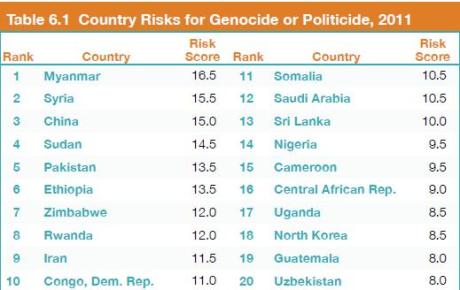

Source: Genocide Watch
http://www.genocidewatch.org/alerts/countriesatrisk2012.html
http://birhanumegersalenjiso.blogspot.co.uk/2014/01/nuding-ethiopian-history-and-naked.html
The Human Right Issues and Violations in the Horn of Africa,Ethiopia-Oromia
The current crisis in the Horn of Africa is, on the one hand, a struggle between oppressed people who are fighting for self-determination and, on the other hand, the regime of the Tigray People’s Liberation Front (TPLF) that is trying to impose its rule by force.
The regime has set loose war, hunger, poverty, and disease to ransack the country. In particular, the regime has been and is systematically violating human rights of the Oromo and other peoples of in the country as well and the neighborings too.
The OLF also believes in peace, democracy and development . As the main organ that is championing the right of self-determination of the Oromo people, it fully realizes the present day global reality. It affirms that the international community does have legitimate concern and interest in political stability and economic development of the Horn of Africa. Moreover, the OLF is cognizant of the fact that the day of carving spheres of influence and promoting clients in superpower rivalry has given way to globalization. Further, the OLF firmly believes in the immediate termination of the vicious cycle of political conflicts, economic backwardness, environmental degradation, natural and man-made disasters that today ravage the peoples of the Horn of Africa.
(http://www.oromoliberationfront.org/PressReleaseArchive/Articles/Liberating.htm)
Human Right Issue in Ethiopia
Allegations of arbitrary detention, torture, and other ill-treatment at the hands of Ethiopianpolice and other security forces are not new. But since the disputed 2005 elections, the Ethiopian government has intensified restrictions on freedom of expression, association,and assembly, deploying a range of measures to clamp down on dissent. These include arresting and detaining political opposition figures, journalists, and other independent voices, and implementing laws that severely restrict independent human rights monitoring and press freedom.
Since 2009 a new law, the Anti-Terrorism Proclamation, has become a particularly potent instrument to restrict free speech. The law’s provision undermine basic legal safeguards against prolonged pre-charge detention and unfair trials. In this context, Maekelawi has become an important site for the detention and investigation of some of the most politically sensitive cases.
Many detainees accused of offenses under the law—including some of Ethiopia’s most prominent political prisoners—have been detained in the Maekelawi facility as their cases were investigated or prepared for trial (Human Rights Watch, 2013). As a result of enforcement of the FDRE Proclamation 621/2009 that has been intended to impose superior regulation of charities, the party leaders decide who should receive and who should not receive the emergency support at grassroots level in the respective community.
Older Oormo people are usually victims of this type of abuse because of their allegiances to the values of the Oromo Gadaa system, that promotes respect and dignity to people in difficult situation. In so doing, technically, the authorities decide who should die from and who should survive the hunger.
http://www.minorityvoices.org/news.php/fr/1381/ethiopiauk-oromo-rally-in-london
Endless focus on Oromos by TPLF, why?
The Oromo people constitute the single largest national groups in the Ethiopia empire and the horn of Africa with the total of over 40 million people. The number of the oromo people and the geographical location of their country Oromia make the oromo country ( Oromia) the heart of Ethiopia. The Ethiopian empire mainly survives on the economic resources of Oromia. Although the Oromo people are one of the most impoverished and terrorized indigenous people .Recognizing that Oromia is the richest and largest populous state, the Tigrayan led Ethiopia government has been using collective violence to dominate, control and exploit Oromia which the key in controlling the Ethiopia government has been using political economy. Understanding the situation in Oromia helps in generalizing what is going through the country (Hassen,2011).
The Oromo people are just arrested and accused of being a member or supporter or sympathiser of the Oromo liberation struggle. To the Ethiopian government authorities, every Oromo appears to be a member of the Oromo Liberation Front (OLF), a political organisation struggling for the socio-economic, cultural and political rights of the Oromo people. One has to prove he/she is not a member or supporter of the OLF in order to live in relative peace. The safest proof is one and only one – to become a member of the EPRDF, the ruling party;failure to proove non-affiliation with OLF or any attempt to remain politically indifferent has come to be dangerous in Ethiopia for every ordinary Oromo. Business persons are systematically eliminated from investment and small scale business if they fail to be members of the ruling party in any case. Every student in college or university is required to secure membership of the ruling party at the campus in order for her/him to get job in public institutions or to run private business after completion of the study. The situation is worse for the rural people whereby farmers are required to be members of and demonstrate allegiance to the EPRDF in order to get agricultural inputs and/or have their children learn in school without assault by the government security.
It always seems impossible until it is done – Nelson Mandela
http://ethiofreespeech.blogspot.no/2014/01/the-human-right-issues-and-violations.html
Ethiopia: land of slavery & brutality – the League of Nations, Geneva 1935
‘
An old Abyssinian was shooting with the sight adjusted at more than a thousand
metres. I said to the Dedjiajmatch [dejazmach] that the bullets might fall on the mountain
and kill someone. He burst out laughing and said, “What does it matter if they
do? There is nobody here but Shangalla [shankilla]”.’
Friends at ER:
The above quote was an extract from a document or a memorandum presented by the Italian Government delineating the reasons for the expulsion of Ethiopia from the League of Nations, the forerunner of today’s United Nations Organisation. The main point of their argument was the condition of slavery and gebbar (a slave-like system) to which Abyssinia/Ethiopia had reduced its subject populations in the southern half of its empire, while pillaging their lands.
The change of political masters in Addis Ababa has so far been a mere case of taking turns at abusing the populations of these same southern provinces of Ethiopia to benefit the gun-toting invaders from the “Habesha highlands” of northern Ethiopia (Tigre-Woyane at the moment).
In this light, you may find the following document of great historical significance. It also provides an insight into the unchanged modus operandi of all Ethiopian regimes before or since.
Here is the complete document….
“Geneva, September 11th , 1935. Official No. C.340.M.171.1935.VII.
(I) CONDITIONAL ADMISSION OF ETHIOPIA TO THE LEAGUE OF NATIONS.
As regards the condition required by Article I of the Covenant [accord]
regarding effective guarantees of a sincere intention to observe international
obligations, the Sub-committee pointed out that, in the past, Ethiopia had not
fully observed her international engagements. During the discussion it was
stressed how difficult it was to reconcile Ethiopia’s demand with the
circumstance that Ethiopia, once admitted to the league, might sit in judgement
on countries under mandate, more civilised than Ethiopia herself and not
stained with the disgrace of slavery…
(II) POLITICAL STRUCTURE AND CONDITIONS OF ETHIOPIA IN RELATION TO ARTICLE I OF
THE COVENANT [of the League of Nations].
(Summary):
Clear distinction between the Abyssinian State and the territories conquered by
it. Difference of religion, language, history, race, and political and social
structure. Negus’s domination over non-Abyssinian populations. The gebbar
system (a form of slavery) applied to subject populations. The Ethiopian
Government’s responsibility for the decimation of the subject populations.
Ethiopia’s incapacity to possess a colony.
ABYSSINIA AND HER “COLONIES”: DISTINCTION BETWEEN THE ABYSSINIAN STATE AND THE
CONQUERED TERRITORIES.
On this subject it is first of all necessary to obtain a fundamental idea of
the position. It is commonly said that Ethiopia is a national State in Africa
which forms a single unit. Nothing could be further from the facts. The
Ethiopian State, in its present form, is composed of two regions which are
clearly distinct both geographically and politically.
(i) The old Abyssinian State, consisting of the regions inhabited mainly by
Abyssinian populations speaking kindred languages derived from Southern Arabic.
But the old Abyssinian State itself could not be called a national State,
because even in those regions there are considerable non-Abyssinian minorities,
such as the Agau in the Tsana and Nile regions, the Falasha of Semien,
professing the Jewish religion …and others. Nevertheless, their common
allegiance to the dynasty of the House of Solomon, and the fact that for ages
they [peoples of the northern half of Ethiopia] had belonged to the same group
of States, have to a certain extent welded all these regions into a political
unit which, though rough and shapeless in structure, might have a position of
its own in the composition of present-day Ethiopia.
This Abyssinian State has well-defined and exact historical, geographical and ethnical boundaries. On the west, towards the Nile basin, and on the east, towards Danakil, the frontier of
the Abyssinian State coincided with the edge of the plateau. The Abyssinians, a
mountain people, are clearly distinguished by race, language and religion from
the populations which inhabit the torrid Danakil plain and the valleys sloping
down towards the Sudan.
To the south, the boundary of the Abyssinian State was marked by the course of
the Blue Nile as far as its confluence with the Adabai, by the watershed
between the Blue Nile and the Awash, and by the course of the river Awash as
far as its entry into the Danakil plain. The territories beyond these
boundaries, in the south, are inhabited by non-Abyssinian populations which,
throughout the centuries of their history, have been traditional enemies of the
Abyssinian State.
(ii) The non-Abyssinian areas recently conquered by the arms of the Negus
Menelik.-Beyond the confines of this nucleus of the Abyssinian State there
were, until forty years ago, other native States, some of which have a long
historical tradition of independence. Among the principal may be mentioned the
Emirate of Harrar, which comprised the regions between the river Awash, the
Webi Shebeli, and the south-eastern edge of the plateau, having the inhabitants
of Ogaden as tributaries.
The Emirate of Harrar is a Moslem State which was
ruled for centuries by the dynasty of its Emirs, and was the cultural and
religious centre of Islam in South-East Africa. The continuous relations
maintained by the Emirate with the Arab countries of the Levant had brought
that state up to a level of civilisation far superior to that of Abyssinia. We
need only mention the fact that, even to-day, Harrar is the only town in the
territory of the present Ethiopian State which is built of masonry and is not
composed of huts hovels made of branches, apart from few buildings in Addis
Ababa.
In the south-west, the kingdom of kafa was founded by the western Sidama
peoples. The political and social constitution of this kingdom and its history
(which comprises at least 600 years of independence, from the fourteenth
century to the Abyssinian conquest) form the subject of various well-known
works published only recently; and, not to quote Italian writers, we need only
refer to the voluminous work of the Austrian traveller Franz Bieber.
In the south, there is the kingdom of Wollamo, founded by the Sidama
populations of the Omo. How this peaceful little agricultural State was
devastated and destroyed by the Abyssinians is described in a work by a
Frenchman, M Vanderheym, which is nothing les than an indictment of the
Abyssinian State.
In the west, there is the Sultanate of Jimma, a Moslem State that became a
centre in Westrn Ethiopia towards which Moslem currents flowed from Harrar and
Egypt. Under the patriarchal administration of its sultans of the local
dynasty, Jimma had reached a high degree of economic prosperity, which it
retained, being the only Moslem State remaining independent of the Abyssinians
until the Negus annexed it to Ethiopia a few months ago.
The Abyssinian State is completely different in every respect from these vast
“colonies” which it has recently acquired:
(a) In religion, because the Abyssinians are Monophysite Christians, whereas
the Somali, Harrari, [deleted] [Oromo], Sidama are largely Moslem, and in part
still pagan;
(b) In language, because the Abyssinians speak Amharic and Tigrai (Semitic
languages), whereas in the conquered regions the languages spoken are totally
different from the Abyssinian languages, but are interrelated among
themselves-e.g.-Galla [Oromo], Somali, Kafi, Wolamo, etc.;
(c) In political and social structure, because the Abyssinian State is based on
the feudal system, whereas the Emirate of Harrar was organised on the model of
the States of the Arabian peninsula, and the Sidama States have a highly
centralised organisation of their own;
(d) In race, because the Abyssinians are Semiticised people, whereas the [deleted],
Sidama, Somali, Tishana, Yambo and the rest are Cushitic and Nilotic peoples;
(e) In history, because the Emirate of Harrar, for instance, has for centuries
waged relentless warfare against the Abyssinian State. Indeed, this warfare
might be said to constitute the whole history of Abyssinia itself; records of
it existed from at least the fourteenth century onwards. The Abyssinian
domination constitutes, in fact, the subjugation of a conquered people by its
age-long enemy.
DOMINATION OF THE NEGUS OVER NON-ABYSSINIAN POPULATIONS.
The Abyssinian domination in the conquered countries takes concrete form in the
slave trade and the so-called gebbar system. The slave trade will be considered
below. It should be pointed out here, however, that the slave trade is due not
only to a desire for gain, but also to the idea, deep-rooted in the
Abyssinians’ mind, that their victories have left them absolute masters of
populations which, in their eyes, are no more than human cattle.
This conception of the Abyssinians is confirmed b a typical incident narrated by Sir
Arnold Hodson in his work Where the Lion Reigns (page 41): ‘An old Abyssinian
was shooting with the sight adjusted at more than a thousand metres. I said to
the Dedjiajmatch [dejazmach] that the bullets might fall on the mountain and kill someone.
He burst out laughing and said, “What does it matter if they do? There is
nobody here but Shangalla [shankilla]”‘ (Shangalla is the name given by the Abyssinians to
the Nilotic peoples).
The gebbar system is a form of slavery, and is regarded as such by European
writers and travellers. In each of the countries conquered and annexed by
Abyssinia, a body of Abyssinian troops is stationed, comprising the soldiers
themselves and their families. The inhabitants of the conquered country are
registered in families by the Abyssinian chiefs, and to every family of
Abyssinians settled in the country there is assigned one or more families of
the conquered as gebbar. The gebbar family is obliged to support the Abyssinian
family; it gives that family its own lands, builds and maintains the huts in
which it lives, cultivate the fields, grazes the cattle, and carries out every
kind of work and performs all possible services for the Abyssinian family. All
this is done without any remuneration, merely in token of the perpetual
servitude resulting from the defeat sustained thirty years ago. It amounts to
what Anglo-Indians are accustomed to call “the law of the jungle”.
The gebbar can never obtain freedom from their chains, even by ransom. They must not leave
the land assigned for their work, and, if they run away, they themselves are
subject to the terrible punishment which are inflicted in Ethiopia, and to
which we shall refer shortly, while their village is bound to supply the
Abyssinians with another family to be reduced to the condition of gebbar, in
place of the fugitive family.
As to the effects of slavery and the gebbar system, all who know the facts are
agreed: the non-Abyssinian regions of Ethiopia are becoming a vast desert.
Every Abyssinian chief sent to those parts finds it necessary on his arrival to
provide himself with slaves and his soldiers’ families with gebbar. And when he
leaves the conquered countries to be transferred elsewhere, he takes away with
him, and allow his soldiers to take away with them, the greatest possible
number of slaves and gebbar to be employed at his new residence. This constant
draining of the population of the subject territories is particularly terrible,
because the slaves and gabbar are decimated, during the long journeys, by
hunger, thirst and ill-treatment from their Abyssinian masters. We quote
evidence from non-Italian sources.
Sir Arnold Hodson (Seven Years in Southern Abyssinia, London, 1927, page 146)
writes of Kafa: ‘There has recently been a change of Governors in Kafa, and, as
usual, the outgoing official was taking away as much as he could in goods and
slaves’. … Thus the population of Kafa, which Cardinal Gugliemo Massaja
estimated at a million and a half before the Abyssinian conquest, is now
reduced to 20,000. Again, whereas Vittorio Bottego estimated the population of
the Burji in 1895 at 200,000, there are now no more than 15,000 people in the
region. And Sir Arnold Hodson, who was Consul at Gardulla, not far from Burji,
writes as follows (Seven Years in Southern Abyssinia, page 102): ‘Burji had
been sadly devastated quite recently, and very few natives were left there. The
responsibility for this rests with a former Governor of Sidamo, named Ato
Finkabo, who appears to have carried on a very flourishing business in slaves
from these parts. In fact, he became so enterprising that most of the natives
who were left fled to Conso and Boran to escape falling into his clutches’.
George Montandon calculates (Au pays des Ghimirra, page 223) that the
population of Ghimirra has declined in a few years from 110,000 to 10,000.
The responsibility of the Addis Ababa Government for this incredible state of
affairs in the non-Abyssinian areas of the south is particularly great, because
it has compelled some of the more warlike non-Abyssinian peoples to arm
themselves in defence of their lives and liberty; and theses foreign peoples,
having acquired arms and ammunition, have in their turn become slave-raiders,
preying upon the unarmed neighbouring tribes, and so have increased the
destruction and the scourge of slavery.
In conclusion we need only quote …Major M Darley, who has had a very long
experience of Ethiopian affairs, and who wrote in 1926, three years after
Abyssinia’s entry into the League (Slaves and Ivory, page 34): ‘Abyssinia
should be the heart of North-East Africa, but all the veins or roads, which
should supply the rest of the starving body with nourishment, are blocked by
the Abyssinian policy, abysmal and suicidal, of depopulation, retrogression and
racial extermination’.
It will thus be seen that the Ethiopian State, administratively and politically
disorganised as It is, carries the dire effects of its domination (slavery and
gebbar) into vast regions of East Africa which were conquered by the arms of
the Negus only a few years ago. It is surely in the interests of civilisation
that the Harrari, [deleted] [Oromo], Somali, Sidama, and other peoples which have
for centuries formed separate national entities, should be removed from
Abyssinian oppression. To effect an immediate settlement of this grave problem
is, indeed, to act in conformity with the spirit of the covenant, which
requires that colonisation should be carried out only by advanced States which
are in a position to ensure the development and welfare of the native
peoples…
The documents show:
(a) That Ethiopia recognises slavery as a legal condition;
(b) That raids for the capture of individuals for purposes of slavery are
continuing on a large scale, especially in the southern and western regions of
Ethiopia;
(c) That the slave trade is still practiced;
(d) that the Ethiopian Government participates directly in the slave trade by
accepting slaves in payment of taxes and allowing detachments of regular troops
to capture new slaves;
(e) That, in addition to slavery proper, there exists the institution known as
“gebbar”, to which the population of non-Ethiopian [sic] regions are subject,
and which is a form of servitude akin to slavery;
(f) That the Ethiopian Government has taken no account of the recommendations
made to it by the committee of Experts on slavery, more particularly as regards
the abolition o the legal status of slave, as appears further from the report
submitted to the League of Nations in May 1935…
By her conduct, Ethiopia has openly placed herself outside the covenant of the
League and has rendered herself unworthy of the trust placed in her when she
was admitted to membership. Italy, rising up against such an intolerable
situation, is defending her security, her rights and her dignity. She is also
defending the prestige and good name of the League of Nations.”
http://www.ethiopianewsforum.com/viewtopic.php?f=2&t=60396
http://www.huffingtonpost.co.uk/eleanor-ross/ethiopia-human-rights_b_4649953.html?utm_hp_ref=tw
Copyright © OromianEconomist 2014 & Oromia Quarterly 1997-2014, all rights are reserved. Disclaimer.
The genocidal Ethiopia and Its Janjaweed Style Liyu Police: The Killings of 59 Oromo Men, Women and Children, The Wounding of 42 Others, the Confiscation of Property and the Forcible Removal of People from Their Ancestral Land in Eastern Oromia January 19, 2014
Posted by OromianEconomist in Africa, Colonizing Structure, Corruption, Dictatorship, Domestic Workers, Environment, Ethnic Cleansing, Food Production, Human Rights, Human Traffickings, ICC, Janjaweed Style Liyu Police of Ethiopia, Knowledge and the Colonizing Structure., Knowledge and the Colonizing Structure. African Heritage. The Genocide Against Oromo Nation, Land Grabs in Africa, Nelson Mandela, Oromia, Oromiyaa, Oromo, Oromo Identity, Oromo Nation, Oromo Social System, Oromo the Largest Nation of Africa. Human Rights violations and Genocide against the Oromo people in Ethiopia, Oromummaa, Self determination, Slavery, South Sudan, The Colonizing Structure & The Development Problems of Oromia, Tyranny, Uncategorized, Warlords.Tags: African culture, African Studies, Aid, Developing country, Development, Development and Change, Economic and Social Freedom, economics, Ethiopia, Ethnic Cleansing, Gadaa System, Genocide, Genocide against the Oromo, Governance issues, Horn of Africa, Human rights, Human Rights and Liberties, Human rights violations, ICC, Janjaweed in Darfur Liyu Police in Oromia, Land grabbing, Land grabs in Africa, Mass killings, Oromia, Oromiyaa, Oromo, Oromo culture, Oromo people, Oromo Studies Association, Oromummaa, Politics of Ethiopia, poverty, Social Sciences, State and Development, Sub-Saharan Africa, Tyranny, United Nations, Universal Declaration of Human Rights
5 comments


Oromo Studies Association’s (OSA’s) Letter to U.S. Secretary of State on the Killings of 59 and Wounding of 42 Oromos in Eastern Oromia by Ethiopian-Trained “Liyu Police”:
January 17, 2014
The Honorable John F. Kerry
Secretary of State
U.S. Department of State
2201 C Street N.W.
Washington, DC20520
Subject: The killings of 59 Oromo men, women and children, the wounding of 42 others, the confiscation of property and the forcible removal of people from their ancestral land in eastern Ethiopia
Dear Mr. Secretary,
I am writing this letter on behalf of the Oromo Studies Association, an independent scholarly, multi-disciplinary, non-profit organization based in North American. My purpose is to bring to your attention and to protest on behalf of the members of OSA a crime committed against the Oromo in Eastern Ethiopia, that is, the killings of 59 Oromo men, women and children, the wounding of 42 others and the confiscation/destruction of property with an estimated value of Eth$14,726,000 in the eastern Oromia zone of Ethiopia. These acts of extreme and unprovoked violence, killings, violent wounding, burning of houses and confiscation of cattle and other property of the Oromo citizens in eastern Oromia zone, were committed by Ethiopian government-trained special Somali militia forces known as “Liyu Police” (translation: Special Police Force). The Ethiopian regime arms Somali in that region while disarming Oromo farmers. These actions of deliberately arming one people while equally deliberately disarming the other and, thus, by creating conflict between formerly closely related people – groups who have lived peacefully as neighbors for centuries – goes beyond abdicating governmental responsibility. It is a heinous crime that this government commits against peoples within its jurisdictional borders. The world regards these victims as citizens of Ethiopia, but they are being seriously mistreated with no proper defense available.
In the past several months, there has been a new wave of killing of Oromo nationals in particular who reside in the eastern Oromia zone of Ethiopia. Targeted Oromo victims suffer also the confiscation of their property and removal by the thousand of residents from their ancestral lands. This is a miserable new policy which constitutes nothing less than a strategy for creating a blood feud between the two culturally related people, namely, the Oromo and Somali in eastern Oromia zone of Ethiopia. In the sacred land of their birth, Oromo children, women and unarmed men are killed systematically by Ethiopian government Special Police forces. Once the slaughter is completed, these government-equipped forces then callously deny their victims even decent burial, which, in itself, is a crime against humanity.
The Ethiopian government is responsible for inflicting a great deal of harm and damage on defenseless Oromo peasants through this practice of arming Somali against disarmed Oromo farmers by building special police force comprised of Somalis. This appears to be a continuation of the callously inhuman policy of the Ethiopian regime that led to the removal of Oromo peasants from seven major ancestral regions covering extensive territories in the eastern Oromia zone of Ethiopia. Most OSA members are Oromo Americans, who closely follow events in the region and whose findings are confirmed by the reports of pain and suffering of their families – mothers, fathers, sisters, brothers, relatives and friends – who were killed, wounded and displaced, and whose livelihood was destroyed by Ethiopian government Special Police forces made up of Somali armed by the regime.
The Oromo Studies Association, OSA, was established 26 years ago by international scholars from around the globe to promote studies related and relevant to the Oromo and other peoples in the Horn of Africa. In its attempt to create academic forums where ideas and research findings about the Oromo and other people of Ethiopia and the Horn of Africa are freely discussed, OSA has established a peer-reviewed Journal of Oromo Studies, other periodic publications, as well as organizing regular mid-year and annual conferences. OSA has been involved in building a knowledge base for creating a democratic future for the peoples of Ethiopia and the Horn of Africa. In our scholarly organization Somali and Oromo scholars work together. The Journal of Oromo Studies publishes research papers on Somali studies. Our goal is to strengthen historical relations between the two related peoples.
You may be surprised to learn that Oromia, the Oromo regional state in Ethiopia, is the largest, the richest and the most densely populated regional state in Ethiopia. Because the Oromo constitute the single largest national group in Ethiopia – and in the entire region – they are regarded as the greatest threat to the ruling minority group, dominated by members historically affiliated with the Tigrayan Liberation Front (TPLF). The current government is dominated by Tigrayans persons whose ethnicity represents less than seven percent of the population of Ethiopia. Current Ethiopian government policies, which target populations on the basis of ethnicity, are best understood in light of a history of ethnic politics and ethnic discrimination. Arming Somalis to destroy Oromo in order to confiscate their lands and other resources continues ethnic politics in its most brutal form.
Oromo do not have powerful friends in the western world who bring the injustices that they suffer to the attention of international community. The Oromo Studies Association requests that you respond to our voice as a voice of conscience uttered to the international community. We urge that you immediately put pressure on the Ethiopian regime to desist from driving Oromo out their ancestral land in eastern Oromia zone of Ethiopia. We request that the State Department under your able leadership look into this critical matter take effective action while there is time to reverse a criminal policy and save the lives and livelihood of vulnerable populations in Eastern Ethiopia.
In the light of the issue raised which is only the most recent of an ongoing series of violent attacks on Oromo farmers in eastern Oromia zone during 2013, the Oromo Studies Association (OSA) urgently requests that the State Department utilize its good offices to seek justice by putting pressure on the Ethiopian government to:
• Stop immediately the Liyu Police attacks on Oromo farmers in the eastern Oromia zone of Ethiopia.
• Return, without delay, those who were forcibly driven from their ancestral lands in eastern Oromia zone of Ethiopia.
• Bring to speedy trial those who ordered the Liyu Police force to attack, killing 59 defenseless Oromo children, men and women and wounding 42 others while confiscating or destroying property estimated at Eth$14,726,000.
• Pay compensation for the lives lost and the property confiscated from those defenseless Oromo farmers in eastern Oromia zone of Ethiopia.
• Urge the Ethiopian government officials to stop the forcible removal of thousands of Oromo farmers from their ancestral lands in eastern Oromia zone of Ethiopia and make sure that such measures will never be repeated in Oromia or other parts of Ethiopia.
• Advise the leaders of the Ethiopian government to abandon the cruel and crude policy of disarming Oromo while unleashing the special police force on defenseless children, men and women.
• Strongly urge the leaders of the Ethiopian government to respect and implement the provisions in their own Constitution, which officially guarantees respect for human rights and democratic governance.
The Oromo Studies Association requests that the State Department, under your leadership, set an example by taking the above measures in a timely fashion.
You have an extraordinary opportunity to make a difference in the lives of millions of Oromo and other people in Ethiopia. Our scholarly association appreciates your good efforts in this regard.
Sincerely,
Ibrahim Elemo, President
Oromo Studies Association
P.O.Box: 6541
Minneapolis, MN 55406-0541
E-mail: ielemo@weisshospital.com
CC:
Ambassador Girma Birru
Embassy of FDRE, Washington, D.C
3506 International Drive, N.W.
Washington, D.C. 20008
Mr. Ban Ki-moon, Secretary-General
Office of the Secretary General of United Nations
885 Second Avenue
New York, NY 10017, USA
Mr. David Cameron, Prime Minister of UK
10 Downing Street, London, UK
The Hon. Tony Abbott, MP
Prime Minister
Parliament House
CANBERRA ACT 2600
Liyu Police is Ethiopia’s (TPLF’s) style of Janjaweed to conduct genocide against the Oromo people.
http://www.britannica.com/EBchecked/topic/1003597/Janjaweed
Copyright © Oromianeconomist 2014 and Oromia Quarterly 1997-2014. All rights reserved. Disclaimer
Oromo First: Oromia’s Community And Global Awareness In The Making January 8, 2014
Posted by OromianEconomist in Africa, Culture, Development, Gadaa System, Human Rights, Humanity and Social Civilization, Kemetic Ancient African Culture, Oromia, Oromiyaa, Oromo, Oromo Culture, Oromo Nation, Oromo Social System, Oromummaa, Self determination, Sirna Gadaa, The Colonizing Structure & The Development Problems of Oromia, Uncategorized.Tags: Africa, African culture, African Studies, Developing country, Development, Development and Change, Economic and Social Freedom, Gadaa System, Genocide against the Oromo, Governance issues, Horn of Africa, Human rights, Human Rights and Liberties, Human rights violations, Land grabs in Africa, Oromia, Oromo, Oromo people, Oromummaa
2 comments


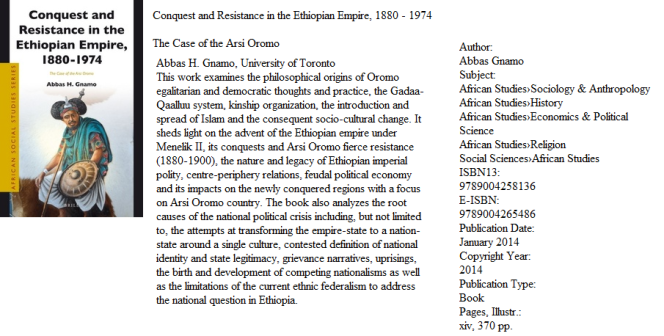
Oromia map (green)
 Oromian’s at Malkaa Ateetee, Oromia: The continuity of Oromo culture, philosophy and sprituality (Waaqeffanaa)
Copyright © Oromianeconomist 2014 and Oromia Quarterly 1997-2014. All rights reserved. Disclaimer.
The Oromo, Gadaa/Siqqee Democracy and The Liberation Of Ethiopia Colonial Subjects December 5, 2013
Posted by OromianEconomist in Africa, Development, Gadaa System, Human Rights, Humanity and Social Civilization, Knowledge and the Colonizing Structure. African Heritage. The Genocide Against Oromo Nation, Oromia, Oromiyaa, Oromo, Oromo Culture, Oromo Identity, Oromo Nation, Oromo Social System, Oromummaa, Self determination, Sirna Gadaa, The Oromo Governance System, Theory of Development, Uncategorized.Tags: Africa, African culture, African Studies, Economic and Social Freedom, Gadaa System, Governance issues, Human Rights and Liberties, Human rights violations, National Self Determination, Oromia, Oromo, Oromo people, Siqqee, Sub-Saharan Africa, Universal Declaration of Human Rights
comments closed

This paper explores the potential role of the Gadaa/Siqqee system of Oromo democracy in the development of a democratic multinational liberation movement of the colonized nations within the Ethiopian Empire in order to dismantle the Tigrayan- led Ethiopian terrorist government and replace it with a sovereign multinational democratic state in the Horn of Africa based on the principles of indigenous democracy. After a brief introduction, this study describes the presence of a democratic, Siqqee/Gadaa administration among the Oromo in the Horn of Africa in the
16th and 17th centuries and the subsequent changes that made them vulnerable to colonization. It further examines the essence and main characteristics of Gadaa/Siqqee, showing that it provides a contrasting political philosophy to the authoritarian rule of the Ethiopian Empire. The study shows that in the face of oppression and exploitation the Oromo people have struggled to preserve and redevelop their indigenous democracy, written records of which go back to the 16th century, long before European nations embraced the principles of democratic governance. It also explains how it can be adapted to the current condition of the colonized nations within the Ethiopian Empire in order to revitalize the quest for national self- determination and democracy and to build a sovereign democratic state in a multinational context. Furthermore, the piece asserts that this struggle is truly a diffi cult one in the 21st century as the process of globalization is intensifi ed and regional and local cultures are being suppressed under the pressure of dominating cultures.
Asafa Jalata, Professor, Department of Sociology, The University of Tennessee, Knoxville, Tennessee
Harwood Schaffer, Research Assistant Professor, Agricultural Policy Analysis Centre, The University of Tennessee
Read the full article from the following:
http://works.bepress.com/cgi/viewcontent.cgi?article=1104&context=asafa_jalata
http://works.bepress.com/asafa_jalata/63/
Copyright © 2013 & Oromia Quarterly 1997-2013, all rights are reserved. Disclaimer.
Culture, Identity and the roles of Women in Oromo Society November 28, 2013
Posted by OromianEconomist in Culture, Humanity and Social Civilization, Kemetic Ancient African Culture, Oromia, Oromiyaa, Oromo, Oromo Culture, Oromo Identity, Oromo Nation, Oromo Social System, Uncategorized.Tags: African culture, African Studies, Ancient time, Democratic African institution, Development and Change, Gadaa System
1 comment so far

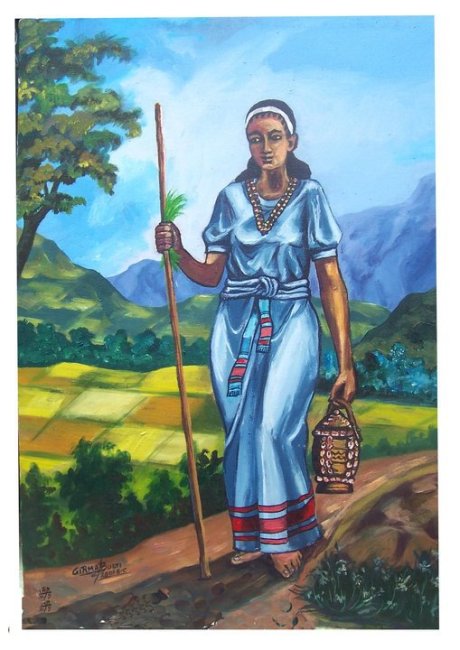
‘Oromo society views women as the dominant creators and assimilators of cultural symbols. At this time, women were independently creating their own material expressions based on the emerging nationalist consciousness sweeping the Oromo countryside, and these practices continue today through the manipulation of new materials in the production of upper torso body art. Oromo women’s dress is most closely associated with the lower body and its association with procreation.’
http://www.creative8studios.com/oromia/
Copyright © Oromianeconomist 2013 and Oromia Quarterly 1997-2013. All rights reserved. Disclaimer.
Scientific System, Mathematics and Ancient Kemetic Traditions November 17, 2013
Posted by OromianEconomist in Africa, Culture, Development, Gadaa System, Kemetic Ancient African Culture, Language and Development, Oral Historian, Oromia, Oromiyaa, Oromo, Oromo Culture, Oromo Identity, Oromo Social System, Oromummaa, Self determination, Sirna Gadaa, The Oromo Library, Theory of Development, Uncategorized.Tags: Africa, African culture, African Philosophy, African Studies, Ancient Black People, Ancient Egypt, Gadaa System, Kemet, Kemetic, Mathematics in Ancient Africa, Number Theory, Oromia, Oromo, Oromo people
1 comment so far
Number Mysticism
The netert (goddess) Seshat is well described in numerous titles that ascribe two main types of activities to her. She is The Enumerator, Lady of Writing(s), Scribe, Head of the House of the Divine Books (Archives).The other aspect of Seshat and obviously closely related to it is one where she is described as the Lady of Builders.
The divine significance of numbers is personified in Ancient Egyptian traditions by Seshat, The Enumerator.
The Ancient Egyptians had a “scientific and organic system” of observing reality. Modern-day science is based on observing everything as dead (inanimate). Modern physical formulas in our science studies almost always exclude the vital phenomena throughout statistical analyses. For the Ancient Egyptians, the whole universe is animated.
Animism is the concept that all things in the universe are animated (energized) by life forces. This concurs, scientifically, with the kinetic theory, where each minute particle of any matter is in constant motion, i.e., energized with life forces.
In the animated world of Ancient Egypt, numbers did not simply designate quantities but instead were considered to be concrete definitions of energetic formative principles of nature. The Egyptians called these energetic principles neteru (gods).
For Egyptians, numbers were not just odd and even—they were male and female. Every part of the universe was/is a male or a female. There is no neutral (a thing). Unlike in English, where something is he, she, or it, in Egypt there was only he or she.
These animated numbers in Ancient Egypt were referred to by Plutarch, in Moralia Vol V, when he described the Egyptian 3-4-5 Triangle:
The upright, therefore, may be likened to the male, the base to the female, and the hypotenuse to the child of both, and so Ausar [Osiris] may be regarded as the origin, Auset [Isis] as the recipient, and Heru [Horus] as perfected result. Three is the first perfect odd number: four is a square whose side is the even number two; but five is in some ways like to its father, and in some ways like to its mother, being made up of three and two. And panta [all] is a derivative of pente [five], and they speak of counting as “numbering by fives”. Five makes a square of itself.
The vitality and the interactions between these numbers shows how they are male and female, active and passive, vertical and horizontal, …etc.The Ancient Egyptian mode of calculation had a direct relationship with natural processes, as well as metaphysical ones. Even the language employed in the Egyptian papyri serves to promote this sense of vitality, of living interaction. We see this understanding as an example in Item no. 38 of the papyrus known as the Rhind Papyrus, which reads,
I go three times into the hekat (a bushel, unit of volume), a seventh of me is added to me and I return fully satisfied.
Numbers were animated and personified. Likewise, calculations were personal in Ancient Egypt. We are part of the natural process in the universe. Even in our present-day, we hear the genius among us describe how they feel the subject of their excellence. They live their work in order to excel and exhilarate.Egyptians manifested their knowledge of number mysticism and harmonical proportions in all aspects of their lives, such as art and architecture. The evidence that Egypt possessed this knowledge is commanding. As examples:
The heading of the Ancient Egyptian papyrus known as the Rhind (so-called “Mathematical”) Papyrus (1848-1801 BCE) reads,
Rules for enquiring into nature and for knowing all that exists, every mystery, every secret.
The intent is very clear that Ancient Egyptians believed and set the rules for numbers and their interactions (so-called mathematics) as the basis for “all that exists”.The famous Ancient Egyptian hymn of Leiden Papyrus J 350 confirms that number symbolism had been practiced in Egypt, at least since the Old Kingdom (2575–2150 BCE). It is a rare direct piece of evidence of the Egyptian knowledge of the subject. The Leiden Papyrus consists of an extended composition, describing the principle aspects of the ancient creation narratives. The system of numeration, in the Papyrus, identifies the principle/aspect of creation and matches each one with its symbolic number.
This Egyptian papyrus consists of 27 stanzas, numbered from 1 to 9, then from 10 to 90 in tens, then from 100 to 900 in hundreds. Only 21 have been preserved. The first word of each is a sort of pun on the number concerned.The numbering system of this Egyptian Papyrus by itself is significant. The numbers 1 to 9, and then the powers 10, 20, 30, etc., now come to constitute the energetic foundations of physical forms.
All the design elements in Egyptian buildings (dimensions, proportions, numbers, …etc.) were based on the Egyptian number symbolism.
The Ancient Egyptian name for the largest temple in Egypt, namely the Karnak Temple Complex, is Apet-sut, which means Enumerator of the Places. The temple’s name speaks for itself. This temple started in the Middle Kingdom in ca. 1971 BCE, and was added to continuously for the next 1,500 years. The design and enumeration in this temple are consistent with the number symbolism of the physical creation of the universe.
The Egyptian concept of number symbolism was subsequently popularized in the West by and through the Greek Pythagoras (ca. 580–500 BCE). It is a known fact that Pythagoras studied for about 20 years in Egypt, soon after Egypt was open to Greek exploration and immigration (in the 7th century BCE).
Pythagoras and his immediate followers left nothing of their own writing. Yet, Western academia attributed to him and the so-called Pythagoreans, an open-ended list of major achievements. They were issued a blank check by Western academia.
Pythagoras and his followers are said to see numbers as divine concepts, ideas of the God who created a universe of infinite variety, and satisfying order, to a numerical pattern.
The same principles were stated more than 13 centuries before Pythagorus’ birth, in the heading of the Egyptian’s Rhind Papyrus, which promises,
Rules for enquiring into nature and for knowing all that exists, every mystery, every secret.
Moustafa Gadalla
http://www.egypt-tehuti.org/articles/sacred-numerology.html
http://thesevenworlds.wordpress.com/2013/11/17/kemetic-numerology/
http://thesevenworlds.wordpress.com/2013/12/08/kemet-zulu-yoruba-1/


 The Egyptian Sacred Numerology
By Moustafa Gadalla (edited)
Number Mysticism
The netertSeshat is well described in numerous titles that ascribe two main types of activities to her. In Kemet, she wasThe Enumerator, Lady of Writing(s), Scribe, Head of the House of the Divine Books (Archives). The other aspect of Seshat is as the Lady of Builders.
The divine significance of numbers is personified by Seshat, The Enumerator.
Kemet had a “scientific and organic system” of observing reality. Modern-day science is based on observing everything as dead (inanimate). Modern physical formulas in our science studies almost always exclude the vital phenomena throughout statistical analyses. In Kemet, we knew the whole universe was animated.
View original post 839 more words
Oromo Are The Single Largest And Indigenous National Group In East Africa November 14, 2013
Posted by OromianEconomist in Human Rights, Humanity and Social Civilization, Kemetic Ancient African Culture, Oromia, Oromiyaa, Oromo, Oromo Culture, Oromo Social System, Oromo the Largest Nation of Africa. Human Rights violations and Genocide against the Oromo people in Ethiopia, The Oromo Democratic system, The Oromo Governance System, Uncategorized.Tags: Africa, African culture, African Studies, Gadaa System, Oromia, Oromo, Oromo people, Seenaa Jimjimo
add a comment

Oromia map (green)
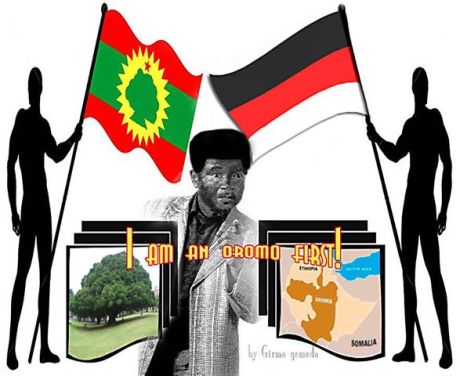
Independent nation before 1887
Mini Documentary by Seenaa Jimjimo
‘The Oromo Community Association in Chicago was featured on Chicago Public Radio’s Worldviewprogram on Wednesday, October 20, 2010. Listen below the full segment of the program on the Oromo people, the Oromo Community Association in Chicago, and the benefit jazz concert that the Association will hold on October 24, 2010.From the Chicago Public Radio: There are an estimated 40 million Oromo in Ethiopia, which makes them the nation’s largest ethnic group. Their numbers extend into Kenya and Somalia as well. Yet, despite their wide influence in the Horn of Africa, many people have never heard of the Oromo. Seenna Jimjimo of Chicago’s Oromo Community Association and Kadiro Elemo talk with Jerome about the Oromo culture, the struggle for independence and the local Oromo community in Chicago.’ Source: Gadaa.com
Listen:
Related references:
From slavery to freedom:the Oromo slave children of Lovedale, prosopography and profiles
Sandra Carolyn Teresa Rowoldt Shell
Student number: RWLSAN002
A dissertation submitted in fulfilment of the requirements for the award of the degree of Doctor of Philosophy in Historical Studies
Faculty of the Humanities
University of Cape Town
2013
https://www.academia.edu/3760219/From_slavery_to_freedom_the_Oromo_slave_children_of_Lovedale_prosopography_and_profiles
https://oromianeconomist.wordpress.com/?s=twisted&searchbutton=go%21
Irreecha: The Oromo National And Cultural Holiday Has Been Celebrated With Over 3 million Oromians In The Blessing Festival October 13, 2013
Posted by OromianEconomist in Africa, Culture, Development, Humanity and Social Civilization, Irreecha, Kemetic Ancient African Culture, Oromia, Oromiyaa, Oromo, Oromo Culture, Oromo Identity, Oromo Nation, Oromo Social System, Oromummaa, Self determination, Sirna Gadaa, The Oromo Democratic system, The Oromo Governance System, Theory of Development, Wisdom.Tags: Africa, African culture, African Studies, Democratic African institution, Development, Development and Change, Gadaa, Gadaa System, Horn of Africa, Irreecha, National Self Determination, Oromia, Oromia Region, Oromiyaa, Oromo, Oromo culture, Oromo Identity, Oromo National Day and Ancient Africa Connections, Oromo people, Oromo Thanksgiving, Oromummaa, Social Sciences
add a comment

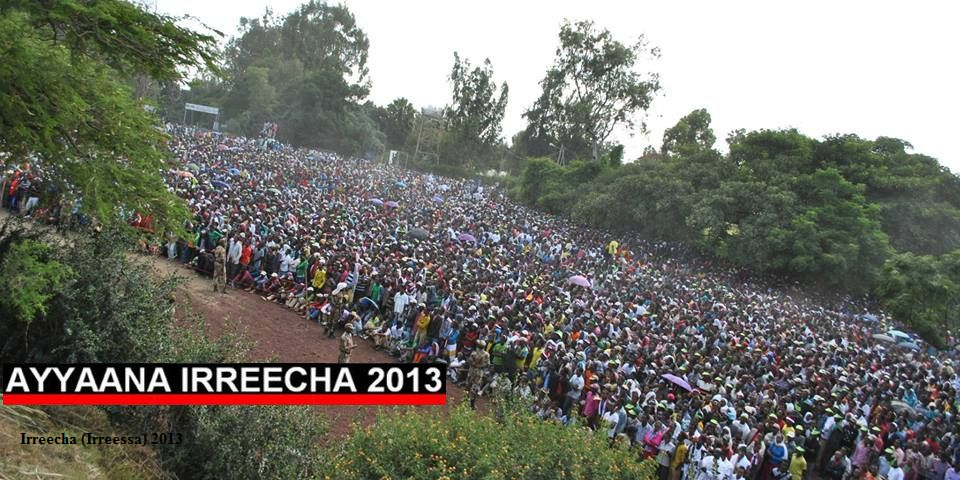
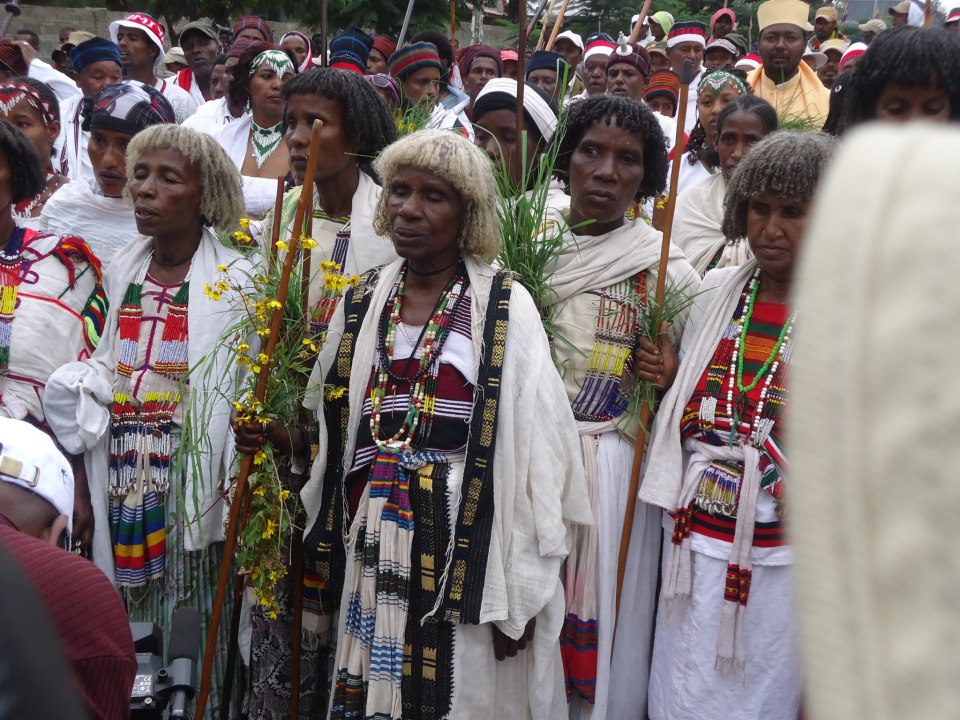
Oromo culture from ancient to present, Irrechaa time
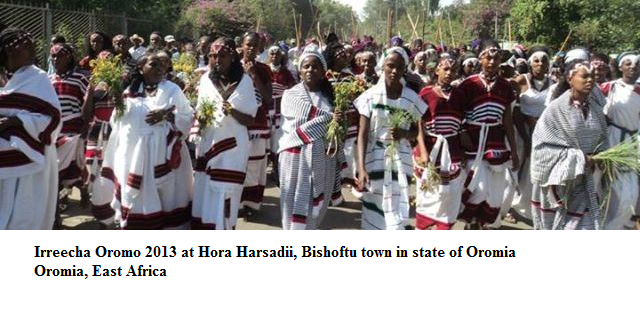

Baga ganna nagaan baatanii booqaa birraa argitan. Good that the rainy season is over for you and that you came to see the spot of the sunny flowering season. The expression signifies the end of one season and the beginning of another season, which incidentally is the beginning of a new year according to Oromo time reckoning. This is not the only expression in Irreecha festival as the event is characterized by vast and varieties of expressions, stories and sequences of cultural displays. Irreecha is the biggest and very beautiful public displays of ancient culture that Africa has performed and continue to perform. Holding the green grass and yellow flower (umama), it is the celebration of the season of blessing and love Oromians experience as Thanksgivings to God (Waaqa) the creator (Uumaa).
Irreecha celebration at Malkaa Ateetee, Burayyuu, Oromia, 6th October 2013
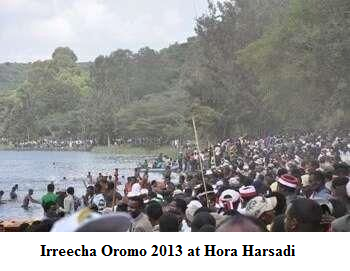
Irreecha is one of the most colorful and beautiful Oromo national cultural events that has been celebrated through out since the last week of August and the entire September and also in October in Oromia and globally where Oromians have been residing (Africa, Australia, Europe and North America). The main Irreecha day was celebrated at Lake Hora Harsadii, Bishoftu, Central Oromia, nearer to the capital Finfinnee on 29th September 2013. According to local news sources from Bishoftuu, over 3 million people attended this year’s Irreecha Malka celebration at Hora Harsadii. “Traditionally, the Oromo practiced Irreecha ritual as a thanksgiving celebration twice a year (in autumn and spring) to praise Waaqa (God) for peace, health, fertility and abundance they were given with regards to the people, livestock, harvest and the entire Oromo land. Irreecha is celebrated as a sign of reciprocating Waaqa in the form of providing praise for what they got in the past, and is also a forum ofprayer for the future. In such rituals, the Oromo gather in places with symbolic meanings, such as hilltops, river side and shades of big sacred trees. …These physical landscapes are chosen for their representations in the Oromo worldview, for example, green is symbolized with fertility, peace, abundance and rain. In Oromia, the core center of Irreecha celebration has been around Hora Arsadi in Bishoftu town, some 25kms to the south of Finfinne, the capital city. Annually, particularly during the Irreecha birraa (the Autumn Irreecha) in September or October, the Oromo from different parts of the country come together and celebrate the ritual. In the past few decades, Irreecha celebrations have been expanded both in content as well as geographical and demographic representations. This short commentary deals with such historical trajectories by contextualizing the changes within political discourses in Ethiopia vis-à-vis Oromo nationalism.”http://gadaa.com/oduu/21320/2013/08/24/irreecha-from-thanksgiving-ritual-to-strong-symbol-of-oromo-identity/ ”
http://gadaa.com/Irreechaa.html
Aadaa fi Duudhaa sirna Waaqeffannaa keessaa inni tokko Ayyaana irreeffannaa ykn irreechati. Sirni Duudhaa irreechaa gosa hedduutti qoodama. Kunis, Irreessa Malkaa, Irreessa Tulluu, Irreessa Galmaa / Gimbii, Irreessa Ujubaa, Irreessa Dakkii, Irreessa Jilaa fi Irreessa Eebbaa ykn Galataa fi kkf. Akkaa fi akkaataan irreeffannaas akkuma sirna isaatti addaa adda. Ammatti kan bal’inaan irraa dubbannu Irreecha yeroo ammaatti biyya keessaa fi alatti beekamee fi kabajamaa jiru, Irreecha Malkaati. Irreechi Malkaa kan kabajamu, ganni yeroon rakkinaa fi dukkanaa dabree birraan yeroo bari’u, sirni Gubaa erga raawwatee booda, ummanni gamtaan Malkaa bu’uun irreeffatee Waaqa galateeffata. Ammaaf Irreecha Malkaa isa biyya keessaa fi alatti bal’inaan beekamaa fi kabajamaa jiru irraa hanga tokko waa addeessuu yaalla. Ayyaanni irreechaa osoo hin gahiin dura waanti raawwataman hedduutu jiran. Kunis seera yayyaba shananii hordofuudhan torban shan dura eegala jechuudha. Ji’a hagayyaa torban sadaffaa keessa birraan bari’uu ykn seenuu isaa kan ibsu, sirna Muka ( korma) dhaabaa kan jedhamutu raawwata. Bakki mukti dhaabaa kun dhaabatu Mijirii jedhama. Mijiriin kun bakka Gubaan itti gubamu ykn bakka ayyaanni ibsaa gubaa raawwatudha. Mukti dhaabbatu 9 ykn 5 ta’an. Kunis hiika mataa ofii qaba. Guyyaa muka dhaabaa irraa eegalee hanga gaafa Gubaatti torban torbaniin waanti godhamu ni jira. Gaafa torban shanaffaa ykn Fulbaana ji’aa dhumaa yeroo ta’u sirna Gubaatu raawwata. Masqala jechuudha. Ayyaana masqalaa kana warri amantii Ortodoksii gara amantii isaaniitti harkisuuf haa yaalan malee gochaa fi seenaan wanti isaan deeggaru hin jiru. aadaa Oromoo fudhatan. Guyyaa gubaa kana ollaan maatii waliin walitti dhufee bakka Mijirii sanatti erga ibsaa gubee dhibaafatee, eebbifateen booda dubartoonni Qunnii (Ingiccaa) guban, dargaggoonni sirba ” Hiyyooko ykn Ya habaab yaa daree ko” jedhamu sirbaa ollaarra naannawanii kennaa fudhatan. Torban isaatti ammoo sirna Ayyaana Irreechaatu raawwata. Gubaan kan dhuunfaa fi ollaati. Irreechi ammoo ayyaana ummanni gamtaan Malkaa bu’ee, dukkana gannaa keessaa gara Booqaa Birraatti nagaan cehuu isaaf kan galateeffatu Guyyaa Galatoo ( Thanksgivings day) jechuudha. Sirni gamtaan Irreeffannaa kun osoo dhiibbaa amantii fi sirna bulchiinsa alagaatiin hin dhorkamiin dura Oromoon naannoo qubatee jiru maratti ni irreeffata ture. Keessumattuu bara mootummaa Dargii sana aadaa ” duubatti hafaa” jedhamee Galma Qaalluu gubuu fi waan Oromoon aadaadhaan raawwatu mara dhorkuun dhabamsiisuuf yaalan. Sababa kanaa fi babal’ina amantii Isilaamaa fi Protestantiin walqabatee bakka hedduutti sirni irreeffannaa fi amantiin Waaqeffannaa ni dhorkame. Dhiibbaa kana irraa damdamtee kan hafe keessaa tokko Ayyaana Irreechaa Hora Arsadii Magaalaa Bishooftuutti kabajamudha. Ayyaanni Irreecha Hora Arsadee qindoominaa fi hirmaannaa ummata bal’aan kabajamuu kan eegale bara 1997 irraa kaaseetu. Isa dura ummatuma naannoo sanaa fi keessattuu warra aadaa Waaqeffannaa hordofaniin ture. Bara 1997 keessa koreen tokko maqaa Guddinaa fi Dagaagina Aadaa Oromoo jedhuun WMT jalatti ijaaramtee Ayyaana Irreecha Bishooftuu kana ummata beeksisuu, barsiisuu fi qindoominaan guyyaa ayyaana kanaa bakka sanatti argamuun qalbii namaa harkisuu jalqabde. Ergasii waggaa waggaan achitti argamuun barumsaa fi dammaqiinsa kennameen sadarkaa har’a ummanni kumaa fi kitilaan kan herreegamu irratti argamee kabaju irraan gahe. Kana malees Oromiyaa gara dhihaatti bakka hedduutti akka kabajamuu fi babal’atuuf karaa saaqe. Baroota hedduu dura jalqabee ammoo biyya alatti walduraa duubaan, USA, Germany, Norway, Canada, Australia, Keenya, Uganda fi Ertriatti kabajamuu jalqabe. Guddinni fi babal’inni kabajaa Ayyaana Irreechaa kun qaama duula Oromoon Aadaa, Eenyumaa fi Oromummaa isaa guddisuuf gochaa jiru keessaa isa tokkoo fi guddicha ta’uu mal’isa. Fuula durallee daran akka guddatuu fi babal’atu Waaqa wajjin abdii qabna.Kabajaa ayyaana irreechaa biyya keessaa fi alatti raawwate ilaalchisee kanaan dura marsaa adda addaatti bahaa turuun ni yaadatama. Dabalataan yaadachiisuu fi bal’inaan kan hin gabaafamiin dabalatee akka armaan gadiitti kan biyyaa keessaa fi biyya alaa bakka adda addaatti kabajamaa ture laalla.”http://waaqeffannaa.org/irreecha/


http://oromoassociationvic.org/2013/10/03/oromians-seek-blessings-and-love-at-annual-oromo-festival/

Irreecha Oromo 2013 Celebration, in Sydney, Australia

Irreecha Oromo, event in London, 12 October 2013
Gubaa fi Irreecha @Galma Calalaqii, Miidaaqenyii

Related references:
https://oromianeconomist.wordpress.com/?s=twisted&searchbutton=go%21
Oromo: The Kushitic People of Africa

| ErechaThe story of Erecha – the celebration of the first harvest of the Ethiopian Spring in September – is a story better told by who else but the late Poet Laureate himself, Blattten Geta Tsegaye G/Medhin.
“….12,000 years ago, ASRA the God of sun and sky of KUSH PHARAOH begotten SETE, the older son ORA the younger of the first and daughter named as ASIS (ATETORADBAR). The older SETE killed his younger brother ORA, and ASIS (ATET OR ADBAR) planted a tree (ODA) for the memorial of her deceased brother ORA at the bank of Nile, Egypt where the murder had taken place, and requested her father who was the god of Sun to make peace among the families of SETE and ORA. Them rain was come and the tree (ODA) got grown. It symbolizes that taken place. Later, at the Stone Age, the tree that had been planted for the memorial of the killed, ORA was substituted by statue of stone that was erected 8000 years ago. This festival has been celebrated in September of every year and when Nile is flow full in NUBLA and BLACK EGYPT. In Ethiopia during the AXUMITE and PRE-AXUMITE period a great festival has been held around the sun’s statue that planted by ASIS (ATET OR ADBAR) the sister of ORA for the memorial of the later, ORA the son of god of sun, who waked up from death (ORA OMO or OR OMO) for the purpost of celebrating the peace made between the two brothers, the great herald, in thanking the good of sun and the sky with CHIBO. Then EYO KA ABEBAYE (the traditional and popular song performed at DEMERA events and new year in Ethiopia) has been started being performed since then. “KA” is the first name of God. The name of God that our KUSH Fathers have inherited to us before the old period, Christianity, and Islam is “KA”. Since then, therefore, especially the OROMO, GURAGIE and the SOUTHERN people of Ethiopia have been calling God as “WAKA or WAQA”. “or WAQA”. WAKA” or WAQA” God When we song EYOKA or EYOHA in New Year, we are praising “KA” of God. “GEDA” or KA ADA” is the law or rule of God. “GEDA” (KA ADA) is the festival by which the laws and orders of God are executed Japan, China, and India are now reached to the current civilization through making the basic traditions and cultures they received from their forefathers (HINDU, SHINTO and MAHIBERATA) be kept and receiving Islam, Christianity, and others especially Democracy and free believes. They are not here through undermining the culture and tradition of their forefathers. Culture is the collection of many CHIBOs or DEMERA. “ERCHA” or “ERESA” one of the part and parcel of GEDA (KA ADA) system is the comer stone and turning point to the new year for which ASIS (ATET OR ADBAR) has put up the dead body of her brother, ORA who was killed by his older brother like ABEL from the place he died at the river bank of NILE on and planted statue“. The Oromo people of beautiful Ethiopia believe in one God since time memorial. Their religion is called “WAKEFENA” which means believing in one God that is the creator of the whole universe. ERECHA means a celebration where people get together and perform their prayers and thanking God. WAKEFENA, the faith being in the GEDA SYSTEM is a religions ceremony that is free from any thing. The fathers of Oromo religion and the people, keeping fresh grass and flowers, perform their prayers and thank their God going to mountains, the sea or a river bank. They move to the top of mountains or bank of seas or rivers not to worship the mountains or rivers and seas; rather to distract themselves from any noise and to worship their God (WAQA) with concentration. And they go to sea and rivers because they believe that green is holy and peaceful where the spirit of God is found. In the Oromo culture, the rainy season is considered as the symbol of darkness. At the beginning of September, the darkness is gone, rivers run shallower and cleaner, and the mud is gone. As sunshine rules the land, the OROMO people of Ethiopia go out to celebrate this great natural cycle with the spirit of worshiping God (WAQA). |
http://www.ethiopians.com/photoessay/Photo_Essay_Eretcha_06.htm
Copyright © Oromianeconomist 2013 and Oromia Quarterly 1997-2013. All rights reserved. Disclaimer.
Oromia of Dhaqabo Ebba: The Cradle of Mankind Is Also A Home of The Oldest Living person Known to Humanity September 10, 2013
Posted by OromianEconomist in Africa, Dhaqaba Ebba, Gadaa System, Humanity and Social Civilization, Oral Historian, Oromia, Oromo, The Oldest Living Person Known to Mankind, The Oromo Library, Uncategorized, Wisdom.Tags: Afaan Oromo, Africa, African history, African Philosphy, Dhaqba Ebba, Ebbaa, Finfinnee, Gadaa, Gadaa System, Obbo dhaqabaa Ebbaa, Oldest Living Person, Oldest people, Oldest person, Oral History, Oromia, Oromia Region, Oromiya, Oromiyaa, Oromo Calendar, Oromo elder, oromo farmer, Oromo History, Oromo people, The Oldest Living Person, Time in Gadaa
5 comments


Dahqabo Ebba, Oromo elder, who is over 160 years is the oldest living person known to humanity.
He is a resident of Dodola town, Oromia.
http://www.unpo.org/article/16351
OTV (Oromiyaa TV)
In interviews conducted in his native language Afaan Oromo Obbo Dhaqabo Ebba counts his age based on Oromo Gadaa system calendar. According to traditional Oromo Gadaa system every member of the society goes through the Gadaa time grade. Obbo Dhaqabo Ebba has lived 4 Gadaa cycles. one Gadaa cycle has 5 stages. One stage is for 8 years. One Gadaa cycle is 40 years, (8*5). Obbo Dhaqabo has already completed 4 Gadaa cycles (4*40) which are 160 years. He involved in the Gadaa system in its full functioning time in all its structures and development stages from Dabballe to Jaarsa. He still living after the 4 cycles means he is actually over 160 years. The Journalist of Oromiyaa TV did not yet ask him how many years since his last 4 Gadaa cycles was completed. Gadaa ways of timing is exact to know own birth years and historical events. In his fascinating life that has touched 3 centuries (from middle 19th century to the present 2nd decades of 21st century which has been over 160 years he remembers all major political, social, economic and environmental events and changes. He remembers from a time when the Ethiopian empire still expanded south to Oromia such as 1880’s the time the Abyssinian Menelik start to occupy the Oromo capital Finfinnee (Abyssinians named it Addis Ababa). At this event and the time of first Italian invasion he used to travel to Finfinnee (Addis Ababa) for his livestock trading. He mentioned that he engaged in farming (crops and livestock) but also in commerce. it took eight days on horseback to cover the 150 miles between his village and Finfinnee (Addis Ababa). In 1895 ( at the time of Italian invasion) he was already a married person of two wives and his first son ( over 100 years old with him at interview) was a young boy and able person to look after his livestock. “When Italy invaded the country, I had two wives and my son was old enough to herd cattle,” he said, referring to Italy’s 1895 invasion of his country. “Not even one of my peers is alive today.” He knows and remembers by naming all Abyssinian rulers, Menelik to present who have been in Oromia (Oromo land) since the occupation of Finfinnee in 1880’s.
Mohammed Ademo of Opride said. “Given that the Oromo like many African cultures are an oral society, ‘each time an elder dies, a library is lost.’ Ebba’s is one such library from which much can still be preserved.”
http://www.voaafaanoromoo.com/content/article/1756208.html
As elaborated in the works of “Oromia: an Introduction,” by Gadaa Melbaa ( book published in Khartoum, 1988), the following is a brief description of how the Gadaa system works and the gadaa Grades: “There are two well-defined ways of classifying male members of the society, that is the hiriyya (members of an age-set all born within the period of one Gadaarule of eight years) and Gadaa grade. The Gadaa grades (stages of development through which a Gadaa class passes) differ in number (7-11) and name in different parts of Oromia although the functions are the same.”
The Gadaa grades:-
1. Dabballee (0-8 years of age)
2. Folle or Gamme Titiqaa (8-16 years of age)
3. Qondaala or Gamme Gurgudaa (16-24 years of age)
4. Kuusa (24-32 years of age)
5. Raaba Doorii (32-40 years of age)
6. Gadaa (40-48 years of age)
7. Yuba I (48-56 years of age)
8. Yuba II (56-64 years of age)
9. Yuba III (64-72 years of age)
10. Gadamojjii (72-80 years of age)
11. Jaarsa (80 and above years of age)

http://www.unpo.org/article/16351
http://now.msn.com/dhaqabo-ebba-ethiopian-farmer-is-160-years-old-reporter-claims
Copyright © Oromianeconomist 2013 and Oromia Quarterly 1997-2013. All rights reserved. Disclaimer.
Related articles
- Ethiopian peasant claims to be ‘160-year-old’ (sudantribune.com)
- Oromo farmer from Ethiopia may be the oldest living person (hornaffairs.wordpress.com)
- Reporter Claims Ethiopian Farmer Oldest Man Alive at 160 Years Old (atlantablackstar.com)
- The Oldest Living Person Ever Found in Ethiopia… Aged 160 (muzicupdate.wordpress.com)
- Ethiopian Farmer ‘At Least 160 Years Old,’ Reporter Estimates: Dhaqo Ebba Could Be The World’s Oldest Person (medicaldaily.com)
- The Oldest Living Person Ever Found in Ethiopia (naijaoddstories.wordpress.com)
- Ethiopian Farmer Could Be 160 Years Old, Oldest Man Alive (news.softpedia.com)
- Dhaqqaboo Eebbaa:The Oldest Man,160 Years, from Oromia attracts world media. (advocacy4oromia.org)
- Ethiopian farmer dubbed ‘world’s oldest living man’ after claiming he is 160 years old and has clear memories of Italy invading his country in 1895 (dailymail.co.uk)
- Ethiopian farmer dubbed ‘world’s oldest living man’ after claiming he is 160 years old and has clear memories of Italy invading his country in 1895 (thisismoney.co.uk)
The Oromo People Need Freedom and Justice:Oromians Gathered in Front of the White House to Protest Against Ethiopia’s Human Rights Violations and Land-Grabbing August 5, 2013
Posted by OromianEconomist in Uncategorized.Tags: Africa, Amnesty International, Developing country, Development and Change, Economic and Social Freedom, Economic growth, Ethiopia, Ethiopian Government, Gadaa System, Human rights, Human Rights and Liberties, Human rights violations, Land grabbing, Land grabs in Africa, Oromia, Oromia Region, Oromo, Oromo people, Oromummaa, Universal Declaration of Human Rights, World Bank
2 comments


Journalist/Author Abdi Fite Reports for Oromo TV
VOA Afaan Oromo Reports:
Secretary of State of the United States
US Department of State
2201 C Street NW
Washington, DC 20520
Oromo Political Refugees need UNHCR protection
Oromo Political refugees in Egypt who fled tyranny and subjugation in Ethiopia are facing another round of attack and human right abuse from Egyptians, who have been angry at the construction of the renaissance dam on the Nile River by Ethiopia. The UNHCR and Egyptian government couldn’t provide protection to these political refugees per the UN convention. Consequently, on July 6, 2013, one young Oromo was attacked by a knife as he and his friend were looking for dinner. His friend survived the knife attack by running away.
On May 22, 2013 nine Oromo/Ethiopian refugees were arrested in front of the UNHCR Office, Djibouti branch, where they had been for the renewal of their refugee identification cards. The families and friends of those refugees have not been able to see and/or communicate with them since they were arrested and detained. Based on related past experiences and the involvement of Ethiopian security agents in the arrest and detention of those refugees, there is a high level of fear that the government of Djibouti might deport the detained refugees back to Ethiopia exposing them to detention, torture and death. Similar human rights abuses have been reported on Oromo refugees in Yemen.
Pressure Ethiopia to Release Oromo Political Prisoners in Ethiopia
In May 2013 six Oromo civilians and artists were incarcerated by the TPLF security agents from their respective homes and work places. They are Tesfaye Lammuu, Addisu Mengistu/Karrayyu (Artist), Dasse Lamu, Birraa Margaa, Dhaba Abdulqadir, and Shasho Idosa.
On November 1, 2012, two well-respected Oromo opposition politicians, Mr. Bekele Gerba (professor) and Mr. Olbana Lelisa, along with seven other Oromo nationals, Welbeka Lemi, Adem Busa, Hawa Wako, Mohamed Melu, Dereje Ketema, Addisu Mikre and Gelgelo Gufa were convicted and later sentenced to long term imprisonment under the charge of “working underground to secede Oromia from the federal government” and other concocted charges after being kept in jail for more than a year. The two opposition leaders were arrested in August 2011 after speaking with Amnesty International officials.
Dear Honorable Secretary,
Over the past 21 years, the TPLF-led and dominated Ethiopian government, has imprisoned tens of thousands of political opposition and citizens, mainly Oromos. As the result of the government’s repressive policies, thousands of innocent citizens have been languishing in prisons and secret camps, and many have been severely tortured, deformed and/or killed. Others have been abducted and made to disappear. Hundreds have been murdered in broad day-light. Well respected human rights organizations such as Amnesty International, Human Rights Watch and US State Department’s own annual reports have documented rampant arrests, unlawful killings, abductions, tortures and other human rights abuses by the Ethiopian government. These reports are consistent with our own reports and direct experiences. We are frustrated because, despite these glaring facts, Ethiopia’s allies and Western donors are reluctant to restrain the government and halt its flagrant human rights abuses. Some donors even go on record to support the government’s wrong claim that Ethiopia is “on the road to democracy.” It is troubling that despite these well documented human rights abuses, the Ethiopian government continues receiving billions of dollars of aid money every year. Using over one third of its budget from foreign aid, Ethiopia has built one of the biggest and best-equipped armies in Africa, while millions of its citizens seek food aid. In fact, the aid money is used to impose the Tigrayan dictatorship and autocratic regime on Oromos and other peoples in a multinational society.
Observing the painful agony and sufferings of the ordinary people and the political prisoners, we specifically request that you and the US government:
Use your influence and international responsibilities to force the Ethiopian Government to stop the killing of Oromo nationals, bring the violence to end and facilitate the return of the displaced Oromos back to their homes.
Use your influence and international responsibilities to force the minority regime in Ethiopia to stop the politically motivated eviction of Oromo farmers from their ancestral land and illegal selling of Oromo land immediately.
Use your enormous influence to put political, economic and diplomatic pressures upon the Ethiopian government to unconditionally release Mr. Bekele Gerba, Mr. Olbana Lelisa and thousands of Oromo political prisoners.
Influence the Ethiopian government to respect the current Ethiopian constitution and stop the regime’s extrajudicial killings, arbitrary arrests and prolonged detention of innocent people without trial.
Insist on the unconditional release of all political prisoners before providing economic aid to the regime.
Demand that the regime is committed to respecting human rights of the Oromo and other peoples of Ethiopia and allow freedom of expression and assembly.
Demand the repeal of all new laws that violate the fundamental freedom of citizens: particularly the so called Anti-terrorism Law, Press Law, the current law that prevents charitable organizations from freely moving in the country and the most recent law that criminalizes the usage of Skype and other media tools.
Demand that the regime respect freedom of religion and stop interfering in religious affairs.
Finally, we believe that unless international donors, mainly the US government, use their leverage and make meaningful pressure, the Ethiopian government will continue with political repression of the Oromo and other nations and nationalities. Therefore, we humbly request you to exert your energy and diplomatic skills to create conducive political environment for establishment of the rule of law in Ethiopia. We earnestly believe that as America’s top diplomat and principal voice on international issues, you have an extraordinary opportunity to alleviate the incredible human sufferings of the Oromo and other peoples in Ethiopia. We thank you for your interest in the wellbeing of the Oromo and other peoples of Ethiopia.
Sincerely,
Abebe Etana
Chairman, Oromo Youth Self-help Association (OYSA)
6212 3rd Street NW, Washington, DC 20011
http://washington.gaaddisaoromo.com/
Desta Yebassa, Ph.D.
Board President, Oromo Community Organization (OCO) of Washington D.C. Metropolitan area
6212 3rd Street NW, Washington, DC 20011
http://oneoromo.org/
Mosisa Aga, Ph.D.
President, Oromo Studies Association (OSA)
P.O Box 32391, Fridley, MN 55432
http://www.oromostudies.org/
Garoma Wakessa
Director, Human Rights League of the Horn of Africa (HRLHA)
994 Pharmacy Avenue, M1R 2G7, Toronto, ON, Canada
http://humanrightsleague.com/
Dr. Trevor Trueman
Director, Oromia Support Group (OSG)
60 Westminster Rd, Malvern, WR14 4ES, UK
http://www.oromo.org/
CC
Barack Obama
President of the United States
The White House
1600 Pennsylvania Avenue NW Washington, DC 20500
Tel: (202) 395-2020
António Guterres,
United Nations High Commissioner for Refugees
Case Postale 2500
CH-1211 Genève 2 Dépôt
Suisse.
Tele: +41 22 739 8111
[1] ”Ethiopia: Loss of Lives and Displacement Due to Border Dispute in Eastern Ethiopia” http://humanrightsleague.com/2013/05/ethiopia-loss-of-lives-and-displacement-due-to-border-dispute-in-eastern-ethiopia/
[3] http://www.guardian.co.uk/world/2013/jan/10/ethiopia-forces-human-rights-funding?intcmp=239
Related articles
- Joint Appeal Letter of OYSA, OCO, OSA, HRLHA and OSG on Eviction of Oromo Farmers and Human Rights Abuses in Ethiopia (bilisummaaa.wordpress.com)
- Rally to exert pressure on Ethiopia for Oromo rights abuses (dagmaibitew.wordpress.com)
- Rally to exert pressure on Ethiopia for Oromo rights abuses (olfsupporterinuk.wordpress.com)
- Journalist/Author Abdi Fite Reports for Oromo TV: More Than 200 Oromo Activists Gathered on August 2, 2013 In Front of the White House to Protest Against Ethiopia’s Human Rights Violations and Land-Grabbing (autonomousoromia.wordpress.com)
- Olf Immediate Press Release (yasyasre.wordpress.com)
- Ethiopia’s “religious abuse” may cause regional destabilization (behailumengistu.wordpress.com)
Genocide and the Suffering of beleaguered Communities:Between 1868 and 1900, five million Oromo were killed in Ethiopia and it is still happening with Intensity April 9, 2013
Posted by OromianEconomist in Uncategorized.Tags: Akbar Ahmed, Brookings Institution, Chechnya, Conakry, Gadaa System, Genocide, Genocide against the Oromo, Human rights, Human Rights and Liberties, Human rights violations, Mass killings, Oromia, Oromo, Oromo people, Police state, State terror, Thistle, Waziristan
add a comment
The author’s daughter, Nafees Ahmed, reads at excerpt from “The Thistle and the Drone” at the Brookings Institution in Washington, D.C.
‘It is difficult to read about contemporary instances of genocidal behavior, writes Akbar Ahmed, and not think that they belong to some distant, barbaric past instead of the world of today. But, if anything, these instances are occurring with greater frequency and intensity as far as tribal societies are concerned. And yet, much of the world seems indifferent to this suffering. Acts of genocide not only challenge their victims but all those who must contemplate the consequences of these actions. This was evident in the following letter, sent to me from an anonymous author after reading the op-eds in Al Jazeera written by my team and myself about the suffering of these beleaguered communities: “I felt ashamed to not have known about their struggle for existence. I wonder how these people cannot become terrorists or rebels if faced with such inhumane conditions. The question is how would we react if faced with a situation they are in. I can only pray to Allah to protect all of us from this test. For sure, most of us would fail in this test.” The anonymous writer had raised a pertinent question. Genocide had been taking place in history and was again recurring. It is difficult to believe that these are not chronicles of ancient peoples visited upon by demon barbarians, but rather what is happening today. What is new is the increased frequency and intensity of genocide as far as tribal societies are concerned. If every tribal community is like a bounded world of its own, then the obliteration of literally hundreds of worlds becomes possible. The scale of suffering can be illustrated in numerous examples. In the 1860s, Russia killed 1.5 million Circassians, half of their population, and expelled the other half from their lands. In the 1940s, the Soviet government loaded the entire Chechen population of 400,000 on trains to Kazakhstan, killing half in the process. More than 100,000 were killed in the wars after 1994, or 10% of the entire population. In the first four decades of French colonial rule, two million Algerians, two-thirds of the population, were killed. From 1930 to 1933, the Italians killed 50,000 Cyrenaica tribesmen in Libya and, in total, reduced the population by two-thirds as a result of death and displacement. Genocide has been taking place throughout history. Between 1868 and 1900, some five million Oromo, or half the population, were killed in Ethiopia, with an additional half million killed in the Oromo Bale region in the 1960s. In the 1990s the Sudanese government killed as many as 500,000 Nuba, half of the population, and as many as 400,000 Darfuris in the early 2000s. These figures convey a stark reality: If Muslims are an embattled species in the modern world, Muslim tribesmen are an endangered species in it. Because these staggering statistics involve hundreds of thousands of people, if not millions, they are numbing and difficult to comprehend. Perhaps individual cases will throw the horror of genocide in sharper relief. Consider the two children in Waziristan who saw their father shot in the head during indiscriminate firing by Pakistani security forces when he took the children shopping at a bazaar: “The children were covered in blood and brains of Yaqub Shah, they saw their beloved father, head shattered, lying in a pool of blood with no one to help them. For hours, the terrorized children sat by the dead body of their father, eyes wide open, not able to cry, not able to speak.” Or consider the Fulani Muslims of the Middle Belt region of Nigeria who became victims of cannibalism by Berom tribesmen making matter-of-fact comments on video while police watched passively: “I want the heart” and “Did you put some salt?” Or hear a Russian soldier describing what his fellow soldiers were doing in Chechnya: “One guy pinned a Chechen to the ground with his foot while another pulled off his pants and with two or three hefty slashes severed his scrotum. The serrated blade of the knife snagged the skin and pulled the blood vessels from his body. In half a day the whole village was castrated, then the battalion moved out.”Or listen to Fatoumata, the brave young Fulani woman, who relived her ordeal at the hands of security forces chanting “We are going to exterminate you, Fulani” in the notorious episode at the stadium in Conakry, Guinea. “A police officer, after raping me, decided to urinate in my mouth, as if it was part of their program,” she recounted. “I received streams of urine all over my face. After, they used sticks to rape me again with these objects. Then, finally, one tried to stab me in front, on the private parts.… The blood began to flow and I was so exhausted that I could not scream or cry.” Or hear the courageous Kashmiri woman recalling the night the women of her village were gang raped by the Indian Army: “The army entered our houses at ten in the evening and left at nine in the morning.… There were screams everywhere — from almost every house in the village.” Or contemplate the bodies of dead Baluch men with lettering freshly carved into their chests declaring “Long Live Pakistan.” It is difficult to believe that these are not chronicles and legends of ancient peoples visited by demon barbarians, but rather what is happening today. People on the periphery have been traumatized beyond imagination in recent years. They have been cooked and eaten. Their women have been gang raped in front of them. Their young men, elders, and religious teachers have been humiliated, tortured and killed. Their houses of worship have been destroyed. They have been relocated away from their homes and their lands stolen from them. They face widespread famine and disease and are voiceless and friendless in a hostile world. They have been called “insects,” “snakes” and “reptiles.” They have been robbed of their dignity and honor. They have seen their young men and women transformed into suicide bombers killing women and children, passengers in buses or worshippers in a mosque in a frenzy of anger. Yet the world seems indifferent to their suffering and is barely aware of its scale. This is indeed the dark side of the soul of man. After the grim and relentless litany of woes I have just related, it is hard not to cry with Joseph Conrad: “The horror! The horror!” It should give everyone pause to reflect on the fate of humans and ask: Is this where they were meant to arrive? In the end, will they be defined by little more than their indubitable capacity to breed and kill?’ http://www.theglobalist.com/StoryId.aspx?StoryId=9957
Copyright © Oromianeconomist 2013 and Oromia Quarterly 1997-2013. All rights reserved. Disclaimer.
Related articles
- Testimonies of Genocide; Between 1868 and 1900, five million Oromo, were killed in Ethiopia (bilisummaaa.wordpress.com)
- 21 Century Social and Economic Apartheid: In the TPLF variant of Apartheid System of Ethiopia, the Oromo are making the Majority of the Prisoners (oromianeconomist.wordpress.com)
- American University’s Akbar Ahmed Explains Why Drones Aren’t Winning the War on Terror: The Thistle and the Drone (prweb.com)
- Tplf’s Genocidal Killings Continued on Oromoo in Ethiopia (odaakoo.wordpress.com)
21 Century Social and Economic Apartheid: In the TPLF variant of Apartheid System of Ethiopia, the Oromo are making the Majority of the Prisoners April 6, 2013
Posted by OromianEconomist in Uncategorized.Tags: Abusive power, Aphartheid, Corruption, Development, Dictators, Economic Aphartheid, economic sabotage, economy, Ethiopian People's Revolutionary Democratic Front, Gadaa System, Human rights violations, Meles Zenawi, Oromia, Oromia Region, Oromo, Oromoo, Politics, Poor Goveranance, racial discrimination, Tigray Region, Tigrayan People's Liberation Front, TPLF, Tyranny, Undemocratic System, Underdvelopment
6 comments
From the outset TPLF defines itself as a liberator for one specifically racially defined group. And still after two decades on power, irrespective of its ostensible claim that it is under the umbrella of EPRDF, people of the same origin monopolistically has held the whip-hand; and the whole country has been cash cowed by one specific racial group while the majority is being treated as impediments.
The apartheid nature and characteristics of TPLF’s policies and behavior is as covert as possible to throw the majority into total muddle until it is too late. To put it bluntly, the fledgling apartheid system of TPLF is emerging through a frog boiling tactic.
The TPLF’s apartheid system can be described as a subtle state action designed to secure and maintain the Tigrian domination by furthering their Economic and Political interests through control over the majority Non-Tigrian population.
The following categories make the necessary, sufficient, and defining characteristics of the emerging tender-plant apartheid system in Ethiopia:
1. Economic Interest
Furthering the Tigrean economic dominance is mainly achieved through a threefold economic sabotage: i.e.,
Through the creation of Tigrian tycoons in every facet of the economy;
By building extractive business empire;
Through emasculation of Non-Tigrian business firms.
Let’s see each of the above points in detail.
1.1 The incubation of the Tigrian Racketeers: Unlike the loosely dispersed and individualistic Non-Tigrian business men, the Tigrian racketeers are a highly organized kleptomaniacs that are exclusively nurtured by the under-table action of the government in a way that:
– Favoring to get loan from state-owned banks with least or no collateral;
– Facilitating the bureaucratic process in the Custom office with least search procedure while this government office intentionally delays the items that belonged to the Non-Tigrian business men.
– Government toleration for their criminal act of tax evasion.
– For the Tigrian importers, letter of credit will be processed easily and access to hard currency is almost unlimited; whereas the Non-Tigrians must wait a minimum of 4 to 6 months since their application.
– The government has granted them key business sites under low bid.
– The government conducts special training programs and video conferences to create situational awareness among them and update them with first hand information. At this point, we must not forget that nowadays information is equivalent to money.
On top of that, they have been informed /’’trained’’/ and equipped with the following racketeering tactics.
1. Insider Trading: Obviously all key governmental positions are occupied by the Tigrian; which means any policy or information particularly related with business reaches to the Tigrian racketeers before the crowd gets it so they adjust everything in advance to suit to the new condition. And due to such a prior knowledge they net millions from insider trading.
They also have foreknowledge on every government auction however the Non-Tigrians get it lately from news papers. For insider information equals ‘’money’’ in a modern market economy, it is a great power in the hands of people who are the most cohesive and organized criminal group like the Tigrian racketeers. As a matter of fact, insider information is illegal both from moral and law perspective.
2. Dual Set of Ethics: In fact, the Tigrian racketeers have been informed directly or indirectly to practice a dual set of ethics:
I. An altruistic set of ethics for themselves and
II. A predatory one for the rest of Ethiopian people.
– They don’t compete with one another for a single niche of market;
– They don’t interfere with the monopoly controlled by other Tigrian racketeer;
– They are barred from underbidding fellow Tigrian racketeer.
– They are always cooperate with one another so as “not to lose the money of Tigray”
3. Team Strategy: Before we go to how they act in team, let’s see the psychological set up of the Tigrian racketeers and the Non-Tigrian business men.
The Non-Tigrian have been conditioned to think that everyone must be judged on his or her merits and that it would be immoral to be biased for his own race. The Tigrian racketeers, on the other hand, have been conditioned from early time of TPLF to think in terms of the good of their race.
Keeping this fact in mind, what they are practicing is through “Infect to insolvency and then wait to takeover” approach. For example, if they need to monopolize certain business sector they allocate a calculated sum of money to under bid the price of item which certainly makes the Non-Tigrian competitor unable to fight with irrationally low price then put the competitor company into insolvency and finally buy the company itself with a giveaway price and will apply “the abuse of dominance” once they control the sector.
In general, a cohesive and powerful team effort, dual set of ethics along with insider information consistently amasses collective power to the Tigrian racketeers over a scattered and individualistic Non-Tigrian.
1.2 By Establishing Extractive Trade Empire: An acronym EFFORT stands for the TPLF’s multi-billionaire trade empire called Endowment Fund for the Rehabilitation of Tigray. It was established by expropriating capital equipments from different parts of the country and by the infamous defaulted bank debts. Currently there is no business sector that is free from the involvement of EFFORT. It stretched from production to distribution, from finance to insurance, from wholesale to retail, from real-estate to horticulture, from mining to IT. Peculiarly, this trade empire hasn’t ever been audited by external auditor nor repays the loan it borrowed periodically.
Similar to the Tigrian private companies, EFFORT is also privileged in the following manner:
– It is awarded government auctions of big projects;
– Favored to borrow in billions without collateral and it is not subject to repayment;
– Equipped with insider information;
– Granted fertile land at a giveaway price by displacing tens of thousands of indigenous people from their ancestral land;
– Granted key mining sites without open bid;
– Market opportunity will be arranged for it by forcing regional and federal offices to buy products which haven’t a relevant importance or in an exaggerated quantity.
Surprisingly, almost 99.9% of the employees in these innumerable companies of EFFORT are Tigrian; which means that majority of the economy is occupied by either the Tigrian private companies or by the extractive trade empire called EFFORT; and they primarily privileged job opportunity for Tigrians. As the complete cycle of economic dominance and privileged labor market portrays, we are under a severe economic genocide.
1.3 Stifling of Non-Tigrians’ Business Firms: Obviously the playing ground is not level; and the whole situation is an uphill battle for Non-Tigrians’ business firms to survive all the barriers that they faced from the government bureaucracy and from economic sabotage of the highly privileged EFFORT companies and the cohesive Tigrian racketeers. Consequently, especially after election-2005 we have seen that many Non-Tigrian businesses have been either liquidated or down-sized.
2. Political Interest
The foremost plan of TPLF was to secede the Tigray region from the rest of the country and to establish a sovereign republic, as plainly stated in Manifesto-68 which was formulated by the triumvirate of Abay Tsehaye, Sebhat Nega and Meles Zenawi. However, through time they inferred that a sovereign republic of Tigray would be a weak and failed state. Then they changed their program to live together as a state-within-a state and TPLF’s role as a Quasi-Occupying Force.
Similar to the case for economic dominance, TPLF and Tigrians maintain their political dominance using racial solidarity as weapon against the Non-Tigrian Ethiopians in the following manner:
2.1. Surrogate Colonization /Repopulation/: The TPLF apartheid system has also been featured with Depopulation andPopulation-Transfer. The annexation of arable lands of the Amhara region like Humera, Welkayt, Tsegede, Alamata, Korem and so on, to Tigray province and depopulating the indigenous Amharas from those places and then replacing with Tigrians is a case in point of the surrogate colonization of the TPLF regime. The expansion of Tigrians is also continuing in west and north Gondar to annex the North Mountains after they learned that the North Heights are fields of Gold and other Precious metals.
2.2. Expropriation of Land /Landed Property/ Belonging to A Racial Group: As a matter of the truth, the people of Gambella have been denied its natural right of living on its ancestral land. And clearly we know that more than quarter of arable land of the region has been awarded to land grabbers at a giveaway price by TPLF megalomaniacs. But beside to this, more than 2/3 of the remaining arable land has been expropriated by Tigrian Mechanized-Farm owners in which it left more than 70,000 indigenous people for forcible relocation to the place where the soil is dry with poor quality and with no infrastructure. What worsened the situation was that the deployment of the TPLF mechanized army upon the unprotected civilians to enforce forcible relocation of the indigenous people. As a result, they became victim of genocide, rape and conflagration of their villages by TPLF militias.
2.3. Deliberate Denigration of Living Conditions of Non-Tigrian Racial Groups: This includes:
– Demolishing of business areas under cover story of investment which are mainly occupied by Gurage business men in the capital city of Addis Ababa. Particularly after election-2005, the Gurages have been profiled as “Accomplice of Neftegna” and currently as “Ginbot-7 Sympathizers”; and consequently, they are paying the expensive price ever for the alleged charge.
– Internal deportation and expulsion of hundreds of thousands of the Amhara people from different parts of the country by confiscation of their tenure and property is also one of the cruelest repressions of the racist regime of TPLF in order to break the potential resistance from this group by throwing them into absolute destitution and instability.
2.4. Infliction of Serious Bodily and Mental Harm upon Certain Racial Members: Tens of thousands of political and Conscience prisoners are concentrated in three federal and 120 regional major prisons. They are also found in an unofficial detention centers in military camps including in Dedessa, Bir Sheleqo, Tolay, Hormat, Blate, Tatek, Jijiga, Holeta, and Senqele. Majority of the prisoners are racially Oromo; and their alleged charge is “Sympathizers of OLF”. The number of Amhara, Gambella and Ogadenese political and conscience prisoners are also significant.
The condition of these political prisoners is extremely harsh, overcrowded and life threatening. Besides, the TPLF henchmen often use a series of torture and brutal interrogation to extract confessions including whipping on the soles of feet, over stretching of limbs, slow dripping of water on the head, slandering of their race, pulling out of nails, forcible extraction of teeth, weights suspended on testicles, plunging into spoiled water, solitary confinement in dark cell for long period of time, signing a confession, forced self-incrimination, threatening with injection of HIV infected blood, forcing to denounce others, burning with cigarette, insertion of bottle and hot candle into prisoners’ rectum, drowning into ice cold water for long period of time and beating with rifle butt, stick, whip, belt etc.
2.5. Access: No matter how the Non-Tigrians have the qualification for the high post in the army or the security apparatus or for key government offices, they have already been denied by the unwritten law of TPLF. Access to government-sponsored scholarship at the overseas is also highly secured for Tigrians.
In conclusion, Ethiopia is a country of nations and nationalities. So there must not be room for the socio-political and economic dominance of single race. All the people of Ethiopia must be treated as an empowered citizen. The fledgling Tigrian apartheid system must be nipped in the bud before it sparks the bloody genocide.
As a universal truth, no one ever negotiated successfully from weakness, but from strength. It must be our primary target to be strong. And, I do personally believe that awakening to the truth will make us strong. We are now in the middle of life-or-death struggle; if we fail to break the yoke of TPLF’s apartheid system the future of our people, the continuity of our race and the stability of our country will be at stake.
We have left nothing with TPLF; we have been cornered, humiliated, persecuted, harassed, assaulted, exiled, locked-in jail, tortured, expelled, impoverished by design, confiscated and decimated. We must not have room for the source of all these evil, TPLF, anymore!!! We must fight it by all possible means until we regain our freedom!!! We must struggle desperately until we tear apart the reins of the Quasi-Occupiers!!!
On the other hand, the Tigrians must also do their own homework before they are being treated as:
– Accomplice of Criminally guilty TPLF officials;
– Politically guilty as TPLF Supporters;
– Morally guilty as Tigrians;
– And perhaps, metaphysically guilty as Ethiopians.
Facts about Tigree Domination in the Military
High Ranking Military Officials , see http://ayyaantuu.com/horn-of-africa-news/ethiopia/the-tplf-variant-on-apartheid-majority-of-the-prisoners-are-racially-oromo/
By Dawit Fanta
Copyright © Oromianeconomist 2013 and Oromia Quarterly 1997-2013. All rights reserved. Disclaimer.
Related articles
- Tplf’s Genocidal Killings Continued on Oromoo in Ethiopia (odaakoo.wordpress.com)
- Tigray Economics and Ethiopian Politics: by Teklu Abate (ethioinfo.wordpress.com)
- The Same System, the Same Techniques, and Different Targets by TPLF (bilisummaaa.wordpress.com)
- Graziani and the TPLF, an Ethiopian saga. (yourfreedomvoice.wordpress.com)
Gadaa Oromo Democracy: Three Approaches to the Study of African Society September 27, 2012
Posted by OromianEconomist in Africa, Ancient African Direct Democracy, Culture, Finfinnee, Gadaa System, Humanity and Social Civilization, Irreecha, Kemetic Ancient African Culture, Oromo, Oromo Culture, Oromo First, Oromo Identity, Oromo Nation, Oromo Social System, Oromummaa, Self determination, Sirna Gadaa, State of Oromia, The Oromo Democratic system, The Oromo Governance System, Uncategorized.Tags: Africa, African culture, African Studies, Ancient African Direct Democracy, Ancient Black People, Ancient Egyptian people, Democracy, Economic and Social Freedom, From, Gadaa System, Governance issues, Horn of Africa, Kemet, Kushitic people, National Self Determination, Oromia, Oromiyaa, Oromo, Oromo culture, Oromo people, Oromummaa, Politics, Siqqee, Siqqee Oromo Women Institution, Sirna Gadaa, Social Sciences, State and Development, Sub-Saharan Africa, United Nations, Universal Declaration of Human Rights, World Bank
3 comments
These closely related books reveal the many creative solutions an African society found for problems that people encounter when they try to establish a democratic system of governing their affairs. In much of what has been written about Africa, the common image is that of people governed by primitive customs and practices, in which only feudal roles of elders, kings, chiefs, sultans, and emirs have been acknowledged by Western observers. Little is ever shown of indigenous African democratic systems, under which there is distribution of authority and responsibility across various strata of society, and where warriors are subordinated to deliberative assemblies, customary laws are revised periodically by a national convention, and elected leaders are limited to a single eight-year terms of office and subjected to public review in the middle of their term. All these ideals and more are enshrined in the five-century old constitution of the Oromo of Ethiopia, which is the subject matter of these books.
In these books, Legesse brings into sharp focus the polycephalous or “multi-headed” system of government of the Oromo, which is based on clearly defined division of labor and checks and balances between different institutions. Revealing the inherent dynamism and sophistication of this indigenous African political system, Legasse also shows in clear and lucid language that the system has had a long and distinguished history, during which the institutions changed by deliberate legislation, and evolved and adapted with time.’ Amazon Books &
Related articles
Introduction
http://oromopress.blogspot.co.uk/2011/12/review-of-oromo-democracy-indigenous.html?m=1
http://www.readperiodicals.com/201203/2672718591.html
- Gadaa: An Oromo Democracy and the Symbol of Oromo Civilization (odaakoo.wordpress.com)
- Contours of the Emergent & Ancient Oromo Nation (oromianeconomist.wordpress.com)
- http://www.iwmi.cgiar.org/publications/CABI_Publications/CA_CABI_Series/Community_Law/protected/Ch%2009.pdf
- Oromia of Dhaqabo Ebba: The Cradle of Mankind Is Also A Home of The Oldest Living person On Earth (oromianeconomist.wordpress.com)
Copyright © Oromianeconomist 2012 and Oromia Quarterly 1997-2012. All rights reserved. Disclaimer.
CONTOURS OF THE EMERGENT & ANCIENT OROMO NATION September 25, 2012
Posted by OromianEconomist in Uncategorized.Tags: African Studies, Ancient time, Berlin Conference, Civilization, Democratic African institution, Democratisation, Developing country, Economic growth, economics, Freedom, Gadaa System, Governance issues, Land grabs in Africa, New Africa, Old Egypt, Oromia, Oromia Region, Oromo people, Oromummaa, Parliament, Social Sciences, State and Development, Tokkummaa Oromo, Universal Declaration of Human Rights
3 comments

This book is an important contribution to the study of identity politics, a subject hotly contested by many Africanists. Bulcha’s discussion the state-centered bias in the much of academic work on Ethiopia and its denial of the history and pre-colonial autonomy of indigenous non-Abyssinian peoples aught to lead to some serious debate. (Kajsa Ekholm Friedman, Professor Emeritus, Lund University, Sweden).
This work by Mekuria Bulcha is the most comprehensive and innovative work on the Oromo of Ethiopia ever to be written. Identity politics, he argues can be a positive challenge to the development of the state. As it has been the case of Southern Sudan states can also evolve, disappear and change. This work outlines the history, the traditions and politics of the Oromo people summarized and critically assessing all scholarly work done previously. It will remain a seminal work for scholars of Africa and the Oromo for many years to come. It is master peace and sets new challenge for all of us researching on the Oromo nation and people. (Mario I. Aguilar, Professor, Chair of Religion and Politics & Director of the Center for the Study of Religion and Politics (CSRP), University of St. Andrew, Scotland, UK).
Based on empirical evidence and relevant theories of nationalism Bulcha convincingly argues that the pre-colonial Oromo were a pre-modern nation. He revisits the representation of the Oromo identity in Ethiopian history and proposes the innovative and stimulating thesis that the 16th century Oromo ‘invasion’ of the Ethiopian highlands was the result of a conscious effort to regain control of a territory that was lost and contended since the 14th century Abyssinian expansion into the region. Mekuria Bulcha’s presentation of new evidence of the Oromo resistance to the 19th century conquest, his description of the international appeals by the Oromo elite in the colonial phase, his analysis of the activities of the Oromo social movements for the cultural and linguistic rights in the 1960s, and his account of the history of rebellion and armed struggle from the 60s, up to the current ethnic federalism are likely to make this book a classic reference for the studies on ethno-nationalism. (Marco Bassi, Ph.D. Research Associate, African Centre, University of Oxford, UK).
In his important and interesting discussions on the Gadaa System Mekurian Bulcha argues that:
The Oromo People created Gadaa, and Gadaa created the Oromo nation (Legesse, 2000 as quoted in Bulcha 2012)
The Gadaa system is the matrix of the Oromo culture and society: in the past it stood for several related ideas and practices encompassing cultural, political, economic and religious elements. Many of the basic elements of traditional Oromo culture that are anchored in the Gadaa system have withstood the exigencies of time and still today influence the values, attitudes, and social practices of Oromo people irrespective of, region, religion and social class. Oromo worldview and way of life was shaped by Gadaa system (Bulcha,, 2012 & Legesse, 2006).
The unity of the Oromos that is crystallized in the Gadaa culture is not a nostalgic memory of a glorious past or illusory of vision of the future paradise. Gadaa is a reality embedded in the Oromo psyche that constitutes what is to be Oromo as an individual and as a nation. Gadaa underpins the cohesive or corporate Oromo history that scholars who have not studied the Oromo fail to recognize (Gebissa, 2008).
The most important organ of the Gadaa system is the federal assembly known as Gumii Gayoo in Borana and Caffee in other places. These assemblies were very large and attended by councillors called hayyuu, drawn from different sections of the society. These assemblies made laws which defined the essence of Oromo democracy. In short, the specificity and similarity of the myriads of norms, rituals and political practices around which it was organized throughout the Oromo country make Gadaa a unique pan- Oromo institution of great historical depth (Bulcha, 2012, Legesse, 2000).
http://www.casas.co.za/Publications.aspx?PID=316
Copyright © Oromianeconomist 2012 and Oromia Quarterly 1997-2012. All rights reserved. Disclaimer.
Ethiopia: The Last Two Frontiers May 3, 2012
Posted by OromianEconomist in Uncategorized.Tags: Africa, Developing country, Economic, Economic and Social Freedom, Economic development, Ethiopia, Gadaa System, https://oromianeconomist.wordpress.com/wp-admin/post-new.php#, Oromia, Oromo people, Social Sciences, World Bank
add a comment

ISBN-10: 1847010334 | ISBN-13: 978-1847010339
The concept of Time, Space, Universe and Earth in Oromo from the Ancient Time June 10, 2011
Posted by OromianEconomist in Uncategorized.Tags: Ancient time, Civilization, Gadaa System, Old Egypt, Oromo people, The history of Time
add a comment

http://www.youtube.com/watch?v=oZ4wYXu9kWM&feature=share]
Ó Oromianeconomist 2011
Perverted Development: What role for Institutions June 8, 2011
Posted by OromianEconomist in Uncategorized.Tags: Africa, African Studies, Berlin Conference, Cushitic people, Democratisation, Development and Change, economics, Ethiopia, Foreign Affairs, Gadaa System, Governance issues, New Africa, Oromia, Oromia Region, Oromo First, Oromo music, Oromo people, State and Development, The economist, World Bank
1 comment so far

Perverted Development: What role for Institutions
By Temesgen M. Erena (DPhil), Economist
The ideas of economists and political philosophers, both when they are right and when they are wrong, are more powerful than is commonly understood. Indeed the world is ruled by little else. Practical men, who believe themselves to be quite exempt from any intellectual influence, are usually the slaves of some defunct economist.
Keynes, John Maynard
JEL: B13, D2, D6, O1
Introduction
The force of human reductionism that had assaulted on Oromia’s history, civilisation, politics and economy for many centuries in the last three Christian millenniums and particularly of the last two centuries has continued in the new millennium to enfeeble the endeavours of its people towards progress and development.
Oromia is not the poorest of the nations of the world in resources but it is one of the most underdeveloped, characterized by thwarted advancement, declined progress and cataclysm.
In Oromia today immense agricultural potential, mineral wealth and human capital coexist with some of the lowest standards of living in the world. Part of the problem lies in the nature of the economic change the Abyssinian colonialism fostered in Oromia. The Oromo economy has been distorted to serve the Abyss interest and needs.
Oromos are the most brutalised and humiliated in modern history. The genocidal treatments, which Oromos have received from Abyssinians, have been as gruesome as anything experienced by Jews, Native American and native Australians and the Armenians received from the Nazi, Europeans, white Americans, and the Ottoman Turkey respectively. Oromos have also been humiliated in history in ways that range from the level of slavery, segregation and treated as second-class citizens in part of their own country to the present day in spite of being numerically the majority and geographically the largest territory.
In the early 1990s the old Amhara settler colonialism (Nafxanyaa system) was substituted by Tigrean ‘federal colonialism’ (neo- nafxanyaa system) the facet of exploitation seemed to take on new dimensions. In fact, the pattern of colonisation and domination has remained the same since it instated century ago with the Berlin Conference of 1884-1885, which had approved the scramble for Africa among European colonial powers. It was a time when the cruel Abyssinian Empire was given an ordinance of Christianising and ‘civilizing’ the Oromos; though it is a historic derision how a backward and barbaric empire was to ‘civilize’ the society of prime civilisation, high culture and social structure, the ‘natives’, whose development levels and potentials were diverse and by far advanced.
The very idea of Christianising and civilizing was an external imposition often upheld by external protagonists. In the pre 1974 Ethiopia, this took the form of substantial military and economic aid from the US America and Europe. During the Cold War era, the mission of oppression of the Oromos maintained and supported by fresh military and economic aid from the then Soviet Union scheme of spreading its sphere of dominion and its ideology to Africa. In the contemporary ‘new world disorder’, the support has got new momentum in which the old Christian missionaries are replaced by an army of western neo-classical economists who peddle a ‘free market’ ideology, which they hope, will take care of the imprisoned market agents, in this case the Oromos.
According to the new Gospel, the Tigrean colonizers are given the mandate and the necessary financial backing to pursue ‘economic liberalization’ while keeping strict control that Oromia remains the Abyssinian colony. The liberalization agenda has served as a precursor of the making of Tigrean version of crony capitalism or more appropriately advanced feudalism in the age of economic globalisation. It is alien to Adam Smith’s invisible hand, social justice and the free-market ideals of relying on legal contracts, property rights, impartial regulations and transparency. It is no wonder that the political and economic prescriptions that the Ethiopian colonial rules implemented and or pretend to implement are in line with the advice of the International Monetary Fund and the World Bank and The US administration’s The Horn of Africa Initiative all of which have exacerbated the problem of the Oromo nation. It has also betrayed the ideals of free market, social justice, self-determination and human rights.
The sorrowing fact is that shared interest and solidarity between the West and the Abyssinian colonizers are impoverishing the people. Pretentious and ill-conceived measures are being taken in the name of free market and above all development. Currently, there are a number of regime-sponsored ‘associations’ of this or that ‘Region/State’s Development’ anti-terrorism, poverty alleviation, renewal process, revolutionary democracy, etc. Given this, the people’s last resort is to defend their own interests is the exit option or to retreat from the colonizers. What has become more apparent than ever is the need to rely on the Oromo initiatives to solve the problems of the Oromo. The Oromo poor need to defend themselves from the bogus free market invaders and their phoney local allies. This is necessary, since, in the absence of property rights, social justice, and individual and social freedom and democracy, no free market economic gimmickry is able to reserve the tragedy of the oppressed. It is within this context, that we discuss, how the Ethiopian colonial rules, in collaboration once with international socialism and now with the global capitalism has impoverished and underdeveloped one particular community in Africa, the Oromo nation.
Sclerotic to development: The Abyssinian Colonial Occupation and Its Alliances
Economists are inspired to point out the weight of political factors, captured by the term ‘governance’ and its role in economic development. Concerns about political factors in economic development is revitalized because of the dearth of economic development reform and structural adjustment programs to yield definite success and prosperity, particularly, in Africa. The main problem pointed out is ‘poor governance’ (World Bank, 1989; Moore, 1992). There are three different aspects to the notion of governance that can be identified as:
The form of political regime (independent, colonial government, multi-party democracy, authoritarian, etc.),
The process by which authorities exercised in the management of the country’s economic and social resource; and’
The willingness, the competence and the capacity of the government to design, formulate, and implement genuine development policies, and, in general to discharge development and government functions.
As there is no antithesis concerning the conviction that ‘good’ governance is an important and desirable ingredient of development, scholars are cautious not to attach specific regime type and political reforms to good governance. Broadly, however, good governance is legitimated by developmentalist ideology while poor governance is characterized by ‘state elite enrichment ‘ (Jackson and Rosberg, 1984), the ‘rent seeking society’ (Krueger, 1974) or ‘politics of the belly’ (Bayart, 1993;Tolesa, 1995) such as Ethiopia, Nigeria and Zaire). The latter in fact are characterized by sclerotic behaviours and are obstacles to development.
The Oromia’s underdevelopment (negative development) and its associated problems are never going to be understandable to us, much less contain it, as long as we persist to ponder it as a mere as an economic enigma. What is before us momentarily is in essence an enigma of political colonialism whose economic after-effects are severe.
Not only the problem is basically political and colonial in character. It arose largely from Abyssinian imperial conquest and its associated colonial disposition, which is characterized by reliance on sheer force, state terror, genocide, plunder, authoritarianism and violence.
The story goes back to the days of the Abyssinians crossed the Red Sea and seized the territory and resources of the Cushites ( Bibilical Ethiopia, the present Horn of Africa and Oromia) making concerted aggression on the latter’s history and culture in the name of settlement and civilizing the ‘non-believers.’
As it is discussed above and elsewhere, in the first millennium BC the Abyssinian group crossed the Red Sea from South Arabia (source: the debtras’ records and memories of Abyssinian high school history text book) to the present North East Africa to conquer and resettle the land occupied by endogenous Oromo and the other Cushitic people. Recent research recognises that the Semitic culture of the Abyssinian empire’s northern highlands was built on the Cushitic base for which not genuine credit has been given, and the Axum obelisks which were attributed to the (Sabeans Abyssinians) do not have corresponding existence on the Arabian peninsula while they are abundant in the Nile valley stretching from Egypt to ancient Kush in today’s Sudan. This most probably indicates that the earlier phase of Axum civilization was predating the Sabean infiltration/invasion.
Cleansing as a policy was initiated to conquer the Cushite territories. The territory they conquered was divided among numerous Abyss chiefdoms that were as often at war with each other as with Oromo and the entire Cushite. The population of conquered territories were considered as dangerous thus; Abyssinian cleansing, up rooting, forced labour and killings of the vanquished were conducted as the means of crushing resistance, securing the conquered territories and even to expand their occupation further. Though the Abyssinian gained some territories and resettled in the northern highlands of the Oromo and other Cushitic regions among others Afar, Agau, etc., their expansion was checked for a long time in history by wars of resistance and liberation they encountered by the endogenous people. These wars of resistance led to a decisive victory for Oromo, Afar and Somali nations particularly from 12th to the second half of 19th century. As a result of such a defeat Abyssinians started to wage particularly anti-Oromo propaganda battles to alert themselves and attract foreign support against the Oromo. The derogative name ‘Galla’ and the ‘16 century Oromo migration’ were all the Abyssinian fabrications and to serve the war against Oromo. In fact, the Oromo oral history shows that the 16th century was a massive Abyssinian further southward migration and intensive campaign to entirely control Oromia and other territories. For the Oromo this period was characterized by political and military dynamism and at the same time it was a period of victory, massive dislocations, rehabilitation and displaced communities returning home.
According to M. Bulcha (see Oromo Commentary), it was only during the second part of the 19th century that the Abyssinians ultimately succeeded to make significant in roads into the Oromo territory. Tewodros (also known in different names Hailu, Kassa, Dejazmach, Ras, etc., as other Abyssinian shiftas and present Woynes, is on record for his brutish hostility towards the Oromo nation. He was not the first or the last of his kind. They were many before and after him, for concrete evidence even today, this time and this second. All of them have been gangsters of very abnormal characters and Abyssinian detested figures. The Abyssinians remembered Tewodros and his type not only as the romanticized hero figures but also portrayed them as a modernises. Tewodros the lunatic and bandit declared and conducted a war of extermination against the Oromo. In order to help them to bargain for the western support, he and all his type including Yohannes, Menelik, Haile Sellasie, Mengistu and currently Meles declared anti-Islam and anti-Muslim nations. They mobilized all their resources and the entire Abyssinia (Amhara &Tigre) against the Oromo to achieve their goal. Tewodros made every effort to obtain the European military support claiming his fictions of Christian identity and ideology (the then dominant political ideology though he had not any biblical ethics and values, not at all). Tewodros is a symbol and an element of Abyssinian barbarism that was conducted at particular historical stage (1850-1868). Such barbarism has been conducted since the Axumite period (3000 years) but has never achieved its ultimate goal of elimination of the entire endogenous people of the North-East Africa. But it eliminated millions of and it thwarted the civilisations of Cushite people. They have used all the devastating means the: Christian civilizing ideology, European army, settler colonialism, Soviet Socialism, Stalin collectivisation, Mengistu’s villegisation, and America’s structural adjustment, terrorism, etc. They have always tried to change names after names for the same ugly & old expansionism, feudalism and empire (the legendary land of Sheba, Ethiopia, Ethiopia first, socialist Ethiopia, republic, mother land, federal etc.). The very name Ethiopia is Hellenistic Greece. It was the name used in the ancient Greece occupation (before Romans) of North Africa people and southward expansion. This name was colonialism from the beginning and it has been, it is and it will be. It is not African in origin as the people who invented it. This name was adopted and maintained to conquer the entire Cush and then the entire Africa in the shadow of christianisation. It is a sinister name that has no boundary and ethnic identity. It is not only the conquered people of North-East Africa but also all Africanists that must understand, including its sinister philosophy. It was designed and adopted to deconstruct an endogenous African identity.
One implication of the doctrine of Abyssinian ‘civilizing mission’ was that the Oromos needed to be ruled by Abyssinians and could not responsibly be granted civil liberties. Authoritarian as it has always been, the Abyssinian colonial rule in Oromia whether under Menelik II, Haile Selassie, Mengistu and currently under Meles has been characterized by the ‘politics of the belly.’ The underlying ethos remains self-aggrandizement and those elites are alien to growth whereas corruption, brutality, inefficiency and grotesque incompetence have tainted their politics. Time and again, they siphoned off Oromia’s wealth and indulged in conspicuous consumption and stashing millions of dollars in remote secret accounts in Europe, America and Asia. Scholars understand that development is about the future. However, the Abyssinian elites are living for the present. They came for quick self enrichment. The Oromos have no opportunity to invest in their country. They disowned everything.
While the Abyssinian colonial settlers in Oromia do no want and support policies that promote development, they find military and other forms of support abroad to stay in power. In more than one time, this force of underdevelopment has been strongly reinforced by external forces (Holcomb and Ibssa, 1990). Despite generous foreign assistance, this hardly commanded legitimacy to mobilize the colonized masses behind their rule. To the contrary, people who have waged legitimate struggle to reclaim their freedom, cultures and history has fiercely resisted their rule.
As it has been discussed elsewhere, Oromos have their own political power, which was fully operational before they were colonized and occupied by Abyssinians put under the strict control of Ethiopian empire state. Their political system is based on the Gadaa (Gada) system. The Gadaa system has been the foundation of Oromo civilization, culture and worldview (Jalata, 1996). The Gadaa political practices manifested the idea of real representative democracy with checks and balance, the rule of law, social justice, egalitarianism, local and regional autonomy, the peaceful transfer of democratic power, etc. (Jalata, 1966). The Gadaa political system also facilitated property rights, stability, and the expansion of free trade, commerce, improved farm techniques and permanent settlements, gradual diversification of division of labour. The Gada state was non-taxing state. Military was not the focal point, only defensive which is democratic. It was the opposite of expansionist, imperial, genocide or conquering state, e.g. Roman, Sparta, Abyssinian and Serbia, etc.
One of the distinctive virtues of Gadaa state was the weight of civilian power as compared to military power, military aristocracy was practically absent and in normal times, the army executed only an inconspicuous, if not nonexistent, political function. The military aristocracy was not the focal point of society. War had rather a defensive mission.
Nonetheless, particularly since the last decades of the nineteenth century, the Abyssinian colonial rule and its state disallowed the Gadaa political system and expropriated the Oromo basic means of subsistence, such as land cattle while it established an Ethiopian system of rule over Oromia. The Oromo commerce and industrious activities were not only discouraged but also ridiculed and obtained the lowest social status. Productive relations were imposed through the process of commodity production and extraction between those who control or own the means of production, the state, and those who do not. Those who control the means of coercion had the opportunity to reorganize productive relations through dispossession of the colonized Oromos in order to expedite more product extraction.
The process of dispossession is multi-faceted and far-reaching. As the result of it, the Oromos have been denied power and access to education, cultural, economic and political fields while at the extremes, the Abyssinian colonialism has been practiced through violence, mass killings, mutilations, cultural destruction, enslavement and property confiscation.
Apart from the splendid crop farm and animal husbandry, in his 1896-1898 travels in Oromia Bulatovich (2000, pp 60-61) described the Oromian industrial and commercial economy as the most vibrant with conducive endogenous institution as follows:
“Artisans such as blacksmiths and weavers are found among the [Oromo]. Blacksmiths forge knives and spears from iron, which is mined in the country. Weavers weave rough shammas from local cotton. The loom is set up very simple. … There is also the production of earthenware from unbaked clay. Craftsmen who make excellent morocco; harness makers who make the most intricate riding gear’ artisan who make shields; weavers of straw hats (all [Oromo] know how to weave parasols and baskets), aromers who make steel sabers; weavers who weave delicate shammas, etc.
Bulatovich Observed that commerce in Oromo was both barter and monetary based. The monetary unit was the Austrian taller and salt. The former was rather little in quantity and was concentrated in the hands of merchants. He witnessed that Oromos have great love for commerce and exchange economy. According to Bulatovich (2000, pp, 61-63):
“In each little area there is at least one market place, where they gather once a week, and there is hardly an area which is relatively larger and populated which does not have marketplace strewn throughout. Usually the marketplace is a clearing near a big road in the centre of [Oromo] settlements…. Rarely does any [Oromo] man or women skip market day. They come, even with empty arms or with a handful of barely or peas, with a few coffee beans or little bundles of cotton, in order to chat, to hear news, to visit with neighbours and to smoke a pipe in their company. But besides, this petty bargaining, the main commerce of the country is in the hands of the [Oromo], and they retain it despite the rivalry of the Abyssinians. Almost all the merchants are Mohammedan. They export coffee, gold, musk, ivory, and leather; and they import salt, paper materials, and small manufactured articles. They are very enterprising and have commercial relations with the Sudan, Kaffa, and the Negro tribes.”
The Oromos have also valued both the collective and personal independence and freedom very much. Their peaceful and independent way of life was broken and their freedom lost with the coming of the utterly vicious and sever authority and hard school of surrender and obedience of the Abyssinian conquerors. As Bulatovich (2000, p.65) further described:
“The main character of trait of the [Oromo] is love of complete independence and freedom. Having settled on any piece of land, having built him a hut, the [Oromo] does not want to acknowledge the authority of anyone, except his personal will. Their former government system was the embodiment of this basic trait of their character- a great number of small independent states with figurehead kings or with a republican form of government. Side with such independence, the [Oromo] has preserved a great respect for the head of the family, for the elders of the tribe, and for customs, but only insofar as it does not restrain him too much.”
Jalata (1993) sees the Ethiopian colonial domination as the negation of the historical process of structural and technological transformation. This is the case where the Abyssinian colonial class occupies an intermediate status in the global political economy serving its own interest and that of imperialists. The Oromos have been targeted to provide raw materials for local and foreign markets. Inside the empire, wherever they go, the Abyssinian colonial settlers built garrison towns as their political centres for practicing colonial domination through the monopoly of the means of compulsion and wealth extraction.
The Abyssinian colonial system was more cognated to a tributary system whereby the rulers extract tribute and labour from colonized lands. The Abyssinian peasants supported their households, the state and the church from what they produced. After its colonial expansion, Abyssinians maintained their tributary nature and established colonial political economy in Oromia and in the Southern nations. Although the colonial state intensified land expropriation and produce extraction from colonized peoples, capitalist productive relations did not emerge. Gradually with the further integration of the Ethiopian empire into the capitalist world economy, semi-capitalist farms seemed to emerge by extracting their fruits mainly through tenancy, sharecropping and the use of forced-labour systems.
The colonial exploitation has been maintained under Mengistu’s so-called socialist collectivisation/ villegisation campaigns and in the current Meles’ regime under the mask of structural adjustment and ‘free’ market economic system.
It should also mentioned that in addition to authoritarian and coercive rule, the Ethiopian colonialism depended on an Oromo collaborationist agents that were essential to enforce Ethiopian colonialism. This second rate clique is merely an expandable appendage which devotes most of its energy to the scramble for the spoils of slavery, picking up the leftover in economic and political advantages. The main task of this class is to ensure the continuous supply of products and labour for the settlers. Of course this class was not always loyal to the Ethiopian colonial state (Jalata, 1993). Broadly speaking, the state itself is a battlefield for two exclusive claims to rule and political competition among the Ethiopian colonizers, the Amharas and Tigreans. In effect, this makes the Abyssinian colonizer politics effectively a zero-sum game and the very practice of politics become a negation of politics, i.e. politics are practiced with the inert ending of politics.
The Abyssinian rulers, who have inherited power used to believe that their interests were well served by depoliticising, muting and suppressing the Oromos and the Southern peoples’ quest for national-self determination under the guise of maintaining the unity of the Ethiopian empire. So they convinced themselves and tried to convince others that there were no serious socio-political differences and no basis for political opposition. Apoliticism has been elevated to the level of ideology while the political structures become ever more monolithic and authoritarian.
The political structures and political ideologies, which have been used to effect depoliticization and suppression, are all too familiar. The process entailed political repression, which the Oromos endured and suffered for more than a century. The implication of depoliticization is to deny the existence of differences, to disallow their legitimate expression and, therefore, to deny collective negotiation. Whatever the degree of repression, the process did not remove the differences. The ensuing popular frustration and resistance has led to even more repression. That is how political repression has become the most characteristic feature of the colonial political life and domination as its salient political relationship. All this means that political power becomes particularly important; so the struggle for it gets singularly intense.
In Abyssinian Colonial regime and psyche Seize power is supernatural and a magical axiom and power itself does not mean influence on policies but it means license over their colonial subjects. People have been so frightened and constricted by fear and indoctrination. Besides, they have been overwhelmed by deceptive rhetoric, crude, systematic misinformation, and hypocrisy, which made it virtually impossible to see through the situation and to form an intelligent judgement. The Abyssinian rulers including Tewodros, Menelik, Yohannes, Hailessilassie, Mengistu and Meles in resemble wanted an absolute power both on earth and heaven. All mobilised Abyssinian myth to enhance their cults. Loyalty and submission to them was being shrouded in an illusive appeal to be a good citizen. We heard and observed, childhoods dominated by a miasma of poverty, misery, starvation, with no shoes, slavery, slave soldier, premature and painful deaths. The power of the Abyssinian colonial empire has been not only absolute but also arbitrary, extraordinarily statist and hostile. It tightly controls every aspects of its subject’s economy. In the state where politics is driven by the calculus of power, everyone in arena only focused in the accumulation of power. Politics has been reduced to a singular issue of domination. It has never afloat restraint and dispensation. There have been regime changes within the empire but the new has accustomed to reproduce and reinforce the past. None of the the Ethiopian rulers including the present regime fundamentally had any firm interest in transformation , and all of them were only too alert that they could afford to broaden the social base of the state power. Power has been maintained by politicising and manipulating the Abyssinian myth and chauvinistic nationalism and depoliticisation of the occupied. In doing so, they engaged in weakening. They produced not only fanatical divisions within their own echelon but antagonism and exclusivity in society and . the solidarity of the oppressed at any price. It is so clear that such political condition has been profoundly hostile to development. The struggle for power within itself and to sustain the occupation of the oppressed majority has been so engrossing that everything else, including development must be sacrificed
The oppressed are exposed to all kinds of onslaught by state that is hardly subject to any constitutional or institutional fetters. The colonial power barred Oromos from engaging in their own industrial enterprises, export trade, domestic commercial venture, modern and relatively productive farm, private, free media, education and philanthropy etc. Unlike the Hobbes’s state, it is so backward, uncivil sing, further underdeveloping and essentially a military institution that imposes subordination and maintains colonial condition. In this context, it is more colonial and barbaric by the standard of other colonial experiences observed elsewhere in the Americas, Asia and other parts of Africa.
There are two major aspects in which this situation has severely thwarted Oromia’s development. The first enigma lies in the incompatibility between the pursuit of development and the crusade for survival, reproduction of the existing forms of social control and domination. The deleterious after-effect of this animosity is that it leads to misuse of human resources, inefficiency and corruption. Unquestionably, appointments into the positions of power, even when they are positions, which demand specialized knowledge, tend to be made by political criteria, particularly by regarding these appointments as part of survival strategy. Each time such appointment is being made, the friction between political survivals, economic efficiency and development crops up. The ruination to efficiency and development derives not only from the performance criteria and likely incompetence of the persons so assigned but also from the general demoralization of the technically qualified and competent people purveying under them who are often repressed and frustrated by their subjection to the surveillance and regulations of people who are powerful but inapt. Here lies the role of Ethiopian ministers and parastatals: incompetent personnel used to obstruct productive use of resources. Wasted are also competent people. They lose at both ends. In the midst of waste, the Oromos have been denied basic civil and political rights and the right to development. Alien leaders who channel the meagre resources into unproductive uses imposed the related economic problem, the very rights over which the people are fiercely struggling.
Development projects were initiated for wrong reasons; they may, on account of political considerations, be located in places where they are least beneficial both economically and socially. One could site familiar cases where important contracts and licenses have been given to politically significant people. Higher positions are created and new rule and regulations are established just to benefit people whose political support is considered important. Oromia pays for all these disservice. The Ethio-crats are overpaid and creating demoralizing disparities between reward and effort. That is how; the persistence of Ethiopian imperial and colonial domination is imperilling to the integral tenets of development.
Abyssinian academics and international development agencies offer many factors for the apparent failures and crises of development industry in the Abyssinian empire: lack of capital, lack of technology, entreprenuerial skills, corruption, poor planning and management, socialist system, lack of infrustracture, falling commodity prices, cyclical drought, unfavourable international terms of trade, low level of saving and investment. These factors and the long lists of related factor are undeniably crucial factors in development. However, we have to address the misleading assumption that has commonly been taken that there has been development failures and crises. The Oromia experience exhibits the terrible realites that development has never been on the agenda. The business of the politics of occupation has prevented the pursuit of development and the emergence of relevant and effective development paragims and programs.
The burning question is, can the people of Oromia try to trade, farm, imitate and innovate then develop their economy in this state of siege? The question is vital and congruous; but the answer is doubtful, as it is impractical. Development strategies as such are comprehensive programs of social transformation. They call for a great deal of ingenious management, confidence in the leadership and commitment. They require clarity of purpose for a society at large; they need social consensus especially on the legitimacy of the leadership. Yet these are not common features of an institution, which does not represent the society. Besides, development is about change and that change may not work to the survival of the colonial rulers. In this sense it runs against the instincts of the rulers whose preoccupation is to survive and maintain its dominant position. One of the most amazing things about development discourse in Ethiopian empire is how readily it is assumed that the rulers are interested in development particularly when they profess commitment to development and negotiate with international aid organizations for economic assistance. People making this assumption forget the primacy of maintaining colonial power and its conflict with other social and economic goals.
Why the Ethiopian rulers embark on a course of societal transformation just because it is good for the nations under its empire like Oromos if it is bad for their own survival?
The ideology of development has been adopted to grapping resources from external aid agencies. In the name of development people are forced to obedience and conformity. Billions of dollars was looted by tolitarian regime and its cliques. Structural adjustment, privatisation, liberalisation, investment, rural development, fertiliser for farmers and democratisation have been the slogans of Mele’s regime for the last 20 years. There have not been: appropriate political structure and practices, administrative system, institutional framework to conduct development in Abyssinian empire. There have been also failures by international development agencies that have taken the responsibilities of financing development and transferring resources ignoring the specificity and historicity of the Abyssinian empire. This has also exhibited the mounting anarchy of development studies and development practices that has been based on modernising paragim.
The Abysinian rulers and their elites, especially the Amharas regard the ideal characters of themselves as the end of evolution. The application of this evolutionary schema meant advancement is a matter of assimilating to Abysinian culture. Abyysinians have established the negative view of the Cushite people, institutions and their culture. The colonial regime discourages any belief in the integrity and validity of the Oromo society and have offered the notion that Oromos can find validity only in their total transformation, that is, in their total self-alienation. On practical level , the result has been frustrating.They have assaulted on Oromo governance (Gadaa), Oromo culture, Oromo religion (Waqeffannaa) and Oromo names.They have changed Oromo names to Amharic (e.g. Finfinnee changed to Addis Ababa). They assaulted on the use of Oromo language. They evicted Oromos from cities and towns. They instituted the negative image of the Cushite and the superiority of the Abyssinians. How people in such state of mind, behaviour and attitude pursue development? According to Claude Ake “Development requires changes on a revolutionary scale; it is in every sense a heroic enterprise calling for consummate confidence. It is not for people who do not know who they are and where they are coming from , for such people are unlikely to know where they are going,”(Ake, 1996, p. 16).
When we think of development, it is about society at large and the paradox is that it is often the leader who is not in a position to think of the objective interests of the society. For thinking in this way entails profound democratic commitment, which cannot usually be expected of such leaders. By virtue of their position, colonial rulers suffer the disadvantage of confusing what maintains the existing social order, which they dominate, and they are tendentiously suspicious of change; it is all the more so when it comes to fundamental changes.
Finally, we need to remember some of the implications of development with respect to alien colonial rulers. As it has already been mentioned, they have been more interested in taking advantage of the social order inherited from their predecessors rather than in transforming it. To all appearances, they are colonial rulers. Oromos have been oppressed and humiliated for over a century. The political history of the last hundred years of colonial rule of Oromia has vividly indicted that the Oromos lacked freedom; it means that they did not have control over the products of their labour, it means that their natural resources and environment were tarnished by others; and eventually it means that they witnessed chronic poverty, destitution, killing forces, the forces of abuse & alienation, human misery and less and less of humane life.
In these circumstances, it is not surprising that where development is pursued in Oromia, if at all, it is full of ambiguities and contradictions and it is just a mere posture. Even taking these postures on the face value, in so far as we are critical of development strategies in Oromia, our criticism runs in the direction of their sloppy conception and hence their failure to come to grips with sclerotic of imperial domination. If we raise the question of the contradiction between political survival and social transformation, we commence to behold that it is doubtful and equivocal where development is, or it has ever been, on the colonizers’ list for Oromia.
The other aspect of economic consequences of colonial domination has been militarism, which is but the outcome of over-valuing of political power. Associated with it is the intense struggle to obtain and keep it. Therefore, the politics of the empire is sustained by warfare and force than by consent. In this atmosphere, force is mobilized and deployed: the winners are anxious to take absolute power into their hands while the losers forgo not only power but also lose liberty and even life. As politics relies solely on force, the vocabulary and organization advocates coercion. For that matter, the Ethiopian empire is a political formation of armies in action and this is in itself a serious development problem. In an institution in which the political formations are organized as warring armies, differences are too wide and far, the scope for co-operation too limited; there is too much distrust; and life is too raw to nature commerce and industry in subject nations like Oromia. Currently, the militarism of life in general and politics in particular has reached its logical culmination in Ethiopian military rule and its negative consequences have wider regional implications. This too hinders the course of development not only in Oromia but also in entire North East Africa.
Copyright © Oromianeconomist 2011 and Oromia Quarterly 1997-2011. All rights are reserved. Disclaimer.
Related articles
- We are Oromos First! (freedomfororomo.wordpress.com)
- Petitioning Al Jazeera The Stream/English http://stream.aljazeera.com/ 2Al Jazeera The Stream/English: We Appreciate Al Jazeera for Airing Oromo’s Persecution in Ethiopia (freedomfororomo.wordpress.com)


 Oromian Economist
You must be logged in to post a comment.