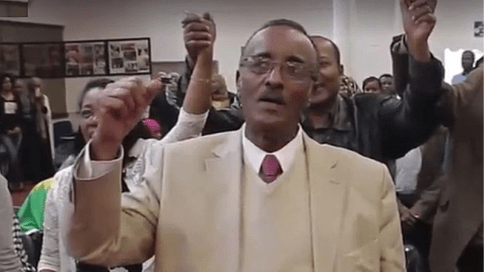
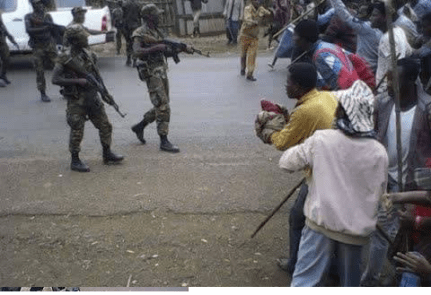


Former WB Researcher on Impact of Oromo Protests on Foreign Direct Investment Flows to Ethiopia January 27, 2016
Posted by OromianEconomist in #OromoProtests.Tags: Africa, Former WB Researcher on Impact of Oromo Protests on Foreign Direct Investment Flows to Ethiopia, Oromia, Oromo, OromoProtests 2016
add a comment


Felix Horne of HRW and Henok Gebissa of OSA talk to South African radio about Oromo Protests January 26, 2016
Posted by OromianEconomist in Uncategorized.Tags: Africa, Felix Horne of HRW and Henok Gebissa of OSA talk to South African radio about Oromo Protests, Oromia, Oromia: #OromoProtests: Gabaasa Fincila Xumura Garbummaa (FXG) Oromiyaa 2016, Oromo, OromoProtests2016
add a comment

Oromia (#OromoProtests): Bekele Gerba and other Oromo political prisoners on hunger strike in Ma’ekelawi January 26, 2016
Posted by OromianEconomist in #OromoProtests.Tags: Addisu Bulala, Africa, Bekele Gerba, Bekele Gerba and other Oromo political prisoners on hunger strike in Ma’ekelawi, Dejene Tafa, Desta Dinka, Oromia, Oromia: #OromoProtests: Gabaasa Fincila Xumura Garbummaa (FXG) Oromiyaa 2016, Oromo, OromoProtests2016
add a comment
( Finfinne Tribune | Gadaa.com): According to media reports, Bekele Gerba, other imprisoned leaders of the Oromo Federalist Congress (OFC), and other Oromo political prisoners are on a hunger strike in Ma’ekelawi, the notorious prison in Addis Ababa. The report said the political prisoners started their strike on Friday, January 22, 2016, and have vowed to continue the strike until their demands are met. Some of their demands, which they have communicated to the prison’s officials, include:
1) access to legal counsels and visitations by family as guaranteed by the Constitution and internationally accepted rights of prisoners;
2) cessation of torture of political prisoners in Ma’ekelawi;
3) access to proper medical care for all political prisoners.
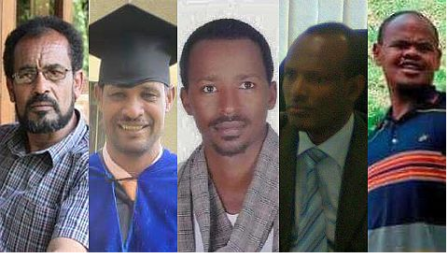
It has not been possible to verify how many political prisoners are taking part in the strike. However, it has been confirmed that the following leaders of OFC are part of it: Bekele Gerba, Dejene Tafa, Desta Dinka, Addisu Bulala and others. Since November 2015, thousands of Oromos have been taken to Ma’ekelawi in connection with the ongoing Oromo Protests against the lack of adequate self-rule for Oromia (of which the Master Plan is an example), and the decades-old marginalization of the Oromo people in the political, economic, social, linguistic and cultural spheres in Ethiopia as a whole. In addition to those thousands arrested in prisons and concentration camps across Oromia and Ethiopia, more than 160 Oromo persons were killed, and thousands of Oromo persons have been wounded by the Ethiopian Federal armed forces – including tens of Oromo children.
It is to be remembered that the Ethiopian government brought Bekele Gerba, Dejene Tafa, Addisu Bulala and others to a federal court in central Addis Ababa on January 22, 2016 (listen to the report in Amharic below) – this date is the same date on which the hunger strike reportedly began; many human rights organizations, such as the Human Rights Watch and Amnesty International, accuse the Ethiopian government of using draconian laws to prosecute peaceful and legitimate political dissidents in biased courts to silence voices critical of the government’s violations of human rights and unjust policies.
Oromia: Colleagues eulogize Ob. Bekele Mekonnen Wessenu as a great fighter for Oromo rights January 26, 2016
Posted by OromianEconomist in Oromo.Tags: Africa, Colleagues eulogize Ob. Bekele Mekonnen Wessenu as a great fighter for Oromo rights, Obbo Baqqalaa Mokonnon Wasanuu, Oromia, Oromo
add a comment
Long-time activist for Oromo rights and a founding member of the Macha-Tulama Association Ob. Bekele Mekonnen Wessenu (1930-2016) passed away over the weekend in London (Jan. 24, 2016)
Colleagues eulogize Ob. Bekele Mekonnen Wessenu as a great fighter for Oromo rights
Finfinne Tribune, 26 January 2016
From Ob. Ibsaa Guutama (via Gubirmans.com)
Nagaa isa Dhumaa Baqqalaa Makonniniif Dhaamu
Baqqalaa Makonnin qaamaan nama bareedaa fulli ifaa yeroo hunda nama arguu gammaduu, arjaa fi of kennaa ture. Kun nama hin beekneef himuuf malee kan beekaniif kana caalaa tahuu saa waliin beekna. Miirri Baqqalaa, murannoo fi dudhammi kaayyoo saba saatiif qabu akkuma qaama hafee hin qabu. Baqqalaa Makonnin yeroo yaadannu ilama Warra Abbaafardaa tahu saa irra dabarree abba saa gooticha Oromoo, Makonnin Wasanuu fi qabsoo saba Oromoo yaadanna. Baqqalaan dardara haa turu malee abbooliima saa waliin Waldaa Maccaa fi Tuulama (WMT) ijaaruu fi wareegama guddaa baasuutt beekama. Baqqalaan dabaankufoota Oromoo Taddasaa Birruu, Maammoo Mazamirii, Sayifuu Tasammaa, Lammeessaa Boruu fi Abboolii WMT waliin gidiraa qabsoo hadhooftuu nama dhandhamate. Baqqalaan nama qaabannoo gaarii qabu, seenaa fi cunqurfama Oromoos tooraan kan yaadatu ture.
Baqqalaan bara Mootummaa Cehumsaa 1992 ummata ijaaruu fi dammaqsuutt qoodi inni fudhate dabbaloota ABO hundaan beekamaa dha. Akka ijoollee diinaan salphifamuu, kaayyoo ummata saa bakaan gahuuf qabsoo godhame keessatt hanga du’a saatt hin qollifanne. Roorroon diinaa sabboonota Oromoo lakkofsi hin beekamne biyyaa baaseera. Baqqalaan akka gaaf tokko biyya saa jaallatutt deebi’u abdii utuu hin kutatin qabsaawaa ture. Ummati Oromoo fi jaallawwan saa qabsoo, utuu mararfatanii dhukuba humnaa ol tahen raawwachuu saatiif manguddicha qabsoo bilisummaa saanii kana gaggeessaa jiru. Baqqalaan akkuma abbaa saa utuu diina jala hin kurkurin jannummaan obbaafate.
Jaalbiyyaan Oromoo, Baqqalaa Makonnin hardha hirree saa haa boraafatu malee fakkeenyi inni dhaloota ittaanuuf dhiisee darbe barabaraan yaadatama jiraata. Yeroo ijoolleen Oromoo kaatee lafa raasaa jirtu kanatt bakka qabsoon inni eegale geese utuu hin argin dadhabuun saa kan isa beeknu hunda dhukkuba garaa nutt tahee hafa. Haa tahu malee Baqqalaan hin dune ijoollee kana keessaan jiraataa. Baqqalaan kan warra saa qofa mitii, kan Oromiyaa hundaatii. Egaa Obboo Baqqalaa, utuu hin fedhin waldhabne, utuu nagaa walitt hin dhaamin deemtee, hin dhufta jennee karaa ilaaluunis hin hafe. Nagaatt egaa jaala koo. Firoota fi jaallewwan saa hundaan haa jabaannu jenna. Lubbuun saa qabanna haa ciistu.
Ulfinaa fi surraan gootota kufaniif; bilisummaa, walqixxummaa fi balchummaan kan lubbuun jiraniif; nagaa fi araarri sabichaa fi Ayyaana abbooliif haa tahu!
Ibsaa Guutama
Amajjii 2016
From Ob. Tesfaye Kenna
Birilleetu cabe, daadhiitu dhangala’e!
Gomboo kuusaa cuuphataa, yaa nama gaafa qaanii olkeewwata baaltetaa
Biqilaa dirree waajjuu, migira warra Salaalee
Oromticha Tuulamaa, Wasiila waarra Maccaa
Qabeenya isa Booranaaf, abdii dha Bareentummaaf
Hin sarmuu ilma gootaa, falmaa mirga dhalootaa
Bareeddicha akka cirri, mul’ataa tuuta keessaa
Sanyii fiixaa namaa, gooftaa amma maqaa gahu
Baqqalaa ilma Mokee nama waan himaniif qabu
Haftee hundeessota qabsoo, dhikima seenaa himu
Booqaa lammii keessaa, yaa guddicha akka Tulluu
Sibbiila gaafa xiiqii, abdii gaafa rakkinaa
Babal’aa damee odaa, gaaddisa qabsaayotaa
Buqqisaa akka ulee gajjaa, xoolagaa arcummee uulmaa
Guddisa Taaddee Birruu, yaa Wasanuuf akaakoo
Hin bannee akkam taanaree yaa abdii gaafa rakkoo
Warqii ibiddaan bahe, jabaa yaa sibila koo
Siqabaa man Tuulamaa, lakkaawwata lammii koo
Finceessisaa baalagee, jabaa diina hunkuru
Diina hunkuruuf malee, du’aaf jabaan hin jiruu
Baqqalaa nama lafee lammiirraa roorroo, dhoowwuuf, ojjate maaltu itti hafe
Goota roorroon hin moone, Baqqalaa ya qomoo koo
Maal raajii maaltu ta’e, buttuu maaltu sibute?
Kalee dheengadda mitii, miidiyaan keenya guddaan,
Hundeefama bu’uraa, calqaba hundee qabsoo,
Seenaa Maccaa-Tuulamaa, sagalee keetiin baasee,
Kan gurra keenyaan ga’e?
amma naaf galte dubbiin, wannattii qaanii hin beekne,
Kan gootaaf sodaa hin qabne, du’atu addaan nubaasee
Asirraa galli hin jiruu, kanuma dhumni namaa
Fooniin sidhabne malee, seenaan kee lammii boonse,
Tasallee hin dagatamuu, bara baraan himamaa
Fooniin sidhabne malee, seenaan kee lammii boonse,
Tasallee hin dagatamuu, bara barbaraan himamaa
Nagaatti
Tesfaye Kenna
Amajjii 24, 2016
Oromo: UNPO: Civil Society and International Bodies Condemn Violence January 26, 2016
Posted by OromianEconomist in #OromoProtests, Africa, Oromia, Oromo.Tags: 'BECAUSE I AM OROMO’: SWEEPING REPRESSION IN THE OROMIA, Africa, Decolonizing Development, Ethiopia, Human rights, Human Rights League of the Horn of Africa, Oromia, Oromo, Oromo: Civil Society and International Bodies Condemn Violence, OromoProtests2016, UNPO
1 comment so far
Oromo: Civil Society and International Bodies Condemn Violence
UNPO, 25 January 2016
On 22 January 2016, the Human Rights League of the Horn of Africa issued a statement, emphasising the recent attention accorded by the United States, European Union and United Nations to the human rights situation in Ethiopia. While The European Parliament, through a recent urgent resolution, calls for a credible, transparent and independent investigation into the killings of at least 140 Oromo protesters and into other alleged human rights violations, the HRLHA condemns the state sponsored violence, calling on the Ethiopian government to “immediately withdraw its special force “Agazi” from the Oromia Regional State and bring the perpetrators to justice.”
Below is the statement published by the Human Rights League of the Horn of Africa:
The tireless voices for the voiceless spoken by human rights organizations such as Amnesty International (AI), Human Rights Watch (HRW), the Human Rights League of the Horn of Africa (HRLHA) and others- for decades-about the gross human rights violations in Ethiopia have caught the attention of the world and finally the hard truth has been revealed.
The US Government, the EU parliament and UN experts condemn the killings, detentions and kidnappings in the Oromo Nation by Ethiopian Government forces. The Oromo nation demand and that their basic freedoms and fundamental rights be respected in their own country.
The USA Government in its statements of December 18, 2015″The United States, Calls for Meaningful Dialogue About Oromo Community Concerns” and 14 January 2016 ” The United States Concerned By Clashes in Oromia, Ethiopia “condemned the Ethiopian brutality against peaceful protestors and urged the government of Ethiopia to permit peaceful protest and commit to a constructive dialogue to address legitimate grievances.
The European Union in its debate on 21 January 2016 discussed the “Human Rights Situation in Ethiopia”. The EU Parliament strongly condemns the recent use of violence by the security forces and the increased number of cases of human rights violations in Ethiopia. It calls for a credible, transparent and independent investigation into the killings of at least 140 protesters and into other alleged human rights violations in connection with the protest movement after the May 2015 federal elections in the country.
The UN Experts in their release of 21 Jan. 2016: “UN experts urge Ethiopia to halt a violent crackdown on Oromia protesters, ensure accountability for abuses“. They called on the Ethiopian authorities to end the ongoing crackdown on peaceful protests by the country’s security forces, who have reportedly killed more than 140 demonstrators and arrested scores more in the past nine weeks.
The Human Rights League of the Horn of Africa appreciates the statements coming out from different governmental agencies and governments exposing the ethnic persecutions and crimes against humanity in Oromia Regional State by Ethiopian Government forces in which over 180 Oromo nationals from all walks of life have been brutalized by the special force “Agazi” , over 8, 050 Oromo were arbitrarily detained and where large numbers were kidnapped and taken to an unknown destination.
To stop further human catastrophes in Oromia Regional State, the HRLHA urges the world community to continue putting pressure on the Ethiopian government:
To immediately withdraw its special force “Agazi” from the Oromia Regional State and bring the perpetrators to justice To unconditionally release the detainees To compensate, all casualties have been done by the government-sponsored criminals To abort the state of emergency declared in Oromia Regional State All authorities who were involved in the present political crisis in the Oromia Regional state, including the PMs special advisor AbayTseye and the PM of Ethiopia HailemariamDessalengn, should be stripped of their government responsibilities To allow independent investigators into the country to conduct an investigation into the present and past gross human rights violations in Oromia Regional State.
17 Oromo Children Killed by Authorities in Ethiopia Land Protests January 26, 2016
Posted by OromianEconomist in Uncategorized.Tags: 17 Oromo Children Killed by Authorities in Ethiopia Land Protests, Africa, Ethiopia, Global Voices, Oromia, Oromo, OromoProtests2016
1 comment so far
17 Children Killed by Authorities in Ethiopia Land Protests
By Ellery Roberts Biddle, Global Voices
Ethiopian authorities have killed at least 17 children and injured many more involved in peaceful land rights protests since December 2015.
Demonstrations over a plan to expand the capital into the ethnic region of Oromia began in Ethiopia in late November. Since then, there have been 140 confirmed deaths of protesters at the hands of government authorities. Of the 17 minors killed by authorities, most were between the ages of 12 and 17 years old. Citizen media reports also show that many more school children have been injured in the protest movement.
The protesters are speaking out against the so-called “Master Plan” to expand the capital city, Addis Ababa, into Oromia, fearing that the proposed development will result in direct persecution of the Oromo ethnic group, including mass evictions of Oromo farmers from their land. Oromo people, who represent the largest ethnic group in Ethiopia, have experienced systematic marginalization and persecution over the last quarter century. Some estimates put the number of Oromo political prisoners in Ethiopia at 20,000 as of March 2014. The country’s ruling elite, of the EPRDF party, are mostly from the Tigray (only 6% of Ethiopia’s 90 million population ) region, which is located in the northern part of the country.
In parallel with efforts of global organizations such as Human Rights Watch, local activists have worked to document and preserve evidence of these killings since early December. Last week, Ethiopian media scholar Endalk Chala and Oromo activist Abiy Atomssa published a map of confirmed deaths based on a crowdsourced data set comprised of reports from citizens, activists, social media, local media networks and VOA’s Amharic service.
Eighth grader Barihun Shibiru of West Shawa was among a handful of minors who were arrested and executed once in official custody. Shibiru’s funeral was held on December 17.
Citizen videos have also helped document and confirm deaths of minors, including a video that shows students crowding around the body of Lucha Gamachu, a 9th grader at Burqa Wanjo Secondary School. The video was published on Facebook by Jawar Mohammed.
We ask that any person who has evidence of the death or disappearance of protesters please contact us at editor@globalvoicesonline.org.
OROMIA: #OROMOPROTESTS: GETTING THE MESSAGES RIGHT January 25, 2016
Posted by OromianEconomist in #OromoProtests, Oromia.Tags: Africa, Oromia, Oromia: #OromoProtests: Gabaasa Fincila Xumura Garbummaa (FXG) Oromiyaa 2016, Oromo, OromoProtests2016
add a comment

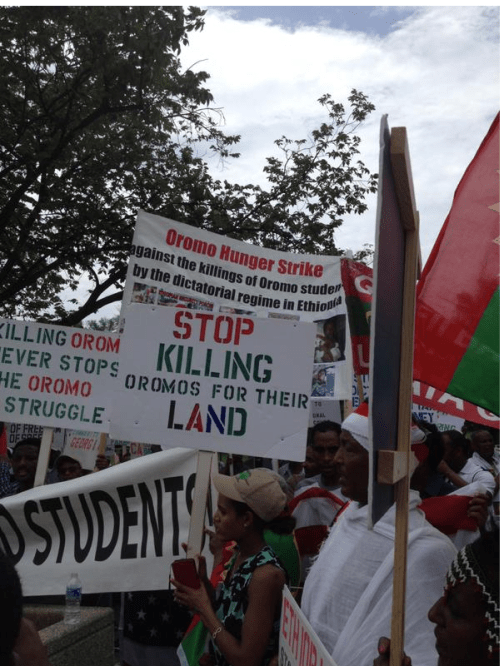
OPINION: OROMO PROTESTS: GETTING THE MESSAGES RIGHT
#OromoProtests Special coverage
By J. Bonsa, PhD, Addis Standard,
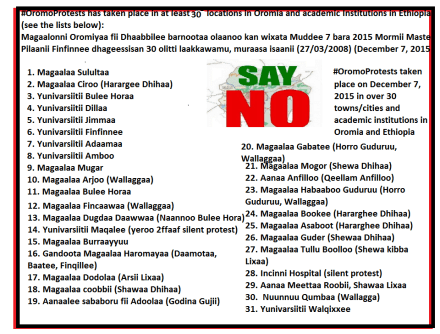
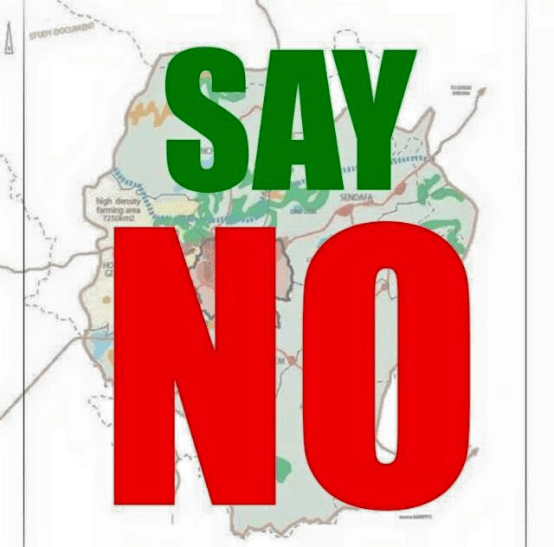
The most commonly held rallying cry of the ongoing Oromo protestin Ethiopia is “Say No to the Master Plan!” There is a consensus among the protesters and the general public that the “Master Plan”, named by some campaigners as the “Master Killer”, has just served as a focal point that ignited the widespread discontent in a range of social, political and economic lives of the Oromo who finally went out en masse to express their outrage.
This piece is concerned with effective messaging of the protest. If framed wisely and clearly,messages and slogans can contribute to effective communication between the wider Oromo society in general and, most importantly, with the rest of the Ethiopian people and the international community.
It should be emphasized that the Oromo protest is a spontaneous outburst of rage among the Oromo youth and the general public at large, who had enough of the relentless and systematic oppression and dispossession by the current EPRDF led government in which the Oromo peopleare not genuinely and meaningfully represented. Since the protest is not centrally organized and coordinated, it is not surprising if the messages are not as sharp as they should.
The “Plan”
The concerns and questions related to the ‘Master Plan’ can be classified into the following sets of issues and regulations: The ‘Master Plan’– The request to scrap the ‘Master Plan’, a technical document that specifies the expansion of Addis Abeba by 20 times its current size, albeit with the ominous prospect of dissecting Oromiya into two parts through a deliberate enlargement of Addis Abeba; and Evictions and Land Grab – This follows from (a) the enlargement of Addis Abeba will inevitably get accomplished by evicting hundreds of thousands of farmers and turning pristine farm lands into a massive urban development spaces; and (b) Urban Development Law– recently passed byCaffee Oromiya, which was rushed through as an urban development law with far reaching implications, essentially obliterating Oromiya’s right on its urban centers.
If we count slogans that appeared on placards carried at demonstrations in towns and villages of Oromiya as well as solidarity rallies organized by the Oromo diaspora, then perhaps more than 90% of the cases would refer to the ‘Master Plan’, that is in the sense of (a) above. We witness similar levels of frequent references on social media; for instance, profiles of activists on Facebook often appear with a familiar red-green colored two worded slogan, “Say NO”, a shorthand for “Say No to the Master Plan”. Matters related to land grab are also referred to during chants by protesters but with less frequency than “Say No” type slogans. As far as I am aware, the “urban development law” has received a very marginal attention during the protest rallies and related discourses.
Unintended outcomes
There is an unintended consequence of heavy reference to the ‘Master Plan’ during opposition and solidarity rallies and expert discussions. The presence of the very word ‘Plan’ in ‘Master Plan’ seems to have hugely distorted the message. By definition, ‘plans’ are essentially futuristic. Therefore, any opposition to a planned activity can essentially (and easily) sound as if it is all about opposing something yet to take place. To complicate matters, even in latest press releases by Oromo political groups appear with phrases like “if implemented”; that is to say “if this Master Plan is going to be implemented”.
In rare cases when they report on Oromo protest, the western media often misrepresented Oromo protest as opposition to “development plan”, with negative connotation of portrayal as anti-economic development. The EPRDF ledgovernment has often projected this image portraying itself as pro-development and Oromo activists as obstacles againstits development plans. Even if Oromos put their cases in the best possible way, then I suspect the government would still devise ways to distort it and the Western Media would still be reluctant to provide fair coverage. Such that lack of focus in getting messages right have therefore immensely contributed to the distorted image of Oromo activism, specifically related to opposition to the ‘Master Plan’.
The excessive reference to the ‘Master Plan’ has already caused some misunderstandings and created obstacles to the ongoing Oromo uprising. For instance, government officials have reluctantly indicated their willingness for dialogue. Under pressure they have gone as far as announcing a closure of the Integrated Master Plan Project Office. The US government has provided a lip service to Oromo protest, effectively implying that “what happened is regrettable, but now that the government is willing to talk to you, stop protesting and start engaging with the authorities”. Sadly, the US government has yet again given the moral high ground to the government in Ethiopia, whose security forces have already killed more than 80 peaceful Oromo protesters, including a mother who tried to plead and protect her son.
Sharpening
In my view, what is required is simple and straightforward. The messages can get right by doing two things:
Prioritize:I propose prioritization the messages in the following order: oppositions againstthe general practice of land grab; the Oromiya urban development law; and the ‘Master Plan’ itself. Meanwhile references to the later have to be kept to the minimum. Land grab, the end result of the ‘Master Plan’, has to be brought up front and protesters have to be vocal in their opposition to the ill-designed and deceitful regulation rushed through Caffee Oromiya. References to the fuzzy, vague and broad “plan” have to be relegated to a third category. However, I believe it should still remain on the placards but with less frequency than it currently appears.
Balance: The message gets clearer if opposition to the ‘Master Plan’is unpacked and presented in its time dimension: past, present and future. So far, the misunderstanding emanates from the presence of the word ‘Plan’ in ‘Master Plan’, which gave totally wrong impressions that Oromos are protesting a plan that is not yet implemented. It is a known fact that this is not the spirit in which the Oromo protests have taken place. The fact of the matter is the ‘Addis Master Plan’ has already been implemented. The EPRDF government should therefore be accused and challenged not only for lack of public participation in the preparation of the ‘Master Plan’ but also for declaring a plan for City development activity which has already been substantially implemented without much say from the general public. This would mean reframing the message and challenging primarily the implemented component of the Addis Abeba Master Plan. In other words, the focus of the movement should shift from what is yet to happen to what has already happened. This will save the protest from being labeled as a protest led by “imagination” to opposition against incalculable damages and crimes already perpetrated on the Oromo people.
Focusing
The whole purpose of this analysis is to assist with sharpening the messages and messaging in the ongoing Oromo protest. I will conclude by providing rough sketches of the nature of effective messages I would like to see in future rallies. Although I put “Land Grab” as a primary target for opposition, even this would need to be framed in such a way that the message to be conveyed is a great deal more focused and sharper. In the context of Oromiya, “We Oppose Land Grab” is not good enough. Instead“Lafaa Hattee Deebisi!” or “Return Stolen Properties!” sounds sharper. I will simply outline a few focal points, and leave the task of coining effective slogans out of them. (of course, that is if my concern is shared with others colleagues).
Compensation– peaceful protesters would need to put across messages that target proper compensation for millions of families that have already been evicted over the last two decades. The justification for this is clear and straightforward. Ill-compensated farmers have legitimate cases to legally hold the authorities accountable for their dispossessed properties. There is no such a thing as bygones are bygones in such matters. In this case, the target has to be proper compensations perhaps over a longer period of time. It is possible to imagine the kinds of settlement that can be reached.
This might include establishing an inquiry that will look into the elaborate scams surrounding property development deals, amount of money collected, and then institute public fund for special compensations that will regularly pay evicted farmers and reinstate their dignities as human beings. Inevitably, such compensation funds can be sustained through property taxes, which inin tern force those who unjustly acquired land to pay back in the long run. Such guarantees will save current owners from insecurity in the short term to medium term.
‘Master Plan’– The manner in which protesters oppose part of the ‘Master Plan’yet to be implemented would need to be reframed. The aspect related to inevitable future land grab will remain as in the current rally but it should not be allowed to overshadow other aspects. However, I think it is important to express opposition to the deceitful merger of Addis Abeba with surrounding Oromiya towns in the pretext of development. Peaceful protesters would need to vocally express their opposition to “merger”. The reason is clear; it violates the basic principles of federalism. Something like this would send a strong message: Development Plan Integrations, Yes!; City-Town Mergers, No!.It can never be a difficult task to elaborate the underlying reasons for such slogans. It will also remove the unfortunate image of sounding a protest against “development plans”. Holding this slogan is like hittingtwo birds with one stone – a protest against land grab, gerrymandering, and the urban development proclamation. It also gives confidence for others who plan to settle in Oromiya.
Ed’s Note: The writer is an economist by profession and can be reached atdinade0612@gmail.com. The opinions expressed in this article are that of the author and do not necessarily reflect the editorial principles of Addis Standard magazine
The number of Oromo protesters killed as of now exceeds 150, according to campaigners.
OROMIA: OROMO PROTESTS: MARKING THE NEXT ETHIOPIAN POLITICAL CHAPTER January 25, 2016
Posted by OromianEconomist in #OromoProtests, Africa, Oromia, Oromiyaa, Oromo.Tags: Africa, Civil Disobedience Against Tyranny, Oromia, Oromo, OROMO PROTESTS: MARKING THE NEXT ETHIOPIAN POLITICAL CHAPTER, OromoProtets2016, Social changes, The tyranny of TPLF Ethiopia
1 comment so far

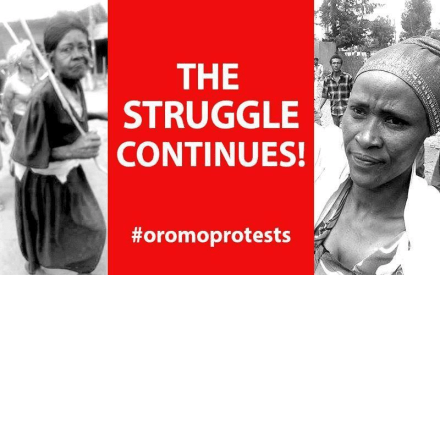
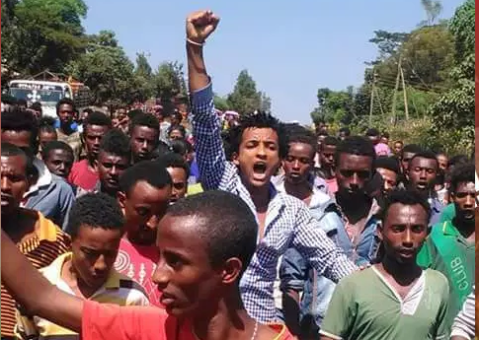
OPINION: OROMO PROTESTS: MARKING THE NEXT ETHIOPIAN POLITICAL CHAPTER
#OromoProtests Special coverage
By Henok Gabisa, Addis Standard, 25 January 2016
The current situation in Oromiya and wider Ethiopia is blusterous. In the words of an anonymous commentator on the ground, “Oromiya is a war zone; we are under effective military control.” From this characterization, I gather that the government security forces’ merciless firing of live ammunition at peaceful protestors has turned the situation into a popular civil rebellion in all of Oromiya. As a matter of fact, protest actions have taken place in more than 170 Oromo cities, towns and villages. As of this writing, Oromo activists have verified and documented the killing of over 100 Oromo persons, the majority of whom are students and farmers. The Associated Press reports that 80 Oromo protestors were killed. Oromo mothers and female students are being kidnapped and transported to unknown locations.
Effective December 15, the Oromo nation has fallen under the administrative jurisdiction of a “Command Post”, an entity chaired by the Prime Minister Hailemariam Desalegn. “Counter-Terrorism Task Force”, which is assembled for this particular purpose is also deployed. It remains a major legal question whether the “military administration” constitutes the same effect as declaration of emergency situation-executive decree which should have followed a procedure of its own as under article 93 of the constitution. However, as of now, what we know is that the inception of the “command post” already has obliterated any semblance of legality because it unconstitutionally suspended the bodies that administer (i.e., the State Parliament and the Executive) of the State of Oromiya and the nominal political party in charge there.
On December 16, the federal government released something very close to a national decree. It was read on a national TV during prime time broadcast service. A joint venture of the “Command Post” and “Anti-Terrorism Special Task Force”, the decree’s content was considered by many as amounting to a declaration of war against the Oromo in general. The following day, the communication minister, Getachew Reda, followed up the decree with a presser, in which he described Oromo protesters as “devils”, “demons”, “satanic”, “witches” and “terrorists”, who need special military operation “to be put back in their place”. In his cantankerous statements, Getachew cleared up what many observers already suspected: the deep-seated and systematized dehumanization project of the Oromo by the regime and beyond. Again, PM Hailemariam Dessalegn, in an exclusive interview with the national TV, menacingly vowed for a “merciless” national response against the Oromo protesters if they don’t stop protesting. Now, we are observing synchronized, condescending and patronizing melodrama being translated into collective punishment against the Oromo. Getachew’s sordidly loaded press communication in fact reminded me of Seif-Al Islam Gaddafi’s last taunting moment in one of the notorious TV broadcast in which he called the Libyan protestors “rats” who had to be annihilated. The current military control in Oromiya exactly resembles the famous Nazi Law known as The Third Reich of 1933 that Nazified all German law in order to grant arbitrary power to Hitler to detain and convict Jews. In a similar way, ours is also a regime that has unequivocally and arrogantly displayed that it is not only the enemy of the people, but also of itself.
Why the plan is the reincarnation of perennial Oromo question?
The protest, now turned into an unarmed popular uprising or movement, is a renewed call from Oromo people to object to and demand the unconditional and permanent termination of the implementation of the Addis Abeba Master Plan, which is designed to incorporate surrounding Oromo lands into the capital against the will of owner-operators. The complete absence, on the part of the government, to solicit public consultation or participation since the start of the plan’s preparation in 2009 did not only make it a surreptitious political scheme, but also flagged major questions as to the substantive intent and content of the plan itself. In fact, the plan was viewed among the Oromo as an existential threat to the people and their land. The Oromo see the plan as a danger to their identity, language, culture, environment, and most importantly, their right to property/land security and the right to a sustainable development.
The government’s initial attempt to foist the plan in 2014 faced a stiff resistance from Ambo University students and all corners of Oromiya, triggering a massive crackdown by the government that killed unknown number of Oromo students in April and May of the same year. No judicial investigation or commission of inquiry was established, nor did anyone government official was hold accountable.
Completely disrespecting the peoples’ persistent objection against the plan, as of November 2015, the government came back with an imperious determination to implement the infamous master plan. At this juncture, the Oromo people, indisputably, were convinced of the federal government’s long-term scheme to end the meager economic and political presence, of the Oromo in central Addis Abeba and its surroundings.
The Master Plan, which the regional government said was scarped all together, is an epitome of the major political and economic injustices that have lingered on unresolved for far too long. Political subordination and denial of self-governance, rising poverty and increasing unemployment rate among Oromo households because of the policy of land eviction and language discrimination, are some of the fundamental questions. The ongoing movement is an expression of demand for an international scrutiny towards the Ethiopian regime’s system of wealth distribution and economic regulation in the ethnically structured federal system of the country.
Over the last quarter of century, the Oromo people have been ruthlessly targeted for their identity, falling prey to one of the authoritarian regimes in the continent. For example, various reports indicate that about 90% of the political prisoners in Ethiopian prison are exclusively made up of the Oromo. Not only did this create a deep-seated grievance among the Oromo, but also displayed the inept political leadership of the incumbent, potentially risking long-term stability of the region. The condensed account of political and economic discrimination based on identity, language and culture, the widespread and systematic violation of fundamental rights to property, crumbling land security, complete non-existence of freedom of assembly and of the press are some of the rudiments that are heating up the recent Oromo civil movement. These questions are as old as the coming into power of the current regime itself, or well beyond. The surreptitiously designed Addis Master Plan is the latest iteration of the long-standing policy of dispossessing the Oromo from their property, this time under the shibboleth of “urbanization” and “development.”
Humanitarian Crises: regime’s breach of common Article 3 of Geneva Convention
With the civilian protestors facing a regime that has no hesitation to use the national military force, a humanitarian crises has unfolded at an alarming rate. In some cases the government has deployed military helicopters to transport military personnel to the protest sites. We have witnessed that the regime’s military response doesn’t have moral boundary. I suspect the regime is oblivious to the fact that the whole world is watching.
Material breach-by the regime’s military force-of humanitarian obligation also continues to take place in several other forms. For example, in Wallaga, reports indicate that medical professionals are being beaten and arrested for treating wounded protesters. In Najjo town, Ambo and Burayu, security forces have occupied hospital compounds and other medical facilities in order to detain, deny and refuse admittance of the fatally injured protesters. In fact, the same type of cruelty has been witnessed during the 2014 Oromo protest. Of course, this kind of material breach of international humanitarian duty could also be considered as a constitutive element of war crimes and crimes against humanity.
Furthermore, the regime’s moral revulsion against the protestors is well indicated in the pervasive and horrifying acts of group rapes allegedly committed by members of the military in a number of villages and university campuses. Some reports also reveal a disturbing account of a wife who was raped at night in front of her husband. It is clear that rape has always been used as a tool of committing crimes against humanity and war crimes in different countries at different times. That is why International Tribunal for Former Yugoslavia (ICTY) developed a legal theory under which an act of rape could give rise to a joint criminal conviction for crimes against humanity and war crimes.
Any viable solution?
The movement is an expressed demand for sustainable peace, justice, democracy, equality and true development that had been lacking in the country over the last 25 years. Apparently, the existing model of governance couldn’t extend to the greater public beyond the elites and a few members of a group who are affiliated with the regime. In fact, that is why Ethiopia is on the brink of famine with over 20 million Ethiopian people in need of urgent food, the majority of the affected being the Oromo. The number of Ethiopian youths that very frequently perish in the Mediterranean Sea while running away from home should put the lie to the government’s claim of the double digit growth. The stories thousands of our sisters living in an almost slavery-like situation in the Middle East should be a sufficient indication of how the travesty of the assertion Ethiopia’s fast economic growth.
The recent movement filled with ultimate self-sacrifice is the latest episode in Oromo’s quest for a better future and legitimate self-governance. The movement understands that unchecked state power in Ethiopia has been the problem and not the solution to economic development. The movement is an ultimate negation of the regime’s grandiloquent declaration of the recent 100% parliamentary win. It is the movement that is guarding and protecting the constitution from the government that was supposed to defend it. At the end of the day, the movement is a demand for reconfiguration and restructuring of the politics of the country. Of all, the movement is a plea for the permanent removal of the metastasized political cancer that that has diminished the lives and existence of the Oromo.
So, it is possible that the movement will soon culminate in being a sole driving force for the emergence of a new Ethiopia that all can call home. Oromo children’s blood gushing like a river on every street of Oromo city is a timely proof for a well-deserved moral leadership in the country. Over the last two months, the incumbent regime has conveyed a message to the Oromo and all other Ethiopians that it cannot lead the country; that its moral integrity is already corrupted, busted and politically bankrupt. The regime didn’t cash in on the benefit of the doubt it was granted 25 years ago. Now, it is a prime time for the people to step up their games by owning and showing the right leadership. That is the only way out.
Ed’s Note: Henok Gabisa is Visiting International Law Fellow based at Washington and Lee University School of Law in Lexington, Virginia. He can be reached at GabisaH@wlu.edu. The opinions expressed in this article are that of the writer and do not necessarily reflect Addis Standard’s editorial guideline.
Opinion: Oromo Protests: Marking the next Ethiopian political chapter
Oromia (#OromoProtests): VOA: Ethiopia Boundary Dispute Puts Human Rights Violations in Spotlight January 25, 2016
Posted by OromianEconomist in #OromoProtests, Africa, Oromia, Oromo.Tags: Africa, Ethiopia, Ethiopia Boundary Dispute Puts Human Rights Violations in Spotlight, OMN's Director Oromia: Mr. Jawar Mohammed talks to VOA's Africa-54 TV about #OromoProtests, Oromia, Oromia: #OromoProtests: Gabaasa Fincila Xumura Garbummaa (FXG) Oromiyaa 2016, Oromo, OromoProtests2016, VOA
2 comments
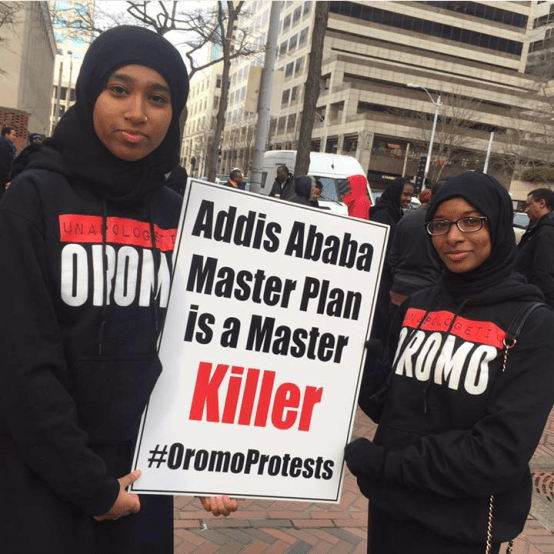
Ethiopia Boundary Dispute Puts Human Rights Violations in Spotlight
January 25, 2016 12:22 AM
After almost two months of clashes between Oromo protesters and security forces in Ethiopia, authorities have scrapped a “master plan” that would have expanded the boundaries of Addis Ababa and, according to protesters, would have displaced Oromo farmers.
However, observers are divided on the significance of the move by Ethiopia and whether it truly represents a change of policy or just a reaction to negative publicity.
Dr. Awol Allo, a fellow in human rights at the London School of Economics, said he believes the government will find other ways to take land it deems useful.
“I don’t actually believe that the practices of displacement and the eviction and the plunder would cease,” Allo told VOA. “Remember, the expansion of Addis began a very long time ago and it has intensified over the course of the last 10 years because of the influx of investment into the city, both foreign and domestic.”
Compiled by activists
Allo pointed to figures compiled by jailed Oromo activist and opposition leader Bekele Gerba, who said 150,000 Oromo farmers have had their land taken by the government over the past 10 years.
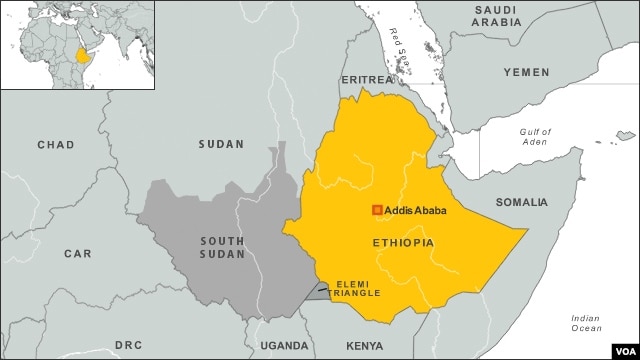
“The practices would continue. They just don’t call them a master plan,” Allo said. “The master plan was basically intended to sort of basically formalize and legalize the processes of annexation and expansion. It may not have that kind of name that gives it a broader mandate, sort of legitimacy and authority, but the practice would nevertheless continue.”
Earlier this week, the European Parliament adopted a 19-point resolution urging Ethiopia to respect the rights of peaceful protestors as well as to cease intimidation and imprisonment of journalists. During a recent visit to Ethiopia, U.S. Ambassador to the United Nations Samantha Power urged the government to engage in dialogue with protesters.
Approximately 140 people were killed during the protests, according activists interviewed by Human Rights Watch.
“What we are urging is that the international community should not turn a blind eye to these gross violations of human rights that have taken place in Ethiopia,” said Mandeep Tiwana, head of policy and research at CIVICUS, a group that works to strengthen civil society and civilian participation in politics.
“They should diplomatically engage with Ethiopia, institute external inquiry into this matter and also bring to court those responsible for excessive force and it appears that security forces have used excessive force against peaceful protesters and in fact there are reports that even children as young as 12 have been killed,” Tiwana said.
Confirmed deaths
The government has confirmed that 13 security forces died in the clashes. VOA made repeated requests for comment from the Ethiopian Embassy in Washington, D.C., but has not yet received an official statement.
The protests come at a particularly difficult time for Ethiopia, as the worst drought to hit the area in 30 years has caused a famine that is particularly affecting the northeast region.
The aid group Save the Children says as many as 10 million people are in need of food aid and calls it one of the two worst humanitarian crises in the world, following only Syria.
But observers hope the desire by the international community to aid those affected by the drought will not prevent them from insisting that Ethiopia respect human rights as it pertains to the Oromo protests.
Muthoni Wanyeki, Amnesty International’s regional director for East Africa, the Horn and the Great Lakes, said her organization and others are calling for three additional measures following the cancellation of the master plan.
Release, investigation
First, they want the unconditional release of the people arrested during the protests. They also want an independent investigation of police conduct, and they are calling for a national dialogue about policing and demonstrations and what is appropriate during protests.
“It is a sign of good faith that the government canceled these immediate plans,” Wanyeki said. “I think the pressure from the community and from all of the people that put aid into Ethiopia’s much wanted development progress need to insist on standards around projects like this.”
Under Ethiopian law, all land belongs to the government and people who are relocated are entitled to compensation.
However, the constitution specifically protects the rights of pastoralists and their right not to be displaced from their land.
Allo said proper compensation and due process has not occurred in the Oromo region around Addis Ababa.
“Their entire livelihood is inextricably tied to the land and land means everything. Their property is a way of living for them so to deprive them of that possibility that prospect of leaving the land that they have known, in the ecologies that they have known, without proper consultation, without appropriate compensation, I think that is a huge injustice,” he said.
Oromo Protests sustained due to lack of democratic virtues; protests natural reactions to authoritarianism of Ethiopian regime January 24, 2016
Posted by OromianEconomist in #OromoProtests.Tags: Africa, Oromia, Oromia: #OromoProtests: Gabaasa Fincila Xumura Garbummaa (FXG) Oromiyaa 2016, Oromo, OromoProtests2016, The fascism of TPLF, The natural reactions to authoritarianism, TPLF/EPRDF Ethiopian Regime is a Contra to a Developmental State
add a comment
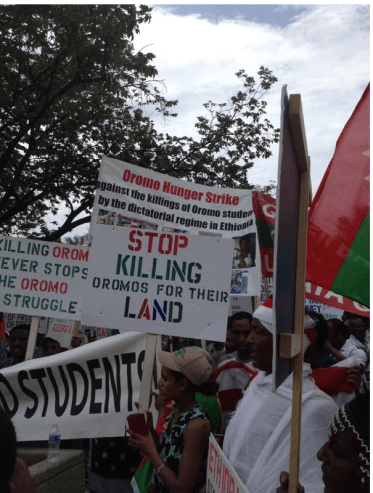
Oromo Protests sustained due to lack of democratic virtues; protests natural reactions to authoritarianism
By Abdurezack Hussein, Finfinne Tribune, 24 January 2016
Outrage has engulfed Ethiopia for a couple of months now. Peaceful protests – against a plan, popularly called the Integrated Master Plan, to expand the capital city borders into the surrounding Oromia National Regional State – are being suppressed by lethal force. Beyond affecting the livelihoods and the cultural makeup of the Oromo residents in the affected region, protesters argue, the Plan to snatch an area from one Federal State by another could amount to a blatant annexation. Thanks to the phony federal structure, the Oromia National Regional State, that was supposed to guard its borders and defend the protesters, is regrettably failing on both accounts. According to the Human Rights Watch, at least 140 innocent lives have since been gunned down. Activists on the ground, however, raise the death toll even higher.
The escalation of the crises and protesters’ defiance have unusually forced the government, which had vowed to implement the Plan at any cost, to retract the Plan. For the protesters, though, the government’s latest action is too little to rejoice and too late to embrace. Protesters’ discontent seems to have gone beyond the Master Plan into the working of the Federal State of Oromia itself. The sustained political disenfranchisement and the lack of real representation in the decision-making hierarchy have produced a magma of uneasiness with the system that has waited so long to explode. As the protesters are vowing to continue the protests, and more political actors and the international community are slowly joining and acknowledging their cause, the coming days and weeks will increasingly put the autocratic Ethiopian government in a difficult position.
Had it not been for the lack of democracy in Ethiopia, such opposition to the government’s policies could have been easily defeated either in the court or at the ballot box. The tragic failure of the system to hold the government accountable for its polices in either way has ultimately compelled the public that the responsibility – to safeguard its own rights and claim these hijacked democratic virtues at any cost – rests on the people’s protests.
Doing Development in an Autocratic Way
The incursion into a vast swath of land around the congested capital city will produce more development and modernization, the Ethiopian government contends. It, accordingly, accuses protesters of being traitors and obstacles in the so-called “miraculous double-digit growth.” Under the New Master Plan, the predominantly agrarian adjacent lands are expected to be replaced by alternatives usages that are presumably more valuable in terms of their economic values. It envisages creating new infrastructures, new real estates, new industries and new dwellers. It does not matter whether the Plan causes serious law abridgments, or is hugely unpopular, as far as it is adding to the GDP [Growth and Transformation Plan] and keeps alive the double-digit narrative. Public opinions and laws are, at best, second to development, and at worst, they are completely neglected. This is what is called doing development in an autocratic way.
At the heart of an autocratic way of building an economy, there exists a blatant disregard of accountability. In a working democracy, governments and policymakers are accountable to the law and the public. Any development plan, however economically sound it might be, is prone to cancellation, if it negates any law of the country and its Constitution. Autocrats, on the other hand, keep themselves above the law and dare abridge any verse of the Constitution. Besides, such a regime lacks an independent judiciary to keep the working of the government in check. Dictators, therefore, are in a perfect position to plan and execute any development plan without fearing any intervention by the judiciary.
The Integrated Master Plan is an epitome of an autocratic way of doing development. Despite the fact that it plans to stretch the borders of the capital city into the neighboring Oromia National Regional State’s land, which is potentially tantamount to annexation in a federal arrangement, neither the judiciary nor the House of Federation has toddled to intervene in the matter. It is the land of autocrats where accountability before the law is at its lowest.
Another route to bring accountability within the policymakers’ circles and to governments is via elections. Elections provide mechanisms to reward, or to punish, politicians and their policies. Parties with popular policies are elected into office; economic policies and projects are no exceptions. While in office, incumbent governments plan and execute development plans that are feasible in economic terms, sound in terms of country’s laws and popular in the eyes of their electorates. Free, fair and transparent elections constrain politicians from pursuing risky and unpopular policies. The recurrent massive turnovers among governments that follow austerity measures can be a good example in this respect.
In no-man lands of electoral autocrats, however, elections are, at best, mere periodic anniversaries, or at worst, eves of mass imprisonments of vocal dissidents. The very role of accountability-before-the-public that elections guarantee is impossible in dictatorships. However unpopular the policies they plan and execute might be, they can go away without facing any punishment by the public during elections. When elections cease to serve their natural purpose of voting politicians and their policies, plans – as unpopular as the Integrated Master Plan, can irresponsibly be planed and implemented without any accountability at the ballot box.
Protests as Working Constraints
Political institutions, such as legislature, political parties and elections ,are eminent constraints on governments. The judiciary, with its mighty power, keeps government’s actions in check. These are the virtues of democracy that nations under the auspices of autocracy are devoid of. Ethiopia has never been short of such regimes for very long. The current government has led the country for a quarter of a century with an iron fist. Any opposition to its rule and policies have been met with decisive force and merciless crackdowns.
The absence of democratic virtues like independent judiciary and elections as a mechanism to voice citizens’ approval or rejection of the government and its polices in Ethiopia has expectedly created enormous frustrations. Sustained public protests for the past few years by Ethiopian Muslims and the current Oromo protests are results of such hopelessness in the system and the institutions it has built.
The huge protests all across the Oromia National Regional State against the Master Plan for the past few months has claimed hundreds lives. Injuries and incarcerations are in thousands. Reports of torture and extra-judiciary killings are everyday news. Had the judiciary been to its honor and sound elections were in place, projects as unlawful and unpopular as the Master Plan would have been defeated in the court or at the ballot box. When both institutions fail, sadly, the people have to either chose between eviction and disenfranchisement, or bravely confront the implementation of the Plan with protests. Oromos have preferred the later and have audaciously faced one of the most brutal autocratic states in the world.
The sustained protests have lately compelled the government, which has got away with many actions without any public approval for past twenty five years, to rescind the Master Plan. It has, for now, dissipated the ambitions of the leeching pro-government business elites. What would have been easily defeated in a democratic polity has sucked the blood of many in the autocratic Ethiopia. The fallen and the injured have paid with their blood to reclaim deserved democratic virtues. They have won back what an independent judiciary or a fair election would otherwise have secured at ease. Protests have served as constraints on the government – which has abusively compromised the foremost constraints to its power: the judiciary and periodic elections.
Unfortunate enough, when protesters reclaim their rights after months of defiant protests and force their autocratic rulers to back down on their nightmare, another feature of an autocratic regime could dangerously spoil their jubilation: the question of credibility. In the absence of any institutional mechanism to assure accountability of the government, there is no way one can guarantee the government would not renege on its promises. As Mancur Olson (1991, p. 153) argued “If he (the autocrat) runs the society, there is no one who can force him to keep his commitments.” Repeated experiences in the past, and the very nature of the regime type, further strengthens the prospect of a possible change of mind sometime in the near future. More importantly, the amount of rents the political and business elites would have collected from such massive land grabs will inevitably test their commitment to the rhetorical promise they have lately made.
Both at the Crossroads
It appears that both the protesters and the government are at the crossroads. For the protesters, they have managed to force the government to scrap the Master Plan that has been the immediate cause of the protests. It is now the right time to decide whether to believe the government, which has been the sole architect of the Master Plan, and the subsequent brutality against protesters, on its word, or escalate their struggle to address the lingering deep-rooted sense of Oromo disenfranchisement and confront the beleaguered Ethiopian government to the end. Putting it differently, the struggle to reclaim democratic virtues has to make a shift to reclaiming democracy itself. While it is difficult to sleep safe believing the word of an autocrat, it also requires massive amounts of energy, coordination, solidarity and determination to make the second choice.
For the Ethiopian government, the current protests seem to indicate that the sun is slowly setting in their autocratic empire. History and the nature of the political regime the government is politicking are not on their side in terms of citizens’ confidence on their word. Incumbent politicians have to either go by their promise and give a strong signal to their credibility, or face the consequences of the ensuing protests and the public outrage. The coming days, weeks and months will tell which ways both the protesters and the government will take. Either way, the current protests, and actors involved from both sides, have already made it to the history of a country that has never witnessed a government of the people, for the people and by the people.
Oromia: Dachii fi Daangaa Oromiyaa Ilaalchisee Labsa Qeerroo Bilisummaa Oromoo Irraa Kenname. January 23, 2016
Posted by OromianEconomist in #OromoProtests, Oromia, Qeerroo.Tags: Dachii fi Daangaa Oromiyaa Ilaalchisee Labsa Qeerroo Bilisummaa Oromoo Irraa Kenname., Oromia, Oromo, Qeerroo Bilisummaa
add a comment
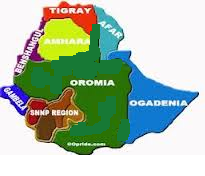
Dachii fi Daangaa Oromiyaa Ilaalchisee Labsa Qeerroo Bilisummaa Oromoo Irraa Kenname.
Dachii fi Daangaa Oromiyaa Ilaalchisee Labsa Qeerroo Bilisummaa Oromoo Irraa Kenname.
Amajjii 21,2016
Lafa, qabeenyaa lafa jalaa jiru fi qilleensa Oromiyaa guutummaatti to’annoo ummata Oromoo jala galchuu qofatu gaaffii ummata Oromoo deebisa.
Habashooti,afaan qawweetiiin itti duulanii, Oromoo lafa isaa irraa buqqisuun walii fi firoottanii isaaniitii eerga qoodanii booda ummata Oromoo hiyyummaa fi wal’aalummaa keessatti darbanii hojiisifachuun lafa fi dafqa isaatiin duuroomuu kan eegalan jaarraa 14ffaa irraa yoo ta’e illee, kan ummata Oromoo miliyoonatti herregamu dachii/lafa isaa irraa buqqisee roobaa fi qabbana keessatti facaasuun kadhattuu fi waaridiyaa qeyee habashootaa taasisee jiruu, akkasumas ammo, jireenya maatiilee Oromoo fi ilmaan isaa dhabamsiise mootummaa Ixoophiyaa/wayyaanee ammaan tana Oromiyaa gabroomfatee jiruu dha.
Mootummaan Ixoophiyaa/Wayyaanee, ammaan tana Oromiyaa gabroomfatee jiru kun, “Tigraay akka mishoomtuuf, Oromoo fi Oromiyaan hiyyoomuu qabdi” imaammata jedhuun, lafa Oromoo saaamuu fi maqaa Investment’n saamsiisuu hojii duraa godhatee gannoota 25 darbaniif irratti hojjechaa jira.Qotee bulaa Oromoo kumoota hedduu irraa buqqisuun mootummaan:Miniliki, Haayilesillaasee fi Dargii magaalaa Finfinnee kan ijaaranii fi babal’isan oggaa ta’u, mootummaan Ixoophiyaa/Wayyaanee ammaan tana Oromiyaa gabroomfatee jirus, kan abbootiin isaa armana dura hojjetan daranuu itti fufuun, qotee bulaa Oromoo miliyoona hedduu dachii/lafa inni irraa: nyaatu, dhugu, daara bahu, wal’aanamu, ilmaan barsiifatu, irratti horii horsiifatuu, mana ijaarratu fi wal horu, akkasumas, yeroo du’u irratti awwaalamu fi madda jiruu fi jireenya isaa ta’e irraa buqqisee biyya abbaa isaa irratti : hiyyummaa, beela, daara, dhukkuba, akkasumas, jireenya salphinaa akka jiraatu taasifameera. Kana malees, mootummaan kun, dachii /lafa Oromoo kukutee qooduun fira ittiin bitatuu fi Oromoo irratti diina heddumessuuf shirri inni hojjetuuf tattaafate seenaa gabrummaa kamuu keessatti kan argamee fi dhagahamee hin beeknee dha. Walumaagalatti, akeeki mootummaa wayyaanee, tigroota dureessaa fi ummata Oromoo hiyyeessa manaa fi oobruu tigrootaa keessaa hojjetu uumuudhaan ummatni Oromoo kabajaa fi boonee jiraachuu bare irkattuu tigrootaa akka ta’u godhuu dha.
Read more at:-
dachii-fi-daangaa-oromiyaa-irraatti-labsa-qeerroo-bilisummaa-amajjii-21-2016
Oromia: Oromo Liberation Front (OLF) Honours the European Union Parliament that it stood up publicly against assaults on Oromo peaceful protesters. Ibsa ABO Murtii Paarlaamaa Awroppaa Ilalchisee January 23, 2016
Posted by OromianEconomist in #OromoProtests, Africa, EU, OLF, Oromia, Oromo, Oromo Nation.Tags: ABO, Africa, Ethiopia: Update - European Parliament Adopts Powerful Ethiopia Resolution, EU, OLF, Oromia, Oromo, Oromo Liberation Front (OLF) Honours the European Union Parliament that it stood up publicly against assaults on Oromo peaceful protesters., OromoProtests2016
add a comment
Oromo Liberation Front Press Release
 On 21st of January all party Groups of European Parliament debated and passed a resolution on the current political situation in Oromia, Ethiopia. Since mid-November 2015 another round of enormous wave of mass protests that started over respect for the right of Oromo People in general and against the expansion of the capital Finfinnee (Addis Ababa) that triggered more to be demanded on the basic fundamental and democratic rights that have been supressed for the last century and half. Instead of looking for the solution the Tigrean People’s Liberation Front (TPLF/EPRDF) led Ethiopian government declared war on the Oromo people and deployed its terrorizing special force (Agazi), the military and the federal police against peaceful Oromo demonstrators and the public at large. In doing so, it put Oromia under martial law tantamount to declaration of a state of emergency. The deployed forces have wantonly killed more than 180 people and wounded hundreds and detained thousands of Oromo farmers, students, teachers, merchants and government employees, including the medical staff trying to treat the overwhelming numbers of the brutalized mass.
Oromia (WBO): Humni Addaa WBO Godina Kibba Bahaa Hidhattoota Wayyaanee haleele January 23, 2016
Posted by OromianEconomist in Oromia (WBO).Tags: Oduu Tarkaanfii WBO, Oromia, Oromia (WBO): Humni Addaa WBO Godina Kibba Bahaa Hidhattoota Wayyaanee haleele, Oromo
add a comment

(SBO) – Amajii 23, 2016) Humni Addaa WBO Godina Kibba Bahaa Hidhattoota Wayyaanee Maqaa Faxinoon Ijaaramanii FXG Godina Baalee Keessatti Geggeeffamaa Jiru Dura Dhaabbachuu fi Ummata Irratti Duuluuf Sagantaa Baafatan Adabee Jira. Meeshaalee Adda Addaas Irraa Booji’e.
Humni Addaa WBO Godina Kibba Bahaa miliishota wayyaanee Fooq-Umar/Sheekistaa jedhaman irraa ijaaramuun loltoota wayyaanee waliin ta’anii ummata Oromoo Godina Baalee Onoota Raayituu fi Daawwee Sarar irratti lola geggeessuu fi sochii FXG naannicha keessatti geggeeffamaa jiru dura dhaabbachuuf sochii irra turan Amajjii 11,2016 galgala keessaa sa’aa 9:00 irratti Godina Baalee Ona Eelkarree bakka Gola Hurrii jedhamutti haleeluun hidhattoota 4 irraa ajjeesee garii isaanii madeessuu Ajaji WBO Godina Kibba Bahaa hubachiisee jira.
Tarkaanfii haxii kanaan Humni Addaa WBO Godina Kibba Bahaa AKM 4 hidhannoo guutuu waliin, Rasaasa AKM -47 5000 ol, Uniformii waraanaa 150, Birrii Itophiyaa 120,000 fi mi’oota biroo gaalota sadiin fe’amanii deemaa turan guututti booji’uun qabsoo bilisummaa Oromoof akka oolche Ajaji WBO Godina Kibba Bahaa ifa godheera.
Hidhattootni/faxinoon wayyaanee kun kan haleelaman haxxeedhaan oggaa ta’u, humni kunis gaala sadiin rasaasota adda addaa, uffannaa waraanaa/uniformii fi mi’oota gara garaa fe’uun qaama murna miliishota kanaa naannoo qubsuma Fooq-Umar bakka Dhiboo jedhamu qubatee jiruuf geessuuf sochii irra akka tures gabaafameera.
Foreign Policy In Focus: Ethiopia’s Invisible Crisis. #OromoProtests January 23, 2016
Posted by OromianEconomist in Africa, Ethiopia's Colonizing Structure and the Development Problems of People of Oromia, Ethnic Cleansing, Oromia, Oromo.Tags: 'BECAUSE I AM OROMO’: SWEEPING REPRESSION IN THE OROMIA, Africa, Ethiopia’s Invisible Crisis, Ethnic cleansing Against Oromo People, Felix Horne, Foreign Policy In Focus, Oromia, Oromo, OromoProtets2016
1 comment so far

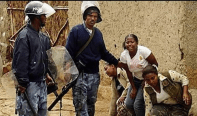
Ethiopia’s Invisible Crisis
Protests broke out in Ethiopia in November, and the government is continuing its massive crackdown.

Ethiopian Prime Minister Hailemariam Desalegn confers with President Barack Obama
“Badessa” was a third-year engineering student in western Ethiopia in April 2014 when he and most of his classmates joined a protest over the potential displacement of ethnic Oromo farmers like his family because of the government’s plan to expand the capital, Addis Ababa, into the farmland.
The night of the first protests he was arrested and taken to an unmarked detention center. Each night he heard his fellow students screaming in agony as one by one they were tortured by interrogators. “I still hear the screams,” he told me later. Eventually his turn came to be interrogated. “What kind of country is it when I voice concern that my family could lose their farm for a government project and I am arrested, tortured, and now living as a refugee?”
Since mid-November, large-scale protests have again swept through Oromia, Ethiopia’s largest region, and the response from security forces has again been brutal. They have killed countless students and farmers, and arrested opposition politicians and countless others. On January 12, the government announced it was cancelling the master plan, but that hasn’t stopped the protests and the resultant crackdown.
Although the protest was initially about the potential for displacement, it has become about so much more. Despite being the biggest ethnic group in Ethiopia, Oromos have often felt marginalized by successive governments and feel unable to voice concerns over government policy. Oromos who express dissent are often arrested and tortured or otherwise mistreated in detention, accused of belonging to the Oromo Liberation Front (OLF), a group that has long been mostly inactive and that the government designated a terrorist organization.
The government is doing all it can to make sure that the news of these protests doesn’t circulate within the country or reach the rest of the world. Ethiopia’s allies, including governments in the region and the African Union, have largely stood by as Ethiopia has steadily strangled the ability of ordinary Ethiopians to access information and peacefully express their views, whether in print or in public demonstrations. But they should be worried about what is happening in Oromia right now, as Ethiopia — Africa’s second most-populous country and a key security ally of the US — grapples with this escalating crisis.
This may prove to be the biggest political event to hit Ethiopia since the controversial 2005 elections resulted in a crackdown on protesters in which security forces killed almost 200 people and arrested tens of thousands .
Although the government focuses its efforts on economic development and on promoting a narrative of economic success, for many farmers in Oromia and elsewhere economic development comes at a devastating cost. As one Oromo student told me “All we hear about is development. The new foreign-owned farms and roads is what the world knows, but that just benefits the government. For us [Oromos] it means we lose our land and then we can’t sustain ourselves anymore.”
It has become almost impossible for journalists and human rights monitors to get information about what is happening, especially in smaller towns and rural areas outside Addis Ababa.
Ethiopia is one of the most restrictive environments for independent investigation, reporting, and access to information, earning the country a top-10 spot in the global ranking of jailers of journalists. For the past decade, the government has limited access to information by regularly threatening, imprisoning, and prosecuting individual activists, bloggers, and journalists and sending a clear public message that the media must self-censor and that dissent or criticism of government policy will not be tolerated.
Independent media have dwindled—more than 70 journalists have fled the country since 2010 and five of the last independent publications closed down before the May elections. Meanwhile the state-run media parrot the government line, in this case claiming that the Oromo protesters are linked to “terrorist groups” and “anti-peace elements” who are “aiming to create havoc and chaos.”
Very few international journalists are based in Ethiopia. Those who have attempted to cover events on the ground since the protests began have braved threats and arrest, but these are a few lone voices.
Given restrictions on local and international media, you might think that ordinary citizens, local activists, and nongovernmental organizations would fill the gaps and document the events in Oromia. But Ethiopia’s human rights activists and independent groups have been crushed by draconian legislation and threats, and even ordinary people are often terrified to speak out. People who dare to speak to international media outlets or independent groups have been arrested. The government taps phone lines and uses European-made spyware to target journalists and opposition members outside the country.
Since the protests began, the restrictions have become even harsher. Authorities have arrested people, including health workers, for posting photos and videos or messages of support on social media. The state-run telecom network has also been cut in some areas, making it much more difficult to get information out from hotspots.
Radio and satellite television outlets based outside Ethiopia, including some diaspora stations, play a key role disseminating information about the protests within Oromia, as they also did in 2014 during the last round of protests. Last year numerous people were arrested in Oromia during the protests merely for watching the diaspora-run Oromia Media Network (OMN).
The government has frequently jammed foreign stations in the past, violating international regulations in the process. When the government is unable to jam it puts pressure on the satellite companies themselves. Throughout the protests government agents have reportedly been destroying satellite dishes.
Yet despite the clear efforts to muzzle voices, information is coming out. Some protesters are losing their fear of expressing dissent and are speaking openly about the challenges they are facing. Social media plays a key role in disseminating information as people share photos and videos of rallies, of bloodied protesters, and of expressions of peaceful resistance in the face of security forces using excessive force.
In the coming days and weeks Ethiopia’s friends and partners should condemn the use of excessive force by security forces that is causing tragic and unnecessary deaths. But they should also be clear that Ethiopia needs to ensure access to information and stop disrupting telecommunications and targeting social media users. The world needs to know what is happening in Oromia—and Ethiopians have a right to know what is happening in their country.
Oromia:Ethiopia (All Africa): Update – European Parliament Adopts Powerful Ethiopia Resolution January 23, 2016
Posted by OromianEconomist in #OromoProtests, Africa, EU, Oromia, Oromiyaa, Oromo.Tags: Africa, All Africa, Ethiopia, Ethiopia: Update - European Parliament Adopts Powerful Ethiopia Resolution, European Parliament resolution on the situation in Ethiopia, European Union condemned strongly the mass killings in Oromia, Oromia, Oromo, OromoProtets2016
add a comment
Ethiopia: Update – European Parliament Adopts Powerful Ethiopia Resolution
By Mahlet Fasil, allafrica.com
The 751 Members of the European Parliament, the only directly-elected body of the European Union (EU), have debated and adopted a powerful motion presented to them on the current situation in Ethiopia. The motion included detailed descriptions about the Oromo protests that have rocked the nation from all corners, the country’s frequent use of the infamous Anti-Terrorism Proclamation to stifle “even mild criticism”, and the pervasive displacement and abuse of millions of Ethiopians in the name of development.
The debate and vote by the European Parliament took place yesterday during a first reading at a plenary session. “Ethiopia resolution adopted by EP plenary without amendments to the text supported by 7 Groups. Only extreme right wing voted against”, reads a tweet from Ana Gomez, a member of the European parliament.
Authored by more than 60 individual members of the European Parliament together with the Socialists and Democrats, S&D Group, the centre-left political group in the Parliament which has 191 members from all 28 EU countries, and supported by seven groups, the motion detailed a disturbing prevalence of human right abuses in Ethiopia perpetrated by the government.
Biggest crisis
The motion describes the recent Oromo protests as “the biggest crisis to hit Ethiopia since the 2005 election violence” and said “security forces used excessive lethal force and killed at least 140 protesters and injured many more.” It also accuses authorities in Ethiopia of arbitrarily arresting “a number of peaceful protesters, journalists and opposition party leaders in the context of a brutal crackdown on the protests in the Oromiya Region,” and “those arrested are at risk of torture and other ill-treatment.”
The motion specifically mentions the arrest on December 23 of Bekele Gerba, deputy chairman of the Oromo Federalist Congress (OFC) Oromiya’s largest legally registered political party. It noted that Bekele was taken to a prison known for torture and other ill-treatment practices and “shortly after he was reportedly hospitalized”. It mentioned that the whereabouts of Bekele Gerba, were “now unknown, raising concerns of an enforced disappearance.” “The government [has] labeled largely peaceful protesters as ‘terrorists’ deploying military forces against them.”
The motion connects the current Oromo protests with “the bloody events of April and may 2014, when federal forces fired into groups of largely peaceful Oromo protesters, killing dozens; at least hundreds more students were arrested, and many remain behind bars.”
In an email interview with Addis Standard, a diplomat who is working at an EU member state embassy here in Addis Abeba, said the motion was “the strongest, detailed and straight forward motion that describes the current situation in Ethiopia.” The diplomat, who wishes to remain anonymous because he is not authorized to speak, further said that reports from various embassies on the ground have helped inform member states about the “fragility” of the situation in Ethiopia.
Asked to comment on whether the Parliament is likely to pass the motion or reject it, the diplomat said, without specifics, that “the current situation in Ethiopia calls for a careful reading of events on the ground and this motion, more likely than less, is Ethiopia as we know it today.”
The motion blames Ethiopia’s government of accusing people who express “even mild criticism of government policy of association with terrorism,” and mentions the dozens of journalists, bloggers, protesters, students and activists who have been prosecuted under the country’s draconian 2009 Anti-Terrorism Proclamation. “Numerous prisoners of conscience, imprisoned in previous years based solely on their peaceful exercise of their freedom of expression and opinion, including journalists and opposition political party members, remained in detention.”
The ruling Ethiopian People’s Revolutionary Democratic Front (EPRDF) won all 547 parliamentary seats in the May 2015 elections, the motion says, “due in part to the lack of space for critical or dissenting voices in the election process; May’s federal elections took place in a general atmosphere of intimidation, and concerns over the lack of independence of the National Electoral Board.”
However, the motion says, Ethiopia enjoys political support from western donors and most of its regional neighbors, “mostly due to its role as host of the African Union (AU) and its contribution to UN peacekeeping, security and aid partnerships with Western countries.” Ethiopia receives more aid than any other African country – close to $3bn per year, or about half the national government budget. But “the current political situation in Ethiopia and the brutal repression of dissent put a serious risk to the security, development and stability in the country.”
Call for action
In light with the detailed human rights violations by the government, the motion included a fifteen point recommendations including a call on the EU to “effectively monitor programs and policies to ensure that EU development assistance is not contributing to human rights violations in Ethiopia, particularly programs linked to displacement of farmers and pastoralists, and develop strategies to minimize any negative impact of displacement within EU funded development projects.”
The motion also condemns the recent use of excessive force by the security forces in Oromiya and “in all Ethiopian regions, the increased cases of human rights violations and abuses, including violations of people’s physical integrity, arbitrary arrests and illegal detentions, the use of torture, and violations of the freedom of the press and of expression, as well as the prevalence of impunity.”
The motion further for the immediate release of all those jailed for exercising their rights to peaceful assembly and freedom of expression, including students, farmers, opposition politicians, academics, bloggers and journalists. It also calls on the government in Ethiopia to carry out a credible, transparent and impartial investigation into the killings of protesters and other alleged human rights violations in connection with the protest movement and to fairly prosecute those responsible, regardless of rank or position. It also urges the government to “immediately invite the UN Special Rapporteur on the rights to freedom of association and peaceful assembly and other UN human rights experts to visit Ethiopia to report on the situation.”
But whether Ethiopia could heed the calls and recommendations remains to be seen.
Members of the European Parliament are elected once every five years by voters right across the 28 Member States of the European Union on behalf of Europe 500 million citizens.
Read more at:
Resolutionallafrica.com/stories/201601221289.html
Oromia: The Huffington Post: Ethiopia Is Brutally Cracking Down On Months Of #OromoProtests January 22, 2016
Posted by OromianEconomist in #OromoProtests, Africa, Oromia, Oromiyaa, Oromo, Oromo students movement, Say no to the expansions of Addis Ababa, The Colonizing Structure & The Development Problems of Oromia.Tags: Africa, Ethiopia Is Brutally Cracking Down On Months Of Protests, Oromia, Oromo, OromoProtests2016, The Huffington Post
add a comment
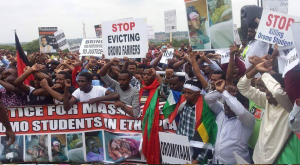
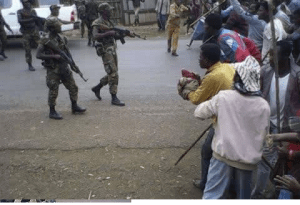
Ethiopia Is Brutally Cracking Down On Months Of Protests
Human rights groups say at least 140 people have been killed in protests over a land expansion plan.

PACIFIC PRESS/GETTY IMAGES
A protest outside the United Nations in New York City. Human Rights Watch claims the Ethiopian government has killed over 140 protesters in demonstrations over the Addis Abba expansion plan.
Every week, we bring you one overlooked aspect of stories that made news in recent days. Did you notice the media forgot all about another story’s basic facts? Tweet @TheWorldPost or let us know on our Facebook page.
In Ethiopia, 2016 is off to a violent start. Authorities in the East African nation have killed at least 140 people in a brutal crackdown on protests over the last two-and-a-half months, according to human rights groups, amounting to the worst ethnic violence in years.
The violence has brought renewed attention to the struggle over land rights and political tensions in the country and it has highlighted rights abuses in a nation deemed an important U.S. ally in the fight against terror.
Anger Mounts In Oromia In The Fall Of 2015.
In November 2015, discontent intensified in Ethiopia’s Oromia region over a government plan to expand the borders of the country’s capital, Addis Ababa, into the surrounding rural areas.
Protesters marched to voice their opposition, fearing that the state’s Addis Ababa Integrated Development Master Plan, as the proposal is called, would seize land from the Oromia region’s marginalized Oromo ethnic group, which makes up around 35 percent of Ethiopia’s population. The area of Oromia that the city seeks to incorporate is already home to two million people, according to Human Rights Watch.
The protesters’ fears were informed by years of deep discontent with the ruling Ethiopian Peoples’ Revolutionary Democratic Front. Though the nation’s capital of Addis Ababa is surrounded by the ethnic Oromia region, the city was established by the Amhara people, The Washington Post notes. As the city expanded, there have been clashes over forcible evictions, as well as ethnic and linguistic identity. Furthermore, the authoritarian government has a history of attempting to stamp out dissent, especially among ethnic groups it views as being in opposition to its ruling coalition.
Over 5,000 Oromos have been arrested on charges relating to protests and dissent in the past five years, according to an Amnesty International report. Oromos who were detained were sometimes subject to horrific abuse, including rape, torture and beatings.
 LONELY PLANET/GETTY IMAGES
Security Forces Respond Forcefully
Demonstrations spread throughout the Oromia region over the course of November, as groups including farmers and students rallied against the government.
Ethiopian authorities responded to the largely peaceful protests with force, seeking to quash the growing dissent. Police used live ammunition to disperse protesters at rallies, activists and rights groups say, killing dozens of people in separate incidents in the areas around Addis Ababa.
As the unrest continued through December, rights groups also reported widespread arrests, beatings and torture at the hands of security services. Even senior members of opposition parties, including Bekele Gerba, a prominent member of the Oromo Federalist Congress — the largest Oromo political party — did not escape the crackdown.
And The Protests Escalate.
The security forces’ crackdown on demonstrators failed to prevent the protest movement from intensifying — it actually expanded its demands to also call for an end to police brutality. As of the end of December, over 140 people had been killed in the protests, according to Human Rights Watch — and the rising death toll began to attract international criticism.
The United States, which has collaborated with Ethiopia on anti-terror efforts and until last September operated a drone base out of the country, issued a statement of concern and called for the government to allow peaceful protests.
Instead of moving toward reconciliation, however, the government doubled down on its position. Authorities denied protesters’ requests to hold rallies in Addis Ababa and accused the Oromo protesters of committing terrorism in a bid to destabilize the government.
As demonstrations continued, the Ethiopian government finally caved to the months of pressure on Jan. 13, and scrapped its expansion plan.
What’s Next?
While the protests met their initial goal of stopping the urban expansion, demonstrators have been invigorated by the crackdown and have continued to rally against the government.
“The complaints of the protesters have now expanded to include the killing of peaceful protesters and decades of marginalization,” Human Rights Watch Horn of Africa researcher Felix Horne told The WorldPost over email.
What began as a protest over land rights is now representative of a number of grievances with the government and ruling EPRDF. Ethiopia has seen a period of rapid economic growth in the past 10 years, but its urban and industrial expansion has also resulted in land disputes, corruption and authoritarian crackdowns on opposition groups.
As demonstrators increasingly demand solutions for Ethiopia’s many social and political problems, rights groups worry that the unrest and violence will continue.
“Human Rights Watch continues to receive reports daily about excessive force being used by security forces in Oromia,” Horne said. “The death toll continues to rise and the arrests continue.”
http://www.huffingtonpost.com/entry/ethiopia-ethnic-violence_us_56a10b1ee4b0404eb8f07c85
UN experts urge Ethiopia to halt violent crackdown on Oromia protesters, ensure accountability for abuses January 22, 2016
Posted by OromianEconomist in #OromoProtests, Africa, Because I am Oromo, Human Rights, Oromia, Oromo, UN.Tags: Africa, Amensty International Report: Because I am Oromo, Ethiopia, Human rights, Oromia, Oromo, OromoProtests2016, UN, UN experts urge Ethiopia to halt violent crackdown on Oromia protesters, United Nations Human Rights
1 comment so far
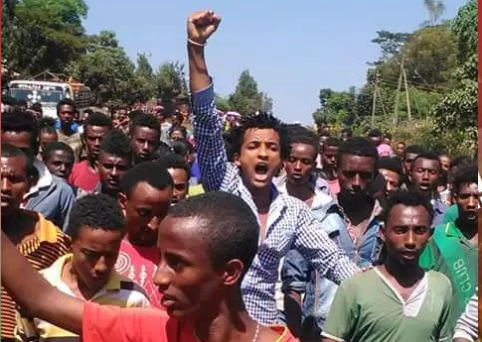
UN experts urge Ethiopia to halt violent crackdown on Oromia protesters, ensure accountability for abuses
GENEVA (21 January 2016) – A group of United Nations human rights experts* today called on the Ethiopian authorities to end the ongoing crackdown on peaceful protests by the country’s security forces, who have reportedly killed more than 140 demonstrators and arrested scores more in the past nine weeks.
“The sheer number of people killed and arrested suggests that the Government of Ethiopia views the citizens as a hindrance, rather than a partner,” the independent experts said, while also expressing deep concern about allegations of enforced disappearances of several protesters.
The current wave of protests began in mid-November, in opposition to the Government’s ‘Addis Ababa Integrated Development Master Plan’ to expand the capital’s municipal boundary. The ‘Master Plan’ could reportedly lead to mass evictions and the seizure of agricultural land in the Oromia region, as well as extensive deforestation.
The UN experts welcomed the Government’s announcement on 12 January 2016 suspending the implementation of the ‘Master Plan’, but were concerned about continuous reports of killings, mass arrests, excessive use of force and other abuses by security forces.
“The Government’s decision is a positive development, but it cannot be seen as a sincere commitment until the security forces stop their crackdown on peaceful protests,” they said. “The role of security forces should be to protect demonstrators and to facilitate peaceful assemblies, not suppress them.”
“We call on the Government to immediately release protesters who seem to have been arrested for exercising their rights to freedom of peaceful assembly and expression, to reveal the whereabouts of those reportedly disappeared and to carry out an independent, transparent investigation into the security forces’ response to the protests,” the experts said.
“Accountability does not erase past abuses, but it is an important step towards rebuilding trust between people and their government,” they stressed. “Impunity, on the other hand, only perpetuates distrust, violence and more oppression.”
The UN independent experts also expressed grave concern over the Ethiopian Government’s application of the Anti-Terrorism Proclamation 652/2009 to arrest and prosecute protesters, labelling them as ‘terrorists’ without substantiated evidence. This law authorises the use of unrestrained force against suspects and pre-trial detention of up to four months.
“Ethiopia’s use of terrorism laws to criminalize peaceful dissent is a disturbing trend, not limited to the current wave of protests,” they experts noted. “The wanton labelling of peaceful activists as terrorists is not only a violation of international human rights law, it also contributes to an erosion of confidence in Ethiopia’s ability to fight real terrorism. This ultimately makes our world a more dangerous place.”
“There are bound to be policy disagreements in any society,” the human rights experts said, “but every Government has the responsibility to give space for people to peacefully express their views and to take these views into account.”
(*) The experts: Mr. Maina Kiai, Special Rapporteur on the rights to freedom of peaceful assembly and of association; Mr. David Kaye, Special Rapporteur on the promotion and protection of the right to freedom of opinion and expression; Mr. Michel Forst, Special Rapporteur on the situation of human rights defenders; Mr. Christof Heyns, Special Rapporteur on extrajudicial, summary or arbitrary executions; and the Working Group on Enforced or Involuntary Disappearances.
The Special Rapporteurs and Working Groups are part of what is known as the Special Procedures of the Human Rights Council. Special Procedures, the largest body of independent experts in the UN Human Rights system, is the general name of the Council’s independent fact-finding and monitoring mechanisms that address either specific country situations or thematic issues in all parts of the world. Special Procedures’ experts work on a voluntary basis; they are not UN staff and do not receive a salary for their work. They are independent from any government or organization and serve in their individual capacity. Learn more, log on to: http://www.ohchr.org/EN/HRBodies/SP/Pages/Welcomepage.aspx
UN Human Rights, Country Page – Ethiopia: http://www.ohchr.org/EN/Countries/AfricaRegion/Pages/ETIndex.aspx
For more information and media requests, please contact Karin Hechenleitner (+41 22 917 96 36 / khechenleitner@ohchr.org)
– See more at: http://www.ohchr.org/EN/NewsEvents/Pages/DisplayNews.aspx?NewsID=16977&LangID=E#sthash.adjSxZFp.KR3g37jZ.dpuf
European Parliament adopts 19-point resolution on the human rights situation in Oromia/ Ethiopia January 22, 2016
Posted by OromianEconomist in Uncategorized.Tags: Africa, EU, European Parliament resolution on the situation in Ethiopia, Oromia, Oromo, OromoProtets2016
1 comment so far

Situation in Ethiopia
Parliament strongly condemns the recent use of violence by the security forces and the increased number of cases of human rights violations in Ethiopia. It calls for a credible, transparent and independent investigation into the killings of at least 140 protesters and into other alleged human rights violations in connection with the protest movement after the May 2015 federal elections in the country. It also calls on the Ethiopian authorities to stop suppressing the free flow of information, to guarantee the rights of local civil society and media and to facilitate access throughout Ethiopia for independent journalists and human rights monitors. The EU, as the single largest donor, should ensure that EU development assistance is not contributing to human rights violations in Ethiopia,
Click to access 20160115IPR10195_en.pdf
http://www.europarl.europa.eu/pdfs/news/expert/infopress/20160115IPR10195/20160115IPR10195_en.pdf
http://ec.europa.eu/avservices/video/player.cfm?ref=I114947&sitelang=en&videolang=EN
European Parliament resolution on the situation in Ethiopia (2016/2520(RSP))
The European Parliament,
– having regard to its previous resolutions on the situation in Ethiopia and to the most recent plenary debate on the matter, of 20 May 2015,
– having regard to the statement of 23 December 2015 by the European External Action Service (EEAS) spokesperson on recent clashes in Ethiopia,
– having regard to the joint statement of 20 October 2015 by Federica Mogherini, Vice‑President of the Commission / High Representative of the Union for Foreign Affairs and Security Policy (VP/HR), and Tedros Adhanom, Minister of Foreign Affairs of the Federal Democratic Republic of Ethiopia,
– having regard to the press release on the meeting of 13 January 2016 between the VP/HR, Federica Mogherini, and the Minister of Foreign Affairs of the Federal Democratic Republic of Ethiopia, Tedros Adhanom,
– having regard to the statement of 27 May 2015 by the EEAS spokesperson on the elections in Ethiopia,
– having regard to the declaration of 10 July 2015 by the UN Special Rapporteur on the promotion and protection of the right to freedom of opinion and expression, David Kaye, on the release of Ethiopian journalists,
– having regard to the latest Universal Periodic Review on Ethiopia before the UN Human Rights Council,
– having regard to the Cotonou Agreement,
– having regard to the Constitution of the Federal Democratic Republic of Ethiopia adopted on 8 December 1994, and in particular the provisions of Chapter III on fundamental rights and freedoms, human rights and democratic rights,
– having regard to the Universal Declaration of Human Rights,
– having regard to the Convention against Torture and Other Cruel, Inhuman or Degrading Treatment or Punishment, ratified by Ethiopia in 1994,
– having regard to the African Charter on Human and Peoples’ Rights,
– having regard to the UN International Covenant on Civil and Political Rights,
– having regard to Rules 135(5) and 123(4) of its Rules of Procedure,
A. whereas the most recent general elections were held on 24 May 2015, in which the Ethiopian People’s Revolutionary Democratic Front (EPRDF) remained the ruling party and won all the seats in the national parliament, owing in part to the lack of space for critical or dissenting voices in the election process; whereas May’s federal elections took place in a general atmosphere of intimidation and concerns over the lack of independence of the National Electoral Board; whereas the EPRDF has been in power for 24 years, since the overthrow of the military government in 1991;
B. whereas over the past two months Ethiopia’s largest region, Oromia, home of Ethiopia’s largest ethnic group, has been hit by a wave of mass protests over the expansion of the municipal boundary of the capital, Addis Ababa, which has put farmers at risk of being evicted from their land;
C. whereas, according to international human rights organisations, security forces have responded to the generally peaceful protests by killing at least 140 protesters and injuring many more, in what may be the biggest crisis to hit Ethiopia since the 2005 election violence; whereas, on the contrary, the government has only admitted the deaths of dozens of people as well as 12 members of the security forces;
D. whereas on 14 January 2016 the government decided to cancel the disputed large-scale urban development plan; whereas, if implemented, the plan would expand the city’s boundary 20-fold; whereas the enlargement of Addis Ababa has already displaced millions of Oromo farmers and trapped them in poverty;
E. whereas Ethiopia is a highly diverse country in terms of religious beliefs and cultures; whereas some of the largest ethnic communities, particularly the Oromo and the Somali (Ogaden), have been marginalised in favour of the Amhara and the Tigray, with little participation in political representation;
F. whereas the Ethiopian authorities arbitrarily arrested a number of peaceful protesters, journalists and opposition party leaders in a brutal crackdown on protests in the Oromia Region; whereas those arrested are at risk of torture and other ill-treatment;
G. whereas the government has labelled largely peaceful protesters as ‘terrorists’, applying the Anti-Terrorism Proclamation (Law No 652/2009) and deploying military forces against them;
H. whereas on 23 December 2015 the authorities arrested Bekele Gerba, Deputy Chairman of the Oromo Federalist Congress (OFC), Oromia’s largest legally registered political party; whereas Mr Gerba was taken to prison and reportedly hospitalised shortly afterwards; whereas his whereabouts are now unknown;
I. whereas other senior OFC leaders have been arbitrarily arrested in recent weeks or are said to be under virtual house arrest;
J. whereas this is not the first time that Ethiopian security forces have been implicated in serious human rights violations in response to peaceful protests, and whereas it is known that the Ethiopian Government is systematically repressing freedom of expression and association and banning individuals from expressing dissent or opposition to government policies, thereby limiting the civil and political space, including by carrying out politically motivated prosecutions under the draconian anti-terrorism law, decimating independent media, dismantling substantial civil society activism and cracking down on opposition political parties;
K. whereas in December 2015 leading activists such as Getachew Shiferaw (Editor-in-Chief of Negere Ethiopia), Yonathan Teressa (an online activist) and Fikadu Mirkana (Oromia Radio and TV) were arbitrarily arrested, although they have yet to be charged by the Ethiopian authorities;
L. whereas the Ethiopian Government imposes pervasive restrictions on independent civil society and media; whereas, according to the 2014 prison census conducted by the Committee to Protect Journalists (CPJ), Ethiopia was the fourth-worst jailer of journalists in the world, with at least 17 journalists behind bars, 57 media professionals having fled Ethiopia in the previous five years and a number of independent publications having shut down as a result of official pressure; whereas Ethiopia also ranked fourth on the CPJ’s 2015 list of the 10 most-censored countries;
M. whereas numerous prisoners of conscience imprisoned in previous years solely on the basis of the legitimate exercise of their freedom of expression and opinion, including journalists and opposition political party members, remain in detention; whereas some of them have been convicted in unfair trials, some face ongoing trials and some continue to be detained without charge, including Eskinder Nega, Temesghen Desalegn, Solomon Kebede, Yesuf Getachew, Woubshet Taye, Saleh Edris and Tesfalidet Kidane;
N. whereas Andargachew Tsege, a British-Ethiopian citizen and leader of an opposition party living in exile, was arrested in June 2014; whereas Mr Tsege had been condemned to death several years earlier in his absence, and has been on death row practically incommunicado since his arrest;
O. whereas Ethiopia’s Charities and Societies Proclamation law requires organisations engaged in advocacy to generate 90 % of the funding for their activities from local sources, which has led to a decrease in action by civil society organisation (CSOs) and to the disappearance of many CSOs; whereas Ethiopia rejected recommendations to amend the Charities and Societies Proclamation and the Anti-Terrorism Proclamation, made by several countries during the examination of its rights record under the Human Rights Council Universal Periodic Review of May 2014;
P. whereas the Ethiopian Government has de facto imposed a widespread blockade of the Ogaden region in Ethiopia, which is rich in oil and gas reserves; whereas attempts to work and report from the region by international media and humanitarian groups are seen as criminal acts punishable under the Anti-Terrorism Proclamation; whereas there are reports of war crimes and severe human rights violations perpetrated by the army and government paramilitary forces against the Ogaden population;
Q. whereas Ethiopia, the second-most-populated country in Africa, is reportedly one of the fastest-growing economies in Africa, with an average growth rate of 10 % in the past decade; whereas it nevertheless remains one of the poorest, with a per capita GNI of USD 632; whereas it ranked 173rd out of 187 countries in the Human Development Index for 2014;
R. whereas Ethiopia plays a key role in the region and enjoys political support from Western donors and most of its regional neighbours, mostly owing to its role as host of the African Union (AU) and its contribution to UN peacekeeping, security and aid partnerships with Western countries;
S. whereas, as economic growth continues apace (along with significant foreign investments, including in the agriculture, construction and manufacturing sectors, large-scale development projects, such as hydroelectric dam building and plantations, and widespread land-leasing, often to foreign companies), many people, including farmers as well as pastoralists, have been driven from their homes;
T. whereas Article 40(5) of Ethiopia’s constitution guarantees Ethiopian pastoralists the right to free land for grazing and cultivation and the right not to be displaced from their own lands;
U. whereas Ethiopia is a signatory to the Cotonou Agreement, Article 96 of which stipulates that respect for human rights and fundamental freedoms is an essential element of ACP‑EU cooperation;
V. whereas Ethiopia is experiencing its worst drought in decades, leading to increasing food insecurity, severe emaciation and unusual livestock deaths; whereas nearly 560 000 people are internally displaced owing to floods, violent clashes over scarce resources and drought; whereas the Ethiopian Government estimates that 10.1 million people, half of them children, are in need of emergency food aid owing to the drought;
W. whereas Ethiopia is faced with permanent influxes of migrants and is a host country for approximately 700 000 refugees, mainly from South Sudan, Eritrea and Somalia; whereas on 11 November 2015 a Common Agenda on Migration and Mobility (CAMM) was signed by the EU and Ethiopia to reinforce cooperation and dialogue between the two parties in the area of migration;
[=======]
1. Strongly condemns the recent use of excessive force by the security forces in Oromia and in all Ethiopian regions, and the increased number of cases of human rights violations; expresses its condolences to the families of the victims and urges the immediate release of all those jailed for exercising their rights to peaceful assembly and freedom of expression;
2. Reminds the Ethiopian Government of its obligations to guarantee fundamental rights, including access to justice and the right to a fair trial, as provided for in the African Charter and other international and regional human rights instruments, including the Cotonou Agreement and specifically Articles 8 and 96 thereof;
3. Calls for a credible, transparent and independent investigation into the killings of protesters and into other alleged human rights violations in connection with the protest movement, and calls on the government to fairly prosecute those responsible before the competent jurisdictions;
4. Calls on the Government of Ethiopia to respect the Universal Declaration of Human Rights and the African Charter, including the right to peaceful assembly, freedom of expression and association; urges the government to immediately invite the UN Special Rapporteur on the rights to freedom of peaceful assembly and of association and other UN human rights experts to visit Ethiopia to report on the situation;
5. Welcomes the government’s decision to completely halt the special zone master plan for Addis Ababa and Oromia; calls for an immediate, inclusive and transparent political dialogue which includes the government, opposition parties, civil society representatives and the local population, to prevent any further violence or radicalisation of the population;
6. Stresses that free and independent media are essential in order to guarantee an informed, active and engaged population, and calls on the Ethiopian authorities to stop suppressing the free flow of information, including by jamming media broadcasts and harassing media, to guarantee the rights of local civil society and media and to facilitate access throughout Ethiopia for independent journalists and human rights monitors; acknowledges the recent release of ‘Zone 9’ bloggers and of six journalists;
7. Requests that the Ethiopian authorities stop using anti-terrorism legislation (Anti‑Terrorism Proclamation No 652/2009) to repress political opponents, dissidents, human rights defenders, other civil society actors and independent journalists; calls also on the Ethiopian Government to review its anti-terrorism law in order to bring it into line with international human rights law and principles;
8. Condemns the excessive restrictions placed on human rights work by the Charities and Societies Proclamation, which denies human rights organisations access to essential funding, endows the Charities and Societies Agency with excessive powers of interference in human rights organisations and further endangers victims of human rights violations by contravening principles of confidentiality;
9. Calls on the Ethiopian authorities to prevent any ethnic or religious discrimination and to encourage and take action in favour of a peaceful and constructive dialogue between all communities;
10. Welcomes Ethiopia’s 2013 human rights action plan and calls for its swift and complete implementation;
11. Urges the authorities to implement, in particular, the recommendation of the Human Rights Council’s Working Group on Arbitrary Detention and to release British national and political activist Andargachew Tsege immediately;
12. States that respect for human rights and the rule of law are crucial to the EU’s policies to promote development in Ethiopia and throughout the Horn of Africa; calls the AU’s attention to the political, economic and social situation of its host country, Ethiopia;
13. Calls for the EU, as the single largest donor, to monitor programmes and policies effectively to ensure that EU development assistance is not contributing to human rights violations in Ethiopia, particularly through programmes linked to the displacement of farmers and pastoralists, and to develop strategies to minimise any negative impact of displacement within EU-funded development projects; stresses that the EU should measure its financial support according to the country’s human rights record and the degree to which the Ethiopian Government promotes reforms towards democratisation;
14. Calls on the government to include local communities in a dialogue on the implementation of any large-scale development projects; expresses its concerns about the government’s forced resettlement programme;
15. Expresses deep concern about the current devastating climatic conditions in Ethiopia, which have worsened the humanitarian situation in the country; calls for the EU, together with its international partners, to scale up its support to the Ethiopian Government and people; welcomes the contribution recently announced by the EU and calls on the Commission to ensure that this additional funding is provided as a matter of urgency;
16. Recalls that Ethiopia is an important country of destination, transit and origin for migrants and asylum seekers, and that it hosts the largest refugee population in Africa; takes note, therefore, of the adoption of a Common Agenda on Migration and Mobility between the EU and Ethiopia which addresses the issues of refugees, border control and the fight against human trafficking; calls also on the Commission to monitor closely all projects recently initiated within the framework of the EU Trust Fund for Africa;
17. Is extremely concerned about the economic and social situation of the country’s population – in particular women and minorities, and refugees and displaced persons, whose numbers continue to increase – in view of the crisis and the instability of the region; reiterates its support for all humanitarian organisations operating on the ground and in neighbouring host countries; supports calls by the international community and humanitarian organisations to step up assistance to refugees and displaced persons;
18. Stresses that major public investment plans are required, particularly in the education and health fields, if the Sustainable Development Goals are to be attained; invites the Ethiopian authorities to make an effective commitment to attaining these goals;
19. Instructs its President to forward this resolution to the Government and Parliament of Ethiopia, the Commission, the Council, the Vice-President of the Commission / High Representative of the Union for Foreign Affairs and Security Policy, the ACP-EU Council of Ministers, the institutions of the African Union, the Secretary-General of the United Nations, and the Pan-African Parliament.
IBTimes: Addis Ababa master plan: Oromo protesters claim Liyu police killed 27 after government scraps plan January 20, 2016
Posted by OromianEconomist in #OromoProtests, Africa, Oromia, Oromia News, Oromiyaa, Oromo, Oromo and the call for justice and freedom, Oromo News, Oromo Protests, Oromo students protests, The Tyranny of TPLF Ethiopia.Tags: Africa, Ethiopia, IBTimes UK, IBTimes: Addis Ababa master plan: Oromo protesters claim Liyu police killed 27 after government scraps plan, Oromia, Oromo, OromoProtests2016
1 comment so far

Addis Ababa master plan: Oromo protesters claim Liyu police killed 27 after government scraps plan
-
By Ludovica Iaccino, January 20, 2016

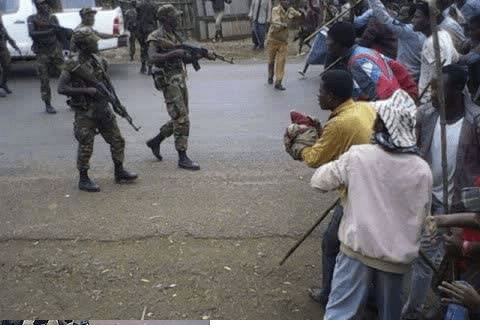
At least 27 protesters from the Oromo community, Ethiopia’s largest ethnic group, have been allegedly killed since the government announced it would scrap a plan to expand the boundaries of the capital Addis Ababa, which triggered mass demonstrations. Protesters in Oromia, one of the nine ethnically-based states of Ethiopia, have continued to demonstrate, arguing they did not trust the statement from the Oromo Peoples’ Democratic Organisation (OPDO) released earlier in January.
A demonstrator told IBTimes UK on conditions of anonymity: “21 peaceful demonstrators were killed yesterday [18 January] and six people are said to have been killed today. It’s really so tragic.”
The number adds to the already more than 140 people allegedly killed by security forces since protests started in November 2015 after the government announced the so-called “Addis Ababa master plan.”
The source alleged that the government deployed special forces, known as Liyu Police, into Oromia towns such as Bedeno and Dire Dawa. Liyu police – formed of Somalian soldiers – was created by the Ethiopian government in 2007 to halt the rise of Ogaden National Liberation Front (ONLF) separatist group. The special forces have been accused of committing crimes including extra-judicial executions.
“They [Liyu Police] have killed about 27 peaceful protesters even after the master plan was said to have been halted,” the source continued.
Ethiopian government’s position
Demonstrators argued that the master plan will lead to forced evictions of Oromo farmers who will lose their lands and become impoverished as a result. They also claimed that forced evictions as well as a perceived marginalisation by the government are already occurring and they threaten the survival of the Oromo’s culture and language.
The Ethiopian government, which has been accused of trying to censor information on the protests, has always denied Oromo people are marginalised and claimed the protests are being orchestrated by some dissidents who aim to destabilise the country. Officials have also refuted the number of deaths given by the activists and opened an investigation to assess the death toll as well as the circumstances of the deaths.
IBTimes UK has contacted the Ethiopian embassy for a comment on the recent death allegations, but has not received a response at the time of publishing.
In a previous interview, Abiy Berhane, minister counsellor at the embassy, told IBTimes UK regarding allegations of violence: “These are just one of the many fabrications that are being circulated by certain opposition groups as part of their propaganda campaign. The unrest cannot be described as a national crisis.
“The disturbances orchestrated by opposition groups have now subsided as the general public understood that the integrated master plan is still at a draft stage and will only be implemented after extensive public consultation in the matter takes place and gains the support of the people.”
European Union condemns “excessive force”
Meanwhile, the European Union has issued a resolution on the ongoing unrest, condemning the “excessive forces by security forces” in Oromia and other Ethiopian regions.
The document reads: “[The EU] calls on the government to carry out a credible, transparent and impartial investigation into the killings of protesters and other alleged human rights violations in connection with the protest movement, and to fairly prosecute those responsible, regardless of rank or position.
“Welcomes the government’s decision to completely halt the Addis Ababa and Oromia special zone master plan, that plans to expand the municipal boundary of Addis Ababa.”
The EU also urged the Ethiopian government to invite a UN rapporteur and human rights experts to investigate and to stop impeding the free flow of information.
More at:-
European Parliament resolution on the situation in Ethiopia (2016/2520(RSP)). European Union strongly condemns the mass killings in Oromia. January 19, 2016
Posted by OromianEconomist in Uncategorized.Tags: #OromoProtests Global Solidarity Rally, Africa, EU, EU asked to break silence on alleged killing of Oromo protesters in Ethiopia, Europe and the Oromo, European Parliament resolution on the situation in Ethiopia, European Union condemned strongly the mass killings in Oromia, Oromia, Oromo, OromoProtests2016
2 comments

MOTION FOR A RESOLUTION: European Parliament resolution on the situation in Ethiopia
19.1.2016
With request for inclusion in the agenda for a debate on cases of breaches of human rights, democracy and the rule of law pursuant to Rule 135 of the Rules of Procedure
on the situation in Ethiopia (2016/2520(RSP))
Victor Boştinaru, Knut Fleckenstein, Ana Gomes, Richard Howitt, Josef Weidenholzer, Pier Antonio Panzeri, Eric Andrieu, Nikos Androulakis, Zigmantas Balčytis, Hugues Bayet, Brando Benifei, José Blanco López, Vilija Blinkevičiūtė, Biljana Borzan, Nicola Caputo, Andrea Cozzolino, Andi Cristea, Miriam Dalli, Viorica Dăncilă, Isabella De Monte, Jonás Fernández, Monika Flašíková Beňová, Doru-Claudian Frunzulică, Eider Gardiazabal Rubial, Lidia Joanna Geringer de Oedenberg, Neena Gill, Michela Giuffrida, Maria Grapini, Roberto Gualtieri, Jytte Guteland, Sergio Gutiérrez Prieto, Anna Hedh, Cătălin Sorin Ivan, Liisa Jaakonsaari, Eva Kaili, Jude Kirton-Darling, Jeppe Kofod, Javi López, Olle Ludvigsson, Andrejs Mamikins, Costas Mavrides, Marlene Mizzi, Sorin Moisă, Csaba Molnár, Alessia Maria Mosca, Victor Negrescu, Momchil Nekov, Demetris Papadakis, Vincent Peillon, Tonino Picula, Miroslav Poche, Inmaculada Rodríguez-Piñero Fernández, Daciana Octavia Sârbu, Siôn Simon, Renato Soru, Tibor Szanyi, Claudia Tapardel, Marc Tarabella, Marita Ulvskog, Julie Ward, Flavio Zanonato, Damiano Zoffoli, Carlos Zorrinho on behalf of the S&D Group
European Parliament resolution on the situation in Ethiopia (2016/2520(RSP))
| European Parliament resolution on the situation in Ethiopia (2016/2520(RSP)) |
|
||
| The European Parliament,
– having regard its previous resolutions on the situation in Ethiopia
– having regard to the statement by the EEAS spokesperson on recent clashes in Ethiopia, 23 December 2015
– having regard to the joint statement by Federica Mogherini, High Representative for Foreign Affairs and Security Policy/Vice-President of the European Commission, and Minister of Foreign Affairs Tedros Adhanom of the Federal Republic of Ethiopia, 20 October 2015
– having regard to the press release on the meeting between the High Representative/Vice-President Federica Mogherini and the Minister of Foreign Affairs of the Federal Republic of Ethiopia, Tedros Adhanom, 13 January 2016
– having regard to the statement by the EEAS Spokesperson on elections in Ethiopia, 27 May 2015 – having regard to the press release of the UN Office of the High Commissioner for Human Rights, 10 July 2015
– having regard to press briefing note of the UN Office of the High Commissioner for Human Rights, 10 July 2015
– having regard to the universal Declaration of Human Rights
– having regard to the African Union Charter of Human and Peoples’ Rights
– having regard to the UN the International Covenant on Civil and Political Rights,
– having regard to Rule 123(2) its Rules of procedure
A.whereas over the past two months , Ethiopia’s largest region, Oromia, has been hit by a wave of mass protests over the expansion of the municipal boundary of the capital, Addis Ababa which has posed risks for farmers eviction from their land; B.whereas security forces used excessive lethal force and killed at least 140 protesters and injured many more, in what may be the biggest crisis to hit Ethiopia since the 2005 election violence; C.whereas on the 14 January 2016 the government decided to cancel the disputed large scale urban development plan ; whereas if implemented, the plan will expand the city’s boundary by 20 times its current size; whereas Addis Ababa’s enlargement has already displaced millions of Oromo farmers and trapped them in poverty; D.whereas the ethnic Oromos continue to suffer particular discrimination and human rights violations in efforts to suppress potential dissent in the region; E.whereas the Ethiopian authorities arbitrarily arrested a number of peaceful protesters, journalists and opposition party leaders in the context of a brutal crackdown on the protests in the Oromia Region; whereas those arrested are at risk of torture and other ill-treatment; F.whereas the government’s labelled largely peaceful protesters as ‘terrorists’ deploying military forces against them ; G.whereas on December 23, the authorities arrested Bekele Gerba, deputy chairman of the Oromo Federalist Congress (OFC); Oromia’s largest legally registered political party; whereas Mr Gerba was being taken in a prison known for torture and other ill-treatment practices and shortly after he was reportedly hospitalized; whereas his whereabouts are now unknown, raising concerns of an enforced disappearance. H.whereas other senior OFC leaders have been arbitrarily arrested in recent weeks or are said to be under virtual house arrest. I.whereas last December leading activists such as Getachew Shiferaw (Editor-in-Chief: Negere Ethiopia), Yonathan Teressa (an online activist) and Fikadu Mirkana (Oromia Radio and TV) have been arrested arbitrarily though yet to be charged by the Ethiopian authorities. J.whereas the current protests echo the bloody events of April and May 2014, when federal forces fired into groups of largely peaceful Oromo protesters, killing dozens; whereas at least hundreds more students were arrested, and many remain behind bars K.whereas Ethiopia’s government has regularly been accusing people who express even mild criticism of government policy of association with terrorism; whereas dozens of journalists, bloggers, protesters, students and activists have been prosecuted under the country’s draconian 2009 Anti-Terrorism Proclamation. L.whereas Ethiopia’s government imposes pervasive restrictions on independent civil society and media; whereas according to the Committee for the Protection of Journalist’s (CPJs) 2014 prison census found that Ethiopia was the fourth worst jailer of journalists in the world, with at least 17 journalists behind bars, whereas Ethiopia also ranked fourth on CPJ’s 2015 list of the 10 Most Censored Countries M.whereas the Ethiopian authorities have routinely summoned to court the “Zone 9 bloggers” with terrorism charges for their writing over the past 2 years. N.whereas numerous prisoners of conscience, imprisoned in previous years based solely on their peaceful exercise of their freedom of expression and opinion, including journalists and opposition political party members, remained in detention.; whereas these included some convicted in unfair trials, some whose trials continued, and some who continued to be detained without charge, among others Eskinder Nega, Temesghen Desalegn, Solomon Kebede, Yesuf Getachew, Woubshet Taye, Saleh Edris, and Tesfalidet Kidane O.whereas severe restrictions on external funding continue to undermine the work and effectiveness of non-governmental organisations (NGOs) under the 2009 Charities and Societies Proclamation. P.Whereas Ethiopia rejected recommendations to amend the Charities and Societies Proclamation and the Anti-Terrorism Proclamation that several countries made during the examination of its rights record under the Human Rights Council Universal Periodic Review in May 2014. Q.Whereas Andargachew Tsige, a British-Ethiopian citizen and leader of an opposition party living in exile, was arrested in June 2014 while in transit through Yemen’s main airport and forcibly removed to Addis Ababa; whereas Tsige had been condemned to death several years earlier in his absence, and has been in death row practically incommunicado since then; whereas Juan Mendez, the UN special rapporteur on torture, has written to the Ethiopian and UK governments saying he is investigating the treatment of Tsige, following claims that Tsige is being deprived of sleep and held in isolation; R.Whereas the Ethiopian government has de facto imposed a widespread blockade of the Ogaden region in Ethiopia, rich in oil and gas reserves; whereas attempts to work and report from the region by international media and humanitarian groups are seen as criminal acts, punishable under the anti-terrorist proclamation; whereas there are reports of war crimes and severe human rights violations perpetrated by the Army and government paramilitary forces against the Ogaden population; S.whereas The Ethiopian People’s Revolutionary Democratic Front (EPRDF), the ruling party coalition, won all 547 parliamentary seats in the May 2015 elections, due in part to the lack of space for critical or dissenting voices in the election process; whereas May’s federal elections took place in a general atmosphere of intimidation, and concerns over the lack of independence of the National Electoral Board; T.Whereas Ethiopia enjoys political support from western donors and most of its regional neighbours, mostly due to its role as host of the African Union (AU) and its contribution to UN peacekeeping, security and aid partnerships with Western countries; U.whereas Ethiopia receives more aid than any other African country – close to $3bn per year, or about half the national government budget V.whereas for decades the government have been authorizing big development projects to foreign investors, which have been leading to severe land grabbing and millions vulnerable people often forcibly evicted and insensitively resettling; whereas often the government does not offer the local communities any alternative to permanent settlement and had not fully consulted groups before evicting them. W.whereas some donors, including UK’s Department for International Development (DFID) and the World Bank, rechanneled funding from the problematic Protection of Basic Services (PBS) program in 2015 which was associated with the abusive “villagization program,” a government effort to relocate 1.5 million rural people into permanent villages, ostensibly to improve their access to basic services; whereas some of the relocations in the first year of the program in Gambella region in 2011 were accompanied by violence, including beatings and arbitrary arrests, and insufficient consultation and compensation X.whereas Ethiopia is experiencing its worst drought in decades, deepening food insecurity and severe emaciation and unusual livestock deaths; whereas with 640 000 refugees, Ethiopia is the country in Africa with the highest number of refugees; whereas nearly 560 000 people are internally displaced due to floods , violent clashes over scarce resources and drought Y.whereas the current political situation in Ethiopia and the brutal repression of dissent put a serious risk the security, development and stability in the country; 1.Strongly condemns the recent use of excessive force by the security forces in Oromia and in all Ethiopian regions, the increased cases of human rights violations and abuses, including violations of people’s physical integrity, arbitrary arrests and illegal detentions, the use of torture, and violations of the freedom of the press and of expression, as well as the prevalence of impunity; 2.Calls for an immediate end to violence, human rights violations and political intimidation and persecution; 3.Urges for the immediate release of all those jailed for exercising their rights to peaceful assembly and freedom of expression, including students, farmers, opposition politicians, academics, bloggers and journalists ; 4.Calls on the government to carry out a credible, transparent and impartial investigation into the killings of protesters and other alleged human rights violations in connection with the protest movement, and to fairly prosecute those responsible, regardless of rank or position; 5. Welcomes the government’s decision to completely halt the Addis Ababa and Oromia special zone master plan, that plans to expand the municipal boundary of Addis Ababa. Calls for an immediate inclusive and transparent political dialogue, including the government, opposition parties, civil society representatives and the local population preventing any further violence or radicalisation of the population; takes the view that such dialogue, conducing to the democratisation of the country, is not possible under the current political conditions; 6.Calls on the Government of Ethiopia to respect the Universal Declaration of Human Rights and the African Union Charter of Human and Peoples’ Rights, including the right to peaceful assembly, freedom of expression and association; 7.Urges the government to immediately invite the UN Special Rapporteur on the rights to freedom of association and peaceful assembly and other UN human rights experts to visit Ethiopia to report on the situation; 8.Calls on the government to stop suppressing the free flow of information, including by jamming media broadcasts and harassing media, including through intrusive surveillance programs, and facilitate access throughout Ethiopia for independent journalists and human rights monitors; 9. Calls on the government to include local communities in a dialogue on the implementation of any large scale development project and ensure equal distribution of future benefits to the population ; to ensure that farmers and pastoralists are adequately compensated, preventing them from any arbitrary or forced displacement without consultation and adequate compensation. 10. Expresses its concerns on the government’s forced resettlement program, known as “villagization program”. 11.States that respect for human rights and the rule of law are crucial to the EU’s policies to promote development in Ethiopia and throughout the Horn of Africa; 12.Call on the EU to effectively monitor programs and policies to ensure that EU development assistance is not contributing to human rights violations in Ethiopia, particularly programs linked to displacement of farmers and pastoralists, and develop strategies to minimize any negative impact of displacement within EU funded development projects; 13. Further calls on the EU and Member States to react promptly to the escalation of violence and the deterioration of the human rights situation in the country by publicly and privately condemning the use of excessive force by security forces in Oromia and call on the government to exercise restraint in its response against protests and the exercise of basic freedoms by the Ethiopian people; 14. Stresses that financial support to Ethiopia from the EU should be measured attending to the country’s human rights record and the degree to which the Ethiopian government promotes reforms towards democratisation, as the only way to ensure stability and sustainable development; 15.Instructs its President to forward this resolution to the Government and the Parliament of Ethiopia, the European Commission, the Council, the Vice-President of the Commission/High Representative of the Union for Foreign Affairs and Security Policy, the institutions of the African Union and the Secretary-General of the United Nations.
|
|||
| Last updated: 19 January 2016 |
Oromia: Funeral ceremonies for Oromo’s finest, the youth, killed by Fascist Ethiopian government January 19, 2016
Posted by OromianEconomist in Uncategorized.Tags: 'BECAUSE I AM OROMO’: SWEEPING REPRESSION IN THE OROMIA, Africa, killed by Fascist Ethiopian government, Oromia, Oromia: #OromoProtests: Gabaasa Fincila Xumura Garbummaa (FXG) Oromiyaa 2016, Oromia: Funeral ceremonies for Oromo’s finest, Oromo, OromoProtets2016, the youth
add a comment
Dhufeeraa Engineering Waggaa 4ffaa Yuniverstii Haromaayaa Loltoota Wayyaaneen Ajjeefame.
https://www.youtube.com/watch?v=US-Rw7kHIdI
See more at:-
Videos: Funeral ceremonies for Oromo’s finest, the youth, killed by Ethiopian government
Finfinne Tribune, Gadaa.com, Amajjii/January 18, 2016
The lethal actions against peaceful Oromo protesters – being undertaken by the Ethiopian government, mean that, with each passing day, the number of Oromo population, which is affected by the government’s heavy-handed response to the Oromo protests, continues to grow. An observer noted that, for each person the government’s bullets take away, a community of hundreds and thousands is impacted with the only memory of the deceased being the banner they held up at their last breath. The affected community moves forward with a resolute to press the banner of their martyr forward to its victory. At the tens of solemn funerals so far held for Oromo’s finest, its youth, in churches and mosques across Oromia, funeral-goers express this resolute to press forward through speeches, placards and slogans. On and off the funeral grounds, they continue their protests against the Ethiopian government’s persistent denial of Oromo’s self-rule (of which the Master Plan is just a symptom), and against the unabated killing, maiming and arresting of young students, farmers and other sections of the Oromo society. The following are a few of the funeral services held for Oromo students and farmers this year. According to one observer, Oromo’s finest leaving this world at this too young age is one pain the Oromo people will cope with forever through their memories; however, the government’s cruelty, which the deceased had faced during their last moments on this world, is one pain the Oromo people, the other Ethiopian people and the international community can stop — the deceased can not come back, but the injustice unleashed on them can be stopped, must be stopped, and will be stopped.
January 18, 2016: Funeral service for Biruk (Tolassa) Dhufera, a 4th-year Engineering student at Haromaya University – who was killed two days earlier. His funeral service took place at the local Orthodox church in his birth place of Abuna Gindeberet (West Shawaa) …
January 15, 2016: Funeral service for Lencho Dinkessa, a high-school Oromo student, in Dike village, near Waddessa (West Shawaa). He was killed in Ambo three days earlier while attending a funeral service for another martyr Abdata Olansa. His family was denied the right to bury him in Ambo; hence, it was forced to take his body to the countryside …
January 13, 2016: Funeral service for Chala Mohammed, a young farmer who was gunned down a day before in his farm in Haromaya (east Oromia) because he hesitated to turn off the engine of his water pump when the Ethiopian armed forces came to the area, according to media reports …
January 5, 2016: Funeral service for Abbas Abdulrahman who was martyred a day before in Masala (West Hararghee) …
Continued Massacre in State of Oromia by the Tyrannical TPLF Government in Ethiopia: Appeal Letter Submitted to UN by OCO_NA, OCO of New York and OCO of Washington, DC January 18, 2016
Posted by OromianEconomist in Uncategorized.Tags: Africa, Continued Massacre in State of Oromia by the Tyrannical TPLF Government in Ethiopia: Appeal Letter Submitted to UN, Oromia, Oromo, Oromo demonstration in New York demands UN to take a firm stand against ethiopian government on 15 January, OromoProtests2016, the Oromo Community of New York, the Oromo Community Organization (OCO) of Washington DC Metropolitan Area and the Oromo Community Association in North America (OCO_NA)
add a comment

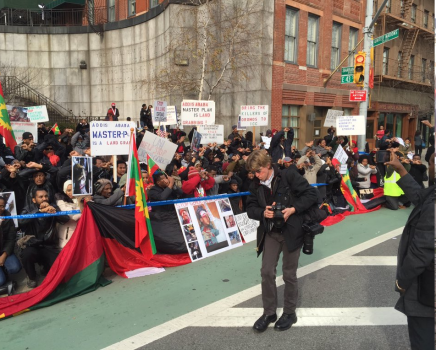
January 14, 2016
Mr. Ban Ki-moon
UN Secretary-General
First Avenue at 46th Street
New York, NY 10017
RE: Continued Massacre in Oromia Regional State by the Tyrannical TPLF Government in Ethiopia
Dear Mr. Secretary General,
We, the Oromo Community of New York, the Oromo Community Organization (OCO) of Washington DC Metropolitan Area and the Oromo Community Association in North America (OCO_NA) write this urgent letter to bring to your attention and express our deepest concerns about the violent crackdown on the peaceful student protesters in Oromia and other regional states of Ethiopia.
The Oromo People constitute 40 percent of the Ethiopian population. But they are subjugated to political oppression, economic exploitation, human rights violation by the dictatorial minority regime of the Tigrian People’s Liberation Front (TPLF) which usurped power in 1991. The regime expropriated the total land of the nation, all economic resources, monopolized political power and subjected the whole nation to tenancy and denied all economic rights. When the degree of oppression and exploitation became unbearable the whole nation has begun to resist the excesses of the government.
In 2014, the Oromo society in general and students at different levels (Elementary, High School, and University) in particular protested the land grab policy. The land grab policy not only displaces millions of Oromo farmers from their ancestral land but also causes loss of Oromo culture, history and identity. The response by the dictatorial bloodthirsty minority government of the TPLF is shooting to kill, beating, imprisoning and torturing of the peaceful protestors .As it is to be recalled, in 2014 more than 70 students were gunned down for peacefully demanding to stop the implementation of the land grab plan. Despite the firm opposition to this plan from all Oromos, internal and external, and many losses of life and causalities, the government moved ahead in 2015 with its proposed plan, which was paused due to people’s resistance to the policy.
As a result during the last two months, Oromo students again came out to express their opposition peacefully to the Addis Ababa master plan and land grab policy implementation of the TPLF regime. However, again More than 150 Oromo nationals were shot dead, thousands wounded, beaten, more than 5000 were rounded up and thrown into jail. As the protests and killings are still on going, more causality is reported every day. Given the history of brutality of the current regime in Ethiopia, those in jail are feared to be tortured or even secretly murdered in the prison cells and others disappeared. Many corps of disappeared students is being recovered in forests, ponds, and rivers, deliberately dumped to hide traces of genocide. Mr. Bekele Gerba, vice chairman of the Oromo Federalist congress Party (OFC) is among the detained, and Mr. Bekele Naga, Secretary General of OFC is under house arrest. In General, a war of Genocide is being waged by the TPLF government against the Oromo people. The Oromia Region is now under military Command Post where all civil rights are violated, the army beats, arrests, tortures, kills at will. The army imposes curfew at any time and place. Normal life has been disrupted. Marshall Law is exercised in Oromia Region now
What is being perpetrated against peaceful demand and protest is the concern of the 40 million Oromos not students only. Accordingly, the Oromo community Organization of NY, the Oromo Community Organization (OCO) of the Washington DC Metropolitan Area and the Oromo Community Association in North America (OCO_NA) are writing this joint appeal letter to Your Excellency to express our deep concern and outrage about the current massacre of the Oromo people all over Oromia by the federal police and army of the TPLF/EPRDF Ethiopian government
The continued massacre of students and civilians is part of the grand scheme to annihilate the Oromo people and expropriate their land and resources. The late Prime Minister Meles Zenawi said a couple of years ago, while he was alive,” the majority will be diminished into a minority.” That remark reflects deep rooted objective of annihilating the Oromo, which the current TPLF leaders are bent to implement. Currently, about 90% of political prisoners in Ethiopia are Oromos. The former Defense minister stated that all prisoners speak Afaan Oromo (Oromo language) after released from prison indicating the huge number of Oromo prisoners. It is puzzling to fathom the strategy of reducing 40% of the Ethiopian population to minority unless one thinks of genocide. Generally, a war of attrition is being waged by the TPLF government against the Oromo people. The trend is dangerous. The Oromo demand deserves timely and appropriate response. Oppression leads to violent response.
Dear Mr. Secretary General,
It is so sad that such heinous crimes are repeatedly happening to the Oromo students and civilians in the 21st century without reaction from international organizations and Western democracies. Even the investigative reporters of big media are silent on the genocidal killings on going in Oromia. It was only the BBC that exposed the genocidal killings of 2014. The Oromo Diaspora has been alerting the world of the crimes of TPLF against the citizens. But nothing has been done. No member of the criminal regime has been brought to court of justice. We are observing criminal governments being brought to ICC from former Yugoslavia, Kenya, Congo Democratic Republic, Rwanda, Liberia and others. We don’t understand why the criminal TPLF government is allowed to move with impunity. Why double standard is applied when it comes to the Ethiopian dictators? Because of unrestrained criminal activity, the government has continued to massacre the Oromo people, grab their lands, plunder resources, harass and imprison. The consequence of the unabated killing of citizens with impunity by tyrannical governments will be regrettable as we can see in many countries facing similar situations today. Stitch in time avoids big crack. Oromo life matters!!
In response to the protests, the Ethiopian government has unleashed its armed forces throughout Oromia on unarmed students and citizens who are protesting peacefully against the Master Plan. Armed forces are firing live ammunition against unarmed people, killing and maiming them. Children as young as 8 year olds, pregnant women and elderly parents are among the murdered victims. Over 140 people have been killed so far and the number of casualties is rising. Thousands are being mercilessly beaten and herded into prisons. Federal armed forces are raiding university dormitories and private homes, and savagely beating and killing unarmed people. The Ethiopian government and its armed and security forces are committing the most heinous crimes against defenseless school children in all parts of Oromia and beyond. The peaceful protests involve elementary, high school and university students. Parents of the students—farmers, workers, elementary and school teachers, and university lecturers have joined youth protesters. The people are facing violent government crackdown every day. The heavy-handed, excessive use of force has resulted in the death of more than 140 victims and critical injuries of thousands of peaceful people. Thousands of students are taken into custody and facing torture and death. Because of the government’s draconian press laws and criminalization of independent media, it is difficult to account for all victims of this brutal crackdown at this moment.
The Oromo, peaceful and generous people—the creators of the gadaa system, a genuinely democratic system of government, a remarkable contribution to humanity—are dying in the hands of a brutal regime. These defenseless people need and deserve the support of the international community. We understand that what happens to the Oromo people in Ethiopia does not make the headline news in anywhere and in UN. But the Oromo are very important people. They occupy the largest region in Ethiopia, both in terms of population size and land mass. Their land is endowed with rich natural and mineral resources and serves as the backbone of the Ethiopian economy. The well-being of the Oromo society guarantees the stability and peace in the Horn of Africa. We humbly warn that there is a substantial risk in ignoring the sufferings of such a large population in the Horn of Africa, and its growing Diaspora communities. The situation in Ethiopia is getting worse every day. Neglecting them and destruction of the Oromo society will definitely contribute to larger political, economic, social and security crises that will threaten regional and global peace. Saving them saving peace in the region.
The TPLF minority regime is hoodwinking the West and international organizations including the UN, by wearing the veil of progress and development. But, the reality is the dirt under the veil. While the TPLF regime is boasting of 12% annual economic growth, 18 million Ethiopians are exposed to hunger as Your Excellency is aware, and yearning for handouts. This shows the growth propaganda is commercial. But they blame climate change. Climate change is not earthquake that happens abruptly and cause hunger and famine. The main cause of the famine is land policy and mal administration. Land is expropriated by the TPLF government which they distribute to the Chinese, Indians, Saudis, Turks, and others freely for hidden quad pro quo. TPLF is sole land lord in the country. We recall the infamous hanger of 1973 which dethroned Emperor Haile Selassie and abolished feudalism. The 2015 hunger also should have consequences.
The regime speaks of democratic process while rigging election and declaring 100% victory. In the absence of freedom of expression, press, gathering, protesting they speak of democratic prevalence. They accuse dissenters of corruption and rent seeking, while they stash billions of dollars in foreign banks by snatching from the hunger stricken Ethiopians. They snatch people’s houses and farmers land in the name of development by paying minimum or no compensation and stash away the market value. There is no guarantee of property ownership. Generally, government accountability is nil. Anger against this government is simmering. The tyrannical activity of the government is leading to volatile vent. They should be denied support unless they respect human rights, democratic principles and show transparency.
Dear Mr. Secretary General,
We earnestly request Your Excellency to use your office influence to urge the Ethiopian government to respect the right of the Oromo people, rule of law and stop killing and arresting Oromo students, implement democratic governance. If the regime doesn’t cooperate we request the UN to stop its support and impose sanctions. We specifically request that the UN:
- Stop the Genocidal war being waged by the TPLF government against the Oromo people;
- Stop the arbitrary arrests, kidnappings, tortures and killings of Oromo students and other civilians;
- Establish a commission of inquiry to investigate the current violent crackdown and extrajudicial killings;
- Bring those who committed extrajudicial killings to ICC court;
- Demand an immediate stop to the unlawful so called “Integrated development master plan” implementation and the unlawful eviction of Oromo farmers and the illegal selling of Oromo land under the disguise of such “development”;
- Demand the cancellation of the establishment of centralized Urban Development Corporation to be implemented by the federal government;
- Demand that an independent commission be appointed to investigate the mass killing in Oromia regional state and look at the prison demography;
- Demand the unconditional and immediate release of Oromo students who are jailed for exercising their constitutional right and all political prisoners;
- Demand that the regime to commit itself to the respect of human rights and allow freedom of expression and assembly and making a peaceful protest;
- Demand Ethiopian perpetrators of mass killing be brought to ICC similar to criminals in other countries;
- Demand the Oromo plight be given equal weight to that of other nations under the yoke of dictatorial regimes.
Sincerely,
Mr. Demisse Wayessa,
Chairman, Oromo Community of NY
http://www.oromocomunityny.org
Desta Yebassa, Ph.D.
Board President, Oromo Community Organization (OCO) of Washington D.C. area
6212 3rd ST NW Washington, DC 20011
Dr. Guluma Gemeda, PhD
Chair, Board of Directors of Oromo Communities’ Association in North America (OCA-NA)
465 Mackubin St N, St. Paul, MN, 55103, USA
ggemeda@umflint.edu
CC:
President Barack Obama
The White House
1600 Pennsylvania Avenue NW
Washington, DC 20500
Tel: (202) 395-2020
Mr. John Kerry
Secretary of State
US Department of State
2201 C St NW Washington, DC 2052;
United Nations High Commissioner for Human Rights (OHCHR)
Palais des Nations
CH-1211 Geneva 10, Switzerland;
The World Bank
1225 Connecticut Avenue NW
Washington, DC 20433 U.S.A.
The International Monetary Fund (IMF)
700 19th Street, N.W., Washington, D.C. 20431
Oromia: In Ethiopia, anger over corruption and farmland development runs deep. #OromoProtests January 18, 2016
Posted by OromianEconomist in Uncategorized.Tags: Africa, anger over corruption and farmland development runs deep Despite the government ending plans to build on Oromo land around the capital, Chitu, Cittuu, In Ethiopia, Land Grabs, Oromia, Oromo, OromoProtests2016, The corruption of Ethiopia, The Guardian
1 comment so far
In Ethiopia, anger over corruption and farmland development runs deep
Despite the government ending plans to build on Oromo land around the capital, clashes continue, as lack of transparency and maladministration fuel dissent
William Davison, The Guardian, Global Development, 18 January 2016
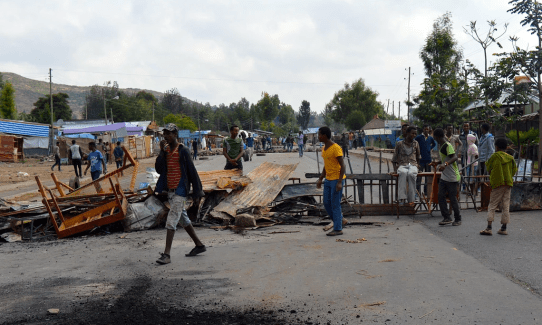
Protesters block the road in Wolenkomi, in the Oromia region of Ethiopia
Protesters block the road in Wolenkomi, in the Oromia region of Ethiopia. All photographs by William Davison
Two years ago, on the edge of Chitu in Ethiopia’s unsettled Oromia region, local officials told Chamara Mamoye his farmland might be developed when the small town expanded. He hasn’t heard anything since.
“Losing the land would be a big problem for me, but if the government forces us, we can’t do anything,” the father-of-five says outside his compound.
Last month, Chamara, 45, saw the bodies of two protesters lying on the road after demonstrations rocked Chito. The dead were among up to 140 people killed by security forces during region-wide protests triggered by claims of injustice and marginalisation from the nation’s largest ethnic group, the Oromo.
Bolstered by US-based social media activists, the protest movement coalesced around opposition to a government plan to integrate the capital, Addis Ababa, with surrounding Oromo towns. After weeks of protests, the ruling coalition in the Oromia region said last week that it was cancelling the planned expansion.
Protests, however, go on, and the roots of popular unease and anger in Oromia run much deeper.
Dissatisfaction with corruption, maladministration and inadequate consultations on investments are fuelling dissent. This patchwork of grievances presents a fundamental challenge to an authoritarian government aiming to rapidly transform Ethiopia from an agrarian society to an industrial powerhouse. And the discontent is a national issue.
Urban expansion is causing clashes across the country as investors, officials and farmers protect their interests, says Seyoum Teshome, a lecturer at Ambo University.
“The villagers who have been asking for basic services and infrastructure rush to sell their farmland at market rate before it is expropriated at low rates of compensation,” he says.
As all land is state-owned in Ethiopia, houses are rapidly built on the edge of towns without official permission, to give plots value, Seyoum says. Investors may bribe corrupt officials to formalise illegal transfers, causing anger among dispossessed farmers, he adds.
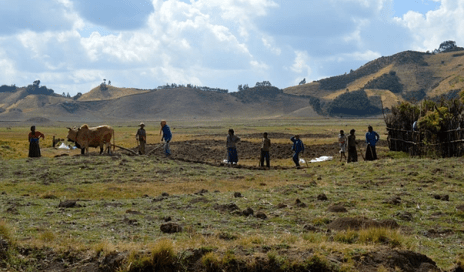
Workers near Chitu in the Oromia region
Chamara was not among the mostly youthful protesters who took to the streets in Chitu, but he shares their concerns about an unresponsive ruling system. He’s frustrated by repeatedly broken official promises to tarmac the main road that runs through Chitu. Although the area has electricity and a mobile-phone signal, he is disappointed with the rate of progress since the government came to power 25 years ago. “There is no big development considering the time they had,” he says.
He is also upset by a lack of information and consultation over land policies, as well as concerned by suspicions of corruption – though officials do not flaunt ill-gotten gains. “The corruption is done in a secret way. It’s a silent killer,” he said.
In elections last May, Ethiopia’s ruling coalition and allied parties won all 547 seats in the federal parliament and 100% of legislative positions in nine regional councils. Despite the result, the government acknowledged widespread dissatisfaction with the quality of public administration and levels of corruption.
“In many areas, personnel said to be involved in massive corruption that led to sudden outbursts of anger are being dismissed,” government spokesman Getachew Reda said in an interview last week.
One of the deadliest incidents last month took place in Woliso town, about113km south-west of Addis Ababa. Six protesters were killed by security forces after thousands of people from surrounding villages took to the streets to protest over planned expansion of the town.
A group of young Oromo, who had gathered next to the Walga river a few miles from Woliso, spoke of community fears of evictions and poor compensation. But nobody seemed to know anything specific about government plans. “The government does not discuss in detail. They do not have consent,” one said.
Ethiopia has long been a darling of the international donor community, which has appeared willing to ignore its poor record on human rights because high growth rates over the past decade have delivered some development goals. But the Oromo protests illustrate the vulnerabilities of this strategy.
To the north of Chitu, at Wenchi, which boasts a spectacular crater lake popular with tourists, grievances are almost tangible. Soldiers are still in town and, as elsewhere, the authorities have arrested people suspected of involvement in the protests. While some seem cowed by the crackdown, Rabuma Terefa is not.
His friend was shot in the leg on the edge of Chitu as he marched with other protesters from Wenchi.
When an elite military unit told elders the protesters must turn back, the group refused, arguing they had a constitutional right to peacefully demonstrate, said Rabuma. Within minutes, soldiers opened fire, killing people, including Birhanu Dinka, who was leading the crowd at that moment.
“They did not say anything, they just pointed the guns at us. We were begging them not to kill us,” Rabuma, 27, says. While abuses may have occurred, security forces are told to protect civilian lives, according to Getachew.
It is not only lives at stake: around the time of the protests in Wenchi, the property of a Dutch agricultural company, Solagrow, was torched by hundreds of people. Rabuma says the investment angered locals as it fenced off 100 hectares of prime communal grazing land, leased by the government. Solagrow says community relations were healthy and the valley was waterlogged until they drained it.
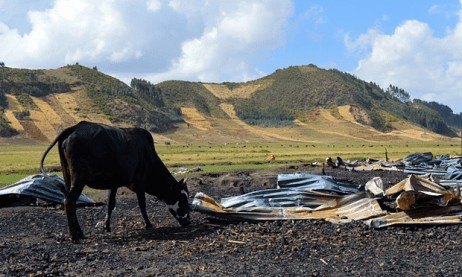
A cow on Solagrow land near property burnt down in a protest in Chitu
The project was collateral damage of the political dispute, according to manager Jan van de Haar. “[The protesters] became angry and they said there was only one way to continue, and that’s our farm, because we’re the only investment in that place,” he says. The attack destroyed $300,000-worth of machinery and potato seeds.
Rabuma had no sympathy for Solagrow, which he says was complicit in the government’s oppression of the Oromo. He is instead focused on the struggle ahead.
In Chitu, Chamara speaks for many Oromo as he implores the government to better manage investments and urban sprawl. “No one is opposing the development of the city, but it should not be at the expense of farmers’ lives,” he says.
This article was amended on 18 January 2016 to correct the spelling of Chitu.
Business Insider:One of Africa’s most promising economies is facing a fundamental problem January 17, 2016
Posted by OromianEconomist in Uncategorized.Tags: Africa, Business Insider, Deadly Protests in Ethiopia as Students Defend Farmers from Urban 'Master Plan', Ethiopia, Global rally in solidarity with #Oromo students in Oromia, Land grab, Oromia, Oromo, OromoProtests2016, OSA Symposium: Understanding the Land Transfers and Political Crisis in Ethiopia: A Multidisciplinary Assessment of the Addis Ababa Integrated Development Master Plan and Popular Uprising in Oromia
add a comment
The Addis plan is one instance in which these two objectives came into direct conflict. Protests over the plan, which Oromo viewed as a land grab undertaken by an oppressive and unrepresentative central government, broke out in late 2015. The government responded witha crackdown that killed 140 people, marking perhaps the deadliest outburst of political violence in the country since its civil war ended in 1991.
The Oromo protests are “engendering an intensified ethnic awareness that has also revitalized calls for genuine self-rule in the region,” Smith writes.
Karuturi had taken over land that the Ethiopian state had sold off as part of a controversial program in which the government leased 3.3 million acres of farmland to foreign investors after allegedly displacing some of that land’s original tenants.
It’s the kind of undertaking that would be substantially harder if Ethiopia were a multiparty democracy, rather than one of Africa’s most thoroughgoing dictatorships.
While Karuturi arguably stood to benefit from Ethiopia’s centralized single-party regime, it’s now learned the risk involved in pouring $100 million into an opaque authoritarian state.
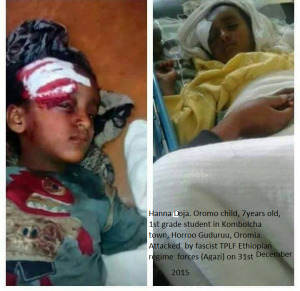
One of Africa’s most promising economies is facing a fundamental problem
Armin Rosen, http://uk.businessinsider.com/ 17 January 2017
Ethiopia, which has averaged double-digit GDP growth over the past decade and enjoys a close strategic relationship with the US, is one of Africa’s emerging economic and political powers and an example of a country that’s improved its economic fortunes without opening its political space.
A January 11th Bloomberg News story hints at a huge problem the country might be facing moving forward.
According to Bloomberg, the Ethiopian government canceled a 2010 lease that Karuturi, an India-based agricultural company, had taken out on 100,000 acres of farmland.
Despite making an over $100 million investment in the country’s farming sector, Karuturi was accused of breaking its lease agreement in developing only 1,200 acres thus far. But the company claimed that it had received waivers from the Ethiopian government in the past, and said that it did not recognize the project’s cancellation.
According to Bloomberg, Karuturi had taken over land that the Ethiopian state had sold off as part of a controversial program in which the government leased 3.3 million acres of farmland to foreign investors after allegedly displacing some of that land’s original tenants.
It’s the kind of undertaking that would be substantially harder if Ethiopia were a multiparty democracy, rather than one of Africa’s most thoroughgoing dictatorships.
While Karuturi arguably stood to benefit from Ethiopia’s centralized single-party regime, it’s now learned the risk involved in pouring $100 million into an opaque authoritarian state.
And Ethiopia’s leaders, who want both economic prosperity and total political control, might soon find that these objectives aren’t nearly as mutually reinforcing as they’d hoped.

Tiksa Negeri/ReutersWomen mourn during the funeral ceremony of Dinka Chala, a primary school teacher who family members said was shot dead by military forces during a recent demonstration, in Holonkomi town, in Oromiya region of Ethiopia on December 17, 2015.
Like Karuturi’s disappeared $100 million investment, the Addis Ababa expansion plan embodies the perils and contradictions of the Ethiopian regime’s long-term strategy of securing internal calm through economic growth and strong ties with foreign powers like the US and China.
As in past eras, the Ethiopian capital is being built up as a showpiece of the country’s modernity and development, and as a reflection of Ethiopia’s sense of its unique place in the world. Addis has one of Africa’s first light rails, a Chinese-built, 19.6-mile system that opened last year.
The city and the surrounding area are home to both of the country’s Chinese special economic zones, industrial parks where Chinese companies get tax breaks in exchange for operating in Ethiopia and hiring local employees. The Addis expansion plan would have incorporated neighboring areas into the capital district, enabling more holistic and centralized urban planning for a rapidly growing and economically vital capital city.
But the expansion plan also came at the expense of land in the Oromia Region — and it ended up exposing some of the deepest fractures in Ethiopian society.
The Oromo are Ethiopia’s largest ethnic group but have been historically excluded from centers of power. Because Ethiopia lacks an ethnic majority (and perhaps because it has a 1,500-year history rife with conflict between the country’s centers of power and it geographic and social periphery), the country’s regions are supposed to receive a certain degree of autonomy under Ethiopia’s 1995 Constitution, which actually gives the regions a right to secede under certain circumstances.
In practice, the center still holds all of the power.

Google MapsLocation of Addis Ababa, capital of Ethiopia.
The current Ethiopian government, which is entirely run by the Ethiopian People’s Revolutionary Democratic Front, which is descended from the militia that overthrew the ruling communist state in 1991 after a protracted civil war, is among the most oppressive in Africa.
The EPRDF regime is dominated largely by elites from the Tigrayan and Amharic ethnic groups. But its rule depends on a baseline of inter-communal harmony — just as it depends on the appearance of progress and economic growth.
The Addis plan is one instance in which these two objectives came into direct conflict. Protests over the plan, which Oromo viewed as a land grab undertaken by an oppressive and unrepresentative central government, broke out in late 2015. The government responded witha crackdown that killed 140 people, marking perhaps the deadliest outburst of political violence in the country since its civil war ended in 1991.
Even if the plan has been suspended, the Addis Ababa expansion push is an extension of aggressive growth policies that are fundamental to the regime’s self-image and possibly its survival, policies enabled by strong arm tactics that a country might not accept accept.
But the protests showed that economic growth and authoritarianism can’t paper over a general sense of frustration.
As Jeffrey Smith, head of the RFK Center’s sub-Saharan Africa-related advocacy programs explained to Business Insider, the suspension of the plan will do little to reduce popular discontent towards the regime.
“If the government is trying to head off larger protests and discontent in the country, then it’s much too little and much too late,” Smith wrote in an email. “During the protests, an estimated 140 people were killed and thousands were injured, opposition leaders and journalists were jailed, and the constitution was shredded … there has been no accountability for the deaths of protesters and dissent continues to be criminalized and violently suppressed.”

Tiksa Negeri/ReutersA worker works on the electrified light rail transit construction site in Ethiopia’s capital Addis Ababa, on December 16, 2014.As with Karuturi’s apparent ejection from the country, the contradictions of trying to build a robust economy without genuine political freedom or basic transparency are manifesting themselves. But with the Addis plan, the stakes are much higher for the regime.
The Oromo protests are “engendering an intensified ethnic awareness that has also revitalized calls for genuine self-rule in the region,” Smith writes.
That’s a huge threat to a government that’s itself came to power following an ethnically fractious civil war. “I think leaders in Addis Ababa has gotten much more than they bargained for,” says Smith.
Oromia: Torban lama keessatti January 17, 2016
Posted by OromianEconomist in Uncategorized.Tags: Ethiopia: TPLF's corruption empire, Oromia, Oromia: Torbaan lama keesati, Oromo, OromoProtests2016, Qabeenya Wayyaanee armaa gadii irraa hin bitinaa
add a comment
Torban lama keessatti Birrii bilyoona 5n oltu baankii dhuunfa wayyaanee keessaa bahee gara baankii daldala Itiyyoophiya fi baankii Oromiya keessatti gale.
Kana ta’uu isaa kan agarsiisuu fincila diddaa garbummaa irran kan ka’ee lammiin ilamaan Oromoo waamcihaa qoqqoobbii diinagdee warishaalee wayyanee fi kaamphaanii wayyanee irrati fudhatamuu jalqabameen wal fakkaata.
Ammas lammiiwwan Oromoo maallaqaa baankii wayyanee keesa qaban akka hin baafinne dhorkamanii jiru. Sababiin isaa moo maallaqa amma kana sababbii tokko malee sa’aa tokkotti baasuun hin eyyamamu kan jedhamu dha bulchiinsa bankotii kana irra kan kennameefi.
Ha ta’u itti harka lafa jalaatiin abban qabeenyaa axxiyyoonnonii bankolii dhuunfa kanaa maallaqa saamichaan argatan kana ammas amma isaan harka jiru saamanii biyya gad dhiisuudhaaf qopha’anii jiru.
Ka’uumisi naannoo Oromiyaa keessatti ta’a jiru kunii Finfinnee Oromiyaan marfamtee jirtu si’a tokko akka garbaa nu irratti galagalu kan jedhu sodaa ofi keessaa kan qaban ta’uun isaa dhagahamee jira. Dabalataanis bankoliin kun gara fuunduraatii akka tarkaanfachuu hin dandenyee fi kisaara guddaa jala akka seenu danda’an ibisamee jira.
Garuu haala jiru ibisuuf kan yaalanii fi akka sababaati kan ibsani bankinii daldala Itiyyoophiyaa Letter of credit seeran ala waan eyyemaa jiruu fi maammiltoonnii keenya nu dheenisaa jiru jedhani malee akka qoqqobiin ilamaanOromoo irra isaan muuddate hin ibsine.
Alemayehu Tilahun
– See more at: http://www.caboowanci.com/2016/01/17/torbaan-lama-keesatti-birrii-billiiyyoona-5-oltuu/#sthash.1HCenG7A.dpuf
Qabeenya Wayyaanee armaa gadii irraa hin bitinaa, ittis hin gurgurinaa.
OSA Symposium: Understanding the Land Transfers and Political Crisis in Ethiopia: A Multidisciplinary Assessment of the Addis Ababa Integrated Development Master Plan and Popular Uprising in Oromia January 16, 2016
Posted by OromianEconomist in Uncategorized.Tags: Africa, Global rally in solidarity with #Oromo students in Oromia, Oromia, Oromia: #OromoProtests: Gabaasa Fincila Xumura Garbummaa (FXG) Oromiyaa 2016, Oromo, OromoProtests2016, OSA Symposium: Understanding the Land Transfers and Political Crisis in Ethiopia: A Multidisciplinary Assessment of the Addis Ababa Integrated Development Master Plan and Popular Uprising in Oromia
1 comment so far

Program Theme
The theme of this extraordinary session of the Oromo Studies Association is Understanding Land Transfers and Political Crisis in Ethiopia. The symposium was prompted by the outbreak of massive protests in the Oromia region against a decision to lease community land in a small town west of the federal capital of Addis Ababa to a private investor. Protests quickly took on a form of resistance against the federal government scheme known as the Addis Ababa Integrated Development Master Plan and the whole program of land lease that allows eviction of farmers. Within days, demonstrators took to the streets in large numbers in cities and towns all over Oromia, voicing slogans that condemned the practice of transferring smallholder arable lands to private investors. Lately, the protestors’ calls have included the reinstatement of genuine self-rule at the local level. Government response was swift and brutal, killing many people, arresting hundreds of protesters, and taking into custody even Oromo political leaders who were not directly involved in the protests. For days, it seemed that the security forces had quieted down the protests. After brief lull, protests emerged in unexpected places as the Oromia enclave in the Amhara region and resumed in the eastern and western parts of Oromia. All told, the protests have now lasted for two months. Both the Master Plan and the protests are unprecedented in Ethiopia. The Master Plan is the most blatant form of state confiscation of arable rural land of indigenous Oromo people arguably since Menelik’s conquests. It is an integral part of the massive land transfers that have been taking place in the Oromia region for quite some time. The reaction it provoked has been demonstrably visceral and sustained in the face of a military force that had no qualms summarily executing child protestors as young as eight years old. The symposium is convened to begin addressing the question of why the Master Plan provoked such profound pan-Oromo reaction. The papers are expected to explore the constitutional, political, economic, cultural and environmental consequences of the Master Plan. They will be substantive, documented and clearly articulated to be accessible to specialists and the lay public. While it is the goal of the symposium to unpack the Master Plan, it would be a mistake to boil down the protest movement to the issue of urban planning. If the Master Plan were the main cause, it would be a technical problem that would be addressed by technocrats. The Master Plan was the trigger, not the ultimate cause. The main issues are structural and the protests reveal a crisis of the state. The papers also attempt to place the Master Plan in the context of a crisis of state which now seems to have entered an advanced stage of decomposition. At this moment, the protestors’ demands now include the end of EPRDF’s stranglehold on the political landscape, ethnic discrimination in allocating national resources, and the rule of violence in Ethiopia.
Oromia: OromoProtests Endure Brutality and Censorship Amid Land Struggle January 16, 2016
Posted by OromianEconomist in Uncategorized.Tags: Africa, Global Voices, Oromia, Oromia: #OromoProtests: Gabaasa Fincila Xumura Garbummaa (FXG) Oromiyaa 2016, Oromia: OromoProtests Endure Brutality and Censorship Amid Land Struggle, Oromo, OromoProtests2016
1 comment so far
Ethiopian Protesters Endure Brutality and Censorship Amid Land Struggle
Global Voices, January, 15, 2016
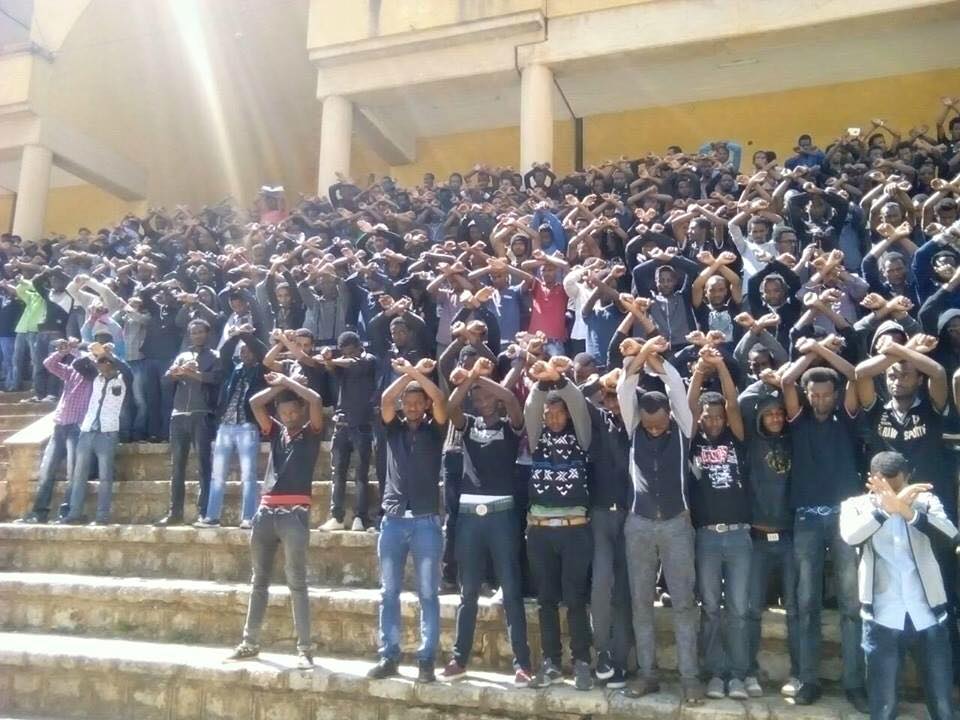
Students mourning at Haromaya University. Photo shared widely on social media.
Students in Ethiopia’s largest administrative region, Oromia, have been braving state-sponsored violence and censorship since November 2015 to protest a government development plan.
Human Rights Watch has reported that at least 140 peaceful protesters have died since the demonstrations began. Those killed include university and secondary school students, farmers and school teachers.
Despite mounting evidence to the contrary, Ethiopian authorities and pro-government commentators say the number of dead is around five people.
Why are people protesting?
The protesters are speaking out against the so-called “Master Plan” to expand the capital city, Addis Ababa, into Oromia, fearing that the proposed development will result in direct persecution of the Oromo ethnic group, including mass evictions of Oromo farmers from their land.
Read more: Why Are Students in Ethiopia Protesting Against a Capital City Expansion Plan?
The government claims that the plan is only meant to facilitate the development of infrastructure such as transportation, utilities, and recreation centers.
The oppression of the Oromo people
Oromo people, who represent the largest ethnic group in Ethiopia, have experienced systematic marginalization and persecution over the last quarter century. Some estimates put the number of Oromo political prisoners in Ethiopia at 20,000 as of March 2014.
The country’s ruling elite are mostly from the Tigray region, which is located in the northern part of the country.
The students also demand, among other things, that Oromo, the language of the Oromo people, be made a federal language. Despite being the most widely spoken language in Ethiopia and the fourth largest African language, it is not the working language of the federal government.
This is the second wave of protests against the plan in less than two years. The development project was stalled following protests in May 2014, but also saw at least nine demonstrators killed and hundreds of ethnic Oromo students imprisoned. Officials decided to resume implementation of the project in November 2015, sparking renewed demonstrations.
The government’s crackdown on free expression
Social media and satellite TV channels have proven to be critical communication avenues for protesters, despite Ethiopian authorities’ often cutthroat efforts to silence their critics.
Participants have captured photos, audio and video of security forces’ brutal efforts to stop the peaceful protests, including using live ammunition to disperse crowds at universities in Oromia. The material has then frequently been shared on the Facebook pages of prominent activists or uploaded on Ethiopian online platforms such as EthioTube, a video platform run by Ethiopians living abroad.
In response, the government has launched a propaganda campaign against the use of the social media, with state-owned media organizations dedicating multiple programs to the argument that online platforms are being used by so-called “forces of harm” to instigate violence and tarnish Ethiopia’s image.
Read more: Ethiopia Protest Videos Show State Brutality, Despite Tech Barriers
Given that less than four percent of Ethiopians have access to the Internet, documentation of protests does not exist solely online. Photos and video shared online by demonstrators are regularly picked up by diaspora satellite television news programs (such as ESAT and Oromia Media Network) that broadcast to tens of millions of Ethiopians in Amharic and Afan Oromo, two of Ethiopia’s major languages.
Read more: Ethiopia Censors Satellite TV Channels as Student Protests Draw Global Media Attention
Executives from the two satellite channels have reported that Ethiopian authorities attempted to meddle with their broadcasting services. Citizens have written posts on Facebook indicating that security forces were attempting to remove satellite dish receivers from rooftops in the Oromia region.
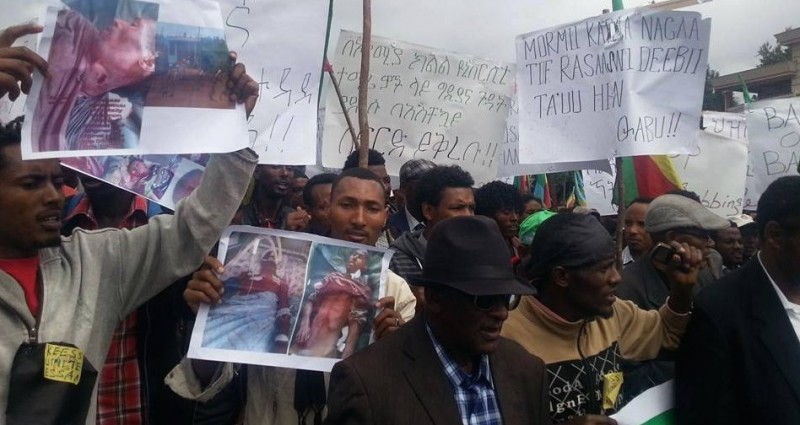
Oromo protesters gather in Addis Ababa in May 2014. Flickr image uploaded by user Gadaa.com. CC BY-ND 2.0
Amid the crackdown, authorities also arrested two opposition politicians, two journalists, and summoned five bloggers from Zone9 collective, who were acquitted of baseless terrorism charges just two months ago.
The government censorship machine has extended to music, as well, with at least 17 Oromo singers being banned from airwaves since December 2015 for lyrics that the Ethiopian Broadcast Authority deemed to show “nationalistic tendencies.”
Read more: Inside Ethiopia’s Self-Defeating Crackdown on Oromo Musicians
Ethnic Oromo singer Hawi Tezera was reportedly beaten, arrested, released and then rearrested in the space of just seven days by government security forces in connection with her song about the protests.
An estimated 140 people killed
Security forces have been ruthless in their attempts to disrupt the protests. Photo and video evidence suggests that most of these killings were done by bullets fired at close range.
At least 10 people died from torture inflicted while they were in prison, according to Oromo rights activists.
Read more: Mapping the Deaths of Protesters in Ethiopia
Global Voices author Endalk created an interactive map with help from Oromo activist Abiy Atomssa of 111 people who have died during the protests in recent months. We ask that any person who has evidence of the death or disappearance of protesters please contact us at editor@globalvoicesonline.org.
Resources for eyewitness reporters
Many of the photos and videos that have circulated online have done so with little to no context included, making it difficult for independent observers to verify the content. There are simple steps that citizen reporters can take in order to remedy this, such as including a recognizable landmark in an image or video and showing a current newspaper with the date clearly displayed. The following guides offer more detail:
Related:-
Killings by security forces & mass arrests continue, particularly of university students.
https://www.hrw.org/news/2016/01/15/dispatches-government-backs-down-will-protests-end-ethiopia
Ethiopia likely to see further riots and deaths without genuine reform
The brutality of fascist Ethiopian regime (TPLF) against Oromo people in 21st century, Jan. 2016 https://youtu.be/G9xe7aC7aIw
In interviews in villages across the Oromo region, young students and aging farmers said the unrest was because of the plan. But there is a deeper vein of dissatisfaction among the Oromo people, who make up some 40 percent of the country’s population of nearly 100 million.
Oromos feel they are treated like second-class citizens and complain that corrupt local officials demand bribes and make money off shady land deals that don’t give farmers enough compensation.
On Oromo Protests, UN Had No Response to ICP, Now Cites Dialogue in Ethiopia January 16, 2016
Posted by OromianEconomist in Uncategorized.Tags: #OromoProtests Global Solidarity Rally, Africa, Oromia, Oromo, Oromo Demonstration in New York Demands UN to take a Firm Stand against Ethiopian Government, OromoProtets2016, soli
2 comments

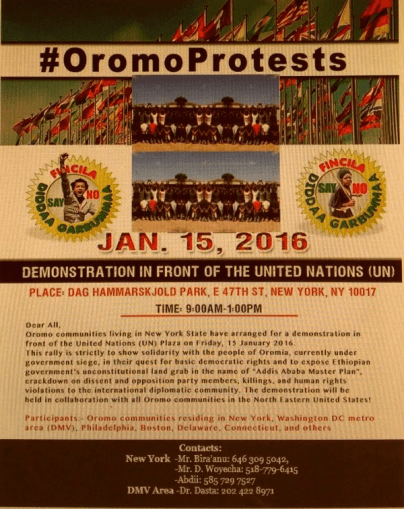
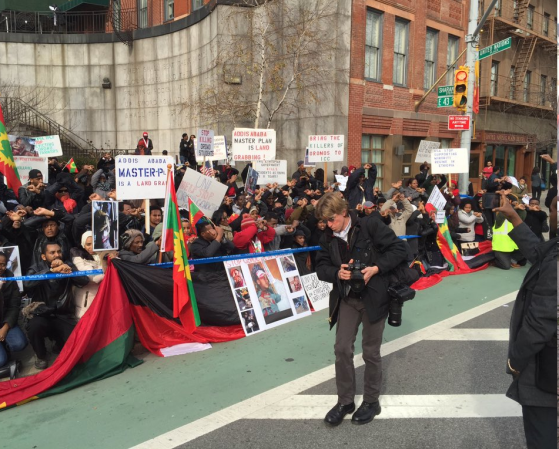
On Oromo Protests, UN Had No Response to ICP, Now Cites Dialogue in Ethiopia
OVERVIEW
Despite the UN having offices in Addis Ababa, Ethiopia, it had nothing to say about the crackdown that has led to the killing, reportedly, of over 140 Oromo people, when Inner City Press on January 11 asked UN Secretary General Ban Ki-moon’ spokesman Stephane Dujarric. Video here.On January 15, there was a large Oromo demonstration across First Avenue from the UN. Inner City Press broadcast it live on Periscope, with interviews, putting it on YouTube, here.Then Inner City Press went in and asked UN Spokesman Dujarric
UNITED NATIONS, January 15 — Despite the UN having offices in Addis Ababa, Ethiopia, it had nothing to say about the crackdown that has led to the killing, reportedly, of over 140 Oromo people, when Inner City Press on January 11 asked UN Secretary General Ban Ki-moon’ spokesman Stephane Dujarric. Video here.
On January 15, there was a large Oromo demonstration across First Avenue from the UN. Inner City Press broadcast it live on Periscope, with interviews, putting it on YouTube, here.
Then Inner City Press went in and asked UN Spokesman Dujarric,video here,transcript here:
Inner City Press: it seems inevitable to ask you. There’s a big protest in front of the building by Oromo people saying that more than 140 of them have been killed by Ethiopia. So I’d asked you about it on Monday. You said you don’t have anything but you’d check. What does the UN know given that it has an office in Addis about these killings?
Spokesman Dujarric: On the protests, we’re obviously very much aware of the protests not only going on outside but in Ethiopia itself. I think the Secretary-General would call on the Government and the groups concerned to hold a constructive and peaceful dialogue and also to ensure that all those who want to protest are able to express themselves freely and free of harassment as it is their right.
Spokesman Dujarric: soldiers from any nationality, as you know, for serving in DPKO, in peacekeeping missions, they go through a screening policy to ensure that the individuals and the units themselves are free of any human rights violations.
We’ll have more on this. For now, note that the UNSC’s upcoming trip, from which Inner City Press was Banned, goes through Addis Ababa. Will anything be said about Oromo?
The UN report on rapes in the Central African Republic, released on December 17, found that UN Peacekeeping’s Under Secretary General Herve Ladsous “illustrate[s] the UN’s failure to respond to allegations of serious human rights violations in the meaningful way.”
Ladsous has yet to take any questions about the report. Now the Office of the UN Spokesperson refuses Press questions on reports that “peacekeepers” from Burundi, France, Gabon and Morocco paid fifty cents for sex with children in CAR. On the morning of January 12, Inner City Press asked three separate UN spokespeople, in writing:
“In light of the Jan 11-12 Washington Post report that “ in interviews, U.N. officials said the peacekeepers were from Gabon, Morocco, Burundi and France. The prostitution ring they allegedly used was run by boys and young men who offered up girls ‘for anywhere from 50 cents to three dollars,’ according to one official,” please state the current status of these ‘peacekeepers’ from Morocco, Gabon, France and Burundi – and the status of the waiver USG Ladsous gave to the Burundian contingent.
By the morning of January 15, no answer, nothing…
https://www.oromiamedia.org/2016/01/15/hiriira-mormii-new-york/
UNPO: Oromo Demonstration in Brussels Demands European Union to take a Firm Stand against Ethiopian Government January 16, 2016
Posted by OromianEconomist in Uncategorized.Tags: Africa, Global rally in solidarity with #Oromo students in Oromia, Oromia, Oromo, Oromo Demonstration in Brussels Demands European Union to take a Firm Stand against Ethiopian Government, OromoProtets2016, The Unrepresented Nations and Peoples Organisation (UNPO)
2 comments


Oromo Demonstration in Brussels Demands European Union to take a Firm Stand against Ethiopian Government
UNPO, January 15, 2016
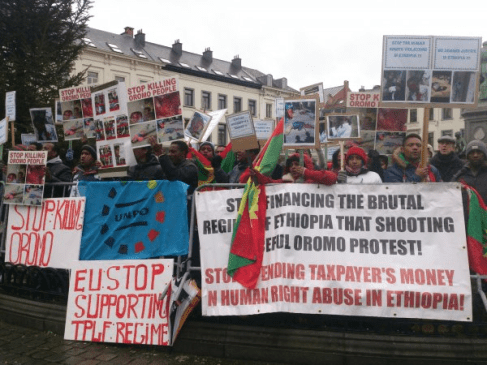
On 14 January 2016, Oromo communities based in Belgium, Netherlands and Germany staged a demonstration in front of the European Parliament to protest against the brutal crackdown on dissent in Oromia. In light of the harshest repression waged by the Ethiopian regime in the region since 2005, protestors urged the European Union to withhold financial aid to Addis Ababa until the Ethiopian government complies with its human rights obligations.
Despite adverse weather conditions, more than a hundred demonstrators from the Oromo diaspora in Europe gathered at Place du Luxembourg, outside the European Parliament in Brussels, to express their condemnation of the most recent terror campaign launched by the Ethiopian regime against its own people. Since December 2015, massive anti-government peaceful demonstrations against the Addis Ababa Integrated Master Plan erupted in towns across Oromia. Fearing land grabbing and further repression, hundreds of thousands of ethnic Oromo took the streets to protest against the urban plan that allegedly would integrate infrastructure development in the capital with that of surrounding towns in Oromia. Notwithstanding the legitimate and non-violent nature of the manifestations, the Ethiopian security forces responded with heinous atrocities to punish unarmed civilians.
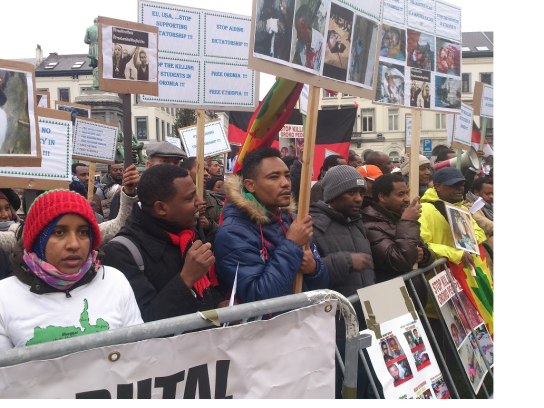
The demonstrations on 14 January 2016 in Brussels echoed the growing despair of the Oromo community towards the lack of a firmer stand of the EU against the Ethiopian government. A representative of the Oromo Liberation Front (OLF), member of the UNPO and one of organizations involved in the demonstration, expressed the need to raise awareness of the gross human rights violations committed by the Ethiopian regime. Despite facing merciless killings, massive imprisonments, severe beatings and torture, the Oromo community remains committed to a peaceful struggle to achieve the full exercise of self-determination, democratic rights and peace for all the nations and peoples in Ethiopia.
While the death toll reached 160 only in the last eight weeks, Ethiopian security forces remain shamelessly engaged in terrorizing the civilians. Against this challenging backdrop, demonstrators demanded that the EU withhold aid money to Addis Ababa and send a monitoring mission to Oromo to freely investigate the human rights situation.
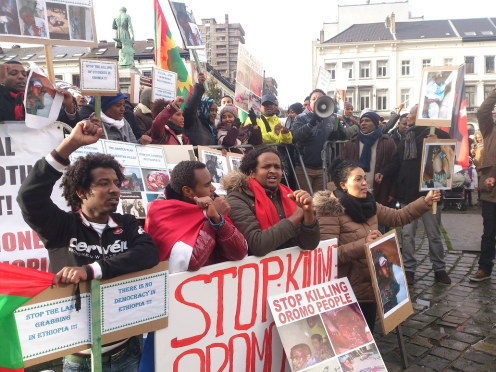
UNPO strongly condemns the actions of the Ethiopian regime and calls upon the EU to ensure that Addis Ababa is held accountable for its crimes in accordance with international law. UNPO will continue to support the peaceful actions of the Oromo in their struggle to end decades of systemic and structural marginalization in Ethiopia.
Video: Oromo Demonstration in Brussels Demands European Union to take a Firm Stand against Ethiopian Government. #OromoProtests global rally in solidarity with Oromia. 14 January 2016
Oromia (WBO): Irree fi Gaachanni Ummata Oromoo WBOn Zoonii kibbaa 15 ajjeesee 7 ol madeese. January 16, 2016
Posted by OromianEconomist in Uncategorized.Tags: Irree fi Gaachanni Ummata Oromoo WBOn Zoonii kibbaa 15 ajjeesee 7 ol madeese., Oromia, Oromo, WBO
add a comment
(SBO – AMAJJII 14,2016) Irree fi Gaachanni Ummata Oromoo WBOn Zoonii Kibbaa Waraana Wayyaanee Sochii Fincila Xumura Gabrummaa (FXG) Dura Dhaabbachuu fi Ummata Hiraarsuuf Qophii Irra Ture Haleeluun Injifannoo Cululuqaa Galmeesse.
Mirga abbaa biyyummaa fi bilisummaa ummata Oromoo deebisuuf qabsoo hidhannoo finiinsuu irratti kan argamu WBOn, wayta ammaa tarkaanfii godinoota Oromiyaa gara garaa keess…atti diina irratti fudhatu jabeessee itti fufee jira.
Haaluma kanaan WBOn Zoonii Kibbaa Amajjii 13,2016 guyyaa kaleessaa Godina Booranaa Ona Dirree keessatti diina haleeluun injifannoo boonsaa akka galmeesse Ajaji WBO Zoonii Kibbaa beeksiseera.
Waraanni Bilisummaa Oromoo Zoonii Kibbaa Amajjii 13,2016 Godina Booranaa Ona Dirree ganda Magaadoo keessatti waraana wayyaanee sochii Fincila Xumura Gabrummaa dura dhaabbachuu fi barattootaa fi ummata hiraarsuuf akkasumas eegumsaaf walitti qabamee qophii irra ture sa’aa booda sa’aa 3:30 irratti weeraree haleeluun 15 ajjeesee 7 ol madeessuu Ajaji WBO Zoonii Kibba Oromiyaa ifa godhee jira. Loltootni wayyaanee madaa’an gara Hospitaala Ona Meeggaa magaalaa Meeggaatti akka geeffamaa jiranis beekuun danda’ameera.
WBOn haleellaa kanaan qawwee AKM. 12, hidhannoo mudhii 12 kaazinaa 18 waliin, rasaasa kumaan lakka’amu, qarshii Itophiyaa 2500, mobila 2 fi mi’oota gara garaa diina irraa booji’uun QBOf oolchuus Ajaji WBO Zoonii Kibbaa dabalee hubachiiseera.
Tarkaanfiin diinaa fi farreen QBO ta’an irratti fudhatamu karaa hundaan cimee kan itti fufu ta’uus Ajaji WBO Zoonii Kibbaa waytuma kana hubachiisee jira.
The US Calls for Meaningful Dialogue About Oromo Community Concerns. #OromoProtests January 15, 2016
Posted by OromianEconomist in Uncategorized.Tags: Africa, Oromia, Oromo, The United States Calls for Meaningful Dialogue About Oromo Community Concerns
add a comment
The United States Calls for Meaningful Dialogue About Oromo Community Concerns
Press Statement
John Kirby, Spokesperson, Bureau of Public Affairs, Washington, DC
January 14, 2016
The United States is increasingly concerned by the continued stifling of independent voices in Ethiopia, including the detention of Oromo political party leaders. These arrests have a chilling effect on much needed public consultations to resolve legitimate political grievances in Oromia.
We support the Government of Ethiopia’s December commitment to public consultation with affected communities. For these consultations to be meaningful, all interested parties must be able to express their views freely.
We reaffirm our call on the Ethiopian Government to refrain from silencing dissent and to protect the constitutionally enshrined rights of all citizens, including the right to gather peacefully, to write, and to speak freely as voices of a diverse nation. We call for the release of those imprisoned for exercising their rights, such as political party leaders and journalists.
http://www.state.gov/r/pa/prs/ps/2016/01/251256.htm#.Vpg_TNPx1Aw.twitter
CIVICUS: OROMIA:ETHIOPIA: CIVIL SOCIETY GROUPS URGE INTERNATIONAL COMMUNITY TO ADDRESS KILLING OF OROMOP ROTESTERS. #OromoProtests January 15, 2016
Posted by OromianEconomist in Uncategorized.Tags: Africa, CIVICUS, ETHIOPIA: CIVIL SOCIETY GROUPS URGE INTERNATIONAL COMMUNITY TO ADDRESS KILLING OF OROMO PROTESTERS, Oromia, Oromo, OromoProtests2016
add a comment


ETHIOPIA: CIVIL SOCIETY GROUPS URGE INTERNATIONAL COMMUNITY TO ADDRESS KILLING OF OROMO PROTESTERS
- 14 January 2016
-
CIVICUS: World Alliance for Citizen Participation, the East and Horn of Africa Human Rights Defenders Project (Defend Defenders) and Amnesty International urge Ethiopia’s development and international partners to address the killing of at least 140 protesters in the Oromia region since December 2015.
On 12 November 2015, peaceful protests started in the Oromia Region, southwest of the capital, Addis Ababa, in response to measures taken to transfer the ownership of a community school and portions of a local forest to private investors. The protests have since expanded in scope and size against wider grievances concerning the expansion of Addis Ababa into the Oromia Region under the government’s Integrated Development Master Plan. They have also turned violent, resulting in the killing of protesters, and arrests of protesters and opposition leaders.
The government announced on 12 January that it was cancelling the Master Plan, but protests continued the next day in parts of Western Hararghe, Ambo and Wellega where the police and the military used live bullets and beat protesters.
“Use of excessive and lethal force against protestors, coupled with mass arrests of peaceful demonstrators and human rights defenders represent a worrying escalation of the government’s on-going campaign to silence any form of dissent in the country,” said Mandeep Tiwana, Head of Policy and Research at CIVICUS. “The international community must take up the issue of accountability for these grave rights violations with the Ethiopian government.”
The police and the military responded with excessive force to the peaceful protests that began on 1 December 2015, including by use of live ammunition against protesters, among them children as young as 12. Estimates confirmed by international and national watchdog groups like Human Rights Watch indicate that at least 140 protesters have already been killed in the protests.
“The government’s labelling of the mostly peaceful protesters as “terrorists” on 15 December 2015 further escalated the response of the police, and the military and resulted in more violations, including killings, beatings and mass arrests of protesters, opposition party leaders and members, and journalists” says Muthoni Wanyeki, Regional Director of Amnesty International East Africa Office.
Scores of those arrested have been denied access to lawyers and family members. They are reportedly being held under the Anti-terrorism Proclamation and remain at risk of torture and other ill-treatment.
Journalists and opposition leaders, including Bekele Gerba (Deputy Chairman, Oromo Federalist Congress), Getachew Shiferaw (Editor-in-Chief of the online newspaper Negere Ethiopia) and Fikadu Mirkana (Oromia Radio and TV), have also been arrested while documenting or participating in the protests.
The violent response to the Oromo protests represents perhaps the most severe crackdown on the right to peaceful assembly since the contested 2005 elections in which nearly 200 protestors were killed in the capital,” said Hassan Shire, Executive Director of DefendDefenders. “The international community’s worrying silence on this matter may further embolden the authorities to crank up their campaign of repression.”
Amnesty International, Human Rights Watch and other organisations have also previously documented similar patterns of excessive use of force, mass arrests, torture and other forms of ill-treatment against demonstrators, political oppositions and activists. On 28 October 2014, Amnesty International published a report entitled “Because I am Oromo”: Sweeping Repression in the Oromia Region of Ethiopia (AFR 25/006/2014).
All those being held solely for exercising their rights to freedom of expression and assembly must be immediately and unconditionally released. The Ethiopian authorities must ensure that victims of human rights violations by law enforcement officials have access to an effective remedy and obtain adequate reparation, including compensation, rehabilitation, satisfaction, and guarantees of non-repetition.
CIVICUS, the East and Horn of Africa Human Rights Defenders Project and Amnesty International appeal to Ethiopia’s development and international partners to encourage the government to:
•immediately stop mass arrests, beatings and killing of protesters, journalists and opposition party leaders and members;
•ensure access to family members, lawyers and review of detention by a court of law for protesters, journalists and opposition party members and leaders in detention; and
•establish an independent inquiry into the use of excessive force during the protests. If the investigation finds that there has been excessive use of force, those responsible must be subject to criminal and disciplinary proceedings as appropriate.
Oromia: Labsiin Haqamuu Maaster Pilaanii Dh.D.U.O /OPDOn Labsame, Ilaalchisee Ibsa Qeerroo Bilisummaa Oromoo January 14, 2016
Posted by OromianEconomist in Uncategorized.Tags: Africa, Ibsa Qeerroo Bilisummaa Oromoo Amajjii 13 bara 2015, Labsiin Haqamuu Maaster Pilaanii Dh.D.U.O /OPDOn Labsame, Oromia, Oromia: #OromoProtests: Gabaasa Fincila Xumura Garbummaa (FXG) Oromiyaa 2016, Oromo
add a comment
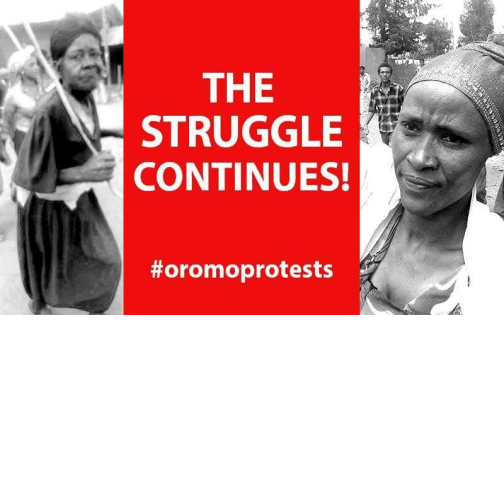
Labsiin Haqamuu Maaster Pilaanii Dh.D.U.O /OPDOn Labsame, Ilaalchisee Ibsa Qeerroo Bilisummaa Oromoo
Labsiin Haqamuu Maaster Pilaanii Dh.D.U.O /OPDOn Labsame Gaaffii Abbaa Biyyummaa Duubatti Hin Deebisu Itti Fufsiisa Malee
Kaayyoon Master Pilaanii godina addaa naannowaa Finfinnee tooftaa ittiin duguuggaa sanyii Oromoo raawwatan tahuun hubachuun nama hin rakkisu. Karoorri kunis akkuma beekamu badii uummata oromoo irraan gahuu akka danda’u beekuu kan dandeenyu danqaa hin qabnu. Waggaa lama dura baatii Ebla bara 2014 keessa uummanni Oromoo ifatti bahee karoora kana dura dhaabbatee mormaa bahe lubbuu hedduun itti wareegamuu uummanni bal’aan Uummanni Oromoo sirnaan hubatee beekee jira. Gaaffii uummanni karaa nagaatiin bahee falmi dhageesisaa ture wayita sanas mootummaan Wayyaanee gaaffi dhiphoonni qabatanii ka’an, kan shororkeessitootaan hoogganamee deemu, jechuun uummata lubbuu isaa gaaffidhuma karaa nagayaatiin gaafate itti dhabaa jirun uummata Oromoo arrabsuu kan dhokate miti.
Kan hubachuu qabu waggaa lama dura yeroo mormiin dhimmi Maaster Pilaanii kun ka’es akka waan hafeetti dudubbachuudhaan afaanii fi harka mootummaa abbaa irree kan taate dhaabni OPDO mormii sana tasgabbeessuuf sobanii bira darbuun yeroo lammaffaa karoora kana galmaan gahachuuf bara 2015 gara dhumaatti mormii uummata Oromoo dammaqseen as bahee jira. Egaan mormiin Maaster Pilaanii ji’oota lama darban keessatti gaaffii seeraa fi haqa qabeessa tahe uummanni karaa nagaatiin gaafataa jiru kana irratti mootummaan Wayyaanee Ummata Oromoo irratti:-
IOLA Press Release on the Oromo Protest and the ongoing brutal crackdown in Oromia, Ethiopia January 14, 2016
Posted by OromianEconomist in Uncategorized.Tags: Africa, Ethiopia, IOLA, IOLA Press Release on the Oromo Protest and the ongoing brutal crackdown in Oromia, Oromia, Oromo, OromoProtests2016
add a comment
IOLA Press Release on the Oromo Protest and the ongoing brutal crackdown in Oromia, Ethiopia
January 11, 2016
The International Oromo Lawyers Association, a non-profit Organization registered in the State of Minnesota with the objective of promoting the prevalence of the rule of law in Ethiopia, is saddened and shocked by the ongoing wanton mass killings and arrests of thousands of Oromo students, supporting parents and teachers in the State of Oromia, Ethiopia. According to information available to us from different sources including Amnesty International, Human Rights Watch and reputable media networks such as the BBC, CNN and Al Jazeera, the Ethiopian government has deployed a special armed unit (known as the death squad – Agazi) to forcefully suppress the ongoing peaceful demonstration of Oromo students who are simply exercising their fundamental and constitutionally guaranteed freedom of expression to oppose the so called Addis Ababa Master Plan. The Plan which is alleged to have been secretly designed by the order of few key Federal government officials is in fragrant violation of the Constitution which stipulates that any change in the affairs of the Regional States should be discussed at the parliament, the government and by the people of the respective Regional States.
We feel it is our duty to share the prevailing frustration because of past experiences, that the above mentioned “Master Plan” is nothing other than being a pretext to forcibly displace native Oromos from their ancestral land without or insignificant compensation whatsoever and to allocate the vacated land to foreign investors all under the name of development. We have already witnessed in the past ten years when the Federal Government forcibly removed ethnic Oromos from their land without any meaningful compensation and leased the vacated land to investors who converted the wheat producing land into massive production of flowers, at a time the country is facing massive food shortage. The result, as expected, did not bring development but misery to the displaced population and environmental degradation in the community. According to experts, the prevailing famine in Ethiopia, which has affected nearly 15 million people, is largely attributed to such facts of involuntary displacement of the farming population from their ancestral lands and detaching them from their traditional farming profession.
Protest against the ‘AA-Oromia Integrated Master Plan’ started within the ruling party in early 2014. When the federal government disregards these concerns, the issue turned out to be the issue of the public at large and resulted in street protest. However, the authorities preferred to subdue the dissent by force and do it quickly rather than engaging stakeholders in a genuine way and addressing the issues comprehensively. As a result, several lives were lost and properties were destroyed.
This round of protest started after the authorities reinitiated the implementation of plan. Still, the government followed similar violent crackdown and we are witnessing the killing of over hundreds of protesters, the arrest of thousands and uncalculated damages to bodily harm and property damages. There is credible evidence that the government is engaged in blank point killing of what it calls “anti-development” students and parents. Thousands of members and leaders of the well-known Oromo Federalist Congress party known for its advocacy for peaceful means of struggle, including its deputy leader Mr. Bekele Gerba, are now arrested and thrown into jails without due process of law and without any charge whatsoever. Mr Bekele was released few months ago after serving four years of politically motivated charges. Basically, the ongoing protest is far bigger than the master plan itself. While the master plan is an immediate cause; while several issue linked to corruption, dispossession, nepotism, selective justice and political marginalization of the Oromo’s under EPRDF government are the main causes.
It is a high time for the international community and key stakeholders in Ethiopia (USA, UK, EU, China, Russia and AU) to utilize their leverage to deter the crippling of the country in to a full blown civil war by the irresponsible move of the Ethiopian government. Specifically we urge you to push the government to:
- Immediately stop the arbitrary mass killings and arrest of Oromos students,
- Release ALL Oromo students and Opposition members (and its leaders) who are arrested and thrown into jail following the recent unrest in Oromia,
- Bring to justice those who are responsible for the killing of hundreds of Oromo students and opposition members,
- Repel the so-called “Addis Abeba Master Plan” and any other plan of eviction in Oromia, Gambella and other regions of Ethiopia
- Implement a comprehensive reform to address the decades of marginalization, nepotism and corruption in the country
- Call for a national reconciliation involving all stakeholders and fully implement the constitution of the country.
IOLA will always be more than glad to provide its time and resource to initiate any positive reform, peaceful coexistence, rule of law and help the implementation of the federal constitution in Ethiopia.
The Executive Board of International Oromo Lawyers Association (EB_IOLA)
January 11, 2016
IBTimes UK: Oromo protesters do not trust a statement by the Ethiopian government claiming it will scrap its plan to expand the capital Addis Ababa January 14, 2016
Posted by OromianEconomist in Uncategorized.Tags: Addis Ababa master plan: Oromo protesters 'do not trust OPDO statement', IBTimes UK, Oromia, Oromia: #OromoProtests: Gabaasa Fincila Xumura Garbummaa (FXG) Oromiyaa 2016, Oromo, OromoProtests2016
add a comment
Addis Ababa master plan: Oromo protesters ‘do not trust OPDO statement’
By Ludovica Iaccino, IBTimes UK, January 14, 2016
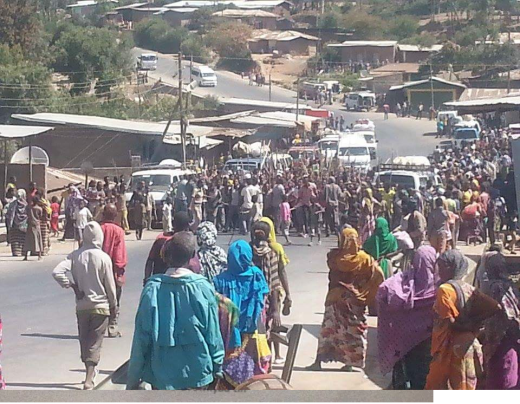
Oromo protesters do not trust a statement by the Ethiopian government claiming it will scrap its plan to expand the capital Addis Ababa, a demonstrator told IBTimes UK. The source, who lives in Oromia – Ethiopia’s largest state – said on condition of anonymity that protests against the expansion plan will continue in spite of the statement released by the Oromo Peoples’ Democratic Organisation (OPDO) on 13 January.
Although OPDO is the party administering Oromia, the source explained it is not regarded as representative of the Oromo people, Ethiopia’s largest group. “The statement isn’t taken seriously among the Oromo people because the party has historically been used by the Tigrayan People’s Liberation Front (TPLF) as an instrument to crackdown on all Oromo legitimate concerns,” he alleged.
The source added that the Oromo Liberation Front (OLF), created in 1973, is regarded as the organisation representing the Oromo people and their interests. “OPDO is perceived as a mere administrative representative of TPLF in Oromia region, but not the political representative of Oromo people,” he said.
More about Oromo people
Addis Ababa master plan: Who are the Oromo people, Ethiopia’s largest ethnic group?
“OLF has massive support, Oromo demonstrators both back home and in the diaspora chant OLF’s slogans and they always say they are our true representatives. The expansion plan issue is just the tip of the iceberg as far as Oromo grievances are concerned in the Ethiopian state.”
Oromo people have been protesting since last November against the so-called “Addis Ababa master plan” as they believe it will lead to forced evictions of Oromo farmers who will lose their lands and become impoverished as a result.
Demonstrators also argued that forced evictions as well as a perceived marginalisation by the government are already occurring and they threaten the survival of their culture and language.
Activists and rights groups have warned at least 140 people have been killed by the army and security forces in recent protests, with the OLF accusing the Ethiopian regime of renewing “a second round of war” against the Oromo in December 2015.
IBTimes UK has contacted the Ethiopian embassy in London for a statement, but has not received a response at the time of publishing. In a previous interview, Abiy Berhane, minister counsellor at the embassy, confirmed to IBTimes UK that an investigation had been launched to establish the exact death toll of people who “fell victim to the violent confrontation with security forces as well as the extent of property damage”.
Regarding the allegations of violence against demonstrators and civilians, he said: “These are just one of the many fabrications that are being circulated by certain opposition groups as part of their propaganda campaign. The unrest cannot be described as a national crisis.
“The disturbances orchestrated by opposition groups have now subsided as the general public understood that the integrated master plan is still at a draft stage and will only be implemented after extensive public consultation in the matter takes place and gains the support of the people.”
In Focus: Addis Ababa master plan threatens Oromos self-determination, IBTimes UK
Read more (video) at the following link:-
DW:EU asked to break silence on alleged killing of Oromo protesters in Ethiopia January 13, 2016
Posted by OromianEconomist in Uncategorized.Tags: Africa, Dw, EU, EU asked to break silence on alleged killing of Oromo protesters in Ethiopia, Oromia, Oromo, OromoProtests2016
add a comment
EU asked to break silence on alleged killing of Oromo protesters in Ethiopia
Rights groups claim that Ethiopian security forces have killed at least 140 protesters. The Ethiopian foreign minister is in Brussels to answer questions by members of the European Parliament on the alleged offences.

Human Rights Watch (HRW) last week alleged that Ethiopian security forces had killed at least 140 protesters and injured many more. Opposition parties and activists asserted thousands of Oromo protesters had been arrested and injured since the protests started in mid-November.
In a surprise move on Wednesday (13.01.2016), the Oromo Peoples’ Democratic Organization (OPDO) party, which is part of the ruling coalition, announced that it wanted to halt the so-called “Addis Ababa Masterplan” which is at the root of the ongoing crisis. The plan involves the expansion of the capital into the surrounding Oromia region. Government spokesman Getachew Reda told reporters that the government would respect this decision, but that they would still prosecute those who had participated in the protests.
The plans to expand Addis Ababa were hotly contested by members of Ethiopia’s largest ethnic group. Universities across the country turned into battlefields, with police firing live bullets to disperse the crowds. On social media, Ethiopians united under the hashtag #OromoProtests and Ethiopians of all ethnic backgrounds staged vigils all around the world.
On the eve of the hearing of Foreign Minister Tedros Adhanom in Brussels, rights groups insisted that EU officials “should convey serious concerns about Ethiopian security forces against the Oromo protesters.”
Another topic on the Brussels agenda is the recurrent drought that has hit the country. Estimates say that as many as 15 million people could be threatened by hunger this year.
Donor darling Ethiopia
With Ethiopia ranking fifth on the table of aid recipients globally, raking in some $3.8 billion (3.5 billion euros) in 2014, donor countries have a responsibility to follow up on how the government handles human rights issues, Daniel Bekele, Executive Director with HRW’s Africa Division, told DW.
His concern is echoed by EU advocacy director at HRW, Lotte Leicht, who says “[the] European Union should break its silence and condemn Ethiopia’s brutal use of force to quell the Oromo protests.” Being the single largest donor, the EU “should press the Ethiopian government to respond with talks rather than gunfire to the protesters’ grievances.”
The US State Department earlier urged the Ethiopian government “to permit peaceful protest and commit to a constructive dialogue to address legitimate grievances.”
The Ethiopian government denies the alleged death toll of 140. Government spokesman Reda instead accused the Oromo protesters of “terrorizing civilians.”
Ethiopian legal expert Awol Kassim Allo said he would like to see a space for all Ethiopians to participate in the political arena. “Only with such an approach can there be a possibility of paving a way to move forward,” he told DW. In the last general elections in May 2105, Ethiopia’s ruling coalition, the Ethiopian People’s Revolutionary Democratic Front (EPRDF), won 100 percent of the seats in parliament.
 In Berlin protesters demonstrated in front of the German chancellery in support of the #OromoProtests
‘Cultural genocide’
In a recent debate, Bekele Naga, Secretary General of the opposition Oromo Federalist Congress(OFC), told DW’s Amharic Service that “the constitution of the country proclaims that the land belongs to the people.” He added that the Ethiopian government “has been engaged in land-grabbing, leading to cultural genocide [of the Oromo people].” Another Ethiopian legal expert, Tsegaye Ararsa, complained that no government officials, including Prime Minister Hailemariam Desalegn, have publicly voiced regret over the loss of young protesters’ lives. He believes there should be an independent fact-finding committee to look into the case.
EU should condemn Ethiopia’s crackdown on #Oromoprotests January 13, 2016
Posted by OromianEconomist in Uncategorized.Tags: Africa, EU, EU: Press Ethiopia on Protester Killings, Human Rights Watch, Oromia, Oromo, OromoProtests2016
add a comment

EU should condemn Ethiopia’s crackdown on Oromo protests
IFEXT 12th January, 2016
This statement was originally published by hrw.org on 12 January 2016.European Union officials should convey serious concerns about Ethiopian security forces’ use of excessive lethal force against protesters when meeting with Ethiopia’s foreign minister, Human Rights Watch said today. The foreign minister, Dr. Tedros Adhanom, will meet with EU officials on January 12 and13, 2016, in Brussels.
Ethiopian security forces have engaged in a violent crackdown against protesters in Ethiopia’s Oromia region, killing scores of protesters and arresting many others. The protests began in mid-November 2015, in response to plans to expand the capital, Addis Ababa, into Oromia farmland, but have expanded in response to other longstanding concerns as well as the crackdown on protesters.
“The European Union should break its silence and condemn Ethiopia’s brutal use of force to quell the Oromo protests,” said Lotte Leicht, EU advocacy director at Human Rights Watch. “The EU, which is among Ethiopia’s biggest donors, should press the Ethiopian government to respond with talks rather than gunfire to the protesters’ grievances.”
The Ethiopian government has frequently used arbitrary arrests and politically motivated prosecutions to silence journalists, bloggers, protesters, and political opponents.
Ethiopia Attacks Freedom of Assembly
http://www.bignewsnetwork.com/news/240197955/eu-should-condemn-ethiopia-crackdown-on-oromo-protests
EU: Press Ethiopia on Protester Killings
(reliefweb) Meeting With Foreign Minister in Brus
(Brussels, January 12, 2016) – European Union officials should convey serious concerns about Ethiopian security forces’ use of excessive lethal force against protesters when meeting with Ethiopia’s foreign minister, Human Rights Watch said today. The foreign minister, Dr. Tedros Adhanom, will meet with EU officials on January 12 and13, 2016, in Brussels.
Ethiopian security forces have engaged in a violent crackdown against protesters in Ethiopia’s Oromia region, killing scores of protesters and arresting many others. The protests began in mid-November 2015, in response to plans to expand the capital, Addis Ababa, into Oromia farmland, but have expanded in response to other longstanding concerns as well as the crackdown on protesters.
“The European Union should break its silence and condemn Ethiopia’s brutal use of force to quell the Oromo protests,” said Lotte Leicht, EU advocacy director at Human Rights Watch. “The EU, which is among Ethiopia’s biggest donors, should press the Ethiopian government to respond with talks rather than gunfire to the protesters’ grievances.”
The Ethiopian government has frequently used arbitrary arrests and politically motivated prosecutions to silence journalists, bloggers, protesters, and political opponents.
Atlanta Black Star: #OromoProtests: What You Need to Know About Ethiopia’s Crisis That No One Is Talking About January 12, 2016
Posted by OromianEconomist in Uncategorized.Tags: #OromoProtests: What You Need to Know About Ethiopia’s Crisis That No One Is Talking About, Africa, Atlanta Black Star, Ethiopia, Oromia, Oromia: #OromoProtests: Gabaasa Fincila Xumura Garbummaa (FXG) Oromiyaa 2016, Oromo, OromoProtets2016
add a comment
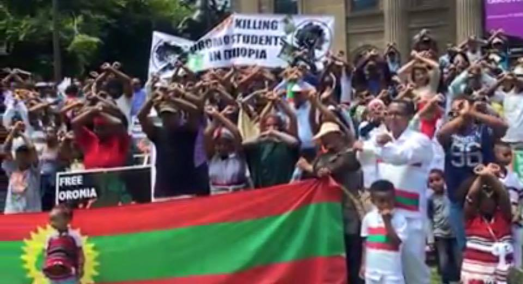
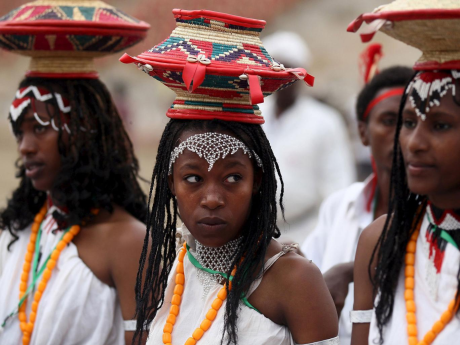
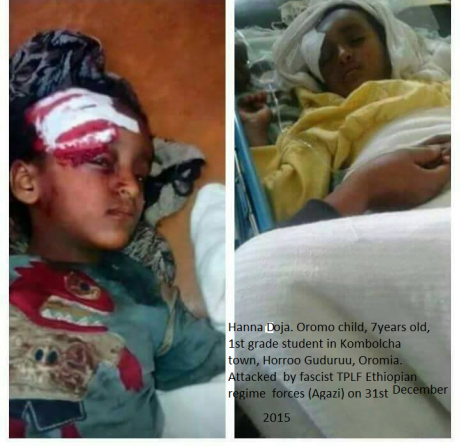
#OromoProtests: What You Need to Know About Ethiopia’s Crisis That No One Is Talking About
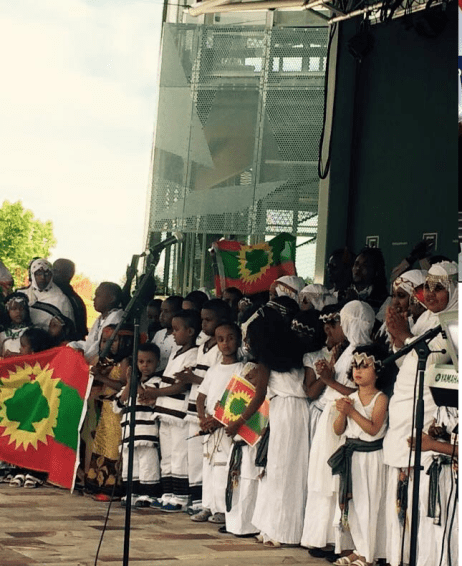
(Atlanta Black Star) — The Oromo protests in Ethiopia. The issue has received little attention in global mainstream media, but it is one that demands our attention. The latest news coming out of the East African nation is troubling, with at least 140 protesters killed in the past few months, according to Human Rights Watch. This represents the greatest bloodshed facing the East African nation since 2005, when 200 people died in post-election violence. Moreover, based on data from #EthiopiaCrisis, 2,000 reportedly have been injured, 30,000 arrested and 800 disappeared.
As Al Jazeera reported, police were accused of opening fire and killing dozens of protesters in April and May of 2014.
With the largest population of any of the federal states in Ethiopia, Oromia has a population of about 27 million—40 percent of the country’s population. The nation’s largest ethnic group, Oromians have their own language, Oromo, which is separate from the official language, Amharic.
At issue in the current conflict is the convergence of ethnic strife, land and economics, beginning with the expansion of the Ethiopian capital, Addis Ababa. As NPR reported, the larger picture is that the world is growing, and there is a big demand for food and arable land. Africa has 60 percent of the usable farmland, and in Ethiopia, the government, which owns all of the nation’s land, has leased large parcels of land to foreign investors from China, India and the Mideast.
In November, protests were set off when a forest was being cleared for development, as part the “master plan” by the Ethiopian government to expand the capital city into surrounding farmland in Oromia. Supporters of greater urbanization, known as the Integrated Regional Development Plan for Addis Ababa, note that the nation faces a food shortage. They believe the nation is susceptible to famine because too many Ethiopians live in rural areas and depend on agriculture. However, people in Oromia claim they are being displaced from their ancestral lands.
As VOA reported, the government plans to develop the farmland outside Addis Ababa into a new business zone. Protesters claim the plan will result in marginalization and reduced autonomy for the Oromo people living outside the nation’s capital. Meanwhile, the Ethiopian government claims the development project on the farmland will lead to new business and benefits to all groups.
As the Washington Post recently reported, President Obama has expressed concern over the events in Ethiopia, while also saying the “United States has consistently applauded Ethiopia for being a model and a voice for development in Africa.”
The nation has been hailed by the U.S. for its economic growth and engaging in the war against al-Shabab, the Somali terrorist group. And Ethiopia has reportedly received substantial aid from the U.S. in this regard. At the same time, the Ethiopian People’s Revolutionary Democratic Front regime has been accused of silencing protest and dissent. For example, Bekele Gerba, deputy chairman of the Oromo Federalist Congress—Oromia’s largest registered political party—was arrested. In addition, the government also allegedly arrested and beat Oromo singer Hawi Tezera, who has a song about the protests.
Further, there are reports of the Ethiopian government clamping down on media outlets covering the protests. According to the Committee to Protect Journalists, the nation is one of the leading jailers of journalists. Authorities have reportedly arrested journalists such as Getachew Shiferaw, editor in chief of the Negere Ethiopia news site, under terrorism charges, and Fikadu Mirkana of Oromia Radio and TV. Further, according to the Post, the government jammed the broadcasting satellite of the U.S.-based television channel ESAT, which has been reporting on the demonstrations by students and farmers.
Although the most recent catalyst for recent protests is the development plan to expand Addis Ababa into Oromia—of which millions of farmers fear displacement—there have been tensions and grievances developing for quite some time. The Oromo have expressed a sense of marginalization and being pushed out of mainstream national life.
According to the group Global Voices, of the nearly 140 peaceful protesters killed in Ethiopia since November, most were killed at close range. More than 70 percent of the dead are reportedly male students, with male farmers accounting for around 20 percent of the deaths. Also among the victims are women and school teachers, including one seven-month pregnant woman and her sister-in-law, who were killed while attempting to escape arrest. Further, at least 10 people were reportedly tortured and killed while in prison, according to Global Voices.
Meanwhile, this round of protests is believed to be unprecedented because of broad-based support and participation—with inter-ethnic coalitions despite the ethnic lines marking the country, including a number of non-Oromo civic groups and political organizations. They are also employing tactics of civil disobedience such as lunch boycotts, sit-ins and roadblocks.
However, the Ethiopian government has characterized its response as being part of the war on terror. Authorities accuse protesters of having links to terrorist groups, according to the Sudan Tribune, and announced that the nation’s Anti-Terrorism Task Force would be leading the response.
“By treating both opposition politicians and peaceful protesters with an iron fist, the government is closing off ways for Ethiopians to nonviolently express legitimate grievances,” said Felix Horne of Human Rights Watch, according to Al Jazeera. “This is a dangerous trajectory that could put Ethiopia’s long-term stability at risk,” he warned.
#OromoProtests: What You Need to Know About Ethiopia’s Crisis That No One Is Talking About
#OromoProtests: Ethiopian Protesters Use Social Media to Bring Attention to Deadly Government Crackdown on Dissent
January 9, 2016 Posted by
#OromoProtests: Ethiopian Protesters Use Social Media to Bring Attention to Deadly Government Crackdown on Dissent
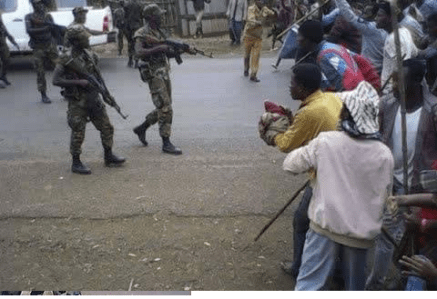
Ethiopian security forces have killed at least 150 people taking part in mass anti-government demonstrations according to human rights and activists groups.
Demonstrators in Oromia, Ethiopia’s largest regional state, have been protesting since Novemeber against the government’s plans to extend the boundaries of the capital Addis Ababa. Protesters say the proposed urban plan, known as Addis Ababa Integrated Master Plan or the “Master Plan”, will displace local farmers through mass evictions.
Addis Ababa is one of the fastest growing populations in the world with a population of 3,384,569 according to the 2007 population census with annual growth rate of 3.8%. In the last 10 years, the capital has steadily encroached on Oromo farmlands. In the last 10-15 years, more than 150,000 Oromo farmers have been evicted from their ancestral lands without adequate notice, compensation and proper relocation.
“Sometimes the informal settlers are given only a few days’ notices before bulldozers arrive on the scene to tear down their shabby houses and lay foundations for new investors,” said Ermias Legesse, a high profile government defector.
The government rejected the accusation, claiming that the plan is intended only to facilitate the development of infrastructure such as transportation, utilities and recreation centers to remote areas.
Protesters say the plan threatens the sovereignty of Oromo communities. According to the Ethiopian constitution, Oromia is one of the nine politically autonomous regional states in the country. However, the constitution also says that the farmers do not own their land, the government does.
Land is a common property of the Nations, Nationalities and Peoples of Ethiopia and shall not be subject to sale or to other means of exchange.
Since November, university students clashed with anti-riot police resulting in between over 100 deaths according to human rights and activist groups. Over 4,000 have been arrested, including journalists, bloggers and Oromo singer Hawi Tezera. Although the government has initiated a media blackout in the capital, protestors have been able to send videos, photos and messages through social media of the state violence.
Oromia: Abdataa Olaansaa Mana Hidhaatti Boqote January 11, 2016
Posted by OromianEconomist in Uncategorized.Tags: 'BECAUSE I AM OROMO’: SWEEPING REPRESSION IN THE OROMIA, Dargaggoo Oromoo Abdataa Olaansaa, Oromia, Oromia: #OromoProtests: Gabaasa Fincila Xumura Garbummaa (FXG) Oromiyaa 2016, Oromo, OromoProtests2016
1 comment so far
Dargaaggoo Abdataa Olaansaa kan kanaan dura Magaalaa Amboo keessaa humnoota tikaatiin ukkaamfame waláansa gahaa dhabuun mana hidhaatti boqote.Oduun Finfinnee nu gahe akka adeessutti, dargaggoo Abdataa Olaansaa Adoolessaa bara 2015 keessa magaala Amboo keessaa ukkaamfamee ture.Barbaacha yeroo dheeraa booda maaíkalaawwiitti kan argame, Dargaggoo Abdataa, yeroo maaíkalaawwiitti qorannaan irratti agggeeffamaa ture hedduuu miidhamee ture.Keessayyuu, odeeffannoo humnaan irraa fudhachuufi argachuuf poolisooti wayyaanee reebicha olaanaa irraan gahaa akka turan beekameera.Hiraarsaa fi dararaa dheeraa booda Himatni sobaa kan shororkeessummaa itta banamuun mana hidhaa Qilinxootii gara mana murtii Federala lidataattii deddeebifamaa ture.Haata’u malee, reebichaa mana hidhaa Maakalawwii keessaatii keessumayyuu saamuu isaa irraan gahanin akka miidhame hiriyyoota isaatti himaa ture.Mana hidhaa Qillinxottii erga dabarfamee booda immoo waláansa gahaa otuu hin argatiin ture.Namooti isa waliin turan akka ragaa bahanitti, erga hubamee booda gara hospitaala Paawulosiittii geessamus, miidhamaa fi hubama irra gahaa ture irraa hafuu hindandeenye.Akka oduu nu gahetti hospitaalichaa keessa otuu jiru Amajjii 10 abra 2016 addunyaa kan irraa boqoteera. Abdataan daa’imummaa isaatii kaasee nama jabaa, kan sodaa tokkoo malee gaaffii ummatni Oromoo gaafatu gaafataa ture, gaaffii Oromootiifis deebin qajeelaa akka kennamu nama gootumaman gaafachaa ture.Yeroo barachaa tures, mana barumsaa sadarkaa lammaffaa Ambootti adda duree gumii Afaan Oromoo ta’ee hojjataa kan ture, nama fakkeenya gaariin beekmu ture.Abdataan yeroo addaddaatti manneen hidhaa kannen akka karchalee Amboo fi Alam baqaatti dararamaa ture. Akkasumas ukkaamsamuu isaatiin dura, sirbaa dhimma qabsoo ummata Oromoo irratti xiyyeeffate gaadhisee ture.Lubbuu isaa waaqayyoo nagaan haa boqochisu, maatii isaa fi firottan isaaf jajjabinaa hawwina.Dhiigaa isaa dhigaan debbifna hin shakkinaa.Gumaan isaa lafattii badee gonkumaa hin hafu.
Global Voices: Oromia: #OromoProtests: Mapping the Deaths of Protesters in Ethiopia January 11, 2016
Posted by OromianEconomist in Uncategorized.Tags: Africa, Global Voices, Mapping the Deaths of Protesters in Ethiopia, Oromia, Oromia: #OromoProtests: Gabaasa Fincila Xumura Garbummaa (FXG) Oromiyaa 2016, Oromo, OromoProtests2016
1 comment so far
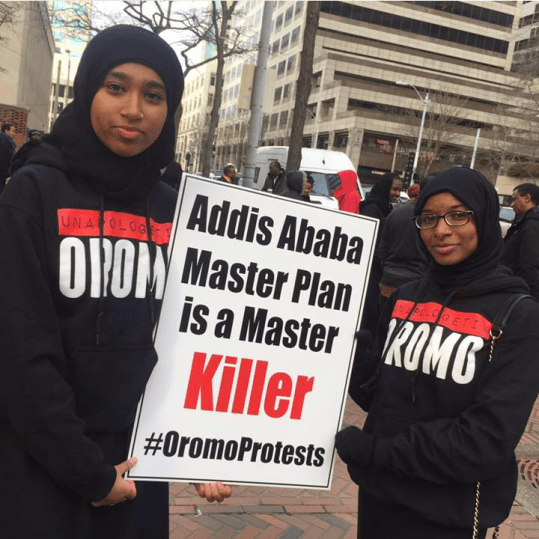
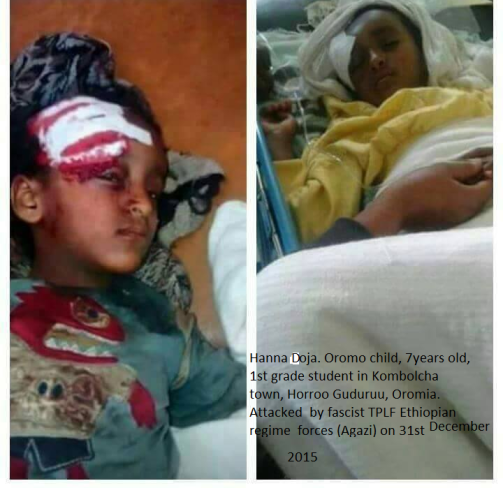
Warning: Interactive map contains graphic and disturbing images.
Since the beginning of November 2015, at least 140 peaceful protesters have been killed in Ethiopia according to Human Rights Watch. Photo and video evidence suggests that most of the people were killed by bullets fired at close range.
There are also reports by Oromo rights activists indicating that at least 10 individuals died from torture inflicted while they were in prisons.
University students, women, farmers and school teachers have all been victims of government violence.
Among the dead, more than 70% are male students. Male farmers account for about 20% of the deaths.
The remainder are women. A seven-month pregnant woman along with her sister-in-law were killed while they were running away to escape arrest.
It was reported their bodies were discovered in scrub-land days after their disappearance.
Below is an interactive map created by this author with help from Oromo activist Abiy Atomssa. The map lists 111 people that have died during the protests in recent months.
We ask anyone who has evidence of the deaths or disappearance of protesters to contact us via editor@globalvoicesonline.org.
Despite all evidence to the contrary, the Ethiopian government and pro-governmentcommentators say the number of dead is around five people.
In a radio interview, the head of a pro-government human rights commission, Addisu Gebregziabher said for the sake of security the government was forced to use violent measures against protesters.
The protests began when the government made plans for the expansion of the capital Addis Ababa into land inhabited by the Oromo ethnic group, which accounts for almost a third of Ethiopia’s population.
The decision compounded poor relations between the Oromo and the government dominated by members of the northern Tigrayan minority.
The culturally distinct Oromo people complain of a lack of economic opportunity in Ethiopia and regular state violence against Oromo communities.


 Oromian Economist
You must be logged in to post a comment.