Economic and development analysis: Perspectives on economics, society, development, freedom & social justice. Leading issues in Oromo, Oromia, Africa & world affairs. Oromo News. African News. world News. Views. Formerly Oromia Quarterly
#OromoProtests: What You Need to Know About Ethiopia’s Crisis That No One Is Talking About
January 11, 2016 by David Love, Atlanta Black Star
(Atlanta Black Star) — The Oromo protests in Ethiopia. The issue has received little attention in global mainstream media, but it is one that demands our attention. The latest news coming out of the East African nation is troubling, with at least 140 protesters killed in the past few months, according to Human Rights Watch. This represents the greatest bloodshed facing the East African nation since 2005, when 200 people died in post-election violence. Moreover, based on data from #EthiopiaCrisis, 2,000 reportedly have been injured, 30,000 arrested and 800 disappeared.
As Al Jazeera reported, police were accused of opening fire and killing dozens of protesters in April and May of 2014.
With the largest population of any of the federal states in Ethiopia, Oromia has a population of about 27 million—40 percent of the country’s population. The nation’s largest ethnic group, Oromians have their own language, Oromo, which is separate from the official language, Amharic.
At issue in the current conflict is the convergence of ethnic strife, land and economics, beginning with the expansion of the Ethiopian capital, Addis Ababa. As NPR reported, the larger picture is that the world is growing, and there is a big demand for food and arable land. Africa has 60 percent of the usable farmland, and in Ethiopia, the government, which owns all of the nation’s land, has leased large parcels of land to foreign investors from China, India and the Mideast.
In November, protests were set off when a forest was being cleared for development, as part the “master plan” by the Ethiopian government to expand the capital city into surrounding farmland in Oromia. Supporters of greater urbanization, known as the Integrated Regional Development Plan for Addis Ababa, note that the nation faces a food shortage. They believe the nation is susceptible to famine because too many Ethiopians live in rural areas and depend on agriculture. However, people in Oromia claim they are being displaced from their ancestral lands.
As VOA reported, the government plans to develop the farmland outside Addis Ababa into a new business zone. Protesters claim the plan will result in marginalization and reduced autonomy for the Oromo people living outside the nation’s capital. Meanwhile, the Ethiopian government claims the development project on the farmland will lead to new business and benefits to all groups.
As the Washington Post recently reported, President Obama has expressed concern over the events in Ethiopia, while also saying the “United States has consistently applauded Ethiopia for being a model and a voice for development in Africa.”
The nation has been hailed by the U.S. for its economic growth and engaging in the war against al-Shabab, the Somali terrorist group. And Ethiopia has reportedly received substantial aid from the U.S. in this regard. At the same time, the Ethiopian People’s Revolutionary Democratic Front regime has been accused of silencing protest and dissent. For example, Bekele Gerba, deputy chairman of the Oromo Federalist Congress—Oromia’s largest registered political party—was arrested. In addition, the government also allegedly arrested and beat Oromo singer Hawi Tezera, who has a song about the protests.
Further, there are reports of the Ethiopian government clamping down on media outlets covering the protests. According to the Committee to Protect Journalists, the nation is one of the leading jailers of journalists. Authorities have reportedly arrested journalists such as Getachew Shiferaw, editor in chief of the Negere Ethiopia news site, under terrorism charges, and Fikadu Mirkana of Oromia Radio and TV. Further, according to the Post, the government jammed the broadcasting satellite of the U.S.-based television channel ESAT, which has been reporting on the demonstrations by students and farmers.
Although the most recent catalyst for recent protests is the development plan to expand Addis Ababa into Oromia—of which millions of farmers fear displacement—there have been tensions and grievances developing for quite some time. The Oromo have expressed a sense of marginalization and being pushed out of mainstream national life.
According to the group Global Voices, of the nearly 140 peaceful protesters killed in Ethiopia since November, most were killed at close range. More than 70 percent of the dead are reportedly male students, with male farmers accounting for around 20 percent of the deaths. Also among the victims are women and school teachers, including one seven-month pregnant woman and her sister-in-law, who were killed while attempting to escape arrest. Further, at least 10 people were reportedly tortured and killed while in prison, according to Global Voices.
Meanwhile, this round of protests is believed to be unprecedented because of broad-based support and participation—with inter-ethnic coalitions despite the ethnic lines marking the country, including a number of non-Oromo civic groups and political organizations. They are also employing tactics of civil disobedience such as lunch boycotts, sit-ins and roadblocks.
However, the Ethiopian government has characterized its response as being part of the war on terror. Authorities accuse protesters of having links to terrorist groups, according to the Sudan Tribune, and announced that the nation’s Anti-Terrorism Task Force would be leading the response.
“By treating both opposition politicians and peaceful protesters with an iron fist, the government is closing off ways for Ethiopians to nonviolently express legitimate grievances,” said Felix Horne of Human Rights Watch, according to Al Jazeera. “This is a dangerous trajectory that could put Ethiopia’s long-term stability at risk,” he warned.
#OromoProtests: Ethiopian Protesters Use Social Media to Bring Attention to Deadly Government Crackdown on Dissent
January 9, 2016 Posted by Zellie Imani, Atlanta Black Star
#OromoProtests: Ethiopian Protesters Use Social Media to Bring Attention to Deadly Government Crackdown on Dissent
Ethiopian security forces have killed at least 150 people taking part in mass anti-government demonstrations according to human rights and activists groups.
Demonstrators in Oromia, Ethiopia’s largest regional state, have been protesting since Novemeber against the government’s plans to extend the boundaries of the capital Addis Ababa. Protesters say the proposed urban plan, known as Addis Ababa Integrated Master Plan or the “Master Plan”, will displace local farmers through mass evictions.
Addis Ababa is one of the fastest growing populations in the world with a population of 3,384,569 according to the 2007 population census with annual growth rate of 3.8%. In the last 10 years, the capital has steadily encroached on Oromo farmlands. In the last 10-15 years, more than 150,000 Oromo farmers have been evicted from their ancestral lands without adequate notice, compensation and proper relocation.
“Sometimes the informal settlers are given only a few days’ notices before bulldozers arrive on the scene to tear down their shabby houses and lay foundations for new investors,” said Ermias Legesse, a high profile government defector.
The government rejected the accusation, claiming that the plan is intended only to facilitate the development of infrastructure such as transportation, utilities and recreation centers to remote areas.
Protesters say the plan threatens the sovereignty of Oromo communities. According to the Ethiopian constitution, Oromia is one of the nine politically autonomous regional states in the country. However, the constitution also says that the farmers do not own their land, the government does.
Land is a common property of the Nations, Nationalities and Peoples of Ethiopia and shall not be subject to sale or to other means of exchange.
Since November, university students clashed with anti-riot police resulting in between over 100 deaths according to human rights and activist groups. Over 4,000 have been arrested, including journalists, bloggers and Oromo singer Hawi Tezera. Although the government has initiated a media blackout in the capital, protestors have been able to send videos, photos and messages through social media of the state violence.
Warning: Interactive map contains graphic and disturbing images.
Since the beginning of November 2015, at least 140 peaceful protesters have been killed in Ethiopia according to Human Rights Watch. Photo and video evidence suggests that most of the people were killed by bullets fired at close range.
There are also reports by Oromo rights activists indicating that at least 10 individuals died from torture inflicted while they were in prisons.
University students, women, farmers and school teachers have all been victims of government violence.
Among the dead, more than 70% are male students. Male farmers account for about 20% of the deaths.
The remainder are women. A seven-month pregnant woman along with her sister-in-law were killed while they were running away to escape arrest.
It was reported their bodies were discovered in scrub-land days after their disappearance.
Below is an interactive map created by this author with help from Oromo activist Abiy Atomssa. The map lists 111 people that have died during the protests in recent months.
We ask anyone who has evidence of the deaths or disappearance of protesters to contact us via editor@globalvoicesonline.org.
Despite all evidence to the contrary, the Ethiopian government and pro-governmentcommentators say the number of dead is around five people.
In a radio interview, the head of a pro-government human rights commission, Addisu Gebregziabher said for the sake of security the government was forced to use violent measures against protesters.
The protests began when the government made plans for the expansion of the capital Addis Ababa into land inhabited by the Oromo ethnic group, which accounts for almost a third of Ethiopia’s population.
The decision compounded poor relations between the Oromo and the government dominated by members of the northern Tigrayan minority.
The culturally distinct Oromo people complain of a lack of economic opportunity in Ethiopia and regular state violence against Oromo communities.
The dying African voices we must resurrect in 2016
By Abiud Onyach, Citizen Digital, 7 January 2016
Burundi, 2016
Kenya (Citizen Digital) — We have ushered in a New Year and we are all excited to live up to our New Year resolutions- including those who know they’ll abandon them this month.
This season has a way of renewing hope; sadly the same wind doesn’t blow in some African countries this time of the year.
Indeed there are those who expect little from this year. They lost loved ones, needlessly, in a horrifying fashion from the hands of a government that is supposed to protect them. From Burundi, South Sudan to Ethiopia a mood of distrust between a people and its government hangs in the air.
While the rest of us are grateful for the peace and the promises the New Year brings, we must not forget these voices, lest we lose what makes us Africans, lest we lose our hope for humanity.
As the Kiswahili proverb goes: “When you see your neighbor’s head shaved, pour water on yours.” The trouble in Burundi may not be as far and unrelated from us as we would like to think, and if leaders like Nkurunzinza have their way-they only serve to bolster the resolve of other leaders who are hell bent on violating human rights.
Hiding behind ‘sovereignty’
At no time in the history of independent Africa has the term sovereignty been misused and the non-interference policy used to protect a despot like we’ve seen in 2015.
Sovereignty loosely interpreted is the respect accorded any country as an independent nation capable of self-rule. Under this guise, leaders say that no country is expected to get involved in the internal affairs of another country, even if the said country is bleeding itself to extinction.
Politicians with dictatorial tendencies have thus abused their country’s sovereignty to prevent any form of accountability outside their spheres of influence. On the back bone of non-interference policy, they are denying their citizens basic human rights and brutally dealing with those who oppose them.
In 2015, President Nkurunziza, against popular opinion, insisted on running for a third term despite having already served his two terms as outlined in their constitution.
This selfish leader took advantage of a legal loophole over his first election because he was first elected president by Members of Parliament, who were acting as an electoral college.His argument is that the electorate did not vote in his first term, only in his second term hence the legitimacy of his third term.
Since April last year (2015), at least 400 people have died, scores left injured while 220, 000 people are now refugees in neighboring countries according to the official UN figures.
Already, Nkurunzinza has threatened to fight African Union (AU) peace keepers, following AU’s announcement to send troops to protect civilians.
I cannot wrap my head around the number of innocent children and women affected by this single act of selfishness. Take a moment to think about the lost dreams, the dashed hopes and the bitterness planted in people’s hearts.
This is why we can’t remain silent in 2016. All of us must make our voice heard. We cannot sit mum as another not another genocide takes place in Burundi.
Africa’s youngest failure
South Sudan is another African country with perhaps the most disappointing leaders in African history. After the 2011 secession from Sudan, the country plunged into civil war in 2013 displacing at least 2.2million people.
The great Garang must turn in his grave severally every time we mention Riek Machar or Salva Kirr.
After lengthy stays at luxurious hotels, the two leaders have made numerous peace-pacts in a bloody game they seemingly enjoy to play. One minute they are signing peace agreements, but before the ink dries they’ve already begun showing reservations, at times blatantly dishonoring these pact a mere 48 hours after they have been made,.
Meanwhile, South Sudanese citizens continue to die and with the luckier ones finding their way to refugee camps in other countries.
This too must stop in 2016. We should project the voice of the South Sudanese loud enough to make these two leaders realize South Sudan is bigger than their colossal egos.
The problem with this non-interference policy is that it easily oils the engine of dictatorship and gives license to leaders to kill and plunder their own with little or no consequences.
As we turn a new leaf in 2016, in Ethiopia the Oromo community remains anxious after the government designed an infrastructure development plan that appears malicious and bent on grabbing land from the largest ethnic group in the country.
Oromia, 2016
Scores have been killed and a lot others injured and displaced from their land all in the name of development.
While shiny new developments are the crowning jewel of any regime, infrastructural development is useless if humanity is not at the heart of it.
In 2016, we must raise the voice of the Oromo farmers who are driven away from their farmlands into poverty by their government.
In 2016, in addition to all those resolutions we’ve written down and hope to act on, let all Africans, especially, East Africans resolve to stand with the people of Burundi, South Sudan and Ethiopia.
Let us make our voices heard so that 2016 will not be another 2015 where fewer people made life unbearable for the majority over inexcusable selfish interests.
The writer is a Kenyan journalist and communication consultant based in Dar es Salaam.
The Oromo Lives Matter Youtube video was picked up by media in Africa.
Edmonton (Metro News) — A short documentary produced by Edmonton’s Oromo community is gaining attention online and worldwide.
The 11-minute documentary, which aims to bring awareness to human rights abuses in Ethiopia, has been viewed around 2,500 times on Youtube since it was released online about a week ago and has been picked up by media in Africa.
“We want to bring awareness to the Canadian government and public about what is going on back home in Ethiopia. There are people here, including in our association, who have relatives who were killed in these incidents,” says Bedri Mohammed, president of the Oromian Community Association of Northern Alberta.
According to Mohammed, last year, around 100 young Oromians — mainly students — were shot by the Ethiopian army. They were killed for protesting against the government’s plan to take land from Oromo farmers without consultation or compensation.
He says the Ethiopian government is notorious for using aid money from countries such as Canada to build up the army. “We need the Canadian government to understand that, and to stop unknowingly funding a government that kills its own people.”
The documentary, called “Oromo Lives Matter: The Oromo Popular Resistance Against the Infamous Addis Ababa Master Plan”, was created in partnership by Paula Kirman, an Edmonton filmmaker and human rights activist.
Kirman says she got involved after attending a rally organized by the Oromo Association in December last year.
“I found the project to be really fascinating. Prior to this, I was unaware of what was going on, so I hope the video is effective in terms of educating others about what’s happening,” Kirman says.
The Oromo people are an ethnic group based in Ethiopia, northern Kenya and parts of Somalia. An estimated 5000 to 8000 Oromians live in the Edmonton area.
“Within a system which denies the existence of basic human rights, fear tends to be the order of the day. Fear of imprisonment, fear of torture, fear of death, fear of losing friends, family, property or means of livelihood, fear of poverty, fear of isolation, fear of failure. A most insidious form of fear is that which masquerades as common sense or even wisdom, condemning as foolish, reckless, insignificant or futile the small, daily acts of courage which help to preserve man’s self-respect and inherent human dignity. It is not easy for a people conditioned by fear under the iron rule of the principle that might is right to free themselves from the enervating miasma of fear. Yet even under the most crushing state machinery courage rises up again and again, for fear is not the natural state of civilized man.” ― Aung San Suu Kyi, Freedom from Fear
Oromo students in particular, and the Oromo public in general, have been protesting against the Ethiopian Federal government’s Master Plan to evict millions of Oromo farmers around the Capital, Sheger, and other major towns in Oromia, and transfer the ownership of the land to investors affiliated with the government. The Ethiopian Federal government’s response to the demands of the Oromo protesters has been militaristic over the last two months; according to media estimates, more than 130 Oromo persons were killed, more than 2,000 Oromo persons were wounded, more than 35,000 Oromo persons have been imprisoned, and more than 800 Oromo persons have disappeared over the last months – all for peacefully protesting against the Master Plan (or for being suspecting of protesting against the Master Plan) – and this violence of the government has continued to date. In many of these cases, the government’s actions are random as it uses terrorizing the public into fear and submission as a means of ruling over them without their consent. The heavy violence that the Ethiopian Federal government has been willing to unleash on the Oromo civilian population, however, seems to turn the Oromo public into unshakable determination for the protests – rather than into fear and submission. No conscience mind can tolerate such level of violence – including those ordering these atrocities and those carrying them out; that is why – in recent days, some members of the Ethiopian government’s police and military apparatuses have joined the popular Oromo Protests against the Master Plan and against the violence of the Ethiopian government on the Oromo people
ETHIOPIA: PEACEFUL OROMO PROTESTERS MUST BE RELEASED
By Amnesty International, 6 January 2016, Index number: AFR 25/3148/2016
The Ethiopian authorities arbitrarily arrested a number of peaceful protesters, journalists and opposition party leaders in the context of a brutal crackdown on ongoing protests in the Oromia Region which started in November. Those arrested are at risk of torture and other ill-treatment and should be immediately and unconditionally released.
On the evening of Dec 23, 2015, Bekele Gerba, was at home, reading at his desk in the company of his wife and son when armed Ethiopian federal security forces surrounded his home, entered and searched his house against his will, and forcibly arrested him. His family and witnesses were told that he would be taken to Makalawi, an infamous high security prison where they could visit him in 24 hours. But they were not allowed to see him. The day he was scheduled to appear in court, he disappeared. Later, he was taken to a hospital where word got out that he had been beaten to unconsciousness during an interrogation at a military camp. He continues to be denied visitation. Right now, he is being held incommunicado, and we have grave concerns that his health is deteriorating.
Bekele Gerba is the Deputy Chairman of the Oromo Federalist Congress party and a widely respected peace advocate. He is a renowned voice for nonviolence, urging only peaceful forms of resistance to violent oppression in Ethiopia. He envisions peaceful struggle as the preferred means for attaining democracy, unity, and justice. He has become a significant voice of this generation.
His arrest late December was not his first. In August 2011, following a meeting with Amnesty International about Ethiopia’s human rights violations, Bekele was imprisoned, charged under the 2009 Anti-Terrorism proclamation and sentenced to eight years. Similarly trumped up charges are frequently used to silence any voice of opposition to the government. He was released in late March 2015 upon appeal, and upon his release, he was invited to the U.S. to deliver keynote remarksat an academic conference. He spent a week in Washington, meeting with members of the diplomatic community. He met with Congress members, State Department officials, media outlets and human rights groups. He gave an interview to NPR’s Michele Kelemen about the lack of political space in Ethiopia and to Al Jazeera’s The Stream.Recently, he spoke to Al Jazeera about the Ethiopian government’sviolent crackdown on widespread Oromo protests against proposed large-scale land takeovers that will displace millions of farmers.
For most of his life, Bekele was a professor of foreign languages. A few years ago, he declared that he could not simply witness the widespread and systematic oppression, ethnic persecution and grievances of his people, the Oromo, and the Ethiopian government’s merciless targeting and killing of the Oromo. Amnesty International reported, “between 2011 and 2014, at least 5000 Oromos have been arrested based on their actual or suspected peaceful opposition to the government.” Now thousands more are being rounded up and arrested by federal security for participating in peaceful protests.
Please stand with Bekele and join me in signing this petition calling for the immediate release of Bekele Gerba. And please send this petition to your Representatives and Senators.
“Our lives begin to end the day we become silent about things that matter.”- MLK
TheUS Department of State Secretary His Excellency Mr. John Kerry
WASHINGTON, D.C. HEADQUARTERS>
(202) 895-3500 OFMInfo@state.gov
Office of Foreign Missions
2201 C Street NW
Room 2236
Washington, D.C. 20520
Customer Service Center
3507 International Place NW
Washington, D.C. 20522-3303
UK Secretary of State for Foreign and Commonwealth Affairs The Rt Hon Philip Hammond MP
Parliamentary
House of Commons, London, SW1A 0AA
Tel: 020 7219 4055
Fax: 020 7219 5851
Email: hammondp@parliament.uk
Departmental
Foreign and Commonwealth Office, King Charles Street,
London, SW1A 2AH
Tel: 020 7008 1500
Email: fcocorrespondence@fco.gov.uk
Minister of Foreign Affairs (Canada) His Excellency Stéphane Dion Write to:
Enquiries Service (BCI)
Global Affairs Canada
125 Sussex Drive
Ottawa, ON
K1A 0G2 Email:Enquiry Service – On line form
Canada
Minister for Foreign Affairs (Sweden) Her Excellency Margot Wallström
Switchboard: +46 8 405 10 00
Street address: Rosenbad 4
Postal address: SE 103 33 Stockholm
Minister of Foreign Affairs (Normway) His Excellency BørgeBrende Ministry of Foreign Affairs
E-mail: post@mfa.no
Phone: + 47 23 95 00 00
Address: 7. juniplassen 1, N-0032 Oslo
Dear Sir/ Madam,
First of all, using this opportunity, let me introduce to you the Human Rights League of the Horn of Africa (HRLHA)
“The Human Rights League of the Horn of Africa (HRLHA) was originally founded in Ethiopia in 1996 by the name “Human Rights League (HRL)”; it was silenced at the outset by the Country’s authoritarian regime. It was then re-launched from the Diaspora in 2007 by exiled founders and members of the HRL. It was then re-named the Human Rights League of the Horn of Africa (HRLHA), and registered as a non – profit and non – political organization in Ontario, Canada on the 14th of June 2007.
HRLHA aims to defend fundamental human rights including freedoms of thought, expression and assembly or organization. It also works to raise the awareness of individuals regarding their own basic human rights and those of others. It insists on the observances of international and regional treaties, protocols, covenants, instruments, agreements, etc. on human rights as well as due processes of related laws. It promotes the growth and development of free and vigorous civil societies”.
Oromo Nations Uprising: Ethiopia at the Cross Road:
When the current government of Ethiopia seized power by toppling the military dictatorship of Mengistu Hailemariam in 1991, Ethiopia and all friends of Ethiopia hoped for democracy and equality in the country. In the Transitional Period Charter of Ethiopia of 1991, Federalism was introduced- the idea of “self-determination for the nationalities”[1] Part one Article 2 (c), devolving political, administrative and economic power to ethnically define regional states.
The 1995 constitution[2] assured that both the federal and the regional governments had their own legislative, judicial and executive powers and the right to levy taxes and allocate budgets. The federal government, with a bicameral parliament and a constitutional president, were assigned the responsibility for national defense, foreign relations, and for setting national standards for major policies. Regional governments, governed by the state president/chief executive and the state council and the woreda (district) councils, were empowered to establish their own administrations and formulate and execute economic, social and political strategies and plans.
However, all these promises were dashed, and remain on paper only, used for political consumption by the Federal Authorities. As a result,all regional States, including Oromia Regional State, fell under the indirect administration of the Federal Government. Political power and economic resources, including Oromo land, were controlled by the Federal Government of Ethiopia cheaply leased to foreign investors over the period of 50-99 years[3]. Land leases were undertaken without consultation and compensation for the landowners. Millions of Oromos lost their livelihoods and became landless. They are now homeless and beggars.
The Cause of the Recent Oromo Nation Uprising:
Oromia Regional State is Ethiopia’s largest and most populous federal with around one-third of the nation’s over 92 million people[4]
The Ethiopian Federal Government illegally sold Oromo land, including urban land, in the city of Addis Ababa which is the center of Oromia Regional State. The suburban areas around the city of Addis Ababa were sold to investors and the rest has been given to Government officials. The government then expanded its activity towards the small towns around the capital city; it planned to integrate the surrounding 36 small towns of Oromia into the capital city in order to sell them. From inside the Capital city alone over 300,000 citizens were evicted and their land was given to the government officials and cadres for free. The new plan, “Addis Ababa Integrated Plan” was aimed at evicting of around two million farmers from and around the 36 towns. This Plan was first confronted by the OPDO cadres, the Oromo wing political organization within the government in April 2014 and then spread to all corners of Oromia Regional State; over 79 Oromos, mostly students, were murdered and over 30,000 were detained by the Federal government special force “Agazi”. Peaceful protestors against the plan have been murdered or treated inhumanely and scilenced. The Federal Government of Ethiopia reactivated the Integration plan of Addis Ababa implementation idea in November 2015 without making any improvements and vowed to take serious action against any person or organization opposed to the implementation. This reckless move of the Ethiopian Government reignited the anger of the Oromo people and brought them to the streets to peacefully protest against the master plan.
The Government of Ethiopia’s special force “Agazi” again took brutal action and more than 200 Oromos were cold blooded including, children, teachers, men and women from 7 to 80 years age[5]; hundreds were wounded, and around 40, 000 detained.
Key International Actors
However, donor governments and western government agencies, such as the European Union, World Bank and International Monetary Fund (IMF) continued their policy of engagement with the government of Ethiopia. Donors failed to publicly confront the government over its poor human rights record and to press it to respect and protect everyone’s rights.
The Human Rights League of the Horn of Africa and Other International Human Rights Organizations such as Amnesty International[6], Human Rights Watch[7] and UN Human Rights Council branch UPR[8] and others repeatedly reported on the poor human rights record of the Government of Ethiopia and the gross human rights violations of the Ethiopian Government against its citizens
Dear Sir/Madam,
As the main part of its activities, the HRLHA has released reports of several human rights infringements in Ethiopia in general and in Oromia Regional State in particular in the past several years.
The HRLHA reported in its recent release that the Oromia Regional State has fallen under military[9]control /State Emergency since December 15, 2015. The head of the country, Prime Minister Haile Mariam Dessalegn, has come out on state television and vowed to mercilessly crush peaceful protestors. As per his order, hundreds of Oromo children were murdered and thousands were detained. The HRLHA considers the prime minister’s declaration to be genocidal against the Oromo peaceful demonstrators. From the day of his speech, the special force “Agazi” has engaged in indiscriminate killings and any Oromo found outdoors faces its brutal actions. Presently all Oromos are essentially under house arrest without adequate food and water and in poor sanitation. This kind of inhuman treatment is purely government killing, a”democide”[10].
Dear Sir/Madam,
HRLHA is deeply concerned that if International Communities fail in responding to the killings presently taking place in Oromia Regional State as soon as possible , this could lead to a genocide comparable to those in Rwanda (1994), in Yugoslavia (1998) and in Darfur, Sudan (2003).
Therefore, the HRLHA respectfully demands that your government break its silence about the hard truth and requests your government:
To use its influence to put pressure on the Ethiopian government to respect international human rights, its own promised obligations and as well domestic and International laws and refrain from its ethnic cleansing and respect the fundamental rights of Oromo Nation
To intervene to stop the killings in Oromia using the mandate of the three pillars of the responsibility to protect, as stipulated in the Outcome Document of the 2005 United Nations World Summit (A/RES/60/1, para. 138-140) and formulated in the Secretary – General’s 2009 Report (A/63/677) on implementing the responsibility to protect :[11]
The State carries the primary responsibility for protecting populations from genocide, war crimes, crimes against humanity and ethnic cleansing, and their incitement;
The international community has a responsibility to encourage and assist States in fulfilling this responsibility;
The international community has a responsibility to use appropriate diplomatic, humanitarian and other means to protect populations from these crimes. If a State is manifestly failing to protect its populations, the international community must be prepared to take collective action to protect populations, in accordance with the Charter of the United Nations.
2. The UN Human Rights Commissioner
Mr. Zeid Ra’ad Al Hussein
OHCHR address:
Office of the United Nations High Commissioner for Human Rights (OHCHR)
Palais Wilson
52 rue des Pâquis
CH-1201 Geneva, Switzerland.
3. African Commission on Human and Peoples’ Rights
31 Bijilo Annex Layout, Kombo North District
Western Region P.O. Box 673 Banjul
The Gambia
Tel: (220) 441 05 05, 441 05 06
Fax: (220) 441 05 04
E-mail: au-banjul@africa-union.org
[6]‘Because I am Oromo’ Sweeping repression in the Oromia region of Ethiopiafile:///C:/Users/Garoma/Downloads/afr250062014en%20(2).pdf
[7]Dispatches: Yet Again, a Bloody Crackdown on Protesters in Ethiopiahttps://www.hrw.org/news/2015/12/05/dispatches-yet-again-bloody-crackdown-protesters-ethiopia
[8] UN Human Rights, Office of the High Commisionerhttp://www.ohchr.org/en/NewsEvents/Pages/DisplayNews.aspx?NewsID=15074&LangID=E
Declaring war on its own citizens. Commandos shooting live bullets into unarmed crowds of mostly children and teens (See it to believe it – a short video by AJ+ (1 min) https://goo.gl/gbg9tf). That’s the current situation in Oromia, the largest and economically most important region in Ethiopia. School children, farmers and residents across Oromia, have been peacefully protesting for weeks against the government’s plan to expand the capital city by evicting millions of farmers and local residents.
However, instead of listening to their legitimate concerns, the government’s response to this mark of democracy was to gun down the peaceful protesters. More than 120 have been killed so far with hundreds injured and many more are currently being beaten and imprisoned. Even though major media outlets have not been able to cover the emerging crisis due to the government’s long standing policy of shutting down access to journalists and muzzling free press, citizen journalists are distributing information via videos and pictures on social media, some of which are included below. Please note that some are highly graphic and disturbing.
Unless the actions of the government are exposed, these horrific and violent attacks against civilians will continue and many more lives will be lost. Because of the fact that the current Ethiopian regime is minority led, much like that of Syria, we are fearful that similar bloodshed could occur and lead to the destabilization of the region.
These latest killings of unarmed protesters follows a similar massacre of students that happened in May of 2014. More than 70 students were estimated to have been killed by government forces and many more wounded or arrested without charges. Pictures below tell a similar story from 2014.
In mid-December of 2015, Oromos in the Diaspora demonstrated in their host countries to request their respective governments to stop supporting the Ethiopian regime by turning a blind eye to the human rights abuses.
The call by the diaspora community was also echoed by their respective state representatives.
…with all this going, the silence in major media outlets is deafening. Here are the few who broke from the norm and decided to speak up. Please join them…
Dispatches: Yet Again, a Bloody Crackdown on Protesters in Ethiopia “Student protests are spreading throughout Ethiopia’s Oromia region, as people demonstrate against the possibility that Oromo farmers and residents living near the capital, Addis Ababa, could be evicted from their lands without appropriate – or possibly any – compensation. Social media is filled with images of bloodied protesters; there are credible reports of injuries and arrests in a number of towns; and local police have publicly acknowledged that three students have died so far.” https://www.hrw.org/news/2015/12/05…
“Because I am Oromo” Amnesty International interviewed nine people arrested for actual or suspected participation in individual protests on a wide range of issues and received information from other sources about further protest-related arrests. Another 10 interviewees told Amnesty International their problems with the government had begun when they participated in a peaceful protest in previous years. https://www.amnesty.org/download/Do…
Ethiopia: Lethal Force Against Protesters “The Ethiopian government’s response to the Oromia protests has resulted in scores dead and a rapidly rising risk of greater bloodshed,” said Leslie Lefkow, deputy Africa director at Human Rights Watch. “The government’s labelling of largely peaceful protesters as ‘terrorists’ and deploying military forces is a very dangerous escalation of this volatile situation.” https://www.hrw.org/news/2015/12/18…
Crackdown Turns Deadly In Ethiopia As Government Turns Against Protesters “What’s at stake is the use of land in the Oromia region, home to the country’s largest ethnic group. They are disturbed by expansion plans for Addis Ababa, the capital. But in the last few days the protests have grown in size, and in grievance — and the government’s crackdown has become more violent.” http://www.npr.org/2015/12/19/46041…
What Is Behind the Oromo Rebellion in Ethiopia? “The Ethiopian government is now faced with unprecedented rebellion from the Oromo ethnic group, consisting 35% of the Ethiopia’s population, which it disingenuously claims is inspired by terrorism. The immediate pretext is the Addis Ababa Master Plan encroaching and displacing Oromo farmers, but this masks a deeper grievance which has been brewing for at least two decades under this regime, and for over a century under successive highland Ethiopian rulers.”http://www.huffingtonpost.com/yohan…
Statement of Qeerroo Bilisummaa and Union of Oromo Students on the Ongoing ‘Revolution to Culminate Slavery’ (RCS)
December 31, 2015, Finfinne Oromia.
We the new Oromo generation living close to the civilized world are not willing to live in slavery in the 21st century. As we are the most conscious of our society, we cannot watch idly as our people are evicted from their ancestral land; we cannot accept the fact that our country is a place where human liberty, dignity, and democratic and human rights are violated. The minority TPLF-led Ethiopian government’s so called ‘Integrated Master Plan’ is a genocidal plan concocted to irradiate the Oromo race from the face of the earth and incorporate our forefather’s land, Oromia, into their own property. We are presenting our legitimate questions using our democratic rights in a peaceful manner and will not stop our non-violent struggle until all of our questions have been answered. Instead of answering our legitimate questions the government has dispatched the so called Agazi, Federal Police, and the regular army and committing a genocidal crime on Oromo students and the Oromo people in general. Over the past five or so weeks, the answer of the TPLF/EPRDF regime to our legitimate questions has been the following.
The government ordered its brutal forces and committed a mass massacre which is equivalent to genocide. So far 125 people have been confirmed killed, thousands severely wounded, and hundreds of thousands arrested from every corner of Oromia.
The government has declared war on the Oromo people who have peacefully opposed the Master Plan and the declaration of Oromian towns labelling the protesters as “terrorists” and ordered its armed forces to shoot and kill civilians and unarmed protesters.
The Master Plan which has been an immediate cause for our protests still stands. Although the government officials are deceiving the public indicating that “the Master Plan will not be implemented if the public opposes it”, there is no law or declaration officially cancelling the Master Plan. Nothing is mentioned about the so called “Proclamation of Oromian towns”.
The Oromo people do not have proportional power share and economic and political influence according to their population and the area of land they cover based on the rules of federalism.
The government continues distorting our legitimate questions of democracy, human rights issues, and justice by labelling peaceful protesters as “terrorists” and charging them using the “terrorism law” which it uses as a weapon to quash dissenting voices since it was declared in 2009.
#OromoProtests Continue – Bekele Nega under house arrest
ayyaantuu.net, December 31, 2015
Arsi University Asella Campus December 31, 2015
Mormii barattota Yunivarsitii Arsii Damee Asallaa
#OromoProtests soldiers firing on protesters in Machara town ( West Hararge) December 31, 2015
Seenaa Oromoo keessatti Onni Daaroo Labuu madda gootota Oromoo kan akka Raggaatuu Roobaa, Aslii Oromoo fa’aa tan biqilchite ta’uun beekkamti.
#OromoProtests 2nd round continues in Gidda Ayana High school December 31, 2015
In Burrayyu students walk out of school stating they will not attend class until their arrest classmates and teachers are released and soldiers vacate school compound
#OromoProtests message from Bekele Nega, OFC’s General Secretary who was placed under house arrest and his phone is confisticated. As you read this note, keep in mind that this is an elderly person who is put through such shameful abuse – December 31, 2015
================
When I was a kid growing up in Ethiopia, I used to closely watch how the man around me acted towards women. I followed their characters and tried to learn from them. See, for a young boy like me, there was nothing more important than emulating them. The older ones in my community did things in a respectful manner towards women and girls. They talked to them in different way they do to us boys. Even when we mess around and get in trouble, we were scolded differently. One night we were watching a TV, a younger lady walked in and the older gentleman wanted her to take his seat. I was a little taken a back by his action. Later that night I asked him why he did what he did and he told me “A women is a mother of all earth, everyone comes into the world from a mother’s womb. No one knows who the mother give birth to, a king or a Pop. You should always respect a women because that is a measure of a just man”
The quote sound much better in our language (apologize for the lack of good translation) but it thought me a very important lesson in my young age. A women is a mother of all earth!
I am sure you heard about the current situation in Ethiopia and Oromo protest against the illegal master plan to take the land from poor farmers to give it to private foreign companies and government cronies. I am sure you heard the government killed 100 plus, injured hundreds of protesters and imprisoned over a thousand activists. The images of dead students some at the ripe age of teens and some in college years are televised and broadcasted in diaspora TV stations. Every single one of them are sad and infuriating. Here is a story of one of the thousands that are detained and tourtured by Federal security forces in Ethiopia.
Meet artist Hawi Tefera. The famous Oromo female singer Hawi Tezera was detained and tortured by the Ethiopian Federal police for releasing an Afan Oromo single music that’s critical of the Ethiopian government’s affairs, i.e. the Master Plan and the killings following the protests against the Master Plan, in the Federal State of Oromia. The single, which was released on December 15, 2015, was produced using the traditional Oromo protest genre called Geerarsa.
Upon the intervention of the Oromian State police, Hawi was released from her ordeal only to be imprisoned again over the last few days. In that time interval, activists able to take a photo of her pain inflicted body and no one knows where she is and how she is doing.
Here is the song she released.
Her story really bothered me and pained me. Who are the federal police officers that tortured her. How does a government with a good standing with the world, be able to do this without consequences? when do the world fell this low to do nothing while artists, students and farmers summarily executed because they protested.
Yes, in Ethiopia, the government is above the law. But when we torture the mother of all earth, bad karma will torture as back very soon.
Members of the East African community in Seattle planned a huge rally with regard to the “ongoing mass killings targeting ethnic Oromos in Ethiopia.”
“The Ethiopian regime is the largest U.S aid recipient in Africa and the protestors will be heading to the Federal Building to demand both Senators pressure the Ethiopian regime or cut the US aid to the dictatorial regime,” a news release said.
Protestors at Federal building say Ethiopian govt. is oppressing Oromo students. @DanKingImages gets the video.
They plan to send a letter to Sens. Patty Murray and Maria Cantwell.
“We, members of the Oromo community in Seattle and Metropolitan area, refugees and immigrants alike, arise in protest because we believe American aid is financing human and environmental atrocities directed against the Oromo people by the current Ethiopian regime,” a letter they wrote says in part.
About the killings in Ethiopia
An Ethiopian opposition party charged Wednesday that Ethiopian government forces have killed more than 80 people in the past four weeks in protests in the country’s Oromia region, according to The Associated Press.
Violent clashes between protesters and security forces have spread across Ethiopia’s Oromia Region, the biggest and most populous of Ethiopia’s federal states. Oromo students have led protests against the government’s plan which they charge will take lands from their region and displace thousands of farmers.
The government charges that the protesters are working with “terrorists.” It claims that only five protesters have been killed and that the development plan for the capital city, Addis Ababa, will not deprive farmers of land. Prime Minister Hailemariam Desalegn, speaking on Ethiopian state television, warned that the government “will take merciless legitimate action against any force bent on destabilizing the area.”
Protest had minimal traffic impacts
The Seattle Department of Transportation reported shortly after 11 a.m. that the demonstration started at 14th Avenue and Jackson Street near the Central District.
The demonstration went through Pioneer Square around noon, and it ended after the march to the Federal Building.
Protesters in the Ethiopia’s capital Addis Ababa demand TPLF stop killing Oromo students. Photo be Gadaa via Flickr (CC BY-ND 2.0)
The Ethiopian government is reportedly undertaking a massive clampdown on dissenting citizen voices in relation with the ongoing Oromo student protests in Oromia, Ethiopia’s largest administrative region.
The regional political party known as the Oromo Federalist Congress reports that upwards of 80 people have been killed over the past four weeks by government forces. The government has yet to release its own updated numbers, but said on December 15 that five people had died.
Alongside increasing tensions around protests, security forces have arrested two opposition politicians, two journalists, and summoned five bloggers — all members of the Zone9 collective, who were acquitted of baseless terrorism charges just two months ago — to appear in court on December 30.
The government has also reinforced censorship campaigns against US-based Ethiopian satellite TV channels as well as protest songs that were produced in solidarity with Oromo protesters.
Torture marks on musician Hawi Tezera after she was arrested for supporting Oromo student protesters with music. Photo shared on Facebook by Jawar Mohammed.
Protesters of the “Master Plan” to expand the capital city, Addis Ababa, into Oromia fear that the proposed development will displace large numbers of farmers mostly belonging to the Oromo ethnic group. Since demonstrations across the region began, the Ethiopian government has tried hard to stifle any kind of information about the outcry.
However, photos, videos and audio materials captured on mobile phones of the protests and of police brutality have made their way out of the country and are widely shared on the US-based satellite TV channels ESAT and Oromia Media Network (OMN).
These two channels reach tens of millions of Ethiopians who don’t have access to the Internet but who do have satellite dishes and depend on the two channels for news, analysis and views about the protest in Amharic and Afan Oromo, two of Ethiopia’s major languages.
Executives from the satellite channels report that Ethiopian authorities attempted to prohibit their broadcasting services. Jawar Mohammed, executive director of OMN, wrote on his Facebook page:
Notice: OMN is NOT back on satellite yet. It was NOT jammed either. Transmission was discontinued by the service provider under duress. The satellite we were on Eutelsat 8WB is still not jammable. Stay tune for details as soon as piece it together.And the promise remains the same; OMN will be back on air very soon one way or another!
Meanwhile, ESAT posted the following on their website:
The management of the Ethiopian Satellite Television and Radio (ESAT) said the regime in Ethiopia has jammed one of its two satellites, Eutelsat E8WB @ 8West starting the morning of Saturday December 19, 2015. .This latest move by the regime came at a time when ESAT has been widely covering the growing protest against the tyrannical regime in Ethiopia. Ethiopians rely on ESAT for news and information about their country. The regime, known for muzzling press freedom and one of the top jailers of journalists in the world, is spending millions of dollars on jamming equipment to deny people access to information.
Citizen reports on Facebook indicate that Ethiopian authorities have started to frantically send security forces around to remove satellite dish receivers from the rooftops of residents particularly in Oromia region.
Photo taken from Facebook page of Getachew Shiferaw
Getachew Shiferaw, editor-in-chief of the online newspaper Negere Ethiopia, wasarrested. Two days earlier, he had shared a photo showing satellite dish receivers on rooftops (above) with the following note on Facebook:
They [Ethiopian government] are wrong if they think all these satellite dish receivers are set up to watch their tired propaganda.
The War on Satellite Dishes Continue. If the regime thinks it can cut our audience off from receiving OMN news and programs, they are too dumb to understand what we are made off. Just as we beat them time and again during their 10 jamming in the last 18 months, we will beat them again by staying several steps a head of them. Even if they take down every dish in the country, we will still find a way to reach our audience. Time for them to give up and face up to the truth!
Both ESAT and OMN say that in the past, they have moved their signals to other satellites that are harder for the Ethiopian government to jam. They both frequently notify their audiences in Ethiopia and advise them to re-position their dishes accordingly.
The Ethiopian authorities see these channels as mouthpieces of outlawed oppositions groups engaged in destabilizing the country. Although the government usually denies jamming satellites services, media outlets such as France24, Deutsche Welle and BBC have all condemned Ethiopian authorities for interfering with their broadcasting abilities.
Ethiopian authorities’ satellite jamming is similar to Internet censorship, whereby the government blocks access to websites, blogs and online radios, which are mostly set up by journalists and activists living in exile. Ethiopia tops the list of countries forcing journalists to flee into exile for fear of persecution.
Last week TPLF /EPRDF soldiers killed a six months pregnant Shashitu Mekonnin and her sister in law Qanani Fikadu in Guduru . They threw their body of the cliff. Relatives thought they ran to other villages to escape but their bodies were found three days later.” A witness tells VOA Afaan Oromoo.
“The way the Agazi forces killed two women and a man is very brutal; bodies of the women were left in a trench in the forest after they were executed. Their bodies were found after two days,”Eyewitness source.
The 7 month pregnant victim was named Shashitu Mekonnen. She was 19 and has recently completed 10th grade. Another victim was Qeneni Fikadu, 17 years old. They were shot dead by Agazi forces,
according to the sources.
The victims were buried at Wakiyo Church, the witness said. “It was inhuman to murder women who have nothing to do with the protest,” the witness told. Another victim, Tolossa Lelisa was also killed by Ethiopian security forces in the area.
The source said that security forces kill anyone who trespass the 8:00 PM curfew and throw their bodies into the woods.
“The current situation is not good; schools are closed; government offices were closed; there is no transport service,” the witnesses said. People are grossly arrested, harassed, and killed everywhere in
our Wereda, he said.
The TPLF security forces massacred more than 150 people in Oromia since 12 November 2015.
Videos – International Issues: Oromo Lives Matter: The Oromo Popular Resistance Against the Infamous Addis Ababa Master Plan (Video only – exclusive production from Radical Citizen Media)
Oromo Protests Shed Light On Ethiopia’s Long-Standing Ethnic Tensions
Why is Ethiopia’s largest ethnic group also one of the most oppressed? As anti-government demonstrations spread across the Oromia region, and the death toll continues to rise, the Oromo people are asserting their long neglected struggle.Why is Ethiopia’s largest ethnic group also one of the most oppressed? As anti-government demonstrations spread across the Oromia region, and the death toll continues to rise, the Oromo people are asserting their long neglected struggle. Labelled as terrorists and extremists by the government, the diaspora are reaching to the international audience for support.BY SORCHA AMY THOMSON & MACARENA ESPINAR LÓPEZ
(Sahara Reporters) — In Israel, Oromo asylum seekers marched upon the Ethiopian Embassy, asking the compelling question: “UN – where are you?” As part of a wave of similar protests around the world, the demonstration called for intervention in what has been described as Ethiopia’s worst civil conflict in a decade. The rally echoed a series of peaceful demonstrations that have spread throughout Ethiopia’s Oromia region. As the protests escalate, so too does the government’s use of excessive force to crush the dissent.
According to Human Rights Watch around 75 protesters have been killed by Ethiopian security forces since mid-November. Many others have been wounded. Meanwhile, the government reports a starkly contrasting five deaths. Peaceful protests began in schools and universities, but as the government responds with violence, outrage has spread throughout society.
The unrest was sparked by a draft Master Plan designed by the Tigrayan-led Ethiopian current government, which aims to expand the territorial scope of Addis Ababa, into 1.5 million hectares of Oromia land. Since the contentious national elections of 2005, Oromos have borne the harsh consequences of thecountry’s quest for economic growth. In order to meet the demands of Ethiopia’s rapid urbanisation, the government has failed to consult with the affected populations about its annexation of land and mass forced evictions.
Matat Admusu, standing outside the Embassy in Tel Aviv, fears the escalation of the current situation.
“The Oromo people are resisting by peaceful means. But the government is taking action with the military. As the protests continue they are bringing special military from the border into the region, who do not speak the language of our people. Because the government says we are terrorists, they kill us. But the more they kill our people, the angrier we get. The demonstrations are getting bigger. Now the region is full of the military.”
A HISTORY OF POLITICAL REPRESSION
Ethnic Oromos comprise more than 25 million people of the nearly 74 million that constitute the total population of Ethiopia. Despite their number, the ethnic majority are the subjects of state discrimination. Nearly all Oromo cultural organizations are banned, youth unemployment is severe, and the Oromo language, despite being widely spoken throughout the country, is not an official language of Ethiopia. Employment opportunities in the public sector tend to be highly politicised, as the only successful applicants are the ones with strong connections to the ruling elite.
These structural concerns were voiced by the protesters in Tel Aviv: “We are competing with those who speak the official language and we are not given the chance to work in the government or other institutions. There is no place for us in our country, even though we are the majority.”
While the recent uprising was sparked by the government’s land-grab, it comes in the context of a long history of Oromo political repression. The ruling regime is led by the Ethiopian People’s Revolutionary Democratic Front (EPRDF), a coalition that has been in power since 1991 and that reflects the long-term domination of the Marxist Tigrayan People’s Liberation Front (TPLF). The leading coalition consists of four political parties, including the Oromo Peoples’ Democratic Organization (OPDO).
However, as one of the protesters in Tel Aviv explained, the OPDO does not address the demands of the people they are supposed to stand for: “It is just symbolic, it is a fake party that is not working for the Oromo. They were born in Oromia but do not represent our plight, and every time there are demonstrations they do not hesitate to kill our people.”
Lacking genuine representation in government, many Oromos are dedicated supporters of the Oromo Liberation Front (OLF), a nationalist political organization, founded in 1973, whose aim is ‘to exercise the Oromo peoples’ inalienable right to national self-determination’. The OLF is labelled as a terrorist group in Ethiopia, which hinders the struggle of Ethiopia’s largest ethnic group.
PEACEFUL PROTESTS OR TERRORISM?
On 16 December the Ethiopian state intelligence services issued a statement claiming that the Oromia protesters were planning to “destabilize the country” and that some of them have a “direct link with a group that has been collaborating with other proven terrorist parties.”
Human rights groups are concerned this anti-terror rhetoric will escalate the severe crackdown on the Oromo protesters. “Instead of condemning the unlawful killings by the security forces, […] this statement in effect authorizes the excessive use of force against peaceful protesters,” said Amnesty International.
The Ethiopian government’s disregard for human rights attracted international attention when, in July 2015, Barack Obama became the first sitting US President to visit the country. His visit, highly criticised by Ethiopian activists and international human rights organisations, focused on the country’s increasing strategic importance in the fight against terrorism in the region.
“Ethiopia and the United States share a long friendship,” Obama said. He described the nation as an “outstanding partner” for its contribution to the fight against Islamic extremism in East Africa. He went on to declare his support for the current government, elected in May 2015 with a contested landslide 100% of the vote: “We are opposed to any group that is promoting the violent overthrow of a government, including the government of Ethiopia that has been democratically elected.”
Obama’s lip-service to Ethiopia’s democracy was the subject of widespread criticism. Bekele Nega, general secretary of the Oromo Federalist Congress,voiced the popular outrage: “I don’t know if democracy means robbing people’s vote and robbing their election result? They have killed people and they have taken the ballot box with them in organised fraud. […] Is this the meaning of democracy in America? We are very sorry that Mr Obama’s comment on our election is really supporting dictators. We know the US is always looking after its own interests”.
APPEAL FOR INTERVENTION
While appealing for external assistance, Matat, one of the protesters in Tel Aviv, conveyed that the known strategic value of the Ethiopian government to US interests dampens hopes for effective action.
“The international community only work for their own interests. They have an international military vision. In Somalia and in Sudan, they need the Ethiopian military to support them in the fight against terrorism. So they ignore the innocent people being killed. It is the same military who fights for Western interests on the border that are brought to kill the Oromo people. How can this not attract the international media?”
“The protests in Ethiopia are not reported on national television. If you look at Ethiopian media they talk about development, about new hotels and train lines, not about the plight of the Oromo people”, says Matut.
In an effort to counteract the negative government rhetoric, the protesters across Oromia are reaching out to social media. The Twitter campaign, with the hashtag #OromoProtests, calls for international intervention against the state violence. Images and videos depicting the brutality across the region have successfully spread, prompting the authorities to cut mobile phone coverage in some of the key areas.
UNCERTAIN FUTURE
As the demonstrations continue across the region, it remains unclear if the incumbent regime’s violent crackdown on ethnic Oromos is prompted by deep-rooted sentiments of ethnic supremacy or rather by an attempt to utilise ethnic divisions to crush any perceived dissent. But there is a fear among the Oromo that the current status quo could develop into further violence, fuelled by ethnic divisions.
“It could lead to ethnic conflict. There is tension now. The government is not only suppressing Oromos but other ethnic groups [there are more than 80 ethnic groups in Ethiopia]. The situation is increasing. As people continue to be killed, the protests continue to grow, and after time it could spark uncontrollably. We are afraid of that. Everyone should be afraid of that”, expressed Fikreselassie, a 28-year-old Oromo asylum seeker in Israel.
The characterisation of the Oromo struggle as a terrorist movement and the strategic importance of Ethiopia in the fight against regional Islamic extremism contribute to the deafening silence within the international community regarding the brutal oppression of the Oromo protesters. The UN and civil society institutions must call on the Ethiopian government to restrain from the use of excessive force against demonstrators, take measures to de-escalate the growing tensions, and address the root causes of Ethiopia’s ethnopolitical conflict.
About the writers:
Sorcha Amy Thomson is doing an internship in journalism at Amnesty International Israel.
Macarena Espinar López is carrying out an internship as a caseworker at the African Refugee Development Center. She is also completing her Master’s degree in Global Refugee Studies at Aalborg University, Denmark.
President Barack Obama
The White House
1600 Pennsylvania Avenue NW
Washington, DC 20500 http://www.whitehouse.gov
Tel: (202) 395-2020
Subject: Request for Urgent Action.
Dear Mr. President Barack Obama:
I am writing this appeal letter on behalf of the International Oromo Women’s Organization (IOWO), a Non-Profit, Non-governmental Organization established to promote gender equality and be the voice for the voiceless.
You may remember IOWO’s appeal letter of January 20, 2012 with your reply on April 9, 2012. This IOWO letter was requesting to take necessary actions to prevent the disasters of currently happening in Ethiopia.
To prevent such disaster, I wrote another letter to your Excellency on May 30, 2015 requesting discussion on the possible solutions with policy makers.
Again we telling the fact that, as far as Ethiopian government continues like this no one will benefit except more disasters and creating long term instability in the horn of Africa. As a result we cannot maintain our American’s interest in the region.
Here are few examples what the Ethiopian government (TPLF) doing and we are celebrating Christmas in such situation as a descendant from that country, while you are sending us Merry Christmas and Happy Holidays message. We thank you for your good wish for us.
The brutal crackdown against peaceful Oromo protesters in Ethiopia by the Agazi Special Squad and Liyu Police (special police force) continues unrelieved in different parts of the regional state of Oromia. Reports coming from all around Oromia indicate that Oromia Regional State is already under siege. Accordingly, the Agazi Special Squad has been deployed in all parts of Oromia regional State with heavily armed guns and security forces engaged in indiscriminately killing, raping, torturing, and kidnapping the local people from their homes and on the streets ranging from elementary school age to old age, men and women, boys and girls, students, human right activists, Medical professionals, farmers, business people, singers, and journalists.
Currently, any Oromo from all folks of life are under the command post of TPLF commanders.
Example in picture.
Among the victims, the famous young female Oromo singer Hawii Tezera was detained and tortured.
According to Gadaa.com news, she was detained and tortured by the Ethiopian Federal police for releasing Afaan Oromo music that criticize the Ethiopian government’s action of killing peaceful Oromo protesters. Her music was released on December 15, 2015 and followed the release of her music she was detained and tortured.
The following photos show her tortured body. (photos from Gadaa.com).
According to Gadaa.com, even though she temporally released by the intervention of the Oromia State Police, she has a fear that she could be imprisoned and tortured again.
Hawii is one example that we can see her tortured body among thousands of Oromo people imprisoned.
More than one hundred Oromos killed across Oromia over the last three weeks protests. Here is the example in picture how the government forces fire life ammunition to the protesters.
The USA government is the major supporter of the Ethiopian government since it came to power and has powerful influence in the region.
We request the US government:
Exert pressure on Ethiopian government to stop genocide act on Oromo people.
To re-evaluate the policy relation that the American government has with such brutal government of Ethiopia,
To stop military support to Ethiopian government,
To support the criminals to bring to justices
To listen the voice of the oppressed people.
Sincerely,
Dinknesh Deressa Kitila
IOWO Board Director
CC:
Office of the UN High Commissioner for Human Rights
United Nations Office at Geneva 1211 Geneva 10, Switzerland Fax: + 41 22 917 9022 (particularlyfor urgent matters)
E-mail: tb-petitions@ohchr.org
Office of the UNHCR
Telephone: 41 22 739 8111
Fax: 41 22 739 7377
Po Box: 2500
Geneva, Switzerland
Council of Europe
F-67075 Strasbourg Cedex, FRANCE
+ 33 (0)3 88 41 34 21
+ 33 (0)3 90 21 50 53
U.S. Department of State
Laura Hruby
Ethiopia Desk Officer
U.S. State Department
HrubyLP@state.gov
Escalation of Human Rights Violations in Ethiopia Must Stop and an independent investigation is Required
Ethiopia is once again witnessing another round of mass crackdowns by the authorities as scores of protesters have been killed and hundreds arrested in recent weeks. The government must be held accountable for these murders, provide redress, and most importantly of all allow citizens’ the right to express their grievances and demands.
Students and other members of Ethiopia’s largest ethnic group, the Oromos, have been staging protests in many parts of Oromia regional state since mid November 2015. The protests were originally sparked the previous year and resulted in the death and arrest of numerous protestors. The protests arose from a draft plan called the “Addis Ababa and Oromia Special Zone Integrated Master Plan” which protestors insisted would see the displacement of communities and farmers dispossessed them from their lands, without prior consultation and proper compensation.
“Land rights are crucial when it comes the realisation of other human rights especially for people whose economic, social and cultural lives are strongly attached and dependent on the land. In light of this, the students’ demand a constructive consultation process and the initiation of an adequate compensation scheme in Ethiopia as a start when it comes to acknowledging basic rights.” said Robert Hårdh, Executive Director at Civil Rights Defenders
The excessive use of force by armed police and military personnel has inflamed the situation turning the peaceful protests into violent clashes which has subsequently led to death and the destruction of property.
While the main opposition party in the region, the Oromo Federalist Congress (OFC), put the number of people killed at 85, Civil Rights Defenders accessed a list of victims compiled by activists who quoted the numbers at 119. The Government, meanwhile, has vaguely stated the casualties as being “high in numbers.”
Silent protests and sit-ins have continued to materialise in several areas and institutions while house-to-house searches and widespread detentions have taken place throughout the Oromia region, according to local residents. Some students, suspected of taking part in the demonstration, have been reportedly expelled by University administrations although to date this has not been verified by independent sources.
In a late but noteworthy move, the Ethiopian government recently announced that the ‘Master Plan’ would not be implemented without consultation from the public, and even admits that the demonstrators’ have a legitimate right to protest.
Despite this symbolic gesture, senior government officials have also engaged in contradictory provocative rhetoric.
The government is consistently labeling the protestors as having links with “terror groups” with aim of attempting to spark a “revolution.” Prime Minister Hailemariam Desalegn accused the protesters as being misled by “destructive forces” whose aim is to “destabilise the area.”
Another senior official has likened the protesters to genies “let out by OFC (Oromo Federalist Congress), Ginbot 7 and OLF (Oromo Liberation Front)” that should be put back in the bottle. The later two groups are based outside Ethiopia and have been branded as “terrorists” by the parliament.
Allegations such as these echo previous incidents where the Ethiopian authorities have used the “terror label” to silence critics and civil society groups and thus constitute a worrying development.
The killing of peaceful protestors, harassment and mass arrest of those suspected of organising protests will only harm the already shaky human rights record of Ethiopia. The Universal Declaration of Human Rights and the African Charter on Human and Peoples Rights, which Ethiopia is party to, provide that the right to freedom of peaceful assembly includes the right to participate in peaceful assemblies, meetings, protests, strikes, sit-ins and demonstrations.
In a further act, which has led to the escalation of the crisis, the government has also attempted to limit the flow of information to and from the areas affected by the protests. In some areas government operatives have been seen removing satellite dishes from the rooftops of private residences.
Last week, the head of the nation’s Broadcast Authority told a parliamentary committee that he has warned media houses to pay attention to the content of their reports of the protests coming out of the Oromia region.
A foreign correspondent based in Addis Ababa recently wrote that a translator who had traveled with him to one of the protest areas was subjected to interrogation and mistreatment. A journalist working for the state owned broadcaster, Fikadu Mirkana, was also arrested during the week. Known for persecuting journalists, few independent reports are available about developments in Ethiopia particularly in times such as this. Social media, particularly Facebook, remains the principal source of information and exchange though the country’s Internet penetration rate is among the lowest in the world.
“The flow of independent information can be an influential tool in avoiding public unrest, while acting as a catalyst in exposing human rights abuses especially in times of protests. Furthermore, denying people access to information contravenes Ethiopia’s obligation to respects citizens’ rights regarding access to information,” added Robert Hårdh
The international community needs to pressure the Ethiopian government to halt land grabs and respect human rights, an opposition party leader has said after two prominent opposition members were arrested for inciting protests in Oromiya earlier this week.
Oromiya is the largest region in Ethiopia. Groups such as the OLF, accuse the ruling Ethiopian People’s Revolutionary Democratic Front (EPRDF) coalition of marginalising ethnic Oromos.
Bekele Nega, secretary of the Oromo Federalist Congress (OFC), said security forces have killed at least 86 people since protests began earlier this month over government plans to create an investment and industrial zone near the capital, Addis Ababa.
“They have killed 86 and wounded thousands [and are] imprisoning people and political leaders including our vice-chairman Bekele Gerba,” Nega told Al Jazeera.
Merara Gudina, OFC chairman, said police detained Gerba on Friday and the party’s assistant secretary, Dejene Tafa, a day earlier.
“They suspect that our party and some of our members are part of the protest movement, that we have been inciting the demonstrations,” he told Reuters news agency, denying that the OFC had incited violence.
The protests are being described as some of the biggest in Ethiopia in recent times [Reuters]
“We do not know when Bekele and Dejene will be released or be charged for anything.”
Opposition leaders and activists said the “Addis Ababa Integrated Development Master Plan” designed to merge certain rural areas into Addis Ababa will result in land grabs and the displacement of farmers.
Hailemariam Desalegn, Ethiopia’s prime minister, told parliament on Friday that people had a legitimate right to oppose Addis Ababa’s plan, but that the government would take “unflinching measures” against those who incite violence.
Hailemariam said “anti-peace forces” had incited violence by spreading false information about the plan.
The government has accused the secessionist Oromo Liberation Front (OLF) and opposition group Ginbot 7 of involvement in the protests. Both organisations are regarded by the state as terrorist entities.
Amnesty International, the human rights monitor, said earlier in December that protesters have been labelled “terrorists” by Ethiopian authorities “in an attempt to violently suppress protests against potential land seizures”.
The Ethiopian government has neither released an official death toll nor confirmed how many people were arrested since the protests started.
‘Impartial investigation’
Betsate Deneke, the head of the the Human Rights Council (HRCO), said his organisation was currently collecting information on how many were killed and would announce their findings next week.
He told Al Jazeera that HRCO demanded an “impartial investigation into the killings of people” takes place.
Earlier this week, the opposition said the government had rejected, for the second time, an application to hold a public demonstration on December 27 to protest against the Addis Ababa Master Plan.
Four out of five Ethiopians still live in rural areas even though the country has witnessed tremendous growth over the past 10 years.
Ethiopia has also faced significant criticism for forcibly removing tens of thousands of people from their homes to make way for large scale commercial ventures, often to the benefit of foreign investors.
Opposition leaders say some 86 people have been killed over the past four weeks at the hands of security forces [Reuters]
Demonstrators demanded justice for students killed in Ethiopia at the State Capitol. Mukhtar Ibrahim | MPR News
Hundreds of members of Minnesota’s Oromo community crowded an area near the State Capitol Thursday afternoon, demanding justice for Oromo students killed in anti-government demonstrations in Ethiopia.
The demonstrators said they wanted to raise awareness about the continuing violence in Ethiopia’s Oromo region, which first erupted on Nov. 12 over allegations of a government land grab.
“Stop terrorizing Oromo students,” the demonstrators chanted. Some carried signs saying, “If I was protesting in Ethiopia, you would have been attending my funeral today.”
Oromo activists alleged the Ethiopian government killed nearly 100 students who opposed the government’s proposed development plan, which aims to expand the capital, Addis Ababa, into the Oromia region.
St. Paul business owner Mubarek Lolo, one of the organizers of the protest, said the government is evicting students and farmers in Oromia and selling vacated land to investors.
“On top of that, they are increasing the killing and the persecution of Oromos,” said Lolo, 29. “We’re saying enough is enough. You can’t do that to our people.”
The ethnic Oromo population in Ethiopia is estimated at around 30 million, making it Ethiopia’s largest ethnic group. Oromos also live in neighboring Kenya. Minnesota is home to the largest Oromo diaspora, which some community members interviewed by MPR News estimated to be between 20,000 and 40,000.
Lolo said the government on Thursday arrested Bekele Gerba, leader of the Oromo Federalist Congress political party.
Gerba visited the United States last summer. He had been released a few months earlier from a maximum-security prison in Ethiopia in advance of President Obama’s visit to Ethiopia in July.
“The greatest land grabbers are now the Indians and Chinese … there are Saudi Arabians as well,” Gerba told NPR in August.
“Nobody is actually sure in Ethiopia what will happen,” he added. “Anytime, people can be arrested, harassed or killed or disappeared.”
Demonstrators gathered at the State Capitol demanding justice for students killed in Ethiopia. Mukhtar Ibrahim | MPR News
Hashim Adam, a pharmacy student from North Dakota State University, drove from Fargo to show support and solidarity with students protesting in Oromia.
“I was one of the victims of the Ethiopian government,” he said. “That’s why I left the country about 12 years ago, when I was a high school student.” Some of his fellow students were killed and arrested during a demonstration over freedom of speech, he said.
Protesters have urged the U.S. government to stop providing assistance to the Ethiopian government, which largely relies on development aid from foreign donors.
“USAID’s portfolio in Ethiopia is one of the largest and most complex in Africa,” says the website of USAID, a U.S. government agency that provides aid to foreign countries.
Hashim Adam said the aid is not a good investment. “The money that the U.S. government gives to this Ethiopian government is actually making them stronger, more controlling, and it isn’t going to the development that they are talking about,” Adam said. “There’s no democracy in Ethiopia at all.”
In a letter to U.S. Secretary of State John Kerry, three members of Minnesota’s delegation to the U.S. House — Democrats Keith Ellison and Betty McCollum, and Republican Tom Emmer — condemned the attacks against the students. They also called on the State Department to leverage its financial and diplomatic influence to pressure the Ethiopian government.
“The continued mistreatment and displacement of the Oromo ethnic group in the Oromia region is especially troubling,” the representatives said in the letter. “We respectfully ask you to conduct a full, thorough review of this ongoing situation. We cannot look the other way when our allies are violating the human rights of their citizens.”
HRLHA: A Call for the UN Human Rights Council to Create a Commission of Inquiry for Oromia Regional State/Ethiopia
Dec 24, 2015
Shocked and grieved by the unprecedented tyrannical actions and gross human rights violations perpetrated by the Ethiopian Government against the Oromo Nation in the past twenty five years, since the present government came into power in1991;
Condemning the recent deadly violence against Oromo peaceful demonstrators staged against the so called “Addis Ababa Integrated Master Plan”- violence that has already claimed more than 200 lives including, children and senior citizens in December 2015 alone with more than 50,000 imprisoned;
Recalling that the Universal Declaration of Human Rights guarantees the right to life, liberty and security of person, freedom of opinion and expression, freedom of peaceful demonstration and assembly,
Recalling further that the Universal Declaration of Human Rights prohibits torture and cruel, inhuman or degrading treatment or punishment, arbitrary arrest and detention,
The HRLHA calls on the United Nations Human Rights Council:
to create an international commission of inquiry to investigate the recent alleged serious violations of international customary law and international human rights law by the Ethiopian Government
to request the UN Commissioner of Human Rights to dispatch a mission to Oromia Regional State/Ethiopia immediately to investigate the alleged violations
In the meantime, the HRLHA calls upon the UN Human Rights Council to use its mandate to put pressure on the Ethiopian Government:
to immediately bring the “Agazi” paramilitary members who cold-bloodedly attacked the peaceful demonstrators to justice
to unconditionally free all Oromo prisoners of conscience and others arbitrarily detained, including those held before for no reason and during the peaceful protests of April-March 2014 and November – December 2015 against the ” Addis Ababa Integrated Master Plan “
to refrain from reprisals against Oromos who have taken part in peaceful demonstrations
Background Reports:
The Ethiopian People Revolutionary Democratic Front (EPRDF) government’s gross human rights abuses against the Oromo Nation in the past 25 years have been widely reported by domestic, regional and international human rights organizations and international media including Human Rights Watch (HRW), Amnesty (AI), the Human Rights League of the Horn of Africa (HRLHA)[1], the British Broadcasting Corporation (BBC) and others.
Members of U.S. Congress write to Secretary of State Kerry on Oromo Protests in Ethiopia
The following is a letter written by members of the U.S. Congress: Reps. Keith Ellison (MN), Betty McCollum (MN) and Tom Emmer (MN), to U.S. Secretary of State John Kerry.
FOR IMMEDIATE RELEASE
December 24th, 2015
Ellison, McCollum, Emmer Send Letter to Secretary of State Kerry Regarding Protests in Ethiopia
WASHINGTON DC – Reps. Keith Ellison, Betty McCollum, and Tom Emmer sent the following letter to Secretary of State John Kerry regarding the student protests in the Oromia region of Ethiopia calling for stronger action against human rights violations:
December 23, 2015
The Honorable John F. Kerry
Secretary of State
United States Department of State
Washington, D.C. 20520
Dear Secretary Kerry:
We are writing in regards to the recent student protests in the Oromia region of Ethiopia that have erupted in response to the Ethiopian government’s Master Plan to expand Addis Ababa into surrounding farmland. Minnesota is home to the largest Oromo population in the United States and we have been contacted by hundreds of constituents concerned about the violence and intimidation these protesters have faced from government security forces. We would like to commend you for condemning the recent killings and violence against peaceful Oromo protesters. However, our constituents feel that stronger action is required to address the deteriorating human rights situation in the region.
The United States and Ethiopia have shared a long, fruitful relationship and are partners on a number of issues important to the region. This ongoing relationship, coupled with the extensive foreign assistance that the United States provides Ethiopia each year, should be used to leverage the United States’ position that inclusive democracy be practiced in Ethiopia.
Numerous reports from organizations such as Human Rights Watch, Amnesty International, and Committee on the Protection of Journalists have revealed the growing practice of government security forces using arbitrary arrests and prosecution to silence journalists and Ethiopian citizens who are simply exercising freedom of expression—a fundamental right and the cornerstone of a democratic society. These individuals are often charged under the draconian 2009 anti-terrorism proclamation. The continued mistreatment and displacement of the Oromo ethnic group in the Oromia region is especially troubling. Furthermore, the Charities and Societies Proclamation (CSO law), enacted in 2009, has made it nearly impossible for non-profits to operate in Ethiopia.
Similar protests last year left dozens of Oromos dead and hundreds arrested. This year, there have already been five officially recorded deaths, although constituents close to the issue have informed us the true number of deaths is much higher with a death toll of at least 75. Recently, Prime Minister Hailemariam Desalegn said that authorities “will take merciless legitimate action against any force bent on destabilizing the area.” This aggressive approach to peaceful protesters is cause for major concern by the United States and we therefore urge you to engage the Ethiopian leadership in a serious dialogue in order to prevent further loss of life and to ensure that Ethiopia is adhering to democratic principles.
The United States Congress has already sent a strong message regarding Ethiopia’s response to protests. The 2015 Omnibus Appropriations Bill has provisions to ensure that the U.S. funding to Ethiopia cannot be used to support forced evictions in the country. Furthermore, the bill requires U.S. assistance to be used to support local community initiatives aimed at improving livelihoods and be subject to prior consultation with affected populations. The bill also opposes U.S. funding to international financial institutions such as the World Bank for programs that could lead to forced evictions in Ethiopia.
We respectfully ask you to conduct a full, thorough review of this ongoing situation. We cannot look the other way when our allies are violating the human rights of their citizens. If during your investigation you find violations of the Leahy Law, we ask that you respond by taking appropriate action. Thank you for your attention to this important human rights matter.
Sincerely,
Keith Ellison
Member of Congress
Betty McCollum
Member of Congress
Tom Emmer
Member of Congress
Cc: Susan Rice, National Security Advisor, White House
Samantha Power, United States Ambassador to United Nations
Congressman Ed Royce, Chairman of Foreign Affairs Committee, United States House of Representatives
Congressman Elliot Engel, Ranking member of Foreign Affairs Committee, United States House of Representatives
The Ethiopian government security forces atrocities has continued throughout the Oromia region. Now, the whole Oromia region is under the control of the government army. The security forces are raping children and women ; beating, torturing and maiming thousands of people in the region. They are jailing Oromo singers, human right activists and university lecturers .Recently, Hawi Tezera, a renowned Oromo singer was beaten by the federal police and taken to jail for releasing a single album that resists the Master Plan and the killings of Oromo students by the government military forces in Oromia region during the peaceful protests that took place in the region opposing the Addis Abeba and Oromia Special Zone Integrated Master Plan that aims to expand the capital city to areas in the Oromia region.Hailu Adugna, a lecturer at Haramaya University and social media activist was taken by security forces from the class he was teaching and his whereabouts is not still known. He was targeted because he wrote on the social media opposing government forces brutal treatment of the peaceful protesters. Another social media activist detained by the security forces is, Girma Gemedi, who is known among the Oromo youths for boldly writing and speaking against the human right violations of the Oromo people by the Ethiopian government.Thousands of Oromo youths are behind bars for taking part in the peaceful protests that lasted for more than a month in every corner of Oromia region. In an interview on the national television, the Ethiopian prime minister Hailemariam Desalegn vowed to take ‘merciless action’ against the peaceful protesters saying that the protesters are ‘terrorists’. This rethoric by the prime minister shows that the Ethiopian government’s commitment to is use the Anti-Terrorism Law of 2009 to crush the peaceful protesters and silence dissents.
Famous Oromo female singer Hawi Tezera feared to be under another torture, activists say
(December 23, 2015, Finfinne Tribune, Gadaa.com ): According to a media report, the famous Oromo female singer Hawi Tezera was detained and tortured last week by the Ethiopian Federal police after releasing an Afan Oromo single music that’s critical of the Ethiopian government’s affairs, i.e. the Master Plan and the killings following the protests against the Master Plan, in the Federal State of Oromia. The single, which was released on December 15, 2015, was produced using the traditional Oromo protest genre called Geerarsa. Photos of the singer’s tortured body, showing the bruised and swollen areas, are shown here.Report shows Hawi Tezera’s bruised and swollen body from last week’s torture; activists fear she could be tortured again.
Upon the intervention of the Oromian State police, the report adds, Hawi was released from her ordeal only to be imprisoned again over the last few days. Activists fear that she could be tortured again; the Ethiopian government has a record of detaining and torturing dissidents(prisoners of conscience) who oppose its policies using peaceful and Constitutional means.
In addition to Hawi, thousands of Oromos, including a journalist, have been imprisoned across Oromia and Ethiopia over the last week – accused of expressing protests against the Addis Ababa Master Plan. According to the protesters, who are using peaceful (nonviolent) means to demonstrate their opposition, millions of Oromo farmers will be evicted from their homesteads, and thousands have already been evicted and have become homeless, through the government’s large-scale land-grab project called the Addis Ababa Master Plan. During the recent wave of arrests, the government has especially targeted Oromo singers and their families/relatives for imprisonment and harassment. It is to be remembered that Oromo male singers Jireenyaa Shifarraa and Bilisummaa Dinquu were reportedly abducted last week by the government forces – after being accused of releasing music that’s critical of the government’s policy in Oromia; photos of Jireenyaa Shifarraa in handcuffs were circulating on social media last week. Read more at:-
In an interview with DW, a spokesman of the Ethiopian Federal Democratic Unity Forum accused the government of abusing the country’s constitution with its plans to expand the capital Addis Ababa.
Violence and chaos gripped Ethiopia this week as thousands of demonstrators took to the streets in protest against government plans to expand the capital Addis Ababa. Human Rights Watch said at least 75 people were killed in a bloody crackdown by heavily armed security forces. The demonstrations have spread to several towns since November, when students spoke out against plans to expand the capital into Oromia territory, a move the Oromo people consider a land grab. DW spoke to Merara Gundina, chairman of the opposition Oromo Federal Congress, in Addis Ababa.
DW: What exactly are you demonstrating against?
Merara Gundina: The Addis Ababa Master Plan is part of a larger land grab by the Ethiopian government around Addis Ababa, which has displaced not less than 200,000 people. Secondly, under federalism all the boundaries are being eroded by the ruling party which is bent on taking the land. People are very angry with the government and people who wanted to see change are frustrated.
Under the Ethiopian constitution all land belongs to the state, with people living there legally considered tenants. Doesn’t this allow the government to carry out any developments that may serve the interests of all Ethiopians?
No, no, the government is misusing it. The constitution says the land belongs to the public so it doesn’t allow the government simply to tell the people “go away” and it takes the land. No, it says there are bonds of state in the name of the people and there are individuals owning the land. It is the ruling party that is misusing the constitution. In fact, the state itself is privatising the country.
We understand you have vowed to continue the demonstrations despite the killings and Prime Minister Hailemariam Desalegn declared on television that the government would act without mercy. Is it not better to solve these issues through talks?
We continue to support the cause of our people. We continue our peaceful struggle. We cannot be intimidated as the government has done. We have popular support, we have millions of people behind us. The government cannot silence us easily. We are following the constitution but we are against the arbitrary misuse of the constitution by the ruling party. Our people will continue.
Is it true that your organization is getting support from outsiders?
The diaspora is far away. It’s school kids, high schools and universities and the government is simply accusing the left and the right. Probably the diaspora is very active in the media because the local media are totally controlled by the government. We have no access to the media and the diaspora have some media outlets and they report what is happening in the country. But a diaspora of a few thousand cannot move millions of people.
Ethiopian migrants, all members of the Oromo community of Ethiopia living in Malta, protest in Valletta against the Ethiopian regime’s plan to evict Oromo farmers to expand Ethiopia’s capital, Addis Ababa, Dec. 21, 2015.
Marthe van der Wolf, December 23, 2015 3:22 PM
GINCHI, ETHIOPIA—Schools are closed, businesses have just reopened after being closed for almost a week, and there is tension in Ginchi, Ethiopia, one of the first towns where the Oromo people began protesting last month against a plan to expand the capital, Addis Ababa.
Police are on the main road in Ginchi, which is about 80 kilometers west of Addis Ababa. Interviews have to be conducted on the basis of anonymity and on the outskirts of the town.
A waitress says that despite the reopening of the cafe where she works, life is not back to normal yet: She says that there is not an official curfew, but that young people risk being randomly detained if they are out in the evening.
The most recent protest in Ginchi was last weekend, after a funeral. Citizens said security forces killed three people before the protest took place.
The Addis Ababa master plan is a blueprint to expand the capital into the Oromiya region. The protesters believe that the expansion will lead to land grabs without proper compensation and a loss of the Oromo culture and language.
A shop owner, who participated in the protests, says those who created the master plan do not understand that life is tough and that people like him will not benefit from the promised development. He says there is no benefit for the people to have outside investors who take their land.
Established in 1991
The Oromiya region was established when the current government came to power in 1991. The federal system was divided along ethnic lines. The Oromos are the largest ethnic group in the country.
Bekele Gerba, leader of the opposition Oromo Federal Congress, lives in Adama, the former capital of the Oromiya region. The city, about 60 kilometers south of Addis Ababa, has also seen protests in recent weeks.
Gerba says Oromos have never been treated like equals by Ethiopia’s leaders, but he believes the current government is the worst.
“The ruling classes, usually, they think that Oromo is a threat,” he said. ” ‘One day they can overwhelm us. Therefore, they have to be treated in such a way so that they won’t have any power.’ Therefore, for example, we don’t have any power in the military. All the military commanders belong to a different ethnic group.”
Gerba’s party says more than 75 people have died since the protests began, and that many of his party members have been detained. Rights organizations such as Human Rights Watch say the government is using “excessive lethal force” on the protesters.
A government spokesman, Getachew Reda, told VOA on Wednesday that security forces had exercised restraint, “even under circumstances where they found themselves overwhelmed.”
Appeal Letter To US State Department by Five Civic Associations In Washington DC and North America.
December 10, 2015
Secretary of State John Kerry
US Department of State
2201 C Street NW
Washington, DC 20520
RE: Continued Massacre in Oromia Regional State by the Tyrannical TPLF Government in Ethiopia
Dear Mr. Secretary,
It has been over a year since the Tyrannical TPLF minority regime unveiled a scheme to expand the city of Addis Ababa into the Oromia Regional State under the guise of development. Their underlying objective is to evict Oromos and settle their Tigrian people. If the scheme is implemented, the current size of the capital increases by 20 folds, from 54, 000 to 1.1 million hectares. It is designed to incorporate 36 Oromian towns into Addis Ababa, such as Dukem, Bishoftu, Adama, Gelan, Legetafo, Sendafa, Sululta, Burayu, Holeta, Sebeta, and Addis Alem among others. More than two million Oromo farmers will be forcefully evicted from their ancestral land by the plan. It is also designed to bring the expanded city under the federal government administration by abolishing the Oromia Regional State jurisdictional right and thereby destroy Oromo identity, Oromia integrity and constitutional right of self-administration
As a matter of fact, Addis Ababa itself is the heartland of Oromia and integral part; and should serve the federal government as headquarters while remaining under the full administration and ownership of Oromia State. Carving out Addis Ababa from Oromia and putting it under the jurisdiction of the federal government is weird and has no contemporary parallelism in the world. Washington, DC or Moscow is not under the jurisdiction of the federal government. The motive of the TPLF government is sinister to deny Oromo ownership and expropriate the city for the benefit of their Tigrian cronies. This scheme leads to permanent conflict and destabilization.
Completely surrounded by Oromia regional state, Addis Ababa city is entirely dependent on Oromia for all services. Today almost all electric power, water supply and other infrastructural raw materials come from Oromia region. In recognition of these, the Ethiopian constitution Article 49 (5) stipulates “the special interest of the state of Oromia will be respected regarding provision of services, the utilization of resources and joint administrative matters.”
Despite these historical, natural, constitutional and economic rights, Oromia regional government is devoid of any decision making process over Addis Ababa administration. Generally, the current so called Integrated Development Master plan violates the Oromia constitutional rights. The ultimate decision is in the hands of the TPLF (Tigre People Liberation Front) leaders whose interest is to exploit the land and resources, loot Oromia and destroy Oromo identity.
The scheme has been rejected by the Oromo nation as a whole. It is an existential question for Oromia and the Oromo people. The unveiling of the scheme ignited public protests in 2014 all over Oromia spearheaded by University, high school, and elementary students. The response by the tyrannical regime is to shoot and kill. More than 70 students were massacred, thousands gravely wounded and tens of thousands were hauled into concentration camps and torture prisons in April and May 2014. Because of the uprising the scheme was paused until it has been reactivated recently again leading to bloody protests in all Oromia Regional State
As different mass media outlets are streaming, the Oromo people in general and students at all levels are currently protesting against the implementation of the plan to expand the city of Addis Ababa into the neighboring Oromo farmers land, which not only displaces millions of Oromo farmers from their ancestral land, but also causes loss of Oromo culture, history and identity. The response by the dictatorial bloodthirsty minority government of the TPLF is shooting to kill, beating, imprisoning and torturing of the peaceful protestors as usual. 8 students were shot dead, thousands wounded, beaten, jailed, disappeared. The tyrannical regime is trying to silence the demand of the people by killing, harassment, imprisonment and torture.
The continued massacre of students and civilians is part of the grand scheme to annihilate the Oromo people and expropriate their land and resources. The late Prime Minister Meles Zenawi said a couple of years ago, while he was alive,” the majority will be diminished into a minority.” That remark reflects deep rooted objective of annihilating Oromo, which the current TPLF leaders are bent to implement. Currently, about 90% of political prisoners in Ethiopia are Oromos. The former Defense minister stated that all prisoners speak Afaan Oromo (Oromo language) after released from prison indicating the huge number of Oromo prisoners. It is puzzling to fathom the strategy of reducing 40% of the Ethiopian population to minority unless one thinks of genocide. Generally, a war of attrition is being waged by the TPLF government against the Oromo people. The trend is dangerous. The Oromo demand deserves timely and appropriate response. Oppression leads to violent response.
Dear Mr. Secretary,
What is being perpetrated against peaceful demand and protest is the concern of the 40 million Oromos not students only. Accordingly, the Oromo Community Organization (OCO) of the Washington Metropolitan Area, the Oromo Youth Self-help Association (OYSA), the International Oromo Women’s Organization (IOWO), the Macha Tulama Association (MTA), the International Qeerroo Support Group(IQSG), and the Oromo Community Association in North America (OCO_NA)are writing this joint appeal letter to you to express our deep concern and outrage about the current massacre of Oromo students all over Oromia by the federal police and army of the TPLF/EPRDF Ethiopian government. While more numbers of fatalities are still coming in and the exact number is hard to be known due to the denial of access by the government for local and international journalists. We have known through our contacts that more and more reports of death are coming every day. Moreover, hundreds are severely wounded by live bullet and other thousands are rounded up and thrown into jail. Given the history of brutality of the current regime in Ethiopia, also those in jail are feared to be tortured or even secretly murdered in their prison cells.
It is so sad that such heinous crimes are repeatedly happening to the Oromo students and civilians. The massacre of more than 70 students on April 30 and May 1, 2014, took place when you were making official visit to Ethiopia. While you were in Addis Ababa, dozens of students were being massacred in Ambo, just 80 miles from your site and yet the Ethiopian government media behaved as if nothing had happened. It was only the BBC that exposed the genocidal killings, and other West media kept silent. This is the government that the U.S. Government is giving financial and economic aid and maintains intelligence and military “cooperation” with. The U.S. military support is used to kill Oromos and others who demand respect for their democratic and human rights.
Last year, we protested against the brutality of the government and submitted letter of appeal to address the problem and we also briefed the State Department staffers by appointment. We showed to the staffers videos of graphic atrocities. But nothing has been done. No member of the criminal regime has been brought to court of justice. We are observing criminal governments brought to ICC from former Yugoslavia, Kenya, Congo Democratic Republic, Rwanda, Liberia and others. We don’t understand why the criminal TPLF government is allowed to move with impunity. Because of unrestrained criminal activity, the government has continued to massacre the Oromo people, grab their lands, plunder resources, harass and imprison. The consequence of the unabated killing of citizens with impunity by tyrannical governments will be regrettable as we can see in many countries facing similar situations today. Stitch in time avoids big crack. Oromo life matters!!
The TPLF minority regime is hoodwinking the West by wearing the veil of progress and development. But the reality is the dirt under the veil. While the TPLF regime is boasting of 12% annual economic growth, 10 million Ethiopians are exposed to hunger and famine according to their appeal to the 2015 World Climate Conference in Paris for food aid. This shows the growth propaganda is commercial. But they blame climate change. Climate change is not earthquake that happens abruptly and cause hunger and famine. The main cause of the famine is land policy and mal administration. Land is expropriated by the TPLF government which they distribute to the Chinese, Indians, Saudis, Turks, and others freely for hidden quad pro quo. TPLF is sole land lord in the country. We recall the infamous hanger of 1973 which dethroned Emperor Haile Selassie and abolished feudalism. The 2015 hunger also should have consequences.
The regime speaks of democratic process while rigging election and declaring 100% victory. In the absence of freedom of expression, press, gathering, protesting they speak of democratic prevalence. They accuse dissenters of corruption and rent seeking, while they stash billions of dollars in foreign banks by snatching from the hunger stricken Ethiopians. They snatch people’s houses and farmers land in the name of development by paying minimum or no compensation and stash away the market value. There is no guarantee of property ownership. Generally, government accountability is nil. Anger against this government is simmering. The tyrannical activity of the government is leading to volatile vent. They should be denied support unless they respect human rights, democratic principles and show transparency.
The current student protest against the master plan is partly the extension of government involvement in extensive land grab which we, the Diaspora Oromo, have been protesting in front
of the US State Department and the White House. The plan is a land grab disguised in development. It is designed to kill the Oromo generation. There is no legal or social justification to include this small cities and provinces under Addis Ababa city administration for development.
To worsen the situation, the government has declared establishment of Urban Development Corporation, which controls all cities and municipalities denying the administrative rights of the Regional States. It is an initiative to abolish the federal system and centralize the country under the Tigrian minority regime. It will be adding fuel to the already burning fire in many parts of the country
The principle of integrated regional development does not infringe on the geopolitical entity of the regions. As we can see here in the United States, integrated development among the District of Colombia-Maryland-Virginia does not in any way, encroach on the entities of the states. We do not see any reason why the model cannot be applied in Ethiopia, unless it is for sinister motive. It is illegal to curve out urban centers and bring under the federal government. It is a big scheme to destroy the remaining faint light of federalism and put the county in chaos. There is no track record where the federal government controls the urban centers exclusively. This dictatorial regime is leading the country to disaster. It should be stopped before long.
We earnestly request the US government to use its influence to urge the Ethiopian government to respect the right of the Oromo people, rule of law and stop killing and arresting Oromo students, otherwise we request the US government to stop its support. We specifically request that the US government:
• Demand an immediate stop to the unlawful so called “Integrated development master plan” implementation and the unlawful eviction of Oromo farmers and the illegal selling of Oromo land under the disguise of such “development”.
• Demand the cancellation of the establishment of centralized Urban Development Commission to be implemented by the federal government.
• Demand that an independent commission be appointed to investigate the mass killing in Oromia regional state and look at the prison demography.
• Demand the unconditional and immediate release of Oromo students who are jailed for exercising their constitutional right and all political prisoners languishing in jail for several years.
• Demand that the regime to commit itself to the respect of human rights and allow freedom of expression and assembly and making a peaceful protest.
• Demand Ethiopian perpetrators of mass killing be brought to ICC similar to criminals in other countries.
• Demand the Oromo plight be given equal weight to that of other nations under the yoke of dictatorial regimes
Sincerely,
Desta Yebassa, Ph.D.
Board President, Oromo Community Organization of Washington D.C. area (OCO)
6212 3rd ST NW Washington, DC 20011 and Protest Organizing Committee Chair ydesta9@aol.com, info@oneoromo.org www.oneoromo.org
Abebe Etana
Chairman, Oromo Youth Self-help Association (OYSA)
6212 3rd ST NW Washington, DC 20011
abebe_etana@yahoo.com
Dinknesh D. Kitila
Board Director, International Oromo Women’s Organization (IOWO)
6212 3rd St NW, Washington, DC 20011
iowo@iowo.org. http://www.iowo.org
Teshome Dime
Board Chairman, International Qeerroo Support Group (IQSG)
Box 55244 Washington DC 20040
tashomatakala@yahoo.com
Dr. Guluma Gemeda, PhD
Chair, Board of Directors of Oromo Communities’ Association in North America (OCA-NA)
465 Mackubin St N, St. Paul, MN, 55103, USA
ggemeda@umflint.edu
Asafa Jalata, PhD
Board Chairman, Macha-Tulama Cooperative and Development Association, USA, Inc.
Oromo Center 811 Upshur St. NW Washington, DC 20011
ajalata@utk.edu, contact@machatulama.org http://www.machatulama.org
CC President Barack Obama
The White House
1600 Pennsylvania Avenue NW
Washington, DC 20500 http://www.whitehouse.gov
Tel: (202) 395-2020
Mr. Ban Ki-moon
UN Secretary-General
First Avenue at 46th Street
New York, NY 10017
USA
We were shocked and saddened by the passing away of Obbo Yishaaq Angoos Gurmu on November 19, 2015, in Finfinnee, Oromia. He was the secretary of the Board of Directors of the Macha-Tulama Association in Oromia in the 1990s. Obbo Yishaaq gave outstanding service to his people by rebuilding this association with other leaders and by implementing its cultural, social, and political objectives. Throughout his life, Obbo Yishaaq fulfilled the educational objective of the Macha-Tulama Self-Help Association single-handedly.
His extraordinary service had an immense impact on the education of a generation of Oromos and this had far reaching consequences. As a teacher, director, and an administrator, he served in different parts of Oromia and influenced the education of future Oromo leaders across Oromia who would go on to serve the Oromo people. As the director of the Haile Selassie I Secondary School of Naqamtte, which was later named the Naqamtte Comprehensive High School, Obbo Yishaaq Angoos Gurmu demonstrated his farsightedness, effectiveness and quality of leadership. He recognized the importance of rigorously educating Oromo students so that they would receive the university education they needed to be leaders in science, administration, politics, and other areas. Obbo Yishaaq was a great man who shaped the intellectual careers of thousands of Oromo students and others.
Before he arrived in Naqamttee to serve as the director of the Haile Selassie I Secondary School, students rarely passed the Ethiopian School Leaving Certificate Examination. But ever since his arrival, with his guidance, many students passed this exam and were admitted to colleges and the Haile Selassie I University, later named Addis Ababa University. As a director, he created a positive and constructive educational environment to educate his students effectively. Obbo Yishaaq promoted academic excellence by establishing high standards for teaching and learning.
Obbo Yishaaq was educated in the U.S., where he received his master’s degree. Although he was a highly educated man, Obbo Yishaaq preferred to work in a dusty and impoverished city rather than work in Finfinnee, where he could have been employed with a high paying, prestigious job. Instead, Obbo Yishaaq committed his life to cultivating the minds of young Oromos to prepare them for leadership in education, science, and other areas. As a result of this, some of his students emerged as political leaders, professors, and medical doctors. Obbo Yishaaq was a role model for the Oromo nation. He immensely contributed to the education and enrichment of Oromo society. The Macha-Tulama Cooperative and Development Association, USA, expresses its deepest condolences to his family, friends, his former students, and all members of the association in Oromia and foreign countries.
Sincerely,
Asafa jalata
Asafa Jalata, PhD
President, the Directors of Macha-Tulama Cooperative and Development Association, USA
The current uprising is a culmination of systematic injustice perpetrated against the Oromo.
As is often the case, oppressors are blind to what they perpetrate on their victims and surprised when the oppressed rise up defiantly.
Even the African Union, with its headquarter in Addis Ababa, while rightly concerned about a potential genocide inBurundi, is conspicuously silent on the massacre taking place against the Oromo right on its doorstep.
World Post: What Is Behind the Oromo Rebellion in Ethiopia?
By Yohannes Woldemariam, Associate Professor of International Relations and Environmental Studies at Fort Lewis College
The Ethiopian government is now faced with unprecedented rebellion from the Oromo ethnic group, consisting 35% of the Ethiopia’s population, which it disingenuously claims is inspired by terrorism. The immediate pretext is the Addis Ababa Master Plan encroaching and displacing Oromo farmers, but this masks a deeper grievance which has been brewing for at least two decades under this regime, and for over a century under successive highland Ethiopian rulers. In the following, I will try to provide some context and offer some analysis of the danger Ethiopia and the region are facing.
Background
The late Ethiopian Prime Minster, Meles Zenawi, achieved power in 1991 as “the first among equals” in a ruling coalition. After the 1998-2000 “border war” with Eritrea, he moved to consolidate his power by rewarding loyalists and weakening or imprisoning his rivals. Meles institutionalized one-party rule of the Tigray People’s Liberation Front (TPLF) and his Tigrayan inner circle, with the participation of other co-opted ethnic elites who were brought into the ruling alliance under the Ethiopian People’s Revolutionary Democratic Front (EPRDF).
The EPRDF consists of four groups: the Oromo Peoples’ Democratic Organization (OPDO), the Amhara National Democratic Movement (ANDM), the South Ethiopian Peoples’ Democratic Front (SEPDF) and the Tigrayan Peoples’ Liberation Front (TPLF). The Oromo Liberation Front (OLF) decided to withdraw from the EPRDF coalition in 1992 and was pushed out after unsuccessfully trying to assert its independence from the TPLF within the coalition. The role of OPDO, ANDM and SEPDF is simply to rubber stamp TPLF’s agenda. In North American parlance, one can describe the members of OPDO, ANDM and SEPDF as the uncle Toms of Ethiopian society.
Zenawi’s violent crackdown on the 2005 demonstrations protesting the widely believed rigged election was a clear indication of his determination to hang on to power. In the 2010 elections, the EPRDF won 499 out of 547 parliamentary seats — with all but two others going to EPRDF-allied parties — and all but one of 1,904 council seats in regional elections. Despite the semblance of parliamentary rule, those elected were irrelevant to the governance of the country, since the TPLF and PM Zenawi maintained near absolute control over the country’s politics.
If there was any doubt in 2005, in the 2010 and 2015 elections, it became clear that this was a one-party rule with a vengeance, ensuring the triumph of repression, the squashing of dissenting voices and the shutting down of independent media. Elections in Ethiopia are shenanigans to show complete EPRDF control rather than engagement in democracy. There is a clampdown on internet access, and the arrest and sentencing of political opponents and journalists. Even two Swedish journalistsreporting in the Ogaden were imprisoned on terrorism charges.
Succession Not Transition
There was a speculation that Meles’s passing in august 2012 could touch off an internal power struggle expected to take place within the ranks of his loyalists. But the succession of a new prime minister turned out to be an uneventful affair and at least outwardly peaceful. The number of Tigrayans in the cabinet decreased, but key posts remain in the hands of aging Tigrayan loyalists. The talk of “generational change” over the past few years was simply a charade.
Among the exceptions is the current PM Hailemariam Desalegn, the relatively unknown ex-Deputy Prime Minister. Desalegn’s ethnicity gives a superficial semblance of balance and cover for the Tigrayan oligarchy. Desalegn is a Wolayta, a somewhat marginalized ethnicity in the periphery of Ethiopian society, and a born-again Christian in a country where the dominant church is Ethiopian Orthodox. He never participated in the armed struggle that brought the various factions of the EPRDF to power. His status as an outsider was perceived by many to be an asset that gave him broader legitimacy, insulated him from criticism, and allowed him to present himself as an underdog protected from the historical baggage of the Amhara and Tigrayans.
Yet, in his three years in power, Desalegn has announced few new policies. Some suggest that he is a mere figurehead and that real power is still within a core TPLF group shadowing him. In any case, party leaders seem lost without Zenawi. They govern on autopilot, following the vision and templates he left behind. In effect, Zenawi is ruling from the grave. Yet developments like the Oromo uprising expose the limits of ruling from the grave. Regime officials seem confused. Different officials say different things and contradict each other. They look like deer caught in the headlights. As is often the case, oppressors are blind to what they perpetrate on their victims and surprised when the oppressed rise up defiantly.
Resistance to EPRDF Rule
While opposition and discontent have been growing in Ethiopia, the security apparatus is ever vigilant against them . Rioting Muslims were effectively contained. The TPLF marginalized both the legal and the extra-legal opposition, leaving little option but to protest as in the current Oromo uprising. The few co-opted Oromo elites within the EPRDF have little credibility, and protesters scoff at statements coming from Oromo leaders serving the regime.
Other ethnic groups deeply dissatisfied are the Ogadenis, Gambella and Benishangul-Gumuz. The Ogaden national liberation Front (ONLF) in Ogaden is waging an insurgency exacerbated by forcible relocations to allow oil and gas exploration. Similar insurgency rages in Oromia led by the Oromo Liberation Front (OLF). Oromia was incorporated into the Ethiopian empire in the 1880s by emperor Menelik IIduring the time the European scramble for Africa was underway.
Resentment to TPLF rule extends even among parts of Tigray, where a part of the population feel left out by the TPLF elites interested only in making money and investing it in the capital or abroad. The EPRDF has unsuccessfully lobbied the U.S. government to label the ONLF and the OLF as terrorist organizations. Nevertheless, the controversial use and abuse of the Anti-Terrorism Law is applied with impunity. The government attributes the ongoing Muslim and Oromo protest to infiltration from Saudi Arabia, Eritrea and the opposition Ginbot 7 movement.
Despite a dishonest attempt to externalize the issue, Ethiopian Muslims, who number anywhere from 40% to 50% of the population, and the Oromo have historically been marginalized, and the protest is very much homegrown and rooted in a long list of grievances.
Ethiopia, the U.S. and its Western Allies
Ethiopia is a key strategic ally for the War on Terror, which insulates it from any UScondemnation. Ethiopia receives the largest aid in Africa — an average $3.3 billionper year. The government abuses aid money to the extent that even government-provided seeds and fertilizer is denied to farmers who are not party members. Regarding the current uprising, the United States has issued a statement of concern. However, the regime itself is noticably unconcerned because it knows these statements by the U.S. are accompanied by little or no action. Even the African Union, with its headquarter in Addis Ababa, while rightly concerned about a potential genocide inBurundi, is conspicuously silent on the massacre taking place against the Oromo right on its doorstep.
The late Zenawi had the wit to position himself as an indispensable ally of the West in the fight against “terrorism.” Ethiopia is seen as a bulwark against extremism and the chaos of Somalia. From the U.S. point of view, Ethiopia is a military bridgehead to contain Al Qaida infiltration in Somalia and even across the Red Sea in Yemen.
International aid subsidizes about 50 % of Ethiopia’s national budget. United Kingdom funding of $4.9billion for a brutal resettlement scheme was only withdrawn this year. Germany continues to aid Ethiopia for “strategic” reasons despite voicing concern about human rights violations. The regime has deepened its economic relationship with China (which is tight-lipped on human rights issues) by utilizing its comparative advantage: capitalizing on the availability of plentiful cheap labor and Chinese subsidies for projects encroaching in Oromia.
The Economy
Zenawi engineered Ethiopia’s success in securing aid from the European Union and the U.S.; he was adept at maneuvering and securing money from Western financial institutions that even his detractors acknowledge. He counted among his admirers big names such as Professor Jeffrey Sachs of Harvard as well as Professor Joseph Stiglitz of Columbia University and a recipient of the Nobel Prize in Economics. The country’s rulers have perfected the culture of begging and dependency and are now appealing for a $1.4 billion to feed the 10.2 million drought victims even though they engage in the business of leasing fertile land to foreign investors who export everything they grow. Drought does not have to lead to hunger and famine, if a government plans for it. Poor governments can store grain when there is good harvest in preparation for such emergencies.
Consistent with the notion of state-directed developmentalism espoused by the EPRDF, it aspired to oversee the development of roads, rail, electricity and telecommunications, boasting double-digit growth although the IMF disputes those figures and puts the growth rate at 7.5 per cent . It did succeed in Addis Ababa getting sub-Saharan Africa’s first light-rail network. However, the government’s claim that its socio-economic policies have helped the poor is disputed by critics, who point out that the primary beneficiaries are the political elite and that the gap between the elites and the poor is ever wider. The Oromo uprising is partially resentment over displacement and over environmental damage in the name of development.Corruption is rampant in the country. Theft from state enterprises and participation in the black market, including widespread graft is all too common.
Federalism
Ethiopia under the EPRDF was officially declared a federal state. In states with true federalism, regions enjoy political primacy, as it is they who consciously decide to form the state, unlike centralized states where the constituting units come into being in line with EPRDF administrative requirements from the center. The strong center in Ethiopia never allowed for the true spirit of federalism to emerge. The country could never rid itself of the lingering grievance of the regions, of not getting their share, commensurate with their resources. There is a whole list of such claims, such as, misuse of river waters and cheaply leasing of indigenous land to foreign capitalists, urbanization (as in Addis Ababa’s Master Plan), and increasing Deforestation.
The TPLF military and the future
The Ethiopian military as an institution has acquired unprecedented power. Under any conceivable scenario, the military will continue to be a key and decisive player. Yet, it is not a truly national army; at the officer corps level, it is heavily dominated by Tigreans. Historically, the rank and file soldiers come mostly from the Oromo nation and have been the cannon fodder in the country’s numerous wars under Haile Sellassie, Mengistu Hailemariam, and now under the TPLF dictatorship. There is deep grievance within the army resulting in high profile desertions from the Air Force and other branches.
Control of key economic sectors by the military under the EPRDF have made it difficult to limit its role to a strictly military one. The military’s role has other consequences of spiraling ethnic conflicts which have reached a boiling point in the current uprising. EPRDF rule has engendered profound hatred and resentments among different groups with Ethiopian society and among the former ruling classes of the Amhara ethnic group.
The Ogadenis have a longstanding group grievance that is part and parcel of their indomitable desire for self-determination, which has never been addressed. The current uprising is a culmination of systematic injustice perpetrated against the Oromo. Resistance in Ethiopia in the absence of political space for cross-ethnic alliances is being channeled along ethnic and religious lines, potentially setting the stage for the balkanization of the country. In the 20th century, highland monarchist absolutism, Stalinist dictatorships and today’s make-believe “democratic federalism” may contribute more to fragmentation and dismemberment than nation-building. The legacy of dictatorship, from Menelik II, Haile Selassie, Mengistu Hailemariam to Meles Zenawi has endangered the country.


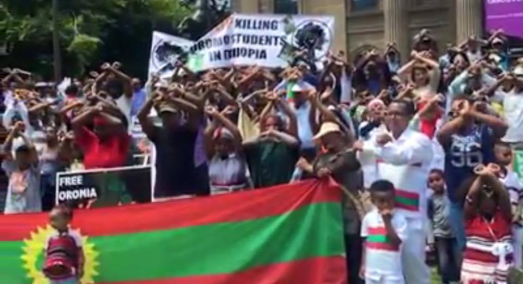
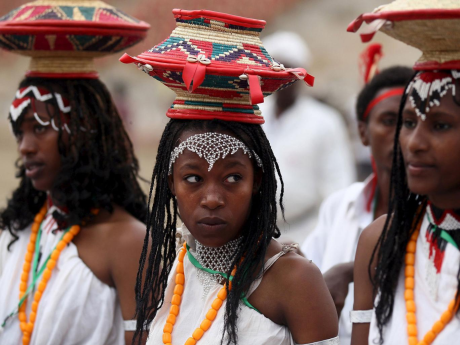
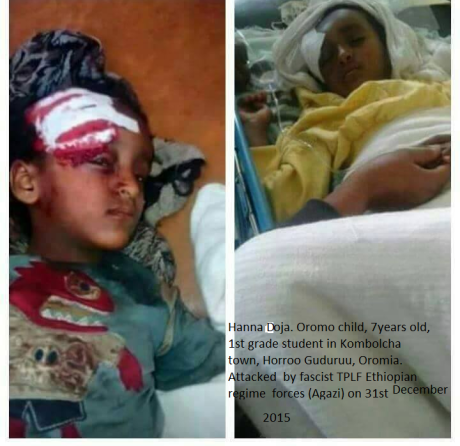
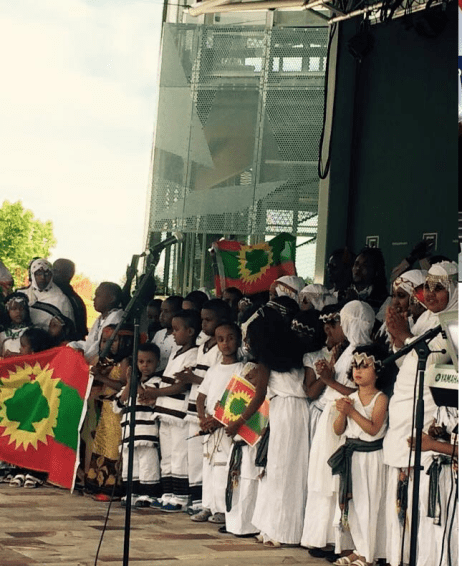
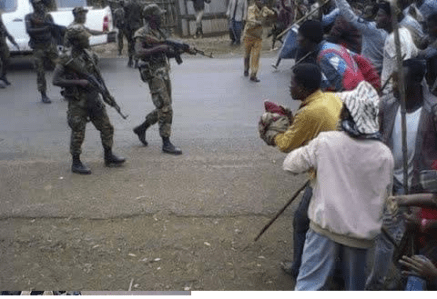

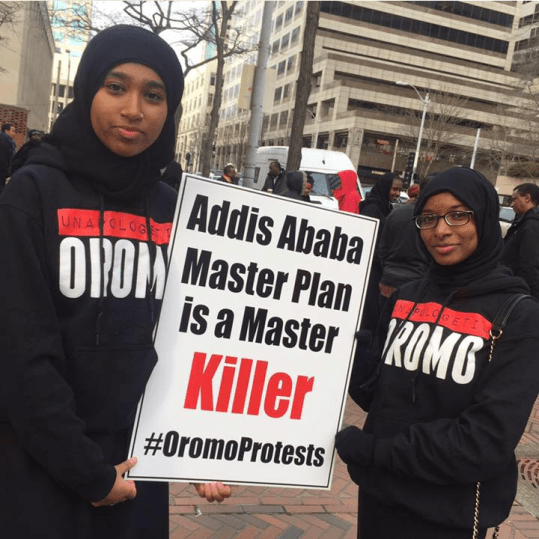
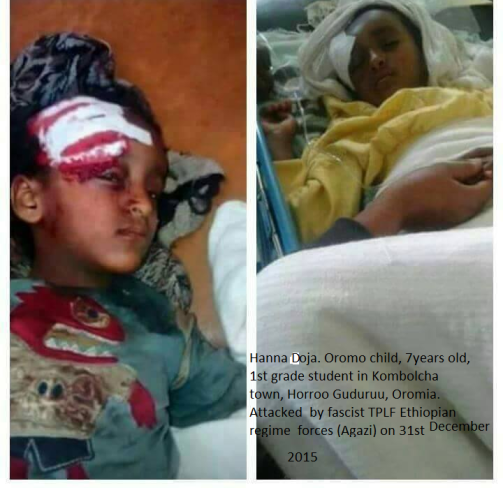
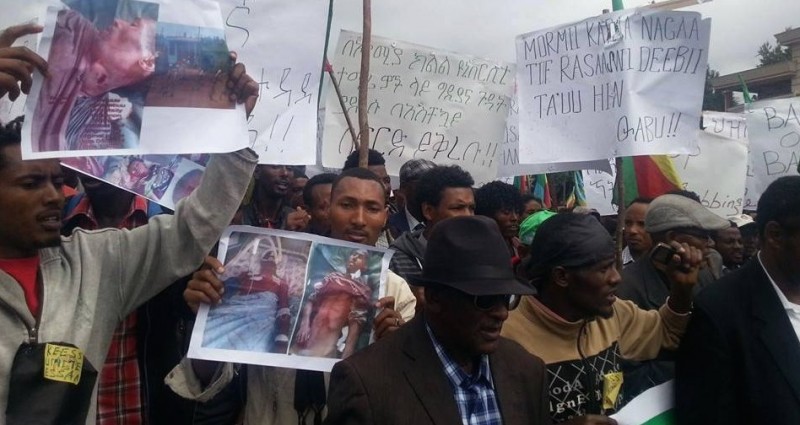

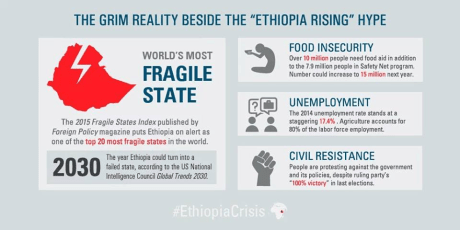
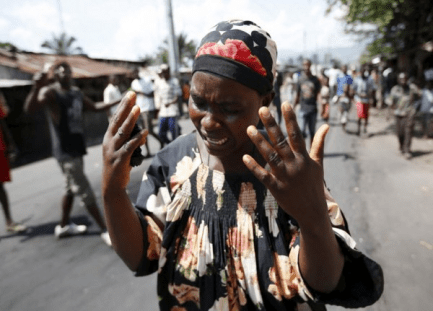
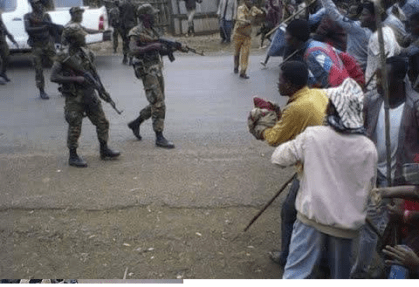

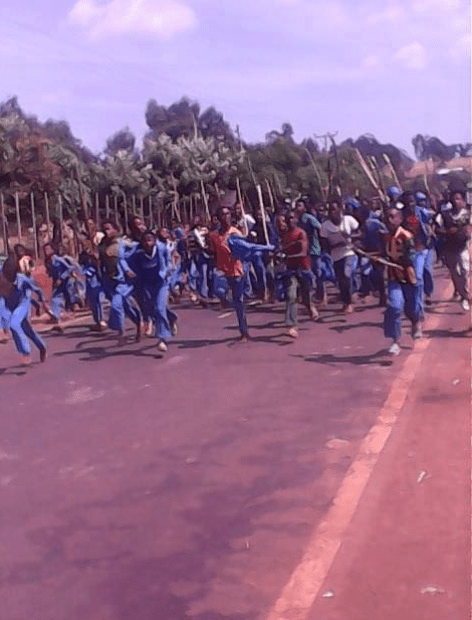
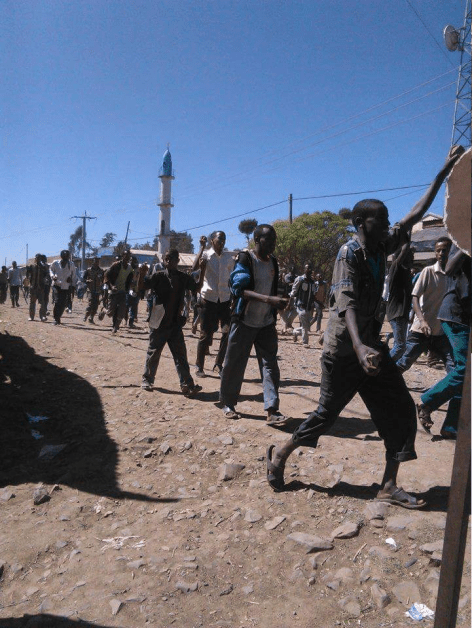
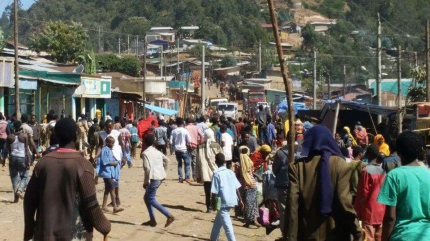
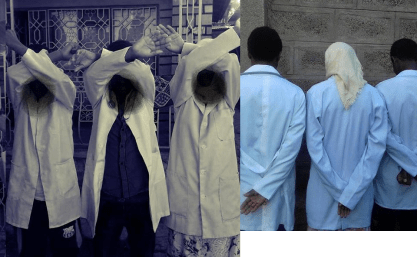
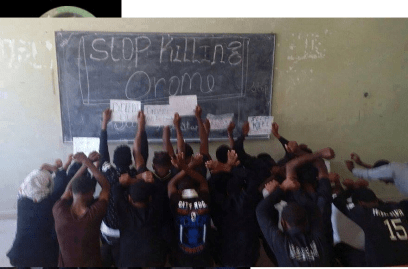
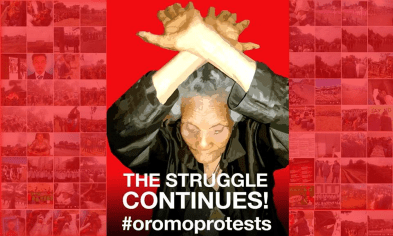
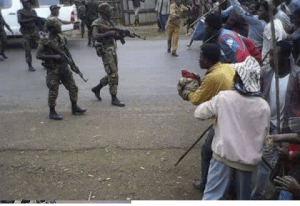



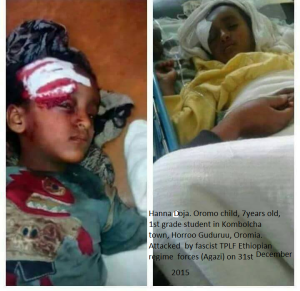
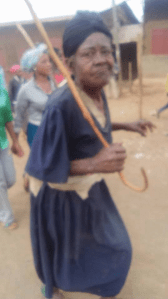
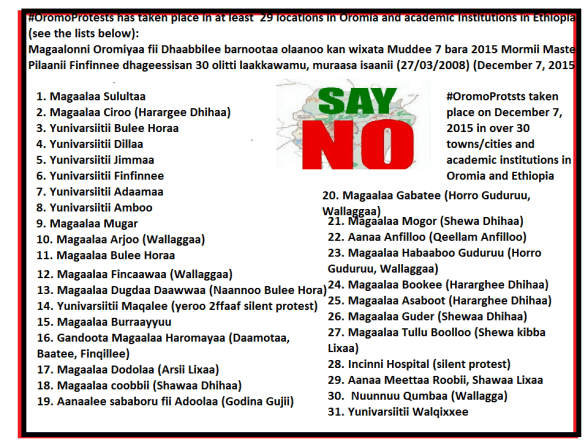
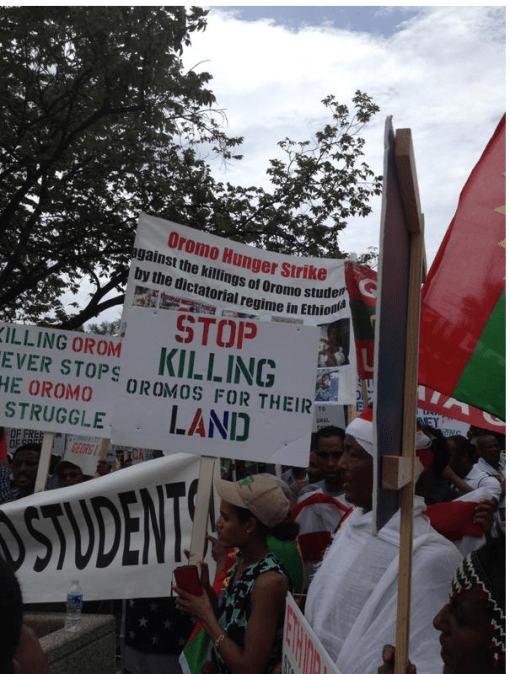
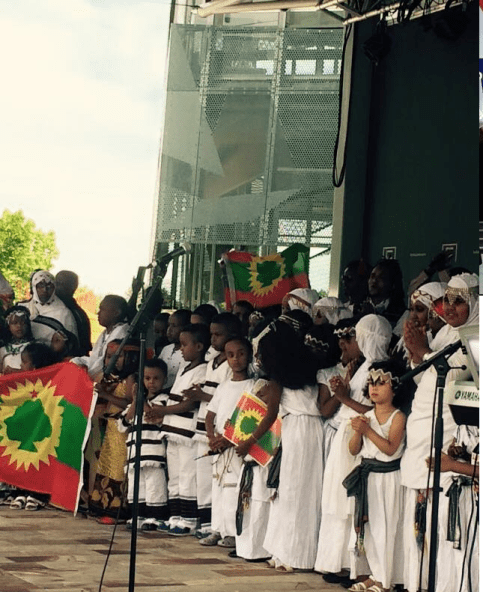
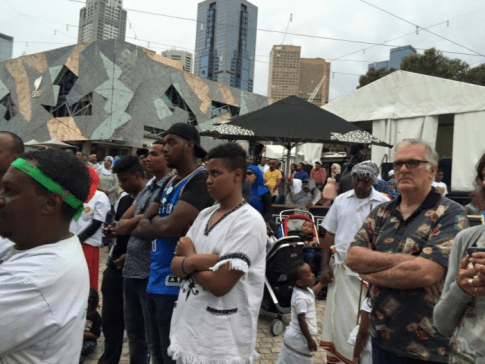
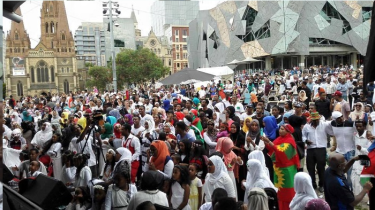
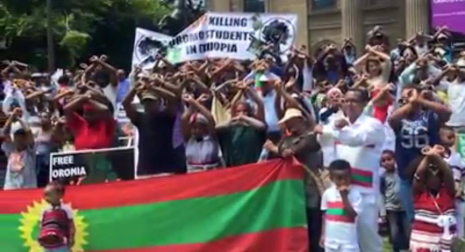
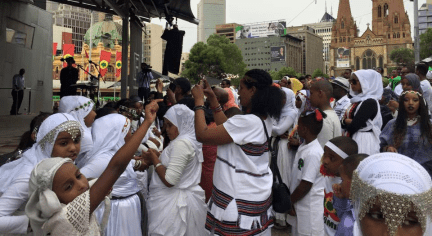
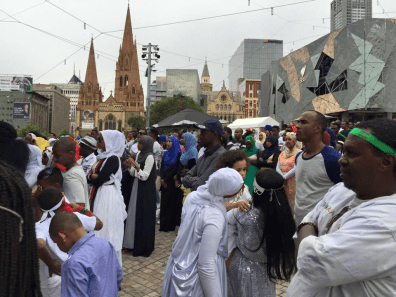
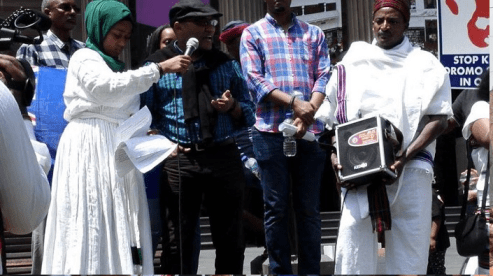
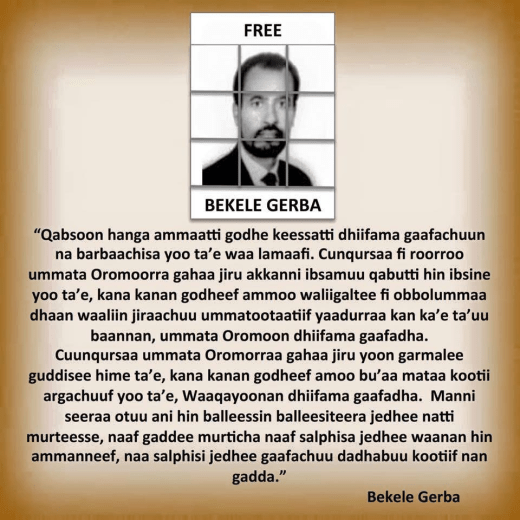
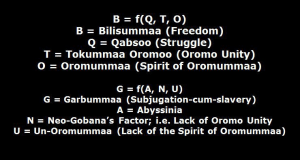

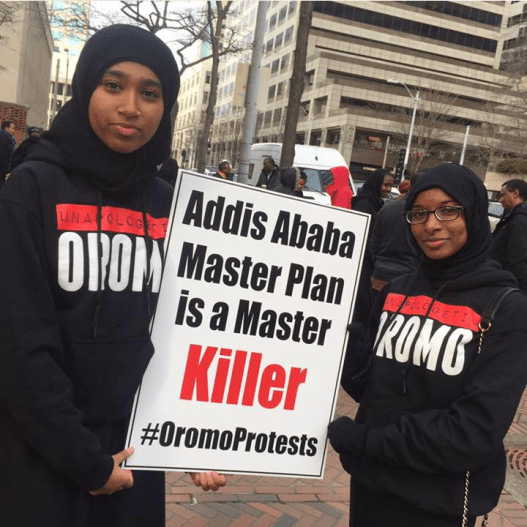
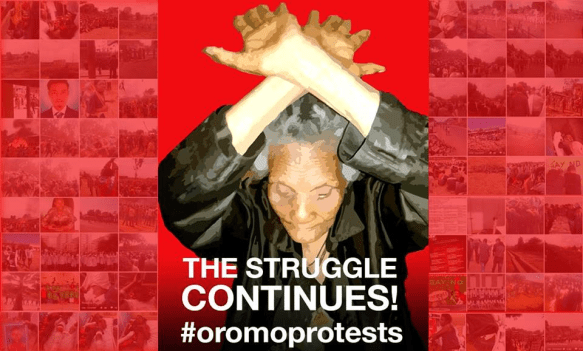
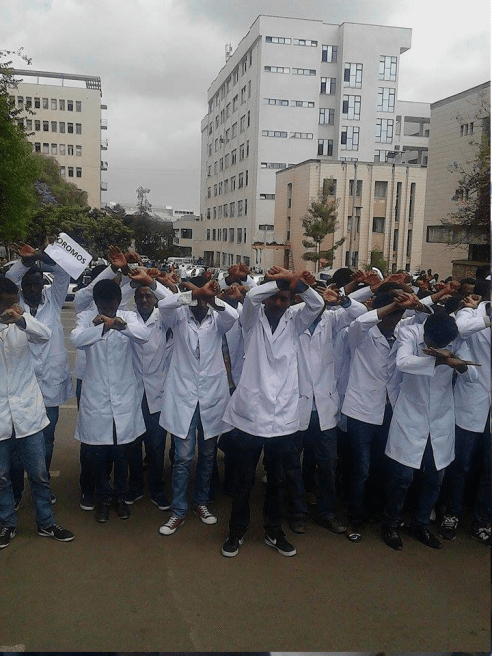
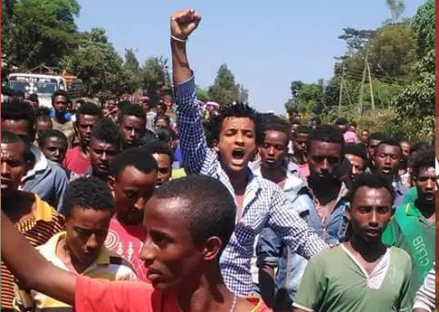
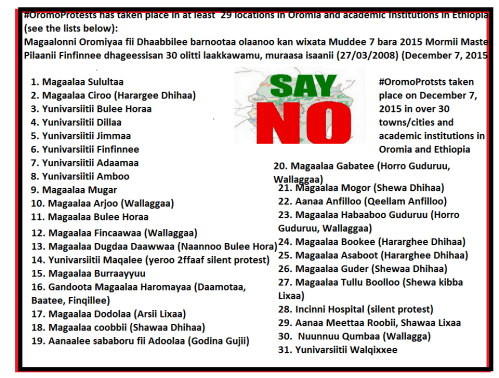

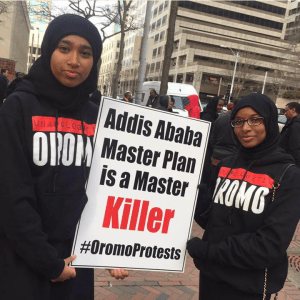
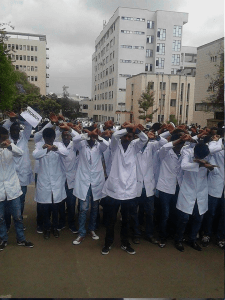
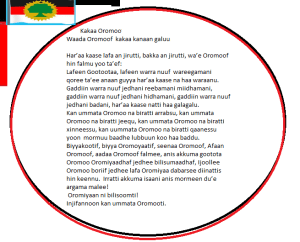
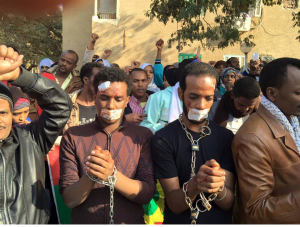

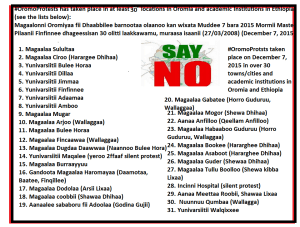
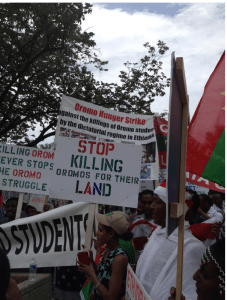
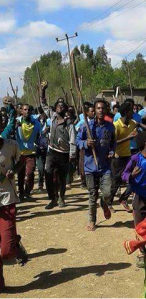
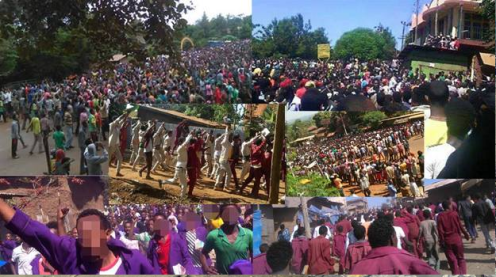
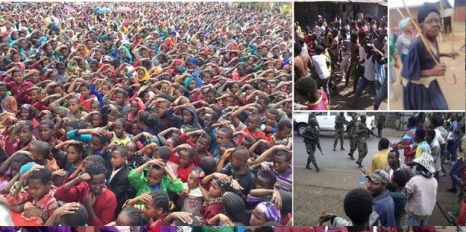
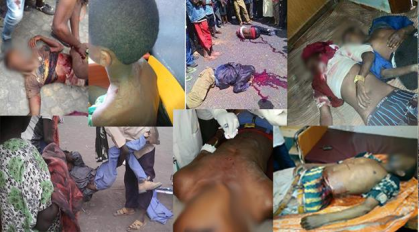
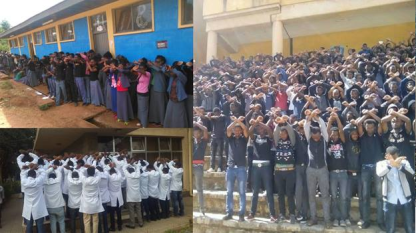
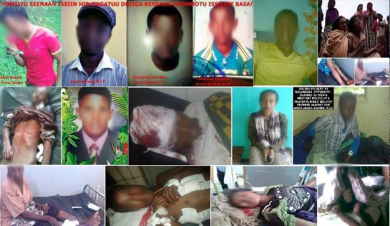
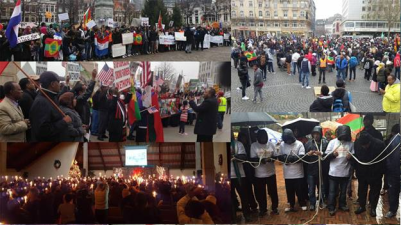
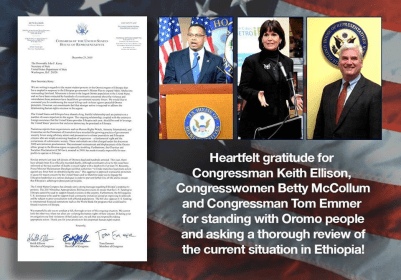
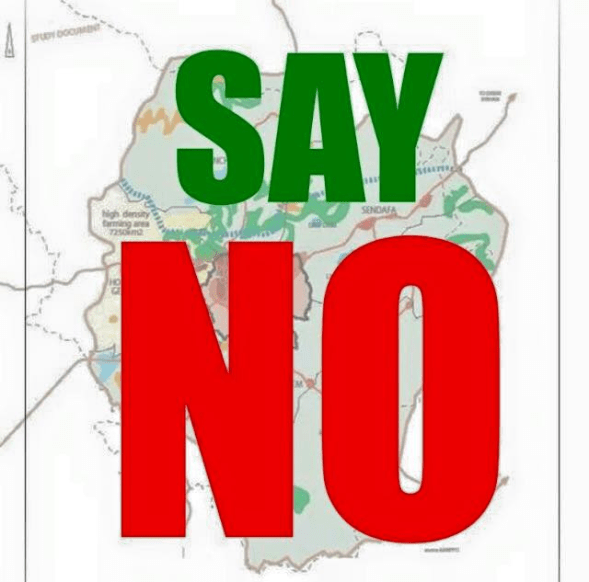
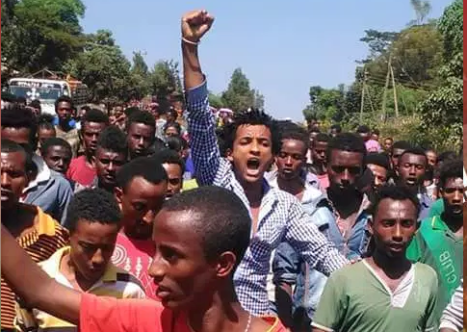
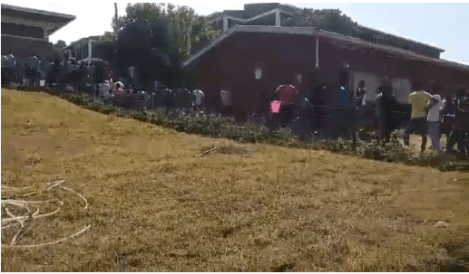


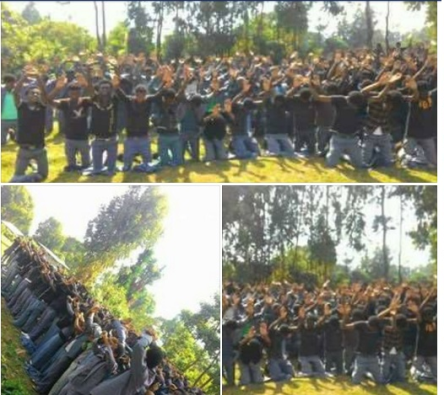
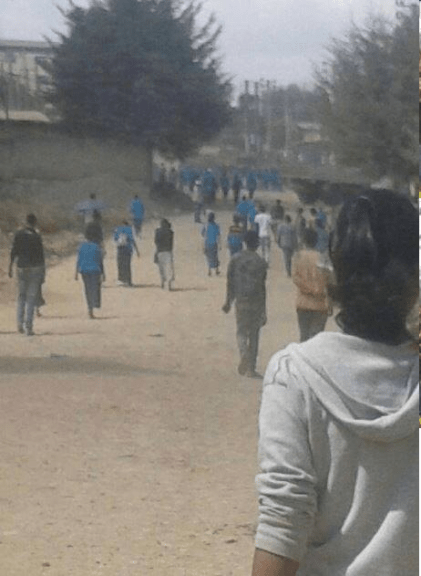
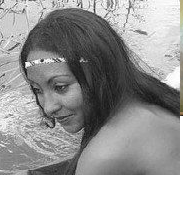
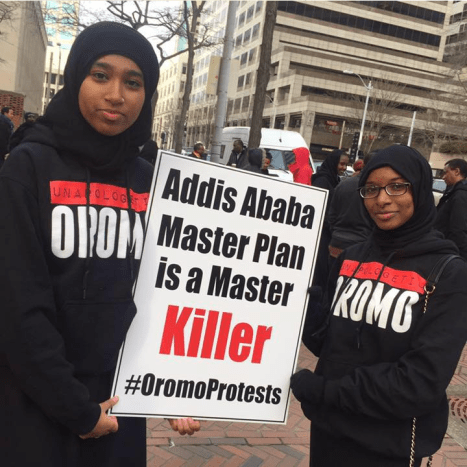




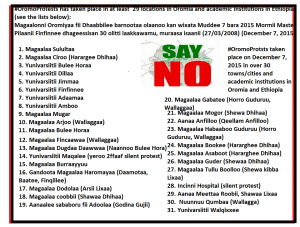
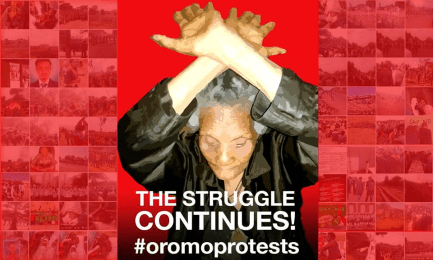
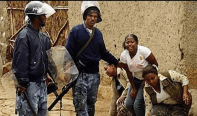
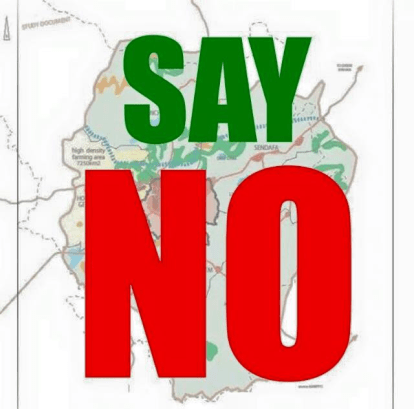
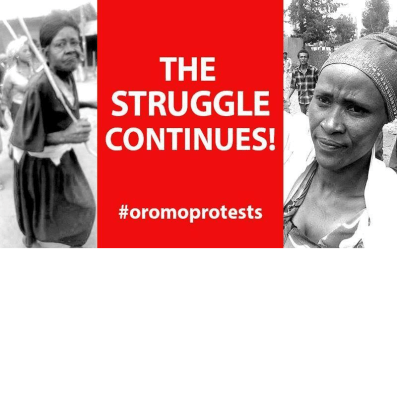
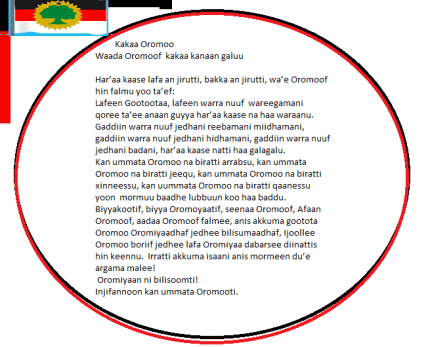
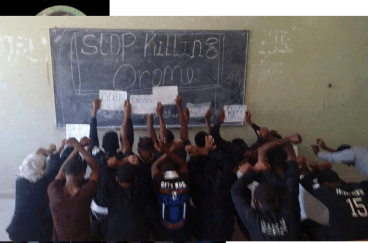
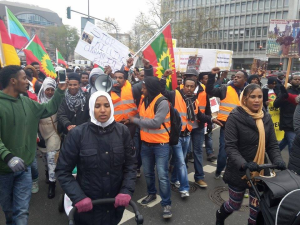
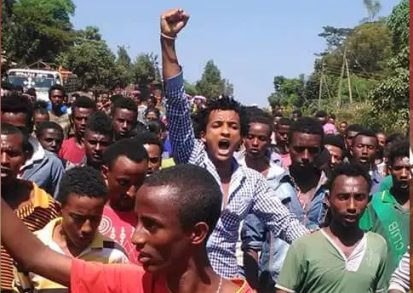
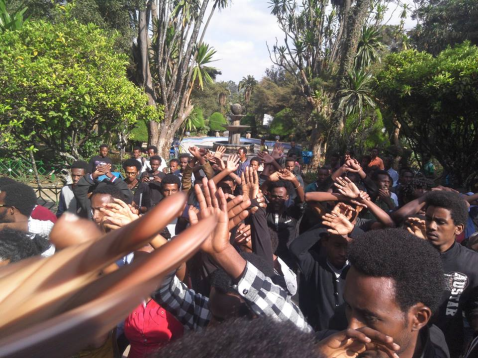
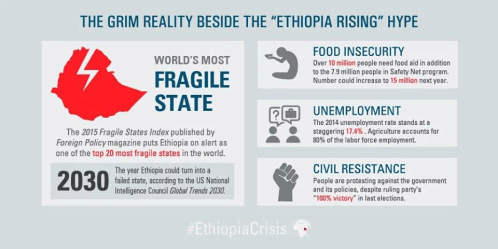
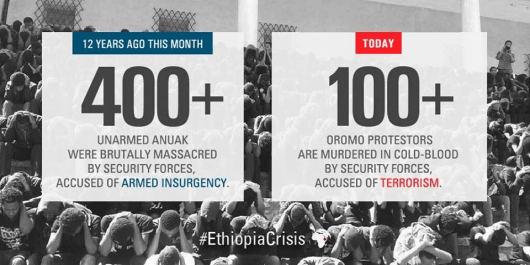
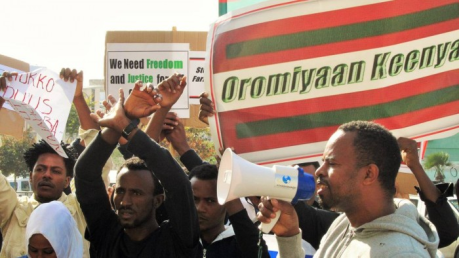
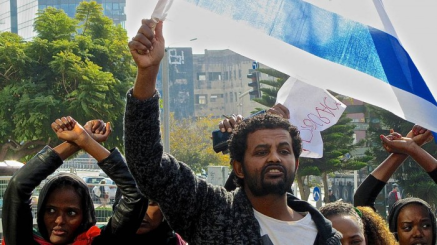
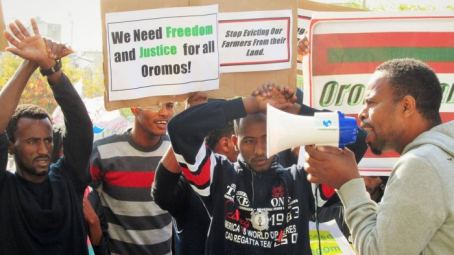


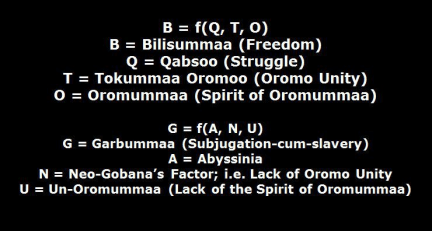



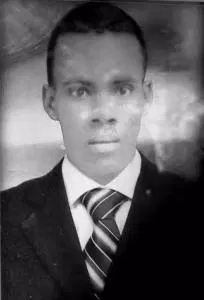
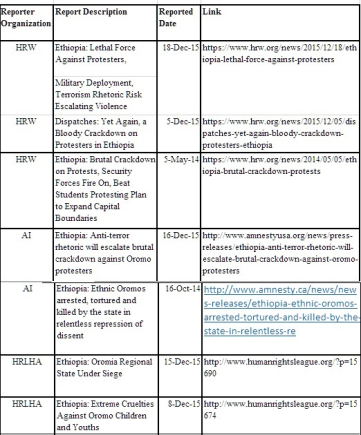

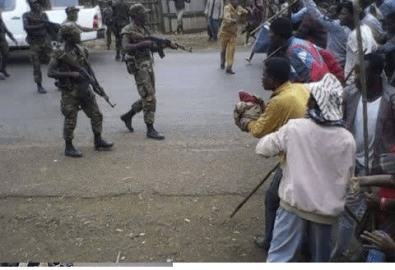
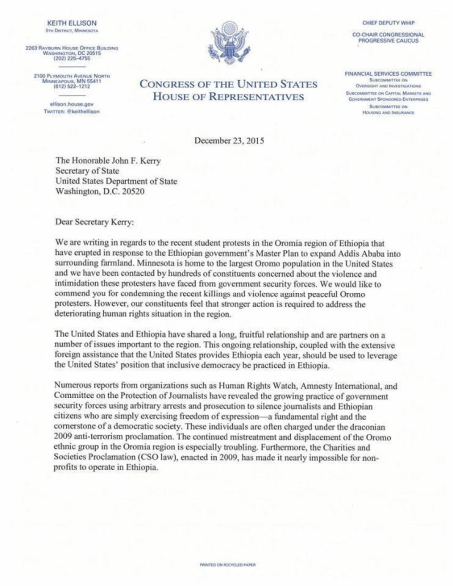



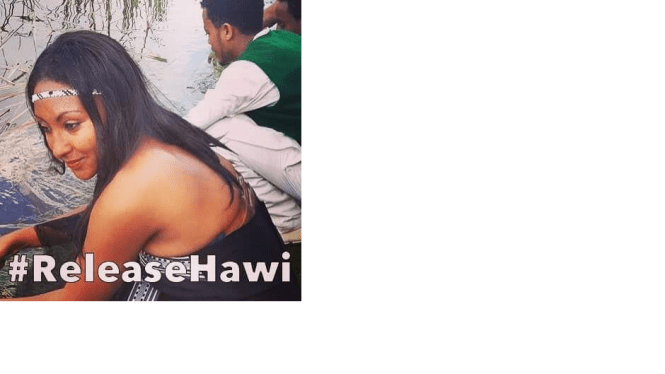


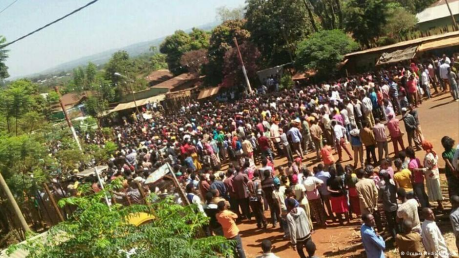

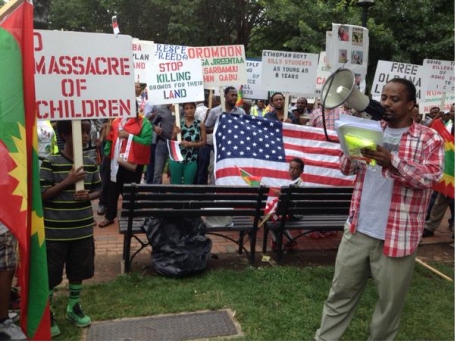

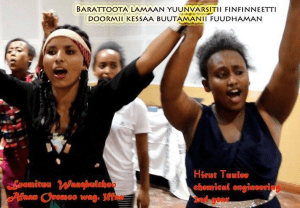
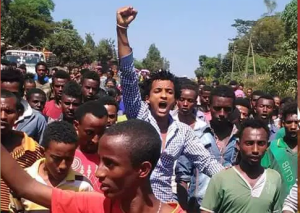
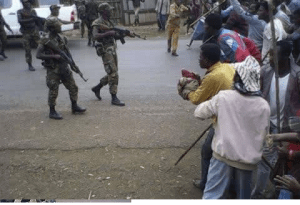
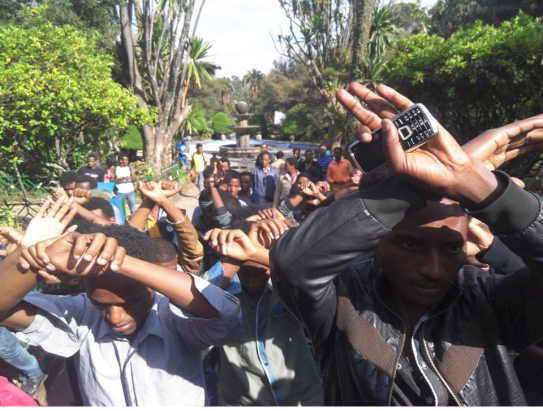


You must be logged in to post a comment.