Economic and development analysis: Perspectives on economics, society, development, freedom & social justice. Leading issues in Oromo, Oromia, Africa & world affairs. Oromo News. African News. world News. Views. Formerly Oromia Quarterly
Human Rights Watch Reports Daily Killings As Ethiopian Government Continues Oromia Crackdown
By Manny Otiko, The Atlanta Black Star, February 23, 2016
Photo: Women mourn during the funeral ceremony of a primary school teacher who family members said was shot dead by military forces during protests in Oromia, Ethiopia in December 2015. (Reuters)
The Ethiopian government is reportedly continuing its crackdown on the Oromo people.
According to the New York-based Human Rights Watch, about 200 protesters have been killed in the latest government operation. Oromia, home to the Oromo people, is Ethiopia’s largest region. Demonstrations in the region broke out when the government attempted to clear a forest for an investment project. Protests escalated when the government decided to expand the borders of Addis Ababa, Ethiopia’s capital, to incorporate surrounding towns in Oromia, according to The International Business Times.
Government forces have used heavy-handed tactics to squash the protests, including rounding up and detaining protesters, torture and even extra-judicial killings, according to The Atlanta Blackstar. Many of the early protests were led by students, but that has not stopped the violence from security forces.
“They walked into the compound and shot three students at point-blank range,” said a 17-year-old student in a Human Rights Watch report. “They were hit in the face and were dead.”
The IBT said there are almost daily reports of killings.
“Things have become considerably more violent in the last few days,” said Felix Horne, Horn of Africa researcher at Human Rights Watch. “The government needs to back down and stop the brutal crackdown.”
It’s difficult to get accurate information about what’s going on because Ethiopia does not have a free media. Human Rights Watch says it is relying on information leaking out via social media posts. The foreign-based Oromo Media Network is also reporting on the situation. However, its signals have been jammed by the Ethiopian government. Government forces have also reportedly smashed OMN satellites and jailed people who have shown their broadcasts.
However, the Ethiopian government denies there is a problem and dismissed Human Rights Watch’s latest report.
Getachew Reda, Ethiopia’s communications minister, told the BBC the report was an “absolute lie” and questioned how Human Rights Watch could report on the situation from New York. He also blamed the latest violence on armed gangs “who are trying to stir up emotions in the public.”
According to The IBT, the European Parliament passed a January resolution condemning the government’s crackdown on largely peaceful protesters. However, the U.S. government has not criticized the Ethiopian government, and has called for dialogue. According to The IBT, Ethiopia received $580 million in aid from the U.S. in 2012. Additionally, The Washington Post reported that the U.S. government uses Ethiopian bases to fly drone missions against terrorists groups in Somalia.
Leslie Lefkow, deputy Africa director at Human Rights Watch, said countries that donate money to Ethiopia should pressure the government to stop the killing.
“Ethiopia’s donor countries have responded tepidly, if at all, to the killing of scores of protesters in Oromia,” said Lefkow. “They should stop ignoring or downplaying this shocking brutality and call on the government to support an independent investigation into the killings and other abuses.”
Oppressed and marginalized people have a shared experience: their oppressors invent a “mythical portrait” of the oppressed . Through this “mythical portrait”, the oppressed is depicted as uncivilized, savage, lacking self-control, irrational, unable to govern themselves, dangerous to themselves and to those in their midst, etc. On the other hand, the oppressor invents the opposite “mythical portrait” for itself.
This ugly portrait of the oppressed creates a mythical basis to keep the oppressed in perpetual misery. It creates a sense of fear that separates one oppressed group from another. This “mythical portraits” also helps garner support for the oppressive system from its base and outside the base as it makes the system as guarantor of the societiy’s well-being.
The successive Ethiopian government, particularly in the last 25 years, have created Oromo-phobia by inventing a mythical portrait of the Oromo. Consequently, the emancipation of the Oromo from their oppression is seen as destabilizing to Ethiopia and detrimental to the very existence of non-Oromo people in Ethiopia. Such a portrait has worked so well in the last 25 years that even those who are marginalized under the current government are unable to align their common interest with the Oromo people. The oppressive minority regime creates conflicts between oppressed groups and then portrays itself as the only rational and arbiter, thereby deserving to rule the “barbaric” others. This machination of the Ethiopian government, however, seems to be falling apart recently.
Since the eruption of the current Oromo revolution (#OromoProtests), the oppressive Ethiopian government left no stone unturned to further distort the “mythical portrait” of the Oromo people. The Communication Minister Getachew Reda called the peaceful #OromoProtests “devils” that must be dealt with , and the Prime Minister threatened to take “merciless action” labeling the unarmed and peaceful protesters “terrorists”. Once this “mythical portrait” is created, they not only justify their actions but leaves them with no choice but to intensify the repression. That is exactly what the regime has been doing since Novermber 12, 2015. What they did not manage to do this time around is to incite inter-ethnic and inter-religion conflict- despite their best effort.
Why is the Ethiopian oppressive minority regime failing to incite conflict between Oromo and others, and to incite inter-faith conflict in this time of revolt? A lot of credit should go to the tactics employed by the #OromoProtests movement, and their pre-emptive outreach to all Ethiopians and their transparent revolution.
True to the Oromo culture, the elders gathered the revolutionary youth to undertake an Oath taking ceremony during which they promulgated:
The minority groups living in Oromia should not be harmed/should be protected. They emphasized that no one but the regime is their enemy. They admonished the youth that if any one considers others as enemy because of their ethnicity, it will tarnish the good Oromo name and goes counter to the principle of Oromummaa (Oromoness)
No properties should be damaged
Any one who harms minorities and/or damage properties, is in violation of Oromo-norms and is considered enemy of the Oromo people and obstacle to the peaceful struggle against tyranny.
We have heard the same voice of reason during the early weeks of the protest in West Shewa. Obviously this expression of tolerance is not a culture that just emerged now; it’s centuries old culture that is simply captured on video at this historical time. I share this video with pride to other Ethiopians and I hope it gives them hope and understanding about the Oromo people.
The #OromoProtests movement is shattering the “mythical portrait” of the Oromo people and replacing it with a true portrait of the Oromo people that is loving, caring and welcoming. The time when the rest of Ethiopians and the Oromo people join hands in good faith is the beginning of the era for the true liberation of the multi-nation federation we call Ethiopia. There is hope and the #OromoProtests is the fountain of such hope.
Oromo: Unity Found Between Oppressed Groups in Ethiopia
By UNPO, 22nd February 2016
The oppressive Ethiopian People’s Revolutionary Democratic Front (EPRDF) has found itself facing increasing anti-government protests over the last few years and months. More significantly, these protests have shown another trend, which has been the increased action taken jointly by oppressed groups, such as the peoples of Amhara and Oromia. This comes as a result of the continual violent suppression of opposition by state forces, oftentimes resulting in arbitrary arrests, injuries and even death. The recent increase in unified response, however, gives some hope for the future of democracy in the country.
Division and fear are the age-old tools of tyrants; unity and peaceful coordinated action the most powerful weapons against them.
Frightened and downtrodden for so long, there are positive signs that the Ethiopian people are beginning to come together, – peacefully uniting in their anger at the ruling party – the Ethiopian People’s Revolutionary Democratic Front (EPRDF) — a paranoid brutal regime that suppresses the people, is guilty of wide-ranging human rights violations, and has systematically encouraged ethnic divisions and rivalries.
Anti-government protests have been growing over the last few years, and in recent months large-scale demonstrations have taken place throughout Oromia and also in Gondar, where university students have been demonstrating, demanding, academic rights, freedom, democracy and justice.
Tribal groups, particularly the peoples of Amhara and Oromia (the largest ethnic group – accounting for 35% of the population), have come together. Thousands have been marching, running, sitting, shouting and screaming.
Government slays Peaceful Protestors
The EPRDF’s response to the demonstrators’ democratic gall has been crudely predictable: brand protestors ‘anti-peace forces’ and terrorists, then shoot, arrest and imprison them.
Whilst Human Rights Watch (HRW) say security forces have killed at least 140 people, independent broadcaster ESAT news estimates the number to be over 200. The government, which human rights groups state authorised the police and military to use “excessive force, including…live ammunition against protesters, among them children as young as 12”, has so far admitted 22 fatalities.
ESAT reports at least1,500 have been injured and to date over 5,000 arrested (in Oromia alone), including Bekele Gerba, deputy chairman of the Oromo Federalist Congress (OFC), Oromia’s largest legally registered political party, and his son. Senior members of the OFC, as well as members of other opposition parties and their families, have also been imprisoned. Scores more people are harassed, their homes searched. Acting on behalf of an unaccountable government, security forces are “on a mission of wanton destruction of human lives and properties”.
State plan cancelled by protest
The under-reported protests in Gondar (in the Amhara region) were triggered by two separate, but related issues: government cession of an expanse of fertile land -– up to 1,600 square km, to Sudan under new demarcation proposals — and the widespread belief that state forces are responsible for a mass killing that took place in November 2015 against the people of Qimant. Leaders of The Gondar Union Association told ESAT news they believed the murders were “committed by TPLF [government] cadres, who then blamed it on the Amhara people to incite violence among the two groups.”
In Oromia, where protests began in April 2014 throughout the region, it was the government’s plan to expand the capital, Addis Ababa, on to agricultural land. Hundreds of smallholders would have been displaced, villages destroyed, livelihoods shattered. Following months of demonstrations the government has announced that the plan is to be scrapped. The official statement virtually dismissed the protestors’ opposition, claiming it was “based on a simple misunderstanding” created by a “lack of transparency”.
Activists reacted with derision to the government’s condescension, and vowed to continue protesting unless their longstanding grievances of political exclusion are addressed. Sit-ins and peaceful demonstrations have continued in various locations across Oromo, evoking more violence from the ruling party’s henchmen.
Oromo Rage
The Oromo people see the government’s violence as part of a systematic attempt to oppress and marginalise them. As Amnesty International (AI) states in its report ‘Because I am Oromo’: “Thousands of Oromo people have been subjected to unlawful killings, torture and enforced disappearance.” People without any political affiliation are arrested on suspicion that they do not support the government – “between 2011 and 2014, at least 5,000 Oromos have been arrested”. Amnesty asserts that recent regime violence was “the latest and bloodiest in a long pattern of suppression”. This description of government intimidation and brutality will sound familiar to most Ethiopians.
Whilst it was the ‘master-plan’ for Addis Ababa that brought thousands onto the streets, anger and discontent has been fermenting throughout the country for years. Feelings fuelled by restrictions on fundamental freedoms, and human rights violations, many of which can only be described as State Terrorism.
Power Hungry
The EPRDF have been in power for 25 long, and for many people, painful years. The ruling party was formed from the four armed groups that seized power in May 1991, including the now dominant Tigray People’s Liberation Front (TPLF).
Despite the theatre of national “elections” being staged every five years since 1995, the EPRDF has never been elected. Last year’s sham saw them take all 547 parliamentary seats. In order to convince a suspicious, if largely indifferent watching world (the EU refused to send a team of observers to legitimise proceedings) one might have expected a token seat or two for an opposition party, but the government decided they could steal every one and get away with it, their arrogance confirming their guilt.
The Tigrean ethnic group makes up a mere 6% of the country’s 95 million population, but the TPLF (or Weyane as they are commonly called) and their cohorts dominate the government, the senior military, the judiciary, and, according to Genocide Watch, intend “to internally colonize the country”, a claim that the ethnic Somalis living in the Ogaden region, as well as . the people of Amhara and Oromia, all of whom are subjected to appalling levels of persecution, would agree with.
Undemocratic, repressive regime
The Government claims to adhere to democracy, but says the introduction of democratic principles will take time. ‘Outsiders’ (critics such as HRW, Amnesty International and the EU) ‘don’t understand’ the country: thus Prime Minister Hailemariam Desalegn pretends Ethiopia “is a fledgling democracy – a house in the making”.
Well, it is not a house being built on any recognizable democratic foundations: human rights, civil society, justice and freedom, for example. Indeed there is no evidence of democracy actual or potential on the government’s part in Ethiopia. On the contrary, despite a liberally-worded constitution, the ruling party tramples on human rights, uses violence and fear to suppress the people and governs in a highly centralised manner: Opposition parties are ignored, their leaders often imprisoned or forced to live abroad; the government, Amnesty International (AI) states, routinely uses “arbitrary arrest and detention, often without charge, to suppress suggestions of dissent in many parts of the country.”
The judiciary is a puppet, as is the “investigative branch of the police”, Amnesty records, making it impossible “to receive a fair hearing in politically motivated trials”, or any other case for that matter. Federal and regional security services operate with “near total impunity” and are “responsible for violations throughout the country, including…the use of excessive force, torture and extrajudicial executions.”
There is no media freedom; virtually all press, television and radio outlets are state-owned, as is the sole telecommunications company – allowing unfettered surveillance of the Internet. The only independent broadcaster is internationally based ESAT. The Government routinely blocks its satellite signal, and employee family members who live in Ethiopia are persecuted, imprisoned, their homes ransacked.
Journalists who challenge the government are intimidated, arrested or forced abroad. Ethiopia is the fourth most censored country in the world (after Eritrea, North Korea and Saudi Arabia) according to The Committee to Protect Journalists, and “the third worst jailer of journalists on the African continent”. The widely criticized, conveniently vague “2009 Anti-Terrorism Proclamation” – used to silence journalists – and “The Charities and Societies Proclamation”, make up the government’s principle legislative weapons of suppression, which are wielded without restraint.
The 99%
The vast majority of Ethiopian people – domestic and expatriate – are desperate for change, freedom, justice and adherence to human rights; liberties that the EPRDF have total contempt for. Their primary concern is manifestly holding on to power, generating wealth for themselves, and their cohorts, and ensuring no space for political debate, dissent or democratic development.
Without a functioning electoral system or independent media, and given government hostility to open dialogue with opposition parties and community activists, there are only two options available for the discontented majority. An armed uprising against the EPRDF – and there are many loud voices advocating this – or the more positive alternative: peaceful, consistent, well-organized activism, building on the huge demonstrations in Oromia and Gondar, uniting the people and driving an unstoppable momentum for change.
Ethiopia is a richly diverse country, composed of dozens of tribal groups speaking a variety of languages and dialects. Traditions and cultures may vary, but the needs and aspirations of the people are the same, as are their grievances and fears. Tolerance and understanding of differences, cooperation and shared objectives could build a powerful coalition, establishing a platform for true democracy to take root in a country that has never known it.
People can only be trapped under a cloak of suppression for so long. Eventually they must and will rise up. Throughout the world there is a movement for change: for freedom, justice and participatory democracy, in which the 99% have a voice. The recent demonstrations in Ethiopia show that the people are at last beginning to unite and are part of this collective cry.
Oromo Protests and State/Government Terrorism in Ethiopia
Western governments praise Ethiopia for achieving the fastest growing economy in Africa and for being a key ally in the fight against terrorism. This hides the brutal reality of land grabbing, state/government terrorism, and the incredible cost in human lives and livelihoods. Ethiopia is a multinational country of 100 million people, and all of these nations have suffered state brutality in varying degrees. The country is tightly gripped by the totalitarian repression of a single-party dominated by the elite of a minority ethnic group from Tigray.
This minority regime has created absolute control over the country’s politics, economy, military and media, thus stifling every form of creative dissent. To hang onto power, it has marked every legitimate dissent as terrorism and waged wars against its own people. A handful of Tigrayan elites have used economic growth as a smokescreen behind which they carry out bloody atrocities of land grabbing. They have gobbled up the wealth of the nation to satisfy their insatiable greed and lust for power, thus leaving close to 20 million of their fellow citizens to face starvation.
This regime targets Oromos particularly because they are the most populous nation inhabiting a vast arable and mineral-rich land. The current Oromo protest is an expression of deep grievances under 25 years of such state terrorism, land grabbing and violent repression. It demands the world’s immediate attention. Below is a summary of Oromo protests and the various responses.
Oromo Protests
– The protest was ignited by elementary and secondary school students in the small town of Giincii on November 12, 2015
– In no time, this spread like wild fire to all parts of Oromia, and Oromos from all walks of life joined the peaceful protests.
– Beautiful images of peaceful protests filled social media. People marching with raised crossed arms or sitting with bowed heads became powerful symbols of peaceful protests.
– The protests attracted wide-spread solidarity from the Oromo diaspora around the world, from other peoples of Ethiopia with similar grievances, and from the Ethiopian diaspora.
The Issues
– The Ethiopian government has been robbing Oromos of their ancestral lands in the name of development. It has been forcefully evicting millions without adequate compensation or anywhere to go. Hard-working people are reduced to landless, homeless beggars.
– Global land rush has intensified local land grabbing where the government has been violently robing land from the various peoples and leasing out to foreign investors.
– Land is sacred for indigenous Oromos. As they say, dubbiin lafaa dubbii lafee ti [the issue of land is the issue of bones]. Land contains the bones of ancestors symbolizing the depth of the Oromo worldview, knowledge system, history, culture, and identity – a deep spiritual connection. Evicting Oromos from their land is erasing their very existence.
– The trigger for the current peaceful protests is a small soccer field which was taken away from the local youth in the small town of Giincii. Young students in the local primary and secondary schools protested. Enraged by earlier land grab where the nearby Cillimoo Forest was taken away for clearing, parents and other citizens joined the student protests. The environment is as sacred as the land for Oromos; they protect it with their lives.
– By the time the peaceful protests spread and engulfed the whole of the Oromia Regional State, the issue had crystallized around the Addis Ababa Integrated Master Plan, which is the expansion of the capital city into the Oromo lands without any consultation with the people. The government denies that the plan is being implemented, but it is de facto forcefully evicting Oromo farmers from their land and violating their constitutional rights.
– The Master Plan represents an aspect of the ongoing systematic destruction of Oromo identity, history and culture. The protest against the Master Plan is an expression of bottled up grievances, and longstanding issues of injustice and fundamental human rights.
– In 2014, the government mercilessly massacred 78 Oromos, mostly university students peacefully protesting the Master Plan. When bullets are the answer, legitimate grievances remain unaddressed. The current protests raise the same unanswered questions.
– The Master Plan is a smokescreen behind which the government carries out systematic destruction of Oromo identity, history and culture. The Master Plan is only the visible tip of the iceberg; it only calls attention to the deeper grievances around the violation of constitutional rights fundamental human rights and justice.
Government Response: Genocide
– The government responded to peaceful protests with its usual bloody violent repression. Its inciting agents killed people, and burned property to tarnish the beauty of the peaceful protests and create an excuse to unleash the military force against unarmed protesters.
– In a dramatic move on 16 December 2015, the Prime Minister vowed to mercilessly crush the protests and deployed the draconian counter-terrorism law to crush the peaceful protesters he marked as terrorists. In effect, this is a declaration of a state of emergency where the administration of the Oromia Regional State is suspended, and Oromia is ravaged by a military force centrally commanded by the Prime Minister. The Ethiopian state turned its military on its own citizens, drowning the people in bloodbath.
– State tyranny has unleashed an all-out genocidal war against Oromos. Merciless killing, beating and mass arrests are now a daily reality in Oromia. Soldiers regularly break into homes and university dormitories, brutally beating people and savagely raping women. In this terroristic punishment of the entire Oromo population, children as young as 8 are killed alongside older people of 85. Girls as young as 12 are gang raped alongside older women. Mothers are killed along with their children. Artists, musicians and journalists are imprisoned and tortured. In universities, Oromo university students are particularly targeted, beaten and killed, imprisoned and tortured. Oromo peace activists and members of opposition political parties are beaten and imprisoned.
– In the current carnage of state terrorism alone (between November 12, 2015 and January 12, 2016), various sources report that over 200 Oromos have been killed while more bodies are still being discovered in the forests, rivers and ditches. Over 2000 people are mercilessly beaten and seriously injured while some are being denied medical treatment. Over 10,000 are imprisoned, and many of these are being tortured at this time.
– While states are responsible for protecting universities from attack according to the UN Human Rights Council, the Ethiopian State has turned universities into war zones and military camps where no critical dialogue can take place. Oromo students are hunted down and beaten, raped, killed or imprisoned. Others run away from university campuses because it is impossible to learn under such conditions of state terrorism. The Ethiopian state is systematically carrying out epistemic genocide against Oromos to destroy their intellectual capacity and stifle critical questioning.
International Response: Silence
– Human rights organizations like Amnesty International and Human Rights Watch and some Western media have been reporting the atrocities. However, the response from Western governments has been largely silence or mild statements that don’t mean much in terms of addressing the carnage.
– Nations promoting democracy have blindly endorsed the government’s shameless claim of 100% election victory, thus completely stifling dissent. While anyone with a rudimentary sense of democratic process would know how ridiculous this is, Western governments have chosen to endorse the violent totalitarian repression of fundamental freedoms and rights.
– They have emboldened the Ethiopian government to continue its atrocity with impunity. De facto condoning the brutal repression, major donor countries like the U.S.A., the UK and European Union continue to provide aid money with little or no attention to the respect of basic human rights or constitutional rights of the people.
– They continue to praise Ethiopia for development even when humanitarian organizations report that a staggering 20 million need help this year, even as they know this increasing need for food aid by a country that registers double digit economic growth is a sign of failed policy and failed governance.
Our Demand
Any nation genuinely interested in promoting peace and democracy should be outraged by the blatant massacre of peaceful protesters legitimately demanding the respect of their constitutional rights. We demand that Western governments, particularly the donor nations, denounce the atrocities of the Ethiopian government and ask it to immediately and unconditionally:
1) lift the merciless military rule imposed on the Oromo people
2) stop the killing, beating, raping, imprisoning and torturing of innocent people
3) release all peaceful protesters and political prisoners
4) bring to justice those responsible for the genocidal atrocities
5) restore the constitutional rights of the people to hold peaceful rallies
6) avail itself to the calls for peace and national reconciliation
7) allow people to participate in the affairs affecting their lives and livelihoods
8) start participatory development that includes people’s development
Oromo youth have created a new agenda that is no more limited to elites but mobilizes the whole population. It is a fluid process that can engulf any impediment on its way. During those days when Oromo were totally suppressed and placed under alien rule and all possible rights were denied no one from the colonizers camp had come out to say “please have compassion for them” When they found no way out from boundless oppression their youth of the sixties were able to find an opening and filled them with hope that liberation was possible. To fulfill that they drew a political program and vowed that they will not turn back until democratic Republic Oromiyaa is found. When they saw this, Ethiopians came out on them from all corners and threw contempt and insults. Even today no one among them has come out to say “they have the truth, wrong is being done on these people in particular, let us correct our policy and find viable solution”. They talk much about unity; its content is for them and is not meant to include non-Ethiopians like the Oromo. One person from among them, student Walalliny Makonnin is being condemned to this day for writing about the right of nations for national self-determination.
To hoodwink the question people have for ownership of their country they started saying all peoples of Ethiopia have questions of class the harm done to Oromo is no different from others and so can be overcome through class struggle. Oromo youth fooled by this rallied to fight their wars. Later they were betrayed and crushed. Some that survived joined those that had held firmly to the question of independence and freedom. Though some dropped out of the struggle by unknown pressure those that newly joined the struggle are numberless. They are still trying to repeat those lies. But there will be no turning back until what is aimed for is achieved. Youth that excel their elders and more proud of their identity are coming forth. The question is not one that can be gaged bay Wayyaanee but one that is feared to bring about her demise. She knows that people’s arms cannot be bent with Agaazii club; that is why the struggle for her is becoming the last birth pang and so catastrophic.
Oromo revolutionaries had taken vow that in Democratic Republic Oromiyaa human rights for all Oromiyaan citizens will be realized equally. In the same manner that it will be a country where universal human rights shall be respected and will not be where they are gagged and humiliated like in Ethiopia was ensured by fathers that built organization for the struggle. To get these rights respected Oromiyaa will not expect permission or suggestion from any one. The youth have asserted that the right of nations to national self-determination is a birth rights not something that someone bestows on a nation. All nations and nationalities that want to befriend them have to accept this truth. Oromiyaa is not a twig of anybody but a self-dependent country. Historically Oromiyaa is known as a country that allows others to live with it its laws not one that pushes away immigrants. With Oromo let alone human beings all living things will not be touched outside the law, it is also safuu (unethical).
Despite that knowledge, there are those that are sneaking around to create discord among Oromiyaans. To fend off these is the duty of all natural and naturalized Oromiyaa citizens. That is only to get own law respected not from fear of anyone. With Oromo anyone refusing to abide by the law is equally accountable for one’s action. If the exclusive right of the Oromo over Oromiyaa is not recognized that life for them has no meaning is already determined. Never again will they live denied the democratic heritage of their forefathers, suppressed by minority and traitors. There are groups that have taken this determination seriously and started to correct therir approaches. This is victory for Oromo youth.
To rally their constituency some Ethiopian elites still repeat what their fathers were bellowing on them that countries occupied during formation of their empire are their exclusive gift from their day of birth. That is why they are lamenting that “a country cannot be created with struggle for identity”. This shows that they are stunned by the coming forth of identity they thought to have suppressed long ago. The Oromo has nothing to fight for more than to get their Oromummaa (Oromoness). Oromummaa means personality, land, history, culture and resources. For what are they expected to fight if not for these? There is no doubt that identity of Oromo is created by Oromiyaans and identity of Ethiopia is created by Ethiopians. The Oromo had never accepted and will not accept formation of Ethiopian identity by crushing that of the Oromo. The colonies have broken their chains. Henceforth their will not be any capable “moderate” Oromo that could help driving the Oromo back to chains.
Agenda of the struggle has now changed from the first phase. The doubt about Oromo unity created between diaspora Oromo has been aborted and its being as strong as steel has been assured by Oromo youth. They have also asserted that the Oromo struggles only for one thing, for realization of being owners of their country and get back the lost right of national self-determination including independence. Oromo youth has never mentioned about secession but independence; they do not even understand what it means. The struggle is not to replay the role of Obbo Goobana Daaccee but to correct his mistakes. That did not benefit even him but rather destroyed him.
Aliens are trying to divide Oromo activists into extremists and moderates similar to the situation in 1998. That is what the Oromo say patriots and galtuu. Then without Oromo notice among them it was heard from foreign diplomats. If they say it will happen it happens. They split apart without delay. For this reason without neglecting, it is advisable to be vigilant and ward of alien hand that could possibly come through galtuu. No one should lend ears for those that say it is only from the Wayyaanee that Oromo have to guard themselves. Oromo nationals have to abstain from all that deny the right Oromo have to independence. All have to know that no one can represent all Oromo until such a time when a common leadership comes out and declare a national policy for alien relations. If they are not those that want to reinstitute Ethiopian dominance over their people, all oppressed nationalities have to worry about liberation of their country from oppression. For that first responsibility is theirs. If all could make efforts on ones part to create a peaceful environment, equality, love and happiness will not be difficult.
Those who want to reload Ethiopianess that was once forcefully imposed over others are nowadays heard groaning. Oromo had served as fountain of oppressor’s power and power of reaction over a long period of time. Now the majority of Oromo have returned to use their power for their own liberation. If there are remnants they are only the sluggish that is only burden not a force for the aliens. Based on this fact it must be known that Oromo have drawn a new political agenda of struggle. To relate to Ethiopia as oppressed and oppressor is no more but as equals. There is no weaponry that the incumbent government did not pile in its arsenal. But that cannot defeat the power of determined people. Hence what is required is to facilitate how peoples of the region could live in peace and tranquility as good African neighbors. If they try to set relations they have with the Oromo just like in the past it could be inviting catastrophe on their own people. Rather than tackling the impossible problem of mounting Oromiyaa as before, it would be better for them to adjust their tactics and strategy to reality.
Even if it was not intentional for the youth, they are able to get attention to the Oromo question by touching soft parts of Western Governments. The recent resolution of European Parliament seems that they are saying “we regret for imposing on you Minilik and Haayila Sillaasee. Had they not been enmeshed in their policy “national interest has priority over all others” and though they pushed aside their moral principle and said they will continue to give help to Ethiopia, they could not hide that situation in Oromiyaa had pricking their conscience. We hope that the condition that may result from that could make it a must for them in the course of time to take similar measures as the Europeans. Both see what is going on from the angle of their interest.
The Oromo people are under disaster. The Wayyaanee has scattered terror in them that they spend day and night with fear. Every home of Oromo mother has become a home of mourning. With pain of wounds in their hiding place and tortures in prisons Oromo youth everywhere are moaning and are subjected to live in nightmares. Families of the imprisoned are suffering from hunger, thirst and lack of necessities. The education system is disrupted and Oromiyaa is being taken back one generation. All nationals are expected to give priority for search of solutions to said problems. Though their rising together has given hope, if warding off with equal force is not started there is a possibility of untimely retreat from the struggle. At his moment what is wanted is one that stands by their side and give encouragement and help in devise strategy together not one that vaunts from a distance. Results may delay but victory for the truthful is inevitable.
Oromo political organizations are still following the old trend. They are just starting beating drums calling for unity when people back home are already fighting in unison. Even then they had never been sincere, for each want to appear as chief on every forum and the ego do not want to be swallowed in unity of decadent organizations. They are unable to pull themselves out of the force of habit of previous years. There is no one among them that clashed in the field of struggle for the cause they claim to stand for. It is like the saying, “Birds fight in the air for meat on the ground”. They think individually as opposed to collecting thinking that the struggle requires. Why did all leave OLF forming miniature Odaa, to sit idle in foreign land? There are those who say OLF lacks democratic practice and compassion. That should worry no body now; it has become history since what happened in the country. The question now must be going back to play own role or pull out of politics? Since they had been spending most of their time in fund raising they may continue with it in case they could be fringe benefit for the nation.
By this time Oromo should have a quarter where they could receive fugitives for protection. Every year, we hear about killing enemy fighters, not about liberation of a land. There were times when false information was fed. For instance, once we were shown fighters slaying camel for food. We believed the camel died to save the struggle. We did not know that she was commercial created to help in collecting alms. Be as it may what happened after that? They showed us some fighters lining up to hand over to the enemy arms supplied by the people. Many strange things not fitting the struggle for liberation were seen since then. Abba Jifaar, Mootii of Jimma is often quoted for saying “Respect starts at home” rising as the little Abba Jobir arrived at a meeting late as planned. Note that no one will remain sitted when he rises. It would be ridiculous to believe organizations that could not handle those nearest to them with due respect are sincere in their call for unity to the far offs. Unity and comradery becomes reliable only if they start at home.
But there was no soul that came out and took responsibility and accountability for all that happened. A political organization requires strict discipline and transparency. If one is not in a surrounding where one can apply own laws it will be difficult to question common member or member of the leadership for good or bad. The lack of consequences for infringement of rules is one of the causes of schism. If they melt (unite) together another episode jarring to our ears is going to be performed otherwise to expect them to bring more benefit for the country than what they did so far, will be lying to and cheating the people. People’s leadership is one that lives in the country, to deserve that they have to go back and reestablish themselves the soonest possible.
As it stands now difference between Oromo diaspora organizations and those of the Habashaa are not visible. Oromo organizations and elites are forming warm relations with Habashaa ones without any preconditions. They are taking the Oromo youth and farmers movement as giving them the opportunity to overthrow the Wayyaanee and strengthen the empire. It should have been the time to dismantle the empire system by keeping the enemy at arm’s length. Blood and sweat of Oromo children is not something to be used as negotiation tool by any one. The Oromo can communicate only with those that recognize their exclusive right over Oromiyaa beforehand.
Organizations having Oromo name and working as opposition parties are having hard time for being Oromo their Ethiopianess having been denied. They are the ones that taste the abuses Oromo people are daily undergoing. They wanted Ethiopia, which has demonstrated enough that it does not want any Oromo as equal partner. Members of legally registered organization like Bekela Gerba, Dejene Tafa, Bekele Nega, Addisu Bullala, Desta Dinka, Derejje Merga, Gurmessaa Ayana (sic) are said to have been added to old list of old prisoners for being Oromo. Baqqalaa Garbaa went back from US after promising in front of the world in mid 2015 to conduct non-violent struggle. He was trying to implement terms of the constitution in collaboration with terrorist like TPLF. It seems they imprisoned him with allegation of inciting the Oromo people’s struggle, and now he is found between life and death. He is an Oromo son whose bravery cannot be denied; it may be said he followed an erroneous policy but no one can belame him for betraying his people. At this juncture when Oromummaa is being looked down with contempt and is being humiliated, it is only Oromiyaans that can make it feared and respected. That is why Oromo children are paying the ultimate sacrifice. It is not the time one can stand aside and let an adversary harm ones own. All Oromo are obliged to rescue Baqqwala and comrades in distress. They like all of us have family and dreams. Whatever befall on him and his comrades have to be a challenge to us all.
Though some elders are stumbling, the principal objective started fifty years ago are being continued by present day youth. At this time when the struggle is heating up there is no visible difference of outlook between revolutionaries. Thanks to Wayyaanee’s push even those in doubt are being dictated by their conscience. The present condition seems that at least theoretically they have drawn a minimum program between them. Since beseeching is not helping for own survival for all to fend off the enemy has become a must. Blood has flown, such a grand people is humiliated, elderlies are slashed together all values Oromo revered are smashed. An alien without safuu or ethical values occupied them. Therefore they refused submit and kneel for inevitable death.
Be it for any cause to allow an alien build its enemy nest in Oromiyaa amounts to putting a noose around ones neck. Oromiyaans that chose to become tools for enemy force are responsible for the danger that befalls them as consequence. Traditionally Oromo respect those that come in peace and give them essential protection. Oromo had never discriminated any one for one’s identity. For this reason, to maintain the respect and benefit provided them is up to the beneficiary. Oromummaa is not a matter of blood; it is independence, equality and democratic Gadaa outlook. Let all who do not know, know and those that knowingly distort will have what they deserve. As a people that have national sovereignty, the Oromo have no alternatives to strengthening their unity more. For them to determine the level of unity they are going to have with Ethiopia and other neighbors, they have to be liberated first. It is only an independent country that can negotiate with other countries on equal terms. Unity that might be created with aliens could be viable only if based on treaty signed properly with free will of participants. Viva Oromo unity! The struggle shall not stop short of victory!!
Honor and glory for the fallen heroines and heroes; liberty, equality and freedom for the living and nagaa and araaraa for the Ayyaanaa of our forefathers!
Ethnic Cleansing in Gambella Region, Ethiopia: What Is to Become of Its Minorities?
Unfortunately it is not unusual for the Ethiopian government to conduct ethnically-based human rights violations in its own country. Only a few weeks go, Oromo civilians were specifically targeted and killed in their home towns following peaceful protests. Today it is the Anuak community who is suffering from oppression by national authorities. The government seems to have started the conflict to repress a group of civilians suspected of affiliation to the Gambella Peoples’ Liberation Movement (GPLM). The People’s Alliance for Freedom and Democracy (PAFD) condemns these atrocities and pleads the international community to take these continuous human rights violations in consideration when engaged in relations with the Ethiopian Government.
Photo courtesy of Julio Garcia @Flickr
On January 27, 2016, around 2:00 am local time, ‘special police’ from the regional administration of Gambella aided by local militia attacked Anuak civilians all over the region. Subsequently, the death of more than four dozen of Anuak civilians have been reported; and the indiscriminate massacre of unarmed Gambella civilians is said to be continuing. Moreover, the local militia close to the regional administrator attacked a prison in Gambella town and residential areas by killing more than 8 people and destroying the regional state prison.
In Gambella, the Ethiopian government arms and trains both the special police forces and the local militias. Therefore, the government is believed to have instigated the current conflict after it has suspected that the Anuak are affiliated to Gambella Peoples’ Liberation Movement (GPLM), one of the founding members of the ‘Peoples’ Alliance for freedom and Democracy’ (PAFD). The instability of the South Sudan is also said to have negatively impacted on the intra-communal harmony.
Between 13 and 16 of December 2003, in Gambella region, the Ethiopian army has massacred over 424 Anuak people, wounding further 200 and causing the disappearances of about 85 people.
Time and again, we have witnessed such profoundly disturbing crimes perpetrated by the current Ethiopian government on civilians of all regions. Since November 2015, the Ethiopian government’s forces are committing similar massacres and brutally treating unarmed Oromo civilians in various Oromia villages and towns. The Oromo civilians are peacefully protesting TPLF’s land-grabbing policies under the pretext of expanding Addis Ababa.
The regime blatantly continues committing similar massacres in Ogaden Somali, Sidama, Tepi-Mezenger, Beni-Shangul and other regions in front of the international community. Civilians and opposition groups and their supporters are arbitrarily imprisoned, continually tortured and denied legal representation. Millions of farmers are continually uprooted from their livelihoods to vacate their land for TPLF’s business. Journalists for writing the truth and all those who dare to exercising their constitutionally guaranteed rights are classified as terrorists.
Therefore, PAFD
– Categorically condemns the Ethiopian government’s systematic instigation of the current conflict in Gambella and urges it to stop the arming of one ethnic group to stand against their own people.
– Calls upon all the Gambella civilians to exercise utmost restraint; stop massacring their own brothers and sisters- instead uniting to resist authoritarian TPLF’s regime
– Calls upon all Gambella related democratic movements and liberation fronts to unite in unanimously denouncing the Ethiopian government’s heinous tactics of inciting conflicts between fraternally co-exited brothers and sisters.
– Calls upon all the international and Ethiopian related democratic forces to unite in condemning the on-going Gambella massacre orchestrated by the Ethiopian government.
– Calls upon all the international humanitarians and Western politicians to rethink their position whilst supporting the Ethiopian TPLF’s authoritarian regime.
– Call upon all foreign groups to desist from interfering in the internal affairs of the Gambella peoples.
For the original press release please download this.
The culture of power in Ethiopia is one of centralization. But real federalism couldn’t be beyond reach. The Oromo Protests in Oromya shows that it is becoming an absolute requirement.
The Tigray Peoples Liberation Front (TPLF), the strongest component of the ruling coalition, from the middle of 2014 has faced the highest level of Tigrean popular discontent since its inception 40 years ago. That came first. Now the unrest in the most populated region of Ethiopia has sent to the regime as a whole the most shattering warning shot since its arrival in power in 1991.
Despite Tigray’s marginality in terms of geography, population – 6% of Ethiopians – and its economy, the TPLF had the strength to impose its hegemony after its victory over the Derg military-socialist junta in 1991. This dominance has recently declined, but it remains the driving force of the coalition between the four ethnic forces constituting the near-single party – the Ethiopian People’s Revolutionary Democratic Front (EPRDF) – with the Amhara National Democratic Movement (ANDM), the Oromo People’s Democratic Organisation (OPDO) and the Southern Ethiopian People’s Democratic Movement (SEPDM).
It is also the only party that the population sees as its authentic and legitimate representative. However, since the spring of 2014, it has been shaken by a rising tide of popular discontent. “Give us back our TPLF!” cry the Tigrayans, a Front that is righteous, disinterested, devoted as it was during the armed struggle, ready to listen and to serve, but now accused of having succumbed to an unholy trinity: corruption, bad governance, unaccountability.
“We have acted as if it was pointless to listen to people because we are building roads and opening schools”, admits one former TPLF leader off the record. It is the “old guard”, sidelined during the second half of the reign of the omnipotent Prime Minister Meles Zenawi, who died in 2012, which sounded the alarm and then led the charge. Meles had promoted a new generation of leaders – the “Melesites”. Some young party members, mostly ambitious intellectuals, enraged by the degeneration of the Front, rushed into the breach opened up by the old timers. If it doesn’t regain its old strength, they are convinced, it will not be able to maintain its influence, and the Tigrayans would be exposed to a quasi existential risk of ceasing even to be masters in their own house, thereby losing the main asset of a 40 year struggle. Their goal: to revitalise the Front through “democratisation” and thereby regain popular support. Their target: the existing leadership, which they see as populated with incompetent “yes-men”.
However, the most disturbing warning signal came from Oromya, the region that accounts for 37% of the total population and is the economic heart of the country. Since mid-November, its northern half at least has been in a ferment of dissent. Demonstrations were followed by riots so intense and extensive as to be described as a “slide into a security crisis”: the authorities lost control of entire areas abandoned or deserted by the security forces.[1] Half the high schools and universities had to close their doors.[2] In their wake, as always happens in a power vacuum, came looters and vandals. While official government figures continue to strain credulity, other sources report more than a hundred dead.[3] Two months on, things have only partially returned to normal.
The trigger was an ordinary land expropriation in favour of private investors in a small town a hundred or so kilometres west of Addis Ababa. However, the focal point of the grievances was the so-called Master Plan for the expansion of Addis Ababa. The city has its own administrative government, but is located far inside Oromya. This territory was conquered by the Northeners at the end of the nineteenth century, and has grown by eating into the surrounding areas, still a trauma for many Oromo. The Plan covered an area 20 times larger than the existing capital, and would impact millions of Oromo. It possessed all the deficiencies of large development operations in Ethiopia: opacity and confusion, with documents of uncertain status released in dribs and drabs, thus a lack of clarity even about the respective roles of Addis Ababa municipality and the Oromya authorities in the area concerned; a centralising, top-down approach, with no consultation of the people. Oromo opinion once again rose up against what it perceives as a further drive to truncate its territory, exacerbated by a swathe of ruthless land grabbing, like that already experienced by tens of thousands of Oromo farmers around the capital or elsewhere, to the benefit of investors, whether foreign or Ethiopian, Oromo or otherwise.
The authorities began by reacting reflexively in their usual way: if it moves, hit it. To show their peaceful intentions, the demonstrators raised crossed arms or sat with bowed heads. The security forces’ disproportionate violence fuelled the protests. “Killing is not an answer to our grievances”, was the cry. For the first time on this scale, protest extended outside the “intellectual” milieu – students and teachers – to encompass not just high school and even primary school pupils, but even the lower classes, including simple farmers, who constitute three quarters of the population.
The straw that broke the camel’s back
The Master Plan was simply the straw that broke the camel’s back, the culmination of a much wider and more long-standing conflict. This is evidenced by the protesters’ targets: people and property with links – however tenuous – to the authorities, regional and federal. The officials, despite their being almost all Oromo; their symbols, their facilities (offices, cars, prisons, even medical centres and unemployment support agencies); companies owned by foreigners, non Oromo, and even by Oromo, if they have been imposed despite the peoples wishes.
Even local “model farmers” were targeted, a group who receive special government support to “modernise” their farms, on condition that they then show their fellow peasants the path to follow. Too often, they are selected by nepotism, with the result that an informal alliance has formed between local government and a new class of “kulaks”, accused of exploiting this patronage for underhand purposes, via renting or share cropping on land held by poorer farmers who have fallen into a spiral of debt. Worse still: in some places neighbours were killed, their houses burned, simply for being non Oromo.[4]
The target of unrest in Oromya was not just the unholy trinity, as in Tigray, though it is even more devastating there, but also harassment by the security apparatus, with its thousands of political prisoners, often held for years without trial. “There is no democracy, there is no justice”, complained some demonstrators. The centralisation of power, in contradiction with authentic federalism, is exacerbated by the general perception of Tigrean hegemony and the marginalisation and dispossession of Oromya.
“We want genuine self-rule”, ran one of the slogans. The attendant centralisation of development, and its relative liberalisation, initiated at the start of the 2000s, favours an “entrepreneurial” economic elite, covering a range of beneficiaries stretching from the big foreign investor to the rich peasant or Ethiopian businessman, whether Oromo or not. The ascendancy of this elite is consubstantial with the high positions it almost automatically occupies in the ruling party. Its behaviour is seen as predatory, primarily in respect of land.
“Oromya is not for sale”, demonstrators chanted. Their political opposition thus coincides with, and is reinforced by, an economic and cultural conflict around the resource that is the most precious, and quasi sacred, to the vast majority, land — which still acts as the cement of the social contract. Between this majority and this heterogeneous elite, but also within a peasantry that had previously remained largely homogeneous since the agrarian reform of 1975, class antagonisms have deepened. Moreover, plans in an increasingly sensitive sphere — the economy — could harden them.
First, there is the hidden aspect of the economy. Mystery surrounds the real situation of whole sectors controlled, directly or indirectly, by the state, i.e. two thirds of the economy outside traditional agriculture, their profitability, and above all their indebtedness, the key to their recent growth. One suspects that the alarmist rhetoric around the urgent need for a change of direction owes much to this black hole.
Moreover, the current version of the leading public impulse for economic growth — the “developmental state” — is coming to the end of the line. Its objective was to accomplish a shift from agriculture to industry. However, shares of the economy held by the industrial and manufacturing sectors remain at a similar level as at the end of Haile Selassie’s reign: respectively 11% and 5% of GDP then, 13% and 5% today.[5]
Growth on a downward path
“The 10-years perspective is a transition where manufacturing will lead the economy”, asserts Arkebe Oqubay, mastermind of this transformation.[6] Without it, there is no chance of absorbing the 2 to 2.5 million young people arriving on the labour market every year, of becoming competitive by increasing productivity, thereby reducing a growing trade deficit and turning round an increasingly negative balance of payments — the possibility of a foreign exchange crunch is increasingly raised [7] — and ultimately no chance of maintaining a high growth rate, the core of the regime’s legitimacy. For him, the worst scenario would be the combination of an economic slowdown with bad governance and assertions of nationalist feeling.
This growth rate is on a downward path, officially declining from 12% per annum in 2005 to 8% today.[8] The World Bank suggests that this fall is likely to continue.[9] Public investment, the driver of growth, has reached its ceiling at a third of GDP. Further growth therefore demands a massive inflow of private capital, mainly from abroad, bringing jobs and higher productivity, and carrying local capital in its wake, initially in subcontracting activities. However, “many of the foreign investors in Ethiopia fail because the environment is difficult”, Arkebe judges[10]. “Ethiopia lags behind Sub-Saharan African peers in most reform dimensions”.[11] Hence the intention to introduce greater ‘liberalisation’ in order to give business an attractive, stable and predictable framework, and even to open up new sectors such as banking to foreigners.
These reforms will also need to tackle another blind spot. Moving from archaic agriculture to a competitive manufacturing sector requires an army of skilled professionals with free rein to apply their knowledge. Ethiopia’s 34 universities hold almost 700,000 students and have issued more than 500,000 degrees in the last five years alone.[12] However, this increase in quantity has been accomplished to the detriment of quality. Above all, the centuries-old codes of power, whatever the domain, remain largely in place: implacable hierarchy, top-down administration, blind obedience. They are even reinforced by the near obligation of party membership in the public sector: party loyalty takes precedence over public service. The professional capacities of this new class of “intellectuals” are therefore held in check.
This lost potential hinders economic growth. Moreover, the gap between this “Internet generation” and the excessively authoritarian, fossilised and infantilising practice of power, at every level, is generating growing frustration.
While some of the new generation are satisfied with the advantages – legal and illegal – associated with their positions, others want to make their voices heard.
Haile Selassie created an intellectual elite to run a state machinery subordinate to his rule alone. Held in subjection, it rebelled, especially when — as today — graduate unemployment exploded. By contrast with the past, however, even the most anti-establishment of the present generation are not looking for a change of regime, but primarily for a role commensurate with their qualifications, and then, for some, a genuine application of the constitution, primarily with regard to federalism, particularly in Oromya.
Drought and war
Finally, there are two other challenges. After an exceptional drought, almost 20 million Ethiopians are in need of emergency or long-term food aid.[13] The authorities have responded vigorously, especially as they are haunted by the correlation between the overthrow of Haile Selassie and then the Derg and the famines that preceded them. But they themselves acknowledge failures in the distribution of aid and that the worst is yet to come.
An end to the state of phony peace with Eritrea is a growing demand in Tigray. Previously, they wanted it so that investors would finally come and rescue the region from its economic stagnation. Now it is demanded on the grounds that the military facilities that Asmara is providing to the Saudi-led coalition show that Eritrea is a bridgehead for an “Arab-Muslim encirclement”. For example, onepro-TPLF website writes:
“Ethiopia is surrounded by (Arab) strategic enemies… working to disintegrate and dismantle Ethiopia… Most of the Arab countries think Ethiopia is the gate of Africa, if they can convert the Ethiopian Christians to the Muslim faith, they can control Africa and its resources.”[14] “As the end justifies the means, Ethiopia has to use everything at its disposal to take a swift military action againstEritrea; get rid of its hostile government; annex Assab”.
What is not known is how far the leadership of the Front is listening to this demand.
Faced with these challenges, sticking to the “Meles line”, as the ruling power has up to now, i.e. maintaining the status quo, has become untenable. However, the structure of power that he left behind is vacillating in its readiness to tackle this. Two power systems are in conflict with each other, though both managed by almost the same people.
Two institutions have never played their statutory role: the legal system and the legislative assemblies. With the rise of Meles Zenawi in the early 2000s, the others became empty shells: the TPLF itself, the three other components of the EPRDF, the cabinet, the regional governments. They were reduced to mere communication channels for orders delivered from the top. Pyramidal and interpersonal, this structure of authority had little regard for institutions. Simultaneously, a constellation of mini-fiefs formed, each at the node of a network built on relationships of different kinds — family, friendship, and fundamentally regional and/or sub-regional, as well as business — all beneficiaries of the “developmental state”. After victory over the Derg, the revolutionary elite used its positions in the party-state to monopolise the management of public and para-public companies, and then to launch itself into the private sector on the back of public contracts. Thus was born an oligarchical constellation formed inside the highest party-state circles, with one foot in these circles, the other in business. These practices spread like lightning down to the lowest levels, hence the sharpness of the tensions generated by corruption, bad governance and unaccountability. But with one fundamental difference compared to essentially predatory regimes: it continued to deliver. Even though the official growth rate is undoubtedly overstated, and its social distribution problematic, progress is unquestionable. With peace and security – until recently – it has been the basis of the regime’s legitimacy.
A crumbling pyramid
When Meles Zenawi died suddenly in August 2012, this pyramid crumbled. It left a system of power that was diffuse — disseminated between multiple centres, whether individual or institutional, and riven with ferocious personal rivalries — and lacking direction. A common front was maintained to settle the succession in terms of individuals, notably with the appointment of Haile Mariam Dessalegn as Prime Minister.
Nevertheless, although their workings remain riddled by these personal networks, “now, institutions start to matter”, stresses one well-informed observer: thus, the Executive Committee of the EPRDF, cabinet, starting with the Prime Minister is increasingly assertive, and regional governments follow on through a centrifugal effect. The security forces and army, however, remain a bastion apart, and interrelations between all these power centres are still vague and unstable. The reconstruction of a solid and consensual system is still on the agenda. At the same time, the situation it faces on all fronts is becoming increasingly problematic. Too many officials remain too rigid, arrogant and disconnected to see the urgency of the situation; too unstable and fragmented. The leadership can hardly agree on the changes needed, let alone implement them.
Questioned about the existence of a “wider consensus within the ruling party” on greater economic openness, Arkebe Oqubay replied evasively: “I cannot say 100%.”[15] The opposition is of three kinds: the Ethiopian economic elite is highly disparate, divided between the most powerful groups who hope to be able to piggyback on the influx of foreign investors, and small businesses which consider themselves too weak to withstand international competition. An old “socialistic” ideological current persists. And finally, the nationalistic strain remains strong: no Ethiopian leadership has ever allowed a foreign presence, of whatever kind, to acquire sufficient influence as to potentially escape its control. Yet a massive influx of foreign investors inevitably requires compromises that will one way or another dent that sovereignty.
Moreover, this greater economic openness is likely to exacerbate the antagonisms described above, by fuelling bad governance and corruption, which exploded with the ‘liberal’ turn of the early 2000s. And the reforms currently under way or on the drawing board are purely technical. Indispensable as it is, an alteration in the ‘culture of power’ is not a priority in the economy.
Gimgema – ግምገማ
According to the official media, the combat against the unholy trinity is in full sway. The last TPLF Congress and its Central Committee saw a swathe of criticism and self-criticism, reviving one of the Font’s strongest traditions – the “gimgema” – which had become stripped of its original function in recent years. However, this merely resulted in a compromise between ‘reformists’ and ‘conservatives’, between ‘urgentists’ and ‘wait and seers’. In accordance with the traditional practice of ‘democratic centralism’, the Central Committee overruled the Congress. Two “reformers” joined the Executive Committee, the remaining “Melesites” stayed, including the chairman, Abay Woldu, who was the focus of the critiques. They will be closely monitored by newcomers to the Central Committee. The reforms were approved, but they had already been formulated in virtually the same terms at the previous congress.
Nonetheless, gimgema spread throughout Tigray. The leaders are touring the state, holding public meetings. Local officials are required to account for their behaviour to the inhabitants. In these people’s courts, judgement is rapid, the defence insignificant. Hundreds of low and medium ranking officials have been sacked, thousands warned. But we have no way of knowing whether the authorities took into account the voices of the participants before immediately appointing their replacements, or whether — as usual — they simply named them and left it to the people to formally endorse them.
In contrast, it doesn’t appear that the same purge is taking place elsewhere, or at least not with the same intensity, except in Addis Ababa.[16] Not that the unholy trinity is any less rampant, quite the contrary. But the reformist drive emanating from part of the TPLF and a few influential individual allies in the other parties, is having little impact outside, when it is not met with concealed opposition. ANDM and particularly OPDO, already so fragile when the TPLF launched its reforms and its purges, do not seem capable of handling the shock of such a challenge. The ANDM Congress was a quiet affair, OPDO’s was virtually a non-event. The same leadership teams were reappointed with no significant changes.
Above all, the exercise is limited in its very conception. The idea is that the party-state should correct itself, without any intervention by an external and independent body. The only involvement eagerly sought is that of the “public”, a fetish word, meaning de facto a fluctuating collection of individuals, by definition unorganised and unstructured. Nothing can or should undermine the monolithism of the ruling power.
The reactions to the events in Oromya reveal shock and confusion. First, in the intensity of the repression, with thousands of arrests, including senior cadres from the Oromo legal opposition parties, journalists, intellectuals. Then in its desire to silence discordant media voices, including the two TV networks run by opponents in the diaspora, to the point that the security forces even wrecked satellite dishes.
And in the cacophony emanating from the leadership. At one extreme, denial of the obvious. “There is a fair power sharing system between the federal government and the regional states which has enabled the regions to decide by themselves on issues that are specific to them”, the government spokesman maintained. “We know the protests are based on false claims.” The protesters are demonised, driven by “the conspiracies of destructive forces… of evil forces”, of “anti-peace elements”, including opposition parties which are, for good measure, “the proxies of the Eritrean regime”, and “are now organizing armed gangs”.[17]
At the other extreme, Abadulla Gemada, speaker of the House, a long-standing leader of OPDO but a man with the Prime Minister’s ear and one of the few leaders whose position in the traditional Oromo hierarchy attracts a certain popularity, declared in essence that the Oromos were smart enough not to let themselves be manipulated and to demonstrate for good reasons.[18] Between the two extremes, a convoluted acknowledgement, even from the Prime Minister, that “the recent question raised by the people of Oromia is a legitimate one”, that the Master Plan should have been drawn up in consultation “with the people of Oromia”, but also that “merciless legitimate action against any force bent on destabilising the area” is required.[19]
Finally, The Plan has been abandoned”.[20] For Abay Tsehaye, one of top ideas men and a political adviser to the Prime Minister, the sole culprits are corrupt OPDO officials and shady businessmen who “created all the mess… to capitalize on chaos” so as “to preempt the good governance drive… using the Master Plan as a smokescreen”[21]. So the whole problem comes down to black sheep who are manipulating Oromo to escape the punishment they deserve. Only part of the press dared to go further. For example, the Addis Standard, with a front page showing two raised crossed arms in red on a black background, carried the headline “Why is Ethiopia killing its people again?” subtitled “Oromo protests; not just about the ‘Master Plan’… Marking the next Ethiopian Political Chapter”.[22]
Federalism and hyper-centralised reality
The regime is now paying the price for the accumulated mistakes of its ethnic policy. Both ANDM and OPDO were created by the TPLF. They have never broken free of its oversight, at least to the extent of being considered legitimate representatives by the Amhara and the Oromo, with the capacity to voice their aspirations and grievances at federal level. This original fault line undermines the whole federal construct. Federalism is at the heart of the constitution and institutions, but the reality is hyper-centralised, the primacy of the Tigryan elite, even if increasingly under stress, undeniable in the political, economic and even more so the military and security spheres.
The “national question” boomerangs back on those who claim to have settled it once and for all: constantly emphasising national identities and proclaiming that they now all have the right to assert themselves, equally and entirely; in reality, keeping them ranked and constrained. Meles Zenawi’s iron fist had contained this contradiction. It could not but break loose after his death. In the absence of strong and inclusive political structures to handle it, it inevitably overflowed into the street.
One of the most illuminating evidences of these accumulated mistakes is the vacuity of the OPDO. It won 100% on the seats during the May elections, but it proved incapable of maintaining law and order, incapable of channelling discontent: it disintegrated. Most of its top leadership further discredited themselves by adopting the government line. As for the rest of its officials, very many joined the protests, others quite simply faded away. Oromya lives under a de facto state of security/military siege directed from Addis Ababa.
A Copernican revolution?
Would simple reforms resolve all these profoundly interdependent pitfalls, or do they demand a complete overhaul of the regime? Surprisingly as it may seem, part of the TPLF and some high level officials beyond believe this is the case. They have in recent months undergone a Copernican revolution, breaking with everything they have thought and done since their beginnings, 40 years ago now, as with all Ethiopian leaders since the dawn of time: ruling by force.
They underline that throughout the country’s history, all regime changes have come through armed conflict. “We want to leave future generations an Ethiopia that is not only prosperous, but also sustainably stable and peaceful”, they say. The only solution would be to let the institutions work as the constitution stipulates. In other words, deliberative assemblies that actually control the executive, from federal level down through the 17,000 municipalities; an independent legal system; a recognition of the positive role that the opposition parties and media could play. Sincere conversion or a pragmatic acceptance of reality? For their Tigrayan proponents, given the arch-minority status of the Tigreans, the clinching argument is that only genuine federalism could give them the vital long-term guarantee of remaining at least masters in their own homeland.
In the immediate, the management of the unrest in Oromya contradicts these intentions. However, the shock has been too sudden and too violent for the regime not to be out of its depth and to revert to its traditional repressive habits. But its history also shows that it only changes after a very long period of internal maturation. There is nothing to say that a period of deep reflection has not begun, albeit as ever behind double locked doors.
The obstacles are huge: the whole culture of power would be turned upside down, along two axes.
This culture is one of centralisation. But real federalism couldn’t be beyond reach. Oromya shows that it is becoming an absolute requirement. The foreign investment influx requires long term stability. Decentralisation is not conditional on the establishment of the ‘rule of law’ in every other sphere. In particular, oligarchical power could adapt to, and even prosper alongside genuine decentralisation. However, it would entail at least a full reconstruction of OPDO, and probably ANDM as well. Otherwise, it is to be feared that the inter-nation relationship would become even more critical, with young Oromo activists in particular deciding that the only choice is armed struggle because nothing could be achieved by political means.
It is also an authoritarian culture. Since the student movement of the 1970s, this authority has been vested in a small self-proclaimed vanguard elite, whose legitimacy is founded on the claim to supreme knowledge. It might adopt the argument of the early Soviet leadership: “We alone know what should be done to make you prosperous and happy, and so we have the right and the duty to do it if necessary by force and against your will.” In essence, therefore, this power is vertical and monolithic: any dissent could only come from misguided individuals or from ‘anti-peace’ and ‘anti-development’ elements. Criticism can be accepted only if levelled at failures in the execution of a policy, but not at the policy itself. That is precisely the limitation of the current campaign against the unholy trinity.
Rule of law?
This raises the question of what meaning these ‘reformers’ give to the ‘rule of law’: does it include the possibility that the country’s vital forces, whether driven by political, economic or social motives, including these new ‘intellectuals’, could organise themselves and make dissenting voices heard, not only about the form, but also about the substance of policy? This would require the end of monolithism, the acceptance of counter-forces, and therefore an end to the obsession with maintaining control over all organisations, whatever their nature.
It would also require an end to the wait for the supreme saviour, the ‘strong man’. Even within the TPLF, and even more so in the population of former Abyssinia, many are convinced that only such a figure could stabilise and preserve the structure of power, thus bring a lasting stability, as supposedly demonstrated throughout Ethiopian history.
Establishing the rule of law is above all about confronting oligarchical power. During a famous televised discussion about tackling the unholy trinity, attended by a gathering of the leadership and opened by a devastating report into the spread of its depredations right to the top of the party-state, Haile Mariam Dessalegn exclaimed: “Here, we talk, but once outside, we defend our different networks to ensure that they are not affected. That is the primary sickness!”[23] A confession of the limitations of self-correction.
The abandonment of the Master Plan is an unprecedented decision, but one that even the legal opposition considers a first step on a very long journey. It is calling for a significant gesture of appeasement, such as the freeing of the recent detainees, as proof that the government is sincerely ready to enter into dialogue with all the stakeholders concerned who possess recognised status, and with respected figures, for a complete rethink.[24] If it accepts, the opposition would have to concede that the process could only be gradual, extremely lengthy, that if the EPRDF agrees not to dictate its outcome, it will nevertheless insist on retaining control throughout the whole process, and that one line in the sand cannot for the moment be crossed: challenging federalism and the upper hand Tigreans hold over the security services and the army, which it sees for the time being as its ultimate shield.
“Where does all this lead us? To the beginning of the end? Let us hope not”, concludes a recent editorial in Addis Fortune.[25] In the absence of a credible alternative authority, only the existing regime can decide whether it ultimately wishes to change, or is prepared to risk the worst.
Will Expressing Concern Prevent State-Led Mass Murder in Oromia, Ethiopia?
By Habtamu Dugo*, Finfinne Tribune, 1st February 2016
The number of Oromo civilians killed, maimed, tortured, disappeared and raped by Ethiopian government forces has been increasing after Ethiopia’s Foreign Minister Dr. Tedros Adhanom met with the European Union and US Ambassador to the United Nations Samantha Powers. Ignoring concerns by the EU and Ambassador Powers over Ethiopia’s government’s violent responses to peaceful Oromo protesters, Tedros’ government has continued with the killings and many other forms of atrocities against the Oromo people, including killing children.
The number of state-led killings has now increased to 185, according Abiyi Atomsa, an Oromo activist who provided the “minimum death tolls”. Another source, Ethiopia Crisis, a group that monitors the crisis and provides updates on the violence, reported on January 29, 2015 that the number of people killed for peacefully protesting against the government over land grabbing “exceeds 200.” A month ago, Human Rights Watch reported that 140 members of the ethnic Oromo were killed for protesting a government plan to expand the boundary of Addis Ababa city into Oromia regional state by evicting Oromo farmers. HRW stated “arrest of respected politician” Bekele Gerba, Deputy Chairman of the Oromo Federalist Congress, marked the escalation of the crisis.
The European Union Parliament, which correctly assessed the crisis and debated on it and passed a 15-point “resolution on the situation in Ethiopia”, is the only international actor with concrete plans to curb massive rights abuses by the Ethiopian government in Oromia if and when this monumental resolution is translated into actions. Not only did the EU parliament condemn the excessive use of violence by government forces against peaceful protesters, it also called for impartial investigations into killings and other human rights violations and for the prosecution of responsible government actors. More importantly, the EU made it clear that aid to Ethiopia will be contingent upon the protection of human rights going forward. The resolution “stresses that financial support to Ethiopia from the EU should be measured attending to the country’s human rights record and the degree to which the Ethiopian government promotes reforms towards democratization, as the only way to ensure stability and sustainable development.”
Contemptuous of the EU and concerns of Western nations providing aid, $3 billion amounting to half of Ethiopia’s national budget, the Ethiopian regime has not taken any steps to de-escalate the situation. In fact, it’s escalating the use of lethal force against unarmed protesters in Oromia and Gambella regions.
The United States government has failed to follow the good example set by the EU parliament; the US does not yet have a concrete plan to curb the unfolding crimes against humanity against the Oromo population by the Ethiopian state. Despite a stark omission of violence against the Oromo protesters by Ethiopian government from a recent White House National Security Council statement, the State Department and some US diplomats have publically expressed increasing levels of concerns about the killings in Oromia, and urged the Ethiopian government to “allow peaceful protests” and called for “a meaningful dialogue about Oromo community [people’s] concerns.”
While increasing expressions of concern are welcome by the Oromo people, all these statements from the US government lack any concrete plans on how to stop the atrocities by the Ethiopian government. Having observed the reluctance by the United States, the Ethiopian government continued with massive atrocity crimes in the state of Oromia. These statements cleverly avoid the need for involving political actors in the said dialogue. It is very well known that the situation calls for more than a dialogue at this stage—a possible change of system or a comprehensive negotiation of a transitional order involving all political actors with opposing ethno-nationalist agenda. Activists on social media tweeted to the White House, the State Department and Ambassador Samantha Powers and demanded a more concrete action that would lead to holding the regime accountable.
Britain has also expressed concern through its member of parliament. James Duddridge, member of the UK Parliament, posted a message on Twitter saying that he, “raised concerns with Tedros Adhanom [Ethiopia’s MFA] about Oromo protests—important for authorities to exercise restraint and address the root causes.” This expression of concern on social media is welcome, but it raises a question as to whether the United Kingdom has any concrete plans to hold the government it helps finance accountable over killings and other forms of crimes against humanity in Oromia and all parts of Ethiopia. Social media activists pointed out to the UK MP that expressing concern will not alter the violent behavior of the Ethiopian government toward Oromo civilians. Activists cited that the killings continued after James Duddridge expressed concern. So, the concern did not have any impact on the behavior of the regime.
However, except for issuing foreign travel advice in Ethiopia to protect its citizens, the British Home Office has not issued a statement condemning the excessive use of force against Oromo civilians. Like the U.S., the U.K. has no publicly-available plan with which to hold its aid darling Ethiopia accountable over massive human rights abuses. The British Department for International Development has kept pumping aid into Ethiopia without accountability mechanism in place regarding how this aid would be used.
Although asking favors is not a bad thing, the Oromo people are not asking the West to do them a favor when they protest in Western cities such as Washington DC, Seattle, Minneapolis, Ottawa, London, Berlin, Melbourne and so on. They are asking for the withdrawal of foreign aid or the conditioning of aid on the protection of human rights because they believe currently the Ethiopian government is using foreign aid to finance its military campaigns in civilian quarters in Oromia and Ethiopia. Oromo demonstrators in the United States, Canada, and at the United Nations headquarters in New York City, demanded them to stop supporting “tyrannical Ethiopian government that is killing children in schools, colleges and universities across Oromia.”
The United States is not committed to democracy and human rights in Ethiopia despite decades of paying lip service. Nothing speaks louder about America’s lack of commitment to human rights and democracy in Ethiopia than US President Barack Obama infamously calling the current one-party totalitarian Ethiopian government “democratically elected,” during a visit to Ethiopia. The US government does not have a detailed plan with which to hold the autocrats in Ethiopia accountable. It is certain that expressing concern will not stop the ethno-partisan government of Ethiopia from carrying out its habitual and planned atrocities against the Oromo people.
In Oromia, none of the perennial questions raised by millions of Oromo marchers in hundreds of cities and villages have been answered so far. The Ethiopian government has not bowed to international laws, its own constitution, and toothless expressions of concern and condolences from Western diplomats and politicians over killings.
Since December 15, Oromia civilian administration has been illegally suspended in Oromia and Oromia has been brought under military rule. The Oromo people were declared “terrorists, witches and devils” by Prime Minister Hailemariam Deslagn and Information Minster Getechew Reda and centrally-coordinated merciless military actions were threatened and acted upon. Henok Gebissa, a visiting international law fellow at Washington Lee University School of Law in Lexington, Virginia, writes about the military occupation of Oromia as follows: “The current military control in Oromiya exactly resembles the famous Nazi Law known as The Third Reich of 1933 that Nazified all German law in order to grant arbitrary power to Hitler to detain and convict Jews.” In this case, the military is giving arbitrary power to elites of Tigrean Peoples Liberation Front ruling Ethiopia. Gebissa also described growing humanitarian crises where, in addition to all schools in Oromia, the government has deployed the military to hospitals in order to prevent injured individuals from getting medical treatment. People are left to die in the streets from bleeding caused by gunshots.
The first step in finding solutions to questions of land ownership and self-rule raised by the Oromo protesters is to stop the killings. Stop firing live ammunition into crowds of innocent school children with backpacks. But so far international actors have not demonstrated the will to stop the killings, let alone find a solution to politico-survival questions raised by the Oromo people.
The Oromo people have not taken the government announcement that it’s going to cancel the master plan as credible because they know that there is no written document to prove that it has canceled the plan. They also don’t trust the ruling party which was ordered to make the statement to dampen the protests and to curtail international media interest in the ever-deepening crisis. The Oromo upgraded their question to the question of national self-government, democracy, justice and release of all political prisoners.
Making over 45 million people in Ethiopia, the Oromo in the homeland and in the diaspora are asking Western partners of the Ethiopian government to at least choke the flow of aid until they (international actors) come up with plans to end pervasive violence and to ensure the creation of a new democratic order that respects the will of the people. Cutting aid to Ethiopia is no simple action since aid accounts for a good half of Ethiopia’s budget and obviously a significant part of that budget is funding the military being used by one group to persecute non-coethnics with the current rulers of Ethiopia who do not represent the Oromo or the rest of the country.
The international community must also urge that journalists, media, human rights organizations, humanitarian organizations and independent observers have access to Ethiopia in general and to hotspots of unfolding crises such as Oromia, Ogaden, Gambella and other regions needing urgent humanitarian help in particular.
The Ethiopian government thrives on massive surveillance and information control whenever it engages in massive atrocities internally. Human Rights Watch’s Ethiopia researcher, Felix Horne writes profoundly that it is such monopolistic control over information by government that has rendered the “massive crisis” invisible to the world. Horne’s recommendation to Ethiopia’s partners: “But they should also be clear that Ethiopia needs to ensure access to information and stop disrupting telecommunications and targeting social media users. The world needs to know what is happening in Oromia—and Ethiopians have a right to know what is happening in their country.”
Simon Allison writes that “Ethiopia exploits AU role to suppress international criticism,” including surveillance on AU activities by the National Intelligence and Security Service of Ethiopia. As result, AU has been effectively prevented from saying anything on Oromo protests.
If the Ethiopian regime continues to deny access to affected regions, the world is correct to assume that Ethiopia is hiding crimes against humanity against the Oromo people and others. The denial of access to information has made it difficult to assess the real magnitude of the crisis although it’s clear the crisis is massive. Number of people being killed by the government is increasing, but the world does not know about it. Death tolls cited in this piece are minimum estimates and they are just the tip of the iceberg as far as the atrocities by government forces are concerned because the regime intentionally prevents any “negative news from coming out of Ethiopia.”
—
* Habtamu Dugo is Adjunct Professor of Journalism and Communications at Howard University, Washington DC. He is also member of the OSA Board of Directors. He can be reached at hab.dugo@gmail.com
Ethiopia: Land – the Perpetual Flashpoint of Ethiopia’s Political Crisis
OPINION By Endalk Chala, Addis Standard and All Africa, 28 January 2016
#OromoProtests Special coverage
It is important to situate the recent Oromo students’ protest within the historical context of students’ dissent in Ethiopia. The wave of protest that swept through Oromiya, Ethiopia’s biggest and populous regional state, bears a striking resemblance to the 1960s Ethiopian students’ protest, which culminated into the 1974 revolution that brought down Africa’s last standing Emperor, Haile Sellasie I. It was a revolution that changed Ethiopia’s land tenure system for good.
Like the 1960s, the issue of land ownership has fueled the current students’ protest across the entire Oromiya region; as in 1960s, political repression, drought and cover up of the ongoing severe food shortage that is affecting more than 20 million Ethiopians have created fissures in the political system and anger among the general public.
The current Ethiopian Constitution is by and large one of the legacies of the 1960s students’ movement. Adopted in 1995, the constitution pledges that ‘Land is a common property of the Nations, Nationalities and Peoples of Ethiopia and shall not be subject to sale or to other means of exchange.’However, the regime in Ethiopia owns every inch of land and has been relentlessly taking away huge swathes of it from farmers under the guise of public purpose, only to sell it to investors.
Series of legislations have also made tenure security of farmers vulnerable to the state’s needs over their land. Moreover, the adequacy and fairness of the amount of compensation paid for displaced farmers when the state expropriates their land remains questionable.
Several reports and researches indicate that since 2005 alone hundreds of thousands of mostly Oromo farmers are displaced from their lands to make way for sprawling Addis Abeba. They have subsequently become either daily laborers or beggars in the streets of Addis Abeba. The Oromo protest in this context is not just an opposition to urbanization or infrastructure construction as the regime’s propaganda machine, led by state owned and affiliated media, kept on reciting it; but it is based on a lived experience of anger, desperation and anxiety with the growing trend of repression and displacement.
Breeding the politics of protection
The two previous regimes in Ethiopia were excessively repressive and dictatorial in their nature. During their sixty years of combined rule the politics was selectively distributive in which only a few elites had access to state resources. When the current government came to power in 1991 it reconfigured a century old unitary political system into a new federal political system, taking ethnicity as a primary informer of the federal system. But slowly the politics of a federated Ethiopia once again transformed itself into the politics of protecting a select, centralized few elites.
Far from being federal, as the name says it is, the system started gravitating around a few political elites who have access to make or influence polices; they resorted to establishing a profoundly clientelistic centralism, bent almost entirely upon elites of one ethnic group. Consequently, all the major and key parts of state institutions – army, air force, police, and intelligence, among others, have come under private hands of members of the Tigrayan People Liberation Front (TPLF), one of the four coalition parties that make up the ruling EPRDF. As a result political and bureaucratic institutions have become formal instruments for accumulation of wealth and power that benefits a select few elites who are either members of this party or have access to its network.
However for much of the last 25 years, the central government’s led rhetoric has been about perceived notion of doing away with ethnic suppression and ‘peripherality’ among the Oromos and previously marginalized groups of the wider south. While the start of such rhetoric might have served to empower some of the previously marginalized groups, regional states such as Oromiya and Gambella have never been able to achieve their full independence as stipulated in the constitution; they are neither free to use their resources such as lands as they wish, nor take autonomous positions that represent their interests, especially if the power play at the central government considers those interests threatening to its excess.
Not so much about repression
The growing indignation of many Ethiopians is not so much about the repression under this regime as it is about government’s relentless investment in political propaganda to appear democratic. Unlike the previous two regimes the current government preserves some of the formal aspects of democracy – elections, the concept of multi-party system, a national assembly, or a constitution – just to undo all by deploying systematic technicalities of statecraft. To make matters worse it also boasts extraordinary economic growth and managed to portray itself as the champion of the fastest growing economy.
The truth is, however, like in the 1960s millions of Ethiopians are unable to feed themselves once a day and are hungry again; like in the 1960s millions of Ethiopians are unable to tolerate the economic marginalization in favor of a select few who have managed to build tight political and economic patronage network; and like in the 1960 millions of Ethiopians (this time led by Oromo students) are on the streets saying no to the cumulative results of the ongoing state led political mortification.
And like in the 1960s no amount of state propaganda will cover it up.
Eds’ Note: Endalk Chala is a doctoral student in Media Studies at University of Oregon
My experience with some Habeshas is that they lack awareness of what offends and what does not offend others. They say things without thinking about others’ feelings. Gossiping about others (especially dark skinned persons) is a day to day duty for some Habeshas. In fact, badmouthing dark skinned individuals is encouraged and supported by others in Habashas’ culture. The Anyuaks, on the other hand, despise gossiping so much that it is almost a taboo in their culture. The Anyuaks’ cultural norms forbid them from saying things that may offend others. Badmouthing some one, especially if he/she is not present, is met by immediate condemnation by others in Anyuak culture. Thus, individual Anyuaks barely say bad things about others. With so many ignorant and narrow minded population of her own, my fear for Ethiopia is that one day she will break into pieces. My biggest fear is that one day the rest of the ethnic groups in Ethiopian will get fed up with the ignorance and the unwillingness to learn by some Habeshas and breakaway from Ethiopia. I call on all Habeshas who have not yet come to terms with the reality of the world to start permitting themselves for learning, because the 21st century offers no excuse for choosing to remain ignorant.
The difference between being an Ethiopian and being Habesha
By Magn Nyang, Sudan Tribune, February 17, 2009
Recently, a 22-year old young girl from Anyuak of Gambella won the beauty contest of Ms. Ethiopia. Lots of responses went out on media from Ethiopians all over the world about her win. Even though, most respondents seemed very knowledgeable about the differences between being an Ethiopian and being Habesha, few seemed confused about the differences. In their writings, the confused ones, wrote as if they own Ethiopia and as if being an Ethiopian means being Habesha. This article seeks to show the differences between being an Ethiopian and being Habesha.
The Habesha are those people who are from the North part of Ethiopia, specifically, the Tigre, the Agew, the Beta Israel and the Amhara. The Anyuaks of Gambella are from Southwest of Ethiopia. These two groups led their lives and their history seperately. The Anyuaks had their own history in the Southwest dating back to 2,000 years.
Some 2,000 years ago, the Anyuak country, as it was called, was situated between Southwestern Oromo land, present day part of Ethiopia to Pibor River and to the West up to Nyium, present day Nasir in the Sudan.
The Anyuak country was divided by four main Rivers- the Akobo, Openo, Alworo, and Gillo. The Anyuaks had seven administration states- Adongo, Ciro, Nyikaani, Lul, Tier Naam, and Openo under one Nyeya (king) rule. Each state had its own autonomous administration. They had rights to choose from the two Anyuaks’ political systems- Nyech (kingship) or Kwar (headman-ship). The fact of the matter is Anyuak country was never part of Ethiopia or Sudan before 1902. The integrity of Anyuak country came to an end when it came under nominal British control from 17th to the 18th century followed by Ethiopian invasion. On May 15, 1902, after complicated and prolonged negotiations, Emperor Menelik II of Ethiopia signed the Anglo-Ethiopian agreement that established his Western frontier with the Anglo-Egyptian Sudan. This treaty divided the Anyuak land in two, portioned it amongst the bordering countries Sudan and Ethiopia, without the consent of its leaders. The Southwestern part remained under British control as part of Sudan and the Eastern part became part of Ethiopia under the name Gambella. The word “Gambella” means “Catching a male Tiger with bare hands” in Anyuak.
The Habesha history goes back to the Axumite Empire in the first century A.D. It was documented that around first century A.D., some Hamitic-Semitic peoples (Sabaean traders) from South Arabian came into contact with native people and intermarried. Their off-springs were referred to as “Habesha”, which means “people of mixed blood”. Their land (Tigray, Begemdir, Gojam, Northern Shewa, and Welo) was later termed Abyssinia. It was only when the Abyssinia state exhausted its scarce resources that its leaders expended its frontiers South and Westward in order to amass the resources needed to feed their subjects. Per advice from Count Pietro Antonelli, an Italian with geographic Society mission in Abyssinia, the state of Abyssinia combined with the newly added states of the South and the West, were later referred to as “Ethiopia”
Since the Anyuak country was portioned to Ethiopia in 1902 under the name of Gambella, the Anyuaks became Ethiopians, not Habeshas. The Anyuaks, like the rest of Ethiopians (Afar, Adari, Oromo, Somalis, Gurage, Koman, Kunama, Sidama, Berta, Kembata, Amhara, Tigre, and so on—) are proud Ethiopians. And as long as the contest was held for Ethiopians, not for Habeshas, the Anyuaks have all the rights to participate in it. After all, they were called upon to fight side by side with their Ethiopian fellow citizens to defend Ethiopia in times of need. Therefore, why would they not participate in Ethiopians’ beauty contest?
And if some uneducated Habesha foolishly believe that they are the owners of Ethiopia and get offended instead of applauding when their fellow Ethiopian from Gambella wins the beauty contest, I suggest that they start holding their own Habesha beauty contest and we, the non-Habesha Ethiopians will not participate in it. What some ignorant Habeshas need to know is that the Anyuaks are Ethiopians by the virtue of geographical birth. By being born within the geographical area of Ethiopia, the Anyuaks are Ethiopians.
No Ethiopian is more Ethiopian than the other. One is only an Ethiopian, no more, no less. Some Habeshas, however, seem to see themselves as more Ethiopians than the others. What they don’t seem to understand is that one can not quantify one’s citizenship. One can only be Ethiopian. Not more Ethiopian.
One thing I learned from my education and professional background is that those who put others down or those who think of themselves as superiors, are actually suffering from inferiority complex unconsciously. One who is self assured and confident sees no need to put others down to feel good about himself/herself. Some Habashas suffer from inferiority complex. They are always bent on looking for ways to put others down in order to feel good about themselves. And the outrage responses we recently witnessed from some Habeshas about the winning of Ethiopians’ beauty contest by a young girl from Gambella was not only a manifestation of ignorance, it was also a manifestation of inferiority complex.
In my youth, I lived in Addis Ababa. I even went to high school there (I spent my teenage years in Addis Ababa). I can say with confidence that I know both the Anyuaks and the Habeshas very closely. My experience with some Habeshas is that they lack awareness of what offends and what does not offend others. They say things without thinking about others’ feelings. Gossiping about others (especially dark skinned persons) is a day to day duty for some Habeshas. In fact, badmouthing dark skinned individuals is encouraged and supported by others in Habashas’ culture. The Anyuaks, on the other hand, despise gossiping so much that it is almost a taboo in their culture. The Anyuaks’ cultural norms forbid them from saying things that may offend others. Badmouthing some one, especially if he/she is not present, is met by immediate condemnation by others in Anyuak culture. Thus, individual Anyuaks barely say bad things about others.
With so many ignorant and narrow minded population of her own, my fear for Ethiopia is that one day she will break into pieces. My biggest fear is that one day the rest of the ethnic groups in Ethiopian will get fed up with the ignorance and the unwillingness to learn by some Habeshas and breakaway from Ethiopia. I call on all Habeshas who have not yet come to terms with the reality of the world to start permitting themselves for learning, because the 21st century offers no excuse for choosing to remain ignorant.
The writer is a son of Gambella and can be reached at magnnyang@yahoo.com
“The Mursi were told by government officials that if they didn’t sell off their cattle, the cattle would be injected with poison. This caused the Mursi in the north to leave their best cultivation land on the Omo River and in the grasslands in order to protect their cattle. They’ve lost three annual harvests so far as a result.”
US, UK, World Bank among aid donors complicit in Ethiopia’s war on indigenous tribes
Will Hurd, Ecologist, 22nd July 2015
USAID, the UK’s DFID and the World Bank are among those covering up for severe human rights abuses against indigenous peoples in Ethiopia’s Omo Valley, inflicted during forced evictions to make way for huge plantations, writes Will Hurd. Their complicity in these crimes appears to be rooted in US and UK partnership with Ethiopia in the ‘war on terror’.
The Mursi were told by government officials that if they didn’t sell off their cattle, the cattle would be injected with poison. This caused the Mursi in the north to leave their best cultivation land on the Omo River and in the grasslands.
In the fall of 2012 my cell phone rang. It was an official from Department for International Development, DFID – the UK government aid agency. He implored me to remove his name from a transcript of an audio recordingI’d translated. He worried he might lose his job, which would hurt his family.
I’d translated for this official and his colleagues, both from DFID and the United States Agency for International Development (USAID), during a joint visit they made, in January 2012, to the Lower Omo Valley of Southwest Ethiopia.
They wanted to talk to members of the Mursi and Bodi ethnic groups about a controversial government sugar development project. DFID was indirectly helping to fund the forced eviction and resettlement of thousands of people affected by this project, through a World Bank-organized funding program called ‘Promoting Basic Services’ (PBS).
DFID was the biggest state contributor to this program, which had also been accused of indirectly funding resettlement of Anuak in the nearby Gambella region. In Gambella, vast land leases were being given to international and domestic companies. During the visit to the Omo Valley, I turned on an audio recorder.
What struck me about the phone conversation with the DFID official was how much concern he had for his own livelihood and family, and how little concern he and DFID were showing for the hundreds, or even thousands, of families in the Omo Valley.
I acted on his request and left him unnamed.
Aid to ‘help the poor’ opens the way to international agribusiness
The resettlements were happening to clear the land for industrial-scale, international and national, companies. The donors deny a connection between the resettlements and the land leases, but the connection is all too obvious.
The behemoth Gibe III dam is under construction upstream on the Omo River. Its control of the river’s water level allows irrigation dams and canals to be built in the Omo Valley for plantations.
PBS is a $4.9 billion project led by the World Bank, with UK and other funding, under the guiding hand of the Development Assistance Group (DAG). The DAG is 27 of the world’s largest donor organizations, including 21 national government aid agencies.
The full membership of the DAG comprises: the African Development Bank, Australia, Austria, Belgium, Canada, Denmark, European Union, FAO, Finland, France, Germany, IMF, India, Ireland, Israel, Italy, Japan, The Netherlands, Norway, Spain (AECID), Sweden, Switzerland, Turkish International Cooperation Agency (TIKA), UK (DFID), UNDP, UNESCO, USAID, and the World Bank.
It is supposed to provide teacher and health worker salaries and water development in these resettlement sites. This is controversial in itself-only providing services to people who move off their land into resettlement sites – but some of the money was used by the Ethiopian government to pay for implementation of the resettlement scheme.
DFID and the DAG say that this resettlement plan is entirely about providing services to the people. If they believe this, they gravely misunderstand the aims of the Ethiopian Government, which have to do with political control.
Ethiopia’s long-standing plan to pin down the pastoralists
Most of the groups targeted in the southwest are people who depend on cattle and tend to move with the cattle-pastoralists. Pastoralists are difficult for governments to control. For the last 118 years pastoral peoples in the Omo Valley have successfully dodged many of the abuses suffered by settled agricultural tribes in the region, at the hands of the state.
The pastoralists simply gathered their cattle together and moved away, returning when government forces had left. With the help of the DAG, the government is now planning, finally, to pin the pastoralists down in resettlement sites.
David Turton, an anthropologist who has worked in the Omo Valley for more than 45 years, warned me about the possible motives of DFID and USAID for visiting the Omo at that particular time – January 2012.
“They may be reacting to the recent Human Rights Watch report which severely criticized their role in resettlement activities in Gambella”, he wrote. “It’s known that Human Rights watch is planning a report on the Omo, which is likely to be equally critical.
“So, by going to the Omo now, DFID and USAID will be able to argue that they have been keeping ‘a close eye’ on events there. In other words, their trip may have more to do with protecting their own backs against politically embarrassing revelations than with protecting the human rights of the Mursi and Bodi.”
But I’d once had a good experience with the World Bank, when it refused to give money to a conservation organization that was threatening to evict indigenous people from their land in the Omo Valley. I thought it might do good to show these aid agencies the gravity of the situation.
Off to the Omo Valley
We set off in a Land Rover through the grasslands of the Omo Valley. We stopped in a small Mursi village and arranged a meeting with approximately 40 Mursi. At the beginning, a Mursi man asked me, “Did you bring these people?” meaning did I vouch for them. “Yes”, I said.
This let the Mursi feel they could speak freely. DFID and USAID heard many accounts from the Mursi of forced eviction, beatings, rape, and coercion in agreements with the government. Some of these accounts were firsthand. We went on to a Bodi village and heard much the same thing.
Here is a translator telling what the Bodi next to him said:
“This man used to live in the Usso area. In that place one was able to grow a lot of grain … The government has thrown him out of his place and he doesn’t know what to do. His former place is behind that mountain. He says they are going to give it to someone else, a plantation investor.”
The accounts were irrefutable and I thought they must cause the donors to act. Months went by and the donors said they could not substantiate human rights violations in the Gambella region. But they had refused to visit Anuak refugees, although invited by the Anuak themselves, who had been evicted from their land in Gambella.
These Anuak were now living in refugee camps in Kenya and Sudan where they could have spoken of their experiences without fear of government reprisal. I was worried that the donors would also say they could find no evidence of violations in the Omo Valley.
So, I wrote DFID and USAID asking if anything had been done. I told them I had the tape recording transcripts. Had they taken this up with the DAG? I got the above call from a DFID official, after which they stopped responding to emails.
The donors report
Later DFID and USAID said in their report that the allegations of human rights abuses they had heard during their visit to the Omo Valley “could not be substantiated”.
The then British Minister for Overseas Development, Justine Greening, reported the same to UK Parliament. DFID and USAID had used the Mursi and Bodi to protect their reputation, and the reputation of the Ethiopian government.
But I had the tape recording.
At this time, there was strong disagreement between the reports that Human Rights Watch had published out about resettlement in the Gambella region, and the accounts that members of the DAG were putting out of their investigative trips to the same region.
Human Rights Watch was on the ground as the resettlement was being implemented and they also visited Anuak who had fled to refugee camps outside Ethiopia. From both populations they received reports that forced evictions, murders, and beatings had occurred.
The DAG, on the other hand, was saying it could not substantiate any human rights abuses. So, where was the disconnect?
One of the translators for the DAG investigation in Gambella said the communities had told DAG “to their face” of the human rights abuses. But still DAG reported nothing. What was important about the audio recording I’d made was it showed the inside of this investigation process by DAG, and it wasn’t pretty.
I heard in detail about one of the subsequent DAG trips in the Omo Valley in early August, 2013. Ethiopian government representatives had gone to a village in Bodi and told them they were bringing foreigners to ask what the Bodi thought of the resettlement.
The Bodi said, “This is good. When they come we will tell them the truth! How you swindle us, what you did wrong and about the people who abused us. We will tell it straight!” Some days later the villagers saw the caravan of aid agency officials and government officials drive past, on their way to another village.
Pushback
I published the recordings, HRW published a report about abuses in the Omo Valley, the World Bank Inspection Panel investigated the Bank’s resettlement program in Ethiopia, and earlier this year the tide began to turn. DFID pulled its funding from the PBS program.
The World Bank Inspection Panel report on the PBS program was also leaked. It contained damning evidence of human rights violations, and although the World Bank rejected the report findings, World Bank president Jim Yong Kim admitted to serious flaws with its resettlement programs.
This is all to the good, as the aid agencies have been faced with the consequences of their actions, but it doesn’t mean there are any protections for the ethnic groups of Southwest Ethiopia. The plantations and dam are moving ahead as before.
In April, reports surfaced that the Kwegu, the smallest ethnic group in the Omo Valley, were starving. They were not able to grow crops below an irrigation dam the government constructed on the Omo River for its sugarcane plantations. The Kwegu were giving their children to the cattle-herding Bodi to look after, so the kids would have milk to drink.
How can a $4.9 billion program be implemented and leave people starving? The answer, I think, is aid may not be the primary function of some of these organizations. Aid often is a way of paying a foreign government to provide a service for the country ‘giving’ the aid.
The long strings attached to aid
The US government needs Ethiopia as a stable and strategic place to carry out military operations in ‘the War on Terror’ in East Africa and the Middle East. The Horn of Africa has long been Washington’s ‘back-door of the Middle East’. The US now has a drone base in Arba Minch, with range to Somalia and Yemen. Arba Minch is not so far from Mursi territory. Aid has a long history of murky dealings.
In 1990, when the US was trying to get clearance from the UN to attack Iraq in the Gulf War, it bribed many UN member states for ‘yes’ votes with debt relief, gifts of weapons, and other things. When Yemen defied US wishes and voted against the attack, a senior American diplomat declared, “That was the most expensive ‘no vote’ you ever cast.” In three days, a $70 million USAID project was cancelled to one of the world’s poorest countries.
On its website, DFID explained its decision to pull its funding from the PBS Program as follows: “Recognising Ethiopia’s growing success, the UK will now evolve its approach by transitioning support towards economic development to help generate jobs, income and growth.”
But in the UK High Court where it was fighting a case brought against it by an Anuak refugee, ‘Mr O’. DFID said that it had pulled out of the PBS Program because “of ongoing concerns related to civil and political rights at the level of the overall partnership in Ethiopia … and continued concerns about the accountability of the security services.”
The DAG published a letter to the Ethiopian government on its website in February this year, in which it reported on visits it had made in August, 2014 to the Omo Valley and Bench Maji Zone. In this letter, it announced that it had found “no evidence of the Ethiopian Government forcibly resettling people.”
The truth is very different
Many more Bodi and Mursi have been imprisoned since the plantations started. Some were imprisoned after disagreeing with plantation and resettlement plans in meetings. Bodi cultivation sites and Mursi grain stores were bulldozed against their wishes.
Bodi have been in armed conflict with the police and military about the plantations. The Bodi were forbidden by the government to plant at the Omo River and told to move into the resettlement sites. When food aid didn’t arrive they went to plant against government wishes.
The Mursi were told by government officials that if they didn’t sell off their cattle, the cattle would be injected with poison. This caused the Mursi in the north to leave their best cultivation land on the Omo River and in the grasslands in order to protect their cattle. They’ve lost three annual harvests so far as a result.
Thousands of acres of Bodi territory were taken for the plantations and the Bodi ended up with small plots of land with no shade. When the Bodi left these plots, the government took them back for sugarcane. The DAG missed all of this. When are the DAG aid agencies going to start aiding the people of the Omo Valley, and Gambella, instead of participating in their demise?
Ethiopia has the right, and need, to develop its economy and industries, but impoverishing some of its most vulnerable people in the process is counterproductive.
The Mursi and Bodi have been trying to implement the Mursi-Bodi Community Conservation Area. This would capitalize on the already abundant tourism and wildlife in the area, in conjunction with Omo and Mago National Parks. If the government were to approve this, and let it be fully implemented, it may provide benefits for both local people and state.
Will Hurd lived in Ethiopia for eight years, primarily with the Mursi of the Southwest, who are now threatened by a 175,000 hectare sugar plantation. He speaks the Mursi language. He is director of the small non-profit, Cool Ground.
An educational system and its curricula are shaped by the culture and epistemology in which it is embedded. It is influenced by the societal knowledge, but it also instrumental in shaping the knowledge of the society. Culture influences learning style. Based on cultural diversities and social needs, different societies have distinct curricula. As such, Oromo students ought to be taught now to interrogate the colonial epistemology and ideology as well schooled in the ways of dismantling the hegemony. However, in many cases, they are simply taught to reproduce the knowledge, culture, power structure, thinking and the worldview of colonizers. This means that education, which is supposed to be about critical inquiry and social transformation has been used to indoctrinate or brainwash some students. Such colonial educational curricula have invalidated the knowledge of indigenous Oromo people and compromised their needs. This type of education system, instead of empowering the students and their society, has incapacitated them. For the Oromo people, such curricula have distorted their history, image, identity, and damaged their social fabric. In this paper I argue that, colonial knowledge and education system is not in a position to bring about social transformation among Oromo people; on the contrary it disrupts their peace (nagaa), health (fayya) and (tasgabii) social order.
Obama’s plan to visit Ethiopia criticised as ‘gift’ for repressive government
Ndesanjo Macha for Global Voices, part of the Guardian Africa network
Wednesday 24 June 2015
Activists express anger at US president’s trip to country widely criticised for human right abuses. Global Voices report
Barack Obama during a to Wajir in Kenya, close to the Ethiopian border, before he was elected US president in 2008. Photograph: Stringer/AFP/Getty Images
Barack Obama’s decision to visit Ethiopia has shocked human rights activists, who say the visit sends the wrong message to a repressive government widely accused of clamping down on dissent.
A White House statement said Obama will visit the east African country for meetings with government officials as part of his last African trip as president. As well as meeting the leadership of the African Union, the visit will form part of US efforts to strengthen economic growth, democratic institutions and improve security in the region.
But as activists and social media users have been making clear, Ethiopia’s track record on human rights and democracy is deeply troubling.
In its 2014 report, Human Rights Watch noted that Ethiopia increasingly clamps down on the freedoms of its citizens “using repressive laws to constrain civil society and independent media, and target individuals with politically motivated prosecutions”.
Last month, Ethiopians voted in parliamentary elections which were widely denounced as unfair. Though the African Union declared that the vote was peaceful, they fell short of using the words “free and fair”.
While the US state department has expressed concerns about restrictions on civil society, media, opposition parties, and independent voices, Ethiopia remains a significant recipient of foreign aid money and security support.
On Twitter Hannah McNeish, a freelance journalist , juxtaposed last month’s suspicious elections results with the White House’s decision to honour Ethiopia with an official visit:
“JUSTICE, FREEDOM AND EQUALITY FOR MAJENGER AND ALL NILOTIC PEOPLE OF ETHIOPIA”
Press Release May 22nd 2015, Gambella
Gambella Nilotes United Movement (GNUM) strongly condemns the TPLF/EPRDF killings of the Mezenger people of Southwest Ethiopia. The massacre of Mezenger people has now escalated and spread to all neighbouring villages of Sheka, Surma, Bench and Menit tribes in the Southern Nations Nationalities and People Regional State. The massacre is jointly carried out by the federal police forces, ENDF (Ethiopian National Defence Force) and the illegal settlers (highlanders) in Teppi and Metti towns Godere Zone of the Gambella region. It has started in September 2014 and so far no investigation and action taken against the perpetrators to stop the massacre. Since January 2015 the killing intensified and all villages of Majengirs and neighbouring villages destroyed and all people from these villages went into bush leaving behind their belongings without anything to support their livelihood. However, attempted to return home from the bush is killed, chanting that the monkey has come home to live with human beings.
As our sources from the ground indicates so far more than 120 Mezenger are reported dead and the killing is indiscriminate against children, women and men. It is a systematic genocide to exterminate the Mezenger people, as many of their educated ones were packed into prison without any trial in the court. To weaken the power of Mezenger people, the police forces from the local community were disarmed and they were replaced with ENDF to manoeuvre the plan successfully and take over the land from Mezenger people. In addition to this the Kwegu and Hamer people are being displaced from their land and many more killed by the Ethiopian government because of sugar plantation project of Hailemariam Desalegn. Likewise, the Hamer tribe is now engaged in full scale war with the government soldiers in resistance to land grabbing and forced displacements.
The sugar plantation project in the South Omo zone has been carried out without the consultation of local community. The people of Southern Ethiopian should not be deceived by the leadership of the current prime minister because he is from the region. As he was baptized by the deceased Prime Minister Meles for the post he should be known for his hatred against the indigenous Nilotes in the southern region for which he can manipulate the system and exterminate the tribes.
The people of Majengers and other Nilotic people of South west Ethiopian have been in constant conflicts and frustration with the Ethiopian government and illegal settlers from the north, and the loss of land has been in alarming rates as clearing of the forests by commercial investors and the illegal settlers continue to surge. Since EPRDF took over, the Mezenger people were killed in 1993, 2001 and the current one of 2014/2015. The current massacre is worst of all kind as it has devastated and destroyed the properties of people and forced people to flee their land.
GNUM will continue to fight for justice, equality and freedom of the indigenous Nilotes to ensure their full recognition and identity in their land. The TPLF/EPRDF government is a racist government that puts ethnic conflicts as means to prosper its own people to settle in the southwest regions. It is a government that cares only for its citizens from Tigrai region, and it should be resisted strongly by all means as racist and divisive.
GNUM also call upon the international community to investigate the killings of Majengers and other Nilotic people of southwest Ethiopia through their body, and force the perpetrators to be brought to justice. We call upon all the donors to withhold their funds from the TPLF government to make sure their funds are not used to perpetuate the killings against the innocent indigenous populations. Further, we also strongly ask the international community to analyse and make serious investigation toward the root cause of the increasing killings against the indigenous populations in Southwest Ethiopia and come up with strong recommendations and actions for maximum self determination as the only lasting solution to protect the life of the indigenous populations.
Therefore, GNUM would like to call upon all the indigenous Nilotes to unite themselves as one people and resist and fight the racist TPLF/EPRF government to protect their land.
In conclusion the Gambella Nilotes United Movement (GNUM) will continue it struggle for all people of Gambella and all the South-western Nilotes to ensure freedom, liberty, justice, security and prosperity are brought to people in their God given lands.
“All Nilotic People Should Stand Together and Fight As One to Overthrow TPLF/EPRDF Government from Their Land”
The Global African looks at land theft in Ethiopia & the connection between Belgian colonization and HIV in the Congo.
Bio
Bill Fletcher, Jr. is a columnist, activist, author and labor organizer. He is the executive assistant to the national vice president of the American Federation of Government Employees. Bill is an editorial board member of BlackComentator.com, as well as the chairman of the Retail Justice Alliance. He is also the co-author of “Solidarity Divided”; and the author of the newly released book, ‘They’re Bankrupting Us’ – And Twenty Other Myths about Unions . He is a co-founder of the Center for Labor Renewal, and has served as President of TransAfrica Forum and was formerly the Education Director and later Assistant to the President of the AFL-CIO.
Transcript:
BILL FLETCHER, HOST, THE GLOBAL AFRICAN: Today on The Global African, we’ll talk about the legacy of Belgian colonization in the Congo and a recent report on land grabs in Ethiopia.That’s today on The Global African. I’m your host, Bill Fletcher. Thanks for joining us again. And don’t go anywhere.
~~~FLETCHER: According to a new report from the Oakland Institute entitled We Say the Land Is Not Yours, the government of Ethiopia has been forcibly removing many Ethiopians from their native lands through a so-called village-ization program. The program, supposedly intended to modernize the East African nation, has sold off millions of hectares of land to foreign investors. These investors, often large-scale agriculture companies, are buying very valuable land at a cheap price. Instead of cultivating land and producing food for the people, most of the yields are being used to export to other nations.After being forced off their land, natives are cut off from access to fertile land, health care, and educational opportunity, languishing in poverty.The country’s villagization program has faced allegations in the past of torture, political coercion, imprisonment, rapes, and disappearances against those attempting to form resistance.We’re joined now with our guest from the Oakland Institute in California, Anuradha Mittal, who is the executive director and founder of the institute, which aims to create opportunity for public participation and democratic debates on key issues worldwide. Under her leadership, the Institute has unveiled land investment deals in Africa and around the world.Thank you very much for joining us on the program.ANURADHA MITTAL, EXEC. DIR., OAKLAND INSTITUTE: Thanks for having me.FLETCHER: So I just read this report that you issued concerning land theft in Ethiopia. And I had not seen anything about this in the mainstream media. And I was curious. Let’s start with how did you uncover this situation and what brought it to your attention.MITTAL: Well, in the case of Ethiopia we at the Institute have been working since 2007, 2008, when we were contacted by the communities both within Ethiopia as well as people who are now in the diaspora, people who have been forced to live in exile, who have fled the country because of the political oppression. And what we started hearing about was that in the name of development, vast tracts of land are being cleared where ethnic groups, indigenous communities have been living as agropasturalists, or growing their food, or using the forest for their medicines, for their farms.And with this displacement, you’re seeing large-scale plantations of cotton, of sugarcane coming into being in the name of development, that this will lead Ethiopia to the next century and make it a renaissance state.So we were really concerned by the kind of displacement that is happening. The government plans to give away 7 million hectares of land, leading to the displacement of over 1.5 million people. And there’s no consultation, there is no free prior informed consent. The way communities are being moved is through forced displacement, and we were very concerned about it.FLETCHER: When the Ethiopian regime that currently is in power took over in the ’90s, overthrowing Mengistu, their program seems to be completely antithetical to what we’re witnessing right now, where the regime seems to be serving the interests of global agricultural capitalists.MITTAL: You’re right on, I mean, what had happened earlier, the so-called villagization, when people were forced off their lands and the so-called villages were supposed to be created where better social services would be provided. And that was challenged. But not today. It is the same pretext that is being used that better social services would be provided, better education opportunities would be provided to communities who are being moved. And so this is the whole rhetoric of development. But our research on the ground shows that the lands which have been cleared, actually then given away to foreign investors who are coming in from India, from Malaysia, from Turkey and just about everywhere, especially in areas such as Gambela or Lower Omo, and leading to forcible displacement of people.The other shocking thing, Bill, that–I think it’s important to remember is that this kind of development, which leads to eviction of people against their choice from their homes and lands, is happening thanks to donor countries. It is happening because it has the blessings of financial institutions such as the World Bank.FLETCHER: I’d like you to explain that a little bit more. Why–what are the, what’s the interest of the World Bank in all of this?MITTAL: Well first of all, there is this belief that large-scale plantations, large-scale agriculture will lead to development and the benefits of which will somehow trickle down to those at the bottom. We have seen that trickle-down does not really ever happen.Secondly, you have these loans that are being provided. When you look at Ethiopia, over 60 percent of its budget comes from outside. Some of the key donors are United States, United Kingdom, the World Bank.And also we have another relationship. In the United States, Ethiopia is our closest ally in Africa. It is our ally in the war on terrorism. So we tend to turn a blind eye to the repression that is happening on the ground.FLETCHER: Is there an ethnic side to what’s going on? That is, are there certain ethnic groups in Ethiopia that are disproportionately affected by this? Or is this pretty much across the board?MITTAL: Well, this is happening across the board, and it’s happening to the ones who are in minority. So, for instance, in Lower Omo you have the Bodis, the Suris, the Mursis, the Nyangatoms, the Hamars who are being impacted. In case of Gambela, Anuaks are predominantly targeted. So it is a country which is ruled by a minority, the Highlanders, or the Tigrayans. And their control is being maintained through political and economic repression by displacing people from their lands, which makes their livelihoods even more difficult. And secondly, it helps to control the country politically and stay in power.FLETCHER: There’s two questions here. One is: what is happening to the populations that are being displaced? In similar situations around the world, there’s a tendency for people to move into the urban centers. Is that what’s happening here? Are people leaving the country? And the second question is about resistance. What kind of resistance is building?MITTAL: Well, both are great questions. I think Ethiopia is a little bit unique, because given the kind of political oppression you have, given there is no political space to be able to speak out as you hear from the testimonies presented in the report, which we basically felt we had to do because our fieldwork, when we have put out in reports, has been challenged by the Ethiopian government, and this time we could say it is not some Western NGO challenging the Ethiopian government, these are the voices of people within Ethiopia.So it is a very, very dire situation.In terms of resistance, again, when we look around the world, given we work around the world, we see resistance on the ground, but it is pretty appalling. In Ethiopia, again, because of the lack of civil society, lack of freedom of media, and the fact that you can be arrested, the fact that Ethiopian security forces are not just arresting people within Ethiopia, but taking away people from Kenya and South Sudan who might have challenged government’s policies, we are finding very little resistance on the ground.The resistance is more of having the courage to storytell groups such as Human Rights Watch or tell groups like the Oakland Institute what the reality is on the ground. So the resistance is of people who refuse to give up and refuse to move from their lands. And in return they’re facing persecution, they’re facing arrest, intimidation, beatings. You know, the prisons of Ethiopia are full of people who have challenged government’s development strategy.FLETCHER: Is there any sense of global support for the peoples that are facing these evictions? Or are they pretty much on their own?MITTAL: Well, I think more and more of the world knows what is happening in Ethiopia. There are groups from International Rivers, Human Rights Watch, Oakland Institute, Survival International who have been supporting the communities on the ground who have been putting out information to inform and educate. For instance, the U.S. Congress just recently deferred–UK’s development agency stopped financing PBS, the program for basic services, which was linked to the villagization scheme of the Ethiopian government. So this pressure from outside is resulting in kind of taking away some of the resources from the Ethiopian government that is financing and is facilitating displacement of people.But, of course, a lot of work remains to be done. Because of our research, it was exposed by Channel 4 in Sweden that H&M was sourcing its cotton from Lower Omo, these plantations which have come into being by displacing indigenous agropasturalists from Lower Omo. And because of the pressure, H&M had to announce that they would not source cotton from Lower Omo. So I think it is very important to keep spreading the word, to keep educating, and to keep exposing that development strategy which is based on a denial of human rights–and not just denial, but abuse of human rights cannot be a development strategy for any nation.FLETCHER: Ms. Mittal, thank you very, very much.MITTAL: Thank you. Pleasure to speak with you.FLETCHER: Absolutely. I look forward to it in the future.MITTAL: Same here. Take care. Bye-bye.FLETCHER: Bye-bye, now.And thank you for joining us for this segment of The Global African. I’m your host, Bill Fletcher. And we’ll be back in a moment, so don’t go anywhere.
~~~FLETCHER: One of the greatest holocausts of the 19th century, indeed of all time, was the murder of 10 million Congolese when the Congo, then known as the Congo Free State, was the personal property of King Leopold of Belgium–more than 10 million Congolese murdered in order to enrich this monarch of Europe.The legacy of that holocaust lives with us today and is detailed in an excellent piece by Dr. Lawrence Brown. The impact of that holocaust and the colonization of what is now the Democratic Republic of the Congo resulted in conditions that were fertile for the development of what came to be known as HIV and AIDS. HIV-AIDS first surfaces in what is now Kinshasa, which was at that time, in the 1920s, Leopoldville, in 1920, and spread as a result of the practices that were carried out by the Belgians as they tore the country apart.The Ghost of Leopold Still Haunts Us is the title of an essay written by our next guest, Dr. Lawrence Brown from Morgan State University, an assistant professor in the Department of Health Policy and Management.Dr. Brown, thank you for joining us again.DR. LAWRENCE BROWN, ASST. PROF., DEPT. HEALTH POLICY AND MGMT, NSU: Absolutely. Pleasure to be here.FLETCHER: Great. I was really struck by this article. It’s the connection that you make between Belgian colonialism and the development of AIDS. I had not seen anything like that before. And it was so different from the conspiracy theory pieces that people read, the utter denial that we see. What inspired you to write it?BROWN: Absolutely. I really had been doing a lot of thinking and studying around colonization, how that impacted health of populations and how enslavement, how these historical traumas impact the health of populations. So when I ran across this article that basically found the authors conducting a genetic analysis of the virus itself and tracking it down, through this sort of forensic process, to Kinshasa in the 1920s, I was really fascinated, because I had been looking at the Democratic Republic of Congo and its history. And so when I ran across the article and I began to read it, I noticed the word Belgium really didn’t come up in the article at all. And I was familiar with Adam Hochschild, King Leopold’s Ghost, and the story of how King Leopold and his Force Publique, this military regiment, had brought such terror and devastation to the Congolese populations, killing up to 10 million of the Congolese people, that I was really fascinated by the sheer absence of the mention of Belgian colonization.So that got my mind to thinking, and I decided I needed to write something to sort of understand, help people understand how the social determinants of health would have impacted the development and the ignition of HIV.FLETCHER: And you’re describing the Congo Holocaust.BROWN: Essentially, yes.FLETCHER: I mean, more people were killed in what was then the Congo Free State, right?BROWN: Right. It started out as the Congo Free State.FLETCHER: ‘Cause it was the personal property of King Leopold.BROWN: Absolutely. King Leopold II of Belgium.FLETCHER: That’s right.BROWN: He owned it for about 26 years.FLETCHER: That’s right. More people were killed there than the Nazis killed in their Holocaust.BROWN: Absolutely. It was terrible.FLETCHER: Now, one of the things that I was struck by then is that there are those that have tried to dismiss the issue of HIV and AIDS as being related to a virus by simply saying that it’s because of poverty.BROWN: Right.FLETCHER: President Mbeki, the former president of South Africa, was one who was very much in that direction. But you’re making a very different argument.BROWN: Absolutely. You know, the World Health Organization defines social determinants of health as the conditions in which we live, play, work, and pray. And so the social determinants of health help contribute to a disease’s spread, how it evolves, how it is able to infect and spread among human populations.And so what happened in the Belgian Congo in the 1920s is that–this article says it started in 1920s in Kinshasa. So it gives us a starting point. So we know, for instance, that the CIA starts in 1947, so the CIA didn’t create this virus. We know that certain things–we can basically say we can rule out some of the conspiracies based on this analysis.But what we do need to know and figure out is that in the ’20s it wasn’t called Kinshasa, it was called Leopoldville.FLETCHER: That’s right.BROWN: This was part of King Leopold’s domain and the Belgians’ domain by the 1920s. They had built an extensive railway system in the Democratic Republic of Congo, as we know it today, using free African labor–or forced African labor of the Congolese. They had thousands and ten thousands of men and women carrying the supplies and materials that were needed to create this railroad. They had folks who lived and died under the strain of the push to create this sort of transportation. And the railroads were used to extract ivory, and then rubber, from which King Leopold II became rich, to extract those resources from the African people.And so in the article it mentions that having this railway was critical to the spread of the virus because it allowed the transportation from places like Kinshasa, as we know it today, to /kəngɑːli/ and different cities within the nation. And so, understanding that the railways did help the spread of the virus is important, but it’s also important to understand the forced African labor that was used to build that railway and to transport the laborers, even later, after the real railroad was built, along those railways, so the transportation of people back and forth, all in the service of colonization.FLETCHER: Let me go back for a second, 1920 Leopoldville, when they say that that’s when HIV-AIDS emerged. It didn’t pop out of the air.BROWN: No.FLETCHER: So what happened?BROWN: Well, you have the animal-to-human transmission. It’s just like we’ve been talking about the Ebola virus recently, a zoonotic disease that emerges out of animal-human contact. So, in this case the theory is that chimpanzee meat in some form or fashion was consumed by an African Congolese, and thereby transmitting the simian form of that virus.Well, how might that have happened? People in that region maybe had been eating that meat on and off for several hundreds of years. They’d known how to eat that meat very properly, cooked it quite well. But under the conditions that the Belgians were putting the Congolese under, they totally disrupted the Congolese food supply to such that witnesses say that laborers were starving because they couldn’t grow their own food. So now they’re importing food from Belgium, they’re importing food so that the Congolese can eat other people’s food to survive, but they’re sending them into the forest to go and extract rubber down from the vines, they’re sending them into the forest, and folks have to climb up the trees to extract this rubber from the tree, many of them falling asleep and dying or injuring themselves in the process. And so, in this environment of extreme hunger, I could see someone saying, I don’t have anything to eat right now, maybe there is a dead chimpanzee somewhere, I’m going to take that and not cook it properly because I’m so hungry under these conditions, and then you have the transmission from animal to human in this case.FLETCHER: Fascinating. So forgive the very basic questions, but I’m not a scientist. Nineteen-twenty.BROWN: Right.FLETCHER: Okay. Then it seems to emerge publicly around 1980.BROWN: Right. So where was the virus hiding?FLETCHER: Where was a virus? Right.BROWN: Well, you know, I think that from what we understand there, really sort of this article gives three primary vectors. We’re talking about the railway that we talked about earlier. It allows for humans to travel up–the host for the virus to travel across the country, transmitting the virus. It talks about–so you have host, you have the transportation.Then you also have another vector they talk about, commercial sex workers, and so what we know as or what people commonly referred to as prostitutes. And so there are Congolese scholars that say, well, even the commercial sex work is rooted in colonization, because the Belgians would take Congolese women and exploit them in various ways. They would exploit them in terms of helping–using them to please the workers in vile ways. They would use women to–they took some of them as their second wives in the Congo Free State and later the Belgian Congo. So they perverted the very being and the spirit of the Congolese women, and as such created a sort of commercial sex work industry that allowed the virus to sort of proliferate originally.Now, in terms of spreading beyond the borders, the analysis basically says that by the ’60s or ’70s there were Haitian workers that were working in the Belgian Congo. And by the ’60s, of course, the Congo becomes Zaire under Mobutu. And so the Haitian workers working there, professionals, they go back to Haiti having contracted the virus, and then maybe a few Haitians go to New York or go to the United States, and the virus sort of emerges there in the 1980s. But it had been sort of percolating all along. I think you see in the medical literature there were people dying that they can sort of trace back and say, this was probably the disease. In the ’60s and ’70s they were starting to see something’s going on and it’s not right.FLETCHER: But what did the Belgians see between 1920 and 1960, when the Congo became independent? Is there any evidence that they even noticed that there was a problem?BROWN: I don’t think they knew that there was a specific problem with this particular disease. Now, they did have public health campaigns to help stop, like, sleeping disease and other diseases that are infectious diseases that were there at the time.Now, the important thing to know is that they were reusing syringes to sort of inoculate people against certain diseases that they knew about at the time. And so, inadvertently, I believe, you’re reusing needles, and that could have helped proliferate the spread of the virus as well at the time. So those are the kind of dynamics that even in terms of the colonial public health system, the Belgians could have played a role in terms of helping to proliferate the virus. So, whether it’s the colonial public health system, whether it’s animal-to-human transmission, whether it’s commercial sex workers or the railroads, the Belgian colonization system, first with King Leopold and then under the Belgian government, played a role in the transmission of this disease.FLETCHER: When the Belgians left the Congo in 1960, they did nothing to help in any kind of transition. They were trying to actually Balkanize the Congo, as you know, the whole fight around the Katanga province and trying to separate it off. There’s no indication that there was–I’m assuming that there was no indication of any effort to deal with any medical issues when they moved out.BROWN: Yeah, not to my knowledge. But the Belgian government did collaborate with the CIA in terms of the assassination of Patrice Lumumba, the first prime minister of the Democratic Republic of Congo. So the Belgian government plays a very powerful role, in terms of even after they leave, determining, charting the future course of the Democratic Republic of Congo, so that it’s much more likely to move in a less Pan-African direction and more so in a much more brutal dictator direction.And why is that important? Of course, if you have someone who’s in your stead managing in a neocolonial arrangement, that continues the facilitation of extracting resources from the country. And so you have critical minerals that are predominant all over the country–copper, diamonds, or coltan that’s in our smart phones and cell phones, right? And so people are fighting over those resources today. There’s been a tremendous civil war that’s been going on. Up to 5 million Congolese people have been killed in this civil war.And you see under King Leopold people’s hands being cut off because they didn’t produce enough rubber. And then in this civil war you see sort of the same thing, people’s hands being cut off as a form of punishment. And it sort of–you know, we look at how people tend to reproduce the trauma that they have experienced under these sort of extreme, harsh forms of brutalization and oppression. And that’s what I think is important to know is that so much of what’s going on in the Congo today finds its root in that period when King Leopold II–.FLETCHER: Dr. Brown, thank you very much for joining us on The Global African.BROWN: My pleasure.FLETCHER: And thank you for joining us for this episode of The Global African. I’m your host, Bill Fletcher. And we’ll see you next time.
End
DISCLAIMER: Please note that transcripts for The Real News Network are typed from a recording of the program. TRNN cannot guarantee their complete accuracy.
The Ethiopian Government is Responsible for the Inhuman Treatments against Ethiopian Refugees and Asylum Seekers around the World
HRLHA Press Release
25th April 2015
The Human Rights League of the Horn of Africa has been greatly saddened by the cold-blooded killing of 30 Christian Ethiopian refugees and asylum seekers in the past week in Libya by a group called Islamic State in Iraq and Syria/ ISIS. The HRLHA also highly concerned about thousands of Ethiopian refugees and asylum seekers living in different parts of Yemen were victimized due to the political crises in Yemen and hundreds have suffered in South Africa because of the unprecedented actions taken by a gang opposing refugees and asylum seekers in the country. The suppressive policy of the EPRDF/TPLF government has forced millions of Ethiopians to flee their country in the past twenty-four years. The mass influx of Ethiopian citizens into neighboring countries every year has been due to the EPRDF/TPLF policy of denying its citizens their socioeconomic and political rights. They have also fled out of fear of political persecution and detention. It has been repeatedly reported by human rights organizations, humanitarian and other non – governmental organizations that Ethiopia is producing a large number of refugees, estimated at over two hundred fifty thousand every year.
The HRLHA calls upon the Ethiopian government to unconditionally release the detained citizens and allow those who have been injured during the clash with police to get medical treatment.In connection with the incident that took place in Libya, on April 22, 2015 tens of thousands of Ethiopians marched on government- organized rallies against the killing of Ethiopian Christians in Libya. However, with the demonstrators’ angry expressions were directed at the authorities, the police used tear gas against them and hundreds of people were beaten on the street and arrested. On the 23rd and 24th of April 2015 others were picked up from their homes and taken to unknown destinations according to the HRLHA reporter in Addis Ababa.
Recommendations:
The Ethiopian government must stop political suppression in the country and respect the human rights treaties it signed and ratified
The Ethiopian Government must provide the necessary lifesaving help to those Ethiopians stuck in crises in the asylum countries of Yemen, South Africa and others.
The EPRDF/TPLF government must release journalists, opposition political party members, and others held in Ethiopian prisons and respect their right to exercise their basic and fundamental rights enshrined in the constitution of Ethiopia and international standard of human rights instruments.
Ethiopia: Kwegu People starves, victims of dam and land grabs
Oliver Tickell, Ecologist
The Kwegu people of Ethiopia’s Lower Omo Valley are facing starvation because of the loss of their land to a huge sugar plantation, the destruction of their forest and the damming of the Omo river – supported by a UK, EU and World Bank funded ‘aid’ program.
There has been almost no consultation of the indigenous peoples of the Lower Omo Valley about these projects on their land, and resistance is met with brutal force and intimidation.
Local sources report that the Kwegu, the smallest and most vulnerable tribe inEthiopia’s Lower Omo Valley, are suffering severe shortages of food and facing starvation.
The situation follows from the enclosure of much of their land for the huge Kuraz sugar plantation, the destruction of their forest and the damming of the river on which they depend for fish and flood irrigation of crops.
The Kwegu, believed to number no more than 1,000, hunt, fish and grow crops along the banks of the Omo River. Although the smallest of the indigenous tribes of the Omo valley, they are the original people of the area who have lived there, according to our source,“since time immemorial”.
Now the massive Gibe III dam and associated large-scale irrigation infrastructure for commercial plantations on their land and that of other ethnic groups has stopped the Omo River’s regular annual floods.
The alarm has been raised by Survival International, which campaigns for the rights of Indigenous Peoples.
Total crop failure as floods fail to irrigate fields
Normally the Kwegu grow crops of sorgum, maize and ‘green gram’, a protein-rich lentil, on land moistened and fertilized by the receding flood waters. But last year’s flood never took place as the water instead went to fill the Gibe III reservoir – as confirmed by recent satellite images.
Fish stocks on the Omo river are also greatly depleted as a result of the low flows on the river and the total failure of the annual flood.
As well as farming, the Kwegu also maintain a hunter-gatherer lifestyle, eating a wide range of foods including wild fruits and leaves, insects including termites, wild animals and mushroms. Another delicacy is honey from their hives.
But they have been cut off from most of these food sources after their land was taken by force for the Kuraz plantation. The Kwegu have become dependent on food from neighboring tribes to survive, notably the Bodi, a pastoralist tribe with a long history of cooperation with the Kwegu.
“We have reports of children with distended bellies as the food shortage hardens”, said our source. “The Kwegu are now entrusting their children to the Bodi who are nourishing them with blood from their cattle.”
But the Bodi themselves are in an unsustainable position, as much of their grazing land has also been taken for the Kuraz plantation and their remaining pastures have also suffered from the absence of flooding.
“You have to wonder how everyone will survive”, said our source. “We are incredibly concerned that they will start dying. This has been widely predicted – and at this point there is no indication that it’s not going the way everyone warned it would go.”
“This is the first test case for all the tribes below the Gibe III dam, and the others are much more populous. The Ethiopian government promised there would be controlled floods form the dam to allow those that depend on the water to survive – but as we see that’s not true. It was just a smokescreen.”
In disturbing video testimonies filmed in 2012 during the clearing of their land, a Kwegu man said, “Maybe we will die. The river keeps us alive. If they take the water out of the riverbed where will we live? If the fish are gone what will we feed the children?”
Maybe we will die Kwegu tribespeople in Ethiopia’s Lower Omo Valley report that they are starving as a result of being forced from their land and of the irrigated plantations that are drying up the river on which they depend. Filmed in 2012, during the clearing of their land for a government sugar plantation.
Omo Valley indigenous tribes never consulted, victims of official violence
There has been almost no consultation of the indigenous peoples of the Lower Omo Valley about these projects on their land, and resistance is met with brutal force and intimidation.
Army units have been despatched to the Omo valley to quell opposition to the Gibe III dam and the Kuraz sugar plantation, and local sources report that soldiers have raped indigenous women and imprisoned both men and women for voicing their objections.
A member of the Suri, a neighboring people to the Kwegu, told Survival earlier this week,“The government has told us to live in new houses but we don’t want to … They did not try to explain what they were doing or ask us what we wanted.”
UK aid supporting forced resettlement
Several tribes are being forcibly settled by the government in a process known as ‘villagization’, which has received financial support from a massive $4.9 billion World Bank program called ‘Promoting Basic Services‘ (PBS), to which the UK government has committed almost $780 million, and the European Commission $66 million.
Ethiopia is one of the largest recipients of US, UK and German aid. DfID, the UK’s donor agency, recently announced it will stop funding the PBS program which has been linked to the forced resettlement of tribes in the Omo Valley.
However, the UK has not reduced the total amount of its aid to Ethiopia and makes no reference to the resettlement program. DfID’s total aid budget for Ethiopia is £368,424,853 for 2014/2015.
The report of a donor mission to the area in August 2014 by the Development Assistance Group – a consortium of the largest donors to Ethiopia including USA, the UK, Germany and the World Bank – has not been released, despite the growing humanitarian crisis in the Lower Omo.
Stephen Corry, Director of Survival, said: “Donor agencies need to reform to ensure taxpayers’ money is not spent propping up governments responsible for evicting tribal peoples from their lands.
“DfID says its aid supports the poorest – yet it turns a blind eye to the many reports of human rights abuses in the Lower Omo, and continues to support an oppressive government hell bent on turning self-sufficient tribes into aid-dependent internal refugees.”
In 2014 the Ethiopian government continued to suppress free speech and associational rights, shattering hopes for meaningful reform under Prime Minister Hailemariam Desalegn. Government harassment and arrest of prominent opposition and media members continued, including the April arrest of nine journalists who were charged under Ethiopia’s controversial antiterrorism law. In April and May, massive protests in Oromia Regional State broke out following the announcement of the planned expansion of Addis Ababa into Oromia. At least 17 people died after the military fired on unarmed protesters.
Despite nascent signs of an opening with Eritrea, formal dialogues remain frozen between the two countries. The Ethiopian-Eritrean border remains highly militarized, though no major border clashes were reported in 2014.
Sporadic violence resumed in Ethiopia’s Ogaden region after talks failed in 2013 between the government and the Ogaden National Liberation Front (ONLF), a separatist group that has fought for independence since 1991. In January 2014, two ONLF negotiators dispatched to Nairobi for a third round of talks were abducted and allegedly turned over to Ethiopian authorities by Kenyan police. The kidnappings effectively ended the talks.
Ethiopia ranked 32 out of 52 countries surveyed in the Ibrahim Index of African Governance, below the continental average and among the bottom in East Africa. The country’s modest gains in the index are due to its improvement in human development indicators, but its ranking is held back by low scores in the “Participation and Human Rights” category.
Ethiopia’s bicameral parliament is made up of a 108-seat upper house, the House of Federation, and a 547-seat lower house, the House of People’s Representatives. The lower house is filled through popular elections, while the upper chamber is selected by the state legislatures; members of both houses serve five-year terms. The lower house selects the prime minister, who holds most executive power, and the president, a largely ceremonial figure who serves up to two six-year terms. Hailemariam has served as prime minister since September 2012, and Mulatu Teshome as president since October 2013.
The 2010 parliamentary and regional elections were tightly controlled by the ruling coalition party Ethiopian People’s Revolutionary Democratic Front (EPRDF), with reports of voters being threatened with losing their jobs, homes, or government services if they failed to turn out for the EPRDF. Opposition party meetings were broken up, and candidates were threatened and detained. Opposition-aligned parties saw their 160-seat presence in parliament virtually disappear, with the EPRDF and its allies taking all but 2 of the 547 seats in the lower house. The next elections are scheduled for 2015.
B. Political Pluralism and Participation: 2 / 16
Shorn of their representation in parliament and under pressure by the authorities, opponents of the EPRDF find it difficult to operate. In July 2014, opposition members—two from Unity for Democracy Party, one from the Arena Tigray Party, and one from the Blue Party—were arrested without charges and held without access to legal representation. The Ethiopian government denies the arrests were related to 2015 elections, but the detainments follow the government’s pattern of suppressing political dissent prior to popular votes.
A series of December 2014 rallies by a coalition of opposition parties saw nearly 100 people arrested, including the chairman of the Semayawi Party. Witnesses report that police beat protesters, though nearly all those arrested were released on bail within a week.
Political parties in Ethiopia are often ethnically based. The EPRDF coalition is comprised of four political parties and represents several ethnic groups. The government tends to favor Tigrayan ethnic interests in economic and political matters, and the Tigrayan People’s Liberation Front dominates the EPRDF. While the 1995 constitution grants the right of secession to ethnically based states, the government acquired powers in 2003 to intervene in states’ affairs on issues of public security. Secessionist movements in Oromia and the Ogaden have largely failed after being put down by the military.
C. Functioning of Government: 4 / 12
Ethiopia’s governance institutions are dominated by the EPRDF, which controlled the succession process following the death of longtime Prime Minister Meles Zenawi in 2012.
Corruption remains a significant problem in Ethiopia. EPRDF officials reportedly receive preferential access to credit, land leases, and jobs. Petty corruption extends to lower-level officials, who solicit bribes in return for processing documents. In 2013, the government attempted to demonstrate its commitment to fighting corruption after the release of a World Bank study that detailed corruption in the country. As part of the effort, the Federal Ethics & Anti-Corruption Commission made a string of high-profile arrests of prominent government officials and businessmen throughout 2013 and 2014. The Federal High Court sentenced many corrupt officials in 2014, including in one case a $2,500 fine and 16 years in prison. Despite cursory legislative improvements, however, enforcement of corruption-related laws remains lax in practice and Ethiopia is still considered “highly corrupt,” ranked 110 out of 175 countries and territories by Transparency International’s 2014 Corruption Perceptions Index.
Civil Liberties: 11 / 40
D. Freedom of Expression and Belief: 3 / 16
Ethiopia’s media are dominated by state-owned broadcasters and government-oriented newspapers. Privately owned papers tend to steer clear of political issues and have low circulation. A 2008 media law criminalizes defamation and allows prosecutors to seize material before publication in the name of national security.
According to the Committee to Protect Journalists (CPJ), Ethiopia holds at least 17 journalists behind bars—the second-highest number of jailed journalists in Africa as of December 2014, after Eritrea. Restrictions are particularly tight on journalists perceived to be sympathetic to protests by the Muslim community, and journalists attempting to cover them are routinely detained or arrested. Those reporting on opposition activities also face harassment and the threat of prosecution under Ethiopia’s sweeping 2009 Antiterrorism Proclamation. At least 14 journalists have been convicted under Ethiopia’s antiterror law since 2011, and none convicted have been released.
In April 2014, police arrested nine journalists—six associated with the Zone9 blogging collective and three freelancers—and charged them with terror-related offenses. Their trial has been postponed 13 times and was closed to the public until recently; their defense lawyer claims the defendants were forced to sign false confessions while in prison.
In June, the government fired 18 people from a state-run, Oromia-based broadcaster, silencing the outlet’s reporting on Oromo protests. In August, the government charged six Addis Ababa–based publications with terrorism offenses, effectively shuttering some of the last independent news outlets inside Ethiopia. In October, three publication owners were convicted in absentia after they fled the country. The same month, Temesgen Desalegn, former editor of the weekly Feteh, was convicted under Ethiopia’s criminal code on defamation and incitement charges and sentenced to three years in prison.
Due to the risks of operating inside the country, many Ethiopian journalists work in exile. CPJ says Ethiopia drove 30 journalists into exile in 2014, a sharp increase over both 2012 and 2013. Authorities use high-tech jamming equipment to filter and block news websites seen as pro-opposition. According to Human Rights Watch (HRW), since 2010 the Ethiopian government has developed a robust and sophisticated internet and mobile framework to monitor journalists and opposition groups, block access to unwanted websites or critical television and radio programs, and collect evidence for prosecutions in politically motivated trials.
The constitution guarantees religious freedom, but the government has increasingly harassed the Muslim community, which has grown to rival the Ethiopian Orthodox Church as the country’s largest religious group. Muslim groups accuse the government of trying to impose the beliefs of an obscure Islamic sect, Al-Ahbash, at the expense of the dominant Sufi-influenced strain of Islam. A series of protests against perceived government interference in religious affairs since 2012 have ended in a number of deaths and more than 1,000 arrests.
Academic freedom is often restricted in Ethiopia. The government has accused universities of being pro-opposition and prohibits political activities on campuses. There are reports of students being pressured into joining the EPRDF in order to secure employment or places at universities; professors are similarly pressured in order to ensure favorable positions or promotions. The Ministry of Education closely monitors and regulates official curricula, and the research, speech, and assembly of both professors and students are frequently restricted. In 2014, the Scholars at Risk network catalogued three incidents in academia, including the jailing or firing of professors who expressed antigovernment opinions.
The presence of the EPRDF at all levels of society—directly and, increasingly, electronically—inhibits free private discussion. Many people are wary of speaking against the government. The EPRDF maintains a network of paid informants, and opposition politicians have accused the government of tapping their phones.
E. Associational and Organizational Rights: 0 / 12
Freedoms of assembly and association are guaranteed by the constitution but limited in practice. Organizers of large public meetings must request permission from the authorities 48 hours in advance. Applications by opposition groups are routinely denied and, in cases when approved, organizers are subject to government meddling to move dates or locations. Since 2011, ongoing peaceful demonstrations held by members of the Muslim community have been met with violent responses from security forces. Protesters allege government interference in religious affairs and politically motivated selection of members of the Ethiopian Islamic Affairs Supreme Council. Though momentum has slowed, protests continue.
After the government announced an expansion of Addis Ababa’s city limits into the Oromia Regional State in April 2014, thousands of Ethiopians took to the streets. Witnesses reported that police fired on peaceful protesters, killing at least 17—most of whom were students in nearby universities—and detained hundreds.
The 2009 Charities and Societies Proclamation restricts the activities of foreign nongovernmental organizations (NGOs) by prohibiting work on political and human rights issues. Foreign NGOs are defined as groups receiving more than 10 percent of their funding from abroad, a classification that includes most domestic organizations as well. The law also limits the amount of money any NGO can spend on “administration,” a controversial category that the government has declared includes activities such as teacher or health worker training, further restricting NGO operations even on strictly development projects. NGOs have struggled to maintain operations as a result of the law.
Trade union rights are tightly restricted. Neither civil servants nor teachers have collective bargaining rights. All unions must be registered, and the government retains the authority to cancel registration. Two-thirds of union members belong to organizations affiliated with the Confederation of Ethiopian Trade Unions, which is under government influence. Independent unions face harassment, and trade union leaders are regularly imprisoned. There has not been a legal strike since 1993.
F. Rule of Law: 3 / 16
The judiciary is officially independent, but its judgments rarely deviate from government policy. The 2009 antiterrorism law gives great discretion to security forces, allowing the detention of suspects for up to four months without charge. After August 2013 demonstrations to protest the government’s crackdown on Muslims, 29 demonstration leaders were charged under the antiterrorism law with conspiracy and attempting to establish an Islamic state; their trial remains ongoing. Trial proceedings have been closed to the public, media, and the individuals’ families. According to HRW, some defendants claimed that their access to legal counsel has been restricted.
Conditions in Ethiopia’s prisons are harsh, and detainees frequently report abuse. A 2013 HRW report documented human rights violations in Addis Ababa’s Maekelawi police station, including verbal and physical abuse, denial of basic needs, and torture.
Yemen’s June 2014 arrest and extradition of British citizen Andargachew Tsige to Ethiopia at the government’s request has sparked outrage from human rights groups. Andargachew is the secretary-general of banned opposition group Ginbot 7 and was sentenced to death in absentia in 2009 and again in 2012 for allegedly plotting to kill government officials. Reports suggest that police have denied the British Embassy consular access.
Domestic NGOs say that Ethiopia held as many as 400 political prisoners in 2012, though estimates vary significantly. Nuredine “Aslan” Hasan, a student belonging to the Oromo ethnic group, died in prison in 2014; conflicting reports about the cause of his death—including torture—have not been verified.
The federal government generally has strong control and direction over the military, though forces such as the Liyu Police in the Ogaden territory sometimes operate independently.
Repression of the Oromo and ethnic Somalis, and government attempts to coopt their parties into subsidiaries of the EPRDF, have fueled nationalism in both the Oromia and Ogaden regions. Persistent claims that government troops in the Ogaden area have committed war crimes are difficult to verify, as independent media are barred from the region. The government’s announcement of its intention to expand Addis Ababa’s city limits into the Oromia Regional State exacerbates tensions over historical marginalization of Oromia; according to activists, the expansion will displace two million Oromo farmers.
Same-sex sexual activity is prohibited by law and punishable by up to 15 years’ imprisonment.
G. Personal Autonomy and Individual Rights: 5 / 16
While Ethiopia’s constitution establishes freedom of movement, insecurity—particularly in eastern Ethiopia—prevents unrestricted movement into affected sites.
Private business opportunities are limited by rigid state control of economic life and the prevalence of state-owned enterprises. All land must be leased from the state. The government has evicted indigenous groups from various areas to make way for projects such as hydroelectric dams. It has also leased large tracts of land to foreign governments and investors for agricultural development in opaque deals that have displaced thousands of Ethiopians. Up to 70,000 people have been forced to move from the western Gambella region, although the government denies the resettlement plans are connected to land investments. Similar evictions have taken place in Lower Omo Valley, where government-run sugar plantations have put thousands of pastoralists at risk by diverting their water supplies. Journalists and international organizations have persistently alleged that the government withholds development assistance from villages perceived as being unfriendly to the ruling party.
Women are relatively well represented in parliament, holding 28 percent of seats and three ministerial posts. Legislation protects women’s rights, but these rights are routinely violated in practice. Enforcement of the law against rape and domestic abuse is patchy, and cases routinely stall in the courts. Female genital mutilation and forced child marriage are technically illegal, though there has been little effort to prosecute perpetrators. In December 2012, the government made progress against forced child labor, passing a National Action Plan to Eliminate the Worst Forms of Child Labor and updating its list of problematic occupations for children.
From all corners Oromia, Oromia forests are set on fire by the TPLF! Bosonni Oromiyaa kan ibiddi itti hin jirre hin jiruu, iyyaa iyya dabarsaa! Bitootessa (March) 5, 2015
Galema forest in Cilalo and Saanatee Plateau forest in Bale Mountains that stretches hundreds of kilometerson in Oromia set on fire by the TPLF Ethiopian regime.
Bitootessa 02 bara 2015 eggalee bineensotaa fi qabeenyi uumamaa bosona Cilaaloo godina Arsii fi Saanatee Baalee keessatti argaman wayyaanee dhan abiddaan gubamuun barbadaa’anii jiru!
The regime set on fire the trading center of Hawassa city of the Sidama just week a go.
The Sidama Owned Small Businesses on Fire in Hawassa
Statement by United Sidama Parties for Freedom and Justice
February 24, 2015
It’s with deepest sadness that the United Sidama Parities for Freedom and Justice (USPFJ) express its hear felt condolences for the Sidama small scale business owners in Hawassa city New market place ‘ Addis Gebeya’ for loss of lives and property. The source of the fire has not yet been confirmed.
The incident took place on 21 February 2015 at 7 pm local time. The Fire has been left on to burn for over 2 hours. The Sidama business community who have set up these new businesses in this particular place over a decade ago had registered their plots of lands as they have been pushed away far from the city centre to give room for investors from other parts of the country.
We also condemn the slow response from the fire brigade in the region. The response of the fire brigade was awfully inadequate. The inept Fire Brigade only arrived 105 minutes after the fire has engulfed the entire shopping areas, shops and residential homes attached to these. The Fire Brigade has been delayed for a lengthy period of time to arrive at a place less than 4 kilometres away. Moreover, peoples from the neighbouring villages and neighbourhoods have been denied access to the area by police officers who have been seen blocking the entrances from all corners until all shops and attached houses have been totally burned down to ashes.
To date, the number of dead Sidama people has exceeded a dozen by the time we’ve published this press release; and the bodies of dead Sidama have been kept in the Hawassa municipality morgue and the identification process of the bodies is also difficult as they have been burnt beyond recognition. The material cost of this accident is estimated to be over hundreds of millions of Birr. Ironically the burnt out empty place is being guarded by the federal police to confirm that the previous owners are unlikely to be allowed to their places. As a result there is a suspicion among the Sidama people that the fire might have been deliberately ignited to destroy the properties to allocate the plots to other “investors.”
The fire began burning an entire market place mainly owned by the Sidama small scale traders who have been as mentioned above pushed out of Hawassa city centre which became a hot cake for the central rulers who have all considered Hawassa, a resort town for their personal entertainment. In Hawassa, the rulers spend their honeymoon, spare times and hold a special national and international conferences; with very little or nothing trickling down to the real stake holders, the Sidama people. Instead, the Sidama people are pushed away and punished by this very regime time and again including the May 24, 2002 massacre of over 70 confirmed Sidama civilians who demanded their constitutional rights to regional self-determination; at the exact place where the Sidama market has been burnt out on the aforementioned date. The regimes federal as well as regional anti-Sidama cadres work day and night to deny the Sidama nation their rights to regional self-administration. The destruction of the livelihood of the Sidama People might have been planned behind the scene to remove them from their ancestral land of Hawassa step by step; although this will never happen as the Sidama people will never give up an inch from their land.
About a week ago the Sidama farmer known as ‘Hussein Kadir’, who is the father of numerous children has been ordered by the Hawassa investment office cadres both Dehidin and SPDO’s to vacate his land for an investor. The land he has been asked to leave was the one on which his ancestors have lived and inherited to him. His livelihood depends on these plots of land as are his numerous children and family members. As he has been ordered, to leave his land for investors, he decides to climb onto a tree near his house and told the cadres that he would rather commits suicide than allowing his land to be taken by strangers. He vowed that unless the regime stops ordering him to leave his ancestors land, he never climbs down. After spending few days on the top of the tree (see bottom picture), the regime persuaded him through customary elders negotiations by promising to give him a place to live in, in Hawassa’s city administration owned place. It came to our attention that he has been indeed managed to get something for his family members and moved to a new place. This isn’t a separate incident; but it’s a daily phenomenon the Sidama farmers around the outskirts of Hawassa and all over the region are subjected to.
It’s the saddest era for the Sidama nation as it is for the other subjugated nations in a number of ways. The Sidama people for their first time in their history become beggars in their own soil as their main livelihood security around Hawassa, their land, has been taken away from them little by little to serve the interests of those who are enslaving the nation. Nevertheless, the Sidama nation never rests until its quest for freedom, justice, equality and self-governances are fully respected.
The USPFJ send its deepest and heartfelt condolences to the Sidama families and others (if any), who lost their properties and lives in Hawassa’s Addis Gebeya Market fire. We emphatically condemn the manner in which the local and regional governments managed the fire incident. Those who have planned, ordered, masterminded and implemented such abhorring crimes against humanity can’t escape from justice sooner or later in a free Sidama land. The Sidama nation must remain extra vigilant and united at this trying times.
May the souls of unlawfully burnt Sidama martyrs rest in peace!!
United Sidama Parties for Freedom and Justice (USPFJ)
Deforestation, Land-Grabbing by Neo-Neftegna (TPLF) in UNESCO-registered Yayu Forest Reserve, Oromia
Yaayyuu forest
(OPride, April 30, 2013) – A recent massive brush fire in the Illu Abba Boora zone of Oromia region, Ethiopia has wiped out a sizable portion of the UNESCO-registered Yayu Coffee Forest Biosphere Reserve, reports said. The cause of the blaze, which has spread around the Yayu forest over the last several weeks, remains unknown.
According to eyewitness accounts, the blaze has scorched an estimated 50 to 80 acres of the thick coffee forest. “Such fire has never happened before in the history of the Yayu forest and the knowledge of the people living in the area,” one Yayu resident, who asked not to be named, told OPride. “It has been burning for several weeks without any intervention from the government except that of the local community to contain it to protect its advancement to their side.” The internationally recognized Yayu forest is home to the last remaining species of wild coffee Arabica and some of Ethiopia’s rare flora and bird species.
Several diaspora-based activists have accused the government for setting the forest ablaze to make a way for its development projects. The state-run media ignored the fire, and instead reported on a new fertilizer factory being built near the area. Citing several “journalists working for the government TV and radio stations,” New York-based political analyst Jawar Mohammed said, Ethiopian authorities have once again imposed a media blackout warning local reporters, including those working for state-run media houses, not to cover the story.
EPRDF, Ethiopia’s ruling party, now in power for 22 years, has been accused of setting forest reserves on fire in the past. For example, in 1999 and early 2000, a similar forest fire in Bale and Borana, also in the Oromia region, led to Oromia-wide student protests and the government’s slow response caused a strong public outcry. At the time, instead of putting out the fire, the government resorted to cracking down on students.
As was the case in 2000, eyewitnesses said the government is blaming the current fire on locals amid reports of some arrests. “The Ethiopian regime is known for playing the blame game on others for its own crimes,” another Yayu native told OPride last week. “The government doesn’t want the image of the coal mining and fertilizer factory projects to be associated with such environmental destructions,” the source said. Eyewitness reports indicate that the government alleges, “the fire was lit by people doing forest honey collection, a process associated with the life of the local people.” The OPride source noted, the locals lived collecting honey for generations, “but never witnessed such incidents of disaster.”
According to a new research by Plos One, a peer-reviewed online international publication, while there is some wild coffee in the Bale mountains range, the Yayu forest has “the largest and most diverse populations of indigenous (wild) Arabica” anywhere in the world.
Ethiopia’s overall forest reserves have dwindled in the last two decades due to growing population, land scarcity, and uncontrolled deforestation in the name of development. In 2010, the Food and Agricultural Organization (FAO) estimated Ethiopia’s forest cover at 12.2 million hectare or 11 percent of the total landmass. The study noted a decline from 15.11 million hectare in 1990 (a year before the current regime took office). While statistics on forest fire is rare, the FAO study said, “in 2008 fire affected 16 163 hectare of land in the autonomous region of Oromiya.”
UNESCO Biosphere Reserves are meant as sustainable development test cases in efforts “to reconcile conservation of biological and cultural diversity and economic and social development through partnerships between people and nature.” The Yayu forest reserve is one such effort by the international body to find sustainable ways for the forest to be preserved. But as another Yayu native, who asked not to be identified due to fear of repercussions told OPride, little has been done besides symbolic UNESCO designation as the initiative crosses the “the political border of national development interest.”
The source added, the federal “government never really supported the designation of the Yayu afromontane forest area as a UNESCO reserve.” “Rather, a team of scientists at Addis Ababa University led by Dr. Tadesse Woldemariam, which used the forest as a research base for several advanced studies supported by German based institutions affiliated to the interest in the forest coffee put a great deal of effort into this.”
Evidently, the federal government has struggled with how to proceed with its development agenda in the area. According to our source, more than ten years ago, local youth raised concerns that the development objectives didn’t offer benefits for the local people. To “address” this local discontent and lend the projects some legitimacy, the federal government turned to few elites who grew up in the area but whose parents were relocated from Tigray during the infamous 1985 famine. Speaking about the government’s efforts to assuage local grievances, the source gave an example of certain Getachew Atsbeha, a graduate of the local high school, who flew in with an Ethiopian Defense Forces helicopter last year leading a team of visiting researchers of the new project.
While the recent Yayu forest fire has been contained, in large part thanks to heavy rain and community involvement, the lingering issues over planned projects remain. “The government seems intent on selling the land,” one caller said on ESAT Radio program last week. “People have been displaced to make ways for the factories…government officials and state-owned enterprises are moving in…even the daily laborers are coming from Tigray.”
According to sources familiar with the ongoing projects, the main project under construction is a multi-purpose fertilizer factory. “The project became a cause for developing the area such as the road in Yayu town and constructing houses for the staff in the project,” the source said. “This has direct links to other national projects such as the sugar industry…the fertilizer will be used to support the sugarcane production, while other mechanized farming in Gambella and Benishangul regions [are expected to] become immediate consumers.” As fertilizer prices continue to soar worldwide, the building of a local manufacturer would reduce the import of fertilizer. In addition, the sugar factories around the country would operate on coal that would be produced in Yayu alongside the fertilizer. The alternative energy source will then reduce over reliance on hydroelectric power.
Last January, local newspaper Capital Ethiopiareported, the state-owned engineering company, Metal and Engineering Corporation, “is on the right track to produce fertilizer for the next cropping season.”
By the end of the much-publicized Growth and Transformation Plan, which ends in 2015, “Ethiopia envisions building eight fertilizer companies in the Oromia Regional state as per its governing five-year economic plan,” the report said. “The construction of Yayu fertilizer factory number one and two will reach 65 percent and 33 percent completion rate, respectively, this year. The design work for the Dap factory is already completed, while civil work and equipment production is underway.”
The Ethiopian government has commissioned several feasibility studies on the Yayu coal reserves for many years. Most recently a Chinese firm called COMPLANT did a study with a price of 12 million birr. The study found the Yayu area has over “100 million tons of coal”, which could “produce 300,000 tons of Urea [used in the manufacture of fertilizer], 250,000 tons of Dap, 20,000 tons of ethanol and 90MW of electric power annually for decades.” Following the feasibility study, “in March 2012, METEC awarded the construction of the first fertilizer factory in the country to Tekleberhan Ambaye Construction Plc at a cost of 792 million birr,” according to Capital Ethiopia.
The government turned to COMPLANT, after a 2005 study by a European consultancy firm, Fichiner, deemed the project not environmentally responsible temporarily forcing the government to reconsider the project, according to Addis Fortune.
Year 2000 on record:Forest Fires in Oromia and Open statements of National and International Communities
Oromo: HRLHA Plea for Release of Detained Peaceful Protestors
February 8, 2015 By Stefania Butoi Varga, Human Rights Brief, Center for Human Rights & Humanitarian Law*
From March to April 2014, members of Ethiopia’s largest ethnic group, the Oromo, engaged in peaceful protests in opposition to the Ethiopian government’s implementation of the “Integrated Regional Development Plan” (Master Plan). The Oromo believe that the Master Plan violates Articles 39 and 47 in the Ethiopian Constitution, by altering administrative boundaries around the city of Addis Ababa, the Oromia State’s and the federal government’s capital. The Oromo fear they will be excluded from the development plans and that this will lead to the expropriation of their farmlands.
In response to these protests, the Ethiopian government has detained or imprisoned thousands of Oromo nationals. In a January 2005 appeal, theHuman Rights League of the Horn
of Africa (HRLHA) claimed that the Ethiopian government is breaching the State’s Constitution and several international treaties by depriving the Oromo prisoners of their liberty. Amnesty International reports that some protestors have also been victims of “enforced disappearance, repeated torture, and unlawful state killings as part of the government’s incessant attempts to crush dissent.”
Under the Ethiopian Constitution, citizens possess the rights to liberty and due process, including the right not to be illegally detained. Article 17 forbids deprivation of liberty, arrest, or detention, except in accordance with the law. Further, Article 19 provides that a person has the right to be arraigned within forty-eight hours of his or her arrest. However, according to the HRLHA, a group of at least twenty-six Oromo prisoners were illegally detained for over ninety-nine days following the protests. The HRHLA claims that these detentions were illegal because the prisoners were arrested without warrants, and because they did not appear before a judge within forty-eight hours of their arrest. The Ethiopian authorities’ actions also disregard the United Nations International Covenant on Civil and Political Rights (ICCPR), which requires that no one be subject to arbitrary arrest, and that those arrested be promptly brought before a judge. Ethiopia signed and ratified the ICCPR in 1993, and is thus bound to uphold the treaty.
Additionally, the Ethiopian Constitution deems torture and unusual punishment illegal and inhumane. According to Article 18, every citizen has the right not to be exposed to cruel, inhuman, or degrading behavior. Amnesty International reports that certain non-violent Oromo protestors suffered exactly this treatment, including a teacher who was stabbed in the eye with a bayonet for refusing to teach government propaganda to his students, and a young girl who had hot coals poured onto her stomach because her torturers believed her father was a political dissident. Amnesty International further recounts other instances of prisoners being tortured through electric shock, burnings, and rape. If these reports are an accurate account of the government’s actions, the Ethiopian authorities are not only acting contrary to their constitution, but also contrary to the United Nations Convention Against Torture (CAT). According to Article 2 of the CAT, a State Member must actively prevent torture in its territory, without exception. In addition, an order from a high public authority cannot be used as justification if torture is indeed used. Ethiopia ratified the CAT in 1994, and is thus obligated to uphold and protect its principles.
The HRLHA pleads that the Ethiopian government release imprisoned Oromo protesters. This would ensure that the intrinsic human rights of the Oromo people, guaranteed by the Ethiopian Constitution and several international treaties ratified by Ethiopia would finally be upheld. Furthermore, it would restore peace to and diminish the fear among other Oromo people who have abandoned their normal routines in the wake of government pressure, and have fled Ethiopia or have gone into hiding.
*The Human Rights Brief is a student-run publication at American University Washington College of Law (WCL). Founded in 1994 as a publication of the school’s Center for Human Rights and Humanitarian Law, the publication has approximately 4,000 subscribers in over 130 countries.
Walumaagalatti egaa sabboontonni Oromoo Godina Gujiitti maqaa ABO waliin hidhata qabaachutiin ykn Oromummaa isaanii qofaan yakkamanii gara jabinaan ajjeefaman, miidhaa qaamaa fi qor-qalbiif saaxilamanii fi saamamanii hiyyoomfaman dhugaan oolee bulus awwalamuu waan hin dandeenyeef, amma ifa bahee beekkame. Miidhaa fi roorroon kun har’allee Godina Gujii dabalatee guutummaa Oromiyaa keessatti ilmaan Oromoorratti itti fufiinsaan babal’atee raawwatamaara. Kunis waa lama akeeka.
Inni duraa diinni kooraa akaakilee-abaabilee isaa kaleessa dhaale Oromiyaa gabroomfataa jiru, murni wayyaanee, Oromoorratti yakka raawwachuutti quufuu dhabee awwaaluudhaan yakka dachaa raawwachuun jibbaa fi tuffii saba keenyaaf qabu agarsiisuu itti fufuu isaa ti. Inni lammaffaan ammoo dhaamsa gochaan diinaa kun nu ilmaan Oromoo har’a lubbuun lafa kanarratti hafnee jirruuf dabarsuu dha.
Gochaan hammeenyaa diinni Oromoorratti raawwataa bahee fi ammas itti jiru kun, ilmaan Oromoo ajjeefamuu, rasaasaan reebamuu, hidhamanii dararamuu fi saamamanii hiyyoomsamuu jalaa bahuu kan danda’an yoo didatan qofa tahuu dhaamsa nuuf dabarseera. Akka sabaatti mataa walitti qabannee, gurra walii laannee, jaarmayaa keenya jabeeffannee tokkummaadhaan diinaan “Si gaha” jennuun malee falli rakkoo kana keessaa ittiin baanu gara biraan hin jiru.
The Inspection Panel’s report shows that the World Bank has largely ignored human rights risks evident in its projects in Ethiopia. The bank has the opportunity and responsibility to adjust course on its Ethiopia programming and provide redress to those who were harmed. But management’s Action Plan achieves neither of these goals. – Jessica Evans, senior international financial institutions researcher
( FEBRUARY 23, 2015, Washington, DC) – The World Bank should fully address serious human rights issues raised by the bank’s internal investigation into a project in Ethiopia, Human Rights Watch said in a letter to the bank’s vice president for Africa. The bank’s response to the investigation findings attempts to distance the bank from the many problems confirmed by the investigation and should be revised. The World Bank board of directors is to consider the investigation report and management’s response, which includes an Action Plan, on February 26, 2015.
The Inspection Panel, the World Bank’s independent accountability mechanism, found that the bank violated its own policies in Ethiopia. The investigation was prompted by a formal complaint brought by refugees from Ethiopia’s Gambella region concerning the Promoting Basic Services (PBS) projects funded by the World Bank, the United Kingdom’s Department for International Development (DFID), the African Development Bank, and several other donors.
“The Inspection Panel’s report shows that the World Bank has largely ignored human rights risks evident in its projects in Ethiopia,” said Jessica Evans, senior international financial institutions researcher at Human Rights Watch. “The bank has the opportunity and responsibility to adjust course on its Ethiopia programming and provide redress to those who were harmed. But management’s Action Plan achieves neither of these goals.”
The report, leaked to the media in January, determinedthat “there is an operational link” between the World Bank projects in Ethiopia and a government relocation program known as “villagization.” It concluded that the bank had violated its policy that is intended to protect indigenous peoples’ rights. It also found that the bank “did not carry out the required full risk analysis, nor were its mitigation measures adequate to manage the concurrent rollout of the villagisation programme.” These findings should prompt the World Bank and other donors to take all necessary measures to prevent and address links between its programs and abusive government initiatives, Human Rights Watch said.
Rather than taking on these important findings and applying lessons learned, World Bank management has drafted an Action Plan that merely reinforces its problematic current course, Human Rights Watch said. The Action Plan emphasizes the role of programs designed to mobilize communities to engage in local government’s decisions without addressing the significant risks people take in speaking critically.
The Inspection Panel also found that the bank did not take the necessary steps to mitigate the risk presented by Ethiopia’s 2009 law on civil society organizations. The law prohibits human rights organizations in Ethiopia from receiving more than 10 percent of their funding from foreign sources. As a result of the law, most independent Ethiopian civil society organizations working on human rights issues have had to discontinue their work.
The plan also pledges to enhance the capacity of local government staff to comply with the bank’s policies and to provide complaint resolution mechanisms without addressing the role of the local government in human rights abuses. This continues an approach of seeing the officials implicated in human rights abuses as a source of potential resolution, Human Rights Watch said. Management has also concluded, contrary to the Inspection Panel, that the World Bank is adequately complying with the bank’s policy to protect the rights of indigenous peoples.
Human Rights Watch research into the first year of the villagization program in the western Gambella region found that people were forced to move into the government’s new villages. Human Rights Watch found that the relocation was accompanied by serious abuses, including intimidation, assaults, and arbitrary arrests by security officials, and contributed to the loss of livelihoods for the people forced to move. While the Ethiopian government has officially finished its villagization program in Gambella, it is forcibly evicting communities in other regions, including indigenous people, ostensibly for development projects such as large-scale agriculture projects.
Donors to the Ethiopia Promoting Basic Services Program, including the World Bank and the UK, have repeatedly denied any link between their programs and problematic government programs like villagization.
Human Rights Watch has long raised concerns over inadequate monitoring and the risks of misuse of development assistance in Ethiopia. In 2010 Human Rights Watch documented the government’s use of donor-supported resources and aid to consolidate the power of the ruling Ethiopian People’s Revolutionary Democratic Front (EPRDF). Government officials discriminated on the basis of real and perceived political opinion in distributing resources, including access to donor-supported programs, salaries, and training opportunities. Donors have never systematically investigated these risks to their programming, much less addressed them.
The Inspection Panel report is the first donor mechanism that has investigated the donor’s approach to risk assessment in Ethiopia. Although the Inspection Panel adopted a narrow view of its mandate and decided explicitly to exclude human rights violations, its findings underscore the need for donors to considerably enhance and broaden their risk assessment processes in Ethiopia. These processes are crucial for ensuring that their programs advance the social and economic rights of the people they are intended to benefit, without violating their human rights. Management’s response misrepresents the panel’s view of its mandate, erroneously concurring “with the panel’s conclusion that the harm alleged in the Request cannot be attributed to the Project” – the Inspection Panel report makes no such sweeping conclusion.
“The bank directors should send management’s response and Action Plan back and insist on a plan that addresses the Inspection Panel’s findings and the concerns of the people who sought the inquiry,” Evans said. “A meaningful Action Plan should address the program in question, bank-lending in Ethiopia more broadly, and how to apply lessons from these mistakes to all bank programing in high-risk, repressive environments around the world.”
The Action Plan should include provisions for high-level dialogue between the bank and the Ethiopian government to address key human rights issues that are obstacles to effective development, Human Rights Watch said. These issues include forced evictions and development-related displacement, restrictions on civil society, including attacks on independent groups and journalists, discriminatory practices, and violations ofindigenous peoples’ rights.
The plan should include provisions for identifying and mitigating all human rights risks and adverse impacts at the project level, and for independent monitoring to make sure these concerns are fully addressed. The plan should also include provisions for people affected by projects to be involved in projects from their conception and remedies for people negatively affected by bank projects.
Given the climate of fear and repression in Ethiopia, Gambella residents who brought the complaint to the bank and have taken refuge in South Sudan and Kenya are unlikely to feel safe returning home. In light of this, the Action Plan should address their most urgent needs abroad, including education and livelihood opportunities, Human Rights Watch said.
The Inspection Panel’s findings also have wider implications for donor programming in Ethiopia. Donors’ current appraisal methods do not consider human rights and other risks from their programs. The panel highlighted particular problems with budget support or block grants that cannot be tracked at the local level.
“The Inspection Panel report illustrates the perils of unaccountable budget support in Ethiopia,” Evans said. “Donors should implement programs that ensure that Ethiopia’s neediest participate in and have access to the benefits of donor aid.”
As you are aware, Human Rights Watch has researched and documented human rights violations that the government of Ethiopia has committed in the course of its “villagization” program in both Gambella and in the Lower Omo valley. We have also reported on the links between villagization and the various iterations of the World Bank’s Promoting/ Protection of Basic Services projects. With this in mind, I write to you as your staff are working to prepare an action plan responding to the Inspection Panel’s findings of non-compliance in its Ethiopia investigation.
We urge you to ensure that World Bank management responds to the Inspection Panel findings comprehensively in its action plan. Human Rights Watch has been profoundly disappointed by the lack of constructive engagement of World Bank management on the problems of villagization in Ethiopia and its unwillingness to work to address a range of human rights risks in its programming. The concerns raised in the Investigation Panel’s report are an opportunity to adjust management’s course on its Ethiopia programming and address these issues.
We believe the Action Plan should include a commitment to:
1. Enhance Management’s High Level Dialogue with the Ethiopian Government
Whenever World Bank staff, particularly you or President Kim, meet with the Ethiopian government, we urge you to raise the continuing negative impact that several Ethiopian government policies and practices are having on development efforts.
First, forced evictions and development-related displacement continues to have serious negative effects on communities in various parts of the country, well beyond Gambella. While the government has officially finished its villagization program, it continues to forcibly evict people, including indigenous peoples, from their land ostensibly for development projects, including large-scale agriculture, including for sugar plantation development in the Lower Omo Valley. Bank staff should work with other donors to highlight problems with ongoing practices, as well as pointing to key standards (which should include the UN Basic Principles and Guidelines on Development-based Evictions and Displacement, and standards and jurisprudence of the African regional human rights institutions). While we recognize bank management has discussed some concerns about villagization before and supported the development of standards for involuntary resettlement, relying on the Bank’s safeguards, dialogue needs to recognize the problems with the existing practices and advise on how to address them.
Second, it is crucial that the Bank asserts the importance of civic participation and social accountability for effective development. This means consistently raising concerns, and urging reforms of the Ethiopian government’s Charities and Societies Proclamation and Anti-Terrorism Proclamation, which have had such a devastating impact on the ability of Ethiopians to exercise their rights to freedom of expression, association and assembly. It is also crucial that the Bank and other donors press the Ethiopian government to reverse the practices of arbitrary arrest and detention, and politically motivated prosecutions of independent journalists, activists, and opposition party members including media reporting on problematic “development” initiatives. Independent nongovernmental organizations and media are essential for accountability, and these repressive policies undermine both civic participation and social accountability.
Third, you should raise concerns over discriminatory practices in the country, both on the basis of ethnic background and political opinion. President Kim has spoken passionately about the scourge of discrimination. This should translate into a dialogue with the government not only about how discrimination is wrong, but how it undermines development. Human Rights Watch and others have documented discriminatory practices against individuals not supporting the ruling party in the distribution of the benefits of development, including access to agricultural inputs like seeds and fertilizers, micro-credit loans and job opportunities. In this context, bank management should highlight these ongoing discriminatory practices, including against those who do not support the ruling party and against indigenous groups in areas where villagization occurred including Gambella and the Lower Omo valley.
Finally, it is essential that Ethiopia respect and protect the rights of indigenous peoples. You may want to consider the work of the African Commission on Human and Peoples’ Rights, which has on several occasions discussed indigenous rights within the African context. The African Commission’s Working Group on Indigenous Populations/ Communities has suggested that, in determining whether groups fall within the definition of indigenous peoples, the:
focus should be on … self-definition as indigenous and distinctly different from other groups within a state; on a special attachment to and use of their traditional land whereby their ancestral land and territory has a fundamental importance for their collective physical and cultural survival as peoples; on an experience of subjugation, marginalization, dispossession, exclusion or discrimination because these people have different cultures, ways of life or modes of production than the national hegemonic and dominant model.
The Commission has helpfully addressed common misconceptions regarding indigenous peoples in Africa, paraphrased in attachment 1.
2. Address Risks at the Project Level
The report of the Inspection Panel shows that the World Bank needs to have systems in place to analyze and avoid or mitigate the above and other human rights risks linked to its projects in Ethiopia. The Bank should acknowledge that the repressive environment in Ethiopia requires an entirely different approach to participation and social accountability. It should work with other donors to develop creative methods for participation that avoid risks of reprisals against those who express dissent and to encourage fearful individuals to use mechanisms and institutions that ensure participation and accountability, free of intimidation and fear. In recognition of the difficulties of ensuring participation and effective, secure avenues for accountability, the Bank should routinely identify security risks for project-affected persons including the risk of reprisal if individuals criticize a project or oppose resettlement.
Considering the high-risk environment, World Bank management should explicitly report to the board on how it has analyzed and addressed all risks of social and human rights impacts in each project in Ethiopia at least annually. Such a report should outline how management has addressed security risks, risks of all forms of discrimination, potential obstacles to participation and accountability, and risks related to land rights or forced evictions, as well as any other potential adverse social or human rights impact.
The World Bank should also ensure that it comprehensively complies with its Indigenous Peoples’ policy in all projects in which indigenous peoples stand to be impacted, directly or indirectly. Compliance needs to go beyond consulting with indigenous peoples in the course of undertaking a social impact assessment, and instead involve comprehensive participation of indigenous peoples in all bank-projects that affect them beginning at the project proposal stage and throughout the entire project cycle. The World Bank should only proceed with projects that affect indigenous peoples with their free, prior, and informed consent as provided by international law.
Furthermore, the bank should require independent third party monitoring and independent grievance redress mechanisms for all of its projects in Ethiopia. Until the environment for independent organizations, including nongovernmental organizations and the media, improves substantially, there is little opportunity for individuals to report problems with World Bank projects. Many of the existing grievance redress mechanisms lack independence from the government or, equally important, are perceived to lack independence.
While the bank has championed its “social accountability mechanisms” in Ethiopia, we question the effectiveness of these mechanisms within the current repressive environment. Statements from the requesters indicate that they would never utilize such mechanisms because of government involvement, and the Bank should heed these concerns. Unfortunately, to date, the bank does not appear to have addressed the question of how these mechanisms can be effective within the current repressive environment. The World Bank needs to find alternative, effective mechanisms to supervise its projects and permit people to safely complain about grievances.
Finally, in accordance with the World Bank’s commitment to and expertise regarding fiscal transparency and accountability, management should only support projects for which funds can be tracked. Tracking the funding is necessary for tracking the full impacts of a World Bank-financed project. It is also particularly relevant considering the bank’s decision not to provide direct budget support to Ethiopia because of the high-risk environment. The Inspection Panel pointed to the challenge of tracking PBS’ financing, in particular, because the government did not share key financial information. This is immensely problematic and should be promptly remedied.
3. Provide the Requesters with a Remedy
The requesters have proposed measures to remedy the problems they highlighted in their complaint and a strong Action Plan is needed to address these concerns, which Human Rights Watch supports. I attach their letter for ease of reference.
The Action Plan should provide effective development and much-needed basic services to the people of Gambella, free of the requirement to be supportive of the ruling party. As indigenous people, the requesters should be partners in the World Bank’s development initiatives, which includes the right to be meaningfully consulted and for development projects to only go forward with their consent, free of any intimidation.
Given the climate of fear and repression that exists in Ethiopia, it is unlikely that many requesters will feel safe to return home to Gambella. In light of this, the Action Plan should address some of the most urgent needs of the requesters in the refugee communities including the lack of education and livelihood opportunities.
Finally, we urge the World Bank management to present the final Action Plan to the requesters in person in Kenya and South Sudan, comprehensively explaining it and responding to the requestors’ letter.
Thank you for considering our recommendations. I would be most happy to discuss them with you or your staff further. I look forward to your response.
Sincerely,
Jessica Evans
Senior Advocate on International Financial Institutions
The African Commission’s Working Group on Indigenous Populations / Communities has debunked several misconceptions regarding indigenous peoples in Africa:
Misconception 1: To protect the rights of indigenous peoples gives special rights to some ethnic groups over and above the rights of all other groups.
Certain groups face discrimination because of their particular culture, mode of production, and marginalized position within the state. The protection of their rights is a legitimate call to alleviate this particular form of discrimination. It is not about special rights.
Misconception 2: Indigenous is not applicable in Africa as “all Africans are indigenous.”
There is no question that Africans are indigenous to Africa in the sense that they were there before the European colonialists arrived and that they were subject to subordination during colonialism. When some particular marginalized groups use the term “indigenous” to describe themselves, they use the modern analytical form (which does not merely focus on aboriginality) in an attempt to draw attention to and alleviate the particular form of discrimination they suffer from. They do not use the term in order to deny other Africans their legitimate claim to belong to Africa and identify as such.
Misconception 3: Talking about indigenous rights will lead to tribalism and ethnic conflicts.
Giving recognition to all groups, respecting their differences and allowing them all to flourish does not lead to conflict, it prevents conflict. What creates conflict is when certain dominant groups force a contrived “unity” that only reflects perspectives and interests of powerful groups within a given state, and which seeks to prevent weaker marginal groups from voicing their unique concerns and perspectives. Conflicts do not arise because people demand their rights but because their rights are violated. Protecting the human rights of particularly discriminated groups should not be seen as tribalism and disruption of national unity. On the contrary, it should be welcomed as an interesting and much needed opportunity in the African human rights arena to discuss ways of developing African multicultural democracies based on the respect and contribution of all ethnic groups.
Source: Paraphrased from Report of the African Commission’s Working Group on Indigenous Populations/Communities, Adopted by the African Commission on Human and Peoples’ Rights at its 34th Ordinary Session, November 6-20, 2003.
Ethiopia Official Threatens to Continue Mass Murder in Oromia to Grab Land; Use the Hashtag “#StopAbayTsehaye” to Protest Abay Tsehaye and the Addis Ababa Master Plan
February 21, 2015 · Finfinne Tribune & Gadaa.com
(OromoPress) – Abay Teshaye, a member of the Executive Committee of Tigrean People’s Liberation Front (TPLF) and adviser to the current nominal Prime Minster of Ethiopia, made a genocide threat against the Oromo people who oppose the implementation of a land grabbing policy. Abay Tsehaye made the threat with a vitriolic tone of hatred and arrogance toward the Oromo:
“The master plan will be implemented now. If anyone from the Oromia regional administration or anti-peace forces oppose this, we’ll cut them to size,” OMN reported citing a leaked Amharic audio of Abay Tsehaye from a meeting that took place in Hawasa town in the south. Made against the Oromo People’s Democratic Organization (OPDO) and the wider Oromo people; the threat comes on a the heels of massacre across Oromia region from May to July 2014. Oromo media have repeatedly reported that Abay Tsehaye was one of TPLF/EPRDF masterminds of the episode of genocide that claimed the lives of over 200 Oromo students and led to the incarceration of 3,765 students and farmers across Oromia in mid-2014. The students were protesting the implementation of a land grab policy in Oromia towns and rural districts in and around Fifninnee/Addis Ababa, which led to an unexplained disappearance of over 200,000 Oromo farmers.
Abay Tsehaye made the statement at an official meeting on behalf of his party and the Tigrean-led Ethiopian government. His speech was not an empty threat since he and other TPLF officials have followed through with threats and engaged in acts of genocide in Oromia State against innocent civilians, especially the Oromo youth, over the last 24 years (since Tigreans grabbed state power). Oromo activists created a Twitter hashtag #StopAbayTsehaye to protest the angry and arrogant genocide threat by Abay Tsehaye and to spread awareness about the issue to the global audience.
Few months ago, in an interview with journalist Befekadu Moroda of Oromia Media Network (OMN), I asserted that TPLF and the Tigrean ruling class have transformed into Neftegna. Abay Tsehaye’s recent words and behavior testament to that. Remember the Neftegna system that gave monopoly over the means of violence and the sources of wealth produced chauvinistic agents who exploited and disrespected oppressed groups in Ethiopia. The system also engineered social behaviors that justified the actions of those agents and popularized myths of the dominant groups socio-cultural superiority. Overtime, the ruling class and its base began rationalizing and institutionalizing prejudice and extreme form of violent responses towards those who dissented.
During the early years of their rule, as violent and oppressive they were, TPLF differentiated themselves from their predecessors by being sensitive and showing reasonable respect for groups they subjected. However, they began abandoning such sensitivity as they consolidated power and began amassing wealth, and they have started adopting the ugly behaviors of their predecessors. Nowadays, emboldened by the absolute monopoly of the means of violence, intoxicated with abundance of wealth at their disposal and facing no so significant threat to their rule, the TPLF Tigrean rulers’ rudeness, arrogance and disrespect for other cultures have become their norm. Just like their predecessors, they have the false sense of inherent superiority which had made them feel invincible. This behavior is even worse among their rising generation – which was born into wealth and power and grew up being drugged with post-victory (post-1991) bravado of TPLF.
This is good and bad news. It’s ‘bad’ because such collective behaviors increase and justify violence and repression against the subjected populations. However, on the ‘good’ side, it makes the system intolerable – expanding the base of resistance, and, consequently, speeding up the downfall of the system. –
#StopAbayTsehaye – Abay Tsehaye’s Liyu Force (aka TPLF’s Liyu Force in Ogaden) Responsible for the Mayu Muluqqee Massacre and Other Militarized Land-Grabbing Expeditions of the Tigrean Neftegna
In 2007, as a right-hand military security man of Meles Zenawi, Abay Tsehaye was in charge of creating the TPLF “Liyu” (“Special”) Paramilitary Force in Ogaden/Somali Region. The nickname among Ogaden Nationalists for the TPLF “Liyu” Force in Ogaden was (and still is) “Abay Tsehaye’s Liyu Force.”
Abay Tsehaye’s “Liyu” Force was responsible for the Mayu Muluqqee and other massacres and uprooting of Oromos in Eastern Oromia over the last two years. The “Liyu” Force conducted military raids on innocent Oromo farmers in Eastern Oromia to rob them of their land.
Abay Tsehaye’s “Liyu” Force was also behind the Asabot/Miesso attacks in Chercher in Oromia. He’s also the main TPLF agent behind the tribal conflicts in Moyale and other areas on the Southern Oromian and Kenyan border.
In 2010, Abay Tsehaye was then moved to a newly created “Sugar Corporation” as a director (read here about the resume of Abay Tsehaye). Many were surprised by the move of a Military Security Adviser to a Sugar Corporation directorship position. However, the surprising appointment soon became clear. The main goal of this “Sugar Corporation” is to lead military-backed (Neftegna, i.e. backed with rifles) land-grabbing missions in the South (Oromia, Ogadenia, Sidama, Omo, Afar, and other Southern Parts) in the name of “expanding” commercial farmings. Abay Tsehaye has become the face of the Tigrean Neftegna in the Ethiopian Empire – he leads large land-grabbing missions (supported by TPLF’s military) just like the Menelik-II era’s grabbing of land from Southern natives (Oromo, Ogaden, Sidama, etc.)
In addition to the Mayu Muluqqee Massacres, Abay Tsehaye’s militarized land-grabbing expeditions are well documented in Gambella, Omo region, Afar – and even in the Amhara region (he was in charge of the plan to turn the Waldiba Monastery in the Amhara region into a commercial sugar farming).
#StopAbayTsehaye – The face of the Tigrean neo-imperialist Master Plan in Oromia and elsewhere in the Ethiopian Empire has recently appeared on the regime’s TV in military attire as he vows to wage a genocidal war on Oromo farmers in Central Oromia (especially those around Oromia’s center Finfinne). The “Addis Ababa Master Plan” is a plan to evict and dispossess Oromo farmers of their land, and also to cleanse Oromo from Finfinne and from areas surrounding Finfinne – in order to make the land available for Tigrean and other Habesha Neftegnas (in the name of ‘investment’ and ‘development’). Those Oromo farmers already evicted from the Kilinto area are settled in slums in Finfinne where they lead below-poverty living as security-guards and house-maids (after losing their land to Tigrean and other Habesha ‘investors’/Neftegnas). For TPLF, ‘development’ is the enrichment of Tigrean Neftegnas – not the empowerment of Oromo farmers. The struggle must continue to #StopAbayTsehaye, the face of Tigrean chauvinism and Neftegna in Oromia and elsewhere in the Ethiopian Empire. Gadaa.com
The answer is clear: it is the people of Tigray, whose party, the TPLF led the fight against the Mengistu regime and took power in 1991, who benefited most. What is also striking is that the Oromo (who are the largest ethnic group) hardly benefited at all.
This is what the World Bank says about this: “Poverty reduction has been faster in those regions in which poverty was higher and as a result the proportion of the population living beneath the national poverty line has converged to around one in 3 in all regions in 2011.”
The World Bank does little to explain just why Tigray has done (relatively) so well, but it does point to the importance of infrastructure investment and the building of roads. It also points to this fact: “Poverty rates increase by 7% with every 10 kilometers from a market town. As outlined above, farmers that are more remote are less likely to use agricultural inputs, and are less likely to see poverty reduction from the gains in agricultural growth that are made. The generally positive impact of improvements in infrastructure and access to basic services such as education complements the evidence for Ethiopia that suggests investing in roads reduces poverty.”
Not surprisingly, the TPLF under Prime Minister Meles Zenawi and beyond concentrated their investment on their home region – Tigray. The results are plain to see.
The World Bank has just published an authoritative study of poverty reduction in Ethiopia. The fall in overall poverty has been dramatic and is to be greatly welcomed. But who has really benefited?
This is the basic finding:
In 2000 Ethiopia had one of the highest poverty rates in the world, with 56% of the population living on less than US$1.25 PPP a day. Ethiopian households experienced a decade of remarkable progress in wellbeing since then and by the start of this decade less than 30% of the population was counted as poor.
There are of course many ways of answering the question – “who benefited” – were they men or women, urban or rural people. All these approaches are valid.
The Ethnic Dimension
But in Ethiopia, where Ethic Federalism has been the primary driver of government policy one cannot ignore the ethnic dimension.
Ethiopia: stealing the Omo Valley, destroying its ancient Peoples
Megan Perry* / Sustainable Food Trust
A land grab twice the size of France is under way in Ethiopia, as the government pursues the wholesale seizure if indigenous lands to turn them over to dams and plantations for sugar, palm oil, cotton and biofuels run by foreign corporations, destroying ancient cultures and turning Lake Turkana, the world’s largest desert lake, into a new Aral Sea.
What is happening in the lower Omo Valley shows a complete disregard for human rights and a total failure to understand the value these tribes offer Ethiopia in terms of their cultural heritage and their contribution to food security.
There is growing international concern for the future of the lower Omo Valley in Ethiopia. A beautiful, biologically diverse land with volcanic outcrops and a pristine riverine forest; it is also aUNESCO world heritage site, yielding significant archaeological finds, including human remains dating back 2.4 million years.
The Valley is one of the most culturally diverse places in the world, with around200,000 indigenous people living there. Yet, in blind attempts to modernise and develop whatthe government sees as an area of ‘backward’farmers in need of modernisation, some of Ethiopia’s most valuable landscapes, resources and communities are being destroyed.
A new dam, called Gibe III, on the Omo River is nearing completion and will begin operation in June, 2015, potentially devastating the lives of half a million people. Along with the dam, extensive land grabbing is forcing thousands from their ancestral homes and destroying ecosystems.
Ethiopia’s ‘villagisation’ programme is aiding the land-grab by pushing tribes into purpose built villages where they can no longer access their lands, becoming unable to sustain themselves, and making these previously self-sufficient tribes dependent on government food aid.
A total disregard for the rights of Ethiopia’s Indigenous Peoples
What is happening in the lower Omo Valley, and elsewhere, shows a complete disregard for human rights and a total failure to understand the value these tribes offer Ethiopia in terms of their cultural heritage and their contribution to food security.
There are eight tribes living in the Valley, including the Mursi, famous for wearing large plates in their lower lips. Their agricultural practices have been developed over generations to cope with Ethiopia’s famously dry climate.
Many are herders who keep cattle, sheep and goats and live nomadically. Others practice small-scale shifting cultivation, whilst many depend on the fertile crop and pasture land created by seasonal flooding.
The vital life source of the Omo River is being cut off by Gibe III. An Italian construction company began work in 2006, violating Ethiopian law as there was no competitive bidding for the contract and no meaningful consultation with indigenous people.
The dam has received investment from the Industrial and Commercial Bank of China, and the hydropower is primarily going for export rather than domestic use – despite the fact that 77% of Ethiopia’s population lacks access to electricity.
People in the Omo Valley are politically vulnerable and geographically remote. Many do not speak Amharic, the national language, and have no access to resources or information. Foreign journalists have been denied contact with the tribes, as BBC reporter Matthew Newsome recently discovered when he was prevented from speaking to the Mursi people.
There has been little consideration of potential impacts, including those which may affect other countries, particularly Kenya, as Lake Turkana relies heavily on the Omo River.
At risk: Lake Turkana, ‘Cradle of Mankind’
Lake Turkana, known as the ‘Cradle of Mankind’, is the world’s largest desert lake dating back more than 4 million years. 90% of its inflow comes from the Omo. Filling of the lake behind the dam will take three years and use up to a years’ worth of inflow that would otherwise go into Lake Turkana.
Irrigation projects linked with the dam will then reduce the inflow by 50% and lead to a drop of up to 20 metres in the lake’s depth. These projects may also pollute the water with chemicals and nitrogen run-off. Dr Sean Avery’s report explains how this could devastate the lake’s ancient ecosystems and affect the 300,000 people who depend on it for their livelihoods.
Tribal communities living around the lake rely on it for fish, as well as an emergency source of water. It also attracts other wildlife which some tribes hunt for food, such as the El Molo, who hunt hippo and crocodile. Turkana is home to at least 60 fish species, which have evolved to be perfectly adapted to the lake’s environment.
Breeding activity is highest when the Omo floods, and this seasonal flood also stimulates the migration of spawning fish. Flooding is vital for diluting the salinity of the lake, making it habitable. Livestock around the lake add nutrients to the soil encouraging shoreline vegetation, and this is important for protecting young fish during the floods.
Lake Turkana is a fragile ecosystem, highly dependent on regular seasonal activity, particularly from the Omo. To alter this ancient ebb and flow will throw the environment out of balance and impact all life which relies on the lake.
Severely restricted resources around the lake may also lead to violence amongst those competing for what’s left. Low water levels could see the lake split in two, similar to the Aral Sea. Having acted as a natural boundary between people, there is concern that conflict will be inevitable.
Fear is already spreading amongst the tribes who say they are afraid of those who live on the other side of the lake. One woman said, “They will come and kill us and that will bring about enmity among us as we turn on each other due to hunger.”
Conflict may also come from Ethiopians moving into Kenyan territory in attempts to find new land and resources.
A land grab twice the size of France
The dam is part of a wider attempt to develop the Omo Valley resulting in land grabs and plantations depending on large-scale irrigation. Since 2008 an area the size of France has been given to foreign companies, and there are plans to hand over twice this area of landover the next few years.
Investors can grow what they want and sell where they want. The main crops being brought into cultivation include, sugar, cotton, maize, palm oil and biofuels. These have no benefit to local economies, and rather than using Ethiopia’s fragile fertile lands to support its own people, the crops grown here are exported for foreign markets.
Despite claims that plantations will bring jobs, most of the workers are migrants. Where local people (including children) are employed, they are paid extremely poorly. 750km of internal roads are also being constructed to serve the plantations, and are carving up the landscape, causing further evictions.
In order to prepare the land for plantations, all trees and grassland are cleared, destroying valuable ecosystems and natural resources.
Reports claim the military have been regularly intimidating villages, stealing and killing cattle and destroying grain stores. There have also been reports of beatings, rape and even deaths, whilst those who oppose the developments are put in jail. The Bodi, Kwegi and Mursi people were evicted to make way for the Kuraz Sugar Project which covers 245,000 acres.
The Suri have also been forcibly removed to make way for the Koka palm oil plantation, run by a Malaysian company and covering 76,600 acres. This is also happening elsewhere in Ethiopia, particularly the Gambela region where 73% of the indigenous population are destined for resettlement.
Al-Moudi, a Saudi tycoon, has 10,000 acres in this region to grow rice, which is exported to the Middle East. A recent report from the World Bank’s internal watchdog has accused a UK and World Bank funded development programme of contributing to this violent resettlement.
For many tribes in the Omo Valley, the loss of their land means the loss of their culture. Cattle herding is not just a source of income, it defines people’s lives. There is great cultural value placed on the animals. The Bodi are known to sing poems to their favourite cattle; and there are many rituals involving the livestock, such as the Hamer tribe’s coming of age ceremony whereby young men must jump across a line of 10 to 30 bulls.
They will no longer be independent but must rely on government food aid or try to grow food from tiny areas of land with severely reduced resources.
Ethiopia’s food security
Ethiopia is currently experiencing economic growth, yet 30 million people still face chronic food shortages. Some 90% of Ethiopia’s national budget is foreign aid, but instead of taking a grass-roots approach to securing a self-sufficient food supply for its people, it is being pushed aggressively towards industrial development and intensive production for foreign markets.
There is a failure to recognise what these indigenous small-scale farmers and pastoralists offer to Ethiopia’s food security. Survival of the Fittest, a report by Oxfam, argued that pastoralism is one of the best ways to combat climate change because of its flexibility.
During droughts animals can be slaughtered and resources focused on a core breeding stock in order to survive. This provides insurance against crop failure as livestock can be exchanged for grain or sold, but when crops fail there can be nothing left. Tribal people can also live off the meat and milk of their animals.
Those who have long cultivated the land in the Omo Valley are essential to the region’s food security, producing sorghum, maize and beans on the flood plains. This requires long experience of the local climate and the river’s seasonal behaviour, as well as knowledge of which crops grow well under diverse and challenging conditions.
Support for smallholders and pastoralists could improve their efficiency and access to local markets. This would be a sustainable system which preserved soil fertility and the local ecosystem through small-scale mixed rotation cropping, appropriate use of scarce resources (by growing crops which don’t need lots of water, for example) and use of livestock for fertility-building, as well as for producing food on less productive lands.
Instead, over a billion dollars is being spent on hydro-electric power and irrigation projects. This will ultimately prove unsustainable, since large-scale crop irrigation in dry regions causes water depletion and salinisation of the soil, turning the land unproductive within a couple of generations.
Short of an international outcry however, the traditional agricultural practices of the indigenous people will be long gone by the time the disastrous consequences becomes apparent.
*Megan Perry is Personal and Research Assistant to SFT Policy Director, Richard Young.
Nobody trusts politicians, but some governments are more despicable than others. The brutal gang ruling Ethiopia is especially nasty. They claim to govern in a democratic, pluralistic manner; they say they observe human rights and the rule of law, that the judiciary is independent, the media open and free, and public assembly permitted as laid out in the constitution. But the ruling Ethiopian People’s Revolutionary Democratic Front (EPRDF) systematically violates fundamental human rights, silences all dissenting voices and rules the country in a suppressive, violent fashion that is causing untold suffering to millions of people throughout the country.
There is no freedom of the press: Journalists are persecuted, intimidated and arrested on false charges, so too their families. All significant media outlets and print companies are state-owned or controlled, as is the sole telecommunications company – allowing for unfettered government monitoring and control of the internet. Radio is almost exclusively state-owned and, with adult literacy at around 48 percent, remains the major source of information. Where private media has survived, they are forced to self-censor their coverage of political issues: If they deviate from “approved content,” they face harassment and closure.
In many cases, journalists are forced to leave the country, and some are illegally tried in absentia and given long prison sentences or the death penalty. Human Rights Watch (HRW) states in its detailed report “Journalism Is Not a Crime,” that Ethiopia has more journalists in exile than “any country in the world other than Iran,” and estimates, “60 journalists have fled their country since 2010 while at least another 19 languish in prison.” More than 30 left in 2014, twice the number escaping in 2013 and 2012 combined, and numerous publications were closed down, revealing that the media situation and freedom of expression more widely are becoming more and more restrictive. “If they cannot indoctrinate you into their thinking, they fire you,” said a dismissed journalist from state-run Oromia Radio, summing up the approach of the ruling party to press freedom and indeed democracy as a whole.
With upcoming elections in May, the media should be allowed to perform its democratic responsibility – revealing policies and the incumbent regime’s abuses, providing a platform for opposition groups and encouraging debate. However, the guilt-ridden EPRDF government, desperate to keep a lid on the human rights violations it is committing, sees the independent media as the enemy, and denies it the freedom, guaranteed under the constitution, to operate freely.
Tools of Control
Soon after the 9/11 attacks on the World Trade Center in New York City, President George W. Bush made his now notorious speech in which he reaffirmed Ronald Reagan’s 1981 declaration to initiate a worldwide “war on terror,” against terrorism and nations that “provide aid or safe haven to terrorism.” Bush’s understandable if hypocritical political statement of intent allowed regimes perpetrating terror like the EPRDF to impose ever more repressive laws under the guise of “fighting terrorism” and “containing extremism.”
A year before the 2010 Ethiopian general election, the government introduced a raft of unconstitutional legislation to control the media, stifle opposition parties and inhibit civil society: The Charities and Societies Proclamation introduced in 2009 decimated independent civil society, and created, Amnesty International says, “a serious obstacle to the promotion and protection of human rights in Ethiopia.” It sits alongside the equally unjust Anti-Terrorism Proclamation (ATP) of the same year, which is the sledgehammer commonly used to suppress dissent and silence critical media voices both inside the country, abroad and on the internet. Overly broad and awash with ambiguity, the ATP allows for long-term imprisonment and the death penalty for so-called crimes that meet the government’s vague definition of terrorism, and allows evidence gained through torture to be admissible in court, which contravenes the UN Convention Against Torture, ratified by Ethiopia in 1994. In 2012, the government added the Telecom Fraud Offenses Proclamation to its arsenal of repression, criminalizing “the use of popular voice over IP (VoIP) communications software such as Skype for commercial purposes or to bypass the monopoly of state-owned Ethio-Telecom.” Eight years imprisonment and large fines are imposed if anyone is convicted of “using the telecommunications network to disseminate a ‘terrorizing message'” – whatever that may be.
The anti-terror legislation violates international law and has been repeatedlycondemned by Amnesty International and Human Rights Watch. In addition, in September 2014, a group of UN human rights experts urged the ruling party “to stop misusing anti-terrorism legislation to curb freedoms of expression and association in the country.” The eminent group went on to call upon the government “to free all persons detained arbitrarily under the pretext of countering terrorism,” and “let journalists, human rights defenders, political opponents and religious leaders carry out their legitimate work without fear of intimidation and incarceration.” Their visit followed one made by members of the European Parliament’s Subcommittee on Human Rights who visited Ethiopia in July 2013 when they pressured the government to release journalists and opposition activists imprisoned under the ATP.
Wrapped in arrogance and paranoia, the EPRDF disregarded these righteous demands as well as requests to allow a visit by the “Special Rapporteurs on freedom of peaceful assembly and association, on torture and other cruel, inhuman or degrading treatment or punishment” to visit the country and report “on the situation of human rights defenders.” No doubt, the people of Ethiopia would welcome such a visit; one questions the protocol that allows regimes like the EPRDF the right to deny such a request.
Keep Quiet
The ATP has been widely used to punish troublesome journalists who criticize the government or publish articles featuring opposition members and regional groups calling for self-determination. Anyone who challenges the EPRDF’s policies or draws attention to the human rights violations taking place throughout the country are branded with the T word, intimidated and silenced.
The two most prominent journalists to be imprisoned are award-winning Eskinder Nega and Reeyot Alemu Gobebo. Arrested at least seven times, Nega is currently serving an 18-year sentence for doing nothing more than calling on the government to respect freedom of expression laws enshrined in the constitution (that the EPRDF themselves penned), and end torture in the country’s prisons. Reeyot Gobebo, winner of the 2013 UNESCO-Guillermo Cano World Press Freedom Prize, is currently serving a five-year jail term (commuted from 14 years after two of the charges were dropped on appeal), after being charged with a variety of unfounded, unsubstantiated terrorist related charges. These two courageous professionals, HRW relates, have “come to symbolize the plight of dozens more media professionals, both known and unidentified, in Addis Ababa and in rural regions, who have suffered threats, intimidation, sometimes physical abuse, and politically motivated prosecutions under criminal or terrorism charges.” When an article critical of the government is published, writers or editors receive threatening phone calls and text messages (emails in my case) from government stooges. If publications and broadcasters persist in publishing such pieces, they suffer persecution, arrest and imprisonment.
The EPRDF’s paranoid desire to control everything and everybody inside Ethiopia is not restricted to the national media alone. Voice of America (VoA) and Deutsche Welle (DW), which both have a presence in Addis Ababa, are routinely targeted by the government, as is ESAT TV, a shining light of independent broadcasting in Amharic from the United States and Europe. Their satellite transmissions are regularly jammed, and their staff and family members threatened and harassed; on January 11, 2015, the wife of Wondimagegne Gashu, a British citizen, long-time human rights activist and ESAT worker, was violently detained with her three young children for two days inside Addis Ababa airport. Before the family was deported, security personnel threatened to kill her husband if he continues his associations.
The government also restricts access to numerous websites, including independent news, opposition parties and groups defined by the government as terrorist organizations and political blogs. The required technology and expertise to carry out such criminal acts is supplied by unscrupulous companies from China and Europe – companies that should “assess [the] human rights risks raised by potential business activity, including risk posed to the rights of freedom of expression, access to information, association, and privacy.” In other words: behave in a responsible, ethical manner.
State Terrorism
Freedom of the media and freedom of expression sit alongside other democratic principles, like an independent judiciary, consensual governance, participation and freedom of assembly. Where these basic tenets are absent, so too is democracy. If the state systematically crushes independent media and commits widespread human rights violations, as in Ethiopia, we see not a democratic government, but a brutal dictatorship committing acts of state terrorism.
In HRW’s damning report on media freedoms within the country, a series of commonsense recommendations are made that should be immediately enforced. Chief among these are that all journalists currently imprisoned be released; that the government immediately cease jamming radio and television stations and unblock all websites of political parties, media and bloggers; that all harassment of individuals exercising their right to freedom of expression stop and that the regime repeal or amend all laws that infringe upon privacy rights.
By essentially banning independent media and making freedom of expression a criminal offense, the Ethiopian government is in gross violation of its own legally binding constitution as well as a raft of international covenants. All of which seems not to concern the ruling party, which treats international law with the same indifference it applies to the Ethiopian people. Pressure then needs to be applied by those nations with longstanding relationships with Ethiopia: the United States and Britain come to mind as the two nations that have the biggest investment in the country and whose gross negligence borders on complicity. As major donor nations, they have a moral responsibility to act on behalf of the people, to insist on the observance of human rights and the rule of law, and to hold the EPRDF regime accountable for its repressive criminal actions.
“For African farmers, what some are calling rising has been a sinking.
The sabotage of African economies by Africans is on the rise, be it through deficit theft, corruption or wars that never seem to end, our capacity to destroy our treasures and manpower is growing faster than our capacity to build them.
This definitely does not constitute rising, because:
You cannot rise when you do not have electricity to power your industries.
You cannot rise without technology or industries, not in the century, not ever.
You cannot rise with poor or not transport infrastructure.
You cannot rise when the majority of your people are sleeping on empty stomachs, raising malnourished children whose survival in the world is made uncertain by stunted development of their brains and bodies.
You cannot be rising if your share of profits from agricultural production is declining.
You cannot rise if you are busy wrecking your own economy through corruption, theft and other forms of sabotage
And you definitely cannot be rising if the environment and biodiversity that sustains life is dying in your hands.
So, what am I saying? I am not saying that Africa cannot rise, on the contrary, I am saying that Africa CAN rise but only if we work extra hard, understand the world we live in and take charge of our destiny.
I love the final quote from Mr. Annan “We should not mistake hope for achievement”. Given the situation in Africa at the moment, I am scared to think the some leaders if not all are complacent with where we are. To me, this is leadership WITHOUT vision. There are so many issue plaguing our continent right now ASIDE from diseases. The greatest illnesses that kill us are birthed from we, ourselves. Power hunger, greed, selfishness, hate, over zealous self ambition, a disgusting lack of humility and intense vanity.
Even though might be what we see at the moment, I see an Africa that is free from the above. An Africa that is led by people wanting to make a difference in the world and not in the depth of their pockets. The situation now is NOT what is will always be. However, for that to happen, WE, the fourth generation MUST stand up in belief for our Africa, pull up our socks and MAKE THINGS HAPPEN. What do you think?
No great nation was made by Wimps – You can quote me on that!”
Africa is not rising, survey shows. Research suggests that the boom benefits only a narrow elite while leaving the poor and unemployed behind.
Here is me picking up from where I left off with my Africa is NOT rising article which is a featured presentation from Mr. AlI Mfuruki from Tanzania. The presentation was done at a Tedx event late last year. This is in fact part 3 of a 3 series post dedicated to his presentation (Simply because his assessment of the “Africa rising” media propaganda was so relevant and accurate for anyone wanting to build the continent). In case you have not had the chance to go through the first 2 posts, here you go: Africa is NOT rising – Part I & Africa is NOT rising – Part II
This is the final post in this series. Mind you; Only once you had read the first 2 posts, will you be able to get the full gist of his presentation. Please go on and click the links above then come…
Ogaden: Repression of Dissent Intensifies with Approaching May 2015 Elections
According to the latest Human Rights Watch report, the Ethiopian Government has been reinforcing its campaign of arrests, persecution and unlawful violence as a strategy of silencing peaceful political dissent. In addition to the political under-representation of minorities in Ethiopia, journalists and dissenters face widespread Government censorship. All are hoping for greater political rights and freedoms in the period leading up to the May 2015 general elections.
The Ethiopian government during 2014 intensified its campaign of arrests, prosecutions, and unlawful force to silence criticism, Human Rights Watch said today [29 January 2015] in its World Report 2015.
The government responded to peaceful protests with harassment, threats, and arbitrary detention, and used draconian laws to further repress journalists, opposition activists, and critics.
“The Ethiopian government fell back on tried and true measures to muzzle any perceived dissent in 2014,” said Leslie Lefkow, deputy Africa director. “Journalists and dissenters suffered most, snuffing out any hope that the government would widen political space ahead of the May 2015 elections.”
In the 656-page world report, its 25th edition, Human Rights Watch reviews human rights practices in more than 90 countries.
In his introductory essay, Executive Director Kenneth Roth urges governments to recognize that human rights offer an effective moral guide in turbulent times, and that violating rights can spark or aggravate serious security challenges. The short-term gains of undermining core values of freedom and non-discrimination are rarely worth the long-term price.
Ethiopia’s dismal rights record faced little criticism from donor countries in 2014. Throughout the year, state security forces harassed and detained leaders and supporters of Ethiopian opposition parties.
Security personnel responded to protests in Oromia in April and May with excessive force, resulting in the deaths of at least several dozen people, and the arrests of hundreds more. The authorities regularly blocked the Semawayi (Blue) Party’s attempts to hold protests.
Media remain under a government stranglehold, with many journalists having to choose between self-censorship, harassment and arrest, and exile. In 2014, dozens of journalists fled the country following threats.
In July, the government charged seven bloggers known as Zone 9 and three journalists under the abusive Anti-Terrorism Proclamation. In August, the owners of six private publications were charged under the criminal code following threats against their publications. The government blocks websites and blogs and regularly monitors and records telephone calls.
The authorities have been displacing indigenous populations without appropriate consultation or compensation in the lower Omo Valley to make way for the development of sugar plantations. Villagers and activists who have questioned the development plans face arrest and harassment.
The government showed no willingness to amend the Anti-Terrorism Law or the Charities and Societies Proclamation, despite increasing condemnation of these laws for violating basic rights.
Authorities more rigorously enforced the Charities and Societies Proclamation, which bars organizations from working on human rights, good governance, conflict resolution, and advocacy on the rights of women, children, and people with disabilities if the organizations receive more than 10 percent of their funds from foreign sources.
“The government’s crackdown on free expression in 2014 is a bad sign for elections in 2015,” Lefkow said.
CONTESTED TERRAINS:
CONFLICTS BETWEEN STATE AND LOCAL COMMUNITIES OVER THE MANAGEMENT AND
UTILIZATION OF NECH SAR NATIONAL PARK, SOUTHERN ETHIOPIA
Asebe Regassa Debelo
Bayreuth International Graduate School of African Studies, Bayreuth, Germany
Journal of Sustainable Development in Africa (Volume 13, No.5, 2011)
ISSN: 1520-5509. Clarion University of Pennsylvania, Clarion, Pennsylvania
ABSTRACT In Ethiopia, development models have been borrowed from different countries since the mid 19th century. Despite their difference in discourses over political and economic ideologies, successive regimes in the country shared similarities in their relationship with the society. The Ethiopian state has been perceived as predatory state for its exploitative nature and because of its reliance on the poor in extracting revenue. In 1991, Ethiopia experienced a new political order that ostensibly promised the society with rights of self-government, decentralization of power and local development through empowerment of local institutions. Nevertheless, the top-down and centrist approach in the planning and management of development schemes have been the features of the current regime. Taking the case of Nech Sar national park as a case study, this paper argues that the official narratives of development and conservation contradict local conceptions and ultimately fail to ensure both conservation and development missions it intends to achieve. Rather, state intervention threatens the livelihood of local communities and sustainability of biodiversity in the park.
Keywords: Development, Conservation, Local communities, Conceptions of nature INTRODUCTION
In Ethiopian history, the territories in the southern part of the country have been represented as a natural space ‘unspoiled’ by human activities where as the people are portrayed as ‘close to nature’. In a close investigation of the north-south dichotomies in Ethiopia, an analogy can be drawn with Europeans’ perception of Africa during the colonial conquest. In other words, the north has been represented as ‘historical’ while the south is viewed as ‘natural’ or ‘wilderness’. David Turton (2009) argues that the Ethiopian state used the ‘wilderness’ notion in peripheral south as a mechanism of state building, control of the people and territories, and for building legitimacy through so called development and conservation schemes. Following the incorporation of the south into the Ethiopian empire in the late
19th century through military conquest, the state-society relationship has been paternalistic in which the state is perceived as predatory because of its policies of suppression and exploitation.
A new political landscape was introduced in 1991 following the institutionalization of ethnic federalism and its policy instruments of decentralization, self-government and local autonomy (Clapham 2002). Ostensibly, the new political order was thought to redress past injustices and inequalities. In principle, ethnic federalism grants ethnic based self-government to different ethnic groups and presumably ensures decentralization of power as vehicle of local development. According to Mohammed Salih and John Markakis (1998), the Ethiopian experiment of ethnic federalism envisions development
harnessing ethnicity as a vehicle. They contend that; Decentralization in Ethiopia is not seen merely as device for the satisfaction of ethnic political demands, but also as the path leading to democratization through devolution of decision making in a manner that enables more people to influence the political process. Furthermore, since decentralization and democratization are regarded as requisite to development, the empowerment of ethnicity is intended to harness ethnicity to the purposes of
development (Mohammed and Markakis, 1998, p. 8, emphasis added).
Although institutionalization of ethnic federalism is supposed to ensure self-government of the constituent nations and nationalities in Ethiopia, different critiques have been outlined by scholars, particularly regarding its practical implementation. For instance, as Dereje (2006) contends in his study of the Gambela case, despite a promising start (formal and symbolic empowerment) ‘the political blessing’ has turned out to be a curse for the majority of ordinary men and women who experienced the federal experiment as escalation of conflict. The message implicated in the argument indicates persistence of disparities between the national discourse of the experiment and its actual realities at local levels.
Likewise, based on his fieldwork analysis among the Siltie in South Ethiopia, Zerihun (2004) contends the presence of hierarchical structures in state-peasant relationship in development programs despite the rhetoric of participatory development advanced by the government. He further argues that the concept, “development”, itself is perceived and being practiced by elites and ethnic entrepreneurs as a technocratic process to be administered and planned by the state rather than negotiated with, and contested by, the peasants (Zerihun, 2004). In line with this concern, Mohammed and
Markakis critically point out that it is crucially important to note that the success of this unfinished altruistic project depends on “whether the formal i.e. constitutional provisions of decentralization and democratization are realized in practice” (1998, p.8).
More specifically, the Ethiopian experiment of ethnic federalism and its policy instruments of decentralization and selfgovernment failed to move beyond rhetoric. Centralized and top-down administrative systems are still in place while local communities’ participation in decision making processes is far from practical. In this article, the national discourse of ethnic federalism that ostensibly promotes decentralized governance and local development through empowerment of
local administrative units will be analyzed by taking the management of Nech Sar National Park as a case study. By so doing, it probes whether the envisioned and highly applauded ethnic federalism has been translated into practice. THE NECH SAR NATIONAL PARK: A CONTESTED TERRAIN
Unlike in other African states where national parks and game reserves were established following the commencement of colonial conquest in the late 19th century, Ethiopia entered into international environmental politics (with reference to Protected Areas) in 1960s (Abiyot, 2009). The country began collaborating with international institutions such as UNESCO in early 1960s as a step towards adopting western conservation practices. The first partnership was established when a team of Ethiopian delegation participated in a conference organized by UNESCO in 1962 in Paris that deliberated
on “Economic Development and Conservation of Natural Resources: Flora and Fauna”. The Ethiopian team requested UNESCO Director-General to provide the country with necessary support for the survey of potential areas to be reserved as national parks. To this end, UNESCO sent a team that surveyed and recommended three areas: Semein Mountain, Awash and Omo Valleys in 1965. Later on, a British Biologist added Nech-Sar to be established as national park in 1967 that came into effect in 1974 as game reserve (Abiyot, 2009; Tewasen, 2003). It was this partnership that later enabled Ethiopia to adopt the ‘conventional’ or classical conservation approach as implemented elsewhere in colonial Africa. 51
Source: http://www.southtourism.gov.et/Home/Nature/NationalParks/NNPBigMap.html
The major initiative for the establishment of the park was “for preservation of the endemic Swayne’s Hartebeest and for its scenic beauty” (Dessalegn, 2004) but later because of its richness in biodiversity, other objectives were included. The park is endowed with over 800 species of higher plants, 91 species of Mammals, 351 species of birds, and others such as insects. The park features a great diversity of animal population with the dominant ones including Burchell’s Zebra, Grant’s gazelle, the endemic Swayne’s hartebeest, Nile crocodile in Lake Chamo, Lesser Kudu, lion, wild dog and other animals (APF Annual Report, 2007). Moreover, the landscape that constitutes underground water forests and the ‘Forty
Springs’ add to its scenic beauty. As a result, the park was established with the aim of preserving immense natural resources and generating economic benefits from tourism for the country (Dessalegn, 2004; APF Annual Report, 2007).
Before the establishment of the park, the territory was used by the Guji Oromo agro-pastoral community as a wet season grazing land whereas the fertile eastern escarpment has been extensively utilized by both the Koore and Guji communities for agriculture (Tadesse, 2004; Getachew, 2007). Before the state intervention through conservation program, the Guji lived with the wildlife in mutually complementary manner. However, adopting the western approach that presumes wildlife and people as incompatible mixes, the park management has taken fierce measures against local communities throughout the three regimes. The local Guji and Koore communities were evicted from the park in two phases. The first was in 1982 under the military regime while the second was in 2004/5 under the EPRDF (Ethiopian
Peoples’ Revolutionary Democratic Front) that is on power since 1991. Following the eviction of the local people from the park, wildlife, particularly the herbivorous, were reported to have migrated with the people. Perhaps, this experience is against the ‘conventional’ conservationist thought that presumes local people as threats to wildlife in and around protected areas. This scenario raises a fundamental question on what implicit relationships exist between the people and the animals. Thus, this paper attempts to investigate different conceptions of nature and the implications that such disparities invoke on conservation practices in and around Nech Sar national park. It also probes into human-wildlife 52
relations in and around the park. As points of departure, this paper raises questions which include: How do the Guji conceptualize/perceive their environment? What are the basis of relationship between human and non-human ‘worlds’ in Guji’s cosmological scheme? What approaches has been followed by the park administration in Nech Sar national park?
What conservation implication does the different conception of nature entail? With a total size of 514 km2 (official figure during its establishment), the park adjoins Arba Minch town in the west,
Amaro Mountains in the East, Lakes Abaya and Chamo in the north and south respectively. In fact, parts of the two lakes are included into the park territory in 1990s. It should be noted that following change in administrative systems at national levels, the park was also reported to have undergone changes in size. Local communities and some academic sources indicate that the official figure is far less than the actual park size (Tadesse, 2004). It is rather estimated to be over 1000km2 . In terms of interaction with human population, in the west Arba Minch town dwellers and in the east Guji and Koore communities heavily rely on resources in the park for different livelihood purposes. While urban dwellers
exploit forest resources for charcoal, firewood, timber, and construction materials, the Koore extensively use the eastern border of the park (sometimes inside the park territory) for agriculture. Similarly, the Guji agro-pastoral communities graze their cattle in and around the park while cultivating crops such as maize, coffee, banana, sweet potato and avocado in a contested lowland area that adjoins the park and the Koore people. It has been claimed that the whole territory now designated as national park was Guji’s dry season grazing land since 16th century (Getachew, 2007).
From its establishment till the downfall of the military regime, the park management was typically state-centered, topdown, exclusionary and coercive against local people. In a similar approach to the classical protectionist conservation approach, it used ‘fences and fines’ and considered local people as hostile to nature, particularly to the wildlife. Oral narratives of the communities (particularly Guji’s and Koore’s) indicate that the park management strictly controlled any access to the park by establishing police stations and taking coercive measures against the people who are found utilizing resources in and around the park territories. For instance, at present if a person is caught hunting or grazing his cattle in
the park, he would be jailed for six months and would pay fifty Ethiopian Birr (about three dollars) per head of cattle. In short, customary rights were criminalized whereas indigenous knowledge of resource management was denigrated. To make the matter worse, the military regime forcefully evicted over 2000 Koore and Guji communities in 1982 (Dessalegn, 2004). During the eviction, houses, crops, and properties were burnt to ashes. Many cattle died in shortage of water and pasture en-route to new settlement areas. Since the state did not prepare any resettlement areas for the displaced people, they were prompted to compete over resources with other neighboring communities such as the Konso
and Burji. This led to protracted inter-ethnic conflict that further destabilized the region and impoverished the people.
Following the regime change in 1991 and the subsequent legal and political vacuum created for a while, both communities returned to their previous settlement areas. But the people’s attitude towards the park and their relationship with the wildlife was changed to hostility. Informants from both communities recall memories of how people reacted against wildlife and resources of the park. Some further pointed out that “people began to associate the animals with the state because it was for those animals that the state evicted the people” (informant, Shanxara Halake, May 2011). As a result, both groups began massive killing of animals for food and commerce. Moreover, the Guji started grazing their cattle far inside the centre of the park while hundreds of Koore community moved down to the Sermale basin for
agricultural activities. On the western side where it adjoins Arba Minch town, massive destruction of forests for timber, charcoal, firewood, and construction materials were reported to have been taken place (APF Annual Report, 2007). Informants from Arba Minch town bitterly recall that the period was a time when people destroyed resources as if it were enemy’s property. Although some sorts of administrative decentralization have been put in place in post 1991 period (the park was administered by SNNPR – Southern Nations, Nationalities and Peoples Region – from 1991 to 2004 and then was given to African Parks Foundation), the conservation philosophy was not changed across the three regimes. The fundamental protectionist approach of the pre-1970s that advocates complete isolation of protected areas from human interaction and perceives local people as foes to the ‘wilderness’ continued to date. As a result, since late 1990s, resettlement programs were proposed as the only strategies to ‘sustainably’ manage the park and its resources. In a preparation to transfer the management of the park to The Netherlands-based Multinational Company (African Parks Foundation – APF), the resettlement process of the Guji and Koore communities became an inevitable option. While over thousand Koore
households were resettled to Abulo and Alfacho villages (some 50km to the south bordering Konso and Burji ethnic groups) in 2004/5, the Guji community initially refused to move. Finally, the SNNPR government deployed a police force gainst the Guji and pushed them away from the Nech-Sar plains at gunpoint. Reports from oral informants and other sources indicate that 463 Guji houses were burnt during the eviction while about 5000 people were evicted (Dowie, 2009).
The justification on the side of the park and government, particularly SNNPR, for the resettlement program is that local communities have continuously been encroaching into the park territory for pasture, water, agriculture and poaching. Therefore, it is claimed that increased competition between livestock and wildlife would threaten the survival of the latter and by implication affects the economic gain to be earned through tourism. It is also argued that further agricultural expansion into the park territory threatens homes of wildlife while hunting actually risks the life of the animals.
In contrast to what community-based conservation advocates propose, the actions of Ethiopian government and the APF in the early years of the new Millennium clearly fit into the classical conservation discourses that used to promote strict isolationist approach. According to Zube and Busch (1990), for sustainable environmental management, involvement of local peoples becomes uncompromised. The authors emphasize that sustainable community based conservation strategies
in protected areas include four possibilities: 1) a condition where local people are involved in managing the park and/or reside in the park, 2) park management delivers services for people residing outside the park, 3) maintenance of traditional uses inside the park (from outside) 4) local people’s involvement in tourism related activities (Zube and Busch, 1990, p. 117-126). As it has been noted above, this view itself does not address the dichotomous perceptions on human-non-human relations. It rather tries to seek a rights-based solution to local communities. As it was clearly stipulated in the agreement between the government and APF, the Ethiopian government took the mandate and responsibility to resettle the local people so that the company would proceed in fencing the park to deter any human and
livestock entrance into the territories designated for the park (APF Annual Report, 2007). In this regard, the resettlement program would detach the local people from their customary land because the sites selected for the resettlement were located at a minimum of 50km to the south of the park. It had also economic consequences as it dislocates the communities from the fertile lowland area called Tsalke, which is drained by Sermale River. The fertile Sermale basin provides year round opportunity for agriculture through irrigation. Currently, the people produce mango, avocado, coffee, banana, enset, maize, and root crops. For the Guji and few Koore communities who still live adjacent to the park,
the Sermale valley provides a means of survival that cannot be compromised.
The agro-pastoralist Guji community has had long history of interaction with the wildlife. Therefore, an insight into their cosmologies, perceptions on development and conservation approaches gives us a clear understanding of the implication of difference between national and local discourses on development and conservation. Since the Guji are one of the major local actors who influence the dynamics in the park, this paper focuses on different levels of confrontation between the Guji and the state over the park. GUJI COSMOLOGIES
The Guji people belong to the larger Oromo nation and inhabit southern part of Ethiopia. Currently, they live in Oromia regional state in Borana and Guji zones with few members of the community included in NSSP (Southern Nations, Nationalities and Peoples) regional state in Sidama and Gedeo zones. The Guji community perceives the advent of park administration as an intervention into their historical harmonious relationship with the wildlife. The historical conservation practices among the Guji were entwined with their cosmological schemes and embedded in their culture, beliefs and norms. The Guji are among a few of Oromo nation who have strong cultural connection with their environments (Van De Loo, 1991). For the Guji, culture, peace and supernatural power, Waaqa (God) are strongly
entwined. Baxter (1991, p. 9) explains that “Guji, like other Oromo society, are keenly aware that the maintenance of their culture depends on the maintenance of Nagea: Peace, that is amongst them considered as a community and between them and God. But this peace is not a free gift; its maintenance requires continuous, earnest application, and is never sure or certain”. According to Baxter, the duty of maintaining peace rests on the shoulder of elders and requires them to provide continuous rituals, prayers, sacrifices, blessings and obeying the rules of Waaqa (Baxter 1991). The Guji elders
provide rituals and prayers to Waaqa on behalf of all people, cattle and their environment at large. The Guji believe that failure to maintain harmony with Waaqa may inflict by withholding the rain on which all animals and humans absolutely depend. The author remarks that “For fertility to continue and for all people and things to grow and mature, the Earth, the cattle and the women must all be moist” (Baxter, 1991, p. 10). Among the Guji community, cattle herding and possession of large herd of cattle are associated with cultural pride, economic values (wealth), sense of Guji identity and provides social privilege in marriage arrangement and inter-societal relationships. Tadesse (2006, p. 209) describes that though the Guji practise mixed economy of animal husbandry and crop cultivation, “their real wealth consists of cattle, sheep, goats and horses. Emotions and pride are centred on stock.
People who do not own cattle are not considered to be proper Guji”. In Guji culture, beyond the economic values, cattle are used for rituals, transition rites, gift, bride price, compensation during reconciliations, and as a symbol of social prestige. Therefore, the Guji count not in terms heads of cattle but of moona (kraal) that ranges from seventy to hundreds.
(However, the stock – source of wealth and reflection of Guji identity – is currently under serious depletion because restriction to pasture land and change in climatic conditions in the horn of Africa.) Their strong attachment to the stock provides the Guji with knowledge about their environment. As Van De Loo (1991) indicates, the Guji possess deep knowledge of the anatomy, disease and remedies that they acquired through religious practices and experiences. Despite owning large number of livestock, the Guji have traditionally no meat feeding culture. In most cases, their food constitutes barley, maize, and milk products. Meat is eaten only on special occasions such as festivals, reception of a special guest, weddings and so on. Traditionally, it was culturally prohibited among the Guji to eat the meat of wild
animals. While the reason for low meat consumption culture in reference to livestock is related to the value they give to cattle; the Guji claim that traditionally they do not eat meat of wild animals for many reasons. This prohibition was associated to religious belief, social implications and health factors.
The first one is closely related to their cosmological scheme in that they have an oath to safeguard the animals under the protection of the supernatural power, Waaqa/God. For the Guji, their relationship with wildlife is part and parcel of their connection to the supernatural power, Waaqa. Guji’s worldview puts the biophysical, the human and the supernatural in one integral component of the environment. They argue that the relationship between the three is based on reciprocity.
They state that;
Waaqa created us with cattle so that we look after them, care for them and use them for our needs. But these animals [wild animals] do not have shepherd except God Himself. Waaqa gave us the responsibility to care for the animals on his behalf and he cares for our cattle, people and generally nagaa Gujii [peace of the Guji land]. Therefore, if one kills the one that God looks after, he will inflict through famine, drought, disease and instability that destroys livestock and people. But, when we care for the animals, Waaqa reciprocates us with fertility, abundance, rain, and peace. Therefore, from our forefathers until today, we lived with these animals in peace and harmony. They are also peaceful to us (Group discussion, Ergansa, April 2011).
Through a reciprocal relationship, they expect Waaqa to bless them with fertility, peace, abundance, and health which they would get only by doing something good to the environment, especially caring for animals. In Guji worldview, all living and non-living things in their environment were created by a supernatural power, Waaqa. They believe that Waaqa created them with their cattle and gave them water and pasture to nurture their animals. It is their inherent conviction that they were born pastoralists, to look after cattle. At same time, they are conscious about the presence of other ‘cattle’ whose shepherd is Waaqa himself. These are what other people call wildlife. The Guji do not categorize “wild” and
“domesticated” in a strict sense of the words. The dichotomy prevails only when it comes to place of residence and ownership.
The Guji maintain a balance of food chain by safeguarding the prey wildlife, particularly herbivorous animals who seek refuge close to their homesteads in fear of big predators. A Guji elder said that “we care for the animals by providing grass and water, for example if we come across an animal in process of delivery or attacked by a predator. We do this because we want to save the life of the animals. Its owner loves them as we love our cattle” (interview with Danbala Badacha, May 2011). This also goes to what Tim Ingold (2000) explains as trust and reciprocity in human-non-human relations. According to the people, the preys developed trust upon the people and approach them seeking protection.
Another restriction is related to culture. Among the Qaalluu clan (a clan from where Qaalluu religious leaders are hereditarily elected), there are restrictions on many food items. Qaalluu institution is a religious institution that regulates the relationship of people with Waaqa. The leaders are seen as intermediaries between the two. The restriction includes poultry items, cabbage, meat from all wild animals, and some cereals such as millet, teff and sorghum. Many of the Guji around Nech Sar national park are from Alabdu clan – the clan known among the Guji as Qaalluu clan. Therefore, in traditional context, they were prohibited from eating the flesh of wild animals. Social taboos contribute to biodiversity conservation by imposing different levels of restrictions on members of a social group. Colding and Folke (2001) identified six types of social taboos exercised by indigenous peoples in different parts of the world. These include segment, temporal, method, life history, specific-species and habitat taboos (see Colding and Folke, 2001 for details on each category). In the context of Qaalluu regulation, a specific-species taboo applies to Guji’s restriction on consumption of specific animals. However, in traditional context, Guji’s prohibition of the killing of all wildlife, except those used for
cultural pride, can be related to general social taboo regardless of species specificity. Colding and Folke argue that such restrictions are mainly associated with beliefs in that “in some traditional societies taboos are enforced through beliefs that spirits will sanction violators by invoking illness upon people” (2001, p. 589). Likewise, the Guji believe that violation of the ancestral oath with Waaqa would invoke disasters on their livestock, people and the environment by causing drought that would lead to famine, the spread diseases and the disruption of peace. Moreover, avoidance of specific food items, including wild animals is meant to maintain their legitimacy as religious leaders.
Restriction to bush meat is also related to social implications it perpetuates. A person who kills wild animals for food is categorized among the poor because killing wildlife for food is perceived as derived from poverty. Poverty implies low social prestige, which in turn is reflected in marriage arrangement and other interpersonal relations. An elder from the Ergansa village recalled the tradition that “if a person is once labeled as killing animals for food, people would not give him their daughters for marriage. They would label the person saying he is from those who eat bush meat but now everyone abandoned the safuu (norms)”. Moreover, the Guji link the prohibition of bush meat with health conditions.
They claim that eating bush meat spoils one’s mouth and destroys teeth. It is also explained that it causes diseases (Getachew, 2007).
But it should be noted that there are exceptions in Guji’s prohibitions of the killing of wild animals. The first is when they need the meat for medicinal purposes. Even in the past, the people used to selectively kill some animals for medicine but once they kill a single animal, its meat can be kept for long period of time. The second exception is killing big game animals out of motives related to cultural honor. The Guji kill also big game animals for midda (honor). The killing of animals such as lion, buffalo, elephants and rhino give the killer a prestige of midda (Tadesse, 1994). The Guji claim that they were given midda culture by Waaqa. It is a culture through which they reveal their pride, greatness, bravery and thus the Guji believe that all these are given to them from Waaqa. However, today, it is only lion that exists
in and around the park.
As indicated above, institutions of resource governance and ethics pertaining to the utilization and access to resources among the Guji have been entwined with their cosmological schemes. Their attachment to their environment as part of their connection to Waaqa, religious institutions such as the Qaalluu institution, the socio-political system called the Gadaa system and other social norms and values are important local frameworks that guide the nature of resource management among the group. It is also worth mentioning that the livelihood engagement of the people, that is, pastoral activity prompts the people to systematically utilize the resources (pasture and water) in order to cope up to local climate
variability. Among the Guji, access to resource is decided by clan elders in which all members of the clan are eligible to common pasture and water grounds. However, granting water sources and pasture to members of other clan or ethnic group(s) is considered as future investment during times of scarcity or in cases of drought. There are also other social networks such as marriage and trade that necessitate sharing resources. The Guji say that letting livestock to die by blocking access to water and pasture is considered as transgressing Guji’s oath with Waaqa. Such act is believed to bring infliction by the Waaqa who would hold back rain or causes diseases. For the Guji, conservation and development are understood from cultural point of view. For instance, while caring for the environment is part of their cosmological schemes of local knowledge and belief, what they consider appropriate development scheme is something that is compatible to local values, customs and livelihood traditions. Although they
have expectations to get schools for their children, road connecting to the nearest markets, health centre, mill machine and access to pure water, any ‘development’ program that disrupts their traditional livelihood system – pastoralism – is not acceptable to the ordinary men and women. As stated earlier in this paper, livestock signifies beyond mere economic purpose among the Guji. Thus, state’s development conception that gives emphasis to settled agriculture and ecotourism project in the area is seen by the Guji as a challenge to their livelihood and a restriction on their customary rights of
resource utilization. THE NATIONAL DISCOURSE: THE STATE’S CONCEPTION OF DEVELOPMENT AND CONSERVATION
Following the birth of the modern Ethiopian state in the late 19th century through military conquest of the then autonomous states in the south, the state was noted for ethnic-based political dominations, economic exploitation and socio-cultural marginalization upon the subjected people (Vaughan, 2003). During those periods, peasants were restricted from their customary land rights while pastoral communities were highly marginalized from access to any social services (Hagmann and Mulugeta, 2008). Thus, because of its exploitative nature, the Ethiopian state remained predatory over the
people, particularly in the south. As Donald Donham (1986, p. 24) remarks on exploitation of the subjected peoples of the south, “By the early twentieth century, extractions from northern peasants lightened, just as those from southern peoples were made more heavy”. Donham bemoans that the Ethiopian state comprised a dual system in which the political economy of the north was sustained by massive transfer of wealth from the southern regions and that the peoples of the south were, notwithstanding their region’s contribution to the national economy, denied access to political power,
economic resources, and cultural autonomy.
Despite their contribution to the national economy, the peoples in the subjugated regions of the south were not given equal opportunities in the national economic, political and social affairs of the country not least their representation as ‘backward’ and ‘close to nature’ as portrayed in the legend of ‘Great Tradition’ (Donham, 1986; Levin 2000; Turton 2009). Such history of domination continued for over half a century until mid 20th century. In the 1960s, the pervasiveness of Amhara domination provoked a reaction from the subject peoples. Grievances that they were being economically-exploited, administratively-oppressed, socially-marginalized and culturally-stigmatized by the few Amhara
elites operating within ethnic-based oppressive system fomented a sense of ethnic self-awareness among the subjugated peoples. People who shared the historical experiences of oppression began to witness their dichotomized existence of privilege and deprivation based on ethnic distinctiveness. They harnessed on a repertoire of traditional values and deployed them as a fortification against the Amhara/Ethiopian ethnic hegemony (Bassi 1996; Seyoum 2001). Gradually, ethnic consciousness – a sense of awareness of being oppressed, exploited and marginalized on ethnic basis by elites of a 58
particular ethnic group – grew up into sense of ethnic nationalism, mainly among the educated segments of the oppressed ethnic groups who later contributed to the rise in ethnic self-representations and sense of identity among their respective groups.
Among possible factors that transformed ethnic grievances into consciousness and later into ethnic nationalism, the role of education was significant. In the post 1941 period, the expansion of modern education, specifically the opening of a university and colleges, brought a particular group of students close to the centre of political activity. Born in rural conditions, this group of students had direct experiences of the depredations of the ethnic-based oppressive system. The opportunity of higher education enabled them to conceptualize Amhara hegemony within Ethiopia in a broader
international dimension of colonial oppression. This cohort played a pivotal role in articulating ethnic grievances as ethnic consciousness and transforming the latter into ethnic nationalism, thereby in generating support for ethnonationalist liberation movements who included issues of ethnicity in their political agenda.
In effect, ethnic nationalism was articulated by the Ethiopian Student Movement (ESM) in the 1960s. This opened a new chapter for ethnic politics in the country where talking about ethnic diversity was condemned as a threat to national unity.
The ESM was first organized by Hailesillasie I University (now Addis Ababa University) students as a protest against the exploitative class relations under the imperial regime, which had impoverished the rural life. After mid 1960s, the movement added ‘the nationality question’ into the list of political agenda (Balsvik, 1985).
For the activists of the ESM, Marxist-Leninist philosophy was initially their inspiration for setting their political agenda. The solution they prescribed as a cure of the problem of national oppression – right to self-determination of nations and nationalities including secession – was brought to public attention in 1969 by an article written by Wallelign Mekonnen, one of the leaders of the student movement who was killed in 1972 during an attempted hijack of (Balsvik, 1985; Merera, 2003).The article sparked a political bombshell to the regime by explicitly addressing ethnicity and exposing the Amhara dominance and oppression to the public. A portion of his article reads as follows:
Is it [Ethiopian national identity] not simply Amhara and to a certain extent Amhara-Tigre supremacy? Ask anybody what Ethiopian culture is? Ask anybody what Ethiopian language is? Ask anybody what Ethiopian religion is? Ask anybody what is the national dress? It is either Amhara or Amhara-Tigray!! To be a ‘genuine Ethiopian’ one has to speak Amharic, to listen to Amharic music, to accept the Amhara-Tigre religion, Orthodox Christianity, and to wear the Amhara-Tigre shama in international conferences. In some cases to be an ‘Ethiopian’, you will even have to change your name. In short, to be an Ethiopian, you will have to wear an Amhara mask (Quoted in Balsvik 1985, 277).
Wallelign’s article broke the ice of silence on the issue of ethnicity among Ethiopian students. His was a strong condemnation of the century long illusion of the success of the imperial regime’s ‘nation-building’ project. Thus, the political, historical, economic and social realities of the country expressed in the form of ethnic-based oppression became the basis for the rise of ethno-nationalist movements devoted to a struggle for liberation from the century long ‘colonial experience’ or ‘national oppression’ (Merera, 2003). In short, ethnicity became an aspect of the call for political change of the major liberation fronts such as the Tigray People’s Liberation Front (TPLF) and OLF (Oromo Liberation Front) and many others since the 1960s. In the process, the last feudal regime was toppled in the 1974 revolution that brought a military junta to the political scene. Although some signs of recognition to issues of diversity were seen during the early years of the military regime, it could not move beyond rhetoric (Clapham, 2009). Clapham argues that the early promises of the military regime (i.e. the derg) that attracted popular support became a nightmare to most of the Ethiopian masses as the centralist policy
undermined local autonomies of those who contested the structure of the state itself (ibid). By the end of 1980s TPLF managed to organize other ethnic-based movements and formed Ethiopian Peoples’ Revolutionary Democratic Front/EPRDF. In part because of its failure to address the nationalities questions, the military junta was ousted by the combined forces of different liberation movements. With EPRDF’s seizure of state power in 1991, ethnicity has been formally institutionalized as the foundation of ethnic federalism as a new political arrangement (Clapham, 2002; Turton 2006).
As a brainchild of the student movement, TPLF/EPRDF emphasized on rights of nations, nationalities and peoples to ‘self-determination’ (Clapham, 2009). In contrast to its predecessor, the military regime, which attempted to resolve the country’s most difficult issue – ethnic question vis-à-vis unity – through class struggle, the TPLF/EPRDF sought resolution to the issue through ‘voluntary’ federalism based on ethnic based autonomous units in a pursuit for forging national unity (Clapham, 2009). In this manner, the federal arrangement was conceived in the Transitional Charter of 1991 but was enacted by the 1994 constitution that came into effect a year later. The Ethiopian Constitution of 1995 can be described as comprehensive for embracing essential democratic values and declaring Ethiopia to be a party to all major international treaties on human rights and public law (Abbink, 2009). Article
39 of the Constitution, with its reference to rights of nations, nationalities and peoples, reveals the centrality of ethnicity as the organizing principle of the new political system:
Every Nation, Nationality and People in Ethiopia has an unconditional right to self-determination, including the right to secession…Every Nation, Nationality and People in Ethiopia has the right to speak, to write and to develop its own language; to express, to develop and to promote its culture; and to preserve its history…Every Nation, Nationality and People in Ethiopia has the right to a full measure of self-government which includes the right to establish institutions of government in the territory that it inhabits and to equitable representation in state and Federal governments (Art. 39:3 of FDRE Constitution, 1995). Besides the envisioned promises of the political order in granting opportunities of self-government to nations and nationalities, it was also highly applauded by many scholars as a vehicle to harness local development through economic decentralization and empowerment of local institutions (Mohamed and Markakis, 1998; Kidane, 1997). However, as Asefa Fiseha (2006) contends, the Ethiopian ‘experiment’ of ethnic federalism suffers from rifts between rhetoric and practice lacking genuine devolution of power and precarious regional and local administrative units with strong
intervention from federal state. Although over twenty years have elapsed since the implementation of the political model, its success is still contested among scholars (Dereje, 2010). Apart from the view of detractors who skeptically see the experiment from a political dimension, the practice of ethnic federalism is still far behind the rhetorical promises (ibid). Although it opened some degree of political spaces and granted freedom of expression free before 2005, the new political order is at weakest point as far as genuine decentralization and local empowerment are concerned (Clapham,
2009; Dereje, 2010). Therefore, the success of the political order should be assessed on the basis of whether the discourse is translated into practice. The contestations and claims between different actors over Nech Sar national park illustrate how local conceptions of development and conservation confront with the national discourses. CONFRONTATIONS BETWEEN LOCAL AND NATIONAL DISCOURSES OF DEVELOPMENT AND CONSERVATION IN NECH SAR NATIONAL PARK
An analysis of the existing conditions in and around Nech Sar national park can be posited within the contexts of local claims of entitlement (claims of customary rights, recognition of local knowledge, local livelihood conditions and questions of benefit sharing and participation), inter-regional conflicts of interests, issues related to self-government (the constitutional provisions versus the practice on the ground) and differences in conceptions of development and resource governance. In this section, I analyze how these conflicting views are contested, negotiated and acted upon. By so doing,
the implications of such contestations on development and conservation in and around the park will be elaborated by drawing on whether the national discourses are translated into practice.
The Guji challenge the state intervention into what they consider as their customary right drawing on historical claims and cosmological schemes. Historically, they argue that their ancestors were prior settlers in the area since the 16th century (Getachew, 2007). According to this claim, all the territories located to the east of Arbaminch town (including the town itself) were traditional Guji lands. Place names such as Siqala, Secha, Bishaan Hare, Haro Rophi, Bonke and many others were all Afan Oromo names – the language the Guji speak as all other Oromo groups. It was following the establishment of the town of Arbaminch and the national park in 1974 respectively that the Guji were pushed out to the
eastern part of the park. Besides reliance on history of settlement, the Guji seem to have systematically used the law (the constitution) to defend their rights to the land. According to Article 43 (2) of the FDRE (1995), Nationals have the right to participate in national development and, in particular, to be consulted with respect to policies and projects affecting their community”. However, in 2004/05 when the government agreed to transfer the management of the park to APF and took the responsibility of resettling the Guji and Koore communities who reside in and around the ‘park territories’, the
local communities were reported that they have been removed from their land at gun point without consent (Dawie, 2009). This contradicts with the official narratives of participatory development and decentralized government that advocate empowerment of local institutions in decision-making processes.
From cosmological dimension, the Guji challenge the ‘modernist’ approach espoused by the state contending that while the state institutions present conservation from isolationist perspective, the local people have inherent wisdom and belief that holistically treat human and non-human nature because of their connection to the supernatural power. A view of a Guji elder substantiates this argument in that:
If we or our ancestors didn’t care for the animals, wouldn’t it be that they would have been perished long time ago? Who cared for them before the coming of the state? Who cared for them 50 years ago? It was our grandparents, our parents and ourselves. But, these people [the park authorities] came yesterday [recently] and began telling us what to do and what not to do. We rather know how to live with the animals. We care for the animals as we do for our livestock not because of their order but because of orders we received from our Waaqaa through our ancestors. We care for them so that our cattle would multiply (interview with Gaga, April 2011). The Guji challenge state’s paternalistic approaches in which it imposes what to do and what not to do. In development spheres as well, successive Ethiopian regimes had similar views on pastoralist communities. For instance, pastoralist areas were noted as threats to the national security as a result of their trans-border movements and infiltration of small arms. As a result, they faced heavy forces of suppression in the hands of the central state. On the contrary, the country
heavily depends on pastoral communities for its export items like hides. Since 1991, the federal arrangement produced more of sedentary lifestyle based on more permanent and less flexible boundaries (Hagmann and Mulugeta, 2008). Such differential treatment of livelihood engagements that represents some activities as more preferred than others prompts one to ask whether the constitutional provisions are really translated into practice. As evidenced in 2004/05, after the Guji refused to move to the proposed resettlement site, the police force of the SNNP regional state forcefully displaced
them burning their huts and confiscating their properties. Ironically, Ethiopia’s federal constitution determines that “Ethiopian pastoralists have the right to free land for grazing and cultivation as well as the right not to be displaced from their own lands” (FDRE 1995, Art. 40).
In the process of transferring the management of the park to APF in 2004/05, the SNNP regional state government convened several meetings with representatives from Gamo Gofa zone, Amaro district, park authorities and regional bureau of agriculture. However, except in one meeting, no representatives from Oromia regional state were availed. To make the rhetoric of participation more questionable, there was no genuine involvement of local communities in the planning of resettlement program not least in the management of the park. Informants from both Guji and Koore communities argue that they were informed about the resettlement through local government authorities as inevitable government policy of development. One Guji informant remarks that; We don’t know if this government is really a government of the people or government of animals. Animals were better treated than our children, our livestock and ourselves in the past. We thought this government [EPRDF] would improve our conditions but still no change. They came and told us to go to Abulo Alfacho or elsewhere in Oromia. But we have nowhere to go. This is out ancestral land (interview with Danbala Badacha, May 2011).
Besides their discontent on exclusion in terms of participation in decision making, members of local communities expressed their dissatisfaction on the failed promise related to benefit sharing. Although involvement in ecotourism is not the primary motive of the people, particularly the elders and women, they still question that there is no benefit trickled down from this sector. In the Guji village in Ergansa – a village bordering the park on eastern side, children were observed attending primary school in huts made of wood and grass, were sitting on stones. There is no road connecting the village to the nearest market. The local people had to travel three to four days when they want to take their livestock
and other goods to the market. Besides the challenges this invokes in connection to time and energy of the people, it also reduces the price of livestock to be sold as the animals lose weight along the way without enough food and water. The other risky option for the local Guji people to get access to market is traveling on Lake Abaya by the traditional boat. The passengers risk their lives by crocodile and waves that sink the boat. Although the park authorities and other government officials used to tell the people that the income from the park through ecotourism will be used to provide social services to the local people, such promise remained unrealistic. Rather, the park authority sees the local people as threats to the park and works its level best to denounce all their activities labeling them as poachers and criminals.
At this junction, it is imperative to note that the official narratives of development and conservation that has been ‘emulated’ by successive regimes in Ethiopia contrast with local practical contexts (Clapham, 2006). As Clapham argues, the attempts of emulating foreign development discourses failed in Ethiopia mainly because it lacked harmonization with local contexts and by and large has been exclusionary of local traditions, customs and practices (2006). In this line, I would argue that the state version of development and conservation in the case of ‘ecotourism’ scheme in Nech Sar national park confronts with local conceptions and in the process brings different levels of contestation, negotiation and
display of power positions between different actors involved – the state and its agencies on the one hand and local actors on the other. However, it is worthy to single out the heterogeneity of actors in each category. Among the state category for example, Oromia regional state persistently demonstrated its positions supporting the local Guji claims for entitlement. In 2004/05, the regional government was given a responsibility to facilitate the resettlement of Guji Oromo into Oromia region. However, according to claims from SNNP regional state authorities, particularly officials in Amaro
district and Gamo Gofa zone – the two major actors in park affairs – the resettlement was delayed by reluctance of Oromia regional state. The views from Oromia questions the territorial reconfiguration of the park itself claiming that it was supposed to be administered under the region building its claim on Guji’s historical settlement in the area. This poses inter-regional conflict of interests on the governance of the park and the people surrounding it. Because of lack of institutional set-up to solve such inter-regional conflicts, except the Ministry of Federal Affairs, the federal arrangement seems to function through strong intervention of the federal government. That is why the park management has been
swinging between private company, SNNPR government and lastly the Ethiopian Wildlife Conservation Authority.
Office turnover and shifting conditions of management structures have obstructed consistency in management approach and produced mistrust on the part of the local people on whom to account for in cases of breaches in formal or informal agreements.
Another important aspect of the confrontation is its resultant consequence in changing local people’s attitude towards the park and prompting them to seek alternative mechanisms of securing their rights. According to James Scott (1990), the powerless would opt to hidden transcripts or hidden forms of resistance under conditions of domination. Likewise, as the domination of state apparatus continues to be stronger and stronger deploying coercive forces, the local people switch differently in covert and overt contexts. For example, they talk the words of the state (development and conservation) in
public spaces or with a researcher before rapport establishment. Their defiance of the state programs is evinced through acts of breaking park laws and discussions among members of the group. As signs of contesting the park boundaries, cattle trespass, hunting in the park and collecting forest resources are a few of acts conducted at night. More importantly, scouts employed from local communities also switch between the state and their members contextually. They are paid their salary by the government but they have also strong social networks with the local communities. Besides their connection through kinship and marriage, they depend on the people for much of their livelihood. Depending on government salary does not sustain the scouts and their family. As a result, they keep considerable number of livestock
with their kin who live close to the park. As a result, the scouts find themselves in dilemma in the confrontation between the state/park authorities and the local people. As one scout mentioned on conditions of anonymity, they conform to both state and local obligations differently. For instance, when they encounter hunters or cattle trespassers in the park territory, they chase the ‘intruders’ but report to the officials that the locals escaped the attempts of capture.
Elders from the local people argue that government intervention through so-called development and conservation schemes by evicting the people from their customary had changed the way local people; particularly the youth relate themselves with the park. Unlike in the past when the people considered the wildlife as part of their environment to be cared for, the distinction created by the state between the park and the people has brought a reconstruction of identity among the youth in which they identify the park and wildlife as foes. It can, therefore, be argued that any development program that excludes local values, norms and practices risks its missions. The ‘ecotourism’ project in Nech Sar national
park has has not only excluded the local people from their land by criminalizing their customary rights but it created a new hostile relationship between the people and the park. The ultimate effect of such top-down and non-participatory development and conservation program is destructive both to the people and the park resources. CONCLUSION
In Ethiopia development and conservation models have been ‘emulated’ from more developed countries with the presumption that similar models would be replicated as they functioned in the host countries. Although adopting development models is not a cause of failure by itself, as it transformed Japan’s development to the expected end since the late 19th century for example, the politics of ‘emulation’ demands consideration of local contexts at best (Clapham, 2006). In the Nech Sar national park case, there are contesting views on conceptions of development and conservation.
The Ethiopian state has adopted the western approaches of nature conservation and development through ‘ecotourism’ that was derived from the protectionist perspectives of colonial period in Africa. This perspective not only excludes local people from their customary land rights, but it denigrates local knowledge of resource governance, management and conservation practices. As a result, the state ‘development’ and ‘conservation’ programs have created a hostile relationship between the people and the park and threatens the lives of the people and sustainability of the resources in
the park, particularly the wildlife for the protection of which the park was initially established.
Acknowledgement The fieldwork for this research has been done as part of my PhD project at the University of Bayreuth, Germany. While the travel expenses from Germany to Ethiopia were covered by the German Academic Exchange Service (DAAD), all other fieldwork costs have been supported by Bayreuth International Graduate School of African Studies (BIGSAS).
Read more at: http://www.jsd-africa.com/Jsda/Vol13No5_Fall2011_A/PDF/Contested%20terrains.pdf
‘The reason why some countries are rich and others poor depends on the quality of their institutions, the culture they have, the natural resources they find and what latitude they’re on.’
In olden times it is customary for rulers to claim mystic origins different from their people. Such origins have some divine trait to justify limitless power for the man at the head, the king. That was how the Solomonic dynast of Abyssinia was told to have been created by a book composed in Egypt, called “Kibira Nagast”.
Bara duri moototi madda hooda ummata saaniirraa adda tahe ofii kennu turan. Maddoti akkasii moototaaf aangoo hin dangahamne akka kennuuf qaccee gubbaan hidhata qabutu jira. Akka sanatt hundee mootummaa Habashaa Solomonawaa akka tahe kan himu moor “Kibira Nagast” jedhamuu Masaritt akka uumame kan himamu. Moor kun moototi Habashaa hundeen saanii Mooticha Israa’el Solomoon irraa akka bu’e hima.
It claims for Habasha kings an origin that traces to King Solomon of Israel. A son was born from out of wedlock romance between the king and the Queen of Sheba when she came to visit him from somewhere in the South as told. Queen of Sheba is known only through religious books of the Middle East and there is no history book that mentions her or her exact country. That is why she is claimed by Arabs and African alike. Even then her committing adultery with King Solomon and having a son was not mentioned in the religious books. That is why many believe that Minilik I was a creation of the Coptic Church to have permanent influence on Habashaa Kings and never existed as presented. His name started to appear in the said document, Kibra Nagast, for the first time. Thus everything surrounding him and his mother is myth told over and over by generations of Habashaa clerics known as daftaraa.The myth had served the Habashaa ruling clique to rule over their people with fear of the heavenly and iron fist. The people are never citizens with full rights over their individual life and national affairs. They were subjects that pay tributes and serve the rulers without question. The clerics play great role in cramming down the myth and the possible supernatural retribution if doubted into the minds of the masses making them believe that it would be sin to disobey the rulers, in particular the king. In the last four centuries Habashaa power was never transferred peacefully. Kings were overthrown by individuals that declare themselves kings. Except for those daredevils there were rare mass movements to overthrow the kings for they are under the fear of divine retribution. Even movement like that in Goojjam in 1960s targeted the Governor General Tsahayuu Inqusillaasee’s harsh rule not the Emperor.The kings were presented as demigod throughout their history until the over throw of Emperor Haile Sillaasee. With the last emperor a saturation point was reached where people started doubting the sinfulness of rebellion against injustice. In earlier times the chief priest from Alexandria can condemn the rebellion or untie the people from allegiance to the king. That was what the church did to Iyyaasuu; it untied the people from allegiance to him. To over throw the last emperor no priest interference was required because the chief priest was also under threat for it was not individual rebellion but mass revolution that came to change the setup of the monarchical rule. That be as it may the reverence for those holding power still persists among the Habashaa masses. It is a bone deep ethos that does not easily get erased.Through the years prior to that many changes have taken place. Many independent nations were annexed to Habashaa kingdom by force. Except for the land holding system, all autocratic vices of governance were transplanted to the colonies. The world’s technology and needs have started to grow in leaps and bounds. Africa was divided among alien colonizers. The world had carried out two world wars. These have prompted the demand for liberation and freedom by oppressed and colonized peoples of the world. But still they are the sly elites that dominate the political fields in Habashaa land. Power is yet far off from the people. It would have been advantageous for all oppressed peoples of the empire had the Habasha people asserted their right to be governed by those they truly elect. However waiting until they do that or fighting for them to achieve democratic rule cannot be a precondition for others to be free. To negotiate with a democratic state about freedom would have been easier than dealing with bunches of undemocratic dictators. For development, regional understanding and proper governance of the Horn of Africa the existence of democratic states can be the only warranty.
Unable to cop up with the new situation the emperor has to give way. Though the major role for the change was played by the colonies, power did not go to them for they were not organized. The occupation army took over and filled offices with new class. Some members of the old ruling class took individual actions opposing the change. But they were easily crushed because the oppressed sided with the junta. The remaining landed gentry were easily cajoled to get in line and pledge allegiance to the new order. The new rulers asserted that the source of power is not Devine but the people. But “One Ethiopia or Death” slogan was adopted assuring Darg’s loyalty to the empire state reassuring the Habasha people. Thus at least formally the Solomonic legend was mostly demystified. The new regime and its left leaning cohorts echoed after Mao Zedong that “Political power grows out of the barrel of a gun” making their heritage more clear. They are going to impose their rule with power of the gun alone unlike the ancient Nafxanyaa that used the gun plus the Cross. The same principle is adhered to down to the present day.
The Darg was forced out of power in the same way it came, by the power of the gun. For those that replaced them just like their predecessors, negotiation for the dissolution and sanctity of the empire was off the table. For the colonies nothing short of its destruction could answer their question. But a make believe policy that recognize peoples’ rights was put into a charter. The traditional power sharing practice between the two major Habashaa groups, Amaaraa and Tigrawayi was not respected. Tigray went alone to exploit the colonies for benefit of individual rulers and fringe benefit of their region. The causes that led to over throw of the different Habashaa regimes are not yet addressed. Material deprivation of the masses in the mother country is still continuing except for the especial advantage Tigray got at the expense of others. Amaaraa elites have turned blind eye to their people’s plight while focusing on how to snatch away Oromiyaa from their cousins.
As for the colonies their resources are busy building infrastructure of Tigray. Roads, electric power, health facilities, defense force etc are mushrooming. Education facilities that produce future leaders for the empire with exclusive curriculum are said to be flourishing in Tigray alone. For the colonies nothing significant was done. Even plans for infrastructure development started by the emperor are not completed. The previous regimes, including the Italians built roads to the colonies so that as much resources and services as possible are sifted out. From that Oromiyaa had some trickled benefits though incomparable to what colonial masters gained from it. The present ones added nothing to it to deny the indigenous smooth access to information and market. As long as they have power over the market they can force low prices on products and higher communication and transport cost locally. That gives them monopoly over movement of wealth of the colonies. The policy that allowed for land grabbing has brought in voracious groups that may side with Wayyaanee in defense of their investment, there by prolonging the subjugation of Oromiyaa and its neighbors with possible fast extinction of some minorities already on the verge.
Habashaa rulers have managed their own people with unending terror. The conquest of new land might have relieved the age old internal tension. Able bodied men were given the opportunity to share in the colonial spoils. They were infatuated by their new gains, power, land, hunting grounds, vegetation, water, gold and other natural resources and above all free labor. The rulers and their followers were guided by intuition not knowledge. They took for granted the new land and never went back to alleviate the agony of those who are still suffering under brutal rule of petty chiefs they left behind. They feed the people only with false hopes and grandeur and fame they brought for them internationally. Those are the Nafxanyaa parasites that had been reaping without sawing for over a century. It never clicks their minds that a time will come that they will be demanded to hand over to the owners all their loots. When that time arrives they know they have nowhere to go and no one to turn to. Whatever they had looted will return to the legitimate owners from wherever they were stashed. This they know and it is its nightmare that is driving them crazy terrorists in order to live a day more.
Despite the myth’s falling apart conspirators are trying to patch them together. They mix up history of ancient Kush (Nuubiyaa) cited by Greek historians and the religious books of the Middle East, with that of recent Abyssinia to confuse world public opinion. Still Ethiopia’s colonial nature is being suppressed by dishonest writers, politicians and diplomats. They tell of Ethiopia maintaining her independence untouched by “The Scramble for Africa”. But they do not tell of which Ethiopia they are talking. If they are talking of Abyssinia, that may be true. Abyssinia had participated in the Scramble for Africa. It is only racist mind that denies this. Free countries like Afar, Ogaadeeniyaa, Wala’ita, Sidaamaa, Kaficho, Oromiyaa and all the counties south of Habashaa land were colonized then with support of other colonizer buddies. Now is the time to write the true history of the region of which Habashaa is one among the many. This truth must be a part of freedom fighters manual. One has to know the driving force behind the enemy that makes it selflessly greedy and brutal. Now Ethiopian empire has become good only for history books for it cannot keep one people subservient to another anymore.
Descendants of the first “Nafxanyaa” in Oromiyaa were the most privileged members of the society distinctly different from the indigenous people around them. They were owners of land and most of the wealth it produced. That land based economic wealth came to an end with land proclamation of 1975. But their umbilical cord with the empire state was not totally severed. Most were still trusted more than the oppressed for which the revolution claimed to come. But still they were hard hit by the revolution in general terms. That be as it may, the colonial state cannot escape the responsibility by changing its name and ideology, not descendents of the first Nafxanyaa. It is the one that has to apologize and redressed all harms done. As for the descendants no one can deny them being an Oromiyaan if they desire so. But if they are still the bragging types by the broken bones and spilt blood of their forebears in the process of colonization it could be considered “rubbing salt on a wound”. But for those that stand for justice and equality there is nothing to fear from independent free Oromiyaa. Because they were born in Oromiyaa for most of them there is no other country to claim or better relations they could depend on. To support free Oromiyaa or continuation of the empire is their individual choice.
The problem in which descendant of the first Nafxanyaa find themselves in, needs to be addressed by liberation activists. Given from what they were told at bed side story or as indoctrination at schools, any change in the status quo can be freighting for they were not told about Oromo accommodativeness at the same time. Throughout their lives they had been seeing Oromo the dehumanized and timid not the real one. The real one is not vengeful but brave and passionate; to make peace is the arena of the brave and true offspring of the Gadaa fathers.
It must be understood that the sacrifices the oppressed made are not to oppress others in turn. It is to bring peace, freedom and happiness for all Oromiyaans irrespective of ethnicity or past records. Descendants of the first Nafxanyaa are being hammered from left and right by false history and gruesome consequences if the colonies were freed. That is daily reinforced by continuous propaganda of those that are not personally affected but have something to gain from chaos that may ensue. The struggle for liberation is not based on ethnicity. It is the demand for, liberation from alien domination, justice, freedom and equality. The Nafxanyaa descendant may be answerable for their own folly like all Oromiyaans not for their forefathers. As for ethnicity of the Nafxanyaa for many of them it is all a myth that their forefathers were made to accept of being Amaaraa, whether they were recruited from Abyssinia or Oromiyaa. Purposely they have made Amaaraa synonymous with Orthodox Christianity to which most gun wielders are proselytized, to keep Oromo Nafxanyaa apart from the Waaqeffataa and Muslim indigenous. It is up to them to verify if racism has anything to do with the Oromo question and even if they were real Habashaa before they are thrown to fright by made up ethnic cleansing scarecrow.
Otherwise, to join a group that denies Oromoo having land in Africa would be, denying one’s own identity or self-hatred. It will also be denying Minilik’s claim that is on record of his being “Emperor of Abyssinia and the Oromo countries”. The first Nafxanyaa had destroyed more than half the population, their sovereignty, culture, language, national identity and tradition mercilessly. That is all remembered for its historic value not to affect generations that are not responsible. But anyone that continues with that animosity and contempt for the colonial peoples even under the present situation cannot escape being responsible for condoning criminal actions.
There cannot be peace, stability and development in the region without the rule of law, democracy and freedom. The colonizer has nothing to gain from peace and stability of the region. Rule of law, democracy and freedom for all does not give it exclusive access to resources. Therefore it will not accept the right of nations to national self-determination that includes independence of the colonies which is a democratic right. In addition losing authority for those that abused human rights while in power makes them vulnerable to the wrath of justice. For these reasons it is highly unlikely for it to give up power willingly. Therefore for activists to waver at every turn is no solution, only firm stand could lead to victory. Peoples’ right is not something that one gives to another but is a birth right recognized by Assembly of nations. Today political forces of Oromiyaa are not well organized to enforce their nation’s rights but spontaneous people’s movements for liberation are fast rolling. Whether liberal Oromo or fundamentalist Habasha like it or not, the struggle for independence will never stop. OLF can stand only for independence as its program dictates and for nothing short of that as long as it remains OLF.
The following is UN resolution 3070 of 30, November 1973 for everyone to know:
The General Assembly ∙∙∙
1. Reaffirms the inalienable right of all people under colonial and foreign domination and alien subjugation to self-determination, freedom and independence in accordance with General Assembly resolutions 1514 (XV) of 14 December 1960, 2649 (XXV) of 30 November 1970 and 2787 (XXVI) of 6 December 1971;
2. Also reaffirms the legitimacy of the peoples’ struggle for liberation from colonial and foreign domination and alien subjugation by all available means, including armed struggle;
3. Calls upon all States, in conformity with the Charter of the United Nations and with relevant resolutions of the United Nations, to recognize the right of all peoples to self-determination and independence and to offer moral, material and any other assistance to all peoples struggling for the full exercise of their inalienable right to self-determination and independence;
Frightening the masses with the divine power of kings has already eclipsed. Then all the dirty policies of the kings were covered up under the saying “Kings make no mistake” and they were presented as fountains of justice with no flaws. Now with that myth broken leaders of the empire stand naked and their naked force exposed. They cannot distance themselves from implementation of their oppressive inhuman policies. Rule of law had never been a concern of Habasha rulers though there were traditional redress mechanisms in the ancient ones. The present ones have full control over all mechanism and it is only them that are judges for their actions. Therefore to save the Habasha from abuse of power, peoples of the colonies from dehumanization and extermination they have to go. To be ruled by rude gangsters is sin. Wayyaanee is on its way out soon forced by its own mistakes and corruption. But the question Oromo liberators have to answer is what next?
The cry of “terrorism” for Wayyaanee is one of the methods to get aid and attention from western countries in particular USA. But how long should the tax payer’s money prop a corrupt unsustainable dying system? The truth is there is no terrorism in Ethiopia except for the incumbent government itself. It is to hide its true terrorist nature and win appreciation when it kills and imprisons so many people for being terrorists. Actually they were not terrorists but Oromo; it is terrorizing them not to dare ask for justice. Under the pretext of fighting terrorism they fulfill their objective of keeping the Oromo nation under subjugation with the material and moral support they get. The vanguard political organization Oromo have, the OLF is branded terrorist to smear any dissenting Oromo voice as members of OLF and therefore “terrorist”!
Reports of human right organization had exposed the Ethiopian government of abusing its people in particular the Oromo. Oromo are law abiding peace loving people with democratic tradition. To which ever religion they might belong so far no extremism is observed among the Oromo. All believers understand their place and role within the Oromo national political setting. There Gadaa background seems never forgotten when it comes to maintain peace and conciliation (Nagaa and Araaraa). They were good fighters and good peace makers prior to all indoctrinations. Still they have the stamina to fight and to make peace but for freedom and independence of their country, Oromiyaa, not for “clash of civilization”. Unlike the Habashaa their civilization was known for accommodativeness. No religion or religious sect had ever been considered as second class citizen in Oromiyaa while religious segregation is obvious in Abyssinia from time immemorial as opposed to what they lecture to the world.
That has to be understood as not to be swayed by Wayyaanee smear campaign. The Oromo are victims of Wayyaanee terror not vis-versa. Oromiyaa is the country of the brave. The brave believe in fair play at any time. No violence should be used against the unarmed and there is no terrorizing the not aware innocent civilian. That is the skill Wayyaanee is trained for. That is what it is carrying out on the Oromo and crying of Oromo being “terrorists”. Oromo can be called terrorist only if resisting alien subjugation can be termed so. Be that what it may the Oromo will continue fighting with the occupation army of aliens until their right for national self-determination up to and including independence is realized.
Honor and glory for the fallen heroines and heroes; liberty equality and freedom for the living and nagaa and araaraa for the Ayyaanaa of our fore parents!
Ibsaa Guutama
December 2014
Fuudhaa alatt meshebbelaan Mootichaa fi Mootittii Saabaa irraa yeroo iseen biyya tahe gara kibbaatii isa daawwachuu dhufte akka ilmi dhalate dubbata. Mootittiin Saabaa moorota dhugeeffannoo Baha Gidduu malee moor seenaa biraan dhahuu, yookaan biyyisee bakka kam akka tahe kan agarsiisu hin jiru. Kanaafi kan Afrikaa fi Arabiyaanis keenya kan jedhaniin. Moorota dhugeeffannoo keessatt Mooticha Solomoon waliin sagaggaluu see haatahu ilma godhachuun see hin himamne. Kanaaf Minilik I galmistaana Kopti fedha mootummaa Habashaarratt dhiibbaa dhaabbataa gochuuf kan uume malee akka himameti kan hin jirre jedhanii hedduun amanuu. Maqaan saa jalqabaaf mooricha “Kibira Nagast” jedhame irratt qofa kan mullate. Egaa want naannaa saa fi naannaa haadha sa jiru hundi hooda irra deddeebi’amee dhaloota daftaroota Habashaan himamee dha.Hoodichi garee bulchituu Habashaa, soda gubbaa fi abootee sibiilan akka mo’an tajaajila bahe. Ummatichi nambiyyoota lubbuu ofii fi dantaa sabichaa irratt gonka mirga guutuu qaban hin turre. Gabbaarii gibiraa baaftuu fi bulchoota gaaffii malee tajaajiltu turan jechuu dha. Qeesoti, hoodichaa fi balaa yoo ciicatan gubbaa itt dhufuu dandahu sammuutt gad hudumuun yoo bulchoota,keessaayyuu mootichaa sarmuu didan cubbuu akka tahu sodachisaa turanii. Jaarra arfan darban keessa angoon mootii Habashaa nagaan tokko irraa kan biraatt darbee hin beeku. Moototi namoota mootii of godhaniin finqilchamu turan. Sodaa haaloo bahannaa gubbaa dhufuun,abba tokkoota xaranga’oo homaa hin sodaanneen malee sochiin ummataa bulchoota irratt godhaman hamma hin jirre turan. Sochooti 1960moota keessa Goojjam ture illee hammina Bulchaa Muumicha TSahaayuu Inqusillaasee irratt kan xiyyeeffate malee Mootii Moototaa hin laalu ture.Moottoti seenaa saanii hundaa kaasee hanga finqilchamuu Hayila Sillaaseett akka cittuuwaaq tahanitt ilaalamu turani dhumaa want halle morma nama gahuun ummattooti daba irratt finciluun cubbuu tahuu ciicachuutt kahan. Dur Qeesii muummichi Alaksandariyaa fincila sooka’uu yk ummata mootii amanamuu irraa hiikuu dandahu turani. Sana ture galmistanni kan Iyyaasuutt tolche; ummata amanama isaaf qabanirraa hiikeen. Mooticha isa dhumaa finqilchuuf gidduu seenuu qeesii hin barbaachifne ture; diddaa abba tokkee utuu hin tahin warraaqsa waan tureef qeesichi muummichuu dorsifamaa ture. Sunis tahee ulfinni ummati Habashaa kanneen aangoo irra jiranii qabu ammalee cichee jira. Hooda hamma lafeett seene waan taheef salphaatt hin haqamu.Waggooti sanaan dura geedarama hedduutu tahe. Saboota ofiin buloo hedduutu humnaan mootummaa Habashaatt dabalame. Sirna qabiyyee lafaa malee hamaan mootumma abbaa hirrumaa Habashaa akka jiruti kolonota irrati habaqalame. Tekinooloojii fi fedhi addunyaa dachaan guddachuu eegalan. Afrikaan koloneeffatoo halagaa gidduutt qircamte. Addunyaan lola waraan addunyaa lama godhe. Sanneen cunqurfamootii fi koloneefatamtooti addunyaa bilisummaa akka gaafatan jajjabeese. Haatahu malee ammayyuu dirree malbulchaa keessatt olantummaa abshaalota gurguddoo Habashaatu muldhata ture. Angoon ummata irraa ammallee fagoo jirtii. Utuu ummati Habashaa kan isaan dhugaan filatan qofa mallee eenyuu nun bulchu jedhanii ummatoota cunqurfamoota adduyaaf anjaa qaba ture. Haa tahu malee hamma isaan sana gochuu dandahanitt yk bulcha demokratawaa argachuuf lolatanitt eeguun jarri kaan bilisoomuuf hala duree tahuu hin dandahu. Finnaa demokratawe waliin waa’ee birmadummaa dhoofsisuun tuuta abbaa hirrootaa waliin gochuu irra salphata ture. Gaanfa Aftikaaf finnooti demokratawan jiraachuun misoomaa, walqayyabannoo godinaa fi bulcha akkaaf iggitii taha ture
3. Akka Chartera Saboota Tokkoomanii fi Konvenshinoota Saboota Tokkoomanii dubbiin laalutt mirga ummatooti hundii hiree saanii murteeffachuu fi walabummaaf qabanii fi gargaarsa jajjabeessaa, waatattaa fi gargaarsa biraa ummataa shakala guutu mirga saanii hin tuqamne kan hiree murteeffachuu fi walabummaaf qabsaawaa jiranii hundaaf akka godhan finnoota hundaaf waamicha goonaaf:
Ummatoota humna hoodaa moototaan sodaachisuun qaata dukkanaawe. Yeros imaammatooti moototaa xuraawoo hundi jecha “Moototi homaa hin balleessan” jedhuun golgamuun akka waan isaan burqaa qajeeltuu dogoggora hin qabneett dhiheefamu turan. Amma hoodi sun cabee hogganooti empayeritt olgaa dhaabbachuun humnni saanii qullaa tahe saaxilamaa jira. Imaammatoota saanii cunqursoo tahan hojii irra oolchuu irraa of fageessuu hin dandahanii. Mootota Habashaa duriif, dudhaan karaan itt waan tokko tokko qajeelfatan yoo jiraateyyuu, seeraan bulmaati dhimma saanii tahee hin beeku. Jarri ammaa karaa halle too’annaa jala oolfatanii waan jiraniif gocha saaniif isaanumatu abbaa dhaddachaati. Kanaaf Habashaa roorroo angoo irraa baraaruu fi ummatoota kolonii namummaa baafamuu fi badiisa irraa oolchuuf jarri baduu qabu. Tuuti addagee biyya bulchuun cubbuu dha. Wayyaaneen ulfina dabaanbulummaa ofiin dhihoo karaa bahaa qabata. Garuu gaaffiin bilisa baaftoti Oromiyaa deebisuu qaban itt haaneewoo kan jedhu?
Iyyi “Goolii” Wayyaaneef mala ittiin jara dhihaa keessaayyuu US irraa gargaarsaa fi hubannoo itt argatuu. Dhugaan saa isuma mootummaarra jiru malee, gooltuun biraa empayera Itophiyaa keessa hin jirtuu. Uumaa saa isa dhugaa dhossee shororkeessituu dha jedhee yeroo inni nama lakkoofsa hin qabne hidhuu fi ajjeesu mararfannoo akka kennaniif barbaada. Garuu jarri gooltuu utuu hin tahin Oromoo dha; mataa ol qabatanii akka hin deemnee fi ugganii qajeeltuu akka hin gaafanneef goolaani. Gargaarsa jajjabeesaa fi waatattaa argataniin akeeka ofii Oromoo gadqabaa jala jiraachisuu fiixaan baafachuuf imaammata gooltuu loluu jala gugatanii bobba’aa jiru. Sagalee Oromoo hin sarmineef faaluuf dhaaba malbulchaa Kallacha qabsoosaa tahe gooltuutt moggaase.
Gabaasii dhaboota mirga ilmaan namaa mootummaan Itophiyaa akka ummata ofiitt, keessaayyuu Oromoott roorrisu saxilaa jiru. Oromoon ummata seeraan buloo, nagaa jaallatoo fi dudhaa demokraasii qabanii. Dhugeeffannoo kamuu haa qabaatanii hanga yoonaa karisummaan Oromoo keessatt hin muldhannee. Yeroo nagaa fi araaratt dhufu duubbeen saanii Gadaa kan irraanfatame hin fakkaatuu. Amantooti hundi marsaa malbulcha sabichaa keessatt bakkaa fi qooda ofii beeku. Yaada cichaa hunda jala seenuu dura loltuu fi naga buusoo beekamoo turani. Ammallee “walitt bu’a qaroomaa”f utuu hin tahin, birmadummaa fi walabummaa biyya saanii, Oromiyaaf annisaa lolaa fi nagaa buusuu qabu. Qaroommi saanii hunda hammataa tahuun beekama. Miseensi amantee yk murna amantee kamuu Oromiyaa keessatt takkaa akka nambiyyoota sadakaa lammafaatt ilaalamanii hin beekanii; Habashaa keessatt garuu akka addunyaatt hodeessan utuu hin tahin yeroo hin beekamnee kaasee ciiga’amnii ifaa dhaa.
Duula maqaa faalaa wayyaaneen utuu hin raafamin sun qayyabatamuu qaba. Oromoon gaaga’amtoota Wayyaaneeti malee cookkoo saa miti. Oromiyaan biyya goototaati. Gooti yoomuu tapha walgitu fedha. Jeequmsi kan hin hidhannee fi noola qubaa hin qabne irratt raawwatamuu hin qabu. Sun ogummaa Wayyaaneen ittii leenjifame. Sana kan inni Oromoo irratt gochaa Oromoon gooltuu dha jedhee caraanuu. Oromoon gooltuu dha jedhamuu kan dandahu yoo gadqaba halagaa ofirraa faccisuun sana jedhame qofa. Sun waan fedhe haa tahu Oromoon waraana halagaa irra buufatee jiru loluu hanga mirgi hiree ofii murteeffachuu hojiirra ooluufitt itt fufa.
Ulfinaa fi surraan dabaankufootaaf; walabummaa, walqixxummaa fi bilisummaan kan hafaniif; nagaa fi araarri Ayyaana abboolii fi ayyoliif haa tahu!
Why the world cry for Mandela? He has many qualities among them are democracy and fairness. The Kemant people had suffered in previous regimes and the suffering is now reaching its peak. One may despise these oppressed people, should not been forgotten that God is also observing injustice taking place.
We speak Amharic, but we are not Amharas, but Amharas are our … friends and neighbors.
Dear all,
You might have heard about the Kemant request which is not yet settled. I am distributing this e-mail to clarify some confusion on issues which are circulating in the community. We are also ready to receive your genuine comments.
Here are some of the facts and false rumors:
1. What is the Keamnt’s request? The request is for recognition of identity and self rule. This is the same request that some people characterized as the demand for secession. Actually, the secession was neither our request and nor our interest, will never be our concern in the future. 2. Is our request illegal? Not at all. Our request is constitutional on basis of Article 39. Despite this is the truth, some government officials say the group who…
In recent years the Ogaden people in Eastern Ethiopia have increasingly suffered various human rights abuses as the Ethiopian State continues its mission of ethnic oppression.
These violations of human rights often compound the current humanitarian crisis that is developing in the region; with foreign aid funds supporting a state that actively deters humanitarian organisations from operating in the Ogaden region.
To help increase awareness about the worsening situation for the Ogaden people, UNPO has published a background report outlining some of the major human rights that currently exist.
This report focuses on many of the Ogaden people’s civil and political rights that have been violated by the Ethiopian Government, and puts them into the broader context of the general state of human rights compliance throughout the whole country.
Cause for serious concern continues to be the suppression of the free media and freedom of expression within Ethiopia. Silencing those willing to voice concerns of state suppression means that the outside world is never likely to know the full scale of rights violations that are taking place within the country.
Of further concern to international law is the occurrence of extra-territorial activity of the Ethiopian State in both targeting political opposition and persecuting the Ogaden people. The fact that these actions have now begun to span borders makes it even harder to encourage transparency on the issues.
The people pushed out of Ethiopia’s fertile farmland
By Matthew Newsome
January 6, 2015 (BBC) — The construction of a huge dam in Ethiopia and the introduction of large-scale agricultural businesses has been controversial – finding out what local people think can be hard, but with the help of a bottle of rum nothing is impossible.
After waiting several weeks for letters of permission from various Ethiopian ministries, I begin my road trip into the country’s southern lowlands.
I want to investigate the government’s controversial plan to take over vast swathes of ancestral land, home to around 100,000 indigenous pastoralists, and turn it into a major centre for commercial agriculture, where foreign agribusinesses and government plantations would raise cash crops such as sugar and palm oil.
After driving 800km (497 miles) over two days through Ethiopia’s lush highlands I begin my descent into the lower Omo valley. Here, where palaeontologists have discovered some of the oldest human remains on earth, some ancient ways of life cling on.
Some tourists can be found here seeking a glimpse of an Africa that lives in their imagination. But the government’s plan to “modernise” this so-called “backward” area has made it inaccessible for journalists.
As my jeep bounces down into the valley, I watch as people decorated in white body paint and clad in elaborate jewellery made from feathers and cow horn herd their cows down the dusty track.
I arrive late in the afternoon at a village I won’t name, hoping to speak to some Mursi people – a group of around 7,000 famous for wearing huge ornamental clay lip plates.
The Mursi way of life is in jeopardy. They are being resettled to make way for a major sugar plantation on their ancestral land – so ending their tradition of cattle herding.
Meanwhile, a massive new dam upstream will reduce the Omo River, ending its seasonal flood – and the food crops they grow on its banks.
It is without doubt one of the most sensitive stories in Ethiopia and one the government is keen to suppress.
Human rights groups have repeatedly criticised schemes like this, alleging that locals are being abused and coerced into compliance.
I’d spoken to local senior officials in the provincial capital of Jinka, before travelling into the remote savannah.
The suspicion is palpable as the chief of the south Omo zone lectures me. Local people and the area’s reputation have been greatly harmed by the negative reports by foreigners, he says.
Eventually a frank exchange takes place and I secure verbal permission to report on the changes taking place in the valley.
Situated approximately 300km south-west of the capital Addis Ababa, the dam is 246m high
Work started in July 2006 and was estimated to take 118 months (nearly 10 years)
The government says it will provide much needed-power and help develop the country’s economy
Authorities say no-one has been forced from their home
It seems prudent to let the Mursi tribe and attendant police warm to my presence before I start asking questions. After all, I have the whole evening.
But a brief chat with the tribe ends abruptly with the entrance of a police officer, wearing a replica Manchester United football shirt, vehemently waving a dog-eared copy of the country’s constitution.
I am prohibited from talking to anyone and must immediately climb back into my jeep, drive back up the mountain and return to Jinka, he says.
As often in Ethiopia, he doesn’t explain exactly why.
I object to driving through the wilderness at dusk on safety grounds and so a compromise is reached: I will pitch my hammock outside the police station, a short stroll away from the village, with armed guards watching my every move.
The political boss of the zone comes on the two-way radio. “This is house arrest,” I protest. “No, just a misunderstanding,” he replies.
The prospect of returning home without interviews is unthinkable. My ruse is to distract my captors.
I sit them down for a meal of pasta and vegetables – and brimming beakers of spiced rum – in front of my laptop, which is playing an Ethiopian comedy.
After saying good night I strike out through the scrubland.
I run without sense of direction through bush and bog, crawl under fences, and negotiate large herds of noisy cattle. I have to find a village elder I met earlier, and interview him before policemen and their flashlights turn up.
So I am relieved to stumble on two boys milking their cows in the moonlight. They lead me to the elder’s hut. The sound of so many rudely-awakened animals in our wake fills me with dread that searchlights are heading our way.
The moment arrives. I squat in front of the elder inside his mud dwelling, surrounded by his sleeping companions: several cows, a goat and a cat. My dictaphone is poised to record truths heard by few journalists in this media-muzzled region.
I ask him in broken Amharic what is going on. He tells me: “The government is telling us to sell our cattle and modernise like townspeople – they say our land is the property of the sugar corporation. We have not been asked what we want or need.
“If we do not accept the resettlement plans, we’ll be taken to jail. How can we survive if we have no access to land, cattle or water?”
I promptly thank the elder for his time, apologise for disrupting his evening and head back to my open-air jail.
On reaching my hammock I find several dozing policemen and an empty bottle of rum. Mission accomplished.
The Mursi people
About 10,000 Mursi people live in Ethiopia
Traditionally insert pottery plates known as debhinya in the lower lips of young women
They live in an area surrounded by the rivers Mara, Omo and Mago, which flow into Lake Turkana
Mursi territory was incorporated into Ethiopia during the reign of King Menelik II in the 19th Century
Saudi Star Agricultural Development plans to pump $100 million into a rice export project in Gambella region of Ethiopia despite allegations of human rights violations surrounding the “villagization” program under which the land has been taken from indigenous Anuak pastoralists to lease to foreign investors.
The company is owned by Mohamed al-Amoudi, who was born in Ethiopia to a Saudi father and an Ethiopian mother. Al-Amoudi made a fortune from construction contracts to build Saudi Arabia’s national underground oil storage complex. Now a billionaire many times over, al-Amoudi has invested heavily in Ethiopia where he owns a gold mine and a majority stake in the national oil company.
Al-Amoudi was one of the first to invest in a new scheme under which president Meles Zenawi offered to lease four million hectares of agricultural land to foreign investors and his company was also one of the first to become the subject of controversy. After Saudi Star was awarded a 10,000 hectare (24,700 acres) lease in 2008, a dozen aggrieved Anuak villagers attacked Saudi Star’s compound in Gambella in 2010 and killed several employees.
Saudi Star abandoned work at the time but this past November the company announced that it would return to invest millions to grow rice using new large-scale flood irrigation techniques. Saudi Star hopes to sell its produce to Saudi Arabia under King Abdullah’s Food Security Program.
“We know we’re creating job opportunities, transforming skills, training local indigenous Anuak,” Jemal Ahmed, Saudi Star CEO told Bloomberg. “The government wants the project to be a success and see more Gambella people able to work and produce more, that’s the big hope.”
But activists say that Saudi Star’s newly invigorated project in Gambella is likely to have a detrimental impact on the local population, notably pastoralist groups like the Anuak as well as the Nuer.
“Sadly, right now, the Anuak, nearly all small subsistence farmers, are becoming refugees in their own land as they are internally displaced from indigenous land their ancestors have possessed for centuries,” Obang Metho, Executive Director of Solidarity Movement for a New Ethiopia, told the Africa Congress on Effective Cooperation for a Green Africa.
“They have become ‘discardable’ by a regime that wants their land, but not for them, in order to lease it to foreigners and regime-cronies for commercial farms,” he added.
All told as many as 1.5 million subsistence farmers are expected to be offered voluntary relocation to new settlements where the government has told them that they will be given housing, social services and support infrastructure under the villagization program.
However, activists like Human Rights Watch and the Oakland Institute say that the relocation process has been plagued by violence and broken promises.
Instead of getting housing, villagers are forced to build their own tukols – traditional huts – and risk beatings if they speak out, says Human Rights Watch, which conducted interviews of 100 residents during the first round of villagization that occurred in 2010.
The majority of resettlements did not have a school, health clinic or even water wells, says the Oakland Institute. Lack of agricultural assistance such as seeds, fertilizers, tools and trainings, have further exacerbated the risk of hunger and starvation among families.
The traditional pastoralist communities also say that they are having a hard time adapting to sedentary farming practices in the new settlements. “We want you to be clear the government brought us here…to die…right here,” an Anuak elder in Abobo district told Human Rights Watch. “They brought us no food, they gave away our land to foreigners so we can’t even move back. On all sides the land is given away, so we will die here in one place.”


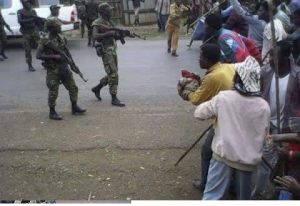
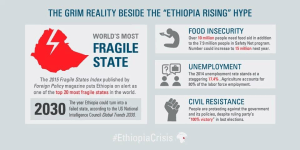

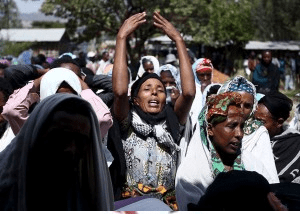

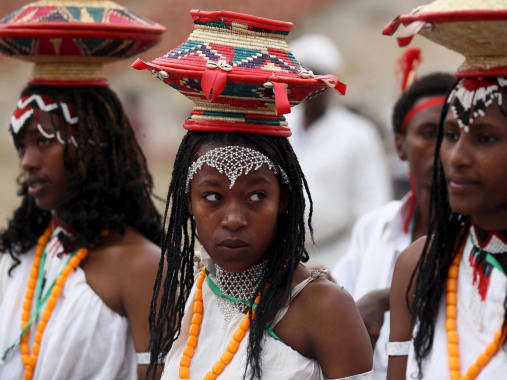




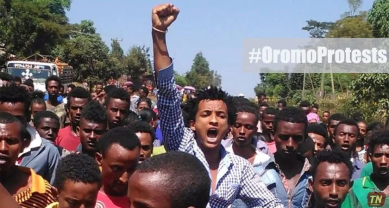
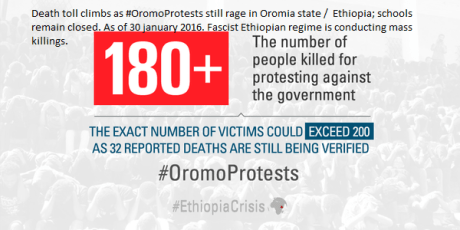
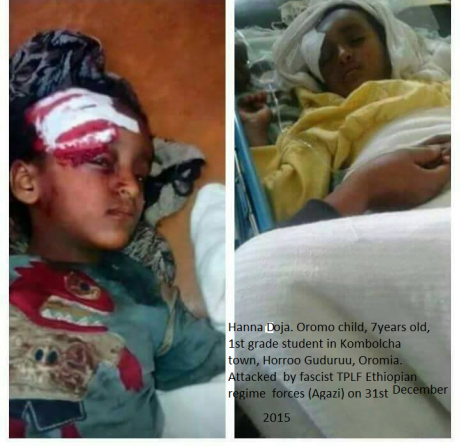


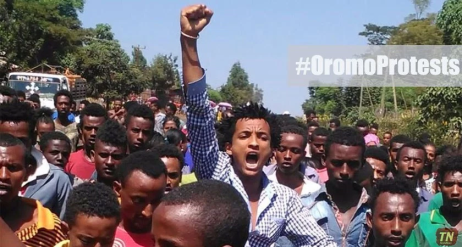
 While some of the new generation are satisfied with the advantages – legal and illegal – associated with their positions, others want to make their voices heard.
 Questioned about the existence of a “wider consensus within the ruling party” on greater economic openness, Arkebe Oqubay replied evasively: “I cannot say 100%.”[15] The opposition is of three kinds: the Ethiopian economic elite is highly disparate, divided between the most powerful groups who hope to be able to piggyback on the influx of foreign investors, and small businesses which consider themselves too weak to withstand international competition. An old “socialistic” ideological current persists. And finally, the nationalistic strain remains strong: no Ethiopian leadership has ever allowed a foreign presence, of whatever kind, to acquire sufficient influence as to potentially escape its control. Yet a massive influx of foreign investors inevitably requires compromises that will one way or another dent that sovereignty.
 The obstacles are huge: the whole culture of power would be turned upside down, along two axes.
 It would also require an end to the wait for the supreme saviour, the ‘strong man’. Even within the TPLF, and even more so in the population of former Abyssinia, many are convinced that only such a figure could stabilise and preserve the structure of power, thus bring a lasting stability, as supposedly demonstrated throughout Ethiopian history.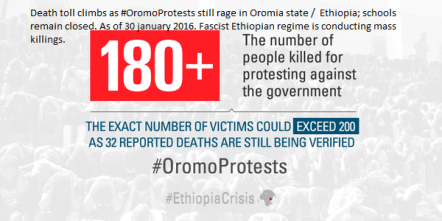
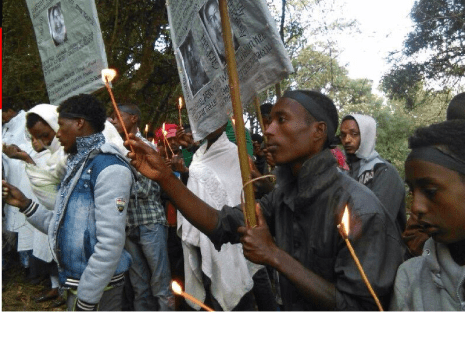
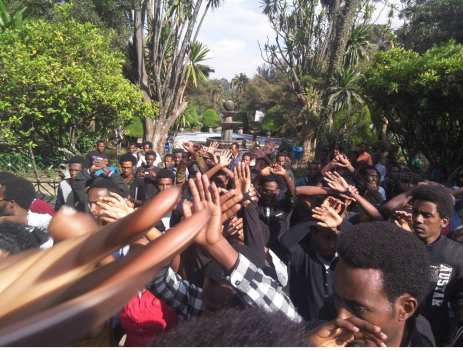


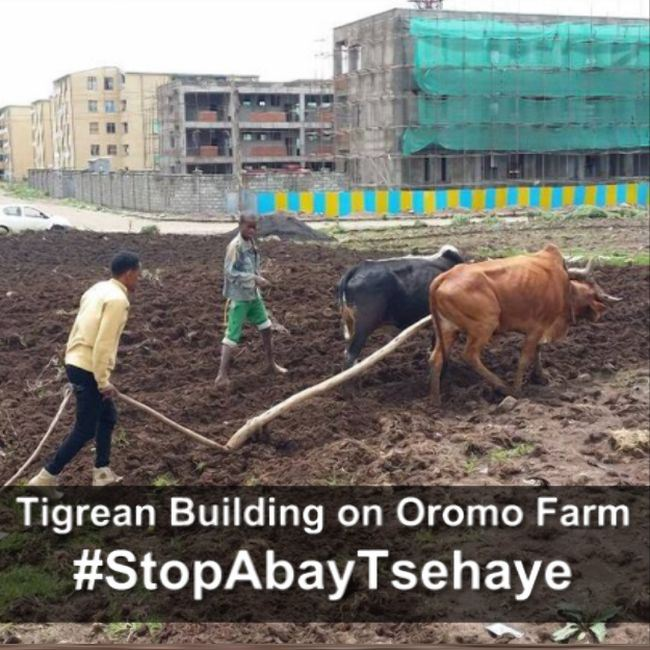


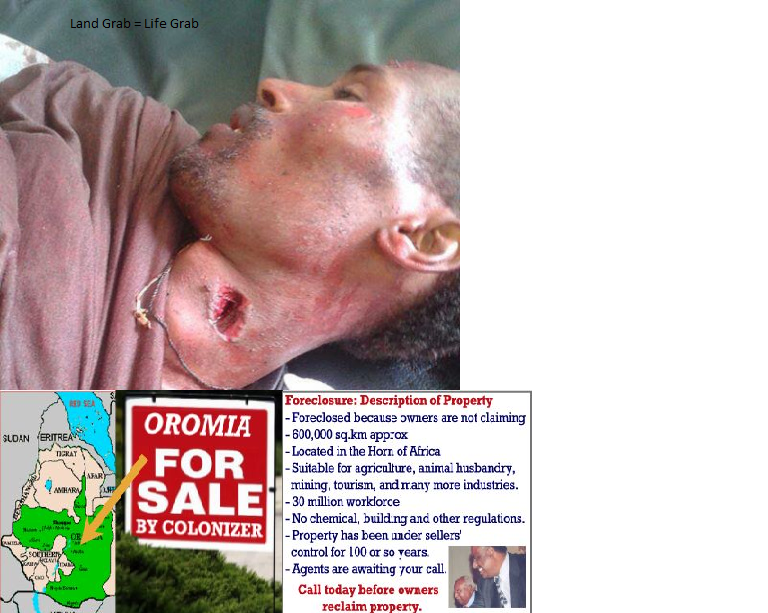




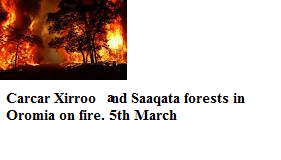
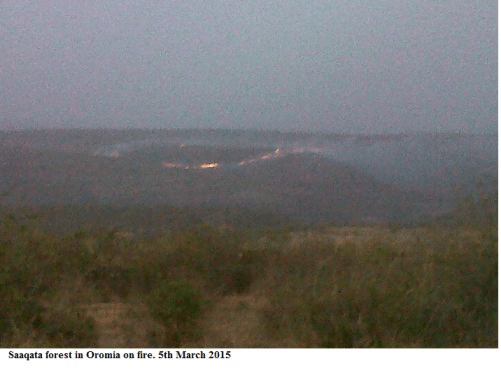
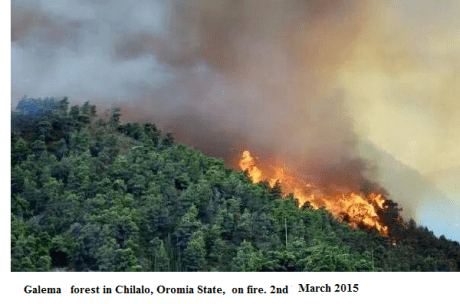
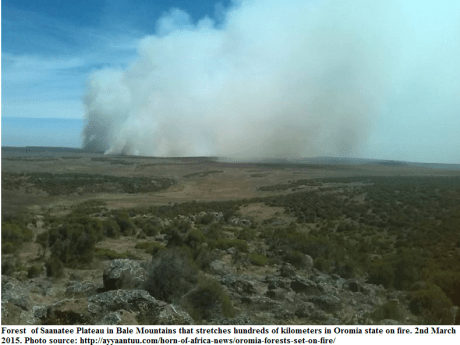
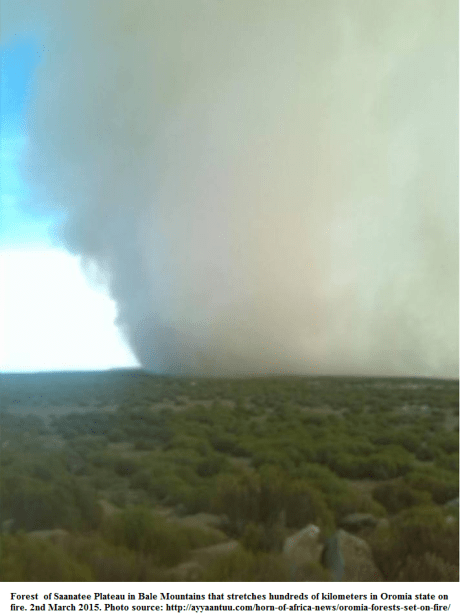
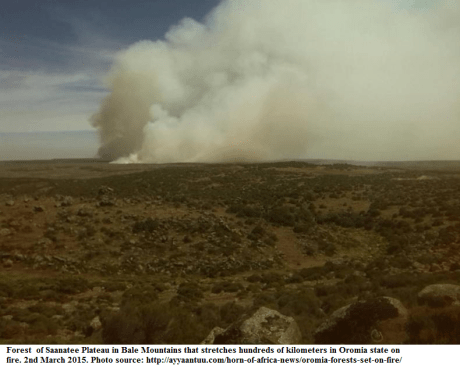
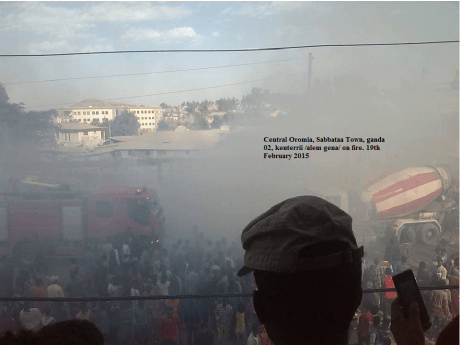

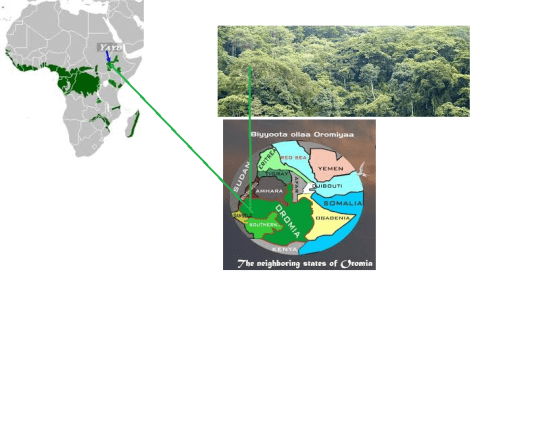




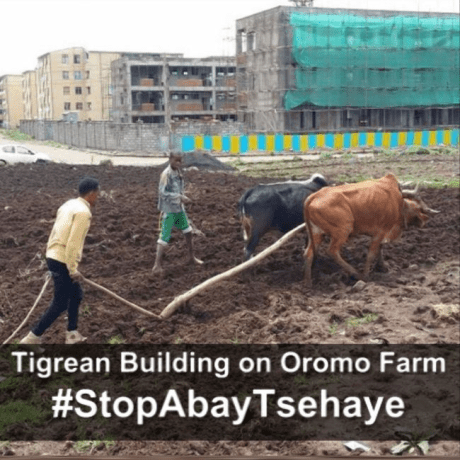
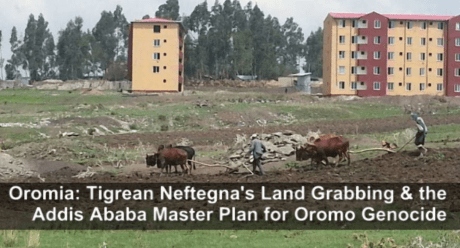

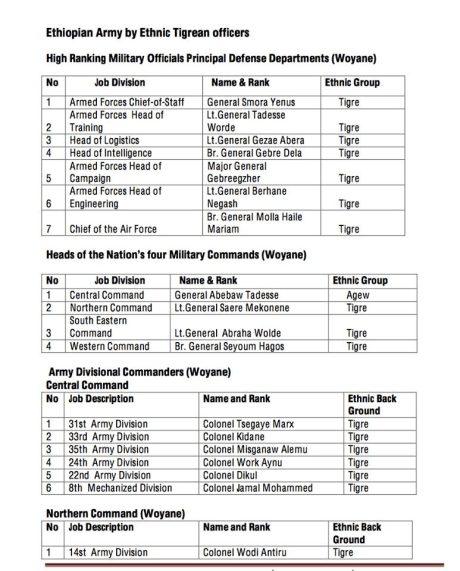


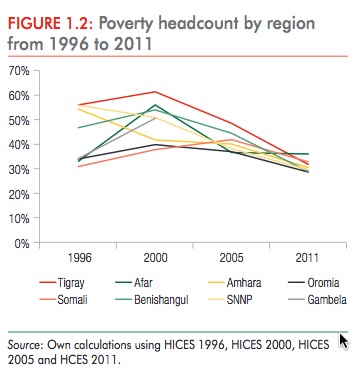

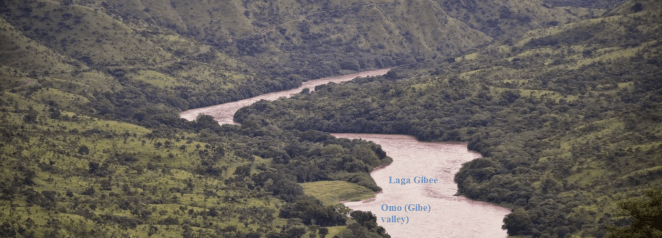
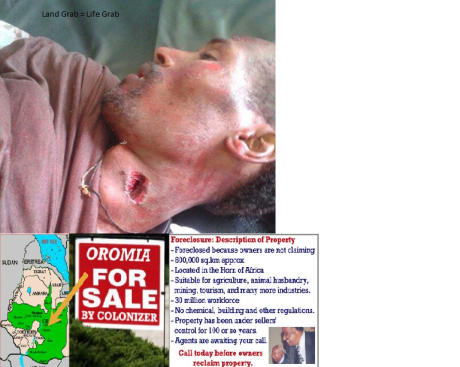
 (Image:

 Here is me picking up from where I left off with my Africa is NOT rising article which is a featured presentation from Mr. AlI Mfuruki from Tanzania. The presentation was done at a Tedx event late last year. This is in fact part 3 of a 3 series post dedicated to his presentation (Simply because his assessment of the “Africa rising” media propaganda was so relevant and accurate for anyone wanting to build the continent). In case you have not had the chance to go through the first 2 posts, here you go:
 In olden times it is customary for rulers to claim mystic origins different from their people. Such origins have some divine trait to justify limitless power for the man at the head, the king. That was how the Solomonic dynast of Abyssinia was told to have been created by a book composed in Egypt, called “Kibira Nagast”.


 January 6, 2015 (BBC) — The construction of a huge dam in Ethiopia and the introduction of large-scale agricultural businesses has been controversial – finding out what local people think can be hard, but with the help of a bottle of rum nothing is impossible.

 The prospect of returning home without interviews is unthinkable. My ruse is to distract my captors.


 Oromian Economist
Obama’s plan to visit Ethiopia criticised as ‘gift’ for repressive government June 24, 2015
Posted by OromianEconomist in Amnesty International's Report: Because I Am Oromo, Ethiopia's Colonizing Structure and the Development Problems of People of Oromia, Afar, Ogaden, Sidama, Southern Ethiopia and the Omo Valley, Free development vs authoritarian model.Tags: 'BECAUSE I AM OROMO’: SWEEPING REPRESSION IN THE OROMIA, 2015 Sham Elections: Marred by rampant electoral fraud, Africa, African Studies, Freedom House in response to comments by Under Secretary for Political Affairs, Genocide against the Oromo, Obama's plan to visit Ethiopia criticised as 'gift' for repressive government, UNPO
add a comment
Obama’s plan to visit Ethiopia criticised as ‘gift’ for repressive government
Ndesanjo Macha for Global Voices, part of the Guardian Africa network
Wednesday 24 June 2015
Activists express anger at US president’s trip to country widely criticised for human right abuses. Global Voices report
Barack Obama’s decision to visit Ethiopia has shocked human rights activists, who say the visit sends the wrong message to a repressive government widely accused of clamping down on dissent.
A White House statement said Obama will visit the east African country for meetings with government officials as part of his last African trip as president. As well as meeting the leadership of the African Union, the visit will form part of US efforts to strengthen economic growth, democratic institutions and improve security in the region.
But as activists and social media users have been making clear, Ethiopia’s track record on human rights and democracy is deeply troubling.
In its 2014 report, Human Rights Watch noted that Ethiopia increasingly clamps down on the freedoms of its citizens “using repressive laws to constrain civil society and independent media, and target individuals with politically motivated prosecutions”.
Last month, Ethiopians voted in parliamentary elections which were widely denounced as unfair. Though the African Union declared that the vote was peaceful, they fell short of using the words “free and fair”.
While the US state department has expressed concerns about restrictions on civil society, media, opposition parties, and independent voices, Ethiopia remains a significant recipient of foreign aid money and security support.
On Twitter Hannah McNeish, a freelance journalist , juxtaposed last month’s suspicious elections results with the White House’s decision to honour Ethiopia with an official visit:
http://www.theguardian.com/world/2015/jun/24/obama-ethiopia-online-outcry-twitter