Economic and development analysis: Perspectives on economics, society, development, freedom & social justice. Leading issues in Oromo, Oromia, Africa & world affairs. Oromo News. African News. world News. Views. Formerly Oromia Quarterly
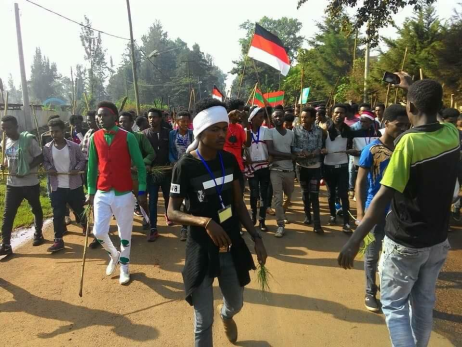
Protests this week in Oromia have raised concerns, with one on Wednesday 11 October 2017 killing 8 people. Sections of the Oromo diaspora accused the Tigrayan People’s Liberation Front (TPLF) of having orchestrated these deadly demonstrations, since they were organized unlike the others.
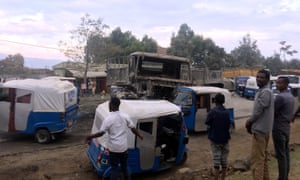
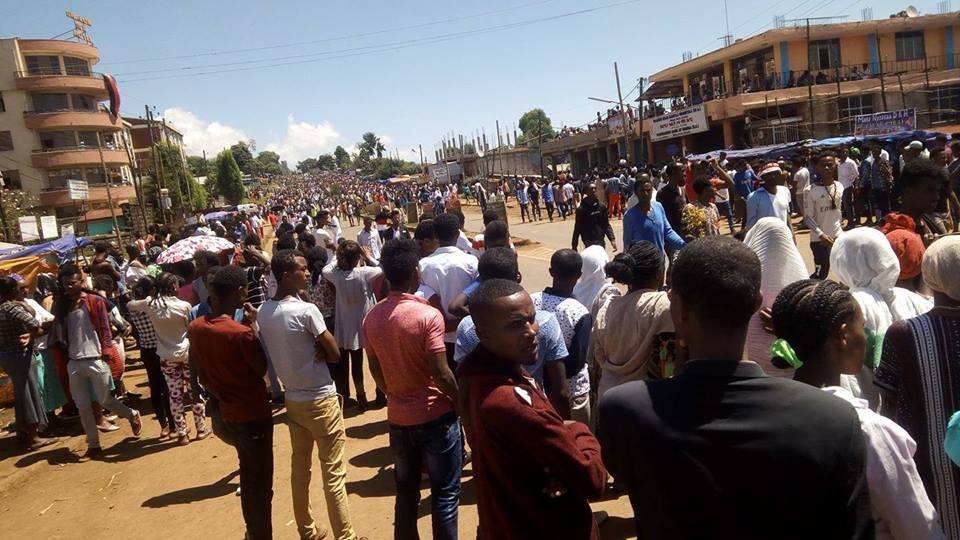
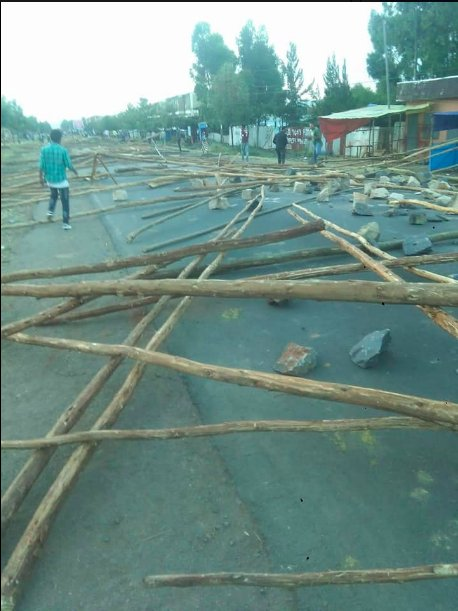
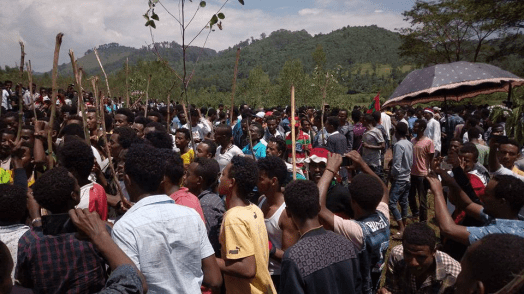
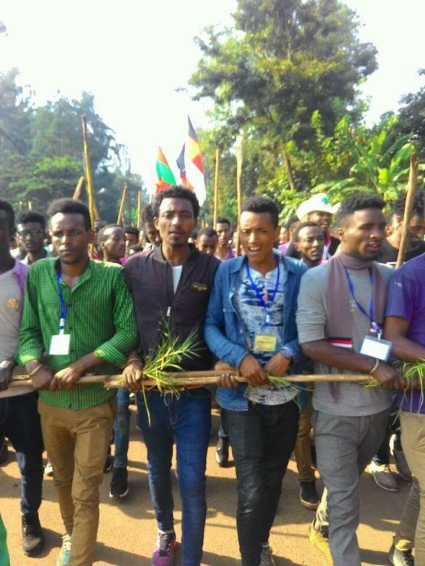
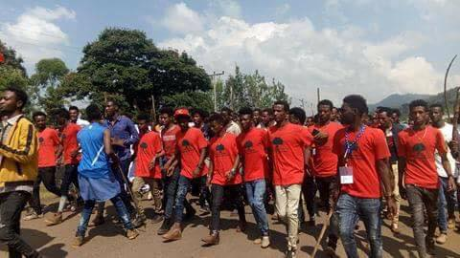
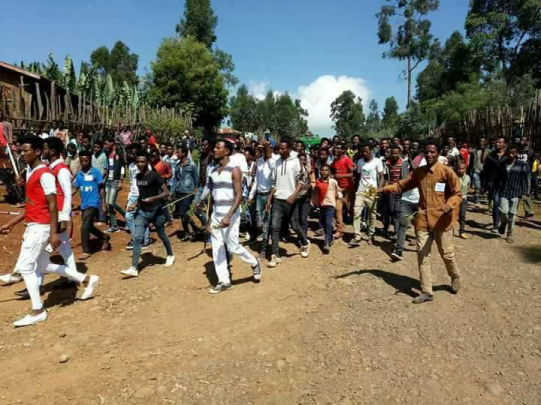
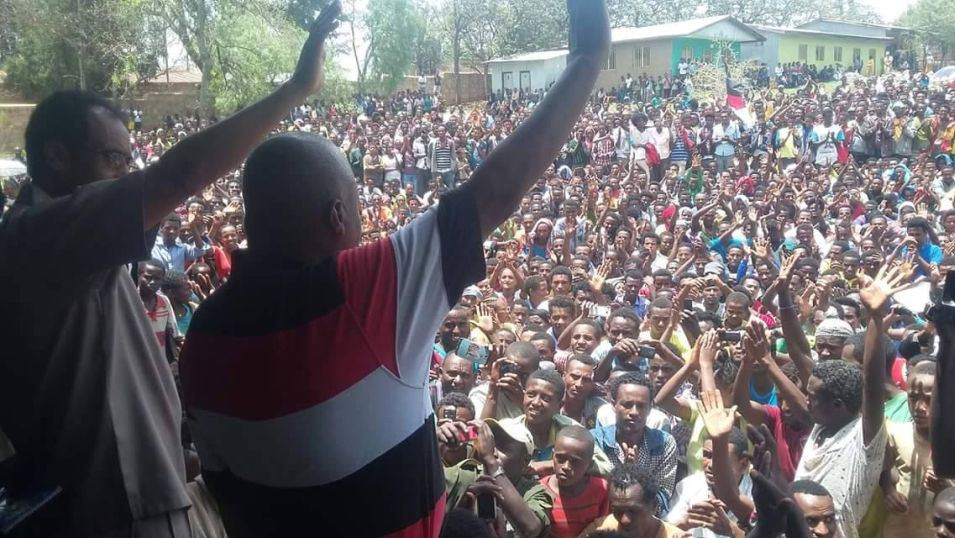
At least 8 people were killed and more than 30 others injured on October 11, 2017 in renewed protests across Ethiopia’s restive Oromia state. Peaceful protests were reported again on Thursday in several Oromia towns, including Woliso in West Shawa, where locals reported a peaceful rally of more than 15,000 people.
Yesterday’s deadly protests appear to have been organized unlike previous ones, which were usually, although not always, preceded by media announcements from abroad. In fact, some diaspora-based activists denounced yesterday’s demonstrations as the work of spoilers and agents of the ruling Tigrayan People’s Liberation Front (TPLF). Officials from the Oromia regional state also said the protests were planned by forces that want to weaken Oromo unity.
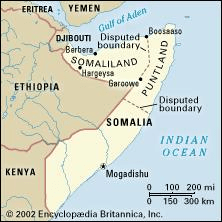
The protests went ahead despite calls for their cancellation. Demonstrators took to the streets in large numbers in more than dozen towns in West Arsi, West Shawa, Wallaga, and Hararge zones. The protests in the latter have been ongoing and largely in response to continued incursions by the Liyu Police of the adjoining Somali Regional State of Ethiopia.
For days, several Oromo activists warned protesters not to join the protests called by unknown individuals under the banner of “waamicha harmee” – meaning Oromia’s call – out of concern that protests lacking clear political goals were fruitless. Although the organizers were unknown, the slogans were nothing unusual: Down down Wayane, release opposition leaders from prison, and no to fake federalism.
What does this mean? Does it mean diaspora activists are being left in the cold by home-based groups who have their own agenda other than waiting on a hollow promise of change to be midwifed by Oromo Peoples’ Democratic Organization (OPDO) at some future date? Does it mean the OPDO has lost control of the streets? Does it indicate the lack of coordination and clear chain of command within the grassroots movement? Was this the inevitable instance of social media being weaponized by state actors? Were there targeted and geotagged campaigns within Ethiopia by TPLF agents and social media consultants?
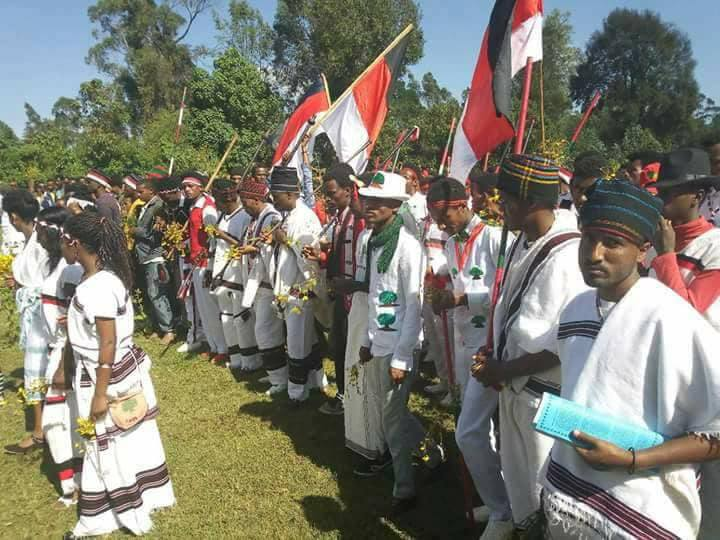
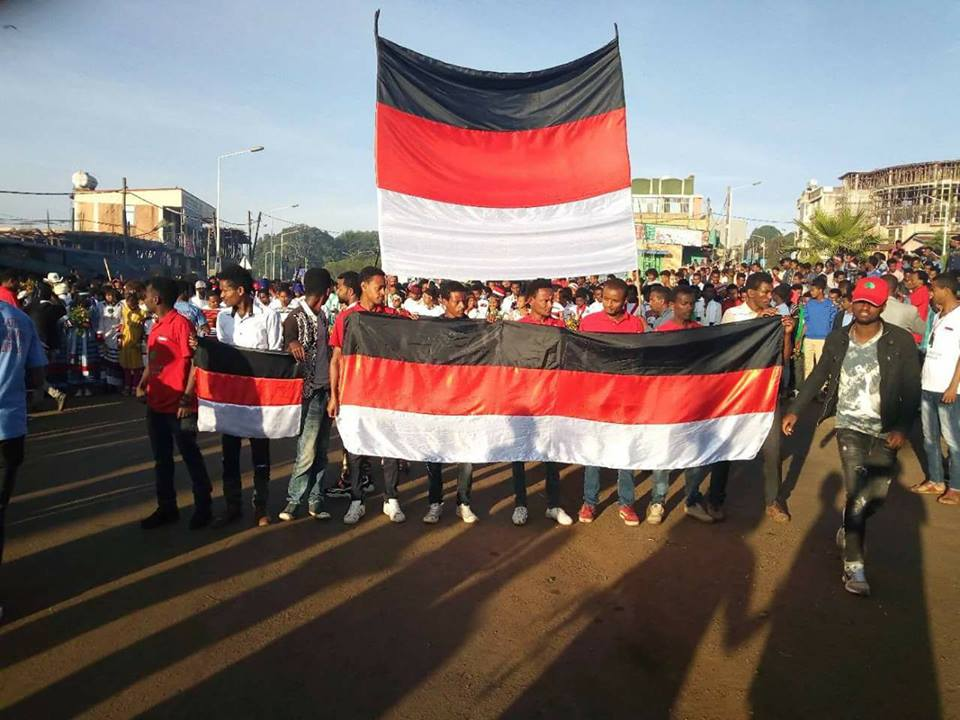
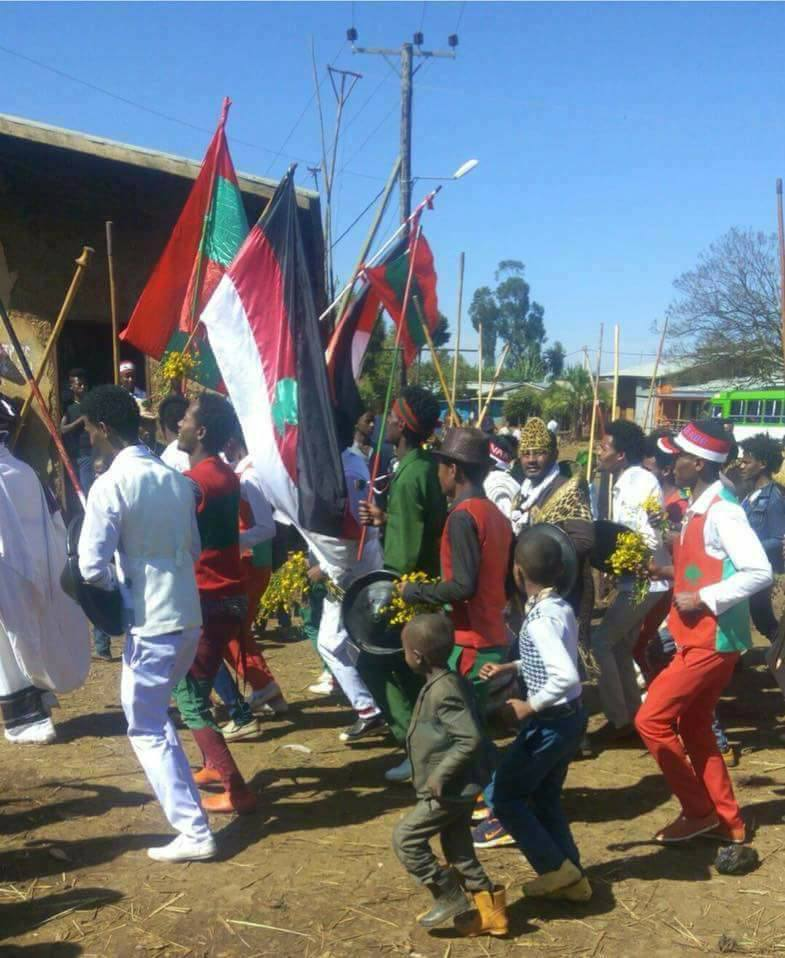
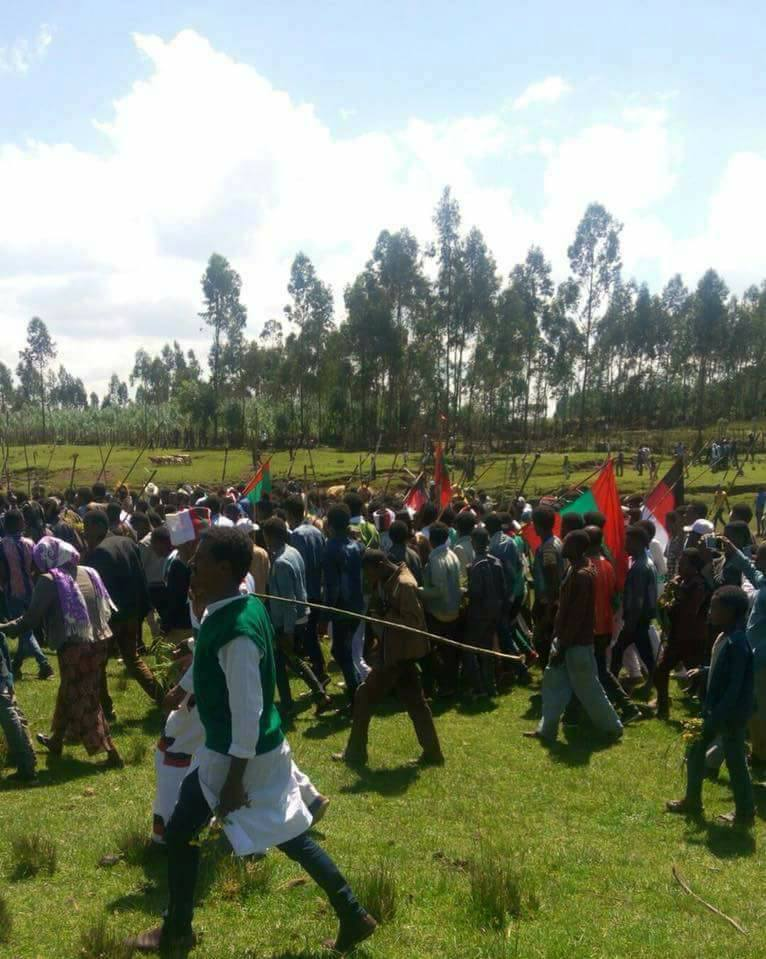
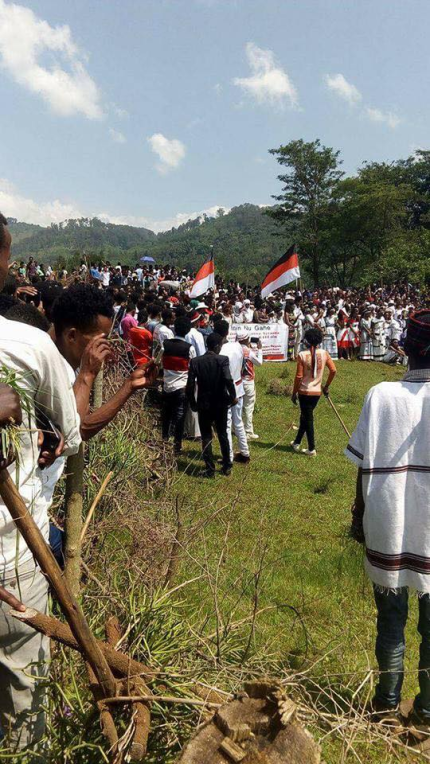
Prior to yesterday’s protests, senior OPDO leaders held massive town hall meetings in flashpoint towns, including Ambo, and it appeared they were connecting with the public. But the widespread protests upended it all. In three-years of protests, the prelude to Irreechaa 2017 was the only time protest leaders across the Atlantic were seen to be on different pages. The peaceful conclusion of this year’s thanksgiving festival signaled that the fences were all mended. Then came the Malka Atete celebrations in Sabata and Burayu towns in central Oromia. The latter events differed from Irreecha by the unusually large display of Oromo resistance flags.
The sheer size of flags at the event came as a surprise because leaders of the Oromo Gadaa council had called on all attendees not to bring any flags and partisan emblems. This led to spirited debates among Oromo activists for several days. Others speculated that the unusually large display of the flags must be the work of some organized group, perhaps even the regime with the aim of using it as a pretext for violent crackdown and justification for another Oromia-wide state of emergency.
The development was significant enough that even pro-TPLF bloggers weighed in. For example, Horn Affairs editor Daniel Berhane noted that when people hoist that flag and mention the name Oromo Liberation Front (OLF), they are not referring to the OLF faction in Asmara but the nation’s spirit of resistance against oppression. This focus on the flag and OLF prompted the Asmara-based group to aggressively pushback on social media, even appearing to suggest it was behind the protests.
From what we know, OLF and its affiliated Qeerroo Bilisummaa did not publicly call Wednesday’s protests and its reach doesn’t extend as widely as the protests were. They simply lack the kind of grassroots organizational capacity necessary to pull off demonstrations of this size. Besides, the group calls its protests Fincila Xumura Gabrummaa (FXG), the final push to end Oromo subjugation, and no calls for protests under this slogan went out. Most importantly, it would have formally claimed responsibility for the massive turnout if it was behind it. Besides, some of the slogans, for example about making the federation meaningful, are contrary to the demands of the Asmara group.
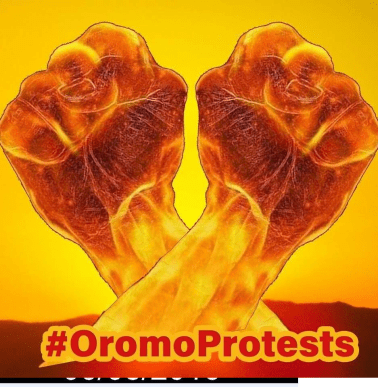
Regardless, #OromoProtests is entering a new critical phase. Many hope that this week’s deadly protests were but a one-off instance of breakdown in communications and leaders of the grassroots movement will move swiftly to assert control. A repeat of a similarly uncoordinated protest would be seen as a sign of rupture within the protest movement. If past trends are any indication, the grassroots movement has been so resilient that it overcame its shortcomings after each hiccup.
Revolutions are slow-cooking. However, prolonged revolutions tend to self-destruct and atrophy. The culprit is usually the appearance on the stage of dark forces that may not necessarily be in line with the overall objective of the movement other than disrupting the status quo. Without the decisive battles that mark watershed moments and make whatever gains are made irreversible, revolutions are still in uncertain waters.
So far the gains made as a result of the huge sacrifices incurred over the past three years are largely symbolic and rhetorical…with the possible exception of the change of attitude by Oromia police as well as the Oromia regional administration. It had once appeared as if the latter is in charge. Yesterday’s mass protests requires a rethink of all calculations by the OPDO and diaspora activists and all responsible forces.
That said, OPDO leaders should not and could not rest on their laurels. The youth protesters have great sympathy for their plight and dreams of autonomy from the domineering Center. Arresting suspects in the killing of protesters yesterday is a remarkable departure from the past and could only increase sympathy towards the regional government. However, sympathy is far from loyalty. Besides, the organization is only recently baptized as part of the Oromo struggle for freedom rather than a Trojan horse for the TPLF, which was the prevailing view among the Oromo public until 2014, when nation-wide protests broke out, and more incontestably after October 2016 when Lemma Megersa and his nationalist wing of young Turks took the helm at the organization. Protesters will garner confidence only after seeing concrete change at the federal level. The changes in Oromia state level are encouraging. The state-run media outfit is putting out critical reports and airs documentaries critical of the federal authorities that have refused to heed the demands of the Oromo people and instead ordered not only killing of peaceful protesters but also displacements of thousands from their ancestral homes using a proxy army, the Somali regions Liyu Police. But that is far from enough.
Labeling it as the work of the enemy harkens back to the dark days of the past when Oromo against Oromo rivalries undermined a united struggle against oppression and marginalization. Rather than the work of an enemy or http://www.satenaw.com/breaking-news-least-eight-killed-dozens-wounded-protests-across-oromia/internal saboteurs, the protests could also signal a renewed push towards taking the struggle into a new stage aimed at changing the TPLF regime.
The link between currency devaluation and domestic inflation
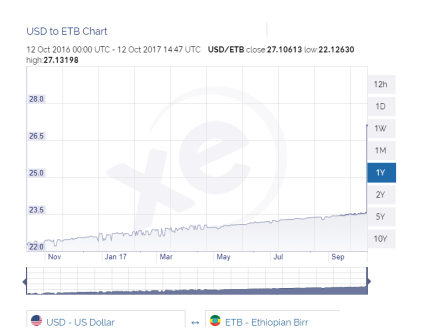
Ethiopia has been devaluing the Birr, in part because of pressures from the International Monetary Fund (IMF). Cheaper domestic currency, Vis a Vis major international currencies, makes exports more attractive to foreigners if a decent segment of the economy is based on manufacturing or, if the manufacturing sector is expanding and looking for international markets. Devaluing domestic currency makes exports more attractive to foreigners, which in turn spurs economic growth. The flip side of that is, cheaper domestic currency makes imports more expensive. Ethiopia imports medicine, fuel, food, and almost all productive capital, vehicles, and many more consumer goods. Cheaper currency means it takes more Birr to buy one foreign currency. Ethiopian importers will naturally raise their prices (inflation) to cover additional costs incurred because of a weaker Birr. The cost of devaluing the Ethiopian Birr may outweigh its benefit as the Ethiopian economy is still largely agricultural. The demand for agricultural products and minerals on the world market is largely stable and Ethiopia does not need to cheapen its currency to sell more to foreigners. The reason Africa can’t get a foothold in manufacturing is Chinese dumping of cheaply manufactured goods, not inability to access world markets for Africa’s manufactured goods. African infant manufacturing industry simply can’t compete with predatory practices of foreign manufacturers.
Ethiopia could simply let the exchange rate float. A floating exchange rate means the price of the Birr vis a vis major international currencies is determined by the relative supply and demand of the currencies. Consider the U.S. Dollar and the Birr are just goods like any other; say salt, just as in a free market the price of salt is determined by the supply and demand of salt, the exchange rate (price of Birr in Dollar) will be determined by the relative supply and demand of the two currencies. The United States follows floating exchange rate. In Ethiopia, the exchange rate is fixed by the National Bank. Fixed exchange rate always creates arbitrage opportunities as it seldom reflects the will of the international currency markets. The latest devaluation of the Birr ( 1USD = 27.07 Birr) will undoubtedly create more domestic price inflation as Ethiopian importers will raise prices on their imported goods. With the increase in the wage rate trailing far behind increase in prices, workers are getting a wage cut in real terms. Rising general level of prices means rising input prices. When input prices rise, manufacturers cut back on output, which means even more unemployment.
Inflation, two fundamental factors
When the Ethiopian parliament opened on Monday, President Mulatu Teshome made bold claims about the state of the Ethiopian economy. I will address the merits/demerits of that claim at a later date. Today, I will talk a little bit about the fundamental causes of domestic currency devaluation (inflation). There are two fundamental causes of currency depreciation:
1. The productive capacity of an economy.
2. The size of the money supply.
When an employee creates more value through increased productivity, his/her salary should increase proportionately. If the money supply in a country is fixed while productivity is increasing, each unit of currency will store greater value. On the other hand, if the increase in the money supply is proportionate to the increase in productivity, the amount of purchasing power (value) stored in each unit of currency remains unchanged. But, if you have a runaway money supply, that is, if the money supply grows faster than the growth in productivity, the value stored in each unit of currency decreases, and we call that inflation. When there’s more money in the economy than the productive capacity of the economy, the general level of prices increases and we call that demand-pull inflation. When prices of productive inputs rise, producers increase prices on finished products in order to recoup higher payments for input and, that can also lead to inflation; inflation created through an increase in input prices is called cost-push inflation. This source of inflation is less likely in Ethiopia as the manufacturing sector contributes less than 40% of the Ethiopian GDP.
The American Federal Reserve Bank’s counterpart in Ethiopia is the National Bank of Ethiopia. The National Bank is supposed to oversee the monetary policy of the country, including managing the money supply. The National Bank is supposed to be independent of undue political influence from the executive branch of the government. In Ethiopia today, appointments to key positions in the National Bank are based more on loyalty to the regime than professional aptitude. With that in mind, it’s easy to see how monetary policy could be mismanaged.
This is just to offer basic explanation of the issue without technical jargons. Exchange rate is the price of one country’s currency in terms of another country’s currency. For instance, the price of Birr in terms of U.S. dollar or vice versa. Exchange rates affect large flows of international trade (imports and exports). Foreign exchange facilitates flows of international investment, including foreign direct investments (FDI. Countries follow various exchange rate regimes: fixed exchange rate, pegged exchange rate, floating exchange rate, and managed floating exchange rate. The exchange rate regime of Ethiopia is characterized as managed floating exchange rate regime, which partly depends on supply and demand but with some government intervention in the exchange rate market, to concurrently adjust both exchange rates and foreign exchange reserves, monitored by the World Bank and the International Monetary Fund.
What is Devaluation?
Devaluation is mainly government intervention in the exchange rate market of the country to determine the price of Birr in terms of dollar-some kind of government price setting. Simplified, devaluation makes Birr cheaper relative to the dollar, and hence you will need more Birr to get a dollar, compared to the current rate of exchange. In short, you need more Birr to buy a unit of dollar, and the people who can afford to buy dollar declines.
The recent announcement states that Ethiopia devalued its currency (Birr) by 15% per cent, which means you will need 15% more Birr to buy a dollar since Birr has become cheaper by 15%.
Why Do Countries Devalue their Currencies?
There are several reasons behind the need to devalue currencies. Some do it to promote exports and restrain imports. The simplified assumption is this. If the local currency becomes cheaper due to devaluation, foreigners can buy the local export products more cheaply and hence exports will increase. On the other hand, cheaper local currency can serve as an import restraint since foreign products become more expensive in local currency and importers need more Birr to buy foreign products, and hence increase the cost of living.
When it comes to the developing economies like Ethiopia, with limited export promotion power, the devaluation policy measure is mainly related to exchange rate stability due to imbalance between supply and demand of hard currencies. As repeatedly explained by the government officials, including the PM & the President, there is severe shortage of hard currencies in Ethiopia caused by limited hard currency earning power of Ethiopia’s exports whereas imports have grown folds more than exports. Ethiopia gets dollar from exports and needs dollar for the imports. The gap between the dollar earning and dollar spending capacity leads to part of the current account deficit called trade deficit (export values greater than import values). The gap has been expanding every year-even more so in recent years.
If you buy something (imports) you have to pay for it via exports, foreign aid in hard currency, remittances, etc. The growing gap between exports and imports is not sustainable. It’s important to note that foreign exchange rate crisis is one of the major sources of economic crises that ravaged the economies of a number of countries. Google exchange rate crisis to read more about it.
Therefore, the devaluation of Birr, which has been urged by the World Bank for years, is the policy measure undertaken by the regime to relieve a crippling dollar shortage and meager foreign exchange reserve of Ethiopia. The World Bank, EU, IMF, etc. cover the foreign exchange gap of Ethiopia so that the economy does not collapse due to the shortage of foreign exchange. Without international support and the Diasporas remittance, Ethiopia can easily become hard currency illiquid country that cannot pay for its imports or pay for its debts in hard currency.
Although the shortage of hard currency is a common phenomenon of poor countries with limited exports, the widening gap between Ethiopia’s earning and spending in hard currency is evidently not sustainable. It can kill economic growth. At worst, it can lead to economic crisis due to currency (exchange rate) crisis since there is vivid evidence of liquidity gap in hard currency in Ethiopia owing to its weak foreign exchange earning capacity. Illicit outflow of hard currency is another key problem aggravating the pain.
Simply put, devaluation is not a success story as some want us to believe. It’s a desperate policy measure undertaken to ease the pain of severe shortage of hard currency and its adverse impacts.
I will highlight the effects of devaluation on consumers, business, foreign exchange shortage, etc. in my next note.
I was listening to the slogans and songs of the Oromo people who were protesting again throughout Oromia region in their tens of thousands in each localities. The following ten points are the essence of the demands of the people as expressed through their slogans and songs.
Based on the the slogans and songs of the protesters, I recommend the TPLF/EPRDF government to immediately carryout the following policy reforms to meet the demands of the Oromo people and calm the situation:
1. End all forms of TPLF/EPRDF interference and indirect rule in the Oromia Region through the federal police, federal security, and federal military and federal justice structures of the federal government that denied the Oromo people direct self-rule.
2. Make Afaan Oromo Federal Working language on equal footing with Amharic.
3. Restore the status of Addis Ababa as an Oromia City.
4. Release all political prisoners including Dr. Merera and Mr. Bekele Gerba.
5. Dismantle the Somali Janjaweed Militia locally known as Liyu Police. Remove all the federal military and security officers who organized and lead the aggression and invasion of Eastern and Southern Oromia by the Somali Janjaweed Militia and caused the displacement of over 600,000 Oromo civilians. Resettle back all the displaced on their land, and compensate them for their Janjaweed looted property. Bring to justice the killers of our people.
6. Increase the number of Oromo federal workforce both in the military, security and civil service sectors from the current 10% to at least 40 to 50% in proportion to the population size and economic contribution of the Oromia region.
7. Restructure the power balance within EPRDF based on the population size of EPRDF member parties or dismantle it all together to establish a new coalition government.
8. Repeal and end all land grab policies, compensate and resettle the Oromo farmers evicted from their ancestral lands.
9. Make all companies in all regions to pay tax to the coffers of the respective regional governments to increase the economic benefits of the region’s population instead of the current monopoly by the federal government.
10. Develop clear economic policy that will end the marginalization and exclusion of the Oromo people from the Ethiopian economy including restoring the ownership of the Oromo people on their natural resources, produces, goods and services.
Ethiopia lifted its state of emergency on 7 August.? It was first introduced on 9 October 2016, following protests mainly by the Oromo and Amhara populations, who together account for over half of Ethiopia’s population. Both ethnic groups were protesting against the Tigray-dominated government on issues including inequality, economic marginalisation, corruption, and lack of political space.?Defence, foreign ministry and other key government posts are held by Tigrayans, who account for 6% of the country’s population.?? Protests began in the Oromia region in November 2015, following a plan to expand Addis Ababa into surrounding land owned by Oromo farmers. In July 2016, the Amhara population began protesting.? Violence escalated in October 2016 when over 50 people were killed during an Oromo religious festival that turned into an anti-government protest.At the beginning of the state of emergency, the government promised deep reform. In July 2017, the government announced a bill that includes measures such as making Afan Oromo an official language, setting up Afan Oromo schools in Addis Ababa, and establishing a joint council with the federal government to administer the city. Many deemed the bill insufficient.? As of August, the government has not addressed fundamental issues such as demands to open up political space, and to allow dissent and tolerance of different perspectives.?In August, people in the Oromia region held a five-day strike to commemorate protesters killed during the 2016 protests. Some sources say the strike was also in protest of a tax increase for small business owners. ??
As of late September, clashes have been taking place among Oromo and Somali groups over border demarcations. The government announced they will place federal police at roads that cross both regions and that security forces of both regions will withdraw from border locations. They also stated they will disarm civilians living in the conflict areas.? There are diverging acounts of what is causing the clashes. Oromo officials have accused the Somali police force, the Liyu police, of staging attacks in an attempt to drive Oromos out of border areas. While the Somali regional government claim it is members within the Oromo government in conjunction with the Oromo Liberation Front, a group that have been branded as terrorists by the government of Ethiopia. Tensions have existed between the two sides for years over border demarcations and competition over resources. Another view expressed by some activists is that the situation has been orchestrated by the central government, who are using the Liyu police to divert attention away from the issue of suppression of the Oromo people, whose concerns remain unaddressed despite the removal of the state of emergency. ????
Media censorship is common in Ethiopia but was further reinforced following the state of emergency, with many journalists engaging in self-censorship to avoid harassment or arrests. Since 2010, at least 75 journalists have fled the country. Access to the internet is frequently blocked and international radio signals jammed. Social media was a key factor in mobilising protesters and is since carefully monitored by authorities.?
Humanitarian organisations are heavily regulated in Ethiopia and may be terminated at the government’s behest. The 2009 Charities and Societies Proclamation severely limits the activities of independent nongovernment organisations. An NGO that receives over 10% of their funding from international sources is banned from advocacy activities, work on human rights or conflict resolution.? In April the UN High Commissioner for Human Rights was denied access to Oromia and Amhara regions to investigate government abuse against protesters. ? Insecurity at the Somali and Oromia borders have hindered WFP activities for the dispatch and distribution of food aid in July.?
DISPLACEMENT OVERVIEW
Latest update: 03/10/2017
There are some 852,700 refugees and 1,056,700 IDPs in Ethiopia as of 20 September and 4 July respectively, more than half of whom are in the Somali region, the majority of which is in Emergency (IPC 4) levels of food insecurity.???
IDPS
Latest update: 09/10/2017
There are an estimated 1,056,738 IDPs in Ethiopia as of 4 July. 843,367 are displaced due to drought, and the remainder are displaced due to conflict. ??The distribution of the displaced is as follows:
Region
Number Displaced
AMHARA
8 921
TIGRAY
28 954
GAMBELLA
17 472
OROMIA
367 557
SOMALI
577 711
HARARI
3 600
AFAR
52 523
RECENT CONFLICT RELATED DISPLACEMENT:
Clashes on the border of the Oromia and the Somali regions have left some 45,000 households displaced, equating to some 225,000 people. ? Their needs are currently being met by the government and there is only limited information available. ?While parts of Oromia region have been affected by flooding, none coincide with the area experiencing this conflict-related displacement. ?
REFUGEES AND ASYLUM SEEKERS
Latest update: 10/10/2017
Ethiopia hosts one of the largest refugee populations in Africa. There are some 883,775 refugees. 58% of refugees are under 18. As of 30 September, Gambella hosts the largest refugee population, at 397,455 refugees. ?In other regions, as of 4 July there are 212,000 in Melkadida, Somali region, and 55,700 in Assosa, Benishangul-Gumuz region, 37,000 in Jijiga, northeastern Somali region, 34,900 in Samara, Afar region, 37,800 in Shire, Tigray region, 20,000 in Addis Ababa, and 3,800 in Borena. The majority of refugees are in camps. ? Trends show the highest numbers of monthly arrivals between September and December, meaning an increase in arrivals is expected in the coming months.?
South Sudan: There are 397,455 South Sudanese refugees as of 30 September.?There was a large influx in late 2016 following an escalation of violence in South Sudan: from September until December approximately 42,800 refugees arrived. ?
Somalia: As of 15 July, there are approximately 251,393 Somalian refugees, 6,256 of whom arrived this year as of 15 July. 88% of arrivals this year are women and children.?
Eritrea: As of 7 June, there were over 161,398 Eritrean refugees. ?17,000 Eritreans have arrived in Ethiopia so far this year, compared with just 7,000 in all of 2016.???
Sudan: As of 7 June, 41,588 Sudanese refugees were registered. ?
Yemen: As of 7 June, 1,670 Yemeni refugees were registered. ?
Other Nationalities: There were over 5,800 refugees from other countries in Ethiopia as of 7 June. ?
RETURNEES
Latest update: 12/09/2017
The Kingdom of Saudi Arabia has ordered undocumented migrants from Ethiopia to leave the countryin June. More than 500,000 Ethiopians are estimated to be affected by the order, over half of which could potentially return to Ethiopia. As of 31 July, 60,000 have returned. ? Human Rights Watch has warned that many are at risk of imprisonment if they are forced to return, as many fled following the anti government protests in 2015.?
FOOD SECURITY AND LIVELIHOODS OVERVIEW
Latest update: 03/10/2017
Some 8.5 million people are in need of food aid as a result of drought, a considerable increase from January estimates of 5.6 million. The areas most affected are the southern and southeastern pastoral and agro-pastoral areas of SNNPR, southern Oromia and southern Somali regions. In Somali region, 3.3 million people are food insecure. More than 50% of the caseload is in Korahe, Doolo, and the southern Afder zones.??? This is not expected to improve in the near future as the 2017 Belgharvest is expected to be below average in some areas.?The upcoming rains in October are also expected to be below average in some areas of the Somali region, according to Ethiopia’s National Meteorology Agency, with potentially late onset and an early finish. This would lead to a further deterioration of the food security situation.?
The prevailing drought conditions in southern and southeastern Ethiopia are due to failed Deyr/Hageya rains from October to September 2016, followed by poor Gu/Genna rains from March to June. Cumulative seasonal rainfall was up to 60% below average. This has resulted in a high animal mortality rate, a reduction in milk production, and a loss of livelihoods. Severe water and fodder shortages have negatively impacted crops and livestock. ?
Excessive livestock deaths and lack of other income earning opportunities mean that Emergency (IPC Phase 4) outcomes are expected to continue in the Somali region until January 2018. Areas of Amhara, Tigray, and northeastern SNNPR are expected to remain in Crisis (IPC Phase 3) until October when the Meher harvest begins.??
Food insecurity is driving negative coping mechanisms among the population. These include: reducing livestock herd sizes, selling remaining assets, skipping meals, begging, and increasingly, displacement in search of food. ?In Tigray region, 33% of the assessed woredas reportedwomen and girls trading sex for food. ?
Map
Food Security, IDPs and Refugees
Source:
ECHO 04/07/2017
FOOD AVAILABILITY AND ACCESS
Latest update: 10/10/2017
Late rains together with an armyworm infestation are expected to lead to a significantly reduced harvest in October. ?Once agropastoral and pastoral households exhaust current food stocks they will face poor access to food due to to high staple food prices, reduced livestock herd sizes, and low levels of milk production from livestock.? Staple food prices have remained high across markets in South Sudan. This is driven by economic condition such as the hyperinflaction, depreciation of local currency, as well as depleted stocks from previous poor harvests.? The Climate Prediction Center has warned of a La Nina phenomenon that could affect October, November, and December rainfall in eastern Ethiopia.? Another season of poor rainfall will limit water availability and reduce harvests. ?
Seasonal Calender, Source: Fewsnet 04/08/17
LIVELIHOODS
Latest update: 03/10/2017
More than 80% of Ethiopians rely on livestock and agriculture as a primary source of income and food. The recent drought has reduced production by up to 50-90% in some parts of the country, resulting in weakened purchasing power, diminished food security, and forcing many to abandon their livelihoods. In June, herd sizes were estimated to be 70% below average because of high mortality rates.? Over 2 million animals have already died due to shortages in fodder and water.?The remaining animals are producing increasingly less milk and there is also less meat production.?2.25 million households require livestock support.?The reduced livestock size may take three to five years to recover and this will greatly impact on household food access during this time.?
Improved rains in August have presented an opportunity for re-planting in areas where crops were failing. Emergency seeds need to be distributed to farmers before mid-September, when the timeframe for planting ends. ?
ARMYWORMS
As of 30 August, over 600,000 hectares of maize land has been affected by fall armyworms. This accounts for 22% of all maize planted.?Six regions have been affected; Amhara, Beninshangul-Gumuz, Gambella, Oromia, SNNPR, and Tigray.?This is a considerable increase from 19 May, when 49,000 hectares of cropland were impacted across two regions. ? Nine million small farms grow maize and tend to consume 75% as food for their family. The remainder is usually used as animal feed. Armyworms feed on maize and this outbreak threatens the livelihoods of these farmers. ? If not contained, armyworms could compromise up to 2 million hectares of Ethiopia’s crops, reducing maize production by 30% nationwide. ?? Chemical spraying and other traditional measures are underway to control the crop infestation, although the fall armyworm is highly invasive and has spread from Southern Africa to East Africa in 2017.?? There is growing concern that the outbreak will start to affect other crops such as sorghum in Afar, Amhara, Somali and Tigray Regions.?
In this photo provided by the University of Chicago, Richard Thaler poses for a photo with his books at his home in Chicago after winning the Nobel prize in economics, on Monday.
Anne Ryan/AP
Updated at 7:20 a.m. ET
The 2017 Nobel Prize in Economic Sciences has been awarded to Richard Thaler of the University of Chicago for his pioneering work in behavioral economics.
The announcement from the Royal Swedish Academy of Sciences in Stockholm said the 72-year-old Thaler “has incorporated psychologically realistic assumptions into analyses of economic decision-making. By exploring the consequences of limited rationality, social preferences, and lack of self-control, he has shown how these human traits systematically affect individual decisions as well as market outcomes,” the committee said in a statement.
The relatively new field of behavioral economics studies the effects of psychological, social, cognitive and emotional factors on economic decision-making.
“Human behavior is very complex. So, if we want to construct useful models of economic behavior, we have to make simplifications. One such simplification which has been very important in economics is the assumption that humans behave in a fully rational way and make economic decisions in a way as to maximize their own well-being,” Per Strömberg, chairman of the prize committee, said.
Over time, Strömberg said, researchers have gathered more evidence from psychology on how humans deviate from rational economic decisions. “Richard Thaler is a pioneer when it comes to incorporating such insights from psychology into economic analysis,” he said.
“Thanks to his contributions and discoveries, this new field [of behavioral economics] has gone from being sort of a fringe and somewhat controversial part of economics to being a mainstream area of contemporary economic research,” the chairman of the prize committee said.
Speaking from his home in the United States to a news conference at the Royal Academy, Thaler said he felt the most important impact of his work was “the recognition that economic agents are human.”
Among Thaler’s contributions to the field are his “theory of mental accounting, explaining how people simplify financial decision-making by creating separate accounts in their minds, focusing on the narrow impact of each individual decision rather than its overall effect,” the Academy said.
One area singled out by the committee is Thaler’s work on retirement savings. He was an early proponent of employers automatically enrolling their workers in 401(k) programs. He also developed a “Save More Tomorrow” retirement plan that encourages people to put future salary increases toward retirement.
Kenny Malone of NPR’s Planet Money says Thaler is “a bit of a rock star” in the field of economics.
“In terms of real-world implications, once you start to understand the ways that we are weird, irrational beings, you can structure policies to move people toward the ends that you would want,” Malone tells Morning Edition.
Thaler made a cameo in the movie The Big Short, where he explained the “hot-hand fallacy” about the belief that someone who has experienced success in something involving random chance has a greater chance of further success going forward.
Asked whether he thought that applied to President Trump, Thaler responded with a chuckle, “I think he would do well to watch that movie.”
When the same Swedish journalist asked what Thaler would do with the 9-million kronor ($1.1 million) monetary portion of the Nobel award, the economist: “I will say that I will try to spend it as irrationally as possible.”
For the last 26 years, Ethiopia has been suffering from a super centralized TPLF autocratic, barbaric and terroristic rule.
It is beyond dispute that the recent event witnessed in Eastern and Southern Oromia is nothing but TPLF’s last ditch futile effort at the triangulation and expansion of the conflict in the face of the ongoing broad based and persistent opposition to its repression. The Oromo, Amhara, Somali, Sidama, Gurage, Wolayita and the other Ethiopian peoples are saying NO, in one voice, to the decades of repressions, killings, incarcerations, humiliations, displacements and robberies of their resources by the TPLF junta. The Ethiopian people are rising in unison to break out of the shackles of slavery and fear the TPLF has put them in.
It is a well established fact TPLF’s longstanding strategy of diffusing bipolar conflicts between itself and the Oromo, Amhara, Somali, Sidama or Gurage people –just to mention the major heavy weights in Ethiopian politics in terms of shear demographic size – is triangulation of the conflict. For instance, the TPLF always attempts to add a front to the real conflict between itself and the Oromo people and between itself and the Amhara people by inciting (fabricating) conflict between the Oromo and Amhara peoples. Based on this strategy, the TPLF has been attempting incessantly for the last 26 years to incite conflicts mainly between the Oromo and Amhara peoples. Fortunately, the diabolical efforts by the TPLF has been rendered for the most part pre-emptively ineffective thanks to the long history of peaceful coexistence between the two peoples.
Moreover, the massive demonstrations held in Oromia and Amhara States over the recent years put, in no uncertain terms, the final nail to the coffin of this TPLF’s savage strategy triangulating the conflict as TPLF-Oromo-Amhara conflict. The dumb-founded TPLF was left with nothing but to whisk a few bribed Somali elders carrying a “10 million birr donation check” to Mekele instructing them to tell the people of Tigray that they are not alone in this and that the Somali people are by their side. This was intended not only to calm the Tigray people who have been growing increasingly isolated, nervous and uncomfortable by the latest cascades of erratic and impulsive reactions by the TPLF to suppress the popular demands but it was also to officially declare that the efforts to triangulate the conflict is moving East. It is obvious that since the strategy of triangulation of the TPLF-Oromo people bipolar conflict or TPLF-Amhara people bipolar conflict has been dealt a final blow, TPLF was forced to play what it thought was its next best card from the few diminishing cards left in its hands. In a very interesting twist of events, Seye Abraha, a rebel commander-turned-defense minister who was a member of the Politburo of the TPLF and who is believed to be one of the main authors and architects of the TPLF war doctrine went to the same place, Easter Ethiopia, in 1991 in relation to the TPLF-Oromo conflict and bragged something to the effect of “…TPLF can create a war let alone winning a war….” Fast forward – we are here today. Alas, terrorist TPLF is at it again – trying to transplant the vortex of conflict at Oromia-Somali border in order to open a new front on the Oromo people for being on the forefront of the struggle of the Ethiopian people for peace, freedom, justice and democracy. So it is evidently clear that what we are seeing unfolding right in front of our eyes in Eastern Oromia today is nothing but that strategy of the triangulation of conflict at work.
The current horrendous situation the barbaric and kleptomaniac dictatorial TPLF regime has put Ethiopian in has brought the debate on ethnic based federalism back into the spotlight. Nowadays, barely a minute goes by without hearing or seeing the opponents of the ethnic based form of federalism in Ethiopia attempting to pound on ethnic federalism to gain the maximum political capital possible out of the bad situations and the suffering of the innocent victims of the TPLF led state terrorism. The veteran as well as the newly minted opponents of ethnic federalism are shouting at the height of their voices using any platform they can find that the ongoing war perpetuated by the TPLF regime against the Oromo people, particularly in Eastern and Southeastern Oromia, is yet another irrefutable proof for the failure of ethnic federalism in Ethiopia. They even go as far as arguing that ethnic federalism has failed in Ethiopia in and of itself out of its own shear weight and inherent nature and not because of the failure of the TPLF to implement it whole-heartedly. The way the opponents are trying to frame the debate betrays their frantic jubilant mood as if their longstanding dream had come true.
Before I delve into the counter arguments made by the proponents of ethnic federalism, allow me to throw in a few sentences about the war the TPLF is waging against the Ethiopian people of Oromo origin in Eastern Oromia. It is beyond dispute that the recent event witnessed in Eastern and Southern Oromia is nothing but TPLF’s last ditch futile effort at the triangulation and expansion of the conflict in the face of the ongoing broad based and persistent opposition to its repression. The Oromo, Amhara, Somali, Sidama, Gurage, Wolayita and the other Ethiopian peoples are saying NO, in one voice, to the decades of repressions, killings, incarcerations, humiliations, displacements and robberies of their resources by the TPLF junta. The Ethiopian people are rising in unison to break out of the shackles of slavery and fear the TPLF has put them in.
It is a well established fact TPLF’s longstanding strategy of diffusing bipolar conflicts between itself and the Oromo, Amhara, Somali, Sidama or Gurage people –just to mention the major heavy weights in Ethiopian politics in terms of shear demographic size – is triangulation of the conflict. For instance, the TPLF always attempts to add a front to the real conflict between itself and the Oromo people and between itself and the Amhara people by inciting (fabricating) conflict between the Oromo and Amhara peoples. Based on this strategy, the TPLF has been attempting incessantly for the last 26 years to incite conflicts mainly between the Oromo and Amhara peoples. Fortunately, the diabolical efforts by the TPLF has been rendered for the most part pre-emptively ineffective thanks to the long history of peaceful coexistence between the two peoples.
Moreover, the massive demonstrations held in Oromia and Amhara States over the recent years put, in no uncertain terms, the final nail to the coffin of this TPLF’s savage strategy triangulating the conflict as TPLF-Oromo-Amhara conflict. The dumb-founded TPLF was left with nothing but to whisk a few bribed Somali elders carrying a “10 million birr donation check” to Mekele instructing them to tell the people of Tigray that they are not alone in this and that the Somali people are by their side. This was intended not only to calm the Tigray people who have been growing increasingly isolated, nervous and uncomfortable by the latest cascades of erratic and impulsive reactions by the TPLF to suppress the popular demands but it was also to officially declare that the efforts to triangulate the conflict is moving East. It is obvious that since the strategy of triangulation of the TPLF-Oromo people bipolar conflict or TPLF-Amhara people bipolar conflict has been dealt a final blow, TPLF was forced to play what it thought was its next best card from the few diminishing cards left in its hands. In a very interesting twist of events, Seye Abraha, a rebel commander-turned-defense minister who was a member of the Politburo of the TPLF and who is believed to be one of the main authors and architects of the TPLF war doctrine went to the same place, Easter Ethiopia, in 1991 in relation to the TPLF-Oromo conflict and bragged something to the effect of “…TPLF can create a war let alone winning a war….” Fast forward – we are here today. Alas, terrorist TPLF is at it again – trying to transplant the vortex of conflict at Oromia-Somali border in order to open a new front on the Oromo people for being on the forefront of the struggle of the Ethiopian people for peace, freedom, justice and democracy. So it is evidently clear that what we are seeing unfolding right in front of our eyes in Eastern Oromia today is nothing but that strategy of the triangulation of conflict at work.
Apologies for digressing more than I initially wanted. Going back to my main theme of this writing, the proponents of ethnic federalism are also making their point by arguing that what is certain to have failed in Ethiopia is not the ethnic federalism form of state but the absolute centralism that has bedeviled Ethiopia for over a century. They argue that the absolute unitary dictatorship (one language and one religion policy, among others) had been tried fiercely and in earnest (whole-heartedly with absolute commitment, giving it all they had and to the fullest extent possible) in Ethiopia from Menilik to Haile Selassie to Mengistu for over a century but it failed and failed miserably. The TPLF has continued the same old tired unitary militaristic dictatorship with a thinly veiled facade of federalism. If there is anything that makes the TPLF regime different from its predecessors, it is its pretension and con artistry to create an illusion of change by marginally changing the form without changing the substance an iota, none whatsoever.
Ethiopia has never tried federalism of any form nor democracy in its history. How can we conclude that something has failed when we have not tried it whole-heartedly in the first place? What type of experimentation is that? I believe the opponents of ethnic federalism know very well that what exists in today’s Ethiopia is not any form of federalism but an absolutely centralized TPLF dictatorship. They are blaming the form instead of the substance. They are attempting to use the current TPLF war on the Oromo people in Eastern and other parts of Oromia as an opportune moment and the casus belli for the war they have already declared anyway on ethnic federalism. It is hard to fathom but one dares to ponder that the opponents of ethnic federalism are so gullible that they would believe that Ethiopia’s multifaceted and multilayered complicated problems would vanish in one day were the TPLF take off its veil of fake federalism and come out naked for what it truly is; namely, the worst dictatorial centralist regime Ethiopia has ever known. The elaborate TPLF spy network that has been installed throughout Ethiopia spanning from the TPLF politburo all the way down to the infamous one-to-five (1-2-5) structure is an irrefutable testimony to the absolute dictatorial centralism under which the TPLF regime has been ruling and plundering the Ethiopian people since it controlled the state power in May 1991. This is the truth in the today’s Ethiopia.
However, the truth doesn’t matter for the opponents. They have the propensity to kick the truth aside if it is doesn’t serve their political purposes. Their untenable and feeble argument about the failure of federalism (whatever its form may be) in Ethiopia falls flat in the face of the reality on the ground in Ethiopia. The reality in Ethiopia has been out there for everyone to see with his/her naked eyes without any need for a visual aid. For the last 26 years, Ethiopia has been suffering from a super centralized TPLF autocratic, barbaric and terroristic rule.
The opponents’ argument makes sense if and only if we accept a hypothetical premise that Ethiopia has had a democratic system for the last 26 years. Otherwise, how can we blame ethnic federalism as the cause of the crises we are seeing unfolding in Ethiopia today or for the last 26 years for that matter because federalism never works without democracy? If we don’t accept the premise that Ethiopia is a democracy today, then blaming ethnic federalism for the country’s crises is not only absurd but it is also like indicting someone who has nothing to do with the crime. In fact, pointing finger to the ethnic federalism is in tune with what the terrorist TPLF propagandists are attempting in vain these days to hoodwink and make us believe with a vivid intent of deflecting the focus away from the real issue – themselves. In a nutshell, the opponents’ argument doesn’t stand to reason nor to any meaningful scrutiny. It is rather an intentional misrepresentation of the facts on the ground in order to divert our attention away from the real problems the country has been facing and their immediate and longstanding causes.
Just for the sake of argument, let us assume that what the opponents say is true and agree to abandon our efforts to institute a genuine ethnic federalism in Ethiopia. If that is the case, then it automatically begets that we have to also abandon our struggle for democracy because democracy has also failed in Ethiopia today. I hope the opponents would not argue with the same zeal as they do against ethnic federalism that democracy is flourishing in Ethiopia under the TPLF rule. If the opponents are arguing that the democratic experimentation has succeeded but it is only the ethnic federalism that has failed in Ethiopia today, then it is worth considering going to other forms of federal systems.
However, if the opponents of ethnic federalism agree that democracy has also failed in Ethiopia today, then there is a fallacy in their argument because true federalism (whatever its form may be) cannot be implemented without democracy. Democracy is an essential pre-requisite for any form of federalism. If the opponents of ethnic federalism accept the premise that democratization has failed in the TPLF ruled Ethiopia, are they also telling us with the same breath to forgo our struggle for democracy and leave Ethiopia and the Ethiopian people at the mercy of the barbaric, plunderous terrorist TPLF? Otherwise, if they accept the glaring truth that there is no democracy in Ethiopia, then they have to shift their accusing fingers to the failure of the democratization process and the TPLF instead of the non-existent ethnic federalism. There is an Amharic saying that goes something like ‘searching for dung where no cow has been”.
I would like to conclude by stating the obvious at the risk of sounding redundant and repetitive. The reality is that what have failed in Ethiopia over and over again for over a century are dictatorship and centralism. Ethnic federalism is the only realistic antidote not only for the birth defect and chronic ailments Ethiopia has been suffering from since its inception but for its unique multicultural nature and its recorded history of ethnic repression as well. We understand that the pre-TPLF Ethiopia for which the opponents of ethnic federalism in Ethiopia are nostalgic was a heaven for them but that doesn’t mean it was the same for everyone. The pre-TPLF and the TPLF Ethiopia is the same hell for the majority of the Ethiopian people. We, in the freedom camp, are striving to create an Ethiopia that is free, fair and just, an Ethiopia that treats all its citizens equal, an Ethiopia that is democratic, multicultural and ethnic federalist that we all call home and be proud of.
According to a local online-based newspaper named Addis Standard, Mr. Abadula Gemeda, the Speaker of the Ethiopian House of Peoples’ Representatives, has resigned from his position. Addis Standard, through its Twitter account, broke the news a little an hour ago, at 9:49am local time (with the Ethiopian traditional day-hour counting, it was 3:49 in the morning when the news came). Here’s the Twitter published by @addisstandard, and its Facebook post.
UPDATED: The online-based newspaper indicated that one of the reasons for the resignation of the Speaker was his protest over the federal government’s handling of the security issues in the Oromia-Somalia border; the border crisis had resulted in the displacement of more than 50,000 people in the Oromia-side alone.
Three-time Olympic gold medalist Tirunesh Dibaba has won the women’s field of the 2017 Bank of America Chicago Marathon.
Dibaba beat out defending champion Florence Kiplagat, keeping her from winning her third consecutive Chicago Marathon.
“This is my third marathon and I’m very happy to have won here,” Dibaba said after her win. “I worked very hard for this.”
Dibaba recorded her fastest marathon earlier this year in London, coming across the finish line at two hours, 17 minutes 56 seconds. She is currently the third fastest woman running distances longer than 42 kilometers.
Dibaba picked up three gold medals and three bronze medals from the last four Summer Olympic Games.
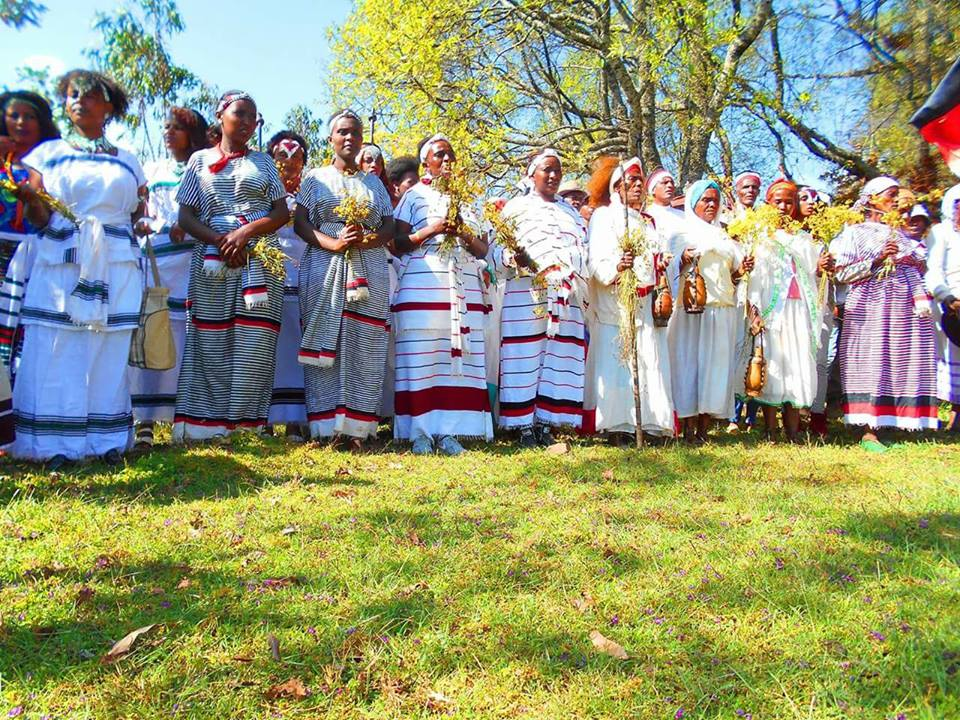
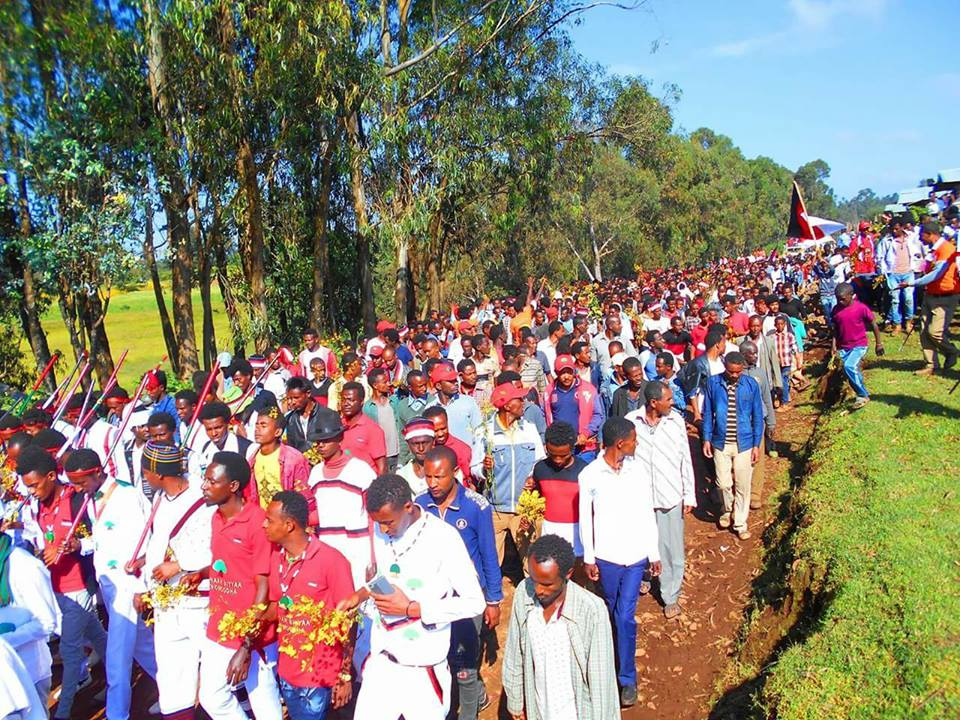
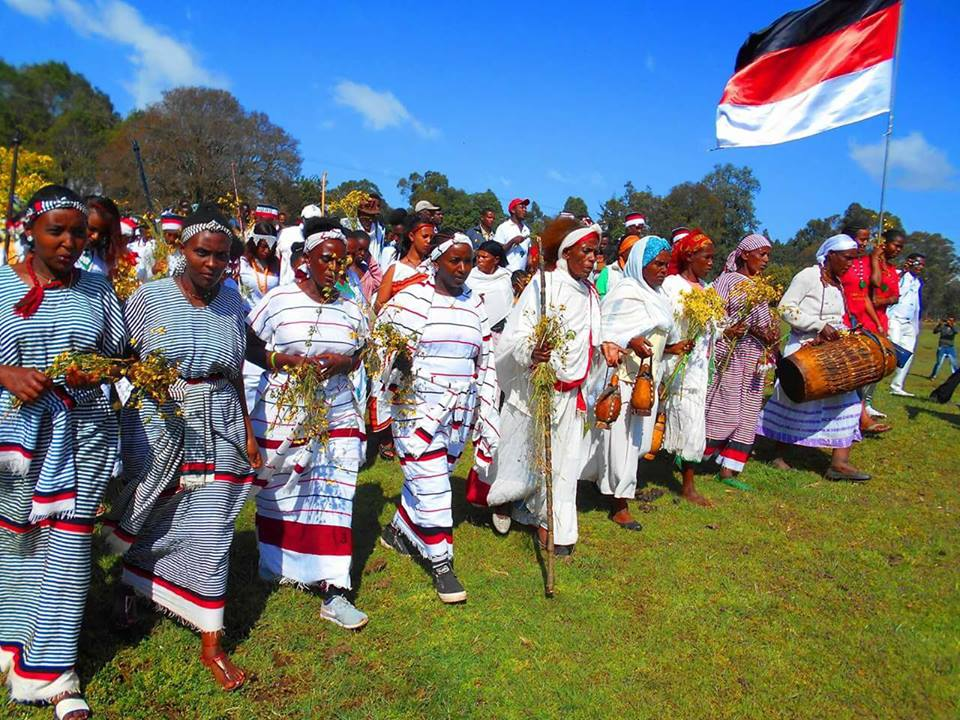
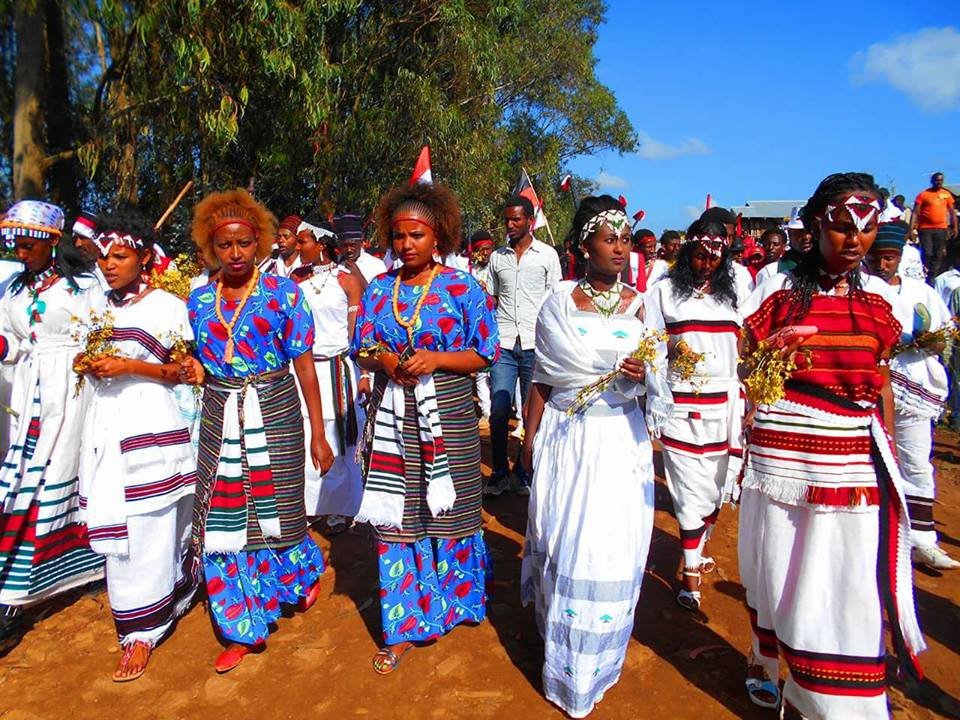
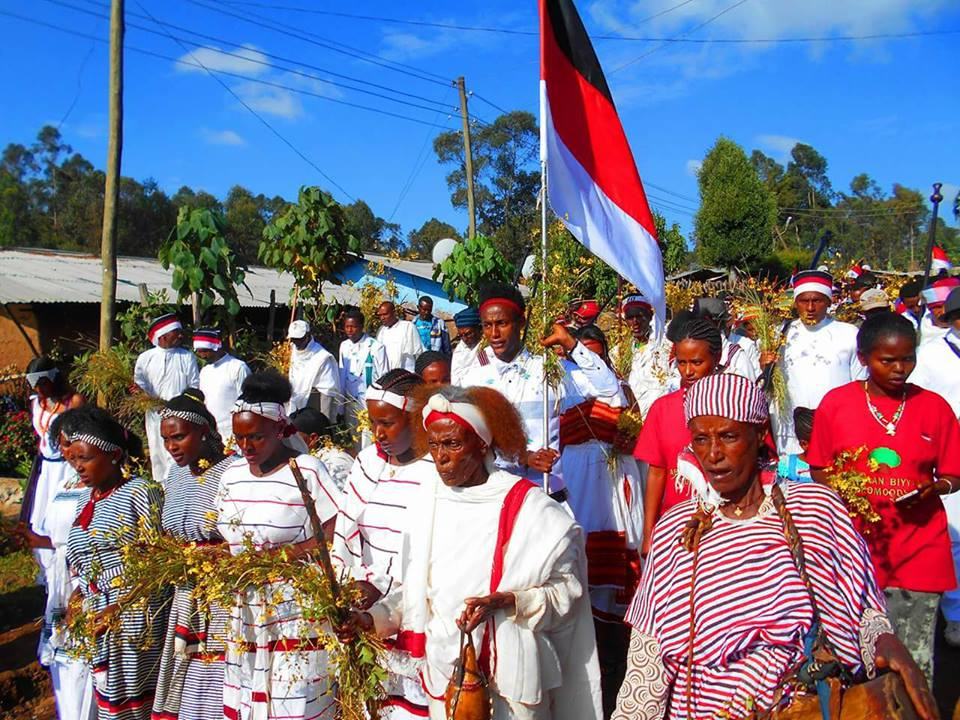
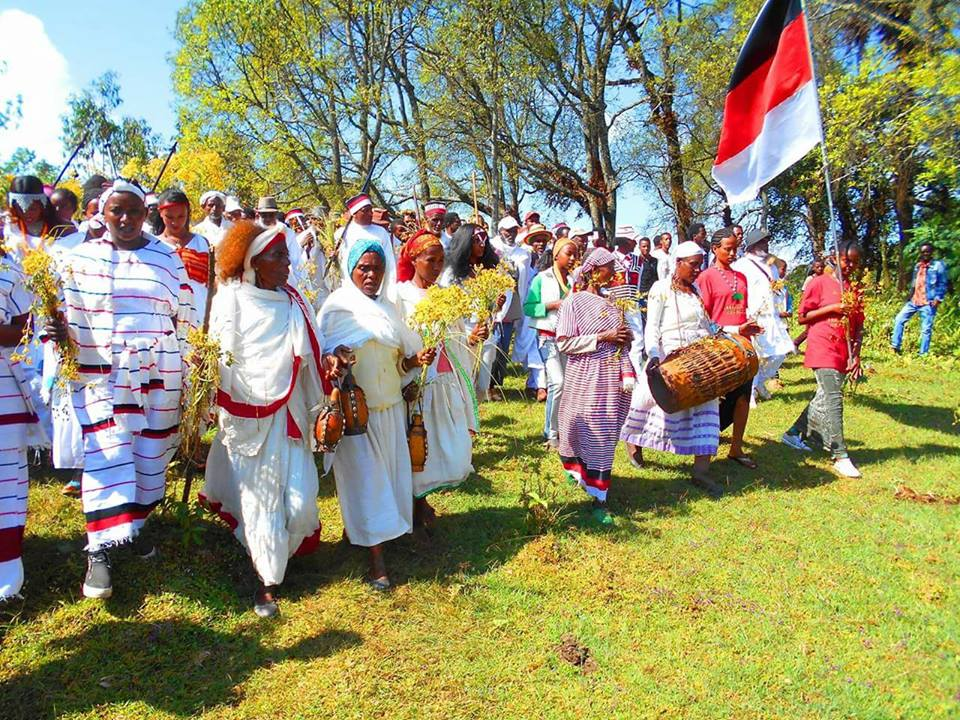
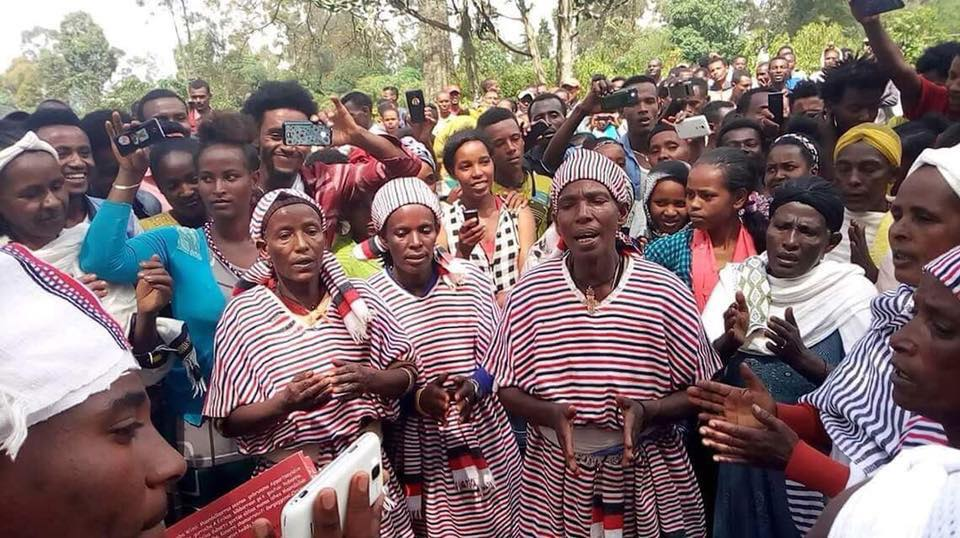
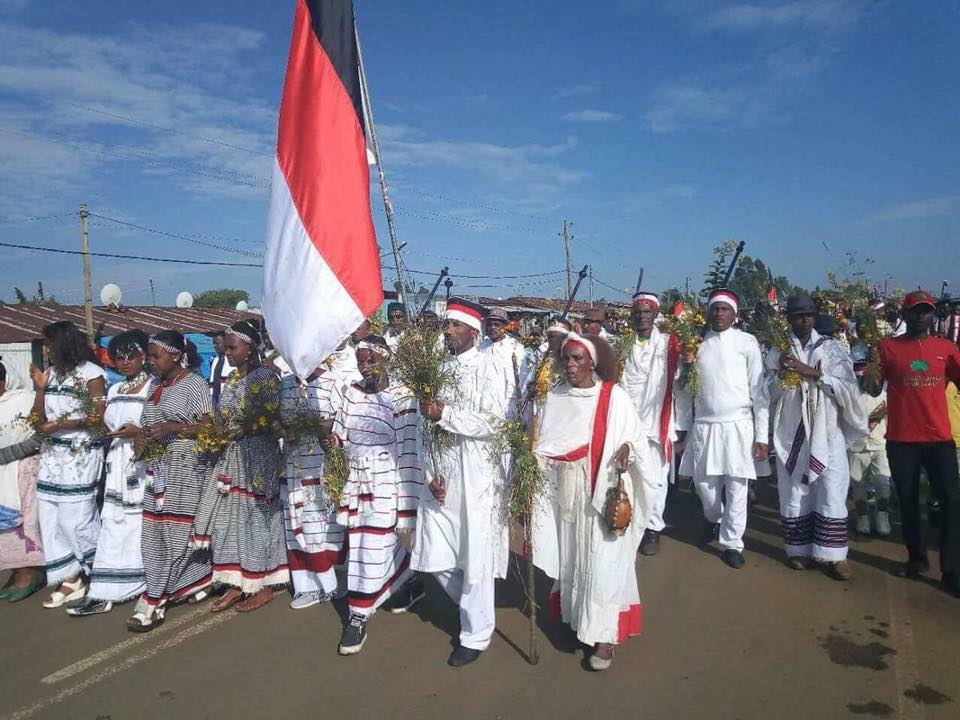
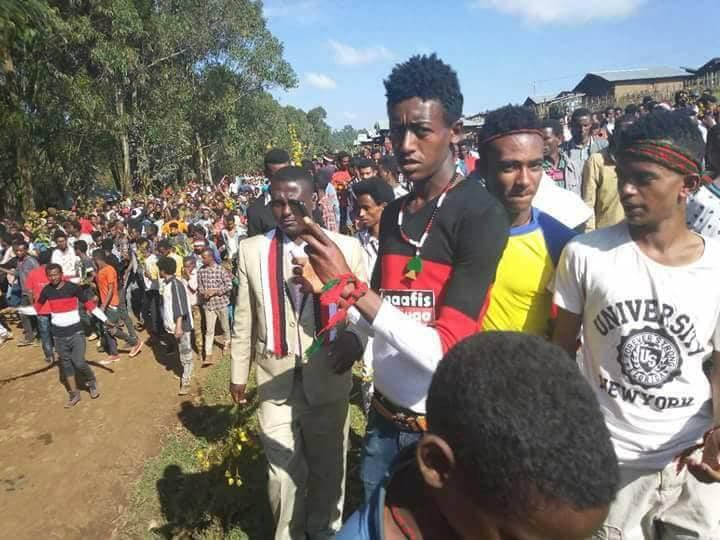
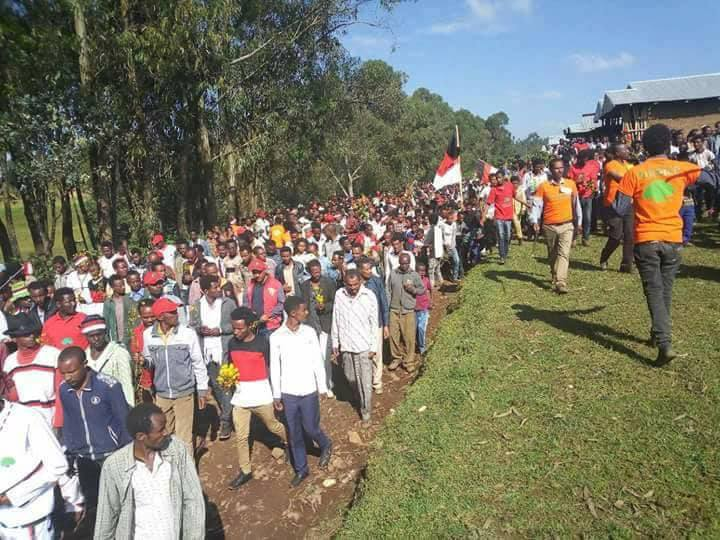
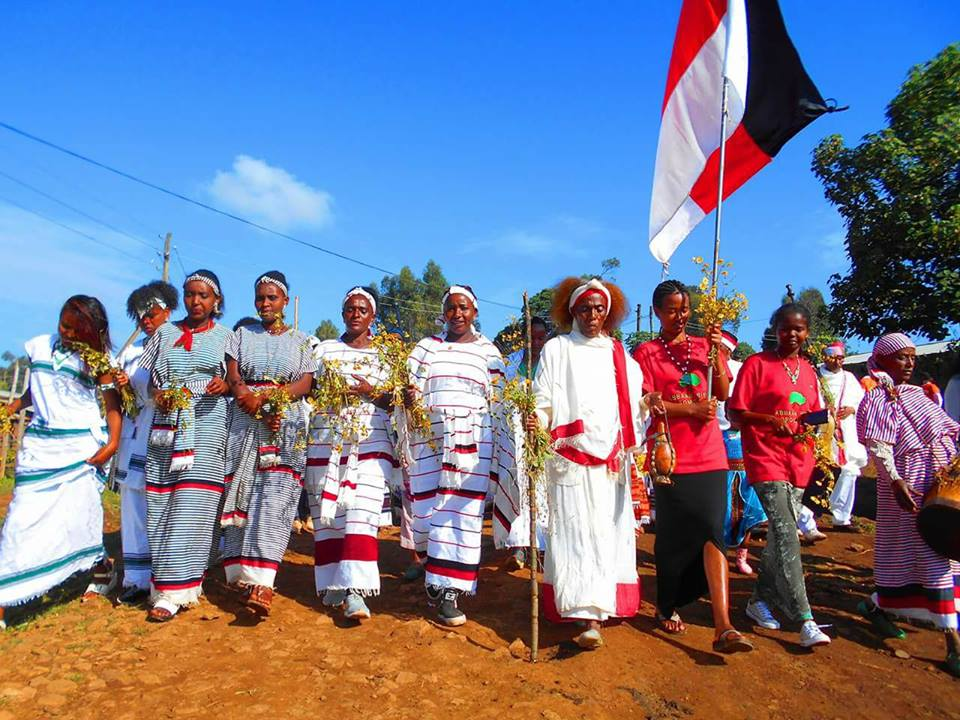
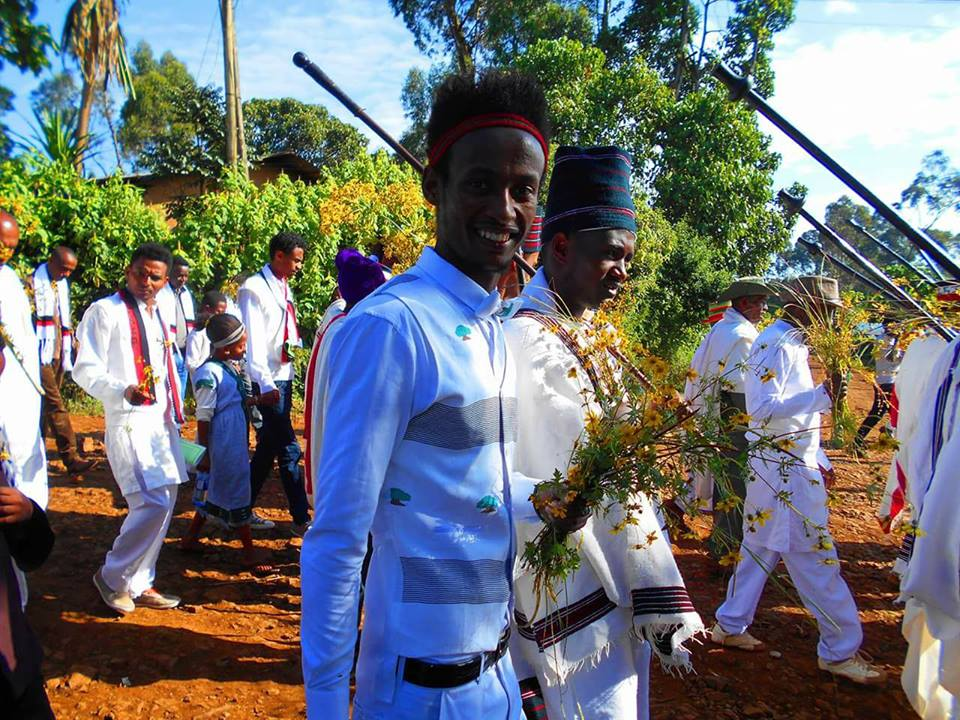
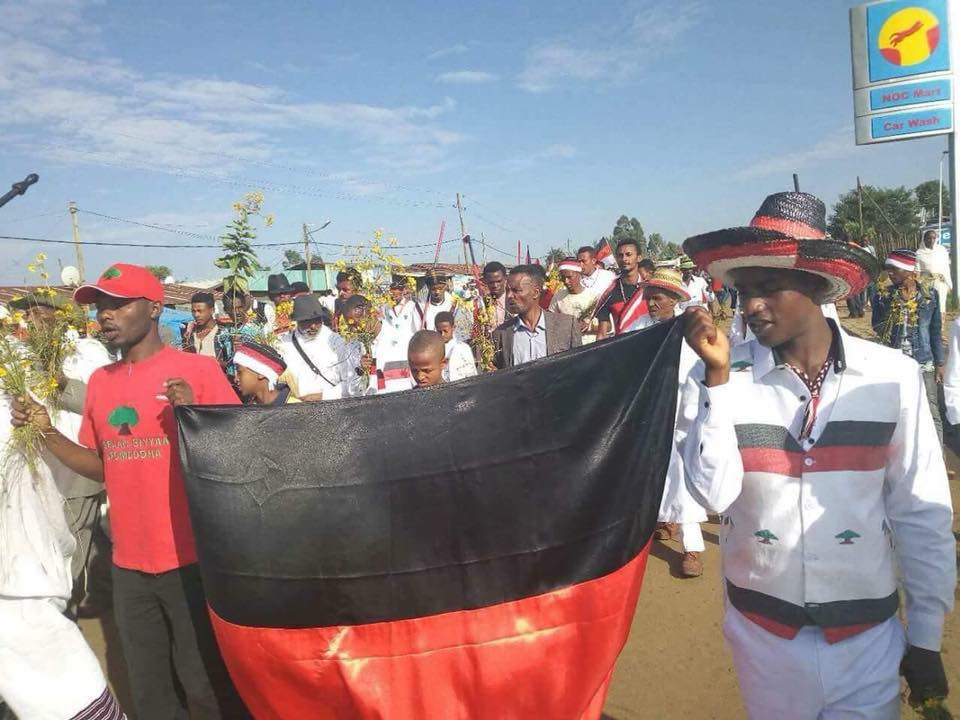
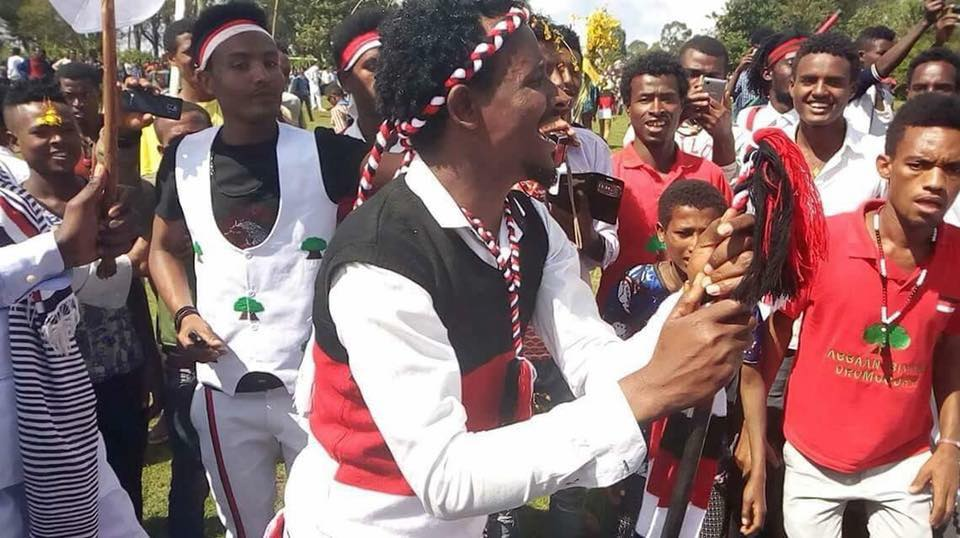
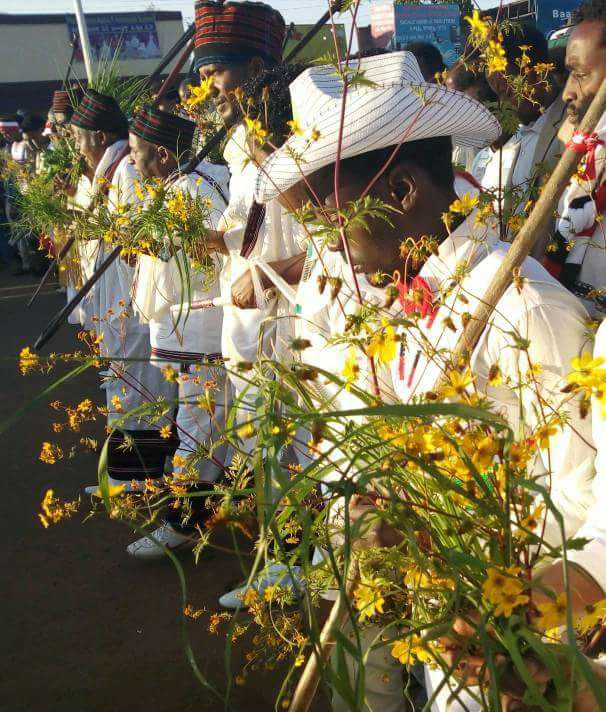
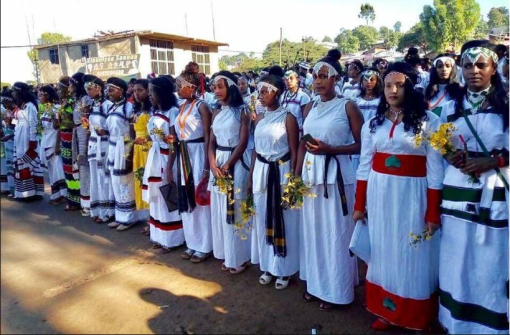
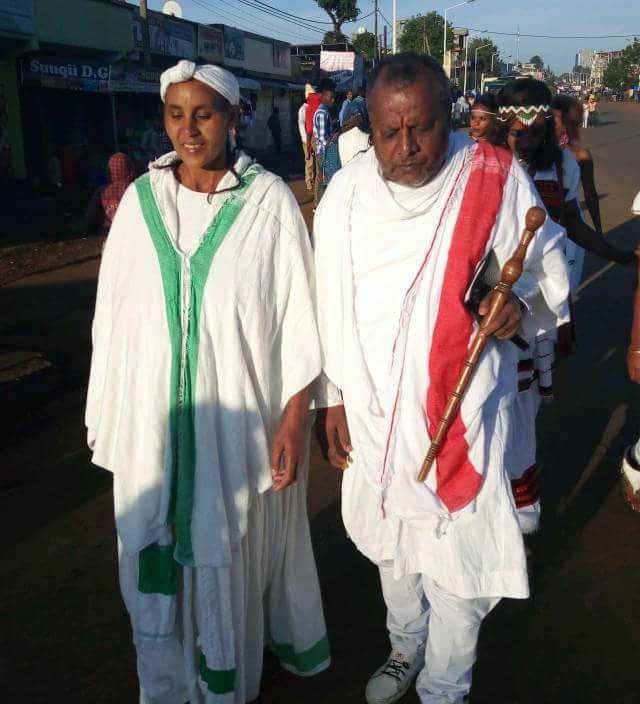
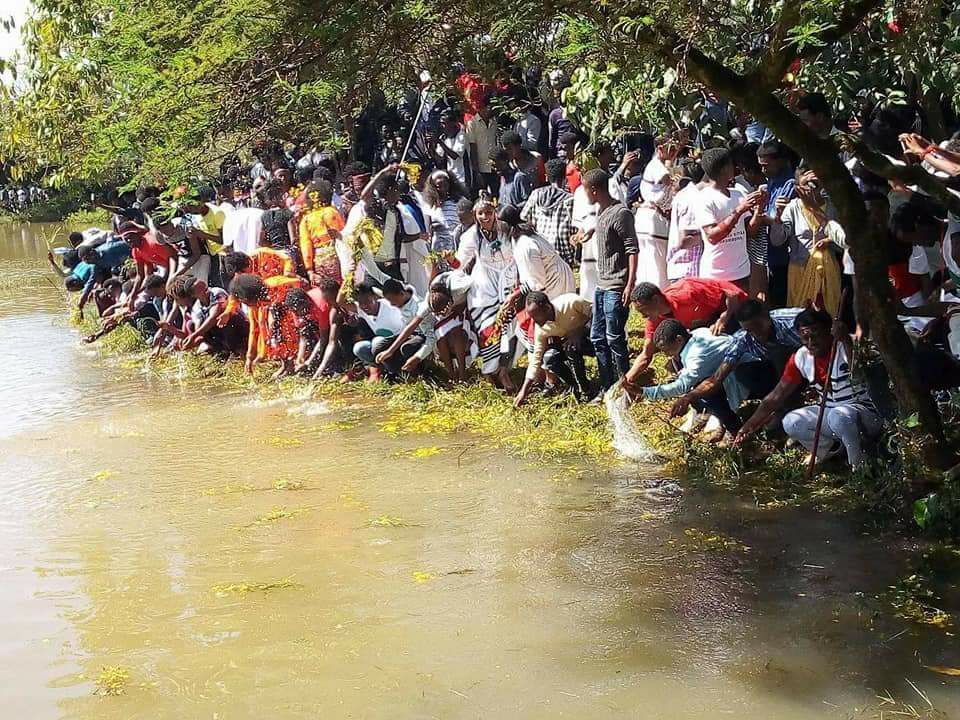
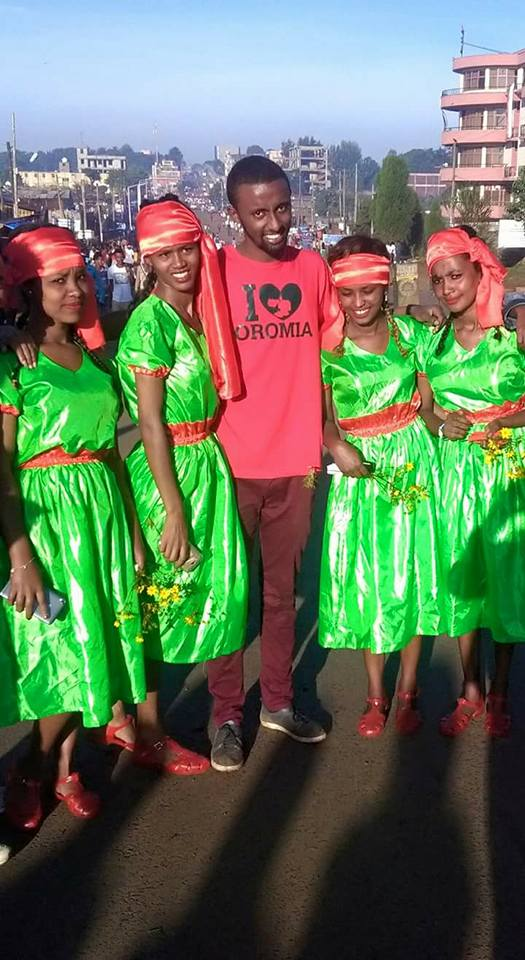
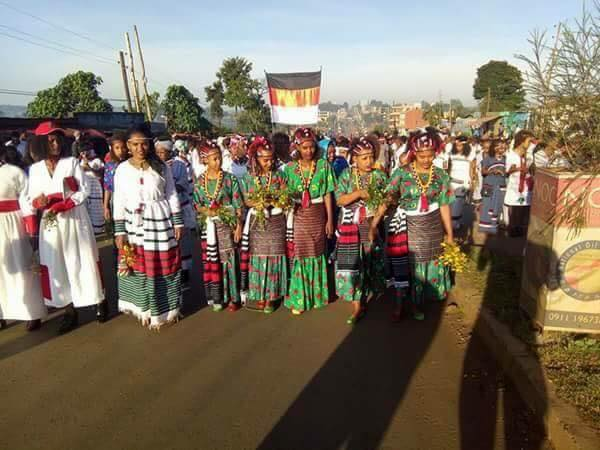
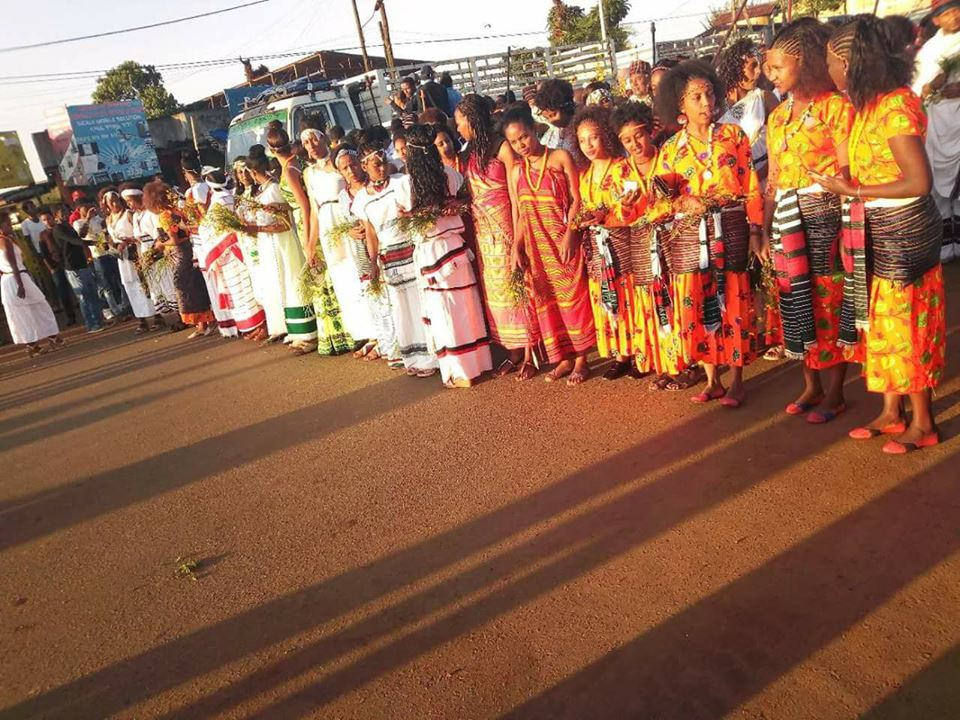
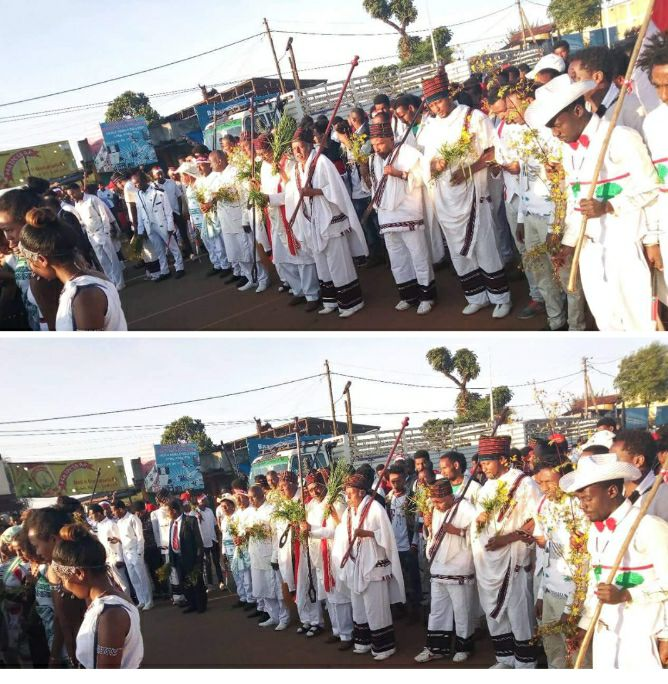
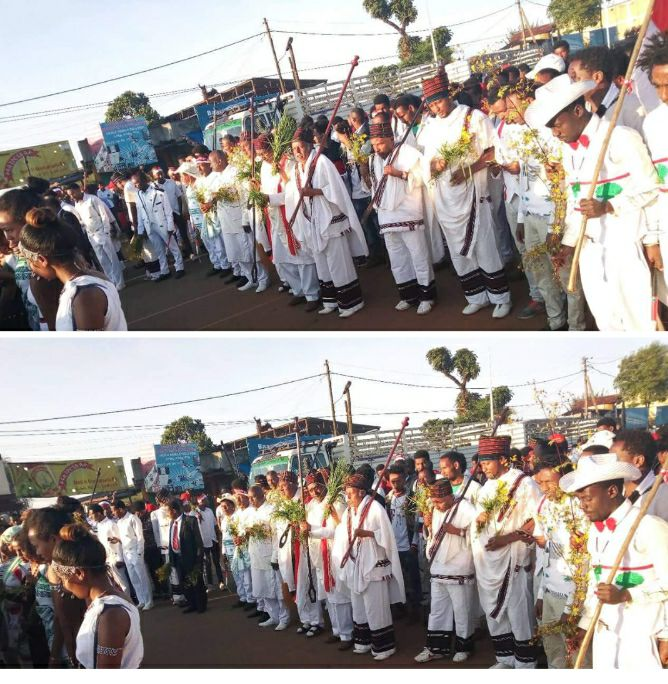
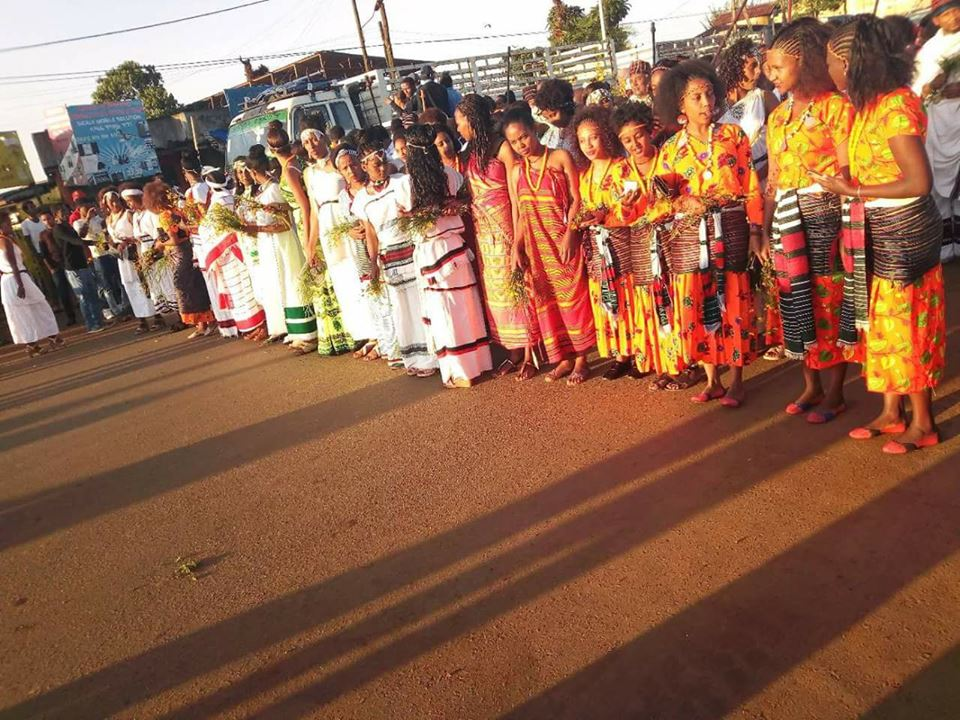
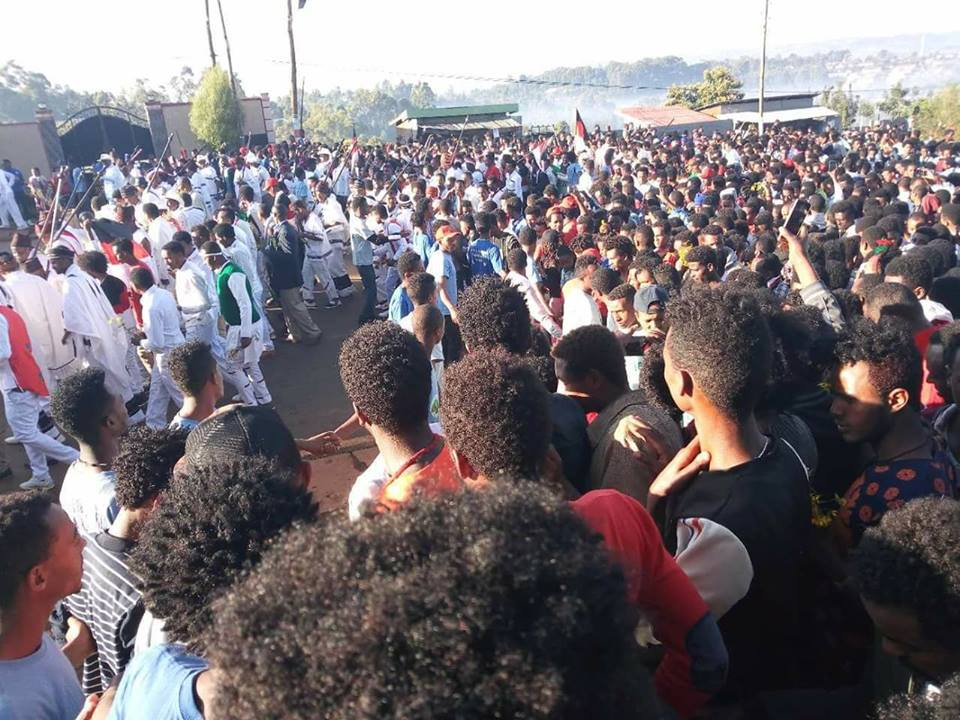
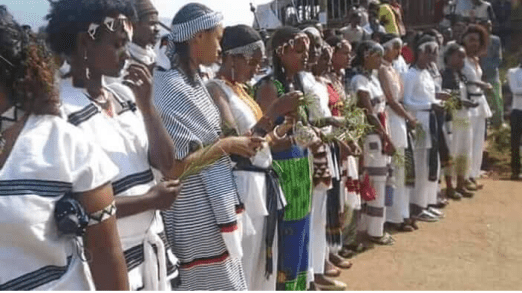
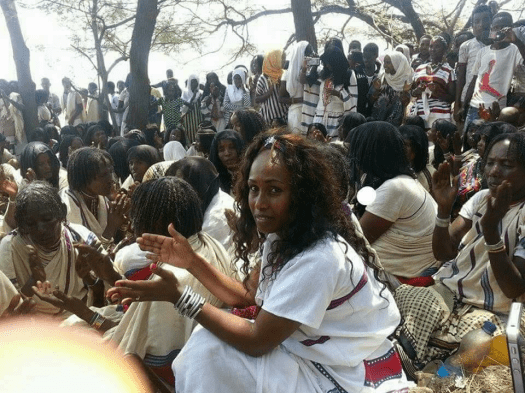
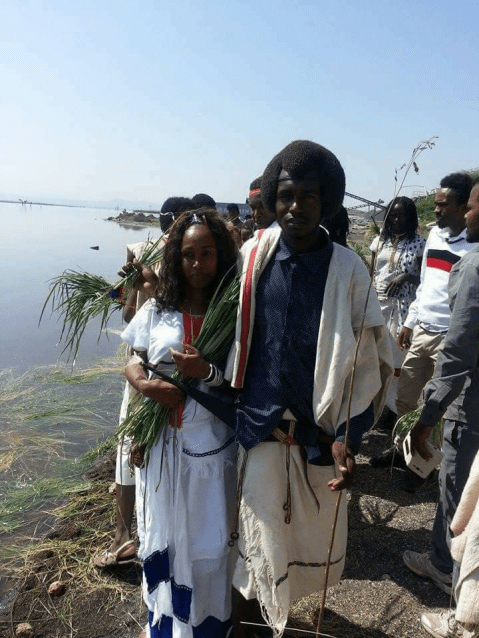
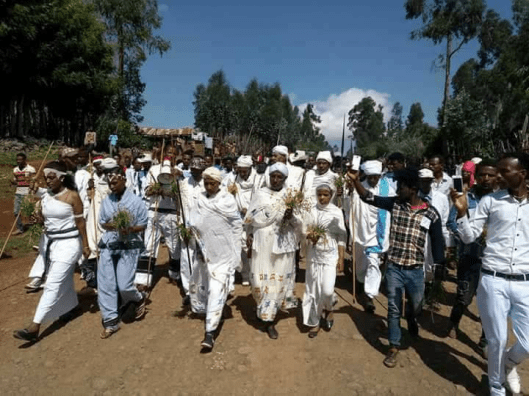
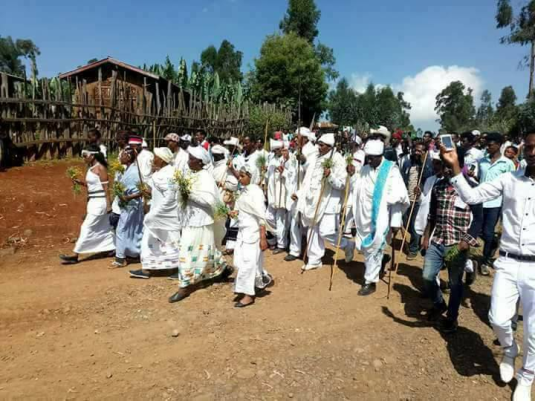
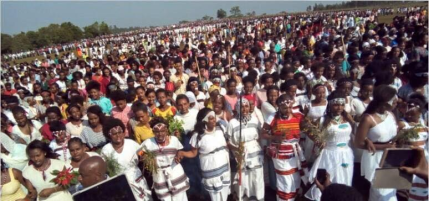
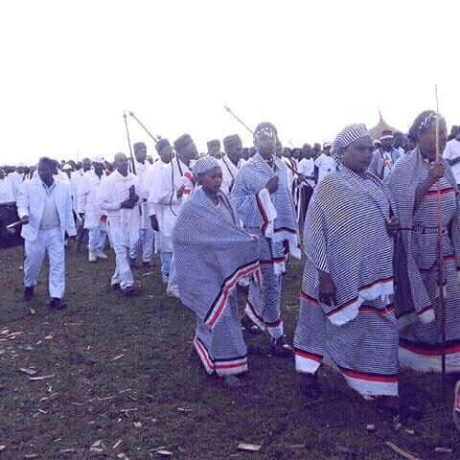
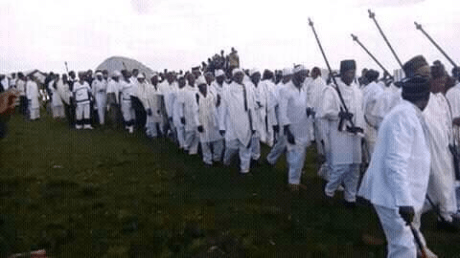
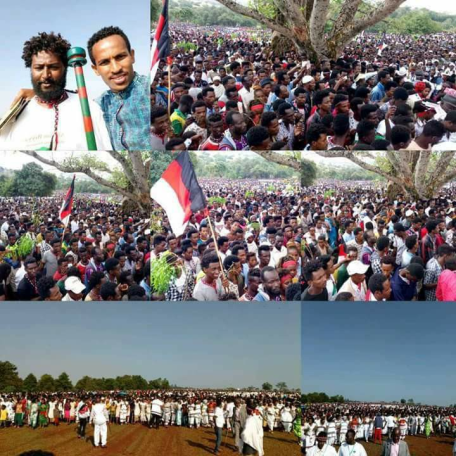
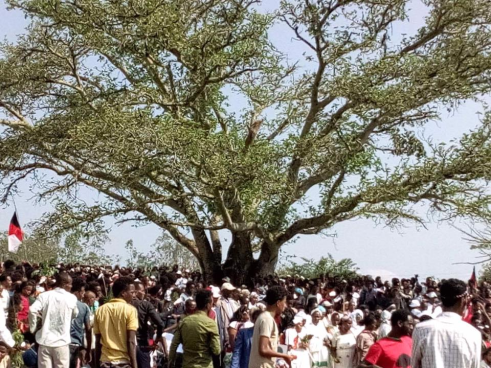
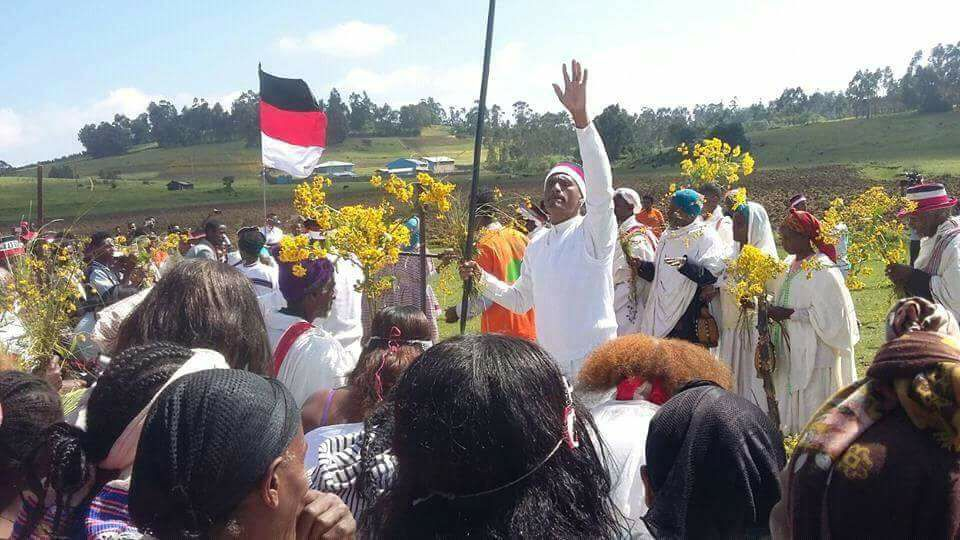
As a continuation of the celebration of Oromo national and Cultural Holiday, massive people turned out on 8th October 2017 to celebrate the colorful festive season at Malkaa Ateetee. The event was peacefully held and concluded in jubilation at Hora Gafarsaa in Buraayyu, Oromia, 10 km west to Finfinnee, the capital. This is the 2nd biggest Irreecha Birraa celebration a week after the grand festival at Hora Harsadii, Bishoftuu, on 1st October 2017. The event was also marked by #Oromoprotests against Ethiopia’s regime. Fundraising was made to support the Oromo people displaced by Liyu Police attacks.
Here are some of the pictures and videos at Irreecha Birraa Malkaa Ateetee:-
Donald Trump
President of the United States
The White House
1600 Pennsylvania Avenue NW
Washington, DC 20500
Re: REQUEST FOR SANCTIONS AGAINST PERSONS AND ENTITIES INVOLVED IN THE IRRECHA MASSACRES ON OCTOBER 2, 2016 AND OTHER CRIMES AGAINST HUMANITY COMMITTED IN ETHIOPIA
Dear Mr. President:
I am writing this letter for two purposes. First, I wish to thank you for imposing sanctions[1] on certain senior current and former South Sudan government officials and South Sudanese companies responsible for undermining peace, security and stability in that violence-wracked country.
Second, I am writing to request imposition of similar sanctions against members of the ruling regime in Ethiopia self-styled as the “Ethiopian People’s Revolutionary Democratic Front” led and dominated by the Tigrean People’s Liberation Front (TPLF), an entity listed as a terrorist organization in the Global Terrorism Database[2] (GTD).
The last act of terrorism committed by the TPLF, according to the GTD, was on August 16, 2016[3].
I believe it is fair and proper to give credit where credit is due. While some have claimed the sanctions imposed on South Sudan’s leaders and their accomplices are meager and inadequate[4], I believe the action sends a clear and unambiguous message to all Africans in positions of power that protection of human rights is a central component of an America-first U.S. foreign policy in Africa, a fact that has been underscored by Secretary of State Rex Tillerson[5].
I am especially elated to learn the U.S. Treasury Department “will forcefully respond to the atrocities ongoing in South Sudan by targeting those who abuse human rights, seek to derail the peace process, and obstruct reconciliation in South Sudan.” Such a resolute statement goes a long way in reassuring not only the people of South Sudan but also all Africans that the U.S. will not merely talk the talk about being on the “right side of history” but also walk the talk by acting decisively and selectively against individuals and entities engaged in gross human rights violations.
I wish to point out for the record that the sanctions you have imposed in South Sudan are in stark contrast to the Obama administration’s lifting of sanctions against the Sudan in its last week in office.
During his presidential candidacy in 2007, Barack Obama said[6], the “genocide in Darfur [Sudan] is a stain on our souls… As a president of the United States I don’t intend to abandon people or turn a blind eye to slaughter.”
In the final week of his presidency, on January 13, 2017, Mr. Obama turned a blind eye to the genocidal Sudanese regime and stood on the “wrong side of history” when he rescinded sanctions authorized pursuant to Executive Order 13067[7] of November 3, 1997 and Executive Order 13412[8] of October 13, 2006 related to the policies and actions of the Government of Sudan.
In issuing his rescission of Executive Order 13761[9], Mr. Obama whitewashed the bloody genocidal crimes of the Sudanese regime by speciously claiming that regime has shown “positive actions over the past 6 months”. The “actions” allegedly included maintaining cessation of hostilities in conflict areas in the Sudan, improving humanitarian access and counterterrorism cooperation.
It is said, “one swallow does not make a summer.” It is incomprehensible to me how Mr. Obama could gloss over and excuse atrocities committed over a period exceeding two decades on mere gestures of good behavior over six months.
What is even more appalling is Mr. Obama’s duplicity and hypocrisy in completely ignoring Sudan’s close ties with North Korea and purchase of weapons from that rogue regime for use in the commission of human rights violations and atrocities. In lifting sanctions against the Sudan, Mr. Obama also conveniently ignored the fact that Sudan has been on the list[10] of state sponsors of terrorism since 1993 and had provided a haven to Osama bin Laden.
Perhaps one should not be surprised by Mr. Obama’s stratagems and sophistry in exculpating those on the “wrong side of history”, as he used to call them. When Mr. Obama visited Ethiopia in July 2015, he unabashedly declared the TPLF regime, which claimed electoral victory by capturing 100 percent of the “parliamentary” seats, as “democratically elected[11].”
In light of Mr. Obama’s double-speak and duplicity on human rights in Africa, I find your recent targeted sanctions against South Sudan and the tenor of your administration’s emerging human rights policy forthright, refreshing and encouraging.
I believe selective and targeted sanctions such as the one imposed against South Sudanese leaders and companies can serve as effective tools of an America-first foreign policy in advancing the cause of human rights globally, and particularly in Africa. Targeted sanctions selectively and purposefully focus on leaders, their family members and supporters, political elites and segments of society known to be directly responsible for human rights violations or in aiding, abetting and giving material support in the commission of such violations. Blanket sanctions are more likely to inflict greater hardship and suffering on the general population, and often those engaged in gross human rights violations find ways to circumvent them. It has been observed that “targeted sanctions” or “smart sanctions” are like “smart bombs”, considerably reducing collateral damage on civilian populations.
I believe in the old saying, “What is sauce for the goose is sauce for the gander.” What is good for South Sudan is good for Ethiopia.
I am requesting that you follow up with targeted sanctions against current and senior members of the “Ethiopian People’s Revolutionary Democratic Front” led and dominated by the Tigrean People’s Liberation Front and other entities aiding and abetting that regime in the commission of human rights violations in Ethiopia. The evidence of human rights violations supporting targeted sanctions against the TPLF regime is overwhelming, incontrovertible, substantial and compelling.
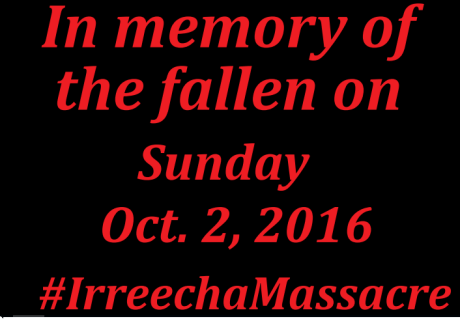
The Irreecha Massacres of October 2, 2016
On October 2, 2016, troops loyal to the ruling Tigrean Peoples’ Liberation Front opened fire indiscriminately on crowds at a religious festival known as “Irreecha” attended by an “estimated 2 million people”[12] in the town of Bishoftu, some 45 miles southeast of the capital Addis Ababa.
The TPLF regime reported 52 dead from what it said was crowd “stampede[13] caused by anti-government elements”. In a televised address, the regime’s prime minster blamed the victims for provoking troops into using indiscriminate deadly force.
On October 3, 2016, Freedom House issued a statement[14] on the Irreecha Massacres demanding an independent investigation: “The deaths in Bishoftu occurred because security forces fired tear gas and live ammunition at a crowd of over a million people celebrating a religious occasion. The government of Ethiopia should allow a truly independent body to investigate the tragedy at Bishoftu as well as security forces’ well-documented record of using excessive force against peaceful gatherings.”
Eyewitness reports including statements by accredited Voice of America Amharic Service program journalists revealed that heavily armed regime troops had taken tactical positions behind the VIP grandstand hidden from direct view of the crowd and suddenly opened live fire on the unarmed and peacefully protesting crowd after the official program could not proceed due to crowd demands and chants against the regime.
On October 8, the TPLF regime declared a “state of emergency” suspending the constitution and instituting martial law under an entity called “Command Post[15]”.
On November 12, 2016, the regime officially reported[16] arresting “11,607 people, including 347 women”. The U.S. State Department in its 2016 human rights report[17]stated, “Many [of the thousands arrested] were never brought before a court, provided access to legal counsel, or formally charged with a crime.” The actual number of persons arrested was significantly higher than officially reported. In March 2017, the Command Post “announced that 4,996 of the 26,130 people detained for allegedly taking part in protests would be brought to court.”
An “investigative report” on the Irreecha Massacres released by the regime’s human rights organization in April 2016 rubberstamped the regime’s original position: “The violence happened because the protesters were using guns and so security forces had no other option.”
In its June 2016 report entitled “Such a Brutal Crackdown’: Killings and Arrests in Response to Ethiopia’s Oromo Protest”, Human Rights Watch stated, “security forces in Ethiopia have used excessive and lethal force against largely peaceful protests that have swept through Oromia, the country’s largest region, since November 2015.”
On September 19, 2017, Human Rights Watch in its 33-page report entitled “Fuel on the Fire’: Security Force Response to the 2016 Irreecha Cultural Festival” provided details on the regime’s “use of force in response to restive crowds at 2016’s Irreecha.” The report “found evidence that security force personnel not only triggered the stampede that caused many deaths but subsequently shot and killed some members of the crowd.”
Over the past year, the TPLF regime has committed unspeakable atrocities in Northern Ethiopia including Gonder, Wolkait, Bahr Dar and other locations.
The Irreecha Massacres are only the latest in the 26-year sordid history of gross and egregious human rights violation by the TPLF regime in Ethiopia.
On May 16, 2005, one day after the general election, the late leader of the TPLF regime, Meles Zenawi, also declared a state of emergency, outlawed all public gatherings and placed under his direct personal command and control all police, security and military forces in the country. Zenawi personally authorized the use of deadly force against any protesters in the post-election period. As a result, nearly a thousand people were either killed or severely wounded by regime troops. Zenawi subsequently set up an Inquiry Commission. That Commission was forced to go into exile following harassment and threats by the TPLF regime to falsify its findings. In November 2006, that Commission shared[18] its findings with members of the Africa Subcommittee in the House of Representatives. The Inquiry Commission laid the entire blame at the feet of the TPLF regime and rejected their spurious claims and justifications for use of deadly force.
A partial list of the names of the victims of the Meles Massacres is publicly available.
A list of names of those security, military and police officials directly involved in the post-2005 election massacres is also available. The TPLF regime to date has taken no action against these officials.
In May 2014, troops loyal to the TPLF regime massacred at least 47 university and high school students in the town of Ambo 80 miles west of the capital Addis Ababa. Eyewitnesses reported significantly higher casualties and fatalities than officially reported. Human Rights Watch (HRW) issued a statement[19] condemning the “shooting at and beating [of] peaceful protesters in Ambo, Nekemte, Jimma, and other towns”. According to HRW, the student “protests erupted over the release of the proposed Addis Ababa Integrated Development Master Plan” which would “expand Addis Ababa’s municipal boundary to include more than 15 communities in Oromia” and displace Oromo farmers and residents.
In December 2003, the TPLF massacred hundreds of Anuak people in Gambella in Western Ethiopia. Human Rights Watch documented that TPLF troops “subjected Anuak communities throughout the region to widespread and systematic acts of murder, rape, torture, arbitrary imprisonment and the destruction of entire villages.” Genocide Watch sent a fact-finding team in Gambella and secured[21] authentic documents “proving that the Gambella massacres were planned at the highest levels of the Ethiopian government, and even given the code name “Operation Sunny Mountain”. A report[20] by the Harvard Law School Human Rights Program on the Anuak Massacre concluded, “From December 2004 to at least January 2006, the ENDF (Ethiopian National Defense Forces) attacked and abused Anuak civilians in Gambella region – wantonly killing, raping, beating, torturing, and harassing civilians.”
In 2007, the TPLF regime massacred hundreds of people in the Ogaden region of Ethiopia. Human Rights Watch in its June 2008 report[22] entitled “Collective Punishment: War Crimes and Crimes against Humanity in the Ogaden area of Ethiopia’s Somali Region” documented, “Ethiopian troops have forcibly displaced entire rural communities, ordering villagers to leave their homes within a few days or witness their houses being burnt down and their possessions destroyed and risk death.”
The TPLF regime has refused to undertake meaningful and credible investigations into these crimes against humanity despite requests by human rights groups and even the U.N. The TPLF regime has refused entry to all UN special rapporteurs since 2007 to investigate human rights violations in Ethiopia.
The difference between the South Sudanese regime and the TPLF regime on human rights is the difference between Tweedledee and Tweedledum. Both regimes are peas in a pod. Thus, what is good enough for the South Sudanese regime is good enough for the TPLF regime.
I believe an America-first human rights policy which employs targeted sanctions to promote human rights, democracy and peace in Africa is not only necessary but also likely to produce outcomes that are consistent with the values and principles of American taxpayers.
Millions of refugees are leaving Africa to come go to Europe and North America because life is hell for them in Africa under brutal and bloodthirsty dictatorships, not merely to seek better economic opportunities. The U.S. can effectively deal with this problem by addressing the root cause of migration out of Africa, namely, brutal and oppressive dictatorships that treat their citizens as slaves and their countries’ treasuries and resources as their private estates. Selective and targeted sanctions aimed at the financial and logistical incapacitation of leaders, political elites and segments of society known to be directly responsible for human rights violations or engaged in aiding, abetting and giving material support in the commission of such violations in Africa is the proverbial two-by-four that will quickly get their attention.
For well over a decade, I have argued without pause that the best way to help Africa is to let Africa help itself. Africa can never be free until African leaders are held to account and forced to abandon the culture of panhandling, which have perfected as an art form. The U.S. must end its aid welfare program to African dictators who siphon off much of that aid and deposit it in their private offshore bank accounts. Your transition team hit the nail on the head when it demndaed answers from the State Department to the following question: “With so much corruption in Africa, how much of our funding is stolen?”
I wish I could definitively answer that question for you. But I can say definitively that to begin the effort to find out “how much of our funding is stolen” in Africa, we must make targeted sanctions a central part of the America-first foreign policy in Africa.
Mr. President, what I am asking is not anything extraordinary. I am merely requesting that you impose the same targeted sanctions you imposed on the leaders, supporters and business entities in South Sudan to the leaders, supporters and business entities responsible for human rights violations in Ethiopia. What is good enough for South Sudan is good enough for Ethiopia.
Mr. President, when Mr. Obama visited Ghana in his first trip to Africa in July 2009, he said, “Now, make no mistake: History is on the side of these brave Africans, not with those who use coups or change constitutions to stay in power. Africa doesn’t need strongmen, it needs strong institutions.”
The people of Ethiopia and the people of Africa are on tenterhooks to find out if you are going to stand with African dictators or the common people yearning to breathe free.
I am betting my bottom dollar that you will stand with the people of Africa and not the dictators who lord over them, as did Mr. Obama.
I will guarantee that you will have 100 million fans in Ethiopia if you institute targeted sanctions against members of the TPLF regime and its cronies involved in gross human rights violations, and win more than a 1.2 billion Africans if you make targeted sanctions a core part of your America-first policy in Africa.
I guarantee it!
Sincerely,
Alemayehu (Al) G. Mariam, M.A., Ph.D., J.D.
Professor and Attorney at Law
Cc: Hon. Rex Tillerson, U.S. Secretary of State
Hon. Steven T. Mnuchin, U.S. Secretary of the Treasury
Hon. Nimrata “Nikki” Haley, U.S. Ambassador to the United Nations
In Ethiopia, this year’s Irreecha festival brought peaceful but powerful protest as the Oromo people marked the anniversary of last year’s massacre at Bishoftu.
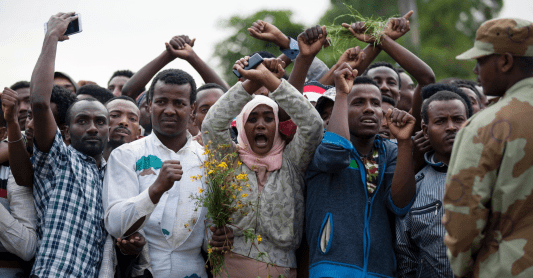
More than 1.5 million people were expected to attend the annual thanksgiving celebration. Despite the rainy skies, they came; once there, the crowds chanted anti-government slogans with the now-familiar crossed arms symbol of protest against Ethiopian authorities they say have long persecuted them – and who, in 2016, opened fire as the scene at Bishoftu deteriorated into chaos.
“May the almighty avenge those that are killing our people,” said the traditional Oromo Gadaa leader as he delivered a blessing. “May the almighty avenge those who killed our people here last year. May the almighty avenge the unavenged. May the almighty end our national ordeals.”
The Ethiopian Human Rights Commission denied the military used lethal force in an official report on unrest in Oromia released in April. The EHRC said 669 people had died in ethnic clashes overall, including 465 Oromo civilians, while blaming the Oromo Media Network (OMN), other diaspora sources, and Oromo political opposition groups for escalating the crisis while defending all national security measures as appropriate.
The report results were questioned by international governments and human rights organizations who say they are consistently denied the access needed for an independent investigation. Many of the thousands who were arrested during a 10-month state of emergency remain detained, including key Oromo political opposition leaders.
Security remained tight for this year’s Irreecha celebration, as Ethiopian authorities banned weapons and set up security checkpoints while promising that armed forceswould remain on the perimeter of the event but not venture inside.
Irreecha (Irreessa) Birraa Oromoo kan Bara 2017 (akka lakkoobsa Oromootti kan Bara 6411) akka gaariitti karooreffatamee, haala oo’aa fi bareedan kabajamaa jira. Lammi keenya bara darbe ajjeechi sanyii daguugga irratti rawwateefi yaadannoon godhamaatti jira. Here are some of live pictures, videos and reports refer to Irreecha Oromo Thanksgiving 2017 (6411 in Oromo Calendar) Celebrations. The blessing and colorful event that started in mid August and continue to be celebrated Birraa (September- October). Millions have attended Hora Harsadi (Bishoftuu, Oromia) with success on 1st October 2017. Irreecha is the most important event (season) in Oromo people national calendar. #Irreecha2017
(OPride)―On this festive yet somber occasion, the Oromo are out in great numbers, as colorful and vibrant as ever. It’s Irreecha, the “thanksgiving holiday,” as was described by a host of foreign media outlets in the wake of the disaster that left hundreds dead last year. With the grievances that led to the tipping of the vase last year left unaddressed, justice long sought over the massacre still a pipe dream, with countless remaining behind bars, the Oromo people are back in Bishoftu having unanimously declared that the show must go on. Click here to read more.
The Irreecha festival is an annual thanksgiving festival by Ethiopia’s Oromo ethnic group. It takes place in the town of Bishoftu – located about 45km away from the capital Addis Ababa.
The 2016 edition was marred by deadly chaos after security operatives were said to have fired live bullets towards protesting participants. Millions of attendees are expected to gather on this occasion at Lake Arsede, Bishoftu (Debre Zeit), and surrounding areas.
Preparations are underway for the weeklong event which starts from October 1 and concludes on or around October 8, in the the Oromia region. We present pictures from preparations thanks to Ethiopian news portal, Addis Standard.
The United States Embassy in Ethiopia has issued a security message for its citizens with respect to Sunday, October 1 Irreecha festival in the Oromia region.
The September 29, 2017 statement titled ‘Security Message for U.S. citizens: Security Awareness in Oromia Region,’ cited the deadly chaos of last year as a key reason for its latest alert.
Millions of people – ethnic Oromos from across the country, around the world and tourists – are expected in the town of Bishoftu – located about 45km from Addis Ababa for the annual thanksgiving ceremony.
The chaos of last year is a major concern for rights groups and political watchers in the region. The Oromo regional authorities a week ago announced that there will be no armed personnel deployed for this year’s session.
The U.S. has in recent past issued alerts for the Oromia region but more to do with supposed ethnic clashes between people in the region and the adjoining Somali region.
The full statement from the embassy read:
“The U.S. Embassy informs U.S. citizens that, beginning on October 1 and concluding on or around October 8, the Oromia region will celebrate its annual Irreecha. Millions of attendees are expected to gather on this occasion at Lake Arsede, Bishoftu (Debre Zeit), and surrounding areas.
“Noting that at last year’s Irreecha a tragic stampede resulted in numerous deaths, and given the ongoing potential for civil unrest, the Embassy advises U.S. citizens to postpone travel to Bishoftu (Debre Zeit) and its surrounding areas until after the celebration has concluded.
“Review your personal security plans, remain aware of your surroundings, including local events, and monitor local news stations for updates. Be vigilant and take appropriate steps to enhance your personal security,” it concluded.
At least 50 Oromo people died last year at the Irreecha festival after police fired tear gas and started a stampede.
Demonstrators chant slogans while flashing the Oromo protest gesture during Irreecha in 2016 [Tiksa Negeri/Reuters]
A year ago, Firommisa Darasa barely made it out of Ethiopia‘s Irreecha festival alive, managing to escape from a deep ditch where dozens perished.
The tragedy happened after police fired tear gas at anti-government protesters, sparking a stampede.
Last year’s bloodshed at the annual religious festival held by Ethiopia’s largest ethnic group, the Oromo people, became a turning point in months of anti-government protests that prompted the government to declare a nationwide state of emergency.
While dissatisfaction with Ethiopia’s government still runs deep among the Oromo, last year’s protests have since died down.
Those planning to attend this year’s Irreecha festival say they are hoping for the best when Sunday’s gathering begins in the resort town of Bishoftu, southeast of the capital Addis Ababa.
“I feel fear inside but if I don’t come, the people around me won’t come. This is our ancestral celebration and we will have to keep it,” said one of the festival-goers, 28-year-old Firommisa,
At least 50 killed
The Oromo people began protesting in late 2015, angered by a government proposal to expand Addis Ababa that they feared would deprive them of land without proper compensation.
Those tensions exploded at last year’s Irreecha when activists took to the stage and began shouting anti-government slogans, prompting police to open fire with tear gas.
At least 50 people were killed in the ensuing stampede, according to government figures. Activists put the death toll much higher.
Changes have been made this year at the festival grounds adjacent to a lake in the town 60km southeast of the capital.
A new open-air amphitheatre has been built and cobblestones laid on the ground, while the ditch that claimed so many lives last year has been fenced off.
The presence of armed security forces was seen as exacerbating last year’s chaos, but the Oromia regional government said this year there would be no weapons.
“This year will be different because there will be no political involvement from the government and no security from them as well,” said attendee Dachassa Gosa, 22.
Irreecha, or thanksgiving, is the most important annual festival of the Oromo people and it celebrates the end of the months-long rainy season and the upcoming harvest.
While traditionally a time to give thanks and pray for prosperity and abundance, it has increasingly been an opportunity for the Oromo to assert their identity and criticise government policies they say marginalise them.
Last year’s deaths re-ignited the protests across the Oromo region, but this time the targets were government and foreign-owned businesses, with several destroyed.
All told, the months of violence left more than 940 people dead, according to the government’s human rights commission, while arrests topped 22,000.
The bloodshed only ended with the declaration of a state of emergency, which was lifted in August.
However many Oromo say their grievances were not addressed and sporadic strikes and protests still occur.
US-based Human Rights Watch (HRW) has urged the Ethiopian government to “act with restraint” this time around and to take measures to ensure there is no repeat of last year’s tragedy, while calling for a proper investigation into what happened.
“Certainly, if there were to be a return to what happened at least year’s Irreecha, you would expect that would lead to much wider unrest,” HRW researcher Felix Horne told AFP news agency.
Oftaha Oromoo travelled from a district hours away to join the celebration but expects a more subdued event this weekend.
“Personally I am still angry, but we have to be patient and celebrate,” he said. “This year, we want to remember the people who died.”
It is one year ago that the world witnessed the naked brutality of the TPLF-led Ethiopian regime, when it carried out a large scale massacre against the Oromo people gathered at the annual thanks-giving festival – Ireecha, in Bishoftu, some 45 kilometers, south of the capital.
According to reliable information, close to 1000 civilians were killed as a result of combination of stampede and use of life bullets as well as blockade of paths by the security forces. By all accounts, and conclusions by human rights experts, the tragedy was a well-designed and pre-planned government action against the Oromo people, who were already engaged in a year-long peaceful demonstration in the entire Oromia State region, demanding respect for their fundamental human rights.
Today, a year later, the government did not carry an investigation nor hold any official accountable for the death of the thousand civilians which resulted from the use of disproportionate use of force. To the contrary, it arrested and detained thousands of Oromo civilians for alleged instigation of disturbances.
This year, the festival is going to take place at the usual place following established rituals. What is now becoming everyone’s worry is that, participants of the festival may try to use the opportunity to express their dissatisfaction with the way the government addresses, or failed to address at all, their demand for respect for their fundamental rights, which may be used as a pretext by the security forces to react with a force which is disproportional to the demand and the civilian character of the demanding population.
That being the case, IOLA would like to join the international community in general and human rights institutes in particular in expressing its deepest concern regarding the possibility of unrest and subsequent harm to the civilian population during this year’s celebration of Ireecha.
It therefore demands that the government should:
Take advance measures to put in place all what is needed for the citizens to peacefully celebrate Ireecha as per established ritual and without disturbances by the security forces;
Ensure that security forces use proportionate force needed to maintain law and order;
Take all the necessary security measures to ensure that the physical safety and security of civilians festival-goers is not compromised;
Remind its security forces and give them clear guidance that Ethiopia is bound by the international Covenants and Conventions it had signed and that they should adhere and properly implement the United Nations Basic Principles on the use of Fire Arms.
Since time immemorial Oromo men, women, youths, and elders have been rallying together to express thanks and happiness to their Waaqa, who according to the Oromo concept of colour is symbolised by the colour gurraacha, meaning black. By its very original concept the colour gurraacha (black) did not stand for mourning, grief or for the expression of sorrow. It was used to symbolise the invisible supreme power that can do and undo anything anywhere in the universe. Having this narrative tradition in mind, the Oromos have been getting together around rivers or lakes to thank their Waaqa Gurraacha at the end of the rainy season. They strongly believe that, it was Waaqa who delivered them from the restraining rainy season and brought them to the cherished flowery season. This great event, called Irreecha in Afaan Oromoo, is celebrated every year at the end of September or in the first week of October. https://youtu.be/Pk3W49aKXDY
Irreecha holds an important social event in Oromo people’s aspiration for peace, prosperity, abundance, fertility, and a hope for the renewal of a new social life. Like ancient Egyptians who used to celebrate the yearly inundation of the River Nile as a symbol of life giving, Oromos have been celebrating their new year on the side of river banks or lakes which, according to Oromo mythology, is the source of all life. Some of the hymens ancient Egyptians sang while praising the Nile were:
Oh Nile! You rise out of the earth and come to nourish Egypt! You quench the thirsty desert! You bring forth the barley! You create the wheat! You fill the granaries and the storehouses, not forgetting the poor. For You we pluck our harps, for You we sing! [1]
Creation Narrative Stories
It was not only the ancient Egyptians or the Oromos who had creation stories in relation to water. In the Japanese telling stories, we find water holding the core of the dawn of creation. First, there was an ocean, out of which the many Japanese Islands were believed to have been created. There was a god known as Izanagi and a goddess Izanami. The gods, as a couple, had three children, of whom the grandson of the Sun Goddess had become the first Emperor of Japan, Nippon, as known to the native population.[2]
The gods used a long spear and stirred up mud at the bottom of the ocean. It was out of the stirred up mud those more than 6000 Japanese islands were believed to have been created. On the eastern side, out of the glittering Pacific Ocean, the sun rose every morning. It was the cherished sun’s rays which had a big role in illumining, nourishing, and bringing up the Japanese archipelagos to life. This is the Japanese thought of their land, Mount Fuji being the most beautiful and sacred one.[3]
For the Japanese, Japan has not only been their country. Japan has been their world and their religion. The creation story the people share in common and the passionate love they have for their country has continued to make up the coherent faith of their oneness. And, out of the cherished mythology, they have undoubtedly benefited enormous groundwork principles for their social and technological advancement we are witnessing today.
When we come to the antique Scandinavians of northern Europe, we find similar watery creation stories. In the beginning there was an abyss filled with water. The water froze; and lastly melted down. Out of the melted water, a giant being of human form called Ymir emerged. Thereafter, a man and woman were created out of Ymir’s armpits. In short, this was the beginning of ancient Scandinavian telling stories about the myth of human creation.[4]
The Oromo myth of creation holds the view that water being the source of androgynous being. According to Oromo narration story, by the unfathomable wisdom of Waaqa Gurraacha, the androgyny was divided in to two parts and became male and female. After the division, the two opposite sexes began to live separately on the either side of the river. Though they were able to see each other across the river, they were hampered from joining each other by the overflow of the river. When the river subsided and sank down into its course, during the flowering season, they were able to cross the river and embraced each other.[5] Here was the point, during the flowering season, according to Oromo belief, when the firstgaa’ila (engagement for marriage) started to blossom.
Many of us may remember when newly married Oromo couples were coming to Irreecha at Hora Harsadii, enforced by nobody but only inspired by the tradition to get the blessings of the hayyuus and Abbaa Gadaas. But that was not performed on October 2, 2016 because of the heinous massacre carried out by the incumbent Ethiopian regime that disrupted the whole process of the ceremony.
Having this entire narrative story in mind, defending and combatting all challenging obstacles and heinous crimes imposed on them, the Oromos have continued to celebrate their yearly thanksgiving Irreecha festival, dressing beautiful national costumes suited for the occasion.
Norms of Irreecha Celebration
Today, at national level, millions of Oromos are celebrating Irreecha Birraa, on the side of Hora Harsadii in Bishooftuu town. At national or local levels, there are traditionally agreed upon norms that govern the whole process of the ceremony from the beginning to the end, which is deeply rooted in the strongly and humanely established Oromo views for peace, love, prosperity, and human dignity. Based on Oromo clans’ successive generation by birth, there are individuals who offer blessings first, second, and so on. This is dually (angafaa fi qixisuu) restructured in Oromo kinship organisations whose function of check and balance has become basic foundation for the indigenous Gadaa Oromo Democracy to flourish.
The ceremony commences first by offering thanks and greeneries to Waaqa, followed by blessing all creatures of Waaqa to be at peace with each other. They also give admiration and honour to Waaqa’s wisdom who gave them a perfect bliss of land with abundant natural resources. This is one of the inherent reasons why the Oromos are cherishing their ancestral homeland, Oromiyaa (Biyya Oromoo) as part of their natural right, be it in peace or war times.
In the case of Irreecha Birraa, it is the Abbaa Malkaa who ‘opens the door’ of the malkaa (river) by charmingly welcoming those who arrived at the site in peace.[6] Those distinguished hayyuus from senior and junior clans (mana angafaa fi qixisuu) and the Abbaa Gadaa from the incumbent Gadaa party are traditionally honoured to take leading positions in giving thanks and blessings to all. Even the Ayyaantu-Qaalluus, who are believed to be the guardians of the laws of Waaqa and the custodians of Oromo traditional religion, have no seniority right to claim either to take the leading position or to give blessings first. They have their own defined time and place to do so. Failure to honestly follow those agreed upon traditional charter, could lead to chaos and eventually to the disintegration of the society. Nevertheless, despite so many apartheid walls erected among Oromo regions by builders of the imperial palace of political Ethiopia (in contradiction to historical Ethiopia), the Oromos are not able to be divided by the walls. They are chiselling down the walls and are patiently moving forward in unison.
Is Irreecha a Religion?
As common to any Oromo meetings or conferences, thanking Waaqa and blessing each other precede the opening of the agenda of the meetings. There is no exception for the thanksgiving Oromo new year celebration, Irreecha. Since the Oromo name of Waaqa is the centre of Oromo Natural Religion, the solemn invocation of Waaqa at Irreecha or elsewhere cannot be avoided. This is the core issue, the authenticity of Oromo natural religion and Oromo morality that seem to have scared general managers of ‘Revelation Industries’ and their sponsors in Oromia. They are prompted to develop phobic images against essential Oromo values: vilifying, desecrating, defaming, and bedevilling Oromo material and spiritual assets as a whole. Why? The answer is so unilineal, not parallel.
Irreecha has been one of the major Oromo events that distinguishes, makes, and marks the identity of an Oromo personality as a member of the nation.
It is a social festival that praises Waaqa who helped them come together in peace and embrace the incoming bright-sunny season.
It is a social festival that sees off the out-going rainy season, wishing its recurrent appearance in peace, happiness, abundance, fertility, equality, fraternity and a hope for victory against all forms of evils.
But, as has obviously been duplicated by foreign media outlets, particularly after the Irreecha massacre of October 2, 2016, there is a clear tendency to look on Irreecha as a ‘religious festival’. It is quite villainous and sinisterial to depict the general Oromo sense of Oromo-self only from a single perspective. Is Habasha’s Inkutatash not Qiddus Yohannes’ religious celebration or is it a new year festival? Is Tigrian’s Ashanda the worshipping of Churches of Saints or season greetings? Is European Christmas the celebration of Christ’s birth day, or is it the continuation of pre-Christianity European culture of winter solstice celebration?
When it comes to Irreecha Oromo, it is propagated as heathenish or animist religion that makes a tree or a river the centre of worship. This can simply be attested from the recently publicised sub-human propaganda by a self-declared “Prophet” named Suraphael Demise. https://youtu.be/u2hrjMaSeqM
We do not understand whether such inconsiderate propaganda is really a reflection from a fully-developed human brain or is it a proxy psychological war sponsored by the monstrous Satan. If one wants to talk or know about Oromo religion, it is called Waaqeffanna, not Irreecha. Where is the self-organised Waaqeffannaa religion right now? One may ask the Tigrian Ethiopian regime, sitting in Minilk’s imperial palace; muddling the peoples of that empire, sponsoring divisive and xenophobic people like Suraphel Demise.
Waaqeffannaa by its natural origin, contrary to revelationists’ assertions who claimed to have seen visions and heard voices, is neither a claimed vision nor claimed heard voices. Had it been a claimed vision or claimed voices, it could have been dwelling on narrating about a place of everlasting torture or about a place of eternal delight in the afterlife. In the narrative story telling of Waaqeffannaa there were no individuals who did claim any visions or heard voices for its establishment as a religious institution. It emerged naturally out of the organised Oromo people’s activities in the remote antiquity. Henceforth, Waaqeffannaa, as a natural religion, has become the common vision of Oromo people’s common mind. It is free from claiming any received information of the afterlife, be it from the chamber of the sinners or from the chamber of the pious. However, Waaqeffannaa may wonder or speculate what could be happening beyond the veil of a man’s soul (lubbuu) after his dead body was ceremonially buried. Revealed religions claimed and are still claiming that they had unveiled the veil, saw the souls, and heard their voices from chambers of the ‘hell and heaven’.
In its strictest sense, Irreecha is not a religious institution. It is a ritualised social event; certainly, adorned and accompanied by Oromo Natural Religion known as Waaqeffannaa. Waaqeffannaa and Irreecha have been with the Oromos, by the Oromos, and for the Oromos since the dawn of creation long before the conception of revealed religions.
The Irreecha Massacre and the “Tasa” Monument
An attempt to ban the Irreecha festival started the time when Oromos lost their sovereign rights to Abyssinian firearms under the supreme commandship of King Minilk of Shewa. After the Tigrian-led Ethiopian regime took the imperial palace by force in 1991, the orchestration to ban the Irreecha ceremony was concluded. This time, the regime took the first apartheid action by banning the revived Matcha-Tulama Self-Help Association and the freely organised Waaqeffaanaa religious association. Instead of directly banning Irreecha, however, like Matcha-Tulama and Waaqeffanaa, the regime renewed the old Nugus-Orthodox tactics of hijacking anything good of the Oromos and good for the Oromos.
A delegate led by Abba Duulaa Gammadaa, the then president of ‘Oromia Regional State’ was despatched to Hora Harsadii to hijack Irreecha. The delegate failed to accomplish the mission it intended to seal and returned to the palace in dismay. Here was planted the seed of the evil action that took thousands of innocent lives on October 2, 2016 at Hora Harsadii, Bishooftuu.
Ahead of the massacre, the regime meticulously orchestrated provocative tactics that could incite the people against itself. It imposed rules that are too antagonistic to the established Irreecha tradition. When the people reacted to the evil provocation, its ill-behaved security forces started firing life bullets from the ground and from armoured vehicles against millions of celebrants. Military helicopter flew over them spraying teargas on them. On this day, that barbaric action changed the happy Oromo Irreecha event to a bloody grief. https://www.youtube.com/watch?v=R_3miIwY4mQ&t=33s
The regime and its killing forces rejoiced the success of their fascistic actions on human carnages. The regime’s trumpet Prime Minister, Haile Mariam Desalegn, was so quick to deny the massacre and said, “No single bullet was heard; but because of stampede about 52 people were killed.” Finally, like Muktar Kadir who thanked the Agazi killing forces, Ethiopia’s Prime Minister thanked the regime’s mercilessly firing forces https://youtu.be/Q6cSzgiZdc8
To remember the success of their evil plan, the Tigrian-Ethiopian regime erected a very offensive stone they call “Memorial Monument”. A deaf monument, that speaks of nothing about the root cause of the massacre. Sadly, what is inscribed on the monument seems to be articulated in the way it could depict the lost human lives as unworthy ones. It reads in Afaan Oromoo “Tasa Lubbuun Isaanii dabreef, for suddenly passed away lives”
This “Tasa Monument” was erected in a faraway place where the actual massacre did not take place
Conclusion
The Oromos have tried to do everything positive for Ethiopia. But why are they being reciprocated with negativity for their positive generosity? When the Oromos are coming out for peace, those who are making huge business in the name of “Ethiopia” are incessantly confronting them with vibrant forms of violence, persecution and marginalisation.
In former days, before Oromo country and their central holy site, Walaabu, had fallen to naftenya’s bayonet, Oromo generations in every Oromo clan were making pilgrimage to Walaabu. The purpose of the journey was more of religious, that they sought the anointment and blessings of Abbaa Muudaa, who was believed to be the eldest son of Oromo [Orma], the Spiritual Father of the nation holding the centre of Oromo Natural Religion, the belief in Waaqa Tokkicha.[7]
The pilgrims, who were scattered in north-east Africa, representing their clans, used to travel a long journey and arrived at the Muuda site. On their return to their clans, they came back with qumbii (myrrh), which the Abbaa Muuda distributed to them as a symbol of his fatherly holy blessings. This had been considered as dangerous and anti-peace to Abyssinian crosses and crowns. Subsequently, with the invention and consolidation of the ‘New Ethiopia’, qinyi gizaat, (the Amharic version for colonial empire) by King Minilik of Shewa, Oromo’s journey to the Muuda holy site was prohibited. It was finally banned at the beginning of the twentieth century. Huntingford who collected good information from various sources wrote:
”—after the Abyssinian conquest of [Oromia], however, the pilgrimage was forbidden owing to its political and nationalistic influence.—as opportunities for stirring up Oromo patriotism and forming plans of rebellion for men of all the Oromo tribes met at Walaabu.”[8]
This inhumane and erratic ideology will get nowhere. It is now far from halting down Oromo people’s aspiration for regaining their lost freedom. We, including those in ati-Oromo camps, are daily watching and witnessing the reality on the ground. The more direct wars and propaganda campaigns are pouring on the Oromos, the more their heroisms are reinvigorated. Irreecha will continue to march forward with its noble objectives of thanksgiving social festivities: vitalising, remaking, and remarking Oromummaa (Oromo-ness).
Africa Intelligence | 22 September 2017 [FR], INDIAN OCEAN NEWSLETTER ISSUE 1458
One final straw for the German company which owns 70,000 ha of land in Oromia has put a definitive end to its Ethiopian adventure.
According to information obtained by the Indian Ocean Newsletter, the oil production and biofuel refining company Flora EcoPower Ethiopia, a subsidiary of the German group Acazis AG, has been ravaged by the fighting between Oromos and Somalis (ION 1457). Despite statements of reassurance from Prime Minister Hailemariam Desalegn, the conflict between the two communities is intensifying with each passing day. Already affected by the anti-government demonstrations which have broken out in Oromia National Regional State (ONRS), foreign business operators, like the Saudi-Ethiopian magnate Mohammed Hussein al-Amoudi (ION 1421), are now having to deal with ethnic clashes too.
Ethiopia allocated 70,000 ha of land to Flora EcoPower in the region of West Hararghe, which straddles the districts of Daro Lube and Boke, to enable it to produce castor, groundnut and eucalyptus oil. However, this region, where al-Amoudi’s Horizon Plantations Ethiopia is also active, borders onto the Somali National Regional State (SNRS, see here).
Flora EcoPower, which is run by Patrick Bigger and Andreas Burger, has never managed to turn the venture into a success. Subject to insolvency proceedings since July 2015, for many years the company has been trying to attract investment for its farm and refinery, and for a long time thought it would succeed in the case of Herakles Farm. Run by Bruce Wrobel, the company is the public face in Africa of the American investment firm Blackstone Group, founded by Stephen A. Schwarzman.
In 2013, managers from Herakles’ operation in Cameroon came to assess Flora EcoPower’s production resources and its performance, but no partnership ultimately came of it. In the end, Patrick Bigger and Andreas Burger entrusted the running of their oil refinery in Fetachu, near to Harar, to the Ethiopian firm K&S, which is run by Pakistanis from Sudan and Yemen who have already worked in Ethiopia for the Endowment Fund for the Rehabilitation of Tigray (EFFORT, a group of companies with links to the EPRDF, Ethiopia’s ruling coalition) and for Al-Habesha Sugar Mills, owned by the Pakistani investor Abdul Majeed Pardesi.
“Kurds voted in large numbers in an independence referendum in northern Iraq” (voter turnout of aproximately 78%), as explained by Reuters. While simultaneously, Turkey and Iran engaged in war games on the Iraqi border. Iraq’s PM al-Abadi, for his part, ordered the Iraqi army to “protect citizens being threatened and coerced” by triumphant Kurds.
By Dr Can Erimtan | 21st Century Wire | September 26, 2017 Recep Tayyip Erdoğan (aka the Prez) and his Justice and Development Party (or AKP) have been steering the state founded by Mustafa Kemal [Atatürk] (1881-1938) into distinctly Islamic waters for quite some time now… and as Turkey houses the largest percentage of Kurds […]
Thousands of internally displaced Oromos from the recent conflict in eastern Ethiopia remain in temporary shelters
Addis Abeba, September 27/2017 – Ethiopia is fast descending into turmoil as the result of incessant state-sanctioned violence and repression. Popular demands that precipitated a three year-long protest, which started in Oromia in 2014and then spread to the Amhara and other regions, remain unaddressed. The discontent in the two most populous regional states, Oromia and Amhara, home to two-thirds of the country’s population of over 100 million, is deep and widespread. The resulting anxiety, expressed by serious Ethiopia watchers, is confirmed by the country’s leader, Prime Minister Hailemariam Desalegn, who once warned that the continued protests could push Ethiopia into a situation similar to what has prevailed in neighboring Somalia for the last 26 years: state collapse.
The popular protests signaled a regime in crisis. After ruling for a quarter century, the ruling coalition, the Ethiopian People’s Revolutionary Democratic Front (EPRDF), began to exhibit signs of decomposition. Nowhere is this well archived than the reporting by this magazine over the last six years. The economy, once touted as the envy of the world, started experiencing a downward spiral. Tensions emerged at the highest echelons of the security apparatus with the civilian and military intelligence at loggerheads over the direction of the regime’s response to the protests. Beginning in December 2016, two months into the state of emergency that was declared to suppress the protests, the situation got further complicated with rising tensions between regional states – first between the Amhara and Tigray regions and currently between the Oromia and Somali regional states.
Escalating Tensions
For years, Oromo residents near the regional frontiers have complained of an aggressive attempt by the Somali Regional State to forcefully dispossess their land. Until recently their grievances fell on deaf ears. The conflicts escalated in February and March 2017 as incursions and raids conducted by the Somali Special Police (the Liyu Police), also known as the Liyu Hayil, and militia intensified along the border between the two regional states stretching from Chinaksan in the East (near the border with Somaliland) and Moyale (near the border with Kenya).
Cross-border raids and fighting increased in frequency and intensity in early August and tensions boiled over in mid-September in Oromia’s East Hararghe Zone, where at least 60 people were killed, according to locals. In addition to its assault on Oromo civilians in Oromia, members and sympathizers of the Liyu Police are currently attacking and expelling Oromo residents and merchants from the Somali region. As a result, hundreds of Oromos have been killed and tens of thousands displaced from their homes in the Somali region. Authorities in the Oromia region have begun sounding alarm about an all-out war of aggression by the notorious Somali Special Police.
In a more ominous development, officials from the two states are engaged in an unprecedented war of words, particularly on social media. Their tangling is not limited to words. The security organs of the two states have been battling each other over the territories along the common border.
All of this is happening under the watchful eyes of the federal army and security forces, which are now ordered by the Prime Minister to man the common border between the two states and all major roads in Oromia. Oromo residents in the affected areas question the neutrality of the federal army, particularly the impartiality of Tigrean kingmakers in the ruling EPRDF coalition, and not a few accuse them of abetting and enabling the still-ongoing Liyu Police incursions into undisputed Oromo territories.
Critics contend that Tigrayan generals and intelligence officials, the current de facto rulers of Ethiopia, have two overarching objectives for empowering and enabling the Liyu Police and leaders of the Somali region: to cripple the three-year-long Oromo resistance against the EPRDF government, and to undermine, weaken and control the new leaders of the Oromia regional state, who have recently shown some signs of autonomy from the overbearing center. The development risks provoking a total breakdown of law and order on the peripheries, which can gradually creep toward the center—leading to state collapse.
Many observers in and outside Ethiopia, including current and former Ethiopian officials, have offered a bleak prognosis about the country’s fate. For example, last year the former Chief of Staff of Ethiopian Defense Forces, General Tsadikan G/Tensae, warned that the mass protests in Oromia and Amhara regions in particular and EPRDF’s failure to contain them augurs the onset of a full-fledged political crisis. His colleague, Gen. Abebe Teklehaimanot also expressed similar concern about the country’s prospects for stability unless significant reforms are implemented.
Similarly, a string of international media headlines and expert analyses warn of a growing political crisis. Articles appearing in Open Democracy, Foreign Policy Journal, Foreign Affairs, and the Guardian, just to mention a few, have joined the chorus about an impending collapse. Perhaps acting out of this fear, Ethiopia declared a state of emergency in October 2016, which lasted for nearly ten months. The declaration was a stunning reversal for Ethiopia’s rulers, who had some success portraying Ethiopia as an island of stability in a troubled region and propagating a myth of “Ethiopia rising.”
Several trend indices point to Ethiopia’s growing state fragility. According to the Fragile State Index, for example, Ethiopia’s fragility has been rising steadily since 2006. The Index of State Weakness designates Ethiopia as one of the world’s critically weak states. Noting the complete lack of political rights, Freedom House has consistently rated Ethiopia as Not Free — with a score of only 14 out of 100 in its 2017 report.
And all states that collapsed had one thing in common: a violent dictatorship locked into a win-lose conflict with a populace determined to untangle the incumbent regime from the reins of power. The breakdown of state-society relations marks a milestone in a trajectory towards state collapse. Other credible risk assessments underscore this same bleak picture for Ethiopia.
Recently, Christopher Clapham, a long-time Africa watcher, noted that Ethiopia is both the anchor and the main source of the perennial instability that has haunted the Horn of Africa region for decades. Should the Ethiopian state implode, as all indicators point toward, the whole region, where a quarter of a billion souls eke out an already precarious existence, would go down with it.
This is not an implausible scenario. Ethiopia is situated in a region harboring two already collapsed states (Somalia and South Sudan), two failing states (Sudan and Eritrea), and yet another fragile state (Kenya). It also abuts the world’s most volatile region, the Middle East. All of these factors about Ethiopia’s increasing fragility ought to have set off alarm bells in Washington, Brussels, London, and Addis Ababa itself, seat of the African Union.
To be sure, the EPRDF is not the sole culprit for all of Ethiopia’s ills. There are factors beyond its control that contribute to the ongoing political convulsion. One such factor is soaring population growth. Ethiopia’s population has doubled since EPRDF came to power, putting unbearable pressure on the environment and natural resources in a country where backward agriculture is the dominant means of agricultural production. In addition, there are a number of quite contentious issues hampering any consensus among the political class.
Divided elites
Ethiopia’s political class is beholden to deeply divergent diagnoses and remedies to tackle the mounting problems. It doesn’t agree even on such uncomplicated issues as the bases of the country’s statehood. EPRDF is convinced that Ethiopia is a nation of nations. Structuring Ethiopia as a federation of nations, nationalities, and peoples stemmed from this conviction.
The elites of the Oromo and other marginalized groups hold the view that the structuring of Ethiopia as a multinational federation was a positive step but dismiss EPRDF’s federation as bogus. Indeed federalism without democracy is an oxymoron. Their fear is that an undemocratic federation of nations could produce a repeat of the former Soviet Union and Yugoslavia’s disastrous fates. Members of these groups insist that only democratizing the present federation can avert such eventuality.
Another vocal group, hailing predominantly from the previous ruling elite, rejects the emphasis on Ethiopia’s multinational nature and aspires to forge the country’s numerous ethnic groups into a single Amharic-speaking nation—resurrecting the policies and memories of successive feudal and military regimes that stoked decades of armed conflicts and brought the state at different junctures to the brink of collapse. Since neither of these groups is willing to heed the fears, pains, and perspective of the other, a debate of the deaf has been going on among them for the last three decades.
These contrasting positions come with the dangerous implication of pulling the country in opposite directions. The concern that this configuration of political stands could culminate in ripping Ethiopia apart should not be underestimated.
A successful mobilization by multiple rival groups against a resented centralized power is a harbinger of regime collapse. All indications are that mobilization by both the Oromo and the Amhara, even within the EPRDF, is gathering momentum, thereby exacerbating the regime’s incoherence. To date the protests among the Oromo and Amhara have largely remained peaceful. However, increased repression has made the breakout of armed insurrection all but certain. Most disconcertingly, regime collapse could easily morph into state collapse in Ethiopia as the regime has intricately tied its fate to the survival of the state.
Precipitating factors
The second most threatening factor is the refusal of the ruling party to institute the reforms demanded by the protesters. When the ruled refuse to live under the old order and rulers are unable to carry on in the old way, breaking out of the impasse could be achieved only by instituting significant reforms. And this is just what the EPRDF has been utterly unable and unwilling to do. Without reforms, the specter of a revolutionary breakdown looms around the horizon.
The excessive securitization of the Ethiopian state to stifle growing dissent is also having two unintended consequences. First, it is making rising dissent inevitable. Second, ballooning costs of securing the regime could easily bankrupt it. The recent tax-hike, which resulted in one of the first successful attempts at a general strike in decades, presages what is to come.
The main obstacle to instituting any kind of reform is the lack of democracy and honest conversation within the ruling party. The EPRDF is composed of four entities: (1) The Tigrayan People’s Liberation Front (TPLF), (2) The Amhara National Democratic Movement (ANDM), (3) The Oromo People’s Democratic Organization (OPDO) and (4) The Southern Ethiopian People’s Democratic Movement (SEPDM). Of all of these, the TPLF, speaking for the least populous constituency, plays a dominant role, thereby standing the EPRDF pyramid on its apex. The inherent instability of this setup accounts for much of Ethiopia’s fragility than anything else.
Growing fragility
States become susceptible to failure when two factors come into play. The first occurs when rulers lose their mandate to govern and their administration of the affairs of the state becomes illegitimate in the eyes and hearts of a growing sector of the concerned populace. The three-year-long protests in Oromia and Amhara regions bespeak the loss of mandate to govern. The second happens when the rulers’ capacity to keep the governed in tow is exhausted. The failure of the state of emergency to quell the popular appetite for resistance against the system attests to this fact. And there seems to be a dialectical relationship between soliciting legitimacy and seeking domination. As coercion is deployed more frequently, the consent of the ruled plummets, and rulers would be forced to increasingly resort to naked coercion, which further diminishes their legitimacy and necessitates the application of even more coercion. For the EPRDF regime, more repression is not yielding the anticipated results.
This vicious cycle has characterized EPRDF’s rule ever since it came to power in 1991. It started with a questionable legitimacy, which steadily diminished with each passing decade. In order to make up for this falling legitimacy, EPRDF bolstered and fine-tuned its instruments of coercion and control. The crude application of these tools in the absence of an astute political leadership creates more security problems than it solves. To make matters worse, since the death in 2012 of its strongman, Meles Zenawi, the EPRDF has shown signs of atrophy, discord, and unraveling. In place of the centralized rule that characterized earlier decades, multiple sources of authority are currently vying for influence—at times violently.
Political fragmentation
Within the EPRDF, inter and intra-party relations have broken down. Both ANDM, ruling the Amhara region, and OPDO, ruling Oromia, are pressing for more autonomy from the TPLF-dominated center in a bid to respond to the growing popular chorus to end Tigrean domination of the country’s politics, economy, and security apparatus. The gap between the official rhetoric of the devolution of power and the reality of continuing centralization has undermined the resilience normally accruing to a federal arrangement. At the moment, the system is more brittle than it has ever been. The failure to stop armed incursions into Oromia from the Somali region, which has led to the killing of innocent people and mass expulsion of Oromo civilians from the Somali region, is a worrisome sign of the breakdown of central control.
The Oromo protests happened despite the long running process of extending party control over the populace, which culminated in 1 out of 5 Ethiopians (i.e., 20 million) being harnessed into an elaborate state surveillance system. This level of regime penetration of society is unprecedented in Ethiopian history and quite likely in the entire African Continent. This panoptic surveillance structure, however, proved totally useless in averting mass uprising particularly by the Oromo and the Amhara.
That is why authorities resorted to a state of emergency as part of the regime’s increasing reliance on force and coercion to stay in power. Yet even after martial law was imposed, the rebellious societies remain restive and will likely rise up again. It had to be lifted because it had become ineffectual and a burden. This begs a very important question: What would EPRDF do that it has not done to date in order to contain the imminent mass upsurge?
The incumbent regime shows no indication of heeding and addressing the protesters’ grievances. The regime’s effort to placate the people, including through declarations of war on rampant corruption, abuse of power, problems of good governance, cabinet reshuffles, and promises of “deep renewal” have come to naught. And the kneejerk reaction of violently putting down resistance protests has not worked so far and is unlikely to work in the future. This is what makes state failure in Ethiopia a real possibility.
In addition to the mounting political crisis, Ethiopia also faces a looming humanitarian catastrophe. Drought and famine are back in the headlines: See, for example, the Telegraph, BBC, DW, Washington Post, Euro News, Save the Children, Oxfam, World Food Program, CBC, and IRC, just to mention a few. According to the United Nations, 20 million are suffering from acute food shortages, and in many places the situation has already developed into a famine. This time the crisis is not affecting the traditional famine-prone regions of northern Ethiopia, but the Eastern and Southern regions.
Call for action
The escalating conflict along the vast border between the Somali and the Oromia states indicates that Ethiopia’s political crisis is showing no sign of abating. Instead, it is deepening. It is almost universally believed among the Oromo that the conflict is not between the two brotherly populations, the Oromo and the Somali. Rather, it is a proxy war waged by the Tigreyan military brass, which practically rules the country, to intimidate the Oromo as well as the new OPDO leaders, who are increasingly asserting their autonomy from the TPLF under whose hegemony they grudgingly toiled the last 26 years. The Liyu Police happened to be another handy element in its toolbox of the strategy of “divide and conquer.”
The conflict between two large states of the Ethiopian federation has worsened the growing fear of state fragility. Ethiopia’s implosion would have catastrophic reverberations not only in the strife-ridden Horn of Africa but for the entire continent and beyond. The combined effect of these crises is bound to affect neighboring states and could reach as far as Europe, where the flood of refugees from the Middle East has already led to the rise of nativist and populist far-right-extremists. Until now, the EPRDF regime has been given the benefit of the doubt by its Western and other backers despite its gross abuse of power and persistent violations of human rights.
What would further destabilization of the Horn, home to a quarter of a billion, do? Africa and the rest of the world cannot afford Ethiopia, with a population of over 100 million, disintegrating into chaos. The EPRDF regime has laid the groundwork for this eventuality by design or default, and its continued hold on state power would only worsen the crisis. This should not be lost on anyone harboring the least goodwill toward Ethiopia, the troubled Horn region and its suffering population.
The international community has a stark choice: either it wakes up to the dangers and saves Ethiopia from collapse, or faces the consequences. Only an orderly transition toward a legitimate and accountable political order could avert the imminent danger of collapse. It is the best way out for the regime. And the international community needs to step up efforts to come face to face with the ensuing reality. The alternative is being swept away by a tidal wave of popular anger that has been building up for 26 years under a brutal, corrupt, and unyielding dictatorship.
The international community can no longer hope that the regime can muddle through these crises as it has always done. This time around the gravity of Ethiopia’s collapse is qualitatively different from previous situations, not to mention deadly serious. The writing is on the wall: state collapse is on the horizon. AS
There were 24 talented athletes announced in this year’s Berlin Marathon elite men’s field earlier this month, but most track fans stopped scrolling after three. After all, the ‘script’ of this race was clear: one of Eliud Kipchoge, Kenenisa Bekele, or Wilson Kipsang was going to win. And if any of them was to be challenged, the last one would be Kipchoge — the pre-race favorite who had run 2:00:25 in his most recent marathon, although the time was unofficial in terms of world records.So if we were to say that the only runner to challenge Kipchoge with less than 5K to go would be neither Bekele nor Kipsang, but the man listed No. 23 on the elite field list, most track pundits would have been skeptical to say the least. But that was precisely the reason that made Guye Adola’s 2:03:46 marathon debut record for second place in Berlin so special — and what could be an indicator of incredible things to come.
To be fair, Adola didn’t come in to the race penniless — he won the world half marathon bronze medal three years ago, and his half marathon PR of 59:06 was (albeit marginally) faster than that of any of the “Big Three.” But as we’ve learned from Zersenay Tadese, a half-marathon ace doth not a great marathoner make, so the 26-year-old Adola was expected to go out conservatively in the second pace group for his first-ever marathon, possibly hoping to pick up the scraps for a fourth-place finish.
But that didn’t stop Adola from abandoning conventional wisdom and crossing the half-marathon with group one at a suicidal pace of 61:30, right alongside the Big Three and Vincent Kipruto. Despite his untidy stride, he seemed comfortable, and his strength prevailed once Bekele and Kipruto fell off the pack early.
The true moment of glory for Adola was just after 30K. When Kipsang walked off the course nauseous at the timing mat, the unthinkable had happened — all but one of the Big Three were out, and the marathon debutant was the only runner to remain with Kipchoge with just over 10K to go in the race. As we would soon learn, Adola wasn’t content to simply run with the best — he wanted to dethrone the best, so he made the boldest move in the race to create a two-second gap on Kipchoge with 5K to go. The move sent Twitter into a storm.
The duel was on, and the odds seemed to be stacked against Adola; he ran like a beginner to the roads, drifting alongside Kipchoge rather than in front or behind him, and running wide of every turn despite several mid-race pointers from his competition. The timing of his late-race move will no doubt be questioned for weeks to come, but ultimately Adola had to settle for second in Berlin as Kipchoge played the patient game and drifted past Adola in the final miles.
Though Adola came up just short of the win, he was rewarded with a shiny new 2:03:46 de-facto PR — a mark that would have been an outright PR for all but seven runners in history. Discounting Moses Mosop’s wind-aided Boston run from 2011, his time was also the fastest marathon debut in history, taking that title away from current marathon world-record holder Dennis Kimetto.
He was brash, young, and his run was rife with tactical mistakes. But Guye Adola’s run in Berlin meant much more than his time or place — it could mean the coming of the world’s next great marathoner, and, yes, possibly even the world’s next marathon all-time record holder.
Eliud Kipchoge won the 2017 Berlin Marathon in 2:03:32, coming just short of his goal to break the world record of 2:02:57, set on the German capital course in 2014 by Dennis Kimetto, but outlasting one of the greatest marathon fields ever assembled to prove his status as the best in the world. Runner-up Guye Adola ran 2:03:46 in his debut marathon, the fastest time for a debutante and 10th-fastest time in world history, as top competitors Kenenisa Bekele and Wilson Kipsang dropped out and did not finish the race.
The Liyyu Police aggression in Eastern and South Eastern Oromia has caused the death of hundreds and the displacement of tens, if not hundreds, of thousands. Needless to say, it has immensely exacerbated the already fragile conditions of human security in the region. Human suffering is piling.
The actual impact of the aggression is yet to be accounted for. The real story of the conflict is yet to be told. To date, the aggression has been (mis)conceived by many as an ethnic conflict, a border dispute, a counter-insurgency measure, etc. In part, this is because of the deliberate mischarachterization of the aggression by TPLF as a conflict between ethnic Somalis and ethnic Oromos.
In this piece, I consider the question of how to make sense of this phenomenon. In so doing, I shall try to explore what Abdi Ile’s war is and what it is not. I will also explore the actors and interests involved, the motivations behind their involvement, what challenges there are to solve the problem, and what needs to be done as we look ahead.
2. Making Sense of the Conflict: What it is not
Contrary to what apologists of TPLF say, the atrocities perpetrated by the Liyyu Police are NOT about ethnic conflict. Nor are they about a border conflict. Granted, there have always been low key conflicts among pastoralists living in the border areas. Often, these conflicts are over shared water wells or grazing land. When these occur, elders from both sides of the border (usually the Gurtii from the neighbouring Somali villages and the Abba Gadaas from the neighbouring Oromia villages) settle the disputes in accordance with the traditional laws (known also as Xeer in the Somali region and Seera Aadaa Oromoo in Oromia) of the two groups.
As numerous studies by anthropologists and other social scientists routinely show, such conflicts over shared resources do occur frequently and seasonally, especially in times when drought affects one or the other, or both, sides of the borders.
They are never perceived and performed as border conflicts between Oromia and Somali regions. They never involved regional (and federal) forces with heavily mechanized military facilities. Security forces of the formal sector appear on the scene only when the conflict escalates beyond the capacity of the elders and the local security actors (Peace Committees, local militias, district police, and other law-enforcement agents including the social and district courts). There has never been a time when a mechanized military formation invades local towns; perpetrates unspeakable atrocities on residents (including arbitrary executions, rapes of women and children, forced disappearances, eviction of residents, looting and vandalzing offices of local administration, etc); hoists the Somali region’s flag in the place of Oromia flags in Oromo towns; issues new Somali identity cards; etc. There has never been a time when a paramilitary force brutalized civilian local population claiming that the territory belongs to the Somali, and not to the Oromia, region.
Granted, the inter-state borders in the Ethiopian federation are porous. And that is as it should be. Granted, given most of the borders are drawn top-down (often without any consultation of the consent of the local populations), there are spots where peoples’ settlement pattern do not fit the political map of the regions. There are thus demands for reassignment of people into regions that they have been cut off at the moment of forming the regional self-governments (as per Proclamation No 7/1992) and later sates (as per the provisions of the 1995 constitution).
The fact that the boundaries are not properly delineated at the time the states were constitutionally recognized as such made inter-state and inter-ethnic borders open to adjustments through ad hoc political negotiations and/or decisions, constitutional litigations, and/or referendum. There have been areas between the Somali and Oromia regions where such border-related issues were variably politically negotiated, constitutionally adjudicated, and popularly decided through referenda (in 2004). However, none of these areas were raised even as a pretext for the current Liyyu Police aggression in East and West Hararghe Zones, in Baale Zone, in Gujii Zone, and in Borana Zone. The only towns at issue in the referendum were Mi’essoo (in Hararghe Zone) and Moyyaale (Borana Zone). None of these warranted such a vast aggression that, in time, led to the murder of hundreds of peoples and the displacement of hundreds of thousands of peoples.
Apologists of the TPLF regime in Addis Ababa often invoke the Ethio-Somali war of 1977 to revive a remembered sentiment widely held among the habesha public that there is a covert measure orchestrated by ONLF to satisfy the irredentist dream to secede from Ethiopia and form ‘Greater Somalia’. Given Somalia itself is a failed state whose future is yet uncharted at this point in time; given Somaliland is a quasi-sovereign state waiting to be recognized by the international community; and given the ONLF is denied a space by years of brutal attack by the Ethiopian military and Abdi Ile’s Liyyu Police (especially since 2007/8); any casual observer of the region knows that the Liyyu Police aggression on Oromia has NNOTHING to do with the urge to suppress irredentist movements. Nor does it have any semblance to the ethio-Somalian war of 1977. That it is NOT a war conducted to form ‘Greater Somalia’ (the propaganda in some circles aside) cannot be overstressed.
TPLF seeks to portray this as a counter-insurgency war against the Oromo Liberation Front (OLF) and Ogaden National Liberation Front (ONLF), operating in the area. It is NOT! It was a memory of a short time ago that Prime Minister Hailemariam and the then spokesperson of the Ethiopian government, Getachew Redda, asserted that “the OLF is dead and buried in Oromia.” These phantoms of OLF and ONLF as ‘terrorist organizations’ are deliberately ‘produced’ at will in order to justify the state violence in the areas.
While the President of the Somali region, Abdi Iley officially talks about border issues as the reason for his soldiers’ aggression, the TPLF government in Addis Ababa claims that the cause of the violence is the existence of “insurgents, terrorists, and extremist forces” bent on destroying “the constitutional order.” (The question to ask in this regard is: if the constitutional is in danger, what then is the Federal Government doing to avert the danger? Of course, the answer is too obvious to need reflection: this is TPLF’s war on Oromos, this time, from the outside in.)
It should also be clear that, contrary to the TPLF propaganda otherwise, this is NOT a counter-terrorist war. If it is a counter-terrorist war, according to law, it is not a regional force that is supposed to act unilaterally to wage war on another region. As per the counter terrorism law and the general principle that terrorism is a matter of national concern, combatting terrorism is primarily the responsibility of Federal Security Forces (Federal Police, Federal Army, and the Federal Intelligence, alias National Security, office).
3. Making Sense of the Conflict II: What it is
If, as we have seen above, the violence is not about inter-ethnic rivalry, border disputes, suppressing irredentism, counter-insurgency, counter-terrorism, combatting extremism, etc), what then is it about? How should we understand what the conflict is about? First and foremost, one needs to understand the Liyyu Police aggression in juxtaposition with the ongoing Oromo revolution and the political dynamics emerging in Oromia. Pressed by a survival instinct, the ‘ruling party’ in Oromia, OPDO, has started to make a few symbolic concessions (albeit feeble ones at that) to some demands of the Oromo Revolution. Whether OPDO is doing this as a strategy of co-opting the revolution to calm down the region for TPLF rule, or as a populist alignment of interests with the revolution so that they can have a better bargaining capacity vis-à-vis TPLF, or out of a genuine interest to see the just demands of the Oromo be heard and vindicated is rather dubious.
Spearheaded by the Qeerroo Oromiyaa, the Oromo Revolution had demanded, inter alia, autonomy from TPLF in administering the region; more self-rule in the federation and better representation in the country (shared rule), protection from eviction from one’s own land, evacuation of the Agazi from Oromia, withdrawal of the infamous Master Plan, greater representation (cultural, socio-economic, and political) in Finfinnee, implementation of constitutional ‘Special Interest’ (I Article 49(5), land justice for the displaced, linguistic justice for Afaan Oromoo (the demand to make Afaan Oromoo a co-equal working language of the Federal Government), accountability of the federal forces for the Irreechaa Massacre of 2016 and the over 1000 killings since October 2015, release of all political prisoners, etc.
These demands were all made manifest peacefully in demonstrations, boycotts, strikes, and other forms of civil resistance. Very soon, OPDO’s gesture of wanting to address these demands, albeit reluctantly, and its gaining a hearing among some sectors of the Oromo public, started sending shockwaves to the TPLF’s leaders and a measure of tremors in the TPLF patchwork of coalition called EPRDF. The populist rhetoric of the new team of OPDO leaders (of the relatively more visible Lammaa Magarsaa, Dr Abiy Ahmed, and Addisu A Kitessa) started to unsettle the TPLF officials. The gestures towards economic empowerment of the Oromo youth through a program they called ‘The Economic Revolution’ agitated TPLF’s special interest groups (whose largely illicit business empire is based in Oromia). In this new OPDO, the TPLF saw more a threat than an ally who rules Oromia for TPLF. If the Oromo Revolution has to be crushed or tamed somehow, then this OPDO team must be sabotaged, distracted, or removed altogether. Abdi Ile’s war on Oromia, aimed as it was at achieving these goals easily, was TPLF’s response to the threat the Oromo demands posed against their interest in Oromia.
The Liyyu Police aggression should thus be characterized as nothing but a counter-protest war on Oromia. In addition to deflecting the questions being asked, the war is planned as a vengeful act of destabilizing and eventually dismembering Oromia. The TPLF’s portrayal of this as an ethnic clash between Oromos and Somalis was a deliberate act of mischaracterizing and hyping the conflict so that TPLF comes intervene in the name of ensuring peace and security in Oromia (thereby authorizing itself to remove the administration, and decide unilaterally on the boundaries and reconfigure the standing of Oromia as a constituent unit in the Federation in such a way that it benefits the economic and political power of TPLF and embedded Tigrayan elite).
The war conducted by Liyyu Police is TPLF’s usual act of trading in fear and terror. As the major conflict entrepreneur in the Horn of Africa in the last several decades, TPLF has made it a habit to contrive sub-national conflicts and manipulate them to its advantages. It instigates, or directly enacts, violence and creates a narrative that entrenches hostility and mistrust among groups. When the conflict escalates, it acts as a peace-maker and entrenches its presence as a peace keeper. In this way, it circulates hostilities intermittently and manipulates the groups to view each other as permanent enemies.
This rule through fabrication of conflicts is TPLF’s mode of operation as the party that has captured the state that literally embodies the rule of violence. The inaugural violence encoded into the body politic known as the modern Ethiopian state continues to simmer and boil. The State is still saddled with political contradictions that it never found a resolution for. TPLF’s rule, instead of finding the much needed resolution, conserves the contradictions and cashes them out as needed to play groups against each other.
For TPLF, war is—and has always been–a way of doing politics. This war by Abdi Ile now is TPLF’s way of repressing dissident politics through war. One can even go further to say that it is TPLF’s governance style to fabricate contrived, often low key, conflicts as a way of galvanizing (international) legitimacy as a peace-maker.
More concretely, we need to remember that Abdi Ile’s war is TPLF’s method of destabilizing the Oromia regional government in order to undermine its efforts to check contraband trade trafficking in weapons and small arms, illegal export of commodities such as caat, food items, sugar, etc to neighboring countries and importing various other commodities therefrom.
Owing to the heavy investment of TPLF’s economic elite in the region’s illicit trade and trafficking, this can as well be characterized as a war of special interest groups against accountability. The people with these ‘special interests’ are linked to, or are themselves, senior political, intelligence, and military officials.
As such, it is also a war of lawlessness against incipient forces of legality. That is why even the OPDO repeatedly invokes legality, respect for the constitution, and justice as a justification and a vindicating ground in its power struggle with the ‘gentry’ in TPLF’s business, political, and military complex.
To the extent that it is also a war against OPDO, as Abdi Iley makes it look like, the war may be the first signs of a ‘house divided against itself’. It may be the beginning of the end of TPLF and EPRDF as we knew it so far.
From statements by the regime’s propaganda machine (online and offline), TPLF now has developed a distaste for federalism pluralism, and democracy (even as a rhetorical tool). Federalism checks its unbridled power in the regions. The TPLF media machine flirts with the rhetoric of national unity and territorial integrity as more paramount than federalism. The recognition of diversity and the rhetoric of plural (almost consociational) democracy is seen as an obstacle to ‘unipolar rule’ by TPLF as a hegemon.
Seen in this light, Abdi Ile’s war is a war against federalism and the plural democracy it promises in the light of popular demand for democratic self-expression at the regional level.
In the remaining sections, I will explore the actors involved, their interests, and their motivations in greater detail. I will also reflect on what needs to be done to resolve the problem and submit some ‘modest proposals’ for the ‘way forward…..
“List of TPLF Military and Intelligence officers involved in planning and commanding the Somali region Liyu Police mercenary paramilitary!!
=====================================
1. Col. Gebremedihin Gebre, Shhinelle Zone Coordinator and deputy commander of Somali Special Forces
2 Col. Fiseha, chief of intelligence of somali regional government, specializing particularly in Oromos and Oromia issue, also heads and supervises Fefem zone security
3. Col. Gitet Tesfaye , coordinates and leads disputed borders issue and security
4. Major Desalegn Haddish, Babile front intelligence chief
5 Major Abraha Sisay, heads training of mercenaries and
somali recruits at Bobas training center
6 Brigadier General Hadgu Belay, advisor to the president of Somali region on security and organizational affairs on
security at regional government level
7 Col. Gebretensae, heads and coordinates Somali militias organization Oromo mercenaries working with the TPLF officials
1. Lieutenant Hassan Ali, former member of defense forces of Ethiopia, now commands a Liyu Police unit consisting 120 members at attacking Erer district( wereda)
2. Captain Mohammed Ibrahim, with a unit of 120 members at Babile front( WEREDA)
3 Sergeant Usman Mohammed, Garalencha district
4 Sergeant Jibril Ahmed spies on Oromo militia in Gursum district, to Fafam direction
5 Sergeant Mohamed Usman, Raqe, Meyu Muluke areas military operations
6 Sergeant Fuad Aliyi, Chinaksen district
* The Liyu Police and Somali region militia are organized in 26 regiment each consisting up to 500 personnel.”
Akkuma nu hundi gaddaan yaadannu irreecha bara dabree irratti yakka seenaan hin irraanfanne nurratti hojjatamee obboleeyyan keenya dhibbaatamaan wareegamanii jiran. Ayyaanni baranaa kan yakka san itti yaadannuudha. Kanaaf waamicha Gumii Abbootii Gadaa fudhachuudhaan;
1) Ayyaanni baranaa kan obboleeyyan keenya bara dabre harka diinaatiin wareegaman itti yaadannu ta’a.
Ethiopian government and security officials should act with restraint and take concrete steps to prevent injuries and deaths at this year’s Irreecha festival on October 1, 2017.
(Nairobi) – Ethiopian government and security officials should act with restraint and take concrete steps to prevent injuries and deaths at this year’s Irreecha festival on October 1, 2017, Human Rights Watch said in a report and video released today. Many people, likely hundreds, died in a stampede at last year’s festival, triggered by security forces’ use of teargas and obstruction of exits.
The 33-page report, “‘Fuel on the Fire’: Security Force Response to the 2016 Irreecha Cultural Festival,” details the Ethiopian government’s use of force in response to restive crowds at 2016’s Irreecha. The festival, attended by massive crowds, is the most important cultural festival to Ethiopia’s 40 million ethnic Oromos, who gather to celebrate the end of the rains and welcome the harvest. Human Rights Watch found evidence that security force personnel not only triggered the stampede that caused many deaths but subsequently shot and killed some members of the crowd.
“The security forces’ disastrous and disproportionate use of force should not be repeated this year,” said Felix Horne, senior Africa researcher at Human Rights Watch. “With longstanding grievances still unanswered, this year’s Irreecha could be fraught with tensions. The government and the security forces should take all steps necessary before and during the festival to protect human life and de-escalate tensions.”
Human Rights Watch carried out more than 50 interviews in Ethiopia and abroad with attendees, witnesses, health workers, and others, and analyzed dozens of videos. Dozens of witnesses said they believed this was an intentional planned massacre by the government. Human Rights Watch has seen no evidence of that, but the perception, coupled with the past two years of brutality and unaddressed grievances, makes this year’s Irreecha a potential flashpoint, Human Rights Watch said.Tensions were already high ahead of the 2016 festival – held every year at Bishoftu, 40 kilometers southeast of Addis Ababa – following a year of protests against the government and security force aggression that left more than 1,000 people dead and tens of thousands in detention. The government attempted to play a more central role in the management of the festival than in previous years, including imposing stringent security measures and flying military helicopters low overhead. A former traditional leader with close ties to the government appeared onstage.
All of this contributed to a tense and militarized air at a festival that had not in prior years had a significant security force presence. Shortly after the former traditional leader appeared, a man went on stage and shouted anti-government slogans. As the crowd grew more tense, security forces shot teargas, triggering a stampede, which left many dead.
Overview map of Bishoftu town and the Irreecha festival site.
Some people suffocated after falling into a nearby trench, while others were trampled in the ensuing chaos. Others fled toward nearby Lake Hora and drowned. Armed security forces were at the exits from the festival site, leaving those seeking to escape with few options. Numerous witnesses reported seeing dead bodies with bullet wounds in the stampede’s immediate aftermath. Two witnesses reported seeing plain clothes officers with pistols shooting at people during the stampede.There were numerous protests around Bishoftu in the hours after the event. Witnesses said that people were killed with gunfire during these protests. In the week that followed, many people who attended Irreecha were arrested back in their home communities. Anger at the Irreecha deaths triggered unrest across Oromia as mobs of youths destroyed or looted government buildings and private businesses. On October 9, the government announced a far-reaching state of emergency that codified vague and overly broad restrictions on basic rights. The state of emergency was only lifted in August 2017.
26-year old Gemechu told Human Right Watch, “The 2016 Irreecha was different from what we know. We were already angry with the government from a year of protests, and when they tried to control our sacred event the crowd grew very angry – but we were still peaceful. The same soldiers who had been killing us during the year of protests fired teargas and bullets at Irreecha, triggering the stampede. It is their fault all those people died.”No credible and independent investigation of the 2016 deaths has been carried out. The government has expressed condolences for the deaths but have stated that security forces were not armed, despite photographic and video evidence to the contrary. The prime minister congratulated security forces for their efforts to “maintain peace and order.” Government officials also have stated repeatedly that the situation was exacerbated by “anti-peace” elements in the crowd.
International guidelines, such as the United Nations Basic Principles on the Use of Force and Firearms, stipulate that security forces should seek to avoid the use of force and ensure that its use, where necessary, is strictly proportionate. Security forces should exercise restraint when using teargas in situations when its use could cause death or serious injury.
“Last year’s tragedy was triggered by the government’s botched effort to control the event,” Horne said. “This year, the government should consider whether a much lighter security force presence would best serve to minimize the potential for violence, and in any case, ensure that security force personnel minimize and seek to avoid any use of force.”
“Wako” fled Ethiopia for Kenya in 2012, after his release from prison. He had been locked up for two years after campaigning for the Oromo People’s Congress, an opposition party that has often been targeted by the government.
In Kenya, he hoped to be safe. But six months later Ethiopian officials kidnapped him in Nairobi and brought him to Ethiopia’s notorious Ziway prison, where he was mistreated and tortured, before being released. He fled to Kenya a second time.
When I spoke to him in Kenya, he said he planned to travel overland to South Africa. He hoped for better safety there.
Human Rights Watch has documented numerous cases of harassment and threats against Ethiopian asylum seekers in Kenya and elsewhere since 2010. In a recent letter to the Kenyan police, to which they have not responded, we describe how asylum seekers were assaulted, detained, and interrogated before Ethiopian officials in Nairobi, and forced to return to Ethiopia. Many also received threatening phone calls and text messages from Kenyan and Ethiopian phone numbers.
In private, some Kenyan police told us that Ethiopian Embassy officials in Nairobi have offered them cash to arrest Ethiopians. Ethiopian refugees said Ethiopian officials tried to recruit them to inform on others, promising land, protection, money, and resettlement to the US or elsewhere.
Threats to fleeing Ethiopians are not limited to Kenya. Community leaders, social media activists, opposition politicians, and refugee protection workers have been harassed in other countries. Human Rights Watch has documented abductions of Ethiopian refugees and asylum seekers from Uganda, Sudan, Djibouti, and elsewhere.
High-profile opposition figures with foreign citizenship have also been handed to Ethiopian authorities without a legal process, including a British citizen detained in Yemen, a Norwegian citizen in South Sudan, and a Somali national handed over last month by Somalia’s government.
In Somaliland, we recently spoke to 10 asylum seekers who were forced back to Ethiopia during one of the frequent roundups of Oromo in Somaliland. Eight said they were tortured upon their return to Ethiopia. Many described harassment from Ethiopian embassy officials and indifference from the UN refugee agency.
All this creates a climate of fear and mistrust amongst Ethiopian refugees, preventing them from living normal lives, going to working or even applying for asylum.
The UN refugee agency and host countries should work harder to ensure Ethiopians fleeing torture and persecution can safely access asylum processes and be safe from the long reach of Ethiopian officials.
Scan the mainstream media for news about Ethiopia and discover headline after headline describing the country’s economic successes: double-digit economic growth, foreign investment and aspirations to become a middle-income country by 2030. Ethiopia, we are told, is a functioning democracy, an African tiger economy and an important ally of Western governments.
According to such eminent sources as the BBC, CNN, the World Bank and the US State Department, Ethiopia is an African success story; a beacon of stability and growing prosperity in a region of dysfunctional states. Dig a little deeper, speak to Ethiopians inside the country or within the diaspora and a different, darker image surfaces: A violent picture of brutal state suppression, state corruption, widespread human rights violations and increasing levels of hardship as the cost of living escalates.
For a country to be regarded as broadly democratic a series of foundational pillars and interconnected principles are required to exist and be in operation: the observation of human rights, political pluralism, a flourishing independent media, an autonomous judiciary and police force, a vibrant civil society and a pervasive atmosphere of tolerance, inclusion and freedom. Where these are found to be absent so too is democracy.
The Ethiopian government – the Ethiopian People’s Revolutionary Democratic Front (EPRDF) maintains that it governs in accordance with democratic ideals: a brief overview of their methods however makes clear this is far from the truth. The EPRDF rules in a highly suppressive manner and has created an atmosphere of fear and suspicion throughout the country, employing a largely uneducated security apparatus to keep the increasingly mobilized populace in order, and a state-run judiciary to lock troublemakers away.
Political dissent is all but outlawed, and should protestors take to the streets they are shot at, beaten and/or arbitrarily arrested; opposition leaders are imprisoned, branded terrorists, intimidated and persecuted; all major media outlets as well as the sole telecommunications company are state owned or controlled — outspoken journalists are routinely jailed, trade unions are controlled by the government, and humanitarian aid, including food and fertilizer, is distributed on a partisan basis, as are employment opportunities and university places. Refuse to pledge allegiance to the EPRDF and see that job offer withdrawn, the seeds, fertilizer and humanitarian support withheld.
In justification of this tyrannical rule, the government states that Ethiopia is an evolving democracy, that change takes time and that economic growth is their primary concern and not the annoying niceties of universal human rights law, much of which is written into the liberally worded, systematically ignored constitution. And whilst the EPRDF commits wide-ranging human rights violations, and acts of state terrorism, the country’s major donors, America, Britain and the European Union, remain virtually silent. Indeed their irresponsible actions go beyond mere silence — they promote the fictitious image of democracy and stability in Ethiopia, and in some cases conspire with the regime against opposition party activists, as many believe the UK has done in the case of Tadesse Kersmo, a British citizen and leading member of the opposition party Ginbot 7 – Movement for Unity and Democracy in Ethiopia. He was recently arrested at Heathrow on vague terrorism charges, as well as Andargachew Tsege another British citizen. Tsege was kidnapped while transiting through Sanaan airport in Yemen, and rendered to Ethiopia as part of a brutal crackdown on political opponents and civil rights activists. He has been imprisoned inside Ethiopia ever since, and the British government, to their utter shame, has said little and done nothing.
Development aid from these and other benefactors, including the World Bank, flows through and supports “a virtual one-party state with a deplorable human rights record,” Human Rights Watch (HRW) states in its aptly named report, Development without Freedom. The Ethiopian government’s “practices include jailing and silencing critics and media, enacting laws to undermine human rights activity, and hobbling the political opposition.”
Who benefits?
In 1995 the then Prime Minister Meles Zenawi stated that the plan was for Ethiopia to “sustain current double-digit rates of growth for the next 15 years so that by 2025 we become a middle-income country.” And they would achieve this in a manner that would “allow us to have zero net carbon emissions by 2030.” Economic reforms and growth controlled by a highly centralized political system, mirroring, many have suggested, the methodology of China, is the EPRDF’s approach. It is largely Chinese money and organization that has built the new dams, roads and railways. Industrial parks have sprung up offering new jobs at increased wages, and the government plans to build another nine such facilities. But manufacturing is a tiny part of the country’s economy: almost 85% of the workforce is employed in agriculture, which accounts for 41% of GDP, coffee being the main export.
Certainly there have been some economic achievements over the past 25 years and the country’s carbon emissions during the period 1999 to 2012, have, according to the World Bank, remained static. This is indeed positive, as is the commitment to hydro, geothermal, wind and solar power. Overall unemployment has fallen slightly to 19.8% (from 2009 when it was 20.4%), but 50% of young people remain unemployed, and Gross Domestic Product (GDP), the famous ‘double-digit growth rates’, has been consistently high, averaging 11.35% in the years since 2010, according to Trading Economic, although this dropped to 8% in 2015/16. The UN relates that there has also been substantial progress in the achievement of Millennium Development Goals, particularly relating to those living in extreme poverty. This figure has fallen from 45% in 1995/6 to 30%.
Whilst these figures and the commitment of sustained investment are encouraging, no level of economic growth, green or otherwise, can justify violent, suppressive governance, as is being perpetrated in Ethiopia, and a nation’s GDP is only one measure of a country’s health, and a narrow one at that. It reveals nothing of the political landscape, the human rights conditions under which people are forced to live, the dire levels of poverty or where any new wealth has settled. Many claim ‘crony capitalism’ abounds in Ethiopia, that the principle beneficiaries of economic growth have been government members and close supporters and people from Tigray, the regional home of the majority of the government and senior members of the armed forces.
Desperate for change
With a population of almost 100 million, Ethiopia is the second most populous country in Africa after Nigeria. And with a population growth rate at a tad under 3% it’s growing apace (in the EU e.g. its 0.23%, the US 0.81%), meaning over the coming five years the country will have 25 million more people to feed.
The median age is a mere 17 years of age (44% are under 14), life expectancy is just 67 years of age (158th out of 198 countries) and the country (according to the US State Department) is still regarded as one of the 10 poorest nations in the world, with some of the lowest per capita income figures on the planet – just $590 (World Bank): it’s hard to live on $49 a month anywhere. The combination of low income, low life expectancy and poor education levels – only 39% of adults are literate and 85% of rural youth don’t complete primary school – means that Ethiopia is ranked 174th (of 198 countries) on the United Nations Human Development Index.
None of this, plus other stark details of daily life, the inflated cost of living for example, increased taxes, or the lowest level of Internet access in Africa – just 3.7%, is featured in the country’s routinely championed GDP figures. Headline numbers which mean nothing to the majority of people: most can barely feed themselves and their families, are increasingly angry at the level of state suppression and live in fear of government retribution should they dare to express dissent. As HRW correctly states, “visitors and diplomats alike are impressed with the double-digit economic growth, the progress on development indicators, and the apparent political stability. But in many ways, this is a smokescreen: many Ethiopians live in fear.”
Fear that has kept the people silent and cowering for years, but, encouraged by movements elsewhere, long-held frustration and anger spilled over in 2015 and 2016, when large-scale demonstrations erupted. Unprecedented demonstrations that followed hard on the heel of elections in May 2015, which, despite widespread discontent with the ruling party saw the EPRDF miraculously win 100% of the seats in both the federal and regional parliaments.
Thousands marched; firstly in the Oromia region than in parts of Amhara (areas that constitute the two largest ethnic groups in the country), until in October, after scores of people were killed in a stampede at Bishoftu in Oromia, a State of Emergency was announced by the ruling regime. Extreme measures of control were contained in the clampdown that lasted for 10 months. Draconian rules, which undermined the rights of free expression and peaceful assembly, and prohibited any association with groups labeled terrorist organizations, such as independent media stations, ESAT TV and Radio and the Oromia Media Network. Break the rules and face up to five years in jail, where torture is commonplace.
HRW made clear that the Directive, which was lifted in August, went “far beyond what is permissible under international human rights law,” and “signaled a continuation of the militarized response” that characterized the government’s reaction to people’s legitimate grievances, peacefully expressed. Tens of thousands of protestors, including opposition party leaders, were arrested and detained without due process. Hundreds of people killed, many more beaten by security forces that act with total impunity. None of this is contained in the World Bank data, the IMF forecasts or the BBC news headlines, nor is the state terrorism taking place in the Ogaden region and elsewhere, where murder and false imprisonment of pastoralists is routine and women tell of multiple rapes at the hands of soldiers and the quasi Para-military group the Liyu Police.
Ethiopia desperately needs a renaissance, true development built on a firm foundation of human rights, inclusion and political pluralism. Human development that caters to the needs of all its citizens, not economic growth based on a prescribed outdated, unjust economic model, which inevitably benefits a few, strengthens inequality and fosters corruption.
Far from building a democratic society in which freedoms are observed and valued, an atmosphere of fear, suspicion, and inhibition has been cultivated by the EPRDF government, a brutal regime that is determined to maintain power, no matter the cost to the people of Ethiopia, the vast majority of whom are desperate for democratic change.
Addis Ababa, September 19, 2017 :– We are disturbed by the troubling reports of ethnic violence and the large-scale displacement of people living along the border between the Oromia and Somali regions, particularly in Hararge, although the details of what is occurring remain unclear.
We urge the Ethiopian government to conduct a transparent investigation into all allegations of violence and to hold those responsible accountable. At the same time, on the local level, communities must be encouraged and given space to seek peaceful resolutions to the underlying conflicts.
We believe Ethiopia’s future as a strong, prosperous, and democratic nation depends on open and inclusive political dialogue for all Ethiopians, greater government transparency, and strengthening the institutions of democracy and justice. These recent events underscore the need to make more rapid and concrete progress on reform in these areas.
There should be no place for state-sponsored armed gangs terrorizing people in eastern Ethiopia, killing and displacing thousands – and we are asking for your help to try and stop it.
In today’s world we like to believe that governments don’t use mercenaries to wage covert wars against their own citizens. We like to think that ethnic cleansing does not happen because leaders cannot keep their evil deeds secret. Anyone with an iPhone can capture them and broadcast them around the world.
What we like to think is a bit passé is happening. The Ethiopian government, using a shadowy armed gang called Liyyu Hayil (Special Forces), has been terrorizing people in the Somali and Oromia regional state of Ethiopia.
The Liyyu Hayil has been terrorizing and killing Somali people within the Somali National Regional State of Ethiopia since 2008. It has extended its death mission to the Oromia Regional State, the largest and most populous in the Ethiopian federation. Nearly 500,000 Oromo residents of the Somali region have been forced to leave their homes and deported to the Oromia region.
Sign this petition urging the Ethiopian government to disband the Liyyu Hayil and stop the heinous atrocities immediately.
My colleagues and I have signed an open letter to raise awareness about the ethnic-cleansing in-the-making. This week, 55,000 have been rounded up, loaded on trucks and dumped off in the territory of the Oromia region.
Sign this petition to join us in urging the international community to prevent the deportation of Oromo that is already underway.
The Subcommittee on Human Rights of the European Parliament
Association for Human Rights in Ethiopia (AHRE) writes to draw your attention to the alarming conflict in the border areas of Oromia National Regional State and Ethiopia’s Somali Regional State that has led to grave violations of human rights; and to call for the establishment of an independent, impartial, and international investigation into the violations being committed in the aforementioned border areas of Ethiopia.
Ethiopia is currently in a highly volatile situation whereby a border dispute in borders of the regional states of Oromia and Ethiopia’s Somali has escalated and claimed the lives of several peaceful civilians. According to AHRE’s source, thousands of civilians are also displaced from the regions because of their ethnicity. A special police force, called Liyu Police, established by the current regional state of Somali is reportedly responsible for the killings of several civilians. Liyu police has a repulsive reputation of committing heinous crimes against civilians, including killings. This is not the first time where conflicts, mainly instigated by border and economic reasons have led to conflicts in the Nation states of Oromia and Ethio-Somali borders.
The Heads of the two regions recently gave conflicting accounts regarding the cause of the incident, one accusing the other. The Communication Minister of Ethiopia Dr. Negeri Lencho said the federal government has taken the situation under control; he admitted to the killings and also said that around 600 civilians are displaced from Jijiga (the capital of the Somali region) and Awoday (a town in Oromia region) and surroundings, but stated that situations are now calming and the displaced residents are now being relocated back to their homes.
However, AHRE has enough evidence that clearly indicates the seriousness of the conflicts; we believe that this could escalate into a violent full-fledged ethnic conflict which could spread to other regions in Ethiopia. We are already aware of similar sporadic ethnic disputes in other regions in Ethiopia. We have received disturbing images, and have been informed that, the police forces instigated and perpetrated the killings; however, it is deliberately being staged to appear as if civilians and anti-peace forces are responsible for the killings.
Therefore, we kindly urge your delegation to look into the situation with utmost consideration and caution; and to immediately set up and send an independent inquiry commission to Ethiopia that investigates the alarming situation and the alleged killings and displacement of innocent civilians.
We also call upon your delegation to urgently demand the government of Ethiopia to:
Call upon the Liyu police to immediately stop killing civilians and ensure that those responsible be brought to justice.
End the border dispute peacefully by bringing both regional offices to come to agreement.
Allow an independent, impartial and thorough inquiry into the alleged killings and displacement.
Collaborate with international institutions and other local stake holders to put an end to the highly alarming conditions in the area, and other regions that are currently facing sporadic ethnic conflicts.
TPLF regime has created deadly conflict between Somali and Oromo nations in Ethiopia. Hundreds of innocent civilians have been reported dead and many others have been displaced.
The cause of the conflict is not about land dispute as the regime and its puppet administrations claim.
The TPLF regime in Addis Ababa has been working to instigate violence and hostility between the two fraternal nations by using the puppet administrations in Somali and Oromo regions. The purpose of this action is to weaken the struggle of these nations and to divert them from their strategic goals.
The regime in Addis Ababa is well known for creating conflicts and hostilities between nations in order to redirect the attacks from freedom and democratic organisations and diminish the effects of the countrywide people’s uprising against the minority TPLF regime.
Somali and Oromo nations are under TPLF rule and they fight for their rights, they have a long history of cooperation and coexistence. Therefore, both nations are reminded to understand that this violence has been instigated by the TPLF regime to thwart their struggles to achieve their goals and thus, to sabotage the popular uprising in many parts of Ethiopia.
Therefore, ONLF calls upon Somali and Oromo nations to stop immediately this hostility between them and to respect each other and live peacefully side by side as they used to be for centuries.
ONLF also calls upon political organisations, civil society organisations and intellectuals of both nations which are against the divide and rule policy of TPLF to work hard toward easing of the fighting and the hostility.
ONLF strongly condemns the Ethiopian government for creating hostility between neighbourly nations and calls upon the international community to make the TPLF regime accountable for war crimes and the crimes against humanity.
Relief support for people affected in ongoing conflicts in the border areas between the Oromia and Somali Regions of Ethiopia., which has caused the death of many people, and the displacement of thousands in east, south and South East Ethiopia.
Your donation will help the displaced and those who lives were adversely affected by the death of income earners of a family, through HIRPHA International.
HIRPHA International is Oromo humanitarian organization incorporated in the Sate of Minneapolis, Minnesota.
Thousands of Oromo are displaced from their homes in eastern Ethiopia
Liyat Fekade
Addis Abeba, September 13/2017 – Increasing numbers of civilian casualties due to military actions in parts of east, south and south east Ethiopia over the last weeks has now led to fresh protests, more deaths and displacements in several places in eastern Ethiopia.
On the other hand, federal and regional authorities have gone from denial to pointing fingers at one another to explain the root cause of what is visibly becoming an alarming breach of peace and stability in many areas bordering the Oromia and Somali regional states.
In the past few months, Addis Standard has been reporting on several incidents of raids by armed men who casually cross from the Somali regional state to villages and towns under the administrative jurisdiction of the Oromia regional state.
Addis Standard interviewed local residents in several towns and villages, including Chinakson, Mieso, Deder and Gursum in east and west Hararghe; Moyale, Liben and Gumii Edelo in Guji Zone in southern Ethiopia; as well as in Sewena, Meda Wolabu and Dawe Serer woredas (district zones) in Bale, south east Ethiopia, on several occasions since March 2017. Almost all the people interviewed say armed men who are members of the “Liyu police” force were often the culprits of cross border raids that ends in the death of civilians.
Contentious border issues
The boundary between the two neighboring regional states has been a hotly contested affair since Ethiopia became a federal state in 1995. In Oct. 2004 the two regions have conducted a border referendum, which was held to determine the residents’ choice for administrative status of villages and towns located adjacent the two regional states.
The referendum was conducted in 420 Kebeles located in 12 different Woredas across five zones of the Somali Regional state. According to the official results of the referendum, residents in close to 80% of the disputed areas have voted to be under the administration of the Oromia regional state. But claims alleging voting irregularities persist. And subsequent ethnic conflicts have led to the displacement in late 2004 and early 2005 of more than 80,000 people on both sides.
Although clashes of various degrees, particularly between the Borana Oromo and the Garii communities (often triggered by meager resources, such as shortage of water and pasture where available,) have remained the hallmark between the two communities in Moyale and its environs, locals in various places claim cross border raids by armed men became much more frequent and have contributed in fueling these conflicts, especially after the establishment of the “Liyu Police” in April 2007.
In March 2017, as attacks against civilians intensified and were solely blamed on border disputes, Addisu Arega Kitessa, head of the Oromia government communication affairs office, said the result of the referendum were “final” and will not be altered. Addisu also blamed the “raids by armed men” as economic in nature. “After attacking the areas, these armed militiamen engage in looting of properties.”
And in April 2017 Abdi Mohamud Omar, a.k.a, Abdi Illey, and Lemma Megerssa, presidents of Somali and Oromia regional states respectively, have signed an agreement to end “border hostilities”. Three months later on August 19, the Oromia regional state said that as part of that agreement, of the 68 contested towns and villages between the two regions, 48 were returned to be under the administration of the Oromia regional state. And that “border issues were resolved and peace was restored.”
Recent escalation
As of late however, the somewhat sporadic military raids due to border and economic issues and have not only intensified but took a different shape.
Usman Omar, one of the eight local elders who traveled to Addis Abeba from East Hararghe Zone, Gursum Woreda to file complaints at the federal house of federation warned in an exclusive interview with Addis Standard that “the situation in the region [was] very bad…we have been under the Oromia Regional state since the 2004 border referendum [because] we [chose] to but we are forced to pay a heavy sacrifice for that.” By the time the elders were in Addis Abeba looking for answers, an attack by armed men has left seven civilians dead in Chinakson in east Hararghe and its environs. Chinakson has always been under the Oromia regional state and local residents do not believe the attack was motivated by a “non-existing border conflict.”
Blames, more deaths, displacement and protests
Residents in all these areas who either contacted or were interviewed by Addis Standard speak in unison and anger regarding the role of the “Liyu police” in fueling the conflict. However, despite growing pressures both from the residents and online Oromo activists, officials from the Oromia regional state have refrained from pointing fingers at this paramilitary elite force, until Tuesday September 12 that is.
On Monday September 11, Selama Mohammed, Gursum woreda administrator, and Mohammed Abdurahman, former security affairs deputy head of Deder town in east Hararghe, as well as a Tajudin Jamal, a member of the Oromia police in Harar, were taken from their car while en route to Harar from Jijiga, the capital of the Somali regional state. According to the locals, they were taken to a police station by members of the Somali police force together with “Liyu police”. Selama Mohammed and Tajudin Jamal were found dead in Bombas, half way between Harar and Jijiga, while Mohammed Abdurahman got hurt while escaping. He is now admitted to Dil Chora referral hospital in Dire Dawa.
The incident triggered mass protests in several cities on Tuesday, the sternest being in Deder and Gursum, the later where Selama Mohammed and Tajudin Jamal were known by the locals as “men of the people”, according to Abdi Dulee Mohammad, a resident of the town who spoke to Addis Standard by phone. Protesters were chanting “down, down Woyane,” the Tigriyna term used to refer to TPLF, the all too powerful member of Ethiopia’s ruling party EPRDF. “The young people who went out to the streets to protest know that “Liyu Police” is the creation of TPLF as a gift to Abdi Illey. We all know that,” Abdi Dulee said.
According to Abdi Dulee, the locals have increasingly become resentful of the extrajudicial stretch by members of the “Liyu Police.” “Sometimes girls as young as 12 are taken by these men even in peace times,” he said, “there is a lot of anger and no peace will come unless they are removed.”
The “Liyu police” was created in 2008 to operate in the Somali Regional State (SRS) which had its own regular police force of its own. Its creation preceded an attack in 2007 by the Ogaden National Liberation Army (ONLA), the armed wing of the Ogaden National Liberation Front (ONLF) in a Chinese oil field that killed 74 members of the federal army and nine Chinese engineers.
(ED’s Note: For more on the dynamics involving the role of “Liyu Police”, please read this analysis published on Addis Standard as part of our continuous coverage).
But, the role of the “Liyu police” came to another twist when online activists posted an ID card of a captured armed man called Shune Kherow Abdi, who is described on the ID as a member of the National Army of the neighboring Republic of Somalia. The information was later on confirmed by Addisu Arega Kitessa, head of the Oromia government communication affairs office, who posted the ID with short note saying that the person is indeed a member of the Somalia National Army.
“This incident not only complicates matters but also calls for a careful reading of the dynamics of the conflict in the area that involves more than 1000 km shared border between the two regional states in Ethiopia,” said a political science professor at the Addis Abeba University (AAU), who wants to remain anonymous. According to him, the creation of “Liyu Police” has “outlived its purpose, if there were any. It is time the federal government revisits the presence of such police force in the region not only because members of the “Liyu Police” are repeatedly accused of rights violations previously in Ogaden and now in Oromia, but also because of the regional dynamics and Ethiopia’s relationship with the neighboring Somalia.”
Blames and counter blames
Officials from the Somali regional state do not only loath allowing access to mainstream media but also maintain a habit of selectively granting access to pro-government journalists, bloggers and commentators to disseminate choreographed information. Our repeated attempt to get interviews in the past two weeks bore no result so far.
But on Tuesday Sep. 12, the VOA Amharic held a rare interview with Edris Ismael Abdi, head of the Somali regional state Communication Bureau. What he said during the interview gave many a chill.
Edris Ismael Abdi was not only willing to provide adequate response to the questions, but threw alarming accusations of mass killings and torching of villages orchestrated by what he claimed were members of the Oromo Liberation Front (OLF) in coordination with officials of the Oromia regional state and Oromo online activists, particularly Jawar Mohammed. Edris also personally criticized Addisu Arega Kitessa of partnering with OLF and Jawar to “destabilize Ethiopia”. He also accused Addisu of “forging evidence” in reference to the ID card; and went on to accuse the Oromia regional state of being staffed by “officials who sympathize with OLF’s ideology.”
However, Edris’s tirade fell flat when asked if he was willing to provide solid evidence. “I don’t have it compiled at the moment,” he said, but insisted “their deeds bear witness.” He also said he can provide evidence of captured rebels who were held under police custody.
Addisu on his part countered the statement from Edris and spoke about the “negative role” being played by members of the “Liyu Police.” This was the first time Addisu spoke of the involvement by the “Liyu police”. “What is happening is not what Edris said was happening. Members of the “Liyu police” are crossing over to villages under the administration of the Oromia regional state and are attacking civilians. The people are witnesses for this.” He also denied that there were areas where the OLF was active. “We are conducting investigations and are compiling a detailed report which will be released in the near future.”
Addisu further explained about the progress of redrawing contested areas, which were the sources of previous conflicts. Later on, he wrote on his Facebook page with a link to the VOA interview and said: “It’s surprising to hear my friend Edris Ismael Abdi…is trying to defend Shune Kherow Abdi, a soldier from Somalia Republic captured in Moyale while killing innocent people. I hope this irresponsible statement is not an official statement from Somali National Regional State Government. It rather seems Edris Ismael’s personal opinion.”
But on Wednesday September 13, the Somali Regional state communication affairs bureau proved Addisu wrong when they posted on their official Facebook page a contemptuous statement accusing the Oromia regional state of having direct links with the OLF, an organization labeled by the federal government as a terrorist organization.
“This is a troubling turn of event”, said our interviewee from the AAU, who has written several academic papers on the fault lines of Ethiopia’s federalism. “Whoever did that knows that this is an accusation the federal government will not take lightly given past experiences. They know that every Oromo dissenting voice within the country has been dealt a severe blow in the pretext of membership to OLF. So, if you are not concerned by this turn of event so far, you should now.”
Today afternoon, Addisu issued his response in his personal Facebook page in which he expressed his frustrations about, among others, the use of poor and inflammatory language in the statement from the Somali regional state, which “helps nothing but further fuel the situation.”
More death and displacement
Protests have taken place in several cities in eastern Hararghe yesterday and to a lesser extent today. Although reports indicate of heavy causalities, the exact numbers are hard to come by. According to Addisu, 18 people – 12 from Somali and 6 from the Oromo ethnic groups – were killed in just one day yesterday during a protest by angry local residents in Awoday, a commercial city in eastern Hararghe. The protesters took to the street after news of the killing of Selama Mohammed and Tajudin Jamal came out, according to Addisu. Some 200 suspects were placed under police custody.
On Friday September 01 residents of Mieso town, west Hararghe zone, took matters into their own hands and engaged in a daylong fighting with members of the “Liyu Police”. The clash left “more than 30 people”, including “more than a dozen army members”, dead and several others injured. “We couldn’t take the killings our men, the raping of our girls and the lootings of our cattle by bandits openly supported by the Liyu Police,” wrote Abdulatif Kererro, a resident of the town in a message sent to Addis Standard.
As chain of similar events followed, a fighting between local residents and what they continued insisting were members of the “Liyu police” quickly spread to the south and south eastern Ethiopia and has claimed unknown numbers of lives.
The youth in Moyale town of Guji zone, 795 km south of Addis Abeba, have come out en mass to fight against the taking of “our holy sites,” according to one resident. “For example, Gofa and Ia’ee are among our nine Tulas (deep wells) taken by the Garee community – a Somali pastoralist clan.” According to him, the taking over of these areas were not entirely driven by the Garee, “who lived alongside us for generations and, who, despite occasional competition for resource, never touched our sacred places,” rather, he says, it was “orchestrated and supported by the “Liyu police” and members of militia belonging to the Somali regional state for sheer reason of capitalizing on chaos.” Relative calm has returned since the last “three days,” he said.
But one cannot say the same about eastern Ethiopia. Yesterday, around 600 ethnic Oromo residents of Tog Wajale (Wachale) in eastern Ethiopia towards the border with the Republic of Somalia, as well as hundreds from Jijiga town, the capital of the Somali regional state, were forced to flee their homes. Some have made it to Harar while others are arriving in several places such as Gursum in east Hararghe to take refugee.
The displacement has continued throughout today with some of the displaced telling disturbing stories of mutilation and killing of a woman and detention of men, according to DW Amharic.
The federal government has deployed members of the federal army in parts of eastern and western Hararghe as well as Jijiga. But the displacement has continued with thousands more said to have already been on the road.
Our interviewee from the AAU concurs with the decision by the federal government to send federal army members, but he is critical of the “root cause of the problem, which is the presence of a special force in a fragile region and the hope that it will serve as checks and balances – it is delusional. You cannot maintain peace and stability by a proxy force which operates in impunity.”
Other Ethiopians have taken to Facebook to denounce the special elite force. “The Ethiopian government can no longer justify the continued existence of the paramilitary force called ‘Liyu Police,’” wrote Awol Kassim Allo, a lecturer of law at Keele University. “There can be no legitimate reason for a country that plays an active part in regional and global peacekeeping operations to keep its own peace with a notorious paramilitary force known for its lethal ferocity.”
Although many, including Abdi Dulee and the professor from AAU, agree that removing the “Liyu Polcie’ may be the solution, other critiques are skeptical of the federal government’s willingness to do just that. “The federal government instigated the conflict to compromise Lemma [Megerssa], divert attention and consolidate the minority coalition,” wrote one such critique in a message. “The escalation would legitimize the federal government’s intervention in the person of Samora Yenus, [the federal army chief]. This would discredit OPDO, emboldens the military and equates Oromia, the biggest and largest national state with an aspiration to be a mainstream political force with Ethiopian Somali state, Ethiopia’s Chechnya.” He said he believed the federal government was “behind the escalation and the calculated neglect of the crisis.”
On Friday September 08, during a New Year press conference, Dr. Negeri Lencho, head of the federal communication affairs bureau, admitted that “there were other forces” operating in some parts within the two regional states. “We have information that recently lives were lost in some areas due to fresh conflicts. These fresh conflicts have nothing to do with border issues between the two regional states. Our information is that officials from both regional states are working on implementing to resolve the border issues. However, there are some instigation by some forces assigned by unknown actors,” Dr. Negeri said. He also said the federal government has placed the situation “under control.” But events in eastern Ethiopia until the publishing of this article prove him wrong. AS
Liyu police-a paramilitary force trainer with British tax payers money waging war on civilians and creating turmoil in Ethiopia. @BBCAfricapic.twitter.com/1aNG65Bz9Y
The Dictatorial and Predatory Ethiopian TPLF Regime Will Never Succeed in Instigating Conflicts Between The Sisterly Oromo And Sidama Nations!
SNLF Press Release, 12 September 2017
The predatory Tigre Ethiopian Empire is crumbling from within and without. It is destroying itself from endemic economic and political corruption from within. The demise of the brutal regime is precipitated from without by the mass uprising of the majority Oromo nation who are demanding an end to the over a century of political and economic marginalization, and restoration of freedom, justice and self-rule in their vast Oromia land. The Oromo uprising has been continuing since 2015.
Instead of answering the legitimate question of the Oromo nation by granting them their inalienable democratic rights to self-determination, the TPLF regime embarked on desperate measures to cling onto illegitimate political power. It has also monopolised the economic aspects of the entire country. The political aspects in Oromia alone included, brutal massacre of over 1,500 peaceful Oromo protesters since 2015; mass imprisonment of over 60,000 Oromo civilians; imprisonments of the entire leadership of the Oromo Federalist Congress including the renowned Professor of Political Science, Marara Gudina and prominent politician, Bekele Gerba, as well as a dozen Sidama political activists including a prominent business person, Solomon Naayu, and Dawassa Daaka, most of whom are languishing in Qilinxo prison today.
When the regime realized its genocidal measures were insufficient to quell the mass uprising engulfing the entire country, it resorted to yet other barbaric measures of divide and rule among the sisterly oppressed nations. First, the TPLF trained, armed, aided and abetted the Somali militia to attack the innocent Oromo civilians causing death of hundreds of our Oromo brothers and sisters and destruction of properties since 2016. Using a mercenary puppet Ogadeni Somali regional renegade leader, the TPLF regime continues to relentlessly instigate conflicts between the two sisterly Ogadeni Somali and the Oromo nations as we speak. The TPLF regime is also perpetrating similar crime by mobilising a similarly downtrodden Gambella civilians to fight the Oromo nation.
Moreover, having failed to stir conflict between the Sidama and Oromo nations, the TPLF recently attempted to ignite instability in the border between the Sidama and Wolayita nations. The regime attempted to sow discord between the two nations over the 6 disputed villages (Kebeles) where the Sidama people lived for hundreds of years in peace with their Wolayita neighbours. The people on both sides understood and rejected the relentless attempt by the TPLF rogue empire to sow seeds of hatred and conflict among the two nations that lived side by side in peace for millennia.
The desperate and crumbling Tigre Ethiopian Empire seems to neither give in to the popular demands nor give up its genocidal acts of stirring conflicts among the various oppressed nations of the south. We also understand that the TPLF regime is instigating such conflicts in northern part of Ethiopia. In the past two months, the TPLF went deep into the eastern Sidama land where the people have lived together with their Oromo neighbours in peace and harmony for generations and attempted to ignite conflicts between the two peoples. TPLF’s attempts to ignite such conflicts between the Sidama and Oromo cousins have been foiled time and again, with wise and sensitive management of these attempts by the elders of both nations. Both nations have time and again rejected the plots of the TPLF regime as they wholly denounce its interference in their affairs.
However, in the past two months, the TPLF managed to cause unnecessary deaths and damage to the properties of the Sidama residents in eastern Sidama by aiding and abetting its local surrogates in Oromia as well as Sidama region to commit crimes against the will of the two sisterly peoples. Dozens of the Sidama citizens have been displaced from their homes.
The primary objective of the TPLF’s primitive divide and rule measures are sustaining the crumbling Tigre Empire by undermining the unity among the oppressed nations of the south. Therefore, the Sidama National Liberation Front (SNLF) understands that these measures are, further aimed specifically at weakening the Peoples’ Alliance for Freedom and Democracy (PAFD), the political movement that encompasses the Oromo, Sidama, Ogadeni Somali, Gambella and Banishangul and Gumuz nations that accounts for over 60% of the population and 70% of land mass of the empire. However, we assure the TPLF regime that the unity among the oppressed nations of the south is rock solid, thus will never be dented by its primitive tactics of divide and rule.
Finally, the SNLF unconditionally condemns in the strongest possible terms the barbaric and relentless attempts by the Ethiopian TPLF regime to aid and abet genocide among the oppressed nations of the south. The sisterly Sidama and the Oromo nations will conquer once again any attempt to divide them. Our wise elders will ensure peace, stability and harmony not only between the sisterly Sidama and Oromo nations but among all Cushitic and other oppressed nations of the south and work hand in hand to hasten the demise of the predatory TPLF regime that has been plundering their resources and massacring their peoples for far too long.
Be they internal or external, Ethiopia is no respecter of its political opponents, a Geneva-based rights group has said.
The African Rights Monitor (ARM) group was reacting to the controversial refoulement of Somalian ‘freedom fighter’ Abdikarin Sh. Muse, who was handed over to Ethiopian authorities weeks back.
A statement released by the group on Thursday called for his immediate release and return to Somalia arguing that aside Mogadishu’s breach of international law, they had handed him to a regime known for its highhandedness when it comes to dealing with opponents.
Ethiopia is known to be a country, where freedom and justice is not guaranteed any dissident or political opponent. Mr Abdikarin risks torture and a summary execution.
“Ethiopia is known to be a country, where freedom and justice is not guaranteed any dissident or political opponent. Mr Abdikarin risks torture and a summary execution,” the statement said. It further chastised a purported enemy transfer agreement between the two governments describing it as ‘very alarming.’
The group to which Abdikarin belongs – the Ogaden National Liberation Front (ONLF) – issued a statement weeks back confirming social media reports of his transfer. The decision sparked outrage in the country bedeviled by Al-Shabaab insurgents.
Despite ONLF describing itself as a liberation group of the Ogaden region, Ethiopia insists that the group is a terrorist organization and by extension, its members are terrorists. Addis Ababa, however, said Abdikarin carries an Ethiopian passport and voluntarily opted to return, claims his family strongly denied.
Whiles accusing Mogadishu of breaching national and international laws, the ONLFin its statement echoed similar sentiments as that of the ARM that ‘the Somali government has forcefully transferred a political refugee to Ethiopia which is known to torture and humiliate its opponents.’
“It has been intimated that Mr. Abdikarin was sacrificed in order ti get political support from the Ethiopian regime. The Ethiopian ambassador to Somalia who is a close relative of the Prime Minister and in-law to the Somali president played a key role in brokering the deal,” the statement said.
ONLF describes itself as “a national liberation organisation that struggles for the rights of the Somali people in Ogaden and has no involvement whatsoever in Somalia’s multifaceted conflict at all.”
Olympian and the global icon of #OromoProtests Feyisal Lilesa finishes 3rd in his the Great North Run Debut on 10 September 2017. Sir Mo Farah 1st and Jake Robertson was 2nd.
The peaceful street protests in Oromia that shook Ethopia for over one year (November 2015-October 2016) turned violent after the reckless action by the government when its military attacked civilians and murdered over 700 at the Oromo Irrecha Festival on October 2, 2016.
The fascistic action of the Ethiopian government turned a peaceful protest into a violent one in which many people were killed and government property was destroyed by the angry protesters.
The TPLF/EPRDF government declared a six- month state of emergency- later extended to ten months- on October 8, 2016 with the pretext of calming the violence in Oromia. During the State of Emergency, the government killing squad members were deployed in all villages of the Oromia Regional state where they committed killings, kidnappings, and arrests during the ten months of the State of Emergency.
Under the State of Emergency, the TPLF/ EPRDF government- trained Liyu Police led by the killing Squad Agazi were deployed along the long border between Somali and Oromia regional states and occupied 32 districts of Oromo land from the south Borana zone to the northeast Hararge zone; many people were killed from both sides. During the six- month war between the federal government force backed Liyu Police and Oromo farmers over 500 people have been killed, and many other Oromos have been forcefully kidnapped and taken to Somali Region.
The border crisis between Somali and Oromia regional states was settled as a result of negotiations between the Oromia and Somali state authorities by annexing 15 Oromia villages into the Somali regional state.
However, two months after the signing of the agreement between the two sides, the pre-planned and unprecedented war against the Oromo nation was re-aggravated along the borders of all sides of Oromia by the Ethiopian Federal government- sponsored regional militias. As a result, intense fighting has occurred from mid- August 2017 until this report was compiled in the Eastern Oromia, Gursum, East Hararge, Rayitu and Saweena, Bale zone, Chamug Borana zone, Wachile and Moyale Gujji zones- over 56 people have already been killed from both sides.
The HRLHA informant has also reported similar war is happening on the border of Benshangul in the west, Gambela in the southwest, Afar in the North. As a result, the Oromo people are currently essentially at war with the Federal government-backed regional militias in all directions.
The current Oromia Regional State Authorities could not protect their people from the aggression of neighbor states backed by the Federal Killing squads.
The Ethiopian Federal government, which in theory has a state duty and a responsibility to bring peace and harmony among the nations and nationalities in the country, actually instigated the conflict between Oromia and all its neighboring states. The TPLF/EPRDF government’s killing squad Agazi force collaborated with the invaders and continued its ruthless repression which will probably drive the country into a full-fledged civil war.The Oromo farmers, who were disarmed by the Oromo People’s Democratic Organization (OPDO) during the State of emergency, have no option other than to confront the attacks perpetrated against them from all directions.
To reverse the shadow of the looming civil war which could result in human tragedy, and atrocity in Ethiopia, the donor governments such as the USA, the UK, Canada, Swedin, Norway and government agencies like the UN, AU and EU and subsidiary organizations (African Commission on Human and Peoples’ Rights, EU Human Rights Commission and UN human rights council) have to express their concerns to the government of Ethiopia to stop backing small groups from fighting against the largest ethnic group- the Oromos- and instead act responsibly to stabilize the country.
This is a cosmopolitan ideal of protecting people inside states against mass atrocities as a matter of common obligation. The Responsibility to Protect (R2P), coined in 2001 under the leadership of the Canadian government and adopted by 150 heads of states and governments in 2005, obliges the international community to intervene to stop atrocities.
As a matter of principle, a state shoulders the primary responsibility to prevent and protect its own citizens against horrific acts, but if it is unable or unwilling to prevent and protect its population from genocide, war crimes, ethnic cleansing and crimes against humanity, the responsibility is thus shifted to the international community. The R2P states, “ when a state is unable or unwilling to protect its population from genocide, war crimes, crimes against humanity and ethnic cleansing, the international community has the responsibility to intervene”.
The UN Charter’s first and most essential aim is to “maintain international peace and security”. However, when the UN was first created, it was an enormous undertaking based on hope.
Today, one critical question on everyone’s lips is whether the United Nations is living up to its mandate, more particularly, of maintaining international peace and security. Amid ongoing human rights crises in Ethiopia it is hard to figure out what exactly the UN & AU have done to uphold their responsibilities. Nevertheless, it is not too late to act today.
Recommendation:
The international communities and agencies can play a decisive role to stop the looming civil war in Oromia/Ethiopia by::
Major donor governments, including the USA, the UK & Canada, Sweden, Norway and Australia should stop funding the authoritarian TPLF/EPRDF government
Putting pressure on the government of Ethiopia to respect the principle of R2P, and shoulder its primary responsibility to prevent and protect its own citizens against horrific acts
Putting pressure on the TPLF/EPRDF government to allow neutral investigators to probe into the political crisis in the country as the precursor to international community intervention
The HRLHA therefore calls, yet again, upon the international community to act collectively in a timely and decisive manner – through the UN Security Council and in accordance with the UN charter on a case-by – case basis to stop the looming Civil War in Oromia/Ethiopia
Copied To:
UN Security Council
Office of the Ombudsperson
Room DC2 2206
United Nations
New York, NY 10017
United States of America
Tel: +1 212 963 2671
E-mail: ombudsperson@un.org
UN Human Rights Council OHCHR address: Office of the United Nations High Commissioner for Human Rights (OHCHR)
Palais Wilson
52 rue des Pâquis
CH-1201 Geneva, Switzerland.
Africa Union (AU)
African Union Headquarters
P.O. Box 3243 | Roosevelt Street (Old Airport Area) | W21K19 | Addis Ababa, Ethiopia
Tel: (251) 11 551 77 00 | Fax: (251) 11 551 78 44Webmaster: webmaster@africa-union.org
The US Department of State WASHINGTON, D.C. HEADQUARTERS
(202) 895-3500
OFMInfo@state.gov
Office of Foreign Missions
2201 C Street NW
Room 2236
Washington, D.C. 20520
Customer Service Center
3507 International Place NW
Washington, D.C. 20522-3303
UK Secretary of State for Foreign and Commonwealth Affairs
Parliamentary
House of Commons, London, SW1A 0AA
Tel: 020 7219 4055
Fax: 020 7219 5851
Email: hammondp@parliament.uk
Departmental
Street,
London, SW1A 2AH
Tel: 020 7008 1500
Email: fcocorrespondence@fco.gov.uk
Minister of Foreign Affairs (Canada) Write to:
Enquiries Service (BCI)
Global Affairs Canada
125 Sussex Drive
Ottawa, ON
K1A 0G2
Email: Enquiry Service – On line form
Canada
Minister for Foreign Affairs (Sweden)
Her Excellency Margot Wallström
Switchboard: +46 8 405 10 00
Street address: Rosenbad 4
Postal address: SE 103 33 Stockhol
Minister of Foreign Affairs (Normway)
His Excellency BørgeBrende
Ministry of Foreign Affairs
E-mail: post@mfa.no
Phone: + 47 23 95 00 00
Address: 7. juniplassen 1, N-0032 Oslo
On 25 September, Iraqi Kurds will vote in an independence referendum. Kurdish leaders a consider state of their own a just reward for their involvement in the fight against IS. Brussels, however, sees things differently.
In a small room in a generic glass and concrete office building in Brussels, everything has been decked out as you would expect for a historic event. The podium is adorned with Kurdish flags; beside it hangs a map depicting the Kurdish regions in Iraq. Kahraman Evsen, the president of the Kurdish-European Society, is addressing the European press to present the case for an independent Kurdistan.
He takes up his position at the podium, with two colleagues sitting on either side. Solemnly they read out, in Russian, English and Kurdish, a declaration of independence from Iraq that had been signed by 60 Kurdish organizations. The press conference doesn’t go too smoothly, though. Every now and then the microphones cut out and suddenly start buzzing. There’s a permanent background murmur from talkative Kurds in the audience. Meanwhile, the representatives of the international press slouch unenthusiastically in their seats and leave the conference early. Here in Brussels, no one seems that interested in the upcoming referendum.
Kahraman Evsen (center) speaks to reporters and Brussels MEPs about an independent Kurdistan that would occupy northeast Iraq
Kurdistan as reward
Evsen, however, remains undaunted. This charismatic Kurdish-German argues with pathos for the secession of northern Iraq. “The drawing of artificial borders in Iraq a hundred years ago on the basis of the Sykes-Picot Agreement has brought with it, above all, suffering and forced displacement, as well as ethnically and religiously motivated persecution.”
The Peshmerga fighters of northern Iraq have proven to be a powerful bulwark in the fight against the so-called ‘Islamic State’ (IS) terrorist militia – unlike the troops of the Iraqi central government. The Kurds have made many sacrifices and endured many hardships in the process, and now Masoud Barzani, the president of the autonomous region of Kurdistan, is pressing for them to be rewarded. Kahraman Evsen says the Kurds have demonstrated that they are a reliable partner for “the civilized world.” He calls upon the central government of Iraq, Kurdistan’s neighboring countries, Germany, the EU and the United Nations to recognize the result of the referendum.
Iraqi Kurds who have fought in the coalition against the ‘Islamic State’ included female fighters, such as Haseba Nauzad (above with weapon).
No backing from the international community
The international community greatly values the Kurdish deployment against IS. However, with the exception of Israel, there is not one single country that supports the independence referendum. US Secretary of State Rex Tillerson emphasized recently that it was far too early for independence. Iraq’s neighbors, Turkey, Syria and Iran, are concerned that an independent Kurdistan could fuel separatism among their own Kurdish minorities. The Iraqi central government is also opposed, as it is laying claim to the territories liberated by the Peshmerga – after all, the region around Kirkuk is very rich in oil. Another consideration is the fact that the region is inhabited not only by Kurds but also by Turkmens and Arabs.
Kati Piri worries that an independent Kurdistan could further destabilize the region
Even the European countries that support the Kurds with arms in the fight against IS have taken a critical position. Kati Piri, a Dutch member of the European Parliament and Middle East expert, explained the EU’s point of view. “In the council for external affairs all 28 EU members have adopted an official position against the referendum. The European states wish to see a united Iraq.”
Piri explained there were concerns that establishing a Kurdish state at this early stage could further destabilize the already fragile region. “In the neighboring countries, Turkey, Iran and Syria, where there are Kurdish minorities, civil wars could break out … Iraq itself could also destabilize, as there are different ethnic groups in the north of Iraq. There are even rival factions among the Kurds.” The Iraqi central state must first consolidate itself before such territorial restructuring could take place, Piri added.
Evsen is bewildered by this argument. He believes the reverse is true – that a Kurdish state would stabilize the region. “When was Iraq ever stable? So much blood has been shed in the past between Sunnis, Shiites and Kurds. We would establish a reliable, pluralist and secular system that would stabilize Iraq, and that could be a model for the whole region.”
From Evsen’s perspective, an independent Kurdistan would ease tension in the Middle East
The Sykes-Picot Agreement of 1916 that established the borders did not favor the Kurds – they were given no state of their own. More than 100 years later, they are emerging rather better from the upheaval in the Middle East: The Kurds are benefiting from the ongoing chaos in Syria and in Iraq. However, given the united opposition of international community, their dream of an independent Kurdish state could come to nothing once again.
Kahraman Evsen remains unimpressed. “If more than 50 percent vote for independence, the EU and the international community will accept the referendum,” he says. “Anything else would violate the democratic principle.”
Watch video04:30
Turkey: Dreaming of Kurdistan
Related:-
Iraqi Kurds to hold independence referendum in September
The Iraqi Kurds will hold a independence referendum in September that is sure to pass. The referendum is more about gaining bargaining chips with Baghdad and overcoming Kurdish divisions than a drive for statehood. (07.06.2017)
“Even though my imprisonment was limited to the radius of the prison compound – Ethiopia itself was a giant cell.”
Martha Kuwee Kumsais an Oromo born in Ethiopia where she worked as a young journalist in the later half of the 70’s. She was separated from her three young toddlers, tortured and thrown in jail where she remained incarcerated without charge or trial for the ten years of the 80’s. She was released and brought to Canada through the intervention of Amnesty International and PEN International. She has chosen social work as her mid life career change and now teaches Social Work at Wilfred Laurier University.
(Jun 17, 2006)
Martha Kuwee Kumsa is standing in front of her social work students at Wilfrid Laurier University in Waterloo. Out of the corner of one eye, the Ethiopian-born woman catches sight of a man in uniform lingering in the hall. She continues her lecture, but her heart beats faster and her breathing becomes heavier. Then she gets a clear view of the man — and it’s a university security officer, not a soldier come to drag her away. She relaxes.
“It’s amazing how the brain works and the body responds,” the soft-spoken Kumsa says of the triggers she has learned to cope with over the years.
Martha Kuwee Kumsa of Kitchener is at home in Canada, but still has strong feelings about her native Ethiopia. For years she had long dreadlocks, but two months ago she cut them off in a symbolic gesture.
Terror, struggle, pain and grief have all been part of a long journey in which she lost her husband, her home and sense of security.
Two months ago, in an act symbolic of those losses, she lifted her dreadlocks and cut them off.
Kumsa, 51, who now lives in Kitchener, had let her hair grow since moving to Canada and starting work on her PhD. This spring, however, she decided a woman her age shouldn’t have hair down to her buttocks.
Kumsa knows now, however, that there was more to the haircut than that. In Ethiopia, women who cut their hair are often in mourning.
Martha Kumsa was born in Dembi Dollo, a small town 800 kilometres southwest of the Ethiopian capital, Addis Ababa, near the border of Sudan.
The youngest daughter of a Presbyterian minister, she was named Martha after the Christian nurse who delivered her. The name she holds close to her heart is her middle name, Kuwee, the name of a heroine in Oromo history. But Kumsa wasn’t allowed to go by Kuwee in Ethiopia, where the Oromo people, the largest ethnic group in the country, are still struggling for equality.
Addis Abeba, September 08/2017 – Residents of Ethiopia’s Moyale town, 795 km south of Addis Abeba, in Guji zone, Borena, say both local and regional government officials have “failed us repeatedly” in the face of renewed border incursions followed by attacks by what they described were members of the “Liyu Police”, a special paramilitary force operating within the Ethiopian Somali regional state.
The complaint from residents who talked to Addis Standard came following yesterday’s bloody fighting between the locals and what Addisu Arega, head of communications affairs bureau of the Oromia regional state, said were “armed men who crossed over to the border from the Ethiopian Somali regional state”.
Several people were reported to have been killed during the daylong fighting in Chamuqi woreda in the town of Moyale and its environs. Addisu told DW Amharic that yesterday’s fighting was a “serious conflict” and that causalities were reported, but he said the regional state was not able to verify the number of causalities and the extent of the damage as of yet due to the “ongoing conflict”.
Dube Qajelcha, a resident of Moyale town, told Addis Standard that several accounts from the people around put the number of causalities both from the members of the “Liyu Police” and the locals to more than 30. “Most of the causalities are from the members of the “Liyu police” who were met with resistance from the locals when they crossed to the Chamuqi village,” Dube said.
According to Addisu, the Somali regional state administration had in the past began a project in Chamuqi woreda, which is under the administrative boundaries of the Oromia regional state, but had to stop following negotiations. But armed men from the Somali regional state returned back and tried to waive the Somali regional state’s flag.
Dube Qajelcha said the local youth have taken matters into their own hands and “went to fight against members of the “Liyu Police” who then stared to indiscriminately fire at the locals.” “Officials of the Oromia regional government knew about this repeated incident in the past but have chosen to ignore it,” he said “they have failed us.”
Another resident of the town who wanted to remain anonymous expressed his anger at the “OPDO leadership who, just a few months ago, were seen shaking hands with officials from the Somali regional state pretending that the problems were resolved. We all know that the real problem is not a border issue. The real problem is the use of the “Liyu Polcie” by the Somali regional government to loot our cattle, rape our women and kill our men,” he said, “the Oromia regional state know this. We have been telling them since ten years now, but they are unable to deal with our plights.”
Several bodies of dead military men and civilians have littered Oromo social media activists throughout yesterday. And in late afternoon similar conflict erupted in Rayitu Gelbi woreda of Bale zone, south east Ethiopia. According to DW Amharic at least four people were killed in yesterday fighting and the federal army reserve from Ginir, Bale, were seen mobilizing toward the area, DW said quoting eye witnesses. However, reports indicate the conflict is still ongoing.
The incident is not an isolated one; it is an extension of a growing tension related to border and resource issues between the two regional states but one that is exacerbated by the persistent raid by the members of the “Liyu Police” into towns and villages of areas under the administrative border of the Oromia regional state.
The “Liyu police” is a special police force established in April 2007 following an attack by the Ogaden National Liberation Front (ONLF) rebel group on a Chinese oil exploration that killed 74 Ethiopians and nine Chinese workers. However, since its establishment the paramilitary force is repeatedly accused of committing atrocious crimes against civilians with pure impunity.
On Tuesday this week, Addisu Arega reported that four children were hurt when a hand grenade went off in in Mieso town eastern Ethiopia. He posted another report on the same day saying armed men who crossed from the Somali regional state have opened fire against civilians in the same town and have wounded two people. On Friday last week another intense fighting between the Ethiopian Somali and the Oromo ethnic groups in the same town and its environs has left “more than 30 people”, including “more than a dozen army members”, dead and several others injured, Addis Standard reported.
The elders who traveled from East Hararghe Zone
In August, a group of elders who traveled from East Hararghe Zone, Gursum Woreda of the Oromia Regional State to the capital Addis Abeba have called for an end to the “Liyu police anarchy” in areas bordering the Oromia and Somali regional states; and in march 2017 weeks-long cross border incursions by armed militiamen that local say were members of “Liyu Police” into many localities in eastern and southern part of the Oromia regional state, (bordering the Ethiopian Somali regional state in eastern and south eastern Ethiopia) had left more than 100 civilians dead. AS
The Ethiopian Government Proxy war Retaliation against Oromo: Boarder Attacks
BY Najat Hamza
The Ethiopian Government Proxy war Retaliation against Oromo: Boarder Attacks
It is very hard to shed light on a human suffering when the world is bombarded with one tragic human history after another. The world has become a show case for various forms of violence, famine, indifference, greed and pure hate. It seems like mother nature has joined the destructive trends by unleashing the worst weather disasters known to us in recent years with more devastation to come. However, all of us come from a home, a place, people we call our own, my own place is Oromia. Oromia is a country fighting to survive. My people, Oromo have been fighting to restore their dignity and self-worth for generations under various Ethiopian regimes. The last 25 years under the Tigrean People’s Liberation Front is no different. We have fought to advance our right to life, to equality, to justice and to democracy on our own land and the fight still rages on.
In recent years Oromo people have resisted the dictatorial regime of Ethiopian in every way they can and still up in arms with it. People have taken it to the streets, they have boycotted government programs, markets, public meetings and tax hikes to show their dissent. The Ethiopian government answered their legitimate demands with more death, torture, disappearances, incarcerations, displacements and denial of necessities. These measures are taken against the Oromo people as an attempt to salience us once and for all. It is hard to care about one issue, in the world filled with nothing but chaos, nonetheless it is about unnecessary human suffering.
The complacency of Western government in this validated violence against the Oromo people and other ethnic groups all over Ethiopia will not be overlooked. The western enablers of a rotten regime unleashing unimaginable suffering on its own people is perplexing to say the least. It raises questions like, what is the geopolitical gain of the West for the complacency of this violence against innocent people? What does each Western country gain for turning a blind eye in this ethnic cleansing? How could one advocate for human rights and democracy and enable such a regime all at the same time? And many more questions that are even more harder to understand.
The boarder attack wages all over Oromia particularly East and West Hararge region is the result of retaliation against people who simply asked for their right to be respected. They are paying with their lives, limbs, incarcerations, rapes, displacements and hunger simply because they dared to ask for their God given rights. How can any of us show indifference to our brothers and sisters along the Oromian boarders while bullets rain on them daily? What would take for Oromo people to say we are in this together, we have to stand together, we must fight together and we will win together? Do we sit and wait for the bullets to come to each of our door steps to care? The suffering of one Oromo person is not enough to sound an alarm for those of us near and far? Why are Oromos on the boarder dying? You know why? Because they spoke for all of us, for Oromia, for each acre of land that makes Oromia a country that it is, that is why they are being sprayed with bullets.
The political differences between us about how to get to the mountain top should not be a hindering force for our progress nor should it be a catalyst for indifference. The current artificial bickering among us, character assassinations, name callings, and all destructive agendas will not allow us to serve the ultimate goal. The goal is to see a country we all call home from vultures of every kind past, present and the future. The goal is secure our home, so that generations that come after us will not be prosecuted simply for who they are. You can disagree, debate, and even walk away from ideas but what you should not do is turn it into smear campaign. It helps no one, particularly those we suppose to assist. Those who are standing in front of fire with their bodies to die for the same ideas we cannot even agree on.
The confusion of diaspora politics is having some effect in the way we respond to tragedies as they unfold. We suppose to help with, funds, advocacy and being moral supporters for the real heroes back home fighting for their survival. What are we doing we cannot contribute the bare minimum? What the use of our elaborate ideas if can turn to something practical that could help our people? Who is the hero? Who is dying? Why are they dying? What is our call? How do we serve the purpose? In what way can we serve the purpose? These are the questions we should ask ourselves, we are fortunate enough to be in someone else’s country, enjoying peace. We can use this advantage to help our people in an impactful way.
Oromia does not need leadership, a mouthpiece, or self-serving individuals from diaspora. What they need is a support system from us. A support system that can deliver financial, moral and political on the ground. They need a ground to stand on, to fight their own fight. We can be their ground, we can be their support, as soon as we understand it is never about us. It has always been about those who refuse to run from their country and fight try to make it better. It is about the Oromo people in Oromia. What are you going to do about that?
Najat Hamza speaking to Aljazera about the state sponsored political crackdown or Severe measure on peaceful protesters in ETHIOPIA , On Oromo people and many others ,We thank you for an amazing explanation of the crackdown by Ethiopian government within very short time!
Prof Al Mariam: ‘My Letter to President Trump Requesting Targeted Sanctions Against the TPLF Regime in Ethiopia’ October 3, 2017
Posted by OromianEconomist in Horn of Africa Affairs, Human Rights, Uncategorized.Tags: Africa, Al Mariam's Commentaries, Bishoftu Massacre, Bishoftu Massacre 2nd October 2016 at Irreecha, Ethiopia, Genocide, Letter to President Trump, Oromia, TPLF, TPLF/EPRDF Ethiopian Regime is a Contra to a Developmental State
1 comment so far
My Letter to President Trump Requesting Targeted Sanctions Against the TPLF Regime in Ethiopia
Posted in Al Mariam’s Commentaries By almariam On October 1, 2017
October 2, 2017
Donald Trump
President of the United States
The White House
1600 Pennsylvania Avenue NW
Washington, DC 20500
Re: REQUEST FOR SANCTIONS AGAINST PERSONS AND ENTITIES INVOLVED IN THE IRRECHA MASSACRES ON OCTOBER 2, 2016 AND OTHER CRIMES AGAINST HUMANITY COMMITTED IN ETHIOPIA
Dear Mr. President:
I am writing this letter for two purposes. First, I wish to thank you for imposing sanctions[1] on certain senior current and former South Sudan government officials and South Sudanese companies responsible for undermining peace, security and stability in that violence-wracked country.
Second, I am writing to request imposition of similar sanctions against members of the ruling regime in Ethiopia self-styled as the “Ethiopian People’s Revolutionary Democratic Front” led and dominated by the Tigrean People’s Liberation Front (TPLF), an entity listed as a terrorist organization in the Global Terrorism Database[2] (GTD).
The last act of terrorism committed by the TPLF, according to the GTD, was on August 16, 2016[3].
I believe it is fair and proper to give credit where credit is due. While some have claimed the sanctions imposed on South Sudan’s leaders and their accomplices are meager and inadequate[4], I believe the action sends a clear and unambiguous message to all Africans in positions of power that protection of human rights is a central component of an America-first U.S. foreign policy in Africa, a fact that has been underscored by Secretary of State Rex Tillerson[5].
I am especially elated to learn the U.S. Treasury Department “will forcefully respond to the atrocities ongoing in South Sudan by targeting those who abuse human rights, seek to derail the peace process, and obstruct reconciliation in South Sudan.” Such a resolute statement goes a long way in reassuring not only the people of South Sudan but also all Africans that the U.S. will not merely talk the talk about being on the “right side of history” but also walk the talk by acting decisively and selectively against individuals and entities engaged in gross human rights violations.
I wish to point out for the record that the sanctions you have imposed in South Sudan are in stark contrast to the Obama administration’s lifting of sanctions against the Sudan in its last week in office.
During his presidential candidacy in 2007, Barack Obama said[6], the “genocide in Darfur [Sudan] is a stain on our souls… As a president of the United States I don’t intend to abandon people or turn a blind eye to slaughter.”
In the final week of his presidency, on January 13, 2017, Mr. Obama turned a blind eye to the genocidal Sudanese regime and stood on the “wrong side of history” when he rescinded sanctions authorized pursuant to Executive Order 13067[7] of November 3, 1997 and Executive Order 13412[8] of October 13, 2006 related to the policies and actions of the Government of Sudan.
In issuing his rescission of Executive Order 13761[9], Mr. Obama whitewashed the bloody genocidal crimes of the Sudanese regime by speciously claiming that regime has shown “positive actions over the past 6 months”. The “actions” allegedly included maintaining cessation of hostilities in conflict areas in the Sudan, improving humanitarian access and counterterrorism cooperation.
It is said, “one swallow does not make a summer.” It is incomprehensible to me how Mr. Obama could gloss over and excuse atrocities committed over a period exceeding two decades on mere gestures of good behavior over six months.
What is even more appalling is Mr. Obama’s duplicity and hypocrisy in completely ignoring Sudan’s close ties with North Korea and purchase of weapons from that rogue regime for use in the commission of human rights violations and atrocities. In lifting sanctions against the Sudan, Mr. Obama also conveniently ignored the fact that Sudan has been on the list[10] of state sponsors of terrorism since 1993 and had provided a haven to Osama bin Laden.
Perhaps one should not be surprised by Mr. Obama’s stratagems and sophistry in exculpating those on the “wrong side of history”, as he used to call them. When Mr. Obama visited Ethiopia in July 2015, he unabashedly declared the TPLF regime, which claimed electoral victory by capturing 100 percent of the “parliamentary” seats, as “democratically elected[11].”
In light of Mr. Obama’s double-speak and duplicity on human rights in Africa, I find your recent targeted sanctions against South Sudan and the tenor of your administration’s emerging human rights policy forthright, refreshing and encouraging.
I believe selective and targeted sanctions such as the one imposed against South Sudanese leaders and companies can serve as effective tools of an America-first foreign policy in advancing the cause of human rights globally, and particularly in Africa. Targeted sanctions selectively and purposefully focus on leaders, their family members and supporters, political elites and segments of society known to be directly responsible for human rights violations or in aiding, abetting and giving material support in the commission of such violations. Blanket sanctions are more likely to inflict greater hardship and suffering on the general population, and often those engaged in gross human rights violations find ways to circumvent them. It has been observed that “targeted sanctions” or “smart sanctions” are like “smart bombs”, considerably reducing collateral damage on civilian populations.
I believe in the old saying, “What is sauce for the goose is sauce for the gander.” What is good for South Sudan is good for Ethiopia.
I am requesting that you follow up with targeted sanctions against current and senior members of the “Ethiopian People’s Revolutionary Democratic Front” led and dominated by the Tigrean People’s Liberation Front and other entities aiding and abetting that regime in the commission of human rights violations in Ethiopia. The evidence of human rights violations supporting targeted sanctions against the TPLF regime is overwhelming, incontrovertible, substantial and compelling.
The Irreecha Massacres of October 2, 2016
On October 2, 2016, troops loyal to the ruling Tigrean Peoples’ Liberation Front opened fire indiscriminately on crowds at a religious festival known as “Irreecha” attended by an “estimated 2 million people”[12] in the town of Bishoftu, some 45 miles southeast of the capital Addis Ababa.
The TPLF regime reported 52 dead from what it said was crowd “stampede[13] caused by anti-government elements”. In a televised address, the regime’s prime minster blamed the victims for provoking troops into using indiscriminate deadly force.
On October 3, 2016, Freedom House issued a statement[14] on the Irreecha Massacres demanding an independent investigation: “The deaths in Bishoftu occurred because security forces fired tear gas and live ammunition at a crowd of over a million people celebrating a religious occasion. The government of Ethiopia should allow a truly independent body to investigate the tragedy at Bishoftu as well as security forces’ well-documented record of using excessive force against peaceful gatherings.”
Eyewitness reports including statements by accredited Voice of America Amharic Service program journalists revealed that heavily armed regime troops had taken tactical positions behind the VIP grandstand hidden from direct view of the crowd and suddenly opened live fire on the unarmed and peacefully protesting crowd after the official program could not proceed due to crowd demands and chants against the regime.
On October 8, the TPLF regime declared a “state of emergency” suspending the constitution and instituting martial law under an entity called “Command Post[15]”.
On November 12, 2016, the regime officially reported[16] arresting “11,607 people, including 347 women”. The U.S. State Department in its 2016 human rights report[17]stated, “Many [of the thousands arrested] were never brought before a court, provided access to legal counsel, or formally charged with a crime.” The actual number of persons arrested was significantly higher than officially reported. In March 2017, the Command Post “announced that 4,996 of the 26,130 people detained for allegedly taking part in protests would be brought to court.”
An “investigative report” on the Irreecha Massacres released by the regime’s human rights organization in April 2016 rubberstamped the regime’s original position: “The violence happened because the protesters were using guns and so security forces had no other option.”
In its June 2016 report entitled “Such a Brutal Crackdown’: Killings and Arrests in Response to Ethiopia’s Oromo Protest”, Human Rights Watch stated, “security forces in Ethiopia have used excessive and lethal force against largely peaceful protests that have swept through Oromia, the country’s largest region, since November 2015.”
On September 19, 2017, Human Rights Watch in its 33-page report entitled “Fuel on the Fire’: Security Force Response to the 2016 Irreecha Cultural Festival” provided details on the regime’s “use of force in response to restive crowds at 2016’s Irreecha.” The report “found evidence that security force personnel not only triggered the stampede that caused many deaths but subsequently shot and killed some members of the crowd.”
Over the past year, the TPLF regime has committed unspeakable atrocities in Northern Ethiopia including Gonder, Wolkait, Bahr Dar and other locations.
The Irreecha Massacres are only the latest in the 26-year sordid history of gross and egregious human rights violation by the TPLF regime in Ethiopia.
On May 16, 2005, one day after the general election, the late leader of the TPLF regime, Meles Zenawi, also declared a state of emergency, outlawed all public gatherings and placed under his direct personal command and control all police, security and military forces in the country. Zenawi personally authorized the use of deadly force against any protesters in the post-election period. As a result, nearly a thousand people were either killed or severely wounded by regime troops. Zenawi subsequently set up an Inquiry Commission. That Commission was forced to go into exile following harassment and threats by the TPLF regime to falsify its findings. In November 2006, that Commission shared[18] its findings with members of the Africa Subcommittee in the House of Representatives. The Inquiry Commission laid the entire blame at the feet of the TPLF regime and rejected their spurious claims and justifications for use of deadly force.
A partial list of the names of the victims of the Meles Massacres is publicly available.
A list of names of those security, military and police officials directly involved in the post-2005 election massacres is also available. The TPLF regime to date has taken no action against these officials.
In May 2014, troops loyal to the TPLF regime massacred at least 47 university and high school students in the town of Ambo 80 miles west of the capital Addis Ababa. Eyewitnesses reported significantly higher casualties and fatalities than officially reported. Human Rights Watch (HRW) issued a statement[19] condemning the “shooting at and beating [of] peaceful protesters in Ambo, Nekemte, Jimma, and other towns”. According to HRW, the student “protests erupted over the release of the proposed Addis Ababa Integrated Development Master Plan” which would “expand Addis Ababa’s municipal boundary to include more than 15 communities in Oromia” and displace Oromo farmers and residents.
In December 2003, the TPLF massacred hundreds of Anuak people in Gambella in Western Ethiopia. Human Rights Watch documented that TPLF troops “subjected Anuak communities throughout the region to widespread and systematic acts of murder, rape, torture, arbitrary imprisonment and the destruction of entire villages.” Genocide Watch sent a fact-finding team in Gambella and secured[21] authentic documents “proving that the Gambella massacres were planned at the highest levels of the Ethiopian government, and even given the code name “Operation Sunny Mountain”. A report[20] by the Harvard Law School Human Rights Program on the Anuak Massacre concluded, “From December 2004 to at least January 2006, the ENDF (Ethiopian National Defense Forces) attacked and abused Anuak civilians in Gambella region – wantonly killing, raping, beating, torturing, and harassing civilians.”
In 2007, the TPLF regime massacred hundreds of people in the Ogaden region of Ethiopia. Human Rights Watch in its June 2008 report[22] entitled “Collective Punishment: War Crimes and Crimes against Humanity in the Ogaden area of Ethiopia’s Somali Region” documented, “Ethiopian troops have forcibly displaced entire rural communities, ordering villagers to leave their homes within a few days or witness their houses being burnt down and their possessions destroyed and risk death.”
The TPLF regime has refused to undertake meaningful and credible investigations into these crimes against humanity despite requests by human rights groups and even the U.N. The TPLF regime has refused entry to all UN special rapporteurs since 2007 to investigate human rights violations in Ethiopia.
The TPLF regime has dismissed and ignored all calls for an independent investigation of the Irreecha Massacres by United Nations top human rights official[23], the African Commission[24], the European parliament[25], and members of United States Congress[26].
The difference between the South Sudanese regime and the TPLF regime on human rights is the difference between Tweedledee and Tweedledum. Both regimes are peas in a pod. Thus, what is good enough for the South Sudanese regime is good enough for the TPLF regime.
I believe an America-first human rights policy which employs targeted sanctions to promote human rights, democracy and peace in Africa is not only necessary but also likely to produce outcomes that are consistent with the values and principles of American taxpayers.
Millions of refugees are leaving Africa to come go to Europe and North America because life is hell for them in Africa under brutal and bloodthirsty dictatorships, not merely to seek better economic opportunities. The U.S. can effectively deal with this problem by addressing the root cause of migration out of Africa, namely, brutal and oppressive dictatorships that treat their citizens as slaves and their countries’ treasuries and resources as their private estates. Selective and targeted sanctions aimed at the financial and logistical incapacitation of leaders, political elites and segments of society known to be directly responsible for human rights violations or engaged in aiding, abetting and giving material support in the commission of such violations in Africa is the proverbial two-by-four that will quickly get their attention.
For well over a decade, I have argued without pause that the best way to help Africa is to let Africa help itself. Africa can never be free until African leaders are held to account and forced to abandon the culture of panhandling, which have perfected as an art form. The U.S. must end its aid welfare program to African dictators who siphon off much of that aid and deposit it in their private offshore bank accounts. Your transition team hit the nail on the head when it demndaed answers from the State Department to the following question: “With so much corruption in Africa, how much of our funding is stolen?”
I wish I could definitively answer that question for you. But I can say definitively that to begin the effort to find out “how much of our funding is stolen” in Africa, we must make targeted sanctions a central part of the America-first foreign policy in Africa.
Mr. President, what I am asking is not anything extraordinary. I am merely requesting that you impose the same targeted sanctions you imposed on the leaders, supporters and business entities in South Sudan to the leaders, supporters and business entities responsible for human rights violations in Ethiopia. What is good enough for South Sudan is good enough for Ethiopia.
Mr. President, when Mr. Obama visited Ghana in his first trip to Africa in July 2009, he said, “Now, make no mistake: History is on the side of these brave Africans, not with those who use coups or change constitutions to stay in power. Africa doesn’t need strongmen, it needs strong institutions.”
The people of Ethiopia and the people of Africa are on tenterhooks to find out if you are going to stand with African dictators or the common people yearning to breathe free.
I am betting my bottom dollar that you will stand with the people of Africa and not the dictators who lord over them, as did Mr. Obama.
I will guarantee that you will have 100 million fans in Ethiopia if you institute targeted sanctions against members of the TPLF regime and its cronies involved in gross human rights violations, and win more than a 1.2 billion Africans if you make targeted sanctions a core part of your America-first policy in Africa.
I guarantee it!
Sincerely,
Alemayehu (Al) G. Mariam, M.A., Ph.D., J.D.
Professor and Attorney at Law
Cc: Hon. Rex Tillerson, U.S. Secretary of State
Hon. Steven T. Mnuchin, U.S. Secretary of the Treasury
Hon. Nimrata “Nikki” Haley, U.S. Ambassador to the United Nations
==========================
[1] https://www.treasury.gov/press-center/press-releases/Pages/sm0152.aspx
[2] http://www.start.umd.edu/gtd/search/Results.aspx?perpetrator=2127
[3] http://www.start.umd.edu/gtd/search/IncidentSummary.aspx?gtdid=201608260003
[4] http://foreignpolicy.com/2017/09/06/u-s-sanctions-south-sudanese-leaders/
[5] https://www.state.gov/secretary/remarks/2017/05/270620.htm
[6] https://www.youtube.com/watch?v=QEd583-fA8M
[7] https://www.treasury.gov/resource-center/sanctions/Documents/13067.pdf
[8] https://www.treasury.gov/resource-center/sanctions/Documents/13412.pdf
[9] https://www.gpo.gov/fdsys/pkg/DCPD-201700026/pdf/DCPD-201700026.pdf
[10] https://www.state.gov/j/ct/list/c14151.htm
[11] https://www.nytimes.com/2015/07/28/world/africa/obama-calls-ethiopian-government-democratically-elected.html?mcubz=3&mtrref=www.google.com&gwh=BBE0F6C584580DEF4C73E4D0F43ECE1F&gwt=pay
[12] http://www.cnn.com/2016/10/03/africa/ethiopia-oromo-deaths/index.html
[13] http://www.independent.co.uk/news/world/africa/ethiopia-stampede-violent-clashes-death-toll-oromia-disaster-bishoftu-protest-more-than-100-a7342951.html
[14] https://freedomhouse.org/article/ethiopia-more-150-dead-after-security-forces-fire-crowd
[15] http://www.ena.gov.et/en/index.php/politics/item/2067-command-post-established-to-oversee-implementation-of-emergency-rule
[16] http://www.aljazeera.com/news/2016/11/ethiopia-state-emergency-arrests-top-11000-161112191919319.html
[17] https://www.state.gov/j/drl/rls/hrrpt/humanrightsreport/#wrapper
[18]http://www.ethiomedia.com/addfile/ethiopian_inquiry_commission_briefs_congress.html
[19] https://www.hrw.org/news/2014/05/05/ethiopia-brutal-crackdown-protests
[20] http://hrp.law.harvard.edu/wp-content/uploads/2013/02/Ethiopia_2006_Report.pdf
http://www.genocidewatch.org/ethiopia.html[21]
[22]https://www.hrw.org/report/2008/06/12/collective-punishment/war-crimes-and-crimes-against-humanity-ogaden-area-ethiopias
[23] http://www.reuters.com/article/us-ethiopia-violence-un-idUSKCN10L1SY
[24] http://www.achpr.org/sessions/59th/resolutions/356/
[25] http://www.europarl.europa.eu/sides/getDoc.do?pubRef=-//EP//TEXT+TA+P8-TA-2016-0023+0+DOC+XML+V0//EN&language=EN
[26] https://www.congress.gov/115/bills/hres128/BILLS-115hres128ih.pdf