Economic and development analysis: Perspectives on economics, society, development, freedom & social justice. Leading issues in Oromo, Oromia, Africa & world affairs. Oromo News. African News. world News. Views. Formerly Oromia Quarterly
IOYA expresses concern about brutality against Oromo protesters
The following is a statement from the International Oromo Youth Association (IOYA).
09 December 2015
We are greatly concerned about the recent brutal crackdown against innocent unarmed peaceful protesters in Oromia by Ethiopian police.
Words seem inadequate to express the sadness we feel for the peaceful protesters who have been killed, beaten and unlawfully detained. We share their grief in this time of agony and pain. We are appalled that a similar tragedy occurred last year in April, 2014 and not much has changed in Ethiopia. Recent images surfing the internet are heartbreaking and disturbing. As an organization subscribing to broader democratic engagement of the Oromo youth, we oppose the brutal violence that the Ethiopian government is meting out on innocent, unarmed young students who are peacefully protesting. As International Oromo Youth, we support and stand in solidarity with Oromo student protesters.
The students are protesting the Addis Ababa “Integrated Developmental Master Plan” which aims at incorporating smaller towns surrounding Addis Ababa, displacing millions of farmers. The implementation of the “Master Plan” will essentially result in the displacement of the indigenous peoples and their families. Farmers will be dispossessed of their land and their survival both in economic and cultural terms will be threatened. The student protesters strongly believe that this plan will expose their natural environment to risk, threaten their economic means of livelihood (subsistence farming), and violate their constitutional rights.
We call on the international community to join us in denouncing these inhumane and cruel activities carried out by the Ethiopian government. It has been reported that shootings, unlawful arrests, and harassment by security personals are becoming rampant. We believe it is imperative that the international community raise its voice and take action to stop the ongoing atrocities that are wreaking havoc to families and communities in the Oromia region.
We pray for safety and security of all peoples in Ethiopia.
UN special rapporteur accuses bank of leading ‘race to the bottom’ on human rights, and says organisation is better at talking about issues than tackling them.
‘They won’t touch human rights’ … Philip Alston, the UN special rapporteur on extreme poverty and human rights, has taken aim at the World Bank.
The World Bank’s approach to human rights is disingenuous, outdated and “deeply troubling”, an independent UN investigator has said.
Professor Philip Alston, the UN special rapporteur on extreme poverty and human rights, said that after 40 years of inconclusive internal discussions, the Washington-based organisation and its 188 member countries had to realise they could no longer separate human rights from development financing.
World Bank funding ‘shrouded in darkness and riddled with abuse.’
“The bank has for a long time played a double game where a lot of the publicity suggests that they are engaging intensively with human rights. You’ll find many references on their websites. They have conferences every year where there are lots of panels on human rights and so on,” he said.
“But the reality is the exact opposite. They can talk about these issues but when it comes to country programming and the advice and so on that they give – which is their core mission – they won’t touch human rights.”
The World Bank Group, which spent $61bn (£39bn) supporting developing countries last year, has often been criticised for failing to take into account the impact its projects can have on human rights.
The World Bank has rejected Alston’s claims.
In a recent and unusually scathing report, Alston described the bank’s approach to human rights as “incoherent, counterproductive and unsustainable”, adding that it was for most purposes, “a human rights free zone”, and an institution whose operational policies treat human rights “more like an infectious disease than universal values and obligations”.
The special rapporteur, a law professor at New York University, rejects the bank’s argument that a “political prohibition” clause prevents it from becoming involved in the “political affairs of any member” and that its decisions can be governed only by economic considerations.
“I see that legal analysis as bankrupt,” he said. “It is not in line with anything else the bank does. They have singled out human rights as almost the only issue that they would see as political [yet] they engage in the full range of environmental issues, which are deeply political. They engage in governance, which is entirely political, they engage in anti-corruption campaigns. None of these is characterised as political. But suddenly they draw the line at human rights and I think this is very artificial.”
Such an interpretation, he added, was based on cold war thinking rather than the 21st century, when human rights are enshrined in a range of international treaties to which almost every state has signed up.
Alston argues that building human rights into the decision-making process also makes economic sense. He points to Tunisia before the revolution that triggered the Arab spring.
“If you looked at the bank’s analysis, things were going great in Tunisia. It was a good investment, etcetera. If you looked at all the human rights groups, they would tell you that things were very grim in Tunisia, that there were many problems and they would suggest that the model was not sustainable.
The World Bank arguing that the whole development equation can be kept separate from human rights is deeply troubling.
“That’s not to say that the bank should have switched over and been an Amnesty International when looking at Tunisia, but if you and I are sitting in Washington DC, working out what policy we’re going to have towards Tunisia, it would make a very big difference if we factor in the reports that are coming in from human rights sources and we might then start to develop the programming in a different way to take account of what the risks really were.”
Alston also said that the advent of two rival development banks – the China-led Asian Infrastructure Investment Bank and the Brics’ New Development Bank – could actually offer the World Bank an opportunity.
“Some people point at the new banks and say, ‘That’s why the World Bank can’t have high human rights standards, because it won’t be able to compete with new banks that don’t care about human rights,” he said.
“The irony in fact is that what those other banks seem to be doing so far is simply replicating the World Bank’s very low standards.”
He added: “It’s the World Bank that has led the race to the bottom rather than the other two. [Yet human rights] could be its strength.”
Despite his criticisms, Alston pointed to the bank’s major role in the fight against HIV/Aids and Ebola and said it would play “the key role” in the sustainable development agenda over the next 15 years.
“It has the capacity to do these things, it’s got a very sophisticated staff,” he said.
“Much of what it does is very progressive, and that’s why I think it’s a big mistake to suddenly have what one might call, in another context, this Chinese wall separating human rights out. That really just puts them at a disadvantage.
“To have the thought leader arguing, in effect, that the whole development equation can be kept separate from human rights is deeply troubling”.
Alston acknowledged that human rights policy could be extremely problematic, but said that was no excuse for the bank’s member states to avoid a debate on the issue.
“I think there’s been a lot of convenient defeatism on the part of some of the western countries who all say, ‘We stand for human rights but we just don’t see the support out there. The political environment is not strong’. I think that’s a sellout, that sort of argument. With human rights, you’re always pushing against barriers.”
He conceded that his choice of words in the report was not “the normal diplomatic language” but said he felt he had to opt for bluntness.
“The thing that frustrates me most is that a report like mine comes out and what you get are a few dismissive comments attributed to the spokesperson or whoever, but no engagement with the issues,” he said.
“Where’s it wrong? In what ways are the facts that I describe inaccurate? Where are human rights brought into any of their programming? But they haven’t engaged in that debate and I think that’s a real problem.”
A spokesman for the World Bank said Alston’s report had fundamentally misrepresented its position on human rights, adding the bank was disappointed that he was using his voluntary position as a special rapporteur to present “a distorted picture” of the its work.
The spokesman went on: “Human rights principles are essential for sustainable development and are consistently applied in our work to end poverty and boost shared prosperity. For decades, the World Bank has argued that human rights and development are mutually reinforcing.”
Gerba is a leader of the Oromo Federalist Congress, a political party that represents one of the country’s largest ethnic groups. With estimated numbers of about 30 million, the Oromo make up about a third of Ethiopia’s population.
In 2011, Gerba was arrested after meeting with Amnesty International researchers and sent to prison on what he calls trumped up terrorism charges, often used in Ethiopia against political dissidents. In court he made remarks that have been widely circulated in Ethiopia and beyond: “I am honored to learn that my non-violent struggles and humble sacrifices for the democratic and human rights of the Oromo people, to whom I was born without a wish on my part but due to the will of the Almighty, have been considered a crime and to be unjustly convicted.”
Gerba was released from jail this spring in advance of President Obama’s July visit to Ethiopia. A soft spoken man, who seemed exhausted by his prison ordeal and his numerous appearances at U.S. universities and think tanks, Gerba tells NPR that Obama’s trip sent all the wrong messages.
“He [Obama] shouldn’t have shown any solidarity with that kind of government, which is repressive, very much authoritarian and very much disliked by its own people,” Gerba says.
Since Ethiopia’s ruling party and its allies control all of parliament, his party doesn’t have a voice, he says. What’s more, he says, his people are being pushed off their land by international investors.
“The greatest land grabbers are now the Indians and Chinese …. there are Saudi Arabians as well,” he says, adding that many families are being evicted and losing their livelihoods.
Gerba says those who do get jobs are paid a dollar a day, which he describes as a form of slavery. He is urging the U.S. to use its aid to Ethiopia as leverage to push the government to give workers more rights and allow people to form labor unions.
Gerba’s case has been featured in the State Department’s annual human rights reports. He describes himself as a Christian who believes in non-violence and says he spent his four years in prison pouring over the sermons and speeches of Martin Luther King and translating them into the Oromo language for a book that he hopes to see published. The title: “I Had A Dream.”
Bekele Gerba is not sure what he will face when he returns home from the U.S. When he was jailed, his wife, a high school teacher, lost her job. His family has struggled financially and psychologically.
“Nobody is actually sure in Ethiopia what will happen to him anytime,” he says. “Anytime, people can be arrested, harassed or killed or disappeared.”
Still, he plans to return home next week. He’s expected to return to his job at the Foreign Languages Department at Addis Ababa University.
In Ethiopia, the World Bank helps fund a program that provides food and cash to people who work on public infrastructure projects. It’s a popular program and many people need the work. But a poor farmer said that when he went to sign up for the program he was turned away. “This doesn’t concern you,” the program coordinator told him.
Three other farmers said they registered and did the work, only to see their names taken off the distribution list to receive the promised two sacks of wheat and 400-500 Birr (US $35-$44). All four were members of Ethiopia’s opposition party. “There is not a single opposition person in the safety net program with me,” a member of the ruling party who took part in the program admitted.
What should the World Bank do in situations like this — where it funds badly needed assistance to poor communities only to see those programs used as an instrument of political repression? The bank’s answer is, not much. Situations like this appear not to violate the World Bank’s social safeguard policies, which borrowing countries are required to follow for World Bank-financed projects.
But those “safeguards” don’t specifically require bank projects to respect human rights at all–an inexcusable omission.
Now the bank is carrying out a supposedly comprehensive overhaul of its safeguard policies but without addressing this problem. Last Tuesday, it released a long-awaited second draft of its proposed changes. The bank had promised that the new safeguards will be “clearer [and] stronger” than its current policies, in support of the bank’s recently adopted twin goals to end extreme poverty and promote shared prosperity.
But the revised draft still doesn’t recognize that those goals can’t be met without demanding respect for fundamental human rights. Instead, it treats human rights as aspirational values that the bank may selectively promote, rather than as a set of obligations with which its borrowers must comply.
As the bank rightly pointed out when adopting its twin goals, even as economic development has raised average income growth, the poorest 40 percent of the population have seen little improvement, and “the world should pay particular attention to those who are less fortunate.” But World Bank projects have harmed these same communities in country after country, as we and others have documented, threatening their land tenure, damaging resources they depend on, or forcing them to resettle in inferior locations.
We have also documented cases around the world of people who speak out against these problems being harassed or even arrested. The bank has policies requiring vulnerable people to be consulted in carrying out its projects, but none require the bank to take responsibility for preventing, investigating, and remedying attacks on people who dare to speak their mind or even the people who file complaints with the bank’s own independent accountability mechanisms.
Where safeguard policies fall short of human rights standards, they leave communities unprotected against governments’ abuses against the most marginalized and poorest communities in carrying out bank projects or retaliation against project critics. Requiring countries to respect human rights would ensure that, at a minimum, bank projects do not harm the same communities that the bank claims are their beneficiaries.
Embracing human rights also has implications beyond the bank. It could set the bar for other development banks and help build borrowing countries’ capacity and support for human rights. On the other hand, there is the risk that the bank’s dilution of human rights standards can weaken existing rights. As the case of the Ethiopian cash-for-work program illustrates, discrimination on the basis of political opinion – or a person’s language – violates human rights but apparently not bank policy. It is a grim sign that the definition of discrimination in the United Nations’ proposed Sustainable Development Goals does not explicitly include discrimination against people for their political opinions or language.
The World Bank should do three things to make good on its promise of clearer, stronger safeguards. First, its operational policies should make clear that it will not finance projects that contravene borrower’s human rights obligations. Second, it should revise its requirements, including on non-discrimination, to comply with human rights. And, third, it should obligate borrowers not to retaliate against project critics.
.. Sarah Saadoun is the Leonard H. Sandler fellow at Human Rights Watch.
Darajjee Goobanaa, Oromo national and 3rd year student at Bule Hora University is murdered by fascist TPLF Ethiopia (Agazi) forces: Barataa Waggaa 3ffaa Yuuniversitii Bulee Horaa Kan Ta’e Sabboontichi Darajjee Goobanaa Rasaasa Poolisoota Wayyaaneen Wareegame.
Barataa Darajjee Goobanaan godina Wallaggaa Horroo Guduruu aanaa Jaardagaa Jaartee jedhamutti kan dhalatee guddate ta’uu fi amal qabeessaa fi qaroo ilma Oromoo akka ta’e barattooti Yuuniverstii Bulee Horaa dubbatu.
6 Oromo Students of Three Universities Abducted by TPLF Led Government Forces
Qeerroo Report, May 17, 2015: As the fake 2015 so called Ethiopian election approaches, the TPLF led Ethiopian government has intensified arresting, harassing, and abduction of Oromo nationals, especially Oromo students of universities and higher educational institutions. Accordingly, the following Oromo students of Adama University, Eastern Shoa zone of Oromia regional state have been abducted by the terrorist “intelligence” forces of the Ethiopian regime and their whereabouts are unknown. Read Full; Qeerroo Report, May 17 2015
5 Oromo students from Adama University have been kidnapped by TPLF (Agazi) security forces. Kidnapping, torturing and violence against Oromo students and civilians is continued all over universities and entire Oromia. See the following table for few latest lists in Afaan Oromo.
Humni Tika fi Loltuun Feederaala Wayyaanee Barattoota Oromoo Yuuniversitii Wallaggaa Hedduu Reebuu Saamaa Jira, Barattoota Afur Reebichaan Gara Malee Miidhe.
Oromo students in University Wallaggaa have been tortured and robbed their belongings by TPLF (Agazi) forces operating in the campus. Among students who have been severely attacked by Agazi are:
Abarraa Ayyalaa fi kanneen biroo maqaan hin qaqqabin dararama jiraachuun maddeen keenya gabaasan. http://qeerroo.org/2015/05/15/humni-tika-fi-loltuun-feederaala-wayyaanee-barattoota-oromoo-yuuniversitii-wallaggaa-hedduu-reebuu-saamaa-jira-barattoota-afur-reebichaan-gara-malee-miidhe/
More than 50 Oromo students arrested by Ethiopia’s Tyrannic TPLF regime in Ambo, Oromia; 20 being tortured
The following is a statement from the Human Rights League of the Horn of Africa (HRLHA).
Ethiopia: The Endless Violence against Oromo Nationals Continues
Fear of Torture | HRLHA Urgent Action
For Immediate Release
May 7, 2015
Harassment and intimidation through arbitrary arrests, kidnappings and disappearances have continued unabated in Ambo and the surrounding areas against Oromo youth and intellectuals since the crackdown of last year (April 2014), when more than 79 Oromos, mostly youth, were killed by members of the federal security force.
According to HRLHA correspondents in Ambo, the major targets of this most recent government-sponsored violence were Ambo University and high schools Oromo students in Ambo town. In this incident, which started on April 20, 2015, more than 50 university and high school students were arrested; more than 20 were severely beaten by the security force and taken to the Ambo General Hospital for treatment.
Although it has been difficult to identify everyone by their names, HRLHA correspondents have confirmed that the following were among the arrestees:
Those who were badly beaten and are being hospitalized in the Ambo General Hospital:
According to HRLHA reporters, the arrests were made to clear out supporters and members of the other political organizations running for the 5th General Election to be held May 24, 2015. The EPRDF, led by the late Meles Zenawi, claimed victory in the General Elections of 1995, 2000, 2005 and 2010. The TPLF/EPRDF government of Ethiopia has started a campaign of intimidation against its opponents. Extrajudicial arrests and imprisonments, particularly in the regional state of Oromia, the most populous region in the country, began late October 2014.
The Human Rights League of the Horn of Africa (HRLHA) expresses its deep concern over the safety and well-being of these Oromo nationals who have been arrested without any court warrant, and are being held at police stations and unknown detention centers. The Ethiopian government has a well documented record of gross and flagrant violations of human rights, including the torturing of its own citizens, who were suspected of supporting, sympathizing with and/or being members of the opposition political organizations. There have been credible reports of physical and psychological abuses committed against individuals in Ethiopia’s official prisons and other secret detention centers.
HRLHA calls upon governments of the West, all local, regional and international human rights agencies to join hands and demand the immediate halt to such extrajudicial actions against one’s own citizens, and the unconditional release of the detainees.
RECOMMENDED ACTION: Please send appeals to the Ethiopian Government and its officials as swiftly as possible, written in English, Ahmaric, or your own language. The following are suggested:
– Indicate your concern about citizens being tortured in different detention centers, including the infamous Ma’ikelawi Central Investigation Office; and calling for their immediate and unconditional release;
– Urge the Ethiopian authorities to ensure that detainees will be treated in accordance with the regional and international standards on the treatment of prisoners, and that their whereabouts be disclosed, and
– Make sure the coming May 24, 2015 election is fair and free
Oromia Support Group Australia Appeal for Urgent Action:
To: Committee on Enforced Disappearances and Committee against Torture
Human Rights Treaties Division (HRTD)
Office of the United Nations High Commissioner for Human Rights (OHCHR)
Palais Wilson – 52, rue des Pâquis
CH-1201 Geneva (Switzerland)
Ethiopia: Kidnapped and disappearance of Oromo civilians Magarsa Mashsha And Urgessa Damana:
Oromia Support Group Australia Inc. (OSGA) expresses its deep concern regarding the kidnapping a nd disappear an ce of two Oromo civilians by the Ethiopian security forces. Mr Magarsa Mashasha Ayansa was kidnapped and diapere d on April 23rd, 7pm local tim e while Urgessa Damana was on May 4th, 2015. Mr Magarsa, community health worker, a student of Ambo University is the local area resident. He was kidnapped by Ethiopian security forces from the country’s central city Fifinna (Addis Ababa) – Bole area – while he was on a trip for his personal business. In a similar situation, Mr Urgessa Damana a former Rift Valley University Student and resident of Ambo town also captured on 4th of May 2015 by Ethiopian security forces. Since then the whereabouts of theses Oromo civilians remained unknown.
OSGA believes that th e Ethiopian government conduct violated the fundamental rights. The right to freedom from torture and the UN Body of Principles for the Protection of All Per sons under Any Form of Detention and Imprisonment including the UN Standard Minimum Treatment of Prisoners is entirely denied. We are concerned that this pattern will continue to worsen.
We respectfully believe that the Office of the United Nations High Commissioner for Human Rights (OHCHR) – Human Rights Treaties Division (HRTD) has a duty to use its diplomatic relationships with the reciprocal expectation of protecting human rights and legitimate democratic governance. These accusations reveal serious violations of human rights and legal process, and without external accountability, many vulnerable people will suffer in the country.
We, therefore, urge you to:
1. Request the Ethiopian Government to reveal the whereabouts of these two Oromo civilians and immediate and unconditional release of them including all
political prisoners under their captivity.
2. Request to investigate, amongst other things, actions taken by the Ethiopian
Government security forces in the state of Oromia and the suffering of Oromo
civilians in hundreds of official and hidden torture chambers.
3. Raise this case with the international community and other relevant
United Nation bodies. Stress the righ t to remedy, restitution,
compensation, non-repetition, and punishment of the perpetrators, in line
with the UN Guidelines on the right to treat.
We denounce the attacks on peoples who are exercising their fundamental and democratic rights.
Thanks for considering of OSGA appeal
Oromia Support Group Australia
Oromo national Urgeessaa Dammanaa, student from Rift Valley University, kidnapped by fascist TPLF Ethiopian security forces on 4th May 2015 and his whereabouts is not known.
Oromoo Hidhuu fi Ajjeessuu Araada Kan Godhate Mootummaan Abbaa Irree Wayyaanee, Sabboonticha Oromoo Barataa Urgeessaa Daammanaa Caamsaa 4 Bara 2015 Edda Ukkaamsee Har’aa Ukkaamsee Eessa Buuteen Isaa Hin Beekamne.
11 years old Oromo child from Galamsoo town, Eastern Oromia was tortured and murdered by fascist TPLF security forces. Mootumma abba irree wayyaannen muca daa’ima waggan isa 11 ta’e wajjira poolisii magaala galamsoo keessatti ati ABO dhaf basaasta haati kee eessa jirti, mal hojjetti jedhanii utuu reebanii lubbuun isa darbite.
Source: Social networks, 4 May 2015.
Ogeessa Fayyaa fi Barataa Yuuniverstii Amboo Kan Ta’e Sabboonaa Magarsaa Mashashaa Ayyaanaa Humnoota Tika Wayyaaneen Ukkaamfame.
Ethiopia: Police must stop the use of excessive force against demonstrators
April 27, 2015
PUBLIC STATEMENT
April 22, 2015
AI Index: AFR 25/1515/2015
Amnesty International calls on the Ethiopian authorities to ensure that police refrain from excessive use of force in policing demonstrations, after police violently dispersed mass protests in Addis Ababa yesterday. The Ethiopian authorities must respect the rights of demonstrators to exercise their rights to freedom of expression and of peaceful assembly.
Video footage and photographs posted online show police beating protestors who appear to be offering no resistance, and tear gas being used against the crowd. A journalist in Addis Ababa told Amnesty International that 48 people had been seriously injured and admitted to different hospitals, and that many others sustained minor injuries. Two photos show wounded people being treated at hospital. Hundreds of others are reported to have been arrested.
The protests started on Tuesday following circulation of a video showing the killing of around 30 people believed to be Ethiopians by the armed group ISIS in Libya. Two of the named victims have been identified as coming from Cherkos, Addis Ababa. Hundreds of relatives and friends were gathered outside their family homes before spilling on to the streets towards Meskel Square. Many protestors in the photographs and video footages posted online are shown holding pictures of the two men.
Protests resumed on Wednesday morning, with thousands gathering in Meskel Square where a mass rally had been organized as part of the official three days of mourning announced by the government. Around 100,000 people took part in the demonstrations, which were initially targeted against the killings by ISIS, but later turned into anger towards the government, including its inability to protect Ethiopian citizens and more general calls for political reform. According to reports the police began to disperse the gathered crowd by force after some demonstrators shouted slogans during the rally, and as the situation escalated there were clashes between protesters and police.
In a statement on Wednesday evening, Communications Minister Redwan Hussein accused the opposition Semayawi (Blue) Party of trying to manipulate the demonstrations for their own political interests and of inciting the public to violence, which the party has denied. The minister said that seven police officers had been injured and hospitalized, but made no mention of injuries or arrests among the protestors. Eight members of the Semayawi Party were arrested, including three candidates in the upcoming general elections on 24 May 2015. They are Woyneshet Molla, Tena Tayewu, Ermias Siyum, Daniel Tesfaye, Tewodros Assefa, Eskinder Tilahun, Mastewal Fekadu and Yidnekachewu Addis. At least one other party member was hospitalized after beaten on the head by police.
The Ethiopian authorities have an obligation to facilitate people’s exercise of their right to freedom of expression and of peaceful assembly. If there is a legitimate reason for which it is necessary to disperse an assembly, police must avoid the use of force where at all possible or, where that is not practicable, must restrict any such force to the minimum necessary. Law enforcement officials may use force only when strictly necessary and to the extent required for the performance of their duty.The authorities in Ethiopia must ensure that there is an effective and impartial investigation into the use of force by police against protestors during the demonstrations and ensure that any police found to have used unnecessary or excessive force are subject to disciplinary and criminal sanctions as appropriate. Arbitrary or abusive use of force should be prosecuted as a criminal offence.Amnesty International urges the Ethiopian authorities to ensure that in policing demonstrations in the future, the police comply with international law and standards on the use of force by law enforcement officials. With general elections a month away on 24 May, the Ethiopian authorities should commit to facilitating the right of protestors to freedom of expression and peaceful assembly.
The Ethiopian Government is Responsible for the Inhuman Treatments against Ethiopian Refugees and Asylum Seekers around the World
HRLHA Press Release
25th April 2015
The Human Rights League of the Horn of Africa has been greatly saddened by the cold-blooded killing of 30 Christian Ethiopian refugees and asylum seekers in the past week in Libya by a group called Islamic State in Iraq and Syria/ ISIS. The HRLHA also highly concerned about thousands of Ethiopian refugees and asylum seekers living in different parts of Yemen were victimized due to the political crises in Yemen and hundreds have suffered in South Africa because of the unprecedented actions taken by a gang opposing refugees and asylum seekers in the country. The suppressive policy of the EPRDF/TPLF government has forced millions of Ethiopians to flee their country in the past twenty-four years. The mass influx of Ethiopian citizens into neighboring countries every year has been due to the EPRDF/TPLF policy of denying its citizens their socioeconomic and political rights. They have also fled out of fear of political persecution and detention. It has been repeatedly reported by human rights organizations, humanitarian and other non – governmental organizations that Ethiopia is producing a large number of refugees, estimated at over two hundred fifty thousand every year.
The HRLHA calls upon the Ethiopian government to unconditionally release the detained citizens and allow those who have been injured during the clash with police to get medical treatment.In connection with the incident that took place in Libya, on April 22, 2015 tens of thousands of Ethiopians marched on government- organized rallies against the killing of Ethiopian Christians in Libya. However, with the demonstrators’ angry expressions were directed at the authorities, the police used tear gas against them and hundreds of people were beaten on the street and arrested. On the 23rd and 24th of April 2015 others were picked up from their homes and taken to unknown destinations according to the HRLHA reporter in Addis Ababa.
Recommendations:
The Ethiopian government must stop political suppression in the country and respect the human rights treaties it signed and ratified
The Ethiopian Government must provide the necessary lifesaving help to those Ethiopians stuck in crises in the asylum countries of Yemen, South Africa and others.
The EPRDF/TPLF government must release journalists, opposition political party members, and others held in Ethiopian prisons and respect their right to exercise their basic and fundamental rights enshrined in the constitution of Ethiopia and international standard of human rights instruments.
This is part and parcel of the TPLF Ethiopian government’s ongoing genocidal crimes against Oromo people. Kurnasoo Abdulmaalik Yuunis (in picture) is Oromo national residing in Eastern Oromia, Dire Dawa city. He was attacked and severely beaten on 28 March 2015 by TPLF (Woyane) killing forces in the area while he visited the police station to search for the whereabouts of his kidnapped brother and close friends.
Dargaggoo Galataa(Tamasgeen) Waaqoo kan jedhamu godina Shaggar Kibba Lixaa ona Daawoo magaala Buusaa keessa itti guyyaa kaleessa ganama keessaa toora 12.30 pm itti gaaffii mirgaa kaftan sababaa jedhuun Poolisootaa fi kaabinootaan ari’amee erga qabamee booda sadafii qawween erga rukutamee haalaan miidhamee jira,kana malees reebicha Poolisoonnii fi dabballoonni Wayyaanee irraan gahanii lafa irra harkisuun reebicha humnaa ol erga irraan gahaanii booda mana hidhaa aanichaatti galchanii jiraachuu Qeerroon gabaasa.
Kana malees Dargaggoo Galataa Bitootessa 11,2015 erga reebanii hidhanii booda rifeensa gogaa irraa haadun fi mana kophaatti galchuun harkaa fi miilla muka dhaabbatutti hidhuun reeba kan jiran yoo ta’u erga kaleessa hidhamee haga amma hidhan kan irraa hin hiikkatiinifi reebichi irraa hin dhaabbatin ta’uu oodeffannoo achiirraa nu gahe ni addeessaa!
Kana malee Anaa Deedoo irraa ilmaan Oromoo torba kanneen ammaf maqaan isiinii nu hin qaqqabiin humna poolisii federaalaan qabamanii mana hidhatti darbamuu maddeen keenya gaabasan.
Haaluma kanaan Yeroo amma kana Mootummaan Wayyaaneen humni Adda Bilisummaa Oromoo ABO’n Godina Jimmaa keessa buufate jira maqaa jedhuu fi maqaa sakkatta’aa dhabamsiisuu jedhuun humna poolisii naannoo Oromiyaa irraa shakkii guddaa qabatuun ajaja mootummaa federaalaatiin poolisoota Federaalaa fi waraanaa aanota Godinichaa keessa bobbaasuun ilmaan Oromoo maqaa qorannoo fi sakkatta’insaan dararuu fi ukkamsuun hidhatti darbaa jiraachuun saaxilamera. Adeemsi gochaa diinummaa mootummaan Wayyaanee fudhachaa jiru kun uummata bakka jiruu dammaqsuun akka uummatni fincilee sochii FDGtti makamuun mirga isaa kabachiifatuuf dirqamsiisa jiraachuu irraa uummatni utuu hidhatti hin ukkanfamiin harka walqabatnee mootummaa abba irree irratti finciluun yeroon gamtaan kaanee falmannuu amma jechuun dhaamsa waliif dabarsaa jiraachuun ibsame jira.
Oromo: HRLHA Plea for Release of Detained Peaceful Protestors
February 8, 2015 By Stefania Butoi Varga, Human Rights Brief, Center for Human Rights & Humanitarian Law*
From March to April 2014, members of Ethiopia’s largest ethnic group, the Oromo, engaged in peaceful protests in opposition to the Ethiopian government’s implementation of the “Integrated Regional Development Plan” (Master Plan). The Oromo believe that the Master Plan violates Articles 39 and 47 in the Ethiopian Constitution, by altering administrative boundaries around the city of Addis Ababa, the Oromia State’s and the federal government’s capital. The Oromo fear they will be excluded from the development plans and that this will lead to the expropriation of their farmlands.
In response to these protests, the Ethiopian government has detained or imprisoned thousands of Oromo nationals. In a January 2005 appeal, the Human Rights League of the Horn
of Africa (HRLHA) claimed that the Ethiopian government is breaching the State’s Constitution and several international treaties by depriving the Oromo prisoners of their liberty. Amnesty International reports that some protestors have also been victims of “enforced disappearance, repeated torture, and unlawful state killings as part of the government’s incessant attempts to crush dissent.”
Under the Ethiopian Constitution, citizens possess the rights to liberty and due process, including the right not to be illegally detained. Article 17 forbids deprivation of liberty, arrest, or detention, except in accordance with the law. Further, Article 19 provides that a person has the right to be arraigned within forty-eight hours of his or her arrest. However, according to the HRLHA, a group of at least twenty-six Oromo prisoners were illegally detained for over ninety-nine days following the protests. The HRHLA claims that these detentions were illegal because the prisoners were arrested without warrants, and because they did not appear before a judge within forty-eight hours of their arrest. The Ethiopian authorities’ actions also disregard the United Nations International Covenant on Civil and Political Rights (ICCPR), which requires that no one be subject to arbitrary arrest, and that those arrested be promptly brought before a judge. Ethiopia signed and ratified the ICCPR in 1993, and is thus bound to uphold the treaty.
Additionally, the Ethiopian Constitution deems torture and unusual punishment illegal and inhumane. According to Article 18, every citizen has the right not to be exposed to cruel, inhuman, or degrading behavior. Amnesty International reports that certain non-violent Oromo protestors suffered exactly this treatment, including a teacher who was stabbed in the eye with a bayonet for refusing to teach government propaganda to his students, and a young girl who had hot coals poured onto her stomach because her torturers believed her father was a political dissident. Amnesty International further recounts other instances of prisoners being tortured through electric shock, burnings, and rape. If these reports are an accurate account of the government’s actions, the Ethiopian authorities are not only acting contrary to their constitution, but also contrary to the United Nations Convention Against Torture (CAT). According to Article 2 of the CAT, a State Member must actively prevent torture in its territory, without exception. In addition, an order from a high public authority cannot be used as justification if torture is indeed used. Ethiopia ratified the CAT in 1994, and is thus obligated to uphold and protect its principles.
The HRLHA pleads that the Ethiopian government release imprisoned Oromo protesters. This would ensure that the intrinsic human rights of the Oromo people, guaranteed by the Ethiopian Constitution and several international treaties ratified by Ethiopia would finally be upheld. Furthermore, it would restore peace to and diminish the fear among other Oromo people who have abandoned their normal routines in the wake of government pressure, and have fled Ethiopia or have gone into hiding.
*The Human Rights Brief is a student-run publication at American University Washington College of Law (WCL). Founded in 1994 as a publication of the school’s Center for Human Rights and Humanitarian Law, the publication has approximately 4,000 subscribers in over 130 countries.
Ethiopia:- TPLF’s Leaders Arrogance and Contempt – Inviting Further Bloodshed and Loss of Lives – HRLHA Statement
The following is a statement from the Human Rights League of the Horn of Africa (HRLHA).
———————-
February 23, 2015
Since the downfall of the military government of Ethiopia in 1991, the political and socioeconomic lives of the country have totally been controlled by the Tigray People’s Liberation Front/TPLF leaders and business institutions. As soon as the TPLF controlled Addis Ababa, the capital city, in 1991, the first step it took was to create People’s Democratic Organizations (PDOs) in the name of different nations and nationalities in the country. With the help of these PDOs, the TPLF managed to control the whole country in a short period of time from corner to corner. The next step that the TPLF took was to weaken and/or eliminate all independent opposition political organizations existing in the country, including those with whom it formed the Ethiopian Transitional Government in 1991. Just to pretend that it was democratizing the country, the TPLF signed seven international human rights documents from 1991 to 2014. These include the “Convention Against Torture and Other Cruel Inhuman or Degrading Treatment or Punishment”. Despite this, it is known that the TPLF has tortured many of its own citizens ever since it assumed power, and has continued to the present day.
The TPLF Government adopted a new constitution in 1995; and, based on this Constitution, it formed new federal states. The new Ethiopian Constitution is full of spurious democratic sentiments and human rights terms meant to inspire the people of Ethiopia and the world community. The TPLF’s pretentious promise to march towards democracy enabled it to receive praises from people inside and outside, including donor countries and organizations. The TPLF government managed somehow to maintain a façade of credibility with western governments, including those of U.S.A. and the UK. In reality, the TPLF security forces were engaged in intensive killings, abductions, disappearances of a large number of Oromo, Ogaden, Sidama peoples and others whom the TPLF suspected of being members, supporters or sympathizers of the Oromo Liberation Front (OLF), Ogadenian National Liberation Front (ONLF), and Sidama People’s Liberation Front (SPLF). TPLF – from high officials down to ordinary level cadres in the various regional states – engaged in enriching themselves and their family members by looting and embezzling public wealth and properties; raping young women in the occupied areas of the nations and nationalities in Ethiopia; and committing many other forms of corruptions.
After securing enough wealth for themselves, the TPLF government officials, cadres and members declared, in 2004, an investment policy that resulted in the eviction of indigenous peoples from their lands and all types of livelihoods. Since 2006, thousands of Oromo, Gambela, and Benishangul nationals and others have been forcefully evicted from their lands without consultation or compensation. Those who attempted to oppose or resist were murdered and/or jailed by the TPLF1. The TPLF government then cheaply leased their lands, for terms as long as 50 years, to international investors and wealthy Middle East and Asian countries, including Saudi Arabia2. The TPLF government has done all this against its own Constitution, particularly article 40 (3)3, which states that “The right to ownership of rural and urban land, as well as of all natural resources, is exclusively vested in the State and in the peoples of Ethiopia. Land is a common property of the Nations, Nationalities and Peoples of Ethiopia and shall not be subject to sale or to other means of exchange”. These acts were also against the Universal Declaration of Human Rights, Article 17 (1 & 2)4, which says, “1. Everyone has the right to own property alone as well as in association with others. 2. No one shall be arbitrarily deprived of his property.”
In order to facilitate further corruption and embezzlement, the money paid for the leases as long as 50 years were received in cash. For example, the Indian agro investor Karaturi explained to a Guardian newspaper’s reporter that the TPLF government officials asked him to pay in cash in order to get the land, which he called “green gold”5. These gross human rights violations by the TPLF leaders against the Oromos, Gambelas, and Benishanguls have been condemned by many civic organizations, including Amnesty International, the Human Rights Watch, the Human Rights League of the Horn of Africa, the Oakland Institute and others.
The giving away of Oromo land in the name of investment also includes Addis Ababa, the capital city situated at the center of Oromia Regional State. 30,000 Oromos were evicted by the TPLF/EPRDF Government from their lands and livelihoods in the areas around the Capital City and suburbs, and their lands were given to the TPLF officials, members and loyal cadres over the past 24 years. In order to grab more lands around Addis Abba, the TPLF government prepared a plan called “the Addis Ababa Integrated Master Plan,” a plan that aimed at annexing about 36 towns and surrounding villages into Addis Ababa. This Master Plan was first challenged by the Oromo People’s Democracy Organization/OPDO in March 2014.
The challenge was first supported by Oromo students in different universities, colleges and high schools in Oromia, and then spread to Oromo farmers, Oromo intellectuals in all corners of Oromia Regional State and to Oromo nationals living in different parts of the world. The Oromo nationals staged peaceful protests all over Oromia Regional State. In connection with this Addis Ababa Integrated Master Plan, which had the risk of evicting more than two million farmers from around the capital city, about seventy Oromo students from among the peaceful protestors were brutalized by the special TPLF Agizi snipers and more than five thousand Oromos from all walks of life were taken to prisons in different parts of Oromia Regional State. The inhuman military actions and crackdowns by the TPLF government against peaceful protestors were condemned by different international media, such as the BBC6, human rights organizations, such as Amnesty International and the HRLHA7. The government admitted that it killed nine of them8. The unrest that started in central Oromia suddenly escalated to such a high level that the TPLF leaders suspended the expansion plan for a while.
However, recently, without the slightest regret and sense of remorse over the massacres committed against peaceful protestors of Oromo Nationals by his government in May and April 2014, the TPLF’s co-founder, top official and the current Prime Minister’s (Hailemariam Dessalegn’s) special advisor, Mr. Abay Tsehaye, vowed in public that anyone who attempts to oppose the implementation of the so-called Addis Ababa Master Plan would be dealt with harshly. In his speech, he confirmed that the TPLF government is determined to continue with the master plan, no matter what happened in the past or what may come in the future. In a manner that Abay Tsehaye was reiterating that the annexations of towns and cities in central Oromia into the capital Addis Ababa will go ahead as planned regardless of the absence of consultations and consent of the local people and/or the officials of the targeted towns and cities. Besides displaying his extreme arrogance and contempt for the Oromo Nation, Mr. Abay Tsehaye’s speech was in direct breach of constitutional provisions of both federal and regional states.
The Human Rights League of the Horn of Africa (HRLHA) would like to express its deep concern that this TPLFs leader’s speech not only encourages violence against the country’s own citizens, but also invites further bloodshed and losses of lives; it leaves no room at all for dialogue, consultation and consent – norms which are at the core of a genuine democracy. This is still happening despite the killing of more than seventy Oromo youth and the arrest and incarceration of thousands of others as a result of violent and deadly responses by armed forces of the TPLF and the government to peaceful demonstrators in May and April 2014.
Conclusion:
The HRLHA believes that the gross human rights violations committed by the TPLF government in the past 24 years against Oromo, Ogaden, Gambela, Sidama and others were pre-planned and intentional all the times that they have happened. The TPLF killed, tortured, and kidnapped and disappeared thousands of Oromo nationals, Ogaden and other nationals simply because of their resources and ethnic backgrounds. The recent research conducted by Amnesty International under the title “Because I am Oromo”: SWEEPING REPRESSION IN THE OROMIA REGION OF ETHIOPIA’9 confirms that peoples in Ethiopia who belong to other ethnic groups have been the victims of the TPLF. The TPLF inhuman actions against the citizens are clearly a genocide, a crime against humanity10 and an ethnic cleansing, which breach domestic and international laws, and all international treaties the government of Ethiopia signed and ratified. The Human Rights League of the Horn of Africa wants to hold the TPLF government accountable, as a group and as individuals, for the crimes they have committed and are committing against Oromos and others.
The HRLHA calls on all human rights families, non-governmental civic organizations, HRLHA members, supporters and sympathizers to stand beside the HRLHA and provide moral, professional and financial help to bring the dictatorial TPLF government and officials to international justice.
——————-
* The HRLHA is a non-political organization which attempts to challenge abuses of human rights of the people of various nations and nationalities in the Horn of Africa. It works to defend fundamental human rights including freedoms of thought, expression, movement and association. It also works on raising the awareness of individuals about their own basic human rights and those of others. It encourages respect for laws and due process. It promotes the growth and development of free and vigorous civil societies.
——————-
The young man whose photo you see below is Nimona Chali. He was the Chairman of Gumii Aaadaaf Afaan Oromo (GAAO) and a second year engineering student at Haromaya University. He was arrested from the university campus right after #OromoProtests started last year and he is being kept incommunicado in a dark room at the notorious Ma’ikelawi prison. He has not been charged with any crime nine months after his arrest. Nimona Chali had spent three years as a political prisoner prior to going to Haromaya University. He was born and raised in Ambo, a city known for its proud tradition of resistance against tyranny of Ethiopia.
Two Oromo Farmers in Salale Brutally Murdered; Their Bodies Dragged and Put on Pubic Display for Resisting Oppression Against Tigrean Habesha Rulers [Viewer Discretion Advised: Graphic Photo]
Ob. Jawar Mohammed (Facebook): “Some might doubt such a barbaric action actually happened in the present day. But it did. This picture was taken on December 9, 2014, in Oromia, Salale province, Darra district, Goro Maskala town. The government soldiers killed Katama Wubatuand his comrade whole rebelled due to harassment, dragged their body through the town and displayed it like this as way of terrorizing the public.
Karaa biraa Godina Qellam Ona Jimmaa Horroo dargaggoonni jiraatan kaardii filannoo fudhachuuf gara waajjira Wayyaane naannichaa deeman dargaggoota Ona kanaa irraa guutummaatti shakkii qabna, isaan jaarmayaa Qeerroo, ABOn jeequmsaaf nutti ergamani jechuun kaabinootni OPDO Ona sanaa arii’an. Haaluma kanaan dura waraaqaa eenyummaa fudhattan male kaardii fudhachuu hin dandeessan, dargaggoonni aanaa kanaa ABO, kaardii filannoo barbaaduun kun waan karoorfatan qabdu jechuun arrihatamuu gabaasti hoogganasa Qeerroo Ona sanaa hubachiisee jiree jira. Akka gabaasa kanaatti kaabinootni Wayyanee naannoo sanaa filannoo isaanii as adeemu kanatti jeequmsi nutti ka’uun waan hin oolle jechuun garanumaa sodaa qaban himachaa akka jiran gabaasti kun ni mirkaneessa.
Dargaggoonni naannoo kanaa odeessa ABOdhaa dabarsu, uummata nurratti ijaaraa jiru, uummanni kaardii hanga yoonatti fudhachuu diduun olola dargaggoota Qeerroon ijaaramanii jiran kana irraa ta’uu uummata walitti qabuun doorsisuu fi yaaddoo himachaa jiru. Ona Anfilloo gandoota 28 jiran keessaa namootni muraasati yeroo galmaa’an, ganda tokko qofaa keessaa hanga nama 160 ol ta’antu kaardii filannoo hin fudhanne, kun ammoo mootummaattii mataa dhukkubbii fi gaaffii guddaa ta’aa jira jechaa jiru.
Guyyaa kaardiin filannoo hiramuu eegalee qabee hanga ammaatti gandoonni kaardii tokko illee fudhachuu hin dandeenye ykn guutummaatti dhiise fi hin kennamin hafe akka jiru fi sababoota kanaa fi kana fakkaatani irraa kan madde naannoo sanaa akka walii galaatti gamaaggamaan dhiphachaa jiraachuutu gabaasti Qeerroo nannoo sanaa ibsa.
Since the March-April 2014 crackdowns against the peaceful Oromo protesters who have protested against the Ethiopian Federal Government’s plan of annexation of 36 small Oromia towns to the capital city of Addis Ababa under the pretext of the “Addis Ababa Integrated Plan”, thousands of Oromo nationals from all walks of life from all corners of Oromia regional state including Wollo Oromo’s in Amhara regional state have been detained or imprisoned. Some have disappeared and many have been murdered by a special commando group called “the Agiazi force”. The “The Agiazi” force is still chasing down and arresting Oromo nationals who participated in the March-April, 2014 peaceful protests. Fearing the persecution of the Ethiopian government, hundreds of students did not return to the universities, colleges and high schools; most of them have left for the neighboring states of Somaliland and Puntiland of Somalia where they remain at high risk for their safety. Wollo Oromos who are living in Ahmara regional state of Oromia special Zone are also among the victims of the EPRDF government. Hundreds of Wollo Oromos have been detained because of their connection with the peaceful protests of March-April 2014. The EPRDF government has detained many Oromo nationals in Wollo Oromia special Zone under the pretext of being members or supporters of the Oromo Liberation Front (OLF), as prisoners’ voices from Dessie/Wollo prison have revealed.
From among the many Oromos who were picked from different districts and places from Wollo Oromia special Zone in Amhara regional state in April 2014, the HRLHA reporter in the area has received a document which shows that 26 Oromo prisoners pleaded to the South Wollo High Court that they were illegally detained first in Kamise town military camp for 36 days, Kombolcha town Police Station for 27 Days, and Dessie city higher 5 Police Station for 10 days- places where they were severely tortured and then transferred to Dessie Prison in July 2014. According to the document, they were picked up from three different districts and different places by federal police and severely beaten and tortured at different military camps and police stations and their belongings including cash and mobile telephones were taken by their torturers. In their appeal letter to the South Wollo high court they demanded
Kana malees dabalataaniis mootummaan abbaa irree Wayyaanee maloota diddaa uummataa dhaamsuuf tattaaffatu keessaas reebicha hamaa irraan gahuu, qaama hir’isuu fi hidhuu akkuma ta’e hundaa diddaa barattootaa kana irrattis barattoonni hedduun reebbamuu fi doorsifamuu irra darbee barattooni gara fuula duraatti maqaa fi baayina isaanii Qeerroon bahuuf jiru gara buuteen isaanii dhibuus; kanneen keessaa warri adda durummaan qabamanii FDG qindeesituun yakkamanii jiran barataa Bultoo Dinquu barataa waggaa 2ffaa Psychology fi barataa Habtaamuu Kabbadaa barataa waggaa 3ffaa Engineering fa’aa kanneen jedhaman akka keessatti argaman odeessi Qeerroo nu qaqqabe addeessa. http://qeerroo.org/2014/12/17/diddaan-barattoota-oromoo-yuuniversitii-madda-walaabuu-daran-hammaachuu-irraan-barattooti-oromoo-waggaa-2ffaa-psychology-fi-waggaa-3ffaa-engineering-taan-hidhaman/
ETHIOPIA: Outbreak of Deadly Disease in Jail, Denial of Graduation of University Students
HRLHA – URGENT ACTION
December 10, 2014
The Human Rights League of the Horn of Africa (HRLHA) would like to express its deep concern over the outbreak of a deadly disease at Gimbi Jail in Western Wollega, as a result of which one inmate has already died and sixty (60) others infected. HRLHA strongly believes that the very poor sanitation in the jail, absence of basic necessities, and denial of treatment after catching the illness have contributed to Mr. Yaikob Nigaru’s death. HRLHA fears that those who have already caught the disease might be facing the same fate. It is well documented that particularly inmates deemed “political prisoners” are deliberately subjected to unfriendly and unhealthy environments and, after getting sick as a result, are not allowed access to treatment until they approach or reach the stage of coma, which is when recoveries are very unlikely. HRLHA considers it one way of the systematic eliminations of alleged and/or perceived political dissidents.
Mr. Ya’kob Nigatu was one of the 224 Oromo Nationals (139 from Gimbi in Western Wollaga, 80 from Ambo, and 5 from Ma’ikellawi in Addis Ababa/Finfinne) who were charged by the Federal Government on the 10th of November, 2014 for allegedly committing acts of terrorism in relation to the April/May, 2014 peaceful protests by Oromo students in different parts of the regional state of Oromia. HRLHA has learnt that five of the 224 Oromo defendants, who were held at the infamous Ma’ikelawi Criminal Investigation for about six months, were subjected to harassments and intimidations through isolations and confinements, with no visitations by relatives and friends, no access to a lawyer, and no open court appearance until when they were eventually taken to court to be given the charges. Those five Oromo nationals, who were transferred to Kilinto Jail right after receiving the alleged terrorism charges, were:
Ababe Urgessa Fakkansa (a student from Haromaya University),
Magarsa Warqu Fayyisa (a student from Haromaya University),
Addunya Kesso (a student from Adama University),
Bilisumma Dammana (a student from Adama University),
Tashale Baqala Garba (a student from Jimma University), and
Lejjisa Alamayyo Soressa (a student from Jimma University).
Besides the outbreak of a deadly disease witnessed at Gimbi Jail, and the likelihood of the same situations to occur particularly at highly populated and crowded jails, Kilinto is known to be one of the very notorious substandard prisons in the country. Such facts taken into consideration, HRLHA would like to express its deep concern over the safety of those young Oromo prisoners.
HRLHA has also received reports that 29 Oromo nationals, who have been attending the Addis Ababa/Finfinne University, have been denied proofs of graduations (degrees and/or diplomas) and, as a result, prevented from graduating after completing their studies for allegedly taking part in the April/May peaceful protests of Oromo students and other nationals against the newly drafted and introduced Finfinne Master Plan. The 29 Oromo students were first detained along with 23 other Oromo students of the same university, following the protests, and released on bails ranging between $1000.00 and $4000.00 Birr. Upon re-admission back to the University, they were all (52 of them) forced to appear before the disciplinary committee of the University, where they were asked to confess that their involvement in the peaceful demonstrations was wrong and that they should apologize to the Government and the public. According to reports from HRLHA’s correspondents, it was the students’ refusal to confess and apologize that has resulted in their prevention from graduating, despite their fulfillment of all the academic requirements. HRLHA describes the University’s becoming a political weapon as shameful, and the restrictions imposed on Oromo students as a pure act of racism aimed at partisan political gains. Of the 29 Oromo students who have become victims of the University’s non-academic action, HRLHA has obtained names of the following nine students:
Jirra Birhanu
Jilo Kemee
Mangistu Daadhii
Taddasaa Gonfaa
Lammeessa Mararaa
Ganna Jamal
Nuguse Gammadaa
Dajanee Daggafaa
Gaddisaa Dabaree
BACKGROUNDS:
The human rights League of the Horn of Africa (HRLHA) has reported (May 1st and 13th, 2014, urgent actions, www.humanrightleague.org) on the heavy-handed crackdown of the Ethiopian Federal Government’s Agazi Special Squad and the resultant extra-judicial killings of 34 (thirty-four) Oromo nationals; and the arrests and detentions of hundreds of others. Besides, Amnesty International in its most recent report on Ethiopia – “Because I am Oromo – Sweeping repression in the Oromia region of Ethiopia” – has exposed how Oromo nationals have been regularly subjected to arbitrary arrest, prolonged detention without charge, enforced disappearance, repeated torture and unlawful state killings as part of the government’s incessant attempts to crush dissent.
Also, the provisions in Ethiopia’s anti-terrorism law have been criticized by local, regional, and international human rights agencies such as Human Rights Watch and Amnesty International as violating most of the fundamental rights guaranteed in the Ethiopian Constitution, other legal documents and international human rights standards that the Country has ratified. Given Ethiopia’s proven track record of mistreating and/or torturing suspected members and supporters of opposition political organizations, HRLHA calls upon the world communities, human rights, humanitarian, and diplomatic agencies so that they monitor using all means available how those young prisoners are treated in Ethiopian jails.
Please direct your concerns to:
His Excellency, Mr. Haila Mariam Dessalegn, Prime Minister of Ethiopia
P.O.Box – 1031 Addis Ababa
Telephone – +251 155 20 44; +251 111 32 41
Fax – +251 155 20 30 , +251 15520
Office of the President of Oromia Regional State
Telephone – 0115510455
Office of the Ministry of Justice of Ethiopia
PO Box 1370,
Addis Ababa,
Ethiopia
Fax: +251 11 5517775; +251 11 5520874
Email: ministry-justice@telecom.net.et
UNESCO Headquarters, Paris.
7 place de Fontenoy 75352 Paris 07 SP France
1 rue Miollis 75732 Paris Cedex 15 France
General phone: +33 (0)1 45 68 10 00 www.unesco.org
United Nations Educational, Scientific and Cultural Organisation (UNESCO)- Africa Department
7 place Fontenoy,75352
Paris 07 SP
France
General phone: +33 (0)1 45 68 10 00
Website: http://www.unesco.org/new/en/africa-department/
UNESCO AFRICA RIGIONAL OFFICE
MR. JOSEPH NGU
Director, UNESCO Office in Abuja
Mail: j.ngu@unesco.org
Tel: +251 11 5445284
Fax: +251 11 5514936
Office of the UN High Commissioner for Human Rights
United Nations Office at Geneva – 1211 Geneva 10, Switzerland
Fax: + 41 22 917 9022 (particularly for urgent matters)
E-mail: tb-petitions@ohchr.org (this e-mail address is being protected from spambots. You need JavaScript enabled to view it.)
Office of the UNHCR
Telephone: 41 22 739 8111
Fax: 41 22 739 7377
Po Box: 2500
Geneva, Switzerland.
African Commission on Human and Peoples‘ Rights (ACHPR)
48 Kairaba Avenue, P.O.Box 673, Banjul, The Gambia.
Tel: (220) 4392 962 , 4372070, 4377721 – 23 Fax: (220) 4390 764
E-mail: achpr@achpr.org
Council of Europe, Commissioner for Human Rights,
F-67075 Strasbourg Cedex, FRANCE
+ 33 (0)3 88 41 34 21, + 33 (0)3 90 21 50 53
Email (C/O): pressunit@coe.int
U.S. Department of State
Laura Hruby, Ethiopia Desk Officer
U.S. State Department
Email: HrubyLP@state.gov
Tel: (202) 647-6473
Amnesty International – London
Claire Beston, Claire Beston”
Claire.Beston@amnesty.org
Human Rights Watch
Felix Horne, “Felix Horne” hornef@hrw.org.
Waaqeffannaa (Amantii Oromoo), the traditional faith system of the Oromo people, is one version of the monotheistic African Traditional Religion (ATR), where the followers of this faith system do believe in only one Supreme Being. African traditional religion is a term referring to a variety of religious practices of the only ONE African religion, which Oromo believers call Waaqeffannaa (believe in Waaqa, the supreme Being), an indigenous faith system to the continent of Africa. Even though there are different ways of practicing this religion with varieties of rituals, in truth, the different versions of the African religion have got the following commonalities:
– Believe in and celebrate a Supreme Being, or a Creator, which is referred to by a myriad of names in various languages as Waaqeffataa Oromo do often say: Waaqa maqaa dhibbaa = God with hundreds of names and Waaqa Afaan dhibbaa = God with hundreds of languages; thus in Afaan Oromoo (in Oromo language) the name of God is Waaqa/Rabbii or Waaqa tokkicha (one god) or Waaqa guraachaa (black God, where black is the symbol for holiness and for the unknown) = the holy God = the black universe (the unknown), whom we should celebrate and love with all our concentration and energy. http://gadaa.com/oduu/11044/2011/09/19/waaqeffannaa-the-african-traditional-faith-system/
Oromo student Rabbirraa Kusha Bayeechaa from Ambo University, Waliso Branch, Accounting 1st year student was abducted by Fascist TPLF Agazi forces on 20th November and being tortured at jail in Waliisoo/Ejersa.
Sadaasa 21,2014 Gabaasa Qeerroo
Barattooti Oromoo Sababaa Gaaffii Mirgaa Kaastan Jedhuun Hidhamuu fi Dararamuun Irraa Hin Dhaabbanne,yeroo ammaa kanas mootummaan EPRDf Wayyaaneen dargaggoota Oromoo irratti duula banteen barataa Rabbirraa Kushaa Bayeechaa sababaa sochii warraaqsaa deemu duubaan jirta jedhuun Ambo college Waliso branch keessaa accounting wagga 1ffaa kan baratu yakka tokkoon malee Sadaasa 20,2014 mana hidhaa magaalaa Waliisoo/Ejerrsa jedhamutti darbamuun ilmaan Oromoo naannichatti Oromummaan yakkamanii hidhaman waliin dararaan guuddaa irraan gahaa jira.
Barataa Rabbirraa Kushaa bakki dhaloota isaa godina Kibba Lixa Shaggar aanaa Iluu ganda Bilii jedhamutti kan dhalate yeroo ta’u.Yeroo dheeraaf sababaa Oromummaan yakkamaa akka turee fi yaada itti amanu dubbatee baafachuu dorkamaa turuun gabaasi nu gahe addeessa.
Ethiopia: The Violence Against Oromo Nationals Must Be Stopped, HRLHA
The following is a statement of the Human Rights League of the Horn of Africa (HRLHA).
————-
Ethiopia: The Endless Violence against Oromo Nationals Must be Halted
Fear of Torture, HRLHA Press Release
November 16, 2014
Harassment and intimidation through arbitrary arrests, indefinite detentions without trial, kidnappings and disappearances have continued unabated in Ambo and the surrounding areas against peaceful protestors since the crackdowns of April 2014, in which more than 36 Oromos were killed by members of the federal security force.
According to HRLHA correspondents in Ambo, the major target areas of this most recent government-sponsored violence includes Ambo town and the villages of Mida Qagni district in eastern Shewa zone, approximately 25km south of Ambo town. More than 20 Oromos, students, teachers and farmers from different villages were arrested beginning November 11, 2014, until the time of the compilation of this press release. According to HRLHA reporters, the arrests were made following the protest by the people of the area against the sales of their farmland by the federal Government of Ethiopia to the investors.
Although it has been difficult to identify everyone by their names, HRLHA correspondents have confirmed that the following were among the arrested:
1- Kitata Regassa – age 70 – Wenni Village, Farmer
2- Tolessa Teshome – age 15 – Balami High School, 10th grade student
3- Dirre Masho – age 15 – Balami High School, 9th grade student
4- Tarku Bulsho – age 15 – Balami High School, 10th grade student
5- Yalew Banti – Balami High School, Teacher
6- Biyansa Ibbaa – age 15 – Balami High School, 10th grade student
7- Tesfay Biyensa – age 15 – Balami High School, 10th grade student
8- Mangistu Mosisaa – Balami, Businessman
On the other hand, in order to “clear and smoothen” the road to the victory of the election, which is to be held in the coming May 2015, the TPLF/EPRDF government of Ethiopia has started the campaigns of intimidation against whom it suspects are members of the other political organizations running for the election. Extrajudicial arrests and imprisonments, particularly in the regional state of Oromia, the most populous region in the country, has begun starting from the end of October 2014.
In this most recent wave of arrests and imprisonments that has been going on since the 30th of October 2014, and has touched almost all corners of Oromia, hundreds of Oromos from all walks of life have been apprehended and sent to prison.
According to information obtained from the HRLHA reporters, many Oromos from Wollega, Jimmaa and Illu-Ababora Zones, Western Oromia Regional State, Bale and Borana Southern Oromia Regional State were arrested for being members of the Oromo Federalist Congress (OFC), the organization operating peacefully in Oromia Regional State. These members of the opposition political organization were accused with terrorism acts, and disseminating false and hateful information against the present government of Ethiopia. Among the detainees, three members Oromo Federalist Congress – Mr. Ahjeb Shek Mohamed, Mr. Mohamed Amin Kalfa and Mr. Naziv Jemal from Jima Zone were sentenced with two years and six months in prison and the fates of the rest detainees are yet unknown.
The Human Rights League of the Horn of Africa (HRLHA) expresses its deep concern over the safety and well-being of these Oromo nationals who have been arrested without any court warrant and are being held at Mida Qagni police station and other at unknown detention centers. The Ethiopian government has a well-documented record of gross and flagrant violations of human rights, including the torturing of its own citizens who were suspected of supporting, sympathizing with and/or being members of the opposition political organizations. There have been credible reports of physical and psychological abuses committed against individuals in Ethiopian official prisons and other secret detention centers. HRLHA calls upon governments of the West, all local, regional and international human rights agencies to join hands and demand the immediate halt of such kinds of extra-judicial actions against one’s own
citizens, and release the detainees without any preconditions.
RECOMMENDED ACTION: Please send appeals to the Ethiopian Government and its concerned officials as swiftly as possible, in English, Ahmaric, or your own language
Your concern regarding the apprehension and fear of torture of the citizens who are being held in different detention centers including the infamous Ma’ikelawi Central Investigation Office; and calling for their immediate and unconditional release;
Urging the Ethiopian authorities to ensure that these detainees would be treated in accordance with the regional and international standards on the treatment of prisoners, and to disclose the whereabouts of the detainees; and
To stop grabbing Oromo land without negotiation with the owners and compensation
Make sure the coming 2015 election is fair and free
Send Your Concerns to:
His Excellency: Mr. Haila Mariam Dessalegn – Prime Minister of Ethiopia
P.O.Box – 1031 Addis Ababa
Telephone – +251 155 20 44; +251 111 32 41
Fax – +251 155 20 30 , +251 15520
Office of Oromiya National Regional State President Office
#Dargagoo Oromo Yoonas Jedhama Guyya Lama Dura Magalaa Jimma Nannoo Xaana Jedhamuti Miseensi Homa Waranaa Weyanee Fodda Cabse Seenudhan Akko Isa Xiyitii Tokkon Isammo Xiyitii 32 Itti Roobse Ajjesee. Dargagoon Kuni Eega Ji’oota Shan Dura Harmeen Isa Boqatte Booda Obbolessa Isa Kan Hangafa Fi Akko Isa Wajjiin Jiraata Ture. Miseensi Hooma Warana Wayyanee Bombi fi Mesha Waranaa Qabate Lubbu Dargagoo Oromo Kana Haala Sukkanessa Ta’een Dabrse Jira..Akkoon Mucaas Battalummati Boqatani. #BecauseIAmOromo. Sadaasa 15 bara 2014.
The genocidal TPLF (Ethiopian) Agazi troops by invading an Oromo family home in Jimma murdered Oromo youth Yoonas and his grand mum. The killers shot unarmed innocent boy 32 times and his grand mum 2 times. #BecauseIAmOromo. 15th November 2016
Intensifying Mass Arrest, Torture, and Killing will Only Inflame Struggle of for Freedom
Statement of Qeerroo Bilisummaa on Continued Arrest and Conviction of Oromo Students from Various Zones of Oromia
November 16, 2014
It is to be recalled that tens of thousands of Oromo nationals in general and Oromo students in particular have been arrested and severely tortured by the TPLF-led Ethiopian regime over the last few months in connection to a series of Oromo student protests which broke out in large scale and spread out throughout Oromia beginning the month of April, 2014. These protests, organized and led by the National Youth Movement for Freedom and Democracy (aka Qeerroo Bilisummaa), are just one incident in a series of continued struggle of the Oromo nation for freedom, democracy, and justice over the last 23 or so years. Hundreds have been gunned down by live bullets by the so called Agazi troops of the regime in the months of April and May, 2014. In addition to those who have been shot and killed during the protests, many have lost their lives in prison cells unable to stand the brutal torture. Many others have simply disappeared. Qeerroo Bilisummaa believes that those who disappeared have been killed and their bodies hidden – a practice repeatedly perpetrated on the Oromo prisoners by this regime.
On July 7, 2014 Qeerroo Bilisummaa has compiled a list of 61 Oromos killed and 903 others rounded up and thrown into jail during the April/May Oromo student protests of universities, colleges, high schools, middle schools and other educational institutions. Our evidence indicates that all those who have been arrested have undergone through intense interrogation which involved severe and brutal torture. Many have lost their lives due to the severe torture. For example, a 2nd year Computer Science Oromo student of Haromaya University, Aslan (Nuradin) Hasan, was killed as a result of extended torture in prison on June 04, 2014. On the same day a 10th grade student, Dawit Wakjira, was arrested and beaten to death in Anfillo district, Qellem Wollega zone. Again on the same day a young high school teacher, Magarsa Abdissa, was beaten and killed in Gulliso Prison, West Wollega zone. The fact that these three young Oromos are known and reported to have been beaten to death on the same day, from different parts of Oromia, is a testimony that prisons in the empire are not safe places under this regime. It has to be noted that many other killings that occurred in the prison cells remained hidden as it is extremely difficult and risky to compile reports of such brutal killings under tight security machinery of the regime.
The arrests and tortures have continued non-stop. More and more are being arrested before those who are in jail are released or brought to court. Many of those who survived the torture will remain incarcerated, without any charge, until they confess the accusations brought against them. On many other prisoners, concocted charges and false witnesses have been prepared and they are brought to the kangaroo court of the regime to pass a long time sentence on them so as to legitimize their prison term. Everybody who pays close attention to how the judicial system of the regime operates knows for sure that the so called “court” of the regime is just a place where a fictitious drama is performed. Qeerroo Bilisummaa believes no justice is expected from the so called “court” of the current Ethiopian regime at any level.
In this brief statement the data collection team of Qeerroo Bilisummaa has compiled a list of 183 Oromos, from 6 different zones of Oromia, mainly students, on which the regime has finalized its trumped up charges in order to pass a “guilty” verdict on these young innocent Oromo students and others and sentence them to several years of prison. The main content of the charges brought against them is “having connection with the Oromo Liberation Front (OLF)” and “participating on the public protest against the government”. These Oromo students and other Oromo individuals are in addition to several hundreds of prisoners Qeerroo has reported in the last few months and our reports indicate that they are going under severe torture and they are denied food, health care, closing and basic needs to sustain their lives.
Qeerroo Bilisummaa strongly demands that the Ethiopian regime drop all charges against these Oromo nationals and tens of thousands others and release them immediately and unconditionally. We would like to reiterate that we the Oromo youth Qeerroo will not sit and be silent when part of our body is bleeding. The Ethiopian regime should realize that intensifying arrest, torture and killing will only inflame the struggle of the Oromo people for their right. More oppression doesn’t lead to submission. It rather breeds more dissenting voices. We are certain that eventually the Oromo and other oppressed nations and nationalities will bring down this criminal regime and justice and freedom will prevail. Read Full Statement:- Continued Arrest and Conviction of Oromo Students from Various Zones of Oromia
OMN: Interview with Amnesty International Researcher Claire Beston – Part 2
OMN reported land grabs, mass arrests, killings and evictions by TPLF Agazi and Liyu Police at Mida Qenyi (Central Oromia, Ambo) and at Saweyna & Beelto in Bale, Southern Oromia.
Ethiopia’s federal court in Dire Dawa has handed down 1-5 years prison sentence against 16 Oromo students arrested during #OromoProtests. Below is these list of students:
According to a report obtained by HRLHA from its local reporters in eastern Oromia, the border clash that has been going on since November 1, 2014 around the Qumbi, Midhaga Lolaa, and Mayuu Muluqee districts between Oromo and Ogadenia nationals, has already resulted in the deaths of seven Oromos, and the displacement of about 15,000 others. Large numbers of cattle and other valuable possessions are also reported to have been looted from Oromos by the invaders. .
The HRLHA reporter in the eastern Hararge Zone confirmed that this violence came from federal armed forces (the Federal Liyou/Special Police) from the Ogadenia side; the Oromos were simply defending themselves against this aggression- though without much success because the people were fully disarmed by the federal government force prior to the clash starting.
Read the detail @ http://www.humanrightsleague.org/?p=15215
Mass killings is being conducted by Liyu Police against Oromo people in Eastern (Harargee) and Southern (Bale) Oromia. OMN News Sources, 7th November 2014.
Mass evictions of Oromo families from their ancestral homes in Buraayyuu (Central Oromia, near Finfinnee), OMN reports, 30 October 2014. Listen to the following OMN, Afaan Oromo News.
Seenaa Abdissa:- Twenty Years Later After the Adoption of the Constitution, Jailed, Abducted and Killed #BecauseIAmOromo
The following short note, but thought provoking and moving paragraph – adopted for the Oromo case from Dr. Martin Luther King’s “I Have A Dream” speech, is from Seenaa Abdissa’s Facebook. The time to end the injustice on the Oromo people is now; this generation must not run away from this injustice and pass on the duty of fighting against this injustice to the next generation. This generation must face the enemy and defeat it by all nonviolent means necessary. Qeerroo, stand up!
——————–
by Seenaa Abdissa
“Twenty years ago, when Ethiopians adopted a federal constitution after deposing the cruel dictator Mengistu Hailemariam, this momentous decree came as a great beacon light of hope to millions of Oromo who had been seared in the flames of withering injustice. It came as a joyous daybreak to end the long night of their captivity. But twenty years later, the Oromo still is not free. Twenty years later, the life of the Oromo is still sadly crippled by the manacles of segregation and the chains of discrimination. Twenty years later, the Oromo lives on a lonely island of poverty in the midst of a vast ocean of material prosperity. Twenty years later, the Oromo is still languished in the corners of Ethiopian prisons of Maikelawi, Kaliti, Zway and Kilinto and finds himself an exile in his own land and abroad. And so we’ve come here today to dramatize a shameful condition. #BecauseIAmOromo!!!”
Groups at risk of arbitrary arrest in Oromia
‘BECAUSE I AM OROMO’ SWEEPING REPRESSION IN THE OROMIA REGION OF ETHIOPIAEthiopia has “ruthlessly targeted” and tortured its largest national group for perceived opposition to the government, Amnesty International said in a damning report on Tuesday.Thousands of people from the Oromo have been “regularly subjected to arbitrary arrest, prolonged detention without charge, enforced disappearance, repeated torture and unlawful state killings,” said the report, based on over 200 testimonies.”Dozens of actual or suspected dissenters have been killed.”At least 5 000 Oromos have been arrested since 2011 often for the “most tenuous of reasons”, for their opposition – real or simply assumed – to the government, the report added.Former detainees, who have fled the country and were interviewed by Amnesty in neighbouring Kenya, Somaliland and Uganda, described torture “including beatings, electric shocks, mock execution, burning with heated metal or molten plastic and rape, including gang rape,” the report said.One young girl said hot coals were dropped on her stomach because her father was suspected of supporting the OLF, while a teacher described how he was stabbed in the eye with a bayonet after he refused to teach “propaganda about the ruling party” to students.‘Relentless crackdown’Those arrested included peaceful protesters, opposition party members and even Oromos “expressing their Oromo cultural heritage,” Amnesty said.Family members of suspects have also been arrested, some taken when they asked about a relative who had disappeared, and had then been detained themselves without charge for months or even years.”The Ethiopian government’s relentless crackdown on real or imagined dissent among the Oromo is sweeping in its scale and often shocking in its brutality,” Amnesty researcher Claire Beston said.”This is apparently intended to warn, control or silence all signs of ‘political disobedience’ in the region,” she added, describing how those she interviewed bore the signs of torture, including scars and burns, as well as missing fingers, ears and teeth.Amnesty International’s report titled, “‘Because I Am Oromo’: A Sweeping Repression in Oromia …” can be accessed here.
Photo courtesy of: Gadaa.com@flickr
According to a report published by Amnesty International on Tuesday October 28, based on the testimony of over 200 people, the Ethiopian government is guilty of widespread human rights violations in the Oromia region. Anyone who is suspected of being a dissident risks arrest and torture, and even family members of those arrested have been targeted on the basis of sharing, or even having inherited their relative’s point of view.
Thousands of members of Ethiopia’s largest ethnic group, the Oromo, are being ruthlessly targeted by the state based solely on their perceived opposition to the government, said Amnesty International in a new report released today.
“Because I am Oromo” – Sweeping repression in the Oromia region of Ethiopia exposes how Oromos have been regularly subjected to arbitrary arrest, prolonged detention without charge, enforced disappearance, repeated torture and unlawful state killings as part of the government’s incessant attempts to crush dissent.
“The Ethiopian government’s relentless crackdown on real or imagined dissent among the Oromo is sweeping in its scale and often shocking in its brutality,” said Claire Beston, Amnesty International’s Ethiopia researcher.
“This is apparently intended to warn, control or silence all signs of ‘political disobedience’ in the region.”
More than 200 testimonies gathered by Amnesty International reveal how the Ethiopian government’s general hostility to dissent has led to widespread human rights violations in Oromia, where the authorities anticipate a high level of opposition. Any signs of perceived dissent in the region are sought out and suppressed, frequently pre-emptively and often brutally.
At least 5,000 ethnic Oromos have been arrested between 2011 and 2014 based on their actual or suspected peaceful opposition to the government.
These include peaceful protesters, students, members of opposition political parties and people expressing their Oromo cultural heritage.
In addition to these groups, people from all walks of life – farmers, teachers, medical professionals, civil servants, singers, businesspeople, and countless others – are regularly arrested in Oromia based only on the suspicion that they don’t support the government. Many are accused of ‘inciting’ others against the government.
Family members of suspects have also been targeted by association – based only on the suspicion they shared or ‘inherited’ their relative’s views – or are arrested in place of their wanted relative.
Many of those arrested have been detained without charge for months or even years and subjected to repeated torture. Throughout the region, hundreds of people are detained in unofficial detention in military camps. Many are denied access to lawyers and family members.
Dozens of actual or suspected dissenters have been killed.
The majority of those targeted are accused of supporting the Oromo Liberation Front (OLF) – the armed group in the region.
However, the allegation is frequently unproven as many detainees are never charged or tried. Often it is merely a pretext to silence critical voices and justify repression.
“People are arrested for the most tenuous of reasons: organizing a student cultural group, because their father had previously been suspected of supporting the OLF or because they delivered the baby of the wife of a suspected OLF member. Frequently, it’s because they refused to join the ruling party,” said Claire Beston.
In April and May 2014, events in Oromia received some international attention when security forces fired live ammunition during a series of protests and beat hundreds of peaceful protesters and bystanders. Dozens were killed and thousands were arrested.
“These incidents were far from being unprecedented in Oromia – they were merely the latest and bloodiest in a long pattern of suppression. However, much of the time, the situation in Oromia goes unreported,” said Claire Beston.
Amnesty International’s report documents regular use of torture against actual or suspected Oromo dissenters in police stations, prisons, military camps and in their own homes.
A teacher told how he had been stabbed in the eye with a bayonet during torture in detention because he refused to teach propaganda about the ruling party to his students.
A young girl said she had hot coals poured on her stomach while she was detained in a military camp because her father was suspected of supporting the OLF.
A student was tied in contorted positions and suspended from the wall by one wrist because a business plan he prepared for a university competition was deemed to be underpinned by political motivations.
Former detainees repeatedly told of methods of torture including beatings, electric shocks, mock execution, burning with heated metal or molten plastic and rape, including gang rape.
Although the majority of former detainees interviewed said they never went to court, many alleged they were tortured to extract a confession.
“We interviewed former detainees with missing fingers, ears and teeth, damaged eyes and scars on every part of their body due to beating, burning and stabbing – all of which they said were the result of torture,” said Claire Beston.
Detainees are subject to miserable conditions, including severe overcrowding, underground cells, being made to sleep on the ground and minimal food. Many are never permitted to leave their cells, except for interrogation and, in some cases, aside from once or twice a day to use the toilet. Some said their hands or legs were bound in chains for months at a time.
As Ethiopia heads towards general elections in 2015, it is likely that the government’s efforts to suppress dissent, including through the use of arbitrary arrest and detention and other violations, will continue unabated and may even increase.
“The Ethiopian government must end the shameful targeting of thousands of Oromos based only on their actual or suspected political opinion. It must cease its use of detention without charge, torture and ill-treatment, incommunicado detention, enforced disappearance and unlawful killings to muzzle actual or suspected dissent,” said Claire Beston.
Interviewees repeatedly told Amnesty International that there was no point trying to complain or seek justice in cases of enforced disappearance, torture, possible killings or other violations. Some were arrested when they did ask about a relative’s fate or whereabouts.
Amnesty International believes there is an urgent need for intervention by regional and international human rights bodies to conduct independent investigations into these allegations of human rights violations in Oromia.
FILE – Ethiopian migrants, all members of the Oromo community of Ethiopia living in Malta, protest against the Ethiopian regime.
Amnesty International has issued a new report claiming that the Ethiopian government is systematically repressing the country’s largest ethnic group, the Oromo.
Amnesty International says Ethiopia’s ethnic Oromo are subject to arbitrary arrest, detentions without access to lawyers, repeated torture and even targeted killings to crush dissident.
Claire Beston is the Ethiopia researcher for Amnesty International. She says the East African country is hostile to any kind of dissent but particularly fears the Oromo for a number of reasons.
“Including the numerical size of the Oromo because they’re the largest ethnic group; a strong sense of national identity amongst the Oromo; and also kind of history of perceived anti-government sentiment,” said Beston.
Oromia is the largest state within Ethiopia and about 35% of the population is considered to be ethnically Oromo.
Oromo students protested in April and May against the capital city’s restructuring plan – which they said would dilute Oromo culture through annexing traditional Oromo land surrounding Addis Ababa. The rare protests led to violence. Several dozen people were killed and hundreds arrested. Peaceful Oromo Muslim protests in 2012 and 2013 were also crushed with force and mass arrests.
Beston says Oromo students and protestors are not the only ones who are at risk in Ethiopia.
“We’re talking about hundreds of people from ordinary people from all walks of life including teachers and mid-wives, and even government employees, singers and a range of other professions who’re all arrested just on the suspicion that they don’t support the government,” said Beston.
Amnesty International has not been allowed into Ethiopia since 2011. Researchers based the report’s findings on several hundred interviews with Oromo refugees outside Ethiopia and telephone and email conversations with Oromo inside the country. Many of the respondents said they had been detained in prisons, police stations, military camps or unofficial detention centers where they were subjected to repeated torture.
Amnesty has concluded at least 5,000 Oromo have been arrested and detained since 2011, many for weeks or months without being charged. The report says they are usually accused of supporting or being members in the outlawed armed group, the Oromo Liberation Front. The OLF has been fighting for self-determination for more than 40 years. The report claims this is just a pretext for silencing dissent.
In response to Amnesty, the government – through the state-run Oromia Justice Bureau – says there is no clear evidence of violations as claimed by Amnesty and calls the allegations “untrue and far from the reality”.
Beston says repression throughout the country, and particularly against the Oromo, is likely to increase as the May 2015 elections approach.
Oromo demonstrators protest in London earlier this year following the killing of student protesters in Oromia state by Ethiopian security forces. Photograph: Peter Marshall/Demotix/Corbis
Ethiopia has “ruthlessly targeted” and tortured its largest ethnic group owing to a perceived opposition to the government, Amnesty International has said.
Thousands of people from the Oromo ethnic group have been “regularly subjected to arbitrary arrest, prolonged detention without charge, enforced disappearance, repeated torture and unlawful state killings,” according to a damning report based on more than 200 testimonies. “Dozens of actual or suspected dissenters have been killed.”
At least 5,000 Oromos have been arrested since 2011 often for the “most tenuous of reasons”, for their opposition – real or simply assumed – to the government, the report added.
Many are accused of supporting the rebel Oromo Liberation Front (OLF).
Former detainees who have fled the country and were interviewed by Amnesty in neighbouring Kenya, Somaliland and Uganda described torture “including beatings, electric shocks, mock execution, burning with heated metal or molten plastic and rape, including gang-rape”, the report added.
One young girl said hot coals had been dropped on her stomach because her father was suspected of supporting the OLF, while a teacher described how he was stabbed in the eye with a bayonet after he refused to teach “propaganda about the ruling party” to students.
There was no immediate response from the government, which has previously dismissed such reports and denied any accusation of torture or arbitrary arrests.
“The Ethiopian government’s relentless crackdown on real or imagined dissent among the Oromo is sweeping in its scale and often shocking in its brutality,” the Amnesty researcher Claire Beston said.
“This is apparently intended to warn, control or silence all signs of ‘political disobedience’ in the region,” she added, describing how those she interviewed bore the signs of torture, including scars and burns, as well as missing fingers, ears and teeth.
With nearly 27 million people, Oromia is the most populated of the country’s federal states and has its own language, Oromo, which is distinct from Ethiopia’s official Amharic language.
Some of those who spoke to Amnesty said people had been arrested for organising a student cultural group. Another said she was arrested because she delivered the baby of the wife of a suspected OLF member.
“Frequently, it’s because they refused to join the ruling party,” Beston added, warning that many were fearful attacks would increase before general elections slated for May 2015.
In April and May, security forces shot dead student protesters in Oromia. At the time, the government said eight had been killed, but groups including Human Rights Watch said the toll was believed to be far higher. Amnesty said “dozens” had been killed in the protests.
Former detainees who had fled the country described torture, “including beatings, electric shocks, mock execution, burning with heated metal or molten plastic and rape, including gang rape”, it added.
Amnesty said other cases of torture it had recorded included:
A young girl having hot coals poured on her stomach while being held in a military camp because her father was suspected of supporting the OLF
A teacher being stabbed in the eye with a bayonet while in detention because he had refused to teach propaganda about the ruling party to his students
A student being tied in contorted positions and suspended from the wall by one wrist because a business plan he had prepared for a university competition was seen to be political
It compiled the report after testimonies from 200 people who were exiled in countries like Kenya and Uganda, Amnesty said.
“We interviewed former detainees with missing fingers, ears and teeth, damaged eyes and scars on every part of their body due to beating, burning and stabbing – all of which they said were the result of torture,” said Claire Beston, Amnesty Ethiopia researcher.
Ethiopian government spokesman Redwan Hussein dismissed Amnesty’s report.
“It [Amnesty] has been hell-bent on tarnishing Ethiopia’s image again and again,” he told AFP news agency.
Ethiopia is ruled by a coalition of ethnic groups. However, the OLF says the government is dominated by the minority Tigray group and it wants self-determination for the Oromo people.
Former detainees describe beatings, electric shocks, and gang rape, according to Amnesty International report
Al jazeera, October 28, 2014
Ethiopia has “ruthlessly targeted” and tortured thousands of people belonging to its largest ethnic group for perceived opposition to the government, rights group Amnesty International said in a report released Tuesday.
The report, based on over 200 testimonies, said at least 5,000 members of the Oromo ethnic group, which has a distinct language and accounts for over 30 percent of the country’s population, had been arrested between 2011 and 2014 for their “actual or suspected peaceful opposition to the government.”
“The Ethiopian government’s relentless crackdown on real or imagined dissent among the Oromo is sweeping in its scale and often shocking in its brutality,” said Amnesty International researcher Claire Beston.
The rights group said those arrested included students and civil servants. They were detained based on their expression of cultural heritage such as wearing clothes in colors considered to be symbols of Oromo resistance – red and green – or alleged chanting of political slogans.
Oromo, the largest state in Ethiopia, has long had a difficult relationship with the central government in Addis Ababa. A movement has been growing there for independence. And the government has outlawed a secessionist group, the Oromo Liberation Front (OLF), which has fought for self-determination for over 40 years.
Since 1992, the OLF has waged a low-level armed struggle against the Ethiopian government, which has accused the group of carrying out a series of bombings throughout the country.
Amnesty said that the majority of Oromo people targeted are accused of supporting the OLF, but that the “allegation is frequently unproven” and that it is “merely a pretext to silence critical voices and justify repression.”
“The report tends to confirm the claims that diaspora-based Oromo activists have been making for some time now,” Michael Woldemariam, a professor of international relations and political science at Boston University, told Al Jazeera. “What it does do, however, is provide a wealth of detail and empirical material that lends credibility to claims we have heard before.”
Missing fingers, ears, teeth
Former detainees – who fled the country and were interviewed by Amnesty in neighboring Kenya, Somaliland and Uganda – described torture, “including beatings, electric shocks, mock execution, burning with heated metal or molten plastic, and rape, including gang rape,” Amnesty said.
Although the majority of former detainees interviewed said they never went to court, many alleged they were tortured to extract a confession.
“We interviewed former detainees with missing fingers, ears and teeth, damaged eyes and scars on every part of their body due to beating, burning and stabbing – all of which they said were the result of torture,” said Beston.
Redwan Hussein, Ethiopia’s government spokesman, “categorically denied” the report’s findings. He accused Amnesty of having an ulterior agenda and of repeating old allegations.
“It (Amnesty) has been hell-bent on tarnishing Ethiopia’s image again and again,” he told Agence France-Press.
The report also documented protests that erupted in April and May over a plan to expand the capital Addis Abba into Oromia territory. It said that protests were met with “unnecessary and excessive force,” which included “firing live ammunition on peaceful protestors” and “beating hundreds of peaceful protesters and bystanders,” resulting in “dozens of deaths and scores of injuries.”
Oromo singers, writers and poets have been arrested for allegedly criticizing the government or inciting people through their work. Amnesty said they, along with student groups, protesters and people promoting Oromo culture, are treated with hostility because of their “perceived potential to act as a conduit or catalyst for further dissent.”
Al Jazeera and wire services. Philip J. Victor contributed to this report.
Ethiopia illegally detains 5000 Oromos in the Past four years: Amnesty, 27 October 2014
The Ethiopian Government, led by the Tigray People’s Liberation Front (TPLF) is engaged in systematic destruction of the Oromo social fabric. It is committing, at times, acts of genocide against the Oromo People for forcibly suppress their demand for self-determination (photo: Hundreds of detained and shaved Oromo students at a certain concentration camp).
Thousands of Ethiopians have been tortured by the country’s brutal security forces while Britain funnelled almost £1billion in aid to the country’s government, a damning report has revealed.
Human rights group Amnesty International said more than 5,000 Ethiopians had been arrested, raped and ‘disappeared’ in a state-sanctioned campaign to crack down on political dissent over the past three years.
At the same time, the Department for International Development gave Ethiopia £882.9million.
The east African country is the second largest recipient of British aid after Pakistan.
It pocketed £261.5million in 2012/13 and £284.4million in 2013 – and is due to get another £337million this year.
David Cameron wrote to the Ethiopian prime minister earlier this month after a British man was sentenced to death without access to lawyers.
The British ambassador in Addis Ababa has been allowed to meet Andargachew Tsige only once, seven weeks after he was arrested.
His wife, Yemi Hailemariam, said she fears that Mr Tsige will face the same brutal treatment described in the Amnesty report.
Its dossier of ‘sweeping repression in the Oromo region of Ethiopia’ was based on 240 testimonies and interviews with 176 refugees from the country’s majority Oromo ethnic group, reported the Times newspaper today.
Women were gang raped by groups of prison guards, and men told how they had bottles of water ‘suspended from their genitalia’.
The report says: ‘One man interviewed by Amnesty said his brother had had to have 70 per cent of his penis removed after release from detention as a result of being subjected to this treatment.’
More than 5,000 citizens were tortured, raped and burnt by Ethiopia’s security forces in a state-sanctioned campaign to suppress political dissent, a rights group claimed yesterday, while Britain gave almost £1 billion in aid.
An Amnesty International report said that thousands of victims, including women and children, faced arbitrary arrest, forced disappearance, “repeated torture and unlawful state killings” in the past three years.
Does British aid to Africa help the powerful more than the poor?
‘Sadly, anyone familiar with Ethiopia will not be surprised. With a long record of suppressing dissent, its government is one of the most authoritarian in Africa. Yet Ethiopia also benefits handsomely from British aid, receiving £329 million last year, making it the biggest recipient of UK development assistance in Africa – and the second biggest in the world.’
Does British aid to Africa help the powerful more than the poor?
As Ethiopia’s regime is accused of atrocities, David Blair asks whether British aid might – inadvertently and indirectly – be subsidising repression?
British aid to Ethiopia amounted to £329m last year.
Ethiopia’s security forces have carried out terrible atrocities during a brutal campaign against rebels from the Oromo Liberation Front. So reports Amnesty International in a horrifying investigation which concludes that at least 5,000 people from the Oromo ethnic group have suffered torture, abduction or worse in the last three years alone.
Sadly, anyone familiar with Ethiopia will not be surprised. With a long record of suppressing dissent, its government is one of the most authoritarian in Africa. Yet Ethiopia also benefits handsomely from British aid, receiving £329 million last year, making it the biggest recipient of UK development assistance in Africa – and the second biggest in the world.
You could put these facts together and reach the headline conclusion: “British aid bankrolls terrible regime”. But the Department for International Development (DFID) would point out that things are not quite so simple. First of all, Ethiopia is one of the poorest countries in the world, with a national income per capita of less than £300. At least 25 million Ethiopians live in absolute poverty, defined as an income of less than 60p per day. Should you refrain from helping these people just because, through no fault of their own, they happen to live under a repressive government?
Second, no British aid goes to Ethiopia’s security forces. Instead, our money is spent on, for example, training nurses and midwives, sending children to primary school and ensuring that more villages have clean water. If an Ethiopian military unit carries out an atrocity in the Ogaden region, would it really help matters if Britain stopped funding a project to give safe water to a village in Tigray?
This is a serious argument and there are no easy answers. But DFID’s case also has two key flaws. First, when outside donors spend large sums in a poor country, they change the way the relevant government allocates its own resources. Put simply, if rich foreigners are prepared to pick up a big share of the bill for useful things like health and education, then the government could, for example, take the opportunity to spend a lot more on its horrible security forces.
The great risk attached to aid is that you give national administrations more freedom to spend their money on what they think is important. That’s fine if the government concerned has the welfare of its people at heart. I put the point delicately: this is not universally true in Africa. In Ethiopia, there must be a real possibility that the government has bought more weapons for its appalling security force than would otherwise have been possible if DFID had not been covering a share of the bill for health, education, water, sanitation and so forth. The danger is that, inadvertently and indirectly, we could be subsidising Ethiopia’s campaign of repression.
The second problem concerns the political setting in which aid is spent. Ethiopia is an authoritarian state with a dominant ruling party that holds 499 of the 547 seats in parliament. In this context, any outsider who invests large sums in Ethiopia will probably end up strengthening the regime’s grip on power, whether intentionally or not. Every time a school is built or a hospital opened, the ruling party will claim the credit. And if the party in question has a long history of crushing it opponents with an iron fist – which is certainly true in Ethiopia – then the donors could find themselves underwriting this system of repression, albeit indirectly.
None of this suggests that Britain should cut off aid to Ethiopia tomorrow or that all our money is necessarily wasted. My only purpose is to show that the law of unintended consequences works more perniciously in the field of international development than just about any other. There are real dilemmas – and aid can end up helping the powerful more than the poor.
Amnesty Says Ethiopia Detains 5,000 Oromos Illegally Since 2011
By William Davison
Bloomberg, Oct 27, 2014,
Ethiopia’s government illegally detained at least 5,000 members of the country’s most populous ethnic group, the Oromo, over the past four years as it seeks to crush political dissent, Amnesty International said.
Victims include politicians, students, singers and civil servants, sometimes only for wearing Oromo traditional dress, or for holding influential positions within the community, the London-based advocacy group said in a report today. Most people were detained without charge, some for years, with many tortured and dozens killed, it said.
“The Ethiopian government’s relentless crackdown on real or imagined dissent among the Oromo is sweeping in its scale and often shocking in its brutality,” Claire Beston, the group’s Ethiopia researcher, said in a statement. “This is apparently intended to warn, control or silence all signs of ‘political disobedience’ in the region.”
The Oromo make up 34 percent of Ethiopia’s 96.6 million population, according to the CIA World Factbook. Most of the ethnic group lives in the central Oromia Regional State, which surroundsAddis Ababa, the capital. Thousands of Oromo have been arrested at protests, including demonstrations this year against what was seen as a plan to annex Oromo land by expanding Addis Ababa’s city limits.
Muslims demonstrating about alleged government interference in religious affairs were also detained in 2012 and 2013, Amnesty said in the report, titled: ‘Because I am Oromo’ – Sweeping Repression in the Oromia Region of Ethiopia.
ETHIOPIA: A Minor Gets Prison Terms for Alleged Instigation
HRLHA – URGENT ACTION October 14, 2014
The Human Rights League of the Horn of Africa (HRLHA) strongly condemns the sentencing of Abde Jemal, a fourteen-year old minor, in adults’ court to four years in prison and $700.00 Birr fine for allegedly inciting people to political violence. According to HRLHA’s correspondents, Abde Jemal was arrested by the security agents while tending his parents’ cattle out in the field. HRLHA has learnt that Abde Jemal was severely beaten up (in other words, physically tortured) following his arrest by members of the security force in order to coerce him into confessing in court to the alleged crime. To begin with, this was allowed to happen despite the provisions of the UN Convention on the Rights of the Child 1990, to which Ethiopia is a signatory, and which clearly states under Article 37(a) that State Parties shall ensure that “No child shall be subjected to torture or other cruel, inhuman or degrading treatment or punishment”; and additionally guarantees under article 40, sub-article 2(a) that every child alleged as or accused of having infringed the penal law should … “Not be compelled to give testimony or to confess guilt.”
HRLHA has also learnt through its correspondents that Abde Jemal, after being sentenced to four years in jail on the 2nd of September, 2014, in criminal charge file #06055 in the Bilo Nopha District Court, in the western Illu Abbabor Province of the Regional State of Oromia, was soon sent to Bishar, the provincial grand prison in Mettu, where adult offenders of all kinds of common crimes including murder are held. Being born to a poor family, Abde Jemal assumed the responsibilities of supporting his parents and himself at this very young age.
In the first place, it is undoubtedly abnormal and unusual to accuse a child of Abde Jemal’s age for inciting or being part of a POLITICAL violence. What is more, the Ethiopian Criminal Code, Chapter IV, sub-section I, under “Ordinary Measures”, states that, “In all cases where a crime provided by the criminal law or the Law of Petty Offences has been committed by a young person between the ages of nine and fifteen years (Art. 53), the court shall order one of the following measures …”: admitting to a curative institution (Art. 158), supervised education (Art. 159), reprimand; censure (Art. 160), school or home arrest (Art. 161), and other similar and light conditional sanctions and measures that facilitate the reforming, rehabilitation and reintegration of the young offender. The Criminal Code also provides, particularly under sub articles 162 and 168 in the same chapter, that the court shall order the admission of young offenders “… into a special institution for the correction and rehabilitation of the young criminals …” and “When the criminal was sent to a corrective institution, he shall be transferred to a detention institution if his conduct or the danger he constitutes renders such a measure necessary, or when has attained the age of eighteen years and the sentence passed on him is for a term extending beyond his majority.” Besides, the above mentioned UN Convention, under article 40, provides that “States Parties recognize the right of every child alleged as, accused of, or recognized as having infringed the penal law to be treated in a manner consistent with the promotion of the child’s sense of dignity and worth, and which takes into account the child’s age and the desirability of promoting the child’s reintegration and the child’s assuming a constructive role in society”. These all provisions inarguably show that minor offenders of Abde Jemal’s age deserve none of what have been imposed on him, including sending him to adults’ jail such as Bishari.
Also, the UN Declaration of the Rights of the Child, another international document that Ethiopia has ratified, states that the child shall in all circumstances be among the first to receive protection and relief, and that the child shall be protected from practices which may foster racial, religious and any other form of discrimination. In spite of these all, according to HRLHA’s belief, Minor Abde Jemal has been subjected to all forms of discrimination – racial and political in particular, and was not given any of the protections he is entitled to as a child or a minor.
By allowing such extra-judicial impositions to happen to its own citizen, a minor in this case, the Ethiopian Government is inviting the questioning of the credibility of its own justice system, and its adherence to international documents it has signed and ratified.
Therefore, HRLHA calls up on the Ethiopian Government to unconditionally reverse all that have been imposed on Abde Jemal and other minors like him, if any, in adults’ criminal court, and ensure that the Minor gets fair trial in an appropriate judicial setting, in case he has really committed a crime. We also request that the Ethiopian Government honours all international documents that it has signed and that apply to children’s rights. HRLHA also calls up on regional and international diplomatic, democratic, and human rights agencies to challenge the Ethiopian TPLF/EPRDF Government in this regard; and join HRLHA in its demand for a fair treatment for Minor Abde Jemal.
RECOMMENDED ACTION: Please send appeals to the Ethiopian Government and its concerned officials as swiftly as possible, in English, Ahmaric, or your own language:
Expressing your concerns over the absence of fair and appropriate delivery of justice, and the political biases impacting on the overall justice system,
Urging the concerned government offices and authorities of Ethiopia to ensure that Minor Abde Jemal would get a fair trial in appropriate court and based on the proper provisions of the criminal code as well as the constitution of the country,
Urging the Ethiopian Government to abide by all international instruments that it has ratified
Requesting diplomatic agencies in Ethiopia that are accredited to your respective countries that they play their parts in putting pressure on the Ethiopian Government so that it treats its citizens equally and fairly, regardless of their racial, religious, and/or political backgrounds.
Kindly send your appeals to:
His Excellency Haila Mariam Dessalegn, Prime Minister of Ethiopia,
Ethiopia: Systemic human rights concerns demand action by both Ethiopia and the Human Rights Council
AMNESTY INTERNATIONAL
PUBLIC STATEMENT
AI Index: AFR 25/005/2014
22 September 2014
Systemic human rights concerns demand action by both Ethiopia and the Human Rights Council
Human Rights Council adopts Universal Periodic Review outcome on Ethiopia
With elections coming up in May 2015, urgent and concrete steps are needed to reduce violations of civil and political rights in Ethiopia.� Considering the scale of violations associated with general elections in 2005 and 2010, Amnesty International is deeply concerned that Ethiopia has rejected more than 20 key recommendations on freedom of expression and association relevant to the free participation in the elections and the monitoring and reporting on these. These include in particular recommendations to amend the Anti-Terrorism Proclamation, which continues to be used to silence critical voices and stifle dissent, and recommendations to remove severe restrictions on NGO funding in the Charities and Societies Proclamation.� The independent journalists and bloggers arrested just days before Ethiopia’s review by the UPR Working Group in May 2014 have since been charged with terrorism offences. Four opposition party members were arrested in July on terror accusations, and, in August, the publishers of five magazines and one newspaper were reported to be facing similar charges.
While Amnesty International welcomes Ethiopia’s statement of ‘zero tolerance’ for torture and cruel, inhuman or degrading treatment, and its commitment to adopt preventative measures,� it is concerned by its rejection of recommendations to investigate and prosecute all alleged cases of torture and other ill-treatment and to ratify the Optional Protocol to the Convention against Torture and Other Cruel, Inhuman or Degrading Treatment or Punishment.� The organization continues to receive frequent reports of the use of torture and other ill-treatment against perceived dissenters, political opposition party supporters, and suspected supporters of armed insurgent groups, including in the Oromia region. Amnesty International urges Ethiopia to demonstrate its commitment to strengthening cooperation with the Special Procedures by inviting the Special Rapporteur on Torture to visit the country.� Unfettered access by independent monitors to all places of detention is essential to reduce the risk of torture.
Ethiopia’s refusal to ratify the Convention for the Protection of All Persons from Enforced Disappearance is also deeply concerning in light of regular reports of individuals being held incommunicado in arbitrary detention without charge or trial and without their families being informed of their detention – often amounting to enforced disappearances.�
Ethiopia’s UPR has highlighted the scale of serious human rights concerns in the country. Amnesty International urges the Human Rights Council to ensure more sustained attention to the situation in Ethiopia beyond this review.
Background
The UN Human Rights Council adopted the outcome of the Universal Periodic Review of Ethiopia on 19 September 2014 during its 27th session. Prior to the adoption of the review outcome, Amnesty International delivered the oral statement above.
The UN Human Rights Council adopted the outcome of the UPR of Ethiopia
Statement from HRLHA
September 21, 2014
The UN Human Rights Council adopted the outcome of the Universal Periodic Review (UPR) of Ethiopia on September 19, 2014. On that date, Ethiopia was given 252 recommendations by the UN Human Rights Council member States[1] to improve human rights infringements in the country, based on the general human rights situation assessment made to Ethiopia on May 2014 at UPR.
The Human Rights League of the Horn of Africa welcomes the adoption of the outcome of the UPR on Ethiopia and appreciates the majority of the UN Human Rights Council member states’ recognition that one of their members, Ethiopia, has committed gross human rights abuses in its own country contrary to its responsibility to protect and promote human rights globally. Most of the Recommendations the Ethiopian Government received on September 19, 2014 were similar to the 2009 recommendations that were given to the same country during the first round of UPR human rights situation assessment in Ethiopia[2]. This proves that the human rights situation in Ethiopia continues to deteriorate.
The Human Rights League of the Horn of Africa also welcomes the Ethiopian government for its courage of admitting its wrongdoings and acknowledged most of the recommendations and promise to work further for their improvements. The HRLHA looks forward the Government of Ethiopia to shows its commitment to fulfil its promises, and not to put them aside until the next UPR comes in four years (2019)
However, the government of Ethiopia failed again to accept the recommendations not to use the anti-terrorism proclamation it adopted in 2009 to suppress fundamental freedoms of expression, assembly and demonstrations. The country also rejected the recommendation of the member states to permit a special Rapporteur on the rights to freedom of peaceful assembly and of association to travel to Ethiopia to advise the Government.
Today, thousands of people are languishing in prison because they formed their own political organizations or supported different political groups other than EPRDF. Thousands were indiscriminately brutalized in Oromia, Ogadenia, Gambela, Benshangul and other regions because they demanded their fundamental rights to peaceful assembly, demonstration and expression. These and other human rights atrocities in Ethiopia were reported by national and international human rights organizations, and international mass media, including foreign governments and NGOs. The Government of Ethiopia has repeatedly denied all these credible reports and continued with its systematic ethnic cleansing.
The HRLHA appreciates the UN Human Rights Council members who have provided valuable recommendations that have exposed the atrocity of the Ethiopian Government against defenceless civilians and the HRLHA urges them to put pressure on the government of Ethiopia to accept those recommendations it has rejected and put them into practice.
Finally, the HRLHA strongly supports the recommendations made by UN Human Rights Council member states and urges the Ethiopian Government to reverse its rejection of some recommendations, including:
Ratifying the Rome Statute of the International Criminal Court (ICC),
Ratifying the International Convention for the Protection of All Persons from Enforced Disappearance, OPCAT,
Permitting the Special Rapporteur on the rights to freedom of peaceful assembly and of association to travel to Ethiopia to advise the Government;
Improving conditions in detention facilities by training personnel to investigate and prosecute all alleged cases of torture, and ratify OPCAT,
Repealing the Charities and Societies Proclamation in order to promote the development of an independent civil society “Allowing Ethiopia’s population to operate freely”
Removing vague provisions in the Anti-Terrorism Proclamation that can be used to criminalize the exercise of the right to freedom of expression and association and ensure that criminal prosecutions do not limit the freedom of expression of civil society, opposition politicians and independent media ;and use this opportunity to improve its human rights record.
UN experts urge Ethiopia to stop using anti-terrorism legislation to curb human rights
GENEVA (18 September 2014) – A group of United Nations human rights experts* today urged the Government of Ethiopia to stop misusing anti-terrorism legislation to curb freedoms of expression and association in the country, amid reports that people continue to be detained arbitrarily.
The experts’ call comes on the eve of the consideration by Ethiopia of a series of recommendations made earlier this year by members of the Human Rights Council in a process known as the Universal Periodic Review which applies equally to all 193 UN Members States. These recommendations are aimed at improving the protection and promotion of human rights in the country, including in the context of counter-terrorism measures.
“Two years after we first raised the alarm, we are still receiving numerous reports on how the anti-terrorism law is being used to target journalists, bloggers, human rights defenders and opposition politicians in Ethiopia,” the experts said. “Torture and inhuman treatment in detention are gross violations of fundamental human rights.”
“Confronting terrorism is important, but it has to be done in adherence to international human rights to be effective,” the independent experts stressed. “Anti-terrorism provisions need to be clearly defined in Ethiopian criminal law, and they must not be abused.”
The experts have repeatedly highlighted issues such as unfair trials, with defendants often having no access to a lawyer. “The right to a fair trial, the right to freedom of opinion and expression, and the right to freedom of association continue to be violated by the application of the anti-terrorism law,” they warned.
“We call upon the Government of Ethiopia to free all persons detained arbitrarily under the pretext of countering terrorism,” the experts said. “Let journalists, human rights defenders, political opponents and religious leaders carry out their legitimate work without fear of intimidation and incarceration.”
The human rights experts reiterated their call on the Ethiopian authorities to respect individuals’ fundamental rights and to apply anti-terrorism legislation cautiously and in accordance with Ethiopia’s international human rights obligations.
“We also urge the Government of Ethiopia to respond positively to the outstanding request to visit by the Special Rapporteurs on freedom of peaceful assembly and association, on torture and other cruel, inhuman or degrading treatment or punishment and on the situation of human rights defenders,” they concluded.
ENDS
(*) The experts: Special Rapporteur on the promotion and protection of human rights and fundamental freedoms while countering terrorism, Ben Emmerson; Special Rapporteur on the rights to freedom of peaceful assembly and of association, Maina Kiai; Special Rapporteur on the promotion and protection of the right to freedom of opinion and expression, David Kaye; Special Rapporteur on the situation of human rights defenders, Michel Forst; Special Rapporteur on the Independence of Judges and Lawyers, Gabriela Knaul; Special Rapporteur on torture and other cruel, inhuman or degrading treatment or punishment, Juan Méndez.
Special Procedures is the largest body of independent experts in the United Nations Human Rights system. Special Procedures is the general name of the independent fact-finding and monitoring mechanisms of the Human Rights Council that address either specific country situations or thematic issues in all parts of the world. Currently, there are 38 thematic mandates and 14 mandates related to countries and territories, with 73 mandate holders.
The Ethiopian government has been demolishing the homes of Oromo farmers in order to implement its “Integrated Master Plan”, meant to integrate Addis Ababa with the surrounding towns of the minority’s home region. According to residents of the town of Legetafo at least two people were shot by government forces as they tried to prevent the destruction of their homes. http://unpo.org/article/17521
“We didn’t do anything and they destroyed our house,” Miriam told me. “We are appealing to the mayor, but there have been no answers. The government does not know where we live now, so it is not possible for them to compensate us even if they wanted.”
Like the other residents of Legetafo—a small, rural town about twenty kilometers from Addis Ababa—Yehun and Miriam are subsistence farmers. Or rather, they were, before government bulldozers demolished their home and the authorities confiscated their land. The government demolished fifteen houses in Legetafo in July [2014].
The farmers in the community stood in the streets, attempting to prevent the demolitions, but the protests were met with swift and harsh government repression. Many other Oromo families on the outskirts of Ethiopia’s bustling capital are now wondering whether their communities could be next.
These homes were demolished in order to implement what’s being called Ethiopia’s “Integrated Master Plan.” The IMP has been heralded by its advocates as a bold modernization plan for the “Capital of Africa.”
The plan intends to integrate Addis Ababa with the surrounding towns in Oromia, one of the largest states in Ethiopia and home to the Oromo ethnic group—which, with about a third of the country’s population, is its largest single ethnic community. While the plan’s proponents consider the territorial expansion of the capital to be another example of what US Secretary of State John Kerry has called the country’s “terrific efforts” toward development, others argue that the plan favors a narrow group of ethnic elites while repressing the citizens of Oromia.
“At least two people were shot and injured,” according to Miriam, a 28-year-old Legetafo farmer whose home was demolished that day. “The situation is very upsetting. We asked to get our property before the demolition, but they refused. Some people were shot. Many were beaten and arrested. My husband was beaten repeatedly with a stick by the police while in jail.”
Yehun, a 20-year-old farmer from the town, said the community was given no warning about the demolitions. “I didn’t even have time to change my clothes,” he said sheepishly. Yehun and his family walked twenty kilometers barefoot to Sendafa, where his extended family could take them in.
Opponents of the plan have been met with fierce repression.
“The Integrated Master Plan is a threat to Oromia as a nation and as a people,” Fasil stated, leaning forward in a scuffed hotel armchair. Reading from notes scribbled on a sheet of loose-leaf notebook paper, the hardened student activist continued: “The plan would take away territory from Oromia,” depriving the region of tax revenue and political representation, “and is a cultural threat to the Oromo people living there.”
A small scar above his eye, deafness in one ear and a lingering gastrointestinal disease picked up in prison testify to Fasil’s commitment to the cause. His injuries come courtesy of the police brutality he encountered during the four-year prison sentence he served after he was arrested for protesting for Oromo rights in high school and, more recently, against the IMP at Addis Ababa University.
Fasil is just one of the estimated thousands of students who were detained during university protests against the IMP. Though Fasil was beaten, electrocuted and harassed while he was imprisoned last May, he considers himself lucky. “We know that sixty-two students were killed and 125 are still missing,” he confided in a low voice.
The students ground their protests in Ethiopia’s federal Constitution. “We are merely asking that the government abide by the Constitution,” Fasil explained, arguing that the plan violates at least eight constitutional provisions. In particular, the students claim that the plan violates Article 49(5), which protects “the special interest of the State of Oromia in Addis Ababa” and gives the district the right to resist federal incursions into “administrative matters.”
Moreover, the plan presents a tangible threat to the people living in Oromia. Fasil and other student protesters claimed that the IMP “would allow the city to expand to a size that would completely cut off West Oromia from East Oromia.” When the plan is fully implemented, an estimated 2 million farmers will be displaced. “These farmers will have no other opportunities,” Fasil told me. “We have seen this before when the city grew. When they lose their land, the farmers will become day laborers or beggars.”
The controversy highlights the disruptive and often violent processes that can accompany economic growth. “What is development, after all?” Fasil asked me.
Ethiopia’s growth statistics are some of the most impressive in the region. Backed by aid from the US government, the Ethiopian People’s Revolutionary Democratic Front (EPRDF), the country’s ruling coalition, is committed to modernizing agricultural production and upgrading the country’s economy. Yet there is a lack of consensus about which processes should be considered developmental.
Oromo activists allege that their community has borne a disproportionate share of the costs of development. Advocates like Fasil argue that the “development” programs of the EPRDF are simply a means of marginalizing the Oromo people to consolidate political power within the ruling coalition.
“Ethiopia has a federalism based on identity and language,” explained an Ethiopian political science professor who works on human rights. Nine distinct regions are divided along ethnic lines and are theoretically granted significant autonomy from the central government under the 1994 Constitution. In practice, however, the regions are highly dependent on the central government for revenue transfers and food security, development and health programs. Since the inception of Ethiopia’s ethno-regional federalism, the Oromo have been resistant to incorporation in the broader Ethiopian state and suspicious of the intentions of the Tigray ethnic group, which dominates the EPRDF.
As the 2015 elections approach, the Integrated Master Plan may provide a significant source of political mobilization. “The IMP is part of a broader conflict in Ethiopia over identity, power and political freedoms,” said the professor, who requested anonymity.
Standing in Gullele Botanic Park in May, Secretary of State Kerry was effusive about the partnership between the United States and Ethiopia, praising the Ethiopian government’s “terrific support in efforts not just with our development challenges and the challenges of Ethiopia itself, but also…the challenges of leadership on the continent and beyond.”
Kerry’s rhetoric is matched by a significant amount of US financial support. In 2013, Washington allocated more than $619 million in foreign assistance to Ethiopia, making it one of the largest recipients of US aid on the continent. According to USAID, Ethiopia is “the linchpin to stability in the Horn of Africa and the Global War on Terrorism.”
Kerry asserted that “the United States could be a vital catalyst in this continent’s continued transformation.” Yet if “transformation” entails land seizures, home demolitions and political repression, then it’s worth questioning just what kind of development American taxpayers are subsidizing.
The American people must wrestle with the implications of “development assistance” programs and the thin line between modernization and marginalization in countries like Ethiopia. Though the US government has occasionally expressed concern about the oppressive tendencies of the Ethiopian regime, few demands for reform have accompanied aid.
For the EPRDF, the process of expanding Addis Ababa is integral to the modernization of Ethiopia and the opportunities inherent to development. For the Oromo people, the Integrated Master Plan is a political and cultural threat. For the residents of Legetafo, the demolition of their homes demonstrates the uncertainty of life in a rapidly changing country.
Ethiopia: A Generation at Risk, Plight of Oromo Students
Fulbaana/September 7, 2014
————————–
The following is an Urgent Action statement from the Human Rights League of the Horn of Africa (HRLHA).
————————–
HRLHA Urgent Action
FOR IMMEDIATE RELEASE
September 06, 2014
The human rights abuses against Oromo students in different universities have continued unabated over the past six months – more than a hundred Oromo students were extra-judicially wounded or killed, while thousands were jailed by a special squad: the “Agazi” force.
This harsh crackdown against the Oromo students, which resulted in deaths, arrests, detentions and disappearances, happened following peaceful protests by the Oromo students and the Oromo people in April-May 2014 against the so-called “Integrated Master Plan of Addis Ababa.” This plan was targeted at the annexation of many small towns of Oromia to the capital Addis Ababa. It would have meant the eviction of around six million Oromos from their lands and long-time livelihoods without being consulted or giving consent. The Human Rights League of the Horn of Africa (HRLHA) has repeatedly expressed its deep concern about such human rights violations against the Oromo nation by the EPRDF government(1).
The HRLHA reporter in Addis Ababa confirmed that, in connection with the April-May, 2014 peaceful protests, among the many students picked from different universities and other places in the regional State of Oromia and detained in Maikelawi/”the Ethiopian Guantanamo bay Detention camp,” the following nine students and another four, Abdi Kamal, TofiK Kamal and Abdusamad – businessmen from Eastern Hararge Dirre Dawa town, and Chaltu Duguma (F), an employee of Wellega University, are in critical condition due to the continuous severe torture inflicted upon them in the past five months.
The current ongoing arrests and detention of Oromo students started when the students were forced to attend a “political training” said to be a government plan to indoctrinate the students with the political agenda of EPRDF for two weeks before the regular classes started in mid-September 2014. Before the training started, students demanded that the government release the students who were imprisoned during the peaceful protests of April-May 2014. Instead of giving a positive answer to the students’ legitimate questions, the federal government deployed its military forces to Ambo and Wellega University campuses to silence their voices; many students were severely beaten, and hundreds were taken to prison from August 20-29, 2014. Through the brutality of the federal government’s military “Agazi,” students from Ambo University, Hinaafu Lammaa, Kuma Fayisa, Tarreessaa Waaqummaa Mulugeta, Sukkaaraa Cimidi, Leensa Hailu Bedhane (F) and Elizabeth Legesse (lost her two teeth) were among those harshly beaten in their dormitories, and then thrown outside naked in the open air.
The HRLHA reporter documented the following names among hundreds of students taken to different detention centers from both Ambo and Wellega Universities on August 28 and 29, 2014.
Among many Wellaga University students, those who were severely beaten on 28/08/2014 – Markos Taye, Ganati Desta and Mosisa Fufa – were first taken to Nekemte Hospital and later transferred to Tikur Anbasa, a hospital in the capital city, more than 300km away, for further treatment. They remain there in critical condition.
The most recent report (Sept. 3, 2014) received by HRLHA from Ambo town indicates that more than 250 students released from Senkele detention center have been taken back to their villages so that their parents or guardians can sign documents stating that their children are responsible for the conflict created between the students and the federal military. The parents of the students rejected the attempt of the government to make their children guilty by supporting, instead, the demands of the students “Free our friends, bring the killers of the students to court.”
By killing, torturing and detaining nonviolent protesters, the government of Ethiopia is breaching:
1. The 1995 constitution of the Ethiopia, Articles 29 and 30, which grant basic democratic rights to all Ethiopian citizens(2).
2. All international and regional human rights instruments that Ethiopia signed, and the UN Human Rights council 19th(3) and 25th(4) sessions resolutions that call upon states, with regard to peaceful protests, to promote and protect all human rights and to prevent all human rights violations during peaceful protests.
Therefore, the HRLHA calls upon the Ethiopian Government to refrain from systematically eliminating the young generation of Oromo nationals and respect all international human rights standards, and all civil and political rights of citizens it has signed in particular.
HRLHA also calls upon governments of the West, all local, regional and international human rights agencies to join hands and demand an immediate halt to such kinds of extra-judicial actions against one’s own citizens. Detainees should be released without any preconditions and the murderers should brought to justice.
RECOMMENDED ACTION: Please send appeals to the Ethiopian Government and its appropriate government ministries and/or officials as swiftly as possible, both in English and Ahmaric, or in your own language:
– Expressing concerns regarding the apprehension and possible torture of citizens who are being held in different detention centers, including the infamous Ma’ikelawi Central Investigation Office, and calling for their immediate and unconditional release;
– Request that the government refrain from detaining, harassing, discriminating against Oromo Nationals;
– Urging the Ethiopian authorities to ensure that detainees are treated in accordance with the regional and international standards regarding the treatment of prisoners;
– Also send your concerns to diplomatic representatives in Ethiopia who are accredited to your country.
Oral statement, Human Rights Council, 19 June 2014
August 27, 2014
Fleeing from abuse in Ethiopia and seeking refuge in Kenya, Djibouti, Somaliland, South Africa and Egypt, 187 refugees have described in detail, during hour-long interviews how they and their close families were persecuted.[1]
Nearly all reported arbitrary detention of relatives and 126 were themselves detained. Over half of those interviewed (95 – 51%) had been tortured, which amounted to 75% of former detainees. Rarely do refugee populations report experiencing torture to this extent.
Rape was reported by 25% of women/girl refugees (21 of 85). Just over half of women/girl refugees who had been detained (41) were raped in detention, almost always repeatedly and by more than one officer, and sometimes by up to eight at a time.
Refugees reported 87 disappearances in detention, of whom 69 were first degree relatives – parents, children, siblings or spouses.
Extra-judicial killings of those whom refugees were able to name – friends, neighbours, relatives or co-detainees – were reported of 372 individuals, 84 of whom were first degree relatives.
There are more than 250,000 Oromo refugees in the world. If only one tenth of that number has experienced the intensity of abuse meted out to the interviewees in Africa, hundreds of thousands of detentions without trial, at least 50,000 political killings, over 11,000 disappearances and over 6000 cases of rape by members of the security forces can be assumed to have taken place in Ethiopia since 1992.
While Ethiopia has enjoyed favoured aid status and millions of it population have remained dependent on food aid, its oppressive policies have stifled pluralism and denied more than a fraction of democratic space to opposition groups. It has one of the most sophisticated security and surveillance systems in Africa and maintains a large, well-equipped army and air-force.
Despite ongoing food-dependency, more than one million hectares of arable land has been leased to foreign investors growing for foreign markets while hundreds of thousands of local farmers have been evicted from their land.
Oromia: Enhanced Master Plan to Continue Committing the Crimes of Genocide The actions taken were aimed at destroying Oromo farmers or at rendering them extinct. ~Ermias Legesse, Ethiopia’s exiled EPRDF MinisterAugust 30, 2014 (Oromo Press) — The announcement of the implementation of the Addis Ababa Master Plan (AAMP) was just an extension of an attempt by EPRDF government at legalizing its plans of ridding the Oromo people from in and around Finfinne by grabbing Oromo land for its party leaders and real estate developers from the Tigrean community. The act of destroying Oromo farmers by taking away their only means of survival—the land—precedes the current master plan by decades. Ermias Legesse, exiled EPRDF Deputy Minister of Communication Affairs, acknowledged his own complicity in the destruction of 150,000[1] Oromo farmers in the Oromia region immediately adjacent to Finfinne. He testifies that high-level TPLF/EPRDF officials are responsible for planning and coordinating massive land-grab campaigns without any consideration of the people atop the land. Ermia’s testimony is important because it contains both the actus reus and dolus specials of the mass evictions[2]:Once while in a meeting in 1998 (2006, Gregorian),the Ethiopian Prime Minster Meles Zenawi , we (ERPDF wings) used to go to his office every week, said. Meles led the general party work in Addis Ababa. We went to his office to set the direction/goal for the year. When a question about how should we continue leading was asked, Meles said something that many people may not believe. ‘Whether we like it or not nationality agenda is dead in Addis Ababa.’ He spoke this word for word. ‘A nationality question in Addis Ababa is the a minority agenda.’ If anyone were to be held accountable for the crimes, everyone of us have a share in it according to our ranks, but mainly Abay Tsehaye is responsible. The actions taken were aimed at destroying Oromo farmers or at rendering them extinct. 29 rural counties were destroyed in this way. In each county there are more or less about 1000 families. About 5000 people live in each Kebele (ganda) and if you multiply 5000 by 30, then the whereabouts of 150,000 farmers is unknown.Zenawi’s statement “the question of nationality is a dead agenda in Addis Ababa” implies that the Prime Minister planned the genocide of the Oromo in and around Finfinne and others EPRDF officials followed suit with the plan in a more aggressive and formal fashion.Announcement of the Addis Ababa Master Plan and Massacres and Mass DetentionsAAMP was secretly in the making for at least three years before its official announcement in April 2014.[3] The government promoted on local semi-independent and state controlled media the sinister plan that already evicted 2 million Oromo farmers and aims at evicting 8-10 million and at dividing Oromia into east and west Oromia as a benevolent development plan meant to extend social and economic services to surrounding Oromia’s towns and rural districts. Notwithstanding the logical contradiction of claiming to connect Oromia towns and rural aanaalee (districts) to “economic and social” benefits by depopulating the area itself, the plan was met with strong peaceful opposition across universities, schools and high schools in Oromia. Starting with the Ambo massacre that claimed the lives of 47 people in one day[4], Ethiopia’s army and police killed over 200 Oromo students, jailed over 2000 students, maimed and disappeared countless others over a five-month period from April-August 2014.
Update Naqamte Indoctrination Conference (27 August 2014): After heated debate over the Addis Ababa Master Plan yesterday, federal police raided dormitories last night taking away hundreds of students to unknown detention center. Hospital sources confirm three students have been admitted to emergency room. Similar arrest and disappearances are being reported from other universities and meeting venues as well. Update on other campuses will follow.Although the cadres have been trying to discuss the three themes prepared for for the conference, the issue surrounding the Addis Ababa Master Plan continues to dominate the discussion. The tension has worsened following claim by cadres that the controversial Master Plan has been cancelled. Students have demanded that the alleged cancellation shall be made official and public. #OromoProtests, #FreeOromoStudents, Jawar Mohamed
ETHIOPIA: Relentless government violence on Oromo students and nationals continues, says human rights organization
Posted: Hagayya/August 27, 2014 · Gadaa.com
————————-
The following is a press release from the Human Rights League of the Horn of Africa (HRLHA).
————————-
August 27, 2014
While fresh arrests and detentions, kidnappings and disappearances of Oromo nationals have continued in different parts of the regional state of Oromia following the April-May crackdown of peaceful demonstrators, court rulings over the cases of some of the earlier detainees by courts of the regional state are being rejected by political agents of the governing TPLF/EPRDF Party. The renewed violence by government forces against Oromo nationals started particularly following what was termed as “Lenjii Siyaasaa” (literally meaning “political training”) that has targeted Oromo Students of higher educational institutions and has been going on in the past two weeks in different parts of Oromia.
Although the agendum for the “Political Training” was said to be “the unity of the country,” it instead has become an opportunity of carrying out further screenings and arrests of students, as around 100 more students have so far been arrested from Ambo University campuses alone and sent to a remote, isolated military camp called Sanqalle, leaving families and friends in fear in regards to the safety and well-being of the students in particular, not to mention the disruption of their studies. The arrests were made following the students’ protest of their confinement into the campuses during this so call “Political Trianing,” and the demand that the killers of their fellow students be brought to justice prior to discussing “unity.” Also, five students of Wallaga University, from among those who were gathered for the same purpose of “Political Training,” were kidnapped on the 22nd of August 2014, and taken away in a vehicle with plate number 4866 ET; and their whereabouts are not known since then. HRLHA correspondents have also traced another fresh arrests and detentions of around 100 Oromo nationals in a small town called Elemo, Doranni District in the Illu Abba Borra Zone. It took place on the 14th of August 2014; and Waqtole Garbe, Sisay Amana, Tiiqii Supha, Ittana Daggafa, Badiru Basha, Kamal Zaalii, Rashiid Abdu, Zetuna Waaqoo, Daggafa Tolee, Adam Ligdii, Indush Mangistu, Dibbeessa Libaan, and Ofete Jifar were a few among those detainees in Elemo Prison.
More worrisome and frustrating is agents of the federal government’s interference with regional and local judicial systems. More than one hundred students and other Oromo nationals, from among the thousands who were detained following the April-May nationwide protest, have been granted bails in local courts of the regional government of Oromia. These include 64 detainees in Dembi Dollo/Qellem, 10 in Ambo, 40 in Sibu-Sire and Digga District. But, all the court decisions were overruled by political officials representing the federal government. The Dembi Dollo/Qellem detainees in particular were granted bails four times, only to be turned down by political officials all the four rounds. On the other hand, there have been some cases in which prison terms ranging from six months to a year-and-half were imposed on the Oromo detainees, not in courts, but by those representatives of the federal government. Also, some independent lawyers complain that they were threatened by officials from the ruling party; and, as a result, refraining from representing the Oromo detainees. Usual as it has been in the past fifteen or so years, this case of interfering with and disobeying court rulings indicates that the case of these most recent Oromo detainees is purely political.
The Human Rights League of the Horn of Africa (HRLHA) calls upon the Ethiopian Government to refrain from harassing and intimidating students through such extra-judicial means as killings, arrests and detentions, and denials of justice after detention; and instead, facilitate conducive teaching-learning environments. HRLHA also calls upon the Ethiopian Government to unconditionally release the detained Oromo students and other nationals; and, as requested by their fellow students, bring to justice the killers of innocent and peaceful protestors during the April-May crackdown.
BACKGROUNDS:
The Human Rights League of the Horn of Africa (HRLHA) has reported (May 1st and 13th, 2014, urgent actions, HumanRightsLeague.com) on the heavy-handed crackdown of the Ethiopian Federal Government’s Agazi Special Squad and the resultant extra-judicial killings of 34 (thirty-four) Oromo nationals; and the arrests and detentions of hundreds of others.
Although the brutalities of the armed squad and the resultant fatalities happened to be very high in Ambo Town, the peaceful protests by Oromo students of different universities and faculties have been taking place in April and May in various towns and cities of Oromia, including Diredawa and Adama in eastern Oromia, as well as Jimma, Mettu, Naqamte, Gimbi, and Dambidollo in western Oromia.
The Oromo students of universities and colleges in different parts of the regional state of Oromia took to the streets for peaceful demonstrations in protest to the decision passed by the Federal EPRDF/TPLF-led Government to expand the city of Finfinnee/Addis Ababa by uprooting and displacing hundreds of thousands of Oromos from all sorts of livelihoods, and annexing about 36 surrounding towns of Oromia, the ultimate goal of which is claimed to be redrawing the map of the Oromia Region. The federal annexation plan, which was termed as “The Integrated Development Master Plan,” is said to be covering the towns of Dukem, Gelan, Legetafo, Sendafa, Sululta, Burayu, Holeta, Sebeta, and others, stretching the boundary of Finfinne/Addis Ababa to about 1.1-million hectares – an area of 20 times its current size.
3rd year Water Engineering student Alamayyoo Sooressaa of Jimma University was kidnapped 4 months ago by Agazi (TPLF) forces. He is being tortured in Ma’ikkelawi with the rests of Oromo students held there. #FreeOromoStudents, 25th August 2014.
#FreeOromoStudents #OromoProtests, posted 25th August 2014
More than 200 university students gathered at Ambo University for political indoctrination by government cadres have been arrested.
The students are being kept at Sankalle Police Training Camp and have been subjected to severe beatings for opposing the indoctrination. #OromoProtests, 25th August 2014.
5th year Law student Iskandar (Obsaa) Abdulkadir of Haromaya University kidnapped by Agazi (TPLF) forces. Iskandar (Obsaa) Abdulkadir was kidnapped from Somaliland and sent to Ethiopia through extraordinary rendition. Obsa reportedly took refuge in the neighboring country following the student protest in May.
24 August 2014.
ODUU BAYEE NAMA NASIISTUU FI GADDISTUU BARAATAA SEERA WAGAA 5ffaa tii. WAYAANEN QIINDEESSA FDG UNIVESITII HAROMAYAA JECHUU DHAN ISSAA KANA SEERAF DEHESSUF YALAA TURAAN.YEROO HANGAA TOKKO BOODA ISKANDAR ABDULKADIR YKN OBSA ABDULQADIR TO’ANAA MOTUMMA WAYAANEE JALAA OLUU ISSAA MIRKKANAWEE.
ISKANDAR YKN OBSA ABDULKADIR JECHUUN BARATOOTA WAGAA KANA ABOOKKATUMMAN EBIIFAMUU KESSA TOKKO TUREE GARUU OROMUMMATUU ISSA DORKKEE.OBSA YKN ISKANDAR PREZINDANTII BARAATOTAA UNIVERSIITII HAROMAYAA KAN TUREE.
#oromoprotests #freeoromostudents
3rd year law student Waaqumaa Dhaabaa and high school student named Dereje from Ambo (Oromo nationals) were kidnapped by TPLF (Agazi) forces on 19th August 2014 and their whereabouts is not known. Ambo residents are being terrorized b Agazi forces#OromoProtests.
For details listen the following OMN.
Sad News (12th August 2014): Oromo youth (student) named Biqila Balaay, who was wounded by Agazi in Ambo during the #OromoProtests has passed away on 11 August 2014 at Tikur Anbassa Hospital.
Oduu Gaddaa amma nu qaqqabe!!Mormii Maaster Pilaanii Finfinneetiin wal qabatee sochii adeemsifamaa tureen Naannoo Ambootti Rasaasaan kan miidhamanii yaalamaa turan keessaa tokko kan ta’e Dargaggoo Biqilaa Balaay hospitaala Xuqur Ambassaa keessatti guyyoota hedduuf osoo daddeebi’ee yaalamuu miidhamni kun “Infection” itti ta’ee kaleessa galgala du’aan Addunyaa kana irraa Wareegameera. Reeffi isaa Hospitaala Miniilik keessatti erga sakatta’amee booda Galgala kana gara bakka dhaloota isaa Horroo Guduruu Wallaggaa Magaalaa Kombolchaatti gaggeeffameera. Sirni Awwaalcha isaa guyyaa borii magaalaa Kombolchaa keessatti ni raawwata!!!Biyyeen sitti haa salphatu!!!
Oduu Gaddisiisaa fi Seenaa Gabaabaa Gooticha Barataa Biqilaa Balaay Toleeraa
Gootichi Barataa Biqilaa Balaay Abbaa isaa Obbo Balaay Troleeraa fi Haadha isaa Aadde Siccaalee Mul’ataa Abdataa irraa Godina Horroo Guduruu Wallaggaa aanaa Habaaboo Guduruu ganda Caalaa Fooqaa keessatti bara 1991 A.L.Otti dhalate. Dhalatees Hiriyyoota isaa waliin taphachuu, Seenaa baruuf tattaafachuu fi barsiisuu kan jaallatu sabboonaa qaroo ilma Oromooti. Barataa Biqilaan guddatee barnootaaf akka gahetti bara 1999 AL.Otti mana barumsaa sadarkaa 1ffaa Caalaa Fooqaa seenuudhaan kuitaa 1ffaadhaa hanga 8ffaatti barate. Barnoota isaa sadarkaa lammaffaa mana barnootaa sadrkaa lammaffaa Kombolchaa seenuudhaan kutaa 9ffaa fi 10ffaa barate. Barnoota isaa Cinaatti ilmaan Oromoo sabboonummaa barsiisaa gama kallattii garaa garaadhaan QBO keessatti qooda olaanaa fudhachaa kan ture bara 2009 AL.Otti kutaa 10ffaa akka xumureen Koollejjii Horroo Guduruu magaala Fincaa’aa seenuun bara 2011 A.L.Otti muummee Veternarydhaan eebbifame. Barataa Biqilaa Balaay dhiibbaa mootummaan wayyaanee ilmaan Oromoo irraan geessu argaa bira kan hin dabarre QBO keessatti qooda fudhachaa kan as gahe Fincila diddaa garbummaa bara 2014 dhimma naannawa lafa Finfinnee qabatee dhoheen magaala Amboo keessatti hiriira barattootnii fi Uummatni gamtaan gaafa Ebla 25, 2014 gaggeessan keessatti qooda fudhachuun rasaasa mootummaa wayyaaneedhaan sa’a 12:29 PM irratti mataa rukkutame. Rukkutamees waldhaansaaf gara Hospitaala Xiqur Ambasaa guyyaa sana kan fudhatame yoommuu tahu maallaqa hedduu dhangalaasuudhaanis waldhaansa olaanaa irra ture. Waldhaansi olaanaan taasifamus rukkuttaa bakka hamaa rukkutamee fi waldhaansa taasisfameen qorichi kennamaafii ture mataa isaa keessaa rasaasa baasuuf yaalii godhamaa ture summii itti tahuun gaafa hagayya 11 bara 2014 Addunyaa kana irraa du’aan boqoteera.Qabsaa’aan ni kufa!
Qabsoon itti fufa!Qeerroo Bilisummaa
Hagayya 15, 2014
Sad News (4th August 2014):Teacher named Wakjira Barsisa, who was wounded in Gimbi during the #OromoProtests has passed away at Tikur Anbassa Hospital.In related news, the following 11 students have been released from Maekalwi prison after being detained and subjected to torture for the last three months.
1. Falmataa Bayecha
2. Mo’ibul Misganuu
3. Bekele Gonfa
4. Nimonaa Gonfa
5. Ebisaa Dhabasa
6.Ratta Dajash
7. Araarsaa Leggesse
8. Ashanafi ( Jaarraa ) Marga
9. Barisso Jamal
10. Abu ( Guyyo) Galma *
11. Alii Shadoo** Abu (#10) is a 14 years old , while Alii ( #11) is 15 years old. They were both 9th grade students at the time of their arrest.
Oromo star artists, Haacaaluu Hundeesa and Jaamboo Joote were arrested today in Finfinnee, but finally left the country. They are on their way to Washington Dulles International Airport. This is typical Woyaane tactic to chase away Oromo figures. Seif Nebelbaal News, 4th August 2014.
Mass killing’s in Ambo conducted by fascist Woyane (TPLF) army, Agazi.
Testimony of a youngman whose friend was murdered by Ethiopian securitymen during protest against the government decision to annex farming areas into Addis Ababa – which is believed to evict farmers from their ancestral homeland (https://wordpress.com/read/post/id/9822596/204/
Ethiopia’s Compliance with the Convention on the Rights of the Child Report for the Pre-Sessional Working Group of the Committee on the Rights of the Child Submitted by The Advocates for Human Rights, a non-governmental organization in special consultative status with ECOSOC and The International Oromo Youth Association, a non-governmental diaspora youth organization 69th Session of the Committee on the Rights of the Child, Geneva 22–26 September 2014 http://www.theadvocatesforhumanrights.org/uploads/tahr_ioya_crc_loi_submission_july_1_2014.pdf
(The Advocates for Human Rights, Adoolessa/July 26, 2014, Finfinne Tribune, Gadaa.com ) – The Advocates for Human Rights, in collaboration with the International Oromo Youth Association, submitted a report for the Pre-Sessional Working Group of the Committee on the Rights of the Child. This report identifies numerous violations of the rights of children in Ethiopia, particularly with respect to the rights of the child to equality, life, liberty, security, privacy, freedom of expression and association, family, basic health and welfare, education, and leisure and cultural activities. Unless otherwise noted in the report, these violations occur without distinction based on the ethnic group of the child. In some cases, however, children belonging to the Oromo ethnic group—the largest ethnic group in Ethiopia—face discrimination or other rights violations unique to their ethnicity. The Advocates has worked extensively with members of the Ethiopian diaspora for purposes of documenting human rights conditions in Ethiopia. Since 2004, The Advocates has documented reports from members of the Oromo ethnic group living in diaspora in the United States of human rights abuses they and their friends and family experienced in Ethiopia.The Ethiopian Government has adopted strict constraints on civil society; Government monitoring and intimidation, as well as fear of reprisals, impede human rights monitoring and journalism in the country. In spite of this, The Advocates has documented the continued discrimination against the Oromo and other ethnic groups. In recent months, the Ethiopian Government has also violated the right to life of Oromo children and youth by using excessive force in response to peaceful protests, including violence, killing, mass detentions, and forced expulsions.Further, the Government fails to protect children from abuse in the family and from harmful traditional practices such as FGM. Perpetrators of physical and sexual violence against children enjoy impunity. The Government also fails to promote and protect rights of many children with disabilities. The Government’s “villagization” program places the health of children in rural areas at risk and impedes their right to an adequate standard of living. Children in Ethiopia continue to be denied access to primary education, especially in rural areas, and child domestic labor remains a serious concern.- Details: The Advocates for Human Rights and the International Oromo Youth Association report to the Committee on the Rights of the Child- Source: The Advocates for Human Rights
Oromo mother angry over murdered son
Yeshi, mother of man shot dead in April in Ambo
By Hewete HaileselassieBBC Africa, Ethiopia
“Yeshi” is still trying to come to terms with the trauma of discovering the body of her son being carried through the streets of the Ethiopian city of Ambo.
A rickshaw driver in his 20s, he had been caught up in deadly protests between the police and students in the city in April.
They were demonstrating about plans to extend the administrative control of the capital, Addis Ababa, into Oromia state.
Oromia is the country’s largest region and completely surrounds Addis Ababa – and some people feared they would be forced off their land and lose their regional and cultural identity if the plans went ahead.
Four Oromo students of Madda Walaabuu University have been abducted by TPLF/Agazi forces while with their family in Western Oromia (Wallagga, Gidaami). Their where about is yet unknown.
Barattooti Oromoo Yuuniversitii Madda Walaabuu 4 Boqonnaa Yeroo Gannaaf Gara Maatii Isaanii Wallagga, Gidaamii Itti Galan Tika Wayyaaneen Qabamuun Bakka Buuteen Isaanii DhabameGabaasa Qeerroo Qellem, Gidaamii – Adoolessa (July) 26, 2014Mootummaan wayyaanee barattoota boqonnaa yeroo gannaaf maatii galan maatii irraa irraa ugguruudhaan qabee mana hidhaatti galchaa akka jirtu gabasi nu gahe addeessa. Har’a gabaasni Qeerroo Qellem Giddamii irraa nu dhaqqabe kan ibsu barattoota madda Walaabuu Yuuniversitii irraa galan aanaa Gidaamii ganda Giraay Sonqaa jedhamu irraa basaasaa wayyaanee aanaa kaan irratti ilmaan Oromoo dabarsee diinaf saaxilun kennaa jiruun saaxilamanii humna waraana Wayyaanetti kennamuudhaan Adoolessa gaafa 18/2014 qabamanii hidhamanii jiru. Basaasaan wayyaanee maqaan isaa Waaqgaarii Qan’aa kan jedhamu jiraataa aanaa Gidaamii ganda Giraay Sonqaa jiraataa kan ture amma garuu ganda Afteer Saanboo jedhamutti teessoo jireenya isaa kan jijjiirrate maqaa qindeessitoota FDG, Miseensa ABO, Alabaa ABO fannisuutiin, uummata kakaasuu fi ijaaruun duras aanaa kana keessatti isaan kun warra duraati jechuudhan yuuniversitii irratti hojii kana hojjetaa akka turan jedhee diinaaf kennee kan jiru gabaasni nu gahe ibsa, ijoollotni kuni maqaan isaanii akka arman gadii kan taheedha:1. Gammadaa Birhaanee
2. Solomoon Taaddasaa
3. Mallasaa Taaffasaa
4. Amaanu’eel Facaasaakan jedhamaniidha, namootni maatii akka tahanii fi amma gara itti hidhamanillee kan hin beekmne tahuu isaa Qeerroon gabaasee Qellem Wallaggaa Gidaamii irraa nuuf gabaasee jira.
(July 22, 2014) – According to sources, the following Oromo political prisoners, who were arrested in connection with #OromoProtests over a month ago, had been transferred to the notorious Maekelawi prison recently. Before they were brought to Maekelawi, they had been apparently kept at the headquarters of the Ethiopian National Intelligence and Security Service (NISS) – where they were subjected to severe torture. Their ordeal was so severe that many of them were carried on stretchers into their new prison cells at Maekelawi. One prisoner, who was there at Maekalawi before them, apparently said to his visiting families: “I thought I had the worst torture until I saw the latest Oromo students.’ In particular, a female student Chaltu Dhuguma from Wallaggaa University, has contracted a breast infection from injuries she had sustained at the NISS headquarters. Although these Oromos have been in detention since early May 2014, they have not been brought before a court, or charged. They have been denied the right to attorney, and family visits are restricted.
Jimmaa University
1. Falmata Barecha
2. Ebisa Daba
3. Lenjisa Alemayehu
4. Gamachu Bekele
Addunya Keesso was a 4th year engineering student at Adama Science and Technology University in Adama, Oromia, Ethiopia. He was dismissed from the university after government officials accused him of playing a leadership role in the peaceful student protest against the infamous Addis Ababa City Master Plan which many believe will result in the eviction of millions of Oromos from their ancestral land. On may 29 Addunya Keesso and two other ASTU students (Bilisumma Daammana and Mekonnen Kebede) were abducted from Franko neighborhood in Adama and taken to Ma’ikelawi prison in Addis Ababa, Ethiopia where political prisoners are routinely tortured. Sources say Addunya Keesso has been tortured and has not been taken to court. It is to be recalled peaceful protesters were attacked by Ethiopia’s Federal Police and Agazi army since last April and scores of high school and college students have been killed and thousands detained in towns and villages across the Oromia region of Ethiopia. #FreeAddunyaaKeesso#FreeOromoStudents, 22nd July 2014
Oromo national, Bilisummaa Daammanaa, Final year Adama University student is being tortured in Fascist TPLF Ma’ikelawi torture chamber. #FreeOromoStudent. 20th July 2014. Bilisummaa Daammanaa jedhama.Barataa Yuuniversitii Saayinsii fi Teeknoloojii Adamaatti bara kana kan eebbifamu ture garuu,yuuniversitii irras ari’amuun,Gaaffii mirga Abbaa Biyyumaan wal qabatee,badii tokko malee yeroo amma kana mana hidhaa Wayyanee ma’akkalawwitti dararamaa jira! Gabaasa Qeerroo Adoolessa 19,2014 Finfinnee Barataa sabboonticha Bilisummaa Daammanaa jedhamu mooraa Adaamaa Yuuniversitii irraa kan baratuu fi baree baranaa kan xumuruun eebbifamu yoo tahu Ebla 29/2014 guyyaa FDG mooraa Yuuniversitii Adaamatti tokkummaa barattoota Oromoo moorichaan mootummaa Wayyaanee dura dhaabbachuudhaan gaggeessaniin tikoota Wayyaaneen hiriyoottan sabboontota Oromoo nama 40 ol tahan waliin qabamanii torbanoota lamaa oliif bakka buuteen isaanii dhabamee ture irraa kaasee bakka tursan tursanii gara mana hidhaa Maa’ikelaawwii keessatti sabboonaa beekamaa fi itti gaafatamaa dargaggoota ykn Qeerroo Yuuniversitii Adaamaa kan tahe,akkasuma dursaa maadhewwan mooraa fi magaalaa Adaamaa kan tahe Addnuyaa Keessoo waliin rakkina guddaa fi gocha suukkanneessaa waraana Wayyaaneetiin mana hidhaa Maa’ikelaawwii keessatti irratti raawwachaa tureera. Ammas gara jabinaan waan dhala namaa irratti hin raawwanne barataa Bilisummaa Daammanaa jedhamu kana irratti ammas irratti raawwacha jiru du’aa fi jireenya gidduutti argamuu isaa gabaasi qeerroo addeessa. http://qeerroo.org/2014/07/20/mana-hidhaa-maaikelaawwii-keessatti-barataa-sabboonaa-bilisummaa-daammanaa-reebichaan-rakkina-hamaa-keessa-jira/
Oromo national Walabummaa Dabale, 4th year Engineering student at Adama University is in TPLF Torture Chamber. He is the author of the above book in Afaan Oromo titled ‘Faana Imaanaa’.
Walabummaa Dabalee Barataa Yuuniversitii Saayinsii fi Teeknoloojii Adaamaatti barataa Injineeringii waggaa 4ffaa ture.yeroo ammaa kana mana hidhaa mootummaa Wayyanee keessatti dararamaa jirachuun isaa ni beekama.#FreeOromoStudents
High school student #Samuel Ittaana from Gimbii, Oromia was shot by fascist Ethiopia’s federal police (Agazi) while taking part in a peaceful demonstration during #Oromoptotests. #FreeOromoStudents
The above picture is some of the thousands Oromo student youths kidnapped by fascist TPLF (Agazi) forces and sent to its torture camp in Afar state. They are forced to shave and skin heads. The TPLF falsely claimed that they are ‘Godana Tadaadar’ (homeless, street residents). #OromoProtests #FreeOromoStudents 13th July 2014
Suuraan amma olii kun kan mootumaan Ethiopia ykn TPLF, dargagoota egeree boruu ta’an baraachiidhaan, barnoota isaanii irraa arii’uudhaan, qabeenyaa ykn qe’ee isanii irraa ariitee ergaa jettee booda asi deebitee maqaa itti baasitee ‘Ye Godaana Tadadari’ jechuun, dhiiraaf durba otuu hin jennee kan kumaatamatti lakkawaman mataa irraa aaduudhaan gara nanoo Afar keesatti ergitee jirtii. Kunis kan ta’ee filannoo itti aanuu rakkina amma tokko dhufuu danda’u irra hiridhisa kan jedhuu irra kan ka’ee karoorafatanii ta’uu isa beekamee.Dargagoota sodaa irra qaban kuma afurii ta’uun isanii beekamee. #OromoProtests
MORE THAN 3000 SHAVED HEADED OROMO STUDENTS WERE SENT TO AFAR CONCENTRATION CAMP
Following massive crock-down on Oromo students throughout Oromia, the Ethiopian People’s Revolutionary Front (EPRDF) regime moved thousands of Oromo students who participated in peaceful protests to various concentration camps. Besides putting those students in extremely dangerous detention centers, the detainees are usually exposed to various kinds of corporal punishments. According to Ethiopian Review report, among Oromo students who were arbitrarily arrested following massive arrest that took place in May this year, around 3000 of them were put to a massive head shaving ritual. The EPRDF regime practiced this kind of cruelty and act of barbarism against Oromo nationalists since it came to power 23 years ago. Prominent Oromo singer and nationalist Ilfinesh Qano is one of those who went through this ugly and inhumane practice of detainees handling. Reports show that more than 30,000 Oromos were rounded up and put in different camps following the demonstration that took place in Ambo, Addis Ababa, Robe, Nakamte and other Oromia cities and villages.
Humnootni tikaa sirna wayyaanee barataa Mootii Mootummaa ukkaamsanii fudhatan namoota shan oggaa ta’an, isaan keessaa tokko kana dura magaalaa Ambootti tika wayyaanee kan turee fi yeroo ammaa Adaamaadhaa kan hojjetu nama maqaan isaa Tasfaayee jedhamu ta’uunis barameera. Barataa Mootii Mootummaa Abdii barreessaa kitaaba “Qaroo Dhiiga Boosse” jedhamuu oggaa ta’u, sabboonummaa Oromummaa nama qabu akka ta’es kanneen isa beekan ibsaniiru. Mootummaan wayyaanee akkuma ilmaan Oromoo hedduu ukkaamsee nyaataa turee fi jiru barataa Mootii Mootummaa Abdii irrattis yakka fakkaataa raawwachuun isaa hin oolu kan jedhan hiriyootni isaa, ilmaan Oromoo biyya ambaatti argaman dararaa fi lubbuu ijoollee Oromoo hidhaa keessatti argamanii hambisuuf kanneen mirga dhala namaaf falmanitti iyyachuufii jabeessanii akka itti fufan dhaamsa dabarsaniiru.
Maqaan isaa Waaqjiraa Biraasa jedhama hojiin isaa barsiisaa yoo ta’u sababa sochii /mormii barattoota Oromootiin miidhaan irea gahee hospital Xuqur Anbassaa keessatti argama. Oromo national and teacher Waaqjiraa Biraasaa is in life and death situation after being tortured by Agazi/TPLF. At the time of this posting he is in Xiqur Ambassa (Black Lion Hospital), Finfinnee. #OromoProtests. #FreeOromoStudents. 13th July 2014. 31 Oromo students, under 16 year old teenagers are being tortured by Agazi (TPLF) in jail at Ambo. The National Youth Movement for freedom and Democracy listed (in its 10th July 2014 publication) their names which is in Afaan Oromo as follows:-Dararamni Oromoo mana hidhaa Wayyaanee keessaa umurii hin filatu Dargaggoonni maqaan isaanii armaa gadi xuqame guyyaa 23/08/2006 (A.L.E) irraa eegalee sababa tokko malee jumulaan walitti qabamanii shakkiidhaan hidhamuu irraan kan ka’e ma/mu/ol/Go/ Sh/Lixaatti akka dhihaatanii fi himannaan dhiyaate waan hin jirreef jedhee ajajaan akka gadi lakkisaman murteesse. Haa ta’u malee ajajni mana murtii kun hojii irra ooluu irra umurii daa’imummaan mana hidhaa keessatti dararamaa jirra jechuun ma/mu/waliigalaa Oromiyaatti ol iyyatanii hanga yoonaatti deebii hin arganne. Isaanis;
Shibirree Mokonnon G/Yesus Umuriin waggaa 15
Misgaanaa Oolgaa Dawoo umuriin waggaa 16
Alamituu Fayyeraa Baayisaa umuriin waggaa 16
Haaluma wal fakkaataan namoonni armaa gadii ammoo qabamanii mana qajeelcha poolisaa godinaa irraa gara mana sirreessaa Go/Sh/Lixaatti darbuun himannaa fi murtii tokko malee dararamaa jirani. Sababa kana irraa ka’uun dhimma isaanii hordofachuu akka hin dandeenye ibsachuun nama dhimma isaanii hordofuuf bakka buufachuun ma/mu/walii gala Oromiyaatti iyyatanii hanga yoonaatti deebii sirnaa akka hin arganne maddeen mirkaneessu. Isaan kunis;
A Summary of Oromos Killed, Beaten and Detained by the TPLF Armed Forces during the 2014 Oromo Protest Against The Addis Ababa (Finfinne) Master Plan Compiled by: National Youth Movement for Freedom and Democracy (NYMFD) aka Qeerroo Bilisummaa
July 05, 2014
Background
It is a well-documented and established fact that the Oromo people in general and Oromo students and youth in particular have been in constant and continuous protest ever since the current TPLF led Ethiopian government came to power. The current protest which started late April 2014 on a large scale in all universities and colleges in Oromia and also spread to several high schools and middle schools begun as opposition to the so called “Integrated Developmental Master Plan” or simply “the Master Plan”. The “Master Plan” was a starter of the protest, not a major cause. The major cause of the youth revolt is opposition to the unjust rule of the Ethiopian regime in general. The main issue is that there is no justice, freedom and democracy in the country. The said Master Plan in particular, would expand the current limits of the capital, Addis Ababa, or “Finfinne” as the Oromos prefer to call it, by 20 folds stretching to tens of Oromian towns surrounding the capital. The Plan is set to legalize eviction of an estimated 2 million Oromo farmers from their ancestral land and sell it to national and transnational investors. For the Oromo, an already oppressed and marginalised nation in that country, the incorporation of those Oromian cities into the capital Addis Ababa means once more a complete eradication of their identity, culture, and language. The official language will eventually be changed to Amharic. Essentially, it is a new form of subjugation and colonization. It was the Oromo university students who saw this danger, realized its far-reaching consequences and lit the torch of protest which eventually engulfed the whole Oromia regional state.For the minority TPLF led Ethiopian regime, who has been already selling large area of land surrounding Addis Ababa even without the existence of the Master Plan, meeting the demands of the protesting Oromo students means losing 1.1 million of hectares of land which the regime planned to sell for a large sum of money. Therefore, the demand of the students and the Oromo people at large is not acceptable to the regime. It has therefore decided to squash the protest with its forces armed to the teeth. The regime ordered its troops to fire live ammunition to defenceless Oromo students at several places: Ambo, Gudar, Robe (Bale), Nekemte, Jimma, Haromaya, Adama, Najjo, Gulliso, Anfillo (Kellem Wollega), Gimbi, Bule Hora (University), to mention a few. Because the government denied access to any independent journalists it is hard to know exactly how many have been killed and how many have been detained and beaten. Simply put, it is too large of a number over a large area of land to enumerate. Children as young as 11 years old have been killed. The number of Oromos killed in Oromia during the current protest is believed to be in hundreds. Tens of thousands have been jailed and an unknown number have been abducted and disappeared. The Human Rights League of the Horn of Africa, who has been constantly reporting the human rights abuses of the regime through informants from several parts of Oromia for over a decade, estimates the number of Oromos detained since April 2014 as high as 50, 000In this report we present a list of 61 Oromos that are killed and 903 others that are detained and beaten (or beaten and then detained) during and after the Oromo students protest which begun in April 2014 and which we managed to collect and compile. The information we obtain so far indicates those detained are still in jail and still under torture. Figure 1 below shows the number of Oromos killed from different zones of Oromia included in this report. Figure 2 shows the number of Oromos detained and reportedly facing torture. It has to be noted that this number is only a small fraction of the widespread killings and arrest of Oromos carried out by the regime in Oromia regional state since April 2014 to date. Our Data Collection Team is operating in the region under tight and risky security conditions not to consider lack of logistic, financial and man power to carry the data collection over the vast region of Oromia.
June 29, 2014 Dear Sir/Madam: We are reaching out to you as the Board of Officers of the International Oromo Youth Association (IOYA) whose nation is in turmoil back in Oromia, Ethiopia. Recently, Oromo students have been protesting against the new Addis Ababa “Integrated Master Plan” which aims at incorporating smaller towns surrounding Addis Ababa for the convenience of vacating land for investors by displacing millions of Oromo farmers. As a political move, this will essentially result in the displacement of the indigenous peoples and their families. Oromo farmers will be dispossessed of their land and their survival both economic and cultural terms will be threatened. The Oromos strongly believe that this plan will expose their natural environment to risk, threaten their economic means of livelihood (subsistence farming), and violate their constitutional rights. The Ethiopian government is executing its political agenda of progressive marginalization of the Oromo people from matters that concern them both in the Addis Ababa city and the wider Oromia region. The master plan is an unconstitutional change of the territorial expansion over which the city administration has a jurisdiction. The government justifies the move in the name of enhancing the development of the city and facilitating economic growth. The justification is merely a tactical move masked for the governments continued abuse of human rights of the Oromo people. While the Oromos understand that Addis Ababa itself is an Oromo city that serves as the capital of the federal government, they also consider this move as an encroachment on the jurisdiction and borders of the state of Oromia. The protesters peacefully demonstrated against this move. University students and residents have been in opposition to the plan, but their struggle has been met by a brutal repression in the hands of the military police (famously known as the Agazi). It has been reported that shootings, arrests, and imprisonments are becoming rampant. It is also reported that the death toll is increasing by the hour. Recently, sources indicate that over 80 people have been shot dead, others severally injured and thousands arrested. In addition, Oromo students have been protesting peacefully for over three weeks now, despite mass killings and arrests by Ethiopian security forces. University and high school students from more than ten universities have been engaging in the Oromo protests. The peaceful rally has now spread across the whole country and is expected to continue until the Ethiopian government refrains from incorporating over 36 surrounding smaller towns into Addis Ababa. It is stated to be displacing an estimate of 6.6 million people and violating constitutional rights of regional states. As an organization subscribing to broader democratic engagement of the Oromo youth, we oppose the brutal violence that the Ethiopian government is meting out on innocent, unarmed young students who are peacefully protesting. As leaders of the Oromo community, we support and stand in solidarity with Oromo protests in Ethiopia. The human rights volitions being carried out by the Ethiopian government against innocent students are unacceptable. Continuous assaults, tortures, and killings of innocent civilians must be stopped. We urge you to join us in denouncing these inhumane and cruel activities carried out by the Ethiopian government. We believe it is imperative that the international community raise its voice and take action to stop the ongoing atrocities that are wreaking havoc to families and communities in the Oromia region. We urgently request that such actions be taken in an attempt to pressure the Ethiopian government to stop terrorizing and killing peaceful protesters:
The US government and other International organizations should condemn the Ethiopian government’s brutal action taken on unarmed innocent civilians. Furthermore, we demand over 30,000 innocent protesters to be released from prisons, as they will be subjected to torture and ill treatment.
The Ethiopian People’s Revolutionary Democratic Front (EPRDF) is currently terrorizing its own electorates/nation. Under the law of R2P in the UN constitution, the international community is obliged to protect a nation that is being terrorized by its own government and EPRDF should be taken accountable.
We demand Ethiopia to be expelled from any regional and international cooperation including and not limited to AU and UN for its previous and current human rights violations. The International community should stop providing support in the name of AID and development to Ethiopia as it is violating the fundamental and basic needs of its nation.
The Ethiopian government should be stopped on immediate effect; its forceful displacement of the indigenous peoples across Ethiopia is unjust and unconstitutional. We ask the United States, European Union, and the United Nations to stand in solidarity with peaceful student protesters who are condemning such injustice.
The onus is on the international community to act in favor of the innocent and civilian populace that is seeking its fundamental right. Punitive actions towards this government should be taken for cracking down on freedom of expression and other democratic rights being expressed by its citizens.
We believe it is in the interest of our common humanity to take responsibility, to pay attention to this problem, to witness the plight of the voiceless victims, and to raise concerns to the Ethiopian government so it can desist from its brutal acts of repression. We count on your solidarity to help the Oromo youth be spared from arbitrary arrest, incarceration, and shootings. Yours Respectfully, International Oromo Youth Association http://ayyaantuu.com/horn-of-africa-news/oromia/oromoprotests-ioya-appeal/https://www.youtube.com/watch?feature=player_embedded&v=E31gqU_fbpM Abdi Kamal Mussa is Oromo political prisoner kept in Dire Dawa. He graduated from Dire Dawa Universityin 2013 and was working at Ethiopian Commercial Bank, Jigjiga branch. He was arrested in May 2014 on bogus accusation of providing financial support to the student protesters. He is languishing in the gulag without any charge and legal representation. #OrmoProtests #FreeOromoStudents
Maqaan isaa Alamaayyoo Dassaalee Kumii ( miidiyaa hawaasaa barruu fuula duraa ykn facebook kana irratti Sabom Alekso Desale) jedhama. Dhalatee kan guddate godina Wallagga Bahaa aanaa Kiiramuutti. Barnoota sadarkaa ol’aanaa kan hordofes Naqamtee Kolleejjii ASK jedhamutti. Magaala Naqamtee yeroo turetti gama sochii jabeenya qaamaatiinis gurbaa sadarkaa guddaarra ga’edha. Si’ana oguma barsiisummaa ittiin leenji’een hawaasa leenji’eef tajaajiluuf Godina Addaa Saba Oromoo kan taate Kamisee, aanaa Dawwee Haarawaatti argama. Saabom Alamaayyoon yeroo hojii idilee isaarraa ba’utti boqonnaa malee dargaggoota magaalaa Booraatti argaman sochii jabeenya qaamaa fi gorsa naamusaa kennuufiin nama jaalalaa fi kabajaa guddaa argateerudha. Hawaasa oromoo magaala Booraa (magaala guddoo aanaa Dawwee Haarawaa) fudhatama argachuun sabboonaa kanaa kan isaan yaaddesse jala adeemtotni wayyaanee aanichaaf amanamoodha jedhaman hinaaffaa fi sodaa guddaa keessa waan isaan galcheef, haal duree tokko malee Oromummaa isaa qofaan yakkuudhaan Waxabajji 20, 2014 guyyaa keessaa naannoo sa’a 4:00 harka,ijaa fi miila isaa xaxuudhaan: ati ABO waliin hidhata qabda, haasawaa ABO’n wal qabatu yoo haasofte malee uummanni akkamiin akkas si sifeeffate, Hiriyoota kee si waliin ABO deeggaran eeri…fi gaaffilee inni sammuu keessaa hin qabneen jaanjessanii eeyyama tokko malee mana jireenya isaa erga sakatta’anii booda mana hidhaatti darbataniiru. Wanti guddaan akka namummaatti nama gaddisiisu garuu ilmi namaa yakka tokko malee, biyya namni jiru keessatti guyyaadhaan dirree irratti ija raramee yommuu dhiittaan mirga namoomaa daangaa darbe akkanaa irratti raawwatamu birmataan tokkollee dhibuu isaati. Namoonni sobaan balaaloo hammanaa irratti xaxanis kanneen akka Habtaamuu Calqaa (hojjetaa mana maree aanichaa) fi Jamaal ( itti gaafatamaa mana maree aanaa Dawwee Haarawaa) ta’uutu bira gahame. Yeroo ammaa kanatti bakkuuteen isaas akka dhabame hiriyyootni isaa soorata geessuuf barbaadan hadheessanii dubbataa kan jiran yommuu ta’u, maatiin isaas eessa buutee ilma isaanii dhabanii burjaaja’aa jiru. #OromoProtests
The following are photographs and backgrounds of 5 students abducted from Madda Walabu University. #OromoProtests
Jeylan Ahmed Mohammed West Hararghe, Abro Disttict, Haji Musa Vilage, Tourism Management majorn Class 2014
Diribe Kumarra Taasisaa, Kellem Wollega, Laloo Qilee District, Bilee Buubaa Village, Class 2014
Haile Dhaba Danboba, South west Shewa Dawoo District, Busaa 01 kebele, Economics, Class 2014,
Leenco Fixa Soboqa South West Shewa, Sadeen Soddoo District. Tolee Dalotaa Village, Water Engineering major 2nd year
Twenty Ethiopia state journalists dismissed, in hiding
“If they cannot indoctrinate you into their thinking, they fire you,” said one former staff member of the state-run Oromia Radio and Television Organization (ORTO), who was dismissed from work last month after six years of service. “Now we are in hiding since we fear they will find excuses to arrest us soon,” the journalist, who asked not to be identified for fear of reprisal, told CPJ.
On June 25, 20 journalists from the state broadcaster in Oromia, the largest state in terms of area and population in Ethiopia, were denied entry to their station’s headquarters, according to news reports. No letters of termination or explanations were presented, local journalists told CPJ; ORTO’s management simply said the dismissals were orders given by the government. “Apparently this has become common practice when firing state employees in connection with politics,” U.S.-based Ethiopian researcher Jawar Mohammed said in an email to CPJ. “The government seems to want to leave no documented trace.” Read more @http://www.cpj.org/blog/2014/07/twenty-ethiopia-state-journalists-dismissed-in-hid.php
STATE FIRES 20 JOURNALISTS FOR “NARROW POLITICAL VIEWS”
Reporters Without Borders condemns last week’s politically-motivated dismissal of 20 journalists from Oromia Radio and Television Organization (ORTO), the main state-owned broadcaster in Oromia, Ethiopia’s largest regional State.The 20 journalists were denied entry to ORTO headquarter on 25 June and were effectively dismissed without any explanations other than their alleged “narrow political views,” an assessment the management reached at the end of a workshop for journalists and regional government officials that included discussions on the controversial Master Plan of Addis that many activists believe is aimed at incorporating parts of Oromia into the federal city of Addis Ababa.The journalists had reportedly expressed their disagreement with the violence used by the police in May to disperse student protests against the plan, resulting in many deaths.It is not yet clear whether the journalists may also be subjected to other administrative or judicial proceedings.“How can you fire journalists for their political views?” said Cléa Kahn-Sriber, the head of the Reporters Without Borders Africa desk. “The government must provide proper reasons for such a dismissal. Does it mean that Ethiopia has officially criminalized political opinion ?“In our view, this development must be seen as an attempt by the authorities to marginalize and supress all potential critiques ahead of the national elections scheduled for 2015 in Ethiopia. These journalists must be allowed to return to work and must not be subjected to any threats or obstruction.”Ethiopia is ranked 143rd out of 180 countries in the 2014 Reporters Without Borders press freedom index.http://www.siitube.com/articles/state-broadcaster-fires-20-journalists-for-“narrow-political-views”_293.html
Up to 20 journalists reportedly fired from Ethiopian broadcaster
Ethiopian state broadcaster’s alleged dismissal of reporters prompts questions over press freedom.
Ethiopia’s state-run Oromia Radio and Television Organization (ORTO) allegedly sacked(link is external) up to 20 journalists on June 25. Neither the station nor the government has given reasons for the reported firings, but Reporters Without Borders said(link is external) ORTO management found the reporters had “narrow political views”.
#OromoProtests- (Vancouver Canada, 26th June 2014) Amnesty International Human Right against torture awarness public forum. Discussing forum on Oromo students tortured & killed by Ethiopian government because of questioning their constitutional rights.
52 students called before the disciplinary committee of Finfinnee (Addis Ababa) University
The TPLF listed the following students from Finfinnee ( Addis Ababa) University to be Punnished for being in peaceful Oromo students rally:
18 journalists of Oromia Radio and Television Organization (ORTO) have been fired
18 journalists of Oromia Radio and Television Organization (ORTO) have been fired. The journalists say they received no prior notice and learned of their fate this morning when security prevented them from entering the station’s compound located in Adama. Members of the management informed the journalists that they cannot help them as decision terminate their employment and the list of names came from the federal government. This firing follows a 20 day reindoctrination seminar given to journalists and reporters of the ORTO and workers of the region’s communication bureau.Main agenda’s for the seminar were the ongoing #OromoProtests and the upcoming election. Speakers at the seminar included Bereket Simon, Waldu Yemasel ( Director of Fana broadcasting), Abreham Nuguse Woldehana and Zelalem Jemaneh.http://www.siitube.com/articles/17-journalists-of-oromia-radio-and-television-organization-orto-have-been-fired_253.html
On June 25, when 18 journalists from Ethiopia’s state-run Oromia Radio and Television Organization (ORTO) arrived to start their scheduled shifts, they learned their employment had been terminated “with orders from the higher ups.” The quiet dismissal of some 10 percent of the station’s journalists underscores the country’s further descent into total media blackout. The firing of dissenting journalists is hardly surprising; the ruling party controls almost all television and radio stations in the country. Most diaspora-based critical blogs and websites are blocked. Dubbed one of the enemies of the press, Ethiopia currently imprisons at least 17 journalists and bloggers. On April 26, only days before US Secretary of State John Kerry’s visit to the capital, Addis Ababa, authorities arrested six bloggers and three journalists on charges of working with foreign rights groups and plotting to incite violence using social media. Reports on the immediate cause of the latest purge itself are mixed. But several activist blogs noted that a handful of the dismissed journalists have been irate over the government’s decision not to cover the recent Oromo student protests. An Ethiopia-based journalist, who asked not to be named due to fear of repercussions, said the 18 reporters were let go after weeks of an indoctrination campaign in the name of “gimgama” (reevaluation) failed to quiet the journalists. The campaign began earlier this month when a meeting was called in Adama, where ORTO is headquartered, to “reindoctrinate” the journalists there into what is sometimes mockingly called “developmental journalism,” which tows government lines on politics and human rights. The journalists reportedly voiced grievances about decisions to ignore widespread civic upheavals while devoting much of the network’s coverage to stories about lackluster state development. Still, although unprecedented, the biggest tragedy is not the termination of these journalists’ positions. Ethiopia already jails more journalists than any other African nation except neighboring Eritrea. The real tragedy is that the Oromo, Ethiopia’s single largest constituency (nearly half of Ethiopia’s 92 million people) lack a single independent media outlet on any platform. The reports of the firings come on the heels of months of anti-government protests by students around the country’s largest state, Oromia. Starting in mid-April, students at various colleges around the country took to the streets to protest what they saw as unconstitutional encroachment by federal authorities on the sovereignty of the state of Oromia, which according to a proposed plan would annex a large chunk of its territory to the federal capital—which is also supposed to double as Oromia’s capital. Authorities fear that an increasingly assertive Oromo nationalism is threatening to spin out of state control, and see journalists as the spear of a generation coming of age since the current Ethiopian regime came to power in 1991. To the surprise of many, the first reports of opposition to the city’s plan came from ORTO’s flagship television network, the TV Oromiyaa (TVO). A week before the protests began, in a rare sign of dissent, journalist Bira Legesse, one of those fired this week, ran a short segment where party members criticized the so-called Addis Ababa master plan. Authorities saw the coverage as a tacit approval for public displeasure with the plan and, therefore, an indirect rebuke of the hastily put-together campaign to sell the merits of the master plan to an already skeptical audience. But once the protests began, culminating in the killings of more than a dozen students in clashes with the police and the detentions and maimings of hundreds of protesters, TVO went mute, aside from reading out approved police bulletins. This did not sit well with the journalists, leading to the indoctrination campaign which, according to one participant, ended without any resolution. – See more at: http://www.cjr.org/behind_the_news/ethiopia_cans_18_journalists.php#sthash.ewAVFyXB.dpuf Dhaabbanni Raadiyoofi Televiziyoonii Oromiyaa kaleessa jechuun Roobii 25/6/2014 gaazexeessitoota Oromoo ta’an 18 balleessaa tokko malee hojiirraa dhaabuusaa gabaafame.Dhaabbinni Woyyaaneen maqaa Oromootiin Adaamatti banatte-Dhaabbanni Raadiyoofi Televiziyoonii Oromiyaa ilmaan Oromoo 18 kaleessaa kaasee baleessaafi sababa tokko malee hojiirraa dhaabee jira. Odeeffannoo hanga ammaa qabnuun maqaan gaazexeessitootaa 18 nu gahee jira. 1. Birraa Laggasaa-dubbisaa oduu afaan Oromoo 2. Abdisaa Fufaa-qopheessaa qophii dokumentarii 3. Olaansaa Waaqumaa-qopheessaa qophii barnootaa 4. Obsee Kaasahun-oduu dubbistuuf dhiheessituu qophii bohaartii 5. Abdii Gadaa-qopheessaa qophii dargaggootaa 6. Baqqalaa Atoomaa-reppoortera afaan Oromoofi English 7. Zallaqaa Oljiraa-qopheessaafi repportera 8. Kabbaboo Ibsaa-qopheessaa oduufi sagantaa afaan Oromoo 9. Ayyaanaa Cimdeessaa-qopheessaa qophii gola Oromiyaa 10. Yusuuf Warqasaa-qopheessaa qophiilee afaan, aadaafi tuurizimii 11. Izqeel Argaw- qopheessaa qophii barnootaa 12. Margaa Angaasuu-qopheessaa qophii ispoortii 13. Zallaqaa Oljiraa-qopheessaa qophii ‘haloo doktaraa’ 14. Xilahun Magarsaa – rippoortara website dhaabbata sanii 15. Liisaanewok Moges- qopheessaa sagantaa Afaan Oromoofi Amaaraa 16. Addis Tegeny- rippoortara afaan Amaaraa 17. Hamzaa Hussien- ripportara Afaan Oromoofi English 18.Bosonaa Dheeressaa-qopheessaafi gulaala oduu afaan Oromoo
#OromoProtests: U.S. Senators Say Ethiopian Govt’s Respect of All Ethnic Groups’ Human Rights Must Be Central to the U.S.-Ethiopia Relationship
Photos: Sen. Amy Klobuchar (L) and Sen. Al Franken (R) of Minnesota Two more U.S. Senators, Sen. Amy Klobuchar and Sen. Al Franken of Minnesota, wrote a letter to the U.S. Secretary of State, Mr. John Kerry, to express concerns about the Ethiopian government’s human rights violations, particularly the Ethiopian government’s recent acts of violence against Oromo peaceful demonstrators in Oromia. In the letter, the U.S. Senators urged the U.S. State Department to make the “respect for the rule of law and human rights in Ethiopian government’s treatment of all ethnic groups” central to the U.S.-Ethiopia relationship. It’s to be noted that U.S. Senators from the State of Washington, Sen. Maria Cantwell and Sen. Patty Murray, also wrote a letter earlier in June – expressing their concern about the Ethiopian government’s acts of violence against Oromo peaceful demonstrators. http://qeerroo.org/2014/06/24/oromoprotests-u-s-senators-say-ethiopian-govts-respect-of-all-ethnic-groups-human-rights-must-be-central-to-the-u-s-ethiopia-relationship/
HRLHA on Ethiopia: Gross Violations of Human Rights and an Intractable Conflict
The following is a report presented by Mr. Garoma B. Wakessa, Executive Director of the Human Rights League of the Horn of Africa (HRLHA), at the 26th Session of United Nations Human Rights Council in Geneva, Palais des Nations, on June 19, 2014.http://gadaa.net/FinfinneTribune/2014/06/hrlha-on-ethiopia-gross-violations-of-human-rights-and-an-intractable-conflict/ ——————– Ethiopia: Gross Violations of Human Rights and an Intractable ConflictIntroduction: It is common in democratic countries around the world for people to express their grievances/ dissatisfaction and complaints against their governments by peaceful demonstrations and assemblies. When such nonviolent civil rallies take place, it should always be the state’s responsibility to respect and guard their citizens’ freedom to peacefully assemble and demonstrate. These responsibilities should apply even during times of political protests, when a state’s own power is questioned, challenged, or perhaps undermined by assemblies of citizens practicing in nonviolent resistance. If a government responds to peaceful protests improperly, a peaceful protest might lead to a violent protest- that could then become an intractable conflict. Government agents, most of all the police, must respect the local and international standards of democratic rights of the citizens during peaceful assemblies or demonstrations. – Read the Full Reporthttp://gadaa.net/wp-content/uploads/2014/06/HRLHA_June2014.pdf
UNPO Condemns Recent Crackdown of Oromo Student Protests by Ethiopian Government
Following last month’s violent answer of the Ethiopian armed forces against peaceful protesters in Oromia, UNPO expresses its support to the victims’ families. Urgent attention from the international community to the situation of the Oromo people in Ethiopia is required. Over the course of the month of May, students in Oromia have been facing harsh repression by Ethiopia’s authorities. The peaceful student protests against the government’s planned education reforms, were met by excessive violence, causing the death of approximately 30 students and teachers. Reportedly, the youngest victim was only 11 years old. Ever since, international outrage spread, and in many cities solidarity protests were held. The Ethiopian Government has denied any responsibility, and is exercising a strict control over the local media. By staging the protests, the students wanted to express their concern about the government’s project to expand the municipal boundaries of the capital city, Addis Ababa. This would imply that the Oromo students’ communities, currently under regional jurisdiction, would no longer be managed by the Oromia Regional State. In addition, the reform would include the displacement of Oromo farmers and residents. Considering their vulnerable status in Ethiopian society, this would make the situation for Oromo individuals even worse than it already is. The discrepancy between the nature of the protests and the Ethiopian authorities’ reaction is extremely alarming, and gives further evidence of the human rights abuses to which the Oromo community is systematically subjected in Ethiopia. The Oromo suffer from severe discrimination, not only in terms of freedom of expression, as was the case in these recent events, but also in terms of basic human rights, cultural expression, socio-economic conditions and political representation. Housing development in Ethiopia regularly happens at the expense of Oromo farmers, who are forced to give up their lands, with insufficient or no financial compensation in return. These acts of forced removal or land grabbing are mostly achieved through violent attacks and killings. Over the past few years, many reports stated that Oromo individuals had been killed by the Ethiopian Special Police Forces, including women and children. According to a recent report published in 2013 by Human Rights Watch, numerous Oromo political prisoners were tortured and executed in secret prisons in Oromia and Ethiopia. UNPO strongly condemns the crackdown on the Oromo community and urges that those responsible are held accountable. UNPO furthermore calls on the Ethiopian government to stop violating the fundamental human rights of its citizens, and to respect and abide by the international conventions it signed and ratified. http://www.unpo.org/article/17246 – See more at: http://www.unpo.org/article/17246#sthash.Op7f2o5F.dpuf Oromo youth Galanaa Nadhaa murdered by TPLF/Agazi. Waxabajjii 23/2014 Sirni Awwalcha Gooticha Sabboonaa Oromoo dargaggoo Galanaa Nadhaa guyyaa har’a ganda dhaloota isaa Godina Lixa Shawaa Aanaa Tokkee Kuttaayee ganda qonnaan bulaa Tokkee Konbolchaatti bakka uummaanni Oromoo Godinotaa fi aanaawwaaan garaagaraa irra irraatti argamanitti gaggeeffama jira. keessattuu uummaanni aanaawwaan kanneen akka Aanaa Amboo, Gudar, Xiiqur Incinnii, Tokkee kuttaayee, Calliyaa Geedoo, Midaa Qanyii ,Shanaan, Finfinnee, fi bakkota hedduu irra uummaatni Oromoo tilmaamaan 3000 olitti lakka’amu irratti argamuun gaddaa guddaa sabboonaa Oromoo kana ibsachuun Dhaadannoo, eessaan dhaqxu sabboonaa Oromoo isa bilisummaa keenyaaf falmuu, Goota Oromoo mucaa dandeetii fi sabboonummaan nama boonsuu Galaanaa Nadhaa jechuun uummaanni haal;a ulfataa ta’een gaddee, jira. Qeerroowwan sabboontotni Oromoo sirna awwaalchaa kanarratti argamuun gumaan ilmaan Oromoo hin haftu, gumaa Galaanaa Nadhaa ni baasna, qabsoo goototni ilmaan Oromoo irraatti wareegamaan galmaan ga’uuf kutannoon qabsoofnaa, Wareegama ilmaan isheetiin Oromiyaan ni bilisoomti, Mootummaan wayyaanee EPRDF/TPLF/OPDO’n seeraatti dhiyaachuu qabu jechuun yeroo amma kanatti dhaadannoo dhageesisaa jiru. ummaanni Fardeen fe’atee dhaadannoo akkam jabaa ta’ee fi dheekkamsaan guutame dhageesisaa jira, kanneen kaan garaftuudhaan of reebuun hanga of dhiigsanitti gaddaa guddaa isanitti dhaga’amee fi roorroo garbummaa uummata irraa jiru ibsacha jiru.http://qeerroo.org/2014/06/23/sirni-awwalcha-sabboonaa-dargaggoo-oromoo-galaanaa-nadhaa-haala-hoaa-taeen-gaggeeffamaa-jira/ Galaanaan Nadhaa abbaa isaa obbo Nadhaa cawwaaqaa fi haadha isaa aadde Geexee Haacaaluu irraa godina lixa shawaatti bara 1972 ALH tti dhalate.Umuriin isaa wayita barnootaaf gahu mana barumsa baabbichaa sadarkaa lammaffaatti kuyaa tokkoo hanga sadii barate.kutaa 4 hanga 8 mana barumsaa tokkeetti barachuun qabxii gaarii fidee mana barumsaa Amboo sadarkaa lammaffaatti barnoota isaa kutaa saglaffaa itti fufe.Galaanaan nama sabboonummaa orommummaa qabuu fi qalqixxummaa dhala namaatti nama amanu ture.Galaannaan rakkina saba oromoof furmaanni qabsoo gochuu qofa jedhee amana.kanaafis gummaacha isarraa eegamu bahaa ture.bara 1992 yeroo bosonni baalee gubate barattoota oromoo adda dureen mormii dhageessisan keessaa tokko ture.mormii inni dhageessiseefis diinni qabee mana hidhaatti dararaa hangana hin jedhamne irraan gahe.haa ta’uu garuu Galaanaan nama doorsisa diinaaf jilbeeffatu hin turre.Jireenyi isaa qabsoo ture.Bara 1994 yeroo FDG oromiyaa keesssa deemaa ture Galaanaan ammas qooda lammummaa bahu irraa of hin qusanne.ammas diinni qabee mana hidhaa galche..Galaanaan bara kutaa 12 qorame ture mana hidhaa taa’ee.qabxii olaanaa fiduun yunivarsiitii maqaleetti ramadame.Achitti balaa dhibee waggaa kudha tokkof isa gidirseef saaxilame. kunis gochaa ilmaan tigireeti.Galaanaan waggaa kudha tokkoof erga dhukkubsatee booda sanbata darbe addunyaa kanarraa du’aan boqote.sirni awwaalcha isaa guyyaa har’aa bakka uummanni oromoo bal’aan argametti har’aa magaala tokkee bataskaana mikaa’el jedhamutti raawwatame.qabsaa’aan kufus qabsoon itti fufa!!!! IUOf!!!!!!!!!. ‘My name is Hambaasan Gudisaa. I was born in Gincii, West Showa, Oromia, Ethiopia. I was a third year student (Afaan Oromo major) at Addis Ababa University. I am the author of ‘AMARTII IMAANAA,’ a recent book written in Afaan Oromo. I was abducted from the university library by Ethiopian security forces on Thursday, June 19, 2014. Only my abductors know where I am or even whether I am dead or alive. There are thousands of young Oromos like me. Remember us in your prayers!’ #OromoProtests
Oromo Geologist Takilu Bulcha kidnapped by TPLF/Agazi security forces and his where about is unknown
Maqaan isaa Takiluu Bulchaa jedhama. Maqaa addaa Bokkaa jedhamuun beekama. Bakki dhaloota isaa Magaalaa Najjooti. Yuunivarsiitii FINFINNEE kiiloo 4 Muummee Geology/Earth Science kan seene ALI tti bara 1992 ture. Haa ta’u malee Gidiraama Wayyaaneen irraan ga’aa turteen barumsa isaa addaan kutee Jooraa turee waggaa Muraasaafis mana hidhaa Qaallittii keessa turee erga ba’ee booda, bara 2003 ALItti Mooraatti deebi’ee. Bara 2005 ALItti Eebbifamee ba’uudhaan Ji’a 3 project Gibe III keessa erga hojjetee booda, deebi’ee Ministeera Albuudaa Kan Magaalaa Finfinnee Naannoo Magganaanyaa Shoolaatti argamu keessa dorgomee gale. Kanaan booda Achi keessa naannoo ji’a 6tiif dalageera. Osoo kanaan jiruu Fiildiitiif ergamee Naannoo uummata Kibbaa keessa Ji’a 3′f dalagaa turee Gara Finfinneetti akkuma deebi’een Guyyaa 2 erga bulee booda dhabamsiisani. Hiriyaa fi maatiin issa iraa akka baree innii galuu dhabnan itii bilbilaa isaas yaalaanii dadhabuu issani nu ibsaan. Hiriyyoota isa waliin hojjetani ijoollee Habashaa tokko gaafatanii akka inni dalagaarra hin jirre tahuu issa baraan.Gaafa June 04-2014 iraa jalqabee ykn san duraas tahuu mala kan dhabamuu issa bekkamee duubaa yaa oromoo.
2.Kiflee Jigsaa-Ogeessa fayyaati, namni kuni humna waraana wayyaanee mana jireenya isaa cabsanii mana isaa keessatti erga reebanii booda gara manahidhaatti geessan.
3.Mitikuu Ittaana-Qote Bulaa
4.Isaayyas Bulchaa-Qote Bulaa
5.Taammiruu Tarfaa-Qote Bulaa
6.Yoohannis Aseffaa-Qote Bulaa
7.Kumarraa Waaqjiraa-Qote Bulaa
8.Birhaanuu Tarfaaa-Qote Bulaa
9.Malkaanuu Geetachoo-Qote Bulaa
10.Galahuun Leencaa
11.Tasfaayee Fiqaduu-Barsiisaa
12.Abiyoot Ayyaanaa-Qote Bulaa
13.Asheetuu Dhinaa-Qote Bulaa
14.Dabalaa Waaqjiraa-Qote Bulaa
15.Lammaa Dureessaa-Qote Bulaa
16.Charuu Tashoomee-Barataa
17.Addisuu Iddoosaa-Barataa
18.Maaruu Baajisaa-Qote Bulaa
19.Nagaash Gonjjoraa-Qote Bulaa
20.Misgaanuu Wandimmuu
21.Zelaale Dingataa-Qote Bulaa
22.Masfin Ofgaa-Qote Bulaa
23.Nagaasaa Yaadasaa-Qote Bulaa
24.Boshaa Baqqaabil-Qote Bulaa
25.Dawit Mitikkuu-Barataa
26.Ayyanaa Ittafaa-Qote Bulaa
Isaan kana keessaa gariin isaanii torbeewwan lamaa ol mana hidhaa keessatti humna waraana Wayyaaneetiin dararfmaa akka jiran Qeerroon gabaasee jira, gariin isaanii Waxabajjii 19,2014 akka qabaman addeessa.
#Oromoprotests+ 20 June 2014 8 senior year Oromo students suspended for a year from Ambo University. They are accused of being leaders of #OromoProtests. Below is list of these students and a sample letter posted on campus notifying students about the decision. 1.Bikila Galmessa 2.Morka Keneni 3.Awal Mohammed 4.Usma’il Mitiku 5.Fayisa Bekele 6.Yonas Alemu Ragassa 7.Hundessaa Abara 8.Tamirat Aga
OPINIONS
Aftenbladet
The farmers from the Oromo people around the capital Addis Ababa in Ethiopia losing livelihood and their culture when the government is now giving their land to foreign companies that want to invest in industry and other sectors, writes Badilu Abanesha.
Stop the plunder of the Oromo people
Badilu Abanesha , Oromo Association of South Rogaland
Published: Jun 13. 2014 3:19 p.m.Updated: Jun 13. 2014 3:28 p.m.
Millions of Oromo farmers in Ethiopia are being displaced without receiving compensation for the land they lose.Protests are brutally faced with violence, torture and murder.
Oromo are being deprived of their land and their ability to survive financially, and their culture is threatened. This happens at the boundaries of the capital Addis Ababa is substantially extended. Large areas are being given to foreign companies to establish manufacturing and service sectors at the farmers’ fields and orchards. The traditional inhabitants are losing their own food and are left to fend for themselves. If the government plan is completed, approx. 6.6 million people being driven from their homes without compensation.
Over 100 killed
There have been peaceful protests against these plans all over Oromia.Students at ten universities and large groups of people have protested against the plans, but their peaceful struggle has been met by brutal military police. There have been reports of shooting, detention and torture. Death toll rises with every passing day. Via various sources it has emerged that over 100 people have been shot and killed, while others are badly injured and thousands have been arrested. Oromo students have protested peacefully for over a month now, despite the killings and arrests by Ethiopian security forces. Oromo are Ethiopia’s largest ethnic group with over a third of the country’s population. They have traditionally been oppressed by Amhara and tigreanere, which has been the dominant, state income and country’s leading ethnic groups in Ethiopia.
Stop remittances
The Norwegian people, the Norwegian government and other international organizations should condemn the Ethiopian government’s brutal attack on unarmed innocent civilians. We demand that the detainees will not be subjected to torture and ill-treatment. We require all innocent protesters arrested are released from prison immediately. The Ethiopian government should immediately stop its movement by the original people from their own lands throughout Ethiopia. We also believe that financial transfers to management in Ethiopia must be stopped while of government does not respect the fundamental and basic rights of its own people. We worry about really what is happening in Ethiopia. It is difficult when we are not physically able to take part in their fight against injustice. Therefore, we have a great desire to pass on their plea for help to the outside world. Our hearts bleed, and we have awakened the people so they can see what is happening and help the injustices and massacres stopped. See @http://www.aftenbladet.no/meninger/Stopp-plyndringen-av-oromofolket-3441527.html#.U5-PjdJDvyv
#OromoProtests– Gindbarat, Kachis town invaded by Agazi/TPLF fascist forces (the above picture) Agazi/ TPLF armed forces killed three unarmed high school 912th grade) Oromo students on Thursday morning 12th June 2014 in Kachisi town ( Gindebert district, W. Shawa, Oromia) located 120 km from Ambo. The names of the three students killed: 1. Damee Balchaa Baanee 2. Caalaa Margaa 3. Baqqalaa Tarrafaa Oromo people of Gindaberete Protesting the shootings and killings of unarmed school students Waraannii Wayyaanee Aanaa Gindabarat irra qubsiifamee jiru, uummaata sivilii irratti waraana banuun barattoota Oromoo kutaa 12ffaa Sadii ajjeese. Waxabajjii 12/2014 Waraannii Mootummaa Wayyaanee Godina Lixaa Shawaa aanaa Gindabarat Magaalaa Kaachiis irra qubatee jiru eda galgala sa;aatii 1:00 irratti waraana banuun barattoota Oromoo kutaa 12ffaa Sadii (3) ajjeese jira. Mootummaan Wayyaanee duula dugugginsa sanyii genocide uummaata Oromoo irraatti banee jiru jabeessuun itti fufee, Wayyaaneen humna waraanaa of harkaa qabu uummata Oromoo irratti bobbaasuun yeroo amma kanatti uummata sivilii irratti waraana banuun dhukaasee ajjeesa jira,
#OromoProtests- 11th & 12th June 2014 , Deeggaa, Illuu Abbaa Booraa, western Oromia, Lalisaa Sanaagaa High School and Sanaagaa Wuchaalee Primary & Middle Secondary School
on 11th June 2014, 5 school children were heavily beaten by Agazi/ TPLF forces. These students were taken to Beddallee hospital. on 12th June 2014 the rests of students from these schools were put in a lorry by Agazi forces and taken to unknown place. Waxabajjii 11 Bara 2014, Godina Iluu Abbaa Booraa Aanaa Deeggaa Mana Barumsaa sadarkaa 2ffaa Lalisaa Sanaagaa fi Sadarkaa 1ffaa fi Giddu Galeessa Sanaagaa Wucaalee irraa barattootin humna goolessituu ergamtoota wayyaanee wajjin walitti bu’iinsa uumameen barattootin 5 reebicha hamaa irra gaheen Yaalaaf gara Hosptaala Baddalleetti ergamuu gabaasuun keenya ni yaadatama. Oolaan guyyaa har’aa akkuma suuraa kana irraa argtanu konkolaataa fe’isaa mooraa Mana Barumsaa keessaa dhaabanii Ilmaan Oromoo akka meeshaati walitti guuranii fe’uun gara hin beekamnetti fuudhanii adeemaniiru jedhu maddeen keenya. Maatiin ijoollota kanaa dhaamsa nuu birmadhaa dabarfataniiru.
At Jaardagaa Jaartee, Horroo Guduruu Wallaggaa, Aliiboo town, Western Oromia, 11 Oromo nationals have been dismissed from their jobs an the allegations that they were involved in opposing the TPLF tyrannic rules.
Huseen Said, Political Science student, Haromaya University, attacked by TPLF forces. Waxabajjii 11,2014 Gabaasa Qeerroo Hidhaa fi ajjechaa mootummaa Wayyaanee jalaa dheessee gara Bosaassootti socho’aa kan ture barataan Oromoo tokko rasaasaan rukutamuun isaa gabaafame. Oduun Qeerroo dhaqqqabe akka hubachiisutti Yunversitii Haramaayaatti barataa Saayinsii Polotikaa kan ture barataa Huseen Sa’id Haajii jedhamu FDG barattoota Oromoo Yunversitichaan geggeeffamu keessaa harka qabda jedhamee hordoffii hidhaa fi ajjechaa mootummaa Wayyaanee jalaa baqatee gara Bosaassoo Puntlanditti osoo socho’aa jiruu, tikootni Wayyaanee isa hordofuun barataan kun kellaa magaalaa Qardhuu jedhamutti loltoota Puntlandiin akka rukutamu taasisanii jiran. Barataa Huseen Sa’id Haajii yeroo ammaa kana gargaarsaa fi waldhaansa ga’aa tokkoon maleetti Hospitaala Bosaassoo ciisee kan jiru oggaa ta’u, bakki dhaloota isaas Godina Baalee Ona Agaarfaa irraa ta’uun gabaafameera. See @http://qeerroo.org/2014/06/12/yunversitii-haramaayaatti-barataa-saayinsii-polotikaa-kan-tae-barataan-huseen-said-haajii-loltoota-wayyaaneen-rukutame-hosptala-gale/
Ethiopia’s Police State: The Silencing of Opponents, Journalists and Students Detained
By Paul O’Keeffe June 11, 2014 (Global Research) — Detention under spurious charges in Ethiopia is nothing new. With the second highest rate of imprisoned journalists in Africa[1] and arbitrary detention for anyone who openly objects to the Ethiopian Peoples’ Revolutionary Democratic Front (EPRDF) regime’s despotic iron fist, the Western backed government in Addis Ababa is a dab hand at silencing its critics. Eskinder Nega and Reeyot Alemu are just two of the country’s more famous examples of journalists thrown in prison for daring to call the EPRFD out on their reckless disregard for human rights. This April the regime made headlines again for jailing six[2] bloggers and three more journalists on trumped up charges of inciting violence through their journalistic work. Repeated calls for due legal process for the detainees from human rights organisations and politicians, such as John Kerry, have fallen on deaf ears as they languish in uncertainty awaiting trial. This zero-tolerance approach to questioning of government repression is central to the EPRDF’s attempts to control its national and international image and doesn’t show much signs of letting up. Stepping up their counter-dissent efforts the regime just this week detained another journalist Elias Gebru – the editor-in-chief of the independent news magazine Enku. Gebru’s magazine is accused of inciting student protests[3] which rocked Oromia state at the end of April. The magazine published a column which discussed the building of a monument[4] outside Addis Ababa honouring the massacre of Oromos by Emperor Melinik in the 19th century. The regime has tried to tie the column with protests against its plans to bring parts of Oromia state under Addis Ababa’s jurisdiction. The protests, which kicked off at Ambo University and spread to other parts of the state, resulted in estimates[5] of up to 47 people being shot dead by security forces. Ethiopia has a history of student protest movements setting the wheels of change in motion. From student opposition to imperialism in the 1960s and 1970s to the early politicisation of Meles Zenawi at the University Students’ Union of Addis Ababa. The world over things begin to change when people stand up, say enough and mobilise. Ethiopia is no different. Similar to its treatment of journalists Ethiopia also has a history of jailing students and attempting to eradicate their voices. In light of such heavy handed approaches to dissent the recent protests which started at Ambo University are a telling sign of the level discontent felt by the Oromo – the country’s largest Ethnic group. Long oppressed by the Tigrayan dominated EPRDF, the Oromo people may have just started a movement which has potential ramifications for a government bent on maintaining its grip over the ethnically diverse country of 90 million plus people. Students and universities are agents of change and the EPRDF regime knows this very well. The deadly backlash from government forces against the student protesters in Oromia in April resulted in dozens[6] of protesters reportedly being shot dead in the streets of Ambo and other towns in Oromia state. Since the protests began scores more have been arbitrarily detained or vanished without a trace from campuses and towns around the state. One student leader, Deratu Abdeta (a student at Dire Dawa University) is currently unlawfully detained in the notorious Maekelawi prison for fear she may encourage other students to protest. She is a considered at high risk of being tortured. In addition to Ms. Abdeta many other students are suspected of being unlawfully detained around the country. On May 27th 13 students were abducted from Haramaya University by the security forces. The fate of 12 of the students is unknown but one student, Alsan Hassan, has reportedly committed suicide by cutting his own throat all the way to the bones at the back of his neck after somehow managing to inflict bruises all over his body and gouging out his own eye. His tragic death became known when a local police officer called his family to identify the body and told them to pay 10,000 Birr ($500) to transport his body from Menelik hospital in Addis Ababa to Dire Dawa town in Oromo state. Four of the other students have been named as Lencho Fita Hordofa, Ararsaa Lagasaa, Jaaraa Margaa, and Walabummaa Goshee. Detaining journalists and students without fair judicial recourse may serve the EPRDF regime’s short term goal of eradicating its critics. However, the reprehensible silencing of opponents is one sure sign of a regime fearful of losing its vice-like grip. Ironically the government itself has its own roots in student led protests in the 1970s. No doubt it is well aware that universities pose one of the greatest threats to its determination to maintain power at all costs. Countless reports of spies monitoring student and teacher activities on campus, rigid curriculum control and micro-managing just who gets to study what are symptoms of this. The vociferous clamp-down on student protesters is another symptom and just the regime’s latest attempt to keep Ethiopia in a violent headlock. The regime would do well to remember that stress positions cause cramps and headlocks can be broken. It can try to suppress the truth but it can’t try forever. Paul O’Keeffe is a Doctoral Fellow at Sapienza University of Rome. His research focuses on Ethiopia’s developing higher education system. [1] http://www.cpj.org/2014/05/ethiopia-holds-editor-in-chief-without-charge.php [2] http://allafrica.com/stories/201404290650.html [3] http://www.theguardian.com/global-development/poverty-matters/2014/may/22/ethiopia-crackdown-student-protest-education [4] http://www.war-memorial.net/Aanolee-Martyrs-memorial-monument-and-cultural-center-1.367 [5] http://www.bbc.co.uk/news/world-africa-27251331 [6] http://www.hrw.org/news/2014/05/05/ethiopia-brutal-crackdown-protests Source: Global Research Read @ http://ayyaantuu.com/horn-of-africa-news/ethiopias-police-state-the-silencing-of-opponents-journalists-and-students-detained/ #OromoProtests- 15 Oromo students were kidnapped on 9th June 2014 by TPLF/Agazi forces from Madda Walaabuu University, Oromia. Their where about is unknown (see their details as follows:
Barattootni Oromoo Yuunivarsiitii Madda walaabuu 15 tika mootummaa wayyaaneen halkan ukkaamsamuun bakka buuteen isaanii dhabame
Mass Grave of Oromos Executed by Govt Discovered in Eastern Oromia Posted: Waxabajjii/June 10, 2014 · Finfinne Tribune | Gadaa.com According to sources, a confrontation between residents and Ethiopian government officials broke out on June 9, 2014, over a mass grave discovered at the former Hameressa military garrison near Harar city, eastern Oromia. The mass grave is believed to contain remains of political prisoners executed during both the Dergue era and the early reigns of the current TPLF regime. Among those who were executed and buried in the location was Mustafa Harowe, a famous Oromo singer who was killed around early 1980′s for his revolutionary songs. Thousands more Oromo political prisoners were kept at this location in early 1990′s – with many of them never to be seen again.
The mass grave was discovered while the Ethiopian government was clearing the camp with bulldozers to make it available to Turkish investors. Upon the discovery of the remains, the government tried to quietly remove them from the site. However, workers secretly alerted residents in nearby villages; upon the spread of the news, many turned up en mass to block the removal of the remains and demanded construction a memorial statue on the site instead. The protests is still continuing with elders camping on the site while awaiting a response from government. In addition to the remains, belongings of the dead individuals as well as ropes tied in hangman’s noose were discovered at the site. See @ http://gadaa.net/FinfinneTribune/2014/06/mass-grave-of-oromos-executed-by-govt-discovered-in-eastern-oromia/ ——————— Lafeen ilmaan Oromoo bara 1980moota keessa mootummaa Darguutin, baroota 1990moota keessa ammoo Wayyaaneen dhoksaan kaampii waraanaa Hammarreessaa keessatti ajjeefamanii argame. Ilmaan Oromoo mooraa san keessatti hidhamanii booda ajjeefaman keessa wallisaan beekamaan Musxafaa Harawwee isa tokko. Musxafaa Harawwee wallee qabsoo inni baasaa tureef jecha qabamee yeroo dheeraaf erga hiraarfamee booda toora bara ~1991 keessa ajjeefame. Hiraar Musxafaarra geessifamaa ture keessa tokko aara wallee isaatirraa qaban garsiisuuf muka afaanitti dhiibuun a’oo isaa cabsuun ni yaadatama. Baroota 1990moota keessas Oromoonni kumaatamaan tilmaamaman warra amma aangorra jiru kanaan achitti hidhamanii, hedduun isaanii achumaan dhabamuun yaadannoo yeroo dhihooti. Haqxi dukkana halkaniitiin ajjeesanii lafa jalatti awwaalan kunoo har’a rabbi as baase. Dhugaan Oromoo tun kan amma as bahe, mootummaa kaampii waraanaa kana diiguun warra lafa isaa warra Turkiitiif kennuuf osoo qopheessuuf yaaluti. Lafee warra dhumee akkuma arganiin dhoksaan achirra gara biraatti dabarsuuf osoo yaalanii hojjattonni ummata naannotti iccitii san himan. Ummanniis dafee wal-dammaqsuun bakka sanitti argamuun ekeraan nama keenyaa akka achii hin kaafamneefi siidaan yaadannoo akka jaaramu gaafachaa jiran. Hamma feetes turtu dhugaan Oromoo awwaalamtee hin haftu.
#OromoProtests- 8th June 2014- Confrontation between residents and government officials is reported over mass grave discovered at the former Hameressa military garrison near Harar city. The mass grave is believed to contain remains of political prisoners executed during the Dargue era and the early reigns of TPLF. Among those who were executed and buried in the location is Mustafa Harowe, a famous Oromo singer who was killed in 1982? for his revolutionary songs. Thousands of more of political prisoners were kept at this location in early 1990s, with many of them never to be seen again.The mass grave was discovered while the government was clearing the camp with bulldozers to make it available to Turkish investors. Upon discovery of the remains, the government tried to quietly remove it from the site. However, workers secretly alerted residents in nearby villages who spread the news and turned up en mass to block the removal of the remains and demanding construction of memorial statue on the site. The protests is still continuing with elders camping on site while awaiting response from government.
#OromoPprotest at Hameressa military camp where mass grave was discovered on Sunday 8th June 214. Three people were injured when federal police attempted to forcefully remove residents who have camped on the location to protect the remains and demand conversion of the location into memorial site.
#OromOProtests (10 June 2014) – TPLF’s repressive action against our Oromo in East Oromia resulting in 3 people been injured. The regime wants to give away to foreigners a hallowed ground where mass grave is just been discovered. May be the regime is worried about possible unearthing and identification of remains of its own victims from 1990s.
After deciding that we wanted to leave Ethiopia, we had return to Ambo to pack our bags and say goodbye to our friends. Packing our bags turned out to be the easy part.When we arrived back in Ambo, the destruction was still apparent, although the cleanup had already started. The burned cars were pulled to the side of the road. The debris from the damaged buildings was already being cleared. The problem, however, was that the courthouse was one of the buildings that was burned. How do they plan on having trials for those hundreds of people we saw in jail, we wondered. We wanted to tell all our friends why we were leaving, but how could we say it? Maybe we should say, “It’s not OK for the police to hunt down young people and shoot them in the back.” Or maybe we should say, “It’s not OK for us to have to cower in our home, listening to gunshots all day long.” Or maybe we should say, “It’s not OK for the government to conduct mass arrests of people who are simply voicing their opinion.” Since the communication style in Oromia is BEYOND non-direct, with people afraid to really say what they mean, we knew exactly what to tell people:”We are leaving Ambo because we don’t agree with the situation,” we repeated to every friend we encountered. Everyone knew EXACTLY what we were talking about.We told our friend, a town employee, we were leaving, and he said, “Yes, there are still 500 federal police in town, two weeks after the protests ended.”We told a neighbor we were leaving, and he said, “Now there is peace in Ambo. Peace on the surface. But who knows what is underneath?”We told a teacher at the high school we were leaving, and she was wearing all black. “Maal taate? (What happened)” we asked. One of her 10th grade students was killed during the protests.We told the local store owner we were leaving, and she said, in an abnormally direct way, “When there is a problem, your government comes in like a helicopter to get you out. Meanwhile, our government is killing its own people.”After a traditional bunna (coffee) ceremony, and several meals with some of our favorite friends, we were the proud owners of multiple new Ethiopian outfits, given as parting gifts so we would ‘never forget Ethiopia.’How could we forget?We still don’t know exactly who died during the protests and the aftermath. It’s not like there is an obituary in the newspaper or something. But questions persist in our minds every day:
Our two young, dead neighbors remain faceless in our minds…was it the tall one with the spiky hair?
Students from the high school were killed…had any of the victims been participants of our HIV/soccer program?
What about that good-looking bus boy that is always chewing khat and causing trouble…is he alive? in jail?
How many people were killed? How many arrested?
If we knew the exact number of people killed or arrested, would it actually help the situation in any way?
I was at a fundraiser today. The majority of it was in Afaan Oromo, a language I’m trying to learn, but still very far from understanding. Still, I was tempted to decline when a woman in my row moved over to sit next to me and offered to translate for me. I kind of like to try to listen and pick out what I can. If I had turned her down, I would have missed the emotion conveyed in her translation. Her tone told me what I hadn’t figured out yet (though I should have known) – the son was going to die…a double injustice since the real-life plot not only includes the loss of ancestral lands, but also the lack of freedom to protest that loss, and death or imprisonment for those who dare to do so anyway. It was more of a skit, really. A powerful skit, regardless of acting ability, because the story is so powerful. A story of a family of three. Just one son, supported in his schooling by what his family was able to produce on their farm. The land was key. His parents had not been able to get an education. With the land, now he could. Yet when an investor came asking the government official if land was available, he was told, yes, there is much land that is ‘not being used.’ When the investor was brought to see the land in question, it was as if the farmer was invisible. The deal was made right there between the investor and a local intermediary while the farmer continued to plough his field. Then their son came home from school saying he was going out to march with other students to protest what was happening to the land – to all of the farmers in the area – the mom cautioned him to be safe, the government can not be trusted, she said. My translator began to cry in earnest. … I remembered once when I had to act out a similar scene. I’m not a big fan of role-plays, so I was going along with the activity, but holding back quite a bit. A group of us were given roles to act out a lesser known bit of Canadian history when indigenous children were forcibly removed from their villages and their families and taken to residential schools to be ‘educated,’ as well as assimilated, often abused, even experimented upon. Often, they never returned. Almost always, those who did return spoke of their lost childhood and traumatic memories. I was an Anishinabe mother in the role-play. In real life at the time, I had left my only child, a two year old boy, home for two weeks with his dad so I could participate in this delegation, mostly to learn more about the Anishinabe history in general and one community’s struggle in particular. Though the experience was meaningful, that day I was starting to wonder if two weeks was too long to be away from my son. One person had come to the delegation with me, Jared, a young man in his twenties. I knew him well in the sense that we were part of the same intentional living community. We had eaten together, worshipped together, sat in consensus decision-making meetings together, sang, cooked, and worshipped together over the previous three years. He was given the role of my son. Jared and I stood in the circle area with a few other people who had roles as part of the Anishinabe village. I was just going through the motions of the role-play, not really into it. Wishing I enjoyed that kind of thing more. Then they came for Jared. In that moment when they snatched him away, I cried out and reached out for him but he was gone and I was left sobbing. Somehow it had become real. Five years later, I still hear comments about how real my heartbreak felt to everyone in the room. … As the woman next to me struggled to speak through her tears, we watched the skit draw to its inevitable close. The security forces blocked the path of the unarmed protesters. The protesters held their ground. The security forces escalated the situation by firing at the students. The only child of the farmer and his wife was gunned down. His parent actors bitterly mourned his loss. He too is gone. It’s hard to clap after that. Hard to will one’s hands to applaud the actors when you’re thinking of the families that have gone through similar situations so recently. Many Oromo students are gone. Some known to be killed, some disappeared, arrested or abducted without releasing names. Many die in detention centers and prisons. Yes many students are gone. Some may return from imprisonment with accounts of mistreatment and suffering, with harrowing stories of other students locked up years ago, still in prison with no trial, no real charges and very little hope. Others will not return. One of those is Alsan Hassan, abducted May 27 from his university after participating in a hunger strike. On June 1, his family was notified of his death. They were told he killed himself, a story commonly invented by the authorities to cover up the real cause of death: torture. His parents came to retrieve their son. His body was severely disfigured from the abuses he had suffered. Still they could not simply take him home. They were charged an exorbitant price and had to return home, borrow money just to secure the release of his body and finally make journey home to bury him. The thought of Alsan and the other sons and daughters lost to their families – that is why the woman translating for me (and I) couldn’t keep from crying, however predictable the plot of the skit. I was sitting next to my six year old son. Her 11-or-so year old son was on the other side of her. We can’t help but hear these stories not only as fellow human beings, but as mothers. We translate, we write, we do whatever we can from the other side of the world in the hopes that we will inform and inspire enough people to bring an end to the unjust imprisonment of dissenting young voices. See @ http://amyvansteenwyk.tumblr.com/post/88273995454/gone To read more about Alsan: https://www.facebook.com/photo.php?fbid=1398441760444684&set=a.1389352578020269.1073741828.100008366190440&type=1&theater For more on the Oromo Protests: http://www.tcdailyplanet.net/news/2014/06/06/community-voices-oromoprotests-perspective
(OPride) — A 21-year old Oromo student, Nuredin Hasen, who was abducted from Haromaya University late last month and held incommunicado at undisclosed location, died earlier this month from a brutal torture he endured while in police custody, family sources said.
Members of the federal and Oromia state police nubbed Hassen (who is also known by Alsan Hassen) and 12 other students on May 27 in a renewed crackdown on Oromo students. Friends were not told the reason for the arrests nor where the detainees were taken.
Born and raised in Bakko Tibbe district of West Shawa zone, Alsan, who lost both of his parents at a young age, was raised by his grandmother.
The harrowing circumstances of his death should shock everyone’s conscience. But it also underscores the inhumane and cruel treatment of Oromo activists by Ethiopian security forces.
According to family sources, on June 1, a police officer in Dire Dawa called his counterpart at West Shewa Zone Police Bureau in Ambo and informed him that Alsan “killed himself” while in prison. The officer requested the local police to tell Alsan’s family to pick up his body from Menelik Hospital in Addis Ababa, Ethiopia’s capital. The West Shewa zone police relayed the message to the district police station in Bakko Tibbe and the latter delivered the message to Alsan’s family. Three family members then rushed to the capital to collect the corpse of a bright young man they had sent off, far from home, so that he can get a decent shot at college education.
Upon arrival, the hospital staff told the family to search for his body from among 30 to 40 corpse’s kept in a large room. According to our sources, what they saw next was beyond the realm of anyone’s imagination. The details are too gruesome to even describe.
They found their beloved son badly tortured, his face disfigured and barely recognizable. His throat was slit leaving only the muscles and bones at the back of his neck connecting his head to the rest of the body. There were large cuts along his eyelids, right below the eyebrows as if someone had tried to remove his eyes. There were multiple wounds all over his face and head. Both of his arms were broken between his wrists and his elbows. It appeared as if the federal forces employed all forms of inhumane torture tactics, leaving parts of his body severely damaged and disjointed. The family could not grasp the cruelty of the mutilation carried upon an innocent college student.
Their ordeal to recover Alsan’s body did not end there either. Once the body was identified, the federal police officer who brought the body from Harar told the family to pay 10,000 birr (roughly $500) to cover the cost of transportation the government incurred. They were informed that the body will not be released unless the money is paid in full.
The family did not have the money, nor were they prepared for the unexpected tragedy. After friends and relatives raised the requested sum to cover his torturers costs, Alsan’s body was transported to Bakko Tibbe, where he was laid to rest on June 2. There was little doubt that Alsan was murdered while in detention, but in police state Ethiopia, the family may never even know the full details of what happened to their son, much less seek justice. In an increasingly repressive Ethiopian state, being an Oromo itself is in essence becoming a crime. To say the gruesome circumstances surrounding Alsan’s death is heart-wrenching is a gross understatement. But Alsan’s story is not atypical. It epitomizes the sheer brutality that many Oromo activists endure in Ethiopia today. On June 6, another Oromo political prisoner, Nimona Tilahun passed away in police custody. Tilahun, a graduate of Addis Ababa University and former high school teacher, was initially arrested in 2004 along with members of the Macha Tulama Association during widespread protests opposing the relocation of Oromia’s seat to Adama. He was released after a year of incarceration and returned to complete his studies, according to reports by Canada-based Radio Afurra Biyya. Born in 1986, Tilahun was re-arrested in 2011 from his teaching job in Shano, a town in north Shewa about 80kms from Addis Ababa. He was briefly held at Maekelawi prison, known for torturing inmates and denying legal counsel to prisoners. And later transferred between Kaliti, Kilinto and Zuway where he was continuously tortured over the last three years. Tilahun was denied medical treatment despite being terminally ill. His death this week at Black Lion Hospital is the third such known case in the last two years. On August 23, 2013, a former UNHCR recognized refugee, engineer Tesfahun Chemeda also died under suspicious circumstances, after being refused medical treatment. In January, a former parliamentary candidate with the opposition Oromo People’s Congress from Calanqo, Ahmed Nejash, died of torture while in custody. These are the few names and stories that have been reported. Ethiopia holds an estimated 20 to 30 thousand Oromo political prisoners. Many have been there for more than two decades, and for some of them not even family members know if they are still alive. While Alsan, Chemeda, Nejash and Tilahun’s stories offer a glimpse of the brutality behind Ethiopia’s gulags, it is important to remember thousands more face similar heinous abuses everyday. Since Oromo students began protesting against Addis Ababa’s unconstitutional expansion in April, according to eyewitnesses, more than a 100 people have been killed, hundreds wounded and many more unlawfully detained. While a relative calm has returned to university campuses, small-scale peaceful protests continue in many parts of Oromia. Reports are emerging that mass arrests and extrajudicial killings of university students are far more widespread than previously reported. Last month, dozens of students at Jimma, Madawalabu, Adama and Wallaggauniversities were indefinitely dismissed from their education. In addition, an unknown number of students from all Oromia-based colleges are in hiding fearing for their safety if they returned to the schools. Given the Horn of Africa nation’s tight-grip on free press and restrictions on human rights monitoring, in the short run, the Ethiopian security forces will continue to commit egregious crimes with impunity. But the status quo is increasingly tenable. For every Alsan and Tilahun they murder, many more will be at the ready to fight for the cause on which they were martyred. As long repression continues unabated, the struggle for justice and freedom will only be intensified. No amount of torture and inhumane treatment can extinguish the fire that has been sparked. Written by Amane Badhasso, the president of International Oromo Youth Association, and a political science and legal studies major at Hamline University &. Badhatu Ayana, an Oromo rights activist.
See @http://www.opride.com/oromsis/news/3758-the-torture-and-brutal-murder-of-alsan-hassen-by-ethiopian-police ….DUBBADHU QAALLIITTI!!! dubbadhu qaallitti abaaramtuu lafaa yoo dubbachuu baatte xuriinsaa sitti hafaa ajjeechaa Niimoonaa akkaataa du’a isaa si qofaatu beeka jalqabaaf dhuma isaa dubbadhu qaallitti Oromoon si hin dhiisu maal jedhe Niimoonaan yeroo qofaa ciisu? yeroo kophaa ciisee dukkana daawwatu hunduu dabaree dhaan yeroo gadi dhiittu yeroo midhaan dhabee mar’ummaan wal rige yeroo bishaan dhabee qoonqoon itti goge yeroo madaa irratti madaa dabalate yeroo lammiif jecha waanjoo guddaa baate atis akka isaanii garaa itti jabaattee? Moo,bakka keenya buutee jabaadhu ittiin jette? dhiitichaaf kaballaa ciniinatee obsee iccitii keessa isaa yeroo diina dhokse maal jedhe Niimoonaan waa’ee miidhama isaa afaan keen itti himi si eegu maatiin saa dubbadhu qaallitti ol kaasi sagalee namni beeku hin jiru yoo waaqaaf si malee uummata isaaf jedhee rakkoo hunda obsee iji imimmaan didee yeroo dhiiga cobse Niimoonaan maal jedhe dhaamsa maal dabarse? dubbadhu Qaallitti himi waan dhageesse!! sirna awwaalchaa Niimoonaa Tilaahuun Imaanaa!!! Nimoonaa Xilaahuun Imaanaa (1986-2014). Oromo National, Banking and Finance Graduate of Finfinne University (AAU) & Teacher. Tortured and murdered by TPLF while in jail. http://qeerroo.org/2014/06/07/sbo-waxabajjii-08-bara-2014-oduu-ibsa-abo-waxabajjii-15-guyyaa-hundeeffama-sbo-waggaa-26ffaa-ilaachisee-dhaamsota-baga-ittiin-isin-gahee-fi-qophiilee-biroo-of-keessatti-hammatee-jira/
#OromoProtetsts– Gabaasa godina wallagga lixaa magaalaa Gimbii irraa
Four Oromo elders from Gimbi town of Oromia are being tortured in TPLF’s jail (Report received 6th June 2014).
“I mourn the death of our youngsters,” says the Rev. Teka Obsa Fogi of dozens of casualties witnessed since April 25 among peacefully protesting students throughout Oromia Regional State by security force shootings and beatings.* Pr. Fogi is pastor of Oromo Resurrection Evangelical Church (“OREC”) in Kensington, Maryland, a worshiping community of the Metro D.C. Synod with direct ties to the region, one of nine ethnically-based states of Ethiopia. “OREC and all Oromo churches are praying for our young students, their parents and those the government wants to dispossess of their land,” he says. “Please pray with us.” Protests, which began at universities in large towns throughout Oromia then spread to smaller communities in the region, erupted over the release in April of the proposed Addis Ababa Integrated Development Master Plan. The “Master Plan” outlines substantial municipal expansion of Addis Ababa to include more than 15 communities in Oromia according to Human Rights Watch, an international non-governmental organization that conducts research and advocacy on human rights.* “The problem is, if this ‘Master Plan’ is put into action, many Oromo farmers will be uprooted from the land they get their living from. They were tilling this land for generations. Compensation, if the government gives any, will only help them for a while,” Pr. Fogi anticipates, “and after that, they will be homeless.” An Ethiopian government statement on May 1 blamed protests by “anti-peace forces” on “baseless rumours” being spread about the “integrated development master plan” for the capital and acknowledged a limited number of protest-related deaths as reported by BBC News.** This report is one of few from traditional news sources available on the current situation. Indirectly emphasizing the challenge of telling this story, the United Nations human rights chief in a May 2 news release “condemned the crackdown on journalists in Ethiopia and the increasing restrictions on freedom of opinion and expression.”*** “The situation of family members and friends of Oromo members of our congregations and community is very fragile, and communications are very difficult and sensitive,” said the Rev. Michael D. Wilker, senior pastor of Lutheran Church of the Reformation in D.C. The congregation did respond to Pr. Fogi’s request for prayer during worship services May 11. “We trust that God hears us when we cry in pain and shout for justice. May God’s creativity, compassion and courage be with the Oromo people and all the residents of Ethiopia,” added Pr. Wilker. The Rev. Kathy Hlatshwayo, interim pastor of Oromo Evangelical Lutheran Church in D.C., was one of several local Lutheran pastors in attendance at an Oromo rally near the White House and State Department on May 9 to draw attention to the situation and protest the human rights violations. “We ask your prayers,” she said, “for the Oromo people, especially mothers and fathers whose children have been killed, the region of Oromia, Ethiopia, and those in diaspora and our congregations.” The Rev. Philip C. Hirsch, Assistant to the Bishop of the Metro D.C. Synod who also attended the rally, shares the following: God of mercy and of justice: We pray together with our Oromo sisters and brothers in Lutheran congregations in our synod for those who have suffered recent violence in Ethiopia. We pray for the students who were attacked, arrested or killed while protesting. We especially lift up to you the mothers, fathers and community members of the victims. Grant them peace. Grant them justice. In Christ’s holy name we pray, Amen.
Ambo story – shocking human right violations against Oromo people
In a recent interview with a local media, Mr Abdulaziz Mohammed – the Vice President of Oromia Region stated that “No one is arrested and we don’t have any information about the arrest.” The Vice President’s single statement says two contrasting ideas at a time – denying the arrest allegations and ignorant about the arrest. In the first place it is a shame for the Vice President to deny the reality on the ground – where more than 49 people were killed and 800 people have been arrested, tortured and imprisoned. These atrocities are in response to a series of demonstrations or protests by the Oromo people who demand the government to stop removing farmers from their ancestral homeland in the name of ‘development’. The demonstration at the initial stage was peaceful and in order before the government’s heavily armed security forces and the military started shooting and killing people. The harsh environment for the media in Ethiopia has made it absolutely difficult to get information about the depth of human right violations in Ethiopia. I was furious with the government’s intent to belittle the recent killings and human right abuses in many parts of Oromia – Ambo, Bale Robe, Adama, Bushoftu, Nekemte, Guder, Haromaya, Bulle Hora, Dire Dawa and many small towns in Western Oromia. I decided to visit the communities that have gone through these abuses and met with different people in a very cautious and careful way. I made my first visit to Ambo – where the arrests and torturing are still taking place. I talked with mothers who have lost their children, and young men who have been beaten and tortured, and people who have survived dreadful bullet hits and bodily injury. Ambo stories are dreadful and shocking!
“My name is E.B. I am 18 years of age. I dropped out of grade 5 – to help my poor parents to make some income and buy food. I live in Ambo town – where I do a labor job. I joined Ambo University Student’s protest about the government’s decision to take away farmers land around Addis Ababa. The first day was peaceful. But on the third day of the protest – the morning of 30th April 2014 the government security men started shooting demonstrators. It was unbelievable and shocking to see the soldiers shooting at unarmed people. We started dispersing to save our lives. Everyone was running except some of the young men who were trying to turn and shout at the shooters. I was running when a young man before me fell into the ground. I stopped to help him. I kneeled down beside him and lifted him up from his head – his eyes were blinking too fast. He was bleeding from his head. He was hit by a bullet in the back of his head. While I was trying to help him, I felt a sharp sting in my back. I felt watered-down my lower chest. I left the dead young man there and I tried to run a few meters. I looked my bottom chest and saw that air was getting out through the bullet wound. The bullet hit me in the back and went through my lower chest. I was staggering and fell into the ground. I didn’t recognized what happened since then – before I regained my consciousness two days later in a local hospital. The room where I was lying was full of people who were wounded by bullets.”
E.B. was hit by three bullets in his back. His friends lifted him from where he fell and took him to hospital. One of the bullets went through his lower chest and two more remained in his belly. He had to go through operation – where the two bullets were removed with his infected pancreas. His parents covered the cost of his medication from their meager income – his father as a clinic security guard and his mother as a cook.
“The doctor told me that I shouldn’t do any labor job and be careful with my injury. He told me that as my pancreas has been removed, there is less likely to recover from any future wounds even if I am not even sure whether I am going to fully recover and survive the present injury. Oooops it is painful – can’t sleep comfortably. I am worried about my future as I still continue to depend on my parents since this young age or…?” Tear gushing down from his eyes…this shouldn’t have happened to me. We were protesting peacefully… we don’t deserve bullets in return!”
http://oromo1refrendum.wordpress.com/2014/05/19/ambo-story-shocking-human-right-violations-against-oromo-people/ #OromoProtests- Fascist TPLF/Agazi’s genocidal crime against humanity. 10th grade student Dawit Waqjira shot and killed by TPLF/ Agazi on 3rd June 2014, Qellem Wallaggaa, Anifillo, Western Oromia. Ajjeefamuun Barataa Oromoo Daangaa Dhabe! Barataan Kutaa 10ffaa Daawwit Waaqjira Wallagga Anifilloo Keessatti Waraana Wayyaaneen Rukutamee Wareeganuun Gabaafame Posted: Waxabajjii/June 4, 2014 · Gadaa.com (Qeerroo.org – Waxabajjii 03, 2014 – Dambi Doolloo) – Gabaasa Qeerroo Qellem Wallaggaa Anfilloo Waxabajjii 03/2014 galgala keessaa sa’a 3:40 irratti.Mootummaan wayyaanee humna agaazii oromiyaa keessa tamsaasuudhaan gaaffii tokko malee nama oromummaa isaaf dhaabbatu rasaasaan rukuchiisaa jira.Gabaasni kun akka addeessutti kaleessa Waxabajjii 02/2014 barataa kutaa kurnaffaa qormaata biyyoolessaa fudhatee gale sabboonummaa isaatiin kan ka’e yakka tokkollee kan hin goone humna waraana agaaziitiin qabamee bosona seensisuudhaan reebicha hamma du’aatti irratti raawwatan,erga reebanii miidhanii booda sadarka du’a isaa beekuudhaan rasaasaan rukutani. Barataa Oromoo wareega qaalii kafale kana bosona keessatti reebanii erga hamma du’aatti deemsisanii booda galgala daandiitti baasaniiti rasaasaan akka rukutan kan ijaan argan ni dubbatu. Barataan kun maqaan isaa Daawwit Waaqjira jedhama.Guyya har’aa sirni awwaalcha isaa kan gaggeeffame yoo tahu humni waraana agaazii wayyaanee jedhamu kun uummata naannessee marsuudhaan hamma reeffi mucaa awaalamee xumuramutti akka waan rukuttaadhaaf qophiin jiruutti bakka qabachuudhaan gandi Ashii jedhamtu dirree waraanaa fakkaattee ooltee jirti jedhu maddi gabaasa Qeerroo Anfiilloo! Kana malees ganama Waxabajjii 03,2014 dargaggoon Addisuu Aagaa jedhamu magaalaa Laaloo Qilee keessa Motorbike qabatee osoo nagaan deemaa jiruu poolisoonni Oromiyaan reebamee Hosptala Ayiraa gullisoo galee akka jiru gabaasi naannicha irraa nu gahe addeessa. – Qeerroo.org: http://qeerroo.org/2014/06/04/ajjeefamuun-barataa-oromoo-daangaa-dhabe-barataan-kutaa-10ffaa-daawwit-waaqjira-wallagga-anifilloo-keessatti-waraana-wayyaaneen-rukutamee-wareeganuun-gabaafame/ #OromoProtests-Genocidal TPLF’s crime against humanity. Oduu Gaddaa ( Very sad News), 4th June 2014 Teacher Magarsa Abdisa tortured and died at military detention at Ayiraa detention center, Western Oromia.
Magarsaa Abdiisaa Mana Hidhaa Wayyaanee Wallagga Baha Ayiraa Keessatti Reebicha Loltoota Wayyaanee Irraan Wareegame
Mootummaan Wayyaanee ajjeechaa ilmaan Oromoo irratti geessitu jabeessuun kan itti fufte Godina Wallaggaa lixaa magaala Guulisoo keessatti barsiisaa BLLTO kan tahe barsiisaa Magarsaa Abdiisaa jedhamu kan dhalootaan Wallaggaa bahaa aanaa Jiddaa kan tahe reebichaa loltoota Wayyaanee irraan kan ka’e wareegame. Barsiisaa Magarsaa Abdiisaa sabboonummaan dhalatee kan guddate miindaa mootummaa Wayyaanee nyaatnee Uummata Oromoof hojjenna malee bitamna miti jechuun ejjennoo jabaa qabatee ilmaan Oromoo keessumattuu daraggootaa fi barattoota barsiisaa kan ture yoommuu tahu mootummaan Wayyaanee gaaffii abbaa biyyummaa gaafatamaa dhufeen wal qabatee mana hidhaatti kan ukkaamse yoommuu tahu reebicha addaa irraan gahuun Lubbuu isaa dabarsanii jiran. Uummatni Oromoo maal eegna?? Kana booda Uummatni martuu mirga isaaf ka’uun dirqama akka tahu waamicha jabaa dabarsina. Ajjeechaa mootummaan wayyaanee gaggeessaa jirus daran balaaleffanna. Qeerroon wareegama barbaachisaa baasee Uummata Oromoo bilisa baasuuf jabaatee kan hojjetu tahuus mirkansa. #OromoProtests-Genocidal TPLF’s crime against humanity. Oduu Gaddaa ( Very sad News), 2nd June 2014 Aslan Hasan, one of the 10 Oromo students kidnapped on May 29, 2014 from Haromaya University has died while in military detention center in Harar city. Apparently he collapsed during one of the torture sessions, then was taken to Tikur Anbessa Hospital in the capital, where he died on June 1, 2014. The regime told his families that the student committed suicide. Aslan was a 2nd year engineering student at the University. He was born in Bakko and attended high school in Burayu. His body has been taken to Gudar. Barataa Nuraddin(Alsan) Hasan dhalootaan magaalaa BAAKKOO’tti dhalate. Barnoota isaa sadarkaa 1ffaa achuma magaalaa Baakkootti xumure. Barnoota isaa sadarkaa lammaffaaf qophaa’naa obboleessa isaa bira taa’ee magaalaa BURAAYYUU tti xumure. Bara 2005(2013) yuuniversiitii Haramayaa saayinsii Injiinariing(Engineering science) jalattii muummee ‘Electirical Computer Engineering’ filachuun barataan sabboonaaf garraamiin kun haala hoo’aaf milkaayina qabuun barnoota isaa hordofaa utuu jiruu, humni mootummaa abba hirree wayyaaneen guyyaa gaafa 29/05/2014 mooraa guddicha YUUNIVERSIITII HARAMAYAA keessaa bakka GADA-JAHE(IOT CUMPUS) jedhamuun beekamu, Gamoo H lakk-doormii 26 (H-26) duulli mootummaa wayyaanee saroota OPDO waliin doormiitti itti seenan, hiriyoota isaa faana qayyabachaa utuu jiruu, qabame. Barataan sabboonaan Nuraddin(Alsan) Hasan guyyaa gaafa qabamee kaasee hanga guyyaa kaleessaatti (01/06/2014) barattoota kakaaste hidhata dhaaba alaa waliin qabda jechuun barataa barumsa qofaaf maatii isaa irraa adda bahee barnoota isaa hordofaa jiru, magaalaa Hararitti guyyoota sadii guutuu fannisanii reeban. Erga inni of dadhabees, sobdee akka nuti si dhiifnuuf malee hin miidhamne ittiin jechuun, utuu reebanii lubbuun isaa dabarte. Gocha hammeenyaa hagana ga’u raawwatanii, hidhamaan of ajjeeseera, gara hospitaalaa haa deemu, haa qoratamu. Jechuun reeffa isaa gara hospitaala XIQUR AMBASSAA geessan. Obboleessa isaa SULXAAN HASAN, waamuun obboleessikee mana adabaatti of-ajjeese gara finfinneetti kottuu reeffa fuudhi, jechuun maatii isaatti bilbilan. Yeroo ammaa kana reeffi barataa kanaa magaala GUDAR ga’uu isaa ergaan bilbilaa nu ga’eera. “Lubbuukeef Jannatan Hawwa” itttiin jedhaa! Maddi oduu peejii “kuusaa Dhiiga Oromoo” ti peejicha ‘like’ haa goonu press ‘like’ link on Kuusaa Dhiiga Oromoo’s page. RAKKOO AMBOO KEESSA JIRU!#OromoProtests- 2nd June 2014 Akkuuma beekamu FDG FI WAA’EEN MASTEER PLANII erga jalqabe kaase Magalatii keessatti saba Oromoo irratti kan rawwatama jiru mutumma kamiyyun kan rawwatama ture waliin hin madalamu jechudhan gabasaan magala Amboo irra nu qaqabee jira! Waan Nama gadisiisu keessa Barataa yunviristi tokko kan guyya finciilli itti jalqabee rasaasan rukutamee hanga ammatti bakka warri Ogumma fayya itti barataan(Mana reeffa)keessa keessa tursuun Jimaata darbee halkaan keessa sa’ati 10 irratti gara dhalotasa Arsii geeffame!Maqaassa fi waan jiru qulqulleesine isiin geenya! Kana irra kan ka’e Baratoon guyyaa kaleessa irra egalaani nyaata lagachuun barumsaa fi qormaata dhabuun isanii yaddoo gudda Bulchinsa yunv.Ambootti ta’e jira! Kan biraan Barataa Afaan oromoo kan ta’e fi bara kana kan eebbiifamu Kitaaba wagga sadii kaase kan barreessa turee manxase gabaa irra olchuuf jedhe waliin kan qabamee lafa buteensa kan dhabame ture yeroo amma yoo kitaaba kee kana gubuuf gabaa irra olchuu baatte murtii du’a sitti murteesiina jedhanii yoo itti himanille hanga du’atti Ani qopha’a dha malee waan isiin jettaan kana naaf hin liqimsanu jechuunsa beekame! Mani murtii yeroo amma kana waraana wayyaane wajjiin uummaata fi baraatootta miilla isaani kateenan hidhamaan konkoolata guuddatti fe’uudhan garaan keessa ciibsani mana murtiiti deedebissa jiraachun isanii beekame jira! Magaala Amboo keessa Bishaani erga bade ji’a sadii kan ta’e yommu ta’u Ibsa halkaan dhamsuun Mana nama cabsuun sakata’aa yoo ijoollee Shamaraan jiratee Abbaa fi Hadha isaan qabani eerga hidhanii dirqisiisani akka gudeedan bira ga’amee jira!yeroo amma kana seerri fi Motumaan kan keessa hin jirreef humna waraana fi tika wayyaaneen akka rakkacha jirtuu bekameera! FDG itti fuuffa malee kan hin dhabaanne ta’u isa beekisisaniru! Ijjifannoon Uummaata Oromoof!!!
May 29, 2014 (Jen and Josh in Ethiopia) — After the protests and violence in Ambo, we fled to the capital city of Addis Ababa and stayed at a little hotel called Yilma. Immediately, we started telling everyone about what happened in Ambo. We called and texted our friends, we talked to anyone at the hotel that would listen, and we posted things on Facebook. If we tell everyone about the protesters in Ambo being imprisoned and killed, surely it will stop, we reasoned.The next day, two strange men – one tall with dark skin, the other short with lighter skin – struck up a conversation with us in the hotel restaurant.“We’re from Minnesota, here to visit our family in Wollega,” they said. “Oh, we’re from St. Paul!” we replied, excited. “Oh, we’re from St. Paul, too!” they said, pulling out a fake-looking Minnesota driver’s license.The address said Worthington, not St. Paul.“How long have you lived in St. Paul?’ we asked. “Yes.” the tall man said, nervously. “I mean…how long have you lived in St. Paul?” we said, slower. “Just 2 weeks.” “And you’re already back in Ethiopia. And you just drove through Ambo, past all the protests and the police, to visit your family in Wollega?” we asked, thinking about the single paved road that heads west through Ambo. “Yes.” he replied. “You must be very brave,” we said, thinking about how the road was closed due to the violence. “Why?” he asked, baiting us with a stoic face.We froze, afraid to speak further. At that moment, after 20 months in Ethiopia, we finally understood why so many people in Oromia are afraid of spies. When we first arrived in Ambo, people thought WE were C.I.A. spies, which we found amusing…spies who couldn’t even speak the language? If we had beenspies, we certainly weren’t very good at our job. But now, the tables were turned.The two men began following us around the hotel area, sitting next to us whenever possible, walking slowly past our table, then returning slowly past our table – sometimes up to 10 times per hour. A different man followed us to a restaurant about a mile from the hotel, then sat at the closest table to ours, rudely joining a young couple’s romantic dinner.For the next three days, we stopped telling people about the protests and the imprisonments and the killings in Ambo. We were afraid that the two men would be listening. We were afraid that someone was monitoring our communications on the government-controlled cell phone service and the government-controlled internet. Were we just paranoid? Were we really being monitored? Maybe we had just integrated too much, to the point where we had become Oromo, afraid of government spies and afraid of speaking out and being put in jail. While being ferenji (foreigners) gave us some level of protection, thoughts of the Swedish journaliststhrown into an Ethiopian jail in 2011 lingered in the backs of our minds. The journalists “were only doing their jobs, and human rights group Amnesty International said the journalists had been prosecuted for doing legitimate work.” Did we seem just as suspicious to the government as those Swedish journalists? We didn’t want to find out.Peace Corps gave all the volunteers strict instructions NOT to blog or post on Facebook about the protests or killings across Oromia. It is just too dangerous to say anything about the Ethiopian government, they pointed out.That’s when we decided to leave Ethiopia. For us, staying in Ambo, not ruffling any feathers, was not an option. How could we go back and pretend that our neighbors, students, and and fellow residents didn’t die or didn’t end up in prison? http://jenandjoshinethiopia.blogspot.co.uk/2014/05/ambo-protests-spying-spy.htmlhttp://etefa.wordpress.com/2014/05/29/ambo-protests-spying-the-spy/
Breaking News: Amma Galgala Kana Barattooti Oromoo Yuuniversitii Haromaayaa 10 Doormii Keessaa Lolotoota Wayyaaneen Ukkaamfaman.
Walabummaa Goshee kan inni baratu Economics waggaa 2ffa bakki dhalootaa godina shawaa lixaa Ambo,
Irranaa Kabbadaa kan inni baratu agricultural wagga 2ffaa bakki dhalootaa godina Shawaa lixaa Ambo
Sanyii Yaalii kan inni baratu economics waggaa 3ffaa bakki dhalootaa godina Shawaa lixaa AMBO
Biqila Toleeraa kan inni baratu veternari Medecine waggaa 6ffaa bakki dhaloota godina kibba lixa Shawaa AMBO
Raggaasaa kan inni baratu waggaa lammaaffaa water engenering bakki dhalootaa Godina Shawa lixati 10.maqaan nu hin geenye.Ammaaf maqaan hin baramne.
In picture: student Leencoo Fiixaa
#OromoProtests-
Oromo Students Abducted From Haromaya University on May 28 Ten Oromo students were abducted from Haromaya University by Ethiopian (TPLF/Agazi) security forces on Wednesday, 28th May 2014. Their where abouts is unknown. Among the abductees are: 1. Lencho Fita Hordofa, 3rd year in the Department of Agriculture. He was born in the district of Dawo, South Shewa Zone of Oromia state 2. Ararsaa Lagasaa, 4th year student in the Department of Water Engineering. He was born and raised in the Tolee distrit of South Shewa Zone 3. Jaaraa Margaa, 4th year student in the Department of Water Engineering. He was born and raised in Sabata, South Shewa Zone 4. Alsan Hasan, 2nd year student in the Department of Electrical Engineering. He was born and raised in Ambo, West Shewa Zone 5. Walabummaa Goshee, 2nd year student in the Department of Economics. He was born and raised in Ambo, West Shewa Zone.
6. Irranaa Kabbadaa, 2nd year student in the Department of Agriculture. He was born and raised in Ambo, West Shoa Zone.
7. Sanyii Yaalii, 3rd year student in the Department of Economics. He was born and raised in Ambo, West Shoa zone.
8. Biqila Toleeraa, 6th year medical student, Department of Veterinary Medicine. He was raised in Ambo, South West Shoa zone.
9. Raggaasaa, 2nd year student in the Department of Water Engineering. He was raised in Ambo, West Shoa zone.
The names of the 10th student is not identified at this time. Shown in the photograph is Lencho Fita Hordofa, one of the ten kidnapped.
Submission from the HRLHA 26th Regular Session of the Human Rights Council (10 – 27 June 2014)
May 27, 2014
Submission from the HRLHA 26th Regular Session of the Human Rights Council (10 – 27 June 2014)
Item 3:Promotion and protection of all human rights, civil, political, economic, social and cultural rights, including the right to development
(Country- Ethiopia)
HRLHA is a non-political organization which attempts to challenge human rights abuses suffered by the peoples of various nations and nationalities in the Horn of Africa. HRLHA is aimed at defending fundamental human rights including freedoms of thought, expression, movement and organization. It is also aimed at raising the awareness of individuals about their own basic human rights and that of others. It focuses on the observances as well as the due processes of law. It promotes the growth and development of free and vigorous civil societies.
Executive Summary
This report covers mainly the gross human right violations in Ethiopia that have happened in the past twenty- three years in general, and the current human rights crisis in the Regional State of Oromia in Ethiopia in particular.
The EPRDF/TPLF Government has committed gross human rights violations against the people of Ethiopia since it came to power in 1991 after toppling the dictatorial Dergue regime, contrary to the constitution of Ethiopia (1995) and international human rights treaties it has signed and rectified. It has continued to suppress the freedom expression, political and civil rights and, as a result, has sent dozen of journalists, bloggers, and hundreds of leaders and members of opposition political parties to jail. In violations of the right to protest and demonstrations, peaceful demonstrators have been shot at and killed, kidnapped and disappeared; hundreds have been arrested in mass and detained. A good case in point is the most recent very violent attack against unarmed and peaceful protestors of Oromo students of universities, colleges, and high schools in the regional state of Oromia.
Methodology
The information in this report is mainly based on HRLHA’s reports on human rights violations in Ethiopia as well as reports from other sources such as various international human rights organizations and civil society groups, and the US State Department annual country report of 2013.
Violations of Fundamental Rights
The current EPRDF government claims that the basic and fundamental rights of the citizens are respected in Ethiopia, and that the country is heading towards democracy. However, on the contrary, the basic and fundamental rights of citizens enshrined in the Ethiopian Constitution of 1995, under Chapter three (fundamental rights and freedoms, articles 13-28 and democratic rights ,articles 29-44)[1] which guarantees civil liberty and life in peace and harmony has been extremely violated. In the above articles are included individuals and common rights, such as equality before the law, freedom of speech and expression, freedom of association and peaceful assembly, freedom to practice religion. All are highlighted on paper only for the political consumption. In other words they are used as a cover-up for the gross violations of human rights..
Democratic Rights
After the first global expression of rights, the Universal Declaration of Human Rights, to which all human beings are inherently entitled, has been adopted by the United Nations General Assembly in 1948. The international, regional and national documents were created to enforce the promotion of the rights enshrined in the declaration. Peaceful assembly (Article 20(1)) in the UDHR, while often characterized by marches, rallies and mass demonstration, which obviously involves the presence of a number of individuals in the public places, has been echoed in international law, regional standards, and national constitutions throughout the world.
It becomes customary that in different parts of the world people are expressing their grievances/ dissatisfactions and complaints against their governments by peaceful demonstrations and assemblies. When such nonviolent and peaceful civil rallies are taking, place it should always be the state’s responsibility to respect and guard their citizens’ freedom of peaceful assembly and demonstration. These responsibilities also should apply even during times of political protest, when a state’s power is questioned, challenged, or perhaps undermined by assemblies of citizens practicing in nonviolent resistance.
The 1995 Constitution of the Federal Democratic Republic of Ethiopia, articles 29 and 30 also grant these democratic rights to the Ethiopian citizens without distinction[2]. The Right of Thought, Opinion and Expression, The Right of Assembly, Demonstration and Petition are the rights of Ethiopian citizens through which they can express their opinions and dissatisfactions with the performances and activities of their government
However, in the past two decades the current Ethiopian government proved that peaceful assemblies and demonstrations, expression of thoughts are not tolerated. Since the current government came to power in 1991, thousands of citizens who held political agenda different from the ruling party’s were systematically jailed, abducted or killed. Those who criticized the government of Ethiopia including journalists, bloggers, universities and high school students and teachers who took to streets to demand their rights peacefully were beaten, arrested and detained or killed. The Human Rights League of the Horn of Africa has been reporting in different ways on the systematic human rights violations by the Ethiopian government and its security agents against peaceful demonstrators. These include the recent case of Oromo students from different universities and colleges. The Oromo students were discriminately targeted particularly in the past six years[3]. The current political crises in Oromia regional state of Ethiopia is the continuation of the above facts. Peaceful protests against the so called the Master plan of Addis Ababa, which is likely to cause the estimated eviction of around 6 million Oromo peasants around the area and planed to be sold to the wealthy non-Oromos, should not be considered as a criminal activity. Instead it should be tolerated and be considered as one of the ways that the citizens can express their thoughts and concerns on the development plan of the government in which they were not consulted and did not give their consent.
The Addis Ababa Expansion-related protests quickly spread around universities, colleges and high schools all over Oromia. And in response, contrary to the provisions in the constitution of the land and international basic and fundamental rights of the citizens, the Ethiopian government launched a brutal crackdown against peacefully demonstrating Oromo students in order to freeze the peaceful demand of the protestors. As a result of this brutal crackdown by special squads, more than 36 students were killed, hundreds wounded and thousands of others arrested and thrown into detentions. The protest against the expansion of Addis Ababa was not limited to students only, but also involved city dwellers, farmers and workers in Oromia. The most affected area was the Ambo Town and its surroundings where 16 University and high school students were killed, including the eight (8) year old boy.
The Ethiopian Government’s atrocities that targeted the Oromo nation during the nationwide protest from April 24 to May 24, 2014 have been condemned by worldwide human rights organizations, public media, and other civic organizations..
The Human Rights Watch[4], Amnesty International[5], Oromia Suport Group[6], Human Rights League of the Horn of Africa[7], The guardian[8], BBC[9] , CNN[10] and The Create Trust[11] are among the organizations which condemn and reported the crime against humanity taken against the Oromo nation by Ethiopian armed force.
The Ethiopian Government has repeatedly implemented various excessive forces to dissolve peaceful protests in violations of international treaties it has signed and ratified. The responses to legal, constitutional and peaceful protests should not include actions that violate human rights, such as arbitrary arrests and detentions, even guns or other violence. HRLH believes many atrocities, that were not reported on due to the tight controls, restrictions, and censorships on all local and international media, are taking place. The Ethiopian Government does not have any justification for the illegality of the protests for taking such brutal action against peaceful and unarmed students and other protestors. An illegal protest may happen if the protest becomes violent or is in violation of the state’s laws of public order and civility.
Even if some peaceful protests include deliberate acts of civil disobedience, in which case it is permissible for states to make individual arrests of law offenders. However, as recognized by an HRC panel discussion on the matter (A/HRC 19/40)[12], the increasing use of criminal law against protest participants may ultimately contradict the states’ responsibility to uphold the right to peaceful assembly. In this situation the Ethiopian Government clearly violated the right to legal peaceful protest.
Recommendation:
The Ethiopian Government first of all must respect and implement the rights of citizens enshrined in the constitution of the country (1995) and enforce the Ethiopian penal code of 2004
Ethiopia must avoid an excessive force in response to Oromo protests
The Ethiopian Government must abide by all international human rights instruments to which the country is a signatory
The Ethiopian Government must allow a fully independent, civilian-led investigation into the death of Oromo students and civilians including gross human rights violation in Oromia.
[12] Summary of the Human Rights Council panel discussion on the promotion and protection of human rights in the context of peaceful protests prepared by the Office of the United Nations High Commissioner for Human Rights
Ironically, as we sat at home, listening to gunshots all day long, John Kerry was visiting Ethiopia, a mere 2 hours away in Addis Ababa, to encourage democratic development. Around 3pm, while the sounds of the protests were far on the east side of town, we heard gunshots so close to our house that we both ducked reflexively. An hour later, we talked to a young man who said, numbly, “I carried their bodies from their compound to the clinic.” Our two young neighbors – university students – had been hunted down by the federal police and killed in their home while the protest was on the opposite side of town. Another friend told us about 2 students who were shot and killed by the federal police in front of a primary school…again, far away from the protest. Wednesday night, we slept fitfully, listening to the sounds of the federal police coming around our neighborhood. They were yelling over a bullhorn in Amharic, which we didn’t understand, but was later translated for us: “Stay inside your compound tonight and tomorrow.” Thursday, the bus station was closed and there weren’t any cars on the roads. That morning, a Peace Corps driver finally came to get us, looking terrified as he pulled up quickly to our house. We had to stop at the police station to get permission to leave town. While waiting at the station, we saw at least 50 people brought into the station at gunpoint, some from the backs of military trucks and many from a bus. Inside the police compound, there were hundreds of demonstrators overflowing the capacity of the prison, many of them visibly beaten and injured. After the U.S. Embassy requested our release, we headed out of town. The entire east side of town, starting from the bus station, was damaged. A bank, hotel, café, and many cars were damaged or burned. Our driver swerved to avoid the charred remains of vehicles sitting in the middle of the street. We couldn’t help but shed tears at the sight of our beloved, damaged town. – Read more @http://jenandjoshinethiopia.blogspot.co.uk/2014/05/ambo-protests-personal-account.html?spref=tw
Ethiopia: Worrisome Situations in Detention Centres Where #OromoProtests Protesters Imprisoned; an HRLHA Urgent Action
Posted: Caamsaa/May 24, 2014 · Gadaa.com
The following is a statement from the Human Rights League of the Horn of Africa (HRLHA).
———————— May 24, 2014 For Immediate Release While kidnappings and/or extra-judicial arrests and detentions have continued particularly around academic institutions in different parts of the regional state of Oromia in Ethiopia, disturbing and worrisome reports are coming out of detention centres where the Oromo students arrested in the past two weeks are being held. According to HRLHA correspondents in Nakamte, Wollega Province in western Oromia, there have been cases of tortures of varying levels as well as detainees being taken away in the middle of the night to unknown destinations for unknown reasons. Fifty (50) detainees, including thirteen females, were taken away at one time alone; and their whereabouts were not known. In relation to tortures, the reports indicate that some of the detainees are isolated from others and held in separate rooms handcuffed and legs tied together with their hands on the their backs. There were ten students subjected to this particular situation, among whom were Std. Tesfaye Tuffa (male) and Std. Bontu Hailu (female). Although not confirmed at this point, there were also eight students who were screened out in order to be transferred to a detention or investigation office at the federal level; and these include: 1. Chalaa Fekaduu Gashe (high school student), 2. Chalaa Fekaduu Raajoo (high school student), 3. Nimoonaa Kebede (Wollega University 5th year law student), 4. Moi Bon Misganuu (Wollega University, student), 5. Abdii Gaddisaa (high school student), 6. Abel Dagim (high school student), 7. Qalbessa Getachew (high school student), 8. Mulgeta Gemechu (high school student), 9. Edosa Namara Dheressa, Civil Engineering, Wallaga University In the meantime, reports indicate that kidnappings and/or extra-judicial arrests and detentions have continued in different parts of the regional state of Oromia, particularly in Hararge/Haromaya, West Showa, and West Wollega, all in relation to the protests that have been going on in the Regional State of Oromia in opposition to the newly introduced master plan to expand the Capital City of Addis Ababa/Finfinne in all directions by displacing the local Oromo residents. The following are among the hundreds of the most recent cases of kidnappings, arrests and detentions: 1) Edosa Namara Deressa – Wollega University (Civil Engineering) 2) Walabuma Dabale -Adama University, West Showa, 3) Ebisa Dale -Adama University 4) Ganamo Kurke -Adama University 5) Liban Taressa – Adama University 6) Adam Godana -Adama University 7) Bodana (last name not obtained) – Adama University Name of other detainees arrested May 15-17, 2014: The Human Rights League of the Horn of Africa (HRLHA) is highly concerned about the life-threatening situations in the detention centres where those young Oromos were held, and the safety and wellbeing of those who were taken to unknown destinations. Therefore, HRLHA calls upon the Ethiopian Government to abide by all international human rights instruments that it has signed, and refrain from subjecting the young detainees to such harsh situations. It also calls upon all local, regional, and international human rights organizations including UN Human Rights Council, humanitarian, and diplomatic agencies to put pressure on the Ethiopian Government so that it: 1. Unconditionally releases the Oromo students who were detained in the past two and three weeks simply because the attempted to exercise some of their fundamental rights in a peaceful and absolutely non-violent manner. 2. Stop killing, arresting and abducting Oromo nationals 3. To form an independent committee from civilians for investigation and Prosecution of the killing and torturing crimes. – HRLHA http://humanrightsleague.com/2014/05/ethiopia-worrisome-situations-in-detention-centres-hrlha-urgent-action/
The Ethiopian government likes to trumpet its higher education system to its western aid backers as a crowning success of its development policy. As billions in foreign aid are spent annually on Ethiopia, the west must be more cognisant of the fact that this money helps reinforce a government which cuts down those who dare to speak out against it. Nowhere has this been more evident than in Ambo in Oromia state. On 25 April, protests against government plans to bring parts the town under the administrative jurisdiction of the capital, Addis Ababa, began at Ambo University. By the following Tuesday, as protests spread to the town and other areas of Oromia, dozens of demonstrators had been killed in clashes with government forces, according to witnesses. http://www.theguardian.com/global-development/poverty-matters/2014/may/22/ethiopia-crackdown-student-protest-education
Since 25th April, students have demonstrated throughout the Oromia Regional State, protesting against the government’s sinister sounding ‘Integrated Development Master Plan’. The Oromo people constitute Ethiopia’s largest ethnic group — around 27 million people — almost a third of the population. They have been marginalised and discriminated against since the 19th century when Empress Taytu Betul (wife of Menelikk II) chose the site of Addis Ababa for the capital. As the city grew Oromos were evicted from their land and forced onto the margins — socially, economically and politically: “time and again, Oromo farmers were removed from their land under the guise of development without adequate compensation.”[Geeska Africa]. Like tyrants everywhere, the paranoid EPRDF is hostile to all forms of dissent no matter the source; however they react with greater levels of brutality to dissenting voices in Oromia than perhaps anywhere else in the country, and “scores of Oromos are regularly arrested based on their actual or suspected opposition to the government.” [Amnesty International (AI)]
The proposed ‘master plan’ would substantially expand the boundaries of Addis Ababa into areas of Oromia surrounding the capital. “Protestors claim they merely wanted to raise questions about the plan — but were answered with violence and intimidation.” [BBC] They rightly feel smallholder farmers and other groups living on government land (all land in Ethiopia is government owned) would once again be threatened, leading to large scale evictions to make way for land leasing or land sales, as has happened elsewhere in the country. In addition many Oromos see the proposed expansion as a broader threat to their regional and cultural identity and say the scheme is “in violation of the Constitutionally-guaranteed protection of the ‘special interests’ of the Oromia state.” [AI] Constitutional guarantees that mean nothing to the members of the ruling party, or a politically controlled judiciary.
Killing, beating, intimidating
University campuses have formed the beating heart of the protest movement that has now spread throughout the region. On Tuesday 29th April around 25,000 people, “including residents of Ambo town in central Oromia, participated in a city wide demonstration, in the largest show of opposition to the government’s plans to date.” [Revolution News] Somewhat predictably, security forces, consisting of the federal police and military Special Forces known as the ‘Agazi’, have “responded by shooting at and beating peaceful protesters in Ambo, Nekemte, Jimma, and other towns with unconfirmed reports from witnesses of dozens of casualties.” [Human Rights Watch (HRW)] A witness told Amnesty International that on the third day of protest in Guder town, near Ambo, the security forces were waiting for the protesters and opened fire when they arrived. “She said five people were killed in front of her. A source in Robe town, the location of Madawalabu University, reported that 11 bodies had been seen in a hospital in the town. Another witness said they had seen five bodies in Ambo [80 miles west of Addis Ababa] hospital.”
Whilst the government says that “at least nine students have died” during the protests, “a witness told the BBC that 47 were killed by the security forces” — a misleading term for government thugs, who are killing, beating and intimidating innocent civilians: Amnesty reports that children as young as 11 years of age were among the dead. In addition to killing peaceful protesters, large numbers have been beaten up during and after protests, resulting in scores of injuries, and hundreds or “several thousands”, according to the main Oromia opposition party, the Oromo Federalist Congress (AFC), have been arbitrarily arrested and are being detained incommunicado. Given the regime’s history those imprisoned face a very real risk of torture.
In many cases the arrests took place after the protesters had dispersed. “Security forces have conducted house to house searches in many locations in the region, [looking] for students and others who may have been involved. New arrests continue to be reported,” [AI] and squads of government thugs are reportedly beating local residents in a crude attempt at intimidation. Amnesty reports the case of a father whose son was shot dead during a protest, being ‘severely beaten’ by security forces, who told the bereaved parent “he should have taught his son some discipline.”
The Oromia community has often been the target of government aggression, and recent events are reminiscent of January 2004, when several Oromia students at Addis Ababa University were shot and killed when protesting for the right to stage an Oromo cultural event on campus. Many more were wounded and 494 [Oromo Support Group (OSG)] were arrested and detained without charge or trial. HRW reported how “police ordered both male and female students to run and crawl barefoot, bare-kneed, and bare-armed over sharp gravel for three-and-half hours; they were also forced to carry each other over the gravel.” The Police, HRW goes on to say, “have repeatedly employed similar methods of torture and yet are rarely held accountable for their excesses.”
The recent level of extreme violence displayed by the State is not unusual and takes place throughout Ethiopia; what is new is the response of the people. Anger at the security forces criminality has fuelled further demonstrations in Oromo as friends and family of those murdered have added their voices to the growing protest movement. This righteous stand against government brutality and injustice is heartening for the country and should be supported with condemnation and pressure from international donors and the UN more broadly. Those arrested during protests must be immediately released and investigations into killings by security personnel instigated as a matter of utmost urgency.
Tools of control
The government’s heavy-handed reaction to the Oromo protests is but the latest example of the regime’s ruthless response to criticism of its policies. Political opposition parties, when tolerated at all have been totally marginalised, dissenting independent voices are quickly silenced and a general atmosphere of fear is all pervading. Despite freedom of expression being a constitutional right virtually all media outlets are either government owned or controlled; “blogs and Internet pages critical of the Ethiopian government are regularly blocked and independent radio stations, particularly those broadcasting in Amharic and Afan Oromo, are routinely jammed.” [HRW] The EPRDF has created “one of the most repressive media environments in the world.” Reinforcing this condition, “the government on April 25th and 26th arbitrarily arrested nine bloggers and journalists in Addis Ababa. They remain in detention without charge.” [Ibid] International human rights groups (whose activities have been severely restricted by the stifling Charities and Societies Proclamation of 2009) as well as foreign journalists are not welcome, and reporters “who have attempted to reach the current demonstrations have been turned away or detained,” [Ibid] making it difficult to confirm exact numbers of those killed by government security personnel.
The UN Human Rights Council recently reviewed Ethiopia’s human rights record under the Universal Periodic Review (UPR). Since the first review in 2009 the human rights condition has greatly deteriorated. The EPRDF rules the country through fear and intimidation, they have introduced ambiguous, universally condemned legislation to control and intimidate: the Charities and Societies Proclamation (CSO law) and the Anti-Terrorism Proclamation specifically. Laws of repression that together have made independent media and civil society completely ineffective. Freedom of assembly – another constitutional right – is not allowed, (or as can be seen with the Oromo protests) is dealt with in the harshest manner possible; the Internet and telecommunications are controlled and monitored by the government and phone records/recordings are easily obtained by security personnel. Arbitrary arrests and false Imprisonment of anyone criticizing the government is routine as is the use of torture on those incarcerated. In the Ogaden region the regime is committing gross human rights abuses constituting crimes against humanity and in Gambella and the Lower Omo Valley large numbers of indigenous people have been forcibly moved into government camps (Villagization Programme), as land is sold for pennies to international companies. In short, human rights are completely ignored by the Government in Ethiopia. As the people begin to come together and protest, international pressure should be applied on the regime to observe the rule of law and uphold the people’s fundamental human rights. Read more @http://www.counterpunch.org/
#OromoProtest- Barbaric Attack On peaceful and unarmed Oromo Students and civilians by TPLF/Agazi forces at Madda Waalabuu University, Bale Soutrhern Oromia, 21 May 2014.
IOYA Appeal Letter
Dear Sir, Madam,
We are reaching out to you as the Board of officers of the International Oromo Youth Association (IOYA) whose nation is in turmoil back in Oromia, Ethiopia. Recently, Oromo students have been protesting against the new Addis Ababa “Integrated Master Plan” which aims at incorporating smaller towns surrounding Addis Ababa for the convenience of vacating land for investors by displacing millions of Oromo farmers. As a political move, this will essentially result in the displacement of the indigenous peoples and their families. Oromo farmers will be dispossessed of their land and their survival both economic and cultural terms will be threatened. The Oromos strongly believe that this plan will expose their natural environment to risk, threaten their economic means of livelihood (subsistence farming), and violate their constitutional rights.
The Ethiopian government is executing its political agenda of progressive marginalization of the Oromo people from matters that concern them both in the Addis Ababa city and the wider Oromia region. The master plan is an unconstitutional change of the territorial expansion over which the city administration has a jurisdiction. The government justifies the move in the name of enhancing the development of the city and facilitating economic growth. The justification is merely a tactical move masked for the governments continued abuse of human rights of the Oromo people. While the Oromos understand that Addis Ababa itself is an Oromo city that serves as the capital of the federal government, they also consider this move as an encroachment on the jurisdiction and borders of the state of Oromia.
The protesters peacefully demonstrated against this move. University students and residents have been in opposition to the plan, but their struggle has been met by a brutal repression in the hands of the military police (famously known as the Agazi). It has been reported that shootings, arrests, and imprisonments are becoming rampant. It is also reported that the death toll is increasing by the hour. Recently, sources indicate that over 80 people have been shot dead, others severally injured and thousands arrested. In addition, Oromo students have been protesting peacefully for over three weeks now, despite mass killings and arrests by Ethiopian security forces. University and high school students from more than ten universities have been engaging in the Oromo protests. The peaceful rally has now spread across the whole country and is expected to continue until the Ethiopian government refrains from incorporating over 36 surrounding smaller towns into Addis Ababa. It is stated to be displacing an estimate of 6.6 million people and violating constitutional rights of regional states.
As an organization subscribing to broader democratic engagement of the Oromo youth, we oppose the brutal violence that the Ethiopian government is meting out on innocent, unarmed young students who are peacefully protesting. As leaders of the Oromo community, we support and stand in solidarity with Oromo protests in Ethiopia. The human rights violations being carried out by the Ethiopian government against innocent students are unacceptable. Continuous assaults, tortures, and killings of innocent civilians must be stopped. We urge you to join us in denouncing these inhumane and cruel activities carried out by the Ethiopian government. We believe it is imperative that the international community raise its voice and take action to stop the ongoing atrocities that are wreaking havoc to families and communities in the Oromia region.
We urgently request that such actions be taken in an attempt to pressure the Ethiopian government to stop terrorizing and killing peaceful protesters:
The US government and other International organizations should condemn the Ethiopian government’s brutal action taken on unarmed innocent civilians. Furthermore, we demand over 30,000 innocent protesters to be released from prisons, as they will be subjected to torture and ill treatment.
The Ethiopian People’s Revolutionary Democratic Front (EPRDF) is currently terrorizing its own electorates/nation. Under the law of R2P in the UN constitution, the international community is obliged to protect a nation that is being terrorized by its own government and EPRDF should be taken accountable.
We demand Ethiopia to be expelled from any regional and international cooperation including and not limited to AU and UN for its previous and current human rights violations. The International community should stop providing support in the name of AID and development to Ethiopia as it is violating the fundamental and basic needs of its nation.
The Ethiopian government should be stopped on immediate effect; its forceful displacement of the indigenous peoples across Ethiopia is unjust and unconstitutional. We ask the United States, European Union, and the United Nations to stand in solidarity with peaceful student protesters who are condemning such injustice.
The onus is on the international community to act in favor of the innocent and civilian populace that is seeking its fundamental right. Punitive actions towards this government should be taken for cracking down on freedom of expression and other democratic rights being expressed by its citizens.
We believe it is in the interest of our common humanity to take responsibility, to pay attention to this problem, to witness the plight of the voiceless victims, and to raise concerns to the Ethiopian government so it can desist from its brutal acts of repression.
We count on your solidarity to help the Oromo youth be spared from arbitrary arrest, incarceration, and shootings.
Gambella Nilotes Army Condemns Killing Oromos for Their Land
Press Release 15th May 2014, Gambella “Ethiopian Government Must Stop Killing Oromos for their Land”
Gambella Nilotes United Movement/Army (GNUM/A) condemns the mass killing perpetuated by the TPLF-Led Ethiopian government’s security forces against the Oromo University students and other innocent civilians which occurred in many parts of Oromia Region particularly in Ambo Zone since last two weeks. The students were peacefully demonstrating their constitutional right for the Oromo farmers who were/are forcefully and illegally evicted from their ancestral land around Finfine (Addis Ababa) due to new Addis Ababa Integrated Master Plan imposed upon them. As our sources confirm the killings continue in Nekemte town and other areas of which unconfirmed number of innocent Oromos are being massacred. Many are arrested and many more disappeared from their homes as the protest demonstrations continue. It should be known that the proposed Master Plan by the TPLF – Led government of Ethiopia did not consider the interest and participation of the Oromo people to ensure that it would not cause eviction of people and land grabbing. The plan affirms the continuation of land grabbing policy designed to displaced poor rural people of Gambella, Ogaden, Benisgangul Gumuz, Afar, South Omo and other parts of the country. The Master plan will evict million of Oromo farmers from their ancestral land and make them landless, an act which denies their traditional land ownership rights around Addis Ababa. It must be condemned at all might for it is undemocratic and barbaric. It follows the mode of Menelik who built the country on slave trade economy in raiding slaves and plundering resources of the subjects, in exchange for weapons from European colonisers to build his hegemony, of which the Oromos, Gambellans, Ogadenians, Beneshagul/Gumuz people, Afar, south western nations and nationalities, and others were the victims. The wounds inflicted by the Menelik in the past are still open and bleeding, and it is immoral for the TPLF- Led government to scratch the wounds inflicted by their ancestors against Oromos without remorse. For this reason we call upon all the Oromos to unite. Whatever differences may exist, Oromos must unite as one body and seek solidarity from other oppressed people who are fighting for their freedom. The TPLF – Led Ethiopian government is racist beyond any doubt, and it is a failed state that believes in enforcing its racist policies at gun point. The unity and moral we have are more than the weapons they put their belief. We shall prevail. It must not be allowed to sell out Oromo land to foreign investors or to settle their own people in Oromos’ land while Oromos are evicted. Currently other Ethiopian are not entitled to own large land for their business unless those coming from northern part of the country. The land taken from all the oppressed people elsewhere in the country including the Oromos should be categorized as stolen property, in which day has come, actually it is very near to claim it back from all TPLF members and supporters. We encourage all Oromo people to continue with their demonstration not to allow any inch of Oromo land to Addis Ababa Master Plan. We call upon all the Oromo people throughout the world to strengthen their solidarity in support to those who are sacrificing their lives in the country for the freedom of Oromos. Gambella Nilotes United Movement/Army (GNUM/A) is also calling upon all people of Gambella and other South Western Nilotes to stand together with Oromo people who are suffering under brutal Ethiopian government. We call upon the international community, international human rights organizations and other concerned bodies to condemn the ongoing human rights abuses and atrocities perpetrated by the TPLF/EPRDF regime against the Oromo innocent civilians who are demanding their constitutional rights from the government. We are also calling upon the United Nations, EU, AU, and all other humanitarian organizations operating in Ethiopia to closely monitor the political and military action against the innocent civilian in Oromia region. At last we call upon the TPLF/EPRDF government to stop killing of the Oromos; to release our brothers kept in various prisons in the country under inhumanly conditions; to recognize the communal land rights and ownership in accord with the UN provisions; to respect Article 39 provision in the constitution and recognizes territorial integrity to stop extinction measures; to respect our independence development and foreign policies to ensure our freedom and prosperity in our territories. In conclusion the Gambella Nilotes United Movement/Army (GNUM/A) will continue its struggle for all people of Gambella and other oppressed Ethiopian to ensure freedom, justice, security and prosperity are brought to the oppressed. “Freedom and Justice for All Oppressed People of Oromo”“Unite We Must to Fight for the Rights and Justice of IndigenousSouth Western Nilotic and Omotic Peoples of Ethiopia”GAMBELLA NILOTES UNITED MOVEMENT/ARMYCENTRAL COMMITTEEOur contact:gambellagnuma@yahoo.comORgambellagnuma@gmail.comhttp://ayyaantuu.com/horn-of-africa-news/gambella-nilotes-army-condemns-killing-oromos-for-their-land/Barattoota Oromoo kan Yuuiversitoota garagaraat osoo karaa nagaan hiriira bahani dhimma abbabiyummaa isaanii falmata jiranuu lubbuun isaanii waraana mootummaa Wayyaanen darbite keessaa seenaa gabaabaa barattuu Tigist Maammoo Simaa isiniif qooda. Tigist Abbaa ishee Obbo Maammoo Simaa fi Haadha ishee Aaddee Ayeetuu Maammoo irraa bara 1992 akka lakkoofsa Oromootti Biyya Oromiyaa Godina Kibba lixa Shawaa Aanaa sadeen Sooddoo Ganda Saaririti jedhamutti dhalattee. Mana barnoota sadarkaa 1ffaa kan barattee 1-8 mana barnoota Calalaqa kan jedhamu miilan deemsa sa’a lama deemte barattee.sadarkaa 2ffaa 9-12 mana barnoota Harbuu Cululleetti baratte.
#OromoProtetsts- Tigist Mammo, Oromo student at Madda Waalabu University, murdered by TPLF/ Agazi forces. http://maddawalaabuupress.blogspot.co.uk/2014/05/seenaa-gabaabaa-gootittii-oromoo.html?spref=fb #OromoProtests- Peaceful Oromo students and civilians were attacked and wounded by Agazi in Nekemte, Western Oromia. Denied medical help. Agazi forced them out from hospital. Medical workers at Nekemte hospital were attacked by Agazi for giving medical services to wounded students and civilians. 20th May 2014
ODUU GADDISISSA!! Godina Wallagga lixaa aanaa Gimbii ganda waloo yesuusitti dhalata barataa Gammachiis Dabalaa umuriin 16 yoo ta’u barataa kutaa 9ti. Jireenyasaa keessatti cilee gubee gara magaalaa gimbii geessee ittin barataa maatii saas gargaara . Akkuma amalasaa cilee fuudhee guyyaa gaafa 02/09/2006 akka lakk habasha ganama gara magaalaa gimbii utuu deemuu loltuun wayyaanee naannoo gafaree bakkaa addaa mana indaaqqoo jedhamutti duukaa buutee ariun rasaasaan miilla isaa dhoofte. gaafuma sana hospitaala adventisti Gimbii ciise. Ta’us carraa fayyuu hin arganne guyyaa gaafa 12/09/2006tti lubbuunsaa darbite kichuutu hudhaatti cite ayiiiiiiiiiiii yaa oromoo lakkii ka’iiiiii uuuuuuuuuuuuuu —————————————SAD NEWS!! In west wallagaa in the town of Gimbi in the neighborhood of Waloo-yesuus. There was a 16 year old grade 9 student named Gammachiis Dabalaa. In his life time he used to burn firewood to make charcoal so he can support his family as well as paying for his education. Like his day to day duty, while he went to fetch woods and burn for charcoal on his way to Gimbi town in the morning on 02/09/2006(E.C) he was shot on his foot by a woyanee(TPLF) soldier. Since that day this young boy was spending his time in the Adventist Hosptal in the Gimbi town. Due to lack of quick recovery he passed away on 12/09/2006. May his soul rest in peace!!!!!!!!
#OromoProtests- Victim of TPLF/Agazi, in Western Oromia, Gimbi, Wallagga, 21st May 2014.
#OromoProtests – Victim of genocidal TPLF/Agazi. Photo of Milishu Melese who was killed by Agazi by a car yesterday in Adama. Family members say he was previously a political prisoner for 8 years ( 3 at
Maekelawi and 5 in Kaliti).He was ran over by car in broad daylight on 16th May 2014 along his
friend Bilisumma Lammi.
#OromoProtests- Photo of Oromo student Bilisumma Lammi of Rift Valley University college who was killed by by Agazi on 16th May 2014 with his friend in Adama.
OromoProtests– TPLF/Agazi’s crime against humanity. Wounded Oromo students from Wolega university in Nekemte hospital as of 17th May 2014
Dimokraasiin Biyya Ethiopia jedhamtu keessatti kunoo kana fakkaata!!! Hospitalli Naqamtee dhiiga Ilmaan Oromootiin guutameera!!! Saffisaan Oromiyaa guddisuun Qaroo Ilmaan Oromoo Abdii buroo kan ta’an itti duuluu, ajjeesuu, hidhuu, tumuu, mana barumsarraa’ari uu, doorsisuu, fi k.kn f.f taniin oromia nuuf guddifuun lallabaa jiran
Ethiopia: Ambo under Siege, Daily Activities Paralyzed
HRLHA Urgent Action
FOR IMMEDIATE RELEASE
13 May, 2014.
The brutal attempts of crackdown against Oromo protesters by the Agazi Special Squad continuing unabated in different parts of the regional state of Oromia, reports coming from Ambo in central Oromia indicate that the town and its surrounding has come under virtual seizure by the Agazi Federal Armed Force, daily movements and activities becoming almost impossible.
According to information obtained by HRLHA (this morning) form its correspondents, the Agazi Special Squad has been deployed in Ambo Town and its surrounding in much larger number than before and engaged in indiscriminately kidnapping the local people from along the streets and throwing them into detention centres in the area. There are also reports of widespread rapes being committed against female detainees.
Although the protests against the plan to annex some central small towns of Oromia into the Capital Addis Ababa/Finfinne have been involving Oromos from all walks of life, age and gender, the prime targets have been the youth, university, college, and high school students in particular. Since the protest started in different parts of the regional state of Oromia two weeks ago, more than 50,000 (fifty thousand) Oromos have been arrested and detained from Ambo, Gudar, Tikur Inchini, Ginda-Barat, Gedo, and Bakko-Tibe towns in West Showa Zone of Central Oromia alone, Apart from along the streets in cities and towns, especially students are being picked up even from dormitories and classrooms on universities and college campuses. Reports add that there have been around twenty(40) extra-judicial killings so far that have resulted from brutal actions against unarmed and peaceful protesters by armed forces.
Ever since the violence against Oromo protesters started two weeks ago, and following the release of its first urgent action over the incidents, the Human Rights League of the Horn of Africa (HRLHA) has been monitoring the situation through its correspondents in the region; and has been able to obtain some of the names of the Oromos (students and others) who have so far been killed, kidnapped or arrested, and detained or disappeared. There are also cases of beatings and wounds or injuries inflicted on some of the protesters by the heavy-handed federal armed force. The names are listed below:
Partial List of arrested Students from Addis Ababa University May 11, 2014
1
Abebe gadafa
12
Lataa Olani
2
Alamayo Taye
13
Melaku Girma
3
Gaddisaa dabalee
14
Mulata Eliyas
4
Gamada Dhidhita
15
Nigusie Gammada
5
Gudata Wakne
16
Nigusie Yoosef
6
Guddina
17
Sisay Safara
7
Indalu Yigezu
18
Taye Teshome
8
Jabessa ekele
19
Teshome Ararsa
9
Jamal Usman
20
Waqo Roba
10
Jilo Kamew
21
Yaatanii Utukan
11
Kebede Guddata
May 11, 2014 Arrestees from different universities in Oromia
No
Name
Department
Institute Name
1
Abebe Taddese
Political Science
Addis Ababa University
2
Chala Dirriba
Dirre Dawa University
3
Lencho
Electrical & Computer Engineering
Adama University
4
Fawaz Ahmed Usman
Mechanical Engneering
Adama University
5
Obsa Jawar
Management
Adama University
Partial list of Oromos killed by Agazi Armed Force of the Federal Government
NAME
SEX
Birth Place
Occupation
Academic institution
Place of execution
1
Ababa Kumsa
M
student
Wallaga
2
Abdii Kamaal
M
student and Krate Trainer
Gudar
Gudar
3
Abdiisaa Guutuu
M
9 years old teenager
–
Gudar
4
Abdiisaa Fiixee
Bussinessman
Gudar
5
Abdisa Nagasa
M
student
Wallaga
6
Alamnee Bayisa Tashoomee
M
9th grade
Ambo
Ambo
7
Alamayyoo Hirphasaa
M
9th grade
Ambo
Ambo
8
Alemaayyoo Urgeessaa
M
Farmer
Gudar
Gudar
9
Baayisaa Soorii
M
10
Biikkolee Dinqaa
M
11
Biqilaa Belay
M
Merchant
–
Ambo
12
Bultii Yaadasaa
M
Jibaat
Techinical student
Shanaan
13
Darejjee
M
Kebele Milisha
–
Ijaajjii
14
Falmata Bayecha
M
Medicine 5th year
Jimma
Jimma
15
Galana Adaba
M
Governance 3rdyear
Jimma
Jimma
16
Getachew Darajie
M
Governence 3rdyear
Jimmaa
Jimma
17
Geetahuun Jiraataa
M
Junior Secondary school
Gudar
Gudar
18
Geetuu Urgeessaa
M
student
Ambo
19
Gexe Tafari
F
student
Wollega
20
Gurmuu Damxoo
M
Junior Secondary school
Gudar
Gudar
21
Gosomsaa Baayisaa
M
Farmer
–
Ambo
22
Haacaaluu Jaagamaa
M
Jibaat
Shanaan
23
Husen Umar
M
Uni student
Jimmaa
Jimma
24
Indaalee Dessaalenyi
M
Ambo
Diplom holder, Bajaji driver
Ambo
Ambo, 01 Kebele
25
Indaalee Lammeessaa
M
9th grade student
Ambo
Ambo
26
Isra’el Habtamu
M
Uni student
Jimma
Jimma
27
Kebbedee Boranaa
M
Ambo
28
Kumalaa Guddisa
M
Tikur Incini
10th grade
Gudar
Gudar
29
Maammush Gaaddiisaa
M
Busssinessman
–
Gudar
30
Mammush Guutuu
M
11 years old teenager
–
Gudar
31
Naasir Tamaam
M
Driver
Gudar
32
Nagaasaa Lameessaa
M
Farmer oromo elder of 80 years old
Ambo
33
Olmaan Biinagdee
M
Ganjii Gooree
Farmer, 75 years Oromo elder
–
Ambo
34
Taddasee Gashuu
M
Waddeessaa,
Ambo
Liibaan Machaa J.S.SchoolAmboAmbo35Tashome DawitM Uni studentWallaga 36Zabana BarasaM Governance 3rdyearJimmaJimma
Partial list of injured or wounded protestors
NAME
sex
Occupation
Academic institution
Region
Date
1
Abrhaam Suufaa
M
12th grade student
Ambo
Ambo
2
Balaayi Kuusaa
M
Midaa Qanyii
Ambo
01.05.2014
3
Baayisaa Obsaa
M
Midaa Qanyii
Ambo
01.05.2014
4
Baqalee Itichaa
M
5
Bitamaa Baayisaa
M
7th grade
Ambo
Ambo
6
Darrasaa Ayyaanaa
M
Midaa Qanyii
Ambo
01.05.2014
7
Geetuu warquu
Ambo
8
Gonfaa Mul’isaa
M
Bajajii driver
Ambo
9
Kasaahun Aseffaa
M
Ambo
10
Miidhaksaa ijiguu
M
Bussinesman
Ambo
11
Misgaanaa Mammuyyee
Ambo
12
Roobee Beenyaa
M
Ambo
13
Shallamaa Caalasaaa
M
High School student
Midaa Qanyii
Ambo
14
Shantamaa Qanaa’aa
M
Ambo
15
Sintaayoo Mirreessaa
F
5th grade student
Addis ketema, Ambo
16
Taaddalaa Tsagaayee
M
9th grade student
Ambo High School
Ambo
17
Warquu ijjiguu
M
Bussinesman
–
Ambo
18
Zarihuun Urgeessaa
M
Ambo
Partial list of indiscriminately arrested or kidnapped and detained protestors
Below is the list of some of the estimated 50,000 Oromos picked up and detained from different towns in West Showa Z0ne:
Name
Sex
Occupation
Place arrested
1
Ababaa Moosisaa
M
Tikur Incini
2
Alamayyoo Irreessoo
M
Was ONC Elected member of Oromia regional in 2005
Ambo
3
Ashannaafii Buusaa
M
12th grade student
Ambo
4
Agidoo Waqjiraa
M
Midaa Qanyii high school
Ambo
5
Ayyaantuu Dagaagaa
F
Merchant of cultural dresses
Ambo
6
Baqqaluu Gidaada
F
Ambo
7
Baayiluu Mallasaa
M
Gudar School
Gudar
8
Bilisee Indaaluu
F
High school student
Midaa Qanyii
9
Biraanuu Addunyaa
M
High school student
Tikur Incini
10
Burgudee Araarsaa
F
Highschool student
Ambo
11
Caalchisaa Aanaa
M
Preacher
Midaa Qanyii
12
Caalaa Baayisaa
M
With his 5-family member
Ambo
13
Camadaa Jaalataa
M
Farmer
Midaa Qanyii
14
Dagguu Takkaa
M
Elementary J.S. School, 8th grade
Addis Ketama-Ambo
15
Dammee Taddasaa
F
Ambo
16
Dararaa Galataa
M
High school Student
Midaa Qanyii
17
Darrasaa Guutataa
M
Farmer
Midaa Qanyii
18
Dawuti Raggaasaa
M
9th grade student
Liiban Maccaa Ambo
19
Dheeressaa Tarfaa
M
Bussinessman
Gudar
20
Dhibbaa Tutishaa
M
Assistant driver
Ambo
21
Gadaa
M
Ambo uni student
Ambo
22
Gechoo Dandanaa
M
High school student
Midaa Qanyii
23
Getaachoo dandanaa
M
Businessman
Gudar
24
Goobanaa Abarraa
M
High school student
Midaa Qanyii
25
Goobanaa Tolasaa
M
Tikur Incinni
26
Gonfaa Dhaabaa
M
Bussinessman
Ambo
27
Gudinaa Abarraa
M
High school student
Midaa Qanyii
28
Iddeessaa Magarsaa
M
Chairperson for Waqqeffata for Ambo area
Amboo
29
Lachiisaa Fufaa
M
Tikur Incinni
30
Lateeraa shallamoo
M
Tikur Incinni
31
Mallasaa Kabbadaa
M
Bussinessman
Ambo
32
Mootummaa Tasfaayee
M
Tikur Incinni
33
Nagarii Dhaabaa
M
Ambo
34
Qanaa’aa Chuuchee
M
Employee of KFO
Ambo
35
Salamoon Dhaabaa
M
11th grade student
Ambo
36
Shallamaa caalaa
M
Gudar
37
Shallamaa Caalasaaa
M
High School Student
Midaa Qanyii
38
Shallamaa Diroo
High School Student
Midaa Qanyii
39
Taaddasaa Misgaanaa
M
Tikur Incinni
40
Taamiruu Caalsisaa
M
Tikur Incinni
41
Tammiree Caalaa
Employee of youth and Sport commission
Caliyaa Geedoo
42
Tamasgeen Abarraa
M
Bussinessman
Ambo
43
Tasfayee Daksiisaa
M
High School Student
Midaa Qanyii
44
Tolaa Geeddafaa
M
High School Student
Midaa qanyii
45
Wabii Xilaahuun
M
Ambo university 3rd year
Ambo
HRLHA calls up on the Ethiopian Government to:
Immediately stop the racial and discriminatory violence against Oromos, and bring the culprits toJustice
Unconditionally release the detained Oromo students and facilitate the resumption of normal classes;
Reverse the decision of the plan and present it for discussion and consultations to the concerned Oromo People, and obtain their consents;
Compensate all loses and damages that resulted from the brutal actions of its armed forces.
HRLHA also calls up on regional and international diplomatic, democratic, and human rights agencies to challenge the Ethiopian TPLF/EPRDF government on its persistent brutal, dictatorial, and suppressive actions against innocent and unarmed civilians who are attempting to exercise some of their “said-to-have-been-granted” democratic rights.
Caamsaa 14,2014 Gara Jabeenya Wayyaanee TPLFn Magaalli Naqamte Akkasitti Oolte. TPLF’s cruelty Against Oromo students and civilians at Nekemte, Wolega university, 14 May 2014. 6 innocent people murdered.
DOCUMENT – ETHIOPIA: AUTHORITIES MUST PROVIDE JUSTICE FOR SCORES OF PROTESTERS KILLED, INJURED AND ARRESTED IN OROMIA
AMNESTY INTERNATIONALPUBLIC STATEMENT13 May 2014AI Index: AFR 25/002/2014
ETHIOPIA: AUTHORITIES MUST PROVIDE JUSTICE FOR SCORES OF PROTESTERS KILLED, INJURED AND ARRESTED IN OROMIA
Amnesty International condemns the use of excessive force by security forces against peaceful protesters in a number of locations across the Oromia region during the last two weeks, which has resulted in the deaths and injuries of dozens of people including students and children. Many hundreds of protesters are reported to have been arbitrarily arrested, and are being detained incommunicado and without charge. Detainees are at risk of torture.
The Ethiopian government must immediately instruct the security forces to cease using deadly force against peaceful protesters, and to release any person who has been arrested solely because of their involvement in peaceful protests. These incidents must be urgently and properly investigated, and suspected perpetrators should be prosecuted in effective trial proceedings.
Since late April, protests have taken place in many universities and towns across the Oromia region over the ‘Addis Ababa Integrated Development Master Plan’ – a plan from the central government to expand the capital, Addis Ababa, into parts of Oromia – the region which surrounds the city. The government says the master plan for expansion would bring city services to remote areas. However, the protesters, and many other Oromos, the ethnic group that makes up the significant majority of the population of Oromia regional state, fear that the move will be detrimental to the interests of Oromo farmers, and will lead to large scale evictions to make way for land leasing or sale. Many Oromos also consider the move to be in violation of the Constitutionally-guaranteed protection of the ‘special interests’ of the Oromia state.
Numerous reports from witnesses, local residents and other sources indicate that the security forces have responded with excessive force against peaceful protesters. Forces comprised of the federal police and military special forces known as ‘Agazi’, have fired live ammunition at unarmed protesters in a number of locations including in Wallega and Madawalabu universities and Ambo and Guder towns, resulting in deaths in each location.
One witness told Amnesty International that on the third day of protest in Guder town, near Ambo, the security forces were waiting for the protesters and opened fire when they arrived. She said five people were killed in front of her. A source in Robe town, the location of Madawalabu University, told Amnesty International that 11 bodies had been seen in a hospital in the town. Another witness said they had seen five bodies in Ambo hospital.
There are major restrictions on independent journalism and human rights monitoring organizations in Ethiopia as well as on exchange of information. Because of these restrictions, in conjunction with the number of incidents that occurred in the last two weeks, it is not possible to establish the exact number of those who have been killed. The government acknowledged that three students had died at Madawalabu University, and five persons had died in Ambo town, but did not state the cause of death. Numbers of deaths reported by witnesses and residents within Oromia are significantly higher. Investigations into these incidents must include the establishment of comprehensive numbers of people killed and injured in all incidents.
According to eye-witness reports received by Amnesty International, of those who were killed some people, including students and children, died instantly during protests, while some died subsequently in hospitals as a result of their injuries. Children as young as 11 years old were among the dead. Students and teachers constitute the majority of those killed and injured.
Protesters were also reportedly beaten up during and after protests, resulting in scores of injuries in locations including Ambo, Jimma, Nekempte, Wallega, Dembi Dollo, Robe town, Madawalabu, and Haromaya.
Hundreds of people have been arrested across many locations. The main Oromo opposition party, the Oromo Federalist Congress (OFC) which has been collecting information from its members throughout the region, believes those arrested may total several thousand. Witnesses told Amnesty International that in many cases the arrests took place after the protesters had dispersed. Security forces have conducted house to house searches in many locations in the region, for students and others who may have been involved. New arrests continue to be reported. A small number of people have been released, but most of those arrested remain in incommunicado detention, in many cases in unknown locations. The OFC also reports that two of its members were arrested in Ambo because they had spoken to a Voice of America reporter about events in the town.
Hundreds of those arrested have been taken to unofficial places of detention including Senkele police training camp. One local resident, whose nephew was shot dead during the Ambo protests, told Amnesty International that detainees in Senkele have been prevented from seeing their families or receiving food from them. Military camps in Oromia have regularly been used to detain thousands of actual or perceived government opponents. Detention in military camps is almost always arbitrary – detainees are not charged or taken to a court for the duration of their detention, which in some cases has lasted for many years. In the majority of cases, detainees in military camps have no access to lawyers or to their families for the duration of their detention. Amnesty International has received countless reports of torture being widespread in military camps. The organization fears that the recent detainees are at serious risk of torture and other ill-treatment.
There is a very high security force presence in towns across the region in recent days, including in university campuses. Witnesses in several locations say that classes have been suspended in the universities. Amnesty International has heard from other locations, where classes have continued or resumed, that attendance registers are being taken for every class, with serious repercussions threatened for those not present.
Amnesty International has also received several reports that in a number of locations throughout the region local residents are being beaten and in some cases, arrested by the police, ostensibly to intimidate them against taking part in further protests. Police are also threatening parents to control their children. One witness told Amnesty International that one man who went to collect his son’s body, who had been shot dead during a protest, was severely beaten by security forces telling him he should have taught his son some discipline.
The OFC says the response of the security forces has fuelled further protests as the colleagues, parents and community members of those killed and injured have joined in further protests against the brutality of the security forces. In some locations anger at the actions of the security forces has resulted in burning of cars and damage to property.
The Ethiopian authorities regularly suppress peaceful protests, which has often included the use of excessive force against protesters. The Oromos have long felt discriminated against by successive governments. The current government is hostile to all dissent. However, this hostility often manifests most fiercely in the Oromia region, where signs of dissent are looked for and suppressed even more brutally than in other parts of the country. Scores of Oromos are regularly arrested based on their actual or suspected opposition to the government.
The recent events are highly reminiscent of events in 2004 when months of protests broke out across the Oromia region and in Addis Ababa by college and school students demonstrating against a federal government decision to transfer the regional state capital from Addis Ababa to Adama (also known as Nazret), a town 100 kilometres south-east of Addis Ababa. The transfer was perceived to be against Oromo interests. Police used live ammunition in some incidents to disperse demonstrators, killing several students and wounding many others, which led to further protests. Hundreds of students were arrested and detained for periods ranging from several days to several months, without charge or trial. Many were severely beaten when police dispersed protests or in detention. Subsequently hundreds were expelled or suspended from university and many suffered long-term repercussions such as repeated arrest based on the residual suspicion of holding dissenting opinions.
The events of the last two weeks in Oromia demonstrate that there has been no improvement in Ethiopia’s policing practices in the last decade, and that very serious concerns remain about the willingness of the Ethiopian security forces to use excessive force against peaceful protesters. These events also show that major restrictions remain on the ability of peaceful protesters to express grievances or make political points in Ethiopia. The environment for peaceful protest, freedom of expression and political participation has worsened over the last decade.
The recent events in Oromia fall at a time when the local population and interested parties internationally, are starting to look towards the general elections in May 2015. The aftermath of the disputed 2005 elections also saw excessive use of force against peaceful protesters during widespread demonstrations against the alleged rigging of the election by the ruling EPRDF party. Security forces opened fire on protesters in Addis Ababa resulting in the deaths of more than 180 people. The recent events bode very ill for the run up to the 2015 elections, still a year away. Unless substantial reforms are urgently initiated, Amnesty International is concerned that the run up to the elections will be characterised by further serious violations of human rights.
Amnesty International urges the Ethiopian authorities to immediately and publicly instruct the security forces to cease using excessive force against peaceful protesters in Oromia. While some of the recent protests in Oromia are reported to have seen incidents of violence, including destruction of property, the use of force, including lethal force, by security forces must comply with human rights standards at all times in order to protect the right to life. Amnesty International urges that any police response to further protests must comply with international requirements of necessity and proportionality in the use of force, in line with the UN Basic Principles on the Use of Force and Firearms by Law Enforcement Officials. These principles state that law enforcement may use only such force as is necessary and proportionate to maintain public order, and may only intentionally use lethal force if strictly necessary to protect human life.
Thorough investigations which are credible and impartial must urgently take place into allegations of excessive use of force against peaceful protesters, and the torture of protesters and other members of local communities in Oromia, and where admissible evidence of crimes is found, suspected perpetrators should be prosecuted in effective trial proceedings that meet international standards. All persons arrested solely because of their participation in peaceful protests must be immediately and unconditionally released. Amnesty International urges that no-one suffers any violation or denial of their human rights as a result of their involvement in peaceful protests including any suspension or termination of their education.
Finally, Amnesty International urges the Ethiopian government to respect all Ethiopians’ right to peacefully protest, as guaranteed under the Ethiopian Constitution and in accordance with Ethiopia’s international legal obligations, including under the African Charter on Human and Peoples’ Rights. The government should immediately remove all restrictions on free and open political participation, including restrictions on the independent media, civil society and political opposition parties.
Press Release from the Oromia Support Group (OSG) on the Oromo demonstrators arrested, beaten and shot dead by the Ethiopian Agazi Security Forces
Posted: Caamsaa/May 9, 2014 · Gadaa.com
Press Release from the Oromia Support Group-UK 7 May 2014 60 Westminster Rd Malvern, Worcs WR14 4ES UK Tel +44 (0)1684 573722 Email: osg@talktalk.net Demonstrators arrested, beaten and shot dead At least 16 peaceful student demonstrators were shot dead by the Agazi, Ethiopia’s riot police, between 28 April and 1 May. Protests against the planned extension of Addis Ababa city administration, which would evict thousands of farmers and split Oromia Region in two, were met with live ammunition and indiscriminate beating. Several killings were in Ambo, where 27,000 reportedly took to the streets, but demonstrations were also met with violence in Guder, Adama, Dire Dawa, Robe, Jimma, Metu, Nekemt, Gimbi and Dembi Dollo – high schools and universities in central, east and west Oromia Region. Sources claimed 25-50 were killed. At least seven were confirmed dead in Ambo alone. Many were badly injured and hundreds were taken from streets and university campuses to places of detention, where protestors and opposition party supporters are routinely tortured and raped. Names of confirmed dead, injured or detained are given overleaf. Those killed include Endale Desalegn (Temesgen), and Tasfaye Gashe, both ninth grade students in Ambo. Individuals in the UK are requested to write to their MPs, requesting them to ask the Minister for Africa, Mark Simmonds, and the Minister for International Development, Lynne Featherstone, what the British Government intends to do in response to this latest episode of killing and detaining peaceful demonstrators. Killed: Ababa Kumsa – Wallega Abdi Kamal – Guder Junior Secondary School Abdisa Nagasa – Wallega Endale Desalegn (or Temesgen) – Ambo High School Falmata Bayecha – Jimma 5th yr Medicine Galana Adaba – Jimma 3rd yr Governance Getachew Daraje – Jimma 3rd yr Governence Getahun Jirata – Guder Junior Secondary School Gexe Tafari – Wallega Gurmu Damxoo – Guder Junior Secondary School Hussen Umar – Jimma Israel Habtamu – Jimma Kumala Guddisa – Guder Junior Secondary School Tadesse Gashee – Ambo Liban Macha Junior Secondary School Tashome Dawit – Wallega Zabana Barasa – Jimma 3rd yr Governance (or Oromo Folklore) Injured: Balay Kusa – Mida Qanyi School – W Showa Bayisa Obsa – Mida Qanyi School – W Showa Dararsa Ayana – Mida Qanyi School – W Showa Adama University students detained and beaten: Abrahm Makonin Ararso Abenzari Hagaye Yohannis Abdala Hussen Julio Amnu’el Burka Danka Andu’alam Telahun Alemayo Ayantu Jalta Misha Bilisuma Lamii Agaa Bonsa Badhadha Bati Bultu Wadaju Bultum Chala Galan Dabiso Datamo Fayera Shif Dane Abo Bushira Dani’el Admasu Tamsgen Didaa Ahmed Ibroo Duni Hussen Walbu Ebisa Malka Nuruu Etihafa Tuffa Soraa Fantale Faru Qarsuu Fayisa Girma Biranu Gada Dinqa Bayisa Humin’esa Miliki Fanta Ibraham Musa Awal Ifabas Burisho Nuruu Iliyas Ishetu Ibsa Lami Marga Gabru Lelisa Ayansa Marga Marga Tuffa kiltu Magris Banta Sodaa Muktar Jeyilan Sa’ed Musxafa Kadir Siraj Nuho Gudata Irre Odaa Damis Bonjaa Shibiru Tariku Falke Sidise Jara Tashome Bakele Sabbatichal Tadalu Mamo Bacha Takalinyi Ketama Baharu Tayee Tafara Agaa Tullu Bonus Tura Welbuma Ragasa Qalbesa
Security Forces Fire On, Beat Students Protesting Plan to Expand Capital Boundaries
(Nairobi) – Ethiopian security forces should cease using excessive force against students peacefully protesting plans to extend the boundaries of the capital, Addis Ababa. The authorities should immediately release students and others arbitrarily arrested during the protests and investigate and hold accountable security officials who are responsible for abuses.
On May 6, 2014, the government will appear before the United Nations Human Rights Council in Geneva for the country’s Universal Periodic Review of its human rights record.
“Students have concerns about the fate of farmers and others on land the government wants to move inside Addis Ababa,” said Leslie Lefkow, deputy Africa director. “Rather than having its security forces attack peaceful protesters, the government should sit down and discuss the students’ grievances.”
Since April 25, students have demonstrated throughout Oromia Regional State to protest the government’s plan to substantially expand the municipal boundaries of Addis Ababa, which the students feel would threaten communities currently under regional jurisdiction. Security forces have responded by shooting at and beating peaceful protesters in Ambo, Nekemte, Jimma, and other towns with unconfirmed reports from witnesses of dozens of casualties.
Protests began at universities in Ambo and other large towns throughout Oromia, and spread to smaller communities throughout the region. Witnesses said security forces fired live ammunition at peaceful protesters in Ambo on April 30. Official government statements put the number of dead in Ambo at eight, but various credible local sources put the death toll much higher. Since the events in Ambo, the security forces have allegedly used excessive force against protesters throughout the region, resulting in further casualties. Ethiopian authorities have said there has been widespread looting and destruction of property during the protests.
The protests erupted over the release in April of the proposed Addis Ababa Integrated Development Master Plan, which outlines plans for Addis Ababa’s municipal expansion. Under the proposed plan, Addis Ababa’s municipal boundary would be expanded substantially to include more than 15 communities in Oromia. This land would fall under the jurisdiction of the Addis Ababa City Administration and would no longer be managed by Oromia Regional State. Demonstrators have expressed concern about the displacement of Oromo farmers and residents on the affected land.|
Ethiopia is experiencing an economic boom and the government has ambitious plans for further economic growth. This boom has resulted in a growing middle class in Addis Ababa and an increased demand for residential, commercial, and industrial properties. There has not been meaningful consultation with impacted communities during the early stages of this expansion into the surrounding countryside, raising concerns about the risk of inadequate compensation and due process protections to displaced farmers and residents.
Oromia is the largest of Ethiopia’s nine regions and is inhabited largely by ethnic Oromos. The Oromos are Ethiopia’s largest ethnic group and have historically felt marginalized and discriminated against by successive Ethiopian governments. The city of Addis Ababa is surrounded on all sides by the Oromia region.
Given very tight restrictions on independent media and human rights monitoring in Ethiopia, it is difficult to corroborate the government crackdown in Oromia. There is little independent media in Oromia to monitor these events, and foreign journalists who have attempted to reach demonstrations have been turned away or detained.
Ethiopia has one of the most repressive media environments in the world. Numerous journalists are in prison, independent media outlets are regularly closed down, and many journalists have fled the country. Underscoring the repressive situation, the government on April 25 and 26 arbitrarily arrestednine bloggers and journalists in Addis Ababa. They remain in detention without charge. In addition, the Charities and Societies Proclamation, enacted in 2009, has severely curtailed the ability of independent human rights organizations to investigate and report on human rights abuses like the recent events in Oromia.
“The government should not be able to escape accountability for abuses in Oromo because it has muzzled the media and human rights groups,” Lefkow said.
Since Ethiopia’s last Universal Periodic Review in 2009 its human rights record has taken a significant downturn, with the authorities showing increasing intolerance of any criticism of the government and further restrictions on the rights to freedom of expression and association. The recent crackdown in Oromia highlights the risks protesters face and the inability of the media and human rights groups to report on important events.
Ethiopian authorities should abide by the UN Basic Principles on the Use of Force and Firearms by Law Enforcement Officials, which provide that all security forces shall, as far as possible, apply nonviolent means before resorting to force. Whenever the lawful use of force is unavoidable, the authorities must use restraint and act in proportion to the seriousness of the offense. Law enforcement officials should not use firearms against people “except in self-defense or defense of others against the imminent threat of death or serious injury.”
“Ethiopia’s heavy handed reaction to the Oromo protests is the latest example of the government’s ruthless response to any criticism of its policies,” Lefkow said. “UN member countries should tell Ethiopia that responding with excessive force against protesters is unacceptable and needs to stop.”
Oromo: Ethiopia Uses Force Against Peaceful Student Protesters
The Ethiopian government has used excessive force against students peacefully protesting the Government’s plans to expand the municipal boundaries of Addis Ababa, which would threaten the communities currently under regional jurisdiction, and would no longer be managed by Oromia Regional State. Demonstrators have expressed concern about the displacement of Oromo farmers and residents on the affected land.
Ethiopian security forces should cease using excessive force against students peacefully protesting plans to extend the boundaries of the capital, Addis Ababa. The authorities should immediately release students and others arbitrarily arrested during the protests and investigate and hold accountable security officials who are responsible for abuses.
On May 6, 2014, the government will appear before the United Nations Human Rights Council in Geneva for the country’s Universal Periodic Review of its human rights record.
“Students have concerns about the fate of farmers and others on land the government wants to move inside Addis Ababa,” said Leslie Lefkow, deputy Africa director. “Rather than having its security forces attack peaceful protesters, the government should sit down and discuss the students’ grievances.”
Since April 25 [2014], students have demonstrated throughout Oromia Regional State to protest the government’s plan to substantially expand the municipal boundaries of Addis Ababa, which the students feel would threaten communities currently under regional jurisdiction. Security forces have responded by shooting at and beating peaceful protesters in Ambo, Nekemte, Jimma, and other towns with unconfirmed reports from witnesses of dozens of casualties.
Protests began at universities in Ambo and other large towns throughout Oromia, and spread to smaller communities throughout the region. Witnesses said security forces fired live ammunition at peaceful protesters in Ambo on April 30 [2014]. Official government statements put the number of dead in Ambo at eight, but various credible local sources put the death toll much higher. Since the events in Ambo, the security forces have allegedly used excessive force against protesters throughout the region, resulting in further casualties. Ethiopian authorities have said there has been widespread looting and destruction of property during the protests.
The protests erupted over the release in April of the proposed Addis Ababa Integrated Development Master Plan, which outlines plans for Addis Ababa’s municipal expansion. Under the proposed plan, Addis Ababa’s municipal boundary would be expanded substantially to include more than 15 communities in Oromia. This land would fall under the jurisdiction of the Addis Ababa City Administration and would no longer be managed by Oromia Regional State. Demonstrators have expressed concern about the displacement of Oromo farmers and residents on the affected land.
Ethiopia is experiencing an economic boom and the government has ambitious plans for further economic growth. This boom has resulted in a growing middle class in Addis Ababa and an increased demand for residential, commercial, and industrial properties. There has not been meaningful consultation with impacted communities during the early stages of this expansion into the surrounding countryside, raising concerns about the risk of inadequate compensation and due process protections to displaced farmers and residents.
Oromia is the largest of Ethiopia’s nine regions and is inhabited largely by ethnic Oromos. The Oromos are Ethiopia’s largest ethnic group and have historically felt marginalized and discriminated against by successive Ethiopian governments. The city of Addis Ababa is surrounded on all sides by the Oromia region.
Given very tight restrictions on independent media and human rights monitoring in Ethiopia, it is difficult to corroborate the government crackdown in Oromia. There is little independent media in Oromia to monitor these events, and foreign journalists who have attempted to reach demonstrations have been turned away or detained.
Ethiopia has one of the most repressive media environments in the world. Numerous journalists are in prison, independent media outlets are regularly closed down, and many journalists have fled the country. Underscoring the repressive situation, the government on April 25 [2014] and 26 [2014] arbitrarily arrested nine bloggers and journalists in Addis Ababa. They remain in detention without charge. In addition, the Charities and Societies Proclamation, enacted in 2009, has severely curtailed the ability of independent human rights organizations to investigate and report on human rights abuses like the recent events in Oromia.
“The government should not be able to escape accountability for abuses in Oromo because it has muzzled the media and human rights groups,” Lefkow said.
Since Ethiopia’s last Universal Periodic Review in 2009 its human rights record has taken a significant downturn, with the authorities showing increasing intolerance of any criticism of the government and further restrictions on the rights to freedom of expression and association. The recent crackdown in Oromia highlights the risks protesters face and the inability of the media and human rights groups to report on important events.
Ethiopian authorities should abide by the UN Basic Principles on the Use of Force and Firearms by Law Enforcement Officials, which provide that all security forces shall, as far as possible, apply nonviolent means before resorting to force. Whenever the lawful use of force is unavoidable, the authorities must use restraint and act in proportion to the seriousness of the offense. Law enforcement officials should not use firearms against people “except in self-defense or defense of others against the imminent threat of death or serious injury.”
“Ethiopia’s heavy handed reaction to the Oromo protests is the latest example of the government’s ruthless response to any criticism of its policies,” Lefkow said. “UN member countries should tell Ethiopia that responding with excessive force against protesters is unacceptable and needs to stop.”
The human rights League of the Horn of Africa (HRLHA) would like to express its deepest concern over the widespread brutalities of the Ethiopian Government in handling protests in different parts of the regional state of Oromia by peaceful demonstrators. In a heavy-handed crackdown being carried out by the federal armed squad called Agazi, which is infamously known for its cruelty against innocent civilians particularly during such public protests, 16 (sixteen) Oromo students have so far been shot dead in the town of Ambo alone and scores of others have been wounded, according to HRLHA correspondents in the area. The victims of the brutal attacks were not only from Federal Police brutality in Ambo town among those who were out protesting in the streets, but also among those who stayed behind on university campuses. Hundreds of others have also been arrested, loaded on police trucks, and taken to unknown destinations.
Although the brutalities of the armed squad and the resultant fatalities happened to be very high in Ambo Town, the peaceful protests by Oromo students of different universities and faculties have been taking place in the past couple of days in various towns and cities of Oromia including Diredawa and Adama in eatern Oromia, as well as Jimma, Mettu, Naqamte, Gimbi, and Dambidollo in western Oromia.
The Oromo students in all those and other universities took to the streets for peaceful demonstrations in protest to the recently made decision by the Federal EPRDF/TPLF- led Government to expand the city of Finfinnee/Addis Ababa by uprooting and displacing hundreds of thousands of Oromos from all sorts of livelihoods, and annexing about 36 surrounding towns of Oromia, the ultimate goal of which is claimed to be re- drawing the map of the Oromia Region. The federal annexation plan, which was termed as “The Integrated Development Master Plan”, is said to be covering the towns of Dukem, Gelan, Legetafo, Sendafa, Sululta, Burayu, Holeta, Sebeta, and others, stretching the boundary of Finfinne/Addis Ababa to about 1.1million hectares – an area of 20 times its current size.
The Oromo protesters claim that the decision was in violation of both the regional and federal constitutions that guarantee the ownership, special interests and benefits of the Oromo Nation over Finfinne/Addis Ababa. Similar unlawful and unconstitutional action taken at different times in the past fifteen and twenty years have already resulted in the dispossessions of lands and displacements of hundreds of thousands of Oromos farmers and business owners from around the city of Finfinne, forcing them into unemployment and day labourer.
The HRLHA has been able to obtain the names of the following students from among those who have been shot dead, wounded, and/or arrested and taken away:
No Name Gender University & Department
1 Falmata Bayecha M Jimma, Medicine 5th year 2 Galana Ababa M Jimma, Governance 3rd year 3 Zabana Barasa M Jimma, Oromo Folklore 3rd year 4 Getacho Darajje M Jimma, Governance 3rd year 5 Isra’el Habtamu M Jimma 6 Husen Umar M Jimma 7 Ababa Kumsa M Wallagga 8 Abdisa Nagasa M Wallagga 9 Tashome Dawit M Wallagga 10 Gexe Tafari F Wallagga
By so doing, the Ethiopian Government violates the property rights of peoples, which is clearly described both in local and international agreements including the Ethiopia constitution of 1995 article 40(3). While strongly condemning the brutality of the Ethiopian Government against its own people, specifically the youth, HRLHA would like to once again express its deep concerns regarding the whereabouts as well as safety of the students who have been taken into custody in relation to this protest.
HRLHA calls up on the Ethiopian Government to immediately stop shooting at and killed unarmed peaceful protestors who are attempting to exercise some of their fundamental rights and freedom of expression; and unconditionally release the detained students. We also request that the Ethiopian Government bring to justice the security agents who have committed criminal offences against own citizens by violating domestic and international human rights norms. HRLHA also calls up on regional and international diplomatic, democratic, and human rights agencies to challenge the Ethiopian TPLF/EPRDF government on its persistent brutal, dictatorial, and suppressive actions against innocent and unarmed civilians.
RECOMMENDED ACTION: Please send appeals to the Ethiopian Government and its concerned officials as swiftly as possible, in English, Ahmaric, or your own language expressing:
Your concerns over at the apprehension hundreds of students, and fear of torture of the citizens who are being held in Ma’ikelawi Central Investigation Office and other detention centers since February, 2011 to present at different times, and calling for their immediate and unconditional release;
Urging the authorities of Ethiopia to ensure that these detainees are treated in accordance with regional and international standards on the treatment of prisoners,
Urging the Ethiopian Government to disclose whereabouts of the detainees and,
Your concerns to diplomatic representatives of Ethiopia accredited to your respective countries,
Send Your Concerns to
His Excellency: Mr. Haila Mariam Dessalegn – Prime Minister of Ethiopia P.O.Box – 1031 Addis Ababa Telephone – +251 155 20 44; +251 111 32 41 Fax – +251 155 20 30 , +251 15520
Office of Oromiya National Regional State President Office Telephone – 0115510455
• Office of the Ministry of Justice of Ethiopia PO Box 1370, Addis Ababa, Ethiopia Fax: +251 11 5517775; +251 11 5520874 Email: ministry- justice@telecom.net.et
UNESCO Headquarters Paris. 7, place de Fontenoy 75352 Paris 07 SP France 1, rue Miollis 75732 Paris Cedex 15 France General phone: +33 (0)1 45 68 10 00 http://www.unesco.org
United Nations Educational, Scientific and Cultural Organisation (UNESCO)- Africa Department 7 place Fontenoy,75352 Paris 07 SP France General phone: +33 (0)1 45 68 10 00 Website: http://www.unesco.org/new/en/africa-department/
UNESCO AFRICA RIGIONAL OFFICE MR.JOSEPH NGU Director
UNESCO Office in Abuja Mail: j.ngu(at)unesco.org Tel: +251 11 5445284 Fax: +251 11 5514936
Office of the UN High Commissioner for Human Rights United Nations Office at Geneva 1211 Geneva 10, Switzerland Fax: + 41 22 917 9022 (particularly for urgent matters) E-mail: tb-petitions@ohchr.org this e-mail address is being protected from spambots. You need JavaScript enabled to view it
Office of the UNHCR Telephone: 41 22 739 8111 Fax: 41 22 739 7377 Po Box: 2500 Geneva, Switzerland
African Commission on Human and Peoples’ Rights (ACHPR) 48 Kairaba Avenue, P.O.Box 673, Banjul, The Gambia. Tel: (220) 4392 962 , 4372070, 4377721 – 23 Fax: (220) 4390 764 E-mail: achpr@achpr.org
Office of the Commissioner for Human Rights
Council of Europe F-67075 Strasbourg Cedex, FRANCE + 33 (0)3 88 41 34 21 + 33 (0)3 90 21 50 53 Contact us by email
U.S. Department of State Laura Hruby
Ethiopia Desk Officer U.S. State Department HrubyLP@state.gov Tel: (202) 647-6473
Amnesty International – London Claire Beston Claire Beston” <claire.beston@amnesty.org>,
Human Rights Watch Felix Hor “Felix Horne” <hornef@hrw.org>
Mekonnen Hirphaa, Civil Engineering student killed at Madda Walabuu University, Robe.
Since Ethiopia’s Tigrean Peoples Liberation Front apartheid army massacred over 52 people and injured as many on April 30th in Ambo town, confirmed killings have spiraled to 85, including 5 students killed, in Dambi Dollo town in Western Oromia today. Eyewitnesses told Oromo Press, 1 female student and 4 others were gunned down in Dambi Dollo on May 6 during a peaceful protest against the Addis Ababa Master Plan, which aims to evict 10 million Oromo farmers from Finfinne and surrounding towns and villages. Students were chanting, “Oromia will not be sold,” when they were indiscriminately fired on by Ethiopia’s army. 30 students are reported injured from live ammunition and excessive tear gas application.
Kumala Gudisa Bali, who was shot in Ambo, on April 30th and transported to Finfinne (Addis Ababa) for hospitalization, also died today at Black Lion Hospital.
Kumala Gudisa Bali, 1 of 52 massacred in Ambo
Many of students who were killed were shot multiple times on the head, neck and on the chest proving the brutality of the ethnically-pure Tigirean Agazi military unit. Other brutal methods of killings include hurling grenades into a crowd of students in soccer fields–one person died this way and 70 were injured this way at Haromaya University. Some members of the federal police gauged out eyes of some Oromos under arrest uttering ethno-racial slurs and “you will never see again.”
In a related breaking news from Fiche town, in north central Oromia, schools are shut down and surrounded by TPLF Ethiopia’s army. Witnesses saw at least 50 people, including students, teachers and residents being loaded and whisked away in military convoys. The students at Fiche were not even protesting when the army falsely told them that they were there to detonate a bomb and an explosive buried in the school compounds.
Ethiopia’s TPLF government is disarming Oromia regional police and replacing them with the more loyal and ethnically-pure TPLF soldiers and federal police. Oromia Times confirmed the imprisonment of “4 Oromia police commanders for refusal to order the use of lethal forces” against civilians and students. The Oromo police commanders were Lieutenants: Tadesse Legesse Gemechu, Habtamu Ragassa, Ayana Milkessa, and Alemu Kitessa Sanyi.
As many reporters, including BBC’s Mary Harper rightly observe: “it is very, very difficult for information to come out showing just how the authorities there are very repressive.”
Even human rights organizations with better resources, including Human Rights Watch, have been unable to get the exact numbers of students and civilians killed, injured and imprisoned in Oromia over the last 13 days. The general consensus, however, is that excessive force is being used by Ethiopia’s army to respond to peaceful student protesters demanding an end to ethnic-cleansing under the guise of urban development and city expansion.
The following is a statement from the International Oromo Youth Association (IOYA).
——————— May 1, 2014 Oromo students in Ethiopia are currently facing assault, imprisonment, and death due to the mass protests in Universities against the “Integrated Development Master Plan, “also known as the, “Addis Master Plan” The proposed plan aims to expand the current territory of Ethiopia’s capital by evicting and displacing thousands, if not millions of Oromo peasants from their lands. Student protestors are opposing the eviction of peasants from their lands and illegal expansion at the expense of indigenous people. Students at multiple universities including Jimma, Wollo, Haramaya, Ambo, Wollega, Metu, Bolu Hora, Adama, Maddawalabu and Dire Dawa University campuses continue to express their concerns through ongoing peaceful protests. On April 29, 2014, an estimated 25,000 people in Ambo marched in the streets of Oromia in opposition to the government’s plan. In an attempt to intimidate and deter further protests, Ethiopian security forces responded with gunfire and killed several students, leaving many others injured. To date, the numbers of deaths are still rising and Security forces are sent into various cities to silence further protests. The current crackdown on innocent students is no surprise to the international community. The Ethiopian government has been silencing dissenting voices by violently intimidating, killing, and torturing those who dare question or oppose its policies. Local reports indicate that the protests will continue so long as the Ethiopian government ignores the basic constitutional and free speech rights of the Oromo people. The atrocities and dehumanization of Oromo students must be stopped. Ethiopia continues to devalue basic human rights of the Oromo people and we cannot affirm their policies by staying silent. Our organization as a collective will be making a campaign video to raise awareness about the issue unfolding in the Oromia Region. We are asking for other communities to follow in solidarity and demand their respective communities to condemn atrocities being committed against students in Oromia. IOYA calls upon all Oromo and all human rights organizations to write letters to the international community and publicly stand in solidarity with the protesters right to condemn land eviction, displacement and disregard for regional constitutional rights. Sincerely, International Oromo Youth Association Website: www.ioya.org
Massacre of Peaceful Demonstrators- Perpetual Habit of TPLF RegimeOLF Press Release The level of repression and exploitation exacted by the successive regimes of Ethiopia on the subject peoples under their rule in general and the Oromo people in particular has been so unbearable that the people are in constant revolt. It has also been the case that, instead of providing peaceful resolution to a demand peacefully raised, the successive regimes have opted to violently suppress by daylight massacre, detention and torture, looting, evicting and forcing them to leave the country. Hundreds of students have been dismissed from their learning institutions. This revolt, spearheaded by the Oromo youth in general and the students in particular, has currently transformed into an Oromia wide total popular uprising.The response of the regime has, however, remained the same except this time adding the fashionable camouflage pretext of terrorism and heightened intensity of the repression. This has been the case in Ambo,MaddaWalabou,DambiDoolloo,Naqamte,Geedoo,HorrooGuduruu,BaaleeandCiroo in Oromia;andMaqaleeinTigray aswellGojjam in Amhara region, by the direct order fromtheTigray Peoples Liberation Front (TPLF) leaders in the last 22 years.Tens of peaceful demonstrators, including children under the age of 10,have been massacred in Ambo,MaddaWalabou yesterday April 30, 2014. Hand grenades have been deliberately thrown on student demonstrators in AmboandHaramaya Universities causing several death and serious wounds.Morehave been detained. Indiscriminate severe beating, including elderly, women and children by Federal Police and militia, is widespread.TheOLF condemnsthe perpetration of these atrocities and holds, the Prime Minister of the regime, the army, federal police and security chiefs, directly responsible for these crimes selectively targeting the Oromo, who peacefully presented their legitimate demands.TheOLF renews its call on the Oromo nationals who are serving in the armed forces of this regime not only to refrain from partaking in this crime against their parents, siblings and children; but also to resist and stand in defense of their kin and kith and other civilians.We call upon the Oromo people both inside and outside the country, to realize that wehave been pushed to the limit. The only way out of this and to redeem the agony visited upon us for the past is to fight back in unison. We specially call upon you in the Diaspora to act on behalf of your brethren, who are under siege, and urge the nations who host you to discharge their responsibility as government anda community of human beings towards thelong suffering Oromo and otherpeoples under the criminalTPLF regime.We urge again and again that the international community, human rights and organizations and governments for democracy to use their influence and do all they can to stop the ongoing atrocity against the Oromo people. Failure to act immediately will be tantamount to condoning.Victory to the Oromo People!Oromo Liberation Front May 01,2014ABO:HumnaWaraanaanHiriiraNagaaUkkaamsuunIttiFufaGochaaMootummaaWayyaaneWagga 22tiIbsaABOirraakennameHacuuccaa fisaaminsisirnootaabbootiiirreesirnootadarabeenItophiyaabitanbifa addaaddaangaggeeffamuummatootaItophiyaaadddattiammooummataOromooirraanmiidhaandhaqqabsiisesadarkaa hinobsamnedhaqqabuuirraaummatniOromoogaaffiimirgaa fidimokraasiikaasuudhaanwaggootadheeraafqabsoottijira.QabsoonummatniOromoosirnabittootaairrattiadeemsisaaturee fijirukunis har’a sadarkaa olaanaattitarkaanfateeguutuuOromiyaakeessattigarafincilaummataattijijjiiramee argama.Haa tahumaleemootummootniItophiyaagaaffiiummatniOromookaraanagaadhiheeffatu dhaga’anii furmaataittigochuuirrahumnaanukkaamsuu kanfilatantahuundhugaairra deddeebi’ee mul’ate dha.QabsoohaqaaummatniOromooittijiruufdeebisabarbaachisukeennuuirra “farranagaa, farramisoomaa,shororkeessota fikkfjechuunjumulaanajjeesuu,hidhuu,tumuu fibiyyaabaqachiisuuntarkaanfiileemootummootniItophiyaafudhataaturanii fijirani dha.Yeroo ammaa kanabarattootnii fidargaggootniOromooakkasumasummtniOromiyaaguutuukeessattigaaffiimirgaakaasuunhiriira nagaaadeemsisaajirankeessattideebiinargataajiranakkumaadeeffatamegaaffiibarattootaaofittifudhatuundeebiikennuuirrahaalasuukanneessanajjeechaa,reebicha fihidhaatahaajira.TarkaanfiiajajahogganootasirnaWayyaaneenhumnawaraanaaamanamaasirnichaanilmaanii fiummataOromooirrattifudhatamaajiruunlammiiwwanOromoo kanijoolleenumrii10nigadiikeessattiargamanAmboo,MaddaWalaabuu fibakkootabiroottikudhanootaanajjeefamaniijiran.Amboo fi UniversityHaromayaakeessattiboombiileedargaggotaa fiummataharkaqullaairratidhoosuungaraajabinaanlubbuundhabamsiifamaajira.Hedduun manahidhaattigatamaniiru.Jaarsaa fijaartii,guddaa fixiqqaaosoo hinjennereebichiummataOromoobakkayyuuttiirragahaajirusukanneessaa dha.TarkaanfiifudhatamaajirukunisittifufaajjeechaabarattootaOromoogaaffiimirgaakaasuuirraa Ambo,DambiDoolloo,Naqamte,Geedoo,HorrooGuduruu,Baalee,Ciroo fiOromiyaanalattisTigrayMaqalee fiGojjamkeessattiajjeefamaa fijumulaanmanneenbarnootaakeessaa ari’amaa turanii ti.ABOn gaaffiihaqaaummatnikaasaajiruufdeebiigahaakennuuirratarkaanfiisuukanneessaamootummaaWayyaaneenfudhatamaa kanjirujabeesseebalaaleffata. Tarkaanfiigarajabinaahumnaaddaawaraanaa,poolisaFederaalaa fihidhattootaanfudhatamaajiru kanaajajuu firaawwachiisuukeessattikanneenqoodaqaban,MuummichiMinistaraasirnichaa,ajajaanhumnawaraanaa figaafatamaantikaamootummaaWayyaaneegaafatamootahuu hubachiisa.Kanatti dabalees ABOnilmaanOromoohumnawaraanaa fipoolisaakeessattiargaman kanajjeefamaa,hidhamaa fitumamaajiranabbootii,haawwanii fiobboleewwanisaaniitahuuhubatuuntarkaanfiihammeenyaa fidiinummaa fudhatamaajiru kanakeessattiakkaqooda hinfudhanneqofaosoo hintaaneakka duradhaabbatanirra deebi’eewaamicha dhiheessaaf.Ummatni Oromookeessaa fi alajiruammaanboodagidaarattidhiibameefilmaatadhorkamee kanmayiiirraagahuuhubateeharkaawalqabateemirgaisaafalmatuu figumaakanneenwaggaa 22darbanajjeefamaabahanii fiammasgaraalaafinamaleejumulaanajjeefamaajiraniiseeraanistahekaraa danda’amu hundaanakkafalamtuwaamichakeenyacimsineedabarsina.Addattikanneen alajirtansagaleeummata kanadhageessisuufakkasochootani fidirqamasabummaakeessanbaatan waamichagooana.Hawaasni addunyaa, dhaabbattootni mirga namoomaaf dhaabbatanii fi jaarmayootni mirga dimokraasiif falman hundis tarkaanfii mootummaan abbaa irree ummata fayyaaleyyii gaaffii mirgaa fi dimokraasii kaasan irratti fudhataa jiru farra dimokraasii tahuu hubatuun gochaa isaa hatattamaan akka dhaabuuf dhiibbaa barbaachisu akka godhan ABOn hubachiisa. Gochaa kana callisanii ilaaluun gochaa kana eebbisuu keessaa qooda fudhatuu tahuu ABO deddeebisee hubachisa.Injifannoo Ummata Oromoof!Adda Bilisumma Oromoo!
OLF Statement | Ibsa ABO: Massacre of Peaceful Demonstrators- Perpetual Habit of TPLF Regime
#Oromoprotests the following students have been arrested Monday 12th May 2014 morning at Adama University. 1) Fawaz Ahmad Usman.Mechanical, Engineering, 3rd yr 2) Obsa Juwar, Management 2nd yr 3) Lencho (las name unidentified) Electrical and Computer Engineering, 2nd yr.
Their classmates are unable to locate where they were taken after being arrested
36 Oromo Students Arrested by TPLF Ethiopian Regime As Part of Ongoing Violent Crash of the #OromoProtests FDG
Breaking News reaching our desk: an estimated 36 Oromo students have been arrested by the TPLF Ethiopian regime in Haro Limu (Eastern Wallaggaa, Oromia) over the last week. These arrests are in addition to the several hundred others being carried out across Oromia by the TPLF Ethiopian regime to crash the ongoing Oromo Students #OromoProtests FDG Movement.
The Oromo Students #OromoProtests FDG Movement opposes the implementation of the Addis Ababa Master “Genocide” Plan, and demands the institutionalization of the Special Interests of the State of Oromiyaa over Finfinnee as per the Constitution. In addition, as the TPLF Ethiopian regime has resorted to violence to resolve the demands of #OromoProtests FDG, the Movement seeks justice for the slain Oromos and release of those arrested by the TPLF regime.
Godina Iluu Abbaa Booraa, Aanaa Beddellee Magaala BEDDELLEE keessatti mootummaan wayyaanee yeroo ammaa kana barattoota Oromoo baay’ee isaanii badii tokko malee hidhuu fi reebuu itti fufee jira. Guyyaa gaafa kamisa, 01/05/2014 barattoota qabanii hanga ammaatti maatin wal argaa dhorkamani jiran keessa kannen maqaa jaraa bira geenye kan armaan gadiiti.
1. Barataa MANSUUR KAMAAL kutaa 10ffaa Mana barumsaa Ingibii sadarka 2ffaa magaala Beddele ira 2. Barataa MUJAAHID JAMAAL kutaa 12 ffaa mana barumsaa S/2ffaa fi Qophaa’ina magaalaa Beddele irraa 3. Barataa KAMAAL kan jedhamu maqa abba isaa kan nu qaqqabne yo ta’u, kutaa 10ffaa Mana barumsaa Ingibii sadarka 2ffaa magaala Beddele irraa kan baratudha. Kanneen biroo yeroo maqaa isaanii argannu sinii ibsina. QABSOON ITTI FUFA. Qerroo Magaala Beddellee irraa! Post nuf godha. #OromoProtests
#OromoProtests This is horrible! Yesterday (7th May 2014) night (local time reference) two young males are reportedly found dead, Nekemte town, one around the area knows as mirtizer and the other around board. According to an eye witness regarding the later body: today early morning, on the newly constructed cobble stone road taking from board down towards celeleki, in front of Bethel KG school, a body watched by very few people and with no ID card was taken by police who said nothing but drive their car towards where they came from, pocket road towards kuteba!
8th May 201- The following students have been arrested and remain in jail in Galamso (W. Hararge) due to the protest that took place few days ago. They are kept at the ‘karchale’.
#OromoProtests: Over the last several days we have been hearing from observers and officers that Oromia police ( both regular and special) has been disarmed, particular in areas where protest took place. This decision seems to have come following the decision by Oromia police not disperse protesters at Madda Walabu University. Since then Federal police and Agazi forces did not only take over security response but also have been seen in many cities using vehicles marked Oromia Police (Poolisii Oromiyaa). More over, Oromia police commanders are not included in the ‘ Emergency Command Post’ created to suppress and contain the protest. The so called Command Post was first established at regional level now extend to all zones. Representatives of Oromia Police are not found in any of these command posts. The security slot in these Commands are filled with federal police commanders, intelligence officers and military personnel ( More in this soon).
Also note that almost all cases of clashes and use of lethal force happened where federal police/ Agazi special military contingent was deployed. The two pictures show Oromia Police monitoring protest without violence. The other picture show federal police riding in Oromia Police vehicle with heavy machine gun mounted. #OromoProtests– picture of Darartu Abdata, student and head Oromo Students Cultural Association at Dire Dawa University who has been isolated from the rest of the student population and kept incommunicado. Its feared she might subjected to torture and other harm. #OromoProtests Oromo student Wabii Tilahun, 2nd year Afan Oromo student at Ambo University kidnapped by Agazi, his where about is not known. Micaan Kun Wabii Xilahn Jedhama Barata Afan Oromoo Waggaa 2 ffaa Godina Wallagaa Baha Aana limmuu dhufee Umatii Magaala Kana Osoo Ijaa Keessaa Ilaaluu kitabaa isaa 700 Maxxaanfmee Osoo Hin Gurguramiin Hafe Hidha hin hiikamnee jedhuu Waliin Fudhanii Deemaan Hospital Mana Hidha Amboo Keessaa Akkaa Hin Jirreee Biraa Geenyee Jirraa. Essaa Akkaa Busaan ni Wallaallee!!!!! Iyii iyaa dabarsii yaa Ilmaan Oromoo!!! Magarsaa Worku, Oromo student of Haromaya University, kidnapped by Agazi #OromoProtests- OBALAYAAN KOO AKKA GARII HUBADHAA DUBISSAA ! INNII KUNI BARAATAA UNIVERSITY HAROO MAYA DHA TII MAQAAN ISSAA MAGARSSA WORKUU DHAA. GAFAA MORMII DIDAA GARBRUMMAA JALQAABEE SAN ISSAA KANATUU XALAAYAA GAFII HAYYAMAA HIRIRAA BAHUU KAN BARESSEE WAJIRALEE DHIMAA LALCHIFTUU HUNDAA KAN AKKA MOTUMMAA FEDERAL FI MANA CAFEE OROMIYAA FI WAJIRALEE BAHA OROMIYAA POLIS KOMISHIONERA FI WARA ILALCHIISSUU HUNDAA HARKKA ISSAN GALCHEE KAN GAFATEE TAHUU ISSA ISSIINII IBSAA.DUBAA ARAA BARATOOTAA SII FINCILSSISE JECHUU DHAN MIRGA BARATOOTAAF WAAN FALMATEE JECHUU DHAA MOTUUMAAN WAYANEE FARA NAGAYA BORESSITUU JECHUU DHAAN QABANII MANA HIDHAA SHINILE YKN KARSHALE DHIMAA WARA SIYASSA ITII MANA DUKKANA DACHII JALAA GALCHANII KOOBAA ISSA GUYAA MAY 10/2014 GANAMAA MAGALA DIRE DAWATII HIDHAMEE.MAGARSSA WORKU ARAA MANA HIDHA DACHII JALAA SHINELE DIRE DAWA ITII HIDHAA JIRAA.FREE MAGARSSA WORK .NO FREEDOM OF SPEECH IN ETHIOPIA
#OromoProtests this is Ababa Tilahun, a 2nd yr statistics student who was injured during an explosion at Haromaya University. Doctors at Hiwot Fana Hospital complain that police harassment and interference is hindering provision of proper medical aid to students.Kun Abbabaa Xilaahun, barataa waggaa istaatistiksii waggaa lammafati. Bombii magaalaa Haroomaayatti dhoo’een madaaye. Doktoroonni Hospitaala Hiwoot Faanaa doorsisni poolisootaan nurra gahaa jiru tajaajila fayyaa bifa tasgabbayeen kennuu nu hanqise jedhuun komatu.
Its killings, imprisonment, and all illegal acts of atrocities immediately,
Respect the constitution of the land (article 49/5) and terminate the so called “Integrated Development Addis Ababa Master Plan.”
Respect the rule of law and bring those who committed extrajudicial killings to court
Release all political prisoners, journalists and prisoners of conscience without any prerequisite.
All concerned NGOs are also kindly requested to come to the assistance of the people that become victims of the current siution in the country. 02 May 2014 Addis Ababa Seal: http://ethiomedia.com/16file/4559.html
Statements on the Massacre of Oromo youth by TPLF regime in Ethiopia
(OPride) — Ethiopia is gripped by widespread student demonstrations, which has so far left at least 47 people dead, several injured and hundreds arrested, according to locals.In a statement on April 30, the government put the death toll at 11. About 70 students were seriously wounded in a separate bomb blast at Haramaya University in eastern Oromia on April 29, the statement added.The protests began last month after ethnic Oromo students voiced concerns over a plan by Addis Ababa’s municipal authorities, which aims to expand the city’s borders deep into Oromia state annexing a handful of surrounding towns and villages. Ethiopia’s brutal federal special forces, known as Liyyu police, responded to nonviolent protests harshly, including with live bullets fired at close range at unarmed students. The government’s brutal crackdown swelled the ranks of demonstrators as defiant students turned out around the country expressing their outrage.Ethiopia maintains a tight grip on the free flow of information; journalists are often detained under flimsy charges. Given the difficulty of getting any information out of the country, it is very difficult to fully grasp the extent, prevalence, and background of the latest standoff. Here are ten basic questionsabout the protests:
Who are the Oromo?
The Oromo are Ethiopia’s single largest ethnic group, constituting close to 40 percent of the country’s 94 million population. Despite their numerical majority, the Oromo have historically faced economic, social and political marginalization in Ethiopia. Theoretically, this changed in 1991, when Ethiopia’s ruling party deposed Mengistu Hailemariam’s communist regime. The transitional government set up by a coalition of rebel groups endorsed ethnic federalism as a compromise solution for the country’s traumatic history. The charter, which established the new government, divided the country into nine linguistic-based states, including Oromia — the Oromo homeland. Covering an area of almost 32 percent of the country, Oromia is Ethiopia’s largest state both in terms of landmass and population. Endowed with natural resources, it is sometimes dubbed as “Ethiopia’s breadbasket.” Want to know more? Here is a handy guide: http://www.gadaa.com/thepeople.html
What are the Oromo students protesting exactly?
In a nutshell, the protesters oppose the mass eviction of poor farmers that are bound to follow the territorial expansion of Ethiopia’s capital, Addis Ababa. Addis Ababa is a busy city that’s been rapidly expanding over the last decade — dispossessing and rendering many a poor farmer into beggars and daily laborers.Last month, in an apparent effort to improve the city’s global competitiveness and accommodate its growing middle-class, city officials unveiled what they call an “Integrated Development Master Plan,” which would guide the city’s growth over the next 25 years. But Ethiopia’s constitution places Addis Ababa in a peculiar position where it is at once a federal city and a regional capital for Oromia. While the city’s horizontal growth has always been contentious, this is the first attempt to alter its territorial boundaries.The actions by the authorities raise several disturbing questions. First, how does a jurisdiction annex another constitutionally created jurisdiction without any due process? What does this say about the sanctity of Ethiopia’s federalism? What arrangements were made to mitigate the mass eviction of poor farmers that accompanied previous expansions?Oromo students say the “master plan” is meant to de-Oromonize the city and push Oromo people further into the margins. But there’s also a long history behind it.
The Oromo, original inhabitants of the land, have social, economic and historical ties to the city. Addis Ababa, which they call Finfinne, was conquered through invasion in 19th century. Since its founding, the city grew by leaps and bounds. But the expansion came at the expense of local farmers whose livelihoods and culture was uprooted in the process. At the time of its founding, the city grew “haphazardly” around the imperial palace, residences of other government officials and churches. Later, population and economic growth invited uncontrolled development of high-income, residential areas — still almost without any formal planning. While the encroaching forces of urbanization pushed out many Oromo farmers to surrounding towns and villages, those who remained behind were forced to learn a new language and embrace a city that did not value their existence. The city’s rulers then sought to erase the historical and cultural values of its indigenous people, including through the changing of original Oromo names.
Ethnic Oromo students at various universities around the country sparked the protests. It has now spread to high school and middle schools in the Oromia region. A handful of those killed in the last few days have been identified. Media is a state monopoly in Ethiopia. There is not a single independent media organization — in any platform — covering the state of Oromia. For this and other reasons, we may never know the identity of many of these victims. But thanks to social media, gruesome photographs of some students who sustained severe wounds from beating and gunshots have been circulating around social media. Here are few names and images (view these at your own discretion):http://gadaa.com/oduu/25751/2014/05/02/in-review-photos-from-the-oromoprotests-against-the-addis-ababa-master-plan-and-for-the-rights-of-oromiyaa-over-finfinne
Are the protests related to the recent arrest of bloggers and journalists?
Yes and no.Yes, the struggle for justice and freedom in Ethiopia is intractably intertwined as our common humanity. So long as the ruling party maintains its tight grip on power, the destiny of Ethiopia’s poor — of all shades and political persuasions — is one and the same. Oromo students are being killed and harassed for voicing their concerns. Ethiopian bloggers and journalists are jailed for speaking out against an ever-deepening authoritarianism. As the Martin Luther King once said, regardless of our ethnic and political differences, “injustice anywhere is a threat to justice everywhere.” This is much closer to home.No, technically because the bloggers were not part of the protests opposing Addis Ababa’s expansion. But we would go on a limb to suggest that they would have been the first to show a moral support and chime in on social media. Their past conducts suggest as much.
But the government says the plan is still open to public consultations
Oromia Support Group Australia Appeal for Urgent Action:
To: Committee on Enforced Disappearances and Committee against Torture
Human Rights Treaties Division (HRTD)
Office of the United Nations High Commissioner for Human Rights (OHCHR)
Palais Wilson – 52, rue des Pâquis
CH-1201 Geneva (Switzerland)
Ethiopia: Kidnapped and disappearance of Oromo civilians Magarsa Mashsha And Urgessa Damana:
Oromia Support Group Australia Inc. (OSGA) expresses its deep concern regarding the kidnapping a nd disappear an ce of two Oromo civilians by the Ethiopian security forces. Mr Magarsa Mashasha Ayansa was kidnapped and diapere d on April 23rd, 7pm local tim e while Urgessa Damana was on May 4th, 2015. Mr Magarsa, community health worker, a student of Ambo University is the local area resident. He was kidnapped by Ethiopian security forces from the country’s central city Fifinna (Addis Ababa) – Bole area – while he was on a trip for his personal business. In a similar situation, Mr Urgessa Damana a former Rift Valley University Student and resident of Ambo town also captured on 4th of May 2015 by Ethiopian security forces. Since then the whereabouts of theses Oromo civilians remained unknown.
OSGA believes that th e Ethiopian government conduct violated the fundamental rights. The right to freedom from torture and the UN Body of Principles for the Protection of All Per sons under Any Form of Detention and Imprisonment including the UN Standard Minimum Treatment of Prisoners is entirely denied. We are concerned that this pattern will continue to worsen.
We respectfully believe that the Office of the United Nations High Commissioner for Human Rights (OHCHR) – Human Rights Treaties Division (HRTD) has a duty to use its diplomatic relationships with the reciprocal expectation of protecting human rights and legitimate democratic governance. These accusations reveal serious violations of human rights and legal process, and without external accountability, many vulnerable people will suffer in the country.
We, therefore, urge you to:
1. Request the Ethiopian Government to reveal the whereabouts of these two Oromo civilians and immediate and unconditional release of them including all
political prisoners under their captivity.
2. Request to investigate, amongst other things, actions taken by the Ethiopian
Government security forces in the state of Oromia and the suffering of Oromo
civilians in hundreds of official and hidden torture chambers.
3. Raise this case with the international community and other relevant
United Nation bodies. Stress the righ t to remedy, restitution,
compensation, non-repetition, and punishment of the perpetrators, in line
with the UN Guidelines on the right to treat.
We denounce the attacks on peoples who are exercising their fundamental and democratic rights.
Thanks for considering of OSGA appeal
Oromia Support Group Australia
In 2014 the Ethiopian government continued to suppress free speech and associational rights, shattering hopes for meaningful reform under Prime Minister Hailemariam Desalegn. Government harassment and arrest of prominent opposition and media members continued, including the April arrest of nine journalists who were charged under Ethiopia’s controversial antiterrorism law. In April and May, massive protests in Oromia Regional State broke out following the announcement of the planned expansion of Addis Ababa into Oromia. At least 17 people died after the military fired on unarmed protesters.
Despite nascent signs of an opening with Eritrea, formal dialogues remain frozen between the two countries. The Ethiopian-Eritrean border remains highly militarized, though no major border clashes were reported in 2014.
Sporadic violence resumed in Ethiopia’s Ogaden region after talks failed in 2013 between the government and the Ogaden National Liberation Front (ONLF), a separatist group that has fought for independence since 1991. In January 2014, two ONLF negotiators dispatched to Nairobi for a third round of talks were abducted and allegedly turned over to Ethiopian authorities by Kenyan police. The kidnappings effectively ended the talks.
Ethiopia ranked 32 out of 52 countries surveyed in the Ibrahim Index of African Governance, below the continental average and among the bottom in East Africa. The country’s modest gains in the index are due to its improvement in human development indicators, but its ranking is held back by low scores in the “Participation and Human Rights” category.
Ethiopia’s bicameral parliament is made up of a 108-seat upper house, the House of Federation, and a 547-seat lower house, the House of People’s Representatives. The lower house is filled through popular elections, while the upper chamber is selected by the state legislatures; members of both houses serve five-year terms. The lower house selects the prime minister, who holds most executive power, and the president, a largely ceremonial figure who serves up to two six-year terms. Hailemariam has served as prime minister since September 2012, and Mulatu Teshome as president since October 2013.
The 2010 parliamentary and regional elections were tightly controlled by the ruling coalition party Ethiopian People’s Revolutionary Democratic Front (EPRDF), with reports of voters being threatened with losing their jobs, homes, or government services if they failed to turn out for the EPRDF. Opposition party meetings were broken up, and candidates were threatened and detained. Opposition-aligned parties saw their 160-seat presence in parliament virtually disappear, with the EPRDF and its allies taking all but 2 of the 547 seats in the lower house. The next elections are scheduled for 2015.
B. Political Pluralism and Participation: 2 / 16
Shorn of their representation in parliament and under pressure by the authorities, opponents of the EPRDF find it difficult to operate. In July 2014, opposition members—two from Unity for Democracy Party, one from the Arena Tigray Party, and one from the Blue Party—were arrested without charges and held without access to legal representation. The Ethiopian government denies the arrests were related to 2015 elections, but the detainments follow the government’s pattern of suppressing political dissent prior to popular votes.
A series of December 2014 rallies by a coalition of opposition parties saw nearly 100 people arrested, including the chairman of the Semayawi Party. Witnesses report that police beat protesters, though nearly all those arrested were released on bail within a week.
Political parties in Ethiopia are often ethnically based. The EPRDF coalition is comprised of four political parties and represents several ethnic groups. The government tends to favor Tigrayan ethnic interests in economic and political matters, and the Tigrayan People’s Liberation Front dominates the EPRDF. While the 1995 constitution grants the right of secession to ethnically based states, the government acquired powers in 2003 to intervene in states’ affairs on issues of public security. Secessionist movements in Oromia and the Ogaden have largely failed after being put down by the military.
C. Functioning of Government: 4 / 12
Ethiopia’s governance institutions are dominated by the EPRDF, which controlled the succession process following the death of longtime Prime Minister Meles Zenawi in 2012.
Corruption remains a significant problem in Ethiopia. EPRDF officials reportedly receive preferential access to credit, land leases, and jobs. Petty corruption extends to lower-level officials, who solicit bribes in return for processing documents. In 2013, the government attempted to demonstrate its commitment to fighting corruption after the release of a World Bank study that detailed corruption in the country. As part of the effort, the Federal Ethics & Anti-Corruption Commission made a string of high-profile arrests of prominent government officials and businessmen throughout 2013 and 2014. The Federal High Court sentenced many corrupt officials in 2014, including in one case a $2,500 fine and 16 years in prison. Despite cursory legislative improvements, however, enforcement of corruption-related laws remains lax in practice and Ethiopia is still considered “highly corrupt,” ranked 110 out of 175 countries and territories by Transparency International’s 2014 Corruption Perceptions Index.
Civil Liberties: 11 / 40
D. Freedom of Expression and Belief: 3 / 16
Ethiopia’s media are dominated by state-owned broadcasters and government-oriented newspapers. Privately owned papers tend to steer clear of political issues and have low circulation. A 2008 media law criminalizes defamation and allows prosecutors to seize material before publication in the name of national security.
According to the Committee to Protect Journalists (CPJ), Ethiopia holds at least 17 journalists behind bars—the second-highest number of jailed journalists in Africa as of December 2014, after Eritrea. Restrictions are particularly tight on journalists perceived to be sympathetic to protests by the Muslim community, and journalists attempting to cover them are routinely detained or arrested. Those reporting on opposition activities also face harassment and the threat of prosecution under Ethiopia’s sweeping 2009 Antiterrorism Proclamation. At least 14 journalists have been convicted under Ethiopia’s antiterror law since 2011, and none convicted have been released.
In April 2014, police arrested nine journalists—six associated with the Zone9 blogging collective and three freelancers—and charged them with terror-related offenses. Their trial has been postponed 13 times and was closed to the public until recently; their defense lawyer claims the defendants were forced to sign false confessions while in prison.
In June, the government fired 18 people from a state-run, Oromia-based broadcaster, silencing the outlet’s reporting on Oromo protests. In August, the government charged six Addis Ababa–based publications with terrorism offenses, effectively shuttering some of the last independent news outlets inside Ethiopia. In October, three publication owners were convicted in absentia after they fled the country. The same month, Temesgen Desalegn, former editor of the weekly Feteh, was convicted under Ethiopia’s criminal code on defamation and incitement charges and sentenced to three years in prison.
Due to the risks of operating inside the country, many Ethiopian journalists work in exile. CPJ says Ethiopia drove 30 journalists into exile in 2014, a sharp increase over both 2012 and 2013. Authorities use high-tech jamming equipment to filter and block news websites seen as pro-opposition. According to Human Rights Watch (HRW), since 2010 the Ethiopian government has developed a robust and sophisticated internet and mobile framework to monitor journalists and opposition groups, block access to unwanted websites or critical television and radio programs, and collect evidence for prosecutions in politically motivated trials.
The constitution guarantees religious freedom, but the government has increasingly harassed the Muslim community, which has grown to rival the Ethiopian Orthodox Church as the country’s largest religious group. Muslim groups accuse the government of trying to impose the beliefs of an obscure Islamic sect, Al-Ahbash, at the expense of the dominant Sufi-influenced strain of Islam. A series of protests against perceived government interference in religious affairs since 2012 have ended in a number of deaths and more than 1,000 arrests.
Academic freedom is often restricted in Ethiopia. The government has accused universities of being pro-opposition and prohibits political activities on campuses. There are reports of students being pressured into joining the EPRDF in order to secure employment or places at universities; professors are similarly pressured in order to ensure favorable positions or promotions. The Ministry of Education closely monitors and regulates official curricula, and the research, speech, and assembly of both professors and students are frequently restricted. In 2014, the Scholars at Risk network catalogued three incidents in academia, including the jailing or firing of professors who expressed antigovernment opinions.
The presence of the EPRDF at all levels of society—directly and, increasingly, electronically—inhibits free private discussion. Many people are wary of speaking against the government. The EPRDF maintains a network of paid informants, and opposition politicians have accused the government of tapping their phones.
E. Associational and Organizational Rights: 0 / 12
Freedoms of assembly and association are guaranteed by the constitution but limited in practice. Organizers of large public meetings must request permission from the authorities 48 hours in advance. Applications by opposition groups are routinely denied and, in cases when approved, organizers are subject to government meddling to move dates or locations. Since 2011, ongoing peaceful demonstrations held by members of the Muslim community have been met with violent responses from security forces. Protesters allege government interference in religious affairs and politically motivated selection of members of the Ethiopian Islamic Affairs Supreme Council. Though momentum has slowed, protests continue.
After the government announced an expansion of Addis Ababa’s city limits into the Oromia Regional State in April 2014, thousands of Ethiopians took to the streets. Witnesses reported that police fired on peaceful protesters, killing at least 17—most of whom were students in nearby universities—and detained hundreds.
The 2009 Charities and Societies Proclamation restricts the activities of foreign nongovernmental organizations (NGOs) by prohibiting work on political and human rights issues. Foreign NGOs are defined as groups receiving more than 10 percent of their funding from abroad, a classification that includes most domestic organizations as well. The law also limits the amount of money any NGO can spend on “administration,” a controversial category that the government has declared includes activities such as teacher or health worker training, further restricting NGO operations even on strictly development projects. NGOs have struggled to maintain operations as a result of the law.
Trade union rights are tightly restricted. Neither civil servants nor teachers have collective bargaining rights. All unions must be registered, and the government retains the authority to cancel registration. Two-thirds of union members belong to organizations affiliated with the Confederation of Ethiopian Trade Unions, which is under government influence. Independent unions face harassment, and trade union leaders are regularly imprisoned. There has not been a legal strike since 1993.
F. Rule of Law: 3 / 16
The judiciary is officially independent, but its judgments rarely deviate from government policy. The 2009 antiterrorism law gives great discretion to security forces, allowing the detention of suspects for up to four months without charge. After August 2013 demonstrations to protest the government’s crackdown on Muslims, 29 demonstration leaders were charged under the antiterrorism law with conspiracy and attempting to establish an Islamic state; their trial remains ongoing. Trial proceedings have been closed to the public, media, and the individuals’ families. According to HRW, some defendants claimed that their access to legal counsel has been restricted.
Conditions in Ethiopia’s prisons are harsh, and detainees frequently report abuse. A 2013 HRW report documented human rights violations in Addis Ababa’s Maekelawi police station, including verbal and physical abuse, denial of basic needs, and torture.
Yemen’s June 2014 arrest and extradition of British citizen Andargachew Tsige to Ethiopia at the government’s request has sparked outrage from human rights groups. Andargachew is the secretary-general of banned opposition group Ginbot 7 and was sentenced to death in absentia in 2009 and again in 2012 for allegedly plotting to kill government officials. Reports suggest that police have denied the British Embassy consular access.
Domestic NGOs say that Ethiopia held as many as 400 political prisoners in 2012, though estimates vary significantly. Nuredine “Aslan” Hasan, a student belonging to the Oromo ethnic group, died in prison in 2014; conflicting reports about the cause of his death—including torture—have not been verified.
The federal government generally has strong control and direction over the military, though forces such as the Liyu Police in the Ogaden territory sometimes operate independently.
Repression of the Oromo and ethnic Somalis, and government attempts to coopt their parties into subsidiaries of the EPRDF, have fueled nationalism in both the Oromia and Ogaden regions. Persistent claims that government troops in the Ogaden area have committed war crimes are difficult to verify, as independent media are barred from the region. The government’s announcement of its intention to expand Addis Ababa’s city limits into the Oromia Regional State exacerbates tensions over historical marginalization of Oromia; according to activists, the expansion will displace two million Oromo farmers.
Same-sex sexual activity is prohibited by law and punishable by up to 15 years’ imprisonment.
G. Personal Autonomy and Individual Rights: 5 / 16
While Ethiopia’s constitution establishes freedom of movement, insecurity—particularly in eastern Ethiopia—prevents unrestricted movement into affected sites.
Private business opportunities are limited by rigid state control of economic life and the prevalence of state-owned enterprises. All land must be leased from the state. The government has evicted indigenous groups from various areas to make way for projects such as hydroelectric dams. It has also leased large tracts of land to foreign governments and investors for agricultural development in opaque deals that have displaced thousands of Ethiopians. Up to 70,000 people have been forced to move from the western Gambella region, although the government denies the resettlement plans are connected to land investments. Similar evictions have taken place in Lower Omo Valley, where government-run sugar plantations have put thousands of pastoralists at risk by diverting their water supplies. Journalists and international organizations have persistently alleged that the government withholds development assistance from villages perceived as being unfriendly to the ruling party.
Women are relatively well represented in parliament, holding 28 percent of seats and three ministerial posts. Legislation protects women’s rights, but these rights are routinely violated in practice. Enforcement of the law against rape and domestic abuse is patchy, and cases routinely stall in the courts. Female genital mutilation and forced child marriage are technically illegal, though there has been little effort to prosecute perpetrators. In December 2012, the government made progress against forced child labor, passing a National Action Plan to Eliminate the Worst Forms of Child Labor and updating its list of problematic occupations for children.
Oromo: HRLHA Plea for Release of Detained Peaceful Protestors
February 8, 2015 By Stefania Butoi Varga, Human Rights Brief, Center for Human Rights & Humanitarian Law*
From March to April 2014, members of Ethiopia’s largest ethnic group, the Oromo, engaged in peaceful protests in opposition to the Ethiopian government’s implementation of the “Integrated Regional Development Plan” (Master Plan). The Oromo believe that the Master Plan violates Articles 39 and 47 in the Ethiopian Constitution, by altering administrative boundaries around the city of Addis Ababa, the Oromia State’s and the federal government’s capital. The Oromo fear they will be excluded from the development plans and that this will lead to the expropriation of their farmlands.
In response to these protests, the Ethiopian government has detained or imprisoned thousands of Oromo nationals. In a January 2005 appeal, theHuman Rights League of the Horn
of Africa (HRLHA) claimed that the Ethiopian government is breaching the State’s Constitution and several international treaties by depriving the Oromo prisoners of their liberty. Amnesty International reports that some protestors have also been victims of “enforced disappearance, repeated torture, and unlawful state killings as part of the government’s incessant attempts to crush dissent.”
Under the Ethiopian Constitution, citizens possess the rights to liberty and due process, including the right not to be illegally detained. Article 17 forbids deprivation of liberty, arrest, or detention, except in accordance with the law. Further, Article 19 provides that a person has the right to be arraigned within forty-eight hours of his or her arrest. However, according to the HRLHA, a group of at least twenty-six Oromo prisoners were illegally detained for over ninety-nine days following the protests. The HRHLA claims that these detentions were illegal because the prisoners were arrested without warrants, and because they did not appear before a judge within forty-eight hours of their arrest. The Ethiopian authorities’ actions also disregard the United Nations International Covenant on Civil and Political Rights (ICCPR), which requires that no one be subject to arbitrary arrest, and that those arrested be promptly brought before a judge. Ethiopia signed and ratified the ICCPR in 1993, and is thus bound to uphold the treaty.
Additionally, the Ethiopian Constitution deems torture and unusual punishment illegal and inhumane. According to Article 18, every citizen has the right not to be exposed to cruel, inhuman, or degrading behavior. Amnesty International reports that certain non-violent Oromo protestors suffered exactly this treatment, including a teacher who was stabbed in the eye with a bayonet for refusing to teach government propaganda to his students, and a young girl who had hot coals poured onto her stomach because her torturers believed her father was a political dissident. Amnesty International further recounts other instances of prisoners being tortured through electric shock, burnings, and rape. If these reports are an accurate account of the government’s actions, the Ethiopian authorities are not only acting contrary to their constitution, but also contrary to the United Nations Convention Against Torture (CAT). According to Article 2 of the CAT, a State Member must actively prevent torture in its territory, without exception. In addition, an order from a high public authority cannot be used as justification if torture is indeed used. Ethiopia ratified the CAT in 1994, and is thus obligated to uphold and protect its principles.
The HRLHA pleads that the Ethiopian government release imprisoned Oromo protesters. This would ensure that the intrinsic human rights of the Oromo people, guaranteed by the Ethiopian Constitution and several international treaties ratified by Ethiopia would finally be upheld. Furthermore, it would restore peace to and diminish the fear among other Oromo people who have abandoned their normal routines in the wake of government pressure, and have fled Ethiopia or have gone into hiding.
*The Human Rights Brief is a student-run publication at American University Washington College of Law (WCL). Founded in 1994 as a publication of the school’s Center for Human Rights and Humanitarian Law, the publication has approximately 4,000 subscribers in over 130 countries.
Ethiopian Intelligence Network: Who is behind the growth?
14 February 2015 ( New Delhi Times Bureau) Ethiopia is a low income country with a population of just under 92 million people. The country has since 1991 been under one party rule of the Ethiopian People’s Revolutionary Democratic Front (EPRDF). Dissidents who use the internet to criticise the one party rule have been accused of promoting terrorism and have been subjected to strict surveillance. According to Human Rights Watch, the increasing technological ability of Ethiopians to communicate, express their views, and organise, is viewed less as a social benefit and more as a political threat for the ruling party, which depends upon invasive monitoring and surveillance to maintain control of its population. Ethiopia regularly blocks websites, undertakes surveillance of websites and social media, and charges journalists over content published offline and online.
The country’s laws provide for legal sanctions against individuals for content they publish online, or the ‘illegal use’ of telecoms services. Such charges have often been framed as ‘promoting terrorism’, which can attract a 20 year jail term. Thus, the country has been creating a speedily expanding, state-of-the-art surveillance state, with tacit Western back up.
Rumors of the extent of Ethiopia’s digital surveillance and censorship state have echoed around the information security community for years. Journalists have spoken of being shown text messages, printouts of emails, and recordings of their own telephone conversations by the Ethiopian security services. From within the country, commentators connected growing telecommunications surveillance to the increasing presence of East telecommunications company ZTE.
On the external front, analysis of the targeted surveillance of exiled Ethiopians has turned up surveillance software built and sold by Western companies, such as FinFisher and Hacking Team. Observers of the country’s national Internet censorship have reported keyword filtering of websites and blocking of Tor nodes that reveal a sophisticated national firewall conducting deep packet inspection. Ethiopia’s position as an American ally also gives it the opportunity to purchase technology made in the West to carry out its campaigns of censorship and surveillance. Ethiopia has also bolstered its surveillance capabilities with drones built by Israeli company Bluebird Systems.
However, it is widely believed that Ethiopians have not developed the surveillance network using the available resources in the country. Indeed it is even futile to think that a third world country like it, which does not have enough resources to feed its poverty stricken population will invest heavily in surveillance technology.
There are many who believe that West is funding such programs. However, on a more detailed look, it looks as if East technology is behind the program.
Screenshots of extra fields on ZTE’s ZSmart customer relations management tool appear to show that Ethiopia’s telco administrators can check customers against a “blacklist,” and digitally record calls with the press of a single button.
These features could simply be a result of Ethiopia’s censorship team quickly adopting new techniques — or it could mean that Ethiopia is one of the few countries that benefits from the direct export of Great Firewall technology. In the case of Ethiopia, there have been reports that East is training the surveillance team for as period of six months and then using it for own proxy intelligence. Whether or not the activities of such companies represent cybersecurity concerns – these rapid changes in Africa’s media and telecommunications sphere are an overlooked and illustrative example of the impacts and influences of a rising East, which warrant greater study and attention from policymakers and civil society in Africa and elsewhere, in particular those who are keen to ensure both increased cooperation and connectivity and free and secure communications among citizens.
‘Many governments have responded to the turmoil by downplaying or abandoning human rights. Governments directly affected by the ferment are often eager for an excuse to suppress popular pressure for democratic change. Other influential governments are frequently more comfortable falling back on familiar relationships with autocrats than contending with the uncertainty of popular rule. Some of these governments continue to raise human rights concerns, but many appear to have concluded that today’s serious security threats must take precedence over human rights. In this difficult moment, they seem to argue, human rights must be put on the back burner, a luxury for less trying times. That subordination of human rights is not only wrong, but also shortsighted and counterproductive. Human rights violations played a major role in spawning or aggravating most of today’s crises. Protecting human rights and enabling people to have a say in how their governments address the crises will be key to their resolution. Particularly in periods of challenges and difficult choices, human rights are an essential compass for political action. ‘ in Tyranny’s False Comfort, http://www.hrw.org/world-report/2015/essays/tyranny-false-comfort?page=1
‘Ethiopia Hopes that Ethiopia’s government would ease its crackdown on dissent ahead of the May 2015 elections were dashed in 2014.’
‘In April and May, protests erupted in towns throughout the region of Oromia against the planned expansion of Addis Ababa’s municipal boundary into Oromia. Security personnel used excessive force, including live ammunition, against protesters in several cities. At least several dozen people were confirmed dead and hundreds were arrested. Many of them remain in custody without charge. Restrictions on human rights monitoring and on independent media make it difficult to ascertain the precise extent of casualties and arrests. Foreign journalists who attempted to reach the demonstrations were turned away or detained by security personnel. Ethnic Oromos make up approximately 45 percent of Ethiopia’s population and are often arbitrarily arrested and accused of belonging to the banned Oromo Liberation Front (OLF).’
Ethiopia Hopes that Ethiopia’s government would ease its crackdown on dissent ahead of the May 2015 elections were dashed in 2014. Instead the government continued to use arbitrary arrests and prosecutions to silence journalists, bloggers, protesters, and supporters of opposition political parties; police responded to peaceful protests with excessive force; and there was no indication of any government willingness to amend repressive legislation that was increasingly condemned for violating international standards, including at Ethiopia’s Universal Periodic Review at the United Nations Human Rights Council. Freedom of Peaceful Assembly Security forces have harassed and detained leaders and supporters of Ethiopian opposition parties. In July, leaders of the Semawayi (“Blue”) Party, the Unity for Democracy and Justice (UDJ), and the Arena Tigray Party were arrested. At time of writing, they had not been charged but remained in detention. The Semawayi Party’s attempts to hold protests were regularly blocked in 2014. Its applications to hold demonstrations were denied at least three times and organizers were arrested. Over the course of the year, authorities repeatedly harassed, threatened, and detained party leaders. In June, Andargachew Tsige, a British citizen and secretary general of the Ginbot 7 organization, a group banned for advocating armed overthrow of the government, was deported to Ethiopia from Yemen while in transit. The transfer violated international law prohibitions against sending someone to a country where they are likely to face torture or other mistreatment. Tsige had twice been sentenced to death in absentia for his involvement with Ginbot 7. He was detained incommunicado in Ethiopia without access to family members, legal counsel, or United Kingdom consular officials for more than six weeks. He remains in detention in an unknown location. Protests by members of some Muslim communities against perceived government interference in their religious affairs continued in 2014, albeit with less frequency. As in 2013, these protests were met by excessive force and arbitrary arrests from security forces. The trials continue of the 29 protest leaders who were arrested and charged under the Anti-Terrorism Proclamation in July 2012.
In April and May, protests erupted in towns throughout the region of Oromia against the planned expansion of Addis Ababa’s municipal boundary into Oromia. Security personnel used excessive force, including live ammunition, against protesters in several cities. At least several dozen people were confirmed dead and hundreds were arrested. Many of them remain in custody without charge. Restrictions on human rights monitoring and on independent media make it difficult to ascertain the precise extent of casualties and arrests. Foreign journalists who attempted to reach the demonstrations were turned away or detained by security personnel. Ethnic Oromos make up approximately 45 percent of Ethiopia’s population and are often arbitrarily arrested and accused of belonging to the banned Oromo Liberation Front (OLF). Freedom of Association The Charities and Societies Proclamation (CSO law), enacted in 2009, has severely curtailed the ability of independent nongovernmental organizations to work on human rights. The law bars work on human rights, good governance, conflict resolution, and advocacy on the rights of women, children and people with disabilities if organizations receive more than 10 percent of their funds from foreign sources. The law was more rigorously enforced in 2014. In March, Ethiopia was approved for membership in the Extractive Industries Transparency Initiative (EITI), which promotes transparency on oil, gas, and mining revenues, despite the requirement for candidate countries to make a commitment to meaningful participation of independent groups in public debate on natural resource management. Ethiopia’s previous application was denied in 2010 based on concerns over the CSO law. Freedom of Expression Media remain under a government stranglehold, with many journalists having to choose between self-censorship, harassment and arrest, or exile. In 2014, dozens of journalists and bloggers fled the country following threats. In August 2014, the owners of six private newspapers were charged following a lengthy campaign of threats and harassment against their publications. According to the Committee to Protect Journalists, Ethiopia is one of three countries in the world with the highest number of journalists in exile. Since 2009, the Anti-Terrorism Proclamation has been used to target political opponents, stifle dissent, and silence journalists. In July, Ethiopia charged 10 bloggers and journalists known as the Zone 9 Collective under the Anti-Terrorism Proclamation after they spent over 80 days in pre-charge detention. The charges included having links to banned opposition groups and trying to violently overthrow the government. The bloggers regularly wrote about current events in Ethiopia. Among the evidence cited was attending a digital security training course in Kenya and the use of “security in-a-box”-a publicly available training tool used by advocates and human rights defenders. Due process concerns have marred the court proceedings. Other journalists convicted under the Anti-Terrorism Proclamation-including Eskinder Nega, Reeyot Alemu, and Woubshet Taye-remain in prison. The government continues to block even mildly critical web pages and blogs. The majority of opposition media websites are blocked and media outlets regularly limit their criticism of government in order to be able to work in the country. The government regularly monitors and records telephone calls, particularly international calls, among family members and friends. Such recordings are often played during interrogations in which detainees are accused of belonging to banned organizations. Mobile networks have been shut down during peaceful protests and protesters’ locations identified using information from their mobile phones. The government has monitored digital communications using highly intrusive spyware that monitors all activity on an individual’s computer, including logging of keystrokes and recording of skype calls. The government’s monopoly over all mobile and Internet services through its sole, state-owned telecom operator, Ethio Telecom, facilitates abuse of surveillance powers. Abuses of Migrant Workers Hundreds of thousands of Ethiopians continue to pursue economic opportunities in Saudi Arabia, Yemen, Bahrain, and other Gulf countries, risking mistreatment from human traffickers along the migration routes. In Yemen, migrants have been taken captive by traffickers in order to extort large sums of money from their family members. In late 2013 and early 2014, hundreds of thousands of migrant workers, mainly Ethiopians, were detained and deported from Saudi Arabia to Ethiopia. Saudi security forces and civilians attacked Ethiopians, prompting restrictions on migration to certain countries.
Forced Displacement
Both the government of Ethiopia and the donor community failed to adequately investigate allegations of abuses associated with Ethiopia’s “villagization program.” Under this program, 1.5 million rural people were planned to be relocated, ostensibly to improve their access to basic services. Some relocations during the program’s first year in Gambella region were accompanied by violence, including beatings, arbitrary arrests, and insufficient consultation and compensation. A 2013 complaint to the World Bank’s Inspection Panel from Ethiopian refugees, the institution’s independent accountability mechanism, continues to be investigated. Ethiopian refugees alleged that the bank violated its own policies on indigenous people and involuntary resettlement in the manner a national program was implemented in Gambella. In July, a UK court ruled that allegations that the UK Department for International Development (DFID) did not adequately assess evidence of human rights violations in the villagization program deserved a full judicial review. The judicial review had yet to be heard at time of writing. Ethiopia is continuing to develop sugar plantations in the Lower Omo Valley, clearing 245,000 hectares of land that is home to 200,000 indigenous people. Indigenous people continue to be displaced without appropriate consultation or compensation. Households have found their grazing land cleared to make way for state-run sugar plantations, and access to the Omo River, used for growing food, restricted. Individuals who have questioned the development plans face arrest and harassment. Local and foreign journalists have been restricted from accessing the Omo Valley to cover these issues.
HUMAN RIGHTS WATCHLGBT Rights
Ethiopia’s criminal code punishes consensual adult same-sex relations with up to 15 years in prison. In March, Ethiopia’s lawmakers proposed legislation that would make same-sex conduct a non-pardonable offense, thereby ensuring that LGBT people convicted under the law could not be granted early leave from prison. However, in April the government dropped the proposed legislation.
Ethiopia came for Universal Periodic Review in May 2014, and they rejected all recommendations to decriminalize same-sex conduct and to take measures to combat discrimination based on sexual orientation.
Key International Actors
Ethiopia continues to enjoy unquestioned support from foreign donors and most of its regional neighbors, based on its role as host of the African Union (AU); its contribution to UN peacekeeping, security and aid partnerships with Western countries; and its stated progress on development indicators. Its relations with Egypt are strained due to Ethiopia’s construction of the Grand Renaissance Dam, which will divert water from the Nile and is due to be completed in 2018. In 2014, Ethiopia negotiated between warring parties in South Sudan, and its troops maintained calm in the disputed Abyei Region. Ethiopia continues to deploy its troops inside Somalia; they were included in the AU mission as of January. Ethiopia is one of the largest recipients of donor aid in Africa, receiving almost US$4 billion in 2014, which amounted to approximately 45 percent of its budget. Donors remain muted in their criticism of Ethiopia’s human rights record and took little meaningful action to investigate allegations of abuses. Donors, including the World Bank, have yet to take the necessary measures to ensure that their development aid does not contribute to or exacerbate human rights problems in Ethiopia. Ethiopia rejected recommendations to amend the CSO law and the Anti-Terrorism Proclamation that several countries made during the examination of its rights record under the Universal Periodic Review in May.
(Advocacy for Oromia) We are deeply saddened to hear the death of Dr. Martin Hill, a long time friend and voice for the voiceless oppressed peoples of the world including the Oromo. Dr. Martin Hill passed away on Friday 9 January 2015.
Dr. Hill worked at the Amnesty Secretariat office in London, as a researcher and a campaigner on the Horn of Africa in the human rights field for over 32 years.
I first met Dr. Hill in 1989 when he led the first Amnesty International delegation to Somalia during the period of military dictatorship. At sub-regional level where many human rights violations and suffering for the past three decades and lack of attention globally, Dr. Hill brought human rights issues and concerns in the limelight and earned the admiration and love of many people particularly Ethiopians, Eritreans and Somalis.
Dr. Hill was a friend to me and to my late uncle, Dr. Ismail Jumale Ossoble, (the only human rights lawyer who consistently defended prisoners of conscience in the dreaded national security court). Dr. Ossoble was a prisoner of conscience himself and was Amnesty International’s principle research contact in Somalia during the 80s and 90s. We subsequently established Dr. Ismail Jumale Human Rights Centre in 1996 and I co-directed the centre for 6 years starting in 1996 before I went into exile. During this period, I was the principle Somali contact for Amnesty International and I worked very closely with Dr. Hill.
Dr. Hill worked with us on the protection and promotion of human rights for Somalis including a sign up campaign during the 50th UDHR anniversary celebrations where Dr. Ismail Jumale Centre was able to garner over 1.5 million signatures including first signature by the founding first President, the late Aden Abdulle Osman at his farm in Shalambood District of lower Shabale region, former Prime Ministers, faction leaders, and civil society groups among others.
I particularly remember the first human rights defenders training for Somalis that Dr. Hill organized in 1997 in Kenya and I was part of that training. He was instrumental in organizing sub-regional networks consultation meetings to the run up of the All Africa Human Rights Defenders Conference I 1998 and subsequently the global human rights summit in Paris in December 1998.
He also supported our research initiative during our initial mission, Africa Human Rights Defenders Project in the East and Horn of Africa while I was at York University. Dr. Hill was present as founding member of East and Horn of Africa Human Rights Defenders Network in 2005 in Entebbe, Uganda.
Dr. Hill will be remembered for his ardent support to human rights in the Horn of Africa. He inspired and mentored so many human rights activists who are now working with prominent human rights organizations around the world. He contributed to the fight against human rights violations and ending the culture of impunity in the sub-region.
Our thoughts, and those of the wider human rights community, are with his family and many friends around the world. The East and Horn of Africa Human Rights Defenders Project staff, East and Horn of Africa Human Rights Defenders Network and the Pan Africa Human Rights Defenders Network, extend our sincerest condolences to his wife, Dawn Hill and children.
To all members of Oromo Communities in the UK and around the world!
We are deeply saddened to hear the death of Dr. Martin Hill, a long time friend and voice for the voiceless oppressed peoples of the world, including the Oromo. The funeral service of Dr. Martin Hill, who was the director of the Amnesty International for a long time, will be held on Friday, 23rd January 2015 at the following address and time.
Date: 23rd January 2015
Time: 11:00 AM
Place: Holy Trinity Church and Saint Matthias Centre, Trinity Rise, Tulse Hill, London SW2 2QP
Transport from Brixton station to the Church,
Buses: 2, 415, 432, (Stop F)
10 minutes from the stop.
A Chronological Summary of Oromian Student Movement Led by Qeerroo Bilisummaa: November 2013 – November 2014
Compiled by Daandii Qajeelaa November 7, 2014
In memory Oromo students who lost their lives during the November 2005 and April/May 2014 Oromo student movement known as Fincila Diddaa Gabrummaa (Revolt against Subjugation).
Introduction
In recent years an Oromo youth wing known as “the National Youth Movement for Freedom and Democracy (NYMFD)”, widely known among the Oromo as “Qeerroo Bilisummaa” or simply “Qeerroo”, has reinvigorated the struggle of the Oromo nation for freedom, democracy and justice. From the publications and public statements of the group, one can easily see a strong connection or affiliation of the group with the Oromo Liberation Front (OLF). For example, the radio of OLF, Sagalee Bilisummaa Oromoo (SBO), routinely reports the movements of Qeerroo, and conversely, Qeerroos radio, Sagalee Qeerroo Bilisummaa, also routinely reports the military activities of the OLF army. However, the chairman of OLF, Mr. Daud Ibsa Ayana, was reluctant to disclose the apparent affiliation of his organization with Qeerroo in a recent interview he made with Oromia Media Network (OMN). Perhaps he refrained from doing so for obvious reasons.
While considered as the “youth wing” of the OLF, “Qeerroo” has been vibrant and visible than the OLF itself in just few years of its formation. To see the validity of this statement, it will be enough to look at the volume of information provided by Qeerroo website www.qeerroo.org, frequently updated each day, since the formation of the group in 2011. When an incident such as Oromo student protest, unlawful arrest of Oromo nationals, school dismissals related to student unrests, incidents of land grab and eviction of Oromo farmers, and so on occurs at any corner of Oromia, it is usually this youth group (its website and web-based radio) that reports first from every corner indicating that the group is well organized and widely spread not only in Oromia but also throughout the entire Ethiopia. For example, during the widespread Oromo student protests in spring 2014, it was only this group who managed to compile a list of 61 Oromo students killed 903 others languishing in several prisons in all corners of Oromia, East, West, North, and South. It is remarkable how a single youth group managed to compile all these names, not to consider all the details: school/university the student was attending, major subject the student was in, year (1st year, 2nd year, etc.), place of birth, and so on virtually from everywhere in the region. In many cases when Oromo students are killed by the regime, it is this youth group that makes the names and in some cases the pictures of the victims public. This has been happening continuously over the last four years. What is more remarkable is that the group managed to compile all these data under tight security machine of the regime and with almost no known financial or material support.
Inspired by the 2011 revolution of North Africa and the Middle East known as Arab Spring, this Oromo youth group Qeerroo Bilisummaa was formed in 2011. At first, very few people paid serious attention to it. Many believed it to be just another bluffing of desperate groups opposing the government from the Diaspora. But soon enough the group showed itself on the ground that it is for real. The movement of the group started showing itself mainly in universities and higher educational institutions in Oromia. A series of Oromo student protests broke out in several universities and colleges soon following the formation of the group.
On April 7, 2011, following the founding declaration of Qeerroo, Oromo students of Mizan Tepi University revolted. The government federal police fired live ammunition on the protesters in which 114 Oromo students were reported to have been wounded and hospitalized. 50 others have been abducted from their dormitories the next night and taken to unknown location. On April 12, 2011 Oromo students of Haromaya University staged a peaceful protest demanding the release of their classmates who have been abducted from their dormitories. Their protests however resulted in more arrests and more abductions. On April 15, 2011 Oromo students protested in Arba Minch University, SNNP regional state, which resulted in arrest of several students. On May 2, 2011 Oromo students of Jijjiga University, Ogaden regional state, protested. On May 15, 2011 Oromo students of Fiche Preparatory School, Northern Shoa, protested. May 19 – 21, 2011 Oromo students of Adama University protested. These are just few of the incidents of protests and the response of the government following the formation of Qeerroo in 2011.
Oromo student protests continued on and off, but non-stop throughout the years 2011-2014 in Oromia, apparently under the [underground] leadership of this youth group “Qeerroo Bilisummaa”. The government suppression also continued. The most wide spread and bloodiest of all the protests is the series of protests that occurred in the spring of 2014. At one time alone Qeerroo managed to compile the list of some 61 Oromo students that were killed in mainly Ambo, Gudar, and Robe (Bale zone), but the actual number of Oromo students that have been killed by the forces of the regime in the months of April and May, 2014 is probably several hundreds and those arrested are estimated in tens of thousands.
Some of the students killed in Ambo – April 30, 2014The purpose of this report is to compile and document the most visible movement of the Oromo youth movement against subjugation (Fincila Diddaa Gabrummaa), led by Qeerroo Bilisummaa, of the year 2013 – 2014, in the English language. Almost all of the report is taken directly from Qeerroo website www.qeerroo.org. While I have taken the liberty to ignore some reports which are incomplete or ambiguous, I have made no effort to verify the validity of any of the information provided. However, the fact that such details of the information presented on a large scale from every corner, it is easy to see that most of the information and data given in this report are largely true. In the report, I have attempted to document the day-to-day activities related to Qeerroo in a chronological order. On a given day, I have translated only headlines of the item(s) I considered are significant. I have provided the link to the incident for those who want to verify for themselves from the source. It has to be noted that, due to the high volume of information given on the website, only the most relevant and a small fraction is presented in this report.
Ethiopian government soldiers firing at unarmed and defenseless Oromo students
While I have been closely following [and reporting] the Oromo student movement in general, and that of Qeerroo Bilisummaa in particular in recent years, it has to be known that I am not a member of this group Qeerroo. Nor am I involved in the activities of this group in any shape or form.
Headlines of Qeerroo’s Activities and the Response of the Government
Nov. 2013 – Nov. 2014
Date
Qeerroo Activity and/or Ethiopian government esponse
Link for details of the news in Afan Oromo
November 15, 2013
Oromo students of Arba Minch University staged a peaceful protest aginst the regime. The regime’s forces used live ammunition to disperse the students during which a 4th year electrichal engineering Oromo student Samuel Dessalenyi was severely injured.
Oromo students of Gondar University, Amhara regional state, staged a peaceful protest. The government used live ammunition to disperse the protest during which a 3rd year marketing Oromo student named Anteneh Asfaw Legesse was shot and severely wounded. The student died in the hospital few days later. Several students have been arrested.
40 Oromo nationals, including a 13 year old child have been arrested and tortured in Ebantu district, Hinde town, East Wollega zone, for allegedly having connection with the OLF and for opposing the construction of the so called “Renaissance Dam”. The list of those arrested can be seen in the link provided to the right.
An estimated 3000 Oromo students staged another peaceful protest in Gondar University, when the news of the passing away of Oromo student Anteneh Asfaw, wounded by live bullet during the November 26 protest was spread in the university campus. New wave of arrest followed the protest.
Qeerroo Activity and/or Ethiopian government esponse
Link for details of the news in Afan Oromo
December 7, 2013
The Administration of Gondar University expelled 36 Oromo students who are accused of leading the peaceful protest of November 26 -30 and gave warning to 150 others. Among the 36 students, 8 are dismissed completely, 9 are suspended for two years, and 19 others are required to pay money and hence not to return to the university until they pay in full.
Oromo youth of Alibo town, Jardaga Jarte district, Horo Guduru Wollega zone, staged a peaceful protest. The government forces arrested 6 government employees accusing them of having connection with the youth (qeerroo) protest.
A new radio program “Oromo Voice Radio” started broadcasting to Oromia three days a week on Monday, Wednesday, and Saturday at 7:00 PM (Oromia time) at 16 MB or 17850 kHz.
Internet radio, “Radio Sagalee Qeerroo Bilisummaa” started broadcasting. Here is the link to the first broadcast.
Date
Qeerroo Activity and/or Ethiopian government esponse
Link for details of the news in Afan Oromo
January 4, 2014
Oromo students of Mattu University, Ilubabor zone, staged a peaceful protest. At least two students have been severely wounded by government forces.
Qeerroo Bilisummaa Singers Group released an inspirational song (a response to a popular Amahara singer Teddy Afro, who is known for praising King Minilik II through his song) on YouTube by a popular young Oromo singer Shukri Jamal.
Qeerroo Activity and/or Ethiopian government esponse
Link for details of the news in Afan Oromo
January 12, 2014
Qeerroo Singers Group released another revolutionary song named “kunoo akkasi yaa lammi koo garaan na ciise reefuu” (yes my fellow countrymen (Oromos), I am now happy [that you continue fighting]) on YouTube.
13 Oromo students of Mattu University are expelled from the university as a consequence of their opposition and protest against Beddellee Beer. (Many young Oromos protested against Beddelle Beer factory because the owner of the brewery sponsored Teddy Afro who is known for his song of praising King Minilik II which Oromos consider as “Hitler of Africa” for the genocide he committed on Oromos and other peoples of Southern Ethiopia during the 2nd half of the 19thcentury).
Oromo students of Ambo university showed disobedience by making a hunger strike demanding for the armed forces of the regime leave the University campus. 3 Oromo students are arrested.
Oromos residing in Sululta (vicinity of Finfinne [Addis Ababa]) revolted against the repressive policy of the government by singing revolutionary songs and distributing leaflets of Qeerroo. In response the government arrested at least 5 Oromos out of which 3 are members of the ruling OPDO party.
Oromo students of Haromaya University revolted in the university campus by chanting slogans, signing revolutionary songs and refusing to eat food. In response the government arrested at least 4 employees of the university. In Jimma University, Qeerroo leaflets have been distributed.
Armed forces of the regime continued terrorizing Oromo students and other Oromo nationals in Ambo university and other towns of West Shoa zone. At least 5 have been arrested.
Oromo students of several middle schools and high schools in East Wollega zone protested against the government in their respective school campus. Among several schools in which student protests took place are Haro Limmu, Leqa Dullacha, Jimma Arjo, and Kiramu high schools.
Oromo students of Mattu university staged a peaceful protest demanding the return to school of 15 Oromo students who were expelled from the university.
Qeerroo Activity and/or Ethiopian government response
Link for details of the news in Afan Oromo
March 2, 2014
Renowned Oromo vocalist Hirpha Ganfure released an inspirational revolutionary song named “Ka’I dubbiin booree taatee” meaning roughly “stand up for your right” through YouTube.
Oromo students in West Shoa zone, Midaqanyi and Chaliya districts staged a peaceful protest in Gedo town. At least six Oromo students have been abducted in connection to the protest and disappeared.
Qeerroo Activity and/or Ethiopian government response
Link for details of the news in Afan Oromo
March 10, 2014
Renowned Oromo vocalist Elemo Ali released a YouTube Song (video) about the cruel “hand and breast cutting” (harma mura Anole) of Oromo men/women by King Minilik entitled “Maali Mallisaa” meaning “what is the solution”.
Oromo students of Shakkiso Secondary and Preparatory school, Guji zone, staged a peaceful protest against the illegal gold mining project of the Shakkiso area while the region remains deprived of services and infrastructure. Students are reported to have been beaten by the armed forces of the regime and at least 30 have been severely wounded. Many others have been thrown into jail.
A young Oromo vocalist Fesel Haji released a new video on YouTube entitled “Anis Oromoo dha” meaning “I am Oromo too”.
Oromo students of Shakkiso Secondary and Preparatory School staged another peaceful demonstration opposing the exploitation of Gold from the area by the government and the selling of their natural resources to the so called “investors”. Government armed forces fired live ammunition on protesters seriously wounding at least 23 students. The names of the students who are wounded is given in link to the right.
Qeerroo Activity and/or Ethiopian government response
Link for details of the news in Afan Oromo
March 20, 2014
Oromo students of Jimma University staged a peaceful demonstration in the University campus following a cultural show event by singing revolutionary songs recently released by Shukri Jamal “Minilik nuuf diina” (Minilik is our enemy) and by Qamar Yusuf “Minilik bineensa” (Minilik is a beast) and revolutionary songs of several other Oromo Artists such as Hacalu Hundessa (suma Abdiin koo Qeerramsoo koo), Amin Hussen (Abba Biyya hoo), Hirpha Ganfure (Ka’ii Qeerroo), Haylu Kitaba (Qeerroo Loli), Adnan Mohammed (Baala Adaamii) and more.
Oromo students of Haru Chululle School, South West Shoa zone, staged a peaceful protest demanding the return to school of a 12th grade student named Gabbisa Tammiru who has been expelled from school because of being accused of “promoting the work and agenda of the OLF”.
About 100 Oromo students who became jobless after graduating from different universities and colleges staged a peaceful demonstration in front of the zone police commission in West Shoa zone, Ambo town.
“Baandii Tokkummaa” or “Unity Band” has shown inspirational revolutionary songs (including the famous “Minilik is our enemy” song by Shukri Jamal) in Haromaya University firing up Oromo students of the university.
Students are seen carrying the singer in the video released later by Qeerroo. See part of the YouTube video here:
The Central Committee of Qeerroo Bilisummaa released a statement calling Oromo youth and the entire Oromo nation for revolt against the repressive Ethiopian regime in general and against the so called “Master Plan” in particular. One can see that this call was the beginning of the Oromia wide revolt that spread in the region in the months of April and May, 2014. The full statement in Afan Oromo can be seen here:
20 Oromo students of Adama university have been arrested while they were traveling to Arsi zone to commemorate the “breast cutting” of King Minilik at Anole, Arsi zone. See the names of the students in the link provided to the right.
Oromo students of Jimma University staged a huge protest in the university campus chanting slogans such as “Oromo land belongs to Oromos”, “The Statue of King Minilik should be removed from Finfinne (Addis Ababa)”, “Minilik is our enemy”, “Finfinne (Addis Ababa) belongs to the Oromo”, and more. Watch a brief YouTube video posted by Qeerroo Bilisummaa here:
Qeerroo Activity and/or Ethiopian government response
Link for details of the news in Afan Oromo
April
13, 2014
Renowened Oromo vocalist Jafar Yusuf released his famous revolutionary song called “Finfinnee” (Addis Ababa) on YouTube denouncing the eviction of Oromo farmers around the capital and opposing the expansion of the capital (through the so called “Master Plan”).
“Qeerroo Bilisummaa Singers Group” (Hawwisoo Qeerroo Bilisummaa) released a new collective song about Oromo Martyers Day (Guyyaa Gootota Oromoo) on YouTube.
Qeerroo Activity and/or Ethiopian government response
Link for details of the news in Afan Oromo
April
16, 2014
Oromo students of Adama Science and Technology University staged a protest inside their campus by chanting slogans, singing, and denouncing the TPLF led Ethiopian government and some Habasha singers and publishers who are engaged in tarnishing the history and diginity of the Oromo people.
Oromo students of several universities and high schools in Oromia organized under Qeerroo Bilisummaa commemorated “Guyyaa Gootota Oromoo” (Oromo Martyrs Day): Hawasa University, Wollega University (Nekemte, Shambu, Ghmbi), New Generation College (Nekemte), Ambo University, Gedo [high school], Tikur Hinchini [high school], Waliso, Walqixxe, Haromaya University (Haromaya), Haromaya University (Chiro), Finfinne (Addis Ababa) University (“kilo” 4, 5, 6, and Kotebe), Mattu, Jimma, Robe (Bale) universities, and several other places.
Many students who are members of the ruling OPDO party also are reported to have participated on this commemoration (although the event is done underground without the knowledge of the authorities).
Popular Oromo Artist Jafar Yusuf was arrested by the TPLF-led Ethiopian “security” forces because of his revolutionary song “Finfinne” (Addis Ababa) which he released five days ago (on April 13). He was taken to a military camp and severely beaten for several days after which he was hospitalized and taken to ALERT hospital. After his release he is reported to have been forced to go into exile. Here was his song:
Oromo students of Jimma University stood in unison, went to Jimma Police station and demanded the release of their classmates which were arrested earlier. This bravery of the students created a surprising and unseen turn of events when the police station unexpectedly accepted their demand and released 10 Oromo students. The students returned to their dormitories happy and singing. The names of the released students can be seen from the link provided on the right.
Qeerroo Activity and/or Ethiopian government response
Link for details of the news in Afan Oromo
April
20, 2014
Oromo students’ protest in Jimma University is renewed and intensified. A protest is also broke out in Mattu University, Illubabor zone. In both places the studdents protested mainly against the so called “Addis Ababa Master Plan”. The government military force was dispatched to both universities and has beaten several students and also was seen firing live ammunition at the students. Especially, Jimma University was reported to have looked like a war zone.
The popular Oromo singer Shukri Jamal released another inspirational revolutionary song on YouTube known as “abbaan lafaa dhabe lafasaa” (the owner lost his land). It is a song which opposes the land grab and also the expansion of the capital [Addis Ababa] to Oromia. Here is the video:
At least 12 Oromo students of Jimma University have been abducted and arrested by the government police for participating on the peaceful protest of students of the university. Meanwhile, all the four campuses of Jimma University are filled by Federal police and students are prohibited to move from place tp place in those campuses.
Oromo students of Jimma University organized in Unison again and went to Jimma police station and bravely demanded the release of their classmates. This time the Jimma Police station released 8 students. The names of those released are given in the link provided to the right.
Qeerroo Activity and/or Ethiopian government response
Link for details of the news in Afan Oromo
April
25, 2014
Oromo students of Ambo University staged protest this time coming out of their university campus in which the residents of the town also joined, chanting slogans such as “Minilik bineensa” (Minilik is a beast), “Finfinneen keenya” (Finfinne [Addis Ababa] is ours”, and more. At least 15 students have been arrested on the protest. Below is the audio of the protest recorded and released by Qeerroo Bilisummaa:
At the same time Oromo students of Haromaya University staged a huge protest getting out of their campus in which many residents of Haromaya city joined. At least 5000 students are said to have been participated on the protest. The students were chanting slogans such as “Finfinne is ours”, “Sebeta is ours”, “Oromia shall be free”, “Oromo need freedom”, “Jafar Yusuf should be released [from jail]”, and many more. The president of Haromaya University Dr. Girma Lammessa tried to calm the students but was rejected by the students. The audio of the speech of the university president was recorded and released by Qeerroo Bilisummaa:
Qeerroo Activity and/or Ethiopian government response
Link for details of the news in Afan Oromo
April
26, 2014
Oromo students of Wollega University staged a huge and historic protest defying the order of the regime’s police and getting out of their campus and moving in the [Nekemte] city. The so called Federal police of the regime attacked the students with live bullet. Several students were injured and hospitalized and several others have been arrested. Some of of the slogans of the students were: “Finifinne is ours”, “Today it is Bishoftu[taking of Oromo land], tomorrow it is Jimma”, “Minilik’s Statue should be removed from Finfinne (Addis Ababa)”, and more.
The audio of the student protest was recorded and released by Qeerroo Bilisummaa as follows.
Oromo students of Wollega University continued protest for the 2nd day. The Agazi force of the government [special police force of the Federal government known for its cruelty] wounded several students by beating as well as by live bullet fired directly at students peacefully protesting. At leat 6 were wounded severely and taken to Nekemte Hospital.
Oromo students of Adama Science and Technology University staged a peaceful protest chanting the same slogan that Oromo students of other universities were chanting. The regime arrested at least 10 students.
Qeerroo Activity and/or Ethiopian government response
Link for details of the news in Afan Oromo
April
29, 2014
Continued
Oromo student protest spread to several places all over Oromia. Students in all places were more or less chanting the same slogan indicating that all these protests are well planned and coordinated [by no other entity than “Qeerroo Bilisummaa”, Oromo youth group]. All happening on the same day, at the same time.
Ambo University, all schools in Ambo town and the people of Ambo staged a historic demonstration. An estimated 25, 000 people participated on the protest. The government forces initially used tear gas to disperse the crowd but later used live bullets shooting and killing protesters.
Adama Science and Technology University staged a historic protest in the Adama city. At least 10 arrested. Qeerroo’s video is here:
Alibo Preparatory Secondary School, Jardaga Jarte district, Horo Gudru zone
All school in Nekemte town, East Wollega zone (students were seen burning the Habasha/Woyane flag)
Schools in Shambu town, Horo Gudru zone
Oromo student protests intensified in Dembi Dollo, West Wollega zone; Gudar, West Shoa zone; Mattu University, Ilubabor zone [second day].
Qeerroo Activity and/or Ethiopian government response
Link for details of the news in Afan Oromo
April
30, 2014
A historic and bloody day in the history of the struggle of the Oromo nation for freedom. Oromo student protest spread to all parts of Oromia.
The biggest and bloodiest of all the protests took place in the city of Ambo, West Shoa zone, where the peaceful protest turned into violence when government so called Agazi force shot and killed a 9thgrade student. Cars and buildings were ablaze on fire. The protest included all people of the city. Several people were killed hundreds wounded. Ambo looked like a war zone. BBC reported at least 30 people were killed by live bullet including 8 students. Listen to live report recorded (interview, live from the scene):
Oromo students of Dire Dawa University staged a peaceful protest.
Listen to audio interview by Radio Qeerroo Bilisummaa Oromoo:
Oromo students of Balami Secondary School, Mida Qanyi district, West Shoa zone staged a peaceful protest.
Oromo student protests continued in several universities, including Addis Ababa [Finfinne] University, colleges, high schools and middle schools and towns.
Oromo people of Alibo town, Horo Gudru zone, completely controlled the city chasing away the local government officials.
Oromo students of Madda Walabu University, Robe Town, Bale zone, staged a historic and blody protest. The notorious government Agazi force fired live ammunition on protesting students and several students were killed.
Qeerroo Activity and/or Ethiopian government response
Link for details of the news in Afan Oromo
May
1, 2014
Continued
A huge protest was held in Gudar town, West shoa zone. Government forces fired live ammunition and killed several students. With the brutal killing of the regime’s forces, the protesters turned to violent action. The military camp of the regime located in the town was burned.
In Ambo town the whole town remained closed. Government forces went house to house and arrested several people, including three school teachers several students.
Oromo students of Finfinne [Addis Ababa] University staged a peaceful protest. Video recorded and released by Qeerroo Bilisummaa:
Oromo student protests are reported to have continued in Haromaya, Jimma, Madda Walabu, and Shambu universities.
Oromo student protests continued spreading to several other universities and high schools, middle schools throughout Oromia:
In Mida Qanyi district, West Shoa zone, the intensified protest of the Oromo students and people led by Qeerroo forced the administrator of the district, Shumi Lata, abandon his government and surrender to the people. The protesters controlled the administration office and the police station.
Qeerroo Activity and/or Ethiopian government response
Link for details of the news in Afan Oromo
May
2, 2014
continued
Student protest intensified in Mandi town, West Wollega zone. In this video recorded and released by Qeerroo Bilisummaa, the Federal police is seen directly shoting at protesters.
Oromo students of Ayira Gulliso, West Wollega zone staged a peaceful protest. Audio of the protests in Ayira, Mandi, Mida Qanyi, and Haromaya is released by Qeerroo Bilisummaa as follows:
Oromo students of Arba Minch University continued protest for the third day in a row.
Oromo students of Gindabarat and Xuqur Hincinni districts, West Shoa zone, staged peaceful protest
Oromo students of Haromaya University continued protesting in Haromaya town.
Oromo students of Ganji Secondary School, West Wollega zone, staged a peaceful protest.
Oromo students of Burrayyu Secondary School, Finfinne Special zone, staged a peaceful protest.
Oromo student protest continued in several towns in Oromia:
In Horo Guduru zone, Jardaga town, protesters chased away the police and local armed forces of the regime and controlled the town.
Protests continued in Horo Guduru Wollega zone, Kombolcha town.
Oromo student protests continued in the following cities on this day: Shambu, Horo Guduru Wollega; Sibu Sire, East Wollega; Bakko, West Shoa; Wal Qixxe, Wanchi, Taji, Sabata, Sadan Sodo, Ammaya, South West Shoa zone.
Qeerroo Activity and/or Ethiopian government response
Link for details of the news in Afan Oromo
May
5, 2014
Student Protest Continued in Mida Qanyi district, West Shoa zone. Agazi force is sent to the area and terrorized the civilian population.
The regime arrested four commanders of its police force in Nekemte town, East Wollega, accusing them of having connection with the OLF.
Oromo student protest intensified in several places of East Wollega: Haro Limmu, Limu Gelila, Guto Wayyu, Guto Gidda, Kiramu, Gidda Ayana, Ebantu, Gatama, Sibu Sire, Nunu Qumba, Bako, Billo Boshe, Guttin, Arjo Guddattu, and Digga Sasigga.
Protests expanded to several places of West Wollega zone: Inango, Nedjo, Dongoro, Ghmbi, Ayira, Gulliso, Gidami, Begi, Gidami, Jimma Horo, Qebe, Qaqe, and Haro Sabu.
Oromo student protests also continued in Horo Guduru Wollega zone at places such as Jardaga, Jarte, and Agamsa.
Popular Oromo singer Addisu Karayyu released his famous revolutionary song named “Ka’ii Loli” meaning “Stand up and fight” on YouTube.
Oromo students of Dembi Dollo town, West wollega zone staged a huge protest. Government Agazi force is reported to have beaten the students with stick and used tear gas, but also used live bullet to disperse the protest. Qeerroo reported that 2 students are killed.
Protest was spread to towns and villages near Dembi Dollo such as Mugi, Ashi, and Garjeda. Several students are reported to have been arrested indiscriminately.
In connection with the protests, several students of Adama University, East Shoa zone have been abducted by government forces and disappeared. One of the students arrested, Adunya Kiso, was the leader of Oromo cultural show known as GAASO.
Qeerroo Activity and/or Ethiopian government response
Link for details of the news in Afan Oromo
May
8, 2014
Ethiopian government unlished its forces in West shoa zone and made indiscriminate and massive arrests.
At least 400 people have been arrested in Mida Qanyi, West Shoa zone, students, teachers, farmers, government employees, including many local government officials and OPDO members in connection with the protest in the area.
The widespread and indiscriminate arrests occurred after the protests have slowed down in this area. In West Shoa zone alone mare than 600 Oromo students, including 15 year old girls, have been abducted and arrested.
Oromo students and residents of Ghmbi town staged a protest which is reported to have been turned into violence when an Oromo student was killed by an Amhara business man who lived in the city for many years. Some buildings are set on fire and many shops are reported to have been destroyed.
Oromo people of Bakko and Bakko Tibbe towns, West Shoa zone, protested and closed the road from Finfinne (Addis Ababa) to Finca’a town, Horo Gududru Wollegga zone.
3-Day Minnesota-State-Capitol OromoProtests Solidarity Hunger-Strike ended successfully at the Passing of Minnesota House Resolution condemning the Ethiopian govt’s violence on Oromo students.
Oromo student protest continued in Innango, West Wollega zone
Several Oromo students of Jimma University arrested.
Oromo protests solidarity hunger-strikers hold a mock funeral in front of the Minnesotan State capitol for slain Oromo students and civilians in Oromia.
Popular Oromo singer Hangatu Balcha released an inspirational revolutionary song on YouTube.
Qeerroo Activity and/or Ethiopian government response
Link for details of the news in Afan Oromo
May
14, 2014
Another round of Oromo student protest broke out in Wollega University. The government forces are reported firing live ammunition on the students. Several students are injured many others are abducted and taken away.
Government forces continued terrorizing Oromo students of Jimma University. Beating and arresting indiscriminately.
Qeerroo Bilisummaa Singers Group released a new revolutionary song named “Oromiyaa Keessaan Qeerroon sitti marse” (You are surrounded in Oromia by Qeerroo) on YouTube.
Qeerroo Activity and/or Ethiopian government response
Link for details of the news in Afan Oromo
May
15, 2014
Beating and firing live ammunition on Oromo students continued in Wollega University. More than 150 students hospitalized. Doctors and other health professionals of Nekemte Hospital are beaten for treating the injured Oromo students.
Oromo students of various colleges in Nekemte town staged peaceful protest and brutally beaten by government forces.
Oromo student protest broke out in Nedjo town, West Wollega zone. The Oromo students controlled Nedjo town for several hours until government Federal force arrived from Ghmbi town. The federal police started beating everyone indiscriminately upon arrival. Hundreds of students arrested. Others escaped to rural areas and remained there for several months. Many others are forced to permanently disappear from the area, some of them into exile.
A Young Oromo artist Jirenya Shiferaw released an inspirational and revolutionary song on YouTube.
At least 6 Oromo students are reported to have been arrested from their dormitories in Adama University in connection to the student protest held in the area.
Qeerroo Activity and/or Ethiopian government response
Link for details of the news in Afan Oromo
May
17, 2014
Continued
Two Oromo students, Milishu Mallasa and Bilisumma Lammi have been murdered in Adama town by government forces immediately after being released from prison.
Young Oromo artist Dadhi Galan released a new song named “dagachuu hin qabnu kan kalee” (we should not forget what happened [to us] yesterday). The singer is later arrested on the 2014 irreechaa festival (see October 22 report below).
Qeerroo Activity and/or Ethiopian government response
Link for details of the news in Afan Oromo
May
24, 2014
Oromos and other Ethiopians staged peaceful protest in the capital Finfinne [Addis Ababa] against the government brutality on peacefully protesting Oromo students.
Oromo students of several schools in Ambo, Nekemte, and Nedjo demanded the release of their classmates who have been jailed, before they take the 10th grade national exam.
At least 10 students of Haromaya Uinversity have been abducted from their dormitories accused of refusing to celebrate the so called “Ginbot 20” (May 28).
Qeerroo Activity and/or Ethiopian government response
Link for details of the news in Afan Oromo
June
4, 2014
Oromo student of Haromaya University, Aslan (Nuradin) Hasan, has been killed in prison as a result of extended and brutal torture.
A new protest of Oromo students broke out in Ambo, West Shoa zone, in Homacho Secondary School, demanding the release of Oromo students who have been jailed for participating in student protests. The director of the school was beaten badly by the protesting students when he tried to call government armed forces on the students.
An Oromo student named Dawit Wakjira was killed in Anfilo district, Qelem Wollega zone, by government forces. His death sparked a new wave of violence in the area.
A young Oromo high school teacher named Magarsa Abdissa is beaten and killed in Gulliso prison, West Wollega zone.
More than 200 Oromos have been adbucted and jailed from Begi town, West Wollegga zone. 9 of these ditainees have disappeared and their families could not find where they were taken.
15 Oromo students have been abducted from Madda Walabu University and their whereabout is unknown.
75 Oromo students (8 of them female students) are reported to have been under severe torture in prison in West Shoa zone. Their names can be found on the link given to the right of this row.
A new revolutionary song is released on YouTube by a young Oromo artist Kekiya Badhadha.
Qeerroo Activity and/or Ethiopian government response
Link for details of the news in Afan Oromo
June
10, 2014
Protest broke out in Anfilo, Qellem Wollega. At least 40 people arrested. The protesters closed the road between Mugi and Dembi Dollo for two days in a row.
Government military deployed in Gindeberet, West shoa zone, killed three 12th grade students: 1) Dame Balcha, 2) Chala Marga, 3) Bekele Terefe.
11 government employees (including three OPDO officials) are fired from their job accused of having ties with the OLF in Jardaga Jarte district, Alibo town, Horo Guduru Wollega zone.
A political Science Oromo student of Haromaya University, Husein Seid, is severely beaten by government armed forces and hospitalized.
A hidden massive grave, found at Hamareysa, East Oromia, infuriarated Oromo people of the area.
Oromo students of Qellem Preparatory Secondary Schhol, Dembi Dollo, Qellem Wollega zone, protested demanding the release of their class mates who are jailed. Their protest was met with brutal force of the government and many more students have been arrested.
A young Oromo man, Galana Nadha, who has suffered continuous torture in the Ethiopian prison, passed away and buried in Tokkee Kusaye district, West Shoa zone. The cause of death of Galana is widely belived to be directly related to his traumatic torture after which he developed a mental illness, eventually leading to his death. Some three thousand Oromo people attended his funeral.
New protest is ignited in Begi town, West Wollega zone, when several Oromo students who have been unjustly sentenced to long-prison for participating on protest were about to be transferred to Ghmbi Prison.
16 Oromo journalists of Oromoian TV, STVO, are fired from their job accused of not properly reporting the propaganda and lies of the regime and reporting the Oromo students’ protests and/or indirectly supporting the rightful demands of the Oromo people.
Qeerroo Activity and/or Ethiopian government response
Link for details of the news in Afan Oromo
June
27, 2014
Two students, among several Oromo students detained for participating in peaceful protests, escaped from prison in Begi town, West Wollega. In response, the government arrested several people and reportedly tortured them severely, including the mother of one of the students who escaped.
OLF- ShG and OLF-QC completed their unification process which was going on for two years. Their declaration is provided on Qeerroo website (see the link to the right).
Popular Oromo singer Hirpha Ganfure released a famous revolutionary song on YouTube praising the movement of Qeerroo. Hirpha Garfure is one of many Oromo artists who are forced to flee into exile, now lives in Norway. It is to be recalled that Hirpha also had released another inspirational “Ka’I Qeerroo” song following the formation of Qeerroo in 2011.
Qeerroo Activity and/or Ethiopian government response
Link for details of the news in Afan Oromo
July
7, 2014
Qeerroo Bilisummaa released a list of 61 Oromos killed and 903 others arrested and being tortured in different prisons accused of participating on the student protests of April and May 2014.
An Oromo student and an author of a book named “Qaroo Dhiga Boosse” (An Eye with Blood Tears) was abducted from Wollega University accused of having connection with the student protest
Oromo student Bikila Belay Tolera passed away, after staying in hospital following the gun shot wound he incurred when he participated in student protest in Ambo town, West Shoa zone.
Oromo students of Mattu University and Ambo University staged peaceful protest refusing the so called “political training” the regime started conducting in different universities in the region. The students chanted slogans in their campuses. Audio of the protest is recorded and presented by Qeerroo Bilisummaa (see the link to the right).
Oromo students of Jimma and Ambo Universities intensified their protest against the training of the regime. In Ambo, Oromo students burned the manual (book) distributed to them for training. Audio is presented in the link to the right.
Oromo students continued protesting against the training in Ambo, Jimma, Bule Hora and other universities. The audio of Jimma University is given below.
At least 53 Oromo students of Ambo University have been abducted and beaten on this day. Over 230 have been arrested from Ambo University in the last 3 days alone.
Qeerroo Activity and/or Ethiopian government response
Link for details of the news in Afan Oromo
August 27, 2014
The confrontation of Oromo students of Ambo Universityand Wollega University and the government forces is recorded and presented by Qeerroo Bilisummaa. Listen.
At leats 800 students of Wollega Uinversity arrested.
The university campus looked like war zone. One student killed in Wollega University. Amazing slogans of students. Listen the audio below.
Qeerroo released statement disclosing the names of 25 Oromo nationals who are on the verge of losing their lives by severe torture. Read the full statement here. The pictures of three of the Oromos at risk are below.
Sena Solomon, a young singer of Qeerroo Singers Group, released a new revolutionary song named “Gootni Baroode” (the Hero is Roaring [in the jungle]) on YouTube.
Oromo students of Jimma University protested in the University campus surrounded by the Federal Police and Agazi Force of the regime. The protest of the students erupted when the so called President of Oromia, Muktar Kadir, attempted to make an intimidating speech to the students through Plasma TV. In an unprecedented bravery, the Oromo students have been chanting slogans denouncing the regime, standing right in front of the brutal Agazi trrops.
A new protest erupted in Finfinne (Addis Ababa), Nefas Silk area, at a School called “Ginbot 20 School”. The protest is said to have attracted other nations and nationalities of the country.
Qeerroo Activity and/or Ethiopian government response
Link for details of the news in Afan Oromo
Sep.
16, 2014
Qeerroo Singers Group released a new revolutionary song “Jabaadhu WBO Abdii Saba Kiyyaa” (Be Strong WBO, Hope of My People) on YouTube. (“Waraana Bilisummaa Oromoo (WBO)” means “Oromo Liberation Army (OLA)”).
Irreechaa (Oromo Thanksgiving) is celebrated at Lake Arsadi, Bishoftu, Eastern Shoa zone. An estimated 4 million people participated on the occasion. Oromo youth participated in large numbers and expressing their grievances through various revolutionary songs.
One of the songs says: “Si eegee dadhabee ka’ee baduu laata?” (I waited too much for you [OLF], should I ran away?[to look for you]).
Three Oromo soldiers who are members of the regimes military, Eastern Command, have been arrested accused of having connection with the Oromo student protests in the area.
Qeerroo Activity and/or Ethiopian government response
Link for details of the news in Afan Oromo
November 5, 2014
21 Oromo students of Dire Dawa University, who have been languishing in jail for several months accused of participating in the Oromo student protest, have been unjustly sentenced to prison ranging from one year to five years. It has to be noted that Qeerroo has reported on August 30, 2014 (included in this report) that these students have been severely tortured and are at risk of losing their lives.
Darartu Abdata, sentenced to one year and 500 Birr payment
#OromoProtests (Qeerroo FDG) – Previously Unreleased Video of Oromo Students’ Protest at Finfinnee University Against the Addis Ababa Genocidal Master Plan
Barattootni Yuunivarsiitii Finfinnee Damee Science fi Technlogy Diddaa Kaasan.
Walgayiin barattootaa adeemsuma gaaffiwwan dhiyeessuutiin Yuuniversitii hunda irratti kan itti fufeedha. YuuniversitiiwwanAmboo,Wallagga,Jimmaa, Adaamaa fi kkf keessatti gaaffileen mirgaa dhiyaachaa jiran deebii argachu kan hin dandeenye ta’ullee ammas barataan kam iyyuu walgayii irratti hirmaachaa kan jiran gaaffiin deebii argachuu qabuuuf deebii dhabuun isaa sodaa mootummaa Wayyaanee barattootaa irraa qabu tahuun isaa waan beekameef dabalata Yuuniversitiilee hunda irratti barataan kamuu mooraadhaa ala bahu akka hin dandeenye hanga guyyaan walgayiin kun xumuramuutti mootummaan murtoo kan baase tahuu gabaasni Qeerroo addeessa. Keessattuu Yuuniversitii Wallaggaa irratti barataan mooraadhaa ala bahuu hin danda’u jedhamee murtoon guyyoota sadii asitti waan baheef barattootni diddaa jabeessaa jiru. Gaaffiin hin fuudhamu, dhimma guddina biyyaa fi qulqullina barumsaa irratti mareen barattootaa kan itti fufu malee gaaffii dhuunfaa fi dhimmi uummataa kana booda ka’uu hin qabu kan jedhus mootummaan Wayyaanee ibsa baasaa akka jiru gabaasni caasaa mootummaa irraanis ibsa. Walgayiin barattootaa guyyoota borus kan itti fufu waan ta’eef sochii fi fincilli barattootaa ammas haaluma wal fakkaatuun itti fufiinsa irra akka jirus qeerroon gabaasa. Gama biraan mootummaan Wayyaanee Yuunivarsitii Harammayyaa keessatti walitti qabamuun ololaa afaan faajjii irratti gaggeessa jirtu mormuun Iyyaannoo marasaa 2ffaa kan gaaffii mirga abbaa biyyummaa qabxii 10 of irraa qabu galfachuun walga’ii wayyaanee fudhachaa akka hin jirre ibsatan.http://qeerroo.org/2014/09/01/gaaffii-hin-fudhatnu-isa-isinitti-himnu-qofa-fudhaa-jedhchuun-hogganooti-wayyaanee-barattoota-oromoo-mirga-gaaffii-dhorkaa-jiru/
Oromia: Enhanced Master Plan to Continue Committing the Crimes of Genocide
The actions taken were aimed at destroying Oromo farmers or at rendering them extinct.
~Ermias Legesse, Ethiopia’s exiled EPRDF Minister
August 30, 2014 (Oromo Press) — The announcement of the implementation of the Addis Ababa Master Plan (AAMP) was just an extension of an attempt by EPRDF government at legalizing its plans of ridding the Oromo people from in and around Finfinne by grabbing Oromo land for its party leaders and real estate developers from the Tigrean community. The act of destroying Oromo farmers by taking away their only means of survival—the land—precedes the current master plan by decades. Ermias Legesse, exiled EPRDF Deputy Minister of Communication Affairs, acknowledged his own complicity in the destruction of 150,000[1] Oromo farmers in the Oromia region immediately adjacent to Finfinne. He testifies that high-level TPLF/EPRDF officials are responsible for planning and coordinating massive land-grab campaigns without any consideration of the people atop the land. Ermia’s testimony is important because it contains both the actus reus and dolus specials of the mass evictions[2]:
Once while in a meeting in 1998 (2006, Gregorian),the Ethiopian Prime Minster Meles Zenawi , we (ERPDF wings) used to go to his office every week, said. Meles led the general party work in Addis Ababa. We went to his office to set the direction/goal for the year. When a question about how should we continue leading was asked, Meles said something that many people may not believe. ‘Whether we like it or not nationality agenda is dead in Addis Ababa.’ He spoke this word for word. ‘A nationality question in Addis Ababa is the a minority agenda.’ If anyone were to be held accountable for the crimes, everyone of us have a share in it according to our ranks, but mainly Abay Tsehaye is responsible. The actions taken were aimed at destroying Oromo farmers or at rendering them extinct. 29 rural counties were destroyed in this way. In each county there are more or less about 1000 families. About 5000 people live in each Kebele (ganda) and if you multiply 5000 by 30, then the whereabouts of 150,000 farmers is unknown.
Zenawi’s statement “the question of nationality is a dead agenda in Addis Ababa” implies that the Prime Minister planned the genocide of the Oromo in and around Finfinne and others EPRDF officials followed suit with the plan in a more aggressive and formal fashion.
Announcement of the Addis Ababa Master Plan and Massacres and Mass Detentions
AAMP was secretly in the making for at least three years before its official announcement in April 2014.[3] The government promoted on local semi-independent and state controlled media the sinister plan that already evicted 2 million Oromo farmers and aims at evicting 8-10 million and at dividing Oromia into east and west Oromia as a benevolent development plan meant to extend social and economic services to surrounding Oromia’s towns and rural districts. Notwithstanding the logical contradiction of claiming to connect Oromia towns and rural aanaalee (districts) to “economic and social” benefits by depopulating the area itself, the plan was met with strong peaceful opposition across universities, schools and high schools in Oromia. Starting with the Ambo massacre that claimed the lives of 47 people in one day[4], Ethiopia’s army and police killed over 200 Oromo students, jailed over 2000 students, maimed and disappeared countless others over a five-month period from April-August 2014. Read more @http://oromopress.blogspot.co.uk/
Barattootni Oromoo Godina Wallagga bahaa , Horroo Guduruu Wallaggaa fi Qeellam Wallagga irraa University Wallaggaatti walitti qabuun walgahiin wayyaanee gaggeeffamaa jiru hanga guyyaa har’atti milkii tokko malee mormii guddaan wayyaanee kan mudatee fi walgahichi barattoota Oromootiin fudhatama dhabee danqamee jiraachuun gabaafamera. Walgahii kana irrattis barattootni Oromoo gaaffii mirgaa fi iyyata galfachuun mirgi hiriira nagaa gochuu akka
hayyamamuuf gaafatan, walga’iin wayyaanee kunis fudhatamaa kan hin qabnee fi uummata Oromoo kan hin fayyadne ta’uu barattootni ifatti gaafachuun gabaafamera.
Walgahiin wayyaanee kun Oromiyaa bakkota hedduutti mormii barattootan fashaala’a jiraachuun hubatamera. Keessattuu Godina shawaa lixaa Amboo, Godina Jimmaa , Iluu A/Booraa, wallagga Lixaa fi wallagga bahaatti sochiin barattoota Oromoo wayyaanee haalan raasee boqonna dhorkuun gabaafamera.
Godina wallagga bahaatti barattoota manneen barnoota sadarkaa 2ffaa fi qophaa’ina barattoota bara kana qorumsa kutaa 12ffaa qoramanii University seenuuf jiraniif illee Onoota godinichaa irratti qopheessuun mormii guddaan barattoota kutaa 12ffaa irraas haala walfakkaatuun wayyaanee mudachuun wayyaanee fi ergamtoota lukkeelee wayyaanee OPDO abdii kutachiisa jiraachuun gabaafamera.
Walga’ii kanarratti barattootni mana barumsaa sadarkaa 2ffaa Biiftuu Naqemtee barattootni kutaa 12ffaa walitti qabamanii turanwayyaanee irraatti fincila guddaa kachiisuun gaaffii keenyaaf deebiin nuuf hin kennamne, walgahii keessan hin fudhannu gadi nu gadhiisa jechuun ergamtoota wayyaanee jeeqan.
Ergamtootni wayyaanees barattoota nu jeeqaa jiran kanneen University fi kutaa 12ffaas yoo ta’ee walgahii kana irraa isin ariina jechuun gaaffii barattootaaf deebii dhabnaan kana deebisan.
Barattootni Oromoo University garaa garaa irraa University Wallaggaa damee Gimbii, Shaambuu fi University Wallaggaa Naqemteetti walitti qabaman hanga guyyaa har’atti walgahii wayyaanee hin fudhannuu jechuun mormii guddaa waltajjii wayyaanee irratti kaachisuun garaaf bultoota wayyaanee boqonnaa
dhorkachuun abdii kutachiisa jiraachuun gabaafame.
Bakkota sadan irraa iyyuu FDG guddatu ka’a jedhamee waan eegamuuf humni waraanaa wayyaanee lakkofsi guddaan Shaambuu, Naqemtee fi Gimbii irra qubsiifamuun gabaafamera. Sochiin barattoota yeroo ammaa kanatti haalan kan ho’ee fi uummata FDG kan dammqsee jiru ta’uun immoo ittumaa wayyaanee fi lukkee wayyaanee OPDO yaaddeessee jira. Haaluma kanaan walgahiin wayyaanee kun FDG guddaan xummuramuuf jira.
Hagayya 21 yuuniversitii Mattuu irratti kan waamaman barattootni Oromoo 2000 ol ta’an walgayii wayyaanee diiganii ganama sa’a lama irraa kaasaanii dhaadannoo garagaraa dhageessisaa oolaniiru.
FDG Yuuniversitii Barattootni Walgayii Itti Waamamanitti Eegalee Jira
Mootummaan wayyaanee barattoota walgayii afeeruun isaa of dagachiisuuf ykns gaaffii mirgaa lamuu lammataa akka hin gaafatamneef haala isaan burjaajessuuf yaalee ka’ee dha, kun kan itti caale tahee argame,walgayiin yuuniversitiilee oromiyaa keessatti qophayanii waamaman irratti FDG har’a bakkooota muraasatti kan eegalee dha, sochii fi karoorri Qeerroon qabatee jiru ammas bakka hundaatti barattootan kan eegalee fi har’a ganama Hagayya 21 yuuniversitii Mattuu irratti kan waamaman barattootni Oromoo 2000 ol ta’an walgayii wayyaanee diiganii ganama sa’a lama irraa kaasaanii dhaadannoo garagaraa dhageessisaa oolaniiru.
Walagyii hin feenu,gaaffiin keenya hanga deebii argatutti nun gaggeessitan, gaaffiwwan yeroo darbe obboleewwan keenya itti wareegaman irra tarkaanfannee walgayii keessaniif kabajaa hin laannu jechuudhaan walgayiin wayyaanee yuuniversitii Mattuu irratti afeeramanii jiran har’a fesheletee jira.
Akkasuma yuuniversitii Amboo fi naannowwan godina Shawaa Lixaa Ona Tokke Kuttaayee, Calliyaa, Miidaqany, Amboo, Gindabarat fi kan hafan keessatti uummanni barattoota waliin gaaffii mirgaa isaa dhiyeessuun halkan edaa irraa kaasee weellisa qabsoo fi barruulee adda addaa bittimsuu irratti kan argamaa jiranii dha.Yuuniversitii mara irratti sochiin barattootaa FDG kaasuun kan wal qabateen eegalaa jiru itti fufa.
MADDA ODUU SBO/VOL Hagayya 22 Bara 2014 #OromoProtests
Godina Iluu Abbaa Booraa Aanaa Mattuu Gandoota Gabaa Guddaa , Siibaa fi Aadallee Gumara ( Mardaafa ) keessatti Finccilli ka’e jabaatee itti fufee ooleera. Hagayya 21 Bara 2014. #OromoProtests Illuu Abbaa Borora, Western Oromia.
Godina Iluu Abbaa Booraa Aanaa Mattuu Gandoota Gabaa Guddaa , Siibaa fi Aadallee Gumara ( Mardaafa ) keessatti Finccilli ka’e jabaatee itti fufee ooleera. Finccila kana daran kan hammeesse ergamtootin Diinaa Shamarree Lalisee Geetaahoo ganni ishee 16 ta’e ganda Aadallee Gumar ( Mardaafa) keessatti Osoo isheen kophaa adeemttuu arganii Billaan mormma ishee qaluuf kufisanii bakka jiranutti ummatin qaqabee irraa buusuun battaumati miidhamttuu gara hospitaala mattuuti kan geessan yeroo ta’u gochaan gara jabina daanggaa hin qabne Kun raawwatamuun isaa ummata gar malee aarsuun jeequmsi jabaan uumamee jiraachuu maddeen Keenya gabaasaniiru.
Barattoota Oromoo Sagalee Ummata Oromoo: The Oromo Students are the Voices of Oromo Nation
21 August 2014
Barattoonni keenya Sagalee uummata keenyaa ta’uu isaanii ammaas irra deebi’uu dhaan Mirkaneessaa jiru!!! bakkeewwan Mootummaan maree dhaaf Barattoota keenya walitti qabde mara keessatti osoo mareen hin jalqabin mormii guddaan uumamaa jira.mormii kanaaf sababa kan ta’an keessaa Durgoon barbaachisaa ta’e kaffalamuu dhabuun isa tokko yoo ta’u Dhimmi Maaster Pilaanii finfinnee waltajjii Marii kana keessaa dhibuun Barattoota keenya dheekkamsiiseera!! dhiigni Ilmaan Oromoo kan irratti dhangala’ee dhimmi Maaster Pilaanii Finfinnee osoo Xumura hin argatin biyya Dimokiraasiin keessatti dagaage Ijaaruuf mari’achuun bu’aa tokko illee hin qabu jechuu dhaan mormii kaasaa jiru.Barattoota kana mari’achiisuuf kan ergaman “Dhimmi Maaster Pilaanii Finfinnee yeroo dhaaf waan dhaabbatee jiruuf isa irratti mari’achuu hin barbaachisu” jedhanis, Barattoonni keenya “yeroo dhaaf osoo hin taane dhimmi maaster pilaanii Finfinnee yoom iyyuu taanaan akka Lafaa hin kaane Mootummaan waadaa nuuf seenuu qaba. akkasumas Lubbuu darbeef qaamni itti gaafatamummaa fudhate ifa ba’uu qaba!!” jechuu dhaan mormii isaanii dhageessisaa jiru!!
TPLF’s Oromo students indoctrination conference at the meeting at Haromaya University – Dire Dawa Campus has been discontinued after panelists refused to entertain questions regarding Addis Ababa master Plan and Per Diem payment. During the morning session students demanded the issue of the Mater Plan and Land Grab must be added to the agenda, and also per diem must be paid. The panelists, led by Faysal Aliyi ( formerly at Washington DC embassy and now head of diaspora affairs at foreign ministry), responded saying they have no authority over such matter. Failing to break deadlock, both side walked out practically ending the meeting for the day.
In Ambo, where students are attending the meeting under heavy federal police presence, none of the agenda items have been presented yet as student continue to protest towards inclusion of the Master Plan issue and payment of Per Diem payment.
Gimbitti walgahiin har’aa mootummaa dargii durii abaaruun eegalame, Guyyaa guutuu Dargii fi ABO abaaraa oolan. Sa’a booda marii akkaataa aanaa irraa dhufaniin taasifame irratti gaaffiin bartootaan ka’e, utuu dhimmi masterplani finfinnee hiika hin argatiin, kanneen hidhaman gad hin dhiisamiin, kan ajjeesan seeraan hin gaafatmiin, gaaffiin Oromoo marti deebii hin argatiinitti waa’ee badii dargii fi ABO akkasumas gaarummaa wayyaanee nutti hin haasa’inaa jedhan yoo kana hin taane ammoo gad nu yaasaa gara maatii keenyaa deemna jedhan. Kanneen akkataa aanaatti marii gaggeessaa turan gaaffii keessan kana nama walgahii kana gaggeessuf finfinnee irraa dhufetti isiniif dhiheessina nuti kana isiniif deebisuu hin dandeenyu jedhan. Kanumaan kana sa’a booda ture addaan citee jira.
******************************
In Gimbi unlike other venues students were divided into their home district. The meeting started with condemnation of the previous Dergue regime and followed by accusation against OLF. Students protested saying its pointless to talk about Dergue and OLF while refusing to engage us on the Master Plan, releasing jailed students and bringing to justice those who perpetuated killing. Panelists resorted to similar excuse saying they have no authority to answer question that are not on the manual provided to them by the government. The meeting discontinued on this point.
#OromoProtests, 21st August 2014
Breaking News: Hagayyaa (August) 20, 2014 FDG Marsaa 2ffaan Godina Lixa Shawaa Yuunibarsiitii Amboo Keessatti Goototata Dargaggoota Oromoon Qabsiifame. #OromoProtests in Central Oromia, Ambo University.
The planned indoctrination conference of Oromo Students at Walaga University- Naqamte Campus dispersed before it began due to disagreement between regime cadres and students. Its reported that students demand for per diem payment since they are forced to gather at the expense of their vacation time when they could earn money by helping their parents or through summer jobs. The cadres told student they have no power to make such arrangement, at which time students walked out promising to return when an entity with such power comes to meet their demand.
Similar question was raised at the Gimbi meeting, however the cadres were able to buy time promising they will make the necessary arrangement for payment. The cadres then introduced three themes of the conference 1) Building democracy in Ethiopia 2) Security and foreign policy of Ethiopia 3) Religion as cause of Oromo Student Protest. Students immediately raised procedural demand insisting the issue of Finfinne and land grab should be discussed before moving into the theoretical and policy focused issues . The cadres responded saying they were given syllabus with strict order and hence cannot discuss any other issue. Meeting adjourned while still in deadlock.
These indoctrination meeting is planned to take place in Gimbi, Naqamte, Adama, Madda Walabu and Haromaya. The regime has threatened that students who fail to attend one of these meetings will not be allowed to enroll back to college in Fall. http://www.siitube.com/article_read.php?a=587
In order to raise global awareness about the protests and the imminent threat facing students who have been expelled from school and those imprisoned, the International Oromo Youth Association (IOYA) is launching a social media campaign. IOYA has prepared a short informative documentary that provides a summary of the protests to date. IOYA is also calling for the immediate release of thousands of Oromo students currently being held in detention and are likely to face torture for peacefully protesting against the Integrated Development Master Plan. The Ethiopian government’s continuous use of brutal force, arbitrary detentions, and torture to severely restrict freedom of expression and rights of citizens should be condemned. The campaign will call on various international human/governmental organizations to urge the Ethiopian government to release the students arrested and to refrain from expelling and abducting innocent students. To follow everything related to the social media campaign use #FreeOromoStudents
THE ADDIS ABABA MASTER PLAN IS A PLAN TO MASSACRE AND DISAPPEAR THE OROMO PEOPLE
By Yunus Abdellah Ali | July 14, 2014
Why the Oromo students decided to sacrifice their life against AAMP of the brutal dictator government of Ethiopia? The AAMP is the core issue of the complete oromo struggle.So it is the question of life and death for the whole oromo population. Millions of oromo s have been massacred by the emperor Minilik, emperor Haileselase, Derg, and TPLF for more than 120 years. But our oromo elders paid their life, their bones, their blood to bring a lot of achievements in the oromo struggle,and they did it. We have achieved some of the fruit of our elders struggle. We have regained the name Oromia for our land, oromo for our people, Afaan Oromoo for our language, our culture, in general we have gained our identity by the blood of oromo freedom fighters with an unforgettable dream of regaining our unique system of governance the Gadaa system.
But recently we the qube generation is facing one of the biggest challenge ever in the middle road of journey to freedom,that is the Addis Ababa Master Plan (AAMP). This plan is the plan that will take all of our achieved rights by our past struggles. So the qube generation is decided to protest against this AAMP in many parts of the world especially in the Ethiopian universities and high schools .This protest is not simply a protest, it the question of life and death,we qube generation are not only protest against this illegal plan, but also we will defend our land from being sold even if we continue being killed by the brutal Ethiopian government.
The Oromia students protest is the life costing struggle for the question of life and death. The dictator Ethiopian government is expanding Finfine , This means, the Weyanes want to expand from the center of Oromia and taking the the oromo land in to their federal territory. The AAMP going to take away our rights we gained through our years struggle with the blood of oromo elders. So that this master plan obviously is not about investment but it is about disappearing of the oromo people.this master plan is targeted directly towards the struggle of the oromo people ,which affects the oromo people directly in a lot of ways.
The current federal language amharic will expand again,in other words the working language of Oromia is going to be amharic based on long term expansion.Once the late prime minister Meles said that he will eliminate the dominance of oromo population in terms of number and the land. That is why the TPLF government have massacred the oromo people in different parts of Oromia and now displacing thousands of oromo farmers from their land. As he already said, in long term, the oromo people will be weak financially, small in number with out unity, and will be eliminated . But we oromo youngsters know that we can’t let our land to to be sold to the investors or government based NGO s even if it costs us our lives.
The Ethiopian government has been displaced many oromo farmers in eastern shewa, western side of Finfine in the name investment. For example in Oromia region in the areas of Zuway , Holeta, and other places there are flower farming. That farm is toxic naturally. And release a lot of toxic chemicals in to the soil kills the soil nutrient for 100 years,so the oromo farmers around that area have died by drinking toxic water that flows from those toxic soil to the lakes and rivers around, the release of chemical dusts from the local industries to the river. Many industries in Oromia release such toxic fluids in to the river of oromo farmers using for drinking water.
In conclusion the Addis Ababa Master Plan is not planned for investment but for elimination of the oromo nation one of the nation in Africa. This master plan is a plan with a mission of hidden eradication of the oromo people identity and population with the progressive erosion of oromo resources, culture, politics, language, land ,people and others from every angle.
So that we Oromo people will struggle by protesting both inside and outside until the end, to cancel the Addis Ababa Master Plan(AAMP) at any costs.
#OromoProtests– 19th June 2014, joined with their families, primary and secondary school students in Najjo, western Oromia, have boycotted classes and staged demonstration today.
#OromoProtests- FDG Magaalaa Dambi Dolloo Irratti Itti Fufee Jira
Gabaasa Qeerroo Qellem Dambi Dolloo Waxabajjii 18
Waxabajjii 17 Bara 2014 barattootni mana barumsaa sadarkaa olaanaa fi qophaayinaa Qellem gaffii mirgaa dhimma hidhamtoota oromoo mana hidhaa keessatti dararamaa jiraniin wal qabsiisanii hiriira bahaniin tikni wayyaanee dura dhaabbachuudhaan barattoota hedduu gara mana hidhaatti guuraa oole.
Hidhamuu barattoota kan guyyaa kaleessaa waraana wayyaaneetiin jilmaadhaan mana hidhaatti guuramaniin har’a waxabajjii 18 uummannii fi barattootni mana barumsaa sadarkaa garagaraa magaalaa Dambi Dolloo keessatti argamu itti fufuudhaan gaaffii mirgaa gaafachuudhaan barattootnni hidhaman nuf haa bahan jedhanii ganama kana irraa kaasanii iyya isaanii dhageessisaa jiru.
Humni waraana wayyaanee diddaa kana dhaamsuuf magaalaa kanatti guuramaa jira, uummanni fi barataan magaalichaa keessaa hidhamtootni gaaffii abbaa biyyummaa gaafatanii hidhaman akka bahaniif diddaa isaanii ciminaan gaggeessaa akka jiran Qeerroon gabaasaa jira.
Radio Afuura Biyyaa Waxibajjii (June) 16, 2014. Interview with Dr. Gizachew Teferra Tesso. The topic of discussion at RAB studio this time is the environmental impact assessment.
Why Resist the Master Plan?: A Constitutional Legal Exploration
Tsegaye R. Ararssa
When the Ethiopian government announced its readiness to implement its “Integrated Regional Development Plan” (the “Master Plan” for short) in the middle of April 2014, it provoked an immediate reaction from university students across the National Regional State of Oromia. Through the instrumentality of its security forces (such as the Federal and State Police, the Army, and the Special Forces), the Ethiopian government responded with brutal repression of the protests. In a series of campus-based and street protests that barely lasted for two weeks, over a hundred innocent Oromos are killed and thousands are jailed. To date, sporadic and spontaneous protest demonstrations continue to erupt in various parts of Oromia. Fuelled by anger triggered by the reckless words and utter disdain expressed in the course of a televised discussion between the Addis Ababa City Administration and the mayors and other executive heads of the surrounding towns over the Master Plan, and informed by history of killing, mutilation, dispossession, and political marginalization (all of which continue unabated), the protests were more a spontaneous reaction than a planned resistance.
Ignored by the state and local government, lied on by the national propaganda machine, neglected by international media and NGOs (with few exceptions), the students continue to resist. Diaspora Oromo communities, in a gesture of solidarity, voiced the plights of the students at home, and they took the occasion to ‘witness’ the violence once more. The non-Oromo Ethio-political elite, which always finds it difficult to speak out on atrocities perpetrated on Oromos, rather characteristically, is still struggling with itself on how to express anger at the mass killings without siding with the cause of the Oromo. (Basking on the nation-wide challenge to the regime as a fertile political moment, they sought to make gestures of solidarity in the hope that they won’t be left out in the event that the tide gets traction thereby leading to the eventual crumbling of the regime.) But very few groups came out in public and condemn this state-orchestrated terror. To be fair, they did well in voicing the plight of the six bloggers and three journalists arrested in the weeks following the start of the unrest. And that is to be appreciated. But the contrast was nothing less than disheartening to those who expected more than gestures of solidarity and had hoped that Oromo lives and rights would be valued as any other lives and rights in Ethiopia.
In this piece, I seek to make a close reading of the constitutional-legal frame within which to situate the master Plan. Accordingly, first, I seek to explore the constitutional-legal context within which the Master Plan should be considered and analysed. Next, I will present a summary of four major constitutional-legal arguments against the Master Plan.- Read the full text @ http://www.gulelepost.com/2014/06/04/why-resist-the-master-plan-a-constitutional-legal-exploration/
#Oromo Protests- Jen & Josh (Ijoollee Amboo) witnessed the cruelties of TPLF/ Agazi forces against peaceful Oromo students and civilians in Ambo, Oromia
The Sidama Liberation Movement (SLM) and Mederk have Successfully & Peacefully Demonstrated in Hawssa! @ Sidama capital, Hawassa, June 14, 2014
The Sidama Liberation Movement (SLM) and Mederk (Coalition of Opposition Parties in which SLM is a part of) have successfully conducted their anti-TPLF’s government demonstration in Sidama capital Hawassa amid tremendous fear of civilians resulted from a systematic over weeks’ intimidations and terror deliberately created by the regime’s army, Security forces and police personnel of federal and regional as well as Sidama Zone’s TPLF’s messengers, all of whom remained patrolling the entire Hawassa and its outskirt for the past five days leading to the June 14, 2014 demonstration. The ultimate aim of the regime’s agents who were busying themselves with missions of intimidation, harassment, repression and suppression- literally terrorising peoples individually and at family levels going from house by house- was hindering the participants from taking part in the said demonstration although they have only partially succeeded in doing so as the expected number of over 100,000 was cut by over 80%.
From another angle however, symbolically the numbers of participants who have taken part in today’s Hawassa demonstration exceeded the expectations of the organisers as it has happened against odds despite the fact that TPLF’s authoritarian regime has left no stone unturned to obstruct the participants from taking part deploying various means including sending the entire Sidama civil servants (majority of whom could have added several thousand if not tens of 1000s) out of Hawassa city under the pretexts of trainings to various southern regional towns for 3-4 days since June 12, 2014.
Besides, the leadership of both SLM/Medrek have expressed their fair satisfaction with the numbers of participants, which has been estimated to be between 11, 000 and 12,500. Given regime’s heinously planned hard work put into this involving deploying its army to harass and terrorise the civilians for the last few days, the numbers were significant victory to both SLM and Medrek. Additionally, since the 13thof June 2014, the regime has also paid the owners of public transportation vehicles in the entire Sidama districts further ordering them to remain out of work until the demonstration is over to hinder the Sidama civilians from taking part. Regardless these all hurdles, the people of Sidama nation have defiantly travelled hundreds of miles on foot to take part on today’s demonstration. The leadership of SLM and Mederk have expressed their gratitude to the people of gallant Sidama and Oromo nation and others who have taken part in today’s demonstration, inviting all to do similar in the future.
ETV (the only and State owned Ethiopian television) has fully satisfied the expectations of genuine minded peoples of SLM/Medrek supporters by putting the numbers of today’s Hawassa demonstrators at about 200!! No wonder if TPLF’s Media (ETV) has significantly cut the number to under 2% as it always does when it comes to success of the opposition parties such as SLM and Medrek. Thus, expecting the regime that deliberately undermines its constitution to speak the truth will by itself be utter naivety.
The slogans of the demonstrators involved:-
Unconditionally Respect the Rights of Nations and Nationalities!!
Unconditionally Release all political prisoners!!
The rights of peoples individually and collectively must respected as they are constitutionally guaranteed!!
Unconditionally Stop the uprooting of the Oromo peasants from the outskirts of Finfinnee and bring those who have massacred Oromo civilians to an independent justice!
Stop Finfinneee Master Plan! Stop uprooting Sidama from the outskirt of Hawassa!
Bring those security forces and authorities who’ve massacred Sidama civilians on May 24, 2002 in Looqqe village to justice and unconditionally respond to the Sidama national quest to regional self-administration for which the Sidama civilians have sacrificed their lives!
Stop harassing, intimidating and terrorising civilians of the country who have demanded their constitutional rights to be respected!!
Stop displacing peasants under false promises of fake Development!!
Stop selling the lands of nations and nationalities to transnational companies!!
We need Freedom!! We need justice not bullet!! Any numerous others.
The demonstration was peacefully concluded despite the fact that the regime planned to slaughters Sidama civilians soon after the 12th Anniversary of Looqqe massacre.
#OromoProtests- Finfinnee (Addis ababa) organised by Oromo Federalist Congress, 24th May 2014
Guyyaa har’a kana Kongereessiin Biyyoolessa Oromiyaa hiriira nagaa magaala Finfinneetti waame haala ho’a ta’een bahe ummani Oromoo. Sa’a sadii hanga sa’a torbaatti kan geggeeffamee yoo ta’u dhadhannoo arman gadii dhageessisuuni
1. Hidhaan fi ajjeechan barattoota Oromoo irratti rawwatamaa jiru yaa dhaabbatu
2. Master plan yaa dhaabbatu
3. Godinaa addaa naannoo Finfinnee kan Oromiyaati dabarsinee hin kenninu
4. Rasaasnii furmaata hin ta’u
5. Namoonni ajjeecha raawwatan seeratti yaa dhiyaatan
6. Mootummaan amma jiru uummata bakka hin bu’u
6. Ol aantummaa seera,haqa,bilisummaa ,walabummaa ,birmadummaa ni barbaanna fi kkf irratti sagalee dhageessisa turan.
(May 24, 2014) – Hundreds of thousands of protesters in the Ethiopia’s capital Finfinnee (Addis Ababa) today demanded the TPLF Ethiopian regime to stop killing Oromo students, and to stop evicting Oromo farmers and grabbing their land in the name of “development.” The protest rally was called by Medrek, a coalition of political organizations, including the Oromo Federalist Congress (OFC).
The protesters have demanded justice for the Oromo students and civilians slaughtered by the TPLF Ethiopian regime during the Oromia-wide #OromoProtests in April and May 2014 against the Addis Ababa Master Plan, which outlines the Addis Ababa City’s plans to annex land from the Federally and Constitutionally instituted Oromia in the name of “development,” thereby evicting millions of Oromo farmers and subjecting them to both genocide and ethnocide in their own land.
Among the slogans chanted by the protesters at today’s rally in Finfinne include: “Stop eviction of farmers in the name of development,” “Stop the massacre,” “Bring culprits to justice,” “Free all political prisoners,” “Stop the land grab,” and “We need freedom of expression.”
Waltajjiin falmii araddaa finfinnee fi naannoo gochaa yakkamaa shira diinaa kana jabeessee kan balaaleffatu ta’uu ibsaa dhala OROMOO fi qaama dhimmi kun laallatu hundaaf kan gadditti tuqame kana qaabachiisuun barbaachisaa dha jedhee amana.
Akka sabaatti haalli keessa jirruu fi itti nudhiibaa jiran saalfachiisaa fi jibbisiisaa jireenyaa gadiiti. Haala kana falmii qindaaheen, kutannoo fi wareegama amma lubbuu gaafatu malee kan keeessaa nubaasuu danda’u hin jiruu hubannee wareegama gara hundaa bilisummaan gaafattu keessaa qooddachuun dirqama namaa fi qaama oromummaan laallatu hundaa ta’uu qaba. Wareegama nama biraatin bilisummaa hawwuun yakka yakkaa olii ta’uunis hubatamuun akka.
Diinni keenya garaagarummaa ilaalcha siyaasaa, amantii, gandaa fi dantaa xixxiqqoo qabnutti dhimma bahee bittaa gabrummaa issaa nurraatti dheereffachuun salphina jaarraa 21ffaa keessa harkaa nuqabu. Falli salphina kana ittiin obbaafannu waan hunda dura oromummaa dursuun qofa akka ta’e hubachiifna.
Buqqa’iinsa Lafaa Uummata keenya naannoo finfinnee irratti raawwatee fi raawwachaa jiru keessaa Oromoonni beekaa ykn otoo hin hubatin bu’aa yarootin hawatamtanii lafa abbaa keessanii oromoon dhiigni keessan irraa buqqaafame diina yakkamaa kana harkaa safartanii fudhachuun yakka dhala OROMOO irratti raawwatamaa jiru keessaa qooddachuu ta’uu hubatanii akka irraa ofqusattan isiniif dhaamna.
Barattoonni dargaggoo fi shamarran dhaloota qubee akkasumas qoteebultoonni fi jiraattonni magaalaa, ojjattoonnii fi waliigalli uummata oromoo daba Oromoo fi Oromiyaa irratti aggaammate hubattanii dura dhaabbachuun wareegama hulfaataa amma lubbuu gahu kanflatanii fi kanfalaa jirtan wareegamni keessan itti fufa wareegama gootummaa falmii mirgaa, Tufaa Munaa irraa amma Laggasaa Wagii fi sana boodalleen kanfalamee waan ta’eef seenaa keessatti kabajaan yaadatamaa jiraattu.
Sochii mormii gootonni barattoonnii fi dargaggoonni akkuma obboleewwan isaanii kan kaleessaa ciminaan akka Oromoo lafarraa buqqisuun dhaabbatuuf itti jiran hin deeggarra. Madaan issaanii madaa keenya. Duuti issaanii du’a keenya. Kanaaf akka dhiigni issaanii bilisummaa uummata keenyaa marguuf waan barbaachisee fi danda’amu hundaan bira dhaabbanna.
Hogganootaa fi ojjattoota mootummaa naannoo Oromiyaa, miseensota OPDO, Humna poolisii fi waraanaa dhalootaan oromoo ykn saba fe’erraa taatanii tarkaanfii garajabinaa wayyaaneen barattootaa fi uummata oromoo irratti fudhatee fi fudhachaa jiru ifatti ykn karaa isiniif aanja’e hundaan dura dhaabbattan kabajaan isiniif qabnu guddaa dha. Kanneen ammalleen garaa fi garaacha issaaniif yaaduu bira kutuu hanqatanii faallaa mirga Oromoo dhaabbatan maraatummaa fi raatummaa itti jiranirraa yaroon gara qalbii fayyaatti deebi’uuf akka yaalan gaafanna.
Badiin har’a uummata Oromoo irratti aggaammate kun akkuma kana dura waan hedduu waliin dhamdhamne boru isinis xuquun kan hin oolle ta’uu hubachuun sabnii fi sablammoonni biyyattii keessa jirtan akka falmii mirgaa barattoonnii fi uummanni Oromoo itti jiru bira dhaabbattan isin gaafanna
Saba Tigraay tiif
Gochaalee olitti xuqame kan dhaaba sikeessaa dhaltee siinis utubame kanaan Oromoo irratti raawwachaa turee fi itti jiru balaaleffattee harka kee xurii dhiigaa irraa qulqulleeffachuuf yaroon ati qabdu ammaa fi amma qofa. Kun ta’uu baatee akkuma kaleessaa qarqara dhaabbattee ililtaan harka dhooftaaf taanaan gatii guddaa har’a si mataa kee ykn dhalaa fi dhaloota kee boruu kanfalchiisuun waan hin oolle ta’uu siif himuu feena
Saba Amaaraa tiif
– Mootummoota kalee saba Amaaraa keessaa bahaniin biyyaattiin sun gidiraa
– Waggaa dhibbaa baattee jiraachuuf dirqamuun dhugaa dha. Haa ta’u malee
– Qotee bulaa fi cinqurfamaan saba amaaraa akka sabaatti bu’aan addaa
– Mootummaa maqaa keetin dhaadachaa turerraa hargatte ammamuu
– Mul’ataa Miti. Akkuma saboota biraa rakkinaa fi gadadoo keessa turuun kees
– Beekkamaa dha. Uummanni Oromoo fira malee diina kee miti. Atis oromoo
– Dhaaf fira malee diinaa miti. Mirgi oromoo kabajamuun akkuma waan mirgi kee kabajameetti lakkaa’ama. Kana hubattee kanneen maqaa keetiin dhaaba
– Faallaa mirga Oromoo ijaarrataniin gowwoomtee akka faallaa qabsoo mirgaaf
– Godhamaa jiruu hin dhaabbanne sigaafanna.
Irra deebinee waliigala Uummata Oromootif
– Mirga uumamaan qabdu garuu diinaan sirraa mulqame deebifattee
– Bilisummaa dheebotte gonfachuuf fallii fi malli issaa harka kee malee
– Harka eenyuutuu miti. Kana gachuun wareegama gaafatu qaba. Wareegama
– Malee mirgi addunyaa kanarratti kabajamee, mul’atees hin beeku. Waan ofii
– Gootuun malee kan namrraa eegduun milkii hawwaa jiraachuun ga’uu qaba
– Warra ebeluu fi ebelutu kana gochuu didee komii himachaa bara guutuu
– Aadaa jiraachuun gahee kara siif mijate hundaan qabsoo bilisummaa fi mirga
– Abbaa biyyummaaf godhamu keessaa qooda fudhadhu.
Dhaabboleen siyaasaa biyya keessaa fi alatti maqaa OROMOO tin sochootan
– Yaroon ofii harka walqabatanii akka uummanni harka walqabatee human ta’u
– Itti ojjattan amma ta’uu qabaan waamicha keenya.
Humni milkii qabsoo bilisummaa fi mirga abbaa biyyuummaa furgaasu tokkummaa OROMUMMAA irratti hundaa’e qofa!
#OromoProtests– Wealth gained by corruption, land grabs and mass killings :TPLF’s general Alemeshet’s new building in Finfinnee. The building, which is located at CMC Mikael in Finfinnee (Addis Ababa), is partially rented for 500,000 birr per month to several Chinese companies, one bank and one restaurant on the first floor. The building is registered under his wife Ansha Seid.http://mereja.com/forum/viewtopic.php?t=79369
Gabaasi Qeerroo magaalaa Dambi Dolloo irraa
Caamsaa 21,2014 addeessuun har’a barattootni mana barumsaa Qellem barumsa dhaabuudhaan gara gaaffii keenya bu’uuraa kan deebi’uu dideetti deebina jedhuun mooraa mana barumsaa keessatti wal gayuudhaan diddaa eegaluuf gana sa’a 2:30 irratti waltti qabaman, Lukkeen waraanni wayyaanee eessaa dhufeen isaa fi eenyumaan isaa kan hin beekamne barattoota kana akka amala isaanii reebuuf gara mooraa mana barnootatti ol gamuu yoo eegalan barattootni tokkommudhaan barsiisota dabalatee dhagaadhaan of irraa qolachaa akka turan Qeerroon gabaasee jira, barataan guyyaa guutuu mooraa keessa waraanni wayyaanee mooraa manicha barumsaatti marsanii hamma ammaatti akka jiran gabaasni Qeerroo addeessa. Barattootni hamma dhugaanii ifa bahutti hamma gaaffiin uummata keenyaa deebi’utti barumsa akka hin baranne murtoo dhumaa fi beeksisa baasanii maxxansanii akka jiran gabaasni addeessa.#OromoProtests– Dambi Dolloo, Western Oromia, 21st May 2014.
Oroomoon martuu dubbiisu qabduu eerga kana !
Obboo Ermiyas Legesse ittii aana Ministeera Data fi information kan turan Wagga 12 fis motuumma wayyaanne waliin kan hojjeeta turaan yeroo amma biyyaa gadhiisudhan biyya ambaati argaamu isaanis Gaffiifi deebii Televizioonaa ESAT waliin tasiisan kessa yaadoota tokko tokkoo gabaabse isiin fi ka’ati na caqaasa .
1Gafiin Dura Magaala Finfinne Eenyuu tu bulcha ka jedhu ture
Obbo Ermiyas : akka seraa fi heeraa biyyaattitti magaalan finfinnees tae kan nannoo ofiin of bulchu ka jedhu barreeffame jira.
Gabaabumatti deebiisufi ofiin of bulchuun kan eegalu yoo namnii ati filaatte sii bulche fi akkasuuma yoo seeraan siin tajaajille yeroo barbaaddettis nan ta’u jette kastee qofadha.kun immoo akka finfinneettis akka gutuumma biyyaattitis hin jiruu.Sabaabnisa filaanno walaabatti wayyaannen wan hin amanneefi
2.Wa’e Master planii finfinnee yeroo amma ilaalchisee
Obboo Ermiyas: Gara master planii finfinne isa amma osoo hin tane waema guddiina fi lafa qabaanna nannoo finfinnee irraattin waa siif himuu barbaada.
Gazeexessanis :Tole
Obboo Ermiyas : Nannoo finfiinneeti wantoota qote bulaa fi jiraata Oroomo nannoo finfinnee irra jiraatani yoo kasnee mardhuummantu sii gubaata.
Maqaa Investmentiitin Hayat Real State kan jedhaamu kan qabeenyuumman isa namoot
Tigiraayi ta’e lafa duwwaa argaate mara irraatti mana xiqqoo (service) ijaarudhan maqaa manaattiidhan lafa duwwaa hektaara kumaataman lakaa’amu gurguuratani fixan
Akkaasumas dhaboolen adda maqaa ijaarsa mana irraatti bobb’an edduun kan qabeenyuumman isa warra Tigiraayi ta’e Oroomo kumaatama lafa isaarra buqqiisudhan abba warra gara kuma dhibbaatokkoo fi shantama qe’e isaarra buqqaasani bakka kanaatti aboottin warra kun ijoolle meqaa qabu matii maqaa qabaachu danda’u kan jedhuun bayiisati Oroomon meqaa akka buqqa’e tilmaamun isiin hin rakkiisu.
Fakkeenya nama anii beekuu tokkoo siif kenna Abbaan shanqoo lafa baldha qabu turaani qotee bulaadha shanqoon ijoolle gulbee ykn gatiitti fi surraa qaban nannoo anii jiraadhu kessa tokkoodha
Abbaan shanqoo lafa nannoo Hospiitala Bethel akka jiruutti kan sanii ture nannoon kun g
kara Ayar xenaa bakka jedhaamu fi zennaaba werqi bakka radio fm 97 .1 ttii bakka dhihatuudha namoota hin bekneefi
Shanqoon dur midhaan abbaan isa omiishe hardheetti fe’e gabaatti gurguure gala ture eerga laftii abba isa gurguurame warrii abba qabeenya itti ijaarraatani bioda garuu shanqoon dur midhaan abba isa hardheetti fe’e fidee gurguurun afee
Mana magaazinadha namoota fi hardheetti fe’e gara mana isaanitti gessuu eegale dur namnii midhan ofii isa gurguuru jechuudha.
Kun fakkeenya nama tokkooti garu seenna Oroomo nannoo sani 10 yks yks 40 yks 100 ykn 1000 lakka’amaniiti
Fakkeenya kan bira Dubartii Oroomo dhabbaata miti motuumma tokkoo kessa sha’e gurguurte jiraattu tokkoo mee siif ha kasuu
Hiriyaan ko tokko NGO tokko dhabuudhan namoota HIV dhan qabaamanifi gargaarsa tasiisa ture
Gafa tokko gara dhabbatichatti na affeere wae dubartii HIV qaban kana kan achii sha’e danfiisudhan jiraatani kana naf kasee
Dubartiin kun dur utuu laftii isaani jala hin fuudhatamiin dura hadha warra qotee bulaa cima turaani yeroo mara hardhee fi gangeetti midhan fe’udhan gara gabaatti midhaan gessuu turaani
Garuu laftii isaani gafs gurguuramu abban warra isaani jireenyi isaani qonnaa irraatti wan xiyyeeffatefi qonnaas wan jaallatanifi lafti isasni gafa gurguuramu yeroo jalqaab fi isa xumuuradha fi qonna waliin naga waliitti dhamaani
Kana boods gara magaalatti galuun qarshii isaani kanan harii irraan kan ka’e akka malee dhuguus eegalani yeroo kanas gara shamarran mana buna biira deemuu eegaalani HIV dhafis saxiilamani
ati warra isaanis HIV dhan qabaamani mucaan gidduu kanaatti dhalaattes HIV waliin dhalaatte
Ilmii isaani dargagfessis HIV dhafi saxiilame
Jartiin kun jalqaaba muca ishee isa xiqqaa awwaalte ittii ansuudhan abba warra ishee itti ansuun ilma ishee isa dargaggeessa
Amma xumuurri ishe dhabbata miti motuumma NGO tti galuudhan hojii sha’e danfiisu kana hojjeette jiraatti
Garuu isheen matii ishee hunduuma awwaalte fixxee boor garuu isheen awwaalcha hin qabduu .
Kun seenaa Oroomo tokko lama miti 50 yks 100 hanga kumaatamati
Gabaaba dhumastti kun anaaf Genocide dha yks Duguugga sanyii Oroomo irraatti xiyyeeffatedha.
Oroomon kumni dhibbaa tokko fi kuma shantaama ol ta’u bakka handhuurri isa awwaalamte irraa buqqiisun fayyaatti du’a ittii murteessu jechuudha kun .
Wan dubbiistaniifi galaatoma!
———————————————————————-
Short summary:
English Translation by: Henok Oromia Kan Oromotti
Every Oromo must read this summarized translation!!
Mr. Ermiyas Legesse Former Vice Minister of Data and Infromation who had been in office for 12 years working within the TPLF government. Mr. Ermiyas is currently a refugee outside Ethiopia. He had an interview with the ESAT television and I would like to give you a summarized version of the interview. I hope you read my summarized version!!
.
1. (Interviewee) The first question: Who governs the city of Addis Ababa(Finfinnee)?
Mr Ermiyas: According to the governments law and regulation written in the constitution the city of Finfinnee should be able to govern it self. In short, self govern means(starts) if the person/party you have selected is the full representative of you, and you as a citizen can decide whether to like or not to like the law being proposed. Unfortunately the government of the city of Finfinnee let alone the government of the country don’t live on its own constitution. The reason is the government does not believe in free and fair rule(election).
2. Speaking of the current situation on the Finfinnee Master Plan:
Mr: Ermiyas: Before we jump in to the Finfinnee master plan issue there is one thing I would like to clarify(tell you) first.
Interviewee: Sure go ahead!
Mr. Erimyas: If we start talking about the livelihood of the Oromo Farmers and the Oromo people within the outskirts of Finfinnee you will burn in side. In the name of investment, there was Hayat Real Estate which was constructed on “Free Open” land which is solely owned by Tigray investors. These investors build small “service” constructions and sell each lands of thousands of hectares.
In addition, many of contractors and investors are of Tigray ethnic background, who evacuate thousands of Oromo people from their ancestral land. If we put this in numbers the Oromo people being evacuated can be around 150,000 who were displaced from their own land. To find out the scale of how many Oromo people were displaced in this area is not hard to find out.
For instance let me tell you of a Family I knew. Shanqoo’s Dad (Abba Shanqoo) who is a farmer, used to have a huge farm land. Abba Shanqoo had a land that was up to the Bethal hospital. That whole area used to belong to him.
In the neighborhood of Ayer-xenaa and Zenaba Werqi near the radio 97.1 studio there is no one who doesn’t know Shanqoo. He used to carry the vegetables his father cultivated on a donkey and took it there to sell. However, ever since there land was taken and sold away, the vegetables that Shanqoo used to take to the market was no more.
Currently he delivers magazines on his donkey to those area. This is just an example of one person but there are many Oromos like him in that area maybe 10 maybe 40 maybe 100 maybe even over 1000 in numbers!
Another instance, there is an Oromo girl who sell tea for living, let me tell you about her. One of my friends was NGO for assisting HIV affected individuals.
One day he invited me to his organization and mentioned to me about a girl who was living with HIV and was selling tea. This girl long ago before their land was not sold to investors, her mother was a strong farmer. Every now and then they used to take the cultivated vegetables to the market on their donkey and mule. But ever since there land was sold their dad payed his last tribute to his land and migrated to the city and started to drink(intoxication). The intoxication is due to depression and anger. At this time he was visiting the coffee shops and having contacts with women, and unfortunately had contacted HIV. His wife contacted HIV and a child was born between them this child(tea girl) had HIV.
This woman’s(tea girl) first child was lost, then her husband then her teenager son. Now she is part of the NGO where she currently works as a tea lady to support her self.
She burried her whole family but tomorrow she has now one to burry her. This is not a story of one Oromo this is a story of many more like her maybe 50 or 100 more.
To me just to summarize, this is genocide that is specifically focused on the Oromo People.
Oromoo of over 150,000 who are buried in their own capital is just like a complete execution.
SAD NEWS!! #OromoProtests
In west wallagaa in the town of Gimbi in the neighborhood of Waloo-yesuus. There was a 16 year old grade 9 student named Gammachiis Dabalaa. In his life time he used to burn firewood to make charcoal so he can support his family as well as paying for his education. Like his day to day duty, while he went to fetch woods and burn for charcoal on his way to Gimbi town in the morning on 02/09/2006(E.C). He was shot on his foot by a woyanee(TPLF) soldier. Since that day this young boy was spending his time in the Adventist Hosptal in the Gimbi town. Due to lack of quick recovery he passed away on 12/09/2006. May his soul rest in peace!!!!!!!
This photo shows the colonial mansion of Abadi Zemo – one of TPLF’s men. The house is in Yerer Ber. Just a decade or so ago, Yerer was an Oromo district.This 19th-century-U.S.-plantation like colonial mansion was not built by evicting one Oromo farmer and family. It was built by uprooting an entire community of Oromos in Yerer. No one knows what has happened to that Oromo community uprooted from Yerer to make way for Abadi Zemo’s colonial mansion. Who must stand for those Oromo communities being uprooted across Oromia in TPLF’s land-grabbing campaign? – Gadaa.com
This is just tip of the iceberg of TPLF’s empire of corruption.
Aduna Workneh, father of five, lives across bunches of flower farms near Addis Ababa. Officials from the government and flower farms came and talked to him in person. They told me I will benefit better if I take the offer from the government and leave my land. Initially, I refused the offer – because they money would feed my family for a few years, but my land will feed till the ages of my grandchildren and even beyond.” However, Aduna was forced to take the offer and he is now a landless man. He is not sure about his future.
These flower farms benefit us nothing; at least they were expected to provides employment opportunity, says Aduna. Only a few members of our community got employed; as for the majority are not from this area. Showing across the valley, Aduna says – this whole valley was covered by indigenous trees – now is cut down and green houses have been constructed on them. We were able to collect firewood from leftovers and foliage in the forest – the flower farms have taken away everything from us.
#OromoProtests: Dambi Dollo, Western Oromia, Wallaggaa, 14th May 2014
#OromoProtests- Oromo students peaceful protest and Agazi’s brutality at Jimma university, 14th May 2014
#OromoProtests FDG: Renewed Anti-Land-Grabbing Students Protests at Wallaggaa University. Four Oromo Students Reported Dead; Several Hundred Oromo Students Injured
May 14, 2014 (gadaa) — #OromoProtests FDG continued at Wallaggaa University in the Nekemte Campus on May 14, 2014 to demand that the Addis Ababa Master Plan be annulled, and to demand for the institutionalization of the Special Interests of Oromiyaa over Finfinnee per the Constitution. The Addis Ababa Master Plan is termed as the Master “Genocide” Plan by Oromo activists as it aims to evict millions of Oromo farmers around Addis Ababa (whose Oromo name is Finfinnee), and hand out the land to local and foreign land-grabbers – with the Chinese being main actors of the ongoing land-grabbing campaigns in Oromia/Ethiopia.
According to sources, three Oromo students were reported dead at the Wallaggaa University May 14, 2014 #OromoProtests FDG, and one fell/was thrown from a high-rising building. And, medical staff at the nearby hospital have reported up to 200 injured Oromo students being brought to the emergency room. The Agazi TPLF Ethiopian Security Forces continue to lead the violent crackdown of the nonviolent Oromo Students Movement known as #OromoProtests FDG. When students barricaded themselves in dorm rooms, the Agazi forces have demolished walls to enter the rooms, and carry out their harassment, killings and arrests of the students.
Meanwhile, several hundred Oromo students are being arrested en masse at Jimmaa University; this latest campaign of mass arrests by the TPLF Ethiopian regime is in addition to the already arrested hundreds of Jimmaa University Oromo students and Oromo university professors/instructors.
Here are some photos from today’s Wallaggaa University incident: photos show the atrocities being committed by the Agazi TPLF Ethiopian Security Forces on unarmed Oromo students. Warning: some of the photos are gruesome; viewer discretion advised. –For more images click Gadaa.com
#OromoProtests at Walaga University when students barricaded themselves in dormitory, Agazi’s broke down the walls and doors. 14th May 2014
#OromoProtests- Agazi’s brutality at Nekemte (Naqamtee) Wallaggaa University, 14th May 2014
Agazi & the brutal regime(TPLF) in Ethiopia is killing peacefully demonstrating oromo students. The TPLF/ Agazi is also showing its brutal actions on victims’ families and health workers who have showed their empathy to the victims. They are showing their cruelness in each and every action they take on the voiceless peaceful civilians. What does the international legislation, the WHO’s patients’ rights says to this ignorant regime? They are disrespecting international laws in multiple ways.
#OromoProtests FDG Renewed Anti-Land-Grabbing Students Protests at Wallaggaa University.
Four Oromo Students Reported Dead; Several Hundred Oromo Students Injured Posted: Caamsaa/May 14, 2014 · Finfinne Tribune | Gadaa.com
#OromoProtests FDG continued at Wallaggaa University in the Nekemte Campus on May 14, 2014 to demand that the Addis Ababa Master Plan be annulled, and to demand for the institutionalization of the Special Interests of Oromiyaa over Finfinnee per the Constitution. The Addis Ababa Master Plan is termed as the Master “Genocide” Plan by Oromo activists as it aims to evict millions of Oromo farmers around Addis Ababa (whose Oromo name is Finfinnee), and hand out the land to local and foreign land-grabbers – with the Chinese being main actors of the ongoing land-grabbing campaigns in Oromia/Ethiopia.
According to sources, three Oromo students were reported dead at the Wallaggaa University May 14, 2014 #OromoProtests FDG, and one fell/was thrown from a high-rising building. And, medical staff at the nearby hospital have reported up to 200 injured Oromo students being brought to the emergency room. The Agazi TPLF Ethiopian Security Forces continue to lead the violent crackdown of the nonviolent Oromo Students Movement known as #OromoProtests FDG. When students barricaded themselves in dorm rooms, the Agazi forces have demolished walls to enter the rooms, and carry out their harassment, killings and arrests of the students. Meanwhile, several hundred Oromo students are being arrested en masse at Jimmaa University; this latest campaign of mass arrests by the TPLF Ethiopian regime is in addition to the already arrested hundreds of Jimmaa University Oromo students and Oromo university professors/instructors. Here are some photos from today’s Wallaggaa University incident: photos show the atrocities being committed by the Agazi TPLF Ethiopian Security Forces on unarmed Oromo students. Warning: some of the photos are gruesome; viewer discretion advised. Agazi breaking into dorimtories. #OromoProtests reports that medical staff at Nekemte Hospital being harassed and assaulted by federal police. Altercation began when police tried to remove a wounded individual from the critical unit.
#OromoProtests, Gimbi, Wallaggaa, Western Oromia, May 1oth 2013
Gimbi continued their protest again the dictatorial regime for the Oromo land grab and Finfinne. Accordingly, the TPLF/ Ethiopian government security forces (Agazi) are burning buildings and other stores in the Gimbi town. Qabsoon qeerroo gara dhihaa onnee guuttun itti cimee fufeera. Magaala Gimbii keessatti Mormiin uummataa itti fufee jira.
The brutal crime and atrocity of T.P.L.F thugs committed on unarmed peaceful Oromo student’s and civilians is continued. While the Oromo Community in diaspora demanding for justice still the killing is continued in Oromia. This picture is from Gimbi, Wallagga, Western Oromia.
#OromoProtests Dembi Dolloo, Qellem Wallagaa, Western Oromia, 6th May 214
#OromoProtests Arjoo (JImma Arjo and Nunnuu Qumbaa), East Wallaggaa, Western Oromia, 6th May 2014.
2nd May 2014#OromoProtests pictures from the rally at Galila (E.Walaga)
#OromoProtests Photo: Addis Ababa University Oromo students urge Mr. John Kerry, U.S. Secretary of State, who’s on a visit in Finfinnee (Addis Ababa), to condemn the government violence on unarmed Oromo students protesting against the Addis Ababa Master Plan to expand the city limits, and thereby evict in millions those Oromos living around the Capital, and also dispossess them of their land (May 1, 2014)
#OromoProtests 2nd May 2014 in Dongoro town (27 KM from Gimbi) – low resolution picture
#OromoProtests #Oromo, 2nd May 2014, Arsi (Dodola) Ethiopia Godina Arsii Lixaa magaala Dodoolatti barattoonni mana baruumsa sadaarka lammaaffa dodoola Fdg eegaluf moona mana baruumsa afootti osoo marii’ata jiran,humnoota mootummaan addaan bittiinayan.barattoonni kun osoo sagaale hin dhageesisin addan bittiinaayanis bakka mirgi Abbaa biyyumma ummaata oromoo hin kabajaminitti hin barannu jeechun yeroo amma kana mormi dhageessisa jiran.
#OromoProtests, 4th May 2014: Guduruu (Kombolcha), Horroo Guduruu Wallagaa, Western Oromia
kaleessa godina horro gudduru wallagaa magaala kombolcha aanaa guduruutti ummanni oromoo fi baratoonni oromoo hirira nagaa bahan ta’us haala nagayan itti fufu hin dandeenye sababni isaa saroonni fi jaleen wayyaanee ummata fi baratoota mirga isaaf dhaabate kana reebanii adda adda fachaasani haa ta’u malee gaafa kibxataa(28:8:06) haala nama ajaa’ibun hiriira nagaa bahuuf qopha‘ani jiru kanaaf uummanni oromoo hundi qabsoo isaa itti fufuu qaba jenna nutti oromoonni hundi keenya mirga keenyaaf dhaabachu qabna hamma yoomiitti cunqursama hafnaa??
Oromo diaspora (Norway) joined the Oromia (at home) peaceful movement, 1st may 2014 in protest of the Tyranny of Ethiopia and its genocidal master plan.
#OromoProtests– SIREE town, 50km from Adama, Siree high school and preparatory student are going to protest “The Master Plan” that is planned by #TPLF to annex 20 oromia towns. The people are also preparing to abandon him/herself from any activity, teachers are going to stop teaching, student are going to stop learning, there is no marketing, gov’t employer are going close the office until the questions of oromo student get response. When and where the Siree high school and preparatory student will going to hold demonstration is not publicized for security purpose. 5th May 2014
Horrifying Scene from the Ambo Massacre of April 29, 2014 – #OromoProtests – Peaceful Oromo protesters – opposing the Addis Ababa Master Plan – chased by the TPLF security forces as they (the TPLF security forces) indiscriminately batter rally-goers
Photos/Videos: the Global Oromo Community and Friends of the Oromo Express Solidarity with #OromoProtests and Demand Justice for Slain Oromos
Posted: Caamsaa/May 4, 2014 · Gadaa.com
(Gochaa Abba irre Motummaa Wayyaanee ummata Oromoo irratti raawachaa jiru, mormudhaan tarkaanfii waloo fi hatattama fudhachuuf Marii waamame ture milkaawe jira. Qophiin kuni, akka aadaa Oromootti Ebbaa Jaarsoole Oromoon dungoo qabsiisuudhaafi yaadannoo Gotoota Oromoo nuf waregamnin jalqabame. Marii kana irratti namoota dhibban lakkawaaman kan argaman yemmu ta’u, bakka bu’oota Hawaasa Oromoo Berliin-HOB. ev fi Hawaasa Oromoo Munchen fi Nannoo-HOMN e.V, Murtii isaani ummataaf ibsani gaaffii ka’eefis deebi kennaniiru. Waluma galatti Hirira nagaa gaafa Caamsa 9, 2014tti geggeffamu ilaalchisanis haalli qindaawee akka jiru ibsame, hawaasonni biro fi Jaarmooli siyaasas misensoota isaani kan hirmaachisan ta’u isa akkasumas, Warri yakka kana ummata kenya irratti rawwatan haga Seeraan Gaafatamani murtii isaani argatanitti fi gaaffin Saba Oromoo deebii hamma argattutti utu giddutti hinkutiin qabsoo kana kessa hirmaachuuf waada galaniiru. Jarmooleen Siyaasaa Oromoos gargarummaa ilaalchaa siyaasaa qabaan dhiphiifataa diina irratti xiyeeffachuun akkataa dantaa ummataa Oromoo kabajchisuu fi tiksuu irratti garaa fuulduraa maarii bal’aa kan hawaasni keenyaa ifatti qoodaa irraa fudhaatuu akkaa yabboo(Forum)n tolfamuu hirmatoonii walgahii kanaa dhammatnii jiru. Tokkummaan Humna! – 03.05.2014 – Muenchen)(Oromo Community in Munich, Germany; May 3, 2014)(Oromo Community in Munich, Germany; May 3, 2014)(Oromo Community in Munich, Germany; May 3, 2014)(Oromo Community in Munich, Germany; May 3, 2014)(Oromo Community in Munich, Germany; May 3, 2014)(Oromo Community in Munich, Germany; May 3, 2014)(Oromo Community in Munich, Germany; May 3, 2014)(Photo: Oromo Diaspora in Minnesota – the largest community outside Oromia – met on Sunday, May 4, 2014, to discuss on how to best help Oromo Students’ #OromoProtests)(Photo: Oromo Diaspora in Minnesota – the largest community outside Oromia – met on Sunday, May 4, 2014, to discuss on how to best help Oromo Students’ #OromoProtests)(Photo: Oromo Diaspora in Minnesota – the largest community outside Oromia – met on Sunday, May 4, 2014, to discuss on how to best help Oromo Students’ #OromoProtests)
The so-called Addis Ababa Master-Plan is meant to physically/ethnically/nationally cleanse Oromo from Tulama-land. Let us see this case, Lafto was an Afan-Oromo speaking Oromia district a mere 15 years ago. Over the last decade or so, the Afan-Oromo Lafto has been transformed into an Amharic-speaking region inside Addis Ababa – with no significant Oromo nationals there; thus, by expanding to the Lafto area, the Habesha government of Addis Ababa has committed ethnocide on the Oromo in Lafto (it changed the ethnic/national makeup of the Lafto area). This is a point in addition to physically murdering the Oromo farmers who used to live in Lafto area – where are they now? With no land, home and livelihood to depend upon, they have been left to die slowly – which is the genocide committed on the Oromo as a result of the expansion of Addis Ababa into Lafto. The same can be said about other Oromo regions now forcefully incorporated into Addis Ababa, especially over the last few decades: CMC, Kolfe, Kotebe, etc. In other words, the expansion of Addis Ababa has nothing to do with “urbanization” or “development” – but only for committing the physical liquidation (genocide) of the Oromo farmers, and extermination of their language and culture (ethnocide). To summarize, the expansion of Addis Ababa results in the death of Oromo farmers and their families, and also in the death of their culture and language. This is to say, the Master Plan of Addis Ababa is the Habesha’s Mein Kampf on the Oromo. (Note: Mein Kampf is Hitler’s hateful plan for extermination of the Jews). By all means necessary, all Oromos and friends of the Oromo – and peace-loving citizens of the world – must destroy the Habesha’s Mein Kampf on the Oromo – aka the Master Plan of the Addis Ababa City. Those behind this document must be brought forward to face justice for attempting/vouching to perpetrate ethnic cleansing and ethnocide on the Oromo. – Gadaacom Oromo
The Secrets of the New Master plan of Finfinnee (Addis Ababa) Expansion
THE NEW MASTER PLAN (MASTER CLAN KILLER) OF FINFINNE (ADDIS ABABA): Critique and Protest Against Utopian (Nowhere) Comprehensiveness and Physical (Tabula Rasa) Determinist Master Plan.
It is a politically motivated move based on driving the surrounding Oromo community into deeper poverty offering only empty promise to others simply echoing what they think people may want to hear such as, international standard, accelerated development, modernizing the city, experts from prominent European master planners, etc. They have wrongly judged the Oromo thinking and aspirations when they try to trick the Oromos by naming few Oromo individuals like Kumaa Dammaksaa, Berhane Deressa, Driba Kuma, etc. These individuals have always been on the other side of the Oromo issue that the dictators were ingenuous to think that such names would soften the position of the Oromos to thwart the grand political question that they have been asking. No cover ups and use of Oromo names can answer this questions, only the rule of law implemented without political infringement can. The current Ethiopian constitution touted 20 years ago then is politically void in that many of its provisions including articles 40, 43, and 49 remained hollow promises. Particularly, Article 49 of the fake constitution gives only lip service concerning the special interest of Oromia on Addis Ababa. So far, the acclaimed special interest had not met any interest of the Oromo people and the State of Oromia except the contamination of rivers, unmanaged urban runoff, untreated grey water, and pollutions from different land uses of Finfinnee continue to wreak lives and destroy livelihoods of the surrounding Oromos. No considerations of inclusionary practice for Oromo people who use water from the contaminated rivers is made in the recent master plan; it rather plans to do worse, uproot the remaining communities and clear up the swaths of land for the alien settlers. The plan is not inclusive and has no room for managing conflicting interests. So, it is morally, ethically, and professionally wrong and void. Politically flawed; federally owned or territorial boundary of the city has no geographically limited space and no sustainable growth management practices are evinced within the master plan document. The territories of States are divisible and can be manipulated all the time for hidden and clear goals where the state of Oromia has no clear boundaries. The master plan has a clear expansionist goal that will divide the state of Oromia in to two separate regions while it gives access (connection) to the Amhara region and Gurage zone in the near feature. So, the acclaimed master plan is an open venue for the urban sprawl and the development it claims can create political instability for that country. Legally unconstitutional and has no legal means is provided to acquire 1.1 million hectares of land. It is aimed to transfer a political power, state property, and private property to the other private owner (the riches). This is illegal because government cannot take a property from one citizen and transfer it to other private citizen or cannot treat its citizens prejudicially and undermine the rights of indigenous population. The so called master plan has unbearable outcomes; it is aimed to disintegrate the shared values of Oromo people, kills the sense of belongingness, the clans, sub-clans, hamlets, and traditional norms. That master plan has ignored the right of the Oromo people and the state of Oromia to administer a large city and has the intent of building a single municipal government on the big chunk of land. The so called prominent European experts on the advisory payroll seemed to have no clue of multijurisdictional planning or ignored the underlying effects of planning that can destroy existing unique identity. If growth is desirable the undesirable effects of planning could be averted. For instance, cities can have contiguous shape or spotted (leapfrog) settlements while having different local governments that leave sensitive places open as it is in between the cities such as farm lands, environmentally sensitive places, historical places, and indigenous population. Why is the state of Oromia cannot administer satellite (suburban) cities? No reason except there is a hidden goal.That master plan is naive about the sociological formation of indigenous people and assumed as if no diversity exists. Its planning contents disrespected existing values that are given for diversity of culture, values, and different interests of the Oromian state position. No principles and normative theory is evidenced. That master plan is naive about the sociological formation of indigenous people and assumed as if no diversity exists. Its planning contents disrespected existing values that are given for diversity of culture, values, and different interests of the Oromian state position. No principles and normative theory is evidenced. No answer is provided for questions such as, who is going to be evicted? Why they are evicted? Where is their destination? And where is the end point of expansion of the city of Finfinnee? No equal opportunity and equitable conditions provided for the affected.
By Gamsiis (Ph.D.)
Introduction
The aim of this short essay is to protest and critique the newly declared Master Plan of Finfinne (Addis Ababa), the central city of Oromia. Moreover, it is also aimed to advocate for and bolster the voice of the underrepresented Oromo communities living in around Fifinne who are affected by this master plan. The so called new master plan of the city of Addis Ababa (Finfinnee) is a top-down, utopian, physical determinist, a blue print production oriented plan, and filled with politically void terms, laden with hidden agenda that has a grand aim of disintegrating the territorial integrity of the state of Oromia and expand federal government and the minority settlers it has been sponsoring for the last 23 years at the heart of Oromo land, Finfinne.
Prior to discussing the details of the so called master plan this article will define and analyze three major planning and plan related issues. Here we will discuss the theoretical and practical considerations in defining a city planning, and the legal frameworks surrounding city planning practices.
City planning (Town planning) in general term is an activity that regulates the urban development to efficiently manage the urban land use in order to improve the lives of its community by creating safe, healthy, equitable, well situated, and attractive social and economic opportunities for the present residents without compromising the need and possible aspirations of future generations.
Therefore, Master plans (comprehensive plan, general plan) should be aimed to create more development opportunity, better living conditions, healthy and livable place. There are multiple outcomes that are expected from the genuine planning activity. Planning should focus on providing and creating better job opportunity for the community, build improved tax base for the city government, and facilitate the provision of better public services such as transportation, supply, utility services, schools, safety services (policing, fire protection, etc.), recreations, and park services. Secondly, planning is aimed to facilitate economic development outcomes that encourage existing economic institutions and attract new development opportunities. Thirdly, planning activity must create equitable benefits (conditions) for the business community, the public, and the local government (city government). Fourth, city planning activity should empower environment friendly development activities while regulating activities that can have negative environmental impacts and severe environmental hazards such as industrial pollutions, management of urban runoffs, and control other land use externalities.
Contrarily, planning can have negative impacts on property values, can affect peoples’ life negatively, may have hidden values or vague goals, and can have negative political impacts against citizen. Planning activity without legal and judiciary means of protecting civil right can serve as covert exercise of power over the private property, and natural amenities can have a devastating outcome. Authorities, business community, and interested stakeholders may use planning as a land grabbing tool or can impose unfair land use management practices.
Moreover, planning itself can be viewed as a political exercise that manifests itself as taking power (eminent domain) or policing power over public/community properties as well as private property. In its perfect sense, planning should be purely apolitical and it is a governmental duty exercised by city government. But planning can unequally benefit/harm citizens, and even displace and evict communities, destroy shared common values, culture, identity, history and heritage of people, and can kill the sense of belongingness and ownership. Particularly, in places like Finfinne where the unique merger of history and power accorded aliens the privilege of carving a settlement for themselves among the indigenous people, planning to expand, modify the settlement (city) will have always adverse effect on the surrounding indigenous communities. In addition to the scramble for the physical land resources there exist invaluable cultural and historical heritage heritages that may be destroyed by planning practices. There are diverse multi layered socio-cultural orders, common shared values, systems, clans, sub clans, villages, traditional settlements, historical places, and related religious amenities of indigenous nature on which planning can have a devastating effect. It can kill all of these values if not practiced carefully and if legal measures and institutions are not in place to protect all of these including environmentally sensitive areas.
Additionally, planning is value laden practice and with multi-faceted interest where affected parties need to consulted, counseled and legally represented at all planning levels and their needs and rights given proper consideration. Planning graphics, maps, colors, and planning jargons can be very complex, can be hard to be understood by layperson, and are full of professional terms. In some cases planning can have hidden goals where the outcomes are not clear to everyone including the stakeholders they were meant to serve.
The Master Clan Killer
As the case study conducted about the current and newly proposed master plan shows
The analysis of the newly proposed master plan of Finfinnee (Addis Ababa) indicated that its content and quality has imposed issues (values) that are dictatorial and top-down planning activity. The so called master plan is aimed at physical development such as land acquisition for the expansion of the city without full social, cultural, and environmental planning concepts. The industrial zonation of the south east Finfinne was an example of bad planning practice that did not take in to account the impact it can have on the environment. Industrial wastes from this zone have affected thousands of individuals along Akaki (Aqaaqii) river banks and the effects have been felt as far south as Koka (Qooqaa). Therefore, this and earlier master plans were aimed to achieve physical design goals i.e., a plan to expand the perimeter of federal constituency at the expense of social, cultural, environmental, historical and economic injustices to the nearby indigenous communities. The so called master plan failed the affected communities, destroyed their values and can be called the CLAN KILLER. The following is a justification why it has to be called the MASTER CLAN KILLER.
The acclaimed master plan is socially blind and has never mentioned to have a social oriented goal. So, it is socially reckless physical design oriented towards achieving a narrow goal of undermining the state of Oromia and the Oromo people and expanding breathing ground for aliens settled in the city.
It is blind towards the cultural and historical heritage of Oromo people that existed for thousands of years before the inception of Finfinnee. No evidence of any attempt was presented to protect the cultural and historical heritages of the local communities and the major Oromo clans of the area such as Abbichuu. Gullallee, Galaan, etc, are on the verge of extinction.
It is a politically motivated move based on driving the surrounding Oromo community into deeper poverty offering only empty promise to others simply echoing what they think people may want to hear such as, international standard, accelerated development, modernizing the city, experts from prominent European master planners, etc. They have wrongly judged the Oromo thinking and aspirations when they try to trick the Oromos by naming few Oromo individuals like Kumaa Dammaksaa, Berhane Deressa, Driba Kuma, etc. These individuals have always been on the other side of the Oromo issue that the dictators were ingenuous to think that such names would soften the position of the Oromos to thwart the grand political question that they have been asking. No cover ups and use of Oromo names can answer this questions, only the rule of law implemented without political infringement can. The current Ethiopian constitution touted 20 years ago then is politically void in that many of its provisions including articles 40, 43, and 49 remained hollow promises. Particularly, Article 49 of the fake constitution gives only lip service concerning the special interest of Oromia on Addis Ababa. So far, the acclaimed special interest had not met any interest of the Oromo people and the State of Oromia except the contamination of rivers, unmanaged urban runoff, untreated grey water, and pollutions from different land uses of Finfinnee continue to wreak lives and destroy livelihoods of the surrounding Oromos. No considerations of inclusionary practice for Oromo people who use water from the contaminated rivers is made in the recent master plan; it rather plans to do worse, uproot the remaining communities and clear up the swaths of land for the alien settlers. The plan is not inclusive and has no room for managing conflicting interests. So, it is morally, ethically, and professionally wrong and void.
Politically flawed; federally owned or territorial boundary of the city has no geographically limited space and no sustainable growth management practices are evinced within the master plan document. The territories of States are divisible and can be manipulated all the time for hidden and clear goals where the state of Oromia has no clear boundaries. The master plan has a clear expansionist goal that will divide the state of Oromia in to two separate regions while it gives access (connection) to the Amhara region and Gurage zone in the near feature. So, the acclaimed master plan is an open venue for the urban sprawl and the development it claims can create political instability for that country.
Legally unconstitutional and has no legal means is provided to acquire 1.1 million hectares of land. It is aimed to transfer a political power, state property, and private property to the other private owner (the riches). This is illegal because government cannot take a property from one citizen and transfer it to other private citizen or cannot treat its citizens prejudicially and undermine the rights of indigenous population.
The so called master plan has unbearable outcomes; it is aimed to disintegrate the shared values of Oromo people, kills the sense of belongingness, the clans, sub-clans, hamlets, and traditional norms.
That master plan has ignored the right of the Oromo people and the state of Oromia to administer a large city and has the intent of building a single municipal government on the big chunk of land. The so called prominent European experts on the advisory payroll seemed to have no clue of multijurisdictional planning or ignored the underlying effects of planning that can destroy existing unique identity. If growth is desirable the undesirable effects of planning could be averted. For instance, cities can have contiguous shape or spotted (leapfrog) settlements while having different local governments that leave sensitive places open as it is in between the cities such as farm lands, environmentally sensitive places, historical places, and indigenous population. Why is the state of Oromia cannot administer satellite (suburban) cities? No reason except there is a hidden goal.
That master plan is naive about the sociological formation of indigenous people and assumed as if no diversity exists. Its planning contents disrespected existing values that are given for diversity of culture, values, and different interests of the Oromian state position.
No principles and normative theory is evidenced.
No answer is provided for questions such as, who is going to be evicted? Why they are evicted? Where is their destination? And where is the end point of expansion of the city of Finfinnee?
No equal opportunity and equitable conditions provided for the affected
No evidence of public participation and the affected side has no say in it. All planning jargons, engineering graphics, color codes, and the full intent of the plan supposed to be explained to the unskilled public. Legal representation and professional advocacy supposed to be rendered for the affected community. The so called master plan has no principles or notion of inclusive community development plan. Its participants are outsiders and foreigners to the Oromo public and have nothing to do with Oromo to discuss their future destiny on behalf of our community. No authority is vested to any foreign nationals or foreign government or any non-Oromo group to decide on them or ratify any type of master plan on behalf the State of Oromia. This will create distrust between the representatives of Oromian state and the Oromian nationals at large while undermining the fake constitution of Ethiopia. The leaders of OPDO should rise and remove the curtain that has blinded them for too long. If they need any sort of credibility among the Oromo people, this is their chance. They have to stand firm and oppose this TPLF sponsored master plan of destroying Oromia and the Oromo people. The destruction of the Oromo people as we know is the end of OPDO as well.
It is a perpetrated document for federal government to practice an overtly eminent domain and expand the federal government holdings.
It is a document aimed to kill (weaken) the tax base of the state of Oromia and economically marginalize Oromian citizens while holding them in a perpetual poverty trap.
It is a planning document without zoning ordinance and legal support.
It is a top-down faceted planning activity and it is the same as the past failed master plans. It is a dictatorial planning system that has no public interest envisioned.
It is an old style, rigid, and inflexible blueprint without common value.
From Ambo in West, to Melka Jebdu/Dire Dawa in East, to Jimma in South, to Kombolcha/Walloo in North, Oromia is Up for Grabs Under the Cover of “Industrial Zones”
Posted: Ebla/April 15, 2014 · Gadaa.com
According to documents acquired by Gadaa.com, the scale of land grabbing (land thefts) underway in Oromia by the TPLF junta, its Habesha “INVESTORS” (aka Neo-Neftegna’s) and its foreign financiers is larger than previously known to the public. According to information aggregated by Gadaa.com, prime farmlands in Oromia, including the Walloo territory in the North, will be divided into at least 8 “industrial zones” and ownership of Oromo farmlands will be transferred to Habesha “INVESTORS” (aka Neo-Neftegna’s) and their foreign financiers under the pretext of the “Growth and Transformation Plan – GTP – Development” scheme. Ambo, in West Oromia, is slated to be ultimately incorporated under the authority of Addis AbabaAdministration, together with Bole-Lemmi, Sandafa, Dukem, Kilinto and other small Oromian towns Surrounding Addis Ababa. Under this scheme, Oromo farmers in Kilinto have been completely evicted off their farmlands over the last year in 2013/2014, as it was reported last week on Gadaa.com. Farmlands around Jimma in South Oromia and those in Melka Jebdu around Dire Dawa in East Oromia will all be incorporated into the adjacent cities, and the ownership of the land be transferred to Habesha“INVESTORS” (aka Neo-Neftegna’s) under the pretext of “development,” “Growth and Transformation Plan – GTP,” and so on. In Northern Oromia, the TPLF regime has already doled out land to “INVESTORS” under its GTP scheme around Kombolcha, near Bati, Walloo. The full TPLF plan, if implemented, will uproot millions of Oromos from their farmlands, and condemn them to further poverty with no land and livelihood. Here are some documents: – The 8 so far known “industrial zones” designed by TPLF for land theft and grabbing in Oromia (includes Jimma, Dire Dawa and Kombolcha/Walloo): – Ambo and Other Towns Around Finfinnee: the expansive Addis Ababa will ultimately bring these Oromian towns under its authority per the TPLF plan: http://gadaa.com/oduu/25363/2014/04/15/from-ambo-in-the-west-to-melka-jebdudire-dawa-in-the-east-to-jimma-in-the-south-to-kombolchawalloo-in-the-north-oromia-is-up-for-grabs-under-the-disguise-of-industrial-zones/#.U0y_ONMGNwM.facebook
The Oromo Federalist Congress(OFC) has sounded its sternest alarm about the ongoing land-grab activities in Oromia, especially the plan regarding the Oromian towns surrounding Finfinnee, in a statement released on April 14, 2014. OFC issued the statement at the conclusion of its meeting in Finfinnee on April 13, 2014.
In the statement, OFC also condemned the Ethiopian government’s Land Policy, which is being enforced in Oromia without Oromo’s participation, as a plan that will ignite violence between Oromo farmers and investors. Furthermore, OFC reminded the Ethiopian government about the Special Interests of Oromia in Addis Ababa (Finfinnee), which has not been implemented so far, per the Constitution.
Ibsa ABO | The OLF Condemns the Acts of Ethnic Cleansing in Finfinnee
The OLF Condemns the Acts of Ethnic Cleansing Perpetrated Against the Oromo People by the TPLF-led Regime in Finfinnee (Addis Ababa)
PRESS RELEASE 16th April 2014
We are gravely concerned that the Tigray People’s Liberation Front-led (TPLF) regime has, once again, intensified its policy of cleansing the Oromo people from Finfinnee, the capital city of Oromia, and the surrounding districts.
The regime first created the so-called Oromia Special Zone in 2008 and since pursued a relentless systematic removal of the indigenous Oromo people from their ancestral land in the name of “land for investors”, with the sole purpose of forcefully usurping and controlling Oromo land and resource.
The Oromo towns including Akaki, Bonsa, Burayu, Chaffe, Chancho, Dukam, Galan, Holata, Mojo, Mulo, Sabata, Sandafa, Sululta, and Walamara, which the regime has brought under the administration of the “Special Zone”, are scattered along the four main gates to and from the capital in the range of 25Km to 50Km from the capital city.
The regime has launched its most recent atrocity under the guise of “Addis Ababa and the Surrounding OromiaIntegrated Development Plan Project” and annexed the aforementioned towns from Oromia. The regimes’ long-term sinister strategic plan is to surgically remove Finfinnee and the surrounding from Oromia and annex it to the neighboring Amhara state and deprive Oromia of its vital economic and political capital when Oromia eventually becomes an independent country.
Having compulsorily and illegally evicted the Oromo people from areas surrounding their capital city, and now removing a huge landmass and vital strategic towns away from Oromia, the regime has — as it did in 2004 when it imprisoned, killed and exiled over 350 Oromo students for opposing the eviction of Oromo institutions from their capital city — provoked the Oromo youth to rise up and protest. Now it will use this as pretext to dismiss Oromo students from universities, imprison them, and send them into exile en masse.
The TPLF regime and its collaborators need to understand that the land taken from the Oromo people will be returned to its lawful owners sooner or later.
The regime has been waging state terrorism against the Oromo people to suppress their protest against eviction from their homeland and confiscation of their farmlands. It has imprisoned tens of thousands of them for their objection to its apartheid-like educational policy and for their demands of political rights and the right of self-determination for the past two decades. Numerous reports from credible regional and international human rights organizations confirm that the TPLF considers all socially and politically conscious Oromo nationals as enemies, and that it targets them as such.
There has been no regime that has pushed the Oromo people harder than the TPLF in their history. They are being pushed to the limit by the brutalities of the regime and have no alternative but to rise up in unison. Hence, the current TPLF-led regime needs to be reminded that its premeditated human rights abuses and dehumanization of the Oromo people constitute a recipe for a disastrous civil war.
The OLF believes the TPLF must be stopped. The OLF will do all in its power to strengthen its struggle against the regime. We will also renew our call to our people to stand shoulder to shoulder and strengthen our unity to defeat the enemy and guarantee the survival of our nation.
Oromia shall be free!
Oromo Liberation Front
Addi Bilisummaa Oromoo Mootummaan Wayyaanee Oromoo Finfinnee fi Naannoo Keessaa Haxaayee Baasuuf Itti Jiru Ni Balaaleffata
An office called “Addis Ababa and the surrounding Oromia Integrated Development Plan” prepared an International and National Conference on June 2013 at Adama Town, Galma Abba Gadaa.
The Objective of organizing the conference of the top ranking government cadres (mostly OPDO’s) was to work on the manifesting of the proposed Integrated Regional Development Plan (IRDP) and prepare the cadre’s to work on the people.
On the Conference, it was stated that, the Purposes of the “IRDP” are: Instrumental to unleashing Regional Development Potentials Enables localities addressing their mutual development challenges Enables localities addressing their mutual development challenges Strengthens complementarities and interconnection of localities These purposes can be the explicit or clear objectives of the plan. However, the plan have hidden or implicit agenda. Systematically bringing the land under their custody so that, it will sooner or later scramble among their impoverished people in their region. For example, the Finfinnee City Administration and Finfinnee Special Zone can address their mutual development challenges without being incorporated into one master plan. However, the Master plan is not prepared on mutual benefit as the plan is solely prepared by Finfinnee City Administration, despite the name of the office. Hence, though development is boldly emphasized, the main purpose seems to clear the Oromo farmers from their lands in the name of unfair Economic Development. It was also stated that the Pillars of the Integrated Regional Development Plan are: Regional Infrastructure Networks Natural Resource and Environment Stewardship Cross – Boundary Investments/ e.g FDI) Joint Regional Projects However, there seem hidden agenda behind these pillars. For example, in the name of cross-Boundary Investments, local Oromo farmers are going to lose their land for the so-called “investors” and under the pretext of promoting national economy through FDI initiatives In addition, if the plan is going to be realized natural and environmental degradation is inevitable. In addition, the Basic Principles of the Integrated Regional Development Plan are: Ensuring Mutual Benefits A joint development Framework – not a substitute for local plans An Integrated Regional Plan voluntarily accepted by participating partners Differences resolved through negotiation and under in-win scenario Nevertheless, the plan will not ensure a mutual benefit at it is largely intended to displace Oromo farmers from their land. In additions, the populations of the two areas are not homogenous. Hence, they have no common interest. Even though it is said the “IRDP’ will be voluntarily accepted by participating partners, the top cadres in Oromia themselves have strongly opposed the plan on the conference. Beside, the implicit objective of the plan is to remove/avoid the differences in language and culture there by to plant “Ethiopianism or Tigreans” on Oromo land. The plan is intended to say good bye to Oromo Culture and language. The other thing is that the differences between Oromo and others cannot be resolved as it is intended to eradicate Oromo identity, culture and language. As we know from history, Oromo’s never compromised on these issues. Hence, if the plan is to be implemented, peaceful co-existence may not be there.
Oromos are demanding Article-49.4 of the Constitution Be Respected.
Article 49 – The Capital City
4. The special interest of the State of Oromia with respect to supply of services or the utilization of resources or administrative matters arising from the presence of the city of Addis Ababa within the State of Oromia shall be protected. Particulars shall be determined by law.
19 years since the 1995 ratification of the Constitution; why is the TPLF government violating its own Constitution by delaying and ignoring ARTICLE-49.4?Deliberate and systematic extermination of identities of indigenous peoples of Ethiopia through land grabbing (1870 – 2014) Land grabbing is classically known as the seizing of land by a nation, state, or organization, especially illegally or unfairly. It is recently defined as large scale acquisition of land through purchase or lease for commercial investment by foreign organizations (4). Abyssinian governments of Ethiopia are systematically used land grabbing as a tool either to eradicate completely or to reduce indigenous peoples of Ethiopia particularly Oromo and generally Southern peoples in favor of Abyssinian identities. Both micro and macro scales of land grabbing have effectively resulted in disappearance of indigenous identities over time, because in agrarian society land is not only a fixed asset essential to produce sufficient amount of crops and animals to secure supply of food, but it is the foundation of identities (language, culture, and history) of a community or a nation. Changes to land use without consultation with traditional owners of the land, mainly by forceful displacement of indigenous peoples, can, in a long term, result in the disappearance of languages, cultures, and histories of the peoples traditionally identified by ancestral land. Both the expansion of amorphous towns and cities without integration of identities of indigenous peoples and large scale transfer of rural land to investors are the major political strategies of current Abyssinian government to successfully achieve the target of eradicating identities of indigenous peoples of Ethiopia in order to replace it with Abyssinian identities. Thus, problems associated with land grabbing become very complex in Oromia and Southern Ethiopia where the peoples are unrepresented by the Abyssinian government of Ethiopia.http://gadaa.com/oduu/25483/2014/04/22/deliberate-and-systematic-extermination-of-identities-of-indigenous-peoples-of-ethiopia-through-land-grabbing-1870-2014/#.U1Wk8iPYF14.facebook Read the Full Article (OromoPress.Blogspot.com):http://oromopress.blogspot.com/#!/2014/04/eprdfs-addis-oromia-special-zone-master.html
In 1907, Addis Ababa (Finfinnee) had Birbirsaa and Finfinne Hot Springs as its outskirts (border) on the western and southwestern direction. This is when Menelik II was still alive, and merely 21 years after the fall of the Oromo Finfinnee region under the Shoan Amhara kingdom led by Menelik II. On the eastern side, only few embassies were venturing out to the Eekka area (where today’s British Embassy is situated today was the city limit). Today, Addis Ababa has expanded close to ~1800% to what it used to be in 1907 – and in the process, millions of Oromo farmers who used to till and live around the outskirts have been murdered genocidally or ethnocidally (i.e. either directly killed or relocated to other peripheries of the Empire to die helplessly, or their Oromo heritages (culture/language) have been destroyed.) In other words, as the Addis Ababa city expands beyond limits, it has done so at the expense of the Oromo people living around it. The Habesha governments have been using the “expansion of Addis Ababa” as a means (a tool) to perpetrate genocide on the Oromo. Stopping the expansion of Addis Ababa means stopping the genocide on the Oromo living around it.
CNN report: There has been widespread protest by Oromo students in universities in Ethiopia against unpopular ‘Addis Ababa-Finfinnee surrounding integrated master plan’. Oromo students in Haromaya, Jimma, Ambo and Wollega universities held protests. Although officials in Oromia state and Addis Ababa city administration insist the plan only intends to develop Addis Ababa and its surrounding, Oromo students and the wider Oromo elites believe the plan is to displace farmers in the outskirts and suburban areas of the city, meet the growing demand for land, and weaken the Oromo identity. The Ethiopian constitution grants a special interest to the Oromia state regarding administrative, resource and other socio-economic matters in Addis Ababa, in its article 49 which never have been implemented. This has largely resulted in significant resistance within the ruling party, OPDO, in Oromia and a continues pressure to materialize the implementation. The protest against the doomed to fail master plan is held in four universities sofar. Yesterday (26/04/2014) at Wollega University, the infamous and notorious Federal police opened fire at innocent Oromo students. Reports and eye witness indicate unknown number of students were hurt and some have fled to the bushes. The people of Nekemete town were prevented from joining the resistance. Even then some of the residents broke through line of federal police force and joined the protest. At similar protest in Jimma university, the security forces picked more than 10 students and jailed them. Further 15 students in Ambo university were jailed. The uproar against the plan is resonating across different segments of Oromo society. A singer by name Jafar Yusuf was jailed last week that is believed to be because he released a single condemning the plan. The diaspora is is voicing its concerns through the newly launched diaspora based Oromia Media Network The security forces in Ethiopia are dominated by the Tigrayan minority who have been in power since the downfall of Derg communist regime in 1991. The Oromos are the most prosecuted in Ethiopia. More than 40000 Oromos are in jail, although the correct figure is hard to know.http://ireport.cnn.com/docs/DOC-1125264
April 26, 2014 (Oromo Free Speech) – Oromo students’ nonviolent protests are underway at Wallaggaa University against the plan (called the Addis Ababa Master Plan) to evict millions of Oromo farmers and dispossess them of their land in Oromian districts surrounding Finfinnee under the pretext of the “urban development of Addis Ababa.” According to published data, under the current TPLF regime, Addis Ababa has expanded by ~400% since 1991 (from ~13,763.3-ha in 1991 to ~52,706.2-ha in 2014 – see d
Gallant Oromo Students are Heroically Demanding their rights!
‘Gallant Oromo Students are heroically moving forward opposing Government’s unlawful and Unconstitutional plan to uproot Oromo Peasants from the outskirts of Finfine to create Room for settlers and trade Oromo land for its benefit. All peoples of nations and nationalities of Ethiopia must support Oromo Students and demand the regime to unconditionally stop its unlawful plans with immediate effect.’ http://sidamanationalregionalstate.blogspot.co.uk/
Dispossession and annexation of land from the Oromo people and other people of Ethiopia is part of TPLF’s original play book or master plan. Once they changed their strategy from seceding from Ethiopia to ruling Ethiopia, they were determined to dispossess the Oromos of their ancestral land.As everybody knows, the land policy in Ethiopia is that it does not belong to anybody but to the Ethiopian state. Who rules the Ethiopian state? -the TPLF regime rules it. In effect, they have made sure that all the land belongs to them and they have ascertained this legally. They have created this legal pretext to evict anybody they want.Their focus has mainly been the Oromo farmers. Under the guise of development, they have displaced thousands of Oromo farmers without any compensation forcing them to become beggars or laborers on their own ancestral land.The Tigryan led minority regime disguised behind multi ethnic puppet representatives will continue this trend until they change the whole demographic situation of Ethiopia, mainly of the Oromos.The current Oromo generation and all who stand for peace, justice and democracy in Ethiopia should fight this trend and put a stop to it. An injustice to one is injustice to all. This call includes the peace loving people of Tigray who have been duped by this regime.If this continues, it will reach a stage where it would be irreversible and would remain a shame and a wound on the history of the Oromo people-and this is a strategic goal of the TPLF from the very beginning.What everybody has to understand is that this is part of the regime’s grand strategic scheme to change the demography of Ethiopia when it comes to the Oromo people. In fact, they have also annexed huge chunk of the Amhara land in Gondar and other places in their pursuit to form a greater Tigray.How long will this shame continue? How long will this trick continue? How long will making the Oromos beggars on their ancestral land continue? What is life full of shame, slavery and dispossession in the 21st century?The TPLF regime disguised behind a prime minster from the South and an Oromo symbolic president would like the world to believe that they are purely doing well by pursuing development goals and who by any means speaks against what they do is against Ethiopia’s bright future.Any kind of development that is not in the best interest of the indigenous people, any kind of development that goes ahead without respecting the people’s interest, any kind of development that is based on dispossessing the people of their land and their properties by force is bound to have a negative and destructive consequence in the end.Unbalanced development dictated by the few with a far reaching strategic consequence to destroy a nation is bound to fail.It is time to rise up and stop the shame, denigration and destruction of a great nation. Life without freedom is meaningless!! http://ayyaantuu.com/horn-of-africa-news/dispossession-annexation-tplfs-strategic-goal/http://ayyaantuu.com/horn-of-africa-news/dispossession-annexation-tplfs-strategic-goal/VOA Afaan Oromo reporting on Oromo students peaceful demonstrations:http://www.youtube.com/watch?v=eeFLCX3ZDQ4http://www.youtube.com/watch?v=vzO3tr0rfZwhttps://www.youtube.com/watch?feature=player_embedded&v=tx8LqDvWSPEProtests Grow Over Addis Ababa’s Expansion
Oromo students in Ethiopia are ratcheting up opposition to the territorial expansion of the Horn of Africa nation’s capital, Addis Ababa. Thousands of students at all eight regional universities in Oromia, the largest of Ethiopia’s federal states, turned in recent days to demand an immediate halt to the city’s so-called “Integrated DevelopmentMaster Plan,” unveiled earlier this month.
Today, Tuesday 29 April, an estimated 25,000 people, including residents of Ambo town in central Oromia, participated in a city wide demonstration, in the largest show of opposition to the government’s plans to date. A handful of students have been injured and others arrested in protests at the campuses of Jimma, Haromaya, Ambo, Wollega, Metu, Bolu Hora, Adama and Maddawalabu universities, according to local reports.
Once dubbed a “sleeping beauty,” by Emperor Haile Selassie, Addis Ababa is an awakening city on the move. Vertically, buoyed by a growing economy and rural to urban migration, there is construction almost on every block — so much so that locals refer to it as “a city underconstruction.” The country’s first light rail transit which will connect several inner city neighbourhoods, being constructed with the help of the China Railway Group Ltd, is reported to be60% complete. Horizontally, over the last decade, not least due to an uptick in investment from returning Ethiopian expats from the U.S. and Western Europe, the city has expanded at a breakneck pace to swallow many surrounding towns.
Addis Ababa’s rapid urban sprawl is also getting noticed abroad. In 2013, it’s the only African city to make the Lonely Planet’s annual list of “top 10 cities to visit.” In April 2014, in its annual Global Cities Index, New York-based consultancy A.T. Kearney named Addis Ababa, “the third most likely city to advance its global positioning” in sub-Saharan Africa, only after Johannesburg and Nairobi. If it maintains the pace of development seen over the last five years, Kearney added, “the Ethiopian capital is also among the cities closing in fastest on the world leaders.”
Overlapping jurisdictions
Founded in 1886 by emperor Menelik II and his wife Empress Taytu Betul, Addis Ababa sits at the heart of the Oromia Regional State. According to the country’s constitution, while semi-autonomous, Addis Ababa is treated as a federal district with special privileges granted to the Oromia region, for which it also serves as the capital.
The Addis Ababa City Administration, the official governing body, has its own police, city council, budget and other public functions overseen by a mayor. The overlapping, vague territorial jurisdictions have always been the subject of controversy. Now contentions threaten to plunge the country into further unrest.
Home to an estimated 4 million people, Addis Ababa offers Ethiopia one of the few gateways to the outside world. The state-run Ethiopian airlines, one of the most profitable in Africa, serves 80 international cities with daily flights from Addis to Europe, different parts of Africa, the United States, Canada, Asia and the Middle East.
In addition to being the seat of the continental African Union, the city hosts a number of United Nations regional offices, including the United Nations Economic Commission for Africa. There are also more than 100 international missions and foreign embassies based in Addis, earning it the nickname of ‘Africa’s diplomatic capital.’ All these attributes require the city to continually grow to meet the needs and expectations of a global city.
City officials insist the new “master plan”, the 10th iteration since Addis Ababa began using modern city master plans in 1936, will mitigate the city’s disorganised growth and guide efforts to modernize it over the next 25 years.
According to leaked documents, the proposed plan will expand Addis Ababa’s boundaries to 1.1 million hectares, covering an area more than 20 times its current size. Under this plan, 36 surrounding Oromia towns and cities will come under Addis Ababa’s jurisdiction. Oromo students, opposition and activists say the plan will undermine Oromia’s constitutionally granted special interest.
A history of problematic growth
Addis Ababa’s spatial growth has always been contentious. The Oromo, original inhabitants of the land, have social, economic and historical ties to the city. Addis Ababa, which they call Finfinne, was conquered through invasion in 19th century. Since its founding, the city grew by leaps and bounds. But the expansion came at the expense of local farmers whose livelihoods and culture was uprooted in the process. At the time of its founding, the city grew “haphazardly” around the imperial palace, residences of other government officials and churches. Later, population and economic growth invited uncontrolled development of high-income, residential areas — still almost without any formal planning.
While the encroaching forces of urbanisation pushed out many Oromo farmers to surrounding towns and villages, those who remained behind were forced to learn a new language and embrace a city that did not value their existence. The city’s rulers then sought to erase the historical and cultural values of its indigenous people, including through the changing of original Oromo names.
Ultimately, this one-time bountiful farm and pasture land from which it draws the name Addis Ababa – meaning ‘new flower’ – where Oromos made laws under the shades of giant sycamore trees, grew foreign to them by the day. It is this traumatic sense of displacement that elicits deep passions, resentment and resistance from the Oromo community. The Oromo are Ethiopia’s single largest ethnic group, numbering over 25 million – around 35% of the total population – according to the 2007 census.
Ethiopia’s constitution makes a pivot to Addis Ababa’s unique place among the Oromo. Article 49 (5) of the constitution stipulates, “the special interest of the state of Oromia with respect to supply of services, the utilisation of resources and joint administrative matters.”
The Transitional Government of Ethiopia, which drafted the constitution, was fully cognisant of the potential conflicts of interest arising from Addis Ababa’s unbridled expansion, when it decided “to limit its expansion to the place where it was before 1991 and to give due attention to its vertical growth,” according to Feyera Abdissa, an urban researcher at Addis Ababa University.
But in the city’s 1997-2001 master plan, which has been in effect over the last decade, the city planners determined vertical growth posed key urbanisation challenges. In addition, most of Addis Ababa’s poor cannot afford to construct high-rise dwellings as per the new building standards. Officials also noted that the city’s relatively developed infrastructure and access to market attract the private investment necessary to bolster its coffers; the opening up to privatisation contributed to an upswing in investment.According to Abdissa, during this period, “54% of the total private investment applications submitted in the country requested to invest in and around Addis Ababa.” In order to meet the demand, city administration converted large tracts of forest and farmland in surrounding sub-cities into swelling urban dwellings, displacing local Oromo residents.
Local self-rule
In 2001, in what many saw as a conspiracy from federal authorities, the Oromia regional government decided to relocate its seat 100kms away, arguing that Addis Ababa was too “inconvenient” to develop the language, culture and history. The decision led to Oromia-wide protests and a brutal government crackdown, which left at least a dozen people, including high school students, dead. Hundreds of people were also arrested. In 2005, regional authorities reversed the decision amid internal pressures and protracted protests in the intervening years.
But the current opposition to the city’s expansion goes far beyond questions of self-rule. Each time Addis Ababa grew horizontally, it did so by absorbing surrounding Oromo sub-cities and villages. Many of the cities at the outskirts of the capital today, including Dukem, Gelan, Legetafo, Sendafa, Sululta, Burayu, Holeta and Sebeta, were one-time industrious Oromo farmlands. While these cities enjoy a level of cooperation with Addis Ababa on security and other issues of mutual interest, they have all but lost their Oromo identity. If the proposed master plan is implemented, these cities will come directly under Addis Ababa City Administration — thereby the federal government, further complicating the jurisdictional issue.
Among many other compromises made possible by Ethiopia’s ethnic federalism, each state has adopted the use of its native tongue as the official language of education, business and public service. In theory, the country’s constitution also grants autonomous self-rule to regional states. Under this arrangement, each state makes its own laws and levy and collect taxes.
In contrast, municipalities that fall under federal jurisdiction, including Addis, are governed by their own city administrations and use Amharic, Ethiopia’s federal working language. For the Oromo, as in the past, the seceding of surrounding towns to Addis means a loss of their language and culture once more, even if today’s driving forces of urbanisation differ from the 19th century imperialist expansion.
As seen from its recent residential expansions into sub-cities on the peripheries such as Kotebe, Bole Bulbula, Bole Medhanialem, Makanisa and Keranyo, the semi-agrarian community, including small, informal business owners, were given few options. The city’s new code requires building high-rises that are beyond their subsistence means. Unable to comply with the new city development code, the locals were pressured into selling their land at very low prices and eke out a living in a city that faces chronic unemployment. As a result, the horizontal expansion and displacement of livelihoods turned a one time self-sufficient community into street beggars and day labourers.
Activists fear that the latest expansion is part of a grand plan to contain a resurgent Oromo nationalism. As witnessed during the 2001 protests, any attempt to alter Addis Ababa’s administrative limits, unites Oromos across religious, regional and political divides. Unless halted, with a steam of opposition already gathering in and outside of the country, the ongoing of protests show ominous signs.
In a glimpse of the fervent opposition that could quickly turn deadly, within weeks after the plan was unveiled, two young and upcoming Oromo artists have released new music singles lamenting the city’s historic social and cultural heritage. One of the singers, Jafar Yusef, 23, was arrestedthree days after releasing his musical rendition — and has reportedly been tortured. Despite the growing opposition, however, the Addis Ababa municipal authority is vowing to forge ahead with the plan, which they say was developed in consultation with a team of international and local urban planners. Federal Special Forces, known as Liyyu police, who have previously been implicated in serious human rights violations, have been dispatched to college towns to disperse the protests. Soldiers in military fatigues have laid siege to several campuses, preventing students from leaving, according to eyewitness reports.
Trouble at the top while those at the bottom lack the basic necessities
The city administration is also riddled by a crippling legacy of corruption, massive inefficiency and poor service delivery. Its homeless loiters in the crowded streets that are shared by cars, pedestrians and animals alike. There are few subsidised housing projects for poor and low-income families. Many of the residents lack clean drinking water, healthcare and basic education. While some progress had been made to upgrade the city’s squatter settlements, the city is full of dilapidated shacks. Despite poor drainage system and other infrastructural deficiencies, studies show that there is a general disregard for health and environmental hazards in Ethiopia’s urban redevelopment scheme.
A lot of these social and economic problems are caused by the city’s poorly conceived but dramatic urban expansion. In the last two-decades, in an effort to transform the city into a competitive metropolis, there have been an uptick in the construction of high-rise buildings, luxury hotels and condominiums, which displaced poorer inhabitants, including Oromo farmers. “No one is ensuring the displaced people find new homes, and there are no studies about what his happening to them,” Mara Gittleman of Tufts University observed.
Regardless, the outcome of the current controversy will likely test Ethiopia’s commitment to ethnic federalism. The advance of the proposed master plan would mean further estrangement between the Oromo masses and Oromia regional government. Long seen as a puppet of the federal regime, with substantial investment in cultural and infrastructural development, regional leaders are only beginning to sway public opinion. Allowing the master plan to proceed would engender that progress and prove suicidal for the Oromo Peoples’ Democratic Organization (OPDO), the Oromo element in Ethiopia’s ruling coalition. In the short run, the mounting public outcry may not hold much sway. The country’s one-time vibrant opposition is disarray and the ruling Ethiopian People’s Revolutionary Democratic Front (EPRDF) has almost complete control of the political system.
The opposition to the expansion plans does not pose an immediate electoral threat to the EPRDF who, controlling the system as they do, are likely to claim an easy victory in next year’s elections. However, opposition, and the government’s possible aggressive response to it, could make Oromo-government relations more difficult. The government now has a choice, violently crackdown on protestors, labelling them “anti-development”, or engage with them as stakeholders representing historically marginalised communities. Ethiopia’s federal constitution suggests the latter course of action; sadly, recent history may suggest the former.
Correction 29/4/14: The article originally stated that Jafar Yusef was 29, rather than 23. This has been changed.
Think Africa Press welcomes inquiries regarding the republication of its articles. If you would like to republish this or any other article for re-print, syndication or educational purposes, please contact: editor@thinkafricapress.com.
Following the peaceful demonstrations held by Oromo students in nine Universities across Oromia [Haromaya, Jimma, Ambo, Adama, Bule Hora, Wallaga, Madda Walabu, Kotebe and Dire Dawa Universities], more than a dozen people are so far reported to have been killed by the TPLF mercenaries in Ambo (10) and Bale Robe (3). Today, the public outrage in Ambo that subsequently claimed 9 more lives and property losses came after the TPLF forces opened live rounds on demonstrators and killed a 9th grader, by the name Endale Desalegn (picture attached herewith). It is so revolting and heartbreaking to hear that these security forces gunned-down peaceful demonstrators for no other reason; but for they were simply asking their constitutionally protected rights be respected. As the entire Oromo nation is in deep agony following these tragic events happening across Oromia, 2nd May 2014 #OromoProtests ALERT: Muhaba Hussien, the lead actor in the Afaan Oromo drama ‘Sakaallaa’ has been in jail in Adama for last few days. Family and friends have been denied access. Unconfirmed report indicate that he might have been transferred, overnight, to Maekelawi along about 100 students and residents arrested from Adama and neighboring towns.Victim of Police shooting in Bale Robe, #Oromia,#Ethiopia during a protest against the new Addis Ababa Master Plan | April 30, 2014 Below is Finfinnee (Addis Ababa) University as invaded by Agazi/TPLF Army 1st May 2014
Disturbing Images of Oromo Students Injured By TPLF’s Military Police at a Peaceful/Nonviolent Rally in Wallaggaa, Oromia
Barsisaa isporti Tiquando kan ta’e suraa isaa kan armaan olitti argamu maqaan isaa Abdi Akmal kan jedhamu waraana TPLF n ajefameraa. Kumalaa Gudisa jirata magala amboo yerota’u kalesa galgala mana yalaa xiqur anbasa ti samuisa gubaa huna motuummaa wayaneen rasaasaan rukute subii guyyaa 1/05/2014 boqotee refi isa gara magala diree inciniti gefamaa jira. #OromoProtests Barataa Taddasaa Gaashuu Barataa kutaa 9ffaa amboo Keessa gaafa 30/4/2014 rasaasa agaaziitiin wareegame jira.#OromoProtests Barataa Taddasaa Gaashuu Barataa kutaa 9ffaa amboo Keessa gaafa 30/4/2014 rasaasa agaaziitiin wareegame jira. RIP kichuu Ayiii#OromoProtests photo of Alemayoo Urgesaa who was killed in Gudar during last week’s massacre. He was laid rest 5th May 2014. May he join our martyrs in heaven. #OromoProtests Barataa Taddasaa Gaashuu Barataa kutaa 9ffaa amboo Keessa gaafa 30/4/2014 rasaasa agaaziitiin wareegame jira.OROMO STUDENTS AND RESIDENTS INCLUDING KIDS OF AMBO FIRED BY ARMED TPLF& INJURED NOW IN AMBO HOSPITAL , 1ST MAY 2014 Humna hidhattota Wayyaane tiin Fanjii dhoyeen Barattota Universitii Haromayaa’rra miidhaan hamaa ga’ee jira. Kan wareegaman ni jiru, dhibbatti lakkawwamani’mmoo madayaaniiru” jedhama.2/04/”014. #OromoProtests #OromoProtests update 2nd May 2014; the number of students who were killed the bomb attack on Haromaya University campus has reached four. One died on the same day three passed away yesterday and today at Hiwot Fana hospital where this picture was taken. 10 students are still listed as critical in ICU. WARNING Gruesome and disturbing picture. 2nd May 2014, victims of TPLF’s voilence @Najjoo, Westwrn Oromia. Shamaran sadii fi dhira tokko Dhukassa federal midhamanii dhigni isaan gar malee kan dhangala’ee kunoo kana fakkata! @Nadjo Hospital!! 2nd May 2014, Oromia Innocent Oromo mother while she coming from market, attacked by Agazi, wayooooo wayooooooo!!! Uuuuuuuuuuuuuu 2nd May 2014,Oromo student Mohammed Abdulhamid shot dead by Agazi while at peaceful demonstrations at Balee Robee, Oromiyaa. GUYYA KALEESA HIRIRAA BALEE ROBEE KESSATI BARATOONI OROMOO KAN RASASSAN NU BIRAA AJJEEFAME BARATAA MOHAMMED ABDULHAMID JEDHAMAA UMRII DHAN IJOOLA WAGGA 21. #OromoProtests 2nd May 2014, Daarimuu, Abbaa booraa, Oromia Caamsaa 2/2014 Godina Iluu Abbaa booraa aanaa Daarimuu irratti fincila diddaa garbummaa geggeefameen qotee bulaan oromoo rasaasa poolisii federaalaan rukutame Hospitaala Karl Mattuu du’aaf jireenya gidduu jiruu dha. “Hiriyyottan koo lubbuu koo olchitaniif galanni koo guddadha. Kan na biraa lubbuun keessan darbeef waqayyoon lubbuu keessan haa yaadatu. Qabsa’aan ni kufa qabsoon itti fufa.” http://www.spreaker.com/user/ragabaa/roorroo-dachaa?sp_redirected=true #OromoProtests RIP Hachalu Jagama who was killed in Jibat while peacefully protesting. He was a university graduate, who was working as day laborer. Data from Oromia regional government show that less than a third of those who graduated in the last 2 years were able to land job. #OromoProtests Kumala Gudisa Bali who was shot by Agazi in Ambo on April 30 and passed away at Tikur Ambassa Hospital. May he join the rest of our martyrs in heaven.#OromoProtests body of Mekonnen Hirpa who was killed at Madda Walabu by University by Agazi. May he join the rest of our martyrs in heaven. Your sacrifice will not be in vain.#OromoProtests Student Abbabaa Xilahun, statistics 3rd year shot wounded by Agazi and denied medical treatments requires. Kun Abbabaa Xilaahun, barataa istaatistiksii waggaa lammafati. Bombii magaalaa Haroomaayatti dhoo’een madaaye. Doktoroonni Hospitaala Hiwoot Faanaa doorsisni poolisootaan nurra gahaa jiru tajaajila fayyaa bifa tasgabbayeen kennuu nu hanqise jedhuun komatu. Mothers of Oromo students crying for their lost sons and daughters killed by TPLF snipers http://dhaamsaogeetti13.wordpress.com/2014/05/03/in-review-photos-from-the-oromoprotests-against-the-addis-ababa-master-plan-and-for-the-rights-of-oromiyaa-over-finfinne-03-05-14/https://www.youtube.com/watch?feature=player_embedded&v=ndJ1NE0qV_Mhttp://www.youtube.com/watch?v=pkQyKa4JP2chttp://www.youtube.com/watch?v=Z3_AWytE16g
BREAKING NEWS: MASS ARREST AND KILLING OF UNIVERSITY STUDENTS!!!
The recent plan to partition Finfine (Addis Ababa) by the current regime has received a single, united and resounding NO from Oromo’s all across the globe. Ethiopia’s plan to partition large portions of land that belongs to Oromo’s in a pseudo-quasi excuse of expanding the capital city is not only unlawful, but an unprecedented move. The Ethiopian constitution, although vague and widely disapproved by citizens grants special interest to the state of Oromia in regards to administrative and resource management in the capital city. However, the government has chosen to ignore the interests of Oromo’s, the state of Oromia, and its own constitution with its unprecedented move to dislocate thousands of Oromo’s in the interest of expanding the capital city. Not only does this violate Ethiopia’s own constitution, but that of many globally accepted governing bodies. According to Article 14 of the African Charter on Human and People’s Rights, “The right to property shall be guaranteed. It may only be encroached upon in the in¬terest of public need or in the general interest of the community and in accordance with the provisions of appropriate laws.” Furthermore, article 21 (2) states, “In case of spoliation the dispossessed people shall have the right to the lawful recovery of its property as well as to an adequate compensation.” The current regime has broken its own law as well as that of the African Charter on Human and People’s Rights. Ironically, Finfine is home to the African Union, however, the unelected and dictatorial regime continues to unjustifiably remove Oromo’s mostly peasants who depend on the land for livelihood from surrounding areas in Finfine. The African Union must stand in unison with Oromo’s, lawful owners of the land and hold the Ethiopian regime to account for breaking the Charter on Human and People’s Rights. Otherwise, what is the purpose of such organization if it cannot legally protect disenfranchised citizens from aggression of unelected and illegitimate government? In addition to AU’s Charter, globally accepted governing norms dictate the Ethiopian regime has broken international laws far too many times. The latest one should be the last if the world legitimately expects the Oromo people and other ethnic groups throughout Ethiopia to live in peace without fear of losing life, liberty, and property. According to one of the most recognized governing bodies in the world, the United Nations in Article 17 of the Universal Declaration of Human Rights states: “1. everyone has the right to own property alone as well as in association with others. 2. No one shall be arbitrarily deprived of his [or her] property.” Given this UN declaration as well as that of the African Union’s Charter, the Oromo’s are not only legitimate owners of the land, but should legally be entitled to protection from these governing bodies. These governing bodies are obligated to STOP the mass discrimination, injustice, and growing inequality toward Oromo’s and should immediately put in place mechanism to protect over 40 million Oromo’s. After all, the language Oromiffa is the fourth widely spoken language in Africa, which suggests the depth of Oromo population. Oromo’s have been victimized for far too long and can no longer remain silent, so it is in the international community’s interest and obligation to step in and mitigate this matter before further escalation. In addition to violating the rights of land owners, Ethiopia continues to further disregard human rights. In a widely condemned move, the regime has sent armed federal troops to Universities across the country to suppress the voices of countless students who are peacefully protesting the partition plan. Countless students have been beaten, arrested, and 8 have been confirmed dead, a number that is expected to sharply increase as crackdown on peaceful protesters intensifies. Government officials who ordered armed federal troops to open fire on innocent protesters should be brought to justice. This is a heinous crime against humanity. The mere fact the Ethiopian regime has no regard for its young citizenry is a concern that should cause individuals and governments all over the world to openly condemn and unequivocally voice their grave concern! Oromo’s have been victims at the hands of various Ethiopian regimes for nearly a century. However, in this day and age where social media has proven it can topple dictatorships like the recent Arab Spring in North Africa and the Middle East, we the people can bring about change with a united and resounding voice of disapproval for the current unelected regime. Oromo’s have suffered enough under brutal regimes and more than 23 years of power for a single party is beyond ample time, in fact it is quite absurd by western standards, therefore, immediate change of government is not only necessary, but a must to end all atrocities! Therefore, those in the west who enjoy unparalleled freedom must speak up for over 45,000 voiceless Oromo’s languishing in Ethiopia’s inhumane prisons, current students suffering for voicing their concern, and the mass number of Oromo’s who are forced to vacate their ancestral land. Whether one voices their opinion through social media, by word of mouth, letters to elected officials, or simply contacting international media’s like CNN, BBC, Al Jazeera etc… we must exercise our right to voice our opinion. Innocent students were brutally beat and killed for simply exercising their inherent right guaranteed by UN’s Universal Declaration of Human Rights, a right those in the west so often take for granted. Thus, silence is no longer an option, let us all unite to support Oromo students, prisoners, and landowners throughout Ethiopia! http://www.oromotv.com/breaking-news-mass-arrest-and-killing-of-university-students-3/https://www.youtube.com/watch?feature=player_embedded&v=h4STfZRg_28
Massacre of Peaceful Demonstrators- Perpetual Habit of TPLF Regime
OLF Press Release The level of repression and exploitation exacted by the successive regimes of Ethiopia on the subject peoples under their rule in general and the Oromo people in particular has been so unbearable that the people are in constant revolt. It has also been the case that, instead of providing peaceful resolution to a demand peacefully raised, the successive regimes have opted to violently suppress by daylight massacre, detention and torture, looting, evicting and forcing them to leave the country. Hundreds of students have been dismissed from their learning institutions. This revolt, spearheaded by the Oromo youth in general and the students in particular, has currently transformed into an Oromia wide total popular uprising. The response of the regime has, however, remained the same except this time adding the fashionable camouflage pretext of terrorism and heightened intensity of the repression. This has been the case in Ambo, Madda Walabou, Dambi Doolloo, Naqamte, Geedoo, Horroo Guduruu, Baalee and Ciroo in Oromia; and Maqalee in Tigray as well Gojjam in Amhara region, by the direct order from the Tigray Peoples Liberation Front (TPLF) leaders in the last 22 years. Tens of peaceful demonstrators, including children under the age of 10, have been massacred in Ambo, Madda Walabou yesterday April 30, 2014. Hand grenades have been deliberately thrown on student demonstrators in Ambo and Haramaya Universities causing several death and serious wounds. More have been detained. Indiscriminate severe beating, including elderly, women and children by Federal Police and militia, is widespread. The OLF condemns the perpetration of these atrocities and holds, the Prime Minister of the regime, the army, federal police and security chiefs, directly responsible for these crimes selectively targeting the Oromo, who peacefully presented their legitimate demands. The OLF renews its call on the Oromo nationals who are serving in the armed forces of this regime not only to refrain from partaking in this crime against their parents, siblings and children; but also to resist and stand in defense of their kin and kith and other civilians. We call upon the Oromo people both inside and outside the country, to realize that we have been pushed to the limit. The only way out of this and to redeem the agony visited upon us for the past is to fight back in unison. We specially call upon you in the Diaspora to act on behalf of your brethren, who are under siege, and urge the nations who host you to discharge their responsibility as government and a community of human beings towards the long suffering Oromo and other peoples under the criminal TPLF regime. We urge again and again that the international community, human rights and organizations and governments for democracy to use their influence and do all they can to stop the ongoing atrocity against the Oromo people. Failure to act immediately will be tantamount to condoning. Victory to the Oromo People! Oromo Liberation Front May 01, 2014
Latest News: Godina Wallaggaa lixaa aan aa Ganjii Mana barum saa sadarkaa lammaff aa Ganjii Ganjii kee ssatti Barattootni H iriira gaggeessun dh aadannoo dhageessisu u irratti argamu
Witnesses say Ethiopian police have killed at least 17 protesters during demonstrations in Ethiopia’s Oromia region against plans to annex territory to expand the capital, Addis Ababa. Authorities put the protest-related death toll at 11 and have not said how the demonstrators were killed. The main opposition party says 17 people were killed while witnesses and residents say the death toll is much higher. Residents say that an elite government security force opened fire on protesters at three university campuses. The demonstrations erupted last week against plans by the Ethiopian government to incorporate part of Oromia into the capital. Oromia is Ethiopia’s largest region and Oromos are the country’s largest ethnic group. Oromos say the government wants to weaken their political power. They say expanding the capital threatens the local language, which is not taught in Addis Ababa schools. – VOA Newshttp://gadaa.com/oduu/25780/2014/05/02/voa-deadly-protests-in-ethiopia-over-plans-to-expand-capital/#.U2PO0unJ7BY.facebookhttps://www.youtube.com/watch?feature=player_embedded&v=nQ3x0L9wfpUhttps://www.youtube.com/watch?feature=player_embedded&v=821Ijw2GoXM Partial lists of Oromo students of Adama University kidnapped by Agazi and the whereabouts are not know: as of 3rd May 2014 Barattoota University Adaamaa Kaleessa Guyyaa 5/1/2014 Mana Hidhaatti Guuran Keessaa Kan Ammaaf Maqaa Isaanii Arganne Armaan Gaditti Laalaa…
The Obama administration seems finally to have found its voice again in speaking about ongoing genocide in the Darfur region of Sudan. More than a decade after rebellion and conflict began, some three million people are internally displaced or refugees in neighboring Chad. More than 800,000 have been displaced in the past two years; some 2 million human beings have been newly displaced since the disastrously conceived and badly failing UN/African Union Mission in Darfur (UNAMID) took up its civilian protection mandate in January 2008. The death toll from the direct and indirect consequences of violence now exceeds 500,000—and mortality looks to be poised to rise steeply given reduced humanitarian capacity.
After seven years of distinguishing itself only by being…
International Human Rights Day marks the anniversary of the adoption of the Universal Declaration of Human Rights on December 10, 1948. Crafted in the shadow of the horrors of the Holocaust and World War II, the Declaration gave the world the vision it needed to stand up to fear and the blueprint it craved to build a safer and more just world. Its single premise is: “Recognition of the inherent dignity and of the equal and inalienable rights of all members of the human family is the foundation of freedom, justice and peace in the world.”
Human Rights Day Message:United Nations High Commissioner for Human Rights Zeid Ra’ad Al Hussein’s message for Human Rights Day 10 December 2014.
In observing Human Rights Day, its important to highlight the horrific going on in 2014 in our world. The following document is the summary of horrific repression going on against Oromo people by tyrannic Ethiopian regime:
UN experts urge Ethiopia to stop using anti-terrorism legislation to curb human rights
GENEVA (18 September 2014) – A group of United Nations human rights experts* today urged the Government of Ethiopia to stop misusing anti-terrorism legislation to curb freedoms of expression and association in the country, amid reports that people continue to be detained arbitrarily.
The experts’ call comes on the eve of the consideration by Ethiopia of a series of recommendations made earlier this year by members of the Human Rights Council in a process known as the Universal Periodic Review which applies equally to all 193 UN Members States. These recommendations are aimed at improving the protection and promotion of human rights in the country, including in the context of counter-terrorism measures.
“Two years after we first raised the alarm, we are still receiving numerous reports on how the anti-terrorism law is being used to target journalists, bloggers, human rights defenders and opposition politicians in Ethiopia,” the experts said. “Torture and inhuman treatment in detention are gross violations of fundamental human rights.”
“Confronting terrorism is important, but it has to be done in adherence to international human rights to be effective,” the independent experts stressed. “Anti-terrorism provisions need to be clearly defined in Ethiopian criminal law, and they must not be abused.”
The experts have repeatedly highlighted issues such as unfair trials, with defendants often having no access to a lawyer. “The right to a fair trial, the right to freedom of opinion and expression, and the right to freedom of association continue to be violated by the application of the anti-terrorism law,” they warned.
“We call upon the Government of Ethiopia to free all persons detained arbitrarily under the pretext of countering terrorism,” the experts said. “Let journalists, human rights defenders, political opponents and religious leaders carry out their legitimate work without fear of intimidation and incarceration.”
The human rights experts reiterated their call on the Ethiopian authorities to respect individuals’ fundamental rights and to apply anti-terrorism legislation cautiously and in accordance with Ethiopia’s international human rights obligations.
“We also urge the Government of Ethiopia to respond positively to the outstanding request to visit by the Special Rapporteurs on freedom of peaceful assembly and association, on torture and other cruel, inhuman or degrading treatment or punishment and on the situation of human rights defenders,” they concluded.
ENDS
(*) The experts: Special Rapporteur on the promotion and protection of human rights and fundamental freedoms while countering terrorism, Ben Emmerson; Special Rapporteur on the rights to freedom of peaceful assembly and of association, Maina Kiai; Special Rapporteur on the promotion and protection of the right to freedom of opinion and expression, David Kaye; Special Rapporteur on the situation of human rights defenders, Michel Forst; Special Rapporteur on the Independence of Judges and Lawyers, Gabriela Knaul; Special Rapporteur on torture and other cruel, inhuman or degrading treatment or punishment, Juan Méndez.
Special Procedures is the largest body of independent experts in the United Nations Human Rights system. Special Procedures is the general name of the independent fact-finding and monitoring mechanisms of the Human Rights Council that address either specific country situations or thematic issues in all parts of the world. Currently, there are 38 thematic mandates and 14 mandates related to countries and territories, with 73 mandate holders.
The levels of poverty and authoritarianism are higher in the Horn of Africa than anywhere else in the continent. Civil liberties are collateral victims. http://rsf.org/index2014/en-africa.php
World Press Index 2014: Ethiopia ranked 143/ 180
According to related index by freedom House, Ethiopia ranked 176/197
Ethiopia is rated Not Free in Freedom in the World 2014, Freedom of the Press 2014, and Freedom on the Net 2013.
The 2014 World Press Freedom Index spotlights the negative impact of conflicts on freedom of information and its protagonists. The ranking of some countries has also been affected by a tendency to interpret national security needs in an overly broad and abusive manner to the detriment of the right to inform and be informed. This trend constitutes a growing threat worldwide and is even endangering freedom of information in countries regarded as democracies. Finland tops the index for the fourth year running, closely followed by Netherlands and Norway, like last year.
The 2014 index underscores the negative correlation between freedom of information and conflicts, both open conflicts and undeclared ones. In an unstable environment, the media become strategic goals and targets for groups or individuals whose attempts to control news and information violate the guarantees enshrined in international law, in particular, article 19 of the International Covenant on Civil and Political Rights, the 1949 Geneva Conventions and the 1977 Protocols Additional 1 and 2 to the Geneva Conventions. Tyrannic countries such as Ethiopia, Turkmenistan and North Korea where freedom of information is non-existent continue to be news and information black holes and living hells for the journalists who inhabit them.
Post-Zenawi Ethiopia – a missed chance to liberalize
Prime Minister Meles Zenawi’s death in August 2012 and his replacement by Hailemariam Desalegn raised hopes of political and social reforms that would benefit freedom of information. Sadly, these hopes have been dashed. The repressive anti-terrorism law adopted in 2009 is a threat that continues to hang over journalists, forcing them to censor themselves. Media that dare to violate the code of silence, especially as regards government corruption, are systematically intimidated.
Djibouti – unable to hear the voice of those without a voice
Djibouti is a highly strategic regional crossroads. Because of its economic and geopolitical advantages, it is easy to turn a blind eye to the dictatorial methods used by Ismail Omar Guelleh, who has ruled since 1999. Under Guelleh, Djibouti has steadily cut itself off from the outside world and suppressed criticism. The list of journalists who have been jailed and tortured gets longer and longer. Releases are only ever provisional. The journalist and Guelleh opponent Daher Ahmed Farah is a case in point. He has been jailed five times and arrested a dozen times since returning to Djibouti in January 2013.
The concept of independent media is completely alien to Djibouti. The only national broadcaster, Radio-Télévision Djibouti, is the government’s mouthpiece. The few opposition newspapers have disappeared over the years. There is an independent radio station based in Europe – La Voix de Djibouti. Two of its journalists have been jailed in the past 12 months.
There are no longer any privately-owned media, and the state media are subject to such close surveillance that they have to conceal entire swathes of contemporary history such as the Arab Spring. Accessing reliable information is impossible in the absence of satellite and Internet connections. A few independent radio stations, such as Radio Erena, manage to broadcast from abroad.
Somalia – danger and authoritarianism
Those who had seen some improvement in Somalia were quickly disabused. Journalists still trying to provide objective news coverage are targeted by both terrorists and security-driven government officials. In 2013, seven journalists were the victims of terrorist attacks blamed with varying degrees of certainty on the Islamist militia Al-Shabaab. In November, Al-Shabaab deprived an entire region of television by seizing satellite dishes on the grounds they carried images that did not respect Islam. Information is seen as threat.
Unfortunately, the Somali government does not help. On the interior minister’s orders, police evicted Radio Shabelle, winner of the 2010 Reporters Without Borders Press Freedom Prize, from its building and seized its equipment in October 2013 after a series of reports criticizing the upsurge in violence in Mogadishu. It was a double blow because the station also used the building to house its journalists, for whom moving about the city is very dangerous. When the equipment was returned a few weeks later, it was so badly damaged as to be unusable. Not that the station is authorized to broadcast anyway, because the communication ministry refuses to give it a permit.
A UK High Court ruling allowing judicial review of the UK aid agency’s compliance with its own human rights policies in Ethiopia is an important step toward greater accountability in development assistance.
Ethiopia: UK Aid Should Respect Rights
By Human Rights Watch, 14th July 2014
(London) – A UK High Court ruling allowing judicial review of the UK aid agency’s compliance with its own human rights policies in Ethiopia is an important step toward greater accountability in development assistance.
In its decision of July 14, 2014, the High Court ruled that allegations that the UK Department for International Development (DFID) did not adequately assess evidence of human rights violations in Ethiopia deserve a full judicial review.
“The UK high court ruling is just a first step, but it should be a wake-up call for the government and other donors that they need rigorous monitoring to make sure their development programs are upholding their commitments to human rights,” said Leslie Lefkow, deputy Africa director. “UK development aid to Ethiopia can help reduce poverty, but serious rights abuses should never be ignored.”
The case involves Mr. O (not his real name), a farmer from Gambella in western Ethiopia, who alleges that DFID violated its own human rights policy by failing to properly investigate and respond to human rights violations linked to an Ethiopian government resettlement program known as “villagization.” Mr. O is now a refugee in a neighboring country.
Human Rights Watch has documented serious human rights violations in connection with the first year of the villagization program in Gambella in 2011 and in other regions of Ethiopia in recent years.
A January 2012 Human Rights Watch report based on more than 100 interviews with Gambella residents, including site visits to 16 villages, concluded that villagization had been marked by forced displacement, arbitrary detentions, mistreatment, and inadequate consultation, and that villagers had not been compensated for their losses in the relocation process.
People resettled in new villages often found the land infertile and frequently had to clear the land and build their own huts under military supervision. Services they had been promised, such as schools, clinics, and water pumps, were not in place when they arrived. In many cases villagers had to abandon their crops, and pledges of food aid in the new villages never materialized.
The UK, along with the World Bank and other donors, fund a nationwide development program in Ethiopia called the Promotion of Basic Services program (PBS). The program started after the UK and other donors cut direct budget support to Ethiopia after the country’s controversial 2005 elections.
The PBS program is intended to improve access to education, health care, and other services by providing block grants to regional governments. Donors do not directly fund the villagization program, but through PBS, donors pay a portion of the salaries of government officials who are carrying out the villagization policy.
The UK development agency’s monitoring systems and its response to these serious allegations of abuse have been inadequate and complacent, Human Rights Watch said. While the agency and other donors to the Promotion of Basic Services program have visited Gambella and conducted assessments, villagers told Human Rights Watch that government officials sometimes visited communities in Gambella in advance of donor visits to warn them not to voice complaints over villagization, or threatened them after the visits. The result has been that local people were reluctant to speak out for fear of reprisals.
The UK development agency has apparently made little or no effort to interview villagers from Gambella who have fled the abuses and are now refugees in neighboring countries, where they can speak about their experiences in a more secure environment. The Ethiopian government’s increasing repression of independent media and human rights reporting, and denials of any serious human rights violations, have had a profoundly chilling effect on freedom of speech among rural villagers.
“The UK is providing more than £300 million a year in aid to Ethiopia while the country’s human rights record is steadily deteriorating,” Lefkow said. “If DFID is serious about supporting rights-respecting development, it needs to overhaul its monitoring processes and use its influence and the UK’s to press for an end to serious rights abuses in the villagization program – and elsewhere.” Read @http://www.hrw.org/news/2014/07/14/ethiopia-uk-aid-should-respect-rights
In mid-2012 theAddisAbeba City Administration (AACA) has organized a project office called “Addis Ababa City Planning Project Office” and tasked it to prepare a city development plan that it claimed would work for the coming ten years. In the middle of the process, however, the Project Office was givenanadditional mandate of preparing a plan that instead should suit a metropolitan level. It was then that the project expanded its planning boundary toincludethe whole surrounding area ofAddisAbeba – covering as far as 40 to 100 kilometers in an area as big as 1.1 million hectares of land. As these surroundings belong toandare administered by the Oromia National Regional State (ONRS) a supervisory body from theregionwas established to oversee the activities of the project office. It comprised big namesincludingAbdulaziz Mohammed, deputy president oftheONRS andAsterMamo, deputy prime minister in the governance and reform cluster.The Project Office had also brought on board people from the Oromia Urban Planning Institute.Many of the Oromia regional state senior officials were enthusiastic about the idea of organizing a joint metropolitan plan and the project office was re-named ‘Addis Abeba and the Surrounding Oromia Special Zone Integrated Development Plan Project Office’.One of the achievements of Abbaaduula Gammadaa’s tenure as president of ONRS was the amalgamation in 2008 of Addis Abeba/Finfinne surrounding districts and municipalities into a single Special Zone found within 30 kilometers radius of the city of Addis Abeba. Immediately after the establishment of the Special Zone, ONRS commissioned a Regional Plan that was finalized in 2010. The Oromia regional state officials had offered this regional plan to be incorporated with the proposed metropolitan plan commissioned by the AACA.
What went wrong, where and when?
The grand plan that was warmly welcomed by ONRS senior officials failed to attract the same reception from the lower and mid-level political leadership of the Special Zone as well as local governments within the zone. Most of them were skeptical and some viewed it as an effort to annex the Special Zone of Oromia into Addis Abeba. There were few incidents where Oromia regional state officials refused to cooperate with the Project Office in making information necessary for the planning process easily accessible.
The Project Office, too, has done little to establish trust among the Special Zone and ONRS mid and lower level officials. Trust between the two had reached rock-bottom when the Project Office developed what it said was a spatial plan without involving mayors of the municipalities as well as other officials in the metropolitan area and relevant regional and Special Zone officials. In June 2013 the Project Office unveiled a readymade draft metropolitan plan in Adama town, 100km east of Addis Abeba and the capital of the ONRS, that determined, among others, the locations of waste treatment, landfill sites, industrial zones, and transportation corridors. Once again the draft metropolitan plan was welcomed by the top Oromia regional state leadership; but it left the rank and file officials disgruntled. Most of them considered it (perhaps rightly) as a violation of their autonomy. However, since the top leadership has given the grand plan its blessings the Project Office went ahead with it. Things went vividly out of control during a meeting between officials of the Oromia regional state and the Addis Abeba city administration representatives held in Adama town on March 26 and April 12-13.The questions raised in these meetings revealed that the Project Office has failed to build trust on the motive of the Master Plan let alone actively involve the ONRS officials in the planning process.
How not to make a Master Plan
What happened with the preparation of this master plan was an approach that gave strategic planning and political inclusiveness a zero chance. Five fundamental problems highlight the plan.
First, this master planning approach viewed planning as a mere technocratic process and the planner as the chief architect of the spatial area that comes up with a readymade blueprint that everyone is expected to accept.
Strategic spatial planning is as much of a political process as it is professional; it requires the active involvement of political leadership, major urban or regional actors-including the private sector, community organizations and civil society groups. In addition, the planner’s role should mainly be as a facilitator and a negotiator among the diverse actors who have conflicting (and competing) interests.
There was groundbreaking effort to shift urban planning culture to a more strategic and inclusive approach in the 2002-12 City Development Plan of Addis Abeba. In the two year planning process, for example, over 150 workshops and consultative meetings with a wide range of stakeholders, including a city exhibition and public forum, were organized. That is something the current master plan project lacked; it has organized not more than nine consultative workshops.
A grand plan such as this need to be owned as much by politicians and their constituency as by professional urban planners. The only way to do this is if the authorities and the public were involved actively in the planning process. Nevertheless, the Project Office single-handedly decided where to locate the waste treatment, the land fill site or the industrial zone with no formal consent from the respective local government officials who are supposedly the elected representatives of the constituencies in the areas affected by the plan. It was a planning process that gave way to the infamous planning syndrome known as Not in My Backyard (NIMBY). When a planner decides to put a waste treatment in one district, the least s/he needs to do is negotiate with the respective district authorities on how to mitigate the negative externalities. With the new master plan, nothing of this happened, compromising the constitutionally guaranteed autonomy of the Oromia regional state and the Special Zone to make decisions that affect their constituency.
Second,it failed to secure the legitimacy for joint planning. The reason for the suspicion by many low and middle level officials of the ONRS is twofold. The first one is metropolitan planning in Ethiopia is unheard of and Addis Abeba’s administrative boundary has been expanding for the last century, in which the latest one has more than doubled its jurisdiction in 1994. It is, therefore, totally understandable if ONRS officials and concerned citizens fear the encroachment of the Special Zone by the capital city. The second reason is the project office kept most of the process secrete.
Third, amalgamation of municipalities into one gargantuan metropolitan government has lost credence since the late 1980s and new forms of metropolitan cooperation are promoted in lieu of annexation. However, the project office failed in clarifying its intention and mobilizing support from the Oromia region officials and other stakeholders due to its closed door planning process.
Fourth,and the major limitation of the process is the composition of the planning office. As it was mentioned above the project office was initially commissioned by AACA to prepare a city development plan for Addis Abeba. The same planning team was tasked to develop a metropolitan plan with the exception of the recruitment of a handful of former Oromia Urban Planning Institute staff. Less than 10 planners from close to 80 technical staff of the project office cannot ensure Oromia’s interest, the largest and most populous region of the country, in the metropolitan plan. The majorities of the planning team members are born in Addis Abeba or have lived in the city for long or were former staff members of the Addis Abeba city administration, which makes them perfect candidates for sentimental compromise against the interests of the Oromia region.
And finally,the top leadership of ONRS welcomed the draft metropolitan plan regardless of opposition from their subordinates as well as the wider public. The stubbornness of the ruling party, which is seen in other policy arena, was also visible in this planning process. The government, rather than accommodating the reservation of various individuals and groups on the plan or on its motive, chose to label those who complained against the plan as working for the so-called obscure “anti-peace agents”. This was the major reason that led to the widespread protest in many Universities and several towns in Oromia, which claimed the lives of eleven people by the account of the government (other sources put the death as high as 49) and resulted in countless property damages. (Please see A new master plan:Complicated-turned-deadly).
he way out
Many people may believe it may be already too late. But there are things one can do to reverse courses. The first step is to establish a taskforce, which comprises ONRS officials, Special Zone officials, Mayors of the eight municipalities of the Special zone together with the Regional Urban Planning Institute planners or commissioned consultants, to review the draft metropolitan and suggest recommendations that ensure Oromia’s interest. This taskforce in turn needs to consult with the civil society, the private sector, opposition party members, residents of the Special zone, University students and other concerned bodies in its reviewing process. The second and perhaps the most important one, is clarifying the provisions of Art. 49(5) of the country’s constitution by a federal proclamation before signing the metropolitan plan into a law; the metropolitan plan need to be used as an instrument to materialize the constitutional provision of the country. Third, and most sensitive, should be bringing before justice those who ordered the killings of the students who were protesting against the plan as well as those who executed the orders.
The Africa Rising illusion: continent needs more than just growth – By K.Y. Amoako @ The African Arguments
We hear a lot these days about “Africa Rising” – and with good reason. … Enabled by reforms in macroeconomic management, by high commodity prices, and by increasing exports of extractives, this growth has created a spirit of optimism, encouraged foreign investment, and provided an incentive for young Africans to return home after being educated abroad. Increasing earnings among some sectors of society have supported the emergence of an African middle class, with promising purchasing power. But beneath the surface it’s not that simple. The rate of African growth may have increased, but the structure of most Sub-Saharan economies has not changed much over the past 40 years. African economies are still narrowly based on the production and export of unprocessed agricultural products, minerals, and crude oil. There is little manufacturing— indeed, in many countries the share of manufacturing in GDP is lower now than in the 1970s. Competitiveness on global markets – apart from crude extractive products – is low due to poor productivity and underdeveloped technology. And in most countries, more than 80% of the labor force is employed in low-yield agriculture or informal activities in towns and cities. Thus the headline statistics disguise both residual problems and inherent vulnerabilities. Recent economic growth has not eliminated inequalities between or within countries, and has done little to reduce hunger. While the proportion of Africa’s population living in extreme poverty is falling, the total number of extremely poor people rose by more than 20 million between 2002 and 2012. Youth unemployment threatens instability, and while access to education has improved significantly, standards are still low. This is not the first time that the continent has experienced growth of an unequal or unstable nature. Indeed, in the years after independence, the region’s economy was booming. But growth faltered in the mid-1970s following the first oil price shock, and the 1980s and the first half of the 1990s saw incomes fall and poverty increase. How can we prevent this pattern repeating itself? – Read more @http://africanarguments.org/2014/05/29/the-africa-rising-illusion-continent-needs-more-than-just-growth-by-k-y-amoako/
The silent recolonisation of Africa is happening on a mass scale.
Tragically, a silent recolonisation on a mass scale is happening through further dispossession in areas where the original colonisation had not been complete. The new colonisation is dressed in the language of economic development and fighting poverty but its interest is the satisfaction of the needs of multinational companies for markets and land to grow food for export – to satisfy the food needs of their primary market while depriving Africans the satisfaction of their needs.- Read more @
We are reaching out to you as the Board of officers of the International Oromo Youth Association (IOYA) whose nation is in turmoil back in Oromia, Ethiopia. Recently, Oromo students have been protesting against the new Addis Ababa “Integrated Master Plan” which aims at incorporating smaller towns surrounding Addis Ababa for the convenience of vacating land for investors by displacing millions of Oromo farmers. As a political move, this will essentially result in the displacement of the indigenous peoples and their families. Oromo farmers will be dispossessed of their land and their survival both economic and cultural terms will be threatened. The Oromos strongly believe that this plan will expose their natural environment to risk, threaten their economic means of livelihood (subsistence farming), and violate their constitutional rights.
The Ethiopian government is executing its political agenda of progressive marginalization of the Oromo people from matters that concern them both in the Addis Ababa city and the wider Oromia region. The master plan is an unconstitutional change of the territorial expansion over which the city administration has a jurisdiction. The government justifies the move in the name of enhancing the development of the city and facilitating economic growth. The justification is merely a tactical move masked for the governments continued abuse of human rights of the Oromo people. While the Oromos understand that Addis Ababa itself is an Oromo city that serves as the capital of the federal government, they also consider this move as an encroachment on the jurisdiction and borders of the state of Oromia.
The protesters peacefully demonstrated against this move. University students and residents have been in opposition to the plan, but their struggle has been met by a brutal repression in the hands of the military police (famously known as the Agazi). It has been reported that shootings, arrests, and imprisonments are becoming rampant. It is also reported that the death toll is increasing by the hour. Recently, sources indicate that over 80 people have been shot dead, others severally injured and thousands arrested. In addition, Oromo students have been protesting peacefully for over three weeks now, despite mass killings and arrests by Ethiopian security forces. University and high school students from more than ten universities have been engaging in the Oromo protests. The peaceful rally has now spread across the whole country and is expected to continue until the Ethiopian government refrains from incorporating over 36 surrounding smaller towns into Addis Ababa. It is stated to be displacing an estimate of 6.6 million people and violating constitutional rights of regional states.
As an organization subscribing to broader democratic engagement of the Oromo youth, we oppose the brutal violence that the Ethiopian government is meting out on innocent, unarmed young students who are peacefully protesting. As leaders of the Oromo community, we support and stand in solidarity with Oromo protests in Ethiopia. The human rights violations being carried out by the Ethiopian government against innocent students are unacceptable. Continuous assaults, tortures, and killings of innocent civilians must be stopped. We urge you to join us in denouncing these inhumane and cruel activities carried out by the Ethiopian government. We believe it is imperative that the international community raise its voice and take action to stop the ongoing atrocities that are wreaking havoc to families and communities in the Oromia region.
We urgently request that such actions be taken in an attempt to pressure the Ethiopian government to stop terrorizing and killing peaceful protesters:
The US government and other International organizations should condemn the Ethiopian government’s brutal action taken on unarmed innocent civilians. Furthermore, we demand over 30,000 innocent protesters to be released from prisons, as they will be subjected to torture and ill treatment.
The Ethiopian People’s Revolutionary Democratic Front (EPRDF) is currently terrorizing its own electorates/nation. Under the law of R2P in the UN constitution, the international community is obliged to protect a nation that is being terrorized by its own government and EPRDF should be taken accountable.
We demand Ethiopia to be expelled from any regional and international cooperation including and not limited to AU and UN for its previous and current human rights violations. The International community should stop providing support in the name of AID and development to Ethiopia as it is violating the fundamental and basic needs of its nation.
The Ethiopian government should be stopped on immediate effect; its forceful displacement of the indigenous peoples across Ethiopia is unjust and unconstitutional. We ask the United States, European Union, and the United Nations to stand in solidarity with peaceful student protesters who are condemning such injustice.
The onus is on the international community to act in favor of the innocent and civilian populace that is seeking its fundamental right. Punitive actions towards this government should be taken for cracking down on freedom of expression and other democratic rights being expressed by its citizens.
We believe it is in the interest of our common humanity to take responsibility, to pay attention to this problem, to witness the plight of the voiceless victims, and to raise concerns to the Ethiopian government so it can desist from its brutal acts of repression.
We count on your solidarity to help the Oromo youth be spared from arbitrary arrest, incarceration, and shootings.
Two things happened simultaneously on May 1st, both involving the U.S. State Department and its relation to Ethiopia. Thing one was the State Department’s news program, Voice of America, broadcasting its brief account of Ethiopian security forces firing upon student demonstrations the previous day (April 30) at three universities resulting in 17 dead and many wounded. Thing two was the Secretary of State John Kerry in Ethiopia giving a speech full of praise for Ethiopia’s rapid economic development as well as the U.S.-Ethiopia partnership in addressing the violence against civilians in neighboring Sudan and Somalia. Apparently, Kerry was unaware that the day before, just a two-hour’s drive down the road from where he was speaking, America’s supposed partner, the Ethiopian government, had committed acts of violence against its citizens. In fact, thousands of individuals at universities and in cities across the Oromia region of Ethiopia had been protesting for days, and as the journalist Mohammed Ademo’s article for Think Africa pointed out on Tuesday (August 29), what they were protesting was precisely the consequences of the rapid economic development and foreign direct investment that Kerry praised in his speech – the eviction and displacement of tenant farmers and poor people due to the expansion of the capital city Addis Ababa into the Oromia region.
We might observe a contradiction here within the same State Department. While the State Department’s news program laments an event and clearly points to the root cause, the State Department’s secretary appears ignorant of the event and also strangely unable to discern the causes of ethnic unrest across Africa. An Al Jazeera op-ed responding to Kerry’s speech suggests that the United States fails to see the contradiction in its policy that talks about democracy and human rights but in practice emphasizes security for foreign direct investment (as per the State Department’s own report on such investment in Ethiopia published shortly before Kerry’s visit.) Noticeably, two contradictory ideas are coming out of the State Department simultaneously. What do we make of that contradiction?
Before I answer that question, I might add on to this strange state of affairs by pointing out that Kerry did criticize the Ethiopian government for using repressive tactics against its journalists — the famous Zone 9 bloggers — but what strikes me is that at the very moment that Kerry criticizes the state of journalism in Ethiopia, the mainstream American news outlets such as CNN, National Public Radio, and the NY Times have for a long time neglected to give any serious coverage of the issues within Ethiopia and in fact did not report on the student demonstrations. The only American media mention of the recent student demonstrations and deaths is a very brief Associated Press article that appeared the day after Kerry’s speech (May 2) and that article embarrassingly gets its facts wrong about what happened and why. Such poor journalism is increasingly perceived to be the norm of America’s once celebrated media whose many factual inaccuracies and lack of any genuine will to truth arguably contributed to the Iraq War back in 2003. Curiously, the only news organization in America that did its job (the VOA) is the news organization intended to serve communities outside of America. Moreover, the VOA is part of the very same “department” that Kerry heads. The quality of mainstream American media coverage might seem excusable if it weren’t for the fact that BBC covered these tragic events in Ethiopia reasonably well, first on its radio program immediately after the massacre (May 1st) and then more comprehensively on its website the following day.
Two things happened simultaneously on May 1st, both involving the U.S. State Department and its relation to Ethiopia. Thing one was the State Department’s news program, Voice of America, broadcasting its brief account of Ethiopian security forces firing upon student demonstrations the previous day (April 30) at three universities resulting in 17 dead and many wounded. Thing two was the Secretary of State John Kerry in Ethiopia giving a speech full of praise for Ethiopia’s rapid economic development as well as the U.S.-Ethiopia partnership in addressing the violence against civilians in neighboring Sudan and Somalia. Apparently, Kerry was unaware that the day before, just a two-hour’s drive down the road from where he was speaking, America’s supposed partner, the Ethiopian government, had committed acts of violence against its citizens. In fact, thousands of individuals at universities and in cities across the Oromia region of Ethiopia had been protesting for days, and as the journalist…
The U.S House of Representatives and the government of United Kingdom plus EU Parliament and United Nations have recently stepped up a campaign to help Somalis from Ogaden region to realize that their voice has been heard by the International Community after decades of virtually silent.
As UK’s government recently released a report indicating allegations of abuses by the Liyu Police or “Special Police”,which London expressed its concerns,United States House of Representatives and EU Parliament have both sent strong messages to Addis Ababa,which was meant to open the Somali religion of Ogaden to the humanitarian agencies and International media to have free access to avoid further humanitarian crisis.
The U.S Congress issued a message which eventually published on Somalilandsun that reads:
The US House of Representatives has asked Ethiopia to Permit Human Rights and Humanitarian Organizations Access to its Somali region of Ogaden. The House informed (d) ETHIOPIA. “That Funds appropriated by this Act that are available for assistance for Ethiopian military and police forces shall not be made available unless the Secretary of State–
(A) certifies to the Committees on Appropriations that the Government of Ethiopia is implementing policies to–
(i) protect judicial independence; freedom of expression, association, assembly, and religion; the right of political opposition parties, civil society organizations, and journalists to operate without harassment or interference; and due process of law; and (ii) permit access to human rights and humanitarian organizations to the Somali region of Ethiopia; and (B) submits a report to the Committees on Appropriations on the types and amounts of United States training and equipment proposed to be provided to the Ethiopian military and police including steps to ensure that such assistance is not provided to military or police personnel or units that have violated human rights, and steps taken by the Government of Ethiopia to investigate and prosecute members of the Ethiopian military and police who have been credibly alleged to have violated such rights.”http://somalilandsun.com/index.php/world/4945-make-ogaden-accessible-us-house-urges-ethiopia–
The EU’s head of International Unit Party Socialist democrat,Anna Gomes,MEP said “Ethiopia is one of the largest humanitarian and development aid receiver yet these donations are used incorrectly and corruptly. Western governmental Organizations and Western Embassies to Addis Ababa ignored the stolen donations and humanitarian aid that are being used as a political tool by the Ethiopian regime, which is contrary to EU rules on the funding”.http://www.tesfanews.net/eu-holds-discussion-on-ethiopian-human-rights-crisis-in-ogaden-and-kality-prison/
Ulvskog, MEP,in her part when she was speaking about the steps needed to be taken in order to stop the human rights abuses that is being committed against Ethiopian and Ogaden civilians, she said that the EU could use sanctions or words against Ethiopia or follow up documents and information like the one provided by Ogadeni whistle-blower, Abdullahi Hussein,who smuggled out one-hundred-hours filmed footage, to show the reality in the ground.
The UK government’s website said last week that there have been many reports of mistreatment associated with the Special police,including torture and executions of villagers accused of supporting the Ogade n National Liberation Front.
The Rights Groups such as Human Rights Watch,Amnesty International and Genocide Watch have accused of Ethiopia that it has committed war crimes and crimes against humanity in Ogaden region.The ONLF accuses Addis Ababa similar charges of egregious human rights abuses against Somali civilians in the region.
John Holmes, The highest UN Official to visit Somali Region of Ogaden in part of its fact finding mission,since the Ethiopian crackdown (2007) called on a further investigation,a plan to wait its implementation until now.
Somali people of Ogaden Region,who has been deplored the international Community’s inaction and silence,when it comes to human rights violations committed at Ogaden region could now feel that they have been heard as the International Community including U.S,UK,EU and United Nations are ready to take action against those committed war crimes and crimes against humanity yet believe that they can get away with it.
The Abyssinian war lord Menelik, also known as African Hitler, cut the right hands and breasts of men and women, respectively, during his conquest of Oromia and the rest of today’s people and lands of Southern Ethiopia in 1880s. During Emperor Hailesellasie and Mengistu Hailemariam’s Dergue time the erection of Aannole memorial monument was not thinkable. The present state of Oromia has spent over a million dollar to build the Aanolee Oromo Martyrs’ memorial monument. Many admirers of the genocidal Menelik have opposed to the erection of memorial center but there is nothing they could do to prevent this inauguration. Aannole observed the largest human gathering on the 6th April 2014 on the event of inauguration of the monument and the historical museum.
The Aannolee Oromo Martyrs’ Memorial Monument was unveiled in Hetosa, Arsi, Oromiyaa, on April 6, 2014 – also inaugurated was the Aannolee Cultural/Historical Museum. The Monument commemorates the Oromo martyrs whose limbs and breasts were cut off atrociously by the invading Abyssinian/Shoan Amhara army of Menelik II in 1886. Known as the harmaf harka muraa Aannolee, the Menelik’s Abyssinian/Shoan Amhara army mutilated an unknown number of Oromo men’s right hands and Oromo women’s breasts for resisting Abyssinia’s conquest of the Oromo land.
According to the recently published book by Prof. Abbas H. Gnamo, “Conquest and Resistance in the Ethiopian Empire, 1880-1974 – The Case of the Arsi Oromo,” the Aannolee Oromo Martyrdom has “become the symbol of Oromo resistance.”
Prof. Gnamo continues:
“Of all the brutalities committed by the Shoan army and its leaders against the Oromo, the worst was the Anole mutilation known as harmaf harka muraa Anole (the mutilation of hands and breasts at Anole) – a tragedy on which Ethiopian sources are silent … … Anole is located about 25km north of Asella, an area where most battles took place and where the Arsi inflicted heavy losses on the Shoan army. Anole seemed to have been chosen to avenge Shoan losses and to teach a lesson to the Arsi who still resisted after their shattering defeat at Azule on September 6, 1886. Arsi strong men and women were assembled under the pretext of concluding peace. All the men and women present, whose exact number was unknown perhaps more than thousand people, were mutilated; their right hands and right breasts were cut off. As a further form of humiliation, fear and terror, the mutilated breasts and hands were tied around the necks of the victims who were then sent back home.” http://gadaa.com/oduu/25205/2014/04/06/in-pictures-the-unveiling-of-the-aannolee-oromo-martyrs-memorial-monument-in-hetosa-oromiyaa/
Africa’s youth will protest to remove self-seeking and repressive elites
“Some examples: authoritarian regimes, as in Ethiopia and Rwanda, are consolidating their positions. In Zambia, Angola and Mozambique, the press, civil society organisations and the opposition are under threat for demanding that the proceeds from raw material exports and billion dollar multinational corporate investments should benefit everyone. ….Short-term greed is, once again, depriving the African populations of the right to share in the continent’s immense riches. No-one can predict the future, but what can be said with certainty is that the possibility of a sustainable long-term and fair development that is currently at hand in Africa is being put at risk. The frustration that is fuelled among populations that are hungry and feel ignored by their rulers will bring about increasingly strident and potentially violent protest. In the near future, this will change the political climate, not least in urban areas. Utilising the internet and their mobile phones, Africa’s youth and forgotten people will mobilise and act together to remove self-seeking and repressive elites. But the situation is not hopeless, on the contrary. Civil society is growing stronger in many places in Africa. The internet makes it possible for people to access and disseminate information in an unprecedented way. However, I get really disappointed when I hear all the ingenuous talk about the possibilities to invest and make quick profits in the ‘New Africa’. What is in reality new in the ‘New Africa’? Today, a worker in a Chinese-owned factory in Ethiopia earns one-tenth of the wage of an employee in China. Unless African governments and investors act more responsibly and ensure long-term sustainable construction for people and the environment ‒ which is currently not the case ‒ we must all ask ourselves if we should not use the consumer power we all possess to exert pressure. There are no excuses for letting African populations and their environment once again pay for the global demand for its raw materials and cheap consumer goods.” – Marika Griehsel, journalist, film-maker and lecturer
“Thousands of people are demonstrating on the streets to protest against low salaries, the highcost of living and an insufficient state safety net. A reaction to austerity measures in Greece? Or a follow-up to the Arab Spring? No, these are protests for greater equality in Sub-Saharan Africa, most recently in Burkina Faso. The widening gap between rich and poor is as troubling in Africa as in the rest of the world. In fact, many Africans believe that inequalities are becoming more marked: A tiny minority is getting richer while the lines of poor people grow out the door. The contrast is all the more striking in Africa since the poverty level has been at a consistently high level for decades, despite the continent’s significant average GDP growth. Some take a plane to get treated for hay fever, while others are pushing up daisies because they can’t afford basic malaria treatment.”
It is now evident that the African ‘lion economies’ have hardly even begun the economic and democratic transformation that is absolutely necessary for the future of the continent.
The largest movement ever in Africa of people from rural to urban areas is now taking place. Lagos, Nigeria, and Nairobi, Kenya, are among the world’s fastest growing cities.
The frustration that is fuelled among populations that are hungry and feel ignored by their rulers will bring about increasingly strident and potentially violent protest.
Soon, this will change the political climate, not least in urban areas. Utilising the internet and their phones, Africa’s youth and forgotten people will mobilise to remove self-seeking and repressive elites.
This piece was written in Namibia, where I was leading a tour around one of Africa’s more stable nations. There are several signs confirming the World Bank’s reclassification of Namibia as a middle-income country, which in turn means that many aid donors, including Sweden, have ended their bilateral cooperation.
I see newly constructed, subsidised single-family homes accessible for low-income families. I drive on good roads and meet many tourists, although this is off-season. I hear about a growing mining sector, new discoveries of natural gas and oil deposits. I read about irregularities committed by people in power, in a reasonably free press whose editors are not thrown into jail. There is free primary level schooling and almost free health care.
Most people I talk to are optimistic. A better future for a majority of Namibians is being envisaged. This is in all probability the result of the country having a small population ‒ just above 2 million ‒ and a functioning infrastructure despite its large area.
In Namibia, economic growth can hopefully be matched by implementing policies for long-term, sustainable social and economic development that will benefit more than the élite.
But Namibia is an exception. Because it is now evident that the African ‘lion economies’ have hardly even begun the economic and democratic transformation that is absolutely necessary for the future of the continent.
Some examples: authoritarian regimes, as in Ethiopia and Rwanda, are consolidating their positions. In Zambia, Angola and Mozambique, the press, civil society organisations and the opposition are under threat for demanding that the proceeds from raw material exports and billion dollar multinational corporate investments should benefit everyone.
The International Monetary Fund, IMF, predicts continued high growth rates across Africa with an average of over 6 per cent in 2014. That is of course good news for the continent. Perhaps the best, from a macroeconomic viewpoint, since the 1960s, when many of the former colonies became independent. This growth is mainly driven by the raw material needs of China, India and Brazil.
Meanwhile, the largest movement ever in Africa of people from rural to urban areas is now taking place. Lagos, Nigeria, and Nairobi, Kenya, are among the world’s fastest growing cities. But, in contrast with China, where the migrants from the rural areas get employment in the manufacturing industry, the urban migrants in Africa end up in the growing slums of the big cities.
In a few places, notably in Ethiopia, manufacturing is beginning to take off. But the wages in the Chinese-owned factories are even lower than in China, while the corporations pay minimal taxes to the Ethiopian state.
Short-term greed is, once again, depriving the African populations of the right to share in the continent’s immense riches. No-one can predict the future, but what can be said with certainty is that the possibility of a sustainable long-term and fair development that is currently at hand in Africa is being put at risk.
The frustration that is fuelled among populations that are hungry and feel ignored by their rulers will bring about increasingly strident and potentially violent protest. In the near future, this will change the political climate, not least in urban areas. Utilising the internet and their mobile phones, Africa’s youth and forgotten people will mobilise and act together to remove self-seeking and repressive elites.
But the situation is not hopeless, on the contrary. Civil society is growing stronger in many places in Africa. The internet makes it possible for people to access and disseminate information in an unprecedented way. However, I get really disappointed when I hear all the ingenuous talk about the possibilities to invest and make quick profits in the ‘New Africa’.
What is in reality new in the ‘New Africa’?
Today, a worker in a Chinese-owned factory in Ethiopia earns one-tenth of the wage of an employee in China. Unless African governments and investors act more responsibly and ensure long-term sustainable construction for people and the environment ‒ which is currently not the case ‒ we must all ask ourselves if we should not use the consumer power we all possess to exert pressure.
There are no excuses for letting African populations and their environment once again pay for the global demand for its raw materials and cheap consumer goods.
Some examples: authoritarian regimes, as in Ethiopia and Rwanda, are consolidating their positions. In Zambia, Angola and Mozambique, the press, civil society organisations and the opposition are under threat for demanding that the proceeds from raw material exports and billion dollar multinational corporate investments should benefit everyone.
Economic growth in Sub-Saharan Africa (SSA) remains strong with growth forecasted to be 4.9% in 2013. Almost a third of countries in the region are growing at 6% and more, and African countries are now routinely among the fastest-growing countries in the world […] [however the report] notes that poverty and inequality remain “unacceptably high and the pace of reduction unacceptably slow.” Almost one out of every two Africans lives in extreme poverty today.
How development experts have empowered dictators and helped to trap millions and millions of people in poverty
“Ethiopia, for example, reaps money and plaudits from development giants such as the Gates Foundation while remaining a bastion of authoritarian rule. Economic growth and other positive development outcomes in such states are a mirage, the author argues. His central claim is that no matter how much international aid is poured in, the lives of citizens won’t durably improve without freedom.” -SARAH CHAYES, Book Review, Wall Street Journal
‘The international professionals perpetrate an illusion that poverty is purely a technical problem, distracting attention away from the real cause: the unchecked power of the state against poor people without rights. The dictators whom experts are advising are not the solution — they are the problem. The individual economic and political rights crucial to development include all those we take for granted at home, such as the right to your own property, the right to trade with whomever you wish, the right to protest bad government actions (don’t burn down our houses!), and the right to vote for politicians who do beneficial actions (clean our water!). Technical experts in development sometimes concede some rights and deny others, which disrespects rights for what they are: unalienable. The Uganda story shows the Mubende farmers’ lack of both economic rights (rights to their own property) and political rights (prevented at gunpoint from protesting). The tyranny of experts that neglects rights is first of all a moral tragedy. It reflects a double standard in which we respect rights for the world’s rich — is it conceivable that we would forget these farmers if the story had happened in Ohio? — but not for the poor.
The technocratic approach of dictators advised by experts is also a pragmatic tragedy, because it does not actually work to end poverty. New research by economists on history and modern experience suggest that free individuals with political and economic rights make up remarkably successful problem-solving systems. Such systems based on rights reward a decentralized array of people: Economic entrepreneurs with property rights get to keep the rewards of solving the problems of their consumers. Political entrepreneurs at many government levels and in many departments get rewarded with a longer tenure in office if they solve the citizens’ problems, and they are driven out of office if they don’t. …Focusing on rights yields two perspectives on how development success happens. First, societies that have already attained individual freedom are likely to have already escaped poverty. Economists have gone back deep into our own history to confirm this widely-accepted story for how we in the West escaped our own poverty, but we seem unwilling to consider that the same story could play out in the rest of the world. Second, societies in which there is a positive change in in freedom will likely see a positive change in prosperity (ergo, rapid economic growth and fall in poverty). So what should we do about rights for the poor? Possible starting places for Western policy changes are to not fund dictators, to not support projects that torch farms, to not break promises to investigate rights abuses, and to not let us forget such abuses and missing investigations. But obsessing too much on the “what should we do?” question should not hand the agenda back to the same technical experts who have showed so little interest in the rights of the poor in the first place. The danger of such a tyranny of experts is illustrated by a long history of politicians using technical poverty debates as an excuse to avoid debating rights for the poor. The danger of such a tyranny of experts is illustrated by a long history of politicians using technical poverty debates as an excuse to avoid debating rights for the poor.’ – Read the details and analysis at the original source: http://www.foreignpolicy.com/articles/2014/03/10/the_new_tyranny
Book Review: ‘The Tyranny of Experts: Economists, Dictators, and the Forgotten Rights of the Poor’ by William Easterly
The notion of development assistance was born in a period of unabashed racism.
By SARAH CHAYES
March 7, 2014 (The Wall Street Journal) — Why does poverty persist across so much of the world, despite billions of dollars in international aid and the efforts of armies of development professionals? That is the question that William Easterly explores in “The Tyranny of Experts: Economists, Dictators, and the Forgotten Rights of the Poor.” His answer: a lack of respect for liberty—not just on the part of governments of impoverished countries but also, more provocatively, on the part of the would-be developers themselves.
Mr. Easterly, an economics professor at New York University, joins other students of international aid in decrying the preference for technical fixes when the political structures of recipient states are built to deny political participation and economic opportunity to most of their citizens. “The technocratic illusion,” he writes, “is that poverty results from a shortage of expertise, whereas poverty is really about a shortage of rights.”
Ethiopia, for example, reaps money and plaudits from development giants such as the Gates Foundation while remaining a bastion of authoritarian rule. Economic growth and other positive development outcomes in such states are a mirage, the author argues. His central claim is that no matter how much international aid is poured in, the lives of citizens won’t durably improve without freedom.
Mr. Easterly recalls that the very notion of development assistance was born in a period of unabashed racism, out of a conjunction of two opposing demands. One was the need for late colonial empires to provide a different rationale than racial superiority for their continued domination of the Third World. The other was the desire of Third World leaders to legitimize seizing authoritarian power themselves.
Touting the virtues of development designed by “experts” and delivered by autocrats proved to be a useful strategy for both camps. “Sun Yat-sen,” writes Mr. Easterly of China in 1924, “suggested the idea of technocratic development to resist European imperialism in China, while at the same time in Versailles, the Allies suggested technocratic development to expand European imperialism in Africa.” And, a few decades later, “the new African leaders found state-led technocratic development to be a justification for their own aspirations to unchecked power.”
This marriage of convenience may have sabotaged democracy’s chances of emerging from the rubble of empire, Mr. Easterly suggests, drawing on evidence from China, Colombia and West Africa. The bias in favor of technocratic fixes, and against fundamental political reform, has certainly helped enable autocratic regimes, which, now as then, capture development aid like any other rent. In Yemen, for example, before counterterrorism security cooperation grew to its current scale, aid was a key source of funding for the Ali Abdullah Saleh regime.
Mr. Easterly’s alternative to the autocrat-driven, technocratic model of development is simple: Apply abroad what we know has worked at home—bottom-up solutions, a free flow of ideas leading to innovative experiments and democratic politics. His positive examples aren’t drawn from the international-assistance realm but rather from the organic emergence of economic prosperity in such environments as 12th-century Italian city-states or the Korean auto industry. Hyundai’s rise is presented as an example of an efficient division of labor engineered almost as a matter of course by free-market forces. Unable to farm his infertile land, Chung Ju Yung, who liked tinkering with cars, set up as a mechanic, thereby exchanging “his problem-solving talents . . . for the problem-solving talents of others in producing food for him.” He would go on to found Hyundai.
Mr. Easterly is hardly the first to criticize the international-development community for its avoidance of politics and fixation on technical solutions. But his belabored insistence that freedom and democracy are the only reliable paths to economic prosperity is too general and thus not very helpful for anyone thinking seriously about how to reform development assistance. While he is right to castigate the many aid efforts undertaken in autocratic contexts, few serious Western development professionals today actively promote dictatorship. Indeed, acceptance of much of Mr. Easterly’s reasoning has driven, from the 1990s on, a sharp increase in support for grass-roots development and democratization efforts.
But Mr. Easterly fails to acknowledge such evolutions. And he thereby misses an opportunity to highlight the obstacles that this approach, in turn, has encountered: the tendency of such grass-roots organizations to respond to the desires of donors rather than their own constituencies, their inability to live up to outsize expectations or, when successful, their tendency to suffer repression at the hands of authoritarian states. Nor does Mr. Easterly contend in detail with the fundamental question raised by his book: What explains the persistence of such a “momentous double standard on rights for the West and not for the Rest?”
Some explanations do emerge in passing. Geostrategic priorities, for example, have impelled the U.S. to use foreign aid to reward autocratic allies in the fights against Communism and terrorism. Racism, blatant or otherwise, has made Westerners doubt non-white non-Westerners’ desire for rights and ability to handle them. The desire to self-perpetuate has also been a powerful motive to stick to the status quo for an industry as large as international assistance—a motive Mr. Easterly doesn’t emphasize. Challenging entrenched power structures is a good way to get thrown out of a country, as a number of democracy-promotion organizations recently learned in Egypt.
Apart from these gaps, and the book’s lack of explicit recommendations, its analysis raises some philosophical problems. It draws too sharp an opposition between individualism and collective values. By depicting a global “East” caught in a feedback loop of autocracy and “collectivist values,” Mr. Easterly falls into Samuel Huntingtonesque generalizations. Similarly, he seems to suggest that geography and climate predisposed the Southern Hemisphere to slave-based or extractive economies.
The generalizations, moreover, evade a lot of contrary nuance. The Nordic countries are widely seen as more respectful of community values than the U.S. or Britain. And many of their health and development outcomes outstrip ours. Some might argue that these are smaller, more homogeneous societies, but so are some of the negative examples of “collectivist values” that Mr. Easterly cites, such as the “Maghribi” network, a 10th-century Cairo-based Jewish trading community. And the world economic meltdown of 2008, with devastating development effects for tens of millions, was the result not of excessively collectivist values but the reverse. Poor development outcomes, in other words, aren’t only a matter of rights, as Mr. Easterly argues. At issue is also the distribution of power—justice as well as liberty.
The book’s argument about the power of freedom and democracy to beget development is made by way of a vast historical tableau. From the 12th-century Italian city-states, the narrative winds past the slave trade, expounds the virtues of migration, explores the ideas of Adam Smith and ruminates on the structure of technological innovation. Supporting anecdotes include a Senegalese religious trading community, the Korean automotive industry and an evolving Manhattan neighborhood.
It is hard to trust an author to command such a welter of detail. And indeed, the result is too often haphazard, self-contradictory or erroneous. For example, while the Maghribi traders are said to demonstrate self-sabotaging collectivist values, the Mourides, a modern Somali religious brotherhood that is organized along nearly the same principles, is cited to illustrate the virtues of migration. The Korean auto industry, depicted as embodying “the amazing potentials of specialization and trade,” emerged under an autocratic government applying protectionist laws.
By my count, finally, about 15% of Mr. Easterly’s text recaps what was just said or announces items from later chapters. Subheadings like “Another Key Moment in This Book” suggest an argument that isn’t tight enough to convince on its own merits. And that’s too bad. Mr. Easterly calls for a profound overhaul of the way powerful nations conceive of and implement aid—and, more important, of the broader foreign-policy decision-making of which aid is a component. That change is needed. It’s just not clear this book is crisp or cogent enough to help advance it.
—Ms. Chayes is a senior associate at the Carnegie Endowment for International Peace
Ethiopia:2013 Country Reports on Human Rights Practices
By US Bureau of Democracy, Human Rights and Labor
27 February 2014
The most significant human rights problems included: restrictions on freedom of expression and association, including through arrests; detention; politically motivated trials; harassment; and intimidation of opposition members and journalists, as well as continued restrictions on print media.
Other human rights problems included arbitrary killings; allegations of torture, beating, abuse, and mistreatment of detainees by security forces; reports of harsh and, at times, life-threatening prison conditions; arbitrary arrest and detention; detention without charge and lengthy pretrial detention; a weak, overburdened judiciary subject to political influence; infringement on citizens’ privacy rights, including illegal searches; allegations of abuses in the implementation of the government’s “villagization” program; restrictions on academic freedom; restrictions on freedom of assembly, association, and movement; alleged interference in religious affairs; limits on citizens’ ability to change their government; police, administrative, and judicial corruption; violence and societal discrimination against women and abuse of children; female genital mutilation/cutting (FGM/C); trafficking in persons; societal discrimination against persons with disabilities; clashes between ethnic minorities; discrimination against persons based on their sexual orientation and against persons with HIV/AIDS; limits on worker rights; forced labor; and child labor, including forced child labor.
Impunity was a problem. The government, with some reported exceptions, usually did not take steps to prosecute or otherwise punish officials who committed abuses other than corruption.
Members of the security forces reportedly committed killings. On August 8, security forces in Addis Ababa detained more than one thousand Muslims participating in Eid al-Fitr celebrations. Authorities released most of the detainees shortly thereafter, but there were credible allegations some of the detainees died while in detention. There continued to be reports of abuses, including killings, by the Somali Region Special Police.
A few domestic human rights groups operated, but with significant government restrictions. The government was generally distrustful and wary of domestic human rights groups and international observers. State-controlled media were critical of international human rights groups such as Human Rights Watch.
The CSO law prohibits charities, societies, and associations (NGOs or CSOs) that receive more than 10 percent of their funding from foreign sources from engaging in activities that advance human and democratic rights or promote equality of nations, nationalities, peoples, genders, and religions; the rights of children and persons with disabilities; conflict resolution or reconciliation; or the efficiency of justice and law enforcement services. The implementation of the law continued to result in the severe curtailment of NGO activities related to human rights. In July 2012 the UN high commissioner for human rights expressed concern that civil society space “has rapidly shrunk” since the CSO law’s enactment.
The country has more than 80 ethnic groups, of which the Oromo, at approximately 35 percent of the population, is the largest. The federal system drew boundaries roughly along major ethnic group lines. Most political parties remained primarily ethnically based.
Clashes between ethnic groups during the year resulted in injury and death. In January ethnic clashes broke out at Addis Ababa University reportedly due to anti-Oromo graffiti. The clashes resulted in injury to as many as 20 persons.
The government, controlled by the ruling EPRDF, restricted media freedom and arrested opposition members. Constituent parties of the EPRDF conferred advantages upon their members; the parties directly owned many businesses and were broadly perceived to award jobs and business contracts to loyal supporters. Several opposition political parties reported difficulty in renting homes or buildings in which to open offices, citing visits by EPRDF members to the landlords to persuade or threaten them not to rent property to these parties. There were reports authorities had terminated the employment of teachers and other government workers if they belonged to opposition political parties.
According to sources, the ruling party via the Ministry of Education continued to give preference to students loyal to the party in assignments to postgraduate programs. Some university staff members commented that priority for employment after graduation in all fields was given to students who joined the party. Authorities limited teachers’ ability to deviate from official lesson plans. Numerous anecdotal reports suggested non-EPRDF members were more likely to be transferred to undesirable posts and bypassed for promotions. There were unspecified reports of teachers not affiliated with the EPRDF being summarily dismissed for failure to attend unscheduled meetings. There continued to be a lack of transparency in academic staffing decisions, with numerous complaints from individuals in the academic community alleging bias based on party membership, ethnicity, or religion. According to multiple credible sources, teachers and high school students in grade 10 and above were required to attend training on the concepts of revolutionary democracy and EPRDF party ideology.
The state-owned Ethio Telecom was the only internet service provider in the country. The government restricted access to the internet and blocked several websites, including blogs; opposition websites; and websites of Ginbot 7, the OLF, and the ONLF. The government also temporarily blocked news sites such as al-Jazeera. Websites such as Facebook, Twitter, and Yahoo! were temporarily inaccessible at times. Several news blogs and websites run by opposition diaspora groups were not accessible. These included Addis Neger, Nazret, Ethiopian Review, CyberEthiopia, Quatero Amharic Magazine, Tensae Ethiopia, and the Ethiopian Media Forum. Authorities took steps to block access to Virtual Private Network providers that let users circumvent government screening of internet browsing and e-mail. According to the International Telecommunication Union, approximately 1.5 percent of individuals used the internet in 2012. In March, Citizen Lab, a Canadian research center at the University of Toronto, identified 25 countries, including Ethiopia, that host servers linked to FinFisher surveillance software. According to the report, “FinFisher has gained notoriety because it has been used in targeted attacks against human rights campaigners and opposition activists in countries with questionable human rights records.”
Estimates by human rights groups and diplomatic missions regarding the number of political prisoners varied. The government did not permit access by international human rights organizations.
All of the Ethiopian journalists, opposition members, and activists previously convicted and jailed under the antiterrorism proclamation remained in prison.
On January 8, the Federal Court of Cassation denied journalist Reyot Alemu’s appeal of her conviction on the charge of participating in the promotion or communication of a terrorist act. She was serving a five-year prison sentence.
On May 2, the Federal Supreme Court upheld the sentences of journalist and blogger Eskinder Nega and vice chairman of the opposition front Medrek Andualem Arage for terrorism and treason. In September 2012 the government announced it asked the Federal High Court to freeze the assets of Eskinder and Andualem while investigating whether their assets were used in conjunction with the commission of the crimes for which they were convicted. The court had not issued a decision by year’s end.
The Federal Supreme Court upheld the 2012 convictions under the criminal code of Bekele Gerba and Olbana Lelisa, two well-known political opposition figures from the Oromo ethnic group, for conspiracy to overthrow the government and conspiracy to incite unrest. The Supreme Court subsequently determined the Federal High Court did not consider mitigating circumstances and reduced Bekele’s sentence from eight years to three years and seven months. The Supreme Court also reduced Olbana’s sentenced from 13 to 11 years. Courts convicted 69 members of Oromo political opposition parties, charged separately in 2011 under the criminal code with “attacking the political or territorial integrity of the state.”
Ethiopia is a federal republic. The ruling Ethiopian Peoples’ Revolutionary Democratic Front (EPRDF), a coalition of four ethnically based parties, controls the government. In September 2012, following the death of former Prime Minister Meles Zenawi, parliament elected Hailemariam Desalegn as prime minister. In national parliamentary elections in 2010, the EPRDF and affiliated parties won 545 of 547 seats to remain in power for a fourth consecutive five-year term. Although the relatively few international officials allowed to observe the elections concluded that technical aspects of the vote were handled competently, some also noted that an environment conducive to free and fair elections was not in place prior to the election. Authorities generally maintained control over the security forces, although Somali Region Special Police and local militias sometimes acted independently. Security forces committed human rights abuses.
The most significant human rights problems included: restrictions on freedom of expression and association, including through arrests; detention; politically motivated trials; harassment; and intimidation of opposition members and journalists, as well as continued restrictions on print media. On August 8, during Eid al-Fitr celebrations, security forces temporarily detained more than one thousand persons in Addis Ababa. The government continued restrictions on activities of civil society and nongovernmental organizations (NGOs) imposed by the Charities and Societies Proclamation (the CSO law).
Other human rights problems included arbitrary killings; allegations of torture, beating, abuse, and mistreatment of detainees by security forces; reports of harsh and, at times, life-threatening prison conditions; arbitrary arrest and detention; detention without charge and lengthy pretrial detention; a weak, overburdened judiciary subject to political influence; infringement on citizens’ privacy rights, including illegal searches; allegations of abuses in the implementation of the government’s “villagization” program; restrictions on academic freedom; restrictions on freedom of assembly, association, and movement; alleged interference in religious affairs; limits on citizens’ ability to change their government; police, administrative, and judicial corruption; violence and societal discrimination against women and abuse of children; female genital mutilation/cutting (FGM/C); trafficking in persons; societal discrimination against persons with disabilities; clashes between ethnic minorities; discrimination against persons based on their sexual orientation and against persons with HIV/AIDS; limits on worker rights; forced labor; and child labor, including forced child labor.
Impunity was a problem. The government, with some reported exceptions, usually did not take steps to prosecute or otherwise punish officials who committed abuses other than corruption.
Factions of the Ogaden National Liberation Front (ONLF), an ethnically based, violent, and fragmented separatist group operating in the Somali Region, were responsible for abuses.
SECTION 1. RESPECT FOR THE INTEGRITY OF THE PERSON, INCLUDING FREEDOM FROM:
a. Arbitrary or Unlawful Deprivation of Life
Members of the security forces reportedly committed killings.
On August 8, security forces in Addis Ababa detained more than one thousand Muslims participating in Eid al-Fitr celebrations. Authorities released most of the detainees shortly thereafter, but there were credible allegations some of the detainees died while in detention.
There continued to be reports of abuses, including killings, by the Somali Region Special Police.
Scattered fighting continued between government forces – primarily regional government-backed militias – and elements of the ONLF. Clashes between ethnic groups resulted in injury and death.
b. Disappearance
There were several reported cases of disappearances of civilians after clashes between security forces and rebel groups.
Security forces detained at least 12 residents of Alamata town in the northern Tigray Region in January following protests against government plans to demolish illegal housing units. The whereabouts of the detainees remained unknown at year’s end.
c. Torture and Other Cruel, Inhuman, or Degrading Treatment or Punishment
The constitution and law prohibit such practices; however, there were reports security officials tortured and otherwise abused detainees.
Authorities reportedly tortured Solomon Kebede, a columnist with Muslim Affairs magazine (see section 2.a.).
Sources widely believed police investigators often used physical abuse to extract confessions in Maekelawi, the central police investigation headquarters in Addis Ababa. Human Rights Watch reported abuses, including torture, occurred at Maekelawi. In an October report the NGO described beatings, stress positions, the hanging of detainees by their wrists from the ceiling, prolonged handcuffing, the pouring of water over detainees, verbal threats, and solitary confinement at the facility. Authorities continued to restrict access by diplomats and NGOs to Maekelawi.
In 2010 the UN Committee Against Torture reported it was “deeply concerned” about “numerous, ongoing, and consistent allegations” concerning “the routine use of torture” by police, prison officers, and other members of the security forces – including the military – against political dissidents and opposition party members, students, alleged terrorists, and alleged supporters of violent separatist groups like the ONLF and the Oromo Liberation Front (OLF). The committee reported that such acts frequently occurred with the participation of, at the instigation of, or with the consent of commanding officers in police stations, detention centers, federal prisons, military bases, and unofficial or secret places of detention. Some reports of such abuses continued during the year.
Prison and Detention Center Conditions
Prison and pretrial detention center conditions remained harsh and, in some cases, life threatening. There were numerous reports that authorities beat prisoners. Medical attention following beatings reportedly was insufficient in some cases.
Physical Conditions: As of September 2012 there were 70,000-80,000 persons in prison, of whom approximately 2,500 were women and nearly 600 were children incarcerated with their mothers. Authorities sometimes incarcerated juveniles with adults and sometimes incarcerated small children with their mothers. Male and female prisoners generally were separated.
Severe overcrowding was common, especially in prison sleeping quarters. The government provided approximately eight birr ($0.42) per prisoner per day for food, water, and health care. Many prisoners supplemented this amount with daily food deliveries from family members or by purchasing food from local vendors, although there were unspecified reports officials prevented some prisoners from receiving supplemental food from their families. Medical care was unreliable in federal prisons and almost nonexistent in regional prisons. Prisoners had limited access to potable water, as did many in the country. Also water shortages caused unhygienic conditions, and most prisons lacked appropriate sanitary facilities. Many prisoners had serious health problems in detention but received little treatment. Information released by the Ministry of Health in 2012 reportedly stated that nearly 62 percent of inmates in various jails across the country suffered from mental health problems as a result of solitary confinement, overcrowding, and lack of adequate health care facilities and services.
The country had six federal and 120 regional prisons. The Ethiopian NGO Justice For All-Prison Fellowship Ethiopia (JFA-PFE) ran model prisons in Adama and Mekele, with significantly better conditions than those found in other prisons. There also were many unofficial detention centers throughout the country, including in Dedessa, Bir Sheleko, Tolay, Hormat, Blate, Tatek, Jijiga, Holeta, and Senkele. Most were located at military camps.
Pretrial detention often occurred in police station detention facilities, where the conditions varied widely. Reports regarding pretrial detention in police stations indicated poor hygiene and police abuse of detainees.
Administration: It was difficult to determine if recordkeeping was adequate due to the lack of transparency regarding incarceration. Authorities did not employ alternative sentencing for nonviolent offenders. Prisons did not have ombudspersons to respond to complaints. Legal aid clinics existed in some prisons for the benefit of prisoners. Authorities allowed the submission by detainees of complaints to judicial authorities without censorship. Courts sometimes declined to hear such complaints. The Ethiopian Human Rights Commission (EHRC) and the Federal Police Commission sometimes investigated allegations of abuse, although there were reports that detainees’ discussions with them were not done in private, which could limit their ability to speak freely.
Authorities generally permitted prisoners to have visitors, although some police stations did not allow pretrial detainees access to visitors (including family members and legal counsel). In some cases authorities restricted family visits to prisoners to a few per year. Family members of prisoners charged with terrorist activity alleged instances of blocked access to the prisoners. There were also reports authorities denied those charged with terrorist activity visits with their lawyers, or with representatives of the political parties to which they belonged. In June prison authorities temporarily granted full visitation privileges to imprisoned journalist/blogger Eskinder Nega; previously, Eskinder was been permitted visits by a select group of individuals. Prison officials limited the number of individuals permitted to visit journalist Reyot Alemu.
Prisoners generally were permitted religious observance, but this varied by prison, and even by section within a prison, at the discretion of prison management. There were some allegations that while in custody authorities denied detainees adequate locations in which to pray. Prisoners were permitted to voice complaints about prison conditions or treatment to the presiding judge during their trials.
Independent Monitoring: During the year the International Committee of the Red Cross visited regional prisons throughout the country.
Regional authorities allowed government and NGO representatives to meet regularly with prisoners without third parties present. The government-established EHRC, which is funded by parliament and subject to parliamentary review, monitored federal and regional detention centers and interviewed prison officials and prisoners in response to allegations of widespread human rights abuses. The JFA-PFE was granted access to various prison and detention facilities.
Improvements: The government and prison authorities generally cooperated with efforts of the JFA-PFE to improve prison conditions. Reports indicated prison conditions, including the treatment of prisoners, improved upon the completion of a local legal aid clinic, although specific data was not available.
d. Arbitrary Arrest or Detention
Although the constitution and law prohibit arbitrary arrest and detention, the government often ignored these provisions. There were multiple reports of arbitrary arrest and detention by police and security forces throughout the country.
Civilians, international NGOs, and other aid organizations operating in the Somali Region reported government security forces, local militias, and the ONLF committed abuses such as arbitrary arrest.
ROLE OF THE POLICE AND SECURITY APPARATUS
The Federal Police reports to the Ministry of Federal Affairs, which is subject to parliamentary oversight. The oversight was loose. Each of the country’s nine regions has a state or special police force that reports to the regional civilian authorities. Local militias operated across the country in loose coordination with regional and federal police and the military, with the degree of coordination varying by region. In many cases these militias functioned as extensions of local EPRDF political bosses.
Security forces were effective, but impunity remained a serious problem. The mechanisms used to investigate abuses by the federal police were not known. There continued to be reports of abuse, including killings, by the Somali Region Special Police. The government rarely publicly disclosed the results of investigations into abuses by local security forces, such as arbitrary detention and beatings of civilians.
The government continued its efforts to provide human rights training for police and army recruits. The EHRC trained more than 100 police officers and prison officials during the year and in 2012 on basic human rights concepts and prisoner treatment. The government continued to accept assistance from the JFA-PFE and the EHRC to improve and professionalize its human rights training and curriculum by including more material on the constitution and international human rights treaties and conventions.
ARREST PROCEDURES AND TREATMENT OF DETAINEES
Although the constitution and law require that detainees be brought to court and charged within 48 hours of arrest, authorities did not always respect this requirement. With court approval, persons suspected of serious offenses may be detained for 14 days without being charged and for additional 14-day periods if an investigation continues. Under the antiterrorism proclamation, police may request to hold persons without charge for 28-day periods, up to a maximum of four months, while an investigation is conducted. The law prohibits detention in any facility other than an official detention center; however, local militias and other formal and informal law enforcement entities used dozens of unofficial local detention centers.
A functioning bail system was in place. Bail was not available for persons charged with murder, treason, and corruption. In most cases authorities set bail between 500 and 10,000 birr ($26 and $530), which most citizens could not afford. The government provided public defenders for detainees unable to afford private legal counsel, but only when their cases went to court. While detainees were in pretrial detention, authorities sometimes allowed them little or no contact with legal counsel, did not provide full information on their health status, and did not provide for family visits.
Arbitrary Arrest: Authorities regularly detained persons without warrants.
On May 24, in the western state of Benishangul-Gumuz, local police detained Muluken Tesfaw, a journalist for the Ethio-Mihdar newspaper, who was investigating allegations that local officials unlawfully evicted ethnic Amhara residents from their homes. The journalist reportedly was not carrying his press credentials. On May 31, authorities released Muluken without charge.
Pretrial Detention: Some detainees reported being held for several years without being charged and without trial. Information on the percentage of detainee population in pretrial detention and the average length of time held was not available. Trial delays were most often caused by lengthy legal procedures, the large numbers of detainees, judicial inefficiency, and staffing shortages.
Amnesty: On September 11, in keeping with a long-standing tradition of issuing pardons at the Ethiopian new year, the federal government pardoned 498 prisoners. Regional governments also pardoned persons during the year. For example, the Southern Nations, Nationalities, and People’s Region (SNNPR) regional government pardoned 1,984 prisoners, the Oromia regional government pardoned 2,604 prisoners, and the Amhara regional government pardoned 2,084 prisoners.
e. Denial of Fair Public Trial
The law provides for an independent judiciary. Although the civil courts operated with a large degree of independence, the criminal courts remained weak, overburdened, and subject to political influence. The constitution recognizes both religious and traditional or customary courts.
TRIAL PROCEDURES
By law accused persons have the right to a fair public trial by a court of law within a “reasonable time,” a presumption of innocence, the right to be represented by legal counsel of their choice, and the right to appeal. The law provides defendants the right against self-incrimination. The law gives defendants the right to present witnesses and evidence in their defense, cross-examine prosecution witnesses, and access government-held evidence. The government did not always allow defendants the right of access to evidence it held. The court system does not use jury trials. Judicial inefficiency and lack of qualified staff often resulted in serious delays in trial proceedings and made the application of the law unpredictable. The government continued to train lower court judges and prosecutors and made effective judicial administration the primary focus of this training. Defendants were often unaware of the specific charges against them until the commencement of the trial; this also caused defense attorneys to be unprepared to provide an adequate defense.
The Public Defender’s Office provided legal counsel to indigent defendants, although its scope and quality of service remained limited due to the shortage of attorneys. Numerous free legal aid clinics around the country, based primarily at universities, provided advice to clients. In certain areas of the country the law allows volunteers, such as law students and professors, to represent clients in court on a pro bono basis.
On January 22, citing national security concerns, the Federal High Court closed the trial of 28 Muslims identified with July 2012 protests and one Muslim accused of accepting funds illegally from a foreign embassy. On December 12, the Federal High Court dismissed charges against 10 of the defendants and reduced charges against 18 others. Although the Federal High Court also closed the trial of 28 additional Muslims the government alleged to have links to al-Qaida and al-Shabaab, the court reopened the trial to the public on October 29. Both trials continued at year’s end.
Many citizens residing in rural areas generally had little access to formal judicial systems and relied on traditional mechanisms of resolving conflict. By law all parties to a dispute must agree to use a traditional or religious court before such a court may hear a case, and either party may appeal to a regular court at any time. Sharia (Islamic law) courts may hear religious and family cases involving Muslims. Sharia courts received some funding from the government and adjudicated the majority of cases in the Somali and Afar regions, which are predominantly Muslim. In addition other traditional systems of justice, such as councils of elders, continued to function. Some women stated they lacked access to free and fair hearings in the traditional justice system because they were excluded by custom from participation in councils of elders and because there was strong gender discrimination in rural areas.
POLITICAL PRISONERS AND DETAINEES
Estimates by human rights groups and diplomatic missions regarding the number of political prisoners varied. The government did not permit access by international human rights organizations.
All of the Ethiopian journalists, opposition members, and activists previously convicted and jailed under the antiterrorism proclamation remained in prison.
On January 8, the Federal Court of Cassation denied journalist Reyot Alemu’s appeal of her conviction on the charge of participating in the promotion or communication of a terrorist act. She was serving a five-year prison sentence.
On May 2, the Federal Supreme Court upheld the sentences of journalist and blogger Eskinder Nega and vice chairman of the opposition front Medrek Andualem Arage for terrorism and treason. In September 2012 the government announced it asked the Federal High Court to freeze the assets of Eskinder and Andualem while investigating whether their assets were used in conjunction with the commission of the crimes for which they were convicted. The court had not issued a decision by year’s end.
The Federal Supreme Court upheld the 2012 convictions under the criminal code of Bekele Gerba and Olbana Lelisa, two well-known political opposition figures from the Oromo ethnic group, for conspiracy to overthrow the government and conspiracy to incite unrest. The Supreme Court subsequently determined the Federal High Court did not consider mitigating circumstances and reduced Bekele’s sentence from eight years to three years and seven months. The Supreme Court also reduced Olbana’s sentenced from 13 to 11 years. Courts convicted 69 members of Oromo political opposition parties, charged separately in 2011 under the criminal code with “attacking the political or territorial integrity of the state.”
CIVIL JUDICIAL PROCEDURES AND REMEDIES
The law provides citizens the right to appeal human rights violations in civil court. No such cases were filed during the year.
f. Arbitrary Interference with Privacy, Family, Home, or Correspondence
The law requires authorities to obtain judicial warrants to search private property; police often ignored the law, and there were no records of courts excluding evidence found without warrants.
There were periodic reports throughout the year police carried out nighttime raids of Muslims’ homes in Addis Ababa to collect evidence against persons they alleged to be terrorists. The government claimed the police had warrants.
Opposition political party leaders reported suspicions of telephone tapping and other electronic eavesdropping, and alleged government agents attempted to lure them into illegal acts by calling and pretending to be representatives of groups – designated by the country’s parliament as terrorist organizations – interested in making financial donations.
The government reportedly used a widespread system of paid informants to report on the activities of particular individuals. During the year opposition members reported ruling party operatives and militia members made intimidating and unwelcome visits to their homes and offices.
Security forces continued to detain family members of persons sought for questioning by the government. There were reports unemployed youths who were not affiliated with the ruling coalition sometimes had trouble receiving the “support letters” from their kebeles (neighborhoods or wards) necessary to get jobs.
The national government and regional governments continued to put in place “villagization” plans in the Afar, Benishangul-Gumuz, Gambella, SNNPR, and Somali regions. These plans involved the relocation by regional governments of scattered rural populations from arid or semiarid lands vulnerable to recurring droughts into designated clusters. The stated purposes of villagization were to improve the provision of government services (i.e., health care, education, and clean water), protect vulnerable communities from natural disasters and attacks, and change environmentally destructive patterns of shifting cultivation. Some observers stated the purpose was to enable the large-scale leasing of land for commercial agriculture. The government described the villagization program as strictly voluntary.
International donors reported that assessments from more than 16 visits to villagization sites since 2011 did not corroborate allegations of systematic human rights violations in this program. They did find problems such as delays in establishing promised infrastructure from rushed program implementation. Communities and individual families appeared to have agreed to move based on assurances from authorities of food aid, services, and land, although in some instances communities moved before adequate basic services and shelter were in place in the new locations. International human rights organizations, however, continued to express concern regarding the villagization process. A report by the Oakland Institute in February stated that the military forcibly relocated communities and committed human rights violations in the Omo Valley. A report by the Oakland Institute in July asserted that, during a January 2012 assessment in the Lower Omo Valley, donor representatives heard testimony from community members regarding human rights violations.
SECTION 2. RESPECT FOR CIVIL LIBERTIES, INCLUDING:
a. Freedom of Speech and Press
The constitution and law provide for freedom of speech and press; however, authorities arrested, detained, and prosecuted journalists and other persons whom they perceived as critical of the government.
Freedom of Speech: Authorities arrested and harassed persons for criticizing the government. The government attempted to impede criticism through various forms of intimidation, including detention of journalists and opposition activists and monitoring and interference in the activities of political opposition groups. Some persons feared authorities would retaliate against them for discussing security force abuses.
Press Freedoms: The government continued to take actions to close independent newspapers. Regulators revoked the operating licenses of Addis Times magazine and Li-Elina newspaper in February and March, respectively, after independent editor Temesgen Dessalegn acquired them. The remaining 14 newspapers had a combined weekly circulation in Addis Ababa of more than 140,000. Most newspapers were printed on a weekly or biweekly basis, with the exception of the state-owned Amharic and English dailies.
The government controlled the only television station that broadcast nationally, which, along with radio, was the primary source of news for much of the population. Four private FM radio stations broadcast in the capital city, one private radio station broadcast in the northern Tigray Region, and at least 16 community radio stations broadcast in the regions. State-run Ethiopian Radio had the largest reach in the country, followed by Fana Radio, which was affiliated with the ruling party.
Government-controlled media closely reflected the views of the government and the ruling EPRDF. The government periodically jammed foreign broadcasts. The law prohibits political and religious organizations and foreigners from owning broadcast stations.
Violence and Harassment: The government continued to arrest, harass, and prosecute journalists. This included the prosecution of three persons associated with the defunct Muslim Affairs magazine under the antiterrorism proclamation.
On January 17, authorities arrested Solomon Kebede, columnist and managing editor of Muslim Affairs. They charged him along with 27 other Muslims in April under the antiterrorism proclamation.
The case against Temesgen Dessalegn, editor in chief of the defunct Feteh newspaper, continued. Charges against him included inciting and agitating the country’s youth to engage in violence, defamation of the government, and destabilizing the public by spreading false reports. Mastewal Berhanu, former publisher and managing director of Feteh, reportedly left the country due to government harassment.
Censorship or Content Restrictions: Government harassment caused journalists to avoid reporting on sensitive topics. Many private newspapers reported informal editorial control by the government through article placement requests and calls from government officials concerning articles perceived as critical of the government. Private sector and government journalists routinely practiced self-censorship.
Libel Laws/National Security: The government used the antiterrorism proclamation to suppress criticism. Journalists feared covering five groups designated by parliament in 2011 as terrorist organizations (Ginbot 7, the ONLF, the OLF, al-Qaida, and al-Shabaab), citing ambiguity on whether reporting on these groups might be punishable under the law. Several journalists, both local and foreign correspondents, reported an increase in self-censorship.
The government used libel laws during the year to suppress criticism.
On May 15, police in Addis Ababa questioned Ferew Abebe, editor in chief of the Sendek newspaper, about 2012 articles that alleged the widow of former prime minister Meles Zenawi refused to vacate the prime minister’s official residence after the death of her husband. Police requested that Ferew reveal his sources to them and would not disclose who initiated the libel claim against Ferew. Ferew posted bail and was released; authorities did not file formal charges by year’s end.
INTERNET FREEDOM
The state-owned Ethio Telecom was the only internet service provider in the country. The government restricted access to the internet and blocked several websites, including blogs; opposition websites; and websites of Ginbot 7, the OLF, and the ONLF. The government also temporarily blocked news sites such as al-Jazeera. Websites such as Facebook, Twitter, and Yahoo! were temporarily inaccessible at times. Several news blogs and websites run by opposition diaspora groups were not accessible. These included Addis Neger, Nazret, Ethiopian Review, CyberEthiopia, Quatero Amharic Magazine, Tensae Ethiopia, and the Ethiopian Media Forum. Authorities took steps to block access to Virtual Private Network providers that let users circumvent government screening of internet browsing and e-mail. According to the International Telecommunication Union, approximately 1.5 percent of individuals used the internet in 2012.
In March, Citizen Lab, a Canadian research center at the University of Toronto, identified 25 countries, including Ethiopia, that host servers linked to FinFisher surveillance software. According to the report, “FinFisher has gained notoriety because it has been used in targeted attacks against human rights campaigners and opposition activists in countries with questionable human rights records.” A “FinSpy” campaign in the country allegedly “used pictures of Ginbot 7, an Ethiopian opposition group, as bait to infect users.”
In March police arrested university student Manyazewal Eshetu, for posting allegations of government corruption on Facebook. Authorities later released Manyazewal without charge.
ACADEMIC FREEDOM AND CULTURAL EVENTS
The government restricted academic freedom, including through decisions on student enrollment, teachers’ appointments, and the curriculum. Authorities frequently restricted speech, expression, and assembly on university and high school campuses.
According to sources, the ruling party via the Ministry of Education continued to give preference to students loyal to the party in assignments to postgraduate programs. Some university staff members commented that priority for employment after graduation in all fields was given to students who joined the party.
Authorities limited teachers’ ability to deviate from official lesson plans. Numerous anecdotal reports suggested non-EPRDF members were more likely to be transferred to undesirable posts and bypassed for promotions. There were unspecified reports of teachers not affiliated with the EPRDF being summarily dismissed for failure to attend unscheduled meetings. There continued to be a lack of transparency in academic staffing decisions, with numerous complaints from individuals in the academic community alleging bias based on party membership, ethnicity, or religion.
According to multiple credible sources, teachers and high school students in grade 10 and above were required to attend training on the concepts of revolutionary democracy and EPRDF party ideology.
A Ministry of Education directive prohibits private universities from offering degree programs in law and teacher education. The directive also requires public universities to align their curriculum offerings with the ministry’s policy of a 70-to-30 ratio between science and social science academic programs. As a result the number of students studying social sciences and the humanities at public institutions continued to decrease, and private universities focused heavily on the social sciences.
b. Freedom of Peaceful Assembly and Association
FREEDOM OF ASSEMBLY
The constitution and law provide for freedom of assembly; however, the government did not respect this right. Organizers of large public meetings or demonstrations must notify the government 48 hours in advance and obtain a permit. Authorities may not refuse to grant a permit but may require that the event be held at a different time or place for reasons of public safety or freedom of movement. If authorities determine an event should be held at another time or place, the law requires that organizers be notified in writing within 12 hours of the time of submission of their request.
The government denied some requests by the Semayawi (Blue) Party and Medrek, the largest opposition coalition, to hold protests in Addis Ababa, although the government officially permitted a June 2 Semayawi Party demonstration. The march was widely reported as the first mass outpouring of discontent permitted by the government since protests in 2005. The government subsequently allowed additional protests to take place in Addis Ababa and several other cities, although organizers in most cases alleged government interference, and authorities required several of the protests to move to different dates or locations from those the organizers requested. Protest organizers alleged the government’s claims of needing to move the protests based on public safety concerns were not credible.
Local government officials, almost all of whom were affiliated with the EPRDF, controlled access to municipal halls, and there were many complaints from opposition parties that local officials denied or otherwise obstructed the scheduling of opposition parties’ use of halls for lawful political rallies. There were numerous credible reports that owners of hotels and other large facilities cited unspecified internal rules forbidding political parties from utilizing their space for gatherings.
Regional governments, including the Addis Ababa regional administration, were reluctant to grant permits or provide security for large meetings.
The government arrested persons in relation to opposition demonstrations. This included a March 17 protest and a planned August 31 protest by the Semayawi Party. Authorities also arrested Unity for Democracy and Justice Party members before and after a July 17 protest.
On August 31, security forces raided the headquarters of the Semayawi Party to prevent a demonstration planned for the following day. Authorities reportedly temporarily detained 60 to 90 persons and beat some of them. The demonstration would have coincided with a mass public rally promoting interfaith tolerance organized by the government.
Beginning in late 2011 and continuing throughout the year, some members of the Muslim community held peaceful protests following Friday prayers at several of Addis Ababa’s largest mosques, the Aweliya Islamic Center in Addis Ababa, and at other locations throughout the country. Most demonstrations occurred without incident, although police met some with arrests and alleged use of unnecessary force. For example, on August 8, security forces in Addis Ababa detained more than one thousand Muslims participating in Eid al-Fitr celebrations.
FREEDOM OF ASSOCIATION
Although the law provides for freedom of association and the right to engage in unrestricted peaceful political activity, the government limited this right.
A report of the UN Special Rapporteur on the Rights to Freedom of Peaceful Assembly and Association stated, “The enforcement of these [the CSO law] provisions has a devastating impact on individuals’ ability to form and operate associations effectively.”
The CSO law bans anonymous donations to NGOs. All potential donors were therefore aware their names would be public knowledge. The same was true concerning all donations made to political parties.
International NGOs seeking to operate in the country had to submit an application via Ethiopian embassies abroad, which was then submitted by the Ministry of Foreign Affairs to the Charities and Societies Agency.
d. Freedom of Movement, Internally Displaced Persons, Protection of Refugees, and Stateless Persons
Although the law provides for freedom of internal movement, foreign travel, emigration, and repatriation, the government restricted some of these rights.
The government cooperated with the Office of the UN High Commissioner for Refugees (UNHCR) and other humanitarian organizations in providing protection and assistance to internally displaced persons (IDPs), refugees, returning refugees, asylum seekers, stateless persons, and other persons of concern; however, at times authorities, armed groups and the situation of insecurity limited the ability of humanitarian organizations to operate.
According to the UN, humanitarian organizations reported 36 incidents that impeded humanitarian work in the first six months of the year compared with 34 during the same period in 2012; 32 of these cases were in the Somali Region. The incidents included violence and hostility against humanitarian personnel, theft of assets, interference with the implementation of humanitarian programs, and restrictions on importation of personnel and goods into the country for humanitarian work. This data referred broadly to humanitarian work and were not limited to activities focusing on IDPs or refugees.
Although the Somali regional government granted several organizations access to Nogob (formerly Fik) to start humanitarian operations, access to areas in the Somali Region remained challenging due to continuing clashes between government forces and the ONLF, as well as reports of al-Shabaab elements operating in and around Somali refugee camps in Dolo Ado. Cases were noted in which NGOs were denied access to areas of operation despite agreements with regional officials. In numerous cases NGOs deferred travel to program activity sites due to insecurity. On June 13, suspected ONLF gunmen fired on a mobile health and nutrition team supported by the UN Children’s Fund in Korahe zone and seriously injured one person.
In-country Movement: The government continued to relax but did not completely remove restrictions on the movement of persons into and within the Somali Region, continuing to argue the ONLF posed a security threat (see section 2.d., Internally Displaced Persons). Security concerns forced a temporary halt of deliveries of food and medicine in the limited areas affected by fighting.
The government continued a policy that allowed refugees to live outside of a camp. According to the Administration for Returnees and Refugee Affairs (ARRA), which managed the out-of-camp program, 3,412 refugees lived outside of the camps in 2012, compared with 1,294 in 2011. Prior to this policy the government gave such permission primarily to attend higher education institutions, undergo medical treatment, or avoid security threats at the camps.
Foreign Travel: On October 23, the government enacted a temporary ban on citizens travelling to the Middle East for employment. The ban did not affect citizens travelling for investment or business reasons. The government stated it issued the ban to prevent harassment, intimidation, and trauma suffered by those working abroad as domestic employees.
Exile: Several citizens sought political asylum in other countries or remained abroad in self-imposed exile.
INTERNALLY DISPLACED PERSONS (IDPS)
The International Organization for Migration (IOM) estimated the total number of IDPs in the country as of June to be 363,141, an increase of 71,487 from the period January through March. The increase was mostly due to conflict and flooding in the Somali and Gambella regions. Drought also caused displacements during the year.
In January conflict between ethnic Oromos and Somalis over border demarcation and land ownership displaced approximately 55,000 persons from Gursum, Meyu, Kimbi, and Chinaksen districts in Oromia Region. Insecurity resulted in the delay of humanitarian assistance. The impacted population remained displaced at year’s end.
Heavy rainfall in the Somali Region from late March to early April resulted in severe flooding in Faafan, Jerer, Korahe, Nogob, and Shebele zones, destroying homes and displacing thousands. Joint assessments by the United Nations, NGOs, and the government reported the floods affected 500 households in Kebredihar and 5,756 in the Mustahil, Ferfer, and Kelafo districts of Shebelle zone. Flooding from April to June displaced an additional 36,792 individuals in Ferfer, Kelafo, and Mustahil, and 6,657 individuals in the Kebrediar and Dobowein districts of Korahe zone.
During the year drought caused the displacement of more than 22,000 persons in Afar.
According to the IOM, an estimated 80 percent of all IDPs were considered “protracted” IDPs, for whom durable solutions (return to home areas, local integration, and resettlement in other parts of the country) were not possible at the time. This was due to lack of resolution of the conflict, lack of political decision or resources to support local integration, or undesirability of resettlement to other areas of the country.
The government, through the Disaster Risk Management Food Security Sector (DRMFSS) and regional and district administrations, encouraged humanitarian responses to internal displacement and facilitated assessments to determine humanitarian needs. Humanitarian organizations usually provided assistance received by IDPs. For example, both the DRMFSS and the local government helped to coordinate the humanitarian response following conflict between ethnic Somali and Oromo residents of East Hararghe zone, Oromia Region.
PROTECTION OF REFUGEES
Access to Asylum: The law provides for the granting of asylum or refugee status, and the government has established a system for providing protection to refugees.
According to the UNHCR, the country hosted 423,851 refugees as of September. The majority of refugees were from Somalia (242,588), with others coming from Sudan (31,951), South Sudan (67,958), Eritrea (77,083), and other countries particularly Kenya (4,271).
The UNHCR, the ARRA, and humanitarian agencies continued to care for Sudanese arrivals fleeing from conflict in Sudan’s Blue Nile State. The government also extended support to South Sudanese asylum seekers from South Sudan’s Jonglei State; 5,776 of these asylum seekers crossed into the country by July, raising the total of South Sudanese asylum seekers to more than 67,000.
Eritrean asylum seekers continued to arrive in the country. This included a large number of unaccompanied minors. Many Eritreans who arrived in the country regularly departed for secondary migration through Egypt and Sudan to go to Israel, Europe, and other final destinations.
Employment: The government did not grant refugees work permits.
Access to Basic Services: The UNHCR and ARRA, with support from NGOs, provided refugees in camps with basic services such as health, education, water, sanitation, and hygiene. For those outside of camps, there were no reports of discrimination in access to public services.
Durable Solutions: The government granted refugee status to asylum seekers from Eritrea, Somalia, South Sudan, and Sudan. The government welcomed refugees to settle permanently in the country but did not offer a path to citizenship or facilitate integration. It permitted Eritrean refugees to live outside refugee camps provided they sustained themselves financially. The government provided some support for Eritreans who were pursuing higher education. During the first half of the year, approximately 2,600 refugees departed the country for resettlement.
SECTION 3. RESPECT FOR POLITICAL RIGHTS: THE RIGHT OF CITIZENS TO CHANGE THEIR GOVERNMENT
The constitution and law provide citizens the right to change their government peacefully. The ruling party’s electoral advantages limited this right.
Elections and Political Participation
Recent Elections: In August 2012, following the death of Prime Minister Meles Zenawi, the ruling EPRDF elected Hailemariam Desalegn to take Meles’s place as chairman of the party and subsequently nominated him for the post of prime minister. In September 2012 parliament elected Hailemariam as prime minister.
In the 2010 national parliamentary elections, the EPRDF and affiliated parties won 545 of 547 seats to remain in power for a fourth consecutive five-year term. Government restrictions severely limited independent observation of the vote. Although the relatively few international officials allowed to observe the elections concluded technical aspects of the vote were handled competently, some also noted the lack of an environment conducive to free and fair elections prior to election day. Several laws, regulations, and procedures implemented since the 2005 national elections created a clear advantage for the EPRDF throughout the electoral process. There was ample evidence that unfair government tactics, including intimidation of opposition candidates and supporters, influenced the extent of the EPRDF victory. In addition, voter education was limited to information about technical voting procedures and was done only by the National Electoral Board just days before voting began.
The African Union, whose observers arrived one week before the vote, deemed the elections to be free and fair. The EU, some of whose observers arrived a few months before the vote, concluded the elections fell short of international standards for transparency and failed to provide a level playing field for opposition parties. The EU observed a “climate of apprehension and insecurity,” noting that the volume and consistency of complaints of harassment and intimidation by opposition parties was “a matter of concern” and had to be taken into consideration “in the overall assessment of the electoral process.”
The EPRDF’s continued dominance was demonstrated in nationwide elections to local and city council positions held in April. EPRDF-affiliated parties won all but five of 3.6 million seats; 33 opposition parties boycotted the elections.
Political Parties: Political parties were predominantly ethnically based. The government, controlled by the ruling EPRDF, restricted media freedom and arrested opposition members. Constituent parties of the EPRDF conferred advantages upon their members; the parties directly owned many businesses and were broadly perceived to award jobs and business contracts to loyal supporters. Several opposition political parties reported difficulty in renting homes or buildings in which to open offices, citing visits by EPRDF members to the landlords to persuade or threaten them not to rent property to these parties.
There were reports authorities had terminated the employment of teachers and other government workers if they belonged to opposition political parties. According to Oromo opposition groups, the Oromia regional government continued to threaten to dismiss opposition party members, particularly teachers, from their jobs. Government officials alleged that many members of legitimate Oromo opposition political parties were secretly OLF members and more broadly that members of many opposition parties had ties to Ginbot 7. At the university level members of Medrek and its constituent parties were able to teach.
Registered political parties must receive permission from regional governments to open and occupy local offices.
Participation of Women and Minorities: No laws or cultural or traditional practices prevented women or minorities from voting or participating in political life on the same basis as men or nonminority citizens, although women were significantly underrepresented in both elected and appointed positions. The Tigray Regional Council held the highest proportion of women nationwide, at 48.5 percent.
The government’s policy of ethnic federalism led to the creation of individual constituencies to provide for representation of all major ethnic groups in the House of People’s Representatives. There were more than 80 ethnic groups, and small groups lacked representation in the legislature. There were 24 nationality groups in six regional states (Tigray, Amhara, Beneshangul-Gumuz, the SNNPR, Gambella, and Harar) that did not have a sufficient population to qualify for constituency seats based on the 2007 census; however, in the 2010 elections, individuals from these nationality groups competed for 24 special seats in the House of People’s Representatives. Additionally these 24 nationality groups have one seat each in the House of Federation.
Women held three federal government ministerial positions and 152 of 547 seats in the national parliament.
SECTION 4. CORRUPTION AND LACK OF TRANSPARENCY IN GOVERNMENT
The law provides criminal penalties for corruption by officials. Despite the government’s prosecution of numerous officials for corruption, some officials continued to engage in corrupt practices. Corruption, especially the solicitation of bribes, remained a problem among low-level bureaucrats. Police and judicial corruption also continued to be problems. Some government officials appeared to manipulate the privatization process, and state- and party-owned businesses received preferential access to land leases and credit.
Corruption: The Ministry of Justice has primary responsibility for combating corruption, largely through the Federal Ethics and Anticorruption Commission (FEACC).
During the year the FEACC initiated criminal proceedings against the director general of the Ethiopian Revenues and Customs Authority, his deputy, and as many as 60 other government officials and private business leaders for alleged corrupt practices. Most trials continued at year’s end, although some cases were dropped due to lack of evidence.
Whistleblower Protection: The law provides protection to public and private employees for making internal disclosures or lawful public disclosures of evidence of illegality, such as the solicitation of bribes or other corrupt acts, gross waste or fraud, gross mismanagement, abuse of power, or substantial and specific dangers to public health and safety. The law also specifically bars appointed or elected officials and public servants from making direct or indirect reprisals against whistleblowers.
Financial Disclosure: The law requires all government officials and employees officially register their wealth and personal property. The president and prime minister registered their assets. By the end of 2012, a total of 32,297 federal government officials registered their assets, according to the FEACC. The FEACC held financial disclosure records. According to the law, any person seeking access to these records may do so by making a request in writing, although access to information on family assets may be restricted unless the FEACC deems the disclosure necessary. The law includes financial and criminal sanctions for noncompliance.
Public Access to Information: The law provides for public access to government information, but access was largely restricted. The law includes a sufficiently narrow list of exceptions outlining the grounds for nondisclosure. Responses generally must be made within 30 days of a written request, and fees may not exceed the actual cost of responding to the request. The law includes mechanisms for punishing officials for noncompliance, as well as appeal mechanisms for review of disclosure denials. Information on the number of disclosures or denials during the year was not available.
The government publishes its laws and regulations in the national gazette prior to their taking effect. The Government Communications Affairs Office managed contacts between the government, the press, and the public; the private press reported the government rarely responded to its queries.
SECTION 5. GOVERNMENTAL ATTITUDE REGARDING INTERNATIONAL AND NONGOVERNMENTAL INVESTIGATION OF ALLEGED VIOLATIONS OF HUMAN RIGHTS
A few domestic human rights groups operated, but with significant government restrictions. The government was generally distrustful and wary of domestic human rights groups and international observers. State-controlled media were critical of international human rights groups such as Human Rights Watch.
The CSO law prohibits charities, societies, and associations (NGOs or CSOs) that receive more than 10 percent of their funding from foreign sources from engaging in activities that advance human and democratic rights or promote equality of nations, nationalities, peoples, genders, and religions; the rights of children and persons with disabilities; conflict resolution or reconciliation; or the efficiency of justice and law enforcement services. The implementation of the law continued to result in the severe curtailment of NGO activities related to human rights. In July 2012 the UN high commissioner for human rights expressed concern that civil society space “has rapidly shrunk” since the CSO law’s enactment.
Some human rights defender organizations continued to register either as local charities, meaning they could not raise more than 10 percent of their funds from foreign donors but could act in the specified areas, or as resident charities, which allowed foreign donations above 10 percent but prohibited activities in those areas.
One of several sets of the law’s implementing regulations, commonly known as the 70/30 rule, caps administrative spending at 30 percent of an organization’s operating budget. The regulations define training of teachers, agricultural and health extension workers, and other government officials as an “administrative” cost, contending the training does not directly affect beneficiaries, thus limiting the number of training programs that can be provided by development assistance partners who prefer to employ train-the-trainer models to reach more persons. The government addressed application of this regulation on a case-by-case basis. A Civil Society Sector Working Group cochaired by the Ministry of Federal Affairs and a representative of the donor community convened periodically to monitor and discuss challenges that arose as the law was implemented.
The government denied most NGOs access to federal prisons, police stations, and political prisoners. The government permitted the JFA-PFE, one of four organizations granted an exemption enabling them to raise unlimited funds from foreign sources and to engage in human rights advocacy, to visit prisoners. The JFA-PFE played a positive role in improving prisoners’ chances for clemency.
Authorities limited the access of human rights organizations, the media, humanitarian agencies, and diplomatic missions to conflict-affected areas, although it eased such restrictions. Humanitarian access in the Somali Region improved in particular. The government lacked a clear policy on NGO access to sensitive areas, leading regional government officials and military officials frequently to refer requests for access to the federal government. Officials required journalists to register before entering conflict regions. There were isolated reports of regional police or local militias blocking NGOs’ access to particular locations on particular days, citing security concerns. Some agencies limited project activities for security reasons.
Some persons feared authorities would retaliate against them if they met with NGOs and foreign government officials who were investigating allegations of abuse.
UN and Other International Bodies: Requests to visit the country from the UN special rapporteur on torture and other cruel, inhuman, or degrading treatment or punishment remained outstanding.
Government Human Rights Bodies: The EHRC investigated human rights complaints and produced annual and thematic reports. The commission operated 112 legal aid centers in collaboration with 17 universities and two civil society organizations, the Ethiopian Women Lawyers’ Association and the Ethiopian Christian Lawyers Fellowship. The commission also completed the preparatory measures to sign collaborative agreements with two additional universities. The EHRC reported its Addis Ababa headquarters resolved 90 percent of the 952 complaints submitted to it during 2012.
The Office of the Ombudsman has authority to receive and investigate complaints with respect to administrative mismanagement by executive branch offices. From September 2011 to September 2012, the office received 2,094 complaints. Of these, the ombudsman opened investigations into 784, and the office reported it resolved the remaining cases through alternative means. The majority of complaints dealt with social security, labor, housing, and property disputes. The Office of the Ombudsman did not compile nationwide statistics.
SECTION 6. DISCRIMINATION, SOCIETAL ABUSES, AND TRAFFICKING IN PERSONS
The constitution provides all persons equal protection without discrimination based on race, nation, nationality or other social origin, color, gender, language, religion, political or other opinion, property, birth, or status, but the government did not fully promote and protect these rights. The constitution does not address discrimination based on disability, sexual orientation, or gender identity.
Women
Rape and Domestic Violence: The law criminalizes rape and provides for penalties of five to 20 years’ imprisonment, depending on the severity of the case; the law does not expressly address spousal rape. The government did not fully enforce the law, partially due to widespread underreporting. Recent statistics on the number of abusers prosecuted, convicted, or punished were not available. Anecdotal evidence suggested reporting of rapes had increased since the 2004 revision of the criminal code but the justice system was unable to keep up with the number of cases.
Domestic violence, including spousal abuse, was a pervasive social problem.
Although women had recourse to the police and the courts, societal norms and limited infrastructure prevented many women from seeking legal redress, particularly in rural areas. The government prosecuted offenders on a limited scale. Domestic violence is illegal, but government enforcement of laws against rape and domestic violence was inconsistent. Depending on the severity of damage inflicted, legal penalties range from small fines to imprisonment for up to 10 to 15 years.
Domestic violence and rape cases often were delayed significantly and given low priority. In the context of gender-based violence, significant gender gaps in the justice system remained, due to poor documentation and inadequate investigation. “Child friendly” benches hear cases involving violence against children and women. Police officers were required to receive domestic violence training from domestic NGOs and the Ministry of Women, Children, and Youth Affairs. There was a commissioner for women and children’s affairs in the EHRC.
Women and girls experienced gender-based violence, but it was underreported due to cultural acceptance, shame, fear, or a victim’s ignorance of legal protections.
Harmful Traditional Practices: The most prevalent harmful traditional practices were FGM/C, uvula cutting, tonsil scraping and milk tooth extraction, early marriage, and marriage by abduction.
Marriage by abduction is illegal, although it continued in some regions despite the government’s attempts to combat the practice. A 2009 Population Council study of seven regions found that 2.6 percent of married female youth reported their marriage occurred through abduction. The study found the rate to be 12.9 percent in the SNNPR, 4.4 percent in Oromia, 3 percent in Afar, and less than 1percent in Beneshangul Gumuz. The study did not include the Gambella or Somali regions. Forced sexual relationships accompanied most marriages by abduction, and women often experienced physical abuse during the abduction. Abductions led to conflicts among families, communities, and ethnic groups. In cases of marriage by abduction, the perpetrator did not face punishment if the victim agreed to marry the perpetrator.
Female Genital Mutilation/Cutting (FGM/C): FGM/C is illegal, but the government did not actively enforce this prohibition or punish those who practiced it.
Sexual Harassment: Sexual harassment was widespread. The penal code prescribes penalties of 18 to 24 months’ imprisonment, but authorities generally did not enforce harassment laws.
Reproductive Rights: Individuals and couples have the right to decide freely and responsibly the number, spacing, and timing of children and to have the information and means to do so free from discrimination, coercion, and violence. The 2011 Demographic and Health Survey (DHS) indicated a modern contraceptive prevalence of 27 percent nationwide among married women, a twofold increase from the survey done six years earlier. The survey found 25.3 percent of married girls and women ages 15 to 49 had unmet family planning needs. The 2011 DHS indicated the maternal mortality rate was 676 deaths per 100,000 live births as compared with 673 per 100,000 reported in the 2005 DHS. The immediate causes of maternal mortality included excessive bleeding, infection, hypertensive complications, and obstructed labor, with the underlying cause being the prevalence of home births and lack of access to emergency obstetric care. Only 9 percent of women reported delivering in a health facility or with a skilled birth attendant.
Discrimination: Discrimination against women was a problem and was most acute in rural areas, where an estimated 85 percent of the population lived. The law contains discriminatory regulations, such as the recognition of the husband as the legal head of the family and the sole guardian of children more than five years old. Courts generally did not consider domestic violence by itself a justification for granting a divorce. Irrespective of the number of years the marriage existed, the number of children raised, and joint property, the law entitled women to only three months’ financial support if a relationship ended. There was limited legal recognition of common-law marriage. A common-law husband had no obligation to provide financial assistance to his family, and as a result, women and children sometimes faced abandonment. Traditional courts continued to apply customary law in economic and social relationships.
According to the constitution all land belongs to the government. Both men and women have land-use rights, which they may pass on as an inheritance. Land law varies among regions. All federal and regional land laws empower women to access government land. Inheritance laws also enable widowed women to inherit joint property they acquired during marriage.
In urban areas women had fewer employment opportunities than men, and the jobs available did not provide equal pay for equal work. Women’s access to gainful employment, credit, and the opportunity to own or manage a business was further limited by their generally lower level of education and training and by traditional attitudes.
The Ministry of Education reported female participation in undergraduate and postgraduate programs increased to 144,286 during the 2011-12 academic year, compared with 123,706 in 2010-11, continuing the trend of increasing female participation in higher education.
Children
Birth registration: Citizenship is derived from one’s parents. The law requires all children to be registered at birth. Children born in hospitals were registered while most children born outside of hospitals were not. The overwhelming majority of children, particularly in rural areas, were born at home.
Education: As a policy, primary education was universal and tuition-free; however, there were not enough schools to accommodate the country’s youth, particularly in rural areas. The cost of school supplies was prohibitive for many families, and there was no legislation to enforce compulsory primary education. The number of students enrolled in schools expanded faster than trained teachers could be deployed.
Child Abuse: Child abuse was widespread. A 2009 study conducted by the African Child Policy Forum revealed prosecuting offenders for sexual violence against children was difficult due to inconsistent interpretation of laws among legal bodies and the offender’s right to bail, which often resulted in the offender fleeing or coercing the victim or the victim’s family to drop the charges. “Child friendly” benches heard cases involving violence against children and women. During the year the Federal Court of First Instance announced that tribunals hearing cases relating to families and children would keep extended hours to accommodate children’s school schedules. There was a commissioner for women and children’s affairs in the EHRC.
Forced or Early Marriage: The law sets the legal marriage age for girls and boys at 18; however, authorities did not enforce this law uniformly, and rural families sometimes were unaware of this provision. In several regions it was customary for older men to marry young girls, although this traditional practice continued to face greater scrutiny and criticism.
According to the 2011 DHS, the median age of first marriage among women surveyed between the ages of 20 and 49 was 17.1 years. The age of first marriage appeared to be rising. In 2005 the median age of marriage for women surveyed between 20 and 24 was 16.5 years, and while 39 percent of women between 45 and 49 reported being married by age 15, only 8 percent of young women between 15 and 19 years of age reported being or having been married.
In the Amhara and Tigray regions, girls were married routinely as early as age seven. Child marriage was most prevalent in the Amhara Region, where the median first marriage age was 15.1 years, according to the 2011 DHS, compared with 14.7 years in 2005. Regional governments in Amhara and, to a lesser extent, Tigray offered programs to educate young women on problems associated with early marriage.
Harmful Traditional Practices: Societal abuse of young girls continued to be a problem. Harmful practices included FGM/C, early marriage, marriage by abduction, and food and work prohibitions.
The majority of girls in the country have undergone some form of FGM/C, although the results of the 2009 Population Council survey suggested its prevalence had declined. Sixty-six percent of female respondents ages 21 to 24 reported they were subjected to FGM/C compared with 56 percent of those ages 15 to 17. Of the seven regions surveyed, the study found the rates to be highest in Afar (90.3 percent), Oromia (77.4 percent), and the SNNPR (74.6 percent).
FGM/C was much less common in urban areas, where only 15 percent of the population lived. Girls typically experienced clitoridectomies seven days after birth (consisting of an excision of the clitoris, often with partial labial excision) and infibulation (the most extreme and dangerous form of FGM/C) at the onset of puberty. The penal code criminalizes practitioners of clitoridectomy, with imprisonment of at least three months or a fine of at least 500 birr ($26). Infibulation of the genitals is punishable with imprisonment of five to 10 years. No criminal charges have ever been brought for FGM/C. The government discouraged the practice of FGM/C through education in public schools, the Health Extension Program, and broader mass media campaigns.
Sexual Exploitation of Children: The minimum age for consensual sex is 18 years, but authorities did not enforce this law. The law provides for three to 15 years in prison for sexual intercourse with a minor. The law provides for one year in prison and a fine of 10,000 birr ($530) for trafficking in indecent material displaying sexual intercourse by minors. The law prohibits profiting from the prostitution of minors and inducing minors to engage in prostitution; however, commercial sexual exploitation of children continued, particularly in urban areas. Girls as young as age 11 reportedly were recruited to work in brothels. Customers often sought these girls because they believed them to be free of sexually transmitted diseases. Young girls were trafficked from rural to urban areas. They also were exploited as prostitutes in hotels, bars, resort towns, and rural truck stops. Reports indicated family members forced some young girls into prostitution.
Infanticide or Infanticide of Children with Disabilities: Ritual and superstition-based infanticide continued in remote tribal areas, particularly South Omo. Local governments worked to educate communities against the practice.
Displaced Children: According to a 2010 report by the Ministry of Labor and Social Affairs, approximately 150,000 children lived on the streets, of whom 60,000 were in the capital. The ministry’s report stated families’ inability to support children due to parental illness or insufficient household income exacerbated the problem. These children begged, sometimes as part of a gang, or worked in the informal sector.
A 2010 Population Council Young Adult Survey found that 82.3 percent of boys who lived or worked on the streets had been to or had enrolled in school, 26.4 percent had lost one parent, and 47.2 percent had lost both parents. Among these boys, 72 percent worked for pay at some point in their lives. Government and privately run orphanages were unable to handle the number of street children.
Institutionalized Children: There were an estimated 5.4 million orphans in the country, according to a 2010 report by the Central Statistics Authority. The vast majority lived with extended family members. Government orphanages were overcrowded, and conditions were often unsanitary. Due to severe resource constraints, hospitals and orphanages often overlooked or neglected abandoned infants. Institutionalized children did not receive adequate health care.
International Child Abductions: The country is not a party to the 1980 Hague Convention on the Civil Aspects of International Child Abduction.
Anti-Semitism
The Jewish community numbered approximately 2,000 persons. There were no reports of anti-Semitic acts.
Trafficking in Persons
See the Department of State’s Trafficking in Persons Report at http://www.state.gov/j/tip/.
Persons with Disabilities
The constitution does not mandate equal rights for persons with disabilities. The law prohibits discrimination against persons with physical and mental disabilities in employment and mandates access to buildings. It is illegal for deaf persons to drive.
The law prohibits employment discrimination based on disability. It also makes employers responsible for providing appropriate working or training conditions and materials to persons with disabilities. The law specifically recognizes the additional burden on women with disabilities. The government took limited measures to enforce the law, for example, by assigning interpreters for hearing-impaired civil service employees.
The law mandates building accessibility and accessible toilet facilities for persons with physical disabilities, although specific regulations that define the accessibility standards were not adopted. Buildings and toilet facilities were usually not accessible. Landlords are required to give persons with disabilities preference for ground-floor apartments, and this was respected.
Women with disabilities were more disadvantaged than men with disabilities in education and employment. An Addis Ababa University study from 2008 showed that female students with disabilities were subjected to a heavier burden of domestic work than their male peers. The 2010 Population Council Young Adult Survey found young persons with disabilities were less likely to have ever attended school than young persons without disabilities. The survey indicated girls with disabilities were less likely than boys with disabilities to be in school; 23 percent of girls with disabilities were in school, compared to 48 percent of girls without disabilities and 55 percent of boys without disabilities. Overall, 47.8 percent of young persons with disabilities surveyed reported not going to school due to their disability. Girls with disabilities also were much more likely to suffer physical and sexual abuse than girls without disabilities. Of sexually experienced girls with disabilities, 33 percent reported having experienced forced sex. According to the same survey, some 6 percent of boys with disabilities had been beaten in the three months prior to the survey, compared with 2 percent of boys without disabilities.
There were several schools for hearing and visually impaired persons and several training centers for children and young persons with intellectual disabilities. There was a network of prosthetic and orthopedic centers in five of the nine regional states.
The Ministry of Labor and Social Affairs worked on disability-related problems. The CSO law continued to affect negatively several domestic associations, such as the Ethiopian National Association of the Blind, the Ethiopian National Association of the Deaf, and the Ethiopian National Association of the Physically Handicapped, like other civil society organizations.
National/Racial/Ethnic Minorities
The country has more than 80 ethnic groups, of which the Oromo, at approximately 35 percent of the population, is the largest. The federal system drew boundaries roughly along major ethnic group lines. Most political parties remained primarily ethnically based.
Clashes between ethnic groups during the year resulted in injury and death. In January ethnic clashes broke out at Addis Ababa University reportedly due to anti-Oromo graffiti. The clashes resulted in injury to as many as 20 persons. In February clashes between members of the Afar, Somali, and Oromo ethnic groups in the eastern town of Awash Arba reportedly resulted in the deaths of more than 20 persons.
Authorities in the western region of Benishangul-Gumuz forcibly evicted as many as 8,000 ethnic Amhara residents from their homes; some of those evicted alleged police beat and harassed them because of their ethnicity. The regional president publically stated the evictions were a mistake and called on the evictees to return. Government officials also stated that victims would be compensated for lost property and any injuries sustained. Authorities dismissed several local officials from their government positions because of their alleged involvement in the evictions, and charged some of these officials with criminal offenses.
Societal Abuses, Discrimination, and Acts of Violence Based on Sexual Orientation and Gender Identity
Consensual same-sex sexual activity is illegal and punishable by imprisonment under the law. There is no law prohibiting discrimination against lesbian, gay, bisexual, and transgender (LGBT) individuals. There were some reports of violence against LGBT individuals; reporting was limited due to fear of retribution, discrimination, or stigmatization. There are no hate crime laws or other criminal justice mechanisms to aid in the investigation of abuses against LGBT persons. Persons did not identify themselves as LGBT persons due to severe societal stigma and the illegality of consensual same-sex sexual activity. Activists in the LGBT community stated they were followed and at times feared for their safety. There were periodic detentions of some in the LGBT community, combined with interrogation and alleged physical abuse.
The AIDS Resource Center in Addis Ababa reported the majority of self-identified gay and lesbian callers, most of whom were male, requested assistance in changing their behavior to avoid discrimination. Many gay men reported anxiety, confusion, identity crises, depression, self-ostracism, religious conflict, and suicide attempts.
Other Societal Violence or Discrimination
Societal stigma and discrimination against persons living with or affected by HIV/AIDS continued in the areas of education, employment, and community integration. Persons living with or affected by HIV/AIDS reported difficulty accessing services. Despite the abundance of anecdotal information, there were no statistics on the scale of the problem.
SECTION 7. WORKER RIGHTS
a. Freedom of Association and the Right to Collective Bargaining
The constitution and the law provide workers, except for certain categories of workers primarily in the public sector, with the right to form and join unions, conduct legal strikes, and bargain collectively, although other laws severely restrict or excessively regulate these rights. The law specifically prohibits managerial employees, teachers, health care workers, and civil servants (including judges, prosecutors, and security service workers) from organizing unions. Other workers specifically excluded by law from unionizing include domestic workers and seasonal and part-time agricultural workers.
A minimum of 10 workers is required to form a union. While the law provides all unions with the right to register, the government may refuse to register trade unions that do not meet its registration requirements. The law stipulates a trade union organization may not act in an overtly political manner. The law allows administrative authorities to appeal to the courts to cancel union registration for engaging in prohibited activities, such as political action. While the law prohibits antiunion discrimination by employers and provides for reinstatement for workers fired for union activity, it does not prevent an employer from creating or supporting a workers’ organization for the purpose of controlling it.
Other laws and regulations that explicitly or potentially infringe upon workers’ rights to associate freely and to organize include: the CSO law; Council of Ministers Regulation No. 168/2009 on Charities and Societies to reinforce the CSO law; Proclamation No. 652/2009 on Antiterrorism. During the year the International Labor Organization (ILO) Committee of Experts on the Application of Conventions and Recommendations noted the CSO law gives the government power to interfere in the right of workers to organize, including through the registration, internal administration, and dissolution of organizations, and that the Antiterrorism Proclamation could become a means of punishing the peaceful exercise of freedom of expression and the right to organize.
While the law recognizes the right of collective bargaining, this right was severely restricted. Negotiations aimed at amending or replacing a collective agreement must be completed within three months of its expiration, or the provisions on wages and other benefits cease to apply. Civil servants, including public school teachers, have the right to establish and join professional associations, but are not allowed to negotiate for better wages or working conditions. Furthermore, the arbitration procedures in the public sector are more restrictive than those in the private sector.
Although the constitution and law provide workers with the right to strike to protect their interests, the law contains detailed provisions prescribing excessively complex and time-consuming formalities that make legal strike actions difficult to carry out. The law requires aggrieved workers to attempt reconciliation with employers before striking and includes a lengthy dispute settlement process. These provisions applied equally to an employer’s right to lock workers out. Two-thirds of the workers involved must support a strike for it to occur. If a case has not already been referred to a court or labor relations board, workers retain the right to strike without resorting to either of these options, provided they give at least 10 days’ notice to the other party and the Ministry of Labor and Social Affairs and make efforts at reconciliation.
The law also prohibits strikes by workers who provide essential services, including air transport and urban bus service workers, electric power suppliers, gas station personnel, hospital and pharmacy personnel, firefighters, telecommunications personnel, and urban sanitary workers. The list of essential services exceeds the ILO definition of essential services. The law prohibits retribution against strikers, but also provides for excessive civil or penal sanctions against unions and workers involved in unauthorized strike actions. Unions may be dissolved for carrying out strikes in “essential services.”
The informal labor sector, including domestic workers, is not unionized and is not protected by labor laws. Lack of adequate staffing prevented the government from effectively enforcing applicable laws during the year. Court procedures were subject to lengthy delays and appeals.
Freedom of association and the right to collective bargaining were not respected. Although the government permits unions, the government established and controlled the major trade unions. As it had for more than four years, the government continued to use its authority to refuse to register the National Teachers’ Association (NTA) on the grounds that a national teacher association already existed, and that the NTA’s registration application was not submitted in accordance with the CSO law. According to the Education International report to the ILO in 2011, government security agents subjected members of the NTA to surveillance and harassment, with the goal of intimidating teachers to abandon the NTA and forcing them to give up their long-standing demand for the formation of an independent union. In November 2012 the ILO’s Committee on Freedom of Association expressed its concern with regard to serious violations of the NTA’s trade union rights, including continuous interference in its internal organization that prevented it from functioning normally, as well as interference by way of threats, dismissals, arrest, detention, and mistreatment of NTA members. The committee urged the government to register the NTA without delay; to ensure the CSO law was not applicable to workers’ and employers’ organizations; and to undertake civil service reform to fully protect the right of civil servants to establish and join organizations of their own choosing.
While the government allowed citizens to exercise the right of collective bargaining freely, representatives negotiated wages only at the plant level. It was common for employers to refuse to bargain. Unions in the formal industrial sector made some efforts to enforce labor regulations.
Despite the law prohibiting antiunion discrimination, unions reported employers fired union activists. There were reports most Chinese employers generally did not allow workers to form unions and often transferred or fired union leaders, and intimidated and pressured members to leave unions. Lawsuits alleging unlawful dismissal often take years to resolve because of case backlogs in the courts. Employers found guilty of antiunion discrimination were required to reinstate workers fired for union activities and generally did so. While the law prohibits retribution against strikers, most workers were not convinced the government would enforce this protection. Labor officials reported that, due to high unemployment and long delays in the hearing of labor cases, some workers were afraid to participate in strikes or other labor actions. Antiunion activities occurred but were rarely reported.
b. Prohibition of Forced or Compulsory Labor
The law prohibits most forms of forced or compulsory labor, including by children, but it also permits courts to order forced labor as a punitive measure. The government did not effectively enforce the forced labor prohibition, and forced labor occurred. Both adults and children were forced to engage in street vending, begging, traditional weaving, or agricultural work. Children also worked in forced domestic labor. Situations of debt bondage also occurred in traditional weaving, pottery, cattle herding, and other agricultural activities, mostly in rural areas.
c. Prohibition of Child Labor and Minimum Age for Employment
By law the minimum age for wage or salary employment is 14 years. The minimum age provisions, however, only apply to contractual labor and do not apply to self-employed children or children who perform unpaid work. Special provisions cover children between the ages of 14 and 18, including the prohibition of hazardous or night work. The law defines hazardous work as work in factories or involving machinery with moving parts or any work that could jeopardize a child’s health. Prohibited work sectors include passenger transport, electric generation plants, underground work, street cleaning, and many other sectors. The law expressly excludes children under age 16 attending vocational schools from legal protection with regard to the prohibition on young workers performing hazardous work. The law does not permit children between the ages of 14 and 18 to work more than seven hours per day, between 10 p.m. and 6 a.m., on public holidays or rest days, or on overtime.
The government did not effectively enforce these laws. The lack of labor inspectors and controls prevented the government from enforcing the law. The resources for inspections and the implementation of penalties were extremely limited. Despite the introduction of labor inspector training at Gondar University in 2011, insufficient numbers of labor inspectors and inspections resulted in lax enforcement of occupational safety and health measures and in increased numbers of children working in prohibited work sectors, particularly construction. The National Action Plan to Eliminate the Worst Forms of Child Labor was signed at the end of 2012.
While primary education is free, it is not compulsory, and net school enrollment was low, particularly in rural areas. To underscore the importance of attending school, joint NGO and government-led community-based awareness raising activities targeted communities where children were heavily engaged in agricultural work. During the year the government invested in modernizing agricultural practices and constructing schools to combat the problem of child labor in agricultural sectors.
Child labor remained a serious problem. In both rural and urban areas, children often began working at young ages. Child labor was particularly pervasive in subsistence agricultural production, traditional weaving, fishing, and domestic work. A growing number of children worked in construction. Children in rural areas, especially boys, engaged in activities such as cattle herding, petty trading, plowing, harvesting, and weeding, while other children, mostly girls, collected firewood and fetched water. Children worked in the production of gold. In small-scale gold mining, they dug their own mining pits and carried heavy loads of water. Children in urban areas, including orphans, worked in domestic service, often working long hours, which prevented many from attending school regularly. They also worked in manufacturing, shining shoes, making clothes, as porters, directing customers to taxis, parking, public transport, petty trading, and occasionally herding animals. Some children worked long hours in dangerous environments for little or no wages and without occupational safety protection. Child laborers often faced physical, sexual, and emotional abuse at the hands of their employers.
d. Acceptable Conditions of Work
There is no national minimum wage. Some government institutions and public enterprises set their own minimum wages. Public sector employees, the largest group of wage earners, earned a monthly minimum wage of approximately 420 birr ($22). The official estimate for the poverty income level was approximately 315 birr ($16) per month.
Only a small percentage of the population, concentrated in urban areas, was involved in wage-labor employment. Wages in the informal sector generally were below subsistence levels.
The law provides for a 48-hour maximum legal workweek with a 24-hour rest period, premium pay for overtime, and prohibition of excessive compulsory overtime. The country has 13 paid public holidays per year. The law entitles employees in public enterprise and government financial institutions to overtime pay; civil servants receive compensatory time for overtime work. The government, industries, and unions negotiated occupational safety and health standards. Workers specifically excluded by law from unionizing, including domestic workers and seasonal and part-time agricultural workers, generally did not benefit from health and safety regulations in the workplace.
The Ministry of Labor and Social Affairs’ inspection department was responsible for enforcement of workplace standards. The country had 380 labor inspectors, but due to lack of resources, the labor inspectors did not enforce standards effectively. The ministry’s severely limited administrative capacity; lack of an effective mechanism for receiving, investigating, and tracking allegations of violations; and lack of detailed, sector-specific health and safety guidelines hampered effective enforcement of these standards. In addition penalties were not sufficient to deter violations.
Compensation, benefits, and working conditions of seasonal agricultural workers were far below those of unionized permanent agricultural employees. The government did little to enforce the law. Most employees in the formal sector worked a 39-hour workweek. Many foreign, migrant, and informal sector workers worked more than 48 hours per week.
Workers have the right to remove themselves from dangerous situations without jeopardizing their employment. Despite this law most workers feared losing their jobs if they were to do so. Hazardous working conditions existed in the agricultural sector, which was the primary base of the country’s economy. There were also reports of hazardous and exploitative working conditions in the construction and fledgling industrial sectors.
(OPride) — The United States in a scathing report on Thursday accused Ethiopia of curtailing freedom of expression and association, using politically motivated trials, harassment and intimidation of activists and journalists.
Ethiopia holds estimated 70,000-80,000 persons, including some 2,500 women and nearly 600 children incarcerated with their mothers, in severely overcrowded six federal and 120 regional prisons, the U.S. said in its voluminous 2013 Human Rights Reportreleased by Secretary of State John Kerry. “There also were many unofficial detention centers throughout the country, including in Dedessa, Bir Sheleko, Tolay, Hormat, Blate, Tatek, Jijiga, Holeta, and Senkele,” the report said.
While it said pretrial detention in local police stations were marred with poor hygiene and police abuse, the report also highlighted impunity for security forces who often commit politically-motivated killings against dissidents and opposition party members as “a serious problem.” The Ethiopian government rarely, if ever, took actions “to prosecute or otherwise punish officials who committed abuses other than corruption,” the report added.
The report named some of the well-known political prisoners and journalists including Eskinder Nega, Bekele Gerba, Olbana Lelisa, Reeyot Alemu and Woubeshet Taye.“Federal Supreme Court upheld the 2012 convictions under the criminal code of Bekele Gerba and Olbana Lelisa, two well-known political opposition figures from the Oromo ethnic group, for conspiracy to overthrow the government and conspiracy to incite unrest,” the report noted.
“The Supreme Court subsequently determined the Federal High Court did not consider mitigating circumstances and reduced Bekele’s sentence from eight years to three years and seven months. The Supreme Court also reduced Olbana’s sentenced from 13 to 11 years. Courts convicted 69 members of Oromo political opposition parties, charged separately in 2011 under the criminal code with “attacking the political or territorial integrity of the state.”
Lelisa is a longtime Oromo rights activist with Oromo Peoples Congress (OPC), who rose through the ranks of the organization from a sole member to top leadership. He competed in the last three elections representing the Caliya district in West Shewa. He was elected to the Oromia regional parliament in 2005. He was subsequently arrested on concocted charges of plotting to overthrow government by working with the Oromo Liberation Front (OLF), recruiting youth for armed rebellion and for inciting the frequent youth revolt in Ambo and West Shewa.
Lelisa, who has so far served three years of the 11 years sentence, reports being mistreated while in prison. He has repeatedly been beaten by unidentified men at Kaliti prison with orders from security services. He has sustained serious wounds from the beatings by government agents who pose as prisoners, according to OPride sources. Lelisa, who is terminally ill and said to be on a long-term medication for undisclosed condition, had repeatedly appealed to the higher court about his mistreatment but received no response to date.
The list includes names of individuals, their gender, and ethnic backgrounds. Underscoring the disproportionate repression of the Oromo, of the 528 individuals who were sentenced to death or life imprisonment by the Ethiopian courts, 459 are Oromo nationals followed by 52 Amhara nationals. “This list clearly indicates that the minority regime in Ethiopia is using its kangaroo courts for destroying Oromo and Amhara nationals who are viewed as potential threat to the regimes hold on to power,” one informant, who asked not to be named, told OPride.
As documented by various international human rights organizations, today, it is a serious crime, under the Tigrean dominated Ethiopian government to support any independent Oromo organization. Thousands of Oromos have been imprisoned, tortured and killed extra-judicially for no apparent reason other than expressing Oromo national feeling and for their support of Oromo organizations such as the OLF.
The selective and systematic targeting of Oromo in Ethiopia by the current began in 1992 when the OLF which jointly ruled Ethiopia from 1991-1992 with the Tigrayan Liberation Front (TPLF) was banned and its members and supporters jailed for years and hundreds executed without due process of law. Although Oromia, the Oromo regional state in Ethiopia, is autonomous in name, the Oromo do not have any meaningful voice in the affairs of their own state, which is totally controlled by the TPLF.
The later represents no more than seven percent of the population of Ethiopia, while the Oromo, who constitute the single largest national group in Ethiopia and the third largest national group in the whole of Africa. The Oromo are denied the basic democratic rights to organize freely and legally and express their political opinions. There is no single independent newspaper or media outlet catering to the Oromo populace in their native tongue.
The TPLF fears the Oromo numerical strength deliberately characterizes all independent Oromo organizations, which it does not control as the “terror wing” of the OLF. The goal for such characterization is to persecute peaceful supporters of the OLF behind the façade of fighting against a “ terrorist organization.” Under the anti-terror law of the current Ethiopian regime, anyone who is suspected of peacefully supporting the OLF, could be sentenced to life imprisonment or executed. The above mentioned 459 Oromo nationals who were sentenced to death or life imprisonment are all suspected OLF supporters.
Destroying the lives of 528 innocent human beings on political ground is a crime against humanity, which must be condemned by all civilized nations. The tearless cry of the U.S. AnnuaL Human Rights report notwithstanding, at this moment no calling is more urgent and more noble and no responsibility greater for those who believe in human rights than raising their voice for pressuring the government of Ethiopia to free the 528 innocent individuals who were sentenced to death and life imprisonment on purely political grounds.
In the last year alone, two Oromo activists have died in prison under mysterious circumnances. Last year, OPride reported about the death in prison of former UNHCR recognized refugee, engineer Tesfahun Chemeda. Last month, a former parliamentary candidate from Chalenqo in Western Hararghe, Ahmed Nejash died in prison. According to an OPC source, Nejash successfully run and challenegd Sufian Ahmed, Ethiopia’s Minister of Finance and Development, during the 2010 elections. He was subsequently arrested in 2011 alleged of being an OLF activist. Although his death recieved scant media coverage even within the Oromo community, a close relative of the late Jarra Abba Gadaa, Nejash is one of the veterans of Oromo people’s struggle. “He was sentenced to seven years, which was also upheld by the higher court,” the OPC told OPride source said. “He was in Zuway with Bekele and Olbana and he was healthy the last time I saw him in 2013.”
‘Ethiopia’s Lower Omo Valley, a UNESCO World Heritage site and home to 200,000 agro-pastoralists, is under development for sugar plantations and processing. The early stages of the development have resulted in the loss of land and livelihoods for thousands of Ethiopia’s most vulnerable citizens. The future of 500,000 agro-pastoralists in Ethiopia and Kenya is at risk.’ – Human Rights Watch http://www.hrw.org/node/123131
(Nairobi) – New satellite imagery shows extensive clearance of land used by indigenous groups to make way for state-run sugar plantations in Ethiopia’s Lower Omo Valley, Human Rights Watch and International Rivers said today. Virtually all of the traditional lands of the 7,000-member Bodi indigenous group have been cleared in the last 15 months, without adequate consultation or compensation. Human Rights Watch has also documented the forced resettlement of some indigenous people in the area.
The land clearing is part of a broader Ethiopian government development scheme in the Omo Valley, a United National Educational, Scientific and Cultural Organization (UNESCO) World Heritage Site, including dam construction, sugar plantations, and commercial agriculture. The project will consume the vast majority of the water in the Omo River basin, potentially devastating the livelihoods of the 500,000 indigenous people in Ethiopia and neighboring Kenya who directly or indirectly rely on the Omo’s waters for their livelihoods.
“Ethiopia can develop its land and resources but it shouldn’t run roughshod over the rights of its indigenous communities,” said Leslie Lefkow, deputy Africa director at Human Rights Watch. “The people who rely on the land for their livelihoods have the right to compensation and the right to reject plans that will completely transform their lives.”
A prerequisite to the government’s development plans for the Lower Omo Valley is the relocation of 150,000 indigenous people who live in the vicinity of the sugar plantations into permanent sedentary villages under the government’s deeply unpopular “villagization” program. Under this program, people are to be moved into sedentary villages and provided with schools, clinics, and other infrastructure. As has been seen in other parts of Ethiopia, these movements are not all voluntary.
Satellite images analyzed by Human Rights Watch show devastating changes to the Lower Omo Valley between November 2010 and January 2013, with large areas originally used for grazing cleared of all vegetation and new roads and irrigation canals crisscrossing the valley. Lands critical for the livelihoods of the agro-pastoralist Bodi and Mursi peoples have been cleared for the sugar plantations. These changes are happening without their consent or compensation, local people told Human Rights Watch. Governments have a duty to consult and cooperate with indigenous people to obtain their free and informed consent prior to the approval of any project affecting their lands or territories and other resources.
The imagery also shows the impact of a rudimentary dam built in July 2012 that diverted the waters of the Omo River into the sugar plantations. Water rapidly built up behind the shoddily built mud structure before breaking it twice. The reservoir created behind the dam forced approximately 200 Bodi families to flee to high ground, leaving behind their crops and their homes.
In a 2012 report Human Rights Watchwarned of the risk to livelihoods and potential for increased conflict and food insecurity if the government continued to clear the land. The report also documented how government security forces used violence and intimidation to make communities in the Lower Omo Valley relocate from their traditional lands, threatening their entire way of life with no compensation or choice of alternative livelihoods.
The development in the Lower Omo Valley depends on the construction upstream of a much larger hydropower dam – the Gibe III, which will regulate river flows to support year-round commercial agriculture.
A new film produced by International Rivers, “A Cascade of Development on the Omo River,” reveals how and why the Gibe III will cause hydrological havoc on both sides of the Kenya-Ethiopia border. Most significantly, the changes in river flow caused by the dam and associated irrigated plantations could cause a huge drop in the water levels of Lake Turkana, the world’s largest desert lake and another UNESCO World Heritage site.
Lake Turkana receives 90 percent of its water from the Omo River and is projected to drop by about two meters during the initial filling of the dam, which is estimated to begin around May 2014. If current plans to create new plantations continue to move forward, the lake could drop as much as 16 to 22 meters. The average depth of the lake is just 31 meters.
The river flow past the Gibe III will be almost completely blocked beginning in 2014. According to government documents, it will take up to three years to fill the reservoir, during which the Omo River’s annual flow could drop by as much as 70 percent. After this initial shock, regular dam operations will further devastate ecosystems and local livelihoods. Changes to the river’s flooding regime will harm agricultural yields, prevent the replenishment of important grazing areas, and reduce fish populations, all critical resources for livelihoods of certain indigenous groups.
The government of Ethiopia should halt development of the sugar plantations and the water offtakes until affected indigenous communities have been properly consulted and give their free, prior, and informed consent to the developments, Human Rights Watch and International Rivers said. The impact of all planned developments in the Omo/Turkana basin on indigenous people’s livelihoods should be assessed through a transparent, independent impact assessment process.
“If Ethiopia continues to bulldoze ahead with these developments, it will devastate the livelihoods of half a million people who depend on the Omo River,” said Lori Pottinger, head of International Rivers’ Ethiopia program. “It doesn’t have to be this way – Ethiopia has options for managing this river more sustainably, and pursuing developments that won’t harm the people who call this watershed home.”
Background
Ethiopia’s Lower Omo Valley is one of the most isolated and underdeveloped areas in East Africa. At least eight different groups call the Omo River Valley home and the livelihood of each of these groups is intimately tied to the Omo River and the surrounding lands. Many of the indigenous people that inhabit the valley are agro-pastoralist, growing crops along the Omo River and grazing cattle.
In 2010, Ethiopia announced plans for the construction of Africa’s tallest dam, the 1,870 megawatt Gibe III dam on the Omo River. Controversy has dogged the Gibe III dam ever since. Of all the major funders who considered the dam, only China’s Industrial and Commercial Bank of China (ICBC) provided financing (the World Bank, African Development Bank, and European Investment Bank all declined to fund it, though the World Bank and African Development Bank have financed related power lines).
The Ethiopian government announced even more ambitious plans for the region in 2011, including the development of at least 245,000 hectares of irrigated state-run sugar plantations. Downstream, the water-intensive sugar plantations, will depend on irrigation canals. Although there have been some independent assessments of the Gibe dam project and its impact on river flow and Lake Turkana, to date the Ethiopian government has not published any environmental or social impact assessments for the sugar plantations and other commercial agricultural developments in the Omo valley.
According to the regional government plan for villagization in Lower Omo, the World Bank-supported Pastoral Community Development Project (PCDP) is funding some of the infrastructure in the new villages. Despite concerns over human rights abuses associated with the villagization program that were communicated to Bank management, in December 2013 the World Bank Board approved funding of the third phase of the PCDP III. PCDP III ostensibly provides much-needed services to pastoral communities throughout Ethiopia, but according to government documents PCDP also pays for infrastructure being used in the sedentary villages that pastoralists are being moved to.
The United States Congress in January included language in the 2014 Appropriations Act that puts conditions on US development assistance in the Lower Omo Valley requiring that there should be consultation with local communities; that the assistance “supports initiatives of local communities to improve their livelihoods”; and that no activities should be supported that directly or indirectly involve forced evictions.
However other donors have not publicly raised concerns about Ethiopia’s Lower Omo development plans. Justine Greening, the British Secretary of State for International Development, in 2012 stated that her Department for International Development (DFID) was not able to “substantiate the human rights concerns” in the Lower Omo Valley despite DFID officials hearing these concerns directly from impacted communities in January 2012.
Ethiopia: Land, Water Grabs Devastate Communities | Human Rights Watch
‘Much of the “Africa Rising” narrative is based on the cyclical growth in income revenues from commodities. But who knows how long this will last? Dr Moghalu wants African governments to grasp hold of their future by creating industrial manufacturing so that Africans can consume what they produce. If that could be achieved, the continent will have moved away from being an import-driven consumer-driven economy. It is only then, he argues, that we can say Africa has truly risen.’
The term “Africa Rising” is on the lips of many these days particularly as seven of the world’s fastest growing economies are believed to be African. But can this current wave of Afro-optimism bring genuine prosperity to the African continent? Dr Kingsley Chiedu Moghalu, the Deputy Governor of the Central Bank of Nigeria thinks not.
“Hope is good,” he says. “But hope must be based on concrete substantive strategy going forward, so I pour a little bit of cold water of the Africa Rising phenomenon. I think it could lead to illusionary thinking. I recall that when African countries became independent that there was a huge sense of euphoria around the continent that independence guaranteed economic growth, political development and stability. But this did not happen in the following 30 to 40 years.”
In his latest book, Emerging Africa: How the Global Economy’s ‘Last Frontier’ can prosper and matter, Dr Moghalu presents his own ideas on how Africa can become truly prosperous. He describes it as “a vision for Africa’s future based on a fundamental analysis of why Africa has fallen behind in the world economy”.
In doing so, the LSE alumnus discusses some fundamental misunderstandings about which African states need to revise their assumptions.
The first is the idea that globalisation is automatically good. Rather, Dr Moghalu describes it as a huge and influential reality which Africans must engage with a sense of sophistication and self-interest. It is important to find a way to break that stranglehold because globalisation is neither benign in its intention nor agnostic in its belief. It is driven by an agenda and there are people who drive it.
Economist Dambisa Moyo caused controversy with her first book, Dead Aid: Why foreign aid isn’t working and how there is another way for Africa. Dr Moghalu echoes some of her arguments describing foreign aid as one of the leading reasons why Africa is impoverished. “It has removed the incentive of many African nations to seek solutions for their economic challenges and create wealth for their citizens,” he argues. “Instead it has perpetuated poverty because they are simply content to survive from one day to the next.”
Foreign aid does have its place, Dr Moghalu admits, but “it should always be within a limited time frame and it should focus on economic wealth creation activities rather than just helping people survive”. On the day we meet, the UK Secretary of State for International Development Justine Greening is in the news revealing that there will be a radical shift in future UK aid into economic development, concentrating on economic growth and jobs. Dr Moghalu expressed great pleasure at this announcement remarking that “it is very interesting that British policy is catching up with the recommendations in my book”.
Another fundamental understanding that the central banker develops in his book is the importance of understanding the four different kinds of capitalism and the implications they have for Africa’s growth. The first is state capitalism which is not very common, although it is practised by China. It is, in fact, an oxymoron. Many African states do not have the capacity to run state capitalism because you need an all-knowing state with a huge reserve of strategic thinking capacity to be able to direct wealth creation for the purposes defined by the state. There is also oligarchic or crony capitalism in Russia and some African states. This can be turned into strategic activity if cronyism is not rampant. South Korea did that by creating the Chaebols, the family-held businesses which today dominate the South Korea economy. Welfare capitalism is the norm is Europe. Some African states have practised welfare capitalism without generating the type of revenue that will sustain it into the future. Now it is out of favour. Entrepreneurial capitalism is what made America wealthy and this is what Dr Moghalu recommends for most African economies because it suits the African culture. Along with a certain amount of oligarchic and welfare capitalism, it would do Africa a world of good, he adds.
Much of the “Africa Rising” narrative is based on the cyclical growth in income revenues from commodities. But who knows how long this will last? Dr Moghalu wants African governments to grasp hold of their future by creating industrial manufacturing so that Africans can consume what they produce. If that could be achieved, the continent will have moved away from being an import-driven consumer-driven economy. It is only then, he argues, that we can say Africa has truly risen. http://blogs.lse.ac.uk/africaatlse/2014/02/12/afro-optimism-will-not-transform-africa/
Oakland, CA – In a historic move, the US Congress has taken a stance on land grabs-related human rights abuses in Ethiopia. The 2014 Omnibus Appropriations Bill contains provisions that ensure that US development funds are not used to support forced evictions in Ethiopia.
The bill prevents US assistance from being used to support activities that directly or indirectly involve forced displacement in the Lower Omo and Gambella regions. It further requires US assistance in these areas be used to support local community initiatives aimed at improving livelihoods and be subject to prior consultation with affected populations. The bill goes further and even instructs the directors of international financial institutions to oppose financing for any activities that directly or indirectly involve forced evictions in Ethiopia.
According to Anuradha Mittal, Executive Director of the Oakland Institute, “We welcome this move as it aims to address one major flaw of US assistance to Ethiopia. The step taken by the US Congress is very significant, as it signals to both the Ethiopian government and the US administration that turning a blind eye to human rights abuses in the name of development is no longer an option.”
Several reports from the Oakland Institute have raised alarm about the scale, rate, and negative impacts of large-scale land acquisitions in Ethiopia that would result in the forced displacement of over 1.5 million people. This relocation process through the government’s villagization scheme is destroying the livelihoods of small-scale farmers and pastoralist communities. Ethiopian security forces have beaten, arrested, and intimidated individuals who have refused to relocate and free the lands for large-scale agricultural plantations.
Ethiopia’s so-called development programs cannot be carried out without the support of international donors, primarily the US, one of its main donors. Oakland Institute’s on-the-ground research has documented the high toll paid by local people as well as the role of donor countries such as the US in supporting the Ethiopian policy.
This language represents an important first step towards Congress initiating a comprehensive examination of US development practices in Ethiopia. As the oversight authority of the State Department, Congress must now ensure that the law is fully upheld and implemented. This warrants thorough scrutiny of USAID programs to Ethiopia and their contribution to forced resettlements and human rights abuses.
With this bill, USAID, the State Department, as well as the World Bank, will have to reconsider the terms and modalities of the support they provide to the Ethiopian government. According to Frederic Mousseau, Oakland Institute’s Policy Director, “This is a light of hope for the millions of indigenous people in Ethiopia who have sought international support from the international community to recognize their very destruction as communities and people.” Read Further @
USAID’s cover-up of Ethiopia abuses overruled by Congress 12 February 2014
The United States Congress has acted to prevent its aid to Ethiopia being used to fund forced evictions of tribal peoples in the south west of the country.
The provisions in the Omnibus Appropriations Bill for 2014 represent a slap in the face for USAID, which last month said that ‘there are no reports of widespread or systematic human rights abuses’ in the region.
In fact, tribes of the Lower Omo Valley are being violently evicted from their villages by the government to make way for lucrative cotton, palm oil, and sugarcane plantations whose irrigation will be made possible by the controversial Gibe III dam. Transferred to designated resettlement areas, the once self-sufficient tribes will be left with no access to their livestock or lands and, consequently, will be unable to sustain themselves. Intimidation tactics, such as rape and beatings, have reportedly been used against those who resist resettlement.
One Mursi man told Survival International, ‘We are waiting to die. We are crying. When the government collects people into one village there will be no place for crops, and my children will be hungry and have no food.’
The Ethiopian government has not consulted any indigenous communities over its aggressive plantation plans in the Omo Valley, and very few were consulted over the construction of the Gibe III dam.
This sugarcane plantation, part of a government sponsored land grab, now occupies land used by tribes of the Lower Omo Valley since time immemorial.
Ethiopia is one of the biggest recipients of American and British aid through the United States Agency for International Development (USAID) and the UK Department for International Development (DFID).
Although the provisions in the recent spending bill will force USAID to reevaluate the funding given to Ethiopia, it will ultimately be the responsibility of Congress to guarantee that the terms are upheld.
Survival International Director Stephen Corry said today, ‘This bill is a huge step in the right direction, and shows that USAID’s shameful denials of the human rights abuses being committed in the Lower Omo simply haven’t been believed.
‘American taxpayers want to be sure that their money isn’t going toward the destruction of tribal peoples’ lives. Hopefully the historic provisions in this year’s spending bill will ensure that’s the case. It is now high time that British parliamentarians follow suit and ensure that DFID does not use UK taxpayers’ money to fund human rights violations in the Lower Omo.’ http://www.survivalinternational.org/news/9983
Further References on land grabs in Africa
Around 90 percent of the population of 87 million still suffers from numerous deprivations, ranging from insufficient access to education to inadequate health care; average incomes are still well below $1500 a year; and more than 30 million people still face chronic food shortages.
And while there are a number of positive and genuine reasons for the growth spurt – business and legislative reforms, more professional governance, the achievements of a thriving service sector – many critics say that the growth seen in agriculture, which accounts for almost half of Ethiopia’s economic activity and a great deal of its recent success, is actually being driven by an out of control ‘land grab’, as multinational companies and private speculators vie to lease millions of acres of the country’s most fertile territory from the government at bargain basement prices.
At the ministry of agriculture in Addis Ababa, this land-lease programme is often described as a “win-win” because it brings in new technologies and employment and, supposedly, makes it easier to improve health care, education and other services in rural areas.
“Ethiopia needs to develop to fight poverty, increase food supplies and improve livelihoods and is doing so in a sustainable way,” said one official.
But according to a host of NGO’s and policy advocates, including Oxfam, Human Rights Watch and the Oakland Institute, the true consequences of the land grabs are almost all negative. They say that in order to make such huge areas available for foreign investors to grow foodstuffs and bio-fuels for export – and in direct contravention of Ethiopia’s obligations under international law – the authorities are displacing hundreds of thousands of indigenous peoples, abusing their human rights, destroying their traditions, trashing the environment, and making them more dependent on food aid than ever before.
“The benefits for the local populations are very little,” said renowned Ethiopian sociologist Dessalegn Rahmato. “They’ve taken away their land. They’ve taken away their natural resource, because these investors are clearing the land, destroying the forest, cutting down the trees. The government claims that one of the aims of this investment was to enable local areas to benefit by investing in infrastructure, social services … but these benefits are not included in the contract. It’s only left up to the magnanimity of the investor.”
And those investors, he continued, are simply not interested in anything other than serving their own needs: “They can grow any crop they want, when they want it, they can sell in any market they want, whether it’s a global market or a local market. In fact most of them are not interested in the local markets.”
He cited as an example a massive Saudi-owned plantation in the fertile Gambella region of south west Ethiopia, a prime target area for investors: “They have 10,000 hectares and they are producing rice. This rice is going to be exported to the Middle East, to Saudi Arabia and other places. The local people in that area don’t eat rice.”
But the most controversial element of the government’s programme is known as ‘villagisation’ – the displacement of people from land they have occupied for generations and their subsequent resettlement in artificial communities.
In Gambella, where two ethnic groups, the Anuaks and the Nuers, predominate, it has meant tens of thousands of people have been forced to abandon a traditional way of life. One such is Moot, an Anuak farmer who now lives in a government village far from his home.
“When investors showed up, we were told to pack up our things and to go to the village. If we had decided not to go, they would have destroyed our crops, our houses and our belongings. We couldn’t even claim compensation because the government decided that those lands belonged to the investors. We were scared … if you get upset and say that someone stole your land, you are put in prison. If you complain about being arrested, they will kill you. It’s not our land anymore; we have been deprived of our rights.”
Despite growing internal opposition and international criticism, the Ethiopian government shows no sign of scaling the programme back. According to the Oakland Institute, since 2008, an area the size of France has already been handed over to foreign corporations. Over the next few years an area twice that size is thought to be earmarked for leasing to investors.
So what does all this mean for the people on the ground? In Ethiopia – Land for Sale, filmmakers Veronique Mauduy and Romain Pelleray try and find out.
Farming and food in Africa and the battle over land, water and resource rights
Africa is being heralded as the new frontier for commercial farming but, as governments and investors sign deals, a counter movement of family farmers is promoting alternative pathways to development.
The International Year of Family Farming is now underway, and never before have family farmers in Africa been more under threat.
Large land deals between African governments and usually foreign (and sometimes domestic) investors have seen swathes of the countryside leased or conceded, often for as much as 50-99 years. From Senegal in West Africa to Ethiopia in the Horn, and down to Mozambique in the south, land considered idle and available has changed hands, with profound implications for local people and the environment.
HCH is working in conjunction with the Oromia Support Group of Australia (OSGA), one of our long standing community partners, to raise urgently required funds toward a unique opportunity to
present serious allegations of human rights abuses in Ethiopia, at the highest level; the United Nations Universal Periodic Review (UPR).
Human rights organisations have long been reporting human rights abuses committed by the Ethiopian government, which include rape, torture, arbitrary detention and kidnapping. OSGA is an Australian based organisation that was established in 2008 to report on and raise awareness of these violations.
They have recently been offered a significant opportunity to send a delegate to the 19th session of the UN Human Rights Council’s UPR in April, 2014. There they will present a first-hand account of human rights abuses committed by the Ethiopian government.
This opportunity, to report first-hand accounts of torture, arbitrary imprisonment and rape to senior UN officials, will enable them to forward these concerns to the Ethiopian government during the official UPR process. This process will require the Ethiopian government to answer the accusations.
OSGA is raising urgently needed funds to send a representative from the Ethiopian community in Australia. The estimated total cost is approximately $5,000. If you can help, OSGA can provide a receipt, and will also report on the acquisition of any funds. Any contribution would greatly assist this effort.
If you can contribute, please contact info@osgaustralia
It is to be recalled that Finfinnee (Addis Ababa) was founded as the present capital city the so called Ethiopian in 1886 by a man called Minilik II. During this time, the area was inhabited by the Oromo people and the area was almost covered with natural forest. Initially the Shawa government made it seat at Ankober. Hence, before the founding of Finfinee as a political and economic capital of the king, all the areas within the present Finfinnee and the surround areas was free like any other Oromia lands. However, after 1886 the Semitic people from the northern segments and others had taken the land and the Oromo people who were used to live in these areas were forced lost their land through time.
For example, according to Central Statistics Agency of Ethiopia (2007) Out of the 2,738,248 100% total population living in Finfinnee, the total number of the Oromo people living in the city was only 534,255 (19.51%). Since its founding as a capital, Finfinnee remained the capital city for the successive Ethiopian regimes (Menilik II, Lij Eyassu, Zawuditu, Hailesillasse I, Mengistu, Melles and HaileMariam). Through time, the number of inhabitants increased and urbanization expanded greatly. The deliberate and implicitly planned mission and decision of the Semitic people to erase any sign of Oromo history from Finfinnee was started during the forcefully integration of Oromo people into Ethiopia as second-class citizens and the process has continued in the present government.
Different people mostly from the northern part of the so called Ethiopia have come from the various ethnic groups come and settled in the capital owing to its supper suitable agro-climatic and exploit the natural within the outside today’s Finfinne from the near distance in the name of work and investment. Where did those Oromo farmers go when Finfinnee became the property of new invaders? Be in mind that the Oromo’s are pushed to the peripheral areas of the capital and the number of Oromo people inhabitants decreased from time to time, as the above data depicts. The indigenous people of the land were pushed out one after the other and were replaced by the invaders from the north. What is happening to the Oromo people living on the outskirt of Finfinne today? It is simply the continuation of a process, which had resulted in a massive displacement of an indigenous Oromo people.
B. The New Master Plan of Fifinnee and Areas to be Incorporated
For the last 100 or so years the Master Plan of Finfinnee city was revised several times. The recent proposal of preparing new Master Plan for City administration that planned to incorporates all the towns and districts lying within the range of 1 hour commuting distance from the Finfinnee, justifies the blatant violation of the constitution and their voracious appetite to systematically replacing resource and land deficient people to these fertile lands owned by the Oromo people. According to the proposed plan of established the “Integrated Regional Development Plan”, an additional 36 towns and 17 districts currently administered by the Oromia regional State will be merged with Finfinnee so that the right of the land use will be determined by the central mayor .
The new Master Plan was intended to incorporate Oromia’s land locating in 100kms around the Finfinnee city. According to Ethiopia Government preparation, the following 36 Towns and 17 Districts are included in the newly planned Master plan. (See the figure 1.)
Some of the Towns are: Adama, Sodere, Mojo, Wenji Adama, Ejere, Alem Tena, Koka, Adulala, Bushoftu, Dukem, Gelen, Akaki Beseka, Godino, Chefe Donsa, Sebeta , Sendafa, Milkewa, Wendoda, Sirti, Duber,Gorfo, Chancho, Mulo, Debra,Muger , Ulo, Adis Alem, Holota, Burayu,Debre Genet, Illu Teji, Tefki, Sebeta, Boneya, Melka Kunture and etc.
Some of the Districts areas are: Adama, Dodota, Bora, Lome, Liben chukala, Adea (around Bushoftu), Akaki, Gimbichu, Bereh(around Sebeta), Aleltu, Jida, Sulultu, Ejere, Welmera, Illu, Sebeta Hawas and etc.
Today, when the world is concerned about preserving ecology and wild life in their natural habitat, it is an Ethiopian Government that is clearing an indigenous Oromo people from their home Land in the name of inequitable Economic Development. Hence, who should stand and speak for these innocent people and argue to preserve the right of the extremely vulnerable Oromo people living in the proposed territories and to preserve the indigenous Oromo people, culture, Languages and etc. Otherwise sooner than latter these great people will be marginalized and lost their identities.
Figure 1: The newly Developed and proposed Master Plan of the tomorrow’s Finfinne over the coming 25 years
C. The Agenda behind the “Integrated Regional Development Plan (IRDP)”
An office called “Addis Ababa and the surrounding Oromia Integrated Development Plan” prepared an International and National Conference on June 2013 at Adama Town, Galma Abba Gadaa. The Objective of organizing the conference of the top ranking government cadres (mostly OPDO’s) was to work on the manifesting of the proposed Integrated Regional Development Plan (IRDP) and prepare the cadre’s to work on the people.
On the Conference, it was stated that, the Purposes of the “IRDP” are:
Instrumental to unleashing Regional Development Potentials
Enables localities addressing their mutual development challenges
Enables localities addressing their mutual development challenges
Strengthens complementarities and interconnection of localities
These purposes can be the explicit or clear objectives of the plan. However, the plan have hidden or implicit agenda. Systematically bringing the land under their custody so that, it will sooner or later scramble among their impoverished people in their region. For example, the Finfinnee City Administration and Finfinnee Special Zone can address their mutual development challenges without being incorporated into one master plan. However, the Master plan is not prepared on mutual benefit as the plan is solely prepared by Finfinnee City Administration, despite the name of the office. Hence, though development is boldly emphasized, the main purpose seems to clear the Oromo farmers from their lands in the name of unfair Economic Development.
It was also stated that the Pillars of the Integrated Regional Development Plan are:
Regional Infrastructure Networks
Natural Resource and Environment Stewardship
Cross – Boundary Investments/ e.g FDI)
Joint Regional Projects
However, there seem hidden agenda behind these pillars. For example, in the name of cross-Boundary Investments, local Oromo farmers are going to lose their land for the so-called “investors” and under the pretext of promoting national economy through FDI initiatives In addition, if the plan is going to be realized natural and environmental degradation is inevitable.
In addition, the Basic Principles of the Integrated Regional Development Plan are:
Ensuring Mutual Benefits
A joint development Framework – not a substitute for local plans
An Integrated Regional Plan voluntarily accepted by participating partners
Differences resolved through negotiation and under in-win scenario
Nevertheless, the plan will not ensure a mutual benefit at it is largely intended to displace Oromo farmers from their land. In additions, the populations of the two areas are not homogenous. Hence, they have no common interest. Even though it is said the “IRDP’ will be voluntarily accepted by participating partners, the top cadres in Oromia themselves have strongly opposed the plan on the conference. Beside, the implicit objective of the plan is to remove/avoid the differences in language and culture there by to plant “Ethiopianism or Tigreans” on Oromo land. The plan is intended to say good bye to Oromo Culture and language. The other thing is that the differences between Oromo and others cannot be resolved as it is intended to eradicate Oromo identity, culture and language. As we know from history, Oromo’s never compromised on these issues. Hence, if the plan is to be implemented, peaceful co-existence may not be there.
D. Problems that may come because of the Integrated Regional Development Plan
As different sources shown, many Oromo’s living in Special Zone has already lost their land in the name of foreign direct investment and land grasping. This is because of several fa3ctories are constructed in the special zone by taking the Lands from local Oromo farmers. It is not new to see Oromo labor workers or guards in their own land. Family members are highly displaced by this measure. Many went to street. Not only the displaced Oromos damaged by this. It is said chemical coming out of the factories are also hurting the health of the remaining Oromos. It is said that “In Central Oromia, thousands of people and their livestock died due to the industrial pollution directly released to rivers and lakes.”
Taking the above as an experience, there also different reasons why the newly Master plan of Finfinne should not be implemented on Oromo people. Some of the reasons are:
1. It will bring Extreme Poverty: It is inevitable that the local Oromo farmers lost their land in the name of investment and urbanization. This means that the Oromos are systematically cleaned from their own land, as they were cleaned from Finfinnee in earlier days. Hence, the local farmers lose their land which is part of their permanent asset. After the lose their land, the farmers will going to work for 300 birrr in the factory or serve as house servant or home guard, which is already started. By doing so, the farmers face extreme poverty. In addition, the gap between rich and poor will very high. For example, one writer described the impact of “investment” saying:
“The current regime has sold out more than 3 million hectares of fertile land to the foreigner investors after forcefully displacing Oromo farmers from their ancestral land. The grabbing of land ended the indigenous people without shelter and foods. This displacement of the Oromo people accompanied by limitless human rights violations set the Oromo to be the vast number of immigrants in the Horn of Africa.”
2. Family displacement and disintegration: Members of a family will be displaced and disintegrated as a result of loosing their land. In addition, the workers of Finfinnee special zone will be displaced as they are working in Afan Oromo.
3. Abuse of constitutional rights: After long year of struggle and sacrifice of thousands of Life, Afan Oromo given constitution right to be used in administration, school and other sectors in Oromia region. This is one of the basic objectives that Oromos has been struggling. However, if the master plan is going to be implemented, working language of Finfinnee City, Amharic, is going to be used in the areas. By doing so, the local people will be forced to learn new language to use it for different purpose. The measure will take back Oromo to the “Atse” region. The Federal Constitution states “Every people, nation and nationality have the right to speak, to write and to develop their own language, as well as to express, to develop and to promote their culture and history.Article 39” will be clearly violated. The Oromo living in Finfinnee Special Zone will lose the rights that the FDRE constitution guarantees them.
4. Academic and psychological impacts on Oromo students: If the newly proposed master plan of Finfinnee City is going to be implemented, Oromo students living in the surrounding area will attend their education in Amharic, which is second language to the students. It is strongly argued that using the native languages of students as a medium of instruction is a decisive factor for effective learning However, this situation, failure to give a role to native languages and largely depending on second/foreign language instruction, brought various difficulties to students. The students are expected to entangle not only with learning the subject matters but also the language itself. It also creates difficulty to students in expressing themselves and as a result it limits their classroom participation as there is fear of making mistakes. In addition, it is a barrier to smooth classroom communication. It is also argued that use of a second/foreign language in education negatively affects the ability and the ease with which knowledge is acquired by students. It also affects the performance of students and creates difficulties in developing their cognitive skills. Moreover, giving low status to native languages of students in educational setting leads to marginalization of majority of the citizens from active engagement in the development arena. In general, the master plan will have negative impacts on Oromo students in various academic aspects.
5. Impact on Identity and Culture of Local Oromo People: The new plan will make Oromos to lose their identity and culture, like the previous regimes did. This is because people having different identity and culture are going to settle on Oromo land. The settlers will push out the Oromo identity and replace by their own. The Oromo’s will have very limited opportunity to exercise their cultural value and linguistic form. The language and cultural development will be also hampered by the new plan.
6. Economic impact: If the master plan is going to be realized, the Finfinnee City Adminstration will control all economic aspects of the areas. The income that is collected from different factories will be taken. The Oromiya government will loose great income to Finfinnee city administration.
7. Impact on Natural Resource and Environment: As the result of the plan, there will be overspread ground and surface water pollution. In addition, there will be severe deforestation and natural resource depletion.
8. Cutting Oromia into East and West Regions: The new Master Plan of Finfinne city will cut the current Oromia into two parts i.e. Eastern and Western. This is because the Central and great part of Oromia is proposed to be taken and incorporated into Finfinnee. Hence, the Central part that joins East and West will be taken.
D. What Should be done to Save the Oromo People around Finfinnee
As shown above, the master plan is so disadvantage for Oromia. In general, if we see the plan, it will affect local Oromo people in various aspects. However, the government who is supposed to represent the Oromo people is unable to see the danger. So we kindly ask the Oromos at home and Diaspora and other concerned bodies to forward ways and mechanisms to stop the intended plan. We ask the Oromo people and international communities, who will stand for the Oromo’s living around Finfinnee??
If we read an honest history of the present and past Governments of Ethiopia, we would conclude that the present Government is truly facing a difficult dilemma. At the dawn of the 21st century, we can neither run away from ourselves nor hide our realities. We have to face our generation and the historical realities of our time. It is undeniable that today, people demand respect for their human and national rights. Above all, people will not rest until their identity and their sovereignty over what is theirs is ensured. These are the peoples’ most burning issues. They realize that they have to make utmost effort of their own. It is within the context of the above-mentioned framework that the Oromo people resolutely demand their rights and freedom. It is to those who want to deny the rights and freedoms of the people that we are most bitterly opposed. It is a crime to deny the national identity and sovereignty of a people no matter how sophisticated the tactics used to do so. It is equally wrong to see the national desire of a people from a selfish perspective. It is based on the above concepts and precepts that the Oromo people continue their unceasing and bitter struggle against being treated as second class citizens. We know that our struggle is just for it is motivated by our desire to preserve our dignity and identity as a people.
We, the sons and daughters of the Oromo people, strenuously oppose the implementation of new Master Plan for Finfinne administration because we fully understand the historical development of the desire of other people to displace the Oromo people in order to benefit the non-Oromo new comers and their lackeys in this country. This highly orchestrated conspiracy, the present Oromo generation shall not tolerate at any cost. It will steadfastly and resolutely resist the conspiracy.
We also request international communities to put pressure on FDRE/TPLF Government and Finfinnee City Administration to stop the proposed Master Plan, which directly or indirectly harm the Oromo people.
We call on the Federal Government of Ethiopia, House of Peoples’ Representatives, the Federation Council, the Oromia Council to stop clearing Oromo people from their home Land in the name of inequitable Development and replacing others on their land.
Please generate comments as many as possible on what should be done about the plan.
May Waaq Gurraacha help us!
From: Sabbontoota Oromoo, Oromia.
We are always Oromo First!!!!
Sabbontoota Oromo can be reached at sabboontotaaoromo@yahoo.in
by Teumay Debesay | February 13, 2014 Raya refers a tract of land stretching from Ala wuha in the south to Alaje in the north. That is bigger than Adwa and Axum awrajas combined. Historically, this is where the Weyane rebellion started in 1928 as a spontaneous reaction to a repressive system of the time. Originating in their present day Kobo wereda, the revolt would quickly spread to cover the entire Raya and Wejerat provinces. Later, the inhabitants of Enderta joined the revolt and a sort of quasi-organized alliance was formed after a decade of Raya and Wejerat rebellion. This alliance, Weyane, would emerge so potent that by its heyday it practically liberated the provinces of Raya, Wejerat and Enderta. The imperial government with the support of British Air force resorted to aerial bombardment of the rebel held areas which caused a wide-spread damage, including complete erasure of villages. However, the most detrimental factor that actually caused the demise of Weyane was to come from none other than Adwa people. In 1943, Dejazmach Gebrehiwot Meshesha along with a dozen of Adwans exploited the trust vested on them to assassinate the leaders of the Weyane movement. This is significant for in the Ethiopian tradition, at least until then, if one manages to kill the leader one will win the battle. Meshesha and co. breach of the traditional trust and value was so venomous that even to this date mistrust and resentment runs high in Raya. It is to be noted that if not for Meshesha of Adwa, the people were in a very strong bargaining position and if one has to look how similar revolts in Bale and other regions were resolved, the rebels demand for better governance was within reach. As a thank you for their contribution, Meshesha and his fellow Adwans were rewarded heavily by Haileselasse while a series of punitive attacks continued on the ‘originators’ of Weyane and ultimately Raya was divided between Wollo and Tigray.
When the TPLF started the armed insurrection in Ethiopia, it took little time to transform itself as an Adwa-only club by the same inherited act of treachery. The legacy of resentment that Meshesha and co. left means TPLF-Adwa had hard time to set foot in Raya. Hence, they needed to come up with a trick and did it so by cosmetically inserting the word Weyane in the Tigrigna version of its name. Taken with the harsher realities under DERG, Rayans reluctantly sided with TPLF on the principle of the lesser devil. Soon, tens of thousands of Raya youth joined the TPLF, including forming the majority and the backbone of Hadush “Hayelom” Ariaya’s fighting force that brought the little known“Hayelom” into prominence. However, if the experience of my village is anything, it is fair to conclude that almost all the Raya recruits ended up as cannon fodders. Those who survived, especially the independent and rational ones, would have never escaped the Meles-Sebhat death squad. In Raya, for example, it is not uncommon to talk to your relative TPLF fighter over the phone in the morning only to be notified of his death of “natural” consequences on the same day. I will say more on the motives next time. But for now, I want to draw your attention to the following Table, which is taken from the 1994 and 2007 population census of Ethiopia. I think this illustrates how the Raya and Adwa are faring under the TPLF-Adwa administration.
Clearly, 7 towns (Robit, Gobiye, Waja, Mersa, Korem, Wedisemro, Chelena) of Raya from the total 11, i.e., 64% of the town that existed in the 1994 Census Ethiopia have died or are dying. Well, with Adwa awraja towns the figures show a hard-to-believe growth registering as ridiculous as 1033% for Gerhusenay, Idegaarbi(377%), Nebelet(266%); even noticeable is the emergence of a novel city (Diobdibo) in the 2007 census, attesting to the developmental and modernization campaigns in Adwa rural areas as well. The bar graph of the rate at which towns are expanding (Adwa) or shrinking (Raya) shown below can only be a proof that in the so-called Tigray “killil” both, depending on the area, de-constructive and constructive policies are in operation. To the unsuspecting, it may occur that this might have to do with the pre-1991 TPLF bandit caused civil war. However, it is not quite so for, for instance, there was no single bomb that was dropped on Adwa towns nor was a confrontation in populated areas in the entire Adwa awraja. There was insignificant causality as far as the civilian population of Adwa is concerned for the TPLF military engagement tactic in Adwa/Axum area was totally different from the rest awrajas. For example, Korem town alone might have received far more arial bombardment than the entire Adwa awraja. From SehulMikael (the Godfather of Ethiopia’s disintegration), to Meshesha-Sebhat-Meles-Sebhat(again), there exist very little dissimilarity.Right now, Alamata, the only remaining city not to die fast enough as Adwans would have liked to see, is under open destruction. The residents never complained on the absence of developmental activity but never expected that the Adwa administration of the city will come-up with a destruction agenda. Surprised by the revelation, the unsuspecting residents went to Mekelle to air their grievances in the hope that the big men there might be rational and take proper action. However, Abay Woldu’s administration did not give it a second to listen; just ordered more Bulldozers, armored tanks and a battalion to effectively carry out the planned destruction. Worse, those who complained the demolishing of their belonging are rounded-up and now languish in Adwa operated secret Tigrayan jails Reference:
Central Statistical Authority Ethiopia: The 1994 populaion and Housing Census of Ethiopia. Results for Tigray region, Volume 1, Statistical report.Table 2.2, Page 11
Central Statistical Authority Ethiopia: The 1994 populaion and Housing Census of Ethiopia. Results for Amhara Region, Volume 1, Statistical report.Table 2.2, Page 13
The 2007 Population and Housing Census of Ethiopia: Statistical Report for Tigray Region, Table 2.1, page 7
The 2007 Population and Housing Census of Ethiopia: Statistical Report for Amhara Region, Table 2.2, page 11
‘The second poorest country in the world according to the United Nations Development Programme (UNDP) Multidimensional Poverty Index, [2] Ethiopia consistently ranks extremely low upon a variety of socioeconomic, development and human rights indicators. [3] Recently, however, Ethiopia has experienced economic growth – making it amongst ‘Africa’s best performing economies.’ [4] This development reiterates the Ethiopian government’s lofty ambitions to attain ‘middle-income status by 2020.’ [5] The validity, sustainability, and possible ramifications of Ethiopia’s purported and ambitious economic transformation in the near future – which could prove beneficial domestically and regionally – merits closer analysis.’ – http://pambazuka.org/en/category/features/90435
To begin with, it is important that Ethiopia’s economic growth translate into broad scale development. While Ethiopia has reportedly witnessed tangible progress on the UN’s Millennium Development Goals (MDGs), [7] the International Monetary Fund (IMF) has noted that there still remains ‘a pressing need for policies to translate positive growth outcomes into stronger employment gains and further reduction in poverty and set off a dynamic, virtuous cycle of self sustaining and broad-based growth.’ Further challenges include high levels of youth and female unemployment, greater efforts being required to identify and address the needs of those in severe and chronic poverty (approximately 25 million or 27 percent of Ethiopians live in extreme poverty), and pervasive malnutrition. [8]
Ethiopia’s economic growth also arouses questions of equitable growth and redistribution. Handley et al. (2009) outline that, although essential, economic growth is not always wholly sufficient to reduce poverty or inequality. Rather, an assortment of measures must be undertaken to ensure that poorer strata of society are incorporated into national economic growth. [9] Even with Ethiopia’s past reduction of much national inequality, dramatic inequities in education and employment – and broad discrimination – along rural-urban, gender, and ethno-religious lines are starkly apparent. [10]
Another critical issue emanating from Ethiopia’s economic growth and general developmental efforts is the manner in which they have been pursued. For example, a vital component of Ethiopia’s agricultural development strategy is the ‘villagization’ program that entails the relocation of millions of people from locations reserved for industrial plantations. [11] Ethiopia is an agrarian-based society in which more than 80 percent of Ethiopians depend on agriculture and pastoralism for subsistence. Issues arising from the program have led to greater food insecurity, a destruction of livelihoods and the loss of cultural heritage. Additionally, the program, which frequently utilizes forced evictions, has been plagued by a plethora of human rights violations. A variety of human rights groups have documented beatings, killings, rapes, imprisonment, intimidation and political coercion by the government and authorities. [12]
While Ethiopia has suggested that leasing land to foreign investors is necessary to modernize farming, enhance domestic food production and generate employment, [13] it continues to struggle mightily with hunger, under-nutrition and stunting. [14] Further, a UN report has even suggested that such investment deals negatively impact local populations. [15]
Importantly, projections of Ethiopia’s forthcoming evolution into a middle-income country must address the fact that Ethiopia remains overwhelmingly dependent on foreign aid. Long unable to produce enough food for its population, the nation has been dependent on foreign food aid for decades; [16] recent World Food Programme data illustrates that the country remains one of the largest recipients of food aid in the world. [17]
Siyoum, Hilhorst, and Van Uffelen (2012) also note that more than 8 million Ethiopians rely on food aid. Furthermore, the authors find that Ethiopia’s food insecurity stems from government failures in addressing major structural problems including poor soil fertility, environmental degradation, population pressure, fragmented landholdings and a severe lack of income-generating opportunities outside of agriculture. [19]
In addition to its reliance on food aid, Ethiopia is highly dependent on external economic assistance. In 2011, Ethiopia was the world’s fifth largest recipient of official humanitarian aid and received $3.6 billion in total assistance, [20] the latter figure representing between 50-60 percent of its total budget. [21] Additionally, Ethiopia’s 2011 share of total official development assistance – approximately 4 percent – placed it behind only Afghanistan.
According to Finland’s Country Strategy for Development Cooperation in Ethiopia, published by the Finnish Ministry of Foreign Affairs, Ethiopia’s dependency challenges include the fact that its ‘…humanitarian support programmes are fragmented,’ [22] an outcome likely influenced by the expansive network of foreign development, religious, and charity organizations (2000-4000 in total). [23] The Finnish report also notes that ‘a large proportion of the Ethiopian people have limited coping mechanisms at their disposal.’ Furthermore, the country is faced with ‘an immediate need [to] transition from humanitarian aid to development [and]…without a range of dynamic and comprehensive activities to promote effective private sector development, particularly in agriculture, it will be very difficult to achieve the anticipated growth rates under the [growth and transformation plan].’ [24]
In fact, recent years have seen Ethiopia’s vaunted annual GDP growth rate decrease. [25] Utilizing World Bank data, which reports Ethiopia’s 2012 GNI per capita as $380 (current US$), [26] Ethiopia’s transition to lower middle-income status (between $1,036 – $4,085) [27] would require an annual growth rate of approximately 20 percent. This would appear to be highly unlikely, even if overlooking its recent descending economic trend or the negative effects of inflation.
These issues may be exacerbated by an array of financial risks. According to the IMF, Ethiopia faces growing external debt, [28] even though it was the beneficiary of debt cancellation in 2005 via the Heavily Indebted Poor Countries (HIPC) and Multilateral Debt Relief Initiatives (MDRI) programs. [29] Additionally, it is has experienced a worsening of its foreign exchange shortage, and a lack of sufficient financing for its growth and transformation plan. [30]
Beyond the aforementioned developmental challenges, issues of aid dependency and financial risks, domestic governance and external geopolitical factors represent critical concerns for Ethiopia. A multicultural, ethnically-diverse country with a state-structure built along institutionalized ethnic entrenchment in a nominal federal arrangement dominated by a single minority group; rising tensions with a resilient, large and historically repressed Islamic constituency; and troubled ties with neighbours are both challenges and possible impediments to Ethiopia’s projected economic growth unless adequately addressed.
Currently, political oppression, ethnic discrimination, extrajudicial executions, torture and other abuses in detention, [31] in addition to economic factors, have led hundreds of thousands of Ethiopians to flee the country. Many fall prey to human smugglers and traffickers who engage in a variety of the most depraved forms of abuse or exploitation. [32]
Additionally, Ethiopia has been at the forefront of a variety of conflicts. The separatist Ogaden National Liberation Front (ONLF) continues to wage an insurgency against the central government, [33] while terrorism – largely arising from Ethiopia’s policies and interventions in neighbouring regions – has been a constant threat. According to Global Humanitarian Assistance, in each of the years from 2002-2011 Ethiopia was engaged in some form of active conflict. [34] Prior, the 1998-2000 period saw Ethiopia wage a costly war against Eritrea. Since then, Ethiopia has failed to abide by its obligations as ruled by the international Eritrea-Ethiopia Boundary Commission, [35] and instead continues to occupy sovereign Eritrean territories – thus posing an unnecessary problem to both countries and the surrounding region. [36] Ethiopia’s recent tension with Egypt regarding the construction of Ethiopia’s Renaissance Dam is an additional dimension that complicates an already tenuous regional political landscape. [37]
Last, a potential crisis within or outright collapse of the Ethiopian state calls into question any projections of Ethiopia’s impending transition to middle-income status. Since 2006, Ethiopia has experienced a downward trend in the Fund for Peace (FFP) Failed States Index, while for 2013 it received amongst the lowest rankings. [38] This outcome is buttressed by Marshall and Cole’s (2011) State Fragility Index and Matrix which classifies Ethiopia as one of the eight ‘most fragile’ states in the world. State fragility is reported as an aggregate score of an array of governance categories including state effectiveness, legitimacy, security, armed conflict and other socio-economic and political factors. [39] Finally, the National Intelligence Council’s Global Trends 2030: Alternative Worlds (2012) suggests that Ethiopia is among the top 15 ‘high risk’ nations slated for state failure by 2030. [40]
In conclusion, Ethiopia’s recent economic growth and developmental progress are respectable achievements, particularly within a region long plagued by a variety of ailments. However, suggestions of Ethiopia’s socioeconomic transformation may prove fanciful if they fail to consider and address a variety of significant concerns.
The interactive snapshot of 125 countries showing the best and worst places in the world to eat, and the challenges people face getting enough of the right food.
Around the world, one in eight people go to bed hungry every night, even though there is enough food for everyone.
Ethiopia ranks 123 (worst) in over all food availability.
‘Recognising that poor countries are poor because they have extractive institutions helps us understand how best to help them. It also casts a different light on the idea of foreign aid. We do not argue for its reduction. Even if a huge amount of aid is siphoned off by the powerful, the cash can still do a lot of good. It can put roofs on schools, lay roads or build wells. Giving money can feed the hungry, and help the sick — but it does not free people from the institutions that make them hungry and sick in the first place. It doesn’t free them from the system which saps their opportunities and incentives. When aid is given to governments that preside over extractive institutions, it can be at best irrelevant, at worst downright counter-productive. Aid to Angola, for example, is likely to help the president’s daughter rather than the average citizen. Many kleptocratic dictators such as Congo’s Mobutu Sese Seko have been propped up by foreign aid. And it wasn’t foreign aid that helped to undermine the apartheid regime in South Africa and got Nelson Mandela out of prison, but international sanctions. Those sanctions came from pressure on governments — including the British government — that would have preferred not to see them implemented. Today it is no different. Governments don’t like cutting their ties to dictators who open doors for international business, or help their geopolitical agendas. Pressure needs to come from citizens who do care enough about international development to force politicians to overcome the easy temptation of short-run political expediency. Making institutions more inclusive is about changing the politics of a society to empower the poor — the empowerment of those disenfranchised, excluded and often repressed by those monopolising power.’ –Daron Acemoglu and James A. Robinson, The Spectator magazine, 25th January 2014
Daron Acemoglu and James A. Robinson in their articles in The Spectator put forward the following interesting analysis regarding what is really at stake and leading issues in Africa’s development problems. They brought to our attentions why aid has failed and proposed how the predicaments can be tackled:-
David Cameron speaks compellingly about international aid. Eradicating poverty, he says, means certain institutional changes: rights for women and minorities, a free media and integrity in government. It means the freedom to participate in society and have a say over how your country is run. We wholeheartedly agree and were flattered to see the Prime Minister tell this magazine that he is ‘obsessed’ by our book on the subject, Why Nations Fail: The Origins of Power, Prosperity, and Poverty. But diagnosing a problem is one thing; fixing it another. And we don’t yet see the political will — in Britain or elsewhere — that could turn this analysis into a practical agenda.
The British government is strikingly generous in foreign aid donations. It spent £8.7 billion on foreign aid in 2012 — which is 0.56 per cent of national income. This is to rise to £11.7 billion, or 0.7 per cent of national income, next year. But if money alone were the solution we would be along the road not just to ameliorating the lives of poor people today but ending poverty for ever.
The idea that large donations can remedy poverty has dominated the theory of economic development — and the thinking in many international aid agencies and governments — since the 1950s. And how have the results been? Not so good, actually. Millions have moved out of abject poverty around the world over the past six decades, but that has had little to do with foreign aid. Rather, it is due to economic growth in countries in Asia which received little aid. The World Bank has calculated that between 1981 and 2010, the number of poor people in the world fell by about 700 million — and that in China over the same period, the number of poor people fell by 627 million.
In the meantime, more than a quarter of the countries in sub-Saharan Africa are poorer now than in 1960 — with no sign that foreign aid, however substantive, will end poverty there. Last year, perhaps the most striking illustration came from Liberia, which has received massive amounts of aid for a decade. In 2011, according to the OECD, official development aid to Liberia totalled $765 million, and made up 73 per cent of its gross national income. The sum was even larger in 2010. But last year every one of the 25,000 students who took the exam to enter the University of Liberia failed. All of the aid is still failing to provide a decent education to Liberians.
One could imagine that many factors have kept sub-Saharan Africa poor — famines, civil wars. But huge aid flows appear to have done little to change the development trajectories of poor countries, particularly in Africa. Why? As we spell out in our book, this is not to do with a vicious circle of poverty, waiting to be broken by foreign money. Poverty is instead created by economic institutions that systematically block the incentives and opportunities of poor people to make things better for themselves, their neighbours and their country.
Let us take for Exhibit A the system of apartheid in South Africa, which Nelson Mandela dedicated himself to abolishing. In essence, apartheid was a set of economic institutions — rules that governed what people could or could not do, their opportunities and their incentives. In 1913, the South African government declared that 93 per cent of South Africa was the ‘white economy’, while 7 per cent was for blacks (who constituted about 70 per cent of the population). Blacks had to have a pass, a sort of internal passport, to travel to the white economy. They could not own property or start a business there. By the 1920s the ‘Colour Bar’ banned blacks from undertaking any skilled or professional occupation. The only jobs blacks could take in the white economy were as unskilled workers on farms, in mines or as servants for white people. Such economic institutions, which we call ‘extractive’, sap the incentives and opportunities of the vast mass of the population and thereby keep a society poor.
The people in poor countries have the same aspirations as those in rich countries — to have the same chances and opportunities, good health care, clean running water in their homes and high-quality schools for their children. The problem is that their aspirations are blocked today — as the aspirations of black people were in apartheid South Africa — by extractive institutions. The poor don’t pull themselves out of poverty, because the basic ability to do so is denied them. You could see this in the protests behind the Arab Spring: those in Cairo’s Tahrir Square spoke in one voice about the corruption of the government, its inability to deliver public services and the lack of equality of opportunity. Poverty in Egypt cannot be eradicated with a bit more aid. As the protestors recognised, the economic impediments they faced stemmed from the way political power was exercised and monopolised by a narrow elite.
This is by no means a phenomenon confined to the Arab world. That the poor people in poor countries themselves understand their predicament is well illustrated by the World Bank’s multi-country project ‘Voices of the Poor’. One message that persistently comes across is that poor people feel powerless — as one person in Jamaica put it, ‘Poverty is like living in jail, living under bondage, waiting to be free.’ Another from Nigeria put it like this: ‘If you want to do something and have no power to do it, it is talauchi [poverty].’ Like black people in South Africa before 1994, poor people are trapped within extractive economic institutions.
But it is not just the poor who are thus trapped. By throwing away a huge amount of potential talent and energy, the entire society condemns itself to poverty.
The key to understanding and solving the problem of world poverty is to recognise not just that poverty is created and sustained by extractive institutions — but to appreciate why the situation arises in he first place. Again, South Africa’s experience is instructive. Apartheid was set up by whites for the benefit of whites. This happened because it was the whites who monopolised political power, just as they did economic opportunities and resources. These monopolies impoverished blacks and created probably the world’s most unequal country — but the system did allow whites to become as prosperous as people in developed countries.
The logic of poverty is similar everywhere. To understand Syria’s enduring poverty, you could do worse than start with the richest man in Syria, Rami Makhlouf. He is the cousin of President Bashar al-Assad and controls a series of government-created monopolies. He is an example of what are known in Syria as ‘abna al-sulta’, ‘sons of power’.
To understand Angola’s endemic poverty, consider its richest woman, Isabel dos Santos, billionaire daughter of the long-serving president. A recent investigation by Forbes magazine into her fortune concluded, ‘As best as we can trace, every major Angolan investment held by dos Santos stems either from taking a chunk of a company that wants to do business in the country or from a stroke of the president’s pen that cut her into the action.’ She does all this while, according to the World Bank, only a quarter of Angolans had access to electricity in 2009 and a third are living on incomes of less than $2 a day.
Recognising that poor countries are poor because they have extractive institutions helps us understand how best to help them. It also casts a different light on the idea of foreign aid. We do not argue for its reduction. Even if a huge amount of aid is siphoned off by the powerful, the cash can still do a lot of good. It can put roofs on schools, lay roads or build wells. Giving money can feed the hungry, and help the sick — but it does not free people from the institutions that make them hungry and sick in the first place. It doesn’t free them from the system which saps their opportunities and incentives. When aid is given to governments that preside over extractive institutions, it can be at best irrelevant, at worst downright counter-productive. Aid to Angola, for example, is likely to help the president’s daughter rather than the average citizen.
Many kleptocratic dictators such as Congo’s Mobutu Sese Seko have been propped up by foreign aid. And it wasn’t foreign aid that helped to undermine the apartheid regime in South Africa and got Nelson Mandela out of prison, but international sanctions. Those sanctions came from pressure on governments — including the British government — that would have preferred not to see them implemented.
Today it is no different. Governments don’t like cutting their ties to dictators who open doors for international business, or help their geopolitical agendas. Pressure needs to come from citizens who do care enough about international development to force politicians to overcome the easy temptation of short-run political expediency.
Making institutions more inclusive is about changing the politics of a society to empower the poor — the empowerment of those disenfranchised, excluded and often repressed by those monopolising power. Aid can help. But it needs to be used in such a way as to help civil society mobilise collectively, find a voice and get involved with decision-making. It needs to help manufacture inclusion.
This brings us back to David Cameron. When answering a question at New York University almost two years ago, he put it perfectly. ‘There is a huge agenda here,’ he said. It is time to ‘stop speaking simply about the quantity of aid’ and ‘start talking about what I call the “golden thread”.’ This, he explained, is his idea that long-term development through aid only happens if there is a ‘golden thread’ of stable government, lack of corruption, human rights, the rule of law and transparent information.
As the Prime Minister says, this is a very different thing to setting an aid spending target. Promoting his golden thread means using not just aid but diplomatic relations to encourage reform in the many parts of the world that remain in the grip of extractive institutions. It means using financial and diplomatic clout (and Britain has plenty of both) to help create room for inclusive institutions to grow. This may be a hard task — far harder than writing a cheque. But it is the surest way to make poverty history.
Daron Acemoglu and James A. Robinson are the authors of Why Nations Fail, which David Cameron last week declared one of his five favourite books of all time.
Read the full text of this article @:
The marks of Aannolee, Azulee, and Chalanqoo/Calanqoo cannot be erased from the memory of Oromo generations The marks of Aannolee, Azulee, and Chalanqoo/Calanqoo cannot be erased from the memory of Oromo generations. By Leenjiso Horo
The marks of Aannolee, Azulee, and Chalanqoo Cannot be erased from the memory of successive Oromo generations and from the history of the Oromo people. These marks are incorporated into our collective memory. For this, centuries may pass, generations may come and go but the crimes of Abyssinia-the mutilation of breasts of women and girls and of the right hands of men and boys at Aannolee and the mass massacres at Azulee and Chalanqoo will not be erased, will never be diminished, and never be forgotten.
Menelik II’s mutilation of breasts of women and girls and of hands of men and boys is the first one in warfare throughout written history-from antiquity to modern times, unless proven to the contray. Those who support Menelik’s genocide at Aannolee, Azulee, and Calanqoo as a “holy war” or as a war of “reunification of Ethiopia” should hold full entitlement to it.
During the campaign of colonization of the south in the late nineteenth-century king Menelik II of Abyssinia exterminated the Oromo population by 50%, Kaficho by 75%, Gimira by 80% and Madii by over 90% (Radio Simbirtu interview with Prof. Mekuria Bulcha, 19 December 2013, part 2). These are genocides of highest proportion. The basic argument of the Abyssinian genocide denials has, however, remained the same as always—it never happened, the term “genocide” does not apply-it is a “reunification of Ethiopia.” Recently, the tactics of denial of genocide has been shifted from “reunification of Ethiopia” to “holy war.”
Abyssinians always avoid public discourse of the genocide at Aannolee, Azulee, and Chalanqoo believing that sooner or later in the course of time that generation would pass from the scene and their children would become acculturated and assimilated in the Abyssinian way of life and Abyssinian political thought and then the issue of genocide dies out and will be forgotten. However, what the Abyssinians forgot or failed to understand is that the genocide at Aannolee, Azulee, and Chalanqoo shapes not only the outlook of the immediate victims of the generation of the time but also of subsequent generations of the future. It is very important for the descendents of the perpetrators- the deniers of Oromo genocide to engage introspection to face and learn from their own history. It is time for the Nafxanyaas-the deniers of genocide to ask themselves question as to how that gross mass genocide could have occurred, instead of denying it and trying to maintain a false righteous self-image.
The Abyssinians are unable or unwilling to deal with the truth. They have always refused to recognize the crimes committed against the peoples of the south, Oromo included as genocide. Instead they elevated it to the level of a “holy war/qidus xorrinnat”; then took pride in it; identified with it, enthusiastically embraced it, glorified and glamorized it. This campaign is in support of their political and religious elites, scholars, governments, institutions, and individuals those who have been preaching genocide committed against Oromo and the south as a “reunification of Ethiopia.” The Oromo Genocide and Tigrayans’ attempt to deny it
Today, the Tigrayan regime is behind the discussion of the past genocide to divert attention from itself, while it is committing genocide itself more dangerous than that of the past ones. It has undertaken open and total war campaign against the Oromo people. It is vitally important, therefore, that we should focus our attention on current genocide the Tigrayan regime is committing, while at the same time reminding ourselves the genocide that the Amhara regime of Menelik II committed a century ago. The Amharas have been denying the genocide against the Oromo and other southern peoples that their regime of Menelik II committed and now the Tigrayans are also denying the genocide that their regime is committing.
The Amharas are simply dancing and singing to the ghost of Menelik II but they do not possess the means and capabilities to commit anther genocide. Today, it is the Tigrayan regime led by TPLF that is committing genocidal mass murder against the Oromo people; it is this regime that possesses the means and capabilities to commit genocide. Its means are the army, paramilitary unit, the police force, special police or Liyyuu police, secret state agents, Death Squads, the bureaucratic and judicial system. All of these are already fully utilized for this purpose.
The sudden descend of the Tigrayan People’s Liberation Front (TPLF) upon Oromiyaa in 1991, set in a rapid motion a process to eliminate any opposition to its rule that culminate in the arrests, tortures and killings. Then since 1992, it has been carrying out a systematic, methodical, pre-planned, and centrally-organized genocidal mass murder against the Oromo people. Meles Zenawi was the notorious architect and organizer of policy of the Oromo genocide with his culprits and other thousands of perpetrators of genocide who are still implementing his policy after his death. His brutality against Oromo people has surpassed that of all his predecessors combined. His regime has erected concentration camps across Oromiyaa, camps such as Hursoo, Bilaattee, Dhidheessaa, Zuwaay, and Qalittii are the well known ones. But numerous other clandestine prison cells where the victims are eliminated have been established across the empire. The regime has openly undertaken a major Oromiyaa-wide persecution of Oromo. Hence Ordinary people, for the first time, being rounded up and sent to these clandestine centers for interrogation through torture. In the torture, few survived and many perished.
The pattern of destruction has been repeated over and over in different parts of Oromiyaa. Many of these repetitive destructions are far from the major cities; such repetition are a centrally design one. Further, reward structure set in place. That reward is geared towards those who implement the policy. The regional governors and officials who refuses to carry out orders to annihilate the Oromo are summarily replaced as disloyal and OLF agent. Community leaders are arrested and persecuted. Many of women, children, and elderly run into forests and deserts to escape slaughter. Today, the Oromo people are in violent historical moment. They are the target of Tigrayan regime for physical extermination and forcible removal from their lands. Hundreds of thousands have been killed; millions have been forced out from their lands and their lands haven been sold or leased to local and multination land-grabbers.
The Tigrayan regime has fully undertaken the implementation of the policy of Oromo extermination since 1992. The Amhara genocidal denialists are fully subscribed to this policy. In the Tigrayan regime’s jails millions of Oromo perished as the result of starvation, disease, the harsh environment, and physical extermination.
We are the nation of heroes, heroines and victims. We were the victims of genocide yesterday and we are the victims of genocide today. Yesterday, we were victims of genocide under Amhara successive regimes and today, we are victims of genocide under the Tigrayan regime. Indeed, we are a wounded and bled nation in our country by another nation- the Abyssinian nation.
We oftentimes say, never again to genocide in Oromiyaa. We say, the seeds of Aannolee, Azulee, and Chalanqoo must not be allowed to sprout again in Oromiyaa. And yet it has already sprout; violence is again around us; violence of genocide is still consuming our people. Menelik’s genocide at Aannolee, Azulee and Chalanqoo is reconstructed and renewed by Meles Zenawi and implemented Oromiyaa wide. Hence, the past genocide has now become the present new genocide. Hence, the dead Oromo are still dead; more are still dying; expropriated Oromoland is still expropriated; The pillaging of Oromiyaa is at its height and the colonized Oromiyaa is still colonized.
The way forward
The way forward is Oromo nationalists’ unity and the fight against occupation. For this, it is important to rebuild the Oromo Liberation Army (OLA) as superior mighty force both in quantity and quality to protect the population and secure liberation. This enables the nation to drive out the Tigrayan regime and establish independent Democratic Republic of Oromiyaa. Again, it is vitally important to remove Menelik’s statue from Oromiyaa; establish National Genocide Memorial Day for the victims of Aannolee, Azulee and Chalanqoo. This Oromo Genocide Memorial Day should be established and observed annually while we are still fighting for independence. The date and the month must be different from Oromo Martyrs Day/Guyyaa Gootoota Oromoo.
No one escapes from the history of one’s people. For this, we should and must not allow the past to rest and to be forgotten. Every generation must teach the succeeding generation about the past history, their heroes and heroines. The past, the present as well as the future belong to the succeeding generations. Each new generation hold the entitlement of the past and the present. For this, the establishment of the Oromo Genocide Memorial Day is the order of the day that the marks of Aannolee, Azulee, and Chalanqoo Cannot be erased from the memory of successive Oromo generations.
Oromiyaa Shall Be Free!
The Empire States of Ethiopia is a product of colonial conquest. Ethiopia is formed during the 19the century colonial scramble for Africa after the Abyssinian State, the only Black colonial power that took part in the colonial partition of Africa, conquered the Oromos, Sidamas, Ogadenese and other present day Southern Ethiopian peoples. Because of the conquest, the Oromos and other subject peoples were forcefully incorporated into Abyssinia, which was later on renamed Ethiopia.
As an outcome of a colonial conquest, the essence of the Ethiopian Empire State is the deprivation, oppression, subjugation and exploitation of the conquered peoples’ national, political, civic, cultural, social and economic rights. Stated differently, the defining characteristics of the Ethiopian Empire state, since its formation up to present, are the denial of national rights, human rights, and freedoms to the Oromo and other subject peoples. Furthermore, as the old adage goes, “a nation that oppresses others it not itself a free nation,” the successive Ethiopian regimes did not also respect the human rights and freedoms of its citizens, the Abyssinians.
The successive Ethiopian regimes’ stance on ratification of or accession to International Instruments designed for the promotion and protection of human rights corroborates the Ethiopian Empire State’s long-standing anti-human rights policies. It is a fact of history that the Ethiopian regime led by the late Emperor Haile Sillassie was among few states that did not sign/ratify the Universal Declaration of Human Rights of 1948. The Emperor Haile Sillassie regime, which was laboring in consolidation of the colonial conquests and Amharization of the conquered peoples, was engaged in gross violation of human rights, including practice of slavery and servitude failed to sign the Universal Declaration of Human Rights that, among others, abolished slavery and servitude and set standard for human rights protection.
It is instructive to note that, the Emperor Haile Sillassie regime declined from signing the Universal Declaration of Human Rights with, among others, the then minority apartheid regime of South Africa, the other notorious regime for being anti-human rights. The Ethiopian regime led by Emperor Haile Sillassie became Member of the United Nations on 13 November 1945, but it did not become a party to any Intentional Human Rights Conventions.
A military regime, known as Dergue, led by Colonel Mengistu Haile Mariam overthrew Emperor Haile Sillaasie’s regime in 1974. As far as respect for human rights and accession to Intentional Human Rights Conventions is concerned, the Dergue regime continued its predecessor’s anti-human rights policy and practice. The Military regime did not become a party to International Covenant on Economic, Social and Cultural Rights and International Covenant on Civil and Political Rights that have entered into force in 1976.
However, apparently following its patron the now defunct Soviet Union, the Ethiopian Military regime became a party to International Convention on the Elimination of All Forms of Racial Discrimination, 23 June 1976, Convention on the Elimination of All Form of Discrimination against Women, 10 September 1981, and Convention on the Rights of the Child, 14 May 1991.
It is a mockery that the Ethiopian Military regime that failed to be a party to International Covenant on Economic, Social and Cultural Rights and International Covenant on Civil and Political Rights, became a party to International Conventions that prohibit racial discrimination, discrimination against women and the Conventions on the Rights of the Child. Unlike the incumbent Tigrai Peoples Liberation Front, (TPLF) led Ethiopian regime, the two preceding Ethiopian regimes did not pretend to be champions of human rights and stayed out of the International Instruments and Mechanisms made and established for ensuring the protections of Human Rights and freedoms.
As a result of the proposal and strong push made in 1991-92 by Oromo Liberation Front (OLF) group who were then a member of Ethiopian Transitional Government, the current Ethiopian regime of TPLF was forced to depart from the positions held by its predecessors and has acceded to the following international human rights treaties: International Covenant on Civil and Political Rights, 11 June 1993, International Covenant on Economic, Social and Cultural Rights, 11 June 1993, and Convention against Torture and Other Cruel, Inhuman or Degrading Treatment of Punishment, 13 March 1994,
Apparently, accession to International Human Rights Treaties were one of the decisions the TPLF regime made as soon as it came to power as a consequence of two significant factors: (1) the proposal and the push the OLF group made to accept ICCPR and ICESCR and (2) the attempt the TPLF Regime made to please its foreign donors. However, the regime’s gross and appalling human rights violation records in the last fourteen years prove a contrary intention. Stated differently, the TPLF regime’s human rights record proves that the TPLF regime’s position on human rights is not any better, if not worse, than its predecessors that were not parties to the International Human Rights Covenants.
The TPLF regime’s engagement in a gross human rights violation of Oromos and other people is being recognized not only by reputable international non-governmental organizations that monitor states’ compliance with international human rights laws, but also by State Members of the United Nations, including the Untied States of America.
Read more from original source@ http://www.oromoliberationfront.org/Publications/OSvol11Art1003.htm
Oromia Speaks Vol. 11 Issue 1
‘Article 2, paragraph 2 of the ICESCR obliges each State Party to guarantee that the rights enunciated in the Covenant are exercised without discrimination as to, inter alia, ethnic origin. In practice, however, the Government of Ethiopia directly and indirectly discriminates against several disadvantaged ethnic groups, including but not limited to the Oromo and the Anuak.’ –http://www2.ohchr.org/english/bodies/cescr/docs/ngos/AHR_Ethiopia_CESCR48.pdf
“Ethiopia history” even as a term continues to be controversial for what has been written so far is based on the idealized views of the leaders and covers only the positive deeds. Many argue history making is a societal issue and involves both positive and negative deeds. The lessons learnt from past history is the single most important benefit of having history. Since Ethiopian history does not acknowledge the negative deeds in the past and does not serve this important benefit many fail to acknowledge it as their history. It is largely based on “what is good for me by choice should be good for you by force and if you don’t obey you don’t belong”. It is based on systematic exclusion and pushing faraway deviant groups as a strategy to pull them in.
This strategy has been designed in a way that it imposes the culture and identity of one group putting in charge generation from the same group to defend it. The assignment of assimilating the others far deep inside and very fast is high on their agenda. However as the history that is systematically constructed to keep the supremacy of one group, it is dressed with myths and far reaching legends which are closely connected to supernatural power and symbolized places. The legend queen Sheba and her mythological relation with King Solomon signifies the same and leaders of the Solomonic dynasty systematically traced their decadency from this legend to load unshakable leadership on the society. The general population in the country, regardless of their ethnicity and religion, obeyed the rules in the chain for violation of their leadership is considered violation of the supernatural power. Societal and individual development in the country has also been stacked in theological stage as the result of this leadership techniques and many issues received their analysis from creationist and supernatural relation perspective even till today.
The radical lefts group that emerged in the 1960s questioned the validity of this connections, between leaders and the supernatural power and whether their leadership is really sacred, however not many extended the question to the sacred history of the country till very recently. Although, the history of the country is more of sacred and holly as some described and describing it, it has caused many dangers that deserve attentions. Over 80 ethnic groups in the country had pain in relation to Ethiopian state formation, Minlik II and subsequent leaders and not few grew up hearing those mind shaking pains. Now wonder that this generation can extend questioning the relationship between leaders and supernatural power to the meanings attached to the entire Ethiopian history and that already happened. This questioning nudes the false statues of Ethiopian history.
There is no doubt that this same act can cause a strong pain on those who nurtured that Ethiopian history has been crafted in a way that serves their personal interest and they should die to defend and maintain their supremacy in the country. As a response to this socialization call, the right wingers are now wagging a movement which can be equated to naked politics, not body based but evidence dressing. The couple of writings I am reading in the news paper, on blogs and social medias reflect this and they are all naked from evidence. They most often try to attack individuals, they publicly discuss how to physically attack people who nudes the history they were socialized to defend and die for, they misname institutions and personalities and assassinate characters, they try to divide and rule over members of movements based on their religion and place of origin and even aiming to oppose people and place name changes and removing monuments constructed to signify the injustice done on ethnic groups by Minilk II. For me this is doing nothing butter and different from their fathers and forefathers and by this techniques all they can achieve and some already achieved is losing their readers and followers. This is also equivalent to trying to attract attention by standing naked.I would like to argue evidence is the best weapon to win public opinion and attentions in this globalized world and standing, jumping and running naked may not help much and there is no much place for them as the son of the 19th century king in Ethiopia now because few (themselves) recalls that and if other do, that brings bad memory. So they better get dressed well with evidence to attract at least their own attentions.
The Human Right Issues and Violations in the Horn of Africa,Ethiopia-Oromia
The modern concept of human rights is rooted in the experiences of ‘legal lawlessness’ when crimes were committed with the authorization of the law, and when some human beings were denied their status as such. An answer to these experiences was the emergence of the international human rights law. The main aim of this branch of international law is to prevent broad violations of fundamental rights from recurring in the future. Appreciating the worth of every human being, the international community decided to eliminate elements that could destroy the individual person, but also to create the conditions that would enable him or her to develop and flourish. Accordingly, the Preambles to the International Bill of Rights provide that the “foundation of freedom, justice and peace in the world” is the “inherent dignity and of the equal and inalienable rights of all members of the human family”. (International Covenant on Civil and Political Rights, 1966). However, the dictator government of Ethiopia otherwise known TPLF is unable in the enforcement of these rights and remain a headache,mainly due to technical blockades; lack of effective institutions or the existence of weak institutions only; and lack of political will to implement human rights with differing degrees. Therefore asking your rights in Ethiopia will either lead you to be imprisoned or counted you as anti-government.
Instability in Horn of Africa and TPLF
The current crisis in the Horn of Africa is, on the one hand, a struggle between oppressed people who are fighting for self-determination and, on the other hand, the regime of the Tigray People’s Liberation Front (TPLF) that is trying to impose its rule by force.
The regime has set loose war, hunger, poverty, and disease to ransack the country. In particular, the regime has been and is systematically violating human rights of the Oromo and other peoples of in the country as well and the neighborings too.
The OLF also believes in peace, democracy and development . As the main organ that is championing the right of self-determination of the Oromo people, it fully realizes the present day global reality. It affirms that the international community does have legitimate concern and interest in political stability and economic development of the Horn of Africa. Moreover, the OLF is cognizant of the fact that the day of carving spheres of influence and promoting clients in superpower rivalry has given way to globalization. Further, the OLF firmly believes in the immediate termination of the vicious cycle of political conflicts, economic backwardness, environmental degradation, natural and man-made disasters that today ravage the peoples of the Horn of Africa.
(http://www.oromoliberationfront.org/PressReleaseArchive/Articles/Liberating.htm) Human Right Issue in Ethiopia
Allegations of arbitrary detention, torture, and other ill-treatment at the hands of Ethiopianpolice and other security forces are not new. But since the disputed 2005 elections, the Ethiopian government has intensified restrictions on freedom of expression, association,and assembly, deploying a range of measures to clamp down on dissent. These include arresting and detaining political opposition figures, journalists, and other independent voices, and implementing laws that severely restrict independent human rights monitoring and press freedom.
Since 2009 a new law, the Anti-Terrorism Proclamation, has become a particularly potent instrument to restrict free speech. The law’s provision undermine basic legal safeguards against prolonged pre-charge detention and unfair trials. In this context, Maekelawi has become an important site for the detention and investigation of some of the most politically sensitive cases.
Many detainees accused of offenses under the law—including some of Ethiopia’s most prominent political prisoners—have been detained in the Maekelawi facility as their cases were investigated or prepared for trial (Human Rights Watch, 2013). As a result of enforcement of the FDRE Proclamation 621/2009 that has been intended to impose superior regulation of charities, the party leaders decide who should receive and who should not receive the emergency support at grassroots level in the respective community.
Older Oormo people are usually victims of this type of abuse because of their allegiances to the values of the Oromo Gadaa system, that promotes respect and dignity to people in difficult situation. In so doing, technically, the authorities decide who should die from and who should survive the hunger. http://www.minorityvoices.org/news.php/fr/1381/ethiopiauk-oromo-rally-in-london Endless focus on Oromos by TPLF, why?
The Oromo people constitute the single largest national groups in the Ethiopia empire and the horn of Africa with the total of over 40 million people. The number of the oromo people and the geographical location of their country Oromia make the oromo country ( Oromia) the heart of Ethiopia. The Ethiopian empire mainly survives on the economic resources of Oromia. Although the Oromo people are one of the most impoverished and terrorized indigenous people .Recognizing that Oromia is the richest and largest populous state, the Tigrayan led Ethiopia government has been using collective violence to dominate, control and exploit Oromia which the key in controlling the Ethiopia government has been using political economy. Understanding the situation in Oromia helps in generalizing what is going through the country (Hassen,2011).
The Oromo people are just arrested and accused of being a member or supporter or sympathiser of the Oromo liberation struggle. To the Ethiopian government authorities, every Oromo appears to be a member of the Oromo Liberation Front (OLF), a political organisation struggling for the socio-economic, cultural and political rights of the Oromo people. One has to prove he/she is not a member or supporter of the OLF in order to live in relative peace. The safest proof is one and only one – to become a member of the EPRDF, the ruling party;failure to proove non-affiliation with OLF or any attempt to remain politically indifferent has come to be dangerous in Ethiopia for every ordinary Oromo. Business persons are systematically eliminated from investment and small scale business if they fail to be members of the ruling party in any case. Every student in college or university is required to secure membership of the ruling party at the campus in order for her/him to get job in public institutions or to run private business after completion of the study. The situation is worse for the rural people whereby farmers are required to be members of and demonstrate allegiance to the EPRDF in order to get agricultural inputs and/or have their children learn in school without assault by the government security. It always seems impossible untilit is done – Nelson Mandela
Ethiopia: land of slavery & brutality – the League of Nations, Geneva 1935
‘
An old Abyssinian was shooting with the sight adjusted at more than a thousand
metres. I said to the Dedjiajmatch [dejazmach] that the bullets might fall on the mountain
and kill someone. He burst out laughing and said, “What does it matter if they
do? There is nobody here but Shangalla [shankilla]”.’
Friends at ER:
The above quote was an extract from a document or a memorandum presented by the Italian Government delineating the reasons for the expulsion of Ethiopia from the League of Nations, the forerunner of today’s United Nations Organisation. The main point of their argument was the condition of slavery and gebbar (a slave-like system) to which Abyssinia/Ethiopia had reduced its subject populations in the southern half of its empire, while pillaging their lands.
The change of political masters in Addis Ababa has so far been a mere case of taking turns at abusing the populations of these same southern provinces of Ethiopia to benefit the gun-toting invaders from the “Habesha highlands” of northern Ethiopia (Tigre-Woyane at the moment).
In this light, you may find the following document of great historical significance. It also provides an insight into the unchanged modus operandi of all Ethiopian regimes before or since.
Here is the complete document….
“Geneva, September 11th , 1935. Official No. C.340.M.171.1935.VII.
(I) CONDITIONAL ADMISSION OF ETHIOPIA TO THE LEAGUE OF NATIONS.
As regards the condition required by Article I of the Covenant [accord]
regarding effective guarantees of a sincere intention to observe international
obligations, the Sub-committee pointed out that, in the past, Ethiopia had not
fully observed her international engagements. During the discussion it was
stressed how difficult it was to reconcile Ethiopia’s demand with the
circumstance that Ethiopia, once admitted to the league, might sit in judgement
on countries under mandate, more civilised than Ethiopia herself and not
stained with the disgrace of slavery…
(II) POLITICAL STRUCTURE AND CONDITIONS OF ETHIOPIA IN RELATION TO ARTICLE I OF
THE COVENANT [of the League of Nations].
(Summary):
Clear distinction between the Abyssinian State and the territories conquered by
it. Difference of religion, language, history, race, and political and social
structure. Negus’s domination over non-Abyssinian populations. The gebbar
system (a form of slavery) applied to subject populations. The Ethiopian
Government’s responsibility for the decimation of the subject populations.
Ethiopia’s incapacity to possess a colony.
ABYSSINIA AND HER “COLONIES”: DISTINCTION BETWEEN THE ABYSSINIAN STATE AND THE
CONQUERED TERRITORIES.
On this subject it is first of all necessary to obtain a fundamental idea of
the position. It is commonly said that Ethiopia is a national State in Africa
which forms a single unit. Nothing could be further from the facts. The
Ethiopian State, in its present form, is composed of two regions which are
clearly distinct both geographically and politically.
(i) The old Abyssinian State, consisting of the regions inhabited mainly by
Abyssinian populations speaking kindred languages derived from Southern Arabic.
But the old Abyssinian State itself could not be called a national State,
because even in those regions there are considerable non-Abyssinian minorities,
such as the Agau in the Tsana and Nile regions, the Falasha of Semien,
professing the Jewish religion …and others. Nevertheless, their common
allegiance to the dynasty of the House of Solomon, and the fact that for ages
they [peoples of the northern half of Ethiopia] had belonged to the same group
of States, have to a certain extent welded all these regions into a political
unit which, though rough and shapeless in structure, might have a position of
its own in the composition of present-day Ethiopia.
This Abyssinian State has well-defined and exact historical, geographical and ethnical boundaries. On the west, towards the Nile basin, and on the east, towards Danakil, the frontier of
the Abyssinian State coincided with the edge of the plateau. The Abyssinians, a
mountain people, are clearly distinguished by race, language and religion from
the populations which inhabit the torrid Danakil plain and the valleys sloping
down towards the Sudan.
To the south, the boundary of the Abyssinian State was marked by the course of
the Blue Nile as far as its confluence with the Adabai, by the watershed
between the Blue Nile and the Awash, and by the course of the river Awash as
far as its entry into the Danakil plain. The territories beyond these
boundaries, in the south, are inhabited by non-Abyssinian populations which,
throughout the centuries of their history, have been traditional enemies of the
Abyssinian State.
(ii) The non-Abyssinian areas recently conquered by the arms of the Negus
Menelik.-Beyond the confines of this nucleus of the Abyssinian State there
were, until forty years ago, other native States, some of which have a long
historical tradition of independence. Among the principal may be mentioned the
Emirate of Harrar, which comprised the regions between the river Awash, the
Webi Shebeli, and the south-eastern edge of the plateau, having the inhabitants
of Ogaden as tributaries.
The Emirate of Harrar is a Moslem State which was
ruled for centuries by the dynasty of its Emirs, and was the cultural and
religious centre of Islam in South-East Africa. The continuous relations
maintained by the Emirate with the Arab countries of the Levant had brought
that state up to a level of civilisation far superior to that of Abyssinia. We
need only mention the fact that, even to-day, Harrar is the only town in the
territory of the present Ethiopian State which is built of masonry and is not
composed of huts hovels made of branches, apart from few buildings in Addis
Ababa.
In the south-west, the kingdom of kafa was founded by the western Sidama
peoples. The political and social constitution of this kingdom and its history
(which comprises at least 600 years of independence, from the fourteenth
century to the Abyssinian conquest) form the subject of various well-known
works published only recently; and, not to quote Italian writers, we need only
refer to the voluminous work of the Austrian traveller Franz Bieber.
In the south, there is the kingdom of Wollamo, founded by the Sidama
populations of the Omo. How this peaceful little agricultural State was
devastated and destroyed by the Abyssinians is described in a work by a
Frenchman, M Vanderheym, which is nothing les than an indictment of the
Abyssinian State.
In the west, there is the Sultanate of Jimma, a Moslem State that became a
centre in Westrn Ethiopia towards which Moslem currents flowed from Harrar and
Egypt. Under the patriarchal administration of its sultans of the local
dynasty, Jimma had reached a high degree of economic prosperity, which it
retained, being the only Moslem State remaining independent of the Abyssinians
until the Negus annexed it to Ethiopia a few months ago.
The Abyssinian State is completely different in every respect from these vast
“colonies” which it has recently acquired:
(a) In religion, because the Abyssinians are Monophysite Christians, whereas
the Somali, Harrari, [deleted] [Oromo], Sidama are largely Moslem, and in part
still pagan;
(b) In language, because the Abyssinians speak Amharic and Tigrai (Semitic
languages), whereas in the conquered regions the languages spoken are totally
different from the Abyssinian languages, but are interrelated among
themselves-e.g.-Galla [Oromo], Somali, Kafi, Wolamo, etc.;
(c) In political and social structure, because the Abyssinian State is based on
the feudal system, whereas the Emirate of Harrar was organised on the model of
the States of the Arabian peninsula, and the Sidama States have a highly
centralised organisation of their own;
(d) In race, because the Abyssinians are Semiticised people, whereas the [deleted],
Sidama, Somali, Tishana, Yambo and the rest are Cushitic and Nilotic peoples;
(e) In history, because the Emirate of Harrar, for instance, has for centuries
waged relentless warfare against the Abyssinian State. Indeed, this warfare
might be said to constitute the whole history of Abyssinia itself; records of
it existed from at least the fourteenth century onwards. The Abyssinian
domination constitutes, in fact, the subjugation of a conquered people by its
age-long enemy.
DOMINATION OF THE NEGUS OVER NON-ABYSSINIAN POPULATIONS.
The Abyssinian domination in the conquered countries takes concrete form in the
slave trade and the so-called gebbar system. The slave trade will be considered
below. It should be pointed out here, however, that the slave trade is due not
only to a desire for gain, but also to the idea, deep-rooted in the
Abyssinians’ mind, that their victories have left them absolute masters of
populations which, in their eyes, are no more than human cattle.
This conception of the Abyssinians is confirmed b a typical incident narrated by Sir
Arnold Hodson in his work Where the Lion Reigns (page 41): ‘An old Abyssinian
was shooting with the sight adjusted at more than a thousand metres. I said to
the Dedjiajmatch [dejazmach] that the bullets might fall on the mountain and kill someone.
He burst out laughing and said, “What does it matter if they do? There is
nobody here but Shangalla [shankilla]”‘ (Shangalla is the name given by the Abyssinians to
the Nilotic peoples).
The gebbar system is a form of slavery, and is regarded as such by European
writers and travellers. In each of the countries conquered and annexed by
Abyssinia, a body of Abyssinian troops is stationed, comprising the soldiers
themselves and their families. The inhabitants of the conquered country are
registered in families by the Abyssinian chiefs, and to every family of
Abyssinians settled in the country there is assigned one or more families of
the conquered as gebbar. The gebbar family is obliged to support the Abyssinian
family; it gives that family its own lands, builds and maintains the huts in
which it lives, cultivate the fields, grazes the cattle, and carries out every
kind of work and performs all possible services for the Abyssinian family. All
this is done without any remuneration, merely in token of the perpetual
servitude resulting from the defeat sustained thirty years ago. It amounts to
what Anglo-Indians are accustomed to call “the law of the jungle”.
The gebbar can never obtain freedom from their chains, even by ransom. They must not leave
the land assigned for their work, and, if they run away, they themselves are
subject to the terrible punishment which are inflicted in Ethiopia, and to
which we shall refer shortly, while their village is bound to supply the
Abyssinians with another family to be reduced to the condition of gebbar, in
place of the fugitive family.
As to the effects of slavery and the gebbar system, all who know the facts are
agreed: the non-Abyssinian regions of Ethiopia are becoming a vast desert.
Every Abyssinian chief sent to those parts finds it necessary on his arrival to
provide himself with slaves and his soldiers’ families with gebbar. And when he
leaves the conquered countries to be transferred elsewhere, he takes away with
him, and allow his soldiers to take away with them, the greatest possible
number of slaves and gebbar to be employed at his new residence. This constant
draining of the population of the subject territories is particularly terrible,
because the slaves and gabbar are decimated, during the long journeys, by
hunger, thirst and ill-treatment from their Abyssinian masters. We quote
evidence from non-Italian sources.
Sir Arnold Hodson (Seven Years in Southern Abyssinia, London, 1927, page 146)
writes of Kafa: ‘There has recently been a change of Governors in Kafa, and, as
usual, the outgoing official was taking away as much as he could in goods and
slaves’. … Thus the population of Kafa, which Cardinal Gugliemo Massaja
estimated at a million and a half before the Abyssinian conquest, is now
reduced to 20,000. Again, whereas Vittorio Bottego estimated the population of
the Burji in 1895 at 200,000, there are now no more than 15,000 people in the
region. And Sir Arnold Hodson, who was Consul at Gardulla, not far from Burji,
writes as follows (Seven Years in Southern Abyssinia, page 102): ‘Burji had
been sadly devastated quite recently, and very few natives were left there. The
responsibility for this rests with a former Governor of Sidamo, named Ato
Finkabo, who appears to have carried on a very flourishing business in slaves
from these parts. In fact, he became so enterprising that most of the natives
who were left fled to Conso and Boran to escape falling into his clutches’.
George Montandon calculates (Au pays des Ghimirra, page 223) that the
population of Ghimirra has declined in a few years from 110,000 to 10,000.
The responsibility of the Addis Ababa Government for this incredible state of
affairs in the non-Abyssinian areas of the south is particularly great, because
it has compelled some of the more warlike non-Abyssinian peoples to arm
themselves in defence of their lives and liberty; and theses foreign peoples,
having acquired arms and ammunition, have in their turn become slave-raiders,
preying upon the unarmed neighbouring tribes, and so have increased the
destruction and the scourge of slavery.
In conclusion we need only quote …Major M Darley, who has had a very long
experience of Ethiopian affairs, and who wrote in 1926, three years after
Abyssinia’s entry into the League (Slaves and Ivory, page 34): ‘Abyssinia
should be the heart of North-East Africa, but all the veins or roads, which
should supply the rest of the starving body with nourishment, are blocked by
the Abyssinian policy, abysmal and suicidal, of depopulation, retrogression and
racial extermination’.
It will thus be seen that the Ethiopian State, administratively and politically
disorganised as It is, carries the dire effects of its domination (slavery and
gebbar) into vast regions of East Africa which were conquered by the arms of
the Negus only a few years ago. It is surely in the interests of civilisation
that the Harrari, [deleted] [Oromo], Somali, Sidama, and other peoples which have
for centuries formed separate national entities, should be removed from
Abyssinian oppression. To effect an immediate settlement of this grave problem
is, indeed, to act in conformity with the spirit of the covenant, which
requires that colonisation should be carried out only by advanced States which
are in a position to ensure the development and welfare of the native
peoples…
The documents show:
(a) That Ethiopia recognises slavery as a legal condition;
(b) That raids for the capture of individuals for purposes of slavery are
continuing on a large scale, especially in the southern and western regions of
Ethiopia;
(c) That the slave trade is still practiced;
(d) that the Ethiopian Government participates directly in the slave trade by
accepting slaves in payment of taxes and allowing detachments of regular troops
to capture new slaves;
(e) That, in addition to slavery proper, there exists the institution known as
“gebbar”, to which the population of non-Ethiopian [sic] regions are subject,
and which is a form of servitude akin to slavery;
(f) That the Ethiopian Government has taken no account of the recommendations
made to it by the committee of Experts on slavery, more particularly as regards
the abolition o the legal status of slave, as appears further from the report
submitted to the League of Nations in May 1935…
By her conduct, Ethiopia has openly placed herself outside the covenant of the
League and has rendered herself unworthy of the trust placed in her when she
was admitted to membership. Italy, rising up against such an intolerable
situation, is defending her security, her rights and her dignity. She is also
defending the prestige and good name of the League of Nations.”
“The government tends to favor Tigrayan ethnic interests in economic and political matters, and the EPRDF is dominated by the Tigrayan People’s Liberation Front. Repression of the Oromo and ethnic Somalis, and government attempts to co-opt their parties into subsidiaries of the EPRDF, have fueled nationalism in both the Oromia and Ogaden regions.” -Freedom House
Ethiopia is not an electoral democracy. Parliament is made up of a 108-seat upper house, the House of Federation, and a 547-seat lower house, the House of People’s Representatives. The lower house is filled through popular elections, while the upper chamber is selected by the state legislatures, with both serving five-year terms. The lower house selects the prime minister, who holds most executive power, and the president, a largely ceremonial figure who serves up to two six-year terms. All of these institutions are dominated by the EPRDF, which tightly controlled the 2010 elections and the succession process following the death of Prime Minister Meles Zenawi in 2012. While the 1995 constitution grants the right of secession to ethnically-based states, the government acquired powers in 2003 to intervene in states’ affairs on issues of public security.
Corruption is a significant problem in Ethiopia. EPRDF officials reportedly receive preferential access to credit, land leases, and jobs. Petty corruption extends to lower level officials, who allegedly solicit bribes in return for processing documents. In a survey of 1,000 people conducted by Transparency International (TI) in 2011, 64 percent of respondents reported having had to pay a bribe to customs officials, and 55 percent to a member of the judiciary. Ethiopia was ranked 113 out of 176 countries surveyed in TI’s 2012 Corruption Perceptions Index.
The media are dominated by state-owned broadcasters and government-oriented newspapers. One of the few independent papers in the capital, Addis Neger, closed in 2009, claiming harassment by the authorities. Privately-owned papers tend to steer clear of political issues and have low circulations. A 2008 media law criminalizes defamation and allows prosecutors to seize material before publication in the name of national security.
Journalists reporting on opposition activities face serious harassment and the threat of prosecution under the country’s sweeping 2009 Antiterrorism Proclamation. In July 2012, six journalists were convicted of terrorism. While five were convicted in absentia, the sixth, Eskinder Nega, received 18 years in prison. The judge said that he had consorted with the political group, Ginbot 7, a designated terrorist entity in Ethiopia. The United States, European Union and the UN High Commissioner for Human Rights expressed dismay at the verdicts. In other cases, the courts reduced sentences handed out to journalists convicted of terrorism. In August, a columnist with the Feteh weekly newspaper had her 14-year sentence reduced to 5 years; while in September, two Swedish journalists who had received 11-year sentences in 2011 for assisting the ONLF were pardoned.
Due to the risks of operating inside Ethiopia, many of the country’s journalists work in exile. The Committee to Protect Journalists says that Ethiopia has driven 79 journalists into exile in the past decade, more than any other nation. The authorities use high-tech jamming equipment to filter and block news websites seen as pro-opposition. Legislation adopted in May criminalizes the use of telecommunications devices to transmit any “terrorizing message.” Critics said the vaguely worded law also effectively banned the use of Skype and other voice-over-internet protocol services that cannot be closely monitored by the government.
The constitution guarantees religious freedom, but the government has increasingly harassed the Muslim community, which has grown to rival the Ethiopian Orthodox Church as the country’s largest religious group. Muslim groups accuse the government of trying to impose the beliefs of an obscure Islamic sect, al-Ahbash, at the expense of the dominant Sufi-influenced strain of Islam. Before his death, Meles said the Muslim community was a source of extremism, claiming it had links to Al-Qaeda.
Academic freedom is restricted. The government has accused universities of being pro-opposition and prohibits political activities on campuses. There have been reports of students being pressured into joining the EPRDF in order to secure places at universities.
The presence of the EPRDF at all levels of society inhibits free private discussion. Many people are wary of speaking against the government for fear of being overheard by party officials. The EPRDF maintains a network of paid informants, and opposition politicians have accused the government of tapping their telephones.
Freedoms of assembly and association are guaranteed by the constitution but limited in practice. Organizers of large public meetings must request permission from the authorities 48 hours in advance. Applications by opposition groups are routinely denied. Peaceful demonstrations were held outside mosques in July 2012, but the security forces responded violently, detaining protestors, including several prominent Muslim leaders. A total of 29 Muslims were eventually charged with offences under the antiterrorism law. They were awaiting trial at year’s end.
The 2009 Charities and Societies Proclamation restricts the activities of foreign NGOs by prohibiting work on political and human rights issues. Foreign NGOs are defined as groups receiving more than 10 percent of their funding from abroad, a classification that captures most domestic organizations as well. NGOs have struggled to maintain operations as a result of the law, which also requires them to reregister with the authorities. According to Justice Ministry figures, there were 3,522 registered NGOs before the law was passed and 1,655 afterward. In 2010, the Human Rights Council (HRCO) and the Ethiopian Women Lawyers’ Association had their bank accounts frozen for violating the rules on receiving foreign funds. An appeal against the ruling by the HRCO was rejected by the Supreme Court in October 2012.
Trade union rights are tightly restricted. All unions must be registered, and the government retains the authority to cancel registration. Two-thirds of union members belong to organizations affiliated with the Confederation of Ethiopian Trade Unions, which is under government influence. Independent unions face harassment. There has not been a legal strike since 1993.
The judiciary is officially independent, but its judgments rarely deviate from government policy. The Antiterrorism Proclamation gives great discretion to the security forces, allowing the detention of suspects for up to four months without charge. It was used in 2011 to detain more than 100 members of opposition parties; terrorist suspects were denied legal assistance while they awaited trial. A total of 31 people have been convicted under the law, 12 of them journalists. Conditions in Ethiopia’s prisons are harsh, and detainees frequently report abuse.
The government tends to favor Tigrayan ethnic interests in economic and political matters, and the EPRDF is dominated by the Tigrayan People’s Liberation Front. Repression of the Oromo and ethnic Somalis, and government attempts to co-opt their parties into subsidiaries of the EPRDF, have fueled nationalism in both the Oromia and Ogaden regions. Persistent claims that war crimes have been committed by government troops in the Ogaden are difficult to verify, as independent media are barred from the region. However, Human Rights Watch accused government paramilitaries of executing 10 men during an operation in the Gashaamo district in March 2012.
Private business opportunities are limited by rigid state control of economic life and the prevalence of state-owned enterprises. All land must be leased from the state. The government has evicted indigenous groups from various areas to make way for projects such as hydroelectric dams. It has also leased large tracts of land to foreign governments and investors for agricultural development in opaque deals. Up to 70,000 people have been forced to move from the western Gambella region, although the government denies the resettlement plans are connected to land investments. Journalists and international organizations have persistently alleged that the government has withheld development assistance from villages perceived as being unfriendly to the ruling party.
Women are relatively well represented in Parliament, having won 152 seats in the lower house in the 2010 elections. Legislation protects women’s rights, but they are routinely violated in practice. Enforcement of the law against rape and domestic abuse is patchy, with cases routinely stalling in the courts. Forced child labor is a significant problem, particularly in the agricultural sector. Same-sex sexual activity is prohibited by law and punishable with imprisonment.
The state of freedom declined for the eighth consecutive year in 2013, according to the latest edition of Freedom House’s annual survey, ‘Freedom in the World.’
The following is Human Rights Watch World Report 2014 on Ethiopia:
Hopes that Ethiopia’s new leadership would pursue human rights reforms following Prime Minister Meles Zenawi’s death in August 2012 have been shattered; there was no tangible change of policy in 2013. Instead, the Ethiopian authorities continue to severely restrict the rights to freedom of expression, association, and peaceful assembly, using repressive laws to constrain civil society and independent media, and target individuals with politically motivated prosecutions.
Muslim protests against perceived government interference in their religious affairs were met by security forces with arbitrary arrests and detentions, beatings, and other mistreatment throughout the year. The trial of 29 protest leaders who were arrested in July 2012 has been closed to the public, media, and family members since January. Others convicted under the country’s deeply flawed antiterrorism law—including opposition leaders and four journalists—remain in prison.
Ethiopia’s ambitious development schemes, funded from domestic revenue sources and foreign assistance, sometimes displace indigenous communities without appropriate consultation or any compensation. Security forces have also used violence, threats, and intimidation to force some groups to relocate, such as in the Lower Omo Valley where indigenous people continue to be displaced from their traditional lands, which are earmarked for state-run irrigated sugar plantations.
Freedom of Peaceful Assembly
Since early 2012, members of Ethiopia’s Muslim community—which constitutes at least 30 percent of the country’s population—have organized regular public protests. Demonstrations were triggered by perceived government interference in the Supreme Council of Islamic Affairs and the Awalia mosque in Addis Ababa.
The government has clamped down heavily on the protests, arbitrarily detaining and beating protesters, including 29 prominent activists and leaders who were arrested in July 2012 and charged in October 2012 under the Anti-Terrorism Proclamation. In January, the High Court closed those hearings to the public, including media, diplomats, and family members. Some defendants have alleged mistreatment in detention and the trials raise a number of due process concerns, including lack of access to legal counsel for some defendants for almost two months, and erratic access to relatives.
The government has also undermined the defendants’ presumption of innocence by broadcasting inflammatory material and accusations against them on state television. In February, the state-run Ethiopian Television (ETV) broadcast a program called “Jihadawi Harakat” (“Jihad War”) that included footage of at least five of the defendants filmed in pretrial detention. The program equated the Muslim protest movement with Islamist extremist groups, casting the protest leaders as terrorists.
Despite the arrests, protests continued throughout 2013. In early August, protests were organized in the capital, Addis Ababa, as well as in other cities to commemorate Eid al Fitr, the end of Ramadan. Witnesses described a heavy police presence in Addis Ababa, and credible sources said that police used excessive force to disperse the demonstrators and detained hundreds, at least temporarily.
The Semayawi Party (“Blue Party”), a newcomer to Ethiopia’s political scene, held a peaceful protest in June—the first large-scale protest organized by a political opposition party in eight years. A planned protest in August was cancelled when the Blue Party offices were raided by security forces, resulting in the arrest of dozens of people and the confiscation of equipment. The Blue Party had earlier been denied a permit by government to hold the protest.
Arbitrary Detention and Ill-Treatment
Arbitrary detention and ill-treatment in detention continues to be a major problem. Students, members of opposition groups, journalists, peaceful protesters, and others seeking to express their rights to freedom of assembly, expression, or association are frequently detained arbitrarily.
Ill-treatment is often reported by people detained for political reasons, particularly in Addis Ababa’s Federal Police Crime Investigation Center, known as Maekelawi, where most individuals are held during pre-charge or pretrial detention. Abuse and coercion that in some cases amount to torture and other ill-treatment are used to extract information, confessions, and statements from detainees.
Individuals are often denied access to legal counsel, particularly during pre-charge detention. Mistreated detainees have little recourse in the courts and there is no regular access to prisons and detention centers by independent investigators. Although the government-affiliated Ethiopian Human Rights Commission has visited some detainees and detention centers, there is no regular monitoring by any independent human rights or other organizations.
In July, a delegation from the European Parliament was denied access to Kaliti prison in Addis Ababa by Ethiopian authorities, despite having received prior authorization.
Freedom of Expression and Association
Since 2009, when the Anti-Terrorism Proclamation and the Charities and Societies Proclamation (CSO Law) were passed, freedoms of expression and association have been severely restricted in Ethiopia. The CSO law is one of the most draconian laws regulating nongovernmental activity in the world. It bars work on human rights, good governance, conflict resolution, and advocacy on the rights of women, children, and people with disabilities if organizations receive more than 10 percent of their funds from foreign sources.
Ethiopia’s most reputable human rights groups have either dramatically scaled down their operations or removed human rights from their mandates. Several of the country’s most prominent human rights activists have fled the country due to threats.
Ethiopian media remains under a tight government stranglehold, and many journalists practice self-censorship. Webpages and blogs critical of the government are regularly blocked, and foreign radio and TV stations are routinely jammed. Journalists working for independent domestic newspapers continue to face regular harassment and threats.
The Anti-Terrorism Proclamation has been used to target political opponents, stifle dissent, and silence journalists. In May, the Supreme Court upheld the 18-year sentence of journalist and blogger Eskinder Nega Fenta, who was convicted in July 2012 for conspiracy to commit terrorist acts and participation in a terrorist organization. Eskinder received the PEN Freedom to Write award in 2012. Reeyot Alemu Gobebo, a journalist for Feteh, was convicted on three counts under the terrorism law for her writings. Her sentence was reduced from 14 to 5 years on appeal, but her appeal of the remaining five-year sentence was dismissed in January. Reeyot was awarded the prestigious 2013 UNESCO/Guillermo Cano World Press Freedom Prize.
Journalists covering the Muslim protests were threatened and arbitrarily detained. Solomon Kebede, chief editor of the now-defunct Yemuslimoch Guday (“Muslim Affairs”), was arrested in January and charged under the Anti-Terrorism Proclamation. Yusuf Getachew, his predecessor, was charged under the same law in 2012. Several other journalists fled Ethiopia in 2013, making it one of the top three countries in the world in terms of the number of journalists in exile.
Forced Displacement Associated with Development Programs
Both the government of Ethiopia and the donor community have failed to adequately investigate allegations of abuses associated with Ethiopia’s “villagization program.” Under this program, 1.5 million rural people are being relocated, ostensibly to improve their access to basic services. However, some of the relocations in the first year of the program in Gambella region were accompanied by violence, including beatings and arbitrary arrests, and insufficient consultation and compensation.
On July 12, the World Bank’s board of executive directors approved the recommendation of the Inspection Panel, the institution’s independent accountability mechanism, to investigate a complaint from ethnic Anuak refugees alleging that the bank violated its own safeguards in Gambella. The investigation was ongoing at time of writing.
Ethiopia is proceeding with development of a sugar plantation in the Lower Omo Valley, clearing 245,000 hectares of land that is home to 200,000 indigenous peoples. Displaced from their ancestral lands, these agro-pastoralists are being moved to permanent villages under the villagization program.
Key International Actors
Ethiopia enjoys warm relations with foreign donors and most of its regional neighbors. Ethiopia has forged strong ties based on its role as the seat of the African Union (AU), its contribution to United Nations peacekeeping, security partnerships with Western nations, and its progress on some of the Millennium Development Goals (MDGs). These strong relationships have contributed to the international community’s silence on Ethiopia’s dismal human rights record.
The year 2013 saw Ethiopia continue to play a mediation role between Sudan and South Sudan, while its troops maintained an uneasy calm in the disputed Abyei region. Ethiopia continues to deploy its troops inside Somalia, but outside the AU mission.
Ethiopia also continues to receive significant amounts of donor assistance—almost US$4 billion in 2013. As partners in Ethiopia’s development, donor nations remain muted in their criticism of Ethiopia’s appalling human rights record and are taking little meaningful action to investigate allegations of abuses associated with development programs.
Relations with Egypt worsened in 2013 due to Egyptian concerns that Ethiopia’s Grand Renaissance Dam will divert valuable water from the Nile River. An estimated 85 percent of the Nile’s waters originate in the Ethiopian highlands and Egypt is completely dependent on the Nile for all its water needs. At 6,000 megawatts of electricity, the dam will be Africa’s largest hydroelectric project. Construction started in 2012 and the dam is scheduled to be completed in 2018.
In addition to Western donors, China, India, and Brazil are increasingly financing a variety of large-scale development initiatives. Foreign private investment into Ethiopia is increasing with agro-business, hydroelectric, mining, and oil exploration all gaining prominence in 2013. Agro-business investment is coming mainly from India, the Gulf, and the Ethiopian diaspora, attracted to very low land prices and labor costs. As seen in several of Ethiopia’s other large-scale development projects, there is a serious risk of forced displacement of people from their land when some of these programs are implemented. The full text of the report is available@:
Oromo Studies Association’s (OSA’s) Letter to U.S. Secretary of State on the Killings of 59 and Wounding of 42 Oromos in Eastern Oromia by Ethiopian-Trained “Liyu Police”:
January 17, 2014
The Honorable John F. Kerry
Secretary of State
U.S. Department of State
2201 C Street N.W.
Washington, DC20520
Subject: The killings of 59 Oromo men, women and children, the wounding of 42 others, the confiscation of property and the forcible removal of people from their ancestral land in eastern Ethiopia
Dear Mr. Secretary,
I am writing this letter on behalf of the Oromo Studies Association, an independent scholarly, multi-disciplinary, non-profit organization based in North American. My purpose is to bring to your attention and to protest on behalf of the members of OSA a crime committed against the Oromo in Eastern Ethiopia, that is, the killings of 59 Oromo men, women and children, the wounding of 42 others and the confiscation/destruction of property with an estimated value of Eth$14,726,000 in the eastern Oromia zone of Ethiopia. These acts of extreme and unprovoked violence, killings, violent wounding, burning of houses and confiscation of cattle and other property of the Oromo citizens in eastern Oromia zone, were committed by Ethiopian government-trained special Somali militia forces known as “Liyu Police” (translation: Special Police Force). The Ethiopian regime arms Somali in that region while disarming Oromo farmers. These actions of deliberately arming one people while equally deliberately disarming the other and, thus, by creating conflict between formerly closely related people – groups who have lived peacefully as neighbors for centuries – goes beyond abdicating governmental responsibility. It is a heinous crime that this government commits against peoples within its jurisdictional borders. The world regards these victims as citizens of Ethiopia, but they are being seriously mistreated with no proper defense available.
In the past several months, there has been a new wave of killing of Oromo nationals in particular who reside in the eastern Oromia zone of Ethiopia. Targeted Oromo victims suffer also the confiscation of their property and removal by the thousand of residents from their ancestral lands. This is a miserable new policy which constitutes nothing less than a strategy for creating a blood feud between the two culturally related people, namely, the Oromo and Somali in eastern Oromia zone of Ethiopia. In the sacred land of their birth, Oromo children, women and unarmed men are killed systematically by Ethiopian government Special Police forces. Once the slaughter is completed, these government-equipped forces then callously deny their victims even decent burial, which, in itself, is a crime against humanity.
The Ethiopian government is responsible for inflicting a great deal of harm and damage on defenseless Oromo peasants through this practice of arming Somali against disarmed Oromo farmers by building special police force comprised of Somalis. This appears to be a continuation of the callously inhuman policy of the Ethiopian regime that led to the removal of Oromo peasants from seven major ancestral regions covering extensive territories in the eastern Oromia zone of Ethiopia. Most OSA members are Oromo Americans, who closely follow events in the region and whose findings are confirmed by the reports of pain and suffering of their families – mothers, fathers, sisters, brothers, relatives and friends – who were killed, wounded and displaced, and whose livelihood was destroyed by Ethiopian government Special Police forces made up of Somali armed by the regime.
The Oromo Studies Association, OSA, was established 26 years ago by international scholars from around the globe to promote studies related and relevant to the Oromo and other peoples in the Horn of Africa. In its attempt to create academic forums where ideas and research findings about the Oromo and other people of Ethiopia and the Horn of Africa are freely discussed, OSA has established a peer-reviewed Journal of Oromo Studies, other periodic publications, as well as organizing regular mid-year and annual conferences. OSA has been involved in building a knowledge base for creating a democratic future for the peoples of Ethiopia and the Horn of Africa. In our scholarly organization Somali and Oromo scholars work together. The Journal of Oromo Studies publishes research papers on Somali studies. Our goal is to strengthen historical relations between the two related peoples.
You may be surprised to learn that Oromia, the Oromo regional state in Ethiopia, is the largest, the richest and the most densely populated regional state in Ethiopia. Because the Oromo constitute the single largest national group in Ethiopia – and in the entire region – they are regarded as the greatest threat to the ruling minority group, dominated by members historically affiliated with the Tigrayan Liberation Front (TPLF). The current government is dominated by Tigrayans persons whose ethnicity represents less than seven percent of the population of Ethiopia. Current Ethiopian government policies, which target populations on the basis of ethnicity, are best understood in light of a history of ethnic politics and ethnic discrimination. Arming Somalis to destroy Oromo in order to confiscate their lands and other resources continues ethnic politics in its most brutal form.
Oromo do not have powerful friends in the western world who bring the injustices that they suffer to the attention of international community. The Oromo Studies Association requests that you respond to our voice as a voice of conscience uttered to the international community. We urge that you immediately put pressure on the Ethiopian regime to desist from driving Oromo out their ancestral land in eastern Oromia zone of Ethiopia. We request that the State Department under your able leadership look into this critical matter take effective action while there is time to reverse a criminal policy and save the lives and livelihood of vulnerable populations in Eastern Ethiopia.
In the light of the issue raised which is only the most recent of an ongoing series of violent attacks on Oromo farmers in eastern Oromia zone during 2013, the Oromo Studies Association (OSA) urgently requests that the State Department utilize its good offices to seek justice by putting pressure on the Ethiopian government to:
• Stop immediately the Liyu Police attacks on Oromo farmers in the eastern Oromia zone of Ethiopia.
• Return, without delay, those who were forcibly driven from their ancestral lands in eastern Oromia zone of Ethiopia.
• Bring to speedy trial those who ordered the Liyu Police force to attack, killing 59 defenseless Oromo children, men and women and wounding 42 others while confiscating or destroying property estimated at Eth$14,726,000.
• Pay compensation for the lives lost and the property confiscated from those defenseless Oromo farmers in eastern Oromia zone of Ethiopia.
• Urge the Ethiopian government officials to stop the forcible removal of thousands of Oromo farmers from their ancestral lands in eastern Oromia zone of Ethiopia and make sure that such measures will never be repeated in Oromia or other parts of Ethiopia.
• Advise the leaders of the Ethiopian government to abandon the cruel and crude policy of disarming Oromo while unleashing the special police force on defenseless children, men and women.
• Strongly urge the leaders of the Ethiopian government to respect and implement the provisions in their own Constitution, which officially guarantees respect for human rights and democratic governance.
The Oromo Studies Association requests that the State Department, under your leadership, set an example by taking the above measures in a timely fashion.
You have an extraordinary opportunity to make a difference in the lives of millions of Oromo and other people in Ethiopia. Our scholarly association appreciates your good efforts in this regard.
Sincerely,
Ibrahim Elemo, President
Oromo Studies Association
P.O.Box: 6541
Minneapolis, MN 55406-0541
E-mail: ielemo@weisshospital.com
CC:
Ambassador Girma Birru
Embassy of FDRE, Washington, D.C
3506 International Drive, N.W.
Washington, D.C. 20008
Mr. Ban Ki-moon, Secretary-General
Office of the Secretary General of United Nations
885 Second Avenue
New York, NY 10017, USA
Mr. David Cameron, Prime Minister of UK
10 Downing Street, London, UK
The Hon. Tony Abbott, MP
Prime Minister
Parliament House
CANBERRA ACT 2600
Japanese premier, Mr. Abe, received a gift from the son of the late Oromo barefoot marathon legend Abebe Bikila, winner of the Tokyo Olympic marathon 50 years ago.
Japan’s rivalry with China is going global. After years of jousting over obscure islands in the East China Sea and competing for Asian influence, the two countries are now battling for power in a new arena: Africa.
It’s a region that Tokyo has long ceded to the Chinese, allowing Beijing to pile up massive economic and political capital across Africa. But on Friday, in a major shift in strategy, Japanese Prime Minister Shinzo Abe arrived in Ivory Coast to begin his first tour of sub-Saharan Africa – and the first by any Japanese prime minister in eight years.
As he has finished a three-nation tour of Africa on Monday in which he offered aid and development projects potentially worth billions of dollars to help his nation catch up with China’s enormous footprint on the continent, the prime minister, Shinzo Abe, has said he wants to expand Japan’s presence in Africa, and tap a region that can serve as both a source of minerals and energy for Japan’s industrial economy and a new market for Japanese goods.
Mr. Abe has made Africa one of the centerpieces of a diplomatic push to complement his domestic growth policies, known as Abenomics, which aim to end Japan’s long economic decline.
By placing more emphasis on Africa, Mr. Abe is throwing Japan into a scramble for resources there that also involves companies from China, the United States and other Western countries. Japan is particularly keen to find new sources of so-called rare earths and metals, raw material used in electronics and cellphones that it currently imports mostly from China.
But Japan also finds itself lagging far behind its rival China, which has been investing heavily in Africa for a decade. As if to underscore that great rivalry, at the same time that Mr. Abe was in Africa, China’s foreign minister, Wang Yi, was on a four-nation visit to the region. Japan will find it difficult to catch up to China’s political influence here. China’s leaders are frequent visitors to the continent. Chinese President Xi Jinping visited Africa last year on his first overseas trip as President. Beijing has cultivated close relationships with Africa’s ruling parties, routinely inviting their officials on junkets to China.
China’s state media were quick to portray Mr. Abe’s visit as an attempt to challenge Beijing in the African arena. Quoting several Japanese sources, state-owned China Daily said the Japanese leader is seeking to “contain” China’s influence in Africa.
Another Chinese newspaper, Global Times, quoted Japan analyst Geng Xin as saying that Tokyo was “cozying up” to Africa to try to dispel Japan’s image as an “economic giant and political dwarf.” He said Japan is wooing the votes of African countries for its bid to become a permanent member of the United Nations Security Council.
A spokeswoman for the Chinese Foreign Ministry, Hua Chunying, issued a veiled warning to Japan. “If there is any country out there that attempts to make use of Africa for rivalry, the country is making a wrong decision, which is doomed to fail,” she told a press conference this week.
Japanese officials have said that while they cannot match the $75 billion indevelopment aid that China has poured into Africa since 2000, they hope to close the gap in other ways. One is to use Japanese aid to train African engineers and technicians, in order to differentiate Japanese efforts from Chinese projects that have been criticized for employing mainly Chinese workers while offering few jobs to Africans. Japan, he said, prefers to “aid the human capital of Africa.”
The visit also brought an unusual amount of showmanship to Japan’s often drab style of diplomacy. On Friday, Mr. Abe traded jokes and even exchanged soccer jerseys with the president of Ivory Coast, Alassane Ouattara. The next day, Mr. Abe attended a tournament of the Japanese sport of judo in Abidjan.
Japan criticizes Beijing for its tendency to build lavish headquarters and office towers as donations for African politicians – including, most famously, the new $200-million headquarters of the African Union in Finfinnee (Addis Ababa), where Mr. Abe is scheduled to give a policy speech next week.
“Countries like Japan … cannot provide African leaders with beautiful houses or beautiful ministerial buildings,” Mr. Abe’s spokesman, Tomohiko Taniguchi, told the BBC.
But while the two countries take verbal shots at each other, the reality is that China has adopted a far more aggressive strategy in Africa, and has been enormously successful so far. China’s investment in Africa was reported to be about seven times that of Japan in 2011, and its exports to Africa were about five times greater.
China has become the top trading partner, or second-biggest trading partner, of about half of Africa’s countries. It is a major investor in Africa’s resources sector, and the biggest buyer of oil and minerals from many African countries. Its construction companies are building roads, highways, railway lines, sports stadiums, transit systems and hospitals across Africa.
Japan has lagged far behind in this race. Most of its engagement with Africa is as an aid donor. Last year it promised up to $32-billion in public and private assistance to Africa over the next five years, but this only confirmed its reputation as a donor, rather than a business partner.
Only a handful of Japanese investors are active in Ivory Coast, Ethiopia and Mozambique According to a fact sheet by the Japanese government, there are only two Japanese companies in Ivory Coast and only one in Ethiopia.
Japan’s prime minister Shinzo Abe has kicked off a visit to Ethiopia (Oromia) by meeting the Oromo running stars.The Japanese premier received a gift from the son of late Oromo barefoot marathon legend Abebe Bikila, winner of the Tokyo Olympic marathon 50 years ago. “My name is Abe, but everybody teased me at school, calling me Abebe,” Mr Abe said. “Many Japanese marathon runners would actually collapse after the race but when I saw Mr. Abebe actually stretching afterwards, it was such a surprise, even for a 10-year-old.”
In his visit to Ethiopia (Oromia), the Japansese prime minister was presented with a photo of Bikila winning Olympic gold in Tokyo, a gift from the late legend’s son, Yetnayet Abebe.”Today I had the opportunity to meet famous athletes from Ethiopia as well as the son of Mr. Abebe, as well as wonderful children boys and girls who will one day be gold medalists, or who will one day be winners at the 2020 Tokyo Olympics and Paralympics,” Mr Abe said. Bikila died in 1973 from complications caused by a road accident four years before, and remains one of the great icons of running, especially in Japan. The Japanese prime minister also met with Oromo female road and track stars Meseret Defar, Tiki Gelana, Derartu Tulu and Ibrahim Jeilan.More can be read from original sources @https://oromianeconomist.wordpress.com/?s=oromo+athletics&searchbutton=go


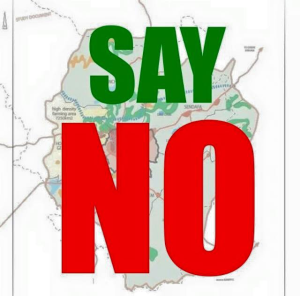
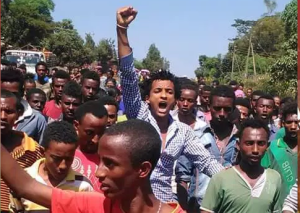





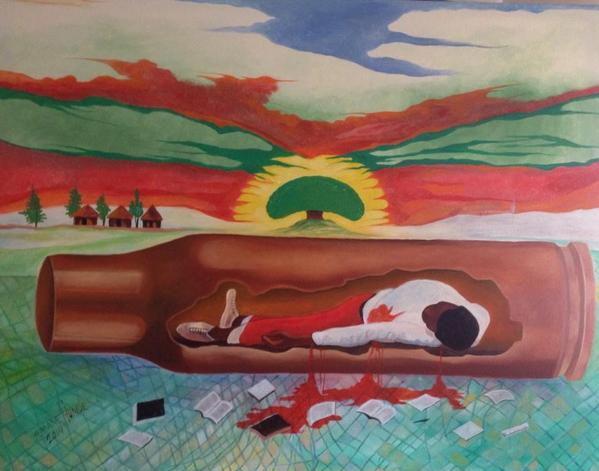
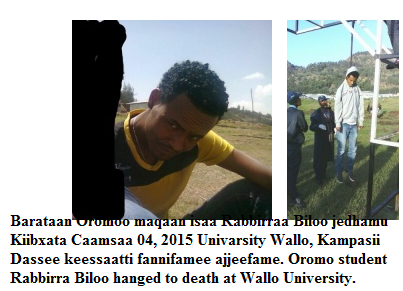


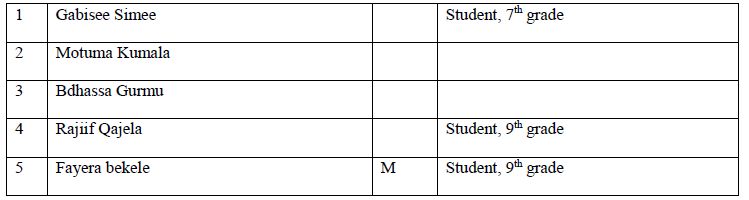




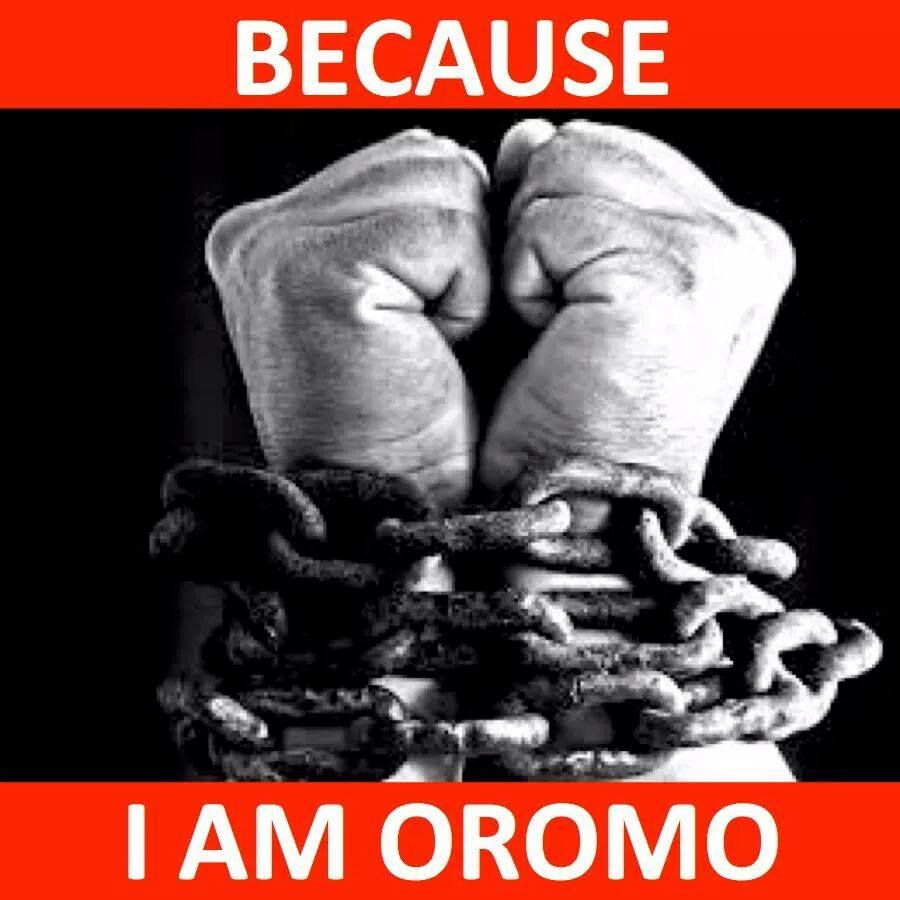


![Two Oromo Farmers in Salale Brutally Murdered; Their Bodies Dragged and Put on Pubic Display for Resisting Oppression Against Tigrean Habesha Rulers [Viewer Discretion Advised: Graphic Photo]](https://i1.wp.com/finfinnetribune.com/wp-content/uploads/2015/01/Oromo-in-Salale-Murdered-Dragged-and-Displayed-2015.jpg?resize=950%2C713)
![Two Oromo Farmers in Salale Brutally Murdered; Their Bodies Dragged and Put on Pubic Display for Resisting Oppression Against Tigrean Habesha Rulers [Viewer Discretion Advised: Graphic Photo]](https://i0.wp.com/finfinnetribune.com/wp-content/uploads/2015/01/Oromo-in-Salale-Murdered-Dragged-and-Displayed-2015-3.jpg)



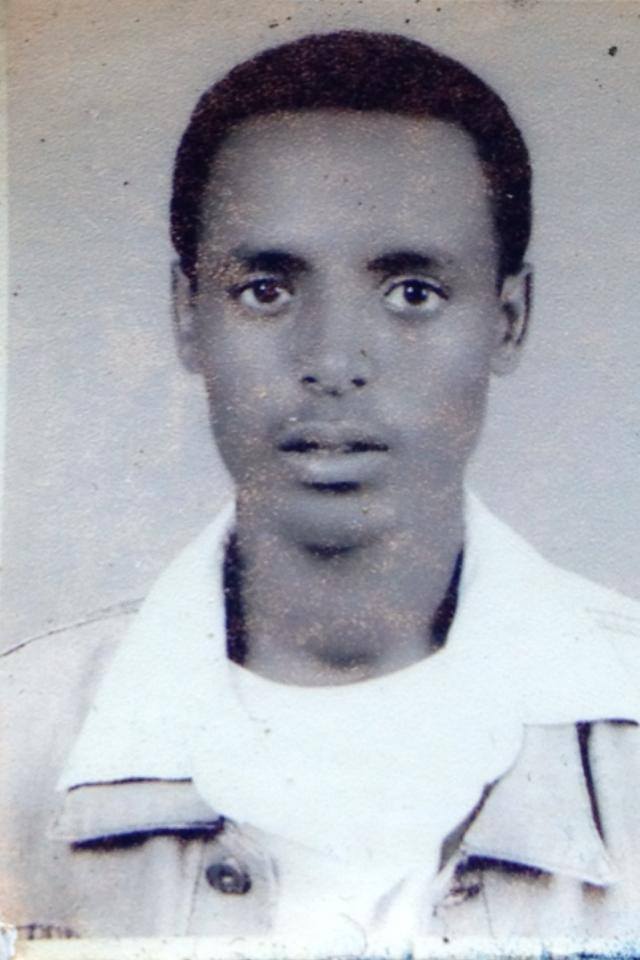


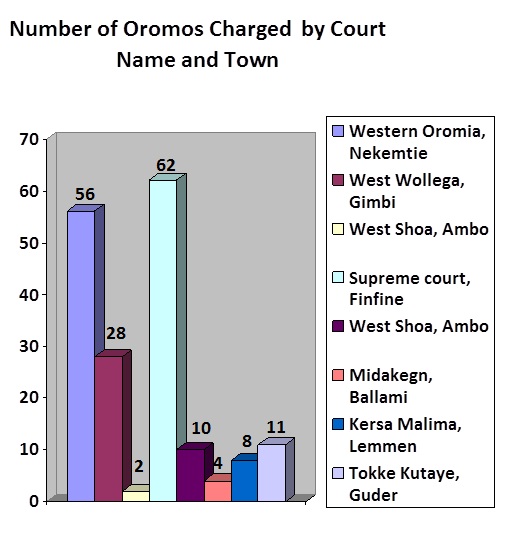





 Maqaan isaa Waaqjiraa Biraasa jedhama hojiin isaa barsiisaa yoo ta’u sababa sochii /mormii barattoota Oromootiin miidhaan irea gahee hospital Xuqur Anbassaa keessatti argama. Oromo national and teacher Waaqjiraa Biraasaa is in life and death situation after being tortured by Agazi/TPLF. At the time of this posting he is in Xiqur Ambassa (Black Lion Hospital), Finfinnee. #OromoProtests. #FreeOromoStudents. 13th July 2014.
 31 Oromo students, under 16 year old teenagers are being tortured by Agazi (TPLF) in jail at Ambo. The National Youth Movement for freedom and Democracy listed (in its 10th July 2014 publication) their names which is in Afaan Oromo as follows:- Dararamni Oromoo mana hidhaa Wayyaanee keessaa umurii hin filatu Dargaggoonni maqaan isaanii armaa gadi xuqame guyyaa 23/08/2006 (A.L.E) irraa eegalee sababa tokko malee jumulaan walitti qabamanii shakkiidhaan hidhamuu irraan kan ka’e ma/mu/ol/Go/ Sh/Lixaatti akka dhihaatanii fi himannaan dhiyaate waan hin jirreef jedhee ajajaan akka gadi lakkisaman murteesse. Haa ta’u malee ajajni mana murtii kun hojii irra ooluu irra umurii daa’imummaan mana hidhaa keessatti dararamaa jirra jechuun ma/mu/waliigalaa Oromiyaatti ol iyyatanii hanga yoonaatti deebii hin arganne. Isaanis;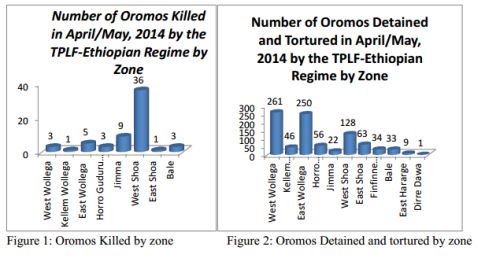

 Abdi Kamal Mussa is Oromo political prisoner kept in Dire Dawa. He graduated from Dire Dawa Universityin 2013 and was working at Ethiopian Commercial Bank, Jigjiga branch. He was arrested in May 2014 on bogus accusation of providing financial support to the student protesters. He is languishing in the gulag without any charge and legal representation. #OrmoProtests #FreeOromoStudents


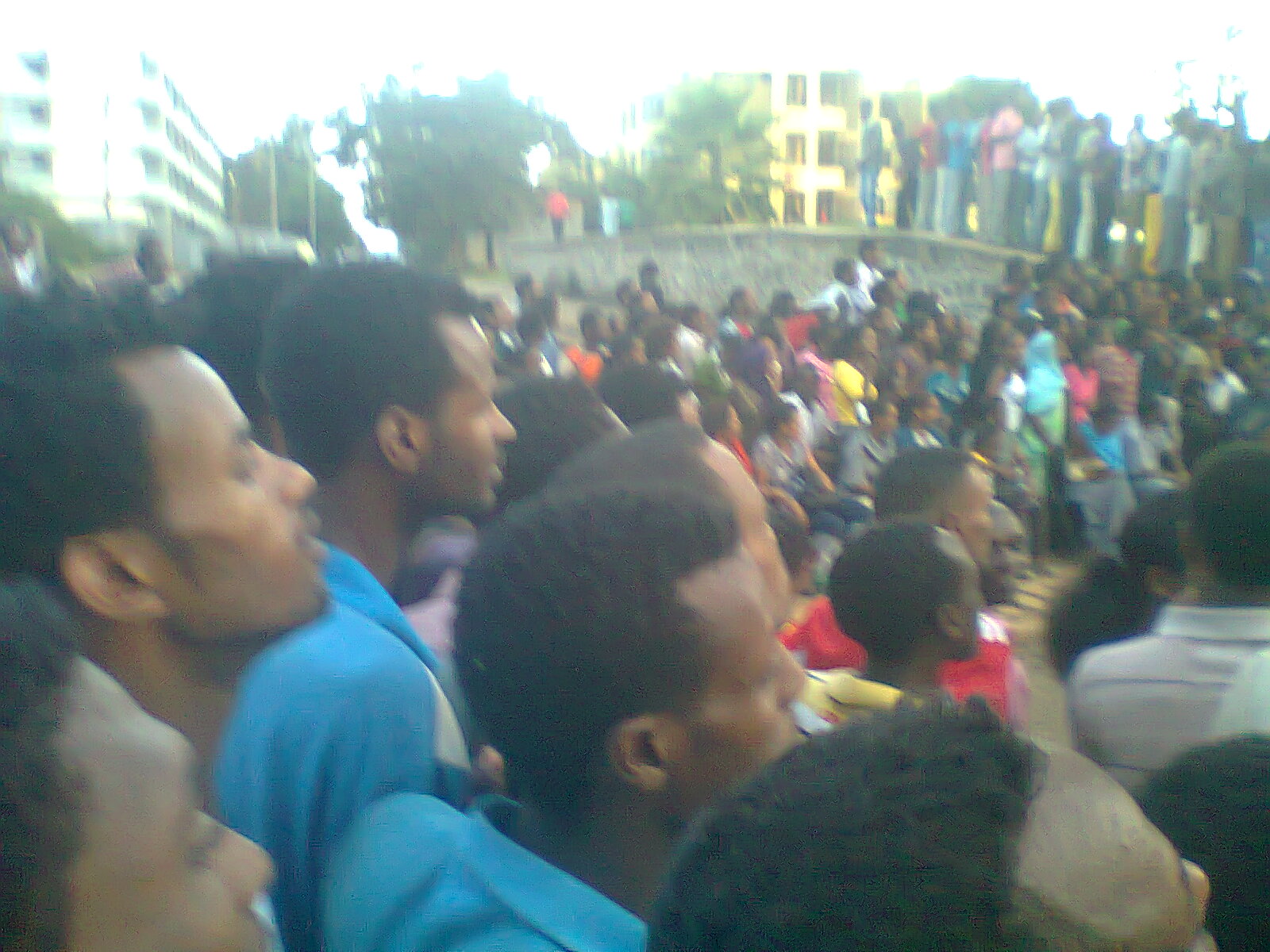


 Photos: Sen. Amy Klobuchar (L) and Sen. Al Franken (R) of Minnesota Two more U.S. Senators, Sen. Amy Klobuchar and Sen. Al Franken of Minnesota, wrote a letter to the U.S. Secretary of State, Mr. John Kerry, to express concerns about the Ethiopian government’s human rights violations, particularly the Ethiopian government’s recent acts of violence against Oromo peaceful demonstrators in Oromia. In the letter, the U.S. Senators urged the U.S. State Department to make the “respect for the rule of law and human rights in Ethiopian government’s treatment of all ethnic groups” central to the U.S.-Ethiopia relationship. It’s to be noted that U.S. Senators from the State of Washington, Sen. Maria Cantwell and Sen. Patty Murray,
 Following last month’s violent answer of the Ethiopian armed forces against peaceful protesters in Oromia, UNPO expresses its support to the victims’ families. Urgent attention from the international community to the situation of the Oromo people in Ethiopia is required. Over the course of the month of May, students in Oromia have been facing harsh repression by Ethiopia’s authorities. The peaceful student protests against the government’s planned education reforms, were met by excessive violence, causing the death of approximately 30 students and teachers. Reportedly, the youngest victim was only 11 years old. Ever since, international outrage spread, and in many cities solidarity protests were held. The Ethiopian Government has denied any responsibility, and is exercising a strict control over the local media. By staging the protests, the students wanted to express their concern about the government’s project to expand the municipal boundaries of the capital city, Addis Ababa. This would imply that the Oromo students’ communities, currently under regional jurisdiction, would no longer be managed by the Oromia Regional State. In addition, the reform would include the displacement of Oromo farmers and residents. Considering their vulnerable status in Ethiopian society, this would make the situation for Oromo individuals even worse than it already is. The discrepancy between the nature of the protests and the Ethiopian authorities’ reaction is extremely alarming, and gives further evidence of the human rights abuses to which the Oromo community is systematically subjected in Ethiopia. The Oromo suffer from severe discrimination, not only in terms of freedom of expression, as was the case in these recent events, but also in terms of basic human rights, cultural expression, socio-economic conditions and political representation. Housing development in Ethiopia regularly happens at the expense of Oromo farmers, who are forced to give up their lands, with insufficient or no financial compensation in return. These acts of forced removal or land grabbing are mostly achieved through violent attacks and killings. Over the past few years, many reports stated that Oromo individuals had been killed by the Ethiopian Special Police Forces, including women and children. According to a recent
 Oromo youth Galanaa Nadhaa murdered by TPLF/Agazi. Waxabajjii 23/2014 Sirni Awwalcha Gooticha Sabboonaa Oromoo dargaggoo Galanaa Nadhaa guyyaa har’a ganda dhaloota isaa Godina Lixa Shawaa Aanaa Tokkee Kuttaayee ganda qonnaan bulaa Tokkee Konbolchaatti bakka uummaanni Oromoo Godinotaa fi aan

 Galaanaan Nadhaa abbaa isaa obbo Nadhaa cawwaaqaa fi haadha isaa aadde Geexee Haacaaluu irraa godina lixa shawaatti bara 1972 ALH tti dhalate.Umuriin isaa wayita barnootaaf gahu mana barumsa baabbichaa sadarkaa lammaffaatti kuyaa tokkoo hanga sadii barate.kutaa 4 hanga 8 mana barumsaa tokkeetti barachuun qabxii gaarii fidee mana barumsaa Amboo sadarkaa lammaffaatti barnoota isaa kutaa saglaffaa itti fufe.Galaanaan nama sabboonummaa orommummaa qabuu fi qalqixxummaa dhala namaatti nama amanu ture.Galaannaan rakkina saba oromoof furmaanni qabsoo gochuu qofa jedhee amana.kanaafis gummaacha isarraa eegamu bahaa ture.bara 1992 yeroo bosonni baalee gubate barattoota oromoo adda dureen mormii dhageessisan keessaa tokko ture.mormii inni dhageessiseefis diinni qabee mana hidhaatti dararaa hangana hin jedhamne irraan gahe.haa ta’uu garuu Galaanaan nama doorsisa diinaaf jilbeeffatu hin turre.Jireenyi isaa qabsoo ture.Bara 1994 yeroo FDG oromiyaa keesssa deemaa ture Galaanaan ammas qooda lammummaa bahu irraa of hin qusanne.ammas diinni qabee mana hidhaa galche..Galaanaan bara kutaa 12 qorame ture mana hidhaa taa’ee.qabxii olaanaa fiduun yunivarsiitii maqaleetti ramadame.Achitti balaa dhibee waggaa kudha tokkof isa gidirseef saaxilame. kunis gochaa ilmaan tigireeti.Galaanaan waggaa kudha tokkoof erga dhukkubsatee booda sanbata darbe addunyaa kanarraa du’aan boqote.sirni awwaalcha isaa guyyaa har’aa bakka uummanni oromoo bal’aan argametti har’aa magaala tokkee bataskaana mikaa’el jedhamutti raawwatame.qabsaa’aan kufus qabsoon itti fufa!!!! IUOf!!!!!!!!!. ‘My name is Hambaasan Gudisaa. I was born in Gincii, West Showa, Oromia, Ethiopia. I was a third year student (Afaan Oromo major) at Addis Ab


 Oromo people of Gindaberete Protesting the shootings and killings of unarmed school students Waraannii Wayyaanee Aanaa Gindabarat irra qubsiifamee jiru, uummaata sivilii irratti waraana banuun barattoota Oromoo kutaa 12ffaa Sadii ajjeese. Waxabajjii 12/


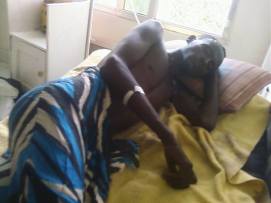
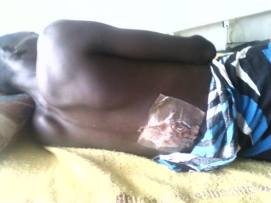


 Six/Seven TPLF/Agazi armed men against two unarmed Oromo youth. Humni diinaa biyya keenya humnaan qabattee jirtu, kunoo haala kanaan, gara-jabina daangaa hin qabneen, amma nyaattee-dhugdu ol-fuutee ijoollee keenyatti buufatti. Innumtuu tokko yookaan lama miti; shan, jahaa fi torbaa taatee. see @


 Still, I was tempted to decline when a woman in my row moved over to sit next to me and offered to translate for me. I kind of like to try to listen and pick out what I can. If I had turned her down, I would have missed the emotion conveyed in her translation. Her tone told me what I hadn’t figured out yet (though I should have known) – the son was going to die…a double injustice since the real-life plot not only includes the loss of ancestral lands, but also the lack of freedom to protest that loss, and death or imprisonment for those who dare to do so anyway. It was more of a skit, really. A powerful skit, regardless of acting ability, because the story is so powerful. A story of a family of three. Just one son, supported in his schooling by what his family was able to produce on their farm. The land was key. His parents had not been able to get an education. With the land, now he could. Yet when an investor came asking the government official if land was available, he was told, yes, there is much land that is ‘not being used.’ When the investor was brought to see the land in question, it was as if the farmer was invisible. The deal was made right there between the investor and a local intermediary while the farmer continued to plough his field. Then their son came home from school saying he was going out to march with other students to protest what was happening to the land – to all of the farmers in the area – the mom cautioned him to be safe, the government can not be trusted, she said. My translator began to cry in earnest. … I remembered once when I had to act out a similar scene. I’m not a big fan of role-plays, so I was going along with the activity, but holding back quite a bit. A group of us were given roles to act out a lesser known bit of Canadian history when indigenous children were forcibly removed from their villages and their families and taken to residential schools to be ‘educated,’ as well as assimilated, often abused, even experimented upon. Often, they never returned.
  Almost always, those who did return spoke of their lost childhood and traumatic memories. I was an Anishinabe mother in the role-play. In real life at the time, I had left my only child, a two year old boy, home for two weeks with his dad so I could participate in this delegation, mostly to learn more about the Anishinabe history in general and one community’s struggle in particular. Though the experience was meaningful, that day I was starting to wonder if two weeks was too long to be away from my son. One person had come to the delegation with me, Jared, a young man in his twenties. I knew him well in the sense that we were part of the same intentional living community. We had eaten together, worshipped together, sat in consensus decision-making meetings together, sang, cooked, and worshipped together over the previous three years. He was given the role of my son. Jared and I stood in the circle area with a few other people who had roles as part of the Anishinabe village. I was just going through the motions of the role-play, not really into it. Wishing I enjoyed that kind of thing more. Then they came for Jared. In that moment when they snatched him away, I cried out and reached out for him but he was gone and I was left sobbing. Somehow it had become real. Five years later, I still hear comments about how real my heartbreak felt to everyone in the room. … As the woman next to me struggled to speak through her tears, we watched the skit draw to its inevitable close. The security forces blocked the path of the unarmed protesters. The protesters held their ground. The security forces escalated the situation by firing at the students. The only child of the farmer and his wife was gunned down. His parent actors bitterly mourned his loss. He too is gone. It’s hard to clap after that. Hard to will one’s hands to applaud the actors when you’re thinking of the families that have gone through similar situations so recently. Many Oromo students are gone. Some known to be killed, some disappeared, arrested or abducted without releasing names. Many die in detention centers and prisons. Yes many students are gone. Some may return from imprisonment with accounts of mistreatment and suffering, with harrowing stories of other students locked up years ago, still in prison with no trial, no real charges and very little hope. Others will not return. One of those is Alsan Hassan, abducted May 27 from his university after participating in a hunger strike.
  On June 1, his family was notified of his death. They were told he killed himself, a story commonly invented by the authorities to cover up the real cause of death: torture. His parents came to retrieve their son. His body was severely disfigured from the abuses he had suffered. Still they could not simply take him home. They were charged an exorbitant price and had to return home, borrow money just to secure the release of his body and finally make journey home to bury him. The thought of Alsan and the other sons and daughters lost to their families – that is why the woman translating for me (and I) couldn’t keep from crying, however predictable the plot of the skit. I was sitting next to my six year old son. Her 11-or-so year old son was on the other side of her. We can’t help but hear these stories not only as fellow human beings, but as mothers. We translate, we write, we do whatever we can from the other side of the world in the hopes that we will inform and inspire enough people to bring an end to the unjust imprisonment of dissenting young voices. See @


 Nimoonaa Xilaahuun Imaanaa (1986-2014). Oromo National, Banking and Finance Graduate of Finfinne University (AAU) & Teacher. Tortured and murdered by TPLF while in jail.


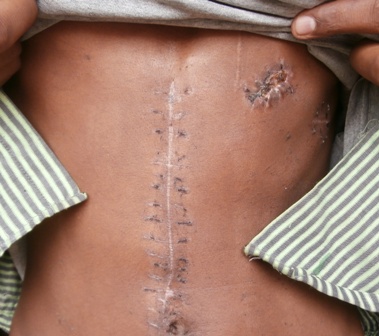

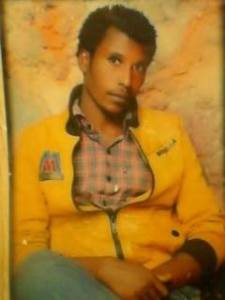
 Aslan Hasan, one of the 10 Oromo students kidnapped on May 29, 2014 from Haromaya University has died while in military detention center in Harar city. Apparently he collapsed during one of the torture sessions, then was taken to Tikur Anbessa Hospital in the capital, where he died on June 1, 2014. The regime told his families that the student committed suicide. Aslan was a 2nd year engineering student at the University. He was born in Bakko and attended high school in Burayu. His body has been taken to Gudar. Barataa Nuraddin(Alsan) Hasan dhalootaan magaalaa BAAKKOO’tti dhalate. Barnoota isaa sadarkaa 1ffaa achuma magaalaa Baakkootti xumure. Barnoota isaa sadarkaa lammaffaaf qophaa’naa obboleessa isaa bira taa’ee magaalaa BURAAYYUU tti xumure. Bara 2005(2013) yuuniversiitii Haramayaa saayinsii Injiinariing(Engineering science) jalattii muummee ‘Electirical Computer Engineering’ filachuun barataan sabboonaaf garraamiin kun haala hoo’aaf milkaayina qabuun barnoota isaa hordofaa utuu jiruu, humni mootummaa abba hirree wayyaaneen guyyaa gaafa 29/05/2014 mooraa guddicha YUUNIVERSIITII HARAMAYAA keessaa bakka GADA-JAHE(IOT CUMPUS) jedhamuun beekamu, Gamoo H lakk-doormii 26 (H-26) duulli mootummaa wayyaanee saroota OPDO waliin doormiitti itti seenan, hiriyoota isaa faana qayyabachaa utuu jiruu, qabame. Barataan sabboonaan Nuraddin(Alsan) Hasan guyyaa gaafa qabamee kaasee hanga guyyaa kaleessaatti (01/06/2014) barattoota kakaaste hidhata dhaaba alaa waliin qabda jechuun barataa barumsa qofaaf maatii isaa irraa adda bahee barnoota isaa hordofaa jiru, magaalaa Hararitti guyyoota sadii guutuu fannisanii reeban. Erga inni of dadhabees, sobdee akka nuti si dhiifnuuf malee hin miidhamne ittiin jechuun, utuu reebanii lubbuun isaa dabarte. Gocha hammeenyaa hagana ga’u raawwatanii, hidhamaan of ajjeeseera, gara hospitaalaa haa deemu, haa qoratamu. Jechuun reeffa isaa gara hospitaala XIQUR AMBASSAA geessan. Obboleessa isaa SULXAAN HASAN, waamuun obboleessikee mana adabaatti of-ajjeese gara finfinneetti kottuu reeffa fuudhi, jechuun maatii isaatti bilbilan. Yeroo ammaa kana reeffi barataa kanaa magaala GUDAR ga’uu isaa ergaan bilbilaa nu ga’eera. “Lubbuukeef Jannatan Hawwa” itttiin jedhaa! Maddi oduu peejii “kuusaa Dhiiga Oromoo” ti peejicha ‘like’ haa goonu press ‘like’ link on Kuusaa Dhiiga Oromoo’s page. RAKKOO AMBOO KEESSA JIRU!#OromoProtests- 2nd June 2014 Akkuuma beekamu FDG FI WAA’EEN MASTEER PLANII erga jalqabe kaase Magalatii keessatti saba Oromoo irratti kan rawwatama jiru mutumma kamiyyun kan rawwatama ture waliin hin madalamu jechudhan gabasaan magala Amboo irra nu qaqabee jira! Waan Nama gadisiisu keessa Barataa yunviristi tokko kan guyya finciilli itti jalqabee rasaasan rukutamee hanga ammatti bakka warri Ogumma fayya itti barataan(Mana reeffa)keessa keessa tursuun Jimaata darbee halkaan keess
 (RAB, Waxibajjii 1, 2014) Mootummaan Woyyaanee Hegeree Biyyaa akkasitti karaatti hambisaa jira! Dargaggoo Nimoonaa Xilaahun bara 2007 yunversiitii Finfinneetii eebbifamee godina Kaaba shawaa mana barumsaa Shanootti barsiisaa ta’ee yeroo ramadame akkuma dargaggoo Oromoo kaanii innis ummata isa guddisee, barsiisee kanaan isa ga’e tajaajiluuf hawwii guutuudhaan ture kan inni hojii barsiisummaa eegale. Akkuma dargaggeessa kamii iyyuu mana dhaabee ijoollee godhatee jireenya gaggeessuuf abjuun isaa bara dheeraa waan bakka ga’aa dhufe itti fakkaate. Waxibajjii 26, 2008 namni mul’ataa kun hojii barsiisummaa jalqabee reefuu baatii muraasa hojechuu isaati. Guyyuma kana akkuma guyyoota kaanii hiriyyoota isaa wojjin utuu mana barumsaa inni barsiisuu galaa jiruu konkolaataan lakkoofsa gabatee ishee 3-F taate dingata dhuuftee fundura isaa dhaabbate. Konkolaataan kun kan Poolisii Federaalaati. Konkolaataa kana keessaa namootni uffata sivilii uffatan utaalanii bu’uudhaan balleessaa tokko malee barsiisaa Nimoonaa ukkamsanii fuudhanii sokkani. Dargaggoo Nimoonaa utuu gara wojjira poolisii anichaatti illee hingeeffamiin dabarfamee iddoo hinbeekamnetti geeffamuu isaa namootni yeroo sana ijaan argan himaniiru. Haalli kun kan isaan yaadesse Oromootni baayyeen dhaabbileen mirga dhala namaa tiksan addunyaa dhiimma kana duukaa bu’anii lubbuu dargagoo Nimoonaa akka baraaraniif waamicha godhanii turan. Woggaa tokko, waggaa lamaa, sadii … woggootiin 6 nilakkaa’aman……… Mootummaan Woyyaanee ilmaan Oromoo, keesummaa immoo hegeree biyyaa kan ta’an dargagoota Oromoo hamilee cabsuuf tooftaa inni itti gargaaramu keessa inni tokkoo dargaggoota oromoo sammuu cimaa qaban ukkamsee mana hidhaa buusee, achitti torchii godhee, namummaatii isaan baasee gaafa isaan qarqara boollaa irra ga’an gadi darbachuu yookanis mana hidhaa keessatti ajjeesee reeffa isaanii baasuudha. Dargaggoo Nimoonaas carradhuma kanatu isa argate. Woggootii ja’aan darbaniif Manneetii hidhaa Mayikelaawwii, Qaallittii, Qiliinxoo, akkasumas Ziwaaytti gidiraa ilmoon namaa arguu hinqabne baayee arge. Kana irraa kan ka’es dhukkuba irra bu’e. Dhukkuba isaa kanaafis yeroo dheeraa fuundura woldhaansa haakimaa argachuun irra ture hinargatiin hafe. Bulchiinsi mana hidhaa Lubbuu dargaggoo kanaa baraaruuf gargaarsi woldhaansaa hakimaa olaanaan akka isa barbaachisu yoo beeke illee yeroo dheeraadhaaf irratti ilaaleera. Dhuma irratti guyyaa muraasa fuudura waardiyyoota poolisii federaalaa afuriin marfamee eegamaa hospitaala Xiqur Anbessaa akka seenu yoo godham iyyuu dhukkubni isaa waan baayyee irra tureef, yeroo itti gargaarsa argatutti waan hinargatiin hafeef hakiimotni kana booda waan baayee gargaaruu akka hindandeenye dubbataniiru. Umrii waggaa digdamootaa keessatti kan argamu dargaggoo xobbeen abdii borii amma guyyaa du’a isaatii eegachaa jirra jedhamee iddi himamee guyyaa yartuu boda gaafa Waxabajjii 5 bara 2014 wareegame. –

 While kidnappings and/or extra-judicial arrests and detentions have continued particularly around academic institutions in different parts of the regional state of Oromia in Ethiopia, disturbing and worrisome reports are coming out of detention centres where the Oromo students arrested in the past two weeks are being held. According to HRLHA correspondents in Nakamte, Wollega Province in western Oromia, there have been cases of tortures of varying levels as well as detainees being taken away in the middle of the night to unknown destinations for unknown reasons. Fifty (50) detainees, including thirteen females, were taken away at one time alone; and their whereabouts were not known. In relation to tortures, the reports indicate that some of the detainees are isolated from others and held in separate rooms handcuffed and legs tied together with their hands on the their backs. There were ten students subjected to this particular situation, among whom were Std. Tesfaye Tuffa (male) and Std. Bontu Hailu (female). Although not confirmed at this point, there were also eight students who were screened out in order to be transferred to a detention or investigation office at the federal level; and these include: 1. Chalaa Fekaduu Gashe (high school student), 2. Chalaa Fekaduu Raajoo (high school student), 3. Nimoonaa Kebede (Wollega University 5th year law student), 4. Moi Bon Misganuu (Wollega University, student), 5. Abdii Gaddisaa (high school student), 6. Abel Dagim (high school student), 7. Qalbessa Getachew (high school student), 8. Mulgeta Gemechu (high school student), 9. Edosa Namara Dheressa, Civil Engineering, Wallaga University In the meantime, reports indicate that kidnappings and/or extra-judicial arrests and detentions have continued in different parts of the regional state of Oromia, particularly in Hararge/Haromaya, West Showa, and West Wollega, all in relation to the protests that have been going on in the Regional State of Oromia in opposition to the newly introduced master plan to expand the Capital City of Addis Ababa/Finfinne in all directions by displacing the local Oromo residents. The following are among the hundreds of the most recent cases of kidnappings, arrests and detentions: 1) Edosa Namara Deressa – Wollega University (Civil Engineering) 2) Walabuma Dabale -Adama University, West Showa, 3) Ebisa Dale -Adama University 4) Ganamo Kurke -Adama University 5) Liban Taressa – Adama University 6) Adam Godana -Adama University 7) Bodana (last name not obtained) – Adama University Name of other detainees arrested May 15-17, 2014:


 The Human Rights League of the Horn of Africa (HRLHA) is highly concerned about the life-threatening situations in the detention centres where those young Oromos were held, and the safety and wellbeing of those who were taken to unknown destinations. Therefore, HRLHA calls upon the Ethiopian Government to abide by all international human rights instruments that it has signed, and refrain from subjecting the young detainees to such harsh situations. It also calls upon all local, regional, and international human rights organizations including UN Human Rights Council, humanitarian, and diplomatic agencies to put pressure on the Ethiopian Government so that it: 1. Unconditionally releases the Oromo students who were detained in the past two and three weeks simply because the attempted to exercise some of their fundamental rights in a peaceful and absolutely non-violent manner. 2. Stop killing, arresting and abducting Oromo nationals 3. To form an independent committee from civilians for investigation and Prosecution of the killing and torturing crimes. – HRLHA

 Press Release 15th May 2014, Gambella “Ethiopian Government Must Stop Killing Oromos for their Land”


 #OromoProtests- Peaceful Oromo students and civilians were attacked and wounded by Agazi in Nekemte, Western Oromia. Denied medical help. Agazi forced them out from hospital. Medical workers at Nekemte hospital were attacked by Agazi for giving medical services to wounded students and civilians. 20th May 2014

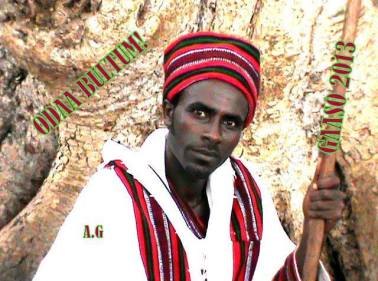


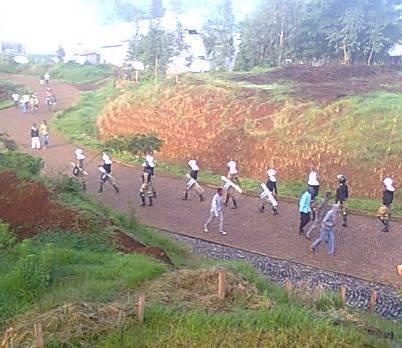


 Sources claimed 25-50 were killed. At least seven were confirmed dead in Ambo alone. Many were badly injured and hundreds were taken from streets and university campuses to places of detention, where protestors and opposition party supporters are routinely tortured and raped. Names of confirmed dead, injured or detained are given overleaf. Those killed include Endale Desalegn (Temesgen), and Tasfaye Gashe, both ninth grade students in Ambo. Individuals in the UK are requested to write to their MPs, requesting them to ask the Minister for Africa, Mark Simmonds, and the Minister for International Development, Lynne Featherstone, what the British Government intends to do in response to this latest episode of killing and detaining peaceful demonstrators. Killed: Ababa Kumsa – Wallega Abdi Kamal – Guder Junior Secondary School Abdisa Nagasa – Wallega Endale Desalegn (or Temesgen) – Ambo High School Falmata Bayecha – Jimma 5th yr Medicine Galana Adaba – Jimma 3rd yr Governance Getachew Daraje – Jimma 3rd yr Governence Getahun Jirata – Guder Junior Secondary School Gexe Tafari – Wallega Gurmu Damxoo – Guder Junior Secondary School Hussen Umar – Jimma Israel Habtamu – Jimma Kumala Guddisa – Guder Junior Secondary School Tadesse Gashee – Ambo Liban Macha Junior Secondary School Tashome Dawit – Wallega Zabana Barasa – Jimma 3rd yr Governance (or Oromo Folklore) Injured: Balay Kusa – Mida Qanyi School – W Showa Bayisa Obsa – Mida Qanyi School – W Showa Dararsa Ayana – Mida Qanyi School – W Showa Adama University students detained and beaten: Abrahm Makonin Ararso Abenzari Hagaye Yohannis Abdala Hussen Julio Amnu’el Burka Danka Andu’alam Telahun Alemayo Ayantu Jalta Misha Bilisuma Lamii Agaa Bonsa Badhadha Bati Bultu Wadaju Bultum Chala Galan Dabiso Datamo Fayera Shif Dane Abo Bushira Dani’el Admasu Tamsgen Didaa Ahmed Ibroo Duni Hussen Walbu Ebisa Malka Nuruu Etihafa Tuffa Soraa Fantale Faru Qarsuu Fayisa Girma Biranu Gada Dinqa Bayisa Humin’esa Miliki Fanta Ibraham Musa Awal Ifabas Burisho Nuruu Iliyas Ishetu Ibsa Lami Marga Gabru Lelisa Ayansa Marga Marga Tuffa kiltu Magris Banta Sodaa Muktar Jeyilan Sa’ed Musxafa Kadir Siraj Nuho Gudata Irre Odaa Damis Bonjaa Shibiru Tariku Falke Sidise Jara Tashome Bakele Sabbatichal Tadalu Mamo Bacha Takalinyi Ketama Baharu Tayee Tafara Agaa Tullu Bonus Tura Welbuma Ragasa Qalbesa


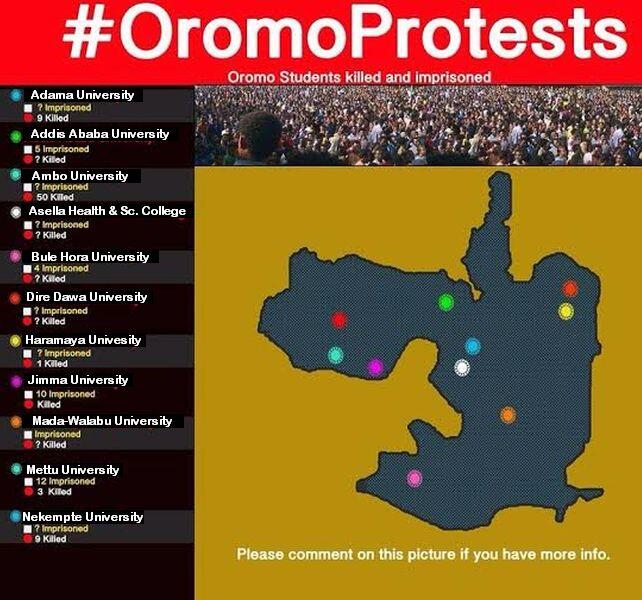


 #OromoProtests Oromo student Wabii Tilahun, 2nd year Afan Oromo student at Ambo University kidnapped by Agazi, his where about is not known.
  Magarsaa Worku, Oromo student of Haromaya University, kidnapped by Agazi #OromoProtests-






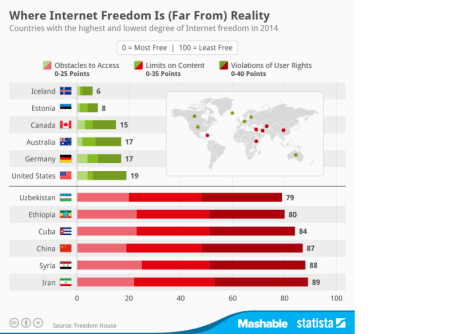


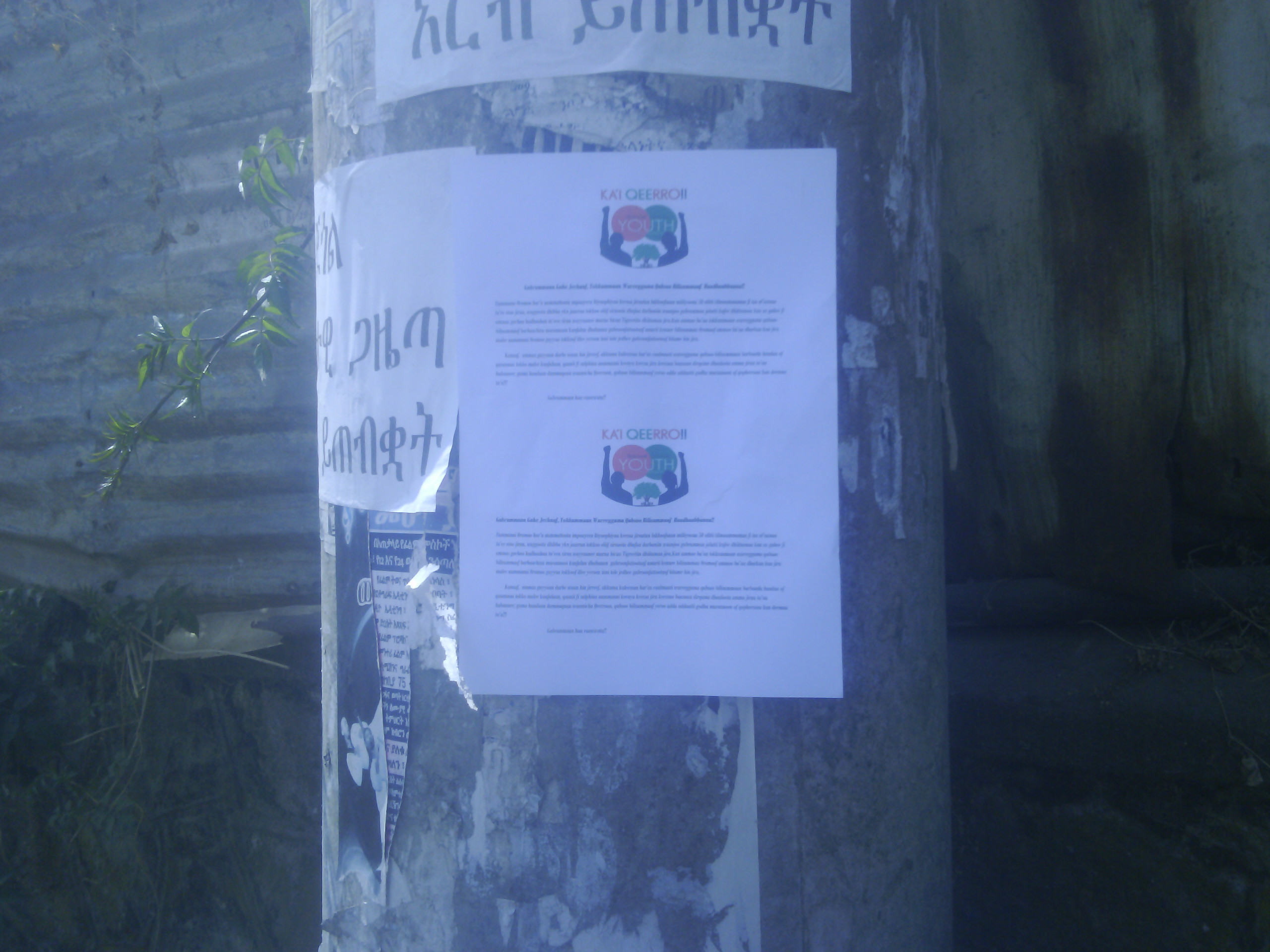

 l Gumuz,Muddee 7/2014 Godina Beenishaangul Gumuuz Magaalaa Asoosaa bakkaa Wayyaaneen ayyaanaa sabaa fi sab-lammoota kabajan jira jechuun ololaa jiranitti goototni barattootni Oromoo fi lammiileen cunqurfamoo biyyatti Yuunibarsiitii Asoosaa wallee warraaqsaa irratti wallisuu fi roorroo dhageessifachuun mootummaa Wayyaanee dura dhaabbachuu eegalan. Barruuleen warraaqsaa haalaan bittinneeffaman. Qeerroon barattootni Oromoo wallee warraqsaan ABO fi qabsoo bilisummaa Oromoo faarsan.


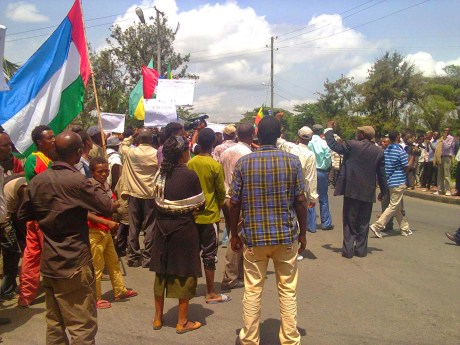
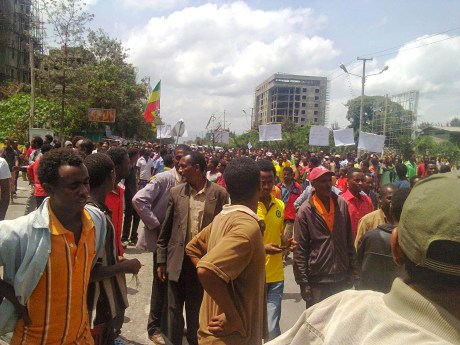


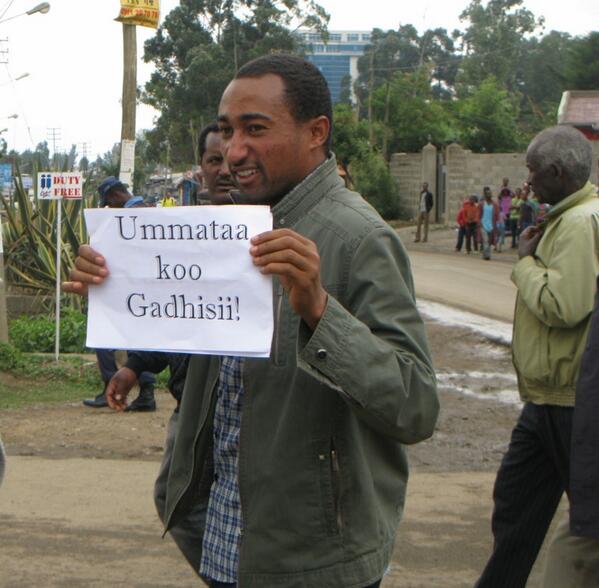

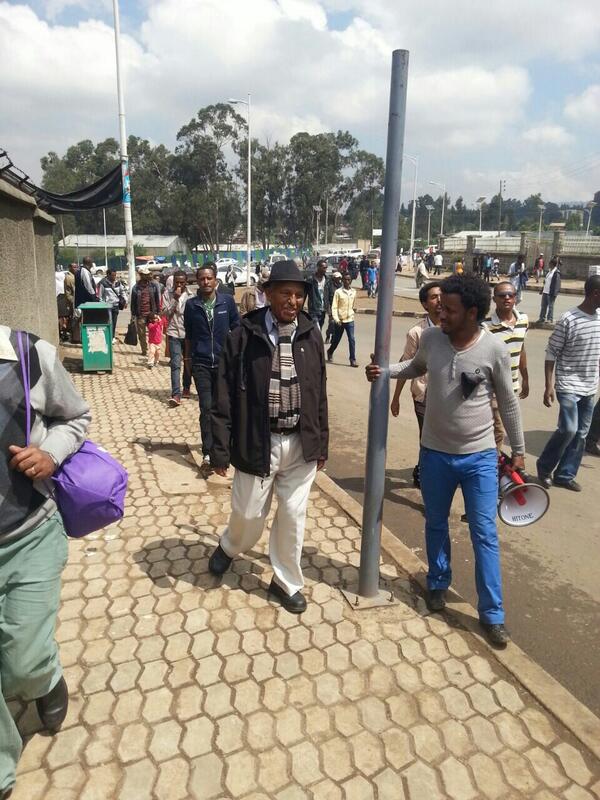


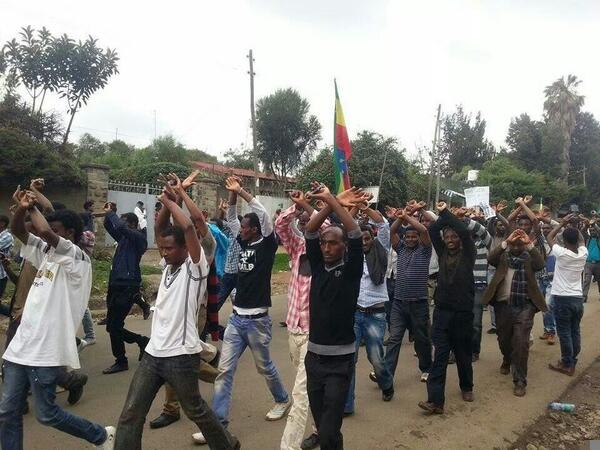


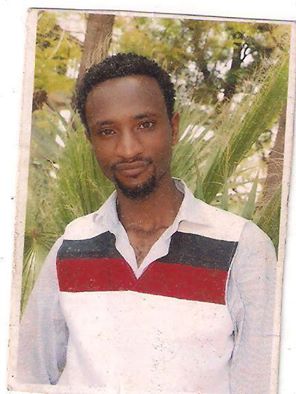


 May 14, 2014 (gadaa) — #OromoProtests FDG continued at Wallaggaa University in the Nekemte Campus on May 14, 2014 to demand that the Addis Ababa Master Plan be annulled, and to demand for the institutionalization of the Special Interests of Oromiyaa over Finfinnee per the Constitution. The Addis Ababa Master Plan is termed as the Master “Genocide” Plan by Oromo activists as it aims to evict millions of Oromo farmers around Addis Ababa (whose Oromo name is Finfinnee), and hand out the land to local and foreign land-grabbers – with the Chinese being main actors of the ongoing land-grabbing campaigns in Oromia/Ethiopia.


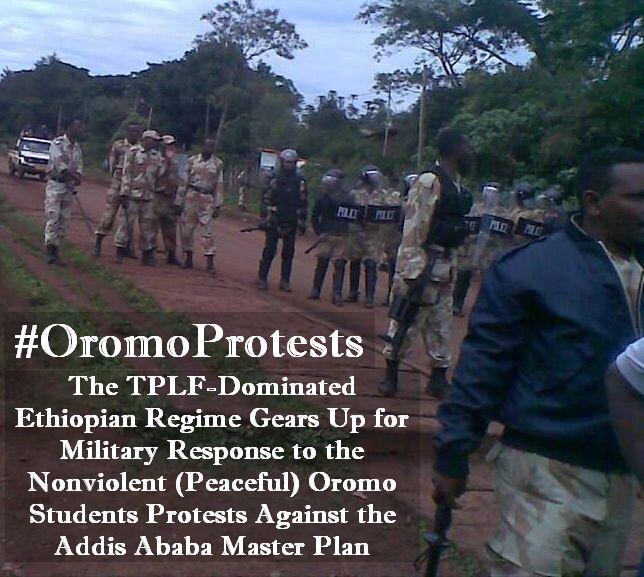


 (Gochaa Abba irre Motummaa Wayyaanee ummata Oromoo irratti raawachaa jiru, mormudhaan tarkaanfii waloo fi hatattama fudhachuuf Marii waamame ture milkaawe jira. Qophiin kuni, akka aadaa Oromootti Ebbaa Jaarsoole Oromoon dungoo qabsiisuudhaafi yaadannoo Gotoota Oromoo nuf waregamnin jalqabame. Marii kana irratti namoota dhibban lakkawaaman kan argaman yemmu ta’u, bakka bu’oota Hawaasa Oromoo Berliin-HOB. ev fi Hawaasa Oromoo Munchen fi Nannoo-HOMN e.V, Murtii isaani ummataaf ibsani gaaffii ka’eefis deebi kennaniiru. Waluma galatti Hirira nagaa gaafa Caamsa 9, 2014tti geggeffamu ilaalchisanis haalli qindaawee akka jiru ibsame, hawaasonni biro fi Jaarmooli siyaasas misensoota isaani kan hirmaachisan ta’u isa akkasumas, Warri yakka kana ummata kenya irratti rawwatan haga Seeraan Gaafatamani murtii isaani argatanitti fi gaaffin Saba Oromoo deebii hamma argattutti utu giddutti hinkutiin qabsoo kana kessa hirmaachuuf waada galaniiru. Jarmooleen Siyaasaa Oromoos gargarummaa ilaalchaa siyaasaa qabaan dhiphiifataa diina irratti xiyeeffachuun akkataa dantaa ummataa Oromoo kabajchisuu fi tiksuu irratti garaa fuulduraa maarii bal’aa kan hawaasni keenyaa ifatti qoodaa irraa fudhaatuu akkaa yabboo(Forum)n tolfamuu hirmatoonii walgahii kanaa dhammatnii jiru. Tokkummaan Humna! – 03.05.2014 – Muenchen)
  (Oromo Community in Munich, Germany; May 3, 2014)
  (Oromo Community in Munich, Germany; May 3, 2014)
  (Oromo Community in Munich, Germany; May 3, 2014)
  (Oromo Community in Munich, Germany; May 3, 2014)
  (Oromo Community in Munich, Germany; May 3, 2014)
  (Oromo Community in Munich, Germany; May 3, 2014)
  (Oromo Community in Munich, Germany; May 3, 2014)
  (Photo: Oromo Diaspora in Minnesota – the largest community outside Oromia – met on Sunday, May 4, 2014, to discuss on how to best help Oromo Students’ #OromoProtests)
  (Photo: Oromo Diaspora in Minnesota – the largest community outside Oromia – met on Sunday, May 4, 2014, to discuss on how to best help Oromo Students’ #OromoProtests)
  (Photo: Oromo Diaspora in Minnesota – the largest community outside Oromia – met on Sunday, May 4, 2014, to discuss on how to best help Oromo Students’ #OromoProtests)
 – Ambo and Other Towns Around Finfinnee: the expansive Addis Ababa will ultimately bring these Oromian towns under its authority per the TPLF plan:


 The Oromo people are opposing the TPLF’s new master plan to destroy the Oromo nation, identity and home land: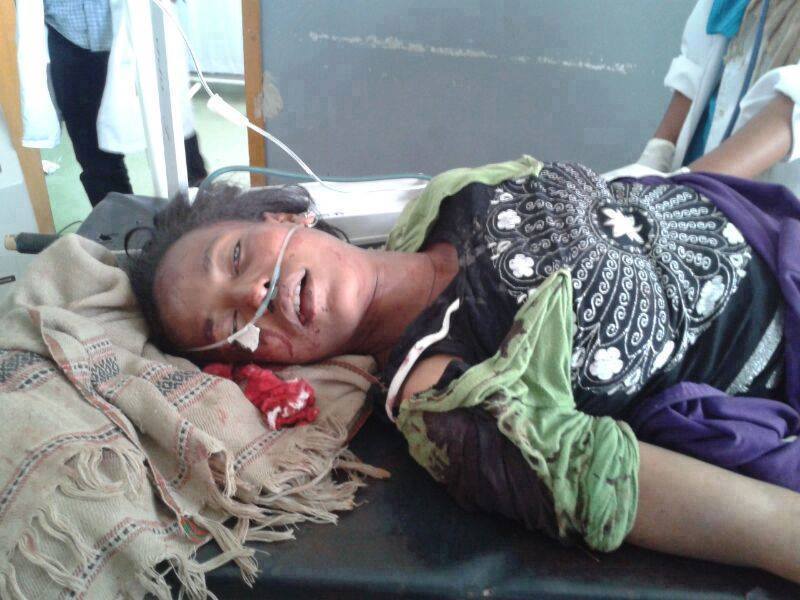


 Ebla 30/2014 uuummaanni Oromoo fi Dargaggeessii Oromoo Baraattootni Oromoo fi Barattootni Oromoo sadarkaa 1ffaa, 2ffaa, Qopha’inaa fi University Amboo yeroo amma kanatti hiriiraa guddaa guyyaa shaniif itti fufiinsaan gaggeessa jiru. Kessaattuu isa guyyaa har’aa wanti adda isa godhuu, Ummaanni Oromoo Magaalaa Amboo Jaarsaa, Jaartii, Manguddoon, Da’imnii waggaa 8tii olii, Shamarraan Dargaggeessii, Daldaltootni, fi Barattootni utuu hin hafiin keessatti qoodaa guddaa Fudhachuun FDG gaggeeffamaa jira. daandiin konkolaataa Finfinnee Amboo keessa dabarsee Dhiha Oromiyaa geessuu Cufameera,Gudarii fi Amboo Gidduu Bakka 16ttii Daandiin mukaa fi dhagaa Goommaa Konkolaataa karaa irratti Guuruun gubuun, Warannii Wayyaanee akka Wallaggatti gadi hin darbinee Amboo ittisee qabee Bilisummaa isaaf falmachaa jir.
 Manneen barnootaa sadarkaa lammaffaa fi Qophaainaa keessatti barattootni Oromoo goototni imaanaa gootawwanii tiksan gaaffii abbaa biyyummaa itti fufuun magaala Gimbii mana barumsaa sadarkaa lammaffaa fi Qophaainaa Kompiriheensivii Gimbii keessatti FDG gaggeessan. Barattootni Oromoo gaaffiin mirgaa ilmaan Oromoo QBO keessatti wareegama baasaa as gahee fi haras itti jiru deebiuu qaba jechuudhaan FDG gaggeessanii jiran. Barattootni oromoo kunneen mana barumsaa keessatti walgahuudhaan tokkummaadhaan ABO gaachana ilmaan Oromoo tahuu kan dhaadatan Yoommuu tahu waardiyaan mana barumsaa fi waraanni mootummaa wayyaanee dura dhaabbatus gaaffii mirgaa irraa humni duuba nu deebisu tokko illee hin jiru, Uummatnis gamtaadhaan kaee falma jabaa gaggeessuutu irraa eegama jechuudhaan murtii dhumaa dabarfatanii jiran. Manneen barnootaa sadarkaa tokkoffaa keessattis barattootni Oromoo gaaffii mirgaa abbaa biyyummaa fi walabummaa Oromiyaa itti fufuu Qeerroon Gimbii gabaasee jira.
 Mootummaa wayyaanee irratti diddaan Barattootaa jabaachuudhaan kan itti fufe Yuunivarsiitii Dirree Dawaa keessatti finiinuun itti fufe. Mootummaan wayyaanee garboomfataa dha, Hundeedhaan buqqauu qaba, Kanneen hidhaman nuuf haa hiikaman, Siidaan Minilk haa buqqau, Finfinneen handhuura Oromiyaatu, Lafa naannawa Finfinnee Murree hin kenninu jechuudhaan dhaadannoo qababachuudhaan ganama saa 8:00 AM irraa kaasanii dhaadannoo dhageessisuu kan eegalan Barattootni Yuunivarsiitii Dirree Dawaa Uummatni Oromoo magaala Dirree Dawaa keessatti argamus Dargaggootni Oromoo hiriiraa fi dhaadannoo dhageessifamaa turetti dabalamuun mootummaa wayyaanee dhiphina guddaa keessa seensisee jira.Goototni barattoota Oromoo Yuunivarsiitii Dirree Dawaa mootummaan wayyaanee hiriira nagaa seera biyyaan lafa kaawe deebisee dhorkuun isaa abbaa irrummaa isaa dachaan mirkansa kan jedhan yoommuu tahu wayyaaneen waraana hedduumminaan bobbaasuun reebichaa fi doorsisaan akkasumas hidhaan dura dhaabbachuu yaaltus barattootni Oromoo gamtaan kauun diina dura dhaabbachuun dhaadannoo dhageessisaa oolanii jiran.
 Ebla 30/2014 Godina
  2nd May 2014

 Below is Finfinnee (Addis Ababa) University as invaded by Agazi/TPLF Army 1st May 2014

 Agazi, the TPLF’s murdering forces are marching with gun against unarmed peaceful demonstrators


 Hu
Hu
 2nd May 2014, victims of TPLF’s voilence @Najjoo, Westwrn Oromia. Shamaran sadii fi dhira tokko Dhukassa federal midhamanii dhigni isaan gar malee kan dhangala’ee kunoo kana fakkata! @Nadjo Hospital!!
  2nd May 2014, Oromia
  2nd May 2014,Oromo student Mohammed Abdulhamid shot dead by Agazi while at peaceful demonstrations at Balee Robee, Oromiyaa.
  #OromoProtests 2nd May 2014, Daarimuu,
  “Hiriyyottan koo lubbuu koo olchitaniif galanni koo guddadha. Kan na biraa lubbuun keessan darbeef waqayyoon lubbuu keessan haa yaadatu. Qabsa’aan ni kufa qabsoon itti fufa.”

 #OromoProtests


 Mothers of Oromo students crying for their lost sons and daughters killed by TPLF snipers




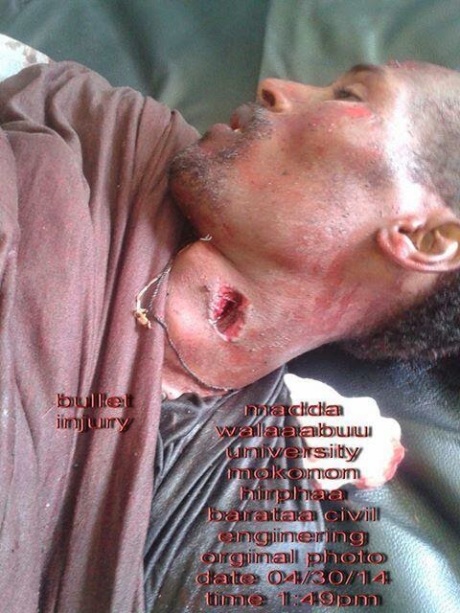


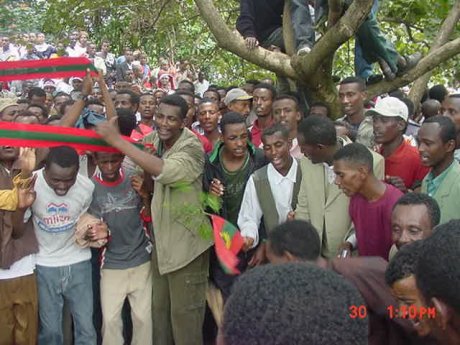




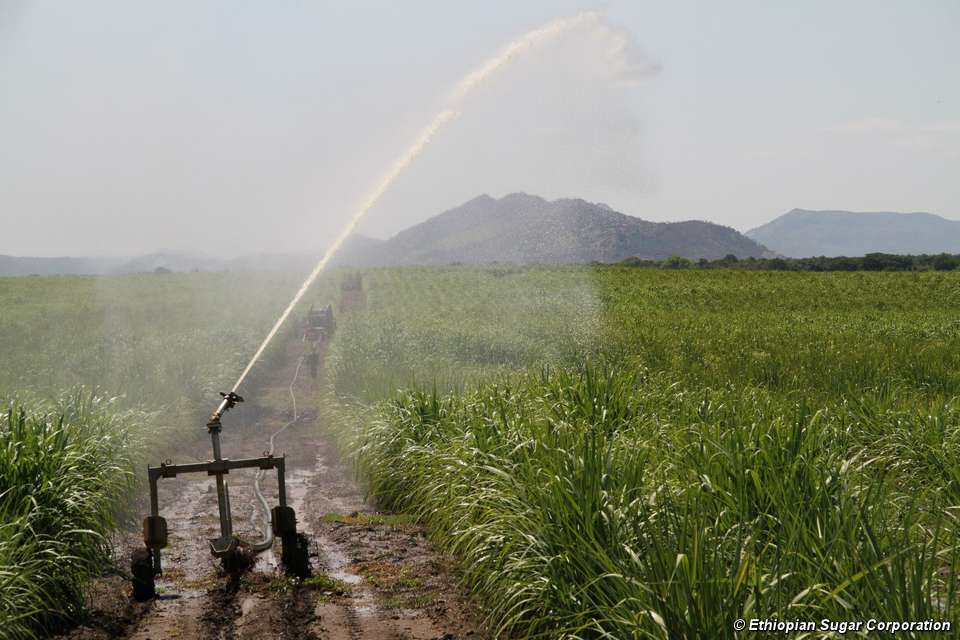


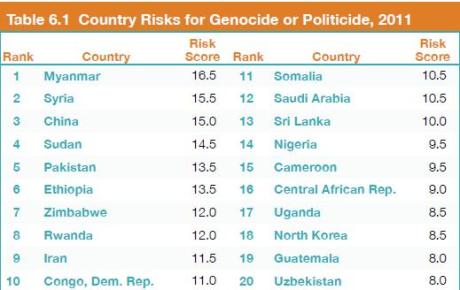


 Oromian Economist