Economic and development analysis: Perspectives on economics, society, development, freedom & social justice. Leading issues in Oromo, Oromia, Africa & world affairs. Oromo News. African News. world News. Views. Formerly Oromia Quarterly
‘Much of the “Africa Rising” narrative is based on the cyclical growth in income revenues from commodities. But who knows how long this will last? Dr Moghalu wants African governments to grasp hold of their future by creating industrial manufacturing so that Africans can consume what they produce. If that could be achieved, the continent will have moved away from being an import-driven consumer-driven economy. It is only then, he argues, that we can say Africa has truly risen.’
The term “Africa Rising” is on the lips of many these days particularly as seven of the world’s fastest growing economies are believed to be African. But can this current wave of Afro-optimism bring genuine prosperity to the African continent? Dr Kingsley Chiedu Moghalu, the Deputy Governor of the Central Bank of Nigeria thinks not.
“Hope is good,” he says. “But hope must be based on concrete substantive strategy going forward, so I pour a little bit of cold water of the Africa Rising phenomenon. I think it could lead to illusionary thinking. I recall that when African countries became independent that there was a huge sense of euphoria around the continent that independence guaranteed economic growth, political development and stability. But this did not happen in the following 30 to 40 years.”
In his latest book, Emerging Africa: How the Global Economy’s ‘Last Frontier’ can prosper and matter, Dr Moghalu presents his own ideas on how Africa can become truly prosperous. He describes it as “a vision for Africa’s future based on a fundamental analysis of why Africa has fallen behind in the world economy”.
In doing so, the LSE alumnus discusses some fundamental misunderstandings about which African states need to revise their assumptions.
The first is the idea that globalisation is automatically good. Rather, Dr Moghalu describes it as a huge and influential reality which Africans must engage with a sense of sophistication and self-interest. It is important to find a way to break that stranglehold because globalisation is neither benign in its intention nor agnostic in its belief. It is driven by an agenda and there are people who drive it.
Economist Dambisa Moyo caused controversy with her first book, Dead Aid: Why foreign aid isn’t working and how there is another way for Africa. Dr Moghalu echoes some of her arguments describing foreign aid as one of the leading reasons why Africa is impoverished. “It has removed the incentive of many African nations to seek solutions for their economic challenges and create wealth for their citizens,” he argues. “Instead it has perpetuated poverty because they are simply content to survive from one day to the next.”
Foreign aid does have its place, Dr Moghalu admits, but “it should always be within a limited time frame and it should focus on economic wealth creation activities rather than just helping people survive”. On the day we meet, the UK Secretary of State for International Development Justine Greening is in the news revealing that there will be a radical shift in future UK aid into economic development, concentrating on economic growth and jobs. Dr Moghalu expressed great pleasure at this announcement remarking that “it is very interesting that British policy is catching up with the recommendations in my book”.
Another fundamental understanding that the central banker develops in his book is the importance of understanding the four different kinds of capitalism and the implications they have for Africa’s growth. The first is state capitalism which is not very common, although it is practised by China. It is, in fact, an oxymoron. Many African states do not have the capacity to run state capitalism because you need an all-knowing state with a huge reserve of strategic thinking capacity to be able to direct wealth creation for the purposes defined by the state. There is also oligarchic or crony capitalism in Russia and some African states. This can be turned into strategic activity if cronyism is not rampant. South Korea did that by creating the Chaebols, the family-held businesses which today dominate the South Korea economy. Welfare capitalism is the norm is Europe. Some African states have practised welfare capitalism without generating the type of revenue that will sustain it into the future. Now it is out of favour. Entrepreneurial capitalism is what made America wealthy and this is what Dr Moghalu recommends for most African economies because it suits the African culture. Along with a certain amount of oligarchic and welfare capitalism, it would do Africa a world of good, he adds.
Much of the “Africa Rising” narrative is based on the cyclical growth in income revenues from commodities. But who knows how long this will last? Dr Moghalu wants African governments to grasp hold of their future by creating industrial manufacturing so that Africans can consume what they produce. If that could be achieved, the continent will have moved away from being an import-driven consumer-driven economy. It is only then, he argues, that we can say Africa has truly risen. http://blogs.lse.ac.uk/africaatlse/2014/02/12/afro-optimism-will-not-transform-africa/
Oakland, CA – In a historic move, the US Congress has taken a stance on land grabs-related human rights abuses in Ethiopia. The 2014 Omnibus Appropriations Bill contains provisions that ensure that US development funds are not used to support forced evictions in Ethiopia.
The bill prevents US assistance from being used to support activities that directly or indirectly involve forced displacement in the Lower Omo and Gambella regions. It further requires US assistance in these areas be used to support local community initiatives aimed at improving livelihoods and be subject to prior consultation with affected populations. The bill goes further and even instructs the directors of international financial institutions to oppose financing for any activities that directly or indirectly involve forced evictions in Ethiopia.
According to Anuradha Mittal, Executive Director of the Oakland Institute, “We welcome this move as it aims to address one major flaw of US assistance to Ethiopia. The step taken by the US Congress is very significant, as it signals to both the Ethiopian government and the US administration that turning a blind eye to human rights abuses in the name of development is no longer an option.”
Several reports from the Oakland Institute have raised alarm about the scale, rate, and negative impacts of large-scale land acquisitions in Ethiopia that would result in the forced displacement of over 1.5 million people. This relocation process through the government’s villagization scheme is destroying the livelihoods of small-scale farmers and pastoralist communities. Ethiopian security forces have beaten, arrested, and intimidated individuals who have refused to relocate and free the lands for large-scale agricultural plantations.
Ethiopia’s so-called development programs cannot be carried out without the support of international donors, primarily the US, one of its main donors. Oakland Institute’s on-the-ground research has documented the high toll paid by local people as well as the role of donor countries such as the US in supporting the Ethiopian policy.
This language represents an important first step towards Congress initiating a comprehensive examination of US development practices in Ethiopia. As the oversight authority of the State Department, Congress must now ensure that the law is fully upheld and implemented. This warrants thorough scrutiny of USAID programs to Ethiopia and their contribution to forced resettlements and human rights abuses.
With this bill, USAID, the State Department, as well as the World Bank, will have to reconsider the terms and modalities of the support they provide to the Ethiopian government. According to Frederic Mousseau, Oakland Institute’s Policy Director, “This is a light of hope for the millions of indigenous people in Ethiopia who have sought international support from the international community to recognize their very destruction as communities and people.” Read Further @
USAID’s cover-up of Ethiopia abuses overruled by Congress 12 February 2014
The United States Congress has acted to prevent its aid to Ethiopia being used to fund forced evictions of tribal peoples in the south west of the country.
The provisions in the Omnibus Appropriations Bill for 2014 represent a slap in the face for USAID, which last month said that ‘there are no reports of widespread or systematic human rights abuses’ in the region.
In fact, tribes of the Lower Omo Valley are being violently evicted from their villages by the government to make way for lucrative cotton, palm oil, and sugarcane plantations whose irrigation will be made possible by the controversial Gibe III dam. Transferred to designated resettlement areas, the once self-sufficient tribes will be left with no access to their livestock or lands and, consequently, will be unable to sustain themselves. Intimidation tactics, such as rape and beatings, have reportedly been used against those who resist resettlement.
One Mursi man told Survival International, ‘We are waiting to die. We are crying. When the government collects people into one village there will be no place for crops, and my children will be hungry and have no food.’
The Ethiopian government has not consulted any indigenous communities over its aggressive plantation plans in the Omo Valley, and very few were consulted over the construction of the Gibe III dam.
This sugarcane plantation, part of a government sponsored land grab, now occupies land used by tribes of the Lower Omo Valley since time immemorial.
Ethiopia is one of the biggest recipients of American and British aid through the United States Agency for International Development (USAID) and the UK Department for International Development (DFID).
Although the provisions in the recent spending bill will force USAID to reevaluate the funding given to Ethiopia, it will ultimately be the responsibility of Congress to guarantee that the terms are upheld.
Survival International Director Stephen Corry said today, ‘This bill is a huge step in the right direction, and shows that USAID’s shameful denials of the human rights abuses being committed in the Lower Omo simply haven’t been believed.
‘American taxpayers want to be sure that their money isn’t going toward the destruction of tribal peoples’ lives. Hopefully the historic provisions in this year’s spending bill will ensure that’s the case. It is now high time that British parliamentarians follow suit and ensure that DFID does not use UK taxpayers’ money to fund human rights violations in the Lower Omo.’ http://www.survivalinternational.org/news/9983
Further References on land grabs in Africa
Around 90 percent of the population of 87 million still suffers from numerous deprivations, ranging from insufficient access to education to inadequate health care; average incomes are still well below $1500 a year; and more than 30 million people still face chronic food shortages.
And while there are a number of positive and genuine reasons for the growth spurt – business and legislative reforms, more professional governance, the achievements of a thriving service sector – many critics say that the growth seen in agriculture, which accounts for almost half of Ethiopia’s economic activity and a great deal of its recent success, is actually being driven by an out of control ‘land grab’, as multinational companies and private speculators vie to lease millions of acres of the country’s most fertile territory from the government at bargain basement prices.
At the ministry of agriculture in Addis Ababa, this land-lease programme is often described as a “win-win” because it brings in new technologies and employment and, supposedly, makes it easier to improve health care, education and other services in rural areas.
“Ethiopia needs to develop to fight poverty, increase food supplies and improve livelihoods and is doing so in a sustainable way,” said one official.
But according to a host of NGO’s and policy advocates, including Oxfam, Human Rights Watch and the Oakland Institute, the true consequences of the land grabs are almost all negative. They say that in order to make such huge areas available for foreign investors to grow foodstuffs and bio-fuels for export – and in direct contravention of Ethiopia’s obligations under international law – the authorities are displacing hundreds of thousands of indigenous peoples, abusing their human rights, destroying their traditions, trashing the environment, and making them more dependent on food aid than ever before.
“The benefits for the local populations are very little,” said renowned Ethiopian sociologist Dessalegn Rahmato. “They’ve taken away their land. They’ve taken away their natural resource, because these investors are clearing the land, destroying the forest, cutting down the trees. The government claims that one of the aims of this investment was to enable local areas to benefit by investing in infrastructure, social services … but these benefits are not included in the contract. It’s only left up to the magnanimity of the investor.”
And those investors, he continued, are simply not interested in anything other than serving their own needs: “They can grow any crop they want, when they want it, they can sell in any market they want, whether it’s a global market or a local market. In fact most of them are not interested in the local markets.”
He cited as an example a massive Saudi-owned plantation in the fertile Gambella region of south west Ethiopia, a prime target area for investors: “They have 10,000 hectares and they are producing rice. This rice is going to be exported to the Middle East, to Saudi Arabia and other places. The local people in that area don’t eat rice.”
But the most controversial element of the government’s programme is known as ‘villagisation’ – the displacement of people from land they have occupied for generations and their subsequent resettlement in artificial communities.
In Gambella, where two ethnic groups, the Anuaks and the Nuers, predominate, it has meant tens of thousands of people have been forced to abandon a traditional way of life. One such is Moot, an Anuak farmer who now lives in a government village far from his home.
“When investors showed up, we were told to pack up our things and to go to the village. If we had decided not to go, they would have destroyed our crops, our houses and our belongings. We couldn’t even claim compensation because the government decided that those lands belonged to the investors. We were scared … if you get upset and say that someone stole your land, you are put in prison. If you complain about being arrested, they will kill you. It’s not our land anymore; we have been deprived of our rights.”
Despite growing internal opposition and international criticism, the Ethiopian government shows no sign of scaling the programme back. According to the Oakland Institute, since 2008, an area the size of France has already been handed over to foreign corporations. Over the next few years an area twice that size is thought to be earmarked for leasing to investors.
So what does all this mean for the people on the ground? In Ethiopia – Land for Sale, filmmakers Veronique Mauduy and Romain Pelleray try and find out.
Farming and food in Africa and the battle over land, water and resource rights
Africa is being heralded as the new frontier for commercial farming but, as governments and investors sign deals, a counter movement of family farmers is promoting alternative pathways to development.
The International Year of Family Farming is now underway, and never before have family farmers in Africa been more under threat.
Large land deals between African governments and usually foreign (and sometimes domestic) investors have seen swathes of the countryside leased or conceded, often for as much as 50-99 years. From Senegal in West Africa to Ethiopia in the Horn, and down to Mozambique in the south, land considered idle and available has changed hands, with profound implications for local people and the environment.
HCH is working in conjunction with the Oromia Support Group of Australia (OSGA), one of our long standing community partners, to raise urgently required funds toward a unique opportunity to
present serious allegations of human rights abuses in Ethiopia, at the highest level; the United Nations Universal Periodic Review (UPR).
Human rights organisations have long been reporting human rights abuses committed by the Ethiopian government, which include rape, torture, arbitrary detention and kidnapping. OSGA is an Australian based organisation that was established in 2008 to report on and raise awareness of these violations.
They have recently been offered a significant opportunity to send a delegate to the 19th session of the UN Human Rights Council’s UPR in April, 2014. There they will present a first-hand account of human rights abuses committed by the Ethiopian government.
This opportunity, to report first-hand accounts of torture, arbitrary imprisonment and rape to senior UN officials, will enable them to forward these concerns to the Ethiopian government during the official UPR process. This process will require the Ethiopian government to answer the accusations.
OSGA is raising urgently needed funds to send a representative from the Ethiopian community in Australia. The estimated total cost is approximately $5,000. If you can help, OSGA can provide a receipt, and will also report on the acquisition of any funds. Any contribution would greatly assist this effort.
If you can contribute, please contact info@osgaustralia
It is to be recalled that Finfinnee (Addis Ababa) was founded as the present capital city the so called Ethiopian in 1886 by a man called Minilik II. During this time, the area was inhabited by the Oromo people and the area was almost covered with natural forest. Initially the Shawa government made it seat at Ankober. Hence, before the founding of Finfinee as a political and economic capital of the king, all the areas within the present Finfinnee and the surround areas was free like any other Oromia lands. However, after 1886 the Semitic people from the northern segments and others had taken the land and the Oromo people who were used to live in these areas were forced lost their land through time.
For example, according to Central Statistics Agency of Ethiopia (2007) Out of the 2,738,248 100% total population living in Finfinnee, the total number of the Oromo people living in the city was only 534,255 (19.51%). Since its founding as a capital, Finfinnee remained the capital city for the successive Ethiopian regimes (Menilik II, Lij Eyassu, Zawuditu, Hailesillasse I, Mengistu, Melles and HaileMariam). Through time, the number of inhabitants increased and urbanization expanded greatly. The deliberate and implicitly planned mission and decision of the Semitic people to erase any sign of Oromo history from Finfinnee was started during the forcefully integration of Oromo people into Ethiopia as second-class citizens and the process has continued in the present government.
Different people mostly from the northern part of the so called Ethiopia have come from the various ethnic groups come and settled in the capital owing to its supper suitable agro-climatic and exploit the natural within the outside today’s Finfinne from the near distance in the name of work and investment. Where did those Oromo farmers go when Finfinnee became the property of new invaders? Be in mind that the Oromo’s are pushed to the peripheral areas of the capital and the number of Oromo people inhabitants decreased from time to time, as the above data depicts. The indigenous people of the land were pushed out one after the other and were replaced by the invaders from the north. What is happening to the Oromo people living on the outskirt of Finfinne today? It is simply the continuation of a process, which had resulted in a massive displacement of an indigenous Oromo people.
B. The New Master Plan of Fifinnee and Areas to be Incorporated
For the last 100 or so years the Master Plan of Finfinnee city was revised several times. The recent proposal of preparing new Master Plan for City administration that planned to incorporates all the towns and districts lying within the range of 1 hour commuting distance from the Finfinnee, justifies the blatant violation of the constitution and their voracious appetite to systematically replacing resource and land deficient people to these fertile lands owned by the Oromo people. According to the proposed plan of established the “Integrated Regional Development Plan”, an additional 36 towns and 17 districts currently administered by the Oromia regional State will be merged with Finfinnee so that the right of the land use will be determined by the central mayor .
The new Master Plan was intended to incorporate Oromia’s land locating in 100kms around the Finfinnee city. According to Ethiopia Government preparation, the following 36 Towns and 17 Districts are included in the newly planned Master plan. (See the figure 1.)
Some of the Towns are: Adama, Sodere, Mojo, Wenji Adama, Ejere, Alem Tena, Koka, Adulala, Bushoftu, Dukem, Gelen, Akaki Beseka, Godino, Chefe Donsa, Sebeta , Sendafa, Milkewa, Wendoda, Sirti, Duber,Gorfo, Chancho, Mulo, Debra,Muger , Ulo, Adis Alem, Holota, Burayu,Debre Genet, Illu Teji, Tefki, Sebeta, Boneya, Melka Kunture and etc.
Some of the Districts areas are: Adama, Dodota, Bora, Lome, Liben chukala, Adea (around Bushoftu), Akaki, Gimbichu, Bereh(around Sebeta), Aleltu, Jida, Sulultu, Ejere, Welmera, Illu, Sebeta Hawas and etc.
Today, when the world is concerned about preserving ecology and wild life in their natural habitat, it is an Ethiopian Government that is clearing an indigenous Oromo people from their home Land in the name of inequitable Economic Development. Hence, who should stand and speak for these innocent people and argue to preserve the right of the extremely vulnerable Oromo people living in the proposed territories and to preserve the indigenous Oromo people, culture, Languages and etc. Otherwise sooner than latter these great people will be marginalized and lost their identities.
Figure 1: The newly Developed and proposed Master Plan of the tomorrow’s Finfinne over the coming 25 years
C. The Agenda behind the “Integrated Regional Development Plan (IRDP)”
An office called “Addis Ababa and the surrounding Oromia Integrated Development Plan” prepared an International and National Conference on June 2013 at Adama Town, Galma Abba Gadaa. The Objective of organizing the conference of the top ranking government cadres (mostly OPDO’s) was to work on the manifesting of the proposed Integrated Regional Development Plan (IRDP) and prepare the cadre’s to work on the people.
On the Conference, it was stated that, the Purposes of the “IRDP” are:
Instrumental to unleashing Regional Development Potentials
Enables localities addressing their mutual development challenges
Enables localities addressing their mutual development challenges
Strengthens complementarities and interconnection of localities
These purposes can be the explicit or clear objectives of the plan. However, the plan have hidden or implicit agenda. Systematically bringing the land under their custody so that, it will sooner or later scramble among their impoverished people in their region. For example, the Finfinnee City Administration and Finfinnee Special Zone can address their mutual development challenges without being incorporated into one master plan. However, the Master plan is not prepared on mutual benefit as the plan is solely prepared by Finfinnee City Administration, despite the name of the office. Hence, though development is boldly emphasized, the main purpose seems to clear the Oromo farmers from their lands in the name of unfair Economic Development.
It was also stated that the Pillars of the Integrated Regional Development Plan are:
Regional Infrastructure Networks
Natural Resource and Environment Stewardship
Cross – Boundary Investments/ e.g FDI)
Joint Regional Projects
However, there seem hidden agenda behind these pillars. For example, in the name of cross-Boundary Investments, local Oromo farmers are going to lose their land for the so-called “investors” and under the pretext of promoting national economy through FDI initiatives In addition, if the plan is going to be realized natural and environmental degradation is inevitable.
In addition, the Basic Principles of the Integrated Regional Development Plan are:
Ensuring Mutual Benefits
A joint development Framework – not a substitute for local plans
An Integrated Regional Plan voluntarily accepted by participating partners
Differences resolved through negotiation and under in-win scenario
Nevertheless, the plan will not ensure a mutual benefit at it is largely intended to displace Oromo farmers from their land. In additions, the populations of the two areas are not homogenous. Hence, they have no common interest. Even though it is said the “IRDP’ will be voluntarily accepted by participating partners, the top cadres in Oromia themselves have strongly opposed the plan on the conference. Beside, the implicit objective of the plan is to remove/avoid the differences in language and culture there by to plant “Ethiopianism or Tigreans” on Oromo land. The plan is intended to say good bye to Oromo Culture and language. The other thing is that the differences between Oromo and others cannot be resolved as it is intended to eradicate Oromo identity, culture and language. As we know from history, Oromo’s never compromised on these issues. Hence, if the plan is to be implemented, peaceful co-existence may not be there.
D. Problems that may come because of the Integrated Regional Development Plan
As different sources shown, many Oromo’s living in Special Zone has already lost their land in the name of foreign direct investment and land grasping. This is because of several fa3ctories are constructed in the special zone by taking the Lands from local Oromo farmers. It is not new to see Oromo labor workers or guards in their own land. Family members are highly displaced by this measure. Many went to street. Not only the displaced Oromos damaged by this. It is said chemical coming out of the factories are also hurting the health of the remaining Oromos. It is said that “In Central Oromia, thousands of people and their livestock died due to the industrial pollution directly released to rivers and lakes.”
Taking the above as an experience, there also different reasons why the newly Master plan of Finfinne should not be implemented on Oromo people. Some of the reasons are:
1. It will bring Extreme Poverty: It is inevitable that the local Oromo farmers lost their land in the name of investment and urbanization. This means that the Oromos are systematically cleaned from their own land, as they were cleaned from Finfinnee in earlier days. Hence, the local farmers lose their land which is part of their permanent asset. After the lose their land, the farmers will going to work for 300 birrr in the factory or serve as house servant or home guard, which is already started. By doing so, the farmers face extreme poverty. In addition, the gap between rich and poor will very high. For example, one writer described the impact of “investment” saying:
“The current regime has sold out more than 3 million hectares of fertile land to the foreigner investors after forcefully displacing Oromo farmers from their ancestral land. The grabbing of land ended the indigenous people without shelter and foods. This displacement of the Oromo people accompanied by limitless human rights violations set the Oromo to be the vast number of immigrants in the Horn of Africa.”
2. Family displacement and disintegration: Members of a family will be displaced and disintegrated as a result of loosing their land. In addition, the workers of Finfinnee special zone will be displaced as they are working in Afan Oromo.
3. Abuse of constitutional rights: After long year of struggle and sacrifice of thousands of Life, Afan Oromo given constitution right to be used in administration, school and other sectors in Oromia region. This is one of the basic objectives that Oromos has been struggling. However, if the master plan is going to be implemented, working language of Finfinnee City, Amharic, is going to be used in the areas. By doing so, the local people will be forced to learn new language to use it for different purpose. The measure will take back Oromo to the “Atse” region. The Federal Constitution states “Every people, nation and nationality have the right to speak, to write and to develop their own language, as well as to express, to develop and to promote their culture and history.Article 39” will be clearly violated. The Oromo living in Finfinnee Special Zone will lose the rights that the FDRE constitution guarantees them.
4. Academic and psychological impacts on Oromo students: If the newly proposed master plan of Finfinnee City is going to be implemented, Oromo students living in the surrounding area will attend their education in Amharic, which is second language to the students. It is strongly argued that using the native languages of students as a medium of instruction is a decisive factor for effective learning However, this situation, failure to give a role to native languages and largely depending on second/foreign language instruction, brought various difficulties to students. The students are expected to entangle not only with learning the subject matters but also the language itself. It also creates difficulty to students in expressing themselves and as a result it limits their classroom participation as there is fear of making mistakes. In addition, it is a barrier to smooth classroom communication. It is also argued that use of a second/foreign language in education negatively affects the ability and the ease with which knowledge is acquired by students. It also affects the performance of students and creates difficulties in developing their cognitive skills. Moreover, giving low status to native languages of students in educational setting leads to marginalization of majority of the citizens from active engagement in the development arena. In general, the master plan will have negative impacts on Oromo students in various academic aspects.
5. Impact on Identity and Culture of Local Oromo People: The new plan will make Oromos to lose their identity and culture, like the previous regimes did. This is because people having different identity and culture are going to settle on Oromo land. The settlers will push out the Oromo identity and replace by their own. The Oromo’s will have very limited opportunity to exercise their cultural value and linguistic form. The language and cultural development will be also hampered by the new plan.
6. Economic impact: If the master plan is going to be realized, the Finfinnee City Adminstration will control all economic aspects of the areas. The income that is collected from different factories will be taken. The Oromiya government will loose great income to Finfinnee city administration.
7. Impact on Natural Resource and Environment: As the result of the plan, there will be overspread ground and surface water pollution. In addition, there will be severe deforestation and natural resource depletion.
8. Cutting Oromia into East and West Regions: The new Master Plan of Finfinne city will cut the current Oromia into two parts i.e. Eastern and Western. This is because the Central and great part of Oromia is proposed to be taken and incorporated into Finfinnee. Hence, the Central part that joins East and West will be taken.
D. What Should be done to Save the Oromo People around Finfinnee
As shown above, the master plan is so disadvantage for Oromia. In general, if we see the plan, it will affect local Oromo people in various aspects. However, the government who is supposed to represent the Oromo people is unable to see the danger. So we kindly ask the Oromos at home and Diaspora and other concerned bodies to forward ways and mechanisms to stop the intended plan. We ask the Oromo people and international communities, who will stand for the Oromo’s living around Finfinnee??
If we read an honest history of the present and past Governments of Ethiopia, we would conclude that the present Government is truly facing a difficult dilemma. At the dawn of the 21st century, we can neither run away from ourselves nor hide our realities. We have to face our generation and the historical realities of our time. It is undeniable that today, people demand respect for their human and national rights. Above all, people will not rest until their identity and their sovereignty over what is theirs is ensured. These are the peoples’ most burning issues. They realize that they have to make utmost effort of their own. It is within the context of the above-mentioned framework that the Oromo people resolutely demand their rights and freedom. It is to those who want to deny the rights and freedoms of the people that we are most bitterly opposed. It is a crime to deny the national identity and sovereignty of a people no matter how sophisticated the tactics used to do so. It is equally wrong to see the national desire of a people from a selfish perspective. It is based on the above concepts and precepts that the Oromo people continue their unceasing and bitter struggle against being treated as second class citizens. We know that our struggle is just for it is motivated by our desire to preserve our dignity and identity as a people.
We, the sons and daughters of the Oromo people, strenuously oppose the implementation of new Master Plan for Finfinne administration because we fully understand the historical development of the desire of other people to displace the Oromo people in order to benefit the non-Oromo new comers and their lackeys in this country. This highly orchestrated conspiracy, the present Oromo generation shall not tolerate at any cost. It will steadfastly and resolutely resist the conspiracy.
We also request international communities to put pressure on FDRE/TPLF Government and Finfinnee City Administration to stop the proposed Master Plan, which directly or indirectly harm the Oromo people.
We call on the Federal Government of Ethiopia, House of Peoples’ Representatives, the Federation Council, the Oromia Council to stop clearing Oromo people from their home Land in the name of inequitable Development and replacing others on their land.
Please generate comments as many as possible on what should be done about the plan.
May Waaq Gurraacha help us!
From: Sabbontoota Oromoo, Oromia.
We are always Oromo First!!!!
Sabbontoota Oromo can be reached at sabboontotaaoromo@yahoo.in
by Teumay Debesay | February 13, 2014 Raya refers a tract of land stretching from Ala wuha in the south to Alaje in the north. That is bigger than Adwa and Axum awrajas combined. Historically, this is where the Weyane rebellion started in 1928 as a spontaneous reaction to a repressive system of the time. Originating in their present day Kobo wereda, the revolt would quickly spread to cover the entire Raya and Wejerat provinces. Later, the inhabitants of Enderta joined the revolt and a sort of quasi-organized alliance was formed after a decade of Raya and Wejerat rebellion. This alliance, Weyane, would emerge so potent that by its heyday it practically liberated the provinces of Raya, Wejerat and Enderta. The imperial government with the support of British Air force resorted to aerial bombardment of the rebel held areas which caused a wide-spread damage, including complete erasure of villages. However, the most detrimental factor that actually caused the demise of Weyane was to come from none other than Adwa people. In 1943, Dejazmach Gebrehiwot Meshesha along with a dozen of Adwans exploited the trust vested on them to assassinate the leaders of the Weyane movement. This is significant for in the Ethiopian tradition, at least until then, if one manages to kill the leader one will win the battle. Meshesha and co. breach of the traditional trust and value was so venomous that even to this date mistrust and resentment runs high in Raya. It is to be noted that if not for Meshesha of Adwa, the people were in a very strong bargaining position and if one has to look how similar revolts in Bale and other regions were resolved, the rebels demand for better governance was within reach. As a thank you for their contribution, Meshesha and his fellow Adwans were rewarded heavily by Haileselasse while a series of punitive attacks continued on the ‘originators’ of Weyane and ultimately Raya was divided between Wollo and Tigray.
When the TPLF started the armed insurrection in Ethiopia, it took little time to transform itself as an Adwa-only club by the same inherited act of treachery. The legacy of resentment that Meshesha and co. left means TPLF-Adwa had hard time to set foot in Raya. Hence, they needed to come up with a trick and did it so by cosmetically inserting the word Weyane in the Tigrigna version of its name. Taken with the harsher realities under DERG, Rayans reluctantly sided with TPLF on the principle of the lesser devil. Soon, tens of thousands of Raya youth joined the TPLF, including forming the majority and the backbone of Hadush “Hayelom” Ariaya’s fighting force that brought the little known“Hayelom” into prominence. However, if the experience of my village is anything, it is fair to conclude that almost all the Raya recruits ended up as cannon fodders. Those who survived, especially the independent and rational ones, would have never escaped the Meles-Sebhat death squad. In Raya, for example, it is not uncommon to talk to your relative TPLF fighter over the phone in the morning only to be notified of his death of “natural” consequences on the same day. I will say more on the motives next time. But for now, I want to draw your attention to the following Table, which is taken from the 1994 and 2007 population census of Ethiopia. I think this illustrates how the Raya and Adwa are faring under the TPLF-Adwa administration.
Clearly, 7 towns (Robit, Gobiye, Waja, Mersa, Korem, Wedisemro, Chelena) of Raya from the total 11, i.e., 64% of the town that existed in the 1994 Census Ethiopia have died or are dying. Well, with Adwa awraja towns the figures show a hard-to-believe growth registering as ridiculous as 1033% for Gerhusenay, Idegaarbi(377%), Nebelet(266%); even noticeable is the emergence of a novel city (Diobdibo) in the 2007 census, attesting to the developmental and modernization campaigns in Adwa rural areas as well. The bar graph of the rate at which towns are expanding (Adwa) or shrinking (Raya) shown below can only be a proof that in the so-called Tigray “killil” both, depending on the area, de-constructive and constructive policies are in operation. To the unsuspecting, it may occur that this might have to do with the pre-1991 TPLF bandit caused civil war. However, it is not quite so for, for instance, there was no single bomb that was dropped on Adwa towns nor was a confrontation in populated areas in the entire Adwa awraja. There was insignificant causality as far as the civilian population of Adwa is concerned for the TPLF military engagement tactic in Adwa/Axum area was totally different from the rest awrajas. For example, Korem town alone might have received far more arial bombardment than the entire Adwa awraja. From SehulMikael (the Godfather of Ethiopia’s disintegration), to Meshesha-Sebhat-Meles-Sebhat(again), there exist very little dissimilarity.Right now, Alamata, the only remaining city not to die fast enough as Adwans would have liked to see, is under open destruction. The residents never complained on the absence of developmental activity but never expected that the Adwa administration of the city will come-up with a destruction agenda. Surprised by the revelation, the unsuspecting residents went to Mekelle to air their grievances in the hope that the big men there might be rational and take proper action. However, Abay Woldu’s administration did not give it a second to listen; just ordered more Bulldozers, armored tanks and a battalion to effectively carry out the planned destruction. Worse, those who complained the demolishing of their belonging are rounded-up and now languish in Adwa operated secret Tigrayan jails Reference:
Central Statistical Authority Ethiopia: The 1994 populaion and Housing Census of Ethiopia. Results for Tigray region, Volume 1, Statistical report.Table 2.2, Page 11
Central Statistical Authority Ethiopia: The 1994 populaion and Housing Census of Ethiopia. Results for Amhara Region, Volume 1, Statistical report.Table 2.2, Page 13
The 2007 Population and Housing Census of Ethiopia: Statistical Report for Tigray Region, Table 2.1, page 7
The 2007 Population and Housing Census of Ethiopia: Statistical Report for Amhara Region, Table 2.2, page 11
‘It is quite long overdue to register Gadaa as a world heritage… ‘If it is inscribed as UNESCO’s world heritage it will be the source of historical pride not only for the Oromo people but also for all peoples of Ethiopia, Africa and the whole world at large. It will also be a center of attraction to the world tourists who would come to see and enjoy the Gadaa system’s tangible and intangible values. Tangible heritages are the age old Gadaa centers like; Hora Arsadi, Oda Nabe, Oda Bulluqi, Oda Bultum, Oda Makoo Billi, Gumii Gayyoo in Borana and many others in western, central, eastern and southern #Oromia. It also includes reverences and ornaments of rituals, the Bokku, the Caaccu and Kalacha. Intangible heritages are ideas, thoughts and the worldview of Abba Gadaa elders, women, men and the youth as members of the Gadaa system.’ Read @http://allafrica.com/stories/201209210569.html?page=3
The marks of Aannolee, Azulee, and Chalanqoo/Calanqoo cannot be erased from the memory of Oromo generations The marks of Aannolee, Azulee, and Chalanqoo/Calanqoo cannot be erased from the memory of Oromo generations. By Leenjiso Horo
The marks of Aannolee, Azulee, and Chalanqoo Cannot be erased from the memory of successive Oromo generations and from the history of the Oromo people. These marks are incorporated into our collective memory. For this, centuries may pass, generations may come and go but the crimes of Abyssinia-the mutilation of breasts of women and girls and of the right hands of men and boys at Aannolee and the mass massacres at Azulee and Chalanqoo will not be erased, will never be diminished, and never be forgotten.
Menelik II’s mutilation of breasts of women and girls and of hands of men and boys is the first one in warfare throughout written history-from antiquity to modern times, unless proven to the contray. Those who support Menelik’s genocide at Aannolee, Azulee, and Calanqoo as a “holy war” or as a war of “reunification of Ethiopia” should hold full entitlement to it.
During the campaign of colonization of the south in the late nineteenth-century king Menelik II of Abyssinia exterminated the Oromo population by 50%, Kaficho by 75%, Gimira by 80% and Madii by over 90% (Radio Simbirtu interview with Prof. Mekuria Bulcha, 19 December 2013, part 2). These are genocides of highest proportion. The basic argument of the Abyssinian genocide denials has, however, remained the same as always—it never happened, the term “genocide” does not apply-it is a “reunification of Ethiopia.” Recently, the tactics of denial of genocide has been shifted from “reunification of Ethiopia” to “holy war.”
Abyssinians always avoid public discourse of the genocide at Aannolee, Azulee, and Chalanqoo believing that sooner or later in the course of time that generation would pass from the scene and their children would become acculturated and assimilated in the Abyssinian way of life and Abyssinian political thought and then the issue of genocide dies out and will be forgotten. However, what the Abyssinians forgot or failed to understand is that the genocide at Aannolee, Azulee, and Chalanqoo shapes not only the outlook of the immediate victims of the generation of the time but also of subsequent generations of the future. It is very important for the descendents of the perpetrators- the deniers of Oromo genocide to engage introspection to face and learn from their own history. It is time for the Nafxanyaas-the deniers of genocide to ask themselves question as to how that gross mass genocide could have occurred, instead of denying it and trying to maintain a false righteous self-image.
The Abyssinians are unable or unwilling to deal with the truth. They have always refused to recognize the crimes committed against the peoples of the south, Oromo included as genocide. Instead they elevated it to the level of a “holy war/qidus xorrinnat”; then took pride in it; identified with it, enthusiastically embraced it, glorified and glamorized it. This campaign is in support of their political and religious elites, scholars, governments, institutions, and individuals those who have been preaching genocide committed against Oromo and the south as a “reunification of Ethiopia.” The Oromo Genocide and Tigrayans’ attempt to deny it
Today, the Tigrayan regime is behind the discussion of the past genocide to divert attention from itself, while it is committing genocide itself more dangerous than that of the past ones. It has undertaken open and total war campaign against the Oromo people. It is vitally important, therefore, that we should focus our attention on current genocide the Tigrayan regime is committing, while at the same time reminding ourselves the genocide that the Amhara regime of Menelik II committed a century ago. The Amharas have been denying the genocide against the Oromo and other southern peoples that their regime of Menelik II committed and now the Tigrayans are also denying the genocide that their regime is committing.
The Amharas are simply dancing and singing to the ghost of Menelik II but they do not possess the means and capabilities to commit anther genocide. Today, it is the Tigrayan regime led by TPLF that is committing genocidal mass murder against the Oromo people; it is this regime that possesses the means and capabilities to commit genocide. Its means are the army, paramilitary unit, the police force, special police or Liyyuu police, secret state agents, Death Squads, the bureaucratic and judicial system. All of these are already fully utilized for this purpose.
The sudden descend of the Tigrayan People’s Liberation Front (TPLF) upon Oromiyaa in 1991, set in a rapid motion a process to eliminate any opposition to its rule that culminate in the arrests, tortures and killings. Then since 1992, it has been carrying out a systematic, methodical, pre-planned, and centrally-organized genocidal mass murder against the Oromo people. Meles Zenawi was the notorious architect and organizer of policy of the Oromo genocide with his culprits and other thousands of perpetrators of genocide who are still implementing his policy after his death. His brutality against Oromo people has surpassed that of all his predecessors combined. His regime has erected concentration camps across Oromiyaa, camps such as Hursoo, Bilaattee, Dhidheessaa, Zuwaay, and Qalittii are the well known ones. But numerous other clandestine prison cells where the victims are eliminated have been established across the empire. The regime has openly undertaken a major Oromiyaa-wide persecution of Oromo. Hence Ordinary people, for the first time, being rounded up and sent to these clandestine centers for interrogation through torture. In the torture, few survived and many perished.
The pattern of destruction has been repeated over and over in different parts of Oromiyaa. Many of these repetitive destructions are far from the major cities; such repetition are a centrally design one. Further, reward structure set in place. That reward is geared towards those who implement the policy. The regional governors and officials who refuses to carry out orders to annihilate the Oromo are summarily replaced as disloyal and OLF agent. Community leaders are arrested and persecuted. Many of women, children, and elderly run into forests and deserts to escape slaughter. Today, the Oromo people are in violent historical moment. They are the target of Tigrayan regime for physical extermination and forcible removal from their lands. Hundreds of thousands have been killed; millions have been forced out from their lands and their lands haven been sold or leased to local and multination land-grabbers.
The Tigrayan regime has fully undertaken the implementation of the policy of Oromo extermination since 1992. The Amhara genocidal denialists are fully subscribed to this policy. In the Tigrayan regime’s jails millions of Oromo perished as the result of starvation, disease, the harsh environment, and physical extermination.
We are the nation of heroes, heroines and victims. We were the victims of genocide yesterday and we are the victims of genocide today. Yesterday, we were victims of genocide under Amhara successive regimes and today, we are victims of genocide under the Tigrayan regime. Indeed, we are a wounded and bled nation in our country by another nation- the Abyssinian nation.
We oftentimes say, never again to genocide in Oromiyaa. We say, the seeds of Aannolee, Azulee, and Chalanqoo must not be allowed to sprout again in Oromiyaa. And yet it has already sprout; violence is again around us; violence of genocide is still consuming our people. Menelik’s genocide at Aannolee, Azulee and Chalanqoo is reconstructed and renewed by Meles Zenawi and implemented Oromiyaa wide. Hence, the past genocide has now become the present new genocide. Hence, the dead Oromo are still dead; more are still dying; expropriated Oromoland is still expropriated; The pillaging of Oromiyaa is at its height and the colonized Oromiyaa is still colonized.
The way forward
The way forward is Oromo nationalists’ unity and the fight against occupation. For this, it is important to rebuild the Oromo Liberation Army (OLA) as superior mighty force both in quantity and quality to protect the population and secure liberation. This enables the nation to drive out the Tigrayan regime and establish independent Democratic Republic of Oromiyaa. Again, it is vitally important to remove Menelik’s statue from Oromiyaa; establish National Genocide Memorial Day for the victims of Aannolee, Azulee and Chalanqoo. This Oromo Genocide Memorial Day should be established and observed annually while we are still fighting for independence. The date and the month must be different from Oromo Martyrs Day/Guyyaa Gootoota Oromoo.
No one escapes from the history of one’s people. For this, we should and must not allow the past to rest and to be forgotten. Every generation must teach the succeeding generation about the past history, their heroes and heroines. The past, the present as well as the future belong to the succeeding generations. Each new generation hold the entitlement of the past and the present. For this, the establishment of the Oromo Genocide Memorial Day is the order of the day that the marks of Aannolee, Azulee, and Chalanqoo Cannot be erased from the memory of successive Oromo generations.
Oromiyaa Shall Be Free!
The Empire States of Ethiopia is a product of colonial conquest. Ethiopia is formed during the 19the century colonial scramble for Africa after the Abyssinian State, the only Black colonial power that took part in the colonial partition of Africa, conquered the Oromos, Sidamas, Ogadenese and other present day Southern Ethiopian peoples. Because of the conquest, the Oromos and other subject peoples were forcefully incorporated into Abyssinia, which was later on renamed Ethiopia.
As an outcome of a colonial conquest, the essence of the Ethiopian Empire State is the deprivation, oppression, subjugation and exploitation of the conquered peoples’ national, political, civic, cultural, social and economic rights. Stated differently, the defining characteristics of the Ethiopian Empire state, since its formation up to present, are the denial of national rights, human rights, and freedoms to the Oromo and other subject peoples. Furthermore, as the old adage goes, “a nation that oppresses others it not itself a free nation,” the successive Ethiopian regimes did not also respect the human rights and freedoms of its citizens, the Abyssinians.
The successive Ethiopian regimes’ stance on ratification of or accession to International Instruments designed for the promotion and protection of human rights corroborates the Ethiopian Empire State’s long-standing anti-human rights policies. It is a fact of history that the Ethiopian regime led by the late Emperor Haile Sillassie was among few states that did not sign/ratify the Universal Declaration of Human Rights of 1948. The Emperor Haile Sillassie regime, which was laboring in consolidation of the colonial conquests and Amharization of the conquered peoples, was engaged in gross violation of human rights, including practice of slavery and servitude failed to sign the Universal Declaration of Human Rights that, among others, abolished slavery and servitude and set standard for human rights protection.
It is instructive to note that, the Emperor Haile Sillassie regime declined from signing the Universal Declaration of Human Rights with, among others, the then minority apartheid regime of South Africa, the other notorious regime for being anti-human rights. The Ethiopian regime led by Emperor Haile Sillassie became Member of the United Nations on 13 November 1945, but it did not become a party to any Intentional Human Rights Conventions.
A military regime, known as Dergue, led by Colonel Mengistu Haile Mariam overthrew Emperor Haile Sillaasie’s regime in 1974. As far as respect for human rights and accession to Intentional Human Rights Conventions is concerned, the Dergue regime continued its predecessor’s anti-human rights policy and practice. The Military regime did not become a party to International Covenant on Economic, Social and Cultural Rights and International Covenant on Civil and Political Rights that have entered into force in 1976.
However, apparently following its patron the now defunct Soviet Union, the Ethiopian Military regime became a party to International Convention on the Elimination of All Forms of Racial Discrimination, 23 June 1976, Convention on the Elimination of All Form of Discrimination against Women, 10 September 1981, and Convention on the Rights of the Child, 14 May 1991.
It is a mockery that the Ethiopian Military regime that failed to be a party to International Covenant on Economic, Social and Cultural Rights and International Covenant on Civil and Political Rights, became a party to International Conventions that prohibit racial discrimination, discrimination against women and the Conventions on the Rights of the Child. Unlike the incumbent Tigrai Peoples Liberation Front, (TPLF) led Ethiopian regime, the two preceding Ethiopian regimes did not pretend to be champions of human rights and stayed out of the International Instruments and Mechanisms made and established for ensuring the protections of Human Rights and freedoms.
As a result of the proposal and strong push made in 1991-92 by Oromo Liberation Front (OLF) group who were then a member of Ethiopian Transitional Government, the current Ethiopian regime of TPLF was forced to depart from the positions held by its predecessors and has acceded to the following international human rights treaties: International Covenant on Civil and Political Rights, 11 June 1993, International Covenant on Economic, Social and Cultural Rights, 11 June 1993, and Convention against Torture and Other Cruel, Inhuman or Degrading Treatment of Punishment, 13 March 1994,
Apparently, accession to International Human Rights Treaties were one of the decisions the TPLF regime made as soon as it came to power as a consequence of two significant factors: (1) the proposal and the push the OLF group made to accept ICCPR and ICESCR and (2) the attempt the TPLF Regime made to please its foreign donors. However, the regime’s gross and appalling human rights violation records in the last fourteen years prove a contrary intention. Stated differently, the TPLF regime’s human rights record proves that the TPLF regime’s position on human rights is not any better, if not worse, than its predecessors that were not parties to the International Human Rights Covenants.
The TPLF regime’s engagement in a gross human rights violation of Oromos and other people is being recognized not only by reputable international non-governmental organizations that monitor states’ compliance with international human rights laws, but also by State Members of the United Nations, including the Untied States of America.
Read more from original source@ http://www.oromoliberationfront.org/Publications/OSvol11Art1003.htm
Oromia Speaks Vol. 11 Issue 1
Further References:
‘Article 2, paragraph 2 of the ICESCR obliges each State Party to guarantee that the rights enunciated in the Covenant are exercised without discrimination as to, inter alia, ethnic origin. In practice, however, the Government of Ethiopia directly and indirectly discriminates against several disadvantaged ethnic groups, including but not limited to the Oromo and the Anuak.’ –http://www2.ohchr.org/english/bodies/cescr/docs/ngos/AHR_Ethiopia_CESCR48.pdf
“Ethiopia history” even as a term continues to be controversial for what has been written so far is based on the idealized views of the leaders and covers only the positive deeds. Many argue history making is a societal issue and involves both positive and negative deeds. The lessons learnt from past history is the single most important benefit of having history. Since Ethiopian history does not acknowledge the negative deeds in the past and does not serve this important benefit many fail to acknowledge it as their history. It is largely based on “what is good for me by choice should be good for you by force and if you don’t obey you don’t belong”. It is based on systematic exclusion and pushing faraway deviant groups as a strategy to pull them in.
This strategy has been designed in a way that it imposes the culture and identity of one group putting in charge generation from the same group to defend it. The assignment of assimilating the others far deep inside and very fast is high on their agenda. However as the history that is systematically constructed to keep the supremacy of one group, it is dressed with myths and far reaching legends which are closely connected to supernatural power and symbolized places. The legend queen Sheba and her mythological relation with King Solomon signifies the same and leaders of the Solomonic dynasty systematically traced their decadency from this legend to load unshakable leadership on the society. The general population in the country, regardless of their ethnicity and religion, obeyed the rules in the chain for violation of their leadership is considered violation of the supernatural power. Societal and individual development in the country has also been stacked in theological stage as the result of this leadership techniques and many issues received their analysis from creationist and supernatural relation perspective even till today.
The radical lefts group that emerged in the 1960s questioned the validity of this connections, between leaders and the supernatural power and whether their leadership is really sacred, however not many extended the question to the sacred history of the country till very recently. Although, the history of the country is more of sacred and holly as some described and describing it, it has caused many dangers that deserve attentions. Over 80 ethnic groups in the country had pain in relation to Ethiopian state formation, Minlik II and subsequent leaders and not few grew up hearing those mind shaking pains. Now wonder that this generation can extend questioning the relationship between leaders and supernatural power to the meanings attached to the entire Ethiopian history and that already happened. This questioning nudes the false statues of Ethiopian history.
There is no doubt that this same act can cause a strong pain on those who nurtured that Ethiopian history has been crafted in a way that serves their personal interest and they should die to defend and maintain their supremacy in the country. As a response to this socialization call, the right wingers are now wagging a movement which can be equated to naked politics, not body based but evidence dressing. The couple of writings I am reading in the news paper, on blogs and social medias reflect this and they are all naked from evidence. They most often try to attack individuals, they publicly discuss how to physically attack people who nudes the history they were socialized to defend and die for, they misname institutions and personalities and assassinate characters, they try to divide and rule over members of movements based on their religion and place of origin and even aiming to oppose people and place name changes and removing monuments constructed to signify the injustice done on ethnic groups by Minilk II. For me this is doing nothing butter and different from their fathers and forefathers and by this techniques all they can achieve and some already achieved is losing their readers and followers. This is also equivalent to trying to attract attention by standing naked.I would like to argue evidence is the best weapon to win public opinion and attentions in this globalized world and standing, jumping and running naked may not help much and there is no much place for them as the son of the 19th century king in Ethiopia now because few (themselves) recalls that and if other do, that brings bad memory. So they better get dressed well with evidence to attract at least their own attentions.
The Human Right Issues and Violations in the Horn of Africa,Ethiopia-Oromia
The modern concept of human rights is rooted in the experiences of ‘legal lawlessness’ when crimes were committed with the authorization of the law, and when some human beings were denied their status as such. An answer to these experiences was the emergence of the international human rights law. The main aim of this branch of international law is to prevent broad violations of fundamental rights from recurring in the future. Appreciating the worth of every human being, the international community decided to eliminate elements that could destroy the individual person, but also to create the conditions that would enable him or her to develop and flourish. Accordingly, the Preambles to the International Bill of Rights provide that the “foundation of freedom, justice and peace in the world” is the “inherent dignity and of the equal and inalienable rights of all members of the human family”. (International Covenant on Civil and Political Rights, 1966). However, the dictator government of Ethiopia otherwise known TPLF is unable in the enforcement of these rights and remain a headache,mainly due to technical blockades; lack of effective institutions or the existence of weak institutions only; and lack of political will to implement human rights with differing degrees. Therefore asking your rights in Ethiopia will either lead you to be imprisoned or counted you as anti-government.
Instability in Horn of Africa and TPLF
The current crisis in the Horn of Africa is, on the one hand, a struggle between oppressed people who are fighting for self-determination and, on the other hand, the regime of the Tigray People’s Liberation Front (TPLF) that is trying to impose its rule by force.
The regime has set loose war, hunger, poverty, and disease to ransack the country. In particular, the regime has been and is systematically violating human rights of the Oromo and other peoples of in the country as well and the neighborings too.
The OLF also believes in peace, democracy and development . As the main organ that is championing the right of self-determination of the Oromo people, it fully realizes the present day global reality. It affirms that the international community does have legitimate concern and interest in political stability and economic development of the Horn of Africa. Moreover, the OLF is cognizant of the fact that the day of carving spheres of influence and promoting clients in superpower rivalry has given way to globalization. Further, the OLF firmly believes in the immediate termination of the vicious cycle of political conflicts, economic backwardness, environmental degradation, natural and man-made disasters that today ravage the peoples of the Horn of Africa.
(http://www.oromoliberationfront.org/PressReleaseArchive/Articles/Liberating.htm) Human Right Issue in Ethiopia
Allegations of arbitrary detention, torture, and other ill-treatment at the hands of Ethiopianpolice and other security forces are not new. But since the disputed 2005 elections, the Ethiopian government has intensified restrictions on freedom of expression, association,and assembly, deploying a range of measures to clamp down on dissent. These include arresting and detaining political opposition figures, journalists, and other independent voices, and implementing laws that severely restrict independent human rights monitoring and press freedom.
Since 2009 a new law, the Anti-Terrorism Proclamation, has become a particularly potent instrument to restrict free speech. The law’s provision undermine basic legal safeguards against prolonged pre-charge detention and unfair trials. In this context, Maekelawi has become an important site for the detention and investigation of some of the most politically sensitive cases.
Many detainees accused of offenses under the law—including some of Ethiopia’s most prominent political prisoners—have been detained in the Maekelawi facility as their cases were investigated or prepared for trial (Human Rights Watch, 2013). As a result of enforcement of the FDRE Proclamation 621/2009 that has been intended to impose superior regulation of charities, the party leaders decide who should receive and who should not receive the emergency support at grassroots level in the respective community.
Older Oormo people are usually victims of this type of abuse because of their allegiances to the values of the Oromo Gadaa system, that promotes respect and dignity to people in difficult situation. In so doing, technically, the authorities decide who should die from and who should survive the hunger. http://www.minorityvoices.org/news.php/fr/1381/ethiopiauk-oromo-rally-in-london Endless focus on Oromos by TPLF, why?
The Oromo people constitute the single largest national groups in the Ethiopia empire and the horn of Africa with the total of over 40 million people. The number of the oromo people and the geographical location of their country Oromia make the oromo country ( Oromia) the heart of Ethiopia. The Ethiopian empire mainly survives on the economic resources of Oromia. Although the Oromo people are one of the most impoverished and terrorized indigenous people .Recognizing that Oromia is the richest and largest populous state, the Tigrayan led Ethiopia government has been using collective violence to dominate, control and exploit Oromia which the key in controlling the Ethiopia government has been using political economy. Understanding the situation in Oromia helps in generalizing what is going through the country (Hassen,2011).
The Oromo people are just arrested and accused of being a member or supporter or sympathiser of the Oromo liberation struggle. To the Ethiopian government authorities, every Oromo appears to be a member of the Oromo Liberation Front (OLF), a political organisation struggling for the socio-economic, cultural and political rights of the Oromo people. One has to prove he/she is not a member or supporter of the OLF in order to live in relative peace. The safest proof is one and only one – to become a member of the EPRDF, the ruling party;failure to proove non-affiliation with OLF or any attempt to remain politically indifferent has come to be dangerous in Ethiopia for every ordinary Oromo. Business persons are systematically eliminated from investment and small scale business if they fail to be members of the ruling party in any case. Every student in college or university is required to secure membership of the ruling party at the campus in order for her/him to get job in public institutions or to run private business after completion of the study. The situation is worse for the rural people whereby farmers are required to be members of and demonstrate allegiance to the EPRDF in order to get agricultural inputs and/or have their children learn in school without assault by the government security. It always seems impossible untilit is done – Nelson Mandela
Ethiopia: land of slavery & brutality – the League of Nations, Geneva 1935
‘
An old Abyssinian was shooting with the sight adjusted at more than a thousand
metres. I said to the Dedjiajmatch [dejazmach] that the bullets might fall on the mountain
and kill someone. He burst out laughing and said, “What does it matter if they
do? There is nobody here but Shangalla [shankilla]”.’
Friends at ER:
The above quote was an extract from a document or a memorandum presented by the Italian Government delineating the reasons for the expulsion of Ethiopia from the League of Nations, the forerunner of today’s United Nations Organisation. The main point of their argument was the condition of slavery and gebbar (a slave-like system) to which Abyssinia/Ethiopia had reduced its subject populations in the southern half of its empire, while pillaging their lands.
The change of political masters in Addis Ababa has so far been a mere case of taking turns at abusing the populations of these same southern provinces of Ethiopia to benefit the gun-toting invaders from the “Habesha highlands” of northern Ethiopia (Tigre-Woyane at the moment).
In this light, you may find the following document of great historical significance. It also provides an insight into the unchanged modus operandi of all Ethiopian regimes before or since.
Here is the complete document….
“Geneva, September 11th , 1935. Official No. C.340.M.171.1935.VII.
(I) CONDITIONAL ADMISSION OF ETHIOPIA TO THE LEAGUE OF NATIONS.
As regards the condition required by Article I of the Covenant [accord]
regarding effective guarantees of a sincere intention to observe international
obligations, the Sub-committee pointed out that, in the past, Ethiopia had not
fully observed her international engagements. During the discussion it was
stressed how difficult it was to reconcile Ethiopia’s demand with the
circumstance that Ethiopia, once admitted to the league, might sit in judgement
on countries under mandate, more civilised than Ethiopia herself and not
stained with the disgrace of slavery…
(II) POLITICAL STRUCTURE AND CONDITIONS OF ETHIOPIA IN RELATION TO ARTICLE I OF
THE COVENANT [of the League of Nations].
(Summary):
Clear distinction between the Abyssinian State and the territories conquered by
it. Difference of religion, language, history, race, and political and social
structure. Negus’s domination over non-Abyssinian populations. The gebbar
system (a form of slavery) applied to subject populations. The Ethiopian
Government’s responsibility for the decimation of the subject populations.
Ethiopia’s incapacity to possess a colony.
ABYSSINIA AND HER “COLONIES”: DISTINCTION BETWEEN THE ABYSSINIAN STATE AND THE
CONQUERED TERRITORIES.
On this subject it is first of all necessary to obtain a fundamental idea of
the position. It is commonly said that Ethiopia is a national State in Africa
which forms a single unit. Nothing could be further from the facts. The
Ethiopian State, in its present form, is composed of two regions which are
clearly distinct both geographically and politically.
(i) The old Abyssinian State, consisting of the regions inhabited mainly by
Abyssinian populations speaking kindred languages derived from Southern Arabic.
But the old Abyssinian State itself could not be called a national State,
because even in those regions there are considerable non-Abyssinian minorities,
such as the Agau in the Tsana and Nile regions, the Falasha of Semien,
professing the Jewish religion …and others. Nevertheless, their common
allegiance to the dynasty of the House of Solomon, and the fact that for ages
they [peoples of the northern half of Ethiopia] had belonged to the same group
of States, have to a certain extent welded all these regions into a political
unit which, though rough and shapeless in structure, might have a position of
its own in the composition of present-day Ethiopia.
This Abyssinian State has well-defined and exact historical, geographical and ethnical boundaries. On the west, towards the Nile basin, and on the east, towards Danakil, the frontier of
the Abyssinian State coincided with the edge of the plateau. The Abyssinians, a
mountain people, are clearly distinguished by race, language and religion from
the populations which inhabit the torrid Danakil plain and the valleys sloping
down towards the Sudan.
To the south, the boundary of the Abyssinian State was marked by the course of
the Blue Nile as far as its confluence with the Adabai, by the watershed
between the Blue Nile and the Awash, and by the course of the river Awash as
far as its entry into the Danakil plain. The territories beyond these
boundaries, in the south, are inhabited by non-Abyssinian populations which,
throughout the centuries of their history, have been traditional enemies of the
Abyssinian State.
(ii) The non-Abyssinian areas recently conquered by the arms of the Negus
Menelik.-Beyond the confines of this nucleus of the Abyssinian State there
were, until forty years ago, other native States, some of which have a long
historical tradition of independence. Among the principal may be mentioned the
Emirate of Harrar, which comprised the regions between the river Awash, the
Webi Shebeli, and the south-eastern edge of the plateau, having the inhabitants
of Ogaden as tributaries.
The Emirate of Harrar is a Moslem State which was
ruled for centuries by the dynasty of its Emirs, and was the cultural and
religious centre of Islam in South-East Africa. The continuous relations
maintained by the Emirate with the Arab countries of the Levant had brought
that state up to a level of civilisation far superior to that of Abyssinia. We
need only mention the fact that, even to-day, Harrar is the only town in the
territory of the present Ethiopian State which is built of masonry and is not
composed of huts hovels made of branches, apart from few buildings in Addis
Ababa.
In the south-west, the kingdom of kafa was founded by the western Sidama
peoples. The political and social constitution of this kingdom and its history
(which comprises at least 600 years of independence, from the fourteenth
century to the Abyssinian conquest) form the subject of various well-known
works published only recently; and, not to quote Italian writers, we need only
refer to the voluminous work of the Austrian traveller Franz Bieber.
In the south, there is the kingdom of Wollamo, founded by the Sidama
populations of the Omo. How this peaceful little agricultural State was
devastated and destroyed by the Abyssinians is described in a work by a
Frenchman, M Vanderheym, which is nothing les than an indictment of the
Abyssinian State.
In the west, there is the Sultanate of Jimma, a Moslem State that became a
centre in Westrn Ethiopia towards which Moslem currents flowed from Harrar and
Egypt. Under the patriarchal administration of its sultans of the local
dynasty, Jimma had reached a high degree of economic prosperity, which it
retained, being the only Moslem State remaining independent of the Abyssinians
until the Negus annexed it to Ethiopia a few months ago.
The Abyssinian State is completely different in every respect from these vast
“colonies” which it has recently acquired:
(a) In religion, because the Abyssinians are Monophysite Christians, whereas
the Somali, Harrari, [deleted] [Oromo], Sidama are largely Moslem, and in part
still pagan;
(b) In language, because the Abyssinians speak Amharic and Tigrai (Semitic
languages), whereas in the conquered regions the languages spoken are totally
different from the Abyssinian languages, but are interrelated among
themselves-e.g.-Galla [Oromo], Somali, Kafi, Wolamo, etc.;
(c) In political and social structure, because the Abyssinian State is based on
the feudal system, whereas the Emirate of Harrar was organised on the model of
the States of the Arabian peninsula, and the Sidama States have a highly
centralised organisation of their own;
(d) In race, because the Abyssinians are Semiticised people, whereas the [deleted],
Sidama, Somali, Tishana, Yambo and the rest are Cushitic and Nilotic peoples;
(e) In history, because the Emirate of Harrar, for instance, has for centuries
waged relentless warfare against the Abyssinian State. Indeed, this warfare
might be said to constitute the whole history of Abyssinia itself; records of
it existed from at least the fourteenth century onwards. The Abyssinian
domination constitutes, in fact, the subjugation of a conquered people by its
age-long enemy.
DOMINATION OF THE NEGUS OVER NON-ABYSSINIAN POPULATIONS.
The Abyssinian domination in the conquered countries takes concrete form in the
slave trade and the so-called gebbar system. The slave trade will be considered
below. It should be pointed out here, however, that the slave trade is due not
only to a desire for gain, but also to the idea, deep-rooted in the
Abyssinians’ mind, that their victories have left them absolute masters of
populations which, in their eyes, are no more than human cattle.
This conception of the Abyssinians is confirmed b a typical incident narrated by Sir
Arnold Hodson in his work Where the Lion Reigns (page 41): ‘An old Abyssinian
was shooting with the sight adjusted at more than a thousand metres. I said to
the Dedjiajmatch [dejazmach] that the bullets might fall on the mountain and kill someone.
He burst out laughing and said, “What does it matter if they do? There is
nobody here but Shangalla [shankilla]”‘ (Shangalla is the name given by the Abyssinians to
the Nilotic peoples).
The gebbar system is a form of slavery, and is regarded as such by European
writers and travellers. In each of the countries conquered and annexed by
Abyssinia, a body of Abyssinian troops is stationed, comprising the soldiers
themselves and their families. The inhabitants of the conquered country are
registered in families by the Abyssinian chiefs, and to every family of
Abyssinians settled in the country there is assigned one or more families of
the conquered as gebbar. The gebbar family is obliged to support the Abyssinian
family; it gives that family its own lands, builds and maintains the huts in
which it lives, cultivate the fields, grazes the cattle, and carries out every
kind of work and performs all possible services for the Abyssinian family. All
this is done without any remuneration, merely in token of the perpetual
servitude resulting from the defeat sustained thirty years ago. It amounts to
what Anglo-Indians are accustomed to call “the law of the jungle”.
The gebbar can never obtain freedom from their chains, even by ransom. They must not leave
the land assigned for their work, and, if they run away, they themselves are
subject to the terrible punishment which are inflicted in Ethiopia, and to
which we shall refer shortly, while their village is bound to supply the
Abyssinians with another family to be reduced to the condition of gebbar, in
place of the fugitive family.
As to the effects of slavery and the gebbar system, all who know the facts are
agreed: the non-Abyssinian regions of Ethiopia are becoming a vast desert.
Every Abyssinian chief sent to those parts finds it necessary on his arrival to
provide himself with slaves and his soldiers’ families with gebbar. And when he
leaves the conquered countries to be transferred elsewhere, he takes away with
him, and allow his soldiers to take away with them, the greatest possible
number of slaves and gebbar to be employed at his new residence. This constant
draining of the population of the subject territories is particularly terrible,
because the slaves and gabbar are decimated, during the long journeys, by
hunger, thirst and ill-treatment from their Abyssinian masters. We quote
evidence from non-Italian sources.
Sir Arnold Hodson (Seven Years in Southern Abyssinia, London, 1927, page 146)
writes of Kafa: ‘There has recently been a change of Governors in Kafa, and, as
usual, the outgoing official was taking away as much as he could in goods and
slaves’. … Thus the population of Kafa, which Cardinal Gugliemo Massaja
estimated at a million and a half before the Abyssinian conquest, is now
reduced to 20,000. Again, whereas Vittorio Bottego estimated the population of
the Burji in 1895 at 200,000, there are now no more than 15,000 people in the
region. And Sir Arnold Hodson, who was Consul at Gardulla, not far from Burji,
writes as follows (Seven Years in Southern Abyssinia, page 102): ‘Burji had
been sadly devastated quite recently, and very few natives were left there. The
responsibility for this rests with a former Governor of Sidamo, named Ato
Finkabo, who appears to have carried on a very flourishing business in slaves
from these parts. In fact, he became so enterprising that most of the natives
who were left fled to Conso and Boran to escape falling into his clutches’.
George Montandon calculates (Au pays des Ghimirra, page 223) that the
population of Ghimirra has declined in a few years from 110,000 to 10,000.
The responsibility of the Addis Ababa Government for this incredible state of
affairs in the non-Abyssinian areas of the south is particularly great, because
it has compelled some of the more warlike non-Abyssinian peoples to arm
themselves in defence of their lives and liberty; and theses foreign peoples,
having acquired arms and ammunition, have in their turn become slave-raiders,
preying upon the unarmed neighbouring tribes, and so have increased the
destruction and the scourge of slavery.
In conclusion we need only quote …Major M Darley, who has had a very long
experience of Ethiopian affairs, and who wrote in 1926, three years after
Abyssinia’s entry into the League (Slaves and Ivory, page 34): ‘Abyssinia
should be the heart of North-East Africa, but all the veins or roads, which
should supply the rest of the starving body with nourishment, are blocked by
the Abyssinian policy, abysmal and suicidal, of depopulation, retrogression and
racial extermination’.
It will thus be seen that the Ethiopian State, administratively and politically
disorganised as It is, carries the dire effects of its domination (slavery and
gebbar) into vast regions of East Africa which were conquered by the arms of
the Negus only a few years ago. It is surely in the interests of civilisation
that the Harrari, [deleted] [Oromo], Somali, Sidama, and other peoples which have
for centuries formed separate national entities, should be removed from
Abyssinian oppression. To effect an immediate settlement of this grave problem
is, indeed, to act in conformity with the spirit of the covenant, which
requires that colonisation should be carried out only by advanced States which
are in a position to ensure the development and welfare of the native
peoples…
The documents show:
(a) That Ethiopia recognises slavery as a legal condition;
(b) That raids for the capture of individuals for purposes of slavery are
continuing on a large scale, especially in the southern and western regions of
Ethiopia;
(c) That the slave trade is still practiced;
(d) that the Ethiopian Government participates directly in the slave trade by
accepting slaves in payment of taxes and allowing detachments of regular troops
to capture new slaves;
(e) That, in addition to slavery proper, there exists the institution known as
“gebbar”, to which the population of non-Ethiopian [sic] regions are subject,
and which is a form of servitude akin to slavery;
(f) That the Ethiopian Government has taken no account of the recommendations
made to it by the committee of Experts on slavery, more particularly as regards
the abolition o the legal status of slave, as appears further from the report
submitted to the League of Nations in May 1935…
By her conduct, Ethiopia has openly placed herself outside the covenant of the
League and has rendered herself unworthy of the trust placed in her when she
was admitted to membership. Italy, rising up against such an intolerable
situation, is defending her security, her rights and her dignity. She is also
defending the prestige and good name of the League of Nations.”
The following is Human Rights Watch World Report 2014 on Ethiopia:
Hopes that Ethiopia’s new leadership would pursue human rights reforms following Prime Minister Meles Zenawi’s death in August 2012 have been shattered; there was no tangible change of policy in 2013. Instead, the Ethiopian authorities continue to severely restrict the rights to freedom of expression, association, and peaceful assembly, using repressive laws to constrain civil society and independent media, and target individuals with politically motivated prosecutions.
Muslim protests against perceived government interference in their religious affairs were met by security forces with arbitrary arrests and detentions, beatings, and other mistreatment throughout the year. The trial of 29 protest leaders who were arrested in July 2012 has been closed to the public, media, and family members since January. Others convicted under the country’s deeply flawed antiterrorism law—including opposition leaders and four journalists—remain in prison.
Ethiopia’s ambitious development schemes, funded from domestic revenue sources and foreign assistance, sometimes displace indigenous communities without appropriate consultation or any compensation. Security forces have also used violence, threats, and intimidation to force some groups to relocate, such as in the Lower Omo Valley where indigenous people continue to be displaced from their traditional lands, which are earmarked for state-run irrigated sugar plantations.
Freedom of Peaceful Assembly
Since early 2012, members of Ethiopia’s Muslim community—which constitutes at least 30 percent of the country’s population—have organized regular public protests. Demonstrations were triggered by perceived government interference in the Supreme Council of Islamic Affairs and the Awalia mosque in Addis Ababa.
The government has clamped down heavily on the protests, arbitrarily detaining and beating protesters, including 29 prominent activists and leaders who were arrested in July 2012 and charged in October 2012 under the Anti-Terrorism Proclamation. In January, the High Court closed those hearings to the public, including media, diplomats, and family members. Some defendants have alleged mistreatment in detention and the trials raise a number of due process concerns, including lack of access to legal counsel for some defendants for almost two months, and erratic access to relatives.
The government has also undermined the defendants’ presumption of innocence by broadcasting inflammatory material and accusations against them on state television. In February, the state-run Ethiopian Television (ETV) broadcast a program called “Jihadawi Harakat” (“Jihad War”) that included footage of at least five of the defendants filmed in pretrial detention. The program equated the Muslim protest movement with Islamist extremist groups, casting the protest leaders as terrorists.
Despite the arrests, protests continued throughout 2013. In early August, protests were organized in the capital, Addis Ababa, as well as in other cities to commemorate Eid al Fitr, the end of Ramadan. Witnesses described a heavy police presence in Addis Ababa, and credible sources said that police used excessive force to disperse the demonstrators and detained hundreds, at least temporarily.
The Semayawi Party (“Blue Party”), a newcomer to Ethiopia’s political scene, held a peaceful protest in June—the first large-scale protest organized by a political opposition party in eight years. A planned protest in August was cancelled when the Blue Party offices were raided by security forces, resulting in the arrest of dozens of people and the confiscation of equipment. The Blue Party had earlier been denied a permit by government to hold the protest.
Arbitrary Detention and Ill-Treatment
Arbitrary detention and ill-treatment in detention continues to be a major problem. Students, members of opposition groups, journalists, peaceful protesters, and others seeking to express their rights to freedom of assembly, expression, or association are frequently detained arbitrarily.
Ill-treatment is often reported by people detained for political reasons, particularly in Addis Ababa’s Federal Police Crime Investigation Center, known as Maekelawi, where most individuals are held during pre-charge or pretrial detention. Abuse and coercion that in some cases amount to torture and other ill-treatment are used to extract information, confessions, and statements from detainees.
Individuals are often denied access to legal counsel, particularly during pre-charge detention. Mistreated detainees have little recourse in the courts and there is no regular access to prisons and detention centers by independent investigators. Although the government-affiliated Ethiopian Human Rights Commission has visited some detainees and detention centers, there is no regular monitoring by any independent human rights or other organizations.
In July, a delegation from the European Parliament was denied access to Kaliti prison in Addis Ababa by Ethiopian authorities, despite having received prior authorization.
Freedom of Expression and Association
Since 2009, when the Anti-Terrorism Proclamation and the Charities and Societies Proclamation (CSO Law) were passed, freedoms of expression and association have been severely restricted in Ethiopia. The CSO law is one of the most draconian laws regulating nongovernmental activity in the world. It bars work on human rights, good governance, conflict resolution, and advocacy on the rights of women, children, and people with disabilities if organizations receive more than 10 percent of their funds from foreign sources.
Ethiopia’s most reputable human rights groups have either dramatically scaled down their operations or removed human rights from their mandates. Several of the country’s most prominent human rights activists have fled the country due to threats.
Ethiopian media remains under a tight government stranglehold, and many journalists practice self-censorship. Webpages and blogs critical of the government are regularly blocked, and foreign radio and TV stations are routinely jammed. Journalists working for independent domestic newspapers continue to face regular harassment and threats.
The Anti-Terrorism Proclamation has been used to target political opponents, stifle dissent, and silence journalists. In May, the Supreme Court upheld the 18-year sentence of journalist and blogger Eskinder Nega Fenta, who was convicted in July 2012 for conspiracy to commit terrorist acts and participation in a terrorist organization. Eskinder received the PEN Freedom to Write award in 2012. Reeyot Alemu Gobebo, a journalist for Feteh, was convicted on three counts under the terrorism law for her writings. Her sentence was reduced from 14 to 5 years on appeal, but her appeal of the remaining five-year sentence was dismissed in January. Reeyot was awarded the prestigious 2013 UNESCO/Guillermo Cano World Press Freedom Prize.
Journalists covering the Muslim protests were threatened and arbitrarily detained. Solomon Kebede, chief editor of the now-defunct Yemuslimoch Guday (“Muslim Affairs”), was arrested in January and charged under the Anti-Terrorism Proclamation. Yusuf Getachew, his predecessor, was charged under the same law in 2012. Several other journalists fled Ethiopia in 2013, making it one of the top three countries in the world in terms of the number of journalists in exile.
Forced Displacement Associated with Development Programs
Both the government of Ethiopia and the donor community have failed to adequately investigate allegations of abuses associated with Ethiopia’s “villagization program.” Under this program, 1.5 million rural people are being relocated, ostensibly to improve their access to basic services. However, some of the relocations in the first year of the program in Gambella region were accompanied by violence, including beatings and arbitrary arrests, and insufficient consultation and compensation.
On July 12, the World Bank’s board of executive directors approved the recommendation of the Inspection Panel, the institution’s independent accountability mechanism, to investigate a complaint from ethnic Anuak refugees alleging that the bank violated its own safeguards in Gambella. The investigation was ongoing at time of writing.
Ethiopia is proceeding with development of a sugar plantation in the Lower Omo Valley, clearing 245,000 hectares of land that is home to 200,000 indigenous peoples. Displaced from their ancestral lands, these agro-pastoralists are being moved to permanent villages under the villagization program.
Key International Actors
Ethiopia enjoys warm relations with foreign donors and most of its regional neighbors. Ethiopia has forged strong ties based on its role as the seat of the African Union (AU), its contribution to United Nations peacekeeping, security partnerships with Western nations, and its progress on some of the Millennium Development Goals (MDGs). These strong relationships have contributed to the international community’s silence on Ethiopia’s dismal human rights record.
The year 2013 saw Ethiopia continue to play a mediation role between Sudan and South Sudan, while its troops maintained an uneasy calm in the disputed Abyei region. Ethiopia continues to deploy its troops inside Somalia, but outside the AU mission.
Ethiopia also continues to receive significant amounts of donor assistance—almost US$4 billion in 2013. As partners in Ethiopia’s development, donor nations remain muted in their criticism of Ethiopia’s appalling human rights record and are taking little meaningful action to investigate allegations of abuses associated with development programs.
Relations with Egypt worsened in 2013 due to Egyptian concerns that Ethiopia’s Grand Renaissance Dam will divert valuable water from the Nile River. An estimated 85 percent of the Nile’s waters originate in the Ethiopian highlands and Egypt is completely dependent on the Nile for all its water needs. At 6,000 megawatts of electricity, the dam will be Africa’s largest hydroelectric project. Construction started in 2012 and the dam is scheduled to be completed in 2018.
In addition to Western donors, China, India, and Brazil are increasingly financing a variety of large-scale development initiatives. Foreign private investment into Ethiopia is increasing with agro-business, hydroelectric, mining, and oil exploration all gaining prominence in 2013. Agro-business investment is coming mainly from India, the Gulf, and the Ethiopian diaspora, attracted to very low land prices and labor costs. As seen in several of Ethiopia’s other large-scale development projects, there is a serious risk of forced displacement of people from their land when some of these programs are implemented. The full text of the report is available@:
Oromo Studies Association’s (OSA’s) Letter to U.S. Secretary of State on the Killings of 59 and Wounding of 42 Oromos in Eastern Oromia by Ethiopian-Trained “Liyu Police”:
January 17, 2014
The Honorable John F. Kerry
Secretary of State
U.S. Department of State
2201 C Street N.W.
Washington, DC20520
Subject: The killings of 59 Oromo men, women and children, the wounding of 42 others, the confiscation of property and the forcible removal of people from their ancestral land in eastern Ethiopia
Dear Mr. Secretary,
I am writing this letter on behalf of the Oromo Studies Association, an independent scholarly, multi-disciplinary, non-profit organization based in North American. My purpose is to bring to your attention and to protest on behalf of the members of OSA a crime committed against the Oromo in Eastern Ethiopia, that is, the killings of 59 Oromo men, women and children, the wounding of 42 others and the confiscation/destruction of property with an estimated value of Eth$14,726,000 in the eastern Oromia zone of Ethiopia. These acts of extreme and unprovoked violence, killings, violent wounding, burning of houses and confiscation of cattle and other property of the Oromo citizens in eastern Oromia zone, were committed by Ethiopian government-trained special Somali militia forces known as “Liyu Police” (translation: Special Police Force). The Ethiopian regime arms Somali in that region while disarming Oromo farmers. These actions of deliberately arming one people while equally deliberately disarming the other and, thus, by creating conflict between formerly closely related people – groups who have lived peacefully as neighbors for centuries – goes beyond abdicating governmental responsibility. It is a heinous crime that this government commits against peoples within its jurisdictional borders. The world regards these victims as citizens of Ethiopia, but they are being seriously mistreated with no proper defense available.
In the past several months, there has been a new wave of killing of Oromo nationals in particular who reside in the eastern Oromia zone of Ethiopia. Targeted Oromo victims suffer also the confiscation of their property and removal by the thousand of residents from their ancestral lands. This is a miserable new policy which constitutes nothing less than a strategy for creating a blood feud between the two culturally related people, namely, the Oromo and Somali in eastern Oromia zone of Ethiopia. In the sacred land of their birth, Oromo children, women and unarmed men are killed systematically by Ethiopian government Special Police forces. Once the slaughter is completed, these government-equipped forces then callously deny their victims even decent burial, which, in itself, is a crime against humanity.
The Ethiopian government is responsible for inflicting a great deal of harm and damage on defenseless Oromo peasants through this practice of arming Somali against disarmed Oromo farmers by building special police force comprised of Somalis. This appears to be a continuation of the callously inhuman policy of the Ethiopian regime that led to the removal of Oromo peasants from seven major ancestral regions covering extensive territories in the eastern Oromia zone of Ethiopia. Most OSA members are Oromo Americans, who closely follow events in the region and whose findings are confirmed by the reports of pain and suffering of their families – mothers, fathers, sisters, brothers, relatives and friends – who were killed, wounded and displaced, and whose livelihood was destroyed by Ethiopian government Special Police forces made up of Somali armed by the regime.
The Oromo Studies Association, OSA, was established 26 years ago by international scholars from around the globe to promote studies related and relevant to the Oromo and other peoples in the Horn of Africa. In its attempt to create academic forums where ideas and research findings about the Oromo and other people of Ethiopia and the Horn of Africa are freely discussed, OSA has established a peer-reviewed Journal of Oromo Studies, other periodic publications, as well as organizing regular mid-year and annual conferences. OSA has been involved in building a knowledge base for creating a democratic future for the peoples of Ethiopia and the Horn of Africa. In our scholarly organization Somali and Oromo scholars work together. The Journal of Oromo Studies publishes research papers on Somali studies. Our goal is to strengthen historical relations between the two related peoples.
You may be surprised to learn that Oromia, the Oromo regional state in Ethiopia, is the largest, the richest and the most densely populated regional state in Ethiopia. Because the Oromo constitute the single largest national group in Ethiopia – and in the entire region – they are regarded as the greatest threat to the ruling minority group, dominated by members historically affiliated with the Tigrayan Liberation Front (TPLF). The current government is dominated by Tigrayans persons whose ethnicity represents less than seven percent of the population of Ethiopia. Current Ethiopian government policies, which target populations on the basis of ethnicity, are best understood in light of a history of ethnic politics and ethnic discrimination. Arming Somalis to destroy Oromo in order to confiscate their lands and other resources continues ethnic politics in its most brutal form.
Oromo do not have powerful friends in the western world who bring the injustices that they suffer to the attention of international community. The Oromo Studies Association requests that you respond to our voice as a voice of conscience uttered to the international community. We urge that you immediately put pressure on the Ethiopian regime to desist from driving Oromo out their ancestral land in eastern Oromia zone of Ethiopia. We request that the State Department under your able leadership look into this critical matter take effective action while there is time to reverse a criminal policy and save the lives and livelihood of vulnerable populations in Eastern Ethiopia.
In the light of the issue raised which is only the most recent of an ongoing series of violent attacks on Oromo farmers in eastern Oromia zone during 2013, the Oromo Studies Association (OSA) urgently requests that the State Department utilize its good offices to seek justice by putting pressure on the Ethiopian government to:
• Stop immediately the Liyu Police attacks on Oromo farmers in the eastern Oromia zone of Ethiopia.
• Return, without delay, those who were forcibly driven from their ancestral lands in eastern Oromia zone of Ethiopia.
• Bring to speedy trial those who ordered the Liyu Police force to attack, killing 59 defenseless Oromo children, men and women and wounding 42 others while confiscating or destroying property estimated at Eth$14,726,000.
• Pay compensation for the lives lost and the property confiscated from those defenseless Oromo farmers in eastern Oromia zone of Ethiopia.
• Urge the Ethiopian government officials to stop the forcible removal of thousands of Oromo farmers from their ancestral lands in eastern Oromia zone of Ethiopia and make sure that such measures will never be repeated in Oromia or other parts of Ethiopia.
• Advise the leaders of the Ethiopian government to abandon the cruel and crude policy of disarming Oromo while unleashing the special police force on defenseless children, men and women.
• Strongly urge the leaders of the Ethiopian government to respect and implement the provisions in their own Constitution, which officially guarantees respect for human rights and democratic governance.
The Oromo Studies Association requests that the State Department, under your leadership, set an example by taking the above measures in a timely fashion.
You have an extraordinary opportunity to make a difference in the lives of millions of Oromo and other people in Ethiopia. Our scholarly association appreciates your good efforts in this regard.
Sincerely,
Ibrahim Elemo, President
Oromo Studies Association
P.O.Box: 6541
Minneapolis, MN 55406-0541
E-mail: ielemo@weisshospital.com
CC:
Ambassador Girma Birru
Embassy of FDRE, Washington, D.C
3506 International Drive, N.W.
Washington, D.C. 20008
Mr. Ban Ki-moon, Secretary-General
Office of the Secretary General of United Nations
885 Second Avenue
New York, NY 10017, USA
Mr. David Cameron, Prime Minister of UK
10 Downing Street, London, UK
The Hon. Tony Abbott, MP
Prime Minister
Parliament House
CANBERRA ACT 2600
The following is an Urgent Action statement from the Human Rights League of the Horn of Africa (HRLHA). HRLHA is a nonpolitical organization (with the UN Economic and Social Council – (ECOSOC) Consultative Status), which attempts to challenge abuses of human rights of the people of various nations and nationalities in the Horn of Africa. January 12, 2014. Press Release. http://gadaa.com/oduu/23826/2014/01/13/ethiopia-a-call-for-an-end-to-the-endless-violence-against-oromo-nationals/
In the past twenty-two years, the peoples of Ethiopia and the outside world have witnessed the EPRDF Government’s incarceration of hundreds of thousands of Oromo Nationals from all walks of life in jails, unofficial detention centers and concentration camps simply for allegedly being members or supporters of the Oromo Liberation Front (OLF), and some other opposition political organizations. Due to the inappropriate and inhuman treatments by the government security members, hundreds of Oromos have died, suffered from physical disabilities resulting from tortures, and most of those who were taken to court were given harsh sentences, including life in prison and capital punishments or death penalty. Oromo intellectuals, businessmen, and the members of legally operating Oromo parties (for example, the Oromo People’s Congress (OPC) and the Oromo Federalist Democratic Movement (OFDM)) have been among the victims of the EPRDF/TPLF Government’s suppressive political system. The most worrisome is that the Oromo youth, who were even born after the EPRDF/TPLF government came to power, have become the major victims of the Government’s brutalities under the same allegations of supporting and/or sympathizing with Oromo opposition political organizations. In the past decade or so, thousands of young Oromo students of universities, colleges, high schools and intermediate academic institutions have been criminalized for allegedly being member or sympathizers of the Oromo Liberation Front. A lot of them have killed and tortured, and thousands are still languishing behind bars, while thousands others have been banned from being part of any level of educational opportunities; and, as a result, they have become jobless, homeless, etc. Tenth of thousands have fled their homeland and become refugees in neighboring countries.
In the same manner and for the same reasons, the most recent cases of arrests and imprisonments have taken place in Gujjii Zone of Oromia State. According to the HRLHA’s informant in Gujii, more than 45 Oromo nationals have been arrested by the Federal police forces without court warrant at different times since August 25, 2013 to December 2013. This was mainly in the districts of Gorodolo, Girja and Bore of the Gujjii Zone. Most of the victims of these most recent extrajudicial actions have reportedly been taken a detention centre in Negele Town. Victims of this particular operation include members of the legally operating opposition Oromo political party of the Federalist Congress (OFC), as well as high school teachers, students of elementary and high schools, college and university students in various parts of the Gujjii Zone.
According to reports obtained by HRLHA, on August 25, 2013, the federal police arrested 8 college students from Harekello town in Goro-Dola district; and on the following day, police searched houses of many residents of the town without court warrant, and arrested another 3 more people. Among them was a high school teacher called Gobena Gemeda. The alleged reason for the arrest, detention, and search of homes in this particular campaign was the distribution and posting of leaflets in the town with contents condemning the discrimination of the government against the Gujjii Oromos. Among those who were arrested and detained, 6 people, including kedir A/ Bundha, Gobena Gemeda and Shako Bura, were released after a week; while the following five students are still in detention center in Negele Prison, according to the information HRLHA has obtained.
Imprisoned Oromo Nationals
Imprisoned Oromo Nationals
The legally registered Oromo Federalist Congress (OFC) officials and cadres, who were genuinely working for their people on behalf of their party, were also accused of allegedly being sympathizers of the Oromo Liberation Front (OLF) and arrested in Adolla town in Gujjii and in Bule Hora district of Borana Zone. Among them was Mr. Borama Jano, elected parliament member from the districts of Bore and Anna-Sorra. He was arrested on November 15, 2013, and is still detained at Adolla Police Station. Two OFC organizing cadres – Mr. Hirbaayyee Galgalo and Uturaa Adulaa – were arrested in Bulehora Wereda of Borena Zone in December 2013.
The Human Rights League of the Horn of Africa (HRLHA) expresses its deep concern over the safety and well-being of these Oromo nationals who have been picked up arbitrarily from different places at different times and are being held at various detention centers. The Ethiopian government has a well-documented record of gross and flagrant violations of human rights, including the torturing of its own citizens, who were suspected of supporting, sympathizing with and/or being members of the opposition political organizations. There have been credible reports of physical and psychological abuses committed against individuals in Ethiopian official prisons and other secret detention centers.
The HRLHA calls upon the Ethiopia Government to refrain from systematically eliminating the young generation of Oromo nationals and respect all international human rights standards in general, and of civil and political rights of the citizens it has signed in particular. HRLHA demands that the Ethiopian Government unconditionally release those arrested most recently as well as all other political detainees.
HRLHA also calls upon governments of the West, all local, regional and international human rights agencies to join hands and demand the immediate halt of such kinds of extra-judicial actions against one’s own citizens, and release the detainees without any preconditions.
RECOMMENDED ACTION: Please send appeals to the Ethiopian Government and its concerned government ministries and/or officials as swiftly as possible, both in English and Amharic, or your own language:
Gadaa.comExpressing concerns regarding the apprehension and fear of torture of the citizens who are being held in different detention centers, including the infamous Ma’ikelawi Central Investigation Office; and calling for their immediate and unconditional release;
Gadaa.comRequesting to refrain from detaining, harassing, discriminating against Oromo Nationals;
Gadaa.comUrging the Ethiopian authorities to ensure that these detainees would be treated in accordance with the regional and international standards on the treatment of prisoners;
Gadaa.comAlso, send your concerns to diplomatic representatives in Ethiopia – who are accredited to your country.
• Office of Prime Minister of Ethiopia
P.O. Box – 1031, Addis Ababa
Telephone – +251 155 20 44; +251 111 32 41
Fax – +251 155 20 30; +251 155 20 20
• Office of Min. of Justice
P.O. Box 1370, Addis Ababa, Ethiopia
Fax: +251 11 551 77 75; +251 11 552 08 74
Email: ministry-justice@telecom.net.et
——-
Cc:
Office of the High Commissioner for Human Rights
United Nations Office at Geneva
1211 Geneva 10, Switzerland
Fax: + 41 22 917 9022
(particularly for urgent matters) E-mail: tb-petitions@ohchr.org
African Commission on Human and Peoples’ Rights (ACHPR)
48 Kairaba Avenue
P.O. Box 673
Banjul, The Gambia
Tel: (220) 4392 962, 4372070, 4377721 – 23
Fax: (220) 4390 764
E-mail: achpr@achpr.org
Office of the Commissioner for Human Rights
Council of Europe
F-67075 Strasbourg Cedex, FRANCE
Tel: + 33 (0)3 88 41 34 21
Fax: + 33 (0)3 90 21 50 53
U.S. Department of State
Tom Fcansky – Foreign Affairs Officer
Washington, D.C. 20037
Tel: +1-202-261-8009
Fax: +1-202-261-8197
Email: TOfcansky@aol.com
Amnesty International – London
Tom Gibson
Telephone: +44-20-74135500
Fax number: +44-20-79561157
Email: TGibson@amnesty.org
Human Rights Watch – New York
Leslie Lefkow
lefkowl@hrw.org; rawlenb@hrw.org
Tel: +1-212-290-4700
Fax:+1-212-736-1300
Email: hrwnyc@hrw.org
OUTCOME OF PERSECUTION IN ETHIOPIA: 3,000 TO 5,000 OROMO HOMELESS KIDS IN HARGEISA
Outside downtown Hargeisa’s central market
No matter how prosperous Somaliland might become, it’s doubtful that any of that good fortune will trickle down to Hargeisa’s homeless children—young outcasts living completely on their own who are at best ignored and at worst abused and treated like vermin. They are a near-constant presence, crawling around the shadows of alleys and squares in a city where poverty and wealth butt heads on nearly every street corner: shiny new office blocks sit beside ancient shacks, currency traders have set up open-air stands where they display piles of cash, Hyundais brush past donkeys down the city’s sole paved street.
Behind that street is a café that serves up coffee and soup to midmorning breakfasters. This is where I first met Mohamed. “Salam,” he said quietly after I introduced myself.
Mohamed told me that if he sleeps too close to the skyscraper that shields him from the light of dawn, a security guard beats him with an acacia branch until he bleeds. I noticed that he had an old lemonade bottle tucked under his filthy sweatshirt. It was filled with glue, perhaps the only escape he has from his harsh existence. He took huffs every few minutes as he spoke to me: “I could stop. I could definitely stop. But it’s hard… And why?”
According to the Hargeisa Child Protection Network, there are 3,000 to 5,000 homeless youth in the city, most of whom are Oromo migrants from Ethiopia. Around 200 a year complete the voyage through Somaliland and across the Gulf of Aden into Yemen, where they attempt to cross the border to Saudi Arabia and find work; many more don’t make it.
For more than four decades the Oromo have been fleeing persecution in Ethiopia, where they have long been politically marginalized. Mohamed arrived in Somaliland as part of this ongoing migration. Five years ago, he told me, his family made the 500-mile trek from Addis Ababa, Ethiopia’s capital, to Hargeisa. The Somaliland government claims up to 80,000 illegal immigrants—mostly Ethiopians—reside in its territory. Many of them trickled in through the giant border of Ogaden, a vast, dusty outback on the edge of Ethiopia’s Somali Region (the easternmost of the country’s nine ethnic divisions, which, as the name implies, is mostly populated by ethnic Somalis). Some travel in cars arranged by fixers. Others make the long journey on foot. Almost all won’t make it past the border without a bribe. Given their options, a few bucks for freedom seemed liked the best deal for Mohamed’s family. But after their migration, things only got worse.
A short time after his family arrived in Somaliland—he’s not sure exactly when—Mohamed’s father died of tuberculosis. Quickly running out of options, he left his mother in a border town called Borama to try to eke out a living, working whatever job was available some 90 miles away in Hargeisa.
Instead Mohamed ended up where he is now, wandering around the city with his friends and fellow Ethiopian migrants Mukhtar and Hamza (all three have adopted Muslim-sounding names to better blend into the local population). Their days mostly consist of shining shoes for 500 Somaliland shillings (seven cents) a pop and taking many breaks in between jobs to sniff glue.
On a good day, the boys will combine their meager earnings and pay to sleep on the floors of migrant camps on the outskirts of town, where persecuted people from all over East Africa live in corrugated shanties in the desert. If they don’t shine enough shoes, it’s back to the storm drain. “I live in the walls,” Mukhtar said. “No one knows me.”
Though they fled Ethiopia to escape persecution, the Oromo migrants often endure even worse treatment in Hargeisa. The first time I met Mohamed’s friend Hamza he was plodding through the crowd at an outdoor restaurant, offering shoe shines in the midday sun. An older man dressed in a cream apparatchik suit like a James Bond villain sitting next to me shouted at the child, who cowered, turned, and ran away. “Fucking kids,” he said to me in perfect English. “God can provide for them.”
Mohamed poses for the camera while Ibrahim takes a hit from a glue bottle behind him.
Reports by the local press on Hargeisa’s growing homeless- youth population have done nothing to help the kids’ reputation. The authorities have told journalists that street kids are the city’s gravest security threat amid a backdrop of tables covered with gruesome shivs, shanks, and machetes supposedly confiscated from the wily urchins. “The grown-up street children have become the new gangsters,” local police chief Mohamed Ismail Hirsi told the IRIN news agency in 2009.
Officials are similarly apathetic to the notion of helping the young migrants get out of their rut, likely because Somaliland and Somalia are already dealing with enough horrific humanitarian crises without having to worry about another country’s displaced people—in 2012, the number of Somalis fleeing their own country topped a million.
Somaliland boasts “a vibrant traditional social-welfare support system,” according to its National Vision 2030 plan—a grand scheme unveiled in 2012 that aims to continue to improve the region’s standard of living. The plan also acknowledges that “there are, however, times when vulnerable groups such as street children, displaced people, young children, and mothers are excluded from traditional social safety nets [and] the government… has a responsibility to intervene.” So far, the only evidence that the government intends to follow through with the plan is a struggling 400-capacity orphanage in Hargeisa. Unsurprisingly, government officials in Somaliland refused repeated requests for comment on this issue or any other issues pertaining to this article.
At the Somaliland government’s last count, in 2008, the region’s population was 3.5 million, but with so many people flooding in from the south and Ethiopia each year, it’s impossible to say how many hundreds of thousands more live there now. It’s hard to assign all the blame to the burgeoning nation’s embattled and overwhelmed authorities; there’s simply no room and too few resources to think too deeply about glue-addicted kids roaming the streets.
One claim that the government can’t make is that these kids have chosen to live in squalor; for them, there are no viable alternatives. Somaliland offers no government-funded public education—schools are generally run by NGOs, and other private groups rarely accept Oromo children as students. Even if they did, enrollment would be a nightmare because the vast majority of these kids are without identification, homes, or relatives living nearby. They’re often left on their own to scratch out an existence in a city that hates them and offers them next to nothing.
Ismail Yahye, who works for the Save the Children campaign, used to be a Somaliland street kid himself. He despairs at the pipe dreams they are fed before relocating from Ethiopia—many leave home believing the rumors about how life is so much better in Somaliland.
“The main reasons they come here are for economic prosperity and job opportunities,” he said. “They pay bribes at the border and come by foot. They can’t return. They’re trapped.”
The Hargeisa Child Protection Network reports that 88 percent of the city’s homeless children have suffered some form of sexual abuse or harassment. All of the boys I met denied having been raped or abused during their time on the streets, but my fixer told me he strongly believed that they were too ashamed and scared to admit to any such incidents.
In this very unfriendly and inhospitable city, a Somali American named Shafi is one of the few residents who goes out of his way to help the kids. In another life, Shafi was a drug dealer in Buffalo, New York, a job that landed him in prison before he cleaned up his act and decided to return to the city of his birth to do good. Now he provides Hargeisa’s street urchins with the occasional meal, helps them organize games of soccer or basketball, and finds safe places where they can stay at night. But he is only one man and knows he can’t save them all. Most still end up sleeping in the drains, left to die of starvation or diseases like tuberculosis and typhoid fever. “I’ve carried quite a few dead children through these streets,” he told me.
Many kids earn small amounts of cash doing menial tasks like shoe-shining and washing cars. Others find work running alcohol, which is illegal in the Muslim state. If you ever find yourself at a party in one of Hargeisa’s sprawling, plush villas, chances are the gin in your gimlet was smuggled into the country by a kid who sleeps in a gutter.
It was with Shafi’s help that I was first able to meet Hargeisa’s Oromo children. He told me the best place to find them was around the convenience stores they visit daily to buy fresh glue. On our first attempt and without much searching, Shafi and I found a couple of kids who appeared to be homeless hanging out in an alley near a school. We spoke with them for a bit, and when I felt that everyone was comfortable I pulled out my camera. Before I could take their photos, a guy who said he was an off-duty cop appeared out of nowhere. He approached us, shouting at me in gravelly Somali and quickly confiscating the bottles of glue from the kids.
“He called you a pedophile,” Shafi translated, adding that it would benefit me to reimburse the boys for their stolen solvents.
After the cop left, one of the boys grew somber. “I hope I stop using,” he said. As he spoke I noticed the painful sores etched across his face. “I just miss my family. I haven’t seen them in years. I’m alone and no one helps me.”
The stigma that surrounds these children is such that even those trying to help them are treated with suspicion—as are reporters hoping to tell their story, as I found out the hard way one night while Shafi and I were trying to track down Mohamed and his friends.
It was a typical breezy fall evening, full of the usual scenes: men sipping tea and debating loudly, women and children hustling soup and camel meat, a mess of car horns cleaving the air. Shafi was sure the kids were nearby, but that didn’t mean much because they usually try to remain hidden so as not to cause a scene.
It didn’t take much time to spot Hamza’s tattered bootleg Barcelona soccer jersey peeking out from behind the edge of a wall. As we approached, more kids appeared from behind parked cars and emerged from alleys, and some even popped out of a nearby storm drain. Within minutes more than two dozen homeless children had surrounded us, clamoring for cash and posing for pictures. An empty square in the middle of town had suddenly transformed into a glue-sniffers’ agora.
Our time with the kids didn’t last long. A couple minutes later an old man who was lounging outside a nearby café decided he’d had enough, sprung to his feet, walked over to us, and began hitting me and the kids with his walking stick.
Some of the children scattered. Others stayed, presumably with the hope that holding out for the payout from the Western journalist would be worth the licks. In a surreal moment, as the old man continued to swing his stick and scream, one boy, who said his name was Hussein, walked over and, huffing on his glue pot, told me about his hopes and dreams. “I want to be a doctor,” he said, staggering about and staring straight through me. “Sometimes I dream when I get hungry. But there’s no food here, no help. I expected a better life. I don’t now. But sometimes, I wish.”
Just then, a scuffle broke out—the old man had lured a couple of his friends into the argument, and they came to the collective decision to grab me and smash my camera. Shafi and my driver, Mohammed, struggled to hold them back.
Two cops arrived on the scene soon after the scuffle. Instead of punishing the old man for attacking the kids and trying to destroy my camera, they dragged me off to a festering cinder-block carcass covered in graffiti that serves as the local jail.
“You cannot photograph the children without their permission,” the more senior cop said, pointing to my camera. “They do not want you to photograph them.”
Shafi translated as I tried to explain to the policeman that that the kids were clearly desperate forsomeone to be interested in their plight, and that they were even posing for pictures. That’s when I stopped, realizing that the subject wasn’t up for debate. It was clear that writing about or photographing these street children was taboo.
In the end, I compromised by deleting most of the photos I had taken and then sat in a corner of the jail while my driver, Mohammed, and my captors read one another’s horoscopes outside the gates.
A couple hours later I was released. Mohammed was waiting for me outside, and he immediately pulled me aside to tell me something that I had already accepted the moment I entered the jail: my reporting on the children had come to an end.
In its January 6, 2014 Urgent Action and Appeale, the Human Rights League of the Horn of Africa (HRLHA) has also expresses its deep concern about the safety of civilians in South Sudan – who have been trapped in the conflict zone between the government troops and the opposition group militia led by former Vice President Riek Machar- since mid-December 2013. The original conflict broke out between President Salva Kiir’s SPLA government forces and rebels loyal to former Vice President Riek Machar around the strategically located town of Bor on December 15, 2013; it quickly spread out from Bor to the north to Unity State and south to the Central Equatoria State, where the capital city, Juba, is located.
Since the conflict broke out, more than 1,000 civilians have been killed and more than 300,000 displaced according to reports by HRLHA’s informants in Juba. Social services and basic necessity supplies for communities are almost paralyzed while tribal tensions and localized conflicts are on the rise.
The Human Rights League of the Horn of Africa calls upon the United Nations (UN), African Unity (AU) and sub-regional organizations to work together to halt the current crisis and rescue the youngest country before it escalates into an uncontrollable civil war. The HRLHA also calls upon the two opponents to resume immediate direct talks to resolve their differences thorough negotiation. http://gadaa.com/oduu/23816/2014/01/12/hrlha-on-south-sudan-immediate-action-needed-to-rescue-the-youngest-country-from-collapse/
A meeting on Human Rights Situation in Ethiopia took place at the House Commons, UK.
“Indigenous representatives insist that the individualistic view of the world is totally alien to the indigenous ideas of the world, their traditions, their past and their present. An exclusive emphasis on individual rights has not and cannot give effective guarantees for indigenous peoples, who require the simultaneous protection as collectivities
in order to survive and flourish as distinct peoples and cultures. Collective rights emphasise the value of protecting indigenous cultures and existence per se and reject assimilation and integration as valid modes of relating to indigenous peoples. Indigenous peoples have stated:
‘The concept of indigenous peoples’ collective rights is of paramount importance. It is the establishment of rights of peoples as groups, and not merely the recognition of individual rights, which is one of the most important purposes of this Declaration. Without this, the Declaration cannot adequately protect our most basic interests. This must not be compromised.’ (UN Sub-Commission, Indigenous Peoples Preparatory Meeting: Comments on the First Revised Text of the Draft Declaration on Rights of Indigenous Peoples, July 1989.) In contrast, some states use liberal theory in order to reject the notion of collective rights. ‘International instruments generally speak of individual not collective rights. … Making clear that the rights guaranteed are those of individuals prevents governments or groups of (sic) violating or interfering with them in the name of the greater good of a group or a state … In certain cases, it is entirely appropriate or necessary to refer to indigenous communities or groups, in order to reinforce their individual civil and political rights on the basis of full equality and non-discrimination. But characterising a right as belonging to a community, or collective, rather than an individual, can be and often is construed to
limit the exercise of that right (since only a group can invoke it), and thus may open the door to the denial of the right to the individual. This approach is consistent with the general view of the US, as developed by its domestic experience, that the rights of all people are best assured when the rights of each person are effectively protected.’
In their historical evolution, human rights have been perceived as the rights of individuals against state power.
Opponents of collective rights base their arguments on cosmopolitanism, a theory which advocates for autonomous
individuals who are free from their cultural tradition and can therefore make autonomous decisions, in contrast to the communitarian theory according to which the self has attachments to the culture he/she has grown up in. Liberals argue that the establishment of collective rights will reflect a totalitarian vision of the society and will raise tribalist or nationalistic attitudes. The extensive philosophising on the need for cultural membership and collective rights is generally perceived by international lawyers as very engaging and very relevant to legal debates on claims for collective rights; yet, sometimes it appears to be lagging behind new developments in international law. If
international law is defined as the system of rules and principles that govern international relations (Martin Dixon, Textbook on International Law, 3rd edn, London: Blackstone Press Ltd, 1996, 2), its normative direction on the issue cannot be ignored. The liberal emphasis on the dichotomy between the individual and the state ignores the existence of any intermediate groups. The rejection of collective rights derives from a notion of ‘monotheism of the state’, namely unlimited sovereignty of the state and the view that the state should be the only source of authority in each political system. However, this model appears to be inconsistent with the existing norms of international law as
well as the international political realities. In the post-national state, although sharing the state’s national identity, citizens have in most cases other loyalties as well. These loyalties may lie in groups smaller than the state, such as families, local communities, ethnic, religious and cultural groups, as well as groups bigger than the state, such as regional organisations (e.g. the European Union) or even the international society. All these groups represent a series of multiple loyalties that the individual has and consequently incorporate various cultures that influence
the individual. International law is in the process of recognising various sub-national groups other than the state. International norms are in the process of expanding the number of entities that enjoy legal personality if only for some purposes. Currently, non-state entities such as inter-governmental organisations, regional organisations, non-self-governing territories, liberation movements and insurgent communities, non-governmental organisations, corporations and autonomous local administrations can act to some extent as agents in the international arena (see Martin Dixon, op cit, 109 110, and lan Brownlie, Principles of Public International Law, 4th edn, Oxford: Clarendon Press, 1992, 58-70). International law goes even further and recognises the importance of groups in the life of the individual. The 1989 UNESCO Recommendation on the Safeguarding of Traditional Culture and Folklore protects the culture of sub-national groups. Also, the Convention on the Rights of the Child states that education must
develop respect for the child’s ‘own cultural identity, language and values’ as well as for ‘the national values of the country in which the child is living’. Although the human rights system gives the central role to the individual, protection is also given to the person as a member of groups, such as the family, ethnic, national, religious and linguistic groups and nations (peoples). Even though most of these provisions establish individual rights or individual rights in collective capacity, their spirit recognises the importance of groups for the individual and prescribes that these groups should be protected. By protecting the various sub-groups that surround the
individual, it appears that international law perceives these groups as forming concentric circles around the person. Apart from having his/her own attributes and choices as an independent agent, the person is also influenced by his/her immediate group (such as the family), peer group (such as the local group), ethnic, religious and cultural group, his/her nation” (peoples), state, continent/region and, finally, loosely by the main culture we all share as citizens of a common world. The closer the circle to the person, the more influence it has on him/her. In order to protect the individual, all the various ‘circles’ loyalties around him/her need to be protected. Thus, international law includes a different set of protection for the individual (by establishing individual rights), but also his/her family, ethnic, cultural or religious group, the society he/she lives in, and finally the culture of his/her continent and the culture of the world itself (by establishing collective rights) (see Ronald Caret, ‘Communality and Existence: The Rights of Groups’, 56 (1993) South California Law Review, 1001 1050). As Waldron argues (in Jeremy Waldron, ‘Minority Cultures and the Cosmopolitan Alternative’ 25 (1995) University of Michigan Journal of Law Reform, 751–793, as reprinted in Will Kymlicka (ed), The Rights of Minority Cultures, Oxford University Press, 1995, 93-119, 103): ‘Just as the allegedly self-made individual needs to be brought to a proper awareness of[h\s/]her dependence on social, communal and cultural structures, so too in the modern world particular cultures and national communities have an obligation to recognise their dependence on the wider social, political, international and civilisational structures that sustain them.’ ”
– Alexandra Xanthaki, Collective Rights: The Case for Indigenous People, 2000.
‘The concept of collective rights emerged because individual human rights do not guarantee adequate protection forindigenous peoples and other minorities exhibiting collective characteristics. These groups face various threats to their livelihoods, to their environments, to their health and to their security, and their very survival may depend upon the recognition and protection of their collective rights. … Collective rights are intergenerational. Land rights must be understood from this perspective, as present generations have inherited the territory of previous ones, and are obliged to pass it on to future generations. For that reason, indigenous territory should not be classified as property but rather as inheritance or patrimony. In the cosmic vision of many indigenous peoples, territory is not only a physical space but also where productive systems like fishing, hunting, agriculture, extractive activities and so forth are carried out in a self-reliant manner.’
‘Ethiopia, like Uganda and the CAR, has a government that came to power through the use of military force. For over twenty years Ethiopia’s ruling party has used the army to suppress the political opposition while periodically rigging elections to remain in power.President Museveni and the IGAD leaders are not only supporting President Kiir, they are supporting themselves. The undemocratic way in which President Kiir runs the state and the SPLM is no different from how President Omar al Bashir runs Sudan, President Museveni rules Uganda, President Kabila stumbles along in the DRC and Prime Minister Hailemariam Desalegn controls Ethiopia. They are not the right people to act as mediators.’ -Alex Obote-Odora, Consultant in International Criminal Law and Policy, Stockholm.
…………………………………………………………………………………………………………………………………
The world’s newest nation, lies in a dangerous neighbourhood. It is surrounded by countries with leaders who are warlords, dictators and/or indicted for war crimes by the ICC.
These leaders have regrouped under the regional body IGAD. They blindly support President Kiir without first examining the root causes of the conflict and determining which party is at fault.
South Sudan needs honest brokers from amongst past and present leaders with high moral standing who respect human values—not the current tainted IGAD leaders.
The international community must not allow leaders investigated by the ICC for violations of serious international crimes to pretend to act like peace brokers. The people of South Sudan deserve better.
South Sudan, the world’s newest nation, lies in a dangerous neighbourhood. The ‘old’ Sudan, its most important and strategic neighbour, is headed by General Omar al-Bashir, an indicted war criminal at the International Criminal Court (ICC). He is busy pursuing his brand of peace with President Salva Kiir Mayardit.
South Sudan is one of the few countries he can visit without fear of arrest and transfer to the ICC. The Darfur conflict remains unresolved as women and children continue to be killed by his army and proxy militias.
The Democratic Republic of Congo (DRC) is another unstable neighbour. The state is kept afloat by the United Nations peace-keeping force.
President Kabila faces a plethora of armed opposition groups; he used the ICC to get rid of his political opponents while protecting his soldiers and political allies from investigations and prosecutions. Since 1996, over five millions Congolese are believed killed by his army and by proxy militias of the governments of neighbouring Uganda and Rwanda.
The ICC is currently investigating situations in the DRC. Only a few weeks ago, one of the armed militias attempted, without success, to seize power by force in Kinshasa. In the process, many civilians were killed.
President Museveni, who seized political power in Uganda in 1986, has supervised the slaughter of more than 500,000 civilians in the various wars he has fought from Luwero, through eastern to northern Uganda. Outside Uganda, commanding the Uganda Peoples Defence Force (UPDF), President Museveni is responsible for many more civilians murders carried out by his soldiers and proxy militias in the DRC, South Sudan and the CAR.
Like General Kabila of DRC, General Museveni has also used the ICC to solve some of his political problems while fiercely defending members of the UPDF from investigation and prosecution by the ICC.
South Sudan’s other neighbour, the Central African Republic (CAR), is currently being ‘ruled’ by a war lord who cannot provide security even in the country’s capital, Bangui. The French and AU soldiers are responsible for keeping him in power.
Ethiopia, like Uganda and the CAR, has a government that came to power through the use of military force. For over twenty years Ethiopia’s ruling party has used the army to suppress the political opposition while periodically rigging elections to remain in power.
Like South Sudan, the so-called ‘liberation armies’ in Uganda, DRC and Ethiopia have transformed into ruling political parties without discarding their undemocratic and dictatorial tendencies.
The Kenyan situation is different from the traditional military regimes, but their leaders are currently facing charges of crimes against humanity at the ICC for the mass murders that took place after the 2007 presidential elections.
These leaders have regrouped under the Inter-Government Authority on Development (IGAD), a regional body in Eastern Africa. On 27 December 2013, at a meeting in Nairobi, primarily because of their track record, the IGAD leaders squandered an opportunity to demonstrate neutrality when they blindly supported President Kiir against Dr Riech Machar without first examining the root causes of the conflict and determining which party is at fault.
By issuing threats and taking sides with the principal antagonists, the IGAD leaders demonstrated their common dictatorial credentials and democratic deficit.
There is still a way out of the South Sudan political crisis which unfortunately is being addressed by military means. For a credible and lasting peace in South Sudan, individuals with high moral standing who respect human values from amongst past and present leaders need to be considered for appointment as mediators by the AU or the UN. South Sudan needs honest brokers and not the current tainted IGAD leaders.
One of the persons who enjoys respect from the antagonists is Kenya’s former foreign minister Mr Kilonzo Musyoka. He was a key player in the negotiations leading to the Comprehensive Peace Agreement (CAP) that led to the creation of the Republic of South Sudan. Similarly, General Daniel Opande, another impartial participant at the negotiations leading to the CAP, is neutral and generally respected by the antagonists.
Former OAU Secretary General, Salim A Salim is another suitable candidate He has an excellent track record for tackling difficult problems during his tenure. Ghana’s former President Kuffor is yet another candidate with respectable democratic credentials.
Africa is not short of talented mediators. It is unreasonable for the AU to send war mongers to negotiate peace. What the AU and the UN can do for South Sudan is to look at stable countries with democratic credentials like Botswana, Ghana, Namibia, Senegal or Tanzania and tap mediators from any of those countries.
On the other hand, it is neither shameful nor un-African to go outside the African continent and seek the best peace mediators from any part of the world. There are many competent and credible mediators in the Nordic region with excellent track record. They can provide the much needed neutrality in the Great Lakes Region in peace-making.
Occasionally mistakes are made and it is only natural to correct past mistakes. It was, for example, an error for the UN to request President Museveni to mediate in the South Sudan conflict. Uganda is already too involved in South Sudan going back to the mysterious death of John Garang. Uganda should be kept out of the South Sudan conflict.
President Museveni is neither an honest broker nor does he have democratic credentials. He is simply one of the many war lords on the Africa continent who has used force to achieve and retain political power. Over the years, he has tried to re-brand himself as a statesman but deep down, he remains a war lord.
Both his NRM and the SPLM are ‘liberation’ armies that failed to successfully transition to multi-party politics which accepts the separation of party and state. The NRM and the SPLM have remained undemocratic, dictatorial and has continued to use force, rig elections and retain power.
What Dr Machar demands in South Sudan is similar to demands made by Dr Kizza Besigye in Uganda: seeking reform of the electoral commission, an establishment of an impartial police force and an army with a national outlook. Instead, President Museveni has consistently threatened, arrested, tortured and detained Dr Besigye and other national politicians opposed to his regime. President Kiir is following his many bad examples.
President Museveni and the IGAD leaders are not only supporting President Kiir, they are supporting themselves. The undemocratic way in which President Kiir runs the state and the SPLM is no different from how President Omar al Bashir runs Sudan, President Museveni rules Uganda, President Kabila stumbles along in the DRC and Prime Minister Hailemariam Desalegn controls Ethiopia. They are not the right people to act as mediators.
The international community must not allow leaders from the ‘ICC states’ that is, Uganda, Kenya, DRC, CAR, Sudan—countries that are currently being investigated by the ICC for violations of serious international crimes—to pretend to act like peaceful leaders seeking peace in that troubled country. The people of South Sudan deserve better.
Read more at the original text @ http://naiforum.org/2014/01/warlords-unfit-to-mediate-in-south-sudan/
Today was such a pleseant day, i was invited to the Oromo community celebration of the beginning of the new Georgian year 2013. Oromo are the Koshian people of the State of Ethiopia. they are part of the Koshian civilization which Nubians belong to. So they are my cousins.
I have been introduced to the Oromo struggle in 2009, through my work in refugees’ issue in Egypt. One of my colleagues is a great man and he is from Oromo. He taught me about the struggle of his people against the central State in Ethiopia, actually they are sharing some problems with us, as Nubians, the suppression, neglection from the central government and cultural war to omit their deep rooted culture.
Oromo like many ethincities in Africa suffered specially after the colonization, because the colonizers built a wicked conflict in the African context which is the supremacy of a certain people or culture on the rest of the inhabitants of each country, after drawing unnatural borders.That was the case of Rwanda for example and that what lead to the genocide.
This wicked idea was entrenched through all means, political, social, economic and developmental.
Being in the trench of the unprivileged part means suffering by all means, no education, no health care, no development, complicated economic situation and for sure political prosecution if you dared to talk about your people suffering.
It is very problematic that the newly established states in Africa had hard time with the notion of nationalism, that they tried to embrace just one identity, and by that they completely deviated from the African tradition of respecting multiplicity. Africans suffered from the unnatural borders which cut some ethicities into pieces like the Nubian comminty when British cut Nubia into two part by the line of 22 north, which made some Nubians Sudanese and other Egyptians. even in the same states, some governments adopted very selective attitude in applying the notion of nationality, they made a check list and if you do not fit, you will suffer.
and Oromo do not fit, they are simply different.
That what happened to my Oromo-ian friend, he left the homeland, and he is a refugee here in Egypt, suffering from hardship of being a refugee in unwelcoming state like Egypt. but when you see him talking about his struggle you will only see the pride, that black pride which never vanishes.
Oromo people are struggling hard to be recognized and to have their human rights respected.
the Ethiopian state must stop its suppression to the Oromo people.
Respecting different people is essential, multiculturalism and persevering multiplicity is the pillar of any state.
Finally sometimes it is important to see Adhoc, this is a video showing how Oromo raised their flag in the last African cup for football:
“Freedom is Sweet” is taken from the speech made by Inga Peulich MLC , Parliamentary Secretary for Education at Oromia @ Federation Square, Melbourne Australia on 22nd of December 2013. The festival aims to bring Oromo people together, irrespective of age, gender and belief, to help promote self-empowerment. It also seek to educate the public on the lifestyle, culture and ethics of members of the Australian Oromo community. Furthermore, it’s a time to celebrate and commemorate the beauty of Australian Oromo culture and to promote both multiculturalism and diversity across Australia.
The celebration of Oromia at Federation Square marks the beginning of yet another exciting year of events that aim to bring the case of the Oromo cause.
Oromo culture from ancient to present, Irrechaa time
Baga ganna nagaan baatanii booqaa birraa argitan.Good that the rainy season is over for you and that you came to see the spot of the sunny flowering season. The expression signifies the end of one season and the beginning of another season, which incidentally is the beginning of a new year according to Oromo time reckoning. This is not the only expression in Irreecha festival as the event is characterized by vast and varieties of expressions, stories and sequences of cultural displays. Irreecha is the biggest and very beautiful public displays of ancient culture that Africa has performed and continue to perform. Holding the green grass and yellow flower (umama), it is the celebration of the season of blessing and love Oromians experience as Thanksgivings to God (Waaqa) the creator (Uumaa).
Irreecha celebration at Malkaa Ateetee, Burayyuu, Oromia, 6th October 2013
Irreecha is one of the most colorful and beautiful Oromo national cultural events that has been celebrated through out since the last week of August and the entire September and also in October in Oromia and globally where Oromians have been residing (Africa, Australia, Europe and North America). The main Irreecha day was celebrated at Lake Hora Harsadii, Bishoftu, Central Oromia, nearer to the capital Finfinnee on 29th September 2013. According to local news sources from Bishoftuu, over 3 million people attended this year’s Irreecha Malka celebration at Hora Harsadii. “Traditionally, the Oromo practiced Irreecha ritual as a thanksgiving celebration twice a year (in autumn and spring) to praise Waaqa (God) for peace, health, fertility and abundance they were given with regards to the people, livestock, harvest and the entire Oromo land. Irreecha is celebrated as a sign of reciprocating Waaqa in the form of providing praise for what they got in the past, and is also a forum ofprayer for the future. In such rituals, the Oromo gather in places with symbolic meanings, such as hilltops, river side and shades of big sacred trees. …These physical landscapes are chosen for their representations in the Oromo worldview, for example, green is symbolized with fertility, peace, abundance and rain. In Oromia, the core center of Irreecha celebration has been around Hora Arsadi in Bishoftu town, some 25kms to the south of Finfinne, the capital city. Annually, particularly during the Irreecha birraa (the Autumn Irreecha) in September or October, the Oromo from different parts of the country come together and celebrate the ritual. In the past few decades, Irreecha celebrations have been expanded both in content as well as geographical and demographic representations. This short commentary deals with such historical trajectories by contextualizing the changes within political discourses in Ethiopia vis-à-vis Oromo nationalism.”http://gadaa.com/oduu/21320/2013/08/24/irreecha-from-thanksgiving-ritual-to-strong-symbol-of-oromo-identity/ ”
ErechaThe story of Erecha – the celebration of the first harvest of the Ethiopian Spring in September – is a story better told by who else but the late Poet Laureate himself, Blattten Geta Tsegaye G/Medhin.
“….12,000 years ago, ASRA the God of sun and sky of KUSH PHARAOH begotten SETE, the older son ORA the younger of the first and daughter named as ASIS (ATETORADBAR). The older SETE killed his younger brother ORA, and ASIS (ATET OR ADBAR) planted a tree (ODA) for the memorial of her deceased brother ORA at the bank of Nile, Egypt where the murder had taken place, and requested her father who was the god of Sun to make peace among the families of SETE and ORA. Them rain was come and the tree (ODA) got grown. It symbolizes that taken place. Later, at the Stone Age, the tree that had been planted for the memorial of the killed, ORA was substituted by statue of stone that was erected 8000 years ago.
This festival has been celebrated in September of every year and when Nile is flow full in NUBLA and BLACK EGYPT. In Ethiopia during the AXUMITE and PRE-AXUMITE period a great festival has been held around the sun’s statue that planted by ASIS (ATET OR ADBAR) the sister of ORA for the memorial of the later, ORA the son of god of sun, who waked up from death (ORA OMO or OR OMO) for the purpost of celebrating the peace made between the two brothers, the great herald, in thanking the good of sun and the sky with CHIBO.
Then EYO KA ABEBAYE (the traditional and popular song performed at DEMERA events and new year in Ethiopia) has been started being performed since then. “KA” is the first name of God. The name of God that our KUSH Fathers have inherited to us before the old period, Christianity, and Islam is “KA”. Since then, therefore, especially the OROMO, GURAGIE and the SOUTHERN people of Ethiopia have been calling God as “WAKA or WAQA”. “or WAQA”. WAKA” or WAQA” God When we song EYOKA or EYOHA in New Year, we are praising “KA” of God.
“GEDA” or KA ADA” is the law or rule of God. “GEDA” (KA ADA) is the festival by which the laws and orders of God are executed Japan, China, and India are now reached to the current civilization through making the basic traditions and cultures they received from their forefathers (HINDU, SHINTO and MAHIBERATA) be kept and receiving Islam, Christianity, and others especially Democracy and free believes. They are not here through undermining the culture and tradition of their forefathers.
Culture is the collection of many CHIBOs or DEMERA. “ERCHA” or “ERESA” one of the part and parcel of GEDA (KA ADA) system is the comer stone and turning point to the new year for which ASIS (ATET OR ADBAR) has put up the dead body of her brother, ORA who was killed by his older brother like ABEL from the place he died at the river bank of NILE on and planted statue“.
The Oromo people of beautiful Ethiopia believe in one God since time memorial. Their religion is called “WAKEFENA” which means believing in one God that is the creator of the whole universe.ERECHA means a celebration where people get together and perform their prayers and thanking God.
WAKEFENA, the faith being in the GEDA SYSTEM is a religions ceremony that is free from any thing.The fathers of Oromo religion and the people, keeping fresh grass and flowers, perform their prayers and thank their God going to mountains, the sea or a river bank.
They move to the top of mountains or bank of seas or rivers not to worship the mountains or rivers and seas; rather to distract themselves from any noise and to worship their God (WAQA) with concentration. And they go to sea and rivers because they believe that green is holy and peaceful where the spirit of God is found.
In the Oromo culture, the rainy season is considered as the symbol of darkness. At the beginning of September, the darkness is gone, rivers run shallower and cleaner, and the mud is gone.As sunshine rules the land, the OROMO people of Ethiopia go out to celebrate this great natural cycle with the spirit of worshiping God (WAQA).
Sure everybody struggles. But to be born an Indigenous person, you are born into struggle. My struggle. Your struggle. Our struggle. The colonial struggle. There are many layers to this struggle. For the longest time, I didn’t even know what the true struggle was about yet I couldn’t escape it. It consumed me. Colonialism, as I have been forced to discover, is like a cancer. But instead of the cells in your body betraying itself, the thoughts in your mind work against you and eat you up from the inside out. You’re like the walking dead and you don’t even know it because you are so blinded. You can’t see the truth.
Here are some of the perverted ways colonialism infects the mind:
• With a colonized mind, I hate being Indian.
• With a colonized mind, I accept that I am Indian because that’s who the colonizer told me I am.
• With a colonized mind, I don’t understand that I am Anishinaabe.
• With a colonized mind, I believe I am inferior to the white race.
• With a colonized mind, I wish I was white.
• With a colonized mind, I draw pictures of my family with peach coloured skin, blonde hair and blue eyes because I’ve internalized that this is the ideal, what looks good and what is beautiful.
• With a colonized mind, I keep my feelings of inferiority to white people a secret from others and even from myself.
• With a colonized mind, I try diligently to mirror white people as closely as I possibly can.
• With a colonized mind, I desperately want to be accepted by white people.
• With a colonized mind, to gain the acceptance of white people, I will detach myself from all that does not mirror acceptable “white” standards, whether it is how one dresses, one speaks, or one looks.
• With a colonized mind, I feel as though I am swearing when I say “white people” in front of white people.
• With a colonized mind, I believe there is no racism.
• With a colonized mind, I believe that racism does not impact me.
• With a colonized mind, I deny my heritage and proudly say, “We are all just people.”
• With a colonized mind, when discussing issues pertaining to race, I try desperately not to offend white people.
• With a colonized mind, I do not know who I am.
• With a colonized mind, I believe I know who I am and do not understand that this isn’t so because I’ve become the distorted image of who the colonizer wants me to be and remain unaware of this reality.
• With a colonized mind, I could care less about history and think that our history don’t matter.
• With a colonized mind, I do not understand how the history created the present.
• With a colonized mind, I do not see how I have been brainwashed to be an active participant in my own dehumanization and the dehumanization of my people.
• With a colonized mind, I do not recognize how others dehumanize me and my people.
• With a colonized mind, I devalue the ways of my people- their ways of seeing, their ways of knowing, their ways of living, their ways of being.
• With a colonized mind, I cannot speak the language of my ancestors and do not care that this is so.
• With a colonized mind, I am unaware of how colonization has impacted my ancestors, my community, my family, and myself.
• With a colonized mind, I think that my people are a bunch of lazy, drunk, stupid Indians.
• With a colonized mind, I discredit my own people.
• With a colonized mind, I think that I am better than ‘those Indians’.
• With a colonized mind, I will silently watch my people be victimized.
• With a colonized mind, I will victimize my own people.
• With a colonized mind, I will defend those that perpetrate against my people.
• With a colonized mind, I will hide behind false notions of tradition entrenched with Euro-western shame and shame my own people re-creating more barriers amongst us.
• With a colonized mind, I tolerate our women being raped and beaten.
• With a colonized mind, I tolerate our children being raised without their fathers.
• With a colonized mind, I feel threatened when someone else, who is Anishinaabe, achieves something great because I feel jealous and wish it was me.
• With a colonized mind, when I see an Anishinaabe person working towards bettering their life, because my of my own insecurities, I accuse them of thinking they are ‘so good now’.
• With a colonized mind, I am unaware that I was set up to hate myself.
• With a colonized mind, I do not think critically about the world.
• With a colonized mind, I believe in merit and do not recognize unearned colonial privilege.
• With a colonized mind, I ignorantly believe that my ways of seeing, living and believing were all decided by me when in reality everything was and is decided for me.
• With a colonized mind, I am lost.
• With a colonized mind, I do not care about the land.
• With a colonized mind, I believe that freedom is a gift that can be bestowed upon me by the colonizer.
• With a colonized mind, I believe that I am powerless and act accordingly.
• With a colonized mind, I do not have a true, authentic voice.
• With a colonized mind, I live defeat.
• With a colonized mind, I will remain a victim of history.
• With a colonized mind, I will pass self-hatred on to my children.
• With a colonized mind, I do not understand the term “self-responsibility.”
• With a colonized mind, I do not recognize that I have choice and do not have to fatalistically accept oppressive, colonial realities.
• With a colonized mind, I do not see that I am a person of worth.
• With a colonized mind, I do not know I am powerful.
The colonial struggle, as I said earlier, has many layers. I am no longer being eaten from the inside. Yet it is no less painful. What is different today is that I am connected to a true source of power that was always there. It’s like my friend once said, “I come from a distinguished people whose legacy shines on me like the sun.” I now understand this and it is because of this understanding that my mind and my soul are freer than they have ever been. It is because of that gift- that awakening which came through struggle- that I will proudly continue to struggle for freedom. My freedom. Your freedom. Our freedom.
Jana-Rae Yerxa, is Anishinaabe from Little Eagle and Couchiching First Nation and belongs to the Sturgeon clan. Activist. Social Worker. Former professor. Current student. She is committed to furthering her understanding of Anishinaabe identity and resurgence as well as deconstructing Indigenous/settler relations in the contexts of colonization and decolonization. Jana-Rae is currently enrolled in the Indigenous Governance Program at University of Victoria.
These closely related books reveal the many creative solutions an African society found for problems that people encounter when they try to establish a democratic system of governing their affairs. In much of what has been written about Africa, the common image is that of people governed by primitive customs and practices, in which only feudal roles of elders, kings, chiefs, sultans, and emirs have been acknowledged by Western observers. Little is ever shown of indigenous African democratic systems, under which there is distribution of authority and responsibility across various strata of society, and where warriors are subordinated to deliberative assemblies, customary laws are revised periodically by a national convention, and elected leaders are limited to a single eight-year terms of office and subjected to public review in the middle of their term. All these ideals and more are enshrined in the five-century old constitution of the Oromo of Ethiopia, which is the subject matter of these books.
In these books, Legesse brings into sharp focus the polycephalous or “multi-headed” system of government of the Oromo, which is based on clearly defined division of labor and checks and balances between different institutions. Revealing the inherent dynamism and sophistication of this indigenous African political system, Legasse also shows in clear and lucid language that the system has had a long and distinguished history, during which the institutions changed by deliberate legislation, and evolved and adapted with time.’ Amazon Books &
— At Finfinnee, Oromian Young Generations Literally Collections.


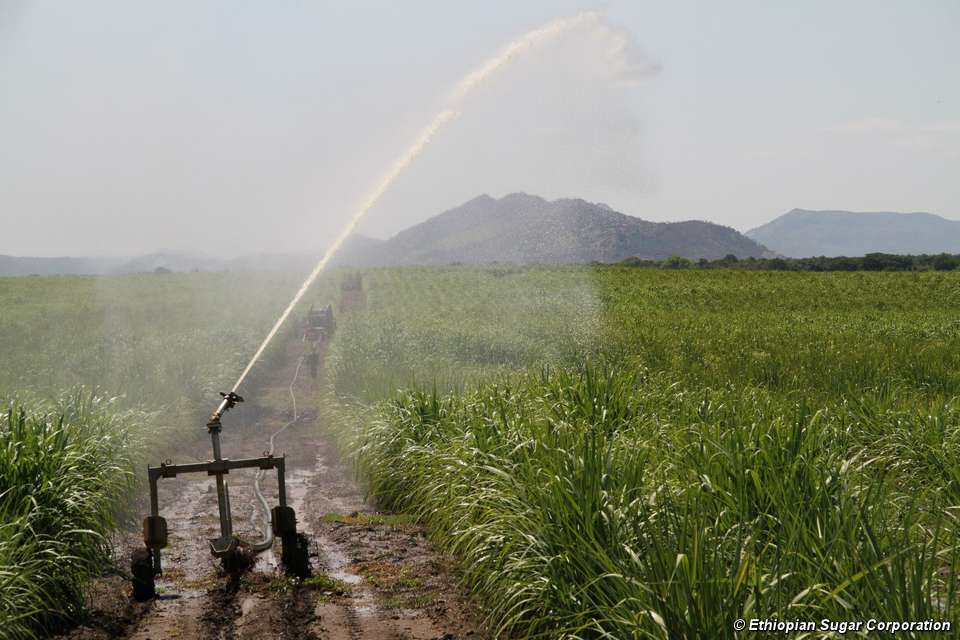


 Raya refers a tract of land stretching from Ala wuha in the south to Alaje in the north. That is bigger than Adwa and Axum awrajas combined. Historically, this is where the Weyane rebellion started in 1928 as a spontaneous reaction to a repressive system of the time. Originating in their present day Kobo wereda, the revolt would quickly spread to cover the entire Raya and Wejerat provinces. Later, the inhabitants of Enderta joined the revolt and a sort of quasi-organized alliance was formed after a decade of Raya and Wejerat rebellion. This alliance, Weyane, would emerge so potent that by its heyday it practically liberated the provinces of Raya, Wejerat and Enderta. The imperial government with the support of British Air force resorted to aerial bombardment of the rebel held areas which caused a wide-spread damage, including complete erasure of villages. However, the most detrimental factor that actually caused the demise of Weyane was to come from none other than Adwa people. In 1943, Dejazmach Gebrehiwot Meshesha along with a dozen of Adwans exploited the trust vested on them to assassinate the leaders of the Weyane movement. This is significant for in the Ethiopian tradition, at least until then, if one manages to kill the leader one will win the battle. Meshesha and co. breach of the traditional trust and value was so venomous that even to this date mistrust and resentment runs high in Raya. It is to be noted that if not for Meshesha of Adwa, the people were in a very strong bargaining position and if one has to look how similar revolts in Bale and other regions were resolved, the rebels demand for better governance was within reach. As a thank you for their contribution, Meshesha and his fellow Adwans were rewarded heavily by Haileselasse while a series of punitive attacks continued on the ‘originators’ of Weyane and ultimately Raya was divided between Wollo and Tigray.
 Right now, Alamata, the only remaining city not to die fast enough as Adwans would have liked to see, is under open destruction. The residents never complained on the absence of developmental activity but never expected that the Adwa administration of the city will come-up with a destruction agenda. Surprised by the revelation, the unsuspecting residents went to Mekelle to air their grievances in the hope that the big men there might be rational and take proper action. However, Abay Woldu’s administration did not give it a second to listen; just ordered more Bulldozers, armored tanks and a battalion to effectively carry out the planned destruction. Worse, those who complained the demolishing of their belonging are rounded-up and now languish in Adwa operated secret Tigrayan jails


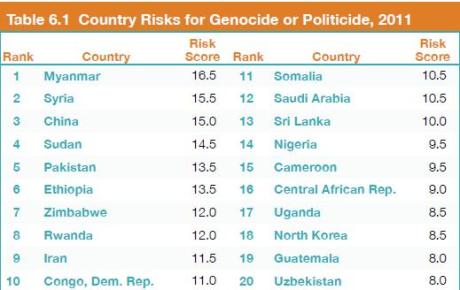


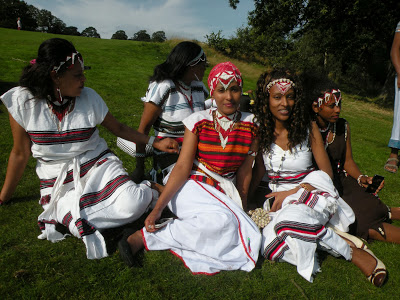


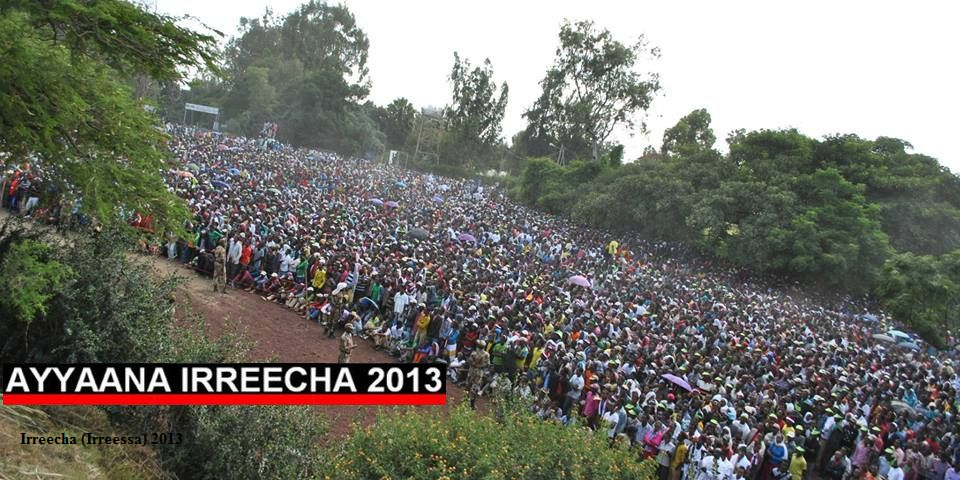
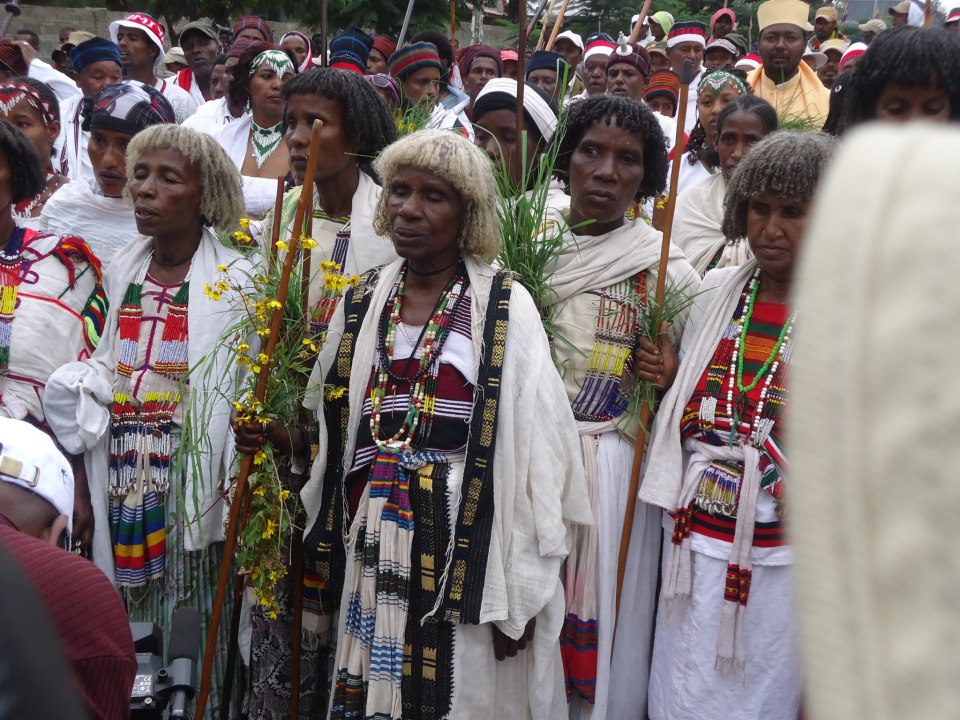
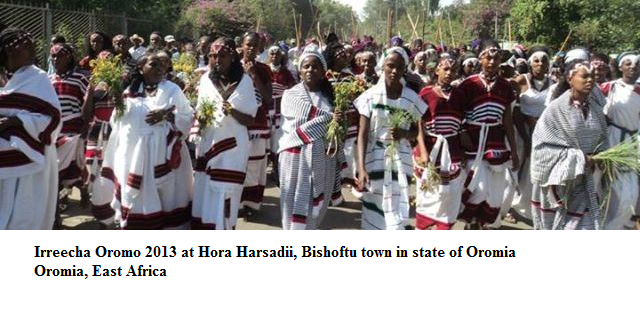





 Oromian Economist
You must be logged in to post a comment.