Economic and development analysis: Perspectives on economics, society, development, freedom & social justice. Leading issues in Oromo, Oromia, Africa & world affairs. Oromo News. African News. world News. Views. Formerly Oromia Quarterly
Ethiopia: The TPLF/EPRDF Government has declared an official state of emergency in Oromia
HRLHA Urgent Action
October 9, 2016 The Ethiopian Prime Minister Hailamariam Dessalegn has informed the public through the state run TV that a six month state of emergency has been declared as of October 8, 2016 because “the current situation in the country posed a threat against the people of Ethiopia”
Prime Minister Hailemariam Dessalegn indicated in his emergency declaration that the Council of Ministers declared the state of emergency after they discussed the damage caused by protests across the country during the past week.
HRLHA reported in its “Ethiopia: The TPLF Hidden Agenda of Reducing the Oromo Population Must be Stopped” on April 17, 2016 that the Oromia regional State has fallen under the TPLF Security intelligence officer generals’ control when they removed the civil administration and declared unofficial martial law as of Febrary 26, 2016. The recent declaration is designed to legitimize the previuos military administration of TPLF government.
Background:
The protests in Oromia regional state, which have continued steadily since November 2015, escalated on October 2, 2016 after many Oromo people were killed by the Agazi force on the ground supported by helicopter gunships at the Irrecha Festival – which left reportedly at least 600 civilians dead and thousands wounded.
The Oromo nation has been under attack since November 2015 when Oromo protests restarted in West Showa, Ginchi town . The protests demanded that the Chilimo forest clearing by land buyers should stop. In response to the peaceful protest against the land grabs- which included the Addis Ababa Master plan- the TPLF/EPRDF deployed its Killing Squad Agazi force to quell the protests. In the past eleven protest months, including the October 2, 2016 Irrecha festival massacre, an estimated 2000 civilians have been killed and several thousands have been taken to detention centers.Despite the brutalities committed against Oromo civilians during the past eleven months, the international community has not made a concerted response to end the crisis in Oromia.The Human Rights League of the Horn of Africa has appealed several times to the world community , including the UN Human Rights Council, UN Security Council and Donor States such as USA, Canada, UK, Sweden and Norway to put pressure on the government of Ethiopia to respect the constitution of the country and International human rights standards to solve the political crisis in the country in general and in Oromia regional state in particular.HRLHA is deeply concerned that if International Communities fail in responding to the killings presently taking place in Oromia Regional State as soon as possible , this could lead to a genocide comparable to those in Rwanda (1994), in Yugoslavia (1998) and in Darfur, Sudan (2003).
Therefore, the HRLHA respectfully demands that the International community including the UN Security Council take concrete actions by:
Using its influence to put pressure on the Ethiopian government to respect international human rights, its own promised obligations, as well as domestic and International laws and refrain from its ethnic cleansing and respect the fundamental rights of Oromo Nation
Passing a decision to intervene to stop the killings in Oromia using the mandate of the three pillars of the responsibility to protect, as stipulated in the Outcome Document of the 2005 United Nations World Summit (A/RES/60/1, para. 138-140) and formulated in the Secretary – General’s 2009 Report (A/63/677) on implementing the responsibility to protect :
The State carries the primary responsibility for protecting populations from genocide, war crimes, crimes against humanity and ethnic cleansing, and their incitement;
The international community has a responsibility to encourage and assist States in fulfilling this responsibility;
The international community has a responsibility to use appropriate diplomatic, humanitarian and other means to protect populations from these crimes. If a State is manifestly failing to protect its populations, the international community must be prepared to take collective action to protect populations, in accordance with the Charter of the United Nations.
Copied To:
UN Security Council
Office of the Ombudsperson
Room DC2 2206
United Nations
New York, NY 10017
United States of America
Tel: +1 212 963 2671
E-mail: ombudsperson@un.org
UN Human Rights Council OHCHR address:
Office of the United Nations High Commissioner for Human Rights (OHCHR)
Palais Wilson
52 rue des Pâquis
CH-1201 Geneva, Switzerland.
Africa Union (AU)
African Union Headquarters
P.O. Box 3243 | Roosvelt Street (Old Airport Area) | W21K19 | Addis Ababa, Ethiopia
Tel: (251) 11 551 77 00 | Fax:(251) 11 551 78 44Webmaster: webmaster@africa-union.org
The US Department of State Secretarate Secretary
His Excellency Mr. John Kerry
WASHINGTON, D.C. HEADQUARTERS
(202) 895-3500
OFMInfo@state.gov
Office of Foreign Missions
2201 C Street NW
Room 2236
Washington, D.C. 20520
Customer Service Center
3507 International Place NW
Washington, D.C. 20522-3303
UK Secretary of State for Foreign and Commonwealth Affairs
The Rt Hon Philip Hammond MP
Parliamentary
House of Commons, London, SW1A 0AA
Tel: 020 7219 4055
Fax: 020 7219 5851
Email: hammondp@parliament.ukDepartmental
Street ,
London, SW1A 2AH
Tel: 020 7008 1500
Email: fcocorrespondence@fco.gov.uk
Minister of Forenien Affairs (Canada)
His Excellency Stéphane Dion
Write to:
Enquiries Service (BCI)
Global Affairs Canada
125 Sussex Drive
Ottawa, ON
K1A 0G2
Email: Enquiry Service – On line form
Canada
Minister for Foreign Affairs (Sweden)
Her Excellency Margot Wallström
Switchboard: +46 8 405 10 00
Street address: Rosenbad 4
Postal address: SE 103 33 Stockhol
Minister of Foreign Affairs (Normway)
His Excellency BørgeBrende
Ministry of Foreign Affairs
E-mail: post@mfa.no
Phone: + 47 23 95 00 00
Address: 7. juniplassen 1, N-0032 Oslo
In its total lawlessness, the regime had left no right unviolated be it bluntly or systematically. It is because of this that in terms of what rights it limits or what new power it confers on the executive, this declaration is inconsequential. There is nothing it changes on the ground. The resistance was happening while a full military rule organized by a Command Post chaired by the Commander-in-Chief himself was already in place. In the name of taking a “merciless and definitive” measure on protestors, the army and its Agazi Regiment, the Regional Special Forces, the Federal Police, the States’ Police Forces, Prison officials, and the Local Militia have all taken ultimate measures on civilians, children, mothers, and the elderly. They have applied the most barbaric methods of execution, massacre, torture, and abuse.
This morning, Ethiopians woke up to the news that the Council of Ministers of the Federal Government has passed an emergency decree that may last for the coming six months. The official text of the Decree is not yet published in the official legal communicator, the Negarit Gazetta. (As it has now become customary, it may never be published at all; the regime does what it wants to do nonetheless.) That it is so declared today is announced to journalists by the Prime Minister in Cabinet on the state television. The Prime Minister spoke in order to announce the decision to journalists as the primus inter pares, the first among equals, in the Cabinet. The reason given by the Prime Minister for issuing the declaration is that there is a breakdown of law and order that threatens the safety of citizens and the integrity of the constitutional order.
To the peoples of Ethiopia, especially to those who have been under military rule for the last one year and more (without any fact that necessitates it or any law that warrants it), the decree makes no practical difference in their ‘lives’. As such, the decree has little significance, if any.
The people have seen the worst face of repression. Killing, maiming, mass arrest, arbitrary detention, public torture, dispossession, eviction, dislocation (because of loss of houses and job and domicile), and much worse. They have seen burning of prisoners alive (in Qilinxo, Ambo, Gonder, Angereb, Debretabor, Zuway, etc). They have seen towns set on fire and razed down (in Konso). They have seen detainees poisoned (in Sabbataa). They have seen massacres on a sacred ground (Irrechaa) that was turned virtually into a killing field (Horaa Arsadii). They have seen children shot dead right in front of their moms (in Wallaggaa, in Arsi, in Harargee, and everywhere else).
Every day, those that are alive have lived under ‘the shadow of death.’ They have seen the regime mobilize one group of people against the other and lose loved ones and their means of livelihood as a result. They have seen snipers shoot young people in market places, in school compounds, and in the privacy of their homes. In short they have seen it all. So, what new thing they haven’t already seen is this emergency decree going to bring about? The answer given by almost everyone is a resounding “NOTHING!”
But while we are at it, it is important for us to ask what it means to declare a state of emergency in Ethiopia. What exactly is a state of emergency? When is it proper? Who declares emergency? What is the procedure? What is the implication for rights and for the exercise of power by the regime? Why is it declared now? What new thing is the regime planning to do under the guise of the emergency decree?
In what follows, I explore these questions in the light of the Ethiopian constitution (although no law, constitution or otherwise, has ever meant anything in Ethiopia). The key provision that regulates the mode, procedure, consequences, and implications of emergency declaration is article 93 of the Constitution.
What is emergency declaration? And when is it necessary?
Emergency decree is a decree of extraordinary situation. It is a law of abnormal times. It is a way of creating ‘legal illegality’ in a constitutional-political order invoking necessity on the ground of actual or impending war, crisis in law order, natural disasters, or break out of epidemics. It is a regime of exception-making through which the state is authorized to do what it cannot lawfully do under normal circumstances. Through emergency laws, a state is empowered to exercise special powers justified on the ground that the exigencies of political life has become so terrible that it demands a special set of measures.
According to the Ethiopian constitution (art 93(1)(a)), emergency is declared when there is:
a) external invasion;
b) a breakdown of law and order that cannot be managed through ordinary law-enforcement mechanisms;
c) natural disaster; or
d) epidemic.
One can see from the above that special measures that have to be effected through emergency decree are said to be necessary in times of war, crisis of public order, natural catastrophe, or the spread of contagious disease or plague that threatens the population.
According to the announcement of the Prime Minister, the cause of the emergency declaration today is the complete breakdown of law and order which has threatened the constitutional order. This is of course a concession on his part to the fact one can easily observe on the ground since the re-emergence of the #Oromoprotests on 12 November 2015.
Throughout the year Oromia—where military rule is imposed–has been completely ungovernable. Konso has also been ungovernable for the last eleven months. After July 2016, when the Amhara resistance broke out in Gonder, the Amhara region also became ungovernable by the regime thereby necessitating a military rule to be imposed there, too.
Who issues the Declaration of Emergency?
The necessity of such a decree is assessed and acted upon by the Council of Ministers (COM). But the COM is not the only institution that has a sole authority on the management of emergency situation. The power to declare emergency is shared between the Executive and the Legislature. According to art 93(2), owing to the urgency associated with emergency, the declaration may be issued unilaterally by the COM but it should be presented to the parliament within 48 hours if the parliament is in session. If the parliament refuses to approve it, the decree will be dead on arrival. If the parliament approves it by a 2/3rd majority vote, it becomes effective for up to six months from the date of declaration.
If the emergency happens in the season when the parliament is not in session—like it is the case now—the decree must be submitted to the parliament within fifteen days. This may necessitate calling a special or extraordinary meeting of the parliament. Without the approval of the parliament, no emergency decree can be effective. In other words, emergency power is shared between the two institutions, the executive (COM) and the legislature (HPR). The former has the power to generate the emergency bill and the latter has the power to approve or reject the decree submitted to it by the former.
The How of Emergency Declaration: Procedure
The process is activated when the COM decides to have such a decree after duly assessing the situation. If exceptional measures are found to be:
a) necessary; and
b) not preventable through any other measures.
Thus, the COM must demonstrate that there is a serious crisis in public order that it could not otherwise control through the activation of ordinary law-enforcement mechanisms. Once this is demonstrated, the decree is submitted to the Parliament for approval. On approval by parliament, it becomes the law of exceptional times. When it is duly approved by the parliament, the parliament establishes an Emergency Inquiry Board that supervises the humane treatment of all persons arrested in the course of enforcing the emergency (art 93(5)). The Board ensures the accountability of the executive for its measures taken during the emergency season.
What does Emergency entail? What are its consequences?
The declaration of emergency confers special powers on the executive. It empowers them to take measures necessary and proportional to avert the danger. Often, the executive is given latitude to suspend some constitutional rights as may be necessary to protect public peace and order. The usual candidates are rights such as freedom of assembly, demonstrations, movement, etc, which can be suspended for a limited period of time.
However, these powers are not open-ended. There is a limit to what the Executive can do. In particular, its actions are circumscribed by constitutional provisions that are non-derogable. The provisions relating to the right to life, freedom from torture and all forms of cruel, degrading and inhumane treatment or punishment, equality and non-discrimination, etc are often seen as universally inviolable under any circumstance. This emanates from the principle of sanctity of human life, human dignity, and fundamental equality in worth of all human beings.
In art 93 (4)(3)), these non-derogable provisions are five: art. 1 (the provision that has to do the nomenclature of the country and the system it denotes); art. 18 (the provision on the right to freedom from cruel, inhumane, and degrading punishment or treatment such as torture); art 25 (the provision on the right to equality and non-discrimination); art 39(1) (the provision on the right to self-determination including secession); and art 39(2) (the provision on the right to language, culture, and history). Curiously, the right to life (under arts 14 and 15) is not in the list of rights that cannot be suspended or limited during situations of emergency. Given the weight given to other structures such as the federal democratic republican structure and the name that denotes it; or to right of nations to self-determination; the absence of the right to life, the most fundamental of all human rights, in this list must be an oversight.
Why now? What Motivated the regime to Issue this declaration?
What is the point of this declaration? What new measures are to be taken other than those “merciless” measures that were being taken throughout the year? What rights are to be newly suspended and/or limited because they have been left unviolated thus far?
As we all know, the regime has virtually banned all forms of demonstrations, political meetings, associations, etc for a long time. We know that there is no press freedom in the country. Ethiopia is one of the top four jailers of journalists in the entire world. Arbitrary killing, mass arrests, detentions, tortures, discrimination, have been a matter of routine practice throughout the 25 years tenure of the regime, only exacerbated now in the context of the open mass revolt in the last couple of years.
The regime has always been confrontational with religious groups because it routinely and unscrupulously interferes with their freedom of religion.
Demanding the right to self-determination as per the constitution automatically renders one a terrorist because apparently, in EPRDF’s book, the right to self-determination is already exercised by all. As a result, identity is securitized, i.e., it is handled as a matter of threat to national security.
The right to one’s distinct language—e.g. the right to a choice of script—is routinely violated, a striking example being the regime’s denial of the right of the Erob people of Tigray Region to adopt a Latin script for their language.
In its total lawlessness, the regime had left no right unviolated be it bluntly or systematically. It is because of this that in terms of what rights it limits or what new power it confers on the executive, this declaration is inconsequential. There is nothing it changes on the ground. The resistance was happening while a full military rule organized by a Command Post chaired by the Commander-in-Chief himself was already in place. In the name of taking a “merciless and definitive” measure on protestors, the army and its Agazi Regiment, the Regional Special Forces, the Federal Police, the States’ Police Forces, Prison officials, and the Local Militia have all taken ultimate measures on civilians, children, mothers, and the elderly. They have applied the most barbaric methods of execution, massacre, torture, and abuse. Surely novelty will elude them in this regard. They have practised abuses that the world’s ghastliest torture centres and killing fields have witnessed in history.
The only question that remains now is why the regime issues this declaration now? What do they want to achieve? There are two possibilities: 1) to give a retrospective legal cover to atrocities they have been perpetrating so far and to exculpate the more extensive barbaric measures they are preparing to take in a last vindictive act just before they vacate power; and 2) to terrorize the public into temporary silence during which time they will dismantle major infrastructural facilities and move to the home base of the TPLF core of the regime. These possibilities are mere speculations, of course, but these are speculations that are hardly without reasons rooted in the conduct, words, and attitudes of the key figures in the regime.
There has been increasing unrest in several towns in the Oromia region, south east of Addis Ababa, since last Sunday when many people died after falling into ditches or into the Arsede lake while apparently fleeing security forces following a protest at a religious festival in the town of Bishoftu. The protests have apparently been fuelled in part by a lack of trust in the authorities’ account of events as well as wildly differing information about the death toll and the conduct of security forces. We call on the protestors to exercise restraint and to renounce the use of violence. Security forces must conduct themselves in line with international human rights laws and standards.
There is clearly a need for an independent investigation into what exactly transpired last Sunday, and to ensure accountability for this and several other incidents since last November involving protests that have ended violently.
Instead of cutting off access to mobile data services in parts of the country, including in Addis Ababa, we urge the Government to take concrete measures to address the increasing tensions, in particular by allowing independent observers to access the Oromia and Amhara regions to speak to all sides and assess the facts. In August this year, the UN High Commissioner for Human Rights requested access to the regions to enable the Office to provide assistance in line with Ethiopia’s human rights obligations. We again appeal to the Government to grant us access.
We are also concerned that two bloggers, Seyoum Teshoume and Natnael Feleke, the latter from the blogging collective Zone 9, were arrested this week. Feleke and a friend of his were reportedly arrested for loudly discussing the responsibility of the Government for the deaths at last Sunday’s Irrecha festival in Oromia. There have also been worrying reports of mass arrests in the Oromia and Amhara regions. We urge the Government to release those detained for exercising their rights to free expression and opinion. Silencing criticism will only deepen tensions.
Security officials watch as demonstrators chant slogans while flashing the protest gesture during Irreecha, the thanksgiving festival of the Oromo people, in Bishoftu town, Oromia region, Ethiopia, on October 2, 2016.
The following questions and answers are critical to understanding recent events inEthiopia. Responses are written by Felix Horne, senior Ethiopia researcher at Human Rights Watch. The Human Rights Watch analysis of the situation is informed by 15 interviews with people who witnessed and lived through the events of October 2, 2016, as well as hundreds of other interviews with people caught up in violent government responses to protests across Ethiopia in the past year.
What is Irreecha and what happened on Sunday, October 2 during Irreecha?
Irreecha is the most important cultural festival to Ethiopia’s 40 million ethnic Oromos who gather to celebrate the end of the rainy season and welcome the harvest season. Millions gather each year at Bishoftu, 40 kilometers southeast of Addis Ababa.
This week, people spoke of increased tension after year-long protests in Oromia. There was an increased presence of armed security forces in Bishoftu compared to previous years.
The government attempted to have a more visible role in the festivities this year. The government and the Abba Gadaas, the council of Oromo traditional leaders, held extensive negotiations about the arrangements for the festival. At the festival, tensions within the massive crowd built when government officials appeared on stage and even more so when the current Abba Gadaas were not present on stage. Instead, a retired Abba Gadaa who is perceived to be closely aligned with the government took to the stage.
A military helicopter flying low overhead increased public concern about the government’s intentions, according to witnesses. Eventually, a man went on stage and led the crowd in anti-government chants. The crowd grew more restless, more people went on stage, and then security forces fired teargas and people heard gunshots.
The security forces have used live ammunition while confronting and attempting to disperse numerous public gatherings in Oromia for almost a year. As Human Rights Watch has documented in many of those protests, teargas preceded live ammunition, so when the pattern seemed to be repeating itself at Irreecha, panic very quickly set in. People ran and fell into nearby ditches, while others were trampled in the ensuring chaos.
The Ethiopian government makes it extremely difficult to investigate these types of incidents. The government limits independent media and restricts nongovernmental organizations, both domestic and international, so that currently no one has had the access, expertise or impartiality necessary to determine a precise, credible death toll. Making things worse, over the last few days, the government has restricted internet access, as it has done intermittently throughout the protests.
Based on the information from witnesses and hospital staff Human Rights Watch has spoken to, it is clear that the number of dead is much higher than government estimates. But without access to morgues and families who lost loved ones, and with many people unwilling to speak for fear of reprisals, it is impossible to come up with a credible total. Anecdotal reports from some hospital staff indicate high numbers of dead, but they are also under pressure to keep silent. There are numerous reports of medical staff not being permitted to speak, or being pressured to underreport deaths. They may also have had limited access to the bodies. During the last 12 months, Human Rights Watch hasdocumented several arrests of medical staff for speaking out about killings and beatings by security forces, or in some cases for treating injured protesters.
All of this underscores the need for independent international investigation to document who died and how they died in Bishoftu on October 2.
Did security forces violate international laws or guidelines on the use of force in Irreecha?
As a crowd-control method, teargas should be used only when strictly necessary as a proportionate response to quell violence. International guidelines, such as the United Nations Principles on the Use of Force and Firearms, stipulate that the police are expected to use discretion in crowd control tactics to ensure a proportionate response to any threat of violence, and to avoid exacerbating the situation. Police should exercise restraint when using teargas in situations when its use could cause death or serious injury.
The witnesses all said the crowds were not violent, but they were clearly protesting against the government. Witnesses said they believed security forces fired guns into the crowd in addition to in the air but there is thus far no corroborated evidence of people hit by gunfire – but restrictions on access make it impossible to say for sure.
Based on the information Human Rights Watch has, it appears that the security forces’ use of force was disproportionate. To the extent that this force was used to disperse protests rather than in response to a perceived threat posed by the crowds, it may also have constituted a violation of the rights to free expression and assembly. The research leads us to the conclusion that the security forces’ disproportionate response triggered the stampede that resulted in so many deaths.
Why is an independent, international investigation important? Isn’t it the government’s responsibility to investigate?
Yes, ideally the Ethiopian government should investigate. In the past, it has conducted investigations into alleged abuses by security forces that were neither impartial nor credible. Ethiopia’s Human Rights Commission presented an oral report to parliament in June about the protests over the last year, saying the security force response was in all cases proportionate to a threat posed by demonstrators. That conclusion is contrary to the findings of Human Rights Watch and other independent groups that have looked into recent events. It is very clear that security forces consistently used live ammunition to disperse protests, killing hundreds of people. The government’s findings have further increased tensions, underscoring concerns protesters have voiced about lack of justice and accountability.
The lack of credibility of government investigations into the brutal crackdown and the scale of the crimes being committed are a compelling argument for the need for an independent, international investigation into those events and the events on October 2. Ethiopia’s international allies should be pushing hard for this.
Despite growing calls from the EU and from the UN’s most important human rights official, the government has strongly resisted the calls for international investigations. The government has a history of resisting outside scrutiny of its rights record. Access has been requested by 11 special procedures of the United Nations Human Rights Council since 2007, and all were refused except for the special rapporteur on Eritrea. On one hand the government wants to play a leadership role on the world stage, as seen in its membership on the Human Rights Council and the UN Security Council; but on the other it has resisted any international involvement in its own affairs.
How has the government responded to the deaths in Bishoftu?
The government has been blaming “anti-peace elements” for the deaths, which continues to increase the people’s anger throughout Oromia. The government should instead allow an independent investigation and then acknowledge and ensure accountability for any abuses committed by its security forces. It should also demonstrate a commitment to respecting human rights by creating a forum to listen to protesters’ grievances in Oromia and other parts of Ethiopia. The protesters say that this is about rights denied: security force killings, arrests and torture, economic marginalization, and decades of grievances. Recent protests and the ensuing violence are not about social media trouble makers, or interference from neighboring Eritrea, as the government often contends when abuses come to light.
What are protesters telling Human Rights Watch about the government response to the protests and about what they want now?
Over the last year, protesters have often told me that each killing by security forces increased their anger and determination. And the fear that was very present in Oromia and elsewhere in Ethiopia is dissipating. Some protesters say they feel they have nothing left to lose. I hear from one man each time he is released from detention. He has been arrested four times during the protests, including once when he was held in a military camp. He says he has never been charged with any crimes, has never seen a court room, and has been beaten each time he has been detained. He told me that in the military camp, soldiers stripped him down to his underwear, hung him upside down and whipped him. His brother was killed in a protest, his father arrested, and two of his closest friends have disappeared. I asked him why he keeps protesting despite the risks, and he said: “We have nothing else to lose. Better to go down standing up for our rights than end up dead, disappeared, or in jail.” I hear similar statements from many protesters, particularly the youth.
While the last year’s protests have been largely peaceful, more and more people are telling me that approach has run its course, that when you protest lawfully and peacefully and are met with bullets, arrests, and beatings, and little is said or done internationally, there is little incentive to continue that approach. Bekele Gerba, a staunch advocate for non-violence and deputy-chairman of the main registered opposition party in Oromia, is in detention and is on trial under the antiterrorism law. Treating those who advocate or engage in non-violent acts as criminals or terrorists sends a very dangerous message.
What should the government be doing?
It seems clear that force will not suppress the protesters’ movement and has in fact emboldened it. When the government is willing to tolerate the free expression of dissent, allow peaceful assemblies, and engage in a genuine dialogue with protesters, it will help to end this crisis.
Most of the several hundred protesters interviewed in depth over the past year have a lengthy list of people close to them who have been arrested, killed, or disappeared, in addition to their own trauma. Older people have similar lists going back many years. Ethiopia needs accountability to rebuild trust with its citizens. The government has had numerous chances to make concessions and address protesters’ concerns. At those times when it has done so, as in January when it cancelled the master plan that ignited the initial protests, the action was taken far too late and done in a way that protesters did not consider credible.
In terms of immediate steps, the government should permit peaceful protests, ensure that no protests are met with excessive force, release those arbitrarily detained, and address grievances including ensuring respect for freedom of assembly, expression and association. This is what we have heard from the hundreds of protesters we have interviewed in the last year.
What should Ethiopia’s key international allies, such as the US, UK and EU, do to help ensure improved human rights in Ethiopia?
For too long Ethiopia’s major international partners have not adequately raised serious concerns about the complete closure of political space in Ethiopia that has led to an inability to express dissent. At this point they need to take urgent action to ensure that the situation does not further spiral out of control. They should push for an independent international investigation. They should push for those arbitrarily detained to be released. And they should reiterate in the strongest way that lawful peaceful protests should be allowed to occur without the threat of bullets and mass arrests. They have leverage, and they should use it more effectively. For more background:
In theory, the Oromo and Amhara are well-represented by parties in government. But they have never been perceived to have either legitimacy or autonomy.
The government claims 52 people were killed in the Irreecha celebrations, but the opposition puts the figure much higher.
When Shibiru Amana heard gunshots ring out near his home in the town of Mandi on 26 September, he immediately rushed outside where he saw people clamouring for safety and kids running for their lives. Across the commotion, he later told VOA Afaan Oromo, Amana spotted a young boy lying lifeless on the ground. He mustered up the courage and took a few steps towards him. It was his younger brother Lidata.
Lidata, who was just 15 years old, had been shot in the torso. His transgression had been shouting a few anti-government slogans at a gathering on the eve of the Meskel holiday.
A week later, enormous numbers of people from all corners of the Oromia region descended on the town of Bishoftu to celebrate Irreechaa, an annual Oromo thanksgiving festival. When some began to protest, security officers responded by firing tear gas and live ammunition, according to witnesses and videos that later emerged on social media.
The crowed was packed between a lake and treacherous terrain, and in the panic that ensued, many died. The government reported that 52 died. Human rights groups say several hundreds were killed. Meanwhile, the Oromo Federalist Congress (OFC) put the death toll at a huge 678.
The ongoing wave of protests in Ethiopia was initially triggered in November 2015 by a development plan that would have expanded the capital Addis Ababa into neighbouring Oromia towns. This plan was eventually suspended, but the protests amongst the Oromo people continued and have since spread to over 200 towns and been joined by Amhara demonstrators too. The government has often responded by sending in security forces that have engaged in deadly violence, leading to the deaths of over 600 people, according to rights groups, and over 1,000, according to activists.
While some of these killings in Oromia have been carried out by regional police, it is notable that much of the security response has been conducted by the federal police and army. As Amana explained, “I wanted to ask the police officers why they killed my brother but they speak a different language”.
Under Ethiopia’s system of ethnic federalism – comprising of nine states and two chartered cities – significant powers are devolved to regional authorities, including the right to establish a state police force and maintain public order within the region. The federal army is only permitted to intervene at the request of the Oromia regional government.
However, the reality is that much of this devolved autonomy only exists in theory, and the fact that federal forces have been deployed reportedly without the express request of the Oromia government speaks to its lack of sovereignty.
Indeed, for the last 25 years, politics has been controlled by the four-party ruling coalition known as the Ethiopian People’s Revolutionary Democratic Front (EPRDF). This alliance includes the Oromo People’s Democratic Organisation (OPDO), the Amhara National Democratic Movement (ANDM), and the Southern Ethiopian People’s Democratic Movement (SEPDM). But its lead partner is the Tigray People’s Liberation Front (TPLF).
This latter party’s base represents just 6% of Ethiopia’s 100 million population, but TPLF elites have long dominated the country’s political and economic spheres and kept a hold on key posts such as defence, intelligence and foreign affairs.
It is partly anger at these inequalities that is driving protests in Oromia and Amhara. The government has largely denounced these demonstrators and used force, but it also recently announced it would evaluate the performance of its regional parties and engage in the necessary reforms of them to address the people’s concerns.
“Deep reform”?
In 2001, the year Lidata was born, the Ethiopian government also faced the need for an internal upheaval. A struggle for power within the TPLF had just concluded and the faction led by then Prime Minister Meles Zenawi had come out on top. A major purge of his opponents in government soon followed.
OPDO’s leaders had been indecisive in declaring their loyalties during the factional fight and were largely sidelined. Negasso Gidada, former president of Ethiopia and chair of the OPDO, was suspended along with other senior leaders. Meanwhile, Kuma Demeksa, an OPDO central committee member and president of the Oromia region, was removed and later replaced by Juneydi Saaddo, a new technocrat on the block.
In times of crisis and internal party strife such as these, there was nothing Meles enjoyed more than conducting a highly charged meeting (‘gimgema’) in which participants engaged in criticism and self-criticism. Those from the OPDO reportedly engaged in a frantic admission of guilt.
15 years on from this – and four years since Meles’ death in 2012 – today’s widespread protests have forced senior leaders in the TPLF and EPRDF to resurrect their ideologue’s penchant for reform. These recent changes have been spoken about under the banner ofTilq Tehadiso, which is Amharic for “deep reform”, and are supposed to “tackle rent-seeking” and “root out nepotism”. But the reality is that the exercise has been, at best, a cosmetic reshuffle.
At worst, it has been used to usher in an even more confrontational approach to the protests. In its September 2016 party congress, for instance, the OPDO replaced its chair and vice-chair with Lemma Megersa, a former Security Chief for the region, and Workneh Gebeyehu, a former Director-General of the Federal Police Commission. This shift is widely believed to have been choreographed by the TPLF, and the combined intelligence and law enforcement expertise of the two new leaders will be of immediate value to the government. According to Jawar Mohammed, a US-based Oromo political activist, the move is an attempt to “further militarize the administration in Oromia”.
Indeed, early evidence suggests the new leadership is taking a more ruthless approach. Weeks after the change of guard, crackdowns have intensified in parts of Oromia, leading scores if not hundreds such as Lidata to lose their lives. “That’s the closest I have ever been to a war,” Bayesa Abera, who has attended every Irreechaa celebration for the past 10 years, said of events earlier this week. “I am lucky to be alive today.”
Neither the cause nor the solution
The OPDO is not the only Oromo political party in Ethiopia, but thanks to the TPLF, it has developed a sense of near invincibility over its competitors in the region since the 1990s.
According to insiders, the TPLF masterminded the very creation of the OPDO in 1989 in order to pit them against the Oromo Liberation Front (OLF), a group with which its relations were deteriorating. The TPLF struggled to encourage the formation of this new OPDO party, however, and reportedly had to call upon on Oromo-speaking prisoners of war to make up its members. From its early days, OPDO officials were widely referred to disparagingly as ‘maxxanne’, Oromo for freeloader.
In 1992, the now banned OLF, a more potent symbol of Oromo nationalism, finally withdrew from the transitional government in acrimonious circumstances, and since then, the TPLF has ensured that its OPDO ally has completely dominated in the region. As a Human Rights Watch report from 2005 noted, “From top to bottom, the OPDO has had a near-total monopoly on political power in Oromia since 1992”.
Two Oromo opposition parties – the Oromo National Congress (ONC) and Oromo Federalist Democratic Movement (OFDM) – did manage to enter the political fray when they won seats in the 2005 elections. But they were constantly undermined to prevent them from mounting a real challenge to the OPDO’s supremacy. This strategy of restricting political space to opposition parties culminated in the 2015 elections in which the OPDO officially won all 537 seats in the regional state council and all 178 seats allocated to the region in the federal parliament.
The OPDO’s loyalties have thus always been with the TPLF, and when men and women across Oromia have been gunned down, no OPDO official has had the courage to condemn excessive use of force. Juneydi Saaddo, a former ODPO cabinet minister who is now in exile, explained recently in an interview that those in government fear reprisals if they speak out against TPLF dominance, and confessed that the OPDO has never been able to shake off its subservient status.
For the protesters in Oromia therefore, the OPDO possesses neither legitimacy nor autonomy, and any reshuffle of its leadership is considered as inconsequential as the party itself. The overwhelming belief is that its leaders are handpicked by the TPLF puppet-masters, and the new generation of Oromo youth – known as the ‘Qeerroo’ – have seen that it is business as usual after the latest reform. As Jawar Mohammedargued following the change of guard, “the OPDO is neither the cause nor the solution for the political crisis”.
Over the past year, Oromo protesters have been calling for genuine representation in government, an end to the dominance of a single ethnic group, respect for democratic and human rights, an end to indiscriminate killings and repression, and the cessation of marginalisation and evictions of Oromo from their ancestral lands. These are issues that far exceed the powers of the OPDO.
A Luta Continua
Over the past few months, the Amhara have joined the protests and there have been shows of unprecedented solidarity with the Oromo, united in their shared grievances. This is a significant development. Together, these two ethnic groups make up more than two-thirds of Ethiopia’s population, and Prime Minister Hailemariam Desalegn’s most urgent and perhaps toughest job now is to halt or reverse this growing trend.
Former strongman Meles Zenawi long managed to avoid this situation by stoking historical antagonisms in order to create perpetual mistrust between the two groups. He effectively drilled this trick into his disciples too, including current Communications Minister Getachew Reda, who in a recent interview, bluntly admitted that “the alliance between the two…is clear evidence that the government has failed to do its job”.
But Prime Minister Hailemariam, a former technocrat hailing from Ethiopia’s southern region, has proven less politically cunning than his predecessor. His attempts at employing the old divisive tactics, even mimicking Meles’ language and gestures at times, have failed as solidarity between the Amhara and Oromo has grown both within Ethiopia and in the diaspora. When the state TV recently unearthed and aired old footage of Meles expounding on the “narrow nationalism” and “chauvinism” of the two groups, it highlighted Hailemariam’s comparative lack of skill in delivering effective propaganda.
From Hailemariam’s first day in office, it has been clear that the TPLF still calls the shots. In fact, it is believed that his very survival strategy is to play second fiddle to gain approval from the TPLF hierarchy. But if protests continue, he could end up as a sacrificial lamb.
However, one thing the PM may take encouragement from is the fact that despite the turmoil facing the country, support from key Western allies hasn’t wavered. The US government in particular has shown little interest beyond penning half-heartedstatements of concern, reluctant to criticise a partner it sees as a force for stability in a volatile region and a major ally in its War on Terror.
In this configuration, the Ethiopian government has barely had to project even the semblance of democracy for Western diplomats to continue singing its praises. For instance, when US President Barack Obama paid a visit to the country in July 2015 – just two months after the ruling party and its allies won 100% of seats in parliament amidst accusations of intimidation and fraud – he described the government as “democratically elected”. The killing of hundreds of protesters since then has done little to shift this position.
The events of the last 11 months – and the responses from the Ethiopian government and its allies – have shown that Ethiopia’s protesters must take it upon themselves to define their destiny and bring an end to their peripheral role. Indeed, this seems to be the position that demonstrators in both Oromia and Amhara have willingly adopted, aware that as the two largest ethnic groups in the region, the success of their struggle lies in their ability to galvanise the public to rally and create links of solidarity with others who share their grievances. External actors can facilitate, but not replace, this process.
But this struggle goes on. At the funeral of Lidata, just one of many who have lost their lives at the hands of security forces, friends and family said their eulogies to celebrate his life and grieved that it had been so tragically cut short. A whole community gave him the send-off that he deserved, with mourners chanting pro-freedom slogans, of which one particularly stood out. Qabsoon itti fufa, or Oromo for “A Luta Continua”.
Michael C. Mammo is studying for his PhD at the University of Birmingham. He is a former Ethiopia correspondent for Inter Press Service and Spanish News Agency (EFE). He tweets at @mcmammo.
Political protests which have swept through Ethiopia are a major threat to the country’s secretive government, writes former BBC Ethiopia correspondent Elizabeth Blunt.
For the past five years Ethiopia has been hit by waves of protest, not only by formal opposition groups but also Muslims unhappy at the imposition of government-approved leaders, farmers displaced to make way for commercial agriculture, Amhara communities opposed at their inclusion in Tigre rather than the Amhara region and, above all, by groups in various parts of the vast Oromia region.
In the most recent unrest in Oromia, at least 55 people died when security forces intervened over the weekend during the annual Ireecha celebrations – a traditional Oromo seasonal festival.
The Oromo protests have continued long after plans to expand the capital Addis Ababa’s boundaries to take in more of the region were abandoned earlier this year. And in the last few months groups which were previously separate have made common cause.
In particular, Amhara and Oromo opposition has coalesced, with both adopting the latest opposition symbol – arms raised and wrists crossed as if handcuffed together.
The picture of Olympic silver medallist Feyisa Lilesa making this gesture while crossing the finish line at the Rio 2016 went round the world, and photographs from the Ireecha celebrations in Bishoftu show the crowd standing with their arms crossed above their heads before police intervention triggered the deadly panic.
Image copyrightAFPImage copyrightREUTERSImage captionHis style of protest was also seen at the festival
The ruling coalition, the Ethiopian People’s Revolutionary Democratic Front (EPRDF), has some solid achievements to show for its 25 years in power, in terms of economic development and improved health and education, especially for the rural poor.
But what it has not been able to do is manage the transition from being a centralised, secretive revolutionary movement to running a more open, democratic and sustainable government.
‘Inflaming anger’
In theory, Ethiopia has embraced parliamentary democracy, but such hurdles are put in the way of potential rival parties that there are currently no opposition members of parliament.
Image copyrightREUTERSImage captionThe security forces have been accused of using excessive force to quell unrest
The EPRDF has in theory devolved a good deal of power to the country’s ethnically based regions, but time and again regional leaders have been changed by central government.
Ethiopia’s constitution allows freedom of speech and association but draconian anti-terrorism laws have been used against those who have tried to use those freedoms to criticise the government.
It is now clear that these attempts to hold on to control in a changing world have misfired.
Just as attempts to dictate who should lead the Muslim community led to earlier protests, reports from Bishoftu town, where the 55 died, say that anger spilled over on Sunday because of official attempts to control which Oromo leaders were allowed to speak at the event.
The overreaction of the security forces then turned a protest that might have gone largely unnoticed into a major catastrophe, inflaming anger in Ethiopia itself and causing growing concern abroad.
And so the cycle continues, and every time protests are badly handled they create more grievances, and generate more anger and more demonstrations.
Image copyrightAFPImage captionMany Ethiopians rely on agriculture for their livelihoodImage copyrightAFPImage captionCoffee is a major export earner
The US government is among those who have expressed concern at the deteriorating situation. Its Assistant Secretary of State for African Affairs, Linda Thomas-Greenfield, met Ethiopia’s Prime Minister Hailemariam Dessalegn during the UN General Assembly last month.
She urged him to be more open to dialogue, to accept greater press freedom, to release political prisoners and to allow civil society organisations to operate.
“We have encouraged him to look at how the government is addressing this situation,” she said after the meeting.
“We think it could get worse if it’s not addressed – sooner rather than later.”
Oromo PM hopes dashed
The latest reports from Ethiopia show why concerted opposition from Oromia is such a potential problem for the government.
The Oromos are the largest ethnic group in Ethiopia, and they have a long-standing grievance about the fact that despite this they have never controlled the political leadership.
Amhara domination, under Ethiopia’s former military government and emperors, was replaced by Tigrean leadership following the overthrow of long-serving ruler Mengistu Haile Mariam in 1991.
Meles Zenawi, who played a key role in the rebellion to overthrow the Mengistu regime, took power, serving as president and later as prime minister.
When he died in 2012, the Oromo hoped it would be their turn to rule, but his chosen replacement, Mr Hailemariam, came from the small Welayta ethnic group in the south.
Image copyrightAFPImage captionMeles Zenawi was in power from 1991 until his death in 2012
Not only are the Oromo numerous, their region is large and more productive than the densely populated highlands.
It produces a lot of Ethiopia’s food, and most of its coffee, normally the biggest export earner.
The sprawling region encircles Addis Ababa, controlling transport routes in and out of the city.
For a government so worried about loss of control, big Oromo protests are a serious threat indeed.
Ethiopian police have arrested a blogger who criticised the government, especially its handling of the ongoing protests in the Oromia and Amhara regions.
Seyoum Teshome, an outspoken university lecturer who has been quoted frequently by foreign media outlets about the anti-government protests, was detained on October 1 at his home in Wolisso town in the Oromia region.
Ethiopia’s government spokesman, Getachew Reda, told The Associated Press news agency on Tuesday that he heard about Seyoum’s arrest and is investigating the reasons why.
Days before his arrest, Seyoum told the AP that he was planning to start his doctoral studies at Addis Ababa University and was starting his own blogging website, Ethiothinkthank. He wrote about Ethiopia’s anti-government protests on his blogging site and Facebook page.
“This arrest of a prominent writer and commentator is deeply disturbing as it comes against a backdrop of government moves to stifle protests and criticism,” said Robert Mahoney, deputy director of the New York-based Committee to Protect Journalists. “Seyoum Teshome should be released without delay and without condition.”
Ethiopia is the third worst jailer of journalists in Africa, and a number of journalists are serving jail terms for writing critical pieces about the government, said the journalists’ group.
The arrest came a day before dozens of people were killed in the Oromia region.
They were crushed in a stampede after government forces fired tear gas and bullets to disperse protesters during the annual Irrecha thanksgiving celebration of the Oromo people.
The government has said 55 have died, but online activists and opposition groups outside Ethiopia claim the death toll is much higher.
The incident has sparked renewed protests in many towns across Oromia, where over the past year anti-government protests have called for respect for human rights, wider freedoms and the release of detained opposition figures and journalists.
Witnesses said many people were crushed to death and others fell into ditches as they tried desperately to escape police. Shoes and clothing littered the scene of the disaster as a small group of angry residents dug for bodies in a deep ditch.
On Monday, Human Rights Watch called for an independent investigation and said the government should “end the use of deadly force to quell largely peaceful protests that began nearly a year ago”.
Protests started among the Oromo – Ethiopia’s biggest ethnic group – in November. They later spread to the Amhara, the second-most largest in the country.
Both groups say a ruling multi-ethnic coalition is dominated by the Tigray ethnic group, which makes up about six percent of the population. – Al Jazeera
Public statement of Oromo religious organizations on the killing and injuries that took place at the Irreecha festival in Bishoftu on October 2, 2016
Dear my Friend,
Peace of the Lord be with you.
In repose to the tragic events unfolding in Ethiopia, the Oromo religious organizations: Oromo Evangelical Lutheran Mission Society, Oromo Muslim Association of North America, Oromo Seventh-Day Adventist Church of Minnesota and United Oromo Evangelical Churches (UOEC), have issued the attached public statement to express our grave sadness by the irresponsible killing and injuries that took place at the Irreecha festival in Bishoftu over the weekend, where thousands of people gathered here for the annual thanksgiving. The report that government’s troops and a helicopter gunship had opened fire, driving people off a cliff and into a lake, for entirely peaceful expression opinion, is beyond our comprehension.
We mourn the loss of precious lives and express our deep condolences to the families of the deceased.
In this Association, we have also made it clear that Ethiopia is heading toward unrecoverable human tragedy, only because of the irresponsible action of the Ethiopian government and absolute disregard for human life and dignity. We call on the Ethiopian government for an immediate corrective action, and the international community to take tangible direct involvement to save the nation from further loss of the human life, and serious national and regional destabilization, which is not in the interest of all concerned.
I want to encourage and comfort you all with a quote from Martin Luther King, and the scripture, that we should not lose sight with this tragic event, and not to be swept up into simple bitterness, but only work for a united action.
“Violence is impractical because it is a descending spiral ending in destruction for all … Violence ends up defeating itself.” Martin Luther King
“Whoever sows injustice will reap calamity, and the rod of his fury will fail.” Prov. 22:8
This evil government is paving a way for its demise, but we should be united and resolved more than ever to endure with the powerless majority, with one voice: advocating for justice, freedom, liberty, democracy now or never!
The genocidal massacres of Oromos at the Irreechaa Fesival: The lies of the Tigre-led Ethiopian government
Asafa Jalata, PhD
The University of Tennessee
On October 2, 2016, the Tigre-led Ethiopian regime massacred more than seven hundred Oromos and injured hundreds more at Irreechaa, the Oromo national holiday of thanksgiving held in Bishoftu in which millions had gathered. During the Irreecha festival, Ethiopian security forces shot live ammunition into the crowd and fired tear gas, although they claimed that the lives lost were due to a stampede. Western media have joined in this claim, spreading inaccurate information about the tragic events of this day. However, Oromo victims know what happened to them and they are telling their truth. They have used videos, pictures, and social media to release accurate information.
The victims say that the Tigre-led government used live bullets, tear gas, helicopter gunships, armored cars, and snipers to terrify and kill Oromo children, elderly, women and other sectors of the Oromo society that had gathered to celebrate Irreecha. During the holiday, many young Oromos had chanted anti-government slogans to show support for Oromo Protests, a protest movement that has been taking place since November 2015. Although the holiday festival had this political moment, the massacre of hundreds of people on this day was an inhumane violation of one of the most sacred rituals of the Oromo.Irrechaa is a sacred holiday of peace and a celebration of culture, and the Ethiopian regime continues to push the limits of its inhumane violent practices.
For a quarter of a century, the Tigre-led regime has targeted Oromo mosques, churches and Galma (the house of Oromo indigenous religion) and killed hundreds of Oromo religious leaders who have expressed their Oromummaa (Oromo identity, culture, and ideology) through their religions, language, clothing, and other activities. The regime, mainly representing the interests of the Tigre, 6% of the Ethiopian population, has been committing heinous abuses and violence against the Oromo people, the largest ethno-national group in Ethiopia, and others, since its coming to power. Furthermore, in the process of transferring Oromo land and other resources to Tigre colonial elites and their collaborators, the regime has also targeted Oromo activists, politicians, students, and farmers who oppose its discriminatory and terrorist policies.
It is estimated that more than one million Oromos have been killed and thousands of Oromos have been suffering in prisons and secret concentration camps. Oromos who have been released from these prisons and concentration camps have exposed how Oromos are tortured, castrated, blinded, incapacitated, killed, and infected with HIV in various prisons and concentration camps. Also, hundreds of prisoners have perished due to the lack of adequate food, clothing, healthcare and other essential services. All these criminal acts have been committed on the brightest and conscious elements of the Oromo society. Unfortunately, the financial, military and diplomatic support of big powers has contributed to these genocidal and terrorist policies and practices for twenty-five years. Still these big powers refuse to take practical actions to stop the regime from its criminal acts. While giving lip service, these powers have continued to provide material support to the regime.
Currently, the Oromo people are determined more than ever to establish their political destiny. Despite continuous violent crackdowns and heinous massacres such as that at Irreecha, they continue to protest peacefully and raise their voices to challenge the Ethiopian regime’s oppressive anti-Oromo policies. Tigre colonial elites and their collaborators have somehow convinced themselves that continuing and escalating violence against unarmed and peaceful civilians is their answer to controlling and quieting a people who are determined to struggle for their rights, sovereignty, and freedoms. The reaction from the Oromo has instead been more protests and more outrage at the Ethiopian regime’s inhumanity.
The Oromo, the Amhara, the Somali, the Konso, the Sidama, the Gambella and others need to join the Oromo protest movement to remove the Tigre-led terrorist and genocidal regime. Learning from the failures of the last two decades, the Oromo movement must rebuild its national organizational capacity and form an alliance with all peoples that are suffering from Ethiopian state terrorism, genocide, and war on the principles of national self-determination and an egalitarian multinational democracy.
The following video shows two segments: one is the moment immediately before the Ethiopian government’s security forces opened fire at the Oromo Irreecha participants who gathered around the main stage in millions – some voicing their protests peacefully; the stage is situated in front of Hora (Lake) Arsadi, which is the sacred ground where millions of Oromos come to every year to pay tribute to Waaqa, the Supreme spiritual power equivalent to God.
Secondly, immediately after the gunshots, the area around the stage is seen to have been evacuated massively and swiftly as millions run away from the gunshots — as a consequence, hundreds ran into their untimely deaths as they slipped into ravines around the lake. The government’s sniper gunshots were accompanied aerially with military helicopters (not shown on the video, but see photo below) – which entered the civilian perimeter to further escalate the situation. And, on the ground, military-grade Humvees were deployed (seen on the video) straight into the main stage area to drive Oromo Irreechaparticipants into the ravines.
These remain unanswered:
1) who gave the order to deploy the military as a response to the peaceful protest at the Irreecha festival;
2) the swiftness (fastness) with which the military responded (within minutes of the breakout of the peaceful protests) does initiate the question: was this a pre-planned massacre? Why was the military staged near the civilian festival?
Photo of the aerial force deployed against Oromo Irreecha participants:
Military-grade Humvee inside the civilian perimeter at the 2016 Irreecha festival (why was the soldier’s face covered with a bandanna?):
The Ethiopian Government is utterly responsible for the unlawful killings at the Ardsade Irrecha (Thanksgiving) Oromo Celebration
To: Office of the United Nations High Commissioner for Human Rights (OHCHR)
Palais Wilson
52 rue des Pâquis
CH-1201 Geneva, Switzerland.
Dear Commissioner,
Oromia Support Group Australia extremely shocked about the killings of innocent Oromo civilians at the Ardsade, few Kilometers from the capital city (Finfinnee – Addis Ababa) during today’s Irrecha (Oromo Thanksgiving) celebration on 2 October 2016.
The Ethiopian Federal forces, racially affiliated and heavily armed, known as Agazi and part of the select force of the ruling Tigrean People’s Liberation Front (TPLF), violently opened fire and killed more than 140 people out for the celebration (please see attached evidence).
#OromoProtests: “We want our own government and those in the current government don’t represent us. They are incompetent to administer us and we want them to leave power.”
FILE — Demonstrators chant slogans and flash the Oromo protest gesture during Irreecha, the thanksgiving festival of the Oromo people, in Bishoftu town, Oromia region, Ethiopia.
(VOA, WASHINGTON )Ethiopia is observing an official mourning period for more than 50 people killed during a crackdown and stampede at an ethnic cultural festival in the Oromia region Sunday.At the same time, the country is seeing a continuation, possibly an escalation, of the anti-government protests that sparked the violence.
Hundetu Biratu took part in a protest that turned deadly Monday in Dembidolo, a town in southwestern Ethiopia. She told VOA that her brother was shot and killed during the demonstration.
“We were taking my brother to the hospital. A bullet pierced his neck and exited through his ears. They fired tear gas and I fell. When I got up they shot me on my thighs and I fell,” she said.
Mulatu Gemechu, assistant deputy chairman of the opposition Oromo Federalist Congress, said other protests took place Monday and Tuesday across eastern and western Oromia. He said clashes broke out in Sendefa, a town in central Ethiopia, as mourners returned from a funeral for a mother and a child who died in Sunday’s pandemonium.
The Oromia Police Commission deputy commissioner, Sori Dinqa, told reporters that protesters in the region are destroying property, burning cars and targeting government offices.
Demonstrators protest gesture during Irreecha, the thanksgiving festival of the Oromo people, in Bishoftu town, Oromia region, Ethiopia. More than 50 people were killed in the violence.
“There are continued and sporadic efforts to block streets, disturb the peace and burn administrative buildings. Our police are continuing to prevent that. We want the people to condemn the uprising and discourage people from taking part in these acts,” he said.
But few people appear to be heeding his call.
A witness in Alem Gena, a town in central Ethiopia, said a funeral service for victims turned into an anti-government demonstration. He said no one was killed but anger in his area is running high.
“We want our own government and those in the current government don’t represent us. They are incompetent to administer us and we want them to leave power,” said the man, who asked not to be identified for safety reasons.
Questions about the stampede
Official tallies put the death toll from Monday’s violence at 52, while Desalegn Bayisa, general manager of the Bishoftu Hospital, told reporters 55 people had been killed. Opposition members and activists, however, place the number of people who died in the hundreds.
Bayisa said the hospital also treated more than 100 injured people.
Questions about safety precautions are also being asked of the organizers of the festival, which drew hundreds of thousands of people to a location that includes a lake and deep ditches.
FILE — People assist an injured protester during Irrechaa, the thanksgiving festival of the Oromo people in Bishoftu town of Oromia region, Ethiopia.
“It’s amazing really. There seemed to be no preparation or planning about how to manage the flows of people,” said William Davison, a reporter for Bloomberg News who attended the event and said there were no barriers between the people and the ditches.
“To make those mistakes given the high likelihood of a protest and a government response just seems sort of criminally negligent to me,” Davison added.
Stifling dissent and criticism
Free speech advocates say the government was attempting to silence critical voices even before the festival.
“My attempts to reach him via his phone ended unsuccessfully. May he stay safe,” wrote Befekadu Hailu, another blogger, on his Facebook page.
The Committee to Protect Journalists (CPJ), a group advocating for the safety of journalists, condemned the arrest and called on the government to release Teshome without delay or conditions.
It is “deeply disturbing as it comes against a backdrop of government moves to stifle protests and criticism,” CPJ’s deputy director Robert Mahoney said.
“We want to see any pending charges or charges they might try to pursue dropped,” Kerry Paterson, the senior advocacy officer for CPJ’s Africa program told VOA. “The chilling effect that occurs as a result of arresting people doesn’t just hurt the individual journalist who gets arrested. It hurts all Ethiopia.”
What’s next?
Analysts see no end in sight to the ethnic tensions roiling Ethiopia.
Jeffrey Smith, executive director of Vanguard Africa Movement, a group that advocates for good governance, said protesters do not feel the promise of Ethiopian federalism, in which all regions are supposed to have a degree of self-governance, has been realized.
“I don’t see it ending anytime soon,” he said of the widespread anger. “I think a lot of this resentment and a lot of this discord that we are seeing is because the highly intrusive, highly repressive central government has not allowed those basic democratic avenues to be opened up. They have not allowed the Oromo people in particular to exercise and to demonstrate their basic rights that are enshrined in the country’s own constitution.”
Adane Tilahun, the chairman of the opposition All Ethiopian Unity Party, said that to begin the healing process from this week’s events, the government needs to recognize the killings were unjustified, apologize, and offer compensation to the families of the victims.
Tilahun also called on international actors and human rights groups to put pressure on the Ethiopian government in order to establish an independent investigation into the deaths.
VOA reporters Tujube Hora and Solomon Kifle contributed to this report.
Bloggers arrested, internet shut down periodically, and foreign firms attacked as anti-government protests continue.
File: A man at a funeral holds up the portrait of Tesfu Tadese Biru, a construction engineer killed in Bishoftu [Tiksa Negeri/Reuters]
Often violent protests in which rights groups say hundreds of people have been killed by security forces have flared again in Ethiopia, with a US citizen among the latest deaths.
Protests reignited in the Oromia region – the main focus of a recent wave of demonstrations – after at least 55 people were killed in a stampede at the weekend, which was sparked by police firing tear gas and warning shots at a huge crowd of protesters attending a religious festival.
Fifty-five is the official death toll given by the government, though opposition activists and rights groups say they believe more than 100 people died as they fled security forces, falling into ditches that dotted the area. Ethiopian radio said excavators had to be used to remove some of the bodies.
The anti-government demonstrations started in November among the Oromo, Ethiopia’s biggest ethnic group, and later spread to the Amhara, the second most populous group. Though they initially began over land rights they later broadened into calls for more political, economic and cultural rights.
Both groups say that a multi-ethnic ruling coalition and the security forces are dominated by the Tigray ethnic group, which makes up about six percent of the population.
The government, though, blames rebel groups and foreign-based dissidents for stoking the violence.
Staff at the California-based UC Davis university confirmed the identity of the US citizen as Sharon Gray, a postdoctoral researcher of biology, who had been in the Horn of Africa nation to attend a meeting.
The US embassy said she was killed on Tuesday when stones were hurled at her vehicle on the outskirts of Addis Ababa, where residents said crowds have attacked other vehicles since the stampede.
The embassy did not give further details or a precise location for the incident.
Foreign firms attacked
News of Gray’s death came as foreign-owned factories and equipment were damaged in the protests. Demonstrators in Oromia say farmland has been seized to build foreign factories and housing blocks.
On Tuesday, crowds damaged a factory run by Turkish textile firm Saygin Dima and the BMET Energy cable plant, which also has Turkish investors, officials from firms in the area said. Both plants are in the Oromia area.
A third of the Saygin Dima plant in Sebeta, 35 km (20 miles) southwest of Addis Ababa, was destroyed by fire, General Manager Fatih Mehmet Yangin said.
“A large crowd attacked the factory,” he said, adding three vehicles were also destroyed.
Yangin said a flower farm nearby was also attacked. The Oromia Regional Administration said vehicles and some machinery at a plant owned by Nigeria’s Dangote Cement were vandalised.
Oromia has been a focus for industrial development that has fuelled Ethiopia’s economic growth, but locals say they receive little compensation when land is taken by the government.
The death toll from unrest and clashes between police and demonstrators over the past year or more runs into several hundred, according to opposition and rights group estimates. The US-based Human Rights Watch says at least 500 people have been killed by security forces.
The attacks will cast a shadow over Ethiopia’s ambition to draw in more investment to industrialise a nation where most people rely on subsistence farming, and have been struggling with a severe drought in the past two years or so.
The government has been building new infrastructure, including an electrified railway connecting the capital of the landlocked nation with a port in neighbouring Djibouti, which was inaugurated on Wednesday.
At least seven foreign-owned flower farms in Ethiopia’s Amhara region, another area where protests have flared, were damaged in political violence at the start of September.
Bloggers arrested
Rights groups and opposition politicians accuse the government of excessive force in dealing with demonstrations, crushing opponents and stifling free speech.
The Committee for the Protection of Journalists (CPJ) called on authorities on Tuesday to free Seyoum Teshoume , a blogger critical of the government, who writes for the website Ethiothinktank.com. CPJ said he was reported detained on October 1.
Another blogger who has expressed support for the protests, Natnael Feleke, was arrested on Tuesday, according to a blogging collective of which he is a member. Natnael was previously arrested in 2014 and released after more than a year in prison when charges against him were dropped.
There were also reports that the internet had been shutdown periodically over the last two days.
Officials could not immediately be reached for comment, but the government says it only detains people who threaten national security and says it guarantees free speech.
The opposition failed to win a single seat in a 547-seat parliament in a 2015 election and had just one in the previous parliament.
Ethiopian anti-government protesters are escalating attacks on foreign investors as anger grows over the regime’s crackdown on demonstrations, in which hundreds of people have been killed.
Activists torched a Turkish textile factory and attacked a mine owned by Aliko Dangote, Africa’s richest man, damaging trucks and machinery on Tuesday, days after more than 50 people were killed when police fired tear gas and rubber bullets to disperse protests at a religious festival. The US embassy in Addis Ababa said an American woman died on Tuesday when her vehicle was struck by rocks thrown by Ethiopians on the outskirts of the capital.
The violence comes after a wave of protests this year that were originally triggered over a land dispute in the Oromia region of central and southern Ethiopia. They have since escalated into broader demonstrations against the autocratic government and spread to other regions, threatening the stability of one of Africa’s best-performing economies.
Addis Ababa has responded with force — activists accuse security forces of firing live ammunition on unarmed demonstrators and say hundreds have been killed in the protests.
Washington has called the government’s approach to the unrest “self-defeating,” while the EU on Wednesday called for the authorities to address the “wider aspects of the grievances”.
Activists and analysts say the attacks on foreign companies are becoming increasingly co-ordinated.
More than two dozen foreign companies, including flower farms and other agribusinesses have suffered millions of dollars in damage in recent weeks, according to Verisk Maplecroft, a UK-based consultancy.
Juan Carlos Vallejo, co-owner of Esmeralda Farms, pulled out of the country after his business was attacked several weeks ago.
“Right now, everyone is really scared,” he said. “We never expected something like this to happen. I don’t think anyone is going to want to invest here any more.”
Ethiopia has been one of Africa’s star performers, recording 10 per cent annual growth and attracting tens of billions of dollars in foreign investment over the past decade thanks to a carefully planned, state-led development and industrialisation policies.
But it is also a tightly controlled society, with the Ethiopian People’s Revolutionary Democratic Front — which has governed with an iron grip since 1991 — and its allies controlling all the seats in parliament.
Dissent is swiftly repressed and the political opposition was severely weakened by a government crackdown — during which scores of people were also killed — after disputed 2005 elections.
“We have made clear that Ethiopia’s prosperity depends on the ability of its government to maintain a stable and predictable investment climate and to expand political space,” a western diplomat said.
The current protests began in Oromia region last November over plans to expand Addis Ababa into Oromo lands. The initiative was shelved but the government’s aggressive response to the protests saw them spread to northern areas, which are dominated by the Amhara ethnic group.
Both the Amhara and Oromo are frustrated by the political dominance of the Tigray minority, which makes up 6 per cent of the 100m population, analysts say. The Oromo and Amhara comprise some two-thirds of Ethiopians.
Awol Allo, an Ethiopian law lecturer at Keele University, said foreign investors were being targeted because “they are seen as the source of legitimacy for the government”.
“The government has to attract foreign investment to keep the economy growing and has to provide land and services cheaply,” he said. “People are taking out their anger on investments by foreigners to undermine the government.”
The government has sought to play down the protests, blaming overseas agitators and criminal elements.
Analysts say the Tigray-dominated regime has maintained its grip in part by keeping the larger ethnic groups divided. But they add that now the Oromo and Amhara have united in their opposition to the government, it will be hard for the authorities to appease them without making significant concessions.
However, Rashid Abdi, an analyst at the International Crisis Group, said some ministers, and the Tigray-controlled military, are loath to do this.
“The protests have now reached a serious level, a different scale,” he said. “We should not exaggerate and say the government is going to keel over tomorrow, but it portends future trouble unless they get a grip. What’s worrying is that so far they haven’t.”
Afar People’s Party is dismayed by the mass killing of our Oromo brothers in Bishoftu, while celebrating the Irrecha seasonal holyday. This act of state-terror and coward action on civilian population is a testimony for that the Woyane regime is falling apart and the situation is getting out of its control. It’s time to make sense of the causes, the causes that people are scarifying their lives for all over the country. Many heroic Ethiopians have been killed, prisoned, tortured and driven from their homes because they merely voiced their grievances and saidNo to social injustice and said Yes for human dignity.
In this trying time our hearts are bleeding and our souls are mourning with all families who lost their beloved ones. Afar People’s Party would like to express its solidarity with all Ethiopian people in general and with our Oromo brothers in particular.
Since its control of power, the EPRDF/TPLF regime has been systematically dismantling every aspects of societal institutions to create fertile ground for its divide and rule policies. The paradox is that those who have been killed repeatedly are civilians not armed opposition groups.
For instance, since 2005 Ethiopian have been massacred when they protested to protect their votes from being snatched;
Our Muslim brothers were killed and prisoned and tortured when they say “listen to our voices” and respect our religious freedom and demanded to restrict state interference in religious affairs;
Ethiopians were massacred in Gambela to give land for foreign investors;
Ethiopians were massacred and villages were burned in Ogaden when people asked for full-fledged federal arrangement;
Ethiopians were massacred in Gonder/ Wolkait/ Bahirdar/ Konso/ Sidama/ Konnaba/ Sawne/ Gawani etc., when they demanded that one’s identity should be determined by a group or individual but not by the state;
Ethiopians are massacred, prisoned and displaced in Afar because of they protested against land grabbing, territorial claims and marginalization;
Ethiopians were massacred in every corner of Oromia and now while celebrating the traditional ceremony of Errecha; and the list can continue…
The question is now, how long shall we wait and see while such gross human rights violations and crime against humanity are committed in daily basis? We believe that it’s our responsibility to accomplish the dreams and aspiration of many fallen brothers and sisters and we can only achieve that when we are united against the tyrannical regime.
We condemn all forms of barbaric acts and convey our condolences to those families who lost their beloved ones.
We call up on all Ethiopians to unite for lasting peace, justice, freedom and peaceful coexistence among Ethiopian.
Following the death of at least 55 people in the weekend, Ethiopia is coming out of a three-day national mourning with a complete internet shutdown and more protests engulfing the country. Anti-government protests have broken both in the outskirts of the capital Addis Ababa, with reports of closed roads, a heavy presence of riot police…
The annual Irreechaa festival is a time of celebration and thanksgiving for the Oromo people of Ethiopia. After the hardship of the winter months, the festival welcomes the spring and attracts millions to the town of Bishoftu in one of the largest cultural and spiritual celebrations of the year.
Protest for Human Rights in Ethiopia, Oakland, CA. Credit: Elizabeth Fraser
The exact details of this atrocity are difficult to confirm—Ethiopian authorities routinely jail journalists and bloggers for critiquing the government and internet and cell phone reception in the Bishoftu region has reportedly been cut off. But regardless of the exact details, this is the latest in a series of events that signal increasing state violence.
State Violence Mounting in Ethiopia
For almost a year, protests have erupted in the Oromo and now also the Amhara regions of Ethiopia. They originated in response to a “Master Plan” that was set to expand the boundaries of Addis Ababa and take land away from farmers in the region, but have grown into larger calls for democracy and human rights in the country. Between November 2015 and January 2015, at least 400 people—mostly students—were killed by security forces in Oromo in the start of these protests. In August, nearly 100 more were killed in similar events in Oromo and Amhara. In September, a fire in the prison holding political prisoners and anti-government protesters in September took the lives of 23.
The trend is clear: state violence and repression in Ethiopia is mounting, and the international community is doing little to stop it.
Over the past eight years, the Oakland Institute has extensively researched, monitored, and reported on land and human rights abuses in Ethiopia. We started this work by examining detrimental land investments. This work led us to document the widespread human rights violations and repression of critics and opponents of the government’s development plans that were grabbing land and resources from its own citizens. In the wake of the Anti-Terrorism Proclamation that led to the arrest of students, land rights defenders, journalists, indigenous leaders, opposition politicians, religious leaders, and more for exercising basic freedoms; in the wake of the villagization program that set out to forcibly relocate up to 1.5 million people to make their land available for foreign investment; in the wake of this year’s anti-government protests that have seen hundreds, if not thousands, killed by security forces—our work has expanded and our appeals for justice have grown.
Today, as we all reel from this latest tragedy, we say enough is enough. The US—as the largest bilateral donor to the country—must take a firm stand for human rights, democracy, and justice in Ethiopia.
House Resolution 861—Human Rights in Ethiopia
In September, Resolution 861—“Supporting Respect for Human Rights and Encouraging Inclusive Governance in Ethiopia”—was introduced in the House of Representatives, thanks to the courageous leadership of Representative Chris Smith. To date, it has been publically co-sponsored by Rep. Keith Ellison (D-MN), Rep. Al Green (D-TX), Rep. Mike Coffman (R-CO), Rep. Eliot L. Engel (D-NY), Rep. David Cicilline (D-RI), Rep. Zoe Lofgren (D-CA), Rep. Pete Sessions (R-TX), and Rep. Joyce Beatty (D-OH). The resolution summarizes and condemns the massive abuses taking place in Ethiopia; calls on numerous US departments and agencies to review their financing of the Ethiopian government; and “stands by the people of Ethiopia and supports their peaceful efforts to increase democratic space and to exercise the rights guaranteed by the Ethiopian constitution.” The resolution’s support is growing, with news received last week that Rep. Barbara Lee (D-CA) will also be signing on.
The US Must Act Now
The US and Ethiopia have a unique relationship: the US has relied on Ethiopia in its war on terrorism in the region, while Ethiopia relies on the US as a primary aid contributor. Because of this relationship, the position of the US is vital. A strong statement from the US would not only cause the Ethiopian authorities to take heed, but could inspire other world leaders to stand up for human rights in the country as well.
Over the past year, nearly one thousand people have lost their lives because they stood up for justice and human rights. How many more innocent lives need to be lost before the US is willing to take a stand?
Ummatni Oromoo gochaa diinaa kana jabinaan dura dhaabbatuun Har –Sadeen bakka uumaa itti galateeffatan malee waltajjii siyaasaa mootummaa itti faarsan ykn eebbisan akka hin tahiin hubachiisuun, mootummaan gochaa kana irraa akka dhaabbatu hubachiisaa fi yaadachiisaa ture. Haa tahu malee mootummaan humnatti amanu kun akkuma bare humnaan to’achuun waltajjii ofii godhatuuf yaalii godheen mormii dhalateen ummata meesha maleeyyii ayyaana kabajataa jiru irratti boombii harkaa darbatuun lubbuu gaaga’ee, waraana lafoo fi helikooptara waraanaan marsee dhukaasa baneen lammiilee fayyaaleyyii Oromoo dhibbaa ol ajjeesuu dhaan diinummaa isaa caalaatti ifa godhee jira. Guyyaan kun Oromoof Sanbata Gurraacha seenaa keessatti hin dagatamne tahee jira.
Kanneen aadaa fi safuu ummataaf kabajaa hin qabne ajjechaa jumlaa fi tarkaanfii sanyii duguggii kana kan rawwatan bakka Irreeffannaatti tahuun ammoo mootummaan kun Ayyaana ummata Oromoof kan kabajaa hin qabne tahuu kan durii caalaa mirkaneesse. Waan taheef tarkaanfii diinummaa kana ABOn gadi jabeessee balaaleffata.
Hawaasni addunyaa, nagaa jaallattootni, dhabbattootni mirga namoomaa gochaa gara jabinaa fi faashistummaa mootummaa Wayyaanee kana akka balaaleffatan ABOn jabeessee gaafata. Addatti ammoo mootummootni mootummaa kanaaf waahela tahan ajjechaan jumlaa haa gahu jechuun callisa isaanii irra aanuun tarkaanfii barbaachisuu fi quubsaa yeroon itti fudhatan amma tahuu irra deebi’ee yaadachiisa.
Ummatni Oromoo mootummaa Wayyaanee ummatoota hunda irratti roorrisaa jiru kun akka gatiittii ummatoota irraa bu’uuf qabsoo gaggeessuun durummaan kaafama. Qabsoo ummatni Oromoo itti jiru fakkeenya godhatuun kan qabsoo mirgaa fi eenyummaa kaasuun falmaa seenanis hedduu dha. Ummatootni qabsoo eenyummaa fi mirgaatti jiran martis gochaa kana akka balaaleffatanii fi qabsoo mirgaa fi dimokraasii ummatni Oromoo itti jiru cinaa hiriiruu fi wal tumsuun falmaa isaanii akka finiinsan ABOn gaafata.
Tarkaanfiin fashistummaa guyyaa har’aa Onkoloolessa 2, 2016 ummata Oromoo irratti fudhatame hariiroon mootummaa Wayyaanee fi ummata Oromoo gidduu kan diinummaa tahuu waan daran caalaatti mirkaneesseef, ummatni Oromoo mootummaa kana irraa ajjeechaa fi hidhaa, xiqqeenyaa fi salphina malee kan argatu homaatuu akka hin jirre hubatee, qabsoo bilisummaa itti jiru bifa hundaan akka finiinsu ABOn dhaamsa dabarsa.
Dhaabotni bilisummaa fi mirga waliigalaaf qabsaawan hundi fi ummatootni marti akka qabsoo hadhaawaa kana finiinsanii umrii mootummaa fashistii kana gabaabsuu irratti akka fuulleeffatan waamicha keenya dabarsina.
Sanbatni kun Oromoof Sanbata Gurraacha Seenaan hin dagatamne dha.
An Oromo just shot and killed in Bishoftu at an area called ‘Circle’. His body still there as soldiers prevented medical personnel and civilians from picking him up.
Shoes of Oromo people killed by fascist Ethiopia’s regime forces (TPLF, Agazi) during Irreecha 2016 in Bishoftu. Genocide is gooing on. 2nd October 2016.
UUUUUUUUU Genocide against Oromo people by TPLF. This is at Hora Harsadii while millions of Oromo People at Irreecha, 2nd October 2016.
As social media more accurately reports from the field and hospitals, more than 800 people were massacred and thousands were jured by TPLF while more than 4 million people celebrating the most popular African based Oromo Thanksgiving season on 2nd October 2016. The number of people killed by Agazi on 2nd October on Irreecha day may be increased. The genocide has been going on over 25 years particularly since November 12, 2015 as the world community has been watching.
Hundreds of people fell into this deep ditch as bullets tear gas fell on millions from helicopter and ground soldiers
Ergaa kana naaf dabarsi Beekan.. ANi ogeessa fayyaa Hospiitaala Bishooftuuti. Namoota du’aniifi gaggaban adda baafachuu hamma dadhabnetti jirra. AKka warra lubuun keessa jiru hinyaallannettis nama jala erganii nudanqaa jiru. Dawwaanillee dhumee waan ittiin madaa isaani qoorsinu fixneerra. Warri akkanumaan gar aFinfinneetti refer’ gochaa jirrus utuu achi hingahiin du’uuti malu. Nama gaddisiisa. Har’an ogeessa fayyaa ta’uukoo of abaare. Jarri saba keenyaa lafarra daguuguuf murteeffatteetti. Ani kanin lakkaa’ee qofti dhibba sadii ol ta’a…maaloo warri sagalenkeessan dhaga’amu, sabni kun ciisee du’uurra ajjeesee akka du’uuf dhamsa nuuf dabarsa. Namoota naannoo Bishooftu jiraniin adaraa dhiigaa nobboleeyyan keessaniif nuuf arjoomaa naajedhiin. kana boda abbaatu ofmara jedhe bofti.ani dhukkuba uumamaa sabnikoo ittiin miidhamu yaaluufan baradhen se’e amma garuu ajjeechaa Wayyaaneen lammiikoorratti gootu ..yeroon siif katabu kana office ‘ koo balbala cufadhee imimmaan ofirra lolaasaadha. Gaafa haatikoo duute akkas boo’ee hinbeeku. Adaraa tokkummaan ka’aa naa jedhiin.
(OPride) — At least 250 feared dead in Bishoftu, Ethiopia, after police used tear gas and opened fire on people gathered to mark Irreechaa, the Oromo thanksgiving festival, according to activists and eyewitness reports. The Irreechaa holiday at Hora Arsadi, the crater lake near the site of Sunday’s massacre, is considered the biggest cultural and spiritual celebration in Africa.
On this day, October 2, which will be entered into history books as the Irreechaa Massacre, the sacred grounds of Arsadi were littered with dead bodies, according to reports. The mass arrests began a day early. Tensions run high all day as military helicopters flew above the crowd at lower altitude, in what was seen as an effort to intimidate the gathering crowd. At the city entrances, security checkpoints stretched for hours as festival goers arrived from across Oromia. But despite the heavy security presence, Irreechaa goers still expected to partake in a peaceful celebration of the arrival of Birraa, as the holiday marks a seasonal change from dark and rainy winter months to a bountiful Spring.
But chaos, confusion and stampede broke out in the early afternoon when the youth booed the newly elected chairman of the ruling Oromo People’s Democratic Organization, OPDO, off the stage. The protests began as soon as the crowd filed into the malka, the river bank, close to the stage where politicians hoped to make political statements – statements that are often unheard and unheeded even on a “normal” year. It’s clear that the youth were ready to make a statement of their own to the local officialdom – in an unusual in your face type of way. But their protests were peaceful. They crossed arms, forming an X, popularized by Oromo marathon runner Feyisa Lilesa, to say no to the killings, beatings and arrests. It is an incident like no other. A turning point for the 11-month old Oromo protests, a popular uprising against the Oromo people’s continued social, economic and political marginalization by the central government in Ethiopia.
Irreechaa has emerged at the most important event among the Oromo. It is officially a celebration of the bountiful harvest of Birra but a celebration of Oromummaa itself. It is the most unifying event for the Oromo, who constitute at least half of Ethiopia’s 100 million people.
This wasn’t an ordinary year for Oromo and for Ethiopians as a whole. More than 1,000 people have been killed, mostly in Oromia, but also in the Amhara state in the last 11 months.
Opposition party says stampede kills at least 50 people in chaotic scenes in restive Oromiya region
Protesters run from teargas during the Irreecha festival of thanksgiving in Bishoftu. Photograph: Tiksa Negeri/Reuters
Reuters in Addis Ababa Sunday 2 October 2016
Police in Ethiopia’s Oromiya region fired teargas and warning shots to disperse anti-government protesters at a religious festival, triggering a stampede the opposition party said killed at least 50 people.
Note: Dr Merera told The guardian about 50 casualties several hours ago right after the news first emerged. Current estimate stands over 350. Also note, they are still waiting for bulldozers to dig people who feel deep into the ditch and waiting for divers for those who fell into the lake. Jawar Mohammed
Thousands of people gathered for the annual Irreecha festival in Bishoftu, about 40km south of the capital.
Protesters chanted slogans against the Oromo People’s Democratic Organisation, one of four regional parties that make up the Ethiopian Peoples’ Revolutionary Democratic Front, which has ruled the nation for quarter of a century.
(Africa Times) — Oromo rights activists said Friday that Bontu Bekele Gerba, daughter of the imprisoned Oromo political opposition leader in Ethiopia, had been released after security forces detained her in the town of Mojo.
Independent Oromo journalist Mohammed Ademo, a former al Jazeera America columnist based in the United States, said the family’s lawyer confirmed the late-afternoon disappearance.
Ademo and other Oromo advocates immediately took to social media, some demanding that U.S. officials and international NGOs confirm her whereabouts and intervene as necessary.
Journalist Jawar Mohammed, executive director for the Oromio Media Network in the U.S., reported that she was released after being detained for questioning at a Mojo police station.
Bontu Bekele Gerba is a political activist in her own right, speaking often to media organizations and Ethiopian activists on behalf of her father, a leader of the Oromo Federalist Congress, and the movement.
The elder Bekele Gerba was most recently detained at Ethiopia’s Kilinto Prison in Addis Ababa, a maximum-security facility where high-profile political prisoners and anti-government protesters are incarcerated. He was rearrested in December following a short release and since remained at the facility, where a fire claimed 23 lives in early September, according to official Ethiopian government totals.
Bontu Bekele Gerba led a search for her father when prison authorities failed to provide information to anxious families who knew nothing of their loved ones’ fate, and spoke publicly again on their behalf.
Her father’s initial 2011 arrest followed a meeting with Amnesty International researchers that led to terrorism charges, which are often used by Ethiopia to silence political dissidents including the Oromo.
Global concern for the 30 million Oromo living under President Mulatu Teshome has increased, following a year in which at least 500 hundred Ethiopians died in violent clashes with security forces.
That visibility was raised following the protest of Ethiopian Feyisa Lelisa at the Olympic Games in Rio de Janeiro and his subsequent application for U.S. asylum. Activists in the U.S. have held large protest marches, most recently on Thursday in Washington D.C., on behalf of the Oromo.
U.S. Representatives push for legislation targeting Ethiopia after Amnesty International and Human Rights Watch document human rights abuses.
A bipartisan group of U.S. Representatives has proposed legislation targeted at the government of Ethiopia, after Amnesty International and Human Rights Watch documented hundreds of cases of alleged human rights abuses. House Resolution 861, titled “Supporting respect for human rights and encouraging inclusive governance in Ethiopia,” was introduced by Reps. Chris Smith (R-NJ), Keith Ellison (D-MN), Al Green (D-TX), Mike Coffman (R-CO), and Eliot Engel (D-NY).
“It is an abomination when any country tortures its own citizens,” said Rep. Smith, at a September 13th press conference on Capitol Hill. The human rights abuses, waged primarily against the Oromo and Amhara populations, have come to light despite Ethiopian authorities efforts preventing independent screeners from conducting transparent investigations.
The Resolution condemns the killing of peaceful protesters, the arrest and detention of students, journalists, and political leaders, and the stifling of political dissent under the guise of “counterterrorism.”
Ethiopia is a strategic ally of the United States. The country headquarters the 54 nation African Union, and, critical to U.S. interests, assists in counterterrorism efforts against al-Shabab, an Al-Qaeda aligned jihadi terrorist group based in Somalia. Ethiopia is also host to a staggering 750,000 refugeesfrom the war torn region.
In a press statement Rep. Ellison said, “While Ethiopia is an important ally for the United States, continuing to let the Ethiopian government oppress its own people will only further destabilize the region. We must do all we can to ensure that the human rights of all Ethiopians are respected.” Rep. Smith added, “A valuable contributor to global peacekeeping missions, growing unrest in Ethiopia in reaction to human rights violations by the government threaten to destabilize a nation counted on to continue its role on the international scene”.
Resolutions, like the one proposed, tend to be more of an opinion that often do little in themselves because they lack the political leverage to prompt much action. They often fail to hold allied nations to a standard of conduct, as countries and international organizations are hesitant to regulate how other nations behave within their own borders.
Noteworthy, is that the bill also seeks to apply financial and other pressure towards the government, by calling for the Secretary of State to “conduct a review of security assistance to Ethiopia” and “improve transparency” with respect to such assistance, and to “improve oversight and accountability of United States assistance to Ethiopia”.
OROMO AND AMHARA PROTESTERS CALL FOR EQUITABLE RIGHTS, AUGUST 6, 2016. REUTERS/TIKSA NEGERI
Despite the good intention of the bill, critics highlight that it doesn’t go far enough. Henok Gabisa, a visiting Academic Fellow and faculty member at Washington and Lee University School of Law, stated in a personal interview:
“H.RES.861 is generally a good gesture from the United States Congress. It is very specific in a sense that it points out the consistent and constant patterns of corrosion of civil and economic liberties in the country. It also seems to give scrupulous attention to the marginalized groups who remain on the receiving end of the pain. That is really great. Nonetheless, owing to the mammoth financial aid transported to Ethiopian government by the U.S. under their bilateral security partnership, H. RES. 861 failed to deploy the political leverage of the [United States Government], and as a result it is nowhere nearer to fulfilling the goal it promises. In fact, Resolutions by merit are just declaratory statements or positions of a government. They may not be considered law in a positivist school of law. Yet again, H.RES.861 has no teeth to bite those who fail to comply the soft obligations it enumerated under the last sections 3-6.”
In a country of over 86 million, Oromos and Amharas constitute the two largest ethnic groups, combining for over 61% of the population. Yet, they are the most politically marginalized andeconomically disenfranchised. In 2015 Ethiopia’s ruling party, the Ethiopian People’s Revolutionary Democratic Front, won every seat in parliament despite little ethnic diversity. The EPRDF has remained in power since the overthrow of Ethiopia’s military government in 1991.
J David Thompson (US Army) is a Juris Doctor candidate at Washington & Lee University School of Law focusing on International Human Rights Law. He is a Veterans in Global Leadership Fellow, and brings experience on human rights, international relations, strengthening civil society, refugee issues, interagency collaboration, and countering violent extremism. Prior to Washington & Lee, he served in the US Army as a Military Police officer and Special Operations Civil Affairs with multiple deployments to Afghanistan and one to Jordan—receiving a Bronze Star amongst other decorations. In Jordan, David worked at the US Embassy in countering violent extremism, strengthening civil society, and refugee response with other United States Government organizations, the United Nations, and various non-governmental organizations.
Winner of Mississauga CanKen 5K race protests in support of Ethiopia’s Oromo people.
Ethiopia’s Hajin Tola won the inaugural CanKen 5K road race in Mississauga, Ont. on Sunday and performed a political protest by crossing his wrists to form an “X.”
Oromia: Athletic Nation World Report: The Rio 2016 Paralympic: Athlete Tamiru Demisse showed solidarity with #OromoProtests against the tyrannic Ethiopia’s regime as he claimed a silver medal, following a protest gesture made by Olympic counterpart Fayyisaa Leellisaa (Feyisa Lilesa). Gootichi Oromoo AtleetTaammiruu Demisee Paralympic Riyoo tti tibba injifate mallattoo mormii Oromoo agarsiise.
Throwing up the “X” in parliament, Swedish MP Mr. Anders Österberg asked the Sweden Government to break silence on killings of Oromo & Amhara protesters in Ethiopia. 30 September 2016.#OromoProtests
Sean John Combs also known by his stage names Puff Daddy, Puffy, Diddy, and P. Diddy, is an American Hip Hop Recording Artist, Record Producer, Entrepreneur and Actor showing his support for Ethiopian Human Rights Global Movement.
A meeting called by TPLF’s puppets in Oddo Shakkiso district in Guji Zone turns into fierce protest as elders stand up and denounce the regime and vow to fight to death
=========
Godina Gujii aanaa Oddoo Shaakkisoo ganda Magaadoo keessatti walgahiin uummataa mootuummaan waamee gara mormii uummataatti jijjiirameera. Guyyaa kaleessaa Fulbaana 26, 2016 yookiin fulbaana 16, 2009tti, uummanni gaaffiiwwaan ciccima mirgaa abbaa biyyummaafi qabeenyummaa gaafachaa turane. Walgahiin mootummaan yaame kun gara mormiitti jijjiiramuun guutumaa gututti injifannoo ummataatiin xumurameera.
Birraan baranaa kan bilisummaatti. #OromoProtests during Irreechaa season. September 2016
Qabsoonis barannoonis itti fufa. #OromoProtests 27 September 2016
OromoProtests, East Hararghe, Biabbile, 27 September 2016
OPDO is neither the the cause nor solution for the political crisis
Yesterday the regime announced that the top two puppets in Oromia have been removed and replaced by not so new faces. TPLF is either still dumb and numb about the depth of the crisis or chose to continue insulting the intelligence of our people. The cause of conflict between the regime and the Oromo and other peoples of Ethiopia is TPLF’s mission of and obsession with building and maintaining the supremacy of Tigreans. They have successfully built a system whereby power and wealth is monopolized in their hand. They are killing, jailing, exiling and reshuffling to preserve such domination. The puppet parties be it OPDO, ANDM or SEPDM were built and maintained to serve as tools of advancing and protecting this Tigrean supremacy. Hence reshuffling men and women at the head of these puppet parties does not make any difference in the ongoing conflict. They could appoint an OPDO or ANDM as prime minister, and still it won’t solve the problem. Since its created to advance TPLF mission of creating and protecting Tigrean supremacy, the so called EPRDF cannot be reformed through changing of guards or policy fixes –solution will come only when the mission is defeated and the regime is dismantled.
Having said this, why are Lemma Megersa & Workineh Gebeyehu chosen as the new place holders in Oromia? It meant to achieve two tactical objectives; to pacify the growing resentment within OPDO rank and file and the bureaucracy in Oromia, and to further militarize the administration in Oromia.
– Lemma is relatively popular among the younger cadres–hence TPLF believes appointing him will give false hope to the bureaucracy and give them breathing time internally. .
– Workineh is a shrewd politician with keen understanding of the role of the cultural sphere. He has long experience of reaching out to Oromo elders and religious leaders every time the regime faces challenge. They hope he can tap into that to isolate young protesters from the masses through the elders.
-The most important reason however is this. Both men come from the security branch having worked as police and intelligence chiefs. As it anticipates and prepares for further escalation into armed confrontation, TPLF believes these guys will be easier to work with the military and intelligence than Mukar ad Aster whom were very loyal but clueless about dealing with the military generals and spy masters who took over through command post.
Well that is TPLF’s calculation. They are still using that very old calculator left behind by Meles. The input, the machine and the output is off the mark. Jawar Mohammed, 21 September 2016
Waldaan Christian Oromoo Magaalaa Finfinnee. – Oromo Christian church in Finifinnee, Oromia, in solidarity with #OromoProtests, 11 September 2016. The church held New Year prayer and solidarity with our people.
Teachers who are forced to participate in the 10 day indoctrination conference are engaged in #SilentProtest by refusing to ask, answer of comment. They are also boycotting food provided by the regime.
“Hirmii hin nyaannu!!” #OromoProtests September 2016
“Yuniavrsitii Wallaggaa Kampasii Shaambutti diddaan barsiisonni caldhisuun godhan itti fufee jira. Nama Dr. Balay Shifara jedhamuu mqaan waamtee dubbisuuf yaallaan waci eegalee achumaan dhiisan. Amma laaqana esheen qopheessites lagannee jirra.” #OromoProtests 15 September 2016
“Leenjii Barsiistota irratti Barsiistonni Kolleejjii Polii Teeknika Bishooftuu fi koolleejjiwwan dhuunfaa magaalichaa bakka yokkotti bakka leenjii koolleejjii poli Teeknika bishoftu keessatti hirmaachiseen Barsiistonni CALLISUUN DIDDAA giyyaa guutuu waan tokko otuu hin dubbatin hafanii waan ajaa’ibaati
Jarri nu teechisan keessaa obbo Caalii Xiiqii, Leggesee, fi itti aanaa diinii koollejjii pooli teeknika bishooftu kan ta’e Sulxaan ciigoo kan jedhaman dubbadhaa , yaada qabduu ……… cicci xumaaxum namni tokko dubbatu dhabamee jennaan kan duursanii warra afaan oromoo dubbatuuf hin dandeenye adda baasaanii otuu jiranuu waan jedhan wallaallan warri afaan hin dandeenye jirtu? Mee kan afaan oromoo dandeechan harka baasaa jechuun, Barssiisyonni afaan oromoo akka danda’an ibsachuuf otuu hin dubbatin harka baasan, eegas jedhan amma warri harka baastan maqaa waamanii dubadhaa jedhanii gara dirqiittis hoofuf jennaan Barsiistonni sagalee wal fakkaatun kolfa guddaa daqiiqaa walakkaaf ta’u kolfuun erga yokko deebisanii callisan guyyaan saa akka habashaatti 04/01/2009.” #OromoProtests 15 September 2016.
#OromoProtests 3 September 2016: People are rushing (Bank run) to take out their money from Commercial Bank of Ethiopia. This picture is taken from Kumsa Moroda branch in Naqamte, Oromia.
#OromoProtests mass solidarity rally in Berlin, Germany September 2, 2016.Fuulbana (Birraa) 2 bara 2016 Hiriirri deeggarsa FXG magaalaa Berlin, German keeysatti gaggeeyfamaa oole.
Solidarity with #OromoProtests at European Parliament at the conference/hrearing on crisis in Ethiopia, #OromoProtests, #AmharaProtests and land grabs in Afar state. 2nd September 2016
Hagayya 2 bara 2016 Gamtaan Awurooppaa Paarlaamaa Keessatti walgahii wa’ee yakka dhimma Oromo irraattii TPLF/EPRDF saba Oromoo fi Amahara akkaasumaan sabaa fi sabbonttotaa Ethiopia daballatee duguuggaa sanyii balleessuuf raawwatee fi Saamicha lafa Itoophiyaa keessatti gaggeffamuu keessumattuu Saamicha lafa Affaar irrati TPLF gaggessu irrati Marii guddaan gaggeeffameera.
#OromoProtests 2nd September 2016,Qobboo, East Hararge, Oromia : Funeral service for Saladin Shakim, who was wounded on the grand rally and died 1st September 2016.
#OromoProtests 31 August 2016: Cruelty of the TPLF
You might recall the report about killing of 15 farmers in West Hararge, masala District Choma village over the last four days. You also remember reading how the military prevented people from burying the dead and helping the wounded. Today they are dressing body of dead civilians in military uniform and video taping it. They want to make fake documentary claiming they killed armed combatants. Jawar Mohammed
Guyyaa hardhaa ilmaan Oromoo 15 Harargee Lixaa Aanaa Masalaa Araddaa Coommaa keessatti ajjeefaman san reeffa isaanii huccuu waraanaa offisuun fiilmii sobaatiif viidiyoo waraabaa jiran. Jawar Mohammed
The TPLF has continue indiscriminately mass killings of the peace loving Oromo people everywhere throughout Oromia.
The following 15 innocent Oromo people were killed by Agazi soldiers (Tigray People’s Libration Front) in Choma village , Masala District, West Hararge on August 27, 2016
1.Hamzaa Abdullaa
2.Mohammadnur Kaliif
3.Asiyaa Abbaas
4.Imaam Jaabir
5.Jaabir Mohammed
6.Feesal Abdallaa
7.Adam Mikaa’il
8.Mikaa’il Aliyyii
9.Kaamilee Mikaa’il
10.Shukrii Umar
11.Kaamil Hassan
12.Muraad Ahmad
13.Jaabir Hassan
14.Ahmad Imaamee
15.Jamaal Aliyyee
Our thoughts are with all the victims relatives and families.
May their soul rest in peace!!
Despite the country’s constitution professing the equality of ‘all the peoples of Ethiopia’, for the past 25 years ‘equality’ has been a factor of who has the most firepower among the rebel groups that toppled the former military regime in 1991. As a result of the political atmosphere in the country, wherethe best armed takes all, all aspects of the federal government (i.e. intelligence, military, police, state banks, airlines and core sectors of the country’s economy) are now dominated by an elite from a Tigray People’s Liberation Front (TPLF) that represents only 6% of the general population.
Divide and rule: For 25 years, the TPLF elite has guaranteed its grip on state power through the divide-and–rule tactic of festering ethnic animosity. The Amhara and the Oromo are their prime targets. Hate speech against the Amhara (the second–largest ethnic group in the country)was broadcast on state– and party–owned mass media outlets, denigrating millions of people by referring to them as ‘timkehetegna’, which means ‘the conceited’ The killing and jailing of the Oromo (the largest ethnic group in the country) has been normalised, thereby creating an entire generation of people who feel like second-class citizens in their own country.
Ethiopia is seeing an increasing number of civilian protests, which are brutally suppressed by the government. It seems that the elite in power needs to heed the lessons taught by the Rwandan genocide: Do not play with ethnic hatred.
Oromo Liberation Front fighters. Photo: Jonathan Alpeyrie/ Wikimedia Commons
The year-long, nationwide and unceasing popular anti-government revolt in Ethiopia has brought the country’s ‘ethnolinguistic federalism’experiment to a dead end. Despite the country’s constitution professing the equality of ‘all the peoples of Ethiopia’, for the past 25 years ‘equality’ has been a factor of who has the most firepower among the rebel groups that toppled the former military regime in 1991. As a result of the political atmosphere in the country, where the best armed takes all, all aspects of the federal government (i.e. intelligence, military, police, state banks, airlines and core sectors of the country’s economy) are now dominated by an elite from a Tigray People’s Liberation Front (TPLF) that represents only 6% of the general population.
Divide and rule
For 25 years, the TPLF elite has guaranteed its grip on state power through the divide-and–rule tactic of festering ethnic animosity. The Amhara and the Oromo are their prime targets. Hate speech against the Amhara (the second–largest ethnic group in the country)was broadcast on state– and party–owned mass media outlets, denigrating millions of people by referring to them as ‘timkehetegna’, which means ‘the conceited’ The killing and jailing of the Oromo (the largest ethnic group in the country) has been normalised, thereby creating an entire generation of people who feel like second-class citizens in their own country.
There is a lesson to be learned from the Rwandan genocide: Do not to play with ethnic hatred.
Threatening the country they lead
Unlike the former military regime, which relied on force to crush any opposition but never compromised on the sovereignty of the nation, the current TPLF–led dictatorship is unprecedented in its threat to wreak havoc if its absolute power is contested. The late Meles Zenawi was often seen using this tactic of bullying the country whenever his party’s reckless corruption and unconstitutional dominance over the federal government was questioned.
One aspect of the mayhem that Meles designed and his colleagues now desire to unleash isthat of instilling hatred among the people of Tigray and other ethnic groups by turning anycriticism of them as leaders of the country into an attack on the Tigray people. This hate–mongering is evidence that the elite does not have the Ethiopian people at heart, onlypower. The Tigray people have not only been betrayed by the TPLF elite but they are alsobeing manipulated as the party tries to hide its many failing. Tigray deserves peace and development as much as the other parts of Ethiopia, not to be taken hostage by the corrupt and power-hungry TPLF, which is terrorising them.
For the first time in the 25 years of minority control of the federal government, the people of the two major ethnic groups, the Amhara and the Oromo, have come together to create a common front of the oppressed. This unexpected show of unity has sent a shockwave throughthe TPLF elite, who is frantic and has sent in the military, armed with tanks, helicopters and missiles, against civilians – as if people who are simply demanding their rights and equalitywere foreign invaders.
Country at a crossroads
The current popular opposition in the Oromia and Amhara regional states is a great opportunity for the government to re–examine its divisive policies, admit to its failings and design a reconciliatory road map that would save the nation from descending further into conflict. The elite, however, still chooses to use special killing squads, military force, burning prisons and killing prisoners in custody.
For the past 25 years, ‘equality’ has been a factor of who has the most firepower among the rebel groups that toppled the former military regime in 1991.
In addition, it is now spending taxpayers’ money and foreign aid on the launching of media campaigns to derail the unity of the Amhara and the Oromo people.
A silent coup
Following the first wave of uprising by the Oromo last year, the Ethiopian military, controlled by the TPLF, has made official its unequivocal allegiance to the ‘Revolutionary Democracy’ policy, which is the governing policy of the ruling party. This act of merging party and government into one practically re-mandated the defence force of Ethiopia into being a mere protector of the minority elite and, by implication, declared the country’s constitution obsolete.
This is a silent coup. This fact becomes evident when one considers the supposed industrialisation of Ethiopia, which is to be led by the military, under the Metals and Engineering Corporation (METEC). This is a corporation under the Ethiopian National Defence Force that is fully controlled by generals who were former TPLF rebel leaders. They were tasked by the late Meles Zenawi with the industrialisation of the country. This dangerous disregard for the constitution amounts to running a government inside a government and is pushing Ethiopia towards being an ethnic apartheid state. This can only lead to more violence.
Embracing real democracy
Just a few months ago, the government won 100% of the seats in parliament seats. Voterigging is suspected. The whole country erupted in opposition, showing the real danger of authoritarianism.
Sending in an army, equipped with tanks and missiles, against civilians – as the government has done against the people of Amhara – for no reason other than the fact that they exercisedtheir democratic rights, is not how democracy works. Such a display of power is the most cowardly and desperate exhibition of despotism.
It is incumbent on the people of Ethiopia not to fall for the traps set by the elite, who seem more determined than ever to encourage ethnic conflict and hatred through their media propaganda.
The path of national reconciliation
Unfortunately, due to the divide-and–rule policy of the government over the past 25 years,Ethiopians have been targeted for their ethnicity: The Amhara, Oromo, Anuak, Somali, Tigray, Kembata, Konso and many other ethnic groups have been targeted at different times. This is a sad reality and testifies to the policy of hate–mongering that is practised by the elite.
The government of Ethiopia needs to stop encouraging further division and animosity. No Ethiopian should be targeted for his or her ethnicity. There is a lesson to be learned from the Rwandan genocide: Do not to play with ethnic hatred.
However, it is incumbent on the people of Ethiopia not to fall for the traps set by the elite who now, more than ever, seem determined to encourage ethnic conflict and hatred through their media propaganda. Our silence today will not save us sorrow tomorrow. We should say no to the machetes of hatred that the country’s leaders are selling in their media. We should say no to the use of our name to justify the killing of any Ethiopian.
The martyrdom of our time is saying no to hatred and ethnic conflict while calling for equality and justice for all.
As months of protest and civil unrest hurl Ethiopia into a severe political crisis, a new report from the Oakland Institute debunks the myth that the country is the new “African Lion.” Miracle or Mirage? Manufacturing Hunger and Poverty in Ethiopia exposes how authoritarian development schemes have perpetuated cycles of poverty, food insecurity, and marginalized the country’s most vulnerable citizens.
A key government objective is to make Ethiopia one of the largest sugar producers in the world. Several sugar expansion plans are underway, including the colossal Kuraz Project in the Lower Omo Valley, which will include up to five sugar factories and 150,000 hectares of sugarcane plantations that rely on Gibe III Dam for irrigation. Studies show that Gibe III could reduce the Omo River flow by as much as 70 percent, threatening the livelihoods of 200,000 Ethiopians and 300,000 Kenyans who depend on the downstream water flow for herding, fishing, and flood-recession agriculture.
Miracle or Mirage? offers lessons from the deadly impact of sugar and cotton plantations in the Awash Valley in the Afar Region, established in the 1950s. The projects drastically reduced land and water availability for people and cattle, undermined food security, destroyed key drought coping mechanisms, and stirred up violent conflicts between different groups over the remaining resources. The establishment of plantations was a critical factor in the 1972-1973 famine, resulting in the deaths of nearly 200,000 Afar people. These findings raise serious questions about the government’s logic behind sugar expansion, with $11.2 billion to be invested by 2020, and much more for irrigation schemes and dams – Gibe III alone cost Ethiopia $1.8 billion.
Using quantitative evidence, the report also details how plantations established in the Awash Valley have been far less profitable than pastoralist livestock production, while carrying massive environmental costs including the depletion of vital water resources.
The United States is very concerned over the situation in Ethiopia, particularly the instability in the Oromia and Amhara regions.
The United States is very concerned over the situation in Ethiopia, particularly the instability in the Oromia and Amhara regions, Assistant Secretary of State for African Affairs Linda Thomas-Greenfield said in an interview. Speaking in New York on the sidelines of the UN General Assembly meeting, Assistant Secretary Thomas-Greenfield called the response by the government to protests an “intense and somewhat harsh crackdown:”
“We have had discussions with the Ethiopian government encouraging that they have dialogue, and that they open the possibly for press freedom, civil society’s ability to function, and that many of the people who have been put in jail be released.”
In Oromia anti-government protests began in November 2015, and they have also occurred in the northern Amhara region.
Assistant Secretary Thomas-Greenfield said the United States believes that the situation in the country could deteriorate and that the Ethiopian government is aware of that possibility as well.
“We’ve met with Prime Minister Hailemariam [Desalegn] in New York, and we have encouraged him to look at how the government is addressing this situation.”
“We think,” she said, “it could get worse if it’s not addressed – sooner rather than later.”
On August 21st, in Brazil, Ethiopian runner Feyisa Lilesa was awarded the silver medal for the Men’s Marathon in the 2016 Rio Olympics. Although this was perhaps one of the greatest sporting achievements of his life, this day will forever be remembered for the political protest he made just before the finish line. While in the global spotlight, Lilesa raised his hands above his head in an ‘X’ formation to stand in solidarity with the Oromo people of Ethiopia, who have suffered a crackdown at the hands of the Ethiopian government.
Lilesa is one of the thousands fighting for the rights of the Oromo people. In August 2016, the United Nations’ High Commissioner for Human Rights, Zeid Raad Al Hussein, called on Ethiopia to allow UN international observers to investigate the excessive use of force by the government’s security forces against peaceful protesters in the Oromo and Amhara regions of the country. There is a strong need for organized international pressure on the Ethiopian government. A credible and independent investigation into this country’s Human Rights offences is long overdue. This will be a huge and very welcome step for the people and the country as a whole.
Human rights abuses have been prevalent throughout Ethiopia’s history, but for the last nine months, protests have erupted in Oromiya, the homeland of Ethiopia’s largest but historically marginalized ethnic group, the Oromo, of which Feyisa Lilesa belongs. The protests are have now spread north, to a second region, the Amhara.
Although these protesters from Oromo and Amhara have different backgrounds, cultures, and complaints, they share a growing fear and frustration with the rule of a third, minority ethnic group — the Tigrayans. As NPR reported, the Tigrayan elite has a “cartel-like grip on the government, military and the fast-growing economy.” The Tigrayan Peoples Liberation Front (TPLF) forcefully rose to power after the fall of the Soviet Union. Since then, there have been numerous human rights violations, with examples like the 2001 killing of forty Addis Ababa university students for simply demanding the academic freedom to publish a student newspaper, to the Killing of 200 Oromo in 2014, according to the Solidarity Movement for a New Ethiopia (SMNE).
Related: Learn more about the TPLF in Ethiopia here.
The right of peaceful assembly is protected in Ethiopian and International law. Ethiopia’s Constitution states “everyone shall have the freedom, in association with others, to peaceably assemble without arms, engage in public demonstration and the right to petition.” But, after Human Rights Watch interviewed more than 125 witnesses, victims, and government officials, a significant pattern of human rights violations during peaceful Oromo protests was revealed. Examples from late 2015 when the decision of authorities in Ginchi to clear a forest for an investment project triggered protests in at least 400 different locations across all the 17 zones in Oromia, until May 2016, and even into current times, prove there have been massive human rights violations. Numerous reports exposed that in many locations security forces have gone at night, arresting innocent and unsuspecting members of the community such as students and those accommodating students in their homes. Security forces also strategically target those seen as “influential members of the Oromo community, such as musicians, teachers, opposition members and others thought to have the ability to mobilize the community for further protests.” Even more shocking, is that many of those arrested and detained by the security forces were children of eighteen years and younger. Security forces have also been reported to open fire on, and kill peaceful protesters, as well as torture or beat many of the detained Oromo. Many of the females detained have reportedly been raped by security force personnel, while almost none of the detainees have had access to legal counsel, adequate food, or their family members.
An unnamed student said in an interview with HRW on January of 2016, said his friend “was shot in the stomach [at the protest], his intestines were coming out, he said, ‘Please brother, tie my [wound] with your clothes.’ I was scared, I froze and then tried to do that but I was grabbed and arrested by the federal police. Jamal died. They arrested me and took me to Bedeno police station.”
With ongoing events such as these, the people of Ethiopia have appeared to have reached their limit; the brutal force being used by the regime to deter an uprising is starting to backfire, creating new alliances between previously divided groups of Ethiopians such as the Oromo and the Amhara. The regime, struggling to find ways to retain domination, resorts to solutions like the exploitation of Ethiopian resources, land, and opportunities; but this too, is becoming a regime failure.
A press release from The Solidarity Movement for a New Ethiopia (SMNE)notes, this is a regime, accustomed to using tools like manipulation to divide the people by ethnicity or other differences, furthering ethnic hatred, alienation and isolation, leaving a niche for the regime to squeeze into. It has allowed them to repeatedly commit fatal human rights atrocities against these groups with no fear of a united retaliation; but this is suddenly changing. These methods of turning selected ethnic groups against one another, is being scrutinized by Ethiopians; and previously rival groups are now unifying to challenge it. As SMNE said, “more killing, wounding and use of violence against unarmed civilians on the part of the regime’s security forces are strengthening, not weakening, the movement of the people,” but the movement is just beginning.
Ethiopia’s government has rejected the call for UN intervention and promised to launch its own investigation according to Al Jazeera. With the TPLF now facing a crack in the current power structure of the country, the government’s resistance to UN intervention was to be expected. The fearful reality is, however, that the TPLF, power hungry, and corrupt, will continue to use illegal force in an attempt to maintain control. But this lack of legal and transparent investigation of human rights violations in Ethiopia strongly implies that the Ethiopian government’s investigation of the ongoing human rights crisis will not be independent, impartial and transparent, and according to Sarah Jackson, Amnesty International’s Deputy Regional Director for East Africa, the Horn and the Great Lakes. “It is time to step up efforts for an international and independent investigation in Ethiopia.”
For years the government has worked to project a “forward thinking, democratic, and economically progressive image” of Ethiopia to outsiders, while on the inside, achieving the total opposite. For example, laws such as the Charities and Societies Proclamation law (CSO) which is meant to appear as an advocacy network, actually has criminalized human rights and other kinds of advocacy work in Ethiopia, making an equal and civil society impossible to maintain in Ethiopia. This makes the presence of an independent organization like the UN crucial for the protection of the Oromo people, who are practically inhibited from seeking protection themselves.
According to the Press Release from SMNE, “meaningful democratic reforms, restorative justice, and reconciliation for all the people of Ethiopia, including the current ruling party,” are the essential measures which need to be enacted if Ethiopia is to find peace and avoid total disaster. History shows that the government will not cooperate without pressure from key donor nations such as the the United States, the United Kingdom, the European Union, Canada, Norway, Sweden etc., as well as from major international human rights organizations, to provide leverage critical in obtaining substantial changes for the rights of the Oromo people and governmental structure of Ethiopia as a whole.
Since 1972 Cultural Survival has been advocating for Indigenous Peoples’ rights and supporting Indigenous communities’ self-determination, cultures and political resilience.
Learn More
To read about Cultural Survival’s work around the world, click here. To read more articles on the subject use our Search function and explore 40 years of information on Indigenous issues.
Do More
For ways to take action to help Indigenous communities, click here.
Donate
We take on governments and multinational corporations—and they always have more resources than we do—but with the help of people like you, we do win. Your contribution is crucial to that effort. Click here to do your part.
Kenyan Government is Held Accountable for Supporting Ethiopia TPLF Dictatorship and Hunting Freedom Fighters
OLF Press ReleaseForeign assistance from foreign countries near and far has helped the Tigirean People’s Liberation Front (TPLF) government of Ethiopia to stay in power unjustly for the last 25 years. Unintentional or intentional, foreign assistance provided to Ethiopia, has made it difficult for the peoples of Ethiopia to free themselves from the imposed orders of the anti-democracy and anti-human rights TPLF regime of Ethiopia.Because of the current popular uprisings in many parts of the country, the TPLF Ethiopian regime is hysterically paranoid, desperate and callous. In the same way the regime has been protecting its power by force and by begging for foreign support. Now the regime is attempting to enlist the help of neighboring and distant states to save itself from collapsing or to prolong its life. The TPLF regime is using its experience of begging for food handouts also plan to stay in power by soliciting foreign assistance in order to weaken domestic protests, armed and unarmed oppositions. By responding to the sinister invitation from the Ethiopian regime, the Kenyan government has agreed to provide military support and has ordered a joint military operation against the Oromo Liberation Army of Southern Zone.Holding Kenya and the sovereignty of Kenya in contempt, the TPLF regime of Ethiopia has crossed borders into Kenya several times and has been inflicting massive damage on Kenyan citizens under the pretext of searching for OLF/OLA. The crimes Ethiopia’s TPLF army is committing in Kenya include, massacre of the Turkana people, abduction and refoulement of Oromo refugees by interfering and infiltrating Kenyan policy and security operatives. Some Kenyan police fulfilled the wishes of Ethiopian government by letting it avoid responsibility for engaging in wanton criminal activities. The fact that the Kenyan government is entering into alliance once again with the Ethiopian regime by ignoring Ethiopia recurrent attacks against Kenyan civilians will make Kenyan people lose their respect and trust for their own government, which is continuously being treated as a puppet for Ethiopia dictatorship. Fulfilling the interests of the Ethiopian government at the expense of Kenyan interest amounts to complicity in the crimes against humanity being committed by TPLF regime inside Ethiopia and in Kenya’s own territory.
By enlisting the assistance of the Kenyan government, the TPLF regime and the Kenyan government have finalized plans to launch a campaign of attacks against the OLA operating in the south. It has been known that Kenya is planning to participate in this anti-OLA campaign by mobilizing its Special Forces unit GSU (General Service Unit), and its infantry (Kenyan Defense Force) and specially KA1 to take action in Moyale area across the border. There is no doubt that Kenyans citizens opposing the action of Ethiopia totalitarian regime and Oromo refugees are going to be the groups that are going to be the most hurt by Kenya’s blind support for TPLF. This military action by the two forces is not new.
Despite the search and joint operation conducted by Kenyan army and Ethiopia regime military repeatedly before, it has been impossible to stop OLF activities in the south. And it is meaningless if it is thought to reverse the ongoing Oromia wide struggle to uproot the TPLF brutal regime once for all.
Like many failed joint past campaigns, there is no doubt that this campaign is also going to fail again. We believe that it’s clear to everyone at this juncture that as long as the Oromo questions ofbilisummaa (freedom) are not answered, the Oromo liberation struggle will not be contained.
The OLF strongly condemns military, security and other forms of assistance the Kenyan government provides to Ethiopia’s tyrannical regime. Because these acts target freedom fighters struggling for the just cause of their people and because it will contribute to depriving the Oromo of freedom and to perpetuating dictatorship and slavery for the majority, the OLF again strongly asks the Kenyan government to stop providing assistance to the Ethiopian regime. Kenya should not be fighting a proxy war in which it has no stakes just to prolong the life of a dictatorial regime of Ethiopia.
Kenya’s government’s participation in wars planned by Ethiopia has no use except expanding the conflict into a regional conflict. It is possible to learn from the long history of the Oromo people that the Oromo have practiced peaceful relations, respect, love and mutual co-existence with neighboring peoples. Violating this long history/code of brotherhood/ good neighborliness, the role of the Kenyan government should not be one of being a proxy war monger on behalf of the TPLF regime that is staggering to collapse because of concerted and unstoppable popular movements at home. The OLF would like to remind Kenya that it will be responsible for perpetuating dictatorship and injustice and slavery against the Oromo people in Oromia and Ethiopia if it proceeds with this an unwelcome alliance and proxy effort with the fragile military regime of Ethiopia. Kenya will be responsible for all the damages this unholy alliance will inflict on the Oromo people and the Oromo national liberation struggle. Kenya should not interfere in the domestic political affairs of Ethiopia by picking Ethiopia’s regime’s side against the will of the Kenyan people who would want a respected and sovereign Kenya.
We call on the Kenyan people to confront and protest repeated unjust and illegal actions by their government, which will negatively impact the relationships between the peoples of Kenya and the Oromo people and others fighting for freedom from military dictatorship in Ethiopia. Kenyan people have the obligation to hold the Kenyan government accountable; they have the responsibility to object to continued Kenyan interference in the domestic affairs of its neighboring country. This actions will harm Kenyan people, Kenyan history and the relationship of Kenyans with their neighbors.
Beyond silently watching the Ethiopian government shed the bloods of the peoples of the Horn of Africa who struggle for their freedom every day, if the Horn of African countries silently watch the military support Kenya gives to Ethiopia regime, history will judge these governments. We appeal to regional governments to stop the Kenyan government for acting as a proxy warrior for Ethiopia in a conflict that does not concern Kenya and its peoples altogether.
Victory to the Oromo People!
Oromo Liberation Front
September 20, 2016
TOM WALLACE, STAR TRIBUNE: Oromo (Ethiopian) Olympian Feyisa Lilesa entered the Minneapolis Convention Center Sunday, Sept 18, 2016 to a crowd of about 1000 well wishers. He won the silver medal in the 2016 Games in Rio and crossed the finish line with his arms crossed in an X, symbolizing the plight of the Oromo in Ethiopia.
Lilesa, 26, became a hero to his people and brought global attention to the plight of the Oromo in Ethiopia when he crossed his arms to form the letter X above his head as he crossed the finish line at the Rio Games.
He did the same as he entered the auditorium Sunday and the crowd erupted in cheers.
The Oromo Community of Minnesota said more than 100 Oromo people were killed in Ethiopia in August alone while peacefully protesting the government’s persecution of the ethnic group.
Lilesa, who faces jail if he returns home, has been granted a special skills visa to the United States so he can train and compete. His wife, 5-year-old son and 3-year-old daughter remain in Ethiopia.
His visit to Minneapolis was sponsored by the Oromo Community of Minnesota, headquartered in St. Paul. The group estimates that up to 40,000 Oromo people are living in Minnesota, but the state demographer’s office puts that number closer to 8,500.
CNN Connect the World: Marathon runner Feyisa Lilesa tells us why it was so important to highlight his people’s suffering at the Rio 2016 Olympics and #OromoProtests
In the first part of this series, I explored in historic perspectives (particularly with developments in Oromia regional state) the Ethiopian government’s road to becoming a counter-protest state and the systematic ways in which the regime further bolstered its role as a counter-protest state.
And in the second part I discussed about the surge of popular protests in Ethiopia focusing on the socio-political and party architecture in which the ongoing Oromo protests first took shape. In this third, and last, part I will take a close look at the decades-old simmering tensions between the Oromo nation and successive Ethiopian states, discovering what they reveal about the contemporary politics of the Ethiopian counter-protest state vis a vis its relations with the Oromo protests, which, by several measures, have reached a point of no return.
Decades of simmering tensions
Continuous confrontations and tensions between Oromo protesters and the ruling party manifested in Oromia-wide Oromo protests may not be understood fully unless we look back its history. In order to contextualize the on-going Oromo protests, we must consider decades of relationships between the two confronting parties – the Ethiopian state and the Oromo nation – discovering what they reveal to us about the politics of the Ethiopian counter-protest state, and what they suggest about the future prospects of Ethiopia’s political trajectory.
It is indisputable that this massive movement in Oromia is not simply a political phenomenon whose root is limited to the period between 2006-2015; it goes as far back as the 1960s when modern Oromo political activism was born, and even goes as far back as the formation of the Ethiopian state itself.
Yearning since the 1960s for three overarching questions – language, land, and self-rule – Oromo nationalism has been growing more than ever since the introduction in Ethiopia of the multi-national federalism in the early 1990s. While the Oromo question for land has two parts: the homestead (qee’ee) and the Oromo country (biyya-Oromoo), the issue of language became the foundation of identity question. The third, the Oromo question for self-rule in the course of their national struggle, seemed to have been conceived as an ultimate solution capable of addressing the other two.
These three overarching Oromo questions were aired in the 1960s by the Oromo members of the Ethiopian student movement and the Maccaa-Tuulama Self-help Association, and were later on articulated in the early 1970s in the political program of the Oromo Liberation Front (OLF). These questions have been dealt with piecemeal in the revolutions of 1974 and 1991.
The 1974 revolution succeeded in the promulgation and implementation of a proclamation answering the country’s pressing demand, which was coined through the famous slogan of the student movement – “land to the tiller”; it was able to return plots/homestead to individual peasant households. With the Oromo in view, the 1974 revolution answered the question of qee’ee (homestead) but it had never attempted to deal with the Oromo question of yearning for biyya-Oromoo (Oromo country). Instead it criminalized the demand presenting it as a treasonable crime. The revolution also addressed the Oromo identity claims by allowing some media outlet for Afaan-Oromoo (Oromo language) but the demand to use Latin alphabet (qubee) was made another treasonable crime.
The political change in 1991, however, went far beyond the offers of its predecessor and dealt with more fundamental issues. Demands of Oromo nationalism was legitimized and institutionalized within the state apparatus when the new regime – for the sake of its own legitimacy – decided to offer concessions to decades old national struggles.
Through the federalism arrangement, it created the long sought after Oromo country within Ethiopia in the form of the Oromia National Regional State with its own regional parliament, Caffee Oromiyaa. It also allowed Afaan Oromoo, which had long been criminalized and heavily suppressed under the imperial and socialist Ethiopia, to be recognized as the medium of instruction in schools throughout Oromia.
But as the rule of the TPLF/EPRF began to unfold the problems inherently linked to its system of rule started to unearth. When in 1991 a coalition of rebels overthrew the Derg, the victorious TPLF-led-EPRDF not only took control of the capital city, expanding daily at the expense of Oromo farmers, but also inherited one of Africa’s oldest authoritarian state form, effectively excluding from the country’s politics, economy and cultural manifestation most of the southern peoples (the Oromo included).
As soon as TPLF took control of the center, a dubious, rather feckless Transitional Government of Ethiopia (TGE), where various political groupings, including Oromo parties of which the Oromo Liberation Front (OLF) was prominent, was organized in 1992. Perhaps as part of its concerns to take the OLF on board, the TPLF recognized Addis Abeba as the capital of Oromia and promised that the interests of the Oromo people in the city would be accommodated.
The Transitional Charter that established the TGE (1991-1995) declared, “The special national and political interests of the Oromo are reserved over regions 13 [Harari State] and 14 [Addis Abeba].” In 1995, Oromia’s interest in Addis Abeba was once again recognized by the constitution that created the Federal Democratic Republic of Ethiopia (FDRE). Article 49, sub-article 5 of the constitution states that “The special interest of the State of Oromia in Addis Abeba, regarding the provision of social services or the utilization of natural resources and other similar matters, as well as joint administrative matters arising from the location of Addis Abeba within the State of Oromia, shall be respected.”
However, the whole scheme boiled down into a political manipulation where the TGE gained the support of Oromo parties and the people’s support for the creation of a lasting TPLF-dominated authoritarian regime. When the TPLF dominated EPRDF ensured its control over Oromia, it went on to purge the OLF out of the TGE in June 1992.
In 1995, when the new constitution transformed TGE into the Federal Democratic Republic of Ethiopia (FDRE), the TPLF dominated government began employing ambiguities in the constitution and walked in earnest to take full control of Addis Abeba.
In Article 49, where issues of Addis Abeba have been stipulated, three of its sub-articles (sub articles 2, 3 and 5) present contrary provisions, a state of affairs that made the gate wide open for the ruling party’s looming interests over the city. After appointing a TPLF veteran soldier as the mayor of Addis Abeba in 2000, the regime took a bold decision in 2003 to shift Oromia’s capital from Addis Abeba to Adama, 100km southeast of Addis Abeba. When the office of the Oromia regional parliament, Caffee Oromiyaa, was thrown to Adama it appeared that the hope of the Oromo to have their government in the city they believe is the center of Oromia was dashed.
Following the 2003 government decision to transfer Oromia’s seat to Adama the leadership of Maccaa-Tuulama Association (MTA) and Addis Abeba University students immediately organized a protest, which was met with brutal crackdown.
The organizers were imprisoned and MTA was outlawed and had its office looted and dismantled. The university itself dismissed nearly 400 students whom it believed had taken part in the protest. While it was clear that thousands of farmers were evicted between 1995 and 2003, it was, however, the decision to transfer Oromia’s capital from Addis Abeba to Adama that gave birth to the Oromo struggle for Addis Abeba.
The declaration of the proposed “Master Plan” a decade later would mean dashed hopes and broken promises; it breaks up into two what has been known in the narrative of modern Oromo political activism as biyya-Oromoo (Oromo country), a reference to Oromia. On one hand, it is a broken promise because it sustains the regime’s tradition of deciding on issues relevant to biyya-Oromoo without the consent of the Oromo nation. In fact, many believed the implementation of “the Master Plan” would come close to restoration of the former Shewa governorate-general, which in turn would mean a renewed wave of cultural invasion on the Oromo as much as a territorial break up of Oromia.
Addis Abeba’s expansion in historical times had scored the highest record in eviction of the surrounding farmers in its environs, namely, Tuulama Oromo, but the EPRDF regime took this to a new level previously unmatched in Ethiopia’s history. Most peasant households have been and still are poor in Ethiopia but they live on their land and depend on its produce for their livelihoods, whatever its sufficiency.
Tuulama Oromo in this regard appear the most unfortunate for encountering endless evictions since at least the 18th century. Left in isolation from the Oromia National Regional State, Ethiopians in all walks of life, and undoubtedly the TPLF/EPRDF regime, the Tuulama Oromo have been forced to bear unbearable projects accompanying the regime’s intent (whatever the name attached to it) of expanding the city of Addis Abeba with no regard to their way of being.
Coherently conscious
The Oromo population constitutes nearly 40 per cent of Ethiopia’s estimated population of 100 million. Some are adherents of Islam (being involved in more than one sect); others follow different sects of Christianity, and still others adhere to Waaqeffannaa, the Oromo indigenous belief system. In rural Oromia, their social organizations exhibit diverse historical experiences and regional patterns. These few remarks help us appreciate the internal diversity of Ethiopia’s largest ethno-nation.
So far, a number of scholars have made serious attempts to understand the contemporary political status of this diversity within the Oromo nation. While some treated them as a nation others seriously question that status. This diversity, for example, in the eyes of Gebru Tareke, an Ethiopian scholar, made the Oromo nation “a vastly dispersed people with no history of political unity since the sixteenth century.”
Another scholar, John Markakis, wrote, “From the beginning of their historic [population movement] the Oromo did not forge unity above the tribal level, nor did they ever coordinate their efforts for a common purpose. Each tribe pursued its own destiny entirely independent of the others, and inter-tribal warfare was the rule rather than the exception.” Historian Bahru Zewde on his part says “… the incorporation of the nineteenth century has resulted in the denigration of Oromo culture and identity,” but plainly denies the fact that an Oromo country has ever existed before the twentieth century; he argues against a map of Oromo country – Ormania – made by a German missionary J.L. Krapf based on primary historical data he collected ‘during an eighteen-years residence in eastern Africa’ in mid 19th century.
While Gebru Tareke and John Markakis have taken Oromo internal diversity far beyond limits, it is fairly recognizable that Oromo internal diversity led to considerable divisions that played key roles not only in their historical experiences with Ethiopian systems of rule but also in creating within themselves fissured political groupings.
But the fact that the ongoing Oromo protests engulfed the whole of Oromia in merely three weeks’ time threw some light on the perspectives of these scholars – Gebru and Markakis, for example – who consistently argued against the presence of the Oromo’s nationhood.
By claiming that Oromoness is counterfeit, that it never existed, that Oromo nation possess within itself lots of local and cultural diversity to develop any coherent consciousness and never possessed an overarching sense of “nationhood”, or that they are inseparably intermingled with various other peoples, “the opponents believe that they can divide, destroy, or, perhaps, wish away Oromo nationalism,” to use the words of Herbert Lewis, who wrote The Development of Oromo Political Consciousness from 1958 to 1994.
While this attitude has clear origins in politics and “interests,” it is facilitated by the general social science discourse that still tends to discount or decry ethno-nationalism. Yet this kind of internal diversity which some scholars employed to question the very existence of the Oromo as a nation is seriously called into question with the start of Oromo protests in November 2015.
Many scholars attempted to understand the challenges of the Oromo national struggle in isolation from the political developments in that tumultuous region of Ethiopia and the horn of Africa. But the on-going Oromo movement appears to have overcome lots of deterring factors long-lived in the Oromo national struggle. In less than four weeks what the Oromo people regarded as a serious threat to their national identity caused a union of massive popular movement that engulfed the whole of Oromia.
A case in point is how Oromo national identity, Oromummaa, has been built over decades and the significant impact it has in uniting a population of close to 40 million for a coherent cause. Oromoness is a reference to all those features that make up Oromo personality.
It is constituted by the entirety of the Oromo culture. It is worth noticing that Oromo activists, artists, political commentators, scholars and politicians appear to have successfully campaigned over the last two decades highlighting the fact that Oromummaa transcends differences in political opinions, religions, and all sorts of background, a concept well articulated in the works of Oromo scholars such as Assefa Jaleta.
Readjusting the narrative
Apparently placed at a precarious position, many scholarly works need to be revisited; there is a need to further investigate facts and collect empirical data to create effective analytical frameworks capable of capturing the whole, more nuanced scenario that would help us better understand the Oromo nation and its indisputable place in the Ethiopian state.
Only then can we appreciate and understand why and how various Oromo politicians chose to establish different political parties after the onset of the 1974 revolution; have decided to join rival political groupings not founded for separate Oromo cause; have even joined the dictatorial military regime – a clear indication that even those of similar social and religious backgrounds understood Oromo problems differently and likewise proposed disputing routes of political struggle.
Only then can we clearly comprehend why Oromia has in the last quarter a century exhibited spatial and temporal mismatch on concerns of opposition to the EPRDF regime. Without readjusting our existing narratives it will be hard to understand how and why the 2014 and the on-going Oromo protest movement overlap and deviate.
Our understanding of the cultural and socio-political stances that are being taken through the Oromo protests movement can also be appreciated when placed into context with issues related to the wider Horn of Africa.
A more accurate contextualizing of these stances can be viewed within the affairs of Ethiopia’s broader issues, and their complexities. The same understanding appeared to have been useful to inform narratives shaping the future of the Oromo national struggle. The days of hiding behind Oromo internal diversity as Ethiopia’s numerical majority with subaltern political constructs are gone, and will not come back again.
It is also incumbent upon us to understand that taking opportunities offered in the current multinational federal system, Oromo youth at secondary schools and junior colleges throughout Oromia, and the ever expanding universities have for the last two and half decades propagated their literature, folklore, music, songs, poetry, theatre, drama, and other forms of cultural revival and actions in these concepts of the Oromo cultural movement. Taking into account the growth of federal universities from less than five when TPLF/EPRDF took power in 1991 to over 30 in 2015, it becomes important to see the relationship between this considerable expansion in higher education and the growth in modern Oromo political activism.
While ‘economic solvency’ remains one of the fundamental points of the Oromo people’s opposition to ‘the Master Plan’, for the growing Oromo consciousness it is by no means comparable to the Ethiopian regime’s project of posing immeasurable challenges to the concept of Oromoness altogether, and all of what it means from the central parts of Oromia, the territory the Oromos believe is “handhuura-Oromia” (Oromia’s bellybutton).
Understanding this is at the same time one of the pillars in symbolization and conceptualization of Oromoness in the minds of the Oromo people. It is such understanding of Oromoness which seems to have brought the new generation of OPDO, discussed in part two of this series, to openly speak against “the Master Plan” in April 2014. There is little doubt that the Oromo nation conceived ‘the Master Plan’ as a threat to their national identity. Styled after popular Arsii tradition, “namni lafa hinqabne, nama lafee hinqabne,” (a person without land is a person without bones).
Hope for millions
After nearly five decades of struggle, the Oromo seem to have learnt from experience and history that an attack on one part is an attack on the whole. Collective memory helps a society to understand both its past, present, and by implication, to imagine its future. It is important to underline here that it is the memory of past injustices and the contemporary aims of the TPLF/EPRDF regime against the future of the Oromo nation that has served as one of the most important tools stirring the ongoing protest.
The Oromo protesters believed that “the Master Plan” violates the territorial integrity and identity of the Oromo and their aspiration to become a self ruling nation. In the perspectives of the protesters rallies across Oromia are rallies for self-defence. The progress of Oromo nationalism over decades appear to have succeeded to present the cause of the Oromo of the central region as the cause of all.
While the government employs the same old narrative of “we have made it possible for Ethiopia’s oppressed nations for the first time to use their own language and exercise their cultures,” public political consciousness seems to have navigated far ahead of this narrative.
As protesters have proved for themselves through their practical experiences that the regime has very little room for implementation of provisions in the same constitution drafted and promulgated under its own dominance, they took up constitutional provisions as weapons against it.
In short, the constitution has become for the Oromo protesters what James Scott theorized as “weapon of the weak.” As the protests set out to start the systematic use of provisions in the constitution by dissent voices within OPDO, the protesters and the opposition became united. It is mainly in this sense that the regime’s propaganda to present the protesters as “terrorists” and “anti-peace” failed to bear fruit.
The struggle for Addis Abeba and the adjacent territories presents the Oromo people with a choice between survival and annihilation as a cultural unit and as a nation. It is this understanding that managed to mobilize the entire Oromo nation throughout Oromia region and tested the limits of the counter protest state that Ethiopia is.
This popular perception has clearly succeeded in establishing in the minds of Ethiopia’s single largest nation that “the struggle for Addis Abeba is the struggle for Oromia.” EPRDF’s killing is far from threatening the Oromo people and all indication suggest that there is no turning back. The slogans have now changed from “No to the Master Plan,” “Oromia is not for sale,” and “Oromia needs autonomous self-government,” to “justice for our blood and lives.”
It is also a hope of millions of Oromo and many more that it is upon the Oromo national struggle to give birth to an efficient national political narrative that, while not compromising unanswered historical questions in Oromia, gives rise to a country-wide coalition of political parties that can realize the old democratic demands of the peoples of Ethiopia, a state of affairs Ethiopia had missed to realize at many historical trajectories.
Despite age-old terrains of relations among various groups of peoples in Ethiopia and the Horn, and where the Oromo people deeply and actively involved themselves for generations, Oromo struggle is a struggle for self-rule as well as one for democracy, struggle for both group and individual rights. Signs of overcoming disagreements and standing together for common cause are being observed at this point of the Oromo national struggle. Appreciable is unequivocal banners carried out by Amhara protesters in support of their Oromo brethren and statements made by some Oromo and Amhara political parties and dialogues initiated by their respective media outlets.
TPLF/EPRDF’s approach of facing popular protests with bloody crackdowns is no longer keeping Ethiopia as a state. The persistence of the Oromo people in the face of the counter protest state’s ruthlessness will also soon begin to reflect itself within the Horn of Africa’s fragile peace and stability position. Any concerned party, be it domestic or international, which takes seriously the Horn of Africa’s peace and stability, must not only understand the framework of today’s popular demands (that refuse to turn back in Ethiopia’s Oromia region), but must also become grounded in the particular historical contexts of this framework.
Ed’s Note: Etana Habte is a PhD Candidate at the Department of History, SOAS, University of London. He can be reached at:ittaanaa@gmail.com
Last weekend on the eve of two large celebrations in Ethiopia—the Ethiopian New Year and the beginning of Eid al-Adha festivities—the Ethiopian authorities pardoned approximately 1,000 people, 135 of whom had been charged under the country’s draconian Anti-Terrorism Proclamation. Amongst those released were leaders of theEthiopian Muslim community, who have been in jail since July 2012 when they were detained for protesting against governmental interference in religious affairs.1
While the release of these political prisoners is welcome, we must not be fooled by this supposedly “generous” act. The Ethiopian government frequently issues pardons at times of international scrutiny. Before President Obama’s trip to Ethiopia in July 2015, for instance, numerous high profile political prisoners were released, including Bekele Gerba,2Reeyot Alemu, and several of the Zone 9 Bloggers. Pardons like these are strategic. They are meant to make the Ethiopian government look reasonable, with the hope that the international community will be pacified and look the other way.
And let us not forget the thousands that remain behind bars, having not been included in what appears to have been an arbitrary set of pardons.
Mounting Pressure
The Ethiopian government has good reason to worry about the growing dissent in the country. The past months have seen increased unity in the courageous fight for democracy and human rights. Community members engaged in the struggle told Oakland Institute staff “there will be no jubilation until all political prisoners, regardless of religious or ethnicity, are released.”
International pressure, too, has mounted. On September 12th, Rep. Chris Smith introduced House Resolution 861, entitled “Supporting human rights and encouraging inclusive governance in Ethiopia.” The bill recounts the many abuses taking place in Ethiopia – from the impact of the villagization program on the Anuak in Gambella, to the numerous unlawful arrests made under the Anti-Terrorism Proclamation; the crackdown on civil society organizations under the Charities and Societies Proclamation to the numerous extrajudicial killings that have taken place during this past year’s protests – and calls for strong action, both by the US and Ethiopian governments. One day later, the United Nations High Commissioner for Human Rights expressed deep concern in his opening remarks before the Human Rights Council regarding the “lethal use of force against protesters, enforced disappearances, and mass detentions” by Ethiopian forces. He reaffirmed his previous calls for an “independent, impartial, and international” investigation.
Solidarity actions are also taking root in the US. On Friday September 16th, the Oromo Renaissance Organization will hold a peaceful rally in Oakland to “denounce the deadly crackdown … on peaceful protesters in Oromia and other regions of the country.”3 Earlier this week, Olympic silver medalist Feyisa Lilesa held a high-profile press conference in Washington DC, bringing significant international media attention to the plight of not just the Oromo people, but those in Amhara and Gambella as well. Lilesa will hold another press conference on September 18th in Minneapolis, hosted by the Oromo Community of Minnesota.4
A Critical Moment for Ethiopia
This is a critical moment for Ethiopia. The US Government, United Nations leaders, and the international media are all paying attention to the abuses taking place, and finally giving these atrocities the attention they deserve. Now, more than ever, the international community needs to follow through on its responsibility. We must not accept the introduction of a bill or the pardoning of 1,000 as enough. Instead, we must continue to call for universal human rights, democracy, and justice across Ethiopia.
The time for change in Ethiopia is now!
Footnotes
[1] Their sentencing was condemned by the Chairman of the US Commission on International Religious Freedom, who called the Muslim leaders “peaceful advocates for religious freedom.”
[2] Bekele Gerba was rearrested in December 2015, and continues to languish in jail.
[3]The peaceful rally, coordinated by the Oromo Renaissance Organization, will be held on Friday September 16 from 11am – 2pm at 1301 Clay Street in Oakland, CA.
[4] The press conference with Feyisa Lilesa, hosted by the Oromo Community of Minnesota, will be held at 12:00pm on Sunday September 18th at the Minneapolis Convention Center, 1301 2nd Ave S., in Minneapolis, MN.
At night, Feyisa Lilesa and his friends hid in the farms to evade the security forces who were arresting people across the country. As a 15-year-old growing up in Oromia region, Lilesa says he was always aware that many of his fellow citizens didn’t approve of the government’s treatment. But the moment of awakening for…

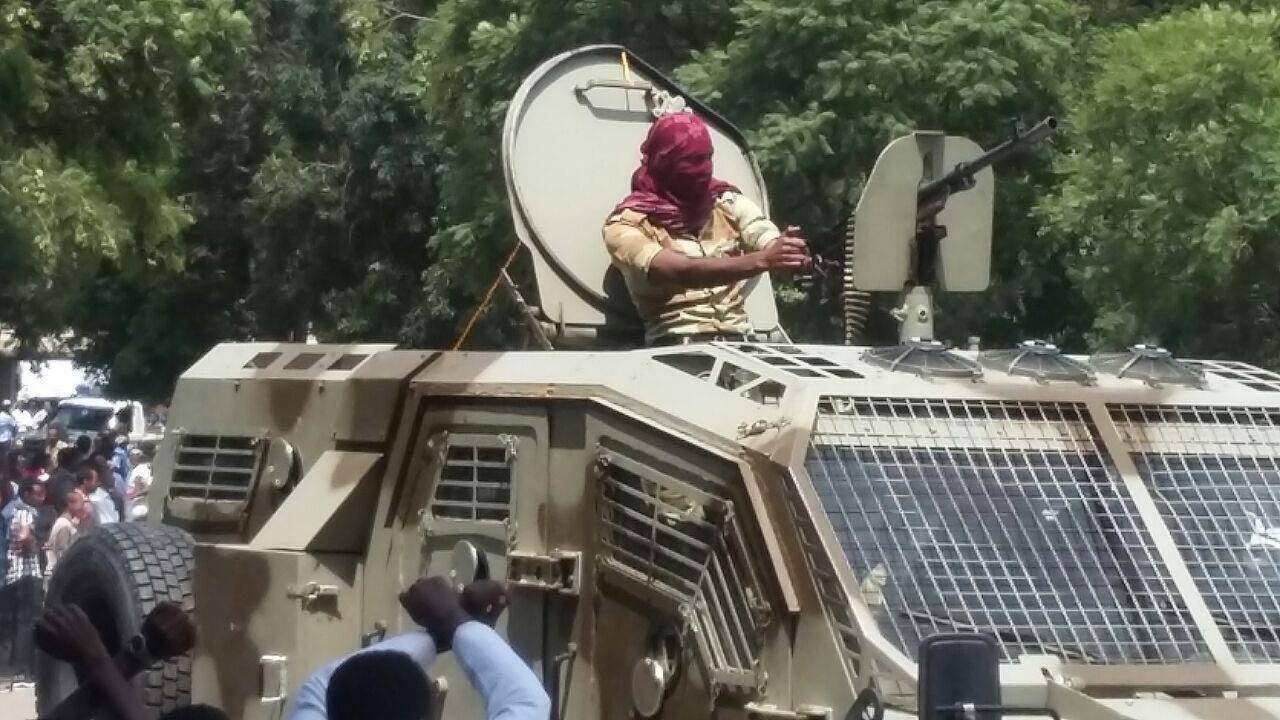

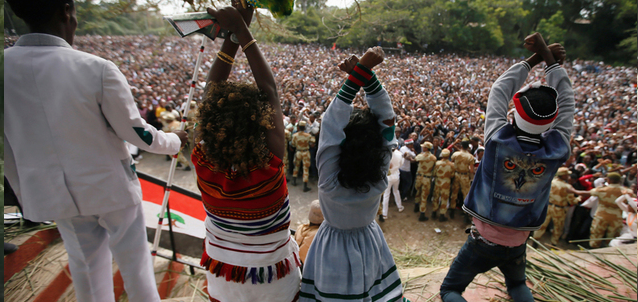
 The Ethiopian Prime Minister Hailamariam Dessalegn has informed the public through the state run TV that a six month state of emergency has been declared as of October 8, 2016 because “the current situation in the country posed a threat against the people of Ethiopia”


 This morning, Ethiopians woke up to the news that the Council of Ministers of the Federal Government has passed an emergency decree that may last for the coming six months. The official text of the Decree is not yet published in the official legal communicator, the Negarit Gazetta. (As it has now become customary, it may never be published at all; the regime does what it wants to do nonetheless.) That it is so declared today is announced to journalists by the Prime Minister in Cabinet on the state television. The Prime Minister spoke in order to announce the decision to journalists as the primus inter pares, the first among equals, in the Cabinet. The reason given by the Prime Minister for issuing the declaration is that there is a breakdown of law and order that threatens the safety of citizens and the integrity of the constitutional order.


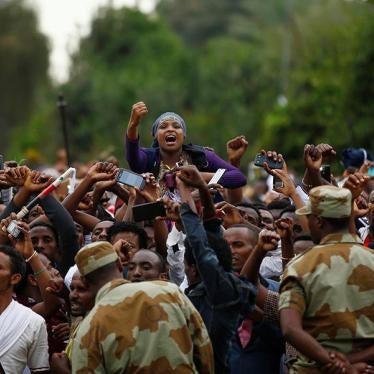


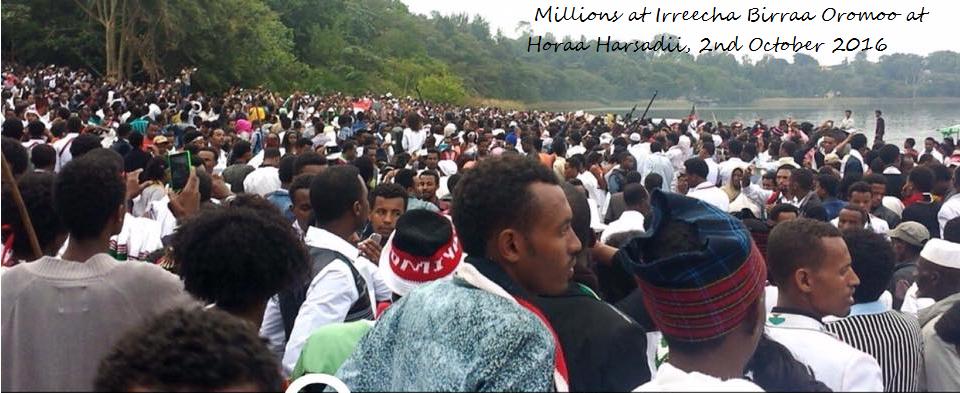


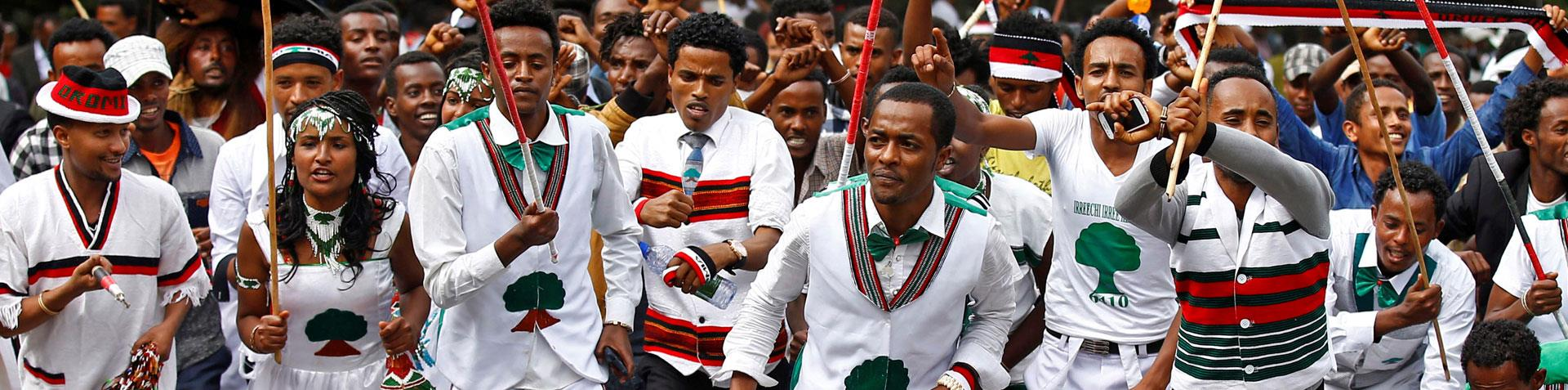

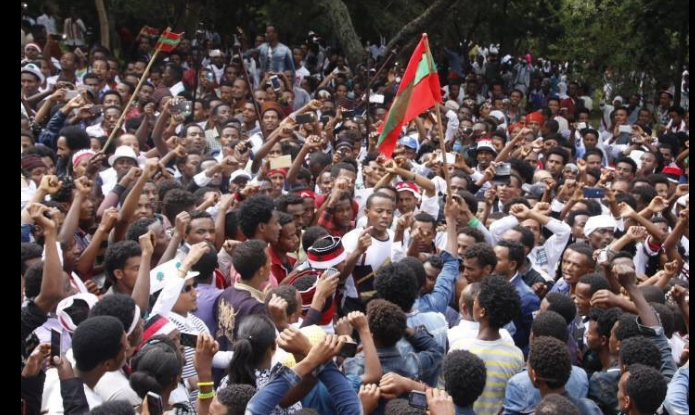
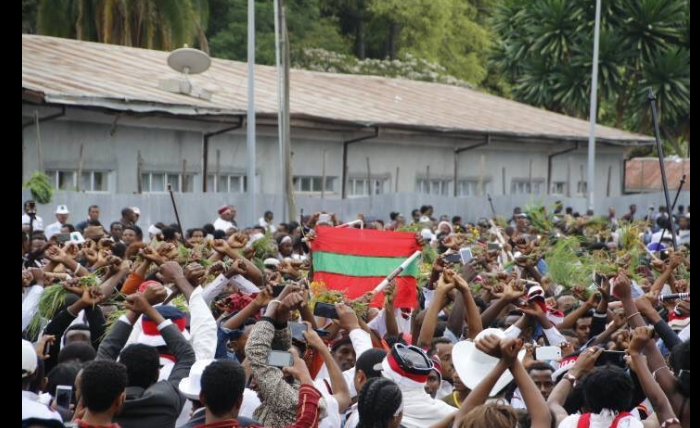

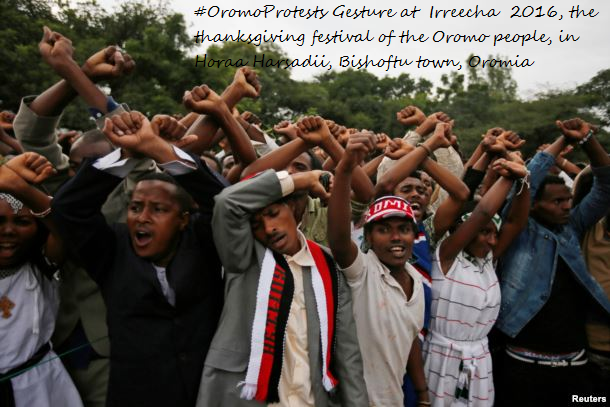







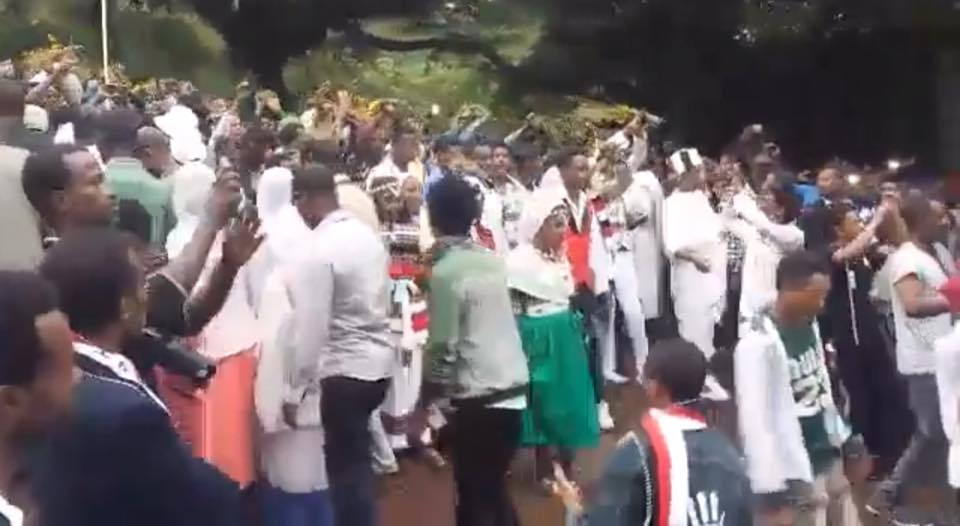

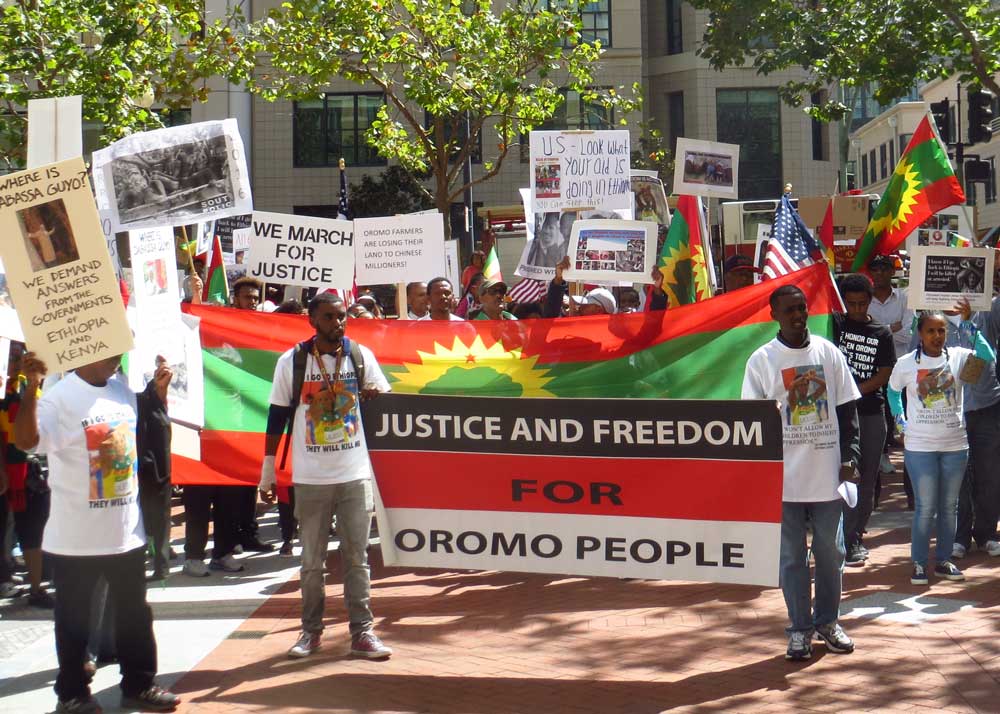

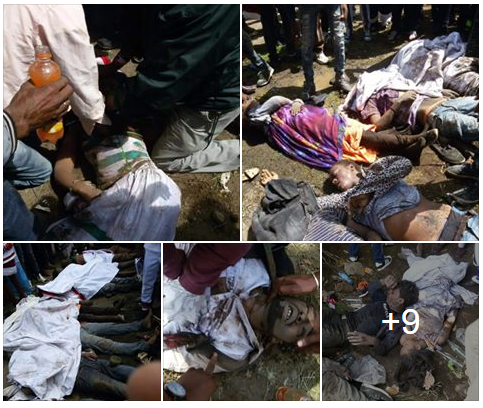


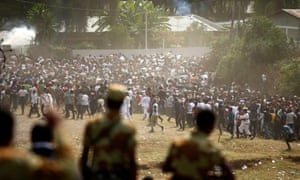



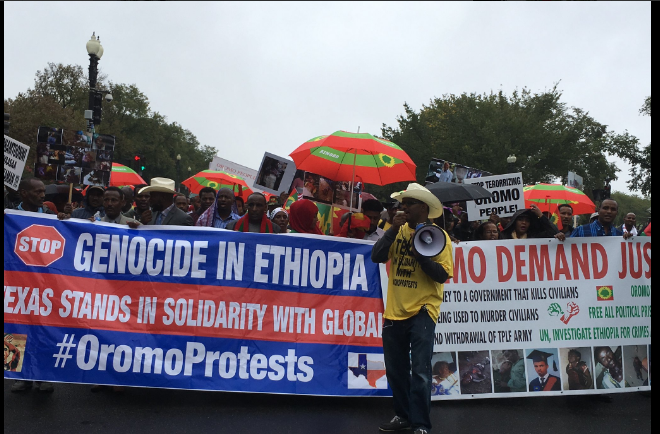
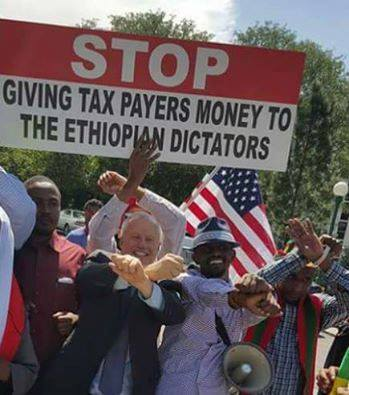





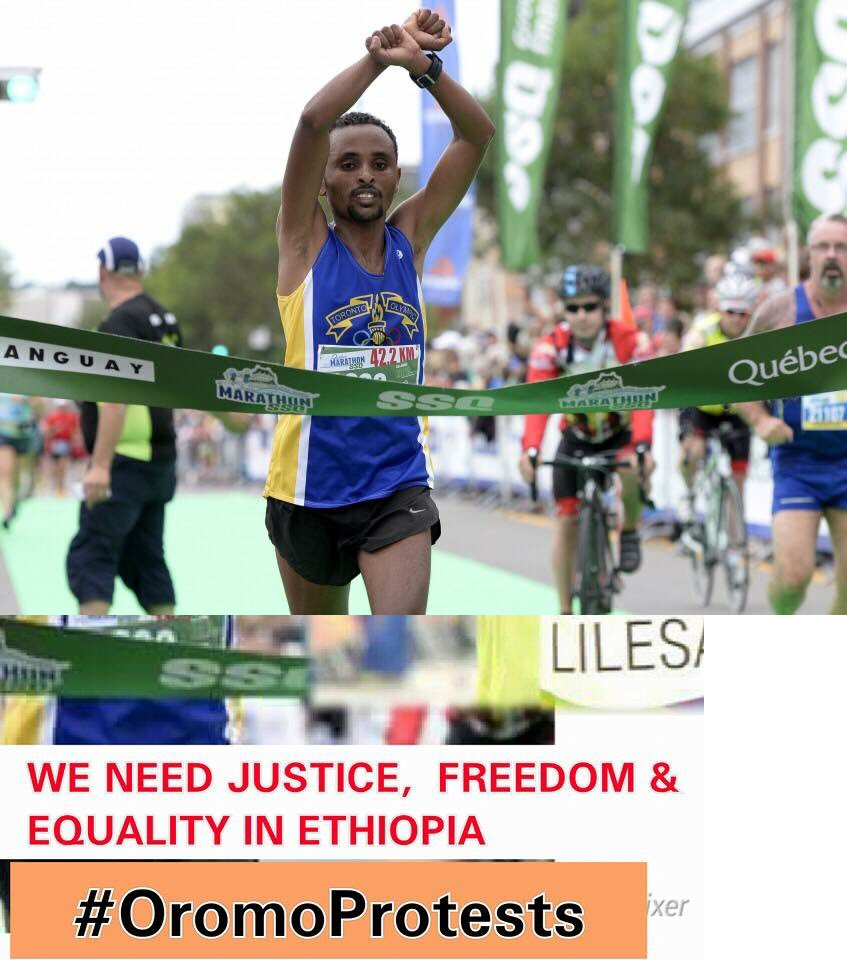


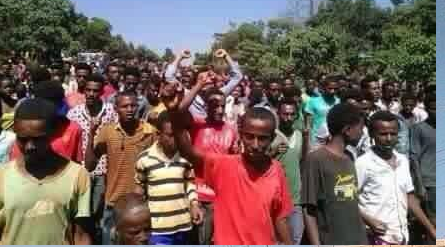


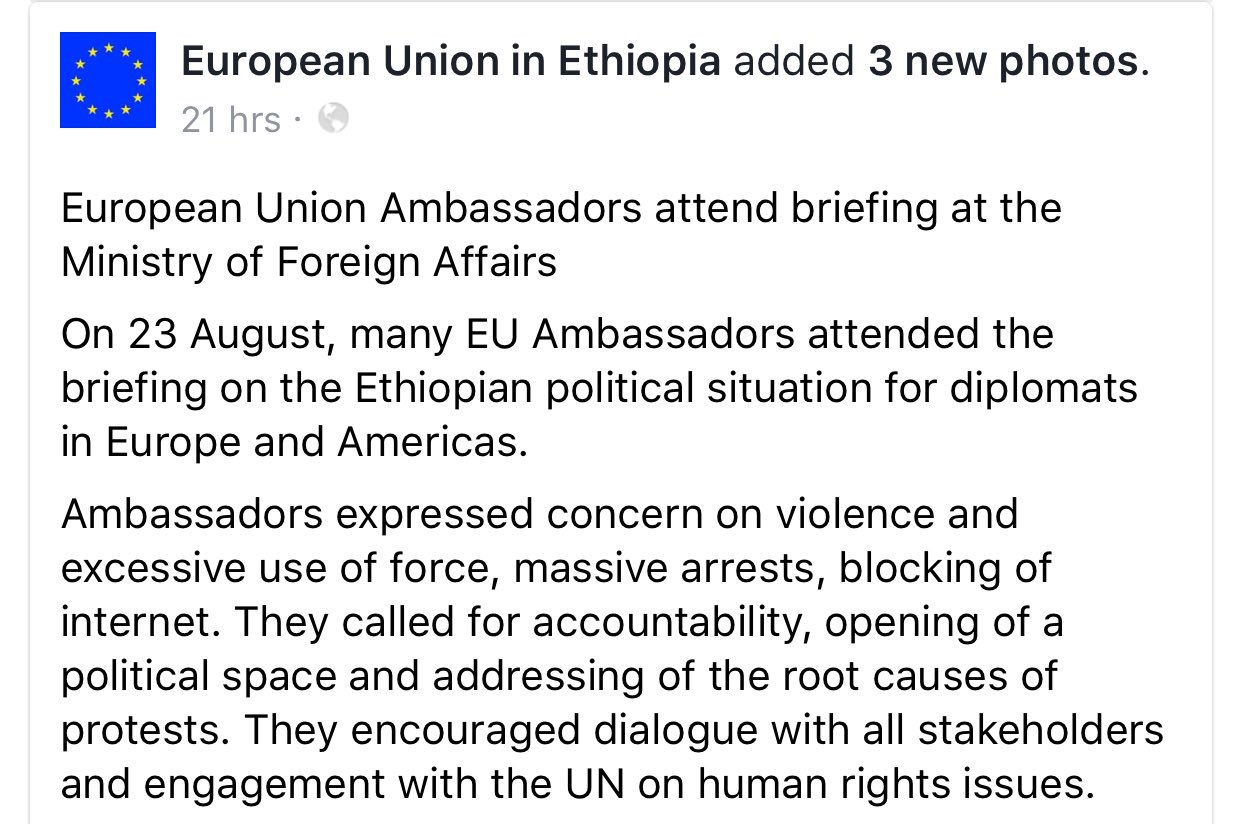
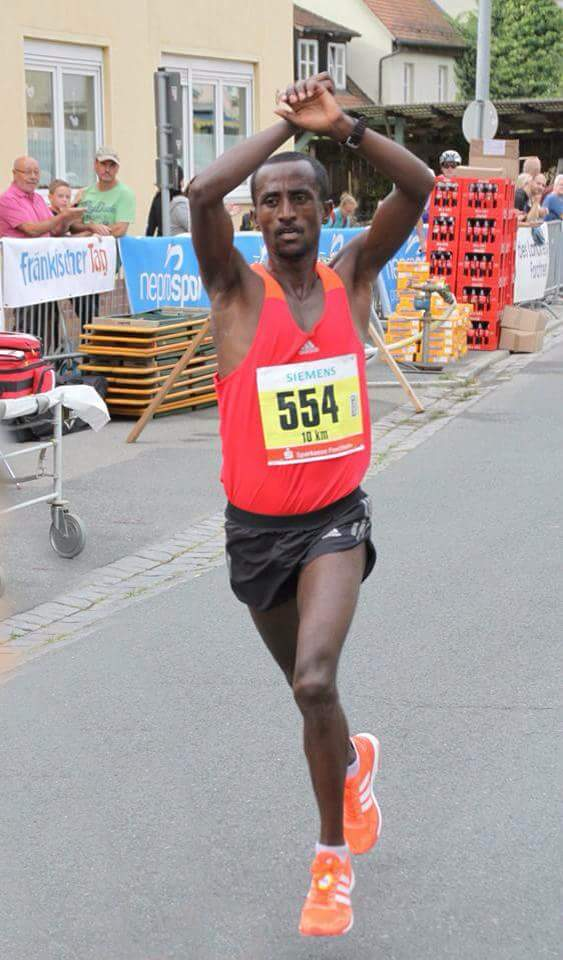

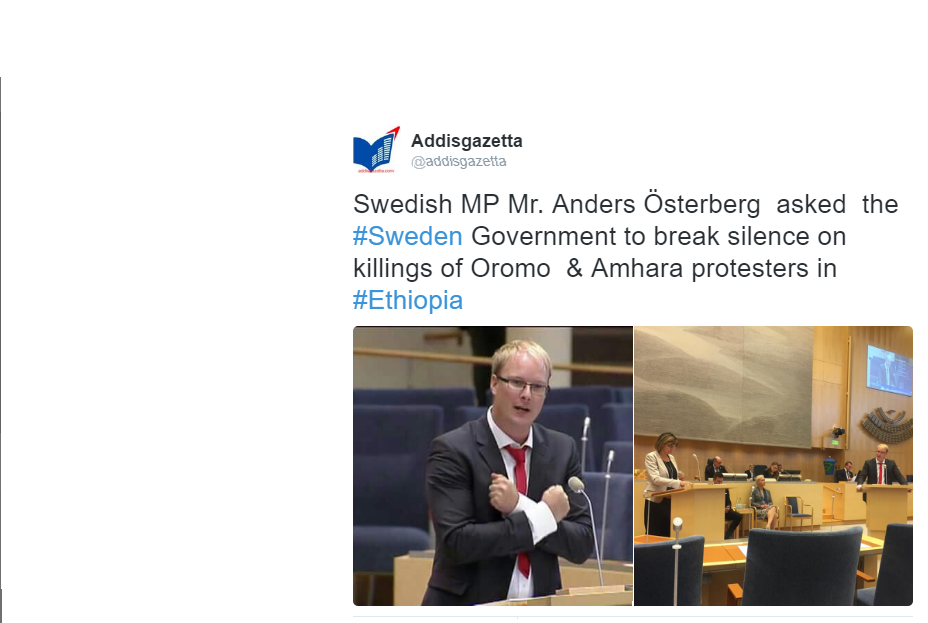
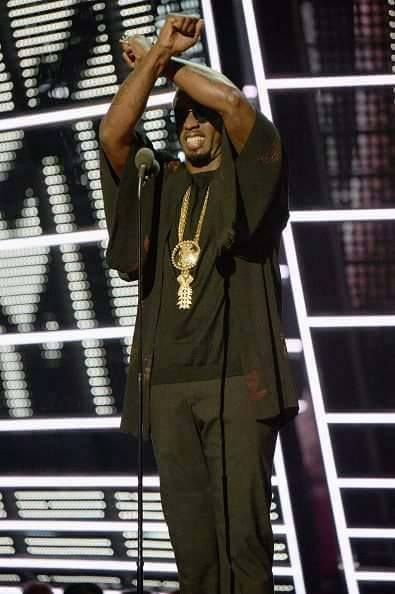
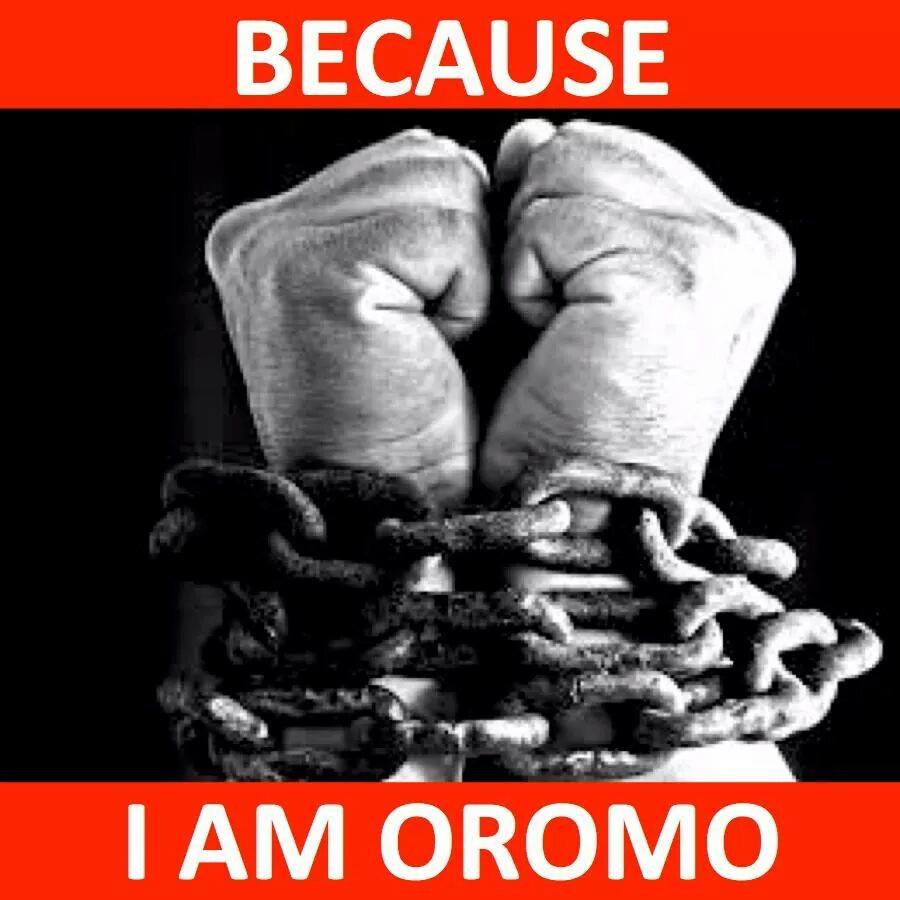


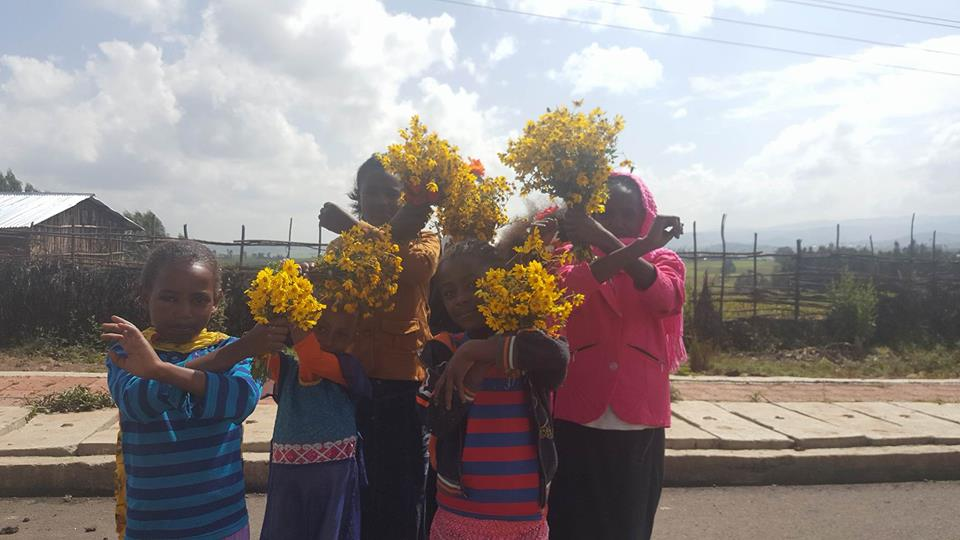
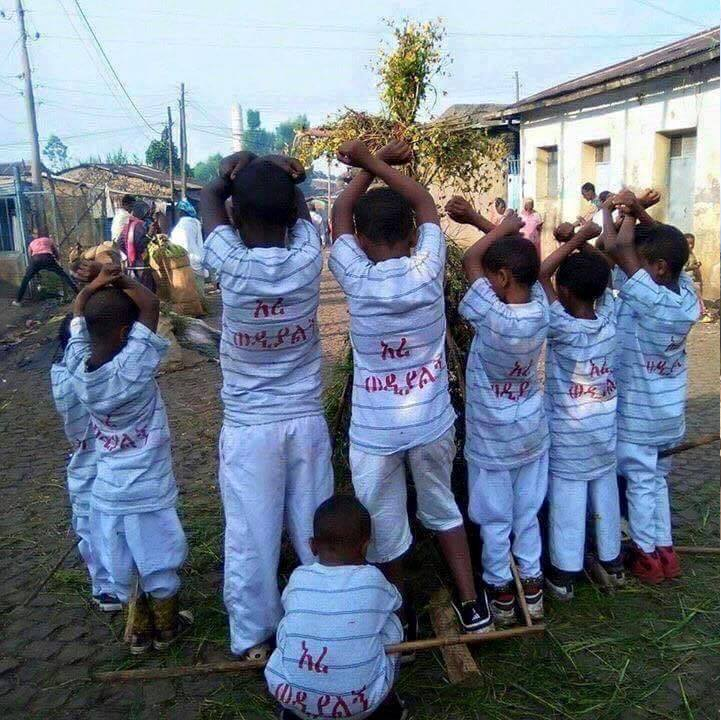
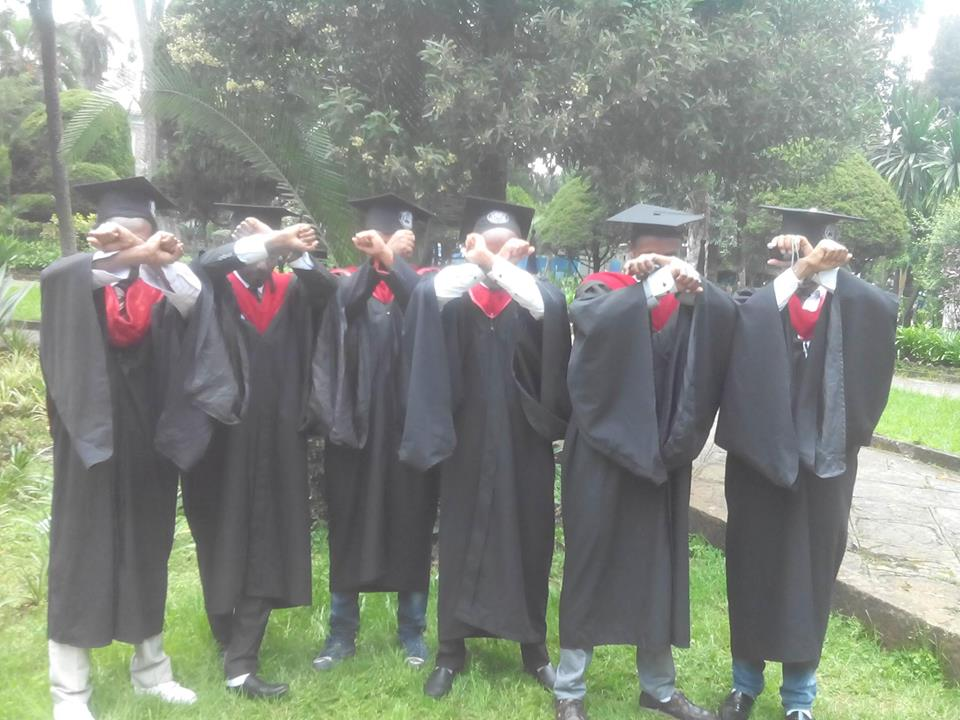
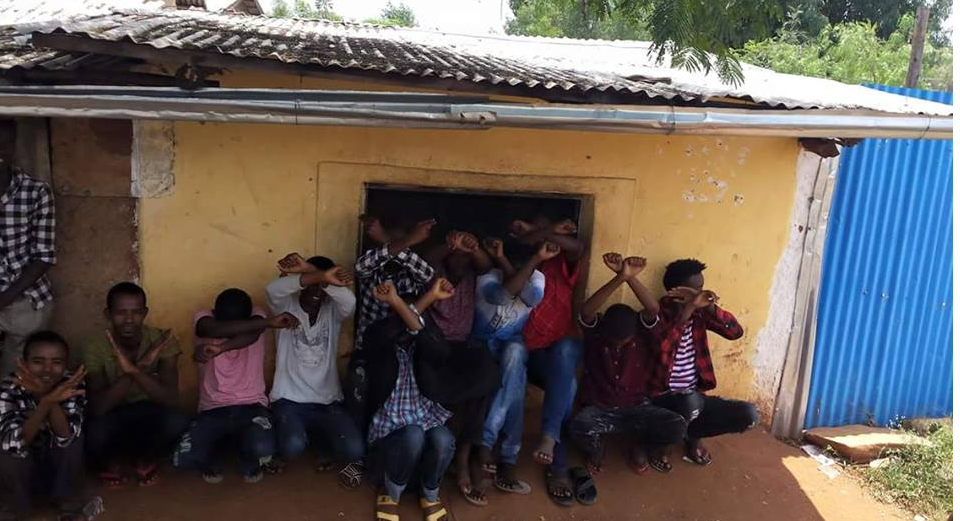


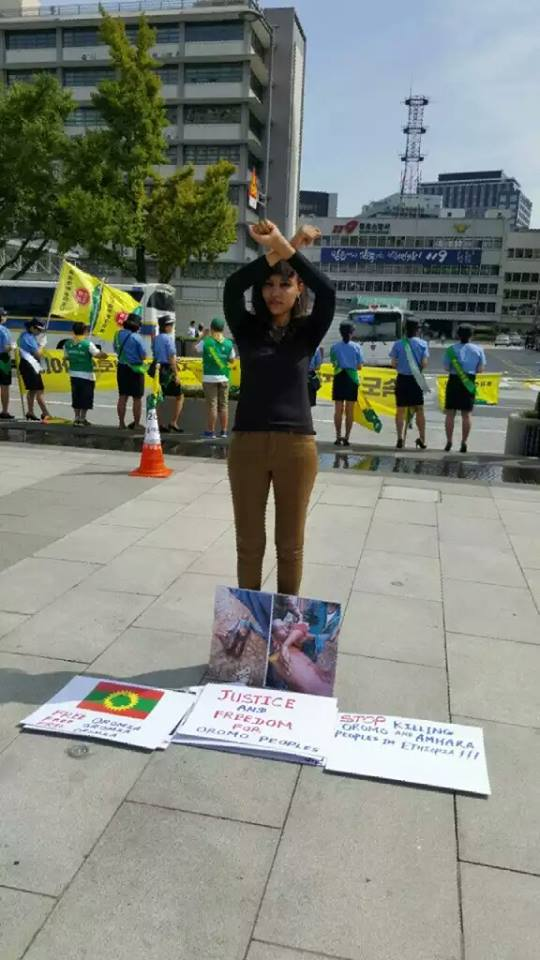
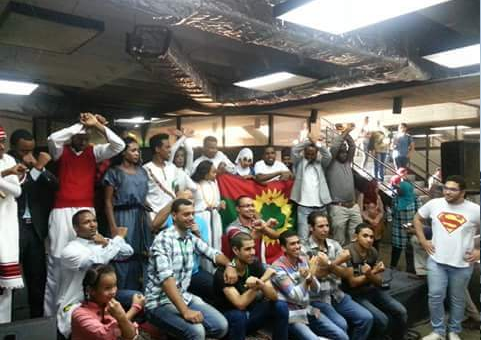
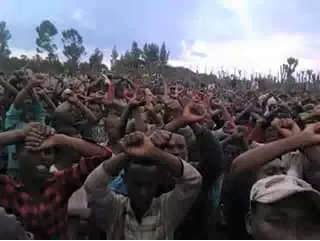
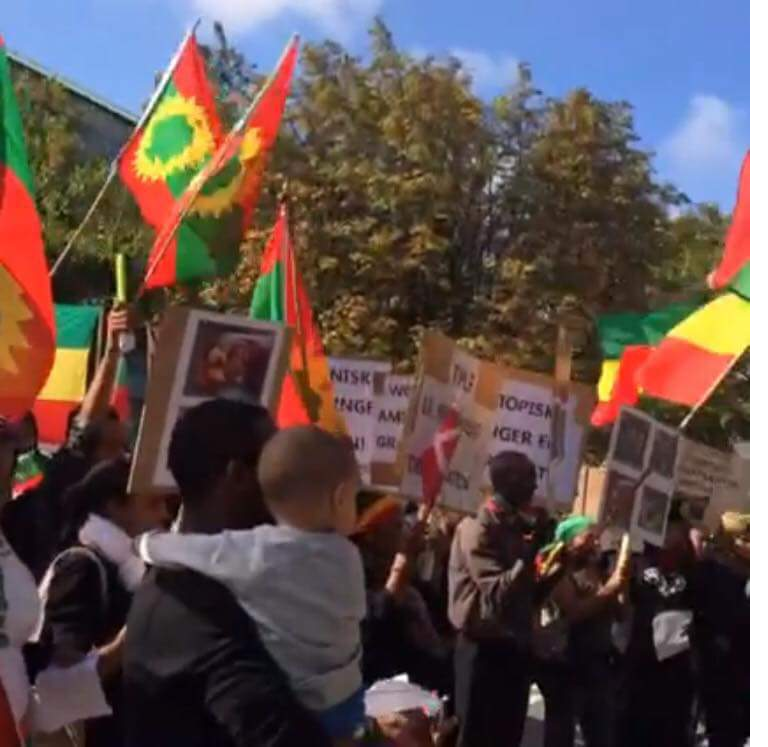
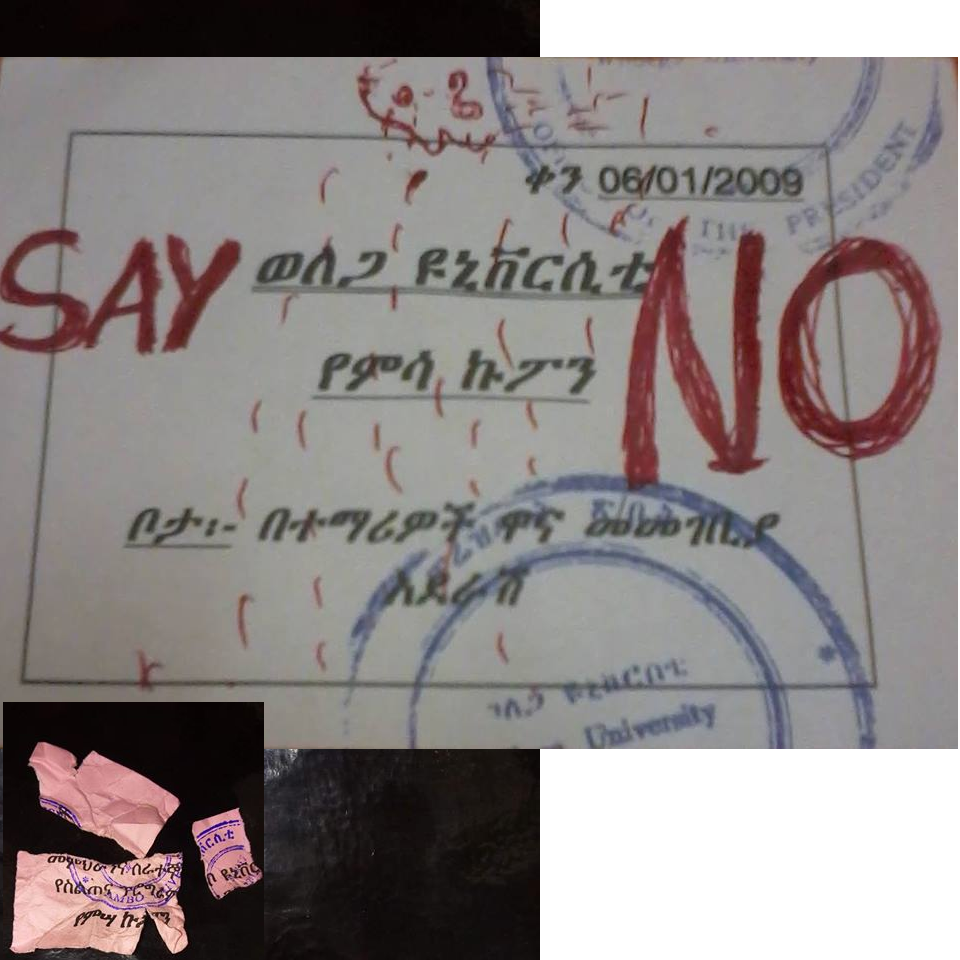
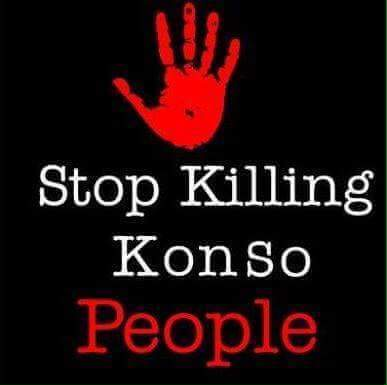


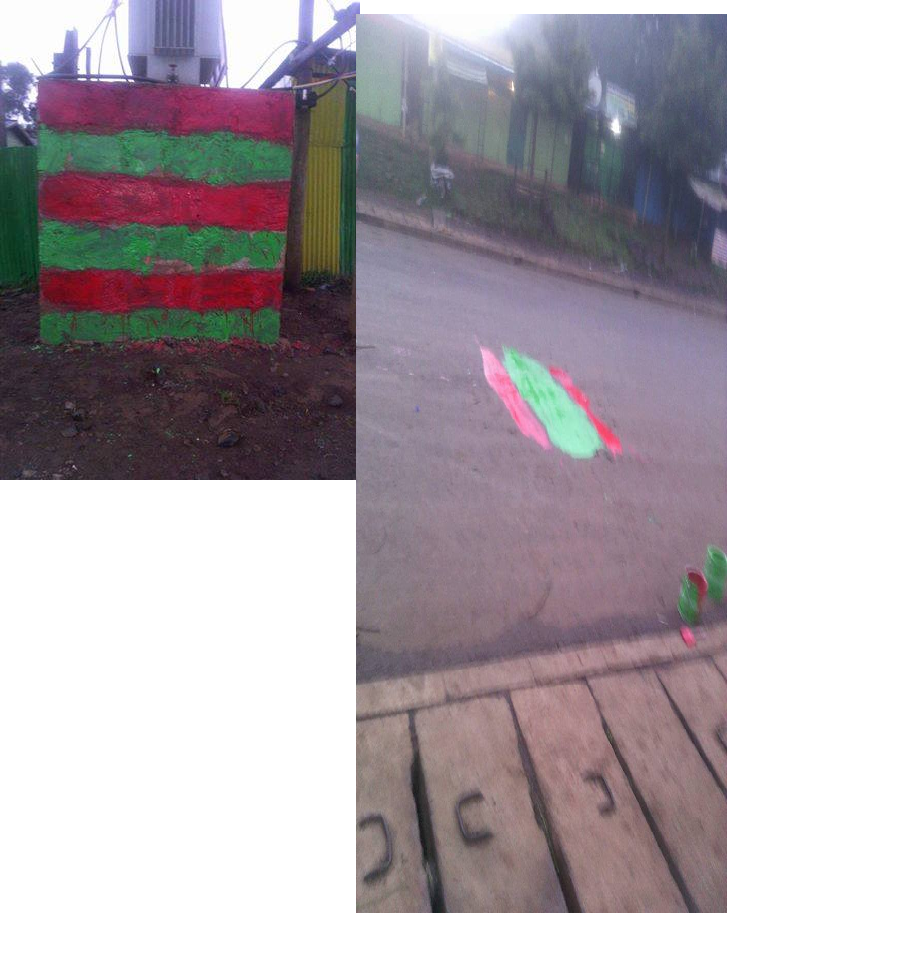
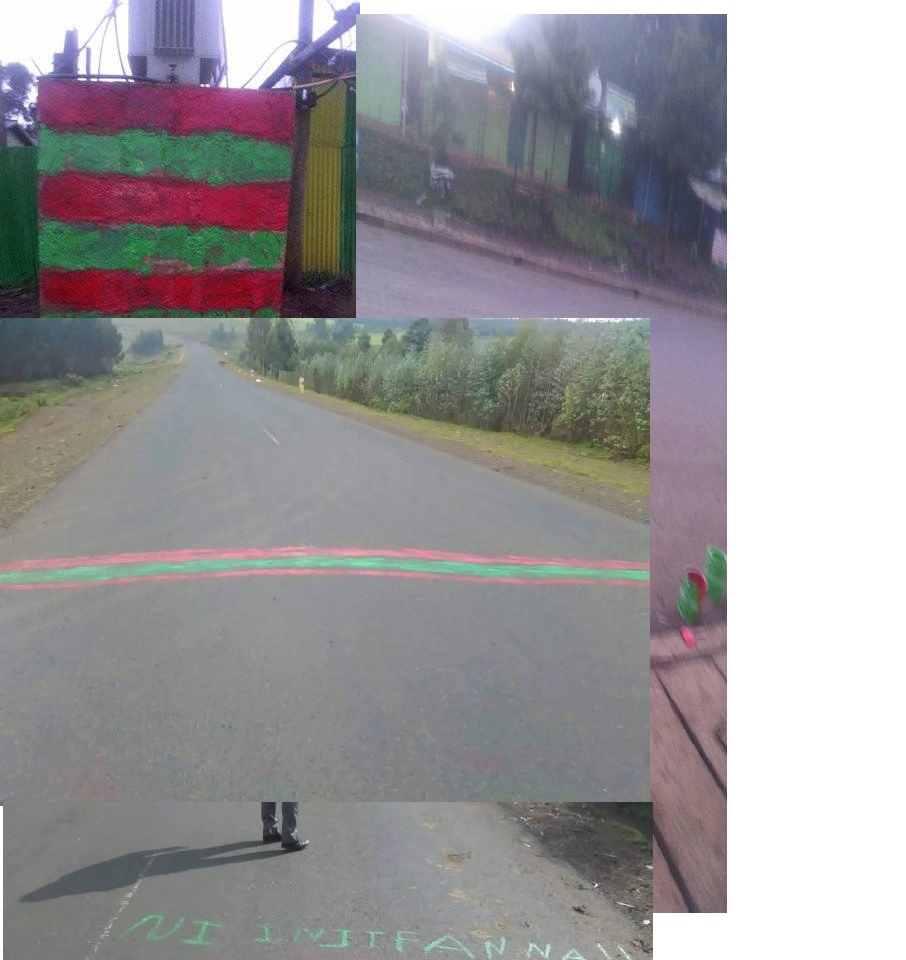
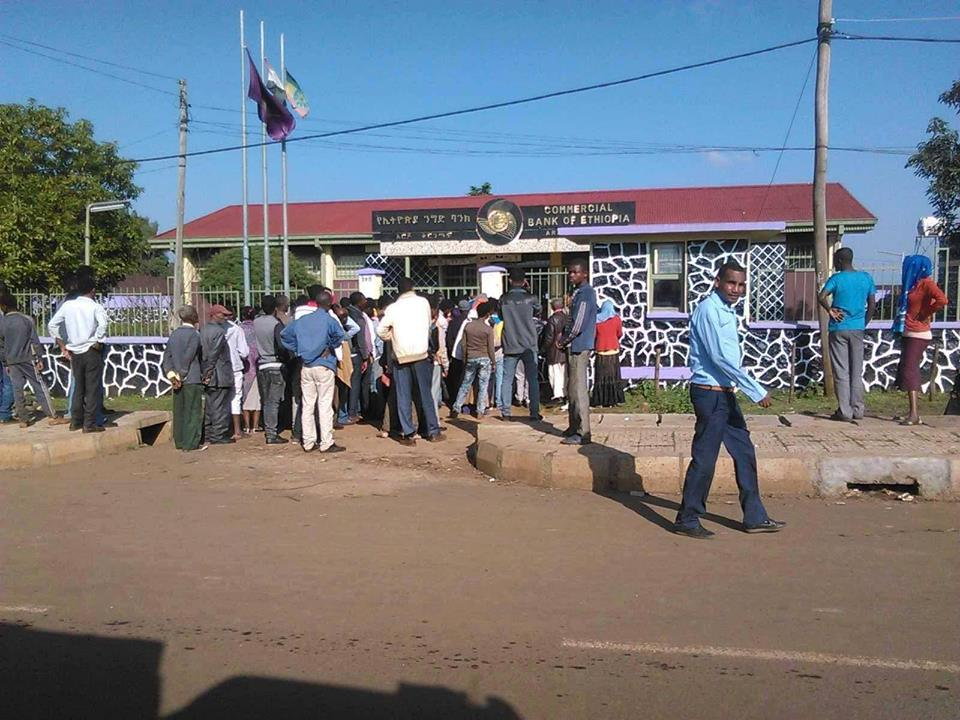
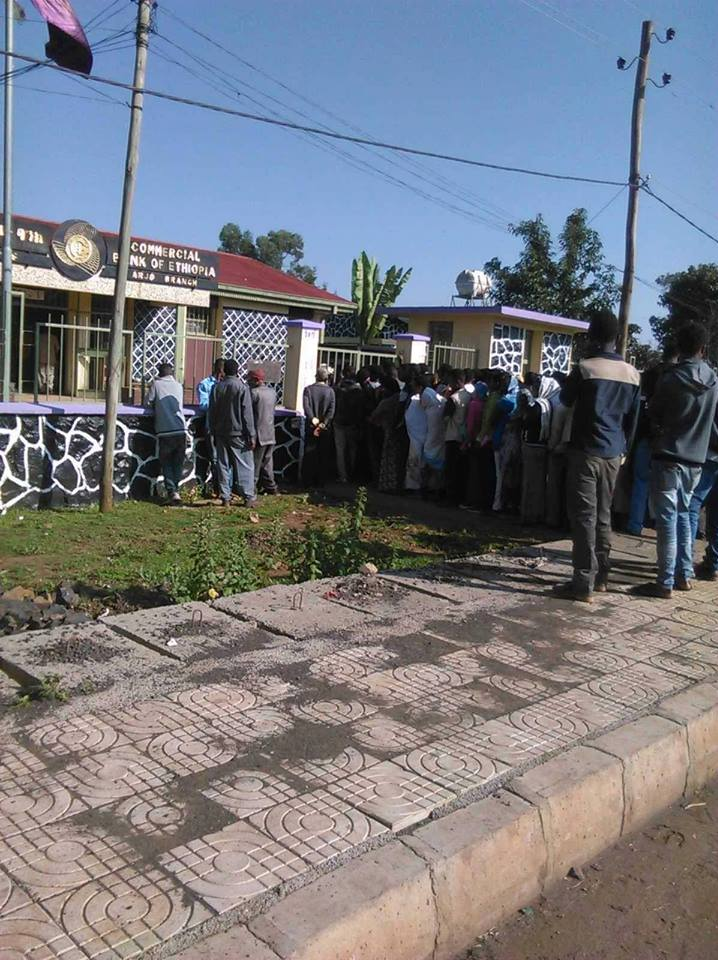



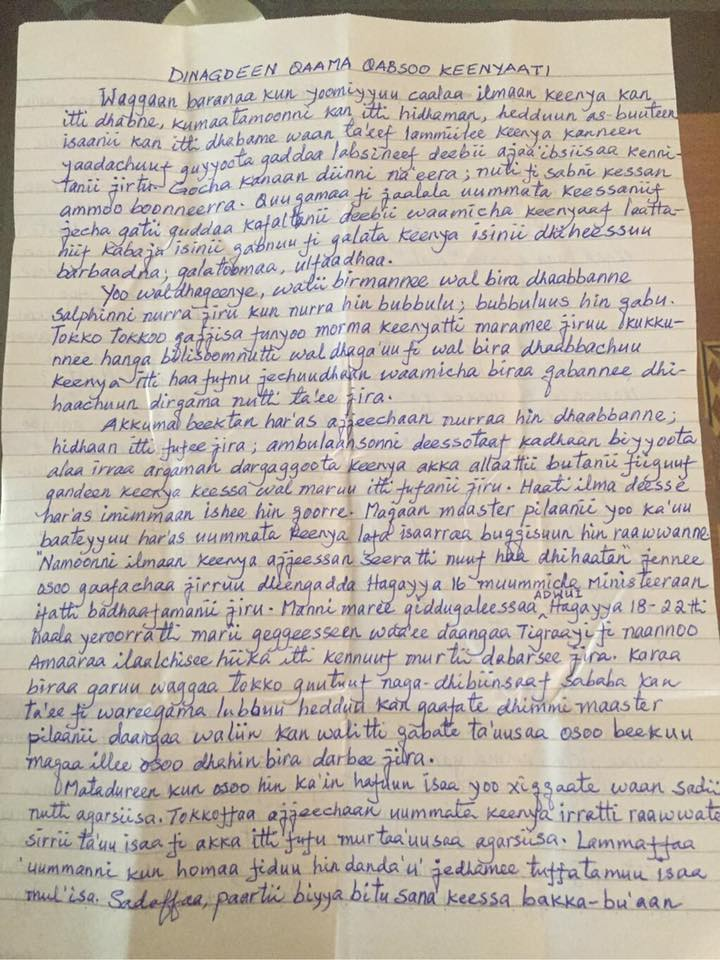
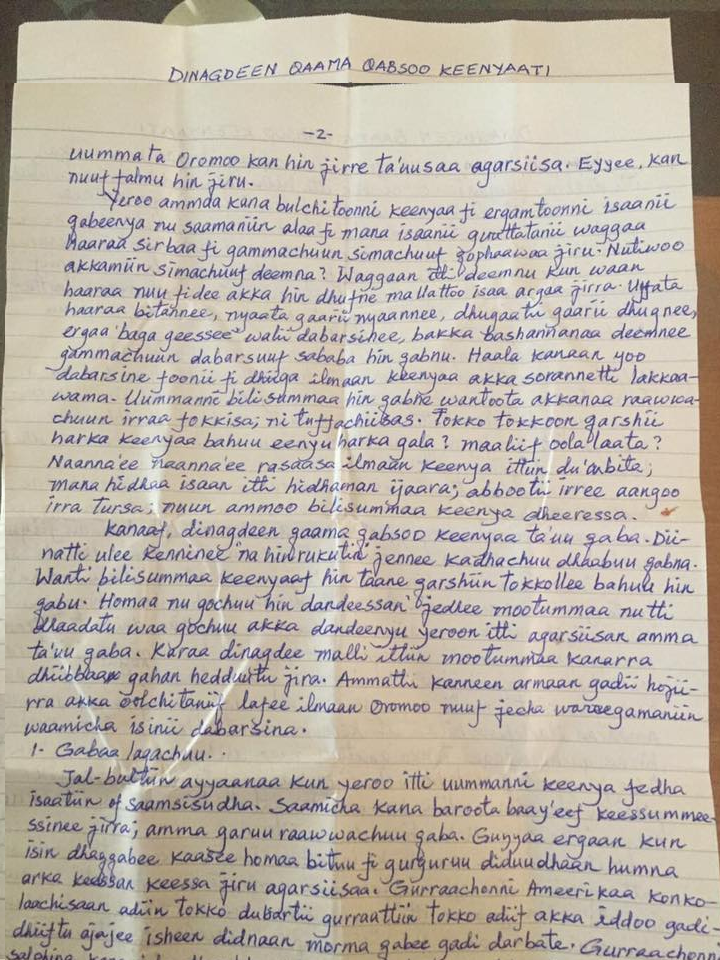
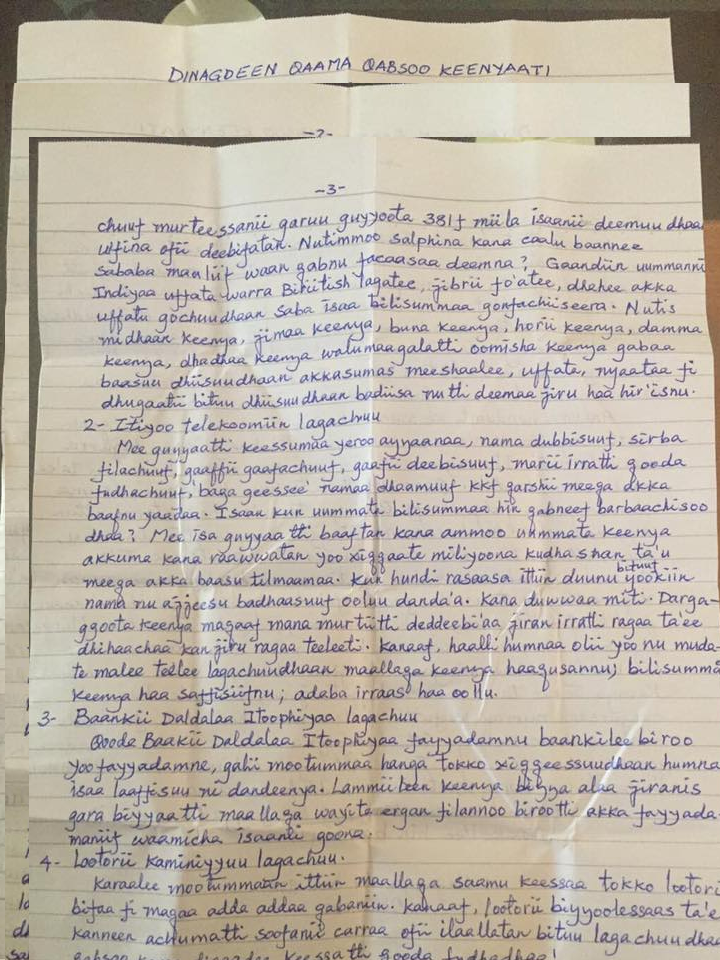
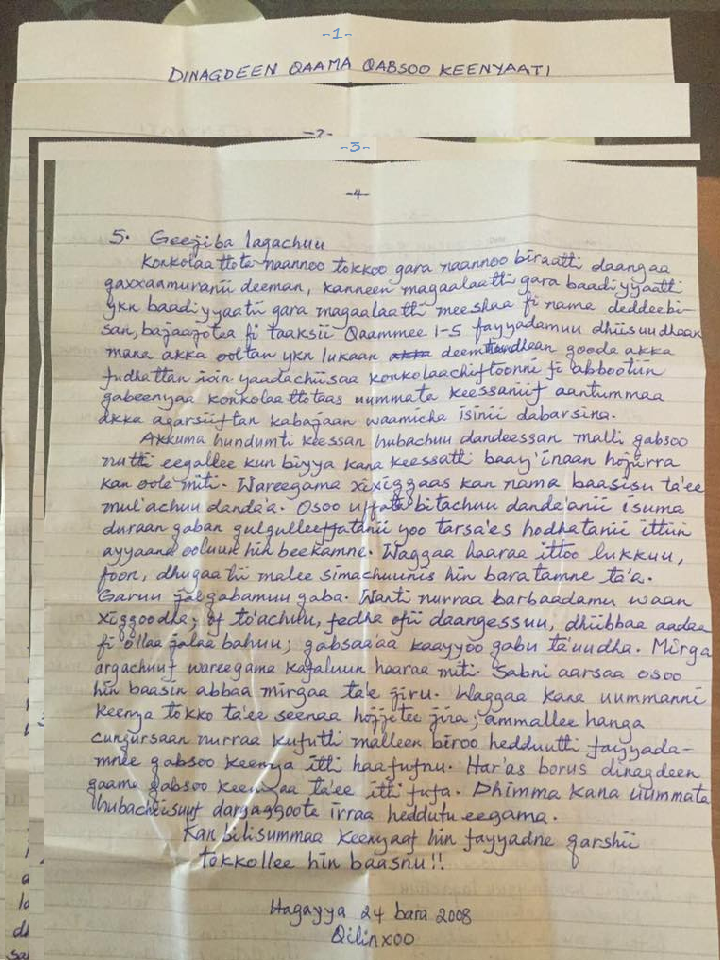


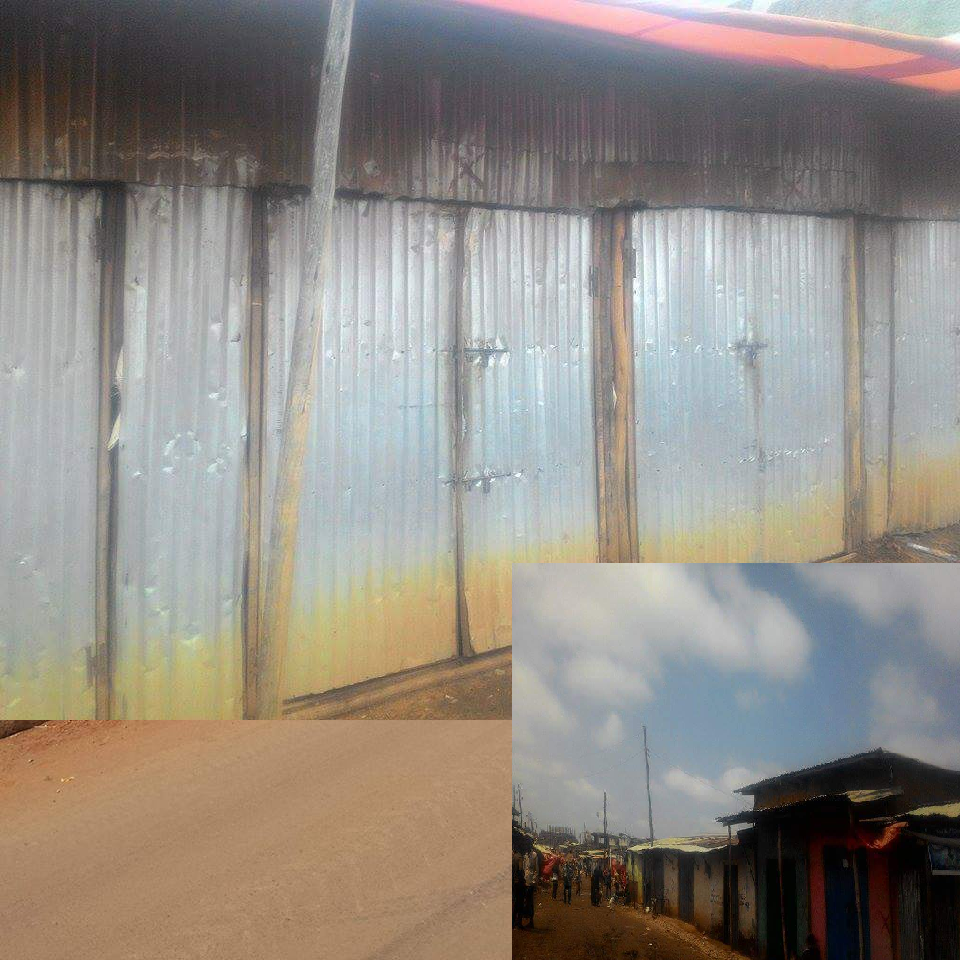


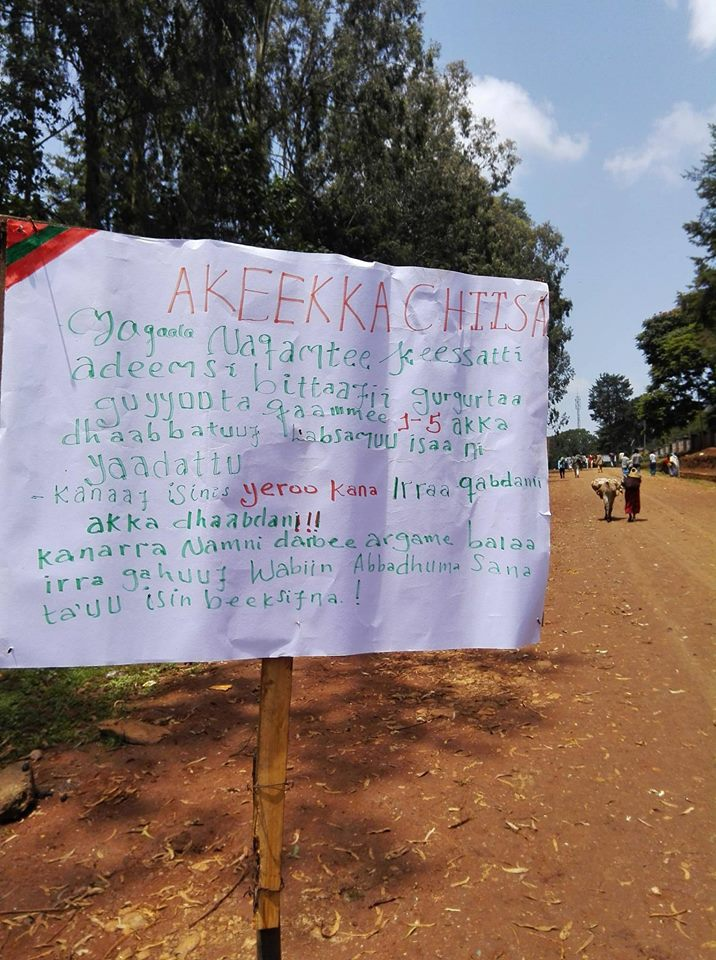


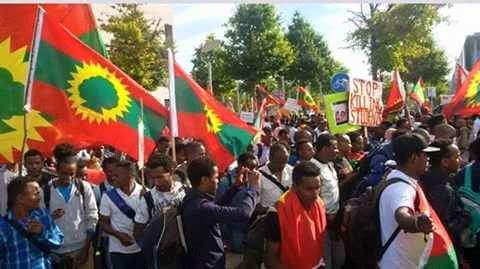
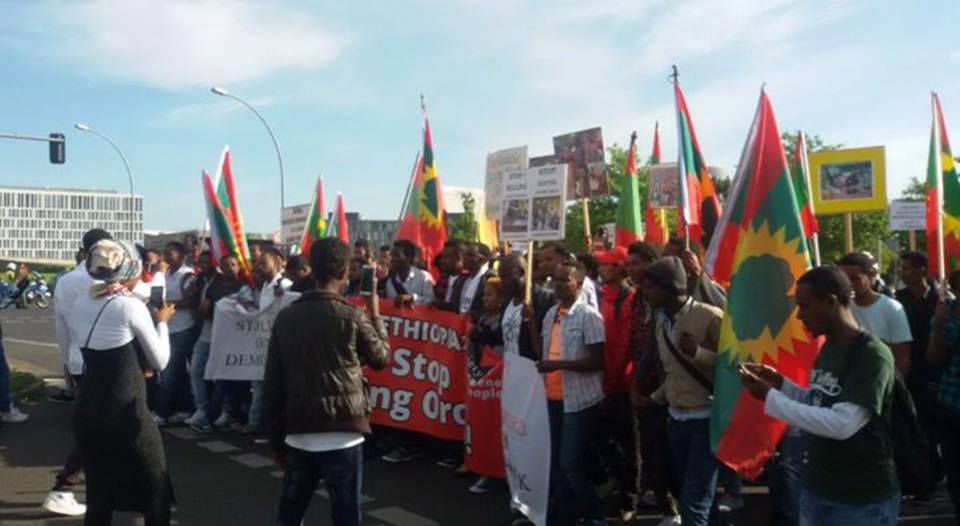
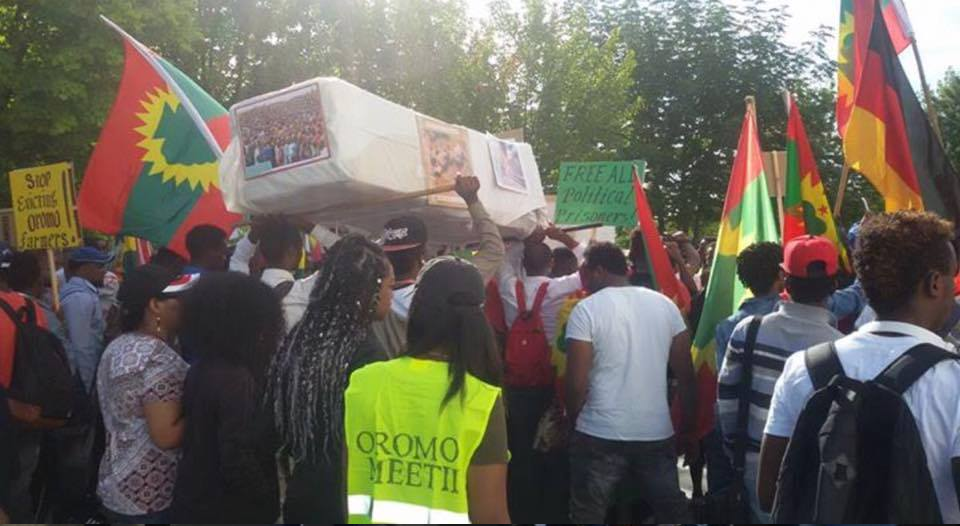
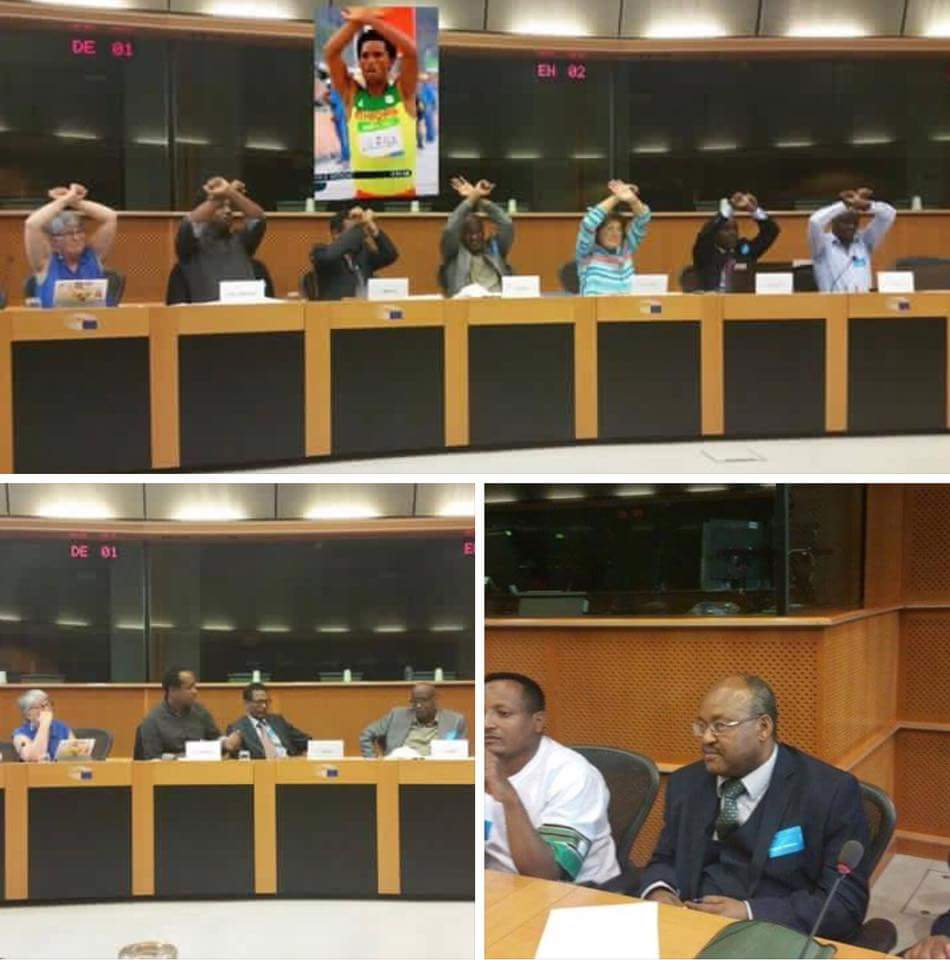
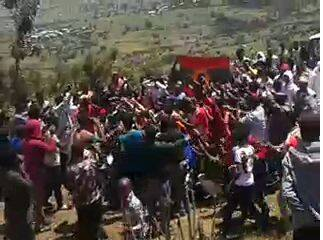


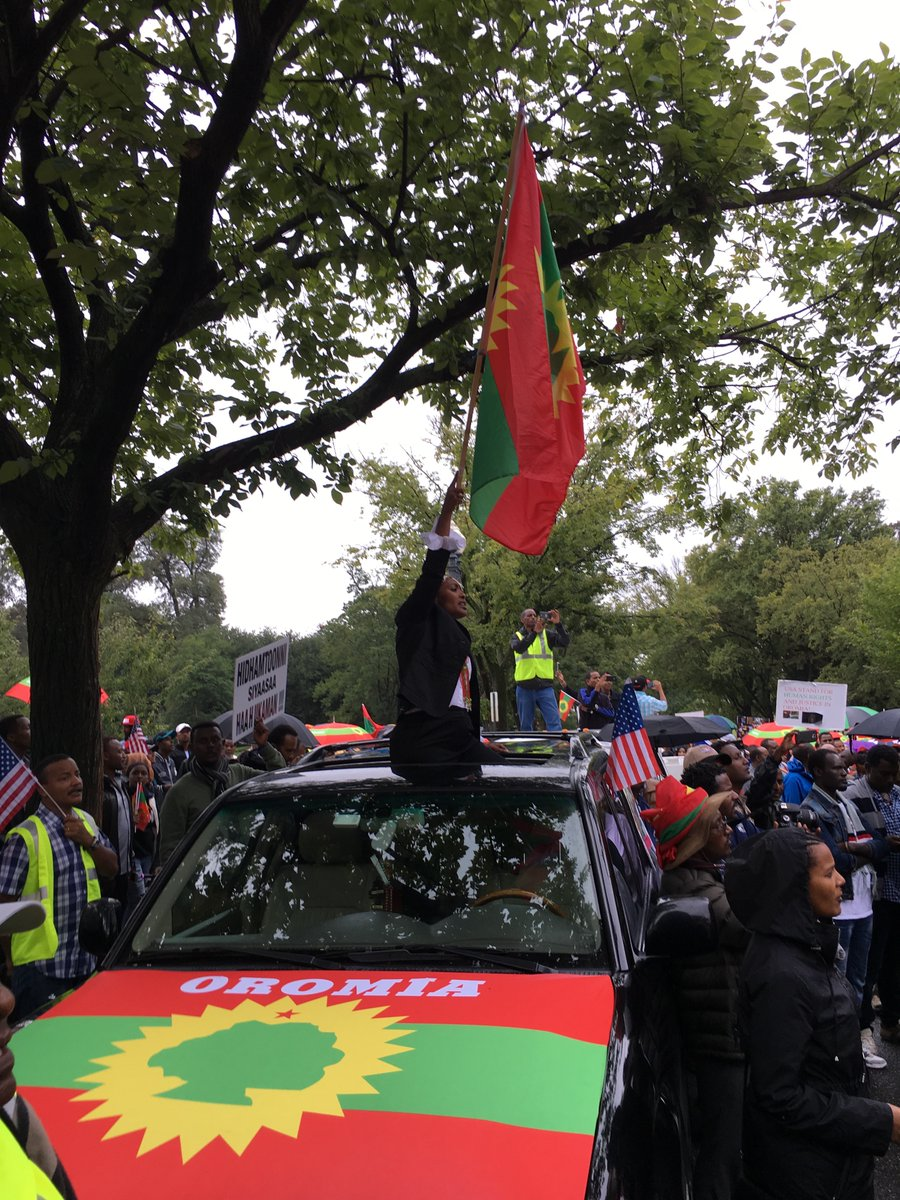
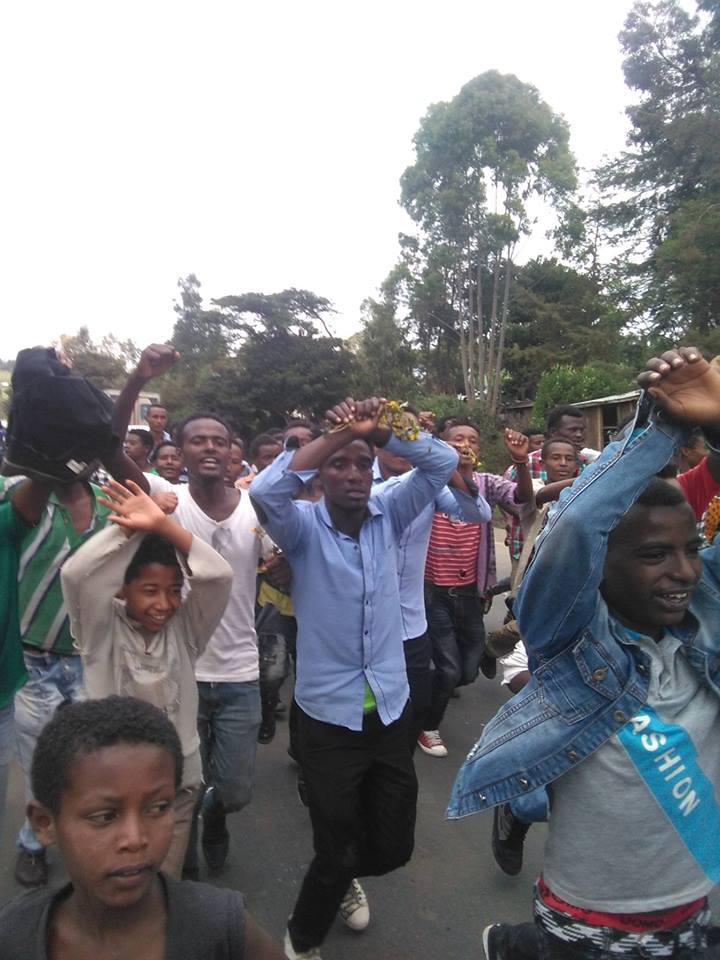
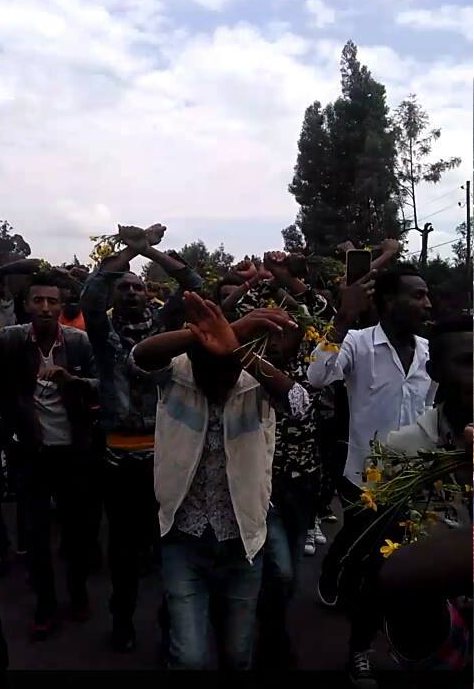



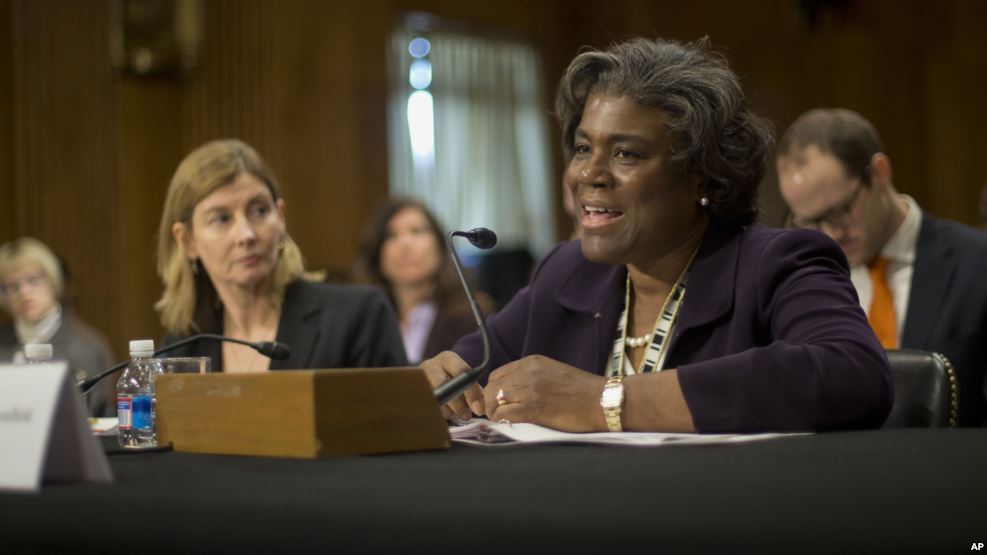


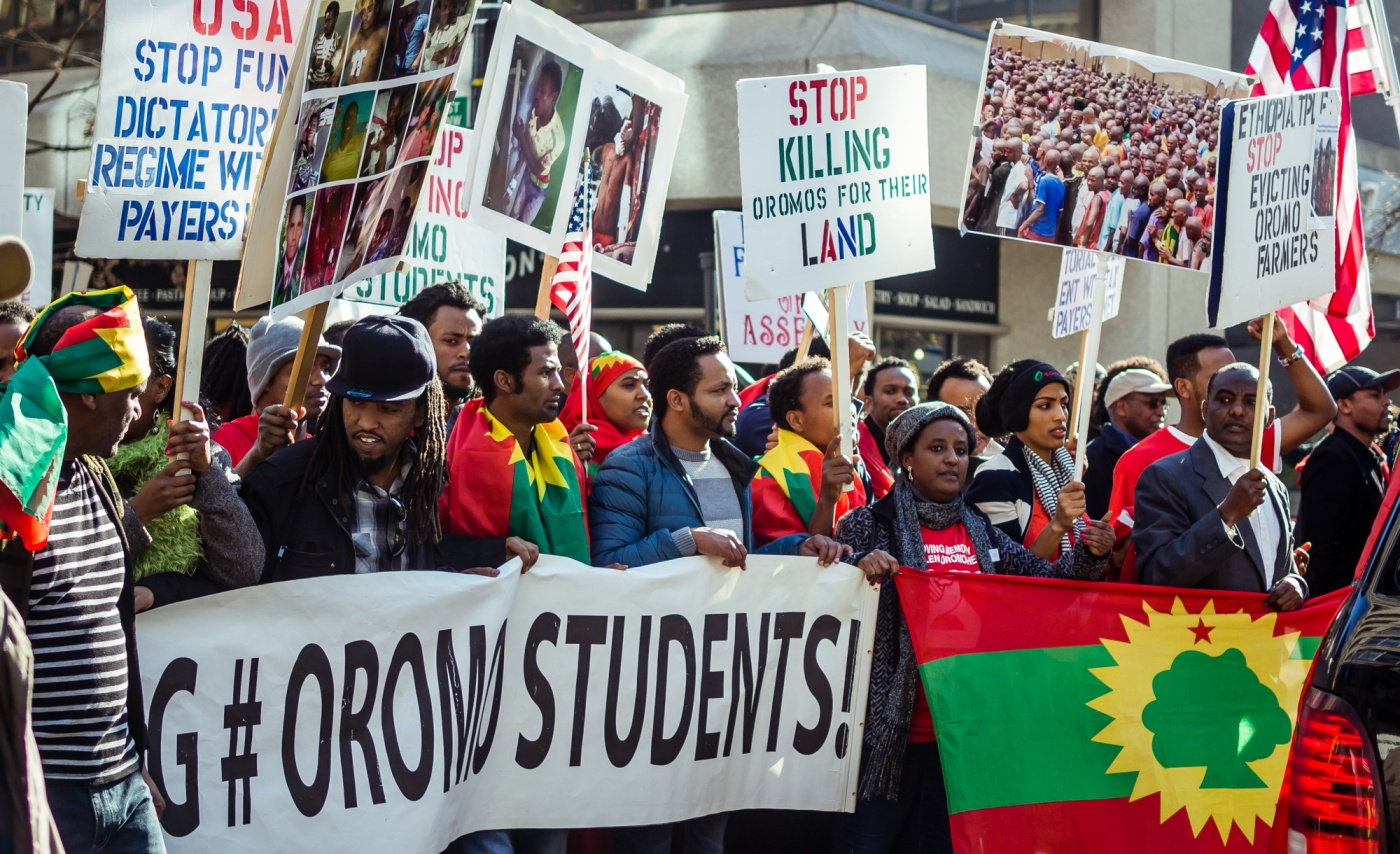

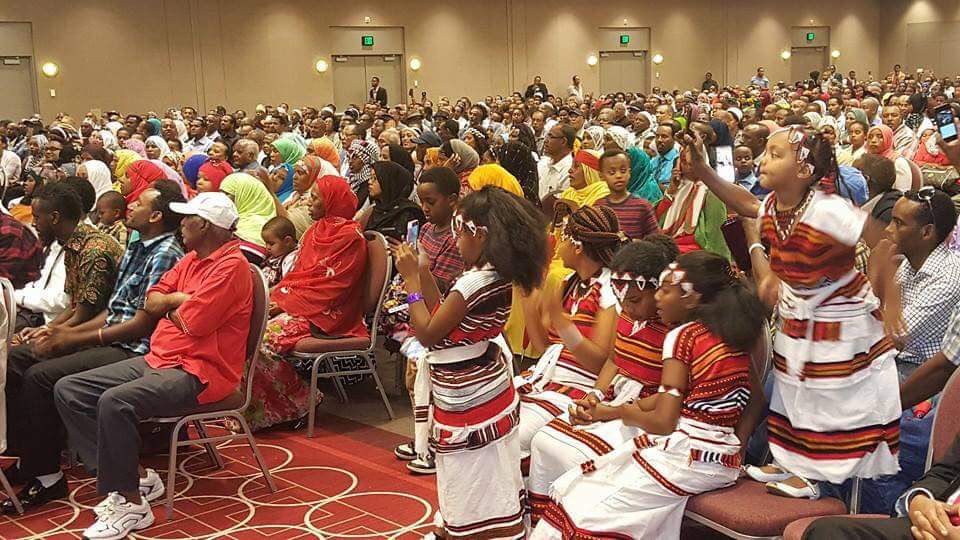
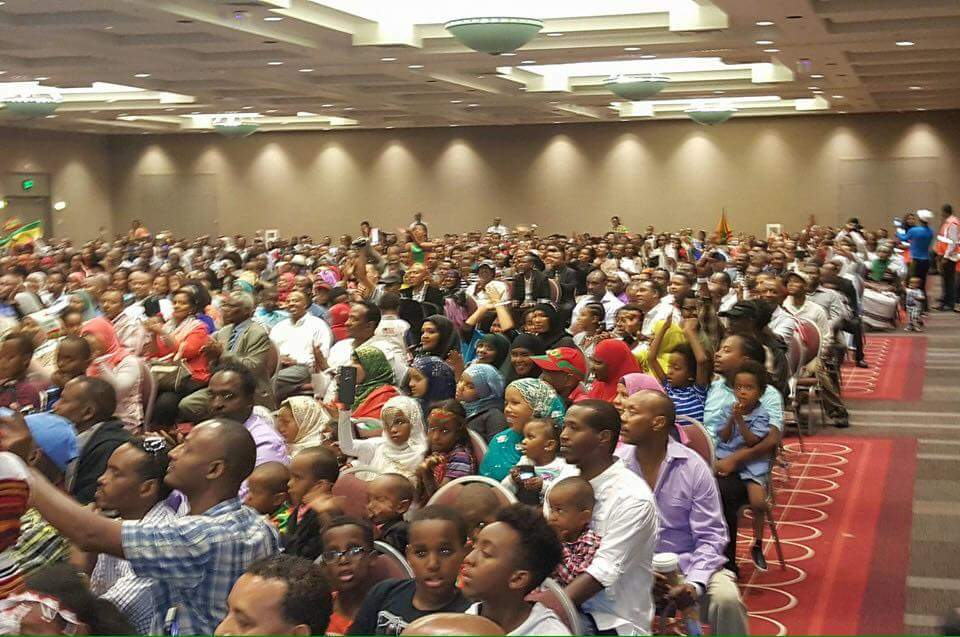
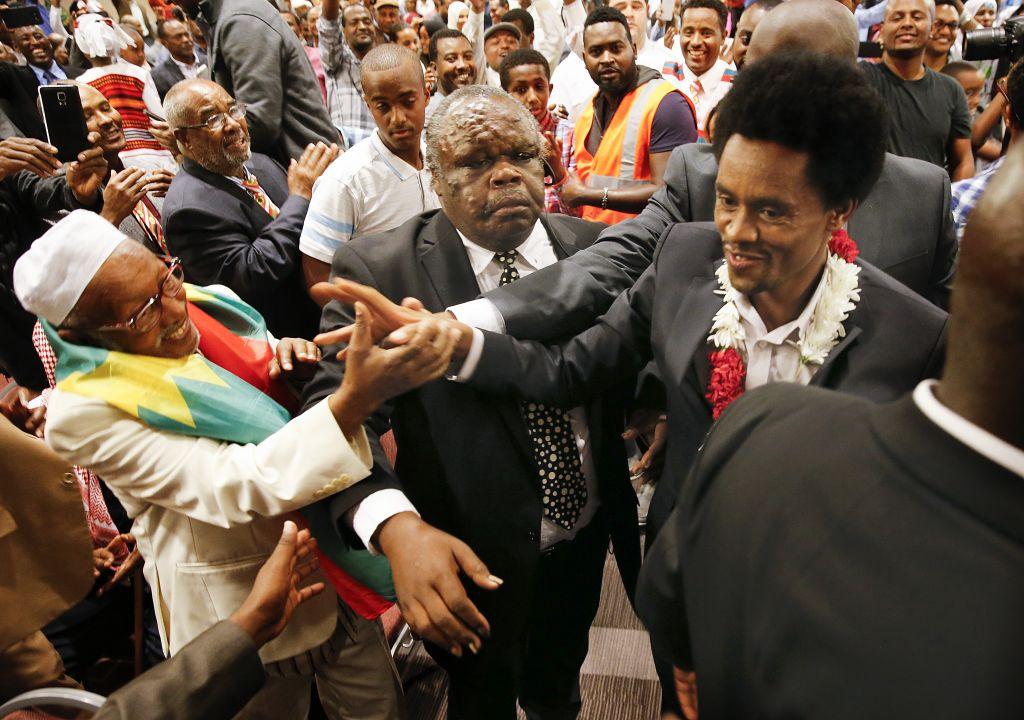

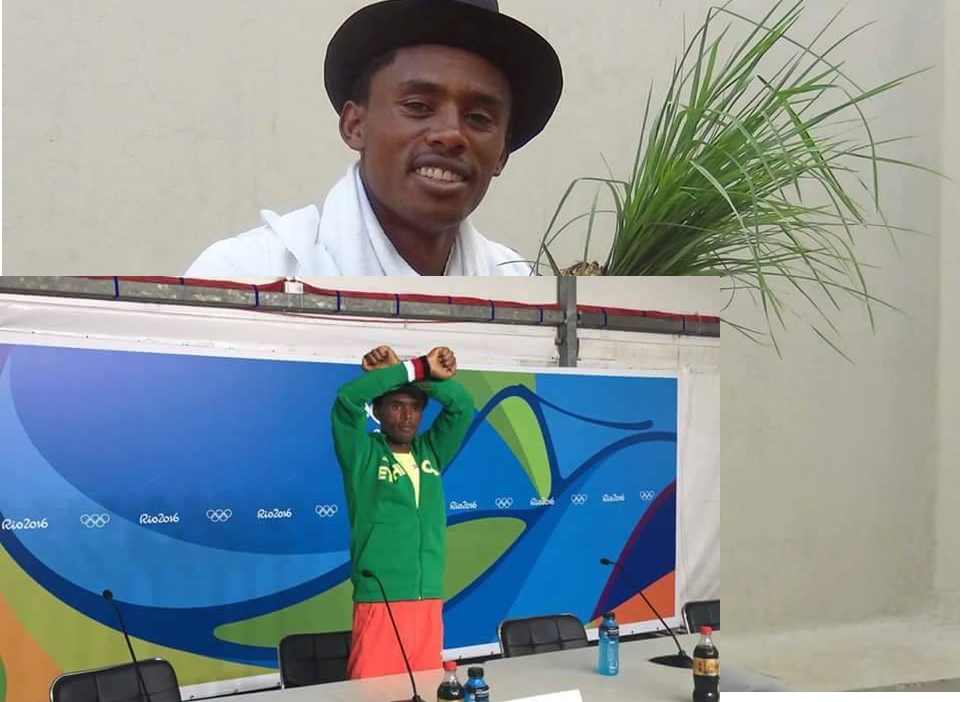


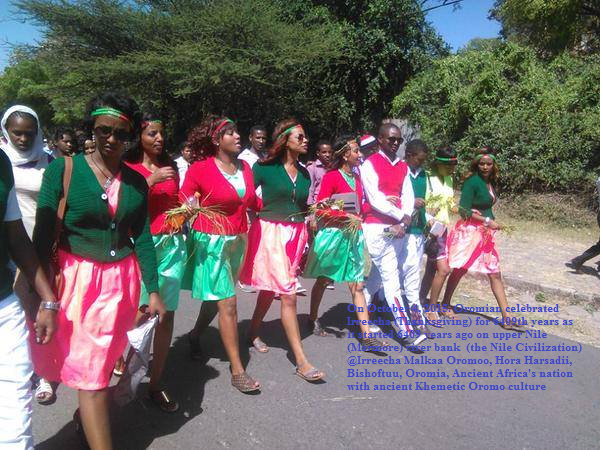



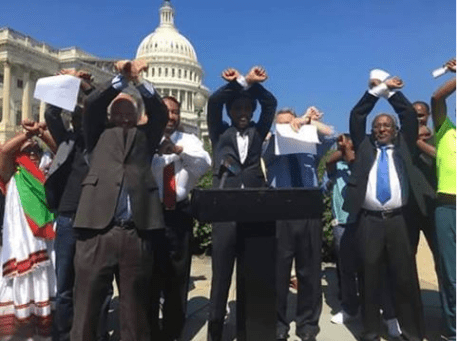


You must be logged in to post a comment.