Economic and development analysis: Perspectives on economics, society, development, freedom & social justice. Leading issues in Oromo, Oromia, Africa & world affairs. Oromo News. African News. world News. Views. Formerly Oromia Quarterly
Declaring war on its own citizens. Commandos shooting live bullets into unarmed crowds of mostly children and teens (See it to believe it – a short video by AJ+ (1 min) https://goo.gl/gbg9tf). That’s the current situation in Oromia, the largest and economically most important region in Ethiopia. School children, farmers and residents across Oromia, have been peacefully protesting for weeks against the government’s plan to expand the capital city by evicting millions of farmers and local residents.
However, instead of listening to their legitimate concerns, the government’s response to this mark of democracy was to gun down the peaceful protesters. More than 120 have been killed so far with hundreds injured and many more are currently being beaten and imprisoned. Even though major media outlets have not been able to cover the emerging crisis due to the government’s long standing policy of shutting down access to journalists and muzzling free press, citizen journalists are distributing information via videos and pictures on social media, some of which are included below. Please note that some are highly graphic and disturbing.
Unless the actions of the government are exposed, these horrific and violent attacks against civilians will continue and many more lives will be lost. Because of the fact that the current Ethiopian regime is minority led, much like that of Syria, we are fearful that similar bloodshed could occur and lead to the destabilization of the region.
These latest killings of unarmed protesters follows a similar massacre of students that happened in May of 2014. More than 70 students were estimated to have been killed by government forces and many more wounded or arrested without charges. Pictures below tell a similar story from 2014.
In mid-December of 2015, Oromos in the Diaspora demonstrated in their host countries to request their respective governments to stop supporting the Ethiopian regime by turning a blind eye to the human rights abuses.
The call by the diaspora community was also echoed by their respective state representatives.
…with all this going, the silence in major media outlets is deafening. Here are the few who broke from the norm and decided to speak up. Please join them…
Dispatches: Yet Again, a Bloody Crackdown on Protesters in Ethiopia “Student protests are spreading throughout Ethiopia’s Oromia region, as people demonstrate against the possibility that Oromo farmers and residents living near the capital, Addis Ababa, could be evicted from their lands without appropriate – or possibly any – compensation. Social media is filled with images of bloodied protesters; there are credible reports of injuries and arrests in a number of towns; and local police have publicly acknowledged that three students have died so far.” https://www.hrw.org/news/2015/12/05…
“Because I am Oromo” Amnesty International interviewed nine people arrested for actual or suspected participation in individual protests on a wide range of issues and received information from other sources about further protest-related arrests. Another 10 interviewees told Amnesty International their problems with the government had begun when they participated in a peaceful protest in previous years. https://www.amnesty.org/download/Do…
Ethiopia: Lethal Force Against Protesters “The Ethiopian government’s response to the Oromia protests has resulted in scores dead and a rapidly rising risk of greater bloodshed,” said Leslie Lefkow, deputy Africa director at Human Rights Watch. “The government’s labelling of largely peaceful protesters as ‘terrorists’ and deploying military forces is a very dangerous escalation of this volatile situation.” https://www.hrw.org/news/2015/12/18…
Crackdown Turns Deadly In Ethiopia As Government Turns Against Protesters “What’s at stake is the use of land in the Oromia region, home to the country’s largest ethnic group. They are disturbed by expansion plans for Addis Ababa, the capital. But in the last few days the protests have grown in size, and in grievance — and the government’s crackdown has become more violent.” http://www.npr.org/2015/12/19/46041…
What Is Behind the Oromo Rebellion in Ethiopia? “The Ethiopian government is now faced with unprecedented rebellion from the Oromo ethnic group, consisting 35% of the Ethiopia’s population, which it disingenuously claims is inspired by terrorism. The immediate pretext is the Addis Ababa Master Plan encroaching and displacing Oromo farmers, but this masks a deeper grievance which has been brewing for at least two decades under this regime, and for over a century under successive highland Ethiopian rulers.”http://www.huffingtonpost.com/yohan…
The sight of the protesters on the streets shouting “Stop the killings! This isn’t democracy!” is rare in the country.
People in Wolenkomi, some 60km west of Ethiopia’s capital Addis Ababa stand on December 15, 2015 near the body of a protester from Ethiopia’s Oromo group allegedly shot dead by security forces . (Photo/AFP).
TWO lifeless bodies lay on the ground as the terrified crowd, armed only with sticks against gun-toting Ethiopian security forces, fled the fierce crackdown on protesters.
Blood seeped through a sheet covering one of the bodies on the road outside Wolenkomi, a town just 60 kilometres (37 miles) from the capital Addis Ababa.
“That was my only son,” a woman sobbed. “They have killed me.”
Back at the family home of 20-year-old Kumsa Tafa, his younger sister Ababetch shook as she spoke. “He was a student. No one was violent. I do not understand why he is dead,” she said.
Human Rights Watch says at least 75 people have been killed in a bloody crackdown on protests by the Oromo people, Ethiopia’s largest ethnic group.
Bekele Gerba, deputy president of the Oromo Federal Congress, puts the toll at more than 80 while the government says only five have been killed.
The demonstrations have spread to several towns since November, when students spoke out against plans to expand the capital into Oromia territory—a move the Oromo consider a land grab.
The sight of the protesters on the streets of towns like Wolenkomi—shouting “Stop the killings! This isn’t democracy!”—is rare in a country with little tolerance for expressions of discontent with the government.
Tree trunks and stones are strewn on the asphalt on the road west from Addis to Shewa zone, in Oromia territory, barricading the route for several kilometres.
Chaos broke out on a bus on the road when it emerged that the police were again clashing with demonstrators in Wolenkomi.
“My husband just called me,” said a woman clutching her phone, as others screamed and children burst into tears.
“He’s taking refuge in a church. Police shot at the protesters,” she said.
The man next to her cried in despair: “They’re taking our land, killing our children. Why don’t they just kill everyone now?”
The army raided Wolenkomi again the next day, the rattle of gunfire lasting for more than an hour.
“They grabbed me by the face and they told me, ‘Go home! If you come back here, we’ll kill you’,” said Kafani, a shopkeeper.
Rights groups have repeatedly criticised Ethiopia’s use of anti-terrorism legislation to stifle peaceful dissent.
But Prime Minister Hailemariam Desalegn declared on television that the government would act “without mercy in the fight against forces which are trying to destabilise the region.”
‘Land is everything’
Oromo leaders have vowed to keep up their resistance against proposals to extend Addis, and Human Rights Watch has warned of “a rapidly rising risk of greater bloodshed”.
“The government can continue to send security forces and act with violence—we will never give up,” said Gerba.
Land is at the heart of the problem. Under Ethiopia’s constitution, all land belongs to the state, with owners legally considered tenants—raising fears amongst the Oromo that a wave of dispossession is on its way.
“For farmers in Oromia and elsewhere in the country, their land is everything,” said Felix Horne, a researcher at Human Rights Watch.
“It’s critical for their food supply, for their identity, for their culture,” he said.
“You cannot displace someone from their land with no consultation and then inadequately compensate them and not expect there to be any response,” Horne warned.
Some Oromo have already seen their lands confiscated.
Further west, in the town of Ambo, a woman named Turu was expropriated of her two hectares, receiving only 40,000 birr ($1,900) in compensation.
“We had a good life before,” she said.
Today she struggles to support her four children and her disabled husband with the 30 birr a day ($1.40) she earns working in a factory.
With their own language distinct from Ethiopia’s official Amharic tongue, the 27 million Oromo make up nearly 30% of the country’s population.
“The Oromos are seen as more of a threat by the government in part because they are by far the largest ethnic group,” said Horne.
The proposed expansion of Addis is part of a 25-year development plan to boost the city’s infrastructure and attract new investors.
It sparked demonstrations last year, but on a smaller scale.
The Sidama Farmers Beaten and Arrested by TPLF’s Forces
By Kukkissa, Sidama Reporter from Sidama capital, Hawassa.
The Sidama farmer whose land has been confiscated by government is resisting the plan staying for an over night on the tree behind his house with desperate measure to record his grievances (2015).
(Sidama National Regional State) — In the past 24 years of Ethiopian politics, TPLF’s savage regime has shown its state-terrorism and capability of committing crimes of unprecedented proportion against unarmed civilians. It has also shown its inadequacy in a number of ways including totally ignoring and breaking its constitution which is country’s supreme law although it always erroneously preaches it. The regime always claims that it is safeguarding the constitution even whilst killing unarmed civilians. Time again we sow TPLF’s regime blatantly violating the rights of citizens under the pretext of its defense. This claim remains an ongoing rhetoric even as it currently massacres Oromo civilians by imposing martial law in Oromia region.
Witnessing the ongoing massacre of hundreds of thousands of unarmed citizens in broad day light on yearly basis can’t be defending the rights of civilians or safeguarding of the constitution. Continually incarcerating hundreds of thousands of peaceful civilians and opposition figures who speak the truth isn’t defending constitution. Responding to all peaceful quests of the citizens with live bullets doesn’t constitute promoting justice. The unlawful displacement of millions of helpless and powerless farmers from their ancestral lands to allow TPLF’s officials to trade with their lands under obfuscating explanations by leaving legitimate owners and their families destitute can’t justify any person’s or government’s actions. Favoring single ethnic (minority) thus allowing them to own the lands of the entire country belonging to all 96 million Ethiopians isn’t about defending constitution. Terrorizing peaceful and unarmed citizens under the pretexts of defending constitution and peace and security can’t justify any person’s brutal actions under whatsoever explanation. Controlling of the entire economy, military and political aspect of the country by solely Tigray born politicians never justify the action of TPLF’s government. Promoting the supremacy of minority government to do whatever they wish on the other groups of peoples can’t be continually tolerated. Moreover, relocating TPLF’s own people (politicians and affiliates) from Tigray region in the land of Oromia, Sidama, Ogaden, Amhara by displacing them without the will of the peoples of those regions isn’t and can’t be sustainable and tolerated any longer.
There are ample evidence proving that this regime has neither respected its Paper Tiger constitution nor allowed the citizens to exercise them apart from brutally treating the citizens by its military and security apparatuses whenever they demand these rights to be respected. The citizens of the country from north to south, from west to east have been summarily executed, massacred and extra judiciary arrested for demanding their constitutionally guaranteed rights. As I have mentioned above, millions have been displaced from their lands without the necessary parameters in place to safeguard their livelihoods with ultimate aim of vacating their land for the regimes’ cadres so that they can trade with it for their personal gain in the name of investment. The continued massacre of the Oromo people and beating and imprisoning of the Sidama farmers as we speak is part of such regime’s ill-conceived and savage actions against fundamental and constitutionally guaranteed rights of citizens.
Although constitutionally unlawful, politically incorrect and morally wrong, TPLF’s leadership and loyal cadres’ excessive use of farmers’ land as their own personal asset by displacing millions has blatantly continued. TPLF’s officials and their surrogates increasingly became such reckless greedy bunches of criminals who have no sense of humanity, power of empathy and reasoning to continue with their unprecedented level of barbarism toward unarmed civilians under their false development’s defeating mantra. After exhausting all business and economic exploitation of the entire country, they have now resorted to confiscating the lands of Oromia, Sidama, Ogadenia, Amhara and others regional peoples.
TPLF’s army and political leadership who have arrived to Finfinnee (Addis Ababa) 24 years ago – each of them with single fire arm and famous slippers locally known as ‘Barabasso’ and pediculosis infested unhygienic Afro hair have already looted the Oromo, the Sidama, Amhara, Ogadenia, Benshalgul, and the entire south Ethiopia resources to accumulate multimillion; to build multi-story buildings in various cities and towns of the country, exclusively rule over the entire country with iron feast, evade taxi to keep multi million dollars in foreign countries and further create hundreds of business companies under various pretexts. As we speak, they are hell bent to continue with their unwarranted barbarism, lies and deceits whist looting and subjugating their subjects.
Moreover, evidences show that TPLF’s regime has also sophisticated its dehumanizing and depersonalizing techniques to a number of ways including brutally torturing, sodomizing male prisoners and gang-raping female opposition prisoners. In their infamous prison known as ‘Ma’ikelawi’ literally meaning the central; tens of thousands of political, economic and human rights activists are incarcerated where they are subjected to such horrendous dehumanizing and depersonalizing treatments in the name of defending the said lifeless constitution. The Sidama’s famous business person known as ‘Solomon Nayu’ has been kidnapped from his home on the 27th of November 2015 and taken to the said notorious prison where his family and the Sidama community are denied visit and concerned for his life.
Meanwhile, TPLF’s regime policy towards the Sidama nation has brutal and continued as it has been for the past 24 years. Tens of thousands of Sidama farmers have been displaced from their ancestral lands of Hawassa adjacent villages since this regime has assumed power. The Sidama farmers and civilians as well as opposition politicians who have resisted to such polices have been always responded with imprisonments, torture and live bullets. For instance, the Loqqee massacre of Sidama’s 69 civilians on May 24, 2002 is part of such TPLF’s heinously masterminded action and barbarous policy toward the Sidama nation as is to the Oromo, Ogadenia, Gambella, Amhara and the other peoples of the country.
More shockingly, TPLF’s regime has planned to exponentially expand Hawassa city up to Yirgalem (over 44 km) from Hawssa. In its second phase, TPLF’s regime has already displaced at least 200,000 Sidama farmers from three Hawassa adjacent districts where it has already began trading with the Sidama’s ancestral lands leaving the Sidama farmers destitute. The Sidama farmers those who question TPLF’s unlawful actions are always brutally beaten in front of their wives, children and even in front of their in-laws (children’s wives and husbands).
Since the 23rd of December 2015, the newly assigned Hawassa mayor renegade known as Tewodros Gebiba (although his name if Tewodros Gebeyehu, from one of Sidama born non-Sidama Ethiopians) has been terrorizing Sidama farmers at Sidama’s Shallo farmer’s association about 12-15km from Hawassa. He has called for the Sidama farmers meeting in this particular association where he’s asked them to unconditionally leave their lands for government’s development projects. When the Sidama farmers question what this is meant to their families and questioned why the government displaces them without any compensation and pre-arranged plans, he’s boldly reminded them about the Sidama’s Loqqee massacre of May 24, 2002 and warned them that, if they resist the plan of the government, similar fate might be awaiting them. Subsequently, the Sidama farmers rose up against him when he has immediately ordered for re-enforcement of two military vehicles full of security personnel who have been waiting for such deployment in Hawassa. Tewodros Gebeyehu has been also entrusted the power of commanding Hawassa’s city security forces exclusively assigned by the federal government to terrorize Sidama people in addition to his puppet mayoral role. He has been given both roles simply because TPLF’s authorities and fake PM Hailemariam Desalegne believed that this man is an honest anti-Sidama tool, good for taking their orders to implement it in Sidama land without slightest hesitation and deviation.
Sidama business places burned down by regime’s secret forces to vacate room for TPLF’s businesses in Hawassa.
In so doing, Tewodros Gebeyehu (fake Gebiba) has ordered the security and federal police personnel to beat and torture hundreds of Sidama’s Shallo farmers. After satisfying their sadistic interests of beating and torturing of unarmed Sidama farmers, they brought unknown number of them to Hawassa police station where they stay to date. These farmers are in addition to those who have been beaten and tortured in Datto village for similar reason where 42 Sidama farmers have been finally arrested about 5 weeks ago.
The Sidama nation must be united and rise up against the regime brutalizing them whilst systematically impoverishing the nation under the pretext of fake development. There can’t be any development by uprooting farmers from their livelihoods to make them and their families utter destitute. The Sidama nation must be prepared and take up all possible challenges to pay the necessary sacrifices for their rights in particular with their Oromo cousins. The Sidama’s University students must work with their Oromo cousins’ day and night until this regime is removed from power to allow the rules of law to be fully exercised and the respect of human dignity and democratic rights are fully achieved.
The Sidama nation must stand shoulder to shoulder with the Oromo to fight this brutal regime with all possible means. Never keep silent. Equally, Amhara, Ogadenia, Afar, Gambellla, Benshangul, Wolyta, Gedeo, Hadya, Guragie, Kambata, Kafa Shaka and the rest of Ethiopians, must show their unconditional support to the Oromo nation with action not with lip services. It is a time for all of us to be united to wage effective war against TPLF’s barbaric and heinous regime who rejoices by the tortures of unarmed and powerless citizens.
Silence while something so important to humanity is being compromised is equivalent to dead walking. ‘Life without Purpose and Reason is not worth living’ (Socrates 390 BC).
By Kukkissa, the Sidama reporter from Sidama capital Hawassa.
Statement of Qeerroo Bilisummaa and Union of Oromo Students on the Ongoing ‘Revolution to Culminate Slavery’ (RCS)
December 31, 2015, Finfinne Oromia.
We the new Oromo generation living close to the civilized world are not willing to live in slavery in the 21st century. As we are the most conscious of our society, we cannot watch idly as our people are evicted from their ancestral land; we cannot accept the fact that our country is a place where human liberty, dignity, and democratic and human rights are violated. The minority TPLF-led Ethiopian government’s so called ‘Integrated Master Plan’ is a genocidal plan concocted to irradiate the Oromo race from the face of the earth and incorporate our forefather’s land, Oromia, into their own property. We are presenting our legitimate questions using our democratic rights in a peaceful manner and will not stop our non-violent struggle until all of our questions have been answered. Instead of answering our legitimate questions the government has dispatched the so called Agazi, Federal Police, and the regular army and committing a genocidal crime on Oromo students and the Oromo people in general. Over the past five or so weeks, the answer of the TPLF/EPRDF regime to our legitimate questions has been the following.
The government ordered its brutal forces and committed a mass massacre which is equivalent to genocide. So far 125 people have been confirmed killed, thousands severely wounded, and hundreds of thousands arrested from every corner of Oromia.
The government has declared war on the Oromo people who have peacefully opposed the Master Plan and the declaration of Oromian towns labelling the protesters as “terrorists” and ordered its armed forces to shoot and kill civilians and unarmed protesters.
The Master Plan which has been an immediate cause for our protests still stands. Although the government officials are deceiving the public indicating that “the Master Plan will not be implemented if the public opposes it”, there is no law or declaration officially cancelling the Master Plan. Nothing is mentioned about the so called “Proclamation of Oromian towns”.
The Oromo people do not have proportional power share and economic and political influence according to their population and the area of land they cover based on the rules of federalism.
The government continues distorting our legitimate questions of democracy, human rights issues, and justice by labelling peaceful protesters as “terrorists” and charging them using the “terrorism law” which it uses as a weapon to quash dissenting voices since it was declared in 2009.
The WordPress.com stats helper monkeys prepared a 2015 annual report for this blog.
Here’s an excerpt:
The Louvre Museum has 8.5 million visitors per year. This blog was viewed about 190,000 times in 2015. If it were an exhibit at the Louvre Museum, it would take about 8 days for that many people to see it.
Qonnaan bulaan Godina Harargee Lixaa keessa aanolee jiran maratti ukkaamama mana hidhaatti guuraama kaan ammoo bakka buuteen isaanii ammo bakka buuteen isaanii dhabamaa akka jiru odeessaan nu gahee jira.
Baha wallaggaa Giddaa Ayyaanattis yeroo ammaa kana fincilli barattootaan itti fufee galgala kana illee itti fufee jira,ABO fi WBO faarsuun magaalaa keessatti uumatii fi barattooti wallisaa fi dhadachaa jiru.
Seenaa darban keessatti FDG barana Sadaa fi Muddee 2015 keessa gaggeeffamaa jiru seenaa Oromoo keessatti iddoo olaanaa tahee yaadatamuu fi dubbifamuu akka qabu hubachaa wareegamni FDG amma gaggeeffame keessatti wareegamni lubbuu, qabeenyaa fi diinagdee guddaa tahus Injifannoon galmawaan daran guddaa fi gammachiisaa akkasuma uummata Oromoo kan boonsuudha.
Egaan FDG amma gara xumuraatti dhufnee jirra. Qeerroon fincilli isaa kana booda itti fufuu qabu maqaa kana ofirraa jijjiiruudhaan FDG- Fincila Diddaa Gabrummaa kan jedhu gara
FXG-Fincila Xumura Gabrummaatti jijjiirruun qabsoo isaa Bilisummaadhaan xumuratuu fi yeroo gabrummaa ofirraa xumuru yeroo kana tahuun sochiiwwan yeroo ammaa gaggeeffamu irrraa kan hubannuudha.
Yeroo kanaa akkuma beekamu hidhaan uummata Oromoo irratti raawwataa jiru hammaachaa, gocho mootummaa shororkeessaa wayyaaneetiin godhamaa jirus suukkanneessaa shamarran Oromoo irratti gudeeddaa dirqiin raawwataa jiraachuu osoo argaa jirru, rasaasaan kan ajjeefaman daa’imaa hanga maanguddootti dhibbaan lakkaawam mul’ataa fi dhokaatatti beekame, ilmaan Oromoo yeroo ammaa kana mana hidhaatti guuramaa jiran kumaataman lakkaawamaa jiran kun gonkumaa qabsoo keenya duubatti osoo hin deebisnee Qeerron Bilisummaa FXG mirkaneeffachuun isaa amma tahuu wal hubachisuudhaan waamicha itti fufiinsaan qabsoo keenya dhaabuu hin qabnee taasisna.
Seattle: Protests over civil rights abuses in Ethiopia: The protesters, many of them members of the East African community — want Washington senators to pressure Ethiopian leaders or cut U.S. aid in the wake of the ongoing mass killings that they say are targeting ethnic Oromos in Ethiopia. #OromoProtests
Oromia: Partial list of Oromos mainly students that have been killed by Ethiopian regime police, security agents, Special and armed force during peaceful demonstration of last three weeks (updated stand. 26 December 2015). #OromoProtests
Courageous High School Oromo Students in second round silent protest and resistance inside the room after prevented by soldiers from marching outside. #OromoProtest in Adama at high school, 28 December 2015.
Barattoonni Mana Barnoota Sadarkaa 2ffaa Adaamaa keessatti argaman kutaa isaanii keessatti diddaa fi mormii callisaa daree fi gabatee gurraacha irratti mul’isan. Barattooti kunneen ala bahuun mormii isanii mul’isuuf fedhii qabaatanis, humni waraanaa gad bahuu waan isaan dhorkeef tooftaa isaanii jijjiiran.
#OromoProtests December 28, 2015 Akkoon mormii irra jiru
Mulu Rafiisa, Col Alemu Kitessa’s 90 years old cousin says enough!
Aadde Muluu Raffisaa, dubriin Kol Alamuu Qixxeessaa gabrummaan nu gahee bu’a nurraa takkaa gadi si harkifnaa jedhu.
#OromoProtests Second Round at General Tadesse Biruu School, Ejere town, North Shawa December 28, 2015
==========
Mormiin Oromoo marsaa lammaffaa mana barnoota janaral Taaddasaa Birruu kan magaalaa Ejeree ( Shawaa Kaabaa) keessatti bifa kanaan eegale
Members of U.S. Congress write to Secretary of State Kerry on Oromo Protests in Ethiopia
The following is a letter written by members of the U.S. Congress: Reps. Keith Ellison (MN), Betty McCollum (MN) and Tom Emmer (MN), to U.S. Secretary of State John Kerry.
—-
FOR IMMEDIATE RELEASE
December 24th, 2015
Ellison, McCollum, Emmer Send Letter to Secretary of State Kerry Regarding Protests in Ethiopia
WASHINGTON DC – Reps. Keith Ellison, Betty McCollum, and Tom Emmer sent the following letter to Secretary of State John Kerry regarding the student protests in the Oromia region of Ethiopia calling for stronger action against human rights violations:
December 23, 2015
The Honorable John F. Kerry
Secretary of State
United States Department of State
Washington, D.C. 20520
Dear Secretary Kerry:
We are writing in regards to the recent student protests in the Oromia region of Ethiopia that have erupted in response to the Ethiopian government’s Master Plan to expand Addis Ababa into surrounding farmland. Minnesota is home to the largest Oromo population in the United States and we have been contacted by hundreds of constituents concerned about the violence and intimidation these protesters have faced from government security forces. We would like to commend you for condemning the recent killings and violence against peaceful Oromo protesters. However, our constituents feel that stronger action is required to address the deteriorating human rights situation in the region.
The United States and Ethiopia have shared a long, fruitful relationship and are partners on a number of issues important to the region. This ongoing relationship, coupled with the extensive foreign assistance that the United States provides Ethiopia each year, should be used to leverage the United States’ position that inclusive democracy be practiced in Ethiopia.
Numerous reports from organizations such as Human Rights Watch, Amnesty International, and Committee on the Protection of Journalists have revealed the growing practice of government security forces using arbitrary arrests and prosecution to silence journalists and Ethiopian citizens who are simply exercising freedom of expression—a fundamental right and the cornerstone of a democratic society. These individuals are often charged under the draconian 2009 anti-terrorism proclamation. The continued mistreatment and displacement of the Oromo ethnic group in the Oromia region is especially troubling. Furthermore, the Charities and Societies Proclamation (CSO law), enacted in 2009, has made it nearly impossible for non-profits to operate in Ethiopia.
Similar protests last year left dozens of Oromos dead and hundreds arrested. This year, there have already been five officially recorded deaths, although constituents close to the issue have informed us the true number of deaths is much higher with a death toll of at least 75. Recently, Prime Minister Hailemariam Desalegn said that authorities “will take merciless legitimate action against any force bent on destabilizing the area.” This aggressive approach to peaceful protesters is cause for major concern by the United States and we therefore urge you to engage the Ethiopian leadership in a serious dialogue in order to prevent further loss of life and to ensure that Ethiopia is adhering to democratic principles.
The United States Congress has already sent a strong message regarding Ethiopia’s response to protests. The 2015 Omnibus Appropriations Bill has provisions to ensure that the U.S. funding to Ethiopia cannot be used to support forced evictions in the country. Furthermore, the bill requires U.S. assistance to be used to support local community initiatives aimed at improving livelihoods and be subject to prior consultation with affected populations. The bill also opposes U.S. funding to international financial institutions such as the World Bank for programs that could lead to forced evictions in Ethiopia.
We respectfully ask you to conduct a full, thorough review of this ongoing situation. We cannot look the other way when our allies are violating the human rights of their citizens. If during your investigation you find violations of the Leahy Law, we ask that you respond by taking appropriate action. Thank you for your attention to this important human rights matter.
Sincerely,
Keith Ellison
Member of Congress
Betty McCollum
Member of Congress
Tom Emmer
Member of Congress
Cc: Susan Rice, National Security Advisor, White House
Samantha Power, United States Ambassador to United Nations
Congressman Ed Royce, Chairman of Foreign Affairs Committee, United States House of Representatives
Congressman Elliot Engel, Ranking member of Foreign Affairs Committee, United States House of Representatives
Family of Ob Bekele Gerba Speaks to OVR/RSO about the process of re-arrest from his resident, Adama, on 24 December 2015. He was arrested on 24 December 1:30 PM local time in Adama by 21 uniformed and armed Federal Police.
Yeroo ammaa kana magaalaan Mandii dargaggootii fi jaarsoliin hawaasi kan keessa hin jiraanne ta’uun beekamaadha!
No taxation to Tyrannic Ethiopian regime (TPLF).
20 December 2015: #OromoProtests:has continued in various area in Oromia. Today the people of Tokke Kutaye West Shawa, farmers from several villages marched. They have now promised to boycott market and refuse taxation.
===========
Mormiin ummata Oromoo akkuma itti fufetti jira. Har’a qonnaanbultoonni gandoota heddurraa walitti dhufan Godina Shawaa Lixaa, Aanaa Tokkee Kuttaayee keessatti mormii godhaat oolan. Bittaa gurgurtaa gabayaa dhaabuufi gibira kafaluu dhaabuuf waliin galanii akka adda bayan beekameera. Source; Social Media via Jawar Mohammed.
‘The political leaders of the Ethiopian Government have a policy of killing all opponents who take to the streets to demonstrate against them. Other opponents who do not demonstrate but make public statements instead, are sent to jail for long periods.’ Kank Cohen http://www.cohenonafrica.com/homepage/2015/12/18/on-ethiopia
An unknown group hacked and vandalized Ethiopian Ministry of Defense website. Graphic images from the recent Oromo student protests were posted on the site.
Africa Confidential (Vol 56, No. 25 December, 18, 2015):
Human rights groups have accused the security forces of killing more than 40 people in Oromia state after renewed student protests broke out over the planned expansion of Addis Ababa. The protests spread to more than 100 towns, leading to confrontations with armed police. Gruesome photos of injured protesters were widely shared on social media with the hashtag #OromoProtests.
#OromoProtests: The United States Concerned By Clashes in Oromia, Ethiopia
Press Statement, Washington, DC December 18, 2015
The United States is deeply concerned by the recent clashes in the Oromia region of Ethiopia that reportedly have resulted in the deaths of numerous protestors. We greatly regret the deaths that have occurred and express our condolences to the families of those who have lost their lives.
We urge the government of Ethiopia to permit peaceful protest and commit to a constructive dialogue to address legitimate grievances. We also urge those protesting to refrain from violence and to be open to dialogue.
US ambassador calls on Ethiopia to ‘use restraint’
BBC Africa, 18 December 2015
The US ambassador to the UN has described the Ethiopian prime minister’s reaction to the recent Oromo protests as “concerning”.
Prime Minister Hailemariam Desalegn said on Wednesday that the government “will take merciless legitimate action against any force bent on destabilising the area”.
Mootummaan gabroomsaa fi nama nyaatan Wayyaanee ummata hirira baherratti gara jabeenyan humna Agaazii fayyadamuudhan rasaasa roobsaa oolen qotee bulaa shan ajjeesuudhaan kudhanii ol akka malee madeessun lubbuun isaanii du’aaf jireenya gidduu kan jiruudha.Namoonni wareegaman maqaan isaanii
1.Obbo Mokonnin Guddisaa
2.Obbo Daadhii Kumsaa
3.Obbo Kumaa Leenjisaa
4.Obbo Abarraa Dhaabaa
5.Haga ammaa Maqaan kan nun gahin battalatti kan du’an yoo ta’u,kan lubbuun hafan magaala walisoo hospitaala Kaatoolikii luqaas,Finfinnee fi Hospitaala tulluboollotti yaalamaa kan jiraniidha.
Ummanni oromoo bakka hundaa waltumsee mootummàa Lubbuu ilmaan oromoo akka malee duguugaa jiru kana waloodhan ofiirra darbuu qaba.Qabsoon itti Fufa.
1. Barasiisaa Deebisaa Bayyanaa Tolasaa , Hayyuu Oromoo Uummata Oromoo miliyoonotaan jaalatamu,Sabboonaa Oromoo nama bara afaan Oromoo dubbachuun akka yakkatti lakka’amu nama yeroo jalqabaaf Qubee afaan Oromoo Uummata Oromoo Calliyaa fi naannoo ishee barsiisuun seenaa guddaa uummata Oromoo keessatti qabuu fi Barsiisaa Afaan Oromoo fi Paartii mormituu KFO bakka bu’uun Mana mare Bakka Bu’oota uummataaf Aanaa Midaa Qanyii irratti yeroo filmaata darbe irratti kan dorgomee, Aanaa Midaa Qanyii irratti guyyaa Safaa Wayyaanee harka 100%n Injifatee boddarra Mootummaan abbaa irree humna waraana agaaziitti fayyadamuun sagalee uummataa kan irra garagalchatee ofii mo’adhe jechuun labsate, Barsiisaa Deebisaa Bayyanaa jalatamaa fi Kabajamaan hayyuu Oromoo Ogeessa Afaanii fi Barsiisaa Qubee afaan Oromoo Abbaa maatii 8ti kan ta’ee guyyaa kaleessa humna Waraanaan ukkaanfame.
2. Barsiisaa Kabbadee Camadaa , sabboonaa Oromoo dorgomaa paartii KFO Aanaa Calliyaa Mana Maree Naannoo Caffee Oromiyaaf filmaata darbe irratti dorgomee sagalee guddaan kan injifate, mootummaan Wayyaanee sagalee uummataa humnaan garagalchachuun ofii mo’uu kan labsatee yoo ta’a’uu Sabboonaa Oromoo barsiisaa Kabbadee Camadaa balleessa tokko malee Oromummaa isaan yakkamee ukkanfamee eessa buuteen isaanii kan hin beekamne ta’uun gabaafamera. Kana Malees ilmaan Oromoo nagaan Gaaffii Mirgaa karaa nagaa gaaffachuun yakkamanii hidhaman Magaalaa Geedoo keessa namootni 40 ukkaanfamuun hidhamuun gabaafamera.
#OromoProtests @Finfinnee (AAU) breaks over kidnapping of two female students by Fascist TPLF (Agazi) forces. Their name is Lomitu Waqbulcho ( 3rd year Afan Oromo & Hirut Tule (2nd year Chemical Engineering). 18 December 2015
Ethiopia security forces kill up to 50 people in crackdown on peaceful protests
17 December 2015
Attempted land grab by Ethiopian government has led to violence against ethnic group
Attempted land grab by Ethiopian government has led to violence against ethnic group
People from the Oromia region, close to Addis Ababa, have been discriminated against by Ethiopia’s ruling ethnic groups Reuters
Human rights groups say an attempted land grab by the federal government has seen violence flare in the Oromia region, with up to 50 protesters killed by security forces so far this month.
Campaigners from the Oromo ethnic group say they have been labelled “terrorists” by Ethiopian authorities as they fight the government’s plan to integrate parts of Oromia into the capital Addis Ababa.
“The Oromo protest movement burns out of the general socio-economic and political marginalization and exclusionary features of the current regime.”
“The party [Ethiopian People’s Revolutionary Democratic Front] looks to have neither developed the society — we are begging food aid now — nor democratized the state-society relationships in Ethiopia.”
Protesters and opposition party members say they are fighting against an urban plan — commonly referred to as the master plan — that would link infrastructure development in Addis Ababa with that of surrounding towns in Oromia, including Burayu. Critics say the plan threatens the sovereignty of Oromo communities.
“The request of the Oromo people is this: Do not expand Addis into Oromia,” said the Burayu resident who asked that his name not be disclosed.
“The government has admitted that it didn’t do enough to introduce the master plan,” said Hallelujah Lulie, a researcher at the Institute for Security Studies in Addis Ababa. “However, beyond the issue of the proposed master plan, the protests are caused by broader issues, including the proper implementation of federalism and the capital’s relationship with the Oromo community that surrounds it. The movement, which is informed by historic injustices, also targets bad governance and calls for respect for human and political rights.”
There have been tensions in Ethiopia’s Oromia region and political organisations representing the Oromo people-have been banned. Over the last few weeks, thousands of students have been protesting and they say, many have been killed in clashes with the police. The tensions are over the plans to expand the capital Addis Ababa. So why are they against this master plan? Henok Gabisa is a visiting international law fellow at Washington and Lee University School of law and also president of the Oromo Studies Association in Washington DC. He spoke to Focus on Africa’s Audrey Brown. BBC Africa, 15 December, 2015
Freedom House: In response to the ongoing protests in Ethiopia’s Oromia regional state and authorities’s violent response, killing and injuring several peaceful protesters.
Les Oromos d’Éthiopie se rebellent contre Addis Abeba
For 10 days, violent clashes took place between police and protesters in the Oromia region in Ethiopia. The activists, many of them students, denounce a project “land grab” led by the government.
Depuis 10 jours, de violents affrontements ont lieu entre les forces de l’ordre et des manifestants dans la région d’Oromia en Éthiopie. Les militants, pour beaucoup des étudiants, dénoncent un projet “d’accaparement des terres” mené par le gouvernement.
Ethiopian police killed 10 Oromo students who were demonstrating peacefully overplans to integrate the capital, Addis Ababa, with surrounding towns in Oromia region in the past three weeks. http://www.bloomberg.com/news/articles/2015-12-10/ethiopian-opposition-say-10-oromo-students-killed-at-protests
Mudde 14,2015 Goototni Qeerroon Barattootni Oromoo Yuunibarsiitii Madda Walaabuu Sabaa fi Sablammoota Biyyattii Hunda dabalachuun halkan Guutuu FDG finiinsaa Bulan. madda Walaabuutti Warraaqsii Biyyoolessaa Oromiyaa FDG jabaatee itti fufe. Barattootni Ilmaan sabaa fi sablamoota biyyattii Mooraa yuunibarsiitii Madda Walaabuu barattoota Oromoo waliin ta’uun sagaalee dhaadannoo dhageesisaa bulan. humni waraana wayyaanee Agazii jedhamu barattoota dura dhaabbachaa kan jiruu fi Akka Magaalaatti gadi hin baane humnaan Ittisaa jira.
#OromoProtests @Buraayyuu (C. Oromia), to obstruct the movement of fascist TPLF Ethiopia’s forces (Agazi), elementary school students blocked roads, 14 December 2015. Muddee14 Bara 2015 barattoonni sadarkaa 1ffaa Burrayyuu socho’ina loltuu fshistii wayyaanee danquuf daandii cufan.
#OromoProtests 4th round@ Wara Jiru town, Najo District , December 14, 2015
#OromoProtests @ Qobboo (Eastern Oromia), 14 December 2015
TESFANEWSDECEMBER 13, 2015 Death toll in the ongoing #OromoProtests in Ethiopia’s Oromia region exceeds 60
Clashes between the military force and protesters in Ethiopia’s Oromia region today left 25 people killed, according to the Ethiopian Satellite Television (ESAT). The army that took over the mandate of the regional police used live ammunition against the demonstrators.
The students were protesting against a controversial proposal, known as “the master plan”, to expand Addis Ababa into surrounding Oromia state, which they say will threaten local farmers with mass evictions.
The death toll so far had reached more than 55.
The protests first started on November 20 in the Western Oromo region cities of Ambo, Ginchi and Western Welega, and gained momentum within schools and other educational institutions.
It is now spread to more than 100 Oromia towns and villages.
Protests against the plan first turned violent in April 2014. At least 47 people were killed when security forces used excessive force and live ammunition to disperse the crowds.
By some estimates, there were as many as 20,000 Oromo political prisoners in Ethiopia as of March last year.
As always, the local and mainstream media has paid little attention to the ongoing #OromoProtests. Demonstrators have been taking to Facebook and Twitter to report the clashes, with additional coverage coming from diaspora media.
Oromos make up the largest chunk of Ethiopia’s 95 million people, and their language is the fourth most widely spoken African language across the continent. Yet Oromo is not recognized as a federal working language in Ethiopia.
The ruling elite and members of government are mostly from the Tigray region, which is located in the northern part of the country.
The Oromo Federalist Congress (OFC) will hold peaceful demonstrations in all major cities and towns of Oromia tomorrow (Saturday, December 12, 2015 – or Muddee 2, 2008 ALH). The cities’ or towns’ major gathering venues (such as squares and stadiums) are expected to accommodate the peaceful demonstrations. The demonstrations are said to be for all: students and the general public.
Here’s a sample permit letter written for the Bule-Hora town.
Barattoonni yunivarsitii haramayaa bifa gaddaan mormii isaanii agarsiisaa oolan. Baahir Dara, Debre Tabor, Axum fi Samaarattis haaluma kana fakkaatu raawwatan.
@Haromaayyaa University Oromo students staged silent mourning in protest of master plan, 9 December 2015. Similar protests staged in University of Bahir Dar, Debre Tabor, Axum and Sumaara.
UNPO: Oromo: Attack on Protesting Students by Government Forces Caught on Video
Citizens from all over Oromia have been protesting for months against the Addis Ababa Master Plan, which would see Oromo farmers around the capital evicted from their land with the city’s expansion. Marches have intensified since the events at Haromaya University last week, where Oromo students, protesting peacefully against the government plans, were shot at by the Ethiopian Federal Police, killing at least three and injuring many more. The attack was recorded on a video, which can be viewed from the link below.
The following video shows as the Ethiopian Federal Police, known as Agazi and part of the elite force of the ruling Tigrean People’s Liberation Front (TPLF), shooting at Haromaya University’s Oromo students – who were out protesting against the Addis Ababa Master Plan in late November 2015. According to media reports, at least three were killed and many more were wounded. The students were protesting against the Addis Ababa Master Plan, whose goal, they say, is to expand the City of Addis Ababa by many folds by evicting Oromo farmers from their land around the City of Addis Ababa in Oromiyaa. The Oromo people, especially students, have been expressing their protests against the Addis Ababa Master Plan, ever since it was unveiled by TPLF officials in April 2014. As a result of the Oromiyaa-wide protests against the Addis Ababa Master Plan, over the last year and half, more than a hundred Oromos were killed by the Agazi force, including the four who had been reported dead at the recent Haromaya protest.
The students, pronounced dead, and those others protesting, come from all sections and all zones of Oromiyaa for their higher education at Haromaya University.
Unveiled by the ethic-Tigrean-dominated Federal government of Ethiopia in April 2014, the Addis Ababa Master Plan intends to expand the borders of Addis Ababa by many folds into the adjacent Federal State of Oromia.
The City of Addis Ababa, known as Finfinne by Oromos – who make up the largest ethno-national group in Ethiopia, is itself part of the State of Oromia, but the Federal government instituted a “Charter City” status (self-governing status) over the city in 1995 without the approval of the State Representative Council of Oromia (known as Caffee Oromiyaa). Through the “Charter City” status, the city has become a self-governing region, but, to fend off the ethnic Oromo opposition to this secession of Addis Ababa from Oromia, the 1995 Constitution, in Article 49, has recognized the “Special Interests” of the Federal State of Oromia over Addis Ababa (Finfinne). However, experts say this Article 49 of the Constitution has never been put into effect, rather, what has happened over the last two decades since 1995, they say, is essentially the opposite. Caffee Oromiyaa and many other vital State institutions of Oromia, which used to be located in Addis Ababa, had been forced out of Addis Ababa and relocated to elsewhere, especially, to Adama, by the Tigrean-dominated Federal government, which has become the governing body of the City of Addis Ababa.
Over the last two decades, Oromo institutions had been cleared off from Addis Ababa: Oromo music bands, Oromo civic societies (such as, the Macha-Tulama Self-Help Association), Oromo newspapers, venues for expression of Oromoness (such as, Hawi Hotel) and so on, were criminalized and banned on fictitious accusations that these institutions of Oromoness had connections with the outlawed Oromo Liberation Front (OLF); today – Addis Ababa has become a ghost town from the Oromo view – a city cleansed of its Oromo ethnic origin and features. Opponents of the Master Plan say, it is this “City of Addis Ababa” that wants to expand into the rest of Oromia by cleansing Oromos and Oromoness along its way.
What the Federal government proposed in April 2014 in its “Addis Ababa Integrated Regional Development Plan,” known in short as the Addis Ababa Master Plan or the Master Plan, was essentially expanding the “Charter City” of Addis Ababa beyond its current limits by taking more land from Oromia. Opponents of the Master Plan say, this is a gradual, but definite, trampling of the Constitution as well as a threat to the existence of the Federal State of Oromia as a region (Addis Ababa sits in Central Oromia; if allowed to expand with a “Charter Status,” it will ultimately cut off the Federal State of Oromia into two: East and West – see the map drawing attached here). Opponents have counter-proposed their own plan, which supports the development of the region without the expansion of the “Charter City” of Addis Ababa and the restoration of Addis Ababa (Finfinne) as an integral part of the Federal State of Oromia. However, the Tigrean-dominated Federal government seems to use the mantra of “development” for its main objective of expanding the “Charter City” in order to decapitate the Federal State of Oromia as a coherent region.
What has become more appalling to the opposition is the way the Master Plan is being put into effect. The Addis Ababa Master Plan of the Tigrean-dominated Federal government intends to expand the “Charter City” by depopulating the region of its ethnic Oromo population and settling non-Oromo ethnic people. Since the ethnic Oromo population of the region lives on farming, the Federal government’s “development” mantra, with a focus on ‘industrialization,’ has meant the eviction and removal of the ethnic Oromo farming population, while those being settled there as an ‘industrial population’ are of non-Oromo ethnic groups, especially from the dominant Tigrean ethnic group. Therefore, by covering the Master Plan with “industrialization” and “development” buzz words, the Federal government has, albeit unsuccessfully, hidden its genocidal agenda against ethnic Oromos in the region. Opponents say the ethnic Oromo farming community itself must be supported to industrialize, instead of be evicted from its land and thrown to become homeless, as a new non-Oromo ethnic community take over the ethnic Oromo land through the Federal government’s apparent militarized implementation of the Master Plan.
In addition to the Addis Ababa Master Plan, the Federal government has recently outlined a new comprehensive Master Plan for all cities and towns in Oromia to be given “Charter City” statuses under the disguise of “development.” With the “Charter City” status comes the project of cleansing these towns and cities of their Oromo residents and Oromoness.
The past weeks’ Oromo protests, which are currently being waged by Oromo students, come with this background of life-and-death for the Oromo people in the Oromian region adjacent to Addis Ababa and other major towns, and Oromia itself as a coherent region. The Oromo protests have been staged all over Oromia; the following are some pictures from the week’s Oromo protests against the Master Plan.
—
Reports say the latest Oromo protests against the Master Plan were triggered when Federal authorities, using the State of Oromia’s officials as vehicles, started an indoctrination campaign to force the Oromo people to accept the Master Plan. Another event that led to the escalation of the Oromo protests was the cutting down of an old-growth (virgin) forest in Ginchi, known as the Chilimo State Forest, for “development;” residents opposed it in light of the drought and famine risks associated with deforestation; the government, as it fails to feed the 15-million people affected by the recent drought, continues its deforestation policy in the name of “development.”
In late November 2015, residents of Mendi in Western Oromia blocked the road to make the town inaccessible for an entourage coming in for the indoctrination. The Federal government, in overreaction, according to observers, sent in its Special Federal Paramilitary-Police force (known as Agazi) to quell the tension … see the pictures in this link:- http://gadaa.net/FinfinneTribune/2015/12/two-weeks-in-pictures-oromo-protests-against-the-master-plan/
#OromoProtests (5 December 2015): has continued across Oromia with population from villages participating. Here is the picture of protesters against the genocidal master plan of the TPLF at Gujee Gafarsaa village ( in Buraayyuu, central Oromia). Source: Jawar Mohammed (Social Media)
Mormiin Oromoon Muddee 5 Bara 2015 hirmaannaa jiraattotaanOromiyaa ganda heddutti itti fufee jira Suuraa kanaratti kan agartan mormii atileetonni ganda qonaan bulaa Gujee Gafarsaa kan naannoo Burraayyuutti.
Silent sit-ins in the campus arena as protest (#OromProtests) in Arba Minich University, Walaita Sodo University, Waldia & Maqale University. #Oromo December 2015, Dec. 2015.
#OromoProtests, Dec. 4 2015: Oromo Students at Bule Hora University held demonstrations. Fascist TPLF/Agazi/forces broke into the campus and injuring several students.
Shashemene Prep School students walked out when prevented from staging a demonstration. Oromo students in university of Walyita Sodo, university of Hawwasa and in Holota, Burqa Harbu school, Gaasaraa, Awaday (East Hararghe), Meettaa (Gooro Mixii, East Hararghe) Hara Qallo school ( Goro Dola) in Guji zone held their protests against genocidal master plan.
Guyya Jimaataa Muddee 4 Bara 2015 akka lakkofsa habashatii ganama sa’aa 2 irraa eegalee baratoonii Oromoo mana barumsa qopha’inaa Shashamanee master pilaanii Finfinee akka hojii irraa hin olee jechuudhaan mormii isaanii cimsanii dhagessisani jiru .waarri opdo bakka bu’ee dhufe kootaa laybrariisenaa ni mari’anaa jedhanisi barattooni isin woajjiin mar’annee homaa debbii hin arganu jechuun wal-gahii jarrii waammatte tuffatanii itti dhisaan.Humnii waaranaa polisii fi agaziin mana barumsa marsee jira .woyanneen lola kasuuf polisoota keessaa tokko barataa fakkatee osoo sura kasu barattooni harkattii qabani rebanii warri kaabinee dhufee fudhe lixeen baratooni hiriraa nagaha bahani naghummani gara mana isaan debi’aniiru. Hirirri mormii nagaan xumarame.
December 3, 2015: Oromostudents and residents of Haromaayyaa marching through the city denouncing the Master Plan and the recent TPLF’s brutal crackdown against the University students.
Godina Baha Oromiyaa, Haromaayaa Keessatti Ummanni Oromoo Barattoota Tumsuufn Diddaa Sirna Abbaa Irree Wayyaanee Irra Jira.
The Ethiopian Federal Police, known as Agazi and part of the elite force of the ruling Tigrean People’s Liberation Front (TPLF), responded heavily when young students of an elementary school in Chancho (Sululta) protested against the Addis Ababa Master Plan on Wednesday, December 2, 2015.
Ethiopian Federal Police shooting at protesting students in Haramaya University | November 30, 2015
Opposition party Oromo federalist Congress once again denounces the Addis Abeba integrated Master Plan, excessive police response to fresh student protests
The Federal High court 19th criminal bench in Addis Abeba has today passed a guilty verdict on five of the six Oromo university students who were under policy custody since May 2014. Only one was set free.
Dec. 3, 2015 #OromoStudents Protest against the master plan staged at Burayu Secondary and Preparatory school. Agazi/ TPLF’s federal forces cruelly attacked the students.
Muddee2,2015 Gabaasa Qeerroo Sulultaa.
Godina addaa Oromiyaa naannawa Finfinnee aanaa Sululta magaala Caancoo mana baruumsa Caancoo sad.1ffaa keessatti guyyaa har’aa gaasii summaa’aan biifuun barattooti balaa dhibee tasaa mudachuun barattoonni 40 ol gara mana yaalaa fi hospitaala Finfinneetti guurama jiru.
Oromo Schoolchildren Protesting Against the Addis Ababa Master Plan Met with Federal Police’s Violence in Chancho
Parents and residents of Chancho, a small town in Central Oromiyaa, returned to their children’s elementary school on Wednesday, December 2, 2015, to sort through the aftermath of the Ethiopian Federal Police’s, known as Agazi and part of the elite force of the ruling Tigrean People’s Liberation Front (TPLF), violent response when Oromo young students of an elementary school in Chancho (Sululta) protested against the Addis Ababa Master Plan on Wednesday, December 2, 2015. The following are photos from the incident.
See Photos in the links: Sululta in the Aftermath of Violent Federal Police Response at Elementary School
Muddee 02/2015 Godin a Kibba Lixa Shaggar Aanaa Walisootti Wa rraaqsii FDG Goototn i Qeerroon Barattoot ni Oromoo M/B sadark aa 1ffaa, 2ffaa fi Q ophainaa Diilallaan Jabaatee Itti Fuf.
Fascist TPLF (Agazi) is attacking peaceful students and residents in City of Naqamte , Oromia today (1st December 2015). Similar situation is happening in Haromayyaa, Madda Walabuu and in different parts of Oromia. #OromoProtests.
Maanguddooliin akkasuma gaaffii barattootaa ni deggerra jechuun daandii bahan. Sagalee barattootaa dhaadannoo dhageessifameen sirbootni qabsoo sa’a kana ganama irraa kaasee kan itti fufeedha. Godinaalee mara magaalota keessattis haaluma wal fakkaadhaan itti fufee jira.
Roobee ( Baale) irraa: Odeeffannoon Mudde 1, bara 2015 akka jettutti humni federaalaa guddaan ganama kana magaalaa Roobee (Baalee) tti gadi naqamee jira. Akkuma gayaniin “akka ummanni Adda baabayii J.Waaqoo Guutuu bira gadi hin dabrine poolisaa ittifamaa jira.Karra Koollejji Barsiisota Roobee, Manneen Barnootaa Madda Walaabuu,Gaalamaafi Highschool Robe duratti Poolisa gadi naquun Roobe Cinqaa guddaakeessa jirti!” jedha. Ummata baadiyyaa gara magaalaa dhufaa jirus of duuba deebisaa akka jiranis ragaan ijaa tokko nuuf barreeessee jira. Barattoota Yunivarsitii Madda Walaabuufi poolisii jiddutti walitti bu’iinsi uumame oduun jettu amma nu geesse garuu hin mirkaneeffanne. Adda baafannee isinitti deebina.
( suuraa kanarratti kan gartan poolisiin federaalaa yeroo daandii badiyyaarraa gra magaalaaa fidu cufuudha)
Protest at Madda Walabu University in Bale on Monday 3oth November evening around 8 PM.
Student chanted slogans denouncing the Master Plan and the killing at Haromaya University and dispersed. There was no confrontation with police as campus security refrained from calling reinforcement.
Sadaasa 30 bara 2015 Galgala, Baale, Yunivarsitii Madda Walaabuu keessa hiriira mormiitu ture. Barattonni irbaata booda walgahuun dhaadannoolee Maastar Pilaanii mormaniifi ajjeechaa Haramayaatti raaw’atame balaaleffatan erga dhageessisanii booda nagayaan gara doormii galanii jiran. Jeequmsi uumame akka hin jiraatins beekmee jira.
On Wednesday, Nov. 25, 2015, young Oromo protesters demanding a halt to Addis Ababa Integrated Regional Development plan, also known as Addis Ababa Master Plan, swarmed Ambo and Mendi towns, located in the western parts of Ethiopia.
According to social media updates, roads were blocked by burning tires and rocks in Mendi, a town located 350 miles to the west of Addis Ababa, in Oromia Regional State. Read more at:- http://thehornpost.com/ethiopian-towns-rocked-by-protests/
Mormiin barattoota godina Shawaa lixaa aanaa Daandii magaalaa Gincii keessatti torbaan darbe jalqabamee ture babaldhachuun godina Wallagga lixaa aanaalee hedduu keessatti itti fufee akka jiru barattoonni dubbataa jiran.
Mormiin barattootaan eegalame kun jiraattota hedduu kan makate yoo ta’u, mormii kana dhaabsisuuf hunootiin kora bittinneessaa fi poolisoonni Oromiyaa tarkaanfilee reebichaa barattotaa fi jiraattotarratti geggeessaa akka jiranis himameera.
Wayta ammaa kana mormiin kun jabaachuun, guyyaa hardhaatis godina Wallagga lixaa magaalaa Najjoo keessatti itti fufee ooluu isaa barattoonni OMN tti himan.
Mormii kanaan haga ammaatti miidhaan nama irra dhaqqabe kan hin jirre yoo ta’u, barattoonnis mooraa mana barumsaatiin alatti bahuun magaalaa keessatti mormii isaanii cimsanii itti fufaa akka jiran akkasitti ibsa.
Barattoota mormii nagaa geggeessaa jiran kanarratti poolisoonni Oromiyaa ammaf tarkaanfii reebichaa kan irratti raawwataa hin jirre ta’uullee barataan kun nutti himee jira.
Barattoonni fi jiraattonni magaalaa Najjoo tokko ta’uudhaan, wayta ammaa kana daandii magaalattii hunda keessa naannahuun, dhaadannoolee adda addaa dhageesisaa akka turan barataan kun ni dubbata.
Itti dabaluun, wayta ammaa kana magaalattii keessa humnootiin kora bitteenneessaa fi kanniin meeshaa waraanaa hidhatan heddumminnaan jiraachuu kan nuuf hime barataan kun, garuu barattootarratti rakkoon uumame ammaf hin jiru.
Mormiin kun magaalaa Najjoo keessatti guyyoota sadiif kan itti fufe yoo ta’u, mormii kaleessa geggeeffameen ammoo, humnootiin kora bittinneessaa fi poolisoonni Oromiyaa barattootaa fi jiraattotarratti reebicha hamaa geggeessaa akka turan barataan kun dubbatee jira.
Haaluma wal fakaatuun, magaalaa Jaarsoo keessattis mormiin barattootaa kan itti fufe yoo ta’u, mormii kana dhaabsisuuf humnoonni kora bittinneessaa heddumminnaan gara magaalattiitti kan bobbafame ta’uu barataan tokko akkasitti nuuf himee jira.
Gaafilee fi mormiin barattoota Oromoo kun bakka hundatti kan wal fakkaatu yoo ta’u, keessumattuu, Karoorri Mastar pilaanii Finfiinne hujii irra ooluu hin qabu.
Labsii Caffeen Oromiyaa dhiheenna kana baaseen, magaallaawwan Oromiyaa gara Federaalaatti makuuf karoorfame, murtii haqaa akka hin taanee fi, kana gochuuf yaaluun mootummichaa guutumatti eenyummaa Oromoo dhabamsiisuuf kan qindaayee waan ta’eef ni mormina kan jedhu ture.
#OromoProtests Continue – Bekele Nega under house arrest
ayyaantuu.net, December 31, 2015
Arsi University Asella Campus December 31, 2015
Mormii barattota Yunivarsitii Arsii Damee Asallaa
#OromoProtests soldiers firing on protesters in Machara town ( West Hararge) December 31, 2015
Seenaa Oromoo keessatti Onni Daaroo Labuu madda gootota Oromoo kan akka Raggaatuu Roobaa, Aslii Oromoo fa’aa tan biqilchite ta’uun beekkamti.
#OromoProtests 2nd round continues in Gidda Ayana High school December 31, 2015
In Burrayyu students walk out of school stating they will not attend class until their arrest classmates and teachers are released and soldiers vacate school compound
#OromoProtests message from Bekele Nega, OFC’s General Secretary who was placed under house arrest and his phone is confisticated. As you read this note, keep in mind that this is an elderly person who is put through such shameful abuse – December 31, 2015
================
When I was a kid growing up in Ethiopia, I used to closely watch how the man around me acted towards women. I followed their characters and tried to learn from them. See, for a young boy like me, there was nothing more important than emulating them. The older ones in my community did things in a respectful manner towards women and girls. They talked to them in different way they do to us boys. Even when we mess around and get in trouble, we were scolded differently. One night we were watching a TV, a younger lady walked in and the older gentleman wanted her to take his seat. I was a little taken a back by his action. Later that night I asked him why he did what he did and he told me “A women is a mother of all earth, everyone comes into the world from a mother’s womb. No one knows who the mother give birth to, a king or a Pop. You should always respect a women because that is a measure of a just man”
The quote sound much better in our language (apologize for the lack of good translation) but it thought me a very important lesson in my young age. A women is a mother of all earth!
I am sure you heard about the current situation in Ethiopia and Oromo protest against the illegal master plan to take the land from poor farmers to give it to private foreign companies and government cronies. I am sure you heard the government killed 100 plus, injured hundreds of protesters and imprisoned over a thousand activists. The images of dead students some at the ripe age of teens and some in college years are televised and broadcasted in diaspora TV stations. Every single one of them are sad and infuriating. Here is a story of one of the thousands that are detained and tourtured by Federal security forces in Ethiopia.
Meet artist Hawi Tefera. The famous Oromo female singer Hawi Tezera was detained and tortured by the Ethiopian Federal police for releasing an Afan Oromo single music that’s critical of the Ethiopian government’s affairs, i.e. the Master Plan and the killings following the protests against the Master Plan, in the Federal State of Oromia. The single, which was released on December 15, 2015, was produced using the traditional Oromo protest genre called Geerarsa.
Upon the intervention of the Oromian State police, Hawi was released from her ordeal only to be imprisoned again over the last few days. In that time interval, activists able to take a photo of her pain inflicted body and no one knows where she is and how she is doing.
Here is the song she released.
Her story really bothered me and pained me. Who are the federal police officers that tortured her. How does a government with a good standing with the world, be able to do this without consequences? when do the world fell this low to do nothing while artists, students and farmers summarily executed because they protested.
Yes, in Ethiopia, the government is above the law. But when we torture the mother of all earth, bad karma will torture as back very soon.
Oromo Community stage a protest outside the Foreign and Commonwealth Office (FCO) in London.
By Henry D Gombya
The Oromo Community in the United Kingdom have written to the British government urging it to halt with immediate effect, its assistance to the government of Ethiopia which they accuse of systematic repression that includes the torture, killing and harassment of school children in Oromia, a regional state of Ethiopia.
In a letter to Philip Hammond, the British Foreign Secretary, Amin Abdella, Chairman of the Oromo Community in the United Kingdom accused Ethiopian Prime Minister Hailemariam Desalegn’s security forces of carrying out a renewed crackdown inside the country against the Oromo people. The letter adds that more than 70 students were killed, many made to disappear, while others were jailed simply for taking part in a peaceful demonstration.
The letter informs the Foreign Secretary was told that over the past week, the same tragedy took place in Oromia high schools and universities as students protested against the continued eviction of the Oromo people from their livelihood without compensation and thereby driving them down to extreme poverty. It accused the Ethiopian government of continuing to push its policy of evicting the Oromo people from their livelihood on a wider scale. “This policy, coupled with the burning of a vast area of natural forests and the continued eviction of indigenous people, has been opposed in peaceful protest yet met at all times with brutal suppression in the forms of mass arrest, torture and killings,” the letter said..
Members of the East African community in Seattle planned a huge rally with regard to the “ongoing mass killings targeting ethnic Oromos in Ethiopia.”
“The Ethiopian regime is the largest U.S aid recipient in Africa and the protestors will be heading to the Federal Building to demand both Senators pressure the Ethiopian regime or cut the US aid to the dictatorial regime,” a news release said.
Protestors at Federal building say Ethiopian govt. is oppressing Oromo students. @DanKingImages gets the video.
They plan to send a letter to Sens. Patty Murray and Maria Cantwell.
“We, members of the Oromo community in Seattle and Metropolitan area, refugees and immigrants alike, arise in protest because we believe American aid is financing human and environmental atrocities directed against the Oromo people by the current Ethiopian regime,” a letter they wrote says in part.
About the killings in Ethiopia
An Ethiopian opposition party charged Wednesday that Ethiopian government forces have killed more than 80 people in the past four weeks in protests in the country’s Oromia region, according to The Associated Press.
Violent clashes between protesters and security forces have spread across Ethiopia’s Oromia Region, the biggest and most populous of Ethiopia’s federal states. Oromo students have led protests against the government’s plan which they charge will take lands from their region and displace thousands of farmers.
The government charges that the protesters are working with “terrorists.” It claims that only five protesters have been killed and that the development plan for the capital city, Addis Ababa, will not deprive farmers of land. Prime Minister Hailemariam Desalegn, speaking on Ethiopian state television, warned that the government “will take merciless legitimate action against any force bent on destabilizing the area.”
Protest had minimal traffic impacts
The Seattle Department of Transportation reported shortly after 11 a.m. that the demonstration started at 14th Avenue and Jackson Street near the Central District.
The demonstration went through Pioneer Square around noon, and it ended after the march to the Federal Building.
Protesters in the Ethiopia’s capital Addis Ababa demand TPLF stop killing Oromo students. Photo be Gadaa via Flickr (CC BY-ND 2.0)
The Ethiopian government is reportedly undertaking a massive clampdown on dissenting citizen voices in relation with the ongoing Oromo student protests in Oromia, Ethiopia’s largest administrative region.
The regional political party known as the Oromo Federalist Congress reports that upwards of 80 people have been killed over the past four weeks by government forces. The government has yet to release its own updated numbers, but said on December 15 that five people had died.
Alongside increasing tensions around protests, security forces have arrested two opposition politicians, two journalists, and summoned five bloggers — all members of the Zone9 collective, who were acquitted of baseless terrorism charges just two months ago — to appear in court on December 30.
The government has also reinforced censorship campaigns against US-based Ethiopian satellite TV channels as well as protest songs that were produced in solidarity with Oromo protesters.
Torture marks on musician Hawi Tezera after she was arrested for supporting Oromo student protesters with music. Photo shared on Facebook by Jawar Mohammed.
Protesters of the “Master Plan” to expand the capital city, Addis Ababa, into Oromia fear that the proposed development will displace large numbers of farmers mostly belonging to the Oromo ethnic group. Since demonstrations across the region began, the Ethiopian government has tried hard to stifle any kind of information about the outcry.
However, photos, videos and audio materials captured on mobile phones of the protests and of police brutality have made their way out of the country and are widely shared on the US-based satellite TV channels ESAT and Oromia Media Network (OMN).
These two channels reach tens of millions of Ethiopians who don’t have access to the Internet but who do have satellite dishes and depend on the two channels for news, analysis and views about the protest in Amharic and Afan Oromo, two of Ethiopia’s major languages.
Executives from the satellite channels report that Ethiopian authorities attempted to prohibit their broadcasting services. Jawar Mohammed, executive director of OMN, wrote on his Facebook page:
Notice: OMN is NOT back on satellite yet. It was NOT jammed either. Transmission was discontinued by the service provider under duress. The satellite we were on Eutelsat 8WB is still not jammable. Stay tune for details as soon as piece it together.And the promise remains the same; OMN will be back on air very soon one way or another!
Meanwhile, ESAT posted the following on their website:
The management of the Ethiopian Satellite Television and Radio (ESAT) said the regime in Ethiopia has jammed one of its two satellites, Eutelsat E8WB @ 8West starting the morning of Saturday December 19, 2015. .This latest move by the regime came at a time when ESAT has been widely covering the growing protest against the tyrannical regime in Ethiopia. Ethiopians rely on ESAT for news and information about their country. The regime, known for muzzling press freedom and one of the top jailers of journalists in the world, is spending millions of dollars on jamming equipment to deny people access to information.
Citizen reports on Facebook indicate that Ethiopian authorities have started to frantically send security forces around to remove satellite dish receivers from the rooftops of residents particularly in Oromia region.
Photo taken from Facebook page of Getachew Shiferaw
Getachew Shiferaw, editor-in-chief of the online newspaper Negere Ethiopia, wasarrested. Two days earlier, he had shared a photo showing satellite dish receivers on rooftops (above) with the following note on Facebook:
They [Ethiopian government] are wrong if they think all these satellite dish receivers are set up to watch their tired propaganda.
The War on Satellite Dishes Continue. If the regime thinks it can cut our audience off from receiving OMN news and programs, they are too dumb to understand what we are made off. Just as we beat them time and again during their 10 jamming in the last 18 months, we will beat them again by staying several steps a head of them. Even if they take down every dish in the country, we will still find a way to reach our audience. Time for them to give up and face up to the truth!
Both ESAT and OMN say that in the past, they have moved their signals to other satellites that are harder for the Ethiopian government to jam. They both frequently notify their audiences in Ethiopia and advise them to re-position their dishes accordingly.
The Ethiopian authorities see these channels as mouthpieces of outlawed oppositions groups engaged in destabilizing the country. Although the government usually denies jamming satellites services, media outlets such as France24, Deutsche Welle and BBC have all condemned Ethiopian authorities for interfering with their broadcasting abilities.
Ethiopian authorities’ satellite jamming is similar to Internet censorship, whereby the government blocks access to websites, blogs and online radios, which are mostly set up by journalists and activists living in exile. Ethiopia tops the list of countries forcing journalists to flee into exile for fear of persecution.
Last week TPLF /EPRDF soldiers killed a six months pregnant Shashitu Mekonnin and her sister in law Qanani Fikadu in Guduru . They threw their body of the cliff. Relatives thought they ran to other villages to escape but their bodies were found three days later.” A witness tells VOA Afaan Oromoo.
“The way the Agazi forces killed two women and a man is very brutal; bodies of the women were left in a trench in the forest after they were executed. Their bodies were found after two days,”Eyewitness source.
The 7 month pregnant victim was named Shashitu Mekonnen. She was 19 and has recently completed 10th grade. Another victim was Qeneni Fikadu, 17 years old. They were shot dead by Agazi forces,
according to the sources.
The victims were buried at Wakiyo Church, the witness said. “It was inhuman to murder women who have nothing to do with the protest,” the witness told. Another victim, Tolossa Lelisa was also killed by Ethiopian security forces in the area.
The source said that security forces kill anyone who trespass the 8:00 PM curfew and throw their bodies into the woods.
“The current situation is not good; schools are closed; government offices were closed; there is no transport service,” the witnesses said. People are grossly arrested, harassed, and killed everywhere in
our Wereda, he said.
The TPLF security forces massacred more than 150 people in Oromia since 12 November 2015.
Advertising and Media, Communications, PR and Journalism
Location:
Career Level:
Senior Level (5+ years experience)
Employment Type:
Contract
Salary:
Job Description
BBC Media Action is looking for an Afan Oromo-speaking Senior Producer to take overall lead in the launch and production of new radio dramas, facilitating the development of culturally and socially relevant innovations, style and approach to radio drama in Ethiopia which leads the industry.
Building the creative skills of our staff to help them grow into creative leaders in their own right is also a key responsibility of this job.
BBC Media Action
BBC Media Action uses media and communications to reduce poverty and promote human rights in developing countries. To achieve this, the BBC Media Action partners with civil society, local media and governments to:
Produce creative programmes in multi-media formats, based on robust research, which inform and engage audiences around key development issues.
Strengthen the media sector through building professional capacity and infrastructure.
BBC Media Action delivers a portfolio of media projects in Ethiopia. It seeks to expand this portfolio of work, but also ensure that existing projects are delivered to time, to budget and to the highest standards, and in accordance with BBC editorial values as well as Media Action methodologies.
Overall Purpose of Job
This is a senior role within the production and training department. The Senior Producer, Drama will use her/his strong enthusiasm for storytelling, extensive drama production experience, desire to build the skills and capacity of others and passion to positively impact lives to oversee the development, launch, and production of drama outputs.
The Senior Producer, Drama will take overall lead of the launch and production of radio dramas, facilitating the development of culturally and socially relevant innovations, style and approach to radio drama in Ethiopia which leads the industry.
Building the creative skills of our staff to help them grow into creative leaders in their own right is a key responsibility of this job.
Main Duties
Production
Take overall responsibility for the planning, production and delivery of drama outputs, and to develop and maintain systems to ensure we produce high-quality work on time and to budget.
Work closely with relevant international advisors to ensure that all drama production activities benefit from experience and learning outside of Ethiopia.
Provide creative leadership for the drama production staff, from researching storylines, planning the overarching themes for each series and overseeing the scriptwriting process through recording, post-production, final edit and delivery.
Supervise, train and mentor staff involved in drama production to enable them to hone the creative skills that will allow them to deliver engaging, high quality programs that appeal to audiences and meet BBC Media Action project objectives.
Working with staff across departments, ensure that resources (both human and material) are strategically allocated, scheduled, and shared between different teams to meet the demands of a busy production schedule.
Working with the Executive Editor, help identify, recruit, and retain staff and freelancers to enable us to maintain a creative edge in the industry while continually refreshing our talent pool.
Working with the Project Management team, ensure that our drama outputs meet overall project goals and objectives.
Working with the Executive Editor and others, help the office consider innovative platforms through which to distribute drama outputs.
Ensure drama outputs fully comply with BBC Editorial guidelines and values. Work with the Executive Editor to manage any editorial issues that may arise.
Explore collaborative opportunities with other parts of Ethiopian media as appropriate.
With the Executive Editor, ensure that BBC Health and Safety guidelines are observed on all drama productions, staff are trained and briefed to manage risk, and support is provided to others to take appropriate measures to minimize exposure to perceived risks. Advise and support the Executive Editor to manage risk related to production on all the projects.
Capacity building
Take an active role, in conjunction with the Project Manager, Executive Editor, and relevant Producer/Trainers, in designing and implementing capacity building strategies with media partners and relevant stakeholders.
Leadership
To deputize for the Executive Editor as required, managing Producer/Mentors, Assistant Producers and Sound Technician, ensuring they receive adequate guidance and supervision.
To delegate tasks clearly to the team, where appropriate, and ensure the team understands the importance of their role in attaining and having attained their goals.
Support the Project Manager and Executive Editor in ensuring the production expenditure keeps within budget.
Support the Executive Editor in ensuring that all necessary contracts, clearances or agreements under direct control are negotiated and completed.
Cooperation
To liaise closely with Senior Producers and production staff in other teams, and with contributors, media partners and government officials.
To work with Project Management to align project goals and outcomes.
Cooperate closely with cross-functional departments (eg. Finance, Administration, HR, Project Management, Outreach, Research and Learning)
All Senior Producers may be required to contribute to, or work with other programme teams or partner organizations and to have the ability to work across a range of skills and in a flexible manner, carrying out these responsibilities in accordance with the BBC’s overall standards and values
Duties include:
Take overall responsibility for the planning, production and delivery of drama outputs, and to develop and maintain systems to ensure we produce high-quality work on time and to budget.
Provide creative leadership for the drama production staff, from researching storylines, planning the overarching themes for each series and overseeing the scriptwriting process through recording, post-production, final edit and delivery.
Supervise, train and mentor staff involved in drama production to enable them to hone the creative skills that will allow them to deliver engaging, high quality programs that appeal to audiences and meet BBC Media Action project objectives.
Help consider innovative platforms through which to distribute drama outputs.
Ensure drama outputs fully comply with BBC Editorial guidelines and values.
Explore collaborative opportunities with other parts of Ethiopian media as appropriate.
Job Requirements
Essential:
Substantial experience in producing drama for radio, TV or other platforms.
Excellent interpersonal leadership and people management skills. Experience of leading and managing talent and production teams, as well as managing diverse teams.
Excellent knowledge of written and spoken Afan Oromo and Amharic, and very good command of English
An extensive knowledge of the needs of the Oromo audience
Required skills, knowledge and experience
Substantial experience in producing drama for radio, TV or other platforms.
Highly advanced storytelling and other creative drama skills and instincts, including the demonstrated ability to originate new ideas and see them through production or completion.
Strong editorial decision-making experience and judgement.
Excellent interpersonal leadership and people management skills. Experience of leading and managing talent and production teams, as well as managing diverse teams.
Demonstrated experience supporting the professional development of staff in creativity, editorial judgement, technical skills and decision-making.
Excellent knowledge of written and spoken Afan Oromo and Amharic, and very good command of English
Wide familiarity with Ethiopia and an in-depth understanding of the country’s health, social issues, mindsets and attitudes
An extensive knowledge of the media situation in the target area and the needs of the Oromo audience
Understanding of the latest production-related technology and techniques for radio, TV or digital platforms.
Production budget management experience.
Knowledge of, or ability to learn, BBC editorial values, aims and objectives.
Competencies
· Creative Thinking – able to transform creative ideas into practical reality. Can look at existing situations and problems in novel ways and come up with creative solutions.
· Strategic Thinking – can identify a vision along with the plans which need to be implemented to meet the end goal. Evaluates situations, decisions, issues etc. in the short, medium and longer-term.
· Decision Making – Is ready and able to take the initiative, originate action and be responsible for the consequences of the decision made.
· Planning and organisation – able to think ahead in order to establish an efficient and appropriate course of action for self and others. Prioritises and plans activities taking into account all the relevant issues and factors such as deadlines, staffing and resources.
· Communication – able to get one’s message understood clearly by adopting a range of styles, tools and techniques appropriate to the audience and the nature of the information.
· Influencing and persuading – able to present sound and well reasoned arguments to convince others. Can draw from a range of strategies to persuade people in a way that results in agreement or behaviour change.
· Managing relationships and team working – able to build and maintain effective working relationships with a range of people. Works co-operatively with others to be part of a team, as opposed to working separately or competitively.
· Leadership – able to create a vision and inspire others to realise it irrespective of circumstances
· Developing Others – is able to recognise the potential (managerial, professional, artistic or otherwise) and is willing to foster the development of that potential. Creates a climate in which potential can be realised.
· Resilience – manages personal effectiveness by managing emotions in the face of pressure, set backs or when dealing with provocative situations. Demonstrates an approach to work that is characterised by commitment, motivation and energy.
· Flexibility – adapts and works effectively with a variety of situations, individuals or groups. Able to understand and appreciate different and opposing perspectives on an issue, to adapt an approach as the requirements of a situation change, and to change or easily accept changes in one’s own organisation or job requirements.
This job description is not intended to be an exhaustive list of responsibilities and duties. The BBC is an equal opportunity employer.
DURATION: One-year fixed term with possible extension
CONTRACT: Local terms and conditions. Only eligible for Ethiopian
nationals or those legally able to work in Ethiopia
How to Apply
candidates should write a letter in English, explaining – in an engaging way – why they are the right person for the job. The letter should be sent, with attached C.V., to the following email address: ethiopia@bbcmediaaction.org(the job title should be in the subject field of your email).
Candidates will be long listed based largely on the quality of their covering letter.
Deadline for applications: January 17, 2016
NB: Candidates should have Ethiopian nationality or have a valid Ethiopian work permit. Please note that these are not international postings.
BBC Media Action is an international charity, which uses media and communications to reduce poverty and promote human rights in developing countries. For more information please see our website: http://www.bbc.co.uk/mediaaction/
The Rule of Law Index 2015, released by the U.S.-based World Justice project analyses 102 countries worldwide using a survey. The data, collected in 2013, measures how the rule of law is experienced in practical, everyday situations using 47 indicators across eight categories — constraints on government powers, absence of corruption, open government, fundamental rights, order and security, regulatory enforcement, civil justice, and criminal justice.
According to the 2015 Index, Ethiopia’s overall rule of law performance places it in the 91st out of 102 countries worldwide. It’s ranks in civil justice and fundamental rights are 97th and 98th respectively. The top overall performer in the WJP Rule of Law Index 2015 was Denmark.
Ethiopia in 2015 rule of law index: Ranked worst on global and regional level
Ethiopia ranks 91/102, one of the worst performers
The World Justice Project (WJP) Rule of Law Index® provides original, impartial data on how the rule of law is experienced by the general public in 102 countries around the globe.
The WJP Rule of Law Index 2015® relies on over 100,000 household and 2,400 expert surveys to measure how the rule of law is experienced in practical, everyday situations by ordinary people around the world. Performance is assessed using 44 indicators across eight categories, each of which is scored and ranked globally and against regional and income peers: Constraints on Government Powers, Absence of Corruption, Open Government, Fundamental Rights, Order and Security, Regulatory Enforcement, Civil Justice, and Criminal Justice.
The WJP Rule of Law Index is the most comprehensive index of its kind and the only to rely solely on primary data. The Index’s scores are built from the assessments of local residents (1,000 respondents per country) and local legal experts, ensuring that the findings reflect the conditions experienced by the population, including marginalized sectors of society.
What is the Rule of Law?
Derived from internationally accepted standards, the World Justice Project’s definition of the rule of law is a system in which the following four universal principles are upheld:
The government and its officials and agents as well as individuals and private entities are accountable under the law.
The laws are clear, publicized, stable, and just; are applied evenly; and protect fundamental rights, including the security of persons and property.
The process by which the laws are enacted, administered, and enforced is accessible, fair, and efficient.
Justice is delivered timely by competent, ethical, and independent representatives and neutrals who are of sufficient number, have adequate resources, and reflect the makeup of the communities they serve.
These four universal principles are further developed in the nine factors of the WJP Rule of Law Index, which measures how the rule of law is experienced by ordinary people in 99 countries around the globe.
Videos – International Issues: Oromo Lives Matter: The Oromo Popular Resistance Against the Infamous Addis Ababa Master Plan (Video only – exclusive production from Radical Citizen Media)
Ethiopia’s fake economic growth borrows from ENRON’s accounting
J Bonsa analyses Ethiopia’s economic growth over the last ten years. Africa At LSE
More than 70 people have been killed and dozens wounded in an ongoing crackdown on peaceful protesters in Oromia. One of the underlying causes of the prevailing tense political situation is Ethiopia’s bogus claim about “miraculous” economic growth in the last decade.
The youth is not benefitting from the country’s supposed growth and doesn’t anticipate the fulfillment of those promises given the pervasive nepotism and crony capitalism that underpins Ethiopia’s developmentalism.
Courtesy: OPride
The ruling Ethiopian People’s Revolutionary Democratic Front (EPRDF) came to power in 1991 and briefly experimented with democratic transition. However, a little over a decade into its rule, the party’s former strongman, the late Meles Zenawi, realized that their pretentious experiment with liberal democracy was not working. Zenawi then crafted a dubious concept called, “developmental state.”
Stripped of the accompanying jargon and undue sophistication, Zenawi was simply saying that he had abandoned the democratic route but would seek legitimacy through economic development guided by a strong hand of the state. This was a ploy, the last ditch attempt to extend EPRDF’s rule indefinitely.
Using fabricated economic data to seek legitimacy and attract foreign direct investments, the regime then advanced narratives about its double-digit economic growth, described with such catchphrases as Ethiopia rising, the fastest growing economy in the world and African lioness. The claims that EPRDF has delivered economic growth at miraculous scales has always been reported with a reminder that it takes several decades to build democratic governance. The underlining assumption was that, as long as they deliver economic growth, Ethiopia’s leaders could be excused on the lack of democracy and human rights abuses associated with the need for government intervention in the economy.
EPRDF spent millions to retain the services of expensive and well-connected Western lobbying firms to promote this narrative and create a positive image of the country. These investments were also accompanied with a tight grip on the local media, including depriving foreign reporters’ access if they cross the government line. Ethiopia’s communication apparatus was so successful that even serious reporters and analysts started to accept and promote EPRDF’s narrative on rapid economic growth.
However, a few recent events have tested the truthfulness of Ethiopia’s economic rise. Drought and the resulting famine remain the Achilles heels of the EPRDF government. The government can manipulate data on any other sector, including the aggregate Gross Domestic Product, and get away with it, but agriculture is a tricky sector whose output is not so easy to lie about. The proof lies in the availability of food in the market, providing the absolute minimum subsistence for the rural and urban population.
The sudden translation of drought into famine raises serious questions. For example, it is proving difficult to reconcile the country’s double-digit economic growth with the fact that about 15 million Ethiopians are currently in need of emergency food aid.
Rampant famine
Except for some gullible foreign reporters or parachute consultants, who visit Addis Ababa and depart within days, serious analysts and students of Ethiopian economy know that authorities have often fabricated economic statistics in order to generate fake GDP growth. To the trained eye, it does not take a lot to find inconsistencies in the data series. In fact, Ethiopia’s economic growth calculus is so reminiscent of Enron accounting. (See my recent pieces questioning EPRDF’s economic policies, including anomalies in the alleged achievements of millennium development goals, crony businesses, devaluation, external tradeand finance.)
The tacit understanding in using GDP as a measure of economic growth is that responsible governments generate such data by applying viable international standards and subjecting the data to scrutiny and consistency checks.
Unfortunately, these standards are not foolproof; irresponsible governments with mischievous motives can abuse them. There is credible evidence that shows Ethiopian authorities deliberately inflated economic statistics to promote feel-good, success stories.
Let’s take the agricultural data, which is timely and topical given the ongoing famine. This came to light recently as the European Union tried to understand anomalies in Ethiopia’s grain market, particularly persistent food inflation which the EU found incompatible with the agricultural output reported by the Central Statistical Authority (CSA) of Ethiopia.
The EU’s Joint Research Centre (JRC) then developed the technical specification for studying the scope of the Cereal Availability Study in order to account for the developments in the Ethiopian cereal markets. The International Food Policy Research Institute (IFPRI) was selected to carry out the study.
Figure 1 (above) compares the EU-sponsored survey and the Ethiopian government’s survey produced by the CSA. I am using the data for 2007/08 for comparison. The negative numbers indicate that the IFPRI estimates were consistently lower than the CSA data. For instance, CSA overstated cereal production by 34 percent on average. This ranged from 29 percent for maize to 44 percent for sorghum. The actual amount of Teff produced is lower by a third of what’s reported by the CSA.
The research team sought to explain this “puzzle” by examining the sources of the confusion, the methodological flaws that might have led CSA to generate such exaggerated economic data. Toward that end, they compared CSA’s crop yield estimates with comparable data from three neighboring countries: Kenya, Tanzania, and Uganda (see Figure 2).
From 2000 to 2007, the average increase in cereal yield for these countries, including Ethiopia, was 19 percent. Yet the CSA reported a whopping 66 percent for Ethiopia’s yield growth. The country was not experiencing an agricultural revolution to justify such phenomenal growth. It is unrealistic that Ethiopia’s yield growth would be greater than the neighboring East African countries, particularly Kenya, where the agricultural sector is at a much more advanced stage. If anything, the reality in Ethiopia is closer to Uganda, which did not report any yield increase during that period.
This reveals the extents of data manipulation by Ethiopian authorities to create an inexistent economic success story and seeks political legitimacy using a bogus record. We now know the widespread distortions in official statistics on cereal production thanks, in no small part, to EU’s intervention in sponsoring a study and explaining the disparities. Cereals represent only a sub-sector in the agricultural realm. It is likely that worse distortions would be revealed if similar studies were done on Ethiopia’s growth statistics in other sectors, including manufacturing and service divisions.
‘Poverty reduction’
The IMF has praised Ethiopia for achieving accelerated growth with a focus on equity and poverty reduction, a challenging dilemma for most countries. However, a closer look at three interconnected facts turns this claim on its head.
First, as noted above, Ethiopia’s agricultural output has been inflated by 34 percent on average. Second, a33 percent poverty reduction since 2000 is widely reported. Third, there is a consensus that poverty reduction has happened mostly in rural Ethiopia. Now we put these three facts together and apply a simple logic to establish that the 33 percent poverty reduction is explained by the 34 percent exaggerated agricultural outputs. Notice that it is not by accident that the two percentage points are almost identical. Therefore, the ups and downs cancel each other out. In the best-case scenario, poverty rate must remain at the same level as in 2000.
The World Bank, IMF and other donors have often anchored their conclusions on poverty reduction on alleged changes in the agricultural sector, where the bulk of the poor live and work. Little do they know that the data they used to compute the poverty index comes from agricultural statistics with hugely inflated yield assumptions as shown above.
This raises the question: where has the billions of dollars in bilateral and multilateral aid pumped into Ethiopia in the name of poverty reduction and the millennium development goals gone?
‘The enclave economy’
The ‘Ethiopia rising’ storyline is a standard set by foreign correspondents who often repurpose official government press releases, or reports based on the construction projects in the capital, Addis Ababa.
For example, Bloomberg Africa’s William Davison, often uses the proliferating high-rise buildings in Addis Ababa as tangible evidence of Ethiopia’s double-digit economic growth. In his latest whitewash, Davison writes, “such growth is already visible in parts of the capital, where shopping malls and luxury hotels are sprouting up.” That a veteran reporter for a business website unashamedly passes judgment on economic success by referring to heights and width of buildings underscores his shallow understanding of the country’s social and political fabric.
Here are some of the questions that reporters aren’t asking and seeking answers for: Who owns those building? Where did the investment money come from? Are there any firm linkages between these physical infrastructures and the rest of the Ethiopian economy? I have partially answered some of these questions in a previous piece and will soon provide additional insights.
For now, I would like to draw attention to the existence of an “enclave economy” within the mainstream Ethiopian economy. This enclave is made up of highly interconnected crony businesses, which are owned and operated by Tigrean elites, who also have a tight grip on the political and military command structures. Take, for example, the Endowment Fund for Rehabilitation of Tigray (EFFORT), a business conglomerate affiliated with the Tigrean People’s Liberation Front (TPLF). EFFORT has its humble origin in the relief and rehabilitation arm of the TPLF. However, it has undergone amorphous growth and now controls the commanding heights of the Ethiopian economy. By some estimates, EFFORT now controls more than 66 business entities.
The EFFORT controlled enclave and related military engineering complexes have created a semi-autonomous economy in Ethiopia. They made smart choices and specialized in engineering and construction businesses. This means they do not have to rely on the Ethiopian public for their products; instead, each specialize in separate industrial branches and buy from each other and also sell to the government, which is also in their hand. The huge government infrastructural projects necessitated by the “developmental state” model create business opportunities for these engineering companies.
The enclave economy is only loosely linked to the mainstream economy and it does not benefit the bulk of the Ethiopian people in any meaningful way. The luxury hotels and supermarkets that Davison refers to cater for the needs of the affluent business classes, their families, and the expatriate community.
In other words, Ethiopia’s miraculous economic growth, if it in fact exists, must have happened only in the enclave economy. Statistically, it is possible to generate a double-digit economic growth at the national level through a combination of some real astronomical growth in the enclave component and stagnation or declines hidden, through some accounting tricks, in the rest of the economy.
Lock-in style of reporting
Unfortunately, the unquestioned reporting on Ethiopia’s economic success has continued. Even the EU study appears to have been shelved, or deliberately ignored despite the significant findings. Even as a fifth of the population is in need of emergency aid, the World Bank is sticking with the outdated data and has recently released a sensationalized report entitled “Ethiopia’s Great Run: the growth acceleration and how to pace it.”
The ensuing famine has shaken the foundation of Ethiopia’s growth narrative, yet western NGOs and media outlets appear to suffer from the lock-in effect in adopting consistent storylines. They continue to link and refer to the World Bank, IMF and others reports and indexes by multilateral organizations.
That’s why we continue to see comical headlines such as “Ethiopian Drought Threatens Growth as Cattle Die, Crops Fail,” which assumes that Ethiopia’s growth is actually occurring. This acquiescence does not only display ignorance, but it also underscores an effort to evade accountability for previous mistakes and failure to report accurate information.
In a recent interview with The Ethiopian Reporter, Prime Minister Hailemariam Desalegn made a rare and fateful admission: “if we crave for too much praise for our achievements, we might run the risk of undermining the challenges we are facing. These challenges could grow bigger and become irreversible and that would be detrimental.”
Over the past 25 years, the EPRDF worked tirelessly to create a distorted image of the country and began craving and lobbying foreigners for praises.
Enron’s success involved an elaborate scam, but the firm was named “America’s Most Innovative Company” for six consecutive years. This fame did not stop Enron from crumbling. EPRDF’s fate will not be any different. The Oromo uprising has already started the unraveling of its elaborate scams devised to attain legitimacy on the back of non-existent economic and democratic advancement.
“The mood within the power circle is one of relaxation…One can hardly find the sense of urgency expected…The response system remains fragmented. There is no functioning integration between risk assessment units, response institutions, local administrations and federal level units… The whole response system seems to host great inefficiency”[16].
The credo was: the country has its own capacity to deal with the crisis; the government has enough food stock[7]. Redwan Hussein was categorical: “We are able to feed ourselves”.[8]The Prime Minister and Chairman of the ruling party, Haile Mariam Dessalegn, repeated such statements word by word[9].
But one month later, Redwan Hussein acknowledged that the recent rise in the number of victims calls for an urgent foreign assistance. “Although the government can tackle the problem by diverting the budget allocated for development, it needs international assistance so that the on-going pace of development would not be hampered”[10]. And even more: the government is now complaining that the donors “have already promised so much, but they have delivered practically nothing. The government is working alone”[11]. Even more: the government is now complaining that the donors “have already promised so much, but they have delivered practically nothing. The government is working alone”.
This provoked strong reactions. “Enough is enough… It is embarrassing and humiliating indeed to observe our smartly dressed leaders scuttling from one donor meeting into another with their begging bowls… It surely should not be beyond Ethiopia’s capacity to handle minor droughts without the necessity for the degrading foreign aid… By running to the UN for help, the EPRDF – the ruling party – has gravely injured the positive image of the country”[12].
The designated culprit is the drought, attributed to the climatic El Nino phenomena. Meteorological experts have confirmed it is the worst in the last two or three decades. However, this kind of crisis is recurrent. The sequence of bad rain seasons leading to bad harvests leading to a food crisis is unstoppable in a country where 98% of the agriculture remains rain fed.
It is highly probable that sooner or later TV screens will show us crying children with emaciated faces and balloon stomachs. The viewers will be convinced that once more famine and Ethiopia form a diabolical duo[13]. But there is always and at any time at least one place in Ethiopia where a camera could catch such a worrying scene. Does it mean that Ethiopia’s old evils have once again risen to the surface?
First, the apocalyptical famines of 1972-73 and 1984-85 left hundreds thousands of deaths, probably around 200,000 and 400,000 respectively. Now, whether real famine pockets have developed here and there remains to be seen – usually the stage of famine is considered reached when a significant number of adults start to die from hunger. In any case the possible death toll would have nothing to do with these previous figures.
Second, the official growth of the cereals production, and therefore the agricultural development action of the government are rightly the subject of enquiry. Last year, the official figure for the cereals’ harvest has been 27 million of tons for a population close to 100 million, that is to say 270 kg/person/year. Even with a high range estimate of post-harvest losses and reserve of future seeds, this left a per person consumption availability of basic food well above the required 180 kilo per year. Given these figures, Ethiopia should be overflowing with locally available surpluses.
The food market prices have remained relatively stable, and within the range of the global inflation. For example, the wholesale price of sorghum and maize in Addis Ababa are stable compared to one year ago, wheat has increased by 7% and decreased by 3% since its summer peak, teff, the most locally prized cereal, has increased by 13%[14]. But one should be aware that during former similar crises, the crops inflation started at the beginning of the following year.
But in any case, to attribute food shortages to a shortfall in the whole agricultural production cycle is misleading.
At least half of the Ethiopian farmers are net buyers of their own household food consumption thanks to extra-farm incomes. In bad years, their production drops, and they would need more money to respond to their needs. But bad years also mean less agricultural daily labour, well less paid, while this represents usually the main source of cash for the poorest. Thus, they face a food shortage not because the market is lacking, but because they cannot afford to buy it. Thus, they face a food shortage not because the market is lacking, but because they cannot afford to buy it. Amartya Sen has perfectly demonstrated this mechanism for the 1943 Bengal famine in India.
Third, the early warning systems have operated relatively properly, even if they need to be improved, after having been launched more than a decade ago.
Fourth, the so-called biblical famines of 1972-73 and 1984-85 were deliberately hidden so as to preserve the image of the imperial regime or of the Derg military junta. Even more recently, in 2008-2009, both the authorities and the donor community publicly denied the acuteness of the food crisis for three to four months, thus leading to a corresponding delay in the aid delivery.[15] Again, the reaction of the authorities is under strong criticism here and there. “The mood within the power circle is one of relaxation…One can hardly find the sense of urgency expected…The response system remains fragmented. There is no functioning integration between risk assessment units, response institutions, local administrations and federal level units… The whole response system seems to host great inefficiency”[16].
Interviewed under conditions of anonymity
International experts who deal with food crisis year on year don’t share this point of view, even when they go off the record and far from being apologists of the regime. Their general opinion is that the government has efficiently performed vis-à-vis the crisis, both in terms of volume and organisation. Aid officials and NGO’s leaders, interviewed under conditions of anonymity because of the sensitivity of the issue for the authorities, reached the same conclusion[17].
For them, the authorities have reacted faster and more vigorously than during any of the previous crisis. Above all, their level of assistance is beyond comparison with those of the past. For the first time, they have drawn on the national and regional budgets to put on the table first a tiny 33 million US dollars, second around 200 millions of the 600 million needed at that time, and just now an additional 97 million[18].
This represents around 3% of the whole budget, and 9% of the investment budget. Haile Mariam Dessalegn travelled to the affected areas in the Somali region at the end of October, and almost all regional high officials also did this. The concerned state departments are fully mobilized, including and even more in the regions. When the head of the United Nations Office for the Coordination of Humanitarian Affairs (OCHA) in Ethiopia said that “the leadership and commitment of the government in driving its response to the impact of the El-Nino phenomenon on food security in affected areas has been exceptional“[19], this statement is not only diplomatically motivated. When Addis Standard writes: “The trend of not admitting on time to a looming drought hasn’t improved over the last four decades since 1974”[20] – the weekly is wrong.
It is obvious that the ruling power does not want the age-old dramatic images of starvation and the dead aired again all over the world. Reports have proven that, at least locally, a lot is done to hide the drama and even to silence the victims[21]. But trying to minimize the publicity about the food shortages, which the authorities do with a patent clumsiness, must not be mixed up with trying to withhold information of a crisis.
Fifth, the worst is highly probably to come. There is no doubt that the summer rains season in many parts of the highlands were insufficient and erratic, including in some of the most productive areas, and that the main harvest has been affected as a result. The crisis can only deepen until at best the small spring harvest and, more possibly the main production next autumn.
Controlling the crisis
Now the key question is: facing unprecedented growing needs, could the authorities – and the donors – continue to upgrade their response capacities, and thus maintain the crisis under control? Now the key question is: facing unprecedented growing needs, could the authorities – and the donors – continue to upgrade their response capacities, and thus maintain the crisis under control?
Some argue that the latter seem now to have reached their limits. The State Minister for Agriculture and Secretary of the National Disaster Prevention and Preparedness Committee Mitiku Kassa stated: “You can build resilience, but when conditions are bad enough, so severe – and we’re seeing the perfect storm – these resilience systems are overawed”. He added: “The international community is not in a position to respond to our crisis”[22].
200,000 tons of food are on their way to Ethiopia. 600,000 tons have just been ordered. A bid for one million tons will soon be called for. The aim is not only to feed the starving people, but also to prevent a sky-rocketing in food prizes.
Where could the money come from to buy on the international market? First, Ethiopia’s lack of foreign currencies is chronic. It seems the World Bank and the African Development Bank are willing to give a hand. But other donors are more reluctant, and some of them even condition their further financial effort on the same move by the Ethiopian government.
The minimum delay between a bid and the effective distribution of the food at a village level is five months. The only solution to feel the gap in between is to dip into the available local reserves. But again: who will pay? At this stage, some donor organizations will be short of food to distribute in January in some areas.
Finally, the logistic bottlenecks. Most of the importation of Ethiopia transits through Djibouti port. It manages usually around 500,000 tons per month. Can it deal with an additional 2 million tons, and with what kinds of delay?
Sixth, Ethiopia is expected to become a middle level income country in 2025. Could the continuous foreseen growth of the Ethiopian economy, including the agricultural sector, progressively absorb these perennial food crises? The answer looks rather grim.
First, the cereal production has officially tripled during the last fifteen years. Even if this figures is highly questionable, the per capita production has substantially increased for sure. But the percentage of people suffering from the droughts has remained stable: around 20% in 2001-2002, around 15% in 2007-2008, around 20% now. “The poorest 15 percent of the population experienced a decline in well-being in 2005-11 mainly as a result of high food prices ».[23] “Graduation from the Safety Net Program has been short of expectation”[24].
The number of people who succeeded in increasing their assets enough to live without perennial aid has not exceeded a small percentage. So the hard core of the poorest farmers, the food insecure people, chronically vulnerable to any climate shock, has not been significantly alleviated.
Prospects
The present agricultural development policy does not seem to be appropriate to reverse this trend. At the grass roots level, when asked why this hard core of poverty remains, and even extends, the local authorities and development agents respond: “because these farmers do not follow our development advice”. When asked why they cannot escape from poverty, these poor farmers reply: “because the development programme does not fit our needs and means”. Actually, it looks like they are left to their fate.
They even start to complain that a kind of implicit alliance has been formed between the local authorities and the most enterprising farmers – the so called “model farmers” – to endorse this neglect. The former focus their efforts on the latter because they can boast of having better results to their superiors. The latter are the only ones who can rent a land from a poor farmer who is obliged to do so because he is engulfed in a debt spiral when any shock occurs.
The government seems to have validated this status quo. The draft of the Growth and Transformation Plan for 2015/16-2019/20 devotes few words to this destitute hard core. It mentions “strengthening the Productive Safety Net Program” and “providing effective credit facilities and other supplementary and complementary programs… to accelerate the graduation of Programme beneficiaries”[25].
But it looks like it doubts itself whether any of these actions would succeed: the food reserve for Food Security, Disaster Prevention and Preparedness, would have to be raised from 400,000 tons now to 3 million tons, which could be reduced to a little bit to more than one million tons in the finalised Plan[26].
Finally, the same scapegoat is selected as always. “The right to ownership of rural and urban land… is exclusively vested in the State and in the peoples of Ethiopia”, states the Constitution. Thus, the land tenure system, because it forbids sales, leases and mortgages, because it allows eviction for public interests, would be the main culprit for low production and thus for the food shortages in case of crisis. The only solution would be privatisation. But the land tenure security is now largely assured through the new 30 years land certificates. De facto, a mechanism of leasing has been put in place which allows land to be rented for cash or through a share cropping agreement. Privatisation would worsen the situation of the poorest farmers.
In the case of drought, they inevitably fall in debt. If a land market existed, their only choice would be to sell their last asset, their land, with very few possibilities of being employed either locally or in the urban areas, because the available workforce outnumbers the needs. They would simply join the growing rural lumpen proletariat – who is precisely the main food aid seeker.
Oromo Protests Shed Light On Ethiopia’s Long-Standing Ethnic Tensions
Why is Ethiopia’s largest ethnic group also one of the most oppressed? As anti-government demonstrations spread across the Oromia region, and the death toll continues to rise, the Oromo people are asserting their long neglected struggle.Why is Ethiopia’s largest ethnic group also one of the most oppressed? As anti-government demonstrations spread across the Oromia region, and the death toll continues to rise, the Oromo people are asserting their long neglected struggle. Labelled as terrorists and extremists by the government, the diaspora are reaching to the international audience for support.BY SORCHA AMY THOMSON & MACARENA ESPINAR LÓPEZ
(Sahara Reporters) — In Israel, Oromo asylum seekers marched upon the Ethiopian Embassy, asking the compelling question: “UN – where are you?” As part of a wave of similar protests around the world, the demonstration called for intervention in what has been described as Ethiopia’s worst civil conflict in a decade. The rally echoed a series of peaceful demonstrations that have spread throughout Ethiopia’s Oromia region. As the protests escalate, so too does the government’s use of excessive force to crush the dissent.
According to Human Rights Watch around 75 protesters have been killed by Ethiopian security forces since mid-November. Many others have been wounded. Meanwhile, the government reports a starkly contrasting five deaths. Peaceful protests began in schools and universities, but as the government responds with violence, outrage has spread throughout society.
The unrest was sparked by a draft Master Plan designed by the Tigrayan-led Ethiopian current government, which aims to expand the territorial scope of Addis Ababa, into 1.5 million hectares of Oromia land. Since the contentious national elections of 2005, Oromos have borne the harsh consequences of thecountry’s quest for economic growth. In order to meet the demands of Ethiopia’s rapid urbanisation, the government has failed to consult with the affected populations about its annexation of land and mass forced evictions.
Matat Admusu, standing outside the Embassy in Tel Aviv, fears the escalation of the current situation.
“The Oromo people are resisting by peaceful means. But the government is taking action with the military. As the protests continue they are bringing special military from the border into the region, who do not speak the language of our people. Because the government says we are terrorists, they kill us. But the more they kill our people, the angrier we get. The demonstrations are getting bigger. Now the region is full of the military.”
A HISTORY OF POLITICAL REPRESSION
Ethnic Oromos comprise more than 25 million people of the nearly 74 million that constitute the total population of Ethiopia. Despite their number, the ethnic majority are the subjects of state discrimination. Nearly all Oromo cultural organizations are banned, youth unemployment is severe, and the Oromo language, despite being widely spoken throughout the country, is not an official language of Ethiopia. Employment opportunities in the public sector tend to be highly politicised, as the only successful applicants are the ones with strong connections to the ruling elite.
These structural concerns were voiced by the protesters in Tel Aviv: “We are competing with those who speak the official language and we are not given the chance to work in the government or other institutions. There is no place for us in our country, even though we are the majority.”
While the recent uprising was sparked by the government’s land-grab, it comes in the context of a long history of Oromo political repression. The ruling regime is led by the Ethiopian People’s Revolutionary Democratic Front (EPRDF), a coalition that has been in power since 1991 and that reflects the long-term domination of the Marxist Tigrayan People’s Liberation Front (TPLF). The leading coalition consists of four political parties, including the Oromo Peoples’ Democratic Organization (OPDO).
However, as one of the protesters in Tel Aviv explained, the OPDO does not address the demands of the people they are supposed to stand for: “It is just symbolic, it is a fake party that is not working for the Oromo. They were born in Oromia but do not represent our plight, and every time there are demonstrations they do not hesitate to kill our people.”
Lacking genuine representation in government, many Oromos are dedicated supporters of the Oromo Liberation Front (OLF), a nationalist political organization, founded in 1973, whose aim is ‘to exercise the Oromo peoples’ inalienable right to national self-determination’. The OLF is labelled as a terrorist group in Ethiopia, which hinders the struggle of Ethiopia’s largest ethnic group.
PEACEFUL PROTESTS OR TERRORISM?
On 16 December the Ethiopian state intelligence services issued a statement claiming that the Oromia protesters were planning to “destabilize the country” and that some of them have a “direct link with a group that has been collaborating with other proven terrorist parties.”
Human rights groups are concerned this anti-terror rhetoric will escalate the severe crackdown on the Oromo protesters. “Instead of condemning the unlawful killings by the security forces, […] this statement in effect authorizes the excessive use of force against peaceful protesters,” said Amnesty International.
The Ethiopian government’s disregard for human rights attracted international attention when, in July 2015, Barack Obama became the first sitting US President to visit the country. His visit, highly criticised by Ethiopian activists and international human rights organisations, focused on the country’s increasing strategic importance in the fight against terrorism in the region.
“Ethiopia and the United States share a long friendship,” Obama said. He described the nation as an “outstanding partner” for its contribution to the fight against Islamic extremism in East Africa. He went on to declare his support for the current government, elected in May 2015 with a contested landslide 100% of the vote: “We are opposed to any group that is promoting the violent overthrow of a government, including the government of Ethiopia that has been democratically elected.”
Obama’s lip-service to Ethiopia’s democracy was the subject of widespread criticism. Bekele Nega, general secretary of the Oromo Federalist Congress,voiced the popular outrage: “I don’t know if democracy means robbing people’s vote and robbing their election result? They have killed people and they have taken the ballot box with them in organised fraud. […] Is this the meaning of democracy in America? We are very sorry that Mr Obama’s comment on our election is really supporting dictators. We know the US is always looking after its own interests”.
APPEAL FOR INTERVENTION
While appealing for external assistance, Matat, one of the protesters in Tel Aviv, conveyed that the known strategic value of the Ethiopian government to US interests dampens hopes for effective action.
“The international community only work for their own interests. They have an international military vision. In Somalia and in Sudan, they need the Ethiopian military to support them in the fight against terrorism. So they ignore the innocent people being killed. It is the same military who fights for Western interests on the border that are brought to kill the Oromo people. How can this not attract the international media?”
“The protests in Ethiopia are not reported on national television. If you look at Ethiopian media they talk about development, about new hotels and train lines, not about the plight of the Oromo people”, says Matut.
In an effort to counteract the negative government rhetoric, the protesters across Oromia are reaching out to social media. The Twitter campaign, with the hashtag #OromoProtests, calls for international intervention against the state violence. Images and videos depicting the brutality across the region have successfully spread, prompting the authorities to cut mobile phone coverage in some of the key areas.
UNCERTAIN FUTURE
As the demonstrations continue across the region, it remains unclear if the incumbent regime’s violent crackdown on ethnic Oromos is prompted by deep-rooted sentiments of ethnic supremacy or rather by an attempt to utilise ethnic divisions to crush any perceived dissent. But there is a fear among the Oromo that the current status quo could develop into further violence, fuelled by ethnic divisions.
“It could lead to ethnic conflict. There is tension now. The government is not only suppressing Oromos but other ethnic groups [there are more than 80 ethnic groups in Ethiopia]. The situation is increasing. As people continue to be killed, the protests continue to grow, and after time it could spark uncontrollably. We are afraid of that. Everyone should be afraid of that”, expressed Fikreselassie, a 28-year-old Oromo asylum seeker in Israel.
The characterisation of the Oromo struggle as a terrorist movement and the strategic importance of Ethiopia in the fight against regional Islamic extremism contribute to the deafening silence within the international community regarding the brutal oppression of the Oromo protesters. The UN and civil society institutions must call on the Ethiopian government to restrain from the use of excessive force against demonstrators, take measures to de-escalate the growing tensions, and address the root causes of Ethiopia’s ethnopolitical conflict.
About the writers:
Sorcha Amy Thomson is doing an internship in journalism at Amnesty International Israel.
Macarena Espinar López is carrying out an internship as a caseworker at the African Refugee Development Center. She is also completing her Master’s degree in Global Refugee Studies at Aalborg University, Denmark.
President Barack Obama
The White House
1600 Pennsylvania Avenue NW
Washington, DC 20500 http://www.whitehouse.gov
Tel: (202) 395-2020
Subject: Request for Urgent Action.
Dear Mr. President Barack Obama:
I am writing this appeal letter on behalf of the International Oromo Women’s Organization (IOWO), a Non-Profit, Non-governmental Organization established to promote gender equality and be the voice for the voiceless.
You may remember IOWO’s appeal letter of January 20, 2012 with your reply on April 9, 2012. This IOWO letter was requesting to take necessary actions to prevent the disasters of currently happening in Ethiopia.
To prevent such disaster, I wrote another letter to your Excellency on May 30, 2015 requesting discussion on the possible solutions with policy makers.
Again we telling the fact that, as far as Ethiopian government continues like this no one will benefit except more disasters and creating long term instability in the horn of Africa. As a result we cannot maintain our American’s interest in the region.
Here are few examples what the Ethiopian government (TPLF) doing and we are celebrating Christmas in such situation as a descendant from that country, while you are sending us Merry Christmas and Happy Holidays message. We thank you for your good wish for us.
The brutal crackdown against peaceful Oromo protesters in Ethiopia by the Agazi Special Squad and Liyu Police (special police force) continues unrelieved in different parts of the regional state of Oromia. Reports coming from all around Oromia indicate that Oromia Regional State is already under siege. Accordingly, the Agazi Special Squad has been deployed in all parts of Oromia regional State with heavily armed guns and security forces engaged in indiscriminately killing, raping, torturing, and kidnapping the local people from their homes and on the streets ranging from elementary school age to old age, men and women, boys and girls, students, human right activists, Medical professionals, farmers, business people, singers, and journalists.
Currently, any Oromo from all folks of life are under the command post of TPLF commanders.
Example in picture.
Among the victims, the famous young female Oromo singer Hawii Tezera was detained and tortured.
According to Gadaa.com news, she was detained and tortured by the Ethiopian Federal police for releasing Afaan Oromo music that criticize the Ethiopian government’s action of killing peaceful Oromo protesters. Her music was released on December 15, 2015 and followed the release of her music she was detained and tortured.
The following photos show her tortured body. (photos from Gadaa.com).
According to Gadaa.com, even though she temporally released by the intervention of the Oromia State Police, she has a fear that she could be imprisoned and tortured again.
Hawii is one example that we can see her tortured body among thousands of Oromo people imprisoned.
More than one hundred Oromos killed across Oromia over the last three weeks protests. Here is the example in picture how the government forces fire life ammunition to the protesters.
The USA government is the major supporter of the Ethiopian government since it came to power and has powerful influence in the region.
We request the US government:
Exert pressure on Ethiopian government to stop genocide act on Oromo people.
To re-evaluate the policy relation that the American government has with such brutal government of Ethiopia,
To stop military support to Ethiopian government,
To support the criminals to bring to justices
To listen the voice of the oppressed people.
Sincerely,
Dinknesh Deressa Kitila
IOWO Board Director
CC:
Office of the UN High Commissioner for Human Rights
United Nations Office at Geneva 1211 Geneva 10, Switzerland Fax: + 41 22 917 9022 (particularlyfor urgent matters)
E-mail: tb-petitions@ohchr.org
Office of the UNHCR
Telephone: 41 22 739 8111
Fax: 41 22 739 7377
Po Box: 2500
Geneva, Switzerland
Council of Europe
F-67075 Strasbourg Cedex, FRANCE
+ 33 (0)3 88 41 34 21
+ 33 (0)3 90 21 50 53
U.S. Department of State
Laura Hruby
Ethiopia Desk Officer
U.S. State Department
HrubyLP@state.gov
Oduuma walfakkaatuun Mudde 24,2015 guyyuma kaleessaa Godina Booranaa Ona Mi’oo keessatti qabeenyummaan isaa kan wayyaanee kan ta’ee fi Hindootaan kan geggeeffamu dhaabbata karaa baasu tokko irratti ummatni tarkaanfii fudhatee jira.
Oromia Regional State /Ethiopia: More Victims of Extra-Judicial Killings, Kidnappings, Arrests and Detentions
HRLHA Urgent Action
December 25, 2015
The Human Rights League of the Horn of Africa (HRLHA) has confirmed that deaths resulting from the ongoing crackdown of peaceful protesters in various parts of the regional state of Oromia has now reached 122, while mass arrests and detentions have also been intensified. Top officials of the opposition Oromo Federalist Congress (OFC) party have been targeted in the most recent cases of kidnappings, arrests and detentions. Accordingly, Mr. Dajane Tafa, Deputy General Secretary of OFC, was kidnapped by federal armed forces and taken away to yet unknown destination yesterday morning, December 24, 2015 around the area known as Giyorgis, in the centre of the Capital Finfinne/Addis Ababa on his way to work. In the same way, Mr. Bekele Garba, Deputy Chairman of the OFC, who spent about four years in jail on fabricated allegations and released recently, was also arrested yesterday afternoon from his home in Adama and taken away also by armed federal forces. HRLHA has been informed that homes of both Mr. Dajane Tafa and Mr. Bekele Garba have been searched for hours; and that of Mr. Bekele Gerba in particular remained invaded and surrounded by the federal armed forces until late in the afternoon.
Escalation of Human Rights Violations in Ethiopia Must Stop and an independent investigation is Required
Ethiopia is once again witnessing another round of mass crackdowns by the authorities as scores of protesters have been killed and hundreds arrested in recent weeks. The government must be held accountable for these murders, provide redress, and most importantly of all allow citizens’ the right to express their grievances and demands.
Students and other members of Ethiopia’s largest ethnic group, the Oromos, have been staging protests in many parts of Oromia regional state since mid November 2015. The protests were originally sparked the previous year and resulted in the death and arrest of numerous protestors. The protests arose from a draft plan called the “Addis Ababa and Oromia Special Zone Integrated Master Plan” which protestors insisted would see the displacement of communities and farmers dispossessed them from their lands, without prior consultation and proper compensation.
“Land rights are crucial when it comes the realisation of other human rights especially for people whose economic, social and cultural lives are strongly attached and dependent on the land. In light of this, the students’ demand a constructive consultation process and the initiation of an adequate compensation scheme in Ethiopia as a start when it comes to acknowledging basic rights.” said Robert Hårdh, Executive Director at Civil Rights Defenders
The excessive use of force by armed police and military personnel has inflamed the situation turning the peaceful protests into violent clashes which has subsequently led to death and the destruction of property.
While the main opposition party in the region, the Oromo Federalist Congress (OFC), put the number of people killed at 85, Civil Rights Defenders accessed a list of victims compiled by activists who quoted the numbers at 119. The Government, meanwhile, has vaguely stated the casualties as being “high in numbers.”
Silent protests and sit-ins have continued to materialise in several areas and institutions while house-to-house searches and widespread detentions have taken place throughout the Oromia region, according to local residents. Some students, suspected of taking part in the demonstration, have been reportedly expelled by University administrations although to date this has not been verified by independent sources.
In a late but noteworthy move, the Ethiopian government recently announced that the ‘Master Plan’ would not be implemented without consultation from the public, and even admits that the demonstrators’ have a legitimate right to protest.
Despite this symbolic gesture, senior government officials have also engaged in contradictory provocative rhetoric.
The government is consistently labeling the protestors as having links with “terror groups” with aim of attempting to spark a “revolution.” Prime Minister Hailemariam Desalegn accused the protesters as being misled by “destructive forces” whose aim is to “destabilise the area.”
Another senior official has likened the protesters to genies “let out by OFC (Oromo Federalist Congress), Ginbot 7 and OLF (Oromo Liberation Front)” that should be put back in the bottle. The later two groups are based outside Ethiopia and have been branded as “terrorists” by the parliament.
Allegations such as these echo previous incidents where the Ethiopian authorities have used the “terror label” to silence critics and civil society groups and thus constitute a worrying development.
The killing of peaceful protestors, harassment and mass arrest of those suspected of organising protests will only harm the already shaky human rights record of Ethiopia. The Universal Declaration of Human Rights and the African Charter on Human and Peoples Rights, which Ethiopia is party to, provide that the right to freedom of peaceful assembly includes the right to participate in peaceful assemblies, meetings, protests, strikes, sit-ins and demonstrations.
In a further act, which has led to the escalation of the crisis, the government has also attempted to limit the flow of information to and from the areas affected by the protests. In some areas government operatives have been seen removing satellite dishes from the rooftops of private residences.
Last week, the head of the nation’s Broadcast Authority told a parliamentary committee that he has warned media houses to pay attention to the content of their reports of the protests coming out of the Oromia region.
A foreign correspondent based in Addis Ababa recently wrote that a translator who had traveled with him to one of the protest areas was subjected to interrogation and mistreatment. A journalist working for the state owned broadcaster, Fikadu Mirkana, was also arrested during the week. Known for persecuting journalists, few independent reports are available about developments in Ethiopia particularly in times such as this. Social media, particularly Facebook, remains the principal source of information and exchange though the country’s Internet penetration rate is among the lowest in the world.
“The flow of independent information can be an influential tool in avoiding public unrest, while acting as a catalyst in exposing human rights abuses especially in times of protests. Furthermore, denying people access to information contravenes Ethiopia’s obligation to respects citizens’ rights regarding access to information,” added Robert Hårdh
The international community needs to pressure the Ethiopian government to halt land grabs and respect human rights, an opposition party leader has said after two prominent opposition members were arrested for inciting protests in Oromiya earlier this week.
Oromiya is the largest region in Ethiopia. Groups such as the OLF, accuse the ruling Ethiopian People’s Revolutionary Democratic Front (EPRDF) coalition of marginalising ethnic Oromos.
Bekele Nega, secretary of the Oromo Federalist Congress (OFC), said security forces have killed at least 86 people since protests began earlier this month over government plans to create an investment and industrial zone near the capital, Addis Ababa.
“They have killed 86 and wounded thousands [and are] imprisoning people and political leaders including our vice-chairman Bekele Gerba,” Nega told Al Jazeera.
Merara Gudina, OFC chairman, said police detained Gerba on Friday and the party’s assistant secretary, Dejene Tafa, a day earlier.
“They suspect that our party and some of our members are part of the protest movement, that we have been inciting the demonstrations,” he told Reuters news agency, denying that the OFC had incited violence.
The protests are being described as some of the biggest in Ethiopia in recent times [Reuters]
“We do not know when Bekele and Dejene will be released or be charged for anything.”
Opposition leaders and activists said the “Addis Ababa Integrated Development Master Plan” designed to merge certain rural areas into Addis Ababa will result in land grabs and the displacement of farmers.
Hailemariam Desalegn, Ethiopia’s prime minister, told parliament on Friday that people had a legitimate right to oppose Addis Ababa’s plan, but that the government would take “unflinching measures” against those who incite violence.
Hailemariam said “anti-peace forces” had incited violence by spreading false information about the plan.
The government has accused the secessionist Oromo Liberation Front (OLF) and opposition group Ginbot 7 of involvement in the protests. Both organisations are regarded by the state as terrorist entities.
Amnesty International, the human rights monitor, said earlier in December that protesters have been labelled “terrorists” by Ethiopian authorities “in an attempt to violently suppress protests against potential land seizures”.
The Ethiopian government has neither released an official death toll nor confirmed how many people were arrested since the protests started.
‘Impartial investigation’
Betsate Deneke, the head of the the Human Rights Council (HRCO), said his organisation was currently collecting information on how many were killed and would announce their findings next week.
He told Al Jazeera that HRCO demanded an “impartial investigation into the killings of people” takes place.
Earlier this week, the opposition said the government had rejected, for the second time, an application to hold a public demonstration on December 27 to protest against the Addis Ababa Master Plan.
Four out of five Ethiopians still live in rural areas even though the country has witnessed tremendous growth over the past 10 years.
Ethiopia has also faced significant criticism for forcibly removing tens of thousands of people from their homes to make way for large scale commercial ventures, often to the benefit of foreign investors.
Opposition leaders say some 86 people have been killed over the past four weeks at the hands of security forces [Reuters]
The arrogance of the Ethiopian regime comes partly from the lack of serious pressure from the international community, especially from countries such as the US and the African Union, which watches the senseless drama silently.
The Master Plan is the continuation of the massive land grabbing across the country in such places like Gambella, Beni-Shangul, Afar and Oromia.
OFC’s letter to the diplomatic community
To: Members of the Diplomatic Community:
We, the Executive Committee Members of the Oromo Federalist Congress (OFC), a legally registered political party, make an urgent appeal to members of the diplomatic community on behalf of the Oromo students and the larger Oromo population.
The Ethiopian government is committing an atrocious act of brutality against Oromo students and the larger population, who are peacefully protesting across Oromia for their rights. Consequently, most universities, colleges, high schools as well as elementary sections across Oromia are also closed. Far worse, for the last four weeks, over 85 students and ordinary citizens have been mercilessly killed; thousands have been wounded while several thousands have been detained. Moreover, the government security personnel have targeted our members who were candidates and observers during the 2015 elections. None of the imprisoned persons are charged with any crime and brought to the court of law as the Ethiopian law requires. We think, the arrogance of the Ethiopian regime comes partly from the lack of serious pressure from the international community, especially from countries such as the US and the African Union, which watches the senseless drama silently.
As you might aware, the Oromo youth and the larger Oromo population are demonstrating against the so-called Addis Ababa and the surrounding Oromia towns Integrated Development Plan (Master Plan), which was done without the consultation of the local population whose livelihood, depends on land. Similar opposition to the same plan in 2014 claimed not less than 78 students’lives in Ambo town and other Oromo areas. No one was made accountable for that vicious act.
The Ethiopian government that shelved the plan for one year arrogantly revived it recently, provoking a fresh unrest. During this interregnum, except in few limited areas, at that under a controlled environment, the government did not conduct any discussion with the Oromo population on the Master Plan and its effect on poor Oromo farmers. Furthermore, none of the opposition parties and independent civil organizations was consulted as stakeholders. Sadly, for its brutal killing of students in 2014, the Ethiopian regime did not face any condemnation from the donor governments which prop up the regime except the western-based human right organizations, which did a good job. Thus, encouraged by the silence from the diplomatic corps and their foreign governments, it is now repeating the same act with a new vigor and sense of impunity.
Contrary to the claim of the Ethiopia government, the Oromo students and population are not against development per se. The Oromo students are protesting against massive land grabbing and the displacement of Oromo farmers from their ancestral land under the guise of development in several places. For your information, we have evidence that shows – after the 2005 elections alone more than 150,000 farmers were displaced with their families from the environs of Addis Ababa and nobody knows as to where about of these farmers and their children. Land is not just a material possession for the Oromo. It is intimately tied to their way of life and who they are. Thus, the Oromo students are also protesting against the systematic destruction of their traditions, values, language and other distinct Oromo traits that follow the loss of their ancestral land. Moreover, students are protesting the de facto annexation of Oromian territory that follows the implementation of the Master Plan that envisages encompassing nearly 3 times the current boundaries of the city. This is not only land grab, but also power grab, dismantling of the federal system and an existential threat for the Oromo.
Even before the implementation of the Master Plan, the City of Addis Ababa had exponentially grown horizontally into the peripheral Oromia territory. As a result of this, hundred thousands of farmers have continued to be disposed of their land, the only basis of their livelihoods. As indicated above, thousands who were disposed of their land at a nominal compensation have left their ancestral land and some of them moved to the harsh and unforgiving city life in Addis Ababa where they have become either homeless, daily laborers or beggars. The Master Plan is the continuation of the massive land grabbing across the country in such places like Gambella, Beni-Shangul, Afar and Oromia. Far worse, the corrupt government officials and cadres are recklessly displacing poor farmers for their own personal enrichment.
We strongly believe that looking away from the crimes of the Ethiopian regime and allowing it to terrorize millions of its citizens under the guise of fighting international terrorism is both morally as well as politically wrong. And partnership in fighting international terrorism should not be taken as a license to kill innocent citizens by authoritarian regimes such as that of Ethiopia. As we write this appeal to you, the Oromia region is under a practical state of emergency where the army, the federal police and other armed units of the regime have become the law of the land by themselves. Therefore, we urge you to put an utmost pressure on the Ethiopia government to stop its senseless killings and cease to use excessive force. We further request you to support the legitimate question of the Oromo students and ask the Ethiopian government to immediately stop the implementation of the Master Plan, release imprisoned students and other citizens as well as bring to justice those who have used excessive force against the peaceful demonstrators. As this is also a delayed reaction to the total robbery of the May 2015 elections by the EPRDF regime, we urge you to advise the regime to engage the country’s democratic forces by opening up the political space for all the concerned stakeholders so as to find a durable solution through a national dialogue.
Regards,
For the OFC Executive Committee, Merera Gudina (PhD) & Associate Professor of Political Science and International Relations,
Chairman, Oromo Federalist Congress (OFC)
Vice – Chairman & Head of Foreign Affairs of MEDREK.
Bonnie Holcomb: OSA’s Board Chair – message regarding the unlawful arrest of Bekele Gerba of OFC
Bekele Gerba was arrested last night 7:30 PM local time in Adama by 14 uniformed and armed Federal Police. They came with a paper callng for the arrest of “Bekele Gerba Tuji.” Bekele was reading at his desk in the company of his wife and son. He responded peacefully that this is not his proper name, that he had broken no law and refused to go with them or allow them to search the house. They brought another two intelligence people in civilian clothing who led a search the house without a stated purpose against his objection that his rights were being violated. He was taken by force without a charge in front of his wife, son and three witnesses who were EPRDF members. He was put into the back of a Federal Police vehicle and taken away. At that point his wife was told not to follow them and that she could visit him at the Makelawi prison after 24 hours.
This is the highly-respected man with a reputation of utmost integrity who translated the speeches of Martin Luther King, Jr into Oromo language while serving and a prisoner of conscience from 2011-2015. He is an official in the legitimate Oromo opposition party in Ethiopia. He delivered the keynote address at the 2015 Oromo Studies Association calling upon Oromo protest peacefully to assert their rights. I personally accompanied him to visit the State Department Ethiopian Desk officer, State Department Democracy Rights and Labor representative who also reported to the African Desk officer. He spoke with members of the Atlantic Council at a session on August 27, with National Endowment for Democracy, RFK Center for Justice and Human Rights, Freedom House, offices of Congressional Representatives from Minnesota and the House Subcommittee on Africa. He was interviewed by NPR and Al Jazeera. At all meetings he spoke clearly about the crisis the Oromo were facing with violation of all rights guaranteed by the Ethiopian constitution, the outright confiscation of land, the closure of all political and social space for expression. He urged support for peaceful demonstration by Oromo in Ethiopia, and received assurances that the United States fully supports democratic expression. Now is the time for all who heard and understood his message to stand in support of Bekele and the Oromo protesters who peacefully demonstrated in response to illegal land seizure and egregious violations of their rights.
Demonstrators demanded justice for students killed in Ethiopia at the State Capitol. Mukhtar Ibrahim | MPR News
Hundreds of members of Minnesota’s Oromo community crowded an area near the State Capitol Thursday afternoon, demanding justice for Oromo students killed in anti-government demonstrations in Ethiopia.
The demonstrators said they wanted to raise awareness about the continuing violence in Ethiopia’s Oromo region, which first erupted on Nov. 12 over allegations of a government land grab.
“Stop terrorizing Oromo students,” the demonstrators chanted. Some carried signs saying, “If I was protesting in Ethiopia, you would have been attending my funeral today.”
Oromo activists alleged the Ethiopian government killed nearly 100 students who opposed the government’s proposed development plan, which aims to expand the capital, Addis Ababa, into the Oromia region.
St. Paul business owner Mubarek Lolo, one of the organizers of the protest, said the government is evicting students and farmers in Oromia and selling vacated land to investors.
“On top of that, they are increasing the killing and the persecution of Oromos,” said Lolo, 29. “We’re saying enough is enough. You can’t do that to our people.”
The ethnic Oromo population in Ethiopia is estimated at around 30 million, making it Ethiopia’s largest ethnic group. Oromos also live in neighboring Kenya. Minnesota is home to the largest Oromo diaspora, which some community members interviewed by MPR News estimated to be between 20,000 and 40,000.
Lolo said the government on Thursday arrested Bekele Gerba, leader of the Oromo Federalist Congress political party.
Gerba visited the United States last summer. He had been released a few months earlier from a maximum-security prison in Ethiopia in advance of President Obama’s visit to Ethiopia in July.
“The greatest land grabbers are now the Indians and Chinese … there are Saudi Arabians as well,” Gerba told NPR in August.
“Nobody is actually sure in Ethiopia what will happen,” he added. “Anytime, people can be arrested, harassed or killed or disappeared.”
Demonstrators gathered at the State Capitol demanding justice for students killed in Ethiopia. Mukhtar Ibrahim | MPR News
Hashim Adam, a pharmacy student from North Dakota State University, drove from Fargo to show support and solidarity with students protesting in Oromia.
“I was one of the victims of the Ethiopian government,” he said. “That’s why I left the country about 12 years ago, when I was a high school student.” Some of his fellow students were killed and arrested during a demonstration over freedom of speech, he said.
Protesters have urged the U.S. government to stop providing assistance to the Ethiopian government, which largely relies on development aid from foreign donors.
“USAID’s portfolio in Ethiopia is one of the largest and most complex in Africa,” says the website of USAID, a U.S. government agency that provides aid to foreign countries.
Hashim Adam said the aid is not a good investment. “The money that the U.S. government gives to this Ethiopian government is actually making them stronger, more controlling, and it isn’t going to the development that they are talking about,” Adam said. “There’s no democracy in Ethiopia at all.”
In a letter to U.S. Secretary of State John Kerry, three members of Minnesota’s delegation to the U.S. House — Democrats Keith Ellison and Betty McCollum, and Republican Tom Emmer — condemned the attacks against the students. They also called on the State Department to leverage its financial and diplomatic influence to pressure the Ethiopian government.
“The continued mistreatment and displacement of the Oromo ethnic group in the Oromia region is especially troubling,” the representatives said in the letter. “We respectfully ask you to conduct a full, thorough review of this ongoing situation. We cannot look the other way when our allies are violating the human rights of their citizens.”
HRLHA: A Call for the UN Human Rights Council to Create a Commission of Inquiry for Oromia Regional State/Ethiopia
Dec 24, 2015
Shocked and grieved by the unprecedented tyrannical actions and gross human rights violations perpetrated by the Ethiopian Government against the Oromo Nation in the past twenty five years, since the present government came into power in1991;
Condemning the recent deadly violence against Oromo peaceful demonstrators staged against the so called “Addis Ababa Integrated Master Plan”- violence that has already claimed more than 200 lives including, children and senior citizens in December 2015 alone with more than 50,000 imprisoned;
Recalling that the Universal Declaration of Human Rights guarantees the right to life, liberty and security of person, freedom of opinion and expression, freedom of peaceful demonstration and assembly,
Recalling further that the Universal Declaration of Human Rights prohibits torture and cruel, inhuman or degrading treatment or punishment, arbitrary arrest and detention,
The HRLHA calls on the United Nations Human Rights Council:
to create an international commission of inquiry to investigate the recent alleged serious violations of international customary law and international human rights law by the Ethiopian Government
to request the UN Commissioner of Human Rights to dispatch a mission to Oromia Regional State/Ethiopia immediately to investigate the alleged violations
In the meantime, the HRLHA calls upon the UN Human Rights Council to use its mandate to put pressure on the Ethiopian Government:
to immediately bring the “Agazi” paramilitary members who cold-bloodedly attacked the peaceful demonstrators to justice
to unconditionally free all Oromo prisoners of conscience and others arbitrarily detained, including those held before for no reason and during the peaceful protests of April-March 2014 and November – December 2015 against the ” Addis Ababa Integrated Master Plan “
to refrain from reprisals against Oromos who have taken part in peaceful demonstrations
Background Reports:
The Ethiopian People Revolutionary Democratic Front (EPRDF) government’s gross human rights abuses against the Oromo Nation in the past 25 years have been widely reported by domestic, regional and international human rights organizations and international media including Human Rights Watch (HRW), Amnesty (AI), the Human Rights League of the Horn of Africa (HRLHA)[1], the British Broadcasting Corporation (BBC) and others.
Members of U.S. Congress write to Secretary of State Kerry on Oromo Protests in Ethiopia
The following is a letter written by members of the U.S. Congress: Reps. Keith Ellison (MN), Betty McCollum (MN) and Tom Emmer (MN), to U.S. Secretary of State John Kerry.
FOR IMMEDIATE RELEASE
December 24th, 2015
Ellison, McCollum, Emmer Send Letter to Secretary of State Kerry Regarding Protests in Ethiopia
WASHINGTON DC – Reps. Keith Ellison, Betty McCollum, and Tom Emmer sent the following letter to Secretary of State John Kerry regarding the student protests in the Oromia region of Ethiopia calling for stronger action against human rights violations:
December 23, 2015
The Honorable John F. Kerry
Secretary of State
United States Department of State
Washington, D.C. 20520
Dear Secretary Kerry:
We are writing in regards to the recent student protests in the Oromia region of Ethiopia that have erupted in response to the Ethiopian government’s Master Plan to expand Addis Ababa into surrounding farmland. Minnesota is home to the largest Oromo population in the United States and we have been contacted by hundreds of constituents concerned about the violence and intimidation these protesters have faced from government security forces. We would like to commend you for condemning the recent killings and violence against peaceful Oromo protesters. However, our constituents feel that stronger action is required to address the deteriorating human rights situation in the region.
The United States and Ethiopia have shared a long, fruitful relationship and are partners on a number of issues important to the region. This ongoing relationship, coupled with the extensive foreign assistance that the United States provides Ethiopia each year, should be used to leverage the United States’ position that inclusive democracy be practiced in Ethiopia.
Numerous reports from organizations such as Human Rights Watch, Amnesty International, and Committee on the Protection of Journalists have revealed the growing practice of government security forces using arbitrary arrests and prosecution to silence journalists and Ethiopian citizens who are simply exercising freedom of expression—a fundamental right and the cornerstone of a democratic society. These individuals are often charged under the draconian 2009 anti-terrorism proclamation. The continued mistreatment and displacement of the Oromo ethnic group in the Oromia region is especially troubling. Furthermore, the Charities and Societies Proclamation (CSO law), enacted in 2009, has made it nearly impossible for non-profits to operate in Ethiopia.
Similar protests last year left dozens of Oromos dead and hundreds arrested. This year, there have already been five officially recorded deaths, although constituents close to the issue have informed us the true number of deaths is much higher with a death toll of at least 75. Recently, Prime Minister Hailemariam Desalegn said that authorities “will take merciless legitimate action against any force bent on destabilizing the area.” This aggressive approach to peaceful protesters is cause for major concern by the United States and we therefore urge you to engage the Ethiopian leadership in a serious dialogue in order to prevent further loss of life and to ensure that Ethiopia is adhering to democratic principles.
The United States Congress has already sent a strong message regarding Ethiopia’s response to protests. The 2015 Omnibus Appropriations Bill has provisions to ensure that the U.S. funding to Ethiopia cannot be used to support forced evictions in the country. Furthermore, the bill requires U.S. assistance to be used to support local community initiatives aimed at improving livelihoods and be subject to prior consultation with affected populations. The bill also opposes U.S. funding to international financial institutions such as the World Bank for programs that could lead to forced evictions in Ethiopia.
We respectfully ask you to conduct a full, thorough review of this ongoing situation. We cannot look the other way when our allies are violating the human rights of their citizens. If during your investigation you find violations of the Leahy Law, we ask that you respond by taking appropriate action. Thank you for your attention to this important human rights matter.
Sincerely,
Keith Ellison
Member of Congress
Betty McCollum
Member of Congress
Tom Emmer
Member of Congress
Cc: Susan Rice, National Security Advisor, White House
Samantha Power, United States Ambassador to United Nations
Congressman Ed Royce, Chairman of Foreign Affairs Committee, United States House of Representatives
Congressman Elliot Engel, Ranking member of Foreign Affairs Committee, United States House of Representatives
The Ethiopian government security forces atrocities has continued throughout the Oromia region. Now, the whole Oromia region is under the control of the government army. The security forces are raping children and women ; beating, torturing and maiming thousands of people in the region. They are jailing Oromo singers, human right activists and university lecturers .Recently, Hawi Tezera, a renowned Oromo singer was beaten by the federal police and taken to jail for releasing a single album that resists the Master Plan and the killings of Oromo students by the government military forces in Oromia region during the peaceful protests that took place in the region opposing the Addis Abeba and Oromia Special Zone Integrated Master Plan that aims to expand the capital city to areas in the Oromia region.Hailu Adugna, a lecturer at Haramaya University and social media activist was taken by security forces from the class he was teaching and his whereabouts is not still known. He was targeted because he wrote on the social media opposing government forces brutal treatment of the peaceful protesters. Another social media activist detained by the security forces is, Girma Gemedi, who is known among the Oromo youths for boldly writing and speaking against the human right violations of the Oromo people by the Ethiopian government.Thousands of Oromo youths are behind bars for taking part in the peaceful protests that lasted for more than a month in every corner of Oromia region. In an interview on the national television, the Ethiopian prime minister Hailemariam Desalegn vowed to take ‘merciless action’ against the peaceful protesters saying that the protesters are ‘terrorists’. This rethoric by the prime minister shows that the Ethiopian government’s commitment to is use the Anti-Terrorism Law of 2009 to crush the peaceful protesters and silence dissents.
(December 23, 2015, Finfinne Tribune, Gadaa.com ): According to a media report, the famous Oromo female singer Hawi Tezera was detained and tortured last week by the Ethiopian Federal police after releasing an Afan Oromo single music that’s critical of the Ethiopian government’s affairs, i.e. the Master Plan and the killings following the protests against the Master Plan, in the Federal State of Oromia. The single, which was released on December 15, 2015, was produced using the traditional Oromo protest genre called Geerarsa. Photos of the singer’s tortured body, showing the bruised and swollen areas, are shown here.Report shows Hawi Tezera’s bruised and swollen body from last week’s torture; activists fear she could be tortured again.
Upon the intervention of the Oromian State police, the report adds, Hawi was released from her ordeal only to be imprisoned again over the last few days. Activists fear that she could be tortured again; the Ethiopian government has a record of detaining and torturing dissidents(prisoners of conscience) who oppose its policies using peaceful and Constitutional means.
In addition to Hawi, thousands of Oromos, including a journalist, have been imprisoned across Oromia and Ethiopia over the last week – accused of expressing protests against the Addis Ababa Master Plan. According to the protesters, who are using peaceful (nonviolent) means to demonstrate their opposition, millions of Oromo farmers will be evicted from their homesteads, and thousands have already been evicted and have become homeless, through the government’s large-scale land-grab project called the Addis Ababa Master Plan. During the recent wave of arrests, the government has especially targeted Oromo singers and their families/relatives for imprisonment and harassment. It is to be remembered that Oromo male singers Jireenyaa Shifarraa and Bilisummaa Dinquu were reportedly abducted last week by the government forces – after being accused of releasing music that’s critical of the government’s policy in Oromia; photos of Jireenyaa Shifarraa in handcuffs were circulating on social media last week. Read more at:-
In an interview with DW, a spokesman of the Ethiopian Federal Democratic Unity Forum accused the government of abusing the country’s constitution with its plans to expand the capital Addis Ababa.
Violence and chaos gripped Ethiopia this week as thousands of demonstrators took to the streets in protest against government plans to expand the capital Addis Ababa. Human Rights Watch said at least 75 people were killed in a bloody crackdown by heavily armed security forces. The demonstrations have spread to several towns since November, when students spoke out against plans to expand the capital into Oromia territory, a move the Oromo people consider a land grab. DW spoke to Merara Gundina, chairman of the opposition Oromo Federal Congress, in Addis Ababa.
DW: What exactly are you demonstrating against?
Merara Gundina: The Addis Ababa Master Plan is part of a larger land grab by the Ethiopian government around Addis Ababa, which has displaced not less than 200,000 people. Secondly, under federalism all the boundaries are being eroded by the ruling party which is bent on taking the land. People are very angry with the government and people who wanted to see change are frustrated.
Under the Ethiopian constitution all land belongs to the state, with people living there legally considered tenants. Doesn’t this allow the government to carry out any developments that may serve the interests of all Ethiopians?
No, no, the government is misusing it. The constitution says the land belongs to the public so it doesn’t allow the government simply to tell the people “go away” and it takes the land. No, it says there are bonds of state in the name of the people and there are individuals owning the land. It is the ruling party that is misusing the constitution. In fact, the state itself is privatising the country.
We understand you have vowed to continue the demonstrations despite the killings and Prime Minister Hailemariam Desalegn declared on television that the government would act without mercy. Is it not better to solve these issues through talks?
We continue to support the cause of our people. We continue our peaceful struggle. We cannot be intimidated as the government has done. We have popular support, we have millions of people behind us. The government cannot silence us easily. We are following the constitution but we are against the arbitrary misuse of the constitution by the ruling party. Our people will continue.
Is it true that your organization is getting support from outsiders?
The diaspora is far away. It’s school kids, high schools and universities and the government is simply accusing the left and the right. Probably the diaspora is very active in the media because the local media are totally controlled by the government. We have no access to the media and the diaspora have some media outlets and they report what is happening in the country. But a diaspora of a few thousand cannot move millions of people.
Ethiopian migrants, all members of the Oromo community of Ethiopia living in Malta, protest in Valletta against the Ethiopian regime’s plan to evict Oromo farmers to expand Ethiopia’s capital, Addis Ababa, Dec. 21, 2015.
Marthe van der Wolf, December 23, 2015 3:22 PM
GINCHI, ETHIOPIA—Schools are closed, businesses have just reopened after being closed for almost a week, and there is tension in Ginchi, Ethiopia, one of the first towns where the Oromo people began protesting last month against a plan to expand the capital, Addis Ababa.
Police are on the main road in Ginchi, which is about 80 kilometers west of Addis Ababa. Interviews have to be conducted on the basis of anonymity and on the outskirts of the town.
A waitress says that despite the reopening of the cafe where she works, life is not back to normal yet: She says that there is not an official curfew, but that young people risk being randomly detained if they are out in the evening.
The most recent protest in Ginchi was last weekend, after a funeral. Citizens said security forces killed three people before the protest took place.
The Addis Ababa master plan is a blueprint to expand the capital into the Oromiya region. The protesters believe that the expansion will lead to land grabs without proper compensation and a loss of the Oromo culture and language.
A shop owner, who participated in the protests, says those who created the master plan do not understand that life is tough and that people like him will not benefit from the promised development. He says there is no benefit for the people to have outside investors who take their land.
Established in 1991
The Oromiya region was established when the current government came to power in 1991. The federal system was divided along ethnic lines. The Oromos are the largest ethnic group in the country.
Bekele Gerba, leader of the opposition Oromo Federal Congress, lives in Adama, the former capital of the Oromiya region. The city, about 60 kilometers south of Addis Ababa, has also seen protests in recent weeks.
Gerba says Oromos have never been treated like equals by Ethiopia’s leaders, but he believes the current government is the worst.
“The ruling classes, usually, they think that Oromo is a threat,” he said. ” ‘One day they can overwhelm us. Therefore, they have to be treated in such a way so that they won’t have any power.’ Therefore, for example, we don’t have any power in the military. All the military commanders belong to a different ethnic group.”
Gerba’s party says more than 75 people have died since the protests began, and that many of his party members have been detained. Rights organizations such as Human Rights Watch say the government is using “excessive lethal force” on the protesters.
A government spokesman, Getachew Reda, told VOA on Wednesday that security forces had exercised restraint, “even under circumstances where they found themselves overwhelmed.”


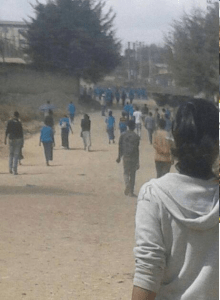
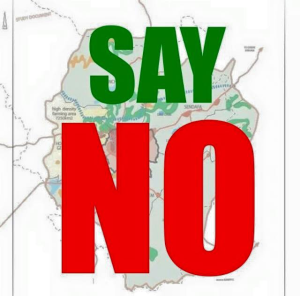
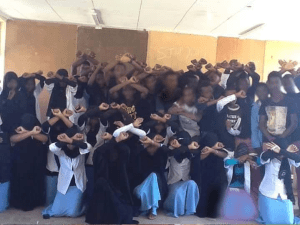
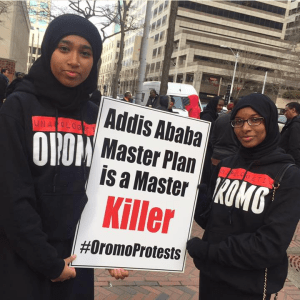
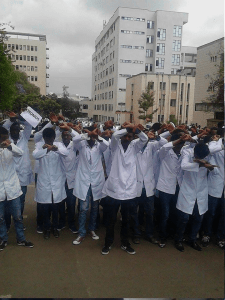
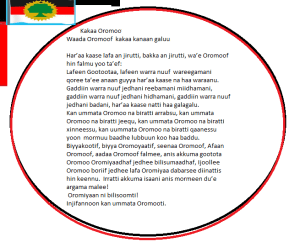
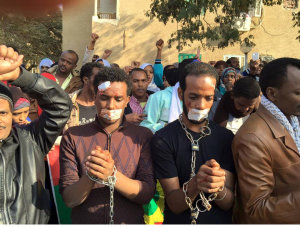

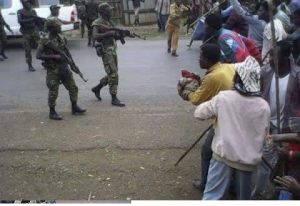
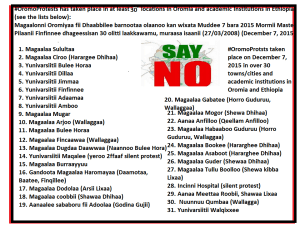
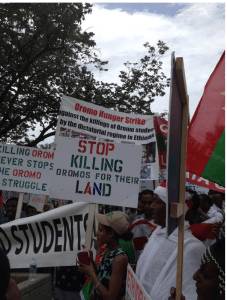
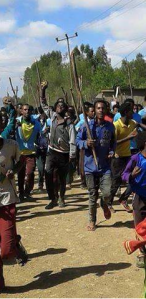
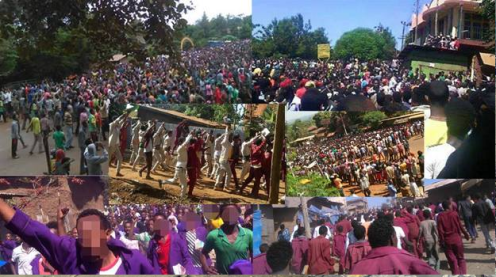
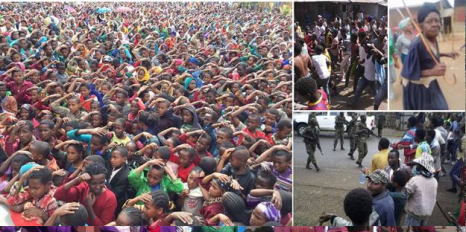
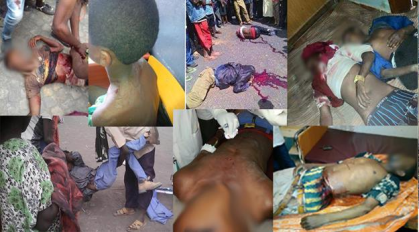
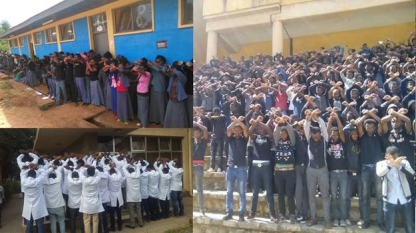
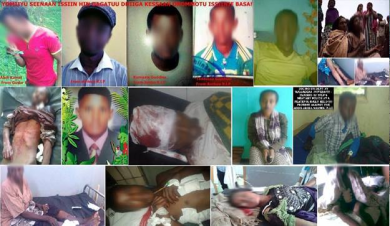
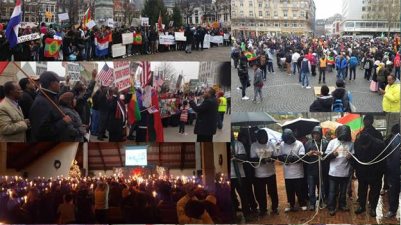
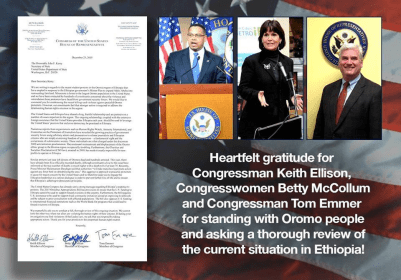


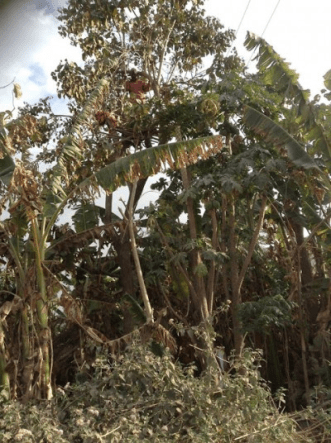
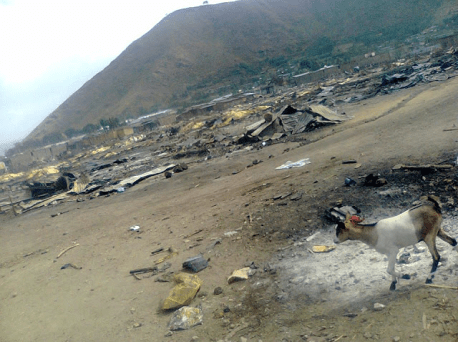


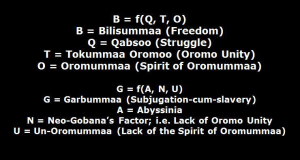
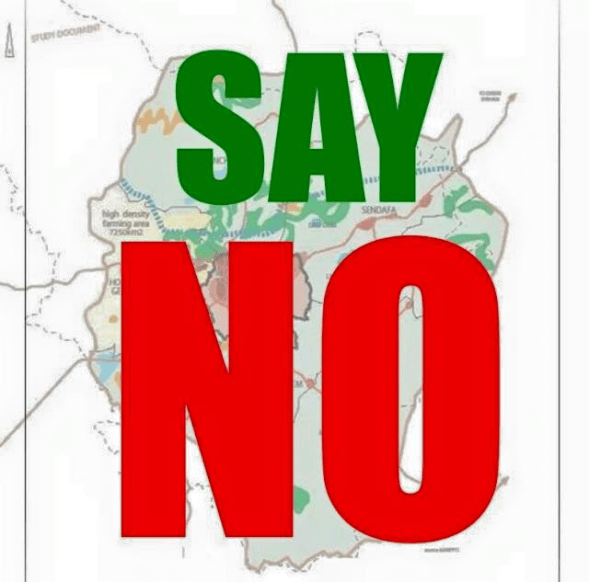
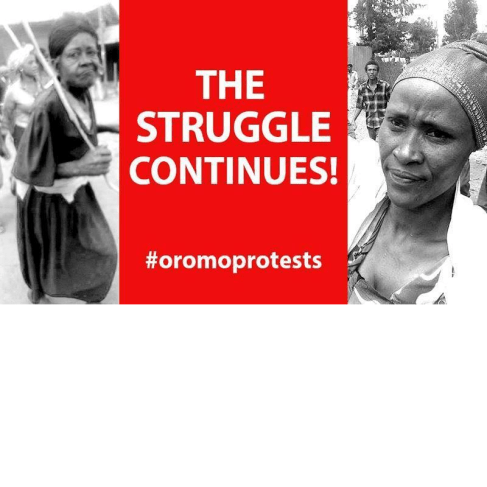
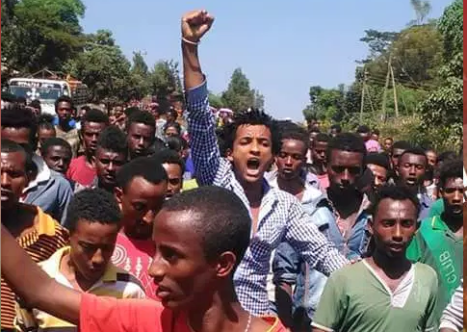







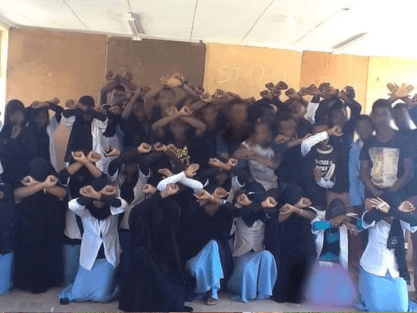
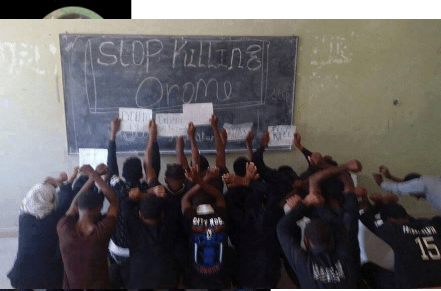
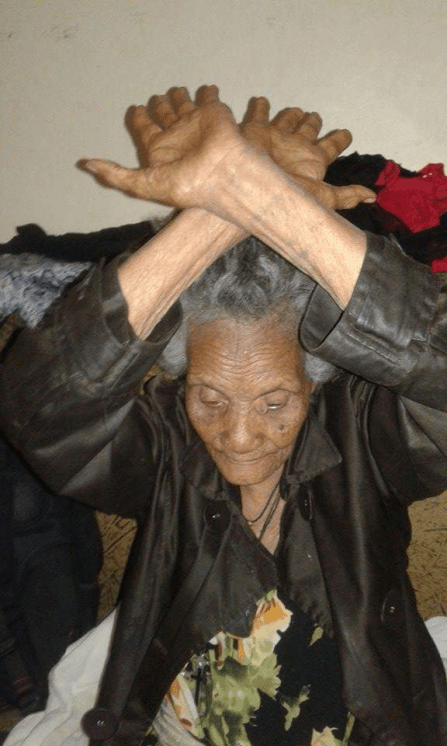
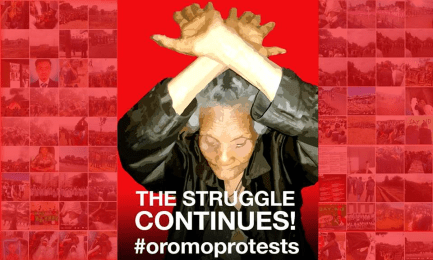
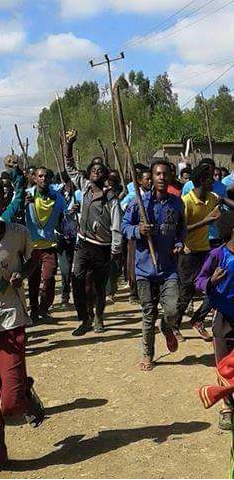
 FDG Shaggar Kibbaa lixaatti har’a Muddee 28,2015 aanaalee hundumaa uummata qonaan bulaa hanga baadiyaatti dabalatee finiinaa jira.

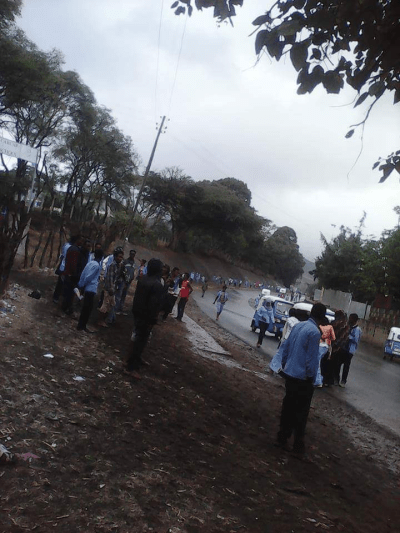
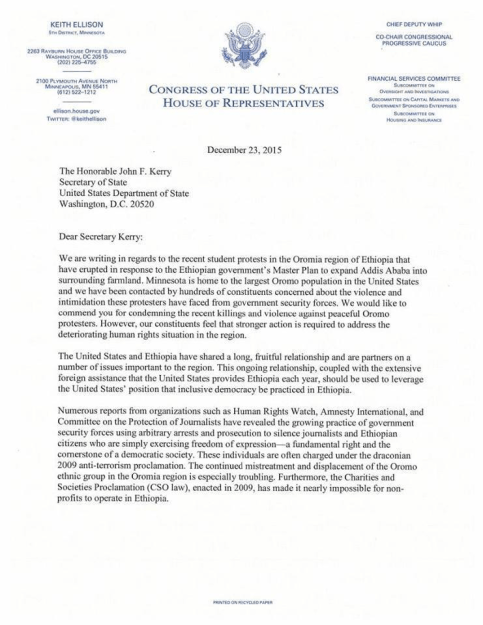
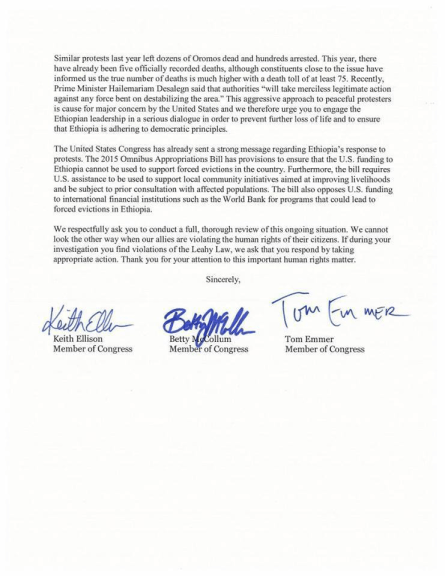
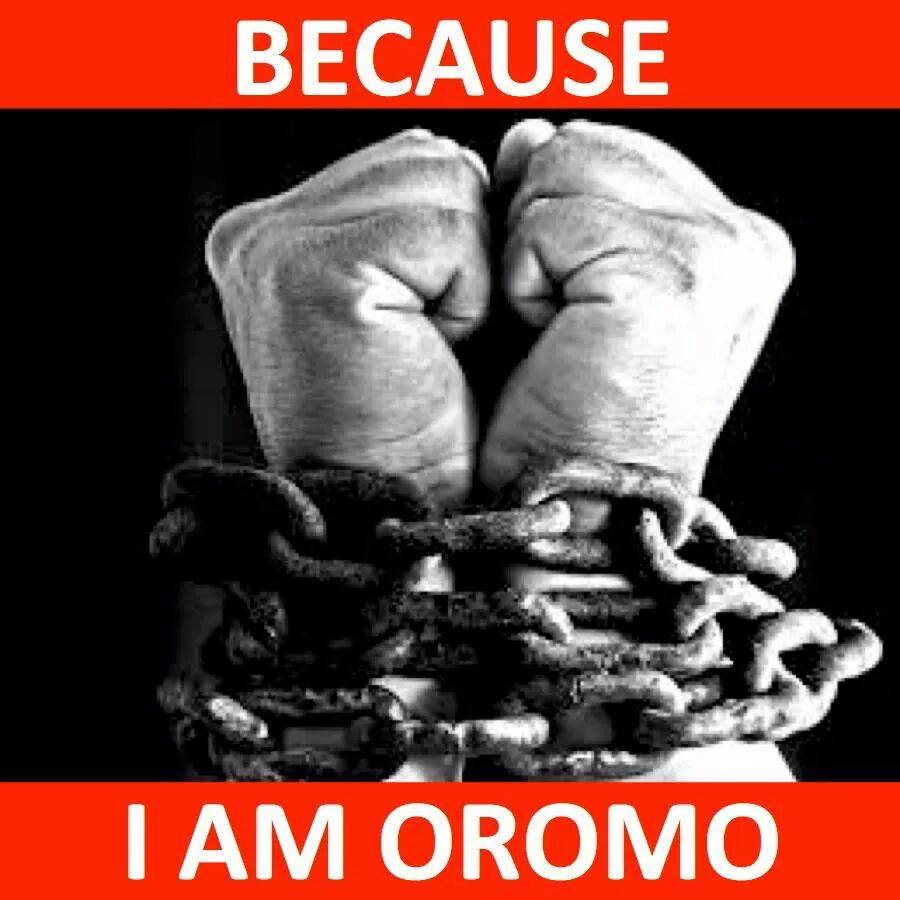
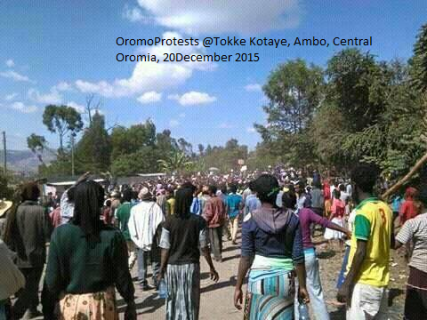


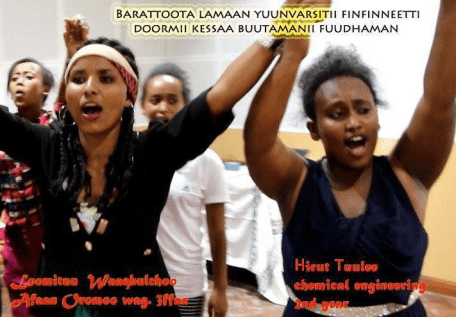


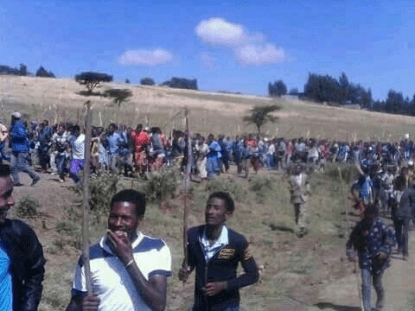


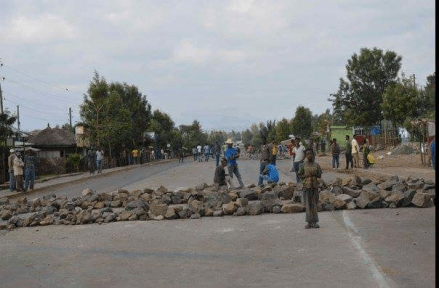


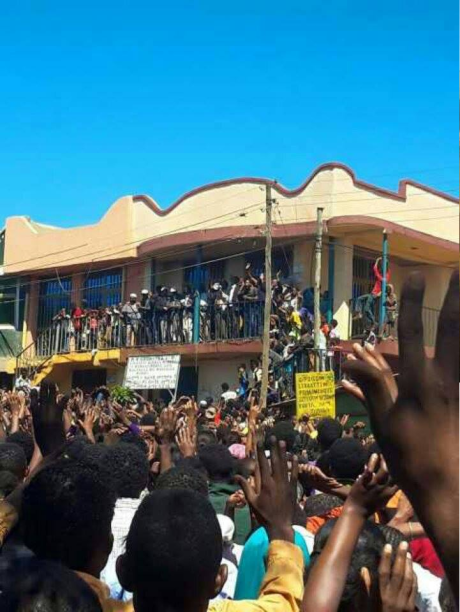
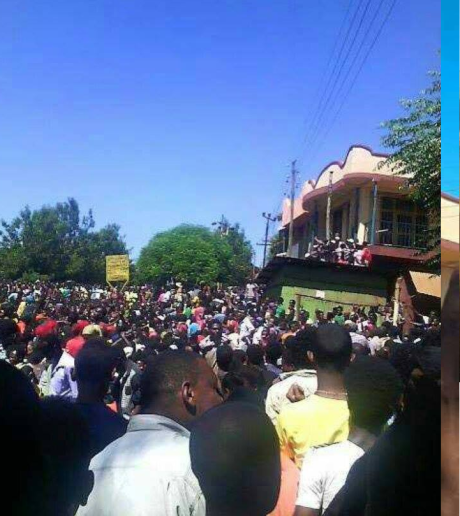
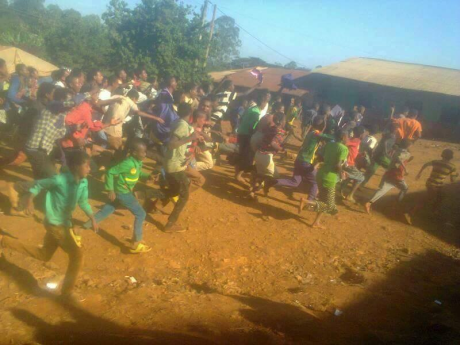
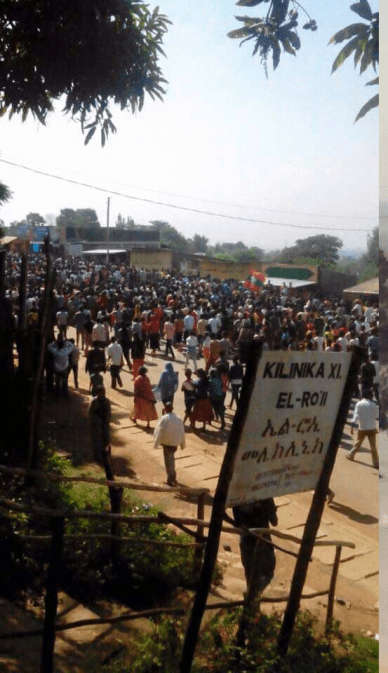
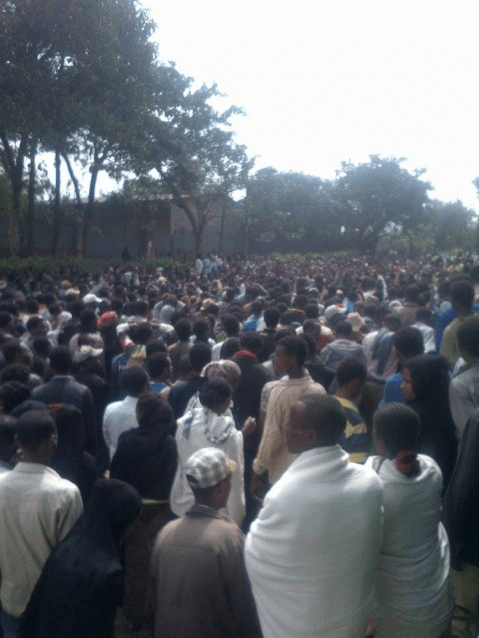
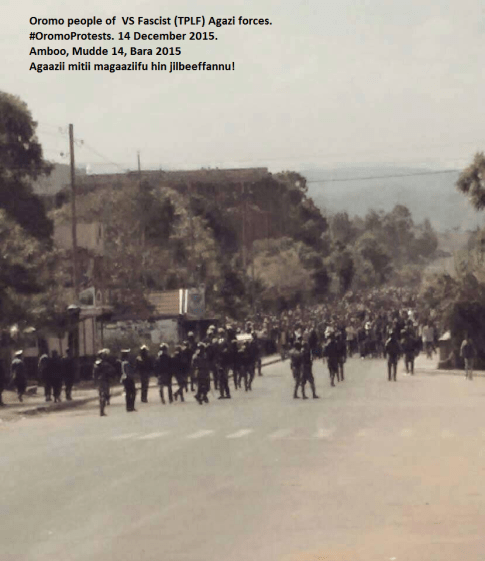
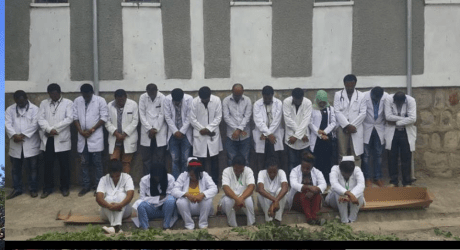
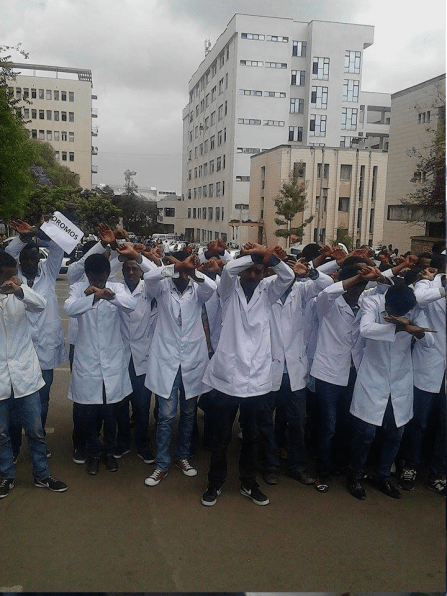
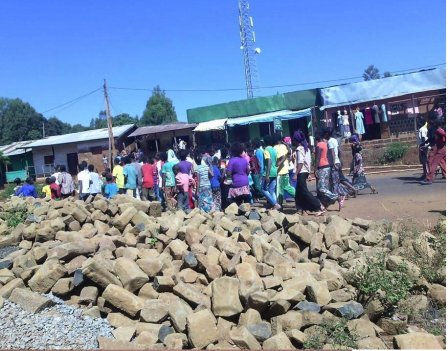
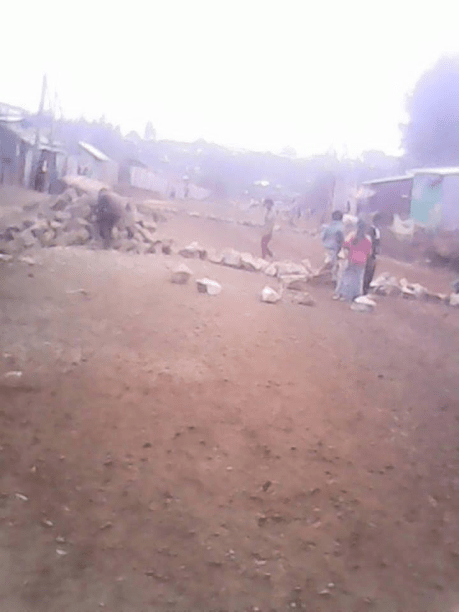


 Mudde 12/2015 Goototni Barattootni Oromoo Yuunibarsiitii Jimmaa Warraaqsa Biyyoolessaa Oromiyaa FDG jabeessuun itti fufan, Mooraa Yuunibarsiiti Jimmaa Arfan keessatti warraqsii jabachuun itti fufe. Guyyaa kaleessaas itti fufuun akkuma warraaqsa finiinsuu egalaniin


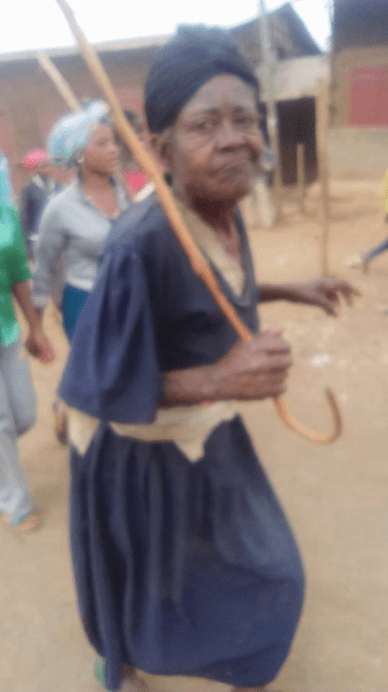
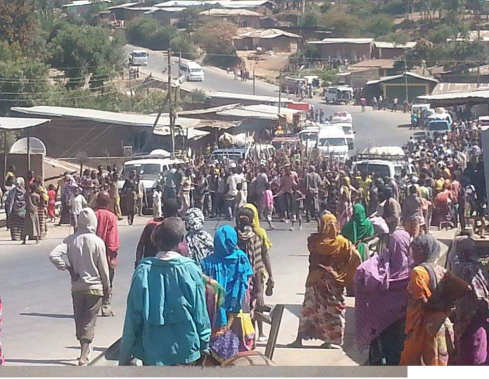

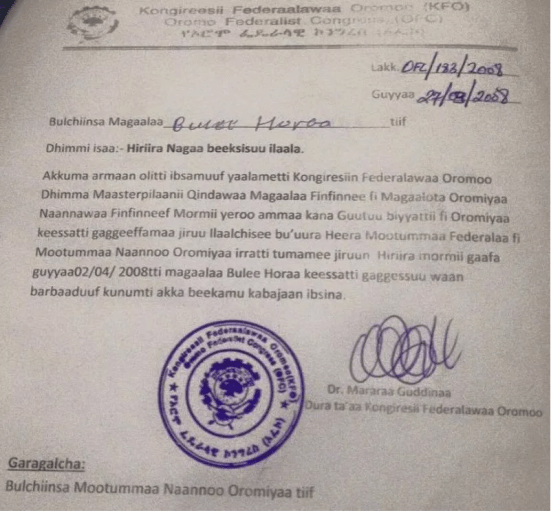


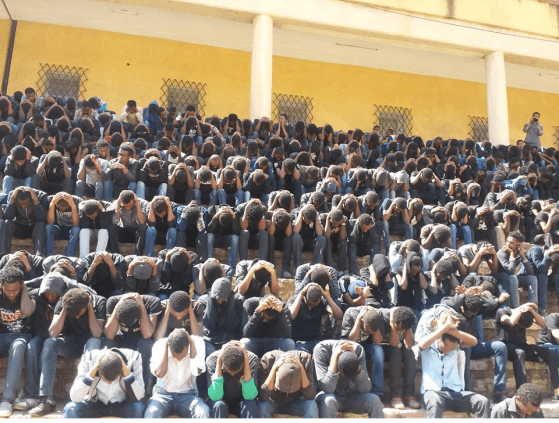


 Muddee 9, 2015 Godina Bahaa wallaggaa Aanaawwaan Heebantuu, Giddaa Ayyaanaa, Haroo limmuu, Limmuu Galiilaa, Diggaa saasiggaa,Guutoo Giddaa(Ukkee), fi Gatamaatti Goototni Barattootni Oromoo Mana Barumsaa Sadarkaa 1ffaa,2ffaa fi Qopha’ina Uummata Waliin Walitti Dhufuun Warraaqsaa FDG jabeessuun finiinsan . Gaaffiin mirga abbaa Biyyummaa, Kabajamuu Mirga Namummaa fi Mirga Dimookiraasii Gadi jabeessuun Gaafatan, Karoorri Master Pilaanii Finfinnee fi Labsiin Magaalota Oromiyaa haqamuu Qaba jechuun Mormiin uummataa haalan


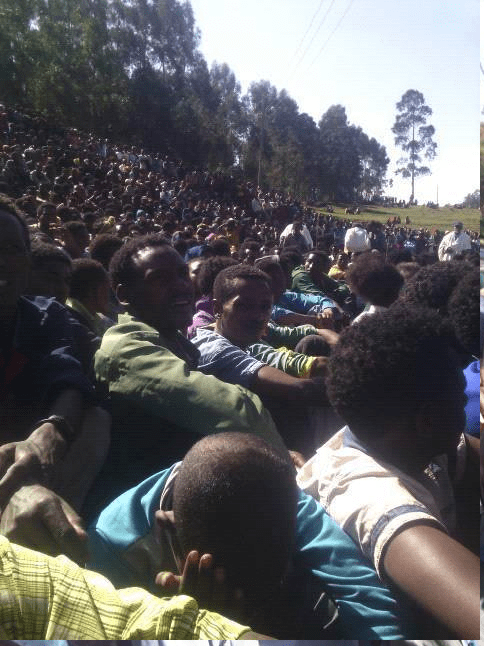


 Mudde 8,2015 Guyyaa Har’aa FDG Itti Fufuun Magaalaa Waliisoo,Ada’aa Bargaa, Ejeree,Geedoo fi Shashammannee Keessatti Jabaatee Itti Fuee Jira.
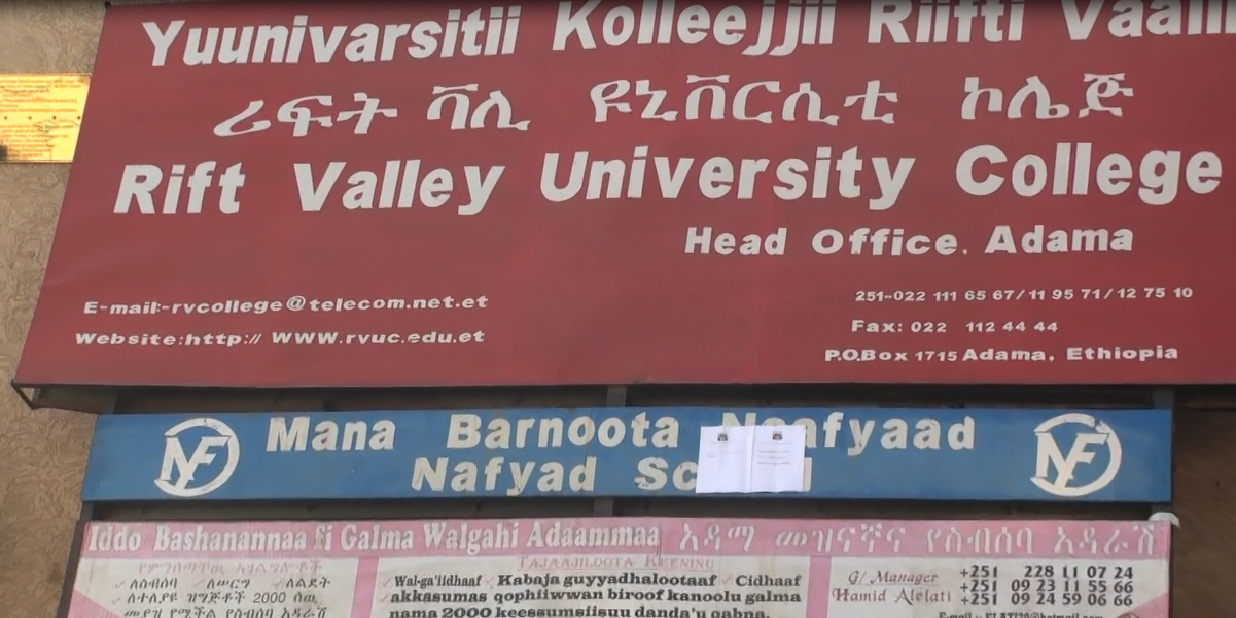
 qabsiisaniin sirna gabroomfataa mootummaa Wayyaanee balaaleffataa jiru,gaaffii mirga abbaa biyyummaa fi mormii maaster plaanii Finfinnee jabeessanii kan itti fufan yeroo ta’u barattoota hidhamani akka gadhifamanii fi kanneen rasaasaan rukutamanis warri loltoota Wayyaanee kana taasisan seeraan akka gaafataman gaaffii kaasan keessa jira.Kana malees walleelee warraaqsaan diddaa isaanii dhageessifataa jiru.
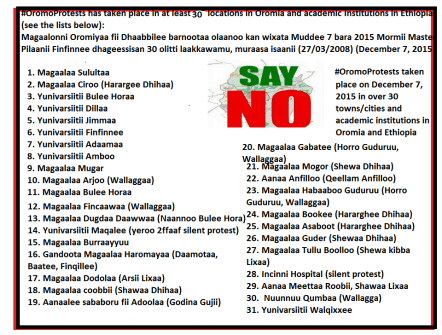
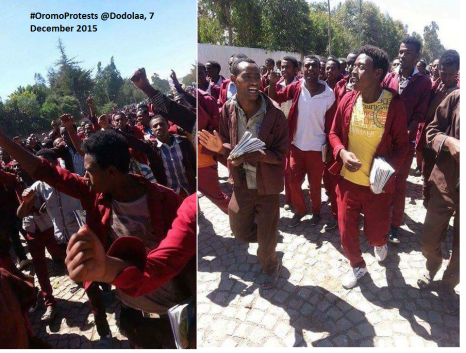
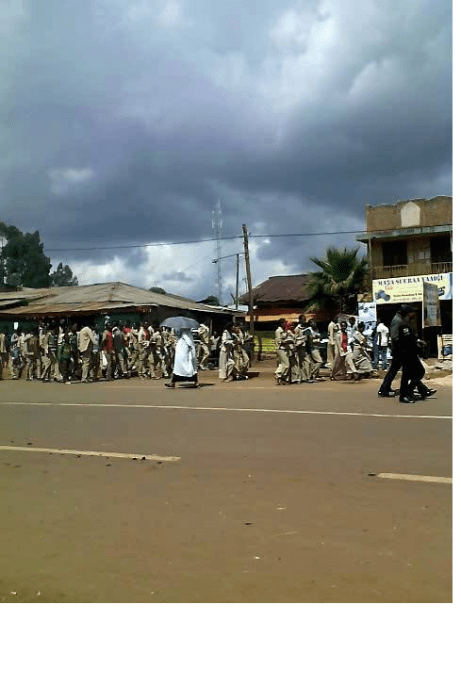


 Shaggar Sulultaa keessatti diddaan sirna abbaa irree Wayyaanee jabaatee itti fufuun uummanni gamtaan ka’uun sa’aa ammaa kanatti guutummaatti FDG gaggeessaa jira.Kana malees har’a Muddee 7,2015 Godina Bahaa Wallaggaa Aanaa Heebantuu, Giddaa Ayyaanaa ,Kiiramuu fi Nuunnuu Qumbaa keessatti Warraaqsii FDG Gootota Qeerroo Barattoota Oromoo fi Uummata Qonaan Bultoota Oromoon Haalaan


 Barattooti Oromoo Yunivarsitii Dillaa guyyaa har’aa FDG itti fufanii jiru.Barnooti guutummaatti dhaabbatee jira. Kana malees Yuunibarsiitii Walqixxees sagalee isaanii dhageessisuun mootummaa Wayyaanee uummata Oromoo daguugaa jiru balaaleffatan. Qeerroon Yuunibarsiitichaa har’a ganama obboroo walga’uun gaaffii aabbaa biyyummaa erga bulchiinsa mooraa Yuunibarsiitii Walqixxeef dhiyeessaniin booda,humni tikaa itti bobbaafamuun barattoota Oromoo gaasii summii,uleedhaanis kan caccabsan ta’us,biyya abbaa keenyaa kabachiisuuf wanti dugduuba nu deebisu hinjiru jedhaniiru Humni tika qabeenya barattootaa saamaa kaan mana hidhaatti guuraa kan jiru yeroo ta’u, Barattoonni barnoota dhaabanii jru.


 Muddee 7,2015 Gootonni Barattooti Oromoo godina Harargee Aaanaa Ciroo sirna mootummaa abbaa irree Wayyaanee balaaleffachuun guyyaa har’aa hiriira mormii guddaa bahuun gaaffii mirgaa kaasan, kana malees Godina Lixa Shaggaritti warraqsii FDG Guddaan Uummata Oromoo Magaalaa Amboo , Yuunibarsiitii Amboo, Qonnaan Bultoota Amboo fi Magaalaa Gudar, Qonnaan Bultoota Aanaa Tokkee Kuttaayee fi Barattoota Oromoo Magaalaa Gudar Dabalatee Warraaqsii Seenaa qabeessi bifa adda ta’een gaggeeffama jira. Gaaffiin mirga abbaa Biyyummaaf deebiin haa kennamu fi Karoorri Master Pilaanii Finfinnee fi Labsiin
 Ummatni magaala Dambi Dolloo walgahii aangawoonni OPDO Wayyaanee yaaman diduun diddaa fi jibbiinsa sirna mootummaa Wayyaaneef qaban ifatti muldhisaa jiru.


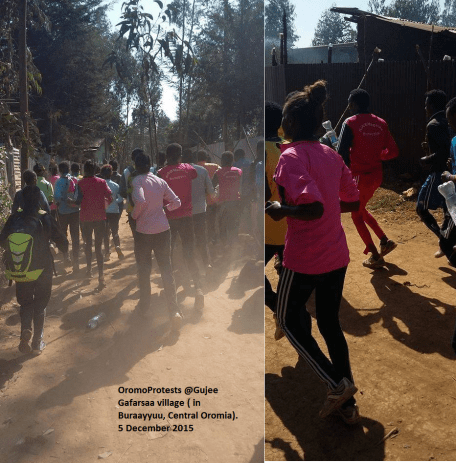
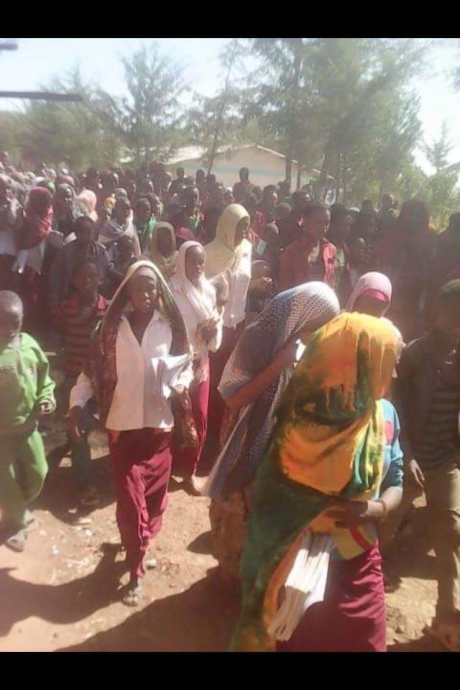
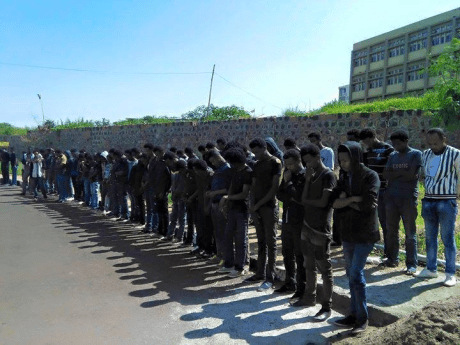
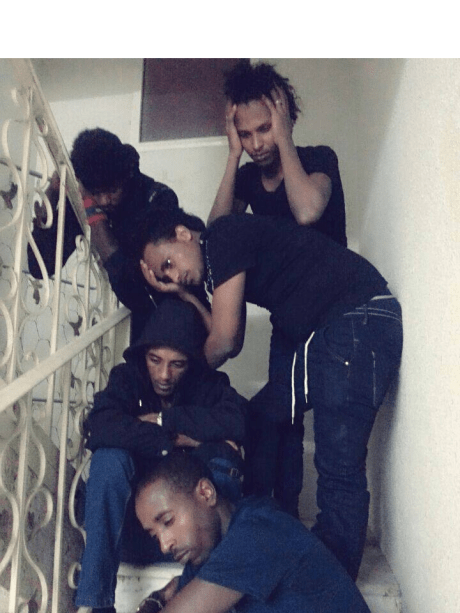
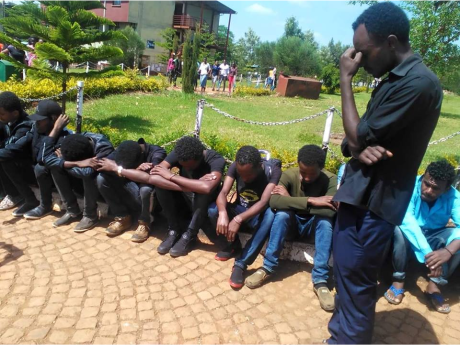
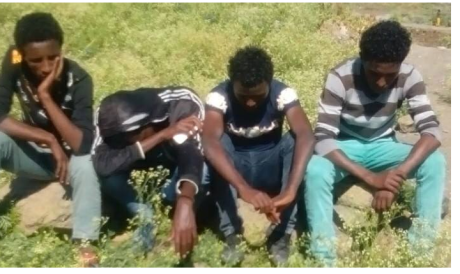
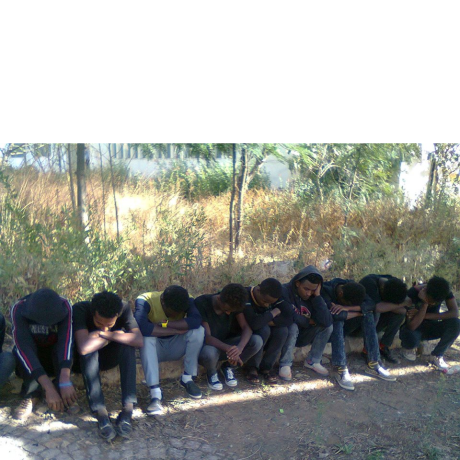
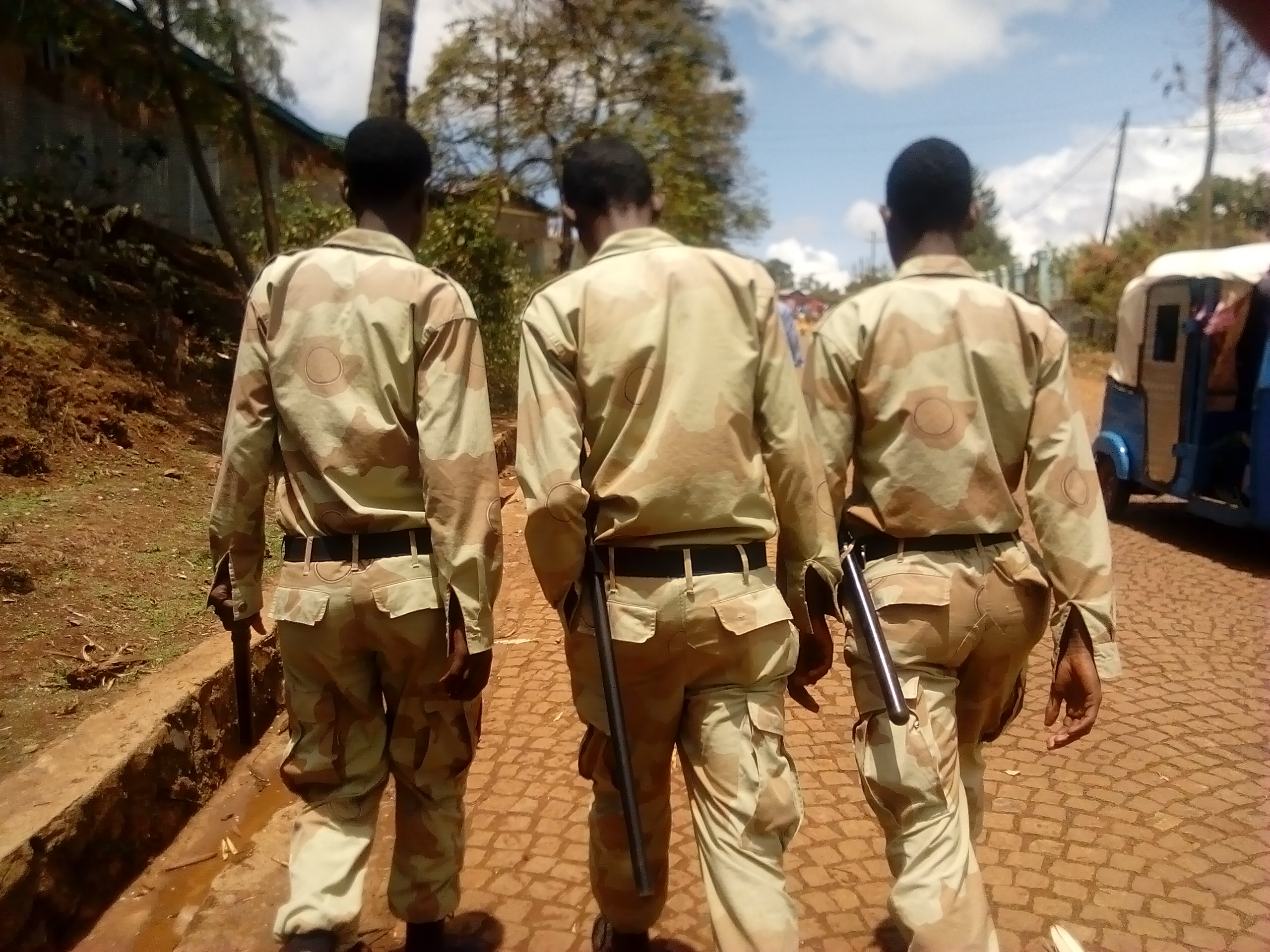


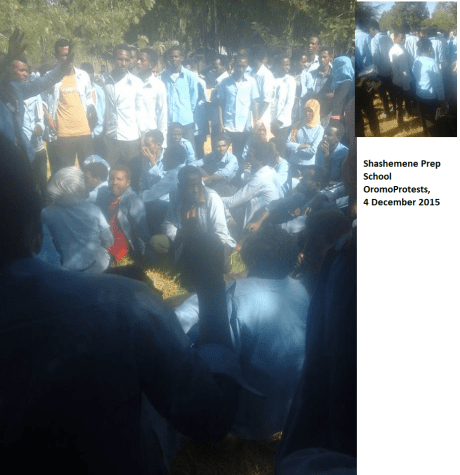

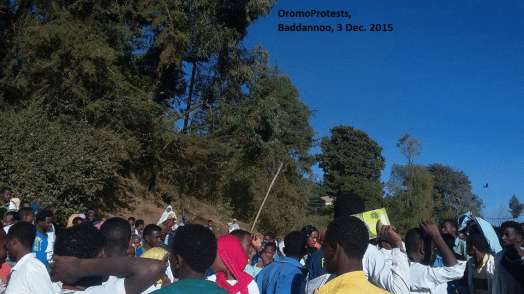


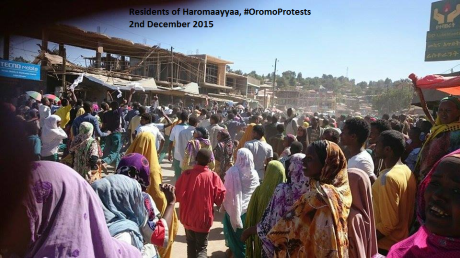
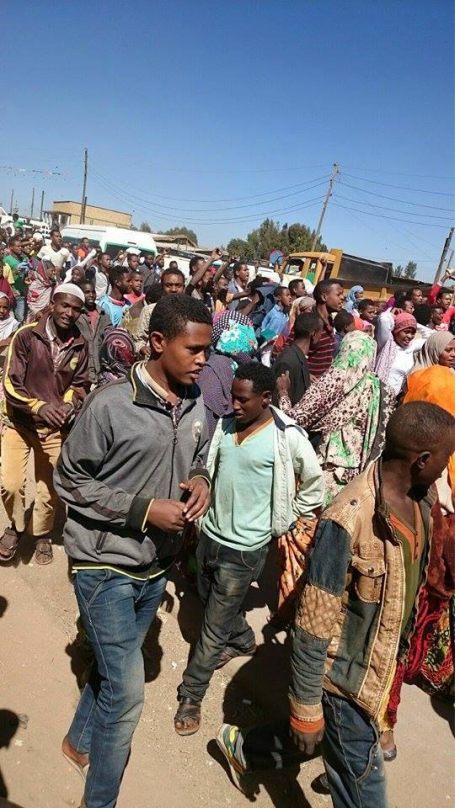


 Gootichi Barataa Yuuniversitii Haromaayaa Department Cooprative Waggaa 2ffaa Kan Baratu Barataan Gazzahinyi Oliiqaa Rasaasa Wayyaaneen Wareegame.


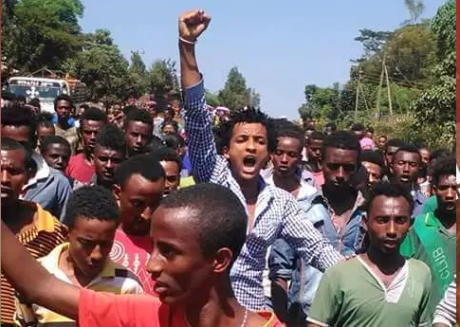


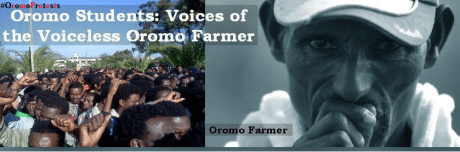
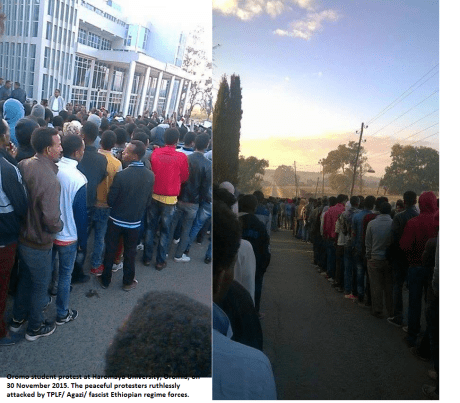

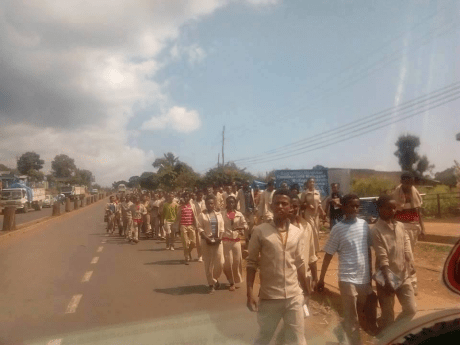


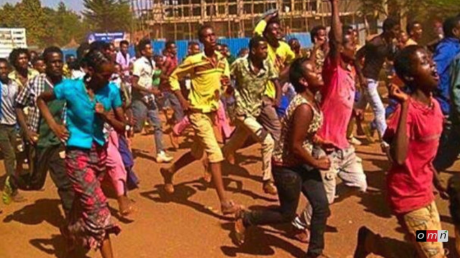
 Godina Wallaggaa aanaa Jaarsoo keessatti FDG haala jabaateen itti fufuun barattooti Oromoo aanichaa mormii master Plaanii Finfinnee fi gaaffii mirgaa Oromoo walii galaaf jecha diddaa sirnichaa jabeessanii jiru. Haala kanaan barattooti Oromoo hedduun waraana Agaazii Wayyaaneen sababaa qabamanii hidhamanii fi haala sochii mirgaa irraan kan ka’e uummati naannichaa fi qonnaan bultooti diddaa jabeessanii hanga yeroo ammaatti dabbaloootaa fi milishoota naannoo aanotaa fi gadoota hunda keessaa arihanii uummatichi ofiin of bulchuu filataa akka jiru Qeerroon gabaasee jira.
 FDG Oromiyaa keesatti yeroo ammaa kana mormii MP wal qabatee ka’ee jiruun Wayyaanee daran sodaachisee jira. Kaleessa lixa Wallaggaa Mandiitti diddaan ka’e Wayyaanen uummata naga irratt dhukaasa bante namoota 3 madoo goote 2 kan biro ammo ukkaamsuun bakka bu’an hin beekamu. Haala Kanaan diddaan kan itti caalu malee kan laaffate miti.Kanumatti fufuudhaan halkan edaa ergamtoota wayyaanee magaala Gimbii keessaa adamsanii Oromiyaa hin gurgurtan jechuun gootonni Oromoo tamsaasaa jiru.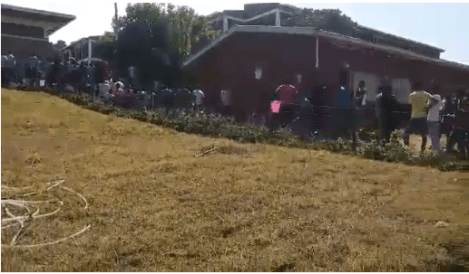


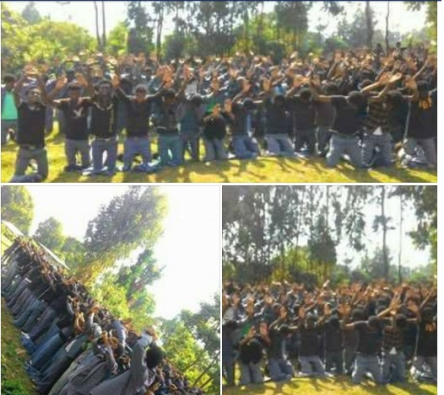
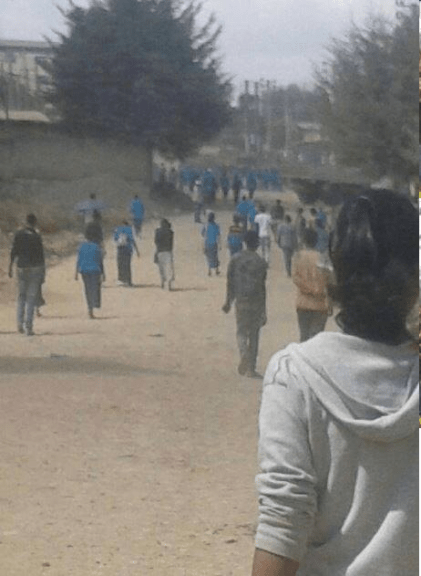


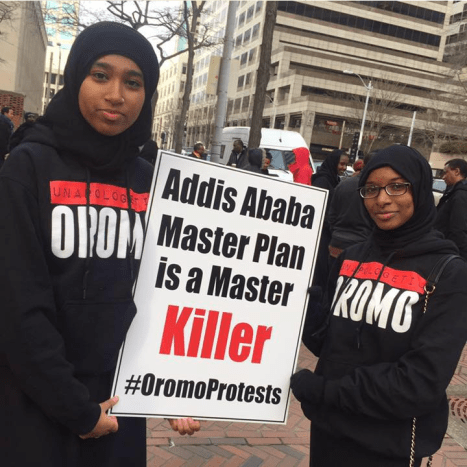




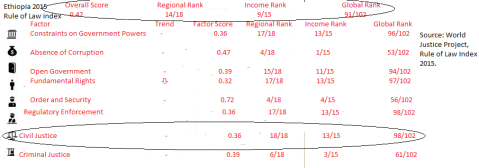

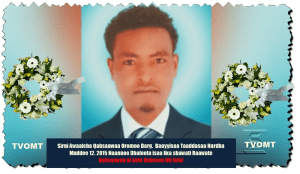
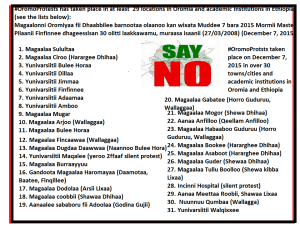
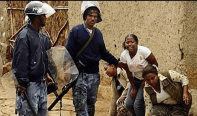
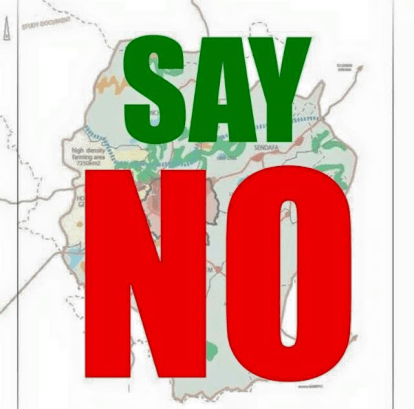
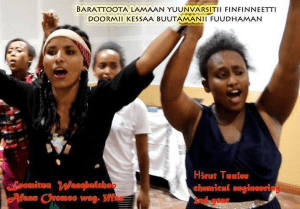
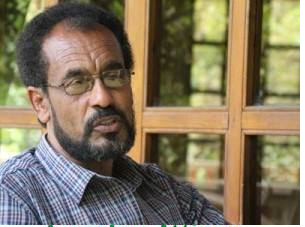
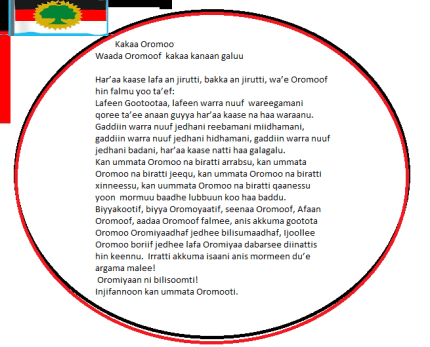
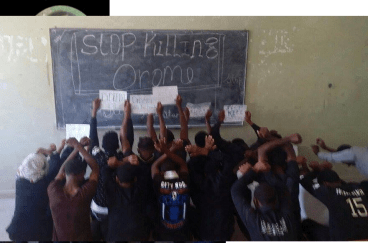
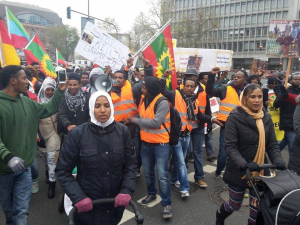
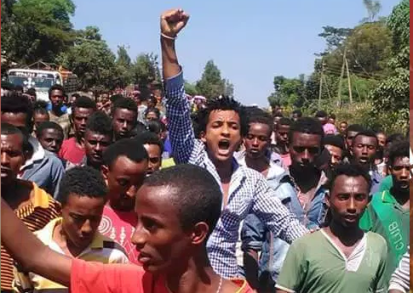
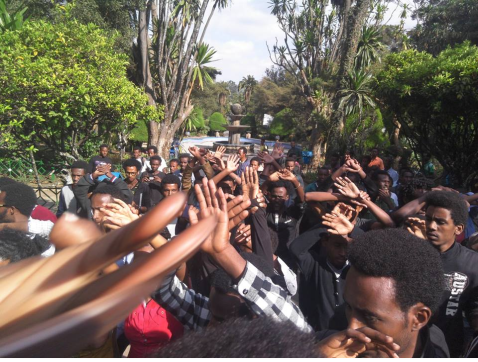
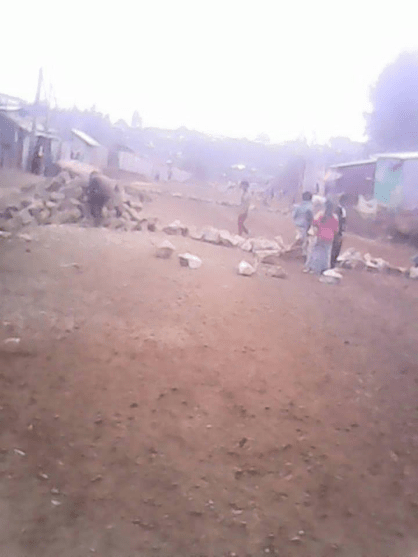
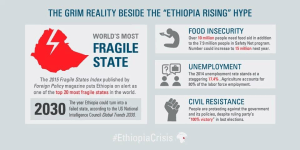
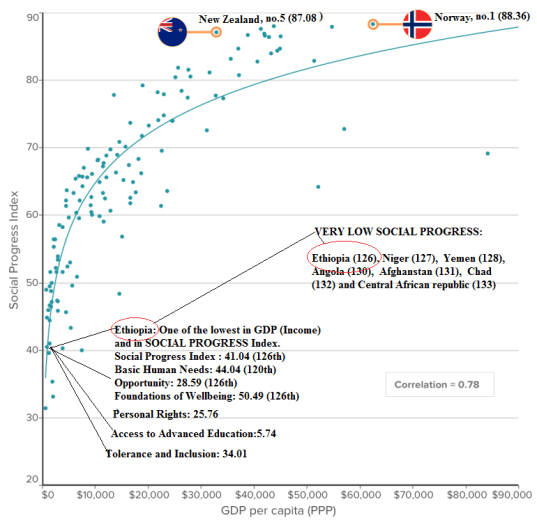


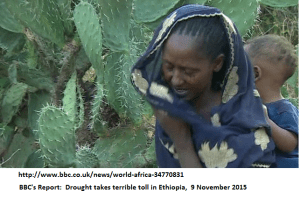
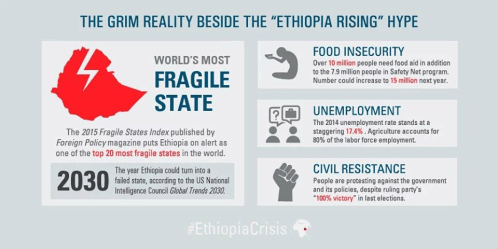
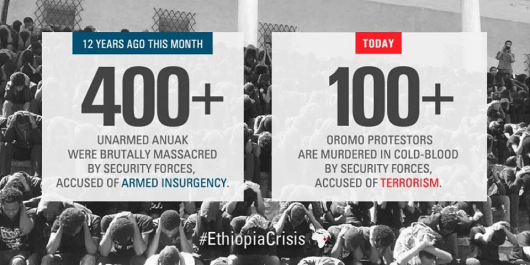
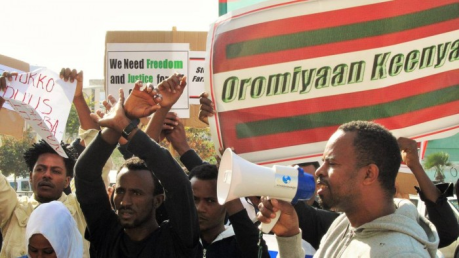
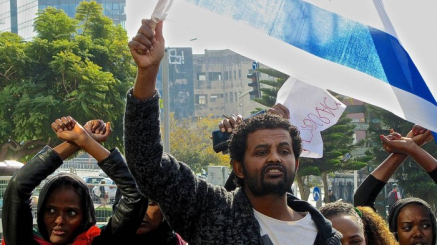
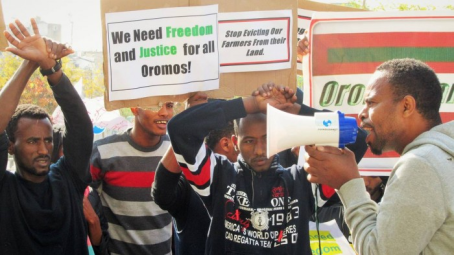


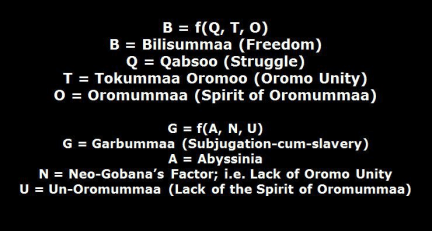
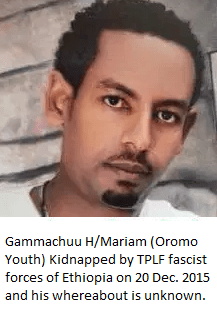


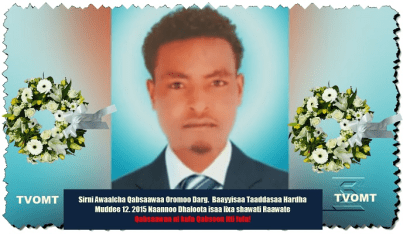
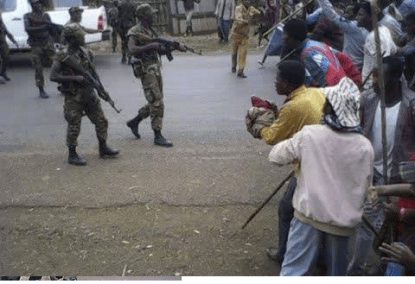
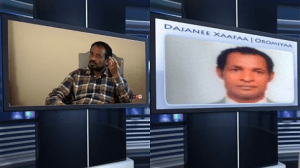




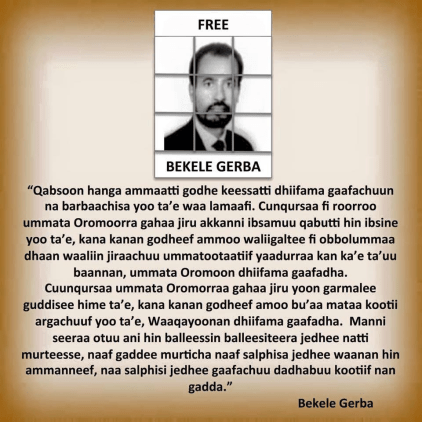

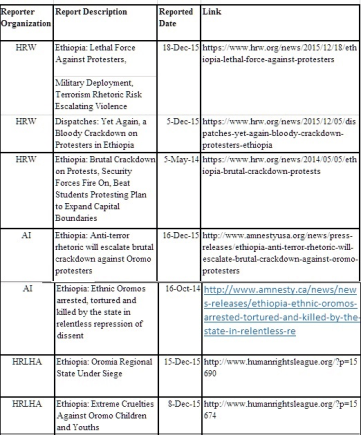

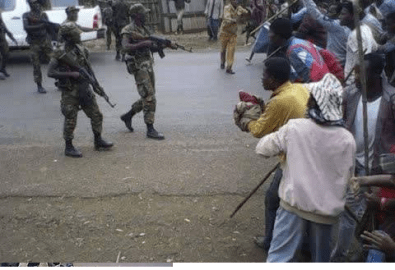
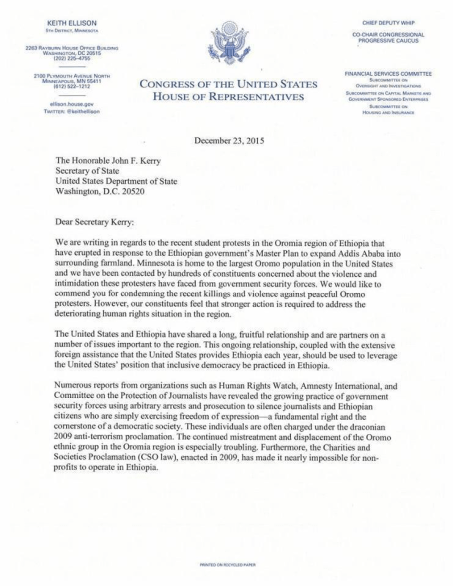
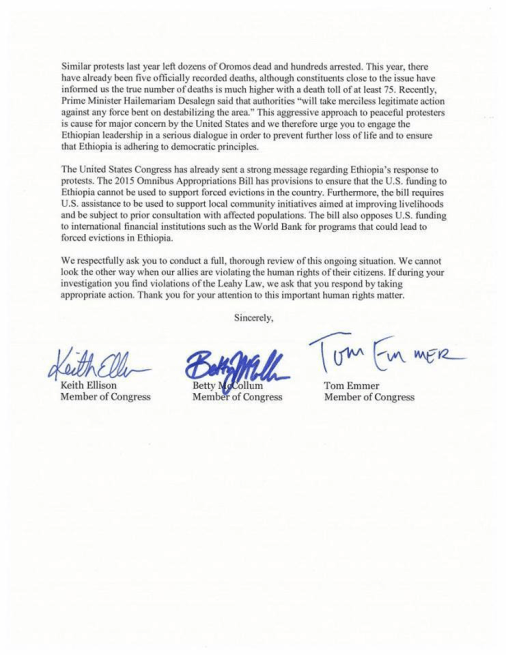



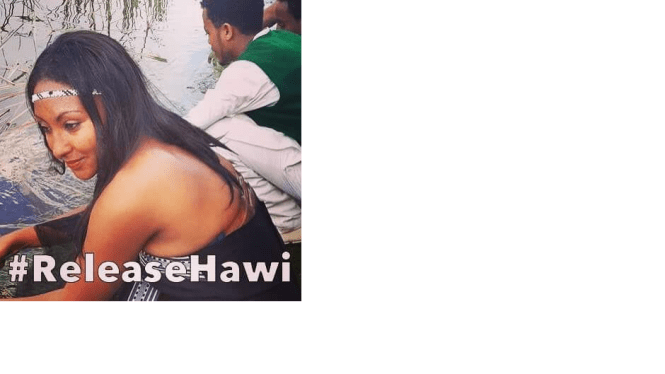


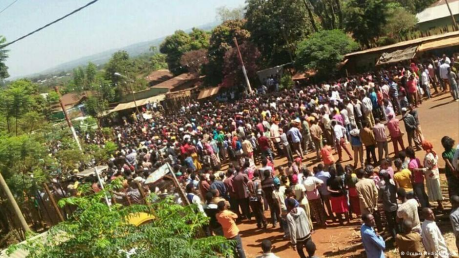


 Oromian Economist
You must be logged in to post a comment.