Economic and development analysis: Perspectives on economics, society, development, freedom & social justice. Leading issues in Oromo, Oromia, Africa & world affairs. Oromo News. African News. world News. Views. Formerly Oromia Quarterly
Brief and informative speech about the history of Qubee Afaan Oromoo by the renowned scholar Dr. Gemechu Megersa on the third international conference of Oromo language,culture,arts and customs organized by Wollega university, 13 April 2018.
The United States Congress on Tuesday passed a human rights-centered resolution against the Ethiopian government amongst others calling for the respect of human rights and inclusive governance.
Despite a late pushback led by one Senator Inhofe – a known ally of the government, to get Congress to reject the resolution, the motion according to Congress records did not even need to be voted upon as it adopted by voice vote.
Congressmen and women took turns to give brief comments about the importance of the resolution with each touching on the political crisis that has rocked the country. Others also pointed to the cost in terms of human lives and loss of properties as a result of government highhandedness and an ever-shrinking democratic space.
A Summary of the resolution by Congress policy website stated as follows:
“H. Res. 128 recognizes Ethiopia’s efforts to promote regional peace and security, and its partnership with the U.S. to combat terrorism, promote economic growth, and address health challenges. In addition, the resolution expresses concern about human rights abuses and contracting democratic space, and condemns excessive use of force by Ethiopian security forces.
“The resolution calls on the Government of Ethiopia to lift the state of emergency, end the use of excessive force, release wrongfully imprisoned protesters, and improve transparency, while at the same time urging protesters and opposition groups to use peaceful discussion and avoid incitement.
“The resolution calls on the U.S. Department of State and U.S. Agency for International Development to cooperate and strengthen ties with Ethiopia, condemn human rights abuses, and promote accountability.”
Below are some reactions of activists on social media
Addis Abeba, April 09/2018 – A military officer has shot dead Ayantu Mohammed Sa’idoo, a 20 year old, mother of a four year girl, last night in Qobo town, east Hararghe zone of the Oromia regional state, her neighbors told Addis Standard. She was also three months pregnant.
Ayantu’s body was discovered after it was dumped in an area called ‘Shambel house’ this morning, according to sources. She was “abducted” by a group of security forces at around 11: 30 PM local time last night and was killed after “being severely assaulted”.
Chala Ibrahim Bakaree, a military officer suspected of killing Ayantu, has been disarmed and placed under the town’s police custody, according to a local police officer. “He is being investigated,” the officer said.
It is not clear why the security forces have approached Ayantu, who was a ‘chat’ trader, the green narcotic leaf widely used in the area. She was walking home from a late night’s work; “she was abducted and taken away when she resisted”, a source who wants to remain anonymous told Addis Standard by phone.
Her funeral is planned to take place tomorrow at 1: 30 PM local time in an area called Ganda Tucha. However, locals are wary of increased security presence in the town and fear her funeral may trigger anger. “The federal police have been roaming to town since early in the morning today and we fear this may trigger more violence,” said our source.
A picture of Ayantu’s bloodied body has been circulating on Ethiopian social media. Our source also sent what appears to be an empty firearm bullet found near her body and was allegedly used to kill her.
Ethiopia is under a six month state of emergency, which gave security forces a sweeping mandate to stop, search and detain civilians without court warrants. AS
Related (Oromian Economist sources):-
Ayantu Mohammed who was killed in Qobo last night eas pregnant. Soldiers attempted to rape her and when screamed for help they shot her in the head and killed her.
The Barbaric Command post of Ethiopia has continued with killings and imprisonments of innocent people in Oromia.
Sad news! The Command Post which is ruling Ethiopia under the State of Emergency continued its heinous action against the innocent people. This is Ayantu Mohammed, an Oromo lady from Harargee, Yesterday the Agazi soldiers tried to rape her while she was struggling to convince them that she has husband and also a pregnant. They didn’t accept that and brutally gunned her down. This is one of the heartbreaking actions being taken by the Command Post forces across Oromia despite the new Prime Minster elected from the region. It seems that there are two separate government structures in a single country, particularly in Oromia. Click here to read more…
‘I am the product of the masses of my country and the product of my enemy.’
‘The years of imprisonment hardened me…. Perhaps if you have been given a moment to hold back and wait for the next blow, your emotions wouldn’t be blunted as they have been in my case. When it happens every day of your life, when that pain becomes a way of life, I no longer have the emotion of fear.there is no longer anything I can fear. There is nothing the government has not done to me. There isn’t any pain I haven’t known.’
“When it happens every day of your life when that pain becomes a way of life, I no longer have the emotion of fear – there is no longer anything I can fear. There is nothing the government has not done to me. There isn't any pain I haven't known." ~ #WinnieMandelapic.twitter.com/X52Cu8pA4P
Country’s parliament elects Abiy Ahmed as new leader a week after his nomination as chairman of ruling coalition.
Abiy is the first Oromo to lead Africa’s second-most populous country [File: EPA]
Ethiopia’s parliament has elected Abiy Ahmed as the new prime minister, a week after the ruling coalitionnominated him to succeed Hailemariam Desalegn.
Abiy was sworn in on Monday shortly after his election to become Africa’s second-most populous country’s 16th prime minister and the first Oromo to hold Ethiopia’s top seat.
Hailemariam resigned in February, following months of protests in the Oromia and Amhara region that led to the deaths of hundreds of people.
The protests, which initially began over land rights, but later broadened to include calls for greater political representation at the national level, met a harsh government response.
Abiy, 41, a former lieutenant-colonel in the army and head of Ethiopia‘s science and technology ministry, has a reputation as an effective orator and reformer.
‘Historic moment’
Ahmed Adam, a research associate at University of London’s School of Oriental and African Studies (SOAS), told Al Jazeera on Monday that he believed things would change under Abiy.
“This is a very historic moment for Ethiopia and for the ruling coalition in the country. He is the first Oromo PM. This will pave the way for the stability and unity of the country,” he said.
“Abiy is a part of the establishment of course, but he’s a reformist and came from a mixed religious background with a Christian mother and a Muslim father. ”
Merara Gudina, a prominent opposition leader, expressed cautious optimism over Abiy’s election.
“What he aims to achieve depends on what his party allows him to do,” Merara said, adding that Abiy was elected by Ethiopia’s ruling party and not directly by the population through a general election.
“But still it goes without saying that a change in personalities within the leadership may bring changes in terms of bringing better ideas that may ultimately lead to national reconciliation.”
Ethiopia in February declared its second state of emergency in two years amid the ongoing protests that effectively crippled transportation networks and forced the closure of businesses.
On Saturday, Ethiopian officials said that more than 1,000 people have been detainedsince the latest emergency rule was put in place.
A statement! Lemma Megerssa, President of the #Oromia regional state, who stepped aside as chairman of the #OPDO to make Dr. Abiy Ahmed the party's candidate, showed up at the national palace where PM Dr. Abiy was welcomed by the outgoing PM Hailemariam Desaleg. #Ethiopiapic.twitter.com/sXC5jcyFXg
If I am to remember today for what it is, it won't be for the changes in which this developmental state functions, but for the 'feel good speech' & the fact that it can be possible for incoming first families not to be preceded by caskets or runaways. And this 👇😍. 📷 Fortune. pic.twitter.com/J7Gd3us8fE
As Ethiopia's new Oromo prime minister is sworn in, Mohammed Ademo from @OPride tells us 'There are two centres of power in Ethiopia today, the power of the people and the power that comes from security-military establishment' pic.twitter.com/v8PYFHm69C
#Ethiopia's problems are primarily structural. Accordingly, they need substantive political &economic reforms.Thus far , they have been wired to enable TPLF minority Tigray overlords to have a near monopoly of political power &economic resources. @Jawar_Mohammed@geoffreyyork
1/2 The security sector in #Ethiopia is political, and is a major party in the politics of economic decsion making. Any attempt to liberalise the politics & reform the economy won't succeed without reforming the culture & composition of the military & the intelligence.
#Ethiopia It's vey misleading for the #Ethiopia regime and its supporters to sell transfer of power within EPRDF from H. Desalegn to Abiy Ahmed as a "peaceful transition" involving all political actors.The underlying issues still remain unaddressed+ ruling party still in control
All Chaltu's witness and descriptions are true. As a prisonmate and friends for so long, I have tried to expose all the atrocities happened to her, and finally she spoke in proper word. They tried to crush, humiliate and destroy us , but we emerged stronger & committed than ever https://t.co/nVhrffQOyu
" They took close 2 half of ur years. They stole away ur youth. They tortured u with indescribable cruelty. But U stood ur ground. U outlasted their torture. U survived." @RArarssa Would Dr Abiy stop this atrocity or he will continue approving more? @hrwhttps://t.co/1fsUVOPaPypic.twitter.com/CCL6TIjHTM
Far from being a footnote in the Oromo struggle, musicians like Haacaaluu Hundeessa have been its centre of gravity.
With the appointment of Abiy Ahmed as chair of the ruling coalition, Ethiopia is set to have an Oromo leader for the first time in recent history. This is in no small part thanks to brave and sustained protests by ethnic Oromo youth.
For nearly two and a half years, activists have defied brutal government suppression that has seen over a thousand people killed and tens of thousands arrested. Mostly led by the Oromo and Amhara, who together make up two-thirds of the 100 million population, demonstrators have endured the imposition of two states of emergency and a brutal crackdown.
Now, for their pains, they have overseen the resignation of Prime Minister Hailemariam Desalegn. And they will soon witness the assent of a young and popular Oromo leader as Ethiopia’s next prime minister.
When historians look back at this period, they will see how persistent protesters reconfigured Ethiopia’s political map in just a couple of years. They will note how Oromo politics was forced from the distant periphery to the very centre of affairs. And they will observe how the passionate Oromo youth – known as the Qeerroo – drove this change.
In all this, however, one thing that should not be overlooked is the critical role played by Oromo musicians and artists. Through their work, they have mobilised scattered marginalised publics and helped create a politically conscious, defiant, and resilient generation. They have tapped into the transformative potential of subjugated memories and experiences, disrupted official histories, and altered the people’s very relationship to power.
Oromo music, the struggle’s centre of gravity
Oromo music and concerts have rarely been strictly musical. They have always been sites of political agitation, cultural self-affirmation, and spiritual rejuvenation, drawing together audiences who share an unassailable commitment to the Oromo cause.
Activist stalwarts have provided the conceptual architecture and strategic direction of the struggle. But Oromo artists’ poignant and powerful lyrics have given voice and significance to the group’s insufferable indignation. When their political leaders have failed, artists have given new meaning to the agonies of defeat. When they have prevailed, artists have amplified small victories to inspire whole generations.
Far from being a footnote in the history of the Oromo struggle for freedom and justice, musicians, poets and creators are its centre of gravity – the signature tune and the definitive sound of the Oromo revolution.
“We are here”
Amongst the many Oromo artists to have played a role in recent events, one musician and one performance stands out.
On 10 December 2017, the capital Addis Ababa staged the biggest Oromo concert it had ever seen. It was held to raise humanitarian funds for the over 700,000 Oromos displaced by violence in the east. But the event held a much deeper significance too. It was not only the most symbolic, defiant and spectacular Oromo concert ever broadcast live by Oromia Broadcasting Network (OBN). It also featured an unprecedentedly large number of senior government officials, a sign of the slow but tectonic shift taking root in Ethiopian politics.
In the concert, a diverse cast of artists performed, leading up to the kaleidoscopic set by Haacaaluu Hundeessa. Through 11 minutes of heart-shredding ballads, the young singer delivered a show that was awe-inspiring and painful, honest and complex, impassioned and subtle. Working through themes of marginality, vulnerability and resilience, he articulated the distinct Oromo experience with raw clarity.
Haacaaluu has given sound and voice to the Oromo cause for the past few years. His 2015 track Maalan Jira(“What existence is mine”), for example, was a kind of an ethnographic take on the Oromo’s uncertain and anomalous place within the Ethiopian state. This powerful expression of the group’s precarious existence quietly, yet profoundly, animated a nationwide movement that erupted months later. Maalan Jira became the soundtrack to the revolution.
In October 2017, Haacaaluu released Jirraa (“We are here”). In contrast to his previous more sombre hit, this song was a statement of endurance, resilience, and self-affirmation. It celebrated transformations within the Oromo community and fundamental shifts in Ethiopia’s political landscape. It embodied a newfound collective optimism, a feeling that Oromo culture is no longer in jeopardy, and a sense that the Oromo society is finally in the middle of a robust ascendancy.
“Closer to Arat Kilo”
As many have pointed out, art can have a transformative power that a political debate or summit cannot. In her bookUtopia in Performance, for example, American scholar Jill Dolan describes how a performance can have an effect “that lifts everyone slightly above the present, into a hopeful feeling of what the world might be like if every moment of our lives were as emotionally voluminous, generous, [and] aesthetically striking”.
Haacaaluu’s December show did just this. As soon as he occupied the stage, the scene immediately felt magical. His opening greetings – “ashamaa, ashamaa, ashamaa” – electrified an audience who understood his use of the traditional Gerarsa repertoire and its unconscious grammar. As he strode lion-like around the platform, he evoked a rare outpouring of exuberance in his adoring audience. And speaking at a moment in which the Oromo protests had been building momentum for over two years – and, unbeknownst to the crowd, just months before one of their own would become chair of Ethiopia’s ruling coalition – Haacaaluu repeatedly asked the audience Jirtuu (“are we here?”), driving everyone justifiably nuts.
In under a minute, the singer had created what Dolan calls moments of communitas, “resulting in a sudden and deeper insight into the shared process of being in the world.”
As the performance progressed, Haacaaluu escalated tensions, asking the audience how long they would have to wait for freedom. He lamented the absurdity of a marginalised majority, criticised a rigged system, and expressed his yearning for unity, peace, and justice.
In switching between articulations of precarity and resilience, Haacaaluu challenged the audience and the Oromo leadership in the gallery, which included Abiy Ahmed, to make bold moves befitting of the Oromo public and its political posture. He urged his audience to look in the mirror, to focus on themselves, and decolonise their minds. We are, he said, closer to Arat Kilo, Ethiopia’s equivalent of Westminster, both by virtue of geography and demography.
The Oromo People’s Democratic Organisation, the party in the ruling coalition that put Abiy forward, thankfully followed Haacaaluu’s advice. After PM Desalegn announced his resignation, it fought tooth and nail to secure the position of the Prime Minister. After Abiy’s imminent confirmation, the first chapter of a journey for which Haacaaluu has provided the soundtrack will be complete.
The 41-year-old Abiy will be taking over at a highly fractious and uncertain time. He will continue to face immense resistance from the deep state and the security forces that stand to lose from democratic opening. In confronting these challenges, he should remember the deeper meaning and significance of Haacaluu’s lyrics and monumental performance.
*Awol Allo is a lecturer in law at Keele University School of Law. He tweets at @awolallo.
Some observers estimate the number of people who could need humanitarian assistance, displaced people and host communities included, at five to seven million. Very few people are paying attention to this crisis and not enough money has been allocated to it. The basic need for water, food, hygiene and facilities are only just being met. The support provided by funding bodies falls short of what’s needed.
The grazing regions of Oromia and Somali in southern and eastern Ethiopia have witnessed an escalation in inter-ethnic violence in recent months. Since last September, more than one million people have fled their villages and been displaced to hundreds of reception areas. HI is working to protect the most vulnerable individuals, primarily women and children. Fabrice Vandeputte, HI’s head of mission in Ethiopia, explains the causes of the crisis and how our team is responding.
How did the crisis begin?
For years, ethnic groups have been fighting over natural resources, especially water and pasture land in the regions of Somali and Oromia in southern and eastern Ethiopia. But the conflict has intensified due to long periods of drought and the famines that have followed them. A disagreement over where the border lies between the two regions also recently turned violent, when hundreds of thousands of people from Oromia living in Somali and even in neighboring Somaliland were forcibly removed to Oromia. The Oromia authorities expelled the Somali population in reprisal.
Where are the displaced people living?
More than one million displaced people, mostly women and children, are currently living in 400 reception areas, such as schools and public buildings, but also with families and the like, on a north-south line from the towns of Jigaga to Moyale, on the border between the Somali and Oromia regions. These population movements are putting a lot of pressure on host communities. For example, one woman we met recently has taken in 50 or so members of her close or extended family. You can imagine the day-to-day problems that causes in terms of sanitary facilities, food, and so on.
What are conditions like for displaced people?
They’re exhausted. Think about it: you’re walking down the street, minding your own business, when you’re suddenly surrounded by police who load you onto a vehicle, and transport you hundreds of miles away from your home region. That’s what’s happened to most displaced people. They’ve lost everything they own. A lot of children even get separated from their parents. Many suffer serious psychological distress.
What are NGOs doing?
Unfortunately, very few humanitarian actors are supported by funding bodies or are able to implement emergency programs. NGOs in the field are finding it hard to launch a response because displaced people are spread across lots of different sites, and you have to find them. Organizing aid for people scattered over a large area is not easy.
What is HI doing?
We’ve set up a program to protect women and children. When people are suddenly displaced in large numbers, and forced together in very poor conditions, it leads to tension and violence, and women and children are usually worst affected. There’s also a heightened risk of rape and child trafficking. In Babile and Kersaa, where we work, we’ve formed mobile teams whose job is to spot risky situations and vulnerable individuals and to refer them to the right services, such as health centers, social services, NGOs, and the like. We’re also opening areas for women and children where they can play or get psychosocial support.
How do you think the crisis will develop over the coming months?
Some observers estimate the number of people who could need humanitarian assistance, displaced people and host communities included, at five to seven million. Very few people are paying attention to this crisis and not enough money has been allocated to it. The basic need for water, food, hygiene and facilities are only just being met. The support provided by funding bodies falls short of what’s needed.
Present in the country since 1986, our team is working to provide support to the displaced as well as improve the quality of and access to physical rehabilitation and orthopedic-fitting services, livelihoods facilities for families of children with disabilities, and assistance for refugees and displaced people, and more.
Abiy Ahmed has come to power following a period of intense unrest and violence.
For months now, Ethiopia has been trembling on the brink of a civil war. Anti-government protests that began in 2015 over land rights broadened into mass protests over political and human rights. The government responded with waves of arrest, punctuated by hundreds of killings. Then, last month, the government announced a six-month state of emergency.
In the middle of February, Prime Minister Hailemariam Desalegn finally threw in the towel and resigned. For weeks, the country has been without a leader. Now, finally, a brief announcement on state television has declared that Ethiopia’s ruling coalition has voted in Abiy Ahmed as new prime minister.
But Ahmed is something of an outsider; a member of the Oromo, who – despite being the country’s largest ethic group, at 34 per cent of the population – have never held power in Ethiopia’s modern history. Living in the centre and south of Ethiopia they were forcibly incorporated into the empire during the reign of Menelik II (1889-1913). Using imported firearms, Menelik embarked on a program of military conquest that more than doubled the size of his domain. Despite their numbers, the Oromo were routinely discriminated again: being referred to by the derogatory term of “galla” which suggested pagan, savage, or even slave.
The problems of ethnicity were supposedly eliminated in 1991 when rebels of the Tigray People’s Liberation Movement swept to power in Addis Ababa. Under the brilliant, but ruthless, Meles Zenawi a new system of “ethnic federalism” was introduced. Each ethnic group was encouraged to develop local self-government, while being guaranteed representation at the centre.
But there was a strong belief that behind each party stood a representative of the Tigrayan minority, which controlled the coalition with a rod of iron.
Gradually, however, each of the four constituent parties has developed its own political culture. Abiy Ahmed emerged as a key player in what became known as “Team Lemma”, which has been steering change in recent months. The team resisted Tigrayan hegemony in order to transform EPRDF from within, while at the same time governing Oromia legitimately and serving local needs.
It would appear that this has now finally succeeded. Some cast doubt on Ahmed’s ability to lead this complex transformation, pointing out that he is well connected to the security services. Others suggest that his mixed religious background — he has a Christian mother and a Muslim father — his education, and his fluency in Amharic, Oromo, and Tigrinya as making him well qualified for the job.
*Martin Plaut is a fellow at the Institute of Commonwealth Studies, University of London. He is the author of Understanding Eritrea and, with Paul Holden, the author of Who Rules South Africa?
Related (Oromian Economist sources) :
The announcement that the new Prime Minister of #Ethiopia would be a member of the #Oromo ethnicity was met with widespread positive news in the international media despite being seen as a way to overshadow repression towards activists by the government.https://t.co/XUxRAWQrkhpic.twitter.com/VXN2XeneqW
Irrespective of whichever media outlet’s one may read, the following five key connections are either implied or purposely made about the connection between the election of Dr. Abiy and demands of the Oromo people. And they are all wrong.
Dr. Abiy Ahmed is an Oromo, But he is not Oromo Prime Minister!
I did not like how the election of Dr. Abiy Ahmed as the chairman of the EPRDF and as the Prime Minister designate of Ethiopia, pending approval by the Parliament, is being framed and set up by both local and international media and the implication of his election on the demands of the Oromo people in Ethiopia.
Irrespective of whichever media outlet’s one may read, the following five key connections are either implied or purposely made about the connection between the election of Dr. Abiy and demands of the Oromo people. And they are all wrong.
1. Dr. Abiy was not elected to represent the Oromo people. He is an Ethiopian Prime Minister representing the entirety of the Ethiopian people including the Oromo people. The Oromo people did not nominate or elect him to represent them in the Office of the Prime Minister. He is elected as an individual, possibly, representing the OPDO, the Oromo wing of the EPRDF. Therefore, it is wrong to assume that Dr. Abiy is becoming the chairman of the EPRDF and the Prime Minister of Ethiopia by representing the Oromo people.
2. Dr. Abiy was not elected to calm down and sooth the Oromo people and the Oromo protests. To begin with, the demands of the Oromo people was not to elect Dr. Abiy to the office of the prime minister. Second, it is wrong to assume that the Oromo people will be calmed down and being soothed by the election of an Oromo individual to the office of the Prime Minister unless the office Dr. Abiy represents, the Office of Ethiopian Prime Minister, responds to the demands of the Oromo people and all the demands of the #OromoProtests are addressed. In fact, the Oromo protests will continue their struggle until the political, economic and social exclusion and marginalization of the Oromo people in Ethiopia ends. The Oromo people knows he is an Oromo but he does not represent the interests of the Oromo people alone. As a Prime Minister of Ethiopia, Dr. Abiy represents the interests of all Ethiopian people. The Oromo people will not expect either specific favor other than what he could do for all Ethiopia’s or being disappointed if he fails to deliver any of his promises. But, with Dr. Abiy in the office of the Prime Minister, the Oromo people will work with him to end those marginalization and exclusions. The same holds true about the demands of all other Ethiopian people. Simply put, the struggle will continue including by working with him to address the demands of our people for justice, equality and freedom.
3. Dr. Abiy’s success or failure as the Prime Minister is not Oromo people’s success or failure. Dr. Abiy’s success or failure as the Prime Minister is just that. It is his individual success or failure. The Oromo people will not be praised for his success nor condemned because of his failures. But, will I be, as an Oromo, happy at his success? Triple Yes! Yes! And Yes! In fact, I will do everything in my power for him to succeed to advance the causes of equality, justice and freedom in Ethiopia. I believe the Oromo people, the same as all other Ethiopians, will do the same and work hard for his success. Other than that, attributing his failure or success to the Oromo people will be totally wrong.
4. Dr. Abiy, as an individual, is not a superman to do miracle in solving Ethiopia’s multifaceted problems. Rather, his administration, the ministerial cabinet and other executive authorities he appoints, the support of progressive forces in the EPRDF, and the support his administration gets from the Ethiopian public including from those in the opposition will determine whether his administration succeeds or fails. Therefore, instead of focusing what Dr. Abiy could do or not do, let’s look into what we could do both as an individual and as group to help him and his administration bring the much needed transformative regime change in Ethiopia.
5. Dr. Abiy is not an Oromo Prime Minister. He is an Ethiopian Prime Minister. Designating him as an Oromo Prime Minister is a tacit attempt to imply that the Oromo people assumed political power in Ethiopia. That is simply wrong. The Oromo people, together with other Ethiopians, are struggling to establish the government of the people for the people by the people in Ethiopia. The Ethiopian people’s political power to elect and remove from office their representatives through democratic elections are not yet to be secured or even formally acknowledge by the current Ethiopian regime. Therefore, implying as if the election of Dr. Abiy signifies the transfer of the political power to the Oromo people is totally wrong.
I hope both the international and local media will not make these and similar mistakes as they continue to report on this issue.
OPride founder and editor, Mohammed Ademo on the symbolic significance of Dr. Abiy Ahmed’s election and what he needs to do next to inspire confidence and the need for broad-based legal and political reforms. https://t.co/kLRGFEmEac
"Although he is elected with a very strong mandate within the party & parliament, the deep state … will not be open to sweeping reforms" What next for Ethiopia after EPRDF picks Abiy Ahmed as leader? @AJENewshttps://t.co/vuYR9k1mhr
"I don't think the Oromo people are going to settle because an Oromo is occupying the palace now. It all depends on what kind of reforms [Abiy] is going to be conducting." "The Oromo people will be watching over these things…" @tselemma Full Video ⏩https://t.co/oEAQXGHc1fpic.twitter.com/sGnybid65C
Hope he is willing to hear criticism; a great leader💪🏽💪🏽💪🏽 listens to criticism!!!! We will remind Dr Abiye of his own words 🎤“states need to win over their populations by persuasion rather than coercion” https://t.co/yupdiyfaSx
The women-only half marathon world record * was improved to 1:06:11 at the IAAF/Trinidad Alfonso World Half Marathon Championships Valencia 2018but it wasn’t acquired by race favourite Joyciline Jepkosgei, who owns the mixed-race standard of 1:04:51, but by slightly surprising Ethiopia’s Netsanet Gudeta.Gudeta – with the name Kebede on her bib in reference to her extended family name but who appears in vast majority of race results and is better known by solely her father’s name – made a decisive bid for glory in the 14th kilometre to shake off both Jepkosgei and her little-known Kenyan compatriot Pauline Kamulu and was never headed over the final third of the race.
She reduced Lornah Kiplagat’s world and championship record, which had stood since the 2007 edition, by 14 seconds – as well as slicing 1:15 off her own personal best set in Delhi last November – and fittingly, after being slumped for a time beside the barriers beyond the finish line while she regained her composure, was helped to her feet and congratulated by the Dutch woman whose records she had just superseded.
Records looked likely from the moment the gun went.
A 13-strong group consisting of the three Kenyan runners on the final entry list and all five of the Ethiopia and Bahrain women’s squads flew through the first 3km in 9:20.
Admittedly, the opening kilometres saw the runners have gusting winds on their back, but the predicted finishing time was well inside 66 minutes and stayed that way for the next two kilometres despite a slight easing off of the pace before 5km was passed in 15:39.
The Kenyan trio of Ruth Chepngetich, Jepkosgei and Kamulu were forcing the pace with the other 10 women wisely using them as wind breaks.
Working together, but now running into the wind, between seven and eight kilometres Jepkosgei, and Kamulu started to surge in familiar fashion to the way that Kenyan runners have so often done at major championship races in the past and only Gudeta, fellow Ethiopian Meseret Belete and Bahrain’s Asian record holder Eunice Chumba could stay with them.
Passing 10km in 31:38, with Belete clearly starting to struggle and an 11-second gap back to a third Ethiopian Zeineba Yimer, the definite impression that the medallists were going to come from the leading quartet was getting stronger with every stride, and so it proved.
Even though the leaders had drifted outside the pace to beat Kiplagat’s marks, who had passed 10km in 31:10 in the Italian city of Udine 11 years ago, they were still operating at a high tempo.
Over the next couple of kilometres, Gudeta showed more regularly at the front to demonstrate to everyone that she was still fresh and then she made her move. Having passed 13 kilometres and crossing to the south side of the famed Turia Gardens, she went through the gears to test the mettle of her remaining rivals.
Initially, it was the unheralded Kamulu who gave chase but she could not stay with Gudeta for long.
Passing 15km in 47:30, with Kamulu four seconds in arrears and Jepkosgei a further four seconds down the road, Gudeta looked supremely relaxed as some gentle rain started to fall and she consistently and constantly turned the screw.
Gudeta passed 18km in an unofficial 56:45 to bring the world and championship record back into focus, and then speeded up to go through 20km in 1:02:53, now a full 40 seconds clear of Kamulu.
As she turned the corner into the long finishing straight alongside the august Valencia landmark of the Museu de les Ciències Príncipe Felipe, the clock had not yet reached 66 minutes and so Gudeta dug deep and started to sprint over the final 150 metres before going into new territory and taking the US$50,000 world record bonus.
“The race went according to plan, I was only thinking about the gold medal,” reflected Gudeta, sixth and fourth at the last two IAAF World half Marathon Championships, speaking through a translator.
Gudeta later confirmed that it was part of her pre-race plans to let the Kenyans take the pace through the first half of the race and that her training had been geared towards sustaining a fast pace all the way to the finish.
Behind the winner, there was drama as Jepkosgei found her second wind over the last three kilometres.
At almost exactly the 20km checkpoint, she got up on the shoulder of Kamulu before edging past her compatriot to take second place in 1:06:54 with Kamulu two seconds back in a personal best of 1:06:56.
Jepkosgei revealed that after her mixed-race world record in Valencia last October she had suffered from malaria that had affected her training, although she had come back to finish sixth in the RAK half Marathon last month. “I have been recovering slowly but I still came here for a medal,” she commented.
Chumba just missed out on being Bahrain’s first ever medallist at the IAAF World Half Marathon Championships when she finished fourth in 1:07:17 but did get to climb the podium and see the Bahrain flag fly for the first time at a medal ceremony when the Asian country took the team bronze medals behind Ethiopia and Kenya.
Permanently deleting your Facebook account is not as easy at is seems… Photograph: Dominic Lipinski/PA
If the revelations that Cambridge Analytica acquired the records of 50 million Facebook users has you wondering how to protect your own personal information, you may already have discovered the maze of privacy settings the social networking site offers.
First, the good news: the feature that allowed the most egregious data harvesting used by the company that gave Cambridge Analytica its data is no longer on the site.
Before 2016, Facebook apps could ask for permission to access not only your own data, but also the data of all your friends on the platform. That means that around 300,000 people could sign up for a personality test quiz, and in the process hand over information of 150 times that number.
Now, however, Facebook apps are only allowed to gather information from users who have directly signed up for them, greatly limiting their reach. That change was made in 2014, and rolled out to every Facebook app over the course of 2015.
But it’s still the case that apps which you have directly enabled can harvest a significant amount of data from your account – often information which you might be surprised to know you’re handing over.
The app settings page on Facebook is the place to manage the apps you’ve given access to. Clicking on the link will bring up a list of apps under “logged in with Facebook”. Hopefully you’ll recognise most of them – if there’s any you don’t, consider clicking the “X”, deauthorising them from your account.
If that’s not enough for you to feel safe, maybe now’s the time to delete your Facebook account altogether.
That’s somewhat harder to do. If you go through the account settings, Facebook will attempt to push you to “deactivate” your account, which “will disable your profile and remove your name and photo from most things that you’ve shared on Facebook”. Notably, it won’t remove any of your data from Facebook’s servers, and your account lies dormant hoping you will change your mind.
If you actually want to delete your information from Facebook, the real setting is hidden in a help document with the title “how do I permanently delete my account?” Clicking on “let us know” on that page will take users to the real account deletion screen. Clicking “delete my account” will take you to another screen. Filling in your password and proving you aren’t a robot on that screen will finally… deactivate your account. Wait two weeks after that, and then, at long last, Facebook will begin the 90 day process of deleting all your data from the site.
By September, then, you too could be Facebook-free.
URGENT ACTION: TWO MEN HELD FOR CRITICIZING THE GOVERNMENT (ETHIOPIA: UA 62.18) 03/19/2018
Seyoum Teshome and Taye Dendea were both arrested from their homes in March for publicly criticizing the Ethiopian government during the State of Emergency.
SHARE
Seyoum Teshome and Taye Dendea were both arrested from their homes in March for publicly criticizing the Ethiopian government during the State of Emergency.
1) TAKE ACTION Write a letter, send an email, call, fax or tweet:
Calling on the Ethiopian authorities to immediately and unconditionally release both Seyoum and Taye, as they have been detained solely for exercising their right to freedom of expression;
Calling on them to ensure that, pending their release, the two men are granted access to both their lawyers and families; and
Urging them to ensure that the provisions of the State of Emergency Proclamation comply with international and regional human rights law and standards.
Contact these two officials by 30 April, 2018:
Federal Attorney General Getachew Ambaye
Jomo Kenyatta St.
P.O. Box 1370
Addis Ababa, Ethiopia
Email: justabr@ethionet.et Salutation: Dear Attorney General
Ambassador Kassa Tekleberhan Embassy of Ethiopia
3506 International Drive, NW, Washington DC 20008
Tel: 202 364 1200
Email: ethiopia@ethiopianembassy.org Salutation: Dear Ambassador
2) LET US KNOW YOU TOOK ACTION
Click here to let us know if you took action on this case! This is Urgent Action 62.18
Here’s why it is so important to report your actions: we record the actions taken on each case—letters, emails, calls and tweets—and use that information in our advocacy.
Eritrea says Ethiopia must move to deal with its chronic internal security crisis instead of finding scapegoats from outside.
This is the position of Information Minister Yemane Gebremeskel in a response to an email query by the Bloomberg magazine. Ethiopian authorities were reported over the weekend to have said neighbouring Eritrea was partly to blame for its internal security headache.
“The regime is desperately trying to deflect attention from its intractable domestic crisis — of its own making — and find external scapegoats,” Yemane said describing the claims as false and one that did not merit a serious response.
The state-owned Ethiopia Broadcasting Corporation late last week quoted the federal police chief as saying Eritrea was trying to destabilize the country by sponsoring anti-peace forces.
Ethiopia is currently under a six-month state of emergency imposed on February 16, 2018. It followed the resignation of Prime Minisiter Hailemariam Desalegn, barely 24-hours earlier.
The government said it was necessary in the wake of spreading violence across the country. The measure was controversially ratified by the parliament in early March in a vote fraught with claims of rigging.
It is not the first time that Ethiopia has accused Eritrea of such acts, neither is it the first time Eritrea is rejecting such claims. The two continue to trade blows over a border demarcation process which dates back to 2002.
Eritrea achieved independence from Ethiopia in 1993 after decades of armed struggle. In 1998, the two neighbouring countries fought a two-year long war over their disputed border which claimed the lives of at least 70,000.
The two countries have had tense relations as a peace deal signed in 2000 to end the war has never been fully implemented.
In just over a week, nearly 10,000 Ethiopians have sought asylum in Kenya, underscoring the ethnic tensions and internal problems facing the Horn of Africa nation and posing a direct challenge to the ruling coalition.
The refugees fled the restive Oromia region following a botched military operation targeting members of the outlawed Oromo Liberation Front. During a raid on the villages, the government said faulty intelligence led soldiers to “mistakenly” kill nine civilians and injure 12 others. Since then, the unrest and fear has forced thousands—including 600 expectant mothers, disabled, and elderly persons—to flee into the border town of Moyale in Kenya and establish makeshift camps. The UN refugee agency said it was difficult to assess how many more people had fled since many were being housed by friends and relatives.
The outbreak of violence comes weeks after the ruling Ethiopian People’s Revolutionary Democratic Front’s council imposed a six-month a state of emergency amid mass anti-government protests. The grassroots opposition to the government largely stemmed from the Oromos and Amharas, who for over two years now have decried systematic exclusion, land grabs by the minority Tigray-dominated state, besides limited representation in senior government posts.
The government reacted to these protests with force, drawing sharp criticism from its allies in the West. The unrest also jeopardized the nation’s booming economy and its place as an important center for global apparel sourcing.
Representatives from @UNHCR_KENYA, @UNICEFKenya, WFP, @IFRCAfrica, Refugee Affairs Secretariat and Kenya #RedCross, visit Moyale to see first-hand the situation of the over 9000 displaced persons from Ethiopia.
In January, in a move described as a salve for the Oromo, the government announced it would close an infamous detention center and release political prisoners, including those awaiting trial. And in a corollary gesture, prime minister Hailemariam Desalegn resigned in mid-February, opening up a succession game and bitter internal wrangles. Opposition figures insisted that tepid reforms or half-hearted concessions won’t solve the country’s problems, calling for the system of governance to be overhauled.
The EPRDF is set to meet soon to choose its next leader. Chris Suckling, a senior analyst with IHS Markit, says Abiy Ahmed who leads the Oromo party that makes up the ruling alliance “is the most likely successor as prime minister.” Suckling said Ahmed was a favorite given his close relationship with Oromo youth and the country’s political and security agencies.
In Moyale, meanwhile, the displaced refugees continue to arrive daily, narrating stories of horror from the villages straddling the border on the other side.
The number of Ethiopians who fled to Kenya following the killings of 10 civilians in the border town of Moyale has reached 9,600 according to the organization’s Kenya Branch Office spokes person, Peter Smerdon, as cited by DW Amharic. The spokesperson added that most of the refugees are women and children.
The refugees are in need of food aid and housing. Some are said to be in need of medical assistance as well. Kenyan Red Cross distributed some food yesterday.
“The number could rise,” says Peter, “due to the situation in Ethiopia.” UNHCR is poised to send a mission to Moyale to assess the situation.
On the other hand, Ethiopian authorities claim that effort is underway to return the thousands of Ethiopians who fled to Kenya after what government claimed was an accidental killings of civilians.
Government disclosed that yesterday when Federal Police Commissioner, General Assefa Abiyu, appeared on state Television,Ethiopian Broadcasting Corporation, “to share update on the state of emergency.” It is,however, unclear as to how the government is coordinating the matter with the government of Kenya, which reportedly closed the border with Ethiopia after Oromo Liberation Front (OLF) rebel groups attacked military convoy.
The Command Post arrested Oromo regional state Justice department spokesperson, Taye Denea, for remarking, during an interview with DW Amharic, that the killing in Moyale does not seem to be accidental based on information he has.
Days after the Ethiopian government claimed the killing in Moyale as a “mistake”, a ten years old boy was killed which some understood it to be a reckless and deliberate killing. In view of that, doubts are surfacing if the regime in power would be able to secure the repatriation of Ethiopians who fled to Kenya since last Friday.
Related (Oromian Economist sources):
Nearly 10,000 Ethiopians seek asylum in Moyale, Kenya following violence back home.- UNHCR Kenya
“I was really scared, so I decided to cross the border with my family to Kenya for safety”
By: Rose Ogola | 19 Mar 2018
Balanish Tadese, an Ethiopian mother of two, walks through a makeshift refugee camp in Moyale, Kenya, with a bundle of personal belongings strapped to her back. Her 6-year-old son, Abdi, and 9 year old daughter, Sarah, follow close behind, clutching personal belongings in their hands. They’re looking for something to eat or drink and somewhere to stay.
This family is among around 9,700 asylum seekers that have arrived in Moyale over the last week from the Oromia region of Ethiopia. The refugees allege 13 people were killed when Ethiopian soldiers attacked their villages, in a raid on opposition areas. Oromia has been the scene of protests and violence before.
Tadese explains what she saw.
“One of my neighbours was shot and killed during the day as he came from a school meeting in our village. The following day, another neighbor was strangled as he went to the shops in the evening. I was really scared, so I decided to cross the border to Kenya for safety”
There are over 600 expectant mothers.
More than 80 per cent of those that fled are women and children, nearly 1500 are under age 5, with one child being just 6 days old. There are over 600 expectant mothers. Some disabled and elderly persons also fled.
The asylum seekers are staying in two makeshift camps in the Somare and Sololo areas of Moyale. They are in urgent need of food, water, sanitation facilities, shelter, and some have medical needs.
Tadese says her and her children have not eaten well for days. She’s worried that her children will become ill if they do not get help.
Tadese and others who fled with her say they are worried about the security situation back home, and fear being situated in camps close to the border with Ethiopia. So it’s not clear how long the asylum seekers might stay in Moyale.
UNHCR’s partner Kenya Red Cross Society responded immediately to provide shelter material, blankets, kitchen utensils as well as medical, water and hygiene services. The County government also provided emergency food assistance to the asylum seekers.
Other UN and humanitarian organisations are also collaborating in the multi-agency emergency response by providing various life-saving services.
The Kenyan Government is looking at reducing the number of makeshift camps, so UNHCR, the UN Refugee Agency in Kenya, the Kenya Red Cross, and others can meet the needs of those that have arrived more effectively. UNHCR is also helping the Government of Kenya register the asylum seekers, while ongoing assessments are being made about what to do long term.
One of the challenges is that some of the asylum seekers are staying with relatives and friends in Moyale, so it’s difficult to know precisely how many more have fled and are affected, and what their needs might be.
A Kenyan conflict analysis resolution expert says Kenya must employ diplomatic channels to help Ethiopia out of the current political crisis it finds itself in.
According to Hassan Khannenje, the current state of affairs was just a matter of time after decades of iron fist rule by the Ethiopia Peoples Revolutionary Democratic Front (EPRDF).
Speaking on a political talk show hosted by NTV Kenya channel he stressed that Ethiopia was nearing the end of authoritarian rule. “I don’t see the current Ethiopian crisis as the beginning of democracy (actually) I see it as the beginning of the end of autocracy.
Ever since the days of Hailesellasie to Mengistu Hailemariam and then after he was overthrown (really), there has never been a debate in Ethiopia or political space, essentially it has been a police state.
“Ever since the days of Hailesellasie to Mengistu Hailemariam and then after he was overthrown (really), there has never been a debate in Ethiopia or political space, essentially it has been a police state,” he stressed.
He averred that in the absence of a substantive head of government, i.e. a Prime Minister, the country was confused, adding that the state of emergency did not help matters because it is often used to repress opposition groups.
“And this is a culmination of many years of autocracy and authoritarianism. Now, in the absence of the Prime Minister at the moment or at least the state control of power in certain places, a lot of time the opposition tends to suffer, it gets scapegoated, it gets repressed.
“… the Oromo being the largest ethnic group in Ethiopia and having been resistant to the status quo for many years, of course they are going kto get the first flak. Now, Kenya had seen this coming and we cannot pretend we were unaware of the goings on in Ethiopia.
Kenya until recently had not actively waded into the Ethiopian situation. The recent influx of thousands of refugees following a botched military operation in the border town of Moyale has forced the media to discuss Ethiopia.
“This was bound to happen sooner or later and what I am hoping is our Minister of Foreign Affairs or Interior have a moral bust approach both diplomatically with Ethiopia to make sure that thing does not overflow.
“But also to use its influence on the current rulers within at least on the Ethiopian circles, at least, to try and calm things down. Today Ethiopia needs help. They are still trying to figure out a direction where to go from here, they are confused,” he said.
Ethiopians on Twitter are reacting to the news on Thursday that a top official of the Oromia regional state had been detained by authorities for criticizing the army over recent killings in the town of Molaye.
Taye Dendea, a lawyer and head of the Oromia regional state’s justice bureau’s communication and PR department told the VOA Amharic service that he did not believe that the army’s killing of civilians in Molaye was a mistake.
Local media and online activists confirmed his arrest, stressing that he was not a stranger jails. He has previously served three and seven years on charges that he belonged to the banned Oromo Liberation Front (OLF) during his varsity years between 2003 and 2016.
Ethiopian tweeps, meanwhile, continue to laud him for his firm stance on the security crisis that has rocked Oromia state amid a controversial February 16 nationwide state of emergency imposed ostensibly to quell spreading violence.
Taye Dendea a communication head for Oromia justice office, was arrested today. Taye is a renowned activist who has been in prison for 10 years before he was released in 2015. #Ethiopia
#TayeDendea has the heart of a lion. He spent a third of his life in prison but that didn’t stop him from speaking truth to power. He will not be cowed into silence. Release him and bring the perpetrators of the #MoyaleMassacre to justice. #Ethiopia
Taye Dendea, head PR for #Oromia justice bureau, is reportedly arrested. He was a show case of OPDO reforming. Taye had been arrested twice, suspected of being OLF member and served 3yrs & 7 yrs prison terms previously. #SOE in action in #Ethiopia.
Freedom struggle obviously has prices like death, imprisonment & exile. But it is heart bleeding to see individuals like #TayeDendea pay unfair toll of the price. 10+ yrs imprisonment & going back again?… Hey freedom I hope you really worth this.
*Ahm
You know this federal republic is terminally ill when the Oromia region’s (the republic’s biggest bloc) justice bureau PR head is picked up by fed. security under the guise of SoE & the Oromia Media Network can’t say a beep in its mid day bulletin. Read #TayeDendea‘s lips
Pls read *Oromia Media Netwrok () as *Oromia Broadcasting Netwrok (OBN), which is the regional state’s broadcaster! (I didnt make that mistake, my fingers did).
The Addis Standard portal in its report on the arrest noted that this is the third time Taye has been detained.“It took Taye a total of 16 years to graduate with his first degree in Law before he joined the Oromia justice bureau in 2017,” the report added.
Under the rules of the Command Post, it is illegal to criticize the SOE. He is not the first Oromia state official to be picked. Reports indicate that deputy police commissioner of the state, chief administrator of East Hararghe and Mayor of the town of Nekemt, among others are in detention.
Another prominent person held by the authorities is blogger and lecturer, Seyoum Teshome, whose writings criticized the SOE. He is currently held at the Maekelawi prison in Addis Ababa – after a court gave police two weeks to establish a case against him.
The Moyale incident has led to a humanitarian situation in the border town with Kenya. Over 8,000 people – mostly women and children have fled to Kenya. The state-run EBC also confirmed that 39,000 people had been displaced.
#Ethiopia Spokesperson of Oromia Justice,told VOA Amharic sevice: bureau believes that massacres in Moyale were not because of “intel error” as regime claimed. Killings intentionally carried out in daylight on unarmed civilians in homes, cafes, schools https://t.co/6dbQxLn7no
NEWS: ETHIOPIA SECURITY DETAIN COMMUNICATION AND PR HEAD OF OROMIA JUSTICE BUREAU, MOVE SIGNALS GROWING CRACKDOWN AGAINST THE REGION.- Addis Standard
The arrest of Taye Danda'a, spox for Oromia Justice Bureau, by the military command post suggests the crackdown on reformist OPDO leaders is inching closer to Lemma Megersa's office. Taye spent 10 of EPRDF's 27-year-tenure in prison. He joined OPDO believing reform is possible. https://t.co/j524GRA6hf
More than 8,000 Ethiopian refugees have arrived in Moyale Town, Marsabit County in Kenya with tales on how they were evacuated from their homes by soldiers.
They fled the country in the wake of their government’s crackdown on dissidents, with Ethiopian soldiers being accused of killing at least 13 people on Saturday.
The refugees accused the Ethiopian government of abdicating its responsibility of protecting its citizens.
The camps where the 8,200 Ethiopians are staying in Moyale are at Butiye Social Hall, Somare, an NGO camp at Moyale, a plot owned by Marsabit Governor Mahmoud Mohamed and Dambala Fachana Village.
Mr Harsame Halakhe, a 68-year-old father of 19, said that when the soldiers raided their homes, they ordered them to lie down and shot some of them dead.
“Even places of worship, including mosques, became chambers of death. People were killed in a mosque as we watched. We escaped death narrowly and fled with children and cattle,” he said.
Ms Kashure Guyo, 18, said the soldiers attacked them on Saturday at Shawa-bare, a town located three kilometres from the Kenya-Ethiopia border.
She said the soldiers shot at anyone they came across. She was injured in the leg and hand as she fled. “They just came to the market and started shooting. We had to flee for our lives with bullets flying all over.”
Ms Abdia Galma, a 56-year-old mother of 11, said the conflict had been building up over the past several years.
She said the genesis of the crisis was land that had been allocated to some members of one community she did not name.
The refugees spoke even as the Kenya Red Cross Society sounded the alarm over the influx. The society appealed to the humanitarian and security agencies to set up a proper camp for the refugees.
Even as more refugees arrived in the Kenyan border town yesterday, there was no designated area for the consolidation of the numbers and their registration, KRCS upper eastern coordinator Talaso Chucha said.
She noted that the refugees were arriving in the villages, where they were being assisted by their Kenyan relatives and friends, with no proper record of how many they were. Ms Chucha also decried the security risk as there was no system in place to screen and monitor the movement of the refugees arriving in the town.
“So far, they are 8,200 and more are arriving every hour. We have identified at least five points, where they have been assisted by the local community, but we cannot coordinate help when they are scattered. There is a need for a camp to enable us to mobilise resources and avert a crisis,” she said.
At least 15 paramedics had been deployed to Moyale to help the refugees, she said.
“There is a major potential health risk for the refugees and the host community because there are no amenities in the places where they are staying. There is no food, clean water and bedding.
“Children are defecating in the open. Although, so far, there are no reported cases of serious diseases, we cannot rule out an outbreak of cholera if the situation is not addressed,” Ms Chucha warned.
The National Drought and Management Authority’s Marsabit County boss, Mr Golicha Guyo, Tuesday said they had called an emergency meeting with all the stakeholders to assess the situation.
“We want to come up with an urgent solution to the crisis because more than 50 people are living in one home,” he said.
Kenyan Red cross extending humanitarian support to the over 50K Oromos displaced by the attacks and massacre of the TPLF military in Moyale. #MoyaleMassacrepic.twitter.com/FJEmtLEFyr
A brutal crackdown on protest and the return of soldiers to the streets of Oromia region has fuelled growing anger and frustration with central government, The Guardian
Qeerroo – young Oromo activists – drove the mass strike that helped topple the prime minister of one of Africa’s most autocratic governments
Supporters of Bekele Gerba, secretary general of the Oromo Federalist Congress, celebrate his release from prison, in Adama, February 2018. Photograph: Tiksa Negeri/Reuters
Today, Desalegn is a banker. But once he was a Qeerroo: a young, energetic and unmarried man from Ethiopia’s largest ethnic group, the Oromo, bound by what he calls a “responsibility to defend the people”.
Twelve years ago he helped organise mass protests against an election result he and many others believed the ruling Ethiopian People’s Revolutionary Democratic Front (EPRDF) had rigged. This landed him in prison, along with thousands of others, on terrorism charges.
Since then he has married and, like many of his generation in Ethiopia, mostly avoided politics. That was until 12 February, when he joined almost everyone in the town of Adama, and in many others cities across the region of Oromia, in a strike calling for the release of opposition leaders and an end to authoritarianism.
The boycott, which lasted three days and brought much of central Ethiopia to a standstill, culminated on 13 February with the release of Bekele Gerba, a prominent Oromo politician who lives in Adama, and, within 48 hours, the sudden resignation of Ethiopia’s beleaguered prime minister, Hailemariam Desalegn. The shaken federal government then declared a nationwide state-of-emergency on 15 February, the second in as many years.
“It was a total shutdown,” says Desalegn, of the strike in Adama. “Almost everybody took part – including government offices. You wouldn’t have even been able to find a shoeshine boy here.”
For him and many other residents of Adama, about 90km south-east of the capital, Addis Ababa, there is only one explanation for how a normally quiescent town finally joined the uprising that has billowed across much of Oromia and other parts of Ethiopia since late 2014: the Qeerroo.
Police fire teargas to disperse protesters during the Oromo festival of Irreecha, in Bishoftu, October 2016. Photograph: Tiksa Negeri/Reuters
Who the Qeerroo are, and how they have helped bring one of Africa’s strongest and most autocratic governments to its knees, is only dimly understood.
In traditional Oromo culture the term denotes a young bachelor. But today it has broader connotations, symbolising both the Oromo movement – a struggle for more political freedom and for greater ethnic representation in federal structures – and an entire generation of newly assertive Ethiopian youth.
“They are the voice of the people,” explains Debela, a 32-year-old taxi driver in Adama who says he is too old to be one but that he supports their cause. “They are the vanguard of the Oromo revolution.”
The term’s resurgence also reflects the nature of Oromo identity today, which has grown much stronger since Ethiopia’s distinct model of ethnically based federalism was established by the EPRDF in 1994.
“In the past even to be seen as Oromo was a crime,” says Desalegn, of the ethnic assimilation policies pursued by the two preceding Ethiopian regimes, imperial and communist. “But now people are proud to be Oromo … So the Qeerroos are emboldened.”
As the Oromo movement has grown in confidence in recent years, so the role of the Qeerroo in orchestrating unrest has increasingly drawn the attention of officials.
At the start of the year police announced plans to investigate and crack down on the Qeerroo, arguing that it was a clandestine group bent on destabilising the country and seizing control of local government offices. Party sympathisers accused members of being terrorists.
Bekele Gerba waves to his supporters after his release from prison in Adama, on 13 February. Photograph: Tiksa Negeri/Reuters
Though many dispute this characterisation, few doubt the underground strength of the Qeerroo today.
Since the previous state of emergency was lifted last August, Qeerroo networks have been behind multiple strikes and protests in different parts of Oromia, despite obstacles like the total shutdown of mobile internet in all areas beyond the capital since the end of last year.
Bekele Gerba, the opposition leader, credits the Qeerroo with securing his release from prison, and for sending hundreds of well-wishers to his home in Adama in the aftermath. But like many older activists, he confesses to limited knowledge of how they organise themselves.
“I only became aware of them relatively recently,” he says. “We don’t know who the leadership is and we don’t know if they have a central command.”
But in a recent interview with the Guardian, two local leaders in Adama, Haile and Abiy (not their real names), shed light on their methods.
According to the two men, who are both in their late 20s, each district of the city has one Qeerroo leader, with at least 20 subordinates, all of whom are responsible for disseminating messages and information about upcoming strikes.
They say their networks have become better organised in recent months, explaining that there is now a hierarchical command chain and even a single leader for the whole of Oromia. “This gives us discipline and allows us to speak with one voice,” says Abiy.
Their job has become more difficult in the absence of the internet.
“With social media you can disseminate the message in seconds,” says Abiy. “Now it can take two weeks, going from door to door.” Instead of using WhatsApp and Facebook, they now distribute paper flyers, especially on university campuses.
The role of Oromo activists among the diaspora, especially those in the US, also remains crucial, despite the shutdown.
Zecharias Zelalem, an Ethiopian journalist based in Canada, argues that it is thanks to prominent social media activists that the Qeerroo have acquired the political heft that youth movements in other parts of the country still lack. He highlights in particular the work of Jawar Mohammed, the controversial founder of the Minnesota-based Oromia Media Network (which is banned in Ethiopia), in amplifying the voice of the Qeerroo even when internet is down.
“[Jawar] gives us political analyses and advice,” Haile explains. “He can get access to information even from inside the government, which he shares with the Qeerroos. We evaluate it and then decide whether to act on it.”
He and Abiy both dismiss the assumption, widespread in Ethiopia, that Jawar remote-controls the protests. “The Qeerroos are like a football team,” counters Haile. “Jawar may be the goalkeeper – helping and advising – but we are the strikers.”
Supporters of Bekele Gerba chant slogans to celebrate Gerba’s release from prison. Photograph: Tiksa Negeri/Reuters
The reimposition of the state-of-emergency has angered many Qeerroos in Adama and elsewhere in Oromia, where the move was widely seen as heavy-handed bid to reverse the protesters’ momentum.
Some analysts fear further repression will push members of a still mostly peaceful political movement towards violence and extremism.
Many in the government, as well as in other parts of the country, worry about a rise in ethnically motivated attacks, on people and property, and especially on ethnic Tigrayans, who make up about 6% of the population but are generally considered to dominate politics and business.
Late last year federal troops were dispatched to university campuses, in large part due to escalating ethnic violence, which included several deaths. There were reports of similar incidents during protests throughout the past month.
Jibril Ummar, a local businessman and activist, says that he and others tried to ensure the protests in Adama were peaceful, calming down overexcited young men who wanted to damage property and attack non-Oromos.
“It worries me,” he admits. “There’s a lack of maturity. When you are emotional you put the struggle in jeopardy.”
Gerba says he worries about violence, too, including of the ethnic kind. “We know for sure that Tigrayans are targeted most, across the country. This concerns me very much and it is something that has to be worked on.”
In the coming days the EPRDF will decide on a new prime minister, and many hope it will be someone from the Oromo People’s Democratic Organisation (OPDO), the Oromo wing of the ruling coalition.
This might placate some of the Qeerroo, at least in the short term. But it is unlikely to be enough on its own to dampen the anger.
“When we are married we will retire from the Qeerroo,” says Haile. “But we will never do that until we get our freedom.”
The Ethiopian military forces in Moyale town, Borena Zone of Oromia region committed mass murder on March 10, 2018. The dead bodies include children, school teachers and women. Electricity and other public services have been cut off by the military.
Some dead bodies where carried away by the forces to hide the number of death. At least 15 bodies arrived the hospital. A dozen others are reported to have been shot and wounded. They also detained a number of civilians in the military camp nearby the town.
More from Oromian Economist social media sources:…….
ETHIOPIA MILITARY UNIT (AGAZI) “MISTAKENLY” KILLED 13 AND WOUNDED 23 OROMOS IN MOYALE.- Bati Post
(CPJ, Nairobi, March 9, 2018)–Ethiopian authorities should immediately release Seyoum Teshome, who publishes theEthiothinktank blog, the Committee to Protect Journalists said today. Security forces yesterday arrested Seyoum at his home near the Woliso campus of Ambo University, where he lectures, according to witnesses who spoke with Voice of America and Deutsche Welle. The reason for his arrest and his whereabouts are not known, according to reports and a statement by the Swiss-based Association for Human Rights in Ethiopia.
Seyoum has been critical in his blog of a six-month state of emergency Ethiopia declared in February. Under the state of emergency, authorities can carry out arrests and searches without warrant and close down media stations, according to a report by the state-owned Ethiopian News Agency.
“Ethiopia cannot again use the cloak of a national emergency to round up journalists and stifle critical voices,” said CPJ Deputy Executive Director Robert Mahoney. “This is the second time that authorities ignored due process to detain Seyoum Teshome. He should be released immediately and unconditionally.”
Seyoum was arrested in October 2016, days before a previous state of emergency was declared, according to CPJ research.
The crackdown on dissent in Ethiopia under the state of emergency has intensified in the Oromiya region with several arrests made on Thursday morning.
Some of the notable personalities who have been arrested include a university lecturer and blogger, Seyoum Teshome, who is a vocal critic of the government.
DW Amharic confirmed Teshome’s arrest saying he was picked up from his home by security forces at 9am local time.
Teshome was previously targeted in the state of emergency that was imposed last year. In a recent blogpost on a think tank he runs, Teshome urges those resisting the regime to take up self defence strategies.
Did you hear how the government claimed they have decided to close down Makelawi torture chamber? Guess what? They are using it for the new round of political prisoners. This is Abdurehman Yuya, an employee of Oromia Insurance. He was arrested today and taken to Maekelawi. pic.twitter.com/FqU8MalkNd
His arrest had been reported by an online activist, Jawar Mohammed who was recently blocked by Facebook over hyperactivity. Jawar has been updating his followers on Twitter about ongoing arrests in the region, indicating that the military has detained some senior police officers from Oromiya region.
The government has been struggling to impose the state of emergency in several parts of the country, with the defence minister admitting that a number of security forces have been attacked and their weapons confiscated.
East Walaga Zone Police Commande Chala Tesemma has been arrested by the command post. Previously mayor of Nekemte and deputy administrator of the zone have been arrested. The TPLF leaders are obviously aiming to dismantle OPDO’s structure and OPDO leaders signed their own demise
BREAKING: Deputy Commissioner of Oromia Police in charge of the riot squad ( adma betagn) has been arrested by military in Harar and taken to Eastern Command military camp.
#Blogger & professor of Ambo University, Seyoum Teshome has been resisting the #SoE because he said it is "a license to torture".And, the SOE's decree num 18 prohibits "criticizing the SOE".He is now re-arrested for posting his criticism on FB & taken to Maekeli. @USEmbassyAddis
Blogger #SeyoumTeshome is in #Maekelawi. He appeared before court yesterday and police is granted 14 days to hold him for investigation. Police's pretrial accusation is that 'he is organizing a group to incite violence'. pic.twitter.com/mrqyivBWNK
Ethiopia’s Anti-Terrorism Law: A Tool to Stifle Dissent, authored by lawyers from leading international law firms, provides an in-depth and damning analysis of Ethiopia’s Anti-Terrorism Proclamation. The report examines how the law, enacted in 2009, is a tool of repression, designed and used by the Ethiopian Government to silence its critics.
The United Nations High Commissioner for Human Rights, Zeid Ra’ad Al Hussein has expressed concern over the reinstatement of a state of emergency (SOE) in Ethiopia – the second in the last two years.
Zeid was delivering his remarks on global update of human rights concerns at the 37th seccion of the Human Rights Council on March 7, 2018.
Whiles applauding reforms started announced in January 2018 and which was being rolled out by way of prisoner releases, the U.N. human rights chief said recent reports of killings needed to be investigated and perpetrators brought to book.
I am concerned about the declaration of a second State of Emergency last month. Reforms can only be carried out successfully through truly inclusive dialogue and political processes.
“In Ethiopia, I welcome the release of more than 7,000 detainees in January and February, including several high profile figures.
“I urge the authorities to investigate and prosecute those responsible for recent killings in the country, and I reiterate my request for access to affected regions,” he said.
He also weighed in on the need for government to commit to reforms and to do so in the spirit of inclusive dialogue. The country is currently under a six-month state of emergency imposed to quell spreading violence. The government has admitted a violent fightback of the measure especially in the Oromia region.
The SOE was imposed barely twenty four hours after the resignation of Prime Minister Hailemariam Desalegn. The ruling EPRDF is set to pick his successor over the weekend. Desalegn who took the post in 2015 says his decision is to allow the party to fully pursue reforms.
“I am concerned about the declaration of a second State of Emergency last month. Reforms can only be carried out successfully through truly inclusive dialogue and political processes,” Zeid who visited Ethiopia last year stressed.
Most towns across the Oromia regional state in Ethiopia are observing a three-day social shutdown called by online activists and youth in the state popularly referred to a Qeerroo.
Videos posted online show closed shops and offices in towns whiles there is no signs of transport activities. The move is to protest a state of emergency decree imposed by government on February 16.
It was controversially ratified by the parliament last Friday even though activists continue to claim it failed to garner the necessary figures. The speaker of parliament has since apologized for the mix up in computing the votes.
Today’s shutdown was expected after a lead online activist, Jawar Mohammed, served notice of the action via his social media handles. This message of March 3, 2018 read as follows:
“NOTICE: As you all have seen, the illegitimate and unnecessary state of emergency declared by the TPLF military leaders have failed to secure 2/3 support in parliament. The regime has been given two days to officially announce SOE has been revoked and return the army to its barrack.
“That deadline passes tomorrow, Sunday March 4, 2018. If the regime fails to publicly announce revocation of the SOE, a three day strike will start on Monday March 5, 2018. Business, government offices, and ll roads will be closed. As usual medical facilities are excepted.
“Therefore, all are advised to quickly conclude their travel by Sunday afternoon and remain where they are for the next 3 days.”
The Oromia region has been the heartbeat of anti-government protests that started in 2015 through 2016 till a state or emergency was declared in October that year. The measure was lifted in August 2017 but has been reinstated six-months on in a security move according to the government.
Youth protestors in Oromia #Ethiopia have responded to martial law by calling another 3-day strike. Shops are shuttered, streets are empty. All roads leading in and out of Addis Ababa are closed, threatening supplies to the capital and putting pressure on the govt… pic.twitter.com/6bA041LlLl
A United States Congressman has waded into the controversy surrounding the March 2 state of emergency ratification by parliament.
According to Congressman Dana Rohrabacher, the vote failed because the government failed to get the necessary votes. He, however, quoted initial vote tally that saud 346 votes were in favour lesser that the 359 votes required.
The speaker of parliament, Abadula Gemeda, was forced to apologize over mix-up with figures he announced earlier. He mistakenly said 229 votes was required to attain two-thirds of the 539 seats.
Speaking to state-owned Ethiopian Broadcasting Corporation on Saturday, Abadula said 395 was the correct number of votes in favour of the legislation.
Ethiopia government imposed a state of emergency on February 16 with the view to curb rising insecurity. The measure was imposed by the Council of Ministers and by law needed ratification by parliament within a two-week period.
The House of People’s Representatives was summoned to an emergency session to debate and vote on the issue. That 88 MPs opted to vote against the measure was seen as a big boost for people who continue to protest the emergency rule.
Dana Rohrabacher is a Republican lawmaker representing California’s 48th congressional district. He is a former speechwriter for President Reagan. He has been vocal about political ongoings in Ethiopia.
He recently insinuated that Ethiopia’s dominant party, the Tigrayan Peoples Liberation Front (TPLF) was on its way out of power. ‘Game Over TPLF,’ he said in a February 21 tweet which incidentally mentioned three people including a famed Ethiopian activist, Jawar Mohammed.
The other two were the Eritrean ambassador to Japan and one Neamin Zeleke, an expert on political and security ongoings in the Horn of Africa region.
Related:
The controversial Ethiopia’s regime Sate of Emergency (SOE) failed to get the required support of not less than two-thirds of the 547 MPs entitled to vote. Paarlaamaan Labsii Muddamaa Kuffise – Oromian Economist
The controvehttps://www.oromiamedia.org/2018/03/03/omn-paarlaamaan-labsii-muddamaa-kuffise-live-bit-2-2018/rsial Ethiopia’s regime Sate of Emergency (SOE) is rejected. It is failed to get the required 2/3 majority support of its MPs entitled to vote. Only 346 of the 539 active MPs voted yes. It requires at least the yes votes of 365 MPs.
According to Dr. Tsegaye Ararsa (legal expert):
SOE can be effective only if it is approved “by two-thirds majority vote of the members of THE HOUSE OF PEOPLES’ REPRESENTATIVES”(Art 93(2)). The total number of members is 547. The members currently active are 539 (Listen to the Speaker’s statement). Two-thirds of 547 is 364.6. Two-thirds of 537 is 359.3. The total number of MPs that voted today are 346 (listen to Speaker’s statement on the floor). What is required is 364. If it has to be counted out of the active members, the minimum required is 359. Consequently, the draft did not get the minimum required. That is why it is of no effect.
Sources: In unprecedented show of rejection, 88 members of parliament, mostly from Oromia, voted against #Ethiopia’s state of emergency. 7 MPs abstained. Of 441 MPs present only 346 voted YES. State media reporting the decree was approved. This is not true. It was REJECTED. pic.twitter.com/h6zap9G5AP
Exclusive: AS got the vedio from the #Ethiopian parliament today in which the speaker announced securing 346 voted yes to the #StateOfEmergency; 88 no; & 7 who abstained. The figures given by the speaker, and were reported by state media, were quickly edited. What happened? pic.twitter.com/QERPoKyAGo
Oromo athlete Genzebe Dibaba wins 3,000m world title for the 3rd consecutive years. Oromo athlete Sifan Hassan for Netherlands takes silver and Laura Muir of UK earns bronze in IAAF World Indoor Championships 2018.
Genzebe Dibaba wins her 3rd straight 3000m World Indoor title with a time of 8:45.07.
Laura Muir wins bronze in the world indoor 3,000m behind Genzebe Dibaba (gold) and Sifan Hassan. Photograph: Alastair Grant/AP. Source, The Guardian.
‘The IAAF World Indoor Championships Birmingham 2018 may have only just started, but the women’s 3000m could be remembered as one of the best events of the championships. Genzebe Dibaba was defending her title against 13 other women in a field that included world 5000m champion Hellen Obiri, 2016 world indoor 1500m champion Sifan Hassan and double European indoor champion Laura Muir to name but a few. The Ethiopian holds numerous world records indoors and out, but tonight was about winning medals, not breaking records. She duly went right to the back of the field, just behind Hassan, as the race got underway’…. more at IAAF Report: The IAAF World Indoor Championships Birmingham 2018
ICYMI: #Ethiopia's @GenzebeD Dibaba won her third World indoor 3000m title in 8.45.05 on Thursday night. #Kenya's 2017 World 5000m champion @hellen_obiri faded to 4th in 8:49.66, and sadly missed out on the medals. #wicbham2018
An Australian legislator has warned that Ethiopia’s current political situation could have wider implications for the Horn of Africa region, for Africa and to an extent the world.
According to Anthony Byrne, a Federal Member for Holt in Victoria, Ethiopia was undergoing a period of political transition that has an uncertain end.
In a ten-minute address delivered in the House of Representatives in the Australian Parliament, Byrne dispelled the idea that Africa was far from Australia and its business should be left to it to handle.
There is a fairly substantial transition that is occuring at the present period of time. We are not exactly sure where that will lead to, but that does have an impact on Africa, it does have an impact on the security of the country.
“Some, (deputy speaker), will say what happens in Africa does not affect our country, that is just not true, I mean, Africa is a growing – series of countries that will have an increasing say in world affairs.
“And so what does happen in Ethiopia regardless of how far away people think it is does have an impact and ultimately will have an impact on this country and what happens to the Ethiopian government.
“There is a fairly substantial transition that is occuring at the present period of time. We are not exactly sure where that will lead to, but that does have an impact on Africa, it does have an impact on the security of the country,” he said.
He continued that Ethiopian politics had an impact on the diaspora communities in Australia stressing that it could have, “depending on what the outcome is, quite a destabilizing impact on those countries within Africa.”
His February 26, 2018 address to the parliament was pinned on what he said were ‘ongoing persecution of the Oromo peoples in Ethiopia.’ He called on the Ethiopian regime to halt persecutions of the Oromos whiles pledging to represent their interests as best as possible.
“I’d urge the Ethiopian government and will continue to rise on behalf of the Oromo community in my constituency and elsewhere in Victoria in this country to cease the ongoing persecution of the Oromo peoples in Ethiopia.
“And I will continue to work with Oromo leaders in Victoria and overseas to continue to highlight their concerns.”
Anthony was elected as the Federal Member for Holt in a by-election in 1999, and re-elected in 2001, 2004, 2007, 2010 and 2013. He is known for his stands on human rights issues and inclusive societies.
As the state of emergency (SoE) which was decreed a day after Hailemariam Desalegn’s resignation enters its eleventh day today, residents of Nekemte took to the street en masse to oppose government’s move to restrict freedom of expression and freedom of assembly.
No details are available so far regarding casualty so far. However, an intense gunshot is heard in un Unverified video footage shared on social media.
Video Player
00:00
00:48
Protestors demanded the withdrawal of federal security forces from the region and chanted “Down, down Woyane”, “Down, down TPLF” which is a call for an end to the Tigray Peoples Liberation Front Government, as many Ethiopians in the opposition call it.
Pictures shared on social media from citizen activists show roads closed with big rocks and tire burning.
A reception program for released Oromo Federalist Congress leaders including Merera Gudina was organized in the city’s stadium. However, it was canceled after federal security forces detained Merera Gudina and his colleagues in Gute town, just twenty kilometers outside of Nekemete. The opposition leaders were forced to return to the capital Addis Ababa.
The Nekemte protest today seem to be triggered by government action over the weekend, according to local media sources who claim to have insider information.
Last week, there was protest a protest in Wolkite town, south-west of Addis Ababa, and federal security forces were deployed to quell it down.
Over the weekend, fans of Bahir Dar City and Dessie city soccer teams chanted anti-government slogans specifically targeting TPLF.
SoE banned freedom of assembly and freedom of expression, among other things. Activists and politicians alike were warning the government that SoE would rather accentuate the crisis in the country.
One of the protestant churches in Ethiopia,Mekane Eyesus, issued a statement over the weekend calling for the government to repeal the SoE decree.
Last week, the United States embassy in Addis Ababa issued a statement to express “strong” disagreement with the SoE. The European Union on its part advised to make the SoE brief and focus on dialogue with stakeholders.
Theoretically, the SoE was supposed to be approved by the parliament before its implementation. However, the government has bypassed that part of the procedure claiming that it is unable to maintain order and “rule of law” through the regular law enforcement procedures. Today, the government has called the parliament,which is in recess for one month, for an emergency meeting.
For the opposition, SoE is meant to rescue crumbling TPLF power which has lost legitmacy long time ago.
More from Oromian Economist social media sources:-
Meanwhile, Addisu Arega, head of #Oromia communication bureau, confirmed the ongoing protests in Nekemt; he said one person, Abebe Mokonnen, was killed today & 7 others were wounded. Addisu urged the youth to refrain from violence & listen to elders to keep the peace in the city pic.twitter.com/qlxs3QoReN
#Ethiopia A report by DWAmharic confirmed the protests in #Nekemt. Quoting local residents, the report said security forces have fired at protesters. The report didn't confirm reports of causalities, but activists say around 8 people have been wounded https://t.co/fGdSDGswhi
"Down Wayane" reads this text from #OromoProtests in Nekemte earlier today. (Wayane is a reference to the dominant Tigrayan People's Liberation Front (TPLF) party in #Ethiopia.) Reports say at least two people were killed after federal security forces fired on protesters. https://t.co/aFBSiZ11d8
Security forces/Ethiopian Defense Forces fired on unarmed & defenseless civilians in Nekemete city in Western Oromia. The entire city has been under siege for the last 3 days https://t.co/2O6LGKZ4D3
Situation in Nekemte #Ethiopia was very dangerous. Firing on crowds by #ENDF soldiers should be investigated by UN. Thanks to Dr Merera and Bekele Gerba, who urged protesters to avoid confronting security forces, even as they were themselves unlawfully detained by police. https://t.co/j2yyxuddl5
– Saturday morning Feb 24, Dambi Dollo, a certain young man was announcing a call for religious conference scheduled for the coming week. Agazi soldiers catch the guy and begin beating him. Elders in the area rush to the scene and try to explain to the soldiers. They too got beaten. Crowd began gathering around and soldiers opened fire killing 1 and wounding 8 others.
– Saturday afternoon Feb 24, leaders of Oromo Federalist Congress who were recently released from prison were heading to Nekemte per invitation from local elders. They had been visiting several towns in previous days with no problem. Locals in Nekemte had secured permit from city administration and reserved the stadium. The leaders heading to Nekemte asked high officials in Finfine and have been told there is no problem with their visit. In fact they were provided with police escort. But 5 Km outside Nekemte a convoy of special forces blocked the road and prevented them from proceeding to the city. They forced them to sleep in the wilderness and turned them back to the capital the next day.
– Sunday Feb 25 Morning- When people of Nekemte woke up and began walking to their jobs , they came under attack from federal police and soldiers. They began beating young and old. The city, still angry about unjustified cancellation of the OFC event a day earlier, erupted in protest against the beating on streets. The protest continued till today. At least one person have been killed and over 10 injured.
-Conclusion: The regime purposely instigated the conflict to justify this state state of emergency that is being rejected even by its foreign supporters. If the regime thinks this is the right course, well let it try. But the best thing for all concerned is to cancel the SOE and sit down with opposition to chart transitional government. Any attempt at further crackdown will only speed up its downfall.
Police officers walk among civilians at the Meskel Square in Addis Ababa. Picture: Tiksa Negeri/Reuters
Never have the stakes in Ethiopia been so high – political tensions are at a knife-edge, and the future stability of the country and its prospects for development hang in the balance.
Up until the last few weeks, most of the country’s opposition leaders and many of their supporters have been locked up as political prisoners. But with the groundswell of popular discontent and burgeoning street protests, the government was compelled to release more than 6 000 political prisoners last month, another 700 two weeks ago, and a further 1 500 on Wednesday. Famous journalists Eskinder Nega and Andualem Arage, as well as prominent Oromo opposition leaders Bekele Gerba and Merera Gudina were among those recently released.
The glue that has held the autocratic ruling Ethiopian Peoples’ Revolutionary Democratic Front (EPRDF) together is finally becoming unstuck. The EPRDF has ruled as a multiethnic coalition since 1991 and includes four ethnically based parties.
The Tigrayan People’s Liberation Front (TPLF) is the party which has dominated the coalition for more than two decades despite the fact that Tigrayans account for only 6% of the population. The TPLF was the ethnic guerrilla organisation that brought Meles Zenawi to power in 1991, toppling the communist dictatorship of Mengistu Haile Mariam. Zenawi governed for 21 years until his death in 2012, and while he pushed the country’s developmental agenda forward, he was accused of authoritarian tendencies and presiding over extensive human rights abuses.
The popularity of the Oromo People’s Democratic Organisation (OPDO) within the ruling coalition has continued to rise to the detriment of the TPLF. The Oromos are the most populous ethnic group in the country, based in the largest and richest region – Oromia. The Oromos have historically complained of political marginalisation. The OPDO has been perceived in some quarters as having been a puppet of the TPLF.
The third ruling coalition partner is the Amhara National Democratic Movement (ANDM), representing the Amhara which are the country’s second-largest ethnic group, which has also historically complained that they are under-represented in the corridors of power. The fourth coalition partner is the Southern Ethiopian People’s Democratic Movement (SEPDM).
The governing coalition started to lose its grip on power in the face mass of protests following the 2015 elections which the opposition claimed were rigged. The government responded with repression by passing restrictive laws, intimidating and imprisoning the opposition, independent media, and civil society leaders. While political adversaries were crushed, the government tried to co-opt the elites.
Hundreds of people were killed in the ensuing two years of protests that rocked the two most populous provinces of Oromia and Amhara. The situation became so grave that the presidents of the two provinces recently announced that they supported the protests, and demanded an end to Tigrayan dominance.
Ethiopia has now reached a point of no return. Even the usually quiet suburbs in the capital occupied by the business and political elite have been rocked by protests. Prime Minister Hailemariam announced on February 15th that he was stepping down in order to create political space, something unprecedented in modern day Ethiopia. Actually, he had been instructed by his party to step down after the EPRDF’s executive committee blamed the current leadership for its poor governance, the unrest and failing to protect civilians.
Former Ethiopian prime minister Hailemariam Desalegn announces his resignation during a press conference in Addis Ababa. Picture: AP
The unravelling of the EPRDF’s grip on power was too much for the old guard who supported the declaration of a six-month state of emergency which was imposed a day after the PM’s resignation. Far from regaining control, the security measures only served to embolden protesters demanding the release of all political prisoners and fresh democratic elections.
The potential for chaos and ethnic bloodshed in the country is real, and Ethiopia needs a political way out of this crisis. There seems to be only one way forward – for the ruling coalition to call early elections ahead of 2020. Elections would reduce tension and marginalise the extremists that threaten to let the genie of ethnic violence out of the bottle. The caveat, of course, is that they would have to be free and fair.
If Ethiopia is to preserve and build on the developmental milestones it has achieved, it needs to start the process of political rebuilding in order to regain the confidence of the electorate. The window of opportunity to find a peaceful solution could close very quickly, which requires visionary leadership to chart a new path forward.
WILL THE ETHIOPIAN GOVERNMENT BE OPEN TO DEMOCRATIC REFORMS DESPITE THIS WEEK’S EMERGENCY DECLARATION? – ACLED
Prof. Beyene Petros, Medrek deputy chair & foreign relations head calls for all inclusive political change. Medrek, an Ethiopian opposition political coalition, says the ruling party, #EPRDF, is not in a position to solve the current #EthiopiaCrisis. https://t.co/AvGVZRVTRi
Security forces/Ethiopian Defense Forces fired on unarmed & defenseless civilians in Nekemete city in Western Oromia. The entire city has been under siege for the last 3 days https://t.co/2O6LGKZ4D3
Ethiopian prime minister Hailemariam Desalegn quit last week after years of public protest against the regime and open discord within the coalition It is tempting to call it an “African spring”. In a matter of months, in countries as disparate as Angola and Zimbabwe, Ethiopia and South Africa, entrenched leaders have been falling like ninepins. Last week, it was the turn of the Ethiopian prime minister, Hailemariam Desalegn, who quit after years of public protest against the regime and increasingly open discord within the coalition that has run the country since 1991. His sudden departure came just a day after, half a continent away, Jacob Zuma finally agreed to resign as president of South Africa to make way for Cyril Ramaphosa. Those dramatic events followed the even more unexpected fall of Zimbabwe’s Robert Mugabe, who many thought would die of old age before he was pushed from office. Instead, he took the hint that it was time to go when tanks rolled on to the streets of Harare last November. And just two months before that, in an orchestrated but still highly significant change of leadership in Angola, João Lourenço took over as president from José Eduardo dos Santos, whose 38 years in charge beat Mr Mugabe’s stint by a year. What on earth is going on? Should African leaders be shaking in their boots as renewal sweeps across the continent? Africa, as people repeatedly point out, is not a country. It is a complex continent of diverse nations whose histories, languages and political cultures make them hard to meaningfully compare. There is no reason to believe that events in one have any connection to happenings in another. Yet that doesn’t mean there are no common themes. After all, countries in entirely different continents — take the Philippines, Hungary and the US — may be prone to the same forces of populism or nationalism. One thing Angola, Ethiopia, South Africa and Zimbabwe have in common is they are run by liberation parties that have ossified in power for between a quarter and a half a century. In Angola, the Popular Movement for the Liberation of Angola has run the country since the Portuguese left in 1975. In Zimbabwe, Zanu-PF, which led the armed struggle against white minority rule, has been in power since 1980. Similarly, Mr Desalegn’s Ethiopian People’s Revolutionary Democratic Front has ruled since 1991, although he has been prime minister only since the death of Meles Zenawi in 2012. And in South Africa, yet another liberation movement, the African National Congress, has dominated power since apartheid crumbled in 1994. In each case, these liberation parties are seeking to renew themselves after a generation or more in charge. The transition from exile to government has not always been easy. Power means money. In the case of Angola, huge oil exports and massive Chinese investments have meant a bonanza for the top party cadres, especially for anyone bearing the name dos Santos. In Zimbabwe, socialist rhetoric yielded to the reality of a destroyed economy for the many and rich pickings for a few party hacks loyal to Mr Mugabe. In South Africa, too, particularly in the Zuma years, the righteous task of spreading wealth to the black majority morphed into the less righteous one of spreading it to an ANC-connected black elite. Change now is partly driven by the pent-up frustration of the millions left out. The public has found its voice, pushing the ruling elite to shuffle leaders in the cause of survival. In South Africa, by far the most democratic of the four, ANC support has skidded in successive elections and the party has lost control of four of the country’s most important cities. But even in the other three countries, where elections are far more controlled, opposition forces have found a way to express themselves, both through the ballot box and on the streets. Will new leaders bring genuine change? In Ethiopia, Mr Desalegn’s resignation was followed by the imposition of a state of emergency, hardly a sign of democratic opening. In Angola and Zimbabwe, the ruling parties have probably done enough to present the semblance of a new direction, though whether that translates into more inclusive policies is not yet clear. In South Africa, Mr Ramaphosa is seeking more than cosmetic changes in the interests of restoring both the ANC’s moral and electoral standing. Still, in each country the ruling elite has engineered a personnel change in the interest of self-preservation. More than revolutions from below, they are party reorganisations from above. Other leaders on the continent will be watching, some fearfully. But “African spring” does not capture what is going on. You could call it instead the season of the palace coup.
Related (Oromian Economist sources):
In this video Hailemariam Desalegn admitted that he is making decisions without all the facts.
#Ethiopia's hardliners appear to be reasserting themselves after the most politically tumultuous week for years. After the shock resignation of Prime Minister Hailemariam Desalegn, another state of emergency, to last an initial six months, was declared. https://t.co/IKNMLE7cei
The resignation of Prime Minister Hailemariam Desalegn triggered the imposition of martial law. But continued authoritarianism in the face of fierce and determined protests will be futile, argue @OPride and @AbbaKayo. https://t.co/lgXO7hcRLa
Ethiopia’s newly proclaimed state of emergency risks further closing the space for peaceful political activity, Human Rights Watch said today. The action dashed hopes that the release of key political prisoners days earlier was a first step toward more widespread political reforms. The government should promptly repeal or revise restrictions that violate the rights to freedom of peaceful assembly, association, and expression protected under international human rights law.
On February 17, 2018, following Prime Minister Hailemariam Desalegn’s resignation, Defense Minister Siraj Fegessa announced a countrywide six-month state of emergency. The Directive of the State of Emergency contains overly broad restrictions and vague language that will facilitate government abuses, Human Rights Watch said. During Ethiopia’s previous countrywide state of emergency, from October 2016 until August 2017, security forces arrested more than 20,000 people and committed widespread rights violations.
“Ethiopia’s new state of emergency threatens to block the peaceful expression of views on critical issues facing the country,” said Felix Horne, senior Africa researcher at Human Rights Watch. “Banning public protest and handing the army sweeping new powers to crack down on demonstrators, media and political parties violates rights and crushes the potential for meaningful dialogue on the way forward.”
The directive bans all protests without permission of the Command Post, a body led by the prime minister to manage the state of emergency. A blanket ban on protests is an overly broad restriction on the right to peaceful assembly, including during a state of emergency. If any criminal acts are committed during a protest, the authorities can prosecute them under Ethiopian law.
The directive also broadly forbids disseminating any information deemed critical of the state of emergency. The Command Post is empowered to “close any media to safeguard the constitution,” the government’s news agency said. And regional government media outlets are prohibited from commenting on the state of emergency without Command Post permission. These measures pose a serious threat to Ethiopia’s media and expanding social media community, and place at risk Ethiopians who benefit from the media in the Ethiopian diaspora.
Much of the language in the directive is vague, with many terms undefined, including restrictions on “communicating with anti-peace groups,” or any acts that “disrupt tolerance and unity.” Given the government’s lengthy history of conflating peaceful expressions of dissent with criminal activity, the vague provisions provide Ethiopia’s abusive security forces with seemingly unfettered power to determine state-of-emergency violations.
Other problematic provisions give security forces standing permission to enter schools and universities to “arrest and stop mobs,” to search houses without a warrant, and to ban various forms of peaceful protest including stay-at-home strikes, closing shops, and blocking roads.
Anyone found violating the state of emergency is subject to arrest without warrant by the Command Post to face charges or be compelled to undergo “rehabilitation”- a euphemism for detention without charge often involving abusive treatment and political indoctrination. Torture and other ill-treatment in detention remain serious problems in Ethiopia.
Under the International Covenant on Civil and Political Rights (ICCPR), which Ethiopia ratified in 1993, during a state of emergency a government may only derogate, or suspend, certain rights “to the extent strictly required by the exigencies of the situation.” These measures must be of an exceptional and temporary nature. Other rights, such as the right to life and freedom from enforced disappearance, torture and ill-treatment, may never be suspended. Under the African Charter on Human and Peoples’ Rights, no derogation of charter rights is allowed during a time of emergency.
The United Nations Human Rights Committee, the international expert body that monitors compliance with the ICCPR, has statedthat governments need to “provide careful justification not only for their decision to proclaim a state of emergency but also for any specific measures based on such a proclamation.”
Ethiopia’s constitution permits the government to impose a state of emergency following a foreign invasion or due to the “breakdown of law and order which endangers the Constitutional order and which cannot be controlled by the regular law enforcement.” While there were sporadic protests and incidents of unrest in the week prior to the announcement, Human Rights Watch knows of no evidence of a breakdown of law and order that could not be handled through regular law enforcement. A day before the state of emergency was announced, the communications minister denied that a state of emergency would be declared because “there are no grounds for it.”
It was not clear how the state of emergency will impact upcoming countrywide local elections scheduled for May. The new restrictions raise serious concerns as to whether candidates, particularly from opposition parties, will be able to fully and freely campaign, Human Rights Watch said.
The government has not addressed most protester grievances amid a growing power struggle among parties within the ruling Ethiopian Peoples’ Revolutionary Democratic Front (EPRDF) coalition. Large-scale and mainly peaceful anti-government protests have swept through Oromia, Ethiopia’s largest region, since November 2015, and the Amhara region since July 2016 despite extensive government restrictions on peaceful assembly and expression. Additional clashes over the last year, precipitated by attacks from the Somali regional government’s abusive Liyu police inside Oromia region, resulted in hundreds of deaths and over one million people displaced from both the Oromia and Somali regions.
The United States government, historically a close ally of Ethiopia, issued an unusually critical statement to “strongly disagree” with the declaration of a state of emergency. Other allied governments should follow the US lead and strongly urge restoration of basic rights and the opening up of political space, Human Rights Watch said.
Ethiopia’s constitution requires approval of any state of emergency by two-thirds of the House of Peoples’ Representatives within 15 days of its declaration — by March 4. House members should either vote to reject the state of emergency or ensure that all provisions inconsistent with international law are repealed or substantially revised, Human Rights Watch said.
“Restricting basic rights has led Ethiopia into crisis, and further suppression of rights through a new state of emergency only risks making matters worse,” Horne said. “The government’s use of a state of emergency risks plunging Ethiopia into a greater crisis. The parliament can play an important role in pushing for meaningful reforms, starting with rejecting unlawful restrictions under the state of emergency.”
Oppressed: Oromo mourn the hundreds of people killed by Ethiopia’s security forces in the 2016 Irreecha massacre (Tiksa Negeri, Reuters)
For the past four years, ever since the first serious rumblings of discontent began, it has been difficult to appreciate the scale of the political crisis in Ethiopia.
Africa’s second-most populous country maintains an extraordinarily tight grip on information. Local journalists are routinely harassed, intimidated and censored, and foreign journalists are closely watched and prevented from going anywhere too sensitive. Local nongovernmental organisations and opposition parties operate under similar restrictions: under draconian laws, NGOs must tow the government line or risk losing their operating licences; opposition sympathisers are locked up in their thousands.
The international NGOs and think-tanks that operate in Ethiopia are complicit in maintaining the veil of silence. Many agree to refrain from any criticism of the Ethiopian regime in exchange for unfettered access to the African Union, which is based in Addis Ababa. Others turn a blind eye to the government’s routine human rights abuses because of its relatively good record on delivering socioeconomic development — although that record has been called into question by the sheer volume of protest action over the past few years.
In this climate, building an accurate picture of the unrest — and getting any of the usual suspects in the international community to raise the alarm — becomes nearly impossible.
There were plenty of clues, however, that not all was right. The odd massacre made international headlines — such as the dozens, perhaps hundreds, mowed down by security forces at an Oromo religious festival in October 2016. Reports of co-ordinated protests across the restive Oromia and Amhara regions suggested that resistance to the regime ran far deeper and was much better co-ordinated than the government was willing to admit.
Now, the political crisis has exploded into the open, with the resignation of Prime Minister Hailemariam Desalegn — always little more than temporary successor to Meles Zenawi, who died in 2012 — and the imposition of Ethiopia’s second state of emergency in under two years.
This new state of emergency, valid for six months pending parliamentary approval, will give sweeping powers of search and arrest to the security forces and restrict freedom of movement, protest and association. It gives licence for another crackdown on all forms of political opposition.
In this context, it is clear that recent political reform, including the release of hundreds of political prisoners, was not a symptom of more progressive policies but the desperate act of a government increasingly fearful for its very survival.
But the rapturous reception received by the freed opposition leaders, especially the Oromo Federalist Congress’s Merera Gudina and Bekele Gerba, seems to have convinced the hardliners in the country’s ruling coalition to remove the velvet glove and revert to the iron fist, which has served the regime so well for so long.
Now the country waits to see who will replace Desalegn. In another bid to placate protesters, it is almost certain to be someone from the Oromo region, either Lemma Megersa or Abiy Ahmed — both senior officials in the Oromo Peoples’ Democratic Organisation, one of the four ethnically based parties that make up the ruling coalition. The Oromos are Ethiopia’s largest ethnic group but have been long marginalised both economically and politically.
Somehow, the new prime minister will have to find a way to balance the demands of the protesters, who will expect immediate, demonstrable change, with the needs of the powerful securocrats in the ruling coalition who are manoeuvring for their own political futures, especially senior figures in the Tigrayan People’s Liberation Front, who have long monopolised power and are not anxious to share.
“Whoever ascends to the top post will have much to prove but they should begin by following the advice of the United States embassy in Addis Ababa, which warned recently that the answer to growing unrest is ‘greater freedom, not less’,” wrote Mohammed Ademo, founder and editor of OPride.com, for African Arguments. “Indeed, Ethiopia sorely needs national reconciliation and an all-inclusive dialogue, and the next leader must act swiftly to make good on pledges of widening the democratic space.”
The alternative is too frightening to contemplate.
“[The ruling coalition] is at a historic crossroads and the options are clear. It can choose to genuinely reform or it can implode under the weight of a bitter power struggle and popular discontent,” said Ademo.





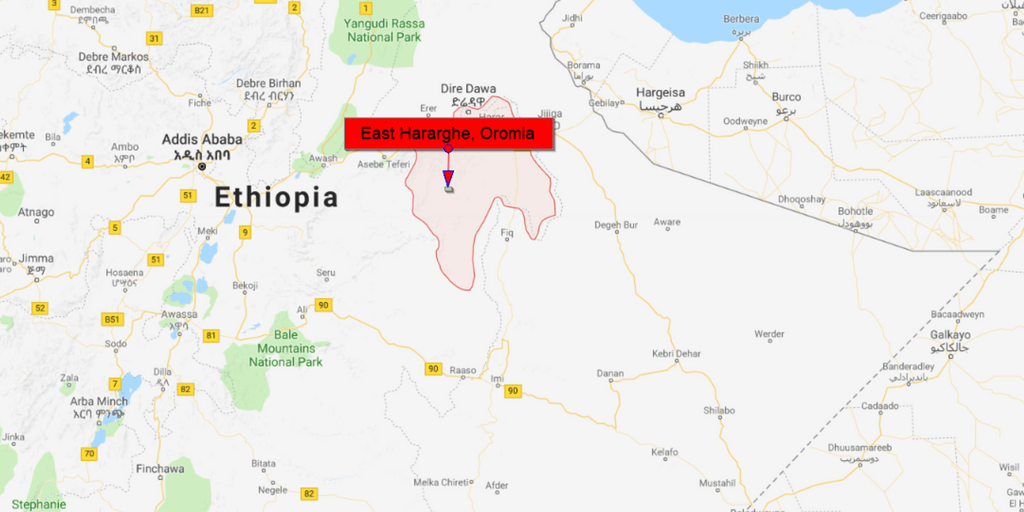


 ‘Inside Boss,’ the expose written in 1981 by former BOSS spy, Gordon Winter, just one of many people Winnie put her trust in, only to be badly betrayed. Image source
 Winnie Mandela standing in front of her home in Orlando West, September 1970, the day of The Terrorist Act Trial. Nineteen of those accused of terrorism were acquitted, by Mr. Justice Viljoen. Image source
 Geographical location of Brandfort: the site of Winnie’s eight year banishment Image source
 Winnie Madikizela-Mandela, Chris Hani and Tokyo Sexwale present at a rally in South Africa Image source
 Winnie Mandela, wearing her khaki slacks, helps bereaved comrades carry the coffin of an apartheid victim. PETER MAGUBANE Image source
 Joyce Mananki Seipei and Jerry Richardson, Johannesburg, 1997 Image source
 James “Stompie” Seipei, the 14 year old child who was brutally kidnapped and murdered by the Mandela United Football Club, with Winnie herself directly implicatedImage source
 Walter Sisulu, Nelson, Winnie, Albertina Sisulu and the Mandela family Image source
 with Julius Malema and Cyril Ramaphosa at her 80th birthday celebrations at the Mount Nelson Hotel on 13th September 2016 Image source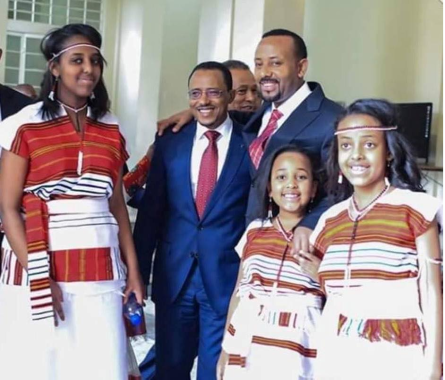


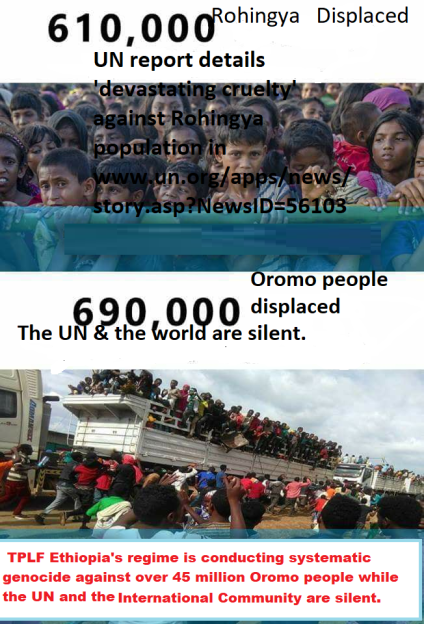






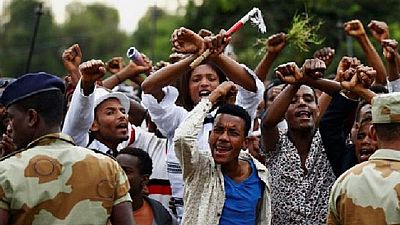


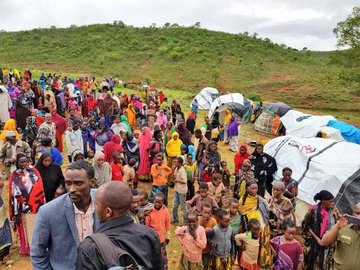
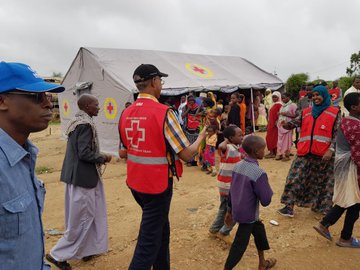
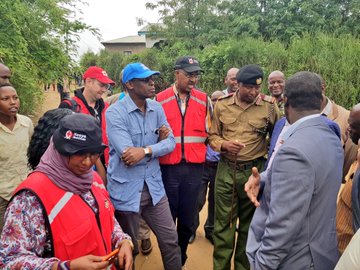
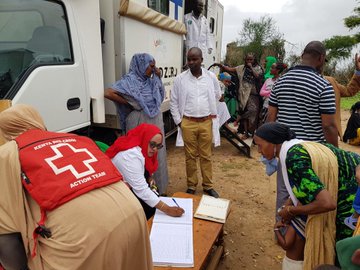


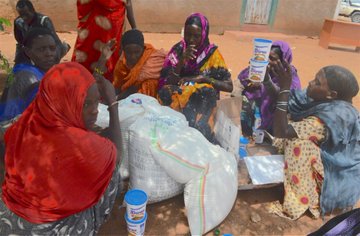
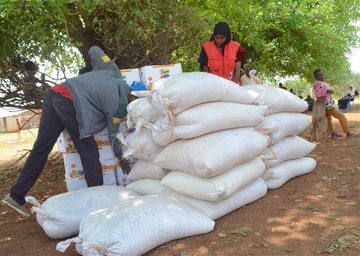
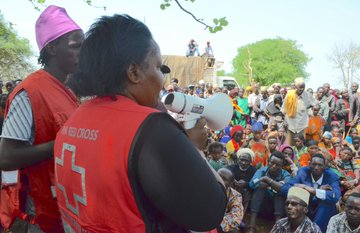
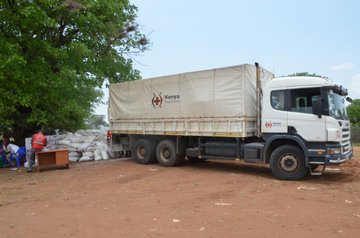



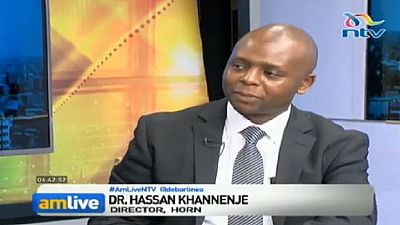



 ) as *Oromia Broadcasting Netwrok (OBN), which is the regional state’s broadcaster! (I didnt make that mistake, my fingers did).




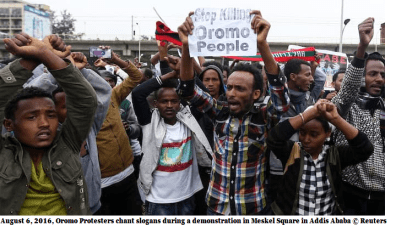
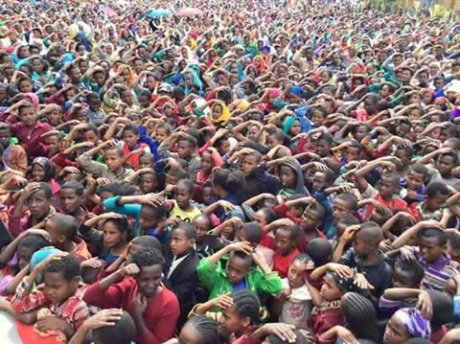
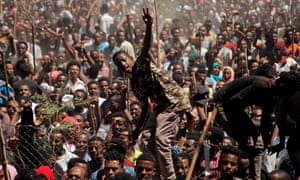
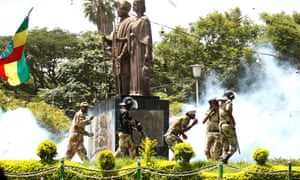
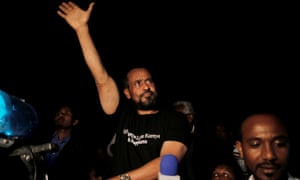
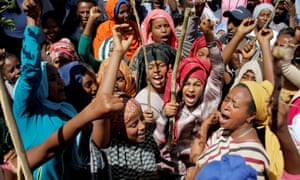


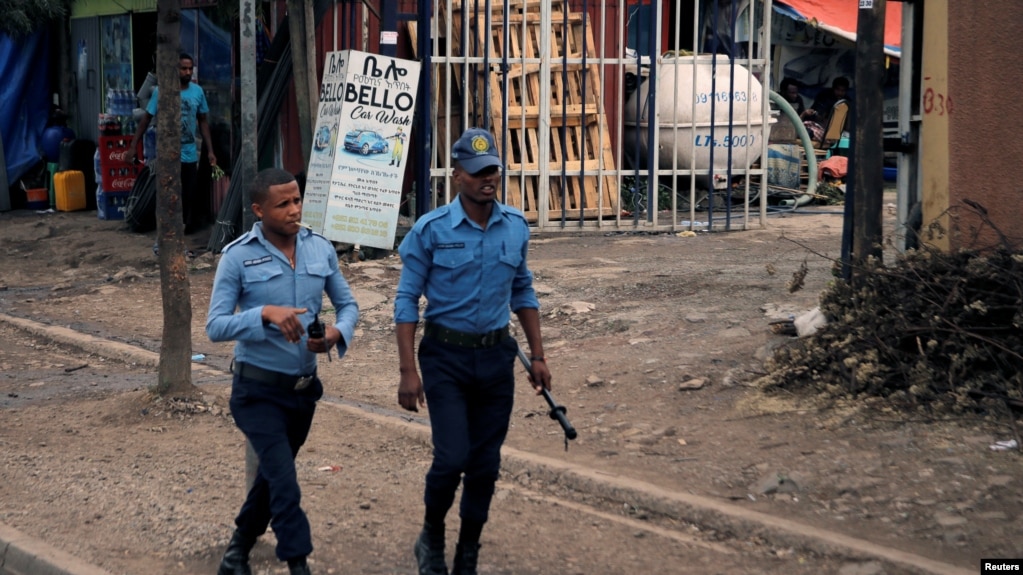

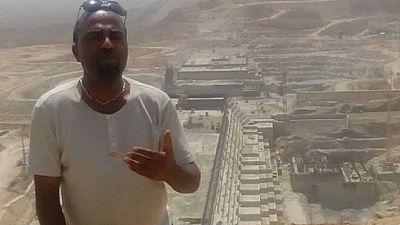

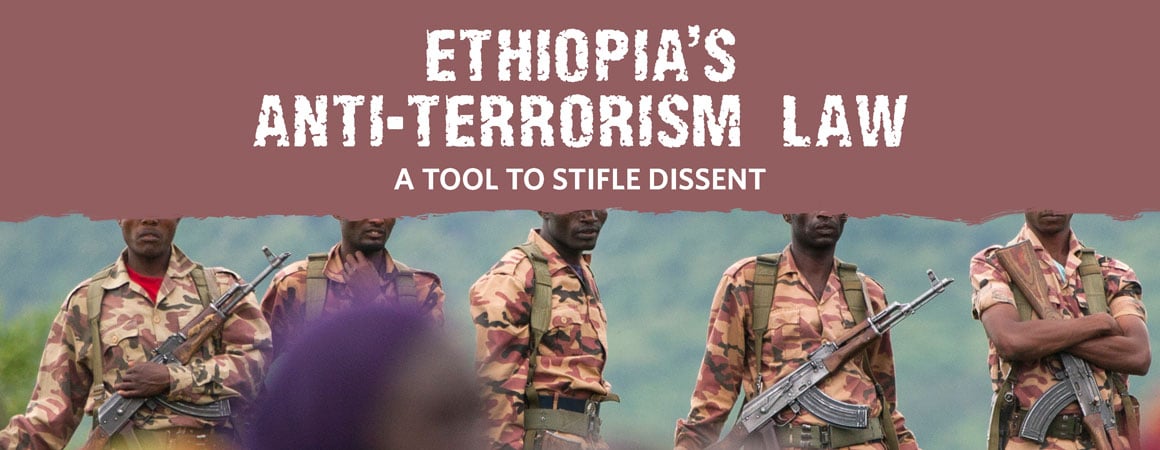






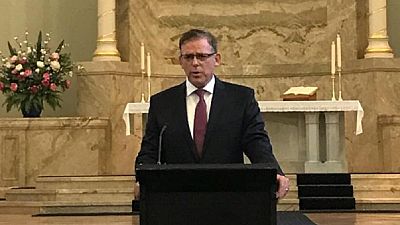


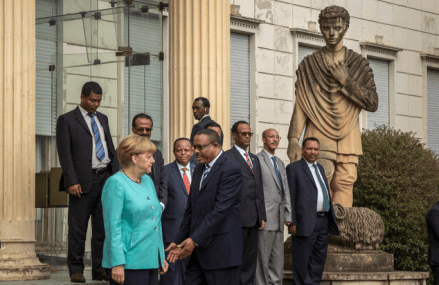
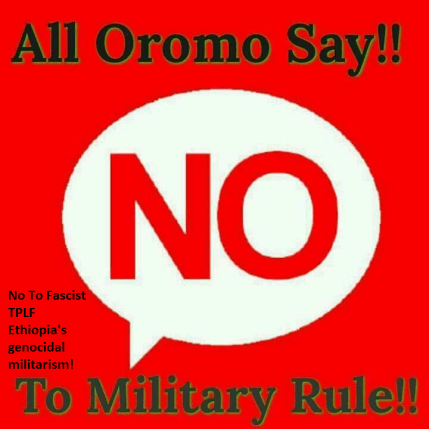

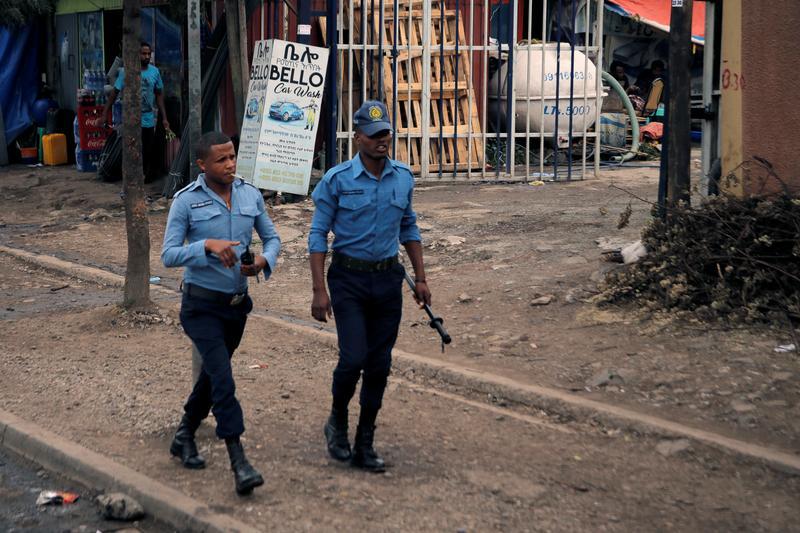


 Oromian Economist
You must be logged in to post a comment.