Economic and development analysis: Perspectives on economics, society, development, freedom & social justice. Leading issues in Oromo, Oromia, Africa & world affairs. Oromo News. African News. world News. Views. Formerly Oromia Quarterly
When it comes to eliminating poverty, the degree to which the benefits of growth are shared can have a significant impact on outcomes. According to Martin Ravallion, the former head of research at the World Bank, as cited in The Economist, a 1% increase in incomes in the most unequal countries produces a mere 0.6% reduction in poverty; however in the most equal countries, it yields a 4.3% cut. In other words, societies can get much more ‘bang from a boom’ if they ensure benefits are more widely shared.This brings us to the point at which trickle-down theory ends and inclusive growth begins. According to the Organisation for Economic Cooperation and Development (OECD), inclusive growth is “a new approach to economic growth that aims to improve living standards and share the benefits of increased prosperity more evenly across social groups”.Inclusive growth refers to both the pace and pattern of growth, which are considered interlinked and therefore need to be addressed together. Inclusiveness represents equality of opportunity in terms of access to markets, resources and an unbiased regulatory environment for businesses and individuals. In a nutshell, it is not just about the quantity of growth within our economies and societies, but also about its quality.
Ethiopia ranked 126 out of 142 countries on a new prosperity index, and 137th in a sub-category that measures Entrepreneurship & opportunity. The index ranked Ethiopia 132nd in education.
The index was released by the London based The Legatum Institute on 2nd November 2015. According to the institute, the index assesses how prosperous an economy is based on more than just macroeconomic factors – it also takes into account wellbeing. Using rigorous research and in-depth analysis, the Index ranks countries based on their performance in eight sub‐indices—Economy, Entrepreneurship & Opportunity, Governance, Education, Personal Freedom, Health, Safety & Security and Social Capital.
The Index assesses 142 countries, representing more than 96% of the world’s population and 99% of the world’s GDP.
The latest ranking has named Norway as the world’s most prosperous economy. Norway topped the list for the seventh consecutive year. Along with Norway, three other Scandinavian countries (Denmark, Sweden, and Finland) made the top 10, and Iceland (another Scandinavian country) coming in at number 12, behind the United States, in the top 20.
Ethiopia ranks 126, coming in at 17 of the bottom 20 least most prosperous countries. Ethiopia is ranked between Nigeria (125th) and Republic of Congo (127). The bottom 20 nations are mostly sub Saharan African countries, with the exception of countries like Afghanistan (141), Syria (136), Yemen (135), Pakistan (130), and Iraq (123).
The least prosperous nation of all the 142 nations sampled for the second year in a row is the Central African Republic.
In terms of specific sub categories of performance, the following countries were ranked number 1 in the world:
1. Economy: Singapore
2. Entrepreneurship& Opportunity: Sweden
3. Governance: Switzerland
4. Education: Australia
5. Health: UnitedStates
6. Safety & Security: HongKong
7. PersonalFreedom: Canada
8. SocialCapital: NewZealand
See interactive rankings table in the following link:-
“…UN now warning that without action some “15 million people will require food assistance” next year, more than inside war-torn Syria. ….Hardest-hit areas are Ethiopia’s eastern Afar and southern Somali regions, while water supplies are also unusually low in central and eastern Oromo region.” Unicef
Millions hungry as Ethiopia drought bites
(Unicef, News24, October 22, 2015): The number of hungry Ethiopians needing food aid has risen sharply due to poor rains and the El Nino weather phenomenon with around 7.5 million people now in need, aid officials said on Friday.
That number has nearly doubled since August, when the United Nations said 4.5 million were in need – with the UN now warning that without action some “15 million people will require food assistance” next year, more than inside war-torn Syria.
“Without a robust response supported by the international community, there is a high probability of a significant food insecurity and nutrition disaster,” the UN Office for the Coordination of Humanitarian Affairs, OCHA, said in a report.
The UN children’s agency, Unicef, warns over 300 000 children are severely malnourished.
The Famine Early Warning Systems Network (FEWS NET), which makes detailed technical assessments of hunger, predicted a harvest “well below average” in its latest report.
“Unusual livestock deaths continue to be reported,” FEWS NET said. “With smaller herds, few sellable livestock, and almost no income other than charcoal and firewood sales, households are unable to afford adequate quantities of food.”
Ethiopia, Africa’s second most populous nation, borders the Horn of Africa nation of Somalia, where some 855 000 people face need “life-saving assistance”, according to the UN, warning that 2.3 million more people there are “highly vulnerable”.
El Nino comes with a warming in sea surface temperatures in the equatorial Pacific, and can cause unusually heavy rains in some parts of the world and drought elsewhere.
Hardest-hit areas are Ethiopia’s eastern Afar and southern Somali regions, while water supplies are also unusually low in central and eastern Oromo region.
Sensitive issue
Food insecurity is a sensitive issue in Ethiopia, hit by famine in 1984-85 after extreme drought.
Today, Ethiopia’s government would rather its reputation was its near-double-digit economic growth and huge infrastructure investment – making the country one of Africa’s top-performing economies and a magnet for foreign investment.
Still, nearly 20 million Ethiopians live below the $1.25 poverty line set by the World Bank, with the poorest some of the most vulnerable to weather challenges.
Ethiopia’s government has mobilised $33m in emergency aid, but the UN says it needs $237m.
Minster for Information Redwan Hussein told reporters at a recent press conference that Ethiopia is doing what it can.
“The support from donor agencies has not yet arrived in time to let us cope with the increasing number of the needy population,” he said.
Drought, food crisis and Famine in Ethiopia 2015: Children and adults are dying of lack of food, water and malnutrition. Animals are perishing of persisting drought. The worst Affected areas are: Eastern and Southern Oromia, Afar, Ogaden and Southern nations.
The tale of two countries (Obama’s/TPLF’s Ethiopia and Real Ethiopia): The Oromo (Children, Women and elders) are dying of genocidal mass killings and politically caused famine, but Obama has been told only rosy stories and shown rosy pictures.
Despite growth averaging more than 5% a year since the turn of the century, sub-Saharan Africa’s economies remain largely noncompetitive: only three of the region’s countries – Mauritius (46th), South Africa (49th) and Rwanda (58th) three – rank in the top half of the 2015-2016 edition of the Global Competitiveness Index, and they occupy 15 of the bottom 20 places.
In general, the region has made progress in efficiency-enhancing market reform, especially in goods market, but has much more to do to improve its institutions, infrastructure, and health and education sectors, all areas in which reforms will take time to reap benefits. With a coming youth bulge – by 2035, more people will be reaching working age in sub-Saharan Africa than in the rest of the world put together – the need to improve education systems is especially urgent.
The recent fall in commodity prices, putting more pressure on many countries in the region, has also accentuated the need to prioritize competitiveness-enhancing reforms.
Mauritius. Although still the top-ranked country in sub-Saharan Africa, Mauritius dropped seven places to 46th (out of 140) in the overall rankings this year – the first fall down the Index after a decade of improvements. This is accounted for important drops in three of the 12 pillars (overall six pillars are losing places) on which the Index is based, labour market efficiency, financial market development and market size. Still, some fundamentals remain strong: Mauritius has the region’s most efficient goods market, best infrastructure and most healthy and educated workforce. To move further up the development ladder it particularly needs to improve the quality of higher education, the rate at which it adopts new technologies and its capacity to nurture innovation.
South Africa. Moving in the opposite direction to Mauritius, South Africa climbs seven places to 49th. It has improved year-on-year in its uptake of ICTs and established itself as the region’s most innovative economy. South Africa also tops the region for the efficiency of its financial markets, a pillar on which it ranks 12thglobally. It performs reasonably strongly on the pillars of infrastructure and institutions, although corruption and security remain concerns, but needs to make progress on health and education.
Rwanda. Advancing four places for the second year in a row, Rwanda’s overall position of 58th reflects improvements in the financial development pillar – especially regulation of securities exchanges – and business sophistication. It scores 8thglobally for labour market efficiency, thanks in part to the third-highest female labour participation rate in the world, and 17th globally for the strength of its public and private institutions. However, improvements are needed in some fundamental areas of competitiveness including infrastructure, health and higher education.
Botswana. Up three places to 71st, Botswana posts a top-10 score globally for the stability of its macroeconomic environment. It also boasts relatively strong rankings on institutions and labour market efficiency. Despite some improvements in the last year, however, the health and primary education pillar remains its weakest, with the impact of HIV/AIDS and tuberculosis contributing to the second-lowest life expectancy among the 140 economies surveyed.
Namibia. Advancing for the third year in a row, Namibia gains three places to rank 85th in the global Index. It registered year-on-year improvements in nine of the 12 pillars, most notably business sophistication and innovation – albeit from a low base. It improved its score on its strongest pillar, institutions, but slipped back on its weakest, health and primary education; as in Botswana, tuberculosis and HIV/AIDS remain among the biggest concerns.
Cote d’Ivoire. Leaping 24 places in the last year alone to reach 91st in the overall Index, Cote d’Ivoire has now progressed 40 places in the last three years. It has improved year-on-year on every pillar except for the macroeconomic environment, posting its biggest gains in areas such as innovation, financial market development and institutions – all pillars on which it scores in the top half globally. Despite progress also in health and primary education and higher education and training, they remain its weakest area.
Zambia. Although occupying the same position in the Index as last year, 96th, Zambia has noticeably progressed on some pillars while regressing on others. It has improved its score on macroeconomic stability, for example, with progress on the government budget balance – albeit from a low base – and public debt. However, it drops heavily on the pillars of business sophistication, goods market efficiency and financial market development.
Seychelles. Despite being considerably wealthier than the seven countries in the region that rank as more competitive, the Seychelles loses ground for the third year in a row, dropping five places to 97th overall. The country’s competitiveness is held back by a small market size, scoring bottom globally on this pillar. However, it still ranks in the top half globally on seven of the 12 pillars, with its strongest performances coming on infrastructure (2nd best in the region) and labour market efficiency. It also does well on technological readiness (71st, although low performing second in regional comparison).
Kenya. After two years of forward movement in the Index, Kenya slips nine places to 99th with regressions on three pillars in particular: goods market efficiency, financial market development and institutions. Corruption remains the top concern about doing business in the country, according to executives who took part in a survey which forms part of the Index calculations. Despite the decline, financial market development remains one of Kenya’s three strongest pillars, along with innovation and labour market efficiency; its weakest are the macroeconomic environment and, despite a small improvement in the last year, health and primary education.
Gabon. Improving slightly to 103rd overall, Gabon’s main strength is its macroeconomic environment, which is rated among the world’s top 20 thanks to a positive budget balance and low levels of government debt, reflective of its resource-driven economy. However, this is the only pillar on which Gabon ranks in the top half globally, and it ranks among the world’s bottom 20 on four pillars: goods market efficiency, higher education and training, business sophistication and innovation. To diversify its economy, it needs to invest in productivity-enhancing reforms across the board.
Here is an insightful video interview with Cambridge economist Ha-Joon Chang, exploring three ideas from his very readable book ’23 Things They Don’t Tell You About Capitalism’.
Economic growth is not fundamentally important. For example, perfect egalitarian societies like many hunter-gatherer clans or the Hakka societies occupying the Fujian Tulou could experience zero economic growth and still be absolutely fine as long as they maintain the same standard of living from year to year.
Economic growth becomes far more important for backward societies that function off of hypocritical elitism, oppression, enforced poverty, and some form of forced labour. These are the qualities of inverse civilization which includes all slave-making civilizations.
Within slave-making societies, the easiest and most convenient position is to be a slave-maker. As long as you force others to work and keep others constantly oppressed, you get to climb to elite ranks, don’t have to do much work yourself and can get away with it because everybody else is so tired and desperate for any crumb you throw at them that they can’t rebel against you.
Shiller, a behavioral economist, closely tracks investors’ feelings about the market. He believes that emotions can hold the key to market movements. When I saw Shiller late last week for an interview about his new book on the economics of deception (“Phishing for Phools,” written with Fed Chair Janet Yellen’s husband George Akerlof), he told me more investors are worried that the market is over-valued than at any time since the peak of the dotcom bubble in 2000.
“Interest rates have been at zero” for a long time, says Shiller. “The economy has been viewed as sluggish, and yet [corporate] earnings have been growing and prices have been growing at a rapid pace.” That kind of “irrational exuberance,” says Shiller, is exactly what bubbles are made of.
So, why haven’t we seen a major sell-off, one more lasting than the dip we saw a few weeks back, after which the markets quickly rebounded? Because, says Shiller, investors are caught between two dueling narratives about the market.
First, there’s the “New Normal,” story, which is that we’re in a period of low interest rates that will last a long time, and that’s what’s kept markets up. This creates a sense of unease that our recovery isn’t real, but has somehow been genetically modified by central bankers.
“The aggressive monetary policy, which developed as kind of a new approach to managing [the economy] and was largely international, brought us these very low interest rates,” says Shiller. What’s more, “long rates are low, which represents some kind of public attitude that this [new normal] is going to go on for a long time.” As I have written many times, long periods of easy money always create bubbles. Meanwhile, says Shiller, “there’s another not so commonly-raised factor in connection with understanding the market: concern about inequality, which is rising, and also related to that a concern about information technology replacing jobs.”
Both of those things add to the sense that there is bad news lurking underneath those seemingly strong corporate earnings data of the last several years. That makes investors jittery.
But there’s another narrative. America is still the prettiest house on the ugly block that is the global economy. Where else can people park their money, if not in U.S. blue chips? Shiller adds that the growing sense that bad news may be looming can also “encourage people to accept high prices for houses and the stock market because they need to have something for the future.” Rising markets are supported by investors and consumers whoneed them to rise, because it makes them feel richer. “And they’re not going to say, “Oh, this price is too high, I’m going to consume this,” says Shiller. Rather, they accept the higher and higher asset prices – until they don’t anymore. That’s when the bubble bursts.
Those two dueling narratives may be one reason that markets have been volatile of late. People who hold equities have earned a lot of money — the stock market has gone way up. You could conclude, says Shiller, “I’ve got so much money, let’s go on a cruise! Let’s have a lark.” That sentiment drives consumer spending at the higher level. “But maybe you don’t because you’re worried. You have the sense that [things could change] — or maybe you’re worried about your children,” says Shiller. “In 20 or 30 years, I don’t know what they’re going to be doing. I’m just worried. Or maybe they’ll be doing horribly. So let’s keep that stock.” That in turn buoys markets. It’s a somewhat bipolar cycle that fits with the level of volatility we’ve seen all this year, which is much higher than last.
So what happens now? At some point, the market will receive some important new signal. It could be a rate hike from the Fed this week. Or it could be another raft of bad news from China. At that point, we’ll likely see another sell-off. The question then is whether it becomes a stampede. There’s no metric that will answer that question for sure. Emotions, as much as data, hold the key to what the markets will do. No wonder Shiller won the Nobel for saying as much.
“The alienated consciousness is correlative with a money economy. Its root is the compulsion to work. This compulsion to work subordinates man to things, producing at the same time confusion in the valuation of things and devaluation of the human body. It reduces the drives of the human being to greed and competition… The desire for money takes the place of all genuinely human needs. Thus the apparent accumulation of wealth is really the impoverishment of human nature, and its appropriate morality is the renunciation of human nature and desires – asceticism. The effect is to substitute an abstraction, Homo Economicus, for the concrete totality of human nature, and thus to dehumanize human nature. In this dehumanized human nature man loses contact with his own body, more specifically with his senses, with sensuality and with the pleasure-principle. And this dehumanized human nature produces an inhuman consciousness, whose only currency…
In the midst of fastest growth hype and official statistical lies, Ethiopia has been plagued by high rocketed prices for basic goods, intensive and chronic shortages in all sectors of economy. This is the situation of TPLF ( fascist government and monopoly) controlled economy experiencing declining production (supply deficit) relative to citizens demand for basic necessities. In dealing with bureaucratic corruption that tinkers with distribution, citizens are experiencing long queue (disutility) in cities for basic goods for which very limited supply is available. They may be approved or disapproved to get access to the purchase by TPLF local cadres decisions. It has been reported that Ethiopia’s rural areas are in catastrophic famine. Widespread shortages, spiraling inflation and famine are fueling humanitarian crisis.
This is the Ethiopian capital Addis Ababa (Finfinne) where the population of the early morning standing in long lines under the blazing sun (Sunday August 2015) for the purchase of sugar and oil. Cars, children, women, old and adult, all are in never ending line. Source: http://www.ayyaantuu.net/addis-ababa-this-is-eleven-percent-yearly-growth-in-ethiopia-endless-lines-for-sugar/
Although the grievances voiced differed from country to country and from region to region, the belief that the incumbent economic and political system was characterised by inequity and injustice was common to all.
If we are to avoid large-scale societal upheavals in this ultra-connected world, government, business and civil society must come together to rework the current economic system to serve all of humanity rather than just an elite few.
– Fergus Simpson, The Guardian
Widening inequality gap proof of outdated growth model
We need to rework the current economic system to serve all of humanity rather than an elite few, writes Xyntéo’s Fergus Simpson
January saw leading figures from business, government and civil society gather at the World Economic Forum in Davos. A broad spectrum of subjects were debated, including the prospect of a legally binding climate change agreement in Paris this December, Ebola and the nefarious advance of the Islamic State in Mesopotamia. I was particularly encouraged to see one topic keep cropping up – the crisis of burgeoning disparities in wealth.
In a report released in the runup to Davos, Oxfam predicted that within two years the richest 1% of people will have accumulated more wealth than the remaining 99%. The same study found that the wealth of the richest 80 billionaires has continued to increase since 2010, while the wealth of the poorest half has decreased over the same time period. The gap between the haves and the have-nots is growing.
History has taught us that there are moments when people rise up to make a point and say that enough is enough and times must change.
On 25 January 2011, the world witnessed one such moment – pro-democracy protesters occupied Tahrir square in Egypt’s capital, Cairo, demanding self-determination, equality of opportunity and freedom from the shackles of tyranny and oppression. Some 17 long days of demonstrations and civil disobedience followed, bringing the moribund autocracy of longtime Egyptian president Hosni Mubarak to an end.
This event formed part of a much broader social movement that swept across North Africa and the Middle East, toppling sclerotic regimes and corrupt dictators. Before long people in Spain, Greece, the UK and US took to the streets as well. Although the grievances voiced differed from country to country and from region to region, the belief that the incumbent economic and political system was characterised by inequity and injustice was common to all.
And it isn’t just the poor who have been affected – the middle classes have also borne the burden of mushrooming inequalities. Companies have tended to become more productive since the 1970s, but the incomes of middle class workers have remained largely static. Returns from higher productivity have tended to go to owners and investors, not to the workers.
In many ways, inequality has become the defining issue of our time. The popular uprisings that shook the Arab world at the start of this decade were just symptoms of this most elemental of societal ills.
Fortunately, there is no reason to suppose this state of affairs is inevitable.
A promising step forward was announced at Davos, when Ajay Banga, CEO of GLTE partner MasterCard, and Donald Kaberuka, president of the African Development Bank, revealed that they intend to collaborate to foster inclusive growth in Africa.
The MasterCard Labs for Financial Inclusion, funded by an $11m (£7.24m) grant from the Bill and Melinda Gates Foundation, aims to enable more people to access banking services – generating greater equality of opportunity across the world, in developed and developing countries alike. The initiative will soon begin operations in Nairobi, Kenya, and aims to reach over 100 million people globally.
Technological advancements can support the implementation of projects designed to promote inclusive growth, such as the MasterCard Labs for Financial Inclusion. Digital innovations in payment systems and social media, for example, have enabled people to access markets, ideas and information to an extent that is unprecedented in human history.
Indeed, it has been said that the Egyptian revolution started when Whael Ghonim, a marketing executive at Google, saw the bloodied remains of Khaled Mohamed Said – a young man bludgeoned to death by the Egyptian police – pictured on Facebook. Incensed by the injustice that confronted him, Whael created the Facebook page “Kullena Khaled Said” – “We Are All Khaled Said”. Three months later 250,000 people had joined the page. Just one year later the Mubarak regime was no more.
If we are to avoid large-scale societal upheavals in this ultra-connected world, government, business and civil society must come together to rework the current economic system to serve all of humanity rather than just an elite few.
At Xyntéo, we are convinced that the current growth model has become out of date – incapable of meeting the demographic, climate and resource demands of today. Together with our partners, we believe that global business, with its clout, resources and energy, is uniquely placed to overcome this challenge. To us this means reinventing the current growth model so it brings prosperity to much larger numbers of people.
In fact, my standard advice to graduate students these days is “go to the computer science department and take a class in machine learning.” There have been very fruitful collaborations between computer scientists and statisticians in the last decade or so, and I…
The western media and its sponsors have gone to great lengths to present Ethiopia as a democratic nation whose economy is growing by “double digits”. The suffering Ethiopian people know better but have been muffled and prevented from expressing their aspirations and dreams by a minority mercenary regime. Over the last decade, Ethiopia has been hailed as the “fastest growing non-oil economies” in Africa, maintaining a double-digit annual economic growth rate. Ethiopia’s Gross Domestic Product may have grown (court is still out on that) but according to Simon Kuznets, “the welfare of a nation can scarcely be inferred from a measure of national income.” The measure was never intended as much more than a useful accounting device.
Reports on Ethiopia’s GDP say:
“…For the past 10 years, the country has registered an average 10.9 real GDP (Gross Domestic Product) growth rate and this trend has shown us that the country…
“Politics is at the heart of Africa’s energy crisis. The continent’s power utilities are notoriously inefficient. This is partly down to mispricing and underinvestment. But it’s also because utilities are vehicles for political patronage and, in some cases, institutionalised theft.” “The sheer scale of Africa’s energy deficit often fuels a sense of fatalism and paralysis. Yet on the flipside of this crisis are enormous opportunities. Sub-Saharan Africa has some of the world’s most abundant and least exploited renewable energy sources, especially solar power. With the price of solar panels plunging, there are opportunities for firms and governments to connect millions of poor households to affordable small-scale, off-grid systems. This would help the poorest most.” The Guardian, 5 June, 2015.
Rap-artist Akon smacks that kerosene out of Africa, with solar academy
By Sam Parkinson, RenewEconomy Free Daily Newsletter, 4 June 2015
If you haven’t heard any of Akon’s music such as his hit Smack That, you may missed the pun in the headline, and you may have also done yourself a service (depending on your music taste). However, it is outside of music that Akon is really helping humanity. Having already set up his Lighting Africa initiative, Akon, 42, is now setting up a solar academy in Mali, and will enlist the assistance of European solar technicians and experts to supply training programs, equipment and guidance. Solektra International is to partner on the project. The solar academy will teach students how to install and maintain solar powered electricity systems and microgrids. “We have the sun and innovative technologies to bring electricity to homes and communities,” said Akon Lighting Africa co-founder Samba Baithily. “We now need to consolidate African expertise.” “We expect the Africans who graduate from this center to devise new, innovative, technical solutions,” added Niang. “With this academy, we can capitalize on Akon Lighting Africa and go further.” Akon’s Lighting Africa scheme is present in 14 African countries and continues to expand in an effort to help subsidise the cost of installing solar on households who want to switch from the polluting kerosine lamps (which are currently used by almost 250 million people in Africa without electricity), to solar energy. Read more at: http://reneweconomy.com.au/2015/rap-artist-akon-smacks-that-kerosene-out-of-africa-with-solar-academy-85077
Solar power to the people: how the sun can ease Africa’s electricity crisis
The scale of the continent’s energy deficit often fuels a sense of fatalism and paralysis. Yet on the flipside of this crisis are enormous opportunities
A solar panel on a roof in Guinea-Bissau. Sub-Saharan Africa has some of the world’s most abundant and least exploited renewable energy sources, especially solar power. Photograph: WestEnd61/Rex
“We shall make electric light so cheap that only the wealthy can afford to burn candles,” said Thomas Edison, inventor of the modern lightbulb. That was almost a century and a half ago. Today in Africa, 621 million people – two-thirds of the population – live without electricity. And the numbers are rising. A kettle boiled twice a day in the UK uses five times as much electricity as someone in Mali uses in a year. Nigeria is one of the world’s biggest oil exporters but 93 million residents depend on firewood and charcoal for heat and light. On current trends, there is no chance Africa will hit the global target of energy for all by 2030.
Sudanese refugees stand around solar stoves during a training session in Iridimi camp, north-eastern Chad. Photograph: Corbis
Unlike droughts, health epidemics and illiteracy, Africa’s energy crisis seldom makes the headlines. Yet the social, economic and human costs are devastating. Inadequate and unreliable electricity undermines investment. Power shortages cut economic growth by 2-4% annually. The toxic fumes released by burning firewood and dung kill 600,000 people a year – half of them children. Health clinics are unable to refrigerate life-saving vaccines and children are denied the light they need to study. Politics is at the heart of Africa’s energy crisis. The continent’s power utilities are notoriously inefficient. This is partly down to mispricing and underinvestment. But it’s also because utilities are vehicles for political patronage and, in some cases, institutionalised theft. Some $120m went missing from the Tanzanian state power utility last year through a complex web of offshore companies. The sheer scale of Africa’s energy deficit often fuels a sense of fatalism and paralysis. Yet on the flipside of this crisis are enormous opportunities. Sub-Saharan Africa has some of the world’s most abundant and least exploited renewable energy sources, especially solar power. With the price of solar panels plunging, there are opportunities for firms and governments to connect millions of poor households to affordable small-scale, off-grid systems.
This would help the poorest most. The latest Africa Progress Panel report, published this week, estimates that 138 million households living on less than $2.50 a day spend $10bn annually on energy-related products, including charcoal, candles and kerosene. Measured on a per-unit cost basis, these poor households pay 60-80 times more for energy than people living in London or Manhattan. Off-grid solar power could slash these costs, releasing resources for productive investment, health and education, driving down poverty and raising life expectancy. If you think this is a pipedream, think again. Bangladesh has installed more than 3.5m off-grid solar power systems, and the figure is set to double over the next few years. The key to success? Financial and technical support from government, allied to new business models. In Africa, a vibrant off-grid solar industry is poised for takeoff. The only thing missing in most countries is government action to support, encourage and enable this investment. Supporting the development of large-scale renewable energy is not just the right thing to do for Africa. It is also the smart thing to do on climate change. One of the symptoms of Africa’s energy poverty is the destruction of forests to produce charcoal for rising urban populations: fewer trees means the loss of vital carbon sinks.
Small-scale solar energy can provide millions of people with a first step on the energy ladder. But it cannot in the medium term fill the energy void left by large-scale utilities. African governments must aim for an annual growth rate in power generation of 10% a year for the next two decades – about five times current levels. Countries such as Ethiopia, Kenya and Rwanda have demonstrated this is possible. Both have simultaneously increased public investment while attracting large-scale foreign investment. Aid donors can help by providing bridging loans and helping to reduce risk.
Throughout history electricity has fuelled the growth that has created jobs, cut poverty, and improved the quality of life. Now, almost 150 years after Edison developed the lightbulb, it is time to spark an African energy revolution. We lack neither the finance nor the technologies to do so: all that’s needed is the vital connection of international cooperation and political will.
Kevin Watkins, director of the Overseas Development Institute, is lead author of the 2015 Africa Progress Panel report, Power, People, Planet.
In its literal definition, the term development is generally understood to mean an intentionally conceived course of action that aims to realize the full potential of a given population. Though previously the notion of planned development was largely confined to communist countries, it now seems to have drawn some attention across the board.
Probably, the reason why the word has attracted attentions outside the communist block was partly due to the phenomenal success registered with US Marshal Plan and “Reverse Course” program to rehabilitate the war-torn Europe and Japan respectively in the aftermath of World War II.
Later on, several attempts have been made to replicate the success of the aforementioned planned development interventions in most developing countries after they won their political independence. Nevertheless, unlike the European and Japanese case, an all-out success with planned development in many of the developing countries, with the exception of a handful of Asian and Latin American countries, had remained until very recently quite a distant dream.
To the contrary, the net outcome of long years of planned development interventions in many of these countries for the most part ended in creating unbridgeable income gap between the rich and the poor, pervasive poverty, environmental degradation, chronic political dictatorship, civil wars, insecurity and instability.
The ever changing economic models and strategies which these countries have opted to on various occasions such as economic growth approach, centrally planned socialist economy, growth and transformation plan, structural-adjustment program, poverty alleviation program, participatory development and all that could well be symptomatic of the crisis of planned development in the past decades.
Of course, in speaking the adoption of a development model, it is worth noticing that there may be several internal and external factors that directly or indirectly impact the choice made by a given country. The competing major international ideological orientations, the fashionable development discourses, the leverage and influence of hegemonic powers, the influence of global financial and economic institutions, bilateral and multilateral diplomatic relationships between and among countries and the political and ideological orientations of the powers that be are to mention but a few.
Be that as it may, in this article I would like to argue about Ethiopia’s adoption of the ‘developmental state’ ideology that can largely be attributed to the incumbent’s political interest to mend legitimacy crisis and carry on with its repressive rule. And for this to happen it has apparently resorted to different political strategies as briefly discussed below.
Mystifying development
One of the biggest lessons learned from the failure of the first ever attempted ‘economic growth’ model that sought only to enhance the national economic wealth of the nation – GDP – was that a true and sustainable development must give due attention to all-round development which includes, among others, the economic, social, moral, intellectual and spiritual needs and demands of the larger population.
Subsequently, this has led to the new concept of an inclusive, participatory and human-centered development that has found wide currency since the 1980s. Such concepts of development also compel the need to make citizens active and conscious actors in a development process that ultimately determines their destiny.
Contrary to this, what is now transpiring in Ethiopia largely looks a full-blown psychological campaign to instill false-consciousness among the people by elevating the notion of development to a mystique and idol stature. The intention behind this clearly lies in making people unconscious and unquestioning actors who would readily submit to everything that comes in the name of development.
Consider the unrelenting media propaganda which scarcely misses mentioning development in the course of the day. Now, each and every government initiation comes wrapped with the tag of development. While a view or an action that aligns with the government would soon receive the honorific title of ‘developmental’, in contrast, any dissenting view or action would quickly be admonished as ‘anti-development’. In short, observing how the term development is used today in Ethiopia, probably one gets the impression that it might have acquired a new meaning which approximates something ‘sacred’.
Just imagine for a moment what a message of a sticker commonly put on the door of a soon-to-be-demolished shop that reads, “Sealed for Development Purpose” implicitly implies. In this connection, it is also worth to recall the occasion some years back when the top religious leaders had appeared on the public media to ‘consecrate’ the “Great Renaissance Dam” whereby they pronounced any non-consenting gesture towards the construction of the dam to be viewed as a kind of blasphemy that deserves some sort of admonition.
When people attempt to make the things that they themselves have created an object of worship, in the Marxist economic discourse, it is often said to be a form of fetishism. Thus, the unrelenting effort that the Ethiopian government has been waging supposedly to mystify and idolize the notion of development could be none other than “development fetishism”.
Development as a pretext
One major reason for instilling the attitude of “development fetishism” among the people seems to lie in the government’s ambition of attaching itself with a rather eye-catching infrastructural and building construction activities now underway in the country irrespective of its effect on the living realities of the ordinary mass and thereby portray itself as an indispensable actor without which Ethiopia’s development would be impossible to think of.
In this regard, it’s worth looking back at the circumstances that led the government to proclaim the status of ‘developmental state’ some few years back. Apparently, the government switched to the idea of ‘developmental state’ following the infamous 2005 election when it lost its credibility with the larger public. Furthermore, it was followed by the time when it kept itself busy with issuing some draconian laws. From this it follows that the declaration of ‘developmental state’ was but a tacit act of openly installing an authoritarian system.
After all, the notion of ‘developmental state’ is often associated either with those Asian countries with a communist political system or naked authoritarian regimes that have clung to power for so long, except Japan.
Evidently, all the messages and actions that now emanate from the ruling party in connection with the upcoming election also well signify how the ruling part is determined to use development as an excuse to cling to power indefinitely without any serious contender. Ironically, all this is not only against the unrelenting rhetoric of democracy and freedom but also in flagrant contradiction to the spirit of the constitution that itself has given birth to.
Fought for the sake of development or justice?
While proclaiming the status of developmental state which is in many ways repressive, the present day rulers seem to have forgotten why in the first place they had fought a bitter war against the former repressive regime, the Dergue. Surely, it was not so much for the sake of primarily economic development as it was for social justice.
As a matter of fact, development – especially that of material and physical – is just one among many other important duties and functions that a just government is required to carry out. This is not to say, however, for poor countries like ours the issue of development is not an imperative one. Yet, to promote development at the expense of justice, the rule of law, freedom and democratic rights, which in fact are crucial for sustainable development, presumably by virtue of being a ‘developmental state’ is very much unbecoming of such a sort of government.
Above all, the essence of a truly democratic government lies in its commitment to advance the freedom and democratic right as well as the welfare and security of its citizens. Indeed, the prime difference between authoritarian and democratic government rests on the fact that in the latter such great questions as development that evidently bears great stake in the life of people are to be decided not by whims and illusions of an individual or a group of tyrannical rulers but by well-informed, rational needs and demands of the larger citizens. Certainly, no thoughtful and rational government would attempt to reduce citizens to be blind worshipers of an idol that is created for political purpose. As the eminent classical sociologist Emile Durkheim had put it, “A healthy political system requires good faith and the avoidance of force and fraud. It requires, in a word, justice.” Ed’s Note: The writer can be reached at tayesosa@yahoo.com
Ethiopia ranks at 115 out of 124 countries in the ‘Human Capital Index’ because of its poor performance on educational outcomes, says the Human Capital Report 2015 issued by the World Economic Forum (WEF).
The index is dominated by European countries with two countries from the Asia and Pacific region and one from the North America region also making it into the top 10.
Finland topped the ranking of the Human Capital Index in 2015, scoring 86% of its human capital, followed by Norway, Switzerland, Canada and Japan.
Sweden, Denmark, the Netherlands, New Zealand and Belgium also seized the places in the top 10 list. Ethiopia scored 50.25 out of 100.
The leaders of the index are high-income economies that have placed importance on high educational attainment and a correspondingly large share of high-skilled employment.
The World Economic Forum (WEF) released the Human Capital Report 2015 in Geneva, Switzerland on Thursday 14 May 2015.
The WEF prepared the report in collaboration with Mercer, an American global human resource and related financial services consulting firm.
The report elaborates the status of different countries across the world on the Human Capital Index and provides key inputs for policy makers to augment capacities of human capital in 124 countries it has surveyed.
In the index, WEF highlighted Ethiopia’s scarcity of skilled employees, poor ability to nurture talent through educating, training and employing its people.
“Talent, not capital, will be the key factor linking innovation, competitiveness and growth in the 21st century,” said WEF Executive Chairman Klaus Schwab releasing the report at a news conference in Cologny, near Geneva, Switzerland.
In sub-Saharan Africa, Mauritius (72) holds the highest position in the region. While another six countries rank between 80 and 100, another 17 countries from Africa rank below 100 in the index. South Africa is in 92nd place and Kenya at 101. The region’s most populous country, Nigeria (120) is among the bottom three in the region, while the second most populous country, Ethiopia, is in 115th place. With the exception of the top-ranked country, the region is characterized by chronically low investment in education and learning.
Except Yemen (40.7) all the 10 poorest performers are African Countries: Ethiopia (50.25), Burkina Faso (49.22), Ivory Coast ( 49.02), Mali (48.51), Guinea (48.25), Nigeria (48.43), Burundi (46.76), Mauritania (42.29) and Chad (41.1).
The countries are ranked on the basis of 46 indicators that track “how well countries are developing and deploying their human capital focusing on education, skills and employment”.
The index takes a life-course approach to human capital, evaluating the levels of education, skills and employment available to people in five distinct age groups, starting from under 15 years to over 65 years. The aim is to assess the outcome of past and present investments in human capital and offer insight into what a country’s talent base will look like in the future.
Within a week, Ethiopians were hit with a quadruple whammy. On April 19, the Libyan branch of the Islamic State in Iraq and the Levant (ISIL) released a shocking video purporting to show the killings and beheadings of Ethiopian Christians attempting to cross to Europe through Libya. This came only days after an anti-immigrant mob in South Africa killed at least three Ethiopian immigrants and wounded many others. Al Jazeera America reported that thousands of Ethiopian nationals were stranded in war-torn Yemen. And in the town of Robe in Oromia and its surroundings alone, scores of people were reportedly grieving over the loss of family members at sea aboard a fateful Europe-bound boat that sank April 19 off the coast of Libya with close to 900 aboard.
These tragedies may have temporarily united Ethiopians of all faiths and ethnic backgrounds. But they have also raised questions about what kind of desperation drove these migrants to leave their country and risk journeys through sun-scorched deserts and via chancy boats.
The crisis comes at a time when Ethiopia’s economic transformation in the last decade is being hailed as nothing short of a miracle, with some comparing it to the feat achieved by the Asian “tigers” in the 1970s. Why would thousands of young men and women flee their country, whose economy is the fastest growing in Africa andwhose democracy is supposedly blossoming? And when will the exodus end?
After the spate of sad news, government spokesman Redwan Hussein said the tragedy “will be a warning to people who wish to risk and travel to Europe through the dangerous route.” Warned or not, many youths simply do not see their dreams for a better life realized in Ethiopia. Observers cite massive poverty, rising costs of living, fast-climbing youth unemployment, lack of economic opportunities for the less politically connected, the economy’s overreliance on the service sector and the requirement of party membership as a condition for employment as the drivers behind the exodus.
A 2012 study by the London-based International Growth Center noted (PDF) widespread urban unemployment amid growing youth landlessness and insignificant job creation in rural areas. “There have been significant increases in educational attainment. However, there has not been as much job creation to provide employment opportunities to the newly educated job seekers,” the report said.
One of the few ISIL victims identified thus far was expelled from Saudi Arabia in 2013. (Saudi deported more than 100,000 Ethiopian domestic workers during a visa crackdown.) A friend, who worked as a technician for the state-run Ethiopian Electricity Agency, joined him on this fateful trek to Libya. At least a handful of the victims who have been identified thus far were said to be college graduates.
Given the depth of poverty, Ethiopia’s much-celebrated economic growth is nowhere close to accommodating the country’s young and expanding population, one of the largest youth cohorts in Africa. Government remainsthe main employer in Ethiopia after agriculture and commerce. However, as Human Rights Watch noted in 2011, “access to seeds, fertilizers, tools and loans … public sector jobs, educational opportunities and even food assistance” is often contingent on support for the ruling party.
Still, unemployment and lack of economic opportunities are not the only reasons for the excessive outward migration. These conditions are compounded by the fact that youths, ever more censored and denied access to the Internet and alternative sources of information, simply do not trust the government enough to heed Hussein’s warnings. Furthermore, the vast majority of Ethiopian migrants are political refugees fleeing persecution. There are nearly 7,000 registered Ethiopian refugees in Yemen, Kenya has more than 20,000, and Egypt and Somalia have nearly 3,000 each, according to the United Nations refugee agency.
As long as Ethiopia focuses on security, the door is left wide open for further exodus and potential social unrest from an increasingly despondent populace.
Ethiopians will head to the polls in a few weeks. Typically, elections are occasions to make important choices and vent anger at the incumbent. But on May 24, Ethiopians will be able to do neither. In the last decade, authorities have systematically closed the political space through a series of anti-terrorism, press and civil society laws. Ethiopia’s ruling party, now in power for close to 24 years, won the last four elections. The government has systematically weakened the opposition and does not tolerate any form of dissent.
The heightened crackdown on freedom of expression has earned Ethiopia the distinction of being the world’sfourth-most-censored country and the second leading jailer of journalists in Africa, behind only its archrival, Eritrea, according to the Committee to Protect Journalists.
There is little hope that the 2015 elections would be fundamentally different from the 2010 polls, in which the ruling party won all but two of the 547 seats in the rubber-stamp national parliament. The ruling party maintains a monopoly over the media. Authorities have shown little interest in opening up the political space for a more robust electoral contest. This was exemplified by the exclusion of key opposition parties from the race, continuing repression of those running and Leenco Lata’s recent failed attempt to return home to pursue peaceful political struggle after two decades of exile. (Lata is the founder of the outlawed Oromo Liberation Front, fighting since 1973 for the rights of the Oromo, Ethiopia’s marginalized majority population, and the president of the Oromo Democratic Front.)
A few faces from the fragmented and embittered opposition maybe elected to parliament in next month’s lackluster elections. But far from healing Ethiopia’s gashing wounds, the vote is likely to ratchet up tensions. In fact, a sea of youth, many too young to vote, breaking police barriers to join opposition rallies bespeaks not of a country ready for elections but one ripe for a revolution with unpredictable consequences.
Despite these mounting challenges, Ethiopia’s relative stability — compared with its deeply troubled neighbors Somalia, South Sudan, Eritrea and Djibouti — is beyond contention. Even looking further afield, across the Red Sea, where Yemen is unraveling, one finds few examples of relative stability. This dynamic and Ethiopia’s role in the “war on terrorism” explains Washington’s and other donors’ failure to push Ethiopia toward political liberalization.
However, Ethiopia’s modicum of stability is illusory and bought at a hefty price: erosion of political freedoms, gross human rights violations and ever-growing discontent. This bodes ill for a country split by religious, ethnic and political cleavages. While at loggerheads with each other, Ethiopia’s two largest ethnic groups — the Oromo (40 percent) and the Amhara (30 percent) — are increasingly incensed by continuing domination by Tigreans (6 percent).
Ethiopian Muslims (a third of the country’s population of 94 million) have been staging protests throughout the country since 2011. Christian-Muslim relations, historically cordial, are being tested by religious-inspired violence and religious revivalism around the world. Ethiopia faces rising pressures to choose among three paths fraught with risks: the distasteful status quo; increased devolution of power, which risks balkanization; and more centralization, which promises even further resistance and turmoil.
It is unlikely that the soul searching from recent tragedies will prompt the authorities to make a course adjustment. If the country’s history of missed opportunities for all-inclusive political and economic transformation is any guide, Ethiopians might be in for a spate of more sad news. As long as the answer to these questions focuses on security, the door is left wide open for further exodus and potential social unrest from an increasingly despondent populace.
*Hassen Hussein is an assistant professor at St. Mary’s University of Minnesota.
According to the World Bank, companies held by business group the Endowment Fund for the Rehabilitation of Tigray (EFFORT) account for roughly half of the country’s modern economy. The group is closely allied with the ruling Ethiopian People’s Revolutionary Democratic Front (EPDRF), an alliance of four parties.
EFFORT is a conglomerate formed from assets collected in 1991 by the EPRDF to rehabilitate the Tigray region in northern Ethiopia after it had been decimated by poverty and conflict. The Tigray People’s Liberation Front (TPLF) is the lead party in the EPDRF coalition.
Tigrayans, however, only account for eight percent of the country’s 90 million people. According to Abebe Gellaw, an exiled Ethiopian journalist and founder of Addis Voice, a web platform that provides news that is otherwise censored by the Ethiopian government, EFFORT has become a business racket for the Tigrayan elite who are monopolising major sources of the country’s wealth.
“The TPLF controls key government institutions and a significant portion of the economy. For over 15 years, EFFORT has been used by the TPLF to channel public resources and funds to the coffers of the TPLF through illegal deals, contracts, tax evasion, kick-backs and all sorts of illegal operations,” he told IPS.
Azeb Mesfin, Zenawi’s widow, currently manages the multi-billion-dollar business empire.
She claims her husband paid himself a modest salary of 250 dollars a month, yet the online website “the Richest.org”, which publishes the net worth of the richest people in the world, recently divulged that Meles was in fact one of Africa’s wealthiest leaders having amassed a personal fortune of three billion dollars.
(Africa cradle, Finfinnee/London) – Ethiopia may be one of the fastest-growing, non-oil producing economies in Africa in recent years, but corruption in this Horn of Africa nation is a deterrent to foreign investors looking for stable long-term partnerships in developing countries.
“Bankers, miners and developers presenting projects to investment committees in countries that fare badly in corruption rankings frequently struggle to get investment. Corruption raises red flags because it makes local markets uncompetitive, unpredictable and therefore largely hostile to these long-term players,” Ed Hobey, the East Africa analyst at the political risk firm Africa Risk Consulting, told us.
On May 11, in the biggest crackdown on corruption in Ethiopia in the last 10 years, authorities arrested more than 50 high profile people including government officials, businessmen and a minister.
Melaku Fanta, the director general of the Revenue and Customs Authority, which is the equivalent rank of a minister, his deputy, Gebrewahid Woldegiorgis, and other officials were apprehended on suspicion of tax evasion.
But the arrests have raised questions about the endemic corruption at the heart of the country’s political elite.
Berhanu Assefa of the Federal Ethics and Anti-corruption Commission of Ethiopia told us that these arrests highlighted how corruption has insinuated itself into the higher levels of officialdom.
“Corruption is a serious problem we are facing. We now see that corruption is occurring in higher places than we had previously expected. Areas vulnerable to corruption are land administration, tax and revenue, the justice system, telecommunications, land procurement, licensing areas and the finance sector,” he said.
Ethiopia ranks 113 out of 176 countries on the Corruption Perceptions Index of Transparency International, a global civil society coalition that encourages accountability. The country has also lost close to 12 billion dollars since 2000 to illicit financial outflows, according to Global Financial Integrity (GFI), whose statistics are based on official data provided by the Ethiopian government, the World Bank, and the International Monetary Fund (IMF).
Dr. Getachew Begashaw, a professor of economics at Harper College in the United States, told IPS that there was a fear that the recent high profile arrests were merely political theatre designed to placate major donors such as the World Bank and the IMF, and to give credibility to the new regime’s fight against corruption. Prime Minister Hailemariam Desalegn took over leadership of the country after Prime Minister Meles Zenawi died in August 2012.
“They are using this as a PR stunt to appease not only the donors, but to also dupe the Ethiopian people. Because many non-party affiliated Ethiopians in the business community are complaining, and this complaint is trickling down to the average people on the streets,” he told IPS.
According to the World Bank, companies held by business group the Endowment Fund for the Rehabilitation of Tigray (EFFORT) account for roughly half of the country’s modern economy. The group is closely allied with the ruling Ethiopian People’s Revolutionary Democratic Front (EPDRF), an alliance of four parties.
EFFORT is a conglomerate formed from assets collected in 1991 by the EPRDF to rehabilitate the Tigray region in northern Ethiopia after it had been decimated by poverty and conflict. The Tigray People’s Liberation Front (TPLF) is the lead party in the EPDRF coalition.
Tigrayans, however, only account for eight percent of the country’s 90 million people. According to Abebe Gellaw, an exiled Ethiopian journalist and founder of Addis Voice, a web platform that provides news that is otherwise censored by the Ethiopian government, EFFORT has become a business racket for the Tigrayan elite who are monopolising major sources of the country’s wealth.
“The TPLF controls key government institutions and a significant portion of the economy. For over 15 years, EFFORT has been used by the TPLF to channel public resources and funds to the coffers of the TPLF through illegal deals, contracts, tax evasion, kick-backs and all sorts of illegal operations,” he told IPS.
Azeb Mesfin, Zenawi’s widow, currently manages the multi-billion-dollar business empire.
She claims her husband paid himself a modest salary of 250 dollars a month, yet the online website “the Richest.org”, which publishes the net worth of the richest people in the world, recently divulged that Meles was in fact one of Africa’s wealthiest leaders having amassed a personal fortune of three billion dollars. This has led many to question the provenance of the erstwhile leader’s wealth – when he had no known business engagements.
Illicit financial flows as a result of corruption are a major hindrance to a country’s development, undermining institutions, economies and societies. According to the Africa Progress Panel’s Africa Progress Report 2013, the continent is losing more through illicit financial outflows than it receives in aid and foreign direct investment.
A commitment to greater accountability and transparency to curtail illicit financial flows should occur on both the national and international levels, according to E. J. Fagan, deputy communications director at GFI.
“Reforms and policies are needed to strengthen customs enforcement and make governing apparatuses more transparent. The international community can create a multilateral system of automatic exchange of tax information that African countries like Ethiopia can access, so as to make it difficult for illicit actors to hide money and transfer large amounts of illicit money without detection,” he told IPS.
Begashaw added that corruption in the social sphere also breeds social inequality, disenfranchisement and a breakdown in national unity and civil society.
“The very existence of parastatals and TPLF-affiliated endowed business conglomerates like EFFORT is a major source of corruption. The Birr (Ethiopian currency) will depreciate and inflation will skyrocket. The capacity of the state to provide public goods and services will decline. Free market competition will be eroded. Government revenue will be reduced and the budget deficit will rise.
“If they are really serious about combating corruption, they should start doing so from the top,” he said.
‘So yes, the media manipulates people into buying things they think they need to become someone they think they should be, but that is not the only way consumerism exists. We are just as easily manipulated by other people and by what is “normal” for our class – or our perceived class – in society. And of course, we always have a choice. The magazine or TV advertisement doesn’t force you off the couch and to the bank to extend your credit card limit, and drag you mercilessly to the nearest mall to purchase that iPhone you need to live . . . so next time your credit card maxes out, don’t be too quick to blame the media and advertising. It’s just as likely something (or someone) closer to home has planted and nourished that seed of consumerism inside you. And even that doesn’t have the final say, you do – so stop blaming the media and the rest of the world, and learn to budget, folks!’
Consumerism can be defined as the creation of material needs in order to swipe money off the unsuspecting consumer. It blurs the line between a need and a want, and companies all around the globe use it, via the media (TV, radio, print media etc.), to manipulate us into thinking we need their products. We will be happier, smarter, more beautiful, more popular . . . you get the picture. But do you want to know the really sad part? It nearly always works. That’s the common perception, anyway.
But is it that simple?
Consumerism is a current anxiety trend regarding contemporary media practices. And rightfully so – media practices promoting consumerism do have detrimental effects on society. Think of all the photo-shopped models in magazines. This is done to convince a person they will be of equal beauty or social status if they purchase the product the model is advertising, without the advertisement actually saying so (because…
10 of the Richest (and Poorest) Countries in the World
wallstcheatsheet.com
When politicians and motivational speakers are trying to excite and inspire an audience, they’ll often talk about America as “the land of opportunity,” or as the most “powerful nation in the world.” And, while these sentiments absolutely hold some degree of truth, America is by no means number one on every chart, wiping the floor with every other nation in every area.
Several other developed nations rank higher than America in regards to medical care, and even education. In terms of wealth, we’re among the wealthiest nations, but we’re certainly not number one in that area either. Using data from The World Bank, we’ve created a list of some of the richest and poorest nations in the world.
These lists are based on each country’s GDP per capita. That is, the sum value of the all of the finished goods produced within a country during a certain time period (often a year), divided by each country’s middle-of-the-year population. To provide a bit of perspective, we’ve included information on the cost to rent a small furnished apartment in some of these places as well.
10 of the richest countries in the world (ranked in order based on their GDP per capita)
Rank
Nation
GDP Per Capita (PPP) in USD
Monthly rent for a 900-square-foot furnished apartment in an expensive area
1
Luxembourg
$110,697.00
$2,260 (in Luxembourg)
2
Norway
$100,818.50
$2,539 (in Olso)
3
Qatar
$93,714.10
$3,353 (in Doha)
4
Macao SAR, China
$91,376.00
$1,864 (in Macao)
5
Switzerland
$84,815.40
$3,506 (in Zurich
6
Australia
$67,458.40
$2,358 (in Sydney)
7
Sweden
$60,430.20
$2,088 in (Stockholm)
8
Denmark
$59,831.70
$2,206 in (Copenhagen)
9
Singapore
$55,182.50
$3,750 (in Singapore)
10
United States
$53,042.00
$4,208 (in New York City)
sources: Expatistan and The World Bank
10 of the poorest countries in the world (ranked in order based on their GDP per capita)
Biofuels Are Not a Green Alternative to Fossil Fuels
by Andrew Streer* and Craig Hanson**
Powering cars with corn and burning wood to make electricity might seem like a way to lessen dependence on fossil fuels and help solve the climate crisis. But although some forms of bioenergy can play a helpful role, dedicating land specifically for generating bioenergy is unwise. It uses land needed for food production and carbon storage, it requires large areas to generate just a small amount of fuel, and it won’t typically cut greenhouse gas emissions.
First, dedicating areas to bioenergy production increases competition for land.
Roughly three-quarters of the world’s vegetated land is already being used to meet people’s need for food and forest products, and that demand is expected to rise by 70 percent or more by 2050. Much of the rest contains natural ecosystems that keep climate-warming carbon out of the atmosphere, protect freshwater supplies, and preserve biodiversity.
Because land and the plants growing on it are already generating these benefits, diverting land—even degraded, under-utilised areas—to bioenergy means sacrificing much-needed food, timber, and carbon storage.
Second, bioenergy production is an inefficient use of land.
While photosynthesis may do a great job of converting the sun’s rays into food, it is an inefficient way to turn solar radiation into non-food energy that people can use. Thus, it takes a lot of land (and water) to yield a small amount of fuel from plants. In a new working paper, WRI calculates that providing just 10 percent of the world’s liquid transportation fuel in the year 2050 would require nearly 30 percent of all the energy in a year’s worth of crops the world produces today.
The push for bioenergy extends beyond transportation fuels to the harvest of trees and other sources of biomass for electricity and heat generation. Some research suggests that bioenergy could meet 20 percent of the world’s total annual energy demand by 2050. Yet doing so would require an amount of plants equal to all the world’s current crop harvests, plant residues, timber, and grass consumed by livestock–a true non-starter.
Third, bioenergy that makes dedicated use of land does not generally cut greenhouse gas emissions.
Burning biomass, whether directly as wood or in the form of ethanol or biodiesel, emits carbon dioxide just like burning fossil fuels. In fact, burning biomass directly emits a bit more carbon dioxide than fossil fuels for the same amount of generated energy. But most calculations claiming that bioenergy reduces greenhouse gas emissions relative to burning fossil fuels do not include the carbon dioxide released when biomass is burned. They exclude it based on the assumption that this release of carbon dioxide is matched and implicitly offset by the carbon dioxide absorbed by the plants growing the biomass.
Yet if those plants were going to grow anyway, simply diverting them to bioenergy does not remove any additional carbon from the atmosphere and therefore does not offset the emissions from burning that biomass. Furthermore, when natural forests are felled to generate bioenergy or to replace the farm fields that were diverted to growing biofuels, greenhouse gas emissions go up.
That said, some forms of bioenergy do not increase competition with food or land, and using them instead of fossil fuels could reduce greenhouse gas emissions. One example is biomass grown in excess of what would have grown without the demand for bioenergy, such as winter cover crops for energy. Others include timber processing wastes, urban waste wood, landfill methane, and modest amounts of agriculture residues.
Using so-called second-generation technologies to convert material such as crop residues into bioenergy has a role to play and avoids competition for land. A challenge will be to do this at scale, since most of these residues are already used for animal feed or needed for soil fertility, and others are expensive to harvest.
There are good alternatives to bioenergy made from dedicated land. For example, solar photovoltaic (PV) cells convert sunlight directly into energy that people can use, much like bioenergy, but with greater efficiency and less water use. On three-quarters of the world’s land, solar PV systems today can generate more than 100 times the usable energy per hectare as bioenergy. Because electric motors can be two to three times more efficient than internal combustion engines, solar PV can result in 200 to 300 times as much usable energy per hectare for vehicle transport compared to bioenergy.
One of the great challenges of our generation is how the world can sustainably feed a population expected to reach 9.6 billion by 2050. Using crops or land for biofuels competes with food production, making this goal even more difficult.
The world’s land is a finite resource. As Earth becomes more crowded, fertile land and the plants it supports become ever more valuable for food, timber and carbon storage—things for which we don’t have an alternative source.
*Dr Steer is president of the WRI. **Hanson is the WRI’s global director of food, forest and water programmes
This blog post was originally published in The Guardian on January 29, 2015.
“For African farmers, what some are calling rising has been a sinking.
The sabotage of African economies by Africans is on the rise, be it through deficit theft, corruption or wars that never seem to end, our capacity to destroy our treasures and manpower is growing faster than our capacity to build them.
This definitely does not constitute rising, because:
You cannot rise when you do not have electricity to power your industries.
You cannot rise without technology or industries, not in the century, not ever.
You cannot rise with poor or not transport infrastructure.
You cannot rise when the majority of your people are sleeping on empty stomachs, raising malnourished children whose survival in the world is made uncertain by stunted development of their brains and bodies.
You cannot be rising if your share of profits from agricultural production is declining.
You cannot rise if you are busy wrecking your own economy through corruption, theft and other forms of sabotage
And you definitely cannot be rising if the environment and biodiversity that sustains life is dying in your hands.
So, what am I saying? I am not saying that Africa cannot rise, on the contrary, I am saying that Africa CAN rise but only if we work extra hard, understand the world we live in and take charge of our destiny.
I love the final quote from Mr. Annan “We should not mistake hope for achievement”. Given the situation in Africa at the moment, I am scared to think the some leaders if not all are complacent with where we are. To me, this is leadership WITHOUT vision. There are so many issue plaguing our continent right now ASIDE from diseases. The greatest illnesses that kill us are birthed from we, ourselves. Power hunger, greed, selfishness, hate, over zealous self ambition, a disgusting lack of humility and intense vanity.
Even though might be what we see at the moment, I see an Africa that is free from the above. An Africa that is led by people wanting to make a difference in the world and not in the depth of their pockets. The situation now is NOT what is will always be. However, for that to happen, WE, the fourth generation MUST stand up in belief for our Africa, pull up our socks and MAKE THINGS HAPPEN. What do you think?
No great nation was made by Wimps – You can quote me on that!”
Africa is not rising, survey shows. Research suggests that the boom benefits only a narrow elite while leaving the poor and unemployed behind.
Here is me picking up from where I left off with my Africa is NOT rising article which is a featured presentation from Mr. AlI Mfuruki from Tanzania. The presentation was done at a Tedx event late last year. This is in fact part 3 of a 3 series post dedicated to his presentation (Simply because his assessment of the “Africa rising” media propaganda was so relevant and accurate for anyone wanting to build the continent). In case you have not had the chance to go through the first 2 posts, here you go: Africa is NOT rising – Part I & Africa is NOT rising – Part II
This is the final post in this series. Mind you; Only once you had read the first 2 posts, will you be able to get the full gist of his presentation. Please go on and click the links above then come…
‘A Brief Introduction to NON-COOPERATIVE GAME THEORY – Like most really powerful ideas, the basic notion of Nash equilibrium is very simple, even obvious. Its mathematical extensions and implications are not, however. The idea of this natural “sticking point” is that no single player can benefit from unilaterally changing his or her move — a non-cooperative best-response equilibrium. Competitive Markets come to rest at Nash equilibrium, and the special structure of competitive markets makes them efficient. (As we will see in another game.) But it is important to recognize that MOST Nash-Equilibria are NOT efficient. What do we mean by not efficient? It’s just the idea of getting the “whole pie” — that if we’re really using the whole pie, then no one can get any more unless someone else takes less. That’s the economist’s basic idea of allocative efficiency. A famous game is called “Chicken,” named after a famous adolescent hot-rod ceremony from the United States of the 1950s. Say that Boeing and Airbus are both considering entering the jumbo jet market, but that because of increasing returns to scale and relatively low demand, there is only enough room for one of them. The game matrix (called the “normal form” of a game) could look like this. (This example is taken from an article by Paul R. Krugman, “Is Free Trade Passe?” in the Journal of Economic Perspectives, Fall 1987.)’
Game theorists use the Nash equilibrium concept to analyze the outcome of the strategic interaction of several decision makers. In other words, it provides a way of predicting what will happen if several people or several institutions are making decisions at the same time, and if the outcome depends on the decisions of the others. The simple insight underlying John Nash’s idea is that one cannot predict the result of the choices of multiple decision makers if one analyzes those decisions in isolation. Instead, one must ask what each player would do, taking into account the decision-making of the others.Nash equilibrium has been used to analyze hostile situations like war and arms races[2] (see prisoner’s dilemma), and also how conflict may be mitigated by repeated interaction (see tit-for-tat). It has also been used to study to what extent people with different preferences can cooperate (see battle of the sexes), and…
‘GDP is a highly inappropriate measure to gauge progress in Africa and moving beyond GDP will open up creative opportunities to fight poverty and achieve sustainable wellbeing. GDP does not capture informal economies, the contribution of subsistence farming, non-commercial agriculture and other localized forms of production and consumption. Through the introduction of new progress indicators that focus on human wellbeing, health and education, decent work and natural welfare, African countries may be encouraged to promote a different development paradigm . A networked economy, founded on localized forms of self-production and consumption would empower the millions of people that are at the moment left out of the apparent African economic miracle.’
‘Moreover, as an aggregate figure (or as an average, in the case of GDP per capita) it hides unequal distribution of income. Against this backdrop, it becomes clear that there are important structural reasons why one should be suspicious of the ‘Africa rising’ mantra. Most fastgrowing African economies are heavily dependent on exports of commodities. This means that when commodity prices drop at the global level, African economies languish. More dangerously, it means that the ‘growth’ we have seen in the past few years is largely the result of a statistical mirage. Most natural resources in Africa are not renewable: once they are taken out of the ground, they do not grow back. GDP does not measure the ‘loss’ of selling out the most precious resources African countries possess. What would the picture look like if such losses were deducted from GDP? The World Bank in 2013 adjusted net savings statistics, which subtracts natural resources depletion and environmental damage from national income, gives us the following: African countries have been reducing their wealth at the tune of 1.2% a year. Rather than growing, our continent’s economies have been shrinking.’
GSDR 2015 Brief How moving beyond GDP may help fight poverty in Africa
By Lorenzo Fioramonti*, University of Pretoria
The gross domestic product (GDP) is the world’s most powerful statistical measure. Its underlying economic principles have contributed to splitting the planet into two worlds: the ‘developed’ and the ‘developing’ countries and/or the North and the South. Paradoxically, the GDP mantra was imposed on poorer nations in spite of its creators’ conclusion that its approach should not be applied to countries largely dependent on informal economic structures, as these are not considered by income accounts, which are threatened by policies designed to increase GDP (Fioramonti 2013). The economist Simon Kuznets, one of the architects of the GDP system, is also known for having demonstrated how income inequality rises in times of fast GDP growth. His famous ‘curve’ shows how relative poverty is exacerbated, especially in under-industrialized countries, leading to a concentration of resources and income in the hands of a few. This brief makes the argument that GDP is a highly inappropriate measure to gauge progress, especially in the so-called developing world. It will therefore focus on Africa to show how moving beyond GDP may open up creative opportunities to fight poverty and achieve sustainable wellbeing. How the GDP measure is misleading Africa In May 2013, even the billionaire turned philanthropist Bill Gates, who is a fervent supporter of metric-driven approaches to development, publicly contested the validity of GDP: “I have long believed that GDP understates growth even in rich countries, where its measurement is quite sophisticated, because it is very difficult to compare the value of baskets of goods across different time periods,” but this problem is “particularly acute in Sub-Saharan Africa, owing to weak national statistics offices and historical biases that muddy crucial measurements” (Gates 2013). GDP does not capture informal economies, the contribution of subsistence farming, non-commercial agriculture and other localized forms of production and consumption (Jerven 2013). According to estimates published by the IMF in 2002, informal economies accounted for up to 44% of economic output in developing nations, 30% in transition economies, and 16% in the OECD countries (Schneider and Enste 2002), which fall outside the GDP net. Moreover, as an aggregate figure (or as an average, in the case of GDP per capita) it hides unequal distribution of income. Against this backdrop, it becomes clear that there are important structural reasons why one should be suspicious of the ‘Africa rising’ mantra. Most fastgrowing African economies are heavily dependent on exports of commodities. This means that when commodity prices drop at the global level, African economies languish. More dangerously, it means that the ‘growth’ we have seen in the past few years is largely the result of a statistical mirage. Most natural resources in Africa are not renewable: once they are taken out of the ground, they do not grow back. GDP does not measure the ‘loss’ of selling out the most precious resources African countries possess. What would the picture look like if such losses were deducted from GDP? The World Bank in 2013 adjusted net savings statistics, which subtracts natural resources depletion and environmental damage from national income, gives us the following: African countries have been reducing their wealth at the tune of 1.2% a year. Rather than growing, our continent’s economies have been shrinking. Sierra Leone has experienced net losses of about 20% of its entire GDP, Angola of 40%, Chad of 50% and the DRC of over 57%. The Bank confirms that “in poorer countries, natural capital is more important than produced capital,” thus suggesting that properly managing natural resources should become a fundamental component of development strategies, “particularly since the poorest households in those countries are usually the most dependent on these resources” (World Bank 2006: p. XVI). The real costs of GDP growth in Africa are the elephant in the room of the world’s economic debates. The current GDP paradigm sacrifices nature, which must be commoditized to become productive. It also neglects important components of the real economy, such as the informal sector, because they are not part of the formal market system. Policies that are designed to support GDP growth thus replace the informal (e.g. street vendors, subsistence farming, flea markets, family businesses, household production) with the formal (e.g. shopping malls, commercial farming, large infrastructure). While some can take advantage of this concentration of wealth, many are left behind. The OECD has confirmed the intimate link between rising inequality and GDP growth across the world (OECD 2011). This is further amplified in those countries where the informal economy provides a fundamental safety net to many poor households, as is the case throughout Africa. Why going ‘beyond’ GDP may create new opportunities The GDP model of growth privileges the formal at the expense of the informal, the big at the expense of the small. While complacent politicians, economists and the media celebrate Africa’s GDP ‘miracle’, there is another part of the continent rising. Disillusioned with the limited gains of market society, many Africans are raising their collective voices, whether through service delivery protests (as is the case in South Africa) or through permanent mobilizations (as we have seen in North Africa). This could very well be the beginning of a new era, in which more and more citizens repudiate an economic model that is losing traction also in the West, to explore new forms of human progress. Going beyond GDP in Africa may open a myriad of possibilities to redefine progress in the continent. Through the introduction of new indicators that focus on human wellbeing, health and education, decent work (rather than superficial counting of ‘employment’) and natural welfare, African countries may be encouraged to promote a different development paradigm. Various elements of Africa’s local cultures, from the widely heralded (and often abused) concept of Ubuntu to traditional experiences with cooperative schemes of production and consumption as well as communitydriven governance, may provide a fertile ground for localized and decentralized forms of development, in which enhancing human capabilities will overtake nominal income as the key objective of economic progress. Moreover, the abundance of solar energy should make it possible for entire communities to become energy independent through small-scale offthe-grid solutions, thus reinforcing a transition to a citizens-driven development model, rather than an economic paradigm based on exploitation of nature and mass consumption. A networked economy, founded on localized forms of self-production and consumption, in which the distinction between producers and consumers becomes increasingly fuzzier (this is a concept encapsulated in the idea of ‘prosumers’) would challenge the GDP conceptualizations of production and asset boundary, thus resulting in lower rates of nominal growth. Yet, it3 would empower the millions of people that are at the moment left out of the apparent African economic miracle. It would for instance allow for alternative forms of governance of natural resources, in which local communities would need to identify the best ways to interact with their ecosystems in a sustainable fashion, rather than resorting to the structural exploitation we have seen throughout the continent in times of state-led or market-driven accelerated growth. It would mean respecting the commons for what they are, rather than subjecting them to marketization and commodification as dictated by the GDP mantra.
* Lorenzo Fioramonti is the director of the Centre for the Study of Governance Innovation at the University of Pretoria, South Africa (www.governanceinnovation.org). He is one of the leading voices in the ‘Beyond GDP’ debate and the author of the bestselling books Gross Domestic Problem: The Politics Behind the World’s Most Powerful Number (2013) and How Numbers Rules the World: The Use and Abuse of Statistics in Global Politics (2014), both published by Zed Books. The views and opinions expressed are the authors’ and do not represent those of the Secretariat of the United Nations. Online publication or dissemination does not imply endorsement by the United Nations.
Money flows clockwise and goods flow counterclockwise.
Equilibrium is the point at which the demand and supply curve meet. If the market price is above this, there is a surplus. If it is below there is a shortage. Eventually the shortage and surplus will decrease and go back to equilibrium.
When there is a shortage, consumers bid the price up to comet for goods until the price goes back to equilibrium.
An increase of demand causes a shortage until equilibrium is reached at a higher price and quantity.
When there is a decrease in demand, there is a surplus. The excess goods decrease the price until a new equilibrium is reached.
A shift in supply and and demand causes a change in the quantity and price. One is always the indeterminate.
Price ceiling:
A price ceiling sets the maximum price that can be charged for a good, like rent control…
“The new battle for Africa does not deploy strong-arm tactics, it is now a soft power game: economic and humanitarian aid, interest-free loans, preferential trade agreements and investments in infrastructure are currency across a continent that is, for the world’s established and emerging powers, seemingly up for grabs.” Al Jazeera
“Some private-equity money is going into private health clinics and educational institutions such as universities. In much of the rich world, bringing the profit motive into public services is controversial; in Africa, where there is so much unmet need for such services, there is less of a taboo. In general, African entrepreneurs have begun to appreciate how private equity can help their businesses expand and, by improving such things as internal auditing and book-keeping, make them more robust. The rich world’s negative association of private equity with asset-stripping “vultures” does not apply here.” The Economist
Decades after the European powers carved up the African continent for their own imperial needs, Africa is undergoing a new wave of resource and strategic exploitation – some are calling it the new scramble for Africa.
The United States is increasing its footprint across Africa with AFRICOM, fighting terrorism and ensuring stability are the trumpeted motivations. Resource security is a more hushed objective.
But it is not just about the US.
During the last decade, China’s trade with Africa not only caught up with America’s, it has more than doubled it.
The new battle for Africa does not deploy strong-arm tactics, it is now a soft power game: economic and humanitarian aid, interest-free loans, preferential trade agreements and investments in infrastructure are currency across a continent that is, for the world’s established and emerging powers, seemingly up for grabs.
India, Brazil and Russia are all invested in Africa’s present and future, and old imperial powers like France are fixing to retain their loosening grip on the riches of former colonies.
So what does all this mean for Africa and Africans?
“The conventional public’s view of Central Banks is that a man walks into a bank and deposits money. Another man walks in and borrows it and the interaction of savings and borrowing with regard to risk and security form the rate of interest. IS-LM goes a bit further to explain this.
The reality – The Socialist Dictator Model. The Socialist Dictator is the Governor of the Central Bank. The Committee are the other board members. Together they ‘plan’ the interest rate for the entire country or continent i.e. ‘forward guidance’. Instruments; The Base Rate is short term market manipulation, Quantitative Easing is long term market manipulation. The Committee have the objectives of low, stable inflation and ‘financial stability’.”
ACROSS Africa, radio call-in programmes are buzzing with tales of Africans, usually men, bemoaning the loss of their spouses and partners to rich Chinese men. “He looks short and ugly like a pygmy but I guess he has money,” complained one lovelorn man on a recent Kenyan show. True or imagined, such stories say much about the perceived economic power of Chinese businessmen in Africa, and of the growing backlash against them.
China has become by far Africa’s biggest trading partner, exchanging about $160 billion-worth of goods a year; more than 1m Chinese, most of them labourers and traders, have moved to the continent in the past decade. The mutual adoration between governments continues, with ever more African roads and mines built by Chinese firms. But the talk of Africa becoming Chinese—or “China’s second continent”, as the title of one American book puts it—is overdone.
The African boom, which China helped to stoke in recent years, is attracting many other investors. The non-Western ones compete especially fiercely. African trade with India is projected to reach $100 billion this year. It is growing at a faster rate than Chinese trade, and is likely to overtake trade with America. Brazil and Turkey are superseding many European countries. In terms of investment in Africa, though, China lags behind Britain, America and Italy (see charts).
If Chinese businessmen seem unfazed by the contest it is in part because they themselves are looking beyond the continent. “This is a good place for business but there are many others around the world,” says He Lingguo, a sunburnt Chinese construction manager in Kenya who hopes to move to Venezuela.
A decade ago Africa seemed an uncontested space and a training ground for foreign investment as China’s economy took off. But these days China’s ambitions are bigger than winning business, or seeking access to commodities, on the world’s poorest continent. The days when Chinese leaders make long state visits to countries like Tanzania are numbered. Instead, China’s president, Xi Jinping, has promised to invest $250 billion in Latin America over the coming decade (see article).
The growth in Chinese demand for commodities is slowing and prices of many raw materials are falling. That said, China’s hunger for agricultural goods, and perhaps for farm land, may grow as China’s population expands and the middle class becomes richer.
Yet Africans are increasingly suspicious of Chinese firms, worrying about unfair deals and environmental damage. Opposition is fuelled by Africa’s thriving civil society, which demands more transparency and an accounting for human rights. This can be an unfamiliar challenge for authoritarian China, whose foreign policy is heavily based on state-to-state relations, with little appreciation of the gulf between African rulers and their people. In Senegal residents’ organisations last year blocked a deal that would have handed a prime section of property in the centre of the capital, Dakar, to Chinese developers. In Tanzania labour unions criticised the government for letting in Chinese petty traders.
Some African officials are voicing criticism of China. Lamido Sanusi, Nigeria’s former central bank governor, says Africa is opening itself up to a “new form of imperialism”, in which China takes African primary goods and sells it manufactured ones, without transferring skills.
After years of bland talk about “win-win” partnerships, China seems belatedly aware of the problem. On a tour of the continent, the Chinese foreign minister, Wang Yi, said on January 12th that “we absolutely will not take the old path of Western colonists”. Last May the prime minister, Li Keqiang, acknowledged “growing pains” in the relationship.
China has few political ambitions in Africa. It co-operates with democracies as much as with authoritarian regimes. Its aid budget is puny. The few peacekeepers it sends stay out of harm’s way. China’s corporatist development model has attracted few followers beyond Ethiopia and Rwanda. Most fast-growing African nations hew closer to Western free-market ideas. In South Sudan, the one place where China has tried to flex its diplomatic muscle, it has achieved embarrassingly little. Attempts to stop a civil war that is endangering its oil supply failed miserably.
Chinese immigrants in Africa chuckle at the idea that they could lord it over the locals. Most congregate in second-tier countries like Zambia; they are less of a presence in hyper-competitive Nigeria. Unlike other expatriates, they often live in segregated camps. Some thought, after a decade of high-octane engagement, that China would dominate Africa. Instead it is likely to be just one more foreign investor jostling for advantage.
Billionaires are getting richer, according to a new study from Oxfam. Gather together the wealth of the world’s richest people, and you now only need 80 of them before there’s enough in the pot to equal everything owned by the poorest 50% of the rest of the world combined. Back in 2010, you’d have needed 388 of the world’s richest to balance those scales.
The richest of the top 1%, the top billionaires on Forbes’ rich list, have seen their wealth accumulate faster over the last five years than even the rest of the super-rich, Oxfam said. In 2010, the richest 80 people in the world had a net wealth of $1.3 trillion. By last year, that was up to 1.9 trillion, an increase of $600 billion.
Together with the rest of the 1%, that group owned 48% of global wealth in 2014. That’s more uneven than in 2010, when they owned a little over 44%.
However, according to Oxfam’s data, we’ve been here before. Back in 2000, the 1% owned a higher percentage of global wealth than they do today. For a few years, the trend seemed to show that number falling, as the world’s poorest clawed some of it back. But in the past five years, that’s reversed.
Part of the problem, as identified by Oxfam, is that the rate of increase for the rich has speeded up, and it’s now so much higher than that for everyone else that it’s increasing the gap.
The 1% has entered parlance, but who’s included? And do they constitute a problem or an asset?
Who are these people?
With a world population of 7.2 billion, there are around 72 million people in the top 1%—not all of whom are billionaires. In 2014, there were 1,645 people listed by Forbes as being billionaires, with Bill Gates back at the top after a year off. Of these, 90% are male, and 30% are American. And there’s evidence they’ve been running the show for a long, long time.
Oxfam says not. In a campaign, the charity focuses on changes that could be made to the way global society is organized, including the eradication of extreme poverty and economic empowerment of women.
Why does it matter?
Economists like Dan Altman and Thomas Piketty argue that wealth inequality hampers growth and will only get worse in the future. Somehave argued that it could be a good thing. And many have blamed it for misery, hopelessness and, ultimately, violence.
Supply and demand is perhaps one of the most fundamental concepts of economics and it is the backbone of a market economy.
Market Economy is a system largely determined by free enterprise. It is a system in which decision regarding investment, production and distribution are based on supply and demand, and prices of goods and services are determined in a free market and free price system. Markets determines the allocation of resources and economic resources are privately owned.
Market is made up of people, consumers and entrepreneurs, attempting to buy and sell on the best term possible. Through the grouping process of give and take, they move from relative ignorance about others’ wants and needs to a reasonably accurate understanding of how much can be bought and sold at what price. The market function as an ongoing information and exchange system.
‘Economics is the study of choices we make among our many wants and desires given our limited resources. With unlimited resources we wouldn’t have to worry about scarcity.
Resources are inputs that we use to produce goods and services. These include Capital, Entrepreneurship, Land and Labor (CELL). Capital is the goods we make to produce other goods. Entrepreneurship are machines that are used to make products. Land is our natural resources and Labor is the human effort put into making products. Scarcity is defined as products that are desirable but limited. These cause us to change our decision and and give up opportunities that we value, this is known as the Economic Problem.’
Economics is the study of choices we make among our many wants and desires given our limited resources. With unlimited resources we wouldn’t have to worry about scarcity.
Resources are inputs that we use to produce goods and services. These include Capital, Entrepreneurship, Land and Labor (CELL). Capital is the goods we make to produce other goods. Entrepreneurship are machines that are used to make products. Land is our natural resources and Labor is the human effort put into making products.
Scarcity is defined as products that are desirable but limited. These cause us to change our decision and and give up opportunities that we value, this is known as the Economic Problem. Every person, worker and firms all face the Economic Problem. Consumers have to decide what to buy, save and how much of their money to invest. Workers have to decide where to work, what to do…
The global economy is still struggling to gain momentum as many high-income countries continue to grapple with the legacies of the global financial crisis and emerging economies are less dynamic than in the past. After rising marginally in 2014, to 2.6 percent, world GDP will grow by an estimated 3.0 percent in 2015 and 3.3 percent in 2016, supported by gradual recovery in high-income countries, low oil prices, and receding domestic headwinds in developing countries. Developing economies are expected to see an increase in growth from 4.4 percent in 2014 to 4.8 percent and 5.3 percent in 2015 and 2016, respectively. Lower oil prices will lead to sizeable real income shifts to oil-importing countries from oil-exporting ones. Risks to the global outlook remain tilted downwards. Weak global trade growth is anticipated to persist during the forecast period, potentially for longer than currently expected should the Euro Area or Japan experience a prolonged period of stagnation or deflation. Financial conditions could become volatile as high-income economies tighten monetary policy on diverging timelines. Rapid reassessment of risk could also be triggered by a spike in geopolitical tensions, bouts of volatility in commodity markets, or financial stress in major emerging market economies. Worryingly, the weak recovery in many high-income economies and slowdowns in several large emerging markets may be a symptom of deeper structural weaknesses.
Developing countries face significant policy challenges in an environment of weak global growth and considerable uncertainty. Fiscal buffers need to be rebuilt to ensure the effectiveness of fiscal policy in the future. Central banks need to balance policies to support growth against measures to stabilize inflation and currencies or to bolster financial stability. Progress on implementing structural reforms must be continued to boost long-term growth. The fragile global outlook makes the implementation of growth enhancing policies and structural reforms even more urgent to improve the odds of achieving the World Bank Group’s goal of ending extreme poverty by 2030.
The current juncture presents a window of opportunity for reform. The sharp decline in oil prices means that policymakers could implement subsidy and tax reforms to help rebuild fiscal space or finance better targeted pro-poor policies while removing distortions that hinder activity. The challenge now is for policymakers to seize this opportunity.
Kaushik Basu, Chief Economist and Senior Vice President
The World Bank
“A developed country is one, where all its people are literate, have respect for their fellow beings around them, have job security, medical insurance, a well planned and organized retirement for elderly, an organized system of operating private business, an organized system of security, both for individual, family, business and as well as society, and most importantly, a vision to develop with science.”
‘The world’s debt situation has become a gigantic Ponzi scheme that makes all others look like children trying to sell candy to a baby. So what is the world situation on oil supply? There is currently an excess of supply and a reduction in usage. China is no longer using oil at a burn rate that makes the Americans look like Sunday drivers. But that is not all that is happening. Commodity prices are falling greatly due to lack of demand. China is no longer building factories and cities that will never be used. Their demand for electrical production has been reduced through lack of industrial activity and gigantic construction projects. In the past ten years the play was in commodity speculation and boy did the speculators speculate, steal, even. Not that demand has collapsed the prices for raw commodities has collapsed with it. Australia is hurting and will suffer some severe economic reverses. Already mines are closing and layoffs appearing. Their housing bubble is bursting as it their job markets. And they are the only ones. Many developing countries are starting to see their trade with China decline. Right now China has become the middle man in the world markets. Where it once produced products using its own labor forces and factories, it has out sourced the unfinished parts to the various undeveloped countries where labor is still cheaper. But here in America we have seen a downturn in demand of goods coming from China.’
The WordPress.com stats helper monkeys prepared a 2014 annual report for this blog.
Here’s an excerpt:
The concert hall at the Sydney Opera House holds 2,700 people. This blog was viewed about 42,000 times in 2014. If it were a concert at Sydney Opera House, it would take about 16 sold-out performances for that many people to see it.
Most economists agree that Oil is considered to be a normal good, by normal we mean that as your income goes up you would buy more of that good, that is a basic definition. As oil prices fall you would expect that oil consumption would increase, however in the short-run that is not the case. Oil in fact is inelastic in the short run, inelastic means that its consumption is not sensitive to price. Companies still need to operate at the same rate to satisfy their operations and people still need to drive to get to work. It takes time for markets to adjust and people to change their way of living. The long run is a different topic by itself and is out of the scope of this post. You are not going to buy a 8 cylinder pick up after you hear oil fell this month are you?
We can then agree that oil consumption would not change in the short run. Now we can check the graph that I have made to illustrate a theoretical approach of what consumers are going through at this point of time.
Most economists agree that Oil is considered to be a normal good, by normal we mean that as your income goes up you would buy more of that good, that is a basic definition. As oil prices fall you would expect that oil consumption would increase, however in the short-run that is not the case. Oil in fact is inelastic in the short run, inelastic means that its consumption is not sensitive to price. Companies still need to operate at the same rate to satisfy their operations and people still need to drive to get to work. It takes time for markets to adjust and people to change their way of living. The long run is a different topic by itself and is out of the scope of this post. You are not going to buy a 8 cylinder pick up after you hear oil fell this month are you?
Consumerism is killing us softly. The catalyst is Advertising. Uniformed citizens are trapped in a vicious cycle. Their Achilles Heel is their illusion.
Advertising is the foundation of Mass Media and its primary purpose of Mass Media is to sell products. It also sells values, images, concepts of love and sexuality, of romance, of success and perhaps most important of normalcy: it tells who we are and who we should be.
Advertising reinforces a deceiving association between the consumer and happiness; it focuses on immediate and short term needs, diverges the focus from its bogus message, eliminates any discussion of the social & long-term needs, and leads into more squandered resources.
Common Scenario
When consumers visit the store to buy their brand, they definitely don’t ask who made that product and what resources were used. Unfortunately, some consumers are not aware that huge resources (human and natural) were wasted in the production process. The most common info they know is: Made in China.
Vicious Circle
Consumers associate with the utility and satisfaction that result from purchasing these products. However, what consumers fail to realize is that utility always decreases as the number of items/products purchased increases. And thus their satisfaction ceases to exist which would lead them into a state of emptiness, that is usually compensated by consuming more.
Awareness
Realizing that this bogus content can’t be integrated with their happiness might happen at a late stage. But hopefully not too late.
Consumerism is killing us softly. The catalyst is Advertising. Uniformed citizens are trapped in a vicious cycle. Their Achilles Heel is their illusion.
Advertising is the foundation of Mass Media and its primary purpose of Mass Media is to sell products. It also sells values, images, concepts of love and sexuality, of romance, of success and perhaps most important of normalcy: it tells who we are and who we should be.
Advertising reinforces a deceiving association between the consumer and happiness; it focuses on immediate and short term needs, diverges the focus from its bogus message, eliminates any discussion of the social & long-term needs, and leads into more squandered resources.
Common Scenario
When consumers visit the store to buy their brand, they definitely don’t ask who made that product and what resources were used. Unfortunately, some consumers are not aware that huge resources (human and natural) were wasted in the production process. The…
The AU Commissioner for Economic Affairs, Anthony Maruping, told journalists in Malabo on Monday that the Fund would work to correct balances of payment positions across Africa.
He said such positions were mainly caused by low export of commodities and high import volumes which exerted negative burden on currency stability.
The AMF would be established to basically help to tackle macro-economic matters in Africa, he added.
The commissioner said, “It is not true that there has been an economic leadership gap in Africa. We are creating an African institution because the UN Economic Commission for Africa is a global body.”
Mr. Maruping said the Fund was expected to create proper lending system in Africa to correct imbalance in payments within the continent and ensure exchange rate stability.
“It will also work toward African currency convertibility, ensuring that currencies across Africa can be exchangeable. The Fund will promote monetary cooperation on the continent and speed up economic development. To achieve these objectives, the Fund will design formulas to lower the debt burden and other debt management policies in Africa and facilitate development of the African financial markets,” he said.
The AU official said the Fund would have an authorised share capital denomination of $100 (N16,285) per share with a callable share capital of 50 per cent of the authorised share capital, which is $11.32 (N1,845).
The paid up share capital would be at least 50 per cent of the callable share capital $5.66 billion (N922 billion) denominated in $100, he added.
He said South Africa was expected to get the highest allocation of the 500,000 shares, with an 8.05 per share, translating into nearly $1billion (N163 billion), followed by Nigeria at 7.94 per cent, translating into $899 million (N16 billion) in capital contributions.
Egypt, Africa’s third largest economy, was expected to subscribe for 6.12 per cent of the shares, contributing $693 million (N112 billion), followed by Algeria, to be allocated 4.59 per cent of the shares at $520 million (N84 billion).
Each country was expected to pay for its subscription at once or in four instalments of 25 per cent of the amount and payment period would last between the initial four years and eight years.
The first payment is expected 60 days after the AMF treaty enters force.
The countries are also allowed to issue bonds in U.S. dollars which are non-interest earning.
The Fund would invest in international financial markets and expected to maintain a sound credit rating.
The AMF will be based in Yaounde, Cameroon.
(PANA/NAN)
See also The Creation of the African Monetary Fund @ http://openanthropology.org/libya/AUamf.pdf
” The benefits of trade have been well documented throughout history. The economic case is quite straightforward. Opening up to trade allows countries to shift their patterns of production, exporting goods that they are relatively efficient at producing and importing goods at a lower price that they can’t produce resourcefully at home. This lets resources to be allocated more efficiently allowing a nation’s economy to grow. Fruits of trade can be seen in many countries. In the last 30 years, trade has grown around 7% per year on average (WTO, 2013). During this time period, developing nations have seen their share in world export increase from 34% to 47% (WTO, 2013) which at first glance seem incredible. However if we dig a little deeper, it is quickly apparent that China is the key reason for the majority of the growth and that a bulk of these developing countries aren’t benefiting fully from international trade. Why is this? Many developing countries depend on the export of a few primary products and in some cases a single primary commodity for the majority of their export earnings. In fact, 95 of the 141 developing countries rely of the export of commodities for at least 50% of their export income (Brown, 2008). This is where the problem starts. Prices in the primary good’s market tend to be highly volatile sometimes varying up to 50% in a single year (South Centre, 2005). Often, the fluctuation of these products are out of the hands of the developing countries as they individually have only a small portion of the world supply which is not enough to affect world prices. At the same time, some shocks (ie. Weather) are unpredictable. The unstable commodity price brings uncertainty, instability and often negative economic consequences for the developing countries. This also affects the policymaking in the country as it is hard to implement a sustainable development scheme or a fiscal expansionary policy with uncertain revenue. Positive shocks do increase income in the short run however a study by Dehn (2000) found that there are no permanent effect on the increase on income in the long run. Furthermore, there is often very little scope to growth through primary products as it is very hard to increase volumes of sale. This is due to the demand being inelastic. The over dependence on the export of primary products also causes another problem – a risk of a large trade deficit. Several studies (Olukoshi, 1989, Mundell, 1989) have shown that primary commodity prices are the main cause for the debt problems in many developing countries. In an empirical research done by Swaray (2005), he shows the main reason behind this is the deteriorating terms of trade, developing countries face. Terms of Trade is equal to the value of export over the value of import. Over time there has been a general trend of primary products falling in value. 41 of 46 leading commodities fell in real value over the last 30 years with an average decline of 47% in real prices, according to the World Bank (cited in CFC, 2005). This has occurs due to inelastic demand for commodities and lack of differentiation among producers hence making it a competitive market. The creation of synthetic substitutes has also suppressed prices. At the same time, manufacturing products (which generally developing countries tend to import) see a general rise in prices. Put these trends together, over time, developing countries have seen their terms of trade worsen. A study by CFC (2005), shows that the terms of trade have declined as much as 20% since the 1980s. This, alongside the difficulty to increase volumes of sales has meant many developing countries have a trade deficit. According Bhagwati (1958), it is possible that this decline in the terms of trade could result in diminished welfare. In other words, growth from trade can be negative rather than positive. ”
The benefits of trade have been well documented throughout history. The economic case is quite straightforward. Opening up to trade allows countries to shift their patterns of production, exporting goods that they are relatively efficient at producing and importing goods at a lower price that they can’t produce resourcefully at home. This lets resources to be allocated more efficiently allowing a nation’s economy to grow. Fruits of trade can be seen in many countries. In the last 30 years, trade has grown around 7% per year on average (WTO, 2013). During this time period, developing nations have seen their share in world export increase from 34% to 47% (WTO, 2013) which at first glance seem incredible. However if we dig a little deeper, it is quickly apparent that China is the key reason for the majority of the growth and that a bulk of these developing countries aren’t benefiting fully…

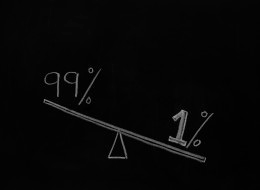
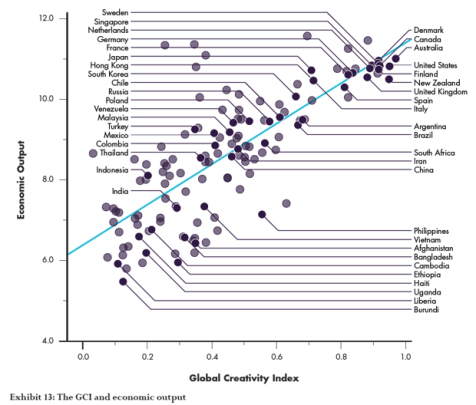

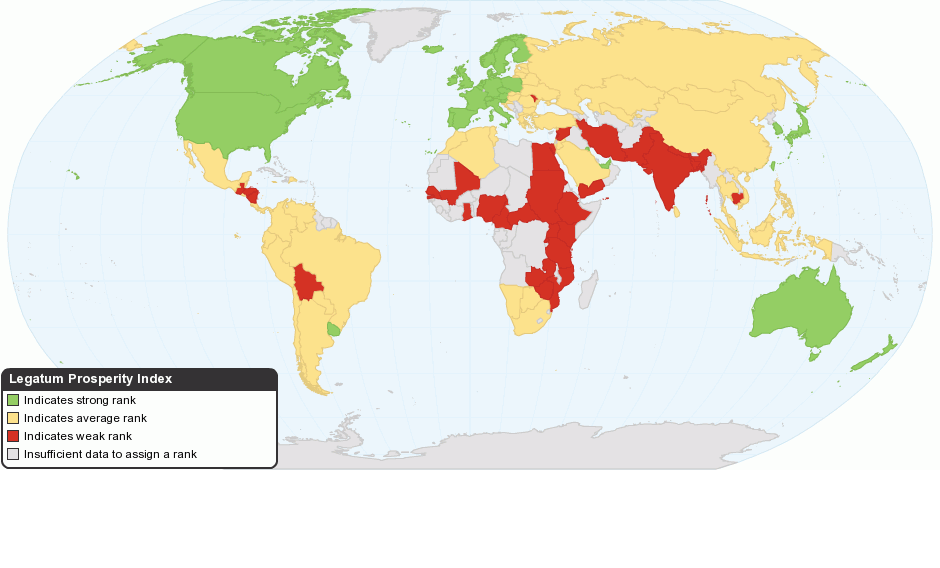
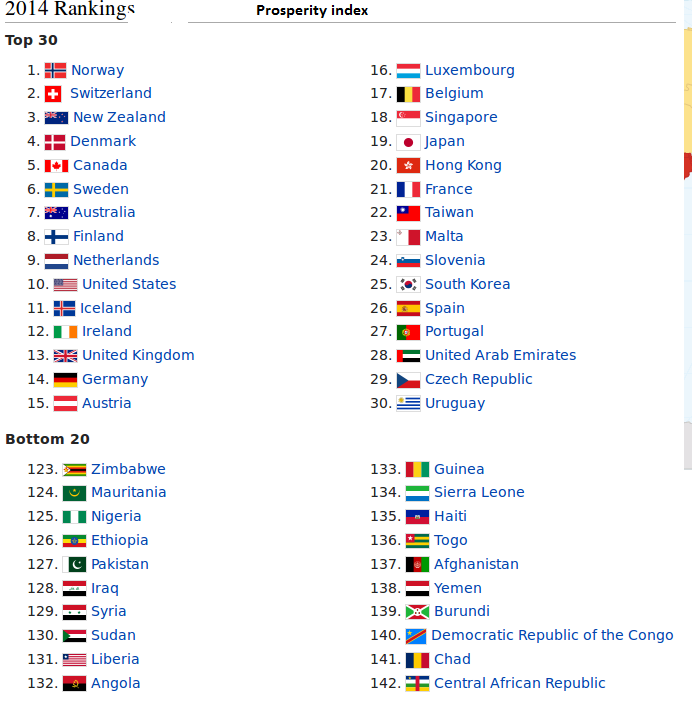
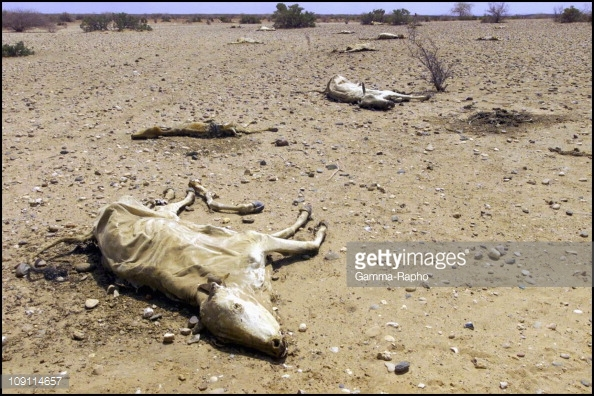

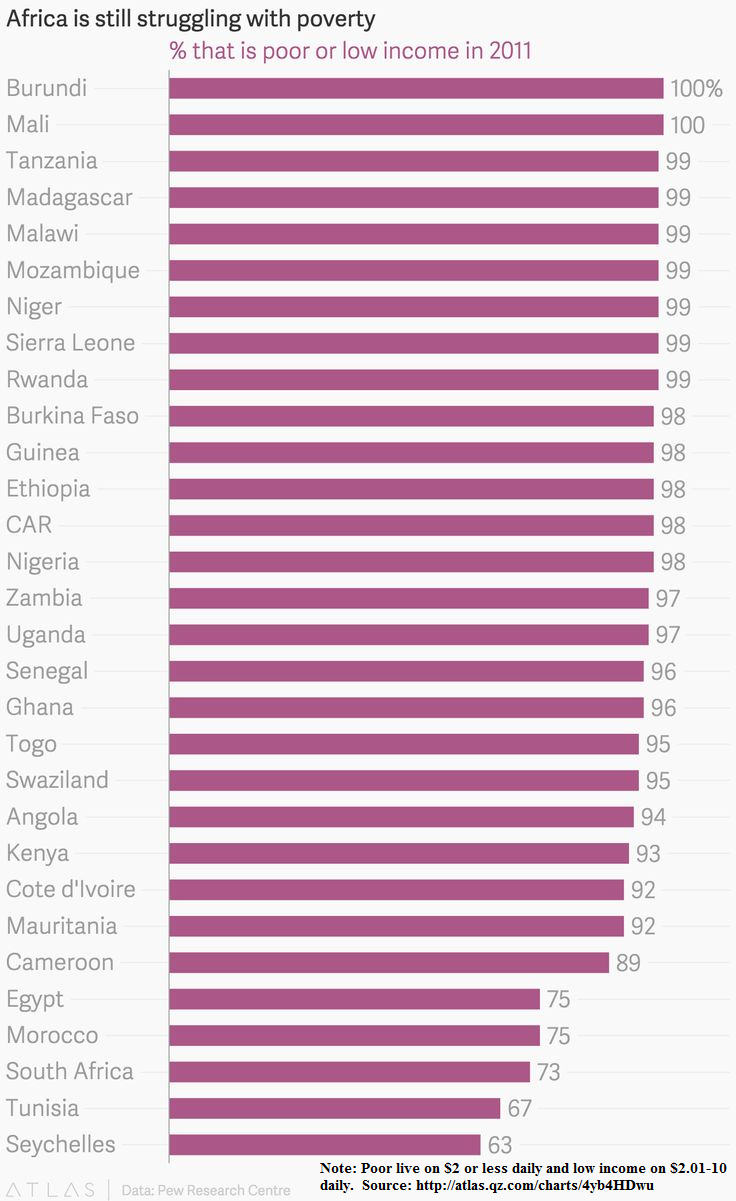


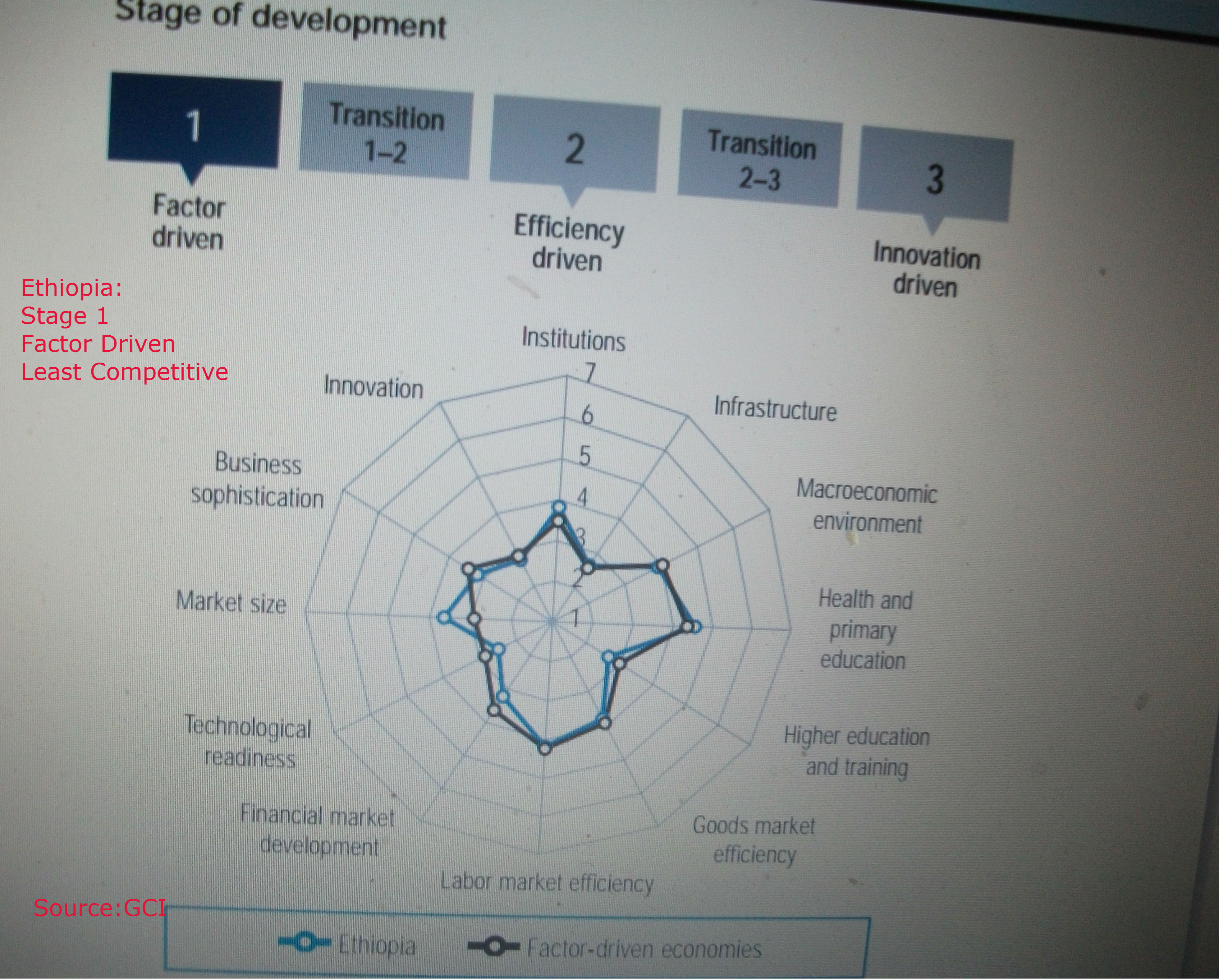




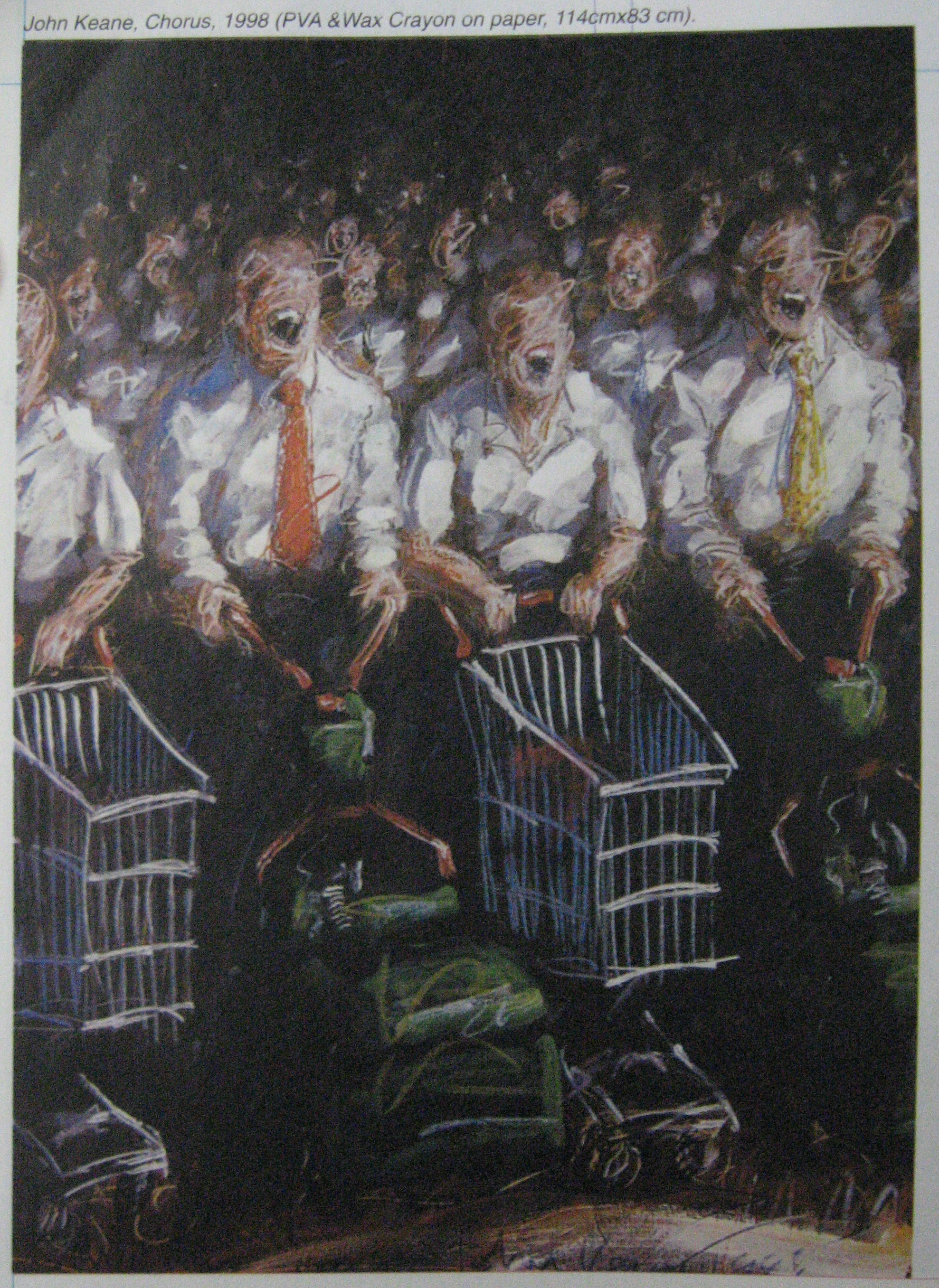
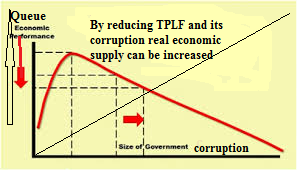


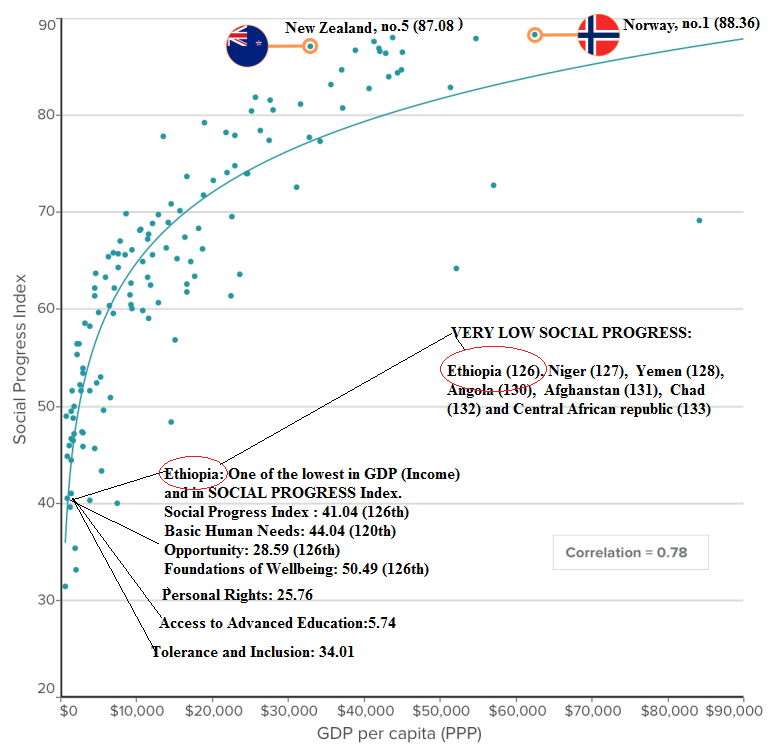
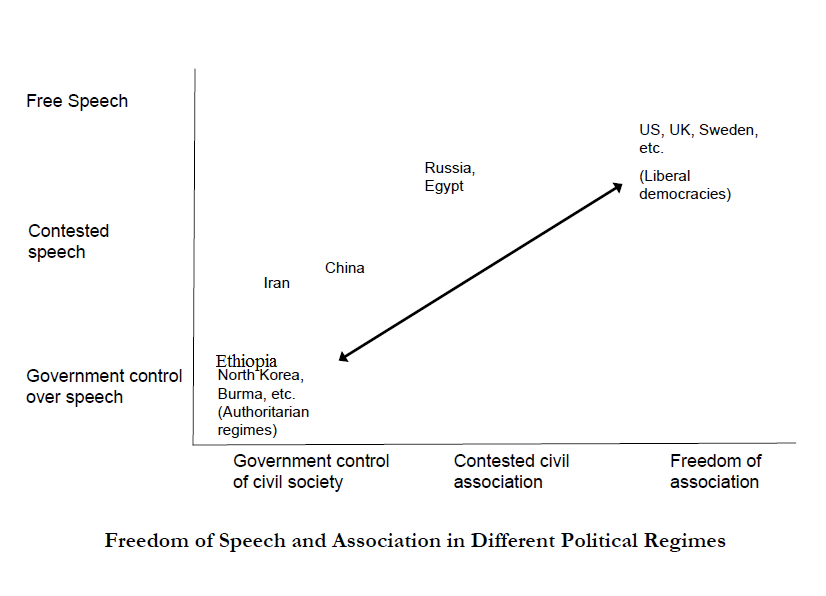



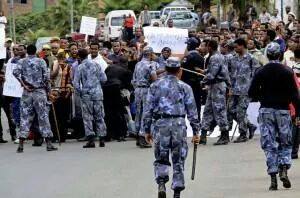

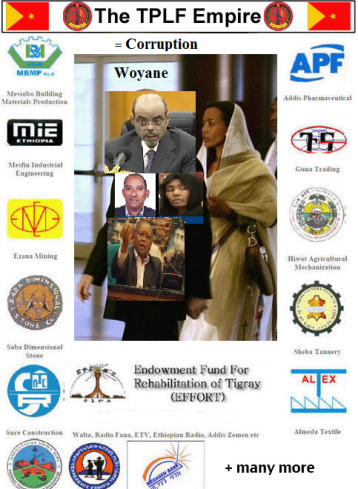


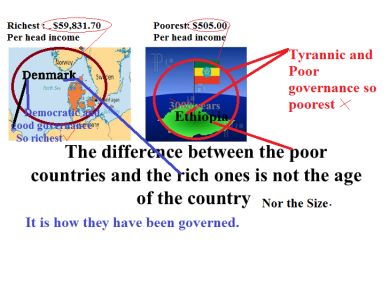
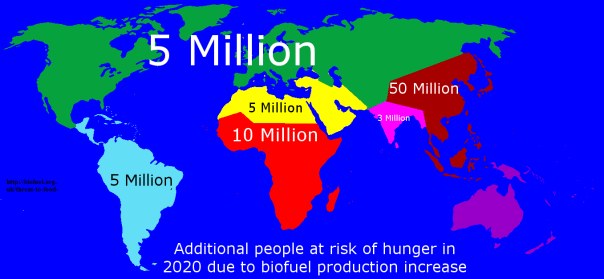


 Here is me picking up from where I left off with my Africa is NOT rising article which is a featured presentation from Mr. AlI Mfuruki from Tanzania. The presentation was done at a Tedx event late last year. This is in fact part 3 of a 3 series post dedicated to his presentation (Simply because his assessment of the “Africa rising” media propaganda was so relevant and accurate for anyone wanting to build the continent). In case you have not had the chance to go through the first 2 posts, here you go: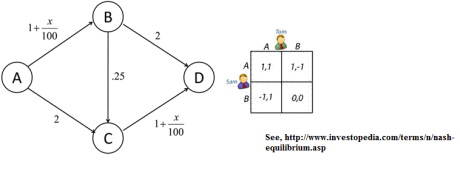


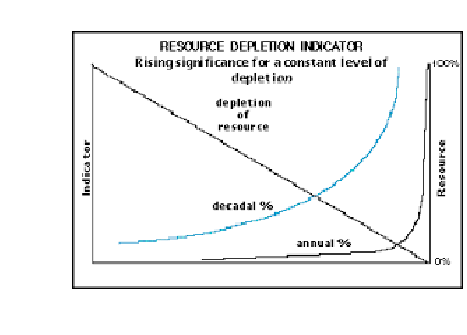

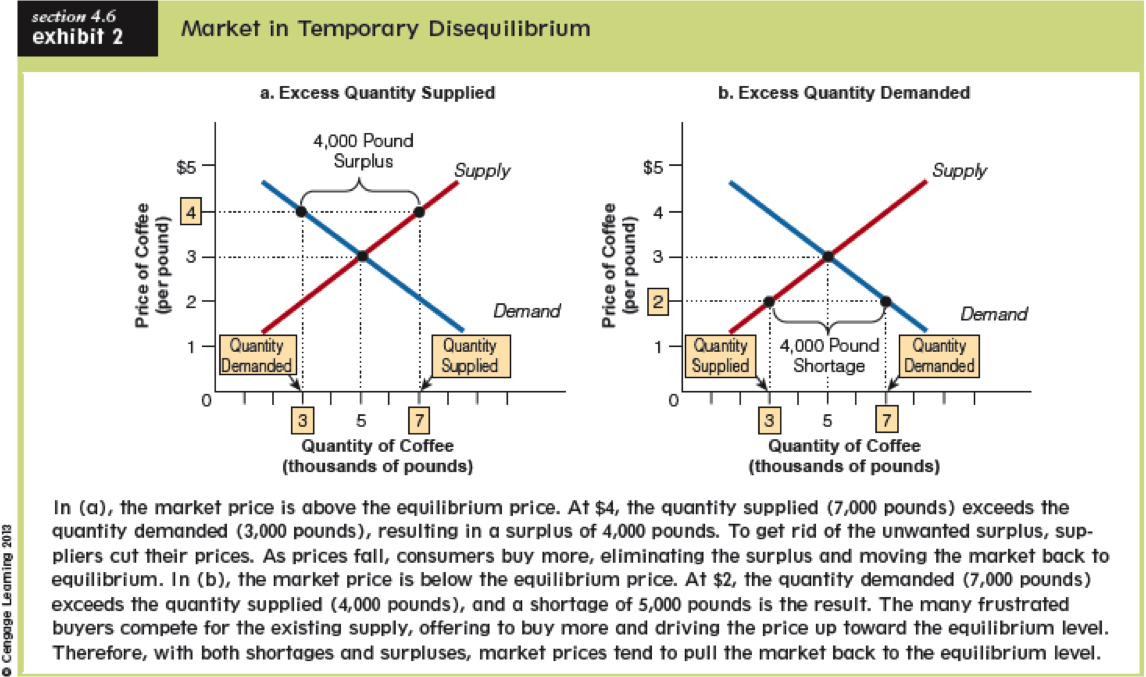
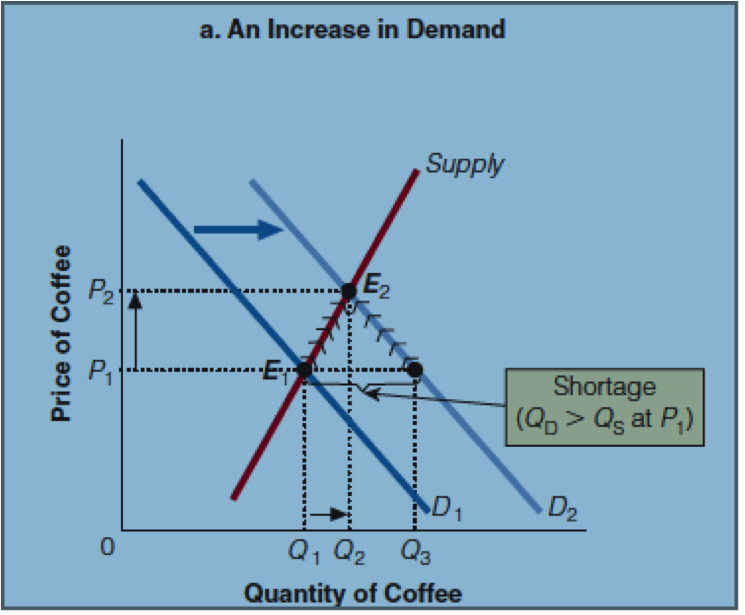
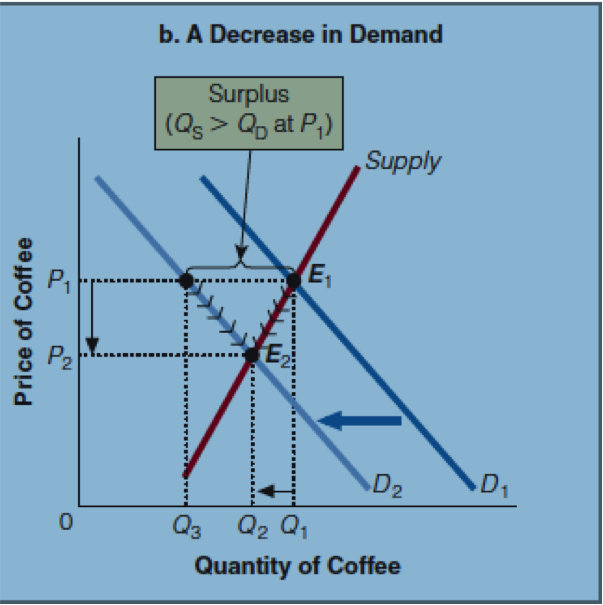
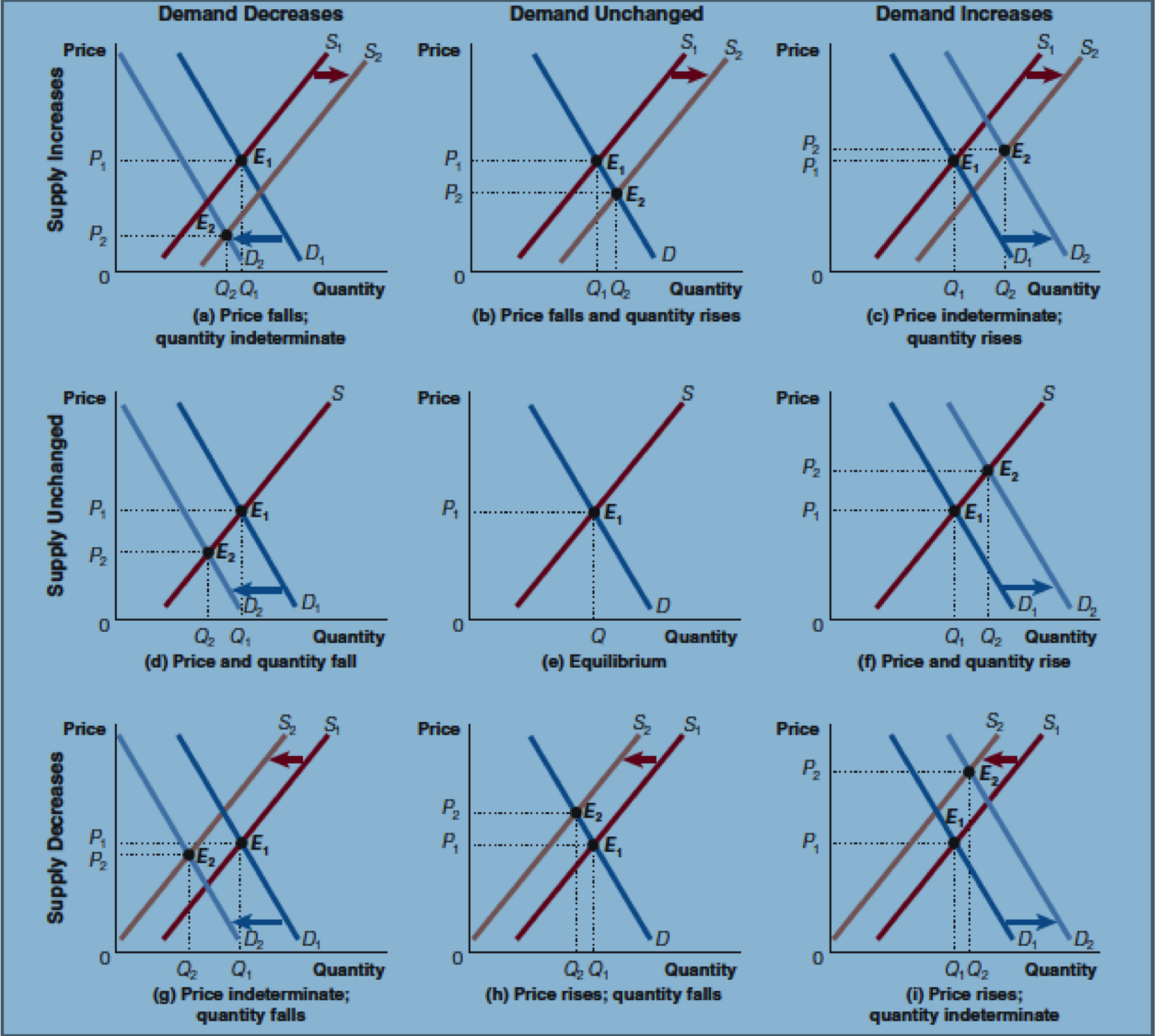
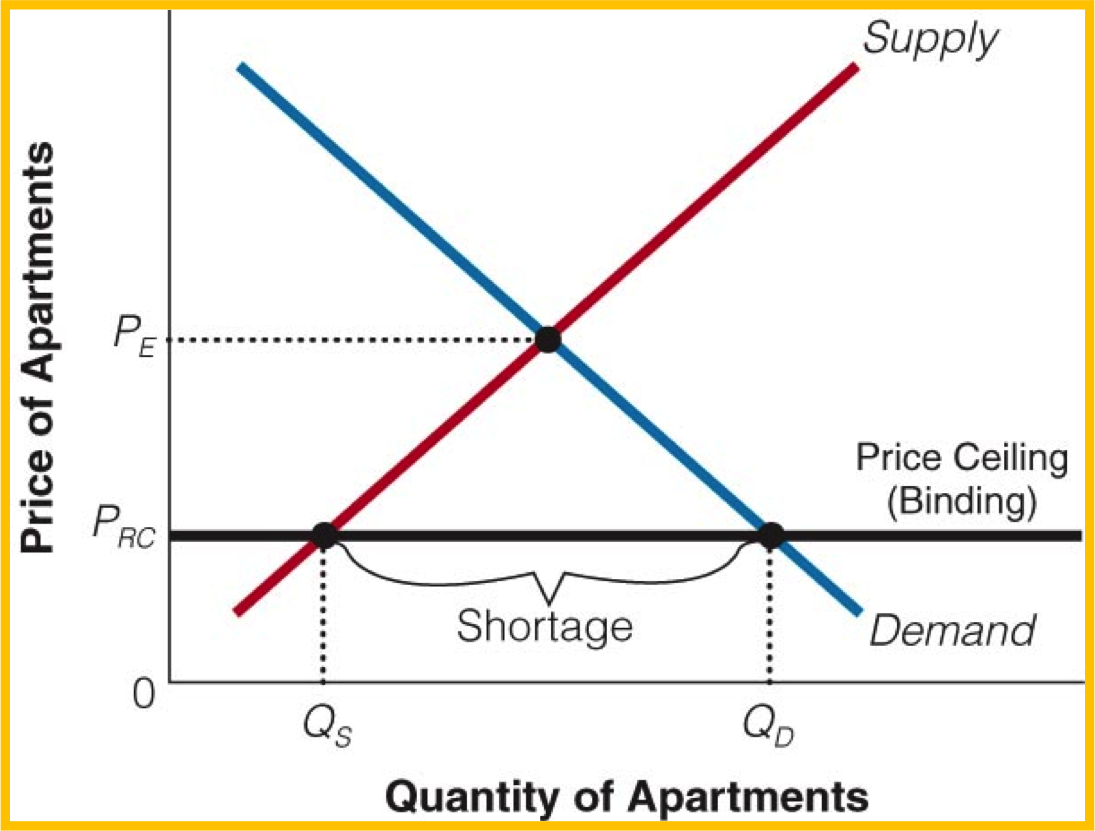

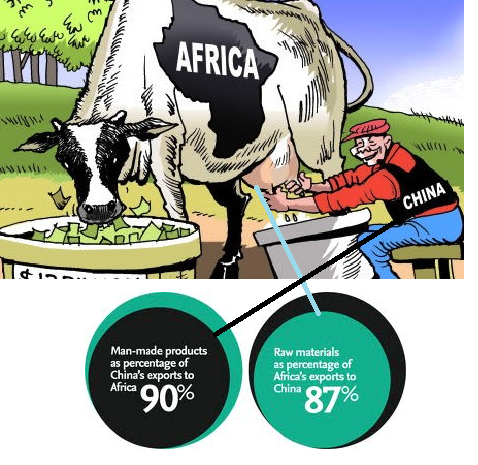

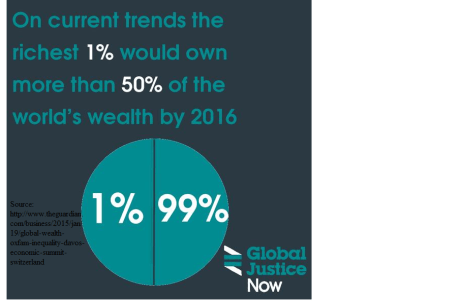








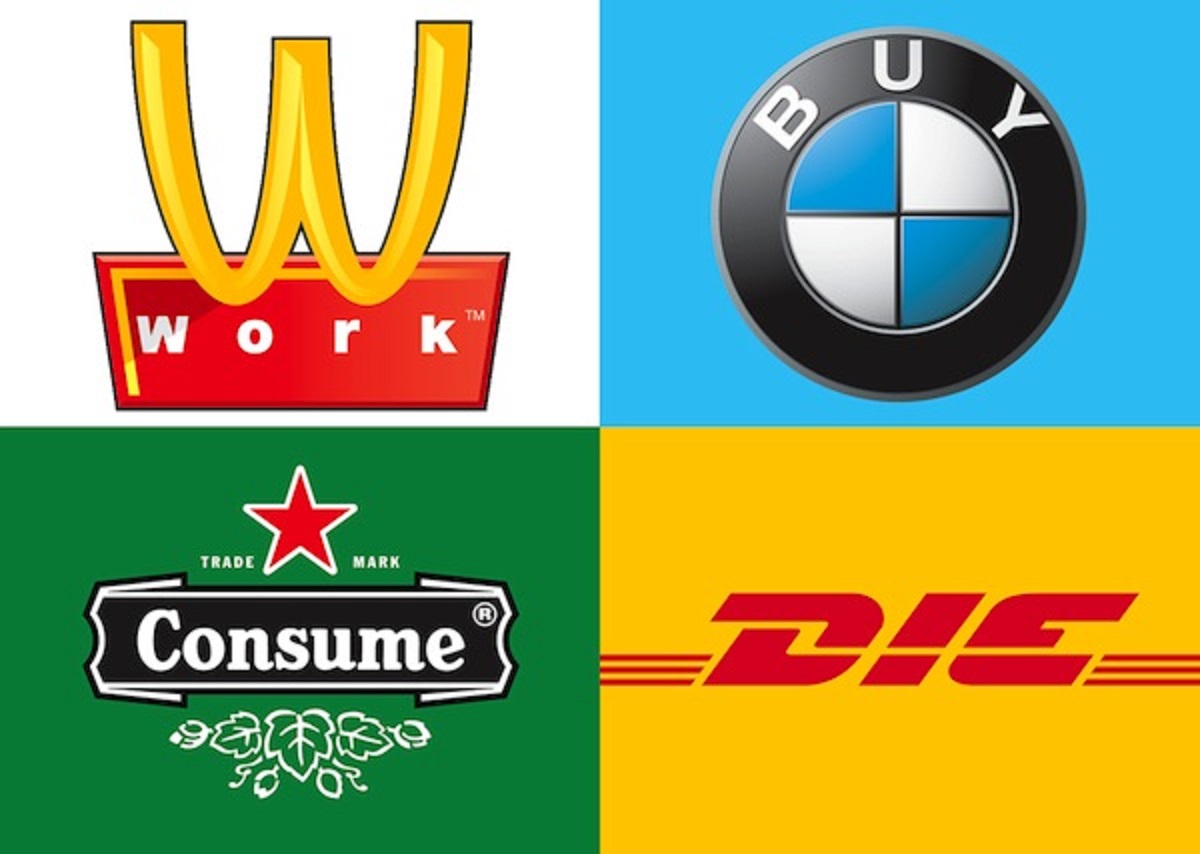
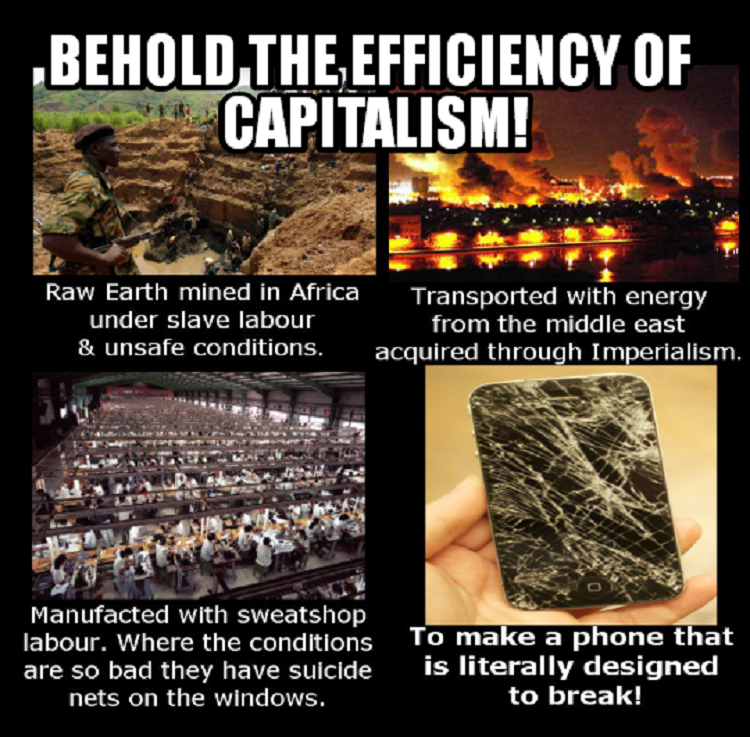


 Oromian Economist
You must be logged in to post a comment.