Ethiopia: Farmer gets legal aid from UK to sue Britain for giving aid to the brutal regime of Ethiopia March 30, 2014
Posted by OromianEconomist in Aannolee and Calanqo, Africa Rising, Aid to Africa, Corruption, Development, Dictatorship, Domestic Workers, Economics: Development Theory and Policy applications, Ethnic Cleansing, Hadiya and the Omo Valley, Human Rights, Human Traffickings, ICC, Janjaweed Style Liyu Police of Ethiopia, Kambata, Land and Water Grabs in Oromia, Ogaden, OMN, Omo, Omo Valley, Oromia, Oromia Support Group Australia, Oromiyaa, Oromo, The Colonizing Structure & The Development Problems of Oromia, The Tyranny of Ethiopia, Uncategorized, Youth Unemployment.Tags: African Studies, Development, Economic and Social Freedom, Economic development, Economic growth, Governance issues, Horn of Africa, Human Rights and Liberties, Human rights violations, Land grabbing, Land grabs in Africa, National Self Determination, Oromia, Oromia Region, Oromummaa, State and Development, Sub-Saharan Africa, United Nations, Universal Declaration of Human Rights
add a comment

An Ethiopian farmer has been given legal aid in the UK to sue Britain – because he claims millions of pounds sent by the UK to his country is supporting a brutal regime that has ruined his life.
He says UK taxpayers’ money – £1.3 billion over the five years of the coalition Government – is funding a despotic one-party state in his country that is forcing thousands of villagers such as him from their land using murder, torture and rape.
The landmark case is highly embarrassing for the Government, which has poured vast amounts of extra cash into foreign aid despite belt-tightening austerity measures at home.
Prime Minister David Cameron claims the donations are a mark of Britain’s compassion.
But the farmer – whose case is set to cost tens of thousands of pounds – argues that huge sums handed to Ethiopia are breaching the Department for International Development’s (DFID) own human rights rules.
He accuses the Government of devastating the lives of some of the world’s poorest people rather than fulfilling promises to help them. The case comes amid growing global concern over Western aid propping up corrupt and repressive regimes.
If the farmer is successful, Ministers might have to review major donations to other nations accused of atrocities, such as Pakistan and Rwanda – and it could open up Britain to compensation claims from around the world.
Ethiopia, a key ally in the West’s war on terror, is the biggest recipient of British aid, despite repeated claims from human rights groups that the cash is used to crush opposition.
DFID was served papers last month by lawyers acting on behalf of ‘Mr O’, a 33-year-old forced to abandon his family and flee to a refugee camp in Kenya after being beaten and tortured for trying to protect his farm.
He is not seeking compensation but to challenge the Government’s approach to aid. His name is being withheld to protect his wife and six children who remain in Ethiopia.
‘My client’s life has been shattered by what has happened,’ said Rosa Curling, the lawyer handling the case. ‘It goes entirely against what our aid purports to stand for.’
Oromia Media Network Launch — Live! March 27, 2014
Posted by OromianEconomist in Africa, Africa Rising, African Beat, African Music, Ancient African Direct Democracy, Dictatorship, Ethnic Cleansing, Finfinnee, Gadaa System, Hadiya and the Omo Valley, Human Rights, Human Traffickings, Humanity and Social Civilization, Ideas, Kemetic Ancient African Culture, Knowledge and the Colonizing Structure., Language and Development, Nubia, Ogaden, OMN, Omo, Omo Valley, Oromia, Oromiyaa, Oromo, Oromo Artists, Oromo Culture, Oromo First, Oromo Identity, Oromo Media Network, Oromo Music, Oromo Nation, Oromo Social System, Oromo Sport, Oromo the Largest Nation of Africa. Human Rights violations and Genocide against the Oromo people in Ethiopia, Oromummaa, Poverty, Qubee Afaan Oromo, Self determination, Sidama, Sirna Gadaa, Slavery, State of Oromia, The Colonizing Structure & The Development Problems of Oromia, The Oromo Democratic system, The Oromo Governance System, The Oromo Library, The Tyranny of Ethiopia, Theory of Development, Uncategorized, Wisdom, Youth Unemployment.Tags: Africa, Development and Change, Economic and Social Freedom, Governance issues, Horn of Africa, Human Rights and Liberties, Human rights violations, Oromia, Oromia Region, Oromiyaa, Oromo, Oromo culture, Oromo people, State and Development, Sub-Saharan Africa, Universal Declaration of Human Rights
add a comment



Oromia Media Network Launch — Live! 1st March 2014
Millions of Oromos now have the chance to enjoy quality media focusing on the needs and aspirations of the Oromo people.


https://www.oromiamedia.org/donorship/
“The Oromia Media Network (OMN) is an independent, nonpartisan and nonprofit news enterprise whose mission is to produce original and citizen-driven reporting on Oromia, the largest and most populous state in Ethiopia. OMN seeks to offer thought-provoking, contextual, and nuanced coverage of critical public interest issues thereby bringing much needed attention to under-reported stories in the region. Our goal is to create a strong and sustainable multilingual newsroom that will serve as a reliable source of information about the Oromo people, the Ethiopian state, and the greater Horn of Africa region. ” – http://www.oromiamedia.org/
Copyright © OromianEconomist 2014 and Oromia Quarterly 1997-2014. All rights reserved. Disclaimer.
Ethiopia’s government is using imported technology to spy on the phones and computers of Citizens March 26, 2014
Posted by OromianEconomist in Aannolee and Calanqo, Africa, Africa Rising, African Poor, Aid to Africa, Colonizing Structure, Corruption, Ethnic Cleansing, Facebook and Africa, Free development vs authoritarian model, Nubia, Ogaden, OMN, Oromia, Oromia Support Group Australia, Oromiyaa, Oromo, Oromo Nation, Oromummaa, Self determination, Sidama, Slavery, The Tyranny of Ethiopia, Tweets and Africa, Tyranny, Uncategorized, Youth Unemployment.Tags: Africa, African Studies, Development and Change, Economic and Social Freedom, Genocide against the Oromo, Governance issues, Horn of Africa, Human Rights and Liberties, Land grabs in Africa, National Self Determination, Oromia, Oromiyaa, Oromo, Oromo culture, State and Development, Sub-Saharan Africa, Tyranny, United Nations, Universal Declaration of Human Rights, World Bank
add a comment

Human Rights Watch (HRW) in it recent research report exposes that Ethiopia has built up a large monitoring system for controlling citizens’ network and phone usage. According to this report the government has a sole monopoly of telecommunications and network. And there is no right constraints that prevent the government from gaining an overview of who have contact with anyone on the phone, sms and internet. The government also saves phone calls on a large scale. The authoritarian regime is using imported technology to spy on the phones and computers of its perceived opponents. HRW accuses the government of trying to silence dissent, using software and kit sold by European and Chinese firms. The report says the firms may be guilty of colluding in oppression.
“While monitoring of communications can legitimately be used to combat criminal activity, corruption, and terrorism, in Ethiopia there is little in the way of guidelines or directives on surveillance of communications or use of collected information to ensure such practices are not illegal. In different parts of the world, the rapid growth of information and communications technology has provided new opportunities for individuals to communicate in a manner and at a pace like never before, increasing the space for political discourse and facilitating access to information. However, many Ethiopians have not been able to enjoy these opportunities. Instead, information and
communications technology is being used as yet another method through which the government seeks to exercise complete control over the population, stifling the rights to freedom of expression and association, eroding privacy, and limiting access to information—all of which limit opportunities for expressing contrary opinions and engaging in meaningful debate.”
“Human Rights Watch interviews suggest that a significant number of Oromo individuals have been targeted for unlawful surveillance. Those arrested are invariably accused of being members or supporters of the OLF. In some cases, security officials may have a reasonable suspicion of these individuals being involved with OLF. But in the majority of cases, Oromos were under surveillance because they were organizing cultural associations or trade unions, were involved in celebrating Oromo culture (through music, art, etc.) or were involved in registered political parties.
“Like the OLF, the Ogaden National Liberation Front (ONLF) was initially a political party, but began a low-level armed insurgency in Ethiopia’s Somali region in response to what it perceived to be the EPRDF’s failure to respect regional autonomy, and to consider demands for self-determination. In 2007, the ONLF scaled up armed attacks against government targets and oil exploration sites, triggering a harsh crackdown by the government. As with the government’s counterinsurgency response to the OLF, the Ethiopian security forces have routinely committed abuses against individuals of Somali ethnicity, including arbitrary detentions, torture, and extrajudicial killings,
based on their ethnicity or perceived support for the ONLF.”“Internet usage in Ethiopia is still in its infancy with less than 1.5 percent of Ethiopians connected to the Internet and fewer than 27,000 broadband subscribers countrywide. By contrast, neighboring Kenya has close to 40 percent access.The majority of Internet users are located in Addis Ababa. According to the ITU, Ethiopia has some of the most expensive broadband in the world. Given these costs, Ethiopians usually access the Internet through the growing number of cybercafés or from their mobile phones.Internet has been available to mobile phone subscribers since 2009.Increasingly available in many of the more expensive hotels and cafes. Connectivity speeds countrywide are quite low, and are prone to frequent outages.”
“State-owned Ethio Telecom is the only telecommunications service provider in Ethiopia. It controls access to the phone network and to the Internet and all phone and Internet traffic must use Ethio Telecom infrastructure. There is no other service provider available in Ethiopia. Ethio Telecom therefore controls access to the Internet backbone that connects Ethiopia to the international Internet. In addition, Internet cafés must apply for a license and purchase service from Ethio Telecom to operate.”
“As Internet access increases, some governments are adopting or compelling use of technologies like “deep packet inspection” (DPI). Deep packet inspection enables the examination of the content of communications (an email or a website) as it is transmitted over an Internet network. Once examined, the communications can be then copied, analyzed, blocked, or even altered. DPI equipment allows Internet service providers—and by extension, governments—to monitor and analyze Internet communications of potentially millions of users in real time. While DPI does have some commercial applications, DPI is also a powerful tool for Internet filtering and blocking and can enable highly intrusive surveillance. Finally, some governments have begun using intrusion software to infiltrate an individual’s computer or mobile phone. Also known as spyware or malware, such software can allow a government to capture passwords (and other text typed into the device), copy or delete files, and even turn on the microphone or camera of the device to eavesdrop. Such software is often unwittingly downloaded when an individual opens a malicious link or file disguised as a legitimate item of interest to the target.”
“The vast majority of the cases documented by Human Rights Watch involving access to phone recordings involved Oromo defendants organizing Oromos in cultural associations, student associations, and trade unions. No credible evidence was presented that would appear to justify their arrest and detention or the accessing of their private phone records. These interrogations took place not only in Addis Ababa, but in numerous police stations and detention centers throughout Oromia and elsewhere in Ethiopia. As described in other publications, the government has gone to great lengths to prevent Oromos and other ethnicities from organizing groups and associations. While the increasing usefulness of the mobile phone to mobilize large groups of people quickly provides opportunities for young people, in particular, to form their own networks, Ethiopia’s monopoly and control over this technology provides Ethiopia with another tool to suppress the formation of these organizations and restrict freedoms of association and peaceful assembly.”
“Ethiopia was the first sub-Saharan African country to begin blocking Internet sites. The first reports of blocked websites appeared in May 2006 when opposition blogs were unavailable, and blocking has become more regular and pervasive ever since. Human Rights Watch and the University of Toronto’s Citizen Lab conducted testing in-country in July and August of 2013 to assess the availability of 171 different URLs that had a higher likelihood of being blocked, based on past testing, on the Ethio Telecom network. A total of 19 tests were run over seven days to ensure reliability of results.”
Read further @
“They Know Everything We Do”
Telecom and Internet Surveillance in Ethiopia
http://www.hrw.org/reports/2014/03/25/they-know-everything-we-do-0
http://thefrontierpost.com/article/84793/Ethiopia-uses-foreign-kit-to-spy-on-opponents-HRW/
Copyright © OromianEconomist 2014 & Oromia Quarterly 1997-2014, all rights are reserved. Disclaimer.
Ethiopia: Silence, Pain, Lies and Abductions March 20, 2014
Posted by OromianEconomist in Aannolee and Calanqo, Africa, Africa Rising, African Poor, Colonizing Structure, Dictatorship, Ethnic Cleansing, Finfinnee, Free development vs authoritarian model, Human Rights, Human Traffickings, Janjaweed Style Liyu Police of Ethiopia, Kambata, Land and Water Grabs in Oromia, Nubia, Ogaden, Omo, Omo Valley, Oromia, Oromia Support Group Australia, Oromiyaa, Oromo, Oromo Nation, Oromo the Largest Nation of Africa. Human Rights violations and Genocide against the Oromo people in Ethiopia, Oromummaa, Self determination, Sidama, Slavery, The Colonizing Structure & The Development Problems of Oromia, The Tyranny of Ethiopia, Theory of Development, Uncategorized, Youth Unemployment.Tags: Africa, Development, Economic and Social Freedom, Genocide against the Oromo, Governance issues, Horn of Africa, Human Rights and Liberties, Human rights violations, Land grabs in Africa, National Self Determination, Oromia, Oromo people, Oromummaa, Politics of Ethiopia, State and Development, Sub-Saharan Africa, Tyranny, World Bank
add a comment
https://www.youtube.com/watch?v=-c592hhWlc8
‘This is a regime whose character has the potential to confuse even Jeane J. Kirkpatrick, former Reagan foreign policy advisor, who made a distinction between “authoritarian” and “totalitarian” regimes. In her essay “Dictatorship and Double Standards,” she describes authoritarian dictators as “pragmatic rulers who care about their power and wealth and are indifferent toward ideological issues, even if they pay lip service to some big cause”; while, in contrast, totalitarian leaders are “selfless fanatics who believe in their ideology and are ready to put everything at stake for their ideals”.’

This assessment of the reaction to the article I published on this blog: “Silence and Pain,” is interesting for its exploration of the relationship between the Ethiopian government and the media, even though it overestimates any influence I may have.
Martin
Source: Muktar M. Omer
Ethiopia: Silence, Pain, Lies and Abductions
March 16, 2014
By Muktar M. Omer
Template denials
The Ethiopian Government, through its foreign ministry, responded to Martin Plaut’s article “Silence and Pain: Ethiopia’s human rights record in the Ogaden” with the usual feigned shock and template denial that has long characterized the regime’s political personality. It is the established behavior of aggressive and autocratic regimes to discount well-founded reports of human right violations as propaganda constructs of the ‘enemy’. The response from the Foreign Ministry was thus nothing more than a well memorized and rehearsed Ethiopian way of disregarding documented depravities committed by the regime. As usual…
View original post 2,632 more words
Africa’s youth and the self-seeking repressive elites March 15, 2014
Posted by OromianEconomist in Africa, Africa Rising, African Beat, African Poor, Agriculture, Aid to Africa, Ancient African Direct Democracy, Colonizing Structure, Comparative Advantage, Corruption, Development, Dictatorship, Economics: Development Theory and Policy applications, Environment, Ethnic Cleansing, Facebook and Africa, Finfinnee, Food Production, Human Rights, International Economics, International Trade, Janjaweed Style Liyu Police of Ethiopia, Land and Water Grabs in Oromia, Nubia, Ogaden, OMN, Omo, Omo Valley, Opportunity Cost, Oromia, Oromia Support Group, Oromiyaa, Oromo, Oromo Culture, Oromo Identity, Oromo Media Network, Oromo Nation, Oromo Social System, Oromummaa, Poverty, Saudi Arabia, Self determination, Slavery, South Sudan, Specialization, State of Oromia, The Tyranny of Ethiopia, Tweets and Africa, Tyranny, Uncategorized, Youth Unemployment.Tags: Africa, Africa's repressive elites, African culture, African Studies, Developing country, Development and Change, Economic, Economic and Social Freedom, Economic development, Economic growth, Genocide, Genocide against the Oromo, Governance issues, Horn of Africa, Human rights, Human Rights and Liberties, Human rights violations, Land grabbing, Land grabs in Africa, National Self Determination, Oromia, State and Development, Universal Declaration of Human Rights
add a comment

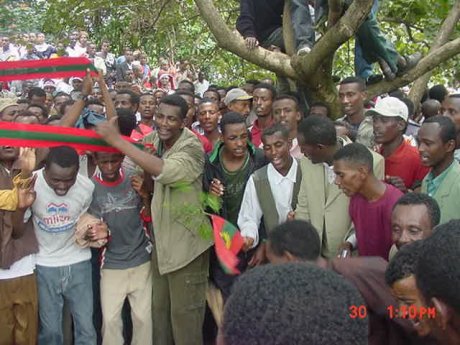
Africa’s youth will protest to remove self-seeking and repressive elites
“Some examples: authoritarian regimes, as in Ethiopia and Rwanda, are consolidating their positions. In Zambia, Angola and Mozambique, the press, civil society organisations and the opposition are under threat for demanding that the proceeds from raw material exports and billion dollar multinational corporate investments should benefit everyone. ….Short-term greed is, once again, depriving the African populations of the right to share in the continent’s immense riches. No-one can predict the future, but what can be said with certainty is that the possibility of a sustainable long-term and fair development that is currently at hand in Africa is being put at risk. The frustration that is fuelled among populations that are hungry and feel ignored by their rulers will bring about increasingly strident and potentially violent protest. In the near future, this will change the political climate, not least in urban areas. Utilising the internet and their mobile phones, Africa’s youth and forgotten people will mobilise and act together to remove self-seeking and repressive elites. But the situation is not hopeless, on the contrary. Civil society is growing stronger in many places in Africa. The internet makes it possible for people to access and disseminate information in an unprecedented way. However, I get really disappointed when I hear all the ingenuous talk about the possibilities to invest and make quick profits in the ‘New Africa’. What is in reality new in the ‘New Africa’? Today, a worker in a Chinese-owned factory in Ethiopia earns one-tenth of the wage of an employee in China. Unless African governments and investors act more responsibly and ensure long-term sustainable construction for people and the environment ‒ which is currently not the case ‒ we must all ask ourselves if we should not use the consumer power we all possess to exert pressure. There are no excuses for letting African populations and their environment once again pay for the global demand for its raw materials and cheap consumer goods.” – Marika Griehsel, journalist, film-maker and lecturer
“Thousands of people are demonstrating on the streets to protest against low salaries, the highcost of living and an insufficient state safety net. A reaction to austerity measures in Greece? Or a follow-up to the Arab Spring? No, these are protests for greater equality in Sub-Saharan Africa, most recently in Burkina Faso. The widening gap between rich and poor is as troubling in Africa as in the rest of the world. In fact, many Africans believe that inequalities are becoming more marked: A tiny minority is getting richer while the lines of poor people grow out the door. The contrast is all the more striking in Africa since the poverty level has been at a consistently high level for decades, despite the continent’s significant average GDP growth. Some take a plane to get treated for hay fever, while others are pushing up daisies because they can’t afford basic malaria treatment.”
– Global Voices: http://globalvoicesonline.org/2014/03/11/reducing-the-gap-between-africas-rich-and-poor/
It is now evident that the African ‘lion economies’ have hardly even begun the economic and democratic transformation that is absolutely necessary for the future of the continent.
The largest movement ever in Africa of people from rural to urban areas is now taking place. Lagos, Nigeria, and Nairobi, Kenya, are among the world’s fastest growing cities.
The frustration that is fuelled among populations that are hungry and feel ignored by their rulers will bring about increasingly strident and potentially violent protest.
Soon, this will change the political climate, not least in urban areas. Utilising the internet and their phones, Africa’s youth and forgotten people will mobilise to remove self-seeking and repressive elites.
This piece was written in Namibia, where I was leading a tour around one of Africa’s more stable nations. There are several signs confirming the World Bank’s reclassification of Namibia as a middle-income country, which in turn means that many aid donors, including Sweden, have ended their bilateral cooperation.
I see newly constructed, subsidised single-family homes accessible for low-income families. I drive on good roads and meet many tourists, although this is off-season. I hear about a growing mining sector, new discoveries of natural gas and oil deposits. I read about irregularities committed by people in power, in a reasonably free press whose editors are not thrown into jail. There is free primary level schooling and almost free health care.
Most people I talk to are optimistic. A better future for a majority of Namibians is being envisaged. This is in all probability the result of the country having a small population ‒ just above 2 million ‒ and a functioning infrastructure despite its large area.
In Namibia, economic growth can hopefully be matched by implementing policies for long-term, sustainable social and economic development that will benefit more than the élite.
But Namibia is an exception. Because it is now evident that the African ‘lion economies’ have hardly even begun the economic and democratic transformation that is absolutely necessary for the future of the continent.
Some examples: authoritarian regimes, as in Ethiopia and Rwanda, are consolidating their positions. In Zambia, Angola and Mozambique, the press, civil society organisations and the opposition are under threat for demanding that the proceeds from raw material exports and billion dollar multinational corporate investments should benefit everyone.
The International Monetary Fund, IMF, predicts continued high growth rates across Africa with an average of over 6 per cent in 2014. That is of course good news for the continent. Perhaps the best, from a macroeconomic viewpoint, since the 1960s, when many of the former colonies became independent. This growth is mainly driven by the raw material needs of China, India and Brazil.
Meanwhile, the largest movement ever in Africa of people from rural to urban areas is now taking place. Lagos, Nigeria, and Nairobi, Kenya, are among the world’s fastest growing cities. But, in contrast with China, where the migrants from the rural areas get employment in the manufacturing industry, the urban migrants in Africa end up in the growing slums of the big cities.
In a few places, notably in Ethiopia, manufacturing is beginning to take off. But the wages in the Chinese-owned factories are even lower than in China, while the corporations pay minimal taxes to the Ethiopian state.
Short-term greed is, once again, depriving the African populations of the right to share in the continent’s immense riches. No-one can predict the future, but what can be said with certainty is that the possibility of a sustainable long-term and fair development that is currently at hand in Africa is being put at risk.
The frustration that is fuelled among populations that are hungry and feel ignored by their rulers will bring about increasingly strident and potentially violent protest. In the near future, this will change the political climate, not least in urban areas. Utilising the internet and their mobile phones, Africa’s youth and forgotten people will mobilise and act together to remove self-seeking and repressive elites.
But the situation is not hopeless, on the contrary. Civil society is growing stronger in many places in Africa. The internet makes it possible for people to access and disseminate information in an unprecedented way. However, I get really disappointed when I hear all the ingenuous talk about the possibilities to invest and make quick profits in the ‘New Africa’.
What is in reality new in the ‘New Africa’?
Today, a worker in a Chinese-owned factory in Ethiopia earns one-tenth of the wage of an employee in China. Unless African governments and investors act more responsibly and ensure long-term sustainable construction for people and the environment ‒ which is currently not the case ‒ we must all ask ourselves if we should not use the consumer power we all possess to exert pressure.
There are no excuses for letting African populations and their environment once again pay for the global demand for its raw materials and cheap consumer goods.
Some examples: authoritarian regimes, as in Ethiopia and Rwanda, are consolidating their positions. In Zambia, Angola and Mozambique, the press, civil society organisations and the opposition are under threat for demanding that the proceeds from raw material exports and billion dollar multinational corporate investments should benefit everyone.
http://naiforum.org/2014/03/africas-youth-will-protest/
The World Bank paints an optimistic picture of African potential, but warns against persistently high inequalities:
Economic growth in Sub-Saharan Africa (SSA) remains strong with growth forecasted to be 4.9% in 2013. Almost a third of countries in the region are growing at 6% and more, and African countries are now routinely among the fastest-growing countries in the world […] [however the report] notes that poverty and inequality remain “unacceptably high and the pace of reduction unacceptably slow.” Almost one out of every two Africans lives in extreme poverty today.
 http://globalvoicesonline.org/2014/03/11/reducing-the-gap-between-africas-rich-and-poor/
Africa: Legacy of Pre-colonial Empires and Colonialism March 13, 2014
Posted by OromianEconomist in Aannolee and Calanqo, Afaan Publication, Africa, Africa Rising, African Beat, African Poor, Agriculture, Aid to Africa, Ancient African Direct Democracy, Colonizing Structure, Comparative Advantage, Corruption, Culture, Development, Dhaqaba Ebba, Dictatorship, Domestic Workers, Economics, Economics: Development Theory and Policy applications, Environment, Ethnic Cleansing, Finfinnee, Haacaaluu Hundeessaa, Hadiya, Hadiya and the Omo Valley, Haile Fida, Human Rights, Human Traffickings, Humanity and Social Civilization, ICC, Janjaweed Style Liyu Police of Ethiopia, Kemetic Ancient African Culture, Knowledge and the Colonizing Structure., Land and Water Grabs in Oromia, Language and Development, Nubia, Ogaden, OMN, Omo, Omo Valley, Oromia, Oromia Support Group, Oromiyaa, Oromo, Oromo Artists, Oromo Culture, Oromo First, Oromo Identity, Oromo Nation, Oromo Social System, Oromo Sport, Oromo the Largest Nation of Africa. Human Rights violations and Genocide against the Oromo people in Ethiopia, Oromummaa, Poverty, Self determination, Sidama, Sirna Gadaa, South Sudan, Specialization, State of Oromia, The Colonizing Structure & The Development Problems of Oromia, The Oldest Living Person Known to Mankind, The Tyranny of Ethiopia, Tweets and Africa, Tyranny, Youth Unemployment.Tags: Africa, African Studies, Development, Economic and Social Freedom, Economic development, economics, Ethiopia, Gadaa System, Genocide against the Oromo, Human Rights and Liberties, Human rights violations, Land grabs in Africa, National Self Determination, Oromia, Oromiyaa, Oromo, Oromo culture, Oromo people, Oromummaa, Politics of Ethiopia, poverty, Social Sciences, State and Development, Sub-Saharan Africa, Tyranny, United Nations, Universal Declaration of Human Rights, World Bank
add a comment
‘Our knowledge of the nature of identity relations in pre-colonial Africa is less than complete. However, there is little doubt that many parts of the continent were torn apart by various wars, during that era. Many of the pre-colonial wars revolved around state formation, empire building, slave raids, and control over resources and trade routs. The slave raiding and looting empires and kingdoms, including those of the 19th century, left behind complex scars in inter-identity relations. It is beyond the scope of this paper to discuss in detail the nature of pre-colonial empires in Africa. The examples of the Abyssinian Empire and the Mahdiyya state in Sudan provide a glimpse of the impacts of pre-colonial empires on the prevailing problems in inter-identity relations. The Abyssinian Empire, for example, is credited for creating the modern Ethiopian state during the second half of the 19th century and defending it from European colonialism. However, it also left behind a deeply divided country where the populations in the newly incorporated southern parts of the country were ravaged by slave raids and lootings and, in many cases, reduced into landless tenants, who tilled the land for northern landlords (Pankhurst, 1968). The Empire also established a hierarchy of cultures where the non-Abyssinian cultures in the newly incorporated territories were placed in a subordinate position. There are claims, for instance, that it was not permissible to publish, preach, teach or broadcast in Oromiya [Afaan Oromo] (language of the Oromo people) in Ethiopia until the end of the reign of Emperor Haile Selassie (Baxter, 1978, 228). It requires a great deal of sensitivity to teach Ethiopian history in the country’s schools, since the empire-builders of the 19th century are heroes to some identities while they are viewed as villains who brought destruction and oppression by others. Similarly, Sudan’s Mahdiyya state, which professed Arab identity and was supported by slave raiding communities, left behind complex scars in inter-identity relations, which still plague the country (Francis Deng, 2010).’ pp 10-12
Diversity Management in Africa: Findings from the African Peer Review Mechanism
and a Framework for Analysis and Policy-Making , 2011.
http://www.uneca.org/sites/default/files/publications/3-diversity-management.pdf
Click to access 3-diversity-management.pdf
Related articles:
A country is not about its leaders but of its people. It goes without saying that the people are the symbolic mirror of their nation. That is exactly why foreigners particularly the development partners assess and evaluate a nation through its people. In other words, a happy people are citizen of not only a peaceful and happy nation but one which accepts the principles of democracy, rule of law and human and people’s right. On the contrast, heartbroken, timid and unhappy people are subjects of dictatorial, callous and brutal regimes. Such people are robbed of their humanity and identity through systematic harassment, intimidation, unlawful detention, extra judicial killing and disappearances by the leaders who transformed themselves into creators of human life or lords. The largest oromo nation in Ethiopia through the 22years of TPLF/EPRDF repressive leadership has turned into a nation sobbing in the dark. One does not need to be a rocket scientist to figure this out. All it takes is a closer look at any Oromos in the face. The story is the same on all the faces: fear, uncertainty, and an unquenchable thirst for freedom. The disturbing melody of the sobs in the dark echo the rhythmic desire to break free from TPLF dictatorial shackles.
The Horn African region of the Ethiopia is home to just 90 million people, it is also home to one of the world’s most ruthless, and eccentric, tyrannical regime .TPLF/EPRDF is ruling the nation particularly the Oromos with an iron fist for the past two decades and yet moving on. Today dissents in Oromia are frequently harassed, arrested, tortured, murdered and put through sham trials, while the people are kept in a constant state of terror through tight media control, as repeatedly reported by several human rights groups. It has been long time since the Woyane government bans most foreign journalists and human rights organizations and NGOs from operating in the country for the aim of hiding its brutal governance from the world. While the people in Ethiopia are being in terrorized by TPLF gangs, the western powers are yet looking at the country as a very strategic place to fight the so called terrorism in horn African region. But In today’s Ethiopia; as an Oromo, No one can speak out against the dictatorship in that country. You can be killed. You can be arrested. You can be kept in prison for a long time. Or you can disappear in thin air. Nobody will help. Intimidations, looting Oromo resources and evicting Oromos from their farm lands have become the order of the day everywhere across Oromia.
No Oromo has constitutional or legal protection from the killing machinery of the TPLF securities. The recent murdering of Tesfahun Chemeda in kallitti prison is a case book of the current Circumstance.
The So called EPRDF constitution, as all Ethiopian constitutions had always been under the previous Ethiopian regimes, is prepared not to give legal protections to the Oromo people, but to be used against the Oromo people. Prisons in the Ethiopia have become the last home to Oromo nationalists, human right activists or political opponent of the regime. Yet the international community is either not interested or have ignored the numerous Human Right abuses in Ethiopia simply because, they think there is stability in the country. Is there no stability in North Korea? I don’t understand why the international community playing double standard with dining and wining with Ethiopian brutal dictators while trying to internationally isolate other dictators. For crying out loud, all dictators are dangerous to humanity and shaking their hands is even taboo much more doing business with them.
Without the support of the USA and EU, major pillars of the regime would have collapsed. Because one reason why TPLF is sustaining in power is through the budgetary support and development funding of the EU, the United States and offered diplomatic validation by the corrupted African Union. Foremost, the US and EU as the largest partners are responsible for funding the regime’s sustainability and its senseless brutality against ordinary citizens. They would have the capacity to disrupt the economic might of this regime without negatively impacting ordinary citizens, and their failure to do so is directly responsible for the loss of many innocent lives, the torture of many and other grievous human rights abuses. Helping dictators while they butcher our people is what I cannot understand. What I want to notify here is, on the way of struggling for freedom it is very essential to call on the western powers to stop the support they are rendering to dictators in the name of fighting the so called terrorism in Horn Africa, otherwise it will remain an obstacle for the struggle.
Holding elections alone does not make a country democratic. Where there is no an independent media, an independent judiciary (for the rule of law), an independent central bank, an independent electoral commission (for a free and fair vote); neutral and professional security forces; and an autonomous (not a rubber stamp) parliament, no one should expect that the pseudo election will remove TPLF from power. The so-called “Ethiopian constitution” is a façade that is not worth the paper which it is written on. It does not impose the rule of law; and does not effectively limit governmental power. No form of dissent is tolerated in the country.
As my understanding and as we have observed for more than two decades, it is unthinkable to remove TPLF regime without a military struggle or without popular Uprisings. They are staying, staying, and staying in power – 10, 20, 22 and may be 30 or 40 years. They have developed the mentality of staying on power as their own family and ethnic property. So that they are grooming their clans, their wives, sons, cats, dogs and even goats to succeed them. They are simply the worst mafia regime and the most politically intolerant in the Africa. It is impossible to remove them electorally because we have been witnessing that the electoral system is fundamentally flawed and indomitably skewed in favor them. Every gesture and every words coming from TPLF gangs in the last several years have confirmed that to remove them by election is nothing but like to dream in daylight.
The late dictator “Meles Zenawi” had once said that TPLF “shall rule for a thousand years”, asserting that elections SHALL NOT remove his government. He also said: “the group who want the power must go the forest and fight to achieve power”. Therefore, taking part in Pseudo election will have no impact on reducing the pain of the oppressed people. Evidently, the opposition and civil societies have been rendered severely impotent, as any form of dissent attracts the ultimate penalty in Ethiopia. Furthermore, we are watching that this regime is intensifying its repression of democracy each day, and ruling strictly through the instrument of paralyzing fear and the practice of brutality against ordinary citizens.
As we are learning from history, Dictators are not in a business of allowing election that could remove them from their thrones. The only way to remove this TPLF dictatorship is through a military force, popular uprising, or a rebel insurgency: Egypt (2011), Ivory Coast (2011), Tunisia (2011), Libya (2011), Rwanda (1994), Somalia (1991), Liberia (1999), etc. A high time to fire up resistance to the TPLF killings and resource plundering in Oromia, is now. To overthrow this brutal TPLF dictatorship and to end the 22 years of our pain, it is a must to begin the resistance with a nationwide show of defiance including distributing postures of resistance against their brutality across Oromia and the country. Once a national campaign of defiance begins, it will be easy to see how the TPLF regime will crumble like a sand castle. Besides, we the Oromo Diaspora need to work on strengthening the struggle by any means we can. It is the responsibility of the Diaspora to advance the Oromo cause, and at the same time to determine how our efforts can be aided by the international community. As well, it is a time for every freedom thirsty Oromo to take part in supporting our organization Oromo liberation Front by any means we can.
These days, TPLF regime is standing on one foot and removing it is easier than it appears. Let all oppressed nations organize for the final push to liberty. The biggest fear of Woyane regime is people being organized and armed with weapons of unity, knowledge, courage, vigilance, and justice. What is needed is a unified, dedicated struggle for justice and sincerity. Oromo’s are tired of the dying, the arrests, the detentions, the torture, the brutality and the forced disappearances. This should come to an end! DEATH FOR TPLF LEADERES ,.long live FOR OROMIYA
_____________________________________
The author, ROBA PAWELOS, can be reached by bora1273@yahoo.com
Africa’s spin doctors (mostly American and European) deliberately choose to represent what the Free Africa Foundation’s George Ayittey so refreshingly describes as “Swiss-bank socialists”, “crocodile liberators”, “quack revolutionaries”, and “briefcase bandits”. Mr Ayittey – a former political prisoner from Ghana – pulls us a lot closer to the truth.
If the mainstream media adopts Mr Ayittey’s language, the free governments of the world would be forced to face the truth and take necessary steps to tie their aid and trade deals to democratic reform for the benefit of Africa’s population. Sunlight is the best disinfectant, and we must combat the work of firms that provide “reputation management” to oppressive states by exposing their role in abetting injustice.
Those firms may want to consider atoning by volunteering for the civil society groups, human rights’ defenders and economic opportunity organisations working to make Africa free and prosperous.’…………………………………………………
A number of African governments accused of human rights abuses have turned to public relations companies to salvage the image of their countries.
The BBC’s Focus on Africa magazine asked two experts whether “reputation management” is mostly a cover-up for bad governance.
NO: Thor Halvorssen is president of the New York-based Human Rights Foundation and founder of the Oslo Freedom Forum.
Thor Halvorssen has published extensively on the subject of lobbying
For Public Relations (PR) companies and their government clients, “reputation management” can be a euphemism of the worst sort. In many cases across Africa, it often means whitewashing the human rights violations of despotic regimes with fluff journalism and, just as easily, serving as personal PR agents for rulers and their corrupt family members.
But they also help governments drown out criticism, often branding dissidents, democratic opponents and critics as criminals, terrorists or extremists.
Today, with the preponderance of social media, anyone with an opinion, a smart phone and a Facebook account can present their views to an audience potentially as large as any major political campaign can attract.
This has raised citizen journalism to a level of influence unknown previously. Yet, this communication revolution has also resulted in despotic governments smearing not just human rights advocates, but individuals with blogs as well as Twitter, YouTube and Facebook accounts. This undermines the power and integrity of social media.
And as PR firms help regimes “astroturf” with fake social media accounts, they do more damage than just muddling legitimate criticism with false comments and tweets linking back to positive content – they also make the general public sceptical about social media.
It is no surprise that ruthless governments that deny their citizens basic freedoms would wish to whitewash their reputations. But PR professionals who spin for them should be exposed as amoral.
It is no surprise that ruthless governments that deny their citizens basic freedoms would wish to whitewash their reputations”
For instance, Qorvis Communications, a PR and lobbying firm in the United States, represents Equatorial Guinea – among other allegedly repressive governments – for a reported $55,000 a month. The firm is said to have amassed more than $100 million by helping their clients with “reputation management”.
By burying opposing public opinions or spinning false, positive stories of stability and economic growth on behalf of President Teodoro Obiang Nguema’s brutal regime, the firm is seriously hampering the progress of human rights in the country.
In response, Qorvis says that customers with troublesome human rights records are a very small part of its client base, and that these governments are using Qorvis as a means to be heard in the “court of public opinion”.
Washington Media Group, another American PR firm, was hired in 2010 by the Tunisian government. The autocracy was subsequently described in various media outlets as a “stable democracy” and a “peaceful, Islamic country with a terrific story to share with the world”. Only after the regime’s snipers began picking off protesters did Washington Media Group end its $420,000 contract.
‘Limited engagement’
When a PR firm spins a dictator’s story, it does not just present a different viewpoint, as the firm might want you to believe; rather, it undermines the resources from which people can draw opinions. If a website or magazine commends the government, how is an average citizen to know for certain if the information is accurate or true?
President Teodoro Obiang Nguema
Teodoro Obiang Nguema is accused of leading a brutal regime in Equatorial Guinea
Many firms that operate, or have done, on behalf of kleptocracies in Africa are based not only in the US but also in the United Kingdom. They include Bell Pottinger (Hosni Mubarak’s Egypt), Brown Lloyd James (Muammar Gaddafi’s Libya) and Hill & Knowlton (Yoweri Museveni’s Uganda).
There are likely many more that continue to do this work under the cover of corporate secrecy. When firms get caught or criticised for their activities many say it is “limited engagement” for only a few months or that the task only involved “tourism” or “economic progress”.
If, for instance, a firm served the questionable government in the Democratic Republic of the Congo they would probably insist they are “consultants” helping to create “economic opportunity” and, no doubt, providing a “guiding hand” to the current president as he improves the lot of the Congolese poor.
Yet the spin doctors most probably ignore the fact that President Joseph Kabila’s security forces killed Floribert Chebeya, arguably the DR Congo’s leading human rights defender, and likely “disappeared” his driver (he is still missing). Only after an international uproar were the policemen directly responsible for the killing brought to justice.
Meanwhile, political opponents routinely disappear, journalists are arrested for criticising the government and any comprehensive human rights report contains appalling anecdotes and painful analysis about a country with little judicial independence and respect for the rule of law.
PR agents do not create “economic opportunities” – they alter reality so that certain deals and foreign aid can flow faster and in larger quantities – all the while being rewarded handsomely.
‘Briefcase bandits’
Africa’s spin doctors (mostly American and European) deliberately choose to represent what the Free Africa Foundation’s George Ayittey so refreshingly describes as “Swiss-bank socialists”, “crocodile liberators”, “quack revolutionaries”, and “briefcase bandits”.
Mr Ayittey – a former political prisoner from Ghana – pulls us a lot closer to the truth.
If the mainstream media adopts Mr Ayittey’s language, the free governments of the world would be forced to face the truth and take necessary steps to tie their aid and trade deals to democratic reform for the benefit of Africa’s population.
Sunlight is the best disinfectant, and we must combat the work of firms that provide “reputation management” to oppressive states by exposing their role in abetting injustice.
Those firms may want to consider atoning by volunteering for the civil society groups, human rights’ defenders and economic opportunity organisations working to make Africa free and prosperous.

The Universal Declaration of Human Rights March 13, 2014
Posted by OromianEconomist in Aannolee and Calanqo, Africa, Development, Ethnic Cleansing, Human Rights, Human Traffickings, Humanity and Social Civilization, ICC, Janjaweed Style Liyu Police of Ethiopia, Land and Water Grabs in Oromia, Nubia, Ogaden, Omo, Oromia, Oromia Support Group Australia, Oromiyaa, Oromo, Oromo Culture, Oromo Nation, Oromo Social System, Oromo the Largest Nation of Africa. Human Rights violations and Genocide against the Oromo people in Ethiopia, Self determination, Sidama, Slavery, State of Oromia, The Tyranny of Ethiopia, Tweets and Africa, Tyranny, Uncategorized, Youth Unemployment.Tags: Africa, African Studies, Development and Change, Economic and Social Freedom, Economic development, Genocide against the Oromo, Governance issues, Horn of Africa, Human Rights and Liberties, Human rights violations, Human Rights Violations in oromia, Land grabs in Africa, National Self Determination, Oromia, Oromiyaa, Oromummaa, State of Oromia, Sub-Saharan Africa, Tyranny, United Nations, Universal Declaration of Human Rights, World Bank
add a comment
The Universal Declaration of Human Rights: What is it? Who uses it? Why was it created?
The Universal Declaration of Human Rights, which was adopted by the UN General Assembly on 10 December 1948, was the result of the experience of the Second World War. With the end of that war, and the creation of the United Nations, the international community vowed never again to allow atrocities like those of that conflict happen again. World leaders decided to complement the UN Charter with a road map to guarantee the rights of every individual everywhere.(http://www.un.org/en/documents/udhr/history.shtml)
http://www.un.org/en/documents/udhr/index.shtml
http://oneworldrights.wordpress.com/2014/02/26/udhr-article-2/
The Oromo are the second largest indigenous population in Africa March 11, 2014
Posted by OromianEconomist in Aannolee and Calanqo, Afaan Publication, Africa, African Beat, Ancient African Direct Democracy, Colonizing Structure, Development, Dictatorship, Ethnic Cleansing, Facebook and Africa, Fatuma Roba, Finfinnee, Gadaa System, Haacaaluu Hundeessaa, Human Rights, Human Traffickings, Humanity and Social Civilization, Irreecha, Janjaweed Style Liyu Police of Ethiopia, Kemetic Ancient African Culture, Knowledge and the Colonizing Structure., Language and Development, Nubia, OMN, Oromia, Oromia Support Group, Oromiyaa, Oromo, Oromo Artists, Oromo Culture, Oromo First, Oromo Identity, Oromo Media Network, Oromo Music, Oromo Nation, Oromo Social System, Oromo Sport, Oromo the Largest Nation of Africa. Human Rights violations and Genocide against the Oromo people in Ethiopia, Oromummaa, Poverty, Qubee Afaan Oromo, Saudi Arabia, Self determination, Sidama, Sirna Gadaa, Slavery, State of Oromia, The Colonizing Structure & The Development Problems of Oromia, The Oldest Living Person Known to Mankind, The Oromo Democratic system, The Oromo Governance System, The Oromo Library, The Tyranny of Ethiopia, Theory of Development, Uncategorized.Tags: Africa, African culture, African Studies, Development, Genocide, Genocide against the Oromo, Governance issues, Horn of Africa, Human Rights and Liberties, Human rights violations, National Self Determination, Oromia, Oromia and Australia, Oromiyaa, Oromo people, Oromummaa, poverty, State and Development, United Nations, Universal Declaration of Human Rights, World Bank
1 comment so far
Hard roads to freedom: The Oromo fight for recognition in their new home
refugeeweek
‘We have to tell people we are the second largest indigenous population in Africa
because nobody knows about us.’

http://advocacy4oromia.files.wordpress.com/2013/05/oromo-fight-for-recognition-in-their-new-home.pdf
The tyranny of experts vs the real cause of poverty:The unchecked power of the state against poor people without rights March 11, 2014
Posted by OromianEconomist in Africa, Africa Rising, Agriculture, Aid to Africa, Development, Dictatorship, Domestic Workers, Economics, Economics: Development Theory and Policy applications, Environment, Ethiopia's Colonizing Structure and the Development Problems of People of Oromia, Afar, Ogaden, Sidama, Southern Ethiopia and the Omo Valley, Ethnic Cleansing, Janjaweed Style Liyu Police of Ethiopia, Knowledge and the Colonizing Structure., Land and Water Grabs in Oromia, Oromiyaa, Oromo, Oromo Culture, Poverty, Self determination, The Colonizing Structure & The Development Problems of Oromia, The Tyranny of Ethiopia, Uncategorized.Tags: Africa, African Studies, Aid, Developing country, Development, Development and Change, Economic and Social Freedom, Economic development, Economic growth, economics, Ethiopia, Genocide against the Oromo, Horn of Africa, Human rights, Human Rights and Liberties, Human rights violations, Land grabs in Africa, National Self Determination, Oromia Region, Oromiyaa, Oromo, Oromummaa, Sub-Saharan Africa, Tyranny, Universal Declaration of Human Rights, World Bank
add a comment

How development experts have empowered dictators and helped to trap millions and millions of people in poverty
“Ethiopia, for example, reaps money and plaudits from development giants such as the Gates Foundation while remaining a bastion of authoritarian rule. Economic growth and other positive development outcomes in such states are a mirage, the author argues. His central claim is that no matter how much international aid is poured in, the lives of citizens won’t durably improve without freedom.” -SARAH CHAYES, Book Review, Wall Street Journal
‘The international professionals perpetrate an illusion that poverty is purely a technical problem, distracting attention away from the real cause: the unchecked power of the state against poor people without rights. The dictators whom experts are advising are not the solution — they are the problem. The individual economic and political rights crucial to development include all those we take for granted at home, such as the right to your own property, the right to trade with whomever you wish, the right to protest bad government actions (don’t burn down our houses!), and the right to vote for politicians who do beneficial actions (clean our water!). Technical experts in development sometimes concede some rights and deny others, which disrespects rights for what they are: unalienable. The Uganda story shows the Mubende farmers’ lack of both economic rights (rights to their own property) and political rights (prevented at gunpoint from protesting). The tyranny of experts that neglects rights is first of all a moral tragedy. It reflects a double standard in which we respect rights for the world’s rich — is it conceivable that we would forget these farmers if the story had happened in Ohio? — but not for the poor.
The technocratic approach of dictators advised by experts is also a pragmatic tragedy, because it does not actually work to end poverty. New research by economists on history and modern experience suggest that free individuals with political and economic rights make up remarkably successful problem-solving systems. Such systems based on rights reward a decentralized array of people: Economic entrepreneurs with property rights get to keep the rewards of solving the problems of their consumers. Political entrepreneurs at many government levels and in many departments get rewarded with a longer tenure in office if they solve the citizens’ problems, and they are driven out of office if they don’t. …Focusing on rights yields two perspectives on how development success happens. First, societies that have already attained individual freedom are likely to have already escaped poverty. Economists have gone back deep into our own history to confirm this widely-accepted story for how we in the West escaped our own poverty, but we seem unwilling to consider that the same story could play out in the rest of the world. Second, societies in which there is a positive change in in freedom will likely see a positive change in prosperity (ergo, rapid economic growth and fall in poverty). So what should we do about rights for the poor? Possible starting places for Western policy changes are to not fund dictators, to not support projects that torch farms, to not break promises to investigate rights abuses, and to not let us forget such abuses and missing investigations. But obsessing too much on the “what should we do?” question should not hand the agenda back to the same technical experts who have showed so little interest in the rights of the poor in the first place. The danger of such a tyranny of experts is illustrated by a long history of politicians using technical poverty debates as an excuse to avoid debating rights for the poor. The danger of such a tyranny of experts is illustrated by a long history of politicians using technical poverty debates as an excuse to avoid debating rights for the poor.’ – Read the details and analysis at the original source: http://www.foreignpolicy.com/articles/2014/03/10/the_new_tyranny
Book Review: ‘The Tyranny of Experts: Economists, Dictators, and the Forgotten Rights of the Poor’ by William Easterly
 The notion of development assistance was born in a period of unabashed racism.
By SARAH CHAYES
March 7, 2014 (The Wall Street Journal) — Why does poverty persist across so much of the world, despite billions of dollars in international aid and the efforts of armies of development professionals? That is the question that William Easterly explores in “The Tyranny of Experts: Economists, Dictators, and the Forgotten Rights of the Poor.” His answer: a lack of respect for liberty—not just on the part of governments of impoverished countries but also, more provocatively, on the part of the would-be developers themselves.
Mr. Easterly, an economics professor at New York University, joins other students of international aid in decrying the preference for technical fixes when the political structures of recipient states are built to deny political participation and economic opportunity to most of their citizens. “The technocratic illusion,” he writes, “is that poverty results from a shortage of expertise, whereas poverty is really about a shortage of rights.”
Ethiopia, for example, reaps money and plaudits from development giants such as the Gates Foundation while remaining a bastion of authoritarian rule. Economic growth and other positive development outcomes in such states are a mirage, the author argues. His central claim is that no matter how much international aid is poured in, the lives of citizens won’t durably improve without freedom.
Mr. Easterly recalls that the very notion of development assistance was born in a period of unabashed racism, out of a conjunction of two opposing demands. One was the need for late colonial empires to provide a different rationale than racial superiority for their continued domination of the Third World. The other was the desire of Third World leaders to legitimize seizing authoritarian power themselves.
Touting the virtues of development designed by “experts” and delivered by autocrats proved to be a useful strategy for both camps. “Sun Yat-sen,” writes Mr. Easterly of China in 1924, “suggested the idea of technocratic development to resist European imperialism in China, while at the same time in Versailles, the Allies suggested technocratic development to expand European imperialism in Africa.” And, a few decades later, “the new African leaders found state-led technocratic development to be a justification for their own aspirations to unchecked power.”
This marriage of convenience may have sabotaged democracy’s chances of emerging from the rubble of empire, Mr. Easterly suggests, drawing on evidence from China, Colombia and West Africa. The bias in favor of technocratic fixes, and against fundamental political reform, has certainly helped enable autocratic regimes, which, now as then, capture development aid like any other rent. In Yemen, for example, before counterterrorism security cooperation grew to its current scale, aid was a key source of funding for the Ali Abdullah Saleh regime.
Mr. Easterly’s alternative to the autocrat-driven, technocratic model of development is simple: Apply abroad what we know has worked at home—bottom-up solutions, a free flow of ideas leading to innovative experiments and democratic politics. His positive examples aren’t drawn from the international-assistance realm but rather from the organic emergence of economic prosperity in such environments as 12th-century Italian city-states or the Korean auto industry. Hyundai’s rise is presented as an example of an efficient division of labor engineered almost as a matter of course by free-market forces. Unable to farm his infertile land, Chung Ju Yung, who liked tinkering with cars, set up as a mechanic, thereby exchanging “his problem-solving talents . . . for the problem-solving talents of others in producing food for him.” He would go on to found Hyundai.
Mr. Easterly is hardly the first to criticize the international-development community for its avoidance of politics and fixation on technical solutions. But his belabored insistence that freedom and democracy are the only reliable paths to economic prosperity is too general and thus not very helpful for anyone thinking seriously about how to reform development assistance. While he is right to castigate the many aid efforts undertaken in autocratic contexts, few serious Western development professionals today actively promote dictatorship. Indeed, acceptance of much of Mr. Easterly’s reasoning has driven, from the 1990s on, a sharp increase in support for grass-roots development and democratization efforts.
But Mr. Easterly fails to acknowledge such evolutions. And he thereby misses an opportunity to highlight the obstacles that this approach, in turn, has encountered: the tendency of such grass-roots organizations to respond to the desires of donors rather than their own constituencies, their inability to live up to outsize expectations or, when successful, their tendency to suffer repression at the hands of authoritarian states. Nor does Mr. Easterly contend in detail with the fundamental question raised by his book: What explains the persistence of such a “momentous double standard on rights for the West and not for the Rest?”
Some explanations do emerge in passing. Geostrategic priorities, for example, have impelled the U.S. to use foreign aid to reward autocratic allies in the fights against Communism and terrorism. Racism, blatant or otherwise, has made Westerners doubt non-white non-Westerners’ desire for rights and ability to handle them. The desire to self-perpetuate has also been a powerful motive to stick to the status quo for an industry as large as international assistance—a motive Mr. Easterly doesn’t emphasize. Challenging entrenched power structures is a good way to get thrown out of a country, as a number of democracy-promotion organizations recently learned in Egypt.
Apart from these gaps, and the book’s lack of explicit recommendations, its analysis raises some philosophical problems. It draws too sharp an opposition between individualism and collective values. By depicting a global “East” caught in a feedback loop of autocracy and “collectivist values,” Mr. Easterly falls into Samuel Huntingtonesque generalizations. Similarly, he seems to suggest that geography and climate predisposed the Southern Hemisphere to slave-based or extractive economies.
The generalizations, moreover, evade a lot of contrary nuance. The Nordic countries are widely seen as more respectful of community values than the U.S. or Britain. And many of their health and development outcomes outstrip ours. Some might argue that these are smaller, more homogeneous societies, but so are some of the negative examples of “collectivist values” that Mr. Easterly cites, such as the “Maghribi” network, a 10th-century Cairo-based Jewish trading community. And the world economic meltdown of 2008, with devastating development effects for tens of millions, was the result not of excessively collectivist values but the reverse. Poor development outcomes, in other words, aren’t only a matter of rights, as Mr. Easterly argues. At issue is also the distribution of power—justice as well as liberty.
The book’s argument about the power of freedom and democracy to beget development is made by way of a vast historical tableau. From the 12th-century Italian city-states, the narrative winds past the slave trade, expounds the virtues of migration, explores the ideas of Adam Smith and ruminates on the structure of technological innovation. Supporting anecdotes include a Senegalese religious trading community, the Korean automotive industry and an evolving Manhattan neighborhood.
It is hard to trust an author to command such a welter of detail. And indeed, the result is too often haphazard, self-contradictory or erroneous. For example, while the Maghribi traders are said to demonstrate self-sabotaging collectivist values, the Mourides, a modern Somali religious brotherhood that is organized along nearly the same principles, is cited to illustrate the virtues of migration. The Korean auto industry, depicted as embodying “the amazing potentials of specialization and trade,” emerged under an autocratic government applying protectionist laws.
By my count, finally, about 15% of Mr. Easterly’s text recaps what was just said or announces items from later chapters. Subheadings like “Another Key Moment in This Book” suggest an argument that isn’t tight enough to convince on its own merits. And that’s too bad. Mr. Easterly calls for a profound overhaul of the way powerful nations conceive of and implement aid—and, more important, of the broader foreign-policy decision-making of which aid is a component. That change is needed. It’s just not clear this book is crisp or cogent enough to help advance it.
—Ms. Chayes is a senior associate at the Carnegie Endowment for International Peace
To buy this book Click Here
US Bureau of Democracy, Human Rights and Labor 2013 Country Reports on Human Rights Practices: Ethiopia February 28, 2014
Posted by OromianEconomist in Africa, African Poor, Colonizing Structure, Dictatorship, Domestic Workers, Environment, Ethnic Cleansing, Finfinnee, Human Rights, Janjaweed Style Liyu Police of Ethiopia, Oromia, Oromo, Oromo Identity, Oromo the Largest Nation of Africa. Human Rights violations and Genocide against the Oromo people in Ethiopia, The Tyranny of Ethiopia, Uncategorized, Youth Unemployment.Tags: Developing country, Economic and Social Freedom, Economic development, Ethiopia, Governance issues, Horn of Africa, Human rights, Human Rights and Liberties, Human rights violations, Land grabbing, National Self Determination, Oromiyaa, Oromo, Oromo people, Politics of Ethiopia, poverty, State and Development, Sub-Saharan Africa, Tyranny, United Nations, Universal Declaration of Human Rights, World Bank
1 comment so far

Ethiopia:2013 Country Reports on Human Rights Practices
By US Bureau of Democracy, Human Rights and Labor
27 February 2014
- The most significant human rights problems included: restrictions on freedom of expression and association, including through arrests; detention; politically motivated trials; harassment; and intimidation of opposition members and journalists, as well as continued restrictions on print media.
- Other human rights problems included arbitrary killings; allegations of torture, beating, abuse, and mistreatment of detainees by security forces; reports of harsh and, at times, life-threatening prison conditions; arbitrary arrest and detention; detention without charge and lengthy pretrial detention; a weak, overburdened judiciary subject to political influence; infringement on citizens’ privacy rights, including illegal searches; allegations of abuses in the implementation of the government’s “villagization” program; restrictions on academic freedom; restrictions on freedom of assembly, association, and movement; alleged interference in religious affairs; limits on citizens’ ability to change their government; police, administrative, and judicial corruption; violence and societal discrimination against women and abuse of children; female genital mutilation/cutting (FGM/C); trafficking in persons; societal discrimination against persons with disabilities; clashes between ethnic minorities; discrimination against persons based on their sexual orientation and against persons with HIV/AIDS; limits on worker rights; forced labor; and child labor, including forced child labor.
- Impunity was a problem. The government, with some reported exceptions, usually did not take steps to prosecute or otherwise punish officials who committed abuses other than corruption.
- Members of the security forces reportedly committed killings. On August 8, security forces in Addis Ababa detained more than one thousand Muslims participating in Eid al-Fitr celebrations. Authorities released most of the detainees shortly thereafter, but there were credible allegations some of the detainees died while in detention. There continued to be reports of abuses, including killings, by the Somali Region Special Police.
- A few domestic human rights groups operated, but with significant government restrictions. The government was generally distrustful and wary of domestic human rights groups and international observers. State-controlled media were critical of international human rights groups such as Human Rights Watch.
- The CSO law prohibits charities, societies, and associations (NGOs or CSOs) that receive more than 10 percent of their funding from foreign sources from engaging in activities that advance human and democratic rights or promote equality of nations, nationalities, peoples, genders, and religions; the rights of children and persons with disabilities; conflict resolution or reconciliation; or the efficiency of justice and law enforcement services. The implementation of the law continued to result in the severe curtailment of NGO activities related to human rights. In July 2012 the UN high commissioner for human rights expressed concern that civil society space “has rapidly shrunk” since the CSO law’s enactment.
- The country has more than 80 ethnic groups, of which the Oromo, at approximately 35 percent of the population, is the largest. The federal system drew boundaries roughly along major ethnic group lines. Most political parties remained primarily ethnically based.
- Clashes between ethnic groups during the year resulted in injury and death. In January ethnic clashes broke out at Addis Ababa University reportedly due to anti-Oromo graffiti. The clashes resulted in injury to as many as 20 persons.
- The government, controlled by the ruling EPRDF, restricted media freedom and arrested opposition members. Constituent parties of the EPRDF conferred advantages upon their members; the parties directly owned many businesses and were broadly perceived to award jobs and business contracts to loyal supporters. Several opposition political parties reported difficulty in renting homes or buildings in which to open offices, citing visits by EPRDF members to the landlords to persuade or threaten them not to rent property to these parties. There were reports authorities had terminated the employment of teachers and other government workers if they belonged to opposition political parties.
- According to sources, the ruling party via the Ministry of Education continued to give preference to students loyal to the party in assignments to postgraduate programs. Some university staff members commented that priority for employment after graduation in all fields was given to students who joined the party. Authorities limited teachers’ ability to deviate from official lesson plans. Numerous anecdotal reports suggested non-EPRDF members were more likely to be transferred to undesirable posts and bypassed for promotions. There were unspecified reports of teachers not affiliated with the EPRDF being summarily dismissed for failure to attend unscheduled meetings. There continued to be a lack of transparency in academic staffing decisions, with numerous complaints from individuals in the academic community alleging bias based on party membership, ethnicity, or religion. According to multiple credible sources, teachers and high school students in grade 10 and above were required to attend training on the concepts of revolutionary democracy and EPRDF party ideology.
- The state-owned Ethio Telecom was the only internet service provider in the country. The government restricted access to the internet and blocked several websites, including blogs; opposition websites; and websites of Ginbot 7, the OLF, and the ONLF. The government also temporarily blocked news sites such as al-Jazeera. Websites such as Facebook, Twitter, and Yahoo! were temporarily inaccessible at times. Several news blogs and websites run by opposition diaspora groups were not accessible. These included Addis Neger, Nazret, Ethiopian Review, CyberEthiopia, Quatero Amharic Magazine, Tensae Ethiopia, and the Ethiopian Media Forum. Authorities took steps to block access to Virtual Private Network providers that let users circumvent government screening of internet browsing and e-mail. According to the International Telecommunication Union, approximately 1.5 percent of individuals used the internet in 2012. In March, Citizen Lab, a Canadian research center at the University of Toronto, identified 25 countries, including Ethiopia, that host servers linked to FinFisher surveillance software. According to the report, “FinFisher has gained notoriety because it has been used in targeted attacks against human rights campaigners and opposition activists in countries with questionable human rights records.”
- Estimates by human rights groups and diplomatic missions regarding the number of political prisoners varied. The government did not permit access by international human rights organizations.
- All of the Ethiopian journalists, opposition members, and activists previously convicted and jailed under the antiterrorism proclamation remained in prison.
- On January 8, the Federal Court of Cassation denied journalist Reyot Alemu’s appeal of her conviction on the charge of participating in the promotion or communication of a terrorist act. She was serving a five-year prison sentence.
- On May 2, the Federal Supreme Court upheld the sentences of journalist and blogger Eskinder Nega and vice chairman of the opposition front Medrek Andualem Arage for terrorism and treason. In September 2012 the government announced it asked the Federal High Court to freeze the assets of Eskinder and Andualem while investigating whether their assets were used in conjunction with the commission of the crimes for which they were convicted. The court had not issued a decision by year’s end.
- The Federal Supreme Court upheld the 2012 convictions under the criminal code of Bekele Gerba and Olbana Lelisa, two well-known political opposition figures from the Oromo ethnic group, for conspiracy to overthrow the government and conspiracy to incite unrest. The Supreme Court subsequently determined the Federal High Court did not consider mitigating circumstances and reduced Bekele’s sentence from eight years to three years and seven months. The Supreme Court also reduced Olbana’s sentenced from 13 to 11 years. Courts convicted 69 members of Oromo political opposition parties, charged separately in 2011 under the criminal code with “attacking the political or territorial integrity of the state.”
http://www.state.gov/j/drl/rls/hrrpt/2013/af/220113.htm#
– See more at: http://www.state.gov/j/drl/rls/hrrpt/humanrightsreport/index.htm?dlid=220113&year=2013#wrapper
Ethiopia is a federal republic. The ruling Ethiopian Peoples’ Revolutionary Democratic Front (EPRDF), a coalition of four ethnically based parties, controls the government. In September 2012, following the death of former Prime Minister Meles Zenawi, parliament elected Hailemariam Desalegn as prime minister. In national parliamentary elections in 2010, the EPRDF and affiliated parties won 545 of 547 seats to remain in power for a fourth consecutive five-year term. Although the relatively few international officials allowed to observe the elections concluded that technical aspects of the vote were handled competently, some also noted that an environment conducive to free and fair elections was not in place prior to the election. Authorities generally maintained control over the security forces, although Somali Region Special Police and local militias sometimes acted independently. Security forces committed human rights abuses.
The most significant human rights problems included: restrictions on freedom of expression and association, including through arrests; detention; politically motivated trials; harassment; and intimidation of opposition members and journalists, as well as continued restrictions on print media. On August 8, during Eid al-Fitr celebrations, security forces temporarily detained more than one thousand persons in Addis Ababa. The government continued restrictions on activities of civil society and nongovernmental organizations (NGOs) imposed by the Charities and Societies Proclamation (the CSO law).
Other human rights problems included arbitrary killings; allegations of torture, beating, abuse, and mistreatment of detainees by security forces; reports of harsh and, at times, life-threatening prison conditions; arbitrary arrest and detention; detention without charge and lengthy pretrial detention; a weak, overburdened judiciary subject to political influence; infringement on citizens’ privacy rights, including illegal searches; allegations of abuses in the implementation of the government’s “villagization” program; restrictions on academic freedom; restrictions on freedom of assembly, association, and movement; alleged interference in religious affairs; limits on citizens’ ability to change their government; police, administrative, and judicial corruption; violence and societal discrimination against women and abuse of children; female genital mutilation/cutting (FGM/C); trafficking in persons; societal discrimination against persons with disabilities; clashes between ethnic minorities; discrimination against persons based on their sexual orientation and against persons with HIV/AIDS; limits on worker rights; forced labor; and child labor, including forced child labor.
Impunity was a problem. The government, with some reported exceptions, usually did not take steps to prosecute or otherwise punish officials who committed abuses other than corruption.
Factions of the Ogaden National Liberation Front (ONLF), an ethnically based, violent, and fragmented separatist group operating in the Somali Region, were responsible for abuses.
SECTION 1. RESPECT FOR THE INTEGRITY OF THE PERSON, INCLUDING FREEDOM FROM:
a. Arbitrary or Unlawful Deprivation of Life
Members of the security forces reportedly committed killings.
On August 8, security forces in Addis Ababa detained more than one thousand Muslims participating in Eid al-Fitr celebrations. Authorities released most of the detainees shortly thereafter, but there were credible allegations some of the detainees died while in detention.
There continued to be reports of abuses, including killings, by the Somali Region Special Police.
Scattered fighting continued between government forces – primarily regional government-backed militias – and elements of the ONLF. Clashes between ethnic groups resulted in injury and death.
b. Disappearance
There were several reported cases of disappearances of civilians after clashes between security forces and rebel groups.
Security forces detained at least 12 residents of Alamata town in the northern Tigray Region in January following protests against government plans to demolish illegal housing units. The whereabouts of the detainees remained unknown at year’s end.
c. Torture and Other Cruel, Inhuman, or Degrading Treatment or Punishment
The constitution and law prohibit such practices; however, there were reports security officials tortured and otherwise abused detainees.
Authorities reportedly tortured Solomon Kebede, a columnist with Muslim Affairs magazine (see section 2.a.).
Sources widely believed police investigators often used physical abuse to extract confessions in Maekelawi, the central police investigation headquarters in Addis Ababa. Human Rights Watch reported abuses, including torture, occurred at Maekelawi. In an October report the NGO described beatings, stress positions, the hanging of detainees by their wrists from the ceiling, prolonged handcuffing, the pouring of water over detainees, verbal threats, and solitary confinement at the facility. Authorities continued to restrict access by diplomats and NGOs to Maekelawi.
In 2010 the UN Committee Against Torture reported it was “deeply concerned” about “numerous, ongoing, and consistent allegations” concerning “the routine use of torture” by police, prison officers, and other members of the security forces – including the military – against political dissidents and opposition party members, students, alleged terrorists, and alleged supporters of violent separatist groups like the ONLF and the Oromo Liberation Front (OLF). The committee reported that such acts frequently occurred with the participation of, at the instigation of, or with the consent of commanding officers in police stations, detention centers, federal prisons, military bases, and unofficial or secret places of detention. Some reports of such abuses continued during the year.
Prison and Detention Center Conditions
Prison and pretrial detention center conditions remained harsh and, in some cases, life threatening. There were numerous reports that authorities beat prisoners. Medical attention following beatings reportedly was insufficient in some cases.
Physical Conditions: As of September 2012 there were 70,000-80,000 persons in prison, of whom approximately 2,500 were women and nearly 600 were children incarcerated with their mothers. Authorities sometimes incarcerated juveniles with adults and sometimes incarcerated small children with their mothers. Male and female prisoners generally were separated.
Severe overcrowding was common, especially in prison sleeping quarters. The government provided approximately eight birr ($0.42) per prisoner per day for food, water, and health care. Many prisoners supplemented this amount with daily food deliveries from family members or by purchasing food from local vendors, although there were unspecified reports officials prevented some prisoners from receiving supplemental food from their families. Medical care was unreliable in federal prisons and almost nonexistent in regional prisons. Prisoners had limited access to potable water, as did many in the country. Also water shortages caused unhygienic conditions, and most prisons lacked appropriate sanitary facilities. Many prisoners had serious health problems in detention but received little treatment. Information released by the Ministry of Health in 2012 reportedly stated that nearly 62 percent of inmates in various jails across the country suffered from mental health problems as a result of solitary confinement, overcrowding, and lack of adequate health care facilities and services.
The country had six federal and 120 regional prisons. The Ethiopian NGO Justice For All-Prison Fellowship Ethiopia (JFA-PFE) ran model prisons in Adama and Mekele, with significantly better conditions than those found in other prisons. There also were many unofficial detention centers throughout the country, including in Dedessa, Bir Sheleko, Tolay, Hormat, Blate, Tatek, Jijiga, Holeta, and Senkele. Most were located at military camps.
Pretrial detention often occurred in police station detention facilities, where the conditions varied widely. Reports regarding pretrial detention in police stations indicated poor hygiene and police abuse of detainees.
Administration: It was difficult to determine if recordkeeping was adequate due to the lack of transparency regarding incarceration. Authorities did not employ alternative sentencing for nonviolent offenders. Prisons did not have ombudspersons to respond to complaints. Legal aid clinics existed in some prisons for the benefit of prisoners. Authorities allowed the submission by detainees of complaints to judicial authorities without censorship. Courts sometimes declined to hear such complaints. The Ethiopian Human Rights Commission (EHRC) and the Federal Police Commission sometimes investigated allegations of abuse, although there were reports that detainees’ discussions with them were not done in private, which could limit their ability to speak freely.
Authorities generally permitted prisoners to have visitors, although some police stations did not allow pretrial detainees access to visitors (including family members and legal counsel). In some cases authorities restricted family visits to prisoners to a few per year. Family members of prisoners charged with terrorist activity alleged instances of blocked access to the prisoners. There were also reports authorities denied those charged with terrorist activity visits with their lawyers, or with representatives of the political parties to which they belonged. In June prison authorities temporarily granted full visitation privileges to imprisoned journalist/blogger Eskinder Nega; previously, Eskinder was been permitted visits by a select group of individuals. Prison officials limited the number of individuals permitted to visit journalist Reyot Alemu.
Prisoners generally were permitted religious observance, but this varied by prison, and even by section within a prison, at the discretion of prison management. There were some allegations that while in custody authorities denied detainees adequate locations in which to pray. Prisoners were permitted to voice complaints about prison conditions or treatment to the presiding judge during their trials.
Independent Monitoring: During the year the International Committee of the Red Cross visited regional prisons throughout the country.
Regional authorities allowed government and NGO representatives to meet regularly with prisoners without third parties present. The government-established EHRC, which is funded by parliament and subject to parliamentary review, monitored federal and regional detention centers and interviewed prison officials and prisoners in response to allegations of widespread human rights abuses. The JFA-PFE was granted access to various prison and detention facilities.
Improvements: The government and prison authorities generally cooperated with efforts of the JFA-PFE to improve prison conditions. Reports indicated prison conditions, including the treatment of prisoners, improved upon the completion of a local legal aid clinic, although specific data was not available.
d. Arbitrary Arrest or Detention
Although the constitution and law prohibit arbitrary arrest and detention, the government often ignored these provisions. There were multiple reports of arbitrary arrest and detention by police and security forces throughout the country.
Civilians, international NGOs, and other aid organizations operating in the Somali Region reported government security forces, local militias, and the ONLF committed abuses such as arbitrary arrest.
ROLE OF THE POLICE AND SECURITY APPARATUS
The Federal Police reports to the Ministry of Federal Affairs, which is subject to parliamentary oversight. The oversight was loose. Each of the country’s nine regions has a state or special police force that reports to the regional civilian authorities. Local militias operated across the country in loose coordination with regional and federal police and the military, with the degree of coordination varying by region. In many cases these militias functioned as extensions of local EPRDF political bosses.
Security forces were effective, but impunity remained a serious problem. The mechanisms used to investigate abuses by the federal police were not known. There continued to be reports of abuse, including killings, by the Somali Region Special Police. The government rarely publicly disclosed the results of investigations into abuses by local security forces, such as arbitrary detention and beatings of civilians.
The government continued its efforts to provide human rights training for police and army recruits. The EHRC trained more than 100 police officers and prison officials during the year and in 2012 on basic human rights concepts and prisoner treatment. The government continued to accept assistance from the JFA-PFE and the EHRC to improve and professionalize its human rights training and curriculum by including more material on the constitution and international human rights treaties and conventions.
ARREST PROCEDURES AND TREATMENT OF DETAINEES
Although the constitution and law require that detainees be brought to court and charged within 48 hours of arrest, authorities did not always respect this requirement. With court approval, persons suspected of serious offenses may be detained for 14 days without being charged and for additional 14-day periods if an investigation continues. Under the antiterrorism proclamation, police may request to hold persons without charge for 28-day periods, up to a maximum of four months, while an investigation is conducted. The law prohibits detention in any facility other than an official detention center; however, local militias and other formal and informal law enforcement entities used dozens of unofficial local detention centers.
A functioning bail system was in place. Bail was not available for persons charged with murder, treason, and corruption. In most cases authorities set bail between 500 and 10,000 birr ($26 and $530), which most citizens could not afford. The government provided public defenders for detainees unable to afford private legal counsel, but only when their cases went to court. While detainees were in pretrial detention, authorities sometimes allowed them little or no contact with legal counsel, did not provide full information on their health status, and did not provide for family visits.
Arbitrary Arrest: Authorities regularly detained persons without warrants.
On May 24, in the western state of Benishangul-Gumuz, local police detained Muluken Tesfaw, a journalist for the Ethio-Mihdar newspaper, who was investigating allegations that local officials unlawfully evicted ethnic Amhara residents from their homes. The journalist reportedly was not carrying his press credentials. On May 31, authorities released Muluken without charge.
Pretrial Detention: Some detainees reported being held for several years without being charged and without trial. Information on the percentage of detainee population in pretrial detention and the average length of time held was not available. Trial delays were most often caused by lengthy legal procedures, the large numbers of detainees, judicial inefficiency, and staffing shortages.
Amnesty: On September 11, in keeping with a long-standing tradition of issuing pardons at the Ethiopian new year, the federal government pardoned 498 prisoners. Regional governments also pardoned persons during the year. For example, the Southern Nations, Nationalities, and People’s Region (SNNPR) regional government pardoned 1,984 prisoners, the Oromia regional government pardoned 2,604 prisoners, and the Amhara regional government pardoned 2,084 prisoners.
e. Denial of Fair Public Trial
The law provides for an independent judiciary. Although the civil courts operated with a large degree of independence, the criminal courts remained weak, overburdened, and subject to political influence. The constitution recognizes both religious and traditional or customary courts.
TRIAL PROCEDURES
By law accused persons have the right to a fair public trial by a court of law within a “reasonable time,” a presumption of innocence, the right to be represented by legal counsel of their choice, and the right to appeal. The law provides defendants the right against self-incrimination. The law gives defendants the right to present witnesses and evidence in their defense, cross-examine prosecution witnesses, and access government-held evidence. The government did not always allow defendants the right of access to evidence it held. The court system does not use jury trials. Judicial inefficiency and lack of qualified staff often resulted in serious delays in trial proceedings and made the application of the law unpredictable. The government continued to train lower court judges and prosecutors and made effective judicial administration the primary focus of this training. Defendants were often unaware of the specific charges against them until the commencement of the trial; this also caused defense attorneys to be unprepared to provide an adequate defense.
The Public Defender’s Office provided legal counsel to indigent defendants, although its scope and quality of service remained limited due to the shortage of attorneys. Numerous free legal aid clinics around the country, based primarily at universities, provided advice to clients. In certain areas of the country the law allows volunteers, such as law students and professors, to represent clients in court on a pro bono basis.
On January 22, citing national security concerns, the Federal High Court closed the trial of 28 Muslims identified with July 2012 protests and one Muslim accused of accepting funds illegally from a foreign embassy. On December 12, the Federal High Court dismissed charges against 10 of the defendants and reduced charges against 18 others. Although the Federal High Court also closed the trial of 28 additional Muslims the government alleged to have links to al-Qaida and al-Shabaab, the court reopened the trial to the public on October 29. Both trials continued at year’s end.
Many citizens residing in rural areas generally had little access to formal judicial systems and relied on traditional mechanisms of resolving conflict. By law all parties to a dispute must agree to use a traditional or religious court before such a court may hear a case, and either party may appeal to a regular court at any time. Sharia (Islamic law) courts may hear religious and family cases involving Muslims. Sharia courts received some funding from the government and adjudicated the majority of cases in the Somali and Afar regions, which are predominantly Muslim. In addition other traditional systems of justice, such as councils of elders, continued to function. Some women stated they lacked access to free and fair hearings in the traditional justice system because they were excluded by custom from participation in councils of elders and because there was strong gender discrimination in rural areas.
POLITICAL PRISONERS AND DETAINEES
Estimates by human rights groups and diplomatic missions regarding the number of political prisoners varied. The government did not permit access by international human rights organizations.
All of the Ethiopian journalists, opposition members, and activists previously convicted and jailed under the antiterrorism proclamation remained in prison.
On January 8, the Federal Court of Cassation denied journalist Reyot Alemu’s appeal of her conviction on the charge of participating in the promotion or communication of a terrorist act. She was serving a five-year prison sentence.
On May 2, the Federal Supreme Court upheld the sentences of journalist and blogger Eskinder Nega and vice chairman of the opposition front Medrek Andualem Arage for terrorism and treason. In September 2012 the government announced it asked the Federal High Court to freeze the assets of Eskinder and Andualem while investigating whether their assets were used in conjunction with the commission of the crimes for which they were convicted. The court had not issued a decision by year’s end.
The Federal Supreme Court upheld the 2012 convictions under the criminal code of Bekele Gerba and Olbana Lelisa, two well-known political opposition figures from the Oromo ethnic group, for conspiracy to overthrow the government and conspiracy to incite unrest. The Supreme Court subsequently determined the Federal High Court did not consider mitigating circumstances and reduced Bekele’s sentence from eight years to three years and seven months. The Supreme Court also reduced Olbana’s sentenced from 13 to 11 years. Courts convicted 69 members of Oromo political opposition parties, charged separately in 2011 under the criminal code with “attacking the political or territorial integrity of the state.”
CIVIL JUDICIAL PROCEDURES AND REMEDIES
The law provides citizens the right to appeal human rights violations in civil court. No such cases were filed during the year.
f. Arbitrary Interference with Privacy, Family, Home, or Correspondence
The law requires authorities to obtain judicial warrants to search private property; police often ignored the law, and there were no records of courts excluding evidence found without warrants.
There were periodic reports throughout the year police carried out nighttime raids of Muslims’ homes in Addis Ababa to collect evidence against persons they alleged to be terrorists. The government claimed the police had warrants.
Opposition political party leaders reported suspicions of telephone tapping and other electronic eavesdropping, and alleged government agents attempted to lure them into illegal acts by calling and pretending to be representatives of groups – designated by the country’s parliament as terrorist organizations – interested in making financial donations.
The government reportedly used a widespread system of paid informants to report on the activities of particular individuals. During the year opposition members reported ruling party operatives and militia members made intimidating and unwelcome visits to their homes and offices.
Security forces continued to detain family members of persons sought for questioning by the government. There were reports unemployed youths who were not affiliated with the ruling coalition sometimes had trouble receiving the “support letters” from their kebeles (neighborhoods or wards) necessary to get jobs.
The national government and regional governments continued to put in place “villagization” plans in the Afar, Benishangul-Gumuz, Gambella, SNNPR, and Somali regions. These plans involved the relocation by regional governments of scattered rural populations from arid or semiarid lands vulnerable to recurring droughts into designated clusters. The stated purposes of villagization were to improve the provision of government services (i.e., health care, education, and clean water), protect vulnerable communities from natural disasters and attacks, and change environmentally destructive patterns of shifting cultivation. Some observers stated the purpose was to enable the large-scale leasing of land for commercial agriculture. The government described the villagization program as strictly voluntary.
International donors reported that assessments from more than 16 visits to villagization sites since 2011 did not corroborate allegations of systematic human rights violations in this program. They did find problems such as delays in establishing promised infrastructure from rushed program implementation. Communities and individual families appeared to have agreed to move based on assurances from authorities of food aid, services, and land, although in some instances communities moved before adequate basic services and shelter were in place in the new locations. International human rights organizations, however, continued to express concern regarding the villagization process. A report by the Oakland Institute in February stated that the military forcibly relocated communities and committed human rights violations in the Omo Valley. A report by the Oakland Institute in July asserted that, during a January 2012 assessment in the Lower Omo Valley, donor representatives heard testimony from community members regarding human rights violations.
SECTION 2. RESPECT FOR CIVIL LIBERTIES, INCLUDING:
a. Freedom of Speech and Press
The constitution and law provide for freedom of speech and press; however, authorities arrested, detained, and prosecuted journalists and other persons whom they perceived as critical of the government.
Freedom of Speech: Authorities arrested and harassed persons for criticizing the government. The government attempted to impede criticism through various forms of intimidation, including detention of journalists and opposition activists and monitoring and interference in the activities of political opposition groups. Some persons feared authorities would retaliate against them for discussing security force abuses.
Press Freedoms: The government continued to take actions to close independent newspapers. Regulators revoked the operating licenses of Addis Times magazine and Li-Elina newspaper in February and March, respectively, after independent editor Temesgen Dessalegn acquired them. The remaining 14 newspapers had a combined weekly circulation in Addis Ababa of more than 140,000. Most newspapers were printed on a weekly or biweekly basis, with the exception of the state-owned Amharic and English dailies.
The government controlled the only television station that broadcast nationally, which, along with radio, was the primary source of news for much of the population. Four private FM radio stations broadcast in the capital city, one private radio station broadcast in the northern Tigray Region, and at least 16 community radio stations broadcast in the regions. State-run Ethiopian Radio had the largest reach in the country, followed by Fana Radio, which was affiliated with the ruling party.
Government-controlled media closely reflected the views of the government and the ruling EPRDF. The government periodically jammed foreign broadcasts. The law prohibits political and religious organizations and foreigners from owning broadcast stations.
Violence and Harassment: The government continued to arrest, harass, and prosecute journalists. This included the prosecution of three persons associated with the defunct Muslim Affairs magazine under the antiterrorism proclamation.
On January 17, authorities arrested Solomon Kebede, columnist and managing editor of Muslim Affairs. They charged him along with 27 other Muslims in April under the antiterrorism proclamation.
The case against Temesgen Dessalegn, editor in chief of the defunct Feteh newspaper, continued. Charges against him included inciting and agitating the country’s youth to engage in violence, defamation of the government, and destabilizing the public by spreading false reports. Mastewal Berhanu, former publisher and managing director of Feteh, reportedly left the country due to government harassment.
Censorship or Content Restrictions: Government harassment caused journalists to avoid reporting on sensitive topics. Many private newspapers reported informal editorial control by the government through article placement requests and calls from government officials concerning articles perceived as critical of the government. Private sector and government journalists routinely practiced self-censorship.
Libel Laws/National Security: The government used the antiterrorism proclamation to suppress criticism. Journalists feared covering five groups designated by parliament in 2011 as terrorist organizations (Ginbot 7, the ONLF, the OLF, al-Qaida, and al-Shabaab), citing ambiguity on whether reporting on these groups might be punishable under the law. Several journalists, both local and foreign correspondents, reported an increase in self-censorship.
The government used libel laws during the year to suppress criticism.
On May 15, police in Addis Ababa questioned Ferew Abebe, editor in chief of the Sendek newspaper, about 2012 articles that alleged the widow of former prime minister Meles Zenawi refused to vacate the prime minister’s official residence after the death of her husband. Police requested that Ferew reveal his sources to them and would not disclose who initiated the libel claim against Ferew. Ferew posted bail and was released; authorities did not file formal charges by year’s end.
INTERNET FREEDOM
The state-owned Ethio Telecom was the only internet service provider in the country. The government restricted access to the internet and blocked several websites, including blogs; opposition websites; and websites of Ginbot 7, the OLF, and the ONLF. The government also temporarily blocked news sites such as al-Jazeera. Websites such as Facebook, Twitter, and Yahoo! were temporarily inaccessible at times. Several news blogs and websites run by opposition diaspora groups were not accessible. These included Addis Neger, Nazret, Ethiopian Review, CyberEthiopia, Quatero Amharic Magazine, Tensae Ethiopia, and the Ethiopian Media Forum. Authorities took steps to block access to Virtual Private Network providers that let users circumvent government screening of internet browsing and e-mail. According to the International Telecommunication Union, approximately 1.5 percent of individuals used the internet in 2012.
In March, Citizen Lab, a Canadian research center at the University of Toronto, identified 25 countries, including Ethiopia, that host servers linked to FinFisher surveillance software. According to the report, “FinFisher has gained notoriety because it has been used in targeted attacks against human rights campaigners and opposition activists in countries with questionable human rights records.” A “FinSpy” campaign in the country allegedly “used pictures of Ginbot 7, an Ethiopian opposition group, as bait to infect users.”
In March police arrested university student Manyazewal Eshetu, for posting allegations of government corruption on Facebook. Authorities later released Manyazewal without charge.
ACADEMIC FREEDOM AND CULTURAL EVENTS
The government restricted academic freedom, including through decisions on student enrollment, teachers’ appointments, and the curriculum. Authorities frequently restricted speech, expression, and assembly on university and high school campuses.
According to sources, the ruling party via the Ministry of Education continued to give preference to students loyal to the party in assignments to postgraduate programs. Some university staff members commented that priority for employment after graduation in all fields was given to students who joined the party.
Authorities limited teachers’ ability to deviate from official lesson plans. Numerous anecdotal reports suggested non-EPRDF members were more likely to be transferred to undesirable posts and bypassed for promotions. There were unspecified reports of teachers not affiliated with the EPRDF being summarily dismissed for failure to attend unscheduled meetings. There continued to be a lack of transparency in academic staffing decisions, with numerous complaints from individuals in the academic community alleging bias based on party membership, ethnicity, or religion.
According to multiple credible sources, teachers and high school students in grade 10 and above were required to attend training on the concepts of revolutionary democracy and EPRDF party ideology.
A Ministry of Education directive prohibits private universities from offering degree programs in law and teacher education. The directive also requires public universities to align their curriculum offerings with the ministry’s policy of a 70-to-30 ratio between science and social science academic programs. As a result the number of students studying social sciences and the humanities at public institutions continued to decrease, and private universities focused heavily on the social sciences.
b. Freedom of Peaceful Assembly and Association
FREEDOM OF ASSEMBLY
The constitution and law provide for freedom of assembly; however, the government did not respect this right. Organizers of large public meetings or demonstrations must notify the government 48 hours in advance and obtain a permit. Authorities may not refuse to grant a permit but may require that the event be held at a different time or place for reasons of public safety or freedom of movement. If authorities determine an event should be held at another time or place, the law requires that organizers be notified in writing within 12 hours of the time of submission of their request.
The government denied some requests by the Semayawi (Blue) Party and Medrek, the largest opposition coalition, to hold protests in Addis Ababa, although the government officially permitted a June 2 Semayawi Party demonstration. The march was widely reported as the first mass outpouring of discontent permitted by the government since protests in 2005. The government subsequently allowed additional protests to take place in Addis Ababa and several other cities, although organizers in most cases alleged government interference, and authorities required several of the protests to move to different dates or locations from those the organizers requested. Protest organizers alleged the government’s claims of needing to move the protests based on public safety concerns were not credible.
Local government officials, almost all of whom were affiliated with the EPRDF, controlled access to municipal halls, and there were many complaints from opposition parties that local officials denied or otherwise obstructed the scheduling of opposition parties’ use of halls for lawful political rallies. There were numerous credible reports that owners of hotels and other large facilities cited unspecified internal rules forbidding political parties from utilizing their space for gatherings.
Regional governments, including the Addis Ababa regional administration, were reluctant to grant permits or provide security for large meetings.
The government arrested persons in relation to opposition demonstrations. This included a March 17 protest and a planned August 31 protest by the Semayawi Party. Authorities also arrested Unity for Democracy and Justice Party members before and after a July 17 protest.
On August 31, security forces raided the headquarters of the Semayawi Party to prevent a demonstration planned for the following day. Authorities reportedly temporarily detained 60 to 90 persons and beat some of them. The demonstration would have coincided with a mass public rally promoting interfaith tolerance organized by the government.
Beginning in late 2011 and continuing throughout the year, some members of the Muslim community held peaceful protests following Friday prayers at several of Addis Ababa’s largest mosques, the Aweliya Islamic Center in Addis Ababa, and at other locations throughout the country. Most demonstrations occurred without incident, although police met some with arrests and alleged use of unnecessary force. For example, on August 8, security forces in Addis Ababa detained more than one thousand Muslims participating in Eid al-Fitr celebrations.
FREEDOM OF ASSOCIATION
Although the law provides for freedom of association and the right to engage in unrestricted peaceful political activity, the government limited this right.
A report of the UN Special Rapporteur on the Rights to Freedom of Peaceful Assembly and Association stated, “The enforcement of these [the CSO law] provisions has a devastating impact on individuals’ ability to form and operate associations effectively.”
The CSO law bans anonymous donations to NGOs. All potential donors were therefore aware their names would be public knowledge. The same was true concerning all donations made to political parties.
International NGOs seeking to operate in the country had to submit an application via Ethiopian embassies abroad, which was then submitted by the Ministry of Foreign Affairs to the Charities and Societies Agency.
c. Freedom of Religion
See the Department of State’s International Religious Freedom Report at http://www.state.gov/j/drl/irf/rpt/.
d. Freedom of Movement, Internally Displaced Persons, Protection of Refugees, and Stateless Persons
Although the law provides for freedom of internal movement, foreign travel, emigration, and repatriation, the government restricted some of these rights.
The government cooperated with the Office of the UN High Commissioner for Refugees (UNHCR) and other humanitarian organizations in providing protection and assistance to internally displaced persons (IDPs), refugees, returning refugees, asylum seekers, stateless persons, and other persons of concern; however, at times authorities, armed groups and the situation of insecurity limited the ability of humanitarian organizations to operate.
According to the UN, humanitarian organizations reported 36 incidents that impeded humanitarian work in the first six months of the year compared with 34 during the same period in 2012; 32 of these cases were in the Somali Region. The incidents included violence and hostility against humanitarian personnel, theft of assets, interference with the implementation of humanitarian programs, and restrictions on importation of personnel and goods into the country for humanitarian work. This data referred broadly to humanitarian work and were not limited to activities focusing on IDPs or refugees.
Although the Somali regional government granted several organizations access to Nogob (formerly Fik) to start humanitarian operations, access to areas in the Somali Region remained challenging due to continuing clashes between government forces and the ONLF, as well as reports of al-Shabaab elements operating in and around Somali refugee camps in Dolo Ado. Cases were noted in which NGOs were denied access to areas of operation despite agreements with regional officials. In numerous cases NGOs deferred travel to program activity sites due to insecurity. On June 13, suspected ONLF gunmen fired on a mobile health and nutrition team supported by the UN Children’s Fund in Korahe zone and seriously injured one person.
In-country Movement: The government continued to relax but did not completely remove restrictions on the movement of persons into and within the Somali Region, continuing to argue the ONLF posed a security threat (see section 2.d., Internally Displaced Persons). Security concerns forced a temporary halt of deliveries of food and medicine in the limited areas affected by fighting.
The government continued a policy that allowed refugees to live outside of a camp. According to the Administration for Returnees and Refugee Affairs (ARRA), which managed the out-of-camp program, 3,412 refugees lived outside of the camps in 2012, compared with 1,294 in 2011. Prior to this policy the government gave such permission primarily to attend higher education institutions, undergo medical treatment, or avoid security threats at the camps.
Foreign Travel: On October 23, the government enacted a temporary ban on citizens travelling to the Middle East for employment. The ban did not affect citizens travelling for investment or business reasons. The government stated it issued the ban to prevent harassment, intimidation, and trauma suffered by those working abroad as domestic employees.
Exile: Several citizens sought political asylum in other countries or remained abroad in self-imposed exile.
INTERNALLY DISPLACED PERSONS (IDPS)
The International Organization for Migration (IOM) estimated the total number of IDPs in the country as of June to be 363,141, an increase of 71,487 from the period January through March. The increase was mostly due to conflict and flooding in the Somali and Gambella regions. Drought also caused displacements during the year.
In January conflict between ethnic Oromos and Somalis over border demarcation and land ownership displaced approximately 55,000 persons from Gursum, Meyu, Kimbi, and Chinaksen districts in Oromia Region. Insecurity resulted in the delay of humanitarian assistance. The impacted population remained displaced at year’s end.
Heavy rainfall in the Somali Region from late March to early April resulted in severe flooding in Faafan, Jerer, Korahe, Nogob, and Shebele zones, destroying homes and displacing thousands. Joint assessments by the United Nations, NGOs, and the government reported the floods affected 500 households in Kebredihar and 5,756 in the Mustahil, Ferfer, and Kelafo districts of Shebelle zone. Flooding from April to June displaced an additional 36,792 individuals in Ferfer, Kelafo, and Mustahil, and 6,657 individuals in the Kebrediar and Dobowein districts of Korahe zone.
During the year drought caused the displacement of more than 22,000 persons in Afar.
According to the IOM, an estimated 80 percent of all IDPs were considered “protracted” IDPs, for whom durable solutions (return to home areas, local integration, and resettlement in other parts of the country) were not possible at the time. This was due to lack of resolution of the conflict, lack of political decision or resources to support local integration, or undesirability of resettlement to other areas of the country.
The government, through the Disaster Risk Management Food Security Sector (DRMFSS) and regional and district administrations, encouraged humanitarian responses to internal displacement and facilitated assessments to determine humanitarian needs. Humanitarian organizations usually provided assistance received by IDPs. For example, both the DRMFSS and the local government helped to coordinate the humanitarian response following conflict between ethnic Somali and Oromo residents of East Hararghe zone, Oromia Region.
PROTECTION OF REFUGEES
Access to Asylum: The law provides for the granting of asylum or refugee status, and the government has established a system for providing protection to refugees.
According to the UNHCR, the country hosted 423,851 refugees as of September. The majority of refugees were from Somalia (242,588), with others coming from Sudan (31,951), South Sudan (67,958), Eritrea (77,083), and other countries particularly Kenya (4,271).
The UNHCR, the ARRA, and humanitarian agencies continued to care for Sudanese arrivals fleeing from conflict in Sudan’s Blue Nile State. The government also extended support to South Sudanese asylum seekers from South Sudan’s Jonglei State; 5,776 of these asylum seekers crossed into the country by July, raising the total of South Sudanese asylum seekers to more than 67,000.
Eritrean asylum seekers continued to arrive in the country. This included a large number of unaccompanied minors. Many Eritreans who arrived in the country regularly departed for secondary migration through Egypt and Sudan to go to Israel, Europe, and other final destinations.
Employment: The government did not grant refugees work permits.
Access to Basic Services: The UNHCR and ARRA, with support from NGOs, provided refugees in camps with basic services such as health, education, water, sanitation, and hygiene. For those outside of camps, there were no reports of discrimination in access to public services.
Durable Solutions: The government granted refugee status to asylum seekers from Eritrea, Somalia, South Sudan, and Sudan. The government welcomed refugees to settle permanently in the country but did not offer a path to citizenship or facilitate integration. It permitted Eritrean refugees to live outside refugee camps provided they sustained themselves financially. The government provided some support for Eritreans who were pursuing higher education. During the first half of the year, approximately 2,600 refugees departed the country for resettlement.
SECTION 3. RESPECT FOR POLITICAL RIGHTS: THE RIGHT OF CITIZENS TO CHANGE THEIR GOVERNMENT
The constitution and law provide citizens the right to change their government peacefully. The ruling party’s electoral advantages limited this right.
Elections and Political Participation
Recent Elections: In August 2012, following the death of Prime Minister Meles Zenawi, the ruling EPRDF elected Hailemariam Desalegn to take Meles’s place as chairman of the party and subsequently nominated him for the post of prime minister. In September 2012 parliament elected Hailemariam as prime minister.
In the 2010 national parliamentary elections, the EPRDF and affiliated parties won 545 of 547 seats to remain in power for a fourth consecutive five-year term. Government restrictions severely limited independent observation of the vote. Although the relatively few international officials allowed to observe the elections concluded technical aspects of the vote were handled competently, some also noted the lack of an environment conducive to free and fair elections prior to election day. Several laws, regulations, and procedures implemented since the 2005 national elections created a clear advantage for the EPRDF throughout the electoral process. There was ample evidence that unfair government tactics, including intimidation of opposition candidates and supporters, influenced the extent of the EPRDF victory. In addition, voter education was limited to information about technical voting procedures and was done only by the National Electoral Board just days before voting began.
The African Union, whose observers arrived one week before the vote, deemed the elections to be free and fair. The EU, some of whose observers arrived a few months before the vote, concluded the elections fell short of international standards for transparency and failed to provide a level playing field for opposition parties. The EU observed a “climate of apprehension and insecurity,” noting that the volume and consistency of complaints of harassment and intimidation by opposition parties was “a matter of concern” and had to be taken into consideration “in the overall assessment of the electoral process.”
The EPRDF’s continued dominance was demonstrated in nationwide elections to local and city council positions held in April. EPRDF-affiliated parties won all but five of 3.6 million seats; 33 opposition parties boycotted the elections.
Political Parties: Political parties were predominantly ethnically based. The government, controlled by the ruling EPRDF, restricted media freedom and arrested opposition members. Constituent parties of the EPRDF conferred advantages upon their members; the parties directly owned many businesses and were broadly perceived to award jobs and business contracts to loyal supporters. Several opposition political parties reported difficulty in renting homes or buildings in which to open offices, citing visits by EPRDF members to the landlords to persuade or threaten them not to rent property to these parties.
There were reports authorities had terminated the employment of teachers and other government workers if they belonged to opposition political parties. According to Oromo opposition groups, the Oromia regional government continued to threaten to dismiss opposition party members, particularly teachers, from their jobs. Government officials alleged that many members of legitimate Oromo opposition political parties were secretly OLF members and more broadly that members of many opposition parties had ties to Ginbot 7. At the university level members of Medrek and its constituent parties were able to teach.
Registered political parties must receive permission from regional governments to open and occupy local offices.
Participation of Women and Minorities: No laws or cultural or traditional practices prevented women or minorities from voting or participating in political life on the same basis as men or nonminority citizens, although women were significantly underrepresented in both elected and appointed positions. The Tigray Regional Council held the highest proportion of women nationwide, at 48.5 percent.
The government’s policy of ethnic federalism led to the creation of individual constituencies to provide for representation of all major ethnic groups in the House of People’s Representatives. There were more than 80 ethnic groups, and small groups lacked representation in the legislature. There were 24 nationality groups in six regional states (Tigray, Amhara, Beneshangul-Gumuz, the SNNPR, Gambella, and Harar) that did not have a sufficient population to qualify for constituency seats based on the 2007 census; however, in the 2010 elections, individuals from these nationality groups competed for 24 special seats in the House of People’s Representatives. Additionally these 24 nationality groups have one seat each in the House of Federation.
Women held three federal government ministerial positions and 152 of 547 seats in the national parliament.
SECTION 4. CORRUPTION AND LACK OF TRANSPARENCY IN GOVERNMENT
The law provides criminal penalties for corruption by officials. Despite the government’s prosecution of numerous officials for corruption, some officials continued to engage in corrupt practices. Corruption, especially the solicitation of bribes, remained a problem among low-level bureaucrats. Police and judicial corruption also continued to be problems. Some government officials appeared to manipulate the privatization process, and state- and party-owned businesses received preferential access to land leases and credit.
Corruption: The Ministry of Justice has primary responsibility for combating corruption, largely through the Federal Ethics and Anticorruption Commission (FEACC).
During the year the FEACC initiated criminal proceedings against the director general of the Ethiopian Revenues and Customs Authority, his deputy, and as many as 60 other government officials and private business leaders for alleged corrupt practices. Most trials continued at year’s end, although some cases were dropped due to lack of evidence.
Whistleblower Protection: The law provides protection to public and private employees for making internal disclosures or lawful public disclosures of evidence of illegality, such as the solicitation of bribes or other corrupt acts, gross waste or fraud, gross mismanagement, abuse of power, or substantial and specific dangers to public health and safety. The law also specifically bars appointed or elected officials and public servants from making direct or indirect reprisals against whistleblowers.
Financial Disclosure: The law requires all government officials and employees officially register their wealth and personal property. The president and prime minister registered their assets. By the end of 2012, a total of 32,297 federal government officials registered their assets, according to the FEACC. The FEACC held financial disclosure records. According to the law, any person seeking access to these records may do so by making a request in writing, although access to information on family assets may be restricted unless the FEACC deems the disclosure necessary. The law includes financial and criminal sanctions for noncompliance.
Public Access to Information: The law provides for public access to government information, but access was largely restricted. The law includes a sufficiently narrow list of exceptions outlining the grounds for nondisclosure. Responses generally must be made within 30 days of a written request, and fees may not exceed the actual cost of responding to the request. The law includes mechanisms for punishing officials for noncompliance, as well as appeal mechanisms for review of disclosure denials. Information on the number of disclosures or denials during the year was not available.
The government publishes its laws and regulations in the national gazette prior to their taking effect. The Government Communications Affairs Office managed contacts between the government, the press, and the public; the private press reported the government rarely responded to its queries.
SECTION 5. GOVERNMENTAL ATTITUDE REGARDING INTERNATIONAL AND NONGOVERNMENTAL INVESTIGATION OF ALLEGED VIOLATIONS OF HUMAN RIGHTS
A few domestic human rights groups operated, but with significant government restrictions. The government was generally distrustful and wary of domestic human rights groups and international observers. State-controlled media were critical of international human rights groups such as Human Rights Watch.
The CSO law prohibits charities, societies, and associations (NGOs or CSOs) that receive more than 10 percent of their funding from foreign sources from engaging in activities that advance human and democratic rights or promote equality of nations, nationalities, peoples, genders, and religions; the rights of children and persons with disabilities; conflict resolution or reconciliation; or the efficiency of justice and law enforcement services. The implementation of the law continued to result in the severe curtailment of NGO activities related to human rights. In July 2012 the UN high commissioner for human rights expressed concern that civil society space “has rapidly shrunk” since the CSO law’s enactment.
Some human rights defender organizations continued to register either as local charities, meaning they could not raise more than 10 percent of their funds from foreign donors but could act in the specified areas, or as resident charities, which allowed foreign donations above 10 percent but prohibited activities in those areas.
One of several sets of the law’s implementing regulations, commonly known as the 70/30 rule, caps administrative spending at 30 percent of an organization’s operating budget. The regulations define training of teachers, agricultural and health extension workers, and other government officials as an “administrative” cost, contending the training does not directly affect beneficiaries, thus limiting the number of training programs that can be provided by development assistance partners who prefer to employ train-the-trainer models to reach more persons. The government addressed application of this regulation on a case-by-case basis. A Civil Society Sector Working Group cochaired by the Ministry of Federal Affairs and a representative of the donor community convened periodically to monitor and discuss challenges that arose as the law was implemented.
The government denied most NGOs access to federal prisons, police stations, and political prisoners. The government permitted the JFA-PFE, one of four organizations granted an exemption enabling them to raise unlimited funds from foreign sources and to engage in human rights advocacy, to visit prisoners. The JFA-PFE played a positive role in improving prisoners’ chances for clemency.
Authorities limited the access of human rights organizations, the media, humanitarian agencies, and diplomatic missions to conflict-affected areas, although it eased such restrictions. Humanitarian access in the Somali Region improved in particular. The government lacked a clear policy on NGO access to sensitive areas, leading regional government officials and military officials frequently to refer requests for access to the federal government. Officials required journalists to register before entering conflict regions. There were isolated reports of regional police or local militias blocking NGOs’ access to particular locations on particular days, citing security concerns. Some agencies limited project activities for security reasons.
Some persons feared authorities would retaliate against them if they met with NGOs and foreign government officials who were investigating allegations of abuse.
UN and Other International Bodies: Requests to visit the country from the UN special rapporteur on torture and other cruel, inhuman, or degrading treatment or punishment remained outstanding.
Government Human Rights Bodies: The EHRC investigated human rights complaints and produced annual and thematic reports. The commission operated 112 legal aid centers in collaboration with 17 universities and two civil society organizations, the Ethiopian Women Lawyers’ Association and the Ethiopian Christian Lawyers Fellowship. The commission also completed the preparatory measures to sign collaborative agreements with two additional universities. The EHRC reported its Addis Ababa headquarters resolved 90 percent of the 952 complaints submitted to it during 2012.
The Office of the Ombudsman has authority to receive and investigate complaints with respect to administrative mismanagement by executive branch offices. From September 2011 to September 2012, the office received 2,094 complaints. Of these, the ombudsman opened investigations into 784, and the office reported it resolved the remaining cases through alternative means. The majority of complaints dealt with social security, labor, housing, and property disputes. The Office of the Ombudsman did not compile nationwide statistics.
SECTION 6. DISCRIMINATION, SOCIETAL ABUSES, AND TRAFFICKING IN PERSONS
The constitution provides all persons equal protection without discrimination based on race, nation, nationality or other social origin, color, gender, language, religion, political or other opinion, property, birth, or status, but the government did not fully promote and protect these rights. The constitution does not address discrimination based on disability, sexual orientation, or gender identity.
Women
Rape and Domestic Violence: The law criminalizes rape and provides for penalties of five to 20 years’ imprisonment, depending on the severity of the case; the law does not expressly address spousal rape. The government did not fully enforce the law, partially due to widespread underreporting. Recent statistics on the number of abusers prosecuted, convicted, or punished were not available. Anecdotal evidence suggested reporting of rapes had increased since the 2004 revision of the criminal code but the justice system was unable to keep up with the number of cases.
Domestic violence, including spousal abuse, was a pervasive social problem.
Although women had recourse to the police and the courts, societal norms and limited infrastructure prevented many women from seeking legal redress, particularly in rural areas. The government prosecuted offenders on a limited scale. Domestic violence is illegal, but government enforcement of laws against rape and domestic violence was inconsistent. Depending on the severity of damage inflicted, legal penalties range from small fines to imprisonment for up to 10 to 15 years.
Domestic violence and rape cases often were delayed significantly and given low priority. In the context of gender-based violence, significant gender gaps in the justice system remained, due to poor documentation and inadequate investigation. “Child friendly” benches hear cases involving violence against children and women. Police officers were required to receive domestic violence training from domestic NGOs and the Ministry of Women, Children, and Youth Affairs. There was a commissioner for women and children’s affairs in the EHRC.
Women and girls experienced gender-based violence, but it was underreported due to cultural acceptance, shame, fear, or a victim’s ignorance of legal protections.
Harmful Traditional Practices: The most prevalent harmful traditional practices were FGM/C, uvula cutting, tonsil scraping and milk tooth extraction, early marriage, and marriage by abduction.
Marriage by abduction is illegal, although it continued in some regions despite the government’s attempts to combat the practice. A 2009 Population Council study of seven regions found that 2.6 percent of married female youth reported their marriage occurred through abduction. The study found the rate to be 12.9 percent in the SNNPR, 4.4 percent in Oromia, 3 percent in Afar, and less than 1percent in Beneshangul Gumuz. The study did not include the Gambella or Somali regions. Forced sexual relationships accompanied most marriages by abduction, and women often experienced physical abuse during the abduction. Abductions led to conflicts among families, communities, and ethnic groups. In cases of marriage by abduction, the perpetrator did not face punishment if the victim agreed to marry the perpetrator.
Female Genital Mutilation/Cutting (FGM/C): FGM/C is illegal, but the government did not actively enforce this prohibition or punish those who practiced it.
Sexual Harassment: Sexual harassment was widespread. The penal code prescribes penalties of 18 to 24 months’ imprisonment, but authorities generally did not enforce harassment laws.
Reproductive Rights: Individuals and couples have the right to decide freely and responsibly the number, spacing, and timing of children and to have the information and means to do so free from discrimination, coercion, and violence. The 2011 Demographic and Health Survey (DHS) indicated a modern contraceptive prevalence of 27 percent nationwide among married women, a twofold increase from the survey done six years earlier. The survey found 25.3 percent of married girls and women ages 15 to 49 had unmet family planning needs. The 2011 DHS indicated the maternal mortality rate was 676 deaths per 100,000 live births as compared with 673 per 100,000 reported in the 2005 DHS. The immediate causes of maternal mortality included excessive bleeding, infection, hypertensive complications, and obstructed labor, with the underlying cause being the prevalence of home births and lack of access to emergency obstetric care. Only 9 percent of women reported delivering in a health facility or with a skilled birth attendant.
Discrimination: Discrimination against women was a problem and was most acute in rural areas, where an estimated 85 percent of the population lived. The law contains discriminatory regulations, such as the recognition of the husband as the legal head of the family and the sole guardian of children more than five years old. Courts generally did not consider domestic violence by itself a justification for granting a divorce. Irrespective of the number of years the marriage existed, the number of children raised, and joint property, the law entitled women to only three months’ financial support if a relationship ended. There was limited legal recognition of common-law marriage. A common-law husband had no obligation to provide financial assistance to his family, and as a result, women and children sometimes faced abandonment. Traditional courts continued to apply customary law in economic and social relationships.
According to the constitution all land belongs to the government. Both men and women have land-use rights, which they may pass on as an inheritance. Land law varies among regions. All federal and regional land laws empower women to access government land. Inheritance laws also enable widowed women to inherit joint property they acquired during marriage.
In urban areas women had fewer employment opportunities than men, and the jobs available did not provide equal pay for equal work. Women’s access to gainful employment, credit, and the opportunity to own or manage a business was further limited by their generally lower level of education and training and by traditional attitudes.
The Ministry of Education reported female participation in undergraduate and postgraduate programs increased to 144,286 during the 2011-12 academic year, compared with 123,706 in 2010-11, continuing the trend of increasing female participation in higher education.
Children
Birth registration: Citizenship is derived from one’s parents. The law requires all children to be registered at birth. Children born in hospitals were registered while most children born outside of hospitals were not. The overwhelming majority of children, particularly in rural areas, were born at home.
Education: As a policy, primary education was universal and tuition-free; however, there were not enough schools to accommodate the country’s youth, particularly in rural areas. The cost of school supplies was prohibitive for many families, and there was no legislation to enforce compulsory primary education. The number of students enrolled in schools expanded faster than trained teachers could be deployed.
Child Abuse: Child abuse was widespread. A 2009 study conducted by the African Child Policy Forum revealed prosecuting offenders for sexual violence against children was difficult due to inconsistent interpretation of laws among legal bodies and the offender’s right to bail, which often resulted in the offender fleeing or coercing the victim or the victim’s family to drop the charges. “Child friendly” benches heard cases involving violence against children and women. During the year the Federal Court of First Instance announced that tribunals hearing cases relating to families and children would keep extended hours to accommodate children’s school schedules. There was a commissioner for women and children’s affairs in the EHRC.
Forced or Early Marriage: The law sets the legal marriage age for girls and boys at 18; however, authorities did not enforce this law uniformly, and rural families sometimes were unaware of this provision. In several regions it was customary for older men to marry young girls, although this traditional practice continued to face greater scrutiny and criticism.
According to the 2011 DHS, the median age of first marriage among women surveyed between the ages of 20 and 49 was 17.1 years. The age of first marriage appeared to be rising. In 2005 the median age of marriage for women surveyed between 20 and 24 was 16.5 years, and while 39 percent of women between 45 and 49 reported being married by age 15, only 8 percent of young women between 15 and 19 years of age reported being or having been married.
In the Amhara and Tigray regions, girls were married routinely as early as age seven. Child marriage was most prevalent in the Amhara Region, where the median first marriage age was 15.1 years, according to the 2011 DHS, compared with 14.7 years in 2005. Regional governments in Amhara and, to a lesser extent, Tigray offered programs to educate young women on problems associated with early marriage.
Harmful Traditional Practices: Societal abuse of young girls continued to be a problem. Harmful practices included FGM/C, early marriage, marriage by abduction, and food and work prohibitions.
The majority of girls in the country have undergone some form of FGM/C, although the results of the 2009 Population Council survey suggested its prevalence had declined. Sixty-six percent of female respondents ages 21 to 24 reported they were subjected to FGM/C compared with 56 percent of those ages 15 to 17. Of the seven regions surveyed, the study found the rates to be highest in Afar (90.3 percent), Oromia (77.4 percent), and the SNNPR (74.6 percent).
FGM/C was much less common in urban areas, where only 15 percent of the population lived. Girls typically experienced clitoridectomies seven days after birth (consisting of an excision of the clitoris, often with partial labial excision) and infibulation (the most extreme and dangerous form of FGM/C) at the onset of puberty. The penal code criminalizes practitioners of clitoridectomy, with imprisonment of at least three months or a fine of at least 500 birr ($26). Infibulation of the genitals is punishable with imprisonment of five to 10 years. No criminal charges have ever been brought for FGM/C. The government discouraged the practice of FGM/C through education in public schools, the Health Extension Program, and broader mass media campaigns.
Sexual Exploitation of Children: The minimum age for consensual sex is 18 years, but authorities did not enforce this law. The law provides for three to 15 years in prison for sexual intercourse with a minor. The law provides for one year in prison and a fine of 10,000 birr ($530) for trafficking in indecent material displaying sexual intercourse by minors. The law prohibits profiting from the prostitution of minors and inducing minors to engage in prostitution; however, commercial sexual exploitation of children continued, particularly in urban areas. Girls as young as age 11 reportedly were recruited to work in brothels. Customers often sought these girls because they believed them to be free of sexually transmitted diseases. Young girls were trafficked from rural to urban areas. They also were exploited as prostitutes in hotels, bars, resort towns, and rural truck stops. Reports indicated family members forced some young girls into prostitution.
Infanticide or Infanticide of Children with Disabilities: Ritual and superstition-based infanticide continued in remote tribal areas, particularly South Omo. Local governments worked to educate communities against the practice.
Displaced Children: According to a 2010 report by the Ministry of Labor and Social Affairs, approximately 150,000 children lived on the streets, of whom 60,000 were in the capital. The ministry’s report stated families’ inability to support children due to parental illness or insufficient household income exacerbated the problem. These children begged, sometimes as part of a gang, or worked in the informal sector.
A 2010 Population Council Young Adult Survey found that 82.3 percent of boys who lived or worked on the streets had been to or had enrolled in school, 26.4 percent had lost one parent, and 47.2 percent had lost both parents. Among these boys, 72 percent worked for pay at some point in their lives. Government and privately run orphanages were unable to handle the number of street children.
Institutionalized Children: There were an estimated 5.4 million orphans in the country, according to a 2010 report by the Central Statistics Authority. The vast majority lived with extended family members. Government orphanages were overcrowded, and conditions were often unsanitary. Due to severe resource constraints, hospitals and orphanages often overlooked or neglected abandoned infants. Institutionalized children did not receive adequate health care.
International Child Abductions: The country is not a party to the 1980 Hague Convention on the Civil Aspects of International Child Abduction.
Anti-Semitism
The Jewish community numbered approximately 2,000 persons. There were no reports of anti-Semitic acts.
Trafficking in Persons
See the Department of State’s Trafficking in Persons Report at http://www.state.gov/j/tip/.
Persons with Disabilities
The constitution does not mandate equal rights for persons with disabilities. The law prohibits discrimination against persons with physical and mental disabilities in employment and mandates access to buildings. It is illegal for deaf persons to drive.
The law prohibits employment discrimination based on disability. It also makes employers responsible for providing appropriate working or training conditions and materials to persons with disabilities. The law specifically recognizes the additional burden on women with disabilities. The government took limited measures to enforce the law, for example, by assigning interpreters for hearing-impaired civil service employees.
The law mandates building accessibility and accessible toilet facilities for persons with physical disabilities, although specific regulations that define the accessibility standards were not adopted. Buildings and toilet facilities were usually not accessible. Landlords are required to give persons with disabilities preference for ground-floor apartments, and this was respected.
Women with disabilities were more disadvantaged than men with disabilities in education and employment. An Addis Ababa University study from 2008 showed that female students with disabilities were subjected to a heavier burden of domestic work than their male peers. The 2010 Population Council Young Adult Survey found young persons with disabilities were less likely to have ever attended school than young persons without disabilities. The survey indicated girls with disabilities were less likely than boys with disabilities to be in school; 23 percent of girls with disabilities were in school, compared to 48 percent of girls without disabilities and 55 percent of boys without disabilities. Overall, 47.8 percent of young persons with disabilities surveyed reported not going to school due to their disability. Girls with disabilities also were much more likely to suffer physical and sexual abuse than girls without disabilities. Of sexually experienced girls with disabilities, 33 percent reported having experienced forced sex. According to the same survey, some 6 percent of boys with disabilities had been beaten in the three months prior to the survey, compared with 2 percent of boys without disabilities.
There were several schools for hearing and visually impaired persons and several training centers for children and young persons with intellectual disabilities. There was a network of prosthetic and orthopedic centers in five of the nine regional states.
The Ministry of Labor and Social Affairs worked on disability-related problems. The CSO law continued to affect negatively several domestic associations, such as the Ethiopian National Association of the Blind, the Ethiopian National Association of the Deaf, and the Ethiopian National Association of the Physically Handicapped, like other civil society organizations.
National/Racial/Ethnic Minorities
The country has more than 80 ethnic groups, of which the Oromo, at approximately 35 percent of the population, is the largest. The federal system drew boundaries roughly along major ethnic group lines. Most political parties remained primarily ethnically based.
Clashes between ethnic groups during the year resulted in injury and death. In January ethnic clashes broke out at Addis Ababa University reportedly due to anti-Oromo graffiti. The clashes resulted in injury to as many as 20 persons. In February clashes between members of the Afar, Somali, and Oromo ethnic groups in the eastern town of Awash Arba reportedly resulted in the deaths of more than 20 persons.
Authorities in the western region of Benishangul-Gumuz forcibly evicted as many as 8,000 ethnic Amhara residents from their homes; some of those evicted alleged police beat and harassed them because of their ethnicity. The regional president publically stated the evictions were a mistake and called on the evictees to return. Government officials also stated that victims would be compensated for lost property and any injuries sustained. Authorities dismissed several local officials from their government positions because of their alleged involvement in the evictions, and charged some of these officials with criminal offenses.
Societal Abuses, Discrimination, and Acts of Violence Based on Sexual Orientation and Gender Identity
Consensual same-sex sexual activity is illegal and punishable by imprisonment under the law. There is no law prohibiting discrimination against lesbian, gay, bisexual, and transgender (LGBT) individuals. There were some reports of violence against LGBT individuals; reporting was limited due to fear of retribution, discrimination, or stigmatization. There are no hate crime laws or other criminal justice mechanisms to aid in the investigation of abuses against LGBT persons. Persons did not identify themselves as LGBT persons due to severe societal stigma and the illegality of consensual same-sex sexual activity. Activists in the LGBT community stated they were followed and at times feared for their safety. There were periodic detentions of some in the LGBT community, combined with interrogation and alleged physical abuse.
The AIDS Resource Center in Addis Ababa reported the majority of self-identified gay and lesbian callers, most of whom were male, requested assistance in changing their behavior to avoid discrimination. Many gay men reported anxiety, confusion, identity crises, depression, self-ostracism, religious conflict, and suicide attempts.
Other Societal Violence or Discrimination
Societal stigma and discrimination against persons living with or affected by HIV/AIDS continued in the areas of education, employment, and community integration. Persons living with or affected by HIV/AIDS reported difficulty accessing services. Despite the abundance of anecdotal information, there were no statistics on the scale of the problem.
SECTION 7. WORKER RIGHTS
a. Freedom of Association and the Right to Collective Bargaining
The constitution and the law provide workers, except for certain categories of workers primarily in the public sector, with the right to form and join unions, conduct legal strikes, and bargain collectively, although other laws severely restrict or excessively regulate these rights. The law specifically prohibits managerial employees, teachers, health care workers, and civil servants (including judges, prosecutors, and security service workers) from organizing unions. Other workers specifically excluded by law from unionizing include domestic workers and seasonal and part-time agricultural workers.
A minimum of 10 workers is required to form a union. While the law provides all unions with the right to register, the government may refuse to register trade unions that do not meet its registration requirements. The law stipulates a trade union organization may not act in an overtly political manner. The law allows administrative authorities to appeal to the courts to cancel union registration for engaging in prohibited activities, such as political action. While the law prohibits antiunion discrimination by employers and provides for reinstatement for workers fired for union activity, it does not prevent an employer from creating or supporting a workers’ organization for the purpose of controlling it.
Other laws and regulations that explicitly or potentially infringe upon workers’ rights to associate freely and to organize include: the CSO law; Council of Ministers Regulation No. 168/2009 on Charities and Societies to reinforce the CSO law; Proclamation No. 652/2009 on Antiterrorism. During the year the International Labor Organization (ILO) Committee of Experts on the Application of Conventions and Recommendations noted the CSO law gives the government power to interfere in the right of workers to organize, including through the registration, internal administration, and dissolution of organizations, and that the Antiterrorism Proclamation could become a means of punishing the peaceful exercise of freedom of expression and the right to organize.
While the law recognizes the right of collective bargaining, this right was severely restricted. Negotiations aimed at amending or replacing a collective agreement must be completed within three months of its expiration, or the provisions on wages and other benefits cease to apply. Civil servants, including public school teachers, have the right to establish and join professional associations, but are not allowed to negotiate for better wages or working conditions. Furthermore, the arbitration procedures in the public sector are more restrictive than those in the private sector.
Although the constitution and law provide workers with the right to strike to protect their interests, the law contains detailed provisions prescribing excessively complex and time-consuming formalities that make legal strike actions difficult to carry out. The law requires aggrieved workers to attempt reconciliation with employers before striking and includes a lengthy dispute settlement process. These provisions applied equally to an employer’s right to lock workers out. Two-thirds of the workers involved must support a strike for it to occur. If a case has not already been referred to a court or labor relations board, workers retain the right to strike without resorting to either of these options, provided they give at least 10 days’ notice to the other party and the Ministry of Labor and Social Affairs and make efforts at reconciliation.
The law also prohibits strikes by workers who provide essential services, including air transport and urban bus service workers, electric power suppliers, gas station personnel, hospital and pharmacy personnel, firefighters, telecommunications personnel, and urban sanitary workers. The list of essential services exceeds the ILO definition of essential services. The law prohibits retribution against strikers, but also provides for excessive civil or penal sanctions against unions and workers involved in unauthorized strike actions. Unions may be dissolved for carrying out strikes in “essential services.”
The informal labor sector, including domestic workers, is not unionized and is not protected by labor laws. Lack of adequate staffing prevented the government from effectively enforcing applicable laws during the year. Court procedures were subject to lengthy delays and appeals.
Freedom of association and the right to collective bargaining were not respected. Although the government permits unions, the government established and controlled the major trade unions. As it had for more than four years, the government continued to use its authority to refuse to register the National Teachers’ Association (NTA) on the grounds that a national teacher association already existed, and that the NTA’s registration application was not submitted in accordance with the CSO law. According to the Education International report to the ILO in 2011, government security agents subjected members of the NTA to surveillance and harassment, with the goal of intimidating teachers to abandon the NTA and forcing them to give up their long-standing demand for the formation of an independent union. In November 2012 the ILO’s Committee on Freedom of Association expressed its concern with regard to serious violations of the NTA’s trade union rights, including continuous interference in its internal organization that prevented it from functioning normally, as well as interference by way of threats, dismissals, arrest, detention, and mistreatment of NTA members. The committee urged the government to register the NTA without delay; to ensure the CSO law was not applicable to workers’ and employers’ organizations; and to undertake civil service reform to fully protect the right of civil servants to establish and join organizations of their own choosing.
While the government allowed citizens to exercise the right of collective bargaining freely, representatives negotiated wages only at the plant level. It was common for employers to refuse to bargain. Unions in the formal industrial sector made some efforts to enforce labor regulations.
Despite the law prohibiting antiunion discrimination, unions reported employers fired union activists. There were reports most Chinese employers generally did not allow workers to form unions and often transferred or fired union leaders, and intimidated and pressured members to leave unions. Lawsuits alleging unlawful dismissal often take years to resolve because of case backlogs in the courts. Employers found guilty of antiunion discrimination were required to reinstate workers fired for union activities and generally did so. While the law prohibits retribution against strikers, most workers were not convinced the government would enforce this protection. Labor officials reported that, due to high unemployment and long delays in the hearing of labor cases, some workers were afraid to participate in strikes or other labor actions. Antiunion activities occurred but were rarely reported.
b. Prohibition of Forced or Compulsory Labor
The law prohibits most forms of forced or compulsory labor, including by children, but it also permits courts to order forced labor as a punitive measure. The government did not effectively enforce the forced labor prohibition, and forced labor occurred. Both adults and children were forced to engage in street vending, begging, traditional weaving, or agricultural work. Children also worked in forced domestic labor. Situations of debt bondage also occurred in traditional weaving, pottery, cattle herding, and other agricultural activities, mostly in rural areas.
Also see the Department of State’s Trafficking in Persons Report at http://www.state.gov/j/tip/.
c. Prohibition of Child Labor and Minimum Age for Employment
By law the minimum age for wage or salary employment is 14 years. The minimum age provisions, however, only apply to contractual labor and do not apply to self-employed children or children who perform unpaid work. Special provisions cover children between the ages of 14 and 18, including the prohibition of hazardous or night work. The law defines hazardous work as work in factories or involving machinery with moving parts or any work that could jeopardize a child’s health. Prohibited work sectors include passenger transport, electric generation plants, underground work, street cleaning, and many other sectors. The law expressly excludes children under age 16 attending vocational schools from legal protection with regard to the prohibition on young workers performing hazardous work. The law does not permit children between the ages of 14 and 18 to work more than seven hours per day, between 10 p.m. and 6 a.m., on public holidays or rest days, or on overtime.
The government did not effectively enforce these laws. The lack of labor inspectors and controls prevented the government from enforcing the law. The resources for inspections and the implementation of penalties were extremely limited. Despite the introduction of labor inspector training at Gondar University in 2011, insufficient numbers of labor inspectors and inspections resulted in lax enforcement of occupational safety and health measures and in increased numbers of children working in prohibited work sectors, particularly construction. The National Action Plan to Eliminate the Worst Forms of Child Labor was signed at the end of 2012.
While primary education is free, it is not compulsory, and net school enrollment was low, particularly in rural areas. To underscore the importance of attending school, joint NGO and government-led community-based awareness raising activities targeted communities where children were heavily engaged in agricultural work. During the year the government invested in modernizing agricultural practices and constructing schools to combat the problem of child labor in agricultural sectors.
Child labor remained a serious problem. In both rural and urban areas, children often began working at young ages. Child labor was particularly pervasive in subsistence agricultural production, traditional weaving, fishing, and domestic work. A growing number of children worked in construction. Children in rural areas, especially boys, engaged in activities such as cattle herding, petty trading, plowing, harvesting, and weeding, while other children, mostly girls, collected firewood and fetched water. Children worked in the production of gold. In small-scale gold mining, they dug their own mining pits and carried heavy loads of water. Children in urban areas, including orphans, worked in domestic service, often working long hours, which prevented many from attending school regularly. They also worked in manufacturing, shining shoes, making clothes, as porters, directing customers to taxis, parking, public transport, petty trading, and occasionally herding animals. Some children worked long hours in dangerous environments for little or no wages and without occupational safety protection. Child laborers often faced physical, sexual, and emotional abuse at the hands of their employers.
Also see the Department of Labor’s Findings on the Worst Forms of Child Labor at http://www.dol.gov/ilab/programs/ocft/tda.htm.
d. Acceptable Conditions of Work
There is no national minimum wage. Some government institutions and public enterprises set their own minimum wages. Public sector employees, the largest group of wage earners, earned a monthly minimum wage of approximately 420 birr ($22). The official estimate for the poverty income level was approximately 315 birr ($16) per month.
Only a small percentage of the population, concentrated in urban areas, was involved in wage-labor employment. Wages in the informal sector generally were below subsistence levels.
The law provides for a 48-hour maximum legal workweek with a 24-hour rest period, premium pay for overtime, and prohibition of excessive compulsory overtime. The country has 13 paid public holidays per year. The law entitles employees in public enterprise and government financial institutions to overtime pay; civil servants receive compensatory time for overtime work. The government, industries, and unions negotiated occupational safety and health standards. Workers specifically excluded by law from unionizing, including domestic workers and seasonal and part-time agricultural workers, generally did not benefit from health and safety regulations in the workplace.
The Ministry of Labor and Social Affairs’ inspection department was responsible for enforcement of workplace standards. The country had 380 labor inspectors, but due to lack of resources, the labor inspectors did not enforce standards effectively. The ministry’s severely limited administrative capacity; lack of an effective mechanism for receiving, investigating, and tracking allegations of violations; and lack of detailed, sector-specific health and safety guidelines hampered effective enforcement of these standards. In addition penalties were not sufficient to deter violations.
Compensation, benefits, and working conditions of seasonal agricultural workers were far below those of unionized permanent agricultural employees. The government did little to enforce the law. Most employees in the formal sector worked a 39-hour workweek. Many foreign, migrant, and informal sector workers worked more than 48 hours per week.
Workers have the right to remove themselves from dangerous situations without jeopardizing their employment. Despite this law most workers feared losing their jobs if they were to do so. Hazardous working conditions existed in the agricultural sector, which was the primary base of the country’s economy. There were also reports of hazardous and exploitative working conditions in the construction and fledgling industrial sectors.
Read further @http://www.state.gov/j/drl/rls/hrrpt/2013/af/220113.htm#
(OPride) — The United States in a scathing report on Thursday accused Ethiopia of curtailing freedom of expression and association, using politically motivated trials, harassment and intimidation of activists and journalists.
Ethiopia holds estimated 70,000-80,000 persons, including some 2,500 women and nearly 600 children incarcerated with their mothers, in severely overcrowded six federal and 120 regional prisons, the U.S. said in its voluminous 2013 Human Rights Reportreleased by Secretary of State John Kerry. “There also were many unofficial detention centers throughout the country, including in Dedessa, Bir Sheleko, Tolay, Hormat, Blate, Tatek, Jijiga, Holeta, and Senkele,” the report said.
While it said pretrial detention in local police stations were marred with poor hygiene and police abuse, the report also highlighted impunity for security forces who often commit politically-motivated killings against dissidents and opposition party members as “a serious problem.” The Ethiopian government rarely, if ever, took actions “to prosecute or otherwise punish officials who committed abuses other than corruption,” the report added.
The report named some of the well-known political prisoners and journalists including Eskinder Nega, Bekele Gerba, Olbana Lelisa, Reeyot Alemu and Woubeshet Taye.“Federal Supreme Court upheld the 2012 convictions under the criminal code of Bekele Gerba and Olbana Lelisa, two well-known political opposition figures from the Oromo ethnic group, for conspiracy to overthrow the government and conspiracy to incite unrest,” the report noted.
“The Supreme Court subsequently determined the Federal High Court did not consider mitigating circumstances and reduced Bekele’s sentence from eight years to three years and seven months. The Supreme Court also reduced Olbana’s sentenced from 13 to 11 years. Courts convicted 69 members of Oromo political opposition parties, charged separately in 2011 under the criminal code with “attacking the political or territorial integrity of the state.”
Gerba, who has fully served out his reduced time, was widely expected to be released last month. However, according to family sources, prison officials gave conflicting reasons for his continued imprisonment, including that his time at the Maekelawi prison doesn’t count or his file was misplaced. Meanwhile, both Gerba and Lelisa are reportedly ill with restricted and limited medical care.
Terminally ill
Lelisa is a longtime Oromo rights activist with Oromo Peoples Congress (OPC), who rose through the ranks of the organization from a sole member to top leadership. He competed in the last three elections representing the Caliya district in West Shewa. He was elected to the Oromia regional parliament in 2005. He was subsequently arrested on concocted charges of plotting to overthrow government by working with the Oromo Liberation Front (OLF), recruiting youth for armed rebellion and for inciting the frequent youth revolt in Ambo and West Shewa.
Lelisa, who has so far served three years of the 11 years sentence, reports being mistreated while in prison. He has repeatedly been beaten by unidentified men at Kaliti prison with orders from security services. He has sustained serious wounds from the beatings by government agents who pose as prisoners, according to OPride sources. Lelisa, who is terminally ill and said to be on a long-term medication for undisclosed condition, had repeatedly appealed to the higher court about his mistreatment but received no response to date.
Singling out the Oromo
While the State Department’s report is short on details, there are several evidences that show the Ethiopian government continues to single out Oromo dissidents. Last year, the OLF released a partial list (independently verified by a reputable OPride source) of 528 individuals sentenced to death and life imprisonment on purely political grounds.
The list includes names of individuals, their gender, and ethnic backgrounds. Underscoring the disproportionate repression of the Oromo, of the 528 individuals who were sentenced to death or life imprisonment by the Ethiopian courts, 459 are Oromo nationals followed by 52 Amhara nationals. “This list clearly indicates that the minority regime in Ethiopia is using its kangaroo courts for destroying Oromo and Amhara nationals who are viewed as potential threat to the regimes hold on to power,” one informant, who asked not to be named, told OPride.
As documented by various international human rights organizations, today, it is a serious crime, under the Tigrean dominated Ethiopian government to support any independent Oromo organization. Thousands of Oromos have been imprisoned, tortured and killed extra-judicially for no apparent reason other than expressing Oromo national feeling and for their support of Oromo organizations such as the OLF.
The selective and systematic targeting of Oromo in Ethiopia by the current began in 1992 when the OLF which jointly ruled Ethiopia from 1991-1992 with the Tigrayan Liberation Front (TPLF) was banned and its members and supporters jailed for years and hundreds executed without due process of law. Although Oromia, the Oromo regional state in Ethiopia, is autonomous in name, the Oromo do not have any meaningful voice in the affairs of their own state, which is totally controlled by the TPLF.
The later represents no more than seven percent of the population of Ethiopia, while the Oromo, who constitute the single largest national group in Ethiopia and the third largest national group in the whole of Africa. The Oromo are denied the basic democratic rights to organize freely and legally and express their political opinions. There is no single independent newspaper or media outlet catering to the Oromo populace in their native tongue.
The TPLF fears the Oromo numerical strength deliberately characterizes all independent Oromo organizations, which it does not control as the “terror wing” of the OLF. The goal for such characterization is to persecute peaceful supporters of the OLF behind the façade of fighting against a “ terrorist organization.” Under the anti-terror law of the current Ethiopian regime, anyone who is suspected of peacefully supporting the OLF, could be sentenced to life imprisonment or executed. The above mentioned 459 Oromo nationals who were sentenced to death or life imprisonment are all suspected OLF supporters.
Destroying the lives of 528 innocent human beings on political ground is a crime against humanity, which must be condemned by all civilized nations. The tearless cry of the U.S. AnnuaL Human Rights report notwithstanding, at this moment no calling is more urgent and more noble and no responsibility greater for those who believe in human rights than raising their voice for pressuring the government of Ethiopia to free the 528 innocent individuals who were sentenced to death and life imprisonment on purely political grounds.
In the last year alone, two Oromo activists have died in prison under mysterious circumnances. Last year, OPride reported about the death in prison of former UNHCR recognized refugee, engineer Tesfahun Chemeda. Last month, a former parliamentary candidate from Chalenqo in Western Hararghe, Ahmed Nejash died in prison. According to an OPC source, Nejash successfully run and challenegd Sufian Ahmed, Ethiopia’s Minister of Finance and Development, during the 2010 elections. He was subsequently arrested in 2011 alleged of being an OLF activist. Although his death recieved scant media coverage even within the Oromo community, a close relative of the late Jarra Abba Gadaa, Nejash is one of the veterans of Oromo people’s struggle. “He was sentenced to seven years, which was also upheld by the higher court,” the OPC told OPride source said. “He was in Zuway with Bekele and Olbana and he was healthy the last time I saw him in 2013.”
http://www.opride.com/oromsis/news/horn-of-africa/3735-us-slams-ethiopia-s-human-rights-abuse
Copyright © OromianEconomist 2014 and Oromia Quarterly 1997-2014. All rights reserved. Disclaimer.
Democracy Is On Average Richer, Lets People Speak Their Minds, Shape Their Own And Their Children’s Futures February 27, 2014
Posted by OromianEconomist in Africa, Ancient African Direct Democracy, Corruption, Gadaa System, Oromo Social System, Oromo the Largest Nation of Africa. Human Rights violations and Genocide against the Oromo people in Ethiopia, Self determination, The Colonizing Structure & The Development Problems of Oromia, The Oromo Governance System, The Tyranny of Ethiopia, Uncategorized.Tags: African Studies, Development, Development and Change, Economic and Social Freedom, Economic development, Economic growth, economics, Gadaa System, Gadaa: Ancient Africa (Oromo) democratic system is a form of direct democracy, Governance issues, Human Rights and Liberties, Human rights violations, Oromia, Oromo people, Oromummaa, State and Development, Universal Declaration of Human Rights
1 comment so far
“Democracies are on average richer than non-democracies, are less likely to go to war and have a better record of fighting corruption. More fundamentally, democracy lets people speak their minds and shape their own and their children’s futures. That so many people in so many different parts of the world are prepared to risk so much for this idea is testimony to its enduring appeal.”
Ethiopia: in 1972 not free, in 1991 partly free and in 2013 not free.

See chart by the Economist through the link and read the analysis@ http://www.economist.com/news/essays/21596796-democracy-was-most-successful-political-idea-20th-century-why-has-it-run-trouble-and-what-can-be-do
……………………………………………………………………………………………………………………………………………………..
The protesters who have overturned the politics of Ukraine have many aspirations for their country. Their placards called for closer relations with the European Union (EU), an end to Russian intervention in Ukraine’s politics and the establishment of a clean government to replace the kleptocracy of President Viktor Yanukovych. But their fundamental demand is one that has motivated people over many decades to take a stand against corrupt, abusive and autocratic governments. They want a rules-based democracy.
It is easy to understand why. Democracies are on average richer than non-democracies, are less likely to go to war and have a better record of fighting corruption. More fundamentally, democracy lets people speak their minds and shape their own and their children’s futures. That so many people in so many different parts of the world are prepared to risk so much for this idea is testimony to its enduring appeal.
Yet these days the exhilaration generated by events like those in Kiev is mixed with anxiety, for a troubling pattern has repeated itself in capital after capital. The people mass in the main square. Regime-sanctioned thugs try to fight back but lose their nerve in the face of popular intransigence and global news coverage. The world applauds the collapse of the regime and offers to help build a democracy. But turfing out an autocrat turns out to be much easier than setting up a viable democratic government. The new regime stumbles, the economy flounders and the country finds itself in a state at least as bad as it was before. This is what happened in much of the Arab spring, and also in Ukraine’s Orange revolution a decade ago. In 2004 Mr Yanukovych was ousted from office by vast street protests, only to be re-elected to the presidency (with the help of huge amounts of Russian money) in 2010, after the opposition politicians who replaced him turned out to be just as hopeless.
Between 1980 and 2000 democracy experienced a few setbacks, but since 2000 there have been many
Democracy is going through a difficult time. Where autocrats have been driven out of office, their opponents have mostly failed to create viable democratic regimes. Even in established democracies, flaws in the system have become worryingly visible and disillusion with politics is rife. Yet just a few years ago democracy looked as though it would dominate the world.
In the second half of the 20th century, democracies had taken root in the most difficult circumstances possible—in Germany, which had been traumatised by Nazism, in India, which had the world’s largest population of poor people, and, in the 1990s, in South Africa, which had been disfigured by apartheid. Decolonialisation created a host of new democracies in Africa and Asia, and autocratic regimes gave way to democracy in Greece (1974), Spain (1975), Argentina (1983), Brazil (1985) and Chile (1989). The collapse of the Soviet Union created many fledgling democracies in central Europe. By 2000 Freedom House, an American think-tank, classified 120 countries, or 63% of the world total, as democracies.
Representatives of more than 100 countries gathered at the World Forum on Democracy in Warsaw that year to proclaim that “the will of the people” was “the basis of the authority of government”. A report issued by America’s State Department declared that having seen off “failed experiments” with authoritarian and totalitarian forms of government, “it seems that now, at long last, democracy is triumphant.”
Such hubris was surely understandable after such a run of successes. But stand farther back and the triumph of democracy looks rather less inevitable. After the fall of Athens, where it was first developed, the political model had lain dormant until the Enlightenment more than 2,000 years later. In the 18th century only the American revolution produced a sustainable democracy. During the 19th century monarchists fought a prolonged rearguard action against democratic forces. In the first half of the 20th century nascent democracies collapsed in Germany, Spain and Italy. By 1941 there were only 11 democracies left, and Franklin Roosevelt worried that it might not be possible to shield “the great flame of democracy from the blackout of barbarism”. Read further @
http://www.economist.com/news/essays/21596796-democracy-was-most-successful-political-idea-20th-century-why-has-it-run-trouble-and-what-can-be-do
21 Things They Never Tell You About Poverty & Poor Countries February 27, 2014
Posted by OromianEconomist in Africa, Africa Rising, African Poor, Agriculture, Aid to Africa, Dictatorship, Domestic Workers, Economics, Economics: Development Theory and Policy applications, Environment, Ethnic Cleansing, Food Production, Oromo, Oromo the Largest Nation of Africa. Human Rights violations and Genocide against the Oromo people in Ethiopia, Poverty, Self determination, The Colonizing Structure & The Development Problems of Oromia, The Tyranny of Ethiopia, Theory of Development, Uncategorized, Youth Unemployment.Tags: African Studies, Developing country, Development, Development and Change, Economic and Social Freedom, Economic development, Economic growth, economics, Governance issues, Horn of Africa, Human Rights and Liberties, Land grabs in Africa, Oromia, Oromo people, Sub-Saharan Africa, United Nations, Universal Declaration of Human Rights, World Bank
add a comment
- Poverty-as-rule-not -exception is difficult to bend our minds around because we tend to base our views about the world on direct experience. If people around us seem mostly well-fed and content, then why shouldn’t everybody else be? We still don’t know as much as we should about poverty and we try to ignore poor people. Most people’s experience of the global poor is the waiter at their table or the pool attendant, the ones lucky enough to have jobs. Only by direct experience and immersion in local circumstances is it possible to have a vague inkling of what it might be like to be genuinely destitute. There’s no obligation on holidaymakers to go wandering around in slums, but anybody who claims knowledge about deprivation should experience or observe it first-hand for themselves, ideally for a long time.
- Which undermines my first four points. As Morten Jerven says in his book Poor Numbers: How We Are Misled By African Development Statistics And What To Do About It, “the most basic metric of development, GDP, should not be treated as an objective number but rather as a number that is a product of a process in which a range of arbitrary and controversial assumptions are made.” Jerven finds that the discrepancy between different GDP estimates is up to a half in some cases. This supports my experience from working in the least developed countries, where statistics offices are usually underfunded and don’t have the resources to collect data often or well enough.
- There’s a kind of false scientism: foreign academic economists spend ages refining complicated econometric models despite the raw material being rubbish. In the absence of good numbers, the only immediate alternative is to live in a country, to use good theory and to rely where necessary on case studies and even anecdote.
- A report from Oxfam last month pointed out that 85 people, about as many as would fit on a double-decker bus, own as much wealth as the bottom half of the world’s population.
- The Spirit Level by Kate Pickett and Richard Wilkinson shows that equality is good for everyone. Redistribution reduces poverty and makes life better for the rich in the form of less crime, better education and a more cohesive society. Global inequality is getting worse, not better. If we don’t radically reduce inequality the poor will eat us, so aid isn’t an option, and it’s not about the rich world “saving” the poor. It’s essential for everyone.
- Although things are improving, a huge chunk of the world’s population remain poor. Over a fifth of humans, 1.29 billion, are considered extremely poor . In effect the equivalent of every man, woman and child in Europe, the United States and the Middle East scrape by on 75 British pence a day adjusted for the cost of living in each country. About a third of the world lives on less than $2 a day. The poorest half of the world – 3.5 billion people – own only 0.71% of the world’s wealth between them.
- A billion people live in chronic hunger. Nearly a third of all children are chronically malnourished, which unless addressed before the age of two often leaves them stunted and mentally impaired. A sixth of the world’s adults can’t read or write and many more have only rudimentary literacy. Sub-Saharan Africa has only two doctors for every 10,000 people, which is partly why on average its inhabitants live to an average age of 56.
- Rather than a term like “developing” to describe these people and countries, the travel writer Dervla Murphy’s phrase “majority world” is more accurate.
- “The four basic needs: food, housing, clothes and medicine must be cheap and easy for everybody. That’s civilisation”, says Jon Jandai, a farmer from northeast Thailand. I’d add primary, secondary and tertiary education, too.
- Lower income countries have leapfrogged some technologies. For example many will never install fixed telephone lines because mobile coverage is so good. Vast numbers of people will never touch a PC, doing all their computing on a smartphone or tablet.
- The governments of poor countries should be more adventurous, leapfrogging ideologies too. Some proponents of economic growth argue that environmental sustainability and a focus on happiness will handicap poverty reduction. But it could enable some countries to prioritise the important things in life. Endless growth is impossible and undesirable.
- Beyond a certain point rich inefficiency is the real problem. Why do developing countries ape the development paths and economic structures of the West? We are wage slaves who perform bullshit jobs so that we can service our mortgages. The advance of the car ruined everyone’s quality of life so that a minority can sit in air-conditioned metal boxes in jams. Clever though-leadership in the majority world could lead the way for the rich. Bhutan’s idea of Gross National Happiness is an example.
- There’s plenty of food to go round. World agriculture produces 17% more calories per person today than it did 30 years ago despite a 70% population increase, due to rising yields, higher farming intensity and more use of land. The real problems are the system of distribution and energy use. If the rich world didn’t hog all the food and produce it inefficiently there’d be enough for everyone.
- The amount officially spent on each poor person globally is US$20 a year, according to the World Bank. The amount has doubled in the last decade following a dip in the late 1990s. But several opinion polls show that rich country inhabitants think they’re much more generous than they really are. Americans think that their government spends 28% of the budget on aid when it’s really about 1%. Brits are almost as bad. The result of this widespread overestimation of generosity is that many people in rich countries want to cut aid.
http://emergenteconomics.com/2014/02/24/21-things-they-never-tell-you-about-poor-countries/

Prompted by Bill Gates’s annual letter and the response from the Overseas Development Institute I thought I’d list some of the things that in my experience seem to be less understood about poor countries. (I wanted to list 23 things like Ha-Joon Chang on capitalism but I couldn’t think of another two). I use the word poor on purpose because although the word risks sounding patronising or dismissive, euphemisms like developing and less-developed can be worse. Thoughts are welcome.
1. Poverty is the rule, not the exception.For most people life just isn’t as good as it is for you and I, the comfortable people from a country rich enough to allow us the literacy, time and Internet access to read blogs written by well-meaning left liberals. Poverty-as-rule-not -exception is difficult to bend our minds around because we tend to base our views about the world on direct experience. If…
View original post 3,098 more words
Ethiopia’s Land & Water Grabs Devastate Communities: New Satellite Imagery Shows Extensive Clearance of Land Used By Indigenous People to Make Way for State-Run Sugar Plantations February 25, 2014
Posted by OromianEconomist in Africa Rising, African Poor, Agriculture, Aid to Africa, Development, Dictatorship, Domestic Workers, Environment, Ethiopia's Colonizing Structure and the Development Problems of People of Oromia, Afar, Ogaden, Sidama, Southern Ethiopia and the Omo Valley, Ethnic Cleansing, Food Production, Hadiya, Human Traffickings, ICC, Janjaweed Style Liyu Police of Ethiopia, Kambata, Knowledge and the Colonizing Structure. African Heritage. The Genocide Against Oromo Nation, Land and Water Grabs in Oromia, Land Grabs in Africa, Ogaden, Omo, Omo Valley, Oromia, Oromiyaa, Oromo, Oromo Nation, Oromo the Largest Nation of Africa. Human Rights violations and Genocide against the Oromo people in Ethiopia, Self determination, Sidama, The Colonizing Structure & The Development Problems of Oromia, The Tyranny of Ethiopia, Uncategorized.Tags: Africa, African culture, African Studies, Developing country, Development, Economic and Social Freedom, Economic development, Economic growth, economics, Ethiopia, Gambella and Omo Valley, Genocide against the Oromo, Human rights, Human Rights and Liberties, Land grabbing, Land grabs in Africa, National Self Determination, Oromia, Oromia Region, Oromiyaa, Oromo, Oromo culture, Oromo people, Sub-Saharan Africa, Tyranny, United Nations, Universal Declaration of Human Rights, Water and Land Grabs in Ormia, World Bank
1 comment so far


‘Ethiopia’s Lower Omo Valley, a UNESCO World Heritage site and home to 200,000 agro-pastoralists, is under development for sugar plantations and processing. The early stages of the development have resulted in the loss of land and livelihoods for thousands of Ethiopia’s most vulnerable citizens. The future of 500,000 agro-pastoralists in Ethiopia and Kenya is at risk.’ – Human Rights Watch
http://www.hrw.org/node/123131
http://www.huffingtonpost.com/lori-pottinger/ethiopia-pushes-river-bas_b_4811584.html
(Nairobi) – New satellite imagery shows extensive clearance of land used by indigenous groups to make way for state-run sugar plantations in Ethiopia’s Lower Omo Valley, Human Rights Watch and International Rivers said today. Virtually all of the traditional lands of the 7,000-member Bodi indigenous group have been cleared in the last 15 months, without adequate consultation or compensation. Human Rights Watch has also documented the forced resettlement of some indigenous people in the area.
The land clearing is part of a broader Ethiopian government development scheme in the Omo Valley, a United National Educational, Scientific and Cultural Organization (UNESCO) World Heritage Site, including dam construction, sugar plantations, and commercial agriculture. The project will consume the vast majority of the water in the Omo River basin, potentially devastating the livelihoods of the 500,000 indigenous people in Ethiopia and neighboring Kenya who directly or indirectly rely on the Omo’s waters for their livelihoods.
“Ethiopia can develop its land and resources but it shouldn’t run roughshod over the rights of its indigenous communities,” said Leslie Lefkow, deputy Africa director at Human Rights Watch. “The people who rely on the land for their livelihoods have the right to compensation and the right to reject plans that will completely transform their lives.”
A prerequisite to the government’s development plans for the Lower Omo Valley is the relocation of 150,000 indigenous people who live in the vicinity of the sugar plantations into permanent sedentary villages under the government’s deeply unpopular “villagization” program. Under this program, people are to be moved into sedentary villages and provided with schools, clinics, and other infrastructure. As has been seen in other parts of Ethiopia, these movements are not all voluntary.
Satellite images analyzed by Human Rights Watch show devastating changes to the Lower Omo Valley between November 2010 and January 2013, with large areas originally used for grazing cleared of all vegetation and new roads and irrigation canals crisscrossing the valley. Lands critical for the livelihoods of the agro-pastoralist Bodi and Mursi peoples have been cleared for the sugar plantations. These changes are happening without their consent or compensation, local people told Human Rights Watch. Governments have a duty to consult and cooperate with indigenous people to obtain their free and informed consent prior to the approval of any project affecting their lands or territories and other resources.
The imagery also shows the impact of a rudimentary dam built in July 2012 that diverted the waters of the Omo River into the sugar plantations. Water rapidly built up behind the shoddily built mud structure before breaking it twice. The reservoir created behind the dam forced approximately 200 Bodi families to flee to high ground, leaving behind their crops and their homes.
In a 2012 report Human Rights Watchwarned of the risk to livelihoods and potential for increased conflict and food insecurity if the government continued to clear the land. The report also documented how government security forces used violence and intimidation to make communities in the Lower Omo Valley relocate from their traditional lands, threatening their entire way of life with no compensation or choice of alternative livelihoods.
The development in the Lower Omo Valley depends on the construction upstream of a much larger hydropower dam – the Gibe III, which will regulate river flows to support year-round commercial agriculture.
A new film produced by International Rivers, “A Cascade of Development on the Omo River,” reveals how and why the Gibe III will cause hydrological havoc on both sides of the Kenya-Ethiopia border. Most significantly, the changes in river flow caused by the dam and associated irrigated plantations could cause a huge drop in the water levels of Lake Turkana, the world’s largest desert lake and another UNESCO World Heritage site.
Lake Turkana receives 90 percent of its water from the Omo River and is projected to drop by about two meters during the initial filling of the dam, which is estimated to begin around May 2014. If current plans to create new plantations continue to move forward, the lake could drop as much as 16 to 22 meters. The average depth of the lake is just 31 meters.
The river flow past the Gibe III will be almost completely blocked beginning in 2014. According to government documents, it will take up to three years to fill the reservoir, during which the Omo River’s annual flow could drop by as much as 70 percent. After this initial shock, regular dam operations will further devastate ecosystems and local livelihoods. Changes to the river’s flooding regime will harm agricultural yields, prevent the replenishment of important grazing areas, and reduce fish populations, all critical resources for livelihoods of certain indigenous groups.
The government of Ethiopia should halt development of the sugar plantations and the water offtakes until affected indigenous communities have been properly consulted and give their free, prior, and informed consent to the developments, Human Rights Watch and International Rivers said. The impact of all planned developments in the Omo/Turkana basin on indigenous people’s livelihoods should be assessed through a transparent, independent impact assessment process.
“If Ethiopia continues to bulldoze ahead with these developments, it will devastate the livelihoods of half a million people who depend on the Omo River,” said Lori Pottinger, head of International Rivers’ Ethiopia program. “It doesn’t have to be this way – Ethiopia has options for managing this river more sustainably, and pursuing developments that won’t harm the people who call this watershed home.”
Background
Ethiopia’s Lower Omo Valley is one of the most isolated and underdeveloped areas in East Africa. At least eight different groups call the Omo River Valley home and the livelihood of each of these groups is intimately tied to the Omo River and the surrounding lands. Many of the indigenous people that inhabit the valley are agro-pastoralist, growing crops along the Omo River and grazing cattle.
In 2010, Ethiopia announced plans for the construction of Africa’s tallest dam, the 1,870 megawatt Gibe III dam on the Omo River. Controversy has dogged the Gibe III dam ever since. Of all the major funders who considered the dam, only China’s Industrial and Commercial Bank of China (ICBC) provided financing (the World Bank, African Development Bank, and European Investment Bank all declined to fund it, though the World Bank and African Development Bank have financed related power lines).
The Ethiopian government announced even more ambitious plans for the region in 2011, including the development of at least 245,000 hectares of irrigated state-run sugar plantations. Downstream, the water-intensive sugar plantations, will depend on irrigation canals. Although there have been some independent assessments of the Gibe dam project and its impact on river flow and Lake Turkana, to date the Ethiopian government has not published any environmental or social impact assessments for the sugar plantations and other commercial agricultural developments in the Omo valley.
According to the regional government plan for villagization in Lower Omo, the World Bank-supported Pastoral Community Development Project (PCDP) is funding some of the infrastructure in the new villages. Despite concerns over human rights abuses associated with the villagization program that were communicated to Bank management, in December 2013 the World Bank Board approved funding of the third phase of the PCDP III. PCDP III ostensibly provides much-needed services to pastoral communities throughout Ethiopia, but according to government documents PCDP also pays for infrastructure being used in the sedentary villages that pastoralists are being moved to.
The United States Congress in January included language in the 2014 Appropriations Act that puts conditions on US development assistance in the Lower Omo Valley requiring that there should be consultation with local communities; that the assistance “supports initiatives of local communities to improve their livelihoods”; and that no activities should be supported that directly or indirectly involve forced evictions.
However other donors have not publicly raised concerns about Ethiopia’s Lower Omo development plans. Justine Greening, the British Secretary of State for International Development, in 2012 stated that her Department for International Development (DFID) was not able to “substantiate the human rights concerns” in the Lower Omo Valley despite DFID officials hearing these concerns directly from impacted communities in January 2012.
Ethiopia: Land, Water Grabs Devastate Communities | Human Rights Watch
http://www.hrw.org/news/2014/02/18/ethiopia-land-water-grabs-devastate-communities
Why Should We Protect Endangered Languages? February 24, 2014
Posted by OromianEconomist in Africa, Ethiopia's Colonizing Structure and the Development Problems of People of Oromia, Afar, Ogaden, Sidama, Southern Ethiopia and the Omo Valley, Ethnic Cleansing, Finfinnee, Janjaweed Style Liyu Police of Ethiopia, Kambata, Kemetic Ancient African Culture, Language and Development, Nubia, Ogaden, Omo, Omo Valley, Oral Historian, Oromia, Oromia Support Group, Oromiyaa, Oromo, Oromo Culture, Oromo First, Oromo Nation, Oromo the Largest Nation of Africa. Human Rights violations and Genocide against the Oromo people in Ethiopia, Oromummaa, Qubee Afaan Oromo, Self determination, Sirna Gadaa, State of Oromia, The Oromo Library, Theory of Development, Toltu Tufa, Uncategorized, Wisdom.Tags: Afaan Oromo, Afaan Oromo Kushitic Kemetic language, African culture, African Studies, Development and Change, Genocide against the Oromo, Human Rights and Liberties, Oromia, Oromo, Oromo culture, Universal Declaration of Human Rights
1 comment so far
The ‘Africa Rising’ Narrative: A Single Optimist Narrative Masks Growing Inequality in the Continent February 24, 2014
Posted by OromianEconomist in Africa, Africa Rising, Colonizing Structure, Corruption, Development, Dictatorship, Economics, Ethnic Cleansing, Food Production, Human Rights, International Economics, Land and Water Grabs in Oromia, Land Grabs in Africa, Ogaden, Omo, Omo Valley, Oromia, Oromiyaa, Oromo Identity, Oromo the Largest Nation of Africa. Human Rights violations and Genocide against the Oromo people in Ethiopia, Poverty, South Sudan, The Colonizing Structure & The Development Problems of Oromia, Tyranny, Uncategorized, Youth Unemployment.Tags: Africa, African Studies, Developing country, Development, Development and Change, Economic and Social Freedom, Economic growth, economics, Ethiopia, Gadaa System, Genocide against the Oromo, Governance issues, Horn of Africa, Human Rights and Liberties, Human rights violations, Land grabs in Africa, National Self Determination, Oromia, Oromo culture, State and Development, Sub-Saharan Africa, Tyranny, Universal Declaration of Human Rights, World Bank
add a comment

“Compare that with the mean wealth of a South African at $11,310, Libyan ($11,040) and Namibian ($10,500). While the average Ethiopian has his asset base standing at a mere $260 despite years of economic growth and foreign investment – wealth has not filtered through to the people. With this kind of glaring inequality between and within countries, the “Africa Rising” narrative risks masking the realities of millions of Africans struggling to get by in continent said to be on the move.” http://www.africareview.com//Blogs/Africa-is-rising-but-not-everywhere/-/979192/2219854/-/12at0a8/-/index.html?relative=true
………………………………………………………………………………………………………………………………………………..
“Africa Rising” is now a very popular story – a near-universal belief that the continent is the next investment frontier after more than a decade of sustained high growth rates and increased foreign direct investment.
We even now have memes for this new narrative.
But some people have their doubts about this whole “Afro-optimism” talk – they say Africa isn’t really rising.
They argue that Africa’s low levels of manufacturing and industrialisation discredit the continent’s “growth miracle”. Its share of world trade is remains very small compared to Asia.
Well, Africa cannot be reduced to a single narrative. We have been victims of this before – for hundreds of years the continent has always been seen in a kind of Hobbesian way – where life is poor, nasty, brutish and short.
Now, there is a minority global elite working round the clock trying to turn this long-held view of a continent.
While I do not begrudge them for their PR efforts – we cannot mask the glaring inequality in Africa by developing a new optimist narrative about the continent.
There are many stories about Africa. Not just one.
Genocide
While the sun shines bright in Namibia, not the same can be said of Malawi where the government is bankrupt or the Central African Republic (CAR) where sectarian violence is increasingly becoming genocidal.
Pretty much everyone else in the world seems accustomed to the living hell that is Somalia.
But we have also come to a consensus that Botswana and Ghana are the model countries in Africa.
South Africa is a member of the BRICS. While the petro-dollars are changing the fortunes of Angola – it has grown its wealth per capita by 527 per cent since the end of the civil war in 2002.
Not much can be said of South Sudan. Oil has not done anything despite pronouncements by the liberation leaders that independence holds much promise for the young nation’s prosperity.
The country imploded barely three years into into its independence.
This is the problem of a single narrative – it is indifferent to the growing and glaring inequality in Africa and its various political contexts.
Many Africans still have no access to the basic necessities of life. Millions go to bed without food and die from preventable diseases.
Others live in war-ravaged countries in constant fear for their lives. You can bet the last thing on their mind is not a blanket “rising” narrative about Africa and the promise it holds. That is not their Africa, its someone else’s.
Yes. “Africa Rising” may be real. But only to a small minority.
Wealth distribution
A report by New World Wealth highlights the variations in wealth distribution across the continent’s 19 wealthiest countries.
Africa’s total wealth stood at $2.7 trillion last year down from $3 trillion in 2007 after taking a hit from the global financial crisis.
These 19 countries control 76 per cent while the remaining 35 scrape over $648 billion. And most of this wealth is concentrated in northern and southern Africa.
The western, central and eastern regions have some of the poorest individuals on the continent with the highest per capita wealth from this group – with the exception of Angola – coming from Nigeria at $1,350.
Compare that with the mean wealth of a South African at $11,310, Libyan ($11,040) and Namibian ($10,500).
While the average Ethiopian has his asset base standing at a mere $260 despite years of economic growth and foreign investment – wealth has not filtered through to the people.
With this kind of glaring inequality between and within countries, the “Africa Rising” narrative risks masking the realities of millions of Africans struggling to get by in continent said to be on the move.
The sun may be shining bright in Africa – but only in favoured parts of it.
Read further @:
How to end poverty? February 22, 2014
Posted by OromianEconomist in Africa, Africa Rising, Colonizing Structure, Corruption, Development, Economics, Economics: Development Theory and Policy applications, Environment, Ethiopia's Colonizing Structure and the Development Problems of People of Oromia, Afar, Ogaden, Sidama, Southern Ethiopia and the Omo Valley, Ethnic Cleansing, Food Production, Janjaweed Style Liyu Police of Ethiopia, Land and Water Grabs in Oromia, Nubia, Ogaden, Omo, Omo Valley, Oromia, Oromia Support Group, Oromia Support Group Australia, Oromiyaa, Oromo, Oromo Culture, Oromo the Largest Nation of Africa. Human Rights violations and Genocide against the Oromo people in Ethiopia, Poverty, Self determination, Slavery, The Colonizing Structure & The Development Problems of Oromia, The Tyranny of Ethiopia, Tyranny, Uncategorized, Youth Unemployment.Tags: Africa, African Studies, Development, Development and Change, Economic and Social Freedom, Economic growth, Governance issues, Horn of Africa, Human Rights and Liberties, Human rights violations, Land grabs in Africa, National Self Determination, Oromia, Oromo people, Parliament, Politics of Ethiopia, poverty, Sub-Saharan Africa, Tyranny, United Nations, Universal Declaration of Human Rights, World Bank
1 comment so far
“Nations fail economically because of extractive institutions. These institutions keep poor countries poor and prevent them from embarking on a path to economic growth. This is true today in Africa, in South America, in Asia, in the Middle East and in some ex-Soviet Union nations. While having very different histories, languages and cultures, poor countries in these regions have similar extractive institutions designed by their elites for enriching themselves and perpetuating their power at the expense of the vast majority of the people on those societies. No meaningful change can be expected in those places until the exclusive extractive institutions, causing the problems in the first place, will become more inclusive.” http://otrazhenie.wordpress.com/2014/02/16/how-to-end-poverty/#
“If we are to build grassroots respect for the institutions and processes that constitute democracy,” Mo Ibrahim writes for Project Syndicate, “the state must treat its citizens as real citizens, rather than as subjects. We cannot expect loyalty to an unjust regime. The state and its elites must be subject, in theory and in practice, to the same laws that its poorest citizens are.” http://www.huffingtonpost.com/dr-mo-ibrahim/africa-needs-rule-of-law_b_4810286.html?utm_hp_ref=tw


I was always wondering about the most effective way to help move billions of people from the rut of poverty to prosperity. More philanthropy from the wealthy nations of the West? As J.W. Smith points it, with the record of corruption within impoverished countries, people will question giving them money as such ‘donations’ rarely ‘reach the target’. Building industries instead? While that approach seems to provide better results (see few examples described by Ray Avery in his book ‘Rabel with a cause‘), it still did not provide a silver bullet solution, as it does not address the roots of poverty and prosperity.
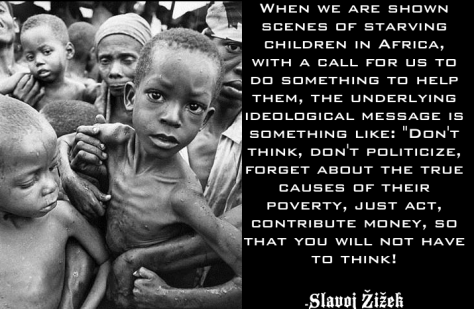
From Christian Bowe
In their book ‘Why nations fail?‘, that examines the origin of poverty and prosperity, Daron Acemoglu and James Robinson conclusively show that it is man-made political and economic institutions that underlie economic success (or the lack of it). Therefore only the development of inclusive…
View original post 844 more words
A Cascade of Development on the Omo River:Lake Turkana at Risk from Dams and Plantations February 20, 2014
Posted by OromianEconomist in Africa, Africa Rising, African Poor, Agriculture, Aid to Africa, Climate Change, Colonizing Structure, Corruption, Culture, Development, Economics, Environment, Ethnic Cleansing, Food Production, Human Rights, Land and Water Grabs in Oromia, Land Grabs in Africa, Omo, Omo Valley, Oromia, Oromiyaa, Oromo, Self determination, The Colonizing Structure & The Development Problems of Oromia, Uncategorized.Tags: Africa, African Studies, Development and Change, Economic and Social Freedom, Gambella and Omo Valley, Gibe III Dam, Gibee River, Human Rights and Liberties, Human rights violations, Lake Turkana, Land grabbing, Land grabs in Africa, National Self Determination, Omo River, Oromia, Oromiyaa, Oromo, State and Development, Universal Declaration of Human Rights
1 comment so far

Omo River, Lake Turkana at Risk from Dams and Plantations
http://www.huffingtonpost.com/lori-pottinger/ethiopia-pushes-river-bas_b_4811584.html
Dams and irrigated plantations being built in Ethiopia will bring major changes to the flow of the Lower Omo River, which in turn will harm ecosystem functions and local livelihoods all the way to the river’s terminus at Lake Turkana in Kenya. More dams are planned for the basin that would compound the damages.
Here we outline some of the basic changes that can be expected as a result of these developments, and include resources on where to get more information.
The Gibe III reservoir is expected to start filling at the beginning of the next Kiremt rainy season (approximately May 2014); filling the reservoir will take up to three years. During this time, the river’s yearly flow will drop as much as 70%.
The Gibe III will provide stable flows year-round that will enable the growth of large commercial agricultural plantations in the Lower Omo. The Kuraz sugar plantation and additional areas identified for cultivation could eventually take almost half of the Omo River inflow to Lake Turkana.
These projects will cause a decrease in river flow and the size, length, and number of floods, which will be disastrous for downstream users. This is the first year in which runoff from the Kiremt season, which is vital for flood-recession agriculture, restoration of grazing areas, and fisheries production, will be almost completely blocked.
Changes to the flooding regime will disrupt fish spawning cues and decrease productive habitat for fish in Lake Turkana and the river. Lake fish catches may decrease.
Because the Omo River contributes almost all of Lake Turkana’s inflows each year, these developments could cause a big drop in lake water levels. Lake Turkana is projected to drop by about two meters during the initial filling of the dam. If current plans to create new plantations move forward, the lake could drop from 16 to 22 meters. The average depth of the lake is just 31 meters.
Climate change could worsen the water situation in the Omo. More extreme droughts and unpredictable precipitation patterns, combined with higher temperatures (which increase evaporation), could cause further stress to a region that already experiences extreme precipitation variability. There is evidence that there will be a drying trend and warmer temperatures.
The Gibe III and associated irrigation projects will limit people’s mobility and ability to practice diverse livelihoods, which are important ways people in the region have adapted to climate variability in the past.
The primary means of livelihood for about 500,000 people will be dismantled by the Gibe III and large-scale commercial agriculture. Conflicts over scarce resources are expected to increase.
http://www.internationalrivers.org/resources/omo-river-lake-turkana-at-risk-from-dams-and-plantations-8199
http://www.internationalrivers.org/blogs/258/human-rights-must-come-first
As The 1960s Euphorea, The Current Africa Rising Optimism Is Illusionary Than Real: Let Us Actually Think How Africa Can Become Truly Prosperous. February 13, 2014
Posted by OromianEconomist in Africa, Africa Rising, African Poor, Aid to Africa, Corruption, Culture, Development, Dictatorship, Economics, Food Production, Human Rights, Ideas, Land Grabs in Africa, Ogaden, Omo, Oromia, Oromiyaa, Oromo, Oromo Nation, Self determination, Slavery, South Sudan, The Tyranny of Ethiopia, Tyranny, Uncategorized, Youth Unemployment.Tags: Africa, Africa Rising, African Studies, Developing country, Development, Development and Change, Economic and Social Freedom, Economic development, Economic growth, economics, Gadaa System, Genocide against the Oromo, Governance issues, Horn of Africa, Human rights, Human Rights and Liberties, Human rights violations, Land grabbing, Land grabs in Africa, National Self Determination, Oromia, Oromo, Oromo culture, Oromo people, Oromummaa, poverty, Social Sciences, State and Development, Sub-Saharan Africa, Tyranny, United Nations, Universal Declaration of Human Rights, World Bank
add a comment

‘Much of the “Africa Rising” narrative is based on the cyclical growth in income revenues from commodities. But who knows how long this will last? Dr Moghalu wants African governments to grasp hold of their future by creating industrial manufacturing so that Africans can consume what they produce. If that could be achieved, the continent will have moved away from being an import-driven consumer-driven economy. It is only then, he argues, that we can say Africa has truly risen.’
The term “Africa Rising” is on the lips of many these days particularly as seven of the world’s fastest growing economies are believed to be African. But can this current wave of Afro-optimism bring genuine prosperity to the African continent? Dr Kingsley Chiedu Moghalu, the Deputy Governor of the Central Bank of Nigeria thinks not.
“Hope is good,” he says. “But hope must be based on concrete substantive strategy going forward, so I pour a little bit of cold water of the Africa Rising phenomenon. I think it could lead to illusionary thinking. I recall that when African countries became independent that there was a huge sense of euphoria around the continent that independence guaranteed economic growth, political development and stability. But this did not happen in the following 30 to 40 years.”
In his latest book, Emerging Africa: How the Global Economy’s ‘Last Frontier’ can prosper and matter, Dr Moghalu presents his own ideas on how Africa can become truly prosperous. He describes it as “a vision for Africa’s future based on a fundamental analysis of why Africa has fallen behind in the world economy”.
In doing so, the LSE alumnus discusses some fundamental misunderstandings about which African states need to revise their assumptions.
The first is the idea that globalisation is automatically good. Rather, Dr Moghalu describes it as a huge and influential reality which Africans must engage with a sense of sophistication and self-interest. It is important to find a way to break that stranglehold because globalisation is neither benign in its intention nor agnostic in its belief. It is driven by an agenda and there are people who drive it.
Economist Dambisa Moyo caused controversy with her first book, Dead Aid: Why foreign aid isn’t working and how there is another way for Africa. Dr Moghalu echoes some of her arguments describing foreign aid as one of the leading reasons why Africa is impoverished. “It has removed the incentive of many African nations to seek solutions for their economic challenges and create wealth for their citizens,” he argues. “Instead it has perpetuated poverty because they are simply content to survive from one day to the next.”
Foreign aid does have its place, Dr Moghalu admits, but “it should always be within a limited time frame and it should focus on economic wealth creation activities rather than just helping people survive”. On the day we meet, the UK Secretary of State for International Development Justine Greening is in the news revealing that there will be a radical shift in future UK aid into economic development, concentrating on economic growth and jobs. Dr Moghalu expressed great pleasure at this announcement remarking that “it is very interesting that British policy is catching up with the recommendations in my book”.
Another fundamental understanding that the central banker develops in his book is the importance of understanding the four different kinds of capitalism and the implications they have for Africa’s growth. The first is state capitalism which is not very common, although it is practised by China. It is, in fact, an oxymoron. Many African states do not have the capacity to run state capitalism because you need an all-knowing state with a huge reserve of strategic thinking capacity to be able to direct wealth creation for the purposes defined by the state. There is also oligarchic or crony capitalism in Russia and some African states. This can be turned into strategic activity if cronyism is not rampant. South Korea did that by creating the Chaebols, the family-held businesses which today dominate the South Korea economy. Welfare capitalism is the norm is Europe. Some African states have practised welfare capitalism without generating the type of revenue that will sustain it into the future. Now it is out of favour. Entrepreneurial capitalism is what made America wealthy and this is what Dr Moghalu recommends for most African economies because it suits the African culture. Along with a certain amount of oligarchic and welfare capitalism, it would do Africa a world of good, he adds.
Much of the “Africa Rising” narrative is based on the cyclical growth in income revenues from commodities. But who knows how long this will last? Dr Moghalu wants African governments to grasp hold of their future by creating industrial manufacturing so that Africans can consume what they produce. If that could be achieved, the continent will have moved away from being an import-driven consumer-driven economy. It is only then, he argues, that we can say Africa has truly risen. http://blogs.lse.ac.uk/africaatlse/2014/02/12/afro-optimism-will-not-transform-africa/
US Congress Takes a Historic Stance Against Land Grabs-Related Forced Evictions in Ethiopia February 13, 2014
Posted by OromianEconomist in Africa, Aid to Africa, Colonizing Structure, Corruption, Development, Economics: Development Theory and Policy applications, Environment, Food Production, Human Rights, Janjaweed Style Liyu Police of Ethiopia, Land Grabs in Africa, Nubia, Omo, Oromia, Oromiyaa, Oromo, Oromo Culture, Oromo First, Oromo Identity, Oromo Nation, Oromummaa, Self determination, The Colonizing Structure & The Development Problems of Oromia, Theory of Development, Tyranny, Uncategorized.Tags: African culture, African Studies, Developing country, Development, Development and Change, Economic and Social Freedom, Economic development, Economic growth, Genocide against the Oromo, Gibe Valley, Governance issues, Horn of Africa, Human rights, Human Rights and Liberties, Human rights violations, Land grabbing, Land grabs in Africa, Lower Omo, National Self Determination, Oromia, Oromiyaa, Oromo, Oromo culture, Oromo people, Politics of Ethiopia, poverty, State and Development, Sub-Saharan Africa, Tyranny, United Nations, Universal Declaration of Human Rights, World Bank
1 comment so far

See the Omnibus Appropriations Bill (p. 1295-1296) @
http://docs.house.gov/billsthisweek/20140113/CPRT-113-HPRT-RU00-h3547-hamdt2samdt_xml.pdf
Oakland, CA – In a historic move, the US Congress has taken a stance on land grabs-related human rights abuses in Ethiopia. The 2014 Omnibus Appropriations Bill contains provisions that ensure that US development funds are not used to support forced evictions in Ethiopia.
The bill prevents US assistance from being used to support activities that directly or indirectly involve forced displacement in the Lower Omo and Gambella regions. It further requires US assistance in these areas be used to support local community initiatives aimed at improving livelihoods and be subject to prior consultation with affected populations. The bill goes further and even instructs the directors of international financial institutions to oppose financing for any activities that directly or indirectly involve forced evictions in Ethiopia.
According to Anuradha Mittal, Executive Director of the Oakland Institute, “We welcome this move as it aims to address one major flaw of US assistance to Ethiopia. The step taken by the US Congress is very significant, as it signals to both the Ethiopian government and the US administration that turning a blind eye to human rights abuses in the name of development is no longer an option.”
Several reports from the Oakland Institute have raised alarm about the scale, rate, and negative impacts of large-scale land acquisitions in Ethiopia that would result in the forced displacement of over 1.5 million people. This relocation process through the government’s villagization scheme is destroying the livelihoods of small-scale farmers and pastoralist communities. Ethiopian security forces have beaten, arrested, and intimidated individuals who have refused to relocate and free the lands for large-scale agricultural plantations.
Ethiopia’s so-called development programs cannot be carried out without the support of international donors, primarily the US, one of its main donors. Oakland Institute’s on-the-ground research has documented the high toll paid by local people as well as the role of donor countries such as the US in supporting the Ethiopian policy.
This language represents an important first step towards Congress initiating a comprehensive examination of US development practices in Ethiopia. As the oversight authority of the State Department, Congress must now ensure that the law is fully upheld and implemented. This warrants thorough scrutiny of USAID programs to Ethiopia and their contribution to forced resettlements and human rights abuses.
With this bill, USAID, the State Department, as well as the World Bank, will have to reconsider the terms and modalities of the support they provide to the Ethiopian government. According to Frederic Mousseau, Oakland Institute’s Policy Director, “This is a light of hope for the millions of indigenous people in Ethiopia who have sought international support from the international community to recognize their very destruction as communities and people.” Read Further @
USAID’s cover-up of Ethiopia abuses overruled by Congress 12 February 2014
The United States Congress has acted to prevent its aid to Ethiopia being used to fund forced evictions of tribal peoples in the south west of the country.
The provisions in the Omnibus Appropriations Bill for 2014 represent a slap in the face for USAID, which last month said that ‘there are no reports of widespread or systematic human rights abuses’ in the region.
In fact, tribes of the Lower Omo Valley are being violently evicted from their villages by the government to make way for lucrative cotton, palm oil, and sugarcane plantations whose irrigation will be made possible by the controversial Gibe III dam. Transferred to designated resettlement areas, the once self-sufficient tribes will be left with no access to their livestock or lands and, consequently, will be unable to sustain themselves. Intimidation tactics, such as rape and beatings, have reportedly been used against those who resist resettlement.
One Mursi man told Survival International, ‘We are waiting to die. We are crying. When the government collects people into one village there will be no place for crops, and my children will be hungry and have no food.’
The Ethiopian government has not consulted any indigenous communities over its aggressive plantation plans in the Omo Valley, and very few were consulted over the construction of the Gibe III dam.
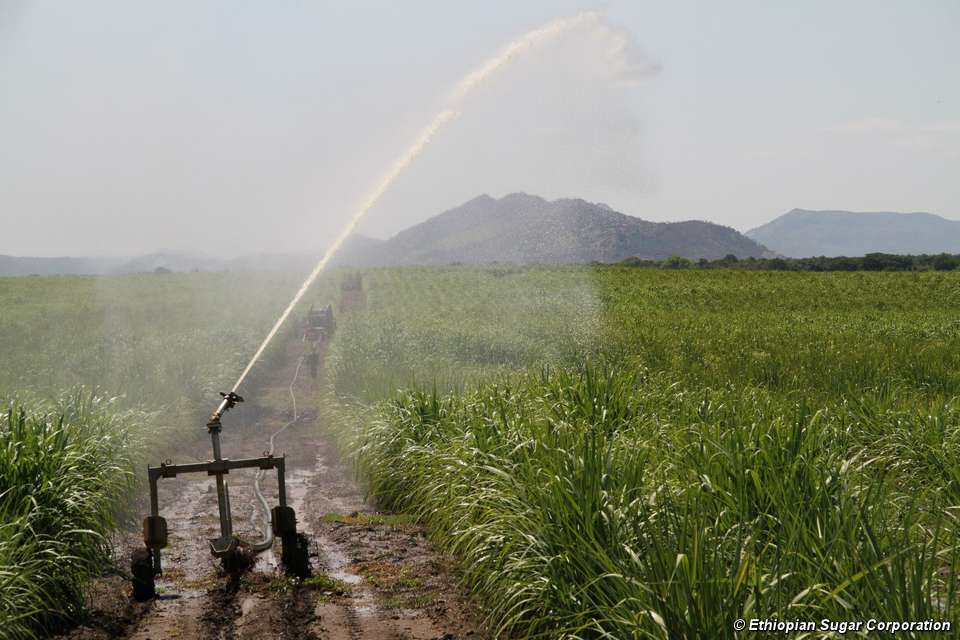
The region’s top human rights body, the African Commission on Human and Peoples’ Rights, has written to the Ethiopian government asking it to halt the forced resettlement of the Lower Omo tribes while it investigates Survival’s submission regarding human rights violations in the area.
Ethiopia is one of the biggest recipients of American and British aid through the United States Agency for International Development (USAID) and the UK Department for International Development (DFID).
Although the provisions in the recent spending bill will force USAID to reevaluate the funding given to Ethiopia, it will ultimately be the responsibility of Congress to guarantee that the terms are upheld.
Survival International Director Stephen Corry said today, ‘This bill is a huge step in the right direction, and shows that USAID’s shameful denials of the human rights abuses being committed in the Lower Omo simply haven’t been believed.
‘American taxpayers want to be sure that their money isn’t going toward the destruction of tribal peoples’ lives. Hopefully the historic provisions in this year’s spending bill will ensure that’s the case. It is now high time that British parliamentarians follow suit and ensure that DFID does not use UK taxpayers’ money to fund human rights violations in the Lower Omo.’ http://www.survivalinternational.org/news/9983
Further References on land grabs in Africa
Around 90 percent of the population of 87 million still suffers from numerous deprivations, ranging from insufficient access to education to inadequate health care; average incomes are still well below $1500 a year; and more than 30 million people still face chronic food shortages.
And while there are a number of positive and genuine reasons for the growth spurt – business and legislative reforms, more professional governance, the achievements of a thriving service sector – many critics say that the growth seen in agriculture, which accounts for almost half of Ethiopia’s economic activity and a great deal of its recent success, is actually being driven by an out of control ‘land grab’, as multinational companies and private speculators vie to lease millions of acres of the country’s most fertile territory from the government at bargain basement prices.
At the ministry of agriculture in Addis Ababa, this land-lease programme is often described as a “win-win” because it brings in new technologies and employment and, supposedly, makes it easier to improve health care, education and other services in rural areas.
“Ethiopia needs to develop to fight poverty, increase food supplies and improve livelihoods and is doing so in a sustainable way,” said one official.
But according to a host of NGO’s and policy advocates, including Oxfam, Human Rights Watch and the Oakland Institute, the true consequences of the land grabs are almost all negative. They say that in order to make such huge areas available for foreign investors to grow foodstuffs and bio-fuels for export – and in direct contravention of Ethiopia’s obligations under international law – the authorities are displacing hundreds of thousands of indigenous peoples, abusing their human rights, destroying their traditions, trashing the environment, and making them more dependent on food aid than ever before.
“The benefits for the local populations are very little,” said renowned Ethiopian sociologist Dessalegn Rahmato. “They’ve taken away their land. They’ve taken away their natural resource, because these investors are clearing the land, destroying the forest, cutting down the trees. The government claims that one of the aims of this investment was to enable local areas to benefit by investing in infrastructure, social services … but these benefits are not included in the contract. It’s only left up to the magnanimity of the investor.”
And those investors, he continued, are simply not interested in anything other than serving their own needs: “They can grow any crop they want, when they want it, they can sell in any market they want, whether it’s a global market or a local market. In fact most of them are not interested in the local markets.”
He cited as an example a massive Saudi-owned plantation in the fertile Gambella region of south west Ethiopia, a prime target area for investors: “They have 10,000 hectares and they are producing rice. This rice is going to be exported to the Middle East, to Saudi Arabia and other places. The local people in that area don’t eat rice.”
But the most controversial element of the government’s programme is known as ‘villagisation’ – the displacement of people from land they have occupied for generations and their subsequent resettlement in artificial communities.
In Gambella, where two ethnic groups, the Anuaks and the Nuers, predominate, it has meant tens of thousands of people have been forced to abandon a traditional way of life. One such is Moot, an Anuak farmer who now lives in a government village far from his home.
“When investors showed up, we were told to pack up our things and to go to the village. If we had decided not to go, they would have destroyed our crops, our houses and our belongings. We couldn’t even claim compensation because the government decided that those lands belonged to the investors. We were scared … if you get upset and say that someone stole your land, you are put in prison. If you complain about being arrested, they will kill you. It’s not our land anymore; we have been deprived of our rights.”
Despite growing internal opposition and international criticism, the Ethiopian government shows no sign of scaling the programme back. According to the Oakland Institute, since 2008, an area the size of France has already been handed over to foreign corporations. Over the next few years an area twice that size is thought to be earmarked for leasing to investors.
So what does all this mean for the people on the ground? In Ethiopia – Land for Sale, filmmakers Veronique Mauduy and Romain Pelleray try and find out.
http://www.aljazeera.com/programmes/peopleandpower/2014/01/ethiopia-land-sale-20141289498158575.html
Farming and food in Africa and the battle over land, water and resource rights
Africa is being heralded as the new frontier for commercial farming but, as governments and investors sign deals, a counter movement of family farmers is promoting alternative pathways to development.
The International Year of Family Farming is now underway, and never before have family farmers in Africa been more under threat.
Large land deals between African governments and usually foreign (and sometimes domestic) investors have seen swathes of the countryside leased or conceded, often for as much as 50-99 years. From Senegal in West Africa to Ethiopia in the Horn, and down to Mozambique in the south, land considered idle and available has changed hands, with profound implications for local people and the environment.
Oromia: OSGA Invited to the UN to report on human rights abuses February 13, 2014
Posted by OromianEconomist in Africa, Environment, Ethnic Cleansing, Finfinnee, Human Rights, Human Traffickings, Land Grabs in Africa, Nubia, Ogaden, Omo, Oromia, Oromia Support Group, Oromia Support Group Australia, Oromiyaa, Oromo, Oromo Identity, Oromo Nation, Oromo Social System, Oromo the Largest Nation of Africa. Human Rights violations and Genocide against the Oromo people in Ethiopia, Oromummaa, Self determination, Sirna Gadaa, The Colonizing Structure & The Development Problems of Oromia, The Oromo Democratic system, Uncategorized.Tags: Africa, African culture, African Studies, Developing country, Economic and Social Freedom, Economic development, Genocide against the Oromo, Horn of Africa, Human rights, Human Rights and Liberties, Human rights violations, Land grabs in Africa, National Self Determination, Oromia, Oromia Support Group, Oromia Support Group Australia, Oromo, Oromo culture, Oromo people, Oromummaa, Politics of Ethiopia, poverty, State and Development, Tyranny, United Nations, Universal Declaration of Human Rights, World Bank
add a comment


HCH is working in conjunction with the Oromia Support Group of Australia (OSGA), one of our long standing community partners, to raise urgently required funds toward a unique opportunity to
present serious allegations of human rights abuses in Ethiopia, at the highest level; the United Nations Universal Periodic Review (UPR).
Human rights organisations have long been reporting human rights abuses committed by the Ethiopian government, which include rape, torture, arbitrary detention and kidnapping. OSGA is an Australian based organisation that was established in 2008 to report on and raise awareness of these violations.
They have recently been offered a significant opportunity to send a delegate to the 19th session of the UN Human Rights Council’s UPR in April, 2014. There they will present a first-hand account of human rights abuses committed by the Ethiopian government.
This opportunity, to report first-hand accounts of torture, arbitrary imprisonment and rape to senior UN officials, will enable them to forward these concerns to the Ethiopian government during the official UPR process. This process will require the Ethiopian government to answer the accusations.
OSGA is raising urgently needed funds to send a representative from the Ethiopian community in Australia. The estimated total cost is approximately $5,000. If you can help, OSGA can provide a receipt, and will also report on the acquisition of any funds. Any contribution would greatly assist this effort.
If you can contribute, please contact info@osgaustralia
Stop Clearing Oromo from their Land in the Name of Boosting Economic Development: Who Will Stand for the Oromo People Living on the Outskirts of Finfinnee? February 11, 2014
Posted by OromianEconomist in Aannolee and Calanqo, Africa, African Poor, Aid to Africa, Climate Change, Colonizing Structure, Corruption, Culture, Development, Dictatorship, Domestic Workers, Economics, Economics: Development Theory and Policy applications, Environment, Ethnic Cleansing, Finfinnee, Food Production, Gadaa System, Human Rights, Human Traffickings, Humanity and Social Civilization, ICC, Ideas, Janjaweed Style Liyu Police of Ethiopia, Knowledge and the Colonizing Structure., Knowledge and the Colonizing Structure. African Heritage. The Genocide Against Oromo Nation, Land Grabs in Africa, Nubia, Ogaden, Omo, Oromia, Oromo, Oromo Culture, Oromo First, Oromo Identity, Oromo Nation, Oromo Social System, Oromo the Largest Nation of Africa. Human Rights violations and Genocide against the Oromo people in Ethiopia, Oromummaa, Self determination, Sirna Gadaa, Slavery, The Tyranny of Ethiopia, Uncategorized, Youth Unemployment.Tags: Africa, African Studies, Developing country, Development, Development and Change, Economic and Social Freedom, economics, Ethiopia, Finfinnee, Gadaa System, Genocide, Genocide against the Oromo, Governance issues, Horn of Africa, Human rights, Human Rights and Liberties, Human rights violations, Land grabbing, Land grabs in Africa, National Self Determination, Ogaden, Omo, Oromia, Oromia Region, Oromiyaa, Oromo, Oromo culture, Oromo people, Oromummaa, Politics of Ethiopia, poverty, Raya under destruction, Social Sciences, State and Development, Sub-Saharan Africa, Tyranny, United Nations, World Bank
add a comment

It is to be recalled that Finfinnee (Addis Ababa) was founded as the present capital city the so called Ethiopian in 1886 by a man called Minilik II. During this time, the area was inhabited by the Oromo people and the area was almost covered with natural forest. Initially the Shawa government made it seat at Ankober. Hence, before the founding of Finfinee as a political and economic capital of the king, all the areas within the present Finfinnee and the surround areas was free like any other Oromia lands. However, after 1886 the Semitic people from the northern segments and others had taken the land and the Oromo people who were used to live in these areas were forced lost their land through time.
For example, according to Central Statistics Agency of Ethiopia (2007) Out of the 2,738,248 100% total population living in Finfinnee, the total number of the Oromo people living in the city was only 534,255 (19.51%). Since its founding as a capital, Finfinnee remained the capital city for the successive Ethiopian regimes (Menilik II, Lij Eyassu, Zawuditu, Hailesillasse I, Mengistu, Melles and HaileMariam). Through time, the number of inhabitants increased and urbanization expanded greatly. The deliberate and implicitly planned mission and decision of the Semitic people to erase any sign of Oromo history from Finfinnee was started during the forcefully integration of Oromo people into Ethiopia as second-class citizens and the process has continued in the present government.
Different people mostly from the northern part of the so called Ethiopia have come from the various ethnic groups come and settled in the capital owing to its supper suitable agro-climatic and exploit the natural within the outside today’s Finfinne from the near distance in the name of work and investment. Where did those Oromo farmers go when Finfinnee became the property of new invaders? Be in mind that the Oromo’s are pushed to the peripheral areas of the capital and the number of Oromo people inhabitants decreased from time to time, as the above data depicts. The indigenous people of the land were pushed out one after the other and were replaced by the invaders from the north. What is happening to the Oromo people living on the outskirt of Finfinne today? It is simply the continuation of a process, which had resulted in a massive displacement of an indigenous Oromo people.
B. The New Master Plan of Fifinnee and Areas to be Incorporated
For the last 100 or so years the Master Plan of Finfinnee city was revised several times. The recent proposal of preparing new Master Plan for City administration that planned to incorporates all the towns and districts lying within the range of 1 hour commuting distance from the Finfinnee, justifies the blatant violation of the constitution and their voracious appetite to systematically replacing resource and land deficient people to these fertile lands owned by the Oromo people. According to the proposed plan of established the “Integrated Regional Development Plan”, an additional 36 towns and 17 districts currently administered by the Oromia regional State will be merged with Finfinnee so that the right of the land use will be determined by the central mayor .
The new Master Plan was intended to incorporate Oromia’s land locating in 100kms around the Finfinnee city. According to Ethiopia Government preparation, the following 36 Towns and 17 Districts are included in the newly planned Master plan. (See the figure 1.)
Some of the Towns are: Adama, Sodere, Mojo, Wenji Adama, Ejere, Alem Tena, Koka, Adulala, Bushoftu, Dukem, Gelen, Akaki Beseka, Godino, Chefe Donsa, Sebeta , Sendafa, Milkewa, Wendoda, Sirti, Duber,Gorfo, Chancho, Mulo, Debra,Muger , Ulo, Adis Alem, Holota, Burayu,Debre Genet, Illu Teji, Tefki, Sebeta, Boneya, Melka Kunture and etc.
Some of the Districts areas are: Adama, Dodota, Bora, Lome, Liben chukala, Adea (around Bushoftu), Akaki, Gimbichu, Bereh(around Sebeta), Aleltu, Jida, Sulultu, Ejere, Welmera, Illu, Sebeta Hawas and etc.
Today, when the world is concerned about preserving ecology and wild life in their natural habitat, it is an Ethiopian Government that is clearing an indigenous Oromo people from their home Land in the name of inequitable Economic Development. Hence, who should stand and speak for these innocent people and argue to preserve the right of the extremely vulnerable Oromo people living in the proposed territories and to preserve the indigenous Oromo people, culture, Languages and etc. Otherwise sooner than latter these great people will be marginalized and lost their identities.

Figure 1: The newly Developed and proposed Master Plan of the tomorrow’s Finfinne over the coming 25 years
C. The Agenda behind the “Integrated Regional Development Plan (IRDP)”
An office called “Addis Ababa and the surrounding Oromia Integrated Development Plan” prepared an International and National Conference on June 2013 at Adama Town, Galma Abba Gadaa. The Objective of organizing the conference of the top ranking government cadres (mostly OPDO’s) was to work on the manifesting of the proposed Integrated Regional Development Plan (IRDP) and prepare the cadre’s to work on the people.
On the Conference, it was stated that, the Purposes of the “IRDP” are:
Instrumental to unleashing Regional Development Potentials
Enables localities addressing their mutual development challenges
Enables localities addressing their mutual development challenges
Strengthens complementarities and interconnection of localities
These purposes can be the explicit or clear objectives of the plan. However, the plan have hidden or implicit agenda. Systematically bringing the land under their custody so that, it will sooner or later scramble among their impoverished people in their region. For example, the Finfinnee City Administration and Finfinnee Special Zone can address their mutual development challenges without being incorporated into one master plan. However, the Master plan is not prepared on mutual benefit as the plan is solely prepared by Finfinnee City Administration, despite the name of the office. Hence, though development is boldly emphasized, the main purpose seems to clear the Oromo farmers from their lands in the name of unfair Economic Development.
It was also stated that the Pillars of the Integrated Regional Development Plan are:
Regional Infrastructure Networks
Natural Resource and Environment Stewardship
Cross – Boundary Investments/ e.g FDI)
Joint Regional Projects
However, there seem hidden agenda behind these pillars. For example, in the name of cross-Boundary Investments, local Oromo farmers are going to lose their land for the so-called “investors” and under the pretext of promoting national economy through FDI initiatives In addition, if the plan is going to be realized natural and environmental degradation is inevitable.
In addition, the Basic Principles of the Integrated Regional Development Plan are:
Ensuring Mutual Benefits
A joint development Framework – not a substitute for local plans
An Integrated Regional Plan voluntarily accepted by participating partners
Differences resolved through negotiation and under in-win scenario
Nevertheless, the plan will not ensure a mutual benefit at it is largely intended to displace Oromo farmers from their land. In additions, the populations of the two areas are not homogenous. Hence, they have no common interest. Even though it is said the “IRDP’ will be voluntarily accepted by participating partners, the top cadres in Oromia themselves have strongly opposed the plan on the conference. Beside, the implicit objective of the plan is to remove/avoid the differences in language and culture there by to plant “Ethiopianism or Tigreans” on Oromo land. The plan is intended to say good bye to Oromo Culture and language. The other thing is that the differences between Oromo and others cannot be resolved as it is intended to eradicate Oromo identity, culture and language. As we know from history, Oromo’s never compromised on these issues. Hence, if the plan is to be implemented, peaceful co-existence may not be there.
D. Problems that may come because of the Integrated Regional Development Plan
As different sources shown, many Oromo’s living in Special Zone has already lost their land in the name of foreign direct investment and land grasping. This is because of several fa3ctories are constructed in the special zone by taking the Lands from local Oromo farmers. It is not new to see Oromo labor workers or guards in their own land. Family members are highly displaced by this measure. Many went to street. Not only the displaced Oromos damaged by this. It is said chemical coming out of the factories are also hurting the health of the remaining Oromos. It is said that “In Central Oromia, thousands of people and their livestock died due to the industrial pollution directly released to rivers and lakes.”
Taking the above as an experience, there also different reasons why the newly Master plan of Finfinne should not be implemented on Oromo people. Some of the reasons are:
1. It will bring Extreme Poverty: It is inevitable that the local Oromo farmers lost their land in the name of investment and urbanization. This means that the Oromos are systematically cleaned from their own land, as they were cleaned from Finfinnee in earlier days. Hence, the local farmers lose their land which is part of their permanent asset. After the lose their land, the farmers will going to work for 300 birrr in the factory or serve as house servant or home guard, which is already started. By doing so, the farmers face extreme poverty. In addition, the gap between rich and poor will very high. For example, one writer described the impact of “investment” saying:
“The current regime has sold out more than 3 million hectares of fertile land to the foreigner investors after forcefully displacing Oromo farmers from their ancestral land. The grabbing of land ended the indigenous people without shelter and foods. This displacement of the Oromo people accompanied by limitless human rights violations set the Oromo to be the vast number of immigrants in the Horn of Africa.”
2. Family displacement and disintegration: Members of a family will be displaced and disintegrated as a result of loosing their land. In addition, the workers of Finfinnee special zone will be displaced as they are working in Afan Oromo.
3. Abuse of constitutional rights: After long year of struggle and sacrifice of thousands of Life, Afan Oromo given constitution right to be used in administration, school and other sectors in Oromia region. This is one of the basic objectives that Oromos has been struggling. However, if the master plan is going to be implemented, working language of Finfinnee City, Amharic, is going to be used in the areas. By doing so, the local people will be forced to learn new language to use it for different purpose. The measure will take back Oromo to the “Atse” region. The Federal Constitution states “Every people, nation and nationality have the right to speak, to write and to develop their own language, as well as to express, to develop and to promote their culture and history.Article 39” will be clearly violated. The Oromo living in Finfinnee Special Zone will lose the rights that the FDRE constitution guarantees them.
4. Academic and psychological impacts on Oromo students: If the newly proposed master plan of Finfinnee City is going to be implemented, Oromo students living in the surrounding area will attend their education in Amharic, which is second language to the students. It is strongly argued that using the native languages of students as a medium of instruction is a decisive factor for effective learning However, this situation, failure to give a role to native languages and largely depending on second/foreign language instruction, brought various difficulties to students. The students are expected to entangle not only with learning the subject matters but also the language itself. It also creates difficulty to students in expressing themselves and as a result it limits their classroom participation as there is fear of making mistakes. In addition, it is a barrier to smooth classroom communication. It is also argued that use of a second/foreign language in education negatively affects the ability and the ease with which knowledge is acquired by students. It also affects the performance of students and creates difficulties in developing their cognitive skills. Moreover, giving low status to native languages of students in educational setting leads to marginalization of majority of the citizens from active engagement in the development arena. In general, the master plan will have negative impacts on Oromo students in various academic aspects.
5. Impact on Identity and Culture of Local Oromo People: The new plan will make Oromos to lose their identity and culture, like the previous regimes did. This is because people having different identity and culture are going to settle on Oromo land. The settlers will push out the Oromo identity and replace by their own. The Oromo’s will have very limited opportunity to exercise their cultural value and linguistic form. The language and cultural development will be also hampered by the new plan.
6. Economic impact: If the master plan is going to be realized, the Finfinnee City Adminstration will control all economic aspects of the areas. The income that is collected from different factories will be taken. The Oromiya government will loose great income to Finfinnee city administration.
7. Impact on Natural Resource and Environment: As the result of the plan, there will be overspread ground and surface water pollution. In addition, there will be severe deforestation and natural resource depletion.
8. Cutting Oromia into East and West Regions: The new Master Plan of Finfinne city will cut the current Oromia into two parts i.e. Eastern and Western. This is because the Central and great part of Oromia is proposed to be taken and incorporated into Finfinnee. Hence, the Central part that joins East and West will be taken.
D. What Should be done to Save the Oromo People around Finfinnee
As shown above, the master plan is so disadvantage for Oromia. In general, if we see the plan, it will affect local Oromo people in various aspects. However, the government who is supposed to represent the Oromo people is unable to see the danger. So we kindly ask the Oromos at home and Diaspora and other concerned bodies to forward ways and mechanisms to stop the intended plan. We ask the Oromo people and international communities, who will stand for the Oromo’s living around Finfinnee??
If we read an honest history of the present and past Governments of Ethiopia, we would conclude that the present Government is truly facing a difficult dilemma. At the dawn of the 21st century, we can neither run away from ourselves nor hide our realities. We have to face our generation and the historical realities of our time. It is undeniable that today, people demand respect for their human and national rights. Above all, people will not rest until their identity and their sovereignty over what is theirs is ensured. These are the peoples’ most burning issues. They realize that they have to make utmost effort of their own. It is within the context of the above-mentioned framework that the Oromo people resolutely demand their rights and freedom. It is to those who want to deny the rights and freedoms of the people that we are most bitterly opposed. It is a crime to deny the national identity and sovereignty of a people no matter how sophisticated the tactics used to do so. It is equally wrong to see the national desire of a people from a selfish perspective. It is based on the above concepts and precepts that the Oromo people continue their unceasing and bitter struggle against being treated as second class citizens. We know that our struggle is just for it is motivated by our desire to preserve our dignity and identity as a people.
We, the sons and daughters of the Oromo people, strenuously oppose the implementation of new Master Plan for Finfinne administration because we fully understand the historical development of the desire of other people to displace the Oromo people in order to benefit the non-Oromo new comers and their lackeys in this country. This highly orchestrated conspiracy, the present Oromo generation shall not tolerate at any cost. It will steadfastly and resolutely resist the conspiracy.
We also request international communities to put pressure on FDRE/TPLF Government and Finfinnee City Administration to stop the proposed Master Plan, which directly or indirectly harm the Oromo people.
We call on the Federal Government of Ethiopia, House of Peoples’ Representatives, the Federation Council, the Oromia Council to stop clearing Oromo people from their home Land in the name of inequitable Development and replacing others on their land.
Please generate comments as many as possible on what should be done about the plan.
May Waaq Gurraacha help us!
From: Sabbontoota Oromoo, Oromia.
We are always Oromo First!!!!
Sabbontoota Oromo can be reached at sabboontotaaoromo@yahoo.in
Ethiopia: Raya under destruction
 Raya refers a tract of land stretching from Ala wuha in the south to Alaje in the north. That is bigger than Adwa and Axum awrajas combined. Historically, this is where the Weyane rebellion started in 1928 as a spontaneous reaction to a repressive system of the time. Originating in their present day Kobo wereda, the revolt would quickly spread to cover the entire Raya and Wejerat provinces. Later, the inhabitants of Enderta joined the revolt and a sort of quasi-organized alliance was formed after a decade of Raya and Wejerat rebellion. This alliance, Weyane, would emerge so potent that by its heyday it practically liberated the provinces of Raya, Wejerat and Enderta. The imperial government with the support of British Air force resorted to aerial bombardment of the rebel held areas which caused a wide-spread damage, including complete erasure of villages. However, the most detrimental factor that actually caused the demise of Weyane was to come from none other than Adwa people. In 1943, Dejazmach Gebrehiwot Meshesha along with a dozen of Adwans exploited the trust vested on them to assassinate the leaders of the Weyane movement. This is significant for in the Ethiopian tradition, at least until then, if one manages to kill the leader one will win the battle. Meshesha and co. breach of the traditional trust and value was so venomous that even to this date mistrust and resentment runs high in Raya. It is to be noted that if not for Meshesha of Adwa, the people were in a very strong bargaining position and if one has to look how similar revolts in Bale and other regions were resolved, the rebels demand for better governance was within reach. As a thank you for their contribution, Meshesha and his fellow Adwans were rewarded heavily by Haileselasse while a series of punitive attacks continued on the ‘originators’ of Weyane and ultimately Raya was divided between Wollo and Tigray.
When the TPLF started the armed insurrection in Ethiopia, it took little time to transform itself as an Adwa-only club by the same inherited act of treachery. The legacy of resentment that Meshesha and co. left means TPLF-Adwa had hard time to set foot in Raya. Hence, they needed to come up with a trick and did it so by cosmetically inserting the word Weyane in the Tigrigna version of its name. Taken with the harsher realities under DERG, Rayans reluctantly sided with TPLF on the principle of the lesser devil. Soon, tens of thousands of Raya youth joined the TPLF, including forming the majority and the backbone of Hadush “Hayelom” Ariaya’s fighting force that brought the little known“Hayelom” into prominence. However, if the experience of my village is anything, it is fair to conclude that almost all the Raya recruits ended up as cannon fodders. Those who survived, especially the independent and rational ones, would have never escaped the Meles-Sebhat death squad. In Raya, for example, it is not uncommon to talk to your relative TPLF fighter over the phone in the morning only to be notified of his death of “natural” consequences on the same day. I will say more on the motives next time. But for now, I want to draw your attention to the following Table, which is taken from the 1994 and 2007 population census of Ethiopia. I think this illustrates how the Raya and Adwa are faring under the TPLF-Adwa administration.

Clearly, 7 towns (Robit, Gobiye, Waja, Mersa, Korem, Wedisemro, Chelena) of Raya from the total 11, i.e., 64% of the town that existed in the 1994 Census Ethiopia have died or are dying. Well, with Adwa awraja towns the figures show a hard-to-believe growth registering as ridiculous as 1033% for Gerhusenay, Idegaarbi(377%), Nebelet(266%); even noticeable is the emergence of a novel city (Diobdibo) in the 2007 census, attesting to the developmental and modernization campaigns in Adwa rural areas as well. The bar graph of the rate at which towns are expanding (Adwa) or shrinking (Raya) shown below can only be a proof that in the so-called Tigray “killil” both, depending on the area, de-constructive and constructive policies are in operation. To the unsuspecting, it may occur that this might have to do with the pre-1991 TPLF bandit caused civil war. However, it is not quite so for, for instance, there was no single bomb that was dropped on Adwa towns nor was a confrontation in populated areas in the entire Adwa awraja. There was insignificant causality as far as the civilian population of Adwa is concerned for the TPLF military engagement tactic in Adwa/Axum area was totally different from the rest awrajas. For example, Korem town alone might have received far more arial bombardment than the entire Adwa awraja. From SehulMikael (the Godfather of Ethiopia’s disintegration), to Meshesha-Sebhat-Meles-Sebhat(again), there exist very little dissimilarity. Right now, Alamata, the only remaining city not to die fast enough as Adwans would have liked to see, is under open destruction. The residents never complained on the absence of developmental activity but never expected that the Adwa administration of the city will come-up with a destruction agenda. Surprised by the revelation, the unsuspecting residents went to Mekelle to air their grievances in the hope that the big men there might be rational and take proper action. However, Abay Woldu’s administration did not give it a second to listen; just ordered more Bulldozers, armored tanks and a battalion to effectively carry out the planned destruction. Worse, those who complained the demolishing of their belonging are rounded-up and now languish in Adwa operated secret Tigrayan jails
Reference:
- Central Statistical Authority Ethiopia: The 1994 populaion and Housing Census of Ethiopia. Results for Tigray region, Volume 1, Statistical report.Table 2.2, Page 11
- Central Statistical Authority Ethiopia: The 1994 populaion and Housing Census of Ethiopia. Results for Amhara Region, Volume 1, Statistical report.Table 2.2, Page 13
- The 2007 Population and Housing Census of Ethiopia: Statistical Report for Tigray Region, Table 2.1, page 7
- The 2007 Population and Housing Census of Ethiopia: Statistical Report for Amhara Region, Table 2.2, page 11
http://ethiofreespeech.blogspot.co.uk/2014/02/ethiopia-raya-under-destruction.html?spref=fb


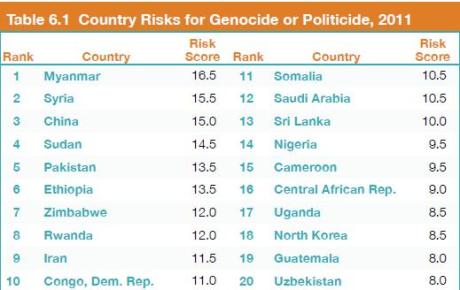




 Oromian Economist
You must be logged in to post a comment.