Why Should We Protect Endangered Languages? February 24, 2014
Posted by OromianEconomist in Africa, Ethiopia's Colonizing Structure and the Development Problems of People of Oromia, Afar, Ogaden, Sidama, Southern Ethiopia and the Omo Valley, Ethnic Cleansing, Finfinnee, Janjaweed Style Liyu Police of Ethiopia, Kambata, Kemetic Ancient African Culture, Language and Development, Nubia, Ogaden, Omo, Omo Valley, Oral Historian, Oromia, Oromia Support Group, Oromiyaa, Oromo, Oromo Culture, Oromo First, Oromo Nation, Oromo the Largest Nation of Africa. Human Rights violations and Genocide against the Oromo people in Ethiopia, Oromummaa, Qubee Afaan Oromo, Self determination, Sirna Gadaa, State of Oromia, The Oromo Library, Theory of Development, Toltu Tufa, Uncategorized, Wisdom.Tags: Afaan Oromo, Afaan Oromo Kushitic Kemetic language, African culture, African Studies, Development and Change, Genocide against the Oromo, Human Rights and Liberties, Oromia, Oromo, Oromo culture, Universal Declaration of Human Rights
1 comment so far

Why States Commit Genocide February 22, 2014
Posted by OromianEconomist in Colonizing Structure, Dictatorship, Ethiopia's Colonizing Structure and the Development Problems of People of Oromia, Afar, Ogaden, Sidama, Southern Ethiopia and the Omo Valley, Ethnic Cleansing, Human Rights, Janjaweed Style Liyu Police of Ethiopia, Land Grabs in Africa, Nubia, Ogaden, Omo, Omo Valley, Oromia, Oromia Support Group, Oromia Support Group Australia, Oromiyaa, Oromo, Oromo Identity, Oromo the Largest Nation of Africa. Human Rights violations and Genocide against the Oromo people in Ethiopia, Self determination, Sidama, State of Oromia, The Colonizing Structure & The Development Problems of Oromia, Uncategorized.Tags: Africa, African Studies, Developing country, Genocide, Genocide against the Oromo, Governance issues, Human rights violations, National Self Determination, Oromia, Oromiyaa, Oromo, Sub-Saharan Africa, Tyranny, United Nations, Universal Declaration of Human Rights, World Bank
1 comment so far
It wasn’t always like this. Before nationalism, empires frequently ruled territory that contained many diverse peoples. The Habsburg family once ruled over the Spanish, Dutch and Austrian nations, along with many of the nations of Latin America. The Romans ruled hundreds of peoples great and small, from Greeks to Gauls to Britons to Iberians to Gallicians to Egyptians to Thracians to Illyrians to Carthaginians to Numidians and on and on. Before nationalism, peoples would rather submit to foreign conquerors than risk the loss of life and limb, and as a result conquerors rarely engaged in genocide except as a means of exacting vengeance on foreign rulers who defied them (as the Mongols and Assyrians were wont to do). Empires often took some of the vanquished as slaves, but rarely did empires kill thousands or millions of defenseless people deliberately and systematically for the sole purpose of decimating another nation. Instead, empires often brought conquered peoples into their trade networks, recruited them into their armies, and, eventually, even granted them citizenship rights. By treating conquered people well, they could in time acquire their loyalty.
Nationalism changed all of that. By placing lexical priority on independence and self-determination, all foreign occupiers become villains regardless of whether they are benign or malevolent in their treatment of the occupied nation. In this day and age, even members of a nation like the Scots, which enjoys spectacularly generous subsidies and full voting rights from the British government in Westminster, desire independence purely on the basis that some Scots are nationalists and believe that nothing less than full self-determination does their nation justice. If good treatment doesn’t buy loyalty, occupiers quickly find that they are without incentives to treat subject peoples well or to attempt to integrate them into their states. Nationalism becomes a self-fulfilling prophecy–if occupiers have nothing to gain by offering fair terms of cooperation, they will not offer them, and the subjugation nationalists fear becomes reality precisely because they fear it and refuse to cooperate with the occupier.
The occupier is left with two choices:
Get Out.
Kill Them All.
Often times, occupiers choose to abandon whatever ambitions they might have had and leave in defeat and disgrace. But this doesn’t always happen–some leaders correctly reason that if they could just replace the existing population with their own people, they could pacify the territory and keep the resources it provides. If those leaders have the stomach for it, they will do the following:
Systematically murder the resisting nation.
Colonize the extinct nation’s territory with their own citizens.
Profit.
If we want to prevent genocide, we need to prevent occupiers from having to choose between defeat and genocide.
Why States Commit Genocide
by Benjamin Studebaker
http://benjaminstudebaker.com/2014/02/21/why-states-commit-genocide/
Africa: Agribusiness Feeds the Rich; Small Farmers Feed the Rest February 18, 2014
Posted by OromianEconomist in Africa, Africa Rising, African Poor, Agriculture, Aid to Africa, Climate Change, Colonizing Structure, Corruption, Development, Domestic Workers, Economics: Development Theory and Policy applications, Environment, Ethnic Cleansing, Food Production, Human Rights, Knowledge and the Colonizing Structure. African Heritage. The Genocide Against Oromo Nation, Land Grabs in Africa, Ogaden, Omo, Oromia, Oromiyaa, Oromo, Oromo Nation, Oromo the Largest Nation of Africa. Human Rights violations and Genocide against the Oromo people in Ethiopia, Self determination, Slavery, State of Oromia, The Colonizing Structure & The Development Problems of Oromia, The Tyranny of Ethiopia, Uncategorized, Youth Unemployment.Tags: Africa, African culture, African Studies, Developing country, Development, Development and Change, Economic and Social Freedom, Economic development, Economic growth, Family Farm in Africa, Industrial Agriculture, Land grabbing, Land grabs in Africa, Oromo, Oromo people, Small Farm, Sub-Saharan Africa, Tyranny, World Bank
add a comment
“Agribusiness feeds the rich; small farmers feed the rest. Yet we have a strong interest in feeding the world and are concerned that food conferences dominated by agribusiness directly threaten our ability to produce affordable, healthy, local food.Solving world hunger is not about industrial agriculture producing more food – our global experience of the green revolution has shown that the drive towards this industrial model has only increased the gap between the rich and the poor. Feeding the world is about increasing access to resources like land and water, so that people have the means to feed themselves, their families and their communities. Small family farms produce the majority of food on the planet – 70% of the world’s food supply! If conferences, like this one, exclude the voice of small farmers, then the debate about feeding the world is dominated by the rich and the solutions proposed will only feed their profits.”
A farming revolution is under way in Africa, pushed by giant corporations and the UK’s aid budget. It will surely be good for the global economy, writes Sophie Morlin-Yron, but will Africa’s small farmers see the benefit?
Many millions of small farmers that were once merely poor, will be propelled into destitution, the chaff of a neoliberal market revolution as pitiless as it is powerful.
World leaders in agriculture and development gathered in London last week at the The Economist’s ‘Feeding the World Summit’ to discuss global solutions to tackling Africa’s food security crisis.
At the event, which cost between £700 and £1,000 to attend, industry leaders spoke of new innovations and initiatives which would help fight poverty, world hunger and malnutrition, and transform the lives of millions of farmers worldwide.
Just one farmer
But there was only one farmer among the speakers, Rose Adongo, with barely a handful more in the audience. A Ugandan beef and honey farmer, Adongo was unimpressed by the technical solutions offered by the corporate speakers.
For her, the main issue was land ownership for farmers – and desperately needed changes in Ugandan law, under which women have no right to land ownership even though 80% of the country’s farmers are women, and they produce 60% of the food.
If only a woman could own land – currently passed down from father to son “she can produce more food”. Besides that she wanted cheaper fertilisers and an end to the desperate toil of hand working in the fields. Much of the land is currently plowed by hand which “can take weeks to do”.
Among the excluded …
But many were excluded from the event – and desperately wanted their voices to be heard. Among them was Jyoti Fernandes, from The Landworkers’ Alliance (member of La Via Campesina), a producer-led organisation representing small-scale agroecological producers in the UK.
“Agribusiness feeds the rich; small farmers feed the rest”, she said. “None of our members could afford to attend the Feeding the World Summit.
“Yet we have a strong interest in feeding the world and are concerned that food conferences dominated by agribusiness directly threaten our ability to produce affordable, healthy, local food.
Solving world hunger, she insisted, “is not about industrial agriculture producing more food – our global experience of the green revolution has shown that the drive towards this industrial model has only increased the gap between the rich and the poor.”
Improving access to land and water
“Feeding the world is about increasing access to resources like land and water, so that people have the means to feed themselves, their families and their communities.
“Small family farms produce the majority of food on the planet – 70% of the world’s food supply! If conferences, like this one, exclude the voice of small farmers, then the debate about feeding the world is dominated by the rich and the solutions proposed will only feed their profits.”
As Graciela Romero of War on Want commented in The Ecologist last week, it is that small farmers are feeding the world – not corporations:
“Millions of small-scale farmers produce 70% of the world’s food. Yet they remain excluded and forgotten from exchanges which affect their livelihoods or concern how to end world hunger.”
Private investment
Among the 27 speakers at the event were Nestlé Head of Agriculture Hans Joehr, Monsanto CEO Hugh Grant, Cargill Vice-Chairman Paul Conway, UN Secretary General for Food Security and Nutrition David Nabarro, and representatives from the World Food Program and World Vision.
And despite the involvement of some NGOs, academics UN officials, the main topic of discussion was private sector investment in agriculture.
Lynne Featherstone, a junior UK minister for International Development, said the way forward is newly developed efficient fertilisers, pest tolerant crops and private sector investment:
“There is substantial room for improvement, and helping farmers increase productivity while consuming fewer inputs is a priority. With partners such as CGIAR we have developed more efficient fertilisers and pest tolerant crop varieties.”
UK spending £280m to support private sector engagement
She also outlined the Government plans to invest £280m from its aid budget funding in businesses and organisations under the Alliance for Food Security and Nutrition (AFNC).
This private sector initiative – which has also involves 14 Governments – ostensibly aims to lift 50 million people in Africa out of poverty by 2022, by attracting more private investment in agriculture. Featherstone explained the rationale:
“Economic growth in these countries is best achieved through agricultural growth, which has the power of raising incomes and getting people out of poverty. And the private sector can catalyse that agricultural growth with sustainable agricultural investment.”
But is it really about land grabs?
But critics fear that is has rather more to do with getting governments on-side so corporations can carry out land grabs – taking the best watered and most fertile land away from African farmers and delivering it up to investors to plant cash crops across the continent, while turning once independent small farmers into a a proletarian underclass of landless plantation workers and rootless urban workers.
Paulus Verschuren, Special Envoy on Food and Nutrition Security, Ministry of Foreign Affairs, The Netherlands attempted to strike a balance:
“We are not going to fix the zero-hunger challenge without involving the private sector, but we need to set the criteria for these transformational partnerships. They need to have a business outcome and a development outcome.”
Corporations keen to help small farmers …
Representatives of major food corporations also insisted that they wanted to work with small farmers and help them to produce their crops efficiently while meeting development objectives.
Nestlé’s Corporate Head of Agriculture, Hans Jöhr, claimed to be willing to work with small farmers as well as large to fulfil development objectives and improving resource efficiency:
“The issue of feeding the world has to been seen in perspective of rural development, and not only technology”, he said. “And it’s definitely not about talking small versus big farmers, I think that was really the yesterday talk. It’s about people, individuals, it’s about farmers.
We cannot go on polluting and destroying
“So in this meeting about farmers, when we are talking about farmers, we are going back to what we have listened to, the restrictions we all face in business is natural resources, natural capital. It’s not only about the land, it’s mainly about water.
“This leads us to looking into production systems and methods and understanding that we cannot continue to go on with polluting destroying and depleting natural resources and with wasting them.
“Farmers who don’t know how to farm waste a tremendous amount of natural resources and agricultural materials because they don’t know how to store, and are not linked to an outlet to markets. That means that we have to help them better understand the production systems.”
Productivity must be raised
Vice Chairman of Cargill, Paul Conway, emphasised the importance of secure land ownership: “The number one thing here isn’t technology, it isn’t finance, it’s security of tenure of the land, which is absolutely critical.”
And Monsanto’s CEO Hugh Grant played down the importance of genetic modification in improving crop yields in Africa, from 20 bushels of grain per hectare to India’s typical level of 100 bushels.
“There is no reason Africa shouldn’t be close to India, it’s all small-holder agriculture. Why is it 20 today and not 90? Now forget biotech, that’s eminently achievable with some sensible husbandry and land reform ownership, the tools are in hand today.”
“We have set goals to double yields in the next 30 years with a third less water, agriculture gets through an enormous amount of water. The first 70 per cent of which goes to agriculture, the next 30 per cent goes to Coke, Pepsi, swimming pools and everything you drink and all of industry, and that isn’t sustainable.
We believe our sole focus on agriculture is vital as the world looks to produce enough nutritious food to feed a growing population while conserving, or even decreasing, the use of precious natural inputs such as land, water and energy.”
Farmers ‘invisible and irrelevant’
But Mariam Mayet, Director of African Safety for Biosafety – which campaigns against genetic engineering, privatisation, industrialisation and private sector control of African agriculture – was not convinced.
To the constellation of famous speakers and corporate representatives, she said, small farmers were a simple obstruction to progress:
“We know that all of African farmers are invisible and irrelevant to those at this summit. These producers are seen as inefficient and backwards, and if they have any role at all, it is to be forced out of agriculture to becoming mere passive consumers of industrial food products.
“Africa is seen as a possible new frontier to make profits, with an eye on land, food and biofuels in particular.
“The recent investment wave must be understood in the context of consolidation of a global food regime dominated by large corporations in input supply such as seed and agrochemicals especially, but also increasingly in processing, storage, trading and distribution.
“Currently African food security rests fundamentally on small-scale and localised production. The majority of the African population continue to rely on agriculture as an important, if not the main, source of income and livelihoods.”
Can the chasm be bridged?
If we take the sentiments expressed by corporate bosses at face value – and why not? – then we do not see any overt determination to destroy Africa’s small farmers. On the contrary, they want to help them to farm better, more productively and efficiently, and more profitably.
And perhaps we should not be surprised. After all that suits their interests, to have a growing and prosperous farming sector in Africa that can both buy their products and produce reliable surpluses for sale on global food markets.
The rather harder question is, what about those farmers who lack the technical or entrepreneurial ability, the education, the desire, the extent of land, the security of land tenure, to join that profitable export-oriented sector? And who simply want to carry on as mainly subsistence farmers, supporting their families, producing only small surpluses for local sale?
The small subsistence farmer has no place
Stop and think about it, and the answer is obvious. They have no place in the new vision of agriculture that is sweeping across the continent, with the generous support of British aid money.
Their role in this process is to be forced off their land – whether expelled by force or by market forces – and deliver it up to their more successful neighbour, the corporation, the urban agricultural entrepreneur, to farm it at profit for the market.
And then, either to leave their village homes and join the displaced masses in Africa’s growing cities, or to stay on as landless workers, serving their new masters.
This all represents ‘economic progress’ and increases in net production. But look behind the warm words – and many millions of small farmers that were once merely poor, will be propelled into destitution, the chaff of a neoliberal market revolution as pitiless as it is powerful.
Is this really how the UK’s aid funds should be invested?
Sophie Morlin-Yron is a freelance journalist.
Oliver Tickell edits The Ecologis
http://www.theecologist.org/News/news_analysis/2287243/africas_farm_revolution_who_will_benefit.html
A landmark G8 initiative to boost agriculture and relieve poverty has been damned as a new form of colonialism after African governments agreed to change seed, land and tax laws to favour private investors over small farmers.
Ten countries made more than 200 policy commitments, including changes to laws and regulations after giant agribusinesses were granted unprecedented access to decision-makers over the past two years.
The pledges will make it easier for companies to do business in Africathrough the easing of export controls and tax laws, and through governments ringfencing huge chunks of land for investment.
The Ethiopian government has said it will “refine” its land law to encourage long-term land leases and strengthen the enforcement of commercial farm contracts. In Malawi, the government has promised to set aside 200,000 hectares of prime land for commercial investors by 2015, and in Ghana, 10,000 hectares will be made available for investment by the end of next year. In Nigeria, promises include the privatisation of power companies.
A Guardian analysis of companies’ plans under the initiative suggests dozens of investments are for non-food crops, including cotton, biofuels and rubber, or for projects explicitly targeting export markets.
Companies were invited to the table through the G8 New Alliance for Food Security and Nutrition initiative that pledges to accelerate agricultural production and lift 50 million people out of poverty by 2022.
But small farmers, who are supposed to be the main beneficiaries of the programme, have been shut out of the negotiations.
Olivier de Schutter, the UN special rapporteur on the right to food, said governments had been making promises to investors “completely behind the screen”, with “no long-term view about the future of smallholder farmers” and without their participation.
He described Africa as the last frontier for large-scale commercialfarming. “There’s a struggle for land, for investment, for seed systems, and first and foremost there’s a struggle for political influence,” he said.
Zitto Kabwe, the chairman of the Tanzanian parliament’s public accountscommittee, said he was “completely against” the commitments his government has made to bolster private investment in seeds.
“By introducing this market, farmers will have to depend on imported seeds. This will definitely affect small farmers. It will also kill innovation at the local level. We have seen this with manufacturing,” he said.
“It will be like colonialism. Farmers will not be able to farm until they import, linking farmers to [the] vulnerability of international prices. Big companies will benefit. We should not allow that.”
Tanzania’s tax commitments would also benefit companies rather than small farmers, he said, adding that the changes proposed would have to go through parliament. “The executive cannot just commit to these changes. These are sensitive issues. There has to be enough debate,” he said.
Million Belay, the head of the Alliance for Food Sovereignty in Africa (AFSA), said the initiative could spell disaster for small farmers in Africa. “It clearly puts seed production and distribution in the hands of companies,” he said.
“The trend is for companies to say they cannot invest in Africa without new laws … Yes, agriculture needs investment, but that shouldn’t be used as an excuse to bring greater control over farmers’ lives.
“More than any other time in history, the African food production system is being challenged. More than any other time in history outside forces are deciding the future of our farming systems.”
AFSA has also denounced the G8 initiative as ushering in a new wave of colonialism on the continent.
http://www.theguardian.com/global-development/2014/feb/18/g8-new-alliance-condemned-new-colonialism
Gadaa Oromo Democracy: Three Approaches to the Study of African Society September 27, 2012
Posted by OromianEconomist in Africa, Ancient African Direct Democracy, Culture, Finfinnee, Gadaa System, Humanity and Social Civilization, Irreecha, Kemetic Ancient African Culture, Oromo, Oromo Culture, Oromo First, Oromo Identity, Oromo Nation, Oromo Social System, Oromummaa, Self determination, Sirna Gadaa, State of Oromia, The Oromo Democratic system, The Oromo Governance System, Uncategorized.Tags: Africa, African culture, African Studies, Ancient African Direct Democracy, Ancient Black People, Ancient Egyptian people, Democracy, Economic and Social Freedom, From, Gadaa System, Governance issues, Horn of Africa, Kemet, Kushitic people, National Self Determination, Oromia, Oromiyaa, Oromo, Oromo culture, Oromo people, Oromummaa, Politics, Siqqee, Siqqee Oromo Women Institution, Sirna Gadaa, Social Sciences, State and Development, Sub-Saharan Africa, United Nations, Universal Declaration of Human Rights, World Bank
3 comments

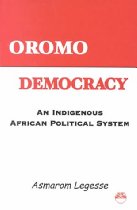

These closely related books reveal the many creative solutions an African society found for problems that people encounter when they try to establish a democratic system of governing their affairs. In much of what has been written about Africa, the common image is that of people governed by primitive customs and practices, in which only feudal roles of elders, kings, chiefs, sultans, and emirs have been acknowledged by Western observers. Little is ever shown of indigenous African democratic systems, under which there is distribution of authority and responsibility across various strata of society, and where warriors are subordinated to deliberative assemblies, customary laws are revised periodically by a national convention, and elected leaders are limited to a single eight-year terms of office and subjected to public review in the middle of their term. All these ideals and more are enshrined in the five-century old constitution of the Oromo of Ethiopia, which is the subject matter of these books.
In these books, Legesse brings into sharp focus the polycephalous or “multi-headed” system of government of the Oromo, which is based on clearly defined division of labor and checks and balances between different institutions. Revealing the inherent dynamism and sophistication of this indigenous African political system, Legasse also shows in clear and lucid language that the system has had a long and distinguished history, during which the institutions changed by deliberate legislation, and evolved and adapted with time.’ Amazon Books &
Related articles
Introduction
http://oromopress.blogspot.co.uk/2011/12/review-of-oromo-democracy-indigenous.html?m=1
http://www.readperiodicals.com/201203/2672718591.html
- Gadaa: An Oromo Democracy and the Symbol of Oromo Civilization (odaakoo.wordpress.com)
- Contours of the Emergent & Ancient Oromo Nation (oromianeconomist.wordpress.com)
- http://www.iwmi.cgiar.org/publications/CABI_Publications/CA_CABI_Series/Community_Law/protected/Ch%2009.pdf
- Oromia of Dhaqabo Ebba: The Cradle of Mankind Is Also A Home of The Oldest Living person On Earth (oromianeconomist.wordpress.com)
Copyright © Oromianeconomist 2012 and Oromia Quarterly 1997-2012. All rights reserved. Disclaimer.


 Oromian Economist
You must be logged in to post a comment.