Economic and development analysis: Perspectives on economics, society, development, freedom & social justice. Leading issues in Oromo, Oromia, Africa & world affairs. Oromo News. African News. world News. Views. Formerly Oromia Quarterly
Ethiopia is in the grip of a terrible crisis. The recent widespread popular protests must be understood in the context of an atrociously repressive regime and near total capture of the state by ethnic elites, who are now the sole beneficiaries of national resources. The people are bitter. If this mass frustration is channeled into properly organized popular resistance, Ethiopia could see a revolution.
INTRODUCTION
In addition to the senseless killings of protesters by the ruling party targeting the Oromos, the latest video clips and news reports also indicate that the same protests in Oromia region have led to the burning/destruction of properties, foundations, etc. There is an ongoing and raging debate among Ethiopians, residing both in and outside of the country, about this debacle. Some members of the diaspora link (and rightly so in this regard) the burnings/destructions to the innumerable atrocities and endemic corruption committed by the ruling party. Their condoning seems to emanate from the fact that a good portion of the destroyed properties are owned by corrupt elites and foreign companies/individuals with close links to the ruling clique. The owners of these properties and structures are reaping what they have sown, they argue. Folks who echo these sentiments seem to consider riots as antidotes to unending pillaging and a necessary evil to avenge evil doers.
There are others, particularly those who consider themselves as soldiers of the peaceful struggle, which includes those who participated in organizing of the protests, who argue against the burning and destruction of properties. The destructions and burnings, they say, were perpetrated by saboteurs of peaceful struggle and repercussions of the ruling party’s uncalled for brutalities on peaceful protestors. Folks in this camp at times point out mechanisms of regaining ill-gotten assets. The burnings and destructions also seem to have put a large portion of Ethiopians in a quandary and deep dilemma. They really seem to be between a rock and hard place (that is, unable to either condemn or condone the destructions).
As a soldier of non-violent resistance, I also do not condone the burnings/destructions. But contrary to our wishes, I acknowledge and fret the fact that burnings and destructions of greater magnitude may be inevitable. In fact, I saw this debacle coming, long ago. And I have raised this possibility, on several occasions, with friends, such as renowned professors of Ethiopian origin, namely, Minga Negash, Messay Kebede and Berhanu Mengistu, every time we discussed the cunning nature of Ethiopian corruption. As we discussed, it seemed as though our heads have become dizzy and our voices trebled, for the destructions could reach epic proportions. Why do Ethiopians consider the government supported investment structures and properties as not belonging to them but instead as “foreign” assets and even vehicles of large scale displacements, exploitation and oppression?
Now, if you want to understand why the protesters failed to understand that foreign direct investment (FDI) creates wealth (which it does), but instead consider even the “domestically” (political-party and elite-owned) “investments” as alien/foreign owned, why foreign direct investment is considered as a “fancy word for stealing” and as highly exploitative and accessory to evil, etc., and why they even venture for their destructions, I urge you to read on. If you want to understand the nature of Ethiopian corruption, its ramifications – how it has been and continues to irreparably damage the social and institutional fabrics of the country – and most importantly, if you really want to begin thinking of designing strategies for combating corrutpion and forestall potentially devastating destructions, please allow me to elaborate.
This commentary is designed, therefore, to implore you (the reader) to understand the intractable nature of Ethiopian corruption and then think about potential “solutions.” This is because designing strategies and finding “solutions” require a good grasp of the type of corruption found in a specific country, in this case Ethiopia.
STATE CAPTURE: A FORM OF GRAND CORRUPTION AS THE ROOT CAUSE OF THE PROBLEM
As I have shown on several occasions before, what we have been witnessing in Ethiopia is the most [url=file:///G:/Documents/my articles/v]pernicious and intractable[/url] form of corruption known as State Capture. This form of corruption needs to be distinguished from what is known in the corruption literature as Administrative (Bureaucratic) Corruption. The latter is the type of corruption defined and observed in the traditional manner, in almost all countries, save for post-communist (transition) countries. In particular, administrative (bureaucratic) corruption deals with the extent to which the bribe payer uses the existing laws, rules, and regulations to tip the balance in his favor. In general, administrative (bureaucratic) corruption is known to take place at the implementation level of the bureaucracy while the political (grand) corruption takes place at the highest level of political authority. Examples of variants of administrative corruption may include: impeding the implementation of justice; getting involved in the forgery and/or destruction of documents; delaying and/or procrastinating on executing high level official (assigned) duties; using official hours for personal gains; misrepresenting one’s authority; getting involved in partisan favors (nepotism); misusing public property; engaging in absenteeism; getting involved in kickbacks from developmental programs; pay-offs for legislative support, diversion of public resources for private use; overlooking illegal activities; common theft/embezzlement; overpricing, establishing non-existing projects and tax collection and tax assessment frauds, etc.
Even though it may be difficult to completely eradicate it, fortunately, nations could minimize the damage done by administrative (bureaucratic) corruption by ensuring transparency, accountability and openness in governmental activities. This is done, for example, by (a) Establishing independent power centers outside the bureaucracy; (b) Establishing independent electoral boards and developing and allowing competitive party politics; (c) Using the independent media, which in turn enables interest groups, members of civic society, NGOs, etc.; (d) Using the investigative powers of parliament; (e) Setting up of independent anti-corruption boards and commissions; and (f) Using the independent judiciary.
However, what we have been witnessing in Ethiopia is a different kind of corruption known as State Capture, which is known to have manifested itself in transition (formerly socialist) countries. It is a phenomenon in which powerful groups exert their corrupt and undue influence in order to shape the institutions and policies, laws and regulations of the state for their own benefit rather than for the public good.
State capture could arise and be practiced in several ways: it could result from powerful individuals, groups or firms using both non-transparent provisions as well as legitimate and transparent channels to deny competing groups access to state officials and resources. It could also arise from the exploitation of the “unclear boundaries between the political and business interests of state officials” by specific groups and state officials for their mutual benefits at the expense of the society in question (Hellman: 1998:3).
According to Broadman and Recanatini (2001), state capture is harmful corruption that subverts the entire political process designed to ensure that policies and regulations favorable to specific groups and business interests are implemented.
State capture may differ from country to country. In some countries, state capture could clearly be seen as a variant of a corruptive practice known as crony capitalism in which powerful groups, individuals and oligarchs shape and manipulate the formation of new policies – that is, the “rules of the game”- to their own advantage. The phenomenon could be observed whenever state officials pass decrees and/or legislative votes favoring organized business groups, oligarchs or powerful individuals. It could also be observed in huge “concentration of economic and political power” and economic inequality arising from self-interested actors gaining and controlling the state and its resources. The state capture phenomenon could also be observed in the collusive activities of powerful leaders (regional or national), ministers, and legislative and judiciary executives, corporate executives of state institutions/agencies and party-owned companies. In some cases, state capture is a result of weakened legal and political institutions. In other instances, captors purposely weaken the country’s legal and political institutions so that they would be susceptible to capture and exploitation.
It is also manifested in the failure of economic reforms and the stripping of public assets by some powerful individuals or organized groups using the “privatization” process. In some instances, state capture could be observed when organized groups clandestinely create a state within a state (“parallel state”) in order to influence the state structures, including the judiciary, the security apparatus, the military, and even the media. In some countries where state capture has occurred, the line between what is private and what is public, what is official and non-official, what is state and what is market are totally blurred.
As you can observe from the above descriptions, under state capture, a country’s laws, regulations, legalities and ultimately its institutions are part of corrupt transactions. Such corruption features are quite different from the administrative/bureaucratic corruption described above.
In some countries such as Ethiopia (Hassan, 2013) (and to a limited extent, countries such as Uganda and Rwanda), the entire political, economic, legal and military structures are under the control of powerful cliques or ethnically organized groups. Corruption of this type is pernicious because these same organized groups, in collaboration with owners of powerful firms and/or oligarchs, happen to dominate the vital sectors of all institutions (economic, social, legal and military). In some cases, as manifested in countries such as Russia in the 1990s and in some countries in Africa, Ethiopia included, the practice of capture is highly organized and predatory. The captors are known to use, among other things, violence and intimidation. They are known to have created their own monopolies (oligarchies) and cartels in order to monopolize the vital sectors of the economic system while at the same time disabling the ongoing market reforms. In short, this kind of corruption resembles a modern version of organized crime.
COUNTRY SPECIFIC CHARACTERISTICS OF CAPTORS
The corruptive activities of the captors are largely similar but they may differ by country or origin and type of captors. In post-communist countries, Hellman et al (2000:3) make distinctions between private “captor firms (i.e. firms that make private payments to public officials to affect the rules of the game) and influential firms (i.e. firms that have influence on those rules without recourse to private payments to public officials).” The captors in general are the nomenklatura – a group of former managers and bureaucrats of state-owned enterprises under the old Soviet system and other Eastern Bloc nations (estimated to be about 1.5 percent of the population) who were “engaged in ceaseless political maneuvering among themselves while maintaining total power, as a privileged class, over all the others.”
They could also be public officials who “may use their positions to capture enterprises,” or a group of actors such as the members of parliament, the executive, ministers and judiciary acting in unison (the ruling party leaders acting prosecutor, judge, and jury).
While largely similar, state capture in developing countries such as Ethiopia differs from that in post-communist countries in some important ways: For one, unlike their Russian and East European counterparts, the Ethiopian captors do not exclusively belong to the nomenklatura (former higher officials of the communist parties), since a large portion of them were rag tag guerrilla fighters who had marched all the way out from the bushes to seize power and enrich themselves. Secondly, in countries such as Ethiopia, the state capture phenomenon is highly parochial (quasi-feudal and ethnic-based) in nature.
Unfortunately, patronage infested Ethiopian corruption has a strong tendency for both envy and tolerance. It involves envy because corruption assisted riches of elites in one ethnic group irritate other ethnic groups. On the other hand, it is quite possible for tolerance for the vice to emanate from those who have ethnic affiliation with the ruling clique. This tendency is known to have permeated the Kenyan society (Michela Wrong, 2009: “It is Our Turn to Eat.”) The end result is a vicious cycle of corruption, each (largely powerful) ethnic group’s elites taking their turns to enrich themselves at the expense of everyone else.
One also observes a very strong patron-clientelistic and neo-patrimonialistic nature of corruption in these countries (Ethiopia, in particular).
Thirdly, unlike in some post-communist countries such as Eastern Europe, in which some oligarchs were forced out of political power, the Ethiopian captors continue to hold both political and economic power. The Russian oligarchs made their fortunes through wheeling and dealing and by committing all kinds of economic crimes including buying Russian assets at throw away prices (so did their Ethiopian counter-parts). But, Mr. Putin, who did not like the political meddling of some of them, used his scorched earth tactics to put some of them behind bars and sent others into exile while at the same time stripping off their assets (leaving alone those who did not venture to politically challenge him). Putin’s scorched earth tactics might have averted a rise of a potentially more devastating plutocracy than we observe in Russia today. The captors in Eastern and Central Europe gradually lost their political clout partly due to the desires and efforts of those countries to join the European Union and fulfill the EU’s conditions and the latter’s assistance in fighting and eradicating state capture.
Fourth, state capture in countries such as Ethiopia is unparalleled in that it is a stronger form than one finds elsewhere in that it encompasses the seizure of the political apparatus and the commanding heights of the national economy – the seizure extending to the military, security, foreign policy and judicial system and even the complete control of the media. In Ethiopia, the predatory oligarchs’ appetite for controlling the commanding heights of the country’s economy, misappropriating its resources and accumulating wealth using a network of political power continues unabated, thereby exacerbating the gaps between the haves and the have-nots. Elite predation has led to a virtual criminalization of the state to the extent that mafia-type criminal activities pop up occasionally.
Another peculiar characteristic of state capture in Ethiopia is its high level ethnic nature. Moreover, the lines between what is official and what is private are totally blurred, and the party and the state have become almost indistinguishable. It is for this reason that many are tempted to label the Ethiopian corruptive system as highly kleptocratic. As a result, the captured economy is trapped in a vicious cycle in which any policy reforms designed to improve governance are doomed to fail. There is constant collusion between the powerful groups operating from outside and within the government.
WHAT HAS TRANSPIRED IN ETHIOPIA?
What is being witnessed in Ethiopia is the establishment of shell companies in contravention of the country’s commercial codes, such as establishing sare companies with only 2-5 “shareholders”, most of these “shareholders” being party leaders. As Gennet Mersha explains, the parallel existence of political party-owned businesses has led to (a) “leakage of resources in the form of capital flight, (b) the granting and manipulation of licenses, (c) use of inside information pertaining to privatization, competition for state contracts and bids and awards of project contracts such as road and building and other construction works, (d) lack of competition, and (e) systematic discrimination of businesses and professionals.”
What we have observed is “favouritism and clique building [which] flourished around the privatization boards ([url=file:///C:/Users/shassan/Documents/tdrive as of june 23 2015/corruption/Aid, Development and corruption/follow up and Commentary of Professor Ejigu Demissie of the University of Maryland]Minga Negash[/url]). What the Ethiopian people witnessed were improper handling of the restructuring and privatization process (Mersha: 2010), Young (1998), Vestal (2009), and Negash (2010). What Ethiopians have witnessed is large-scale systemic state capture through the rise of suffocating political-party owned companies (“endowments”), such as EFFORT and the numerous companies subsumed under it.
What we know is the refusal of the members of the ruling clique (TPLF) to return the country’s assets that they looted when they were guerrilla fighters while at the same time occupying the highest branches of government.
What we know is party hacks presiding “over top-level corporate boards of party-owned businesses and major government enterprises including banks” and their funneling of easy bank loans to regional party-owned companies.
What has transpired is the disfranchisement of “other” Ethiopians and the stifling of competition through the awarding of contracts to those connected with the ruling party, such high level nepotism being very high particularly in the construction sector (see, World Bank’s Diagnosing Corruption in Ethiopia, Chapter 6, for example.)
What we have witnessed on a daily basis, twenty five years and counting, is the currying of favour of these same conglomerates and cadre-owned and favored companies resulting in the distortions of competition and lack of competitive marketplace.
What we have witnessed, much like in countries which were under the influence of the Soviet Union, is the seizure and control of the financial sector by a specific group.
What we are witnessing is suffocation through the use of the so-called new press and anti-terrorism laws.
What we observe in Ethiopia is the passage and adoption of new repressive laws such as the one prohibiting opposition parties from receiving funds from abroad, while at the same time the ruling party benefits immensely from that.
What has developed is a zero-sum mentality and practice, a powerful leadership with deaf ears that is “too rigid, arrogant and disconnected” with high level of patronage.
What Ethiopians have witnessed is the constant attack and dismantling of opposition political parties, the weakening of the country’s institutions – be they independent civil society organizations, unions, or professional organizations – the watering down of the quality of education, constant violation of the rule of law, etc.
What is being observed is the creation of a toothless anti-corruption commission (itself implicated in mushrooming of corruption) to hoodwink donors and the hijacking of anti-corruption efforts – to the extent of using it to attack and imprison political opponents.
Just like in communist Russia and elsewhere, the ruling party of Ethiopia has captured the legislature, the executive, the judiciary and practically all regulatory agencies – all distinguishing caricatures of state capture, the highest form of corruption that is directed toward extracting rents.
THE REPERCUSSIONS
State Capture and (mafia type) criminal oligarchy, accompanied by an unbelievable arrogance and repression has resulted in deep disillusionment, cynicism and polarization in the country. It has resulted in once upon a time rag-tag guerrilla fighters and poor taxi drivers, not known for their ingenuity or something else that is good, becoming extremely wealthy, almost overnight. It has led to the setting ablaze of property, in which local businesses happen to bear the brunt of the destructions. Riots do not take place in a vacuum. The causes are the nauseating greed on the part of the ruling party, the eviction of tens of thousands of people from their ancestral lands and the transfer of these same lands, with little or no compensations, to the ruling party-owned companies, elites and foreigners. The causes of the riots are, no doubt, outright nepotism and organized crime committed by the ruling elites. Corruption riddled land transfers have resulted in the transfer of resources from the people into the hands of a very few. Those whose lands have forcefully been taken away and displaced and those who have been oppressed seem not to be taking the abuse any more.
As an economist, I see the ruling clique’s overreach (of forced displacements, arrogance, insatiable greed and suffocating corruption) having lasting damage. Thanks to the overreaches of the government and criminal activities of party elites, foreign direct investment is now considered a fancy word for deceit and exploitation. Indeed, people-centered and properly compensated urban development projects would have been a win-win for all those involved. Thanks to the rampant land-related corruption, the ruling clique’s dirty tricks have undermined future legitimate development projects. No doubt these overreaches will be big time setbacks to future development.
RESISTANCE TO PREDATORY LAND GRABS
Allow me to elaborate the fraud infested and predatory land grabs which sparked several unrests, a little more. Just like North Korea and China, land belongs to the Ethiopian government, which in turn created a space for a frenzy of uncompensated land grabbing, rent-seeking and nepotism. Using several endless land proclamations as their tools, Ethiopian officials and land grabbers might have copied Chinese practices of forcefully expropriating land. It appears that land grabbers in Ethiopia have failed to understand the problems associated with such a practice. For one, forced evictions have resulted not only in human rights abuses and the violations of the international covenants that China has ratified, but the scheme has contributed to growing income inequality. Ethiopian authoritarian rulers should have known that growing inequalities have consequences.
Secondly, a large portion of the evictions in China was largely done by local officials and against the wishes of the central government. In Ethiopia, both the re-zoning and demolition plans and executions are exclusively done under the directives of central government authorities, contributing to the rising resentments.
Thirdly, both the central and local governments of China were able to create factory jobs which absorbed a significant portion of the evicted peasants, resulting in indirect compensations to the lost properties for those who were displaced. In Ethiopia, local communities hardly get any benefits from the “investments” despite promises of creating jobs and other goodies such as access to electricity and clean water.
Fourthly, contrary to what is largely observed in Ethiopia, it appears that Chinese local authorities and developers compensated evictees even though the compensations were nowhere equal to the market value of the properties.
Fifth, in the Ethiopian case, those who benefit from land-related corruption (which includes forced evictions and demolitions) happen to be at the top echelons of the ruling party.
Sixth, unlike the Chinese, the Ethiopian population is highly divided along ethnic lines, such divisions exacerbated by the policies of the regime itself. And last but not least, unlike the Ethiopian land grabbers, the Chinese authorities never used live ammunitions against protesters whose lands ha been seized. That must be why other ethnic groups, the Oromos, in particular, consider the so-called federal police (repeatedly observed brutally beating students and protesters) and the military as only belonging to and used as a killing paramilitary squad of the TPLF. The Ethiopian people have repeatedly witnessed that the ruling party have never been accountable for the atrocities it committed. Witness the tortures, disappearances, mass arrests and massacres the regime committed in 1995, 2005/6, 2014, and now 2015/16, the genocide committed against the Anuak people in 2003, the killing of university students in 2001, just to name a few.
The Ethiopian people have been traumatized by the endless atrocities. It is these and numerous other atrocities that have forced the people to think that this is not their government. It is the looting of public resources by a few and the extreme corrupt activities which have led the Ethiopian people to think the properties and investment do not belong to them but to a parasitic group. Consequently, it is not hard to imagine corruption that is committed by “others” (conserved by many as if they are invaders) – and in a lot of cases, orchestrated by those who claim to be representing one ethnic group – to be viewed with great envy and anger thereby escalating the polarization. No wonder it results in extreme discontent and riots.
State capture, together with oppression, arrogance and brutality, is leading the country to experience an accelerating socio-politico-economic breakdown and to potentially ethnic/sectarian conflicts – all contributing to the unravelling and possible disintegration of the rotting system. Unfortunately, the collapsing system will have collateral and innocent victims.
“SOLUTIONS”: WHERE DO WE GO FROM HERE?
As I indicated above, state capture is anathema to reform. In the Ethiopia today, there is no independent judiciary that can uphold the rule of law since the rule of law gets subverted by top-level officials on a constant basis. There are no checks and balances. All we have is a rubber-stamp “parliament. All we have is a toothless anti-corruption agency, which is saddled with the lack of resources and incompetence. Nearly all independent and privately owned newspapers have been forcefully shuttered and many of journalists sent to jail or exile. These brutal measures have deprived the country of the means to fight rampant corruption.
Civil society organizations have been either decimated or captured. What we have is an executive body which fires auditors when the auditors expose corruption and the disappearance of billions of birr. In today’s Ethiopia, every regulatory agency is captured, to the extent of Mr. Sibant Nega, the founder, architect and now revered figurehead of the TPLF, boldly and unashamedly admitting the obvious: that corruption in Ethiopia is so bad that it has permeated even the religious institutions.
The Ethiopian oligarchy lacks a Vladimir Putin (that is, Meles Zenawi) who could have served as an anti-corruption czar and used his unparalleled power and Machiavellian tactics to trap and quell his distractors and possibly extend the political life of the oligarchy. The paranoid and heavy-handed measures taken against the Oromos by the ruling clique clearly indicate that not only the ruling party has become headless but it also indicates a lack of command and control.
What we are left with is three relatively powerful groups, who could potentially allay the pains inflicted upon the Ethiopian people by rampant corruption – their measures having the potential to extend the political life of the kleptocratic regime. Even though these groups may be able to extend the political life of the regime, they would not, however, save it from eventual collapse since corruption of this magnitude cannot be saved from within. What I am thinking about are (a) Multinational institutions, such as the IMF, World Bank and others; (b) donor nations, particularly the United State and the EU; and (c) pressure from stakeholders who are a part of and have closer ties with the regime, that is, ‘custodians of the status quo’ (Berhanu Mnegistu, 2016-“Mediating Political Space… “).
The first two are holders of strong arms – capable of putting immense pressure on the clique. For one, these institutions and donors know how aid dependent the regime is – so aid dependent just “[like] a patient addicted to pain killers.” The United States and members of the EU, the U.K. in particular, along with the aid institutions, know the “aid” they provide was and still is the source of corruption, be it via illicit financial outflows, used to recruit and pay millions of cadres, used to fund forced villagization or other means. As I have shown elsewhere, donor nations know that part of the seeds of capital for party-owned conglomerates are the “aid” they provided. Should they wish to do so, donor nations can bring the TPLF leaders to their knees by suing them for their misuse of foreign aid and money laundering.
As for the third group, according to Professor Berhanu Mengistu (2016), the effectiveness of the ‘custodians of the status quo’ depends not only on their ability to “convince the narrow stakeholders” that change is in their best interests but also on their ability to direct those changes. One may legitimately ask: Would the custodians of the status quo be able to control their own greed and selfishness when in fact the entire ruling party, top-to-bottom, is so repugnantly corrupt? Well, if they failed to do so, then they will lose all that they have amassed!
So, why did Oromo protesters burn down properties and investment structures located within their own neighborhoods? Well, it is because of the resentment which running deep against overbearing party elites who scoop up lands that don’t belong to them – the grabbed lands making very wealthy almost overnight. All that the people see is wealth following senseless corruption, party affiliation, bloodlines, but not hard work or original access to one’s ancestral land. The protesters are not only pushed out of their ancestral lands but they also do not have jobs, money or even prospects. As the rioters’ selective attack targets indicate, the burnings/destructions and boycotting seem to be directed at those owned by the TPLF and its supporters. Unfortunately, resentment of this kind is also harbored by other ethnic groups. Such practices may indeed be repeated in other regions, even though Ethiopia does not really have lots of resources to burn and destroy.
Unfortunately, the Ethiopian people continue to be traumatized by TPLF’s economic gangsterism and government-led violence. Trauma leads to hopelessness, extreme anger and frustration, to the extent of being self-destructive. The burning of properties, therefore, is a by-product of the traumas that the Oromos have suffered for too long. I have my deep fears that someday such destructiveness may repeat itself in the other regions of the country and possibly in a large scale. Let’s pray and hope that appropriate measures, capable of forestalling the looming dangers will be taken.
Seid Hassan teaches at Murray State University.
THE VIEWS OF THE ABOVE ARTICLE ARE THOSE OF THE AUTHOR AND DO NOT NECESSARILY REFLECT THE VIEWS OF THE PAMBAZUKA NEWS EDITORIAL TEAM
For a long time, the government insisted that the country could handle the situation on its own. Indeed, Prime Minister Hailemariam Desalegn first requested assistance from the international community in March. But international aid organizations were also ordered not to speak publicly about the true scale of the disaster, the liberal magazine Addis Standard recently reported — a newspaper that is viewed with some skepticism by the government.
The authoritarian regime doesn’t tolerate criticism: Members of the opposition are persecuted and unruly journalists imprisoned. Nor are oppositional voices to be heard in parliament, where the governing Ethiopian People’s Revolutionary Democratic Front (EPRDF) holds 100 percent of the seats. The party liberated Ethiopia in 1991 from the socialist terror rule of Mengistu Haile Mariam, but itself likewise acts with a heavy hand.
What Ethiopia needs is an agricultural revolution, but the government is doing too little to mechanize agriculture and increase productivity. In fact, it has done the opposite by clinging to its strategy of industrialization — one that includes the leasing of giant farmlands to foreign agricultural companies which then export foodstuffs in grand fashion from the country at a time when it must import hundreds of thousands of tons of wheat in order to compensate for the crop losses caused by the drought.
‘Death Awaits’:Africa Faces Worst Drought in Half a Century
By Bartholomäus Grill
Jens Grossmann / Welthungerhilfe
The worst drought in half a century has stricken large parts of Africa — a consequence of El Niño and high population growth. More than 50 million people are threatened by hunger and few countries have been hit as hard as Ethiopia.
Herdsman Ighale Utban used to be a relatively prosperous man. Three years ago, he owned around a hundred goats. Now, though, all but five of them have died of thirst at a dried-up watering hole, victims of the worst drought seen in Ethiopia and large parts of Africa in a half-century.
Utban, a wiry man of 36 years, belongs to a nomadic people known as the Afar, who spend their lives wandering through the eponymously named state in northeastern Ethiopia. “This is the worst time I’ve experienced in my life,” he says. On some days, he doesn’t know how to provide for himself and his seven-member family.”We can no longer wander,” Utban says, “because death awaits out there.” For now, he’ll have to remain in Lii, a scattered little settlement in which several families have erected their makeshift huts. Lii means “scorching hot earth.”
‘First the Livestock Die, Then the People’
Since time immemorial, shepherds have wandered with their animals through the endless expanses of the Danakil desert. They live primarily off of meat and milk, and it was always a meagre existence. But with the current drought, which has lasted for over a year, their very existence is threatened. “First the livestock die, then the people,” Utban says.
The American relief organization USAID estimates that in Afar alone, over a half million cattle, sheep, goats, donkeys and camels have perished. Reservoirs are empty, pastures dried up, feed reserves nearly exhausted. With no rain, grass no longer grows. Many nomads are selling their emaciated livestock, but oversupply has led to a 50 percent decline in prices.
Currently, millions of African farmers and herders are suffering similar fates to Utban’s. The United Nations estimates that more than 50 million people in Africa are acutely threatened by famine. After years of hope for increased growth and prosperity, the people are once again suffering from poverty and malnutrition.
State of Emergency
The governments of Malawi, Mozambique, Zimbabwe, Lesotho and Swaziland have already declared states of emergency, and massive crop losses have caused food prices to explode in South Africa. Particularly hard stricken are the countries in the southern part of the continent as well as around the Horn of Africa, Somalia, Djibouti, Eritrea and especially Ethiopia.
Meteorologists believe the natural disaster is linked to a climate phenomenon that returns once every two to seven years known as El Niño, or the Christ child, a disruption of the normal sea and air currents that wreaks havoc on global weather patterns. The El Niño experienced in 2015-2016 has been particularly strong.
Mohamed Nasir is the clan elder in the Lii nomad settlement. He says he’s never heard of El Niño before. “The lack of water is our main problem — that’s why we’re fighting for our lives.” Nasir doesn’t have any explanation for why the weather has gone crazy. For why drops of rain no longer fall from the ice-gray skies here in the mountains, while only a three days’ walk away, the plains are flooded. For why his home region has been plagued by periodic droughts for more than eight years now. “Perhaps it’s God’s will,” he says.
Nasir has just finished praying for rain, bending over in the dust according to Muslim ritual, with grains of sand still stuck to his forehead. He’s 61 years old, but the worry lines in his face make him look a lot older. He sits in the shadows of a camel thorn tree, looking east. A hot wind blows from the Red Sea out over the karstic, grayish-brown countryside. Over the horizon, the empty promise of a few cirrostratus clouds can be seen. He’s been waiting for rain for a year now.
An Image at Odds with Emerging Ethiopia
This year’s crisis is worse than the one that befell the area in 1985, Nasir says. Back then, the most catastrophic year in Ethiopian history, around a million people died of famine.
Nasir says there have already been deaths this year in his clan’s region. He points to the mountainside behind and says, “Nine children are buried there.” Other herders also speak of the first starvation victims in Afar, but it isn’t possible to confirm the reports.
The government in Addis Ababa denies the deaths. It wants to overcome Ethiopia’s image as a country eternally beset by famine and instead present itself as an emerging nation. The Ethiopian economy, after all, is among the fastest growing in the world, with annual growth rates as high as 10 percent in recent years.
Ethiopia, one of the world’s poorest countries, has transformed itself into a successful development dictatorship based on the Chinese model. It wants to achieve middle-income country status by 2025 and establish itself firmly as an emerging nation. Pictures of starving children with large, sorrowful eyes do not fit with that image.
The country’s boom is visible in the capital city of Addis Ababa, which is currently undergoing an incredibly fast process of modernization. High rises and giant new districts are sprouting up everywhere, new motorways criss-cross the capital and a light-rail system has even been built — the first anywhere south of the Sahara. Numerous new industrial enterprises are located at the city’s outskirts, where they produce textiles and leather goods for the global market.
Covering Up the Scale of the Disaster
For a long time, the government insisted that the country could handle the situation on its own. Indeed, Prime Minister Hailemariam Desalegn first requested assistance from the international community in March. But international aid organizations were also ordered not to speak publicly about the true scale of the disaster, the liberal magazine Addis Standard recently reported — a newspaper that is viewed with some skepticism by the government.
The authoritarian regime doesn’t tolerate criticism: Members of the opposition are persecuted and unruly journalists imprisoned. Nor are oppositional voices to be heard in parliament, where the governing Ethiopian People’s Revolutionary Democratic Front (EPRDF) holds 100 percent of the seats. The party liberated Ethiopia in 1991 from the socialist terror rule of Mengistu Haile Mariam, but itself likewise acts with a heavy hand.
The country’s Western allies ignore the continuing human rights violations because Ethiopia, a bastion of Christianity, is an important military partner in the battle against Islamist terror on the Horn of Africa.
In praising itself, the government often points to the lessons learned from the 1984-85 famine. In response, Ethiopia set up a disaster early warning system and created emergency grain reserves. The country built dams, irrigation systems and roads. Around 7 million small farmers now receive crisis aid through a state safety net.
Esubalew Meberate is proud of these achievements. As the head of an administrative district with 257,000 residents, he’s responsible for 37 municipalities, 22 of which have been affected by the drought. He receives visitors in his office in the city of Gohala, high in the mountains in the state of Amhara. Meberate wears a stylish black leather jacket and a white casual shirt. He’s a typical representative of the ruling class: young, power conscious and a tad arrogant. He admits that ensuring water supply is the greatest challenge. The problem is that a dearth of transport routes makes it impossible for tanker trucks to reach all the villages. Still, he says, the government is working to address it. “Our economy is growing despite the drought and our agricultural potential is nowhere near exhausted.”
‘We No Longer Have Enough to Eat’
Yet even as the elite in the capital city enthuse about economic growth, in the mountains of Amhara, the Ethiopian heartland, people like farmer Destay Zegeye are suffering. “We no longer have enough to eat,” she complains. Last year, she says, the belg, or short rainy season, failed to materialize. Neither did kiremt, the long rainy season. Zegeye says she was only able to harvest a hundred kilograms of teff, the country’s most important food grain. She was able to keep two sacks for her seven-member household — far too little for survival.
Zegeye, 36, wears a tattered, patchwork dress with a cross dangling from her neck. She walks across the field in front of her hut, a half-hectare (1.2 acre), dry and dusty square littered with stones.
She is struggling to get her family through this period of struggle. Sometimes her husband earns a few birr as a day laborer for a government employment creation program focusing on the construction of schools, roads and storm water tanks. He also recently sold two of their four oxen. The family also gets rations from the government — 15 kilograms of grains per month and household. Somehow they manage to get by, but for how much longer?
All around the mountainous country, you find the same bleak image: cracked soil hard as cement, rocky fields and dried-up creek beds — no green patches for as far as the eye can see. In between are impoverished mountain villages that are constantly growing: Places like Qualisa, for example. Just 15 years ago, only 1,500 people lived here, but today a local employee of the German relief organization German Agro Aid (Welthungerhilfe) estimates that figure to be closer to 12,000. Such growth is the result of enormous settlement pressure. The once forested mountainsides have been clear-cut because of the growing population’s need for firewood and construction material.
Ethiopia Needs an Agricultural Revolution
At the same time, agricultural production has failed to keep up with the pace of population growth. Since the massive famine that struck Ethiopia in 1984-85, the country’s population has swollen from 41 million to 102 million. One-third of the population is already considered to be malnourished today: There simply isn’t enough to go around in many parts of the country.
DER SPIEGEL
African droughts
Much of that situation is attributable to the country’s antiquated system of subsistence farming. Millions of small farmers are incapable of yielding larger harvests because of their inability to access investment capital, equipment, fertilizers and high-quality seeds. In addition, their property belongs to the state, meaning they can cultivate it, but are unable to use it as collateral on any potential loans. They thus slave away just as in biblical times, using hoes, oxen and wooden plows to till low-yield soil.
What Ethiopia needs is an agricultural revolution, but the government is doing too little to mechanize agriculture and increase productivity. In fact, it has done the opposite by clinging to its strategy of industrialization — one that includes the leasing of giant farmlands to foreign agricultural companies which then export foodstuffs in grand fashion from the country at a time when it must import hundreds of thousands of tons of wheat in order to compensate for the crop losses caused by the drought.
Will Famine Become Chronic?
There also appears to be little concern in political power circles about annual population growth of 2.5 percent. The attitude seems to be: the more people it has, the stronger Ethiopia will be. What this overlooks is that the rapid recent population increase has been eroding successes in development policy. Agriculture experts warn that if the Ethiopian population swells to 150 million people by 2035 as some are predicting, famine could become a chronic problem.
Nor is this problem limited to Ethiopia. It could also be a harbinger of further food crises in Africa. “We are simply too many people,” says Ayenew Ferede, 37, the head of a kebele, the smallest administrative unit in Ethiopia. Seven-thousand people live in his ward, and 2,000 receive government emergency aid. “People are starving because we have run out of everything — water, grain reserves, livestock feed.”Ferede has traveled for four hours by foot here to the small town of Hamusit in the hunt for aid. He carries a heavy burden of responsibility. He, too, reports of famine deaths. “If it doesn’t rain soon, we are all going to leave.” But where will they go? “To the next kebele, to the city, across the sea to you in Europe. Someplace where there’s water and food.”
Though it has rained in recent days in some parts of the country, Ferede has little hope. “It’s too little, too late and the worst is yet to come.”
The Oromo Movement: The Effects Of State Terrorism and Globalization in Oromia and Ethiopia: Paper presented by Asafa Jalata (Prof.) at the Conference on New Directions in Critical Criminology, University of Tennessee, Knoxville, Tennessee, May 6-7, 2016.
THE OROMO MOVEMENT: THE EFFECTS OF STATE TERRORISM AND GLOBALIZATION IN OROMIA AND ETHIOPIA
Asafa Jalata
The Oromo movement is engaging in struggle to empower the Oromo people in order to restore their control on their economic resources such as land and cultural resources and to overcome the effects of Ethiopian state terrorism and globalization. The Oromo people were colonized and incorporated into Abyssinia, present Ethiopia, and the capitalist world system during the “Scramble for Africa” by the alliance of Ethiopian colonialism and European imperialism. This colonization involved terrorism and genocide in order to transfer Oromo economic resources, mainly land, through destroying Oromo leadership and the cultural foundation of the Oromo society. The Oromo resistance that started with the colonization of the Oromo was transformed into the anti-colonial movement in the 1960s and still continues in various forms. On their part, successive colonial Ethiopian governments have been using various forms of violence to destroy the Oromo struggle for national self-determination and democracy. Starting in 1992, the Tigrayan-led Ethiopian government has been imposing state terrorism, genocide, and political repression, with the assistance of big powers and international institutions on the Oromo, the largest ethno-national group, and other groups in order to destroy the Oromo national movement led by the Oromo Liberation Front (OLF) and to dominate the political economy of Oromia (the Oromo country) and Ethiopia in order to transfer economic resources, particularly land, to Tigrayan state elites and their domestic and international supporters.
This paper first provides the historical background for these complex issues. Second, it outlines theoretical and methodological approaches of the paper. Third, the piece explains the role of big powers in supporting the Ethiopian state at the cost of democracy and human rights in order to promote “savage development” (Quan 2013) or “violent development” (Rajagopal 2003) in this age of globalization. This section also explores how the Tigrayan-led Ethiopian government and its international supporters are using the discourses of democracy, human rights, and economic development while terrorizing the Oromo and other indigenous peoples by dispossessing them of their rights and their ancestral land and natural resources. Fourth, it explains how the ongoing peaceful Oromo mass protest movement has emerged in Oromia, how and why the regime is violently cracking down on protestors, including Oromo school children and university students, farmers, and other sectors of the Oromo society, and why the West is facing a political dilemma regarding supporting a government that is openly massacring peaceful protestors and violently repressing dissent. Finally, the piece explores the larger political and economic consequences of the Oromo protest movement in bringing about a fundamental transformation to the political economy of Oromia and Ethiopia.
Background
The Ethiopian colonial terrorism and genocide that started during the last decades of the nineteenth century with the assistance of England, France, and Italy still continue in the 21st century with the support of global powers (Jalata 2010). During Ethiopian (Amhara-Tigray) colonial expansion, Oromia, “the charming Oromo land, [would] be ploughed by the iron and the fire; flooded with blood and the orgy of pillage” (de Salviac 2005 [1901]: 349). Martial de Salviac (2005 [1901]: 349) called this event “the theatre of a great massacre.” The Oromo oral story also testifies that the Abyssinian armies destroyed and looted the resources of Oromia and committed genocide on the Oromo people and others through terrorism, slavery, depopulation, cutting hands or breasts, and creating a series of famines and diseases during and after the colonization of Oromia. According to Martial de Salviac 2005 ([1901]: 8), “With equal arms, the Abyssinia [would] never [conquer] an inch of [Oromo] land. With the power of firearms imported from Europe, Menelik [Abyssinian warlord] began a murderous revenge.”
The colonization of Oromia involved human tragedy and destruction: “The Abyssinian, in bloody raids, operated by surprise, mowed down without pity, in the country of the Oromo population, a mournful harvest of slaves for which the Muslims were thirsty and whom they bought at very high price. An Oromo child [boy] would cost up to 800 francs in Cairo; an Oromo girl would well be worth two thousand francs in Constantinople” (de Salviac 2005 [1901]: 28). The Abyssinian/Ethiopian government massacred half of the Oromo population (5 million out of 10 million) and their leadership during its colonial expansion (Bulatovich 2000: 68). The Amhara warlord, Menelik, terrorized and colonized the Oromo and others to obtain commodities such as gold, ivory, coffee, musk, hides and skins, slaves and lands. Menelik controlled slave trade (an estimated 25,000 slaves per year in the 1880s); with his wife he owned 70,000 enslaved Africans; he became one of the richest capitalists. He invested in American Railway Stock; “Today the Abyssinian ruler had extended the range of his financial operations to the United States, and is a heavy investor in American railroads . . . with his American securities and his French and Belgian mining investments, Menelik has a private fortune estimated at no less than twenty-five million dollars.” (New York Times, November 7, 1909).
“The Gates Foundation has rapidly become the most influential actor in the world of global health and agricultural policies, but there’s no oversight or accountability in how that influence is managed. This concentration of power and influence is even more problematic when you consider that the philanthropic vision of the Gates Foundation seems to be largely based on the values of corporate America. The foundation is relentlessly promoting big business-based initiatives such as industrial agriculture, private health care and education. But these are all potentially exacerbating the problems of poverty and lack of access to basic resources that the foundation is supposed to be alleviating.”
New Report from State Department Details Widespread Human Rights Abuses in Ethiopia
Oakland Institute, 9 May 2016
Oakland, CA—The United States Department of State recently released its annual Country Reports on Human Rights Practices, including an in-depth account of the human rights situation in Ethiopia. The report confirmed many of the ongoing human rights violations that the Oakland Institute has detailed in Ethiopia, including: abuses associated with the Government’s villagization program; restrictions on basic freedoms of expression, assembly, association, movement, and religious affairs; restrictions on activities of civil society organizations; and more.
“The US State Department report confirms that countless human rights abuses are being perpetrated by the Ethiopian Government,” said Anuradha Mittal, Executive Director of the Oakland Institute. “It also highlights appalling issues associated with Ethiopia’s criminal system, such as the use of torture, a weak and politically influenced judiciary, life-threatening prison conditions, and the use of electric shocks and beatings to extract confessions.”
Caught in this horrific system are thousands of journalists, political opposition members, land rights defenders, students, and indigenous and religious leaders, who have been unlawfully detained and arrested under Ethiopia’s draconian Anti-Terrorism Proclamation.
Included in the State Department report are the cases of Ethiopian Muslim leaders, detained and charged under the Anti-Terrorism Proclamation for participating in protests for religious freedom; and of land rights defenders Omot Agway Okwoy, Ashinie Astin, and Jamal Oumar Hojele who were arrested en route to a food security conference in Nairobi and charged under the Anti-Terrorism law.
Countless more stories were not included in the report, including that of indigenous Anuak leader Okello Akway Ochalla, who was abducted in South Sudan and forcibly taken to Ethiopia, in complete violation of extradition treaties and international law, for speaking out about abuses perpetrated against the people of Gambella, Ethiopia. On April 27, 2016, after more than two years in jail, Mr. Okello was handed a nine year prison sentence.
“Over the past years, countless indigenous communities have been evicted from their land to make way for large-scale land grabs in Ethiopia,” commented Mittal. “These displacements are happening without the free, prior, and informed consent of the impacted populations, and when communities resist, they are forcibly removed by means of violence, rape, imprisonment, and the denial of humanitarian assistance, including food aid. To make matters worse, the people who stand up and fight for the rights of those communities – people like Mr. Okello and Pastor Omot – are being jailed. This must stop.”
“Ethiopia is the United States’ closest ally in Africa and the second largest recipient of US overseas development assistance in Africa,” she continued. “In these unique roles, the US has both the power and the moral responsibility to ensure that basic human rights and the rule of law are upheld in the country. Through its report, the United States acknowledges the widespread human rights violations taking place in Ethiopia. The question is: when will the US finally do something to address this egregious situation?”
Ethiopia, Africa’s oldest independent country, is one of the West’s closest allies in the Horn of Africa.
Bordering Kenya, South Sudan, Eritrea, Djibouti and Somalia, this vast nation is home to about 80 different ethnic groups, many with their own languages and customs.
Despite Ethiopia’s demographic diversity, the country’s power structure in mainly centralised in its capital Addis Ababa, located in the heart of the country.
And this is resented by some of Ethiopia’s many different ethnic groups.
To the far east of the country lies Ethiopia’s Somali region. The people there have Ethiopian nationality but identify as Somalis. Many there say that their desperately poor region is starved of resources.
This has led some to rise up and challenge the government.
Self-determination struggle
A movement for self-determination for Ogaden, which is officially known as the Somali region, led by the Ogaden National Liberation Force (ONLF), began in the mid-1980s. ONLF took up arms a decade later.
Their attacks led the Ethiopian government to send in troops and to carry out what many describe as a brutal crackdown on the some five million ethnic Somalis who live in this arid region.
Thousands of people have died in a struggle that few outsiders are allowed to witness. It’s an invisible conflict that has cost lives and livelihoods, and despite several rounds of talks in recent years, has no end in sight.
After decades of conflict with little or no progress, should ONLF give up their fight?
“How long did South Africa [take to] defeat Apartheid? When you are fighting for your rights, time is not an issue,” Abdirahman Mahdi, a founding member and the foreign secretary of ONLF, tells Al Jazeera.
The only policy in the Somali region they have is to dominate it, to exploit the oil, to consider the people as just a nuisance, and to exploit our resources and kill our people. Even if they allowed 10% of our rights in 1994, this fighting would not have started.
Abdirahman Mahdi, founding member and foreign secretary of the Ogaden National Liberation Force (ONLF)
“My father was fighting for our rights and my children will fight for our rights. So for us, justice is the only solution – there is no other way.”
Madhi denies that ONLF wants to secede from Ethiopia and claims this is “a misconception that’s being propagated by the Ethiopian regime”.
ONLF’s fight, he says, is about seeking the “right to decide our future”.
The movement wants the “right to self-determination, including even leaving the country”. ONLF “cannot decide what the Somali people want. What we are saying is let them be given their right to decide.”
He says: “Free choice is not secession; free choice means you can choose the right to live together in peace and dignity.”
ONLF’s fight is not with federalism nor with ethnicity, Madhi says. “The issue is when one group wants to dominate the rest of the people in Ethiopia. So we are going to dismantle that.”
Madhi speaks of the marginalisation of Ethiopia’s Somali region. “[Until] recently, we had only one secondary school after 100 years of Ethiopian occupation, we had one hospital … Our women have no maternity services.”
The region, he says, suffers from a brutal trade and aid embargo and a military occupation, which he alleges has resulted in the rape of 30% of the region’s women and more than 30,000 detentions.
“How can you develop people you are raping?” he asks.
Madhi says ONLF is an Africanist movement, the struggle is expanding and the group is now working with other ethnic groups in the country by staging “peaceful mass demonstrations”.
“Our alliance is now expanding,” he says. “Like the Arab Spring, we are going to start insurrection all over the place. Ethiopia is now boiling … The regime is now in disarray; they’re divided. The people of Ethiopia have now risen up. They want their rights. We are tired of one clique dominating the rest of Ethiopia.”
On Talk to Al Jazeera, Madhi discusses the future and vision of ONLF, the criticism that he is out of touch with the needs and situation of the people in Ethiopia’s Somali region now that he lives abroad, and he responds to allegations of human rights abuses committed by ONLF and that the group is armed and trained by Eritrea.
A Struggle with an Independent Oromo State In Sight *
Prof. Mekuria Bulcha
Introduction
The Oromo and the other peoples in the southern part of Ethiopia are caught in a vicious circle of tyranny that is deeply rooted in a colonial conquest at the end of the 19th century. The tyranny had stirred popular uprisings in many places at different times. Hitherto, most of the uprisings have been suppressed, and the revolutions were hijacked and reversed. As we know, the revolution that overthrew Emperor Haile Selassie in 1974 was hijacked by a military junta, which came in promising democracy but delivered terror in abundance. The response to the military dictatorship was the formation of half a dozen nationalliberation fronts with the aim of waging a struggle and liberate their respective peoples from an empire which a British political scientist Ernst Gellner called a prison-house of nations.[1] After a decade and a half they defeated the military regime in 1991 and formed a Transitional Government of Ethiopia (TGE). One of the victorious fronts which formed a coalition and built the TGE was the Oromo Liberation Front (OLF). The Charter on which the transitional government was based, promised to bring about fundamental changes in the prevailing political and social order in Ethiopia. It made provisions for a federal structure that will create space for democracy and the self-determination of peoples in Ethiopia. However, within a year, the revolution was hijacked and reversed by the TPLF which was militarily and organizationally the strongest party in the coalition and a new dictatorship replaced the military dictatorship. As an autocrat, Emperor Haile Selassie was the law for there was no law above him. He ran the country as his private property, handing out favors in land and punishing lack of loyalty severely. After consolidating his political power and asserting his position as the prime minister of Ethiopia, the TPLF leader Meles Zenawi assumed an autocratic posture similar to that of Haile Selassie and ruled the country with an iron hand. In his book Ye-Meles Tirufatoch (The Legacies of Meles), Ermias Legesse mentions that Zenawi’s subordinates – ministers and other functionaries in his government – referred to him internally as “Dirgitu”, meaning “The Organization”.[2] Gradually, his wishes and orders came to weigh more than provisions in the Ethiopian Constitution and conditions set by the laws of the country. Thus, with a pernicious form of Abyssinian rulers’ despotism in place, Melese and his acolytes intensified the abuses of their predecessors plundering the properties of the state which they were supposed to guard. They committed human rights violations with impunity that has surpassed the appalling records of the military regime they had replaced. The Oromo have been affected by the policies of the regime more than most of the peoples in Ethiopia. The reason is simple and well known: (a) they occupy a territory that produces more than 60 percent of Ethiopia’s gross national product. The Oromo peasants produce more than 85 percent of the coffee exported from Ethiopia. Gold, platinum and tantalum which play an important role in the Ethiopian economy today are also extracted from mines in Oromia. (b) Democracy, as promised by the Transitional Charter, will not allow the TPLF leaders to structure the political economic institutions in their own favor. (c) Therefore, it was necessary not only to weaken the structure that was designed for a democratic change in Ethiopia, but undermine also legitimate Oromo institutions and political organizations in order to control the state and exploit the economic resources of Oromia, and indeed the rest of the country.
A revolution can be aborted by a counterrevolution, but that does not always mean that no change had occurred or the present is an unaltered continuation of the pre-revolution system. Whenever and wherever revolutions occur somethings will change or seeds of change are planted. One of the changes which was introduced by the 1991 Transitional Charter was the right to language and culture. In the case of the Oromo, what made this change important was the “vernacular revolution” which followed in its aftermath. The speed and efficiency with which textbooks were prepared and the change from Amharic toAfaan Oromoo was implemented between July 1991 and June 1992 was stunning. What could have taken several years to organize and implement was accomplished in less than a year under the leadership of Ibsaa Guutama, a member of the OLF who was Ethiopia’s Minister of Education in the TGE. The school which, by and large, was seen as an alien institution in many parts of the Oromo countryside in the past became an Oromo institution overnight. With Afaan Oromoo as a medium of instruction, it became a place of learning and engagement, where education was sought eagerly and acquired easily by millions of Oromo children. The Oromo children who started their education with Afaan Oromoo as a medium of instruction in 1991-92 became the first cohort of the qubee generation. The Oromo youth who are currently enrolled in grade-schools (grades 1-8), high schools (grades 9-12), colleges, and universities are over seven million.[3] Without this generation, we wouldn’t have had the ongoing revolution. The strength of the current uprising cannot be appreciated without a proper understanding of the qubee generation’s cultural underpinnings and demographic background.
To be called a revolution, an uprising should mobilize a population for a fundamental change. Uprisings can occur in a country in different places and their causes may be also similar; but they become revolutionary only when they occur simultaneously “nationwide”. In the case of the Oromo, the uprising which occurred in a small town a small town of Ginchi, central Oromia, on November 12, 2015 had triggered such an event. Together with the prevailing contention between the Oromo people and the Ethiopian state over the so-called “Addis Ababa Integrated Development Master Plan”, widely known as “the Master Plan,” and multitudes of other illegitimate acts conducted by the TPLF regime against the Oromo, the event in Ginchi, as will be discussed in this article, could raise popular grievances to a boiling point throughout Oromia. The result is a revolution in which millions of people have taken part during the last five months. In spite of the brutal violence with which the regime has been trying to suppress the revolution, not a single day has passed without massive demonstrations, often occurring simultaneously in a number of towns, cities and districts in Oromia during the last five months. The situation has been such that it gives, at times, the impression that the entire Oromo nation is out demonstrating in the streets.
Purpose of this article
The current Oromo uprising has been preceded by a trajectory of contentious events such as the forest fires of 2000, the 2002 conflict over fertilizer prices, and the 2003/4 conflict over the transfer of Oromia’s capital from Finfinnee to Adama that had marked the relationship between the Oromo youth and the Ethiopian regime during the last fifteen years. Since I have dealt with these events and the contentious “Master Plan” at large elsewhere, I will not delve into them here.[4] Although the outset of the ongoing Oromo uprising was triggered by “the Master Plan”, the main focus of this article is on factors that made the year 2014 a turning point in Oromo politics and history. The article will discuss a crucial political identity shift among the Oromo that is caused by the atrocities inflicted on peaceful Oromo protesters by the TPLF regime’s police and security forces. It argues also that the consequences of the silence of the international community over these atrocities was, by and large, an Oromo awakening to the realities of realpolitik and strengthening of their will to defend their national rights. With the November 2015 Oromo revolution in focus, the article discusses some important similarities between the revolts of the Oromo qubeegeneration, the Intifada kids of the state of Palestine in the 1990s and the black youth of South Africa’s shanty towns in the 1970s and 1980s in revitalizing the revolutionary processes in their respective societies and in influencing positive changes in the positions of world powers on the struggles and rights of their respective peoples. On the home front, it compares the current Oromo Student Movement (OSM) with the Ethiopian Student Movement (ESM) of the 1960s and 1970s. It suggests that, because of its size, the unity of purpose and ideology of its members and their embeddeness in the Oromo society, the OSM will show more resilience against the repression of the Ethiopian regime and become more successful in achieving its goal than the ESM did.
2014 – A decisive juncture in Oromo politics
Since a lot has been said and written about “the Master Plan”, particularly in Oromo media, I need not go into details. What I want to mention here are some of the factors that made 2014, in my view, and the declaration of the “Master Plan” a turning point in the struggle of the Oromo people. Obviously, “the Master Plan” was not an Oromo-friendly idea. The Oromo saw it as a physical and psychological attack on them as a nation. Planned to cover over a million hectares of land, it threatened to evict millions of Oromos who live in a dozen towns and rural districts. If implemented, it will tear Oromia into two parts. Between the two, it will carve out of central Oromia a large region from which the Oromo language and culture will disappear gradually.[5] The political consequences are also obvious. The project will not only violate Oromo sovereignty, but also pose a threat to Oromo nationhood. With its implementation, Oromia will cease to be a compact contiguous territory as we know it now. In fact, as a concept, “the Master Plan” brings to mind the map of the Palestinian territory and the problems which its separation into “West Bank” and “Gaza Strip” has created for the Palestinian people and state. Should the Oromo accept the creation of similar problems in their territory? Obviously no. Given this and what is said above, it is not difficult to understand why the Oromo oppose resolutely the implementation of “the Master Plan”
One may doubt whether the scenario I have described above is a true intention of the TPLF regime. But it is a reality which is already partially in progress. “The Master Plan” which was announced in 2014 was an enlarged extension of an ongoing project which started in 2005 unannounced by the government. According to Ermias Legesse, the TPLF leaders had grabbed over 50,000 hectares of land that belonged to 30,000 households with over 150,000 family-members were evicted from 29 kebeles. Ermias Legesse refers to this as an act of ethnic cleansing. He says that 95 percent of those whose land is confiscated are Oromo and the vast majority of its recipients are Tigrayans.[6] It is also a widely acknowledge fact that many of the evicted Oromo farmers have died, thousands of families have been disintegrated, and that the majority are now laborers, guards and beggars in Finfinnee and elsewhere in Oromia. The irony is that this is even what members of the ruling party and government are saying.[7] According to Legesse, those to whom the land was distributed had collected about 20 billion birr or US$1.5 billion from land sale.[8] It is public knowledge that the TPLF leaders and their followers became fabulously rich selling the land from which they had evicted Oromo peasants.
A decisive shift in Oromo attitude
The reaction to the news about “the Master Plan” was dramatic. The Oromo were rudely awakened not only by the news about “the Master Plan”, but also by the arrogance of a junior TPLF official who was present at a workshop the regime organized in Adama on April 13, 2014, allegedly to start public discussion on “the Master Plan”. Responding to reactions from some OPDO members who complained that “the Master Plan” imposed from above without consulting the Oromo people he said “there is nothing to prevent us to impose the Master Plan from above.” The implication was “the project will be implemented whether you like it or not”. The TPLF regime’s lack of respect for Oromo rights to homeland and property was reflected by the attitude of the TPLF official. Although the eviction of the Oromo from Finfinnee and its vicinity has been taking place since 2005, that the decisions were made entirely by the TPLF was not clear to most Oromos. As reflected in the reactions at the Adama workshop, ironically, even the members of the OPDO were not informed about “the Master Plan” until April 2014. That the TPLF leaders can exercise their power over the Oromo people and their resources without consultation and legal constraints became crystal clear at the meeting in Adama. When exposed in a rare report by journalists from the state-run Oromiyaa TV (OTV), the knowledge that the TPLF officials did not bother to consult even the mayors of the 15 townships that are affected by “the Master Plan”, let alone the millions of Oromo farmers of the surrounding villages, was humiliating not only to the junior OPDO members who were attending the workshop, but also the Oromo people at large. [9]
The crisis did not stop there. Be it out of arrogance or ignorance, the leaders of TPLF regime did not give attention to the angry words of some of the young OPDO members at the Adama workshop on “the Master Plan.” They continued to stress the irreversibility of its implementation. Consequently, the protest against the project spread quickly to universities and high schools across Oromia. The students of Ambo University organized a protest on the 25th of April and translated the popular indignation into action. Students from other universities and high schools took similar steps. One of their most resonant slogans was“Finfinneen handhura Oromiyaati!”, “Finfinnee is the bellybutton of Oromia!” Their message was clear: “we won’t allow you to cut it out; you are interfering with the geography of our national identity.” The crackdown of the regime’s security forces on the students became the bloodiest they had hitherto conducted against Oromo demonstrators. Over 70 students and residents were killed. Most of them were massacred in Ambo. The impunity with which the federal police and military forces of the regime cracked down on unarmed students revealed clearly their blatant lack of respect for the Oromo right to life.
The atrocity committed against the Oromo youth had unexpected effects. It changed the attitude of the Oromo, including those who hitherto had been indifferent about the ongoing Oromo struggle for justice. It created a reaction which reflected not only the revulsion provoked by the atrocities committed against children, pregnant women and the elderly, but also a national solidarity among the Oromo at large. Above all, the events of 2014 made it clear to many Oromos that regaining control over their homeland is a precondition for exercising their fundamental human and peoples’ rights. “The Master Plan” came to be seen as a crime against the Oromo nation and the attitude of the Oromo people about the Ethiopian state started to take a decisive negative turn.
The banner of Oromo struggle was raised and engrained
The cruelty of the Abyssinian rulers against the Oromo is well-known, but the TPLF regime’s atrocity against the Oromo youth in 2014 was an eye-opener to many Oromos. It stirred the Oromo diaspora across the globe to mobilize and protest in mass. In many cities around the world, they went out condemning the atrocities of the TPLF and chanting the slogan “We are Oromo; we are not Ethiopians.” Many had not only joined the demonstrations against the TPLF-led regime for the first time, but were also carrying the OLF flag. In a number of ways this reaction was significantly different from the mixed feeling which many Oromos had about Ethiopia in the past. What is new, and interesting in my view, is the combination of the declaration of identity expressed as “We are Oromos! We are not Ethiopians!” and the act of carrying the OLF flag, the symbol of the Oromo struggle for freedom, by Oromos who have never been members and even supporters of the OLF. Obviously, the events of 2014 had forced them to take a positions on the “Oromo versus Ethiopia question” which is at the core of Oromo politics. To carry a flag in a public demonstration is like carrying a banner in a battle: it is to endorse or protect the objective or interest which the flag signifies. Be that as it may, in the diaspora, many Oromos carry the OLF flag at mass rallies, or decorate their homes with it, to express their support for what it represents: that is to say, the establishment of an independent Oromo state.
At home, the significance of flags in identity politics was clearly marked during the 2015 national parliamentary elections. Those of us who followed the 2015 Ethiopian elections were surprised the fact that, among the thousands of Oromos who had participated in rallies organized by the only Oromo opposition party at home, the Oromo Federalist Congress (OFC), not a single person was seen carrying the Ethiopian flag. In fact there were no banners of any kind at many of the videoed rallies. It is said that there was an attempt to distribute the Ethiopian flag to the participants during one of the OFC rallies, but that was unsuccessful. No one was willing to carry it. Given the level of the prevailing political consciousness among the Oromo, it is difficult to expect them to march with a flag which symbolizes the subjugation of their forefathers. But, the intriguing question is that, when we talk about rejection of the flag that does not tell us whether it is the subjugation, which the flag symbolized, which was being rejected, or the Ethiopian identity which is also implied. My guess is both. The rejection of Ethiopian flag and identity is also reflected in the actions of the Oromo youth who have been raising the OLF flag in many places across Oromia. As we have been witnessing during the last five months through social media, it is raised to honor those who were killed by the Ethiopian security.
In general, it seems that as a symbol of resistance, the OLF flag is arousing positive emotions among the Oromo in tandem with the increased atrocity committed against them by the TPLF regime. The demonstrations of 2014, 2015 and the last three four months have indicated clearly the significance the OLF flag in the Oromo struggle. Juxtaposed with the evergreen odaa tree, the symbol of gadaa democracy, and rays of a rising morning sun, the red, green and yellow OLF banner has become a resonant symbol of the expected Oromo resurgence from the dark nights of a more than a century old subjugation, into the bright light of independence. That the image which the OLF flag is ingraining in the minds of the Oromo. Although the Oromo do not have an independent state, and the use of the OLF flag is not endorsed by an Oromo parliament as a national flag, it is “seen” fulfilling many of the functions that national flags fulfill.
A shocking but liberating moment
The indifference of the international community to the crime perpetrated by the Ethiopian regime was another issue that awakened the Oromo to reality. The Oromo who naively believed that the international system is humane and justice-based were suddenly confronted with the culpable silence of realpolitik. Although the atrocities the Ethiopian regime had committed in Oromia constituted a clear case of what the Statute of the International Court (Article 7) defines a crime against humanity, the rest of the world continued doing business with the Ethiopian regime as usual. The two American Peace Corps volunteers, Jen Klein and Josh Cook who had witnessed atrocities committed against Oromo students in the town of Ambo, central Oromia, wrote “Ironically, as we sat at home, listening to gunshots all day long, John Kerry was visiting Ethiopia a mere 2 hours away in Addis Ababa, to encourage democratic development.”[10]
The visiting US Secretary of State was not the only diplomat who was silent about the student massacre. Although 70 peaceful students were massacred in a couple of days, no government raised its voice against the Ethiopian regime. The African Union, which has headquarters in Finfinnee/Addis Ababa, remained conspicuously silent about a massacrethat took place “on its doorsteps”. This was also the case with the entire diplomatic corps who staff the embassies of nearly all the member states of the UN, who reside in the heart of the Oromo country. In fact, the two Peace Corps volunteers mentioned above were advised to keep quiet when they started to inform others about what they saw in Ambo. This appalling indifference can be explained by a mixture of factors including the lack of interest in what was happening to the powerless, pursuit of selfish geopolitical and economic interest or selfish individual motives. The Abyssinian ruling elites have a refined tradition of distorting reality. The British journalist Evelyn Waugh wrote “Tricking the European was a national craft; evading issues, promising without the intention of fulfilment….were the ways by which [Abyssinian rulers] had survived and prospered.”[11]The rulers of Ethiopia remained adept at exploiting this time tested method long after Waugh made this critical observation. Writing about the 1973 Ethiopian famine, the American writer Jack Shepherd argued in his Politics and Starvation that, “honorable men and women’ working for honorable institutions refused to jeopardize their jobs or their comfortable relationship with Haile Selassie’s government by calling international attention to the Emperor’s secret.”[12] The Abyssinian national craft of tricking foreign diplomats is inherited and is being diligently used by TPLF leaders in their dealings with the international community. We also know that they are diplomats and foreign experts themselves who are reluctant to jeopardize their comfortable relationship with the TPLF regime and jobs in Finfinnne (Addis Ababa) today. Avoiding criticism of the Ethiopian government for undemocratic practices, they prefer to talk about a step forward on the right road towards democracy, and pledge assistance for further democratization irrespective of how grave the observed violations of human rights are.[13]
“Oromoo! Walmalee fira hinqabnu!”
Like other oppressed peoples who believed the promises of the UN Charter and that of the other international organizations which that pledge support the oppressed, humiliated and downtrodden peoples, it took the Oromo a long time to understand that their lofty promises are empty words. The Oromo interpretation of the silence over the massacre of Oromo youth in 2014 was that the death of the powerless is not more important than business with the Ethiopian regime. The conclusion they drew from the silence was summarized in a statement which said: “Oromoo walmalee fira hinqabnu!” (“Oromo! We have only ourselves!”). This was on the lips of everyone for a while after the tragic massacre of Oromo students in 2014. Notwithstanding the tone, the statement did not reflect hopelessness or victimhood; it expressed the sober understanding that waiting for others to liberate them was an illusion. It underlined the necessity of internal solidarity and collective action to overcome their national predicament. The overall reaction to the external silence was an internal unity and psychological bonding among the Oromo. The feeling was that “if we are united we will stop the Master Plan; if not our future as a people is in danger.” In my view, the silence of the international community was a “blessing in disguise”: it killed the naïve belief which many Oromos had about the international community’s readiness to condemn injustice wherever and whenever it occurs. It underlined the importance of self-reliance and aggressive engagement in diplomacy.
The Oromo are not the first people to find themselves in that situation. The South African Student Organization (SASO) declared in the early 1970s: “Black man, you are on your own!” Steve Biko, the co-founder and first president of SASO (1969), who is known more as a prominent leader of the anti-Apartheid movement called Black Consciousness Movement (BCM), reminded his compatriots:
We are oppressed because we are black. We must use that very concept [black] to unite ourselves and respond as a cohesive group. We must cling to each other with a tenacity that will shock the perpetrators of evil.[15]
The silence of the international community over its massacre of Oromo students in 2014 emboldened the Ethiopian regime to continue its policy of evicting the Oromo from their land. In spite of the widespread Oromo opposition, both at home and in the diaspora, it did not drop the Master Plan. In February 2015, the former Minister of Federal Affairs and current special advisor of the Ethiopian Prime Minister, Mr. Abay Tsehaye, declared his government’s determination to implement the plan. However, it was not only the position of the Ethiopian regime that was unwavering on the question of Finfinnee. Notwithstanding the threats from the government, the Oromo youth at home were prepared to pay the sacrifice it may ask and continue their struggle and defend the sovereignty of their homeland and the rights of their people. In the diaspora, media outlets such as the OMN (Oromia Media Network) and others that connect the remotest parts of Oromia with Oromo communities across the globe were in place. Informed by these sources and through other networks such as Facebook, Tweeter and Instagram, the Oromo in the diaspora were active in bringing the atrocities being committed by the Ethiopian regime in the name of development to the attention of the international community. By and large, the Oromo opposition to the threat posed by the “Master Plan” was united and their response to the crimes committed by the TPLF regime against the Oromo youth was cohesive
The Oromo appeal to the international community got attention after another round of TPLF massacre in late 2015. Following the strong resolution passed by the European Parliament in January 2016, and statements made by the US Department of State on the situation in Ethiopia in general and Oromia in particular, the deafening silence that had prevailed on the ongoing violence against the Oromo was lifted. The Oromo have also started to win some ground in the diplomatic front. However, that does not mean enough work has been done and effective pressure has been applied against the TPLF regime. In fact the violation of human rights in Oromia has kept on escalating since November 2015.
The November 2015 Oromo Revolution
An event in a small town in Oromia on November 12, 2015 epitomized the crimes of the TPLF. An uprising which was ignited in Ginchi, a small town 80 km west of Finfinnee, involved an assortment of injustices: land grabbing, the plunder of Oromo resources, deforestation, destruction of the environment, the impunity of the security forces, in other words, the major causes of Oromo grievances because of which the Oromo students have been protesting for a long time across Oromia. When the news of what happened in Ginchi was reported over social media, it became an epitome of both the crimes of the TPLF regime and the resistance in Oromia. The people could not tolerate the situation anymore. The news caused uprisings first in Ambo and then to Mendi, a town in western Oromia, and immediately all over Oromia. The situation is such that sometimes it seemed as if the Oromo are marching simultaneously in one and the same demonstration. It is as if people were responding in unison to a national call made in March 2015 by the students of Jimma University who, among other things, said: “We have been subjugated together; we should stand shoulder to shoulder to reclaim our God given rights and freedom together.”[16] The news and video records that have been coming out of Oromia on daily basis since November 12, 2015 show successions of mass demonstrations across Oromia that reflect similarities with the daring actions of the Palestinian Intifada kids and the mighty post-Soweto youth protests in South Africa’s black townships in the 1980s.[17]
In January 2015 Opride wrote that today’s Oromo youth are “like a new species of Oromo.” They are “keenly aware of their state’s boundaries and the Oromo people’s longstanding misgivings about the Ethiopian state.” It said “the average Oromo protester personifies the indomitable spirit of Oromo nationalism and a steely determination to see to it that the injustice against the Oromo becomes a thing of the past. Such open national consciousness was hitherto unthinkable in Ethiopia, which remained a unitary state in large part by harshly suppressing Oromo self-expressions.”[18] In fact, OPride’s observation about the Oromo qubee generation’s national consciousness and indomitable determination is reflected in the following sample of slogans. Chanted in chorus by tens of thousands of schoolchildren, secondary school and university students, these and other slogans have been reverberating across Oromia during the last five months.[19] In many towns and remote villages schoolchildren were chanting the touching slogans defying cruel beating, tear gas, and even live ammunition directed at them by policemen and the security forces of the Ethiopian regime.
Harr’as borus Oromiyaaf duuna!
Mirga keenya ni falmana!
Biyyi keenya hingurguramu!
Mirga keenya yoomiyyuu ni falmanna!
Lafa hingurgurru
Oromiyaa ni falamanna!
Oromiyaan ni bilisoomti!
Oromiyaa is our Homeland!
Where shall we go leaving our Homeland!?
Oromiyaa is our Motherland!
Oromiyaa has nurtured us!
Oromia has fostered us!
We shall not be evicted from our land!
We shall defend our Homeland!We do not violate others’ rights!
Why were our students killed?
Why were our teachers killed?
Why were our farmers killed?
Why were our workers killed?
We shall die for Oromia!
We shall fight for our rights!
Our Motherland is not for sale!
We shall never stop fighting for our rights!
We will not sell our land
We shall fight for Oromia!
Oromia shall be free
As reflected in these slogans, the Oromo youth want that their people should get rid of terror, eviction, and humiliation under the rule of the TPLF regime and be in charge of their own destiny. They demand respect for their rights – their right to life, and the right to shape their individual and collective lives without external interference. They will not violate others’ rights, but, as reflected in the slogans, they will sacrifice their lives to defend Oromo rights and dignity. To paraphrase a comment made by an observer, the Oromo protesters have shattered fear and intimidation and are confronting the regime’s brutal crackdowns, including salvoes of live ammunition, defiantly with hands crossed. This bravery is not an impulsive act. To the Oromo, the question of Finfinnee is seen as a matter of life and death for Oromo sovereignty and territorial integrity, in a federation or as an independent state. Although almost all of the Oromo youth’s protests have been conducted hitherto peacefully, the responses from the Ethiopian regime has involved deadly brutalities, beatings, rapes, disappearances, imprisonments etc. The men, women and children killed so far are at least 550; those who have been injured are counted in thousands. Nobody knows the number of those who have been kidnaped and disappeared. Those who are detained are counted in tens of thousands.
The Oromo youth, the children of Soweto and the Intifada kids of Palestine
It is interesting to note here that features of the revolution that had been ignited by the incident in Ginchi in November 2015 has similarities with the resistance of the South African and Palestinian peoples in the past. To begin with, welded together by an unwavering faith in their legitimate cause the Palestinian Intifada kids constituted a defiant “army” who faced Israeli tanks, jeeps and soldiers with stones. Their bravery had cost them many lives, but, it was not pointless or in vain. It was contagious and took the Palestinians to the streets in their thousands. The burial of each and every Palestinian killed by Israeli bullets became a massive show of national solidarity in a resolute psychological defiance against the Israeli occupation. The kids who lost their lives were not betrayed and forgotten. As we remember, it was the heroic acts of the Intifada youth which forced the Israeli government under Yitzhak Rabin to negotiate with the Palestine Liberation Front (PLO) and its leader Yasser Arafat in 1993. Thus, the daring youth also put the Palestinian question on the agenda of the powerful West and the Palestinian state on the map of the Middle East.
The similarities between the current deeds of the Oromo youth to stop the implementation of “the Addis Ababa Master Plan,” and the courage the Palestinian kids had shown in defense of Palestinian rights are striking. It is even the struggle of the Oromo youth that has made the world to pay attention to the Oromo question for the first time. Among others, the European Parliament passed resolution on the situation in Ethiopia condemning the use of violence against peaceful Oromo protesters. The US government expressed its concern publicly for the first time about the situation in Oromia. However, the statements are yet to be accompanied by tangible action. On its part, the Ethiopian regime has continued with its vicious actions against the Oromo people ignoring the concern of the international community.
Again, it is important to remember that the support of the international community, though needed, is not a panacea for a national predicament in the last analysist. Although, the assistance given to the ANC by external powers was very substantial, but we must remember that Apartheid was brought to its disgraceful demise by the monumental demonstrations and death-defying confrontations which were conducted in the racially segregated shanty towns in which the vast majority of the indigenous African population live. Indeed, it was those actions which had gradually turned Apartheid South Africa into a hell for the white racist regime. The trend we see in Oromia is proceeding in the same direction. As the uprising shocked “the perpetrators of evil” in Apartheid South Africa, the Oromo uprising has given the TPLF regime a shock it has never felt during last 25 years. As we know, it took a decade and half to bring down the Apartheid regime after the Soweto uprising. While the popular base of the ongoing Oromo revolution seems to be at least as united and strong as the Anti-apartheid movement had been, one cannot say the same when it comes to the strength of its leadership. However, I can say that what the OMS has already achieved has brought the Oromo people nearer to the goal they have been aspiring for a long time: (a) it has united the Oromo people from corner to corner to struggle for a common goal; (b) it has brought the Oromo question to the attention of the international community. (c) One of the arguments against Oromo independence concerns the security of non-Oromos who live in Oromia today. However, the humanity shown to non-Oromos during the last five months must have, by and large, dispelled that fear. In other words, it has indicated that non-Oromos can live in an independent Oromia without fear for their lives and property. These and other victories scored by the Oromo people, particularly during the last five months, indicate that the day of their independence is not far
Number matters
The current Oromo uprising is maelstrom that has refused to cease for the last five months and is involving scores of cities, all the universities in Oromia, nearly all the high schools and most of the elementary schools. In addition, millions of farmers, businessmen and women, and civil servants have been participating in it. However, the Oromo youth remain in the forefront. The term youth includes university and high school students and primary school children. The TPLF leaders seem to have forgotten the role the Ethiopian Student Movement (ESM) had played in overthrowing the Haile Selassie regime in 1974 when they under-estimated the strength of the Oromo youth. The ESM of late 1960s and early 1970s of which many of the TPLF leaders were members, was based on population of 6,098 university (in 1974-75), 88,541 secondary school and 1,191,158 grade school (1-8) students in the country, including Eritrea, in 1976.[20] Compared to that, there are, according to a recent report from the Ministry of Education of Ethiopia[21], over 600,000 students enrolled in higher institutions of education in the country during the academic year 2013/14. If we estimate that between 35 percent of them are Oromo that means there are over 210,000 Oromo students in the colleges and universities. According to the same source, the number of Oromo students who were attending secondary schools was more than 650,000. Over 6,620,000 Oromo children were attending grade schools. Given this gigantic number of current schoolchildren, it is plausible to assume that the number of Oromo students in secondary schools and universities will double and even triple soon. Therefore, it is unlikely that the TPLF or any other regime that may take power in Finfinnee hereafter can destroy the Oromo youth movement physically or diminish its political importance unless it is prepared to commit a genocide.
It is important to point in this connection that the majority of the Oromo youth with whom the TPLF regime is in conflict were born after it came to power. They are between the ages of 17 and 24. A regime which treats a young generation of such an immense size with unbridled atrocity as the TPLF has been doing for the last fifteen years cannot have a future. The TPLF regime is seating in an irreparably damaged boat that is sinking in a stormy sea. The only means it depends on now to stay in power are the instruments of coercion. But those are not functional any more in Oromia.
Unity of purpose and ideology matter
Unity of purpose and ideology are the other variables which differentiate the Oromo Student Movement (OSM) from the Ethiopian Student Movement (ESM). The ESM’s mission was based on the notion of class struggle. Its vision was building an Ethiopian state dominated by a working class. However, a working class that can conduct a revolution and run a state did not exist in Ethiopia. Therefore, the revolution for which it became a catalyst paved the way for a military dictatorship. After the Dergue destroyed ESM in the mid-1970s, it has not been possible to unite Ethiopian youth under a similar organization. The case of the Oromo youth movement is different. It is not only larger in size, but is also free from the ethnic division which denied members of the ESM unity. It is based on Oromummaa (Oromo nationalism) the essence of which is psychological bonding and the conviction to defend Oromo rights. As Frantz Fanon had stated, “each generation must discover its mission, fulfill it or betray it.” According to most of the respondents interviewed by media outlets such as Voice of America (VOA) and Oromia Media Network (OMN), abba biyyummaa is the aim for which they will struggle to the end. In its six-point resolution of April 15, 2016 the students of Wallaga University have declared, among others, that “Diina guyyaa saafaa mana keenya seenuun haadhaa fi ilmoo wal irratti ajjeesaa jiru of keessaa baasuuf halkaniif guyyaa hojjenna” (We will work day and night to dislodge the enemy that is killing mothers and their children together entering our homes in broad daylight).[22] Even though it is not declared as a manifesto, the liberation of Oromia is crystalizing as a mission of the qubee generation. The events of the last five months indicate a rapid progress in that direction.
Embeddedness
Another factor that makes the Oromo youth movement different from that of the ESM is itsembeddedness in the society. The signs are that it has greater support from the people than the ESM ever had. In fact few had heard about the ESM outside the major urban centers. John Markakis has the following to say about them. They “came neither from the down-trodden peasant mass nor the minuscule working class. They were the offspring of the ruling elite, the makuanent, gultegna, neftegna and balabbat; the overwhelming majority were of Abyssinian origin, and lived in towns. … [These) town-bred radicals were little acquainted with conditions in the countryside.”[23] In other words, the vast majority of the students knew little about the aspirations of, particularly the non-Abyssinian peoples they were talking about. Since the class perspective defined the sociology of Imperial Ethiopia in their view, its main problem was distributive justice. One was rich or poor, landless or landlord. Therefore, they emphasized distributive justice as a solution for conflict in Ethiopia.
The case of the present Oromo youth movement is different. Conceived in the wombs of an ongoing struggle for national liberation, the overriding concern of the majority of its members is the achievement of national sovereignty. In their view, distributive justice and the national question cannot be seen separately – for a conquered, and politically and culturally dominated people like the Oromo, economic liberation in the absence national freedom is barely achievable. More significantly, the overwhelming majority are from the rural areas and the sons and daughters of farming households. What they want is what their people are aspiring for. The subordination of the Oromo as a nation and the economic disadvantages they experience as individuals are often interrelated. They express the grievances of their people. The most common slogan of the Oromo demonstrators during the last five months has been “Gaafiin Bartoota gaaffii ummataatii!” “The student demands are the demands of the people!” As a generation, the qubee generation see themselves as the offspring of heroes who had sacrificed their lives while fighting for the liberation of Oromia. Almost every Oromo household seems to have at least one young member who entertains these feelings and convictions of the OSM.
A peaceful resistance against a regime that does not understand peace
The pre-emptying efforts to silence the Oromo youth through the practice of arbitrary imprisonment, beating, torture, murder, rape, and disappearing may continue, but there will be no room for the reproduction of the Abyssinian system of domination in Oromia anymore. The TPLF atrocities have not only intensified youth resistance, but also awakened the Oromo people at large to the reality that fighting injustice with every means necessary is a must. The events of 2014, 2015 and now 2016 made the Oromo to come to the conclusion that they cannot allow anyone to hunt and kill their sons and daughters, brothers and sisters or their neighbors as if they are unprotected wild game. The Oromo people have learnt to withstand increasing repression with determination under the present regime. They have “killed” their worst enemy, fear. Many of us have been often stunned with awe during the last five months to see the failure of atrocious violence including live ammunition to force the Oromo youth into flight or silence their protest. They buried their dead and went back to the place where their brothers, sisters or compatriots were killed to continue with the protest. However, their method of resistance may not remain as peaceful as it had been hitherto. Frantz Fanon, whose views about freedom were informed by the struggles waged by indigenous peoples against European colonial rule in Africa and elsewhere in the 1950 and 1960s, and shaped particularly through his direct participation in the Algerian war of independence, has reminded us that, “For he [the indigenous person] knows that he is not an animal; and it is precisely when he realizes his humanity that he begins to sharpen the weapons with which he will secure his victory.”[24] Or as stated by another influential thinker Mamood Mamdani, “He of whom they [the colonizers] have never stopped saying that the only language he understands is that of force, decides to give utterance by force” to become the master of his destiny.[25] By and large, Fanon’s and Mamdani’s statements mirror a universal truth: whenever history takes that course, we find yesterday’s victims turning around and casting aside their victimhood and becoming masters of their own lives and destiny. So far the Oromo have conducted peaceful protests facing live bullets from the police, the notorious Agazi squads and military forces of the Ethiopian state. Confident in the righteousness of their demands, they haven’t been using violence to achieve it. But, they are determined to defeat the Ethiopian regime by making themselves uncontrollable and Oromia ungovernable. In an effort to crash the Oromo uprising, the TPLF regime has made recourse to the indiscriminate use of violence against the Oromo people as a whole. This violence may increase in its atrocity. However, like all oppressors the TPLF-regime tends to forget that it does not have a monopoly over violence. It ignores the Oromo also have the right to use violence in self-defense and pursuit of justice.
Peace and justice go together. Therefore, talking about peace doesn’t make sense in the absence of justice. Wherever it fails to restore justice, peaceful resistance cannot remain peaceful indefinitely. As reflected in the events described above, the peaceful protests of the Oromo students during the last fifteen years have been extremely costly to themselves, their families and the Oromo nation as a whole. The regime has made it known repeatedly that it will never tolerate, any opposition to its power whether it is peaceful or not. The option which its leaders have been offering the Oromo and other peoples in Ethiopia is not democracy but submission to their rule. As I tried to show in this article the Oromo youth have shown their rejection of subjugation. A writer summarizes their feeling as follows:
The only future I see is a future free of Abyssinians [who do not] dominate any aspect of Oromo life. It is a future where Oromo police protect Oromo towns, Oromo armies protect Oromo borders, Oromo teachers educate Oromo children and where Oromo leaders are peacefully elected to govern Oromo people. It is a future where the name of our homeland is Oromia.[26]
The independent state of Oromia implied in the quotation is not a new as an idea or a program for action. Hundreds of Oromo have written about it. Thousands of them have sacrificed their lives to realize it. The Indian sociologist T. Oommen has said that “a nation tends to produce its state when it faces abnormal situations.”[27] Needless to say here that the situation in which the Oromo had been caught for more than 130 years had been abnormal before it became totally abominable under the present regime. The experience of the Oromo youth during the last 15 years has proved that use of peaceful protests will not change the situation. The logical response to the situation is self-defense by all means necessary. Freedom is seldom given freely. It cannot be achieved by begging oppressors for it. Speaking about Apartheid South Africa, Steve Biko said that for the blacks, begging the Apartheid regime for emancipation is “giving them further sanction to continue with their racist and oppressive system.”[28] Begging the TPLF-led regime for political democracy will amount not only to inviting them to continue with the ongoing massacre of the Oromo youth, evicting of Oromo farmers, and imprisoning, torturing and killing Oromos, but also to sanction their blatant contempt for the Oromo people.
Conclusion
The Oromo have shown great patience and tried to create conditions in which they can live on decent and respectful terms in Ethiopia for a long time. It did not work. That is what the 2015 Ethiopian elections showed us. The Oromo do not have much choice but paying the ultimate price to reclaim their freedom. It is a moral imperative to get rid of the repressive grip of a vicious system that is killing them and is destroying the eco-system on which they depend for their survival. The events of the last two years have given us a clearer view of not only the cruelty of the Ethiopian regime, but also a glimpse of a new phase in the Oromo struggle for independence. If I may predict, the increasing number of Oromos who are responding to the call of their youth heralds that the day of freedom is dawning. As I will discuss elsewhere (forthcoming in Oromia Today) this does not mean that their revolution is secure against both Oromo and Abyssinian hijackers. What I will suggest here is that our youth should stay vigilant regarding about political parties who promise democracy now but will even reverse the achievements the Oromo people have made so far through their struggle once they come to power in Finfinnee.
The leaders of the Ethiopian regime did not imagine the resistance which the Oromo had put up, since November 2015 was possible, when they threatened those who would dare to oppose the Master Plan with reprisal. Then, they were shocked and said they had cancelled the controversial Mater Plan. However, the statement about the termination of the project came not only too late, but was also insincere. It was false because the regime did not release the tens of thousands of Oromos they have incarcerated for protesting against “the Master Plan;” they have continued to use violence with impunity against those who demand the release of the detained Oromos and imprison more Oromos. Lately they are even saying the Master Plan is not abandoned but will be revised and implemented.Turing deaf ears to the popular slogan “Oromia is not for sale”, they are promising to pay Oromo farmers for the land from which they will be evicted. The conclusion is that the Oromo have no other option left than getting rid of the oppressors by all means necessary and at any cost to regain their freedom and control over their own resources.
The first version was presented at the Oromo Studies Association (OSA) 2016 Mid-Year Conference, London School of Economics on April 2 – 3, 2016. This version is prepared for the website Oromia Today on request.
[1] Ernst Gellner, Nationalism, 1983, p. 85 [2] Ermias Legesse, Ye-Meles Tirufatoch – Balabet Alba Ketema (The Legacies of Meles – A City Without Owners), 2014, p. 16ff. [3] For non-Oromos who do not have information about Oromo language, qubee is the Latin script adapted by Oromo scholars to Oromo sounds and is used in Oromo writing. [4] Mekuria Bulcha, “Land Grabbing and the Environmental Crime: Causes of the Oromo Student Uprising 2000-2015.” Paper present at Oromo Studies Association (OSA) Symposium Washington Ethical Society, January 16, 2016. Forthcoming in the Proceedings of the Symposium. [5] Gizachew T. Tesso, Amharic interview with ESAT TV on November 5, 2015. [6] Ermias Legesse, ibid. [7] See Oromia Media Network (OMN), March 8, 2016. In a meeting which was videoed and leaked to the mass media recently, the current Speaker of the Ethiopian Federal Parliament, Abba Duulaa Gammadaa, was confessing that the said evictions had destroyed the lives of tens of thousands of former self-sufficient families and who are now jobless and beggars, or are daily laborers, guards and cleaners hired by those to whom the government sold their land. In the video, he was persuading Oromo parliamentarians to go and see the situation for themselves. The sincerity of Abba Duulaa Gammadaa is questionable because the ruling party, of which he is a member, is killing Oromos who are protesting against “the Master Plan” while he is speaking. In addition, in the first place, he was the President of the Regional State of Oromia when the eviction of the Oromo farmers he was talking about occurred. [8] Ermias Legesse, 2014, p. 6. [9] See News report by Yihun Ingda on Ethiopian Television Oromo Program, April 13, 2014 [10] Jen & Josh “Ambo Protests: A Personal Account”, May 24, 2014. [11] Evelyn Waugh, Waugh in Abyssinia, 1936. [12] Cited by Peter Gill in Famine & foreigners: Ethiopia since Live Aid, Oxford University Press, 2010, p. 29. [13] The hypocrisy of whitewashing Ethiopia’s murky “realities” is not limited to the diplomatic community in Finfinnee but includes also agents of international organizations. A UNDP report which quotes a World Bank document talks about impressive progress made by Ethiopia Cited in UNDP National Human Development Report 2014: Ethiopia, p. 86. [14] Steve Biko, S. I Write What I Like, Oxford: Heinemann, 1976, p. 91 [15] Ibid, p. 91 [16] See Gadaa.com, “Appeal Letter of the Students of Jimma University to the University’s Administration”, March 3, 2015. [17] See Gizaw Tassisa, “The Soweto (South African) Students Uprising for Freedom and Justice Implications to the April 2014 Oromo Students Uprising for Freedom and Justice”,Gadaa.com, January, 2015. [18]OPride, “OPride’s Oromo Person of the Year 2014: Oromo Student Protesters”, January 1, 2015. [19] See for example Gadaa.com, “Vidoeos Chronicle How Fear Got Defeated by Oromo Protests in Oromia –December 9, 2015 to January 4, 2016, posted on January 6, 2016, [20] Central Statistical Office (SCO), Ethiopia: Statistical Abstract 1976, Addis Ababa, 1976, p. 231 [21] See Ministry of Education of Ethiopia (ME), Education National Abstract 2013/14, June 2015 [22] See Ayyaantuu.com, “A Statement from the Qeerroo branch of Wallaga University”, April, 15, 2016. [23] Markakis, J. Ethiopia: The Last Two Frontiers, James Currey, 2011, p. 162. [24] Frantz Fanon, The Wretched of the Earth, Translated from French by Constance Farrington, New York: Grove Press, 1961, p. 43. [25] Mamdani, M. When Victims Become Killers, Princeton: Princeton University Press, 2002, p. 13 [26] Jiituu Finfinnee, “The Abyssinian Personality: Why They Cannot Be Trusted.” Oromo Press, April 22, 2014 [27] T. K. Oommen, Citizenship and National Identity: From Nationalism to Globalism,London: Sage Publications, 1997, p. 31. [28] Biko, S. ibid. p. 97.
(Amnesty USA) — The Ethiopian authorities must immediately and unconditionally release a prominent opposition politician facing a possible death sentence on trumped-up terrorism charges over comments he posted on Facebook, said Amnesty International.
Yonatan Tesfaye, the spokesman of the opposition Semayawi (Blue) party, was arbitrarily arrested in December 2015 and held in lengthy pre-trial detention for comments he posted on Facebook. The government says his posts against a government plan to extend the capital’s administrative authority to the Oromia region were in pursuit of the objectives of the Oromo Liberation Front (OLF), which it considers a terrorist organization.
“The Ethiopian authorities have increasingly labelled all opposition to them as terrorism. Yonatan Tesfaye spoke up against a possible land grab in Oromia, which is not a crime and is certainly not terrorism,” said Muthoni Wanyeki, Amnesty International’s Director for East Africa, the Horn and the Great Lakes.
“He and many others held under similar circumstances should be immediately and unconditionally released.”
Tesfaye was arbitrarily arrested in December 2015 and held without charge for months on end. It was not until May 4, 2016 that he was charged with “incitement, planning, preparation, conspiracy and attempt” to commit a terrorist act. The state prosecutor charged that Tesfaye’s remarks were in pursuit of the OLF’s objectives.
“Yonatan Tesfaye has no demonstrated links to the OLF. His arrest is just another example of government overreach in the application of its seriously flawed anti-terrorism law. This law is once again being used as a pretext to quash dissent,” said Wanyeki.
The Ethiopian authorities should also promptly, impartially, thoroughly and transparently investigate claims that he may have been tortured or otherwise ill-treated in detention at the Maekelawi Prison, a jail notorious for its widespread use of torture.
Debre Mekuria breastfeeds her malnourished baby in Seriel health centre in Ethiopia’s northern Amhara region, Feb. 13, 2016. REUTERS/Tristan Martin
NAIROBI, May 5 (Thomson Reuters Foundation, 4 May 2016) – Over the years, Ethiopian mother-of-three Hana Mekonnen has received all sorts of aid designed to free her from the bitter trap of poverty and hunger: goats, cash transfers, resettlement and, of course, sacks of grain.
None has worked.
Hana’s one-year-old son was diagnosed with malnutrition in October, usually a time of plenty in Ethiopia’s mountainous Amhara region, when the main harvest starts to come in.
The Horn of Africa nation’s worst drought in 50 years has left her destitute, reduced to arguing with neighbors over the allocation of aid rations.
“Because of the drought, we are all poor,” she said, seated in her dimly-lit hut with her child on her lap.
“No one in this village has anything to give their children. We all live on food aid.”
Hana blames God for failed rains, but development experts say her chronic poverty is the result of traditional farming methods, a soaring population and a lack of alternative sources of income.
Millions of farmers and herders across Africa have been pushed into crisis by drought this year, raising questions about the ability of aid to break the hunger cycle, despite a resolve to do so after famine killed 260,000 people in Somalia in 2011.
How to make people less vulnerable to natural disasters, and improving the aid response when they do strike, are key themes of the World Humanitarian Summit on May 23-24 in Istanbul.
SAFETY NET
Hana receives cash and food six months a year, in exchange for environmental work, like digging ponds and planting trees.
Ethiopia’s Productive Safety Net Programme (PSNP), set up in 2005, helps her through the ‘lean season’ between harvests, while also rehabilitating land and building roads, health posts and schools to tackle some of the underlying causes of poverty.
The scheme, administered by the government and largely funded by international donors, was set up to end the annual scramble for emergency funding to feed hungry Ethiopians, averaging 5 million a year in the decade before its launch.
It has made the provision of food aid more predictable and cheaper, helping to prevent the terrible famines that tarnished Ethiopia’s international image in the 1970s and 80s.
But it has not ended hunger.
“Ethiopia is, and has demonstrated itself to be, very effective at response,” said Laura Hammond, who heads the development studies department at the University of London’s School of Oriental and African Studies (SOAS).
“But there’s still this level of vulnerability and poverty that is persistent and that’s harder to turn a corner on.”
This year, one in five Ethiopians need food aid, with 8 million receiving support from the PSNP and another 10.2 million from a $1.4 billion humanitarian appeal.
By 2020, the project – Africa’s largest social safety net – will have cost donors $5.7 billion, raising questions about its sustainability.
“Ultimately, there does need to be a vision for this not being a donor-financed safety net,” Greg Collins, director of the Center for Resilience at the U.S. Agency for International Development (USAID), told the Thomson Reuters Foundation.
“We more and more need to be investing in creating opportunities that allow those who are able to graduate from the PSNP.”
Initial optimism about a rapid shift to self-sufficiency has been replaced with an acceptance that some Ethiopians will be dependent on aid indefinitely.
GROWTH STORY
The busy roads, endless construction sites and new light railway snaking over Ethiopia’s capital are testament to the double-digit growth it has enjoyed for the last decade.
This growth has led to a dramatic drop in poverty rates, with the share of the population living below the poverty line falling from 56 to 31 percent between 2000 and 2011, according to World Bank data.
“Ethiopia is the darling of Africa at the moment,” said Lindsey Jones, a researcher with the London-based Overseas Development Institute. “Its economy is expanding massively.”
But deeper structural changes, like urbanization and industrialization, are needed to end poverty, experts say.
From the early 1990s, Ethiopia pursued an agriculture-led development strategy, under visionary strongman Meles Zenawi.
Increased use of fertilizer, better seeds and expert advice produced sharp increases in yields, benefiting the 92 percent of Ethiopians who, according to the World Bank, own land.
As Ethiopia’s population has doubled since the early 1990s, many people’s farms are often only half a hectare.
“There is no means to increase the landholding size,” said Mitiku Kassa, head of Ethiopia’s National Disaster Prevention and Preparedness Committee. “The only option is to increase the productivity of the land by using agricultural technologies.”
Each ward has three development agents, graduates in crop and animal sciences, who demonstrate to villagers how to increase their yields, he said.
But farmers remain vulnerable to poor rains, unlike workers in manufacturing and services jobs, which have proven critical in reducing poverty in countries like Bangladesh and Rwanda.
Ethiopia’s recent investment in the food processing, textile and flower industries is a step towards diversifying the economy away from its heavy dependence on farming, said SOAS’s Hammond.
ACT BEFORE DROUGHT
The most popular buzzword among aid workers after the 2011 drought across the Horn of Africa was “resilience”, which means boosting people’s ability to bounce back from shocks like a failed harvest or a death in the family.
Projects that provide families with alternative sources of income, such as livestock, or loans to set up small businesses, can make them less vulnerable when disaster hits.
“What’s needed is more investment in action before droughts strike,” said Michael Mosselmans, head of humanitarian policy and practice for Christian Aid.
Every dollar spent on preparedness saves seven dollars in disaster aftermath, the United Nations says, but it is harder to generate enthusiasm for preventative projects than tackling visible crises, like starving children.
At the World Humanitarian Summit, Christian Aid is calling for 5 percent of aid to be spent on resilience and disaster preparedness, up from the current 0.4 percent.
Ethiopia is not holding its breath.
The government’s Mitiku says efforts to end hunger for women like Hana must be driven by Ethiopia itself.
“Emergencies will continue, in my view, as long as we are living with adverse climate change,” he said, drawing comparisons with drought-hit California.
“They are not appealing (for funds) because they have the capacity to respond. We expect Ethiopia to have such capacity to respond by itself… when we reach lower middle-income (status),” he said, a target it has set for 2025.
Aspiring to Assist
Amane Wako, a UMD junior double majoring in accounting and international studies, is one of those students who has the desire to help others.
Lessons in Duluth
Amane has volunteered at the Damiano Center, a social services organization in Duluth, for years. She tutors children in math and reading at their Kid’s Café and she helps out homeless and low income people by serving meals in their kitchen.
She was impressed by the organization’s philosophy, and she wants to start her own non-profit organization, so she can help those in need someday.
That day came sooner than she ever imagined. This past winter, Amane helped 47 households in the Oromia region of Ethiopia.
Amane is originally from Oromia. She moved to United States with her mother and attended Cooper High School in Minneapolis. However, most of her relatives are still in Oromia, and she visits them regularly.
In December 2015, Amane watched television news and saw a protest by Oromo farmers and residents who wanted the government to stop taking their land. Security forces killed at least 40 people, hundreds were wounded, and thousands were detained during the three weeks of uprisings in Oromia.
Amane was upset and worried about the Oromo people. “I wanted to do something to help families back in my home region.”
Immediately she looked for ways to help get food and water to the people in Oromia. Amane talked with her professors and asked for a few minutes of class time to give presentations. UMD students donated hundreds of dollars to the cause.
When Amane went back to Minneapolis on weekends, she gave a presentation at a church and talked to friends to raise even more money.
By the time she went back to Oromia during the winter break, she had gathered over $1000. Amane was joined by her friends in Oromia to make deliveries. In spite of the dangers, she and her friends bought food and water to those most in need. They listened to the stories of the families affected by the violence.
“People in my home region suffered. Many were hungry, thirsty and homeless,” she said. “I want to do more to help them, but as a student, the only thing I can do now is to study harder.”
Amane has a plan though. “In the future, I want to build a place to serve free food, just like the Damiano Center does in Duluth,” she says.
Amane listened to stories of people affected by violence.
How Konso people’s demand for constitutional self-determination was met with state violence
Abate Seyoum, from Konso, Addis Standard, 25 April, 2016
Undoubtedly, Ethiopia is going through nervous times. The much publicized massive anti-government protests by the Oromo, the country’s largest ethnic group, since the last five months reveal the depth and length of the government’s intolerance for dissenting voices.
But unconcerned by a potentially similar response of killing and jailing by the government, the Konso community in Ethiopia’s Southern Nations, Nationalities, and People’s Region (SNNPR), located south of the famous Lake Chamo, have been protesting against the regional administration.
Although the protest has attracted little media attention, the Konso people have staged peaceful protests for ten consecutive months before cal has returned as of end of last month. During the period of protest tension has escalated and deescalated time and again. Several members of the Konso community faced mass arrests, releases, and re-arrests. On Sat. March 5th confrontation between the community and a federal police force resulted in the later firing live bullets against unarmed people, injuring one. Security forces have also detained the chief traditional leader Kalla Gezahegn (who is now released after so much pressure). In jail, Kalla joined several other detainees who were accused of being motivated by outlawed armed groups including the banned Oromo Liberation Front (OLF) and the Patriotic Ginbot 7.
Why were the Konso protesting?
The fundamental cause of the conflict between the regional administration and the Konso Community lies in the making of the newly established Segen Area Peoples Zone in March 2011. In a bid to provide an administrative solution to the recurring quest for self administration and autonomy by the Alle ethnic minority, the regional government granted District (Woreda) status to Alle Community, unifying several districts (Kebeles),which, until then were administered by the Derashe and Konso Special Districts.
It soon appeared that the newly created Alle District needed a linking administrative tier below the regional government to be attached to. (The reason being as a mere district it cannot have direct link with the regional administration). The easiest way out for the then regional authorities was to create a new zone in the region by combining Konso, Derashe, Amaro, and Burji Special Woredas to the newly created Alle Woreda. In haste and without any sort of public consultation, as the Konso People claim, the regional administration created a zone called Segen Area Peoples Zone, with its capital at Gumayde town. The regional government sought to solve the single problem of Alle Community by creating four more problems for other communities.
The creation of the new zone means the demotion of Konso, Derashe, Burji, and Amaro from Special District status to District status, which has budgetary, economic and political implications, Konso being at the worst end point. The combining of these special districts also means the revoking of their constitutional administrative autonomy which they have exercised for the last 20 years.
But for Konso, the problem is not just economic one; it has a political under layer. The base of the zone administration is in the Gumayde town of Konso, which means moreKebelesneed to be taken from Konso District to make up yet another administrative tier with the name of Gumayde Town Administration under the zone. The Konso people are vehemently opposed to this move as it arguably impedes their constitutional right to self-administration, and their right to advance their culture, language and national identity, enshrined in the constitution. Thus, from the very beginning the Konso have been exercising a subdued form of protest claiming that it has led to political, administrative, and economic injustices.
Triggers of the latest protest
The new protest broke out when the newly created Segen Area Peoples Zone Administration took the hitherto shelved Segen Town Administration establishment plan and started to implement it in June 2015, taking land from the five Kebeleadministrations from Konso Woreda without public consultation. Angered by yet another move of impunity by the regional and zonal administrations, the Konso people have decided to use their constitutional right to self determination and self administration: they have requested to separate from the Segen Area Peoples Zone, and establish their own new zone.
First, led by traditional clan leaders the Konso people have held several mass rallies between July and October 2015 calling on the regional government to halt the implementation and hold public consultations. Having been angered by the administration’s indifference and refusal to organize public consultations, the elders and prominent community leaders called yet another big rally. On Friday October 9th 2015 more than 50,000 people staged a silent walk through the town.
Second, the elders, following traditional rites, rebuked zonal administration members of Konso origin, declaring their total disrespect for the elders, the community, the culture and even to the constitutional values. They declared to the mass that the zonal government structure and their district collaborators were irrelevant to the community. Since that day a strong peaceful social disobedience is being applied by the community to keep the rogue leaders at bay. The community also called on the district council not to approve the budget for the current Ethiopian Fiscal year, as it is unfairly distributed by the zonal administration.
Third, the mass rally elected a 12 member committee to prepare, submit and follow up a written request to relevant government organs declaring the Konso decision to separate from the Segen Area Peoples Zone and requesting the regional government to grant Konso a zonal status of its own. Elders and representatives then submitted the communities’ request to regional and federal government organs. The sovereign councils in 38 of the 43Kebele administrations in the district approved the Konso community’s decision to separate from the Segen zone. This was followed by the approval and endorsement of the community’s decision by the principal district government legislative organ, the sovereign district council. The council fully approved the decision to separate from Segen Area Peoples Zone, which is the ultimate precondition for self determination as stated in the regional constitution.
In came excessive force and subversive tactics
The regional government which hitherto underestimated the depth and breadth of the Konso Protest realized that things were getting out of its hands in the district. In anticipation of yet another large rally, and in a bid to subvert it, the regional government has deployed the regional Special Forces and hastened to make arrests. So far the district police commander, three members of the peoples committee, and the district deputy chief administrator along with a dozen others are placed under police custody.
In reaction to the disproportional state violence, a general strike was staged by schools and government offices. Although several provocations were conducted by the security forces (in one incident at Fasha on Sunday Nov. 15th 2015, for example, the Special Forces randomly fired 200 rounds of tear gas into people’s houses and the market place). However their violence did not beget violence as the community kept its discipline and order.
Following talks between the SNNPR Chief Regional Administrator and the elders from the community, those who were arrested were released and the Special Forces were withdrawn. Offices and schools were also re-opened.
But the regional government continued intimidating the Konso community with a frequent visit and use of heavy words by its officials including Kifle G/Mariam, head of the regional health bureau; Lemma Gezume, Speaker of the Council of Nationalities of the regional government and Fiseha Garedew, Commissioner General of the regional Special Forces as well as zonal government administrators.
Unfortunately, as of late, the regional government has resorted to more violent tactics by deploying more troops from the regional Special Forces. So far more than 1200 members of the regional Special Forces have been deployed to the district and to stations close to large traditional community settlement compounds, establishing check points at every village entrances, subjecting innocent citizens to daily searches. They have also disarmed the district police and confiscated motorbikes and other property belonging to community members.
On February 28 this year under the pretext of conducting the regular political evaluation, the regional authorities have taken all Konso district cabinet members to Arbaminch city and arrested five of them including Solomon Galita, the district’s chief administrator.
Currently, there remains a high presence of Special Forces in the area creating an atmosphere of fear and tension. Afraid of repercussion including arbitrary beatings and arrests, schools and government offices remain closed and roads are deserted.
Ways out of the impasse?
The Konso people appear to possess a very strong commitment to the Constitutional order. They, in fact, have reaffirmed their commitment in a written statement. However, subversive tactics of the regional and zonal administration which resort to criminalizing genuine demands rather than addressing them properly are highly unlikely to yield positive results. Nor will the use of military means produce a lasting solution. But several members of the Konso community say there are a few things the regional government can do to diffuse the tension and find a lasting solution to the problem.
First and foremost, all those incarcerated without charges and without due process must be released immediately or should be given immediate access to justice. The government should re-arm the district police and should immediately reduce the number or withdraw the Special Forces on the ground. It requires genuine effort on the government’s side to regain public trust.
Second, the regional government must realize that it cannot always continue to be both the referee and the player in the game. It must make itself ready to listen to and understand the community’s genuine constitutional demands. Subversive tactics will only end up widening the rift between the government and the public.
Third, any mediation effort by the zonal administrators, who have lost their traditional statuses in the eyes of the wider community, cannot result in a productive outcome. The Konso are very conservative in that regard; the elders demand respect for their culture.
Fourth, the government should stop recycling and reappointing officials who were once or twice purged by the party for various reasons including corruption and incompetence.
The Konso protests have drawn the SNNPR authorities to a new realm of conflict, a realm of peaceful disobedience which they are not well acquainted with. It has taken more time, resources, and energy, from them. And yet there is no foreseeable end to it. Unless they learn from their failed tactics so far, they will not have the resource, energy and time to deal with such non violent protests if they erupt simultaneously in just two or three of the districts in the region.
Konso Democracy#, peaceful demonstration in October 2015
ED’s Note: the author is a resident of Konso and member of the community. This commentary was first published on March edition of the magazine.
Since then, according to the author, the following developments have occurred in the area:
“As is rightly recommended in the [article], the government has finally submitted to a peaceful negotiated solution to the problem. The federal government intervened by releasing the chief traditional leader on 21/03/2016 from Arbaminch Prison to hold meeting with community.
“Subsequently, they held a weeklong series of meetings with the community led by SNNP Chief Administrator, Dese Dalke, Federal Police Commissioner, and Defense Ministry representative. They agreed on 12 point issues to be resolved. Nine are agreed upon. Three points, the main political demands of the people remain unresolved. But normalization steps have already started. The community and the regional government are now negotiating on action plans to resolve the issues agreed up on. All the 200 prisoners are released and only four people remain jailed.”
At its root the economy is a living, complex organism. Rather than envisioning economic transformation as akin to overturning an unresponsive juggernaut, it may be more productive to see it in terms of tending to a fragile body. Avoiding drawing “us” versus “them” battle lines, and acting on the transformational potential that exists within the economy as it is right now, opens up new arenas for constructive action. Now that would be radical.
Transformation doesn’t require an alternative “social economy,” because the economy we have is already social. We just need to recognize and act on that fact.
Peoples Alliance for Freedom and Democracy (PAFD) public meeting hosted by Oromo Student Union and Ogaden Community in Germany was held on 9th of April 2016 in Frankfurt am Main, Germany.
It was attended by two Executive committee members of PAFD, human rights advocators, invited guests, Veteran members of successful liberation movement, representatives of youths and Women and generally by the peoples and nations of member organisations of PAFD.
On this meeting, paper was presented by the officials of PAFD on the current political situation in the Horn of Africa with special emphasis on Ethiopia. The objectives of the PAFD were also explained. The atrocious nature of EPRDF across the empire, images and videos of the ongoing protest and public resistance from Oromia have been presented. Artists have entertained with cultural music in between discussions.
Member Communities and other peace loving friends in Germany all gathered on this occasion have expressed their unflinching support and solidarity for the Alliance. They noted that the oppressed peoples in Ethiopia have now reached a tipping point where the outcry of the peoples under Occupation of the Ethiopian regime cannot be ignored any more.
After thorough discussions and comments on the presentations during the meeting the participants continued discussions on the various issues. Finally the participants concluded the meeting upon passing political resolution.
The Political Resolution of this public meeting in Germany: –
Hereby in unison we convey our unflinching support for PAFD in its struggle against the TPLF/EPRDF-led Ethiopian regime, to regain the legitimate national right for the Nations and peoples. We also appreciate the outcome of PAFD congress that brought member organisations under one umbrella leadership to forge stronger bond of unity among member organisations which allowed them to strengthen their combined effort on diplomatic, political and armed struggle against TPLF. The participants of the meeting also summoned all nations and Nationalities in Ethiopia to create a firm ground for a unity of purpose and mutual respect. In the last twenty plus years TPLF/EPRDF has been tactically engaged in instigation of ethnic discord. We call up on our peoples to be aware of “divide and rule” colonial principle and resolve their conflict in a manner they used to live in it.
The Ethiopian government is currently playing a destructive and destabilizing role in the Horn of Africa in general and on the peoples under its rule in particular. The Dictatorial regime run by the TPLF is currently using every means at its disposal to silence the quest of people for justice. Freedom of press, civil Societies and independent judiciary are non-existence in this country. The Regular army and Agazi militias are using brute force against innocent Oromo protesters with complete impunity; extra-judicial executions, enforced disappearances, arbitrary mass detentions and harsh prison terms under dubious laws are practiced beyond imagination. People are evicted from their ancestral land under the pretext of “Development” and “master plans”. We strongly condemn such belligerent act of Ethiopian regime.
The partnership of EU with Ethiopia is aimed to bring a political environment guaranteeing peace, security and stability, which are the solid ground for sustainable economic policies and developments. Respect of human right violations, sustained economic growth, developing the private sector, increasing employment, good governance and etc. are the main witness and visible criterion for the objective of the partnership. Concerning the current Tigryan Peoples Liberation Front (TPLF) led regime of Ethiopia, there is massive evidence, which demonstrates beyond any doubt that the government is intensifying the persecution of Ogadeni, Oromo, Sidama, Gambella, Benishangul and other nations and nationalities in the empire. We appeal to the international communities in general and EU to implement ACP-EU agreement and its resolution passed on 21st January 2016.
The public meeting appreciated Resolution of EU, Concerns of some democratic governments and honours Amnesty International, Human Rights Watch, Human rights League Horn of Africa, Oromia Support Group, Ethiopian Human Rights Council and International Commission of Jurists for their principled and responsible activities in exposing the atrocities of TPLF government behind the curtail. Although the effort of these humanitarian organisations are limited to exposure, as it ought to be as a matter of rule, the participants of this public meeting values this contribution to be immense in bridling the militant and aggressive nature of the TPLF regime.
It is clear that the EPRDF force’s violent manoeuvre is intensifying from day to day. People are being denied to lead peaceful life. Such deplorable act has to be unequivocally condemned by all peace-loving forces. Therefore, we call upon all peoples in the empire of Ethiopia to join us in the struggle against the EPRDF regime.
We also call USA, EU and AU to refrain themselves on current deal with TPLF’s regime about the Oromo protest behind the curtail without the consent of peoples in Ethiopia and particularly in this case the Oromos.
(National Helm) — Two Chinese migrant workers found $356,246 cash in airport and returned it to three travelers from Ethiopia. The migrant workers who were working on a construction project in southern China‘s Guangzhou Baiyun International Airport Friday found a white paper bag containing bulks of US dollar bills unattended.
The workers reported the situation to the police and later on met three Ethiopian travelers who came to claim the lost. The migrant workers’ move won lots of praises after the story went viral.
Restoring interest and investment in indigenous crops may offer a solution to food insecurity and the increasing loss of biodiversity. Some traditional plant varieties can help improve nutrition and health, improve local economies, create resilience to climate change, revitalize agricultural biodiversity, and help preserve tradition and culture.
Botanical Explorer Joseph Simcox travels around the world, documenting and tasting thousands of crops. He traverses the wilderness, interviews villagers, and searches markets across the globe for rare and indigenous crops. Joseph helps preserve species and varieties that are in danger of extinction, improving biodiversity and distributing rare seeds to the public.
According to the U.N. Food and Agriculture Organization (FAO), just twelve crops provide 75 percent of the world’s food. Three of these crops, rice, maize, and wheat contribute to nearly 60 percent of the protein and calories obtained by humans from plants. Since the beginning of the 20th century, some 75 percent of plant genetic diversity has been lost.
Restoring interest and investment in indigenous crops may offer a solution to food insecurity and the increasing loss of biodiversity. Some traditional plant varieties can help improve nutrition and health, improve local economies, create resilience to climate change, revitalize agricultural biodiversity, and help preserve tradition and culture.
Multidimensional Poverty Index: Ethiopia has the second highest percentage of people who are MPI poor in the world: of Ten Poorest Countries in The World (All in #Africa) – MPI 2015 Ranking
‘Human development is a process of enlarging people’s choices—as they acquire more capabilities and enjoy more opportunities to use those capabilities. But human development is also the objective, so it is both a process and an outcome. Human development implies that people must influence the process that shapes their lives. In all this, economic growth is an important means to human development, but not the goal. Human development is development of the people through building human capabilities, for the people by improving their lives and by the people through active participation in the processes that shape their lives. It is broader than other approaches, such as the human resource approach, the basic needs approach and the human welfare approach.’ -UNDP 2015 Report
Ethiopia’s HDI value for 2014 is 0.442— which put the country in the low human development category— positioning it at 174 out of 188 countries and territories.
In Ethiopia 88.2 percent of the population (78,887 thousand people) are multidimensionally poor while an additional 6.7 percent live near multidimensional poverty (6,016 thousand people). The breadth of deprivation (intensity) in Ethiopia, which is the average of deprivation scores experienced by people in multidimensional poverty, is 60.9 percent. The MPI, which is the share of the population that is multidimensionally poor, adjusted by the intensity of the deprivations, is 0.537. Rwanda and Uganda have MPIs of 0.352 and 0.359 respectively.Ethiopia, UNDP country notes
(Sunday Adelaja’s Blog) — When Poverty and non-existent double digit growth met face-to-Face at a dumpster site called KORA in Ethiopia. As we speak, thousands of people in Addis Ababa survive from the leftover “food” dumped in such dumpsters. People, in fact, used to call them “Dumpster Dieters”. They are either the byproducts or victims of the cooked economic figures. You be the judge!
Yet the new measurement known as the Multidimensional Poverty Index, or MPI, that will replace the Human Poverty index in the United Nations’ annual Human Development Report says that Ethiopia has the second highest percentage of people who are MPI poor in the world, with only the west African nation of Niger fairing worse. You probably heard that Ethiopia has been a fast growing economy in the content recording very high growth rate not just in Africa but the world as well.
This comes as more international analysts have also began to question the accuracy of the Meles government’s double digit economic growth claims and similar disputed government statistics referred by institutions like the IMF. The list starts with the poorest.
Niger
Ethiopia
Mali
Burkina Faso
Burundi
Somalia
Central African Republic
Liberia
Guinea
Sierra Leone
What is the MPI?
People living in poverty are affected by more than just income. The Multidimensional Poverty Index (MPI) complements a traditional focus on income to reflect the deprivations that a poor person faces all at once with respect to education, health and living standard. It assesses poverty at the individual level, with poor persons being those who are multiply deprived, and the extent of their poverty being measured by therange of their deprivations.
Why is the MPI useful?
According to the UNDP report, the MPI is a high resolution lens on poverty – it shows the nature of poverty better than income alone. Knowing not just who is poor but how they are poor is essential for effective humandevelopment programs and policies. This straightforward yet rigorous index allows governments and other policymakers to understand the various sources of poverty for a region, population group, or nation and target their humandevelopment plans accordingly. The index can also be used to show shifts in the composition of poverty over time so that progress, or the lack of it, can be monitored.
The MPI goes beyond previous international measures of poverty to:
Show all the deprivations that impact someone’s life at the same time – so it can inform a holistic response.
Identify the poorest people. Such information is vital to target people living in poverty so they benefit from key interventions.
Show which deprivations are most common in different regions and among different groups, so that resources can be allocated and policies designed to address their particular needs.
Reflect the results of effective policy interventions quickly. Because the MPI measures outcomes directly, it will immediately reflect changes such as school enrolment, whereas it can take time for this to affect income.
Whatsapp adds end-to-end encryption; Viber to by-pass blockage
WhatsApp made waves yesterday with its decision to switch on end-to-end encryption for all its billion-plus users. “End-to-end” means the communication is encrypted before it leaves your phone and decrypted only after it reaches the other person’s phone, so nobody else, not even WhatsApp itself, can read or listen to it.
Encryption alone isn’t much help unless all the following things are happening as well.
You’re not storing messages on your phone
If you really need a message to stay secret, delete it after it’s read. If someone gets hold of your phone (e.g. by stealing it) and can get into it—as the FBI has now done with the iPhone used by the San Bernardino shooter—everything that’s on there will still be accessible. Some messaging apps, such as Telegram, have an “auto-destruct” feature that deletes messages from the phone after a set period of time. WhatsApp currently doesn’t. (Telegram, on the other hand, doesn’t use end-to-end encryption by default; you have to choose it.)
You’re not backing up messages to the cloud
WhatsApp doesn’t store your messages on its servers. But in an iPhone, for instance, you can tell WhatsApp to keep a backup of messages in iCloud, Apple’s cloud storage service. Once the information is in the cloud, it could be subpoenaed by a government.
(The Guardian) — From strict privacy policies to its origins in Israel, there are a few things that distinguish Viber, the upstart free calls and messaging application, from its more established rival Skype. But the feature its 200 million international followers seem to appreciate most is the stickers.
A selection of images that can be texted as an alternative to written messages, the stickers available include love hearts, a red rose, the obligatory LOL, and the controversial middle finger hand gesture. There have been outraged calls for its removal.
Viber founder Talmon Marco is listening. “It will not be available by default with the next release of Viber,” he says.
Having begun life three years ago in the Israeli iPhone app store, before going international and onto other mobile platforms including Android, Blackberry and Windows, Viber took the fight to Skype’s home turf by launching a desktop version in May. Downloads onto personal computers are already in the millions.
Speaking from Singapore, Marco is busy preparing the next two important milestones. The first is a sticker store. While this may not sound momentous, it represents the company’s first foray into money making.
The app and all its current services, including calls between Viber users, will remain free. But in order to transform itself into a real business, Viber must search for revenues.
“We announced earlier this year that we will start monetising. The first thing we are going to announce is a sticker store, but we will be introducing additional paid services as early as this year.”
The second development, which is already being tested in Saudi Arabia, is technology that can stop Viber being blocked. During its rapid expansion, Viber has occasionally met resistance from both mobile networks and some of the more authoritarian states.
For some time, many Vodafone customers have been unable to use Viber without disruption, particularly those on pay-as-you-go tariffs, says Marco. Mobile operators have previously voiced concerns about free calls and messaging apps as a threat to their own revenues.
And there has been government opposition. Iran, Syria and Lebanon have all lifted previous blocks on Viber, but the service was recently barred by the Saudi Arabian authorities. Marco says the ban was introduced after Saudi officials indicated to Skype, Viber and the popular messaging service Whatsapp that they would be blocked if they did not agree to be monitored.
Social networks have allowed unprecedented freedom to communicate in Saudi Arabia, propelling a steep adoption curve. They are also relied on by the nation’s many foreign workers as a cheap way to keep in touch with families abroad.
“A few days ago we launched a test of Viber with enhanced connectivity,” says Marco. “This version allows users to connect in places where Viber is blocked. At present we have several thousand users in Saudi Arabia that can access Viber despite the local ban. Once the technology is rolled out, we will likely roll it out to Vodafone UK users as well.”
Marco says he is serious about the right to communicate, and the ability to do so in privacy. Viber’s policy is that if it receives a proper subpoena, it will provide records of who made and received calls, and when, but that no content from those conversations will be shared.
He says Viber does not “have the capability to listen to conversations”. Messages are stored, for two weeks or until they are opened by the recipient, whichever is shorter. Around 80% are deleted in less than a second. The messages are encrypted, and Marco says he has never handed the encryption key to any government.
“We have been asked if we would co-operate. We never provided anybody with anything that will let them listen to conversations or messages on Viber. I do believe people should take notice of the fact that the Saudi government has threatened three companies with shutdown of service – us, Skype and Whatsapp. Only one company was shut down. Users should ask themselves why the other companies were not shut down.”
In fact, Marco has himself been accused by at least one blogger of being an agent of the Israeli state. The rather sketchy claims are based on his military career. He spent four years in the Israel Defence Forces, rising to chief information officer of the central command.
But Viber was funded entirely by what Marco refers to as “friends and family”. “We never took a single dollar from the state of Israel, we are not even incorporated in Israel. We maintain a research and development centre in Israel and that’s it.”
For now, Viber is growing quickly. With just 120 staff, based in Cyprus and Belarus as well as Marco’s homeland, the app is being downloaded by more than 500,000 people a day and reached 200m downloads in May. Last time Viber released information on usage, in February, it was carrying 3bn minutes of calls and 12bn text messages every month. It has some way to go to catch up with Skype – which in April announced 2bn calls a day.
But on the mobile phone, if the iPhone app store reviews are to be believed, Viber is better liked. Skype’s transition to mobile has been rocky, with users complaining the service crashes. Most give Skype a one-star rating on iPhone, while Viber receives the maximum of five stars from most of its reviewers.
Time will tell whether revelations by the Guardian and other media about the extent of Skype’s cooperation with intelligence agencies will harm its business. But Marco believes individuals should care.
“Personally, I would be concerned being on a service knowing that everybody can listen to my conversations,” he says. “People should be concerned about their privacy.”
Ethiopian migrants, all members of the Oromo community of Ethiopia living in Malta, protest against the Ethiopian regime in Valletta, Malta, Dec. 21, 2015. (photo by REUTERS/Darrin Zammit Lupi)
CAIRO (Almonitor, April 5, 2016) — On March 13, nearly 1,000 people of the Oromo ethnic community took part in a big ceremony celebrating the second anniversary of the Oromia Media Network (OMN), which opposes the ruling regime in Ethiopia.
The ceremony was the first event held by the Ethiopian opposition in Cairo since theoutbreak of violence in Ethiopia between the government and the ethnic community in December. The violence arose over Ethiopia’s “master plan” to expand the capital, Addis Ababa, into large parts of Oromo farmlands without any actual compensation.
At that time, Egypt’s Foreign Affairs Ministry contented itself with issuing a press statement on Dec. 21, saying that the incidents “are an internal Ethiopian issue.”
“We are looking forward to stability and the completion of the comprehensive economic and social development programs in Ethiopia,” the ministry said.
Yet local Ethiopian media outlets continued to circulate statements by Ethiopian officials accusing Cairo of supporting the opposition and of being behind these events in order to weaken Ethiopia. These statements were based on the late Ethiopian Prime Minister Meles Zenawi’s remarks in November 2010 that there was irrefutable evidence of Egypt’s support for insurgents in Ethiopia, under the rule of former President Hosni Mubarak.
At the second anniversary ceremony, OMN head Jawar Mohammed spoke of the need for the Oromo uprising to continue against the policies of the Ethiopian government and the ruling Tigrayan People’s Liberation Front (TPLF) party. He accused the government of adopting systematic policies against the Oromo community and of seizing its land.
A government official who coordinates African affairs and spoke to Al-Monitor on condition of anonymity said, “The Egyptian authorities have nothing to do with the ceremony.”
He explained, “A group of Ethiopian activists applied for a security approval for the ceremony, which they obtained, similarly to any other foreign communities wishing to hold activities in Cairo.”
The United Nations High Commissioner for Refugees (UNHCR) fact sheet issued in February said 6,916 Ethiopian asylum seekers are registered with the UNHCR in Cairo.
“Most of the Ethiopians who are registered with the UNHCR are of the Oromo people, whose registration rate has been constant since 2015,” Marwa Hashem, assistant public information officer for the UNHCR in Cairo, told Al-Monitor.
“The UNHCR have provided all political asylum seekers and refugees from Africa with services such as material aid to the most needy, educational grants, health care and psychosocial support.”
Ahmad Badawi, head of the Egyptian Foundation for Refugee Support, told Al-Monitor, “Egypt is committed to its international obligations not to reject asylum seekers when they do not oppose national security, even those who enter illegally.”
The Egyptian government does not provide any special advantages to Ethiopian refugees without providing the same to other foreign nationals, he said. UNHCR is in charge of providing services to all refugees.
The Oromo ethnic community makes up 40% of Ethiopia’s population, followed by the Amhara and Tigrayan communities, which make up 32% — though Tigrayans control the government through the ruling TPLF party. The Oromia Regional State stretches over large areas in central Ethiopia, where the capital is located, and includes most of Ethiopia’s wealth, as it controls the country’s coffee exports, gold mines and the rivers’ headwaters.
Due to the escalating protests, the Ethiopian government canceled the plan to expand the capital. Yet the Oromo revolution has not ended, as the people continue to demand freedom and fair representation in the government and to protest the ruling party’s practices.
“The Oromo community will continue to protest not only against the Ethiopian government’s master plan, which raised problems in the past, but also to preserve the Oromo ethnic community’s land, culture and language, against the ethnic policies of the Tigrayan who control the rule,” Girma Gutema, an Oromo community activist, told Al-Monitor.
“Eritrea and Sudan supported the Oromo struggle. Yet following the Sudanese-Ethiopian rapprochement, many rebels fled to Eritrea,” Gutema said. However, the Egyptians, as well as the international community, don’t know enough about the Oromo community’s problems to be able to offer support.
Such rumors, he said, are propaganda spread by the Ethiopian government due to its historic bickering with Egypt.
Galma Guluma, an Ethiopian political activist and organizer of the ceremony in Cairo, told Al-Monitor that Cairo is the safest place for Oromo people fleeing Ethiopia, particularly sinceSudan changed its policy and is now turning over Ethiopian oppositionists to their government.
“Fleeing to Cairo was not an easy thing to do. Many refugees went through difficult situations and conditions until they reached the Egyptian border,” Guluma said. “Most of the Oromo refugees in Cairo do not have permanent jobs, and some girls are working as domestic servants. Moreover, they receive very little aid from the civil society organizations.”
Guluma added, “We do not have weapons to face the regime in Ethiopia. Our goal is to focus on [getting] the media to speak of the suffering of the Oromo people,” who are oppressed despite the great wealth in their state.
He noted, “Cairo has been a historical place for the Oromo struggle and the idea of the media network and Oromo radio started in Cairo more than 50 years ago with SheikhMohammed Rashad, who studied at the Al-Azhar University in the 1960s and was honored by [former Egyptian President] Gamal Abdel Nasser.”
The Egyptian political administration has said that, while it seeks to build trust and goodwill, its open-door policy for Oromo refugees is part of an international commitment to the refugees’ case and should not be perceived as an attempt to exploit any internal conflicts to weaken the Ethiopian state.
Nevertheless, this issue remains a focus of constant tension in Egyptian-Ethiopian ties, in addition to the historic conflict over Nile water management.
Ethiopia joined theGlobal Depopulation Policyin 1995 and its total fertility rate has declinedfrom 7 to 3.8 children per woman. This decline was accomplished with naturally fluoridated water that is pumped into the cities from wells in the Rift Valley, where fluoride in water occurs naturally at endemic levels between 1.5 mg-F/L to 36 mg-F/L, which is why 14 million Ethiopians (12% of the population) suffer from skeletal and dental fluorosis, the same percentagethat has below replacement level fertility.
An Italian engineering company has been reported to the OECD because the dam it is building is set to destroy the livelihoods of hundreds of thousands of people in Kenya and Ethiopia. Survival International (SI)‚ a global movement for the rights of tribal peoples‚ reported engineering giant Salini to the Organization for Economic Cooperation and Development over the construction of the dam‚ which has cut off the Omo River’s regular flooding‚ which 100‚000 people rely on to water their crops and livestock. According to a statement released by SI‚ a further 100‚000 people rely on the flooding more indirectly. SI said the dam could mean that Lake Turkana – the world’s largest desert lake – would be drained‚ spelling disaster for the 300‚000 people. SI said Salini “did not seek the consent of local people before building the dam‚ but claimed that an ‘artificial flood release’ would compensate them for their losses. However‚ this promised flood never came.” According to SI‚ “The region is one of the most important sites in early human evolution‚ and an area of exceptional biodiversity‚ with two World Heritage Sites and five national parks. The head of Kenya’s conservation agency said last week that the dam is unleashing ‘one of the worst environmental disasters you can imagine’.”
Greetings, We are pleased to share a great response to Oromo and other advocacy from the Office of Maryland Senator Ben Cardin. Since the Oromo protests broke out in November and especially since m…
OPINION: FOREIGN INVESTMENT IN ETHIOPIA: A BLESSING OR A CURSE?
By J. Bonsa, PhD, ADDISSTANDARD, MARCH 03, 2016
In conflict prone contexts, foreign investors, especially whose actions while entering a given country were not subject to checks and balances, may undermine political stability and fuel social unrest.Depending on the level of accountability in the recipient country, foreign direct investment (FDI) could be a blessing or a curse.
In this piece, I will attempt to highlight Ethiopia’s political economy and the setting for the operations of foreign investors.
Peculiar political context
Notwithstanding the announcement of a 100% electoral victory by the ruling EPRDF, the fact remains that Ethiopia has never had a fully representative government. This rather unique situation means it is naïve to discuss Ethiopia’s current affairs by applying standard rhetoric.Doing so fails to capture the peculiarity of the situation on the ground. For instance, familiar phrases such as“dictatorial regime” or “totalitarian government” do not fully capture the essence of the current political system in Ethiopia.
The key to understand the strange nature of the ERPDF government, a coalition of four parties, is to recognize it as a system of “internal colonial rule” led by one powerful party, the Tigrean People’s Liberation Front (TPLF).It is a conspicuous knowledge held by many that EPRDF essentially means TPLF.
The loyalty towards TPLF of Ethiopia’s military and security apparatus has remained the only source of EPRDF’s strength and tight grip on power. Without further ado it is suffice to mention that the country’s army generals and high ranking officers hail from Tigray, the geographic location home to TPLF. In turn the army’s brutal efficiency in military and security command system has earned the TPLF an extraordinary reputation and near complete political upper hand in the eyes of the other three parties within the coalition.
Technically that leaves Ethiopia with a reverse political system: the world is familiar with majority-rule and minority-rights, Ethiopia’s, on the other hand,is a political system without even some majority-rights. Today’s TPLF dominated EPRDF needed to be certain that the majority would not have the bare minimum of rights, because, if allowed, this might eventually lead to the emergence of democracy.
Business as unusual
The political and military power disparity favoring a single party has also caused divergences in economic and domestic private investment opportunities. This resulted in the emergence of domestic crony capitalism of the ugliest type. Endowment Fund for Rehabilitation of Tigray (EFFORT), the acronym that has more than 50 companies under its control, owns its presence and dominance to the growing trend of domestic crony capitalism.
In the last 25 years EFFORT has emerged as the most powerful domestic business conglomerate controlling the commanding heights of the Ethiopian economy. Its monopoly on the Ethiopian economy ranges from heavy engineering, construction, import and exports (of key capital and raw materials including fertilizers on which all Ethiopian farmers rely) to freight and passenger transport, wholesale and retail distributions. And yet, there is little information about EFFORT that is available for the general public.
It is a misnomer to describe EFFORT as a business group “affiliated to the government”. But Ethiopians know that the same groups of people who occupy government positions are also owners of the companies under EFFORT.
And as of late another unlikely business monopoly has emerged in the form of the military establishment, the same military whose top leadership is either loyal to or under the indirect control of TPLF. METeC, a company run by the national army, is having an elaborate business interest from production of computers and flat screen TVs to heavy metals, car assembly and hotels. Once again, there is no or little information available to the public on the exact nature of METeC’s business empire.
The dark horse
It is within this political reality that one needs to look into the economic aspects, including the manner by which the EPRDF led government is regulating the flow of FDI. It is a public knowledge that cronyism has, by and large, emerged as the trade mark of EPRDF’s economic governance over the past two decades, including its deals with foreign companies operating in the country.
As of this writing, news is coming that protesters in Guji zone of southern Ethiopia and Dembi Delo of western Ethiopia are targeting the two gold mines in the area owned by the MIDROC Ethiopia Investment Group. To understand this boiling public frustration, it is important to acknowledge that the people of Ethiopia have no knowledge about how these two gold mines were sold to MEDROC in the first place, and to evaluate whether the people in the areas where the natural resources are being ferociously extracted have stood to benefit from it in any way. It is also important to know that the name MIDROC stands for Mohammed International Development Research and Organization Companies, a name that implies nothing about the nature of the vast business functioning under its umbrella. For Many Ethiopians, therefore,MIDROC is the dark horse that appeared on the scene from nowhere but spread itself in all sectors of the Ethiopian economy at alarming pace.
For much of the first decade under EPRDF’s rule, Ethiopia suffered a serious setback in attracting foreign investment. Foreign investors were cautious (rightly), observing the unhealthy governance system as a risk not worth taking. However, during those days, MIDROC Ethiopia was often presented as a cover up to entice other foreign investors, giving the impression that the EPRDF regime was trustworthy and foreign investment was safe to flow in. That, and its sworn allegiance to the ruling party in power, gave MIDROC the opportunity to enjoy unparalleled access to Ethiopia’s natural resources. This was done primarily because the EPRDF could count on MIDROC as a foreign investor. The United Nations Conference on Trade and Development once reported that about 60 per cent of the overall foreign direct investment approved in Ethiopia was related to MIDROC.
MEDROC’s expansions began with acquisitions of many previous public enterprises – manufacturing branches, state farms, gold mines, and other mineral resources mostly outside of public scrutiny. MIDROC is most commonly associated with land grabs in many parts of Oromiya, at the heart of Addis Abeba and Gambella, causing havocs through evictions of millions of households from their ancestral lands.
The other murky deals
The contradictions in Ethiopia’s business environment are rather perplexing. On the one hand the TPLF dominated regime in Addis Abeba has a very hostile attitude to private domestic investors. Ethiopia has remained at the bottom of World Bank’s country ranks in ease of doing business, ranking 146th out of 189 countries in 2015. But EFFORT, METeC and MDROC business empires and their affiliates are exempt from such restrictions and the little private businesses in the country have to survive the three to make a meaningful economic gain.
On the other hand Ethiopia is known for making extraordinary concessions to attract foreign investors, particularly during the last decade. Here is the question – why such officious treatmentfor foreign investors when private business are forced to eat dirt? The answer lies in the assumption that the government often acts in the interest of domestic cronies – foreign investors are needed to camouflage EFFORT’s aggressive expansions. The deals to couple EFFORT with foreign businesses are surrounded by dark secrets; details are unavailable to the general public. Foreign investors have often been lured into joint ventures with party owned or affiliated local companies. The recent US$30 million worth deal between a local pharmaceutical company owned by EFFORT and a foreign company symbolizes that assertion. The overlap between the operations of domestic oligopolistic companies and their foreign counterparts is so much that it is difficult to know where one ends and the other begins.
The recent fall out between the government in Ethiopia and the Karuturi Global Ltd has revealed the murky nature of foreign investment deals in Ethiopia that prompted many to summarize “in Ethiopia, foreign investment is a fancy word for stealing land”. In 2010, Karuturi Global Ltd was given a concession to develop 300, 000 hectares of agricultural land in Gambella. However, in Dec. 2015, the deal collapsed when the Agricultural Ministry’s land investment agency “cancelled the concession on the grounds that by 2012 Karuturi had developed only 1,200 hectares of land within the initial two year period of the contract.” There is a lot more into this fall out than meet the eye, least the fate of the hundreds of thousands of indigenous people who were forced to give up their lands to give way to a deal they know nothing about.
But one of the most unsettling details to emerge out of this fiasco was the claim by Karuturi Global Ltd management that the land was forced upon them by the local authorities despite their insistence otherwise. At first glance this may sound awkward, as if the foreign investor and the Ethiopian authorities switched sides in the process of bargaining. However, for someone who is familiar with the shrewd operations of doing business in Ethiopia it is easy to know why Ethiopian officials were forcing the foreign investor to take 30 times more than it said it could handle. One plausible explanation held by many is that since enough land grabbing had already been done by the cronies during the previous decades, authorities found it prudent to frame a foreign investor as a vehicle to continue land expropriation.
In the wake of a possible persistence of protests by Ethiopians, protesters’ targeted attacks against foreign companies operating in Ethiopia may come as sheer anarchic for outsiders. But as long as the people of Ethiopia are kept in the dark as to the nature of the real deals between foreign companies and a government flawed by asymmetrical party coalition (deals that symbolize a life deprived of its means and style),incidents of targeted public outrage against selected foreign companies should not come as a shock.
The same explanation holds true for the land expropriations for flower farms and industrial parks in Oromiya, particularly in the vicinity of Addis Abeba. It is for such reasons that the infamous Addis Abeba Master Plan was formulated, eyeing 20 times more land that would be transformed into wasteful industrial parks all in the name of attracting foreign investment the nature of it is kept secret from the very people it greatly affects.
ED’s Note: J. Bonsa is an economist by training. He can be reached atdinade0612@gmail.com. The opinions expressed in this article are that of the author and do not necessarily reflect the editorial principles of Addis Standard.
#OromoProtests: International Community Alarmed as Ethiopia Crisis Worsens
DW NEWS:NGO highlights plight of Oromo in Ethiopia
Human Rights Watch says security forces are continuing to persecute members of Ethiopia’s largest ethnic group, the Oromo. Hundreds have allegedly been killed in recent protests over a government plan to expand the capital Addis Ababa into Oromo land.
The Oromo people see the government’s violence as part of a systematic attempt to oppress and marginalise them. As Amnesty International (AI) states in its report ‘Because I am Oromo’: “thousands of Oromo people have been subjected to unlawful killings, torture and enforced disappearance.” People without any political affiliation are arrested on suspicion that they do not support the government – “between 2011 and 2014, at least 5,000 Oromos have been arrested”. Amnesty asserts that recent regime violence was “the latest and bloodiest in a long pattern of suppression”. This description of government intimidation and brutality will sound familiar to most Ethiopians.’http://www.counterpunch.org/2016/02/19/ethiopia-unity-in-opposition/
ETHIOPIA: FURTHER INFORMATION: DETAINED OROMO PROTESTERS MUST BE RELEASED
By Amnesty International, 17 February 2016, Index number: AFR 25/3437/2016
The Ethiopian authorities arbitrarily arrested and detained a number of peaceful protesters including journalists and opposition party leaders in recent brutal crackdown on protesters in the Oromia Region. Those detained remain at risk of torture and other illtreatment and should immediately and unconditionally be released. Amnesty International considers the peaceful protesters arrested to be prisoners of conscience detained solely for peacefully exercising their right to peaceful assembly. They continue to be at risk of torture and other ill-treatment.
Read more at:-https://oromianeconomist.wordpress.com/2016/02/18/ai-urgent-action-detained-oromo-protesters-must-be-released/
“Every social injustice is not only cruel, but causes economic waste and generational loss. Equality, free expression, justice, peace, and freedom are key for the generation’s continuation and for changing the world.”
n a letter written to the U.S. Secretary of State John Kerry [equivalent to the Minister of Foreign Affairs], U.S. Senators Amy Klobuchar and Al Franken (both from the State of Minnesota) requested Sec. Kerry for a full review of the situation in Ethiopia in order for the U.S. Congress to take “immediate actions” to protect innocent Oromo civilians in Ethiopia. The full 2-page letter is attached below.
News Fulton County (#OromoProtests Global Rally) : Oromians in SA protest in Pretoria over killings at home. Demonstrators say government scheme to expand capital Addis Ababa endangers farmers
European Parliament resolution on the situation in Ethiopia (2016/2520(RSP)). European Union strongly condemns the mass killings in Oromia. January 19, 2016
Appeal of Oromo Student’s Union (OSU) to International Community
February 10, 2016, Finfinne (Addis Ababa), Ethiopia
To:
Multinational organizations (UN, EU, AU, and others)
Countries supporting the Ethiopian regime in the name of development, peace and security, education, science and technology (USA, European countries, Canada, Australia, and others)
Human rights organizations (Human Rights Watch, Amnesty International, Human Rights League of the Horn of Africa, and others)
Oromo political organizations
Oromo studies Association (OSA)
Oromo community organizations all over the world and all other concerned bodies
We members of Oromo Student’s Union (OSU) appeal to the international community that we are currently living under difficult conditions. It is evident that the Ethiopian regime is committing genocidal crime on the Oromo people in general and the Oromo students in particular by deploying its military and police force and terrorizing us for peacefully protesting demanding our rights asking the legitimate and rightful questions of our people. Our questions are the questions of our people. Our demands are the demands of our people. Our demands can be divided into two major categories:
Basic human rights must be respected. While the Oromo constitute the majority of the Ethiopian population, Oromia constitute the largest territory, and the region is the economic backbone of Ethiopia, the Oromo people have been marginalized in every arena. Over the past 24 years the Oromo people do not have proportional power and economic share in the country and have been ruled under the EPRDF which in essence is maneuvered and completely controlled by the TPLF party. Since the mass base of the TPLF/EPRDF is the minority Tigrean population, it has been in constant conflict with the Oromo people in Oromia. The Oromo people are ruled under the barrel of the gun being constantly killed, arrested, tortured, students dismissed from schools, civilians kidnapped and disappeared, are forced to leave their country and become refugees in several countries around the globe. Therefore we demand that the basic human and democratic rights of the Oromo people be respected and a system based on equality, justice, democracy, and a government based on the needs of our people be established.
Master Plan must be stopped. Starting from 2014 we protested against the so called Master Plan of the TPLF/EPRDF regime, a plan which incorporates several Oromian towns into the capital Finfinne (Addis Ababa), evicts Oromo farmers from their ancestral land, eradicates Oromo culture, language and identity, planned to sell Oromo land and plunder Oromia’s natural resources, divide the map of Oromia into two, and causes pollution and environmental degradation. We presented our appeal in writing several times requesting that the Master plan be stopped. Instead of answering our request to stop the Master plan, the regime announced another plan to incorporate major Oromian towns which is another plan to incorporate the entire of Oromia under the jurisdiction of the federal government which on the other hand is controlled by the TPLF. When our requests fell into deaf ears we protested peacefully. The answer to our peaceful protest has been brutal killings, beatings, mass arrests, kidnappings and disappearances, inhuman torture by the regime’s so called Agazi troops. In addition to some 80+ people who were killed in 2014, more than 200 peaceful citizens, mostly students have been killed since November 2015. Thousands others have been wounded. Countless others have been jailed and are under severe torture. Read More:- Oromo Student Union appeal to International Community Feb 2016 (1)
UNDSS internal memo regarding the situation in West Arsi formerly known as East Shewa. 16 Feb. 2016
UNDSS: CLASHES IN EAST SHEWAS – WEST ARSI / OROMIYA
At least two protesters and five police officers were killed in the latest clashes in East Shewa, Oromiya.
First reports of protests date back from 8 February in the village of Amaro. Yesterday, a UN road mission was blocked by heavy clashes in Aje. In nearby Loke Kecha a bridge was destroyed and in Siraro a court office was damaged.
The town of Shashamane on the main road is tense and people fear violent protests could spread to their town.
The cancellation of the Addis Ababa Masterplan has not removed the underlying grievances that lead to the protests in Oromiya between November 2015 and Jan 2016. The volatility continues and one event or overreaction of police officers can trigger chains of retribution by angry protesters.
We currently recommend to avoid any private road travel any further south than Langano Lake. For official UN road missions please check situation with local counterparts. However, when planning road missions bear in mind that reliable real time situational information is not available. Police will usually block roads to protest sites and you should know the return time or nearest safe havens for your road trip when you are blocked from continuing your travel.
Oromo Protests have spread to southern Oromia since last week to “stop the leeching tycoon and monopolist Alamoudi,” according to the protesters. Al Amoudi is a famous monopolist of many businesses in Oromia – including gold mining, cement factory (Derba query), tanneries and farms. Al Amoudi is one of the richest persons in Africa and the world, according to the U.S.-based Forbes magazine.
Al Amoudi’s companies are criticized for failing to share profits with indigenous communities they work around (especially, in the gold mining in Guji Zone and the Derba cement query in Shawaa), and for failing to give back to the community in general; other business owners in Oromia, especially local small-business owners, also accuse Al Amoudi’s companies for receiving preferential treatments from the government and for engaging in predatory business practices to monopolize sectors of the economy. No where is this predatory practice evident than the dairy business; Oromo smallholding dairy farmers in Shawaa, especially those around Finfinne/Addis, were recently attacked in a vicious way by falsely propagating, through state-owned and government-affiliated media, that the milk from these smallholding dairy farmers causes cancer – this was done, in part, to promote Al Amoudi’s dairy company, Shola Milk, and also to drive the Oromo smallholding farmers out of their land through bankruptcy. Oromo Protesters say such abusive and predatory business practices must stop.
The government is also blamed for evicting thousands of Oromos, without compensations, to make land available to Al Amoudi’s companies whenever they request for it – especially in the gold mining region in Guji and the Derba query in Shawaa. In addition, Al Amoudi’s companies are said to have no regard for the environment; for instance, the leather/tannery and flower/horticulture companies in Oromia release toxic cancer-causing chemicals without any environmental treatment.
In many ways, Al Amoudi epitomizes what’s wrong with the current federal arrangement of Oromia in Ethipia, according to the Oromo Protesters; Al Amoudi is given the green light to “develop” in Oromia by the Federal Government in Addis Ababa – which itself is controlled by Tigrean elites of the TPLF/EPRDF ruling party; in many, if not all, cases, the business arrangements between the Tigrean-headed Federal Government and Al Amoudi are not transparent to the Federal Regional State authorities of Oromia.
The following is a report on the ongoing Oromo Protests against the “leeching tycoon and monopolist Alamoudi” in the gold-rich Guji Zone of Oromia; the protests have been staged since the mid of last week (starting around February 4, 2016, according to media reports). The government, as usual, relied on brute force to respond to the protests; the latest report says at least 1 Oromo person was killed, and 3 Oromo persons were critically wounded by the government’s special force, Agazi. Read more at:-
#OromoProtests: February 5, 2016 Oromo Protests continues in various districts of Guji Zone against Medroc Exploitation. Farmers from various villages march to the town chanting ” Okkote is our land, Al Amudin is our enemy”. Okkote is one of the mineral deposit sites that is to be given to Medroc/ Al Amudin.
Ummanni Godina Gujii mormii saamicha albuudaa jabeessee itti fufee jira. Kan agartan kun yeroo ummanni baadiyyaa dhaadannoodhaan gara magaalaa bayaa jiruudha.
Okkoteen lafa teenya Alaamuddin diina keenya
Lagi Dambi lafa teenya, Alamuddin diina keenya” jechaa deemaa jiran.
On February 5, 2016 fascist TPLF security forces and Agazi were terrorizing people of Ginici (Ginichi) town in fear of protests; every corners was under military siege.
Suuraan armaa gadii kun kan magaalaa Gincii kan Shawaa Lixaa keessatti argamu irraati . Guraandhala 5 bara 2016 humni waraanaa fi agaazii egumsaa cimaa magaalicha keessatti gochaaoole; humni dbalataas ergamee jira.
#OromoProtests in Girawaa (Doguu town), E. Hararghe, Oromia, 5 February 2016Oromoonni Harargee Bahaa, aanaa Gurawaa, magaalaa Doguu dabablloota OPDO qaanessan. Akka dabablleen OPDO olola jalqabdeen ummanni walgahii dhiitanii bahan; dargaggoo fi baratoota magaalaa wajjiin waliti makamuunis mormii qaban dhagesisan.Ummati Oromoo jajjaboo kunneen walgahii gaafa Guraandhala 4 bara 2016 DhDUOn waamte irratti diddaa fi mormii isaanii mul’isuun ololli fi sobni OPDO akka fashalu godhan.
#OromoProtests, (3 February 2016, Gujii, Oromia)
#OromoProtests in Sabbaa Boruu district of Guji zone, Oromia. In addition to the national agenda, protesters are marching exploitation of minerals by Al Amudin without no benefit to locals.
#OromoProtests ,Nuunnuu Qumba, Waamaa Adaree, East Wallaggaa, Oromia.
3rd February 2013
Last evening around 11 PM local time,Agazi soldiers raided a wedding in Adare town, Nunu Qumba District in East Wallaga and attacked youngsters who were partying during weeding. They told them not to sing particular song. Clash erupted Agazi soldirs shot one young man who is in critical condition and villagers destroyed vehicles that brought the Agazi’s. Tense situation remains in the town as farmers have closed all roads leading to the town.You might recall the news about Agazi raiding a wedding in Arjo Gudetu near Naqamte wounding three people one of whom died later. Similarly in Elu ababor, they shot Fitsum Abate on the eve of his wedding for playing music to entertian his groomsmen. Groom survived the headshot but reportedly blinded.
The person who was shot in Adare town, Nunu Qumba district of East Walaga has been identified as Desalegn Fikadu. Currently the Agazi is terrorizing people forcing residents to vacate the town seeking refuge in neighboring rural villages.
Amajii 27/2016
Arsii Bahaa magaala Asallaatti mootummaan wayyaanee Qeerroo dargaggoota lama ilmaan isaa ajajuun barattoota lama kana irratti gocha suukkanneessaa raawwatee kan jiru Qeerroon kan gabaaseedha.
Akka Qeerroon gabaasetti barattootni Yuunivarsitii Asallaa Amajji 21,2016 halkan 5:00tti barattoota lama: Isaanis
1.Kamaal Abubaker barataa saayinsii fayyaa waggaa3ffaa fi dhalataa harargee bahaa naannoo Dadarii kan tahee fi
2Tasfaayee Tashoomee barataa saayinsii fayyaa waggaa 1ffaa fi dhalataa Arsii Bahaa naannoo Boqojjii kan ta’an namoonni 4 ol tahan hucuu civil uffachuudhaan eeggatanii yeroo ijoolleen kun lamaan mana fincaanii seenan achi keessatti cuubeen waraananiinii gatanii erga deemanii booda barattoonni kun hospitaala seenuun yaalamaa jiru.
Wallaggaa lixaatti manneen barnoota sadarkaa 1ffaa irraa kaasee hanga qophaayinaatti cufamee jiraachuun Qeerroon gabaasee jira.
Maddeen oduu Qeerroo irraa akka hubannutti wallagga lixaa Aanaa Boojjii Birmajjii magaalaa Biilaa mana barumsaa sadarkaa lammaffaa Biilaatti barattoonni Amajji 22,2016 sa’a3 irratti Fincila Xumura Gabrummaa (FXG) kaasuun ni yaadatama. Yerooma sana irraa kaasuun wayyaaneen humna ishee gara barattootaatti ergiteen barattootni barumsa dhaabuun gabaafamee ture. Guyyaa kanaa kaasuun barattootni mana barumsaa akka hin deebine yoo tahu akka walii galaatti godinicha keessatti barattootni barumsa dhaabuu irratti argamu..
Magaalaa Najjootti barattoonni man barumsaa sad.2ffaa Amajji 25,2016 FXG haaressuuf gara mana barumsaatti wal gahanii turan, barattootni hunduu hirmaanna barumsaa dhaabuudhaan yaadaa fi ejjennoo tokkoon FXG itti fufna malee barumsa hin barannu jechunis barumsi hanga har’aa hin gaggeeffamin jira.
#OromoProtests 26 January 2016: Oromo political prisoners are on a hunger strike in Ma’ekelawi
According to media reports, Bekele Gerba, other imprisoned leaders of the Oromo Federalist Congress (OFC), and other Oromo political prisoners are on a hunger strike in Ma’ekelawi, the notorious prison in Addis Ababa. The report said the political prisoners started their strike on Friday, January 22, 2016, and have vowed to continue the strike until their demands are met. Some of their demands, which they have communicated to the prison’s officials, include:
1) access to legal counsels and visitations by family as guaranteed by the Constitution and internationally accepted rights of prisoners;
2) cessation of torture of political prisoners in Ma’ekelawi;
3) access to proper medical care for all political prisoners.
It has not been possible to verify how many political prisoners are taking part in the strike. However, it has been confirmed that the following leaders of OFC are part of it: Bekele Gerba, Dejene Tafa, Desta Dinka, Addisu Bulala and others. Since November 2015, thousands of Oromos have been taken to Ma’ekelawi in connection with the ongoing Oromo Protests against the lack of adequate self-rule for Oromia (of which the Master Plan is an example), and the decades-old marginalization of the Oromo people in the political, economic, social, linguistic and cultural spheres in Ethiopia as a whole. In addition to those thousands arrested in prisons and concentration camps across Oromia and Ethiopia, more than 160 Oromo persons were killed, and thousands of Oromo persons have been wounded by the Ethiopian Federal armed forces – including tens of Oromo children.
It is to be remembered that the Ethiopian government brought Bekele Gerba, Dejene Tafa, Addisu Bulala and others to a federal court in central Addis Ababa on January 22, 2016 (listen to the report in Amharic below) – this date is the same date on which the hunger strike reportedly began; many human rights organizations, such as the Human Rights Watch and Amnesty International, accuse the Ethiopian government of using draconian laws to prosecute peaceful and legitimate political dissidents in biased courts to silence voices critical of the government’s violations of human rights and unjust policies.
#OromoProtests Support Group in Switzerland organized a successful rally at the UN Office in Geneva on January 25, 2016.
The rally was attended by Oromo peace activists in Switzerland as well as other Ethiopian Nationals concerned about the deteriorating human rights violations in Oromia and across Ethiopia. The Ethiopian government’s response to the peaceful Oromo Protests has so far been violent, which has negatively contributed to the increasingly unstable political and security conditions in Ethiopia in the fragile Horn of African region. In an attempt to calm the peaceful Oromo Protests through military means, the Ethiopian government has, over the last two months alone, gunned down more than 160 Oromo persons who took part or had been suspected of taking part in the Oromo Protests, which have been staged in Oromia since April 2014, and quite intensely since mid November 2015, against the lack of adequate self-rule for Oromia (of which the Master Plan is an example), and the decades-old marginalization of the Oromo people in the political, economic, social, linguistic and cultural spheres in Ethiopia as a whole. At least 17 of those killed and wounded are Oromo children.
The following are some photos from the Geneva solidarity rally (reported byOromiaTimes.org).
In East Walaga, Digga district, Arjo Gudetu village, Agazi soldiers have fired on protesters wounding the following people last night
1) Gamachu Alamu Tasama, shot on his back
2) Zerihun Jiregna Bayana, shot on his stomach
3) Birhanu Kebede Sando, shot on his leg
These victims are currently being treated at Naqamte Hospital. Two of them are in critical condition.
https://www.oromiamedia.org/2016/01/24/omn-gabaasa-oolmaa-oromiyaa-ama-23-2016/Oromo youth and families in Gincii (Ginchi) conveyed their remembrance to Aschalew Worku Bayi. #OromoProtests, 24 January 2016.A commemoration of Aschalew Worku Bayi who was killed in Ginchi on 13 December 2015 and his remembrance service took place on 24 January 2016 at the presence of tens of thousands of people near Cillimo.Amajii 24 bara 2016 ummanni Oromoo Aanaa Giincii yaadannoo sabboonaa Oromoo Aschaaloo Warquu Bayii geggeessan. Aschaaloon Mudde 13 bara 2015 humna Wayyaaneen Gincitti wareegame. Amajii 24 bara 2016 wayita siidaan yaadannoo isaaf dhaabbate eebbifametti ummati hedduun argamuun yaadannoo kana irratti mallattoo diddaa Oromoo agarsiisaa oolan.
The PAFD extends its most sincere gratitude to the EU Parliament in general and to those who were the sponsors of the Ethiopian resolution, including members from the Socialists and Democrats (S&D), the Alliance of Liberals and Democrats for Europe (ALDE) and Greens/European Free Alliance (G/EFA) of the EU parliamentary groups in particular.
The resolution the European Parliament has adopted on 21 January 2016 offers great support to the millions oppressed in all parts of Ethiopia and gives them courage for a better democratic and just future.The multitude of committed genocides and unfolding atrocities in Oromia, Ogaden, Gambella, Sidama, Omo, Benishangul and other parts in Ethiopia will continue, unless the international community takes some urgent practical measures to stop them. The Ethiopian government has often ignored international calls for remedy of its human rights violations, knowing that there would be no follow up or significant repercussions. In 2007, for example, the UN called for an urgent investigation into the Ogaden war crimes and crimes against humanity. However, the Ethiopian government embarked on an all-out campaign of extermination and collective punishment of civilians in the region and the international community looked the other way. Similarly, the killings in Gambella and Sidama, as well as those in Finfinnee (Addis Ababa) were also condemned by the international community, while the regime shrugged its shoulders and continued its massacres and curtailment of all democratic rights, while being rewarded with more money under the pretext of development.
History has shown that development at the expenses of democratic rights has ended in disasters and grave consequences. The Ethiopian situation is much more complex than other areas which aggravates the matter further because of unresolved historical injustices.
The PAFD calls upon the UN, AU and EU to follow up to their own resolutions and send independent commissions of inquiry to look into the massive human rights allegations that have been and are being perpetrated by the Ethiopian government against the civilian population and take appropriate measures to stop any further acts. All types of Ethiopian security forces must immediately withdraw from Oromia, Ogaden, Gambela and other areas into their barracks.
The PAFD calls upon all peoples in Ethiopia to stand together and act in unison against the atrocities committed by the regime, in order to regain their denied rights to democracy and true self-determination.
Issued by The Peoples Alliance for Freedom and Democracy (PAFD)
January 23, 2016
OFFICE OF PRESIDIUM
Breaking news: there has been reports of heavy gun fire exchange in Waddessaa area near Ambo since yesterday
January 23, 2016
(Oromia Press) — There has been reports of heavy gunfire exchange in Waddessaa area near Ambo since yesterday. Particularly localities such as Haro-Xirro, Wadessa-Galan, Xulle are said to be like war zones. Civilians have been trying to escape the fighting. Residents in nearby districts confirm Agazi special forces have been moving into the area in tens of cars since the night before yesterday. It is not clear who they are fighting or firing at as network in the area is down. Source claim the clash might have been caused when the army tried to disarm local government militia suspected of being disloyal. The conflict is said to have been intensified today and heavy casualties are feared. The military has prevented ambulances that tried to reach the area from nearby towns.
Amajjii 19,2016 , Barattooti kun yeroo jalqabaaf 24 ka ta’an yoo ta’u,amma barattoota shan kan himataa jiru yeroo ta’u, adeemsi heeraa fi Seeraa kan hin eegamneefi maqaa Oromoo fi ABOtiin yakkamanii murna bicuu TPLF Tigiraayin humatamaa jiru. Barattooti kun amma mana yaalaa dhirkamuun,baay’ee kan miidhaman yoo ta’e illee haamileen oromummaa isaanii mana hidhaa maa’ikelaawwi fi Qilinxootiin utuu hin cabin mana Murtii Wayyaanee kanatti sodaa tokko malee uffata aadaa Oromoo uffatanii dhiyaatan
Himatamtoota Wayyaanee kana keessaa Barataa Magarsaa Warquu dhukkubaa fi dararaa irratti raawwatameen baay’ee hubamee kan jiru yeroo ta’u, Afaan Wayyaanee abbaa alangaa ka ifiin jettu himata irratti dhiyeessite gocha isaanii akka hin taane ibsaniiru.
Rage in Miesso following the killing of 6 peaceful protesters on 17 January 2016. has erupted in Asabot town West Hararge. #OromoProtests also in Asabot town West Hararge. Farmers from the region have moved to the city condemning the killing in neighboring Miesso town.
The 6 people killed in Miesso has been identified as:
1) Yasino Abdala Ali
2) Abdella Hassan
3) Mussa Hassan
4) Abdulhakiim
5) Ahmad
6) The six person has been badly disfigured as he was hit with grenade and hard to conclusively identify at this time.
The attack was perpetuated by TPLF’s mercenary in Somali region, the notorious Liyu Police. On Friday TPLF’s chief os intelligence for the Eastern region warned administrators of the two Hararge provinces that he will deploy Liyu police if they cannot stop the ongoing protest. As promised following yesterday’s march of farmers on Miesso town, 7 truck loads of Liyu police entered Western Hararge. This morning they invaded Miesso attacking peaceful protesters. You might recall that Liyu police attacked protesters last week in East Hararge as well.
The United States is increasingly concerned by the continued stifling of independent voices in Ethiopia, including the detention of Oromo political party leaders. These arrests have a chilling effect on much needed public consultations to resolve legitimate political grievances in Oromia.
We support the Government of Ethiopia’s December commitment to public consultation with affected communities. For these consultations to be meaningful, all interested parties must be able to express their views freely.
We reaffirm our call on the Ethiopian Government to refrain from silencing dissent and to protect the constitutionally enshrined rights of all citizens, including the right to gather peacefully, to write, and to speak freely as voices of a diverse nation. We call for the release of those imprisoned for exercising their rights, such as political party leaders and journalists.
#OromoProtests: Ethiopian Protesters Use Social Media to Bring Attention to Deadly Government Crackdown on Dissent – Atlanta Blackstar, 9 January 2016 https://shar.es/16IaqD
#OromoProtests January 10, 2016, Al Jazeera English: Holonkomi, Oromia (Ethiopia) – Security forces have killed at least 140 people during a crackdown on anti-government demonstrations in Ethiopia in recent weeks, activists and rights groups say.
The merciless fascist TPLF forces destroyed students dormitories at Madda Walabu University 9 and 10 January 2016, in the night. Soldiers have also taken away hundreds of students on the night to unknown places.
EU called emergency meeting for Monday to discuss the unrest in Ethiopia & the dire case of the Oromo people
January 7, 2016
Breaking news! Sources from European External Action Service (EU Foreign and Security Policy Branch) has indicate that European Union will convene a meeting to discuss Ethiopia with regard to ongoing #OromoProtests on January 11 (Monday) 2016. Representatives from all 28 EU member countries will attend the meeting. Fascist TPLF juntas representatives have not been invited to the meeting.Gamtaan Awurooppaa(European Union) walgahii hatantamaa waa’ee dhimma Oromoo irratti guyyaa wiixataa, 01/11/2016 waamuu beeksise!Waa’ee Oromoo irratti walgahii akkasii waamuun yeroo jalqabaa ta’us, Gamtaan Awurooppaa gochaan duguuggaa sanyii mootummaan woyyaanee ummata oromoo irraatti gaggeessaaru akka daraan isaan yaaddesseefi falmitootni mirga dhala namaa kan Akka Amnesty International walgahicha irraa qooda akka fudhatan beekameera.INJIFANNOON UMMATA OROMOOF! Falmattu malee Adunyaan dantaa kee hin qabdu..
#OromoProtests, Participants of study seminar from USA and other Philipino friends show solidarity with Oromo Student protest going on in Ethiopia here in Manila. ‘Injustice any where is injustice every where.’ 7 January, 2016.
China Town Manila, Philippines. Credit: Asefa M.Wakjira, Green Movement through social network.
#OromoProtests, Asabot ( West Hararage) Jan 7, 2016.
A 4th year Food Science Oromo student at Wallaggaa University, Horaa Banti Irranaa, was arrested on Monday January 4, 2016 by Agazi from campus. His body was found in Hadiyya on January 6, 2016. He was taken to Nekemte hospital for autopsy then his body was sent to his birth place which is Gachi, near Baddalle in Ilu Abbaabooraa.
Maqaan isaa Horaa Bantii Irranaa Yunivarsitii Wallaggaatti barataa Food Science waggaa 4ffaa tureeyyuu. Gaafa Amajjii 4 bara 2016 mooraa irraa poolisootaan fuudhamee guyyaa Amajii 6 bara 2016 ajjeefamee laga keessatti reeffi isaa gatamee argame. Horaan dhaloonni isaa Godina Ilu Abbaa boor magaala Gachii ti.Reeffi isaas garas geeffamaa jira.
Daraje Tsegaye Kitaba, Oromo teenager, kidnapped by TPLF (Agazi) forces on 26 December 2015. His whereabout is unknown. He is from Central Oromia (Xiqur incinni).
Mucaan kun Muddee 26 bara 2015 agaaziin ukaafame hangaa har’aati gara inni jiru hin beekamu. Maqaan isaa Daraje Tsegaye kitaba jedhama. Lixa shawwaa, annaa xuqur incinnii irraati.
OromoProtests: 5 January 2016 in Awaday, E Hararge, Oromia students at all levels ( elementary to preparatory) have have walked out of school informing school administrators they will not return until the military leaves school compounds, arrested students are released, those who killed students brought to justice. Students who come out of town have returned to their villages.
Amajjii 5 Bara 2015, Awwadaayii, Hargee Bahaatti Barattoonni sadarkaa hundaatu ( elemantarii hamma piripaaratorii) barnoota dhaabuun gara maatii isaanii deemanii jiran. Hamma waraanni mooraa mannaan barnootaafi araddaalee keessa bahuu, gaafiin ummataa deebi’uu, warri hidhame hiikkamuufi warri nama ajjeese seeraan gaafatamuu hin dachaanu jechuun bulchiinsita manneen barnoota hubachiisaanii jiran.
#OromoProtests, Masalaa town, West Hararghe, Oromia. 5 January 2016.
#OromoProtests continues, on 3rd January 2016 at Ambo University Waliso Campus.
Barattoonni Amboo Universitii, Kampaasii Walisoo mormii fi gadda obboleewwan isaanii kan wayyaaneen dhumaniis nyaata lagachuun yaadatan.
#OromoProtests, students in Shashamene Say No to the Master Plan and the Mass Murder, 2nd January 2016
The main road connecting Finfinnee with Eastern Region ( Harar, Dire Dawa, Jigjiga) has been closed at various villages near Hirna. 2nd January 2016, #OromoProtests
Daandin Finfinnee irraa baha biyyatti geessuu naannawa Hirnaatti araddaalee hedduu keessatti bifa kanaan cufamee jira, Amajjii 2, bara 2016
OromoProtests 2nd round continues January 1, 2016: Fichee (Salaalee), Shambuu, Dire Dawa city (LegaHarre High school), Sibuu Siree, Rift Valley University Gulale Campus, Burka Dhimtu ( East Hararge), Gimbi
Hanna Doja, Oromo child, 7 years old, 1st grade student in Kombolcha town, Horroo Guduruu, Oromia. Attacked by fascist Ethiopian regime forces ((Agazi) on 31st December 2015.
The Agazi are armed recruits from rural Tigray, TPLF’s rocky homeland. The Agazi are uneducated fascist forces trained from young age to hate, attack and kill people of non Tigray nationalities
Read more on Reports on OromoProtests in Nov./Dec. 2015 at:-
The resources are scarce in comparison to our never ending wants andEconomics is concerned with the ‘rational’ management of these resources that have alternate uses to maximise the gains at both micro-macro level.
There are several economic models that have been developed that have distinct characteristics and unique features. Adam Smith’s Capitalist model, the one where the market forces of demand and supply move freely to determine the Equilibrium level represents an ideal system of want origin and its satisfaction in the perfect sense. Any extension of demand will shift the Equilibrium price upwards and this in turn, will motivate the ‘rational’ producers to supply more to the market at the increased price to maximise their profits. This will eventually stabilise the price and eventually Equilibrium will be restored in the market. How simple is that! This model seems stable and logical in every sense, doesn’t it?
Econometrics – the most practical part of any Economics course. Combining regression analysis with economic theory using real world data sets! This is what applied econometrics is all about!Feel free to download and share my course notes from EC2020 Elements of Econometrics.
The 2015 Corruption Perceptions Index clearly shows that corruption remains a blight around the world. But 2015 was also a year when people again took to the streets to protest corruption. People across the globe sent a strong signal to those in power: it is time to tackle grand corruption.
José Ugaz, Chair, Transparency International
Ethiopia is listed among the countries in the world where corruption highly prevails. According to Transparency International’s Corruption Perception Index, Ethiopia ranks 103 out of 168 countries and territories included in this year’s index.This doesn’t come as a surprise to many as Ethiopia has been for two decades under the control of a bunch of corrupt officials who are deafening us with the ‘11% economic growth’ mantra while millions of Ethiopians are starving to death.These corrupt officials are killing, torturing and imprisoning citizens in hundreds and thousands because they challenged their corrupt attitudes and their endless greed for wealth and power.
The following is a statement from the Peoples’ Alliance for Freedom and Democracy (PAFD), a coalition of five political groups, namely: Oromo Liberation Front (OLF), Ogaden National Liberation Front (ONLF), Sidama National Liberation Front (SNLF), Gambella People’s Liberation Movement (GPLM) and Benishangul People’s Liberation Movement (BPLM).
PAFD Press Release
PAFD Strongly Condemns the Ethnic Cleansing in Gambella
On January 27, 2016, around 2:00am local time, ‘special police’ from the regional administration of Gambella, aided by local militia, attacked Anuak civilians all over the region. Subsequently, the death of more than four dozens of Anuak civilians have been reported; and the indiscriminate massacre of unarmed Gambella civilians is said to be continuing. Moreover, the local militia, close to the regional administrator, attacked a prison in Gambella town and residential areas by killing more than 8 people and destroying the regional state prison.
In Gambella, the Ethiopian government arms and trains both the special police force and the local militias. Therefore, the government is believed to have instigated the current conflict after it has suspected that the Anuak are affiliated to Gambella People’s Liberation Movement (GPLM), one of the founding members of the Peoples’ Alliance for Freedom and Democracy (PAFD). The instability of the South Sudan is also said to have negatively impacted on the intra-communal harmony.
Between 13 and 16 of December 2003, in Gambella region, the Ethiopian army has massacred over 424 Anuak people – wounding further 200 and causing the disappearances of about 85 people.
Time and again, we have witnessed such profoundly disturbing crimes perpetrated by the current Ethiopian government on civilians of all regions. Since November 2015, the Ethiopian government’s forces are committing similar massacres and brutally treating unarmed Oromo civilians in various Oromia villages and towns. The Oromo civilians are peacefully protesting TPLF’s land-grabbing policies under the pretext of expanding Addis Ababa.
The regime blatantly continues committing similar massacres in Ogaden Somalia, Sidama-land, Tepi-Mezenger, Benishangul and other regions in front of the international community. Civilians and opposition groups and their supporters are arbitrarily imprisoned, continually tortured and denied legal representation. Millions of farmers are continually uprooted from their livelihoods to vacate their land for TPLF’s business. Journalists for writing the truth and all those who dare to exercising their constitutionally guaranteed rights are classified as terrorists.
Therefore, PAFD:
– categorically condemns the Ethiopian government’s systematic instigation of the current conflict in Gambella and urges it to stop the arming of one ethnic group to stand against their own people;
– calls upon all the Gambella civilians to exercise utmost restraint; stop massacring their own brothers and sisters – instead uniting to resist against the authoritarian TPLF’s regime;
– calls upon all Gambella related democratic movements and liberation fronts to unite in unanimously denouncing the Ethiopian government’s heinous tactics of inciting conflicts between fraternally co-exited brothers and sisters;
– calls upon all the international and Ethiopian related democratic forces to unite in condemning the ongoing Gambella massacre orchestrated by the Ethiopian government;
– calls upon all the international humanitarians and Western politicians to rethink their position whilst supporting the Ethiopian TPLF’s authoritarian regime;
– call upon all foreign groups to desist from interfering in the internal affairs of the Gambella peoples.
Issued by Peoples’ Alliance for Freedom and Democracy (PAFD)
February 2, 2016
The Second Genocide is Being Committed against Unarmed Anuak Tribe in Gambella, Southwest Ethiopia, by South Sudanese Refugees with Ethiopian Government’s Approval
It is with deep sadness that we learned that the Ethiopian government has once again embarked on carrying out a massive massacre of unarmed Anuak civilians in Gambella town of southwest Ethiopia, using similar killing style of 2003. Unlike the December 2003 – which involved Ethiopian highlanders’ civilians, this time, the Ethiopian government used South Sudanese ethnic Nuers to carry out the genocide.
The Nuers who are spearheading the killing of Anuaks are going front, while the Ethiopian military accompany them in the back. Any Anuak seen carrying traditional weapon, such as a spear, is shot dead by the Ethiopian military forces. In addition, the government ordered all Anuaks in police and special force to be disarmed by the Ethiopian military. Leaving all Anuaks vulnerable to be killed. In this rampage killing, the Nuer refugees are armed with modern weapons, such as AK-47, garnets and bombs, and are allowed to kill Anuaks and loots their properties before burning their houses to ground.
For the last three months, the Governor of Gambella region Mr. Gatluak Tut – who by nationality is a South Sudanese Nuer, with the knowledge of Ethiopian government, brought many guns to Gambella town from the Sudanese Nuer rebel base of Dr. Riek Machar Teny. These guns are distributed to all Nuers living in Gambella town in preparation to commit such mass genocide-plan. What availed itself on Wednesday January 27, 2016 around 2am and continued up to-date is the execution of such an atrociousness plan. Clearly, the plan was coordinated, and it was a combination of a strategic long-term plan by the EPRDF/Ethiopian government, South Sudanese Nuers, and their rebel leader Dr. Riek Machar Teny to kill all Anuaks living in Gambella town.
Obviously, it was a continuation of the policy of genocide against the Anuaks which began its first implementation in December 2003. The Ethiopian government can not rest or stop its policy of genocide until all Anuaks are killed and the land is taken by the very government committing the genocide.
The Gambella People’s Liberation Movement (GPLM) strongly condemned this atrocity committed against our people by foreign forces with the support of the Ethiopian government and security organs. We believe such use of foreigners to kill Ethiopian nationals by the very government supposedly to protect them not only a violation of the country sovereignty and the constitution, but also is a violation of international law in the states obligation to protect it own citizens.
Thus, we calls on:
• International community to pressure the Ethiopian government to stop indirect and direct killing of Anuak civilians;
• To establish independent inquiries to investigate the massacre currently taking place in Gambella;
• The United States government and the Europeans community to pressure the Ethiopian government to desist from committing current genocide on our people;
• The United Nations and members nations, the African Union, in the East African countries to instruct the South Sudanese Nuer rebel leader Dr. Riek Machar Teny to immediately stop supplying his Nuer tribe with deadly weapons to be used against unarmed Anuak civilians and creating instability in Gambella.
• Unconditional remove and transfer South Sudanese Nuers out of Gambella immediately;
• Finally, calls on government of EPRDF to stop its divide-and-rule politics in Gambella.
GAMBELLA PEOPLE’S LIBERATION MOVEMENT (GPLM) EXECUTIVE COMMITTEE.
Contact Number: 1(204)-218-5988 Or 1(507)-383-0534
(Resurgent Dictatorship) — After a tense year marked by widely-criticized elections in which Ethiopia’s ruling party won 100 percent of parliamentary seats, 2015 concluded with yet more repression in the East African nation. During the last weeks of December, the Committee to Protect Journalists reported the arrests of two journalists, while five Zone 9 bloggers who had been acquitted of terrorism charges in October were summoned back to court as state prosecutors appealed their earlier acquittal.
These detentions occurred amid widespread protests in Oromia state, Ethiopia’s largest region. Human Rights Watch reported that since the protests began in mid-November 2015, police and security forces had killed 140 protesters and wounded many others, while hundreds of demonstrators and activists have been jailed; Ethiopian government officials have only publicly acknowledged five deaths.
The trigger for this recent crisis was the Integrated Regional Development Plan for Addis Ababa. Commonly known as “The Addis Ababa Master Plan,” its implementation would have expanded the capital city into parts of the neighboring Oromia region, potentially displacing a large number of local farmers, threatening their constitutionally-protected right to livelihood, and eroding local authority. One Ethiopia analyst, Tsegaye R. Ararssa, noted that the Master Plan violated Articles 39 and 105(2) of Ethiopia’s Constitution, which authorize alterations to state boundaries only by a referendum of self-determination or a constitutional amendment. Although the government recently decided to scrap the Master Plan, the decision was made primarily to silence the protests and falls short of addressing the protestors’ underlying concerns about the lack of good governance, access to information, and freedom of expression in Ethiopia.
The Ethiopian government prides itself on having one of the world’s fastest growing economies (the International Monetary Fund ranks the country among the top five globally). But the authorities often promote growth at the expense of citizens’ basic human rights, and many citizens feel that they have not benefitted from the country’s economic growth. The United Nations Development Program’s Human Development Index ranks Ethiopia 174 out of 187 countries, and despite the government’s growth plans, 29 percent of Ethiopia’s population lives below its national poverty line.
The recent Oromia protests are a clear indication of what happens when the population feels that development is being imposed. If the government genuinely believes in inclusive economic growth, its plans would benefit from better communication with the people. Instead, the authorities have closed most venues for two-way communication and use state media to control media narratives and disseminate propaganda about their development plans.
In my January 2016 Journal of Democracy article, I describe how Ethiopia’s authorities have used legal and economic methods to suppress civil society and independent media. Ethiopia’s criminal code and press law, which have long been highly restrictive, have tightened significantly in the years since Ethiopia’s 2005 general elections, when mass protests erupted over vote-rigging allegations. Media repression became even more organized and systematic in 2009 after Ethiopia adopted the Anti-Terrorism Proclamation (ATP). Ostensibly intended to counter security threats, since its adoption the ATP has only ever been used to bring charges against political activists and members of independent media.
The Civil Society Proclamation (CSP), adopted in 2009 around the same time as the ATP, has also curtailed the efforts of most human rights organizations. Restrictions on foreign funding and regulations which limit how much a civil society organization (CSO) can dedicate toward its administrative and operations costs make it extremely difficult for CSOs to survive. According to onestudy, the number of federally-registered local and international CSOs in Ethiopia dropped by 45 percent (from 3,800 to 2,059) between 2009 and 2011. Ethiopia’s Charities and Societies Agency (CSA) claimed in 2014 that 3,174 CSOs were registered in Ethiopia, but a 2014 study by the joint European Union’s Civil Society Fund (EU-CSF II) found that of the total number of CSOs registered by Ethiopia’s Civil Society Agency, only 870 were actually operational. USAID’s 2014 CSO Sustainability Index for Sub-Saharan Africa noted that the impact of CSOs in Ethiopia is limited by national policies, funding restrictions, and a lack of government interest.
As a result of policies like these, platforms which normally serve to facilitate communication and feedback between government and citizens, such as media and civil society organizations, have been silenced by heavy government censorship and the criminalization of dissent. The lack of accountable communication channels makes the population feel alienated from the government, and the only remaining avenue for the public to express its concerns—peaceful demonstration—typically results in a harsh crackdown, as the last few months have shown. In December, Ethiopia’s Prime Minister Hailemariam Dessalegn appeared on state television to defend the government’s use of physical repression against Oromia protestors, saying the government will take “merciless legitimate action against any force bent on destabilizing the area.”
These remarks betray the authorities’ insecurity. The increased intensity of repression against independent media, associations, and civil society organizations reflect a government that feels threatened by independent voices. Like most authoritarian regimes, Ethiopia’s government worries that the more informed and connected the people are, the more empowered they will be to hold the government to account. In other words, Ethiopia’s attempt to gag the media and choke civil society is not a sign of the government’s strength, but rather of its weakness.
Simegnish “Lily” Mengesha is a visiting fellow and former Reagan-Fascell Democracy Fellow at the National Endowment for Democracy’s International Forum for Democratic Studies. A seasoned journalist, media consultant, and translator, she previously served as director of the Ethiopian Environment Journalists Association.
The views expressed in this post represent the opinions and analysis of the author and do not necessarily reflect those of the National Endowment for Democracy or its staff.
In Ethiopia in 2015 there were continuing government crackdowns on opposition political party members, journalists, and peaceful protesters, many of whom experienced harassment, arbitrary arrest, and politically motivated prosecutions.
The Ethiopian People’s Revolutionary Democratic Front (EPRDF), the ruling party coalition, won all 547 parliamentary seats in the May elections, due in part to the lack of space for critical or dissenting voices. Despite a few high-profile prisoner releases ahead of the June visit of United States President Barack Obama, there was no progress on fundamental reforms of the deeply repressive laws and policies constricting Ethiopian civil society organizations and media.
Elections and Political Space
May’s federal elections took place in a general atmosphere of intimidation, and concerns over the National Electoral Board’s lack of independence. Opposition parties reported that state security forces and ruling party cadres harassed and detained their members, while onerous registration requirements effectively put opposition candidates at a disadvantage.
Opposition parties reported that government officials regularly blocked their attempts to hold protests and rallies in the run-up to the election by denying permits, arresting organizers, and confiscating equipment.
These restrictions, alongside the absence of independent media and civil society, meant there was little opportunity for dissenting voices to be heard or meaningful political debate on key issues ahead of the elections.
Freedom of Peaceful Assembly
Eighteen individuals identified as leaders of the Muslim protest movement that swept across Ethiopia from 2012-2014 were convicted in July under the Anti-Terrorism Proclamation and sentenced in August to between 7 and 22 years each after closed, flawed trials. Authorities detained them in July 2012 when some Muslim communities were protesting against perceived government interference in their religious affairs.
An unknown number of ethnic Oromo students continued to be detained, many without charge, after protests throughout Oromia in April and May 2014 against the planned expansion of Addis Ababa’s municipal boundary into Oromia. Security personnel used excessive and at times lethal force, including live ammunition, against protesters in several cities, killing at least several dozen protesters, and arrested hundreds.
There have been no investigations by Ethiopian authorities into the deaths and the use of unlawful force. Those released said they were tortured or otherwise ill-treated in detention. Ethnic Oromos make up approximately 45 percent of Ethiopia’s population and are often arbitrarily arrested and accused of belonging to the banned Oromo Liberation Front (OLF).
Freedom of Expression and Association
Media remained under government stranglehold, with many journalists having to choose between self-censorship, harassment and arrest, or exile. At least 60 journalists have fled into exile since 2010. Tactics used to restrict independent media included targeting publishers, printing presses, and distributors.
The Ethiopian government’s systematic repression of independent media has created a bleak landscape for free expression ahead of the May 2015 general elections. In the past year, six privately owned publications closed after government harassment; at least 22 journalists, bloggers, and publishers were criminally charged, and more than 30 journalists fled the country in fear of being arrested under repressive laws.
In June, journalist Reeyot Alemu and five other journalists and bloggers from the Zone 9 blogging collective were released from prison ahead of President Obama’s visit to Ethiopia, On October 16, the remaining four imprisoned Zone 9 bloggers were acquitted of terrorism charges after 39 hearings and 539 days in detention. A fifth charged in absentia was also acquitted. Many other journalists, protesters, and other political opponents continued to be prosecuted under the Anti-Terrorism Proclamation, and many journalists including Eskinder Nega and Woubshet Taye remain in prison.
The 2009 Charities and Societies Proclamation (CSO law) continues to severely curtail the ability of independent nongovernmental organizations to work on human rights. The law bars work on human rights, good governance, conflict resolution, and advocacy on the rights of women, children, and people with disabilities if organizations receive more than 10 percent of their funds from foreign sources.
The government regularly monitors and records telephone calls of family members and friends of suspected opposition members and intercepts digital communications with highly intrusive spyware. Leaked emails from Milan-based Hacking Team, which sold spyware to the Ethiopian government, reveal that despite warnings of the risk of Ethiopia misusing their spyware, they issued a temporary license to Ethiopia while they began negotiations in April on a new contract worth at least US$700,000.
Torture and Arbitrary Detention
Ethiopian security personnel frequently tortured and otherwise ill-treated political detainees held in both official and secret detention centers to give confessions or provide information. At its UN Universal Periodic Review in 2014, Ethiopia accepted a recommendation to “adopt measures which guarantee the non-occurrence of cases of torture and ill-treatment in places of detention,” but there is little indication that security personnel are being investigated or punished for carrying out these abuses.
The Liyu police, a Somali Regional State paramilitary police force without a clear legal mandate, continued to commit serious human rights abuses in their ongoing conflict with the Ogaden National Liberation Front (ONLF) in Ethiopia’s Somali Region, with reports of extrajudicial killings, arbitrary detention, and violence against civilians who are accused of supporting or being sympathetic to the ONLF.
Andargachew Tsige, a United Kingdom citizen and secretary-general of the Ginbot 7 organization, a group banned for advocating armed overthrow of the government, remains in detention in Ethiopia after his unlawful 2014 deportation to Ethiopia from Yemen while in transit. He had twice been sentenced to death in absentia for his involvement with Ginbot 7. UK consular officials visited Andargachew only three times, amid growing concerns about his mistreatment in detention. In April, the UN Working Group on Arbitrary Detention called on Ethiopia to release and compensate Andargachew.
Forced Displacement Linked to Development Programs
Some donors, including UK’s Department for International Development (DFID) and the World Bank, rechanneled funding from the problematic Protection of Basic Services (PBS) program in 2015. PBS was associated with the abusive “villagization program,” a government effort to relocate 1.5 million rural people into permanent villages, ostensibly to improve their access to basic services. Some of the relocations in the first year of the program in Gambella region in 2011 were accompanied by violence, including beatings and arbitrary arrests, and insufficient consultation and compensation.
Some Gambella residents filed a complaint in 2013 to the World Bank’s Inspection Panel, the institution’s independent accountability mechanism, alleging that the bank violated its own policies on indigenous people and involuntary resettlement. The Inspection Panel identified major shortcomings in the PBS program in its November 2014 recommendations, although the World Bank Board largely rejected the findings in February. A translator who worked with the Inspection Panel in Gambella was arrested in March and charged under the Anti-Terrorism Proclamation in September 2015.
In February, in the course of a court hearing on a complaint by an Ethiopian farmer that the UK violated its partnership principles by supporting the PBS program, DFID announced that it was ending support to the PBS program. DFID cited concerns over Ethiopia’s civil and political rights record, including concerns related to “freedom of expression and electoral competition, and continued concerns about the accountability of security services.”
There are ongoing reports of forced displacement from development projects in different regions, often with minimal or no compensation and little in the way of prior consultation with affected, often indigenous, communities. Allegations have arisen from commercial and industrial projects associated with Addis Ababa’s expansion and the continued development of sugar plantations in the Lower Omo Valley, which involves clearing 245,000 hectares of land that is home to 200,000 indigenous people. Communities in Omo have seen their grazing land cleared and have lost access to the Omo River, which they relied on for crops. Individuals who questioned the development plans were arrested and harassed.
Violent incidents, both between different ethnic groups and between the government and ethnic groups, increased in 2015 partly due to the growing competition for grazing land and other resources. The reservoir behind the Gibe III dam began filling in January 2015, reducing the annual natural flood that replenished the agricultural lands along the banks of the Omo River.
Key International Actors
Ethiopia enjoys strong support from foreign donors and most of its regional neighbors, based on its role as host of the African Union and strategic regional player, its contribution to UN peacekeeping, security and aid partnerships with Western countries, and its progress on development indicators. The African Union(AU)—the only international body that monitored the May elections—declared the elections “credible” despite the severe restrictions on opposition political parties, independent media, and civil society.
Ethiopia continued to facilitate negotiations between warring parties in South Sudan, and its troops maintained calm in the disputed Abyei Region. Ethiopia deploys troops inside Somalia as part of the AU mission, and in 2015 there were growing reports that abusive “Liyu police” forces were also deployed alongside the Ethiopian Defense Forces. Ethiopia continued to host hundreds of thousands of refugees from South Sudan, Somalia, and Eritrea.
Ethiopia is one of the largest recipients of donor aid in Africa, receiving almost $3 billion in 2015 despite allegations of human rights abuses associated with some development programs, including forced displacement in Gambella and the Omo Valley. There are no indications that donors have strengthened the monitoring and accountability provisions needed to ensure that their development aid does not contribute to or exacerbate human rights problems in Ethiopia.
Ethiopian authorities have killed at least 17 children and injured many more involved in peaceful land rights protests since December 2015.
Demonstrations over a plan to expand the capital into the ethnic region of Oromia began in Ethiopia in late November. Since then, there have been 140 confirmed deaths of protesters at the hands of government authorities. Of the 17 minors killed by authorities, most were between the ages of 12 and 17 years old. Citizen media reports also show that many more school children have been injured in the protest movement.
The protesters are speaking out against the so-called “Master Plan” to expand the capital city, Addis Ababa, into Oromia, fearing that the proposed development will result in direct persecution of the Oromo ethnic group, including mass evictions of Oromo farmers from their land. Oromo people, who represent the largest ethnic group in Ethiopia, have experienced systematic marginalization and persecution over the last quarter century. Some estimates put the number of Oromo political prisoners in Ethiopia at 20,000 as of March 2014. The country’s ruling elite, of the EPRDF party, are mostly from the Tigray (only 6% of Ethiopia’s 90 million population ) region, which is located in the northern part of the country.
In parallel with efforts of global organizations such as Human Rights Watch, local activists have worked to document and preserve evidence of these killings since early December. Last week, Ethiopian media scholar Endalk Chala and Oromo activist Abiy Atomssa published a map of confirmed deaths based on a crowdsourced data set comprised of reports from citizens, activists, social media, local media networks and VOA’s Amharic service.
Eighth grader Barihun Shibiru of West Shawa was among a handful of minors who were arrested and executed once in official custody. Shibiru’s funeral was held on December 17.
Citizen videos have also helped document and confirm deaths of minors, including a video that shows students crowding around the body of Lucha Gamachu, a 9th grader at Burqa Wanjo Secondary School. The video was published on Facebook by Jawar Mohammed.
We ask that any person who has evidence of the death or disappearance of protesters please contact us at editor@globalvoicesonline.org.
Parliament strongly condemns the recent use of violence by the security forces and the increased number of cases of human rights violations in Ethiopia. It calls for a credible, transparent and independent investigation into the killings of at least 140 protesters and into other alleged human rights violations in connection with the protest movement after the May 2015 federal elections in the country. It also calls on the Ethiopian authorities to stop suppressing the free flow of information, to guarantee the rights of local civil society and media and to facilitate access throughout Ethiopia for independent journalists and human rights monitors. The EU, as the single largest donor, should ensure that EU development assistance is not contributing to human rights violations in Ethiopia,
European Parliament resolution on the situation in Ethiopia (2016/2520(RSP))
The European Parliament,
– having regard to its previous resolutions on the situation in Ethiopia and to the most recent plenary debate on the matter, of 20 May 2015,
– having regard to the statement of 23 December 2015 by the European External Action Service (EEAS) spokesperson on recent clashes in Ethiopia,
– having regard to the joint statement of 20 October 2015 by Federica Mogherini, Vice‑President of the Commission / High Representative of the Union for Foreign Affairs and Security Policy (VP/HR), and Tedros Adhanom, Minister of Foreign Affairs of the Federal Democratic Republic of Ethiopia,
– having regard to the press release on the meeting of 13 January 2016 between the VP/HR, Federica Mogherini, and the Minister of Foreign Affairs of the Federal Democratic Republic of Ethiopia, Tedros Adhanom,
– having regard to the statement of 27 May 2015 by the EEAS spokesperson on the elections in Ethiopia,
– having regard to the declaration of 10 July 2015 by the UN Special Rapporteur on the promotion and protection of the right to freedom of opinion and expression, David Kaye, on the release of Ethiopian journalists,
– having regard to the latest Universal Periodic Review on Ethiopia before the UN Human Rights Council,
– having regard to the Cotonou Agreement,
– having regard to the Constitution of the Federal Democratic Republic of Ethiopia adopted on 8 December 1994, and in particular the provisions of Chapter III on fundamental rights and freedoms, human rights and democratic rights,
– having regard to the Universal Declaration of Human Rights,
– having regard to the Convention against Torture and Other Cruel, Inhuman or Degrading Treatment or Punishment, ratified by Ethiopia in 1994,
– having regard to the African Charter on Human and Peoples’ Rights,
– having regard to the UN International Covenant on Civil and Political Rights,
– having regard to Rules 135(5) and 123(4) of its Rules of Procedure,
A. whereas the most recent general elections were held on 24 May 2015, in which the Ethiopian People’s Revolutionary Democratic Front (EPRDF) remained the ruling party and won all the seats in the national parliament, owing in part to the lack of space for critical or dissenting voices in the election process; whereas May’s federal elections took place in a general atmosphere of intimidation and concerns over the lack of independence of the National Electoral Board; whereas the EPRDF has been in power for 24 years, since the overthrow of the military government in 1991;
B. whereas over the past two months Ethiopia’s largest region, Oromia, home of Ethiopia’s largest ethnic group, has been hit by a wave of mass protests over the expansion of the municipal boundary of the capital, Addis Ababa, which has put farmers at risk of being evicted from their land;
C. whereas, according to international human rights organisations, security forces have responded to the generally peaceful protests by killing at least 140 protesters and injuring many more, in what may be the biggest crisis to hit Ethiopia since the 2005 election violence; whereas, on the contrary, the government has only admitted the deaths of dozens of people as well as 12 members of the security forces;
D. whereas on 14 January 2016 the government decided to cancel the disputed large-scale urban development plan; whereas, if implemented, the plan would expand the city’s boundary 20-fold; whereas the enlargement of Addis Ababa has already displaced millions of Oromo farmers and trapped them in poverty;
E. whereas Ethiopia is a highly diverse country in terms of religious beliefs and cultures; whereas some of the largest ethnic communities, particularly the Oromo and the Somali (Ogaden), have been marginalised in favour of the Amhara and the Tigray, with little participation in political representation;
F. whereas the Ethiopian authorities arbitrarily arrested a number of peaceful protesters, journalists and opposition party leaders in a brutal crackdown on protests in the Oromia Region; whereas those arrested are at risk of torture and other ill-treatment;
G. whereas the government has labelled largely peaceful protesters as ‘terrorists’, applying the Anti-Terrorism Proclamation (Law No 652/2009) and deploying military forces against them;
H. whereas on 23 December 2015 the authorities arrested Bekele Gerba, Deputy Chairman of the Oromo Federalist Congress (OFC), Oromia’s largest legally registered political party; whereas Mr Gerba was taken to prison and reportedly hospitalised shortly afterwards; whereas his whereabouts are now unknown;
I. whereas other senior OFC leaders have been arbitrarily arrested in recent weeks or are said to be under virtual house arrest;
J. whereas this is not the first time that Ethiopian security forces have been implicated in serious human rights violations in response to peaceful protests, and whereas it is known that the Ethiopian Government is systematically repressing freedom of expression and association and banning individuals from expressing dissent or opposition to government policies, thereby limiting the civil and political space, including by carrying out politically motivated prosecutions under the draconian anti-terrorism law, decimating independent media, dismantling substantial civil society activism and cracking down on opposition political parties;
K. whereas in December 2015 leading activists such as Getachew Shiferaw (Editor-in-Chief of Negere Ethiopia), Yonathan Teressa (an online activist) and Fikadu Mirkana (Oromia Radio and TV) were arbitrarily arrested, although they have yet to be charged by the Ethiopian authorities;
L. whereas the Ethiopian Government imposes pervasive restrictions on independent civil society and media; whereas, according to the 2014 prison census conducted by the Committee to Protect Journalists (CPJ), Ethiopia was the fourth-worst jailer of journalists in the world, with at least 17 journalists behind bars, 57 media professionals having fled Ethiopia in the previous five years and a number of independent publications having shut down as a result of official pressure; whereas Ethiopia also ranked fourth on the CPJ’s 2015 list of the 10 most-censored countries;
M. whereas numerous prisoners of conscience imprisoned in previous years solely on the basis of the legitimate exercise of their freedom of expression and opinion, including journalists and opposition political party members, remain in detention; whereas some of them have been convicted in unfair trials, some face ongoing trials and some continue to be detained without charge, including Eskinder Nega, Temesghen Desalegn, Solomon Kebede, Yesuf Getachew, Woubshet Taye, Saleh Edris and Tesfalidet Kidane;
N. whereas Andargachew Tsege, a British-Ethiopian citizen and leader of an opposition party living in exile, was arrested in June 2014; whereas Mr Tsege had been condemned to death several years earlier in his absence, and has been on death row practically incommunicado since his arrest;
O. whereas Ethiopia’s Charities and Societies Proclamation law requires organisations engaged in advocacy to generate 90 % of the funding for their activities from local sources, which has led to a decrease in action by civil society organisation (CSOs) and to the disappearance of many CSOs; whereas Ethiopia rejected recommendations to amend the Charities and Societies Proclamation and the Anti-Terrorism Proclamation, made by several countries during the examination of its rights record under the Human Rights Council Universal Periodic Review of May 2014;
P. whereas the Ethiopian Government has de facto imposed a widespread blockade of the Ogaden region in Ethiopia, which is rich in oil and gas reserves; whereas attempts to work and report from the region by international media and humanitarian groups are seen as criminal acts punishable under the Anti-Terrorism Proclamation; whereas there are reports of war crimes and severe human rights violations perpetrated by the army and government paramilitary forces against the Ogaden population;
Q. whereas Ethiopia, the second-most-populated country in Africa, is reportedly one of the fastest-growing economies in Africa, with an average growth rate of 10 % in the past decade; whereas it nevertheless remains one of the poorest, with a per capita GNI of USD 632; whereas it ranked 173rd out of 187 countries in the Human Development Index for 2014;
R. whereas Ethiopia plays a key role in the region and enjoys political support from Western donors and most of its regional neighbours, mostly owing to its role as host of the African Union (AU) and its contribution to UN peacekeeping, security and aid partnerships with Western countries;
S. whereas, as economic growth continues apace (along with significant foreign investments, including in the agriculture, construction and manufacturing sectors, large-scale development projects, such as hydroelectric dam building and plantations, and widespread land-leasing, often to foreign companies), many people, including farmers as well as pastoralists, have been driven from their homes;
T. whereas Article 40(5) of Ethiopia’s constitution guarantees Ethiopian pastoralists the right to free land for grazing and cultivation and the right not to be displaced from their own lands;
U. whereas Ethiopia is a signatory to the Cotonou Agreement, Article 96 of which stipulates that respect for human rights and fundamental freedoms is an essential element of ACP‑EU cooperation;
V. whereas Ethiopia is experiencing its worst drought in decades, leading to increasing food insecurity, severe emaciation and unusual livestock deaths; whereas nearly 560 000 people are internally displaced owing to floods, violent clashes over scarce resources and drought; whereas the Ethiopian Government estimates that 10.1 million people, half of them children, are in need of emergency food aid owing to the drought;
W. whereas Ethiopia is faced with permanent influxes of migrants and is a host country for approximately 700 000 refugees, mainly from South Sudan, Eritrea and Somalia; whereas on 11 November 2015 a Common Agenda on Migration and Mobility (CAMM) was signed by the EU and Ethiopia to reinforce cooperation and dialogue between the two parties in the area of migration;
[=======]
1. Strongly condemns the recent use of excessive force by the security forces in Oromia and in all Ethiopian regions, and the increased number of cases of human rights violations; expresses its condolences to the families of the victims and urges the immediate release of all those jailed for exercising their rights to peaceful assembly and freedom of expression;
2. Reminds the Ethiopian Government of its obligations to guarantee fundamental rights, including access to justice and the right to a fair trial, as provided for in the African Charter and other international and regional human rights instruments, including the Cotonou Agreement and specifically Articles 8 and 96 thereof;
3. Calls for a credible, transparent and independent investigation into the killings of protesters and into other alleged human rights violations in connection with the protest movement, and calls on the government to fairly prosecute those responsible before the competent jurisdictions;
4. Calls on the Government of Ethiopia to respect the Universal Declaration of Human Rights and the African Charter, including the right to peaceful assembly, freedom of expression and association; urges the government to immediately invite the UN Special Rapporteur on the rights to freedom of peaceful assembly and of association and other UN human rights experts to visit Ethiopia to report on the situation;
5. Welcomes the government’s decision to completely halt the special zone master plan for Addis Ababa and Oromia; calls for an immediate, inclusive and transparent political dialogue which includes the government, opposition parties, civil society representatives and the local population, to prevent any further violence or radicalisation of the population;
6. Stresses that free and independent media are essential in order to guarantee an informed, active and engaged population, and calls on the Ethiopian authorities to stop suppressing the free flow of information, including by jamming media broadcasts and harassing media, to guarantee the rights of local civil society and media and to facilitate access throughout Ethiopia for independent journalists and human rights monitors; acknowledges the recent release of ‘Zone 9’ bloggers and of six journalists;
7. Requests that the Ethiopian authorities stop using anti-terrorism legislation (Anti‑Terrorism Proclamation No 652/2009) to repress political opponents, dissidents, human rights defenders, other civil society actors and independent journalists; calls also on the Ethiopian Government to review its anti-terrorism law in order to bring it into line with international human rights law and principles;
8. Condemns the excessive restrictions placed on human rights work by the Charities and Societies Proclamation, which denies human rights organisations access to essential funding, endows the Charities and Societies Agency with excessive powers of interference in human rights organisations and further endangers victims of human rights violations by contravening principles of confidentiality;
9. Calls on the Ethiopian authorities to prevent any ethnic or religious discrimination and to encourage and take action in favour of a peaceful and constructive dialogue between all communities;
10. Welcomes Ethiopia’s 2013 human rights action plan and calls for its swift and complete implementation;
11. Urges the authorities to implement, in particular, the recommendation of the Human Rights Council’s Working Group on Arbitrary Detention and to release British national and political activist Andargachew Tsege immediately;
12. States that respect for human rights and the rule of law are crucial to the EU’s policies to promote development in Ethiopia and throughout the Horn of Africa; calls the AU’s attention to the political, economic and social situation of its host country, Ethiopia;
13. Calls for the EU, as the single largest donor, to monitor programmes and policies effectively to ensure that EU development assistance is not contributing to human rights violations in Ethiopia, particularly through programmes linked to the displacement of farmers and pastoralists, and to develop strategies to minimise any negative impact of displacement within EU-funded development projects; stresses that the EU should measure its financial support according to the country’s human rights record and the degree to which the Ethiopian Government promotes reforms towards democratisation;
14. Calls on the government to include local communities in a dialogue on the implementation of any large-scale development projects; expresses its concerns about the government’s forced resettlement programme;
15. Expresses deep concern about the current devastating climatic conditions in Ethiopia, which have worsened the humanitarian situation in the country; calls for the EU, together with its international partners, to scale up its support to the Ethiopian Government and people; welcomes the contribution recently announced by the EU and calls on the Commission to ensure that this additional funding is provided as a matter of urgency;
16. Recalls that Ethiopia is an important country of destination, transit and origin for migrants and asylum seekers, and that it hosts the largest refugee population in Africa; takes note, therefore, of the adoption of a Common Agenda on Migration and Mobility between the EU and Ethiopia which addresses the issues of refugees, border control and the fight against human trafficking; calls also on the Commission to monitor closely all projects recently initiated within the framework of the EU Trust Fund for Africa;
17. Is extremely concerned about the economic and social situation of the country’s population – in particular women and minorities, and refugees and displaced persons, whose numbers continue to increase – in view of the crisis and the instability of the region; reiterates its support for all humanitarian organisations operating on the ground and in neighbouring host countries; supports calls by the international community and humanitarian organisations to step up assistance to refugees and displaced persons;
18. Stresses that major public investment plans are required, particularly in the education and health fields, if the Sustainable Development Goals are to be attained; invites the Ethiopian authorities to make an effective commitment to attaining these goals;
19. Instructs its President to forward this resolution to the Government and Parliament of Ethiopia, the Commission, the Council, the Vice-President of the Commission / High Representative of the Union for Foreign Affairs and Security Policy, the ACP-EU Council of Ministers, the institutions of the African Union, the Secretary-General of the United Nations, and the Pan-African Parliament.
MOTION FOR A RESOLUTION: European Parliament resolution on the situation in Ethiopia
19.1.2016
With request for inclusion in the agenda for a debate on cases of breaches of human rights, democracy and the rule of law pursuant to Rule 135 of the Rules of Procedure
on the situation in Ethiopia (2016/2520(RSP))
Victor Boştinaru, Knut Fleckenstein, Ana Gomes, Richard Howitt, Josef Weidenholzer, Pier Antonio Panzeri, Eric Andrieu, Nikos Androulakis, Zigmantas Balčytis, Hugues Bayet, Brando Benifei, José Blanco López, Vilija Blinkevičiūtė, Biljana Borzan, Nicola Caputo, Andrea Cozzolino, Andi Cristea, Miriam Dalli, Viorica Dăncilă, Isabella De Monte, Jonás Fernández, Monika Flašíková Beňová, Doru-Claudian Frunzulică, Eider Gardiazabal Rubial, Lidia Joanna Geringer de Oedenberg, Neena Gill, Michela Giuffrida, Maria Grapini, Roberto Gualtieri, Jytte Guteland, Sergio Gutiérrez Prieto, Anna Hedh, Cătălin Sorin Ivan, Liisa Jaakonsaari, Eva Kaili, Jude Kirton-Darling, Jeppe Kofod, Javi López, Olle Ludvigsson, Andrejs Mamikins, Costas Mavrides, Marlene Mizzi, Sorin Moisă, Csaba Molnár, Alessia Maria Mosca, Victor Negrescu, Momchil Nekov, Demetris Papadakis, Vincent Peillon, Tonino Picula, Miroslav Poche, Inmaculada Rodríguez-Piñero Fernández, Daciana Octavia Sârbu, Siôn Simon, Renato Soru, Tibor Szanyi, Claudia Tapardel, Marc Tarabella, Marita Ulvskog, Julie Ward, Flavio Zanonato, Damiano Zoffoli, Carlos Zorrinho on behalf of the S&D Group
European Parliament resolution on the situation in Ethiopia (2016/2520(RSP))
European Parliament resolution on the situation in Ethiopia (2016/2520(RSP))
B8‑0121/2016
The European Parliament,
– having regard its previous resolutions on the situation in Ethiopia
– having regard to the statement by the EEAS spokesperson on recent clashes in Ethiopia, 23 December 2015
– having regard to the joint statement by Federica Mogherini, High Representative for Foreign Affairs and Security Policy/Vice-President of the European Commission, and Minister of Foreign Affairs Tedros Adhanom of the Federal Republic of Ethiopia, 20 October 2015
– having regard to the press release on the meeting between the High Representative/Vice-President Federica Mogherini and the Minister of Foreign Affairs of the Federal Republic of Ethiopia, Tedros Adhanom, 13 January 2016
– having regard to the statement by the EEAS Spokesperson on elections in Ethiopia, 27 May 2015
– having regard to the press release of the UN Office of the High Commissioner for Human Rights, 10 July 2015
– having regard to press briefing note of the UN Office of the High Commissioner for Human Rights, 10 July 2015
– having regard to the universal Declaration of Human Rights
– having regard to the African Union Charter of Human and Peoples’ Rights
– having regard to the UN the International Covenant on Civil and Political Rights,
– having regard to Rule 123(2) its Rules of procedure
A.whereas over the past two months , Ethiopia’s largest region, Oromia, has been hit by a wave of mass protests over the expansion of the municipal boundary of the capital, Addis Ababa which has posed risks for farmers eviction from their land;
B.whereas security forces used excessive lethal force and killed at least 140 protesters and injured many more, in what may be the biggest crisis to hit Ethiopia since the 2005 election violence;
C.whereas on the 14 January 2016 the government decided to cancel the disputed large scale urban development plan ; whereas if implemented, the plan will expand the city’s boundary by 20 times its current size; whereas Addis Ababa’s enlargement has already displaced millions of Oromo farmers and trapped them in poverty;
D.whereas the ethnic Oromos continue to suffer particular discrimination and human rights violations in efforts to suppress potential dissent in the region;
E.whereas the Ethiopian authorities arbitrarily arrested a number of peaceful protesters, journalists and opposition party leaders in the context of a brutal crackdown on the protests in the Oromia Region; whereas those arrested are at risk of torture and other ill-treatment;
F.whereas the government’s labelled largely peaceful protesters as ‘terrorists’ deploying military forces against them ;
G.whereas on December 23, the authorities arrested Bekele Gerba, deputy chairman of the Oromo Federalist Congress (OFC); Oromia’s largest legally registered political party; whereas Mr Gerba was being taken in a prison known for torture and other ill-treatment practices and shortly after he was reportedly hospitalized; whereas his whereabouts are now unknown, raising concerns of an enforced disappearance.
H.whereas other senior OFC leaders have been arbitrarily arrested in recent weeks or are said to be under virtual house arrest.
I.whereas last December leading activists such as Getachew Shiferaw (Editor-in-Chief: Negere Ethiopia), Yonathan Teressa (an online activist) and Fikadu Mirkana (Oromia Radio and TV) have been arrested arbitrarily though yet to be charged by the Ethiopian authorities.
J.whereas the current protests echo the bloody events of April and May 2014, when federal forces fired into groups of largely peaceful Oromo protesters, killing dozens; whereas at least hundreds more students were arrested, and many remain behind bars
K.whereas Ethiopia’s government has regularly been accusing people who express even mild criticism of government policy of association with terrorism; whereas dozens of journalists, bloggers, protesters, students and activists have been prosecuted under the country’s draconian 2009 Anti-Terrorism Proclamation.
L.whereas Ethiopia’s government imposes pervasive restrictions on independent civil society and media; whereas according to the Committee for the Protection of Journalist’s (CPJs) 2014 prison census found that Ethiopia was the fourth worst jailer of journalists in the world, with at least 17 journalists behind bars, whereas Ethiopia also ranked fourth on CPJ’s 2015 list of the 10 Most Censored Countries
M.whereas the Ethiopian authorities have routinely summoned to court the “Zone 9 bloggers” with terrorism charges for their writing over the past 2 years.
N.whereas numerous prisoners of conscience, imprisoned in previous years based solely on their peaceful exercise of their freedom of expression and opinion, including journalists and opposition political party members, remained in detention.; whereas these included some convicted in unfair trials, some whose trials continued, and some who continued to be detained without charge, among others Eskinder Nega, Temesghen Desalegn, Solomon Kebede, Yesuf Getachew, Woubshet Taye, Saleh Edris, and Tesfalidet Kidane
O.whereas severe restrictions on external funding continue to undermine the work and effectiveness of non-governmental organisations (NGOs) under the 2009 Charities and Societies Proclamation.
P.Whereas Ethiopia rejected recommendations to amend the Charities and Societies Proclamation and the Anti-Terrorism Proclamation that several countries made during the examination of its rights record under the Human Rights Council Universal Periodic Review in May 2014.
Q.Whereas Andargachew Tsige, a British-Ethiopian citizen and leader of an opposition party living in exile, was arrested in June 2014 while in transit through Yemen’s main airport and forcibly removed to Addis Ababa; whereas Tsige had been condemned to death several years earlier in his absence, and has been in death row practically incommunicado since then; whereas Juan Mendez, the UN special rapporteur on torture, has written to the Ethiopian and UK governments saying he is investigating the treatment of Tsige, following claims that Tsige is being deprived of sleep and held in isolation;
R.Whereas the Ethiopian government has de facto imposed a widespread blockade of the Ogaden region in Ethiopia, rich in oil and gas reserves; whereas attempts to work and report from the region by international media and humanitarian groups are seen as criminal acts, punishable under the anti-terrorist proclamation; whereas there are reports of war crimes and severe human rights violations perpetrated by the Army and government paramilitary forces against the Ogaden population;
S.whereas The Ethiopian People’s Revolutionary Democratic Front (EPRDF), the ruling party coalition, won all 547 parliamentary seats in the May 2015 elections, due in part to the lack of space for critical or dissenting voices in the election process; whereas May’s federal elections took place in a general atmosphere of intimidation, and concerns over the lack of independence of the National Electoral Board;
T.Whereas Ethiopia enjoys political support from western donors and most of its regional neighbours, mostly due to its role as host of the African Union (AU) and its contribution to UN peacekeeping, security and aid partnerships with Western countries;
U.whereas Ethiopia receives more aid than any other African country – close to $3bn per year, or about half the national government budget
V.whereas for decades the government have been authorizing big development projects to foreign investors, which have been leading to severe land grabbing and millions vulnerable people often forcibly evicted and insensitively resettling; whereas often the government does not offer the local communities any alternative to permanent settlement and had not fully consulted groups before evicting them.
W.whereas some donors, including UK’s Department for International Development (DFID) and the World Bank, rechanneled funding from the problematic Protection of Basic Services (PBS) program in 2015 which was associated with the abusive “villagization program,” a government effort to relocate 1.5 million rural people into permanent villages, ostensibly to improve their access to basic services; whereas some of the relocations in the first year of the program in Gambella region in 2011 were accompanied by violence, including beatings and arbitrary arrests, and insufficient consultation and compensation
X.whereas Ethiopia is experiencing its worst drought in decades, deepening food insecurity and severe emaciation and unusual livestock deaths; whereas with 640 000 refugees, Ethiopia is the country in Africa with the highest number of refugees; whereas nearly 560 000 people are internally displaced due to floods , violent clashes over scarce resources and drought
Y.whereas the current political situation in Ethiopia and the brutal repression of dissent put a serious risk the security, development and stability in the country;
1.Strongly condemns the recent use of excessive force by the security forces in Oromia and in all Ethiopian regions, the increased cases of human rights violations and abuses, including violations of people’s physical integrity, arbitrary arrests and illegal detentions, the use of torture, and violations of the freedom of the press and of expression, as well as the prevalence of impunity;
2.Calls for an immediate end to violence, human rights violations and political intimidation and persecution;
3.Urges for the immediate release of all those jailed for exercising their rights to peaceful assembly and freedom of expression, including students, farmers, opposition politicians, academics, bloggers and journalists ;
4.Calls on the government to carry out a credible, transparent and impartial investigation into the killings of protesters and other alleged human rights violations in connection with the protest movement, and to fairly prosecute those responsible, regardless of rank or position;
5. Welcomes the government’s decision to completely halt the Addis Ababa and Oromia special zone master plan, that plans to expand the municipal boundary of Addis Ababa. Calls for an immediate inclusive and transparent political dialogue, including the government, opposition parties, civil society representatives and the local population preventing any further violence or radicalisation of the population; takes the view that such dialogue, conducing to the democratisation of the country, is not possible under the current political conditions;
6.Calls on the Government of Ethiopia to respect the Universal Declaration of Human Rights and the African Union Charter of Human and Peoples’ Rights, including the right to peaceful assembly, freedom of expression and association;
7.Urges the government to immediately invite the UN Special Rapporteur on the rights to freedom of association and peaceful assembly and other UN human rights experts to visit Ethiopia to report on the situation;
8.Calls on the government to stop suppressing the free flow of information, including by jamming media broadcasts and harassing media, including through intrusive surveillance programs, and facilitate access throughout Ethiopia for independent journalists and human rights monitors;
9. Calls on the government to include local communities in a dialogue on the implementation of any large scale development project and ensure equal distribution of future benefits to the population ; to ensure that farmers and pastoralists are adequately compensated, preventing them from any arbitrary or forced displacement without consultation and adequate compensation.
10. Expresses its concerns on the government’s forced resettlement program, known as “villagization program”.
11.States that respect for human rights and the rule of law are crucial to the EU’s policies to promote development in Ethiopia and throughout the Horn of Africa;
12.Call on the EU to effectively monitor programs and policies to ensure that EU development assistance is not contributing to human rights violations in Ethiopia, particularly programs linked to displacement of farmers and pastoralists, and develop strategies to minimize any negative impact of displacement within EU funded development projects;
13. Further calls on the EU and Member States to react promptly to the escalation of violence and the deterioration of the human rights situation in the country by publicly and privately condemning the use of excessive force by security forces in Oromia and call on the government to exercise restraint in its response against protests and the exercise of basic freedoms by the Ethiopian people;
14. Stresses that financial support to Ethiopia from the EU should be measured attending to the country’s human rights record and the degree to which the Ethiopian government promotes reforms towards democratisation, as the only way to ensure stability and sustainable development;
15.Instructs its President to forward this resolution to the Government and the Parliament of Ethiopia, the European Commission, the Council, the Vice-President of the Commission/High Representative of the Union for Foreign Affairs and Security Policy, the institutions of the African Union and the Secretary-General of the United Nations.
The lethal actions against peaceful Oromo protesters – being undertaken by the Ethiopian government, mean that, with each passing day, the number of Oromo population, which is affected by the government’s heavy-handed response to the Oromo protests, continues to grow. An observer noted that, for each person the government’s bullets take away, a community of hundreds and thousands is impacted with the only memory of the deceased being the banner they held up at their last breath. The affected community moves forward with a resolute to press the banner of their martyr forward to its victory. At the tens of solemn funerals so far held for Oromo’s finest, its youth, in churches and mosques across Oromia, funeral-goers express this resolute to press forward through speeches, placards and slogans. On and off the funeral grounds, they continue their protests against the Ethiopian government’s persistent denial of Oromo’s self-rule (of which the Master Plan is just a symptom), and against the unabated killing, maiming and arresting of young students, farmers and other sections of the Oromo society. The following are a few of the funeral services held for Oromo students and farmers this year. According to one observer, Oromo’s finest leaving this world at this too young age is one pain the Oromo people will cope with forever through their memories; however, the government’s cruelty, which the deceased had faced during their last moments on this world, is one pain the Oromo people, the other Ethiopian people and the international community can stop — the deceased can not come back, but the injustice unleashed on them can be stopped, must be stopped, and will be stopped.
January 18, 2016: Funeral service for Biruk (Tolassa) Dhufera, a 4th-year Engineering student at Haromaya University – who was killed two days earlier. His funeral service took place at the local Orthodox church in his birth place of Abuna Gindeberet (West Shawaa) …
January 15, 2016: Funeral service for Lencho Dinkessa, a high-school Oromo student, in Dike village, near Waddessa (West Shawaa). He was killed in Ambo three days earlier while attending a funeral service for another martyr Abdata Olansa. His family was denied the right to bury him in Ambo; hence, it was forced to take his body to the countryside …
January 13, 2016: Funeral service for Chala Mohammed, a young farmer who was gunned down a day before in his farm in Haromaya (east Oromia) because he hesitated to turn off the engine of his water pump when the Ethiopian armed forces came to the area, according to media reports …
January 5, 2016: Funeral service for Abbas Abdulrahman who was martyred a day before in Masala (West Hararghee) …

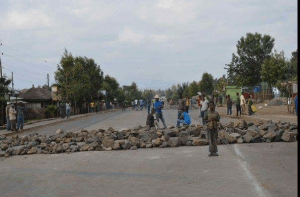
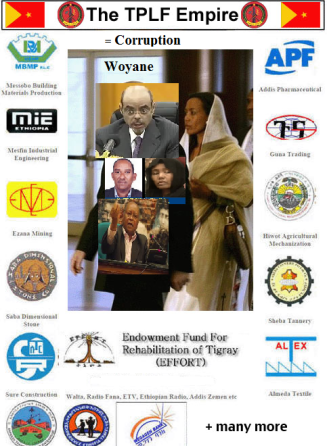


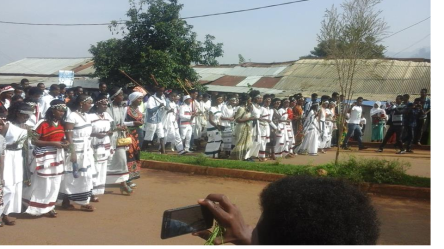


 Camsaa 14/2016 Jalbultiin Kabaja Ayyaanaa Irreechaa Arfaasaa Godina Jimmaa Tulluu Beegiitti Guyyaa Boruu Caamsaa 15/2016 Kabajamuu



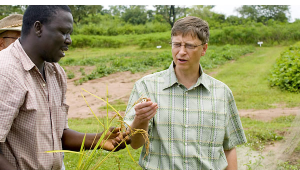
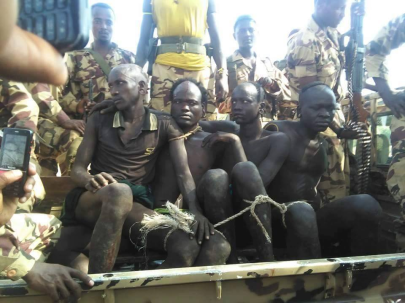

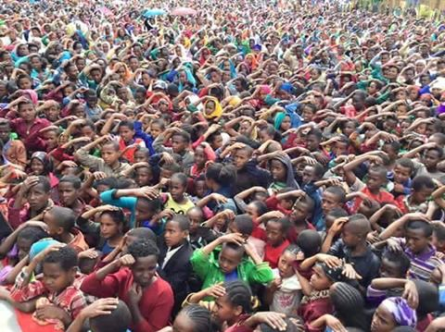


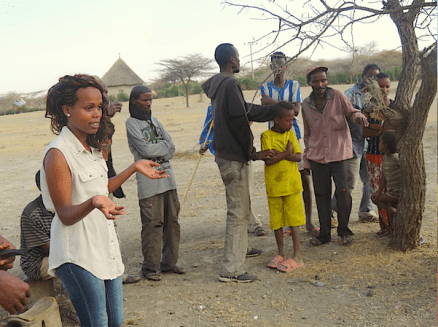


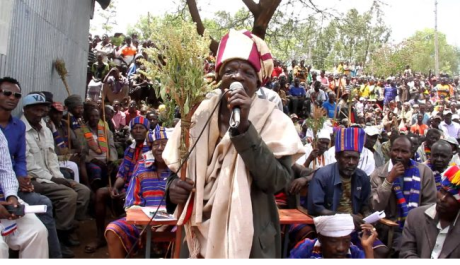

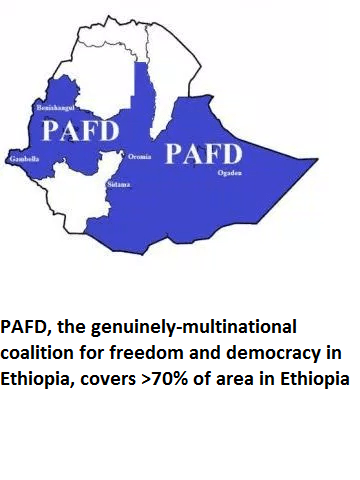

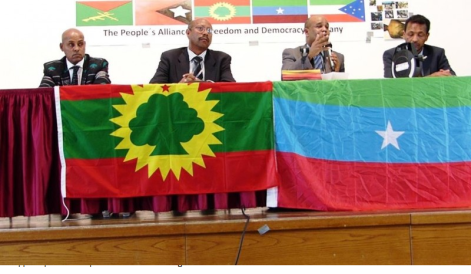
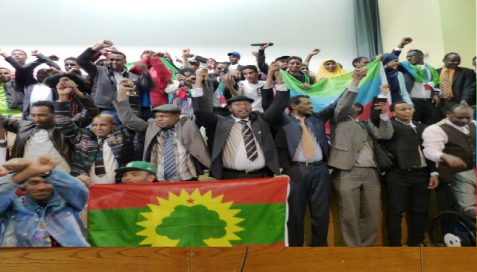
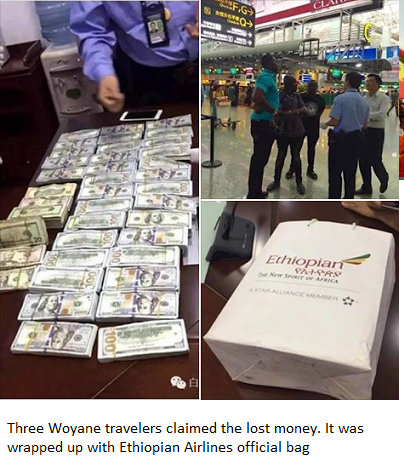




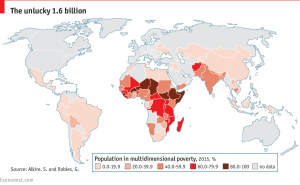
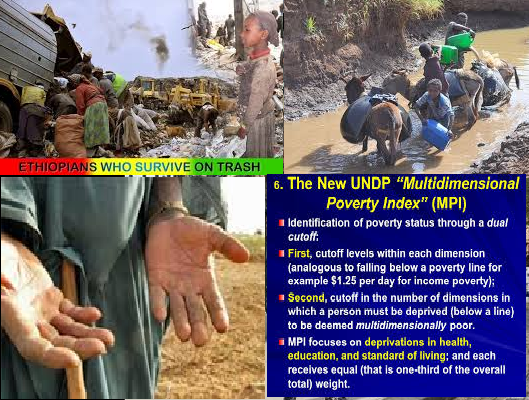




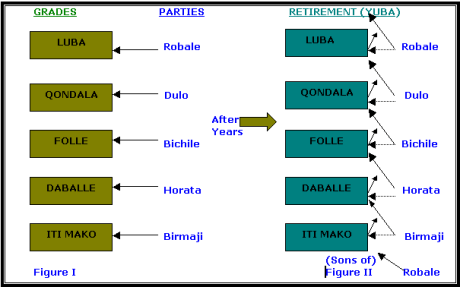
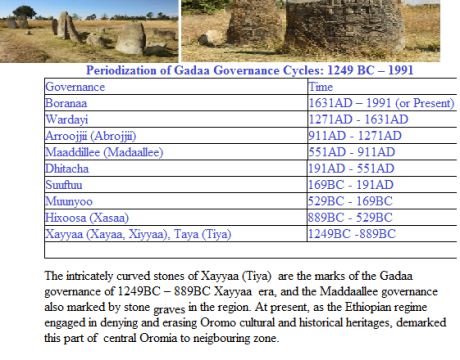







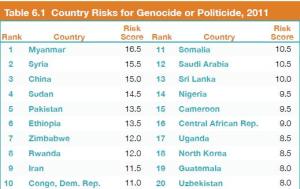
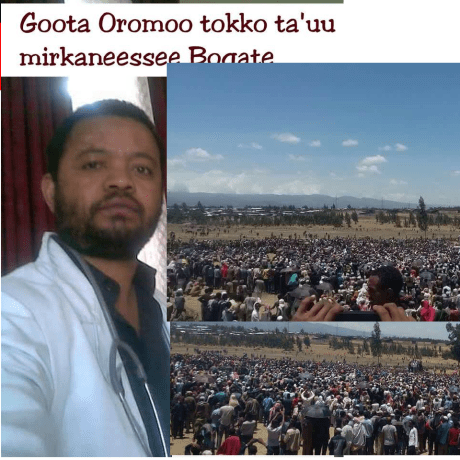
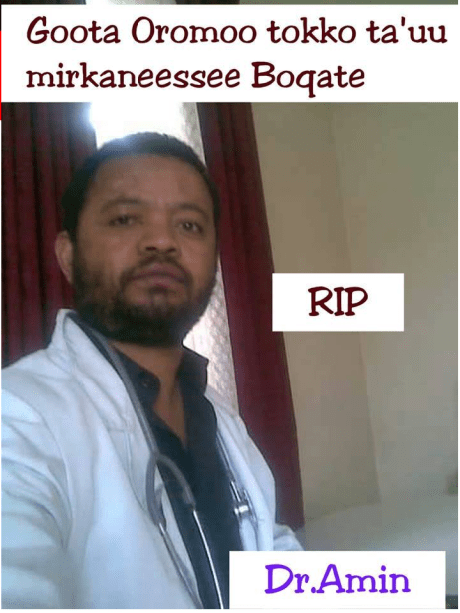

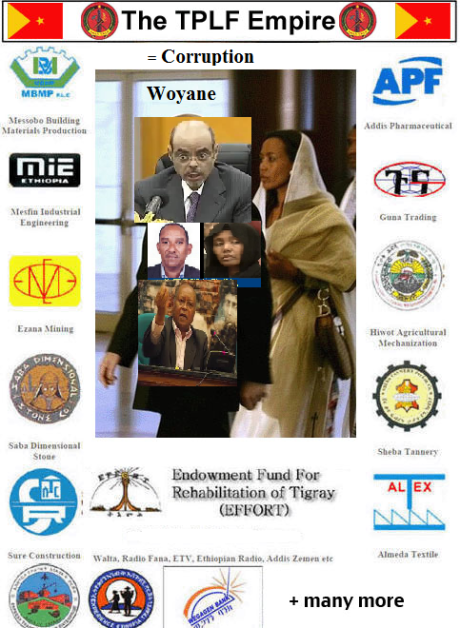


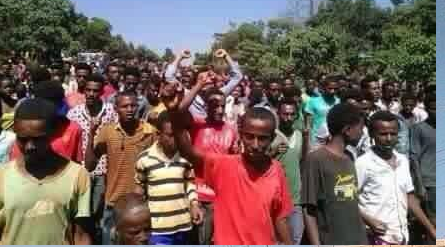


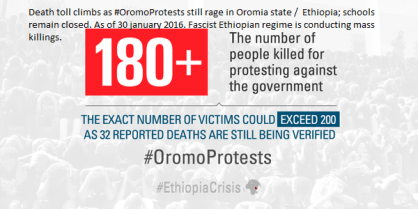
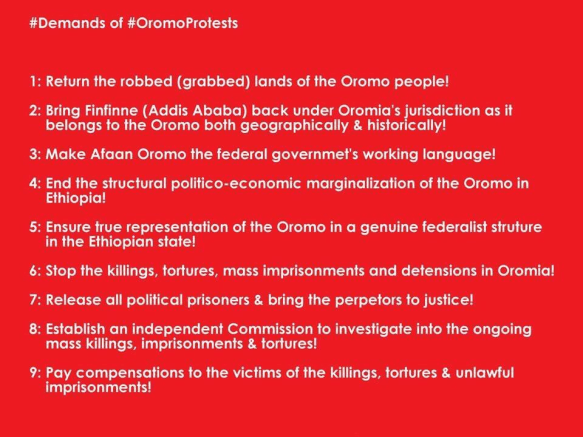


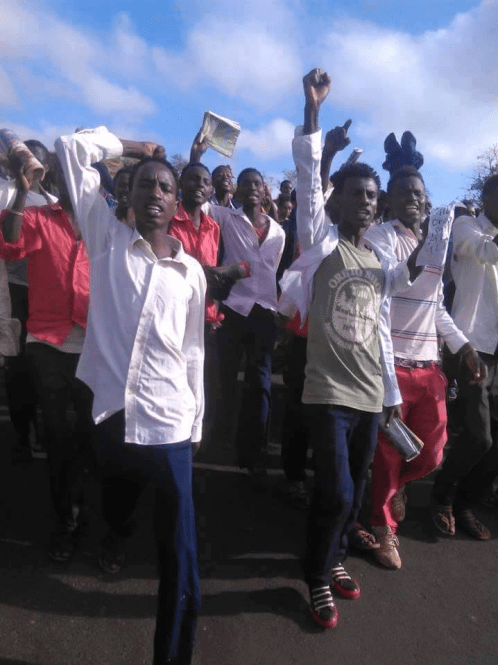
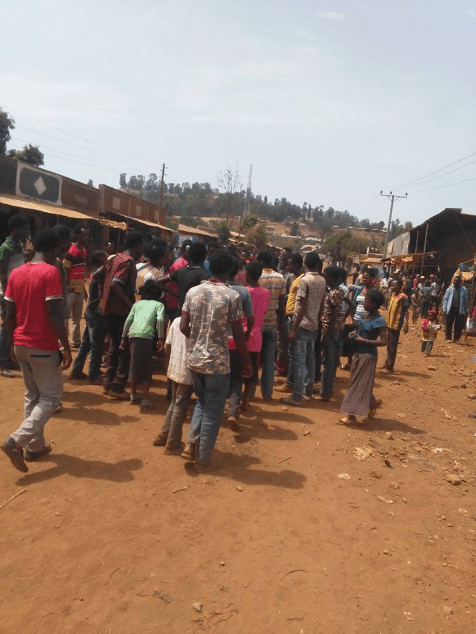
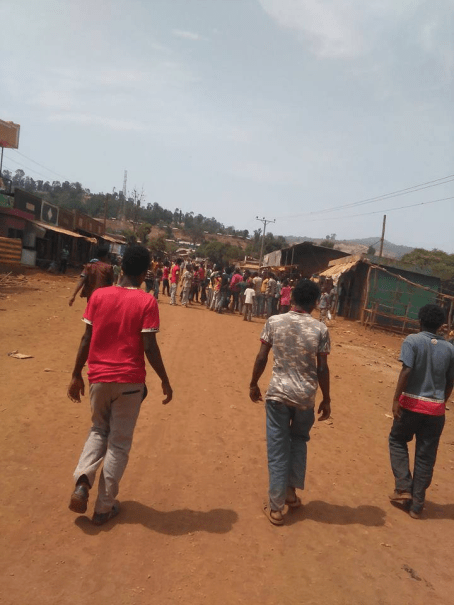
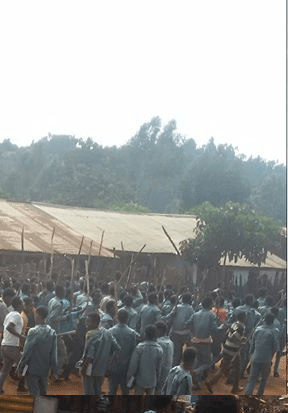

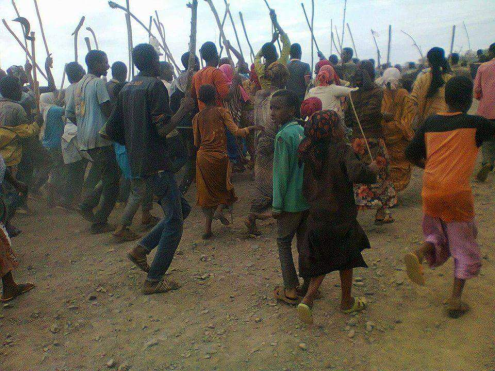
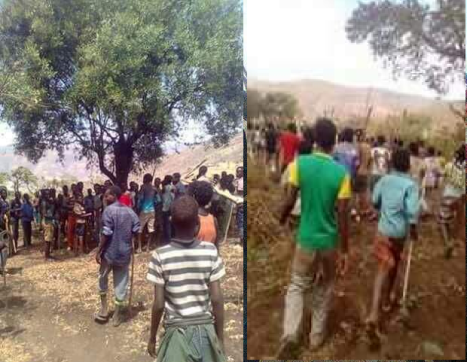
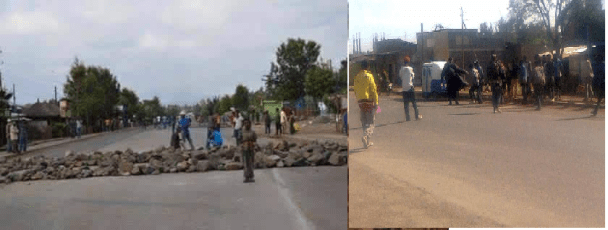
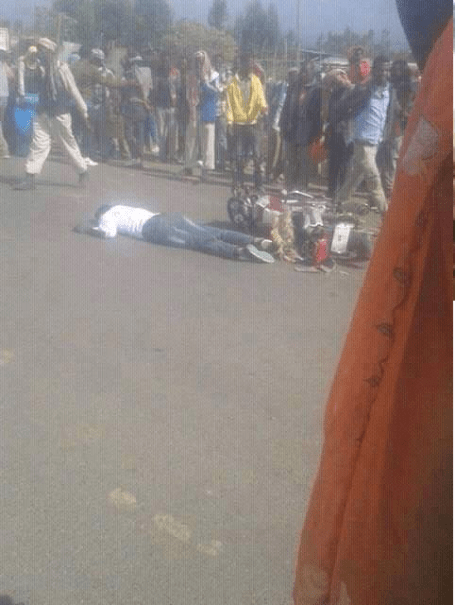
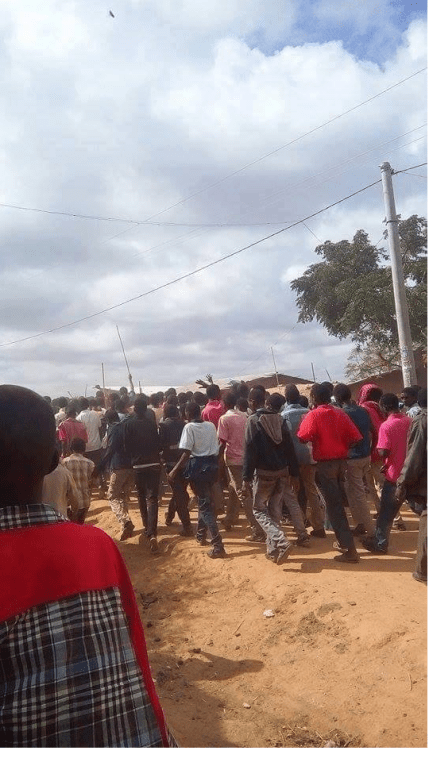
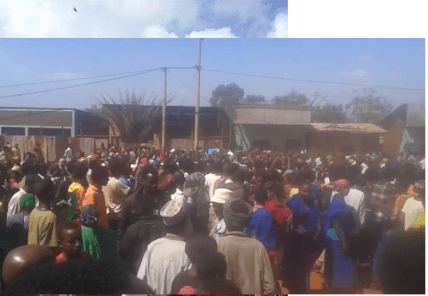



 Gurraandhala 23,2016 Ummati waanjoo gabrummaa baachuuf dhiitichaa abbaa irree damdamachuun nufisiisee lubbuusaa aarsaa gochuun diinasaa kan ta’e Shorokeessitoota Waayyaaneet bol’a qotuufsochii rog hundaan godhaa jiru jabeessuun har’a baha Wallaggaa bakkeewwaan hedduutti diinasaa hudhee kan dhaabe ta’uu bakkeewwan Leeqaa Dullachaa,Bonayyaa Boshee,Habashaa Sanbataa,Naqamte (Kibba Waachaa,Bordii,Dargee fi Mana barumsaa Qassoo) kan magaalaa Naqamteetti argaman keessatti mormiin dhiittaa namoomaa of irraa fonqolchuu ittu fifeera


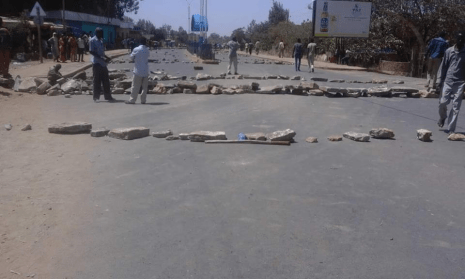
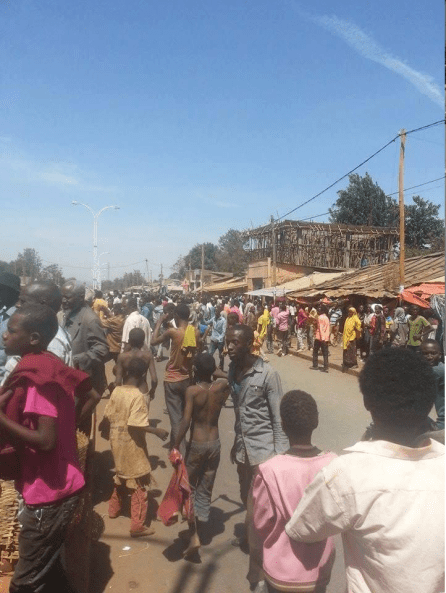
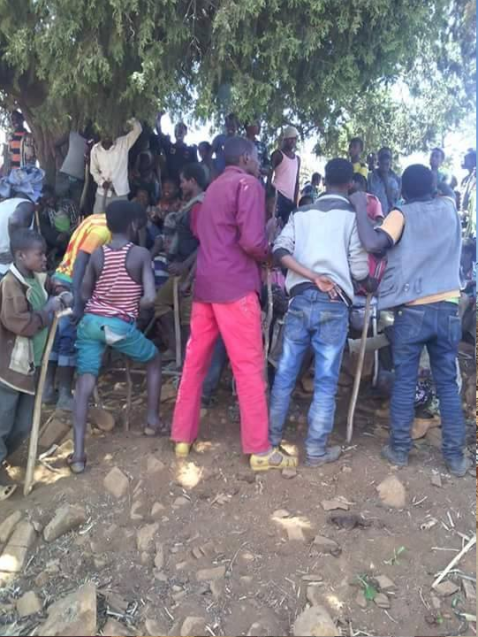
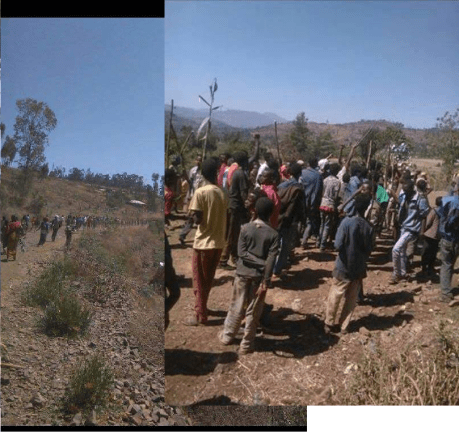


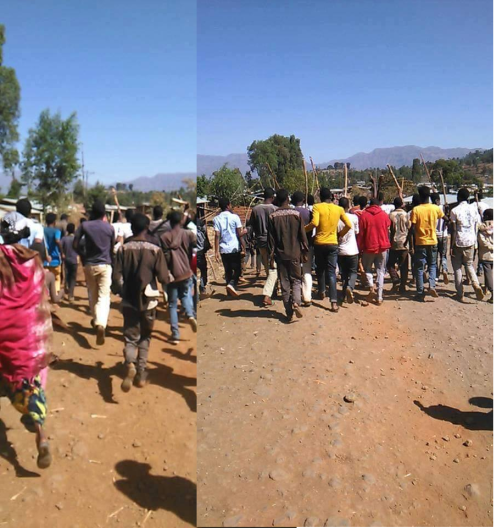
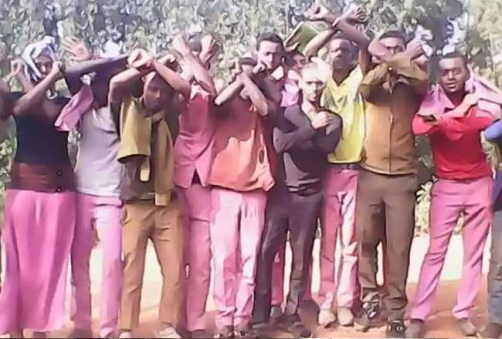
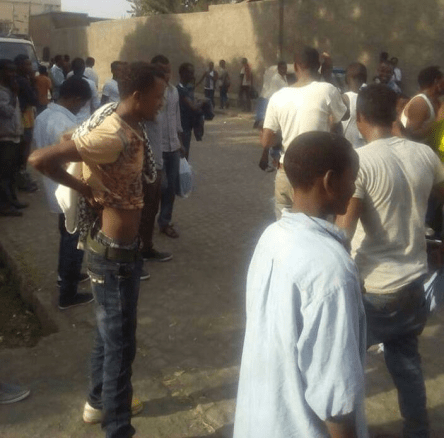


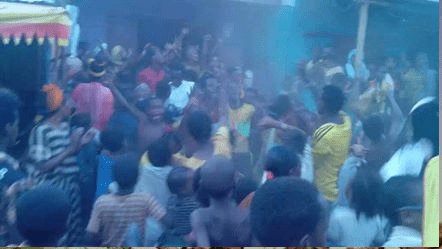
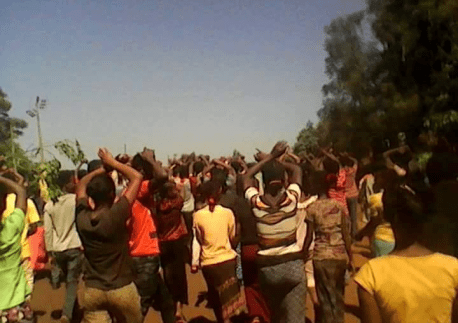
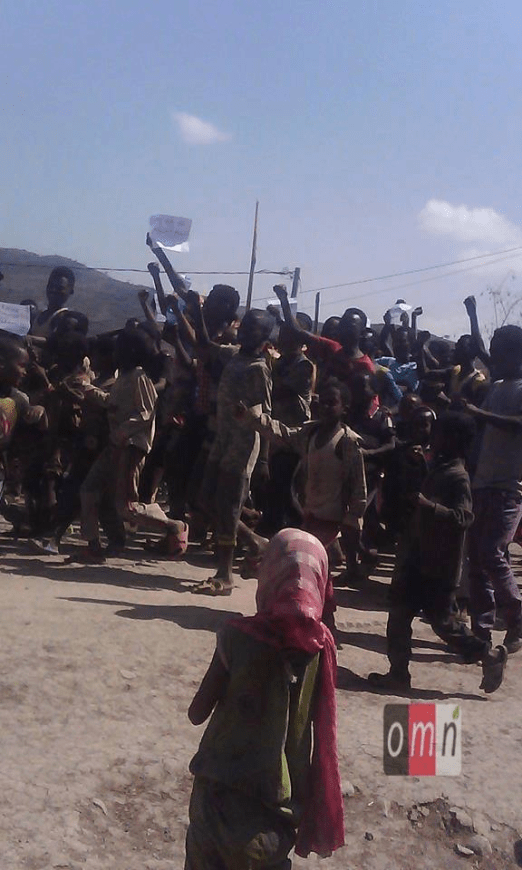
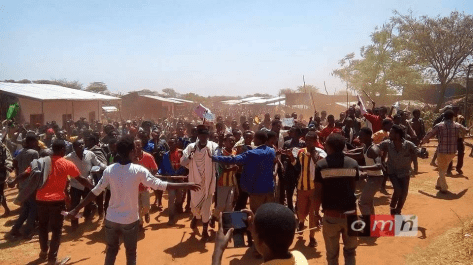


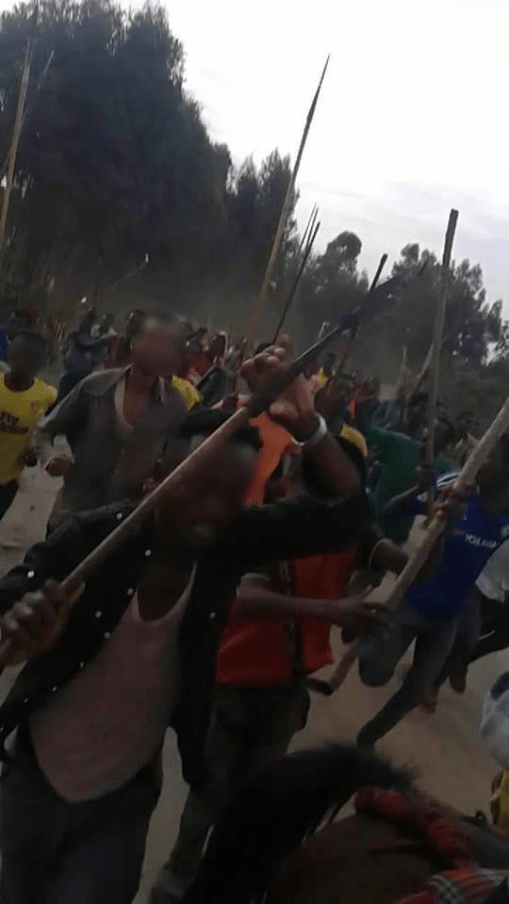


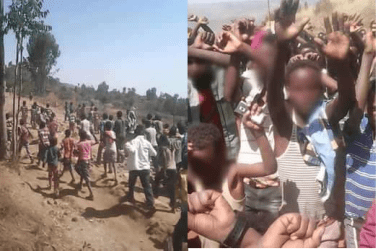
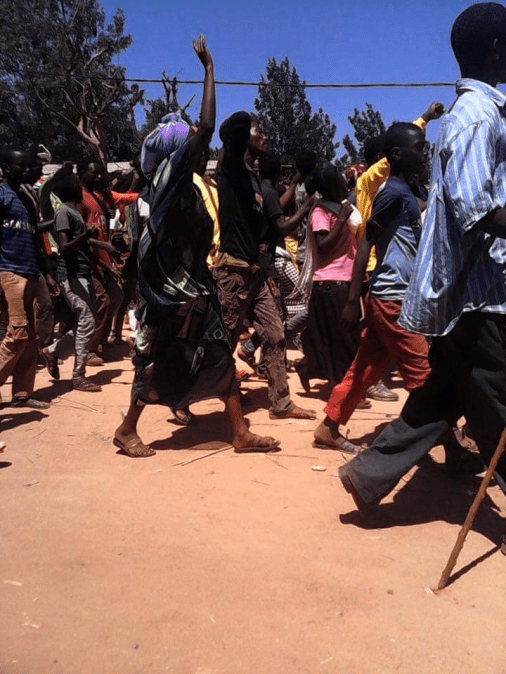
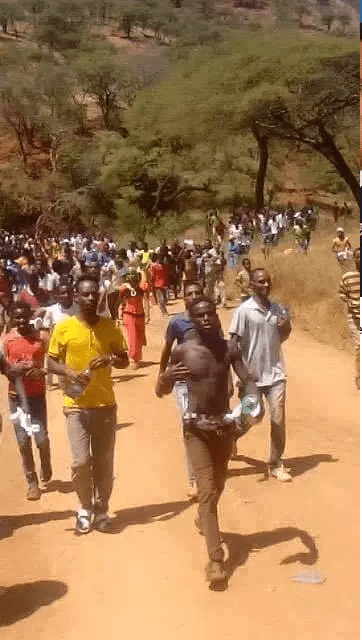
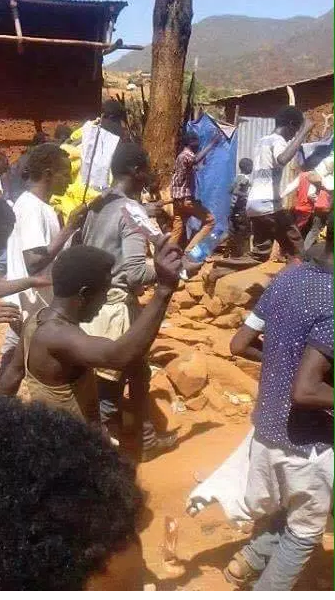
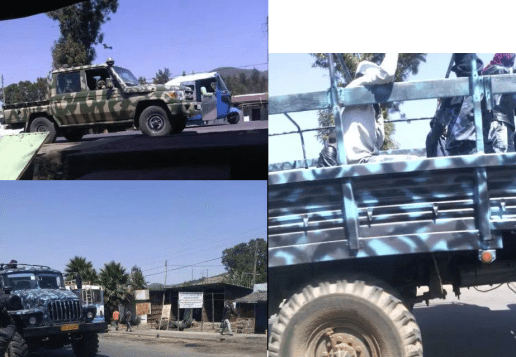
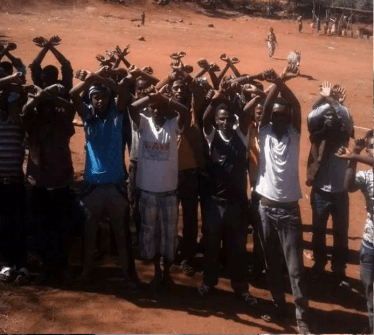
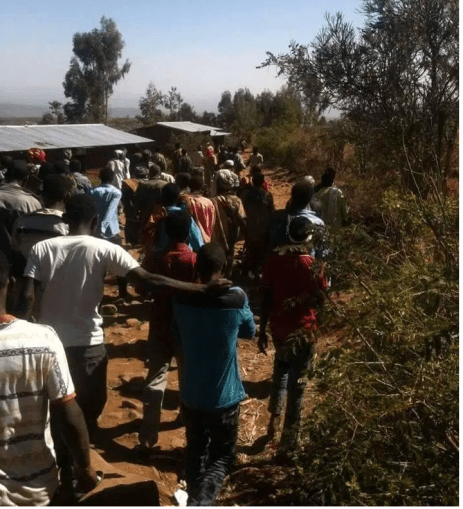
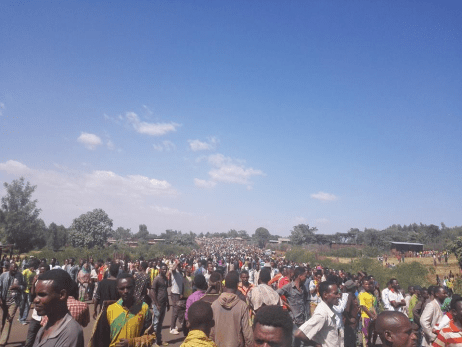

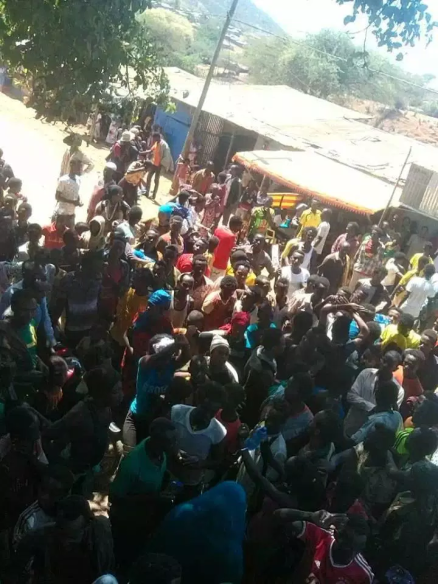


 Guyyaa Har’aa Amajjii 29,2016 Godina Wallaggaa aanaa Gidaamii fi Jimmaa Horroo akkasumas ganda Burii jedhamu keessatti FXH haala jabaa ta’een gaggeeffamaa oole,Warraanni Wayyaanee haala kanatti rifates jiraattotaa fi barattoota qabee hidhuu fi gidirsuu itti haa fufu malee uummanni naannichaa jabinaan loltoota Wayyaanee of irraa dhorkaa oolanii jiru jedha Qeerroon.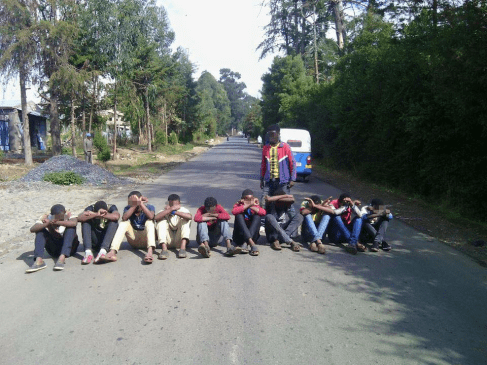
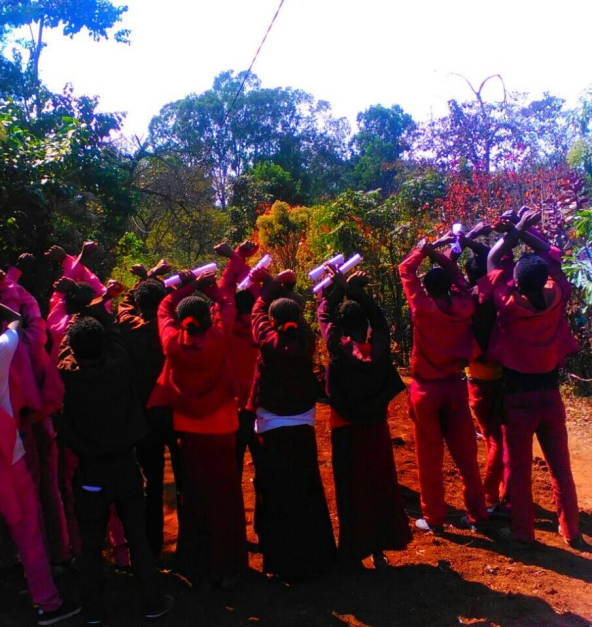
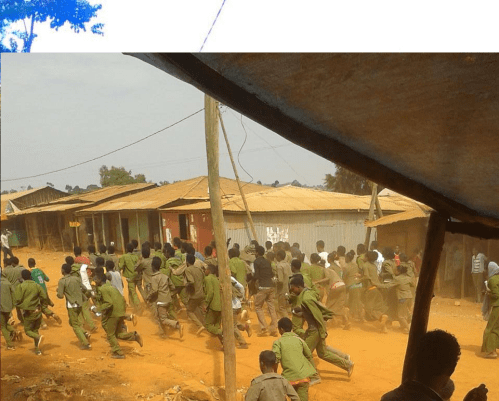




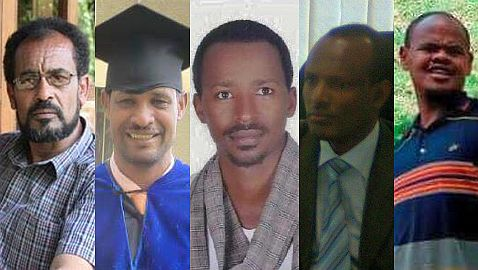
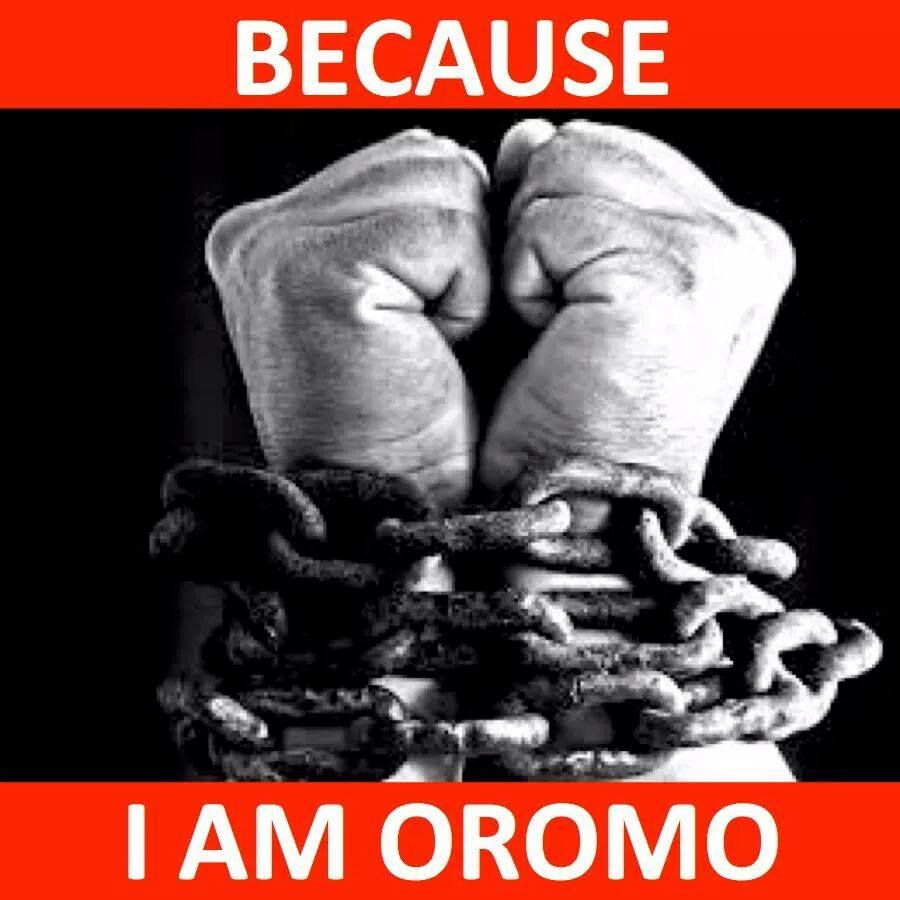

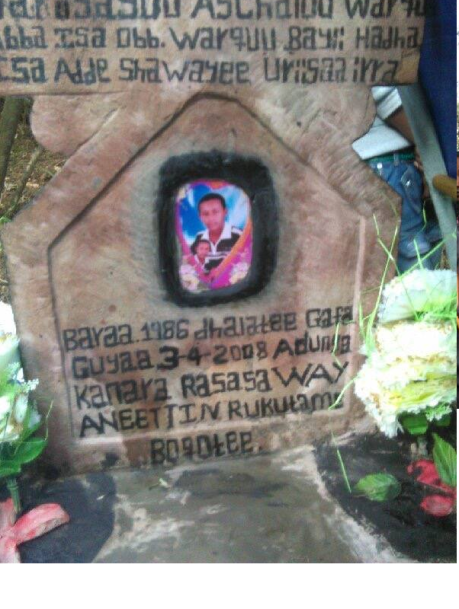
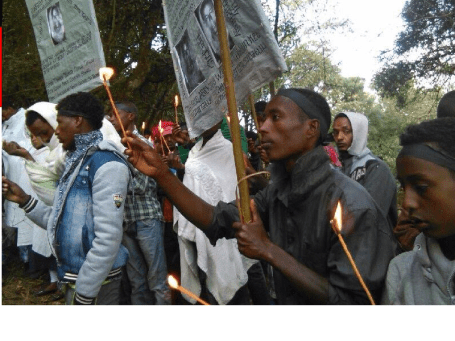
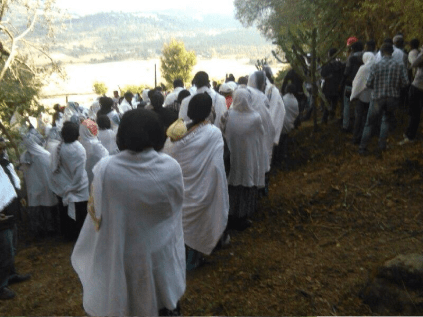
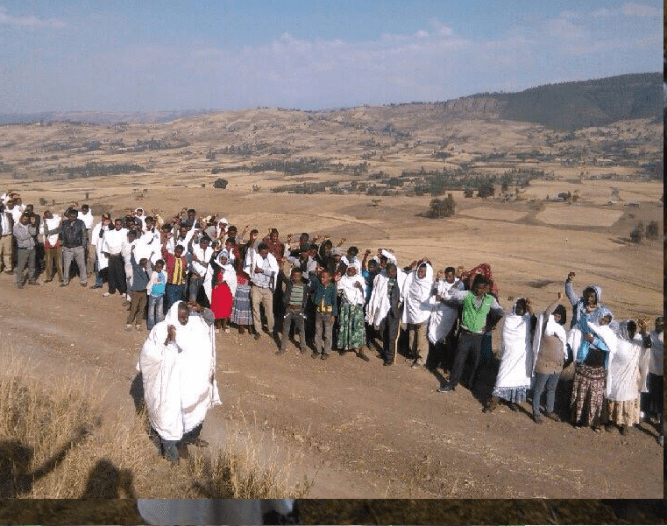


 Barattotni magaalaa Naqaamteef jiraattonni magaalatti gabrummaa of irraa fonqolchuuf wayiita carraqanitti dhamsuuf humna waraanaa


 Biraanee Fiqruu Mul’isaa jedhamti dhimma mormii MP fi FDG Oromiyaa keessattin deemamaa jiruun walqabatee godina kibba lixa Shaggar aanaa Daawootti mana hidhaa aanichatti dararamaa jirti.Kan hidhamte gaafa guyyaa 27,12,2015ti ture ergasi beellama si’aa 2irratti gaafatan yoo ta’u yeroo lachuu guyyaa 9 sagaal irratti gaafatani turan. Ammas hanga 28/1/2016tti tursisan kan akkas rawwachisa jiru immo bulchinsaa aanaa kan ta’e obboo Fayyisaa Dhaabaa jedhamu, wajjirri poolisii aanaa fi mannii murtii anichaas hojii seeraa dhisaani hojii siyaasa dalagaa jiran.


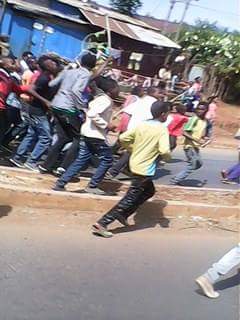


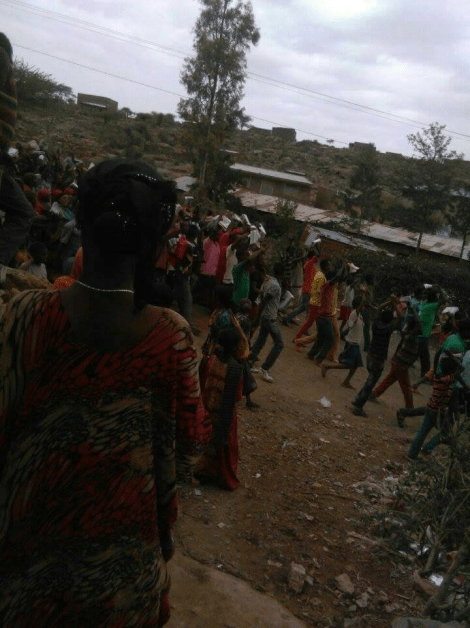
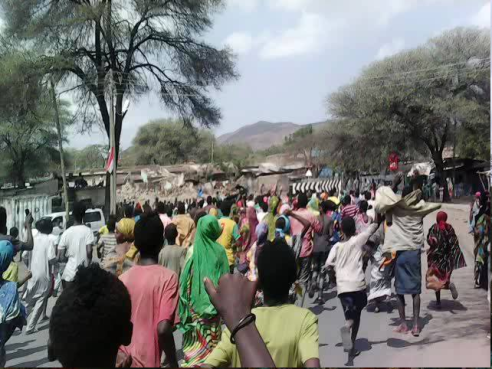




 John Kirby


 Dhumaa jaarraa 19ffaatti, yeroo gabrummaa Impaayera Ixoophiyaa jalatti kufe irraa eegalee,biyya abbaa isaa Oromiyaa irratti: bilisummaa,nagaa fi gammachuun jiraatuuf mirga seeraanis ta’e uumaan qabu sarbamee ummatni Oromoo inimmaan osoo irraa hin qoorre hanga har’aa jiraataa jira. Bara Minilik Oromiyaa weeraree ummata Oromoo miliyoona shan fixe; hedduu ammo harkaa fi harma muree fafeesse, Oromoon miliyoonni shan gadi hafee kanneen dhumaniif inimaan buusee kan dhiise qofa osoo hin taane, inimmaan isaa guyyaa tokko gabroomfataa dhiqee Oromiyaa keessaa akka baasu osuma inimmaan buusuu illee raagaa tureera. “Guyyaa itti diinni biyya keenya irraa buqqa’ee ilmaan keenya nagayaa fi gammachuun keessa jiraatan ni dhufa” jechuun kan Roobaa Bultum raage, Minilik ummata Oromoo miliyoona shanii, kan harki 70 dardaraa fi shamarrani eerga fixee booda. Kan yeroo san Roobaa Bultum raage, ummata Oromoo shanyi duguuginsa irraa hafaniif ;akeeka ittiin qajeelfaman, hawwii fi abdii bilisummaa ta’ee hanga har’aatti itti fufee jira.
 Amajjii 13/2016 Warraasii FXG Gootota Qeerroo Barattoota Oromoo Yuunibarsiitii Jimmaa Haalaan Jabachuun Mooraa Main Campus keessatti haalaan itti fufe, Waraannii Wayyaanee Dhukaasaa guddaa barattoota Oromoo Yuunibarsiitii Jimmaa irratti Banuun Mooraa Yuunibarsiitii Jimmaa dirree Waraanaa fakkeesse jira,





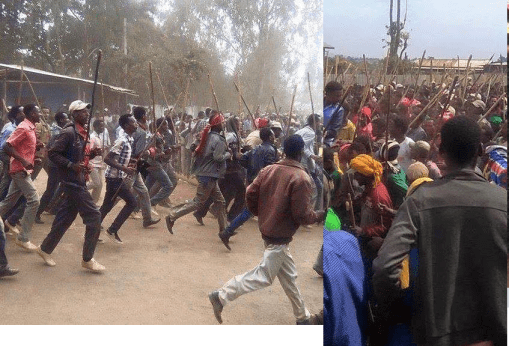


 Oromiyaa guututti FXG Amajii 1, 2016 irraa kaasee baadiyaa fi magaalaa, dhaabbata barnootaa fi amantaallee dabalachuun itti fufeera.


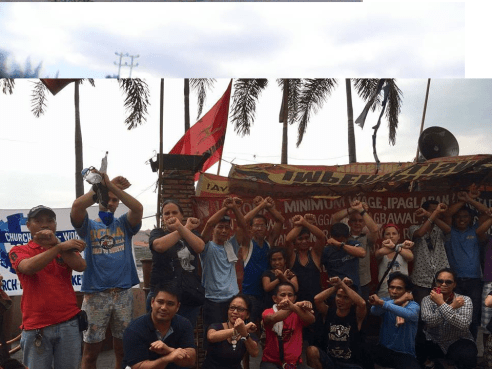
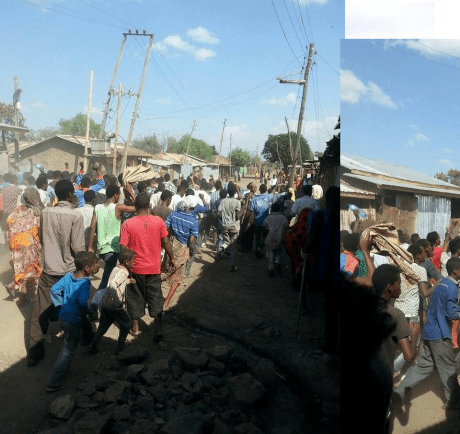
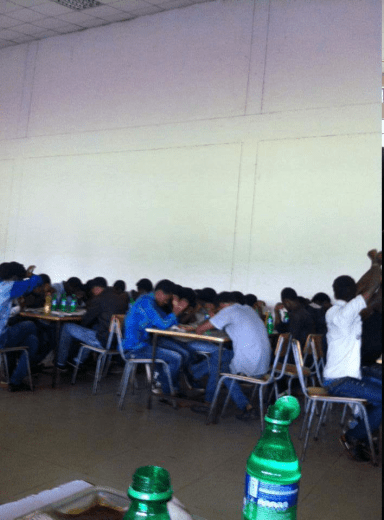


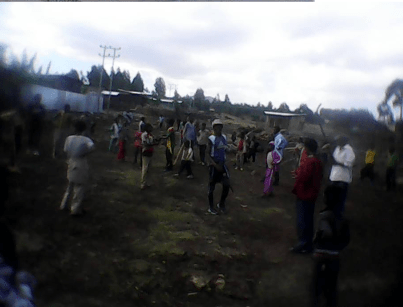


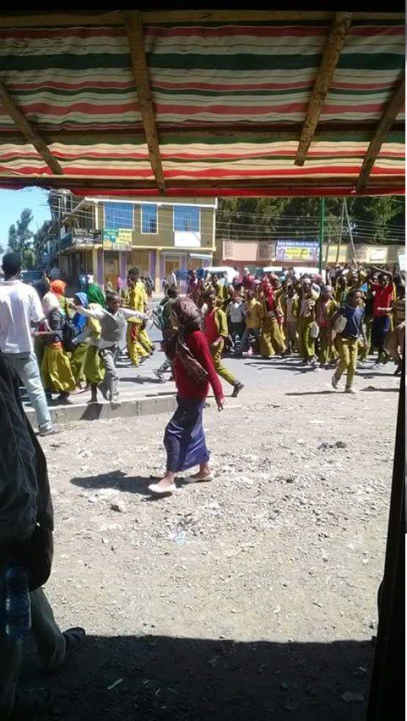
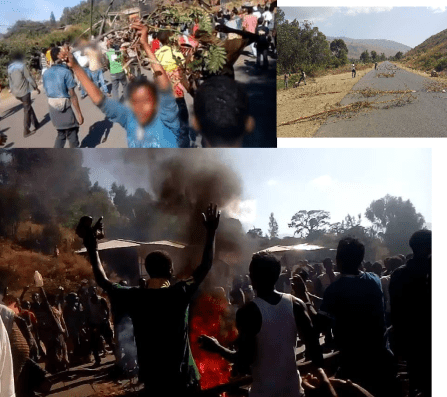
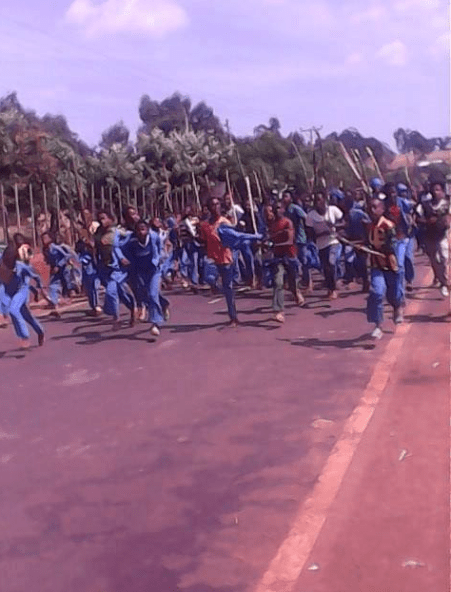
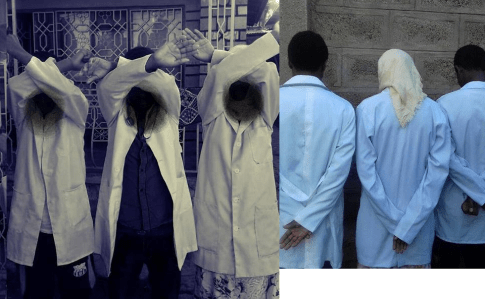


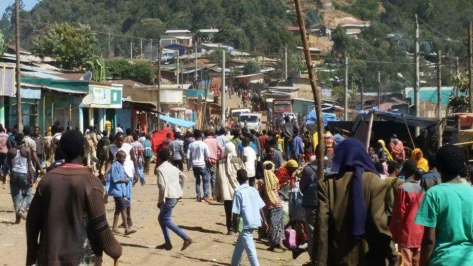
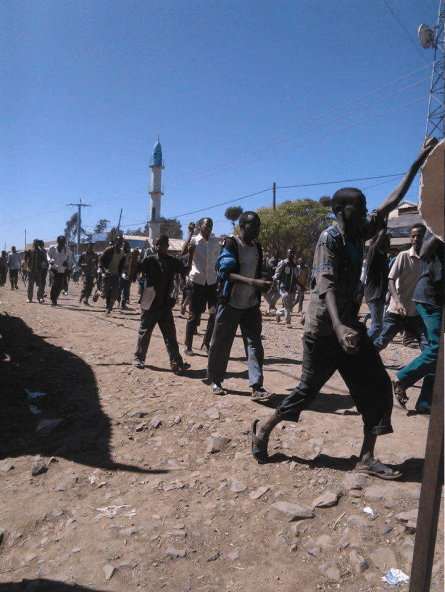
 Dargaggoon Fiqaaduu Shuumataa Waaqtolaa baatii Sadaasa 2015 keessa FDG Wallagga magaalaa Madiitti gaggeeffame keessatti hirmaachuun dhadatnoo mirga namoomaa fi mirgoota saba Oromoo kaasu dhageessisuun barattootatti onnee horee nama turedha, dhadatnoo isaan booda suuraaleen inni gaafas ka’e marsaalee hedduu keessatti faca’uun Oromoota biyya alaa fi keessa jiran qalbii hortee akka ture beekama.


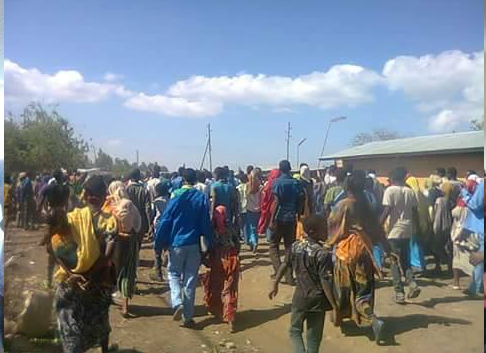
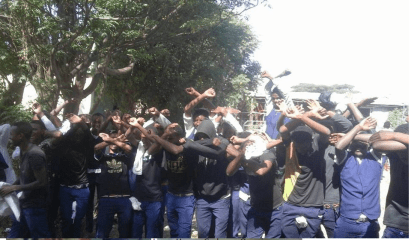
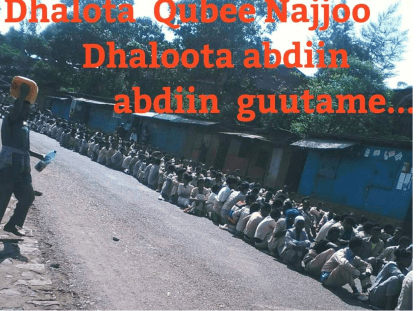
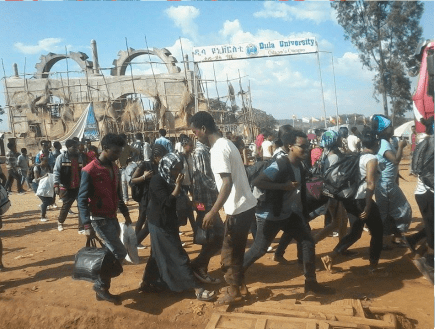
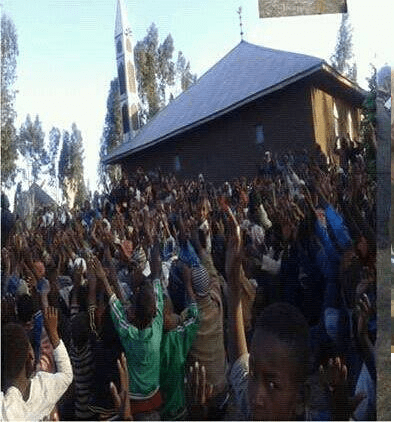
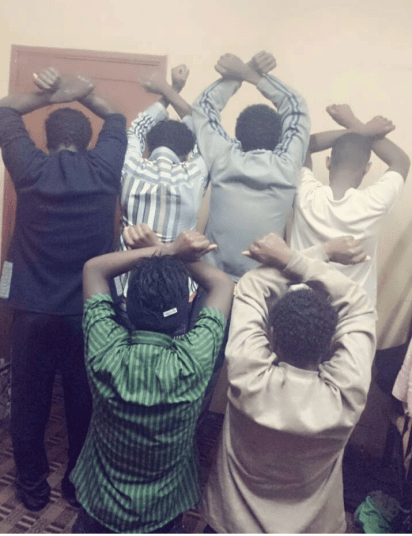
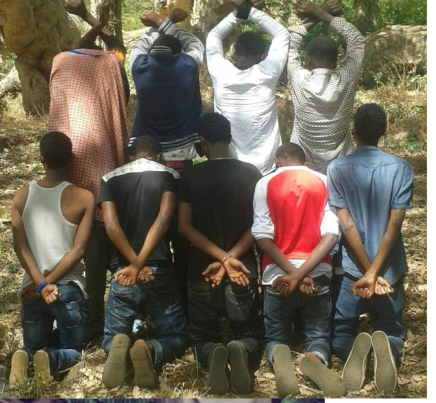
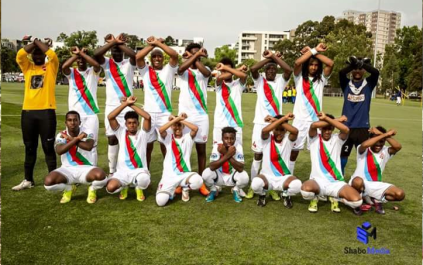
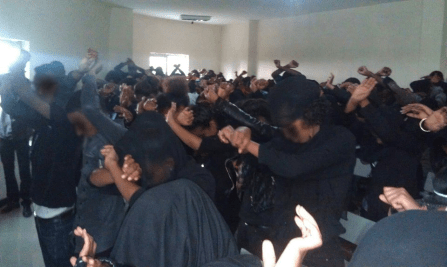
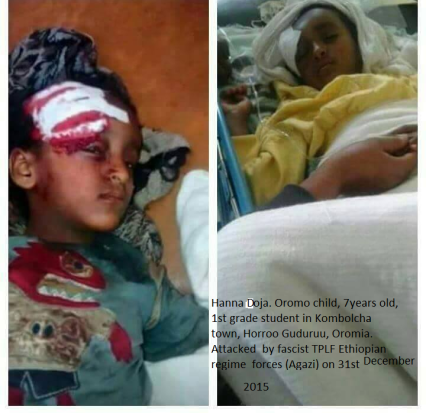
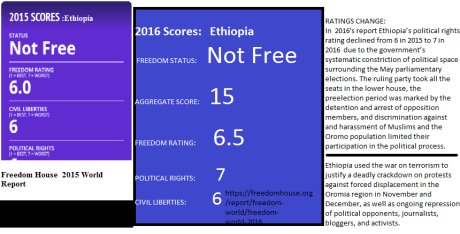


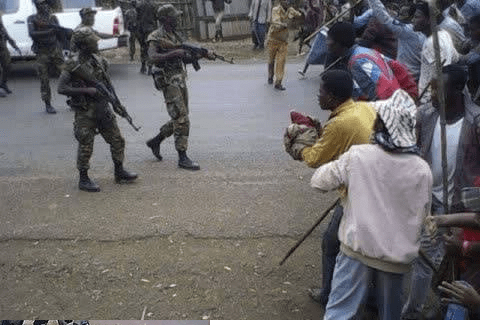



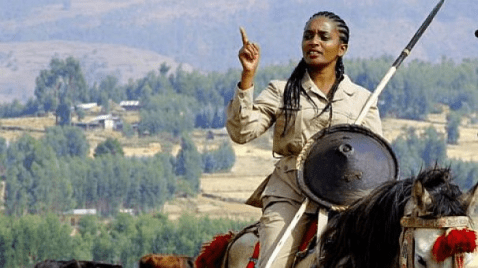




 Oromian Economist
You must be logged in to post a comment.