Economic and development analysis: Perspectives on economics, society, development, freedom & social justice. Leading issues in Oromo, Oromia, Africa & world affairs. Oromo News. African News. world News. Views. Formerly Oromia Quarterly
This rainy season we missed the opportunity to get involved in a summer club program at the school. I don’t believe any currently exist, so we decided to focus on 2 things, first a permagarden to be built at the Health Center to get the most visibility, and a bed net demo since our Woreda just got a shipment of at least 20,000 bed nets to be distributed to Becho and all the surrounding kebeles in the ‘catchment’ area.
Our permagarden focuses on filling the gap between the large farming knowledge of the area and the few but large crops that are grown here: coffee, chaat, corn, tea, honey. The community no doubt is very successful in growing these items, but we are trying to connect the farming knowledge with a small family size garden to help nutritionally and financially. Right now it seems that everyone with land has prioritized…
ETHIOPIA HAS BEEN ONE OF THE WORST PERFORMERS IN ENTREPRENEURSHIP & OPPORTUNITY RANKINGS (30/38) EDUCATION (29/38), SAFETY & SECURITY (31) AND SOCIAL CAPITAL (29/38).
Going beyond economic indicators, the Legatum Institute 2014 index examines a group of sub-indices in the crucial areas of Education, Governance, Health, Safety & Security, Entrepreneurship & Opportunity, Personal Freedom, and Social Capital.
The new research (Published August 2015) has ranked prosperity in 38 African countries around criteria ranging from economics to education to health, the title belongs to Botswana, the diamond-rich country in southern Africa.
As well as posting a relatively high per capita Gross Domestic Product (GDP) of $15,176, Botswana also fared well in terms of governance, education and personal freedom. As the country spends 8% of its GDP on education, it is among the biggest proportional spenders in the world according to the World Bank. This is the third year in a row that Botswana has topped the index.
In contrast, the Central African Republic was the lowest ranked country on the continent. The country, which has a per capita GDP of $584, has seen increasing violence since the end of 2012, and only 21.5% of the population have access to sanitation according to the prosperity index.
Top in the index:
Botswana, South Africa, Morocco, Namibia, Tunisia, Algeria, Ghana, Rwanda, Burkina Faso and Senega.
Bottom in the index:
Ethiopia, Liberia, Sudan, Angola, Guinea, Sierra Leone, Togo, Burundi, Congo (DR), Chad and Central African Republic
The report points out that education plays a critical role in empowering people and increasing the potential for citizens to contribute economically and politically.
The report considers that entrepreneurship is critical for both income and well being. But in Africa, few nations are realizing their potential in this area as women’s contributions to business are inhibited by cultural barriers, lack of access to finance, little support from families as well as limited access to social networks.
The report also warns “As African economies grow, a chief concern for many governments is how to ensure that the fruits of growth benefit a majority of the population and contribute to true long term prosperity.”
I successfully spoke at Oromo Studies Association Annual Conference at Howard University in Washington DC. I was there in an invitation from the OSA to speak about Oromo art. My presentation was entitled Oromo Art: The Next Frontier. “For centuries, Oromo’s created art that lasted generations. Their work is a trace of proud people with rich identity and history that goes deep down for ages. Whether it is a cultural sword that passed down from one generation to another or a beautiful jewelery Oromo womens wear as a symbol of their ancestors, it contained a DNA of long and wide history of Oromo life and existence. The rich tapestry of this art, was neglected or overlooked for centuries until now. My presentation will try to show the past and analyze the present in hopes to open door for the next frontier.”
I am very grateful for the OSA board members to invite me to…
Re-engaging the Global: An Account of the Political and Economic Roots of Conflict in DRC
(picture by the author)
Marta Iñiguez de Heredia
In the last few years there has been a shift in thinking about the roots of conflict in the DRC. From a focus on mineral wealth exploitation, the debate has shifted to land and identity as the primary reasons for conflict to continue.[i] Unresolved historical cleavages around land and power distribution, both of which are linked to identity and belonging, create the basis for political mobilisation through violence.[ii] Although these analyses have offered nuanced explanations of the micro-dynamics, two features put them at risk of reproducing previous problems.
Firstly, the focus on the local has detached these analyses from broader global political and economic structures that condition the micro-level. Secondly, the characterisation of politics, the economy and society as neo-patrimonial has pictured the DRC as…
‘As recent research has shown, the problem with celebrity causes is that they tend to de-politicise policy and activism. They too often obfuscate the complex dynamics of power and socioeconomic relations in favour of a simple, catch all, solution. Celebrities can improve this situation by bringing back into the debate more stakeholders, researchers and local voices.
Thus celebrities speaking truth to power, rather than half-truths that may inadvertently serve the interests of power, may be a more promising way forward if celebrity advocacy relating to Africa is to lead to meaningful socioeconomic change.
The celebrity advocacy circuit for change in Africa lacks celebrity participation in bottom-up movements, as opposed to top-down advocacy. Bottom-up celebrity advocacy, à la Charlotte Church and Russell Brand, should itself not be void from criticism.’
In fact, my standard advice to graduate students these days is “go to the computer science department and take a class in machine learning.” There have been very fruitful collaborations between computer scientists and statisticians in the last decade or so, and I…
Macha-Tulama Association – USA, Inc
811 Upshur ST NW
Washington, DC 20011
contact@machatulama.org
July 2, 2015
President Barack Obama
The White House
1600 Pennsylvania Avenue
NW Washington, DC 20500
Your Excellency President Obama,
The Board of Directors of the Macha-Tulama Association (MTA), U.S.A., is writing this urgent letter regarding your plan to visit Ethiopia in July 2015. The MTA is a non-profit organization incorporated in the U.S.A. because it was banned in Ethiopia. It advocates for human rights and for social justice for the Oromo and others in the Horn of Africa and beyond. For almost a quarter of a century, Ethiopia has been ruled by the Tigre People’s Liberation Front, which calls itself the Ethiopian People’s Revolutionary Democratic Front. This minority regime has been engaging in sham elections, which are elections only in name. The regime disregards all the principles and practices of democracy in spite of its pretension to be democratic since 1991. The regime’s promise of democratization by restructuring the state, liberalizing the economy, and respecting and protecting human rights has been subverted. While claiming to be a democratic government in order to receive ‘development aid’ and to gain political legitimacy, this regime has killed, imprisoned and tortured the Oromo and other ethno-national groups who have struggled for democracy, national self-determination, human rights, and social justice. In fact, the Oromo people have been mainly targeted for elimination and repression because they are the largest national group in Ethiopia, and they have started to recover, manifest, and exercise their rights to culture, history, and language, which have been repressed by the state of Ethiopia for over a century.
According to a recent Amnesty International report, entitled ‘Because I am Oromo: Sweeping Repression in the Oromia Region of Ethiopia,’ between 2011 and 2014 alone, at least 5000 Oromo were arrested, tortured, and sentenced with extra-judicial executions because of being Oromo and for also peacefully demonstrating against the regime’s land grabbing policies and the so-called Addis Ababa Master Plan, intended to evict millions of Oromo farmers from their homelands in and around Addis Ababa (which the Oromo call Finfinnee), the capital city of Ethiopia. Since 1992, several human rights organizations have been reporting that Oromo prisoners have been predominantly populated Ethiopian prisons and other detention places. As a result these prisons and concentration camps speak Afaan Oromo (the Oromo language), as testified by many nonOromo prisoners.
Mr. President,
It is with shock and profound sadness that we received the message of your intention to visit Ethiopia in July. As the leader of a great country that subscribes to the principles of democracy and fundamental rights and liberties for all human beings, and as the leader of a country whose foreign policy in principle is committed to promoting the ideals of human rights, the rule of law, and democracy around the world, we believe your visit will send a wrong message to the regime and its likes across the globe that they can get away with grotesque violations of human and democratic rights as long as they remain ‘strategic allies’ to the United States.
Mr. President,
Because of these reasons, we earnestly request that you rethink your intention to visit Ethiopia. We believe your visit to the country also sends three messages: First, it encourages the Ethiopian government to continue intensifying its repressive policies. If your government continues to support and finance the regime regardless of what it does, the regime will see no reasons for changing its violent and dictatorial policies. Second, your visit to Ethiopia demonstrates to the affected people that the United States government only gives lip service to democracy and human rights while supporting the dictatorial minority regime of Ethiopia. To the 90 million people who are facing massive human rights violations in Ethiopia, particularly to the over forty million Oromo, your visit will mean that the U.S.A. does not care for the aspiration to live in a free, open, and democratic society. Your visit will also mean that human rights and democratic self-governance are not part of the list of U.S. priorities in Africa and beyond. Third, it convinces the people in Ethiopia and beyond that your policy is not different from some of your officials, such as Undersecretary of State Wendy Sherman, who recently undermined the process of democratization in Ethiopia by endorsing the regime’s record whose democracy, she said, is ‘improving.’ The Undersecretary has been roundly criticized, and we believe, rightly so.
In closing, we would like to bring to your attention that when, in July 2009, you visited Ghana, you made a speech in which you promised that the U.S.A. does not, and will not, support dictatorship and strongmen, and that you seek to assist the development of “strong and sustainable democratic governments” everywhere in Africa. We believe it is only appropriate now to request that you do not ignore your commitment and promise of that historic speech you made in Accra, Ghana, by visiting Ethiopia, the graveyard and prison house of thousands of men and women who have been killed, imprisoned, tortured, maimed, and disfigured only because they have aspired to exercise their God-given rights and to live in a democracy by demanding national self-determination and democratic rights in their own country.
Sincerely,
Asafa Jalata, PhD.,
Chairman of the Board of Directors of the Macha-Tulama Association &
Professor of Sociology and Global and Africana Studies
I would like to bring to your attention the latest disgraceful plan of the Ethiopian government to divide the Oromo people’s worldwide communities under the banner of ‘Oromo Diaspora Day’ from 3rd August 2015 to 10th August 2015. This disguised and sugarcoated plan may sound attractive to some, but it is an old poisonous tactic commonly played by all dictators to divide and rule their subjects. We, members of the Australian Oromo community, completely denounce this day and urge the Oromos and friends of Oromo to refuse to celebrate this day with the Ethiopian dictatorship regime that continues to perpetrate heinous crimes against our people. Celebrating this day with the Ethiopian dictatorship regime is rewarding this government that murders women, children and elderly; that imprisons and tortures our youth, intellectuals and business people; and that confiscates our farmland and leaves our farmers destitute and beggars. We call all Oromos to not be fooled by the dictator’s plan with a hidden agenda to further subdivide us, and reduce us to humiliation and subjugation. It’s very appalling to disregard the sufferings of our people in Oromia and celebrate with the tyranny. We condemn any fake investment plan that comes with the ‘Oromo Diaspora Day’ that will lead to the displacement and the suffering of Oromo farmers and residents in Oromia.
Oromia is under occupation, and our people are under a colonial rule in Ethiopia. Our people are subjected to unimaginable sufferings unparalleled in the history of the Ethiopian empire. Our people have been persecuted, and thousands of Oromos have been killed; thousands have been abducted and disappeared; and thousand have been tortured; thousand have run for their lives and have become refugees. Our farmers have been pushed out of their land, and our people have been marginalized – and Oromia has been put for sale. Oromo has suffered direct and systematic subjugation under this government. The Australian Oromo Community does not recognize anyone or any group that takes part in this very dishonorable ‘Diaspora Day’ in the name of Oromo, for we don’t recognize people who betray their nation for selfish gains.
The August 3-10 ‘Oromo Diaspora Day’ celebration with dictatorship is an appalling day!
Yours Sincerely,
Yadata Saba
President, Australian Oromo Community Association in Victoria Inc
The country desperately needs new universities to drive development, but most of the 30 built in the last 15 years fall woefully short
The declining standard of Nigeria’s premier institution, the University of Ibadan, ten years ago is reflected in Ethiopia where the quality of new universities varies widely. Photograph: George Esiri/REUTERS
Ethiopia’s higher education infrastructure has mushroomed in the last 15 years. But the institutions suffer from half-written curriculums, unqualified – but party-loyal – lecturers, and shoddily built institutions. The rapid growth of Ethiopia’s higher education system has come at a cost, but it is moving forward all the same.
Twenty years ago the Ethiopian government launched a huge and ambitious development strategy that called for “the cultivation of citizens with an all-round education capable of playing a conscious and active role in the economic, social, and political life of the country”. One of the principal results of Ethiopia’sagricultural development-led industrialisation strategy (ADLI) has been a rapid expansion in the country’s higher education system. In 2000 there were just two universities, but since then the country has built 29 more, with plans for another 11 to be completed within two years.
The quality of these new universities varies widely; from thriving research schools, to substandard institutions built to bolster the regime’s power in hostile regions. One professor recalls a hurried evacuation from part of a recently completed university while he was working there: one of the buildings had collapsed.
But there have also been success stories. The University of Jimma, for example, has come first in the Ethiopian Ministry of Education’s rankings for the past five years, and is held up as evidence of ADLI’s efficacy since its establishment in 1999. The most recent development at Jimma, the department of materials science and engineering (MSE), opened for students in 2013, and has quickly expanded to become one of the top research schools in the sub-Saharan region. The department’s founder, Dr Ali Eftekhari, has since received a fellowship from the African Academy of Sciences on the back of the project’s success.
This success is much-needed. At 8%, African higher education enrolment issignificantly lower than the global average of 32%, and Ethiopia trails even further behind, with fewer than 6% of college-age adults at university. Research in science, technology, engineering, and mathematics (Stem) is starting from a particularly low base in Africa. The World Bank reported last year that though the sub-Saharan region has “increased both the quantity and quality of its research” in recent years, much of this improvement is due to international collaboration, and a lack of native Africans is “reducing the economic impact and relevance of research”.
Dr Eftekhari echoes these concerns: “The problem for development in Ethiopiaand similar African countries is higher education itself. This is the reason that I focused on PhD programs. “For instance, Jimma’s department of civil engineering has over 3,000 undergraduate students. These civil engineers are the future builders of the country, but there is not one PhD holder among the staff; most only have a BSc.”
Eftekhari improvised and sweet-talked in order to get the department established; in its first year, the department taught 18 PhD students – all native Ethiopians – on almost zero budget, with staff donating their time and money until funding was secured from the ministry of education. Despite the Ethiopian People’s Revolutionary Democratic Front’s (EPRDF) push for development, Ethiopia’s political landscape remains a minefield for education professionals, says Eftekhari: “People are always suspicious about the political reasons behind each new project. I decided to start with zero budget to allay those doubts. In developing countries everything has some degree of flexibility. I used this to borrow staff and resources from the rest of the university until we could secure a budget.
“Many of the staff saw the project as a career opportunity,” says Eftekhari, but altruism also played a part. The department’s research focuses primarily on solving the country’s pressing poverty and development problems. “They knew they were actually saving lives,” says Jimma’s innovation coordinator, Maria Shou.
The belief that science and engineering is key to alleviating poverty propels the work of the school. Projects range from the development of super-capacitors for the provision of cheap power, to carbon nanomaterials for Ethiopia’s expanding construction industry. “You only need a couple of weeks in Ethiopia to realise that materials science is a priority,” says Pablo Corrochano, an assistant professor at the school. “Even in the capital you’ll experience cuts in power and water; in rural areas it’s even worse. Producing quality and inexpensive bricks for building houses, designing active water filters, and supplying ‘off-the-grid’ energy systems for rural areas are all vital to the country’s development.”
However, Jimma’s success could be seen as a bit of an anomaly. Paul O’Keeffe, a researcher at La Sapienza University of Rome, who specialises in Ethiopia’s higher education system, believes that similar initiatives are needed, but that the government’s politics are an obstacle: “My research indicates that the rapid expansion of the public university system has seen a dramatic decline in the quality of education offered in recent years. Instead of putting resources into improving the existing system, or establishing a few good institutions, the EPRDF has built many new universities, largely for political reasons.
“A lot of the time the universities are merely shells. They do not function as universities as we would expect and are poorly resourced, and in some cases shoddily built. It would seem that they are built almost as a token where the EPRDF can say to hostile regions ‘look we are doing something for you, we’ve built a university’.”
Even when the universities do function, the quality of education is often low: “Once the funding, say from a western development agency, is finished for a particular course, it is no longer taught as the university authorities believe they can get funding for a new course instead; whatever is the latest fashionable course. So often this type of education for development is not sustainable.”
Reports of spies, classroom propaganda, of curriculums that have been abandoned half-written due to funding cuts, and of unqualified staff are common at these universities, which make up the bulk of Ethiopian higher education, says O’Keeffe. “The party line is peddled during class, students are required to join the party, [there are] various reports of spies in the classrooms, who monitor what is said and who says it.”
A lecturer at Addis Ababa University, who wished to remain anonymous, is concerned primarily with the lack of qualifications among staff: “What is disturbing is that those who have just graduated with BAs and MAs are the lecturers. That is the manpower that they have. If you talk with students you wouldn’t believe that these students actually graduated from these so-called universities. Their inability to articulate their thoughts is breathtaking. It is extremely frustrating and you wonder how they have spent four years at university studying a doctorate.”
In this context, the MSE school provides a beacon of hope. The school’s success demonstrates that higher education – Stem research in particular – has the potential to thrive and play a central role in helping Ethiopia to reach its goal of becoming a middle-income nation by 2025, provided political interests are put to one side. Let’s hope the EPRDF takes note.
The western media and its sponsors have gone to great lengths to present Ethiopia as a democratic nation whose economy is growing by “double digits”. The suffering Ethiopian people know better but have been muffled and prevented from expressing their aspirations and dreams by a minority mercenary regime. Over the last decade, Ethiopia has been hailed as the “fastest growing non-oil economies” in Africa, maintaining a double-digit annual economic growth rate. Ethiopia’s Gross Domestic Product may have grown (court is still out on that) but according to Simon Kuznets, “the welfare of a nation can scarcely be inferred from a measure of national income.” The measure was never intended as much more than a useful accounting device.
Reports on Ethiopia’s GDP say:
“…For the past 10 years, the country has registered an average 10.9 real GDP (Gross Domestic Product) growth rate and this trend has shown us that the country…
The 25th World Economic Forum (WEF) on Africa was held in Cape Town, South Africa, between 3 June 2015 and 5 June 2015. Over 1,000 leaders from business, politics and civil society convened including South Africa’s current President, Jacob Zuma and former British Prime Minister, Gordon Brown.
During the WEF, African political and business leaders made clear that transparent and accountable financial systems had to be promoted to aid social and economic rights such as education and healthcare for the continent’s youth. With Africa losing millions from illicit financial flows, the focus on economic growth has given rise to deep inequalities, pervasive poverty and struggling infrastructure despite the fact that Africa swims in mineral resources and a large labour market.
Reflecting on the three day conference, its aim has been to connect Africa to the world, creating ethical business operations with concurrent…
Kenya’s relations with Ethiopia is getting less harmonious recently due to Ethiopia’s repeated incursions into Kenyan territory in complete disregard to the country’s sovereignty
UNDERMINED by the incursion of the Ethiopian army into Kenyan territory in late May (at the Illeret locality, 15 km from the border), relations between Kenya and Ethiopia could deteriorate even further.
The Kenyan government has decided to break the agreement signed with Ethiopia in 2012 under which Kenya undertook to import some 400 MW of electricity for a period of 30 years, after the Gilgel Gibe III dam (southwest Ethiopia) is completed next year.
The mathematician said that if the glass is equally half full and half empty, then half full = half empty; therefore ½ x F = ½ x E; therefore (by multiplying both sides of the equation by 2) we show that F = E; i.e. Full equals Empty!
‘We live in a era of big data, but developing countries are suffering from a data drought: governments and the international community know less about the world’s poorest than they think….While the World Bank estimates that the number of people living on less than $1.25 a day is 1.01 billion, the report claims the number could be up to 350 million more than that…The report, which was based mostly on secondary research, publicly available databases, and original interviews, also claims that maternal mortality figures for sub-Saharan Africa in 2013 could be double the stated 133,000, and the number of people living with HIV/AIDS could have been overstated by 20%…“We take for granted that statistics are based on fact, and that they’re scientific or empirical when often they’re not—they’re estimations or political negotiations,” Elizabeth Stuart, a research fellow at the ODI tells Quartz…There are many reasons for this data dearth. Populations in developing countries often live either in highly spread out or dense, shifting communities like urban slums, making traditional data collection methods, such as censuses and household surveys, expensive, too infrequent and potentially dangerous. Over 40% of countries in sub-Saharan Africa have not had a survey in seven years.’
‘The microbiologists continuously exploring camel milk for its unique antimicrobial characteristics. They revealed that camel milk’s (CM) antimicrobial attributes are more important than other multi-dimensional benefits especially in scenario as scientists has warned about the future threat of superbug1. Scientists and health officials have been warning us about antibiotic overuse and drug-resistant “superbugs” for a long time. Antibiotics kill bacteria that cause infection but in the process they can also kill good bacteria (the human body hosts about 100 trillion). This phenomenon is developing towards a complicated two pronged dilemma, i.e. resistance of harmful bacteria to antibiotics and vanishing the good bacteria. The scientists has warned that million of people will be killed by the superbug in the years to come.’
The microbiologists continuously exploring camel milk for its unique antimicrobial characteristics. They revealed that camel milk’s (CM) antimicrobial attributes are more important than other multi-dimensional benefits especially in scenario as scientists has warned about the future threat of superbug1. Scientists and health officials have been warning us about antibiotic overuse and drug-resistant “superbugs” for a long time. Antibiotics kill bacteria that cause infection but in the process they can also kill good bacteria (the human body hosts about 100 trillion). This phenomenon is developing towards a complicated two pronged dilemma, i.e. resistance of harmful bacteria to antibiotics and vanishing the good bacteria. The scientists has warned that million of people will be killed by the superbug in the years to come.
Drug Resistant Bacteria Methicillin-resistant Staphylococcus aureus (MRSA)
With courtesy of CNN
Camel milk fortified with natural antibiotics (lactoferrin, lactic acid bacteria and others)2 with symbiotic affect to the good bacteria…
‘While there is no exact definition of land grabbing, one of the most recognized was drawn out by the Tirana Declaration of 2011, during a meeting of the International Land Coalition. They are defined as acquisitions or concessions of land that violate human rights, are not based on free, prior and informed consent of the affected land users, are not based on thorough assessment of environmental or economic impacts, are not transparent about binding commitments and are not based on effective democratic planning. Basically, this means that if the people currently using the land are not involved in the transaction of the land, if they are misled about how the land will be used in the future, or if they are forcibly removed from the land, it is a land grab. The poor economic climate of 2007-08 led to an increase in food prices. Countries and businesses around the world needed land to increase their agricultural capabilities. Finding very few cheap options in their own countries, they turned to the Global South, particularly Africa. In Africa, they find corrupt leaders willing to assist the foreign investors, with acres of land that in the US would cost many thousands of dollars, being sold off $.50-$7. Those who are most impacted by these practices are small farmers, who rely on the land to feed themselves and their families. After the large businesses drive them off their land (often forcefully), their livelihoods are lost. They are forced to move into the cities to attempt to find work there, or to take low-paying, sporadic jobs on the foreign-run farms. Often the foreign companies make lavish promises involving greatly increased economic opportunity, but in most cases, the local people find themselves in worse situations (for an example of this, one might research the case of Dominion Farms, an American firm from Oklahoma with operations in Kenya and other countries). Since women make up the vast majority of farmers in Sub-Saharan Africa and are usually given little say about the land deals, they are the most affected by the land grabs…. The international community has made no binding legislation regarding the abolishment of land grabbing. Thus far, the African Union and UN have been relatively silent on the issue. However, millions of people around the world are losing their livelihoods to this practice. It is an issue that needs to be given more attention, so that the problems associated with the loss of land can be brought to an end.’
Today in the Global South, millions of people are losing the ability to provide livelihoods for themselves and their families. A new practice, brought on by the need to lower prices of food production, has led countries and the corporations involved in large-scale acquisitions of land for incredibly cheap prices. These acquisitions, when done in unfair or illegal manners, are referred to as land grabs.
While there is no exact definition of land grabbing, one of the most recognized was drawn out by the Tirana Declaration of 2011, during a meeting of the International Land Coalition. They are defined as acquisitions or concessions of land that violate human rights, are not based on free, prior and informed consent of the affected land users, are not based on thorough assessment of environmental or economic impacts, are not transparent about binding commitments and are not based on effective democratic…
‘So yes, the media manipulates people into buying things they think they need to become someone they think they should be, but that is not the only way consumerism exists. We are just as easily manipulated by other people and by what is “normal” for our class – or our perceived class – in society. And of course, we always have a choice. The magazine or TV advertisement doesn’t force you off the couch and to the bank to extend your credit card limit, and drag you mercilessly to the nearest mall to purchase that iPhone you need to live . . . so next time your credit card maxes out, don’t be too quick to blame the media and advertising. It’s just as likely something (or someone) closer to home has planted and nourished that seed of consumerism inside you. And even that doesn’t have the final say, you do – so stop blaming the media and the rest of the world, and learn to budget, folks!’
Consumerism can be defined as the creation of material needs in order to swipe money off the unsuspecting consumer. It blurs the line between a need and a want, and companies all around the globe use it, via the media (TV, radio, print media etc.), to manipulate us into thinking we need their products. We will be happier, smarter, more beautiful, more popular . . . you get the picture. But do you want to know the really sad part? It nearly always works. That’s the common perception, anyway.
But is it that simple?
Consumerism is a current anxiety trend regarding contemporary media practices. And rightfully so – media practices promoting consumerism do have detrimental effects on society. Think of all the photo-shopped models in magazines. This is done to convince a person they will be of equal beauty or social status if they purchase the product the model is advertising, without the advertisement actually saying so (because…
Yeroo dhiyoo keessatti (Ebla/Caamsaa, 2014) ammoo sababa maastar plaanii “Addis Ababa” tiin walqabatee motumman abba irree TPLF qaanii tokko malee barattootaf ummata harka qullaa mormii isaa dhageessisa jiru irratti waraana banuun ummata Oromoo fixaa kan ture fi ammas kan itti fufee jiru ta’uun nibeekama. Dabalatas, hidhamtoota manneen hidhaa TPLF keessatti argaman keessaa tilmaamni harki 95 Oromoo akka ta’e ni beekama. Bara 2011 hanga 2014 qofa Oromoon manneen hidhaa TPLF keessatti hidhaman kuma shan ol ni ta’a.3 Kana malees motummaan abbaa irree TPLF gargaarsa biyya guddatan kan akka UK, Australia, USA fi kanneen biraa irraa fudhatuun meeshaa waraanaa bituun ummata nagaa ajjeessuf itti fayyadamaa akka jiru nibeekama.4,5
Obbo Abbaay Tsahaayyee Waajjira Muummicha Ministeeraa keessatti Gorsaa Olaanoo Muummee Ministeera Itoophiyaa kan ofiin jedhan dubbii dhaddannoo dheekkamsa, doorsisaaf akeekkachiisa of keessaa qabuun akka beeksisanitti Yeroo kami irraa tuffii ummata Oromootif qaban ifatti kan mirkaneessedha. Akkas jedhan “karoorri kun lafarra harkisamuun isaa ijaa barattoonni wacaniif ykn waliin dhahuu qondaaltota motummaa nannoo Oromiyaa tokko tokkoon osoo hin ta’in sababa doofummaa, rincicummaaf lamsha’uu qondaalttota motummaa Oromiyaatin. Ammas karoorichi hojiirra ni oolfama! Yaa ta’u malee namni ykn qaamni kamiyyuu karoora kana gufachiisuf yaalii godha taanan tarkaanfin gahaa ta’e ykn sirriitti isa ni galchina. Bulchinsi motummaa naannoo Oromiyas hattuuf bututtuun kan keessa guutedha” jechuun haasa’a dhadannoon walmakeen ifa godhaniiru.
Adeemsi isaa kunnis Oromoo lafaaf qabeenya isaa irraa buqqisuu, aadaa, afaan fi seenaa ummata Oromoo dhabamsiisuu, biyya Oromiyaa jedhamtee waammamtu tun gara fuula duraatti akka isheen hin jiraannee gochuu, lafa Oromoo, qabeenya Oromoo fi biyya Oromoo saba Tigreef oolchuuf halkaniif guyyaa boqonnaa malee socha’aa jiru.
Dhaddannoon Ob. Abbaay Tsahaayyee kan ammaa kun seeraaf heera ittiin bulmaata biyyatti kan cabseef kabaja ummata Oromoo kan mulqe yoo ta’u saba Oromoo irratti lola dugugginsa sanyii kan labse, jibbinsaf tuffii saba bal’aa Oroomoof qaban yeroo kammi irra kan ifa baasedha.6
Dhuma irrattis yaada waliigalaa kan “Oromian Economist” kanaan xumura The Critical Minimum Effort (dhambicuu murteessaan): Gaheen Oromummaa maal?
Bilisummaa (Freedom) dhambicuu murteessan; Qabsoo (Struggle), Tokummaa Oromoo (Oromo Unity) (T) fi afuura Oromummaa (Spirit of Oromummaa) qabachhun murteessadha.
B = f(Q,T,O)
Garbummaa (subjugation-cum-slavery), faallaa bilisummaati kunis amala warra Abyssinian (A), Neo-Gobanaa’s factor (N factor), Lack of Oromo unity (L) fi Un-Oromummaa (U) (lack of the Spirit of Oromummaa). G = f (A, N, U) Garubummaa (G) faallaa Bilisummaa (B) ykn garagalcha isaa jechuudha.7
The answer is clear: it is the people of Tigray, whose party, the TPLF led the fight against the Mengistu regime and took power in 1991, who benefited most. What is also striking is that the Oromo (who are the largest ethnic group) hardly benefited at all.
This is what the World Bank says about this: “Poverty reduction has been faster in those regions in which poverty was higher and as a result the proportion of the population living beneath the national poverty line has converged to around one in 3 in all regions in 2011.”
The World Bank does little to explain just why Tigray has done (relatively) so well, but it does point to the importance of infrastructure investment and the building of roads. It also points to this fact: “Poverty rates increase by 7% with every 10 kilometers from a market town. As outlined above, farmers that are more remote are less likely to use agricultural inputs, and are less likely to see poverty reduction from the gains in agricultural growth that are made. The generally positive impact of improvements in infrastructure and access to basic services such as education complements the evidence for Ethiopia that suggests investing in roads reduces poverty.”
Not surprisingly, the TPLF under Prime Minister Meles Zenawi and beyond concentrated their investment on their home region – Tigray. The results are plain to see.
The World Bank has just published an authoritative study of poverty reduction in Ethiopia. The fall in overall poverty has been dramatic and is to be greatly welcomed. But who has really benefited?
This is the basic finding:
In 2000 Ethiopia had one of the highest poverty rates in the world, with 56% of the population living on less than US$1.25 PPP a day. Ethiopian households experienced a decade of remarkable progress in wellbeing since then and by the start of this decade less than 30% of the population was counted as poor.
There are of course many ways of answering the question – “who benefited” – were they men or women, urban or rural people. All these approaches are valid.
The Ethnic Dimension
But in Ethiopia, where Ethic Federalism has been the primary driver of government policy one cannot ignore the ethnic dimension.
“For African farmers, what some are calling rising has been a sinking.
The sabotage of African economies by Africans is on the rise, be it through deficit theft, corruption or wars that never seem to end, our capacity to destroy our treasures and manpower is growing faster than our capacity to build them.
This definitely does not constitute rising, because:
You cannot rise when you do not have electricity to power your industries.
You cannot rise without technology or industries, not in the century, not ever.
You cannot rise with poor or not transport infrastructure.
You cannot rise when the majority of your people are sleeping on empty stomachs, raising malnourished children whose survival in the world is made uncertain by stunted development of their brains and bodies.
You cannot be rising if your share of profits from agricultural production is declining.
You cannot rise if you are busy wrecking your own economy through corruption, theft and other forms of sabotage
And you definitely cannot be rising if the environment and biodiversity that sustains life is dying in your hands.
So, what am I saying? I am not saying that Africa cannot rise, on the contrary, I am saying that Africa CAN rise but only if we work extra hard, understand the world we live in and take charge of our destiny.
I love the final quote from Mr. Annan “We should not mistake hope for achievement”. Given the situation in Africa at the moment, I am scared to think the some leaders if not all are complacent with where we are. To me, this is leadership WITHOUT vision. There are so many issue plaguing our continent right now ASIDE from diseases. The greatest illnesses that kill us are birthed from we, ourselves. Power hunger, greed, selfishness, hate, over zealous self ambition, a disgusting lack of humility and intense vanity.
Even though might be what we see at the moment, I see an Africa that is free from the above. An Africa that is led by people wanting to make a difference in the world and not in the depth of their pockets. The situation now is NOT what is will always be. However, for that to happen, WE, the fourth generation MUST stand up in belief for our Africa, pull up our socks and MAKE THINGS HAPPEN. What do you think?
No great nation was made by Wimps – You can quote me on that!”
Africa is not rising, survey shows. Research suggests that the boom benefits only a narrow elite while leaving the poor and unemployed behind.
Here is me picking up from where I left off with my Africa is NOT rising article which is a featured presentation from Mr. AlI Mfuruki from Tanzania. The presentation was done at a Tedx event late last year. This is in fact part 3 of a 3 series post dedicated to his presentation (Simply because his assessment of the “Africa rising” media propaganda was so relevant and accurate for anyone wanting to build the continent). In case you have not had the chance to go through the first 2 posts, here you go: Africa is NOT rising – Part I & Africa is NOT rising – Part II
This is the final post in this series. Mind you; Only once you had read the first 2 posts, will you be able to get the full gist of his presentation. Please go on and click the links above then come…
‘The industrial age of energy and transportation will be over by 2030. Maybe before. Exponentially improving technologies such as solar, electric vehicles, and autonomous (self-driving) cars will disrupt and sweep away the energy and transportation industries as we know it. The same Silicon Valley ecosystem that created bit-based technologies that have disrupted atom-based industries is now creating bit- and electron-based technologies that will disrupt atom-based energy industries.
Clean Disruption projections (based on technology cost curves, business model innovation as well as product innovation) show that by 2030:
– All new energy will be provided by solar and wind.
– All new mass-market vehicles will be electric.
– All of these vehicles will be autonomous (self-driving).
– The new car market will shrink by 80%.
– Gasoline will be obsolete. Nuclear is already obsolete.
– Up to 80% of highways will be redundant.
– Up to 80% of parking spaces will be redundant.
– The concept of individual car ownership will be obsolete.
– The Car Insurance industry will be disrupted.
The Stone Age did not end because we ran out of rocks. It ended because a disruptive technology ushered in the Bronze Age. The era of centralized, command-and-control, extraction-resource-based energy sources (oil, gas, coal and nuclear) will not end because we run out of petroleum, natural gas, coal, or uranium. It will end because these energy sources, the business models they employ, and the products that sustain them will be disrupted by superior technologies, product architectures, and business models. ‘
If you hold shares in fossil fuel industries, whether coal, oil, or natural gas, or traditional car manufacturers,
And, if Lancaster, CA, is any indication of a trend, a “McMansion” will lose its value because it is powered by (a) fossil fuels, and (b) drawing on centralized power generation which will become increasingly expensive as utility companies’ customer base shrinks. And that assumes that the local municipality doesn’t orphan homes lacking solar power which, if adopted, will drive these homes value down faster.
‘A Brief Introduction to NON-COOPERATIVE GAME THEORY – Like most really powerful ideas, the basic notion of Nash equilibrium is very simple, even obvious. Its mathematical extensions and implications are not, however. The idea of this natural “sticking point” is that no single player can benefit from unilaterally changing his or her move — a non-cooperative best-response equilibrium. Competitive Markets come to rest at Nash equilibrium, and the special structure of competitive markets makes them efficient. (As we will see in another game.) But it is important to recognize that MOST Nash-Equilibria are NOT efficient. What do we mean by not efficient? It’s just the idea of getting the “whole pie” — that if we’re really using the whole pie, then no one can get any more unless someone else takes less. That’s the economist’s basic idea of allocative efficiency. A famous game is called “Chicken,” named after a famous adolescent hot-rod ceremony from the United States of the 1950s. Say that Boeing and Airbus are both considering entering the jumbo jet market, but that because of increasing returns to scale and relatively low demand, there is only enough room for one of them. The game matrix (called the “normal form” of a game) could look like this. (This example is taken from an article by Paul R. Krugman, “Is Free Trade Passe?” in the Journal of Economic Perspectives, Fall 1987.)’
Game theorists use the Nash equilibrium concept to analyze the outcome of the strategic interaction of several decision makers. In other words, it provides a way of predicting what will happen if several people or several institutions are making decisions at the same time, and if the outcome depends on the decisions of the others. The simple insight underlying John Nash’s idea is that one cannot predict the result of the choices of multiple decision makers if one analyzes those decisions in isolation. Instead, one must ask what each player would do, taking into account the decision-making of the others.Nash equilibrium has been used to analyze hostile situations like war and arms races[2] (see prisoner’s dilemma), and also how conflict may be mitigated by repeated interaction (see tit-for-tat). It has also been used to study to what extent people with different preferences can cooperate (see battle of the sexes), and…
Money flows clockwise and goods flow counterclockwise.
Equilibrium is the point at which the demand and supply curve meet. If the market price is above this, there is a surplus. If it is below there is a shortage. Eventually the shortage and surplus will decrease and go back to equilibrium.
When there is a shortage, consumers bid the price up to comet for goods until the price goes back to equilibrium.
An increase of demand causes a shortage until equilibrium is reached at a higher price and quantity.
When there is a decrease in demand, there is a surplus. The excess goods decrease the price until a new equilibrium is reached.
A shift in supply and and demand causes a change in the quantity and price. One is always the indeterminate.
Price ceiling:
A price ceiling sets the maximum price that can be charged for a good, like rent control…
Human rights advocacy takes many forms, and human rights activists can be found in every corner of the world.
This manual provides practical, step-by-step guidance for individuals and community groups who want to use human rights monitoring, documentation, and advocacy in their work to change policy and improve human rights conditions throughout the world. From framing an issue in terms of internationally recognized human rights standards to submitting a detailed complaint to an international human rights body, advocates can use this manual to plan and implement their work. The manual is designed to aid advocates undertaking a variety of activities—from the relatively simple to the more complex. With background information, key questions to consider, case examples, and practitioner’s tips, this manual provides tools to combat human rights abuses and change social institutions and structures to promote the full realization of human rights.
The practice-oriented sections help advocates to do the following:
Monitor: identify ongoing human rights abuses and collect the information advocates need about these issues;
Document: analyze, present that information, and make recommendations within the framework of international human rights standards;
Advocate: choose and implement a strategy to bring the lived reality closer to the ideals proclaimed by international human rights treaties, including through advocacy at international and regional human rights mechanisms;
Address Impunity and Accountability: identify strategies and legal mechanisms i for holding perpetrators and governments accountable for human rights violations; and
Build Capacity to Improve Human Rights: develop a better understanding of the international human rights system, identify strategies for applying a human rights framework, and develop competence in setting up and effectively running an organization in safety and security.’
‘The political ponerology is an interdisciplinary study of social issues primarily associated with Polish psychiatrist Andrzej Łobaczewski. As a discipline it makes use of data from psychology, sociology, philosophy, and history to account for such phenomena as aggressive war, ethnic cleansing, genocide, and despotism… A form of government interesting to ponerologists is one they have called pathocracy, in which individuals with personality disorders (especially psychopathy) occupy positions of power and influence. The result is a totalitarian system characterized by a government turned against its own people. A pathocracy may emerge when a society is insufficiently guarded against the typical and inevitable minority of such abnormal pathology, which Łobaczewski asserts is caused by biology or genetics. He argues that in such cases these individuals infiltrate an institution or state, prevailing moral values are perverted into their opposite, and a coded language like Orwell’s doublethink circulates into the mainstream, using paralogic and paramoralism in place of genuine logic and morality.’ http://www.systemsthinker.com/interests/ponerology/
“The conventional public’s view of Central Banks is that a man walks into a bank and deposits money. Another man walks in and borrows it and the interaction of savings and borrowing with regard to risk and security form the rate of interest. IS-LM goes a bit further to explain this.
The reality – The Socialist Dictator Model. The Socialist Dictator is the Governor of the Central Bank. The Committee are the other board members. Together they ‘plan’ the interest rate for the entire country or continent i.e. ‘forward guidance’. Instruments; The Base Rate is short term market manipulation, Quantitative Easing is long term market manipulation. The Committee have the objectives of low, stable inflation and ‘financial stability’.”
Ethiopia’s media landscape is heavily state-controlled, and dominated by Amharic-language publications and broadcasts focused on events and issues in the capital, Addis Ababa. The Ethiopian Broadcasting Authority has regulatory authority over all media licensing and content for print publications and television and radio stations. It is accountable to the information ministry, which in 2008 was renamed the Government Communications Affairs Office.[10]
Ethiopia’s sole television broadcaster is the state-run Ethiopian Broadcasting Corporation (EBC, formerly known as ETV) and its regional affiliates. Satellite television is increasingly common with Al-Jazeera and BBC World News drawing significant numbers of viewers, particularly in Addis Ababa. Two diaspora-run television networks, Ethiopian Satellite Television (ESAT) and Oromia Media Network (OMN), are increasingly popular.
The 81 percent of Ethiopians who live in rural areas[11] are largely dependent on state-controlled radio and television broadcasts, particularly radio.[12] The few private licensed radio stations tend to steer clear of politics and sensitive content and focus on issues such as sports or entertainment.
Print publications are almost exclusively in Amharic, focus heavily on Addis Ababa, and are usually only available in major cities.[13] According to one source, 49 percent of respondents in Addis Ababa read newspapers, but only 9 percent of respondents in Oromia region and 14 percent in Amhara region do.[14]
“In March 2014 the diaspora-run Oromia Media Network began operating. OMN is a private satellite television channel that focuses on news and analysis of events in Oromia region, Ethiopia, and the greater Horn of Africa.[66] Government officials have subsequently threatened viewers and harassed individuals who have provided information to OMN. An independent documentary filmmaker said he was threatened by security personnel after being contacted by a high-profile individual within OMN to ask for technical advice: I was called by security personnel to come to the local council office where they told me, “There is much data that is going to OMN, all of this data must be coming from you, you are giving technical support to OMN. Since they are terrorists, you are assisting terrorists. We understand what you are doing, if you do not stop it will be your end.” I had only communicated via phone with OMN but I stopped communication at that time because I was afraid, but the harassment continued from security officials.”
Legal, Policy Reforms Crucial Prior to May Elections
Human Rights Watch, 22nd January 2015
(Nairobi) – The Ethiopian government’s systematic repression of independent media has created a bleak landscape for free expression ahead of the May 2015 general elections, Human Rights Watch said in a report released today. In the past year, six privately owned publications closed after government harassment; at least 22 journalists, bloggers, and publishers were criminally charged, and more than 30 journalists fled the country in fear of being arrested under repressive laws.
The 76-page report, “‘Journalism is Not a Crime’: Violations of Media Freedom in Ethiopia,” details how the Ethiopian government has curtailed independent reporting since 2010. Human Rights Watch interviewed more than 70 current and exiled journalists between May 2013 and December 2014, and found patterns of government abuses against journalists that resulted in 19 being imprisoned for exercising their right to free expression, and that have forced at least 60 others into exile since 2010.
“Ethiopia’s government has systematically assaulted the country’s independent voices, treating the media as a threat rather than a valued source of information and analysis,” said Leslie Lefkow, deputy Africa director. “Ethiopia’s media should be playing a crucial role in the May elections, but instead many journalists fear that their next article could get them thrown in jail.”
Most of Ethiopia’s print, television, and radio outlets are state-controlled, and the few private print media often self-censor their coverage of politically sensitive issues for fear of being shut down.
The six independent print publications that closed in 2014 did so after a lengthy campaign of intimidation that included documentaries on state-run television that alleged the publications were linked to terrorist groups. The intimidation also included harassment and threats against staff, pressure on printers and distributors, regulatory delays, and eventually criminal charges against the editors. Dozens of staff members went into exile. Three of the owners were convicted under the criminal code and sentenced in absentia to more than three years in prison. The evidence the prosecution presented against them consisted of articles that criticized government policies.
While the plight of a few high-profile Ethiopian journalists has become widely known, dozens more in Addis Ababa and in rural regions have suffered systematic abuses at the hands of security officials.
The threats against journalists often take a similar course. Journalists who publish a critical article might receive threatening telephone calls, text messages, and visits from security officials and ruling party cadres. Some said they received hundreds of these threats. If this does not silence them or intimidate them into self-censorship, then the threats intensify and arrests often follow. The courts have shown little or no independence in criminal cases against journalists who have been convicted after unfair trials and sentenced to lengthy prison terms, often on terrorism-related charges.
“Muzzling independent voices through trumped-up criminal charges and harassment is making Ethiopia one of the world’s biggest jailers of journalists,” Lefkow said. “The government should immediately release those wrongly imprisoned and reform laws to protect media freedom.”
Most radio and television stations in Ethiopia are government-affiliated, rarely stray from the government position, and tend to promote government policies and tout development successes. Control of radio is crucial politically given that more than 80 percent of Ethiopia’s population lives in rural areas, where the radio is still the main medium for news and information. The few private radio stations that cover political events are subjected to editing and approval requirements by local government officials. Broadcasters who deviate from approved content have been harassed, detained, and in many cases forced into exile.
The government has also frequently jammed broadcasts and blocked the websites of foreign and diaspora-based radio and television stations. Staff working for broadcasters face repeated threats and harassment, as well as intimidation of their sources or people interviewed on international media outlets. Even people watching or listening to these services have been arrested.
The government has also used a variety of more subtle but effective administrative and regulatory restrictions such as hampering efforts to form journalist associations, delaying permits and renewals of private publications, putting pressure on the few printing presses and distributors, and linking employment in state media to ruling party membership.
Social media are also heavily restricted, and many blog sites and websites run by Ethiopians in the diaspora areblocked inside Ethiopia. In April, the authorities arrested six people from Zone 9, a blogging collective that provides commentary on social, political, and other events of interest to young Ethiopians, and charged them under the country’s counterterrorism law and criminal code. Their trial, along with other media figures, has been fraught with various due process concerns. On January 14, 2015, it was adjourned for the 16th time and they have now been jailed for over 260 days. The arrest and prosecution of the Zone 9 bloggers has had a wider chilling effect on freedom of expression in Ethiopia, especially among critically minded bloggers and online activists.
The increased media repression will clearly affect the media landscape for the May elections,.
“The government still has time to make significant reforms that would improve media freedoms before the May elections,” Lefkow said. “Amending oppressive laws and freeing jailed journalists do not require significant time or resources, but only the political will for reform.”
Ever since the ruling Ethiopian People’s Revolutionary Democratic Front (EPRDF) won 99.6 percent of parliamentary seats in the 2010 elections, the government of Ethiopia has escalated its repression of the independent media, limiting the rights to freedom of expression and access to information. At least 60 journalists have fled their country since 2010 while at least another 19 languish in prison. The government has shut down dozens of publications and controls most television and most radio outlets, leaving few options for Ethiopians to acquire independent information and analysis on domestic political issues. With elections scheduled for May 2015, the media could be playing a key role educating and informing the public on the issues, and providing public forums for debate. But the ruling party has treated the private media as a threat to its hegemony, and is using various techniques to decimate private media, independent reporting, and critical analysis, with drastic results.
Ethiopia now has the most journalists in exile of any country in the world other than Iran, according to Committee to Protect Journalists’ statistics and Human Rights Watch research. Under repressive laws, the authorities frequently charge and the courts invariably convict journalists for their reports and commentaries on events and issues. Individuals like Eskinder Nega and Reeyot Alemu have come to symbolize the plight of dozens more media professionals, both known and unidentified, in Addis Ababa and in rural regions, who have suffered threats, intimidation, sometimes physical abuse, and politically motivated prosecutions under criminal or terrorism charges. Their trials are fraught with due process violations and the courts have demonstrated little independence in the adjudication of their cases.
Most print publications in Ethiopia are closely affiliated with the government and rarely stray from government perspectives on critical issues. Private print publications face numerous regulatory challenges and regular harassment from security personnel. Publications critical of government are regularly shut down, and printers and distributors of critical publications are closed. Journalists critical of government policies and their families live in constant fear of harassment, arrest, and losing their livelihoods. The state controls most of the media, and the few surviving private media self-censor their coverage of politically sensitive issues for fear of being shut down.
This report documents the strategies used by the Ethiopian government to control independent reporting and analysis and restrict access to information. Based on more than 70 interviews with current and former journalists and media professionals, the report describes the dire state of Ethiopia’s media and the resulting impact on freedom of expression and the media.
Despite international outcry over the most publicized cases, the Ethiopian government shows no sign of greater tolerance of independent media voices as the crackdown against independent media escalated in 2014. Ten journalists and bloggers joined the list of journalists under prosecution and five magazines and one newspaper were shut down after a government campaign of threats and intimidation. The campaign included programs on state-run television portraying the publications as supporters of terrorism, harassment of the printing presses that printed the publications, government interference in distribution of publications, and numerous threats from security officials. This culminated in dozens of journalists and several owners of these publications fleeing Ethiopia and criminal charges against the owners. Courts have sentenced three owners in absentia each to more than three years in prison, without any real evidence being presented other than articles that criticized government policies. The trials of the other owners continue.
But beyond the more newsworthy arrests, the government has used various other pernicious yet more subtle techniques to stifle and silence the media. Security personnel subject journalists who write about sensitive political issues to regular threats and harassment. These threats often extend beyond the journalists to their families and friends. Those who do not censor their coverage following warnings are often arbitrarily detained, usually without charge, and threatened and harassed. Outside of Addis Ababa, mistreatment and beatings of journalists in detention are common and are often followed by criminal charges. Many longtime private journalists have been detained numerous times and have received hundreds of threats from security officials, ruling party cadres, and officials from Ethiopia’s ministry of information, now called the Government Communications Affairs Office (GCAO).
The net effect is that Ethiopian journalists have to make the difficult decision between self-censoring their coverage to promote the ruling party’s agenda or providing reporting or commentary that may put them and their families in danger.
In addition to threats against individual journalists, the authorities use various means to stymie the private printing presses where independent media owners print their publications. The state-owned printer, which is the only printing press with the capacity to print newspapers regularly, delays or refuses to print private publications—in one case burning 40,000 copies of a newspaper that published reports the government considered critical. Security personnel are also increasingly targeting and threatening distributors of private publications. Increasingly journalists’ sources are being targeted and individuals are more and more afraid to speak to the media.
Government has stifled attempts to organize independent journalist associations, and security officials conduct extensive background checks into the political affiliations of private publications. The authorities routinely delay required permits and renewals for private publications deemed less than fully supportive of the government and ruling party.
New media has not fared much better. Many blog sites and websites being run by Ethiopians in the diaspora are blocked inside Ethiopia. In 2014, bloggers from Zone 9, a blogging collective that provides commentary on current events in Ethiopia, were charged under the anti-terrorism law and the criminal code after spending 80 days in pre-charge detention. Among the evidence the prosecution cited in its charge sheets was digital security training the bloggers took through Tactical Technology Collective, an international nongovernmental organization (NGO) that provides activists with tools to protect their privacy online. The arrest and prosecutions of the Zone 9 bloggers has had a wider chilling effect on freedom of expression in the country, elevating the level of fear among bloggers and online activists who increasingly fear posting critical commentary on Facebook or other social media platforms.
The picture for radio and television broadcasting is similar. Most of the country’s radio and television stations are state-run and do not offer independent news coverage and analysis. This is critically important given that over 80 percent of Ethiopia’s population lives in rural areas, where the radio is still the main medium to acquire news and information. The few private radio stations that cover political events told Human Rights Watch that local government officials have had to edit and approve their programs days before they are aired. Broadcasters who deviate from the approved content had to contend with detention and harassment by government officials.
Rather than face a life of constant harassment and fear, many journalists choose to work for one of the state-affiliated publications. Some walk the fine line of being as critical as they can be without upsetting the authorities, while others are content to churn out the government propaganda promoting and exaggerating the government’s development successes. Membership in the EPRDF is often a requirement for upward mobility in these publications.
Foreign media has a limited presence in Ethiopia. Both Voice of America (VOA) and Deutsche Welle (DW) join several Ethiopian diaspora stations in providing television and radio coverage. However, the government has used various strategies to limit their domestic audience including jamming of their signals, constant threats and harassment of their staff and their sources, and most recently the targeting and arrest of individuals who are watching or listening to the diaspora-based services.
Since the 2009 enactment of the Charities and Societies Proclamation, independent civil society has largely been eviscerated while severe restrictions on the remaining opposition political parties make a vibrant and independent media sector all the more important for participation in governance and greater respect for human rights in the country. Unfortunately, what little space there was for independent coverage and analysis of news and political events has shrunk even further in 2014. The opportunity for Ethiopian citizens to access different political perspectives and analysis leading up to the May 2015 elections is bleak.
Still, much can be done to improve the media situation in Ethiopia in both the short and long-term. As a first step, the government should immediately drop charges and release detained and convicted journalists and bloggers. Ethiopia’s leaders should realize that a vibrant and independent media contributes to the country’s development. As such, in the coming weeks and months, the government should amend repressive laws used to target the media, including the Anti-Terrorism Proclamation. Authorities should also ensure that both law and practice are in line with Ethiopia’s constitution and international standards.
Recommendations
To the Government of Ethiopia
Immediately drop all charges and release all journalists and bloggers arbitrarily detained and prosecuted under the criminal code or anti-terrorism law.
Repeal or substantially amend the Anti-Terrorism Proclamation and the Freedom of the Mass Media and Access to Information Proclamation so that they comply with the right to freedom of expression under Ethiopia’s constitution and regional and international human rights law.
Amend article 613 of the criminal code to remove criminal penalties for defamation.
Limit government ownership over the print and broadcast media, and take legislative and policy measures, including the removal of barriers to private ownership, that encourage an independent and vibrant private media.
Streamline and depoliticize regulatory processes for new publications and radio stations. Regulatory agencies should be independent and administratively and functionally separate from the state security apparatus and the Government Communications Affairs Office.
Implement reforms to ensure the independence of the Ethiopian Broadcasting Authority (EBA).
Eliminate restrictions on the right to freedom of movement of domestic and foreign journalists throughout Ethiopia, including in areas where serious human rights abuses are allegedly occurring. Instruct police and security personnel to permit freedom of movement of the press. Discipline any officer, regardless of rank, for restricting movement of journalists through threat, harassment, or detention.
Cease blocking and censoring the websites of political parties, media, and bloggers, and publicly commit not to block such websites in the future.
Cease jamming radio and television stations and publicly commit not to jam radio and television stations in the future.
Extend an invitation to the UN Special Rapporteur on the promotion and protection of the right to freedom of opinion and expression to visit Ethiopia to evaluate the media environment for private print and electronic media and to examine the situation of imprisoned journalists.
To Ethiopia’s International Donors, including European Union States and the United States
Publicly call and privately press for the release of all journalists and bloggers arbitrarily detained and prosecuted under the criminal code or anti-terrorism law.
Improve and increase monitoring of trials of journalists and other media professionals to ensure trials meet international fair trial standards.
Seek access to prisons and detention centers to monitor the conditions of imprisoned journalists and bloggers.
Publicly and privately raise with government officials concerns about freedom of expression and how these human rights violations may undermine development and security priorities.
Provide support for improving the capacity and professionalism of Ethiopia’s media, including the creation of independent journalism associations. Ensure that there are specific opportunities available for journalists with private publications and make special effort to include initiatives aimed at improving media capacity outside of Addis Ababa.
Support efforts to ensure independent newspapers and other publications have access to printing facilities that are not government owned or controlled.
To All State-Owned or State-Affiliated Printing Houses
Impartially print all licensed private publications in an appropriate timeframe and manner consistent with timelines for state-affiliated publications.
To Foreign Radio and Television Operators in Ethiopia
Strengthen procedures for identifying sources that are at particular risk and develop mitigation measures for those sources. This could include consistent use of techniques such as anonymizing the identity of the individual, keeping identities confidential, and making high-profile individuals aware of the risks.
To the Governments of Kenya, South Sudan, and Uganda
Ensure that asylum seekers, including journalists and other media professionals applying for asylum, receive prompt processing of their applications and protection from targeted threats.
Methodology
This report, on the Ethiopian government’s strategies to control independent reporting and analysis and restrict access to information, is based on research conducted between May 2013 and December 2014 in Ethiopia and three other countries.
Over 70 individuals were interviewed, including victims of human rights violations, current and former journalists, other media professionals, and former government officials. Interviews focused on the interviewee’s experiences since the May 2010 elections. All were interviewed individually. Interviews were carried out either in person or via telephone. Interviewees included people from both private and state-affiliated publications and a wide range of backgrounds, age, ethnicity, urban, rural, and geographic origin in order to get as broad a perspective as possible.
Interviews were conducted in English or with interpretation from Afan Oromo, Amharic, or various Ethiopian local languages into English. Several interpreters were used. Human Rights Watch took various precautions to verify the credibility of interviewees’ statements. None of the interviewees were offered any form of compensation and all interviewees were informed of the purpose of the interview and its voluntary nature, including their right to stop the interview at any point. They all gave informed consent to be interviewed.
In addition to interviews, Human Rights Watch consulted court documents and various secondary material, including academic articles and reports from nongovernmental organizations, that corroborate details or patterns of abuses described in the report. This material includes previous Human Rights Watch research as well as information collected by other credible experts and independent human rights investigators. All the information in this report was based on at least two and usually more than two independent sources,including both interviews and secondary material.
In part because the Ethiopian government restricts human rights research in the country, this report is not a comprehensive assessment of the media freedom situation in Ethiopia. Human Rights Watch and other independent national and international human rights organizations face extraordinary challenges in carrying out investigations in Ethiopia given the government’s hostility towards human rights investigation and reporting. As a result it is extremely difficult to assure the safety and confidentiality of victims of human rights abuses. Increasingly, the families of individuals outside of Ethiopia who provide information can also be at risk of reprisals. Ethiopian journalists and other individuals also face significant security and protection challenges in neighboring Djibouti, Kenya, Uganda, Sudan, South Sudan, and Somaliland.
The Ethiopian government routinely denies allegations of serious human rights violations and has regularly sought to identify the victims and witnesses providing information published in human rights reports. In the past the authorities have harassed and detained individuals for providing information to, or meeting with, international human rights investigators, journalists, and others. This heightens concerns that any form of involvement with Human Rights Watch, including speaking to the organization, could be used against individuals, including in politically motivated prosecutions.
Human Rights Watch conducted research for this report inside Ethiopia, but many of the victims were interviewed outside of the country, making it easier for them to speak openly about their experiences. Given concerns for their protection and and the possiblity of reprisals against family members, all names and identifying information of interviewees have been removed, and locations of interviews withheld where such information could suggest someone’s identity. In certain cases, pertinent information has been omitted altogether because of concerns that disclosing that information would reveal the identity of interviewees.
Human Rights Watch wrote to the government of Ethiopia on December 12, 2014, to share the findings of this report and to request input on those findings. No response was received from the government.
I. Background
Ethiopia has some history of a free press. When the ruling Ethiopian People’s Revolutionary Democratic Front (EPRDF) coalition came to power in 1991, the media environment was quickly liberalized, in contrast to the situation during the ousted Derg regime.[1] The end of censorship prompted a vibrant free press, but the relationship between the government and the new private press quickly soured in the early 1990s as the media voiced criticism of government policy, particularly on perennially sensitive political issues such as the right to self-determination of Ethiopia’s regions, land tenure, and ethnic representation in government.[2] Dozens of journalists were arrested and accused of publishing false information or violating other provisions of the 1992 press law, which allowed government authorities to detain journalists without charge.[3]
The Ethiopian government relaxed media restrictions ahead of the 2005 elections,[4] but the opening was brief. The election results sparked controversy, protests, and a bloody government crackdown. Up to 200 people were killed, tens of thousands of people were detained, and scores of opposition leaders, journalists, and human rights activists were arrested. Six publishing houses and more than 20 journalists, many of them connected to the publishing houses, were among a group of more than 120 people charged in December 2005 and prosecuted in 2006 and 2007 for “outrages against the constitution” and other crimes, a number of them in absentia.[5]
The impact of the 2005 election controversy on Ethiopia’s media—and on every facet of political and associational activity—has been dramatic. Since 2005 the government has reinforced its strategy to manage and control information flows, including the media, and ensure that its policies are promoted but not critiqued. The government periodically jams radio broadcasts and uses other means to control access to information to the rural audience, which largely depends on radio for information. But events of the past few years show that even the relative tolerance in urban areas like Addis Ababa for greater access to information and media diversity is dwindling.
Since 2008 the government has passed laws to systematically restrict the press. In July 2008 Ethiopia’s parliament adopted the Freedom of the Mass Media and Access to Information Proclamation. The law made some positive changes from the previous media law, such as barring the pre-trial detention of journalists, but it added alarming new features, including broad powers to initiate defamation suits and to demand corrections in print publications.[6] In July 2009 parliament passed the Anti-Terrorism Proclamation, which has been used extensively against the media, both directly and indirectly.
Independent print journalism took a massive blow in December 2009 when Addis Neger, one of the largest independent Amharic weekly newspapers, was forced to close following a campaign of threats and harassment that resulted in most of its senior staff fleeing Ethiopia.[7] The government claimed that Addis Neger had ulterior political motives, while the European Union and the United States embassy in Ethiopia both expressed concern over the declining media space, shortly after Addis Neger ceased publication.[8]
Five months later federal elections were held in an atmosphere of complete ruling party control, resulting in the EPRDF coalition winning 99.6 percent of parliamentary seats.[9]
II. Ethiopia’s Media Landscape
Ethiopia’s media landscape is heavily state-controlled, and dominated by Amharic-language publications and broadcasts focused on events and issues in the capital, Addis Ababa. The Ethiopian Broadcasting Authority has regulatory authority over all media licensing and content for print publications and television and radio stations. It is accountable to the information ministry, which in 2008 was renamed the Government Communications Affairs Office.[10]
Ethiopia’s sole television broadcaster is the state-run Ethiopian Broadcasting Corporation (EBC, formerly known as ETV) and its regional affiliates. Satellite television is increasingly common with Al-Jazeera and BBC World News drawing significant numbers of viewers, particularly in Addis Ababa. Two diaspora-run television networks, Ethiopian Satellite Television (ESAT) and Oromia Media Network (OMN), are increasingly popular.
The 81 percent of Ethiopians who live in rural areas[11] are largely dependent on state-controlled radio and television broadcasts, particularly radio.[12] The few private licensed radio stations tend to steer clear of politics and sensitive content and focus on issues such as sports or entertainment.
Print publications are almost exclusively in Amharic, focus heavily on Addis Ababa, and are usually only available in major cities.[13] According to one source, 49 percent of respondents in Addis Ababa read newspapers, but only 9 percent of respondents in Oromia region and 14 percent in Amhara region do.[14] Print publications have traditionally offered critical analysis and political opinion.
According to the EBA, as of April 2014 there were 17 licensed newspapers (9 of which focus on political, economic, and social affairs) and 20 licensed magazines (11 of which focus on political, economic and social affairs) in a country of more than 90 million people.[15] There are a variety of state-run and private printing presses that can print magazines but only one large, state-run printer that can consistently print newspapers. For a list of publications licensed by the EBA as of April 2014 that cover political, economic, and social issues, see Annex II.
Social media use is limited given that just 1.9 percent of the population has access to the Internet.[16] Internet access is much higher in Addis Ababa and other cities and it is an increasingly important medium to access information that is otherwise unavailable given restrictions on traditional media.[17] The Internet and social media are playing a growing role in conveying ideas, information, and perspectives among the young and educated.
The ruling party’s high level of repression of Ethiopia’s media environment has already had an adverse impact on the 2010 elections and bodes ill for Ethiopia’s next elections, scheduled for May 2015. Open and vibrant space for both traditional and “new” media plays a critical role in the spread of ideas and information, stimulates political debate, and shapes public perceptions about current events and issues. The media also plays a fundamental role in ensuring that different political perspectives and opinions are represented, an especially important element in any free and fair election contest.
III. Abuses against Media Professionals and Sources
It is simply part of what we do. If you want to write anything that is not pro-government you will receive these threats and harassment against your life and your family. For a lot of us it is terrifying and we limit our writings as a result. For those that refuse to do that, the pressure and strategies get worse until eventually we are in prison or we are exiled from our homeland.—Recently exiled Ethiopian journalist, October 2014
The Ethiopian government uses a variety of techniques, including targeting individual journalists with threats and prosecutions and regulatory measures against publishers and printers, to restrict critical analysis of political events and public discussion of divisive issues. The government’s apparent aim is to ensure that media promote—and never criticize—government initiatives and policies.
Journalists working for both state and independent publications told Human Rights Watch that they are being targeted through these various techniques, which often escalate in severity over time. If mild threats do not silence critical journalists then harsher techniques are used. As one exiled journalist said:
They use every tool in their toolbox to shut you up … and because they control everything in the country they have many ways to keep us down. If one technique does not work they use something else to beat us down until we just can’t fight anymore. Eventually we just give up and end up here [in exile].[18]
The most common technique employed against the media is threats and harassment by ruling party cadres, government officials, and security officials. Independent journalists are forced to self-censor or face a distinct pattern of threats and intimidation against them as described in the following subsections, while journalists with state-affiliated media outlets report being under constant pressure to promote EPRDF programs and priorities and to refrain from undertaking journalism seen as contrary to those priorities.
Attacks, Arbitrary Detentions, and Harassment of Journalists
Owners and editors of publications that are regularly critical of government policy or journalists who are known to write critical articles face regular and intense pressure from security officials. While some of these publications are viewed or indeed are connected with registered opposition parties, many seek to be independent, offer perspectives from all sides of the political spectrum, regularly seek the perspective of government and opposition parties alike, and generally meet the norms of independent journalism. At the same time, there are often-voiced concerns about the quality and professional standards of some of these publications. Those publications or journalists with real or perceived professional or personal ties to opposition parties, both registered and unregistered, seem to be under increased scrutiny.[19]
Once a critical article is published, authors or managers of the publication regularly receive threatening phone calls and text messages from ruling party cadres and security officials. A journalist who wrote an article critiquing the government’s approach to development issues said, “They would threaten me to stop working against the government, and promise me a better life if I would work in their favor.”[20] Many other individuals received text messages or phone calls from unidentified sources with various unsophisticated threats.
Sometimes security officials confront journalists on the street; in other cases police summon individuals to the federal police center, known as Maekelawi, or the Government Communications Affairs Office for questioning or interrogation.[21] Occasionally the individuals identify themselves as security officers, but often they do not identify themselves. In such cases, detentions are usually for short periods, no more than a couple of days, and mistreatment infrequent.
A freelance journalist who worked for Fact magazine said that after he wrote an article that criticized the government, the authorities accused him of being a foreign agent. “I criticized the government’s approach to foreign NGOs and [said it] was over the top. I was told by security officials: ‘You are an agent of a foreign enemy, you are trying to destabilize the country so you will be responsible. The next time you will see. We will not take you to prison but you will see’.” The journalist told Human Rights Watch that the threats terrified him: “Now I am more careful what I write. I cannot be as open as a journalist as I was before.”[22]
A journalist, who had worked for Feteh and Le’elina newspapers and the Addis Times magazine, described repeated harassment and threats to his family:
The government secret service agents started following my every movement and tried to stop me from working forFeteh by discouraging and insulting me. One morning I was walking to work when a well-built man called me by name and forced me to accompany him to a red hatchback. There were two other people in the car. As the driver started the engine the one who sat next to the driver started telling me in detail how my parents and my sister spend their time, where they work, at which hour of the morning my mother usually went to church. He threatened me that if I care about my family then I should stop working with Temesgen Desalegn [the owner of Feteh]…. I was afraid not just because they were repeatedly pointing their gun at my face but because I did not want to cause any danger to my parents.[23]
He eventually fled the country out of fear for his own safety. After several years of threats and arrests due to several opinion pieces published in Feteh, Temesgen Desalegn was charged in August 2012. A court convicted him of incitement and criminal defamation and on October 27, 2014, was sentenced to three years in prison.[24] The publisher of the now-defunct Feteh, Mastewal Birhanu, was also convicted in absentia.
Many journalists told Human Rights Watch that these types of threats are common. They said that officials made repeated references to the anti-terrorism law and the treatment meted out to other journalists, particularly imprisoned journalists Reeyot Alemu and Eskinder Nega, to instill fear.[25] Experienced journalists with private publications reported receiving dozens, sometimes hundreds, of these threats via telephone, text message, email, and in person.[26]
Several journalists reporting on sensitive subjects said that senior officials of the Government Communications Affairs Office, including GCAO state minister Shimeles Kemal, invited them to meetings. The owner of Jano magazine said:
In June 2014, after I wrote about the Muslim protests,[27] I was called by the police to come to Maekelawi. I went there and then was taken directly [by car] to the office of Shimeles Kemal [at GCAO]. I was told by his employees, “This Muslim issue is calming down but you are inciting by writing on this.” After I left there I was followed home, I received phone threats over the following days.[28]
Another journalist described the progression of threats leading to eventual criminal charges:
After many threats and harassment, we continued our reporting as usual. I received calls warning, “Stop doing this action, or you will get a big punishment.” And then they started calling on my home line. They also started intimidating my family. They told my mother, “Tell your children to stop what they are doing.” More than 20 people called, different people, different numbers, some called from the number that we all know at Maekelawi, some from security. They had information about my family throughout the world. They knew everything. One person kept calling wanting information on my sources. I refused. He then asked about my connections with CPJ [Committee to Protect Journalists], Article 19, and then the threats became harsher: “You will taste the consequences like Eskinder Nega.” Once we published an article about the arrest of Andargachew [a Ginbot 7 leader and UK citizen] in Yemen, the threats became unbearable: “We will kill you since you refuse to stop.”[29]
Shortly thereafter, the authorities shut down his magazine and filed criminal charges against the owner.
Many journalists unsurprisingly soften their positions following constant threats and harassment. For those who do not, arbitrary detention is often the next step. The authorities will conduct interrogations to intimidate the individual into backing down from their critical coverage. They frequently follow a line of questioning about who finances the newspaper and will attempt to connect the publication to the banned political opposition party Ginbot 7, the diaspora television network ESAT, and various foreign nongovernmental organizations or other foreign organizations.
Since mid-2014 the authorities have more frequently questioned journalists about their connections to freedom of expression organizations such as Article 19 and the Committee to Protect Journalists. They regularly question ethnic Oromo about alleged connections to Oromo opposition groups, such as the Oromo Liberation Front (OLF). Other times questioning involves pressure to reveal sources of information. Security officials usually continue the harassment after release, encouraging friends and family to pressure the individual to censor their writings, while constantly using the threat of criminal charges under the anti-terrorism law as a final incentive.
A journalist working for Finote Netsanet,a publication connected with the registered opposition party Unity for Democracy and Justice (UDJ), described the threats and his eventual arrest and detention in August 2014:
I was walking near [a location in Addis] with my friend, and one black car stopped ahead of us. Someone got out and told us to get into the car. They showed us their pistols, we got in, they covered our faces with blindfolds, and they took us to a villa somewhere in Addis, and took off our blindfolds and they threatened us. They told me everything about my family: my children’s names, where they go to school, what [my son’s] clothes are, what my wife looks like, all my history, all to scare me. For the next 10 hours, they pointed guns at our heads, insulted us, and warned us to stop writing anti-government stories. They released us after 10 hours of this. They asked me about connections with foreign organizations like Article 19 and CPJ, and asked about my connections to specific ESAT employees. They forced me to give up my password for Facebook, Twitter, and email. I interviewed [a CPJ employee] for a magazine, they even brought that magazine when they interrogated me, and went through it.[30]
The authorities have also targeted entire publications. In mid-2014 in a tactic repeatedly used against human rights groups, organizers of the Muslim protests, and others, the Ethiopian Broadcasting Corporation produced and aired propaganda programs that vilified specific magazines and newspapers.[31] The programs zoomed in on the front covers of five publications and suggested they were against Ethiopia’s development, were trying to “destabilize” the government, and were being used as the mouthpieces of terrorist organizations. The owners of the publications told Human Rights Watch that the impact of the programs on their magazines included a decline in sales and in advertising, a reluctance of freelance journalists to work for them, and increased difficulty finding printers and distributors.[32] A former resident of Addis Ababa said: “I used to be a regular reader of Afro Times [one of the targeted publications] but after the documentary when they said it was supporting terrorism, I was afraid to be seen buying it or reading it. I knew it wasn’t true but that doesn’t matter in Ethiopia.”[33]
Any articles viewed as critical of Ethiopia’s development programs, coverage of politically sensitive topics such as public protests, or articles focused on any of the organizations Ethiopia has deemed to be terrorist organizations have caused particular problems for their authors and publications.[34] One sensitive topic that triggered escalated threats by security officials was the health of longtime Prime Minister Meles Zenawi, who died in August 2012.[35] One journalist wrote a series of editorials on Meles, including one criticizing the secrecy surrounding his health in the weeks before his death. The journalist said:
Somebody from Maekelawi called me to office #38 at Maekelawi in August 2012, because of my editorial[s]…. They told me to stop writing or I would be prosecuted under the anti-terrorism law. I was there for eight days before being released on bail…. There was no political motive [to my editorials]. They were looking for information on who I was working with and why I was writing these articles. They would beat me with a stick on the back of the head. My family did not know where I was. For three days they would beat me at night.[36]
Journalists report also having problems with officials when they try to report on abuses by the Ethiopian National Defense Force or other security forces including in the Somali, Gambella, or Oromia regions. Coverage of controversial criminal trials also causes problems. For example, several people told Human Rights Watch that they faced difficulties after providing commentary on the trials of the Zone 9 bloggers in 2014.[37] One person working for a private magazine described reprisals for tweeting from the Zone 9 trials: “They would continue their harassment during the [Zone 9] trials. They would talk about what I was writing and say: ‘Always you are exaggerating, you are degrading the country’s stature again.’ I should be able to write about what is said in a courtroom, but they wanted to stop me.”[38]
Criminal Charges against Media Professionals
The Ethiopian government has charged at least 38 journalists with various crimes under the Anti-Terrorism Proclamation or the Criminal Code since the 2010 elections.[39] In all cases, security officials threatened and harassed individuals before criminal charges were filed. In most cases they were charged with criminal defamation or “inciting the public through false rumors,” grounds that should not be the basis for criminal punishment. Serious due process concerns, including lengthy pre-charge detentions, no access to legal counsel, and absence of judicial independence, marred all of the nine trials that Human Rights Watch monitored.[40]
The following section summarizes five cases.
Reeyot Alemu Gobebo, a school teacher and regular contributor to the weekly newspaper Feteh, was arrested in June 2011. In January 2012 she was sentenced to 14 years in prison under the anti-terrorism law and the criminal code.[41] According to court records, she was accused of accepting a terrorist mission, and was responsible for “the collection and transfer of information helpful for terrorist action” based on innocuous emails accessed from her email account while she was in custody.[42] In August 2012 two of the charges were dropped on appeal and her sentence reduced to five years. Evidence introduced at trial included intercepted phone calls and emails with journalists in the diaspora. In 2013 she received the UNESCO/Guillermo Cano World Press Freedom Prize and Human Rights Watch’s Hellman/Hammett press freedom prize.[43]
Woubshet Taye Abebe and Elias Kifle were both convicted under the anti-terrorism law and criminal code. Elias is the editor of Washington DC-based Ethiopian Review and was sentenced to life in prison in absentia. The website of Ethiopian Review is now blocked in Ethiopia.[44] Woubshet was the editor of Awramba Timesand is currently serving a 14-year sentence. Intercepted phone calls and emails were key pieces of evidence in the trials—none of which were acquired through appropriate legal channels and should not have been admissible in court under Ethiopian law.[45] In October 2013 Woubshet received the Free Press Award from the CNN MultiChoice African Journalist Awards.[46]
Eskinder NegaFenta has repeatedly faced government hostility for his journalism and blogging, with eight arrests and detentions since 1993. Eskinder and his wife, Serkalem Fasil, were imprisoned for 17 months following the 2005 elections. In 2011 Eskinder wrote articles about the Arab Spring uprisings and called for peaceful protests. In July 2012, after nine months in detention, he was sentenced to 18 years in prison for conspiracy to commit terrorist acts, as well as participation in a terrorist organization and treason. Five other journalists were charged at the same time and sentenced to between eight years and life in prison, mostly in absentia.[47] In 2012 Eskinder received the PEN/Barbara Goldsmith Freedom to Write Award and in 2014 won the Golden Pen Award of Freedom.[48] In December 2012 the UN Working Group on Arbitrary Detention concluded that Eskinder’s detention was arbitrary and called for his immediate release and reparations.[49] Eskinder remains in prison. In October 2014 Eskinder and Reeyot filed an appeal with the African Commission on Human and Peoples’ Rights asserting that their convictions and imprisonment violate their rights to freedom of expression and to a fair trial.[50]
In July 2012, at the height of the Muslim protests in Ethiopia, chief editor Yusuf Getachew at Muslimoch Guday (Muslim Affairs) magazine was arrested and charged with incitement under the anti-terrorism law. He had written articles about the Muslim protests and the concerns of protesters that the government was interfering in religious affairs.[51] Yusuf’s charge sheet states that “he [Yusuf] has established media that preaches Islamic extremism after he has taken full responsibility of the media he has printed and reported articles that are violence initiators.”[52] Lawyers for Yusuf allege he was mistreated in detention.[53] In January 2013 managing editor Solomon Kebede was also arrested and charged under the anti-terrorism law in February 2013. The publication ceased operations after Yusuf’s arrest. Other staff members fled the country.
The crackdown escalated in 2014. In April six members of the prominent blogging collective Zone 9 were arrested in Addis Ababa, alongside three journalists. Blogging under the slogan “we blog because we care,” the Zone 9-ers covered social, political, and other events of interest to young Ethiopians. The six bloggers in custody are Atnaf Berahane, Befekadu Hailu, Abel Wabela, Mahlet Fantahun, Natnael Feleke, andZelalem Kibret. Soliana Shimeles, a seventh blogger, was charged in absentia. Three journalists,Tesfalem Waldyes, Edom Kassaye, and Asmamaw Hailegiorgis, an editor at weekly magazine Addis Guday, were arrested in April.[54]
All 10 were charged under the criminal code and anti-terrorism law in July 2014. Their trials, marred by various due process concerns, continued at time of writing.[55] According to the charge sheet, evidence presented to support the charge included their participation in a digital security training course organized by the Tactical Technology Collective.[56]
The crackdown continued in August 2014 when the Ministry of Justice said in a press release that six magazines and newspapers—Lomi, Enku, Fact, Jano, Addis Guday, and Afro Times—had been charged with “encouraging terrorism, endangering national security, repeated incitement of ethnic and religious hate, and smears against officials and public institutions.”[57] The press release was the first that their owners and editors heard about the charges. The charges followed a lengthy campaign of threats and harassment from security officials, ETV accusations that the publications were a “mouthpiece for terrorist groups,” and targeting of their printers and distributors.
The charges focused on various articles that appeared in the magazines. For example, the charges against Lomimagazine’s owners were based on three articles, including one titled: “The Adornments of Terrorism.” According to the charge sheet, the article stated: “It is not too long ago that EPRDF, worrying for its power, has started hunting and incarcerating, all in the name of terrorism, journalists and strong dissidents who, in the spirit of competitiveness, are raising opposing ideas.”[58] Another article cited on the charge sheet was written by British freelance journalist Graham Peebles.[59] On October 7, 2014, Addis Guday publisher Endalkachew Tesfaye, Lomi publisher Gizaw Taye, and Fact publisher Fatuma Nuriya were sentenced in absentia to between three and four years each.[60]
Targeting of Sources, Interviewees, and Informants
Ethiopian security officials often target individuals who speak to the media. Journalists at various media outlets told Human Rights Watch that in the past 12 months it has become increasingly difficult to find witnesses to events and experts who are willing to be interviewed from inside Ethiopia. This is even more of a challenge for foreign-based media such as the Voice of America, Deutsche Welle, Ethiopian Satellite Television (ESAT), and Oromia Media Network.
Much of the reluctance to be interviewed stems from increasing fear of speaking out on sensitive issues, and there have been cases in which security officials have singled out individuals because of their connections with these foreign broadcasters. In most cases the officials just warned them, but several cases resulted in people being detained. Five individuals Human Rights Watch interviewed were arrested because they had phone conversations with media outlets. Pervasive telephone surveillance, both real and perceived, has dramatically limited the amount of information that is communicated to media via telephone both within Ethiopia and internationally.[61]
One well-known Addis Ababa-based journalist who works for a large state-affiliated publication described the challenges of gathering information in rural areas:
There is little coverage of sensitive events outside of Addis. It’s expensive for us to go there and local officials often make it hard for us to speak with people. And then when we get there people are just too afraid to speak. If they don’t know you they won’t speak. I speak their language [but] it doesn’t matter. But I understand: if they speak to me someone will know and they will have problems.[62]
A journalist for TV Oromia, a state-run television broadcaster, who said that she was accompanied by local security officials when interviewing students about arrests at Adama University in June 2013, told Human Rights Watch:
I recorded what they said about how government was trying to portray them as terrorists, but they were just students trying to learn. The people I was with [security officials] took them away to another room; two and a half hours later they came back and they were crying and were shaken up. Their story had changed completely and they told me how they had planned to blow up government institutions and public places. They clearly were just students who had been threatened. I left the campus right there so angry with my government, and after that I had many problems with security officials at my workplace. I was compelled to report to security every day after that.[63]
Shortly thereafter she was removed from her position and now lives abroad.
These government techniques have been very effective at suppressing independent voices within Ethiopia’s domestic media. But they are ineffective against foreign and diaspora media who, given that they are based outside Ethiopia, cannot as easily be intimidated into silence. For these outlets, the government uses various strategies including jamming of broadcast signals and systematic targeting of their sources, informants, and anyone who shares information with them.
Human Rights Watch documented 10 cases of individuals being targeted for speaking to VOA, ESAT, OMN, or other foreign stations. For example, in December 2010 a man who had been displaced from his land in Gambella to make way for investors described his experience to VOA. Shortly thereafter he and his colleagues were forced to flee Ethiopia into South Sudan amid threats from security personnel. Their photographs and information had been shared by Ethiopian security officials with their security colleagues in South Sudan.[64]VOA had used a pseudonym but had not altered his voice or the details of the story. Given the small population of both his ethnic group and the town he lived in and the content of the story, his identity was evident to government officials. The individual now lives in a refugee camp in a neighboring country. According to the VOA reporter on that story, he asked the individual if he would like to use a pseudonym or alter his voice. The individual, either unaware of the risk or enthusiastic to share his story, declined these protections and has now has been compelled to live abroad.[65]
In March 2014 the diaspora-run Oromia Media Network began operating. OMN is a private satellite television channel that focuses on news and analysis of events in Oromia region, Ethiopia, and the greater Horn of Africa.[66] Government officials have subsequently threatened viewers and harassed individuals who have provided information to OMN. An independent documentary filmmaker said he was threatened by security personnel after being contacted by a high-profile individual within OMN to ask for technical advice:
I was called by security personnel to come to the local council office where they told me, “There is much data that is going to OMN, all of this data must be coming from you, you are giving technical support to OMN. Since they are terrorists, you are assisting terrorists. We understand what you are doing, if you do not stop it will be your end.” I had only communicated via phone with OMN but I stopped communication at that time because I was afraid, but the harassment continued from security officials.
Two weeks later he fled the country fearful for his life.[67]
An employee from a woreda (district) in Oromia spoke to VOA about the failure of the government to payworeda salaries on time. After appearing on VOA’s Afan Oromo service he was arrested. He told Human Rights Watch:
They [the authorities] told me I was a terrorist and put me in jail for 21 days. I was beaten each night for the first week and they would burn me on my arms with their cigarettes. They chained me to a table and would beat me and hit me with sticks while they accused me of exposing government secrets to the foreign media. Since I have been released they have not allowed me go back to work.[68]
In another case, a radio journalist was attempting to cover a story on displacement due to clashes between Somali and Oromo communities in eastern Oromia in 2013, but security forces stopped him from accessing the area. He told Human Rights Watch: “We couldn’t cover the story but VOA managed to report on it. I was then arrested for three months because they said, ‘We deprived you to cover this so you leaked it to them’.” The journalist said he was interrogated nightly for two weeks: “They would ask me to confess to leaking information to VOA. They also wanted me to work with them and provide information on others. I refused. They would beat me with sticks. I have scars all over my body from this.” He was never charged, and never saw a lawyer during his three months in detention.[69]
A man working for Ethio Telecom in a very remote area in Southern Nation, Nationalities and Peoples’ Region (SNNPR) described being pressured by the authorities to monitor who was using the VSAT phone in the local Ethio Telecom office. This was the only phone available to the community and during times of conflict between local ethnic groups, individuals within those communities spoke to Voice of America and Deutsche Welle. He said, “I was supposed to monitor who was using the phone and record any phone calls that were suspicious. When the information began appearing on VOA/DW, I was arrested and spent 18 days in prison for allowing this to happen.”[70]
Exiled Ethiopians reported being intimidated by both foreign and Ethiopian security officials outside of Ethiopia once they appeared on ESAT or VOA. Several individuals told Human Rights Watch that they spoke to ESAT or VOA about their ordeals and the rights abuses they were subject to inside Ethiopia after they sought asylum abroad. One man said:
I spoke to VOA in December 2012 about my experiences in Ethiopia and then became a target of the police in Nairobi. I had five interactions. In one case they had Ethiopian people with them who told me, “In Ethiopia you oppose government policy. When you leave, you speak about human rights. You didn’t stop your mission, this is a problem. This is not good for our reputation.”[71]
Other individuals said that their family members inside Ethiopia were targeted once an exiled family member appeared on VOA or ESAT.
Both ESAT and VOA use various strategies to protect the identities of individuals including using pseudonyms, altering voices, and omission of certain details, but these techniques seem to be used inconsistently. Individuals, particularly from rural areas, also seem largely unaware of the risks of speaking to these outlets.
Threats and Harassment from Opposition and Diaspora Groups
Journalists from both state-run and private media reported that threats, harassment, and intimidation came not only from government officials but also from opposition groups, particularly those groups in the diaspora. One journalist based outside Ethiopia said:
We are accused of being mouthpieces of [EPRDF], but then we are accused by the government of being the mouthpiece of Ginbot 7. We can’t win…. From a repressive government you would expect it, but from diaspora trying to paint themselves as an alternative, it is unacceptable. Being an independent journalist does not mean siding with the opposition, it means looking at the issues of the day in a critical manner regardless of who gains politically. But if we do not criticize the government for everything, the opposition media attacks us mercilessly with online smear campaigns and by email, phone, and even in person.[72]
Different diaspora journalists have described receiving threats via telephone, email, and in person from unknown individuals.
IV. Regulatory and Other Restrictions on Media
The Ethiopian government uses various strategies and techniques to close down publications that are deemed to be too critical. Private publications close because key individuals are imprisoned, because of excessive harassment of staff, lack of options for printing the publication, and because of financial difficulties brought about at least in part by government harassment, or denial or revocation of required licenses. In other cases government officials de facto shut down publications, although it is rarely clear who is responsible or under what authority.
For example, Lomi magazine employees arrived at their office one day in July 2014 to find a notice on the door that the magazine had been “shut down.”[73]
Many publications produce one issue and then close after publication under pressure from security officials. A publication owner told Human Rights Watch:
They [security officials] harassed my staff, they targeted my printers, they detained me three times, they accused me of supporting terrorism, they kept asking questions about where our financing came from, they threatened us with closure, and then our landlord started threatening us. It was too much, so we just closed. They didn’t legally shut us down but did everything in their power to ensure that we shut down. If I didn’t do it myself, eventually they would’ve done it formally for me.[74]
A man who worked for a radio station in Oromia described a verbal order to close:
After Meles died, the radio station was closed down because we did not use the exact wording regarding the public displays of mourning that we were told to by government. We indicated the mourning was optional, not mandatory. They gave us specific words to read on the air in our story and we changed them to make it optional.
The man told Human Rights Watch that his movement was restricted after the closure: “We were called to the zonal office in Harerghe and were told by the chief administrator of the zone, ‘This station is supposed to reflect the government message but you were straying from your mandate so you are closed’.”[75] The radio station never reopened.
Politicization of the Regulatory System
The government of Ethiopia uses its regulation of the media to stifle new private publications. Rather than regulators overseeing the media industry in line with international standards, publications that are not affiliated with the ruling party are subject to onerous background checks and regular interactions with security officials. A variety of new magazines and newspapers told Human Rights Watch about the difficulties they faced in acquiring the necessary broadcast license despite meeting all requirements.
While the Ethiopian Broadcasting Authority has the legal authority to regulate media, according to the Broadcasting Service Proclamation it is ultimately responsible to the Government Communications Affairs Office, the former Ministry of Information. The GCAO is accountable to the prime minister, making the EBA far from an independent regulatory authority.
Any licenses acquired from the EBA are fraught with delays and questioning about the background of the individuals involved, the financing of the organization, and the political orientation of key employees.[76] This line of questioning goes far beyond the mandate of the organization as outlined in the Broadcasting Service Proclamation and the Freedom of the Mass Media and Access to Information Proclamation.[77]
A journalist described the process: “Once you apply for the license, they ask with whom you have relations, both inside and outside of the country. It is very difficult to get the permits to do your work, they study your background—your family, your friends, your history, and your political connections. It’s all about politics and control and whether you are likely to criticize the government in your writings.”[78]
In rural areas similar challenges exist. An Afan Oromo magazine started publishing without proper registration. Its first issue covered cultural issues and sports along with an analysis of the right to education in Oromia. Following that issue, the publisher became aware of the requirement for a permit—he applied and was refused by federal authorities in Addis Ababa. Security officials then called and threatened him because of the content of the first issue. The magazine ceased production after just one issue.[79]
Even if a publication has the necessary permits and licenses, renewals are used as another pressure point against critical journalists. In January 2013 the EBA declined to renew the professional competence certificate of then-Addis Times publisher Temesgen Desalegn because he had not reported a change of address and ownership of his newspaper’s shareholders, and failed to “submit the required two copies of every edition within 24 hours of their dissemination.”[80] This excessive action was taken after officials had repeatedly warned Temesgen about his critical coverage.
Efforts to establish private radio stations are equally fraught with problems. An individual who wanted to launch a new private radio station said, “We had raised money from Ethiopian investors since Ethiopia does not allow foreign citizens to invest in media. We carried out a scoping mission in Addis. When I was leaving I was stopped at the airport and was questioned by security officials about my work as a journalist, what I intend to achieve in opening broadcast media in Ethiopia, as well as my journalism colleagues, resulting in me missing my flight. They took my belongings only returning them five days later.” He added, “Their final message to me was ‘We know you inside out. We know you try to be an independent reporter but I can assure you if you work with us not only will you get the license you will get land and benefits. Be wise’.’’ The station was never established.[81]
International broadcasters, including VOA and DW, reported difficulties in getting licenses for stringers to work in Ethiopia.[82] A foreign journalist or an Ethiopian journalist working for a foreign station in Ethiopia is required to have a license.
There is no legal justification for media regulations to be used for political purposes either to deny licenses altogether or compel censorship of critical coverage.
Rewarding Political Patronage
Within state-affiliated publications, a number of journalists told Human Rights Watch that they were being pressured to join the EPRDF ruling party. A number of journalists who refused to join in “order to maintain our independence” faced problems and, in interviews with Human Rights Watch, they mentioned the lack of party membership in several cases as a reason why individuals had not been promoted or wages were deducted. Several journalists reported joining the ruling party after pressure against them became too strong. One journalist said: “Whenever there was an opportunity for promotion or to work on an interesting story they bypassed me for someone with far less experience because I refused to join the party. Finally I gave in and joined and I was immediately promoted, given a salary increase, and the problems I had had stopped.”[83] This journalist still works for one of the leading Addis-based government-affiliated newspapers.
A government official within a woreda communications bureau said:
Historically I was known as a member of a [registered] opposition party, so if I was to work in that office they forced me to be a party member. When I would refuse they will give you another label—opposition, terrorist, and so on. They detained me twice in a military barracks because of this. I saw what happened to my colleagues who gave in and joined—they give you improved positions and salaries. For example, the one who manages me didn’t complete high school, he is an OPDO member[84]—me, I completed university but refuse to be a member. There is always a conflict with those people—they work with the interest of the party and nothing else.[85]
Pressure to join the EPRDF also existed in journalism programs in major universities—in some cases this pressure was very direct with potential members being told they would receive good jobs in newspapers or television stations after they completed their studies if they joined. In other cases it was more indirect—party members would get invited to more networking events and training opportunities.[86]
Restrictive Financial Environment
In Ethiopia, where literacy levels are low, particularly outside of major cities, and discretionary household income is low, it is very difficult for private publications to remain financially solvent. Given direct and indirect government control over various parts of the media supply chain, the authorities use this control to restrict revenues and increase expenses—making it more difficult for small publications to remain financially solvent. One owner of a now-defunct magazine told Human Rights Watch:
Our [profit] margins are low to begin with. What little profit we have disappears when government targets us and our printers. When we have to bail out our employees it costs us financially. When they don’t like what we write, they accuse us of not paying taxes and our taxes go up. When government calls us terrorists or says we are working to destabilize the state, then people are afraid to buy our magazine and advertisers won’t advertise, so our revenues drop…. In these cases, the outside world sees that a small newspaper couldn’t make it financially, which happens, but in reality government harassment is driving our costs up and our revenues down…. In the end we can’t pay our staff enough and we can’t make enough money to survive.[87]
Targeting Printers and Distributors
Private publications have tried to pool resources and import expensive newspaper printing equipment but they allege their equipment gets tied up in bureaucratic delays at Ethiopian customs for years on end.[88]
Given challenges with the state-run Berhanena Selam Printing Enterprise (BSPE) and the lack of options for private printing presses, many new publications opt for magazine format because the equipment is cheaper, easier to import, and paper is more easily acquired. However, magazine printers are also under similar threats and pressure from security officials once a private magazine is known. One magazine owner said, “Once we print something government doesn’t like, it then becomes very difficult to find anyone to print our magazines. They are either pressured from government not to print or just scared of being associated with content that is not government propaganda.”[89]
Printers who refuse to yield to government pressure have faced higher than usual taxes on imported paper, regulatory challenges, occasional closures, and loss of lucrative contracts with government sponsored publications. Some printers have closed doors completely because of these challenges, unable to compete financially with the larger state-run printer.[90]
As a result of such threats and intimidation, private printing presses often refuse to print private publications. Virtually every private print publication had serious challenges finding a printing press that is willing to print. Some printing presses will take on publications when print runs are small, but once those publications reach a certain size of print run they come under pressure from security personnel to refrain from printing copies.
In other cases, security officials made no direct threats per se, but the fear of being associated with the magazines resulted in the printer dropping them. After Lomi, Addis Guday, and Fact were charged under the criminal code in August 2014, their printers stopped printing their publications. One well-known private printer who published one of the five magazines that were charged in 2014 stated: “After the [magazine] was charged, a plainclothes security officer came to me and told me not to print that magazine anymore. He said ‘If you print again you will go to jail.’ I signed a form so I will not print them anymore. It’s not worth it.”[91]
In several other cases, government officials apparently offered printing presses very lucrative contracts for school examinations or school books as an incentive to printers to stop printing private publications.[92] As one printer told Human Rights Watch, “Given government control of key sectors if you want to survive as a printer you need government contracts. You won’t get those if you publish private publications, none of which get us enough revenue to make it worth taking the risk.”[93] In one case, a security official allegedly told a printer directly they would receive lucrative government contracts if they stopped printing one specific private publication.[94]
In an attempt to protect printers from any crackdowns against the publications themselves, many private publications contain the disclaimer inside the front page: “Any article/s printed on this newspaper is/are not related to the printing press.”
Many private publications state that lack of printing options caused their publications to go out of business. The owner of one private news magazine with a circulation of between 12,000 and 20,000 copies said:
Things were fine until I published an article about Ginbot 7. For the first time I even used their name in that article. My printer dropped me, I went to [another printer], they refused, then to [yet another printer], and they refused. In all I went to 16 different printers. They all refused because they were scared and I could not print my magazine anymore.[95]
A number of publication owners and editors in chief told Human Rights Watch that cadres or security officials had targeted their distributors in the same way as printers. The owner of a private magazine said, “Security officials came to the office and asked for a list of the distributors we were using. They then went and told them not to distribute our magazine anymore. We had 30 or 40 distributors.” But the pressure did not stop there according to the owner. “Then they went and pressured the magazine sellers. Most of those that were new sellers would just stop, the more experienced ones would take less copies…. We also heard of security agents coming and grab the papers from the sellers.”[96]
Large-scale distributors are state-affiliated and several publications report that once a private newspaper becomes more known then distributors take less copies, or refuse outright to distribute what copies they take. They said that publications are confiscated from shops or from newspaper sellers on the streets in Addis Ababa, either by uniformed police or by unknown persons. There have been reports of some distributors being arrested for continuing to distribute certain private publications but Human Rights Watch was not able to confirm these incidents.
Targeting Advertisers
Advertising revenues are crucial for any media publication. The majority of advertising revenues in the media sector come from government agencies or parastatal companies, both of which advertise primarily in state-affiliated publications.[97] Given high levels of state ownership in key industrial sectors, the extent of private business that is able to offer advertising revenues to private publications is very limited.
Many smaller, private advertisers choose to avoid aligning themselves with private publications in order to avoid government reprisals. While this seems to be largely from the fear of being associated with the publications rather than direct threats from security officials, Human Rights Watch did find several situations where advertisers had been directly or indirectly warned by government not to advertise in private publications.
The owner of Enku magazine said: “Once you are cast in that light by the government, no advertiser wants to be near you. After the first ETV documentary, most of our advertisers dropped out, even those that had a contract with us broke the contract. They were just too scared.”[98]
Individuals at Feteh told Human Rights Watch that a regular advertiser told them: “‘We cannot advertise, we are afraid, we got an order from the government. Your paper is dangerous….’ They tell us we can’t advertise anymore or we will face problems.”[99]
The offer of lucrative government advertising was also used as a lure to limit critical coverage in private publications. At least one editor and owner of a private newspaper that was struggling financially said that security officers repeatedly told him on the phone and in person at the GCAO that if they limit their critical coverage of political issues they would receive lucrative government advertising contracts:
This is a huge lure for a small newspaper. It is very difficult to survive financially as a private paper. Government advertising revenues that allow the state papers to be comfortable financially aren’t available for us as long as we do not write pro-government articles.[100]
V. Suppressing Access to Information
Restricting Movement of Journalists
Ethiopian authorities regularly limit the ability of both Ethiopian and international journalists to access sensitive areas and investigate important events, both within and outside Addis Ababa.
While Ethiopia’s media is very concentrated in Addis Ababa, some journalists do attempt to report on events outside of the capital. Addis-based journalists report being turned back by security forces at Ethiopia’s numerous roadblocks, usually when they are attempting to cover events, such as the 2014 protests in Oromia. Those journalists that were able to access the areas faced numerous problems, including harassment and threats from security personnel, and many were arbitrarily detained until after the protest. Certain parts of the country where there are allegations of grave human rights violations are inaccessible to independent journalists, including the Ogaden area of Somali region.[101] Journalists have also found it difficult to access areas with longstanding human rights concerns associated with government’s development projects, including Gambella and the Lower Omo Valley. Areas around large-scale development projects, such as the Grand Renaissance Dam in Benishangul-Gumuz, are off-limits to journalists unless when part of a state-organized visit.
While security is often cited by officials as the main reason limiting their movement, state-affiliated journalists and other foreign journalists are occasionally permitted to visit these areas, suggesting that access limitations are more linked to the profile of the journalist than security risks.
In other remote areas, journalists are required to register with local government officials who either permit the journalist to undertake their activities, deny them permission, or require them to take a government minder or translator with them for the duration of their visit. A number of journalists report undertaking long and expensive journeys only to be prevented from doing their job by local government officials.
It is critical that international journalists be given access to sensitive areas of the country in order to cover news stories that would otherwise go unreported given restrictions on domestic media. Foreign journalists have also faced harassment and interrogations upon entry or exit to the country, being denied permission by local government at the woreda or kebele level despite having national government authorization, high levels of state surveillance, and a requirement to use government translators, logistics coordinators, or drivers.[102] Increasingly, journalists are being denied entry visas, particularly for visits related to human rights issues or development projects.
Several Ethiopian journalists based outside of Addis Ababa (largely in Oromia) told Human Rights Watch that, after encountering all sorts of problems with government and security officials, they had to report to the local police station each morning to ensure they do not go outside of the home community to cover events or spread information. In one case a television journalist was fired for refusing ruling party membership, while a radio journalist was detained for trying to cover a controversial story about an agricultural investor: “We were not allowed to travel anywhere, were not allowed to report on anything anymore, and had to report to the police stations each morning so that they knew we were still in town.”[103]
Where journalists are unable to access areas, for both financial reasons and government restrictions, telephone is one of the few options left for acquiring information. As mobile phone coverage increases in Ethiopia, it could be an option for journalists to communication with sources in the rural areas, but Ethiopia’s capacity to monitor the telephone is also rising.[104] As one journalist said, “The phone is not an option. We know our phones are monitored, and it is very possible the people we want to speak with have their phone monitored as well. But even if they are not, very few people are willing to speak to us on the phone anymore. They’re just scared of us if they don’t know us.”[105]
Despite the vast majority of Ethiopia’s population living in rural areas,[106] there is very little coverage of news in these areas. While the reasons for this are complex, the concentration of Ethiopia’s media in Addis Ababa and restrictions on movement outside of the capital ensures that there is greatly disproportionate coverage of issues on Addis Ababa. Many significant events occurring in rural Ethiopia are never reported in Addis Ababa or outside of the country.
The 2014 Oromia Protests
During sensitive political events, the government uses a variety of tools to control the spread of information. For example, in April and May 2014 the government severely limited information about protests that swept through Oromia Region sparked by the proposed Addis Ababa Integrated Development Master Plan. The plan proposes to expand the city of Addis Ababa’s municipal boundary and absorb more than 15 communities in Oromia. Demonstrators were concerned about the change of municipal jurisdiction and the displacement of Oromo farmers and residents. The protests quickly spread to involve other long-standing Oromo grievances with the government. [107]
Many international journalists said they had great difficulties contacting individuals involved in the protests either in person, by phone, or by email. Foreign journalists trying to access the area were turned back at roadblocks by security personnel, while Ethiopian reporters who managed to report on the issue were detained or harassed by the authorities. Protesters who spoke to media were threatened or detained by the authorities while individuals watching diaspora-run television stations were harassed and threatened for viewing. Months later, foreign journalists who went to these areas reported that local people still fear speaking about these events given the possibility of reprisals against them and their families.
Several people told Human Rights Watch that in the early days of the protests the authorities arrested them immediately after they spoke to journalists. In each case the person was severely beaten in detention and released after several days. Security officials accused them of organizing the protests and asked why they were spreading “lies” to the media. In several cases they were accused of leaking information or “telling lies” to Voice of America or Ethiopian Satellite Television—those held said they had not provided information to these outlets.
The protests began just two months after the Oromia Media Network started its operation. A number of individuals in Oromia reported authorities threatened or even arrested them because they were watching OMN. A local government employee said that the woreda administrator questioned him:
Several of us had been watching what was happening on OMN and he threatened us: “Whoever is watching OMN will be considered an enemy by this government and will be arrested.” At least four government employees were arrested for being found to be watching it in their homes after this. Government was afraid of OMN because they believed, as they were, that they were spreading news about the protest. But isn’t that what media is supposed to do?… We couldn’t get the information anywhere else. [108]A journalist working for a private magazine described her experience covering the protests in Oromia:
I was interviewing people and asking them about their opinions. While this was happening, I was grabbed and forced into a car. They were security officers—they harassed and threatened me, “Don’t take part in this, it is against the government.” They took my mobile phones and my voice recorder. They then locked me in their car for the duration of the protests that day. When they came back they forced me to sign a paper that said I would not interfere in government issues. They then drove me out into the forest and dropped me off there…. I felt like a criminal. Journalism is not a crime, but in Ethiopia you are treated like a criminal just for being a journalist.[109]The owner of the same magazine told Human Rights Watch that security officials threatened them: “If any of these issues appear in the magazine you will be shot.” Articles appeared about the protests and he was arrested, taken to Maekelawi, placed in solitary confinement for two days, and then released on bail. This was the eighth time he had been detained in Maekelawi.[110]
The net effect of the repression was that a massive protest movement that engulfed large parts of Ethiopia’s largest region, in which at least nine people died, likely many more, and hundreds were arrested, received little domestic coverage, including in Ethiopia’s Amharic language media, and barely a mention in the international media. As one international journalist told Human Rights Watch: “We would love to do something on this issue, but if we can’t get the information easily we can’t cover the story.” [111]
Censorship and Self-Censorship
Censorship? If you are a journalist you censor everything you do, if you don’t then you are no longer a journalist—you become a prisoner or a refugee.—Journalist living abroad, October 2014
To be a journalist in Ethiopia requires considerable self-censorship, muting any criticism of government or facing ongoing harassment. Journalists working for state-run publications know that their stories must reflect government rhetoric. Several reporters suggested that government cadres are given key positions in state-run newspapers and effectively censor content. They rarely have a journalism background and have no university education—their main concern is ensuring that content follows the government line.
Private newspapers and magazines often try to walk the fine line between censoring their coverage to avoid harassment from the authorities while trying to be independent and provide critical commentary of news events. Subjects that many publications avoid or limit their coverage of include anything to do with the groups designated as terrorist organizations under the anti-terrorism law. The editor-in-chief of one private magazine described particular pressures around the anti-terrorism law:
Anything to do with terrorism is the worst. We get lots of info about the OLF [Oromo Liberation Front] and ONLF [Ogaden National Liberation Front] but it is very difficult to publish anything, regardless of whether the coverage is good or bad for the government. We particularly try to avoid using their names even though everybody would know who we are talking about. Ginbot 7 is the same. When Andargachew [a Ginbot 7 leader and UK citizen] was sent back to Ethiopia, we all covered it, but we would not mention Ginbot 7 by name. We’re just too scared of government twisting what we say and accusing us of being terrorists.[112]
Within state-run publications, journalists report being under frequent pressure to write stories that promote a government narrative and many spoke about examples where pieces that they wrote were dramatically edited to take out anything remotely critical about government. “All journalism has to promote the government narrative about how everything government is doing is good,” explained a journalist. “If a school is built but there are no teachers the story will be about how government is now providing education to thousands of people when in reality nothing has changed.”[113]
One radio journalist described producing a story about a hospital near Dire Dawa that was built by a US Catholic mission:
When my editor reviewed it, he changed it to say that the government sympathized with the local people and built the hospital themselves. It was a complete lie, but because it’s in the local language [Afan Oromo] the foreigners would never know.[114]
Editors-in-chief will personally ensure that any articles covering sensitive subjects do not contain any perceived anti-government content. One journalist said:
The only thing they [editors] are concerned with is ensuring that there is no content that will offend government. Sections critical of government are removed or edited, while sections are added that promote government agenda. There are no edits for quality or anything else, they don’t know anything about that—the edits are just to advance government goals—it’s like having our own government censors in every paper. The new laws in place [Freedom of the Mass Media and Access to Information Proclamation] hold editors-in-chief responsible for content so in a way they are just protecting themselves from problems with government.[115]
Larger radio stations said they have similar editorial policies and perspectives. Smaller radio stations in Oromia had a more direct relationship with government censors—having to regularly submit stories to a zonal orworeda communications office ahead of airing. A journalist working for a semi-autonomous radio station in eastern Oromia said:
Once we wanted to write a story about drought in the area and the impact it was having on farmers. We were told not to air the story because it would make government look bad. Before we air something we have to go to the “command post” at the zonal office, they [zonal leader and cadres] say yes/no or change things around.[116]
There exists similar pressure within government communications offices. A government spokesperson for aworeda communications office said he was under constant harassment because he challenged the government narrative:
They would tell me to lie directly: If we construct a hospital, tell the people—it took this amount of money even when the actual amount of money was much lower. If you don’t do what they tell you, we will accuse you of being OLF. Before I would speak to a newspaper or a radio station, I would be prepared by the government. If I strayed from that version to tell the truth you would have your salary deducted or they would demote you.[117]
In most cases, however, journalists employed by state-run publications censored their writings in order to continue enjoying the many benefits of working as a journalist in the state-run sector. Journalists in both private and state-run media said these benefits include higher wages, access to government press conferences, access to training opportunities, and the ability to work without harassment from authorities.[118]
A radio journalist described what happened when he aired a controversial story about the 2010 elections without going through the local government censors:
I interviewed a local Oromo Federal Congress opposition member. He talked about how the results had been manipulated by government in that area. He outlined all the evidence in my story and there was a quote from him that said “They stole the voice of the people.” I knew this one would not be allowed to be aired so we just put it on the air ourselves without going through the local administration. We would always submit our stories to the local government communications office for approval. I was arrested [and detained] for three months as a result and taken to a military camp. My colleagues were arrested and I’ve never heard of their whereabouts since.[119]
Foreign stations broadcasting in Ethiopia are also under pressure to censor their coverage to ensure they do not upset the government. In 2012, diaspora groups accused Deutsche Welle of self-censoring their criticism of government in order to be able to work in the country, a claim it denied.[120]
Jamming of Radio and Television Broadcasts
The Ethiopian government completely controls the content of radio and television broadcasts that emanate from inside the country. The government owns the majority of these broadcasters and what few private stations exist avoid sensitive topics or are kept under control by threats against staff, regulatory challenges, refusal of advertisers to advertise, and other measures. For those stations that broadcast either on satellite or from transmitters outside of the country (including Voice of America and Deutsche Welle), Ethiopia occasionally deliberately jams these broadcasts, preventing people inside Ethiopia from accessing these stations. Given the importance of radio in rural areas, this limits individual’s access to information and independent, reliable, and critical analysis.
Radio jamming has a lengthy history in Ethiopia, but the practice increased in 2009 with the government particularly jamming both VOA and DW.[121] In 2010 the late prime minister Meles Zenawi notoriously stated in response to a question from a VOA reporter about jamming that “we have for some time now been trying to beef up our capacity to deal with this, including … jamming.” He also compared the VOA broadcasts to the Rwandan radio station Mille Collines, which was implicated in inciting genocide in 1994, calling VOA broadcasts “destabilizing propaganda.”[122]
Government jamming increases at politically sensitive times, including around elections. It increased around both the 2005 and 2010 elections with VOA and DW programs sometimes unavailable for several days. A US embassy cable leaked by Wikileaks noted that the incidence of VOA jamming increases “in line with GoE [Government of Ethiopia] protests about VOA content.”[123]
Frequency monitoring carried out by DW in August 2012, in the period just after Meles died, revealed that programming was blocked on at least one of their three frequencies in Ethiopia 60 percent of the time (18 days out of 30). DW was jammed on all three frequencies 30 percent of the time (9 of the 30 days). By contrast, in January 2013 there was no jamming of DW radio transmissions, only for jamming to start again in mid-February 2013.[124] DW reports that the Ethiopian government has not interfered with satellite radio and web-based broadcasts, and that since March 2013 jamming of their radio transmissions had stopped entirely.[125]VOA also reports a similar absence of jamming during this period.[126]
DW regularly engaged with the government to resolve the jamming. According to DW, government representatives told them “that we jam DW on the grounds of national security. DW is a threat to our national security.”[127] The US government publicly criticized the jamming of VOA in March 2010, stating that the “decision to jam VOA broadcasts contradicts the Government of Ethiopia’s frequent public commitments to freedom of the press.”[128]
Between 2010 and 2012 Ethiopian Satellite Television,[129] a popular diaspora-run satellite television station, reported being frequently jammed, but there has been no jamming since October 2012.[130] ESAT’s shortwave radio broadcasts are routinely jammed and ESAT’s website was also blocked as of August 2013.[131]
The Oromia Media Network has reported being jammed twice since its March 2014 startup. On each occasion, jamming occurred for several days until OMN was taken off of that satellite.[132] When the government chooses to jam a station on a satellite provider, this has the unintended outcome of jamming many of the other stations that also use that satellite. For example, when Ethiopia jammed OMN it also inadvertently jammed other channels on Saudi-based Arabsat including the British Broadcasting Corporation.[133] Satellite providers identified the source of the jamming as coming from northeast Ethiopia.[134] It was not the first time Ethiopia had inadvertently blocked other satellite stations—in early 2012 reports suggested that jamming originating from Ethiopia was responsible for stations hosted on Arabsat being blocked as far away as Lebanon. This prompted a complaint from Lebanese authorities.[135]
Techniques to get around jamming are expensive and out of reach of all but the largest international media outlets.
As the Ethiopian economy grows and the middle class expands, more and more Ethiopians are turning to OMN, ESAT, and other foreign television stations for access to independent information on Ethiopian affairs.[136]
These practices put these satellite providers in a difficult situation: if they agree to host a channel that could be jammed, this endangers all its other programming on that satellite. As a result, satellite providers have required increased security deposits or other guarantees should they host foreign stations that are at risk of jamming from Ethiopian authorities. This has further increased the cost of setting up a television station. Several satellite providers have told ESAT that the Ethiopian government has contacted them to pressure them not to host ESAT.[137]
In addition to restricting freedom of expression and access to information, the deliberate jamming of commercial radio and television broadcasts contravenes International Telecommunication Union (ITU) regulations.[138]
Restricting Online Content
While online media is still in its infancy in Ethiopia, many Ethiopians living both inside and outside the country have turned to online news sites and blogs for access to information and perspectives that are unavailable through domestic media and also to express themselves without having to self-censor their tone or content. Many of them do this anonymously or under pseudonyms to protect themselves from possible government reprisals.
In response, the government of Ethiopia regularly blocks media websites that contain critical content. Popular diaspora media websites including Ethiomedia, Goolgule, Ethiopian Review, and Nazret are all unavailable inside Ethiopia.[139] Many blogsites offering Ethiopian content are also blocked inside of Ethiopia. The vast majority of blocked sites are those that focus exclusively on Ethiopian content and are run by Ethiopian organizations or individuals (either in Ethiopia or in the diaspora), although both Al-Jazeera and al-Arabiya have been blocked in Ethiopia at different times following critical news coverage.[140] In May 2012 Al-Jazeera’s website and YouTube channel were briefly blocked following a documentary that was critical of Ethiopia’s handling of the Muslim protests. On August 2, 2012, Al-Jazeera’s website was once again blocked the day an Al-Jazeera program appeared online that was critical of Ethiopia’s handling of Muslim issues.[141]Three days prior to the blocking another article appeared on Al-Jazeera about clashes in southern Ethiopia.[142] Videos uploaded on YouTube that showed police using excessive force against protesters during the Muslim protests were also blocked.[143]
Ever since the arrest in April 2014 and prosecution of the Zone 9 bloggers, individuals told Human Rights Watch of increased self-censorship on blogs, Facebook, and other social media platforms. People also reported pressure to censor blogsites and Facebook postings. This usually comes from either threatening messages on Facebook (often from unknown persons), or harassing phone calls or visits from security officials.
Whereas online media could provide access to new ideas and sharing of experiences as it has in many parts of the world, in Ethiopia, the government is using what means it has available to restrict any online content that is perceived to harm the interests of the government or ruling party.
VI. Other Controls on the Media
The Ethiopian government uses various other controls to restrict the freedom of the press.
Journalism Associations and Freedom of Association
Since January 30, 2014, when independent journalists attempted to establish the Ethiopian Journalists Forum (EJF) with a mandate to “protect and promote Ethiopian journalists” and assist in “defending the freedom of speech and of the press,” executives of the proposed association have faced continual harassment and security problems.[144] While some of the problems arise out of their work as journalists, some appear connected to their efforts to form an independent association. Executive committee members regularly received phone calls from security officials after EJF events. State-run media also regularly published articles suggesting that the journalists involved with the EJF had been planning to commit terrorist acts and were communicating with banned organizations.[145] Based on these articles, many journalists avoided participating in EJF activities, fearful of being associated with the organization.
The association also had difficulties registering with the Ethiopian Charities and Societies Agency (CSO Agency). One executive committee member told Human Rights Watch:
Someone from the CSO Agency called me and wanted to speak with me. I went to the office to speak to that person. He was not from the CSO Agency after all as he had said. He showed me his ID card, he was an intelligence officer…. He asked about the June 22, 2014 panel discussion on press freedom I organized and told me: “This is the last warning. You will not get a license. The time is coming that if you continue the activities of the association you will end up like the other [Zone 9] bloggers and journalists. We have much information about you and the association. We also obtained detail about you from those who detained individuals in Maekelawi. So you have to stop the association activity and nobody will license the EJF because we know who you and your colleagues are. Otherwise be ready to take the coming final risk of you.”[146]
Several days later, the CSO Agency announced on ETV state media that EJF was “illegal and not allowed to act as a legal organization.” No legitimate reason was given by the CSO Agency for not registering the EJF.[147]
After speaking on Voice of America on February 4, 2014, security officials questioned two executive committee members at their office about EJF’s sources of funding. The committee members said that at the meeting security officials instructed them not to proceed with EJF’s formation, otherwise authorities would accuse them of supporting terrorism and have them arrested.[148] Shortly thereafter two executive committee members fled Ethiopia. The EJF is no longer operational.
There are several other media professional associations in Ethiopia,[149]but many are aligned with the government. The Freedom of the Mass Media and Access to Information Proclamation states: “Journalists have a right to organize themselves into professional associations of their choice.” The problems faced by the EJF were not the first time that independent media associations have had difficulties with Ethiopian security. For example, the Ethiopian Free Press Journalists’ Association (EFJA) was regularly subject to harassments, threats, and arrest before its leaders fled the country in 2005.[150]
Lack of Government Response to Private Journalists
Many journalists, from both private and state-affiliated media, report having difficulties getting government officials to comment on their stories. Private publications told Human Rights Watch that this often makes their stories appear unbalanced with quotes from opposition parties but nothing from government officials. An editor of a private magazine said, “We want to get government perspectives, we want to be balanced, but they do not respond to us. I don’t know if it is because they are scared or because they want to eventually show that we are not balanced in our coverage.… But we try.”[151]
In many cases, junior government officials do not speak to the media for fear of saying something politically damaging. As a former official put it, “Many of us have the same fear as journalists, if we say something wrong we are disciplined. If we stray from the government rhetoric we are disciplined. We also don’t know how the media will twist what we say, so we are hesitant to speak too much in case we have problems because of it.”[152]
The editor-in-chief of one private publication said that government officials told him “they don’t want to be associated with our magazines because they are seen as pro-opposition.”[153]
A journalist with the state-affiliated Sendek newspaper described one incident:
We wrote a story on the US State Department’s human rights report [on Ethiopia]. We wanted quotes from government but they refused to comment on that report. I did have quotes form opposition groups though. In the end, the piece was heavily censored by my editor because it appeared unbalanced.”[154]
Government Organized Training Sessions
A number of journalists from both state-affiliated and private outlets described to Human Rights Watch being “encouraged” to participate in the Ministry of Federal Affairs training programs. One journalist told Human Rights Watch:
We get some training from Ministry of Federal Affairs, often directly in Shiferaw’s [the federal affairs minister’s] office. I went to this five times. We’re not forced, but we know what will happen if we don’t go. Basically we go there and they just criticize all of our papers: “Why do you print this, this is not good. Why do you always write bad things about the government?” Then they tell us what we should write which is all about promoting the government’s development agenda and its policies and perspectives. We only are to mention development successes and promote the new roads and schools. The course name changes, sometimes: “good journalism for development;” other times “developmental journalism.” Shiferaw is always there at the beginning and the end to set the tone.[155]
Recruitment of Informants
Other journalists describe being pressured by security officials to become informants against other journalists. Some report once they began snooping on their colleagues the pressure stopped. Said one journalist, “I felt horrible about doing it, but I couldn’t take the pressure anymore, if I provided information on their background, their sources, and their whereabouts then my family and I could live in peace.”[156] This approach has resulted in journalists not trusting each other, being suspicious of colleagues when pressure on those colleagues from government lessened, and less discussion about the common challenges facing journalists.
VII. Applicable National and International Law
Freedom of speech and the media are essential rights in a democratic society. The ability to practice journalism free from undue interference, to peacefully criticize government representatives, and to express critical views are crucial to the exercise of many other rights and freedoms.
Under Ethiopia’s constitution and international law, the Ethiopian government is obligated to respect the right to freedom of expression, including media freedom. Ethiopia is a party to the International Covenant on Civil and Political Rights (ICCPR),[157] which under article 19 imposes legal obligations on states to protect freedom of expression and information:
Everyone shall have the right to hold opinions without interference;… Everyone shall have the right to freedom of expression; this right shall include freedom to seek, receive and impart information and ideas of all kinds, regardless of frontiers, either orally, in writing or in print, in the form of art, or through any other media of his choice.[158]
The ICCPR, in article 19(3), permits governments to impose certain restrictions or limitations on freedom of expression, if such restrictions are provided by law and are necessary: (a) for respect of the rights or reputations of others; or (b) for the protection of national security, public order, public health, or morals.[159]
The UN Human Rights Committee, the independent expert body that monitors state compliance with the ICCPR, in its General Comment No. 34 on the right to freedom of expression, states that the restrictions specified in article 19(3) should be interpreted narrowly and that the restrictions “may not put in jeopardy the right itself.”[160] The government may impose restrictions only if they are prescribed by existing legislation and meet the standard of being “necessary in a democratic society.” This implies that the limitation must respond to a pressing public need and be oriented along the basic democratic values of pluralism and tolerance. “Necessary” restrictions must also be proportionate, that is, balanced against the specific need for the restriction being put in place. General Comment No. 34 also provides that “restrictions must not be overbroad” and that “the value placed by the Covenant upon uninhibited expression is particularly high in the circumstances of public debate in a democratic society concerning figures in the public and political domain.”[161]
In applying a limitation, the government should use no more restrictive means than are absolutely required. The lawfulness of government restrictions on speech and the dissemination of information are thus subject to considerations of proportionality and necessity. So, for example, the government may prohibit media procurement and dissemination of military secrets, but restrictions on freedom of expression to protect national security “are permissible only in serious cases of political or military threat to the entire nation.” Since restrictions based on protection of national security have the potential to completely undermine freedom of expression, “particularly strict requirements must be placed on the necessity (proportionality) of a given statutory restriction.”[162]
With respect to criticism of government officials, the Human Rights Committee has stated that in circumstances of public debate concerning public figures, “the value placed by the Covenant upon uninhibited expression is particularly high.” The “mere fact that forms of expression are considered to be insulting to a public figure is not sufficient to justify the imposition of penalties.” Thus, “all public figures, including those exercising the highest political authority such as heads of state and government, are legitimately subject to criticism and political opposition.” [163]
In addition, the Human Rights Committee has said that “defamation laws must be crafted with care to ensure that they … do not serve, in practice, to stifle freedom of expression.… States parties should consider the decriminalization of defamation and, in any case, the application of the criminal law should only be countenanced in the most serious of cases and imprisonment is never an appropriate penalty.” [164]
Ethiopia is also a party to the African Charter on Human and Peoples’ Rights,[165]which in article 9 states that “every individual shall have the right to receive information,” and “every individual shall have the right to express and disseminate his opinions within the law.” The African Commission’s 2002 Declaration of Principles on Freedom of Expression in Africa sets out regional norms guaranteeing free expression. The African Commission has held that governments should not enact provisions that limit freedom of expression “in a manner that override constitutional provisions or undermine fundamental rights guaranteed by the [Charter] and other international human rights documents.”[166]
Ethiopian Law
Article 29 of the Ethiopian constitution of 1995 provides strong protections for freedom of opinion and expression and underscores the importance of the independence of the media.[167] The constitution includes a prohibition on censorship and affirms the need for access to information of public interest.[168] It also states that “the press shall, as an institution enjoy legal protection to ensure its operational independence and its capacity to entertain diverse opinions.”[169] It notes the importance of media “financed by or under the control of the State … to entertain diversity in the expression of opinions.”[170]
However, article 29 also contains some qualifications to media freedom that are contrary to international law. While the constitution provides that imitations to freedom of expression cannot be based “on account of the content or effect of the point of view expressed,”[171] the limitations included in article 29 contain several overly vague provisions that are vulnerable to broad and abusive interpretation. Limiting freedom of expression in the interest of protecting “the well-being of the youth, and the honour and reputation of individuals,” is one such provision. Article 29 also allows for limitations on “the public expression of opinion intended to injure human dignity,” an ill-defined concept that is vague and prone to misuse.[172]
Laws Regulating the Media
Broadcasting Service Proclamation and Mass Media Law
Ethiopia has several laws and directives governing the media, including the Broadcasting Service Proclamation and the Freedom of the Mass Media and Access to Information Proclamation of 2008 (“Mass Media Law”). While both laws reaffirm constitutional protections and prohibition of censorship, they also contain problematic provisions that grant broad powers to initiate defamation suits, impose harsh financial penalties, demand corrections in print publications, and empower government to arbitrarily deny licenses and permits.
The Mass Media Law states that defamation and false accusation against “constitutionally mandated legislators, executives and judiciaries will be a matter of the government and prosecutable even if the person against whom they were committed chooses not to press charge.”[173] As a result, journalists can be prosecuted for defamation by government even when no individual government official initiates legal action. Fines are also very high for defamation, as high as 100,000 Ethiopian birr (US$5,000).[174] Article 613 of the Criminal Code also allows penalties of a fine or up to one year in prison for defamation.[175]
The Mass Media Law also contains overly broad and discretionary provisions that force publications to publish apologies or corrections from government without defining the limits of this requirement.[176]
While ostensibly providing for improved access to information, the Mass Media Law puts a number of restrictions in place that actually hinder access to information. It provides too much discretion to government officials, allowing them to use a variety of clauses to deny access to government information including “on the pretext that the request will place an individual in jeopardy; harm commercial activities or financial welfare; or negatively impact policy, national security, or international relations.”[177]
The law does not directly authorize censorship, but the threats of politically motivated defamation suits, high fines, and difficulty in acquiring permits effectively limit what the private press is willing to print. It is not clear if this law also applies to online content.
Broadcasting Service Proclamation
The Broadcasting Service Proclamation of 2007 empowers the Ethiopian Broadcasting Authority to regulate radio broadcasters—state-run, commercial (private), and community-based. Concerns persist about the independence of the EBA. While the EBA is established as “an autonomous federal agency having its own legal personality,” it is legally accountable to the Ministry of Information, which as of 2008 is the Government Communications Affairs Office.
The EBA is empowered, among other responsibilities, to “[e]nsure that the broadcasting service is conducted in such a manner that contributes to the proper social, economic, political and cultural development of the country.”[178] This is overly broad and far exceeds international norms and best practices on media regulation.
The Broadcasting Service Proclamation also states that public broadcasting service shall “enhance the participation of the public through the presentation of government policies and strategies as well as activities related to development, democracy and good governance.”[179] This clause is absent in the law for commercial (private) broadcasters, however the community broadcasting service shall among other things “carry out its activities based on the needs of the community regarding development, education and good governance.”[180]There are also limitations on broadcasting licenses being granted to “an organization of a political organization or of which a political organization is a shareholder or a member of a political organization’s supreme leadership is a shareholder or member of its management at any level.”[181] Restricting licenses only to organizations without political connections is contrary to constitutional provisions about the freedom of the media. As previously discussed, licensing and regulation of the broadcast media in Ethiopia is prone to politicization.
Additional Legislation
Other problematic laws include the Advertisement Proclamation, which gives government arbitrary and broad control over the regulation of advertising. The law states that one of the intents of advertising is to “protect the dignity and interests of the country” and does not permit advertisement that “instigates chaos, violence, terror, conflict or fear among people.”[182] These overly broad and discretionary terms can be used by government to control advertisement that does not promote government rhetoric or perspectives. It also prevents advertisements from firms “whose capital is shared by foreign nationals,”[183] limiting the ability of publications to freely decide who it is willing to accept as an advertiser and depriving publications of much needed foreign revenue.[184]
The courts have convicted many journalists under Ethiopia’s criminal code. The criminal code includes provisions for “participation in crimes by the mass media.” This overly broad section outlines criminal responsibility for the content of periodicals, holding printers, publishers, and distributors liable in certain situations. One clause holds the importer of foreign published periodicals liable for content of those publications.[185] The law also has broad and vague provisions around disclosure of sources.[186]
Various sections of the criminal code are regularly misused to charge journalists, with penalties that can range from 3 to 25 years. The most commonly used sections against journalists include defamation (article 613), attacks against the state (article 244), inciting the public through false rumors (article 486), and “outrages against the Constitution or the Constitutional Order” (article 238). The death penalty and life imprisonment are sentences available under article 238.
Article 486(a) states: “Whoever … starts or spreads false rumours, suspicions or false charges against the Government or the public authorities or their activities, thereby disturbing or inflaming public opinion, or creating a danger of public disturbances … is punishable.” This over-broadly worded section has been interpreted widely and used by the authorities to charge journalists who report on stories that are critical of government including against the owners of the magazines that were charged in 2014.[187]
In addition to being charged under the criminal code, journalists have also been charged under the repressive anti-terrorism law. The anti-terrorism law is easily subject to abuse with its overly broad and vague definition of terrorist acts and a definition of “encouragement of terrorism” that makes the publication of statements “likely to be understood as encouraging terrorist acts” punishable by 10 to 20 years in prison.[188] The authorities have prosecuted journalists publishing opinions or criticisms of government policy for encouraging terrorism. Since 2011 at least 12 journalists have been convicted under this law.
VIII. Ethiopian Government Response
Ethiopia’s usual response to criticism of its stance on media freedom is to quote its strong constitutional provisions about freedom of the press. Senior Ethiopian government officials, including the prime minister, often speak to press freedom NGOs and international publications in very strong terms about the imprisonment of high-profile journalists described in this report. The typical response is to reference the constitutional provisions and to stress the rule of law and reiterate allegations of involvement of journalists with “terrorist networks.” There is rarely an acknowledgement of restrictions on press freedoms.
For example, the head of the Government Communications Affairs Office, Redwan Hussein, spoke harshly about imprisoned journalist Reeyot Alemu winning the UNESCO/Guillermo Cano World Press Freedom Prize in 2013: “No one convicted by a sovereign nation as a terrorist could be glorified and awarded with awards. That is an insult to the sovereignty of the nation…. They have not been accused for their writings … it is because they were guilty of working with terrorists.”[189]
There have been repeated denials that journalists are being targeted for prosecution. Following the 18-year-sentence handed down to Eskinder Nega in October 2012, then-head of the GCAO, Bereket Simon, stated: “But to start with the facts, you know, in the first place no practicing journalists in this manner had been summoned or charged because of his journalistic practices. None of them were sued or charged because of journalistic practices.”[190]
The government regularly defends the Anti-Terrorism Proclamation and its application against journalists. In a meeting with the Committee to Protect Journalists in 2012, Bereket reportedly said: “We in the government so far have not invoked this anti-terrorism law against any individual journalist…. It’s not an instrument for censorship, for stifling dissent, or for attacking press freedom; it is an instrument that ultimately shall be used to protect Ethiopians enjoying their constitutional rights.”[191]
Following criticism of the Anti-Terrorism Proclamation by Frank La Rue, the UN Special Rapporteur on the promotion and protection of the right to freedom of opinion and expression, Bereket told Bloomberg News: “Ethiopia clearly differentiates between freedom of expression and terrorism … is simply a very wrong defense of foreign journalists who have been caught red-handed when assisting terrorists.”[192]
The arrest of the Zone 9 bloggers saw a spate of statements from government officials on the involvement of the bloggers with groups the government considers to be terrorist organizations. For example, in July 2014, following the charging of the bloggers, Prime Minister Hailemariam Desalegn stated: “Anyone who is seen and acting within this terrorist network … will be eligible for the course of law…. When you put yourself into this network and you try to become a blogger, don’t think that you are going to escape from the Ethiopian government.”[193]
Concerning the closing down of the six publications in 2014, GCAO chief Redwan told the International Federation of Journalists (IFJ) on September 24, 2014, that “the journalists had no justification to run away as they were not charged.” According to the IFJ statement, Redwan “reiterated the commitment of the Ethiopian government to respect the diversity of thoughts as long as ethical journalism is exercised. He said Ethiopia’s democracy is based on accepting and acknowledging ethnic, religious and ideological differences and this is manifested in the Constitution which everyone should uphold.”[194] Shortly thereafter, the authorities charged many of the owners and publishers of those publications.
Human Rights Watch wrote to the government of Ethiopia regarding the findings in this report. No response was received.
IX. International Response
Ethiopia enjoys a strong relationship with a variety of regional, Western, and other bilateral and multilateral donors due to its perceived strong advances in development, relative lack of corruption, economic progress, its role as host of the African Union, as a key security partner, and in regional peacekeeping operations. As a result, the international community’s public criticism of Ethiopia’s worsening human rights record has been minimal. Some governments say that human rights issues are best raised by quiet diplomacy alone, arguing that public condemnations are counter-productive. The trajectory of Ethiopia’s rights record over the past decade, however, does not indicate that quiet diplomacy has been effective.
UN human rights special procedures and experts have provided a rare and consistent source of condemnation of Ethiopia’s growing repression, and particularly the government’s use of the anti-terrorism law against the media. The Human Rights Committee’s 2011 Concluding Observations on Ethiopia’s report on its compliance with the ICCPR expressed concern for provisions of the Freedom of the Mass Media and Access to Information Proclamation, in particular the registration requirements for newspapers, the severe penalties for criminal defamation, and the inappropriate application of this law in the fight against terrorism, as illustrated by the closure of many newspapers and legal charges brought against journalists. The committee said that the government should revise its legislation to ensure that any limitations on the rights to freedom of expression strictly comply with article 19, and in particular it should “review the registration requirements for newspapers and ensure that media are free from harassment and intimidation.”[195]
In September 2014, five UN Special Rapporteurs expressed concern over the use of the anti-terrorism law to curb freedom of expression.[196] In July 2012, then-UN High Commissioner for Human Rights Navi Pillay voiced concern over “the precarious situation of journalists [in Ethiopia].”[197] In May 2011 a group of six independent UN experts wrote concerning the cases of imprisoned journalists in Ethiopia,[198]and in February 2012 a number of UN experts expressed concern at the “persistent misuse of [the] terrorism law to curb freedom of expression” citing the cases of imprisoned Eskinder Nega, Swedish journalists Martin Schibbye and Johan Persson, and others.[199] And in November 2012 the UN Working Group on Arbitrary Detention concluded that the detention of Eskinder Nega is arbitrary, and that charges against him resulted from his “use of his free expression rights and activities as a human rights defender.”[200]
African human rights institutions have also been critical of Ethiopia’s restrictions on freedom of expression and the prosecutions of journalists. In April/May 2012 the African Court of Human and Peoples’ Rights adopted a resolution on Ethiopia stating it was “gravely alarmed by the arrest and prosecutions of journalists and political opposition members, charged with terrorism and other offences, including treason, for exercising their peaceful and legitimate rights to freedom of expression and freedom of association.” A case is also before the African Commission on Human and Peoples’ Rights on the legality of the conviction of to Eskinder Nega and Reeyot Alemu.[201]
During Ethiopia’s 2014 Universal Periodic Review, the governments of South Korea, Germany, Chile, Canada, Denmark, Switzerland, France, Belgium, Czech Republic, Slovenia, Australia, and Austria recommended that the government of Ethiopia “guarantee genuine freedom of expression to all political leaders and the media, in light of the next elections” and several states called for reforms of the anti-terrorism law.[202] Major donors the United Kingdom and the United States did not raise freedom of expression concerns.
X. Elections in 2015
The year leading up to Ethiopia’s May 2015 elections should have been characterized by a vibrant and independent media contributing to the exchange of information, ideas, and perspectives on issues relevant to Ethiopian citizens of all political persuasions. Instead, private publications have closed down and two dozen Ethiopia’s private journalists and bloggers are in prison, unable to contribute in any way to the political discourse that will shape the credibility of the elections in May 2015. Many others have fled the country, where their ability to contribute to discussions within Ethiopia is sharply curtailed.
Other avenues for open, constructive political dialogue have been severely and deliberately restricted since the 2010 elections by a government more concerned with cracking down on dissent than in ensuring an open and vibrant space for freedom of expression and opinion. It is crucial that a vibrant and independent media be allowed to flourish in Ethiopia, as provided by the constitution, to create space within which political dialogue can happen in a constructive and peaceful manner. Only then can future elections be deemed credible and in line with international standards.
Acknowledgments
This report was researched and written by Felix Horne, Africa researcher in the Africa division of Human Rights Watch. It was edited by Leslie Lefkow, deputy Africa director. James Ross, legal and policy director, and Babatunde Olugboji, deputy program director, provided legal and program review respectively.
Jamie Vernaelde, senior coordinator in the Africa division, provided production assistance and support. The report was prepared for publication by Grace Choi, publications director, Kathy Mills, publications specialist, and Fitzroy Hepkins, administrative manager.
Tom Rhodes, East Africa Representative, Committee to Protect Journalists, provided external review of the report.
Human Rights Watch would like to thank all of the individuals who shared their experiences for this report despite concerns of government reprisals.
Supply and demand is perhaps one of the most fundamental concepts of economics and it is the backbone of a market economy.
Market Economy is a system largely determined by free enterprise. It is a system in which decision regarding investment, production and distribution are based on supply and demand, and prices of goods and services are determined in a free market and free price system. Markets determines the allocation of resources and economic resources are privately owned.
Market is made up of people, consumers and entrepreneurs, attempting to buy and sell on the best term possible. Through the grouping process of give and take, they move from relative ignorance about others’ wants and needs to a reasonably accurate understanding of how much can be bought and sold at what price. The market function as an ongoing information and exchange system.


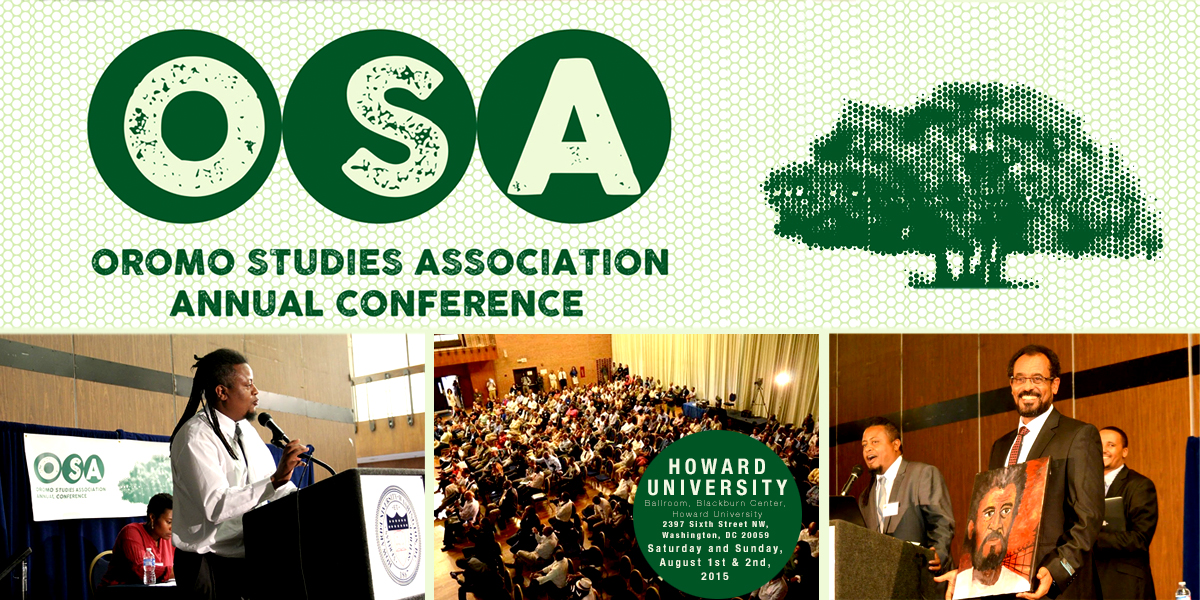


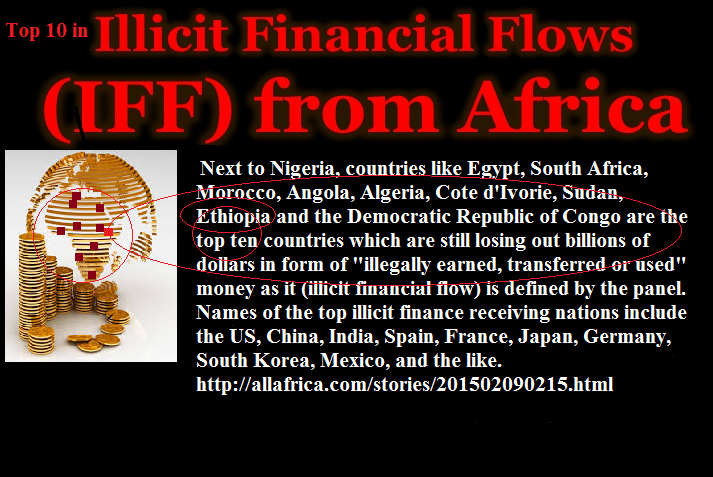

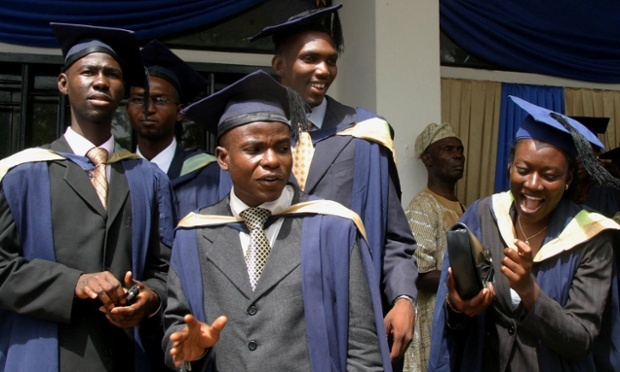


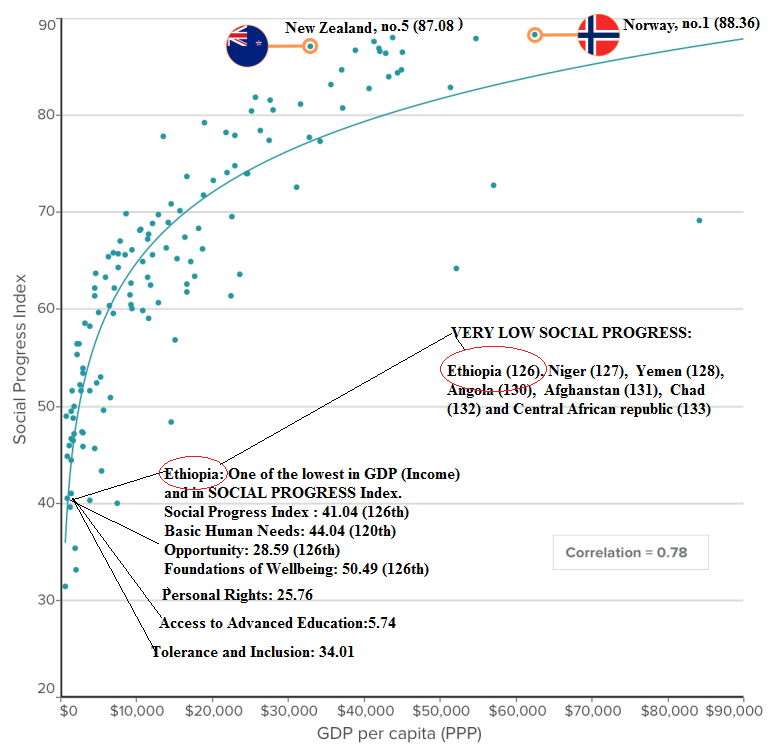
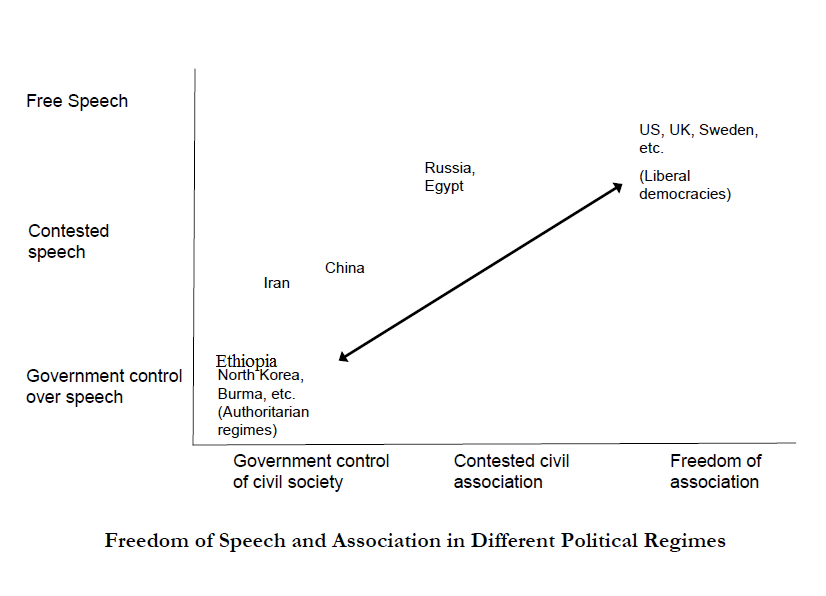



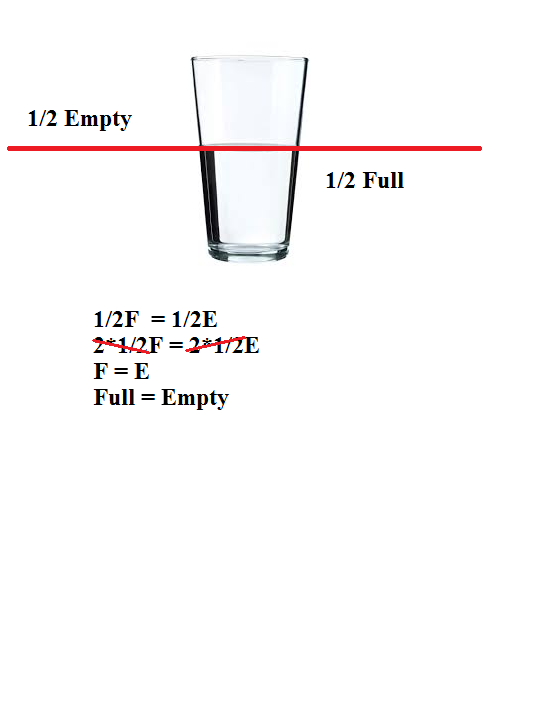

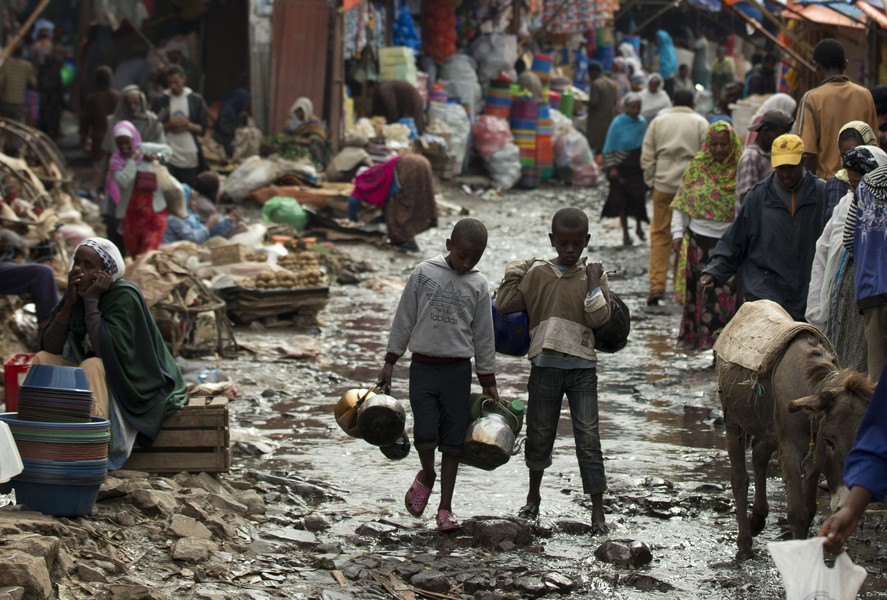
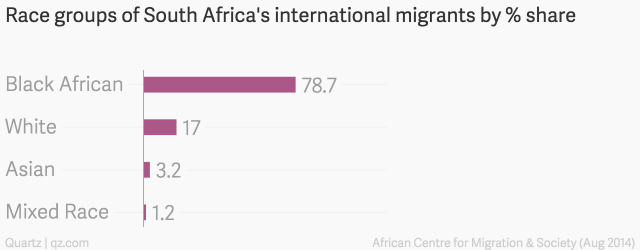

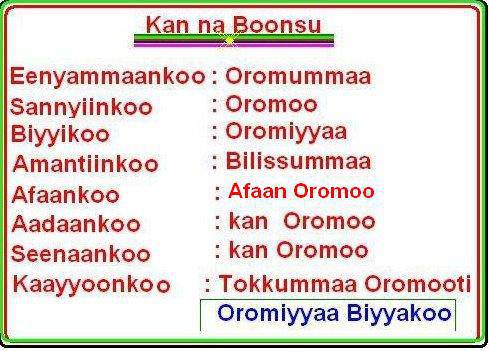
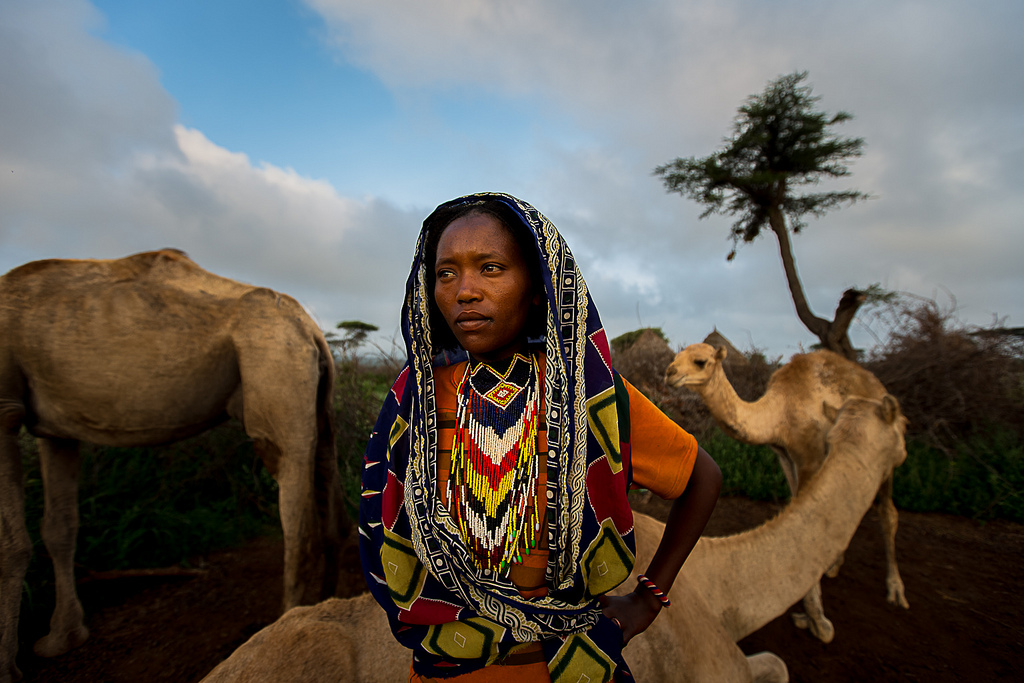


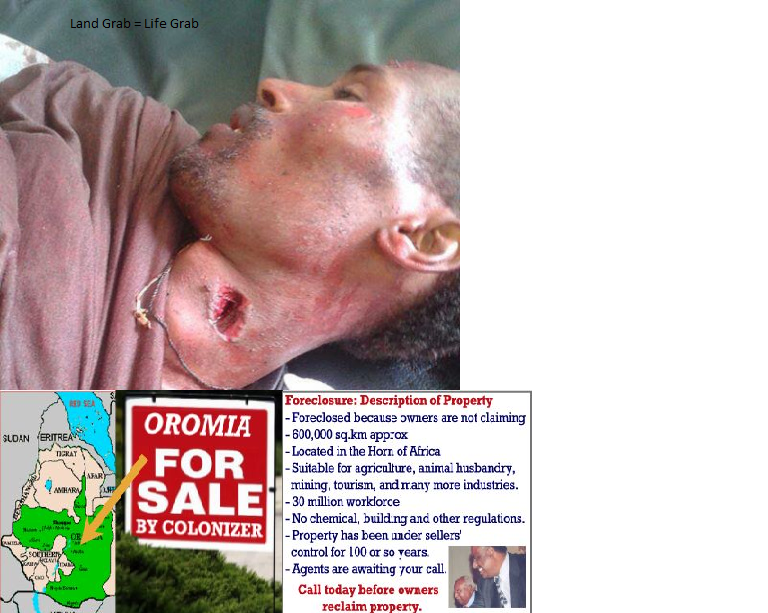


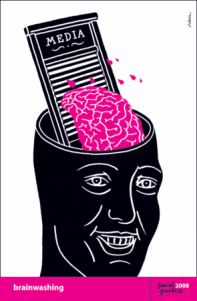

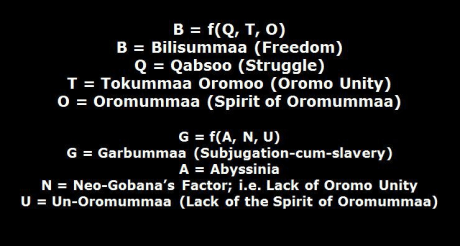

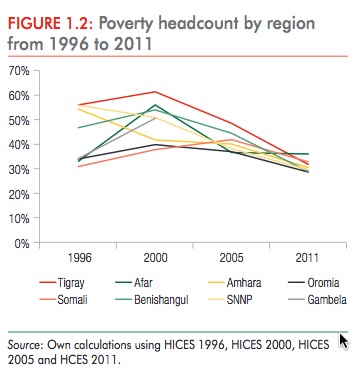


 Here is me picking up from where I left off with my Africa is NOT rising article which is a featured presentation from Mr. AlI Mfuruki from Tanzania. The presentation was done at a Tedx event late last year. This is in fact part 3 of a 3 series post dedicated to his presentation (Simply because his assessment of the “Africa rising” media propaganda was so relevant and accurate for anyone wanting to build the continent). In case you have not had the chance to go through the first 2 posts, here you go:

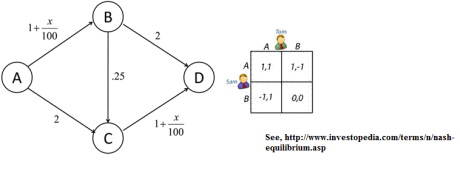


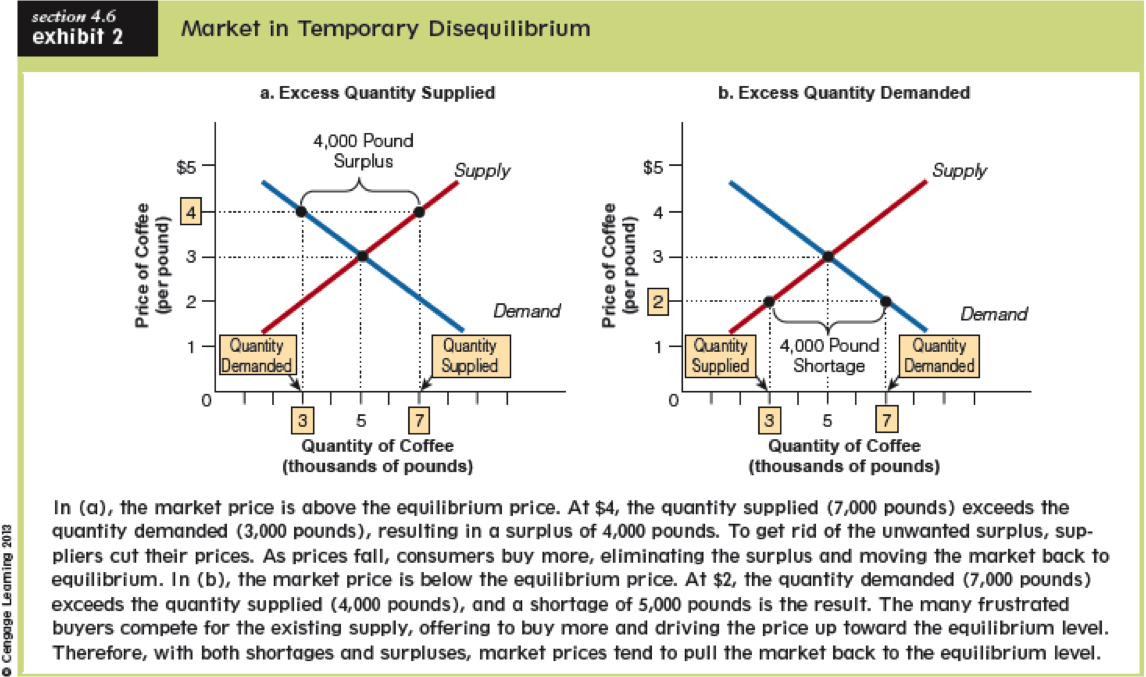
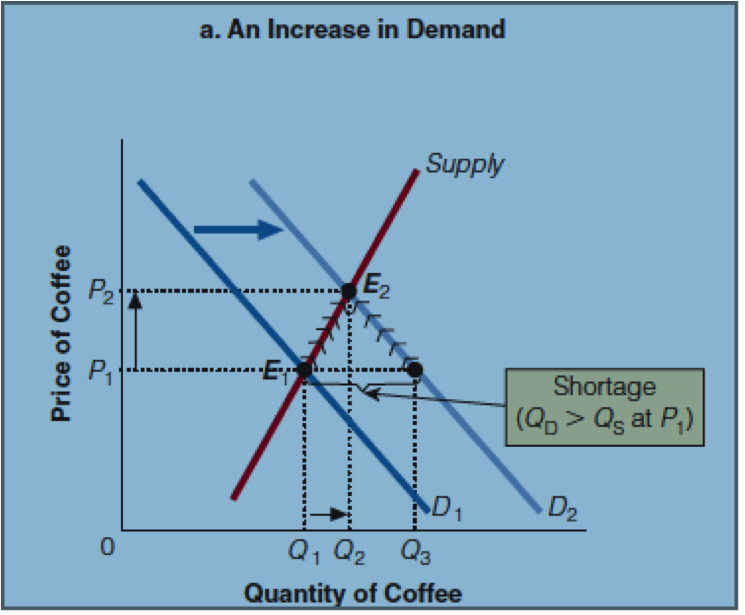
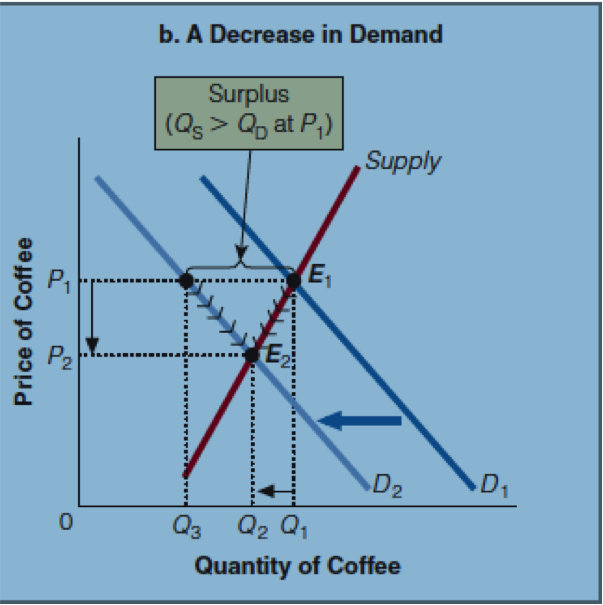
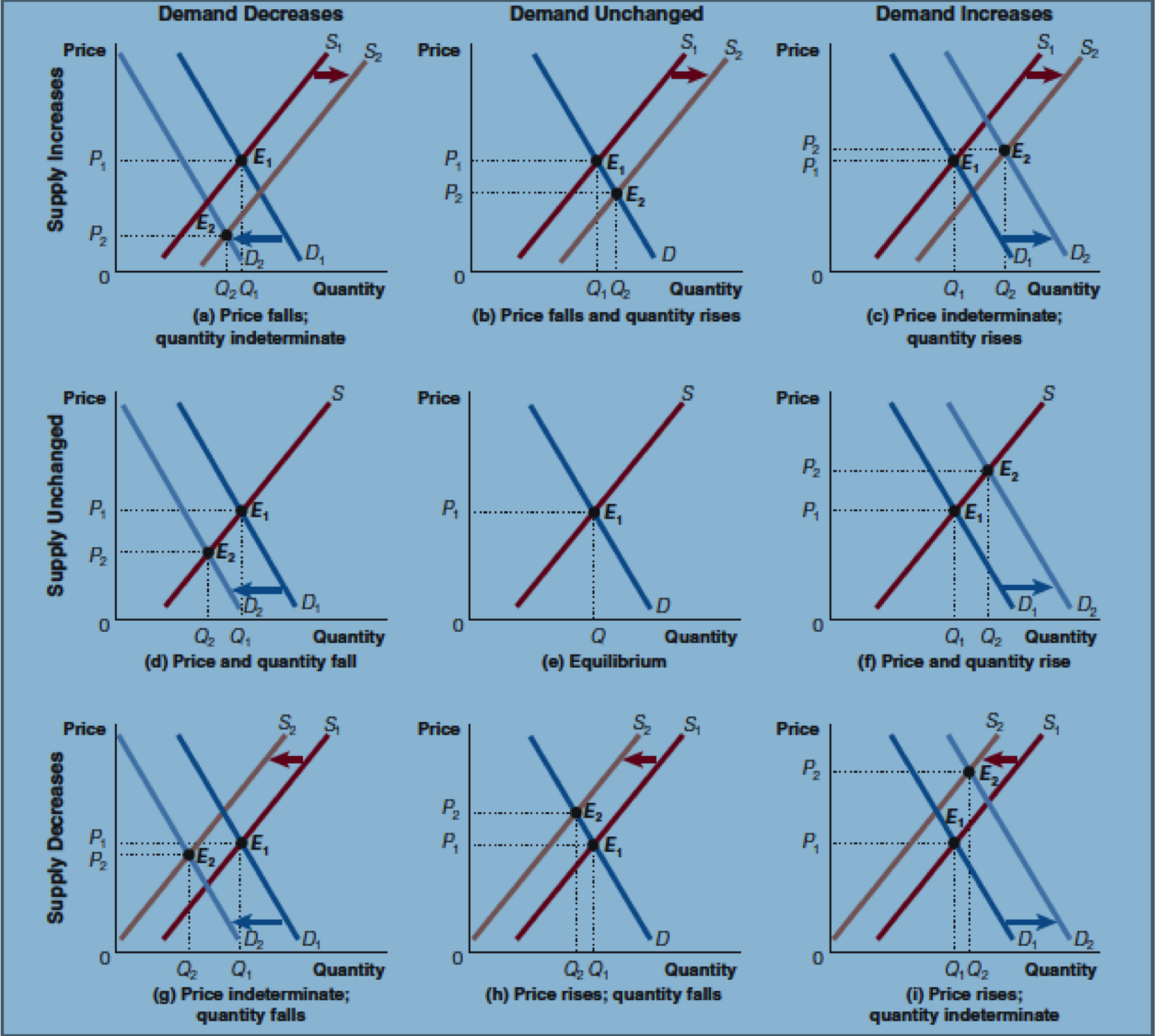
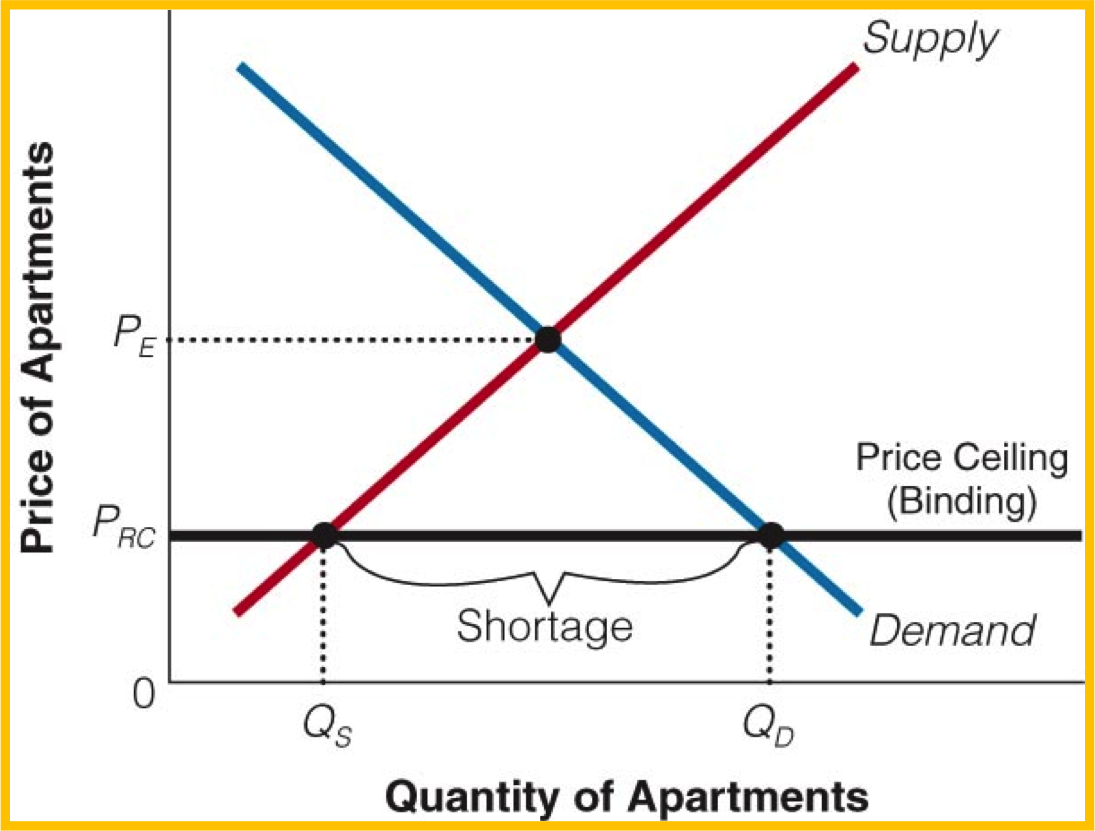
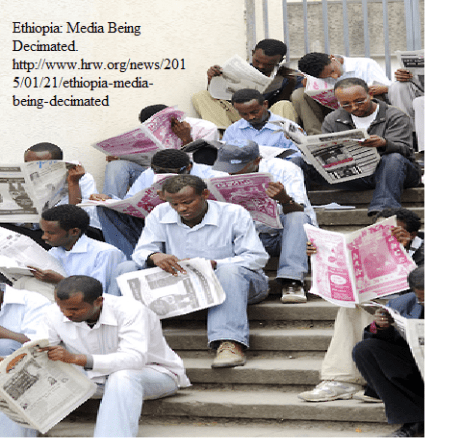


 Oromian Economist
Oromia: Macha-Tulama Association Requests President Obama to Rethink Visit to Tyrannical, Undemocratic Ethiopia July 6, 2015
Posted by OromianEconomist in Uncategorized.Tags: Africa, Freedom House in response to comments by Under Secretary for Political Affairs, Macha-Tulama Association Requests President Obama to Rethink Visit to Tyrannical Ethiopia, Obama's plan to visit Ethiopia criticised as 'gift' for repressive government, Oromia
add a comment
The following is a letter to President Obama from the Macha-Tulama Association-USA, Inc.
Macha-Tulama Association – USA, Inc
811 Upshur ST NW
Washington, DC 20011
contact@machatulama.org
July 2, 2015
President Barack Obama
The White House
1600 Pennsylvania Avenue
NW Washington, DC 20500
Your Excellency President Obama,
The Board of Directors of the Macha-Tulama Association (MTA), U.S.A., is writing this urgent letter regarding your plan to visit Ethiopia in July 2015. The MTA is a non-profit organization incorporated in the U.S.A. because it was banned in Ethiopia. It advocates for human rights and for social justice for the Oromo and others in the Horn of Africa and beyond. For almost a quarter of a century, Ethiopia has been ruled by the Tigre People’s Liberation Front, which calls itself the Ethiopian People’s Revolutionary Democratic Front. This minority regime has been engaging in sham elections, which are elections only in name. The regime disregards all the principles and practices of democracy in spite of its pretension to be democratic since 1991. The regime’s promise of democratization by restructuring the state, liberalizing the economy, and respecting and protecting human rights has been subverted. While claiming to be a democratic government in order to receive ‘development aid’ and to gain political legitimacy, this regime has killed, imprisoned and tortured the Oromo and other ethno-national groups who have struggled for democracy, national self-determination, human rights, and social justice. In fact, the Oromo people have been mainly targeted for elimination and repression because they are the largest national group in Ethiopia, and they have started to recover, manifest, and exercise their rights to culture, history, and language, which have been repressed by the state of Ethiopia for over a century.
According to a recent Amnesty International report, entitled ‘Because I am Oromo: Sweeping Repression in the Oromia Region of Ethiopia,’ between 2011 and 2014 alone, at least 5000 Oromo were arrested, tortured, and sentenced with extra-judicial executions because of being Oromo and for also peacefully demonstrating against the regime’s land grabbing policies and the so-called Addis Ababa Master Plan, intended to evict millions of Oromo farmers from their homelands in and around Addis Ababa (which the Oromo call Finfinnee), the capital city of Ethiopia. Since 1992, several human rights organizations have been reporting that Oromo prisoners have been predominantly populated Ethiopian prisons and other detention places. As a result these prisons and concentration camps speak Afaan Oromo (the Oromo language), as testified by many nonOromo prisoners.
Mr. President,
It is with shock and profound sadness that we received the message of your intention to visit Ethiopia in July. As the leader of a great country that subscribes to the principles of democracy and fundamental rights and liberties for all human beings, and as the leader of a country whose foreign policy in principle is committed to promoting the ideals of human rights, the rule of law, and democracy around the world, we believe your visit will send a wrong message to the regime and its likes across the globe that they can get away with grotesque violations of human and democratic rights as long as they remain ‘strategic allies’ to the United States.
Mr. President,
Because of these reasons, we earnestly request that you rethink your intention to visit Ethiopia. We believe your visit to the country also sends three messages: First, it encourages the Ethiopian government to continue intensifying its repressive policies. If your government continues to support and finance the regime regardless of what it does, the regime will see no reasons for changing its violent and dictatorial policies. Second, your visit to Ethiopia demonstrates to the affected people that the United States government only gives lip service to democracy and human rights while supporting the dictatorial minority regime of Ethiopia. To the 90 million people who are facing massive human rights violations in Ethiopia, particularly to the over forty million Oromo, your visit will mean that the U.S.A. does not care for the aspiration to live in a free, open, and democratic society. Your visit will also mean that human rights and democratic self-governance are not part of the list of U.S. priorities in Africa and beyond. Third, it convinces the people in Ethiopia and beyond that your policy is not different from some of your officials, such as Undersecretary of State Wendy Sherman, who recently undermined the process of democratization in Ethiopia by endorsing the regime’s record whose democracy, she said, is ‘improving.’ The Undersecretary has been roundly criticized, and we believe, rightly so.
In closing, we would like to bring to your attention that when, in July 2009, you visited Ghana, you made a speech in which you promised that the U.S.A. does not, and will not, support dictatorship and strongmen, and that you seek to assist the development of “strong and sustainable democratic governments” everywhere in Africa. We believe it is only appropriate now to request that you do not ignore your commitment and promise of that historic speech you made in Accra, Ghana, by visiting Ethiopia, the graveyard and prison house of thousands of men and women who have been killed, imprisoned, tortured, maimed, and disfigured only because they have aspired to exercise their God-given rights and to live in a democracy by demanding national self-determination and democratic rights in their own country.
Sincerely,
Asafa Jalata, PhD.,
Chairman of the Board of Directors of the Macha-Tulama Association &
Professor of Sociology and Global and Africana Studies