jump to navigation

OROMIA: BAKKA QABSOON GEESSEE FI SHOORA BARATTOOTA YUNIVARSITII November 18, 2017

Posted by OromianEconomist in Uncategorized.
Tags: , , , , , , , , , ,
add a comment

Odaa OromooOromianEconomist

BAKKA QABSOON GEESSEE FI SHOORA BARATTOOTA YUNIVARSITII

Jawar Mohammed irraa


Dhalachuu qabsoo bilisummaa Oromootirraa kaasee hamma ammaatti gaheen barattootni Dhaabbilee Ol’aanoo qaanqee qabsoo qabsiisurraa kaasee hamma ammaatti qaban baay’ee ol’aanaa ta’uun isaa ni beekama.

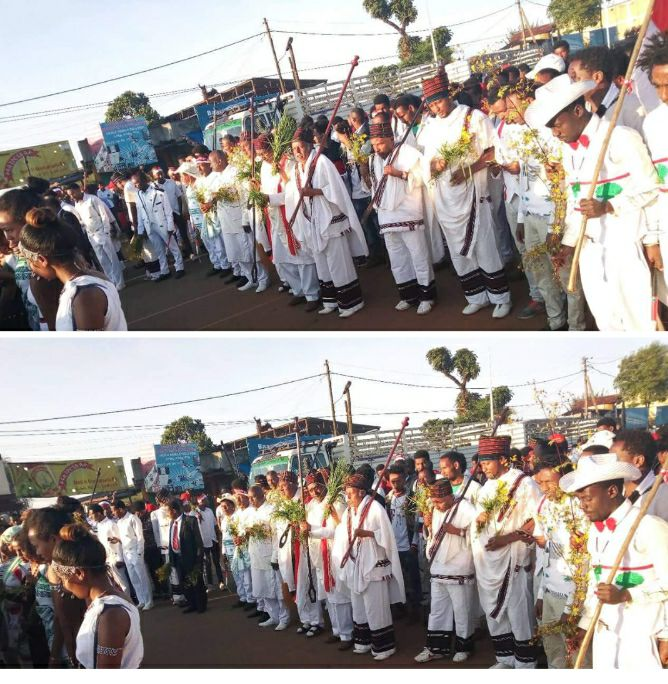
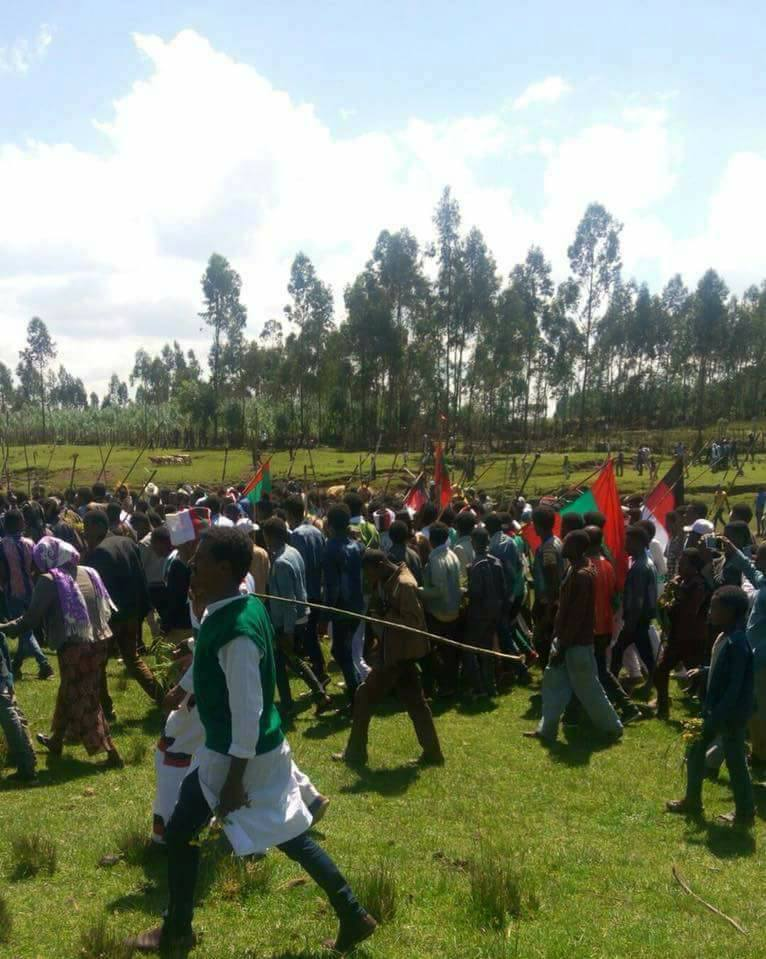
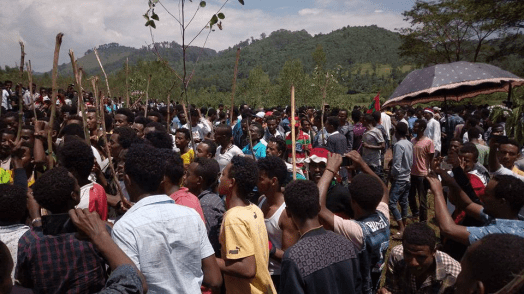
Barootuma as kaluu kanaahuu yoo ilaalle gubachuu bosonaa Baaleetirraa kaasee hamma #OromoProtests tti mormiilee turaniif qaanqee kan ta’e barattootaafi mooraa Yuunivarsitiidhaati. Qabsoo kanaafis kibiriita bifa lamaan ta’aa turan. Tokkoffaa mooraa keessatti wal gurmeessuudhaan mormii qabsiisanii qaanqee mormii sanii uummatatti facaasuudhaani. Kan lammataa yeroo boqonnaa isaanii qe’eetti galuun uummata dadammaqsuufi qindeessuudhaani.

Yeroo ammaa kana ibiddi qaanqeen sun qabsiifte Oromiyaa hunda walgahee masaraa warra gita bittuu keessayyuu seenee jira. Kana jechuun garuu sila qabsoon sadarkaa kana gaheef barattootni qaanqee qabsoo ta’anii itti fufuu isaanii haa dhaaban jechuu miti. Yeroo uummanni hundi dammaqee falmachaa jiru kanatti shoorrii barattootaafi mooraalee barnoota ol’aanaa tarkaanfii takkaa lama dursee deemuun qaanqee bifa haarayaa ta’ee mul’achuu waan qabuuf shoorri isaaniis jijjiramaa deemuu qaba. Kanas bifa armaan gadiin osoo godhamee qabsoof faayidaa qaba natti fakkaata.

Akkuma yeroo adda addaa jechaa turre, qabsoon teenya gara goolabbiitti dhihaattee jirti. Qabsoo tana bifa nuuf taatuun goolabuuf bakka sirni nama nyaataan kun kufetti sirna kaayyoo qabsoo teenya bakkaan gahu ijaaruuf yeroo ammaa kanatti hojii sammuu guddaa gaafata. Sirna karkarsine kana akkamiin akka nurratti hin jigne ofirraa qabnee kara nuuf ta’utti lafaan dhoofna? Sirna dullacha kanarraa haaraatti dabruuf tooftaa cehumsaa ( transitional) akkamii dhaabuu qabna? Erga kufee hoo bakka isaatti sirna akkamii yoo dhaabne bilisummaan, nageenyifi misoomni sabni keenya dheebote sun dhugoomuun mala? Imaammata diinagdee, hawaasummaa, nageenya ( security), barnootaafi kkf akkamiitu nu baasa? yeroo ammaatti Wayyaaneen saboota hundaan walitti nu buusuu barbaaddi. Kana ammoo madaa amma dura tureefi walshakkii jiranitti fayyadamti. Shira ishii kana fashaleessuufi hariiroo ummatoota kana gara fuulduraatiif utubaa jabaa dhaabuuf shoorri dhaabbilee barnoota ol’aanaa guddaadha. Hariiroon Oromoofi saba biraa jidduu jiru maal ta’uu qaba? saboonni biyyattii aangoo siyaasaafi diinaagdee akkamiin hirachuu qabu?

Gaaffilee kana hundaaf deebii har’a qopheessuu qabna. Kanaaf ammoo hayyoonni keenya roga hundaan qorannaa gochuu qabu. Qorannoon isaanii kun ammoo mariidhaan bilchaachuu qaba. Qorannoo kana kan mariidhaan gabbisuu danda’uufi qabu ammoo hawaasa barattoota dhaabbilee ol’aanoo keessaati. Sababni isaas yaadrimee hayyoonni dhiheessan ta’ee dhugaa (reality) hawaasa keessa jiru kan wal biratti madaalee wal simsiisuu danda’u isaan waan ta’aniifi. Yaadonni qorannoo kun hayyootaan dhiyaatanii barattoota Yuunivarsitiitiin erga bilchaatanii booda uummatatti dhiyaachuu qabu.

Kanaafuu, miirri qabsoo mooraalee Yuunivarsitiilee keessa jiru kun ummata bal’aa dura akka tarkaanfatu gochuun barbaachisaadha. Waltajjiileen marii dhimmoota ijoo kanneen irratti xiyyeffatan gaggeessuunis murteessaadha. Dhaabbileen barnootaa, miidiyaaleenif qaamni mootummaa waltajjii qindeessuufi haala barbaachisaa hunda mijeessuu qabu.

Hubadhaa! wayyaaneen bakka gaaffii uummatootaa deebiftu bira dabartee jirti. Yeroo ammaa kanatti gaaffii saba biroo deebisuu dhiisaa gaaffiidhuma miseensota ishii jidduu ka’aa jiru furuu dadhabdee jaanjoftee jirti. Gaaffii uummata keenyaatiif amma booda deebiin isaa harkuma hayyootaafi hoogganoota isaa jira. Deebii kana ammoo qorannoo gochuufi gabbisuudhaan deebisuutu barbaachisa. Dhimmi hariiroo Oromoofi saboota biroos qorannoofi marii isaan waliin goonuun bilchaataa deema. Walumaagalatti hireen Oromoofi saboota waliin jiraannu amma bodaa jechaafi gocha Oromoofi Oromiyaa irratti hundaa’a. Oromoo keessaa ammoo qaama barate, keessattuu kan dhaabbilee barnoota ol’aanaa keessa jiran irratti kufee jira. Dirqama kana bahuuf hayyoonniifi barattootni keenya tasgabbiifi waldhagahuudhaan deemuu qabdan.Jeequmsis ta’ee mooraalee barnootaa dhiisanii deemuun dirqama kana bahuuf hiree jiru of duraa cufuudha. Yeroo ammatti barattoonni Oromoo ofii isaaniitiif mooraa jeequu dhiisii kan jeeqameeyyuu tasgabbeessuu qabu. Mooraa dhiisanii deemuu dhiisii yoo bahaa jedhamaniiyyuu didanii turuu qabu. Maaliif? Mooraa keessa turuun dirqama qabsoon yeroo ammaatti qaama hawaasaa sanirraa eegdu bahuuf mooraa turuniifi barnoota itti fufuun baay’ee barbaachisaa waan ta’eef. Dabalataanis barattootni saba biraa akka olola diinaatiin hin jeeqamneefi mooraa dhiisanii hin deemne qabatamaan amansiisuu qabdan.

Kanaafuu barattotni dhaabbilee barnootaa ol’aanaa akkuma qaanqee ta’uun qabsoo kanaaf daandii irratti ibsaa asiin geessan ammas xurree ce’uumsaafi sirna haarayaa uummata keenyatti akeekuuf dirqama isinirra jiru bahuuf hiree hundatti akka fayyadamtan isiif dhaama.

Ethiopia in 2017: The enemy of Internet and freedom: Ethiopia is the 2nd worst in the world in the Internet freedom after China and a continuous deteriorating trend. Syria (3rd) November 18, 2017

Posted by OromianEconomist in Censorship, Internet Freedom, Uncategorized.
Tags: , , , , , , ,
1 comment so far

Odaa Oromoooromianeconomist

Freedom House Freedom on the Net 2017 Ethiopia Country Profile STATUS:

NOT FREE

Ethiopia the 2nd worst in the world in Internet freedom in 2017

 The prominent opposition activist Yonatan Tesfaye, was found guilty of terrorism based on Facebook posts that criticized the government’s handling of the Oromia protests.

Key Developments: 

JUNE 2016–MAY 2017

  • Internet and mobile phone networks were deliberately disrupted during antigovernment protests and student exams; social media and communications platforms were periodically blocked throughout the year (see Restrictions on Connectivity and Blocking and Filtering).
  • Self-censorship heightened following the state of emergency instituted in October 2016 (see Media, Diversity, and Online Manipulation).
  • The state of emergency eroded fundamental rights and restricted certain online activities, including supporting protests on social media (see Legal Environment).
  • The Computer Crime Proclamation enacted in June 2016 criminalizes online defamation and incitement and strengthened the government’s surveillance capabilities by enabling real-time monitoring or interception of communications (see Legal Environment and Surveillance, Privacy, and Anonymity).
  • Numerous individuals were arrested for online speech or protests; two were convicted and handed multi-year prison sentences (see Prosecutions and Detentions for Online Activities).
Introduction:

Internet freedom declined dramatically in the past year as the government imposed emergency rule to crack down on antigovernment protests and the digital tools citizens used to organize them.

The authoritarian government declared a six-month state of emergency in October 2016 following months of escalating protests. Starting in the Oromia region in November 2015 as a protest against the government’s plan to infringe on land belonging to the marginalized Oromo people, the protests spread across the country throughout 2016, turning into unprecedented demonstrations seeking regime change and democratic reform. Emergency rule derogated fundamental rights in violation of international standards,1 banned unauthorized protests, and allowed the authorities to arbitrarily arrest and detain citizens without charges. More than 21,000 people were arrested before the state of emergency was lifted in August 2017.

The state of emergency restricted certain online activities and the internet was shut down for several days. The authorities criminalized accessing or posting content related to the protests on social media, displaying antigovernment symbols or gestures, as well as efforts to communicate with “terrorist” groups—a category that includes exiled dissidents. Penalties included prison terms of between three and five years.

Numerous individuals were arrested for online activities, and two were convicted to long prison sentences. In May 2017, a prominent opposition activist, Yonatan Tesfaye, was sentenced to six and a half years in prison on terrorism charges based on Facebook posts in which he criticized the government’s handling of the Oromia protests. Also in May, Getachew Shiferaw, editor-in-chief of opposition outlet Negere Ethiopia, was sentenced to one and a half years in prison on subversion charges for Facebook comments published in support of an exiled journalist. He was released on time served.

The legal environment for internet freedom became more restrictive under the Computer Crime Proclamation enacted in June 2016, which criminalizes defamation and incitement. The proclamation also strengthens the government’s surveillance capabilities by enabling real-time monitoring or interception of communications.

Obstacles to Access:

(Freedom on the Net Score: 0=Most Free, 100=Least Free)

Internet and mobile phone networks were deliberately disrupted during antigovernment protests and student exams throughout the year. Meanwhile, poor infrastructure, obstructionist telecom policies, and a government monopoly on the information and communication technology (ICT) sector make ICT services prohibitively expensive for the majority of the population.

Availability and Ease of Access

Ethiopia is one of the least connected countries in the world with an internet penetration rate of only 15 percent in 2016, up from 12 percent the previous year, according to the latest data from the International Telecommunications Union (ITU).2 Mobile phone penetration is also low at 51 percent, up from 43 percent in 2015.3 Low penetration rates stem from underdeveloped telecommunications infrastructure, which is almost entirely absent from rural areas, where about 85 percent of the population resides. A handful of signal stations service the entire country, resulting in network congestion and frequent disconnection.4 In a typical small town, individuals often hike to the top of the nearest hill to find a mobile phone signal.

Access to ICT services remains prohibitively expensive for most Ethiopians, largely due to the government’s monopoly over the telecom sector, which provides consumers with few options. Prices are set by state-controlled EthioTelecom and kept artificially high.5 William Davison, Bloomberg’s Ethiopia correspondent, described the issue on Facebook in March 2016: “It cost me 44 birr ($2.05) to watch Al Jazeera’s latest 3-minute dispatch on Oromo protests using 4G network on my phone, which is not that much less than the average daily wage of a daily laborer in Ethiopia.”6 Ethiopians can spend an average of US$85 per month for limited mobile or fixed wireless internet access. Better quality services in neighboring Kenya and Uganda cost less than US$30 a month. One comparative assessment of internet affordability put Ethiopia among the world’s most expensive countries for access.7

Telecommunication devices, connection fees and other related costs are also beyond the means of many Ethiopians. As a result, Ethiopia has one of the lowest smartphone ownership rates in the world at only 4 percent, according to a 2016 Pew survey.8 Consequently, the majority of internet users rely on cybercafes for internet access. A typical internet user in the capital, Addis Ababa, pays between ETB 5 and 7 (US$ 0.25 to 0.35) for an hour of access. Because of the scarcity of internet cafes outside urban areas, however, rates in rural cybercafes are higher. In addition, digital literacy rates are generally low.

Connection speeds have been painstakingly slow for years, despite the rapid technological advances improving service quality in other countries. According to Akamai, the average connection speed in Ethiopia was 3 Mbps in the first quarter of 2017, significantly lower than the global average of 7.0 Mbps. In practice, such speeds result in extremely sluggish download times for even simple images. Logging into an email account and opening a single message can take as long as five minutes at a standard cybercafe with broadband in the capital, while attaching documents or images to an email can take eight minutes or more.9

Restrictions on Connectivity

Throughout 2016 and 2017, network traffic in and out of Ethiopia registered a significant decline as a result of continual throttling and repeated internet shutdowns.

Network shutdowns occurred several times during the coverage period:

  • During widespread antigovernment protests on August 6 and 7, 2016, internet services were completely inaccessible in the Amhara, Addis Ababa, and Oromia regions. The government responded to the protests with excessive force, resulting in the deaths of at least 100 people.10
  • In October 2016, mobile internet services were shut down for several days when the government declared a state of emergency.11 Mobile internet service and social media remained intermittently accessible for months (see Legal Environment).
  • The government shut down all telecommunications networks from May 30 to June 8 following the conviction of two human rights activists for online expression in May 2017 (see Prosecutions and Detentions for Online Activities).12
  • In separate incidents in July 2016, August 2016, and June 2017, the authorities shut down fixed and mobile internet services in select regions to prevent students from cheating during national university exams.13

The ICT shutdowns were costly. According to October 2016 research by the Brookings Institution, network disruptions between July 1, 2016 and June 30, 2017 cost Ethiopia’s economy over USD $8.5 million.14 September 2017 research by the Collaboration on International ICT Policy in East and Southern Africa (CIPESA) calculated the economic cost of Ethiopia’s internet disruptions between 2015 and 2017 at nearly USD $3.5 million a day. Calculated separately, disruptions to apps cost nearly USD $875,000 a day.15

The Ethiopian government’s monopolistic control over the country’s telecommunications infrastructure via EthioTelecom enables it to restrict information flows and access to internet and mobile phone services. As a landlocked country, Ethiopia has no direct access to submarine cable landing stations; thus, it connects to the international internet via satellite, a fiber-optic cable that passes through Sudan and connects to its international gateway, and the SEACOM cable that connects through Djibouti to an international undersea cable. All connections to the international internet are completely centralized via EthioTelecom, enabling the government to cut off the internet at will.

ICT Market

State-owned EthioTelecom holds a firm monopoly over internet and mobile phone services as the country’s sole telecommunications service provider. Despite repeated international pressure to liberalize telecommunications in Ethiopia, the government refuses to ease its grip on the sector.16 The space for independent initiatives in the ICT sector, entrepreneurial or otherwise, is extremely limited.17

China is a key investor in Ethiopia’s telecommunications industry,18 with Zhongxing Telecommunication Corporation (ZTE) and Huawei currently serving as contractors to upgrade broadband networks to 4G in Addis Ababa and expand 3G networks elsewhere.19 The partnership has enabled Ethiopia’s authoritarian leaders to maintain their hold over the telecom sector,20 though the networks built by the Chinese firms have been criticized for their high cost and poor service.21 Furthermore, the contracts have led to increasing fears that the Chinese may also be assisting the authorities in developing more robust ICT censorship and surveillance capacities (see Surveillance, Privacy, and Anonymity).22 In December 2014, the Swedish telecom group Ericsson also partnered with the government to improve and repair the mobile network infrastructure,23 though ZTE remains the sector’s largest investor.

Onerous government regulations also stymie other aspects of the Ethiopian ICT market. For one, imported ICT items are tariffed at the same high rate as luxury items, unlike other imported goods such as construction materials and heavy duty machinery, which are given duty-free import privileges to encourage investments in infrastructure.24Ethiopians are required to register their laptops and tablets at the airport with the Ethiopian customs authority before they travel out of the country, ostensibly to prevent individuals from illegally importing electronic devices, though observers believe the requirement enables officials to monitor citizens’ ICT activities by accessing the devices without consent.25

Local software companies also suffer from heavy-handed government regulations, which do not prescribe fair, open, or transparent ways of evaluating and awarding bids for new software projects.26 Government companies are given priority for every kind of project, while smaller entrepreneurial software companies are completely overlooked, leaving few opportunities for local technology companies to thrive.

Cybercafes are subject to burdensome operating requirements under the 2002 Telecommunications (Amendment) Proclamation,27 which prohibit them from providing Voice-over-IP (VoIP) services, and mandate that owners obtain a license from EthioTelecom via an opaque process that can take months. In the past few years, EthioTelecom began enforcing its licensing requirements more strictly in response to the increasing spread of cybercafes, reportedly penalizing Muslim cafe owners more harshly. Violations of the requirements entail criminal liability, though no cases have been reported.28

Regulatory Bodies

The Ethiopian Telecommunications Agency (ETA) is the primary regulatory body overseeing the telecommunications sector. In practice, government executives have complete control over ICT policy and sector regulation.29 The Information Network Security Agency (INSA), a government agency established in 2011 and controlled by individuals with strong ties to the ruling regime,30 also has significant power to regulate the internet under its mandate to protect communications infrastructure and prevent cybercrime.

Limits on Content:

(Freedom on the Net Score: 0=Most Free, 100=Least Free)

Social media and communications platforms were repeatedly blocked throughout the coverage period. Self-censorship heightened following the state of emergency instituted in October 2016, which placed restrictions on the use of social media for certain types of speech.

Blocking and Filtering

One of the first African countries to censor the internet,31 Ethiopia has a nationwide, politically motivated internet blocking and filtering apparatus that is reinforced during sensitive political events.

Tests conducted by the Open Observatory of Network Interference (OONI) in December 2016 found a wide range of websites blocked in Ethiopia, including the websites of Ethiopian news outlets known for critical reporting, political opposition groups, LGBTI (lesbian, gay, bisexual, transgender, or intersex) groups, human rights organizations, and circumvention tools. In total, at least one hundred websites were inaccessible.32 OONI tests also found the mobile version of WhatsApp completely blocked.33

Other social media platforms such as Facebook and Twitter were repeatedly blocked for periods of time throughout 2016 and 2017, limiting their utility for political organizing even when the internet had not been completely shut down.34 In one case unrelated to political unrest, the authorities also blocked access to Facebook, Twitter, Instagram, Viber, IMO, and Google+ to prevent cheating during university examinations in July 2016.35 The blocks followed a full internet blackout for the same reason (see Restrictions on Connectivity). A government spokesperson stated that blocking social media during the exam would help students concentrate.

However, some progovernment media organizations and commentators seemed to have exclusive access to social media during the block,36 which reinforced the popular belief that government supporters are not disadvantaged during shutdowns to the extent that citizens are. Tools that help internet users bypass censorship are frequently blocked in Ethiopia, but some may remain available for approved uses. When social media platforms were blocked in the past year, diaspora-based activists publicized virtual private networks (VPNs) to circumvent the censorship, but certain VPNs were also subsequently blocked.37 Local sources suspected progovernment commenters were reporting some tools to the authorities for enabling censorship circumvention.

Digital security tools and information are also blocked. The Amharic translation of the Electronic Frontier Foundations’ “Surveillance Self-Defense” web guide was blocked two weeks after it was published in October 2015.38 One source reported that keywords such as “proxy” yield no search results on unencrypted search engines,39 reflecting the government’s efforts to limit users’ access to proxy servers and other circumvention tools. Tor, a circumvention tool that enables users to browse anonymously, has been subject to restrictions since May 2012.40

To filter the internet, specific internet protocol (IP) addresses or domain names are generally blocked at the level of the EthioTelecom-controlled international gateway. Deep packet inspection (DPI), which blocks websites based on a keyword in the content of a website or communication, is also employed.41

There are no procedures for determining which websites are blocked or why, precluding any avenues for appeal. There are no published lists of blocked websites or publicly available criteria for how such decisions are made, and users are met with an error message when trying to access blocked content. The decision-making process does not appear to be controlled by a single entity, as various government bodies—including the Information Network Security Agency (INSA), EthioTelecom, and the ICT ministry—seem to be implementing their own lists, contributing to a phenomenon of inconsistent blocking. This lack of transparency is exacerbated by the fact that the government denies implementing censorship. Government officials flatly deny blocking websites or jamming international satellite operations, while also stating that the government has a legal and a moral responsibility to protect the Ethiopian public from extremist content.

Content Removal

Political content is often targeted for removal, often by way of threats from security officials who personally seek out users and bloggers to instruct them to take down certain content, particularly critical content on Facebook. The growing practice suggests that at least some voices within Ethiopia’s small online community are closely monitored. For instance, during antigovernment protests in Oromia, activists who wrote messages of solidarity for the protestors on Facebook were asked to delete their posts.42

Media, Diversity and Content Manipulation

Increasing repression of journalists and bloggers has had a major chilling effect on expression online, particularly in response to the spate of blogger arrests in the past few years (see Prosecutions and Detentions for Online Activities). Many bloggers publish anonymously to avoid reprisals,43 while fear of pervasive surveillance has also led to widespread self-censorship.

Self-censorship heightened during the state of emergency instituted in October 2016, which explicitly prohibited sharing information about protests through social media platforms, communicating with exiled dissident groups regarded as terrorists, organizing demonstrations, and displaying political gestures (see Legal Environment).

Lack of adequate funding is a significant challenge for independent online media in Ethiopia, as fear of government pressure dissuades local businesses from advertising with politically critical websites. A 2012 Advertising Proclamation also prohibits advertisements from firms “whose capital is shared by foreign nationals.”44 The process for launching a website on the local .et domain is expensive and demanding,45 requiring a business license from the Ministry of Trade and Industry and a permit from an authorized body.46 While the domestic blogosphere has been expanding, most blogs are hosted on international platforms or published by members of the diaspora.

Despite Ethiopia’s extremely low levels of internet access, the government employs an army of trolls to distort Ethiopia’s online information landscape.47 Opposition groups, journalists, and dissidents use the mocking Amharic colloquial term kokas to describe the progovernment commentators.48 Observers say the kokas regularly discuss Ethiopia’s economic growth in favorable terms and post derogatory comments about Ethiopian journalists and opposition groups on Facebook and Twitter. In return, they are known to receive benefits such as money, land, and employment promotions. The government also manipulates online content through propaganda that aims to convince Ethiopians that social media is a dangerous tool co-opted by opposition groups to spread hate and violence.49

Digital Activism

Online tools were essential for the mobilization of antigovernment protests throughout 2016, enabling activists to post information about the demonstrations and disseminate news about police brutality as the government cracked down on protesters.50 Digital activism was muted following the October 2016 state of emergency, which banned demonstrations and online mobilization. Repeated internet shutdowns and blocks on social media platforms also hindered mobilization efforts (see Blocking and Filtering and Restrictions on Connectivity).

Violations of User Rights:

(Freedom on the Net Score: 0=Most Free, 100=Least Free)

A state of emergency declared in October 2016 derogated fundamental rights and restricted certain online activities. The Computer Crime Proclamation enacted in June 2016 criminalizes defamation and incitement; observers say it could be invoked to suppress digital mobilization. The proclamation also strengthens the government’s surveillance capabilities by enabling real-time monitoring and interception of communications. Numerous individuals were arrested for online activities, particularly protests, while two people were sentenced to prison for several years each during the coverage period.

Legal Environment

The government imposed a six-month state of emergency in October 2016 and shut down the internet for several days to quell escalating antigovernment protests. Specific online activities were restricted under emergency rule.51 The authorities criminalized accessing or posting content related to the protests on social media, as well as efforts to communicate with “terrorist” groups, a category that includes exiled dissidents. Penalties included prison terms of three to five years.52 Emergency rule also undermined fundamental rights, banning unauthorized protests, and allowing the authorities to arbitrarily arrest and detain citizens without charge. More than 21,000 people were arrested before the state of emergency was lifted in August 2017, according to news reports.53

Fundamental freedoms are guaranteed for Ethiopian internet users on paper, but the guarantees are routinely flouted in practice. The 1995 Ethiopian constitution provides for freedom of expression, freedom of the press, and access to information, while also prohibiting censorship.54 These constitutional guarantees are affirmed in the 2008 Mass Media and Freedom of Information Proclamation, known as the press law, which governs the print media.55 Nevertheless, the press law also includes problematic provisions that contradict constitutional protections and restrict free expression, such as complex registration processes for media outlets and heavy fines for defamation.56The Criminal Code also penalizes defamation with a fine or up to one year in prison.57

Meanwhile, several laws are designed to restrict and penalize legitimate online activities and speech. Most alarmingly, the 2012 Telecom Fraud Offences Law extends the violations and penalties defined in the 2009 Anti-Terrorism Proclamation and criminal code to electronic communications sent over mobile phone and internet services.58The antiterrorism legislation prescribes prison sentences of up to 20 years for the publication of statements that can be understood as a direct or indirect encouragement of terrorism, which is vaguely defined.59 The law also bans Voice over Internet Protocol (VoIP) services such as Skype60 and requires all individuals to register their telecommunications equipment—including smartphones—with the government, which security officials typically enforce at security checkpoints by confiscating ICT equipment if the owner cannot produce a registration permit, according to sources in the country.

In June 2016, the Ethiopian government passed a new Computer Crime Proclamation that criminalized an array of online activities.61 For example, content that “incites fear, violence, chaos or conflict among people” can be punished with up to three years in prison, which could be abused to suppress digital campaigns.62 Other problematic provisions ban the dissemination of defamatory content, which can be penalized with up to 10 years in prison,63 and the distribution of unsolicited messages to multiple emails (spam), which carries up to five years in prison.64 Civil society expressed concern that the law would be used to further crackdown on critical commentary, political opposition, and social unrest.65

Prosecutions and Detentions for Online Activities

The authorities intensified their crackdown against bloggers, online journalists, and activists during the state of emergency in the past year. The antigovernment protest movement led to thousands of arrests, some for digital activities such as posting or “liking” social media content about the protests. Examples include the following:

  • In October 2016, police arrested Seyoum Teshome, a well-known academic and blogger for the Ethiopian Think Tank Group, who had published an article about the Oromia protest movement in The New York Times.66 Teshome was held in prison for three months, during which he reported suffering severe torture (see Intimidation and Violence).67
  • In November 2016, political activists Anania Sorri and Daniel Shibeshi and journalist Elias Gebru were arrested for posting images of themselves on social media displaying a gesture indicating support for the protest movement. Protest gestures and symbols were banned under emergency rule.68
  • In December 2016, seven musicians behind a popular YouTube music video were arrested and held without charge until June 2017, when they were charged with terrorism. The video was held to incite protests.69

Two cases led to convictions and multi-year prison sentences during the coverage period:

  • In May 2017, the prominent opposition activist Yonatan Tesfaye, was found guilty of terrorism based on Facebook posts that criticized the government’s handling of the Oromia protests.70 He was sentenced to six and a half years in prison.71 Tesfaye’s Twitter handle has been active since his detention, leading to suspicions that the officials were using his account to monitor other dissidents or encourage them to break the law.72
  • Also in May, Getachew Shiferaw, the editor-in-chief of the opposition outlet Negere Ethiopia, was sentenced to one and a half years in prison on subversion charges for Facebook comments were considered to “endorse” an exiled journalist.73 He was released on time served.

Bloggers from the critical Zone 9 blogging collective were repeatedly persecuted during the coverage period, continuing several years of unabated legal troubles and harassment. The bloggers were first arrested in April 2014 and charged with terrorism under the harsh Anti-Terrorism Proclamation.74 They were accused of intent to overthrow the government, an offense under the criminal code, by encrypting their communications to disseminate seditious writings.75 Denied bail and brought to court dozens of times for sham trials,76 the bloggers were eventually acquitted in late 2015, but the prosecutor appealed to the Supreme Court, and they were repeatedly summoned to appear throughout 2016.77 In April 2017, the Supreme Court ruled that two of the Zone9 bloggers, Atnaf Berhane and Natnail Feleke, should be tried on charges of inciting violence through their writing. If convicted, they would face up to 10 years each in prison.78

Other citizens were serving long prison sentences during the coverage period, including blogger Zelalem Workagenehu, who was found guilty of terrorism and sentenced to over five years in prison in May 2016.79 He was first arrested in July 2014 on charges of conspiring to overthrow the government after he facilitated a course on digital security. Well-known dissident journalist and blogger Eskinder Nega is serving an 18-year prison sentence handed down in July 2012 under the draconian anti-terrorism law for criticizing the law itself in an online article.80

Surveillance, Privacy, and Anonymity

Government surveillance of online and mobile phone communications is pervasive in Ethiopia and was strengthened under the new Computer Crime Proclamation enacted in June 2016, which enables real-time monitoring or interception of communications authorized by the Minister of Justice and obliges service providers to store records of all communications and metadata for at least a year.81

There are strong indications that the government has deployed a centralized monitoring system developed by the Chinese telecommunications firm ZTE to monitor mobile phone networks and the internet, according to a 2015 Human Rights Watch report.82 Known for its use by repressive regimes in Libya and Iran, the monitoring system enables deep packet inspection (DPI) of internet traffic across the EthioTelecom network and has the ability to intercept emails and web chats.

A customer management database called ZSmart, also developed by ZTE, has been installed by EthioTelecom. The database provides the government with full access to user information and the ability to intercept SMS text messages and record phone conversations.83 ZSmart also allows security officials to locate targeted individuals through real-time geolocation tracking of mobile phones.84 While the extent to which the government has made use of the full range of ZTE’s sophisticated surveillance systems is unclear, the authorities frequently present intercepted emails and phone calls as evidence during trials against journalists and bloggers or during interrogations as a scare tactic.85

Meanwhile, exiled dissidents have been targeted by surveillance malware. Citizen Lab research published in March 2015 said Remote Control System (RCS) spyware had been used against two employees of Ethiopian Satellite Television Service (ESAT) in November and December 2014. ESAT is a diaspora-run independent satellite television, radio, and online news media outlet, based in Alexandria, Virginia.86 Made by the Italian company Hacking Team, RCS spyware is advertised as “offensive technology” sold exclusively to law enforcement and intelligence agencies, and has the ability to steal files and passwords and intercept Skype calls and chats. 87

While Hacking Team has said that the company does not deal with “repressive regimes,”88 the social engineering tactics used to bait the two ESAT employees made it clear that the attack was targeted. Moreover, analysis of the RCS attacks uncovered credible links to the Ethiopian government, with the spyware’s servers registered at an EthioTelecom address under the name “INSA-PC,” referring to the Information Network Security Agency (INSA), the body established in 2011 to preside over the security of the country’s critical communications infrastructure.89 INSA was already known to be using the commercial toolkit FinFisher to target dissidents and supposed national security threats. FinFisher can secretly monitor computers by turning on webcams, record everything a user types with a key logger, and intercept Skype calls.90

Political commentators use VPNs and anonymizing tools to hide their identities when publishing online and to circumvent filtering, though the tools are also subject to blocking (see Blocking and Filtering).

Anonymity is further compromised by strict SIM card registration requirements. Upon purchase of a SIM card through EthioTelecom or an authorized reseller, individuals must provide their full name, address, government-issued identification number, and a passport photograph. EthioTelecom’s database of SIM registrants enables the government to terminate SIM cards and bar individuals from registering for new ones. Internet subscribers are also required to register their personal details, including their home address, with the government. During the antigovernment protests in 2016, state-owned ICT provider EthioTelecom announced plans to require mobile phones to be purchased from Ethiopian companies and to create a tracking system for all mobile devices in Ethiopia. Though no updates on the plans were reported in 2017, observers believe the plan aims to allow the government to track and identify all communications from subscribers on its network.91

Intimidation and Violence

During escalating antigovernment protests throughout 2016, the authorities routinely harassed, detained, and abused people who used their mobile phones to record footage of demonstrations. Under emergency rule, the authorities reportedly arrested thousands of people, some for their online activities. Imprisoned bloggers reported being held in degrading conditions and tortured by prison guards seeking to extract false confessions.92 In one case, blogger Seyoum Teshome, who was arrested after the publication of his critical New York Times op-ed, reported suffering severe torture while in detention from October to December 2016.93

Government security agents frequently harass and intimidate bloggers, online journalists, and internet users. Independent bloggers are often summoned by the authorities to be warned against discussing certain topics online, while activists report that they are regularly threatened by state security agents.94 Ethiopian journalists in the diaspora have also been targeted for harassment.95

Technical Attacks

There were no reports of technical attacks against human rights defenders or dissidents during the coverage period, though incidents are likely underreported. Opposition critics have faced frequent technical attacks in the past, even abroad. Observers believe similar campaigns against activists persist undetected. Independent research has shown that Ethiopian authorities use sophisticated surveillance spyware to target exiled dissidents.96

Notes:

1 Human Rights Watch, “Legal Analysis of Ethiopia’s State of Emergency,” October 30, 2016, https://www.hrw.org/news/2016/10/30/legal-analysis-ethiopias-state-emergency

2 International Telecommunication Union, “Percentage of Individuals Using the Internet, 2000-2016,” http://bit.ly/1cblxxY

3 International Telecommunication Union, “Mobile-Cellular Telephone Subscriptions, 2000-2016,” http://bit.ly/1cblxxY

4 Endalk Chala, “When blogging is held hostage of Ethiopia’s telecom policy,” in “GV Advocacy Awards Essays on Internet Censorship from Iran, Venezuela, Ethiopia,” Global Voices (blog), February 3, 2015,http://bit.ly/1OpDvzz

5 Ethiopia – Telecoms, Mobile, Broadband and Forecasts, Paul Budde Communication Pty Ltd.: June 2014, http://bit.ly/1ji15Rn

6 William Davison’s Facebook post, March 26, 2016, https://www.facebook.com/william.davison.33/posts/10153956834545792?pnref=story

8 Jacob Poushter, “Smartphone Ownership and Internet Usage Continues to Climb in Emerging Economies,” Pew Research Center, February 22, 2016, http://www.pewglobal.org/2016/02/22/smartphone-ownership-and-internet-usage-continues-to-climb-in-emerging-economies/

9 According to tests by Freedom House consultant in 2016.

11 Stephanie Busari, “Ethiopia declares state of emergency after months of protests,” CNN, October 11, 2016, http://www.cnn.com/2016/10/09/africa/ethiopia-oromo-state-emergency/; Endalk Chala, “Ethiopian authorities shut down mobile internet and major social media sites,” Global Voices (blog), October 11, 2016, https://globalvoices.org/2016/10/11/ethiopian-authorities-shut-down-mobile-internet-and-major-social-media-sites/

12 “Ethiopia: Third Internet shutdown follows imprisonment of two human rights activists,” Article 19, June 7, 2017, https://www.ifex.org/ethiopia/2017/06/06/internet-shutdown/

13 Paul Schemm, “Ethiopia shuts down social media to keep from ‘distracting’ students,” Washington Post, July 13, 2016, https://www.washingtonpost.com/news/worldviews/wp/2016/07/13/ethiopia-shuts-down-social-media-to-keep-from-distracting-students/http://www.newsweek.com/ethiopia-internet-blocked-618806

14 Darrell M. West, “Internet shutdowns cost countries $2.4 billion last year,” Brookings Institute, Center for Technology Innovation, October 2016, https://www.brookings.edu/wp-content/uploads/2016/10/intenet-shutdowns-v-3.pdf

15 “Economic Impact of Internet Disruptions in Sub-Saharan Africa,” CIPESA, September 2017, https://cipesa.org/2017/09/economic-impact-of-internet-disruptions-in-sub-saharan-africa/

16 “Ethio Telecom to remain monopoly for now,” TeleGeography, June 28, 2013, http://bit.ly/1huyjf7

17 Al Shiferaw, “Connecting Telecentres: An Ethiopian Perspective,” Telecentre Magazine, September 2008, http://bit.ly/1ji348h.

18 Paul Chapman, “New report explores the Ethiopian – telecoms, mobile and broadband – market insights, statistics and forecasts,” WhatTech, May 1, 2015, http://bit.ly/1L46Awu.

19 “Out of reach,” The Economist, August 24, 2013, http://econ.st/1l1UvJO.

20 “Out of reach,” The Economist.

21 Matthew Dalton, “Telecom Deal by China’s ZTE, Huawei in Ethiopia Faces Criticism,” The Wall Street Journal, January 6, 2014, http://on.wsj.com/1LtSCkD.

22 Based on allegations that the Chinese authorities have provided the Ethiopian government with technology that can be used for political repression—such as surveillance cameras and satellite jamming equipment—in the past. See: Addis Neger, “Ethiopia: China Involved in ESAT Jamming,” ECADAF Ethiopian news & Opinion, June 23, 2010, http://bit.ly/1LtSYI9; Gary Sands, “Ethiopia’s Broadband Network – A Chinese Trojan Horse?” Foreign Policy Blogs, Foreign Policy Association, September 6, 2013, http://bit.ly/1FWG8X1.

23 ENA, “Ericsson to take part in telecom expansion in Ethiopia,” Dire Tube, December 18, 2014, http://bit.ly/1PkZfvA.

24 The Embassy of the United Stated, “Doing Business in Ethiopia,” http://1.usa.gov/1LtTExh.

25 World Intellectual Property Organization, “Ethiopia Custom Regulation: No 622/2009,” http://bit.ly/1NveoeB.

26 Mignote Kassa, “Why Ethiopia’s Software Industry Falters,” Addis Fortune 14, no. 700 (September 29, 2013), http://bit.ly/1VJiIWC.

27 “Proclamation No. 281/2002, Telecommunications (Amendment Proclamation,” Federal Negarit Gazeta No. 28, July 2, 2002, http://bit.ly/1snLgsc.

28 Ethiopian Telecommunication Agency, “License Directive for Resale and Telecenter in Telecommunication Services No. 1/2002,” November 8, 2002, accessed October 20, 2014, http://bit.ly/1pUtpWh.

29 Dr. Lishan Adam, “Understanding what is happening in ICT in Ethiopia,” (policy paper, Research ICT Africa, 2012) http://bit.ly/1LDPyJ5.

30 Halefom Abraha, “THE STATE OF CYBERCRIME GOVERNANCE IN ETHIOPIA,” (paper) http://bit.ly/1huzP0S.

31 Rebecca Wanjiku, “Study: Ethiopia only sub-Saharan Africa nation to filter net,” IDG News Service, October 8, 2009, http://bit.ly/1Lbi3s9.

32 Test conducted by an anonymous researcher contracted by Freedom House, March 2016. During the test, some websites opened at the first attempt but were inaccessible when refreshed.

33 Maria Xynou et al., “Ethiopia: Evidence of social media blocking and internet censorship,” OONI, December 14, 2016, https://ooni.torproject.org/post/ethiopia-report/

34 Felix Horne, “Deafening silence from Ethiopia,” Foreign Policy in Focus, April 12, 2016, http://fpif.org/deafening-silence-ethiopia/; Endalk Chala, “Ethiopia locks down digital communications in wake of #OromoProtests,” Global Voices (blog), July 14, 2016, https://advox.globalvoices.org/2016/07/14/ethiopia-locks-down-digital-communications-in-wake-of-oromoprotests/https://phys.org/news/2017-06-internet-social-media-ethiopia-block.html

35 Nicole Orttung, “Why did Ethiopia block social media,” Christian Science Monitor, July 12, 2016, http://www.csmonitor.com/World/2016/0712/Why-did-Ethiopia-block-social-media?cmpid=gigya-tw

36 According to activists who were able to circumvent the blocks and observe the social media activities of progoverment users.

37 Ismail Akwei, “Ethiopia blocks social media to prevent university exam leakage,” Africa News, July 10, 2016, http://www.africanews.com/2016/07/10/ethiopia-blocks-social-media-to-prevent-university-exam-leakage/

38 Endalk Chala, “Defending against overreaching surveillance in Ethiopia: Surveillance Self-Defense now availabile in Amharic,” Electronic Frontier Foundation, October 1, 2015,https://www.eff.org/deeplinks/2015/09/defending-against-overreaching-surveillance-ethiopia-surveillance-self-defense-n-0

39 A 2014 report from Human Rights Watch also noted that the term “aljazeera” was unsearchable on Google while the news site was blocked from August 2012 to mid-March 2013. According to HRW research, the keywords “OLF” and “ONLF” (acronyms of Ethiopian opposition groups) are not searchable on the unencrypted version of Google (http://) and other popular search engines. Human Rights Watch, “They Know Everything We Do,” March 25, 2014, 56, 58, http://bit.ly/1Nviu6r.

40 “Tor and Orbot not working in Ethiopia,” Tor Stack Exchange, message board, April 12, 2016,

http://tor.stackexchange.com/questions/10148/tor-and-orbot-not-working-in-ethiopia; “Ethiopia Introduces Deep Packet Inspection,” Tor (blog), May 31, 2012, http://bit.ly/1A0YRdc; Warwick Ashford, “Ethiopian government blocks Tor network online anonymity,” Computer Weekly, June 28, 2012, http://bit.ly/1LDQ5L2.

41 Daniel Berhane, “Ethiopia’s web filtering: advanced technology, hypocritical criticisms, bleeding constitution,” Horns Affairs, January 16, 2011, http://bit.ly/1jTyrH1

42 Kevin Mwanza, “Is Ethiopia restricting access to social media in Oromia region?” Afk Insider, April 13, 2016, http://afkinsider.com/123180/ethiopia-restricting-access-social-media-oromia-region/

43 Markos Lemma, “Disconnected Ethiopian Netizens,” Digital Development Debates (blog),November 2012,  http://bit.ly/1Ml9Nu3.

44 Exemptions are made for foreign nationals of Ethiopian origin. See, Abrham Yohannes, “Advertisement Proclamation No. 759/2012,” Ethiopian Legal Brief (blog), September 27, 2012, http://bit.ly/1LDQf5c.

45 “Proclamation No. 686/2010 Commercial Registration and Business Licensing,” Federal Negarit Gazeta, July 24, 2010, http://bit.ly/1P3PoLy; World Bank Group, Doing Business 2015: Going Beyond Efficiency, Economy Profile 2015, Ethiopia, 2014, http://bit.ly/1L49tO6.

46 Chala, “When blogging is held hostage of Ethiopia’s telecom policy.”

47 “Ethiopia Trains Bloggers to attack its opposition,” ECADF Ethiopian News & Opinions, June 7, 2014, http://bit.ly/1QemZjl.

48 The term “Koka” is a blend of two words: Kotatam and cadre. Kotatam is a contemptuous Amharic word used to imply that someone is a sellout who does not have a respect for himself or herself.

49 Endalk Chala, “Ethiopia protest videos show state brutality, despite tech barriers,” Global Voices (blog), January 6, 2016, https://advox.globalvoices.org/2016/01/06/ethiopia-protest-videos-show-state-brutality-despite-tech-barriers/

50 Jacey Fortin, “The ugly side of Ethiopia’s economic boom,” Foreign Policy, March 23, 2016, http://foreignpolicy.com/2016/03/23/no-one-feels-like-they-have-any-right-to-speak-at-all-ethiopia-oromo-protests/

51 “Seven things banned under Ethiopia’s state of emergency,” BBC News, October 17, 2016, http://www.bbc.com/news/world-africa-37679165

52 “Social media blackout in Ethiopia,” Jacarandafm, October 17, 2016, https://www.jacarandafm.com/news-sport/news/social-media-blackout-in-ethiopia/

53 “Ethiopia lifts state of emergency imposed in October,” Associated Press, August 4, 2017, http://www.startribune.com/ethiopia-lifts-state-of-emergency-imposed-in-october/438488273/

54 Constitution of the Federal Democratic Republic of Ethiopia (1995), art. 26 and 29, accessed, August 24, 2010, http://www.ethiopar.net/constitution.

55 Freedom of the Mass Media and Access to Information Proclamation No. 590/2008, Federal Negarit Gazeta No. 64, December 4, 2008.

56 Article 19, The Legal Framework for Freedom of Expression in Ethiopia, accessed September 10, 2014, http://bit.ly/1Pl0f33.

57 Criminal Code, art. 613, http://bit.ly/1OpHE6F.

58 Article 19, “Ethiopia: Proclamation on Telecom Fraud Offences,”legal analysis, August 6, 2012, http://bit.ly/1Lbonjm.

59 “Anti-Terrorism Proclamation No. 652/2009,” Federal Negarit Gazeta No. 57, August 28, 2009.

60 The government first instituted the ban on VoIP in 2002 after it gained popularity as a less expensive means of communication and began draining revenue from the traditional telephone business belonging to the state-owned EthioTelecom. In response to widespread criticisms, the government claimed that VoIP applications such as Skype would not be considered under the new law, though the proclamation’s language still enables the authorities to interpret it broadly at whim.

61 “Ethiopia Computer Crime Proclamation Text Draft,” Addis Insight, May 9, 2016, http://www.addisinsight.com/2016/05/09/ethiopia-computer-crime-proclamation-text-draft/

63 Article 13, “Crimes against Liberty and Reputation of Persons,” Computer Crime Proclamation.

64 Article 15, “Dissemination of Spam,” Computer Crime Proclamation,

65 Kimberly Carlson, “Ethiopia’s new Cybercrime Law allows for more efficient and systematic prosecution of online speech,” Electronic Frontier Foundation, June 9, 2016,https://www.eff.org/deeplinks/2016/06/ethiopias-new-cybercrime-law-allows-more-efficient-and-systematic-prosecution-online; Tinishu Soloman, “New Ethiopian law targets online crime,” The Africa Report, June 9, 2016, http://www.theafricareport.com/East-Horn-Africa/new-ethiopian-law-targets-online-crime.html

66 “Oromo protests: Ethiopia arrests blogger Seyoum Teshome,” Al Jazeera, October 5, 2016,

http://www.aljazeera.com/news/2016/10/oromo-protests-ethiopia-arrests-blogger-seyoum-teshome-161005071925586.html

67 “Seyoum Teshome released,” Frontline Defenders, accessed October 30, 2017, https://www.frontlinedefenders.org/en/case/seyoum-teshome-released

70 Salem Soloman, “Ethiopia’s Anti-terrorism Law: Security or Silencing Dissent?” VOA News, May 31, 2016, http://www.voanews.com/a/ethiopia-anti-terrorism-law-security-silencing-dissent/3356633.html

71 “Ethiopia jails opposition politician Yonatan Tesfaye,” Al Jazeera, May 26, 2017, http://www.aljazeera.com/news/2017/05/ethiopian-court-jails-politician-6-years-170525141848655.html

72 @befeqadu Twitter post, April 12, 2016, https://twitter.com/befeqadu/status/719963259911188480/photo/1

73 “News: Ethiopia editor-in-chief sentenced for a year and half in prison, time he already served,” Addis Standard, May 26, 2017 “http://addisstandard.com/news-ethiopia-editor-in-chief-sentenced-for-a-year-and-half-in-prison-time-he-already-served/

74 “Six members of Zone Nine, group of bloggers and activists are arrested,” [in Amharic] Zone9 (blog), April 25, 2014, http://bit.ly/1VJn6ow; “Federal High Court Lideta Criminal Bench court, Addis Ababa,”http://1drv.ms/1OqAjlC.

75 Endalk Chala, “What You Need to Know About Ethiopia v. Zone9 Bloggers: Verdict Expected July 20,” Global Voices (blog), July 17, 2015, http://bit.ly/1jTDO9b.

76 Ellery Roberts Biddle, Endalk Chala, Guardian Africa network, “One year on, jailed Ethiopian bloggers are still awaiting trial,” The Guardian, April 24, 2015, http://gu.com/p/47ktv/stw; “Nine Journalists and Bloggers Still Held Arbitrarily,” Reporters Without Borders, “Nine Journalists and Bloggers Still Held Arbitrarily,” August 21, 2014, http://bit.ly/1P3TW4I.

77 “Netizen Report: Ethiopia’s Zone9 Bloggers Go Back to Court,” Global Voices (blog), March 30, 2016, https://advox.globalvoices.org/2016/03/30/netizen-report-ethiopias-zone9-bloggers-go-back-to-court/

78 “Ethiopia Supreme Court says two Zone 9 bloggers should face incitement charges,” CPJ, April 6, 2017, https://cpj.org/2017/04/ethiopia-supreme-court-says-two-zone-9-bloggers-sh.php

79 Tedla D. Tekle, “Ethiopian blogger and activist sentences to five years and four months,” Global Voices (blog), May 16, 2016, https://advox.globalvoices.org/2016/05/16/ethiopian-blogger-and-activist-sentenced-to-five-years-and-four-months/

80 Such trumped-up charges were based on an online column Nega had published criticizing the government’s use of the Anti-Terrorism Proclamation to silence political dissent and calling for greater political freedom in Ethiopia. Nega is also the 2011 recipient of the PEN/Barbara Goldsmith Freedom to Write Award.“That Bravest and Most Admirable of Writers: PEN Salutes Eskinder Nega,” PEN American Center (blog), April 13, 2012, http://bit.ly/1Lm89Y7; See also, Markos Lemma, “Ethiopia: Online Reactions to Prison Sentence for Dissident Blogger,” Global Voices, July 15, 2012, http://bit.ly/1OpKaKf; EndalkChala, “Ethiopia: Freedom of Expression in Jeopardy,” Global Voices Advocacy, February 3, 2012, http://bit.ly/1jfIEO3.

81 Article 23, “Retention of Computer Data” and Article 24, “Real-time Collection of Computer Data,” http://hornaffairs.com/en/2016/05/09/ethiopia-computer-crime-proclamation/

82 Human Rights Watch, “They Know Everything We Do,” 62.

83 Human Rights Watch, “They Know Everything We Do,” 67.

84 Ibid, 52.

85 Committee to Protect Journalists, “Ethiopian Blogger, Journalists Convicted of Terrorism,” January 19, 2012, http://cpj.org/x/47b9.

86 Bill Marczak et al., Hacking Team Reloaded? US-Based Ethiopian Journalists Again Targeted with Spyware, Citizen Lab, March 9, 2015, http://bit.ly/1Ryogmr.

87 Hacking Team,“Customer Policy,” accessed February 13, 2014, http://hackingteam.it/index.php/customer-policy.

88  Declan McCullagh, “Meet the ‘Corporate Enemies of the Internet’ for 2013,” CNET, March 11, 2013, accessed February 13, 2014, http://cnet.co/1fo6jJZ.

89 Marczak et al., Hacking Team Reloaded? US-Based Ethiopian Journalists Again Targeted with Spyware.

90 Fahmida Y. Rashid, “FinFisher ‘Lawful Interception’ Spyware Found in Ten Countries, Including the U.S.,” Security Week, August 8, 2012, http://bit.ly/1WRPuap.

91 Endalk Chala, “Ethiopia Locks Down Digital Communications in Wake of #OromoProtests.”

92 Tedla D. Tekle, “’I was forced to drink my own urine,’: ‘Freedom’ for netizen after 647 days locked up, but not for all.”

93 Seyoum Teshome, “A license to torture,“ Amnesty International, March 28, 2017, https://www.amnesty.org/en/latest/campaigns/2017/03/a-license-to-torture/

94 SIMEGNISH (LILY) MENGESHA, “CRAWLING TO DEATH OF EXPRESSION – RESTRICTED ONLINE MEDIA IN ETHIOPIA,” Center for International Media Assistance (blog), April 8, 2015, http://bit.ly/1IbxFie.

95 “ክንፉ አሰፋ በስለላ ከሆላንድ የተባረረው የጋዜጠኛውን አንገት እቆርጣለሁ አለ,” ECADAF Ethiopian News & Opinion, April 12, 2015, http://ecadforum.com/Amharic/archives/14790/.

96 Marczak et al., Hacking Team Reloaded? US-Based Ethiopian Journalists Again Targeted with Spyware, March 2015, https://citizenlab.ca/2015/03/hacking-team-reloaded-us-based-ethiopian-journalists-targeted-spyware/ .

EU Lists Ethiopia Over Money Laundering November 17, 2017

Posted by OromianEconomist in Uncategorized.
Tags: , , , , , , , ,
add a comment


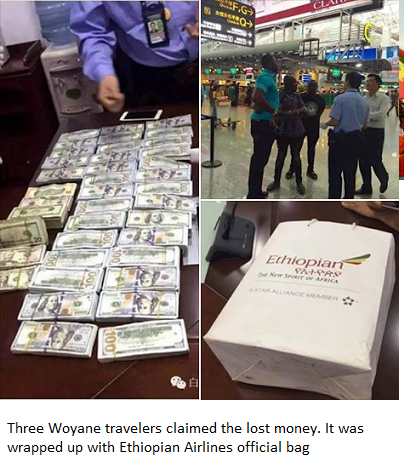
Odaa OromoooromianeconomistThree Woyane travelers claimed the lost money. It was wrapped up with Ethiopian Airlines official bag

The ​European Commission blacklisted Ethiopia for being very risky in money laundering and terrorism financing, urging banks situated in Europe to apply enhanced due diligence on financial flows from the country.
Aiming to ensure proper functioning of the European market, the Commission, in its latest regulation released on October 27, 2017, added the country to the list of high-risk third countries along with Iran, Syria, Yemen and seven other nations.


via EU Lists Ethiopia Over Money Laundering

Internet access and usage in African world November 16, 2017

Posted by OromianEconomist in Uncategorized.
Tags: , , , , , , , , ,
add a comment

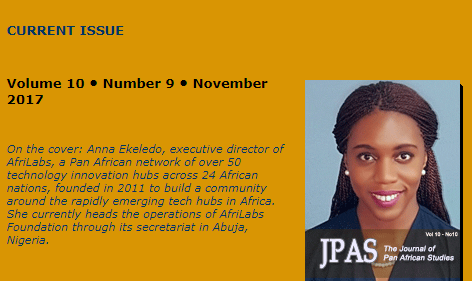
The special edition  of  The Journal of Pan African Studies   focuses on Internet access and usage in the African world. It discusses the future of the Internet, uproar over Internet shutdowns in Africa, WhatsApp political broadcast messages in the 2015 presidential election in Nigeria, new media appropriation via New Media and Oromo Protests in Ethiopia, Internet access to Caribbean government information on homeschooling in Barbados, African-centered internet literacy, information seeking behavior, a section on women in information technology innovation in Africa. 

CURRENT ISSUE


Volume 10 • Number 9 • November 2017


● Internet Access and Usage in the African World: Articulating a Progressive African Centered Digital Ecosystem
[ view PDF ]


● The 2016 Internet Society Report: Areas of Impact and Concern for the Future of the Internet
an editorial by Itibari M. Zulu
[ view PDF ]


● Uproar Over Internet Shutdowns: Governments Cite Incitements to Violence, Exam Cheating and Hate Speech
a guest editorial by Tonderayi Mukeredzi
[ view PDF ]


● Internet Diffusion and Government Intervention: The Parody of Sustainable Development in Africa
by Badmus Bidemi G
[ view PDF ]


● Appraisal Resources in Select WhatsApp Political Broadcast Messages in the 2015 Presidential Election Campaign in Nigeria
by Oluwabunmi O. Oyebode and Adeyemi Adegoju
[ view PDF ]


● The Powers and Limits of New Media Appropriation in Authoritarian Contexts: A Comparative Case Study of Oromo Protests in Ethiopia
by Habtamu Dugo
[ view PDF ]


● Internet Access to Caribbean Government Information on Homeschooling: A Preliminary Case Study of Barbados
by Mark-Shane Scale
[ view PDF ]


● African-Centered Internet Literacy: An Ubuntugogy Metadata Approach
by Abdul Karim Bangura
[ view PDF ]


● Social Media: Towards the Realisation of A Global Stance for the African Voice
by Bassey Nsa Ekpe
[ view PDF ]


● Teaching Afrocentricity Through E-Clustering
by Abdul Karim Bangura
[ view PDF ]


● Information Seeking Behavior Among Undergraduates Students Engaged in Twitter
by Musa D. Hassan
[ view PDF ]


● Internet Access in Nigeria: Mobile Phones, Issues, and Millennials 
by Mercy Kolawole
[ view PDF ]


● Women in Information Technology Innovation in Africa
[ view PDF ]


Relevant Books

[ view PDF ]


Announcement

● Fixed and Mobile Broadband in Africa: An Executive Summary
[ view PDF ]


Fascist Ethiopia’s regime (TPLF)’s another genocide plan (state terrorism). Wal-gahiin Mana-maree nageenya biyyoolessaatiin taa’ame shoroorka’u TPLF mul’isa. November 13, 2017

Posted by OromianEconomist in Ethiopia's Colonizing Structure and the Development Problems of People of Oromia, Afar, Ogaden, Sidama, Southern Ethiopia and the Omo Valley, Ethnic Cleansing, Horn of Africa Affairs, Uncategorized.
Tags: , , , , , , , ,
add a comment

Odaa Oromoooromianeconomist

TPLF Ethiopia regime federal security officers conduct mass torture in Kilinto and Maikelawi jails.png

AS EXCLUSIVE: DOCUMENT PRESENTED AT THE NATIONAL SECURITY COUNCIL MEETING REVEALS ETHIOPIA FACING ALARMING MULTI-FRONT CRISIS

Addis Standard, 12 November 2017

Major points discussed in the document include:

  • The country’s federal system is facing imminent threat
  • Security breakdown contributing to rising public anxiety
  • Immeasurable human and material cost caused by recent conflicts
  • Absence of rule of law prevalent
  • Security crisis negatively impacting the economy
  • Diminishing foreign aid due to human rights related concerns
  • Crippling effect on the tourism industry as well as hurting the country’s image
  • Security crisis curtailing the ability of the security establishment to discharge its constitutional 

Although It Mentions Egypt And Eritrea As Two Foreign Agitators, The Document Squarely Blames The Crisis On The “Internal Vulnerability” Of Current Leadership

It proposes the establishment of a joint command post/joint committee between the federal and regional security establishment 


Addis Abeba, November 12/2017 – A document assessing the current security and political situation in Ethiopia and was presented at the National Security Council meeting, held on Friday Oct. 10/2017, revealed in detail that Ethiopia was currently confronted with alarming level of multi-front crisis.

The meeting was held at the office of PM Hailemariam Desalegn and was attended by Siraj Fegessa, minister of defense & head of the National Security Council, General Samora Yenus, chief of staff of the Ethiopian National Defense Forces and other high level federal intelligence and defense officials, presidents of regional states and their security officials, as well as federal and regional state senior members of the police and the militia.

The document, which was jointly prepared by the country’s intelligence and defense officials, and was viewed exclusively by Addis Standard, reveals that the current security crisis, which was exacerbated by the prevalent of “absence of rule law”, was the most serious of all threats the country was facing as of late. It blames that”lawlessness” and “dissent” were alarmingly taking national forms by expanding throughout the country, threatening the federal system. Such incidents, according to the document, were fueling public anxiety and loss of confidence in the government.

“Genocide” 

But the most disturbing detail in the document was the part in which it discussed the recent violence in several towns and villages within the Ethio-Somali and Oromia regional states, which resulted in the death of unknown numbers of civilians and displacement of hundreds of thousands of Oromos from the Ethio-Somali regional state as well as hundreds of Ethio-Somalis from towns in Oromia regional state.

The document described the situation as having “resulted in genocide and mass displacement of people; witnessed inhuman and atrocious killings of civilians; and created a moral and psychological scar among the victims.”  It further said that this incident revealed the presence and prevalence of an “unnamed terrorist organization which “has not taken responsibility” for the crimes committed. “The people have lost trust in their constitutional right to move freely and live peacefully.”

The document also mentioned the proliferation of arms within the country and its nature in changing hands among various ‘agent provocateurs’.  The combined effect of this was crippling the country’s security apparatus to discharge its constitutional duty because it was engaged in “putting conflicts sprouting in several places under control”.

Economy & tourism 

The economy is severely hurting, according the document, and the flow of foreign currency was drying. Foreign aid, too, was diminishing due to conditions attached to human rights abuses, and the country’s tourism was significantly affected and its image tainted. But most alarmingly, the document admitted that domestic investment was facing heavy challenges and unprecedented level of capital flight by those who have already invested in the country was seen recently. The economy was also affected by stockpiling of commodities as well as the proliferation of money laundering by increasing numbers of individuals; and it admitted that the country’s taxation system was unable to collect due taxes to help the economy, which was also hit by “illegal export of prohibited commodities” through organized illegal traders.

Blame on leadership

The document mentions Eritrea and Egypt as well as the presence of a coordinated cyber propaganda as fueling tensions within the country; but at the same time it puts the blame on the vulnerability of  the political leadership and its inability to address public grievances in the last two and half years. It also points fingers at the direct involvement of the leadership in recent conflicts. Instead of guiding the public and the youth to productive ways of live, it says, the leadership was involved in guiding them to dissent and destruction, immersing itself in a zero sum game. “The problem is political”, it says, and “it can only be solved politically.”

Joint command post/joint committee

But its recommendation is an establishment of a joint command post (sometimes referred in the document as mere “joint committee”) between the federal and regional security establishments.

The immediate aim of this joint command post/joint committee was highlighted in eight different points. This include the work that needed to be done to secure the free movement of people from places to places; securing major roads throughout the country on 24 hour bases of patrolling; bringing to justice those who were involved in recent conflicts; prohibiting of illegal rallies; rehabilitation of displaced Ethiopians back to their homes; strict control of anti-public armed forces; control of the movement of illegal arms, human trafficking as well as contraband trades; as well as strengthening of the security apparatus at every level.

This joint command post/joint committee, would be organizing a monthly joint meeting between federal and regional security establishment after/on the second week of every month; and it would be submitting its reports directly to the Prime Minister’s office.

Speaking at a press conference after the meeting, which last for several hours, Siraj Fegessa said that a consensus  between federal and regional states was reached to coordinate the security establishment of both to tackle the growing security crisis. “We have evaluated the security risk in the country which has been recurring since last year and we have prepared a detailed plan to control the situation,” Siraj was quoted by a local newspaper as saying . “We met with the stakeholders since we have to work together.”

Addis Standard received further information that there would be additional similar meetings to hammer out more details on the document, which was distributed as a working paper to everyone who participated in the meeting held at the PM’s office on Friday.

AS


Click here to read related article from OE sources: Ethiopia: Government-Fuelled Conflict & the Need for Unity


Wal-gahiin Mana-maree nageenya biyyoolessaatiin taa’ame shoroorka’u TPLF mul’isa.

Awash Post, Sadaasa, 12, Bara 2017


Manni-Maree nageenyaa biyyoolessaa jeeqamuu, nagaa fi tasgabbii dhabuu biyyattii irratti marii taasisee jira. Keessattu haala naannoo Oromiyaa keesssa jiru irratti mariin kan xiyyeeffate. Mariin kunis kan gaggeeffame waajjira Minstera Muummee Haayilamaariyaam Dassaalanyitti ture. Walitti qabaan mana mari nageenyaa Muummichi Ministera HD fi Ministerri Ittisaa biyyaa fi hogganaa Mana-maree Nageenyaa obbo Siiraaj Fageessaatin gaggeeffameera. Humnoonni nageenyaa federaalaa fi naannoo, pireezdaantonni naannolee, koomishinaroonni poolisii fi ajajoonni Raayyaa Ittisaa biyyaa marii kana irraa qooda fudhataniiru.

Marii ol’aantummaa isaani kabjsiisuu fi qor-qalbii isaani tasgabbeessu raawwachuu irraa woyyaanonni takkaa duubatti hin jenne. Barbaachisummaan marii kanaas nagaa fi tasgabbiin Oromiyatti qixa barbaadamuun argamuu dhabuu fi karoora nageenyaa kallattii funduraa irratti kaayuudha. Ajandaan dhoksaa marichaas sochii fi gaaffi ummanni Oromoo dhimma abbaa biyyummaa fi dimokraasii irratti kaasaa jiru humnaan danquuf kan kiyyeeffameedha. Qaamolee nageenya federaalaa fi naannoo diriirsuun sagalee ummataa ukkaamsuudha. Qor-qalbii qeerroo fi dhageetti bulchiinsa haaraa OPDO’s cabsuu ni barbaadu.
Haa ta’uu malee ummanni Oromoo sodaa marii nageenyaati miti; labsiin hatattamaa fi ajajni garee komaandi postitiin baati 10f kennamaa ture gaafi fi fedhii ummataa dhaabuu akka hin dandeenye ifa. Hidhaa, tumaa fi dhiigni balbala Oromoo hundatti dhangala’aa ture qabsoo cimse malee tasuma hin gufachiifne. Marii fi konfiransii nageenyaa jechuun qabeenya ummataa fi mootummaa qisaasuu irra gaafi fi yaada ummataa dhaga’uun furmaata waaraa ture. Kana gochuuf woyyaaneen ijaa fi gurra hin arganne. Tuffiin cimaanis keessaa isaaniti belbela. BMNO fi hawaasa bal’aa wajjiin dhimma furmaata ta’uu malu: hidhamaa hiikuu, kan ajjeefamani, qe’ee fi qabeenya irraa buqqa’aniif beenyaa barbaachisu kaffaluu irratti ifaan mari’achuu male. Gochaan hammeenyummaa fi gar-jabeenyaa poolisii federaalaa, Agaazii fi woraanna ittisa biyyaatin ummata Oromoo irratti raawwataa turanif ummataa fi bulchiinsa naannootiin kabaja woyyaaneen barbaaddu mulqamuunis mata dhukkubbi cimaa itti ta’eera.

Qaamolee nageenya naannoo fi federaalaatiin rukutamuu, butamuu fi ajjeefamuun ummata Oromoo haaraa hin turre. Sirna bulchiinsa woyyaanee keessatti Oromoon kanuma keessumeessaa, argaa fi dhaga’aa as gahe. Mariin Manni-maree Nageenyaa biyyaalessaa kaleessa gaggeesse kan calqabaatis miti. Erga labsiin mana marii nageenya biyyoolessa hundeessuu lakk.257/2001 bahee amata 16 ta’eera. Labsichi duras kallattii fi al-kallattiin hojima irra ture. Yeroo rakkoo fi nagaatis dhimmuma itti bahaa turan. Kanaaf maqaa wal-gahii, marii fi konfaransitin shirri qabsoo Oromoo danquuf taasifamu hundi nageenyaa fi tasgabbi biyyaas hin fidu; falmii fi qabsoo ummata Oromootis tasuma gufachiisuu hin danda’u.

It is a mistake to ignore the emancipatory potential of the Oromo movement November 11, 2017

Posted by OromianEconomist in Ethiopia's Colonizing Structure and the Development Problems of People of Oromia, Afar, Ogaden, Sidama, Southern Ethiopia and the Omo Valley, Horn of Africa Affairs, Human Rights, Oromian Affairs, Oromian Voices, Oromians Protests, Uncategorized.
Tags: , , , , , ,
add a comment
A post written by someone named Wond Wossen about what’s currently transpiring in Ethiopia has been circulating on my social media sphere (find the link to his post at the bottom of this page). Upon seeing it I could not help but write another perspective because the points raised by Wond Wossen are not only problematic but also commonly expressed. I find many problems with his analysis.
Let me just mention a few:
Like most political analyses on Ethiopia, Wond Wossen makes the grave mistake of centering elites at the expense of ordinary people’s movement for justice. He frames what’s happening in Ethiopia today as a simple struggle between two factions of the same ruling elite. In doing so, he has completely erased the struggle that the Oromo people have been waging for decades. For the past 50 years, Oromos have been articulating and demanding for a transformation of Ethiopia’s political, social and economic and cultural space. More recently, the Oromo protests from 2014 onwards has brought to the fore the most pressing issues not only in Oromia but across Ethiopia—issues of land grab, unjust imprisonment, economic marginalization, denial of civil liberties, repression of all sorts, lack of political representation, nepotism and corruption and so on. For three consecutive years, Oromo people have been demonstrating against a violent regime and forcing it to contend with their demands. Remember, the cancellation of the Master plan?
Wond Wossen, like so many Ethiopian analysts, fails to recognize the emancipatory potential the Oromo movement has not only for the region but also for Ethiopia at large. Not only does he completely dismiss the just Oromo movement, he also reduces the Oromo public to mere cheerleaders for power. He seems to suggest that the only thing the wider Oromo public—whether in the diaspora or in Ethiopia — are interested in is to see some Oromo faces in what he considers to be “powerful positions” in the federal government. He could not be more wrong. Oromo people have not been dying en masse so that some Oromo person will hold an important position within the current system. They continue to risk their lives to transform the social, political and economic culture of Ethiopia. They have been risking their lives to end economic, political and social marginalization. He does not seem to know much about the historical relationship between OPDO and the Oromo public. In so far as Oromo people are rallying behind the new OPDO leadership, it is cautiously, as artist Jambo Jote told top ranking members of OPDO at a gathering last week. Unlike what Wond Wossen suggests, the Oromo public is not going to settle for mere cosmetic changes. They have not been dying on the streets to see some OPDO faces in power while they are ripped from their lands, their family, friends and comrades languishing in prison and their political life reduced to rubber stamping 100% wins for EPRDF. Whatever new rhetoric and project OPDO has developed it can be understood only in the context of the Oromo movement. OPDO leaders did not wake up one morning and thought, “today, we have to challenge the TPLF for federal power”.
Sadly, Wond Wossen is not alone in erasing the potential of Oromo movements to transform Ethiopia’s long-standing authoritarian political culture and establishment. This is actually part and parcel of the problem Oromo people have with the Ethiopian state infrastructure—which dismisses Oromo aspirations, contributions, values, institutions, and political traditions. What is even sadder is this erasure is happening at a time when the Oromo people’s movement, and others that for now go unnoticed, may well be in the process of transforming the country right before our eyes.
Many analysts on Ethiopia seem to think that these lofty principles such as democracy, equality and justice will come about when supposed political parties from Ethiopia and the diaspora get together and “negotiate” on how to put the country “on the path of democracy and stability.” Wond Wossen mistakenly assumes that democracy is a top down process, arrived at after a meeting or series of meetings in American or European capitals. Isn’t that exactly how we got into the mess we are in right now? Democracy is not something that is given from above; it is the product of a balance of social forces and comes about in a given society through particular processes. Democracy, contrary to what Wond Wossen suggests, doesn’t come about because TPLF or OPDO gathers a crowd and tells them they are now free. Or because TPLF sits down with OLF and G7 and whoever else and decides to share a piece of the pie.
Wond Wossen also completely misses the fact that competition between various elites has the potential to open up space for democratic processes to emerge. The best example is when the OPDO started standing up for itself; it opened up all sorts of spaces and possibilities. Make no mistake; this is not because the OPDO has overnight transformed itself into a beacon of democracy and justice. For example, the relationship between Oromia Police and the citizens have changed dramatically. Whereas the police used to unleash violence on protesters, now they take pictures with them and there is an expectation that they will protect protesters, not shoot at them. This is something unheard of in the entirety of the EPRDF rule. Wond Wossen suggests that the Oromia Regional government returned grabbed land to its rightful owners to score points against the TPLF. In reality, one of the major demands of the Oromo protests was the issue of land grab. If OPDO is returning stolen land back to the people, it is because that is what the people have been demanding. If he thinks this is all about scoring a point, he should ask himself why the regional government could not return land in 2006 or 2012. In the same vein, he also misconstrues the actions the regional government is taking against the vast network of contraband trades in the region as mere retaliation against TPLF. However, the heart of the matter is that the contraband trade is the manifestation of the economic marginalization the people are fighting in the region. For example, Oromo Khat farmers have been impoverished while there is a flourishing multimillion-dollar Khat trade in the region. Same thing can be said about Coffee and other commodities. So, targeting the contraband trade is ensuring that the region’s people benefit from their labor. Whether or not OPDO also manages to score a point against TPLF is secondary. The point here is that political elites don’t do things out of the kindness of their hearts; they take decisive actions when there is a demand from below requiring them to act. Political situations create conditions for particular kinds of policies or actions to be taken. In doing so, they determine what is politically advantageous for them in the changing context and what is not.
Another very good example of what I am talking about can be seen in the arena of freedom of expression. On OBN, the regional State controlled media; viewers are now consuming content that would have been considered taboo just a year ago. The Oromo Federalist Congress recently held a press conference on OBN; the network is creating space for Oromo intellectuals and activists to hold hours long discussions on the most sensitive political questions. In an unprecedented gathering with top OPDO officials, some of the most critical Oromo artists expressed their opinions freely on the draconian censorship of their art. In response, Lemma Megerssa declared that the era of censorship of Oromo art has come to an end. Within days, songs that were hitherto banned from the regional TV network were on air to the delight of millions. The point here is not that certain songs were played or that interviews were held and etc. I am also not here to glorify the regional government. I am merely trying to underscore the fact that certain political conditions create space for democracy and freedom of expression among other things. This is not a gift the ‘elite’ give to the people. To think so is a huge mistake. We must see these things in light of the protests and the demands that the Oromo people continue to place upon the system. We also have to appreciate the domino effect and emancipatory potential that this will have for the rest of Ethiopia.
Needless to say, to reduce the entirety of what is happening in Ethiopia today, as a struggle between TPLF and OPDO is not only to miss the point but also to be incredibly shortsighted and miss major developments that are happening right below the surface. Unfortunately, for people who are used to viewing political change only coming from Addis and radiating to the “periphery” it must be unfathomable that Oromos, and others in the margins are transforming Ethiopia from the ‘regions’.
Here’s Wond Wossen’s post https://www.facebook.com/wondwosenn…


Ethiopia: Government-Fuelled Conflict & the Need for Unity November 10, 2017

Posted by OromianEconomist in Ethiopia's Colonizing Structure and the Development Problems of People of Oromia, Afar, Ogaden, Sidama, Southern Ethiopia and the Omo Valley, Ethnic Cleansing, Horn of Africa Affairs, Uncategorized.
Tags: , , , , , , ,
2 comments

Odaa Oromoooromianeconomist

Despite the governments claims to the contrary, Ethiopia is essentially a one-party state in which power is monopolized by the EPRDF, which despite claiming to be a democratic coalition, is in fact a dictatorship ruled by men from Tigray under the TPLF banner. It is an illegitimate government supported by the West, – America, Britain and the European Union (EU) being the largest benefactors – politically and economically. With the exception of the EU, these powers not only remain silent in the face of State Terrorism, but also spread Ethiopian propaganda through the mainstream media and act in collusion with the EPRDF in relation for example, to the arrest of opposition party leaders. Instead of supporting the ruling party, donors should be applying pressure on it to respect human rights and adhere to the democratic principles laid out in the country’s constitution. Their silence and dishonesty makes them complicit in the crimes of the government, which are heinous and widespread.

Ethiopia: Government-Fuelled Conflict & the Need for Unity


In an attempt to distract attention from unprecedented protests and widespread discontent, the Ethiopian Government has engineered a series of violent ethnic conflicts in the country. The regime blames regional parliaments and historic territorial grievances for the unrest, but Ethiopians at home and abroad lay the responsibility firmly at the door of the ruling party who, it’s claimed, are manipulating events.

Ancient ethnic disputes and long-forgotten wounds are being inflamed: since August hundreds of innocent people have been killed, thousands are displaced, and are now homeless and afraid. The perpetrators of the violence as well as the victims are puppets in the Theatre of Division being orchestrated by the politicians in Addis Ababa and the military men.

The ruling party first tried to inflame relations between Christians and Muslims; now they have intensified their long-term plan to divide the country’s ethnic groups. In addition to turning attention away from activists’ and opposition parties demands, their aim appears to be drive a wedge of suspicion and anger between communities and present the demonstrations as local disputes rooted in ancient ethnic feuds.

Since late 2015 unprecedented numbers of people have taken to the streets in towns and cities across the two most populated regions – Oromia and Amhara. The government reacted with intolerance and violence to this democratic outrage; hundreds were killed by security forces, thousands arrested without charge.

Unable to stop the protests and unwilling to enter into discussions with opposition groups, in October 2016, the ruling party imposed a six-month State of Emergency. The directive, which contravened a range of International laws and human rights conventions was eventually lifted in August 2017. Protests resumed virtually immediately, and, not surprisingly have been met with the same unbridled violence as before. The paranoid politicians in Addis Ababa fail to realize that with every protestor they kill, beat and arrest, anger towards their brutal rule intensifies resolve hardens.

The democratic genie is well and truly out of the bottle of suppression in Ethiopia. The people sense that this is the time for change and they will no longer be silenced.

Regime Duplicity

Ethiopia is divided into 11 regions including the capital, Addis Ababa. The government, as well as senior members of the military and judiciary, is dominated by men from Tigray, a small area in the North-East of the country. In 1995, four years after taking power, the EPRDF initiated a policy of Ethnic Federalism. Compulsory ID cards were introduced in which family ethnicity is registered. By forcing individuals (many of whom have mixed heritage) to choose an ethnic group, the scheme strengthened ethnicity and with it social division; many believe this was the intention.

Although people from different ethnic groups commonly populate regions, Ethnic Federalist policy allows for minorities to rule their own regions, fuelling resentment amongst majority groups. Segregated schools based on ethnicity have developed, regional languages are encouraged, flags flown, separate court systems and police forces allowed to evolve.

It doesn’t’t take much to irritate historic ethnic wounds, and the ruling party is adept at it. They have employed the media to stir up trouble, reminding people of past ethnic conflicts, rubbing salt into old wounds. Members of the security forces have been utilized to carry out attacks masquerading as civilians, resulting in eruptions between various ethnic groups; principally ethnic Somalis living in the Ogaden region and people in Oromia, as well as between Oromos and Amharas.

The border between Oromia and the Ogaden region is the longest in the country. It has been the subject of tensions for years, tensions that have proved ripe for orchestrating conflict between the two groups. Soldiers from the Liyu Police, a quasi-paramilitary group that has carried out terrible atrocities (such as indiscriminate killings, gang rapes, arbitrary arrests and torture) within the Ogaden region for years, have been sent into neighboring Oromia towns (dressed as civilians) to murder Oromo people. Retaliation by armed Oromos on ethnic Somalis followed.

As well as dozens of deaths, The Guardian reports that, “Residents on the Oromo side [of the border with the Ogaden] also reported widespread rapes and said they had found ID cards belonging to members of the controversial Somali special police, known as the “Liyu”, among the remains of the dead.” The Liyu Police take their orders from the Ethiopian military in the Ogaden region, and the Regional president Abdi Mohamoud Omar controls the military. In another highly provocative act in August he announced that all Oromo people should leave the Ogaden; Liyu police rooted out Oromos and drove them from the area.

The violent incidents along the Oromia-Ogaden border as well as elsewhere in the country have resulted in thousands being displaced. In the area around Harar in Oromia the Economist relates that nearly 70,000 have sought shelter just “east of the city. Several thousand more are huddling in a makeshift camp in the West. Most are Oromos.”

The Prime-Minister, Hailemariam Desalegn has blamed the regional administrations for the conflicts, declaring The Guardian records, that, “The problems have no relation to ethnic conflicts. It is our lower political leadership that commands these actions,” and these bodies, he asks us to believe, are acting totally independently of their federal masters. This is something few local people accept; most, if not all believe that the EPRDF initiated the violence “to weaken Oromo resistance to the central government.” Resistance to the EPRDF is not limited to the Oromos: the majority of the population is desperate for change. People want the regime to step down, for ‘open and fair’ democratic elections to be held in which all parties can take part, for political prisoners to be freed, for human rights to be observed and for the constitution (a liberally worded dusty document the EPRDF drafted) to be adhered to.

The need for unity

Despite the governments claims to the contrary, Ethiopia is essentially a one-party state in which power is monopolized by the EPRDF, which despite claiming to be a democratic coalition, is in fact a dictatorship ruled by men from Tigray under the TPLF banner. It is an illegitimate government supported by the West, – America, Britain and the European Union (EU) being the largest benefactors – politically and economically. With the exception of the EU, these powers not only remain silent in the face of State Terrorism, but also spread Ethiopian propaganda through the mainstream media and act in collusion with the EPRDF in relation for example, to the arrest of opposition party leaders.

Instead of supporting the ruling party, donors should be applying pressure on it to respect human rights and adhere to the democratic principles laid out in the country’s constitution. Their silence and dishonesty makes them complicit in the crimes of the government, which are heinous and widespread.

The EPRDF regime is a life-sapping cancer at the heart of the Ethiopia; it has exercised a vicious grip on the country for the last 25 years, but now there are signs that their hold on power is weakening. In addition to huge demonstrations (that would have been unheard of just a few years ago), opposition parties based outside the country have been forming alliances and a number of high-level regime resignations have taken place.

While there are a few voices among opposition groups calling for an armed uprising, the majority recognizes that the most powerful weapon against the government is unity and collective action. When the people unite, there is nothing they cannot achieve; the ruling party knows and fears this, which is why they have enforced policies that cultivate division. In the face of recent ethnic conflicts the need for unity is greater than ever, and all efforts must be made to bring people together in the pursuit of freedom and democratic change.

REVISITING THE LIVES OF ETHIOPIAN FREED PRISONERS. ARE THEY REALLY FREE? November 9, 2017

Posted by OromianEconomist in Uncategorized.
Tags: , , , , , ,
add a comment

Odaa Oromoooromianeconomist

A renowned brand such as Ethiopian Airlines decided against the norms of professionalism and morality their wrongly detained employee.

COMMENTARY: REVISITING THE LIVES OF ETHIOPIAN FREED PRISONERS. ARE THEY REALLY FREE?


Mahlet Fantahun (Translated by Zecharias Zelalem

Addis Abeba, Nov. 07/2017 – Looking at the lives of Ethiopians who were once incarcerated for no sufficient reasons then  “freed” from prisons often after arduous court battles, such as the case for Zone9 blogging collective in which I was one, or many others whose trumped up charges fail the smell test, or those who finish serving their sentences and are eventually released, I fall short of sufficiently expressing how overwhelming my emotions are. It often leaves me with a combined feeling of ruefulness, hopelessness, frustration and helplessness.

The truth is, despite the jubilant public outburst that follows news of being “released from prison,” for those who are “released” life never returns to what it was prior to their unjustified detentions. Socially, politically and financially ex-prisoners are destined to suffer. Physically, many of those who take a walk a mile will begin to agonize from both the physical and psychological wounds inflicted while in prison, leaving post-prison life full of memories and longing for what life used to be prior to being thrown behind bars.

Of course facing challenges can and does bring out the best in us due to the fact that it further hones our ability to endure and resist the worst of what life throws at us. All the same, once the jubilant outpourings are over and the news of regaining their “freedom” have faded away, very little is documented about the lives of Ethiopia’s ex-prisoners after returning to the society they came from.

With that in mind, below is a highlight of how life changed for some of the ex-prisoners after being discharged from various prisons and  returned to the other side of the fence.

University students…

April 2014: Megersa Worku was a 5th year law student at Haramaya University, in East Hararghe Zone of the Oromia regional state in eastern Ethiopia, when he was detained by security forces. Along with six other university students, he was subsequently charged with on terrorism, found guilty of the charges and was awaiting verdict at the infamous Ma’ekelawi prison,  a prison facility known as a notorious  torture gulag. While at Ma’ekelawi, Megersa Worku was severely beaten and forced to sign on a paper confessing to crimes he didn’t commit.

After enduring two and a half years of mind-numbing trial and pain, while the rest of defendants charged with him were sentenced to various terms in jail,  Megersa was declared innocent and was acquitted of all the terrorism charges against him. At this time, he was detained at not Ma’ekelawi but Qilnto, another prison facility located on the southern outskirt of the capital Addis Abeba. Upon leaving Qilinto after having been declared innocent, Megersa stood at the entrance gate expecting to walk away from the facility to his freedom. It was not to be. A group of people approached him in a vehicle, picked him up and dropping him off back at the entrance to Ma’ekelawi prison, where he spent another traumatizing week.

Megersa would  eventually leave the premises, but his life wouldn’t continue from where he had left it off before prison. He made multiple requests for re-admission at the university, all which were rejected and this is despite the fact that he had already been declared innocent of any crime. Freed from prison, he is unable to finish his education. He has been forbidden the opportunity to become a productive member of society and provide for himself or his family. When he was detained in April 2014, Megersa was merely months away before finishing his studies and being able to serve his country and community; instead he was tossed into prison on trumped up charges and robbed of the chance to live out a fruitful prodigious life.


commentary

A look at the other defendants charged with terrorism along Megeresa, we find Lenjisa Alemayehu, a third year water engineering student from Jimma University who was “freed” after more than twenty months behind bars; Teshale Bekele also a student at Jimma University and was sentenced to a year and a half but ended up spending two years instead. Adugna Kesso was a student at Adama University at the time of his arrest; Adugna would go on to spend four and a half years in jail.

Each of these students repeatedly testified of having being subjected to brutal tortures to force them to sign on confessions to crimes they never committed. Adugna, the Adama University student, recalls his stay at the federal prison we colloquially refer to as “hell” – Maekelawi and says it was nothing compared to the horrors he was subjected to while staying at the holding facility located in Adama, where he briefly stayed at, and dubbed his transfer to Ma’ekelawi as “being sent to heaven from hell.” If the gulag that is Ma’ekelawi is considered heaven, one may not able to fully imagine the horror that the facility in Adama is. Adugna talks of a tragic incident about a friend who had been arrested with him in Adama died en route Ma’ekelawi after succumbing to the wounds he suffered during his beatings. Adugna witnessed his friend’s body being dumped on the road by police afterwards.

All four of these young university students are no longer in prison today and have since been applying for a second chance to return to their their studies, but to no avail. With all the doors of opportunity firmly locked, they are now left in limbo and with nowhere to go, and forced to rely on their families and friends to get by.

…and others

It is not only university students who have been unable to continue with their interrupted lives upon being told they could walk free. Ethiopians who were formerly employed and were earning a steady income prior to being detained have encountered similar fates. Cases of institutions refusing to take back their freed former employees and not offering compensations are most common. Applying for new work becomes impossible once potential employers get wind of the applicant’s personal history. And others, due to the effect of the mental and physical scars, are unable to function properly and thus are unable to work.

Due to the severity of beatings he received at the Ma’ekelawi prison, Abel Wabella, a member of the Zone 9 blogging collective, had lost his hearing through one of his ears. After a year and a half of incarceration and sporadic court appearances, he too was declared innocent and free to walk in November of 2015. Prior to his detention, Abel was an employee at one of the most reputed institutions in the country, Ethiopian Airlines. Upon his release, he went back to his former workplace, with an official court document declaring his innocence of any wrongdoing and requested to continue working. There he discovered that its employer had basically declared him persona non grata. He was told that during his detention, he had been fired and was forbidden from ever working there again. A renowned brand such as Ethiopian Airlines decided against the norms of professionalism and morality their wrongly detained employee. In fact, as if to add insult to injury, Ethiopian Airlines decided to pursue a legal case against Abel claiming to have lost the money it invested to pay for training Abel as an employee. And today, many members of the zone9 blogging collective are forced to live in exile, scattered around the world.

In an interview with a local newspaper, journalist Temesgen Desalegn, who has recently been released from Ziway prison after serving three years sentence, spoke of his prison ordeal including enduing a severe ear pain sustained as a result of prison torture he was subjected to.

In 2006, Tesfaye Tekalign graduated from Addis Abeba University in Sociology and would later be employed by Ethiopia’s Ministry of Tourism and Culture up until April of 2011. On April 20th 2011, he was forcibly detained by men he described as federal security forces and would spend the next twenty three months behind bars being tortured despite having never committed a crime of any sort. During his unjust imprisonment, he was never brought into a courtroom and was denied of the chance to hear exactly why he was arrested in the first place. Freed on April 4th  2013, he told the story of his incarceration in an interview with Finote Selam newspaper, an Amharic weekly.

“I’ve suffered unbearably. They would shock my back with electricity. The torture they inflicted upon my private parts and kidneys affects me to this day. I can no longer control my own urine. My kidneys are severely affected. They would also soak me in water and beat me. Today, I struggle to even speak, they’ve tortured me in an unimaginable ways.”

Tesfaye, who was released in 2013, was rearrested in 2016 as part of the government’s massive campaign of arrests following the year long anti-government protests. During his incarceration last year, Tesfaye was once again subjected to tortured before he was release. Once a free man though, his efforts to seek employment have yielded no result and his former employer, the Ethiopian Ministry of Tourism and Culture, refused to even give him a letter of recommendation or any document indicating employment history with the ministry. His kidneys have healed somewhat and he is considerably better today than in 2013. Nevertheless his health is far from normal and he frequently speaks of throat pain that still hinders his ability to eat normally.

★★★

These are but small cases showing what life is like after being free from prison. There is so much more beyond what can be written in a single article. It is safe to assume, however, that health problems (both mental and physical), inability to return to former employment, find new employment or continue pursuing studies, threats and intimidation from federal agents, being constantly under surveillance, harassment, the risk of being rearrested, losing friends who chose to distance themselves out of fear, several forms of isolation, the risk of becoming an outcast, of being evicted by landlords and much more are but few of the commonly shared experiences by by ex-prisoners .

Although the circumstances are much worse on ex-political prisoners, ordinary citizens known for their political dissent in Ethiopia do face a similar fate that are too numerous to quantify because in Ethiopia, being free is not free. AS

The Guardian: Oromia: Ambo: ‘We fear for our lives’: A brutal crackdown on protest and the return of soldiers to the streets of Oromia region has fuelled growing anger and frustration with central government November 7, 2017

Posted by OromianEconomist in Uncategorized.
Tags: , , , , , , , , , ,
add a comment

Odaa Oromoooromianeconomist

“They walk around the city with their guns, intimidating people,”


‘We fear for our lives’: how rumours over sugar saw Ethiopian troops kill 10 people

A brutal crackdown on protest and the return of soldiers to the streets of Oromia region has fuelled growing anger and frustration with central government

The streets of Ambo have seen the return of military patrols since ethnic Oromos protested against a shipment of smuggled sugar on 25 October.
 The streets of Ambo have seen the return of military patrols since ethnic Oromos protested against a shipment of smuggled sugar on 25 October. Photograph: Tom Gardner

It began with a rumour. On 25 October, residents of Ambo, 120km west of the Ethiopian capital, Addis Ababa, heard word on social media that a shipment of smuggled sugar was due to pass through town.

“Sugar is so expensive now, the price has tripled,” explains 18-year-old Israel, a first-year undergraduate at Ambo University. “And they’re exporting it to other parts of the country but the people here don’t have any. It’s not fair.”

So Israel joined the large crowd of young men and women that erupted in protest as three trucks rolled down the high street later that day, seizing hold of the vehicles and setting up roadblocks. He threw stones in the ensuing confrontation with police and covered his face with a scarf to avoid the teargas launched in his direction. And he watched in fear as the national military entered the town that evening and, the next morning, began firing live bullets, killing 10 people and injuring more.

“They were shooting at us with silencers on,” he says. “One of the boys killed was only 15. They killed girls too – one was my friend. A lot of my friends have died.”

The sugar rumour and the tragic events it sparked exposed the bitter web of grievance felt by many in Ambo and the surrounding region of Oromia, home to Ethiopia’s largest ethnic group: anger at what is perceived to be an unequal distribution of the country’s wealth, a pervasive sense of ethnic marginalisation, frustration with the endemic corruption that facilitates crime and contraband, and, above all, a deep mistrust of the authoritarian federal government in Addis Ababa.

Protests and strikes have resumed across Oromia since a nine-month state of emergency intended to quell them was lifted in August. In September hundreds of Oromos were killed and tens of thousands displaced amid an outbreak of sustained violence along Oromia’s border with the neighbouring Somali region. And reports of communal clashes in other parts of the country have emerged in recent weeks.

But for many the return of violence to Ambo’s streets was especially significant: it is the symbolic home of the Oromo struggle.

“Ambo is the heartbeat of the revolution,” says Bilisuma Deberie, a former Oromo activist and political prisoner now living in Addis Ababa. “It is where it all began.”

Ambo University
Pinterest
 The gates of Ambo University. Classes were suspended for a week after the unrest. Photograph: Tom Gardner

Since the October protest, federal police have been stationed in Ambo and other towns along the road to Addis Ababa, some of which experienced similar confrontations between security forces and protesters in the days that followed. Ambo is once again occupied by military troops, whose street patrols bring back unpleasant memories of life under emergency rule.

“They walk around the city with their guns, intimidating people,” says Galana, a student in health science at the university. “People are afraid.”

Shops and businesses were shut for several days after the unrest. Classes at schools and universities were suspended for a week, as students protested against the extra police presence on campus.

“Students fear for their lives,” says Galana’s friend, Ganeti, also a student at the university. “Some don’t want to come to class.”

Though they avoided joining the protests for fear of violence, both sympathise with the cause. In particular, they echo many in Ambo and elsewhere in expressing anger at the mass displacement of Oromos from the Somali region, and outrage at the perceived failure of the central government to protect them from what survivors say were unprovoked attacks and human rights abuses by Somali regional security forces.

In the weeks running up to the protests many of the displaced had arrived in Ambo and the surrounding area seeking shelter.

The fact that the military were sent quickly into Ambo has fuelled suspicions about the motives of the central government. Gadisa Desalegn, head of the town’s communication bureau, says he doesn’t know where the order for the intervention came from. “The people are demanding an answer,” he says.

Since the uprising, the town has been gripped by speculation and conspiracy theory – fed in part by social media – and many now believe the protests were the work of outsiders sent by the central government to incite violence to justify reimposing emergency law.

“The sugar rumour was intentionally circulated to provoke unrest,” says Habtamu Wondemagne, a 28-year-old rickshaw driver. “Sugar always comes through this town – there’s nothing unusual about that.”

He points to two burnt-out trucks on Ambo’s main road and, like other young men in the town, says it was the military, not protesters, who set them alight during the unrest. “This was not a genuine protest,” he says.

The belief that outsiders are responsible for destabilising the region is common across Oromia, strengthened by the mass arrests of largely non-Oromos by the regional government in recent weeks, which has led to concerns that minorities in the area are being targeted unfairly.

Others blame the protests on members of the new Oromo regional administration, pointing to an upsurge in ethno-nationalist sentiment across Oromia in recent months. “A wing has emerged within the leadership that plays the ultra Oromo-nationalist card and could be behind this unrest,” argues René Lefort, a longtime observer of Ethiopian politics.

He is among those who argue that instability across Ethiopia stems in large part from the weakness of the central government and efforts of the various ethno-regional wings of the ruling coalition party, the Ethiopian People’s Ruling Democratic Front (EPRDF), to attain political pre-eminence.

But the most striking shift in Ambo and elsewhere in Oromia over the past year is the widespread popularity of the new regional leadership, with many singling out Lemma Megersa, the regional president, for approval.

“I love him,” says Israel, the young protester. “He is my life.”

Under Megersa, Oromia’s government has promised land redistribution, imposed higher taxes on foreign investors, and demanded that they provide more jobs for local young people.

Locals also note that demonstrations this year have been policed more peacefully by local security forces. The Oromo police, once seen as lackeys of the ruling party, are now widely considered allies in the struggle against the federal government.

For residents of Ambo, it is the assertiveness of this new government that best explains the brutality of the federal military in suppressing the October protest.

“Lemma and his administration are on the side of the people,” says Galana, the student. “The problem now is the central government.”


Related from Oromian  Economist sources:-

Fascist TPLF Ethiopia’s regime Agazi forces continue with mass killings in Oromia (Ethiopia): At least 10 killed and 20 wounded in Ambo. #OromoProtests

Corruption and money laundering among charges facing Saudi princes and businesses including Ethiopian born Al-Amoudi. #Ethiopia #Al-Amoudi November 7, 2017

Posted by OromianEconomist in Uncategorized.
Tags: , , , , , , , , , , , , ,
6 comments

Ethiopian-born billionaire detained in Saudi anti-corruption crackdown

ETHIOPIA

An Ethiopian – born business mogul has been named in an anti-corruption crackdown by the Saudi Arabia government over the weekend.

Mohammed Hussein Al Amoudi, 71, was detained along with 11 princes, four current ministers and a number of former ministers. Saudi-owned Al Arabiya television said the probe is headed by Crown Prince Mohammed bin Salman.

Al Amoudi is an Ethiopian – born business man who holds both Saudi and Ethiopian nationality. According to Forbes, as at 2016, his net worth was approximately $10.9 billion.

His investments are linked to oil and global commodities. He is also listed as Ethiopia’s richest man and the second richest Saudi Arabian citizen in the world. He is one of two businessmen detained, the other is one Saleh Kamel.View image on Twitter


His two main businesses are Corral Petroleum Holdings and MIDROCMIDROCdescribes itself as “a global investment group, wholly owned by Mohammed Hussein Al Amoudi.

“It has substantial interests in petroleum, agribusiness, property, industry and industrial services, engineering and construction, tourism and trade and investment, largely in Europe, Africa, the Middle East and North Africa.”

Al Amoudi is said to have migrated from Ethiopia to Saudi Arabia when he was 19 and became a full citizen of the Kingdom in 1965. He built up a private fortune in construction and property before diversifying into the downstream energy sector with major refining and retail investments in both Lebanon and Saudi Arabia.

MIDROC has an international focus with three main operating companies: MIDROC Middle East (based in Saudi Arabia), MIDROC Europe (based in Sweden) and MIDROC Africa where the company’s focus is heavily on Ethiopia. It also has separately managed and significant petroleum interests.


Click here to read more: Sheik Mohamed Al Amoudi’s Arrest and its Implications to Ethiopia.

His influence is remarkable. His people are loyal and will not do anything to antagonize him or the regime. If one has close relation to his circles they are guaranteed success. There are many Ethiopians that oppose the regime but will not dare utter a word for fear of alienation.Therefore, the news of his arrest is a huge deal. It is significant event in the history of the region and Ethiopia. This is an event that will quicken the demise of the TPLF as he was a significant player and ardent supporter. Al Amoudi has openly bragged that he is Weyane. But, what is the impact of his arrest and its repercussions? It is the biggest disruption that the TPLF has ever seen.


Saudi Arabia freezes accounts of detained corruption suspects

Al Arabiya English Monday, 6 November 2017

Sums of money that appear to be linked to corruption cases will be reimbursed to the Saudi state’s General Treasury. (Shutterstock)

Saudi authorities have announced that they will be freezing the bank accounts of suspects detained in the kingdom on corruption charges.

Officials said that there is “no preferential treatment” in the handling of their cases.

The Saudi Center for International Communication, an initiative of the Ministry of Culture and Information, said that sums of money that appear to be linked to corruption cases will be reimbursed to the Saudi state’s General Treasury.

The Saudi anti-corruption committee, which was set up on Saturday by King Salman’s royal decree and chaired by Crown Prince Mohammed bin Salman, had arrested a number of princes and ministers.


More ….

The former Saudi billionaire, Mohammed Hussein al-Amoudi, is under strict security guard in a room on the top floor of one of the most luxurious hotels in the Saudi capital after the Saudi authorities issued a decision to arrest him for his involvement in corruption cases inside and outside Saudi Arabia. And a group of former Saudi businessmen and officials.

ሼክ አል አሙዲ በሳዑዲ ዓረቢያ በቁም እስር ላይ ናቸው

Saudi Prince, Asserting Power, Brings Clerics to Heel


Saudi Arabia princes detained, ministers dismissed


U.S. Representative Mike Coffman (R-CO) urges his colleagues to vote on H.Res. 128 to address human rights abuses in Ethiopia on the House of Representatives floor November 3, 2017

Posted by OromianEconomist in Uncategorized.
Tags: , , , , , , , ,
1 comment so far


U.S. Representative Mike Coffman (R-CO) urges his colleagues to vote on H.Res. 128 to address human rights abuses in Ethiopia on the House of Representatives floor on 1st November 2017.


https://twitter.com/addisstandard/status/926071114190721024


U.S. legislator: Ethiopia’s lobbying must not stop human rights measure

By AT editor – 2 November 2017
U.S. legislator: Ethiopia’s lobbying must not stop human rights measure


A United States legislator is again pressing for a vote on House Resolution 128, a measure calling for human rights protections and inclusive governance in Ethiopia that was supposed to be up for a vote last month. It was postponed by what supporters say is suppression by the Ethiopian government.

“It has been brought to my attention that the Ethiopian government has threatened to cut off security cooperation with the United States should we proceed with House Resolution 128,” said Representative Mike Coffman, R-CO, from the floor on Wednesday. “I am particularly dismayed that rather than solving their problems and moving towards becoming a more democratic country, the Ethiopian government has chosen instead to hire a D.C. lobbying firm at a cost of $150,000 a month.”

Coffman’s appeal follows a Human Rights Watch letter, signed by other human rights organizations, that was sent last month to U.S. House Speaker Paul Ryan and key elected representatives.

“The Ethiopian government vigorously fought all previous attempts to hold it accountable for abuses of human rights and democratic norms, and it has opposed the current measure from its inception,” said Yoseph Badwaza, a senior program officer for Africa at Freedom House. “In January 2017, it hired a Washington-based lobbying firm in an effort to kill H. Res. 128 and its companion resolution in the Senate.”

Coffman said the resolution “calls on the Government of Ethiopia to take clear decisive steps towards becoming more inclusive, more democratic and more respectful of the basic human rights of its own people.”

Specifically, it condemns the excessive use of force by Ethiopian security forces and the killing of peaceful protesters; the arrest and detention of journalists, students, activists and political leaders, and the Ethiopian government’s abuse of the anti-terrorism proclamation to stifle political and civil dissent. Coffman’s comments came as Ethiopia again denied the release of Oromo leader Bekele Gerba, despite a court ruling Monday that he was to be freed on bond.

The U.S. resolution also calls on Ethiopia to admit U.N. human rights observers and includes language to support targeted sanctions against Ethiopians responsible for gross human rights violations.

Coffman said that if the Ethiopian government wants to correct any negative perceptions about the country in the U.S., the solution isn’t a public affairs campaign but rather an end to the repression of the Ethiopian people.


HRW: joint letter from 9 organizations urging US Congress to vote HR 128 & show respect for human rights in #Ethiopia


News Item: Smith Resolution on Ethiopian Human Rights Advances From Committee, 27 July 2017

Oromia: The Spirit of Oromummaa in the Blessing Season: Irreecha Malkaa 2017 in Naqamtee colorfully and peacefully celebrated at Malka Adii Yaa’a with Massive tournout. And also at Malkaa Qicuu, in Cobii town, Jalduu, West Shawwaa. October 29, 2017

Posted by OromianEconomist in Irreecha, Irreecha Birraa, Irreecha Oromo, Irreessa.
Tags: , , , , , , , , , , , ,
1 comment so far


A week after Irreecha 2017 at Malkaa Booyyee in Jimmaa, Oromians in the city of Naqamtee and East Wallaggaa (Western Oromia) and in Jalduu, Cobii town (West Shawwaa, Central Oromia) on 29 October 2017 celebrated their national and cultural season  peacefully and successfully.   The colorful festival was taken place  in Naqamtee at Malkaa Adii Yaa’a while in Jaldu it was celebrated at Malkaa Qicuu.

Onkoloolessa 29 bara 2017  (6411 ALO) ayyaanni Irreecha Malkaa maqaalaa Naqamtee Haroo Adii Yaa’atti haalaa bareedaa fi nageenya qabuun bakka namni miliyoona tokkoo ol argamanitti irreeffatamee oolera. Haaluuma wal fakkatuun Aanaa Jalduu magaalaa Cobii Malkaa Qicuuttisi irreeffatameera.  #Irreecha2017


Some of the pictures and videos  (credited to social media) at Malkaa Adii Yaa’a


Irreecha 2017 celebrated at Malkaa Hadiyyaa in city of Naqamtee, E. Wallaggaa, Oromia, 29 October 2017 with peaceful Oromia Police and TPLF mass killer Agazi was not at the event.png

Irreecha 2017 celebrated at Malkaa Hadiyyaa in city of Naqamtee, E. Wallaggaa, Oromia, 29 October 2017 with peaceful Oromia Police and there were no TPLF mass killers, no Agazi at the event.


https://www.youtube.com/watch?v=tuTG2h0LwTY

https://www.youtube.com/watch?v=PZ5VzAf4De0

“ABOn Naqameen Galee” Jedhu Qeerroon guyyaa har’aa Irreecha Wallagga Naqamteetti ta’e irratti.


Irreecha 2017 at Malkaa Qicuu, Cobii town, Jaldu, Oromia, 29 ) October 2017

Fascist TPLF Ethiopia’s regime Agazi forces continue with mass killings in Oromia (Ethiopia): At least 10 killed and 20 wounded in Ambo. #OromoProtests October 28, 2017

Posted by OromianEconomist in Uncategorized.
Tags: , , , , , , , , ,
3 comments


Click here for In Pictures: Candlelight vigil held in Oromia for Ambo’s slain Oromos /October 27, 2017 by  Finfinne Tribune | Gadaa.com


 Students in Oromia held a candlelight vigil in remembrance of the Oromos slain in Ambo on October 26, 2017. The killings of at least 10 Oromos came after the Ethiopia’s Woyane military invaded Ambo over an incident involving the fair distribution of sugar in Ambo and the surrounding region. Here are some photos from the event; we’ll bring you more photos of similar events in the future.

 https://www.facebook.com/Amanshafo/posts/1571497892896466

What can Ambo learn from India’s 1919 Amritsar; reflection on Woyane’s weakness, its use of military

10 killed as Ethiopia forces clash with protesters in Oromia | Africanews

 https://www.facebook.com/tsegaye.ararssa/posts/842149935946015

Bedelle Oromos help rebuild Oromian Amhara’s houses burned by Woyane (TPLF) October 26, 2017

Posted by OromianEconomist in Uncategorized.
Tags: , , , , , , , ,
add a comment

Odaa Oromoooromianeconomist

Photo: Bedelle Oromos help rebuild Oromian Amhara’s houses burned by Woyane


Finfinne Tribune | Gadaa.com | Onkoloolessa/October 25, 2017 


Photo of the Day: Last week, Woyane burned down houses of members of the Amhara community residing around Bedelle in the Oromia National Regional State of Ethiopia. Through its media outlet, ENN, Woyane broadcast that these houses were being burned down by Oromos to incite Oromians of different ethnic backgrounds against each other. To back up this false information, ENN and Woyane used a photo from a gas explosion incident in New Zealand*. Contrary to Woyane’s evil wishes, Oromos of the region have come out in “debo” (“collective partnership”) to rebuild the houses of the Amhara community in Bedelle this week.

This news of “debo” of love in Bedelle, Oromia, comes on the heels of the press conference by Woyane’s chief of state media. The very upset Zerai Asgedom, or the Director of the Ethiopian Broadcasting Authority, militantly rebuked state media outlets (OBN, EBC, Addis-TV, Amhara-TV, Walta, and others) for not carrying reports similar to ENN. The video of this press conference is attached below.


Woyane’s state media chief Zerai Asgedom’s militant rebuke of other media outlets for not reporting like ENN:


* Link: ENN’s news photo about Bedelle came from a gas explosion incident in New Zealand


Related (Oromian Economist sources):-


OE: At least Eight Oromos, Three Amharas killed in western Oromia in communal violence instigated by Woyane (TPLF), the fascist Ethiopia’s regimeOctober 22, 2017


Open Democracy: “Ethnic clashes” in Ethiopia: setting the record straight October 24, 2017

Posted by OromianEconomist in Horn of Africa Affairs, Human Rights, Uncategorized.
Tags: , , , , , , , , , ,
add a comment
Odaa Oromoooromianeconomist


“Ethnic clashes” in Ethiopia: setting the record straight

First there are the undisputed events. Then there are the media reactions, and these – apart from a few rare exceptions, among them some of Ethiopia’s private media – have been perplexing.

Prime Minister Hailemariam Desalegn at a ress conference in Addis Ababa, October 2016. Michael Kappeler/Press Association. All rights reserved.

In their intensity, scale and duration, the big demonstrations of 2015 and 2016 in the country’s most populous states (or regions), Oromya and Amhara, showed the level of rejection of the ruling power. After a respite attributable to the declaration of the state of emergency, they have recently flared up again in Oromya. Furthermore, the so-called “ethnic clashes” in Oromya and in the Somali Regional State suggest that the same ruling power is now coming apart.

Let us briefly recapitulate from the beginning:

– The population of the border zone between the two federal states of Oromya and Somali has long been mixed, with recurrent conflicts over resources, in particular between pastoralists for access to grazing land and water. Sometimes violent, these disputes were generally settled by traditional mechanisms of mediation.

– In 2004, a referendum was held in 420 municipalities (kebele) of this border zone, to decide which region they should belong to. 80% voted to be part of Oromya. However, this preference was never enacted on the ground.

– In 2007, the ONLF (Ogaden National Liberation Front), a secessionist movement that is the embodiment of Somali irredentism in Ethiopia, attacked an oilfield and killed 74 people, seven of them Chinese.

– The government then decided, as it were, to subcontract the struggle against the ONLF by setting up, training and equipping the only regional armed force in the whole federal state of Ethiopia, the Liyu Police. According to sources, this force now consists of between 25,000 and 45,000 men, as compared with the federal army’s slightly over 200,000.

– Gradually, the Liyu Police extended its field of action to the fight against Al Shabaab in Somalia, supporting the regular Ethiopian army that had been operating there since late 2006.

– International organisations have regularly denounced the multiple and serious human rights violations committed by the Liyu Police in its counterinsurgency actions.

– A few years earlier, Abdi Mohamoud Omar, better known as Abdi Illey, a former electrician turned minor security service officer in the region, had begun a lightning rise through the political ranks: Member of Parliament, head of the regional security services and, in 2010, President of the Region, all with the decisive support of local top brass.

– Shortly before his death in 2012, the country’s all-powerful premier Meles Zenawi seems to have realised his mistake. He considered dismissing Abdi Illey and bringing the force that had become his praetorian guard, the Liyu Police, back into line. It is not known whether in the end he was unwilling or unable to achieve this.

– In October 2015, Prime Minister Hailemariam Dessalegn was planning the same move, but was forced to backpedal within just a few days. In explanation, he cited the force’s fundamental role in the fight against the ONLF. In reality, however, the pressure from Abdi Illey’s military backers in particular was too great, and he also made it clear that if he was dismissed, the Liyu Police would continue to obey him and him alone.

– In October 2016, the government justified its declaration of the state of emergency by the need to end protest in Oromya and Amhara state. The task of implementing the measure was assigned to a “Command Post” that was de facto under the control of the heads of the army and the security services. In reality, the country’s entire administration was “militarised”. In particular, authority over all the armed structures of each of the country’s nine states (regional police, security, militias, etc.), shifted from their governments to the Command Post and therefore – at least on paper – to the Liyu Police as well.

– Two months later, i.e. while the state of emergency was in full swing, the Liyu Police carried out its first significant raid in Oromya, and such raids proliferated in the months that followed. Hundreds were killed. According to the Oromo government spokesman, Adissu Arega, “overall, some 416,807 Oromo have been displaced this year alone in a series of attacks by the Somali region’s Special Police Force” (Associated Press, 17/09/2017) – it is not clear whether the year in question refers to the western or Ethiopian calendar (the period between 10 September 2016 and 2017). The International Federation of Red Cross and Red Crescent Societies stated (30/09/2017) that the  ethnic clashes have led to the displacement of more than 45,000 households (225,000 people)”, though without specifying the period concerned. In any case, it is the largest forced population displacement since the one that followed the end of the war with Eritrea (1998-2000).

– For a long time, the Oromo government spokesman remained vague about the perpetrators of these raids, describing them simply as “armed men”, which can mean anyone in an area where carrying a weapon is common. He claimed that their objective is twofold: plunder and at least symbolic annexation, since they raise the Somali flag in place of the Oromo flag (Addis Standard, 14/09/2017).

– The tension escalated after the arrest by the Liyu Police and subsequent murder of two Oromo officials (denied by the Somali government spokesman) followed, perhaps in direct response, by a massacre of 18 to 32 people (depending on the sources), the large majority of them Somali, in Awaday in Oromya. Ethnic cleansing was unleashed, essentially in Oromya since, according to the federal government spokesman, 70,000 Oromos and 392 Somalis have been “displaced”, once again with no clear identification of the period involved (The Reporter, 7/10/2017)

– Interviews with “displaced” Oromos confirm that their departure was mostly forced by Somali officials: Liyu Police, Somali militias, local authorities. Some even report that their Somali neighbours tried their best to protect them. On the other hand, there is no reliable information on what role, if any, their Oromo counterparts may have played in the expulsion of Somalis from Oromya.

– On either side, the Somali and Oromo spokesmen are engaged in a war of words, but the leaders of the two states remain silent. On the Somali side, there are claims of “mass killings and torching of villages” by members of the Oromo Liberation Front (OLF, a long-standing armed secessionist movement, described as “terrorist” by Addis-Abeba) “in coordination with officials of the Oromo regional state”, the latter having “direct links” with the former (Voice of America, 12/09/17). But no proof has been forthcoming. On the Oromo side, the finger was eventually pointed directly at the Liyu Police and the Somali militia, but the Somali authorities are never implicated (Associated Press, 14/09/2017).

“Border disputes”

In response to these indisputably documented events, the media reactions – apart from a few rare exceptions, among them some of Ethiopia’s private media – have been perplexing. First, a long absence of information. Then a one sentence summary: “the events triggering the recent violence between Oromo and Somali remain unclear” (Africa News, 7/10/2017). Overall, these events are presented as a resurgence of ordinary “clashes”, as “tribal border conflict”, “fighting between two ethnic groups”, “interethnic violence”, motivated by a long tradition of “territorial competition which often leads to disputes and conflicts over resources, including wells and grazing land” (BBC, 18/09/2017), in short just another revival of the old conflicts typical of border zones.

As if, one fine morning, for no particular reason, a few overexcited Oromos had decided to turn on their Somali neighbours, and vice versa, to act out an ancient and unresolved “ethnic conflict”.  This account of things has one essential outcome: these events are attributed to ancestral tribal urges, responsibility for them to unstable locals, and the regional or federal authorities are ultimately exonerated from all responsibility other than their failure to contain the violence. And though the role of the Liyu Police in the raids and expulsions is sometimes mentioned, nobody points out the obvious: they can only act on the orders of the Somali authorities, and therefore of Abdi Illey in person.

However, the Ethiopian authorities have adopted precisely the same position. First, months of deafening silence. Then, at the end of April, news of the signature of an agreement between Oromya President Lemma Megersa and Abdi Illey, “to bring an end to the hostilities stemmed from the recent border disputes” (Ethiopian Herald, 21/04/2017), hostilities to which no high-ranking official had previously referred. Lemma’s declaration on this occasion – “it is unacceptable to fuel unrest in the pretext of border dispute” – can be interpreted as a veiled criticism of the Somali authorities. Abdi Illey denied all direct responsibility, likewise turning it back on “those who instigate violence in these two states”. We know what became of this agreement.

It was not until 16 September, by which time the “displaced” could be counted in tens – and even hundreds – of thousands, and the dead in hundreds, that a leading political figure took a position on the events. Given the gravity of the situation, it was expected that the Prime Minister, Hailemariam Desalegn, would prove energetic and lay down the law. In fact, his words were vague, timorous and sounded like a confession of impotence. At “a meeting with community elders, tribal and religious leaders” of the two states concerned, in other words without their respective leaders, he began by refraining from a precise assessment of the crisis, despite the fact that he should undoubtedly be familiar with all its ins and outs. He couldn’t do differently: this deliberate omission was his only way to avoid recognising that the situation had moved beyond his control.

According to agency reports (Africa News and Fana, 17-18/09/2017), he stuck to the story that a “boundary dispute arose between the regional states”, resulting in “clashes” between “feuding parties”. At no point would any member of the government say anything more explicit. In his speech to Parliament on 9 October, President of the Republic Mulatu Teshome again spoke of “rabble-rousers who have triggered violence in both regions” (Walta, 9/10/17). Even Lemma Megersa would reduce the “conflict” to the “criminal activities of some individuals” (Walta, 18/09/2017).

“Organized groups”

Sole slim exception: government spokesman Negeri Lencho’s acknowledgement that those “displaced” from the Somali region had not been driven out by the Somali people, but by “some organized groups” (The Reporter, 7/10/2017). For his part, the Oromo government spokesman implicated only the Liyu Police, never the Somali authorities, let alone Abdi Illey.

True, Hailemariam announced that the government would send federal police to patrol the main roads, “the deployment of the Ethiopian Human Rights Commission to investigate rights violation in the conflict” and humanitarian aid for “displaced persons”. He added that he would do everything to “disarm weapons in the area of the conflict” and that “security forces of both regional states will withdraw from the conflict areas”, thereby equating the Somali region’s seasoned military force with Oromya’s simple regional police force. However, the essence of the message sounded like a cry for help addressed to “civil society”: “the Premier called on all stakeholders to assist the government’s efforts to resolve the boundary dispute” (Fana, 18/09/2017). In short, the federal authority, at least in public, exonerated the main instigator and actor of this unprecedented crisis – the Somali authorities – and assigned responsibility equally to unspecified Oromo and Somali actors.

Except when the Somali spokesman went a step too far, just three days after Hailemariam, this time in the presence of the Presidents of both regions, had declared that “the ongoing efforts to fully stop the border conflict need to be further consolidated” (Walta, 5/10/2017). Speaking on behalf of the “regional state” and the “traditional leaders”, the spokesman wrote, under the headline “Oromo People’s War on Ethiopian Somalis”, that  “Oromo is going forcibly for land expansion and creating relationship to neighboring sea ports such as Somaliland and Somalia for importing heavy weapons for federal government destruction which Somali region become the only existing barrier confronted”. He continued: “Ethiopian Somalis opposed Oromo illegal upraising and re-establishing cruel Derg regime and also violating federal system and the supremacy of constitution. This illegal upraising was aimed to collapse current federal government”.[1] The government responded that “the statement violates the federal government’s direction” and threatens the  “sustainable peace and security of the nation” (Addis Standard, 8/10/2017). Ultimately, according to a recent story in The Reporter (07/10/2017), “Somali-Oromya conflict persists”.

Ethno-nationalism

To understand why, two factors need to be highlighted. The first, to put it succinctly, is that ethno-nationalism is intensifying to the point of detonation, triggering centrifugal forces in the federal system of power. Like it or not, the regional authorities are increasingly asserting their autonomy vis-à-vis the federal centre – Addis Ababa – where the Tigrayan elite has long played a disproportionate role and kept them too long under its control.

As a result, this federal centre is disintegrating. [2] Not only is emancipation supported by numerous Oromos and Amharas, as well as others, but many want to go much further. It is no accident that the slogan that dominated their protests in 2015-16, and again this year, is “Down Woyane!”, a Tigrinya word that has come to refer to Tigrayan power.

This ethno-nationalism is particularly strong in Oromya. The region was subjugated by force, then quasi colonised, in the last era of Ethiopian feudalism. The ethnic Oromo party, the Oromo People’s Democratic Organization (OPDO), was for a long time swallowed up by the TPLF (Tigrayan People’s Liberation Front), to the point that it was not until 2015 that it was able to elect its own leaders without external pressure. Finally, the top-down, authoritarian mode of development has gone down particularly badly here. As Ethiopia’s richest region, Oromya has been heavily affected by the brutal eviction of small farmers, with derisory compensation, to make way for investors (“land grabbing”).

Within this general context, the Somali state has followed the same trajectory, but with its own characteristics and objectives. No other state has seen anything like the rise of Abdi Illey and the Liyu Police: none of them is led by such an all-powerful figure, supported by this kind of regional armed force. It was a development that faced opposition from the federal authority, but in vain since the latter was overmatched, as events have shown: the support of part of the military top brass, especially within the command responsible for Somalian operations and at the head of the military security service – at daggers drawn with its civilian counterpart – and probably also the support of part of the TPLF.

Three factors are at work. First, Abdi Illey and the Liyu Police have become irreplaceable in the overcoming of any armed dissidence  – the ONLF is now only a shadow of its former self – and in the war against Al Shabab in Somalia itself. It is equally indispensable in the iron grip it maintains over the Somali state: not a hint of protest is tolerated there. Irreplaceable, but also a threat: Abdi Illey makes no secret of the fact that the Liyu Police answers to him and him alone, and that its destiny is indissociably bound up with his own.

Next, the business links between the leading clans and this military group are as profitable as they are interwoven, entailing above all the smuggling of khat, technology products such as mobile phones or household electric appliances, arms, and even basic food products. And finally, they are now coupled with a shared political goal.

The Somali authority justifies itself by claiming to be “the only existing barrier” against those who, “violating federal system and the supremacy of constitution”,seek “to collapse current federal government”. The first target here is obviously the Oromo authority: overtaken by “narrow nationalism” and ultimately in sympathy with the OLF, it is claimed to seek nothing less than “federal government destruction”.

Flawed federal system

By posing as the keeper of the flame, Abdi Illey gains the support of anyone opposed to reform of the federal system. The flaws of the federal system have been at the heart of the protests that have been raging for three years, in particular among the Oromos and Amharas. To redress them is deemed inevitable and urgent by the reformist section of the leadership, even within the TPLF. Opposition to reform, Abdi Illey’s support, comes first from the military group mentioned above, essentially Tigrayan, unlike moderately or unequivocally reformist senior officers, including army chief Samora Yunus and head of the civilian security services Getachew Assefa, both pillars of Tigrayan power.  However, this support probably also encompasses a fringe of the Tigrayan ruling elite, which is ready to fight – by force if necessary – for the status quo, i.e. the reestablishment of a highly centralised authority de factounder Tigrayan dominance.

Numerous websites that say out loud what is being said in private in certain TPLF circles call for this approach. They claim that the protests are being surreptitiously stage-managed by foreign countries – headed by Egypt and Eritrea – who want “Ethiopia to break up into fiefdoms”. They argue, for example, that “the state of emergency should have been kept for a few more years”. “Unless the government in Ethiopia makes a major policy change towards domestic security, things will get worst and the integrity of Ethiopia will be in danger.”[3] The proliferation of gestures of friendship made by the Somali authorities to the Tigrayan population is obviously no coincidence.

This state of affairs explains why Abdi Illey retains a sufficiently free hand to advance his own pawns, including his pursuit of the ancestral goal of Somali expansionism. In so doing, he serves the aspirations of his supporters, who do not shy away from worst-case political scenarios. Weakening the new Oromo leadership, markedly more nationalist and therefore autonomous than its predecessors, by showing that it is unable to protect its population. Proving that the federal authority is incapable of containing protest and, beyond this, maintaining law and order. With the implication that law and order must be reinstated at any price, and the subtext that if the government does not do it, others will have to do it in their place.

However, the attempt to discredit the Oromo leadership seems to be coming back to bite its promoters. According to reports, chants of “Lemma Megersa is our president!” were heard at the most recent demonstrations in Oromya, though this has not been confirmed. In any case, the slogan “Down Woyane!” continues to dominate.

In the eyes of the demonstrators or Oromo’s “displaced persons”, there is no doubt that behind the Somali authorities and the Liyu Police, it is the TPLF that is pulling the strings (Le Monde, 13/10/17). In this view, the manoeuvre is yet another version of the so-called “triangulation” operations the Front uses to set the Oromo against the Somali, in order to defuse the tension between itself and the Oromo. Oromo opposition websites have always advanced this thesis: Abdi Illey and the Liyu Police are TPLF creations, toeing the TPLF line to the letter; the leadership of the Liyu Police includes numerous Tigrayan officers.

The reality is more complex. First “the” TPLF no longer exists as a homogeneous organisation: Tigrayan domination within the EPRDF has eroded, the military and security command has become more independent of political authority, and is moreover deeply divided. Abdi Illey has a hold over the federal authority and the military and security apparatus because his armed support is irreplaceable and answerable only to him. Reciprocally, those forces, including the group closest to him, have a hold over him, because the Liyu Police could not operate without the support, at least material, they provide. Neither is subordinate to the other. They are bound together by a convergence of political, military and material interests, and reciprocal support.

The most powerful wave of protests since its instatement (the demonstrations of 2015-16 in Oromya and the Amhara Region) threw the ruling power into disarray for months. However, it eventually found the necessary inner resources to respond, albeit after months of internal prevarications and rifts, and albeit by largely handing over control to the military and security forces.

But the state of emergency would seem to have brought no more than a respite: after a marked reduction in the intensity and scale of protest, it has just resumed on a large scale, as evidenced by the wave of demonstrations in Oromya since 10 October. More significant still: “Local officials and police officers either joined the protests or were submerged by it.”[4] And while a consultation process was undertaken with the opposition, its scope is unknown and its outcomes so far unseen.

In response to an “ethnic conflict” which, in reality, is nothing less than armed aggression by one federation state within another, triggering ethnic cleansing on an unprecedented scale, the federal authority initially remained silent. When it finally took a stance, it was so far from reality that it was little more than an admission of its powerlessness to play one of its fundamental roles: to impose a minimum of respect for the constitution on one of the federal states, at least by preventing its aggression.

Why? The federal government executes the decisions of the Executive Committee of the EPRDF, where the four major ethnic parties – Oromo, Amhara, South, Tigrayan – have equal representation. It is hard to believe that a majority of the Executive Committee wouldn’t be aware of the danger and wouldn’t like to bring Abdi Illey back into line. The most plausible explanation is that even if it has the will, it no longer has the means, because it has had to give way to at least a part of the military and security apparatus that opposes such a move.

Power shifts

It was known that the power balance between the politicians and the military/security apparatus had shifted in favour of the latter, in particular with the declaration of the state of emergency. There were questions about whether ethnic nationalism had also penetrated the ranks of the military/security forces and hence undermined their cohesion. There is now reason to wonder not only about their degree of autonomy and ethnic cohesion but also the scale of their divisions, and even their internal conflicts over how to respond to the many-sided crisis that Ethiopia faces. In these circumstances, can the regime still count on the use of force as the ultimate guarantor of its survival?

Behind an appearance of normality, based on the continuing day-to-day operation of the state apparatus, there lurks a question: are the political and executive federal institutions simply in a deep slumber, or already plunged in an irreversible coma?

The more the four major ethnic parties that form the dominant coalition play their own cards, the emptier the shared pot becomes, and the greater the fragmentation of the federal authority responsible for supranational interests.

The OPDO is looking at the possibility of the resignation of some of its senior officials after its strongman, Abadula Gemeda, stood down from his post of Speaker of the House of Representatives, on the grounds that “my peoples and party were disrespected” (AFP, 14/10/2017). If he doesn’t go back on his protest gesture, with almost no precedent in the recent Ethiopian history, this bluntly means: the leading coalition being incapable of fulfilling the legitimate aspirations of the Oromo, to the point that Oromya’s elementary right to be protected is flouted, why continue to support this impotent structure by remaining one of its key figures? But taking into account the very role of the Speaker, this gesture is more symbolic than consequential. From what is known, Abadula remains a member of OPDO’s Central Committee, so de facto its bigwig.

But if the OPDO were to formally distance itself by the resignation of some top officials from key posts, as internally discussed, what would remain of the coalition’s legitimacy if a nation that accounts for more than a third of the country’s total population were no longer represented?

In these circumstances, the Amhara party, the Amhara National Democratic Movement (ANDM), could be a key player. Amid the multiple faultlines that divide both the EPRDF and each of its components, three clusters can be identified: OPDO, ANDM, and an alliance of the “peripheries”, i.e. TPLF and the South, which are attempting to win over other peripheral nations. Historically, there has been a longstanding rivalry between Amhara and Tigrayans, but – as fellow Abyssinians sharing the same culture and Coptic religion – they would bury the hatchet when they perceived an Oromo threat. Will this alliance continue, or will ANDM join forces with OPDO? And if so, at what price?

Four scenarios

At least four scenarios merit consideration. The EPRDF is in the midst of preparations for its next Congress, set for March 2018. The first possibility is that it reaches an agreement on a way out of the crisis that is sufficiently substantive, credible, innovative and unifying to defuse at least the most radical opposition and to rally the various ethnic governing elites. Its primary focus will need to be a response to the eternal “national question”, or rather the “nationalities question”.

To this end, the only road to success is for the ANDM and OPDO to join forces, acquire allies among Tigrayans and Southerners in the upper levels of the EPRDF, perhaps also take advantage of their majority in the Parliament, and begin to establish a remodelled federal system consistent with the spirit and the letter of the constitution.

To do so, they could capitalize on two strengths. First, the unprecedented size and scale of the popular protest. Second, even the most activist of the younger generation have at least until now largely proved their non-violence and that they are not lured with a call to arms like the revolutionaries of the 70’s and 80’s, while they could have plenty of reasons and opportunities to do so.

If this were to fail, even leading lights of the EPRDF have been predicting for years where the country might be headed: towards a Yugoslavian scenario. That’s the second scenario.

However, a third scenario is possible, arising from a relative balance of forces: none of the elements in place – the civil opposition or the regime as a whole, the federal centre or the centrifugal ethnic forces, the “reformists” or the “hardliners” – would be strong or determined enough to get the upper hand. The power system would continue to stumble along, the country would more or less hold together, and thus the key problems would remain if not deepen.

Unless – fourth scenario – the military decided that it could and should take responsibility for countering the remodelling of the federal system, the risk of a Yugoslavian outcome, or the decay of the regime. Which raises another question: the military as a whole, or one of its factions?


[1] https://www.facebook.com/idi.s.osman/posts/1587956397936631

[2] See for example R. Lefort, Ethiopia’s crisis. Things fall apart: will the centre hold? 19 November 2016, https://www.opendemocracy.net/ren-lefort/ethiopia-s-crisis

[3] http://www.tigraionline.com/articles/oromo-demo-ethiopia-1017.html

[4]https://www.facebook.com/danielberhane.ethiopia/posts/10155967606239880


Oromia: The Blessing Season: #Irreecha2017: Oromians continued with the celebrations of their national & the common ancient culture in Malkaa Booyyee (Jimma), Qar Sadee (Abuunaa, Gindabarat) and Basaqaa (Fantaallee). The events were colorful, peaceful and successful with massive turnouts October 23, 2017

Posted by OromianEconomist in Irreecha, Irreecha Birraa, Irreecha Oromo, Irreessa, Uncategorized.
Tags: , , , , , , , , , , , , , ,
4 comments

Odaa OromooOromianEconomist


Three weeks after Horaa Harsadi, two weeks after Malkaa Ateetee and a week after Malkaa Ogiyyoo,  Malkaa Raachaa, Jalduu and more, Oromians celebrated the Irreecha Birraa 2017 season (6411, According Oromoo Gadaa Calendar) in Malkaa Booyyee (Jimma Abba Jifar), Malkaa Qar Sadee (Abuunaa Gindabarat) and Malkaa Basaqaa (Fantaallee). As of  the last 3 weeks major events, the Sunday, October 22nd, 2017 events were  with massive people of all walks of life in attendance.  They were very bright and colorful events with Oromo social styles, cultural costumes, Abbaa Gadaa’s, Siiqqee, the Qeerroo, cultural songs and #OromoProtests. The people and the Oromia State Police made the events peaceful and successful.  Irreecha is part of the Oromo Gadaa System UNESCO World Heritage. 

Irreechi bara kanaa (6411)  kan Malkaa Booyyee, Malkaa Qar Sadee fi kan Malkaa Basaqaa akkuma kan iddoowan biroo darbanii, Dilbata (Sanbata) Onkoloolessa 22 Bara 2017 (6411 ALOtti) haala ho’aa fi bareedan kabajaamee oole. Irreefannaa kana irratti namoonni heddummaan kan irratti argaman yoo ta’u, sabnii fi Polisiin Oromiyaa wal ta’uun diina irraa wal irraa ittisuun nagaan, gammachuu fi sirbaan ayyaanefatame oole.

#Irreecha2017      #Irreecha2017


Here are some of the videos and pictures  from the events:-

Irreecha Birraa (Malkaa) 2017 at Malkaa Booyyee, Jimmaa Abba Jifar, State of Oromia. 22nd October 2017


The eve of Irreecha Oromoo 2017 at Malkaa Deeddee, the eve (jala bultii) of Malkaa Booyyee, 21 October 2017

Irreecha Birraa 2017 at Malkaa Booyyee, Jimmaa Abba Jifar, Oromia on 22nd October 2017 (6411 ALO)

Irreecha Birraa 2017 at Malkaa Booyyee, Jimmaa Abba Jifar, Oromia on 22nd October 2017


Irreecha Birraa 2017 at Malkaa Booyyee, Jimmaa Abba Jifar, Oromia on 22nd October 2017 (6411 ALO).

Irreecha  Birraa  2017,   Malkaa Booyyee, Jimmaa  Abba Jifar, Oromia on 22nd October 2017 (6411 ALO).png

Irreecha Birraa 2017 at Malkaa Booyyee, Jimmaa Abba Jifar, Oromia, 22 October 2017 (6411 ALO)

Irreecha Birraa 2017 at Malkaa Booyyee, Jimmaa, Oromia on 22nd October 2017 (6411 ALO)


Irreecha Birraa 2017 at Malkaa Booyyee, Jimmaa Abba Jifar, Oromia, 22nd October 2017 (6411 ALO)

Malkaa Basaqaa, Fantallee, Oromia

Irreecha Birraa bara 6411 (ALO), Irreecha Birraa Oromoo 2017, on 8th October 2017 colorfully celebrated in Fantalle, Malkaa Basaqaa, in the state of Oromia

Irreecha Birraa bara 6411 (ALO), Irreecha Birraa Oromoo 2017, on 8th October 2017 colorfully celebrated in Fantalle, Malkaa Basaqaa, Oromia

Irreecha Birraa Oromo 2017, Malkaa Basaqaa, Fantallee, Oromia, 8 October 2017.png


Irreecha 2017 Malkaa Qar Sadee, Abunaa, Gindabarat, Oromia

Irreecha  2017, Malkaa Qar Sadee  Abuunaa,  Gindabarat,  Oromia 22 October 2017 (6411 ALO).png

Irreecha  2017  at Malkaa Qar Sadee  Abuunaa,  Gindabarat,  Oromia 22 October 2017 (6411 ALO).png

Irreecha 2017 at Malkaa Qar Sadee Abuunaa, Gindabarat, Oromia 22nd October 2017 (6411 ALO)

BBC Afaan Oromoo: OFC: Mootummaan Itoophiyaas ta’ee paartiin biyyattii bulchaa jiru gaaffilee uummataaf deebii kennaa akka hin jirre paartiin Koongirasii Federaalistii Oromoo ibsan October 22, 2017

Posted by OromianEconomist in Uncategorized.
Tags: , , , , ,
add a comment

OFC Press Release

Biyya qabna jechuun nu yaaddesseera – KFO

20 Onkololeessa/ October  2017


Obbo Mulaatuu Gammachuu miidiyaaleef ibsa yoo kennan

Goodayyaa suuraaBiyya qabna jechuun nu yaaddesseera, Kongirasii Federaalistii Oromoo

Mootummaan Itoophiyaas ta’ee paartiin biyyattii bulchaa jiru gaaffilee uummataaf deebii kennaa akka hin jirre paartiin Koongirasii Federaalistii Oromoo ibsa har’a miidiyaaleef kenneen beeksiseera.

Hirriirawwan tibbana adeemsifaman irratti lubbuun namaa darbuunsaa fi qabeenyi manca’uunsaa na yaaddeeseera kan jedhe paartichi mootummaan gaaffilee uummataaf xiyyeeffannaa kennuu qaba jedheera.

Akkaatuma hiriira irratti gaafatamaa tureenis, mootummaan hidhamtoota siyaasaa mara akka hiiku, buqqa’iinsi uummataa akka dhaabbatu fi kanneen dararaan irra gahee qe’ee isaanii irraa buqqaafamanis hattatamaan iddoo irraa buqqa’anitti deebi’anii akka dhaabbatan paartichi gaafateera.

Aangawoota mootummaa dabalatee shakkamtoonni ajjeechaa raawwatan seeratti dhiyaachu qabus jedha ibsi paarticha.

Hiriirawwan tibbanaa irratti namootni aasxaa yookan alaabaa paartii koongirasii Oromoo qabatanii bahuusaanii fi taatichi fedhii KFO akka hin taane dura taa’aa itti aanaan paartichaa Obbo Mulaatuu Gammachuu himaniiru.

Paartichi namootni asxaa/alaabaa Koongirasii Federaalistii Oromoo qabatanii hiriirawwan kunneen keessatti hirmaataa turanis malaammaltoota viidiyoo waraabuun fiilmii dokimantarii hojjechuu karoorfatan ta’uusaanii ragaalee argadheeras jedheera.

Rakkoon naannoolee daangaa Oromiyaa fi Somaalee gidduutti uummames “mala mootummaan gafilee uummata ukkamsuuf itti fayyadamedha” kan jedhe partichi “dhimmichi walitti bu’iinsa uummataa osoo hin taanee haleellaa humni mootummaa hidhate uummatarraan gahe dha,” jedheera.

Humnoota hidhataniin uummata irraan miidhaa geessisan kanneen gama dhaabsisuutinis mootummaan gahee isa irraa eegamu akkan hin baane fi mirga uummataa kabachiisuu dadhabuusaa himan dura taa’aan itti aanaa paartichaa Obbo Mulaatuun.

Taateewwan uummatni mootummaarraa abdii akka hin qabaanne taasisan uumamaa jiran biyya qabna jechuuf nu yaaddesseeras jedhaniiru.

Dhumarattis uummatni sabaaf sab-lammiilee biroo naannoo Oromiyaa keessa jiraniif eegumsa akka godhan paartichi waamicha dhiyeeseera.


The Oromo Federalist Congress Press Release
Oct 20, 2017
Finfinnee (Addis Ababa), Oromia, Ethiopia


Oromia: Haala Fincila Xumura Gabrummaa (FXG) Deemaa Jiru Ilaalchisuun Ibsa Qeerroo Bilisummaa Oromoo October 22, 2017

Posted by OromianEconomist in Oromian Affairs, Oromians Protests, Oromiyaa, Oromo, Uncategorized.
Tags: , , , , , , , ,
add a comment

Haala Fincila Xumura Gabrummaa (FXG) Deemaa Jiru Ilaalchisuun Ibsa Qeerroo Bilisummaa Oromoo

Haala Fincila Xumura Gabrummaa (FXG) Deemaa Jiru Ilaalchisuun

Ibsa Qeerroo Bilisummaa Oromoo

Qeerroon Bilisummaa Oromoo haala waliigalaa ummanni Oromoo keessa jiru ilaalchisuun: duula mootummaan Wayyaanee kittillayyoota EPRDF jalatti ijaaratte waggaa 25 nu ajjeesaa fi samaa bahe qabatee daangaa Oromiyaatti kallattii hundarra bane dhumaatii suukaneessaa lammii keenyarraan gahaa jiru, qabeenya saamamee fi barbaadaawe, duula baname kanaan buqqa’uu lammiilee keenya 150,000 caalanii ilaalcha keessa galchuun; hidhamtoonni Oromoo murtii haqaa waakkatamanii bara-baraan hidhaa keessatti galaafatamuu fi gidirfamuun itti fufuurraa, walumaagalatti haallan kanneenii fi biroos ummanni Oromoo bulchiinsa suukanneessaa TPLF/EPRDF jalatti mudataa jiru mormuu fi ummata keenyaa fi addunyaa beeksisuuf akkasumas gaaffii mirgaa dhiyeeffatuuf Onkoloolessa 11,2017 (Onkoloolessa 11 bara 2010) hiriira nagaa waamuun keenya ni yaadatama.

Hiriira kanas gaafa waamame (Onkoloolessa 11, 2017) irraa kaasee magaalaalee Oromiyaa xixiqqoo hanga gurguddootti, gandeen baadiyyaa golee Oromiyaa hunda osoo hin hafne ummanni Oromoo guutummaa Oromiyaa keessaa waliin ka’ee,  birmatee gaaffi isaa kan mirga abbaa biyyummaa fi birmadummaa mootummaa dhaa fi addunyaattis itti fufiinsaan dhageessifatee jira. Kunis injifannoo ol’aanaa xumura sirna gabrummaa irratti jalqaba bara kanaatti goonfatamee tahuun hundaaf labsina. Kanneen QBOf wareegamaa jirtanii fi ummata keenyas injifatnoo ol aanaa kanatti milkaawuu keenyaaf gammachuu keenya ibsina. Ummmata keenyattis boonnaa.

Qeerroon Bilisummaa Oromoo milkii fi injifannoo guddaa argame kana keessatti hirmaannaa sabboontota OPDO keessaa kumaan lakkaawamanii kana hirmmaannaa isaanii guddoo dinqisiifatu ibsaa, akkasuma aantummaa Poolisootni Oromiyaa bakkoota hedduutti agarsiisan, ummata keenya ittisuu fi hiriira kanarratti nageenya hiriirichaa jeequurraa bal’inaan of qusatuu isaaniif dinqisiifannaa qabnuss ibsanna. Hireen keenya tokko tahuu hubatuudhaan warraaqsa biyyoolessaa gaggeessa jirrutti xumura gochuun mirga abbaa biyyummaa harkatti galfatuuf akka waliin sochoons waamicha keenyaa haaressinee hundaaf dhiyeessina.

Hiriira nagaa haala kanaan nagaan gaggeeffamaa ture mootummaan Wayyaanee akkuma amala isaa humnoota waraanaa itti duulchisuun Shaashamannee, Iluu Abbaa Booraa, Kaaba Shaggari fi Baha Oromiyaa dabalatee bakkoota hedduutti lammiilee hiriira nagaa gageessan irratti dhukaasa roobsuun lubbuu namoota galaafatuu isaa guddisnee balaaleffanna. Hiriira kana jeequufis Naqamte, Shashamannee, Waliso, Kaaba Shawaa fi bakkoota adda addatti tikoota isaa bobbaasee balaa geessisuu yaalee fi geessises balaaleffatna. Fuula duratti Qeerroon bilisummaa fi ummatni keenya shira garaa jabinaa tikni Wayyaanee bara baraan gaggeessuu kana of irraa tohatee maseensuu irratti akka dammaqinsaan hojjatu hubachiifna.

Qeerroon Bilisummaa Oromoo hiriirri gaaffii mirgaa dhiyeeffatuuf karaa nagaa guutummaa Oromiyaa keessatti bal’inaan deemaa ture haala aanjaa argatuu fi yeroo barbaachisetti  daran bal’atee akka itti fufu dhaamaa, naannolee humnoonni hidhattootaa mootummaa jiranitti wal dura dhaabbannoo taasisuurraa akka of qusatamu hubachiisna. Sochiin mirga abbaa biyyummaa fi bilisummaa Oromoo dhugoomsuuf Qeerroon Bilisummaa Oromoo wareegama qaalii baasee gaggeessaa jiru ammallee bifa itti fufiinsa qabuun finiinuu akka itti fufuu fi murna samtotaa TPLF-tti xumura gochuuf akka irree guutuun dhaabbataan sossoonu dhaamsa dabarsina. Kanuma waliin sochii itti fufinsaan godhamu kana keessatti ummatni keenya lubbuu fi qabeenya sivilii kamiifuu eegumsa akka godhu walumaan hubachiifna.

Maayiirratti mootummaan faashistiin kun haala nagaatiin:

  • Hidhamtoonni Oromoo hundi hatattamaan akka hiikaman
  • Kanneen bara-baraan ummata keenyarratti yakka dalaganii fi dalagsiisan seeratti akka dhiyaatan;
  • Humnoonni waraanaa fi poolisa federaalaa waggoota dabran hunda nurratti lola labsaa jiran kun akka nurraa ka’an;
  • Ajjeechaa, hidhaa fi saamichi akkasuma buqqa’iinsi ummata Oromoorra geessifamaa jiru daddaffiin akka dhaabbatu;
  • Gaaffiin mirgaa karaa nagaa dhiyeessie deebisaa akka argatu irra deddeebinee gaafannus deebisaa waakkatamuu keenya hubachiisaa,

Ummanni keenya ajaja amma irraa kaasee caasaa mootummaa gabroomfataa diriirsee waanjoo gabrummaan hidhee jiru kana of irraa caccabsuu irratti akka hojjatu waamciha gadi jabeessinee dabarsina. Kanaaf bifa kamiinuu ajaja mootummaa irraa kennamu akka hin fudhannee fi hojiirras hin oolchine, hariiroon bifa kamuu caasaa mootummaa waliin akka dhaabbatu gadi jabeessinee dhaamatna.

 Gadaan Gadaa Xumura Gabrummaa ti!

Injifannoo Ummata Oromoof!

Qeerroo Bilisummaa Oromoo

Finfinnee.

Onkololessa 20, 2017


Ethiopia’s Fascist TPLF Regime uses non-Oromo agents to burn Oromia October 19, 2017

Posted by OromianEconomist in Horn of Africa Affairs, Human Rights, Oromians Protests, Uncategorized.
Tags: , , , , , ,
1 comment so far

  Odaa Oromoooromianeconomist

Media, Oromo activists say TPLF’s govt uses non-Oromo agents to burn Oromia

Finfinne Tribune | Gadaa.com |Onkoloolessa/ October 19, 2017


#OromoProtests activists have denounced the violence that the TPLF/Woyane government has unleashed on Oromia through its agent-provocateurs and paid non-Oromo agents. In order to tarnish the nonviolent (peaceful) Oromo movement, the TPLF/Woyane government has resorted into manufacturing violence through its agents to burn Oromia. Some of these agents have been apprehended by the Oromia Police, according to media reports. Here are some of the comments and reports on social media about the ongoing violence in Oromia.

TPLF’s security agents organizing protests & turning them violent attacking properties belonging to non-Oromo civilians in .

Police in  detaining individuals suspected of instigating the ongoing protests in several towns in the region, head of communication https://twitter.com/addisu_arega/status/921024232016044038 

 uses its positions as  member, VP of , &  Director, AU host to prevent investigations into genocide in Oromia @UN


Related:-


Africa News: Ethiopia: U.S. Embassy speaks on recent protest deaths, lauds security restraint


Human Rights League: The Somaliland Government Must Respect International Human Rights Treaties and International Law October 15, 2017

Posted by OromianEconomist in Horn of Africa Affairs, Uncategorized.
Tags: , , , , , , ,
add a comment

Odaa Oromoooromianeconomist

The Somaliland Government Must Respect International  Human Rights Treaties and International Law

republic of Somali Land

HRLHA’s Appeal

—————————————————————-
October 14, 2017
Appeal To: The President of Somaliland
The Honorable Ahmed M. Mohamoud Silanyo
Tel: +252 252 0913
E-mail: mopa@somalilandgov.com

Your Excellency,

First of all, the Human Rights League of the Horn of Africa (HRLHA) would like to express its appreciation to the people of the Republic of Somaliland and to its government for their hospitality and kindness towards thousands of Oromo  refugees and asylum seekers who have fled their homes to escape government persecutions in Ethiopia. Since the TPLF Government came to power, thousands of Oromo nationals have run away from arbitrary detentions, degrading tortures and violent killings in Oromia to save their lives by seeking refuge in Somaliland and other neighbouring countries.

However, HRLHA recently received a worrisome and disheartening report that the Somaliland Government security and police forces opened a wide ranging campaign against Oromos living in Hargeeysa, a move meant to expel all Oromo refugees and asylum seekers from Somaliland. According to the Oromo asylum seekers that HRLHA interviewed, the Oromo nationals who lived peacefully in Hargeeysa for many years are under  police and security attacks and over 4000 young men and women Oromos have been picked up from their homes and loaded on trucks and sent to the border of Somalia and Ethiopia, near Wichale. In addition, the Oromo asylum seekers also said that there is  a wide- ranging hate campaign going on, undertaken against Oromos by the Somali people, which  was deliberately instigated by the government and which had resulted in the loss of Oromo lives- two men were killed by police and three children have been burned in their home in Hargeeysa  town at  a place called Sheeda 23. This deliberate crime was committed against the family of Ahammed Suleyman Musa; his three children, Nuredin Ahammed Suleyman age 6, Salmaa Ahammed Suleyman, age 4, and Imraan Ahammed Suleyman, age 2  were set on fire in their home and burned to death on October 5, 2017 at 9:45 am.

Your Excellency,

I am sure that your government is well aware of the current political crisis in Ethiopia in general and in Oromia in particular. The regime in Ethiopia has particularly targeted the Oromo nation simply because they have demanded their fundamental rights, and have been expressing their grievances for the past 26 years. In the past four years (2014 to present) of continuous peaceful protest against the authoritarian regime in Ethiopia, the Oromo nation has lost over 3500 brilliant sons and girls at the hand of the killing squads Agazi force- among them, about 700 were murdered in only one to two hrs at the Irrecha Festival on October 2, 2016, tens of thousands have been jailed and other hundreds have been forcefully abducted by the security forces and have essentially disappeared.

HRLHA would also like to bring to your attention that these events have already attracted international attention, including that of Ethiopia’s Western allies. For example, in its 2016 Country Report on Ethiopia, the U.S. Department of State’s Bureau of Democracy, Human Rights, and Labor acknowledged that:

Ethiopian Security forces used excessive force against protesters throughout the year, killing hundreds and injuring many more. The protests were mainly in Oromia and Amhara regions. At year’s end more than 10,000 persons were believed still to be detained. This included persons detained under the government-declared state of emergency, effective October 8. Many were never brought before a court, provided access to legal counsel, or formally charged with a crime. On June 10, the government-established Ethiopian Human Rights Commission (EHRC) reported and presented to parliament a summary of its report. The EHRC counted 173 deaths in Oromia, including 28 of security force members and officials, and asserted that security forces used appropriate( appropriate or inappropriate?) force there. The EHRC also asserted Amhara regional state special security had used excessive force against the Kemant community in Amhara Region. On August 13, the international NGO Human Rights Watch (HRW) reported an estimate that security forces killed more than 500 protesters. In October the prime minister stated the deaths in Oromia Region alone “could be more than 500.” The UN High Commissioner for Human Rights requested access to Oromia and Amhara regions, which the government refused. Following dozens of deaths at a religious festival in Bishoftu on October 2, groups committed property damage. On November 9, international NGO Amnesty International reported more than 800 persons were killed since November 2015

The Ethiopian government’s crimes against the Oromo nation were also condemned around the world by governments and government agencies (UN, EU) and human rights organizations. Among those recent reports are:

Human Rights Watch (HRW)

  • The Long Arm of Ethiopia Reaches for Those Who Fled (Sep 20, 2017)
  • Ethiopia: Exercise Restraint at Upcoming Festival (Sep 19, 2017)
  • “Such a Brutal Crackdown”, Killings and arrests in Response to the Oromo ( is a word missing here? ) (June 15, 2016)
  • Arrest of Respected Politician Escalating Crisis in Ethiopia (January 9, 2016)

Amnesty International (AI)

  • The Ethiopian government declared a state of emergency on 9 October 2016. Protests in Oromia, which later spread to Amhara and other regions, had been ongoing since November 2015.
  • DEMANDS FOR JUSTICE GREETED WITH REPRESSION

Human Rights League of the Horn of Africa (HRLHA)

  • The never ending horror against the Oromo nation, Ethiopia is descending into civil war  (Sep 9, 2017)
  • Harrowing accounts of deaths, torture, and inhuman conditions in Ethiopia’s notorious prison (Aug 10, 2017)
  • The deeply rooted Oromo nation’s grievances require a sustainable solution  (July 3, 2017)
  • The charade of democracy, rule of law, and justice in the Oromo nation in Ethiopia hrlha’s release (June 25, 2017)

USA: Stand Up for Ethiopians as Government Stifles Protests, Jails Journalists  (March 9, 2017)

February 9, 2016, John Kirby, spokesperson Daily Press Briefing, Washington, DC on 140 Oromo peaceful protestors killed by Ethiopian Government Security force

21-01-2016, EU Parliament resolution in connection with the killing of 140 Oromo peaceful protesters

21-01-2016, UN experts press release urging Ethiopia to halt a violent crackdown on Oromia protesters, ensure accountability for abuses

Your excellency,

Historically, Oromo  and Somali nations have a lot in common. They share history, tradition, and language (in some degree), respect each other, and have lived together as nations for over a century. There are thousands of Somaliland- born Somalis live in Oromia right now without fear, especially in the eastern part of Oromia including the capital city Addis Ababa. The Oromo people and Oromia State government embrace them and they live peacefully with their Oromo brothers and sisters. So why is your government targeting the Oromos who came to your country seeking desperate help from your government, looking to be safe from prosecution by the Ethiopian regime?

By killing, deporting and harassing the Oromo refugees and asylum- seekers residing in Somaliland your government is collaborating with the Ethiopian authoritarian regime which is responsible for massacring thousands of Oromos, forcefully disappearing many and jailing others. By collaborating with the Ethiopian regime in killing, deporting and abusing Oromos in Somaliland, your government is violating:

  1. The constitution of Somaliland approved by referendum on 31 May 2001, Foreign Relations article 10 (#1-5) which describes the commitment of Somaliland foreign relations based on the local and international laws.
  2. Universal Declaration of Human Rights (UDHR); article 14 (1), Everyone has the right to seek and to enjoy in other countries asylum from persecution.
  1. The Convention against Torture and Other Cruel, Inhuman or Degrading Treatment or Punishment (1465 U.N.T.S. 185) Somaliland has an obligation not to return a person to a place where they face torture or ill-treatment. Article 3 of the Convention against Torture provides:

3.1. No state party shall expel, return (“refouler”) or extradite a person to another state where there       are substantial grounds to believe that they would be in danger of being subjected to torture.

3.2. For the purpose of determining whether there are such grounds, the competent authorities shall       take into account all relevant considerations including, where applicable, the existence in the state     concerned of a consistent pattern of gross, flagrant or mass violations of human rights.

Your excellency,

Despite the fact that Somaliland declared its independence in 1991, the HRLHA is fully aware that Somaliland is not yet a signatory to international human rights treaties.  Even though Somaliland declared its independence in 1991,   it  has not yet been recognized by the world community as a country separate from Somalia yet.  Even though the request of your government for recognition by the World community is still on hold, the Somaliland government  still  has a duty to respect at least the above mentioned core human rights treaties and international law. Violating them could badly damage the reputation of Somalilad as a state  seeking a recognition from the World Community. The HRLHA strongly urges the Government of Somaliland to respect these international human rights treaty obligations  and international human rights law for the just-mentioned reasons.

The HRLHA therefore calls  upon  the international community to act collectively in a timely  and decisive manner – through the UN member states- to put pressure on the Somaliland government to abide by the core international human rights, obligations and international law halt the expulsion, return (“refouler”) or extradition of  Oromo  asylum seekers and refugees to Ethiopia where they could face all sorts of human rights violations , including prison and torture.

RECOMMENDED ACTION: Please telephone, send an email or airmail letters in English, Somali language  or your own language:

– Expressing serious concern about the Oromo and other asylum seekers and refugees, and the human rights violation in Somaliland;
– Demanding assurances that the Oromo and other refugees and asylum seekers will not be returned to the country where their lives will be endangered.

APPEALS TO:

The HRLHA is a non-political organization that attempts to challenge abuses of human rights of the people of various nations and nationalities in the Horn of Africa. It works to defend fundamental human rights, including freedoms of thought, expression, movement and association. It also works to raise the awareness of individuals about their own basic human rights and those of others. It encourages respect for laws and due process. It promotes the growth and development of a free and vigorous civil society.

Copied To:

  • UNHCR is based in Geneva, Switzerland.
    United Nations High Commissioner for Refugees
    Case Postale 2500
    CH-1211 Genève 2 Dépôt Suisse.
    Tel: +41 22 739 8111 (automatic switchboard)
     Fax number: +41 22 739 7377
  • UNHCR – Hergeisa
    Kodbur B, Red Sea
    Via 10012
    Hargeisa, Somaliland, Galbeed region
    Somalia
    Tel: +252 828 3843 or 2 527 619
    Fax: +252 225 00 06 or 252 213 4501
    Email: Havoyoco@hotmail.com
  • UN Human Rights Council
    OHCHR address: 
    Office of the United Nations High Commissioner for Human Rights (OHCHR)
    Palais Wilson
    52 rue des Pâquis
    CH-1201 Geneva, Switzerland.
  • Africa Union (AU)
    African Union Headquarters
    P.O. Box 3243 | Roosevelt Street (Old Airport Area) | W21K19 | Addis Ababa, Ethiopia
    Tel: (251) 11 551 77 00 | Fax: (251) 11 551 78 44
    Webmaster: webmaster@africa-union.org
  • The US Department of State 
    WASHINGTON, D.C. HEADQUARTERS
    (202) 895-3500
    OFMInfo@state.gov
    Office of Foreign Missions
    2201 C Street NW
    Room 2236
    Washington, D.C. 20520
    Customer Service Center
    3507 International Place NW
    Washington, D.C. 20522-3303

HRW: joint letter from 9 organizations urging US Congress to vote HR 128 & show respect for human rights in #Ethiopia October 14, 2017

Posted by OromianEconomist in Horn of Africa Affairs, Human Rights, Uncategorized.
Tags: , , , , , , , ,
1 comment so far

Odaa OromoooromianeconomistHRW

US Congress: Vote on H.Res 128

Support Respect for Human Rights in Ethiopia

UNPO: Oromo: Protests Leave 8 Dead October 13, 2017

Posted by OromianEconomist in Oromo Protests, Uncategorized.
Tags: , , , , , , , ,
add a comment
Odaa Oromoooromianeconomist
Oct 13, 2017

Oromo: Protests Leave 8 Dead


Photo Courtesy of Quartz

Protests this week in Oromia have raised concerns, with one on Wednesday 11 October 2017 killing 8 people. Sections of the Oromo diaspora accused the Tigrayan People’s Liberation Front (TPLF) of having orchestrated these deadly demonstrations, since they were organized unlike the others.

Below is an article published by OPride:

At least 8 people were killed and more than 30 others injured on October 11, 2017 in renewed protests across Ethiopia’s restive Oromia state. Peaceful protests were reported again on Thursday in several Oromia towns, including Woliso in West Shawa, where locals reported a peaceful rally of more than 15,000 people.

Yesterday’s deadly protests appear to have been organized unlike previous ones, which were usually, although not always, preceded by media announcements from abroad. In fact, some diaspora-based activists denounced yesterday’s demonstrations as the work of spoilers and agents of the ruling Tigrayan People’s Liberation Front (TPLF). Officials from the Oromia regional state also said the protests were planned by forces that want to weaken Oromo unity.

The protests went ahead despite calls for their cancellation. Demonstrators took to the streets in large numbers in more than dozen towns in West Arsi, West Shawa, Wallaga, and Hararge zones. The protests in the latter have been ongoing and largely in response to continued incursions by the Liyu Police of the adjoining Somali Regional State of Ethiopia.

For days, several Oromo activists warned protesters not to join the protests called by unknown individuals under the banner of “waamicha harmee” – meaning Oromia’s call – out of concern that protests lacking clear political goals were fruitless. Although the organizers were unknown, the slogans were nothing unusual: Down down Wayane, release opposition leaders from prison, and no to fake federalism.

What does this mean? Does it mean diaspora activists are being left in the cold by home-based groups who have their own agenda other than waiting on a hollow promise of change to be midwifed by Oromo Peoples’ Democratic Organization (OPDO) at some future date? Does it mean the OPDO has lost control of the streets? Does it indicate the lack of coordination and clear chain of command within the grassroots movement? Was this the inevitable instance of social media being weaponized by state actors? Were there targeted and geotagged campaigns within Ethiopia by TPLF agents and social media consultants?

Prior to yesterday’s protests, senior OPDO leaders held massive town hall meetings in flashpoint towns, including Ambo, and it appeared they were connecting with the public. But the widespread protests upended it all. In three-years of protests, the prelude to Irreechaa 2017 was the only time protest leaders across the Atlantic were seen to be on different pages. The peaceful conclusion of this year’s thanksgiving festival signaled that the fences were all mended. Then came the Malka Atete celebrations in Sabata and Burayu towns in central Oromia. The latter events differed from Irreecha by the unusually large display of Oromo resistance flags.

The sheer size of flags at the event came as a surprise because leaders of the Oromo Gadaa council had called on all attendees not to bring any flags and partisan emblems. This led to spirited debates among Oromo activists for several days. Others speculated that the unusually large display of the flags must be the work of some organized group, perhaps even the regime with the aim of using it as a pretext for violent crackdown and justification for another Oromia-wide state of emergency.

The development was significant enough that even pro-TPLF bloggers weighed in. For example, Horn Affairs editor Daniel Berhane noted that when people hoist that flag and mention the name Oromo Liberation Front (OLF), they are not referring to the OLF faction in Asmara but the nation’s spirit of resistance against oppression. This focus on the flag and OLF prompted the Asmara-based group to aggressively pushback on social media, even appearing to suggest it was behind the protests.

From what we know, OLF and its affiliated Qeerroo Bilisummaa did not publicly call Wednesday’s protests and its reach doesn’t extend as widely as the protests were. They simply lack the kind of grassroots organizational capacity necessary to pull off demonstrations of this size. Besides, the group calls its protests Fincila Xumura Gabrummaa (FXG), the final push to end Oromo subjugation, and no calls for protests under this slogan went out. Most importantly, it would have formally claimed responsibility for the massive turnout if it was behind it. Besides, some of the slogans, for example about making the federation meaningful, are contrary to the demands of the Asmara group.

Regardless, #OromoProtests is entering a new critical phase. Many hope that this week’s deadly protests were but a one-off instance of breakdown in communications and leaders of the grassroots movement will move swiftly to assert control. A repeat of a similarly uncoordinated protest would be seen as a sign of rupture within the protest movement. If past trends are any indication, the grassroots movement has been so resilient that it overcame its shortcomings after each hiccup.

Revolutions are slow-cooking. However, prolonged revolutions tend to self-destruct and atrophy. The culprit is usually the appearance on the stage of dark forces that may not necessarily be in line with the overall objective of the movement other than disrupting the status quo. Without the decisive battles that mark watershed moments and make whatever gains are made irreversible, revolutions are still in uncertain waters.

So far the gains made as a result of the huge sacrifices incurred over the past three years are largely symbolic and rhetorical…with the possible exception of the change of attitude by Oromia police as well as the Oromia regional administration. It had once appeared as if the latter is in charge. Yesterday’s mass protests requires a rethink of all calculations by the OPDO and diaspora activists and all responsible forces.

That said, OPDO leaders should not and could not rest on their laurels. The youth protesters have great sympathy for their plight and dreams of autonomy from the domineering Center. Arresting suspects in the killing of protesters yesterday is a remarkable departure from the past and could only increase sympathy towards the regional government. However, sympathy is far from loyalty. Besides, the organization is only recently baptized as part of the Oromo struggle for freedom rather than a Trojan horse for the TPLF, which was the prevailing view among the Oromo public until 2014, when nation-wide protests broke out, and more incontestably after October 2016 when Lemma Megersa and his nationalist wing of young Turks took the helm at the organization. Protesters will garner confidence only after seeing concrete change at the federal level. The changes in Oromia state level are encouraging. The state-run media outfit is putting out critical reports and airs documentaries critical of the federal authorities that have refused to heed the demands of the Oromo people and instead ordered not only killing of peaceful protesters but also displacements of thousands from their ancestral homes using a proxy army, the Somali regions Liyu Police. But that is far from enough.

Labeling it as the work of the enemy harkens back to the dark days of the past when Oromo against Oromo rivalries undermined a united struggle against oppression and marginalization.  Rather than the work of an enemy or http://www.satenaw.com/breaking-news-least-eight-killed-dozens-wounded-protests-across-oromia/internal saboteurs, the protests could also signal a renewed push towards taking the struggle into a new stage aimed at changing the TPLF regime.


Related:-

#OromoProtests

Satenaw:Breaking News…… At least eight killed, dozens wounded in protests across Oromia

Protests in different Oromia towns, Ethiopia, continued on Wednesday and Thursday; at least six people were killed and more than 30 wounded during protests. –  By Solomon Abate, Salem Solomon, Tizita Belachew (VOA) |


Fox News:  6 dead as protests surge again in Ethiopia: Official

Tesfa News:Protests flared up in Oromia, scores killed


https://twitter.com/addisgazetta/status/918830134802690049

Ten Point Plan to Ease the Current Crises in Ethiopia October 12, 2017

Posted by OromianEconomist in Horn of Africa Affairs, Human Rights, Oromian Voices, Oromo and the call for justice and freedom, Uncategorized.
Tags: , , , , , , ,
add a comment

Odaa Oromoooromianeconomistoromoprotests-image-from-financial-times

Ten Point Plan to Ease the Current Crises in Ethiopia 

By Dr. Birhanemeskel Abebe Segni


I was listening to the slogans and songs of the Oromo people who were protesting again throughout Oromia region in their tens of thousands in each localities. The following ten points are the essence of the demands of the people as expressed through their slogans and songs.
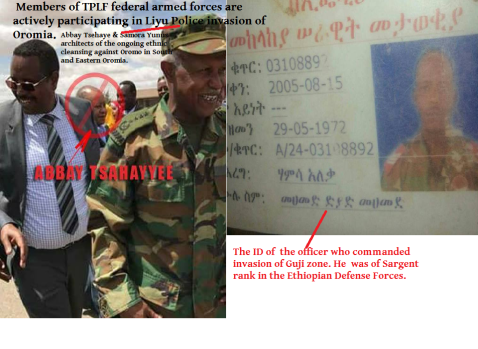
Based on the the slogans and songs of the protesters, I recommend the TPLF/EPRDF government to immediately carryout the following policy reforms to meet the demands of the Oromo people and calm the situation:

1. End all forms of TPLF/EPRDF interference and indirect rule in the Oromia Region through the federal police, federal security, and federal military and federal justice structures of the federal government that denied the Oromo people direct self-rule.

2. Make Afaan Oromo Federal Working language on equal footing with Amharic.

3. Restore the status of Addis Ababa as an Oromia City.

4. Release all political prisoners including Dr. Merera and Mr. Bekele Gerba.

5. Dismantle the Somali Janjaweed Militia locally known as Liyu Police. Remove all the federal military and security officers who organized and lead the aggression and invasion of Eastern and Southern Oromia by the Somali Janjaweed Militia and caused the displacement of over 600,000 Oromo civilians. Resettle back all the displaced on their land, and compensate them for their Janjaweed looted property. Bring to justice the killers of our people.

6. Increase the number of Oromo federal workforce both in the military, security and civil service sectors from the current 10% to at least 40 to 50% in proportion to the population size and economic contribution of the Oromia region.

7. Restructure the power balance within EPRDF based on the population size of EPRDF member parties or dismantle it all together to establish a new coalition government.

8. Repeal and end all land grab policies, compensate and resettle the Oromo farmers evicted from their ancestral lands.

9. Make all companies in all regions to pay tax to the coffers of the respective regional governments to increase the economic benefits of the region’s population instead of the current monopoly by the federal government.

10. Develop clear economic policy that will end the marginalization and exclusion of the Oromo people from the Ethiopian economy including restoring the ownership of the Oromo people on their natural resources, produces, goods and services.


Related:-

IB Times Exclusive interview with executive director of Oromia Media Network

By IB Times

Ethiopia has been suffering from a super centralized TPLF autocratic, barbaric and terroristic rule.

ACAPS: Ethiopia: Crisis Analysis October 11, 2017

Posted by OromianEconomist in Uncategorized.
Tags: , , , , , , , ,
add a comment

Odaa Oromoooromianeconomist

POLITICS AND SECURITY OVERVIEW

Latest update: 10/10/2017

Ethiopia lifted its state of emergency on 7 August.? It was first introduced on 9 October 2016, following protests mainly by the Oromo and Amhara populations, who together account for over half of Ethiopia’s population. Both ethnic groups were protesting against the Tigray-dominated government on issues including inequality, economic marginalisation, corruption, and lack of political space.?Defence, foreign ministry and other key government posts are held by Tigrayans, who account for 6% of the country’s population.??  Protests began in the Oromia region in November 2015, following a plan to expand Addis Ababa into surrounding land owned by Oromo farmers. In July 2016, the Amhara population began protesting. ? Violence escalated in October 2016 when over 50 people were killed during an Oromo religious festival that turned into an anti-government protest. At the beginning of the state of emergency, the government promised deep reform. In July 2017, the government announced a bill that includes measures such as making Afan Oromo an official language, setting up Afan Oromo schools in Addis Ababa, and establishing a joint council with the federal government to administer the city. Many deemed the bill  insufficient.? As of August, the government has not addressed fundamental issues such as demands to open up political space, and to allow dissent and tolerance of different perspectives.?In August, people in the Oromia region held a five-day strike to commemorate protesters killed during the 2016 protests. Some sources say the strike was also in protest of a tax increase for small business owners. ??

As of late September, clashes have been taking place among Oromo and Somali groups over border demarcations. The government announced they will place federal police at roads that cross both regions and that security forces of both regions will withdraw from border locations. They also stated they will disarm civilians living in the conflict areas.? There are diverging acounts of what is causing the clashes. Oromo officials have accused the Somali  police force, the Liyu police, of staging attacks in an attempt to drive Oromos out of border areas. While the Somali regional government claim it is members within the Oromo government in conjunction with the Oromo Liberation Front, a group that have been branded as terrorists by the government of Ethiopia. Tensions have existed between the two sides for years over border demarcations and competition over resources. Another view expressed by some activists is that the situation has been orchestrated by the central government, who are using the Liyu police to divert attention away from the issue of suppression of the Oromo people, whose concerns remain unaddressed despite the removal of the state of emergency. ??? ?

Media censorship is common in Ethiopia but was further reinforced following the state of emergency, with many journalists engaging in self-censorship to avoid harassment or arrests. Since 2010, at least 75 journalists have fled the country. Access to the internet is frequently blocked and international radio signals jammed. Social media was a key factor in mobilising protesters and is since carefully monitored by authorities. ?

HUMANITARIAN ACCESS OVERVIEW

Ethiopia has been suffering from a super centralized TPLF autocratic, barbaric and terroristic rule.  October 9, 2017

Posted by OromianEconomist in Ethiopia's Colonizing Structure and the Development Problems of People of Oromia, Afar, Ogaden, Sidama, Southern Ethiopia and the Omo Valley, Ethiopian Empire, Ethnic Cleansing, Horn of Africa Affairs, Human Rights.
Tags: , , , , , , , , , , , , , , ,
1 comment so far


For the last 26 years, Ethiopia has been suffering from a super centralized TPLF autocratic, barbaric and terroristic rule.

It is beyond dispute that the recent event witnessed in Eastern and Southern Oromia is nothing but TPLF’s last ditch futile effort at the triangulation and expansion of the conflict in the face of the ongoing broad based and persistent opposition to its repression. The Oromo, Amhara, Somali, Sidama, Gurage, Wolayita and the other Ethiopian peoples are saying NO, in one voice, to the decades of repressions, killings, incarcerations, humiliations, displacements and robberies of their resources by the TPLF junta. The Ethiopian people are rising in unison to break out of the shackles of slavery and fear the TPLF has put them in.

It is a well established fact TPLF’s longstanding strategy of diffusing bipolar conflicts between itself and the Oromo, Amhara, Somali, Sidama or Gurage people –just to mention the major heavy weights in Ethiopian politics in terms of shear demographic size – is triangulation of the conflict. For instance, the TPLF always attempts to add a front to the real conflict between itself and the Oromo people and between itself and the Amhara people by inciting (fabricating) conflict between the Oromo and Amhara peoples. Based on this strategy, the TPLF has been attempting incessantly for the last 26 years to incite conflicts mainly between the Oromo and Amhara peoples. Fortunately, the diabolical efforts by the TPLF has been rendered for the most part pre-emptively ineffective thanks to the long history of peaceful coexistence between the two peoples.

Moreover, the massive demonstrations held in Oromia and Amhara States over the recent years put, in no uncertain terms, the final nail to the coffin of this TPLF’s savage strategy triangulating the conflict as TPLF-Oromo-Amhara conflict. The dumb-founded TPLF was left with nothing but to whisk a few bribed Somali elders carrying a “10 million birr donation check” to Mekele instructing them to tell the people of Tigray that they are not alone in this and that the Somali people are by their side. This was intended not only to calm the Tigray people who have been growing increasingly isolated, nervous and uncomfortable by the latest cascades of erratic and impulsive reactions by the TPLF to suppress the popular demands but it was also to officially declare that the efforts to triangulate the conflict is moving East. It is obvious that since the strategy of triangulation of the TPLF-Oromo people bipolar conflict or TPLF-Amhara people bipolar conflict has been dealt a final blow, TPLF was forced to play what it thought was its next best card from the few diminishing cards left in its hands. In a very interesting twist of events, Seye Abraha, a rebel commander-turned-defense minister who was a member of the Politburo of the TPLF and who is believed to be one of the main authors and architects of the TPLF war doctrine went to the same place, Easter Ethiopia, in 1991 in relation to the TPLF-Oromo conflict and bragged something to the effect of “…TPLF can create a war let alone winning a war….” Fast forward – we are here today. Alas, terrorist TPLF is at it again – trying to transplant the vortex of conflict at Oromia-Somali border in order to open a new front on the Oromo people for being on the forefront of the struggle of the Ethiopian people for peace, freedom, justice and democracy. So it is evidently clear that what we are seeing unfolding right in front of our eyes in Eastern Oromia today is nothing but that strategy of the triangulation of conflict at work.


The Culprit is the TPLF – Not Ethnic Federalism 

By Aklilu Bekele,


The current horrendous situation the barbaric and kleptomaniac dictatorial TPLF regime has put Ethiopian in has brought the debate on ethnic based federalism back into the spotlight. Nowadays, barely a minute goes by without hearing or seeing the opponents of the ethnic based form of federalism in Ethiopia attempting to pound on ethnic federalism to gain the maximum political capital possible out of the bad situations and the suffering of the innocent victims of the TPLF led state terrorism. The veteran as well as the newly minted opponents of ethnic federalism are shouting at the height of their voices using any platform they can find that the ongoing war perpetuated by the TPLF regime against the Oromo people, particularly in Eastern and Southeastern Oromia, is yet another irrefutable proof for the failure of ethnic federalism in Ethiopia. They even go as far as arguing that ethnic federalism has failed in Ethiopia in and of itself out of its own shear weight and inherent nature and not because of the failure of the TPLF to implement it whole-heartedly. The way the opponents are trying to frame the debate betrays their frantic jubilant mood as if their longstanding dream had come true.

Before I delve into the counter arguments made by the proponents of ethnic federalism, allow me to throw in a few sentences about the war the TPLF is waging against the Ethiopian people of Oromo origin in Eastern Oromia. It is beyond dispute that the recent event witnessed in Eastern and Southern Oromia is nothing but TPLF’s last ditch futile effort at the triangulation and expansion of the conflict in the face of the ongoing broad based and persistent opposition to its repression. The Oromo, Amhara, Somali, Sidama, Gurage, Wolayita and the other Ethiopian peoples are saying NO, in one voice, to the decades of repressions, killings, incarcerations, humiliations, displacements and robberies of their resources by the TPLF junta. The Ethiopian people are rising in unison to break out of the shackles of slavery and fear the TPLF has put them in.

It is a well established fact TPLF’s longstanding strategy of diffusing bipolar conflicts between itself and the Oromo, Amhara, Somali, Sidama or Gurage people –just to mention the major heavy weights in Ethiopian politics in terms of shear demographic size – is triangulation of the conflict. For instance, the TPLF always attempts to add a front to the real conflict between itself and the Oromo people and between itself and the Amhara people by inciting (fabricating) conflict between the Oromo and Amhara peoples. Based on this strategy, the TPLF has been attempting incessantly for the last 26 years to incite conflicts mainly between the Oromo and Amhara peoples. Fortunately, the diabolical efforts by the TPLF has been rendered for the most part pre-emptively ineffective thanks to the long history of peaceful coexistence between the two peoples.

Moreover, the massive demonstrations held in Oromia and Amhara States over the recent years put, in no uncertain terms, the final nail to the coffin of this TPLF’s savage strategy triangulating the conflict as TPLF-Oromo-Amhara conflict. The dumb-founded TPLF was left with nothing but to whisk a few bribed Somali elders carrying a “10 million birr donation check” to Mekele instructing them to tell the people of Tigray that they are not alone in this and that the Somali people are by their side. This was intended not only to calm the Tigray people who have been growing increasingly isolated, nervous and uncomfortable by the latest cascades of erratic and impulsive reactions by the TPLF to suppress the popular demands but it was also to officially declare that the efforts to triangulate the conflict is moving East. It is obvious that since the strategy of triangulation of the TPLF-Oromo people bipolar conflict or TPLF-Amhara people bipolar conflict has been dealt a final blow, TPLF was forced to play what it thought was its next best card from the few diminishing cards left in its hands. In a very interesting twist of events, Seye Abraha, a rebel commander-turned-defense minister who was a member of the Politburo of the TPLF and who is believed to be one of the main authors and architects of the TPLF war doctrine went to the same place, Easter Ethiopia, in 1991 in relation to the TPLF-Oromo conflict and bragged something to the effect of “…TPLF can create a war let alone winning a war….” Fast forward – we are here today. Alas, terrorist TPLF is at it again – trying to transplant the vortex of conflict at Oromia-Somali border in order to open a new front on the Oromo people for being on the forefront of the struggle of the Ethiopian people for peace, freedom, justice and democracy. So it is evidently clear that what we are seeing unfolding right in front of our eyes in Eastern Oromia today is nothing but that strategy of the triangulation of conflict at work.

Apologies for digressing more than I initially wanted. Going back to my main theme of this writing, the proponents of ethnic federalism are also making their point by arguing that what is certain to have failed in Ethiopia is not the ethnic federalism form of state but the absolute centralism that has bedeviled Ethiopia for over a century. They argue that the absolute unitary dictatorship (one language and one religion policy, among others) had been tried fiercely and in earnest (whole-heartedly with absolute commitment, giving it all they had and to the fullest extent possible) in Ethiopia from Menilik to Haile Selassie to Mengistu for over a century but it failed and failed miserably. The TPLF has continued the same old tired unitary militaristic dictatorship with a thinly veiled facade of federalism. If there is anything that makes the TPLF regime different from its predecessors, it is its pretension and con artistry to create an illusion of change by marginally changing the form without changing the substance an iota, none whatsoever.

Ethiopia has never tried federalism of any form nor democracy in its history. How can we conclude that something has failed when we have not tried it whole-heartedly in the first place? What type of experimentation is that? I believe the opponents of ethnic federalism know very well that what exists in today’s Ethiopia is not any form of federalism but an absolutely centralized TPLF dictatorship. They are blaming the form instead of the substance. They are attempting to use the current TPLF war on the Oromo people in Eastern and other parts of Oromia as an opportune moment and the casus belli for the war they have already declared anyway on ethnic federalism. It is hard to fathom but one dares to ponder that the opponents of ethnic federalism are so gullible that they would believe that Ethiopia’s multifaceted and multilayered complicated problems would vanish in one day were the TPLF take off its veil of fake federalism and come out naked for what it truly is; namely, the worst dictatorial centralist regime Ethiopia has ever known. The elaborate TPLF spy network that has been installed throughout Ethiopia spanning from the TPLF politburo all the way down to the infamous one-to-five (1-2-5) structure is an irrefutable testimony to the absolute dictatorial centralism under which the TPLF regime has been ruling and plundering the Ethiopian people since it controlled the state power in May 1991. This is the truth in the today’s Ethiopia.
However, the truth doesn’t matter for the opponents. They have the propensity to kick the truth aside if it is doesn’t serve their political purposes. Their untenable and feeble argument about the failure of federalism (whatever its form may be) in Ethiopia falls flat in the face of the reality on the ground in Ethiopia. The reality in Ethiopia has been out there for everyone to see with his/her naked eyes without any need for a visual aid. For the last 26 years, Ethiopia has been suffering from a super centralized TPLF autocratic, barbaric and terroristic rule.

The opponents’ argument makes sense if and only if we accept a hypothetical premise that Ethiopia has had a democratic system for the last 26 years. Otherwise, how can we blame ethnic federalism as the cause of the crises we are seeing unfolding in Ethiopia today or for the last 26 years for that matter because federalism never works without democracy? If we don’t accept the premise that Ethiopia is a democracy today, then blaming ethnic federalism for the country’s crises is not only absurd but it is also like indicting someone who has nothing to do with the crime. In fact, pointing finger to the ethnic federalism is in tune with what the terrorist TPLF propagandists are attempting in vain these days to hoodwink and make us believe with a vivid intent of deflecting the focus away from the real issue – themselves. In a nutshell, the opponents’ argument doesn’t stand to reason nor to any meaningful scrutiny. It is rather an intentional misrepresentation of the facts on the ground in order to divert our attention away from the real problems the country has been facing and their immediate and longstanding causes.

Just for the sake of argument, let us assume that what the opponents say is true and agree to abandon our efforts to institute a genuine ethnic federalism in Ethiopia. If that is the case, then it automatically begets that we have to also abandon our struggle for democracy because democracy has also failed in Ethiopia today. I hope the opponents would not argue with the same zeal as they do against ethnic federalism that democracy is flourishing in Ethiopia under the TPLF rule. If the opponents are arguing that the democratic experimentation has succeeded but it is only the ethnic federalism that has failed in Ethiopia today, then it is worth considering going to other forms of federal systems.

However, if the opponents of ethnic federalism agree that democracy has also failed in Ethiopia today, then there is a fallacy in their argument because true federalism (whatever its form may be) cannot be implemented without democracy. Democracy is an essential pre-requisite for any form of federalism. If the opponents of ethnic federalism accept the premise that democratization has failed in the TPLF ruled Ethiopia, are they also telling us with the same breath to forgo our struggle for democracy and leave Ethiopia and the Ethiopian people at the mercy of the barbaric, plunderous terrorist TPLF? Otherwise, if they accept the glaring truth that there is no democracy in Ethiopia, then they have to shift their accusing fingers to the failure of the democratization process and the TPLF instead of the non-existent ethnic federalism. There is an Amharic saying that goes something like ‘searching for dung where no cow has been”.

I would like to conclude by stating the obvious at the risk of sounding redundant and repetitive. The reality is that what have failed in Ethiopia over and over again for over a century are dictatorship and centralism. Ethnic federalism is the only realistic antidote not only for the birth defect and chronic ailments Ethiopia has been suffering from since its inception but for its unique multicultural nature and its recorded history of ethnic repression as well. We understand that the pre-TPLF Ethiopia for which the opponents of ethnic federalism in Ethiopia are nostalgic was a heaven for them but that doesn’t mean it was the same for everyone. The pre-TPLF and the TPLF Ethiopia is the same hell for the majority of the Ethiopian people. We, in the freedom camp, are striving to create an Ethiopia that is free, fair and just, an Ethiopia that treats all its citizens equal, an Ethiopia that is democratic, multicultural and ethnic federalist that we all call home and be proud of.

Oromia: Waan Sammuu Abbaa Duulaa Jijjiiree Dhageeffadha. Abadula Gemeda, the Speaker of the Ethiopian House of Peoples’ Representatives, has resigned from his position.  October 9, 2017

Posted by OromianEconomist in Uncategorized.
Tags: , , , , , ,
add a comment

Odaa Oromoooromianeconomist

https://www.youtube.com/watch?v=O6Ow9BAd82I

Related:-

https://www.youtube.com/watch?v=u9xvX6S_jo0


Breaking News: Abadula Gemeda resigns as Speaker of Parliament, Addis Standard reports

Onkoloolessa/October 7, 2017 · Finfinne Tribune | Gadaa.com  

According to a local online-based newspaper named Addis Standard, Mr. Abadula Gemeda, the Speaker of the Ethiopian House of Peoples’ Representatives, has resigned from his position. Addis Standard, through its Twitter account, broke the news a little an hour ago, at 9:49am local time (with the Ethiopian traditional day-hour counting, it was 3:49 in the morning when the news came). Here’s the Twitter published by @addisstandard, and its Facebook post.

UPDATED: The online-based newspaper indicated that one of the reasons for the resignation of the Speaker was his protest over the federal government’s handling of the security issues in the Oromia-Somalia border; the border crisis had resulted in the displacement of more than 50,000 people in the Oromia-side alone.

Twitter:


BBC Afaan Oromoo: Abbaa Duulaa Gammadaa: Jeneraala, Pireezidaantii, Af-yaa’ii … Achii hoo?


Opride News:  Ethiopia’s Speaker of the House, Abba Dula Gamada, resigns


OPINION: PROTEST RESIGNATION: RAMIFICATIONS OF A POLITICAL ACT

Prof Al Mariam: ‘My Letter to President Trump Requesting Targeted Sanctions Against the TPLF Regime in Ethiopia’ October 3, 2017

Posted by OromianEconomist in Horn of Africa Affairs, Human Rights, Uncategorized.
Tags: , , , , , , , , ,
1 comment so far

Odaa Oromoooromianeconomist

bishoftu-mascare-2nd-october-2016-fascist-ethiopias-regime-tplf-conducted-masskillings-against-oromo-people-at-irreecha-celebration

My Letter to President Trump Requesting Targeted Sanctions Against the TPLF Regime in Ethiopia

October 2, 2017

Donald Trump
President of the United States
The White House
1600 Pennsylvania Avenue NW
Washington, DC 20500

Re: REQUEST FOR SANCTIONS AGAINST PERSONS AND ENTITIES INVOLVED IN THE IRRECHA MASSACRES ON OCTOBER 2, 2016 AND OTHER CRIMES AGAINST HUMANITY COMMITTED IN ETHIOPIA 

Dear Mr. President:

I am writing this letter for two purposes. First, I wish to thank you for imposing sanctions[1] on certain senior current and former South Sudan government officials and South Sudanese companies responsible for undermining peace, security and stability in that violence-wracked country.

Second, I am writing to request imposition of similar sanctions against members of the ruling regime in Ethiopia self-styled as the “Ethiopian People’s Revolutionary Democratic Front” led and dominated by the Tigrean People’s Liberation Front (TPLF), an entity listed as a terrorist organization in the Global Terrorism Database[2] (GTD).

The last act of terrorism committed by the TPLF, according to the GTD, was on August 16, 2016[3].

I believe it is fair and proper to give credit where credit is due. While some have claimed the sanctions imposed on South Sudan’s leaders and their accomplices are meager and inadequate[4], I believe the action sends a clear and unambiguous message to all Africans in positions of power that protection of human rights is a central component of an America-first U.S. foreign policy in Africa, a fact that has been underscored by Secretary of State Rex Tillerson[5].

I am especially elated to learn the U.S. Treasury Department “will forcefully respond to the atrocities ongoing in South Sudan by targeting those who abuse human rights, seek to derail the peace process, and obstruct reconciliation in South Sudan.” Such a resolute statement goes a long way in reassuring not only the people of South Sudan but also all Africans that the U.S. will not merely talk the talk about being on the “right side of history” but also walk the talk by acting decisively and selectively against individuals and entities engaged in gross human rights violations.

I wish to point out for the record that the sanctions you have imposed in South Sudan are in stark contrast to the Obama administration’s lifting of sanctions against the Sudan in its last week in office.

During his presidential candidacy in 2007, Barack Obama said[6], the “genocide in Darfur [Sudan] is a stain on our souls… As a president of the United States I don’t intend to abandon people or turn a blind eye to slaughter.”

In the final week of his presidency, on January 13, 2017, Mr. Obama turned a blind eye to the genocidal Sudanese regime and stood on the “wrong side of history” when he rescinded  sanctions authorized pursuant to  Executive Order 13067[7] of November 3, 1997 and Executive Order 13412[8] of October 13, 2006 related to the policies and actions of the Government of Sudan.

In issuing his rescission of Executive Order 13761[9],  Mr. Obama whitewashed the bloody genocidal crimes of the Sudanese regime by speciously claiming that regime has shown “positive actions over the past 6 months”. The “actions” allegedly included maintaining cessation of hostilities in conflict areas in the Sudan, improving humanitarian access and counterterrorism cooperation.

It is said, “one swallow does not make a summer.” It is incomprehensible to me how Mr. Obama could gloss over and excuse atrocities committed over a period exceeding two decades on mere gestures of good behavior over six months.

What is even more appalling is Mr. Obama’s duplicity and hypocrisy in completely ignoring Sudan’s close ties with North Korea and purchase of weapons from that rogue regime for use in the commission of human rights violations and atrocities. In lifting sanctions against the Sudan, Mr. Obama also conveniently ignored the fact that Sudan has been on the list[10] of state sponsors of terrorism since 1993 and had provided a haven to Osama bin Laden.

Perhaps one should not be surprised by Mr. Obama’s stratagems and sophistry in exculpating those on the “wrong side of history”, as he used to call them. When Mr. Obama visited Ethiopia in July 2015, he unabashedly declared the TPLF regime, which claimed electoral victory by capturing 100 percent of the “parliamentary” seats, as “democratically elected[11].”

In light of Mr. Obama’s double-speak and duplicity on human rights in Africa, I find your recent targeted sanctions against South Sudan and the tenor of your administration’s emerging human rights policy forthright, refreshing and encouraging.

I believe selective and targeted sanctions such as the one imposed against South Sudanese leaders and companies can serve as effective tools of an America-first foreign policy in advancing the cause of human rights globally, and particularly in Africa. Targeted sanctions selectively and purposefully focus on leaders, their family members and supporters, political elites and segments of society known to be directly responsible for human rights violations or in aiding, abetting and giving material support in the commission of such violations. Blanket sanctions are more likely to inflict greater hardship and suffering on the general population, and often those engaged in gross human rights violations find ways to circumvent them. It has been observed that “targeted sanctions” or “smart sanctions” are like “smart bombs”, considerably reducing collateral damage on civilian populations.

I believe in the old saying, “What is sauce for the goose is sauce for the gander.” What is good for South Sudan is good for Ethiopia.

I am requesting that you follow up with targeted sanctions against current and senior members of the “Ethiopian People’s Revolutionary Democratic Front” led and dominated by the Tigrean People’s Liberation Front and other entities aiding and abetting that regime in the commission of human rights violations in Ethiopia. The evidence of human rights violations supporting targeted sanctions against the TPLF regime is overwhelming, incontrovertible, substantial and compelling.

The Irreecha Massacres of October 2, 2016

On October 2, 2016, troops loyal to the ruling Tigrean Peoples’ Liberation Front opened fire indiscriminately on crowds at a religious festival known as “Irreecha” attended by an “estimated 2 million people[12] in the town of Bishoftu, some 45 miles southeast of the capital Addis Ababa.

The TPLF regime reported 52 dead from what it said was crowd “stampede[13] caused by anti-government elements”. In a televised address, the regime’s prime minster blamed the victims for provoking troops into using indiscriminate deadly force.

On October 3, 2016, Freedom House issued a statement[14] on the Irreecha Massacres demanding an independent investigation: “The deaths in Bishoftu occurred because security forces fired tear gas and live ammunition at a crowd of over a million people celebrating a religious occasion. The government of Ethiopia should allow a truly independent body to investigate the tragedy at Bishoftu as well as security forces’ well-documented record of using excessive force against peaceful gatherings.”

Eyewitness reports including statements by accredited Voice of America Amharic Service program journalists revealed that heavily armed regime troops had taken tactical positions behind the VIP grandstand hidden from direct view of the crowd and suddenly opened live fire on the unarmed and peacefully protesting crowd after the official program could not proceed due to crowd demands and chants against the regime.

On October 8, the TPLF regime declared a “state of emergency” suspending the constitution and instituting martial law under an entity called “Command Post[15]”.

On November 12, 2016, the regime officially reported[16] arresting “11,607 people, including 347 women”. The U.S. State Department in its 2016 human rights report[17]stated, “Many [of the thousands arrested] were never brought before a court, provided access to legal counsel, or formally charged with a crime.” The actual number of persons arrested was significantly higher than officially reported. In March 2017, the Command Post “announced that 4,996 of the 26,130 people detained for allegedly taking part in protests would be brought to court.”

An “investigative report” on the Irreecha Massacres released by the regime’s human rights organization in April 2016 rubberstamped the regime’s original position: “The violence happened because the protesters were using guns and so security forces had no other option.”

In its June 2016 report entitled “Such a Brutal Crackdown’: Killings and Arrests in Response to Ethiopia’s Oromo Protest”, Human Rights Watch stated, “security forces in Ethiopia have used excessive and lethal force against largely peaceful protests that have swept through Oromia, the country’s largest region, since November 2015.”

On September 19, 2017, Human Rights Watch in its 33-page report entitled “Fuel on the Fire’: Security Force Response to the 2016 Irreecha Cultural Festival” provided details on the regime’s “use of force in response to restive crowds at 2016’s Irreecha.” The report “found evidence that security force personnel not only triggered the stampede that caused many deaths but subsequently shot and killed some members of the crowd.”

Over the past year, the TPLF regime has committed unspeakable atrocities in Northern Ethiopia including Gonder, Wolkait, Bahr Dar and other locations.

The Irreecha Massacres are only the latest in the 26-year sordid history of gross and egregious human rights violation by the TPLF regime in Ethiopia.

On May 16, 2005, one day after the general election, the late leader of the TPLF regime, Meles Zenawi, also declared a state of emergency, outlawed all public gatherings and placed under his direct personal command and control all police, security and military forces in the country. Zenawi personally authorized the use of deadly force against any protesters in the post-election period. As a result, nearly a thousand people were either killed or severely wounded by regime troops. Zenawi subsequently set up an Inquiry Commission. That Commission was forced to go into exile following harassment and threats by the TPLF regime to falsify its findings. In November 2006, that Commission shared[18] its findings with members of the Africa Subcommittee in the House of Representatives. The Inquiry Commission laid the entire blame at the feet of the TPLF regime and rejected their spurious claims and justifications for use of deadly force.

partial list of the names of the victims of the Meles Massacres is publicly available.

list of names of those security, military and police officials directly involved in the post-2005 election massacres is also available. The TPLF regime to date has taken no action against these officials.

In May 2014, troops loyal to the TPLF regime massacred at least 47 university and high school students in the town of Ambo 80 miles west of the capital Addis Ababa. Eyewitnesses reported significantly higher casualties and fatalities than officially reported. Human Rights Watch (HRW) issued a statement[19] condemning the “shooting at and beating [of] peaceful protesters in Ambo, Nekemte, Jimma, and other towns”. According to HRW, the student “protests erupted over the release of the proposed Addis Ababa Integrated Development Master Plan” which would “expand Addis Ababa’s municipal boundary to include more than 15 communities in Oromia” and displace Oromo farmers and residents.

In December 2003, the TPLF massacred hundreds of Anuak people in Gambella in Western Ethiopia. Human Rights Watch documented  that TPLF troops “subjected Anuak communities throughout the region to widespread and systematic acts of murder, rape, torture, arbitrary imprisonment and the destruction of entire villages.” Genocide Watch sent a fact-finding team in Gambella and secured[21]  authentic documents “proving that the Gambella massacres were planned at the highest levels of the Ethiopian government, and even given the code name “Operation Sunny Mountain”. A report[20] by the Harvard Law School Human Rights Program on the Anuak Massacre concluded, “From December 2004 to at least January 2006, the ENDF (Ethiopian National Defense Forces) attacked and abused Anuak civilians in Gambella region – wantonly killing, raping, beating, torturing, and harassing civilians.”

In 2007, the TPLF regime massacred hundreds of people in the Ogaden region of Ethiopia. Human Rights Watch in its June 2008 report[22] entitled “Collective Punishment: War Crimes and Crimes against Humanity in the Ogaden area of Ethiopia’s Somali Region” documented, “Ethiopian troops have forcibly displaced entire rural communities, ordering villagers to leave their homes within a few days or witness their houses being burnt down and their possessions destroyed and risk death.”

The TPLF regime has refused to undertake meaningful and credible investigations into these crimes against humanity despite requests by human rights groups and even the U.N. The TPLF regime has refused entry to all UN special rapporteurs since 2007 to investigate human rights violations in Ethiopia.

The TPLF regime has dismissed and ignored all calls for an independent investigation of the Irreecha Massacres by United Nations top human rights official[23]the African Commission[24], the European parliament[25], and members of United States Congress[26].

The difference between the South Sudanese regime and the TPLF regime on human rights is the difference between Tweedledee and Tweedledum. Both regimes are peas in a pod. Thus, what is good enough for the South Sudanese regime is good enough for the TPLF regime.

I believe an America-first human rights policy which employs targeted sanctions to promote human rights, democracy and peace in Africa is not only necessary but also likely to produce outcomes that are consistent with the values and principles of American taxpayers.

Millions of refugees are leaving Africa to come go to Europe and North America because life is hell for them in Africa under brutal and bloodthirsty dictatorships, not merely to seek better economic opportunities. The U.S. can effectively deal with this problem by addressing the root cause of migration out of Africa, namely, brutal and oppressive dictatorships that treat their citizens as slaves and their countries’ treasuries and resources as their private estates. Selective and targeted sanctions aimed at the financial and logistical incapacitation of leaders, political elites and segments of society known to be directly responsible for human rights violations or engaged in aiding, abetting and giving material support in the commission of such violations in Africa is the proverbial two-by-four that will quickly get their attention.

For well over a decade, I have argued without pause that the best way to help Africa is to let Africa help itself. Africa can never be free until African leaders are held to account and forced to abandon the culture of panhandling, which have perfected as an art form. The U.S. must end its aid welfare program to African dictators who siphon off much of that aid and deposit it in their private offshore bank accounts. Your transition team hit the nail on the head when it demndaed answers from the State Department to the following question: “With so much corruption in Africa, how much of our funding is stolen?”

I wish I could definitively answer that question for you. But I can say definitively that to begin the effort to find out “how much of our funding is stolen” in Africa, we must make targeted sanctions a central part of the America-first foreign policy in Africa.

Mr. President, what I am asking is not anything extraordinary. I am merely requesting that you impose the same targeted sanctions you imposed on the leaders, supporters and business entities in South Sudan to the leaders, supporters and business entities responsible for human rights violations in Ethiopia. What is good enough for South Sudan is good enough for Ethiopia.

Mr. President, when Mr. Obama visited Ghana in his first trip to Africa in July 2009, he said, “Now, make no mistake: History is on the side of these brave Africans, not with those who use coups or change constitutions to stay in power. Africa doesn’t need strongmen, it needs strong institutions.”

The people of Ethiopia and the people of Africa are on tenterhooks to find out if you are going to stand with African dictators or the common people yearning to breathe free.

I am betting my bottom dollar that you will stand with the people of Africa and not the dictators who lord over them, as did Mr. Obama.

I will guarantee that you will have 100 million fans in Ethiopia if you institute targeted sanctions against members of the TPLF regime and its cronies involved in gross human rights violations, and win more than a 1.2 billion Africans if you make targeted sanctions a core part of your America-first policy in Africa.

I guarantee it!

Sincerely,

Alemayehu (Al) G. Mariam, M.A., Ph.D., J.D.
Professor and Attorney at Law

Cc: Hon. Rex Tillerson, U.S. Secretary of State
Hon. Steven T. Mnuchin, U.S. Secretary of the Treasury
Hon. Nimrata “Nikki” Haley, U.S. Ambassador to the United Nations

==========================
[1] https://www.treasury.gov/press-center/press-releases/Pages/sm0152.aspx

[2] http://www.start.umd.edu/gtd/search/Results.aspx?perpetrator=2127

[3] http://www.start.umd.edu/gtd/search/IncidentSummary.aspx?gtdid=201608260003

[4] http://foreignpolicy.com/2017/09/06/u-s-sanctions-south-sudanese-leaders/

[5] https://www.state.gov/secretary/remarks/2017/05/270620.htm

[6] https://www.youtube.com/watch?v=QEd583-fA8M

[7] https://www.treasury.gov/resource-center/sanctions/Documents/13067.pdf

[8] https://www.treasury.gov/resource-center/sanctions/Documents/13412.pdf

[9] https://www.gpo.gov/fdsys/pkg/DCPD-201700026/pdf/DCPD-201700026.pdf

[10] https://www.state.gov/j/ct/list/c14151.htm

[11] https://www.nytimes.com/2015/07/28/world/africa/obama-calls-ethiopian-government-democratically-elected.html?mcubz=3&mtrref=www.google.com&gwh=BBE0F6C584580DEF4C73E4D0F43ECE1F&gwt=pay

[12] http://www.cnn.com/2016/10/03/africa/ethiopia-oromo-deaths/index.html

[13] http://www.independent.co.uk/news/world/africa/ethiopia-stampede-violent-clashes-death-toll-oromia-disaster-bishoftu-protest-more-than-100-a7342951.html

[14] https://freedomhouse.org/article/ethiopia-more-150-dead-after-security-forces-fire-crowd

[15] http://www.ena.gov.et/en/index.php/politics/item/2067-command-post-established-to-oversee-implementation-of-emergency-rule

[16] http://www.aljazeera.com/news/2016/11/ethiopia-state-emergency-arrests-top-11000-161112191919319.html

[17] https://www.state.gov/j/drl/rls/hrrpt/humanrightsreport/#wrapper

[18]http://www.ethiomedia.com/addfile/ethiopian_inquiry_commission_briefs_congress.html

[19] https://www.hrw.org/news/2014/05/05/ethiopia-brutal-crackdown-protests

[20] http://hrp.law.harvard.edu/wp-content/uploads/2013/02/Ethiopia_2006_Report.pdf

http://www.genocidewatch.org/ethiopia.html[21]

[22]https://www.hrw.org/report/2008/06/12/collective-punishment/war-crimes-and-crimes-against-humanity-ogaden-area-ethiopias

[23] http://www.reuters.com/article/us-ethiopia-violence-un-idUSKCN10L1SY

[24] http://www.achpr.org/sessions/59th/resolutions/356/

[25] http://www.europarl.europa.eu/sides/getDoc.do?pubRef=-//EP//TEXT+TA+P8-TA-2016-0023+0+DOC+XML+V0//EN&language=EN

[26] https://www.congress.gov/115/bills/hres128/BILLS-115hres128ih.pdf

Africa Times: Ethiopia’s Oromo hold peaceful memorial at Irreecha festival October 2, 2017

Posted by OromianEconomist in Oromo Protests, Uncategorized.
Tags: , , , , ,
1 comment so far

Odaa OromoooromianeconomistIrreecha Birraa bara 6411 (ALO), Irreecha Birraa Oromoo 2017, Hora Harsadii, Bishoftu Oromia. 1st OctoberIrreecha Birraa bara 6411 (ALO), Irreecha Birraa Oromoo 2017, Hora Harsadii, Bishoftu Oromia. 1st October colorfully celebrated with millions Oromo people

Ethiopia’s Oromo hold peaceful memorial at Irreecha festival

Ethiopia’s Oromo hold peaceful memorial at Irreecha festival

By AT editor – 1 October 2017

In Ethiopia, this year’s Irreecha festival brought peaceful but powerful protest as the Oromo people marked the anniversary of last year’s massacre at Bishoftu.

More than 1.5 million people were expected to attend the annual thanksgiving celebration. Despite the rainy skies, they came; once there, the crowds chanted anti-government slogans with the now-familiar crossed arms symbol of protest against Ethiopian authorities they say have long persecuted them – and who, in 2016, opened fire as the scene at Bishoftu deteriorated into chaos.

“May the almighty avenge those that are killing our people,” said the traditional Oromo Gadaa leader as he delivered a blessing. “May the almighty avenge those who killed our people here last year. May the almighty avenge the unavenged. May the almighty end our national ordeals.”

The Ethiopian Human Rights Commission denied the military used lethal force in an official report on unrest in Oromia released in April. The EHRC said 669 people had died in ethnic clashes overall, including 465 Oromo civilians, while blaming the Oromo Media Network (OMN), other diaspora sources, and Oromo political opposition groups for escalating the crisis while defending all national security measures as appropriate.

The report results were questioned by international governments and human rights organizations who say they are consistently denied the access needed for an independent investigation. Many of the thousands who were arrested during a 10-month state of emergency remain detained, including key Oromo political opposition leaders.

Security remained tight for this year’s Irreecha celebration, as Ethiopian authorities banned weapons and set up security checkpoints while promising that armed forceswould remain on the perimeter of the event but not venture inside.

 Related:-

“Sifan Lola Yaa WBO” Irreecha Bishooftuu 2017

Continue reading 

Statement of International Oromo Lawyers Association In Commemoration Of Irreecha Massacre, 2nd October 2016. September 30, 2017

Posted by OromianEconomist in Uncategorized.
Tags: , , , , , ,
add a comment

Odaa Oromoooromianeconomist

remember-irreechamassacre

International Oromo Lawyers Association (IOLA)  logo

Statement of International Oromo Lawyers Association In Commemoration Of Irrecha Massacre.


It is one year ago that the world witnessed the naked brutality of the TPLF-led Ethiopian regime, when it carried out a large scale massacre against the Oromo people gathered at the annual thanks-giving festival – Ireecha, in Bishoftu, some 45 kilometers, south of the capital.


According to reliable information, close to 1000 civilians were killed as a result of combination of stampede and use of life bullets as well as blockade of paths by the security forces. By all accounts, and conclusions by human rights experts, the tragedy was a well-designed and pre-planned government action against the Oromo people, who were already engaged in a year-long peaceful demonstration in the entire Oromia State region, demanding respect for their fundamental human rights.


Today, a year later, the government did not carry an investigation nor hold any official accountable for the death of the thousand civilians which resulted from the use of disproportionate use of force. To the contrary, it arrested and detained thousands of Oromo civilians for alleged instigation of disturbances.


This year, the festival is going to take place at the usual place following established rituals.  What is now becoming everyone’s worry is that, participants of the festival may try to use the opportunity to express their dissatisfaction with the way the government addresses, or failed to address at all, their demand for respect for their fundamental rights, which may be used as a pretext by the security forces to react with a force which is disproportional to the demand and the civilian character of the demanding population.


That being the case, IOLA would like to join the international community in general and human rights institutes in particular in expressing its deepest concern regarding the possibility of unrest and subsequent harm to the civilian population during this year’s celebration of Ireecha.


It therefore demands that the government should:

  1. Take advance measures to put in place all what is needed for the citizens to peacefully celebrate Ireecha as per established ritual and without disturbances by the security forces;
  2. Ensure that security forces use proportionate force needed to maintain law and order;
  3. Take all the necessary security measures to ensure that the physical safety and security of civilians festival-goers is not compromised;
  4. Remind its security forces and give them clear guidance that Ethiopia is bound by the international Covenants and Conventions it had signed and that they should adhere and properly implement the United Nations Basic Principles on the use of Fire Arms.


International Oromo Lawyers Association.

Oromia: Farm land grab: Game over for Flora EcoPower September 28, 2017

Posted by OromianEconomist in Land and Water Grabs in Oromia, Land Grabs in Africa, Land Grabs in Oromia, Uncategorized.
Tags: , , , , ,
add a comment
Odaa Oromoooromianeconomist
Game over for Flora EcoPower
Africa Intelligence | 22 September 2017 [FR], INDIAN OCEAN NEWSLETTER ISSUE 1458

One final straw for the German company which owns 70,000 ha of land in Oromia has put a definitive end to its Ethiopian adventure.
According to information obtained by the Indian Ocean Newsletter, the oil production and biofuel refining company Flora EcoPower Ethiopia, a subsidiary of the German group Acazis AG, has been ravaged by the fighting between Oromos and Somalis (ION 1457). Despite statements of reassurance from Prime Minister Hailemariam Desalegn, the conflict between the two communities is intensifying with each passing day. Already affected by the anti-government demonstrations which have broken out in Oromia National Regional State (ONRS), foreign business operators, like the Saudi-Ethiopian magnate Mohammed Hussein al-Amoudi (ION 1421), are now having to deal with ethnic clashes too.
Ethiopia allocated 70,000 ha of land to Flora EcoPower in the region of West Hararghe, which straddles the districts of Daro Lube and Boke, to enable it to produce castor, groundnut and eucalyptus oil. However, this region, where al-Amoudi’s Horizon Plantations Ethiopia is also active, borders onto the Somali National Regional State (SNRS, see here).
Flora EcoPower, which is run by Patrick Bigger and Andreas Burger, has never managed to turn the venture into a success. Subject to insolvency proceedings since July 2015, for many years the company has been trying to attract investment for its farm and refinery, and for a long time thought it would succeed in the case of Herakles Farm. Run by Bruce Wrobel, the company is the public face in Africa of the American investment firm Blackstone Group, founded by Stephen A. Schwarzman.
In 2013, managers from Herakles’ operation in Cameroon came to assess Flora EcoPower’s production resources and its performance, but no partnership ultimately came of it. In the end, Patrick Bigger and Andreas Burger entrusted the running of their oil refinery in Fetachu, near to Harar, to the Ethiopian firm K&S, which is run by Pakistanis from Sudan and Yemen who have already worked in Ethiopia for the Endowment Fund for the Rehabilitation of Tigray (EFFORT, a group of companies with links to the EPRDF, Ethiopia’s ruling coalition) and for Al-Habesha Sugar Mills, owned by the Pakistani investor Abdul Majeed Pardesi.


https://twitter.com/farmlandgrab/status/913080161121325056

https://twitter.com/AnywaaSurvival/status/911221123924332550
Land activists around the world celebrated the news of the collapse of one of the world’s biggest land grabs: the Indian company Karuturi Global Ltd’s 300,000 hectare farmland deal in Ethiopia. 


ETHIOPIA IS GRAPPLING WITH HEIGHTENED RISK OF STATE COLLAPSE, IT IS TIME FOR ORDERLY TRANSITION   September 27, 2017

Posted by OromianEconomist in #OromoProtests, Ethiopia's Colonizing Structure and the Development Problems of People of Oromia, Afar, Ogaden, Sidama, Southern Ethiopia and the Omo Valley, Ethiopian Empire, Ethnic Cleansing, Horn of Africa Affairs, Uncategorized.
Tags: , , , , , , ,
add a comment

Thousands of internally displaced Oromos from the recent conflict in eastern Ethiopia remain in temporary shelters

Addis Abeba, September 27/2017 – Ethiopia is fast descending into turmoil as the result of incessant state-sanctioned violence and repression. Popular demands that precipitated a three year-long protest, which started in Oromia in 2014and then spread to the Amhara and other regions, remain unaddressed. The discontent in the two most populous regional states, Oromia and Amhara, home to two-thirds of the country’s population of over 100 million, is deep and widespread. The resulting anxiety, expressed by serious Ethiopia watchers, is confirmed by the country’s leader, Prime Minister Hailemariam Desalegn, who once warned that the continued protests could push Ethiopia into a situation similar to what has prevailed in neighboring Somalia for the last 26 years: state collapse.

The popular protests signaled a regime in crisis. After ruling for a quarter century, the ruling coalition, the Ethiopian People’s Revolutionary Democratic Front (EPRDF), began to exhibit signs of decomposition. Nowhere is this well archived than the reporting by this magazine over the last six years.  The economy, once touted as the envy of the world, started experiencing a downward spiral. Tensions emerged at the highest echelons of the security apparatus with the civilian and military intelligence at loggerheads over the direction of the regime’s response to the protests. Beginning in December 2016, two months into the state of emergency that was declared to suppress the protests, the situation got further complicated with rising tensions between regional states – first between the Amhara and Tigray regions and currently between the Oromia and Somali regional states.

Escalating Tensions

For years, Oromo residents near the regional frontiers have complained of an aggressive attempt by the Somali Regional State to forcefully dispossess their land. Until recently their grievances fell on deaf ears. The conflicts escalated in February and March 2017 as incursions and raids conducted by the Somali Special Police (the Liyu Police), also known as the Liyu Hayil, and militia intensified along the border between the two regional states stretching from Chinaksan in the East (near the border with Somaliland) and Moyale (near the border with Kenya).

Cross-border raids and fighting increased in frequency and intensity in early August and tensions boiled over in mid-September in Oromia’s East Hararghe Zone, where at least 60 people were killed, according to locals. In addition to its assault on Oromo civilians in Oromia, members and sympathizers of the Liyu Police are currently attacking and expelling Oromo residents and merchants from the Somali region.  As a result, hundreds of Oromos have been killed and tens of thousands displaced from their homes in the Somali region. Authorities in the Oromia region have begun sounding alarm about an all-out war of aggression by the notorious Somali Special Police.

In a more ominous development, officials from the two states are engaged in an unprecedented war of words, particularly on social media. Their tangling is not limited to words.  The security organs of the two states have been battling each other over the territories along the common border.

All of this is happening under the watchful eyes of the federal army and security forces, which are now ordered by the Prime Minister to man the common border between the two states and all major roads in Oromia. Oromo residents in the affected areas question the neutrality of the federal army, particularly the impartiality of Tigrean kingmakers in the ruling EPRDF coalition, and not a few accuse them of abetting and enabling the still-ongoing Liyu Police incursions into undisputed Oromo territories.

Critics contend that Tigrayan generals and intelligence officials, the current de facto rulers of Ethiopia, have two overarching objectives for empowering and enabling the Liyu Police and leaders of the Somali region: to cripple the three-year-long Oromo resistance against the EPRDF government, and to undermine, weaken and control the new leaders of the Oromia regional state, who have recently shown some signs of autonomy from the overbearing center. The development risks provoking a total breakdown of law and order on the peripheries, which can gradually creep toward the center—leading to state collapse.

Signs of Collapse

Predicting state collapse, a complex phenomenon with multiple causes and effects, is never easy.  However, those writing on state collapse, such as Caty ClementRobert Rotberg, and Claire Vallings and Magüi Moreno-Torres, agree that the legitimacy, or lack thereof, enjoyed by state institutions and their capacity or failure to deliver the political and economic goods needed by society are the primary indicators. Having refused to open up the political space to allow the population to render judgment on its political legitimacy, the EPRDF regime, in power for over a quarter of a century, had instead sought to predicate its legitimacy on the economy’s exaggerated performance. The resulting political instability now threatens to bring the economy to a standstill.

Many observers in and outside Ethiopia, including current and former Ethiopian officials, have offered a bleak prognosis about the country’s fate. For example, last year the former Chief of Staff of Ethiopian Defense Forces, General Tsadikan G/Tensae, warned that the mass protests in Oromia and Amhara regions in particular and EPRDF’s failure to contain them augurs the onset of a full-fledged political crisis. His colleague, Gen. Abebe Teklehaimanot also expressed similar concern about the country’s prospects for stability unless significant reforms are implemented.

Similarly, a string of international media headlines and expert analyses warn of a growing political crisis. Articles appearing in Open DemocracyForeign Policy JournalForeign Affairs,  and the Guardian, just to mention a few, have joined the chorus about an impending collapse. Perhaps acting out of this fear, Ethiopia declared a state of emergency in October 2016, which lasted for nearly ten months. The declaration was a stunning reversal for Ethiopia’s rulers, who had some success portraying Ethiopia as an island of stability in a troubled region and propagating a myth of “Ethiopia rising.”

Several trend indices point to Ethiopia’s growing state fragility. According to the Fragile State Index, for example, Ethiopia’s fragility has been rising steadily since 2006. The Index of State Weakness designates Ethiopia as one of the world’s critically weak states. Noting the complete lack of political rights, Freedom House has consistently rated Ethiopia as Not Free — with a score of only 14 out of 100 in its 2017 report.

And all states that collapsed had one thing in common: a violent dictatorship locked into a win-lose conflict with a populace determined to untangle the incumbent regime from the reins of power. The breakdown of state-society relations marks a milestone in a trajectory towards state collapse.  Other credible risk assessments underscore this same bleak picture for Ethiopia.

Recently, Christopher Clapham, a long-time Africa watcher, noted that Ethiopia is both the anchor and the main source of the perennial instability that has haunted the Horn of Africa region for decades. Should the Ethiopian state implode, as all indicators point toward, the whole region, where a quarter of a billion souls eke out an already precarious existence, would go down with it.

This is not an implausible scenario. Ethiopia is situated in a region harboring two already collapsed states (Somalia and South Sudan), two failing states (Sudan and Eritrea), and yet another fragile state (Kenya). It also abuts the world’s most volatile region, the Middle East. All of these factors about Ethiopia’s increasing fragility ought to have set off alarm bells in Washington, Brussels, London, and Addis Ababa itself, seat of the African Union.

To be sure, the EPRDF is not the sole culprit for all of Ethiopia’s ills. There are factors beyond its control that contribute to the ongoing political convulsion. One such factor is soaring population growth. Ethiopia’s population has doubled since EPRDF came to power, putting unbearable pressure on the environment and natural resources in a country where backward agriculture is the dominant means of agricultural production. In addition, there are a number of quite contentious issues hampering any consensus among the political class.

Divided elites

Ethiopia’s political class is beholden to deeply divergent diagnoses and remedies to tackle the mounting problems. It doesn’t agree even on such uncomplicated issues as the bases of the country’s statehood. EPRDF is convinced that Ethiopia is a nation of nations. Structuring Ethiopia as a federation of nations, nationalities, and peoples stemmed from this conviction.

The elites of the Oromo and other marginalized groups hold the view that the structuring of Ethiopia as a multinational federation was a positive step but dismiss EPRDF’s federation as bogus. Indeed federalism without democracy is an oxymoron. Their fear is that an undemocratic federation of nations could produce a repeat of the former Soviet Union and Yugoslavia’s disastrous fates. Members of these groups insist that only democratizing the present federation can avert such eventuality.

Another vocal group, hailing predominantly from the previous ruling elite, rejects the emphasis on Ethiopia’s multinational nature and aspires to forge the country’s numerous ethnic groups into a single Amharic-speaking nation—resurrecting the policies and memories of successive feudal and military regimes that stoked decades of armed conflicts and brought the state at different junctures to the brink of collapse. Since neither of these groups is willing to heed the fears, pains, and perspective of the other, a debate of the deaf has been going on among them for the last three decades.

These contrasting positions come with the dangerous implication of pulling the country in opposite directions. The concern that this configuration of political stands could culminate in ripping Ethiopia apart should not be underestimated.

A successful mobilization by multiple rival groups against a resented centralized power is a harbinger of regime collapse. All indications are that mobilization by both the Oromo and the Amhara, even within the EPRDF, is gathering momentum, thereby exacerbating the regime’s incoherence. To date the protests among the Oromo and Amhara have largely remained peaceful.  However, increased repression has made the breakout of armed insurrection all but certain. Most disconcertingly, regime collapse could easily morph into state collapse in Ethiopia as the regime has intricately tied its fate to the survival of the state.

Precipitating factors

The second most threatening factor is the refusal of the ruling party to institute the reforms demanded by the protesters. When the ruled refuse to live under the old order and rulers are unable to carry on in the old way, breaking out of the impasse could be achieved only by instituting significant reforms. And this is just what the EPRDF has been utterly unable and unwilling to do. Without reforms, the specter of a revolutionary breakdown looms around the horizon.

The excessive securitization of the Ethiopian state to stifle growing dissent is also having two unintended consequences.  First, it is making rising dissent inevitable. Second, ballooning costs of securing the regime could easily bankrupt it. The recent tax-hike, which resulted in one of the first successful attempts at a general strike in decades, presages what is to come.

The main obstacle to instituting any kind of reform is the lack of democracy and honest conversation within the ruling party. The EPRDF is composed of four entities: (1) The Tigrayan People’s Liberation Front (TPLF), (2) The Amhara National Democratic Movement (ANDM), (3) The Oromo People’s Democratic Organization (OPDO) and (4) The Southern Ethiopian People’s Democratic Movement (SEPDM). Of all of these, the TPLF, speaking for the least populous constituency, plays a dominant role, thereby standing the EPRDF pyramid on its apex. The inherent instability of this setup accounts for much of Ethiopia’s fragility than anything else.

Growing fragility

States become susceptible to failure when two factors come into play. The first occurs when rulers lose their mandate to govern and their administration of the affairs of the state becomes illegitimate in the eyes and hearts of a growing sector of the concerned populace. The three-year-long protests in Oromia and Amhara regions bespeak the loss of mandate to govern. The second happens when the rulers’ capacity to keep the governed in tow is exhausted. The failure of the state of emergency to quell the popular appetite for resistance against the system attests to this fact. And there seems to be a dialectical relationship between soliciting legitimacy and seeking domination. As coercion is deployed more frequently, the consent of the ruled plummets, and rulers would be forced to increasingly resort to naked coercion, which further diminishes their legitimacy and necessitates the application of even more coercion.   For the EPRDF regime, more repression is not yielding the anticipated results.

This vicious cycle has characterized EPRDF’s rule ever since it came to power in 1991. It started with a questionable legitimacy, which steadily diminished with each passing decade. In order to make up for this falling legitimacy, EPRDF bolstered and fine-tuned its instruments of coercion and control. The crude application of these tools in the absence of an astute political leadership creates more security problems than it solves. To make matters worse, since the death in 2012 of its strongman, Meles Zenawi, the EPRDF has shown signs of atrophy, discord, and unraveling. In place of the centralized rule that characterized earlier decades, multiple sources of authority are currently vying for influence—at times violently.

Political fragmentation

Within the EPRDF, inter and intra-party relations have broken down. Both ANDM, ruling the Amhara region, and OPDO, ruling Oromia, are pressing for more autonomy from the TPLF-dominated center in a bid to respond to the growing popular chorus to end Tigrean domination of the country’s politics, economy, and security apparatus. The gap between the official rhetoric of the devolution of power and the reality of continuing centralization has undermined the resilience normally accruing to a federal arrangement. At the moment, the system is more brittle than it has ever been. The failure to stop armed incursions into Oromia from the Somali region, which has led to the killing of innocent people and mass expulsion of Oromo civilians from the Somali region, is a worrisome sign of the breakdown of central control.

The Oromo protests happened despite the long running process of extending party control over the populace, which culminated in 1 out of 5 Ethiopians (i.e., 20 million) being harnessed into an elaborate state surveillance system. This level of regime penetration of society is unprecedented in Ethiopian history and quite likely in the entire African Continent. This panoptic surveillance structure, however, proved totally useless in averting mass uprising particularly by the Oromo and the Amhara.

That is why authorities resorted to a state of emergency as part of the regime’s increasing reliance on force and coercion to stay in power. Yet even after martial law was imposed, the rebellious societies remain restive and will likely rise up again. It had to be lifted because it had become ineffectual and a burden. This begs a very important question: What would EPRDF do that it has not done to date in order to contain the imminent mass upsurge?

The incumbent regime shows no indication of heeding and addressing the protesters’ grievances. The regime’s effort to placate the people, including through declarations of war on rampant corruption, abuse of power, problems of good governance, cabinet reshuffles, and promises of “deep renewal” have come to naught. And the kneejerk reaction of violently putting down resistance protests has not worked so far and is unlikely to work in the future. This is what makes state failure in Ethiopia a real possibility.

In addition to the mounting political crisis, Ethiopia also faces a looming humanitarian catastrophe. Drought and famine are back in the headlines: See, for example, the  TelegraphBBCDWWashington PostEuro NewsSave the ChildrenOxfamWorld Food ProgramCBC, and IRC, just to mention a few. According to the United Nations, 20 million are suffering from acute food shortages, and in many places the situation has already developed into a famine. This time the crisis is not affecting the traditional famine-prone regions of northern Ethiopia, but the Eastern and Southern regions.

Call for action

The escalating conflict along the vast border between the Somali and the Oromia states indicates that Ethiopia’s political crisis is showing no sign of abating. Instead, it is deepening. It is almost universally believed among the Oromo that the conflict is not between the two brotherly populations, the Oromo and the Somali. Rather, it is a proxy war waged by the Tigreyan military brass, which practically rules the country, to intimidate the Oromo as well as the new OPDO leaders, who are increasingly asserting their autonomy from the TPLF under whose hegemony they grudgingly toiled the last 26 years. The Liyu Police happened to be another handy element in its toolbox of the strategy of “divide and conquer.”

The conflict between two large states of the Ethiopian federation has worsened the growing fear of state fragility. Ethiopia’s implosion would have catastrophic reverberations not only in the strife-ridden Horn of Africa but for the entire continent and beyond. The combined effect of these crises is bound to affect neighboring states and could reach as far as Europe, where the flood of refugees from the Middle East has already led to the rise of nativist and populist far-right-extremists. Until now, the EPRDF regime has been given the benefit of the doubt by its Western and other backers despite its gross abuse of power and persistent violations of human rights.

What would further destabilization of the Horn, home to a quarter of a billion, do? Africa and the rest of the world cannot afford Ethiopia, with a population of over 100 million, disintegrating into chaos. The EPRDF regime has laid the groundwork for this eventuality by design or default, and its continued hold on state power would only worsen the crisis. This should not be lost on anyone harboring the least goodwill toward Ethiopia, the troubled Horn region and its suffering population.

The international community has a stark choice: either it wakes up to the dangers and saves Ethiopia from collapse, or faces the consequences. Only an orderly transition toward a legitimate and accountable political order could avert the imminent danger of collapse. It is the best way out for the regime. And the international community needs to step up efforts to come face to face with the ensuing reality. The alternative is being swept away by a tidal wave of popular anger that has been building up for 26 years under a brutal, corrupt, and unyielding dictatorship.

The international community can no longer hope that the regime can muddle through these crises as it has always done. This time around the gravity of Ethiopia’s collapse is qualitatively different from previous situations, not to mention deadly serious.  The writing is on the wall: state collapse is on the horizon. AS 


Oromia: Athletic Nation Report: The Story Of The Only Man Bold Enough To Gap Kipchoge In Berlin September 25, 2017

Posted by OromianEconomist in Athletic nation, Uncategorized.
Tags: , , , , , , , ,
1 comment so far
Harry Prevor,   Flotrack, Sep 25, 2017

There were 24 talented athletes announced in this year’s Berlin Marathon elite men’s field earlier this month, but most track fans stopped scrolling after three. After all, the ‘script’ of this race was clear: one of Eliud Kipchoge, Kenenisa Bekele, or Wilson Kipsang was going to win. And if any of them was to be challenged, the last one would be Kipchoge — the pre-race favorite who had run 2:00:25 in his most recent marathon, although the time was unofficial in terms of world records.So if we were to say that the only runner to challenge Kipchoge with less than 5K to go would be neither Bekele nor Kipsang, but the man listed No. 23 on the elite field list, most track pundits would have been skeptical to say the least. But that was precisely the reason that made Guye Adola’s 2:03:46 marathon debut record for second place in Berlin so special — and what could be an indicator of incredible things to come.

To be fair, Adola didn’t come in to the race penniless — he won the world half marathon bronze medal three years ago, and his half marathon PR of 59:06 was (albeit marginally) faster than that of any of the “Big Three.” But as we’ve learned from Zersenay Tadese, a  half-marathon ace doth not a great marathoner make, so the 26-year-old Adola was expected to go out conservatively in the second pace group for his first-ever marathon, possibly hoping to pick up the scraps for a fourth-place finish.

But that didn’t stop Adola from abandoning conventional wisdom and crossing the half-marathon with group one at a suicidal pace of 61:30, right alongside the Big Three and Vincent Kipruto. Despite his untidy stride, he seemed comfortable, and his strength prevailed once Bekele and Kipruto fell off the pack early.

The true moment of glory for Adola was just after 30K. When Kipsang walked off the course nauseous at the timing mat, the unthinkable had happened — all but one of the Big Three were out, and the marathon debutant was the only runner to remain with Kipchoge with just over 10K to go in the race. As we would soon learn, Adola wasn’t content to simply run with the best — he wanted to dethrone the best, so he made the boldest move in the race to create a two-second gap on Kipchoge with 5K to go. The move sent Twitter into a storm.

The duel was on, and the odds seemed to be stacked against Adola; he ran like a beginner to the roads, drifting alongside Kipchoge rather than in front or behind him, and running wide of every turn despite several mid-race pointers from his competition. The timing of his late-race move will no doubt be questioned for weeks to come, but ultimately Adola had to settle for second in Berlin as Kipchoge played the patient game and drifted past Adola in the final miles.

Though Adola came up just short of the win, he was rewarded with a shiny new 2:03:46 de-facto PR — a mark that would have been an outright PR for all but seven runners in history. Discounting Moses Mosop’s wind-aided Boston run from 2011, his time was also the fastest marathon debut in history, taking that title away from current marathon world-record holder Dennis Kimetto.

He was brash, young, and his run was rife with tactical mistakes. But Guye Adola’s run in Berlin meant much more than his time or place — it could mean the coming of the world’s next great marathoner, and, yes, possibly even the world’s next marathon all-time record holder.


Eliud Kipchoge won the 2017 Berlin Marathon in 2:03:32, coming just short of his goal to break the world record of 2:02:57, set on the German capital course in 2014 by Dennis Kimetto, but outlasting one of the greatest marathon fields ever assembled to prove his status as the best in the world. Runner-up Guye Adola ran 2:03:46 in his debut marathon, the fastest time for a debutante and 10th-fastest time in world history, as top competitors Kenenisa Bekele and Wilson Kipsang dropped out and did not finish the race.

Related:-

A bizarre exchange between Eliud Kipchoge and Guye Adola near the 35K mark of the 2017 Berlin Marathon

Oromia: Ethiopia: Making Sense of the Liyyu Police Aggression September 23, 2017

Posted by OromianEconomist in Horn of Africa Affairs, Uncategorized.
Tags: , , , , , , , , , ,
add a comment

Odaa Oromoooromianeconomisttplf-ethiopias-federal-army-abbay-tsehaye-and-samora-yunus-are-architects-of-the-ongoing-ethnic-cleansing-against-oromo-in-south-and-eastern-oromia

Making Sense of the Liyyu Police Aggression
By Tsegaye R Ararssa, 21 September 2017

1. Introduction

The Liyyu Police aggression in Eastern and South Eastern Oromia has caused the death of hundreds and the displacement of tens, if not hundreds, of thousands. Needless to say, it has immensely exacerbated the already fragile conditions of human security in the region. Human suffering is piling.

The actual impact of the aggression is yet to be accounted for. The real story of the conflict is yet to be told. To date, the aggression has been (mis)conceived by many as an ethnic conflict, a border dispute, a counter-insurgency measure, etc. In part, this is because of the deliberate mischarachterization of the aggression by TPLF as a conflict between ethnic Somalis and ethnic Oromos.

In this piece, I consider the question of how to make sense of this phenomenon. In so doing, I shall try to explore what Abdi Ile’s war is and what it is not. I will also explore the actors and interests involved, the motivations behind their involvement, what challenges there are to solve the problem, and what needs to be done as we look ahead.

2. Making Sense of the Conflict: What it is not

Contrary to what apologists of TPLF say, the atrocities perpetrated by the Liyyu Police are NOT about ethnic conflict. Nor are they about a border conflict. Granted, there have always been low key conflicts among pastoralists living in the border areas. Often, these conflicts are over shared water wells or grazing land. When these occur, elders from both sides of the border (usually the Gurtii from the neighbouring Somali villages and the Abba Gadaas from the neighbouring Oromia villages) settle the disputes in accordance with the traditional laws (known also as Xeer in the Somali region and Seera Aadaa Oromoo in Oromia) of the two groups.

As numerous studies by anthropologists and other social scientists routinely show, such conflicts over shared resources do occur frequently and seasonally, especially in times when drought affects one or the other, or both, sides of the borders.
They are never perceived and performed as border conflicts between Oromia and Somali regions. They never involved regional (and federal) forces with heavily mechanized military facilities. Security forces of the formal sector appear on the scene only when the conflict escalates beyond the capacity of the elders and the local security actors (Peace Committees, local militias, district police, and other law-enforcement agents including the social and district courts). There has never been a time when a mechanized military formation invades local towns; perpetrates unspeakable atrocities on residents (including arbitrary executions, rapes of women and children, forced disappearances, eviction of residents, looting and vandalzing offices of local administration, etc); hoists the Somali region’s flag in the place of Oromia flags in Oromo towns; issues new Somali identity cards; etc. There has never been a time when a paramilitary force brutalized civilian local population claiming that the territory belongs to the Somali, and not to the Oromia, region.

Granted, the inter-state borders in the Ethiopian federation are porous. And that is as it should be. Granted, given most of the borders are drawn top-down (often without any consultation of the consent of the local populations), there are spots where peoples’ settlement pattern do not fit the political map of the regions. There are thus demands for reassignment of people into regions that they have been cut off at the moment of forming the regional self-governments (as per Proclamation No 7/1992) and later sates (as per the provisions of the 1995 constitution).

The fact that the boundaries are not properly delineated at the time the states were constitutionally recognized as such made inter-state and inter-ethnic borders open to adjustments through ad hoc political negotiations and/or decisions, constitutional litigations, and/or referendum. There have been areas between the Somali and Oromia regions where such border-related issues were variably politically negotiated, constitutionally adjudicated, and popularly decided through referenda (in 2004). However, none of these areas were raised even as a pretext for the current Liyyu Police aggression in East and West Hararghe Zones, in Baale Zone, in Gujii Zone, and in Borana Zone. The only towns at issue in the referendum were Mi’essoo (in Hararghe Zone) and Moyyaale (Borana Zone). None of these warranted such a vast aggression that, in time, led to the murder of hundreds of peoples and the displacement of hundreds of thousands of peoples.

Apologists of the TPLF regime in Addis Ababa often invoke the Ethio-Somali war of 1977 to revive a remembered sentiment widely held among the habesha public that there is a covert measure orchestrated by ONLF to satisfy the irredentist dream to secede from Ethiopia and form ‘Greater Somalia’. Given Somalia itself is a failed state whose future is yet uncharted at this point in time; given Somaliland is a quasi-sovereign state waiting to be recognized by the international community; and given the ONLF is denied a space by years of brutal attack by the Ethiopian military and Abdi Ile’s Liyyu Police (especially since 2007/8); any casual observer of the region knows that the Liyyu Police aggression on Oromia has NNOTHING to do with the urge to suppress irredentist movements. Nor does it have any semblance to the ethio-Somalian war of 1977. That it is NOT a war conducted to form ‘Greater Somalia’ (the propaganda in some circles aside) cannot be overstressed.

TPLF seeks to portray this as a counter-insurgency war against the Oromo Liberation Front (OLF) and Ogaden National Liberation Front (ONLF), operating in the area. It is NOT! It was a memory of a short time ago that Prime Minister Hailemariam and the then spokesperson of the Ethiopian government, Getachew Redda, asserted that “the OLF is dead and buried in Oromia.” These phantoms of OLF and ONLF as ‘terrorist organizations’ are deliberately ‘produced’ at will in order to justify the state violence in the areas.

While the President of the Somali region, Abdi Iley officially talks about border issues as the reason for his soldiers’ aggression, the TPLF government in Addis Ababa claims that the cause of the violence is the existence of “insurgents, terrorists, and extremist forces” bent on destroying “the constitutional order.” (The question to ask in this regard is: if the constitutional is in danger, what then is the Federal Government doing to avert the danger? Of course, the answer is too obvious to need reflection: this is TPLF’s war on Oromos, this time, from the outside in.)

It should also be clear that, contrary to the TPLF propaganda otherwise, this is NOT a counter-terrorist war. If it is a counter-terrorist war, according to law, it is not a regional force that is supposed to act unilaterally to wage war on another region. As per the counter terrorism law and the general principle that terrorism is a matter of national concern, combatting terrorism is primarily the responsibility of Federal Security Forces (Federal Police, Federal Army, and the Federal Intelligence, alias National Security, office).

3. Making Sense of the Conflict II: What it is

If, as we have seen above, the violence is not about inter-ethnic rivalry, border disputes, suppressing irredentism, counter-insurgency, counter-terrorism, combatting extremism, etc), what then is it about? How should we understand what the conflict is about? First and foremost, one needs to understand the Liyyu Police aggression in juxtaposition with the ongoing Oromo revolution and the political dynamics emerging in Oromia. Pressed by a survival instinct, the ‘ruling party’ in Oromia, OPDO, has started to make a few symbolic concessions (albeit feeble ones at that) to some demands of the Oromo Revolution. Whether OPDO is doing this as a strategy of co-opting the revolution to calm down the region for TPLF rule, or as a populist alignment of interests with the revolution so that they can have a better bargaining capacity vis-à-vis TPLF, or out of a genuine interest to see the just demands of the Oromo be heard and vindicated is rather dubious.

Spearheaded by the Qeerroo Oromiyaa, the Oromo Revolution had demanded, inter alia, autonomy from TPLF in administering the region; more self-rule in the federation and better representation in the country (shared rule), protection from eviction from one’s own land, evacuation of the Agazi from Oromia, withdrawal of the infamous Master Plan, greater representation (cultural, socio-economic, and political) in Finfinnee, implementation of constitutional ‘Special Interest’ (I Article 49(5), land justice for the displaced, linguistic justice for Afaan Oromoo (the demand to make Afaan Oromoo a co-equal working language of the Federal Government), accountability of the federal forces for the Irreechaa Massacre of 2016 and the over 1000 killings since October 2015, release of all political prisoners, etc.

These demands were all made manifest peacefully in demonstrations, boycotts, strikes, and other forms of civil resistance. Very soon, OPDO’s gesture of wanting to address these demands, albeit reluctantly, and its gaining a hearing among some sectors of the Oromo public, started sending shockwaves to the TPLF’s leaders and a measure of tremors in the TPLF patchwork of coalition called EPRDF. The populist rhetoric of the new team of OPDO leaders (of the relatively more visible Lammaa Magarsaa, Dr Abiy Ahmed, and Addisu A Kitessa) started to unsettle the TPLF officials. The gestures towards economic empowerment of the Oromo youth through a program they called ‘The Economic Revolution’ agitated TPLF’s special interest groups (whose largely illicit business empire is based in Oromia). In this new OPDO, the TPLF saw more a threat than an ally who rules Oromia for TPLF. If the Oromo Revolution has to be crushed or tamed somehow, then this OPDO team must be sabotaged, distracted, or removed altogether. Abdi Ile’s war on Oromia, aimed as it was at achieving these goals easily, was TPLF’s response to the threat the Oromo demands posed against their interest in Oromia.

The Liyyu Police aggression should thus be characterized as nothing but a counter-protest war on Oromia. In addition to deflecting the questions being asked, the war is planned as a vengeful act of destabilizing and eventually dismembering Oromia. The TPLF’s portrayal of this as an ethnic clash between Oromos and Somalis was a deliberate act of mischaracterizing and hyping the conflict so that TPLF comes intervene in the name of ensuring peace and security in Oromia (thereby authorizing itself to remove the administration, and decide unilaterally on the boundaries and reconfigure the standing of Oromia as a constituent unit in the Federation in such a way that it benefits the economic and political power of TPLF and embedded Tigrayan elite).

The war conducted by Liyyu Police is TPLF’s usual act of trading in fear and terror. As the major conflict entrepreneur in the Horn of Africa in the last several decades, TPLF has made it a habit to contrive sub-national conflicts and manipulate them to its advantages. It instigates, or directly enacts, violence and creates a narrative that entrenches hostility and mistrust among groups. When the conflict escalates, it acts as a peace-maker and entrenches its presence as a peace keeper. In this way, it circulates hostilities intermittently and manipulates the groups to view each other as permanent enemies.

This rule through fabrication of conflicts is TPLF’s mode of operation as the party that has captured the state that literally embodies the rule of violence. The inaugural violence encoded into the body politic known as the modern Ethiopian state continues to simmer and boil. The State is still saddled with political contradictions that it never found a resolution for. TPLF’s rule, instead of finding the much needed resolution, conserves the contradictions and cashes them out as needed to play groups against each other.

For TPLF, war is—and has always been–a way of doing politics. This war by Abdi Ile now is TPLF’s way of repressing dissident politics through war. One can even go further to say that it is TPLF’s governance style to fabricate contrived, often low key, conflicts as a way of galvanizing (international) legitimacy as a peace-maker.

More concretely, we need to remember that Abdi Ile’s war is TPLF’s method of destabilizing the Oromia regional government in order to undermine its efforts to check contraband trade trafficking in weapons and small arms, illegal export of commodities such as caat, food items, sugar, etc to neighboring countries and importing various other commodities therefrom.

Owing to the heavy investment of TPLF’s economic elite in the region’s illicit trade and trafficking, this can as well be characterized as a war of special interest groups against accountability. The people with these ‘special interests’ are linked to, or are themselves, senior political, intelligence, and military officials.

As such, it is also a war of lawlessness against incipient forces of legality. That is why even the OPDO repeatedly invokes legality, respect for the constitution, and justice as a justification and a vindicating ground in its power struggle with the ‘gentry’ in TPLF’s business, political, and military complex.

To the extent that it is also a war against OPDO, as Abdi Iley makes it look like, the war may be the first signs of a ‘house divided against itself’. It may be the beginning of the end of TPLF and EPRDF as we knew it so far.

From statements by the regime’s propaganda machine (online and offline), TPLF now has developed a distaste for federalism pluralism, and democracy (even as a rhetorical tool). Federalism checks its unbridled power in the regions. The TPLF media machine flirts with the rhetoric of national unity and territorial integrity as more paramount than federalism. The recognition of diversity and the rhetoric of plural (almost consociational) democracy is seen as an obstacle to ‘unipolar rule’ by TPLF as a hegemon.

Seen in this light, Abdi Ile’s war is a war against federalism and the plural democracy it promises in the light of popular demand for democratic self-expression at the regional level.
In the remaining sections, I will explore the actors involved, their interests, and their motivations in greater detail. I will also reflect on what needs to be done to resolve the problem and submit some ‘modest proposals’ for the ‘way forward…..


Related articles to read:-

The Wire: Decoding the Eastern Ethiopian Conflict

ANALYSIS: RISING DEATH TOLL, DISPLACEMENT AND PROTESTS IN EAST, SOUTH AND SOUTH EAST ETHIOPIA. WHAT LIES BENEATH?

Ethiopia’s Liyyu Police – Devils on Armored Vehicles

“List of TPLF Military and Intelligence officers involved in planning and commanding the Somali region Liyu Police mercenary paramilitary!!
=====================================
1. Col. Gebremedihin Gebre, Shhinelle Zone Coordinator and deputy commander of Somali Special Forces
2 Col. Fiseha, chief of intelligence of somali regional government, specializing particularly in Oromos and Oromia issue, also heads and supervises Fefem zone security
3. Col. Gitet Tesfaye , coordinates and leads disputed borders issue and security
4. Major Desalegn Haddish, Babile front intelligence chief
5 Major Abraha Sisay, heads training of mercenaries and
somali recruits at Bobas training center
6 Brigadier General Hadgu Belay, advisor to the president of Somali region on security and organizational affairs on
security at regional government level
7 Col. Gebretensae, heads and coordinates Somali militias organization Oromo mercenaries working with the TPLF officials
1. Lieutenant Hassan Ali, former member of defense forces of Ethiopia, now commands a Liyu Police unit consisting 120 members at attacking Erer district( wereda)
2. Captain Mohammed Ibrahim, with a unit of 120 members at Babile front( WEREDA)
3 Sergeant Usman Mohammed, Garalencha district
4 Sergeant Jibril Ahmed spies on Oromo militia in Gursum district, to Fafam direction
5 Sergeant Mohamed Usman, Raqe, Meyu Muluke areas military operations
6 Sergeant Fuad Aliyi, Chinaksen district
* The Liyu Police and Somali region militia are organized in 26 regiment each consisting up to 500 personnel.”

HRW: Ethiopia: Exercise Restraint at Upcoming Irreecha Festival. International Inquiry Needed into Deaths at 2016 Event September 21, 2017

Posted by OromianEconomist in Human Rights Watch on Human Rights Violations Against Oromo People by TPLF Ethiopia, Irreecha, Uncategorized.
Tags: , , , , , , , , ,
add a comment

Odaa Oromoooromianeconomist

HRW

Ethiopia: Exercise Restraint at Upcoming Festival

International Inquiry Needed into Deaths at 2016 Event

Human Rights Watch, 19 September 2017

HRW: The Long Arm of Ethiopia Reaches for Those Who Fled September 21, 2017

Posted by OromianEconomist in Ethiopia's Colonizing Structure and the Development Problems of People of Oromia, Afar, Ogaden, Sidama, Southern Ethiopia and the Omo Valley, Ethnic Cleansing, Genocide, Horn of Africa Affairs, Human Rights, Human Rights Watch on Human Rights Violations Against Oromo People by TPLF Ethiopia, Oromian Affairs, Uncategorized.
Tags: , , , , , , , , , , , , , , , , , ,
add a comment

Odaa Oromoooromianeconomist

HRW

The Long Arm of Ethiopia Reaches for Those Who Fled

Ethiopia’s Refugees Unsafe in Kenya and Elsewhere

Ethiopia’s economic growth hides fears and repression in one-party rule September 21, 2017

Posted by OromianEconomist in Horn of Africa Affairs, Human Rights, Uncategorized.
Tags: , , , ,
add a comment

Odaa Oromoooromianeconomist

Ethiopia’s economic growth hides fears and repression in one-party rule

By Graham Peebles, September 19, 2017


Scan the mainstream media for news about Ethiopia and discover headline after headline describing the country’s economic successes: double-digit economic growth, foreign investment and aspirations to become a middle-income country by 2030. Ethiopia, we are told, is a functioning democracy, an African tiger economy and an important ally of Western governments.

According to such eminent sources as the BBC, CNN, the World Bank and the US State Department, Ethiopia is an African success story; a beacon of stability and growing prosperity in a region of dysfunctional states. Dig a little deeper, speak to Ethiopians inside the country or within the diaspora and a different, darker image surfaces: A violent picture of brutal state suppression, state corruption, widespread human rights violations and increasing levels of hardship as the cost of living escalates.

For a country to be regarded as broadly democratic a series of foundational pillars and interconnected principles are required to exist and be in operation: the observation of human rights, political pluralism, a flourishing independent media, an autonomous judiciary and police force, a vibrant civil society and a pervasive atmosphere of tolerance, inclusion and freedom. Where these are found to be absent so too is democracy.

The Ethiopian government – the Ethiopian People’s Revolutionary Democratic Front (EPRDF) maintains that it governs in accordance with democratic ideals: a brief overview of their methods however makes clear this is far from the truth. The EPRDF rules in a highly suppressive manner and has created an atmosphere of fear and suspicion throughout the country, employing a largely uneducated security apparatus to keep the increasingly mobilized populace in order, and a state-run judiciary to lock troublemakers away.

Political dissent is all but outlawed, and should protestors take to the streets they are shot at, beaten and/or arbitrarily arrested; opposition leaders are imprisoned, branded terrorists, intimidated and persecuted; all major media outlets as well as the sole telecommunications company are state owned or controlled — outspoken journalists are routinely jailed, trade unions are controlled by the government, and humanitarian aid, including food and fertilizer, is distributed on a partisan basis, as are employment opportunities and university places. Refuse to pledge allegiance to the EPRDF and see that job offer withdrawn, the seeds, fertilizer and humanitarian support withheld.

In justification of this tyrannical rule, the government states that Ethiopia is an evolving democracy, that change takes time and that economic growth is their primary concern and not the annoying niceties of universal human rights law, much of which is written into the liberally worded, systematically ignored constitution. And whilst the EPRDF commits wide-ranging human rights violations, and acts of state terrorism, the country’s major donors, America, Britain and the European Union, remain virtually silent. Indeed their irresponsible actions go beyond mere silence — they promote the fictitious image of democracy and stability in Ethiopia, and in some cases conspire with the regime against opposition party activists, as many believe the UK has done in the case of Tadesse Kersmo, a British citizen and leading member of the opposition party Ginbot 7 – Movement for Unity and Democracy in Ethiopia. He was recently arrested at Heathrow on vague terrorism charges, as well as Andargachew Tsege another British citizen. Tsege was kidnapped while transiting through Sanaan airport in Yemen, and rendered to Ethiopia as part of a brutal crackdown on political opponents and civil rights activists. He has been imprisoned inside Ethiopia ever since, and the British government, to their utter shame, has said little and done nothing.

Development aid from these and other benefactors, including the World Bank, flows through and supports “a virtual one-party state with a deplorable human rights record,” Human Rights Watch (HRW) states in its aptly named report, Development without Freedom. The Ethiopian government’s “practices include jailing and silencing critics and media, enacting laws to undermine human rights activity, and hobbling the political opposition.”

Who benefits?

In 1995 the then Prime Minister Meles Zenawi stated that the plan was for Ethiopia to “sustain current double-digit rates of growth for the next 15 years so that by 2025 we become a middle-income country.” And they would achieve this in a manner that would “allow us to have zero net carbon emissions by 2030.” Economic reforms and growth controlled by a highly centralized political system, mirroring, many have suggested, the methodology of China, is the EPRDF’s approach. It is largely Chinese money and organization that has built the new dams, roads and railways. Industrial parks have sprung up offering new jobs at increased wages, and the government plans to build another nine such facilities. But manufacturing is a tiny part of the country’s economy: almost 85% of the workforce is employed in agriculture, which accounts for 41% of GDP, coffee being the main export.

Certainly there have been some economic achievements over the past 25 years and the country’s carbon emissions during the period 1999 to 2012, have, according to the World Bank, remained static. This is indeed positive, as is the commitment to hydro, geothermal, wind and solar power. Overall unemployment has fallen slightly to 19.8% (from 2009 when it was 20.4%), but 50% of young people remain unemployed, and Gross Domestic Product (GDP), the famous ‘double-digit growth rates’, has been consistently high, averaging 11.35% in the years since 2010, according to Trading Economic, although this dropped to 8% in 2015/16. The UN relates that there has also been substantial progress in the achievement of Millennium Development Goals, particularly relating to those living in extreme poverty. This figure has fallen from 45% in 1995/6 to 30%.

Whilst these figures and the commitment of sustained investment are encouraging, no level of economic growth, green or otherwise, can justify violent, suppressive governance, as is being perpetrated in Ethiopia, and a nation’s GDP is only one measure of a country’s health, and a narrow one at that. It reveals nothing of the political landscape, the human rights conditions under which people are forced to live, the dire levels of poverty or where any new wealth has settled. Many claim ‘crony capitalism’ abounds in Ethiopia, that the principle beneficiaries of economic growth have been government members and close supporters and people from Tigray, the regional home of the majority of the government and senior members of the armed forces.

Desperate for change

With a population of almost 100 million, Ethiopia is the second most populous country in Africa after Nigeria. And with a population growth rate at a tad under 3% it’s growing apace (in the EU e.g. its 0.23%, the US 0.81%), meaning over the coming five years the country will have 25 million more people to feed.

The median age is a mere 17 years of age (44% are under 14), life expectancy is just 67 years of age (158th out of 198 countries) and the country (according to the US State Department) is still regarded as one of the 10 poorest nations in the world, with some of the lowest per capita income figures on the planet – just $590 (World Bank): it’s hard to live on $49 a month anywhere. The combination of low income, low life expectancy and poor education levels – only 39% of adults are literate and 85% of rural youth don’t complete primary school – means that Ethiopia is ranked 174th (of 198 countries) on the United Nations Human Development Index.

None of this, plus other stark details of daily life, the inflated cost of living for example, increased taxes, or the lowest level of Internet access in Africa – just 3.7%, is featured in the country’s routinely championed GDP figures. Headline numbers which mean nothing to the majority of people: most can barely feed themselves and their families, are increasingly angry at the level of state suppression and live in fear of government retribution should they dare to express dissent. As HRW correctly states, “visitors and diplomats alike are impressed with the double-digit economic growth, the progress on development indicators, and the apparent political stability. But in many ways, this is a smokescreen: many Ethiopians live in fear.”

Fear that has kept the people silent and cowering for years, but, encouraged by movements elsewhere, long-held frustration and anger spilled over in 2015 and 2016, when large-scale demonstrations erupted. Unprecedented demonstrations that followed hard on the heel of elections in May 2015, which, despite widespread discontent with the ruling party saw the EPRDF miraculously win 100% of the seats in both the federal and regional parliaments.

Thousands marched; firstly in the Oromia region than in parts of Amhara (areas that constitute the two largest ethnic groups in the country), until in October, after scores of people were killed in a stampede at Bishoftu in Oromia, a State of Emergency was announced by the ruling regime. Extreme measures of control were contained in the clampdown that lasted for 10 months. Draconian rules, which undermined the rights of free expression and peaceful assembly, and prohibited any association with groups labeled terrorist organizations, such as independent media stations, ESAT TV and Radio and the Oromia Media Network. Break the rules and face up to five years in jail, where torture is commonplace.

HRW made clear that the Directive, which was lifted in August, went “far beyond what is permissible under international human rights law,” and “signaled a continuation of the militarized response” that characterized the government’s reaction to people’s legitimate grievances, peacefully expressed. Tens of thousands of protestors, including opposition party leaders, were arrested and detained without due process. Hundreds of people killed, many more beaten by security forces that act with total impunity. None of this is contained in the World Bank data, the IMF forecasts or the BBC news headlines, nor is the state terrorism taking place in the Ogaden region and elsewhere, where murder and false imprisonment of pastoralists is routine and women tell of multiple rapes at the hands of soldiers and the quasi Para-military group the Liyu Police.

Ethiopia desperately needs a renaissance, true development built on a firm foundation of human rights, inclusion and political pluralism. Human development that caters to the needs of all its citizens, not economic growth based on a prescribed outdated, unjust economic model, which inevitably benefits a few, strengthens inequality and fosters corruption.

Far from building a democratic society in which freedoms are observed and valued, an atmosphere of fear, suspicion, and inhibition has been cultivated by the EPRDF government, a brutal regime that is determined to maintain power, no matter the cost to the people of Ethiopia, the vast majority of whom are desperate for democratic change.

Graham Peebles is a freelance writer. He can be reached at: graham@thecreatetrust.org  

Statement by the U.S. Embassy Addis Ababa on Reports of Ethnic Violence on the Oromia-Somali Border September 19, 2017

Posted by OromianEconomist in Horn of Africa Affairs, Human Rights, Uncategorized.
Tags: , , , , , , , , ,
add a comment

Addis Ababa, September 19, 2017 :– We are disturbed by the troubling reports of ethnic violence and the large-scale displacement of people living along the border between the Oromia and Somali regions, particularly in Hararge, although the details of what is occurring remain unclear.

We urge the Ethiopian government to conduct a transparent investigation into all allegations of violence and to hold those responsible accountable.  At the same time, on the local level, communities must be encouraged and given space to seek peaceful resolutions to the underlying conflicts.

We believe Ethiopia’s future as a strong, prosperous, and democratic nation depends on open and inclusive political dialogue for all Ethiopians, greater government transparency, and strengthening the institutions of democracy and justice.  These recent events underscore the need to make more rapid and concrete progress on reform in these areas.

###

የአሜሪካ ኤምባሲ  በኦሮሚያ-ሶማሌ ድንበር የተከሰተውን የጎሳ ግጭት አስመልክቶ ያወጣው መግለጫ

አዲስ አበባ፤ መስከረም 9፤ 2010 ዓ.ም. – በኦሮሚያ እና ሶማሌ አዋሳኝ አካባቢዎች በተለይም በሐረርጌ  የጎሳ ግጭትን እና የበርካታ ሰዎችን መፈናቀል አስመልክቶ በሚወጡ አሳሳቢ ዘገባዎች ተረብሸናል፤ ምንም እንኳ ዘገባዎቹ ስለሁኔታው ዝርዝር መረጃ ስለማቅረባቸው ግልጽ ባይሆንም፡፡

በመሆኑም የኢትዮጵያ መንግሥት ግጭቱን ግልጽ በሆነ አካሄድ እንዲያጣራ እና አጥፊዎችን ተጠያቂ እንዲያደርግ እንጠይቃለን፡፡ በተመሳሳይ ሁኔታ፤ ግጭቱ በተከሰተባቸው አካባቢዎች የሚኖሩ የኅብረተሰብ ክፍሎች ለችግሩ ሰላማዊ መፍትሔ እንዲሹ መበረታታት ይኖርባቸዋል፡፡

ኢትዮጵያ ጠንካራ፤ የበለጸገች እና ዴሞክራሲያዊት ሀገር መሆን የምትችለው፤ ግልጽና ሁሉን አቀፍ የፖለቲካ ውይይት፤ ግልጽ የመንግሥት አሰራር፤ እንዲሁም የዴሞክራሲ እና የፍትህ ተቋማትን ማጠናከር ስትችል እንደሆነ እናምናለን፡፡ የሰሞኑ ሁነቶች በተጠቀሱ ዘርፎች ይበልጥ ፈጣን እና ተጨባጭ ለውጥ አስፈላጊ እንደሆነ አመላካች ናቸው፡፡

###


Petitioning the Ethiopian Government and United Nations Security Council: Stop Unspeakable Abuses, Prevent Deportation of Oromo September 19, 2017

Posted by OromianEconomist in Ethnic Cleansing, Horn of Africa Affairs, Human Rights, Uncategorized.
Tags: , , , , , , , , ,
1 comment so far

There should be no place for state-sponsored armed gangs terrorizing people in eastern Ethiopia, killing and displacing thousands – and we are asking for your help to try and stop it.

In today’s world we like to believe that governments don’t use mercenaries to wage covert wars against their own citizens.  We like to think that ethnic cleansing does not happen because leaders cannot keep their evil deeds secret. Anyone with an iPhone can capture them and broadcast them around the world.

What we like to think is a bit passé is happening. The Ethiopian government, using a shadowy armed gang called Liyyu Hayil (Special Forces), has been terrorizing people in the Somali and Oromia regional state of Ethiopia.

The Liyyu Hayil has been terrorizing and killing Somali people within the Somali National Regional State of Ethiopia since 2008.  It has extended its death mission to the Oromia Regional State, the largest and most populous in the Ethiopian federation. Nearly 500,000 Oromo residents of the Somali region have been forced to leave their homes and deported to the Oromia region.

Sign this petition urging the Ethiopian government to disband the Liyyu Hayil and stop the heinous atrocities immediately.

The atrocities of the Liyyu Hayil has been documented by in Human Rights Watch reports and media outlets, including the GuardianAllAfricaOPrideInternational media outlets, and media organizations and activists abroad have reported on the situation.

My colleagues and I have signed an open letter to raise awareness about the ethnic-cleansing in-the-making. This week, 55,000 have been rounded up, loaded on trucks and dumped off in the territory of the Oromia region.

Sign this petition to join us in urging the international community to prevent the deportation of Oromo that is already underway.

Thank you!

This petition will be delivered to:

Ethiopia: Addressing the alarming conflict in the border areas of Oromia National Regional State and Ethiopia’s Somali Regional State September 18, 2017

Posted by OromianEconomist in Horn of Africa Affairs, Human Rights, Uncategorized.
Tags: , , , , , , , ,
add a comment

Odaa Oromoooromianeconomist

Ethiopia: Addressing the alarming

conflict in the border areas of Oromia National Regional State and Ethiopia’s Somali Regional State

Press Release

Association for Human Rights in Ethiopia

September 14, 2017


Your Excellences,

The General Assembly of the United Nations

United Nations Human Rights Council

African Commission on Human and Peoples Rights

The Subcommittee on Human Rights of the European Parliament


Association for Human Rights in Ethiopia (AHRE) writes to draw your attention to the alarming conflict in the border areas of Oromia National Regional State and Ethiopia’s Somali Regional State that has led to grave violations of human rights; and to call for the establishment of an independent, impartial, and international investigation into the violations being committed in the aforementioned border areas of Ethiopia.

Ethiopia is currently in a highly volatile situation whereby a border dispute in borders of the regional states of Oromia and Ethiopia’s Somali has escalated and claimed the lives of several peaceful civilians. According to AHRE’s source, thousands of civilians are also displaced from the regions because of their ethnicity. A special police force, called Liyu Police, established by the current regional state of Somali is reportedly responsible for the killings of several civilians. Liyu police has a repulsive reputation of committing heinous crimes against civilians, including killings. This is not the first time where conflicts, mainly instigated by border and economic reasons have led to conflicts in the Nation states of Oromia and Ethio-Somali borders.

The Heads of the two regions recently gave conflicting accounts regarding the cause of the incident, one accusing the other. The Communication Minister of Ethiopia Dr. Negeri Lencho said the federal government has taken the situation under control; he admitted to the killings and also said that around 600 civilians are displaced from Jijiga (the capital of the Somali region) and Awoday (a town in Oromia region) and surroundings, but stated that situations are now calming and the displaced residents are now being relocated back to their homes.

However, AHRE has enough evidence that clearly indicates the seriousness of the conflicts; we believe that this could escalate into a violent full-fledged ethnic conflict which could spread to other regions in Ethiopia. We are already aware of similar sporadic ethnic disputes in other regions in Ethiopia. We have received disturbing images, and have been informed that, the police forces instigated and perpetrated the killings; however, it is deliberately being staged to appear as if civilians and anti-peace forces are responsible for the killings.

Therefore, we kindly urge your delegation to look into the situation with utmost consideration and caution; and to immediately set up and send an independent inquiry commission to Ethiopia that investigates the alarming situation and the alleged killings and displacement of innocent civilians.

We also call upon your delegation to urgently demand the government of Ethiopia to:

Call upon the Liyu police to immediately stop killing civilians and ensure that those responsible be brought to justice.

End the border dispute peacefully by bringing both regional offices to come to agreement.

Allow an independent, impartial and thorough inquiry into the alleged killings and displacement.

Collaborate with international institutions and other local stake holders to put an end to the highly alarming conditions in the area, and other regions that are currently facing sporadic ethnic conflicts.

With assurance of your highest consideration,

Sincerely,

Association for Human Rights in Ethiopia