Economic and development analysis: Perspectives on economics, society, development, freedom & social justice. Leading issues in Oromo, Oromia, Africa & world affairs. Oromo News. African News. world News. Views. Formerly Oromia Quarterly
A plan to expand the capital’s administrative control into the Oromia region has sparked deadly protests.
The government has accused Oromo protestors of links with terrorist groups and trying to topple the state.
Amnesty says the claims aim to justify repression of those protesting against feared land seizures.
The Oromo make up Ethiopia’s biggest ethnic group, at about 27 million people.
Oromia is the country’s largest region, surrounding the capital Addis Ababa.
Authorities say five people have died in protests so far, but opposition parties and human rights groups say the number is closer to 40.
Protesters also say they fear cultural persecution if what has been dubbed a “master plan” to integrate parts of Oromia into Addis Ababa go ahead.
‘Chilling’
Some have also raised the prospect that they will be forcibly evicted and their land taken amid the rapid expansion of the capital.
“The suggestion that these Oromo – protesting against a real threat to their livelihoods – are aligned to terrorists will have a chilling effect on freedom of expression for rights activists,” said Muthoni Wanyeki, Amnesty’s Regional Director for East Africa, the Horn and the Great Lakes.
Protesters have been labelled ‘terrorists’ by Ethiopian authorities in an attempt to violently suppress protests against potential land seizures, which have already resulted in 40 deaths, said Amnesty International.
A statement issued by state intelligence services today claims that the Oromia protesters were planning to “destabilize the country” and that some of them have a “direct link with a group that has been collaborating with other proven terrorist parties”.
“The suggestion that these Oromo – protesting against a real threat to their livelihoods – are aligned to terrorists will have a chilling effect on freedom of expression for rights activists,” said Muthoni Wanyeki, Amnesty International’s Regional Director for East Africa, the Horn and the Great Lakes.
“Instead of condemning the unlawful killings by the security forces, which have seen the deaths of more than 40 people in the last three weeks, this statement in effect authorizes excessive use of force against peaceful protesters.”
The latest round of protests, now in their third week, are against the government’s master plan to integrate parts of Oromia into the capital Addis Ababa.
Similar protests against the master plan in April 2014 resulted in deaths, injuries and mass arrest of the Oromo protesters.
Ethiopia’s Anti-Terrorism Proclamation 652/2009, permits the government to use unrestrained force against suspected terrorists, including pre-trial detention of up to four months.
People that have been subject to pre-trial detention under the anti-terrorism law have reported widespread use of torture and ill treatment. All claims of torture and ill treatment should be promptly and independently investigated by the authorities.
“The government should desist from using draconian anti-terrorism measures to quell protests and instead protect its citizen’s right to freedom of expression and peaceful assembly,” said Muthoni Wanyeki.
The following is a report by the Human Rights League of the Horn of Africa (HRLHA) …
—–
Ethiopia: Extreme Cruelties and Brutalities against Oromo Children and Youth
HRLHA Urgent Action
For Immediate Release
The Oromo students’ protests(1), which were re-ignited in November 2015, in opposition to the so called “Addis Ababa Integrated Master Plan” – Ethiopian Federal Government’s plan of systematic ethnic cleansing aimed at the Oromo People, and which spread in a few days to almost all schools and universities in the Regional State of Oromia, have already claimed the lives of dozens of Oromo students; and is threatening hundreds of others. Below in the table is the list of nine Oromo students who have been confirmed dead in the past seven days being shot at and killed in cold-blooded by the Ethiopian armed squad of the Agazi Force:
Four Oromo youth from Fincha, Horro Guduru: Zarihun Raggassa, Wakjira Gaddisa, Meseret Tilahun (female), and Alemu Likkisa were taken to hospital on the 6th of December 2015, with life-threatening wounds and injuries from shots and assaults; and no words regarding their situations since then.
The unarmed and defenseless Oromo students are facing extreme and fatal brutalities (see below) while staging peaceful protests to seek answers to their legitimate questions regarding the expansion of the city of Addis Ababa without the consultations and consents of the local people, which is likely to cause the evictions of millions of Oromo farmers from their livelihoods. Although there are no confirmed fatalities at this point, about 200 children from Sululta High School, Northern Showa, have been rushed to St. Paul Hospital in the Capital, Addis Ababa, on the 6th of December 2015, after being poisoned in a classroom with yet unknown chemical that was sprayed into the air by the security forces.
Innocent children and youth are being shot at and killed, threatened with mass murders with poisonous chemicals just while attempting to exercise their fundamental rights within the limits of the provisions of both the federal and regional constitutions. The biggest of all ironies is that forces like the federal military, the federal and the regional police, who were established and hired to defend the constitutions of all levels are instead engaged in violating and breaking such legal provisions intended to protect the citizens. The Human Rights League of the Horn of Africa is receiving continuous and credible reports from different corners of the Regional State of Oromia in Ethiopia that members of TPLF special squad of the Agazi Force as well as the police are taking such fatal actions and assaults in the open air in daylights in front of the local residents in order to terrorize, intimidate and harass the whole communities.
The Human Rights League of the Horn of Africa (HRLHA) strongly believes that the Ethiopian Government’s cruel actions against humanity, against its own citizens, are purely genocidal. HRLHA would like to express its deep concerns that, given the situations witnessed in the past seven days, more human casualties could take place; and, therefore, calls for unconditional interference by the world communities in order that such extreme brutalities be stopped before inflicting further losses of lives and other human damages.
The HRLHA is a non-political organization that attempts to challenge abuses of human rights of the people of various nations and nationalities in the Horn of Africa. It works to defend fundamental human rights, including freedoms of thought, expression, movement and association. It also works to raise the awareness of individuals about their own basic human rights and those of others. It encourages respect for laws and due process. It promotes the growth and development of free and vigorous civil societies.
– HRLHA
—– Copied to:
– UNESCO Headquarters
– UNESCO – Africa Department
– UNESCO – Africa Regional Office
– Office of the UN High Commissioner for Human Rights
– Office of the UNHCR
– African Commission on Human and Peoples’ Rights (ACHPR)
– Council of Europe
– U.S. Department of State – Ethiopia Desk
Ethiopia opposition tells government to stop killing protesters
From left: Ethiopian opposition Medrek party Vice-Chairman Merera Gudina, Chairman Beyene Petros and Public Relations head Tilahun Endashaw at press conference in Addis Ababa December 15, 2015
By ANDUALEM SISAY | NATION MEDIA GROUP
The Opposition has accused Ethiopian security forces of killing at least 32 people in Oromia in the outskirt of Addis Ababa in the past few weeks.
The dead, claimed the opposition, include the Oromo students who took part in two demonstrations.
Presenting the names, the relatives and the homes of the victims, the Ethiopian Federal Democratic Unity Forum (Medrek), urged the government to stop the killings as they were a violation of the constitution.
Medrek urged the government to respond to the demands of the protesters in a peaceful and civilised manner. Their brothers
“How could the military shoot and kill children demonstrating against the killings of their brothers and relatives? We keep on recording such crimes of this regime, and will one day bring the people who committed the crimes before an international court to account,” said the Medrek Chairman, Prof Beyene Petros,
Medrek came third in the May General Election in which the ruling party and its allies won with a landslide.
Expansion plan
A 10-year-old boy was among the protesters killed by security forces in Burayu Monday, according Dr Merera Gudina, the Vice-chairman of Medrek.
The Oromo students have been protesting against the Addis Ababa city’s expansion plan, which they claim will encroach on the land owned by smallholder farmers in Oromia.
Dr Merera claimed the government was buying one square meter of land for 4 to 5 birr (a quarter of US dollar) and selling it to the so called investors for 20,000 birr ($1,000) per square metres.
“Where is this money [profit] going? Is it really going to change the lives of the farmers who used to live on that land? Are we doing something that sustains the lives of the farmers, such as helping them to own bank shares that protect them from becoming beggars after finishing the money?” Dr Merera asked.
The death
He claimed that some 150, 000 farmers were evicted from around Addis Ababa following the disputed May 2005 General Election in which 193 demonstrators were killed.
The government maintains that the new Addis Ababa masterplan aimed at benefitting the Oromo people living around the city through better infrastructures, among others.
A week after the protests erupted and the death of some students was reported, the government also indicated in public media that the masterplan was at a draft stage and would not be implemented without consultations with the people.
Oromo Protesters’ funeral processions turn into protest as government carries violence to burial grounds
(Finfinne Tribune/ Gadaa.com, Muddee/December 15, 2015 ): The Oromo protests have expand in scope and size to stop, what protesters have put as decades-old marginalization, evictions, and politically-motivated killings and imprisonments of Oromos in Oromia, in addition to stopping the Addis Ababa Master Plan. As the Oromo protests grow in depth and size, Oromo students are joined, according to media reports, by Oromo farmers, teachers, factory workers, medical practitioners, athletes and other sectors of the society to wage the Oromo protests. In response to these Oromo civilian protests, the Ethiopian Federal government has mobilized its Special Paramilitary Police forces from other States, such as the Somali State and the Amhara State, in addition to dispatching mechanized army units to protest areas in Oromia. The government’s heavy-handed response to the escalating Oromo protests have led to the deaths of more than 50 Oromo civilians, as per the latest estimates.
While undertaking this paramilitary-police invasion of the State of Oromia, the Ethiopian government’s officials have taken to airwaves on state-owned media outlets to promise that the Master Plan ‘would be brought forward for public deliberations’ – the government has been promising this for the last year and half, but to no avail; rather, some parts of the Master Plan are said to be already underway. According to observers, this has exacerbated the situation since the Ethiopian government’s officials have blatantly continued to dismiss the ongoing peaceful Oromo protests as legitimate voices of the people saying “NO” to the Master Plan; having been given no other channel for protests, Oromo students in particular, and the Oromo public in general, are paying with their lives to say “NO” to the Master Plan. The government’s heavy-handed response emanates from its basic lack of understanding that the Oromo protests are legitimate broad-based people’s demands for rights; when protest movements reach such a point, no amount of military repression can stop them; rather, each death leads to more affected people to join and continue the protests.
According to new reports, the Ethiopian government has carried the violence into burial grounds: disrupting and harassing, and in some cases, shooting to maim and kill, mourners as they weep for and bury their loved ones. For this reason, funeral processions are no longer sober moments only, but moments to stage protests against the Master Plan and against the killings — and against the overall unjust system the Oromo have been subjected to for far too long — funeral processions have become moments to vow to continue the protests of the martyred. When the government refuses to bring forward those responsible for the killings of the unarmed peacefully-protesting Oromos and when the government refuses to take the ongoing Oromo protests as a “NO” say of the people against the Master Plan, justice becomes carrying the torches of the martyred and moving on the Oromo National protests to their final victory.
Letter from Heart Broken Oromo-American Sister to President Obama: From $840 US aide to Oromo students’ slaughter
By Seena Oromia, December 12, 2015
Dear President Obama,
Have you heard the news in Ethiopia? President Obama, have you seen our sorrow? Can you feel our pain? Can you hear our anger? I hope you can! It was not too long ago… that I among thousands of fellow Oromos campaigned for you. I knocked door-to-door, walked miles and made calls throughout the night. Like millions of Americans. I longed for you to win the election. Like all others who lost hope in their governments and discriminated by the system, I prayed and crossed my fingers for you to become the president. In you, I saw my dream and hope. I believed you were the person, the chosen leader that will stand with the people that is left behind for far too long. On a cold Tuesday evening, I waited among thousands others to watch you give the defining speech that moved us so much. You said, “to all those watching tonight from beyond our shores, from parliaments and palaces to those who are huddled around radios in the forgotten corners of our world, our stories are singular, but our destiny is shared…out of many, we are one….”
Since then many things had happed. I watched you transform from candidate to president. As the world leader I watched you take blame for some things that is outside of your controlled. I watched some republican congress trash you simply because they hate to be governed by black person. I saw some conservatives disrespect you in the most painful way I can possible think. Thought you don’t see me, I got burn for you in the inside. Though I am far and irrelevant, I defended you and some of your policies. With all this madness that was and still is going on, I thought you deserved benefit of the doubt like any other human being. You inherited the most dangerous time when America, as we know, was in verge of collapsing internally and externally as well.
However, sometimes I wonder and question some of your judgments. I understand that though you might have enormous pressure to make things right, to prove to the world that your administration and your government has the intelligence to lead our world, president Obama, why do you praise dictators like the Ethiopian that has the thousands of Oromo blood on its hand? Why visit and meet with the Ethiopian prime minister and the party that supposedly won the election by 100% votes? I know you are not naïve to believe the election was legitimate nor do you for a second believe that country was democratic. But, somehow your choice of standing by the dictator and praising his action has only lead to more extreme violence that lead us, not only to question your morality, but also your intentions. And today, so many of our brothers and sisters are paying the price with their lives.
Yesterday, in May of 2014, while your secretary Kerry was giving a speech praising this regime, over 50 university students were murdered in cold blood just less than 70 miles away. Yet, you failed not only to condemn this crime that had happened over and over but failed to denounce the perpetrators. A year later you went there as a first sitting US president praising this very regime. President Obama, you tell me, what happened to change you can believe in? What has happened to those promises on campaign trail? What happened to those promise of yours that said, “Government of the people, by the people, for the people shall not perish?” President Obama, we are hopeless, our sisters and brothers are voiceless that even local reporters turn around and shut their cameras rather than capturing the horrifying images. Perhaps the government restricted them so now international media thinks our lives are less important and not news worthy. Where is the place for people like us, refugees, and political immigrants? Who stands with us, if not you, the president of free world, which is built on the back of African slaves and all immigrants?
President Obama, as one of your biggest fan and supporter who not only campaigned for you but supported you financially, please condemn this violence publicly that is taking place right in front of our eyes. Please stop $840 million aid to the Ethiopian regime that is the perpetrators creating this violence. President Obama, I am hopeless and my heart is in agony. I am also asking you as your fellow American to demand justice for Oromo students that are gunned down each and every day.
For more developing news or story, please check out this links that includes reports from BBCNews,
According to a media report, just last month alone, 600 Oromo farming families were evicted from Sululta, one of the towns in Oromia affected by the Addis Ababa Master Plan of the Ethiopian Federal government. The Master Plan evictions in Sululta came in November 2015, just before the latest escalations of Oromo protests as Oromo students in particular, and the Oromo public in general, engage the Federal government to stop the Addis Ababa Master Plan as well as the overall land-grabbing campaigns being undertaken by the Federal government in the name of “development” across Oromia. The report about the Master Plan evictions of 600 Oromo households in Sululta contradicts the Ethiopian Federal government’s stated position that the Addis Ababa Master Plan is still in its drafting phase awaiting public deliberations. Last year, during the April-May 2014’s #OromoProtests, the government promised to open the Master Plan for public deliberations only to forego that phase of the policy-making altogether. Protesters say the government’s promise of public deliberations are only tricks to buy time to fully implement the Master Plan and other land-grabbing campaigns across Oromia.
Here’s an excerpt from the DW report:
One Oromo farmer from Sululta, a town part of the ‘integrated master plan’ located 26 kilometers (16 miles) to the north of Addis Ababa, spoke to DW on condition of anonymity. He claimed that in late November alone, the government evicted 600 farming families on the grounds that their land was needed for the construction of a factory. When asked if they had received fair compensation and a new home, the farmer told DW that the money given to them was ‘very meager,’ and that the families had so far not been given a place to relocate to.
Mergitu Argo, who helped organize a march on Thursday in support of Oromo student protestors in Ethiopia. (Photo by Goorish Wibneh)
Oromos from the Seattle area gathered downtown yesterday to condemned the Ethiopian government’s lethal response to student protests sparked around the south of the country this week.
The protests of high school and university students were in response to the government’s “master plan” that will integrate the capital and surrounding areas now belonging to the Oromo Region, which protestors say will displace farmers.
“I believe people should have the right to protest without feeling like they are gonna be beaten, or killed or jailed.” said Sartu Adem, 18, who was among about 200 solidarity protesters who gathered in front of the Federal Building on 2nd Avenue. “But I feel like the people should have a say whether they want [the development plan] or not — not just the government saying ‘oh we are developing the country!’”
The action was coordinated by Oromo Community Services of Seattle, and began in the rainy noon hour with march from Yesler Community Center.
Despite being the largest ethnic group in Ethiopia, the Oromo people have historically been politically and economically marginalized. In 1991 a federal constitution was instituted to address the issue, but some Oromo elites remain unconvinced that the region or the people are as autonomous as they should be.
Oromia, which physically includes Addis Ababa (knowns as “Finfine” in the Oromo language), is the largest region in Ethiopia.
Muktar Kedir, the administrator of Oromia Regional State, explained in a press conference earlier today that the development plan will not be implemented before public discussions and agreement.
But Abubeker Ali, one of the organizers of the Seattle protest, said displacement is already happening.
“The extent that we know so far is, in Finfine/Addis Ababa area, thousands of people have been displaced already. Homes have been demolished, people have been arrested,” Ali said.
Ali said he opposed the master plan, which he referred to as “master killer.” He called it a “land grab” designed to displace millions of farmers without any compensation.
Demonstrators gathered outside the Federal Building asking the U.S. government to apply diplomatic pressure on Ethiopia to end the crackdown on protests. (Photo by Goorish Wibneh)
There are conflicting accounts of the number of students that were killed.Bloomberg reported 10 Oromo students have been killed by security forces, quoting Bekele Nega a leader of the Oromo Federalist Congress, an opposition party. On Wednesday, Horn Affairs reported it was able to confirm five deaths but officials only acknowledged four fatalities.
The protesters in Seattle also delivered a letter to Senators Murray and Cantwellrequesting that the U.S. urge the Ethiopian government to stop violent responseagainst peaceful student protesters and conduct independent investigation into the deaths.
The U.S. has a longstanding military relationship with Ethiopia to fight terrorism. At the rally protestors could be heard chanting for the U.S. to stop “supporting the Ethiopian government” and “funding a terrorist government.”
The protesters included some ethnic Somalis from the Ogaden region in eastern Ethiopia who were there in solidarity.
While the “master plan” has not been officially implemented yet, Addis Ababa has been fast expanding already for several years.
Naboni Amenu who was at the rally with her husband said the farmers that had already been displaced are now stranded on the streets without resources.
FBC, a media outlet affiliated with the government, reported that Muktar Kedir, the administrator of Oromia, said “the violence had occurred due to limitation to clarify the master plan and this has created uncertainty among the community as well as led the public to raise question[sic].”
According to Ethiopia-based blogger Daniel Berhane, protests around the Oromia region are ongoing, with many businesses and public institutions closed. The situation is still fragile.
“I feel like in Ethiopia people only care about which region they’re from,” Adem said yesterday, decrying the regionalism that she sees hurting the country. “Everyone should care about each other. Everyone should think about ‘Has this person eaten?’ ‘How’s this person living?‘”
Depuis 10 jours, de violents affrontements ont lieu entre les forces de l’ordre et des manifestants dans la région d’Oromia en Éthiopie. Les militants, pour beaucoup des étudiants, dénoncent un projet “d’accaparement des terres” mené par le gouvernement.
Fin novembre, le gouvernement éthiopien a annoncé un plan d’extension de la capitale Addis Abeba, située dans la région d’Oromia. Appelé “Master Plan”, ce projet a pour objectif, selon les autorités éthiopiennes, de contrôler l’expansion rapide des grandes villes pour atténuer l’exode rural. Mais ce projet fait craindre aux habitants un accaparement des terres agricoles. Il avait déjà été annoncé en 2014 et avait alors suscité une vague de manifestations à travers la région, coûtant la vie à 70 étudiants, selon un communiqué de l’association des étudiants de l’Oromia.
“Ni les habitants ni le gouvernement de l’Oromia n’ont été concertés”
John B
John B (pseudonyme) est étudiant à Ambo University dans la région d’Oromia. Il était sur le campus durant les premiers jours de la manifestation. Il nous explique ce conflit compliqué entre les Oromos et le gouvernement central.
L’Éthiopie est une République fédérale divisée en neuf régions. Selon la constitution, chaque région à le droit à son propre gouvernement. Mais nous avons un problème dans l’Oromia : la capitale du pays, Addis Abeba, est située dans la région et elle est gouvernée par le gouvernement fédéral.
Il y a toujours eu des différents entre la population d’Oromia et le gouvernement central, mais en Éthiopie, il y est difficile de se rebeller. Le mois dernier, le gouvernement a de nouveau mis sur la table son “Master Plan” . Avec ce projet, le gouvernement veut étendre son contrôle administratif dans l’Oromia. C’est une sorte d’extension d’Addis Abeba.
Mais le “Master Plan” remet totalement en cause notre frontière et nous avons peur que cela passe par un accaparement des terres. Des fermiers oromos pourraient-être expulsés. Ni les habitants ni le gouvernement de l’Oromia n’ont été concertés. C’est pour cette raison que la population manifeste : personne ne veut céder ses terres ! Surtout que nous savons que ce plan de “développement” de la ville ne va bénéficier qu’à une minorité de dirigeants, pas aux habitants oromos.
Selon Bekele Nega, le secrétaire général du Congrès Fédéral d’Oromia [parti d’opposition en Éthiopie], 13 étudiants auraient été tués et une centaine jetés en prison suite aux manifestations. Sur Facebook et Twitter, de nombreuses photos d’étudiants blessés et de policiers armés ont été relayées.
Ce sont les étudiants qui se sont mobilisés en premier. Dans mon université, les manifestations ont commencé la semaine dernière. C’était très pacifique et d’ailleurs, selon la Constitution éthiopienne, nous avons le droit de manifester. Trois jours après le début des manifestations, la police est entrée dans le campus. Les forces de l’ordre se sont montrées très violentes, des étudiants se sont fait frapper, beaucoup avaient du sang sur le visage et les mains. Tout le monde s’est mis à courir. Ceux qui n’ont pas eu le temps de s’échapper ont été arrêtés et emmenés au poste de police.
Les fermiers et les habitants de l’Oromia ont rejoint les manifestations étudiantes. Photo prise à Inango – Oromia.
Je sais que dans d’autres universités, les policiers ont utilisé des armes à feu mais pas dans la mienne. En ce moment il n’y a presque plus personne sur le campus : les étudiants ont peur. Dans d’autres villes, les manifestations continuent et les étudiants ont été rejoints par les habitants et les fermiers. Je n’ai jamais vu un mouvement de contestation si important dans la région.
Les médecins de l’hôpital Jimma dans la ville d’Agaro dans l’Oromia expriment leur soutien aux manifestants.
Le mouvement de contestation ne s’arrête pas aux frontières éthiopiennes. Selon le compte Twitter “Oromo Press”, la communauté oromo aux États-Unis s’est mobilisée ce vendredi pour dénoncer le “Master Plan” et demander l’intervention du président américain.
Le commissaire de police de la région s’est justifié lors d’une conférence de presse la semaine dernière. Selon lui, les manifestants auraient été particulièrement violents. Les forces de l’ordre ne seraient alors intervenues que pour maintenir le calme dans les universités et écoles.
……………………………………………………………………
English Translation (Google)
For 10 days, violent clashes took place between police and protesters in the Oromia region in Ethiopia. The activists, many of them students, denounce a project “land grab” led by the government.In late November, the Ethiopian government has announced a plan to extend the capital Addis Ababa, located in Oromia. Called “Master Plan”, the project aims, according to the Ethiopian authorities to control the rapid expansion of large cities to mitigate the rural exodus. But this project fears the inhabitants a farmland grab. It had already been announced in 2014 and was then sparked a wave of protests across the region, claiming the lives of 70 students, according to a statement of the association of students of theOromia.
With nearly 25 million inhabitants, Oromia is the most populated region of Ethiopia. The Oromos, the largest ethnic group in the region, denounce their marginalization for many years.
“Neither the people nor the government of the Oromia have been concerted”
John B
John B (pseudonym) is a student in Ambo University in the Oromia region. He was on campus during the first days of the event. He explains this complicated conflict between the Oromo and the central government.
Ethiopia is a federal republic divided into nine regions.According to the constitution, each region has the right to his own government. But we have a problem in Oromia: the capital, Addis Ababa, is located in the region and it is governed by the federal government.
There have always been different from the population of Oromia and the central government, but in Ethiopia, it is hard to rebel. Last month, the government again put on the table his “Master Plan”. With this project, the government wants to extend its administrative control in the Oromia. This is a kind of extension of Addis Ababa.
But the “Master Plan” runs counter to our border and we fear that it goes through a land grab. Of Oromo farmers could be expelled. Neither the people nor the government of the Oromia have been concerted. This is why the population manifesto: nobody wants to surrender its land!Especially since we know that this plan “development” of the city will benefit only a minority of leaders, not the Oromo people.
According to Bekele Nega, the general secretary of the Federal Congress Oromia [opposition party in Ethiopia], 13 students were killed and hundreds jailed following protests. On Facebook and Twitter, many photos of students injured and armed police were relayed.
These are students who mobilized first. At my university, the demonstrations began last week. It was very peaceful and elsewhere, according to the Ethiopian Constitution, we have the right to demonstrate. Three days after the protests began, the police entered the campus. The security forces have been very violent, students have been hit, many had blood on his face and hands. Everyone started running. Those who have not had time to escape were arrested and taken to the police station.
Farmers and people of Oromia joined student protests.Photo taken at Inango – Oromia.
I know that in other universities, police used firearms but not in mine. Right now there is almost no one on campus: students are afraid. In other cities, the protests continue and the students were joined by local residents and farmers. I have never seen such a large protest movement in the region.
Doctors at the hospital in Jimma town in the Oromia Agaro express their support for protesters.
The protest movement does not stop the Ethiopian border. According to the Twitter account “Oromo Press”, the Oromo community in the US rallied on Friday to denounce the “Master Plan” and request the intervention of US President .
The region’s police commissioner was justified at a press conference last week. He said the demonstrators were particularly violent. The security forces would do that then intervened to maintain calm in universities and schools.
In the last two weeks, protests have spread to more than 50 towns as part of a larger and years-long movement against the Ethiopian government’s controversial development plan. It’s not the first protest against the so-called Master Plan; there was a similar uprising in April and May of 2014 after the development plan was approved. A crackdown by security forces left dozens dead and hundreds arrested.
By all accounts, according to Jawar Mohammed, the founder of Oromo Media Network, the recent movement is much bigger than its predecessor. The Minnesota-based Ethiopian said reports indicate farmers and other citizens have even begun to join in on the demonstrations over the last few days.
“This is the biggest protest by far that I have seen in the last 25 years,” Mohammed said.
In addition to being more widespread than previous demonstrations, this year’s protests have reportedly been better organized, according to American-based Ethiopian journalist Mohammed Ademo. While improved access to social media has played a role, Ademo said the size can also be attributed to a growing dissatisfaction among the public with what he called the “government’s top-down, non-participatory approach to development.”
“Gone are the days when the central government can displace Oromo farmers and forcibly implement any policy,” he said. “Continued crackdown on the protesters only ensures Oromos’ growing estrangement from the state.”
The estrangement has a strong economic component. The expansion of Addis Ababa, the headquarters of both the African Union and the international airline carrier Ethiopia Airways, is a symptom of both the wider urbanization in sub-Saharan African cities and the booming success of national economy.
Addis Ababa has seen growing foreign and economic investment in recent years, while at the same time becoming a regional business hub, Bill Moseley, a geography professor at Macalester College, in St. Paul, Minnesota, said.
“Ethiopia’s seen as this kind of up-and-coming country with a lot of investment that’s posturing to make Addis more of a global city, so I’m sure that’s feeding into this sort of push to expansion,” Moseley explained. “It’s these small farmers that lose out, but it’s rationalized in sort of these broader development goals.”
Generally, said Moseley, when governments pave the way for urban growth they often use this development as a way to justify land grabs. According to Moseley, this situation is not exclusive to Addis Ababa and Ethiopia, but one seen in other cities across sub-Saharan Africa and around the world.
For the Oromo, specifically, activists claim they have not benefited from the country’s growth and prosperity. The regional ethnic group, which counts Oromia as its homeland, makes up more than 80 percent of the state’s 27 million people. Nationally it represents upward of 35 percent.
Literacy rates are bleak and the group is underrepresented in government. According to Mohammed, nearly a dozen Oromo clans have been swallowed up in the city’s horizontal expansion as they are forced off their lands. In Ethiopia, the government owns all of the land, but the constitution does provide some protections for the public. Oromo activists say these rights have been ignored in the rush to expand.
“The capital city is in the middle of Oromia, but you don’t see any Oromo identity in it,” he said. “Every time [Addis Ababa] expands it just destroys them. They’re saying the development has to incorporate us…. You can’t just leave us stranded.”
The planned development has also hit home for the Oromo, who have a very close connection with their land, according to Human Rights Watch Horn of Africa researcher Felix Horne.
“They’re concerned if a large portion of land outside of Addis Ababa comes under control of the city administration that farmers will be displaced from the land,” he explained. “[That] they won’t receive compensation from their livelihoods. And they won’t have the ability to feed their families.”
The government has a history of cracking down on the Oromo people, who represent a majority of the population and a perceived threat to power to the minority-led coalition. Horne said that anytime Oromos expresses dissent or simply asks a question about land development policies, they can be subject to arbitrary detention and mistreatment.
Beyond discrimination and crackdown on the Oromo, freedom of press and other expression is heavily curtailed in the country as a whole. Horne said coverage of the recent protests has been almost non-existent.
“Ethiopia is often applauded internationally for its economic growth and development initiatives, but that’s only one part of the story,” he said. “Anyone who expresses any form of dissent in Ethiopia is in trouble.”
Opposition groups say security forces have killed 20 people in three weeks of protests over a government re-zoning plan. Members of Ethiopia’s largest ethnic group view the plan as a further infringement on their rights.
Opposition groups say security forces have killed 20 people in three weeks of protests over a government re-zoning plan. Members of Ethiopia’s largest ethnic group view the plan as a further infringement on their rights.
“Dubbiin lafaa dubbii lafeeti!” (“The matter of land is a matter of the bone.”) When describing the sensitivity of the so-called “Addis Ababa master plan,” Bekele Naga, the Secretary-General of the Oromo Federalist Congress party (OFC), does not mince his words. “The constitution of the country proclaims that the land belongs to the people,” Naga told DW. But he believes this is being violated: “The Ethiopian government has been engaged in land grabbing, leading to cultural genocide [of the Oromo people].”
Oromia is one of nine regional states organized by Ethiopia’s system of “ethnic-based federalism,” which is part of the country’s constitution. The national government is pushing forward with a plan to expand the area of the capital, Addis Ababa, into Oromia state. Protests over the plan have been going on for weeks, but for the Oromo people, tensions have existed for much longer.
Neglect at the root of the crisis
Oromos make up the largest chunk of Ethiopia’s 95 million people, and their language is the fourth most widely spoken African language across the continent. Yet Oromo is not recognized as a federal working language.
Most Oromos feel they have been cheated of political and economic representation by a succession of non-Oromo governments. To them, the plan by the government and city administration to expand the area of the capital – which Oromos prefer to call Finfine instead of the Amharic “Addis Ababa” – is yet another example of the high-handedness of the ruling elite which comprises mostly non-Oromos.
Protests against the plan to connect the capital with a number of Oromia towns first turned violent in April 2014. At least 11 people were killed when security officers used live ammunition against demonstrators. Oromo representatives put the number of dead as high as 47.
According to an Amnesty International report from 2014, “between 2011 and 2014 at least 5,000 Oromos have been arrested […], detained without charge or trial, or killed by security services during protests, arrests and in detention.”
Many of the protestors are students, who are now demonstrating against the violence.
Farming families evicted
In Africa’s second most populous nation, land is hotly contested between farmers and investors, both local and foreign, as the government pushes forward with an ambitious development agenda. Critics of the “Addis Ababa master plan” argue that it is not designed to export development into the surrounding communities as the government claims, but rather to evict Oromo farmers and residents from their land.
One Oromo farmer from Sululta, a town part of the “integrated master plan” located 26 kilometers (16 miles) to the north of Addis Ababa, spoke to DW on condition of anonymity. He claimed that in late November alone, the government evicted 600 farming families on the grounds that their land was needed for the construction of a factory. When asked if they had received fair compensation and a new home, the farmer told DW that the money given to them was “very meager,” and that the families had so far not been given a place to relocate to.
The farmer also claimed that officials at the Sululta municipality and the Oromia regional administration threatened the farmers they were evicting with arrest should they fail to accept the “deal.”
Get the word out
“Where do we go…no one is going to accept us,” another farmer, aged 89, told DW, on condition of anonymity.” Since we have no other solution, we are pleading to you [the media],” he said.
Not surprisingly, there has been little to no information in the country’s mainstream media, which is tightly controlled by a government often criticized by media watch groups for its harassment of independent and critical journalists.
That’s why Oromo protesters have taken to the Internet and to social media. #OromoProtests is trending on Facebook and gruesome images and videos of gunned-down students are circulating widely on the web.
Oromos in the diaspora, known for their vocal contribution to the “Oromo cause,” have also taken to the streets in major cities in the US and Europe. “It is often months before victims and witnesses come forward to reveal what happened in their communities,” says Felix Horne, an Ethiopia researcher with Human Rights Watch. “They eventually do, and the truth will emerge.”
Three weeks of protest have left 20 dead, more than 150 injured and more than 500 arrested – that is according to figures provided to DW by the OFC, the main Oromo political party. The protests are likely to continue, and some embassies in Ethiopia’s capital are bracing for more violence. Norway, for example, has issued travel warnings for parts of Oromia.
In response to the ongoing protests in Ethiopia’s Oromia regional state and authorities’s violent response, killing and injuring several peaceful protesters, Freedom House issued the following statement:
The authorities trying to forcibly stop protests in Oromia should remember that peaceful assembly is guaranteed by Ethiopia’s constitution,” said Jenai Cox, senior Africa program manager. Firing live bullets to disburse peaceful protesters violates this right. The government of Ethiopia should conduct an inquiry into these police killings and bring those responsible to justice.”
Background:
Oromia is the largest regional state in Ethiopia. Students and other residents across the region have staged peaceful rallies to object to a government-proposed master plan that apparently calls for the expansion of Addis Ababa into the Oromia regional state, potentially evicting farmers. Activists report that 14 protesters have been killed by police and several others were injured.
Freedom House is an independent watchdog organization that supports democratic change, monitors the status of freedom around the world, and advocates for democracy and human rights.
Violent clashes in Ethiopia over ‘master plan’ to expand Addis
Extending capital into surrounding farmland is part of ongoing discrimination against Oromo people, say protesters. Global Voices reports
Men parade in the Oromia region outside Addis Ababa. Photograph: STR New/Reuters
Endalk Chala for Global Voices, part of the Guardian Africa network
Friday 11 December 2015
At least 10 students are said to have been killed and hundreds injured during protests against the Ethiopian government’s plans to expand the capital city into surrounding farmland.
According to Human Rights Watch, the students were killed this week when security forces used excessive force and live ammunition to disperse the crowds.
The students were protesting against a controversial proposal, known as “the master plan”, to expand Addis Ababa into surrounding Oromia state, which they say will threaten local farmers with mass evictions.
According to the Ethiopian constitution, Oromia is one of the ninepolitically autonomous regional states in the country, and the region’s Oromo people make up the largest ethnic group in Ethiopia.
It’s not the first time the security forces have reacted violently to protests in support of the group. At least nine students were killed in May 2014 while defending the rights of famers in the region when the “master plan” was first announced.
In response to the violence, Amnesty International issued a report on government repression last year, noting that “between 2011 and 2014, at least 5,000 Oromos [were] arrested based on their actual or suspected peaceful opposition to the government.”
The human rights organisation found that in numerous cases “actual or suspected [Oromo] dissenters were detained without charge or trial, killed by security services during protests, arrests and in detention.”
The ruling elite and members of government are mostly from the Tigray region, which is located in the northern part of the country.
Social media
The Ethiopian media has paid little attention to the protests. Demonstrators have been taking to Facebook and Twitter to report the clashes, with additional coverage coming from diaspora media.
“The Oromo youth are a powerful political entity capable of shaking mountains,” one Facebook user, Aga Teshome, wrote in support of the protesters. “This powerful political entity is hell bent on exposing the [ruling party] EPRDF government’s atrocious human rights record and all round discriminatory practices.”
Another user said more should be done to shine light on the movement: “The silence has truly been deafening. We need to see and hear the inspiring actions undertaken by huge numbers of #Oromo in #Ethiopia.”
Desu Tefera echoed the calls for better media coverage: “We call upon the media to investigate the conditions that these students died trying to expose and resist,” he wrote.
“Oromia needs a new kind of reporting by the international media, which gives voice to the voiceless Oromo people, who for a very long time have been killed, mistreated, abused, neglected and repressed in Ethiopia.”
Dubious development
For many Ethiopians, this week’s clashes show that the issue of Oromo rights refuses to go away.
Protests against the master plan for expansion first began in April last year, when students from outside the capital argued that if the proposal was implemented, it would result in Addis further encroaching into the surrounding territory, allowing the capital to subsume surrounding towns and leaving informal settlements vulnerable to government redevelopment.
The government rejected the accusation, claiming that the plan was intended only to facilitate the development of infrastructure such as transportation, utilities and recreation centres.
The unrest halted the development until now, but in November resentment boiled over again when it became clear the government had resumed its plan.
Since the highly contested 2005 national election forceful evictions and urban land grabbing have become frequent in Addis and its environs, opposition groups say. The city’s rapid growth has resulted in increasing pressure to convert rural land for industrial, housing or other urban use.
The population of the capital is estimated to have grown at a rate of 3.8% per year since 2007, but the repurposing of land in order to accommodate the expansion has been a particularly contentious issue.
Ermias Legesse, a high profile government defector, has argued that since 2000 the Addis Ababa city municipality, with the support of the federal government, has enacted five different pieces of legislation to “legalise” informal settlements, allowing them to be sold on to private property developers.
“Sometimes the informal settlers are given only a few days’ notices before bulldozers arrive on the scene to tear down their shabby houses and lay foundations for new investors,” Legesse said in an interview last week.
To: Office of the UN High Commissioner for Human Rights
United Nations Office at Geneva 1211 Geneva 10, Switzerland
Fax: + 41 22 917 9022
Oromia Support Group Australia (OSGA) extremely shocked about the killings and torture of innocent Oromo students including Primary School Children in Oromia. Oromo student peaceful protests are spreading throughout Ethiopia, Oromia region, as people demonstrate against the endanger that hundred thousand of Oromo farmers, residents and their families living near the capital, Finfinnee (Addis Ababa), could be evicted from their lands by the name of Addis Ababa expansion policy.
Since the first week of December 2015, horrifying, and heartbreaking images and videos of Oromo children peacefully marched on a street and voiced their anger being beaten to death and killed by shootings. There are credible reports of severe injuries and arbitrary arrests in many locations that the Ethiopian government armed forces and authorities are unable to deny and publicly admitted the killings of Oromo children.
Since the first week of December 2015, horrifying, and heartbreaking images and videos of Oromo children peacefully marched on a street and voiced their anger being beaten to death and killed by shootings. There are credible reports of severe injuries and arbitrary arrests in many locations that the Ethiopian government armed forces and authorities are unable to deny and publicly admitted the killings of Oromo children.
The Ethiopian Federal forces, racially affiliated and heavily armed, known as Agazi and part of the select force of the dominant Tigrean People’s Liberation Front (TPLF), violently respond when Oromo students and children from various universities and institutions in the country protested against the Master Plan since the beginning of December 2015. (please see attached further statements and evidence).For full document Oromia-Support-Group-Australia-Statment, December 11, 2015 (1)
Oromia-Support-Group-Australia-Statment, December 11, 2015 (1)
IOYA expresses concern about brutality against Oromo protesters
The following is a statement from the International Oromo Youth Association (IOYA).
09 December 2015
We are greatly concerned about the recent brutal crackdown against innocent unarmed peaceful protesters in Oromia by Ethiopian police.
Words seem inadequate to express the sadness we feel for the peaceful protesters who have been killed, beaten and unlawfully detained. We share their grief in this time of agony and pain. We are appalled that a similar tragedy occurred last year in April, 2014 and not much has changed in Ethiopia. Recent images surfing the internet are heartbreaking and disturbing. As an organization subscribing to broader democratic engagement of the Oromo youth, we oppose the brutal violence that the Ethiopian government is meting out on innocent, unarmed young students who are peacefully protesting. As International Oromo Youth, we support and stand in solidarity with Oromo student protesters.
The students are protesting the Addis Ababa “Integrated Developmental Master Plan” which aims at incorporating smaller towns surrounding Addis Ababa, displacing millions of farmers. The implementation of the “Master Plan” will essentially result in the displacement of the indigenous peoples and their families. Farmers will be dispossessed of their land and their survival both in economic and cultural terms will be threatened. The student protesters strongly believe that this plan will expose their natural environment to risk, threaten their economic means of livelihood (subsistence farming), and violate their constitutional rights.
We call on the international community to join us in denouncing these inhumane and cruel activities carried out by the Ethiopian government. It has been reported that shootings, unlawful arrests, and harassment by security personals are becoming rampant. We believe it is imperative that the international community raise its voice and take action to stop the ongoing atrocities that are wreaking havoc to families and communities in the Oromia region.
We pray for safety and security of all peoples in Ethiopia.
The Right Honorable Philip Hammond MP
Secretary of State for Foreign and Commonwealth Affairs
Foreign and Commonwealth Office
King Charles Street
London SW1A 2AHOpen letterSystematic repression: Torture, Killing, and Harassment of unarmed school Children in the Oromia regional state of EthiopiaDear Minister,It is with sadness and anger that we report the renewed crackdown on peaceful Oromo protesters by government security forces in Ethiopia. More than 70 students were killed, many made to disappear, others jailed simply for taking part in a peaceful demonstration in April 2014. Amnesty international compiled a detailed report giving a clear account of this crackdown in its report of “because I am Oromo- a sweeping repression in Oromia.” Over the past week the same tragedy was taking place in Oromia high schools and universities as they were protesting against the continued eviction of the Oromo people from their livelihood without compensation and by driving them down to extreme poverty.While more than 15 million peasants are reported to have been starving (BBC report, 9 Nov, 2015) the oppressive regime in Ethiopia continues to push its policy of evicting the Oromo people from their livelihood on
a wider scale. This policy, coupled with the burning of a vast area of natural forests and continued eviction of indigenous people has been opposed in peaceful protest yet met at all times with brutal suppression in the forms of mass arrest, torture and killings.
The government security forces have killed already Twenty four students since the protest began in different parts of Oromia. Among those first casualties,
Students mourning at Haromaya University. Photo shared widely on social media.
Over the past two weeks, students in Ethiopia’s largest regional state, Oromia, have been protesting against a government plan to expand the area of the capital, Addis Ababa, into Oromia. Reports suggest security forces used violence including live ammunition to disperse crowds of peaceful demonstrators in the compounds of universities in Oromia.
According to Human Rights Watch, at least three students were killed and hundreds were injured across the region as security forces used excessive force to disperse student protesters. Other reports put the number of students killed up to ten. Although protesters are primarily university students, in some instances, high school and primary school children were also reportedly involved in intense confrontations with government forces.
At least nine students were killed by government forces in May 2014 while protesting over the same issue.
The persecution of Oromo people
The students argue that the controversial plan, known as “the Master Plan”, to expand Addis Ababa into Oromia state would result in mass evictions of farmers mostly belonging to the Oromo ethnic group.
It wouldn’t be the first time the government has uprooted members of an ethnic group. Thousands of ethnic Amharas in western Ethiopia were expelled from the country’s Benishangul Gumuz region in 2013 in what critics called “ethnic cleansing”.
The students have other demands such as making Oromo a federal language. Oromo, the language of the Oromo people, is the most widely spoken language in Ethiopia and the fourth largest African language. However, it is not the working language of the federal government.
According to Ethiopian Constitution, Oromia is one of the nine ethnically based and politically autonomous regional states in Ethiopia. Oromo people make up the largest ethnic group in Ethiopia. However, the group has been systematically marginalized and persecuted for the last 24 years. By some estimates, there were as many as 20,000 Oromo political prisoners in Ethiopia as of March 2014.
A 2014 Amnesty International report on repression in the Oromia region noted:
Between 2011 and 2014, at least 5000 Oromos have been arrested based on their actual or suspected peaceful opposition to the government. These include thousands of peaceful protestors and hundreds of opposition political party members. The government anticipates a high level of opposition in Oromia, and signs of dissent are sought out and regularly, sometimes pre-emptively, suppressed. In numerous cases, actual or suspected dissenters have been detained without charge or trial, killed by security services during protests, arrests and in detention.
The ruling elite of Ethiopia are mostly from the Tigray region, which is located in the northern part of the country.
Social media fills in the gaps
Even as the Ethiopian drought and impending food crisis makes a rare appearance in local—and some international—headlines, little attention is being paid to the student protests in Ethiopian media. But despite Ethiopia’s highly controlled online environment and the government’s firm grip on communications infrastructure, social media users are reporting on the issue, particularly on Facebook, with additional coverage coming from diaspora-based media.
Photo widely circulated on social media, taken from the Facebook page of Jawar Mohammed.
One Facebook user, for example, hopedfor the world to hear stories of the student protesters’ inspiring actions:
The silence has truly been deafening. We need to see and hear the inspiring actions undertaken by huge numbers of #Oromo in #Ethiopia. Tell their story, enable the world to be swept up in their story.Considering the complete absence of freedom to criticize the government or report opposition stories from within the country, people around the world reading about it can help greatly by doing everything possible to amplify this story.
Another Facebook user, Aga Teshome,took note of the political power of Oromo youth:
…#OromoProtests a call for all oppressed people in #Ethiopia to support the ongoing protest against #landgrabing
….the Oromo youth are a powerful political entity capable of shaking mountains. This powerful political entity is hell bent on exposing the [ruling party] EPRDF government’s atrocious human rights record and all round discriminatory practices.
We call upon the media to investigate the conditions that these students died trying to expose and resist, to draw attention to these concerns. Oromia needs a new kind of reporting by the international media, which gives voice to the voiceless Oromo people, who for a very long time have been killed, mistreated, abused, neglected and repressed in Ethiopia. Going forward with the current plan, which ends up displacing tens of thousands of poor farmers, destroying their livelihood and depriving their identity, is a tragedy. It deserves attention. These students put their lives on the line to draw attention to the farmers’ plight.#OromoProtests
Although social media reports are pivotal in letting the world know about the protests, they miss a huge chunk of nuance that would help observers understand how this dispute is unfolding. Notably, the fact that the student protests combine delicate ethnic politics, urban land grabbing and Ethiopia’s diaspora community’s involvement in home country politics.
Given Ethiopia’s highly controlIed environment, one might wonder how the students managed to get organized to express their grievance in the mid of highly controlled environment. Despite the firm grip on communication infrastructure there are constant update on Facebook and Twitter about the protest.
Dubious development practices
The story is unpleasantly familiar, as students are protesting for the second time in less than two years.
In April and May 2014, the protests began in response to the government’s plan to implement the “Integrated Masterplan for Addis Ababa”. As Addis Ababa, the capital of Ethiopia, is an enclave within Oromia regional state, students primarily from Oromia state accused the Ethiopian government of attempting to take over land owned by local farmers in the name of integrating adjacent Oromia towns into the sprawling city of Addis. The students further alleged that if implemented, the Masterplan would result in Addis Ababa further encroaching into the territory of Oromia.
The government rejected the accusation, claiming that the Masterplan was intended only to facilitate the development of infrastructure such as transportation, utilities, and recreation centers.
When the protests began the students’ main demand was the complete halting of the Masterplan. In May 2014, the government did momentarily halt the plan in order to abate the protests after at least nine were killed and hundreds of ethnic Oromo students were imprisoned. But when the government decided to resume plans to implement the Masterplan in November this year resentment boiled over again, resulting in the currently two-week-old student protest leaving at least ten people dead and many injured.
Since the highly contested 2005 national election, forceful evictions and urban land grabbing have become frequent in Addis Ababa. The capital city’s rapid growth has resulted in increasing pressure to convert rural land for industrial, housing, infrastructure, or other urban use.
Diaspora-based advocates say the unrest in Oromia is just a part of the general unhappiness that prevails in the country. They accuse the government of working for the benefit of a few people at the expense of others. They even suggest that the Ethiopian government covertly encouraged informal settlement on the outskirts of Addis Ababa so that they could later find a way to intervene under the guise of rebuilding the slums and lease the land to real estate developers.
Ermias Legesse, a high profile government defector, traces the cause of the Oromo student protest to events that took place 15 years ago. In his book, “Addis Ababa: The Abandoned City”, Ermias notes that since 2000 the Addis Ababa city municipality, with the support of the federal government, enacted five different pieces of legislation to “legalize” the informal settlements, and then sold the “legalized” lands to private property developers.
Most informal settlers on the outskirts of Addis Ababa manage to establish themselves for a period of time until they are displaced by government. “Sometimes the informal settlers are given only a few days’ notices before bulldozers arrive on the scene to tear down their shabby houses and lay foundations for new investors,” Ermias said in an interview with a diaspora-based television channel.
WBOn Godina Bahaa Loltootaa fi Poolisoota Federaalaa Wayyaanee Barattootaa Fi Ummata Irratti Roorrisaa Jiran Haleeluun Hidhattoota Diinaa 23 Ol Hojiin Ala Godhe
Abdii Fi Gaachanni Ummata Oromoo WBOn Godina Bahaa Loltootaa fi Poolisoota Federaalaa Wayyaanee Barattootaa Fi Ummata Irratti Roorrisaa Jiran Haleeluun Hidhattoota Diinaa 23 Ol Hojiin Ala Godhe. Poolisoota Sirna Wayyaanee 2s Oggaa Booji’u, Hidhamtoota Oromoo 21 Ol Ta’an Hidhaadhaa Baase.
Mirga abbaa biyyummaa fi bilisummaa ummata Oromoo dhugoomsuuf falmaa karaa hidhannoo godhaa jiru karaa hundaanuu jabeessaa kan jiru gootichi WBO, haleellaa diinaa fi ergamtoota diinaa irratti fudhataa jiruun Mudde 05 – 07, 2015tti Bahaa fi Lixa Harargee keessatti loltootaa fi poolisoota wayyaanee irratti injifannoo boonsaa galmeessuun 23 ol hojiin ala gochuu Ajaji WBO Godina Bahaa oduu tarkaanfii waraanaa har’a Mudde 07, 2015 SBOf ergeen beeksisee jira.
OROMO FIRST. Continued marginalization, discrimination and brutal crackdown against peaceful civilian Oromo protest is fast driving the resurgence of ethnic Oromo nationalism in Ethiopia.
Student protests are spreading throughout Ethiopia’s Oromia region, as people demonstrate against the possibility that Oromo farmers and residents living near the capital, Addis Ababa, could be evicted from their lands without appropriate – or possibly any – compensation. Social media is filled with images of bloodied protesters; there are credible reports of injuries and arrests in a number of towns; and local police have publicly acknowledged that three students have died so far.
The current protests echo the bloody events of April and May 2014, when federal forces fired into groups of largely peaceful Oromo protesters, killing dozens. At least hundreds more students were arrested, and many remain behind bars. Both then and today, the demonstrators are ostensibly protesting the expansion of Addis Ababa’s municipal boundary into the surrounding Oromia region, which protesters fear will displace Oromo farmers from their land. But these protests are about much more: Many Oromos have felt marginalized and discriminated against by successive Ethiopian governments and have often felt unable to voice their concerns over government policies.
Of the student protesters detained in 2014, some have been released. Those I spoke with told me about the torture they endured as part of interrogations. But countless others remain in detention. Some have been charged under Ethiopia’s draconian counterterrorism law for their role in the protests; others languish without charge in unknown detention centers and military camps throughout Oromia. This week, five students were convicted of terrorism-related offenses for their role in the protests.
There has been no government investigation into the use of live ammunition and excessive force by security personnel last year.
Ethiopia’s tight restrictions on civil society and mediamake it difficult to corroborate the current, mounting allegations and the exact details of the ongoing protests emerging from towns like Haramaya, Jarso, Walliso, and Robe. The government may think this strategy of silencing bad news is succeeding. But while the fear of threats and harassment means it is often months before victims and witnesses come forward to reveal what happened in their communities, they eventually do, and the truth will emerge.
The government should ensure that the use of excessive force by its security personnel stops immediately. It should then support an independent and impartial inquiry into the conduct of security forces in the current protests – and last year’s as well. Those responsible for serious abuses should be fairly prosecuted. This would be the best way for the Ethiopian government to show its concern about the deaths and injuries inflicted on the students, that it does not condone the use of live ammunition against peaceful protesters, and that those who break the law are appropriately punished.
Civil Disobedience Can Be A Potent Weapon To Dismantle TPLF’s Abyssinian Empire
By Denboba Natie
Civil disobedience is a potent weapon in the hands of those who understand how to use it’ M. Coxall 2015.
I’m Created Equal….No Less No More!
Haromaya University on November 30, 2015. Let us be the voice of the voiceless Oromo peaceful protesters. Their voice is stifled by fascist TPLF regime again. Time to act by Oromo around the world!
People are differently nurtured in different parts of the world although their biological element known as DNA is over 99.5% the same. Nurturing is the basis for peoples’ way of understanding the world around them. History shows that largely, peoples’ attitudes, behaviours and practices have been socially constructed and deconstructed, shaped and reshaped throughout several centuries. Moreover, our collective and individual beings are shaped with our self-awareness as an individual or community. In psychology also, self-awareness is defined as metacognition, awareness of one’s own ability to reasonably and logically assert realities. In humans, metacognition and other advanced cognitive skills, such as social intelligence, planning and reasoning, are all thought to depend on a region of brain known as the prefrontal cortex. Therefore, we, humans became different from the animals only with the power of our brain and the ability of reasoning and self-awareness which distinguish us from most other earthly species.
We are all created equal and thus deserve our inalienable rights enshrined in the UN Universal Declaration and the 18th century American Independence documents as described:-We hold these truths to be self-evident, that all men are created equal, that they are endowed by their Creator with certain unalienable Rights, that among these are Life, Liberty and the pursuit of Happiness.–That to secure these rights, Governments are instituted among Men, deriving their just powers from the concerned of the governed.
Contrary to the above, there are groups of morally corrupt and politically and economically powerful individuals who ascribe inferiority to the ruled. They dictate the majority that they are created special and given omnipotent power to rule over the others. This is why there are socially fabricated royalty, super rich, corporate management, and ruling politicians. Such morally corrupt, self-appointed persons make up rules and regulations to impose them on their likes. They do so for their own egocentrism by keeping the majorities as simple usable tools – in spite of the fact that their likes equally deserve dignity and respect, and share the same human needs such as physiological, safety, social esteem, cognitive and self-actualisation needs; in addition, these individuals deprive the rest of the Mankind of basic needs, including the pursuit of happiness, aspiration and hope.
The inhumane practices of the rulers and business corporations have been in place since time immemorial although their barbarism become more sophisticated as European modernisation became a reality. Notwithstanding such abhorring crimes of slavery committed by Europeans, Americans and Arabians since the 16th century; regardless the European technological advancements, slavery has increased exponentially since the mid1750s to 1800s with scope and dimension under the infamous name known as industrial revolution. My personal opinion is not that the industrial revolution has been bad for mankind. I rather argue that this progress has brought its own evils with it. During this period, the sophistication of strategizing the enslavement of the majority under guise of civilisation and capitalism, whilst keeping the ruled majority silent, ended up with the enslavement of the dummies; in the same period the number of the prisoners of conscience increased significantly too. One of famous American Black Civil rights movement leaders defies the silence of the majority as; ‘Our lives begin to end the day we become silent about things that matter’ Martin Luther King Jr. 1929 – 1968.
Human brain power has got the capacity of either positively or negatively impacting human endeavours. History tells us that this capacity has shaped and unshaped social evolution throughout millennia; therefore humans judge any people or any society, based on their individual or collective contributions and actions to their likes. Ever since humans exist in the form of social entity, some groups of people or individuals have viciously treated their kinds, while within the egalitarian societies people have peacefully and fraternally coexisted with one another and in full agreement with the nature and natural orders. Several establishments across History have repeatedly demonstrated their viciousness by viciously treating their subjects and by erroneously recording and promoting their accounts of history which emphasise their own nobility and superiority, thereby preaching the inferiority of their subjects. Howard Zinn, an authoritative American historian professor advises about such flaws of histories and their repugnant roles in the society as follows:-“I’m worried that students will take their obedient place in society and look to become successful cogs in the wheel – let the wheel spin them around as it wants without taking a look at what they’re doing. I’m concerned that students not become passive acceptors of the official doctrine that’s handed down to them from the White House, the media, textbooks, teachers and preachers”.
Human species with capacity to make fair choice and ability to empathise the sufferings of their likes regrettably switch their positive natural abilities to greed, which takes at times diabolic proportions, and to vicious inhumanity and in this manner they do cause further misery to their kinds. These groups of people create extremely repressive regulations, policies and legislations, which they blatantly impose on the systematically silenced majority, who on most occasions obey without any question. And this has been an ongoing exercise of those who have appointed themselves to be the sole beneficiaries of wealth, greed and social hierarchy since time immemorial. Besides, no person on planet has been given such rights by birth as we saw it from the above argument. Neither royalty nor secret societies nor anyone else has been naturally endowed with such right to be a vicious ruler rejoicing with the sufferings of his likes. Evidences reveal that it’s those who are the ruled ones who allow such systems to evolve from century to century as their minds are increasingly obscured as a result of century’s old bombardments with lies and deceits geared to coerce them to accept the imposed inferiority.
A famous singer, Bob Marley, rightly puts this: ‘Emancipate yourselves from mentalslavery, none but ourselves can free our minds! (Bob Marley 1945 – 1981)’. This has been substantiated by Marcus Garvey as follows: ‘Liberate the minds of men and ultimately you willliberate the bodies of men, (Marcus Garvey 1887 – 1940)). They both agree with one fundamental fact, namely that people must liberate themselves from various forms of injustice imposed on them by simply rejecting such rules.
The first and foremost priority is unambiguously understanding that no one on planet has got any right under whatsoever definition to oppress people individually or collectively or to impose their rules on them due to their military superiority and financial power- with money expropriated from the wealth of the majority. The next step is understanding the power of unity and having unity of purpose. Cognizant of their fundamental rights, if those who are oppressed are united and agree to persistently and unanimously demand their own rights, those who might impose their will on majority will have no choice apart from unwillingly surrendering. However, as mentioned above, it is imperative to acknowledge that those, who are in power, have got weapons and use them against the majority. They have got money and Media machineries and others governmental apparatuses through which they can systematically impose their evil will. More essentially, they might have already systematically brainwashed the majority with lies and deceptive mantras of generations to obscure historical reality. Regardless, if once such erroneous assertions and beliefs of the majority change and the clouds of falsehood diminish, history will inevitably change. Once the majority wake up and understand that no one has got God-given right to rule over them with iron fist from generation to generation, no rulers on planet can stop such wave of united movement.
Throughout Human History, the frustration of the extremely dissatisfied, disillusioned and oppressed citizens has always resulted in some kinds of public reaction. Such reactions, in the best case take the form of civil disobedience (CD) and the others take some form of an armed struggle. As M. Maxall, 2015, analyses it in more extreme cases, CD results in bloody revolution or what modern politicians prefer to call it ‘Terrorism’. Therefore, civil disobedience is an inevitable human reaction to unacceptably imposed oppression by the oppressors in any part of the world. Effectively utilised, CD has brought down governments and even empires, overturned despots of all levels globally, won great civil and human rights victories throughout centuries, driven the engine of human development and brought dignity and power to the people of the world (M. Maxall 2015).
Using CD as a method of forcing government to listen to people’s voice or removing authoritarian rulers from power will undoubtedly have a phenomenal effectiveness. Another famous intellectual and campaigner of civil rights stresses that no one should remain silent while their rights are stifled and they are oppressed for the sake of peace and security: ‘You can’t separate peace from freedom because no one can be at peace unless he has his freedom’. ‘Be peaceful, be courteous, obey the law, respect everyone; but if someone puts his hand on you, send him to… (Malcolm X, 1925 – 1965).
Emphatically Rejecting Oppression until Asserting Own Rights
Preparing to embark on CD needs minimum or no external resources. All the mass need to do is psychologically and mentally feel liberated and freed. They have to believe that they are exonerated from the prisoning systems. It is all about believing that the mass is not any more the slave of the government or corporations and that no one has got right to brutalise and continually enslave them. The oppressed and subjugated subjects need only an internal strength and understanding of the reality on the ground. They must be prepared to continually and in unison demand their unalienable rights whether the regime in power is likely to shoot and kill or intimidate them by any possible means. Often CD can be conducted in a peaceful and in a very discrete manner without even the regime in power or its loyalists understating what is going on. Neither weapons nor expensive means of communications are necessary to conduct CD. Always preparing to conduct CD on non-violent basis will be the most potent weapon as stated by Gandhi:- ‘Non-violence is the greatest force at the disposal of mankind. It’s the mightier than the mightiest Weapon of destruction devised by theingenuity ofMan’ (Mahatma Gandhi, 1869 -1948).
Deeply articulating the fact that no one has got right to exploit the resources of the majority, whilst the majorities are left with little or no choice but suffer the consequences, plays a crucial role in bringing together those who are victimised. Once courageous and determined individuals or groups of peoples come together, their unity triggers waves of CD movements with common vision and understanding, who are therefore able to stand own grounds whilst demanding these universal and unalienable rights to equality. No one has got any rights to prevent us from demanding these rights, as a famous American novelist stated: ‘No person is your friend who demands your silence, or denies your right to grow, Alice Walker).
As I have mentioned above, among the various methods of unanimously rejecting the rules of dictators or corporations, the most efficient, cost effective, simple and potent weapon the oppressed can use against their rulers is CD. Effectively used CD can easily shake the foundations of any oppressor in any part of the world. CD manifests itself by unanimously rejecting any regime wherever it might be, whenever possible. CD is nothing but mere refusal to obey governmental demands or commands; it is a nonviolent and usually collective means of forcing concessions from the government or removing the government. It is entirely non-violent, and this is the reason it ismore potent than any form of manmade weapons. A famous American intellectual, professor, historian, playwright and human rights activists emphasises the importance of this as follows:-
‘The most formidable military machine depends ultimately on obedience of its soldiers, the most powerful corporation becomes helpless when its workers stop working, when its customers refuse to buy its products. The strike, the boycott, the refusal to serve, the ability to paralyse the functioning of a complex social structure, these remain potent weapons against the most fearsome state or corporate power’, (Howard Zinn, 1922 – 2010).
Effectively used CD obliges the rulers to understand that their subjects are not dummies any longer; thus the rulers will be forced to relinquish their power in order for the majority to decide their ways out of the difficulties. One of the America’s novelists agree with this as follows:-‘The most common way people give up their power is by thinking they don’t possess it anymore’ (Alice Walker, American novelist)
Although those who have placed themselves in upper social strata or hierarchy dictate their accounts of history and stories, philosophically their place in history is inferior, as they utterly lack the key elements that make us humane. They are short of the key humane element which makes us feel and empathise the sufferings of the others. They rejoice when they bomb innocent children and civilian with nuclear and others forms of WMD. This is the reason why sadly those who are in power dictate false accounts of everything to hoodwink their subjects in order for them to exploit their subjects – ignorant of historical realities. Howard Zinn states the above argument as follows: –“History is important. If you don’t know history it is as if you were born yesterday. And if you were born yesterday, anybody up there in a position of power can tell you anything, and you have no way of checking up on it”. Human histories are recorded and maintained depending on individual region’s or country’s contexts although the following is a universally binding declaration. Orally narrated histories of traditional societies are much more reliable than the written and serve as valuable in their objective as the written accounts. The question is whether the Universal Declaration of Human Rights are respected in any part of the world
Box 1. Excerpts from ‘UN’s 1948 Universal Declaration of Human Rights’.
Article 1.
All human beings are born free and equal in dignity and rights. They are endowed with reason and conscience and should act towards one another in a spirit of brotherhood. Article 2.
Everyone is entitled to all the rights and freedoms set forth in this Declaration, without distinction of any kind, such as race, colour, sex, language, religion, political or other opinion, national or social origin, property, birth or other status. Furthermore, no distinction shall be made on the basis of the political, jurisdictional or international status of the country or territory to which a person belongs, whether it be independent, trust, non-self-governing or under any other limitation of sovereignty. Article 18.
Everyone has the right to freedom of thought, conscience and religion; this right includes freedom to change his religion or belief, and freedom, either alone or in community with others and in public or private, to manifest his religion or belief in teaching, practice, worship and observance. Article 19.
Everyone has the right to freedom of opinion and expression; this right includes freedom to hold opinions without interference and to seek, receive and impart information and ideas through any media and regardless of frontiers. Article 20.
(1) Everyone has the right to freedom of peaceful assembly and association.
(2) No one may be compelled to belong to an association. Article 21.
(1) Everyone has the right to take part in the government of his country, directly or through freely chosen representatives.
(2) Everyone has the right of equal access to public service in his country.
(3) The will of the people shall be the basis of the authority of government; this will shall be expressed in periodic and genuine elections which shall be by universal and equal suffrage and shall be held by secret vote or by equivalent free voting procedures. Article 27.
(1) Everyone has the right freely to participate in the cultural life of the community, to enjoy the arts and to share in scientific advancement and its benefits.
(2) Everyone has the right to the protection of the moral and material interests resulting from any scientific, literary or artistic production of which he is the author.
Courageous and Bold Move is Essential whilst affecting CD.
The reason why we need CD is simply because those whose rights are violated by those officials or corporations must unite and demand them. The oppressed subjects must defy the current repressive and exploitative orders, either in Ethiopia or worldwide; the universally self-appointed elites who call themselves the rescuers and governors of our planet must be met with CD, i.e. the most effective manner to have them removed. We should not fear any person on planet as long as we stand for genuine cause and aforementioned universally acknowledged rights. One icon of our century’s struggle for freedom and resistance and renowned African statesman states that we must win over our fear whilst standing for our fundamental rights: ‘I learned that courage was not the absence of fear, but the triumph over it. The brave man is not he who does not feel afraid, but he who conquers that fear, (Nelson Mandela 1918 -2013)
Box 2 Some of Key Reasons Initiating Civil Disobedience
Persistent and blatant abuse of power in a number of ways by government officials.
Controlling of civilians by spying on citizens via state and corporation censorship.
Manipulation of public opinion with lies, deceits and obfuscations.
Disallowing room for a political rights and kidnapping and torturing those who choose to be involved.
Morally, economically and ethically corrupt government officials.
Detention without trials only using kangaroo courts for show trails.
Collective punishment of given ethnic groups or nationals for their political views/economic interests of the rulers.
Massacre and genocide of given ethnic nationals or groups of people for their political views.
Rigging election and promoting state terrorism whilst covering up official misdeeds.
Deliberately and systematically impoverishing given ethnic nationals by expropriating their natural resources.
Targeting given ethnic nationals for belonging to given ethnic identity or nationals therefore torturing and mass imprisoning them.
Denial of justice and arbitrarily arresting non-combatant civilians to keep them jailed for years/decades.
Suppression of dissent voices and misuses of police and army power to stifle citizens and keep them silenced.
Discrimination against certain groups or ethnic nationals for their political and economic importance.
Theft of citizens’ property to enrich politicians and their loyalists.
Blackmailing of dissents and human rights activist by authorities.
Institutional incompetence and negligence of authorities.
Disrespect of citizens and repeated hypocrisy… and more.
Since time immemorial, Mankind has experienced rewarding progress and advancement, but at the same time IT continues to suffer ever worsening and appalling evils, troubles and ills. This is because man’s problems are man-caused therefore potentially easily resolvable matters. We must fight and overcome manmade injustice that humans imposed on their kinds. We must challenge and overcome man’s capacity of causing deliberate harm to his/her likes. The most effective means of achieving this is CD.
Understanding the World: prerequisite to effectively conduct CD while not expecting any good from big Evils
History affirms that the largest part of human decadence is ascribed to European and American colonial expansionists who have in massive scale developed the concept of humans’ inferiority or superiority and thereby played a key role in advancing concomitant human sufferings. In addition to simple economic and political superiority, these groups of peoples created weapons of mass destruction and continually experimented them all over the world. For instance, to such evil and inhumane competitions is due the notorious Chernobyl’s 1986 nuclear disaster where over a million civilians have been affected. The worst and inherently inhumane examples were the two bombs dropped on Hiroshima and Nagasaki (August 6 and 9, 1945), resulting in the death of over 300.000 and consequently over a million civilians and children in the following two decades.
The current ongoing global instabilities are mainly ascribed to West in general and to America’s politicians and corporations in particular. These groups of international and regional powerful economic and military giants and their networks don’t want their dummies to know this fact. This is why they have placed themselves in charge of our society. These are the politicians, corporate executives, and owners of press and television channels who dominate our ideas so that they will be secure in their power. They didn’t need soldiers patrolling our streets until they have fabricated boggy men known as terrorists to stifle our freedom of expression and assembly. They made us dummies that can easily be controlled so that the mass remains subservient enslaved and conformist. This is why we sit down in front of television sets glued to their endless and deceptive propagandas. The majority of world peoples became addicted to celebrity culture and fizzy yet literally poisonous drinks massively produced by the corporations in addition to junk meals by McDonald’s, KFC, etc. The same trend is being used by all the regimes of the world, including in the Ethiopian empire. Clear understanding of the anatomy of global rulers and their corporations enables the majority to be united in order for them to effectively and successfully conduct CD.
Particular Case of the Ethiopian Empire
When it comes to the Ethiopian empire, it is essential to note that the mentees of American and European colonisers have caused similar sufferings to all the subjugated nations that are found at their disposal. They have crushed dissents of various ethnic nationals who demanded their collective rights. They have demonised such dissents whilst encouraging and praising subservience. The survival of this colonial state has been stitched together by lies and subterfuges. Its history dictates the hegemony of the rulers and the subjugation and the ensuing blackmailing of those who demand their rights. Although historians and social justice activists strongly believe that ‘Dissent is the highest form ofpatriotism’ and that silence is equivalent to dead walking, while something important to humanity is at stake, Ethiopian TPLF’s regime remain as adamant as all its predecessors.
Those courageous social justice advocates suggest CD as a means of achieving social justice and equality for all – by conquering our fear and uniting with purpose in the following manners: – “CD is not our problem. Our problem is civil obedience. Our problem is that people all over the world have obeyed the dictates of leaders…and millions have been killed because of this obedience…Our problem is that people are obedient all over the world in the face of poverty and starvation and stupidity, and war, and cruelty. Our problem is that people are obedient while the jails are full of petty thieves… (and) the grand thieves are running the country. That’s our problem”. (Howard Zinn)
In the Ethiopian empire, the above account is absolutely correct, and this will never stop unless we prevent the criminals, who call themselves ‘government’, from incriminating innocent majority, impoverishing and enslaving them all. No one has given TPLF’s barbaric regime any rights under whatsoever definition to sell the Sidama land, the lands of the Oromo, Gambela, Ogaden, Afar, Gedeo and other subjugated nations. It is us, the majority who are allowing the regime to freely continue with their criminal acts against the interests of the mass.
Where CD can begin?
CD can begin at home. Stop having any deal with your neighbour, who might be known to you and others for his/her part in torturing and brutalising innocent citizens and expropriating their resources whilst impoverishing them. Systematically stop cooperating with your family member who might have a link with the brutalising regime. Stop allying your pure conscience with the regime whose hands are dirtied with the blood of the innocents. Refuse attending their weddings and funerals. Stop visiting these groups of criminals whilst they are ill, either at home or in hospitals. Systematically stop buying their products and selling yours to them. Stop befriending with such groups of worst quislings.
Never hesitate to surreptitiously offer the necessary support to dissent and never think that it is none of your business. After all, the pain of one person who is targeted today by the regime’ssecurity and army will be yours tomorrow or after tomorrow, if you remain silent today. But if you are courageously and defiantly involved, the regime, though unwillingly, will stop individually targeting innocent civilians or nations’ peoples for their being who they are. If so, the CD will be unanimous. Never think that you don’t have a weapon. Your unity, determination, and indefatigable approach, your effort to underscore of your own rights and your preparedness to persistently demand them is your formidable and lethal weapon. The rulers know this fact, therefore they don’t want you to know about it.
To be able to persistently reclaim your rights until you assert them, unity with likeminded is paramount. Explicitly and implicitly plan your actions and strategize your methods. If the majority can do so, they can easily incapacitate the capability of any brutal regime, let alone the minority of TPLF’s increasingly wobbling bunches of criminal mafias. One of the distinguished Indian human rights activists and author, Arundhati Roy, emphasises about this as follows:-
“Our strategy should be not only to confront empire, but to lay siege to it. To deprive it of oxygen. To shame it. To mock it. With our art, our music, our literature, our stubbornness, our joy, our brilliance, our sheer relentlessness – and our ability to tell our own stories. Stories that are different from the ones we’re being brainwashed to believe. The corporate revolution will collapse if we refuse to buy what they are selling – their ideas, their version of history, their wars, their weapons, their notion of inevitability. Remember this: We be many and they be few. They need us more than we need them. Another world is not only possible, she is on her way. On a quiet day, I can hear her breathing.” Arundhati Roy, April 2003, War Talk’
It is nearly 25 years since the current brutal regime has assumed power and promised millions of lies and deceitful projects none of which has materialised. Therefore, the only way for the empire’s subjects is standing on own ground and rejecting the regime. The regime has got a lot of weapons, but we have to understand that our weapons are much mightier than theirs. Therefore, open your mind; wake up from your hibernation to reclaim your dignity and pride as a fellow respected human being who has got his own life, aspiration, hope, and dream. These all are denied to all captives of Ethiopian empire by the vicious incumbent. To reclaim your rights, the most potent and long lasting method is CD. If CD progresses, other means of struggle, involving the use of arms, will also have further leverages in their momentum to successfully accomplish their part.
Begin it at home, from your neighbours, colleagues, classmates and friends. Completely, yet surreptitiously ostracise all inhumane members of regime’s criminal networks.
Oromia (Finfinnee): KFO fi Fincila Diddaa Saamicha Lafaa (FDSL). The public meeting convened by Oromo Federalist Congress (OFC) in Finfinne on Sunday, October 18, discussed the so called the ‘Master Plan’ and conclude that it is a land grab policy disguised as a development plan and called on Ethiopian authorities to halt it, and on the public to continue rejecting it.
On 30 May 2015 residents in Buraayyuu (Central Oromia) protesting the demolishing of their residential houses by TPLF/ Agazi for being the supporters and voting for the popular opposition OFC/Medrek) in the 24 May 2015 General Elections.
Gaafiin mooraa Yuuniversitii kanatti ka’ee jiru dhimma amantaan kan wal qabate tahullee barattootni Oromoo heddumminaan keessatti gaaffii miidhaan saba Oromoo kaasuun, gubachuu bosonaa fi warshaalee Oromoo keessa jiranis kaasuudhaan gaaffii barattootaa gara gaaffii mirgaatti naannessanii guyyoota lamaan kana jechuun Bitootessa 17 fi 18 barumsi dhaabbatee akka jiru odeessaan Qeerroo gamasii addeessaa jira. Barumsas akka hin baranne Oromiyaan boca uumamashee mootummaa Wayyaanen utuu gadhisaa jirtuu, ilmaan Oromoo mana hidhaatti osoo gidirfamuu jireenya dhuunfaa keenyaaf barumsa kennee lafa dhiituun haa dhaabbatu jechuun diddaan mooraa kanattis qabatee akka jiru odeessi nugahee jira.
Naannoo Wallootti:-
Aanaa Gudayaa ganda Konkaa Ijaa jedhamau Bitootessa gaafa 15 fi 19 /2015 mootummaa irraa ergamee hojii basaastummaa aanaa kana keessatti kan hojjetu dhalootaan Amaara kan tahe tokko nama dhalootaan oromoo tokko sabboonummaa qabu harka mootummaatti dabarseekennuu irraan tarkaanfiin ajjechaa basaasaa mootummaa wayyaanee kana irratti raawwatamee jira. sababa kanaan manneen jireenyaa saba amaaraa 4 ol tahus ibiddaan gubateera,diina mootummaan ergamee uummata hammeenyaaf kennaa jiru kana irratti boombiinis darbatamee namoonni hedduun mada’anii jiru, odeessa Qeerroo hubatamu irraa uummanni tarkaanfii mootummaa wayyaanee irratti fudhachuu eegalee jira,deggertootni mootummaas sodaa kana keessa seenuudhaan hojii isaanii irraa akka deebi’aa jiran dhalootaan saba biraa kan tahan, ilmaan habashaa hojii diinummaa irratti bobbahanii jiranis naannoo sana irraa uummataan ariyamaa akka jiran odeessi Qeerroo addeessa. http://qeerroo.org/2015/03/19/diddaan-sirna-wayyaanee-fi-gaaffiin-mirga-abbaa-biyyummaa-guyyaa-haraa-yuuniversitii-afur4-keessatti-jabaatee-itti-fufe/
Qeerroo’s Status Updates: Feb. 22, 2015 – March 13, 2015
Oromo students protests continue to erupt in several towns in the Oromia Regional State of Ethiopia – taking various forms in recent weeks. The new round of protests began on February 22, 2015, when Oromo students and youth of Jimma town turned an Oromian Sports Championship event, which had been taking place in the city, into a protest against the so-called “Addis Ababa Master Plan” and against the recent inflammatory speech of Abay Tsehaye, one of the TPLF strongmen. The students chanted slogans, such as “Finfinne is ours! Adama is ours! Jimma is ours!” and more, a reminiscent of the bloody April/May 2014 widespread protests, in which more or less the same slogans had been chanted throughout Oromia. The Oromo youth were also singing revolutionary songs in the whole stadium. The protests continued beyond control in Jimma Stadium and on the streets of the city on a daily basis until the Sports Championship was to come to a close on Sunday, March 1, 2015.
Speech of Oromian “President” Muktar Kedir Interrupted
On March 1, 2015, the Oromo students protest escalated to a higher level when two high-level delegates of the Ethiopian government, the so-called President of Oromia – Muktar Kedir and President of Amhara Region Demeke Mekonnen appeared in the stadium for the closing ceremony, and also in an attempt to address and pacify the protesting youth. As the whole stadium erupted with shouting voices, slogans and revolutionary songs of the students, Muktar Kedir was unable speak at all, and he and all the “guests,” including the Honorable GuestDemeke Mekonnen, were forced to leave the stadium in humiliation and eventually reported to have left the city the same day.
Audio: March 1, 2015 – Jimma, Oromia
Govt Messenger’s Indoctrination Meeting Foiled in Nekemte
On the evening of March 1, 2015, the same day students of Jimma university protested, a meeting organized in Wollega University by the government delegate and messenger Dr. Getachew Begashaw through the university administration intended to inculcate the students with the evil policies of the government and to pacify the Oromo students from protesting was foiled by the Oromo students, and the meeting was dismissed. It was as soon as the meeting began that Oromo students started shouting, singing revolutionary songs and chanting slogans, such as “the [Addis Ababa] Master Plan will never be realized! OLF is the hope of Oromo people! International community should be made aware of the genocide committed against us!” and more. Dr. Begashaw and other “guests” were forced to stop their lecture, and leave the university while the students continued chanting slogans and singing in the whole university campus throughout that night. Although the students were protesting peacefully, hours later, a large number of police force entered the university campus and started beating the students and arrested many of them, including a 3rd-year electrical engineering student Kuma Gammachu. The whereabouts of the arrested students is still unknown.
At least 10 Oromo Students Abducted in Jimma
On March 2, 2015, the Ethiopian government unleashed its police force in Jimma University, and abducted at least 10 students for no crime other than exercising their rights by peacefully protesting, together with thousands of other Oromo students. Among the abducted Oromo students of Jimma University are:
These and other abducted Oromo students are said to be held in a prison in Jimma city in an area known as Alazar.
Looting of Oromian Top Soil Thwarted in Sibu Sire
On March 7, 2015, Oromo farmers – who were evicted from their land and from whom their farm land was given to investors in East Wollega zone, Sibu Sire district, in a village called Tuqa Wayyu – organized the youth and the local Oromo population, and stopped lorries which were looting top soil (fertile soil) of their land and taking to an unknown place.
Three OPDO Officials Fired
On March 10, 2015, the government fired three OPDO officials in Western Shaggar (Shoa) zone, Abuna district, accusing them of siding with the protesting Oromo people for their right and being sympathetic to Oromo students. These are:
1. Shiferaw Mekonnen, Head of Finance of the district
2. Bacha Lamessa, Head of Human Resource
3. Girma Bacha, Jobs Coordinator
Protest in Wama Hagalo: An Oromo Pastor Arrested
On March 10, 2015, protest of the Oromo population for their right and against the policies of the EPRDF government was flared up in Eastern Wollega zone, Wama Hagalo district, Qasso town. A fierce clash has occurred between the Oromo population – who were protesting, and government police forces during which the police arrested several people, among whom are:
1. Qajeelaa Raggaasaa
2. Boodanaa Baqqalaa
3. Misgaanuu Raggaasaa
4. Danjaa Dhangi’aa
5. Dhugaasaa Abdiisaa
6. Booboo Addunyaa
7. Misgaanuu Addunyaa and many more.
Moreover, an Oromo pastor of the Evangelical Church of the district, Waqgari Ayana, was abducted and disappeared, accused of praying to God for the downfall of the current government. The whereabouts of this pastor is still unknown. It is to be recalled that a respected Oromo pastor Gudina Tumsa was abducted and killed by the Derg regime in 1970’s.
2nd Round of Protest in Wollega University
Oromo students of Wollega University, Nekemte town, protested for the second time on March 11, 2015 in their university campus. It was right after their breakfast that the students gathered in front of the cafeteria and started chanting the slogans which they had prepared. One of the students who was interviewed by Simbirtu Radio and another student interviewed by OVL/SBO (Oromo Voice of Liberation) – both explained the details of the protest. It was before the protest expanded to the entire campus that a large number of police force came and dispersed the students. It is reported that still a tense situation exists in the university campus, and no two students are allowed to stand together.
Audio: March 11, 2015 – Wollega, Oromia
Protest in Busa: Young Oromo Severely Beaten & Abducted
On March 11, 2015, protest of Oromo population erupted in South West zone of Oromia, Dawo district, Busa town, during which the people chanted slogans, such as “Oromia belongs to the Oromo! We will not give Finfinne (Addis Ababa)! We need peace! We are fed-up of Woyane’s lies!” and more. During this time the government dispatched a large number of police force which were seen beating the protesters. Especially the police has severely beaten an Oromo youth Geleta Waqo – dragged him on the floor and have taken to an unknown location.
Kana malee Anaa Deedoo irraa ilmaan Oromoo torba kanneen ammaf maqaan isiinii nu hin qaqqabiin humna poolisii federaalaan qabamanii mana hidhatti darbamuu maddeen keenya gaabasan.
Haaluma kanaan Yeroo amma kana Mootummaan Wayyaaneen humni Adda Bilisummaa Oromoo ABO’n Godina Jimmaa keessa buufate jira maqaa jedhuu fi maqaa sakkatta’aa dhabamsiisuu jedhuun humna poolisii naannoo Oromiyaa irraa shakkii guddaa qabatuun ajaja mootummaa federaalaatiin poolisoota Federaalaa fi waraanaa aanota Godinichaa keessa bobbaasuun ilmaan Oromoo maqaa qorannoo fi sakkatta’insaan dararuu fi ukkamsuun hidhatti darbaa jiraachuun saaxilamera. Adeemsi gochaa diinummaa mootummaan Wayyaanee fudhachaa jiru kun uummata bakka jiruu dammaqsuun akka uummatni fincilee sochii FDGtti makamuun mirga isaa kabachiifatuuf dirqamsiisa jiraachuu irraa uummatni utuu hidhatti hin ukkanfamiin harka walqabatnee mootummaa abba irree irratti finciluun yeroon gamtaan kaanee falmannuu amma jechuun dhaamsa waliif dabarsaa jiraachuun ibsame jira.
Ethiopia Official Threatens to Continue Mass Murder in Oromia to Grab Land; Use the Hashtag “#StopAbayTsehaye” to Protest Abay Tsehaye and the Addis Ababa Master Plan
February 21, 2015 · Finfinne Tribune & Gadaa.com
(OromoPress) – Abay Teshaye, a member of the Executive Committee of Tigrean People’s Liberation Front (TPLF) and adviser to the current nominal Prime Minster of Ethiopia, made a genocide threat against the Oromo people who oppose the implementation of a land grabbing policy. Abay Tsehaye made the threat with a vitriolic tone of hatred and arrogance toward the Oromo:
“The master plan will be implemented now. If anyone from the Oromia regional administration or anti-peace forces oppose this, we’ll cut them to size,” OMN reported citing a leaked Amharic audio of Abay Tsehaye from a meeting that took place in Hawasa town in the south. Made against the Oromo People’s Democratic Organization (OPDO) and the wider Oromo people; the threat comes on a the heels of massacre across Oromia region from May to July 2014. Oromo media have repeatedly reported that Abay Tsehaye was one of TPLF/EPRDF masterminds of the episode of genocide that claimed the lives of over 200 Oromo students and led to the incarceration of 3,765 students and farmers across Oromia in mid-2014. The students were protesting the implementation of a land grab policy in Oromia towns and rural districts in and around Fifninnee/Addis Ababa, which led to an unexplained disappearance of over 200,000 Oromo farmers.
Abay Tsehaye made the statement at an official meeting on behalf of his party and the Tigrean-led Ethiopian government. His speech was not an empty threat since he and other TPLF officials have followed through with threats and engaged in acts of genocide in Oromia State against innocent civilians, especially the Oromo youth, over the last 24 years (since Tigreans grabbed state power). Oromo activists created a Twitter hashtag #StopAbayTsehaye to protest the angry and arrogant genocide threat by Abay Tsehaye and to spread awareness about the issue to the global audience.
We Are Ready to Pay Any Sacrifice to Stop Abay Tsehaye and His Cohorts
Qeerroo Bilisummaa Calls for Revolt In Response to Abay Tsehaye’s Insult of the Oromo People
One of the leaders of the TPLF/EPRDF regime and an architect of the so called “Addis Ababa Master Plan”, Abay Tsehaye, has openly insulted the Oromo people and particularly the OPDO by saying that the “Master Plan” will be put into practice by all means. Filled with contempt and arrogance, Abay Tsehaye said those who oppose the Master Plan “will be put down” or “face the consequences”. He proved the long time belief that the so called OPDO is nothing but a puppet of the TPLF which can be intimidated by a single TPLF individual. The dictatorial Woyane Ethiopian regime’s leader Abay Tsehaye, who is working as an “advisor” of the Prime Minister Hailemariam Dessalegn, is one of the TPLF heavy-handed personnel who interfere in all internal affairs of the nominal so called “Oromia regional government”. He is said to be constantly harassing and intimidating high ranking OPDO officials and the leaders of the so called Oromia Regional Administration by calling them into his office. It should be clear that his current insult of Oromo nationalists and members of the Oromia regional administration is an insult to the entire Oromo nation. The so called “Master Plan”, which Abay Tsehay and his TPLF hooligans are trying to shove down into the Oromo people’s throat, is a plan intended to evict Oromo farmers from their ancestral land and destroy the Oromo identity. It intended to take away Oromo land without the will of the owners of the land and destroy Oromo language by incorporating Oromian towns and villages into one big Addis Ababa, the capital city which should belong to Oromo in the first place. In doing so, Abay Tsehaye and the Tigrayan elites have a plan to divide Oromia into two: East and West.
In April and May, 2014, Qeerroo Bilisummaa has organized Oromian youth for nationwide protest against this so called “Master Plan”, in which the regime brutally killed hundreds of school children and arrested and ruthlessly tortured tens of thousands others. Our people have already paid the ultimate sacrifice with their blood and the lives of their children. The current chauvinistic outburst of Abay Tsehaye only reaffirms to us that our struggle should continue and that we should pay all necessary sacrifice. We will NEVER let this minority regime dictate its will upon us. We shall ignite the torch of Revolt Against Subjugation (Fincila Diddaa Gabrummaa) again and defend our father’s land and dignity. A minority regime will not “put us down”. More:- Stop Abay Tsehaye and His Cohorts
Addis Ababa has expanded rapidly over the last 20 years by swallowing villages and farming communities, all of whom are Oromos, along its path. This has resulted in the eviction of at least an estimated 100,000 Oromo farmers to make way for “industry” and other high priority “development” endeavours, and for the construction of luxury apartments and mansions for TPLF officials and their accomplices. These farmers, because they have never had any experience with urban ways of life and doing business, soon become homeless, jobless begging on the street when they run out of the unfair compensations they were given by the government. This is very sad, and a crime of genocidal proportion.
Many OPDO officials, contrary to their TPLF masters, know these horrifying stories of farmers left on the street of Addis begging, and others working as daily labourers. And it seems they have said enough when they resisted the top-down approach of imposing the so-called Addis Ababa surrounding Oromia integrated Master Plan, which is kind of a way to legitimize the annexation of towns around the city. Many were killed when they peacefully took to the streets to protest the Master Plan in April/May 2014. No enquiry has ever been conducted regarding the massacres in Ambo and other locations.
And TPLF continues to bully OPDO officials to submit themselves in continuing to committing genocide on the Oromo farmers. Some bow for their masters. Others not so much.
Many believe the Master Plan is not according to the interest of the Oromo people, and it has to be prepared by the Oromia regional state after Addis Ababa is handed over to the Oromia regional state as a special administration territory, also stipulated in article 49(5). Well, TPLF is not even willing to amend the plan, let alone giving the city to Oromia regional state. This is shown in the ignorance of officials, such as Abay Tsehaye, who declares war on people as unison on public meeting. Abay Tsehaye, probably the second in command of TPLF, has vowed to crush any resistance to the Master Plan. But the Oromo youth or Qeerroo and other political parties, both peaceful and through armed movement, have echoed their concern and promised to address the issue seriously.
The following video is a compiled satellite night time images making time lapse of Addis Ababa since 1992. It clearly shows the city has rapidly grown particularly huge jump between 2003 and 2006.
Ask yourself, is this growth or genocide? What is the meaning of development if it just displaces resources, makes one rich for every 1000 poor? Ask yourself, why farmers who have always lived with their land in pride, sustain themselves for generation, are removed from their livelihoods into new ways of life that are quite radical and hard to comprehend? http://finfinnetribune.com/Gadaa/2015/02/reinvent-ethiopia-areal-satellite-images-of-the-addis-ababa-expansion-1992-2013-at-the-expense-of-oromo-farmers/
Few months ago, in an interview with journalist Befekadu Moroda of Oromia Media Network (OMN), I asserted that TPLF and the Tigrean ruling class have transformed into Neftegna. Abay Tsehaye’s recent words and behavior testament to that. Remember the Neftegna system that gave monopoly over the means of violence and the sources of wealth produced chauvinistic agents who exploited and disrespected oppressed groups in Ethiopia. The system also engineered social behaviors that justified the actions of those agents and popularized myths of the dominant groups socio-cultural superiority. Overtime, the ruling class and its base began rationalizing and institutionalizing prejudice and extreme form of violent responses towards those who dissented.
During the early years of their rule, as violent and oppressive they were, TPLF differentiated themselves from their predecessors by being sensitive and showing reasonable respect for groups they subjected. However, they began abandoning such sensitivity as they consolidated power and began amassing wealth, and they have started adopting the ugly behaviors of their predecessors. Nowadays, emboldened by the absolute monopoly of the means of violence, intoxicated with abundance of wealth at their disposal and facing no so significant threat to their rule, the TPLF Tigrean rulers’ rudeness, arrogance and disrespect for other cultures have become their norm. Just like their predecessors, they have the false sense of inherent superiority which had made them feel invincible. This behavior is even worse among their rising generation – which was born into wealth and power and grew up being drugged with post-victory (post-1991) bravado of TPLF.
This is good and bad news. It’s ‘bad’ because such collective behaviors increase and justify violence and repression against the subjected populations. However, on the ‘good’ side, it makes the system intolerable – expanding the base of resistance, and, consequently, speeding up the downfall of the system.
Abay Tsehaye’s threat, its tone and spirit, is very revealing of TPLF’s contempt and disrespect for Oromos, even those who are serving them as puppets. What is the story behind such outburst? After completion of the the Master Plan without any involvement from the Oromia side, Abay Tsehaye gathered senior OPDO leaders and ordered them to implement the plan. They expressed concern that they were not involved in the process of drafting the plan and that it will be hard to convince the rank and file. They were told they will not take NO for answer. The OPDO leaders could not even agree on the matter and when they took the issue to the mid-level leadership, they were met with fierce resistance and hostility. While the Oromia state leaders were planning to bring the issue to the Caffee ( parliament) for deliberation, Abay/TPLF could not wait so they bypassed them, gathered administrators of cities surrounding Finfinne and told them to begin implementation. At this meeting, the city administrators raised several procedural and policy objections and said they cannot take this plan without further study and deliberation at Caffee ( Oromia parliament level.) The administrators said they cannot convince the public about a plan even they themselves neither understand nor accept. In their typical manner Abay Tsehaye and TPLF leaders rejected the request for further discussion at the leadership level and gave them strict orders to begin the implementation phase. This conflict reached the public leading to the mass protest and massacre of April/May 2014.
During and in the aftermath of the protest, OPDO leaders agreed on the need to postpone the Master Plan as a way of containing the situation. This idea was initially accepted by the official EPRDF including the Prime Minister. However, Abay Tsehaye summoned the OPDO leaders and accused them of sabotage and threatened to eliminate them from the top down, and anyone who stands in the way of the Master Plan. Terrified, the puppet leaders went home and began hibernating avoiding the subject altogether.
Therefore, what is heard in this leaked audio of Abay Tsehaye threatening over a thousand urban planners and administrators is nothing new. His contempt towards Oromo and insidious plan to rob them of their land must be confronted. They have already began implementing the Master Plan and Abay Tsehaye had made it abundantly clear that they will go ahead by any means necessary. Well this needs to be met with the same spirit–the plan must be stopped by any means necessary.
Lets remember that the Finfinne issue is not isolated. TPLF’s real master Plan is to establish Tigrean economic monopoly by depriving Oromos of any real source of economy across the country including fertile land, mineral sites, manufacturing and trade. Therefore the target of Oromo resistance needs to focus on fighting back against this real Master Plan. The resistance needs to identify businesses of TPLF and its affiliates across Oromia and take them on to ensure they don’t succeed.
Arrogant TPLF leaders should realize that their power is more vulnerable than their fortified headquarters lead them to believe. The roots and branches of their domination extends deep into the remotest part of our homeland.
Biyya tuffatan harreen garmaaman ========================
The Gulele Post • February 15, 2015
“Waan feetaanis fiddan Masteer Pilaanin Finfinnee hojirra ni oola. Warra nu dura dhaabbate abbaa feetes taatu ‘likkii’ galchina. Qondaalonni Oromoo godiina naannawa Finfinnee yakkamtoota. Qonddaalonni Oromiyaa laamshoodha.” Kun hundi arrabsoofi dhaadannoo qondaaltichi Wayyanee guddichi Abbaay Tsahaayyee Oromoota walitti qabee itti huruurse kaassaayi. Sagalee gabaabduu waraabamtee OMN geette irraa jechoota fokkisaa akkasii yoo dhageenyu kan nuti hin dhagayin hafan maal faa akka ta’e yaadun nam hin dhibu. Akkan dhagayetti, tibba mormiin godhamaa ture san qondaaltoota OPDO gurguddoo walitti qabuun arrabsoo dhuunfaa bira dharbee hamma doorsisuufi harkaan itti aggaamutti gahame ture.
Tuffiifi jibba Abbaay Tsahaayyeefi waahillan isaa Oromoof qaban afaan ajaayan as bahe kun dhimma nam- tokkee akka hin taane namuu hubachuu qaba. Ejjennoo jaarmayni Wayyaanneen qabattee deemtuun, kan qabeenya Oromoo saamuun sirna cunqursaa isaanii tursiisuuf hammeenya hammamii raaw’achuuf akka muratan ragaadha. Karoorri maqaa Master Pilaaniitin Finfinnee bal’isanii, Oromiyaarraa muranii fudhachuu kunis kophatti laalamuu hin qabu. Master Pilaaniin kun karoora guddicha fi isa ol aanaa Tigroonni ol’aantummaa dinagdee yoomifu turu ijaaruuf qaban irraa kan maddeedha. Akkuma namuu argu yeroo amma kanatti lafti gabbataan jaraaf hirmaa jira. Iddoon albuudaa, warshaalee gurguddaani fi magaalaan sochii dinagdee qabdu too’annaa jaraa jala galfamaa jira. Daldaltoonni Tigraay hamma baadiyyaa Oromiyaatti caasaa diriirfachuun daldaltoota Oromoo taphaan ala godhanii jiran. Qonnaan bulaa Oromoo kaan lafa irraa fudhatanii warshaafi mana jireenya waardiyyaa isaani godhatan. Warra hafe ammoo xaa’oo gatiin samii tuqee itti fe’anii kasaarsanii hiyyoomsan.
Sochii Warraaqsa Bilisummaa ta’aa jiru daran jabeessuun dhadannoolee uumata onnachiisanii fi waamicha diddaa sirna Wayyaanee kan qabu barruuleen kun bakkoota mootummaan Wayyaanee beeksisa maxxanfatu irrattii fi lafa magaalota bakka bebbeekamoo irratti maxxanfamuu fi uumataafis raabsamuu gabaasi Qeerroo naannicha irraa nu gahe addeessa.
Keessattuu Qeerroon aanaa Daawoo magaala Buusaa mana murtii fuula duraa fi secondary fuuldura ti waraqaa waamichaa dhoobuu fi magaala iddoo hedduu ti faca’uurraan kan ka’ee uummanni gammachuu guddaan kan itti dhagaheef qeerroon daraan kan onnatan ta’uu odeessi gama sana irraa nu dhaqabeera.
Gabaasa guutuu dhimma kana agama fuula duraa dhiheesina.
(Mail & Guardian Africa): ANGOLA marked its 40th birthday this month and while the south African country blew off the candles, there’s one situation it would be happy the world didn’t pay much attention to.
The “Republic” of Cabinda has even set up its own de facto government, but Angola has no doubt about who the area falls under, having steadfastly held that it is sovereign territory administered from Luanda.
The geography, and history, however stokes the debate: not only is the area completely separated from Angola by a narrow strip of territory belonging to the Democratic Republic of the Congo, but it was also only a protectorate of the Portuguese (called Portuguese Congo) and was only formally integrated into Portuguese Angola in the 1950s. In 1963, the Organisation for African Unity – now the African Union – recognised the distinction between Angola and Cabinda by ranking Cabinda as the 39th state. Internationally though, the area is recognised as part of Angola.
Following independence from the Portuguese, the self-determination movements in Cabinda carried on in the activities of FLEC (Front for the Liberation of the Enclave of Cabinda), this time against their African colonisers. The Cabinda people have not given up, even though the region has now become the country’s most militarised area as a way of control. FLEC continues to carry out a low-level insurgency in the area, with sporadic attacks on army patrols and oil workers – one high profile attack included a bus carrying the Togolese football team in 2010.
So why won’t Angola let go? Though Cabinda represents just a tiny part of Angola’s overall territory – it’s about the same size as The Gambia – it holds vital economic importance to the country producing most of Angola’s oil wealth – up to 70%—and therefore the revenue on which the government survives.
Cabinda is not alone. Across Africa there are areas which have famously called for secession such as Western Sahara, Somaliland and Puntland – functioning with their own governments and in some cases getting increased international recognition, but there are still others which fly low below the radar…where their “African masters” like to keep them:
Barotseland
The people and royal household of Barotseland, in western Zambia, have been agitating for the region’s independence. They accuse the Zambian government of ignoring a 1964 treaty which established Barotseland’s position within Zambia as an autonomous region, in place of the earlier agreement between Barotseland and the British Government.
Barotseland, the kingdom of the Lozi people ruled by the Litunga (king or paramount chief), was a protectorate under British colonial rule and became part of Zambia at the country’s independence in 1964. In 2012, a group of traditional Lozi leaders, calling itself the Barotseland National Council, declared that Barotseland was now free to pursue its own peaceful “self-determination and destiny.”
Zambia was quick to quash these declarations and in December 2014 the administrator general of the Barotseland transitional government, Afumba Mombotwa, and three other secessionists were arrested for treason. If they are found guilty they will be hanged. Their trial, which began in August 2015 is still underway though petitions have been handed to the UN demanding the release of the political prisoners.
So why won’t Zambia let go of the Kingdom? Barotseland is in the upper Zambezi valley which means it has very fertile land. The floodplain is also something of a tourist attraction but the main reason could be because the region has oil potential, in addition to other minerals. In 2011 the government awarded the first petroleum exploration licence to a Zambian company, Barotse Petroleum Company, to explore oil and gas in the province.
Free Republic of Rehoboth
Chances are that you’ve not heard of this one.
The Rehoboth Basters, descendants of Cape Colony Dutch settlers and African women, number about 35,000-55,000 people and live in an area of 14.216 sq.km south of Windhoek, the capital of Namibia. They claim they settled in the late 1860s and developed their own legislation, years before the Germans installed their colonial rule over Namibia in 1885, giving them a right to independence.
With Namibia’s independence in 1990 they lost their status, which they have been demanding back. The United People`s Movement (UPM) was established in 2009 to unite the Baster People and provide them with a political voice, pushing for autonomy of their political affairs.
However, in the case of the Basters, it’s not that the government doesn’t want to let the area go – they are simply not seen as being of consequence because of their small numbers. Their traditional authority is not being recognised anymore and the Namibian government has registered Rehoboth as commercial land.
Ogoniland
Under the Movement for the Survival of the Ogoni People (MOSOP), founded in 1990, the people of Ogoni are attempting to disengage from Nigeria having declared independence in 2012. They also presented a Bill of Rights to the Government of Nigeria calling for political control of Ogoni affairs by Ogoni people. It states that the Ogoni people seek, “political autonomy to participate in the affairs of the Republic as a distinct and separate unit (by whatever name called), provided that this autonomy guarantees political control of Ogoni affairs by Ogoni people”.
MOSOP claims that the Ogoni people’s independence was first violated by British colonialism and then “handed over to some other Nigerian ethnic groups in October 1960.” The problem is in 1957 Shell Oil Company struck oil in Ogoniland, which set in motion a process transformed both Ogoni society and Nigeria as a whole. Today, oil accounts for over 90% of Nigeria’s export earnings and some 80% of government revenue, controlling the entire Nigerian economy.
The independence movement is driven by the community feeling inadequately compensated for the take-over of their land by the oil companies and the environmental damages they suffered.
Nigeria has also seen activism around Biafra, for which hundreds of people marched this week, as marginalisation grievances swirl over an area that caused a major civil war in the 1960s.
Oromia
In Ethiopia the Oromo people – the country’s largest community with 30 million members, constituting 34.49% of Ethiopia’s population – lay claim to the country of the Oromo, called Biyya-Oromo or Oromia. Oromia is described as one of the free nations in the Horn of Africa until its colonisation and occupation by Abyssinia at the end of the nineteenth century. Their self-determination movement is being pushed by the Oromo Liberation Front, or OLF, an organisation established in 1973.
Their attempts for secession however are being fought by a central government that cannot afford to lose this bread basket, with human rights groups saying there have been excesses. Oromia is the region where coffee first originated, today it accounts for more than 65 % of the country’s total coffee growing land and coffee is the country’s largest export.
Casamance
The Senegalese region has also since the 1980s waged low-level resistance over what it says is marginalisation. Successive peace deals have been signed, and the central government has pushed economic plans to stamp out the disquiet, which has been quiet for the last few years.
The purpose of this paper is to make known historical development of written Afaan Oromo to 1900. The study draws upon primary and secondary sources. The primary data are drawn from oral and archival sources. Books and articles in Afaan Oromo and in other languages about Afaan Oromo were consulted. Many of these sources are not only indicators of the status of written Oromo but also of situations that the Oromo people have endured over decades and centuries. The paper reveals how the assimilation activity targets above all the language of the society to be assimilated and how Afaan Oromo had been able to survive such assimilation policy of successive Ethiopian regimes. In addition, it puts an overview on how the missionaries, foreign travelers, religious personalities and some Ethiopians attempted to reduce Afaan Oromo into written language. It gives an idea about the beginning of writing Afaan Oromo in the early 17th century. The study also indicates the school founded in those problematic periods to teach in Afaan Oromo and the translations of many books into Afaan Oromo.
INTRODUCTION
Literature is linguistically documented facts and ideas through which people used to preserve their deeds and worldviews from one generation to the other (Owamoyala, 1993). It is also important to note that one cannot separate language and culture from literature that define them. Language is therefore, a pedestal in the evolution of literature as it is one of the typical ingredients in one’s awareness of her/his culture, identity, custom and history. The sources to study the historical movements of human beings have come from the study of languages that were spoken by the preceding generations as a proto language. This is because, language harbors human culture, knowledge, arts, history and others (Isichei, 1995; Yule, 1996; Ehret, 2008). This is also true for Oromo language what the Oromo prefer to call Afaan Oromo (henceforth Afaan Oromo). Among the Cushitic language families to which it belongs, Afaan Oromo ranks first by the number of its speakers. It is the third among the widely spoken languages in Africa next to Swahili and Hausa Languages. It is a common language among many nationalities, like the Harare, Bartha, Shinahsa, Anuak, Sidama, Gurage (Mekuria, 1994), Koma, Yam, Kaficho, Dawuro, Gedeo, Konso, Somali, Afar, Amhara, and others (Feyisa, 1996). The indigenous speakers are uninterruptedly distributed from Southern Tigray in the North to Northern Kenya in the South, and from Harar in the East to Gidaamii in the West (Gada, 1998; Richard, 1995; Baxter, 1978). They form the largest homogenous culture sharing common descent, history and psychological makeup (Baxter, 1978). Geographically, except in the Northern, Afaan Oromo is found in Eastern, Southern, Central and Western Cushitic Language families by retaining its homogeneity. The Oromo of all these areas could communicate in this language without dialectical barriers (Ibid.). Despite these facts, it is denied official status and no comprehensive scholarly study conducted on it.
Some Facts as a Precursor to Written Oromo Language
Recent sources are reveal the neglected history of Afaan Oromo under its past consecutive Ethiopian rulers. The attempts of the rulers to lock up Afaan Oromo’s outlets where they had been are now being wearied away by discovering of the sources which were masked by the scholars of Ethiopian history under the influences of her rulers. Jackson who made anthropological and historical studies of the civilizations of the Middle East and Northeast African states that Afaan Oromo is the purest living specimen of primitive Babylonian languages. He asserts that when the other languages have since been mixed up with other languages, Afaan Oromo in Ethiopia and Mahra in South Arabia have been able to maintain their purity without significant changes. As he put it:
In regard to the language of the primitive Babylonians, the vocabulary is undoubtedly Cushite (Cush Ethiopia), belong to that of tongue which in the sequel were everywhere more or less mixed up with the Semetic languages, but of which we have probably the purest modern specimens is the Mahra of South Arabia and the [Oromo] of Ethiopia (John G. Jackson, 1974)
Šihãb ad Din Ahmad bin Abd al-Qãder, Chronicler of Imam Ahmad bin Ibrahm al-Gahz and an Arab writer, indicates that the Yejjuu Oromo had been well established in Walloo before the war of Imam Ahmad bin Ibrahim alGahz. According to Šihãb ad Din, the Imam ordered his soldiers to speak only Yejjuu (Oromo) language as the area was populated by the Yejjuu Oromo. Even, the Imam recruited more than three thousand Yejjuu Oromo into his soldiers (Lester Stenhouse, 2003). This indicates that Afaan Oromo was a popular language in northern Ethiopia before the alleged Oromo expansion of the sixteenth century began. Similarly, Abbaa Bahrey (1993) who is said to have been the author of “Zenaw Lahula (Oromo)” written in 1593 employed many Oromo names and terminologies like gadaa, malbaa, muudana, Tuulama, Maccaa, Galaan, walaabuu and many cultural concepts. Moreover, the book leads us to raise an argument that there was at least one person who knew both Geez and Oromo languages to have produced the book. Otherwise, as Jan Vansina (1995) states it is difficult for someone to collect oral tradition of the society whose language he/ she did not know. At the very least, it would have been impossible to get oral information embodied in the book without Abbaa Bahrey’s using the services of Oromo with good knowledge of the Geez language. Whether Abbaa Bahrey knew Oromo or used the services of others, the literature of the book written by him is another instance of an indirect entrance of Oromo into written literature. Early Printed Sources of Written Oromo Language In the middle of seventeen century, Hiob Ludolf, in his linguistic production, wrote a few Oromo words with its parallel translation in Geez and Latin. According to Ludolf (1682), the Oromo words were told to him by Abbaa Gregory between 1652 and 1658 which again gives clue that Abbaa Gregory was well versed in Oromo language. This book in which Oromo words were written appeared in 1682. It is the first written words of the Oromo language we have at our disposal. James Bruce, who visited Ethiopia, did some work related to Afaan Oromo. (Jumce Bruce, No year of publication) In his journey to discover the Source of Blue Nile, Bruce had the opportunity to be among the Oromo of Walloo. Bruce was the first traveler and second European writer next to Hiob Ludolf to record the Oromo language in his account as one of the major languages he had come across. According to his report, he had wished to get ready made written literature for the languages; but he points out that he could not get even one because of the traditional law that forbade the translation of any religious documents into any language other than Geez (Ibid.). The act was religiously condemned and became immoral. As he puts it: …there is an old law in this country (Ethiopia), handed down by tradition only, that whoever should attempt to translate the holy scripture into Amharic, or any other language, his throat should be cut after the manner in which they kill sheep, his family sold to slavery, and his house razed to ground…it was great obstacle to me in getting those translations of the song of Solomon made which I intended for specimens of different language of those distinct relations (Ibid.). Daringly breaking that traditional law, he translated Solomon’s alleged praise for the Queen of Sheba into Afaan Oromo by using Geez characters on a page of his work. This is the second early tangible evidence of the beginning of writing in Afaan Oromo. Afaan Oromo was a palace language during the reign of Iyoas who was monolingual in Afaan Oromo (Richard Greenfield, 1965). The employment of 3,000 soldiers as palace guards (Tesfaye Zergaw, 2001; Trimngham, John, 1965) helped to make Afaan Oromo virtually the official language of the palace (Martial De Slavic, 2008).
The occupation of the position of Ras Bitwedid by the Yejjuu lords from the middle of 1770 onwards (Ibid.). Further exalted the use of Oromo language in the state system. On the other hand, many Oromos who were sold into slavery attempted to make Afaan Oromo popular under the opportunities got to be Christian preachers (Ibid.). Although the origin of Alaqa Zannab, Chronicler of emperor Tewodros, there were many freed Oromo slaves participated in the translation of the scripture before the popular Abba Gammachis (Onesmos Nasib), Zannab , Ruufoo, Waaree, Jagaa, Soolaan and Liban (Wolbert Smidt, 2002) are few among many. The translation of the Scriptures into Oromo language continued. On June 30, 1877, Menilek ordered Alaqa Zannab to translate the books of Jeshewa, Judge Ruth, and Samuel to use the translation for himself for revision after Hebrew. However, the works did not see light of the day due to the death of Krapf, who used to publish Alaqa Zannab’s works, in 1881 and the unstable political situation between the interior and the coast. Nevertheless, R. Pankhurst, who has written about these materials, does not explain why Menilek II preferred Afaan Oromo to Amharic for the revision of the Hebrew Bible (Pankhurst, 1976). But the reason is clearly stated by Hudeson “It is a curious fact that, although so many of the great Abyssinian officers are pure [Oromo], and although nearly every Abyssinian know[s] [Oromo] as well as Amharic, yet they do not care to speak [Oromo] in public. This can only be ascribed to a kind of false pride, as in private they will talk it readily” (Hudeson and Walker, 1922). To have indigenous religious scholars who could study Oromo language scientifically and translate the religious scripture into the language, the Catholic missionaries invested lots of their efforts on Afaan Oromo. Abbaa Massaja intensively continued to request the opening of (Oromo) College in France. It was great for Massaja to get land for the construction of (Oromo) College on 18 January 1866 in Marseille. On 15th April, 1866, St. Michael Oromo College was officially inaugurated by Massaja Marseille, France. By February 1869, the college was reported to have enrolled about twenty-nine Oromo students collected especially from ransom slaves (Abba Antonios Alberto, 1998). For the first three years, the Oromo College was functional to teach theology and linguistics with the focus on Oromo language under the direction of Fr. Emanuel and Louis de Gonzangue Lassere. However, it was unfortunate that the Oromo students of the College could not acclimatize well with the weather and many of them died (Ibid.). This forced Massaja to try to establish another College in the homeland of the students in order to fulfill the pastoral missions of the vicariate. Following his requests, the Capuchin of propaganda Fide allowed Massaja to build another (Oromo) College in the Oromo country in 1868. As soon as he received the letter of permission, Massaja left for Shawaa accompanied by his four Marseille Oromo students and instructors. After forty-eight days of tiresome journey, they reached Liche, the king’s court at the time on March 11, 1868 (Ibid.). Based on Menilek’s advice Massaja sent Fr. Tuarin, the vice-perfect of the mission to Finfinnee with some of the Oromo students on 11 September 1868. Immediately they began constructing Catholic Church of St. Marry at Birbirsaa with the assistance of some Oromo people (Ibid.). Birbirsaa (Oromo) College was officially inaugurated on 25 July 1869. The former instructor of the Marseille Oromo College, Fr. Emanuel and Fr. Louis de’ Gonzague were sent to teach at the college but Fr. Emanuel died on the way to Shawa. Louis de’ Gonzague became the director of (Oromo) college of Birbirsaa in 1873 (Ibid.). At this College, Fr. Tuarin prepared religious texts in Oromo language for church and academic services. Attempts were made to produce religious and academic literature both in Oromo language (Ibid.). At the college, many recruits and some freed Oromo slaves, enrolled and became literate. The trained Oromo also participated in productions and translations of Oromo language literature as both writers and assistants to the foreigners. Nonetheless, the progress of Catholic Missionaries’ expansion and its roles in the development of written Oromo literature were impeded by Emperor Yohannes’s suspicious policy of king Menilek’s secrete contact with the Europeans. Yohannes feared that Menilek might have earned ample firearms through the contact.
Consequently, Yohannes ordered Menilek to stop contacting Europeans independently and the two sealed this in one of the articles of the Liche Agreement signed in 1878. The agreement forced Menilek to expel Europeans including all the Catholic missionaries from Shawaa. (Elio Ficquet, 2003) After thirty years of evangelical activity and Oromo language study in Ethiopia, Massaja was expelled (Tewelde Beyene, 2003). The mission station and the (Oromo) College of Birbirsaa had to close down. In 1897, the St. George Church was built on the site of the college by the order of Menilek (Alberto, 1998). Despite these challenges and obstacles, the catholic missionaries had never given up their mission of evangelizing the Oromo and translating books into Oromo language. Mgr. Cahagne, who became Vicariate Apostolic of the Oromo following the resignation of Massaja on 3 October 1879, designed another way to enter the Oromo land. Mgr. Cahagne and his compatriots were able to pass through Zeila and established themselves at Harar in 1881. In Harar, they established two schools; one for freed slaves and the other for missionaries. In both schools Afaan Oromo and Arabic languages were intensively given. Fr. Andre Jarosseau was busy in studying Afaan Oromo and Arabic in Harar during 1882- 1883, which could be a key for his future apostolate among the Oromo. (Kevin, O’Mahone, and Wolbert Smidt, 2003). Parallel with the establishment Oromo College and missionary station, the Catholic Missionaries embarked on collecting Oromo words, studying its grammar. They also translated their religious scriptures into Oromo language. In addition to the 1853 of catechism translation, Abbaa Jacob had translated the gospel of Matthew into Oromo language. He published the book which was 135 pages long at the printing house of Banasfus in Carcassonne in 1900. The main constituent of the translation is 28 chapters of Matthew, Morning and Evening Prayers, Revelation of Sin, and the Ten Commandments. Like his translation of 1853, the book has the problem of precise representation of Oromo sounds which is difficult only for the non-native learners but also for the natives themselves. His orthographical usage is based on the accent of French language. Otherwise, Jacobi had the concept of Oromo words that are long or stressed (Abba Antonios Alberto, 1998). The attempt of translating and composing Oromo language continued. In 1887, Ettore Viterbo an Italian scholar published Afaan Oromo grammar in Italian language under the title Grammatica Della Lingua Oromonica in Ermanno. The grammar consists of about 397 pages majority of which is devoted to the discussion in Italian language. The first hundred pages are devoted to Oromo grammar, from 103- 266 to Oromo-Italian and from 267-397 to ItalianOromo vocabularies where as the rest is left for Kaficho, Yem and the other Southern nations’ grammar. In the book Oromo words, phrases and sentences written in Latin script are cited as an example under each explanation of the grammar with it transcriptions into Italy. As he states in his grammar, his Oromo-Italian and Italian-Oromo bilingual vocabularies were aimed at easing twoway translations that was to benefit both the Oromo and Italian speakers. (Abune Jacobi, 1900) Nonetheless, as his approach of both the grammar and the vocabularies orthographic representation of Oromo sounds are the corruptions of Italian sounding system that it is difficult to pronounce Oromo words correctly for both the Oromo and nonnatives. Similarly, Franz Praetorius a German scholar, published Zur Grammaticka der Gallasparche in 1893 in Berlin. Praetorius’ 130 pages of Oromo grammar in Germany employed Geez script for the Oromo words, phrases and sentences cited in the book to show the practicality of the discussion. (Franz Praetorius, 1993) In this grammar, the focus he made on Oromo language is not worth as most part of the account is left for the German.
Conclusions
Although Oromo nation has been one of the largest ethno nations in Ethiopia, the attention given to study their language particularly from historical aspect is remains minimal. Policy of marginalization was also exercised for the purpose of building a country of one language, religion and culture. Promotion for the language was inspected and strictly forbidden. Therefore, the Oromo language in general and written Oromo literature in particular remained less studied. Until recently, Afaan Oromo lacked developed written literature and has insignificant written and printed materials. In spite of this pressures, some literate Ethiopians, foreigners, religious men and sold Oromo slaves to Europe tried to document some sketches of Afaan Oromo whenever they got any opportunity they came across. These efforts enabled us to take down the origin of written Oromo literature down to 17th century.
International Indigenous Terra Madre-2015 (an international gathering of indigenous cultural communities organized by Indigenous Partnership) started in Shillong University, India. It brings over a 100 national groups and tribes from 58 countries across the world-already kicked off on 3rd November 2015 in Shillong, Meghalaya, India. The event will run till 7th of November 2015. Oromo representatives from Ethiopia and Kenya among the cultural crew showcasing their ingenious heritages on the international event.
600 International Delegates at Indigenous Terra Madre 2015, Including Ethiopian Tribes and Communities 23 Oct 15
Representatives of Ethiopian tribes and communities will contribute to the event by sharing their knowledge and experiences
A large delegation of representatives of indigenous communities from the Slow Food Terra Madre network and beyond will be participating in Indigenous Terra Madre (ITM 2015), which will take place from November 3 to 7, 2015 in Shillong (Meghalaya, India). The event is the result of a collaboration between Slow Food, the Indigenous Partnership for Agrobiodiversity and Food Sovereignty (Indigenous Partnership) and the North East Slow Food and Agrobiodiversity Society(NESFAS).
International representatives will be coming to the event from five continents, from 14 Africancountries, 17Asian countries, 8 European countries, 12 American countries and 7 Oceaniancountries.
Representatives from several Ethiopian communities will be attending:
– the Konso community (south-central Ethiopia). The origins of Konso culture are intertwined with the domestication of the moringa tree and its introduction in the highlands. Moringa leaves have joined the Slow Food Ark of Taste. The trees provide shade for coffee, the most valuable cash crop in the highlands. In fact the association of the two plants, moringa and coffee, exists only in the Konso area as it is a specific cultural expression of the deep link between the Konso and their ecosystem.
– the Hortribe (southwest Ethiopia, north of Lake Stephanie Basi). An agro-pastoral community with a population of 6,000, mainly pastoralists and fishers. They plant different type of sorghum and raise sheep, goats and cattle, acting as custodians of rare local varieties.
– the Guji-Oromo community (Guji zone in the Oromia region). They are among the indigenous Oromo tribes sharing borders with the Sidama, Gedeo and other ethnic groups in southeastern part of the country. The Guji people are pastoralists in lowland areas and farmers in the highlands. In the highlands they produce honey, coffee, cereals and other crops, whereas in lowland they raise camels, sheep, goat and cattle. They govern themselves using the Gada system.
– the Gedeo community (southern Ethiopia between the Sidama and Boran zone of the Oromia region). They are sedentary cultivators, focusing on a food crop, ensete (Ethiopian banana), and a cash crop, coffee. They are unique among the ensete-growing peoples, as they plant the ensete, elsewhere largely a homestead crop, in the fields. They are the only people to intercrop their ensete with coffee. The Gedeo are also renowned for their conservation of natural resources. Using ensete, the Gedeo are able to produce food, livestock feed and wood from the same plot.
– the Hadiya community. Mainly shifting cultivators.
– the Gamo community. They are agro-pastoralist people and grow cereals, root crops and livestock on a mountain landscape.
Representatives of several groups and organizations from Ethiopia will also attend the event, including the Woyera-Moringa Suppliers Association (a cooperative which unites mostly female members of the Konso community who work with moringa leaves); the Baaboo (a local NGO which focuses on ensete development—planting, processing, and marketing—and on Gedeo ensete cuisines; the Tena Agar Traditional Foods and Utensils Protection and Promotion Association (established in 2011, it studies, documents, promotes and supports the production, preparation, supply and distribution of traditional foods and drinks and their utensils); the Daanchee Gedeo Ensete Cuisines Baaboo Development & Relief Association (whose mission is to promote Gedeo ensete cuisines through food shows, cultural events and its mobile kitchen) and Addis Ababa University.
Indigenous Terra Madre 2015 gratefully acknowledges funding support from the International Fund for Agricultural Development (IFAD), The Christensen Fund and the Government of Meghalaya. Indigenous Terra Madre 2015 is also thankful for the contributions made by Tamalpais Trust, Swift Foundation,AgroEcology Fund, Bread for the World and the Food and Agriculture Organization of the United Nations (FAO).
Terra Madre is a worldwide network, launched by Slow Food in 2004, which unites small-scale producers from 163 countries involved in the sustainable production of food. Among these, to date the Indigenous Terra Madre Network comprises 372 indigenous food communities, 41 indigenous Presidia projectsand308 indigenous Ark of Taste products. For more information:http://slowfood.com/international/149/indigenous-terra-madre-network
Slow Food involves over a million of people dedicated to and passionate about good, clean and fair food. This includes chefs, youth, activists, farmers, fishers, experts and academics in over 158 countries; a network of around 100,000 Slow Food members linked to 1,500 local chapters worldwide (known as convivia), contributing through their membership fee, as well as the events and campaigns they organize; and over 2,500 Terra Madre food communities who practice small-scale and sustainable production of quality food around the world.
The following is a call for papers from the International Oromo Lawyers Association (IOLA).
INTERNATIONAL OROMO LAWYERS ASSOCIATION (IOLA)
12711 Mankato Street NE Blaine, MN 55449; USA
Email: iola@oromolawyers.org
IOLA call for Papers: Mid-Year Conference London, 1 April, 2016
Theme: The State of Rule of law, Human Rights and Democracy in Ethiopia
Continuous efforts have been made to create a modern state and the legal basis that underpins its formation in Ethiopia for about one century. The adoption of the 1930 constitution and the 1955 revised constitution which is followed by series of law making attempts that produced half a dozen of codified laws over a space of 10 years in the mid twentieth century. The 1991 Transitional Charter and more importantly, the 1995 constitution of the Federal Democratic Republic of Ethiopia could be taken as one of the most radical marking point and complete departure from the past in the legal and political history of Ethiopia. This new constitution brought about a new state formation and instituted the formation of nine Regional States with their respective state structures. Politicians and the academia fiercely debate on the legal and political implication of the rights of the nations and nationalities enshrined in this constitution.
IOLA seeks to reflect on the underlying reasons that necessitated the adoption of major legal documents that constitute today’s Ethiopia and to discuss the level of success of such legislative attempts. It would like to take the opportunity to reflect on the legacies of past and present constitutive moments.
With that in mind, IOLA would like to invite interested individuals from the academia and politics to present research papers in which they attempt to explore recurring theoretical and empirical issues that have dominated the Ethiopian political landscape from different disciplinary perspectives.
Possible topics include, but not limited to:
– The power relationship between the Centre (Federal) and its constituting Regional Sates under the 1995 FDRE Constitution: theory and practice;
– The position of Oromia Regional State regarding the capital city (Addis Ababa or Finfinnee);
– Electoral politics in Ethiopia: the role of the opposition and civil society;
– Federalism as a solution for Self-determination of people/nations;
– The current state of law enforcement and justice systems in Ethiopia: comparative analysis to the rule of law and universal human rights norms;
– Freedom of the press and the media landscape in contemporary Ethiopia.
Interested participants are urged to submit their respective abstracts and a biography of no more than 150 words to iola@oromolawyers.org by 30th December 2015. A limited number of partial bursaries towards travel/accommodation may be available for participants from Ethiopia.
Call for Papers | OSA’s Midyear Conference to stay in Europe | London will host the conference on April 2 & 3, 2016
The Oromo Studies Association’s (OSA’s) 2016 Midyear conference will take place at the London School of Economics (LSE) in London on April 2 and 3; the following is the Call for Papers (keep in mind the deadlines, and act accordingly). The theme of the Conference will be “The Oromo in the Global Political Economy.” For the latest update, visitOromoStudies.org
OROMO STUDIES ASSOCIATION – 2016 MIDYEAR CONFERENCE
LONDON SCHOOL OF ECONOMICS AND POLITICAL SCIENCE (LSE), LONDON, UNITED KINGDOM
APRIL 2-3, 2016
CALL FOR PAPERS
THEME: The Oromo in the Global Political Economy
The Oromo Studies Association invites paper abstracts and panel proposals for its 2016 midyear conference to be held at the London School of Economics (LSE) in collaboration with the LSE Africa Initiative.
The conference provides a platform for examining major changes, challenges and opportunities that impact the Oromo via the global political economy. The theme sets a broader context in which to examine the power dynamics and major actors and beneficiaries of global political economy in Ethiopia. We are also interested to examine how these dynamics and actors inform the questions of economic and political justice, history, law, leadership, and environmental challenges. Global trade, finance, and geopolitical interests over the last few decades seem to have shaped both inter-state relations and regional political economy. From the Oromo perspective, these subjects are critical to the process of mapping knowledge across multiple disciplines with a view to seeking direct global alliances and partnerships.
Research papers are sought for this midyear conference that builds on existing scholarship and research generated within Oromo Studies. Panels and papers should concentrate on a deeper understanding of structures, trends, theoretical and analytical tools that explore pressing issues in global political economy on multiple levels related to the Oromo in Ethiopia.
The event presents an opportunity to explore unique and exciting themes that will broaden understanding of the Oromo nation through research and dissemination of findings globally. With such a diverse range of interest focusing on the Oromo in global political economy, the famous London School of Economics and Political Science (LSE) presents an excellent ideal academic environment for OSA’s midyear conference.
Please submit an abstract no more than 200 words proposing a paper or panel. Themes of the conference include:
– The place of the Oromo in the geopolitics of the Horn;
– Federalism; Oromo land and property security: natural resource ownership;
– Economic justice, state/party-capitalism and conglomerates in Ethiopia;
– The ‘developmental state, constitution and constitutionalism
– China-Africa Trade Policy and Implication for the Oromo
– Global events/turning points in modern history & the Oromo, 1935/36, 1974, 1991)
– Imperial Ethiopia, local alliances and global connections;
– Finfinnee, Oromo hinterlands and the fate of Oromo national identity;
– Climate change and its impact on ecological health, sustainable development, renewable energy in Oromia;
– Historical wrongs and the pursuit of justice and reconciliation;
– Regional networks, alliances & political projects: the Oromo & the rest of the South
– Ethiopia’s counter-archives: narrative, memory, history
– The identity/alterity nexus in the Oromo-Ethiopia dualism
– The politics of othering and the othering of politics
– The next chapter in the political economy of Oromia and Ethiopia
– Other topics related to the conference theme are welcome …
We look forward to papers addressing the various themes based on empirical data and research findings that will sharpen the values and perspectives of Oromo studies and scholarship. Specifically, we encourage papers from Oromia/Ethiopia.
ABSTRACT DEADLINE:
o Please submit abstracts of no more than 200 words on or before November 30, 2015 by midnight (US Eastern Standard Time) using the OSA online submission form prepared for this purpose. Please follow this link to submit your abstract. Preference will be given to early submissions.
OSA will inform you the decision on whether your abstract has been accepted no later than December 15, 2015.
DEADLINE FOR PAPER SUBMISSION:
o A draft paper of no more than 8000 words will be due by March 20, 2016 (Midnight US Eastern Time).
ENQUIRY:
If you have any question about the conference, please send an email to Henok G. Gabisa, President of Oromo Studies Association at admin@oromostudies.org or GabisaH@wlu.edu
Sheik Mohammed Rashad was a very prominent scholar celebrity among the Oromo people. The alphabet he prepared developed from the Latin and is easier to use. One particular advantage his alphabet has, it can be typed using English typewriter.
The second group of students who travelled abroad for studying include all youth who by their own free will decided to travel. They were not sponsored by any government or non governmental organization. They had no scholarship grant. They did not know where to go, what to study, for how long, and what the expense was. The only thing they had was the desire to learn. They travelled on foot; crossed borders and reached a neighbouring country. From there, only a few got the oppertunity to reach a destination in the Middle East. A number of those who travelled on foot did not even cross the border. Death was their fate, because of hunger, disease, or attack from wild animals. Most who traveled in this way were Muslims and among them who successfully completed his studies and contributed a lot to his people was Dr. Shek Mohammed Rashaad.
Sheik Mohammed Reshad was born at Laga Arbaa, Carcar district, West Hararge zone in East Oromia. At school age he started learning Islamic education from his father who was his teacher. Rashad was a fast learner who completed basic and intermediate education in a short period of time. He was a nationalist who rejected the suffering of the Oromo under the repressive Neftenya regime. When he grew to be a teen ager, his father allowed him to travel to learn and seek knowledge. One day, he decided to travel with his friend. They started their journey on foot from Laga Arbaa. Along their way they have travelled through many villages and towns, but he mentions only two i.e. Chiro and Harar. When asked why he mentioned only the two his answer was as follows. “When I reached the town of Chiro I saw Abyssinian soldiers performing their routine parade. I saw a similar thing in Harar too. At that time, I thought the enemy soldiers subjugating the Oromo were encamped only at those two places and one needs to get rid of those soldiers to free the Oromo people. Therefore, I decided that I and my friend should travel abroad, meet with Muslims, explain the situation of our people, ask for arms, get armed with fire arms and hand grenades, return back home, one of us to Harar and the other to Chiro, set an agreed upon date and time, launch a pre-emptive attack, finish the enemy army and liberate our people. That was what I thought to accomplish at that young age. This makes his purpose of travel abroad a dual one: education and politics. First he crossed the border and entered Djibouti on foot. From there he crossed the Red sea by boat and reached Yemen. From Yemen he travelled through the Arabian Desert and finally made it the city of Medinah in Saudi Arabia where he settled for some time. During this long travel, he faced many difficulties and obstacles some of which were undoubtedly fatal. Had it not been for the help of Allah he would have not reached his adult hood to tell the story. Following a brief period of stay in Saudi Arabia, he travelled to Syria where he started his studies. Upon completion of his studies he was congratulated but was seen off without a diploma or a certificate. Because of this and the counseling he received from his friends he travelled to Egypt where he got registered at Al Azaar University. He continued his studies and graduated with BA and then MA degrees. His major was religion but he has taken several courses in sociology, psychology and counseling, logic and linguistics.
Dr. Rashad was not only a scholar who proved himself with his knowledge, but a nationalist who showed himself with what he did for the nation. At the University of Al Azaar there was a department where foreign languages were taught. Among the courses one was the Amharic language. He could not believe his ears when he heard it first until he confirmed that it was true. At that time, he prepared an official request and presented it to the department to include Oromo language in their courses. His request was denied and he asked why it was denied. The answer given to him through an indirect body was “Because the Oromo language has no alphabet.” He got the answer from an indirect source. It won’t be difficult to guess what this has triggered in him. He felt very bad and decided that all his efforts so far were for himself the rest should be for his people. He believed that the Oromo language should have an alphabet and must be a written language. He took this responsibility upon himself and began his work towards the goal. First he studied the efforts of Aanniyyi and Danniyyi and the work of Bekri Saphalo. He analyzed both and tried to understand the pros and cons of both alphabets if used for Oromo language. Finally he set three fundamental criteria to fulfill before any alphabet can be chosen. The three criteria are:
1) The alphabet should completely represent the Oromo phonemes
2) The people who can teach it should be available easily and everywhere
3) Typewriters and printing press must be readily available
Both alphabets were found not to fulfill the criteria. The Arabic alphabet could not fulfill all the three. Its symbols do not represent the entire phonemes because it is short by eight symbols. It means it does not have symbols representing eight sounds which are currently represented by: “ /C/, /CH/, /DH/, /G/, /NY/, /PH/, /X/ and /Q/. Because of the Oromo accent and the presence of sounds loosely close to them we can disregard the last two i.e. /X/ and /Q/ To explain the six sounds for which the Arabic alphabet has no symbols nothing is better than the example produced by Dr. Rashad himself. It goes, ask any Arab to pronounce the following sentence: “Dhagaa caphsii cirracha nyaadhu” and see for yourself that he/she cannot. Similarly you cannot write that sentence using the Arabic alphabet. Symbols can be modified to represent those sounds but no typewriters or printing presses are readily available for use. Because of this reason the Arabic alphabet as it is cannot be chosen for Afaan Oromoo.
Delegates of Benishangul People’s Liberation Movement (BPLM), Gambella People’s Liberation Movement (GPLM), Ogaden National Liberation Front (ONLF), Oromo Liberation Front (OLF) and Sidama National Liberation Front (SNLF) met in Oslo, Norway from 22 October to 23 October 2015 to lay the foundation of political alliance between the peoples in Ethiopia and have formed the Peoples Alliance for Freedom and Democracy (PAFD).The PAFD will create an opportunity for all peoples in Ethiopia to co-create a transitional political order that is based on the consent of all peoples, where the outmoded hegemonic culture of a single group dominating the rest is dismantled and a new just political order is established, where the respect of the right to self-determination is genuinely granted to all.PAFD will conduct diplomatic, advocacy, information and other campaigns to change the current undemocratic political culture and oppressive system in Ethiopia.PAFD will have a Governing Council (GC) composed of representatives of the political leadership of the founding organisations and members representing the civil societies of the respective communities.The Governing Council will elect an Executive Committee (EC), a chairperson and two vice-chairpersons that rotate yearly among the organization members. The Executive Committee will be the standing committee and will have the bureaus of diplomacy, organization, finance, information and others.PAFD call upon all peoples in Ethiopia to join the alliance and support it in order to end the suffering and dehumanization of all peoples in Ethiopia by the current government. PAFD call upon the regional and international communities, to play a positive role in diffusing this looming danger by supporting the peoples in Ethiopia rather than the illegitimate government before it is too late.
Finally, PAFD call upon the current government in Ethiopia to refrain from all acts of violence, respect human rights, obey the rule of law, and commit to peaceful and democratic resolution of political conflicts.
International News Media Report about PAFD, Newly Established Coalition of National Liberation Movements for the Right to National Self-Determination in Ethiopia
International media outlets continue to report about the founding of the Peoples’ Alliance for Freedom and Democracy, PAFD – the newly formed coalition of national liberation struggles for the right to national self-determination in Ethiopia (the member organizations of PAFD, i.e. BPLM, GPLM, OLF, ONLF and SNLF, represent more than 60% of the nations, nationalities and peoples in Ethiopia – a population that is inhabiting an area that is ~70% of Ethiopia). Below is how ‘U.S. News & World Report’ reported about the formation of PAFD; other news outlets, such as ABC News, The New York Timesand The Washington Post have also carried the story.
Generation after generation of Karrayyu nomadic herders roam around the Ethiopian rift valley, searching for the best pastures for their camels. The journeys can last six months and the nomads survive simply on camel milk, the taste of which changes depending on the herbs and leaves available. Yet this highly sought after delicacy is at threat from climate change and ever expanding sugarcane plantations. Dan Saladino speaks to Roba Bulga Jilo who has set up a cooperative to help secure the Karrayyu’s future; collecting the camel milk from

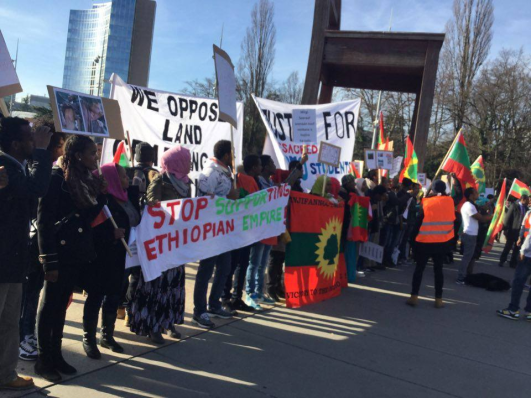


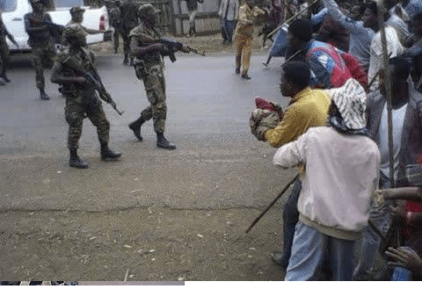
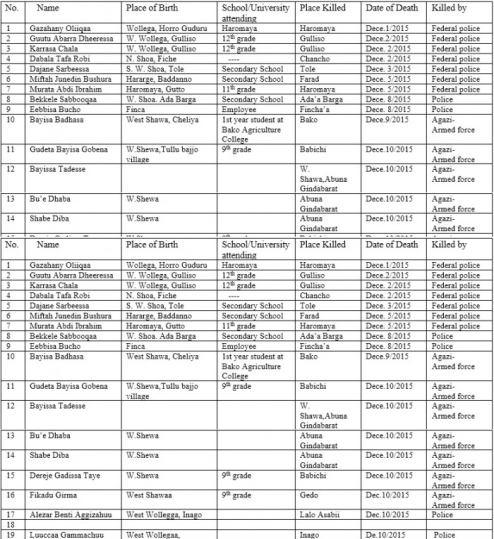
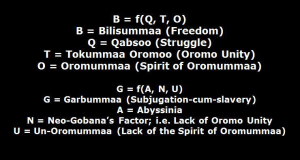



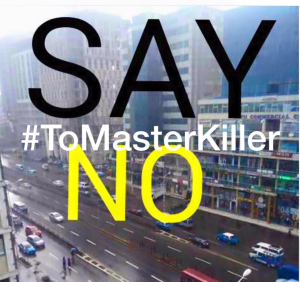
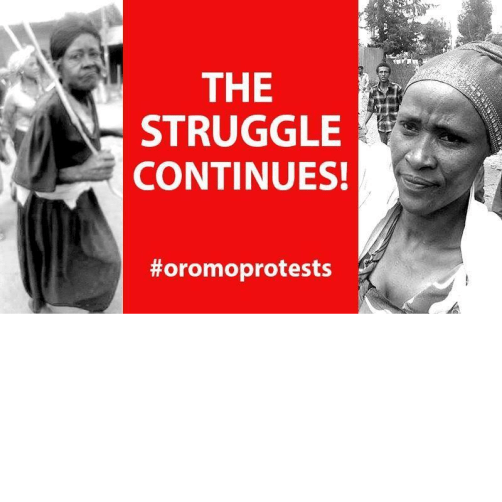
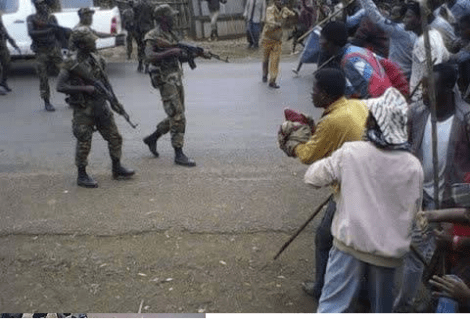

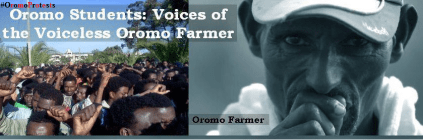

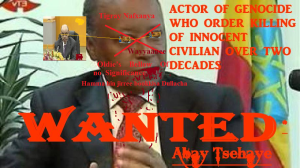
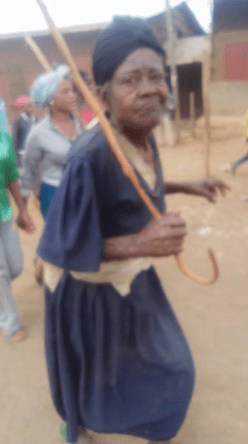
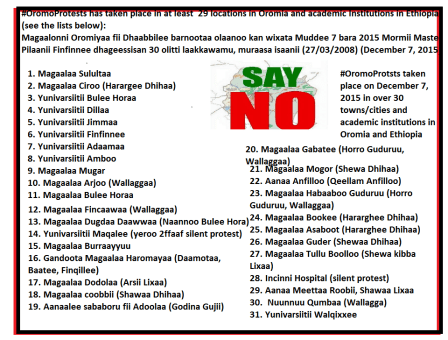
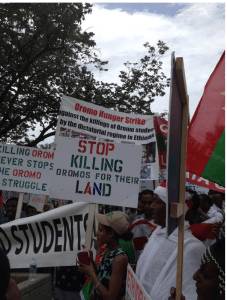
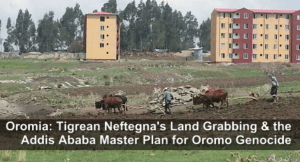
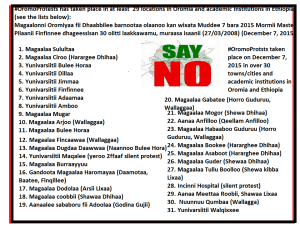
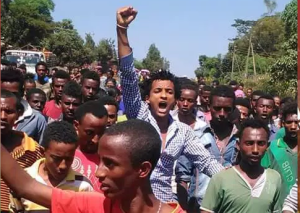
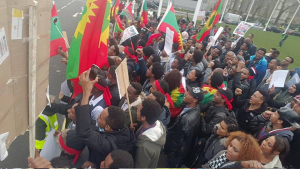


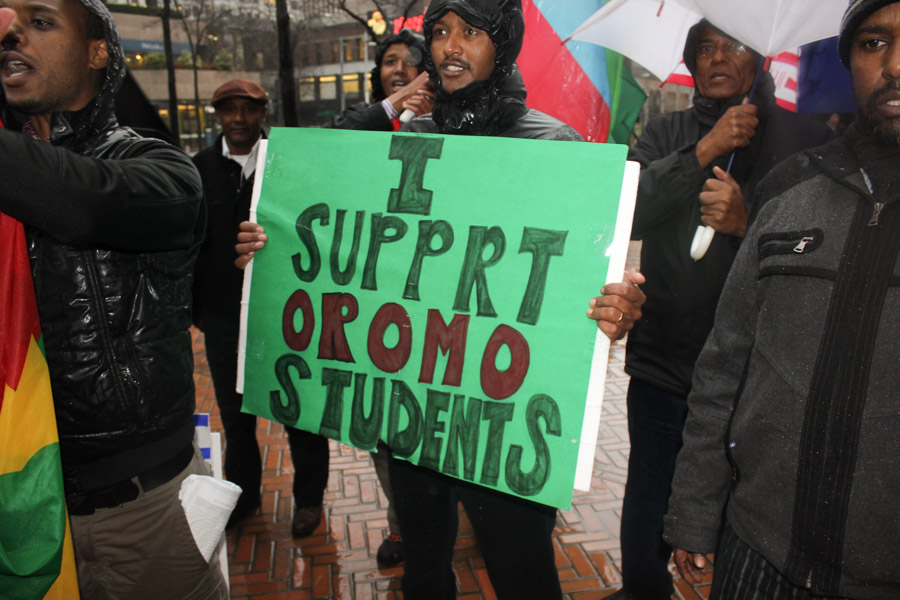

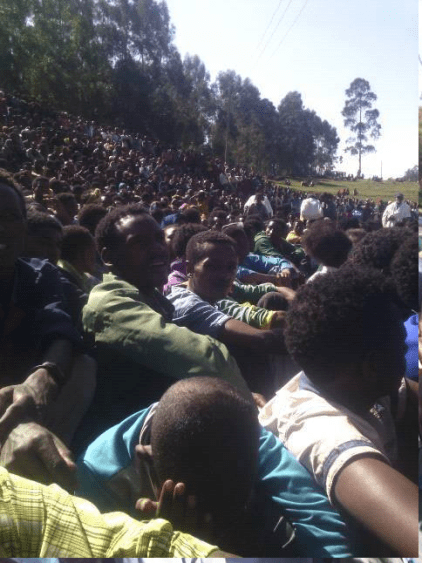
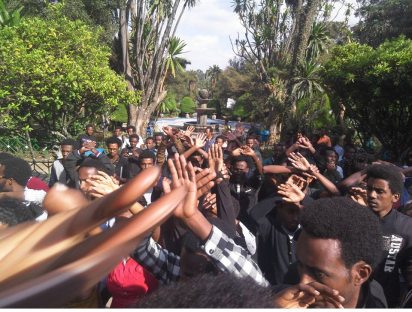




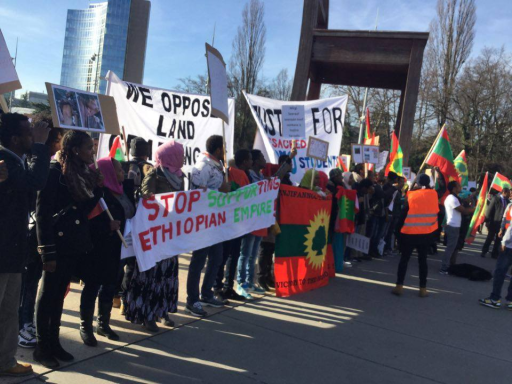

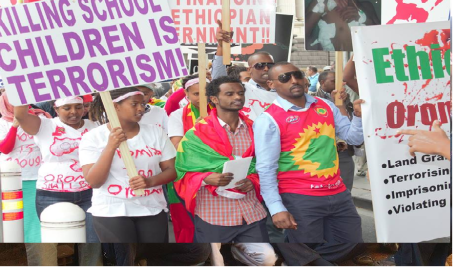
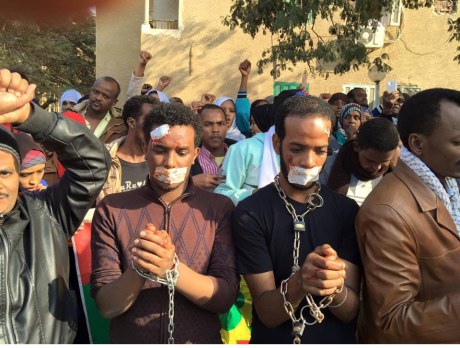

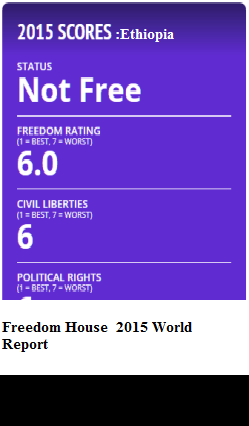

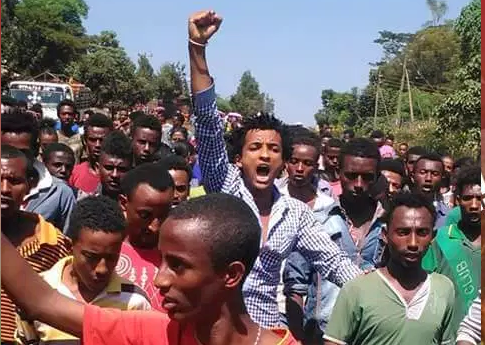
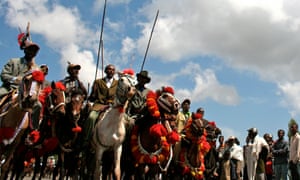
 To: Office of the UN High Commissioner for Human Rights
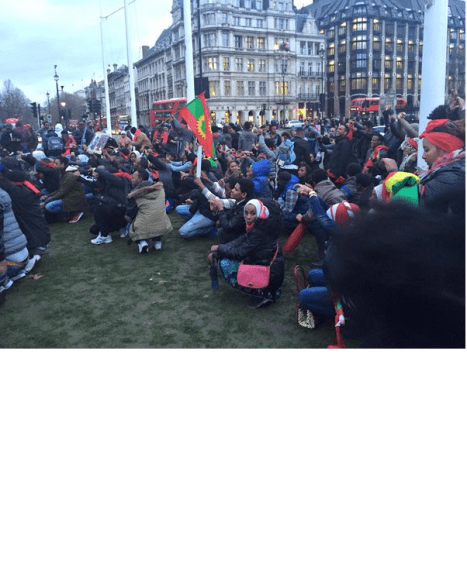



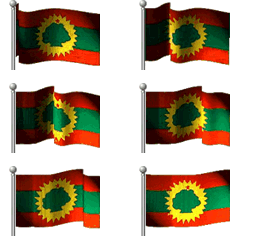



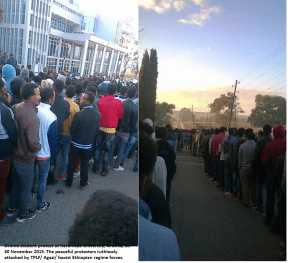
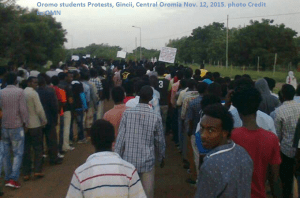
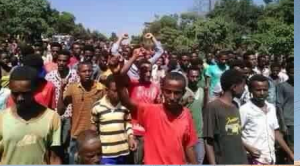
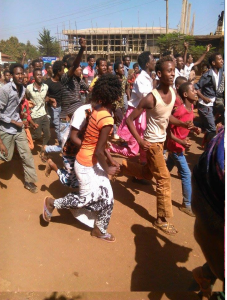





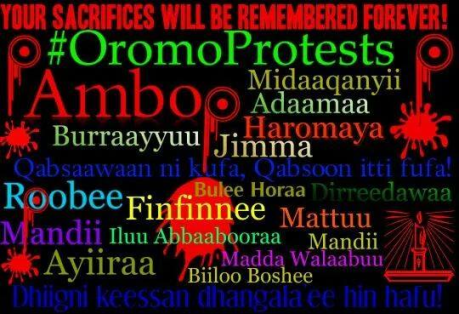
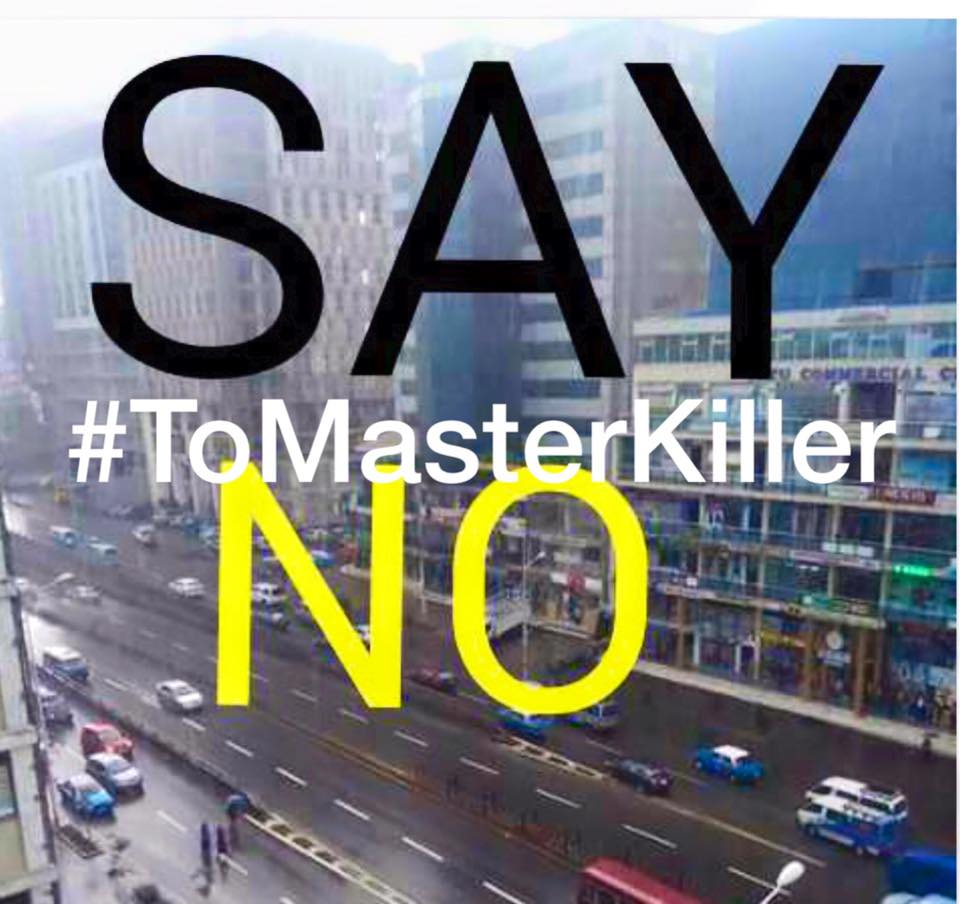





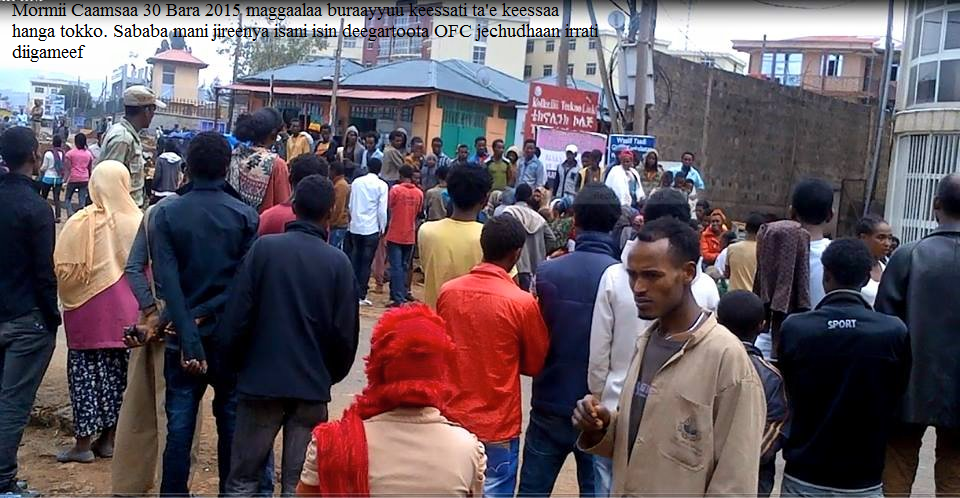

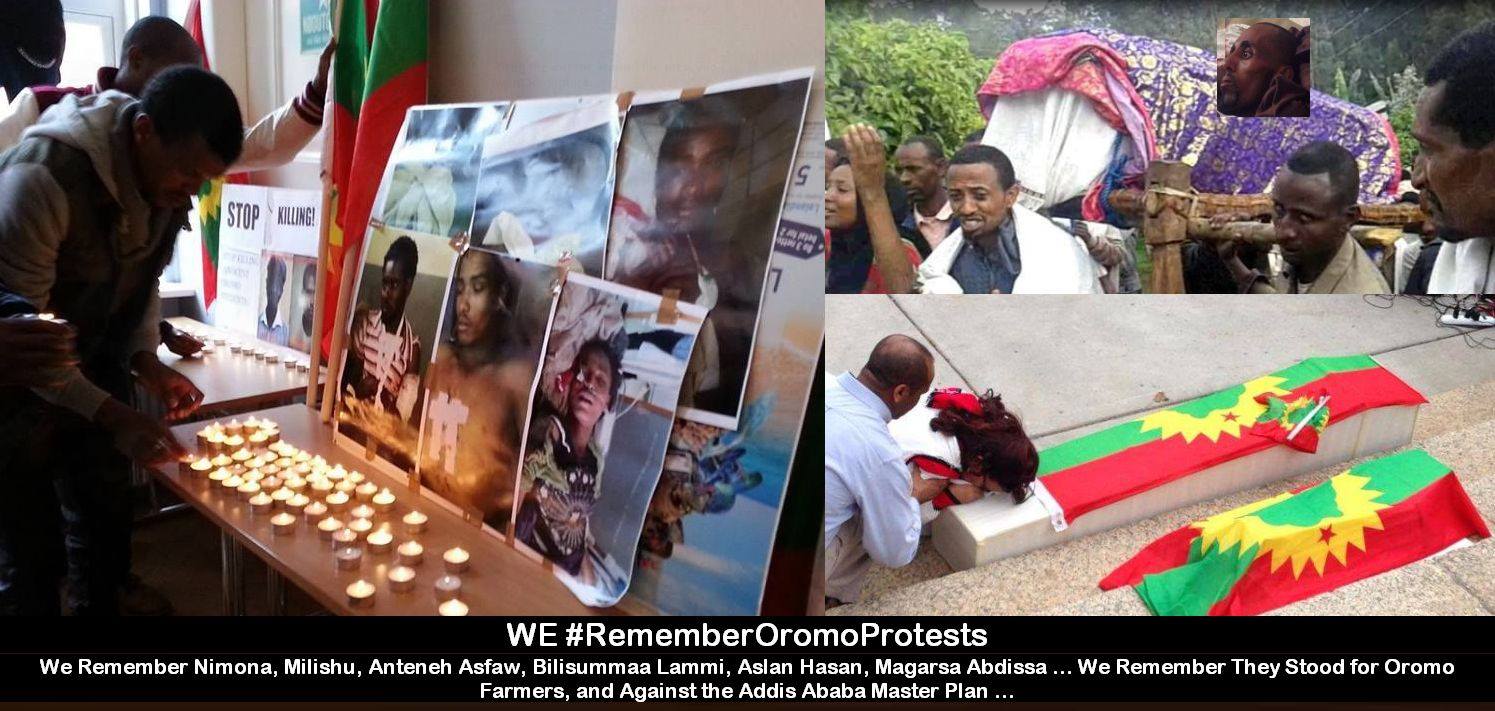

![Jimma[1]](https://qeerroo.files.wordpress.com/2015/03/jimma1.jpg)


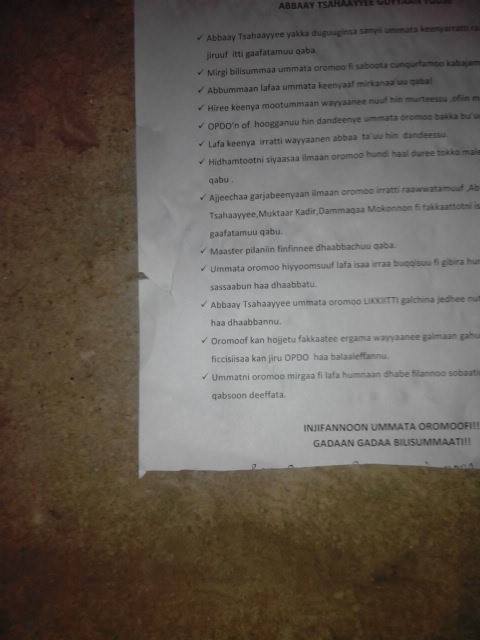





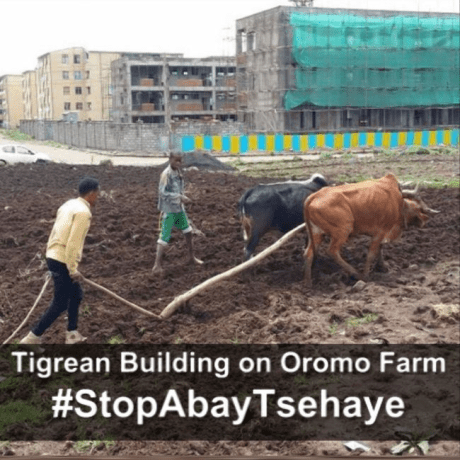
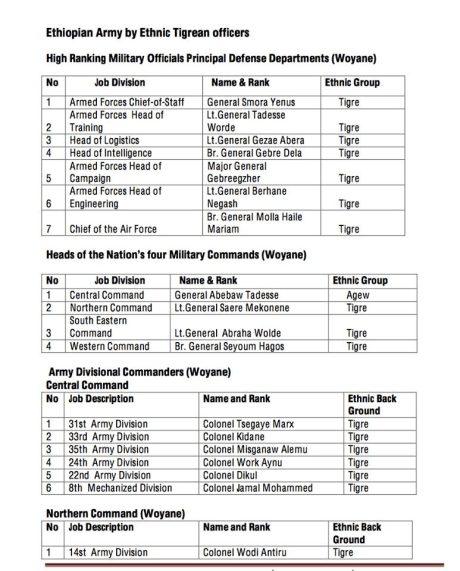

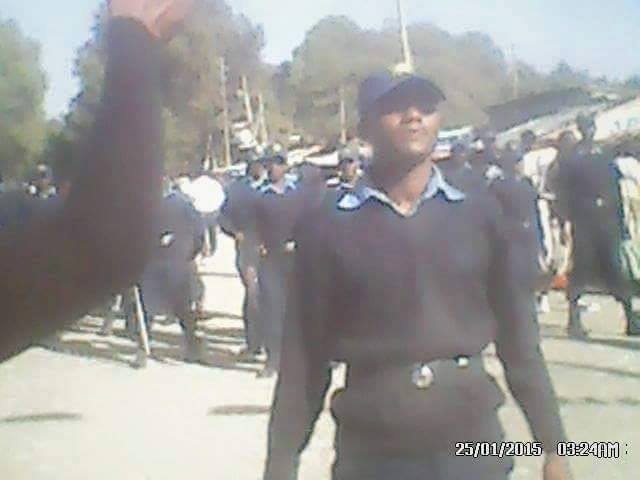


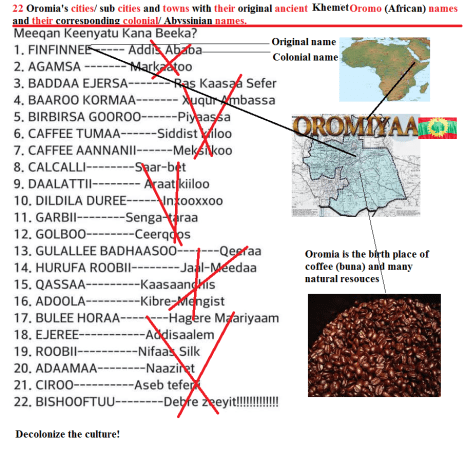


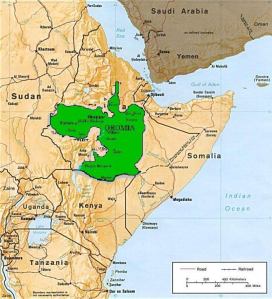





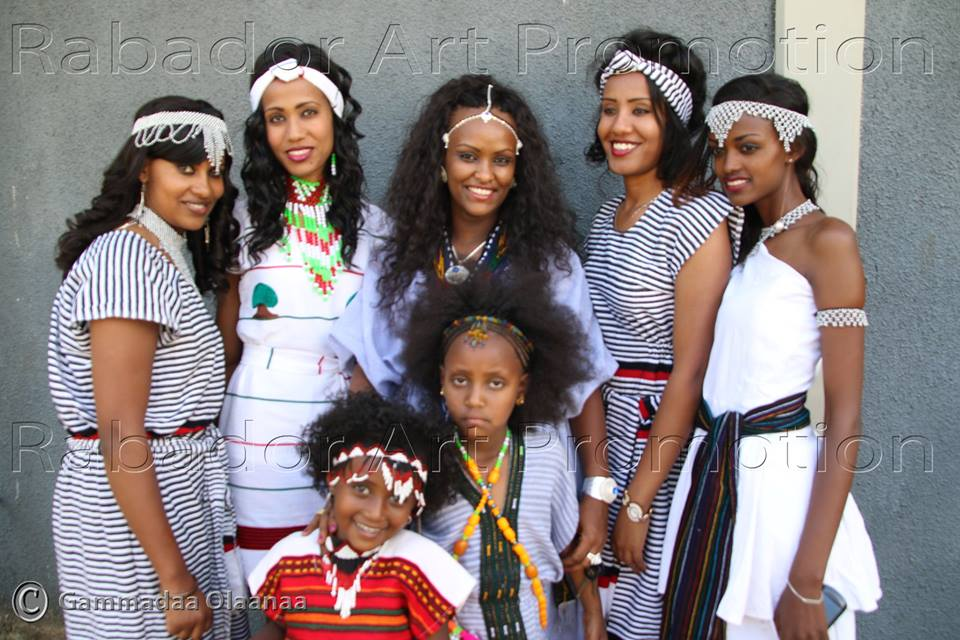
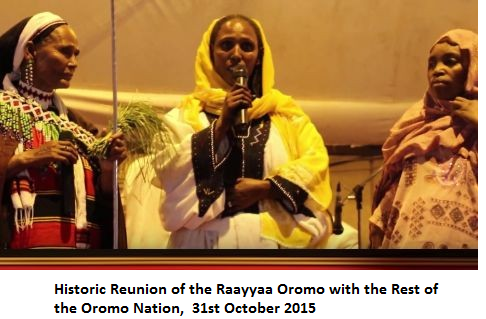
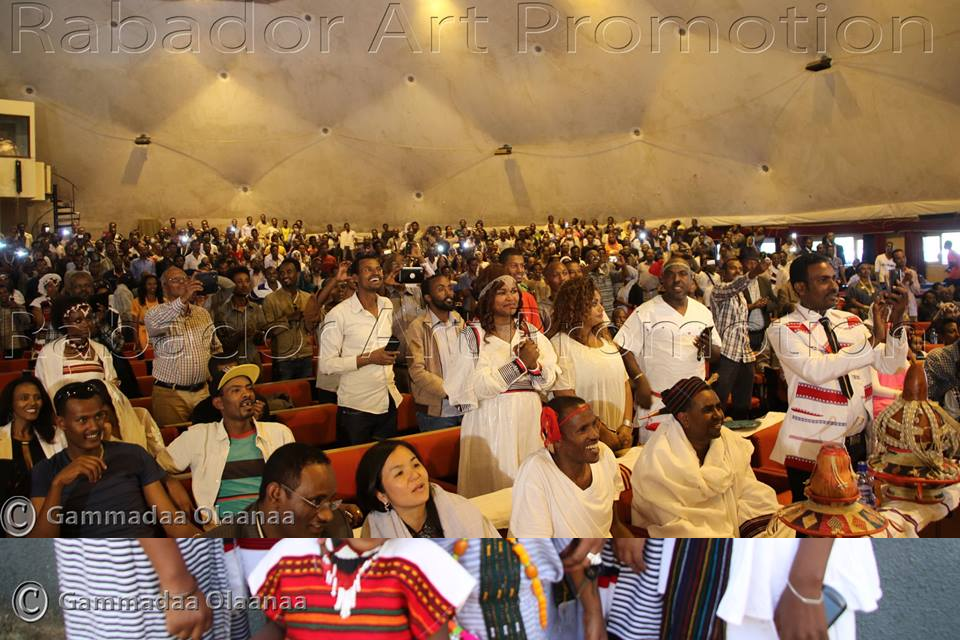
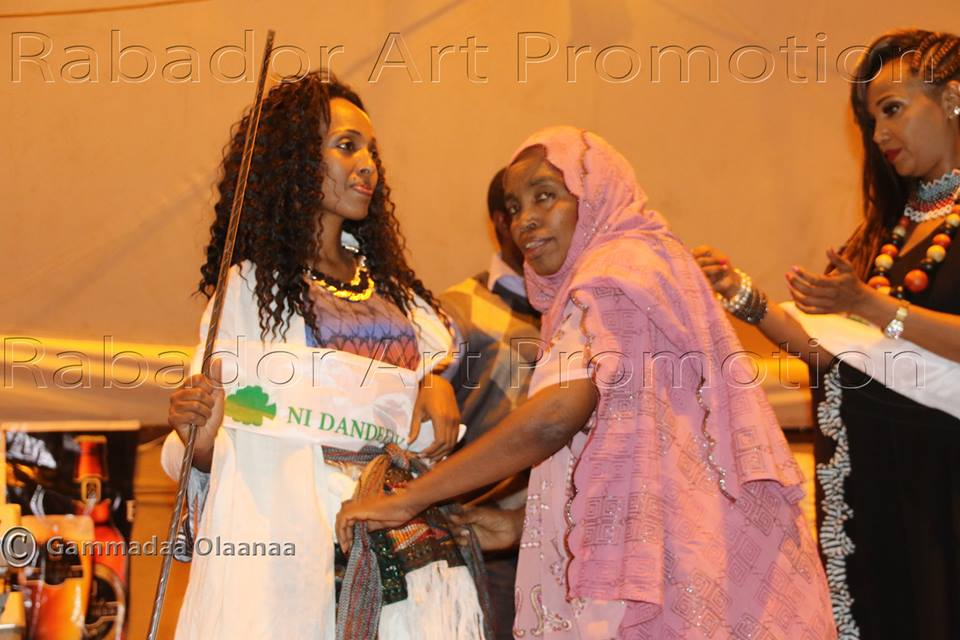
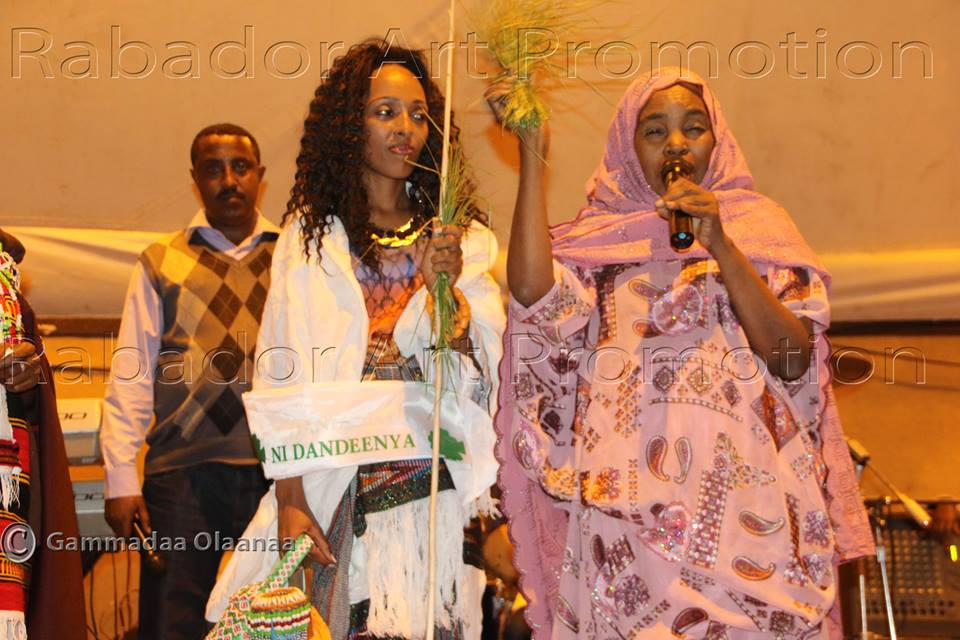






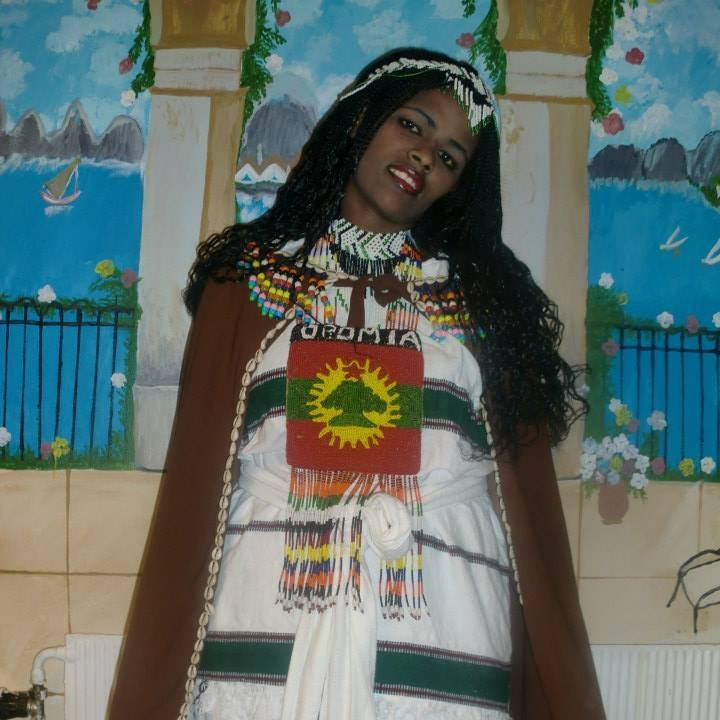
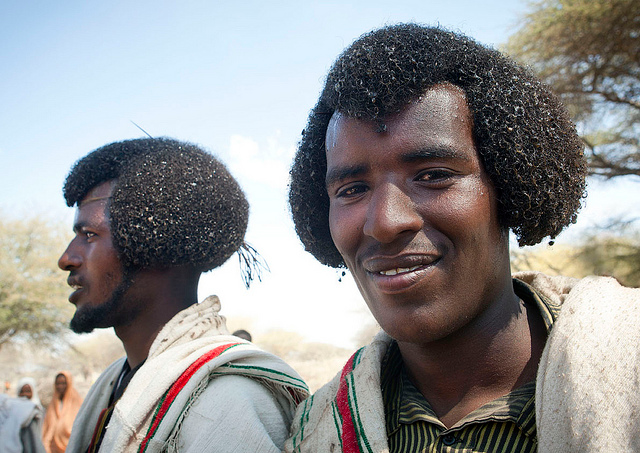
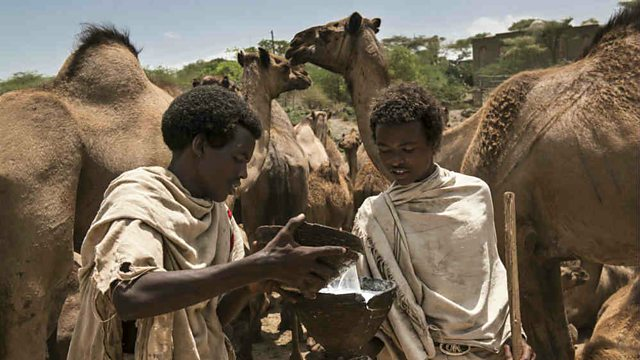
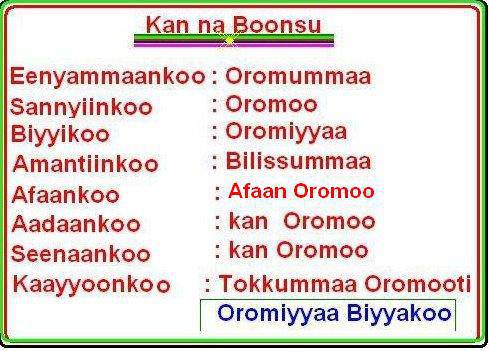


 Oromian Economist
You must be logged in to post a comment.