Economic and development analysis: Perspectives on economics, society, development, freedom & social justice. Leading issues in Oromo, Oromia, Africa & world affairs. Oromo News. African News. world News. Views. Formerly Oromia Quarterly
The Ethiopian government has allegedly carried out a spyware campaign targeting dissidents living abroad, including in the U.K., a report has claimed.
Canada-based research group Citizen Lab alleged that Ethiopian dissidents were targeted with emails containing “sophisticated commercial spyware posing as Adobe Flash updates and PDF plugins”.
The report further claimed that Ethiopia used a commercial spyware product manufactured by Israel-based Elbit Systems Ltd to spy on dissidents.
Those targeted included dissidents from the Oromo community, one of Ethiopia’s largest ethnic groups, the U.S.-based media outlet Oromo Media Network as well as one of the researchers conducting the investigation.
Etana Habte, an Oromo activist and PhD candidate and Senior Teaching Fellow at SOAS, University of London, was also targeted.
He believes the government allegedly targeted him to identify people behind protests in Ethiopia’s Oromia state, which was rocked by months-long demonstrations, some of which turned deadly.
“By spying over us they mainly want to identify a wide circle of people who communicate with us on the movement at home,” he told Newsweek.
“They wanted to break into our privacy, collect information from our communications with one another, because they believe the leadership of Oromo Protests communicates with us.
“The solution for Ethiopia is not in spying over political dissenters like us, it is in listening to the people and meeting their demands” Habte said.
The Ethiopian embassy in London has not responded to a request for a comment on the allegations.
Ethiopian Communications Minister Negeri Lencho declined to comment on the report, according to Reuters.
Researchers said their findings raised questions on Elbit’s human rights due diligence practices.
The company said in a statement: “The intelligence and defenses agencies that purchase these products are obligated to use them in accordance with the applicable law.” It added that it only sell products to defense, intelligence, national security and law enforcement agencies approved by the Israeli government.
Deadly protests explained
People mourn the death of Dinka Chala who was shot by Ethiopian forces in the Yubdo Village, about 100 kilometers from Addis Ababa in the Oromia region, on December 17, 2015. Dinka Chala was accused of protesting, but his family says he was not involved. Oromia was rocked by months-long protests, some of which turned deadly.ZACHARIAS ABUBEKER/AFP/GETTY IMAGES
Demonstrations started in Oromia in late 2015, where people initially protested over government plans to expand the territory of the capital Addis Ababa, with farmers raising concerns that increasing the size of the city would lead to forced evictions and loss of farming land.
The government later scrapped the plans, but protests continued. Oromo people argued for a greater inclusion in the political process and the release of political prisoners.
The protests, labelled as the biggest anti-government unrest the country has witnessed in recent history, later spread to Amhara and the Southern Nations, Nationalities, and Peoples’ Region (SNNPR) region.
The unrest continued throughout 2016.
Last October, the government implemented a six-month-long state of emergency, which was further extended by four months in March, to tackle the unrest.
Critics of the state of emergency claimed the government was trying to quell protests by, among other things, restricting freedoms and banning certain media outlets, including the Oromia Media Network. The government denied the allegations.
Rights groups have criticizied Ethiopia for the way it handled protests, accusing the military and the police of using excessive force to quell demonstrations.
The response to the unrest resulted in the death of at least 669 people, a figure the government confirmed in a report released in April.
While the country’s Human Rights Commission recommended prosecution of some police officers, it maintained that the overall response by security forces was adequate.
The Third Oromo Leadership Convention was held in the City of Houston, Texas December 1-3, 2017. The delegates participated in extensive discussions concerning the situation in Ethiopia based on analyses presented by several scholars. The delegates established that the Oromo Protest that started in 2014 has opened new possibilities for transformative change in Ethiopia. They also recognized that, because of the protests, the historic Oromo struggle has advanced from resistance against oppression to reconstruction in preparation for the imminent political transition in Ethiopia.
The country is in throes of deepening multidimensional crises. This is the conclusion of an assessment jointly prepared by Ethiopian intelligence and defence officials otherwise known as the National Security Council. There is a historic opportunity for transition to a genuinely participatory democracy that emerges from below. There is also the danger that the opportunity could be squandered. To protect the gains made and to soldier on towards ultimate victory, we urge all Oromo nationalists to do their part to deny the forces of reaction the chance to launch a counterrevolutionary offensive against the Oromo struggle.
We issue this statement as the consensus of the delegates to the Third Oromo Leadership Convention calling on all those who support the longstanding goals of the Oromo national movement to facilitate a peaceful transition to a new political dispensation of a participatory democracy.
IMMEDIATE MEASURES
Immediate steps need to be taken to reverse the deepening crisis by asserting the legitimacy of any existing constitutional body. A peaceful and democratic transition addresses the current crisis of legitimacy and sets the stage for the restoration of democratic-constitutional state. The following can be taken as steps for action.
Legislative Authority
Reasserting authority. The Tigray People’s Liberation Front (TPLF), the core of the governing party, now admits that it is responsible for the deepening political and economic crises in Ethiopia. Because of its culpability in precipitating the crisis, the TPLF incapable of addressing the profound problem of lacking of a visible, authoritative, and widely acceptable leadership that has paralyzed the country for some time must be addressed. The federal legislature is the only body where the voices of all constituencies are said to be represented on a proportional basis. It must reassert its authority to prevent harmful laws from passing. This would constitute a major step towards a smooth transition to a genuine participatory democracy.
Transparent Debate: Responding to demands of the people should be the focus of the elected representatives of the people. Parliament should debate the ongoing crisis and take steps to restore order based on the wishes of all constituencies. The parliamentary deliberations should be done publicly in order to win the support to all constituencies.
Critical First Steps: The federal parliament can institute the following confidence-building measures to give chance to an orderly transition.a. Repeal unconstitutional laws: The Anti-Terrorist Law, the Press Law and the Civil Society and Charities Law are designed expressly to prevent citizens from exercising the human rights enshrined in the constitution. They are unconstitutional and should be repealed. The law for registration of political parties, the electoral law and the various regulations and directives issued under it, and the law on public political meeting and peaceful demonstration must be revisited with a view to allowing the people maximum freedom to associate, organize, assemble, demonstrate, and express their political views, interests, and petition for their rights within the ambit of their constitutional human rights.
b. Release all political prisoners: Opposition leaders who now languish in prison are victims of these unconstitutional laws. With the repeal of these laws, it then follows that they should be released unconditionally.
c. Reform the System: The instruments of “dominant-party rule” are: a justice system that is subservient to the will of the ruling party; a security system that operates to eliminate opposition and resistance; and a national election commission whose reason for existence is to declare the ruling party’s election victories without counting the votes. Parliament must engage in a genuine and sustained justice sector reforms, security sector reforms, electoral system reform, reform of all democratic institutions of representation (House People’s Representatives), inclusion (House of Federation), human rights (Ethiopian Human Rights Commission and the Institute of the Ombudsman), and accountability (Auditor general and Anti-corruption Commission).
Outlawing Illegitimate Authority: There is widespread perception that there is a private source of power behind the public institutions. Decisions are first hammered out in private and then forwarded to the public legislature for enactment. Rendering the parliament functional can obviate the dangers that the private centres of power are likely to pose to protect their ill-gained power and privilege.
Executive Authority
There is only one way out of the present crises: the legislature should act as the true and supreme source of power [as per art 50(3) cum 54(4) of the Constitution] and stop waiting for somebody to give it direction. The incumbent executive entity has no credibility or legitimacy. Parliament must institute a governing structure that observes the rule of law.
Reformed Executive: Parliament must do everything to resuscitate the civilian governing bodies and end rule by the security organs of the state. To do this, Parliament must form a new, more inclusive, more credible, more functional, and more representative government in such a way that expresses the wishes of the people as manifested in the protests.
Marshall Support: Following the adoption of this process of peaceful and systematic transition, the legislatures of the regional states should pass resolutions in support of the reform agenda. And the residents of these administrations should be mobilized to support the actions of their legislatures.
Re-establish Security: There is increasing reliance on coercive means and institutions, which is eroding the effectiveness and legitimacy of civilian institutions. We believe the Ethiopian Defence Force (EDF) is responsible for the deteriorating security situation characterized by a “breakdown of the rule law,” “apparent lawlessness” and “episodic conflicts” and it at least complicit in the death and mayhem that is still creating havoc throughout Oromia. The legislature must assert civilian control over the EDF and arrest the deepening political and economic crises.
Internally Displaced Persons: We condemn the massive displacement of Oromo from the Somali regional state. The deliberate act of organizing the eviction of a group of people because of their identity is crime that must be investigated and the perpetrators of the crime brought to justice. The president of the Somali regional state, Abid Mohammed Omer aka Abdi Illey, should be brought to justice for the crime against humanity his forces committed against innocent Oromos. Parliament must immediately conduct inquiry into the source of funding and the legal basis for its operation. Parliament should also work towards disarming and disbanding this unruly paramilitary forces such as the Liyu Police that the regional president uses to advance his egregious agenda of ethnic cleansingand replace it with a properly recruited and trained State Police.
Reassuring stakeholders: Interested foreign powers need to be reassured that their interests would not be negatively affected. In particular, legitimate foreign investors should be reassured that their outlay is safe. It should be made abundantly clear to these parties that a sort of internal stability drawing on democratic legitimacy would render it a better guarantor of regional stability than an order that is internally challenged. This should in fact make the donor countries evaluate their uncritical support for the regime and push for a transition to a democratic order.
OROMO POLITICAL COMMUNITY
We affirm our ultimate national objective is belief stated in the OLC Charter, An Oromo Covenant, that the Oromo people shall always draw inspiration from their gadaa democratic heritage and shall remain a self-governing, participatory democracy founded on respect for fundamental human rights.
In this Convention, we concluded that a true democratic transition in Ethiopia can only be viable if it addresses the long standing demands of the Oromo national movement as expressed in our time by the Oromo protests. While they are expressed in multiple ways, the Oromo demands are captured in the all-encompassing expression, abbaa biyyummaa, which is the demand for sovereignty over the governance, the resources and the ownership of our homesteads, land and country.
As we anticipate ushering in this new political dispensation, we urge all Oromo political parties to deliberate on the current situation carefully and systematically and offer a clear roadmap for what will be implemented in the wake of the inevitable collapse of the regime in power.
CIVIL SOCIETY FORCES
The revival of the Abba Gadaa institutions is evidence of Oromo cultural renaissance and revitalization of Oromo indigenous political heritage. The Abba Gadaa councils are a genuine Oromo institution that must be strengthened. In this respect, we support the councils’ work and express our wishes for the following.
The Union of the Oromo Gadaa Council is urged to call the Oromia gadaa assembly to consider national issues once a year.
The different regional gadaa councils established at the many former gadaa assemblies should begin to legislate rules that will strengthen the functions of the gadaa institutions.
The regional gadaa councils should take measures to create institutions that take account of their adaptability to the present generation’s needs and demands.
The councils must continue to build civil society institutions, particularly the inclusion of women into gadaa structures.
Oromo communities and other peoples find the indigenous institutions of conflict resolution more expeditious and judicious than the lengthy litigation handled by formal institutions. We urge the regional gadaa councils to begin to take measures to relaunch alternative dispute resolution processes and institutions to complement the functions of formal institutions.
DONE IN HOUSTON, TEXAS, ON THIS 3rd DAY DECEMBER 2017.
The first Oromo Leadership Convention (OCL) held in Atlanta, Georgia, November 11 – 13, 2016, took place at a time of heightened risks for the Oromo protests. There was pent-up anger in the country over the Ireecha Massacre and deep apprehension concerning the just declared state of emergency in Ethiopia. The second was held in an atmosphere profound uncertainty with many Oromos wondering whether the protests movement had atrophied. There was concern that Command Post, the military unit in charge of the state of emergency had succeeded in arresting the momentum of change the Oromo protests had unleashed.
The situation today is very different. We can be more confident that the struggle has moved on to a more hopeful stage. We are on the cusp of becoming free but that outcome is not assured. It is a critical period in the history of our nation and out longstanding struggle. At this stage, the OLC needs to aim to address current challenges continue to assist the struggle at home and complete the struggle with triumph.
To contribute our part to the current phase of the Oromo national movement, the OLC Coordinating Committee to affirm the decision that was made at the Washington Convention and announce that the third convention will be held in the City of Houston from December 1-3, 2017.
AGENDA
We believe that the Oromo national movement has entered a decisive, if uncertain, stage. The OLC was organized to nudge the Oromo struggle forward, affirm the unity of the nation and organize its national politics. At this stage of the struggle, we maintain that Oromo nationalism has moved from a defensive posture to an assertive model. The delegates will evaluate the road we have traveled and chart course for the future of our nation.
1. Envisioning a Pluralistic Society: Oromo is a unified nation with a social organization that recognizes differences of age, kinship, gender, religion and region. Historically, these differences have served the purpose of organizing the society into unity. In our time, we must begin to recognize that the unified Oromo nation contains diverse groupings and must take steps to begin to live as a free, open and pluralistic society and practice a cultural of pluralism which contains the values of diversity, tolerance, commitment and communication. The Houston Convention envisages kicking off a national convention on pluralism in the Oromo context.
2. Forging of political solidarity: At this stage, the Oromo movement has overcome the distractive political divisions within the Oromo society while deepening a culture of pluralism. The Oromo movement needs to overcome divisions that obstruct cooperation and strengthen solidarity with other groups. OLC will invite Oromo scholars to discuss ways of strengthening internal diversity and external solidarity with non-Oromo groups.
3. Recognize the contribution of artists: Throughout the Oromo struggle, artists have helped inform the larger Oromo society about social issues, harmonize social activists within the movement; informed the movement ideals and goals to people outside the movement; dramatized movement goals directly to historicize, tell and retell the history of the Oromo movement. The OLC will highlight these contributions and encourage artistic expressions to advance the struggle across the finish line.
OUTCOME
The Houston convention will issue a manifesto that will reaffirm that Oromo unity is built around gadaa principles and Oromo aspirations are shaped by gadaa values; declares the principle of living together in a pluralistic society; and underscores the importance of solidarity calling for cooperation based on common purpose and common interest and establishing ways of resolving differences.
OSA’S STATEMENT ON DISPLACED OROMOS: AN URGENT CALL TO THWART THE ESCALATING HUMANITARIAN CRISIS IN ETHIOPIA
Oromo Studies Association (OSA) | November 26, 2017
The Oromo Studies Association – a multi-disciplinary academic organization established to foster scholarly studies in all fields pertaining to the Oromo people – would like to bring to the attention of prominent political leaders and influential policy makers, the building humanitarian crisis in the Horn of Africa; with the so-called Liyu Police of the Somali region – a paramilitary force that has been organized, trained and armed by the Ethiopian government – waging an undeclared war against Oromo communities in eastern, southeastern and southern Ethiopia. While these undeclared wars have subjected the Oromo to crimes comparable in magnitude to the one the Rohingya of Myanmar are currently facing (the offensives have already claimed the lives of thousands, and caused the displacement of hundreds of thousands of Oromo civilians) ; they are not gaining the attention they deserve in the global centers of power and among the international media for reasons that are neither convincing nor clear.
But, for the social norms of tolerance and coexistence built over centuries of largely positive interactions, interdependence and intermingling among the brotherly peoples in Ethiopia , these aggressions could have conceivably plunged the country into chaos and bloodletting that would have surpassed the Rwandan genocide. There is no guarantee that these norms will hold indefinitely with the Somali regional government continuing to unleash its unaccountable force against Oromo communities in the border areas; committing all sorts of appalling crimes, likely with the intention of uprooting them from their ancestral lands (Qe’ee). OSA is deeply concerned that this will end in humanitarian catastrophe of epic proportions unless extreme interventions are undertaken immediately to stop these unprovoked and deadly aggressions.
Some are erroneously reporting these outrageous attacks by one side as inter-ethnic conflicts between Oromo and Somali forces , based on a glib observation that the former are naturally fighting back to defend themselves and their Qe’ee. The fact of the matter is that these conflicts are taking place with encouragement from, and an active participation of, the powerful group that currently dominates the Ethiopian government, aka the Tigray People’s Liberation Front (TPLF). Indeed, credible evidences suggest that these assaults are instigated by Ethiopian generals working in close concert with the enigmatic character Abdi Iley (the president of the Somali regional government) and his criminal enterprise known as the Liyu Police.
The Liyu Police – a Janjaweed-like paramilitary group – was instituted by the Ethiopian military in 2008 as a counter insurgency force against the Ogaden National Liberation Front(ONLF), an outfit that has been fighting for the rights to self-determination of the Somali people in Ethiopia. Even though this paramilitary group has been implicated in mass killings, kidnappings, rape, and other disturbing human rights abuses documented by respectable human rights organizations , it has never been held to account, largely because it is doing the dirty work of the Ethiopian central government. It should be noted here that numerous calls for independent investigations into the troubling activities of this group have always been rejected by the regime in Addis Ababa, with media organizations affiliated with the TPLF becoming reliable defenders of the Liyu Police. The deal is that Abdi Illey executes – through his clan-based militia – TPLF’s pernicious schemes, in return for being allowed to wield absolute political power over his captive population, while being protected by powerful forces in Addis and beyond.
Unable to stop the ever widening #Oromo Protests even after deploying its vicious army unit known as the Agazi (recall the Irreechaa Massacre of October 2, 2016 and the subsequent declaration of a state of emergency that lasted for ten months ), the TPLF appears to have chosen waging a proxy war with the Oromo people using the Liyu Police, with a hasty calculus that the strategy might weaken its arch-enemy, the Qeerroo Bilisummaa Oromo (QBO) – the youth group behind the ongoing #Oromo Protests. It is to be recalled that the QBO had forced the TPLF to abandon its secretly-hatched major policy initiative – the inaptly named ‘the Addis Ababa and the Nearby Oromia Towns Integrated Master Plan’ – a ploy that was meant to empower a few fat cats in Addis Ababa at the expense of millions of farmers in central Oromia.
Finding itself in unfamiliar territory because of #Oromo Protests – and quickly losing its carefully-crafted image of a ‘strong developmental-state’ capable of ‘delivering the goods’ and policing not just Ethiopia but the entire Horn-of-Africa – the TPLF appears to be in a desperate bid to regain some of its mojo, by activating the deadly Somali-region militia and unleashing it on innocent Oromo citizens. As some have pointed out, the key rationale behind this reckless and deadly move was to goad the Oromo to start fighting with the brotherly Somali people, with the aim of deflecting their attention from (and weakening their resolve of resisting) the tyrants in Addis Ababa. The TPLF has perfected this approach in its nearly three-decades-old rule, effectively using it to exploit the pre-existing fault-lines between the elites of the two major ethno-national groups in the country, the Oromo and the Amhara. With leaders from the two groups showing signs of rapprochement, the TPLF appears to be on a fishing expedition of orchestrating conflicts between the Oromo and the Somali populations to prolong its oppressive rule in the country.
As of yet, the Oromo have refused to take the bait, by and large keeping their focus on the real enemy that has been the cause of much of their misery. Despite being subjected, essentially because of their identity, to a myriad of atrocities by the heavily-armed tag team of the Ethiopian army and the Liyu Police, the Oromo have not taken any kind of retaliatory measures against innocent Somali citizens living in Oromia; instead, they are marshalling their limited resources in trying to rehabilitate the hundreds of thousands of their compatriots that were evicted from the Somali region and the border areas, practically keeping the situation from devolving into inter-ethnic conflicts that could have devastating implications in the region and beyond.
The question responsible people should ask under these circumstances ought to be: is this a sustainable state-of-affairs? Should leaders with a stake in World peace continue to count on the goodwill and the essential comity of the Oromo people and ordinary Ethiopians to justify their lack of focus and serious interest in the looming disaster in the Horn of Africa? OSA scholars – most of whom are serving in Western universities with distinction – believe that the call for liberty and justice in Oromia in particular and Ethiopia in general can no longer be muzzled by sheer force; nor can it be twisted with any amount of political machination. Therefore, we call upon influential and responsible political leaders and policy makers in the West to find creative ways (there are plenty, as they hold the purse strings) that will force the Ethiopian government to: 1) disband the Liyu Police, bringing to justice the principal players in the violence that uprooted close to half a million Oromo civilians from their homes and livelihood; 2) rehabilitate the displaced population, making sure they are properly compensated; 3) make a complete U-turn in how it deals with the predominantly peaceful #Oromo Protests; and, 4) address – without any delay – the legitimate political, economic and cultural demands of the Oromo people and the other ethno-national groups in the country. OSA believes strongly that the cost of doing nothing will be orders of magnitude higher than the cost of measures that may have to be taken immediately to induce the TPLF to change its behaviour.
Respectfully,
Teferi Mergo, PhD
President, Oromo Studies Association
Cc:
Donald Trump, President
The United States of America
Angela Merkel, Chancellor
Bundesrepublik Deutschland
Theresa May, Prime Minister
The United Kingdom
Justin Trudeau, Prime Minister
Canada
Emmanuel Macron, President
République Française
Xi Jinping, President
中华人民共和国
Paolo Gentloni, Prime Minister
Repubblica Italiana
Malcolm Turnbull, Prime Minister
The Commonwealth of Australia
Shinzō Abe, Prime Minister
大日本帝國
António Guterres, Secretary General
The United Nations
As over 610,000 Rohingya people have been displaced, the UN report details ‘devastating cruelty’ against Rohingya population http://www.un.org/apps/news/story.asp?NewsID=56103. While over 690,000 Oromo people have been displaced from Eastern Ethiopia by the coordinated TPLF Ethiopia’s regime’s cruel forces, the UN and the International Community are silent. Millions of Oromo people, children, women, elders, young and adults have been evicted from their homes through systematic land grabs, ethnic cleansing and direct wars declared on them. Thousands killed and over a quarter million are in Ethiopia’s regime’s torture camps. The genocide war against Oromo people is in its full swing and unstopped on daily basis.
The internally displaced Oromo people are suffering without food and shelter.
(OPride) — Emails between senior Ethiopian government officials, obtained exclusively by OPride, shed new lights on the state-run Ethio Telecom’s abrupt decision to halt the text-to-give campaign launched by Oromia State in September. The disclosures also pinpoint the key government officials behind the action.
“Help rehabilitate our people displaced from the Ethiopian Somali region by texting “O” to 700 to give 5 birr,” Addisu Arega, the spokesperson for Oromia State, announced on Sep. 28, 2017 via Facebook and Twitter. “We thank Ethio Telecom for their huge support in setting up the campaign free of charge.”
However, the campaign that was meant to raise relief funds for the more than half a million Oromos displaced from the Somali Regional State lasted a mere five hours.
Fascist TPLF Ethiopia’s regime Agazi forces continue with mass killings in Oromia (Ethiopia): At least 10 killed and 20 wounded in Ambo. #OromoProtests, read in Oromian Economist, October 28, 2017
The peaceful street protests in Oromia that shook Ethopia for over one year (November 2015-October 2016) turned violent after the reckless action by the government when its military attacked civilians and murdered over 700 at the Oromo Irrecha Festival on October 2, 2016.
The fascistic action of the Ethiopian government turned a peaceful protest into a violent one in which many people were killed and government property was destroyed by the angry protesters.
The TPLF/EPRDF government declared a six- month state of emergency- later extended to ten months- on October 8, 2016 with the pretext of calming the violence in Oromia. During the State of Emergency, the government killing squad members were deployed in all villages of the Oromia Regional state where they committed killings, kidnappings, and arrests during the ten months of the State of Emergency.
Under the State of Emergency, the TPLF/ EPRDF government- trained Liyu Police led by the killing Squad Agazi were deployed along the long border between Somali and Oromia regional states and occupied 32 districts of Oromo land from the south Borana zone to the northeast Hararge zone; many people were killed from both sides. During the six- month war between the federal government force backed Liyu Police and Oromo farmers over 500 people have been killed, and many other Oromos have been forcefully kidnapped and taken to Somali Region.
Despite the governments claims to the contrary, Ethiopia is essentially a one-party state in which power is monopolized by the EPRDF, which despite claiming to be a democratic coalition, is in fact a dictatorship ruled by men from Tigray under the TPLF banner. It is an illegitimate government supported by the West, – America, Britain and the European Union (EU) being the largest benefactors – politically and economically. With the exception of the EU, these powers not only remain silent in the face of State Terrorism, but also spread Ethiopian propaganda through the mainstream media and act in collusion with the EPRDF in relation for example, to the arrest of opposition party leaders. Instead of supporting the ruling party, donors should be applying pressure on it to respect human rights and adhere to the democratic principles laid out in the country’s constitution. Their silence and dishonesty makes them complicit in the crimes of the government, which are heinous and widespread.
Successive Ethiopian regimes have never displayed humanity or respect for Oromo and denied opportunities to build their social, economic, political, cultural and organizational infrastructures. In all spheres of life, discrimination, subjugation, repression and exploitation of all forms were applied. Everything possible was done to destroy Oromo identity – culture, language, custom, tradition, name and origin. In short, the leaders of Ethiopian empire maintained the general policy of genocide against the Oromo people.
Current state terrorism (by TPLF junta):
Reduction project of TPLF is on track with multiple fronts. Here is the TPLF slogan: We, TPLF or Tigrean sons and daughters, will reduce the number of Oromo from 40 million to the minority group without their awareness and knowledge of the world.”
Through Massacre and Displacement example recent action in Eastern Oromia, thousands of silent death across Oromia in the night, in detention camp and special torture branch in Meqelle (Tigrai).
Through targeted shootout on the street, by kidnapping and mutagenic process
Through indirect actions (denying well-functioning health care system and inhibiting economic empowerment).
Humiliation project of TPLF: Here is the TPLF Motto: We, TPLF- or Tigrean sons and daughters, have to show to the Ethiopian empire nations that we are unbeatable masters.
Through imprisoning and torturing
Through land grab
Through culturing puppets, traitors, servants and opportunistic individual
Powerless unity project of TPLF: Here is the TPLF plan: Especially to deny Oromo people the powerful unity and strong organization we TPLF-staff or Tigrean sons and daughters have to work tirelessly. Source: Ethiopian Empire Policies are Fecal Occult Blood, While Their Actions are Considerably Hemorrhagic, byDr. B. K. Deressa in Kichuu inf
The regime’s officials and armed forces engaged in systematic looting of Oromo resources, economic corruption, black markets in commodities and foreign exchanges. click here to read THE SOUR TASTE OF SUGAR IN ETHIOPIA
Protesters in Aagaa Waayyuu district, Haya Diimaa town in Guji zone denounced Ali Mudin's gold exploitation and plundering in the area. Down Down Wayyane was also their running slogan. #Oromiapic.twitter.com/scyVUojCn6
Gebisa Ejeta, a distinguished professor in the Department of Agronomy at Purdue University and the 2009 World Food Prize laureate, received a $5 million grant from the Bill & Melinda Gates Foundation to further his team’s research on stronger varieties of sorghum.
WEST LAFAYETTE, Ind. – Purdue University scientists will develop stronger, more versatile varieties of sorghum that have the potential to reach millions of African farmers, thanks to a $5 million, five-year grant from the Bill & Melinda Gates Foundation.
The foundation’s grant is the second for Gebisa Ejeta, a distinguished professor in the Department of Agronomy and director of the Purdue Center for Global Food Security. Ejeta, the 2009 World Food Prize laureate, was recognized for his work in developing and distributing high-yielding varieties of sorghum that are also drought-tolerant and resistant to striga, a parasitic weed that robs maize, sorghum, rice, pearl millet and sugarcane of necessary nutrients. Striga can devastate a crop and impacts more than 100 million people in Africa.
Over the last four years, Ejeta, along with his students and research collaborators, uncovered the basic genetic and biological processes that control striga resistance in sorghum. They identified a gene involved with the release of a chemical from sorghum roots that signals striga seed to germinate and attach to those roots.
That has led to the creation of new sorghum varieties that combine striga- and drought-resistance more readily using molecular technology. So far, 961 tons of seed have been distributed to more than 400,000 farmers in Ethiopia and Tanzania.
“With more high-throughput phenotyping and the ability to sequence a large slate of genotypes, we identified an important gene that is foundational for imparting striga resistance,” Ejeta said. “It helps to move that gene with confidence and consider new ways of exploiting that gene. Some of that we’ve already been working on.”
This next phase of the program will focus on advancements in biological research, specifically identifying more genes involved in imparting broad-based and durable striga resistance in sorghum and other crops.
“We would have multiple genes that we can move around and pyramid together, so there is no risk of one gene breaking down in the future,” Ejeta said.
The new project will expand to support researchers in Tanzania, Kenya, Rwanda, Sudan, Niger, Nigeria, Burkina Faso and Mali to develop a breeding pipeline for more high-yielding, nutritious, disease-resistant and drought-tolerant varieties of crops. The project plans to support private seed systems that will distribute high-quality hybrid sorghum seeds more effectively in those countries.
“This creates opportunities for farmers and small businesses to engage in gainful employment and develop the agricultural industry in these countries,” Ejeta said.
ERIN ADLER, STAR TRIBUNELeft to right: Amy Bergquist, Advocates for Human Rights staff attorney joins Husen Beriso, Endris Hundissa, Kathleen Seestadt, Nagessa Oddo Dube, Genemo Uka and Amsalu Mayessa, all members of the United Oromo Voices group. A panel discussion will focus on publicizing the plight of the Oromo people, including ongoing alleged human rights violations that some say the U.S. government ignores while continuing to support Ethioipia. Oromia is a region of Ethiopia and Oromos are an oppressed ethnic minority.
A new group dedicated to raising awareness of human rights violations in Ethiopia against the Oromo — an Ethiopian ethnic minority with a significant Minnesota presence — held its first event Sunday in Minneapolis.
More than 70 people crowded into Norway House to hear the “Ethiopia to Minnesota” speakers panel, sponsored by United Oromo Voices, a coalition formed about six months ago.
Panelists spoke about Ethiopia’s history and ethnic groups, its current government and ideas for how the country can change.
“We need Americans to understand us, to push their representatives to [be a] voice for the Oromos to stop the ongoing genocide,” said Nagessa Oddo Dube, a United Oromo Voices member.
Minnesota has the largest concentration of Oromos in the United States. The Oromos are Ethiopia’s largest ethnic group, making up between 33 and 50 percent of the country’s population.
The state demographer’s office says 8,500 Oromos live here, but the Oromo Cultural Institute of Minnesota believes the number is much higher. Oromos are often mistaken for Somalis in Minnesota and thus not very visible, Dube said.
Dube recounted how he survived years of persecution in Ethiopia as an Oromo activist, including repeated arrests, beatings, threats and a murder attempt.
Ethiopian security forces have killed more than 400 protesters and others and arrested tens of thousands more during widespread protests in the Oromia region since November 2015, according to Human Rights Watch.
United Oromo Voices aims to inform Americans that Ethiopia is the second-largest recipient of U.S. foreign aid among low-income countries, funds they say support a government that terrorizes the Oromos by unlawfully arresting them, imprisoning, torturing and even killing them.
The St. Paul-based Center for Victims of Torture sees more Oromos than any other ethnicity, said Curt Goering, the center’s executive director.
Staff there treat torture victims’ physical wounds — broken bones and perforated eardrums — and provide counseling for the psychological ones, Goering said.
“It gives you some sense of the magnitude of the severity of the human rights violations,” Goering said on the panel.
Sen. John Hoffman, DFL-Champlin, attended the discussion to show support for the Oromo, many of whom are his constituents, he said.
“My neighbors are Oromo, my best friends are Oromo,” said Hoffman, who authored a Minnesota Senate resolution in 2014 calling out Ethiopia for killing 85 college students.
Pending resolutions in the U.S. Senate and House of Representatives condemn the Ethiopian government’s human rights violations — including allegedly killing hundreds and arresting thousands of dissidents, journalists and other civilians — and demand political prisoners’ release.
Kathleen Seestadt, an event organizer and group member, has been working with the Oromo community since 2001. The night was a success, especially because many non-Oromos showed up, she said.
“The real challenge is to get people who don’t know the Oromos [to come],” Seestadt said.
By Ezekiel Gebissa & Jawar Mohammed, Horn Arguments, November 17, 2017
The Oromo Protest, approaching its fourth year, is now an established historical fact as an Oromia-wide, yearlong resistance movement involving the entire Oromo population. Despite frustrating obstacles to the attainment of its broad goals, the resistance has had many successes. It has rocked an entrenched authoritarian political system to its roots, nibbling down the Ethiopian federal government to paralysis and compelling the Oromia regional government to embrace the demands of the Oromo people. It has exposed the inequities of an economic system purported to be on an inexorable trajectory of growth and broad-based benefits for all citizens. The Ethiopian military, the third largest in Africa, deployed extensively to put down the resistance, was shown to be impotent against unarmed but determined protestors. In sum, the Oromo Protest, an epochal event in Ethiopia’s history, has occasioned the rise of an emergent Oromo nation and a resurgent Oromo nationalism.
In the last half century, the goals of Oromo nationalists have always been the same as the political demands of other Ethiopians. But when the Oromo raise them, they invariably evoke a rhetorical question: “What do the Oromo really want?” This is not an honest query but a mischievous scheme designed to marginalize the Oromo nation, disparage Oromo political demands, and criminalize the Oromo nationalist movement. It is a ploy employed by Ethiopia’s powerholders to make the Oromo the perpetual outsider and cast the Oromo national movement into a subversive nationalism.
Within the framework of this ploy, Oromo nationalism is consistently labeled as a separatist movement that injects discord into domestic politics and threatens the stability of the existing state system in the Horn. In scholarly literature, Oromo nationalists are depicted as disciples of Eritrean secessionists whose objective is the dismemberment of the Ethiopian state. In Ethiopian popular consciousness, Oromo nationalists came to represent a relic of the era of liberation movements who, unlike the levelheaded “democrats” of our time, want to tear down the state, subvert democracy, thwart development and disrupt peace. Simply put, Oromo nationalism was rendered a genie that should be kept inside the bottle.
The eminent British anthropologist Paul Baxter observed this phenomenon nearly forty years ago. In a definitive article published 1978, “Ethiopia’s Unacknowledged Problem: The Oromo,” he wrote:
The efflorescence of feelings of common nationhood and of aspirations for self-determination among the Oromo has not been much commented upon. Yet the problem of the Oromo people has been a major and central one in the Ethiopian Empire ever since it was created by Minilik in the last two decades of the nineteenth century. If the Oromo people only obtain a portion of the freedoms which they seek then the balance of political power in Ethiopia will be completely altered. If the Oromo act with unity they must necessarily constitute a powerful force.
For the next four decades, even though both the Oromo nation and Oromo nationalism continued to play a critical role in matters of war and peace, in the formation and fall of regimes, and in the quest for equality and justice, the Oromo question remained Ethiopia’s unacknowledged problem that must be confined the periphery of Ethiopian politics.
Ethiopia’s Unacknowledged Problem
The contemporary Oromo struggle emerged during the revolutionary fervor of the late 1960s as a movement against national and class oppression. During this time, the impoverished, overtaxed and landless Oromo peasants Bale presented their grievances in an armed rebellion, the Bale Rebellion, which lasted several years. Oromo elite who served in the imperial regime as civilian and military officials, realizing that their place was always subordinate to the dominant Amhara, started to join the nationalist camp. In 1963, their dissatisfaction coalesced into an organized movement with the establishment of the Mecha Tulama Self-help Association (MTA).
By the late 1960s, the Bale rebellion had been quelled and the MTA had been outlawed by the imperial government. In response, Oromo nationalists founded a political organization named the Ethiopian National Liberation Front (ENLF) in 1971. Led by Hajji Hussien Sorra, one of the leaders of Bale rebellion, the ENLF’s declared objective was to overthrow Haile Sellassi’s “feudal regime” and to create a “progressive republic” based on a decentralized union comprised of autonomous regions. Specifically, it supported land distribution to peasants, freedom of the press, release of political prisoners and the right to organize political parties and professional associations. Put succinctly, the focus of the Oromo nationalists during this period was on the restoration of human dignity for an Oromo and respect for the identity of the nation.
In the 1970s, the Ethiopian Student Movement (ESM) became the locus of opposition political activities against the imperial government. Oromo nationalists were not just members of the ESM unions but also served in various leadership roles. In these capacities, they participated in the articulation of the two major political questions, encapsulated in the motto of “land to the tiller” and “the question of nationalities,” that have since shaped Ethiopian politics. These same political demands that animated the ESM also galvanized Oromo nationalists.
The twin questions of land and identity culminated in the Ethiopian Revolution of 1974. During the early phases of the revolution, Oromo nationalists gave critical support to the Derg government for issuing the Land Nationalization Proclamation of 1975 and introducing various measures to allow cultural expressions of the various nationalities of Ethiopia. Many Oromo nationalists became leaders of the various political parties of the time including the All Ethiopia Socialist Union or Me’ison (Haile Fida) and the Revolutionary Struggle of Ethiopia’s Oppressed or Eche’at (Baro Tumsa) and the League of the Proletariat or Wez Liig (Senay Likki). Once the Derg consolidated its power, it made any talk of the nationalities question a treasonable crime. Oromo nationalists in urban centers were subsequently imprisoned, tortured and killed. Oromo farmers in the eastern region were labelled collaborators of the Said Barre regime, rounded up indiscriminately and summarily executed.
In the aftermath of this unparalleled brutality, some Oromo nationalists joined the armed struggle in the Chercher highlands in the East. At the same time, Oromo nationalist intellectuals framed Oromo nationalist goals in terms of freedom from the Amhara nafxanya class who had oppressed and persecuted Oromo peasants and from the descendants of the nafxanya in urban areas who kept Oromo professionals in perpetual second class status. As Leenco Lata, a leading leader of the Oromo Liberation Front (OLF) put it in a recent interview on ESAT, “framing the Oromo national question as a colonial question was necessary because Oromoness itself was threatened with extinction by the assimilationist policies of the imperial regime.” The political program that was sketched in the context of a worldview shaped by the prevailing realities of the time culminated in the regime change of 1991.
In the 1990s, the Oromo struggle began to move away from the guerilla movement posture it had for decade to a mass movement on Ethiopia’s national political stage. Within the framework of the language-based federal structure, the use of the Oromo language as the working language in Oromia and the use of Latin script in writing in Afaan Oromo, the Oromo people gradually overcame the cultural domination of the era of assimilation and came to realize that they have a common destiny as a unified nation. This sense of unity was reinforced by protest songs, resistance literature, cultural performances and a public display of new symbols of national pride. The annual Irreecha festival, celebrated in Bishoftu from the early 1990s onwards, became a manifestation an Oromo cultural renaissance and a nationalist struggle that had entered a more mature stage of political evolution.
By 2000, Oromo cultural consciousness, resulting from cultural renaissance and mounting deprivation caused by the barefaced exploitation of the Woyyane era, began to coalesce as an organized collective action. The forest fire of 2000 in Bale and opposition to the relocation of the capital of Oromia from Addis Ababa to Adama in 2003 prefigured a more powerful and resilient civic action that erupted a decade later in 2014. This was the university student-led protests opposing the planned implementation of the now infamous Addis Ababa and Surrounding Oromia Special Region Integrated Development Master Plan.
Since 2014, despite ebbs and flows, the Oromo protest has continued to this day. Even though this epochal phenomenon has yet to achieve its goals, it has incontrovertibly changed the face of Ethiopian politics permanently. With the Oromo People’s Democratic Organization (OPDO) ending its quarter century long drama of dissimulation and promoting the longstanding agenda of Oromo nationalist movement, Oromo nationalism become the leitmotif of politics in Oromia and in Ethiopia. As such, the fate of the Ethiopian polity is now inextricably linked with answering the Oromo demands for freedom, equality and justice. Ethiopia’s unacknowledged problem has been acknowledged as Ethiopia’s political problem that can no longer be externalized or pushed to the periphery.
Oromo Protest, an Oromo Renaissance
The Oromo Protest, the current stage of the long Oromo struggle, is characterized by fast, aggressive, sharp-paced resistance actions that took advantage of technology, artistic expressions and the ingenuity of organizers. Tech-savvy activists creatively employed new communication technologies—especially social media via the Internet—for the mobilization of collective action and the subsequent creation, organization, and implementation of tactical moves in pursuit of strategic goals. They were able to use the Internet to initiate and organize a broad spectrum of activities, including consumer boycotts, public protests, stay-at-home strikes, and demonstrations.
In addition to organizing and implementing collective actions on the ground in Oromia, social media technologies were used to coordinate transnational actions between activists in the diaspora and their counterparts at home. The technologies were used in promoting a sense of community and collective identity among Oromo society, creating less-confined political spaces, establishing connections with other social movements, and publicizing the Oromo cause to gain support from the global community.
One of the internal characteristics of the Oromo protests is the activists’ devotion to planning and execution of sophisticated civil actions. The activists created symbols, notably the crossed hands over the head, and employed new methods, tactics and actions which were quickly adopted by protestors in major cities, towns and villages across Oromia. Though Oromia-wide in scope, the network of activists who organized and led the protests remained invisible to the regime’s security apparatus. Unable to pin-down the organization and leadership of the protests, the regime resorted to a dragnet approach which landed leading Oromo political leaders in jail and hundreds of thousands of ordinary Oromo in concentration camps. Thousands more were forced into exile while thousands more were summarily executed by security forces acting with impunity.
Their sacrifices are not in vain. The Oromo Protest has ended the era of secretly-conceived, elite-directed and vertically-implemented bad policies. Confronting the regime with waves of demonstrations and insisting to have a voice in their government, the protestors have impressed on the current and future powerholders the true meaning of the principle of popular sovereignty. Streaming into the streets for nearly a year in the face of a heavily armed military that has no qualms raining bullets on unarmed citizens, the Oromo protesters have shown the futility of the use of brute force against a conscious and determined citizenry. Demanding respect for the constitution, the federal arrangement, and the rule of law, the protestors have defended the gains of the Oromo national movement.
Until the Oromo Protest, the Tigray People’s Liberation Front (TPLF) managed to remain in power by dividing the Oromo people into supporters of the “good” OPDO who are pro-peace, pro-democracy and pro-development “patriots” and of the “evil” OLF who are anti-peace, anti-democracy and anti-development “terrorists.” These dichotomies have now dissolved. The political rhetoric of the current OPDO leaders is indistinguishable from those of an OLF nationalist whom they have despised for a quarter century. Oromia government officials and diaspora-based activists now speak with one voice about the future. This signifies the convergence of Oromo interests and an emerging consensus in addressing the longstanding and current demands the Oromo people.
The apparent unity purpose among Oromo political forces is one of the enduring legacies of the Oromo Protest. Oromo demands are no longer the pawn of the competing positions enunciated in political programs. Through the slogans, chants, placards, speeches, songs and other forms of expression, the Oromo protestors have re-articulated the longstanding Oromo quest for self-determination. At this stage of the struggle, the Oromo people demand positive liberty, the freedom to exercise democratic rights, constitutional rule, respect for human rights and the right to live in peace. They also demand negative liberty or freedom from violence, authoritarian rule, deprivation, arbitrary detention, torture and murder by security forces.
Rearticulated as such it is clear that the longstanding demands of the Oromo people for self-determination are not antagonistic to the demands of all peoples in Ethiopia. They are not only the same demands as other peoples of Ethiopia but also consistent with the rights that are enumerated in the Ethiopian constitution and in notable international human rights declarations and convents such as the Universal Declaration of Human Rights (UDHR), the International Covenants on Civil and Political Rights (ICCPR) and the International Covenant on Economic, Social, and Cultural Rights (ICESCR). By expressing Oromo demands so clearly and unambiguously, the Oromo protestors have rendered ineffective the TPLF’s tactic of presenting Oromo demands as a plot designed to dismember and destroy the Ethiopian state.
The Oromo Protest’s immediate impact is on the Oromia government leaders. At least three cases exemplify the new leaders’ transformation. First, when Lemma Megersa, President of the Oromia region, decided to stay away from the Irreecha celebrations of 2017, he showed a rare political acumen of exercising leadership by refraining from acting impulsively. Second, during the celebrations at Lake Arsadi, Burayuu and in other places all over Oromia, the Oromia police acted in the best police tradition that the force’s mission is “to protect and serve.” Third, after the Liyu Police of the Somali region engineered the forced displacement of hundreds of thousands of Oromo from the Somali region, the regional government quickly organized a relief effort to attend to the needs of the displaced. The senior leader of the OPDO, Abba Duulaa Gammada, realizing that his seat of power wasn’t matched by the authority to effect change, resigned in protest. In recent weeks, the new leaders have foiled the plot to instigate conflict between the Amhara and Oromo people and helped diffuse public fear of an impending inter-ethnic conflict by holding a solidarity conference in with the people of the people of the Amhara region.
It is true that the current OPDO leaders were forced by the resilience and determination of the Oromo Protest to respond to popular demands. Regardless, they made the right decision in choosing to heed the people’s voice, embrace the protestors’ vision and desist from doing more harm. Beyond these overall adjustments, the specific actions they made since the Ireecha festival of 2017 are important not just in resolving existing problems but also in terms of their implications for the future. A leader avoiding an opportunity to bask in limelight is a first in Ethiopia. A police force exercising restraint not to shoot at protestors sets a precedent that will be a model of police behavior in the future. A high level official giving up power rather than continue to be a hatchet man presages a new era in Ethiopian politics. The ‘reformed’ OPDO is an unmistakable example of the institutionalization Oromo nationalism.
The Oromo Protest has also reshaped Oromo nationalism forcing its intellectual leaders to reckon the many lost opportunities, strategic blunders, and self-destructive initiatives that have obviated progress toward self-determination. There is now an emerging Oromo nationalism that is pragmatic and is oriented towards solving the problems of everyday life. It is nationalism that is not and cannot be depicted as destructive, dystopian and iconoclastic. It is nationalism that is rational and has a responsible approach to nation-building. No longer the pariah in Ethiopian politics, the new generation of Oromo nationalists is now a positive force for desirable change and for devising workable solutions for Ethiopia’s future.
The Oromo Protest has shown that the force that poses a threat to the unity of Ethiopians is not the Oromo demand for self-determination, which in fact is the ultimate exercise of democratic rights, but a government that is committed to perpetuating a single group’s domination of the state by pitting against each other the various nations and nationalities in the country. The solution to the country’s ills cannot be achieved by denying the right to choose one’s ethnonational identity. The future of unity lies in the construction of a genuine multinational federation based on equality, justice, human dignity and constitutional rule. This is the Oromo alternative vision to a workable social contract for a future of peace and prosperity.
The Oromo Alternative
Nearly forty years after Paul Baxter bemoaned Oromo political marginalization and lack of unity among them, in 2012, the eminent University of Chicago sociologist, the late Donald Levine, expressed optimism about the role of the Oromo in Ethiopia in an article entitled “the Oromo vision could electrify Ethiopia.” He writes:
Oromo leaders could promote wider understanding of the democratic ethos of the remarkable political Gada system and invite themselves more robustly into the Ethiopian center, with a vigorous campaign to reform democratic procedures, protect human rights, and guarantee civil liberties for ALL Ethiopians. Such a role would be in keeping with the expansive project of the Oromo people and their most salient traditional virtues.”
The Oromo vision that Levine proposed for Ethiopia is precisely the vision that the Oromo Protest has put forth. It is a vision of a freedom, equality, justice and dignity in a participatory democracy. What makes it so compelling is that it is shaped by Oromo indigenous knowledge traditions rather by transplanted ideologies or borrowed experiences that have thus far proven to produce only failed experiments and false starts for positive change. The Oromo vision reaffirms Oromo democratic ethos, notions of inclusive economic development, principles of peace-maintenance and respect for human rights rather than by opposition to the now defunct Ethiopian colonialism. As such, it offers a refreshing alternative to the current one-party dictatorship and holds out a realistic hope for attaining a peaceful, prosperous and democratic Ethiopia.
In addition, Oromo nationalism is no longer an urban-centered movement led by a handful of elites but a broad-based social movement involving Oromos from all walks of life. Protests occurred in all of the twenty-one zones of Oromia and in over 200 cities and numerous villages. The absence of a distinct class of elite leaders did not result in chaos and the reign of unruliness in Oromia during the protests. Despite the effort to fan inter-ethnic suspicion and instigate conflict, the protest exercised great restraint not to let emotions run high and create a circumstance where non-Oromo citizens in Oromia could be harmed. By acting responsibly, the protestors have shown that Oromo nationalism isn’t a negative nationalism that poses a threat to non-Oromo or to Ethiopia’s unity but a movement rooted in the Oromo tradition of social inclusiveness, tolerance and willingness to relate to non-Oromo on the basis of common humanity.
These are positive reasons as to why non-Oromo Ethiopians should find a more reliable, stable, and enduring partner in Oromo leaders to create people-based solidarity against domination. Because of the new realities in Ethiopia, solidarity is now possible on the basis of broadly shared democratic, cultural and geographic values. The majority of Ethiopians are members of a national community of the badly governed. The risk of not having solidarity is too grave and the penalty of refusing to forge one too high. That imposes the moral imperative of seeking solidarity based not on ill-defined uniformity or uncritical acceptance of the other but on common ground and common purpose, and mutual acceptance of each other’s differences, and a willingness to tolerate each other’s excesses. It is solidarity for a more positive future which envisions a shared commitment to the ideals of democracy, human rights, government accountability and transparency and other ideas of both positive and negative freedoms.
Even governments who have interest in the Horn of Africa region should find in the Oromo a more credible and better alternative to the incumbent regime to stabilize the region. This is not to suggest that the Oromo cause should be subservient to the needs of the rest of the world, but a simple statement that the Oromo peoples’ quest for fundamental human rights, rooted in its own heritage and traditional values, is not antithetical to international principles that have avoided conflict and sustained peace in the world. Oromo nationalist leaders realize that the Oromo cause is more attainable if it is aligned with the needs of the international community.
The iconic and national hero who gave so much to his suffering people. Rest in Peace.
Colonel Aliyyii Cirrii lived (1912- 2017) an exceptional and impactful life as one of the pioneers and engineers of Oromo national movement against historical, economic, political and cultural injustices.
Born and raised in Madda Walabu, Bale, Southern Oromia, Aliyyii Cirrii joined the Oromo national struggle in the early 1960s along with the late General Waaqoo Guutuu. He spent most of his youth and adult age worked to bring freedom and justice to the suffering Oromo people. He was known among his contemporaries as a brave hero, which he proved during the Bale People’s movement, also known as the “Dhombir” war.
“Aliyyii Cirriitu beekaa, isaa beekaa, karaa dhombiriin dhukaatee, way dhukaatee…”- artist Haacaaluu Hundessaa’s 2013 song.
OMN: ODUU AMMA NU DHAQQABE /BREAKING NEWS DU'AAN BOQACHUU GOOTA OROMOO KOL/ALIYYII CIRRII ILAALCHISUUN SADAASA… https://t.co/K3KODQ1REA
Aanaa Dalloo Mannaa fi Madda Walaabuu kan waldaangessu Malkaa Amaanaarratti guyyoota 7f nafxanyaan saamichaa fi weeraraaf bobba’e akka hin dabarre dhoorkera.
A post written by someone named Wond Wossen about what’s currently transpiring in Ethiopia has been circulating on my social media sphere (find the link to his post at the bottom of this page). Upon seeing it I could not help but write another perspective because the points raised by Wond Wossen are not only problematic but also commonly expressed. I find many problems with his analysis.
Let me just mention a few:
Like most political analyses on Ethiopia, Wond Wossen makes the grave mistake of centering elites at the expense of ordinary people’s movement for justice. He frames what’s happening in Ethiopia today as a simple struggle between two factions of the same ruling elite. In doing so, he has completely erased the struggle that the Oromo people have been waging for decades. For the past 50 years, Oromos have been articulating and demanding for a transformation of Ethiopia’s political, social and economic and cultural space. More recently, the Oromo protests from 2014 onwards has brought to the fore the most pressing issues not only in Oromia but across Ethiopia—issues of land grab, unjust imprisonment, economic marginalization, denial of civil liberties, repression of all sorts, lack of political representation, nepotism and corruption and so on. For three consecutive years, Oromo people have been demonstrating against a violent regime and forcing it to contend with their demands. Remember, the cancellation of the Master plan?
Wond Wossen, like so many Ethiopian analysts, fails to recognize the emancipatory potential the Oromo movement has not only for the region but also for Ethiopia at large. Not only does he completely dismiss the just Oromo movement, he also reduces the Oromo public to mere cheerleaders for power. He seems to suggest that the only thing the wider Oromo public—whether in the diaspora or in Ethiopia — are interested in is to see some Oromo faces in what he considers to be “powerful positions” in the federal government. He could not be more wrong. Oromo people have not been dying en masse so that some Oromo person will hold an important position within the current system. They continue to risk their lives to transform the social, political and economic culture of Ethiopia. They have been risking their lives to end economic, political and social marginalization. He does not seem to know much about the historical relationship between OPDO and the Oromo public. In so far as Oromo people are rallying behind the new OPDO leadership, it is cautiously, as artist Jambo Jote told top ranking members of OPDO at a gathering last week. Unlike what Wond Wossen suggests, the Oromo public is not going to settle for mere cosmetic changes. They have not been dying on the streets to see some OPDO faces in power while they are ripped from their lands, their family, friends and comrades languishing in prison and their political life reduced to rubber stamping 100% wins for EPRDF. Whatever new rhetoric and project OPDO has developed it can be understood only in the context of the Oromo movement. OPDO leaders did not wake up one morning and thought, “today, we have to challenge the TPLF for federal power”.
Sadly, Wond Wossen is not alone in erasing the potential of Oromo movements to transform Ethiopia’s long-standing authoritarian political culture and establishment. This is actually part and parcel of the problem Oromo people have with the Ethiopian state infrastructure—which dismisses Oromo aspirations, contributions, values, institutions, and political traditions. What is even sadder is this erasure is happening at a time when the Oromo people’s movement, and others that for now go unnoticed, may well be in the process of transforming the country right before our eyes.
Many analysts on Ethiopia seem to think that these lofty principles such as democracy, equality and justice will come about when supposed political parties from Ethiopia and the diaspora get together and “negotiate” on how to put the country “on the path of democracy and stability.” Wond Wossen mistakenly assumes that democracy is a top down process, arrived at after a meeting or series of meetings in American or European capitals. Isn’t that exactly how we got into the mess we are in right now? Democracy is not something that is given from above; it is the product of a balance of social forces and comes about in a given society through particular processes. Democracy, contrary to what Wond Wossen suggests, doesn’t come about because TPLF or OPDO gathers a crowd and tells them they are now free. Or because TPLF sits down with OLF and G7 and whoever else and decides to share a piece of the pie.
Wond Wossen also completely misses the fact that competition between various elites has the potential to open up space for democratic processes to emerge. The best example is when the OPDO started standing up for itself; it opened up all sorts of spaces and possibilities. Make no mistake; this is not because the OPDO has overnight transformed itself into a beacon of democracy and justice. For example, the relationship between Oromia Police and the citizens have changed dramatically. Whereas the police used to unleash violence on protesters, now they take pictures with them and there is an expectation that they will protect protesters, not shoot at them. This is something unheard of in the entirety of the EPRDF rule. Wond Wossen suggests that the Oromia Regional government returned grabbed land to its rightful owners to score points against the TPLF. In reality, one of the major demands of the Oromo protests was the issue of land grab. If OPDO is returning stolen land back to the people, it is because that is what the people have been demanding. If he thinks this is all about scoring a point, he should ask himself why the regional government could not return land in 2006 or 2012. In the same vein, he also misconstrues the actions the regional government is taking against the vast network of contraband trades in the region as mere retaliation against TPLF. However, the heart of the matter is that the contraband trade is the manifestation of the economic marginalization the people are fighting in the region. For example, Oromo Khat farmers have been impoverished while there is a flourishing multimillion-dollar Khat trade in the region. Same thing can be said about Coffee and other commodities. So, targeting the contraband trade is ensuring that the region’s people benefit from their labor. Whether or not OPDO also manages to score a point against TPLF is secondary. The point here is that political elites don’t do things out of the kindness of their hearts; they take decisive actions when there is a demand from below requiring them to act. Political situations create conditions for particular kinds of policies or actions to be taken. In doing so, they determine what is politically advantageous for them in the changing context and what is not.
Another very good example of what I am talking about can be seen in the arena of freedom of expression. On OBN, the regional State controlled media; viewers are now consuming content that would have been considered taboo just a year ago. The Oromo Federalist Congress recently held a press conference on OBN; the network is creating space for Oromo intellectuals and activists to hold hours long discussions on the most sensitive political questions. In an unprecedented gathering with top OPDO officials, some of the most critical Oromo artists expressed their opinions freely on the draconian censorship of their art. In response, Lemma Megerssa declared that the era of censorship of Oromo art has come to an end. Within days, songs that were hitherto banned from the regional TV network were on air to the delight of millions. The point here is not that certain songs were played or that interviews were held and etc. I am also not here to glorify the regional government. I am merely trying to underscore the fact that certain political conditions create space for democracy and freedom of expression among other things. This is not a gift the ‘elite’ give to the people. To think so is a huge mistake. We must see these things in light of the protests and the demands that the Oromo people continue to place upon the system. We also have to appreciate the domino effect and emancipatory potential that this will have for the rest of Ethiopia.
Needless to say, to reduce the entirety of what is happening in Ethiopia today, as a struggle between TPLF and OPDO is not only to miss the point but also to be incredibly shortsighted and miss major developments that are happening right below the surface. Unfortunately, for people who are used to viewing political change only coming from Addis and radiating to the “periphery” it must be unfathomable that Oromos, and others in the margins are transforming Ethiopia from the ‘regions’.
Excellent read! The mistakes we make when we replace the story of the people by the story of the elite. @DiasporicLife's "It is a mistake to ignore the emancipatory potential of the Oromo movement" https://t.co/K6M6kIsmLA
November 9 is the day we remember Oromo student martyrs for just cause of the Oromo people. In 2005 OLF made a call for revolt against the dictatorial government of Ethiopia and on 9th November 2005, the Oromo students began the revolt in response to the call. Since that day the struggle continued to this date.
In April 2011 Qerroo stretched the struggle for freedom of the Oromo people into every part of Oromia. The struggle which is ongoing with full support of youth and students of Oromia embraces the causes of the people of Oromia.
The well coordinated revolt of last year against the dictator Wayyane government on the issue of land ownership is still continuing in a more aggressive way. In this ongoing struggle many precious lives have been sacrified. Those fallen heroes let their blood to flow like a flood, but left their bones to be broken into pieces just for the freedom of the Oromo people. So every year the history of Oromo people will remember it.
November 9, is the memorial day of the struggle against subjugation and it will be held in different parts of Oromia and all over the world by Oromo communities and the friends of Oromos. On this special day, the Oromo youth who sacrified their life for their goal, their heroic hard word for freedom, and their painful journey they had been through will be remembered and honored. By doing so we show our respect and love that we have for our heroes and it is also our responsibility as a citizen of Oromia.
On this day we also remember the Oromo political prisoners who are in torture and we also make a way of struggle that can bring the freedom of our political prisoners and how we can apply it in to practice.
If Oromos united and revolt with one voice, we can over throw the dictator wayyane government from its root with in just one night. And then we can have our free independent state of Oromia. All we need is a focused struggle with unity and aggressive revolt with any weapon we have. The last year revolt is our positive sign to understand how impactfull our united struggle was.
So that by using our experiences and our achievements of revolt against subjugation and the struggle of Oromo liberation , we can launch stronger and more intensive struggle that will remove the dictator TPLF government painfully from our land Oromia.
On this day ,the Oromo youths, the freedom fighters, the heroes and other Oromos who have been sacrified on the struggle of Oromo people will be remembered!
We will fulfil the dream of our heroes which they sacrified for!
November 9 every year, we will remember the day of Revolt Against Subjugation of Oromo Students.
A week after Irreecha 2017 at Malkaa Booyyee in Jimmaa, Oromians in the city of Naqamtee and East Wallaggaa (Western Oromia) and in Jalduu, Cobii town (West Shawwaa, Central Oromia) on 29 October 2017 celebrated their national and cultural season peacefully and successfully. The colorful festival was taken place in Naqamtee at Malkaa Adii Yaa’a while in Jaldu it was celebrated at Malkaa Qicuu.
Students in Oromia held a candlelight vigil in remembrance of the Oromos slain in Ambo on October 26, 2017. The killings of at least 10 Oromos came after the Ethiopia’s Woyane military invaded Ambo over an incident involving the fair distribution of sugar in Ambo and the surrounding region. Here are some photos from the event; we’ll bring you more photos of similar events in the future.
Photo of the Day: Last week, Woyane burned down houses of members of the Amhara community residing around Bedelle in the Oromia National Regional State of Ethiopia. Through its media outlet, ENN, Woyane broadcast that these houses were being burned down by Oromos to incite Oromians of different ethnic backgrounds against each other. To back up this false information, ENN and Woyane used a photo from a gas explosion incident in New Zealand*. Contrary to Woyane’s evil wishes, Oromos of the region have come out in “debo” (“collective partnership”) to rebuild the houses of the Amhara community in Bedelle this week.
This news of “debo” of love in Bedelle, Oromia, comes on the heels of the press conference by Woyane’s chief of state media. The very upset Zerai Asgedom, or the Director of the Ethiopian Broadcasting Authority, militantly rebuked state media outlets (OBN, EBC, Addis-TV, Amhara-TV, Walta, and others) for not carrying reports similar to ENN. The video of this press conference is attached below.
Woyane’s state media chief Zerai Asgedom’s militant rebuke of other media outlets for not reporting like ENN:
Three weeks after Horaa Harsadi, two weeks after Malkaa Ateetee and a week after Malkaa Ogiyyoo, Malkaa Raachaa, Jalduu and more, Oromians celebrated the Irreecha Birraa 2017 season (6411, According Oromoo Gadaa Calendar) in Malkaa Booyyee (Jimma Abba Jifar), Malkaa Qar Sadee (Abuunaa Gindabarat) and Malkaa Basaqaa (Fantaallee). As of the last 3 weeks major events, the Sunday, October 22nd, 2017 events were with massive people of all walks of life in attendance. They were very bright and colorful events with Oromo social styles, cultural costumes, Abbaa Gadaa’s, Siiqqee, the Qeerroo, cultural songs and #OromoProtests. The people and the Oromia State Police made the events peaceful and successful. Irreecha is part of the Oromo Gadaa System UNESCO World Heritage.
Irreechi bara kanaa (6411) kan Malkaa Booyyee, Malkaa Qar Sadee fi kan Malkaa Basaqaa akkuma kan iddoowan biroo darbanii, Dilbata (Sanbata) Onkoloolessa 22 Bara 2017 (6411 ALOtti) haala ho’aa fi bareedan kabajaamee oole. Irreefannaa kana irratti namoonni heddummaan kan irratti argaman yoo ta’u, sabnii fi Polisiin Oromiyaa wal ta’uun diina irraa wal irraa ittisuun nagaan, gammachuu fi sirbaan ayyaanefatame oole.
The following story is via Addis Standard; in related story, Oromo activists say the reason the Woyane government is creating such violence and instabilities in the Oromia National Regional State is to declare another State of Emergency, or dissolve the federal structure and take over Oromia for direct-rule by TPLF/Woyane military.
NEWS: SEVERAL PEOPLE KILLED IN ANOTHER COMMUNAL VIOLENCE IN WESTERN ETHIOPIA
Addis Abeba, Oct. 22/2017 – Several people were killed, many of them hacked to death, in yet another communal violence, this time in Illu Aba Bora (Illubabor) zone of the Oromia regional state in western Ethiopia, according to two sources who spoke to Addis Standard by phone. The news has been confirmed this morning by Addisu Arega Kitessa, head of the Oromia regional state communication affairs bureau.
According to one of the two sources who spoke to Addis Standard, violence began in Dega and Chora woredas in Buno Bedele zone as well as in Illu Aba Bora zone, about 330 kms west of the capital Addis Abeba, on Friday October 20/2017. It started as an anti-government protest called “via cell phone messages sent out to many receivers calling for a protest against the recent displacement of Oromos from the Somali regional state,” said one of our sources on conditions of anonymity. “The protest quickly degenerated into fighting, then some young people started to go around killing people and burning houses,” he said, adding that “many of those who were killed and whose houses were burned down were ethnic Amharas.”
However, in his message on Facebook, which was written in Amharic, Addisu said that “eight Oromos and three Amharas” were killed in Dega and Chora woredas in Buno Bedele zone as a result of a “deliberate attempt by some people who wanted to instigate ethnic violence between Amharas and Oromos.” Addisu also blamed the violence on forces “who want to destabilize the regional government.” Without giving further details, Addisu also said those responsible were placed under police custody.
#OromoProtests activists have denounced the violence that the TPLF/Woyane government has unleashed on Oromia through its agent-provocateurs and paid non-Oromo agents. In order to tarnish the nonviolent (peaceful) Oromo movement, the TPLF/Woyane government has resorted into manufacturing violence through its agents to burn Oromia. Some of these agents have been apprehended by the Oromia Police, according to media reports. Here are some of the comments and reports on social media about the ongoing violence in Oromia.
The Somaliland Government Must Respect International Human Rights Treaties and International Law
HRLHA’s Appeal
—————————————————————-
October 14, 2017
Appeal To: The President of Somaliland
The Honorable Ahmed M. Mohamoud Silanyo
Tel: +252 252 0913
E-mail: mopa@somalilandgov.com
Your Excellency,
First of all, the Human Rights League of the Horn of Africa (HRLHA) would like to express its appreciation to the people of the Republic of Somaliland and to its government for their hospitality and kindness towards thousands of Oromo refugees and asylum seekers who have fled their homes to escape government persecutions in Ethiopia. Since the TPLF Government came to power, thousands of Oromo nationals have run away from arbitrary detentions, degrading tortures and violent killings in Oromia to save their lives by seeking refuge in Somaliland and other neighbouring countries.
However, HRLHA recently received a worrisome and disheartening report that the Somaliland Government security and police forces opened a wide ranging campaign against Oromos living in Hargeeysa, a move meant to expel all Oromo refugees and asylum seekers from Somaliland. According to the Oromo asylum seekers that HRLHA interviewed, the Oromo nationals who lived peacefully in Hargeeysa for many years are under police and security attacks and over 4000 young men and women Oromos have been picked up from their homes and loaded on trucks and sent to the border of Somalia and Ethiopia, near Wichale. In addition, the Oromo asylum seekers also said that there is a wide- ranging hate campaign going on, undertaken against Oromos by the Somali people, which was deliberately instigated by the government and which had resulted in the loss of Oromo lives- two men were killed by police and three children have been burned in their home in Hargeeysa town at a place called Sheeda 23. This deliberate crime was committed against the family of Ahammed Suleyman Musa; his three children, Nuredin Ahammed Suleyman age 6, Salmaa Ahammed Suleyman, age 4, and Imraan Ahammed Suleyman, age 2 were set on fire in their home and burned to death on October 5, 2017 at 9:45 am.
Your Excellency,
I am sure that your government is well aware of the current political crisis in Ethiopia in general and in Oromia in particular. The regime in Ethiopia has particularly targeted the Oromo nation simply because they have demanded their fundamental rights, and have been expressing their grievances for the past 26 years. In the past four years (2014 to present) of continuous peaceful protest against the authoritarian regime in Ethiopia, the Oromo nation has lost over 3500 brilliant sons and girls at the hand of the killing squads Agazi force- among them, about 700 were murdered in only one to two hrs at the Irrecha Festival on October 2, 2016, tens of thousands have been jailed and other hundreds have been forcefully abducted by the security forces and have essentially disappeared.
HRLHA would also like to bring to your attention that these events have already attracted international attention, including that of Ethiopia’s Western allies. For example, in its 2016 Country Report on Ethiopia, the U.S. Department of State’s Bureau of Democracy, Human Rights, and Labor acknowledged that:
Ethiopian Security forces used excessive force against protesters throughout the year, killing hundreds and injuring many more. The protests were mainly in Oromia and Amhara regions. At year’s end more than 10,000 persons were believed still to be detained. This included persons detained under the government-declared state of emergency, effective October 8. Many were never brought before a court, provided access to legal counsel, or formally charged with a crime. On June 10, the government-established Ethiopian Human Rights Commission (EHRC) reported and presented to parliament a summary of its report. The EHRC counted 173 deaths in Oromia, including 28 of security force members and officials, and asserted that security forces used appropriate( appropriate or inappropriate?) force there. The EHRC also asserted Amhara regional state special security had used excessive force against the Kemant community in Amhara Region. On August 13, the international NGO Human Rights Watch (HRW) reported an estimate that security forces killed more than 500 protesters. In October the prime minister stated the deaths in Oromia Region alone “could be more than 500.” The UN High Commissioner for Human Rights requested access to Oromia and Amhara regions, which the government refused. Following dozens of deaths at a religious festival in Bishoftu on October 2, groups committed property damage. On November 9, international NGO Amnesty International reported more than 800 persons were killed since November 2015
The Ethiopian government’s crimes against the Oromo nation were also condemned around the world by governments and government agencies (UN, EU) and human rights organizations. Among those recent reports are:
The Ethiopian government declared a state of emergency on 9 October 2016. Protests in Oromia, which later spread to Amhara and other regions, had been ongoing since November 2015.
The never ending horror against the Oromo nation, Ethiopia is descending into civil war (Sep 9, 2017)
Harrowing accounts of deaths, torture, and inhuman conditions in Ethiopia’s notorious prison (Aug 10, 2017)
The deeply rooted Oromo nation’s grievances require a sustainable solution (July 3, 2017)
The charade of democracy, rule of law, and justice in the Oromo nation in Ethiopia hrlha’s release (June 25, 2017)
USA: Stand Up for Ethiopians as Government Stifles Protests, Jails Journalists (March 9, 2017)
February 9, 2016, John Kirby, spokesperson Daily Press Briefing, Washington, DC on 140 Oromo peaceful protestors killed by Ethiopian Government Security force
21-01-2016, EU Parliament resolution in connection with the killing of 140 Oromo peaceful protesters
Historically, Oromo and Somali nations have a lot in common. They share history, tradition, and language (in some degree), respect each other, and have lived together as nations for over a century. There are thousands of Somaliland- born Somalis live in Oromia right now without fear, especially in the eastern part of Oromia including the capital city Addis Ababa. The Oromo people and Oromia State government embrace them and they live peacefully with their Oromo brothers and sisters. So why is your government targeting the Oromos who came to your country seeking desperate help from your government, looking to be safe from prosecution by the Ethiopian regime?
By killing, deporting and harassing the Oromo refugees and asylum- seekers residing in Somaliland your government is collaborating with the Ethiopian authoritarian regime which is responsible for massacring thousands of Oromos, forcefully disappearing many and jailing others. By collaborating with the Ethiopian regime in killing, deporting and abusing Oromos in Somaliland, your government is violating:
The constitution of Somaliland approved by referendum on 31 May 2001, Foreign Relations article 10 (#1-5) which describes the commitment of Somaliland foreign relations based on the local and international laws.
Universal Declaration of Human Rights (UDHR); article 14 (1), Everyone has the right to seek and to enjoy in other countries asylum from persecution.
The Convention against Torture and Other Cruel, Inhuman or Degrading Treatment or Punishment (1465 U.N.T.S. 185) Somaliland has an obligation not to return a person to a place where they face torture or ill-treatment. Article 3 of the Convention against Torture provides:
3.1. No state party shall expel, return (“refouler”) or extradite a person to another state where there are substantial grounds to believe that they would be in danger of being subjected to torture.
3.2. For the purpose of determining whether there are such grounds, the competent authorities shall take into account all relevant considerations including, where applicable, the existence in the state concerned of a consistent pattern of gross, flagrant or mass violations of human rights.
Your excellency,
Despite the fact that Somaliland declared its independence in 1991, the HRLHA is fully aware that Somaliland is not yet a signatory to international human rights treaties. Even though Somaliland declared its independence in 1991, it has not yet been recognized by the world community as a country separate from Somalia yet. Even though the request of your government for recognition by the World community is still on hold, the Somaliland government still has a duty to respect at least the above mentioned core human rights treaties and international law. Violating them could badly damage the reputation of Somalilad as a state seeking a recognition from the World Community. The HRLHA strongly urges the Government of Somaliland to respect these international human rights treaty obligations and international human rights law for the just-mentioned reasons.
The HRLHA therefore calls upon the international community to act collectively in a timely and decisive manner – through the UN member states- to put pressure on the Somaliland government to abide by the core international human rights, obligations and international law halt the expulsion, return (“refouler”) or extradition of Oromo asylum seekers and refugees to Ethiopia where they could face all sorts of human rights violations , including prison and torture.
RECOMMENDED ACTION: Please telephone, send an email or airmail letters in English, Somali language or your own language:
– Expressing serious concern about the Oromo and other asylum seekers and refugees, and the human rights violation in Somaliland;
– Demanding assurances that the Oromo and other refugees and asylum seekers will not be returned to the country where their lives will be endangered.
The HRLHA is a non-political organization that attempts to challenge abuses of human rights of the people of various nations and nationalities in the Horn of Africa. It works to defend fundamental human rights, including freedoms of thought, expression, movement and association. It also works to raise the awareness of individuals about their own basic human rights and those of others. It encourages respect for laws and due process. It promotes the growth and development of a free and vigorous civil society.
Copied To:
UNHCR is based in Geneva, Switzerland.
United Nations High Commissioner for Refugees
Case Postale 2500
CH-1211 Genève 2 Dépôt Suisse. Tel: +41 22 739 8111 (automatic switchboard) Fax number: +41 22 739 7377
UNHCR – Hergeisa
Kodbur B, Red Sea
Via 10012
Hargeisa, Somaliland, Galbeed region
Somalia
Tel: +252 828 3843 or 2 527 619
Fax: +252 225 00 06 or 252 213 4501
Email: Havoyoco@hotmail.com
UN Security Council
Office of the Ombudsperson
Room DC2 2206
United Nations
New York, NY 10017
United States of America
Tel: +1 212 963 2671
E-mail: ombudsperson@un.org
UN Human Rights Council OHCHR address:
Office of the United Nations High Commissioner for Human Rights (OHCHR)
Palais Wilson
52 rue des Pâquis
CH-1201 Geneva, Switzerland.
Africa Union (AU)
African Union Headquarters
P.O. Box 3243 | Roosevelt Street (Old Airport Area) | W21K19 | Addis Ababa, Ethiopia
Tel: (251) 11 551 77 00 | Fax: (251) 11 551 78 44
Webmaster: webmaster@africa-union.org
The US Department of State WASHINGTON, D.C. HEADQUARTERS
(202) 895-3500
OFMInfo@state.gov
Office of Foreign Missions
2201 C Street NW
Room 2236
Washington, D.C. 20520
Customer Service Center
3507 International Place NW
Washington, D.C. 20522-3303
UK Secretary of State for Foreign and Commonwealth Affairs
Parliamentary
House of Commons, London, SW1A 0AA
Tel: 020 7219 4055
Fax: 020 7219 5851
Email: hammondp@parliament.ukDepartmentalStreet,
London, SW1A 2AH
Tel: 020 7008 1500
Email: fcocorrespondence@fco.gov.uk
Minister of Foreign Affairs (Canada) Write to:
Enquiries Service (BCI)
Global Affairs Canada
125 Sussex Drive
Ottawa, ON
K1A 0G2
Email: Enquiry Service – Online form
Canada
Minister for Foreign Affairs (Sweden)
Her Excellency Margot Wallström
Switchboard: +46 8 405 10 00
Street address: Rosenbad 4
Postal address: SE 103 33 Stockhol
Minister of Foreign Affairs (Norway)
His Excellency BørgeBrende
Ministry of Foreign Affairs
E-mail: post@mfa.no
Phone: + 47 23 95 00 00
Address: 7. juniplassen 1, N-0032 Oslo
Protests this week in Oromia have raised concerns, with one on Wednesday 11 October 2017 killing 8 people. Sections of the Oromo diaspora accused the Tigrayan People’s Liberation Front (TPLF) of having orchestrated these deadly demonstrations, since they were organized unlike the others.
At least 8 people were killed and more than 30 others injured on October 11, 2017 in renewed protests across Ethiopia’s restive Oromia state. Peaceful protests were reported again on Thursday in several Oromia towns, including Woliso in West Shawa, where locals reported a peaceful rally of more than 15,000 people.
Yesterday’s deadly protests appear to have been organized unlike previous ones, which were usually, although not always, preceded by media announcements from abroad. In fact, some diaspora-based activists denounced yesterday’s demonstrations as the work of spoilers and agents of the ruling Tigrayan People’s Liberation Front (TPLF). Officials from the Oromia regional state also said the protests were planned by forces that want to weaken Oromo unity.
The protests went ahead despite calls for their cancellation. Demonstrators took to the streets in large numbers in more than dozen towns in West Arsi, West Shawa, Wallaga, and Hararge zones. The protests in the latter have been ongoing and largely in response to continued incursions by the Liyu Police of the adjoining Somali Regional State of Ethiopia.
For days, several Oromo activists warned protesters not to join the protests called by unknown individuals under the banner of “waamicha harmee” – meaning Oromia’s call – out of concern that protests lacking clear political goals were fruitless. Although the organizers were unknown, the slogans were nothing unusual: Down down Wayane, release opposition leaders from prison, and no to fake federalism.
What does this mean? Does it mean diaspora activists are being left in the cold by home-based groups who have their own agenda other than waiting on a hollow promise of change to be midwifed by Oromo Peoples’ Democratic Organization (OPDO) at some future date? Does it mean the OPDO has lost control of the streets? Does it indicate the lack of coordination and clear chain of command within the grassroots movement? Was this the inevitable instance of social media being weaponized by state actors? Were there targeted and geotagged campaigns within Ethiopia by TPLF agents and social media consultants?
Prior to yesterday’s protests, senior OPDO leaders held massive town hall meetings in flashpoint towns, including Ambo, and it appeared they were connecting with the public. But the widespread protests upended it all. In three-years of protests, the prelude to Irreechaa 2017 was the only time protest leaders across the Atlantic were seen to be on different pages. The peaceful conclusion of this year’s thanksgiving festival signaled that the fences were all mended. Then came the Malka Atete celebrations in Sabata and Burayu towns in central Oromia. The latter events differed from Irreecha by the unusually large display of Oromo resistance flags.
The sheer size of flags at the event came as a surprise because leaders of the Oromo Gadaa council had called on all attendees not to bring any flags and partisan emblems. This led to spirited debates among Oromo activists for several days. Others speculated that the unusually large display of the flags must be the work of some organized group, perhaps even the regime with the aim of using it as a pretext for violent crackdown and justification for another Oromia-wide state of emergency.
The development was significant enough that even pro-TPLF bloggers weighed in. For example, Horn Affairs editor Daniel Berhane noted that when people hoist that flag and mention the name Oromo Liberation Front (OLF), they are not referring to the OLF faction in Asmara but the nation’s spirit of resistance against oppression. This focus on the flag and OLF prompted the Asmara-based group to aggressively pushback on social media, even appearing to suggest it was behind the protests.
From what we know, OLF and its affiliated Qeerroo Bilisummaa did not publicly call Wednesday’s protests and its reach doesn’t extend as widely as the protests were. They simply lack the kind of grassroots organizational capacity necessary to pull off demonstrations of this size. Besides, the group calls its protests Fincila Xumura Gabrummaa (FXG), the final push to end Oromo subjugation, and no calls for protests under this slogan went out. Most importantly, it would have formally claimed responsibility for the massive turnout if it was behind it. Besides, some of the slogans, for example about making the federation meaningful, are contrary to the demands of the Asmara group.
Regardless, #OromoProtests is entering a new critical phase. Many hope that this week’s deadly protests were but a one-off instance of breakdown in communications and leaders of the grassroots movement will move swiftly to assert control. A repeat of a similarly uncoordinated protest would be seen as a sign of rupture within the protest movement. If past trends are any indication, the grassroots movement has been so resilient that it overcame its shortcomings after each hiccup.
Revolutions are slow-cooking. However, prolonged revolutions tend to self-destruct and atrophy. The culprit is usually the appearance on the stage of dark forces that may not necessarily be in line with the overall objective of the movement other than disrupting the status quo. Without the decisive battles that mark watershed moments and make whatever gains are made irreversible, revolutions are still in uncertain waters.
So far the gains made as a result of the huge sacrifices incurred over the past three years are largely symbolic and rhetorical…with the possible exception of the change of attitude by Oromia police as well as the Oromia regional administration. It had once appeared as if the latter is in charge. Yesterday’s mass protests requires a rethink of all calculations by the OPDO and diaspora activists and all responsible forces.
That said, OPDO leaders should not and could not rest on their laurels. The youth protesters have great sympathy for their plight and dreams of autonomy from the domineering Center. Arresting suspects in the killing of protesters yesterday is a remarkable departure from the past and could only increase sympathy towards the regional government. However, sympathy is far from loyalty. Besides, the organization is only recently baptized as part of the Oromo struggle for freedom rather than a Trojan horse for the TPLF, which was the prevailing view among the Oromo public until 2014, when nation-wide protests broke out, and more incontestably after October 2016 when Lemma Megersa and his nationalist wing of young Turks took the helm at the organization. Protesters will garner confidence only after seeing concrete change at the federal level. The changes in Oromia state level are encouraging. The state-run media outfit is putting out critical reports and airs documentaries critical of the federal authorities that have refused to heed the demands of the Oromo people and instead ordered not only killing of peaceful protesters but also displacements of thousands from their ancestral homes using a proxy army, the Somali regions Liyu Police. But that is far from enough.
Labeling it as the work of the enemy harkens back to the dark days of the past when Oromo against Oromo rivalries undermined a united struggle against oppression and marginalization. Rather than the work of an enemy or http://www.satenaw.com/breaking-news-least-eight-killed-dozens-wounded-protests-across-oromia/internal saboteurs, the protests could also signal a renewed push towards taking the struggle into a new stage aimed at changing the TPLF regime.
I was listening to the slogans and songs of the Oromo people who were protesting again throughout Oromia region in their tens of thousands in each localities. The following ten points are the essence of the demands of the people as expressed through their slogans and songs.
Based on the the slogans and songs of the protesters, I recommend the TPLF/EPRDF government to immediately carryout the following policy reforms to meet the demands of the Oromo people and calm the situation:
1. End all forms of TPLF/EPRDF interference and indirect rule in the Oromia Region through the federal police, federal security, and federal military and federal justice structures of the federal government that denied the Oromo people direct self-rule.
2. Make Afaan Oromo Federal Working language on equal footing with Amharic.
3. Restore the status of Addis Ababa as an Oromia City.
4. Release all political prisoners including Dr. Merera and Mr. Bekele Gerba.
5. Dismantle the Somali Janjaweed Militia locally known as Liyu Police. Remove all the federal military and security officers who organized and lead the aggression and invasion of Eastern and Southern Oromia by the Somali Janjaweed Militia and caused the displacement of over 600,000 Oromo civilians. Resettle back all the displaced on their land, and compensate them for their Janjaweed looted property. Bring to justice the killers of our people.
6. Increase the number of Oromo federal workforce both in the military, security and civil service sectors from the current 10% to at least 40 to 50% in proportion to the population size and economic contribution of the Oromia region.
7. Restructure the power balance within EPRDF based on the population size of EPRDF member parties or dismantle it all together to establish a new coalition government.
8. Repeal and end all land grab policies, compensate and resettle the Oromo farmers evicted from their ancestral lands.
9. Make all companies in all regions to pay tax to the coffers of the respective regional governments to increase the economic benefits of the region’s population instead of the current monopoly by the federal government.
10. Develop clear economic policy that will end the marginalization and exclusion of the Oromo people from the Ethiopian economy including restoring the ownership of the Oromo people on their natural resources, produces, goods and services.
Three-time Olympic gold medalist Tirunesh Dibaba has won the women’s field of the 2017 Bank of America Chicago Marathon.
Dibaba beat out defending champion Florence Kiplagat, keeping her from winning her third consecutive Chicago Marathon.
“This is my third marathon and I’m very happy to have won here,” Dibaba said after her win. “I worked very hard for this.”
Dibaba recorded her fastest marathon earlier this year in London, coming across the finish line at two hours, 17 minutes 56 seconds. She is currently the third fastest woman running distances longer than 42 kilometers.
Dibaba picked up three gold medals and three bronze medals from the last four Summer Olympic Games.
As a continuation of the celebration of Oromo national and Cultural Holiday, massive people turned out on 8th October 2017 to celebrate the colorful festive season at Malkaa Ateetee. The event was peacefully held and concluded in jubilation at Hora Gafarsaa in Buraayyu, Oromia, 10 km west to Finfinnee, the capital. This is the 2nd biggest Irreecha Birraa celebration a week after the grand festival at Hora Harsadii, Bishoftuu, on 1st October 2017. The event was also marked by #Oromoprotests against Ethiopia’s regime. Fundraising was made to support the Oromo people displaced by Liyu Police attacks.
Here are some of the pictures and videos at Irreecha Birraa Malkaa Ateetee:-
In Ethiopia, this year’s Irreecha festival brought peaceful but powerful protest as the Oromo people marked the anniversary of last year’s massacre at Bishoftu.
More than 1.5 million people were expected to attend the annual thanksgiving celebration. Despite the rainy skies, they came; once there, the crowds chanted anti-government slogans with the now-familiar crossed arms symbol of protest against Ethiopian authorities they say have long persecuted them – and who, in 2016, opened fire as the scene at Bishoftu deteriorated into chaos.
“May the almighty avenge those that are killing our people,” said the traditional Oromo Gadaa leader as he delivered a blessing. “May the almighty avenge those who killed our people here last year. May the almighty avenge the unavenged. May the almighty end our national ordeals.”
The Ethiopian Human Rights Commission denied the military used lethal force in an official report on unrest in Oromia released in April. The EHRC said 669 people had died in ethnic clashes overall, including 465 Oromo civilians, while blaming the Oromo Media Network (OMN), other diaspora sources, and Oromo political opposition groups for escalating the crisis while defending all national security measures as appropriate.
The report results were questioned by international governments and human rights organizations who say they are consistently denied the access needed for an independent investigation. Many of the thousands who were arrested during a 10-month state of emergency remain detained, including key Oromo political opposition leaders.
Security remained tight for this year’s Irreecha celebration, as Ethiopian authorities banned weapons and set up security checkpoints while promising that armed forceswould remain on the perimeter of the event but not venture inside.
Irreecha (Irreessa) Birraa Oromoo kan Bara 2017 (akka lakkoobsa Oromootti kan Bara 6411) akka gaariitti karooreffatamee, haala oo’aa fi bareedan kabajamaa jira. Lammi keenya bara darbe ajjeechi sanyii daguugga irratti rawwateefi yaadannoon godhamaatti jira. Here are some of live pictures, videos and reports refer to Irreecha Oromo Thanksgiving 2017 (6411 in Oromo Calendar) Celebrations. The blessing and colorful event that started in mid August and continue to be celebrated Birraa (September- October). Millions have attended Hora Harsadi (Bishoftuu, Oromia) with success on 1st October 2017. Irreecha is the most important event (season) in Oromo people national calendar. #Irreecha2017
(OPride)―On this festive yet somber occasion, the Oromo are out in great numbers, as colorful and vibrant as ever. It’s Irreecha, the “thanksgiving holiday,” as was described by a host of foreign media outlets in the wake of the disaster that left hundreds dead last year. With the grievances that led to the tipping of the vase last year left unaddressed, justice long sought over the massacre still a pipe dream, with countless remaining behind bars, the Oromo people are back in Bishoftu having unanimously declared that the show must go on. Click here to read more.
The Irreecha festival is an annual thanksgiving festival by Ethiopia’s Oromo ethnic group. It takes place in the town of Bishoftu – located about 45km away from the capital Addis Ababa.
The 2016 edition was marred by deadly chaos after security operatives were said to have fired live bullets towards protesting participants. Millions of attendees are expected to gather on this occasion at Lake Arsede, Bishoftu (Debre Zeit), and surrounding areas.
Preparations are underway for the weeklong event which starts from October 1 and concludes on or around October 8, in the the Oromia region. We present pictures from preparations thanks to Ethiopian news portal, Addis Standard.
The United States Embassy in Ethiopia has issued a security message for its citizens with respect to Sunday, October 1 Irreecha festival in the Oromia region.
The September 29, 2017 statement titled ‘Security Message for U.S. citizens: Security Awareness in Oromia Region,’ cited the deadly chaos of last year as a key reason for its latest alert.
Millions of people – ethnic Oromos from across the country, around the world and tourists – are expected in the town of Bishoftu – located about 45km from Addis Ababa for the annual thanksgiving ceremony.
The chaos of last year is a major concern for rights groups and political watchers in the region. The Oromo regional authorities a week ago announced that there will be no armed personnel deployed for this year’s session.
The U.S. has in recent past issued alerts for the Oromia region but more to do with supposed ethnic clashes between people in the region and the adjoining Somali region.
The full statement from the embassy read:
“The U.S. Embassy informs U.S. citizens that, beginning on October 1 and concluding on or around October 8, the Oromia region will celebrate its annual Irreecha. Millions of attendees are expected to gather on this occasion at Lake Arsede, Bishoftu (Debre Zeit), and surrounding areas.
“Noting that at last year’s Irreecha a tragic stampede resulted in numerous deaths, and given the ongoing potential for civil unrest, the Embassy advises U.S. citizens to postpone travel to Bishoftu (Debre Zeit) and its surrounding areas until after the celebration has concluded.
“Review your personal security plans, remain aware of your surroundings, including local events, and monitor local news stations for updates. Be vigilant and take appropriate steps to enhance your personal security,” it concluded.
At least 50 Oromo people died last year at the Irreecha festival after police fired tear gas and started a stampede.
Demonstrators chant slogans while flashing the Oromo protest gesture during Irreecha in 2016 [Tiksa Negeri/Reuters]
A year ago, Firommisa Darasa barely made it out of Ethiopia‘s Irreecha festival alive, managing to escape from a deep ditch where dozens perished.
The tragedy happened after police fired tear gas at anti-government protesters, sparking a stampede.
Last year’s bloodshed at the annual religious festival held by Ethiopia’s largest ethnic group, the Oromo people, became a turning point in months of anti-government protests that prompted the government to declare a nationwide state of emergency.
While dissatisfaction with Ethiopia’s government still runs deep among the Oromo, last year’s protests have since died down.
Those planning to attend this year’s Irreecha festival say they are hoping for the best when Sunday’s gathering begins in the resort town of Bishoftu, southeast of the capital Addis Ababa.
“I feel fear inside but if I don’t come, the people around me won’t come. This is our ancestral celebration and we will have to keep it,” said one of the festival-goers, 28-year-old Firommisa,
At least 50 killed
The Oromo people began protesting in late 2015, angered by a government proposal to expand Addis Ababa that they feared would deprive them of land without proper compensation.
Those tensions exploded at last year’s Irreecha when activists took to the stage and began shouting anti-government slogans, prompting police to open fire with tear gas.
At least 50 people were killed in the ensuing stampede, according to government figures. Activists put the death toll much higher.
Changes have been made this year at the festival grounds adjacent to a lake in the town 60km southeast of the capital.
A new open-air amphitheatre has been built and cobblestones laid on the ground, while the ditch that claimed so many lives last year has been fenced off.
The presence of armed security forces was seen as exacerbating last year’s chaos, but the Oromia regional government said this year there would be no weapons.
“This year will be different because there will be no political involvement from the government and no security from them as well,” said attendee Dachassa Gosa, 22.
Irreecha, or thanksgiving, is the most important annual festival of the Oromo people and it celebrates the end of the months-long rainy season and the upcoming harvest.
While traditionally a time to give thanks and pray for prosperity and abundance, it has increasingly been an opportunity for the Oromo to assert their identity and criticise government policies they say marginalise them.
Last year’s deaths re-ignited the protests across the Oromo region, but this time the targets were government and foreign-owned businesses, with several destroyed.
All told, the months of violence left more than 940 people dead, according to the government’s human rights commission, while arrests topped 22,000.
The bloodshed only ended with the declaration of a state of emergency, which was lifted in August.
However many Oromo say their grievances were not addressed and sporadic strikes and protests still occur.
US-based Human Rights Watch (HRW) has urged the Ethiopian government to “act with restraint” this time around and to take measures to ensure there is no repeat of last year’s tragedy, while calling for a proper investigation into what happened.
“Certainly, if there were to be a return to what happened at least year’s Irreecha, you would expect that would lead to much wider unrest,” HRW researcher Felix Horne told AFP news agency.
Oftaha Oromoo travelled from a district hours away to join the celebration but expects a more subdued event this weekend.
“Personally I am still angry, but we have to be patient and celebrate,” he said. “This year, we want to remember the people who died.”
It is one year ago that the world witnessed the naked brutality of the TPLF-led Ethiopian regime, when it carried out a large scale massacre against the Oromo people gathered at the annual thanks-giving festival – Ireecha, in Bishoftu, some 45 kilometers, south of the capital.
According to reliable information, close to 1000 civilians were killed as a result of combination of stampede and use of life bullets as well as blockade of paths by the security forces. By all accounts, and conclusions by human rights experts, the tragedy was a well-designed and pre-planned government action against the Oromo people, who were already engaged in a year-long peaceful demonstration in the entire Oromia State region, demanding respect for their fundamental human rights.
Today, a year later, the government did not carry an investigation nor hold any official accountable for the death of the thousand civilians which resulted from the use of disproportionate use of force. To the contrary, it arrested and detained thousands of Oromo civilians for alleged instigation of disturbances.
This year, the festival is going to take place at the usual place following established rituals. What is now becoming everyone’s worry is that, participants of the festival may try to use the opportunity to express their dissatisfaction with the way the government addresses, or failed to address at all, their demand for respect for their fundamental rights, which may be used as a pretext by the security forces to react with a force which is disproportional to the demand and the civilian character of the demanding population.
That being the case, IOLA would like to join the international community in general and human rights institutes in particular in expressing its deepest concern regarding the possibility of unrest and subsequent harm to the civilian population during this year’s celebration of Ireecha.
It therefore demands that the government should:
Take advance measures to put in place all what is needed for the citizens to peacefully celebrate Ireecha as per established ritual and without disturbances by the security forces;
Ensure that security forces use proportionate force needed to maintain law and order;
Take all the necessary security measures to ensure that the physical safety and security of civilians festival-goers is not compromised;
Remind its security forces and give them clear guidance that Ethiopia is bound by the international Covenants and Conventions it had signed and that they should adhere and properly implement the United Nations Basic Principles on the use of Fire Arms.
Since time immemorial Oromo men, women, youths, and elders have been rallying together to express thanks and happiness to their Waaqa, who according to the Oromo concept of colour is symbolised by the colour gurraacha, meaning black. By its very original concept the colour gurraacha (black) did not stand for mourning, grief or for the expression of sorrow. It was used to symbolise the invisible supreme power that can do and undo anything anywhere in the universe. Having this narrative tradition in mind, the Oromos have been getting together around rivers or lakes to thank their Waaqa Gurraacha at the end of the rainy season. They strongly believe that, it was Waaqa who delivered them from the restraining rainy season and brought them to the cherished flowery season. This great event, called Irreecha in Afaan Oromoo, is celebrated every year at the end of September or in the first week of October. https://youtu.be/Pk3W49aKXDY
Irreecha holds an important social event in Oromo people’s aspiration for peace, prosperity, abundance, fertility, and a hope for the renewal of a new social life. Like ancient Egyptians who used to celebrate the yearly inundation of the River Nile as a symbol of life giving, Oromos have been celebrating their new year on the side of river banks or lakes which, according to Oromo mythology, is the source of all life. Some of the hymens ancient Egyptians sang while praising the Nile were:
Oh Nile! You rise out of the earth and come to nourish Egypt! You quench the thirsty desert! You bring forth the barley! You create the wheat! You fill the granaries and the storehouses, not forgetting the poor. For You we pluck our harps, for You we sing! [1]
Creation Narrative Stories
It was not only the ancient Egyptians or the Oromos who had creation stories in relation to water. In the Japanese telling stories, we find water holding the core of the dawn of creation. First, there was an ocean, out of which the many Japanese Islands were believed to have been created. There was a god known as Izanagi and a goddess Izanami. The gods, as a couple, had three children, of whom the grandson of the Sun Goddess had become the first Emperor of Japan, Nippon, as known to the native population.[2]
The gods used a long spear and stirred up mud at the bottom of the ocean. It was out of the stirred up mud those more than 6000 Japanese islands were believed to have been created. On the eastern side, out of the glittering Pacific Ocean, the sun rose every morning. It was the cherished sun’s rays which had a big role in illumining, nourishing, and bringing up the Japanese archipelagos to life. This is the Japanese thought of their land, Mount Fuji being the most beautiful and sacred one.[3]
For the Japanese, Japan has not only been their country. Japan has been their world and their religion. The creation story the people share in common and the passionate love they have for their country has continued to make up the coherent faith of their oneness. And, out of the cherished mythology, they have undoubtedly benefited enormous groundwork principles for their social and technological advancement we are witnessing today.
When we come to the antique Scandinavians of northern Europe, we find similar watery creation stories. In the beginning there was an abyss filled with water. The water froze; and lastly melted down. Out of the melted water, a giant being of human form called Ymir emerged. Thereafter, a man and woman were created out of Ymir’s armpits. In short, this was the beginning of ancient Scandinavian telling stories about the myth of human creation.[4]
The Oromo myth of creation holds the view that water being the source of androgynous being. According to Oromo narration story, by the unfathomable wisdom of Waaqa Gurraacha, the androgyny was divided in to two parts and became male and female. After the division, the two opposite sexes began to live separately on the either side of the river. Though they were able to see each other across the river, they were hampered from joining each other by the overflow of the river. When the river subsided and sank down into its course, during the flowering season, they were able to cross the river and embraced each other.[5] Here was the point, during the flowering season, according to Oromo belief, when the firstgaa’ila (engagement for marriage) started to blossom.
Many of us may remember when newly married Oromo couples were coming to Irreecha at Hora Harsadii, enforced by nobody but only inspired by the tradition to get the blessings of the hayyuus and Abbaa Gadaas. But that was not performed on October 2, 2016 because of the heinous massacre carried out by the incumbent Ethiopian regime that disrupted the whole process of the ceremony.
Having this entire narrative story in mind, defending and combatting all challenging obstacles and heinous crimes imposed on them, the Oromos have continued to celebrate their yearly thanksgiving Irreecha festival, dressing beautiful national costumes suited for the occasion.
Norms of Irreecha Celebration
Today, at national level, millions of Oromos are celebrating Irreecha Birraa, on the side of Hora Harsadii in Bishooftuu town. At national or local levels, there are traditionally agreed upon norms that govern the whole process of the ceremony from the beginning to the end, which is deeply rooted in the strongly and humanely established Oromo views for peace, love, prosperity, and human dignity. Based on Oromo clans’ successive generation by birth, there are individuals who offer blessings first, second, and so on. This is dually (angafaa fi qixisuu) restructured in Oromo kinship organisations whose function of check and balance has become basic foundation for the indigenous Gadaa Oromo Democracy to flourish.
The ceremony commences first by offering thanks and greeneries to Waaqa, followed by blessing all creatures of Waaqa to be at peace with each other. They also give admiration and honour to Waaqa’s wisdom who gave them a perfect bliss of land with abundant natural resources. This is one of the inherent reasons why the Oromos are cherishing their ancestral homeland, Oromiyaa (Biyya Oromoo) as part of their natural right, be it in peace or war times.
In the case of Irreecha Birraa, it is the Abbaa Malkaa who ‘opens the door’ of the malkaa (river) by charmingly welcoming those who arrived at the site in peace.[6] Those distinguished hayyuus from senior and junior clans (mana angafaa fi qixisuu) and the Abbaa Gadaa from the incumbent Gadaa party are traditionally honoured to take leading positions in giving thanks and blessings to all. Even the Ayyaantu-Qaalluus, who are believed to be the guardians of the laws of Waaqa and the custodians of Oromo traditional religion, have no seniority right to claim either to take the leading position or to give blessings first. They have their own defined time and place to do so. Failure to honestly follow those agreed upon traditional charter, could lead to chaos and eventually to the disintegration of the society. Nevertheless, despite so many apartheid walls erected among Oromo regions by builders of the imperial palace of political Ethiopia (in contradiction to historical Ethiopia), the Oromos are not able to be divided by the walls. They are chiselling down the walls and are patiently moving forward in unison.
Is Irreecha a Religion?
As common to any Oromo meetings or conferences, thanking Waaqa and blessing each other precede the opening of the agenda of the meetings. There is no exception for the thanksgiving Oromo new year celebration, Irreecha. Since the Oromo name of Waaqa is the centre of Oromo Natural Religion, the solemn invocation of Waaqa at Irreecha or elsewhere cannot be avoided. This is the core issue, the authenticity of Oromo natural religion and Oromo morality that seem to have scared general managers of ‘Revelation Industries’ and their sponsors in Oromia. They are prompted to develop phobic images against essential Oromo values: vilifying, desecrating, defaming, and bedevilling Oromo material and spiritual assets as a whole. Why? The answer is so unilineal, not parallel.
Irreecha has been one of the major Oromo events that distinguishes, makes, and marks the identity of an Oromo personality as a member of the nation.
It is a social festival that praises Waaqa who helped them come together in peace and embrace the incoming bright-sunny season.
It is a social festival that sees off the out-going rainy season, wishing its recurrent appearance in peace, happiness, abundance, fertility, equality, fraternity and a hope for victory against all forms of evils.
But, as has obviously been duplicated by foreign media outlets, particularly after the Irreecha massacre of October 2, 2016, there is a clear tendency to look on Irreecha as a ‘religious festival’. It is quite villainous and sinisterial to depict the general Oromo sense of Oromo-self only from a single perspective. Is Habasha’s Inkutatash not Qiddus Yohannes’ religious celebration or is it a new year festival? Is Tigrian’s Ashanda the worshipping of Churches of Saints or season greetings? Is European Christmas the celebration of Christ’s birth day, or is it the continuation of pre-Christianity European culture of winter solstice celebration?
When it comes to Irreecha Oromo, it is propagated as heathenish or animist religion that makes a tree or a river the centre of worship. This can simply be attested from the recently publicised sub-human propaganda by a self-declared “Prophet” named Suraphael Demise. https://youtu.be/u2hrjMaSeqM
We do not understand whether such inconsiderate propaganda is really a reflection from a fully-developed human brain or is it a proxy psychological war sponsored by the monstrous Satan. If one wants to talk or know about Oromo religion, it is called Waaqeffanna, not Irreecha. Where is the self-organised Waaqeffannaa religion right now? One may ask the Tigrian Ethiopian regime, sitting in Minilk’s imperial palace; muddling the peoples of that empire, sponsoring divisive and xenophobic people like Suraphel Demise.
Waaqeffannaa by its natural origin, contrary to revelationists’ assertions who claimed to have seen visions and heard voices, is neither a claimed vision nor claimed heard voices. Had it been a claimed vision or claimed voices, it could have been dwelling on narrating about a place of everlasting torture or about a place of eternal delight in the afterlife. In the narrative story telling of Waaqeffannaa there were no individuals who did claim any visions or heard voices for its establishment as a religious institution. It emerged naturally out of the organised Oromo people’s activities in the remote antiquity. Henceforth, Waaqeffannaa, as a natural religion, has become the common vision of Oromo people’s common mind. It is free from claiming any received information of the afterlife, be it from the chamber of the sinners or from the chamber of the pious. However, Waaqeffannaa may wonder or speculate what could be happening beyond the veil of a man’s soul (lubbuu) after his dead body was ceremonially buried. Revealed religions claimed and are still claiming that they had unveiled the veil, saw the souls, and heard their voices from chambers of the ‘hell and heaven’.
In its strictest sense, Irreecha is not a religious institution. It is a ritualised social event; certainly, adorned and accompanied by Oromo Natural Religion known as Waaqeffannaa. Waaqeffannaa and Irreecha have been with the Oromos, by the Oromos, and for the Oromos since the dawn of creation long before the conception of revealed religions.
The Irreecha Massacre and the “Tasa” Monument
An attempt to ban the Irreecha festival started the time when Oromos lost their sovereign rights to Abyssinian firearms under the supreme commandship of King Minilk of Shewa. After the Tigrian-led Ethiopian regime took the imperial palace by force in 1991, the orchestration to ban the Irreecha ceremony was concluded. This time, the regime took the first apartheid action by banning the revived Matcha-Tulama Self-Help Association and the freely organised Waaqeffaanaa religious association. Instead of directly banning Irreecha, however, like Matcha-Tulama and Waaqeffanaa, the regime renewed the old Nugus-Orthodox tactics of hijacking anything good of the Oromos and good for the Oromos.
A delegate led by Abba Duulaa Gammadaa, the then president of ‘Oromia Regional State’ was despatched to Hora Harsadii to hijack Irreecha. The delegate failed to accomplish the mission it intended to seal and returned to the palace in dismay. Here was planted the seed of the evil action that took thousands of innocent lives on October 2, 2016 at Hora Harsadii, Bishooftuu.
Ahead of the massacre, the regime meticulously orchestrated provocative tactics that could incite the people against itself. It imposed rules that are too antagonistic to the established Irreecha tradition. When the people reacted to the evil provocation, its ill-behaved security forces started firing life bullets from the ground and from armoured vehicles against millions of celebrants. Military helicopter flew over them spraying teargas on them. On this day, that barbaric action changed the happy Oromo Irreecha event to a bloody grief. https://www.youtube.com/watch?v=R_3miIwY4mQ&t=33s
The regime and its killing forces rejoiced the success of their fascistic actions on human carnages. The regime’s trumpet Prime Minister, Haile Mariam Desalegn, was so quick to deny the massacre and said, “No single bullet was heard; but because of stampede about 52 people were killed.” Finally, like Muktar Kadir who thanked the Agazi killing forces, Ethiopia’s Prime Minister thanked the regime’s mercilessly firing forces https://youtu.be/Q6cSzgiZdc8
To remember the success of their evil plan, the Tigrian-Ethiopian regime erected a very offensive stone they call “Memorial Monument”. A deaf monument, that speaks of nothing about the root cause of the massacre. Sadly, what is inscribed on the monument seems to be articulated in the way it could depict the lost human lives as unworthy ones. It reads in Afaan Oromoo “Tasa Lubbuun Isaanii dabreef, for suddenly passed away lives”
This “Tasa Monument” was erected in a faraway place where the actual massacre did not take place
Conclusion
The Oromos have tried to do everything positive for Ethiopia. But why are they being reciprocated with negativity for their positive generosity? When the Oromos are coming out for peace, those who are making huge business in the name of “Ethiopia” are incessantly confronting them with vibrant forms of violence, persecution and marginalisation.
In former days, before Oromo country and their central holy site, Walaabu, had fallen to naftenya’s bayonet, Oromo generations in every Oromo clan were making pilgrimage to Walaabu. The purpose of the journey was more of religious, that they sought the anointment and blessings of Abbaa Muudaa, who was believed to be the eldest son of Oromo [Orma], the Spiritual Father of the nation holding the centre of Oromo Natural Religion, the belief in Waaqa Tokkicha.[7]
The pilgrims, who were scattered in north-east Africa, representing their clans, used to travel a long journey and arrived at the Muuda site. On their return to their clans, they came back with qumbii (myrrh), which the Abbaa Muuda distributed to them as a symbol of his fatherly holy blessings. This had been considered as dangerous and anti-peace to Abyssinian crosses and crowns. Subsequently, with the invention and consolidation of the ‘New Ethiopia’, qinyi gizaat, (the Amharic version for colonial empire) by King Minilik of Shewa, Oromo’s journey to the Muuda holy site was prohibited. It was finally banned at the beginning of the twentieth century. Huntingford who collected good information from various sources wrote:
”—after the Abyssinian conquest of [Oromia], however, the pilgrimage was forbidden owing to its political and nationalistic influence.—as opportunities for stirring up Oromo patriotism and forming plans of rebellion for men of all the Oromo tribes met at Walaabu.”[8]
This inhumane and erratic ideology will get nowhere. It is now far from halting down Oromo people’s aspiration for regaining their lost freedom. We, including those in ati-Oromo camps, are daily watching and witnessing the reality on the ground. The more direct wars and propaganda campaigns are pouring on the Oromos, the more their heroisms are reinvigorated. Irreecha will continue to march forward with its noble objectives of thanksgiving social festivities: vitalising, remaking, and remarking Oromummaa (Oromo-ness).
There were 24 talented athletes announced in this year’s Berlin Marathon elite men’s field earlier this month, but most track fans stopped scrolling after three. After all, the ‘script’ of this race was clear: one of Eliud Kipchoge, Kenenisa Bekele, or Wilson Kipsang was going to win. And if any of them was to be challenged, the last one would be Kipchoge — the pre-race favorite who had run 2:00:25 in his most recent marathon, although the time was unofficial in terms of world records.So if we were to say that the only runner to challenge Kipchoge with less than 5K to go would be neither Bekele nor Kipsang, but the man listed No. 23 on the elite field list, most track pundits would have been skeptical to say the least. But that was precisely the reason that made Guye Adola’s 2:03:46 marathon debut record for second place in Berlin so special — and what could be an indicator of incredible things to come.
To be fair, Adola didn’t come in to the race penniless — he won the world half marathon bronze medal three years ago, and his half marathon PR of 59:06 was (albeit marginally) faster than that of any of the “Big Three.” But as we’ve learned from Zersenay Tadese, a half-marathon ace doth not a great marathoner make, so the 26-year-old Adola was expected to go out conservatively in the second pace group for his first-ever marathon, possibly hoping to pick up the scraps for a fourth-place finish.
But that didn’t stop Adola from abandoning conventional wisdom and crossing the half-marathon with group one at a suicidal pace of 61:30, right alongside the Big Three and Vincent Kipruto. Despite his untidy stride, he seemed comfortable, and his strength prevailed once Bekele and Kipruto fell off the pack early.
The true moment of glory for Adola was just after 30K. When Kipsang walked off the course nauseous at the timing mat, the unthinkable had happened — all but one of the Big Three were out, and the marathon debutant was the only runner to remain with Kipchoge with just over 10K to go in the race. As we would soon learn, Adola wasn’t content to simply run with the best — he wanted to dethrone the best, so he made the boldest move in the race to create a two-second gap on Kipchoge with 5K to go. The move sent Twitter into a storm.
The duel was on, and the odds seemed to be stacked against Adola; he ran like a beginner to the roads, drifting alongside Kipchoge rather than in front or behind him, and running wide of every turn despite several mid-race pointers from his competition. The timing of his late-race move will no doubt be questioned for weeks to come, but ultimately Adola had to settle for second in Berlin as Kipchoge played the patient game and drifted past Adola in the final miles.
Though Adola came up just short of the win, he was rewarded with a shiny new 2:03:46 de-facto PR — a mark that would have been an outright PR for all but seven runners in history. Discounting Moses Mosop’s wind-aided Boston run from 2011, his time was also the fastest marathon debut in history, taking that title away from current marathon world-record holder Dennis Kimetto.
He was brash, young, and his run was rife with tactical mistakes. But Guye Adola’s run in Berlin meant much more than his time or place — it could mean the coming of the world’s next great marathoner, and, yes, possibly even the world’s next marathon all-time record holder.
Eliud Kipchoge won the 2017 Berlin Marathon in 2:03:32, coming just short of his goal to break the world record of 2:02:57, set on the German capital course in 2014 by Dennis Kimetto, but outlasting one of the greatest marathon fields ever assembled to prove his status as the best in the world. Runner-up Guye Adola ran 2:03:46 in his debut marathon, the fastest time for a debutante and 10th-fastest time in world history, as top competitors Kenenisa Bekele and Wilson Kipsang dropped out and did not finish the race.
Akkuma nu hundi gaddaan yaadannu irreecha bara dabree irratti yakka seenaan hin irraanfanne nurratti hojjatamee obboleeyyan keenya dhibbaatamaan wareegamanii jiran. Ayyaanni baranaa kan yakka san itti yaadannuudha. Kanaaf waamicha Gumii Abbootii Gadaa fudhachuudhaan;
1) Ayyaanni baranaa kan obboleeyyan keenya bara dabre harka diinaatiin wareegaman itti yaadannu ta’a.
Ethiopian government and security officials should act with restraint and take concrete steps to prevent injuries and deaths at this year’s Irreecha festival on October 1, 2017.
(Nairobi) – Ethiopian government and security officials should act with restraint and take concrete steps to prevent injuries and deaths at this year’s Irreecha festival on October 1, 2017, Human Rights Watch said in a report and video released today. Many people, likely hundreds, died in a stampede at last year’s festival, triggered by security forces’ use of teargas and obstruction of exits.
The 33-page report, “‘Fuel on the Fire’: Security Force Response to the 2016 Irreecha Cultural Festival,” details the Ethiopian government’s use of force in response to restive crowds at 2016’s Irreecha. The festival, attended by massive crowds, is the most important cultural festival to Ethiopia’s 40 million ethnic Oromos, who gather to celebrate the end of the rains and welcome the harvest. Human Rights Watch found evidence that security force personnel not only triggered the stampede that caused many deaths but subsequently shot and killed some members of the crowd.
“The security forces’ disastrous and disproportionate use of force should not be repeated this year,” said Felix Horne, senior Africa researcher at Human Rights Watch. “With longstanding grievances still unanswered, this year’s Irreecha could be fraught with tensions. The government and the security forces should take all steps necessary before and during the festival to protect human life and de-escalate tensions.”
Human Rights Watch carried out more than 50 interviews in Ethiopia and abroad with attendees, witnesses, health workers, and others, and analyzed dozens of videos. Dozens of witnesses said they believed this was an intentional planned massacre by the government. Human Rights Watch has seen no evidence of that, but the perception, coupled with the past two years of brutality and unaddressed grievances, makes this year’s Irreecha a potential flashpoint, Human Rights Watch said.Tensions were already high ahead of the 2016 festival – held every year at Bishoftu, 40 kilometers southeast of Addis Ababa – following a year of protests against the government and security force aggression that left more than 1,000 people dead and tens of thousands in detention. The government attempted to play a more central role in the management of the festival than in previous years, including imposing stringent security measures and flying military helicopters low overhead. A former traditional leader with close ties to the government appeared onstage.
All of this contributed to a tense and militarized air at a festival that had not in prior years had a significant security force presence. Shortly after the former traditional leader appeared, a man went on stage and shouted anti-government slogans. As the crowd grew more tense, security forces shot teargas, triggering a stampede, which left many dead.
Overview map of Bishoftu town and the Irreecha festival site.
Some people suffocated after falling into a nearby trench, while others were trampled in the ensuing chaos. Others fled toward nearby Lake Hora and drowned. Armed security forces were at the exits from the festival site, leaving those seeking to escape with few options. Numerous witnesses reported seeing dead bodies with bullet wounds in the stampede’s immediate aftermath. Two witnesses reported seeing plain clothes officers with pistols shooting at people during the stampede.There were numerous protests around Bishoftu in the hours after the event. Witnesses said that people were killed with gunfire during these protests. In the week that followed, many people who attended Irreecha were arrested back in their home communities. Anger at the Irreecha deaths triggered unrest across Oromia as mobs of youths destroyed or looted government buildings and private businesses. On October 9, the government announced a far-reaching state of emergency that codified vague and overly broad restrictions on basic rights. The state of emergency was only lifted in August 2017.
26-year old Gemechu told Human Right Watch, “The 2016 Irreecha was different from what we know. We were already angry with the government from a year of protests, and when they tried to control our sacred event the crowd grew very angry – but we were still peaceful. The same soldiers who had been killing us during the year of protests fired teargas and bullets at Irreecha, triggering the stampede. It is their fault all those people died.”No credible and independent investigation of the 2016 deaths has been carried out. The government has expressed condolences for the deaths but have stated that security forces were not armed, despite photographic and video evidence to the contrary. The prime minister congratulated security forces for their efforts to “maintain peace and order.” Government officials also have stated repeatedly that the situation was exacerbated by “anti-peace” elements in the crowd.
International guidelines, such as the United Nations Basic Principles on the Use of Force and Firearms, stipulate that security forces should seek to avoid the use of force and ensure that its use, where necessary, is strictly proportionate. Security forces should exercise restraint when using teargas in situations when its use could cause death or serious injury.
“Last year’s tragedy was triggered by the government’s botched effort to control the event,” Horne said. “This year, the government should consider whether a much lighter security force presence would best serve to minimize the potential for violence, and in any case, ensure that security force personnel minimize and seek to avoid any use of force.”
“Wako” fled Ethiopia for Kenya in 2012, after his release from prison. He had been locked up for two years after campaigning for the Oromo People’s Congress, an opposition party that has often been targeted by the government.
In Kenya, he hoped to be safe. But six months later Ethiopian officials kidnapped him in Nairobi and brought him to Ethiopia’s notorious Ziway prison, where he was mistreated and tortured, before being released. He fled to Kenya a second time.
When I spoke to him in Kenya, he said he planned to travel overland to South Africa. He hoped for better safety there.
Human Rights Watch has documented numerous cases of harassment and threats against Ethiopian asylum seekers in Kenya and elsewhere since 2010. In a recent letter to the Kenyan police, to which they have not responded, we describe how asylum seekers were assaulted, detained, and interrogated before Ethiopian officials in Nairobi, and forced to return to Ethiopia. Many also received threatening phone calls and text messages from Kenyan and Ethiopian phone numbers.
In private, some Kenyan police told us that Ethiopian Embassy officials in Nairobi have offered them cash to arrest Ethiopians. Ethiopian refugees said Ethiopian officials tried to recruit them to inform on others, promising land, protection, money, and resettlement to the US or elsewhere.
Threats to fleeing Ethiopians are not limited to Kenya. Community leaders, social media activists, opposition politicians, and refugee protection workers have been harassed in other countries. Human Rights Watch has documented abductions of Ethiopian refugees and asylum seekers from Uganda, Sudan, Djibouti, and elsewhere.
High-profile opposition figures with foreign citizenship have also been handed to Ethiopian authorities without a legal process, including a British citizen detained in Yemen, a Norwegian citizen in South Sudan, and a Somali national handed over last month by Somalia’s government.
In Somaliland, we recently spoke to 10 asylum seekers who were forced back to Ethiopia during one of the frequent roundups of Oromo in Somaliland. Eight said they were tortured upon their return to Ethiopia. Many described harassment from Ethiopian embassy officials and indifference from the UN refugee agency.
All this creates a climate of fear and mistrust amongst Ethiopian refugees, preventing them from living normal lives, going to working or even applying for asylum.
The UN refugee agency and host countries should work harder to ensure Ethiopians fleeing torture and persecution can safely access asylum processes and be safe from the long reach of Ethiopian officials.
Addis Ababa, September 19, 2017 :– We are disturbed by the troubling reports of ethnic violence and the large-scale displacement of people living along the border between the Oromia and Somali regions, particularly in Hararge, although the details of what is occurring remain unclear.
We urge the Ethiopian government to conduct a transparent investigation into all allegations of violence and to hold those responsible accountable. At the same time, on the local level, communities must be encouraged and given space to seek peaceful resolutions to the underlying conflicts.
We believe Ethiopia’s future as a strong, prosperous, and democratic nation depends on open and inclusive political dialogue for all Ethiopians, greater government transparency, and strengthening the institutions of democracy and justice. These recent events underscore the need to make more rapid and concrete progress on reform in these areas.




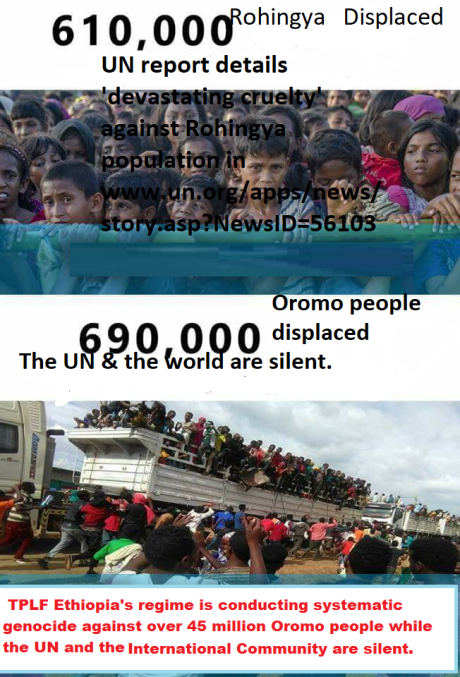
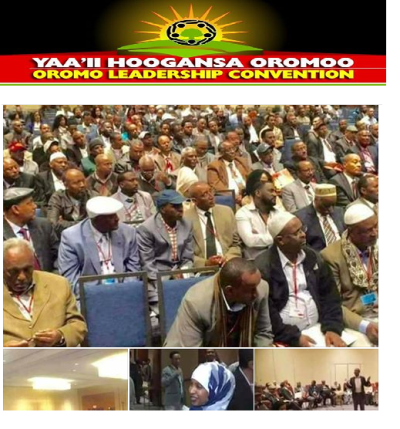
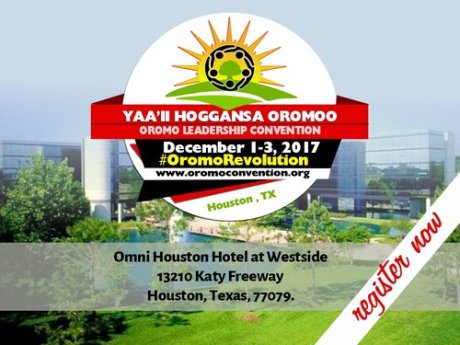
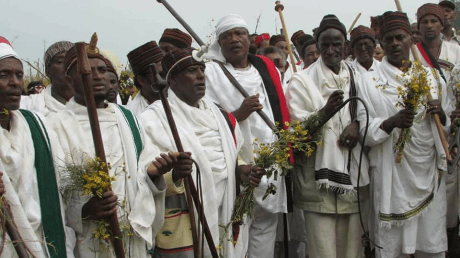
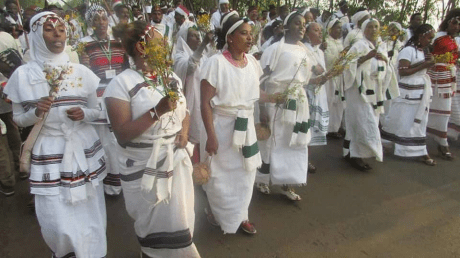
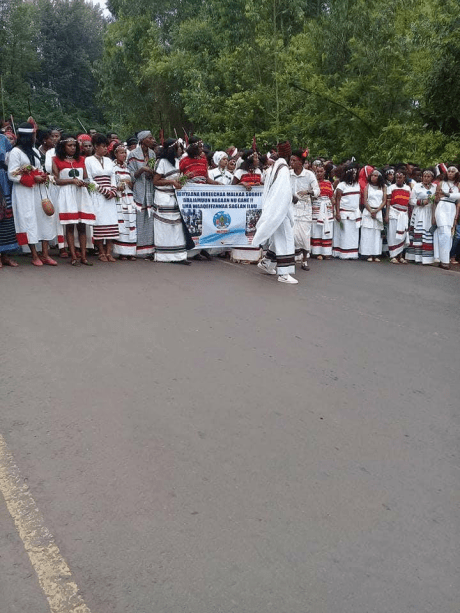
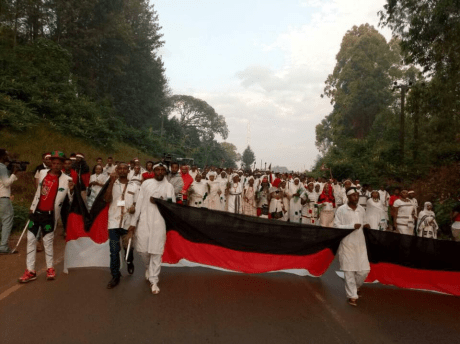
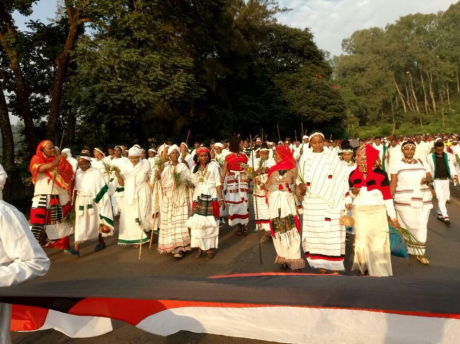
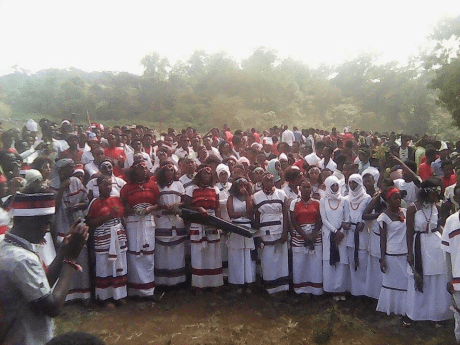
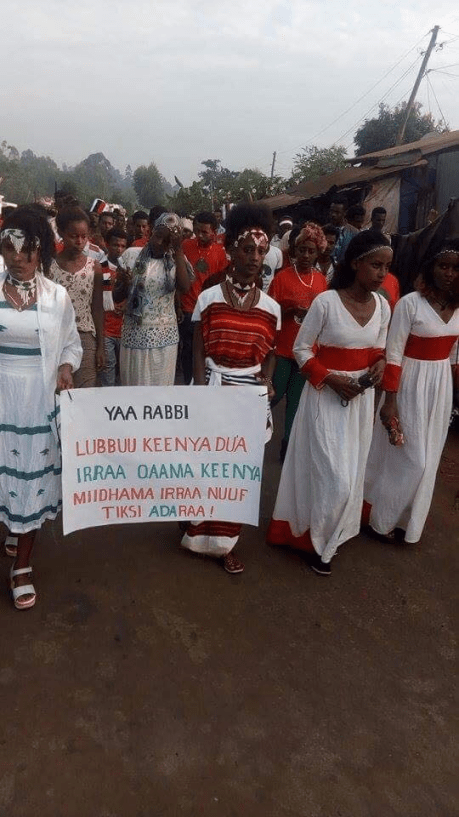
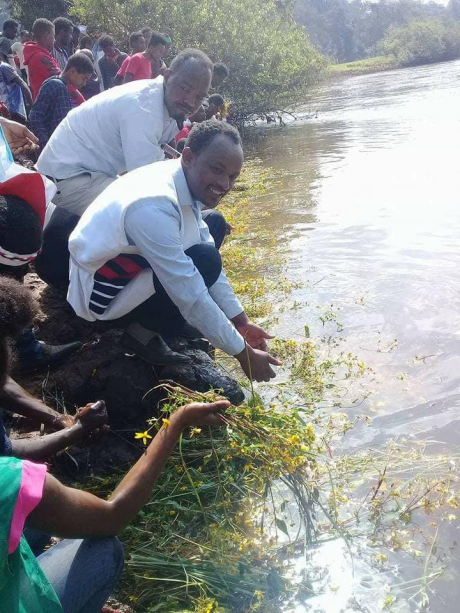
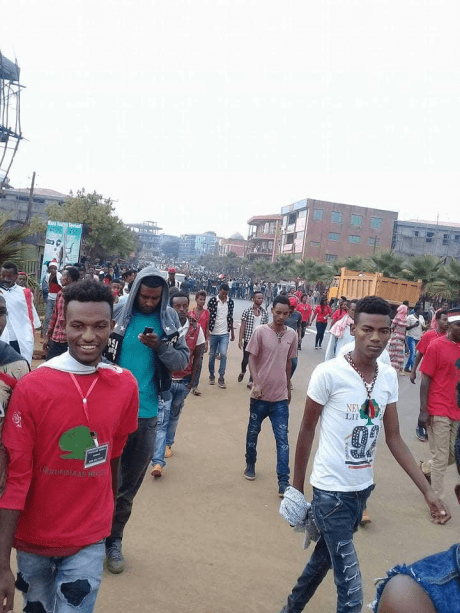
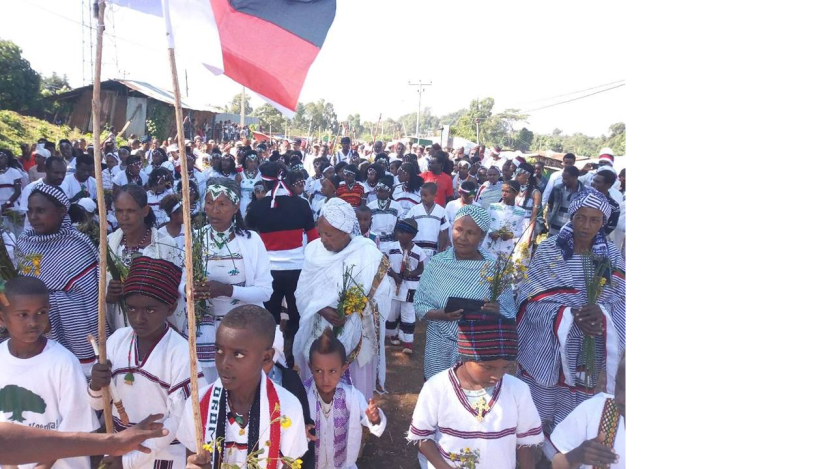
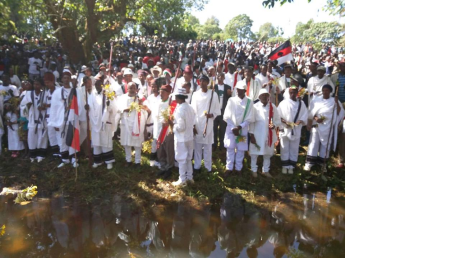
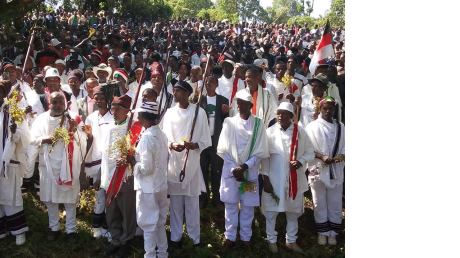
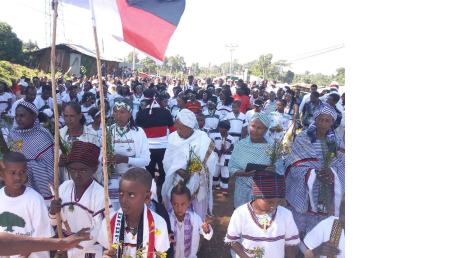


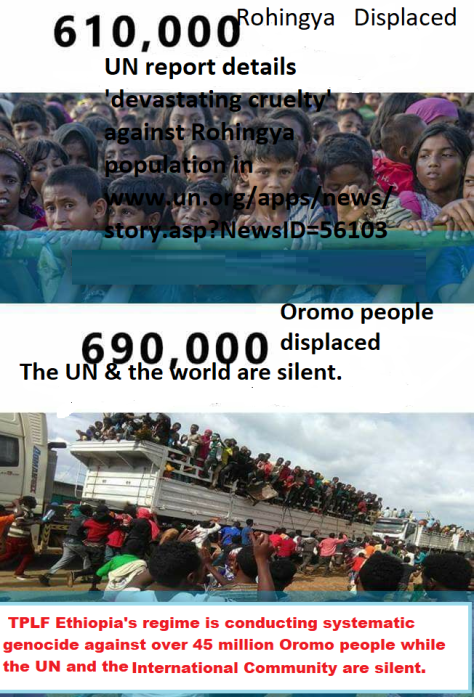

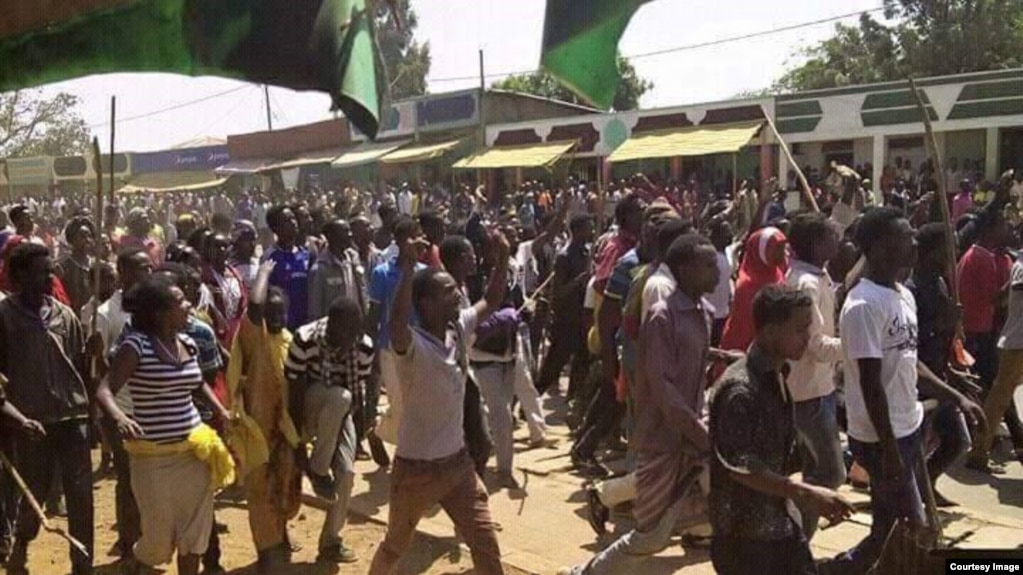

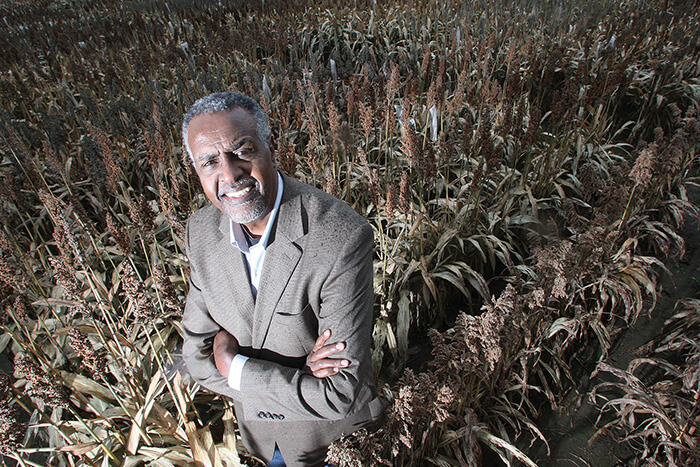


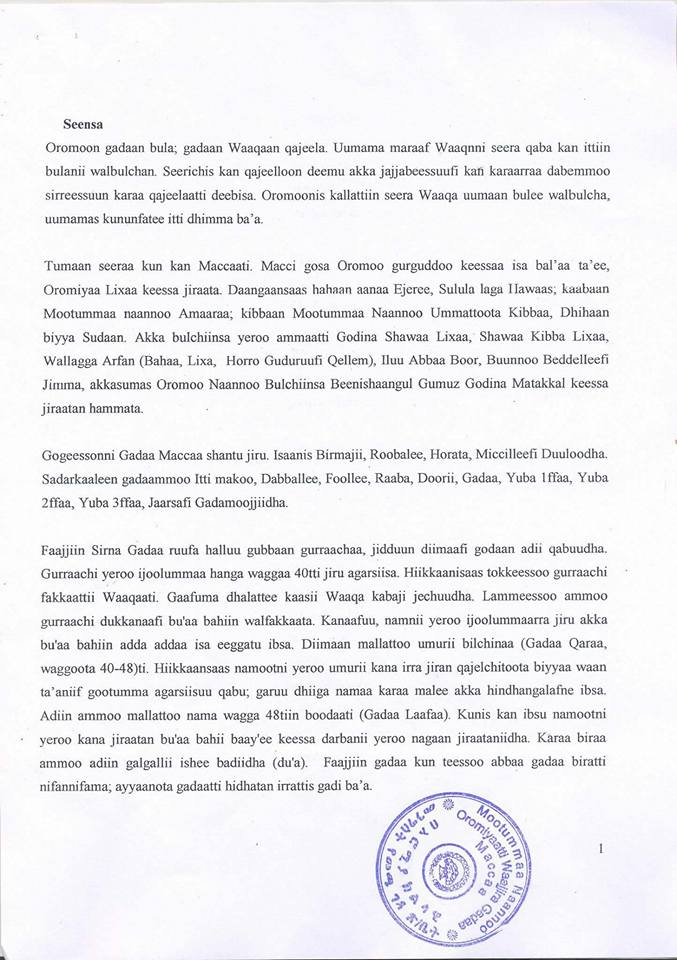
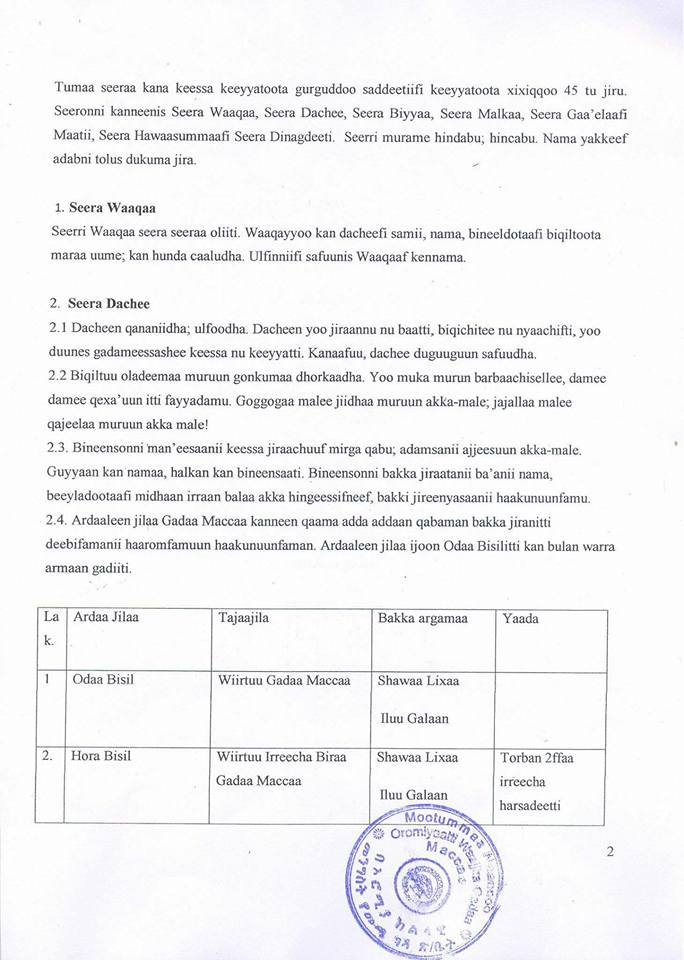
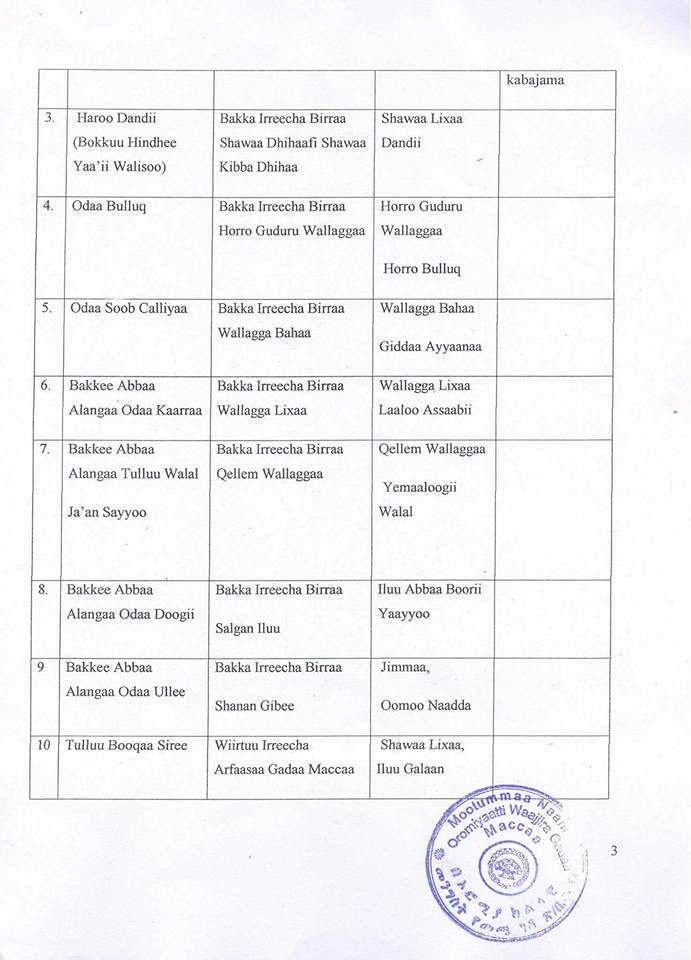

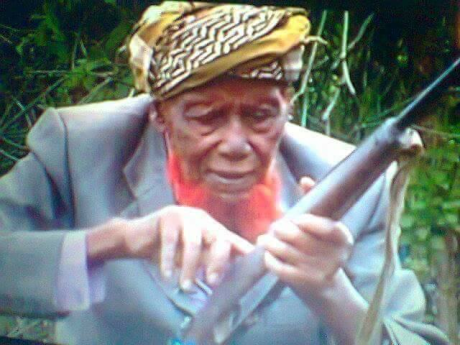


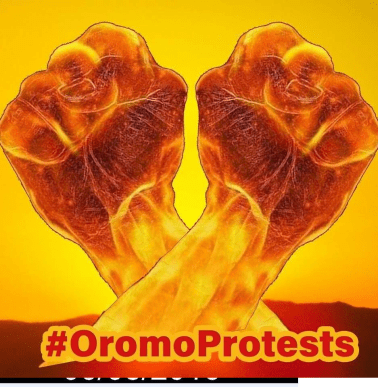


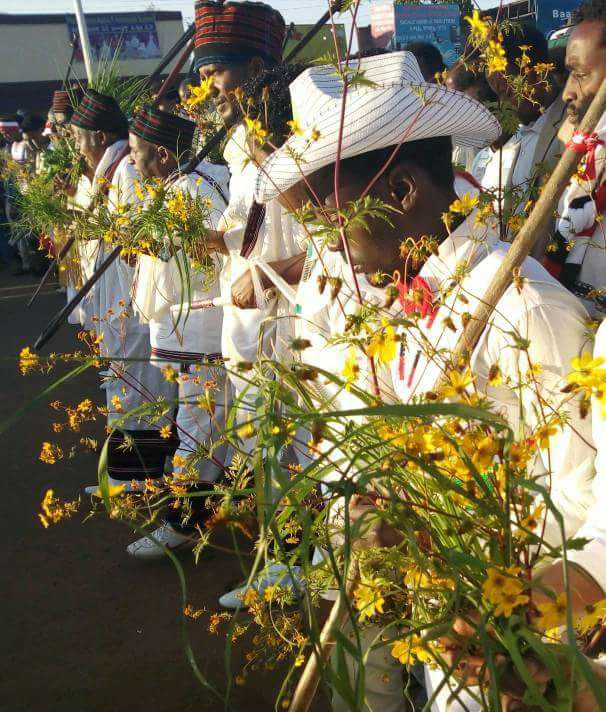
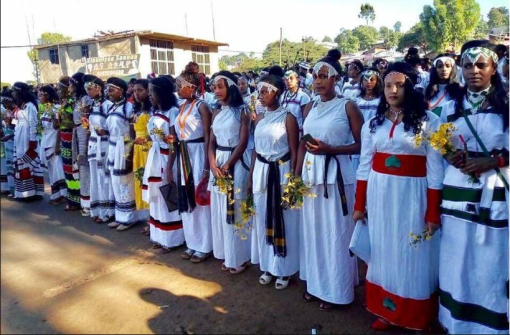
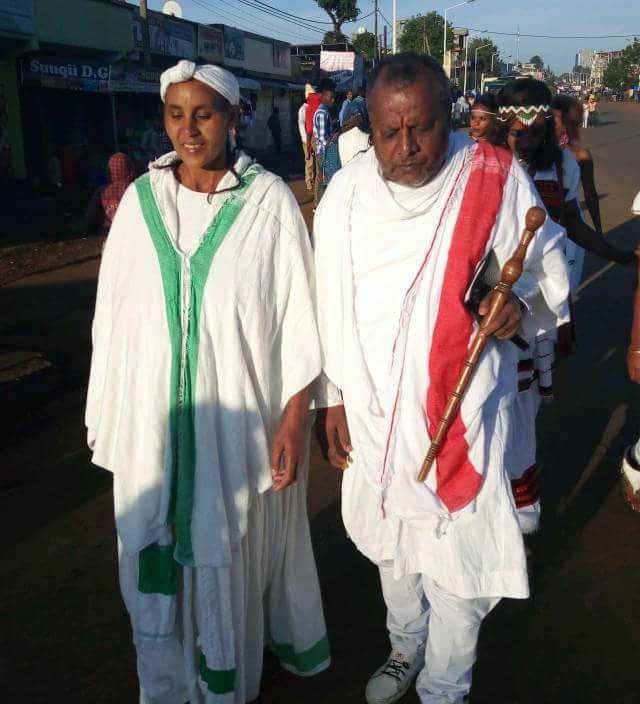


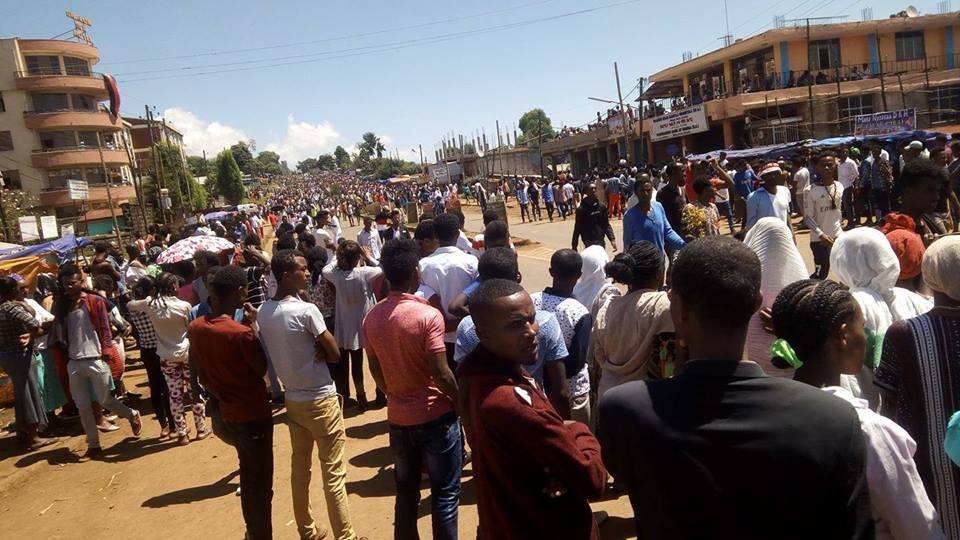
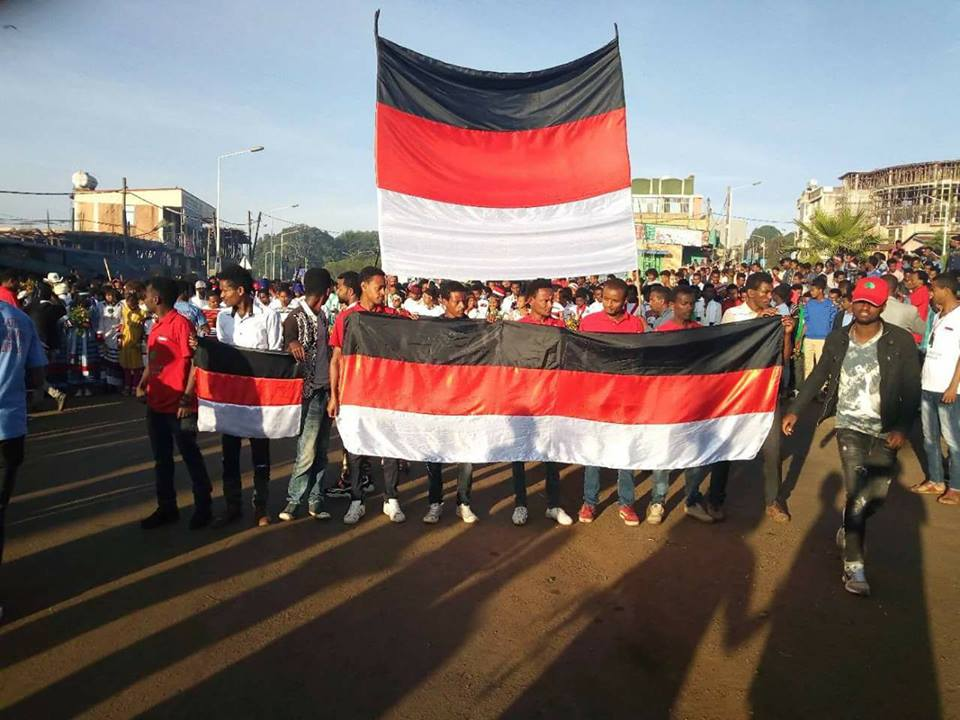
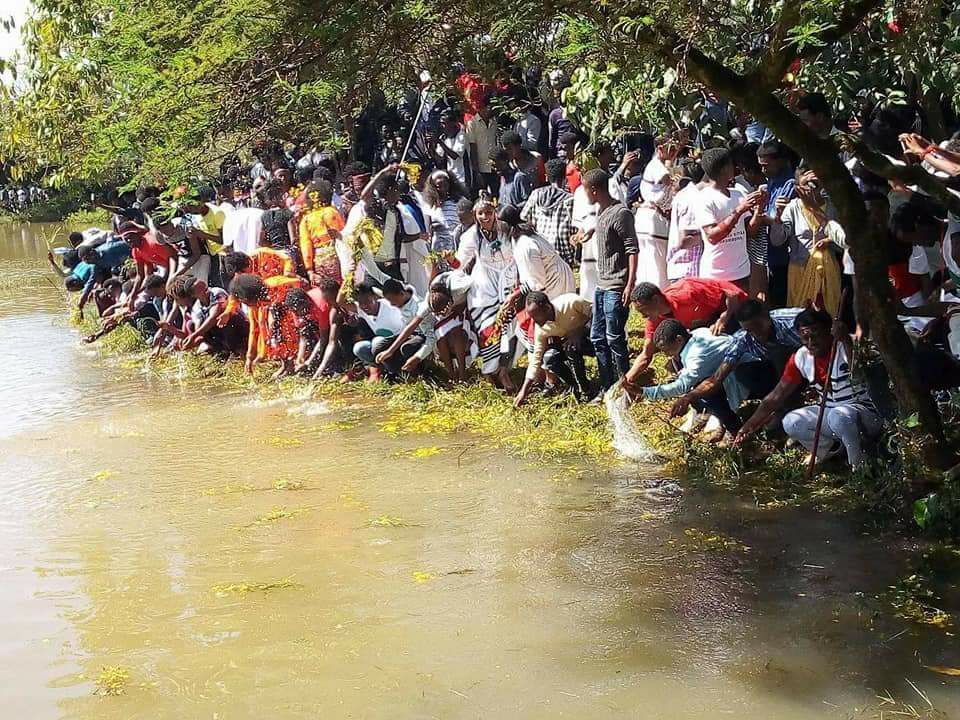


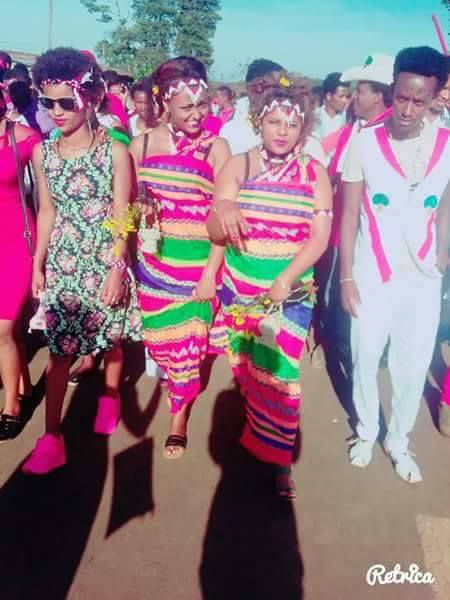
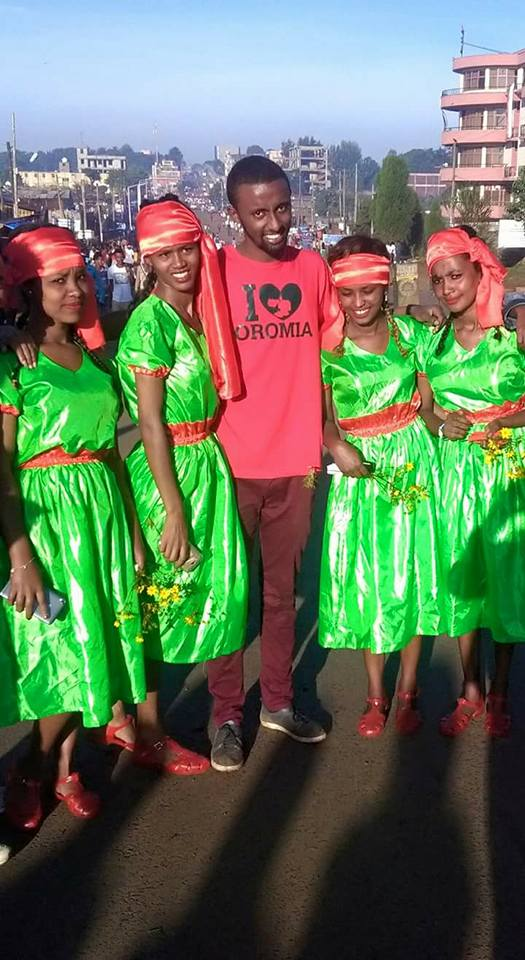
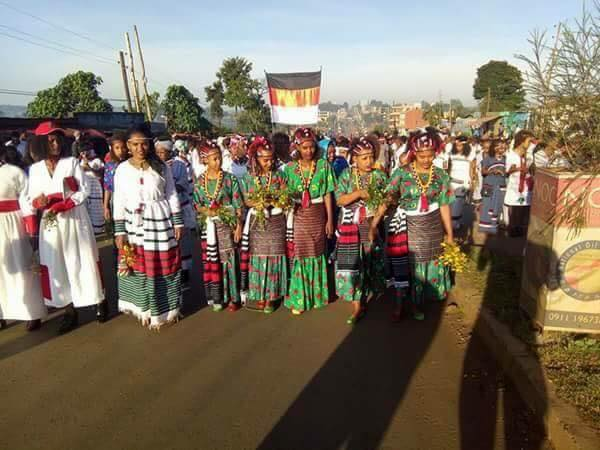
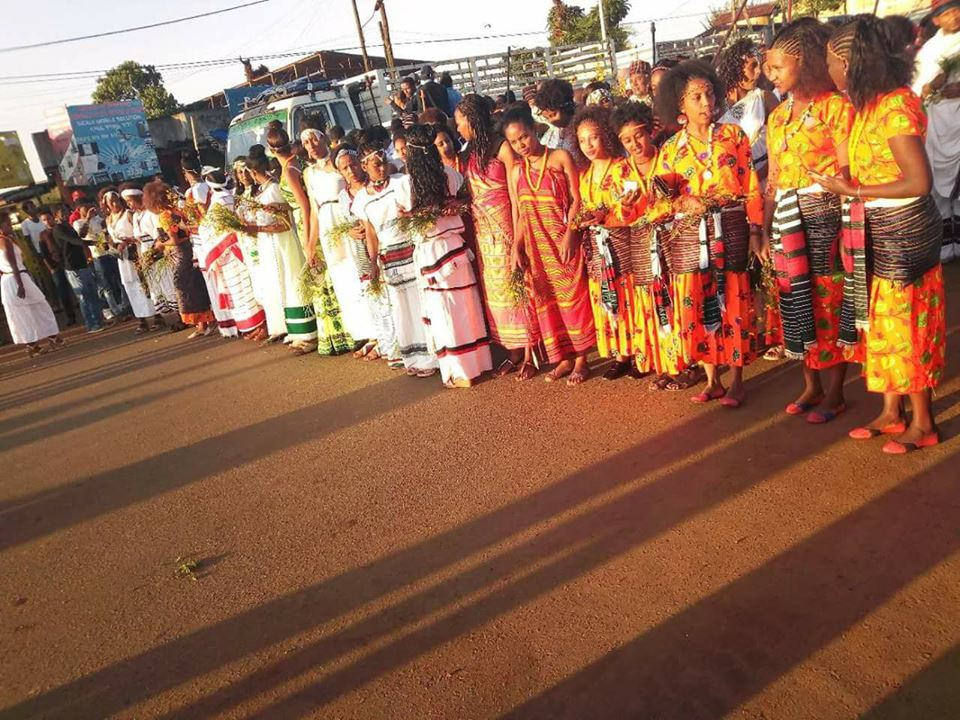
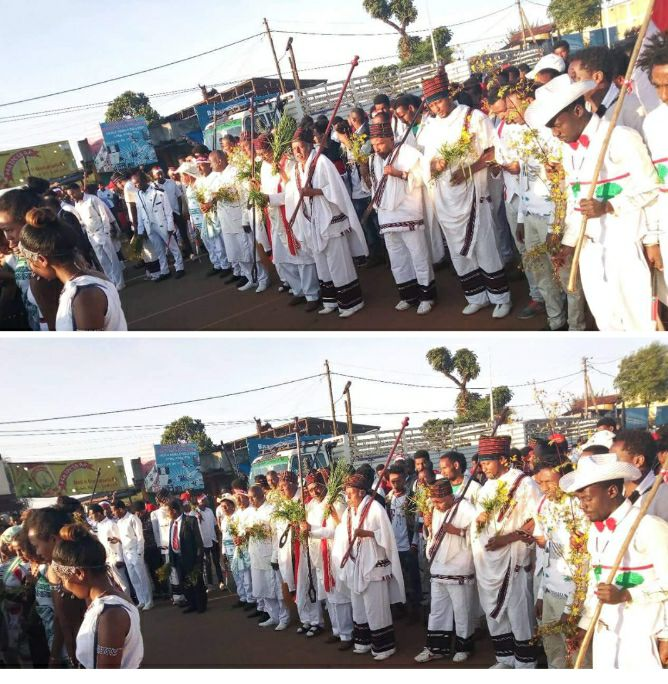
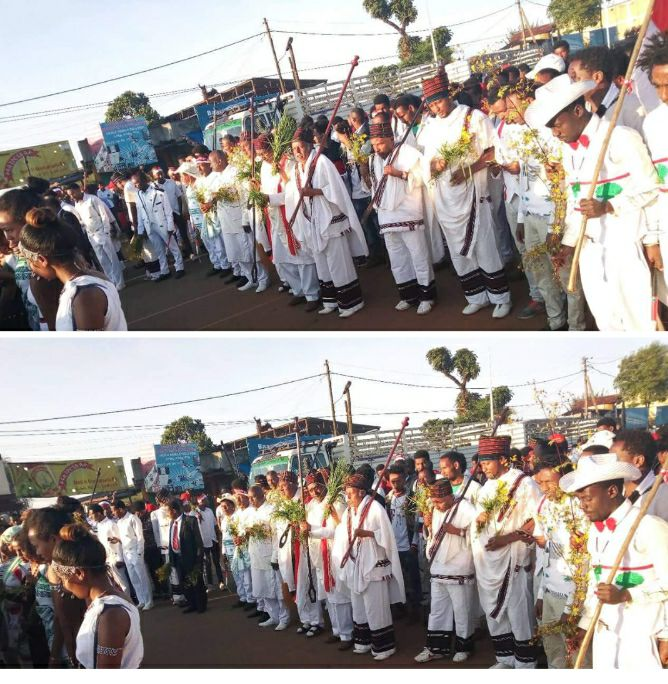


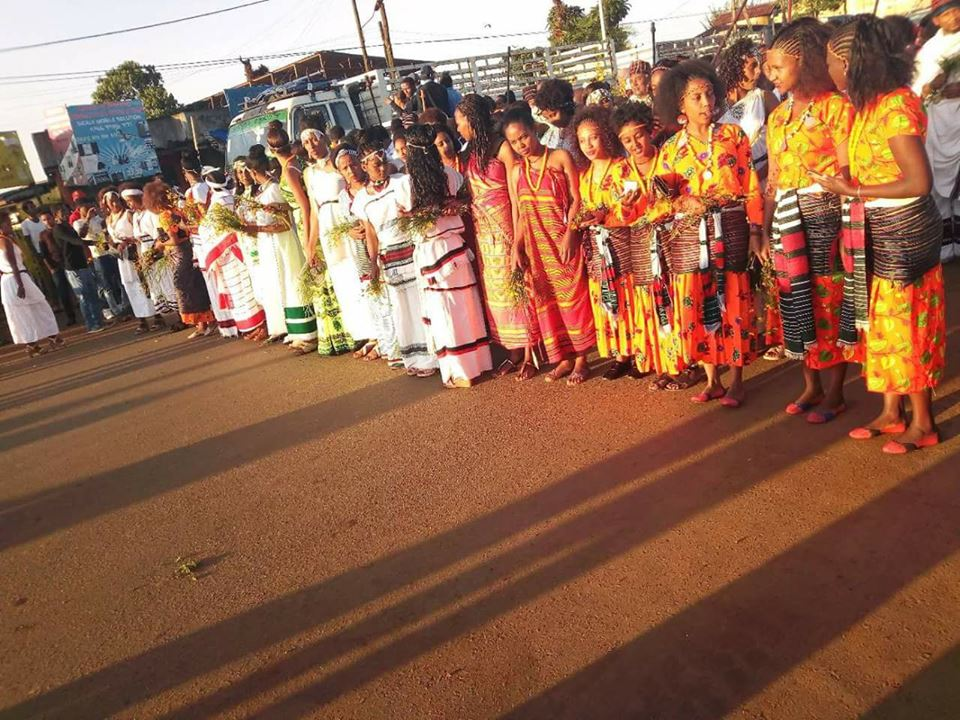
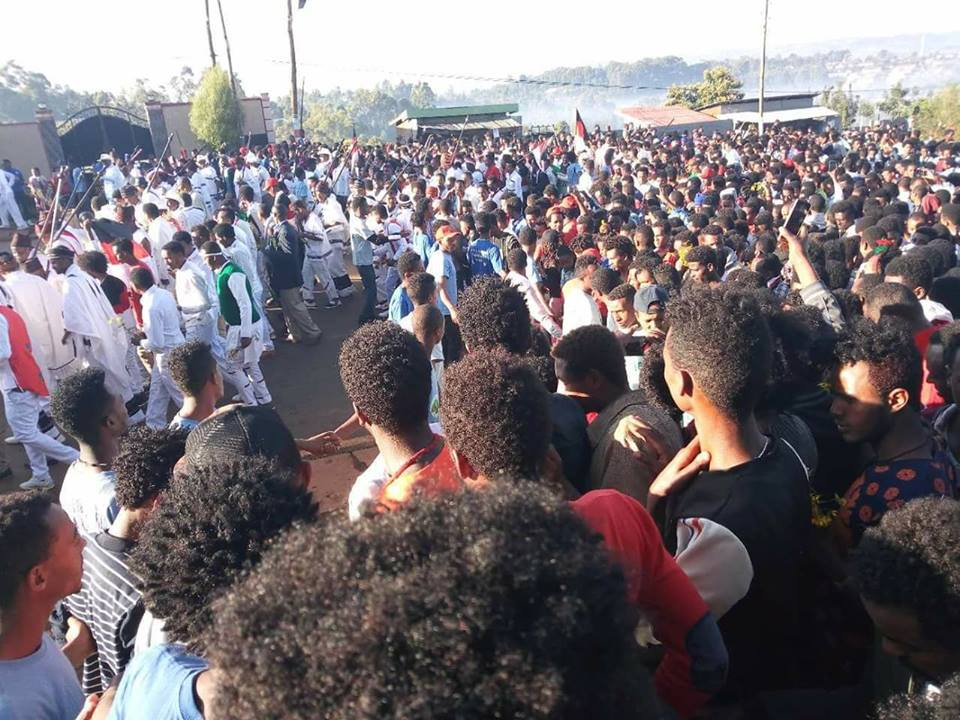


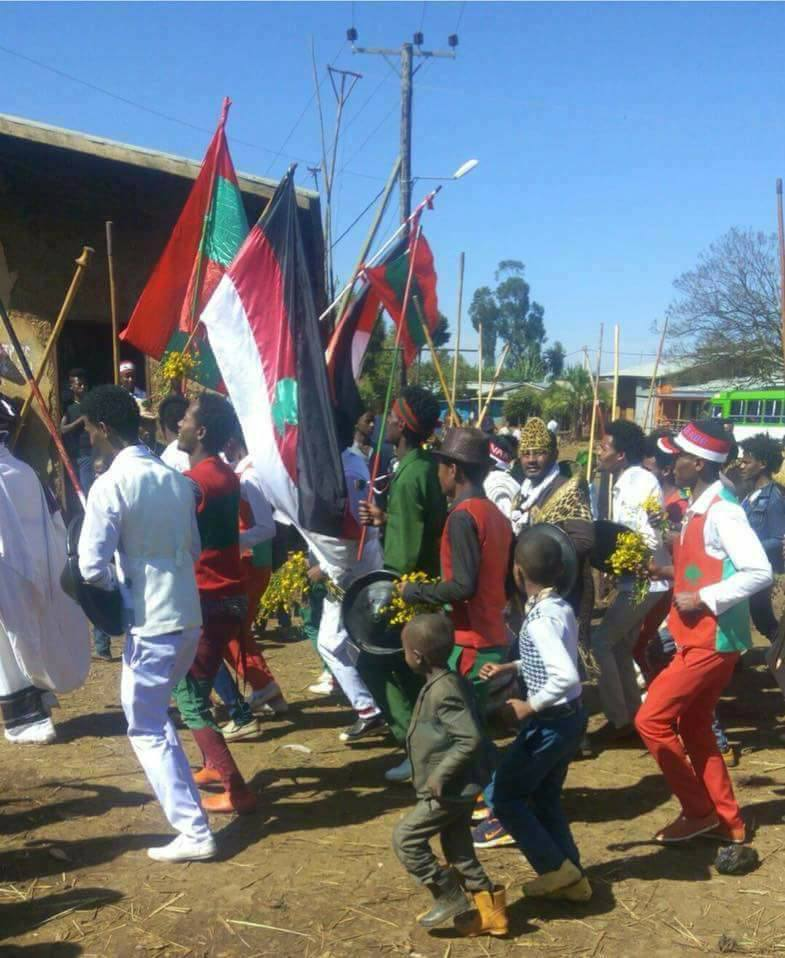
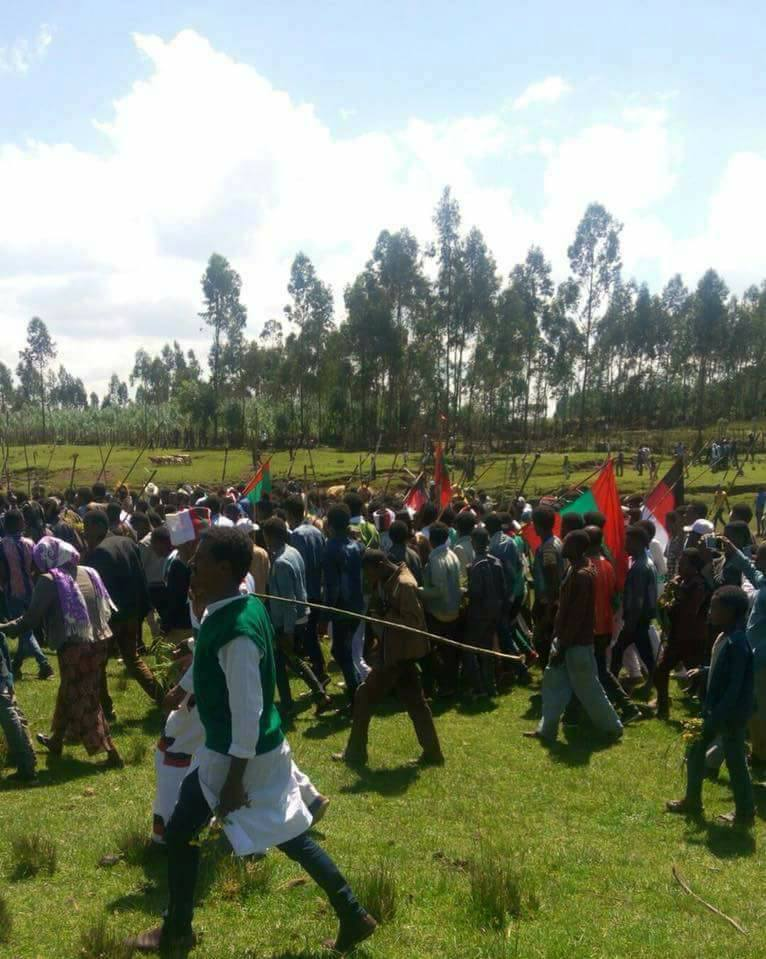
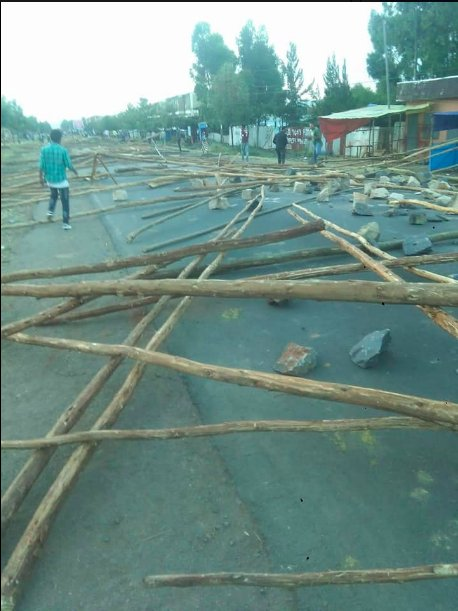


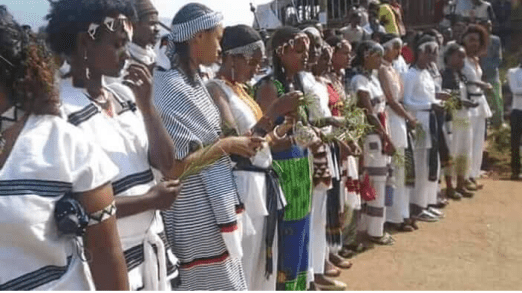
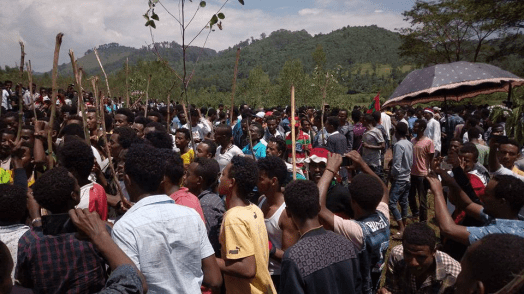

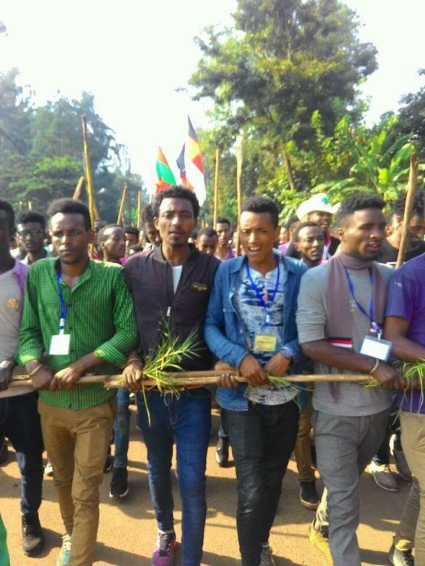
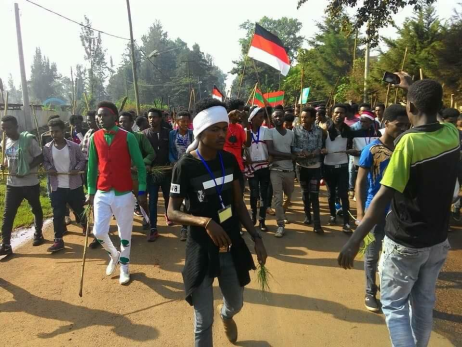

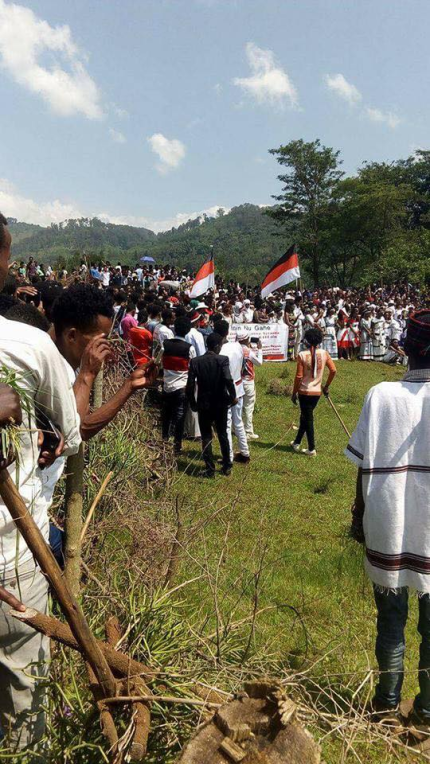
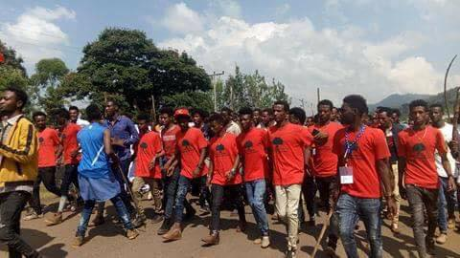
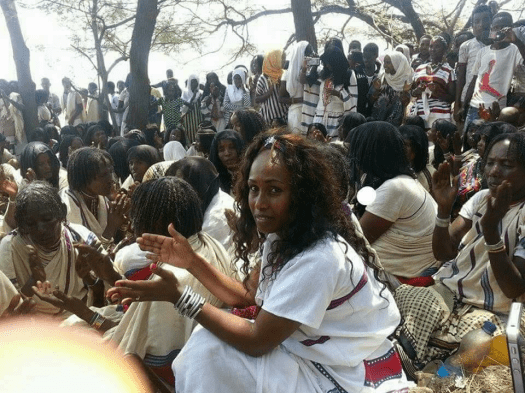

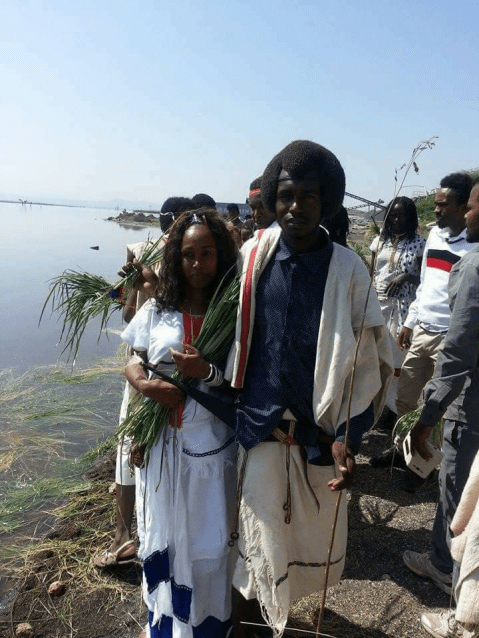
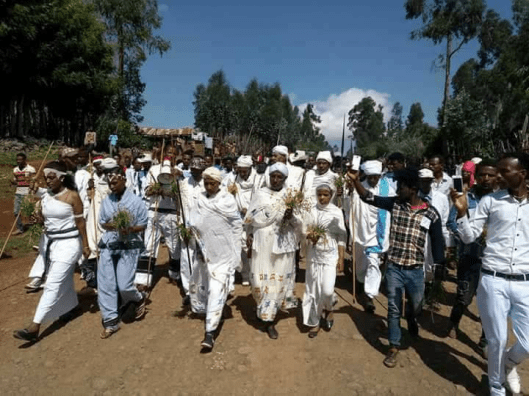
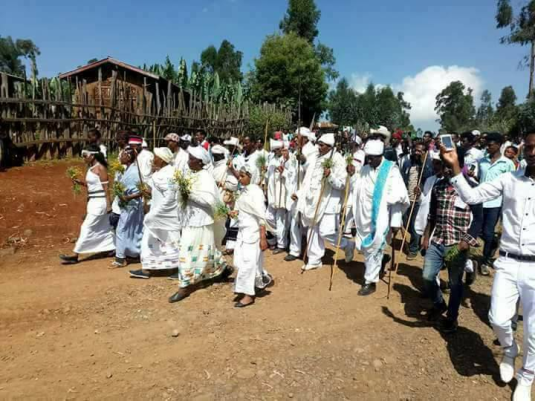
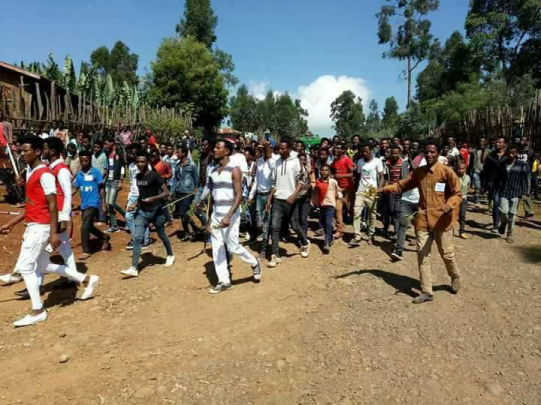
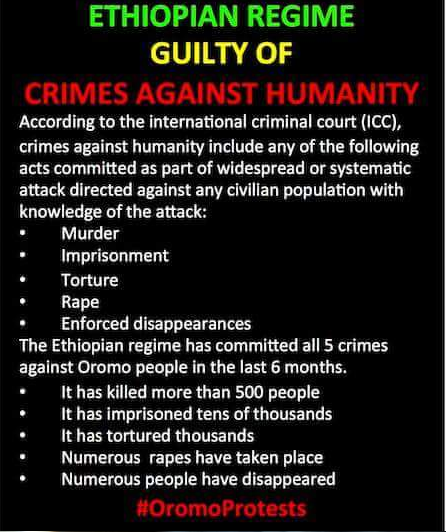



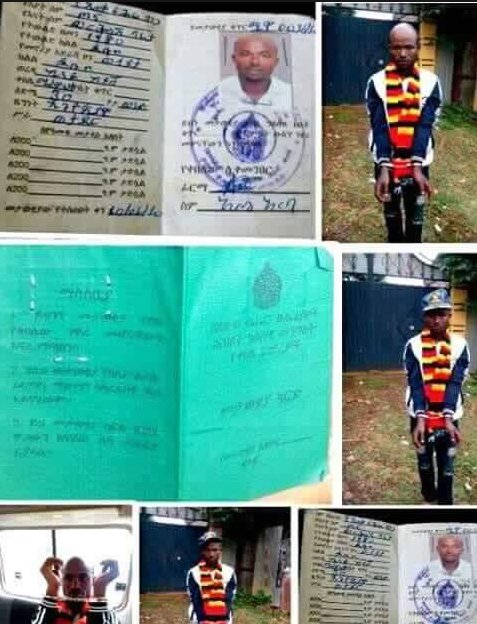


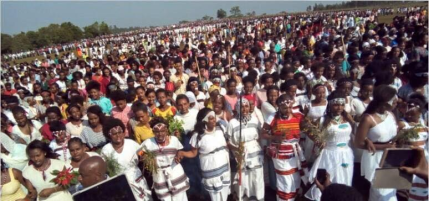

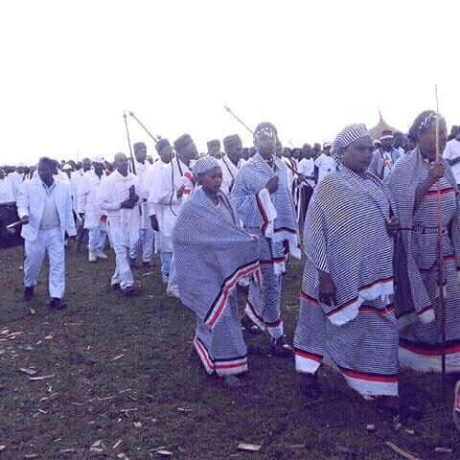
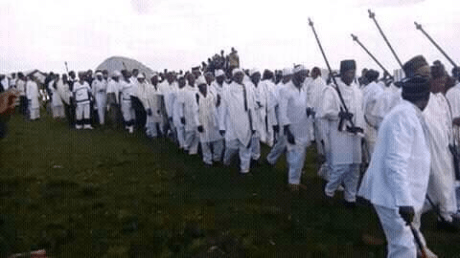


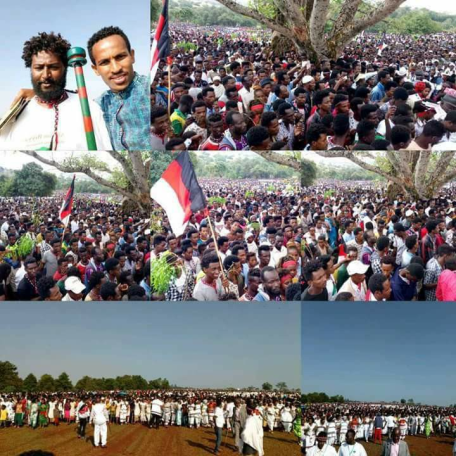
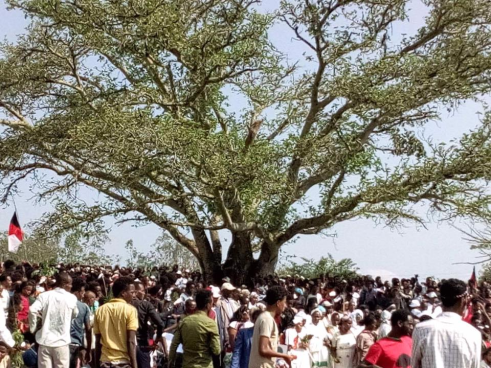
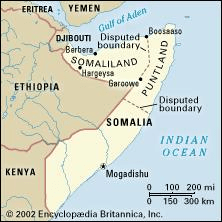

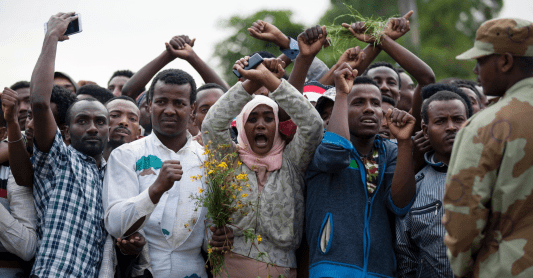
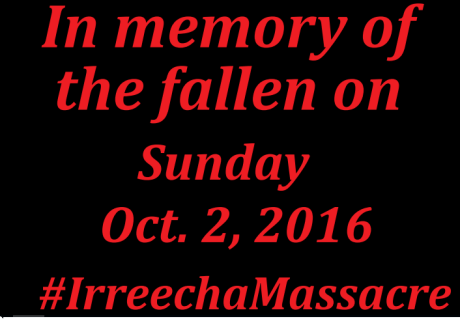


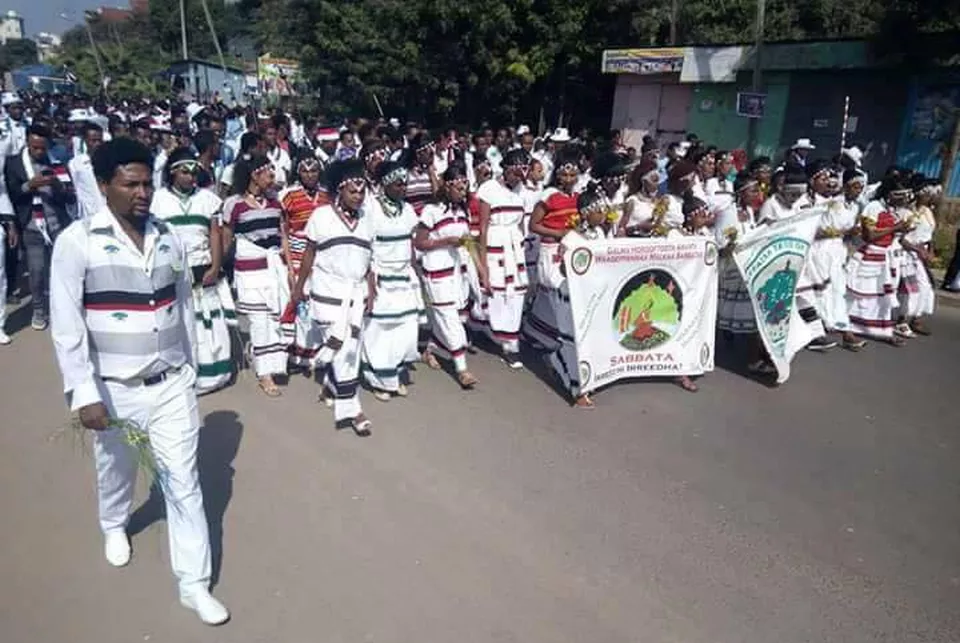
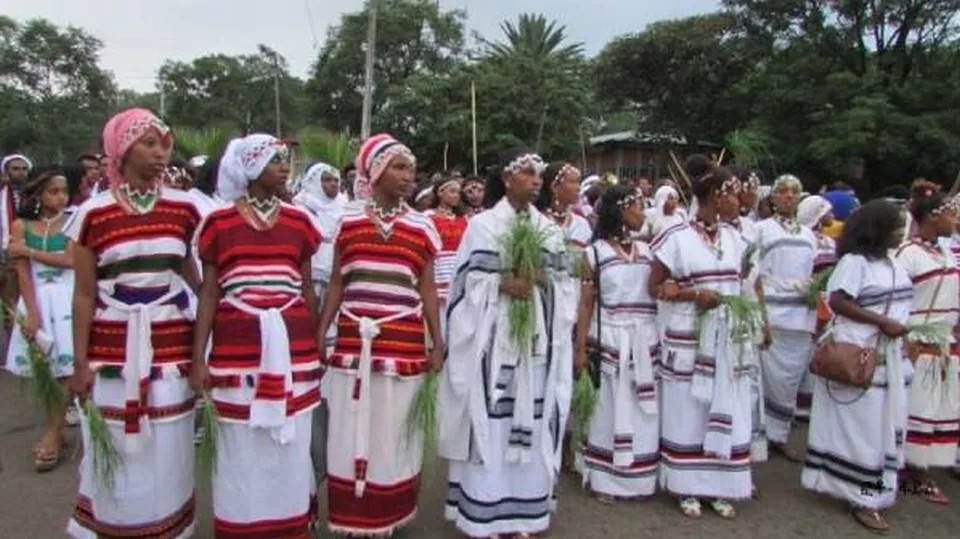

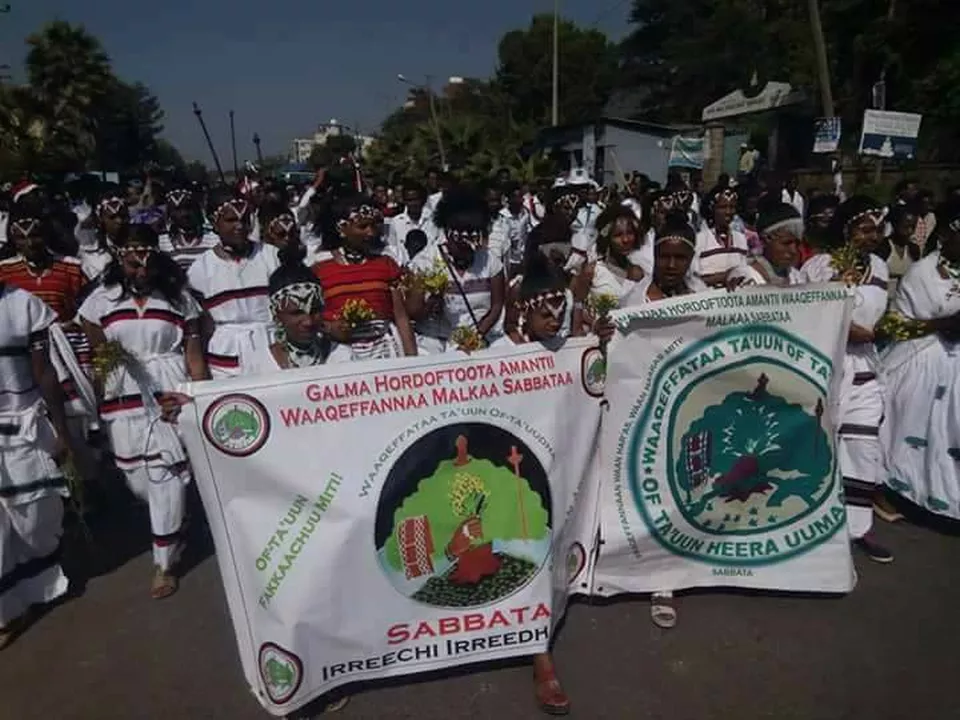
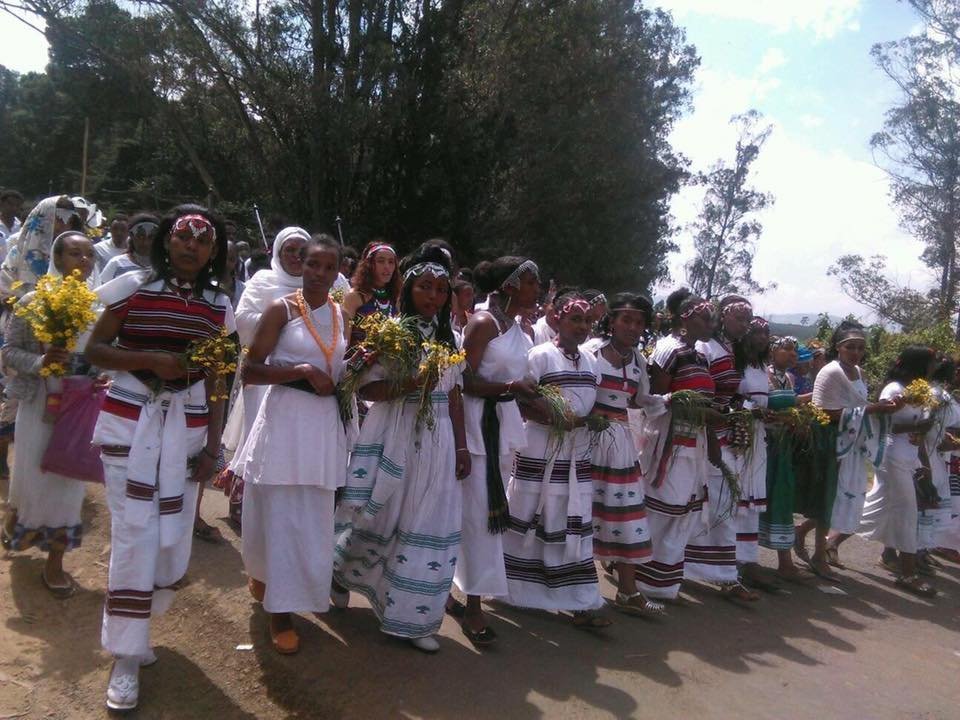


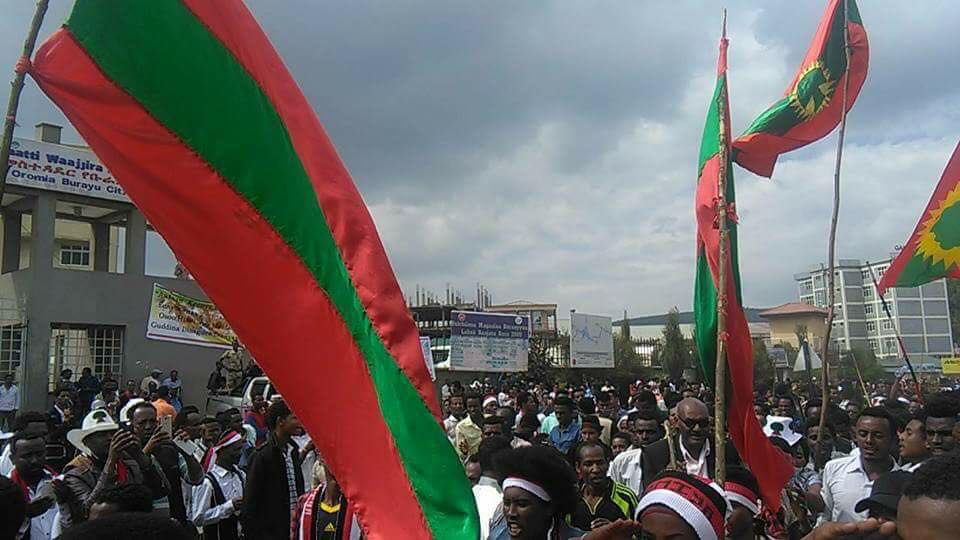

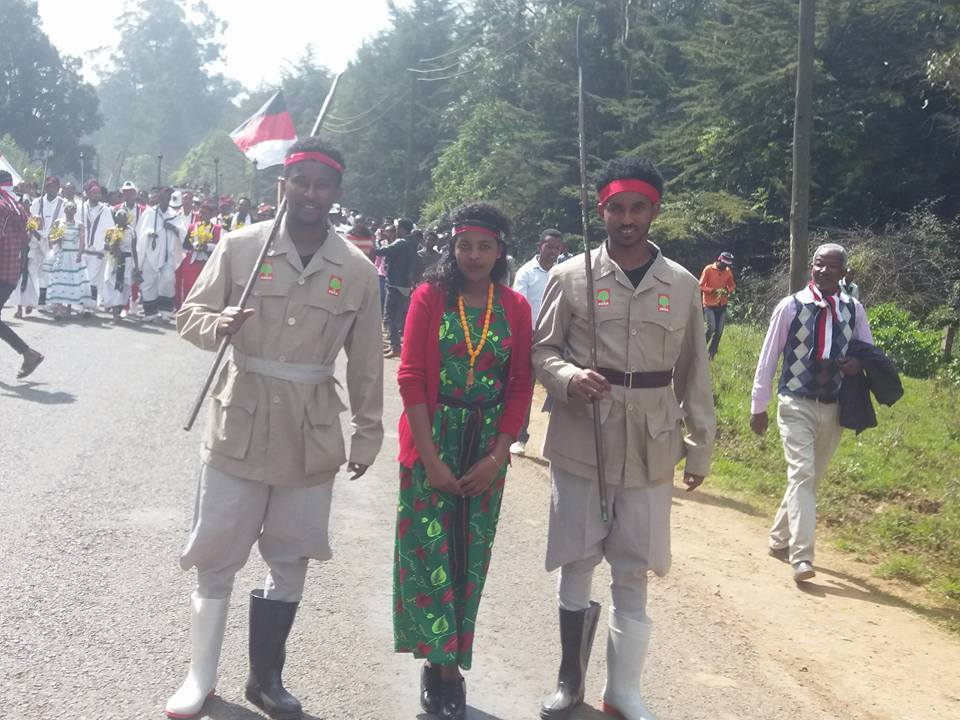

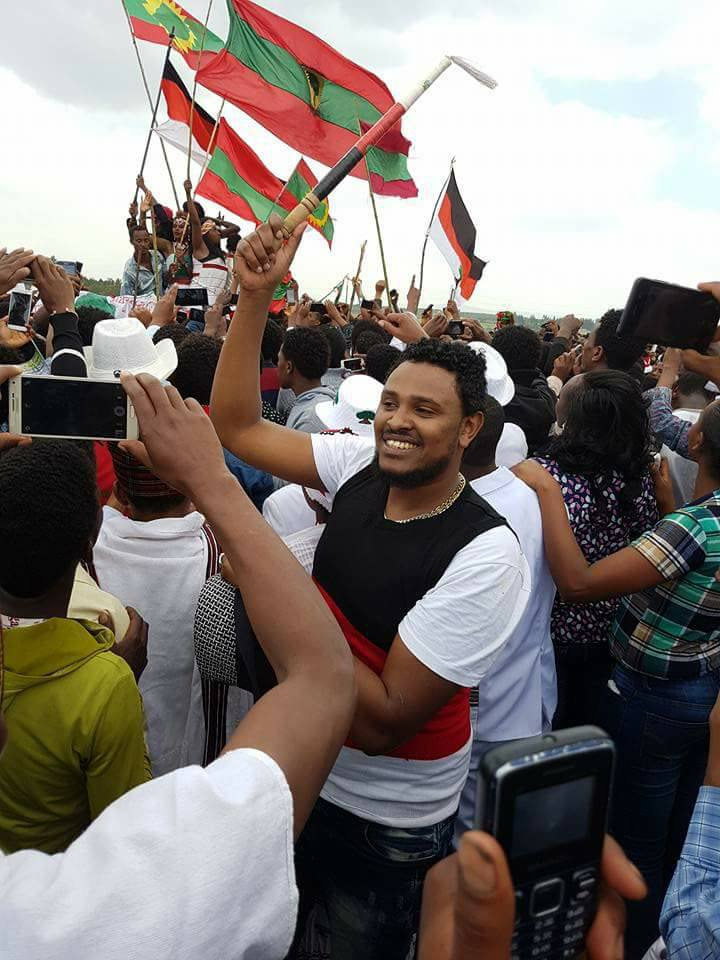

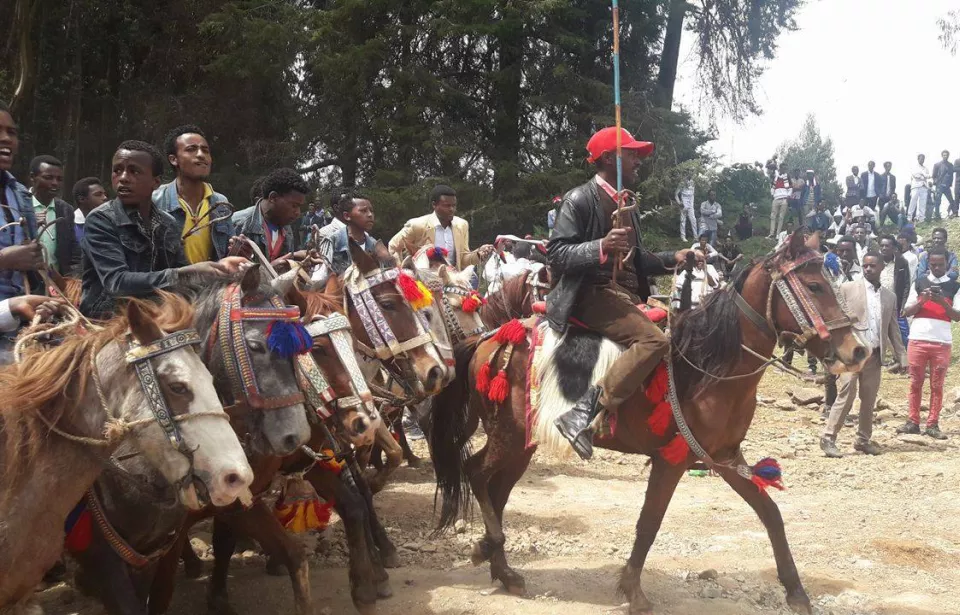
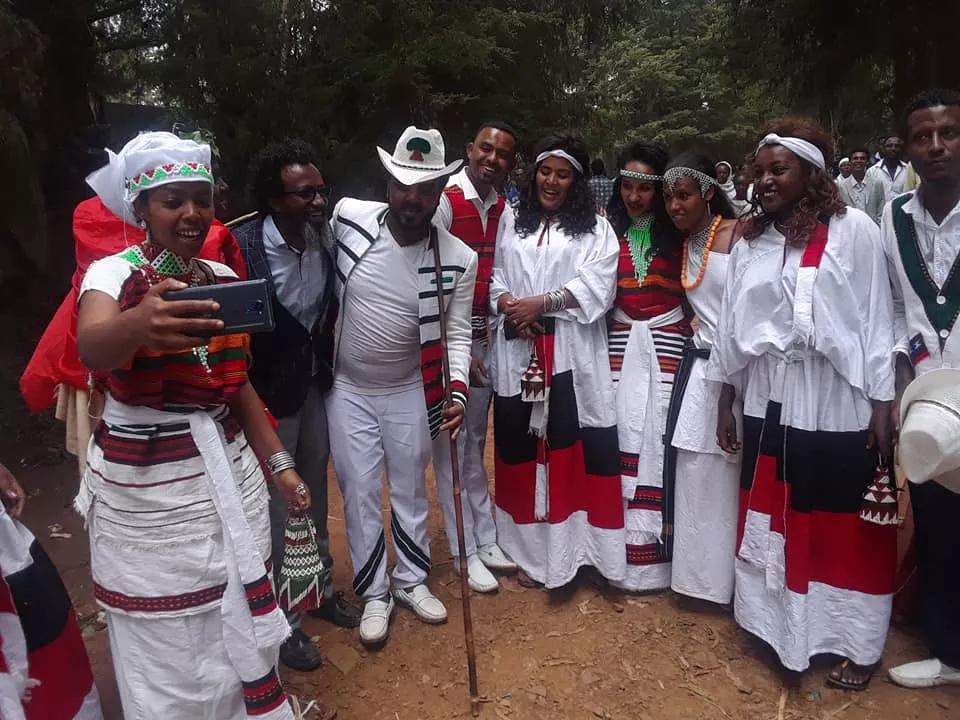
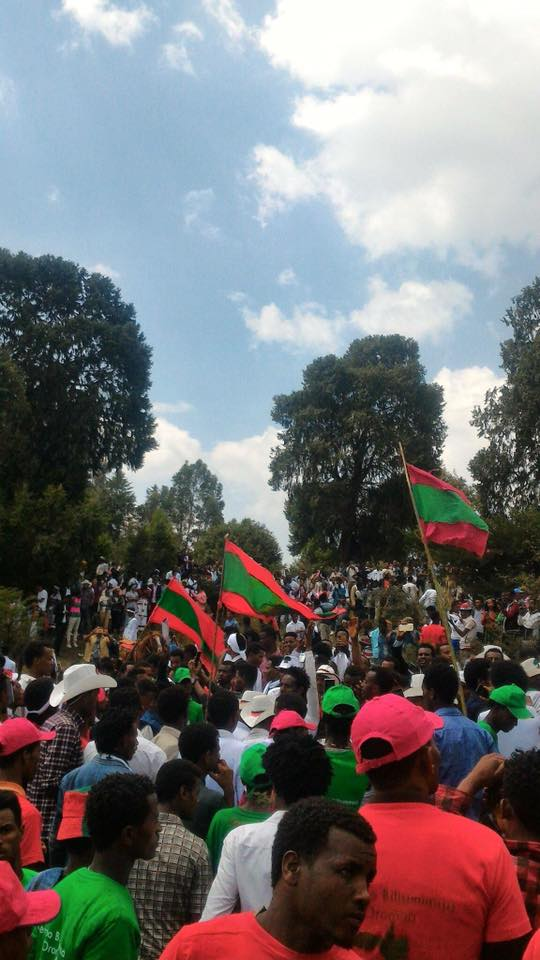
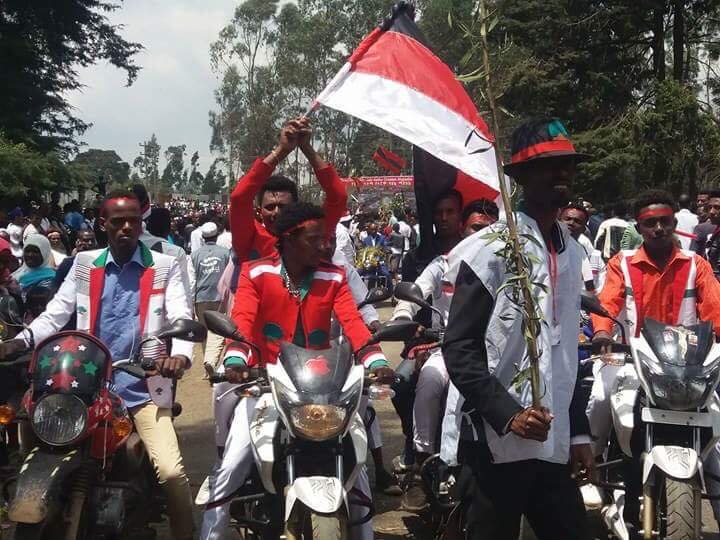
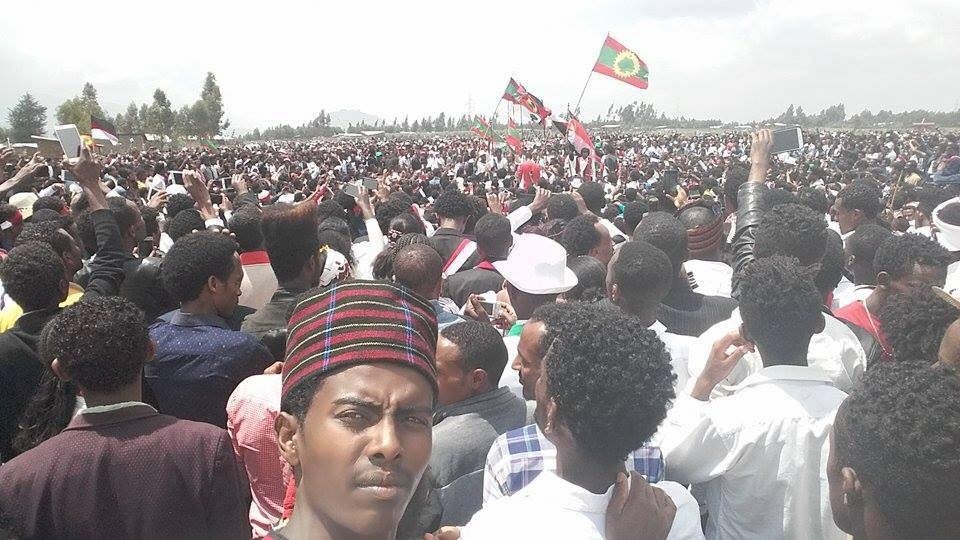
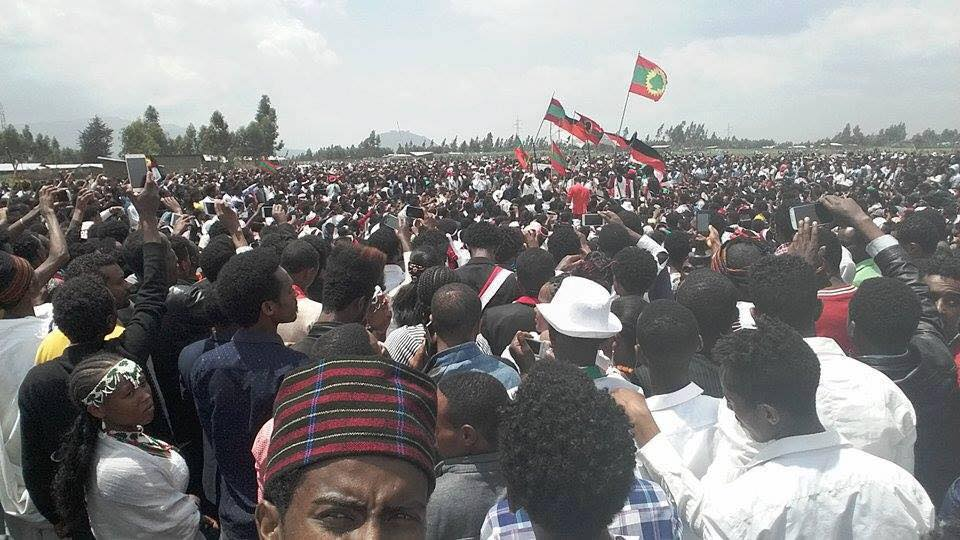
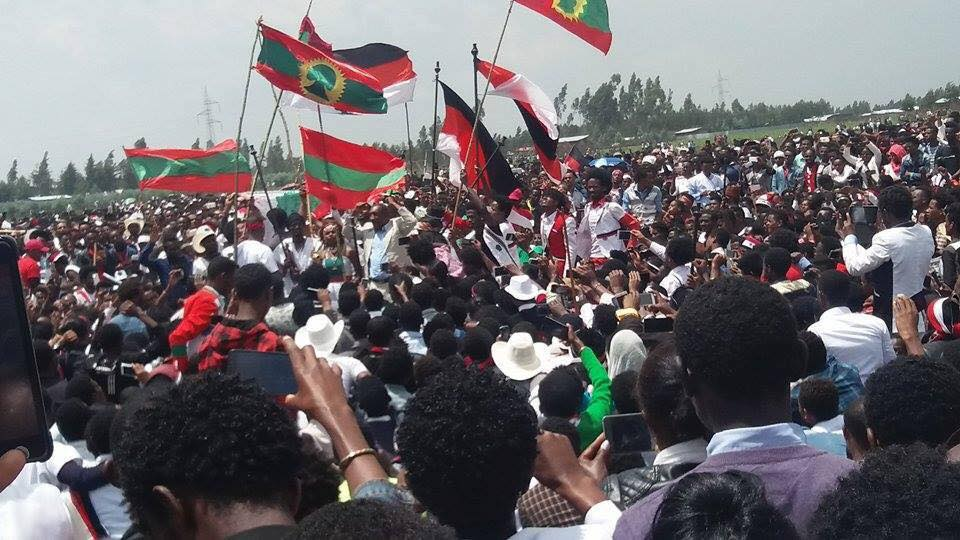

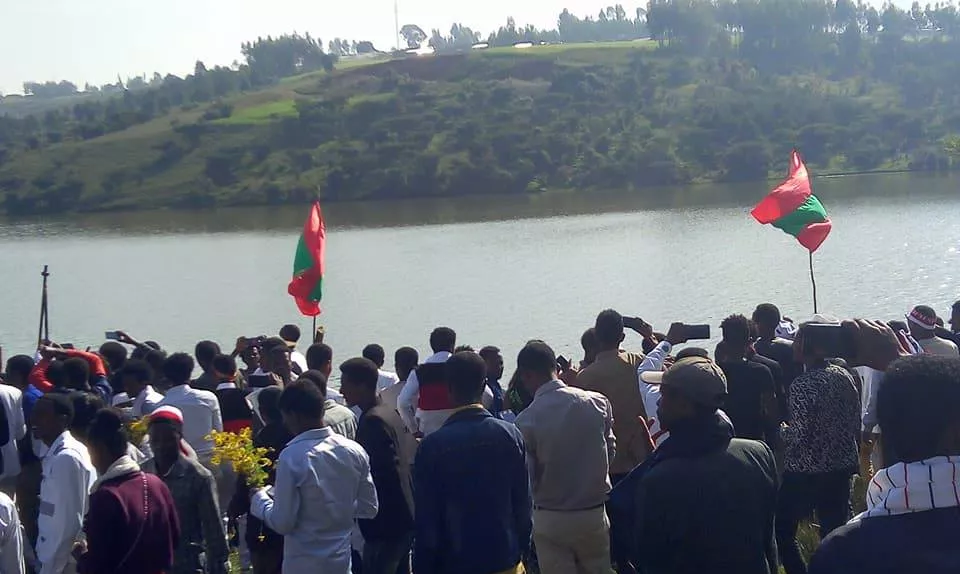
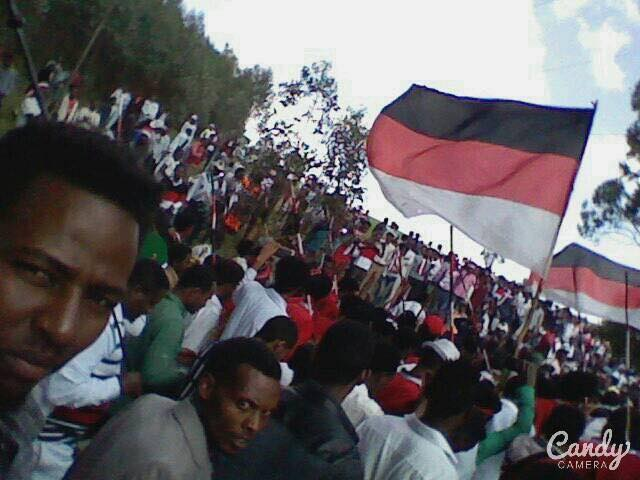
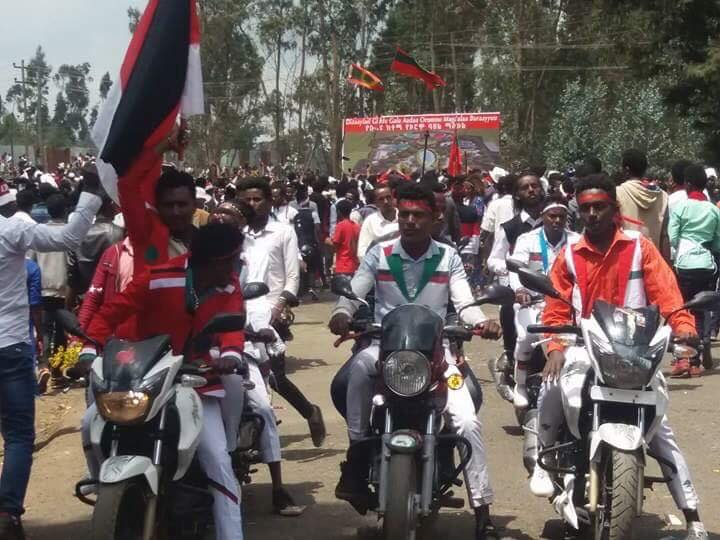

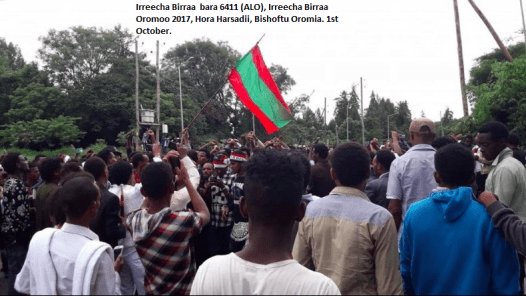
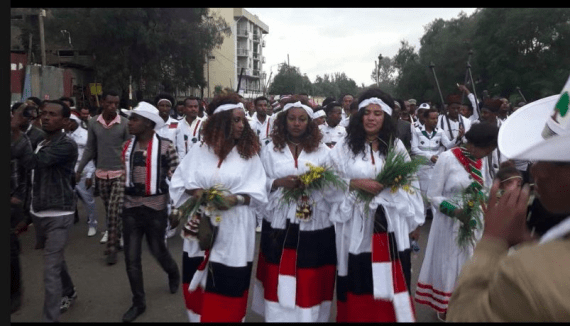


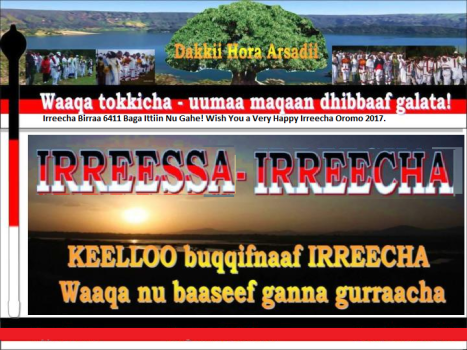
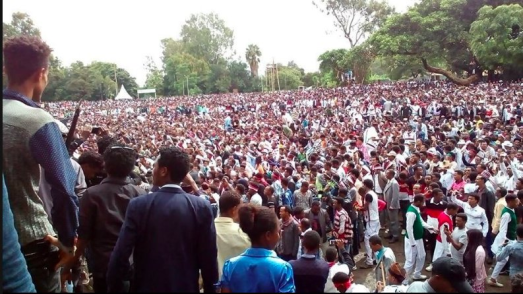
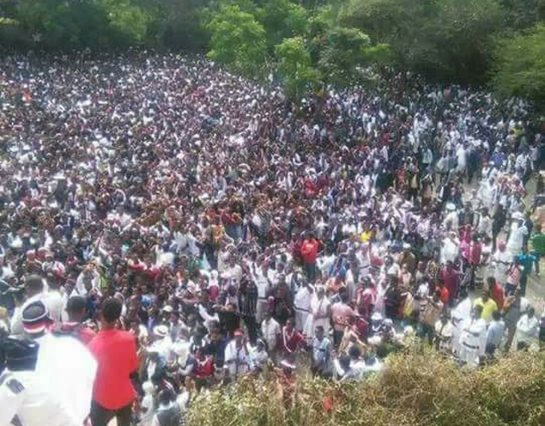

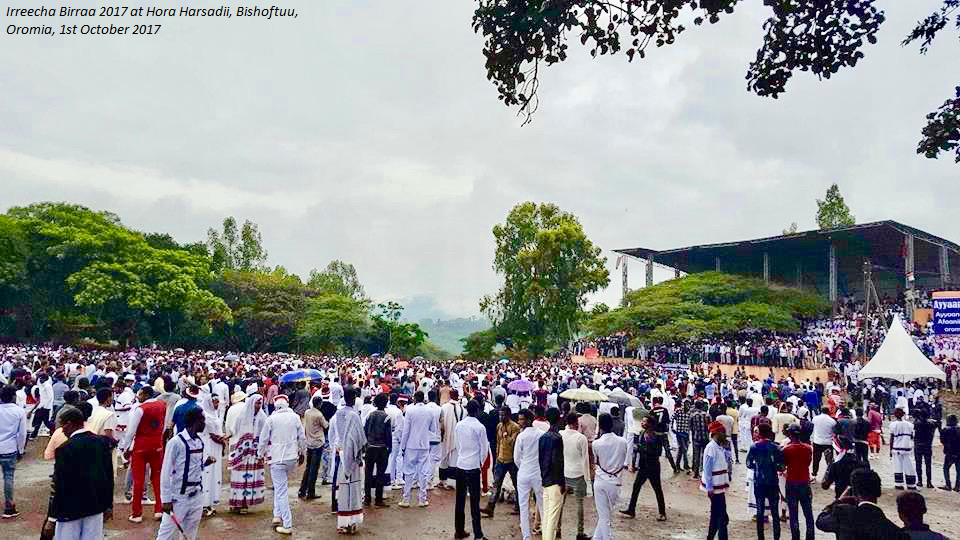
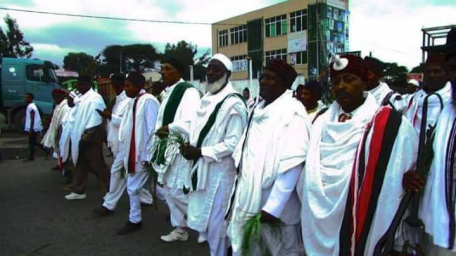

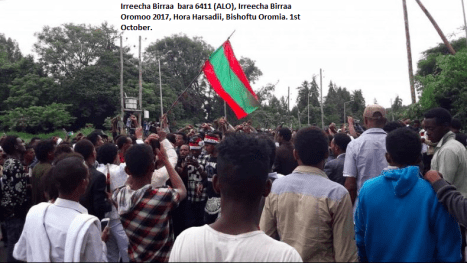


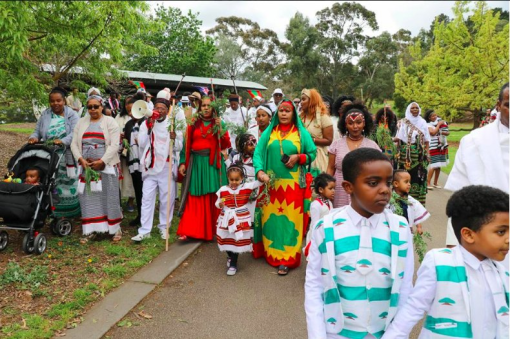
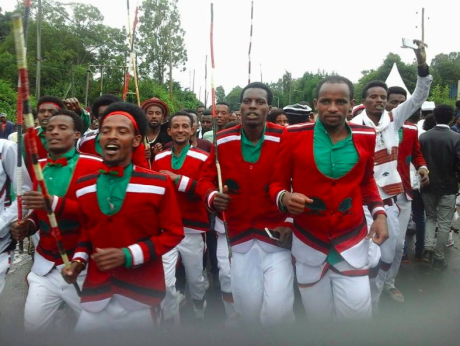
![[Photos] Ethiopia's ethnic Oromos, tourists gather for Irreecha 2017](https://static.euronews.com/articles/390909/400x225_390909.jpg?1506766716)
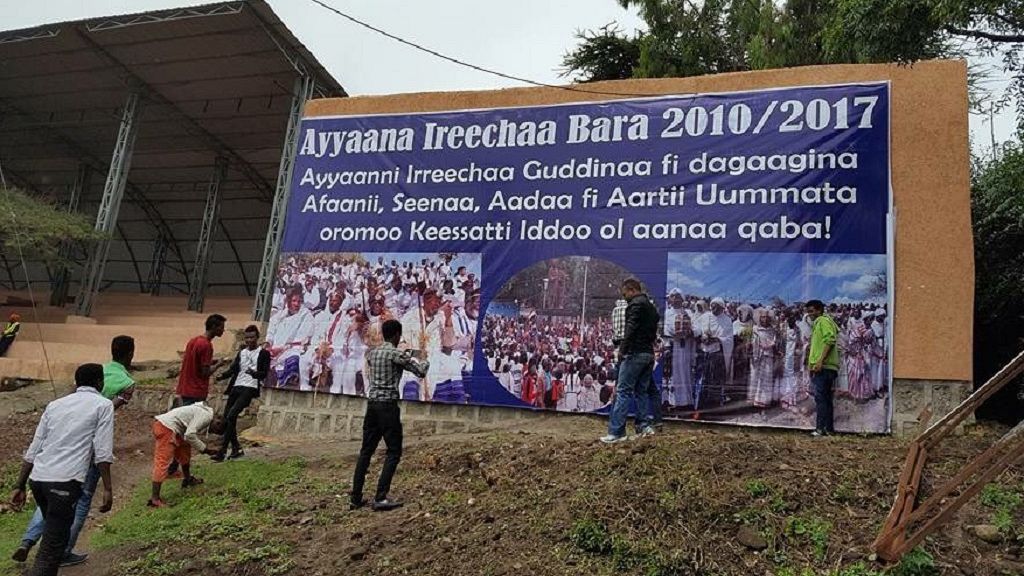
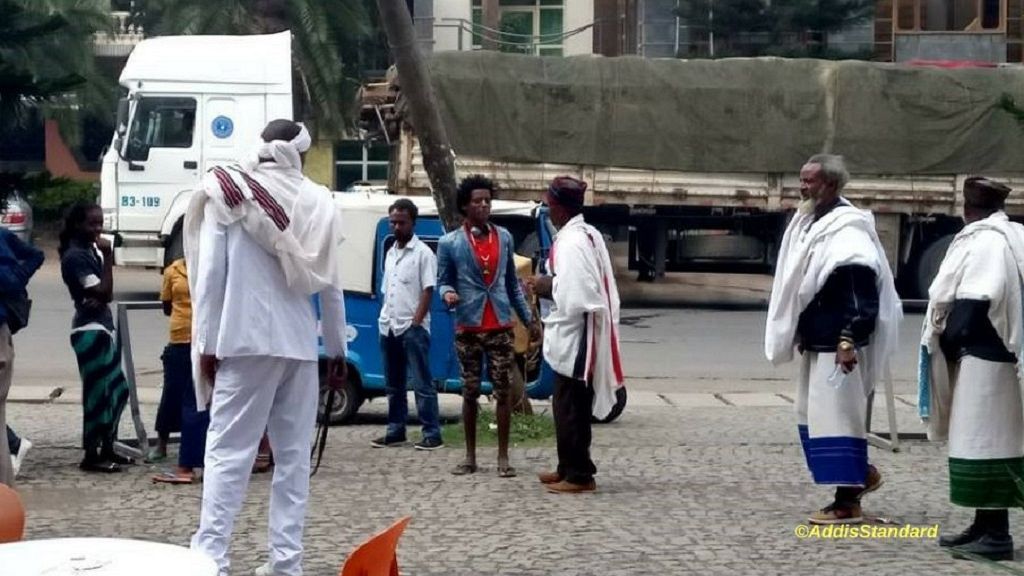
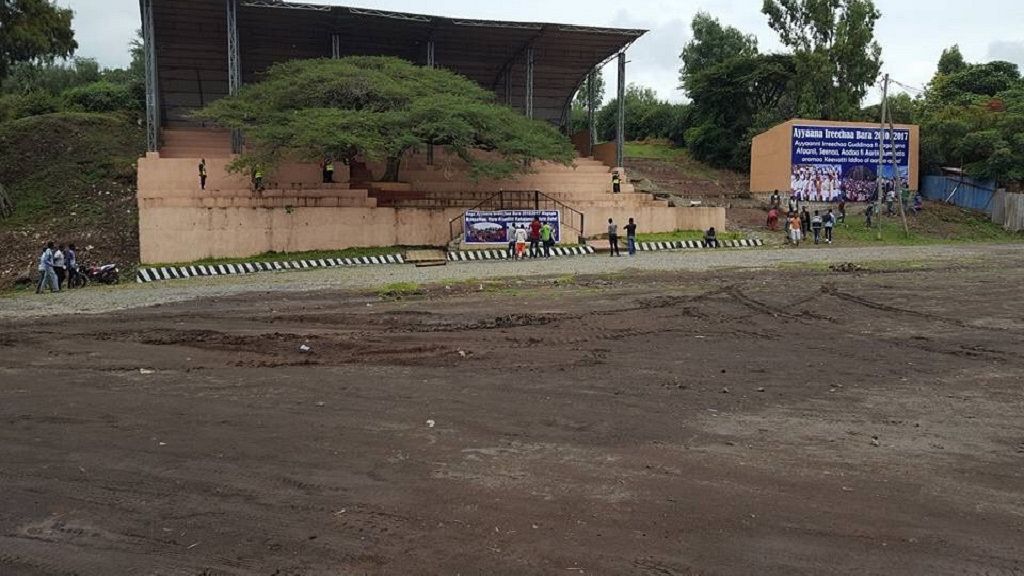
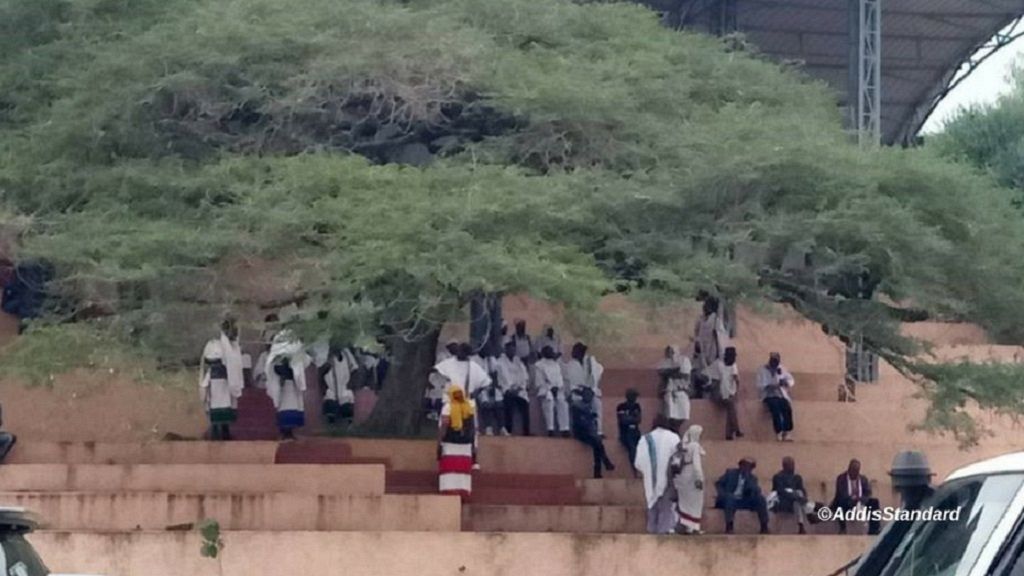
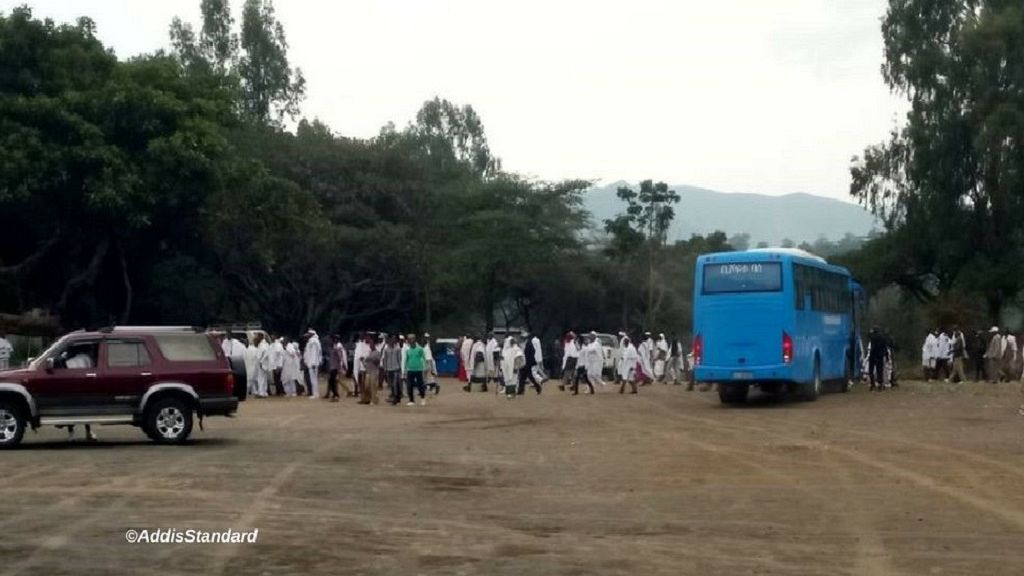
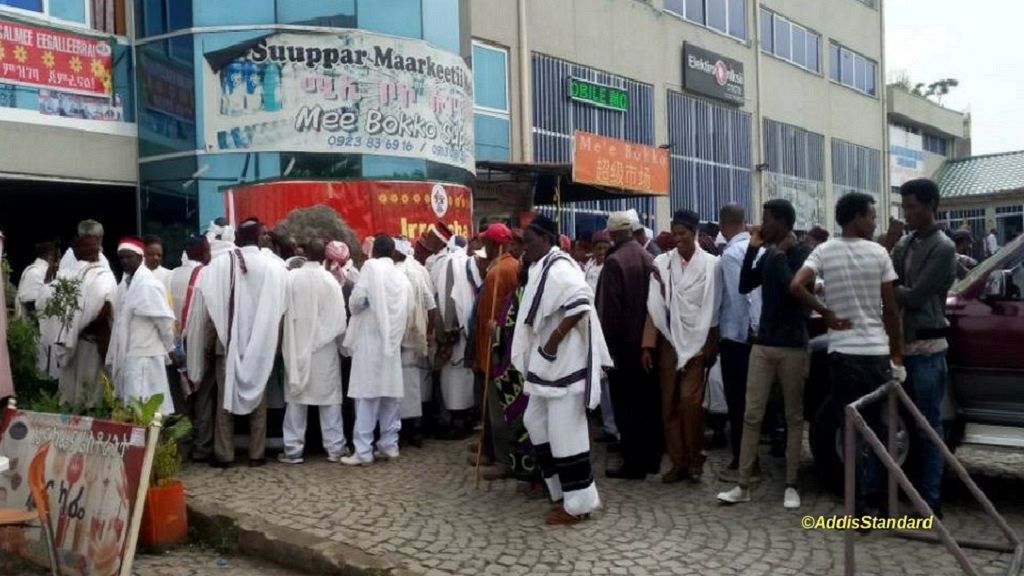
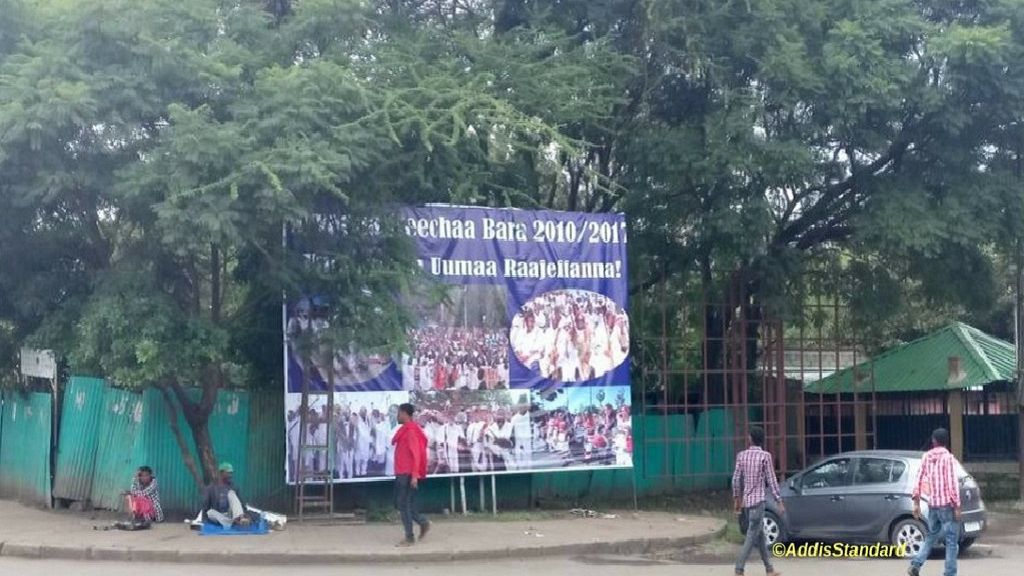


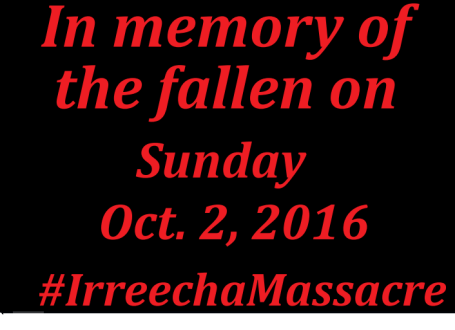
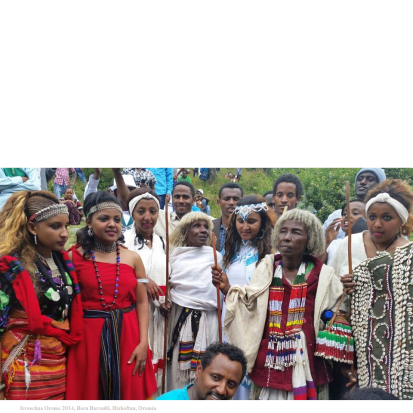
 Since time immemorial Oromo men, women, youths, and elders have been rallying together to express thanks and happiness to their Waaqa, who according to the Oromo concept of colour is symbolised by the colour gurraacha, meaning black. By its very original concept the colour gurraacha (black) did not stand for mourning, grief or for the expression of sorrow. It was used to symbolise the invisible supreme power that can do and undo anything anywhere in the universe. Having this narrative tradition in mind, the Oromos have been getting together around rivers or lakes to thank their Waaqa Gurraacha at the end of the rainy season. They strongly believe that, it was Waaqa who delivered them from the restraining rainy season and brought them to the cherished flowery season. This great event, called Irreecha in Afaan Oromoo, is celebrated every year at the end of September or in the first week of October.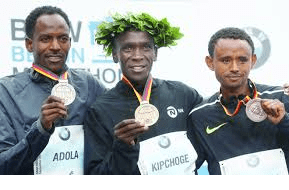


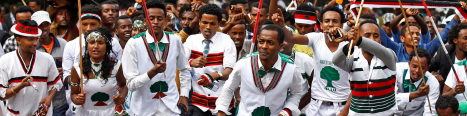

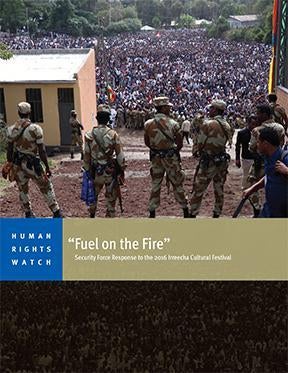




 Oromian Economist