jump to navigation

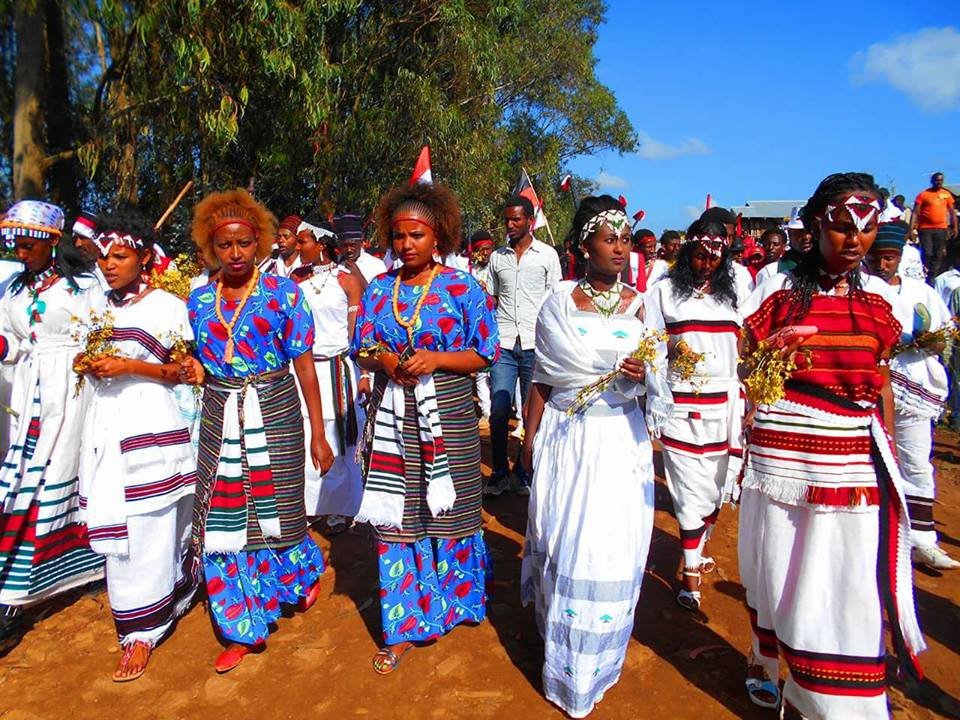
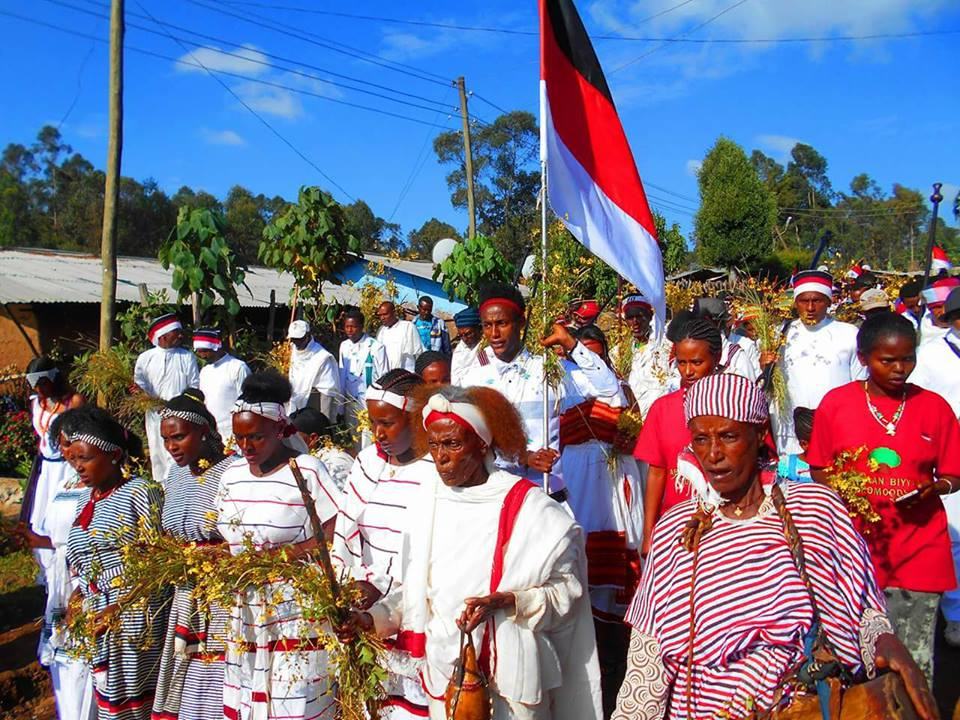
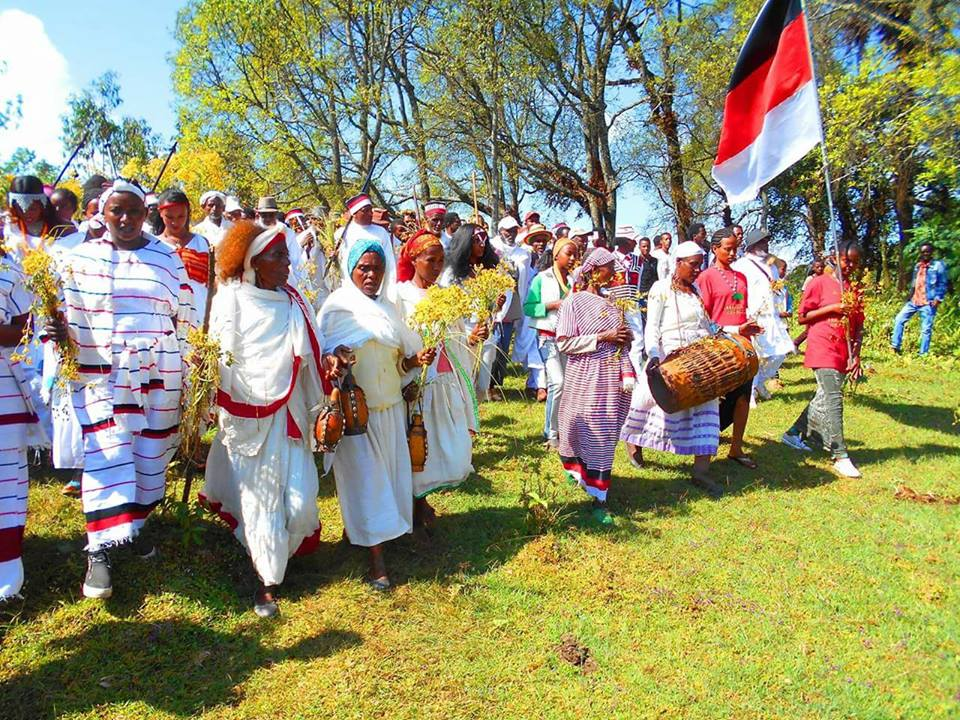
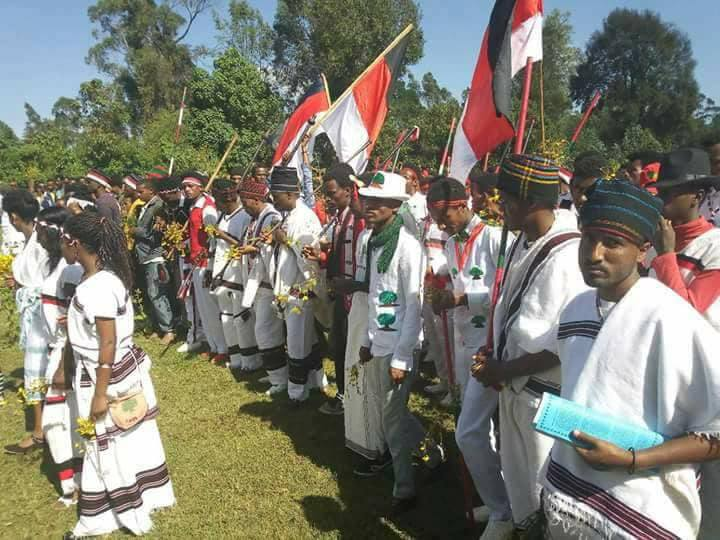
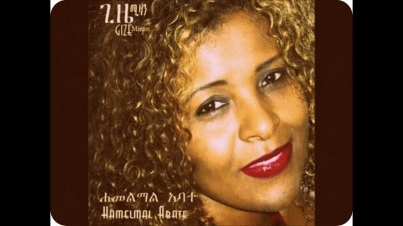
HAADHA GOOTAA: GEERARSA, NEW OROMO MUSIC 2017 BY ARTIST BILISEE GAADDISAA November 17, 2017

Posted by OromianEconomist in Music, Musicians and the Performance of Oromo Nationalism, Oromo Nation, Uncategorized.
Tags: , , , , , , , ,
add a comment


Odaa Oromoooromianeconomist


EU Lists Ethiopia Over Money Laundering November 17, 2017

Posted by OromianEconomist in Uncategorized.
Tags: , , , , , , , ,
add a comment


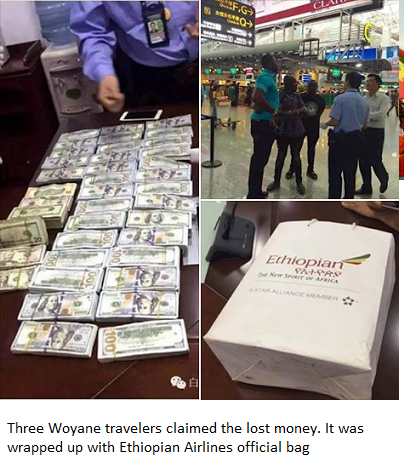
Odaa OromoooromianeconomistThree Woyane travelers claimed the lost money. It was wrapped up with Ethiopian Airlines official bag

The ​European Commission blacklisted Ethiopia for being very risky in money laundering and terrorism financing, urging banks situated in Europe to apply enhanced due diligence on financial flows from the country.
Aiming to ensure proper functioning of the European market, the Commission, in its latest regulation released on October 27, 2017, added the country to the list of high-risk third countries along with Iran, Syria, Yemen and seven other nations.


via EU Lists Ethiopia Over Money Laundering

Internet access and usage in African world November 16, 2017

Posted by OromianEconomist in Uncategorized.
Tags: , , , , , , , , ,
add a comment

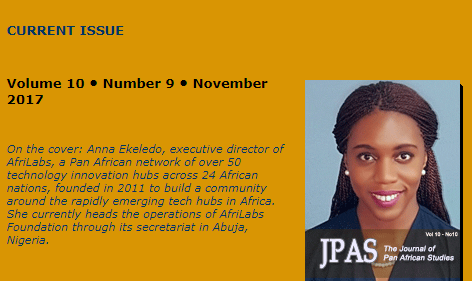
The special edition  of  The Journal of Pan African Studies   focuses on Internet access and usage in the African world. It discusses the future of the Internet, uproar over Internet shutdowns in Africa, WhatsApp political broadcast messages in the 2015 presidential election in Nigeria, new media appropriation via New Media and Oromo Protests in Ethiopia, Internet access to Caribbean government information on homeschooling in Barbados, African-centered internet literacy, information seeking behavior, a section on women in information technology innovation in Africa. 

CURRENT ISSUE


Volume 10 • Number 9 • November 2017


● Internet Access and Usage in the African World: Articulating a Progressive African Centered Digital Ecosystem
[ view PDF ]


● The 2016 Internet Society Report: Areas of Impact and Concern for the Future of the Internet
an editorial by Itibari M. Zulu
[ view PDF ]


● Uproar Over Internet Shutdowns: Governments Cite Incitements to Violence, Exam Cheating and Hate Speech
a guest editorial by Tonderayi Mukeredzi
[ view PDF ]


● Internet Diffusion and Government Intervention: The Parody of Sustainable Development in Africa
by Badmus Bidemi G
[ view PDF ]


● Appraisal Resources in Select WhatsApp Political Broadcast Messages in the 2015 Presidential Election Campaign in Nigeria
by Oluwabunmi O. Oyebode and Adeyemi Adegoju
[ view PDF ]


● The Powers and Limits of New Media Appropriation in Authoritarian Contexts: A Comparative Case Study of Oromo Protests in Ethiopia
by Habtamu Dugo
[ view PDF ]


● Internet Access to Caribbean Government Information on Homeschooling: A Preliminary Case Study of Barbados
by Mark-Shane Scale
[ view PDF ]


● African-Centered Internet Literacy: An Ubuntugogy Metadata Approach
by Abdul Karim Bangura
[ view PDF ]


● Social Media: Towards the Realisation of A Global Stance for the African Voice
by Bassey Nsa Ekpe
[ view PDF ]


● Teaching Afrocentricity Through E-Clustering
by Abdul Karim Bangura
[ view PDF ]


● Information Seeking Behavior Among Undergraduates Students Engaged in Twitter
by Musa D. Hassan
[ view PDF ]


● Internet Access in Nigeria: Mobile Phones, Issues, and Millennials 
by Mercy Kolawole
[ view PDF ]


● Women in Information Technology Innovation in Africa
[ view PDF ]


Relevant Books

[ view PDF ]


Announcement

● Fixed and Mobile Broadband in Africa: An Executive Summary
[ view PDF ]


Fascist Ethiopia’s regime (TPLF)’s another genocide plan (state terrorism). Wal-gahiin Mana-maree nageenya biyyoolessaatiin taa’ame shoroorka’u TPLF mul’isa. November 13, 2017

Posted by OromianEconomist in Ethiopia's Colonizing Structure and the Development Problems of People of Oromia, Afar, Ogaden, Sidama, Southern Ethiopia and the Omo Valley, Ethnic Cleansing, Horn of Africa Affairs, Uncategorized.
Tags: , , , , , , , ,
add a comment

Odaa Oromoooromianeconomist

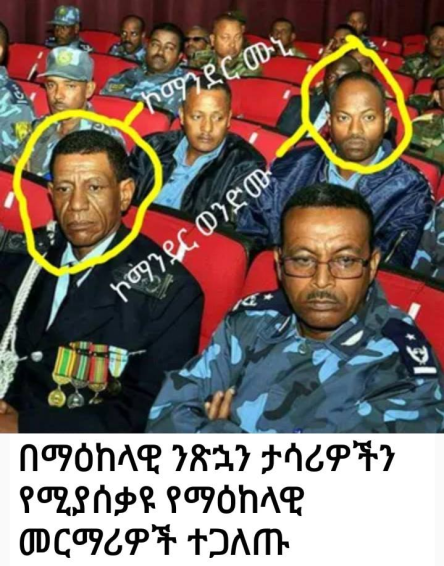
TPLF Ethiopia regime federal security officers conduct mass torture in Kilinto and Maikelawi jails.png

AS EXCLUSIVE: DOCUMENT PRESENTED AT THE NATIONAL SECURITY COUNCIL MEETING REVEALS ETHIOPIA FACING ALARMING MULTI-FRONT CRISIS

Addis Standard, 12 November 2017

Major points discussed in the document include:

  • The country’s federal system is facing imminent threat
  • Security breakdown contributing to rising public anxiety
  • Immeasurable human and material cost caused by recent conflicts
  • Absence of rule of law prevalent
  • Security crisis negatively impacting the economy
  • Diminishing foreign aid due to human rights related concerns
  • Crippling effect on the tourism industry as well as hurting the country’s image
  • Security crisis curtailing the ability of the security establishment to discharge its constitutional 

Although It Mentions Egypt And Eritrea As Two Foreign Agitators, The Document Squarely Blames The Crisis On The “Internal Vulnerability” Of Current Leadership

It proposes the establishment of a joint command post/joint committee between the federal and regional security establishment 


Addis Abeba, November 12/2017 – A document assessing the current security and political situation in Ethiopia and was presented at the National Security Council meeting, held on Friday Oct. 10/2017, revealed in detail that Ethiopia was currently confronted with alarming level of multi-front crisis.

The meeting was held at the office of PM Hailemariam Desalegn and was attended by Siraj Fegessa, minister of defense & head of the National Security Council, General Samora Yenus, chief of staff of the Ethiopian National Defense Forces and other high level federal intelligence and defense officials, presidents of regional states and their security officials, as well as federal and regional state senior members of the police and the militia.

The document, which was jointly prepared by the country’s intelligence and defense officials, and was viewed exclusively by Addis Standard, reveals that the current security crisis, which was exacerbated by the prevalent of “absence of rule law”, was the most serious of all threats the country was facing as of late. It blames that”lawlessness” and “dissent” were alarmingly taking national forms by expanding throughout the country, threatening the federal system. Such incidents, according to the document, were fueling public anxiety and loss of confidence in the government.

“Genocide” 

But the most disturbing detail in the document was the part in which it discussed the recent violence in several towns and villages within the Ethio-Somali and Oromia regional states, which resulted in the death of unknown numbers of civilians and displacement of hundreds of thousands of Oromos from the Ethio-Somali regional state as well as hundreds of Ethio-Somalis from towns in Oromia regional state.

The document described the situation as having “resulted in genocide and mass displacement of people; witnessed inhuman and atrocious killings of civilians; and created a moral and psychological scar among the victims.”  It further said that this incident revealed the presence and prevalence of an “unnamed terrorist organization which “has not taken responsibility” for the crimes committed. “The people have lost trust in their constitutional right to move freely and live peacefully.”

The document also mentioned the proliferation of arms within the country and its nature in changing hands among various ‘agent provocateurs’.  The combined effect of this was crippling the country’s security apparatus to discharge its constitutional duty because it was engaged in “putting conflicts sprouting in several places under control”.

Economy & tourism 

The economy is severely hurting, according the document, and the flow of foreign currency was drying. Foreign aid, too, was diminishing due to conditions attached to human rights abuses, and the country’s tourism was significantly affected and its image tainted. But most alarmingly, the document admitted that domestic investment was facing heavy challenges and unprecedented level of capital flight by those who have already invested in the country was seen recently. The economy was also affected by stockpiling of commodities as well as the proliferation of money laundering by increasing numbers of individuals; and it admitted that the country’s taxation system was unable to collect due taxes to help the economy, which was also hit by “illegal export of prohibited commodities” through organized illegal traders.

Blame on leadership

The document mentions Eritrea and Egypt as well as the presence of a coordinated cyber propaganda as fueling tensions within the country; but at the same time it puts the blame on the vulnerability of  the political leadership and its inability to address public grievances in the last two and half years. It also points fingers at the direct involvement of the leadership in recent conflicts. Instead of guiding the public and the youth to productive ways of live, it says, the leadership was involved in guiding them to dissent and destruction, immersing itself in a zero sum game. “The problem is political”, it says, and “it can only be solved politically.”

Joint command post/joint committee

But its recommendation is an establishment of a joint command post (sometimes referred in the document as mere “joint committee”) between the federal and regional security establishments.

The immediate aim of this joint command post/joint committee was highlighted in eight different points. This include the work that needed to be done to secure the free movement of people from places to places; securing major roads throughout the country on 24 hour bases of patrolling; bringing to justice those who were involved in recent conflicts; prohibiting of illegal rallies; rehabilitation of displaced Ethiopians back to their homes; strict control of anti-public armed forces; control of the movement of illegal arms, human trafficking as well as contraband trades; as well as strengthening of the security apparatus at every level.

This joint command post/joint committee, would be organizing a monthly joint meeting between federal and regional security establishment after/on the second week of every month; and it would be submitting its reports directly to the Prime Minister’s office.

Speaking at a press conference after the meeting, which last for several hours, Siraj Fegessa said that a consensus  between federal and regional states was reached to coordinate the security establishment of both to tackle the growing security crisis. “We have evaluated the security risk in the country which has been recurring since last year and we have prepared a detailed plan to control the situation,” Siraj was quoted by a local newspaper as saying . “We met with the stakeholders since we have to work together.”

Addis Standard received further information that there would be additional similar meetings to hammer out more details on the document, which was distributed as a working paper to everyone who participated in the meeting held at the PM’s office on Friday.

AS


Click here to read related article from OE sources: Ethiopia: Government-Fuelled Conflict & the Need for Unity


Wal-gahiin Mana-maree nageenya biyyoolessaatiin taa’ame shoroorka’u TPLF mul’isa.

Awash Post, Sadaasa, 12, Bara 2017


Manni-Maree nageenyaa biyyoolessaa jeeqamuu, nagaa fi tasgabbii dhabuu biyyattii irratti marii taasisee jira. Keessattu haala naannoo Oromiyaa keesssa jiru irratti mariin kan xiyyeeffate. Mariin kunis kan gaggeeffame waajjira Minstera Muummee Haayilamaariyaam Dassaalanyitti ture. Walitti qabaan mana mari nageenyaa Muummichi Ministera HD fi Ministerri Ittisaa biyyaa fi hogganaa Mana-maree Nageenyaa obbo Siiraaj Fageessaatin gaggeeffameera. Humnoonni nageenyaa federaalaa fi naannoo, pireezdaantonni naannolee, koomishinaroonni poolisii fi ajajoonni Raayyaa Ittisaa biyyaa marii kana irraa qooda fudhataniiru.

Marii ol’aantummaa isaani kabjsiisuu fi qor-qalbii isaani tasgabbeessu raawwachuu irraa woyyaanonni takkaa duubatti hin jenne. Barbaachisummaan marii kanaas nagaa fi tasgabbiin Oromiyatti qixa barbaadamuun argamuu dhabuu fi karoora nageenyaa kallattii funduraa irratti kaayuudha. Ajandaan dhoksaa marichaas sochii fi gaaffi ummanni Oromoo dhimma abbaa biyyummaa fi dimokraasii irratti kaasaa jiru humnaan danquuf kan kiyyeeffameedha. Qaamolee nageenya federaalaa fi naannoo diriirsuun sagalee ummataa ukkaamsuudha. Qor-qalbii qeerroo fi dhageetti bulchiinsa haaraa OPDO’s cabsuu ni barbaadu.
Haa ta’uu malee ummanni Oromoo sodaa marii nageenyaati miti; labsiin hatattamaa fi ajajni garee komaandi postitiin baati 10f kennamaa ture gaafi fi fedhii ummataa dhaabuu akka hin dandeenye ifa. Hidhaa, tumaa fi dhiigni balbala Oromoo hundatti dhangala’aa ture qabsoo cimse malee tasuma hin gufachiifne. Marii fi konfiransii nageenyaa jechuun qabeenya ummataa fi mootummaa qisaasuu irra gaafi fi yaada ummataa dhaga’uun furmaata waaraa ture. Kana gochuuf woyyaaneen ijaa fi gurra hin arganne. Tuffiin cimaanis keessaa isaaniti belbela. BMNO fi hawaasa bal’aa wajjiin dhimma furmaata ta’uu malu: hidhamaa hiikuu, kan ajjeefamani, qe’ee fi qabeenya irraa buqqa’aniif beenyaa barbaachisu kaffaluu irratti ifaan mari’achuu male. Gochaan hammeenyummaa fi gar-jabeenyaa poolisii federaalaa, Agaazii fi woraanna ittisa biyyaatin ummata Oromoo irratti raawwataa turanif ummataa fi bulchiinsa naannootiin kabaja woyyaaneen barbaaddu mulqamuunis mata dhukkubbi cimaa itti ta’eera.

Qaamolee nageenya naannoo fi federaalaatiin rukutamuu, butamuu fi ajjeefamuun ummata Oromoo haaraa hin turre. Sirna bulchiinsa woyyaanee keessatti Oromoon kanuma keessumeessaa, argaa fi dhaga’aa as gahe. Mariin Manni-maree Nageenyaa biyyaalessaa kaleessa gaggeesse kan calqabaatis miti. Erga labsiin mana marii nageenya biyyoolessa hundeessuu lakk.257/2001 bahee amata 16 ta’eera. Labsichi duras kallattii fi al-kallattiin hojima irra ture. Yeroo rakkoo fi nagaatis dhimmuma itti bahaa turan. Kanaaf maqaa wal-gahii, marii fi konfaransitin shirri qabsoo Oromoo danquuf taasifamu hundi nageenyaa fi tasgabbi biyyaas hin fidu; falmii fi qabsoo ummata Oromootis tasuma gufachiisuu hin danda’u.

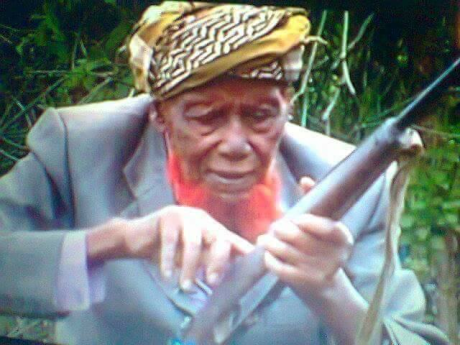
Aliyyii Cirrii, one of the pioneers of Oromo national movement against tyranny and injustice passes away at age 96. Gootichi Oromoo Koloneel Aliyyii Cirrii, abbaan Dhoombir dhalatanii waggaa 96 du’aan addunyaa kana irraa boqatan. November 11, 2017

Posted by OromianEconomist in Uncategorized.
Tags: , , , , , ,
10 comments


Odaa Oromoooromianeconomist

Aliyyii Cirrii, Oromo national hero, 1912-2017.png

The iconic and national hero who gave so much to his suffering  people. Rest in Peace.


Colonel Aliyyii Cirrii lived (1912- 2017) an exceptional and impactful life as one of  the  pioneers and engineers  of Oromo national movement against historical, economic, political and cultural injustices.

Along with  General Waqo Gutu, Haji Adam Jilo Webo, Musa Bati , Colonel Aliyyi Cirrii is the pioneer and Oromo national hero of the 1960’s generation who embarked Oromo national struggle against autocratic  feudal regime of Aste Haile Selassie. 

Born and raised in Madda Walabu, Bale, Southern Oromia, Aliyyii Cirrii joined the Oromo national struggle in the early 1960s along with the late General Waaqoo Guutuu. He spent most of his youth and adult age worked to bring freedom and justice to the suffering Oromo people. He was known among his contemporaries as a brave hero, which he proved during the Bale People’s movement, also known as the “Dhombir” war.

“Aliyyii Cirriitu beekaa, isaa beekaa, karaa dhombiriin dhukaatee, way dhukaatee…”- artist Haacaaluu Hundessaa’s 2013 song.

Aliyyii Cirrii, Oromo national hero, 1912-2017

https://www.youtube.com/watch?v=lnNESnOG2Rg

https://www.youtube.com/watch?v=lnNESnOG2Rg

https://twitter.com/Abbaacabsa/status/929403314273386502

 https://www.facebook.com/naftanan.gadullo.5/videos/497829927265119/

Seenaa Koloneel Aliyyii Cirrii Jaarraa

https://vimeo.com/173642225

https://vimeo.com/173667168


Seenaa Gooticha Oromoo Koloneel Aliyyii Cirrii‬


Aliyyii Cirriitu beeka …
karaa dhoombiriin dhukaate..
)Weellisaan keenya jaallatamaan Hacaaluu Hundeessaa )

( Kitaaba Sheleme K Jima #Seenaa #Gootota #Oromoo fi #Kaan“:2009:298, maxxansa 2ffaarraa kan fudhatame)

Koloneel Aliyyii Cirriin godina Baalee aanaa Dalloo Mannaa ganda Cirriitti; abbaa isaa obbo Cirrii Jaarraa fi haadha isaa aadde Badheessoo Miinaa irraa bara 1912 dhalate.
Koloneel Aliyyii Cirriin qabsaa’ota Fincila Baalee keessatti hirmaatan keessaa isa tokko. Gabrummaa ummatarra ga’aa tureen aaruun ijoollummaa isaatti; umriisaa 12ffaan qabsaa’uf bosonaa seene.

Qabsoorra osoo jiru, Jeneraal Waaqoo Guutuun qabsoo jalqabuu yeroo baru, waliin qabsaawuu jalqaban. Koloneel Aliyyiin sana duras ummata biratti qabsoon beekkamaa waan tureef, Jeneraal Waaqoo hedduu gammachiise.

Sirna Hayilasillaasee keessa bara 1957 Waxabajjii keessa Oborso aanaa Madda Walaabuutti nafxanyaa muddees waraanera. Qabsoo Oromoo Baalee finiinsuunis nama maqaa adda durummaa qabu.

Koloneel Aliyyii Cirriin hiriyoota fi qabsaa’ota akka isaa Haji Goobanaa Yuuboo, Saamoo Kormee, Jeneraal Waaqoo Guutuu, Koloneel Adam Jiloo, Koloneel Dubroo Waaqoo, Koloneel Huseen Bunee, Koloneel Kadir Waaqoo Shaaqeefaa waliin diinan lolaa turan.

Aanaa Dalloo Mannaa fi Madda Walaabuu kan waldaangessu Malkaa Amaanaarratti guyyoota 7f nafxanyaan saamichaa fi weeraraaf bobba’e akka hin dabarre dhoorkera.
Camarrii, Horri Korree, tulluun Araaraa, tulluun Habbisuu (lafti dhaloota warra isaa) nafxanyaa muddaa ofii injifannoon keessa burraaqaa turani.

Aliyyi Cirriin; Jaarraa Habbisuu Jiloo Galma Odaa Guljuu Bariisoo Huqqaa jechuun abbootii isaa lakkaa’a. Lakkoofsichis gosa isaa Karrayuun isa geessa.
Koloneel Aliyyii Gubbaa, Dalloo, Angeetuu, Bidiree, Oborsofaatti goota diina irriiba halkanii dhoorkee guyyaa abjoochise ture. Magaalaa Oborsootti waraanni Aliyyii Cirrii waraana nafxannaa barbadeessera. Aliyyiin nama cunqursaa danda’ee baatu hin turre.
Aliyyi, magaala, jajjaba, dhaabbata qajeelaa qabu.
Koloneel Aliyyii haadha warraa afur irraa ijoollee 25 horateera.

Hacaaluu Hundeessaas sirba isaa keessatti; Aliyyii Cirriitu beeka … karaa dhoombiriin dhukaate…. jechuun Aliyyiin dhukaasa dhoombiriin gita akka hin qabne dhugaa ba’eefira.
Aliyyi goota qawwee dhoombiriin xiyyaara samii buusus ture.
Ayyaana Iid Al faxir 1437ffaa, bara 2008 sababeeffachuun OBS Aliyyii Cirrii waliin turmaata taasiseet ture. Koloneel Aliyyiin “Ilmaan teenyayyuu osoo qabsoorra jirruu bosonuma keessatti horre, yeroon nuti loon horsiifannee dikee jalaa harre hin jiru. Humnaa fi yeroo keenya bosona seennee qawwee diinarratti dhukaasaa turre.” Jedha seenaa isaa yoo himatu.

Koloneel ijoollummaa isaatirraa eegalee lolaa fi adamoo baay’ee jalata ture. Adamoo kanaas kan gaggeessaa turan obbooloota isaa A/Raamaan Cirrii, Awwaluu Cirrii,Usmaan Cirrii,Isaaq Cirrii,Harbisee Cirrii waliin ture.
Abbaan isaanii loltuu cimaa loltoota sirna nafxanyaa waliin yeroo dheeraa wal waraanaa turuun haaloo ilmaan Oromoo lubbuun isaanii darbe gumaa deebisaa turani. Mootummaa Hayilasillaasee hidhannoon Oromoorraa qolachaa turan.

Qabsoo isaanitiin mootummaan H/sillaasee uummata Oromoo irratti cunqursaa gaggeessaa ture keessaa garee waraana shaambaal Baqqalaan hoogganamu waliin bakka Sannaatee jedhamutti wal waraanuun shaambaal Baqqalaa ajjeesun loltoota isaa hedduus barbadeessuun injifannoo argataniru.

Mootummaan H/Sillaasee loltootni isaa dhumachuu dhaga’ee hoomaa waraanaa baay’ee erguun akka obbo Cirrii Jaarraan qabamu godhe. Mana hidhaa Gobbaattis darban. Waggaa shaniif mana hidhaa Gobbaa keessaas turan.
Dhuma waggaa shanii booda qaamni mootummaa H/sillaasee Cirrii Jaarraa lubbuu baay’ee balleessitee jirtaan, umurii guutuu hidhamuurra gumaa nama ajjeestee kanfalii ba’i jedhame. Innis dheebuu qabsoo ilmaan Oromoof qabu waan itti urgooftef mana hidhaa keessa taa’urra gumaa kaffalee ba’uu wayyaan kaffalee ba’e.

Madda Walaabutti deebi’ee galuunis maatii isaa fi ijoollen isaa maal irra akka jiran erga hubatee booda Aliyyii Cirrii, Awwaluu Cirrii, A/ramaan Cirrii, Usmaan Cirrii, Isaaq Cirrii fi Harbisee Cirriin waraana akka baran taasise.

Baaletti yeroo Aliyyii Cirriifaanti ijoollee turan qabsoo kan jalqabe Mahaammad Gadaa Qaalluuti. Qawwee Xaaliyaanirraa bara 1938 argateeni lolichas kan jalqabe.Sirna Hyilasillaasee sanarra gabrummaan filatamuu baatus Xaaliyaanii wayyaayyu Oromoof jedhu Haji Adam Tiinnaa seenaa Koloneel Aliyyii fi hacuuccaa bara sanaa yoo himan.

Aliyyii Cirriifaanti lola Mahaammad Gadaa Qaallurraa baratan. Sirni nafxanyaa Mahaammad Gaadaa Qaalluurratti karaa 3n duula irratti bane. Isaanis karaa Gadab, Raammii W/mikaa’eel, Muloo Daadhii, Saannata, Hangeetuu, Manniisaan lola guddaatu ta’e. Wraana kanarratti gootonni Oromoo 3n; Huseenonni loltoota nafxanyaa 56 ajjeesuun wareegamaniiru.
Waraannii Mahaammad Gadaa Qaalluu laafee hiikkachuu jalqabe. Innis Raayituu Galdii seenan. Booddees qabamee mootummaa Hayilasillaaseef dabarfamee laatame. Mana hidhaa Gobbaattis summii nyaachifamee ajjeefame.
Boodas Aliyyi Abdullaahiifaa waliin Aliyyi Cirriifaan falmaa turan. Diinni maqaa isaanii dhageenyan ofirratti fincaa’aa ture.

Waaqoo Guutuu namoota 40 fudhatee Somaaliyaa dhaquun qawwee 40 argatee deebi’ee. Aliyyii Cirriinis yona Waaqoofaatti dabalame. Waaqonis Aliyyiin bosana seenee diinan loluun cimaa akka ture waan beekuf yoo isa argatu guddaa gammade.Maddattis walga’anii walii kakatan.
Bara 1956 Madda Walaaburraa nafxanyaa ari’uun to’annoo ofii jala oolchan. Maddatti yoo walga’anis hoogganaa filatan.
Waaqon jeneraalummaan hoogganaa olaanaa, Aliyyiin koloneelummaan itti aanummaan akka tajaajilu filatame. Koloneel Dubroo Waaqoo, koloneel Adam Jiloo Waaqoos hoggantummaa argataniiru.

Waggoota 7 mootummaa Hayilasillaasee waliin ega lolaa turaniin booda jidduutti waggoota 4 Dargiin gara aangoo yoo dhufu boqatanii lolli akka haaraa cimee itti fufe.
Jaagamaa Keelloo mootummaa Haylasillaaseen muudamee gara Baalee yoo deemu ummata sossobee ofitti akka qabachuu yaalaa ture. “Gootonni Baalee harka akka kennatan kan nu taasise Jaagamaa Keeloo ture.” jedha Aliyyi Cirriin seenaasaa yoo himatu.

Loltoota Baalee lafatu isaan gargaara. Sanaaf yeroo heduu injifannoo gonfatu.Sulula Gannaalee, sulula Weelmal, bosona Harannaa Bulluq keessatti injifannoowwan jajjaboos galmeessisaa turaniiru.
Baale Waaqoo Luugoo, Soomoo Kormaa, Ibraahiim Qaalluu, Suufii, Kadir, Usmaan, Awwaluu Cirrii fi gootota jajjaboo horateera.

Aliyyii Cirrii Somaaliyaatti baqatee bara mootummaa ADWUI biyyatti deebi’ee jiraachuu jalqabe. Umrii ofiis guutuusaa qabsootti fixee maanguddummaan sireerratti deebi’an.
Aliyyii Cirriin qabsootti fuudhee, maatii bosonuma keessa deemaa horate. Aantummaa ummataa kanas yoo Koloneel Adam Jiloo ajajaa waraanaa fi hayyuun Oromoo Somaaliyaatti maqaa Oromoon waggaa 11f hidhamanii turan biyyatti yoo deebi’an, “Nama ijoollee fi niitirraa du’e osoo hin taane, nama biyyarraa du’e natti himaa; silaa waggaa 11n hidhamee ala turee deebi’ee.” jedhan jedhama. Biyyaaf du’uun Baaletti akkanaan barsiifamaa ture.

Waajjirri Dhimmoota Koomuniikeeshinii aanaa Madda Walaabuu (2008) waa’ee Koloneel Aliyyii raga yoo ba’u, Koloneel Aliyyii Cirrii jeneraala waraanaa diina isaanitiin maalif isaaninakka lolan yoo itti himan; “Nuti kan isiniin lolluuf isin diina keenya waan taataniifi. Yoo isin injifannes yoo duune seenaa arganna. Isin injifannaanis lafa keenya; lafa ummata Oromoo isa bareedaa kana isa uummanni duraanii lafa isaatti boonee loon isaa irratti bobbaafachaa ture, seera isaa irratti tumataa aadaa fi afaan isaa itti guddifataa ture kana arganna” jedhee deebiseef.

Koloneel Aliyyii Cirrii Jeneraal Walda Sillaasee Barakat, Jeneraal Kabbadaa Yaa’iqoob, Fitawuraarii Alamaayyoo Taayyeefaan ummata Oromoo irratti hacuuccaa gaggeessaa turan nuffuun, “Yoo nu dhiisuu baattan qabsoon keenya ittuma fufa!” jechuun kutannoon nama dubbataa ture.
Keessattuu Fitawuraarii Alamaayyoo Taayyee Amaara ta’ee, Dalloo bulchaa turuun ilmaan Oromoo irratti hacuuccaa daangaa hin qabne geessisaa ture. Kana malees, Fitawuraarii Galchuu Toogee ammoo gosa Oromoo ta’ee Madda Walaabuu bulchaa ture. Fitwuraariin kun mootummaa Hayila Sillaasee biratti fudhatama argachuuf jecha ummata Oromoo lammii isaa fixaa ture.

Gama biraatiin lammiin Oromoo dhalootaan Angeetuu; ajajaa kudhanii kan ture Bulloo Gammadaan immoo gidduu deemtuu ykn haala mijeessaa nafxanyaa ta’uun tajaajilaa ture. Kunis dubbiin Oromummaa amma galuufitti ture.
Kana jechuun waraanni koloneel Aliyyiin hoogganamu iddoo inni qubatuu fi bulu waan beekuuf odeeffannoo nafxanyaa mootummaa Hayila Sillaaseef dhiyyeessaa ture. Haaluma kanaan otuma nafxanyaa waliin ummata Oromoo waraanaa jiruu loltoota Oromoo Madda Walaabuun booji’amuun waraana Shaalaqaa Awwaluu Cirriin hoogganamu jala gale.
Yeroo kanatti ajajaan kudhanii Bulloo Gammadaan kaayyoo ummata Oromoo fi kallaatti deemsa isaanii erga hubateen booda garee waraana ummata Oromoo waliin ta’uun Oromummaa isaa amanee ummata Oromoo waliin gara waraana nafxanyaatti seenuun Godina Gujii bakka ‘Gurraa’ jedhamutti harka nafxanyaan du’e.

Yeroo sanatti waraanni kun humnaan ol waan cimeef ummanni Oromoos ta’e nafxanyaan osoo wal baqatanii galaana bishaan Gannaaleen lubbuu isaanii dhabaniiru. Haaluma kanaan gareen waraana koloneel Aliyyii Cirrii magaalli Oborsoo fi Bidiree akka nafxanyaa yeroo saniif hin taane guban.Akkasumas Riqicha laga Gannaalee gubuuf ka’anii yoo hafe nu fayyaduu danda’a jedhanii gubuu dhiisan.Yeroo kanatti bakka Maddaatti waraanni akka hin gaggeeffamne dhaamsi isaanii bineensi illee ykn Allaattiin illee bakka kanatti akka hin ajjeefamneef beelladoota manaa keessaa immoo Gaala akka hin qallee dhaamsa walii dabarsanii waraana isaanii itti fufan.
Koloneel Aliyyiin mootummaa Hayila Sillaasee gaaffii ciccimoo gaafatee ture. Finfinnee deemuun, “Erga ummata keenya injifattee akka durii gadi nu hin qabin; jiruu keenya ol qabi, Dalloo Mannaatti erga biyya Somaaliyaatii nu waamtee kunoo dhufne gaaffii keenya duraa akka deebinee si hin gaafanne waan dura balleessite lammata akka nutti hin deebisne.” jedheen.
Haaluma wal fakkaatun bara mootummaa Dargii, mootummaa Hayila Sillaasee caalaa cunqursaa guddaan ummata Oromoorra gahaa ture. Bara muutummaa Dargii kana keessatti waraanni meeshaalee waraanaa ammayyaa waan qabuuf ilmaan Oromoo hedduu irratti ajjeechaa raawwachaa tureera.

Koloneel Aliyyiin sirnicha kana cal jedhee hin ilaalle ture. Akkuma mootummaa Hayila Sillaasee irratti qabsaa’een mootummaa dargii jalas dhaabbachuun hacuuccaa cunqursaa ummata oromoo irratti gahaa ture ofirraa qolachuuf hoomaa waraanaa isaa qabatee dargiin lolaa turuun isaa ni beekama.

Koloneel Aliyyiin uummanni Oromoo tokkummaa kan qabaatuf ilaalcha biyyoolessummaa qabu ture.
Koloneel Aliyyiin mirgi ummatichaa qawwee qofaan mirkanaa’uu danda’a amantii jedhu qabaachuun, waraana Dargii jala dhaabbachuun erga waraanaa turee, mootummaan Dargii waraanni isaa humnaan ol cimachaa adeemuun, koloneel gara mootummaa Somaaleetti baqachuun waggaa 11 achi ture.

Koloneel Aliyyiin fedhiin isaa inni guddaan ummata Oromoo gabrummaa keessaa baasuu ture. Erga sirnoota mootummaa Hayila Sillaasee fi Dargii keessa umurii isaanii guutuu qabsaa’anii booda ummata barnootaaf kakaasuun namni hunduu akka baratu gochuun hojii bu’a qabeessa hojjataa ture.
Seenaa namoota jajjaboo kaanii kitaabicharraa akka dubbistan isin affeerera.


Seenaa Koloneel Aliyyii Cirrii‬

Finfinnee, Sadaasa 2,2010(FBC) -Koloneel Aliyyii Cirriin godina Baalee aanaa Dalloo Mannaa ganda Cirriitti; abbaa isaa obbo Cirrii Jaarraa fi haadha isaa aadde Badheessoo Miinaa irraa bara 1912 dhalate.

Koloneel Aliyyii Cirriin qabsaa’ota Fincila Baalee keessatti hirmaatan keessaa isa tokko. Gabrummaa ummatarra ga’aa tureen aaruun ijoollummaa isaatti; umriisaa 12ffaan qabsaa’uf bosonaa seene.

Qabsoorra osoo jiru, Jeneraal Waaqoo Guutuun qabsoo jalqabuu yeroo baru, waliin qabsaawuu jalqaban. Koloneel Aliyyiin sana duras ummata biratti qabsoon beekkamaa waan tureef, Jeneraal Waaqoo hedduu gammachiise.

Sirna Hayilasillaasee keessa bara 1957 Waxabajjii keessa Oborso aanaa Madda Walaabuutti nafxanyaa muddees waraanera. Qabsoo Oromoo Baalee finiinsuunis nama maqaa adda durummaa qabu.

Koloneel Aliyyii Cirriin hiriyoota fi qabsaa’ota akka isaa Haji Goobanaa Yuuboo, Saamoo Kormee, Jeneraal Waaqoo Guutuu, Koloneel Adam Jiloo, Koloneel Dubroo Waaqoo, Koloneel Huseen Bunee, Koloneel Kadir Waaqoo Shaaqeefaa waliin diinan lolaa turan.

Aanaa Dalloo Mannaa fi Madda Walaabuu kan waldaangessu Malkaa Amaanaarratti guyyoota 7f nafxanyaan saamichaa fi weeraraaf bobba’e akka hin dabarre dhoorkera.

Camarrii, Horri Korree, tulluun Araaraa, tulluun Habbisuu (lafti dhaloota warra isaa) nafxanyaa muddaa ofii injifannoon keessa burraaqaa turani.

Koloneel Aliyyi Cirriin amma aanaa Madda Walaabuu magaalaa Bidiree keessa jiraata.

Aliyyi Cirriin; Jaarraa Habbisuu Jiloo Galma Odaa Guljuu Bariisoo Huqqaa jechuun abbootii isaa lakkaa’a. Lakkoofsichis gosa isaa Karrayuun isa geessa.

Koloneel Aliyyii Gubbaa, Dalloo, Angeetuu, Bidiree, Oborsofaatti goota diina irriiba halkanii dhoorkee guyyaa abjoochise ture. Magaalaa Oborsootti waraanni Aliyyii Cirrii waraana nafxannaa barbadeessera. Aliyyiin nama cunqursaa danda’ee baatu hin turre.

Aliyyi, magaala, jajjaba, dhaabbata qajeelaa qabu.

Koloneel Aliyyii haadha warraa afur irraa ijoollee 25 horateera.
Hacaaluu Hundeessaas sirba isaa keessatti; Aliyyii Cirriitu beeka … karaa dhoombiriin dhukaate…. jechuun Aliyyiin dhukaasa dhoombiriin gita akka hin qabne dhugaa ba’eefira.
Aliyyi goota qawwee dhoombiriin xiyyaara samii buusus ture.

Ayyaana Iid Al faxir 1437ffaa, bara 2008 sababeeffachuun OBS Aliyyii Cirrii waliin turmaata taasiseet ture. Koloneel Aliyyiin “Ilmaan teenyayyuu osoo qabsoorra jirruu bosonuma keessatti horre, yeroon nuti loon horsiifannee dikee jalaa harre hin jiru. Humnaa fi yeroo keenya bosona seennee qawwee diinarratti dhukaasaa turre.” Jedha seenaa isaa yoo himatu.

Koloneel ijoollummaa isaatirraa eegalee lolaa fi adamoo baay’ee jalata ture. Adamoo kanaas kan gaggeessaa turan obbooloota isaa A/Raamaan Cirrii, Awwaluu Cirrii,Usmaan Cirrii,Isaaq Cirrii,Harbisee Cirrii waliin ture.

Abbaan isaanii loltuu cimaa loltoota sirna nafxanyaa waliin yeroo dheeraa wal waraanaa turuun haaloo ilmaan Oromoo lubbuun isaanii darbe gumaa deebisaa turani. Mootummaa Hayilasillaasee hidhannoon Oromoorraa qolachaa turan.

Qabsoo isaanitiin mootummaan H/sillaasee uummata Oromoo irratti cunqursaa gaggeessaa ture keessaa garee waraana shaambaal Baqqalaan hoogganamu waliin bakka Sannaatee jedhamutti wal waraanuun shaambaal Baqqalaa ajjeesun loltoota isaa hedduus barbadeessuun injifannoo argataniru.

Mootummaan H/Sillaasee loltootni isaa dhumachuu dhaga’ee hoomaa waraanaa baay’ee erguun akka obbo Cirrii Jaarraan qabamu godhe. Mana hidhaa Gobbaattis darban. Waggaa shaniif mana hidhaa Gobbaa keessaas turan.

Dhuma waggaa shanii booda qaamni mootummaa H/sillaasee Cirrii Jaarraa lubbuu baay’ee balleessitee jirtaan, umurii guutuu hidhamuurra gumaa nama ajjeestee kanfalii ba’i jedhame. Innis dheebuu qabsoo ilmaan Oromoof qabu waan itti urgooftef mana hidhaa keessa taa’urra gumaa kaffalee ba’uu wayyaan kaffalee ba’e.

Madda Walaabutti deebi’ee galuunis maatii isaa fi ijoollen isaa maal irra akka jiran erga hubatee booda Aliyyii Cirrii, Awwaluu Cirrii, A/ramaan Cirrii, Usmaan Cirrii, Isaaq Cirrii fi Harbisee Cirriin waraana akka baran taasise.

Baaletti yeroo Aliyyii Cirriifaanti ijoollee turan qabsoo kan jalqabe Mahaammad Gadaa Qaalluuti. Qawwee Xaaliyaanirraa bara 1938 argateeni lolichas kan jalqabe.Sirna Hyilasillaasee sanarra gabrummaan filatamuu baatus Xaaliyaanii wayyaayyu Oromoof jedhu Haji Adam Tiinnaa seenaa Koloneel Aliyyii fi hacuuccaa bara sanaa yoo himan.

Aliyyii Cirriifaanti lola Mahaammad Gadaa Qaallurraa baratan. Sirni nafxanyaa Mahaammad Gaadaa Qaalluurratti karaa 3n duula irratti bane. Isaanis karaa Gadab, Raammii W/mikaa’eel, Muloo Daadhii, Saannata, Hangeetuu, Manniisaan lola guddaatu ta’e. Wraana kanarratti gootonni Oromoo 3n; Huseenonni loltoota nafxanyaa 56 ajjeesuun wareegamaniiru.

Waraannii Mahaammad Gadaa Qaalluu laafee hiikkachuu jalqabe. Innis Raayituu Galdii seenan. Booddees qabamee mootummaa Hayilasillaaseef dabarfamee laatame. Mana hidhaa Gobbaattis summii nyaachifamee ajjeefame.

Boodas Aliyyi Abdullaahiifaa waliin Aliyyi Cirriifaan falmaa turan. Diinni maqaa isaanii dhageenyan ofirratti fincaa’aa ture.

Waaqoo Guutuu namoota 40 fudhatee Somaaliyaa dhaquun qawwee 40 argatee deebi’ee. Aliyyii Cirriinis yona Waaqoofaatti dabalame. Waaqonis Aliyyiin bosana seenee diinan loluun cimaa akka ture waan beekuf yoo isa argatu guddaa gammade.Maddattis walga’anii walii kakatan.

Bara 1956 Madda Walaaburraa nafxanyaa ari’uun to’annoo ofii jala oolchan. Maddatti yoo walga’anis hoogganaa filatan.

Waaqon jeneraalummaan hoogganaa olaanaa, Aliyyiin koloneelummaan itti aanummaan akka tajaajilu filatame. Koloneel Dubroo Waaqoo, koloneel Adam Jiloo Waaqoos hoggantummaa argataniiru.

Waggoota 7 mootummaa Hayilasillaasee waliin ega lolaa turaniin booda jidduutti waggoota 4 Dargiin gara aangoo yoo dhufu boqatanii lolli akka haaraa cimee itti fufe.

Jaagamaa Keelloo mootummaa Haylasillaaseen muudamee gara Baalee yoo deemu ummata sossobee ofitti akka qabachuu yaalaa ture. “Gootonni Baalee harka akka kennatan kan nu taasise Jaagamaa Keeloo ture.” jedha Aliyyi Cirriin seenaasaa yoo himatu.

Loltoota Baalee lafatu isaan gargaara. Sanaaf yeroo heduu injifannoo gonfatu.Sulula Gannaalee, sulula Weelmal, bosona Harannaa Bulluq keessatti injifannoowwan jajjaboos galmeessisaa turaniiru.

Baale Waaqoo Luugoo, Soomoo Kormaa, Ibraahiim Qaalluu, Suufii, Kadir, Usmaan, Awwaluu Cirrii fi gootota jajjaboo horateera.

Aliyyii Cirrii Somaaliyaatti baqatee bara mootummaa ADWUI biyyatti deebi’ee jiraachuu jalqabe. Umrii ofiis guutuusaa qabsootti fixee maanguddummaan sireerratti deebi’an.

Aliyyii Cirriin qabsootti fuudhee, maatii bosonuma keessa deemaa horate. Aantummaa ummataa kanas yoo Koloneel Adam Jiloo ajajaa waraanaa fi hayyuun Oromoo Somaaliyaatti maqaa Oromoon waggaa 11f hidhamanii turan biyyatti yoo deebi’an, “Nama ijoollee fi niitirraa du’e osoo hin taane, nama biyyarraa du’e natti himaa; silaa waggaa 11n hidhamee ala turee deebi’ee.” jedhan jedhama. Biyyaaf du’uun Baaletti akkanaan barsiifamaa ture.

Waajjirri Dhimmoota Koomuniikeeshinii aanaa Madda Walaabuu (2008) waa’ee Koloneel Aliyyii raga yoo ba’u, Koloneel Aliyyii Cirrii jeneraala waraanaa diina isaanitiin maalif isaaninakka lolan yoo itti himan; “Nuti kan isiniin lolluuf isin diina keenya waan taataniifi. Yoo isin injifannes yoo duune seenaa arganna. Isin injifannaanis lafa keenya; lafa ummata Oromoo isa bareedaa kana isa uummanni duraanii lafa isaatti boonee loon isaa irratti bobbaafachaa ture, seera isaa irratti tumataa aadaa fi afaan isaa itti guddifataa ture kana arganna” jedhee deebiseef.

Koloneel Aliyyii Cirrii Jeneraal Walda Sillaasee Barakat, Jeneraal Kabbadaa Yaa’iqoob, Fitawuraarii Alamaayyoo Taayyeefaan ummata Oromoo irratti hacuuccaa gaggeessaa turan nuffuun, “Yoo nu dhiisuu baattan qabsoon keenya ittuma fufa!” jechuun kutannoon nama dubbataa ture.

Keessattuu Fitawuraarii Alamaayyoo Taayyee Amaara ta’ee, Dalloo bulchaa turuun ilmaan Oromoo irratti hacuuccaa daangaa hin qabne geessisaa ture. Kana malees, Fitawuraarii Galchuu Toogee ammoo gosa Oromoo ta’ee Madda Walaabuu bulchaa ture. Fitwuraariin kun mootummaa Hayila Sillaasee biratti fudhatama argachuuf jecha ummata Oromoo lammii isaa fixaa ture.

Gama biraatiin lammiin Oromoo dhalootaan Angeetuu; ajajaa kudhanii kan ture Bulloo Gammadaan immoo gidduu deemtuu ykn haala mijeessaa nafxanyaa ta’uun tajaajilaa ture. Kunis dubbiin Oromummaa amma galuufitti ture.

Kana jechuun waraanni koloneel Aliyyiin hoogganamu iddoo inni qubatuu fi bulu waan beekuuf odeeffannoo nafxanyaa mootummaa Hayila Sillaaseef dhiyyeessaa ture. Haaluma kanaan otuma nafxanyaa waliin ummata Oromoo waraanaa jiruu loltoota Oromoo Madda Walaabuun booji’amuun waraana Shaalaqaa Awwaluu Cirriin hoogganamu jala gale.

Yeroo kanatti ajajaan kudhanii Bulloo Gammadaan kaayyoo ummata Oromoo fi kallaatti deemsa isaanii erga hubateen booda garee waraana ummata Oromoo waliin ta’uun Oromummaa isaa amanee ummata Oromoo waliin gara waraana nafxanyaatti seenuun Godina Gujii bakka ‘Gurraa’ jedhamutti harka nafxanyaan du’e.

Yeroo sanatti waraanni kun humnaan ol waan cimeef ummanni Oromoos ta’e nafxanyaan osoo wal baqatanii galaana bishaan Gannaaleen lubbuu isaanii dhabaniiru. Haaluma kanaan gareen waraana koloneel Aliyyii Cirrii magaalli Oborsoo fi Bidiree akka nafxanyaa yeroo saniif hin taane guban.Akkasumas Riqicha laga Gannaalee gubuuf ka’anii yoo hafe nu fayyaduu danda’a jedhanii gubuu dhiisan.Yeroo kanatti bakka Maddaatti waraanni akka hin gaggeeffamne dhaamsi isaanii bineensi illee ykn Allaattiin illee bakka kanatti akka hin ajjeefamneef beelladoota manaa keessaa immoo Gaala akka hin qallee dhaamsa walii dabarsanii waraana isaanii itti fufan.

Koloneel Aliyyiin mootummaa Hayila Sillaasee gaaffii ciccimoo gaafatee ture. Finfinnee deemuun, “Erga ummata keenya injifattee akka durii gadi nu hin qabin; jiruu keenya ol qabi, Dalloo Mannaatti erga biyya Somaaliyaatii nu waamtee kunoo dhufne gaaffii keenya duraa akka deebinee si hin gaafanne waan dura balleessite lammata akka nutti hin deebisne.” jedheen.

Haaluma wal fakkaatun bara mootummaa Dargii, mootummaa Hayila Sillaasee caalaa cunqursaa guddaan ummata Oromoorra gahaa ture. Bara muutummaa Dargii kana keessatti waraanni meeshaalee waraanaa ammayyaa waan qabuuf ilmaan Oromoo hedduu irratti ajjeechaa raawwachaa tureera.

Koloneel Aliyyiin sirnicha kana cal jedhee hin ilaalle ture. Akkuma mootummaa Hayila Sillaasee irratti qabsaa’een mootummaa dargii jalas dhaabbachuun hacuuccaa cunqursaa ummata oromoo irratti gahaa ture ofirraa qolachuuf hoomaa waraanaa isaa qabatee dargiin lolaa turuun isaa ni beekama.
Koloneel Aliyyiin uummanni Oromoo tokkummaa kan qabaatuf ilaalcha biyyoolessummaa qabu ture.

Koloneel Aliyyiin mirgi ummatichaa qawwee qofaan mirkanaa’uu danda’a amantii jedhu qabaachuun, waraana Dargii jala dhaabbachuun erga waraanaa turee, mootummaan Dargii waraanni isaa humnaan ol cimachaa adeemuun, koloneel gara mootummaa Somaaleetti baqachuun waggaa 11 achi ture.

Koloneel Aliyyiin fedhiin isaa inni guddaan ummata Oromoo gabrummaa keessaa baasuu ture. Erga sirnoota mootummaa Hayila Sillaasee fi Dargii keessa umurii isaanii guutuu qabsaa’anii booda ummata barnootaaf kakaasuun namni hunduu akka baratu gochuun hojii bu’a qabeessa hojjataa ture.

—————————————–

It is a mistake to ignore the emancipatory potential of the Oromo movement November 11, 2017

Posted by OromianEconomist in Ethiopia's Colonizing Structure and the Development Problems of People of Oromia, Afar, Ogaden, Sidama, Southern Ethiopia and the Omo Valley, Horn of Africa Affairs, Human Rights, Oromian Affairs, Oromian Voices, Oromians Protests, Uncategorized.
Tags: , , , , , ,
add a comment
A post written by someone named Wond Wossen about what’s currently transpiring in Ethiopia has been circulating on my social media sphere (find the link to his post at the bottom of this page). Upon seeing it I could not help but write another perspective because the points raised by Wond Wossen are not only problematic but also commonly expressed. I find many problems with his analysis.
Let me just mention a few:
Like most political analyses on Ethiopia, Wond Wossen makes the grave mistake of centering elites at the expense of ordinary people’s movement for justice. He frames what’s happening in Ethiopia today as a simple struggle between two factions of the same ruling elite. In doing so, he has completely erased the struggle that the Oromo people have been waging for decades. For the past 50 years, Oromos have been articulating and demanding for a transformation of Ethiopia’s political, social and economic and cultural space. More recently, the Oromo protests from 2014 onwards has brought to the fore the most pressing issues not only in Oromia but across Ethiopia—issues of land grab, unjust imprisonment, economic marginalization, denial of civil liberties, repression of all sorts, lack of political representation, nepotism and corruption and so on. For three consecutive years, Oromo people have been demonstrating against a violent regime and forcing it to contend with their demands. Remember, the cancellation of the Master plan?
Wond Wossen, like so many Ethiopian analysts, fails to recognize the emancipatory potential the Oromo movement has not only for the region but also for Ethiopia at large. Not only does he completely dismiss the just Oromo movement, he also reduces the Oromo public to mere cheerleaders for power. He seems to suggest that the only thing the wider Oromo public—whether in the diaspora or in Ethiopia — are interested in is to see some Oromo faces in what he considers to be “powerful positions” in the federal government. He could not be more wrong. Oromo people have not been dying en masse so that some Oromo person will hold an important position within the current system. They continue to risk their lives to transform the social, political and economic culture of Ethiopia. They have been risking their lives to end economic, political and social marginalization. He does not seem to know much about the historical relationship between OPDO and the Oromo public. In so far as Oromo people are rallying behind the new OPDO leadership, it is cautiously, as artist Jambo Jote told top ranking members of OPDO at a gathering last week. Unlike what Wond Wossen suggests, the Oromo public is not going to settle for mere cosmetic changes. They have not been dying on the streets to see some OPDO faces in power while they are ripped from their lands, their family, friends and comrades languishing in prison and their political life reduced to rubber stamping 100% wins for EPRDF. Whatever new rhetoric and project OPDO has developed it can be understood only in the context of the Oromo movement. OPDO leaders did not wake up one morning and thought, “today, we have to challenge the TPLF for federal power”.
Sadly, Wond Wossen is not alone in erasing the potential of Oromo movements to transform Ethiopia’s long-standing authoritarian political culture and establishment. This is actually part and parcel of the problem Oromo people have with the Ethiopian state infrastructure—which dismisses Oromo aspirations, contributions, values, institutions, and political traditions. What is even sadder is this erasure is happening at a time when the Oromo people’s movement, and others that for now go unnoticed, may well be in the process of transforming the country right before our eyes.
Many analysts on Ethiopia seem to think that these lofty principles such as democracy, equality and justice will come about when supposed political parties from Ethiopia and the diaspora get together and “negotiate” on how to put the country “on the path of democracy and stability.” Wond Wossen mistakenly assumes that democracy is a top down process, arrived at after a meeting or series of meetings in American or European capitals. Isn’t that exactly how we got into the mess we are in right now? Democracy is not something that is given from above; it is the product of a balance of social forces and comes about in a given society through particular processes. Democracy, contrary to what Wond Wossen suggests, doesn’t come about because TPLF or OPDO gathers a crowd and tells them they are now free. Or because TPLF sits down with OLF and G7 and whoever else and decides to share a piece of the pie.
Wond Wossen also completely misses the fact that competition between various elites has the potential to open up space for democratic processes to emerge. The best example is when the OPDO started standing up for itself; it opened up all sorts of spaces and possibilities. Make no mistake; this is not because the OPDO has overnight transformed itself into a beacon of democracy and justice. For example, the relationship between Oromia Police and the citizens have changed dramatically. Whereas the police used to unleash violence on protesters, now they take pictures with them and there is an expectation that they will protect protesters, not shoot at them. This is something unheard of in the entirety of the EPRDF rule. Wond Wossen suggests that the Oromia Regional government returned grabbed land to its rightful owners to score points against the TPLF. In reality, one of the major demands of the Oromo protests was the issue of land grab. If OPDO is returning stolen land back to the people, it is because that is what the people have been demanding. If he thinks this is all about scoring a point, he should ask himself why the regional government could not return land in 2006 or 2012. In the same vein, he also misconstrues the actions the regional government is taking against the vast network of contraband trades in the region as mere retaliation against TPLF. However, the heart of the matter is that the contraband trade is the manifestation of the economic marginalization the people are fighting in the region. For example, Oromo Khat farmers have been impoverished while there is a flourishing multimillion-dollar Khat trade in the region. Same thing can be said about Coffee and other commodities. So, targeting the contraband trade is ensuring that the region’s people benefit from their labor. Whether or not OPDO also manages to score a point against TPLF is secondary. The point here is that political elites don’t do things out of the kindness of their hearts; they take decisive actions when there is a demand from below requiring them to act. Political situations create conditions for particular kinds of policies or actions to be taken. In doing so, they determine what is politically advantageous for them in the changing context and what is not.
Another very good example of what I am talking about can be seen in the arena of freedom of expression. On OBN, the regional State controlled media; viewers are now consuming content that would have been considered taboo just a year ago. The Oromo Federalist Congress recently held a press conference on OBN; the network is creating space for Oromo intellectuals and activists to hold hours long discussions on the most sensitive political questions. In an unprecedented gathering with top OPDO officials, some of the most critical Oromo artists expressed their opinions freely on the draconian censorship of their art. In response, Lemma Megerssa declared that the era of censorship of Oromo art has come to an end. Within days, songs that were hitherto banned from the regional TV network were on air to the delight of millions. The point here is not that certain songs were played or that interviews were held and etc. I am also not here to glorify the regional government. I am merely trying to underscore the fact that certain political conditions create space for democracy and freedom of expression among other things. This is not a gift the ‘elite’ give to the people. To think so is a huge mistake. We must see these things in light of the protests and the demands that the Oromo people continue to place upon the system. We also have to appreciate the domino effect and emancipatory potential that this will have for the rest of Ethiopia.
Needless to say, to reduce the entirety of what is happening in Ethiopia today, as a struggle between TPLF and OPDO is not only to miss the point but also to be incredibly shortsighted and miss major developments that are happening right below the surface. Unfortunately, for people who are used to viewing political change only coming from Addis and radiating to the “periphery” it must be unfathomable that Oromos, and others in the margins are transforming Ethiopia from the ‘regions’.
Here’s Wond Wossen’s post https://www.facebook.com/wondwosenn…


Ethiopia: Government-Fuelled Conflict & the Need for Unity November 10, 2017

Posted by OromianEconomist in Ethiopia's Colonizing Structure and the Development Problems of People of Oromia, Afar, Ogaden, Sidama, Southern Ethiopia and the Omo Valley, Ethnic Cleansing, Horn of Africa Affairs, Uncategorized.
Tags: , , , , , , ,
2 comments

Odaa Oromoooromianeconomist

Despite the governments claims to the contrary, Ethiopia is essentially a one-party state in which power is monopolized by the EPRDF, which despite claiming to be a democratic coalition, is in fact a dictatorship ruled by men from Tigray under the TPLF banner. It is an illegitimate government supported by the West, – America, Britain and the European Union (EU) being the largest benefactors – politically and economically. With the exception of the EU, these powers not only remain silent in the face of State Terrorism, but also spread Ethiopian propaganda through the mainstream media and act in collusion with the EPRDF in relation for example, to the arrest of opposition party leaders. Instead of supporting the ruling party, donors should be applying pressure on it to respect human rights and adhere to the democratic principles laid out in the country’s constitution. Their silence and dishonesty makes them complicit in the crimes of the government, which are heinous and widespread.

Ethiopia: Government-Fuelled Conflict & the Need for Unity


In an attempt to distract attention from unprecedented protests and widespread discontent, the Ethiopian Government has engineered a series of violent ethnic conflicts in the country. The regime blames regional parliaments and historic territorial grievances for the unrest, but Ethiopians at home and abroad lay the responsibility firmly at the door of the ruling party who, it’s claimed, are manipulating events.

Ancient ethnic disputes and long-forgotten wounds are being inflamed: since August hundreds of innocent people have been killed, thousands are displaced, and are now homeless and afraid. The perpetrators of the violence as well as the victims are puppets in the Theatre of Division being orchestrated by the politicians in Addis Ababa and the military men.

The ruling party first tried to inflame relations between Christians and Muslims; now they have intensified their long-term plan to divide the country’s ethnic groups. In addition to turning attention away from activists’ and opposition parties demands, their aim appears to be drive a wedge of suspicion and anger between communities and present the demonstrations as local disputes rooted in ancient ethnic feuds.

Since late 2015 unprecedented numbers of people have taken to the streets in towns and cities across the two most populated regions – Oromia and Amhara. The government reacted with intolerance and violence to this democratic outrage; hundreds were killed by security forces, thousands arrested without charge.

Unable to stop the protests and unwilling to enter into discussions with opposition groups, in October 2016, the ruling party imposed a six-month State of Emergency. The directive, which contravened a range of International laws and human rights conventions was eventually lifted in August 2017. Protests resumed virtually immediately, and, not surprisingly have been met with the same unbridled violence as before. The paranoid politicians in Addis Ababa fail to realize that with every protestor they kill, beat and arrest, anger towards their brutal rule intensifies resolve hardens.

The democratic genie is well and truly out of the bottle of suppression in Ethiopia. The people sense that this is the time for change and they will no longer be silenced.

Regime Duplicity

Ethiopia is divided into 11 regions including the capital, Addis Ababa. The government, as well as senior members of the military and judiciary, is dominated by men from Tigray, a small area in the North-East of the country. In 1995, four years after taking power, the EPRDF initiated a policy of Ethnic Federalism. Compulsory ID cards were introduced in which family ethnicity is registered. By forcing individuals (many of whom have mixed heritage) to choose an ethnic group, the scheme strengthened ethnicity and with it social division; many believe this was the intention.

Although people from different ethnic groups commonly populate regions, Ethnic Federalist policy allows for minorities to rule their own regions, fuelling resentment amongst majority groups. Segregated schools based on ethnicity have developed, regional languages are encouraged, flags flown, separate court systems and police forces allowed to evolve.

It doesn’t’t take much to irritate historic ethnic wounds, and the ruling party is adept at it. They have employed the media to stir up trouble, reminding people of past ethnic conflicts, rubbing salt into old wounds. Members of the security forces have been utilized to carry out attacks masquerading as civilians, resulting in eruptions between various ethnic groups; principally ethnic Somalis living in the Ogaden region and people in Oromia, as well as between Oromos and Amharas.

The border between Oromia and the Ogaden region is the longest in the country. It has been the subject of tensions for years, tensions that have proved ripe for orchestrating conflict between the two groups. Soldiers from the Liyu Police, a quasi-paramilitary group that has carried out terrible atrocities (such as indiscriminate killings, gang rapes, arbitrary arrests and torture) within the Ogaden region for years, have been sent into neighboring Oromia towns (dressed as civilians) to murder Oromo people. Retaliation by armed Oromos on ethnic Somalis followed.

As well as dozens of deaths, The Guardian reports that, “Residents on the Oromo side [of the border with the Ogaden] also reported widespread rapes and said they had found ID cards belonging to members of the controversial Somali special police, known as the “Liyu”, among the remains of the dead.” The Liyu Police take their orders from the Ethiopian military in the Ogaden region, and the Regional president Abdi Mohamoud Omar controls the military. In another highly provocative act in August he announced that all Oromo people should leave the Ogaden; Liyu police rooted out Oromos and drove them from the area.

The violent incidents along the Oromia-Ogaden border as well as elsewhere in the country have resulted in thousands being displaced. In the area around Harar in Oromia the Economist relates that nearly 70,000 have sought shelter just “east of the city. Several thousand more are huddling in a makeshift camp in the West. Most are Oromos.”

The Prime-Minister, Hailemariam Desalegn has blamed the regional administrations for the conflicts, declaring The Guardian records, that, “The problems have no relation to ethnic conflicts. It is our lower political leadership that commands these actions,” and these bodies, he asks us to believe, are acting totally independently of their federal masters. This is something few local people accept; most, if not all believe that the EPRDF initiated the violence “to weaken Oromo resistance to the central government.” Resistance to the EPRDF is not limited to the Oromos: the majority of the population is desperate for change. People want the regime to step down, for ‘open and fair’ democratic elections to be held in which all parties can take part, for political prisoners to be freed, for human rights to be observed and for the constitution (a liberally worded dusty document the EPRDF drafted) to be adhered to.

The need for unity

Despite the governments claims to the contrary, Ethiopia is essentially a one-party state in which power is monopolized by the EPRDF, which despite claiming to be a democratic coalition, is in fact a dictatorship ruled by men from Tigray under the TPLF banner. It is an illegitimate government supported by the West, – America, Britain and the European Union (EU) being the largest benefactors – politically and economically. With the exception of the EU, these powers not only remain silent in the face of State Terrorism, but also spread Ethiopian propaganda through the mainstream media and act in collusion with the EPRDF in relation for example, to the arrest of opposition party leaders.

Instead of supporting the ruling party, donors should be applying pressure on it to respect human rights and adhere to the democratic principles laid out in the country’s constitution. Their silence and dishonesty makes them complicit in the crimes of the government, which are heinous and widespread.

The EPRDF regime is a life-sapping cancer at the heart of the Ethiopia; it has exercised a vicious grip on the country for the last 25 years, but now there are signs that their hold on power is weakening. In addition to huge demonstrations (that would have been unheard of just a few years ago), opposition parties based outside the country have been forming alliances and a number of high-level regime resignations have taken place.

While there are a few voices among opposition groups calling for an armed uprising, the majority recognizes that the most powerful weapon against the government is unity and collective action. When the people unite, there is nothing they cannot achieve; the ruling party knows and fears this, which is why they have enforced policies that cultivate division. In the face of recent ethnic conflicts the need for unity is greater than ever, and all efforts must be made to bring people together in the pursuit of freedom and democratic change.

Geerare Didaan: New 2017 Oromo Cultural music video premiere by artist Faayoo Mootii November 9, 2017

Posted by OromianEconomist in Musicians and the Performance of Oromo Nationalism, Oromo Culture, Oromo Music, Uncategorized.
Tags: , , , , ,
add a comment

Odaa Oromoooromianeconomist

AIPS: FIFA intervenes in Ethiopian Football’s farcical election turmoil, but will it help? November 9, 2017

Posted by OromianEconomist in Uncategorized.
add a comment

FIFA intervenes in Ethiopian Football’s farcical election turmoil, but will it help?


Junedyi Basha, still the current president of the Ethiopian Football Federation. (Photo: ESJA)

By Haileegziabher Adhanom, AIPS Young Reporter, Ethiopia


ADDIS ABABA, November 8, 2017 – The Ethiopian Football Federation (EFF) will hold its much-anticipated, much-devised, 10th Ordinary General Assembly on 9 -10 November at Intercontinental Addis Hotel in Addis Ababa. It won’t go without controversy.

Ahead of the General Assembly, there were many questions, which require every stakeholder to make the right call. Especially members of the General Assembly who have the power to decide on the future of the sport loved by millions in the country.

Even though there are several ordinary agendas on the table during this two-day meeting, all attention will be on election of the president and executive committee members of the federation, to lead the institution for the next four years. This was the main agenda that leads to the involvement of different parties, including world football governing body FIFA, who was forced to intervene in the process.

What went wrong in the electoral process?

The current executive committee members, led by Junedyi Basha for the past four years finished their terms at office this weekend, as leaders of Ethiopian football. However, almost 80% of them including the president and the vice president are not ready to go. What they did next was try eliminate any real threats to their positions. They did so by jeopardizing the statues of the federation, and make sure that it seemed they were re-elected according to the laws in the eyes of the public.

Based on the facts witnessed, we can’t say that the whole electoral process is free, fair and based on the rules and regulations of the federation and the FIFA electoral code standard. Where there is no independent, electoral commission set up, to study the eligibility of candidates, and an independent appeal committee, to listen to grievances of any individual who may be seeking one of those positions but was blocked inappropriately.

The above-mentioned independent bodies were much needed, considering what is currently happening. Clear violations of the rules were visible, aimed at block the path for potential candidates, such as limiting the number of candidates that any member of the federation has to submit. EFF members were allowed to send only one candidate for the presidency and another for the executive committee membership, and surprisingly, the majority of those who seek the second term in office, some even for third time, re-nominated themselves. It is now more of a representation than an election, especially when we have only 11 candidates for 10 executive committee membership spots, however, article 30.2 and 31 of EFF’s Statues state that there are no limitations in number for sending in nominees for both positions.

Nominees on the Run

If social media users in Ethiopia had a say, if they had the mandate to elect the leaders, chances are that none of them among the five candidates would stand a chance to become the president of the Football Federation.

Many experts fretted that, despite Ethiopian football’s constant slip into further despair – proof of this being that the national team is currently 151st in the FIFA world rankings – the candidates were short of new and feasible ideas during their pre-election campaign. Ideas capable of changing the fortune of Ethiopian football.

Out of the five presidential candidates, three are coming back for the post again. One is Dr. Ashebir Woldegiyorgis – along with being former president of the football federation, Woldegiyorgis was elected as president of the Ethiopian Olympic Committee just five months ago, after becoming president of Ethiopian Basketball Federation two months earlier. This and other related situations bring up a series of eligibility questions about the majority of the candidates from different bodies.

FIFA’s intervention

After all the aforementioned and other unheralded misdeeds through the whole electoral process, the case of irregularity and of the EFF’s incumbent executives sins were exposed, and FIFA intervened. After it received an official letter from the president himself, indicating that the electoral process lacks transparency and rationality especially regarding the eligibility of the candidates. Many suspect that it is the result of recently created division between the executives, which lead to FIFA getting to know the case.

The response for that letter from FIFA Secretary General Fatma Samoura, which stated the notion that the world governing body “strongly advises EFF to postpone the scheduled presidential election, which is due on the 10th of November 2017, until necessary democratic tools are in place to proceed.”

After this letter reached Addis Ababa there were some reports of, physical altercations among the executives during their emergency meeting called to deal with the issue. And they were divided in two opposite groups, the first group was led by the president – in support of FIFA’s recommendation, while the other group led by his vice president Mr. Tekleweyni Assefa, who advocated that the status quo to be continued and denied that there was anything wrong with the process, despite the vivid examples of wrongdoings.

The situation escalated to new levels during the week, after the latter group led by vice president Assefa replied to Ms. Samoura on 6 November, without the consent of the president and members of the executive committee, emphasizing that FIFA was ”misinformed by the president of EFF, and that the electoral process was going only according to the regulations.” Nevertheless, they said this without any single activity done to manage things according to the laws and statutes.

Retaliation came that same day in the form of a letter from the president, explaining what had happened in the three days since his last communication with FIFA, including the fact that the letter she had received earlier was sent without his consent.

To further illustration the division, that is beyond logic and repair, a group of executive committee members who support the president, wrote a FOURTH letter to FIFA in just 10 days’ time on Tuesday. Confessing that their leadership had make huge mistake in the process, citing the breach of laws and even include detailing to FIFA that there was indeed government interference in the approval of the candidates.

There were reports that indicate that FIFA had given the green light to EFF to go ahead with its planned election after accepting the second groups’ letter on 6 November. This was not confirmed, nor was any more light shed on whether and in what manner the elections will go ahead.

In any case, Ethiopia’s football is at a crossroads of sorts. Members of the general assembly have this crucial –almost impossible – responsibility of making an informed judgment that will see no negative consequences, of seeing things beyond personal interests and make the right decision that will help the development of Ethiopian football.

Considering the whole conspiracy theory given by the candidates and the executives, throughout the heightened pre-election campaigns, there is an intense need among ordinary citizens to ask, what is it in EFF? Why is there so much turmoil?


Remembering the Heroes of Revolt Against Subjugation of the Oromo Students on November 9, 2015. #OromoProtests November 9, 2017

Posted by OromianEconomist in #OromoProtests, Uncategorized.
Tags: , , , , , , , ,
add a comment

Odaa Oromoooromianeconomist

#OromoProtests, 2nd August 2016 and continues

Remembering the Heroes of Revolt Against Subjugation of the Oromo Students on November 9, 2015

By Yunus Abdellah Ali, ayyantuu.net

timthumbNovember 9 is the day we remember Oromo student martyrs for just cause of the Oromo people. In 2005 OLF made a call for revolt against the dictatorial government of Ethiopia and on 9th November 2005, the Oromo students began the revolt in response to the call. Since that day the struggle continued to this date.

In April 2011 Qerroo stretched the struggle for freedom of the Oromo people into every part of Oromia. The struggle which is ongoing with full support of youth and students of Oromia embraces the causes of the people of Oromia.

The well coordinated revolt of last year against the dictator Wayyane government on the issue of land ownership is still continuing in a more aggressive way. In this ongoing struggle many precious lives have been sacrified. Those fallen heroes let their blood to flow like a flood, but left their bones to be broken into pieces just for the freedom of the Oromo people. So every year the history of Oromo people will remember it.

November 9, is the memorial day of the struggle against subjugation and it will be held in different parts of Oromia and all over the world by Oromo communities and the friends of Oromos. On this special day, the Oromo youth who sacrified their life for their goal, their heroic hard word for freedom, and their painful journey they had been through will be remembered and honored. By doing so we show our respect and love that we have for our heroes and it is also our responsibility as a citizen of Oromia.

On this day we also remember the Oromo political prisoners who are in torture and we also make a way of struggle that can bring the freedom of our political prisoners and how we can apply it in to practice.

If Oromos united and revolt with one voice, we can over throw the dictator wayyane government from its root with in just one night. And then we can have our free independent state of Oromia. All we need is a focused struggle with unity and aggressive revolt with any weapon we have. The last year revolt is our positive sign to understand how impactfull our united struggle was.

So that by using our experiences and our achievements of revolt against subjugation and the struggle of Oromo liberation , we can launch stronger and more intensive struggle that will remove the dictator TPLF government painfully from our land Oromia.

On this day ,the Oromo youths, the freedom fighters, the heroes and other Oromos who have been sacrified on the struggle of Oromo people will be remembered!
We will fulfil the dream of our heroes which they sacrified for!

November 9 every year, we will remember the day of Revolt Against Subjugation of Oromo Students.

Victory For Oromo People!!!
Yunus Abdellah Ali

REVISITING THE LIVES OF ETHIOPIAN FREED PRISONERS. ARE THEY REALLY FREE? November 9, 2017

Posted by OromianEconomist in Uncategorized.
Tags: , , , , , ,
add a comment

Odaa Oromoooromianeconomist

A renowned brand such as Ethiopian Airlines decided against the norms of professionalism and morality their wrongly detained employee.

COMMENTARY: REVISITING THE LIVES OF ETHIOPIAN FREED PRISONERS. ARE THEY REALLY FREE?


Mahlet Fantahun (Translated by Zecharias Zelalem

Addis Abeba, Nov. 07/2017 – Looking at the lives of Ethiopians who were once incarcerated for no sufficient reasons then  “freed” from prisons often after arduous court battles, such as the case for Zone9 blogging collective in which I was one, or many others whose trumped up charges fail the smell test, or those who finish serving their sentences and are eventually released, I fall short of sufficiently expressing how overwhelming my emotions are. It often leaves me with a combined feeling of ruefulness, hopelessness, frustration and helplessness.

The truth is, despite the jubilant public outburst that follows news of being “released from prison,” for those who are “released” life never returns to what it was prior to their unjustified detentions. Socially, politically and financially ex-prisoners are destined to suffer. Physically, many of those who take a walk a mile will begin to agonize from both the physical and psychological wounds inflicted while in prison, leaving post-prison life full of memories and longing for what life used to be prior to being thrown behind bars.

Of course facing challenges can and does bring out the best in us due to the fact that it further hones our ability to endure and resist the worst of what life throws at us. All the same, once the jubilant outpourings are over and the news of regaining their “freedom” have faded away, very little is documented about the lives of Ethiopia’s ex-prisoners after returning to the society they came from.

With that in mind, below is a highlight of how life changed for some of the ex-prisoners after being discharged from various prisons and  returned to the other side of the fence.

University students…

April 2014: Megersa Worku was a 5th year law student at Haramaya University, in East Hararghe Zone of the Oromia regional state in eastern Ethiopia, when he was detained by security forces. Along with six other university students, he was subsequently charged with on terrorism, found guilty of the charges and was awaiting verdict at the infamous Ma’ekelawi prison,  a prison facility known as a notorious  torture gulag. While at Ma’ekelawi, Megersa Worku was severely beaten and forced to sign on a paper confessing to crimes he didn’t commit.

After enduring two and a half years of mind-numbing trial and pain, while the rest of defendants charged with him were sentenced to various terms in jail,  Megersa was declared innocent and was acquitted of all the terrorism charges against him. At this time, he was detained at not Ma’ekelawi but Qilnto, another prison facility located on the southern outskirt of the capital Addis Abeba. Upon leaving Qilinto after having been declared innocent, Megersa stood at the entrance gate expecting to walk away from the facility to his freedom. It was not to be. A group of people approached him in a vehicle, picked him up and dropping him off back at the entrance to Ma’ekelawi prison, where he spent another traumatizing week.

Megersa would  eventually leave the premises, but his life wouldn’t continue from where he had left it off before prison. He made multiple requests for re-admission at the university, all which were rejected and this is despite the fact that he had already been declared innocent of any crime. Freed from prison, he is unable to finish his education. He has been forbidden the opportunity to become a productive member of society and provide for himself or his family. When he was detained in April 2014, Megersa was merely months away before finishing his studies and being able to serve his country and community; instead he was tossed into prison on trumped up charges and robbed of the chance to live out a fruitful prodigious life.


commentary

A look at the other defendants charged with terrorism along Megeresa, we find Lenjisa Alemayehu, a third year water engineering student from Jimma University who was “freed” after more than twenty months behind bars; Teshale Bekele also a student at Jimma University and was sentenced to a year and a half but ended up spending two years instead. Adugna Kesso was a student at Adama University at the time of his arrest; Adugna would go on to spend four and a half years in jail.

Each of these students repeatedly testified of having being subjected to brutal tortures to force them to sign on confessions to crimes they never committed. Adugna, the Adama University student, recalls his stay at the federal prison we colloquially refer to as “hell” – Maekelawi and says it was nothing compared to the horrors he was subjected to while staying at the holding facility located in Adama, where he briefly stayed at, and dubbed his transfer to Ma’ekelawi as “being sent to heaven from hell.” If the gulag that is Ma’ekelawi is considered heaven, one may not able to fully imagine the horror that the facility in Adama is. Adugna talks of a tragic incident about a friend who had been arrested with him in Adama died en route Ma’ekelawi after succumbing to the wounds he suffered during his beatings. Adugna witnessed his friend’s body being dumped on the road by police afterwards.

All four of these young university students are no longer in prison today and have since been applying for a second chance to return to their their studies, but to no avail. With all the doors of opportunity firmly locked, they are now left in limbo and with nowhere to go, and forced to rely on their families and friends to get by.

…and others

It is not only university students who have been unable to continue with their interrupted lives upon being told they could walk free. Ethiopians who were formerly employed and were earning a steady income prior to being detained have encountered similar fates. Cases of institutions refusing to take back their freed former employees and not offering compensations are most common. Applying for new work becomes impossible once potential employers get wind of the applicant’s personal history. And others, due to the effect of the mental and physical scars, are unable to function properly and thus are unable to work.

Due to the severity of beatings he received at the Ma’ekelawi prison, Abel Wabella, a member of the Zone 9 blogging collective, had lost his hearing through one of his ears. After a year and a half of incarceration and sporadic court appearances, he too was declared innocent and free to walk in November of 2015. Prior to his detention, Abel was an employee at one of the most reputed institutions in the country, Ethiopian Airlines. Upon his release, he went back to his former workplace, with an official court document declaring his innocence of any wrongdoing and requested to continue working. There he discovered that its employer had basically declared him persona non grata. He was told that during his detention, he had been fired and was forbidden from ever working there again. A renowned brand such as Ethiopian Airlines decided against the norms of professionalism and morality their wrongly detained employee. In fact, as if to add insult to injury, Ethiopian Airlines decided to pursue a legal case against Abel claiming to have lost the money it invested to pay for training Abel as an employee. And today, many members of the zone9 blogging collective are forced to live in exile, scattered around the world.

In an interview with a local newspaper, journalist Temesgen Desalegn, who has recently been released from Ziway prison after serving three years sentence, spoke of his prison ordeal including enduing a severe ear pain sustained as a result of prison torture he was subjected to.

In 2006, Tesfaye Tekalign graduated from Addis Abeba University in Sociology and would later be employed by Ethiopia’s Ministry of Tourism and Culture up until April of 2011. On April 20th 2011, he was forcibly detained by men he described as federal security forces and would spend the next twenty three months behind bars being tortured despite having never committed a crime of any sort. During his unjust imprisonment, he was never brought into a courtroom and was denied of the chance to hear exactly why he was arrested in the first place. Freed on April 4th  2013, he told the story of his incarceration in an interview with Finote Selam newspaper, an Amharic weekly.

“I’ve suffered unbearably. They would shock my back with electricity. The torture they inflicted upon my private parts and kidneys affects me to this day. I can no longer control my own urine. My kidneys are severely affected. They would also soak me in water and beat me. Today, I struggle to even speak, they’ve tortured me in an unimaginable ways.”

Tesfaye, who was released in 2013, was rearrested in 2016 as part of the government’s massive campaign of arrests following the year long anti-government protests. During his incarceration last year, Tesfaye was once again subjected to tortured before he was release. Once a free man though, his efforts to seek employment have yielded no result and his former employer, the Ethiopian Ministry of Tourism and Culture, refused to even give him a letter of recommendation or any document indicating employment history with the ministry. His kidneys have healed somewhat and he is considerably better today than in 2013. Nevertheless his health is far from normal and he frequently speaks of throat pain that still hinders his ability to eat normally.

★★★

These are but small cases showing what life is like after being free from prison. There is so much more beyond what can be written in a single article. It is safe to assume, however, that health problems (both mental and physical), inability to return to former employment, find new employment or continue pursuing studies, threats and intimidation from federal agents, being constantly under surveillance, harassment, the risk of being rearrested, losing friends who chose to distance themselves out of fear, several forms of isolation, the risk of becoming an outcast, of being evicted by landlords and much more are but few of the commonly shared experiences by by ex-prisoners .

Although the circumstances are much worse on ex-political prisoners, ordinary citizens known for their political dissent in Ethiopia do face a similar fate that are too numerous to quantify because in Ethiopia, being free is not free. AS

The Guardian: Oromia: Ambo: ‘We fear for our lives’: A brutal crackdown on protest and the return of soldiers to the streets of Oromia region has fuelled growing anger and frustration with central government November 7, 2017

Posted by OromianEconomist in Uncategorized.
Tags: , , , , , , , , , ,
add a comment

Odaa Oromoooromianeconomist

“They walk around the city with their guns, intimidating people,”


‘We fear for our lives’: how rumours over sugar saw Ethiopian troops kill 10 people

A brutal crackdown on protest and the return of soldiers to the streets of Oromia region has fuelled growing anger and frustration with central government

The streets of Ambo have seen the return of military patrols since ethnic Oromos protested against a shipment of smuggled sugar on 25 October.
 The streets of Ambo have seen the return of military patrols since ethnic Oromos protested against a shipment of smuggled sugar on 25 October. Photograph: Tom Gardner

It began with a rumour. On 25 October, residents of Ambo, 120km west of the Ethiopian capital, Addis Ababa, heard word on social media that a shipment of smuggled sugar was due to pass through town.

“Sugar is so expensive now, the price has tripled,” explains 18-year-old Israel, a first-year undergraduate at Ambo University. “And they’re exporting it to other parts of the country but the people here don’t have any. It’s not fair.”

So Israel joined the large crowd of young men and women that erupted in protest as three trucks rolled down the high street later that day, seizing hold of the vehicles and setting up roadblocks. He threw stones in the ensuing confrontation with police and covered his face with a scarf to avoid the teargas launched in his direction. And he watched in fear as the national military entered the town that evening and, the next morning, began firing live bullets, killing 10 people and injuring more.

“They were shooting at us with silencers on,” he says. “One of the boys killed was only 15. They killed girls too – one was my friend. A lot of my friends have died.”

The sugar rumour and the tragic events it sparked exposed the bitter web of grievance felt by many in Ambo and the surrounding region of Oromia, home to Ethiopia’s largest ethnic group: anger at what is perceived to be an unequal distribution of the country’s wealth, a pervasive sense of ethnic marginalisation, frustration with the endemic corruption that facilitates crime and contraband, and, above all, a deep mistrust of the authoritarian federal government in Addis Ababa.

Protests and strikes have resumed across Oromia since a nine-month state of emergency intended to quell them was lifted in August. In September hundreds of Oromos were killed and tens of thousands displaced amid an outbreak of sustained violence along Oromia’s border with the neighbouring Somali region. And reports of communal clashes in other parts of the country have emerged in recent weeks.

But for many the return of violence to Ambo’s streets was especially significant: it is the symbolic home of the Oromo struggle.

“Ambo is the heartbeat of the revolution,” says Bilisuma Deberie, a former Oromo activist and political prisoner now living in Addis Ababa. “It is where it all began.”

Ambo University
Pinterest
 The gates of Ambo University. Classes were suspended for a week after the unrest. Photograph: Tom Gardner

Since the October protest, federal police have been stationed in Ambo and other towns along the road to Addis Ababa, some of which experienced similar confrontations between security forces and protesters in the days that followed. Ambo is once again occupied by military troops, whose street patrols bring back unpleasant memories of life under emergency rule.

“They walk around the city with their guns, intimidating people,” says Galana, a student in health science at the university. “People are afraid.”

Shops and businesses were shut for several days after the unrest. Classes at schools and universities were suspended for a week, as students protested against the extra police presence on campus.

“Students fear for their lives,” says Galana’s friend, Ganeti, also a student at the university. “Some don’t want to come to class.”

Though they avoided joining the protests for fear of violence, both sympathise with the cause. In particular, they echo many in Ambo and elsewhere in expressing anger at the mass displacement of Oromos from the Somali region, and outrage at the perceived failure of the central government to protect them from what survivors say were unprovoked attacks and human rights abuses by Somali regional security forces.

In the weeks running up to the protests many of the displaced had arrived in Ambo and the surrounding area seeking shelter.

The fact that the military were sent quickly into Ambo has fuelled suspicions about the motives of the central government. Gadisa Desalegn, head of the town’s communication bureau, says he doesn’t know where the order for the intervention came from. “The people are demanding an answer,” he says.

Since the uprising, the town has been gripped by speculation and conspiracy theory – fed in part by social media – and many now believe the protests were the work of outsiders sent by the central government to incite violence to justify reimposing emergency law.

“The sugar rumour was intentionally circulated to provoke unrest,” says Habtamu Wondemagne, a 28-year-old rickshaw driver. “Sugar always comes through this town – there’s nothing unusual about that.”

He points to two burnt-out trucks on Ambo’s main road and, like other young men in the town, says it was the military, not protesters, who set them alight during the unrest. “This was not a genuine protest,” he says.

The belief that outsiders are responsible for destabilising the region is common across Oromia, strengthened by the mass arrests of largely non-Oromos by the regional government in recent weeks, which has led to concerns that minorities in the area are being targeted unfairly.

Others blame the protests on members of the new Oromo regional administration, pointing to an upsurge in ethno-nationalist sentiment across Oromia in recent months. “A wing has emerged within the leadership that plays the ultra Oromo-nationalist card and could be behind this unrest,” argues René Lefort, a longtime observer of Ethiopian politics.

He is among those who argue that instability across Ethiopia stems in large part from the weakness of the central government and efforts of the various ethno-regional wings of the ruling coalition party, the Ethiopian People’s Ruling Democratic Front (EPRDF), to attain political pre-eminence.

But the most striking shift in Ambo and elsewhere in Oromia over the past year is the widespread popularity of the new regional leadership, with many singling out Lemma Megersa, the regional president, for approval.

“I love him,” says Israel, the young protester. “He is my life.”

Under Megersa, Oromia’s government has promised land redistribution, imposed higher taxes on foreign investors, and demanded that they provide more jobs for local young people.

Locals also note that demonstrations this year have been policed more peacefully by local security forces. The Oromo police, once seen as lackeys of the ruling party, are now widely considered allies in the struggle against the federal government.

For residents of Ambo, it is the assertiveness of this new government that best explains the brutality of the federal military in suppressing the October protest.

“Lemma and his administration are on the side of the people,” says Galana, the student. “The problem now is the central government.”


Related from Oromian  Economist sources:-

Fascist TPLF Ethiopia’s regime Agazi forces continue with mass killings in Oromia (Ethiopia): At least 10 killed and 20 wounded in Ambo. #OromoProtests

Corruption and money laundering among charges facing Saudi princes and businesses including Ethiopian born Al-Amoudi. #Ethiopia #Al-Amoudi November 7, 2017

Posted by OromianEconomist in Uncategorized.
Tags: , , , , , , , , , , , , ,
6 comments

Ethiopian-born billionaire detained in Saudi anti-corruption crackdown

ETHIOPIA

An Ethiopian – born business mogul has been named in an anti-corruption crackdown by the Saudi Arabia government over the weekend.

Mohammed Hussein Al Amoudi, 71, was detained along with 11 princes, four current ministers and a number of former ministers. Saudi-owned Al Arabiya television said the probe is headed by Crown Prince Mohammed bin Salman.

Al Amoudi is an Ethiopian – born business man who holds both Saudi and Ethiopian nationality. According to Forbes, as at 2016, his net worth was approximately $10.9 billion.

His investments are linked to oil and global commodities. He is also listed as Ethiopia’s richest man and the second richest Saudi Arabian citizen in the world. He is one of two businessmen detained, the other is one Saleh Kamel.View image on Twitter


His two main businesses are Corral Petroleum Holdings and MIDROCMIDROCdescribes itself as “a global investment group, wholly owned by Mohammed Hussein Al Amoudi.

“It has substantial interests in petroleum, agribusiness, property, industry and industrial services, engineering and construction, tourism and trade and investment, largely in Europe, Africa, the Middle East and North Africa.”

Al Amoudi is said to have migrated from Ethiopia to Saudi Arabia when he was 19 and became a full citizen of the Kingdom in 1965. He built up a private fortune in construction and property before diversifying into the downstream energy sector with major refining and retail investments in both Lebanon and Saudi Arabia.

MIDROC has an international focus with three main operating companies: MIDROC Middle East (based in Saudi Arabia), MIDROC Europe (based in Sweden) and MIDROC Africa where the company’s focus is heavily on Ethiopia. It also has separately managed and significant petroleum interests.


Click here to read more: Sheik Mohamed Al Amoudi’s Arrest and its Implications to Ethiopia.

His influence is remarkable. His people are loyal and will not do anything to antagonize him or the regime. If one has close relation to his circles they are guaranteed success. There are many Ethiopians that oppose the regime but will not dare utter a word for fear of alienation.Therefore, the news of his arrest is a huge deal. It is significant event in the history of the region and Ethiopia. This is an event that will quicken the demise of the TPLF as he was a significant player and ardent supporter. Al Amoudi has openly bragged that he is Weyane. But, what is the impact of his arrest and its repercussions? It is the biggest disruption that the TPLF has ever seen.


Saudi Arabia freezes accounts of detained corruption suspects

Al Arabiya English Monday, 6 November 2017

Sums of money that appear to be linked to corruption cases will be reimbursed to the Saudi state’s General Treasury. (Shutterstock)

Saudi authorities have announced that they will be freezing the bank accounts of suspects detained in the kingdom on corruption charges.

Officials said that there is “no preferential treatment” in the handling of their cases.

The Saudi Center for International Communication, an initiative of the Ministry of Culture and Information, said that sums of money that appear to be linked to corruption cases will be reimbursed to the Saudi state’s General Treasury.

The Saudi anti-corruption committee, which was set up on Saturday by King Salman’s royal decree and chaired by Crown Prince Mohammed bin Salman, had arrested a number of princes and ministers.


More ….

The former Saudi billionaire, Mohammed Hussein al-Amoudi, is under strict security guard in a room on the top floor of one of the most luxurious hotels in the Saudi capital after the Saudi authorities issued a decision to arrest him for his involvement in corruption cases inside and outside Saudi Arabia. And a group of former Saudi businessmen and officials.

ሼክ አል አሙዲ በሳዑዲ ዓረቢያ በቁም እስር ላይ ናቸው

Saudi Prince, Asserting Power, Brings Clerics to Heel


Saudi Arabia princes detained, ministers dismissed


Oromia: Irreecha 2017: The blessing season celebrated in Arjo at Odaa Arjo in Caffee Arjoo November 6, 2017

Posted by OromianEconomist in Uncategorized.
Tags: , , , , , , , , ,
add a comment


A week after a colorful event in Naqamtee, the Oromo national and cultural season, Irreecha (Irreesaa) Birraa 2017  successfully celebrated on 5 November 2017 at Odaa Arjoo in Caffee Arjoo, Jimmaa Arjoo, East Wallaggaa, Oromia.

Sadaasa 5 bara 2017 Irreechi Malkaa kan Baraa kanaa Odaa Arjoo, Caffee Arjoottii haala ho’aa fi nagaan Kabajamee oole.

Here are some of the pictures on social media. Suurrawwan Irreecha Odaa Arjoo hammi tookoo kan armaa gaditti argamanidha.


U.S. Representative Mike Coffman (R-CO) urges his colleagues to vote on H.Res. 128 to address human rights abuses in Ethiopia on the House of Representatives floor November 3, 2017

Posted by OromianEconomist in Uncategorized.
Tags: , , , , , , , ,
1 comment so far


U.S. Representative Mike Coffman (R-CO) urges his colleagues to vote on H.Res. 128 to address human rights abuses in Ethiopia on the House of Representatives floor on 1st November 2017.


https://twitter.com/addisstandard/status/926071114190721024


U.S. legislator: Ethiopia’s lobbying must not stop human rights measure

By AT editor – 2 November 2017
U.S. legislator: Ethiopia’s lobbying must not stop human rights measure


A United States legislator is again pressing for a vote on House Resolution 128, a measure calling for human rights protections and inclusive governance in Ethiopia that was supposed to be up for a vote last month. It was postponed by what supporters say is suppression by the Ethiopian government.

“It has been brought to my attention that the Ethiopian government has threatened to cut off security cooperation with the United States should we proceed with House Resolution 128,” said Representative Mike Coffman, R-CO, from the floor on Wednesday. “I am particularly dismayed that rather than solving their problems and moving towards becoming a more democratic country, the Ethiopian government has chosen instead to hire a D.C. lobbying firm at a cost of $150,000 a month.”

Coffman’s appeal follows a Human Rights Watch letter, signed by other human rights organizations, that was sent last month to U.S. House Speaker Paul Ryan and key elected representatives.

“The Ethiopian government vigorously fought all previous attempts to hold it accountable for abuses of human rights and democratic norms, and it has opposed the current measure from its inception,” said Yoseph Badwaza, a senior program officer for Africa at Freedom House. “In January 2017, it hired a Washington-based lobbying firm in an effort to kill H. Res. 128 and its companion resolution in the Senate.”

Coffman said the resolution “calls on the Government of Ethiopia to take clear decisive steps towards becoming more inclusive, more democratic and more respectful of the basic human rights of its own people.”

Specifically, it condemns the excessive use of force by Ethiopian security forces and the killing of peaceful protesters; the arrest and detention of journalists, students, activists and political leaders, and the Ethiopian government’s abuse of the anti-terrorism proclamation to stifle political and civil dissent. Coffman’s comments came as Ethiopia again denied the release of Oromo leader Bekele Gerba, despite a court ruling Monday that he was to be freed on bond.

The U.S. resolution also calls on Ethiopia to admit U.N. human rights observers and includes language to support targeted sanctions against Ethiopians responsible for gross human rights violations.

Coffman said that if the Ethiopian government wants to correct any negative perceptions about the country in the U.S., the solution isn’t a public affairs campaign but rather an end to the repression of the Ethiopian people.


HRW: joint letter from 9 organizations urging US Congress to vote HR 128 & show respect for human rights in #Ethiopia


News Item: Smith Resolution on Ethiopian Human Rights Advances From Committee, 27 July 2017

World Health Organization (WHO): Call for the resignation of Tedros Adhanom, WHO Director General, petition launched October 28, 2017

Posted by OromianEconomist in Uncategorized.
Tags: , , ,
add a comment

Call for the resignation of Tedros Adhanom Ghebreyesus, WHO Director General

Your recent decision to nominate Mr. Mugabe disqualifies you entirely, totally, completely and unequivocally to hold the respected role of General Director of WHO. You should resign.You have lost all credibility and authority needed to lead WHO and you have brought disgrace to this honourable organisation. You should resign.If you do not want to resign we will launch a worldwide petition to ask our governments to revoke your mandate.

https://www.change.org/p/who-call-for-resignation-of-tedros-adhanom-ghebreyesus-who-director-general

Stat News: How a blunder over Robert Mugabe has cost the WHO goodwill it needs

Fascist TPLF Ethiopia’s regime Agazi forces continue with mass killings in Oromia (Ethiopia): At least 10 killed and 20 wounded in Ambo. #OromoProtests October 28, 2017

Posted by OromianEconomist in Uncategorized.
Tags: , , , , , , , , ,
3 comments


Click here for In Pictures: Candlelight vigil held in Oromia for Ambo’s slain Oromos /October 27, 2017 by  Finfinne Tribune | Gadaa.com


 Students in Oromia held a candlelight vigil in remembrance of the Oromos slain in Ambo on October 26, 2017. The killings of at least 10 Oromos came after the Ethiopia’s Woyane military invaded Ambo over an incident involving the fair distribution of sugar in Ambo and the surrounding region. Here are some photos from the event; we’ll bring you more photos of similar events in the future.

 https://www.facebook.com/Amanshafo/posts/1571497892896466

What can Ambo learn from India’s 1919 Amritsar; reflection on Woyane’s weakness, its use of military

10 killed as Ethiopia forces clash with protesters in Oromia | Africanews

 https://www.facebook.com/tsegaye.ararssa/posts/842149935946015

Hamelmal Abate Gadaa’s music nominated for AFRIMA in “Traditional” category October 26, 2017

Posted by OromianEconomist in Music, Uncategorized.
Tags: , ,
1 comment so far

Odaa OromoooromianeconomistBilingual Oromo music artist Hamelmal Abate Gadaa.png

Hamelmal’s music nominated for AFRIMA in “Traditional” category

 Finfinne Tribune | Gadaa.com | Onkoloolessa/October 25, 2017 

Bilingual recording artist Hamelmal Abate has been nominated for the All Africa Music Awards, AFRIMA, in the “African Traditional” category. The nomination song is titled “Harar” (watch below). The competition is based on fan votes; to cast your vote in the “African Traditional” category, click here. In a recent interview (link below), Hamelmal said she’d dedicate the Award, if she wins, to the people of eastern Oromia; thousands have been killed and displaced in recent months in eastern Oromia by TPLF.


RELATED:
– Hamelmal Abate speaks out against displacement of Oromos in eastern Oromia
– Hamelmal Abate: “Yaa Shirri Shirri Boolerraa” (Oromo Music)

Bedelle Oromos help rebuild Oromian Amhara’s houses burned by Woyane (TPLF) October 26, 2017

Posted by OromianEconomist in Uncategorized.
Tags: , , , , , , , ,
add a comment

Odaa Oromoooromianeconomist

Photo: Bedelle Oromos help rebuild Oromian Amhara’s houses burned by Woyane


Finfinne Tribune | Gadaa.com | Onkoloolessa/October 25, 2017 


Photo of the Day: Last week, Woyane burned down houses of members of the Amhara community residing around Bedelle in the Oromia National Regional State of Ethiopia. Through its media outlet, ENN, Woyane broadcast that these houses were being burned down by Oromos to incite Oromians of different ethnic backgrounds against each other. To back up this false information, ENN and Woyane used a photo from a gas explosion incident in New Zealand*. Contrary to Woyane’s evil wishes, Oromos of the region have come out in “debo” (“collective partnership”) to rebuild the houses of the Amhara community in Bedelle this week.

This news of “debo” of love in Bedelle, Oromia, comes on the heels of the press conference by Woyane’s chief of state media. The very upset Zerai Asgedom, or the Director of the Ethiopian Broadcasting Authority, militantly rebuked state media outlets (OBN, EBC, Addis-TV, Amhara-TV, Walta, and others) for not carrying reports similar to ENN. The video of this press conference is attached below.


Woyane’s state media chief Zerai Asgedom’s militant rebuke of other media outlets for not reporting like ENN:


* Link: ENN’s news photo about Bedelle came from a gas explosion incident in New Zealand


Related (Oromian Economist sources):-


OE: At least Eight Oromos, Three Amharas killed in western Oromia in communal violence instigated by Woyane (TPLF), the fascist Ethiopia’s regimeOctober 22, 2017


Stat News: How a blunder over Robert Mugabe has cost the WHO goodwill it needs October 25, 2017

Posted by OromianEconomist in Human Rights, Uncategorized, WHO.
Tags: , , , , , , ,
3 comments

The global health community is struggling to make sense of a blunder that has shaken confidence in the new director-general of the World Health Organization and given rise to concerns — both outside and within the WHO — about the impact the episode will have on the credibility of the agency he leads.

Mere days after hitting the 100-day mark of his first term in the office, Tedros Adhanom Ghebreyesus appointed Zimbabwean President Robert Mugabe to a ceremonial position of honor, naming the longtime authoritarian as a WHO goodwill ambassador for noncommunicable diseases.

Four days later, under intense international pressure, Tedros — who goes by his first name — withdrew the appointment.

“I have listened carefully to all who have expressed their concerns, and heard the different issues that they have raised,” he said in a statement issued Sunday.

There were sighs of relief and calls from some global health heavyweights to rally round a new leader who had the courage to publicly acknowledge a major mistake, and to swiftly correct it.

We have to allow leaders to admit mistakes listen reflect & when needed change decision.Brave leadership something we can all learn from.

But within the broad community of people who work with and for the WHO, the stunning incident has created a sense of deep unease about why Tedros made the sure-to-be-challenged appointment in the first place and how a man who had been Ethiopia’s foreign minister — his country’s top diplomat — for four years did not anticipate the firestorm the Mugabe appointment would ignite.

The episode has raised questions about the new director-general’s judgment and what damage this lapse could inflict on the WHO, which faces major challenges during his tenure. Criticism of the appointment came from a multitude of sources, including many of the countries that provide much of the WHO’s funding.

“I think some of the arguments for his candidacy were that he’d been both a health minister and a foreign minister, and merging the technical and diplomatic aspects should have been his strength,” noted Jimmy Kolker, a retired U.S. diplomat who served as assistant secretary for global affairs at the Department of Health and Human Services during the Obama administration.

“I think he fell down on both sides … and certainly he underestimated the political or diplomatic liability this would be for WHO.”

Tedros has not publicly explained why he thought the 93-year-old Mugabe — a leader who has clung to power for decades by suppressing political opposition and trampling human rights in his country — was the right person to task with promoting the fight against cancer and heart disease to other African nations.

Even if you put aside Mugabe’s political track record — and no critic of the appointment would willingly do so — he was an unusual choice as a champion in the fight against chronic diseases. Zimbabwe is Africa’s largest tobacco producer and exporter. And under Mugabe, its health system has been beggared; the president himself leaves the country when he needs care.

Tedros had initially agreed to speak with STAT about the issue, but declined on Sunday, saying he felt his statement was enough and he was busy with other issues. A spokesperson for his office reaffirmed Monday that he would not give interviews about the matter.

In the absence of insights into his thinking, observers are drawing conclusions. They don’t find them reassuring, even as they support the WHO and want the agency to become stronger under Tedros.

Some have questioned whether the move was an attempt by Tedros to reward those who supported him in the race for director-general. Though balloting during the May election was secret and there’s no way to be certain who voted for whom, the 55-member African Union had unanimously endorsed his candidacy.

The road to that endorsement was paved by a vote by the union’s executive council in January 2016, which came just as Mugabe ended a year’s term as the African Union’s chair. Mugabe chaired the meeting.

Tedros himself credited “the unity of Africa” for his victory in a speech to the WHO regional committee for Africa in Zimbabwe in late August — an event Mugabe attended. In the address Tedros heaped praise on Mugabe, noting his “strong commitment to health.”

David Fidler, professor of international health law at Indiana University, said there’s currently no evidence the ambassadorship was payback for the African Union’s endorsement. “But the appointment of Mugabe was so bizarre that this explanation has to remain on the table until DG Tedros and WHO explain … why and how the appointment was made,” he told STAT on Sunday in an email.

Kolker said there has been a tradition at the WHO of directors-general rewarding countries that supported their candidacies. (Tedros is the first WHO leader to be elected by all member states; previously the director-general was selected by the WHO’s executive board.)

Still, the international community had been looking to Tedros to change the way the WHO operates and to restore the agency’s credibility, damaged in recent years by a perceived over-response to the mild 2009 H1N1 flu pandemic, a tragically slow response to the 2014 Ebola outbreak in West Africa, as well as reports of questionable travel expenditures. Restoring the WHO’s credibility is key, observers say, to getting countries to increase the agency’s funding, which has not kept pace with inflation for at least the last decade.

“It’s disappointing, the misstep of falling into an old pattern of making this about political support and that kind of sort of payback for political support, to me is a worrying sign,” said Kolker, who went on to stress, though, that he and many others want Tedros to succeed as director-general.

“I don’t want to make it too much just about him but it does seem as though the mandate that he has to make WHO a different and better kind of organization will be hurt by this. Because it was a misstep and it misjudged, I think, what the rest of the world was looking to him to do.”

It is also being seen as a serious miscalculation by dismayed WHO staff, many of whom first learned about the appointment through news coverage.

Dr. Ashish Jha, director of the Harvard Global Health Institute, is among those who have publicly applauded Tedros for reversing the Mugabe appointment. But he worried the “terrible decision” will feed into a cynical narrative — that the WHO doesn’t really care about human rights or global health.

The agency has gone through a bruising time, and it seemed like the election of the new director-general was an opportunity to hit the reset button, Jha suggested. Tedros, who handily beat five competitors for the job, seemed to get off to a solid start, recently appointing a strong and diverse senior management team.

“He was building a lot of goodwill and I think there was a sense that maybe this was a turning of the chapter at WHO,” said Jha, who added the appointment of Mugabe had let the air out of the balloon.

So what happens now? The cautious optimism that was the prevailing mood among WHO supporters has been replaced with anxious concern. And how much pause will this miscalculation give member countries, the folks who write the checks? “I honestly don’t know,” said Kolker.

There will be a price, Fidler predicted. “After this debacle, the leadership of DG Tedros will be under intense scrutiny, meaning he has wasted goodwill and political capital in making such a terrible decision and then admitting it was a terrible decision.”

“This intense scrutiny, and the impact of it on his director-generalship, might alter the agenda DG Tedros intended to pursue in order to placate the many government and non-governmental critics of his Mugabe decision,” he said.

Meanwhile some critics have signaled the issue hasn’t yet been put to rest.

The U.N. watchdog organization U.N. Watch called for a full and independent inquiry into the episode, demanding to know “what deals were made?”

Though he didn’t call for a formal inquiry, Fidler said it will be important to explore what the event says about Tedros’s leadership style, to find out how the decision was made, and what steps were taken to help the agency respond to “the utterly foreseeable outcry about this decision.”


Related :-

#NoTedrosforWHO

https://twitter.com/NatnaelMekonne7/status/857033667230740480

QZ: BIRDS OF A FEATHER? It’s not so surprising WHO’s new director tried to make Robert Mugabe a goodwill ambassador

Video (Oromian Economist file)


Open Democracy: “Ethnic clashes” in Ethiopia: setting the record straight October 24, 2017

Posted by OromianEconomist in Horn of Africa Affairs, Human Rights, Uncategorized.
Tags: , , , , , , , , , ,
add a comment
Odaa Oromoooromianeconomist


“Ethnic clashes” in Ethiopia: setting the record straight

First there are the undisputed events. Then there are the media reactions, and these – apart from a few rare exceptions, among them some of Ethiopia’s private media – have been perplexing.

Prime Minister Hailemariam Desalegn at a ress conference in Addis Ababa, October 2016. Michael Kappeler/Press Association. All rights reserved.

In their intensity, scale and duration, the big demonstrations of 2015 and 2016 in the country’s most populous states (or regions), Oromya and Amhara, showed the level of rejection of the ruling power. After a respite attributable to the declaration of the state of emergency, they have recently flared up again in Oromya. Furthermore, the so-called “ethnic clashes” in Oromya and in the Somali Regional State suggest that the same ruling power is now coming apart.

Let us briefly recapitulate from the beginning:

– The population of the border zone between the two federal states of Oromya and Somali has long been mixed, with recurrent conflicts over resources, in particular between pastoralists for access to grazing land and water. Sometimes violent, these disputes were generally settled by traditional mechanisms of mediation.

– In 2004, a referendum was held in 420 municipalities (kebele) of this border zone, to decide which region they should belong to. 80% voted to be part of Oromya. However, this preference was never enacted on the ground.

– In 2007, the ONLF (Ogaden National Liberation Front), a secessionist movement that is the embodiment of Somali irredentism in Ethiopia, attacked an oilfield and killed 74 people, seven of them Chinese.

– The government then decided, as it were, to subcontract the struggle against the ONLF by setting up, training and equipping the only regional armed force in the whole federal state of Ethiopia, the Liyu Police. According to sources, this force now consists of between 25,000 and 45,000 men, as compared with the federal army’s slightly over 200,000.

– Gradually, the Liyu Police extended its field of action to the fight against Al Shabaab in Somalia, supporting the regular Ethiopian army that had been operating there since late 2006.

– International organisations have regularly denounced the multiple and serious human rights violations committed by the Liyu Police in its counterinsurgency actions.

– A few years earlier, Abdi Mohamoud Omar, better known as Abdi Illey, a former electrician turned minor security service officer in the region, had begun a lightning rise through the political ranks: Member of Parliament, head of the regional security services and, in 2010, President of the Region, all with the decisive support of local top brass.

– Shortly before his death in 2012, the country’s all-powerful premier Meles Zenawi seems to have realised his mistake. He considered dismissing Abdi Illey and bringing the force that had become his praetorian guard, the Liyu Police, back into line. It is not known whether in the end he was unwilling or unable to achieve this.

– In October 2015, Prime Minister Hailemariam Dessalegn was planning the same move, but was forced to backpedal within just a few days. In explanation, he cited the force’s fundamental role in the fight against the ONLF. In reality, however, the pressure from Abdi Illey’s military backers in particular was too great, and he also made it clear that if he was dismissed, the Liyu Police would continue to obey him and him alone.

– In October 2016, the government justified its declaration of the state of emergency by the need to end protest in Oromya and Amhara state. The task of implementing the measure was assigned to a “Command Post” that was de facto under the control of the heads of the army and the security services. In reality, the country’s entire administration was “militarised”. In particular, authority over all the armed structures of each of the country’s nine states (regional police, security, militias, etc.), shifted from their governments to the Command Post and therefore – at least on paper – to the Liyu Police as well.

– Two months later, i.e. while the state of emergency was in full swing, the Liyu Police carried out its first significant raid in Oromya, and such raids proliferated in the months that followed. Hundreds were killed. According to the Oromo government spokesman, Adissu Arega, “overall, some 416,807 Oromo have been displaced this year alone in a series of attacks by the Somali region’s Special Police Force” (Associated Press, 17/09/2017) – it is not clear whether the year in question refers to the western or Ethiopian calendar (the period between 10 September 2016 and 2017). The International Federation of Red Cross and Red Crescent Societies stated (30/09/2017) that the  ethnic clashes have led to the displacement of more than 45,000 households (225,000 people)”, though without specifying the period concerned. In any case, it is the largest forced population displacement since the one that followed the end of the war with Eritrea (1998-2000).

– For a long time, the Oromo government spokesman remained vague about the perpetrators of these raids, describing them simply as “armed men”, which can mean anyone in an area where carrying a weapon is common. He claimed that their objective is twofold: plunder and at least symbolic annexation, since they raise the Somali flag in place of the Oromo flag (Addis Standard, 14/09/2017).

– The tension escalated after the arrest by the Liyu Police and subsequent murder of two Oromo officials (denied by the Somali government spokesman) followed, perhaps in direct response, by a massacre of 18 to 32 people (depending on the sources), the large majority of them Somali, in Awaday in Oromya. Ethnic cleansing was unleashed, essentially in Oromya since, according to the federal government spokesman, 70,000 Oromos and 392 Somalis have been “displaced”, once again with no clear identification of the period involved (The Reporter, 7/10/2017)

– Interviews with “displaced” Oromos confirm that their departure was mostly forced by Somali officials: Liyu Police, Somali militias, local authorities. Some even report that their Somali neighbours tried their best to protect them. On the other hand, there is no reliable information on what role, if any, their Oromo counterparts may have played in the expulsion of Somalis from Oromya.

– On either side, the Somali and Oromo spokesmen are engaged in a war of words, but the leaders of the two states remain silent. On the Somali side, there are claims of “mass killings and torching of villages” by members of the Oromo Liberation Front (OLF, a long-standing armed secessionist movement, described as “terrorist” by Addis-Abeba) “in coordination with officials of the Oromo regional state”, the latter having “direct links” with the former (Voice of America, 12/09/17). But no proof has been forthcoming. On the Oromo side, the finger was eventually pointed directly at the Liyu Police and the Somali militia, but the Somali authorities are never implicated (Associated Press, 14/09/2017).

“Border disputes”

In response to these indisputably documented events, the media reactions – apart from a few rare exceptions, among them some of Ethiopia’s private media – have been perplexing. First, a long absence of information. Then a one sentence summary: “the events triggering the recent violence between Oromo and Somali remain unclear” (Africa News, 7/10/2017). Overall, these events are presented as a resurgence of ordinary “clashes”, as “tribal border conflict”, “fighting between two ethnic groups”, “interethnic violence”, motivated by a long tradition of “territorial competition which often leads to disputes and conflicts over resources, including wells and grazing land” (BBC, 18/09/2017), in short just another revival of the old conflicts typical of border zones.

As if, one fine morning, for no particular reason, a few overexcited Oromos had decided to turn on their Somali neighbours, and vice versa, to act out an ancient and unresolved “ethnic conflict”.  This account of things has one essential outcome: these events are attributed to ancestral tribal urges, responsibility for them to unstable locals, and the regional or federal authorities are ultimately exonerated from all responsibility other than their failure to contain the violence. And though the role of the Liyu Police in the raids and expulsions is sometimes mentioned, nobody points out the obvious: they can only act on the orders of the Somali authorities, and therefore of Abdi Illey in person.

However, the Ethiopian authorities have adopted precisely the same position. First, months of deafening silence. Then, at the end of April, news of the signature of an agreement between Oromya President Lemma Megersa and Abdi Illey, “to bring an end to the hostilities stemmed from the recent border disputes” (Ethiopian Herald, 21/04/2017), hostilities to which no high-ranking official had previously referred. Lemma’s declaration on this occasion – “it is unacceptable to fuel unrest in the pretext of border dispute” – can be interpreted as a veiled criticism of the Somali authorities. Abdi Illey denied all direct responsibility, likewise turning it back on “those who instigate violence in these two states”. We know what became of this agreement.

It was not until 16 September, by which time the “displaced” could be counted in tens – and even hundreds – of thousands, and the dead in hundreds, that a leading political figure took a position on the events. Given the gravity of the situation, it was expected that the Prime Minister, Hailemariam Desalegn, would prove energetic and lay down the law. In fact, his words were vague, timorous and sounded like a confession of impotence. At “a meeting with community elders, tribal and religious leaders” of the two states concerned, in other words without their respective leaders, he began by refraining from a precise assessment of the crisis, despite the fact that he should undoubtedly be familiar with all its ins and outs. He couldn’t do differently: this deliberate omission was his only way to avoid recognising that the situation had moved beyond his control.

According to agency reports (Africa News and Fana, 17-18/09/2017), he stuck to the story that a “boundary dispute arose between the regional states”, resulting in “clashes” between “feuding parties”. At no point would any member of the government say anything more explicit. In his speech to Parliament on 9 October, President of the Republic Mulatu Teshome again spoke of “rabble-rousers who have triggered violence in both regions” (Walta, 9/10/17). Even Lemma Megersa would reduce the “conflict” to the “criminal activities of some individuals” (Walta, 18/09/2017).

“Organized groups”

Sole slim exception: government spokesman Negeri Lencho’s acknowledgement that those “displaced” from the Somali region had not been driven out by the Somali people, but by “some organized groups” (The Reporter, 7/10/2017). For his part, the Oromo government spokesman implicated only the Liyu Police, never the Somali authorities, let alone Abdi Illey.

True, Hailemariam announced that the government would send federal police to patrol the main roads, “the deployment of the Ethiopian Human Rights Commission to investigate rights violation in the conflict” and humanitarian aid for “displaced persons”. He added that he would do everything to “disarm weapons in the area of the conflict” and that “security forces of both regional states will withdraw from the conflict areas”, thereby equating the Somali region’s seasoned military force with Oromya’s simple regional police force. However, the essence of the message sounded like a cry for help addressed to “civil society”: “the Premier called on all stakeholders to assist the government’s efforts to resolve the boundary dispute” (Fana, 18/09/2017). In short, the federal authority, at least in public, exonerated the main instigator and actor of this unprecedented crisis – the Somali authorities – and assigned responsibility equally to unspecified Oromo and Somali actors.

Except when the Somali spokesman went a step too far, just three days after Hailemariam, this time in the presence of the Presidents of both regions, had declared that “the ongoing efforts to fully stop the border conflict need to be further consolidated” (Walta, 5/10/2017). Speaking on behalf of the “regional state” and the “traditional leaders”, the spokesman wrote, under the headline “Oromo People’s War on Ethiopian Somalis”, that  “Oromo is going forcibly for land expansion and creating relationship to neighboring sea ports such as Somaliland and Somalia for importing heavy weapons for federal government destruction which Somali region become the only existing barrier confronted”. He continued: “Ethiopian Somalis opposed Oromo illegal upraising and re-establishing cruel Derg regime and also violating federal system and the supremacy of constitution. This illegal upraising was aimed to collapse current federal government”.[1] The government responded that “the statement violates the federal government’s direction” and threatens the  “sustainable peace and security of the nation” (Addis Standard, 8/10/2017). Ultimately, according to a recent story in The Reporter (07/10/2017), “Somali-Oromya conflict persists”.

Ethno-nationalism

To understand why, two factors need to be highlighted. The first, to put it succinctly, is that ethno-nationalism is intensifying to the point of detonation, triggering centrifugal forces in the federal system of power. Like it or not, the regional authorities are increasingly asserting their autonomy vis-à-vis the federal centre – Addis Ababa – where the Tigrayan elite has long played a disproportionate role and kept them too long under its control.

As a result, this federal centre is disintegrating. [2] Not only is emancipation supported by numerous Oromos and Amharas, as well as others, but many want to go much further. It is no accident that the slogan that dominated their protests in 2015-16, and again this year, is “Down Woyane!”, a Tigrinya word that has come to refer to Tigrayan power.

This ethno-nationalism is particularly strong in Oromya. The region was subjugated by force, then quasi colonised, in the last era of Ethiopian feudalism. The ethnic Oromo party, the Oromo People’s Democratic Organization (OPDO), was for a long time swallowed up by the TPLF (Tigrayan People’s Liberation Front), to the point that it was not until 2015 that it was able to elect its own leaders without external pressure. Finally, the top-down, authoritarian mode of development has gone down particularly badly here. As Ethiopia’s richest region, Oromya has been heavily affected by the brutal eviction of small farmers, with derisory compensation, to make way for investors (“land grabbing”).

Within this general context, the Somali state has followed the same trajectory, but with its own characteristics and objectives. No other state has seen anything like the rise of Abdi Illey and the Liyu Police: none of them is led by such an all-powerful figure, supported by this kind of regional armed force. It was a development that faced opposition from the federal authority, but in vain since the latter was overmatched, as events have shown: the support of part of the military top brass, especially within the command responsible for Somalian operations and at the head of the military security service – at daggers drawn with its civilian counterpart – and probably also the support of part of the TPLF.

Three factors are at work. First, Abdi Illey and the Liyu Police have become irreplaceable in the overcoming of any armed dissidence  – the ONLF is now only a shadow of its former self – and in the war against Al Shabab in Somalia itself. It is equally indispensable in the iron grip it maintains over the Somali state: not a hint of protest is tolerated there. Irreplaceable, but also a threat: Abdi Illey makes no secret of the fact that the Liyu Police answers to him and him alone, and that its destiny is indissociably bound up with his own.

Next, the business links between the leading clans and this military group are as profitable as they are interwoven, entailing above all the smuggling of khat, technology products such as mobile phones or household electric appliances, arms, and even basic food products. And finally, they are now coupled with a shared political goal.

The Somali authority justifies itself by claiming to be “the only existing barrier” against those who, “violating federal system and the supremacy of constitution”,seek “to collapse current federal government”. The first target here is obviously the Oromo authority: overtaken by “narrow nationalism” and ultimately in sympathy with the OLF, it is claimed to seek nothing less than “federal government destruction”.

Flawed federal system

By posing as the keeper of the flame, Abdi Illey gains the support of anyone opposed to reform of the federal system. The flaws of the federal system have been at the heart of the protests that have been raging for three years, in particular among the Oromos and Amharas. To redress them is deemed inevitable and urgent by the reformist section of the leadership, even within the TPLF. Opposition to reform, Abdi Illey’s support, comes first from the military group mentioned above, essentially Tigrayan, unlike moderately or unequivocally reformist senior officers, including army chief Samora Yunus and head of the civilian security services Getachew Assefa, both pillars of Tigrayan power.  However, this support probably also encompasses a fringe of the Tigrayan ruling elite, which is ready to fight – by force if necessary – for the status quo, i.e. the reestablishment of a highly centralised authority de factounder Tigrayan dominance.

Numerous websites that say out loud what is being said in private in certain TPLF circles call for this approach. They claim that the protests are being surreptitiously stage-managed by foreign countries – headed by Egypt and Eritrea – who want “Ethiopia to break up into fiefdoms”. They argue, for example, that “the state of emergency should have been kept for a few more years”. “Unless the government in Ethiopia makes a major policy change towards domestic security, things will get worst and the integrity of Ethiopia will be in danger.”[3] The proliferation of gestures of friendship made by the Somali authorities to the Tigrayan population is obviously no coincidence.

This state of affairs explains why Abdi Illey retains a sufficiently free hand to advance his own pawns, including his pursuit of the ancestral goal of Somali expansionism. In so doing, he serves the aspirations of his supporters, who do not shy away from worst-case political scenarios. Weakening the new Oromo leadership, markedly more nationalist and therefore autonomous than its predecessors, by showing that it is unable to protect its population. Proving that the federal authority is incapable of containing protest and, beyond this, maintaining law and order. With the implication that law and order must be reinstated at any price, and the subtext that if the government does not do it, others will have to do it in their place.

However, the attempt to discredit the Oromo leadership seems to be coming back to bite its promoters. According to reports, chants of “Lemma Megersa is our president!” were heard at the most recent demonstrations in Oromya, though this has not been confirmed. In any case, the slogan “Down Woyane!” continues to dominate.

In the eyes of the demonstrators or Oromo’s “displaced persons”, there is no doubt that behind the Somali authorities and the Liyu Police, it is the TPLF that is pulling the strings (Le Monde, 13/10/17). In this view, the manoeuvre is yet another version of the so-called “triangulation” operations the Front uses to set the Oromo against the Somali, in order to defuse the tension between itself and the Oromo. Oromo opposition websites have always advanced this thesis: Abdi Illey and the Liyu Police are TPLF creations, toeing the TPLF line to the letter; the leadership of the Liyu Police includes numerous Tigrayan officers.

The reality is more complex. First “the” TPLF no longer exists as a homogeneous organisation: Tigrayan domination within the EPRDF has eroded, the military and security command has become more independent of political authority, and is moreover deeply divided. Abdi Illey has a hold over the federal authority and the military and security apparatus because his armed support is irreplaceable and answerable only to him. Reciprocally, those forces, including the group closest to him, have a hold over him, because the Liyu Police could not operate without the support, at least material, they provide. Neither is subordinate to the other. They are bound together by a convergence of political, military and material interests, and reciprocal support.

The most powerful wave of protests since its instatement (the demonstrations of 2015-16 in Oromya and the Amhara Region) threw the ruling power into disarray for months. However, it eventually found the necessary inner resources to respond, albeit after months of internal prevarications and rifts, and albeit by largely handing over control to the military and security forces.

But the state of emergency would seem to have brought no more than a respite: after a marked reduction in the intensity and scale of protest, it has just resumed on a large scale, as evidenced by the wave of demonstrations in Oromya since 10 October. More significant still: “Local officials and police officers either joined the protests or were submerged by it.”[4] And while a consultation process was undertaken with the opposition, its scope is unknown and its outcomes so far unseen.

In response to an “ethnic conflict” which, in reality, is nothing less than armed aggression by one federation state within another, triggering ethnic cleansing on an unprecedented scale, the federal authority initially remained silent. When it finally took a stance, it was so far from reality that it was little more than an admission of its powerlessness to play one of its fundamental roles: to impose a minimum of respect for the constitution on one of the federal states, at least by preventing its aggression.

Why? The federal government executes the decisions of the Executive Committee of the EPRDF, where the four major ethnic parties – Oromo, Amhara, South, Tigrayan – have equal representation. It is hard to believe that a majority of the Executive Committee wouldn’t be aware of the danger and wouldn’t like to bring Abdi Illey back into line. The most plausible explanation is that even if it has the will, it no longer has the means, because it has had to give way to at least a part of the military and security apparatus that opposes such a move.

Power shifts

It was known that the power balance between the politicians and the military/security apparatus had shifted in favour of the latter, in particular with the declaration of the state of emergency. There were questions about whether ethnic nationalism had also penetrated the ranks of the military/security forces and hence undermined their cohesion. There is now reason to wonder not only about their degree of autonomy and ethnic cohesion but also the scale of their divisions, and even their internal conflicts over how to respond to the many-sided crisis that Ethiopia faces. In these circumstances, can the regime still count on the use of force as the ultimate guarantor of its survival?

Behind an appearance of normality, based on the continuing day-to-day operation of the state apparatus, there lurks a question: are the political and executive federal institutions simply in a deep slumber, or already plunged in an irreversible coma?

The more the four major ethnic parties that form the dominant coalition play their own cards, the emptier the shared pot becomes, and the greater the fragmentation of the federal authority responsible for supranational interests.

The OPDO is looking at the possibility of the resignation of some of its senior officials after its strongman, Abadula Gemeda, stood down from his post of Speaker of the House of Representatives, on the grounds that “my peoples and party were disrespected” (AFP, 14/10/2017). If he doesn’t go back on his protest gesture, with almost no precedent in the recent Ethiopian history, this bluntly means: the leading coalition being incapable of fulfilling the legitimate aspirations of the Oromo, to the point that Oromya’s elementary right to be protected is flouted, why continue to support this impotent structure by remaining one of its key figures? But taking into account the very role of the Speaker, this gesture is more symbolic than consequential. From what is known, Abadula remains a member of OPDO’s Central Committee, so de facto its bigwig.

But if the OPDO were to formally distance itself by the resignation of some top officials from key posts, as internally discussed, what would remain of the coalition’s legitimacy if a nation that accounts for more than a third of the country’s total population were no longer represented?

In these circumstances, the Amhara party, the Amhara National Democratic Movement (ANDM), could be a key player. Amid the multiple faultlines that divide both the EPRDF and each of its components, three clusters can be identified: OPDO, ANDM, and an alliance of the “peripheries”, i.e. TPLF and the South, which are attempting to win over other peripheral nations. Historically, there has been a longstanding rivalry between Amhara and Tigrayans, but – as fellow Abyssinians sharing the same culture and Coptic religion – they would bury the hatchet when they perceived an Oromo threat. Will this alliance continue, or will ANDM join forces with OPDO? And if so, at what price?

Four scenarios

At least four scenarios merit consideration. The EPRDF is in the midst of preparations for its next Congress, set for March 2018. The first possibility is that it reaches an agreement on a way out of the crisis that is sufficiently substantive, credible, innovative and unifying to defuse at least the most radical opposition and to rally the various ethnic governing elites. Its primary focus will need to be a response to the eternal “national question”, or rather the “nationalities question”.

To this end, the only road to success is for the ANDM and OPDO to join forces, acquire allies among Tigrayans and Southerners in the upper levels of the EPRDF, perhaps also take advantage of their majority in the Parliament, and begin to establish a remodelled federal system consistent with the spirit and the letter of the constitution.

To do so, they could capitalize on two strengths. First, the unprecedented size and scale of the popular protest. Second, even the most activist of the younger generation have at least until now largely proved their non-violence and that they are not lured with a call to arms like the revolutionaries of the 70’s and 80’s, while they could have plenty of reasons and opportunities to do so.

If this were to fail, even leading lights of the EPRDF have been predicting for years where the country might be headed: towards a Yugoslavian scenario. That’s the second scenario.

However, a third scenario is possible, arising from a relative balance of forces: none of the elements in place – the civil opposition or the regime as a whole, the federal centre or the centrifugal ethnic forces, the “reformists” or the “hardliners” – would be strong or determined enough to get the upper hand. The power system would continue to stumble along, the country would more or less hold together, and thus the key problems would remain if not deepen.

Unless – fourth scenario – the military decided that it could and should take responsibility for countering the remodelling of the federal system, the risk of a Yugoslavian outcome, or the decay of the regime. Which raises another question: the military as a whole, or one of its factions?


[1] https://www.facebook.com/idi.s.osman/posts/1587956397936631

[2] See for example R. Lefort, Ethiopia’s crisis. Things fall apart: will the centre hold? 19 November 2016, https://www.opendemocracy.net/ren-lefort/ethiopia-s-crisis

[3] http://www.tigraionline.com/articles/oromo-demo-ethiopia-1017.html

[4]https://www.facebook.com/danielberhane.ethiopia/posts/10155967606239880


Oromia: The Blessing Season: #Irreecha2017: Oromians continued with the celebrations of their national & the common ancient culture in Malkaa Booyyee (Jimma), Qar Sadee (Abuunaa, Gindabarat) and Basaqaa (Fantaallee). The events were colorful, peaceful and successful with massive turnouts October 23, 2017

Posted by OromianEconomist in Irreecha, Irreecha Birraa, Irreecha Oromo, Irreessa, Uncategorized.
Tags: , , , , , , , , , , , , , ,
4 comments

Odaa OromooOromianEconomist


Three weeks after Horaa Harsadi, two weeks after Malkaa Ateetee and a week after Malkaa Ogiyyoo,  Malkaa Raachaa, Jalduu and more, Oromians celebrated the Irreecha Birraa 2017 season (6411, According Oromoo Gadaa Calendar) in Malkaa Booyyee (Jimma Abba Jifar), Malkaa Qar Sadee (Abuunaa Gindabarat) and Malkaa Basaqaa (Fantaallee). As of  the last 3 weeks major events, the Sunday, October 22nd, 2017 events were  with massive people of all walks of life in attendance.  They were very bright and colorful events with Oromo social styles, cultural costumes, Abbaa Gadaa’s, Siiqqee, the Qeerroo, cultural songs and #OromoProtests. The people and the Oromia State Police made the events peaceful and successful.  Irreecha is part of the Oromo Gadaa System UNESCO World Heritage. 

Irreechi bara kanaa (6411)  kan Malkaa Booyyee, Malkaa Qar Sadee fi kan Malkaa Basaqaa akkuma kan iddoowan biroo darbanii, Dilbata (Sanbata) Onkoloolessa 22 Bara 2017 (6411 ALOtti) haala ho’aa fi bareedan kabajaamee oole. Irreefannaa kana irratti namoonni heddummaan kan irratti argaman yoo ta’u, sabnii fi Polisiin Oromiyaa wal ta’uun diina irraa wal irraa ittisuun nagaan, gammachuu fi sirbaan ayyaanefatame oole.

#Irreecha2017      #Irreecha2017


Here are some of the videos and pictures  from the events:-

Irreecha Birraa (Malkaa) 2017 at Malkaa Booyyee, Jimmaa Abba Jifar, State of Oromia. 22nd October 2017


The eve of Irreecha Oromoo 2017 at Malkaa Deeddee, the eve (jala bultii) of Malkaa Booyyee, 21 October 2017

Irreecha Birraa 2017 at Malkaa Booyyee, Jimmaa Abba Jifar, Oromia on 22nd October 2017 (6411 ALO)

Irreecha Birraa 2017 at Malkaa Booyyee, Jimmaa Abba Jifar, Oromia on 22nd October 2017


Irreecha Birraa 2017 at Malkaa Booyyee, Jimmaa Abba Jifar, Oromia on 22nd October 2017 (6411 ALO).

Irreecha  Birraa  2017,   Malkaa Booyyee, Jimmaa  Abba Jifar, Oromia on 22nd October 2017 (6411 ALO).png

Irreecha Birraa 2017 at Malkaa Booyyee, Jimmaa Abba Jifar, Oromia, 22 October 2017 (6411 ALO)

Irreecha Birraa 2017 at Malkaa Booyyee, Jimmaa, Oromia on 22nd October 2017 (6411 ALO)


Irreecha Birraa 2017 at Malkaa Booyyee, Jimmaa Abba Jifar, Oromia, 22nd October 2017 (6411 ALO)

Malkaa Basaqaa, Fantallee, Oromia

Irreecha Birraa bara 6411 (ALO), Irreecha Birraa Oromoo 2017, on 8th October 2017 colorfully celebrated in Fantalle, Malkaa Basaqaa, in the state of Oromia

Irreecha Birraa bara 6411 (ALO), Irreecha Birraa Oromoo 2017, on 8th October 2017 colorfully celebrated in Fantalle, Malkaa Basaqaa, Oromia

Irreecha Birraa Oromo 2017, Malkaa Basaqaa, Fantallee, Oromia, 8 October 2017.png


Irreecha 2017 Malkaa Qar Sadee, Abunaa, Gindabarat, Oromia

Irreecha  2017, Malkaa Qar Sadee  Abuunaa,  Gindabarat,  Oromia 22 October 2017 (6411 ALO).png

Irreecha  2017  at Malkaa Qar Sadee  Abuunaa,  Gindabarat,  Oromia 22 October 2017 (6411 ALO).png

Irreecha 2017 at Malkaa Qar Sadee Abuunaa, Gindabarat, Oromia 22nd October 2017 (6411 ALO)

At least Eight Oromos, Three Amharas killed in western Oromia in communal violence instigated by Woyane (TPLF), the fascist Ethiopia’s regime October 22, 2017

Posted by OromianEconomist in Uncategorized.
Tags: , , , , , , , ,
1 comment so far

At least Eight Oromos, Three Amharas killed in western Oromia in communal violence instigated by Woyane

 Finfinne Tribune | Gadaa.com  Onkoloolessa/October 22, 2017

The following story is via Addis Standard; in related story, Oromo activists say the reason the Woyane government is creating such violence and instabilities in the Oromia National Regional State is to declare another State of Emergency, or dissolve the federal structure and take over Oromia for direct-rule by TPLF/Woyane military.


NEWS: SEVERAL PEOPLE KILLED IN ANOTHER COMMUNAL VIOLENCE IN WESTERN ETHIOPIA

Addis Abeba, Oct. 22/2017 – Several people were killed, many of them hacked to death, in yet another communal violence, this time in Illu Aba Bora (Illubabor) zone of the Oromia regional state in western Ethiopia, according to two sources who spoke to Addis Standard by phone. The news has been confirmed this morning by Addisu Arega Kitessa, head of the Oromia regional state communication affairs bureau.

According to one of the two sources who spoke to Addis Standard, violence began in Dega and Chora woredas in Buno Bedele zone as well as in Illu Aba Bora zone, about 330 kms west of the capital Addis Abeba, on Friday October 20/2017. It started as an anti-government protest called “via cell phone messages sent out to many receivers calling for a protest against the recent displacement of Oromos from the Somali regional state,” said one of our sources on conditions of anonymity. “The protest quickly degenerated into fighting, then some young people started to go around killing people and burning houses,” he said, adding that “many of those who were killed and whose houses were burned down were ethnic Amharas.”
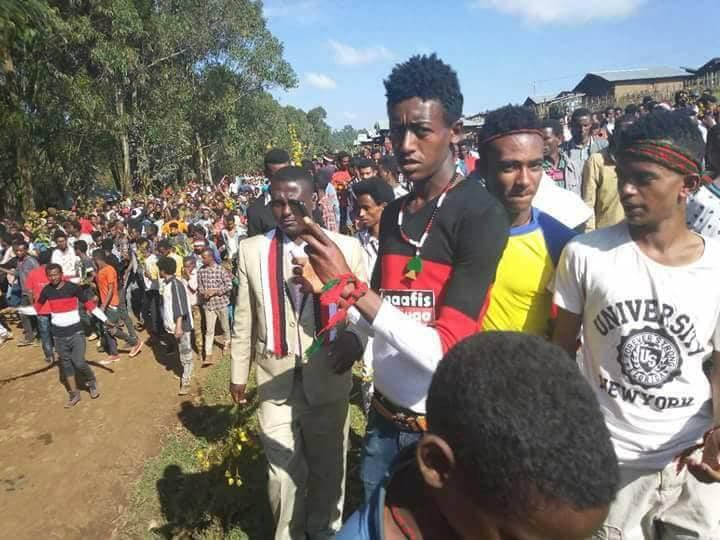
However, in his message on Facebook, which was written in Amharic, Addisu said that “eight Oromos and three Amharas” were killed in Dega and Chora woredas in Buno Bedele zone as a result of a “deliberate attempt by some people who wanted to instigate ethnic violence between Amharas and Oromos.” Addisu also blamed the violence on forces “who want to destabilize the regional government.” Without giving further details, Addisu also said those responsible were placed under police custody.

Click here for the Full Story (via AddisStandard.com)

Related added from Oromian Economist sources:-

https://www.facebook.com/birhanemeskel.abebe/posts/2141253249435634 http://www.radionz.co.nz/news/national/334400/huge-explosion-led-to-auckland-house-fire

https://www.facebook.com/naftanan.gadullo.5/posts/489889421392503

Ethiopia’s Fascist TPLF Regime uses non-Oromo agents to burn Oromia

BBC Afaan Oromoo: OFC: Mootummaan Itoophiyaas ta’ee paartiin biyyattii bulchaa jiru gaaffilee uummataaf deebii kennaa akka hin jirre paartiin Koongirasii Federaalistii Oromoo ibsan October 22, 2017

Posted by OromianEconomist in Uncategorized.
Tags: , , , , ,
add a comment

OFC Press Release

Biyya qabna jechuun nu yaaddesseera – KFO

20 Onkololeessa/ October  2017
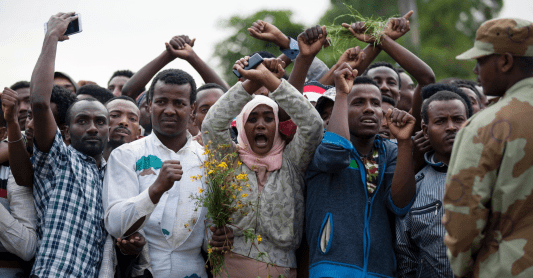

Obbo Mulaatuu Gammachuu miidiyaaleef ibsa yoo kennan

Goodayyaa suuraaBiyya qabna jechuun nu yaaddesseera, Kongirasii Federaalistii Oromoo

Mootummaan Itoophiyaas ta’ee paartiin biyyattii bulchaa jiru gaaffilee uummataaf deebii kennaa akka hin jirre paartiin Koongirasii Federaalistii Oromoo ibsa har’a miidiyaaleef kenneen beeksiseera.

Hirriirawwan tibbana adeemsifaman irratti lubbuun namaa darbuunsaa fi qabeenyi manca’uunsaa na yaaddeeseera kan jedhe paartichi mootummaan gaaffilee uummataaf xiyyeeffannaa kennuu qaba jedheera.

Akkaatuma hiriira irratti gaafatamaa tureenis, mootummaan hidhamtoota siyaasaa mara akka hiiku, buqqa’iinsi uummataa akka dhaabbatu fi kanneen dararaan irra gahee qe’ee isaanii irraa buqqaafamanis hattatamaan iddoo irraa buqqa’anitti deebi’anii akka dhaabbatan paartichi gaafateera.

Aangawoota mootummaa dabalatee shakkamtoonni ajjeechaa raawwatan seeratti dhiyaachu qabus jedha ibsi paarticha.

Hiriirawwan tibbanaa irratti namootni aasxaa yookan alaabaa paartii koongirasii Oromoo qabatanii bahuusaanii fi taatichi fedhii KFO akka hin taane dura taa’aa itti aanaan paartichaa Obbo Mulaatuu Gammachuu himaniiru.

Paartichi namootni asxaa/alaabaa Koongirasii Federaalistii Oromoo qabatanii hiriirawwan kunneen keessatti hirmaataa turanis malaammaltoota viidiyoo waraabuun fiilmii dokimantarii hojjechuu karoorfatan ta’uusaanii ragaalee argadheeras jedheera.

Rakkoon naannoolee daangaa Oromiyaa fi Somaalee gidduutti uummames “mala mootummaan gafilee uummata ukkamsuuf itti fayyadamedha” kan jedhe partichi “dhimmichi walitti bu’iinsa uummataa osoo hin taanee haleellaa humni mootummaa hidhate uummatarraan gahe dha,” jedheera.

Humnoota hidhataniin uummata irraan miidhaa geessisan kanneen gama dhaabsisuutinis mootummaan gahee isa irraa eegamu akkan hin baane fi mirga uummataa kabachiisuu dadhabuusaa himan dura taa’aan itti aanaa paartichaa Obbo Mulaatuun.

Taateewwan uummatni mootummaarraa abdii akka hin qabaanne taasisan uumamaa jiran biyya qabna jechuuf nu yaaddesseeras jedhaniiru.

Dhumarattis uummatni sabaaf sab-lammiilee biroo naannoo Oromiyaa keessa jiraniif eegumsa akka godhan paartichi waamicha dhiyeeseera.


The Oromo Federalist Congress Press Release
Oct 20, 2017
Finfinnee (Addis Ababa), Oromia, Ethiopia


Jirra Jirraa: Oromia music video premiere 2017 by Oromo music star, Hacaaluu Hundeessaa October 22, 2017

Posted by OromianEconomist in Oromo, Uncategorized.
Tags: , , , , , ,
add a comment

Odaa Oromoooromianeconomist

Jirra.png


Oromia: Haala Fincila Xumura Gabrummaa (FXG) Deemaa Jiru Ilaalchisuun Ibsa Qeerroo Bilisummaa Oromoo October 22, 2017

Posted by OromianEconomist in Oromian Affairs, Oromians Protests, Oromiyaa, Oromo, Uncategorized.
Tags: , , , , , , , ,
add a comment

Haala Fincila Xumura Gabrummaa (FXG) Deemaa Jiru Ilaalchisuun Ibsa Qeerroo Bilisummaa Oromoo

Haala Fincila Xumura Gabrummaa (FXG) Deemaa Jiru Ilaalchisuun

Ibsa Qeerroo Bilisummaa Oromoo

Qeerroon Bilisummaa Oromoo haala waliigalaa ummanni Oromoo keessa jiru ilaalchisuun: duula mootummaan Wayyaanee kittillayyoota EPRDF jalatti ijaaratte waggaa 25 nu ajjeesaa fi samaa bahe qabatee daangaa Oromiyaatti kallattii hundarra bane dhumaatii suukaneessaa lammii keenyarraan gahaa jiru, qabeenya saamamee fi barbaadaawe, duula baname kanaan buqqa’uu lammiilee keenya 150,000 caalanii ilaalcha keessa galchuun; hidhamtoonni Oromoo murtii haqaa waakkatamanii bara-baraan hidhaa keessatti galaafatamuu fi gidirfamuun itti fufuurraa, walumaagalatti haallan kanneenii fi biroos ummanni Oromoo bulchiinsa suukanneessaa TPLF/EPRDF jalatti mudataa jiru mormuu fi ummata keenyaa fi addunyaa beeksisuuf akkasumas gaaffii mirgaa dhiyeeffatuuf Onkoloolessa 11,2017 (Onkoloolessa 11 bara 2010) hiriira nagaa waamuun keenya ni yaadatama.

Hiriira kanas gaafa waamame (Onkoloolessa 11, 2017) irraa kaasee magaalaalee Oromiyaa xixiqqoo hanga gurguddootti, gandeen baadiyyaa golee Oromiyaa hunda osoo hin hafne ummanni Oromoo guutummaa Oromiyaa keessaa waliin ka’ee,  birmatee gaaffi isaa kan mirga abbaa biyyummaa fi birmadummaa mootummaa dhaa fi addunyaattis itti fufiinsaan dhageessifatee jira. Kunis injifannoo ol’aanaa xumura sirna gabrummaa irratti jalqaba bara kanaatti goonfatamee tahuun hundaaf labsina. Kanneen QBOf wareegamaa jirtanii fi ummata keenyas injifatnoo ol aanaa kanatti milkaawuu keenyaaf gammachuu keenya ibsina. Ummmata keenyattis boonnaa.

Qeerroon Bilisummaa Oromoo milkii fi injifannoo guddaa argame kana keessatti hirmaannaa sabboontota OPDO keessaa kumaan lakkaawamanii kana hirmmaannaa isaanii guddoo dinqisiifatu ibsaa, akkasuma aantummaa Poolisootni Oromiyaa bakkoota hedduutti agarsiisan, ummata keenya ittisuu fi hiriira kanarratti nageenya hiriirichaa jeequurraa bal’inaan of qusatuu isaaniif dinqisiifannaa qabnuss ibsanna. Hireen keenya tokko tahuu hubatuudhaan warraaqsa biyyoolessaa gaggeessa jirrutti xumura gochuun mirga abbaa biyyummaa harkatti galfatuuf akka waliin sochoons waamicha keenyaa haaressinee hundaaf dhiyeessina.

Hiriira nagaa haala kanaan nagaan gaggeeffamaa ture mootummaan Wayyaanee akkuma amala isaa humnoota waraanaa itti duulchisuun Shaashamannee, Iluu Abbaa Booraa, Kaaba Shaggari fi Baha Oromiyaa dabalatee bakkoota hedduutti lammiilee hiriira nagaa gageessan irratti dhukaasa roobsuun lubbuu namoota galaafatuu isaa guddisnee balaaleffanna. Hiriira kana jeequufis Naqamte, Shashamannee, Waliso, Kaaba Shawaa fi bakkoota adda addatti tikoota isaa bobbaasee balaa geessisuu yaalee fi geessises balaaleffatna. Fuula duratti Qeerroon bilisummaa fi ummatni keenya shira garaa jabinaa tikni Wayyaanee bara baraan gaggeessuu kana of irraa tohatee maseensuu irratti akka dammaqinsaan hojjatu hubachiifna.

Qeerroon Bilisummaa Oromoo hiriirri gaaffii mirgaa dhiyeeffatuuf karaa nagaa guutummaa Oromiyaa keessatti bal’inaan deemaa ture haala aanjaa argatuu fi yeroo barbaachisetti  daran bal’atee akka itti fufu dhaamaa, naannolee humnoonni hidhattootaa mootummaa jiranitti wal dura dhaabbannoo taasisuurraa akka of qusatamu hubachiisna. Sochiin mirga abbaa biyyummaa fi bilisummaa Oromoo dhugoomsuuf Qeerroon Bilisummaa Oromoo wareegama qaalii baasee gaggeessaa jiru ammallee bifa itti fufiinsa qabuun finiinuu akka itti fufuu fi murna samtotaa TPLF-tti xumura gochuuf akka irree guutuun dhaabbataan sossoonu dhaamsa dabarsina. Kanuma waliin sochii itti fufinsaan godhamu kana keessatti ummatni keenya lubbuu fi qabeenya sivilii kamiifuu eegumsa akka godhu walumaan hubachiifna.

Maayiirratti mootummaan faashistiin kun haala nagaatiin:

  • Hidhamtoonni Oromoo hundi hatattamaan akka hiikaman
  • Kanneen bara-baraan ummata keenyarratti yakka dalaganii fi dalagsiisan seeratti akka dhiyaatan;
  • Humnoonni waraanaa fi poolisa federaalaa waggoota dabran hunda nurratti lola labsaa jiran kun akka nurraa ka’an;
  • Ajjeechaa, hidhaa fi saamichi akkasuma buqqa’iinsi ummata Oromoorra geessifamaa jiru daddaffiin akka dhaabbatu;
  • Gaaffiin mirgaa karaa nagaa dhiyeessie deebisaa akka argatu irra deddeebinee gaafannus deebisaa waakkatamuu keenya hubachiisaa,

Ummanni keenya ajaja amma irraa kaasee caasaa mootummaa gabroomfataa diriirsee waanjoo gabrummaan hidhee jiru kana of irraa caccabsuu irratti akka hojjatu waamciha gadi jabeessinee dabarsina. Kanaaf bifa kamiinuu ajaja mootummaa irraa kennamu akka hin fudhannee fi hojiirras hin oolchine, hariiroon bifa kamuu caasaa mootummaa waliin akka dhaabbatu gadi jabeessinee dhaamatna.

 Gadaan Gadaa Xumura Gabrummaa ti!

Injifannoo Ummata Oromoof!

Qeerroo Bilisummaa Oromoo

Finfinnee.

Onkololessa 20, 2017


Ethiopia’s Fascist TPLF Regime uses non-Oromo agents to burn Oromia October 19, 2017

Posted by OromianEconomist in Horn of Africa Affairs, Human Rights, Oromians Protests, Uncategorized.
Tags: , , , , , ,
1 comment so far

  Odaa Oromoooromianeconomist

Media, Oromo activists say TPLF’s govt uses non-Oromo agents to burn Oromia

Finfinne Tribune | Gadaa.com |Onkoloolessa/ October 19, 2017


#OromoProtests activists have denounced the violence that the TPLF/Woyane government has unleashed on Oromia through its agent-provocateurs and paid non-Oromo agents. In order to tarnish the nonviolent (peaceful) Oromo movement, the TPLF/Woyane government has resorted into manufacturing violence through its agents to burn Oromia. Some of these agents have been apprehended by the Oromia Police, according to media reports. Here are some of the comments and reports on social media about the ongoing violence in Oromia.

TPLF’s security agents organizing protests & turning them violent attacking properties belonging to non-Oromo civilians in .

Police in  detaining individuals suspected of instigating the ongoing protests in several towns in the region, head of communication https://twitter.com/addisu_arega/status/921024232016044038 

 uses its positions as  member, VP of , &  Director, AU host to prevent investigations into genocide in Oromia @UN


Related:-


Africa News: Ethiopia: U.S. Embassy speaks on recent protest deaths, lauds security restraint


Restoring Oromummaa: Irreecha Malkaa 2017 celebrated in Mandii, Mana Sibuu, Wallagga, Oromia after 88 years October 16, 2017

Posted by OromianEconomist in Irreecha, Irreecha Birraa, Irreecha Oromo, Irreessa, Uncategorized.
Tags: , , , , , , , , , , ,
2 comments


Odaa Oromoooromianeconomist

Kabajin ayyaana Irreecha Birraa kan bara 2017 (6411 ALO) Oromiyaa bakka adda addaatti itti fufee jira. Haaluma kanaan Mandii, Mana Sibuu, Wallaggaa dhihaatti  haala bareedan Onkoloolessa 15 bara 2017 kabajamee oolera.  Iddii bara 1929tii barana deebi’ee Malkaa Ogiyyootti irreeffatame. #Irreecha2017


Irreecha Birraa Oromoo 2017 at Mandii, Mana Sibuu district, Oromia, on 15 October 2017


Irreecha Birraa 2017 Celebrated in Mandi, Wallaggaa, W. Oromia, 15th October 2017 after 88 years

Irreecha Birraa (Malkaa) Oromoo 2017 ( 6411 ALO) Colorfully Celebrated in Mandii, West Wallaggaa, Oromia, 15th October 2017.png

Irreecha Birraa 2017 Celebrated in Mandi, Wallaggaa, Oromia, 15th October 2017.png


Irreecha Birraa Oromoo 2017 at Mandii, Wallaggaa Oromia, on 15 October 2017.png

Irreecha Birraa Oromoo 2017 at Mandii, Mana Sibuu, Wallaggaa Oromia, on 15 October 2017

Irreecha Birraa Oromoo 2017 at Mandii, Mana Sibuu district, Wallaggaa Oromia, on 15 October 2017.png

Irreecha Birraa Oromoo 2017 at Mandii, in Mana Sibuu district, Oromia, on 15 October 2017.pngIrreecha Birraa Oromoo 2017 at Mandii, Mana Sibuu district, Oromia, on 15 October 2017.png

Onkoloolessa 15 Bara 2017 Malkaa Raachaa, Jalduutti  haala gaarii irreenfatamee oole.


Dabalataan kana caqasaa Kan Makkoo Bilii

Akkasumasi Irreechi Haraa Basqaatti kbajameerra.

Irreecha 2017 also celebrated in Nairobi, Kenya. https://www.facebook.com/Dhabassa/posts/10213042531129674

Suuran gadii kun kan  Odaa Bulluq

Human Rights League: The Somaliland Government Must Respect International Human Rights Treaties and International Law October 15, 2017

Posted by OromianEconomist in Horn of Africa Affairs, Uncategorized.
Tags: , , , , , , ,
add a comment

Odaa Oromoooromianeconomist

The Somaliland Government Must Respect International  Human Rights Treaties and International Law

republic of Somali Land

HRLHA’s Appeal

—————————————————————-
October 14, 2017
Appeal To: The President of Somaliland
The Honorable Ahmed M. Mohamoud Silanyo
Tel: +252 252 0913
E-mail: mopa@somalilandgov.com

Your Excellency,

First of all, the Human Rights League of the Horn of Africa (HRLHA) would like to express its appreciation to the people of the Republic of Somaliland and to its government for their hospitality and kindness towards thousands of Oromo  refugees and asylum seekers who have fled their homes to escape government persecutions in Ethiopia. Since the TPLF Government came to power, thousands of Oromo nationals have run away from arbitrary detentions, degrading tortures and violent killings in Oromia to save their lives by seeking refuge in Somaliland and other neighbouring countries.

However, HRLHA recently received a worrisome and disheartening report that the Somaliland Government security and police forces opened a wide ranging campaign against Oromos living in Hargeeysa, a move meant to expel all Oromo refugees and asylum seekers from Somaliland. According to the Oromo asylum seekers that HRLHA interviewed, the Oromo nationals who lived peacefully in Hargeeysa for many years are under  police and security attacks and over 4000 young men and women Oromos have been picked up from their homes and loaded on trucks and sent to the border of Somalia and Ethiopia, near Wichale. In addition, the Oromo asylum seekers also said that there is  a wide- ranging hate campaign going on, undertaken against Oromos by the Somali people, which  was deliberately instigated by the government and which had resulted in the loss of Oromo lives- two men were killed by police and three children have been burned in their home in Hargeeysa  town at  a place called Sheeda 23. This deliberate crime was committed against the family of Ahammed Suleyman Musa; his three children, Nuredin Ahammed Suleyman age 6, Salmaa Ahammed Suleyman, age 4, and Imraan Ahammed Suleyman, age 2  were set on fire in their home and burned to death on October 5, 2017 at 9:45 am.

Your Excellency,

I am sure that your government is well aware of the current political crisis in Ethiopia in general and in Oromia in particular. The regime in Ethiopia has particularly targeted the Oromo nation simply because they have demanded their fundamental rights, and have been expressing their grievances for the past 26 years. In the past four years (2014 to present) of continuous peaceful protest against the authoritarian regime in Ethiopia, the Oromo nation has lost over 3500 brilliant sons and girls at the hand of the killing squads Agazi force- among them, about 700 were murdered in only one to two hrs at the Irrecha Festival on October 2, 2016, tens of thousands have been jailed and other hundreds have been forcefully abducted by the security forces and have essentially disappeared.

HRLHA would also like to bring to your attention that these events have already attracted international attention, including that of Ethiopia’s Western allies. For example, in its 2016 Country Report on Ethiopia, the U.S. Department of State’s Bureau of Democracy, Human Rights, and Labor acknowledged that:

Ethiopian Security forces used excessive force against protesters throughout the year, killing hundreds and injuring many more. The protests were mainly in Oromia and Amhara regions. At year’s end more than 10,000 persons were believed still to be detained. This included persons detained under the government-declared state of emergency, effective October 8. Many were never brought before a court, provided access to legal counsel, or formally charged with a crime. On June 10, the government-established Ethiopian Human Rights Commission (EHRC) reported and presented to parliament a summary of its report. The EHRC counted 173 deaths in Oromia, including 28 of security force members and officials, and asserted that security forces used appropriate( appropriate or inappropriate?) force there. The EHRC also asserted Amhara regional state special security had used excessive force against the Kemant community in Amhara Region. On August 13, the international NGO Human Rights Watch (HRW) reported an estimate that security forces killed more than 500 protesters. In October the prime minister stated the deaths in Oromia Region alone “could be more than 500.” The UN High Commissioner for Human Rights requested access to Oromia and Amhara regions, which the government refused. Following dozens of deaths at a religious festival in Bishoftu on October 2, groups committed property damage. On November 9, international NGO Amnesty International reported more than 800 persons were killed since November 2015

The Ethiopian government’s crimes against the Oromo nation were also condemned around the world by governments and government agencies (UN, EU) and human rights organizations. Among those recent reports are:

Human Rights Watch (HRW)

Amnesty International (AI)

Human Rights League of the Horn of Africa (HRLHA)

USA: Stand Up for Ethiopians as Government Stifles Protests, Jails Journalists  (March 9, 2017)

February 9, 2016, John Kirby, spokesperson Daily Press Briefing, Washington, DC on 140 Oromo peaceful protestors killed by Ethiopian Government Security force

21-01-2016, EU Parliament resolution in connection with the killing of 140 Oromo peaceful protesters

21-01-2016, UN experts press release urging Ethiopia to halt a violent crackdown on Oromia protesters, ensure accountability for abuses

Your excellency,

Historically, Oromo  and Somali nations have a lot in common. They share history, tradition, and language (in some degree), respect each other, and have lived together as nations for over a century. There are thousands of Somaliland- born Somalis live in Oromia right now without fear, especially in the eastern part of Oromia including the capital city Addis Ababa. The Oromo people and Oromia State government embrace them and they live peacefully with their Oromo brothers and sisters. So why is your government targeting the Oromos who came to your country seeking desperate help from your government, looking to be safe from prosecution by the Ethiopian regime?

By killing, deporting and harassing the Oromo refugees and asylum- seekers residing in Somaliland your government is collaborating with the Ethiopian authoritarian regime which is responsible for massacring thousands of Oromos, forcefully disappearing many and jailing others. By collaborating with the Ethiopian regime in killing, deporting and abusing Oromos in Somaliland, your government is violating:

  1. The constitution of Somaliland approved by referendum on 31 May 2001, Foreign Relations article 10 (#1-5) which describes the commitment of Somaliland foreign relations based on the local and international laws.
  2. Universal Declaration of Human Rights (UDHR); article 14 (1), Everyone has the right to seek and to enjoy in other countries asylum from persecution.
  1. The Convention against Torture and Other Cruel, Inhuman or Degrading Treatment or Punishment (1465 U.N.T.S. 185) Somaliland has an obligation not to return a person to a place where they face torture or ill-treatment. Article 3 of the Convention against Torture provides:

3.1. No state party shall expel, return (“refouler”) or extradite a person to another state where there       are substantial grounds to believe that they would be in danger of being subjected to torture.

3.2. For the purpose of determining whether there are such grounds, the competent authorities shall       take into account all relevant considerations including, where applicable, the existence in the state     concerned of a consistent pattern of gross, flagrant or mass violations of human rights.

Your excellency,

Despite the fact that Somaliland declared its independence in 1991, the HRLHA is fully aware that Somaliland is not yet a signatory to international human rights treaties.  Even though Somaliland declared its independence in 1991,   it  has not yet been recognized by the world community as a country separate from Somalia yet.  Even though the request of your government for recognition by the World community is still on hold, the Somaliland government  still  has a duty to respect at least the above mentioned core human rights treaties and international law. Violating them could badly damage the reputation of Somalilad as a state  seeking a recognition from the World Community. The HRLHA strongly urges the Government of Somaliland to respect these international human rights treaty obligations  and international human rights law for the just-mentioned reasons.

The HRLHA therefore calls  upon  the international community to act collectively in a timely  and decisive manner – through the UN member states- to put pressure on the Somaliland government to abide by the core international human rights, obligations and international law halt the expulsion, return (“refouler”) or extradition of  Oromo  asylum seekers and refugees to Ethiopia where they could face all sorts of human rights violations , including prison and torture.

RECOMMENDED ACTION: Please telephone, send an email or airmail letters in English, Somali language  or your own language:

– Expressing serious concern about the Oromo and other asylum seekers and refugees, and the human rights violation in Somaliland;
– Demanding assurances that the Oromo and other refugees and asylum seekers will not be returned to the country where their lives will be endangered.

APPEALS TO:

The HRLHA is a non-political organization that attempts to challenge abuses of human rights of the people of various nations and nationalities in the Horn of Africa. It works to defend fundamental human rights, including freedoms of thought, expression, movement and association. It also works to raise the awareness of individuals about their own basic human rights and those of others. It encourages respect for laws and due process. It promotes the growth and development of a free and vigorous civil society.

Copied To:

HRW: joint letter from 9 organizations urging US Congress to vote HR 128 & show respect for human rights in #Ethiopia October 14, 2017

Posted by OromianEconomist in Horn of Africa Affairs, Human Rights, Uncategorized.
Tags: , , , , , , , ,
1 comment so far

Odaa OromoooromianeconomistHRW

US Congress: Vote on H.Res 128

Support Respect for Human Rights in Ethiopia

QZ: African Oligarchs: Africa’s political elites have built the same wealth plundering structures as the colonialists October 14, 2017

Posted by OromianEconomist in Corruption in Africa, Horn of Africa Affairs, Illicit financial outflows from Ethiopia, Uncategorized.
Tags: , , ,
add a comment
Odaa Oromoooromianeconomist
AFRICAN OLIGARCHS: Africa’s political elites have built the same wealth plundering structures as the colonialists

The story of corruption in Africa is not new: tens of millions of dollars missing from Kenya’s ministry of health; billions in mining exports never reaching government coffers in the DR Congo; and cabinet members in Nigeria using bribes received in exchange for lucrative government contracts to buy condos in New York and Paris. Corruption is so endemic in Africa that even presidents have publicly expressed their helplessness in fighting the vice.

Yet, a new transnational report shows the systemic nature in which African oligarchs break down existing governance structures in order to loot national wealth. The investigation, carried by the African Investigative Publishing Collective (AIPC) in partnership with Africa Uncensored and ZAM magazine, shows how clientelism and favoritism have badly impacted the state budgets and economies in seven African nations.

Titled The Plunder Route to Panama, the report picks on the huge trove of leaked data from 2016, which showed the secret companiescontrolled by members of Africa’s political and business elite—including intelligence officials, court justices, and even the son of former United Nations secretary general Kofi Annan.

And instead of focusing on multinationals, who are often accused of plundering national resources, the report looks at the behavior of these leaders and their complicity in stealing taxpayers’ money, hindering investigations, and keeping millions impoverished. In most of these cases, leaders extract wealth from their countries and store it outside the continent, often going there for education, medical treatment, and holidays.

“African oligarchs do a lot more than accepting bribes,” AIPC notes. “What we unearthed indicated that these elites have, to some extent, morphed into the very colonialist plunder structures that they replaced.”

In Togo, for instance, the highly strategic phosphate sector is managedfrom the office of president Faure Gnassingbé—selling it to “whomever they want and at which price they want.” The widespread poverty in the west African country is now at the center of protests calling for Gnassingbé, who is in his third term, to leave office. In Botswana, AIPC says that president Ian Khama controls the lucrative tourism industry through the ownership of key agencies along with his relatives and friends, and funnels the returns to offshore accounts.

The situation is similar in Mozambique, where villagers in Montepuez region were violently removed from ruby fields licensed to generals and ministers. In Burundi, generals and powerful businessmen have developed patronage systems within the government—bagging contracts and exporting large caches of unaccounted for gold annually.

In Rwanda and DR Congo, the ruling party and family respectively, privately control and invest in almost all sectors of the economy. In DR Congo, president Joseph Kabila’s family—especially his siblings Jaynet and Zoe—has established a vast business empire that has interests in dozens of companies and brings in hundreds of millions of dollars every year. Crystal Ventures, the Rwandan Patriotic Front’s holding company, dominates the economy investing in everything from real estate to publishing and furniture trading.

Yet, despite hiding these monies in tax havens like Panama, cases of excess and pillage continue to lead to protests and action in African capitals. Many activists are increasingly demanding that laws and policies be enforced, and institutions change the way they behave. An example of this is the protests against president Jacob Zuma of South Africa, whose has faced allegations of corruption—and whose family members were linked to the Panama Papers.


Click here to read related article: Fascism: Corruption: TPLF Ethiopia: Inside the Controversial EFFORT

UNPO: Oromo: Protests Leave 8 Dead October 13, 2017

Posted by OromianEconomist in Oromo Protests, Uncategorized.
Tags: , , , , , , , ,
add a comment
Odaa Oromoooromianeconomist
Oct 13, 2017

Oromo: Protests Leave 8 Dead


Photo Courtesy of Quartz

Protests this week in Oromia have raised concerns, with one on Wednesday 11 October 2017 killing 8 people. Sections of the Oromo diaspora accused the Tigrayan People’s Liberation Front (TPLF) of having orchestrated these deadly demonstrations, since they were organized unlike the others.

Below is an article published by OPride:

At least 8 people were killed and more than 30 others injured on October 11, 2017 in renewed protests across Ethiopia’s restive Oromia state. Peaceful protests were reported again on Thursday in several Oromia towns, including Woliso in West Shawa, where locals reported a peaceful rally of more than 15,000 people.

Yesterday’s deadly protests appear to have been organized unlike previous ones, which were usually, although not always, preceded by media announcements from abroad. In fact, some diaspora-based activists denounced yesterday’s demonstrations as the work of spoilers and agents of the ruling Tigrayan People’s Liberation Front (TPLF). Officials from the Oromia regional state also said the protests were planned by forces that want to weaken Oromo unity.

The protests went ahead despite calls for their cancellation. Demonstrators took to the streets in large numbers in more than dozen towns in West Arsi, West Shawa, Wallaga, and Hararge zones. The protests in the latter have been ongoing and largely in response to continued incursions by the Liyu Police of the adjoining Somali Regional State of Ethiopia.

For days, several Oromo activists warned protesters not to join the protests called by unknown individuals under the banner of “waamicha harmee” – meaning Oromia’s call – out of concern that protests lacking clear political goals were fruitless. Although the organizers were unknown, the slogans were nothing unusual: Down down Wayane, release opposition leaders from prison, and no to fake federalism.

What does this mean? Does it mean diaspora activists are being left in the cold by home-based groups who have their own agenda other than waiting on a hollow promise of change to be midwifed by Oromo Peoples’ Democratic Organization (OPDO) at some future date? Does it mean the OPDO has lost control of the streets? Does it indicate the lack of coordination and clear chain of command within the grassroots movement? Was this the inevitable instance of social media being weaponized by state actors? Were there targeted and geotagged campaigns within Ethiopia by TPLF agents and social media consultants?

Prior to yesterday’s protests, senior OPDO leaders held massive town hall meetings in flashpoint towns, including Ambo, and it appeared they were connecting with the public. But the widespread protests upended it all. In three-years of protests, the prelude to Irreechaa 2017 was the only time protest leaders across the Atlantic were seen to be on different pages. The peaceful conclusion of this year’s thanksgiving festival signaled that the fences were all mended. Then came the Malka Atete celebrations in Sabata and Burayu towns in central Oromia. The latter events differed from Irreecha by the unusually large display of Oromo resistance flags.

The sheer size of flags at the event came as a surprise because leaders of the Oromo Gadaa council had called on all attendees not to bring any flags and partisan emblems. This led to spirited debates among Oromo activists for several days. Others speculated that the unusually large display of the flags must be the work of some organized group, perhaps even the regime with the aim of using it as a pretext for violent crackdown and justification for another Oromia-wide state of emergency.

The development was significant enough that even pro-TPLF bloggers weighed in. For example, Horn Affairs editor Daniel Berhane noted that when people hoist that flag and mention the name Oromo Liberation Front (OLF), they are not referring to the OLF faction in Asmara but the nation’s spirit of resistance against oppression. This focus on the flag and OLF prompted the Asmara-based group to aggressively pushback on social media, even appearing to suggest it was behind the protests.

From what we know, OLF and its affiliated Qeerroo Bilisummaa did not publicly call Wednesday’s protests and its reach doesn’t extend as widely as the protests were. They simply lack the kind of grassroots organizational capacity necessary to pull off demonstrations of this size. Besides, the group calls its protests Fincila Xumura Gabrummaa (FXG), the final push to end Oromo subjugation, and no calls for protests under this slogan went out. Most importantly, it would have formally claimed responsibility for the massive turnout if it was behind it. Besides, some of the slogans, for example about making the federation meaningful, are contrary to the demands of the Asmara group.

Regardless, #OromoProtests is entering a new critical phase. Many hope that this week’s deadly protests were but a one-off instance of breakdown in communications and leaders of the grassroots movement will move swiftly to assert control. A repeat of a similarly uncoordinated protest would be seen as a sign of rupture within the protest movement. If past trends are any indication, the grassroots movement has been so resilient that it overcame its shortcomings after each hiccup.

Revolutions are slow-cooking. However, prolonged revolutions tend to self-destruct and atrophy. The culprit is usually the appearance on the stage of dark forces that may not necessarily be in line with the overall objective of the movement other than disrupting the status quo. Without the decisive battles that mark watershed moments and make whatever gains are made irreversible, revolutions are still in uncertain waters.

So far the gains made as a result of the huge sacrifices incurred over the past three years are largely symbolic and rhetorical…with the possible exception of the change of attitude by Oromia police as well as the Oromia regional administration. It had once appeared as if the latter is in charge. Yesterday’s mass protests requires a rethink of all calculations by the OPDO and diaspora activists and all responsible forces.

That said, OPDO leaders should not and could not rest on their laurels. The youth protesters have great sympathy for their plight and dreams of autonomy from the domineering Center. Arresting suspects in the killing of protesters yesterday is a remarkable departure from the past and could only increase sympathy towards the regional government. However, sympathy is far from loyalty. Besides, the organization is only recently baptized as part of the Oromo struggle for freedom rather than a Trojan horse for the TPLF, which was the prevailing view among the Oromo public until 2014, when nation-wide protests broke out, and more incontestably after October 2016 when Lemma Megersa and his nationalist wing of young Turks took the helm at the organization. Protesters will garner confidence only after seeing concrete change at the federal level. The changes in Oromia state level are encouraging. The state-run media outfit is putting out critical reports and airs documentaries critical of the federal authorities that have refused to heed the demands of the Oromo people and instead ordered not only killing of peaceful protesters but also displacements of thousands from their ancestral homes using a proxy army, the Somali regions Liyu Police. But that is far from enough.

Labeling it as the work of the enemy harkens back to the dark days of the past when Oromo against Oromo rivalries undermined a united struggle against oppression and marginalization.  Rather than the work of an enemy or http://www.satenaw.com/breaking-news-least-eight-killed-dozens-wounded-protests-across-oromia/internal saboteurs, the protests could also signal a renewed push towards taking the struggle into a new stage aimed at changing the TPLF regime.


Related:-

#OromoProtests

Satenaw:Breaking News…… At least eight killed, dozens wounded in protests across Oromia

Protests in different Oromia towns, Ethiopia, continued on Wednesday and Thursday; at least six people were killed and more than 30 wounded during protests. –  By Solomon Abate, Salem Solomon, Tizita Belachew (VOA) |


Fox News:  6 dead as protests surge again in Ethiopia: Official

Tesfa News:Protests flared up in Oromia, scores killed


https://twitter.com/addisgazetta/status/918830134802690049

Ethiopia central bank announces 15% devaluation of Birr: The cost of devaluing the Birr may outweigh its benefit October 12, 2017

Posted by OromianEconomist in Currency Devaluation, Economics, Ethiopia the least competitive in the Global Competitiveness Index, Free development vs authoritarian model, Uncategorized.
Tags: , , , , ,
add a comment

Odaa Oromoooromianeconomist

Birr devalued by 15 percent. Current Dollar to Birr exchange rate as of 12 October 2017


Africa News: Ethiopia central bank announces 15% devaluation of Birr


Economic Analysis: The cost of devaluing the Ethiopia’s Birr may outweigh its benefit

By Dr Mohammed Abbajebel Tahiro


The link between currency devaluation and domestic inflation


Ethiopia has been devaluing the Birr, in part because of pressures from the International Monetary Fund (IMF). Cheaper domestic currency, Vis a Vis major international currencies, makes exports more attractive to foreigners if a decent segment of the economy is based on manufacturing or, if the manufacturing sector is expanding and looking for international markets. Devaluing domestic currency makes exports more attractive to foreigners, which in turn spurs economic growth. The flip side of that is, cheaper domestic currency makes imports more expensive. Ethiopia imports medicine, fuel, food, and almost all productive capital, vehicles, and many more consumer goods. Cheaper currency means it takes more Birr to buy one foreign currency. Ethiopian importers will naturally raise their prices (inflation) to cover additional costs incurred because of a weaker Birr. The cost of devaluing the Ethiopian Birr may outweigh its benefit as the Ethiopian economy is still largely agricultural. The demand for agricultural products and minerals on the world market is largely stable and Ethiopia does not need to cheapen its currency to sell more to foreigners. The reason Africa can’t get a foothold in manufacturing is Chinese dumping of cheaply manufactured goods, not inability to access world markets for Africa’s manufactured goods. African infant manufacturing industry simply can’t compete with predatory practices of foreign manufacturers.
Ethiopia could simply let the exchange rate float. A floating exchange rate means the price of the Birr vis a vis major international currencies is determined by the relative supply and demand of the currencies. Consider the U.S. Dollar and the Birr are just goods like any other; say salt, just as in a free market the price of salt is determined by the supply and demand of salt, the exchange rate (price of Birr in Dollar) will be determined by the relative supply and demand of the two currencies. The United States follows floating exchange rate. In Ethiopia, the exchange rate is fixed by the National Bank. Fixed exchange rate always creates arbitrage opportunities as it seldom reflects the will of the international currency markets. The latest devaluation of the Birr ( 1USD = 27.07 Birr) will undoubtedly create more domestic price inflation as Ethiopian importers will raise prices on their imported goods. With the increase in the wage rate trailing far behind increase in prices, workers are getting a wage cut in real terms. Rising general level of prices means rising input prices. When input prices rise, manufacturers cut back on output, which means even more unemployment.
Inflation, two fundamental factors
When the Ethiopian parliament opened on Monday, President Mulatu Teshome made bold claims about the state of the Ethiopian economy. I will address the merits/demerits of that claim at a later date. Today, I will talk a little bit about the fundamental causes of domestic currency devaluation (inflation). There are two fundamental causes of currency depreciation:
1. The productive capacity of an economy.
2. The size of the money supply.
When an employee creates more value through increased productivity, his/her salary should increase proportionately. If the money supply in a country is fixed while productivity is increasing, each unit of currency will store greater value. On the other hand, if the increase in the money supply is proportionate to the increase in productivity, the amount of purchasing power (value) stored in each unit of currency remains unchanged. But, if you have a runaway money supply, that is, if the money supply grows faster than the growth in productivity, the value stored in each unit of currency decreases, and we call that inflation. When there’s more money in the economy than the productive capacity of the economy, the general level of prices increases and we call that demand-pull inflation. When prices of productive inputs rise, producers increase prices on finished products in order to recoup higher payments for input and, that can also lead to inflation; inflation created through an increase in input prices is called cost-push inflation. This source of inflation is less likely in Ethiopia as the manufacturing sector contributes less than 40% of the Ethiopian GDP.
The American Federal Reserve Bank’s counterpart in Ethiopia is the National Bank of Ethiopia. The National Bank is supposed to oversee the monetary policy of the country, including managing the money supply. The National Bank is supposed to be independent of undue political influence from the executive branch of the government. In Ethiopia today, appointments to key positions in the National Bank are based more on loyalty to the regime than professional aptitude. With that in mind, it’s easy to see how monetary policy could be mismanaged.


Ethiopia’s Attempt to Ease Dollar Shortage with Devaluation

By Barii Ayano


This is just to offer basic explanation of the issue without technical jargons. Exchange rate is the price of one country’s currency in terms of another country’s currency. For instance, the price of Birr in terms of U.S. dollar or vice versa. Exchange rates affect large flows of international trade (imports and exports). Foreign exchange facilitates flows of international investment, including foreign direct investments (FDI. Countries follow various exchange rate regimes: fixed exchange rate, pegged exchange rate, floating exchange rate, and managed floating exchange rate. The exchange rate regime of Ethiopia is characterized as managed floating exchange rate regime, which partly depends on supply and demand but with some government intervention in the exchange rate market, to concurrently adjust both exchange rates and foreign exchange reserves, monitored by the World Bank and the International Monetary Fund.

What is Devaluation?

Devaluation is mainly government intervention in the exchange rate market of the country to determine the price of Birr in terms of dollar-some kind of government price setting. Simplified, devaluation makes Birr cheaper relative to the dollar, and hence you will need more Birr to get a dollar, compared to the current rate of exchange. In short, you need more Birr to buy a unit of dollar, and the people who can afford to buy dollar declines.

The recent announcement states that Ethiopia devalued its currency (Birr) by 15% per cent, which means you will need 15% more Birr to buy a dollar since Birr has become cheaper by 15%.

Why Do Countries Devalue their Currencies?

There are several reasons behind the need to devalue currencies. Some do it to promote exports and restrain imports. The simplified assumption is this. If the local currency becomes cheaper due to devaluation, foreigners can buy the local export products more cheaply and hence exports will increase. On the other hand, cheaper local currency can serve as an import restraint since foreign products become more expensive in local currency and importers need more Birr to buy foreign products, and hence increase the cost of living.

When it comes to the developing economies like Ethiopia, with limited export promotion power, the devaluation policy measure is mainly related to exchange rate stability due to imbalance between supply and demand of hard currencies. As repeatedly explained by the government officials, including the PM & the President, there is severe shortage of hard currencies in Ethiopia caused by limited hard currency earning power of Ethiopia’s exports whereas imports have grown folds more than exports. Ethiopia gets dollar from exports and needs dollar for the imports. The gap between the dollar earning and dollar spending capacity leads to part of the current account deficit called trade deficit (export values greater than import values). The gap has been expanding every year-even more so in recent years.

If you buy something (imports) you have to pay for it via exports, foreign aid in hard currency, remittances, etc. The growing gap between exports and imports is not sustainable. It’s important to note that foreign exchange rate crisis is one of the major sources of economic crises that ravaged the economies of a number of countries. Google exchange rate crisis to read more about it.

Therefore, the devaluation of Birr, which has been urged by the World Bank for years, is the policy measure undertaken by the regime to relieve a crippling dollar shortage and meager foreign exchange reserve of Ethiopia. The World Bank, EU, IMF, etc. cover the foreign exchange gap of Ethiopia so that the economy does not collapse due to the shortage of foreign exchange. Without international support and the Diasporas remittance, Ethiopia can easily become hard currency illiquid country that cannot pay for its imports or pay for its debts in hard currency.

Although the shortage of hard currency is a common phenomenon of poor countries with limited exports, the widening gap between Ethiopia’s earning and spending in hard currency is evidently not sustainable. It can kill economic growth. At worst, it can lead to economic crisis due to currency (exchange rate) crisis since there is vivid evidence of liquidity gap in hard currency in Ethiopia owing to its weak foreign exchange earning capacity. Illicit outflow of hard currency is another key problem aggravating the pain.

Simply put, devaluation is not a success story as some want us to believe. It’s a desperate policy measure undertaken to ease the pain of severe shortage of hard currency and its adverse impacts.

I will highlight the effects of devaluation on consumers, business, foreign exchange shortage, etc. in my next note.

BBC Afaan Oromoo: Qaala’iinsa gatii baroota dhufanii


A brief analysis of Birr devaluation

 https://twitter.com/DABI_Solutions/status/918403739945504768

Ten Point Plan to Ease the Current Crises in Ethiopia October 12, 2017

Posted by OromianEconomist in Horn of Africa Affairs, Human Rights, Oromian Voices, Oromo and the call for justice and freedom, Uncategorized.
Tags: , , , , , , ,
add a comment

Odaa Oromoooromianeconomistoromoprotests-image-from-financial-times

Ten Point Plan to Ease the Current Crises in Ethiopia 

By Dr. Birhanemeskel Abebe Segni


I was listening to the slogans and songs of the Oromo people who were protesting again throughout Oromia region in their tens of thousands in each localities. The following ten points are the essence of the demands of the people as expressed through their slogans and songs.

Based on the the slogans and songs of the protesters, I recommend the TPLF/EPRDF government to immediately carryout the following policy reforms to meet the demands of the Oromo people and calm the situation:

1. End all forms of TPLF/EPRDF interference and indirect rule in the Oromia Region through the federal police, federal security, and federal military and federal justice structures of the federal government that denied the Oromo people direct self-rule.

2. Make Afaan Oromo Federal Working language on equal footing with Amharic.

3. Restore the status of Addis Ababa as an Oromia City.

4. Release all political prisoners including Dr. Merera and Mr. Bekele Gerba.

5. Dismantle the Somali Janjaweed Militia locally known as Liyu Police. Remove all the federal military and security officers who organized and lead the aggression and invasion of Eastern and Southern Oromia by the Somali Janjaweed Militia and caused the displacement of over 600,000 Oromo civilians. Resettle back all the displaced on their land, and compensate them for their Janjaweed looted property. Bring to justice the killers of our people.

6. Increase the number of Oromo federal workforce both in the military, security and civil service sectors from the current 10% to at least 40 to 50% in proportion to the population size and economic contribution of the Oromia region.

7. Restructure the power balance within EPRDF based on the population size of EPRDF member parties or dismantle it all together to establish a new coalition government.

8. Repeal and end all land grab policies, compensate and resettle the Oromo farmers evicted from their ancestral lands.

9. Make all companies in all regions to pay tax to the coffers of the respective regional governments to increase the economic benefits of the region’s population instead of the current monopoly by the federal government.

10. Develop clear economic policy that will end the marginalization and exclusion of the Oromo people from the Ethiopian economy including restoring the ownership of the Oromo people on their natural resources, produces, goods and services.


Related:-

IB Times Exclusive interview with executive director of Oromia Media Network

By IB Times

Ethiopia has been suffering from a super centralized TPLF autocratic, barbaric and terroristic rule.

Dagalee Media: Memorial for Irreecha 2016 and fundraising for Eastern Oromia held in Pennsylvania October 11, 2017

Posted by OromianEconomist in Uncategorized.
Tags: , , , , , ,
add a comment

Odaa Oromoooromianeconomistremember-irreechamassacre

ACAPS: Ethiopia: Crisis Analysis October 11, 2017

Posted by OromianEconomist in Uncategorized.
Tags: , , , , , , , ,
add a comment

Odaa Oromoooromianeconomist

POLITICS AND SECURITY OVERVIEW

Latest update: 10/10/2017

Ethiopia lifted its state of emergency on 7 August.? It was first introduced on 9 October 2016, following protests mainly by the Oromo and Amhara populations, who together account for over half of Ethiopia’s population. Both ethnic groups were protesting against the Tigray-dominated government on issues including inequality, economic marginalisation, corruption, and lack of political space.?Defence, foreign ministry and other key government posts are held by Tigrayans, who account for 6% of the country’s population.??  Protests began in the Oromia region in November 2015, following a plan to expand Addis Ababa into surrounding land owned by Oromo farmers. In July 2016, the Amhara population began protesting. ? Violence escalated in October 2016 when over 50 people were killed during an Oromo religious festival that turned into an anti-government protest. At the beginning of the state of emergency, the government promised deep reform. In July 2017, the government announced a bill that includes measures such as making Afan Oromo an official language, setting up Afan Oromo schools in Addis Ababa, and establishing a joint council with the federal government to administer the city. Many deemed the bill  insufficient.? As of August, the government has not addressed fundamental issues such as demands to open up political space, and to allow dissent and tolerance of different perspectives.?In August, people in the Oromia region held a five-day strike to commemorate protesters killed during the 2016 protests. Some sources say the strike was also in protest of a tax increase for small business owners. ??

As of late September, clashes have been taking place among Oromo and Somali groups over border demarcations. The government announced they will place federal police at roads that cross both regions and that security forces of both regions will withdraw from border locations. They also stated they will disarm civilians living in the conflict areas.? There are diverging acounts of what is causing the clashes. Oromo officials have accused the Somali  police force, the Liyu police, of staging attacks in an attempt to drive Oromos out of border areas. While the Somali regional government claim it is members within the Oromo government in conjunction with the Oromo Liberation Front, a group that have been branded as terrorists by the government of Ethiopia. Tensions have existed between the two sides for years over border demarcations and competition over resources. Another view expressed by some activists is that the situation has been orchestrated by the central government, who are using the Liyu police to divert attention away from the issue of suppression of the Oromo people, whose concerns remain unaddressed despite the removal of the state of emergency. ??? ?

Media censorship is common in Ethiopia but was further reinforced following the state of emergency, with many journalists engaging in self-censorship to avoid harassment or arrests. Since 2010, at least 75 journalists have fled the country. Access to the internet is frequently blocked and international radio signals jammed. Social media was a key factor in mobilising protesters and is since carefully monitored by authorities. ?

HUMANITARIAN ACCESS OVERVIEW

The Nobel Prize In Economics Goes To American Richard Thaler For Work In Behavioral Economics October 11, 2017

Posted by OromianEconomist in Economics, Uncategorized.
Tags: , , , ,
add a comment

In this photo provided by the University of Chicago, Richard Thaler poses for a photo with his books at his home in Chicago after winning the Nobel prize in economics, on Monday.

Anne Ryan/AP

Updated at 7:20 a.m. ET

The 2017 Nobel Prize in Economic Sciences has been awarded to Richard Thaler of the University of Chicago for his pioneering work in behavioral economics.

The announcement from the Royal Swedish Academy of Sciences in Stockholm said the 72-year-old Thaler “has incorporated psychologically realistic assumptions into analyses of economic decision-making. By exploring the consequences of limited rationality, social preferences, and lack of self-control, he has shown how these human traits systematically affect individual decisions as well as market outcomes,” the committee said in a statement.

The relatively new field of behavioral economics studies the effects of psychological, social, cognitive and emotional factors on economic decision-making.

“Human behavior is very complex. So, if we want to construct useful models of economic behavior, we have to make simplifications. One such simplification which has been very important in economics is the assumption that humans behave in a fully rational way and make economic decisions in a way as to maximize their own well-being,” Per Strömberg, chairman of the prize committee, said.

Over time, Strömberg said, researchers have gathered more evidence from psychology on how humans deviate from rational economic decisions. “Richard Thaler is a pioneer when it comes to incorporating such insights from psychology into economic analysis,” he said.

“Thanks to his contributions and discoveries, this new field [of behavioral economics] has gone from being sort of a fringe and somewhat controversial part of economics to being a mainstream area of contemporary economic research,” the chairman of the prize committee said.

Speaking from his home in the United States to a news conference at the Royal Academy, Thaler said he felt the most important impact of his work was “the recognition that economic agents are human.”

Thaler is the author of the books Nudge and Misbehaving: The Making of Behavioral Economics.

Among Thaler’s contributions to the field are his “theory of mental accounting, explaining how people simplify financial decision-making by creating separate accounts in their minds, focusing on the narrow impact of each individual decision rather than its overall effect,” the Academy said.

One area singled out by the committee is Thaler’s work on retirement savings. He was an early proponent of employers automatically enrolling their workers in 401(k) programs. He also developed a “Save More Tomorrow” retirement plan that encourages people to put future salary increases toward retirement.

Kenny Malone of NPR’s Planet Money says Thaler is “a bit of a rock star” in the field of economics.

“In terms of real-world implications, once you start to understand the ways that we are weird, irrational beings, you can structure policies to move people toward the ends that you would want,” Malone tells Morning Edition.

Thaler made a cameo in the movie The Big Short, where he explained the “hot-hand fallacy” about the belief that someone who has experienced success in something involving random chance has a greater chance of further success going forward.

Asked whether he thought that applied to President Trump, Thaler responded with a chuckle, “I think he would do well to watch that movie.”

When the same Swedish journalist asked what Thaler would do with the 9-million kronor ($1.1 million) monetary portion of the Nobel award, the economist: “I will say that I will try to spend it as irrationally as possible.”


Related Articles:

How Psychology Made Its (Limited)
Way Back Into Economics

Irrational Theory Wins Nobel In Economics For Thaler

What is behavioural economics?

Oromia: Waan Sammuu Abbaa Duulaa Jijjiiree Dhageeffadha. Abadula Gemeda, the Speaker of the Ethiopian House of Peoples’ Representatives, has resigned from his position.  October 9, 2017

Posted by OromianEconomist in Uncategorized.
Tags: , , , , , ,
add a comment

Odaa Oromoooromianeconomist

Related:-


Breaking News: Abadula Gemeda resigns as Speaker of Parliament, Addis Standard reports

Onkoloolessa/October 7, 2017 · Finfinne Tribune | Gadaa.com  

According to a local online-based newspaper named Addis Standard, Mr. Abadula Gemeda, the Speaker of the Ethiopian House of Peoples’ Representatives, has resigned from his position. Addis Standard, through its Twitter account, broke the news a little an hour ago, at 9:49am local time (with the Ethiopian traditional day-hour counting, it was 3:49 in the morning when the news came). Here’s the Twitter published by @addisstandard, and its Facebook post.

UPDATED: The online-based newspaper indicated that one of the reasons for the resignation of the Speaker was his protest over the federal government’s handling of the security issues in the Oromia-Somalia border; the border crisis had resulted in the displacement of more than 50,000 people in the Oromia-side alone.

Twitter:


BBC Afaan Oromoo: Abbaa Duulaa Gammadaa: Jeneraala, Pireezidaantii, Af-yaa’ii … Achii hoo?


Opride News:  Ethiopia’s Speaker of the House, Abba Dula Gamada, resigns


OPINION: PROTEST RESIGNATION: RAMIFICATIONS OF A POLITICAL ACT

Oromia: Athletic nation Report: Oromo Olympian Tirunesh Dibaba Wins Women’s 2017 Bank of America Chicago Marathon at a time of 2: 18:30. US’s Galen Rupp wins the Men’s. October 9, 2017

Posted by OromianEconomist in Athleteics, Athletic nation, Oromo women, Uncategorized.
Tags: , , , , , , , ,
add a comment

Odaa OromoooromianeconomistOromo Olympian Tirunesh Dibaba win the 2017 Women's Chicago Marathon

Oromo Olympian Tirunesh Dibaba Wins 2017 Bank of America Chicago Marathon

Three-time Olympic gold medalist Tirunesh Dibaba has won the women’s field of the 2017 Bank of America Chicago Marathon.

Dibaba beat out defending champion Florence Kiplagat, keeping her from winning her third consecutive Chicago Marathon.

“This is my third marathon and I’m very happy to have won here,” Dibaba said after her win. “I worked very hard for this.”

Dibaba recorded her fastest marathon earlier this year in London, coming across the finish line at two hours, 17 minutes 56 seconds. She is currently the third fastest woman running distances longer than 42 kilometers.

Dibaba picked up three gold medals and three bronze medals from the last four Summer Olympic Games.

https://twitter.com/skinnergj/status/917234805460234242


Africa News: Aside her gold medal, Dibaba will walk away with $100,000 prize money. The second and third candidates get $75,000 and $50,000 respectively.

Oromia: Saliha Sami: Ni Baafna Gumaa (New Oromo Music) October 4, 2017

Posted by OromianEconomist in Oromo Music, Saliha Sami, Uncategorized.
Tags: , , , ,
add a comment


Odaa OromoooromianeconomistThe awarding wining muscian, Oromo record artist Saliha Sami