Economic and development analysis: Perspectives on economics, society, development, freedom & social justice. Leading issues in Oromo, Oromia, Africa & world affairs. Oromo News. African News. world News. Views. Formerly Oromia Quarterly
Kenya put to task over missing Oromo leader Dabassa Guyo Saffaro
By STELLA CHERONO, Daily Nation
The African Commission on Human and People’s Rights is seeking information from the Kenyan government over the disappearance of Oromo leader Dabassa Guyo Saffaro who was under UNHCR protection.
BANJUL – Africa’s top human rights body on Monday put Kenya to task over the disappearance of Oromo community leader Dabassa Guyo Saffaro.
Mr Saffaro, according to ACHPR Commissioner Maya Sahli Fadel, has been missing since September 27, with his family claiming the government may know where he is.
She said the Ethiopian refugee, who moved to Kenya in the early 1970s fleeing political persecution, lived in Mlolongo, Machakos County with some members of his family.
“It is alleged that the government had on several occasions accused him of being a leader of an Oromo community that practiced terror,” she said.
Mr Saffaro lived under the protection of the United Nations High Commissioner for Refugees (UNHCR) and was in the process of renewing his expired Kenyan identity card and travel documents when he disappeared. His family has been asking the UN refugee agency to help trace him.
The government representatives at the forum are on Tuesday, expected to respond to the questions directed to them by the commissioners who seemed to delve mainly on extrajudicial killing, access to information, freedom of the press, the rights of prisoners and the rights of persons living with disabilities.
Ironically, while Ethiopia is facing a hunger crisis and making urgent appeals for aid, tonnes of food are actually leaving the country. This illogical development is due to the fact that the regime in Addis has sold large tracts of arable land to a range of foreign investors and corporations in transactions described as “land grabs.” The process also involves “villagization,” a government-led program which entails the forcible relocation of indigenous communities from locations reserved for large, foreign-owned plantations. Reports by rights groups list a plethora of human rights violations, including murders, beatings, rapes, imprisonment, intimidation, and political coercion by the government and authorities. A report by the Oakland Institute (OI), a prominent international human rights organization, vividly describes how via “strongarm tactics reminiscent of apartheid South Africa, the Ethiopian regime has moved tens of thousands of people against their will to purpose-built communes that have inadequate food and lack health and education facilities to make way for large, foreign-owned commercial agricultural projects.” Notably, the program has also led to food insecurity, a destruction of livelihoods and the loss of cultural heritage of ethnic groups.
Food insecurity is one of the most pressing humanitarian issues in the Horn of Africa, and the situation is expected to deteriorate further over the coming months. Ethiopia, in particular, is faced with a massive crisis. According to the European Commission, “the situation in Ethiopia is at present the most alarming, where the number of food insecure people has increased from 2.9 million at the beginning of the year to 8.2 million by early October. It is foreseen that these numbers will further rise up to 15 million by the end of 2015. Rates of acute under-nutrition are well above emergency thresholds in many parts of the country, while the response to this situation is hampered by an important shortage of nutrition supplies. In the worst affected areas in the Northern, Central and Eastern regions of the country hundreds of thousands of livestock deaths are reported.” Moreover, UNICEF warns that a large number of those facing hunger will be children; approximately 5 million children will “require relief food assistance during the last quarter of 2015,” with hundreds of thousands urgently requiring treatment for acute severe malnutrition.
The crisis is largely being attributed to the El Niño weather phenomenon and the underperformance of two consecutive rainy seasons, which have combined to negatively affect the country’s agricultural harvest cycle. During the last two months, prolonged, erratic and insufficient rainfall has led to poor vegetation conditions in southern Ethiopia, and widespread drought, which has severely impacted ground conditions.
However, although environmental factors have been significant, it is important to examine the crisis within a broader framework. The roots of hunger are multidimensional and complex; beyond immediate environmental causes, hunger involves a variety of factors including, amongst others, socio-political and governance dynamics. According to scholar Tim Hitchcock, “famines aren’t about the lack of food in the world. They aren’t about the lack of aid. We know that the harvest is going to fail in Eastern Africa once every 12 to 15 years. If you have a working state and your harvest fails, you raise the cash and you buy food and ship it in, and you make sure it is distributed. You don’t allow people to starve.” In Ethiopia, “[hunger and] food insecurity stems from government failures in addressing major structural problems” (Siyoum, Hilhorst, and Van Uffelen 2012).
The European Union (EU) has provided over €1 billion in humanitarian aid to the Horn of Africa since 2011, much of which has gone to Ethiopia. Annually, Ethiopia receives hundreds of millions of dollars in aid from a variety of bilateral and multilateral sources; across the 2004-2013 period, the country was the world’s 4thlargest recipient of foreign assistance, receiving nearly US$6 billion, while in 2011 alone, its share of total global official development assistance – approximately 4 percent – placed it behind only Afghanistan. However, even while it has long-been one of the leading recipients of foreign, humanitarian, and food aid in the world, the country continues to face crises. Why? One influential factor is the debilitating mix of domestic corruption and poor governance. According to prominent development scholar and international economist Dambisa Moyo (2009), aid is often closely linked to corruption and poor governance, and “aid flows destined to help the average African…[get] used for anything, save the developmental purpose for which they were intended.” Moreover, “a constant stream of ‘free’ money is a perfect way to keep an inefficient or simply bad government in power.” In the 1980s, during widespread famine and drought, Ethiopia’s brutal Dergue regime, led by Colonel Mengistu Hailemariam, diverted millions in humanitarian aid to the military, while under the despotic rule of Meles Zenawi, aid was frequently utilized as a political tool of manipulation and repression. Several months ago, leaked emails revealed that the Ethiopian regime, which is now making appeals for aid and external support, was paying the Italian surveillance firm, Hacking Team, to illegally monitor journalists critical of the government.
Corruption and poor governance remain deeply embedded within Ethiopia’s socio-political structure, and the country consistently scores extremely poorly on the World Bank’s Worldwide Governance Indicators, especially within the areas of corruption, rule of law, and governance (Kaufmann, Kraay, and Mastruzzi 2010; World Bank 2014). The indicators, based upon a variety of perceptions-based data sources, provide measures for various states, with scores ranging from around –2.5 (low) to around 2.5 (high). Table 1 illustrates that corruption, rule of law, and governance are significant problems within Ethiopia.
Another area of considerable concern is democracy and civil liberties. Ethiopia has been consistently criticized by an array of international rights groups for its broad range of human rights abuses including its harsh repression of minorities and journalists, press censorship, draconian anti-terror laws that are utilized to silence all forms of dissent, and brutal crackdowns upon opposition groups and protestors.
According to the Polity IV Project (Marshall and Gurr 2013), which is widely used in international comparative analyses of democracy, governance, and human rights practices, Ethiopia is one of the most authoritarian, autocratic states in the world. The Polity IV Project codes the political characteristics of states, using an array of data sources, to rank states from –10, representing least democratic and most autocratic states, to 10, representing most democratic states. Table 2 displays that Ethiopia’s scores place it within the autocratic, authoritarian category. The applicability of this categorization is underscored by the fact that, mere months ago, the government in Addis Ababa won 100 percent of parliamentary seats in a widely discredited national election that involved massive irregularities and intimidation, crackdowns, and arrests of the opposition.
Importantly, scholars and analysts have pointed to the existence of an intricate relationship between democracy, civil liberty, and hunger or famine. According to internationally renowned development and human rights scholar Amartya Sen, “no democracy has ever suffered a great famine” (1999: 180-181). Specifically, Sen notes that throughout history famines have been avoided in democratic states because these states’ promotion of political and civil rights afford people the opportunity to draw forceful attention to their general needs and to demand appropriate public action through voting, criticizing, protesting, and the like. Authoritarian states, which curtail democracy and free press, sustain much less pressure to respond to the acute suffering of their people and can therefore continue with faulty policies. Sen’s discussion of many of the great famines within recent history – including those in Ethiopia, Somalia, Sudan, China, the former USSR, and North Korea – helps emphasize the fundamental relationship between democracy, civil liberties, and widespread famine and hunger (Sen 1999).
Ironically, while Ethiopia is facing a hunger crisis and making urgent appeals for aid, tonnes of food are actually leaving the country. This illogical development is due to the fact that the regime in Addis has sold large tracts of arable land to a range of foreign investors and corporations in transactions described as “land grabs.” The process also involves “villagization,” a government-led program which entails the forcible relocation of indigenous communities from locations reserved for large, foreign-owned plantations. Reports by rights groups list a plethora of human rights violations, including murders, beatings, rapes, imprisonment, intimidation, and political coercion by the government and authorities. A report by the Oakland Institute (OI), a prominent international human rights organization, vividly describes how via “strongarm tactics reminiscent of apartheid South Africa, the Ethiopian regime has moved tens of thousands of people against their will to purpose-built communes that have inadequate food and lack health and education facilities to make way for large, foreign-owned commercial agricultural projects.”
Notably, the program has also led to food insecurity, a destruction of livelihoods and the loss of cultural heritage of ethnic groups.
Essentially, the Ethiopian regime’s participation in “land grabs” represents a dire lack of leadership, prioritization, and proper governance. It has caused terrible disruption to local communities and greatly harmed food security in the name of economic development. Such failure is reminiscent of previous humanitarian crises in the country. As described by Mosse (1993), during the 1960s and 1970s, the nomadic Afars of Ethiopia were displaced from their pasturelands in the Awash valley. The Awash River was controlled in the 1960s to provide irrigation for Dutch, Israeli, Italian, and British firms to grow sugar and cotton. Consequently, the annual flooding of the river, which covered the valley with rich soil and provided grazing lands for the Afars, was disrupted. The Afars went in search of new pastures and attempted to make a living on the ecologically fragile uplands, which were poorly suited to their nomadic lifestyle. Cattle found less to eat and the Afars began to starve. Subsequently, when drought struck Ethiopia’s Wollo region in 1972, between 25 and 30 percent of the Afars perished. The problem was not due to particular inadequacies of the Afars – who had flourished for centuries; rather, the problem was with the attempt to develop the Afar lands and bring them into the mainstream economy, without any regard for their actual needs. Ultimately, the pursuit of economic growth or development, if not sensitive or responsive to local needs, can so damage existing local populations and communities that substantial harm, poverty, deprivation, and hunger are created as a result (Mosse 1993).
Ethiopia’s hunger crisis is an important humanitarian issue meriting immediate attention and concern. In order to fully understand the crisis it is imperative to recognize that while the environment has been an important contributing factor, a range of other structural socio-political and governance dynamics, including corruption, the lack of rule of law or democracy, poor governance, failures in long-term planning, and misplaced national and development priorities have also been highly influential.
International Indigenous Terra Madre-2015 (an international gathering of indigenous cultural communities organized by Indigenous Partnership) started in Shillong University, India. It brings over a 100 national groups and tribes from 58 countries across the world-already kicked off on 3rd November 2015 in Shillong, Meghalaya, India. The event will run till 7th of November 2015. Oromo representatives from Ethiopia and Kenya among the cultural crew showcasing their ingenious heritages on the international event.
600 International Delegates at Indigenous Terra Madre 2015, Including Ethiopian Tribes and Communities 23 Oct 15
Representatives of Ethiopian tribes and communities will contribute to the event by sharing their knowledge and experiences
A large delegation of representatives of indigenous communities from the Slow Food Terra Madre network and beyond will be participating in Indigenous Terra Madre (ITM 2015), which will take place from November 3 to 7, 2015 in Shillong (Meghalaya, India). The event is the result of a collaboration between Slow Food, the Indigenous Partnership for Agrobiodiversity and Food Sovereignty (Indigenous Partnership) and the North East Slow Food and Agrobiodiversity Society(NESFAS).
International representatives will be coming to the event from five continents, from 14 Africancountries, 17Asian countries, 8 European countries, 12 American countries and 7 Oceaniancountries.
Representatives from several Ethiopian communities will be attending:
– the Konso community (south-central Ethiopia). The origins of Konso culture are intertwined with the domestication of the moringa tree and its introduction in the highlands. Moringa leaves have joined the Slow Food Ark of Taste. The trees provide shade for coffee, the most valuable cash crop in the highlands. In fact the association of the two plants, moringa and coffee, exists only in the Konso area as it is a specific cultural expression of the deep link between the Konso and their ecosystem.
– the Hortribe (southwest Ethiopia, north of Lake Stephanie Basi). An agro-pastoral community with a population of 6,000, mainly pastoralists and fishers. They plant different type of sorghum and raise sheep, goats and cattle, acting as custodians of rare local varieties.
– the Guji-Oromo community (Guji zone in the Oromia region). They are among the indigenous Oromo tribes sharing borders with the Sidama, Gedeo and other ethnic groups in southeastern part of the country. The Guji people are pastoralists in lowland areas and farmers in the highlands. In the highlands they produce honey, coffee, cereals and other crops, whereas in lowland they raise camels, sheep, goat and cattle. They govern themselves using the Gada system.
– the Gedeo community (southern Ethiopia between the Sidama and Boran zone of the Oromia region). They are sedentary cultivators, focusing on a food crop, ensete (Ethiopian banana), and a cash crop, coffee. They are unique among the ensete-growing peoples, as they plant the ensete, elsewhere largely a homestead crop, in the fields. They are the only people to intercrop their ensete with coffee. The Gedeo are also renowned for their conservation of natural resources. Using ensete, the Gedeo are able to produce food, livestock feed and wood from the same plot.
– the Hadiya community. Mainly shifting cultivators.
– the Gamo community. They are agro-pastoralist people and grow cereals, root crops and livestock on a mountain landscape.
Representatives of several groups and organizations from Ethiopia will also attend the event, including the Woyera-Moringa Suppliers Association (a cooperative which unites mostly female members of the Konso community who work with moringa leaves); the Baaboo (a local NGO which focuses on ensete development—planting, processing, and marketing—and on Gedeo ensete cuisines; the Tena Agar Traditional Foods and Utensils Protection and Promotion Association (established in 2011, it studies, documents, promotes and supports the production, preparation, supply and distribution of traditional foods and drinks and their utensils); the Daanchee Gedeo Ensete Cuisines Baaboo Development & Relief Association (whose mission is to promote Gedeo ensete cuisines through food shows, cultural events and its mobile kitchen) and Addis Ababa University.
Indigenous Terra Madre 2015 gratefully acknowledges funding support from the International Fund for Agricultural Development (IFAD), The Christensen Fund and the Government of Meghalaya. Indigenous Terra Madre 2015 is also thankful for the contributions made by Tamalpais Trust, Swift Foundation,AgroEcology Fund, Bread for the World and the Food and Agriculture Organization of the United Nations (FAO).
Terra Madre is a worldwide network, launched by Slow Food in 2004, which unites small-scale producers from 163 countries involved in the sustainable production of food. Among these, to date the Indigenous Terra Madre Network comprises 372 indigenous food communities, 41 indigenous Presidia projectsand308 indigenous Ark of Taste products. For more information:http://slowfood.com/international/149/indigenous-terra-madre-network
Slow Food involves over a million of people dedicated to and passionate about good, clean and fair food. This includes chefs, youth, activists, farmers, fishers, experts and academics in over 158 countries; a network of around 100,000 Slow Food members linked to 1,500 local chapters worldwide (known as convivia), contributing through their membership fee, as well as the events and campaigns they organize; and over 2,500 Terra Madre food communities who practice small-scale and sustainable production of quality food around the world.
The views expressed in this post (blog) are those of the author/authors and do not necessarily reflect the position of OromianEconomist. Posting does not imply endorsement of views by the author/ authors.
The following is a call for papers from the International Oromo Lawyers Association (IOLA).
INTERNATIONAL OROMO LAWYERS ASSOCIATION (IOLA)
12711 Mankato Street NE Blaine, MN 55449; USA
Email: iola@oromolawyers.org
IOLA call for Papers: Mid-Year Conference London, 1 April, 2016
Theme: The State of Rule of law, Human Rights and Democracy in Ethiopia
Continuous efforts have been made to create a modern state and the legal basis that underpins its formation in Ethiopia for about one century. The adoption of the 1930 constitution and the 1955 revised constitution which is followed by series of law making attempts that produced half a dozen of codified laws over a space of 10 years in the mid twentieth century. The 1991 Transitional Charter and more importantly, the 1995 constitution of the Federal Democratic Republic of Ethiopia could be taken as one of the most radical marking point and complete departure from the past in the legal and political history of Ethiopia. This new constitution brought about a new state formation and instituted the formation of nine Regional States with their respective state structures. Politicians and the academia fiercely debate on the legal and political implication of the rights of the nations and nationalities enshrined in this constitution.
IOLA seeks to reflect on the underlying reasons that necessitated the adoption of major legal documents that constitute today’s Ethiopia and to discuss the level of success of such legislative attempts. It would like to take the opportunity to reflect on the legacies of past and present constitutive moments.
With that in mind, IOLA would like to invite interested individuals from the academia and politics to present research papers in which they attempt to explore recurring theoretical and empirical issues that have dominated the Ethiopian political landscape from different disciplinary perspectives.
Possible topics include, but not limited to:
– The power relationship between the Centre (Federal) and its constituting Regional Sates under the 1995 FDRE Constitution: theory and practice;
– The position of Oromia Regional State regarding the capital city (Addis Ababa or Finfinnee);
– Electoral politics in Ethiopia: the role of the opposition and civil society;
– Federalism as a solution for Self-determination of people/nations;
– The current state of law enforcement and justice systems in Ethiopia: comparative analysis to the rule of law and universal human rights norms;
– Freedom of the press and the media landscape in contemporary Ethiopia.
Interested participants are urged to submit their respective abstracts and a biography of no more than 150 words to iola@oromolawyers.org by 30th December 2015. A limited number of partial bursaries towards travel/accommodation may be available for participants from Ethiopia.
Call for Papers | OSA’s Midyear Conference to stay in Europe | London will host the conference on April 2 & 3, 2016
The Oromo Studies Association’s (OSA’s) 2016 Midyear conference will take place at the London School of Economics (LSE) in London on April 2 and 3; the following is the Call for Papers (keep in mind the deadlines, and act accordingly). The theme of the Conference will be “The Oromo in the Global Political Economy.” For the latest update, visitOromoStudies.org
OROMO STUDIES ASSOCIATION – 2016 MIDYEAR CONFERENCE
LONDON SCHOOL OF ECONOMICS AND POLITICAL SCIENCE (LSE), LONDON, UNITED KINGDOM
APRIL 2-3, 2016
CALL FOR PAPERS
THEME: The Oromo in the Global Political Economy
The Oromo Studies Association invites paper abstracts and panel proposals for its 2016 midyear conference to be held at the London School of Economics (LSE) in collaboration with the LSE Africa Initiative.
The conference provides a platform for examining major changes, challenges and opportunities that impact the Oromo via the global political economy. The theme sets a broader context in which to examine the power dynamics and major actors and beneficiaries of global political economy in Ethiopia. We are also interested to examine how these dynamics and actors inform the questions of economic and political justice, history, law, leadership, and environmental challenges. Global trade, finance, and geopolitical interests over the last few decades seem to have shaped both inter-state relations and regional political economy. From the Oromo perspective, these subjects are critical to the process of mapping knowledge across multiple disciplines with a view to seeking direct global alliances and partnerships.
Research papers are sought for this midyear conference that builds on existing scholarship and research generated within Oromo Studies. Panels and papers should concentrate on a deeper understanding of structures, trends, theoretical and analytical tools that explore pressing issues in global political economy on multiple levels related to the Oromo in Ethiopia.
The event presents an opportunity to explore unique and exciting themes that will broaden understanding of the Oromo nation through research and dissemination of findings globally. With such a diverse range of interest focusing on the Oromo in global political economy, the famous London School of Economics and Political Science (LSE) presents an excellent ideal academic environment for OSA’s midyear conference.
Please submit an abstract no more than 200 words proposing a paper or panel. Themes of the conference include:
– The place of the Oromo in the geopolitics of the Horn;
– Federalism; Oromo land and property security: natural resource ownership;
– Economic justice, state/party-capitalism and conglomerates in Ethiopia;
– The ‘developmental state, constitution and constitutionalism
– China-Africa Trade Policy and Implication for the Oromo
– Global events/turning points in modern history & the Oromo, 1935/36, 1974, 1991)
– Imperial Ethiopia, local alliances and global connections;
– Finfinnee, Oromo hinterlands and the fate of Oromo national identity;
– Climate change and its impact on ecological health, sustainable development, renewable energy in Oromia;
– Historical wrongs and the pursuit of justice and reconciliation;
– Regional networks, alliances & political projects: the Oromo & the rest of the South
– Ethiopia’s counter-archives: narrative, memory, history
– The identity/alterity nexus in the Oromo-Ethiopia dualism
– The politics of othering and the othering of politics
– The next chapter in the political economy of Oromia and Ethiopia
– Other topics related to the conference theme are welcome …
We look forward to papers addressing the various themes based on empirical data and research findings that will sharpen the values and perspectives of Oromo studies and scholarship. Specifically, we encourage papers from Oromia/Ethiopia.
ABSTRACT DEADLINE:
o Please submit abstracts of no more than 200 words on or before November 30, 2015 by midnight (US Eastern Standard Time) using the OSA online submission form prepared for this purpose. Please follow this link to submit your abstract. Preference will be given to early submissions.
OSA will inform you the decision on whether your abstract has been accepted no later than December 15, 2015.
DEADLINE FOR PAPER SUBMISSION:
o A draft paper of no more than 8000 words will be due by March 20, 2016 (Midnight US Eastern Time).
ENQUIRY:
If you have any question about the conference, please send an email to Henok G. Gabisa, President of Oromo Studies Association at admin@oromostudies.org or GabisaH@wlu.edu
Journalist Martin Schibbye who was imprisoned in Ethiopia together with his colleague Johan Persson heard strange noises.In the next cell was subjected dissident poet and his cellmate Chala Hailu Abata of torture. They got in touch and it was the start of a friendship that eventually took Martin and Chala to Färila in Hälsingland.
Ethiopia ranked 126 out of 142 countries on a new prosperity index, and 137th in a sub-category that measures Entrepreneurship & opportunity. The index ranked Ethiopia 132nd in education.
The index was released by the London based The Legatum Institute on 2nd November 2015. According to the institute, the index assesses how prosperous an economy is based on more than just macroeconomic factors – it also takes into account wellbeing. Using rigorous research and in-depth analysis, the Index ranks countries based on their performance in eight sub‐indices—Economy, Entrepreneurship & Opportunity, Governance, Education, Personal Freedom, Health, Safety & Security and Social Capital.
The Index assesses 142 countries, representing more than 96% of the world’s population and 99% of the world’s GDP.
The latest ranking has named Norway as the world’s most prosperous economy. Norway topped the list for the seventh consecutive year. Along with Norway, three other Scandinavian countries (Denmark, Sweden, and Finland) made the top 10, and Iceland (another Scandinavian country) coming in at number 12, behind the United States, in the top 20.
Ethiopia ranks 126, coming in at 17 of the bottom 20 least most prosperous countries. Ethiopia is ranked between Nigeria (125th) and Republic of Congo (127). The bottom 20 nations are mostly sub Saharan African countries, with the exception of countries like Afghanistan (141), Syria (136), Yemen (135), Pakistan (130), and Iraq (123).
The least prosperous nation of all the 142 nations sampled for the second year in a row is the Central African Republic.
In terms of specific sub categories of performance, the following countries were ranked number 1 in the world:
1. Economy: Singapore
2. Entrepreneurship& Opportunity: Sweden
3. Governance: Switzerland
4. Education: Australia
5. Health: UnitedStates
6. Safety & Security: HongKong
7. PersonalFreedom: Canada
8. SocialCapital: NewZealand
See interactive rankings table in the following link:-
The Oromo Federalist Congress (OFC) has written a letter to the various organs of the Ethiopian government – urging the government to stop the genocidal Finfinnee (Addis Ababa) Master Plan, whose goal is to evict millions of Oromo farmers from their ancestral land in the name of ‘development’ around the city of Finfinne; in the same letter, OFC has also urged the Ethiopian government to respect the constitutional rights of the people, especially Article-49 of the Constitution – which deals with the special interests of the State of Oromia over Finfinnee.
OFC will also hold a public meeting in Burraayyuu town in Oromia at the town’s stadium on Sunday, 8th November 2015 – from 9am to 1pm to discuss with the public about the genocidal Finfinnee (Addis Ababa) Master Plan.
Sheik Mohammed Rashad was a very prominent scholar celebrity among the Oromo people. The alphabet he prepared developed from the Latin and is easier to use. One particular advantage his alphabet has, it can be typed using English typewriter.
The second group of students who travelled abroad for studying include all youth who by their own free will decided to travel. They were not sponsored by any government or non governmental organization. They had no scholarship grant. They did not know where to go, what to study, for how long, and what the expense was. The only thing they had was the desire to learn. They travelled on foot; crossed borders and reached a neighbouring country. From there, only a few got the oppertunity to reach a destination in the Middle East. A number of those who travelled on foot did not even cross the border. Death was their fate, because of hunger, disease, or attack from wild animals. Most who traveled in this way were Muslims and among them who successfully completed his studies and contributed a lot to his people was Dr. Shek Mohammed Rashaad.
Sheik Mohammed Reshad was born at Laga Arbaa, Carcar district, West Hararge zone in East Oromia. At school age he started learning Islamic education from his father who was his teacher. Rashad was a fast learner who completed basic and intermediate education in a short period of time. He was a nationalist who rejected the suffering of the Oromo under the repressive Neftenya regime. When he grew to be a teen ager, his father allowed him to travel to learn and seek knowledge. One day, he decided to travel with his friend. They started their journey on foot from Laga Arbaa. Along their way they have travelled through many villages and towns, but he mentions only two i.e. Chiro and Harar. When asked why he mentioned only the two his answer was as follows. “When I reached the town of Chiro I saw Abyssinian soldiers performing their routine parade. I saw a similar thing in Harar too. At that time, I thought the enemy soldiers subjugating the Oromo were encamped only at those two places and one needs to get rid of those soldiers to free the Oromo people. Therefore, I decided that I and my friend should travel abroad, meet with Muslims, explain the situation of our people, ask for arms, get armed with fire arms and hand grenades, return back home, one of us to Harar and the other to Chiro, set an agreed upon date and time, launch a pre-emptive attack, finish the enemy army and liberate our people. That was what I thought to accomplish at that young age. This makes his purpose of travel abroad a dual one: education and politics. First he crossed the border and entered Djibouti on foot. From there he crossed the Red sea by boat and reached Yemen. From Yemen he travelled through the Arabian Desert and finally made it the city of Medinah in Saudi Arabia where he settled for some time. During this long travel, he faced many difficulties and obstacles some of which were undoubtedly fatal. Had it not been for the help of Allah he would have not reached his adult hood to tell the story. Following a brief period of stay in Saudi Arabia, he travelled to Syria where he started his studies. Upon completion of his studies he was congratulated but was seen off without a diploma or a certificate. Because of this and the counseling he received from his friends he travelled to Egypt where he got registered at Al Azaar University. He continued his studies and graduated with BA and then MA degrees. His major was religion but he has taken several courses in sociology, psychology and counseling, logic and linguistics.
Dr. Rashad was not only a scholar who proved himself with his knowledge, but a nationalist who showed himself with what he did for the nation. At the University of Al Azaar there was a department where foreign languages were taught. Among the courses one was the Amharic language. He could not believe his ears when he heard it first until he confirmed that it was true. At that time, he prepared an official request and presented it to the department to include Oromo language in their courses. His request was denied and he asked why it was denied. The answer given to him through an indirect body was “Because the Oromo language has no alphabet.” He got the answer from an indirect source. It won’t be difficult to guess what this has triggered in him. He felt very bad and decided that all his efforts so far were for himself the rest should be for his people. He believed that the Oromo language should have an alphabet and must be a written language. He took this responsibility upon himself and began his work towards the goal. First he studied the efforts of Aanniyyi and Danniyyi and the work of Bekri Saphalo. He analyzed both and tried to understand the pros and cons of both alphabets if used for Oromo language. Finally he set three fundamental criteria to fulfill before any alphabet can be chosen. The three criteria are:
1) The alphabet should completely represent the Oromo phonemes
2) The people who can teach it should be available easily and everywhere
3) Typewriters and printing press must be readily available
Both alphabets were found not to fulfill the criteria. The Arabic alphabet could not fulfill all the three. Its symbols do not represent the entire phonemes because it is short by eight symbols. It means it does not have symbols representing eight sounds which are currently represented by: “ /C/, /CH/, /DH/, /G/, /NY/, /PH/, /X/ and /Q/. Because of the Oromo accent and the presence of sounds loosely close to them we can disregard the last two i.e. /X/ and /Q/ To explain the six sounds for which the Arabic alphabet has no symbols nothing is better than the example produced by Dr. Rashad himself. It goes, ask any Arab to pronounce the following sentence: “Dhagaa caphsii cirracha nyaadhu” and see for yourself that he/she cannot. Similarly you cannot write that sentence using the Arabic alphabet. Symbols can be modified to represent those sounds but no typewriters or printing presses are readily available for use. Because of this reason the Arabic alphabet as it is cannot be chosen for Afaan Oromoo.
Oromia Support Group Australia (OSGA) has voiced its concerns about the plight of Oromo refugees with the United Nation’s key refugee agency, the UNHCR.
This is the second time that OSGA has had the opportunity to submit a report for the UNHCR’s consideration; its first submission was made last year.
The organisation, which is one of Diaspora Action Australia’s diaspora partners, raises awareness of human rights issues affecting the Oromo and other oppressed people in Ethiopia. It advocates against abuses and violations and supports displaced people and refugees from Ethiopia. One of OSGA’s ongoing projects is to collect and publicise human rights abuses by recording people’s stories.
OSGA was one of several Australian-based organisation to make written and verbal submissions to the Refugee Council of Australia (RCOA), which presented the information at the UNHCR- NGO (Non Government Organisation) Consultations in Geneva in June.
RCOA delegates raised the issues in meetings with senior UNHCR representatives, including the Africa, Middle East and North Africa bureaux, and senior officers for the Horn of Africa, Yemen and Kenya.
Marama Kufi from OSGA said their report focused on the experiences of Oromo people who are seeking refuge in Horn of Africa countries.
He said security measures in refugee camps and personal safety were a major concern as there have been reports of physical attacks, harassment and kidnapping. There were also reports of asylum seekers being forcibly returned to Oromia.
Marama explained that OSGA gathered information and first-hand accounts from its network of contacts who are located in surrounding countries. OSGA compiled 87 detailed accounts of abuse and harassment, which were used to inform the report, he said.
It is puzzling that Africa’s middle class remains small when wealth on the continent has grown quickly, more than doubling over the past 15 years to some $1.63 trillion. One reason is that Africa’s growth has not been distributed evenly—the continent’s richest, 0.2% of the population, control over 30% of the region’s wealth.
A refugee from Ethiopia stranded on a boat in the Mediterranean
(ICMC News, Geneva, 23 October 2015 – Abu Kurke Kabeto is a young man from the Oromo region of Ethiopia. He currently lives in the Netherlands with his wife and his two years-old child. When you look at him, the first thing that immediately strikes you is his friendly smile and his positive attitude. You would never imagine what he has gone through in his life.
Escaping from discrimination and repression against Oromo people in his country, Abu Kurke left Ethiopia in 2008 and went to Sudan. Through the Sahara desert he then reached Libya in 2009. From there, he made various attempts to cross the Mediterranean in search of a better life in Europe. In 2010, he embarked on a rubber boat and made it to Lampedusa, Italy. However, the boat was pushed back to Libya by the Italian authorities. He ended up spending 8 months in prison in Libya.
In March 2011, he found himself again on a dinghy boat that attempted the sea crossing from Libya to Lampedusa with 72 migrants on board. After 19 hours at sea, the boat started running low on fuel, and people were beginning to feel anxious. They called Father Mussie Zerai, an Eritrean priest based in Europe, asking for help. After receiving the distress call, Father Zerai immediately alerted the Italian coast guard and NATO command in Naples. The Italian coast guard sent out an alert to all vessels in the area, asking for intervention.
The captain of the migrants’ boat suddenly received a call from the Italian authorities, who were asking for the GPS coordinates. Shortly after the call, the phone battery of the captain ran out. To make things worse, the boat completely ran out of petrol.
Abu recalls: “On the second day, the sea was getting very rough. That night two helicopters approached our boat. We saw them flying above us. We clearly recognized the word ‘Army’ written in English on one of them. Three white soldiers were on board. We thought we would be saved. But instead of rescuing us, the soldiers dropped water and some biscuits towards us. There were 72 people on the boat and, within three minutes, there was no water and no biscuits left.
We were communicating with them with our hands, as the noise of the helicopters was very loud. We showed them the two babies we had on board, and urged them to take them. But they said they couldn’t and they would come back later. We insisted, please please please, take the babies! They went away, and we never saw them again.
Three days later, two jet fighters came close to the boat. They went around us two times, the military officials took even pictures of us. In the meantime, the babies had died. We showed them their bodies, but they didn’t do anything. They went away.”
With no petrol left, no phone battery, the migrants were stranded in the middle of the Mediterranean for two weeks. Abu explains that people were going crazy. Some migrants jumped in the ocean, in despair. He started eating toothpaste in order to have the feeling to have something in his mouth. “Toothpaste is good food during these tough times” the captain said to Abu. Abu was badly suffering from an eye infection due to a sunburn. “When I ate the toothpaste, my eyes suddenly opened again”.
“It was horrible to see so many people dying in front of me, and not being able to do anything. But the worst thing was to hear the babies crying for so long and not being able to give them food, and eventually see them dying. Even today, I can’t forget the babies crying for food”.
Two weeks later the boat reached the coast. “We thought we were arriving in Italy and would finally be in Europe, but then we saw the Libyan sea flag and we realized that the boat had been drifted back to where it had started. We were back to Libya.” Abu and the other 9 survivors were very weak and needed medical care. “But instead of providing us access to medical facilities, they put us in prison”.
“Finally, it was the Catholic Church in Libya which provided us with medical care, as soon as we had been released from prison”. From Libya, he attempted the crossing again in July 2011 on a fishing boat, together with his wife. They finally made it to Lampedusa. From there, they reached the Netherlands, but were eventually arrested because of their double asylum requests in the European Union. Following the Dublin Regulation procedure, the Dutch authorities sent them back to Italy. Finally, thanks to the personal help of a Dutch Parliamentarian, Abu and his wife were finally able to get refugee status in the Netherlands.
Abu’s wife gave birth to their son in the Netherlands. Currently, the family receives a modest contribution from the government for accommodation, food, and education. Abu takes classes to learn Dutch and goes to college with the aim of getting a diploma in logistics. His wife took up training to become a nurse.
“Today, as I see many more people going through the same experience – like little Aylan Kurdi who was found dead on a beach in Turkey – my heart is broken. I feel very sad about what is still happening. The international community can do something to stop this situation. There is a solution: world leaders must remove dictators and ensure that people have rights in their countries, so that they are not forced to leave.”
Video
Watch the video of Abu Kurke Kabeto as he tells his story during the Global Forum on Migration and Development, held in Turkey from 12 to 16 October 2015.
82↓ Freedom on the Net Score
(0=BEST, 100=WORST)
↑ = Score improvement
↓ = Score decline
Quick Facts
Population:
Internet Penetration:
2.9 percent
Social Media/ICT Apps Blocked:
Yes
Political/Social Content Blocked:
Yes
Bloggers/ICT Users Arrested:
Yes
Press Freedom Status:
Not Free
Key Developments:
JUNE 2014—MAY 2015
A significant number of service interruptions in the name of routine maintenance and system updates resulted in worsening service across the country. Internet services on 3G mobile internet networks were reportedly unavailable for more than a month in July and August 2014 (see Restrictions on Connectivity).
A growing number of critical news and opposition websites were blocked in the lead up to the May 2015 elections (see Blocking and Filtering).
Six bloggers of the prominent Zone 9 blogging collective arrested in April 2014 were officially charged with terrorism in July 2014; two of the bloggers were unexpectedly released and acquitted in July 2015, joined by the four others in October (seeProsecutions and Arrests).
A university political science teacher known for his Facebook activism and another blogger were arrested and charged with terrorism in July 2014, among three others (see Prosecutions and Arrests).
Online journalists in the Ethiopian diaspora were attacked with Hacking Team’s sophisticated surveillance malware (seeTechnical Attacks).
Introduction:
Ethiopia, the second most populated country in sub-Saharan Africa, has one of the lowest rates of internet and mobile phone connectivity in the world. Telecommunication services, in general, and the internet, in particular, are among the most unaffordable commodities for the majority of Ethiopians, as poor telecom infrastructure, the government’s monopoly over the information and communication technologies (ICTs) sector, and obstructive telecom policies have significantly hindered the growth of ICTs in the country, making the cost of access prohibitively expensive.
Despite the country’s extremely poor telecommunications services and a largely disconnected population, Ethiopia is also known as one of the first African countries to censor the internet, beginning in 2006 with opposition blogs.[1] Since then, internet censorship has become pervasive and systematic through the use of highly sophisticated tools that block and filter internet content and monitor user activity. The majority of blocked websites feature critical news and opposition viewpoints run by individuals and organizations based in the diaspora. In the lead up to the May 2015 general elections, a growing number of critical news and opposition websites were blocked, while select tools, such as Storify and a popular URL shortening tool Bitly, remained blocked throughout the year. The government also employs commentators and trolls to proactively manipulate the online news and information landscape, and surveillance of mobile phone and internet networks is systematic and widespread.
In 2014–15, the Ethiopian authorities increased their crackdown on bloggers and online journalists, using the country’s harsh laws to prosecute individuals for their online activities and quash critical voices. The Zone 9 bloggers arrested in April 2014 were charged with terrorism in July 2014 and subsequently subjected to a series of sham trials through mid-2015. In July 2015, two of the imprisoned Zone 9 bloggers were unexpectedly released and acquitted of all charges, which observers attributed to U.S. President Barack Obama’s official visit to the country later that month. The four remaining Zone 9 bloggers were acquitted in October. Nevertheless, five other critical voices and bloggers who were arrested in July 2014 and charged with terrorism remain in prison. During the numerous Zone 9 trials throughout 2014–2015, several supporters were temporarily arrested for posting updates and pictures of their trials on social media via mobile devices.
Obstacles to Access:
A significant number of service interruptions in the name of routine maintenance and system updates resulted in worsening service across the country. Internet services on 3G mobile internet networks were reportedly unavailable for more than a month in July and August 2014.
Availability and Ease of Access
In 2015, access to ICTs in Ethiopia remained extremely limited, hampered by slow speeds and the state’s tight grip on the telecom sector.[2] According to the International Telecommunications Union (ITU), internet penetration stood at a mere 3 percent in 2014, up from just 2 percent in 2013.[3] Only 0.5 percent of the population had access to fixed-broadband connections, increasing from 0.25 percent in 2013.[4] Ethiopians had more access to mobile phone services, with mobile phone penetration rates increasing from 27 percent in 2013 to 32 percent in 2014,[5] though such access rates still lag behind an estimated regional average of 74 percent,[6] and cell phone ownership is much more common in urban areas than rural areas. Meanwhile, less than 5 percent of the population has a mobile-broadband subscription as of the latest available data from 2013.[7] In March 2015, Ethiopia’s single telecoms provider, the state-owned EthioTelecom, announced it had launched 4GLTE mobile technology in the capital Addis Ababa,[8] but the service is reportedly only available to a mere 400,000 subscribers.[9] Radio remains the principal mass medium through which most Ethiopians stay informed.
While access to the internet via mobile phones increased slightly in the past year, prohibitively expensive mobile data packages still posed a significant financial obstacle for the majority of the population in Ethiopia, where per capita income stood at US$470 as of the latest available data from 2013.[10] Ethiopia’s telecom market is highly undeveloped due to monopolistic control, providing customers with few options at arbitrary prices, which are set by the state-controlled EthioTelecom and kept artificially high.[11] As of mid-2015, monthly packages cost between ETB 200 and 3,000 (US$10 to $150) for 1 to 30 GB of 3G mobile services.
The combined cost of purchasing a computer, setting up an internet connection, and paying usage charges makes internet access beyond the reach of most Ethiopians. Consequently, only 2 percent of Ethiopian households have fixed-line internet access in their homes.[12] While access via mobile internet is increasing, the majority of internet users still rely on cybercafes to log online. A typical internet user in Addis Ababa pays between ETB 5 and 7 (US$0.25 to $0.35) for an hour of access. Because of the scarcity of internet cafes outside urban areas, however, rates in rural cybercafes are more expensive.
For the few Ethiopians who can access the internet, connection speeds are known to be painstakingly slow and have not improved in years, despite rapid improvements everywhere else around the world. Logging into an email account and opening a single message can still take as long as six minutes at a standard cybercafe with broadband in the capital city—the same rate reported over the past few years—while attaching documents or images to an email can take as long as eight minutes or more.[13] According to May 2015 data from Akamai’s “State of the Internet” report, Ethiopia has an average connection speed of 1.8 Mbps (compared to a global average of 3.9 Mbps).[14]
Despite reports of massive investments from Chinese telecom companies in recent years,[15] Ethiopia’s telecommunications infrastructure is among the least developed in Africa and is almost entirely absent from rural areas, where about 85 percent of the population resides. There are only a few signal stations across the country, resulting in frequent network congestions and disconnections, even on state controlled media.[16] Consequently, many people often use their cell phones as music players or cameras. In a typical small town of Ethiopia, individuals often hike to the top of their nearest hills to access a signal for a mobile phone call. Frequent electricity outages also contribute to poor telecom services.
Restrictions on Connectivity
The Ethiopian government’s complete control over the country’s telecommunications infrastructure via EthioTelecom enables it to restrict access to the internet and mobile phone services. Ethiopia is connected to the international internet via satellite, a fiber-optic cable that passes through Sudan and connects to its international gateway, and the SEACOM cable that connects through Djibouti to an international undersea cable. All connections to the international internet are completely centralized via EthioTelecom, enabling the government to cut off the internet at will. As a result, the internet research company Renesys classified Ethiopia “as being at severe risk of Internet disconnection,” alongside Syria, Uzbekistan, and Yemen in a February 2014 assessment.[17]
There were a significant number of service interruptions throughout the year in the name of routine maintenance of network infrastructure and system updates across the country, resulting in worsening service. Numerous users reported extremely slow internet and text messaging speeds during the coverage period, and internet services on EVDO and CDMA networks were reportedly unavailable for more than a month in July and August 2014.[18]
In a sample test conducted in March 2015 to measure the frequency and pervasiveness of mobile network interruptions, 40 to 60 percent of phone calls dropped in the middle of conversation.[19]Nearly 70 percent of the time, testers needed to make prolonged and repeated attempts for their calls to go through. Text messaging services were also found to be extremely poor and slow. The same sample test found that it took an average of six minutes to send a text message to ten individuals, while replies varied from one to six minutes. Approximately 30 percent of text messages were not delivered to the intended recipient at all. The test further found that 60 percent of mobile phone users frequently ran out of their prepaid mobile data allowances prematurely.
ICT Market
The space for independent initiatives in the ICT sector, entrepreneurial or otherwise, is extremely limited,[20] with state-owned EthioTelecom holding a firm monopoly over internet and mobile phone services as the country’s sole telecommunications service provider. Despite repeated international pressure to liberalize telecommunications in Ethiopia, the government refuses to ease its grip on the sector.[21]
China is a key investor in Ethiopia’s telecommunications industry,[22] with Zhongxing Telecommunication Corporation (ZTE) and Huawei currently serving as contractors to upgrade broadband networks to 4G in Addis Ababa and to expand 3G across the country.[23] The partnership has enabled Ethiopia’s authoritarian leaders to maintain their hold over the telecom sector,[24] though the networks built by the Chinese firms have been criticized for their high cost and poor service.[25] Furthermore, the contracts have led to increasing fears that the Chinese may also be assisting the authorities in developing more robust ICT censorship and surveillance capacities.[26] In December 2014, the Swedish telecom group Ericsson emerged as the latest partner to improve and repair the quality of Ethiopia’s mobile network infrastructure,[27] though China’s ZTE still maintains the lion’s share of the telecom infrastructure investment sector.
Meanwhile, onerous government regulations stymie other aspects of the Ethiopian ICT market. For one, imported ICT items are tariffed at the same heavy rate as luxury items, unlike other imported goods such as construction materials and heavy duty machinery, which are given duty-free import privileges to encourage investments in infrastructure.[28] Ethiopians are required register their laptops and tablets at the airport with the Ethiopian customs authority before they travel out of the country, ostensibly to prevent individuals from illegally importing electronic devices, though observers believe the requirement is an effort to keep tabs on the ICT activities of Ethiopian citizens.[29]
Local software companies in the country have also suffered from heavy-handed government regulations, which do not have fair, open, or transparent ways of evaluating and awarding bids for new software projects.[30] Government companies are given priority for every kind of project, while smaller entrepreneurial software companies are completely overlooked, leaving few opportunities for local technology companies to thrive.
Meanwhile, cybercafes are subject to onerous operating requirements under the 2002 Telecommunications (Amendment) Proclamation,[31] which requires cybercafe owners to obtain an operating license with EthioTelecom via a murky process that can take months. In the past few years, EthioTelecom began enforcing its licensing requirements more strictly in response to the increasing spread of cybercafes, reportedly penalizing Muslim cafe owners more harshly. Violations of the stringent requirements, such as a prohibition on providing Voice-over-IP (VoIP) services, entail criminal liability, though there have been no reported violations to date.[32]
Regulatory Bodies
Since the emergence of the internet in Ethiopia, the Ethiopian Telecommunications Agency (ETA) has been the primary regulatory body overseeing the telecommunications sector. In practice, executives in the government have complete control over ICT policy and sector regulation.[33] The Information Network Security Agency (INSA), a government agency established in 2011 and controlled by individuals with strong ties to the ruling regime,[34] also has significant power in regulating the internet under the mandate of protecting the country’s communications infrastructure and preventing cybercrimes in the country.
Limits on Content:
Dozens of critical news and opposition websites and blogs were blocked as the country prepared for the general elections in May 2015. Over 100 websites remained blocked overall. The activities of progovernment commentators noticeably increased during the coverage period.
Blocking and Filtering
The Ethiopian government imposes nationwide, politically motivated internet blocking and filtering that tends to tighten ahead of sensitive political events. The majority of blocked websites are those that feature opposition or critical content run by individuals or organizations based in the country or the diaspora. The government’s approach to internet filtering generally entails hindering access to a list of specific internet protocol (IP) addresses or domain names at the level of the EthioTelecom-controlled international gateway. Deep-packet inspection (DPI) is also employed, which blocks websites based on a keyword in the content of a website or piece of communication (such as email).[35]
During the coverage period, over one hundred websites remained inaccessible in Ethiopia.[36] Blocked sites included Ethiopian news websites, political party websites, blogs, television and online radio websites, and the websites of international digital rights organizations, such as the Electronic Frontier Foundation and Tactical Technology Collective. Select tools such as text messaging apps and services on Google’s Android operating system on smartphones were inaccessible at irregular intervals but for unclear reasons.
Online censorship intensified as the country prepared for the May 2015 general elections, with new blocks on dozens of social media pages, blogs, and diaspora-based opposition websites that were created to report on the general election.[37] A diaspora-operated website called AddisVoice, which published a series of critical articles about the educational qualifications of government officials, was a top target for blocking in 2014-2015.[38] International news outlets were also targeted. In June 2014, the Ethiopian authorities were accused of jamming the satellite operations of the BBC, Deutsche Welle, France 24, and the Voice of America, blocking a few of the stations’ websites as well.[39] Al Arabiya, a Saudi Arabia-based media outlet, and Al Jazeera’s Arabic and English websites were intermittently blocked throughout the coverage period.[40]
Blogs are also a prime target for blocking. In 2007, the government instituted a blanket block on the domain names of two popular blog-hosting websites, Blogspot and Nazret, though the authorities have since become more sophisticated in their censorship techniques, now blocking select pages such as the Zone9 independent blog hosted on Blogspot,[41] as opposed to the entire blogging platform. Nazret, however, remained completely blocked as of June 2015.
Facebook and Twitter platforms were otherwise generally accessible, although some individual Facebook groups belonging to opposition individuals remained blocked altogether when accessed via the unencrypted (HTTP) URL pathway. However, the social media curation tool Storify—first blocked in July 2012[42]—remained blocked during the coverage period,[43] in addition to the URL shortening tool Bit.ly.[44] Circumvention tools are also blocked, including Tor—an online tool that enables users to browse anonymously—which has been blocked since May 2012.[45]According to an independent source, key terms such as “proxy” yield no search results on unencrypted search engines,[46] reflecting the government’s efforts to limit users’ access to circumvention tools and strategies.
Some restrictions are also placed on mobile phones, such as the requirement for a text message to obtain prior approval from EthioTelecom if it is to be sent to more than ten recipients.[47] A bulk text message sent without prior approval is automatically blocked, irrespective of the content of the message.
There are no procedures for determining which websites are blocked or why, precluding any avenues for appeal. There are no published lists of blocked websites or publicly available criteria for how such decisions are made, and users are met with an error message when trying to access blocked content. This lack of transparency is exacerbated by the government’s continued denial of its censorship efforts. Meanwhile, the decision-making process does not appear to be controlled by a single entity, as various government bodies—including the Information Network Security Agency (INSA), EthioTelecom, and the ICT ministry—seem to be implementing their own lists, contributing to a phenomenon of inconsistent blocking. Government officials flatly deny the blocking of websites or jamming of international satellite operations while also stating that the government has a legal and a moral responsibility to protect the Ethiopian public from extremist content.
Content Removal
In addition to increasing blocks of online content, politically objectionable content is often targeted for removal, often by way of threats from security officials who personally seek out users and bloggers to instruct them to take down certain content, particularly critical content on Facebook. The growing practice suggests that at least some voices within Ethiopia’s small online community are being closely monitored. For instance, during the various legal proceedings of the Zone 9 bloggers throughout 2014-2015 (see “Prosecutions”), friends and reporters who posted pictures and stories of the trials on social media were briefly detained and asked to remove them.[48]
Media, Diversity, and Content Manipulation
Lack of adequate funding is a significant challenge for independent online media in Ethiopia, as fear of government pressure dissuades local businesses from advertising with politically critical websites. A 2012 Advertising Proclamation also prohibits advertisements from firms “whose capital is shared by foreign nationals.”[49] Launching a website on the local .et domain is expensive and onerous,[50] requiring a business license from the Ministry of Trade and Industry and a permit from an authorized body.[51] While the domestic Ethiopian blogosphere has been expanding, most blogs are hosted on international platforms by diaspora community members.
Despite extremely low levels of internet access, the authorities employ progovernment commentators and trolls to manipulate the online news and information landscape. There was a noticeable increase in the number of progovernment commentators in the last few years, as confirmed in a June 2014 report by the Ethiopian Satellite Television Service (ESAT) that detailed the government’s efforts to recruit and train progovernment citizens to attack politically objectionable content online. According to the ESAT report, hundreds of bloggers reporting directly to government officials had been trained on how to post progovernment comments and criticize antigovernment articles on social media platforms.[52]
Meanwhile, increasing repression against journalists and bloggers has had a major chilling effect on expression online, particularly following the arrest of the Zone 9 bloggers in April 2014 and their ongoing trials throughout 2014-2015 (see “Prosecutions”). Fear of pervasive surveillance has also led to widespread self-censorship, and many bloggers publish anonymously to avoid reprisals.[53] Local newspapers and web outlets receive their independent news and information from regime critics and opposition organizations in the diaspora, and few Ethiopian journalists work for either domestic print media or overseas online outlets due to the threat of repercussions.
Digital Activism
Despite very low internet penetration in the country, tech-savvy Ethiopians are increasingly using social media for campaigning and social activism. Digital activism was particularly pronounced and widespread following the arrest of six Zone 9 bloggers and three journalists for their alleged affiliation with the Zone 9 collective (see “Violations of User Rights”). Ethiopian bloggers and social media users flocked online to spread the #FreeZone9Bloggers hashtag in a campaign that quickly swept across the social media sphere and garnered widespread support from around the world throughout 2014-2015. In the first five days of the campaign, the #FreeZone9Bloggers hashtag was tweeted more than 8,000 times.[54]While the international campaign elicited no official response from the government, sustained digital activism throughout the year continually informed the international community of the Zone 9 case, pushing high level diplomats to condemn the Ethiopian government’s actions, which many believe helped lead to the release of two of the bloggers in July 2015.
Following the prominence of the Zone 9 blogger campaign, hashtag campaigns on social media have become one of the most popular methods of activism in Ethiopia, enabling citizens to demand for social change and justice on a variety of issues. Two hashtag campaigns in late 2014 were particularly active on Ethiopian social media. One campaign, #BecauseIamOromo, stemmed from the release of an Amnesty International report on repression and human rights violations in the Oromo region of Ethiopia,[55] building momentum across a three-day Twitter campaign, which attracted a significant number of followers.[56] Another campaign, #Justice4Hanna, demanded justice for a 16 year old high school girl who was gang-raped and then later died from associated injuries in Addis Ababa in October 2014.[57]
Digital activism was also prominent in the lead-up to the May 2015 general elections, though calls for protest came mostly from the Ethiopian diaspora rather than from local activists who feared the government’s violent crackdowns against protest movements. State media stepped up its campaign against the press, in general, and the use of social media, in particular, claiming that foreign agents and terrorists were using social media to destabilize the country.
Violations of User Rights:
The limited space for online expression continued to deteriorate alongside an increasing crackdown on bloggers. The Zone 9 bloggers arrested in April 2014 were charged with terrorism in July 2014 and subsequently subjected to a series of sham trials through mid-2015. In July 2015, two of the imprisoned Zone 9 bloggers were unexpectedly released and acquitted of all charges, leaving four in prison alongside five other individuals who were arrested in July 2014 and charged with terrorism for their various ICT activities. Independent journalists in the diaspora were targeted with Hacking Team surveillance spyware.
Legal Environment
The 1995 Ethiopian constitution guarantees freedom of expression, freedom of the press, and access to information, while also prohibiting censorship.[58] These constitutional guarantees are affirmed in the 2008 Mass Media and Freedom of Information Proclamation, known as the press law, which governs the print media.[59] Nevertheless, the press law also includes problematic provisions that contradict constitutional protections and restrict free expression, such as onerous registration processes for media outlets and high fines for defamation.[60] The Criminal Code also penalizes defamation with a fine or up to one year in prison.[61]
In 2012, the government introduced specific restrictions on an array of ICT activities under amendments to the 1996 Telecom Fraud Offences Law,[62] which had already placed bans on certain communication applications, such as Voice over Internet Protocol (VoIP)[63] like Skype and Google Voice, call back services, and internet-based fax services.[64] Under the 2012 amendments, the penalties under the preexisting ban were toughened, increasing the fine and maximum prison sentence from five to eight years for service providers, and penalizing users with three months to two years in prison.[65] The law also added the requirement for all individuals to register their telecommunications equipment—including smartphones—with the government, which security officials typically enforce by confiscating ICT equipment when a registration permit cannot be furnished at security checkpoints, according to sources in the country.
Most alarmingly, the 2012 Telecom Fraud Offences Law extended the violations and penalties defined in the 2009 Anti-Terrorism Proclamation and criminal code to electronic communications, which explicitly include both mobile phone and internet services.[66] The anti-terrorism legislation prescribes prison sentences of up to 20 years for the publication of statements that can be understood as a direct or indirect encouragement of terrorism, a vaguely defined term.[67]
According to a December 2014 news report by Ethiopian State Television, a draft Computer and Internet Crime Bill is currently in the works by the Information Network Security Agency (INSA). The news report featured remarks by the INSA director, who insisted that the draft cybercrime law aimed to strengthen the government’s powers to prevent, control, investigate, and prosecute cybercrimes, including on social media. Observers are concerned that the law will empower state agencies to monitor private social media activities without oversight.[68]
Prosecutions and Detention for Online Activities
Ethiopia is among the world’s top five jailers of journalists.[69] In 2014-2015, the authorities intensified their crackdown against bloggers and online journalists, using the country’s harsh laws to arrest and prosecute individuals for their online activities and silence dissent. Most alarmingly, six bloggers from the critical Zone 9 blogging collective and three journalists with alleged associations to Zone 9 were arrested in late April 2014. The arrests occurred just days following a Facebook post announcing the group’s plans to resume its activism after taking a seven-month hiatus due to “a considerable amount of surveillance and harassment” the bloggers had previously suffered at the hands of security agents for their writings and social media activism.[70]
Initially held for three months without charges, the bloggers were charged in July 2014 with terrorism under the harsh Anti-Terrorism Proclamation for conspiring with the banned opposition group Ginbot 7, which the government classifies as a terrorist group.[71] The bloggers were further accused of encrypting their communications to disseminate seditious writings with the intent of overthrowing the government, the latter of which is an offense under the criminal code.[72] The government reportedly submitted 30 pages of phone and surveillance records spanning a period of three years as evidence of the terrorism charges,[73] alongside email communications and digital security handbooks.[74]
Despite widespread international condemnation of the Zone 9 arrests, the detainees were denied bail and brought to court dozens of times without any progress to their case for more than a year.[75]They remained in jail throughout the first half of 2015 until early July, when two of the bloggers and three associated journalists were unexpectedly released without charges. The four remaining Zone 9 bloggers were acquitted in October.[76] During the trials between June and November 2014, at least three other individuals were arrested temporarily for posting updates and pictures of their trials on social media via mobile devices.
Several other critical bloggers and online activists were arrested in July 2014, including Abraha Desta and Zelalem Workagegnehu, both academics and bloggers who were held without charges for four months until October 2014 when they were charged for their alleged support of the opposition group Ginbot 7.[77] They were also charged with using social media to contact members of Ginbot 7.[78] Widely known for his Facebook posts criticizing the ruling party, Abraha Desta was reportedly beaten brutally before being taken to an unidentified prison.[79] Three other individuals—Yonatan Wolde, Abraham Solomon, and Bahiru Degu—were also arrested around the same time for allegedly applying for an internet security and social media training abroad.[80] At a court hearing in August 2015, the defendants’ cases were delayed until November.[81]
Meanwhile, the well-known dissident journalist and blogger Eskinder Nega is still carrying out an 18-year prison sentence handed down in July 2012 under the anti-terrorism law.[82]
Surveillance and Anonymity
Government surveillance of online and mobile phone communications is pervasive in Ethiopia, and evidence has emerged in recent years that reveal the scale of such practices. According to 2014 Human Rights Watch research, there are strong indications that the government has deployed a centralized monitoring system from the Chinese telecommunications firm ZTE, known as ZXMT, to monitor phone lines and various types of communications, including mobile phone networks and the internet.[83] Known for its use by repressive regimes in Libya and Iran, ZXMT enables deep packet inspection (DPI) of internet traffic across the EthioTelecom network and has the ability to intercept emails and web chats.
Another ZTE technology, known as ZSmart, is a customer management database installed at EthioTelecom that provides the government with full access to user information and the ability to intercept SMS text messages and record phone conversations.[84]ZSmart also allows security officials to locate targeted individuals through real-time geolocation tracking of mobile phones.[85] While the extent to which the government has made use of the full range of ZTE’s sophisticated surveillance systems is unclear, the authorities frequently present intercepted emails and phone calls as evidence during trials against journalists and bloggers or during interrogations as a scare tactic.[86]
There has been an increasing trend of exiled dissidents targeted with surveillance malware in the past few years (see “Technical Attacks”). Recent Citizen Lab research published in March 2015 uncovered the use of Remote Control System (RCS) spyware against two employees of the diaspora-run independent satellite television, radio, and online news media outlet, Ethiopian Satellite Television Service (ESAT), based in Alexandria, Virginia, in November and December 2014.[87] Made by the Italian company Hacking Team, RCS spyware is advertised as “offensive technology” sold exclusively to law enforcement and intelligence agencies around the world, and has the ability to steal files and passwords, as well as to intercept Skype calls and chats. [88]
While Hacking Team claims that they do not deal with “repressive regimes,”[89] the social engineering tactics used to bait the two ESAT employees made it clear that the attack was targeted. Moreover, analysis of the RCS attacks uncovered credible links to the Ethiopian government, with the spyware’s servers registered at an EthioTelecom address under the name “INSA-PC,” referring to the Information Network Security Agency (INSA), the body established in 2011 to preside over the security of the country’s critical communications infrastructure.[90] INSA was already known to be using the commercial toolkit FinFisher—a device that can secretly monitor computers by turning on webcams, record everything a user types with a key logger, and intercept Skype calls—to target dissidents and supposed national security threats.[91]
Given the high degree of online repression in Ethiopia, political commentators use proxy servers and anonymizing tools to hide their identities when publishing online and to circumvent filtering, though the ability to communicate anonymously has become more difficult. The Tor Network anonymizing tool has been blocked since May 2012.
Anonymity is further compromised by strict SIM card registration requirements. Upon purchase of a SIM card through EthioTelecom or an authorized reseller, individuals must provide their full name, address, government-issued identification number, and a passport-sized photograph. EthioTelecom’s database of SIM registrants enables the government to cut-off the SIM cards belonging to targeted individuals and to restrict those individuals from registering for new SIM cards. Internet subscribers are also required to register their personal details, including their home address, with the government. In 2013, an inside informant leaked worrying details of potential draft legislation that seeks to mandate real-name registration for all internet users in Ethiopia, though there are no further details of this development as of mid-2015.[92]
While the government’s stronghold over the Ethiopian ICT sector enables it to proactively monitor users, its access to user activity and information is less direct at cybercafes. For a period following the 2005 elections, cybercafe owners were required to keep a register of their clients, but the requirement has not been enforced since mid-2010.[93] Nevertheless, some cybercafe operators revealed that they are required to report any “unusual behavior” to security officials, and officials often visit cybercafes (sometimes in plainclothes) to ask questions about specific users or to monitor user activity themselves.[94]
Intimidation and Violence
Government security agents frequently harass and intimidate bloggers, online journalists, and ordinary users for their online activities. Independent bloggers are often summoned by the authorities to be warned against discussing certain topics online, while activists claim that they are consistently threatened by state security agents for their online activism.[95] Prior to their imprisonment in April 2014, the Zone 9 bloggers reported suffering a considerable amount of harassment for their work, leading them to go silent for several months. Shortly after the bloggers announced a resumption of activities on Facebook in April 2014, six Zone 9 bloggers were arrested and sent to a federal detention center in Addis Ababa where they were reportedly mistreated and tortured to give false confessions throughout the year.[96] The active Gmail accounts belonging to several of the Zone 9 bloggers while in detention suggests that they may have been forced give their passwords to security officials against their will.[97]
Ethiopian journalists in the diaspora have also been targeted for harassment, according to one reporter of the diaspora-based website ECADF, who received death threats from an alleged government spy in Netherlands for his reporting.[98]
Technical Attacks
Opposition critics and independent voices face frequent technical attacks, even when based abroad. In recent years, independent research has found evidence that the Ethiopian authorities use sophisticated surveillance malware and spyware, such as FinFisher’s FinSpy and Hacking Team’s Remote Control Servers (RCS), to target exiled dissidents. The most recent attack was recorded in December 2014 by researchers at Citizen Lab, who discovered RCS spyware in attached documents sent in emails to journalists with the Ethiopian Satellite Television Service (ESAT), an independent TV, radio, and online news outlet run by members of the Ethiopian diaspora in Virginia.[99] Having been targeted with the RCS spyware before,[100]the journalists did not download the attachments that would have installed the spyware and enabled the attackers to access files on the infected computers. The journalists believe the attack was an effort by the authorities to ascertain ESAT’s sources within Ethiopia.
Meanwhile, a technical attack in late 2012 and early 2013 on an exiled dissident (and American citizen) is currently the basis of an ongoing legal case at a U.S. District Court filed by the Electronic Frontier Foundation (EFF).[101] In April 2013, EFF sued the Ethiopian government in a U.S. court on behalf of the anonymous Ethiopian dissident for implanting malicious FinSpy malware on the individual’s computer. Linked to a server belonging to EthioTelecom, FinSpy had secretly recorded dozens of Skype calls, copied emails the individual had sent, and logged a web search conducted by his son on the history of sports medicine for a school research project.[102]
Notes:
[1] Rebecca Wanjiku, “Study: Ethiopia only sub-Saharan Africa nation to filter net,” IDG News Service, October 8, 2009, http://bit.ly/1Lbi3s9.
[2] Tom Jackson, “Telecoms slow down development of Ethiopian tech scene – iceaddis,”humanipo republished on Ethioconstruction, October 22, 2013, http://bit.ly/1ZlzWhw.
[3] International Telecommunication Union, “Percentage of Individuals Using the Internet, 2000-2014,” http://bit.ly/1cblxxY.
[4] International Telecommunication Union, “Fixed (Wired)-Broadband Subscriptions, 2000-2014,” http://bit.ly/1cblxxY.
[5] International Telecommunication Union, “Mobile-Cellular Telephone Subscriptions, 2000-2014,” http://bit.ly/1cblxxY.
[11]Ethiopia – Telecoms, Mobile, Broadband and Forecasts, Paul Budde Communication Pty Ltd.:June 2014, http://bit.ly/1ji15Rn.
[12] International Telecommunication Union, “Ethiopia Profile (Latest data available: 2013).”
[13] According to tests by Freedom House consultant in 2015.
[14] Akamai, “Average Connection Speed: Ethiopia,” map visualization, The State of the Internet, Q4 (2014), http://akamai.me/1OqvpoS.
[15] Aaron Maasho, “Ethiopia signs $700 mln mobile network deal with China’s Huawei,”Reuters, July 25, 2013, http://reut.rs/1OpDgVj.
[16] Endalk Chala, “When blogging is held hostage of Ethiopia’s telecom policy,” in “GV Advocacy Awards Essays on Internet Censorship from Iran, Venezuela, Ethiopia,” Global Voices, February 3, 2015, http://bit.ly/1OpDvzz.
[17] Jim Cowie, “Syria, Venezuela, Ukraine: Internet Under Fire,” Renesys (blog), February 26, 2014, http://bit.ly/1R2z0IT.
[19] Conducted by Freedom House consultant, March 2015.
[20] Al Shiferaw, “Connecting Telecentres: An Ethiopian Perspective,” Telecentre Magazine, September 2008, http://bit.ly/1ji348h.
[21] “Ethio Telecom to remain monopoly for now,” TeleGeography, June 28, 2013,http://bit.ly/1huyjf7.
[22] Paul Chapman, “New report explores the Ethiopian – telecoms, mobile and broadband – market insights, statistics and forecasts,” WhatTech, May 1, 2015, http://bit.ly/1L46Awu.
[25] Matthew Dalton, “Telecom Deal by China’s ZTE, Huawei in Ethiopia Faces Criticism,”The Wall Street Journal, January 6, 2014, http://on.wsj.com/1LtSCkD.
[26] Based on allegations that the Chinese authorities have provided the Ethiopian government with technology that can be used for political repression—such as surveillance cameras and satellite jamming equipment—in the past. See: Addis Neger, “Ethiopia: China Involved in ESAT Jamming,” ECADAF Ethiopian news & Opinion, June 23, 2010, http://bit.ly/1LtSYI9; Gary Sands, “Ethiopia’s Broadband Network – A Chinese Trojan Horse?” Foreign Policy Blogs, Foreign Policy Association, September 6, 2013, http://bit.ly/1FWG8X1.
[27] ENA, “Ericsson to take part in telecom expansion in Ethiopia,” Dire Tube, December 18, 2014, http://bit.ly/1PkZfvA.
[31] “Proclamation No. 281/2002, Telecommunications (Amendment Proclamation,” Federal Negarit Gazeta No. 28, July 2, 2002, http://bit.ly/1snLgsc.
[32] Ethiopian Telecommunication Agency, “License Directive for Resale and Telecenter in Telecommunication Services No. 1/2002,” November 8, 2002, accessed October 20, 2014,http://bit.ly/1pUtpWh.
[33] Dr. Lishan Adam, “Understanding what is happening in ICT in Ethiopia,” (policy paper, Research ICT Africa, 2012) http://bit.ly/1LDPyJ5.
[34] Halefom Abraha, “THE STATE OF CYBERCRIME GOVERNANCE IN ETHIOPIA,” (paper) http://bit.ly/1huzP0S.
[35] Daniel Berhane, “Ethiopia’s web filtering: advanced technology, hypocritical criticisms, bleeding constitution,” Horns Affairs, January 16, 2011, http://bit.ly/1jTyrH1 .
[36] Test conducted by an anonymous researcher contracted by Freedom House, March 2015. During the test, some websites opened at the first attempt but were inaccessible when refreshed.
[45] “Ethiopia Introduces Deep Packet Inspection,” Tor (blog), May 31, 2012,http://bit.ly/1A0YRdc; Warwick Ashford, “Ethiopian government blocks Tor network online anonymity,” Computer Weekly, June 28, 2012, http://bit.ly/1LDQ5L2.
[46] A 2014 report from Human Rights Watch also noted that the term “aljazeera” was unsearchable on Google while the news site was blocked from August 2012 to mid-March 2013. According to HRW research, the keywords “OLF” and “ONLF” (acronyms of Ethiopian opposition groups) are not searchable on the unencrypted version of Google (http://) and other popular search engines. Human Rights Watch, “They Know Everything We Do,” March 25, 2014, 56, 58,http://bit.ly/1Nviu6r.
[47] Interview with individuals working in the telecom sector, as well as a test conducted by a Freedom House consultant who found it was not possible for an ordinary user to send out a bulk text message.
[49] Exemptions are made for foreign nationals of Ethiopian origin. See, Abrham Yohannes, “Advertisement Proclamation No. 759/2012,” Ethiopian Legal Brief (blog), September 27, 2012, http://bit.ly/1LDQf5c.
[50] “Proclamation No. 686/2010 Commercial Registration and Business Licensing,” Federal Negarit Gazeta, July 24, 2010, http://bit.ly/1P3PoLy; World Bank Group, Doing Business 2015: Going Beyond Efficiency, Economy Profile 2015, Ethiopia, 2014, http://bit.ly/1L49tO6.
[51] Chala, “When blogging is held hostage of Ethiopia’s telecom policy.”
[52] “Ethiopia Trains Bloggers to attack its opposition,” ECADF Ethiopian News & Opinions, June 7, 2014, http://bit.ly/1QemZjl.
[53] Markos Lemma, “Disconnected Ethiopian Netizens,” Digital Development Debates(blog),November 2012, http://bit.ly/1Ml9Nu3.
[54] “#BBCtrending: Jailed bloggers spark Ethiopia trend,” BBC Trending, April 30, 2014,http://bbc.in/1kpaTDX.
[55] Mahlét Solomon, “Because I am Oromo,” Facebook page for campaign, November 15, 2014, http://on.fb.me/1VJOKag.
[56] Amnesty International, Ethiopia: Because I am Oromo’: Sweeping repression in the Oromia region of Ethiopia, October 28, 2014, http://bit.ly/1QenAS6.
[57] Melody Sundberg, “A 16-Year-Old’s Death Is Forcing Ethiopia to Confront Its Sexual Violence Problem,” Global Voices, January 16, 2015, http://bit.ly/1OqziKr.
[63] The government first instituted the ban on VoIP in 2002 after it gained popularity as a less expensive means of communication and began draining revenue from the traditional telephone business belonging to the state-owned Ethio Telecom. In response to widespread criticisms, the government claimed that VoIP applications such as Skype would not be considered under the new law, though the proclamation’s language still enables the authorities to interpret it broadly at whim.
[64]“Telecommunication Proclamation No. 281/2002, Article 2(11) and 2(12),” Federal Negarit Gazeta No. 28, July 2, 2002, accessed July 25, 2014, http://bit.ly/1jTCWkV. As an amendment to article 24 of the Proclamation, the Sub-Article (3) specifically states, “The use or provision of voice communication or fax services through the internet are prohibited” (page 1782).
[72] Endalk Chala, “What You Need to Know About Ethiopia v. Zone9 Bloggers: Verdict Expected July 20,” Global Voices Advocacy, July 17, 2015, http://bit.ly/1jTDO9b.
[73] Jared Goyette, “For this group of Ethiopian journalists, the Hacking Team revelations are personal,” Public Radio International, July 8, 2015, http://bit.ly/1UN64ID.
[74] “Federal High Court Lideta Criminal Bench court, Addis Ababa.”
[75] Ellery Roberts Biddle, Endalk Chala, Guardian Africa network, “One year on, jailed Ethiopian bloggers are still awaiting trial,” The Guardian, April 24, 2015, http://gu.com/p/47ktv/stw; “Nine Journalists and Bloggers Still Held Arbitrarily,” Reporters Without Borders, “Nine Journalists and Bloggers Still Held Arbitrarily,” August 21, 2014, http://bit.ly/1P3TW4I.
[82] Such trumped-up charges were based on an online column Nega had published criticizing the government’s use of the Anti-Terrorism Proclamation to silence political dissent and calling for greater political freedom in Ethiopia. Nega is also the 2011 recipient of the PEN/Barbara Goldsmith Freedom to Write Award.“That Bravest and Most Admirable of Writers: PEN Salutes Eskinder Nega,” PEN American Center (blog), April 13, 2012, http://bit.ly/1Lm89Y7; See also, Markos Lemma, “Ethiopia: Online Reactions to Prison Sentence for Dissident Blogger,” Global Voices, July 15, 2012, http://bit.ly/1OpKaKf; Endalk Chala, “Ethiopia: Freedom of Expression in Jeopardy,” Global Voices Advocacy, February 3, 2012, http://bit.ly/1jfIEO3.
[83] Human Rights Watch, “They Know Everything We Do,” 62.
[84] Human Rights Watch, “They Know Everything We Do,” 67.
[86] Committee to Protect Journalists, “Ethiopian Blogger, Journalists Convicted of Terrorism,” January 19, 2012, http://cpj.org/x/47b9.
[87] Bill Marczak et al., Hacking Team Reloaded? US-Based Ethiopian Journalists Again Targeted with Spyware, Citizen Lab, March 9, 2015, http://bit.ly/1Ryogmr.
[89] Declan McCullagh, “Meet the ‘Corporate Enemies of the Internet’ for 2013,” CNET, March 11, 2013, accessed February 13, 2014, http://cnet.co/1fo6jJZ.
[90] Marczak et al., Hacking Team Reloaded? US-Based Ethiopian Journalists Again Targeted with Spyware.
[91] Fahmida Y. Rashid, “FinFisher ‘Lawful Interception’ Spyware Found in Ten Countries, Including the U.S.,” Security Week, August 8, 2012, http://bit.ly/1WRPuap.
[92] Interview conducted by Freedom House consultant.
[93] Groum Abate, “Internet Cafes Start Registering Users,” The Capital republished Nazret(blog), December 27, 2006, http://bit.ly/1Lm98aX.
[94] Human Rights Watch, “They Know Everything We Do,” 67.
The Oromo Concept of Reality or Dhugaa-Ganama (Part 1)
By Yoseph Mulugeta Baba (Ph.D.)*
Part I
The first condition necessary in order to understand about “the” Dhugaa-Ganama (i.e. “the” Absolute Truth) is to refer to the Oromo concept of jireenya, that is, existence or the fact that things exist. (Note that the Afaan Oromo terms, le’ii and leetoo, are roughly equivalent tojireenya both in meaning and content). In the Oromo system of knowledge, theunderstanding and interpretation of the world, of oneself, and other people essentially take as their starting point the concept of jireenya — existence — with reference to jiruu-fi-jireenya-nama — ontological characteristic of human being. As such, the Oromo concept ofReality can best be subsumed under three broad concepts (a) Uumaa (Cosmology); (b)Waaqa (Undifferentiated-Being); and (c) Saffu (Human Ontology).
(A) The Concept of Uumaa — Cosmology
Uumaa is the totality of the created universe. The very term Uumaa, which derives from the verb uumuu, literally meaning “to create”, refers to all that is created — non-living things, living entities, and spiritual beings. Yet, the Oromo notion of Uumaa is not something static, but a continuous process. In order to understand, one needs first to grasp the way the concept of Waaqa has an inextricable link to the dynamic notion of Uumaa.
(B) The Concept of Waaqa — Undifferentiated-Being
The Oromo concept of Waaqa is crystal clear: The first Being was Waaqa. It must be noted that the very term Waaqa, with a capital W, should not be mistaken for waaqa, with a small w. As opposed to the former, which is under discussion, the latter simply means sky or heaven. Unlike Waaqa, waaqa is necessarily synonymous with samii, that is, heaven. (Bartles, 1990, pp. 89-111; Knutson, 1967, pp. 47-48; Geleta Koro, 2008, pp. 407, 449, 925) He continues to exist and is absolute, eternal, and infinite. Waaqa is the sustaining power of all that is. However, although Waaqa is often conceived of as the absolute unity, He is also many. (Bartles, 1990, p. 114) This is due to the notion of Ayyaanaa — the immaterial principle which determines the essence of all individual entities. In Oromo philosophical thought, everything emanates from Waaqa in the form of Ayyaanaa. Ayyaanaa can loosely be defined as an immaterial principle that underliesUumaa and determines the essence of all individual entities as well as their common properties. As G. Dahl argues, as immaterial principle,Ayyaanaa “is decisive for the character and fate of … [every]entity.” (Dahl, 1996, p. 167) Therefore, Bartle’s critical observation is correct in that “Mountains and trees, days, months and seasons, every man and his lineage –all have their own ayana. These ayana rule our lives; they make us what we are – ayana are conceived of as beings.” (Bartles, 1990, p. 113) Joseph van de Loo also affirms this depiction when he defines Ayyaanaa as the “invisible part of being, the spirit.” (Joseph van de, 1991, p. 141).
The main implication of these contentions is that everything that exists, whether as material entity or as abstract value, has its ownAyyaanaa. Accordingly, in the Oromo concept of Reality, it would be absurd to make a complete distinction between a thing and its character. Every existent being, whether actual or abstract, cannot be conceptualized without Ayyaanaa. Whatever exists has this property called Ayyaanaa. Ayyaanaa is inherent in every created individual entity. All created things are distinguished from each other by means ofAyyaanaa. From what Dahl points out it is thus justifiable that:
The traditional [sic] cosmology of the Oromo is built around a “quasi-platonic” division between the real world and the world of ideas or principles. Everything that exists in the material world as well as in the form of abstract values, has its correspondence in the form of an immaterial principle (ayaana) which is decisive for the character and fate of that entity. (Dahl, 1996, p. 167)
Yet, the philosophical question is: How can one explain the problem of one-many or the question of change-permanence, especially as this relates to the philosophical question of existence-freedom, if Ayyaanaa is conceived of as some-thing that determines the essence of every individual entity? To properly answer this question, we need to have a clear understanding of the Oromo concepts of Waaqa andSaffu, respectively.
Waaqa is the ultimate source of all that is. It is essential to note, as Bartles suggests, that the very term Waaqa would better be rendered as Divinity rather than what is meant by the English word ‘Supreme Being,’ ‘God,’ or ‘Creator.’ The main reason, he argues:
It comprises more, since it includes countless particular manifestations of Waqa in this world, particularizations of his creative work which are conceived as beings. Hence the word ‘divinity’ will often be a better translation than ‘God’. “Divinity … can be used to convey to the mind at once a being, a kind of nature or existence, and a quality of that kind of being; it can be made to appear more substantive or qualitative, more personal or general, in connotation, according to the context … (Bartles, 1990, p. 89)
In a similar vein, Knutsson himself points out the epistemological difficulty inherent in the Oromo concept of Waaqa. “It is inadvisable to translate waka by the word God, which in most western theological traditions connotes ideas of unity and independence.” (Knutsson, 1967, p. 49) Thus, he also suggests the use of the term Divinity instead of God.
Without demeaning Bartles and Knutsson’s respected contentions, however, I would like to offer a philosophical explanation of the reason why the term Undifferentiated-Being conveys a better translation than the term Divinity. First, what must be borne in mind is that the way the very term Waaqa itself is often qualified by the adjective guraacha, literally meaning “black”. In the Oromo view, the term “black” adds the notion of originality. It shows the unknown origin of Waaqa. As Dahl affirms, Waaqa “is black, gura’acha, an expression that essentially summarizes the notions of uninterferedness, originality and lack of distinction. ‘Everything flows out of this undifferentiated state in the form of ayaana.’” (Dhal, 1996, p. 169) Therefore, unlike other thinkers, I am forced to render the word Waaqa as Undifferentiated-Being instead of Divinity. (In the works of Knutsson, Bartles, and Dahl, there is a tendency to render the term Waaqa as Divinity. This is due to the influence of G. Lienhardt’s work, Divinity and Experience, on the Dinka religion and in which Lienhardt “met with similar difficulties in translation” for the word nihalic. For more detail, see Bartles, 1990, p. 89; Knutson, 1967, pp. 47-53; Dahl, 1996, p. 170)
Second, it would be absurd to separate the notion of Ayyaanaa from the concept of Undifferentiated-Being. This is mainly due to the Oromo’s concept of creation. As Dahl argues, the Oromo view of “cosmology, ecology and human ontology is one of the flow of life emanating from Divinity [i.e. Undifferentiated-Being].” (Dahl, 1996, p. 167) This contention has one important implication: The Dynamicaspect of Oromo’s view of creation. As I have stated above, the Oromo notion of creation is that it is not static, but a continuous process. “It would be wrong to regard creation as something which for Oromo was a matter of once and for all. With their conception of time, the act of creation (umaa) is still there: it continues as characteristic of the agent of creation.” (Dahl, 1996, p. 167)
Accordingly, the Undifferentiated-Being is not only the Uumaa’s ratio d’être, but also that ofAyyaanaa’s; despite the fact that the character and fate of everything is determined by the latter ― Ayyaanaa. Therefore, it would be wrong to mistake the reality conceived of the author is calling the Undifferentiated-Being for Ayyaanaa, although the two concepts are not mutually exclusive. It must be remembered that the latter is always conceived of as some-thing of the former. As Bartles points out, Ayyaanaa is Undifferentiated-Being, but it cannot be said that the reverse is true. He argues:
The crucial difference is that Waqa is invoked by everyone universally since he is concerned with all, while an ayana, linked as it is to a particular person, animal or plant, is only invoked and feared by those who linked to it either by nature or free choice. It is ‘something of Waqa’ in a person, an animal or plant making them the way they are: a particular manifestation of the divine, of Waqa as creator and as source of all life.We see the ayana as flowing out of Waqa in a way, filling the whole of creation, filling every creature whose ayana they are, making them the way they are, both inside and outside. But the ayana remain invisible to human eyes. What is visible in man is not his ayana. This visible aspect of man is rather formed and conditioned by his ayana: his ayana manifests itself in it. (Bartles, 1990, pp. 115, 118-19; Also see Sumner, 1995, p. 33)
In a similar vein, Knutson argues that “waka is the most comprehensive … It Includes ayana.” (Knutson, 1967, p. 48)
One important thing must be noted from the above contentions. Ayyaanaa, unlike Uumaa, is not necessarily subject to the idea oftemporality. Rather, it may also characterized by non-spatio-temporal reality by virtue of having the character of Undifferentiated-Being. Therefore, in contradistinction to Uumaa, Ayyaanaa exists before and after the thing it causes comes into being. Everything that exists is thus exclusively attributed to Ayyaanaa, whose act of creation has its ultimate source in Undifferentiated-Being. Hence, the Oromo conception of Reality implies a world-process or dynamic universe that has come to be by virtue of Ayyaanaa. In this manner, Ayyaanaaencompasses Uumaa, just as Uumaa embraces Ayyaanaa.
However, the incommensurability of the concepts of Uumaa versus Ayyaanaa poses the philosophical question of existence-freedom to human reason. As a result of this philosophical problem, the Oromo have adopted and developed the concept of Saffu — Human Ontology.
(C) The Concept of Saffu — Human Ontology
As Gemetchu M. argues the:
Oral tradition [sic] offered each generation words that became the vehicle of their hopes and aspirations. Each generation found its own meaning in the words in relation to its particular historical situation. This relationship between the terms of the tradition and the particular meaning of these terms in specific circumstances gives the Oromo tradition its historical character. As the result of this historical character of the tradition, early in Oromo tradition, there developed a tension between Uumaa (literally “creation”) and ayyaana as the will of Waaqa [or Undifferentiated-Being]. It is perhaps this contradiction that gave rise to the concept ofSaffu (mutual relationship between elements of the social and cosmic orders) which maintains practice obligatory through ethical conduct. (Gemetchu, 1996, p. 97)
Of this mutual relationship, Bartles has it that Saffu is “the mutual relationship (rights and duties) between individual creatures or groups of creatures according to their place in the cosmic and social order on the basis of ayana.” (Bartles, 1990, p. 373) It “is about mutual relation amongst things. Every creature should live in harmony, without inflicting harm on each other.” (Dirribi Demisse Bokku, 2011, p. 80) It must be remembered that the whole concept of Saffu derives from there being a need for such a philosophical explanation of human “existence.”
As I have stated at the beginning of this article, in the Oromo system of knowledge, the understanding and interpretation of the world, of oneself, and of the other people takes as its starting point a thought concerning jireenya — existence. This conceptual starting point constitutes the principal point of difference between my thinking and that of who have written on Oromo ideas and way of thinking individuals who tend to identify the concept of Saffu with moral philosophy alone rather than exploring its epistemological significance. To begin with, in the Oromo system of knowledge, the concept of Reality per se stems from a distinct view of jireenya. The main implication is that for the Oromo people, their concept of jireenya serves as a useful starting point for the understanding and interpretation of Uumaa, Waaqa, and Saffu. The philosophical thought Oromo have in this regard is a rich source of ideas that can provide an epistemological justification for the Oromo concept of Reality as a whole. The noun jireenya derives from the root jir — to be, to exist. (Knutsson, 1967, p. 59) Here, it is important to stress that the whole concept of jireenya implies everything that exists. In Oromo philosophy, the idea of jireenyais inclusive of everything there is within the cosmos.
However, one important distinction concerning this idea must be stated right away. The term jireenya refers to the existence of every individual entity. But when it is used for human “existence”, it has quite a different connotation. The English terms, human and man, are typically rendered as nama in the language of Afaan Oromo. In Oromo philosophy, however, there is no such thing as jireenya-nama, but rather we find jiruu-fi-jireenya-nama. The point is that whenever the concept of jireenya is used with reference to nama or the human being, it must be preceded by a noun jiruu — “activity” and a conjunction fi ― and. This name in terms of philosophical thought, has two main implications: First, in Oromo philosophical thought, it would be absurd to totally identify human “existence” with that of the existence of other entities. The very assertion, jiruu-fi-jireenya-nama, makes the concept crystal clear that human beings have a character that is in contradistinction to the existence of, for instance, saree — dog, muka — tree, dhakaa — stone, or minjaala — table. As such, there is nothing like jiruu-fi-jireenya-saree, so to compare human existence with that of a dog, for example, would be self-contradiction. On the contrary, phrases like jireenya-saree — the life/existence of dog or jireenya-muka — the life/existence of tree in accord with human reason, suggest some degrees of communality among all other entities in contradistinction to human “existence”.
Second, the difference between man’s “existence” and that of other entities stems from the element of human “activity” — jiruu. In Oromo philosophy, despite the fact that man exists the way other things do, his very existence, however, differs by virtue of his or her jiruu — “activity”. Human “existence” must be characterized by this very jiruu — “activity”. Essentially, the very conjunction fi ― which is necessarily used alongside the noun jiruu — “activity” suggests that human “existence”, unlike other things, is intrinsically linked with such “activity”.
Accordingly, in the indigenous Oromo system of knowledge, Saffu is used as the generic name for such various “activities” of individual wo/man. As we have stated above, the incompatibility that stems from the view of Uumaa versus Ayyaanaa has resulted in the construction of the concept of Saffu. Stated otherwise, the need for the construction of the concept of Saffu is due to paradoxes of bothmetaphysical and epistemological, that have resulted from existence of the concepts of Uumaa and Ayyaanaa. On the one hand, the Oromo view of Undifferentiated-Being is a representation of an ideal world or the universe of thought. This thought has its roots in thephilosophical question concerning the beginning of the universe. As a response to this fundamental question, Waaqa is often conceived of as the ultimate source of all that is; and consequently as the universe of thought. However, the Oromo do not take a precise categoricalphilosophical position on whether Waaqa produces the world out of nothing or out of His own substance. Thanks to the concept of Saffu, which I shall explicate further, the radical philosophical position just discussed has been overlooked due to there being an epistemological difficulty in coming to a human understanding of the true nature of Undifferentiated-Being.
(to be continued)
Note: The responsibility for the article is entirely mine.
Galatoomaa!
——
References
– Baxter, P. T. W., Hultin, J., and Triulzi, A. eds. Being and Becoming Oromo: Historical and Anthropological Enquires. Asmara: The Red Sea Press, Inc., 1996.
– Dirribi D. B. Oromo Wisdom In Black Civilization. Finfinnee: Finfinne Printing and Publishing S. C., 2011.
* Yoseph Mulugeta Baba received his B.A; M.A; and Ph.D. degrees in Philosophy from the CUEA. His research areas include Metaphilosophy, Oromo Philosophy, Continental Philosophy, Post-colonial African Political Philosophy, Postmodernism, and Ethiopian historiography. Currently, he is completing his forthcoming book (CUEA PRESS) — on ‘The Ilaa-fi-Ilaamee Philosophical Method of Enquiry.’ He can be reached at kankokunmalimaali@gmail.com.
The Oromo Concept of Reality or Dhugaa-Ganama (Part 2)
By Yoseph Mulugeta Baba (Ph.D.)*
Part II
(In my Previous article, I elucidated the way in which the Oromo system of knowledge essentially takes its starting point from the concept of jireenya — existence — with reference to jiruu-fi-jireenya-nama — ontological characteristic of human being; for the understandingand interpretation of the world, of oneself, and of other people. In doing so, I clearly indicated how Oromo’s concept of Reality can best be subsumed under three broad concepts: (a)Uumaa (Cosmology); (b) Waaqa (Undifferentiated-Being); and (c) Saffu (Human Ontology). The present article is a continuation of previous one.)
The Oromo mode of thought “denies” any distinction between thought and things. As a consequence, Waaqa is conceived of as being both transcendent and immanent. This is due to the Oromo concept of Uumaa — creation. Uumaa is a world-of-process. This act of creation — Uumaa — signifies Waaqa’s presence as a natural part of the entire created natural world in the form of Ayyaanaa, which, in turn, is responsible for the emergence of new creatures — uumama — at different epochs of human history. Ayyaanaa is thus something of Waaqa. In other words, Waaqa is at the same time one and many. In Oromo philosophical thought, therefore, a distinction between the universe of thought and the universe of nature is untenable.
In the absence of such distinctions, however, how to define human nature remains problematic. Such a philosophical question sets the scene for the concept of Saffu. This concept has its origin in the description of human “existence” as being related to one or another kind of human “activity”. As I argued in my pervious article, unlike other things, human “existence” is intrinsically linked to jiruu-fi-jireenya-nama — ontological characteristic of human being. This “activity” can best be a result of having a knowledge of things in accordance with the place assigned to each of them by Waaqa. The Oromo notion of jireenya includes the idea that everything relates to nature outside of itself. As it would be absurd to have this notion about human reason, however, the concept of jiruu-fi-jireenya-nama was developed which enables one to interpret and balance the “paradox” posed by Uumaa versus Ayyaanaa.
Therefore, the concept of Saffu — human ontology — is not only about the Oromo’s moral philosophy, as some scholars have tended to argue. But, it is also an epistemological notion founded on the idea of the jiruu-fi-jireenya-nama — ontological characteristic of human being. The jiruu-fi-jireenya-nama essentially relates to the physical world as well as human society. The concept of Saffu — human ontology — is thus nothing other than a proper understanding and interpretation of one’s state of “existence” as s/he radically relates to both aspects of nature — physical world and human society. It is a critical reflection upon a relationship that ought to exist between each human being and Uumaa as well as Ayyaanaa, on the one hand, and between an individual and human society, on the other. (Raayyaa Horoo, 2008, p. 13)
The above epistemological assertion has two philosophical foundations: (a) seera Waaqa — the laws of Undifferentiated-Being and (b)seera Nama — the laws of human being. The former is not a complete form of knowledge. As I have already argued, the origin ofUndifferentiated-Being is wholly “unknown” to the human mind. Yet, coming to some sort of such knowledge is not impossible. This is due to the Oromo’s notion of Ayyaanaa. Ayyaanaa can be “thought of as fractions of Divinity [Undifferentiated-Being]: fractions which arise from the continuous Creation [Uumaa] by which God expresses himself and imposes structure on the world.” (Gudrun Dahl, 1996, p. 170) Hence, knowledge gained concerning the laws of “nature,” for instance, is attributed to Ayyaanaa. These laws are conceived of as fixedand eternal. They are thus immutable.
Seera Nama — the laws of human being —, on the other hand, are subject to change in the context of jiruu-fi-jireenya-nama —human “existence”. Although the seera Waaqa — the laws of Undifferentiated-Being — underlie every jiruu-fi-jireenya-nama — at different epochs of human history, yet; the understanding and interpretation of the seera Nama — the laws of human being — may differ considerably between individuals. In the Oromo concept of Reality, however, this difference need not be seen as a “contradiction”; unless such an interpretation goes against the concept of Saffu — human ontology. That is to say, the denial of Saffu is the failure of the individual to keep a balance between seera Waaqa — Ayyaanaa — and seera Nama — Uumaa. This “activity,” as indicated already, is generally called thejiruu-fi-jireenya-nama. The clear assumption is that, although one has a considerable difficulty (in) overcoming this “contradiction,” there is always room for the interpretation and understanding of the case in question to keep a balance between all things: Saffu, which finally leads, to pluralistic interpretations of the universe, despite the fact that there is just one universe.
Accordingly, the Oromo have adopted and developed a philosophic method of enquiry to identify and determine the tenable form of interpretation whenever various competing interpretations arise. This mode of investigation is called an ilaa-fi-ilaamee — philosophic-mode-of-thought. With such foundations in mind, let us, in the following subsection explore the justification of this form of enquiry. In order to do so, I would single out Gumii Gaayo as justification of the case in point.
(to be continued)
Note: The responsibility for the article is entirely mine.
Galatoomaa!
——
References
– Baxter, P. T. W., Hultin, J., and Triulzi, A. eds. Being and Becoming Oromo: Historical and Anthropological Enquires. Asmara: The Red Sea Press, Inc., 1996.
– Dirribi D. B. Oromo Wisdom In Black Civilization. Finfinnee: Finfinne Printing and Publishing S. C., 2011.
The Oromo Concept of Reality or Dhugaa-Ganama (Part 3)
By Yoseph Mulugeta Baba (Ph.D.)*
Part III
In one of my previous articles (Part II), I tried to demonstrate how the Oromo concept of jiruu-fi-jireenya-nama — ontological characteristic of human being — has led to the conception ofSaffu, which enables one to interpret and balance the “paradox” posed by Uumaa versusAyyaanaa. It has been clearly indicated that the concept of Saffu — human ontology — is nothing other than a proper understanding and interpretation of one’s state of “existence” as s/he radically relates to both aspects of nature — physical world and human society. Suchunderstanding and interpretation of Reality (i.e. Uuma, Waaqa, Ayyaanaa) eventually leads to pluralistic interpretations of the universe. Consequently, the Oromo have adopted and developed a philosophic method of enquiry to identify and determine the tenable form of interpretation whenever various competing interpretations arise. This mode of investigation is called an ilaa-fi-ilaamee – philosophic-mode-of-thought. In the present article, I try to show and how this is the case. In order to do so, I would single out Gumii Gaayo as justification of the case in point.
To begin with, Gumii Gaayo — is the possible justification for an ilaa-fi-ilaamee – philosophic-mode-of-thought. It is one of the main and most critical institutions of the Gadaa System. Thus, I need to give clear and concise points on the latter first.
What is the Gadaa System?
“The Gada System is a system of gada classes (luba) or segments of genealogical generations that succeed each other every eight years in assuming political, military, judicial, legislative and ritual responsibilities.” (Asmarom, 2000/2006, p. 31; Asmarom, 1973, p. 81) It is the Oromo people’s central philosophical thought about the jiruu-fi-jireenya-nama — ontological characteristic of human being — which has “endured for at least four centuries of recorded history.” (Asmarom, 2000/2006, p. 30) Specifically, the Gadaa System is a political philosophy that necessarily characterizes individual men’s rights and responsibilities as each of them relates to all facets of human life from birth to death. (Yoseph, 2011, pp. 84-98)
First, in Oromo society, structural institutions are abstractly constructed in such a way that they in effect govern the jiruu-fi-jireenya-nama. They essentially explain how everything that exists in the universe has to be assumed, understood, and interpreted in accordance with whatever changes that take place in the lives of individuals. This makes the Gadaa System extremely complex. This is the main reason why the very term Gadaa can neither be precisely defined (Mohammed, 1994, p. 9) nor given a univocal interpretation. (Asmarom, 1973, p. 81) In light of this difficulty, however, the best way to understand the Gadaa philosophical system is to know how the jiruu-fi-jireenya-nama relates to the Oromo’s concept of time.
In Oromo philosophy, the concept of time and human “existence” are viewed as two sides of one coin. Time and human society are thus divided into grades and generational-“sets”, respectively. “The set or class is the group of people who share the same status and who perform their rites of passage together, whereas the grades are the stages of development through which the groups pass.” (Asmarom, 1973, p. 51) The full cycle of the Gadaa System has ten grades (Mohammed, 1994, p. 11): Daballe grade [0 – 8 years of age]; Folle orGame Titiqaa grade [9 – 16 years of age]; Qondalla or Game Gurgudaa grade [17 – 24 years of age]; Kuusa or Raba grade [25 – 32 years of age]; Raaba Doorii or Doorii grade [33 – 40 years of age]; Gadaa grade [41 – 48 years of age]; Yuba I grade [49 – 56 years of age];Yuba II grade [57 – 64 years of age]; Yuba III grade [65 – 72 years of age]; and Gadamojii grade [73 – 80 years of age]. (Gadaa Melbaa, 1985, p. 20)
Gadaa grade starts from the first eight years (0-8), counting every eight years till it reaches eleven which falls between 80-88, that is the person becomes an elderly. One Oromo stays in one Gadaa grade for eight years out of the total of his ages. In the course of his/her life time, one Oromo could not be out of these eleven grades. In each of the Gadaa grades, Oromo have their own clearly defined roles and responsibilities to be fulfilled, and there is a system or a ceremony when one passes from oneGadaa grade to the next. (Dirribi, 2011, p. 213)
The full cycle of Gadaa System is divided into two periods of forty years each. (Mohammed, 1994, p. 11) Each span of forty years is calledgogessa or mesensa — meaning “generation”. Thus, a “generation” lasts for forty years. Each “generation” consists of five parties. “A ‘generation’ is forty years long and there are five segments or gada classes within it.” (Asmarom, 2000/2006, p. 31) The five parties are theGadaa of the father (Melbaa, Muudanaa, Kilollee, Biifolee, Michille) and the gadaa of the son (Harmuufaa, Roobalee, Birmaji, Mullataa, Duulo). “The basic rule of the gada system is that the newly born infant boy always enters the system of grades exactly forty years behind the father, regardless of the age of the father. Father and son are five grades apart at all times.” (Asmarom, 1973, p. 50)
At the end, the relationship between TIME and HUMAN SOCIETY can well be subsumed under Asmarom’s words:
Here we find a society that is stratified into two distinct but cross-cutting systems of peer-group structures. One is a system in which the members of each class are recruited strictly on the basis of chronological age. The other is a system in which the members are recruited equally strictly on the basis of genealogical generation. The first has nothing to do with genealogical ties. The second has little to do with the age. Both types of social groups are formed every eight years. Both sets of groups pass from one stage of development to the next every eight years. (Asmarom, 1973, pp. 50-51)
Keeping a concise summary of the Gadaa System in mind, let us now examine Gumii Gaayo — in order to see what justification there is for an ilaa-fi-ilaamee – philosophic-mode-of-thought.
The Gumii Gaayo
Of all the ten grades, the most important, in the Gadaa cycle, is the sixth stage, i.e. 41 to 48 years. It is the kernel stage of the GadaaSystem. This stage is seen as a major landmark in the Oromo philosophical thought. This eight year period begins and ends with a formal power transfer ceremony known as baallii or jarra. (Asmarom, 2000/2006, 217) Baallii is the event that ends the Gadaa of the previous eight years and starts the new one. (Mohammed, 1994, p. 15) “Ritual leader and time reckoning agent (Ayyaantuu) decides when and where to transfer the ‘baallii,’ and creates favorable atmosphere to effect the transfer.” (Dirribi, 2011, 243)
After this formal power transfer ceremony, there is a discourse and a long debate on the substance of the new law. This discourse is the most inclusive event in the Oromo political life (Asmarom, 1973, p. 93); and consequently, the event is known as Gumii Gaayo. “Gumi means ‘the multitude’ because it is a very large assembly made up of many councilors (hayuu) and assemblies (ya’a) drawn from different sections of the Gada institution.” (Asmarom, 2000/2006, p. 97) Thus, the phrase “Gumii Gaayo” literally means “the national assembly.” Asmarom points out that the National Assembly or Gumii is “made up of all the Gada assemblies of the Oromo, who meet, once every eight years, to review the laws, to proclaim new laws, to evaluate the men in power, and to resolve major conflicts that could not be resolved at lower levels of their judicial organization.” (Asmarom, 2000/2006, p. 100) It is “the supreme juridical and formal legislative body” (Bassi, 1996, 155) or “the ultimate high court of” (Helland, 1996, p. 141) Oromo society. As Marco Bassi cautions, however, “it would be misleading to think of it in terms of a central and permanent legislative body on the model of a modern parliament. The Gumii Gaayoo only meets periodically, once every gada period (8 years), and the laws actually proclaimed during each general assembly are really very few.” (Bassi, 1996, p. 155) “The purpose of the meeting is not to promulgate new laws but by reviewing the existing ones to reinforce aadaa [custom], and occasionally to do away with some custom that is felt (usually due to external pressure) has become outdated.” (Leus, 2006, p. 237)
Here, my main concern is not to discuss either the political or the ritual aspect of Gumii Gaayo. Such a thorough discussion has already been carried out by many scholars of the social sciences – who should get all THE CREDIT in this regard. Rather, my central issue of investigation is to analyze and disclosethe philosophical mode of thought being imbedded during the long debate and discourse during the major event of Gumii Gaayo as the justification of an ilaaf-fi-ilaamee – philosophic-mode-of-thought. To begin with, this philosophical mode of thought has its origin in the Oromo philosophical distinction between seera — laws and aadaa — “custom”. Of the former one, Asmarom has pointed out:
One of the most interesting aspects of Oromo tradition is that laws are treated as a product of human deliberation not a gift of God or of heroic ancestors.
… the people view the laws as being their own, not something imposed upon them by a divine force, by venerated patriarchal lawgivers, by superior class of learned men, or by “Tradition” in the generic sense. (Asmarom, 2000/2006, pp. 208-209)
In the national assembly, for instance, the Gumii deliberately alter or reaffirm both old and new laws. The Oromo thought about laws is, hence, that they are not immutable. Unlike “customs,” the existing laws can be matter of faculty abrogated to make new laws. “In Oromo culture, laws are known as ‘sera’ customs as ‘ada’ and it is the laws that are subjected to deliberate change.” (Asmarom, 2000/2008, p. 108)
In contradistinction to laws, however, the concept of “customs” is virtually immutable. This is due to epistemological issues. In Oromo philosophical thought, “customs” are considered immutable NOT because they are reasonably justified, but rather because they are BEYOND human knowledge as Reality, with a capital R, cannot be directly observed in jiruu-fi-jireenya-nama — ontological characteristic of human being. As a consequence, accepting the notion of there being a natural law is a necessary base in the Oromo concept of “customs,” for the simple reason that the latter cannot, unlike laws, be subjected to any deliberate change or interpretation. This notion is known as Dhugaa-Ganama, — “the” Primordial-Truth — which is to say “the” Absolute Truth. Any breach of the Primordial-Truth is considered a violation of the act of creation — Uumaa. To say the least, this is to go against the concept of Saffu.
As I have argued above, the whole concept of Saffu — human ontology — is one’s effort to keep a balance between Ayyaanaa andUumaa. Hence, in the Oromo concept of Reality, fatal flaws that exist in jiruu-fi-jireenya-nama — ontological characteristic of human being — are attributed to man’s failure to balance between “the” Primordial-Truth and the laws – rather than resulting from Waaqa’s very act of creation. “The Oromo believe that things go wrong because individuals or their parents might have gone out of the normal track (Safuu) and they advise the person who happens to be in a wrong direction to correct his mistakes and come back to the right track.” (Dirribi, 2011, p. 29) Therefore, what would deliberately be subjected to change is not the Primordial-Truth, which is absolute and eternal per se, but the laws. Yet, the latter ought to be founded on the former for its interpretation. The point is: the Primordial-Truth must be the ultimate ground of one’s interpretations of laws. “The concept Safuu embodies broader idea. Safuu is, in fact, about laws. However, not all laws are safuu. Man-made laws are temporary, they are made to address certain problems and they change over time. Saffu is not subject to change. Safuu is more of about the laws of nature.” (Dirribi, 2011, 75)
Despite this foundation, however, there are still various forms of interpretations. Eventually, this would lead to competing forms ofinterpretation. Hence, since Reality CANNOT be observed directly by an individual, in his/her jiruu-fi-jireenya, NONE of his/her interpretation is taken to be absolute and objective. This directly poses the epistemological problem of determining or identifying the correct or the tenable answer to the case in question. Moreover, the viable solution to the case in question might be obscured by the dominance of worn-out interpretations. At the end, this would blind the observer to an alternative solution to the case in question.
Accordingly, the Oromo have adopted a philosophical approach known as an ilaa-fi-ilaamee – philosophic-mode-of-thought to overcome such an epistemological problem. In many cases, this philosophical mode of thought has been widely manifested in the preliminary and main sessions of Gumii Gaayo. Initially, Gumii Gaayo was intended to provoke an intellectual discourse. “A remarkable aspect of the institution is that managing the assembly requires knowledge of laws, rituals, gada history, chronology and time-reckoning.” (Asmarom, 2000/2006, p. 211) The most important aspect of this intellectual discourse, however, is not the debates themselves which ensue. Rather, it is sober reflection in various discourses that is generated as a means of finding common ground for the meeting of minds.
Gumii is not a debater’s arena but a place for sober reflection. The basic guideline for the deliberations is simply this: Do not look for the worst in what others have said in order to undermine their position and win an argument; look for the best they have to offer, so as to find the common ground…There are many practical strategies that have been developed to help people approach that ideal. (Asmarom, 2000/2006, p. 213)
The main justifiable reason why the Oromo have adopted such an approach is due to their conception of Reality: Uumaa, Waaqa, andSaffu. The very term fi — ‘and’ — clearly indicates how human “existence” is essentially characterized by both ilaa — “objective” knowledge of an entity and ilaamee — one’s understanding and interpretation of that “entity”. It must be noted that both ilaa and ilaamee are technical terms that have been deeply embedded with philosophic concepts. Ilaa refers to peoples’ views of the “world” as presented and beingunderstood or interpreted in the systematic knowledge of the community. It is their “objective” view of the “world” or an entity in question, although not absolute per se. In Oromo philosophical thought, there is no possibility of having absolute knowledge, except in the case ofWaaqa. Yet, some basic ultimate principles, which universally govern the jiruu-fi-jireenya-nama, are comprehensible to human reason by means of Ayyaanaa. Such knowledge is a priori to and independent of ilaamee.
Ilaamee, on the other hand, refers to one’s understanding and interpretation of these ultimate principles in the space-time world — Uumaa. Put simply, it is a critical explanation of one’s understanding of Uumaa in accordance with the ultimate universal principles — expressed inAyyaanaa. The main implication is that what an individual understands and interprets (i.e. ilaamee) must be essentially conjoined (i.e. —fi—) with “the” Absolute Reality” (i.e. ilaa) of the universe that ultimately rests upon Waaqa, or the Primordial-Truth, or Universal Reality, etc.
Hence, this approach has necessitated an ilaa-fi-ilaamee – philosophic-mode-of-thought on the grounds that NO interpretation can be absolute. In the Oromo philosophy, since the concept of the Primordial-Truth equally serves as the starting point (i.e. ilaa) for an individual’sinterpretation (i.e. ilaamee) of the universe, NO interpretation (I repeat! NO interpretation) is complete in itself. Hence, the tenable form of an interpretation to the case in question must be identified and determined carefully. In so doing, one should adhere to an ilaa-fi-ilaamee – philosophic-mode-of-thought to properly make such an identification as well as any determination. Let me explicate and show how this is the case!
(to be continued)
Note: The responsibility for the article is entirely mine.
Galatoomaa!
——
References
Asmarom L. Gada: Three Approaches to the Study of African Society. New York: The Free Press, 1973.
___________. Oromo Democracy: An Indigenous African Political System. Philadelphia, PA, RSP, 2000/2006.
Baxter, P. T. W., Hultin, J., and Triulzi, A. eds. Being and Becoming Oromo: Historical and Anthropological Enquires. Asmara: The Red Sea Press, Inc., 1996.
Bassi, M. “Power’s Ambiguity or The Political Significance of Gada.” In Being and Becoming Oromo: Historical and Anthropological Enquires, eds. P. T. W. Baxter, John Hultin and Alessandro Triulzi. Asmara: The Red Sea Press, Inc., 1996, 150-161.
Dahl, G. “Sources of Life and Identity.” In Being and Becoming Oromo: Historical and Anthropological Enquires, eds. P. T. W. Baxter, John Hultin and Alessandro Triulzi. Asmara: The Red Sea Press, Inc., 1996, 162-177.
Dirribi D. B. Oromo Wisdom In Black Civilization. Finfinnee: Finfinne Printing and Publishing S. C., 2011.
Gadaa M. Oromiya. Addis Ababa, 1985.
Gemetchu, M. “Oromumma: Tradition, Consciousness and Identity.” eds. P. T. W. Baxter, John Hultin and Alessandro Triulzi. Asmara: The Red Sea Press, Inc., 1996, 92-102.
Helland, J. “The Political Viability of Boorana Pastoralism.” In Being and Becoming Oromo: Historical and Anthropological Enquires eds. P. T. W. Baxter, Jan Hultin and Alessandro Triulzi. Asmara: The Red Sea Press, Inc., 1996, 132-149.
Yoseph Mulugeta, “The Role of Negritude in Restoring an Indigenous Gada Oromo Political Philosophy for ‘Good Governance’ in Ethiopia.” M. A. Thesis. The Catholic University of Eastern Africa, 2011.
——
* Yoseph Mulugeta Baba received his B.A; M.A; and Ph.D. degrees in Philosophy from the CUEA. His research areas include Metaphilosophy, Oromo Philosophy, Continental Philosophy, Post-colonial African Political Philosophy, Postmodernism, and Ethiopian historiography. Currently, he is completing his forthcoming book (CUEA PRESS) — on ‘The Ilaa-fi-Ilaamee Philosophical Method of Enquiry.’ He can be reached at kankokunmalimaali@gmail.com.
The Oromo Concept of Reality or Dhugaa-Ganama
By Yoseph Mulugeta Baba (Ph.D.)*
Part IV
In an ilaa-fi-ilaamee-philosophic-mode-of-thought, what identifies and determines the possibility or the tenability of an answer to the case in question is not a form of an interpretation that an individual employs, but the case in question itself. InGumii Gaayo, the tenability of the solution has nothing to do with the form of an interpretation that one offers. It is, rather, determined by what the problem at issue is. When Gumii meet every eight years and a long debate is held between hayyu — councilors and ya’a — assemblies, what becomes apparent first is not the proclamation of or the interpretation of the new laws. Nor, is it the resolving of whatever major conflicts could not be resolved at lower levels of their judicial organization. It is rather, the reality of various forms of questions that essentially arise from a life-crises in the jiruu-fi-jireenya-nama, crises which every individual and the community have experienced with in different Gadaa classes.
The Gumii sees and discusses what the Gadaa has done for the country during the last eight years. The Gumii shows the right direction to the Gadaa, and whenever they are on wrong ways, it suggests ways of filling the gaps observed in the duties of the Gadaa. The Gumii deposes the Gadaa who misuses the power of the people; and Oromo is governed or administered by the laws formulated by human beings (the rule of law) in contrast to the divine or religious rules; and there is no more witness than the function of Gumii for this. ( Dirribi, 2011, p. 258)
As such, each interpretation and its understanding must be radically based on the reality of the class then in leadership which will last for eight years. Hence, the period of eight years provides horizonsthrough which individuals must echo the life-crisis that they have gone through and experienced.
In this manner, whenever competing interpretations arise, one can clearly identify as well as determine the tenable mode of interpretation to the problem at hand. It would thus be absurd to try to offer a tenable answer without a proper knowledge of what the case at issue is. Therefore, the philosophical thought that characterizes Gumii Gaayo can be subsumed under three claims:
A tenable solution to any problem is determined by the case in question that comes to be identified during every Gadaa class of eight years.
The mode of interpretation used for the problem at issue is a determinant of the tenability of a solution to a life-crisis in the jiruu-fi-jireenya-nama— ontological characteristic of human being.
Ergo, it is not impossible for the latter claim to be unconditionally determined by the former claim, but not viceversa.
As I have argued above, Gumii is not the debater’s arena but a place for sober reflection. The main reason is that once the case in question is identified, there should be little room for the radical mode of thought. A radical mode of thought is a peculiar fallacy that inherently involves defending or refuting any form of a thesis on the grounds that it was the answer when one’s own method of enquiry was used. However, ‘x’ or ‘y’ does so without admitting that, wittingly or unwittingly, a correct thesis can only be arrived at by the case in question rather than a method of enquiry of one’s choosing.
Therefore, the assumption that the case in question essentially determines any form of interpretation and its tenability is the crux of an ilaa-fi-ilaamee-philosophic-mode-thought. Consequently, the mode of reasoning and an individual’s very intention is neither to justify his/her interpretation nor to dismiss that of the others. Rather, it is to give a proper and tenable form of interpretation in accordance with the case in question. As such, an individual should arrive at two judgments: (a) a decision to successfully dismiss any radical mode of though; and (b) a decision to impartially identify a tenable solution to the problem at hand. In this manner, one can dismiss some pseudo-epistemological assumptions inherent not only in one’s interpretation, but also in that of others. Asmarom is thus quite right when he explicitly affirms the basic principles that underlie Gumii: “Do not look for the worst in what others have said in order to undermine their position and to win an argument; look for the best they have to offer, so as to find the common ground for the meeting of minds.” (Asmarom, 2000/2006, p. 213)
Hence, in an ilaa-fi-ilaamee-philosophic-mode-of-thought, the central issue is not to take a stand, but to properly understand the case in question. It is not to win an argument. Nor is it an art of getting one’s own way. Neither is it an arguing for a desired outcome so that others get out of one’s way without being challenged intellectually. Neither is it a way to place Others under one’s mental bondage by forcing them to accept one’s understanding of Reality. Nor is it seen as a positive value to hold onto a rigid approach to the last dying effort. In contradistinction, an ilaa-fi-ilaamee-mode-of-thought involves becoming aware of alternative solutions based on whatever the case at issue is. For in reality there is nosuch thing as a solution without a consideration of the case in question, just as there is not any form of question without pondering a given life crisis in jiruu-fi-jireenya-nama.
Here the question arises whether Heidegger was always original in his way of conceiving Dasein i.e.jiruu-fi-jireenyaa-nama. According to Heidegger, the Dasein is a distinctive being (Sein) compared with all other beings (Seiendes); i.e. it is a being (Seiendes) whose Being (Sein) not only has the determinative character of existence, but also is endowed with the privilege of understanding Being. (Heidegger, 1978, p. 32) To do indigenous thinkers/philosophers justice, we need to take a closer look at the fundamental distinction which characterizes the thought of Oromo philosophy’s of jireenya—existence. This is the distinction between jiruu-fi-jireenyaa-nama and jireenya. As I argued in my previous articles, in Oromo philosophical thought, it would be meaningless or absurd to identify human “existence” with that of the existence of other entities. Man’s very “existence” differs by virtue of his/her “activity”. In contradistinction to all other entities—jireenya—the very jiruu-fi-jireenyaa-nama is endowed with understanding and interpreting his/her “activity”. It is capable of understanding Reality (Uumaa, Waaqa,Saffu) as this manifested in the systematic knowledge of the “world”—Ilaa.
In a similar vein, it is capable of interpreting—Ilaamee—one’s understanding in the space-time world—Uumaa. The jiruu-fi-jireenyaa-nama manifests itself in its temporality and everydayness has to be interpreted—Ilaamee. Ilaamee is always a process of understanding and then interpreting the Ilaa. This is crystal clear in Gumii Gaayo where the period of eight years (Gadaa) provides horizons through which individual echoes the life-crises s/he has gone through and experienced. Therefore, Heidegger’s conceptions of Dasein and hermeneutic phenomenology can hardly be original, in a thorough sense.
(to be continued)
Note: The responsibility for the article is entirely mine.
Galatoomaa!
References
Asmarom L. Gada: Three Approaches to the Study of African Society. New York: The Free Press, 1973.
___________. Oromo Democracy: An Indigenous African Political System. Philadelphia, PA, RSP, 2000/2006.
Baxter, P. T. W., Hultin, J., and Triulzi, A. eds. Being and Becoming Oromo: Historical and Anthropological Enquires. Asmara: The Red Sea Press, Inc., 1996.
Bassi, M. “Power’s Ambiguity or The Political Significance of Gada.” In Being and Becoming Oromo: Historical and Anthropological Enquires, eds. P. T. W. Baxter, John Hultin and Alessandro Triulzi. Asmara: The Red Sea Press, Inc., 1996, 150-161.
Dahl, G. “Sources of Life and Identity.” In Being and Becoming Oromo: Historical and Anthropological Enquires, eds. P. T. W. Baxter, John Hultin and Alessandro Triulzi. Asmara: The Red Sea Press, Inc., 1996, 162-177.
Dirribi D. B. Oromo Wisdom In Black Civilization. Finfinnee: Finfinne Printing and Publishing S. C., 2011.
Gada M. Oromiya. Addis Ababa, 1985.
Gemetchu, M. “Oromumma: Tradition, Consciousness and Identity.” eds. P. T. W. Baxter, John Hultin and Alessandro Triulzi. Asmara: The Red Sea Press, Inc., 1996, 92-102.
Heidegger, M. Being and Time. Trans. John Macquarrie and Edward Robinson. Oxford: Basil Blackwell, 1978.
Helland, J. “The Political Viability of Boorana Pastoralism.” In Being and Becoming Oromo: Historical and Anthropological Enquires eds. P. T. W. Baxter, Jan Hultin and Alessandro Triulzi. Asmara: The Red Sea Press, Inc., 1996, 132-149.
Yoseph Mulugeta, “The Role of Negritude in Restoring an Indigenous Gada Oromo Political Philosophy for ‘Good Governance’ in Ethiopia.” M. A. Thesis. The Catholic University of Eastern Africa, 2011.
*Yoseph Mulugeta Baba received his B.A; M.A; and Ph.D degrees in Philosophy from the CUEA. His research areas include Metaphilosophy, Oromo Philosophy, Continental Philosophy, Post-colonial African Political Philosophy, Postmodernism, and Ethiopian historiography. Currently, he is completing his forthcoming book (CUEA PRESS)—on The Ilaa-fi-Ilaamee Philosophical Method of Enquiry. He can be reached at kankokunmalimaali@gmail.com.
(UNPO, 26 October 2015, Brussels) – The Unrepresented Nations and Peoples Organization (UNPO) welcomes the founding of the Peoples’ Alliance for Freedom and Democracy (PAFD), established on 23 October 2015. This unprecedented political alliance between the peoples in Ethiopia is the result of a two-day meeting held in Oslo, Norway, between delegates of the Ogaden National Liberation Front (ONLF), Oromo Liberation Front (OLF), Benishangul People’s Liberation Movement (BPLM), Gambella People’s Liberation Movement (GPLM), and Sidama National Liberation Front (SNLF). Acknowledging the need for a united effort to put an end to the enduring repression perpetrated by successive and current Ethiopian regimes, the goal of the Peoples’ Alliance for Freedom and Democracy is to bring a new just political order for the country based on the consents of all peoples.
Although the founding document of the PAFD has just been signed, the initiative already represents a crucial milestone in the struggle for human rights and democracy in Ethiopia. Against the backdrop of decades of blatant disregard of the rule of law, and brutal suppression of the most fundamental human rights by the Ethiopian government, the PAFD arises as a platform that will unify the voices of the oppressed peoples in the country. Through diplomatic, advocacy and awareness campaigns, the PAFD will foster favourable conditions for achieving a peaceful and orderly transfer of power to the peoples by engaging representatives of all the different nationalities and other stakeholders committed to genuine democracy.
Since early 2015, UNPO has actively sought to create favourable conditions for dialogue between diverse marginalised groups in Ethiopia who seek democratic change, most notably through the convening of a high-level conference at the European Parliament on 23 April 2015, with the support of five Members of the European Parliament. In light of the conclusion of the conference – that real democratic change and cessation of ongoing human rights abuses can only be achieved through joint action involving all ethnic and political opposition movements – the founding of the PAFD represents a concrete and meaningful step forward. UNPO applauds this remarkable step towards ensuring the Ethiopian peoples’ voices are better heard and calls upon the international community, including the European Union, the United Nations and the Government of the United States of America, to seize this unique opportunity to bring democratic change in Ethiopia. By cutting direct funding to the Ethiopian government, 50% of whose budget relies on foreign aid, there is a real opportunity to achieve an end to state sponsored human rights violations and pave the way for democracy and long term stability.
The current issue (October 24) issue of The Economist posed the puzzling question of why the middle class in Africa is so small after a decade in which economic growth has averaged more than 5% a year, about twice as fast as population growth. Two reasons are opined;
(1) The proceeds of economic growth are shared very unequally. In recent years inequality has increased alongside growth in most parts of Africa, and
(2) Poverty in many parts of Africa is so deep that even though incomes may have doubled for millions of people, they are now merely poor rather than extremely poor.
I wish to put forth a third reason. Most of the economic growth comes from the fabled FDI (Foreign Direct Investment) – not a bad thing (every country is jostling for it). Except that with little or no local value addition to the operations of the transnational corporations…
Mohammed Jibril and his family in Mieso district West Hararghe Zone in Oromia region. Photograph: William Davison
On a bright afternoon in east Ethiopia, Mohammed Jibril’s family is passing around corncobs roasted over a fire. Bulky cows lounge on the other side of a shady tree, munching from a golden carpet of cereal.
It is a picturesque rural scene, complete with a forested mountain towering over the plains. Yet Jibril is worried and, when asked about this year’s crops from his three hectares of land, he is scathing. “What would I harvest?” he asks, gesticulating at his scrappy cornfield.
Due to a lack of rain, Jibril, 28, expects to collect only about 400kg of corn. Times were better a decade ago in the Mieso district of West Hararghe Zone, in Ethiopia’s Oromia region; back then, Jibril harvested up to 20 times that amount. Now most of his failed crop is only useful as fodder for his herd.
The story is the same across almost all of eastern Ethiopia, after a succession of supposed rainy seasons largely failed to materialise. The crisis has left 8.2 million of the country’s 96 million people in need of food aid – a number that could almost double in 2016as the effects of El Niño linger.
Jibril spent $100 (£65) renting a tractor this year; by his side is a Kalashnikov rifle worth more than $1,000. He is not among the poorest in Ethiopia, but he is worried about the immediate future. “If I don’t sell the cows they will run out of food and die before the next harvest,” he said. He has sold three this year, but at a steep discount as farmers all around him also offload livestock before the situation worsens.
As with the last dry spell, in 2011, Ethiopia’s government, with foreign assistance, looks likely to prevent the catastrophes of the past. In 1973, Emperor Haile Selassie’s neglect for the countryside led to the deaths of about 300,000 – and helped topple his regime a year later. A decade later, civil war during a socialist dictatorship led to famine when rains failed. Aid workers think the current development-focused administration, experienced at crisis management after almost 25 years in power, can cope. This month officials said the government has allocated $192m for relief efforts.
But the severity of the crisis raises questions about why Ethiopia still needs emergency aid and food imports given the nation’s agriculture-led economic growth and decades of development assistance from donors.
The government is commended by partners for its pro-poor budgeting, which means directing spending towards water, health, education, agriculture and infrastructure. With agriculture employing almost 80% of the workforce, improving farm productivity is key. The primary focus has been providing advice, seeds and fertiliser to smallholders. Over the past five years the government has also encouraged large-scale farming, which has not yet added significantly to food production. And in 2011, with assistance from donors such as the Bill and Melinda Gates Foundation, the government created the Agricultural Transformation Agency to boost yields and improve value chains.
Those efforts have led to agricultural growth that has averaged 6.6% a year since 2010, according to the finance ministry. What has not happened is the eradication of severe poverty and vulnerability. The UN Development Programmeconcluded this year that although Ethiopia’s poverty rate dropped from 39% in 2005 to 26% in 2013, the number of people in extreme poverty remained at roughly 25 million due to population growth.
Even if food surpluses were available from fertile areas in the highlands to the west, it is not clear they would reach those in the east. The government created a commodity exchange in 2008, again with donor support, that was supposed to modernise food markets. But seven years later, the bourse is still primarily a trading post for the country’s main exports, such as coffee and sesame. It has yet to change the way staple foods are distributed around the country.
According to the government’s bullish predictions, food surpluses should be available next year, and the economy will keep growing rapidly. During previous El Niño years, the economy shrunk by up to 5%. But the finance ministry says growth of approximately 10% – driven also by infrastructure spending and a construction boom – will not be affected this time because agriculture is now less dependent on rain, and the economy is less dependent on agriculture. The ministry’s data says 39% of gross domestic product now stems from farming, compared with 45% in 2010.
In areas like Mieso, the change is not evident. The ground under even the more arid stretches is believed to hold enough water to irrigate swaths of land, according to local experts, but the investment has not been made to harness it. After the east African food crisis in 2011, the talk was of building up the resilience of communities to drought, but achieving this will be tough, said an NGO head, who did not want to be named. “It’s really, really expensive to make boreholes, it’s really really, expensive to make irrigation. If we had unlimited funds it wouldn’t be a problem, but we don’t.”
Others blame tiny smallholdings and insecure land tenures as one of the key reasons that millions of Ethiopian farmers do not move beyond rain-dependent subsistence. The state owns all land in Ethiopia.
Whatever the underlying reasons, with the crisis running counter to the narrative of an ascendant African powerhouse leaving poverty behind, some aid agency members were concerned at official attempts to downplay the crisis.
“There is this huge competition for scarce emergency resources around the world, so you really have to push. But without a big push from the government – they’ve been saying two things at the same time, ‘Help us’, and ‘Everything’s fine’ – that mixed messaging sure does not help in getting the resources,” said another charity executive, speaking anonymously. Most foreigners working in Ethiopia for NGOs, embassies, or international organisations do not criticise Ethiopia’s government publicly due to concerns their work will be affected.
Ethiopian officials now seem to have changed their tone, with the prime minister, Hailemariam Desalegn, visiting affected areas and his government making a clear appeal for assistance in unison with the international community. A total of $340m is needed just for the rest of this year.
“The challenge we have before us is incredibly serious, and it will take the collective effort of the entire international community to support the government in preventing the worst effects of El Niño now and well into next year,” said John Aylieff, from the World Food Programme, earlier this month.
Appeal To: The President of the Republic of Kenya Your Excellency President Uhuru Kenyatta President of the Republic of Kenya Nairobi Box 74434-00200
Nairobi, Kenya
Tel: 254 203 247000Your Excellency,
First of all, the Human Rights League of the Horn of Africa (HRLHA) would like to express its appreciation to the people of Kenya and to its government for their hospitality and kindness towards thousands of Oromo and other refugees and asylum seekers who have fled their homes to escape government persecutions in Ethiopia, and who are now residing in different parts of the Republic of Kenya including in the capital city, Nairobi. Since the early 1990’s, when the TPLF government came to power to the present, hundreds of thousands of Oromo and other nationals have run away from arbitrary detentions, degrading tortures and violent killings in Ethiopia to save their lives by seeking refuge in the Republic of Kenya and other neighboring countries.
However, the Human Rights League of the Horn of Africa (HRLHA) expresses its deep concern regarding the safety of all Oromo national refugees and asylum seekers presently residing in the Republic of Kenya because of the document it recently received from its informants. The document was written by the Ethiopian Government agency, the so called “Anti-Terrorist Unit”, and sent to the Republic of Kenya Government. It addresses the bi-lateral agreement signed by both countries in 2012.
In this communique, the Ethiopian Government’s “Anti-Terrorist Unit” reminds the Republic of Kenya Government of the bi-lateral agreement made between the two countries in 2012, an agreement that expresses issues of common interest such as terrorism on which both countries should find a common
solution.
The communique discloses the names of 131 Oromo Nationals and their addresses and telephone numbers in Nairobi and in different township areas; the agency claimed the source of its information was the Ethiopian intelligence unit. In the names listed among the 131 Oromo Nationals in this communique is Mr. Dabassa Guyyo, an Oromo cultural legend who recently disappeared in Nairobi. His name was at the top of the list. (#1).
List of Oromo National Refugees and Asylum seekers in Kenya labeled as terrorists by the so- called “ANTI TERRORIST UNIT”, the Ethiopian Government agent.
No
Name
Sex
No
Name
Sex
1
Dabasa Guyo
M
67
Fawaz Ahmed
M
2
Dirirsa Kejela (Wakjira)
M
68
Lami Sori
M
3
Dachas Roba
M
69
Abdo Asabot
M
4
Shamil Aliyi
M
70
Lenco Eliyas
M
5
Keranso Abdisa
M
71
Asha Bire
F
6
Mahamed Abaye
M
72
Faxe Aniya
F
7
Gaddisa Lammi
M
73
Diribe Gada
F
8
Alemayehu Iddosa
M
74
Aman Gobena
M
9
Tolera Mogasa
M
75
Shafis Akil
M
10
Shaga Arado
M
76
Tajudin Ibrahim
M
11
Abdusalam Muktar
M
77
Temesgen Kumsa
M
12
Galgalo Jilo
M
78
Maya Dagale
M
13
Fikadu Dirriba
M
79
Abdata Saba
M
14
Gosaye Anota
M
80
Shifera Kumala
M
15
Jamal Ibro
M
81
Lami Dugasa
M
16
Chali Nagasa
M
82
Mahadi Harar
M
17
Kalil Mohamed
M
83
Shamsadi Abdurazak
M
18
Mohamed Taha
M
84
Godana Nure
M
19
Mohamed Zakaria
M
85
Hawi Falmata
F
20
Mohamed Abdullah
M
86
Fardosa Mohamed
M
21
Idris Negawo
M
87
Fatiya Ame
F
22
Shukuri Mohamed
M
88
Roba Gada
M
23
Buke Chulo
M
89
Yomsan Abaye
M
24
Abdi Guddina
M
90
Mohamed Kedir
M
25
Ana Saba
M
91
Ayub Hussien
M
26
Bahar Harari
M
92
Tahir Kadir
M
27
Lemo Wariyo
M
93
Adele Ahmed
M
28
Wayu Malka
M
94
Tura Ahmed
M
29
Tamam Ahmed
M
95
Alemayehu Wallaga
M
30
Magarsa Bikila
M
96
Chala Ragassa
M
31
Galgalo Dhiri
M
97
Fira’ol Ambo
M
32
Kadir Jale
M
98
Hailu Jifara
M
33
Falma Roro
M
99
Lucho Bayitu
M
34
Obsa Lenco
M
100
Shifera Biranu
M
35
Mustafa Boki
M
101
Nuradin Musa
M
36
Gugsa Tulu
M
102
Mahadi Jundi
M
37
Dida Kena’a
M
103
Waljira Mangasha
M
38
Gaga Jimma
M
104
Tiya Nure
M
39
Gada Mulatu
M
105
Anane Tamiry
M
40
Bontu Ambo
F
106
Dure Nagasa
M
41
Barnan Saba
M
107
Dika Godana
M
42
Abdi Denge
M
108
Dalacha Iddi
M
43
Nur Kadir
M
109
Galane Dasta
F
44
Sa’id Hussein
M
110
Alemayehu Kitaw
M
45
Berhanu Mulisa (Tola)
M
111
Mikael Wallaga
M
46
Abdi Hirphasa
M
112
Kasu Wallaga
M
47
Tolasa Gada
M
113
Solomon Wallaga
M
48
Aman Samuna
M
114
Mohamed Hussein
M
49
Bilisumma Hordofa
M
115
Birhanu Ambo
M
50
Fita Mideksa
M
116
Abdurashad Marfo
M
51
Abdullah Ahmed
M
117
Badhne Kafani
M
52
Darara Irbo
M
118
Solomon Kebede
M
53
Jalata Wallaga
M
119
Mekonen Beyene
M
54
Milkessa Wakjira
M
120
Zalalem Teshome
M
55
Sanyi Wallaga
M
121
Habib Hussein
M
56
Yeron Biru
M
122
Abdo Hebo
M
57
Daku Gababa
M
123
Tahir Hassen
M
58
Timaj Taha
M
124
Abba Arsiti
M
59
Misira Mama
M
125
Mohamed Tahir
M
60
Badriya Boro
F
126
Abba Hussein
M
61
Badriya Nur
F
127
Haji Abas
M
62
Maksina Amano
M
128
Abdullah Hamza
M
63
Abdi Ibrahim
M
129
Aba Qube
M
64
Aliyi Sabit
M
130
Haji Hassen kalid
M
65
Chala Bultum
M
131
Omar Alqadir
M
66
Jafar Yusuf
M
The disappearance of Mr. Dabassa Guyyo Safarro is disheartening and HRLHA is deeply shocked.
Mr. Dabassa Guyyo Safarro, age 80, a resident of Mololongo, Kenya for more than thirty- five years disappeared on September 27, 2015 in Nairobi. The HRLHA is highly suspicious that the disappearance of Mr. Dabassa Guyyo Safarro is connected with the campaign of Ethiopian authorities labelling Oromo refugees in Nairobi as terrorists. HRLHA also suspect that Mr. Dabassa Guyyo Safarro is being held in Nairobi, or might have been deported to Ethiopia. In either case the Kenyan Authorities have an international legal obligation to not hand over Ethiopian refugee and asylum seekers residing in their territory to the Ethiopian Government and need to disclose the whereabouts of Mr. Dabassa Goya Safarro to his family and the public- and give the reason for his arrest.
In case Mr. Dabassa Guyyo Safarro has been handed over to Ethiopia, it should be noted that the Ethiopian Government has a well-documented record of gross and flagrant violations of human rights, including the torturing of its own citizens who were involuntarily returned to the country. The government of Ethiopia routinely imprisons such persons and sentences them to life in prison, and often imposes the death penalty. There have been credible reports of physical and psychological abuses committed against individuals in Ethiopian official prisons and other unofficial or secret detention centers. Under Article 33 (1) of the Convention Relating to the Status of Refugees (189 U.N.T.S. 150), to which Kenya is a party, “[n] o contracting state shall expel or forcibly return a refugee in any manner whatsoever to the frontiers of territories where his life or freedom would be threatened on account of his. . . Political opinion.” This obligation, which is also a principle of customary international law, applies to both asylum seekers and refugees, as affirmed by UNHCR’s Executive Committee and the United Nations General Assembly. By deporting refugees, the Republic of Kenya Government will be breaching its obligations under international treaties as well as customary law.
Under the Convention against Torture and Other Cruel, Inhuman or Degrading Treatment or Punishment (1465 U.N.T.S. 185) to which Kenya agreed in 1997, Kenya has an obligation not to return a person to a place where they face torture or ill-treatment. Article 3 of the Convention against Torture provides: No state party shall expel, return (“refouler”) or extradite a person to another state where there are substantial grounds to believe that they would be in danger of being subjected to torture.
For the purpose of determining whether there are such grounds, the competent authorities shall take into account all relevant considerations including, where applicable, the existence in the state concerned of a consistent pattern of gross, flagrant or mass violations of human rights. We strongly urge the government of Kenya to respect the international treaties and obligations it has signed and ratified.
Therefore, HRLHA would like to draw the attention of Western Governments, the UN Human Rights Council, the EU Human Rights Commission, the African People’s and Human Rights Commission as well as other regional and international human rights organizations and NGOs to these worrisome safety situations of Oromo refugees in the Republic of Kenya and take all necessary actions against:
The Ethiopian Government to refrain from labeling its citizens as terrorists who are resisting its dictatorial administration
The Republic of Kenya Government should not collaborate with the Ethiopian dictatorial Government to criminalize the Oromo and other refugees and asylum seekers currently living in its territory
Background Information:
The Kenyan Government is well known for handing over refugees to the Ethiopian Government by violating the above mentioned international obligations. It is very disheartening to recall that Engineer Tesfahun Chemeda, who was tortured to death on August 24, 2013 in Ethiopia’s grand jail of Kaliti, was handed over to Ethiopian Government Security Agents in 2007 by the Kenyan Government. Tesfahun Chemeda was arrested by the Kenyan anti-terrorist forces, along with his close friend Mesfin Abebe, in 2007 in Nairobi, Kenya, where both had lived as refugees since 2005. Both were later deported to Ethiopia. The Ethiopian Government detained them in an underground jail in a military camp for over one year, during which time they were subjected to severe torture and other types of inhuman treatment until when they were taken to court and changed with terrorism offenses in December 2008. They were eventually sentenced to life imprisonment in March 2010. (Mesfin’s death sentence was later commuted.)
The Human Rights League of the Horn of Africa (HRLHA) is highly concerned for the safety and security of Mr Dabasa Guyyo Safarro who disappeared in Nairobi on September 27, 2015, whose name along with the above listed refugees was also labeled by the Ethiopian Government as terrorists and those who are still living in Kenya. It urges the government of Kenya to respect the international treaties and obligations, to not cooperate with the Ethiopian unfounded allegations and disclose the whereabouts of Mr. Dabassa Guyyo Safarro. The Kenyan Government should also reject the unfounded allegations of Ethiopian Government against Oromo national refugees and asylum seekers residing in Kenya.
HRLHA requests the governments of the Western countries as well as international organizations to interfere in this matter so that the whereabouts of Mr. Dabassa Guyyo are disclosed and safety and security of the refugees of those currently staying in Kenya are ensured.
RECOMMENDED ACTION:
Please send appeals to the President, the Kenyan Parliament and Ministry of Justice of the Republic of Kenya and its concerned officials as swiftly as possible, in English, or your own language expressing
Urging the authorities of Kenya to ensure that Mr. Dabassa Guyyo Safarro is treated in accordance with regional and international standards on the treatment of prisoners
Urging the authorities in Kenya to completely reject the unfounded allegation of the Ethiopian Dictatorial Government about Oromo refugees living in Kenya.
Copied To:
Kenyan Parliament office:
Address: City Square, Nairobi, Kenya
Phone: +254 20 2221291
The Fax: (254-2) 2243694
Email: clerk@parliament.go.ke.
Ministry of Justice, National Cohesion and Constitutional Affairs
Address: PO Box 56057-00200, Co-operative Bank House , Nairobi
Phone: +254 20 224029/24033
Fax: +254 20 316317
Mr.Antonio Guterres United Nations High Commissioner for Refugee (UNHCR)
Case Postale 2500 CH-1211 Geneve 2 Depot Suisse Email. infoDesk@ohchr.org;GUTERRES@unhcr.org Attention
The UNHCR Representation in Kenya
P.O. Box 43801-00100 GPO, Nairobi, Kenya
Tel: 41 22 739 7280
Email: kenna@unhcr.org
Office of the UN High Commissioner for Human Rights United Nations Office at Geneva 1211 Geneva 10, Switzerland Fax: + 41 22 917 9022 (particularly for urgent matters) E-mail: tb-petitions@ohchr.org
African Commission on Human and Peoples‘ Rights (ACHPR) 48 Kairaba Avenue, P. O. Box 673, Banjul, The Gambia. Tel: (220) 4392, 962 , 4372070, 4377721 – 23 Fax: (220) 4390 764 E-mail: achpr@achpr.org
Office of the Commissioner for Human Rights Council of Europe F-67075 Strasbourg Cedex, FRANCE + 33 (0)3 88 41 34 21 + 33 (0)3 90 21 50 53
U.S. Department of State –
Short Echalar Julie A shortJA@state.gov –
Trim, Vernelle. Ethiopian desk officer trimvx@state.gov
UN special rapporteur accuses bank of leading ‘race to the bottom’ on human rights, and says organisation is better at talking about issues than tackling them.
‘They won’t touch human rights’ … Philip Alston, the UN special rapporteur on extreme poverty and human rights, has taken aim at the World Bank.
The World Bank’s approach to human rights is disingenuous, outdated and “deeply troubling”, an independent UN investigator has said.
Professor Philip Alston, the UN special rapporteur on extreme poverty and human rights, said that after 40 years of inconclusive internal discussions, the Washington-based organisation and its 188 member countries had to realise they could no longer separate human rights from development financing.
World Bank funding ‘shrouded in darkness and riddled with abuse.’
“The bank has for a long time played a double game where a lot of the publicity suggests that they are engaging intensively with human rights. You’ll find many references on their websites. They have conferences every year where there are lots of panels on human rights and so on,” he said.
“But the reality is the exact opposite. They can talk about these issues but when it comes to country programming and the advice and so on that they give – which is their core mission – they won’t touch human rights.”
The World Bank Group, which spent $61bn (£39bn) supporting developing countries last year, has often been criticised for failing to take into account the impact its projects can have on human rights.
The World Bank has rejected Alston’s claims.
In a recent and unusually scathing report, Alston described the bank’s approach to human rights as “incoherent, counterproductive and unsustainable”, adding that it was for most purposes, “a human rights free zone”, and an institution whose operational policies treat human rights “more like an infectious disease than universal values and obligations”.
The special rapporteur, a law professor at New York University, rejects the bank’s argument that a “political prohibition” clause prevents it from becoming involved in the “political affairs of any member” and that its decisions can be governed only by economic considerations.
“I see that legal analysis as bankrupt,” he said. “It is not in line with anything else the bank does. They have singled out human rights as almost the only issue that they would see as political [yet] they engage in the full range of environmental issues, which are deeply political. They engage in governance, which is entirely political, they engage in anti-corruption campaigns. None of these is characterised as political. But suddenly they draw the line at human rights and I think this is very artificial.”
Such an interpretation, he added, was based on cold war thinking rather than the 21st century, when human rights are enshrined in a range of international treaties to which almost every state has signed up.
Alston argues that building human rights into the decision-making process also makes economic sense. He points to Tunisia before the revolution that triggered the Arab spring.
“If you looked at the bank’s analysis, things were going great in Tunisia. It was a good investment, etcetera. If you looked at all the human rights groups, they would tell you that things were very grim in Tunisia, that there were many problems and they would suggest that the model was not sustainable.
The World Bank arguing that the whole development equation can be kept separate from human rights is deeply troubling.
“That’s not to say that the bank should have switched over and been an Amnesty International when looking at Tunisia, but if you and I are sitting in Washington DC, working out what policy we’re going to have towards Tunisia, it would make a very big difference if we factor in the reports that are coming in from human rights sources and we might then start to develop the programming in a different way to take account of what the risks really were.”
Alston also said that the advent of two rival development banks – the China-led Asian Infrastructure Investment Bank and the Brics’ New Development Bank – could actually offer the World Bank an opportunity.
“Some people point at the new banks and say, ‘That’s why the World Bank can’t have high human rights standards, because it won’t be able to compete with new banks that don’t care about human rights,” he said.
“The irony in fact is that what those other banks seem to be doing so far is simply replicating the World Bank’s very low standards.”
He added: “It’s the World Bank that has led the race to the bottom rather than the other two. [Yet human rights] could be its strength.”
Despite his criticisms, Alston pointed to the bank’s major role in the fight against HIV/Aids and Ebola and said it would play “the key role” in the sustainable development agenda over the next 15 years.
“It has the capacity to do these things, it’s got a very sophisticated staff,” he said.
“Much of what it does is very progressive, and that’s why I think it’s a big mistake to suddenly have what one might call, in another context, this Chinese wall separating human rights out. That really just puts them at a disadvantage.
“To have the thought leader arguing, in effect, that the whole development equation can be kept separate from human rights is deeply troubling”.
Alston acknowledged that human rights policy could be extremely problematic, but said that was no excuse for the bank’s member states to avoid a debate on the issue.
“I think there’s been a lot of convenient defeatism on the part of some of the western countries who all say, ‘We stand for human rights but we just don’t see the support out there. The political environment is not strong’. I think that’s a sellout, that sort of argument. With human rights, you’re always pushing against barriers.”
He conceded that his choice of words in the report was not “the normal diplomatic language” but said he felt he had to opt for bluntness.
“The thing that frustrates me most is that a report like mine comes out and what you get are a few dismissive comments attributed to the spokesperson or whoever, but no engagement with the issues,” he said.
“Where’s it wrong? In what ways are the facts that I describe inaccurate? Where are human rights brought into any of their programming? But they haven’t engaged in that debate and I think that’s a real problem.”
A spokesman for the World Bank said Alston’s report had fundamentally misrepresented its position on human rights, adding the bank was disappointed that he was using his voluntary position as a special rapporteur to present “a distorted picture” of the its work.
The spokesman went on: “Human rights principles are essential for sustainable development and are consistently applied in our work to end poverty and boost shared prosperity. For decades, the World Bank has argued that human rights and development are mutually reinforcing.”
Barataa Tarreessaa Safaraa utuu barnoota idileerra jiruu bara 1999 barataa kutaa 11 ta’ee osoo jiruu yakka shororkeessummaan himatamee murteen waggaa 10 erga itti murtaa’e. Kanumaan mana hidhaa Maa’ikelaawwii, Qaallittii, Qilinxoo fi Zuwaayitti jijjiiramee hidhamaa ture.
Haataúutii baratan kun yeroo hidhaa keessa turetti, hidhaa fi roorroof otuu hin jilbeeffanne, hiree argametti dhimma bahee beekumsaa fi dandeettii isa aguddifachaa ture.
Wayita mana hidhaa turettis tattaaffii inni waa dubbisee waa barachuuf godhaa ture namooti hedduu dinqisiifachaa kan turan hiriyooti isaa ragaa bahu.
Turtii waggaa jahaa fi ji’a saddet booda mana hidhaa bahe barnoota isaa bara 2007 xumuruun bara kana yuniversiitii Mattuutti ramadamee ture; akkanaan barnootatti deebi’uun hawwiisaa galmaan gahachuuf carraaqqii godheen Yunivarsiitii Mattuu muummee Injiinariingii seene.
Tarreessaa Eenyutu ajjeesee?
Oduun caasaa mootummaa iffaa facaafama ajiru, tarreessaan of ajjeese kan jedhuudha. Haata’uutii, Tarreessan sababa of ajjeesuuf akka hin qabne, kanneen itti dhiyaatan ragaa dha. “Tarreessaan of ajjeese jedhamee himamaa jira; kun waan taúu natti hin fakaatu,” kan jedhe barataan nageenya isaatiif jecha maqaa isaa jijjiiree “Olumaa” nuun jedhee, “Tarreessan kan ajjeefame humnoota tikaatiin; kun shakkii tokko illee hin qabu,” jedheera.
Barataa Tarreessaa Safaraa utuu barnoota idileerra jiruu bara 1999 barataa kutaa 11 ta’ee osoo jiruu yakka shororkeessummaan himatamee murteen waggaa 10 erga itti murtaa’e. Kanumaan mana hidhaa Maa’ikelaawwii, Qaallittii, Qilinxoo fi Zuwaayitti jijjiiramee hidhamaa ture.
Haataúutii baratan kun yeroo hidhaa keessa turetti, hidhaa fi roorroof otuu hin jilbeeffanne, hiree argametti dhimma bahee beekumsaa fi dandeettii isa aguddifachaa ture.
Wayita mana hidhaa turettis tattaaffii inni waa dubbisee waa barachuuf godhaa ture namooti hedduu dinqisiifachaa kan turan hiriyooti isaa ragaa bahu.
Turtii waggaa jahaa fi ji’a saddet booda mana hidhaa bahe barnoota isaa bara 2007 xumuruun bara kana yuniversiitii Mattuutti ramadamee ture; akkanaan barnootatti deebi’uun hawwiisaa galmaan gahachuuf carraaqqii godheen Yunivarsiitii Mattuu muummee Injiinariingii seene.
Tarreessaa Eenyutu ajjeesee?
Oduun caasaa mootummaa iffaa facaafama ajiru, tarreessaan of ajjeese kan jedhuudha. Haata’uutii, Tarreessan sababa of ajjeesuuf akka hin qabne, kanneen itti dhiyaatan ragaa dha. “Tarreessaan of ajjeese jedhamee himamaa jira; kun waan taúu natti hin fakaatu,” kan jedhe barataan nageenya isaatiif jecha maqaa isaa jijjiiree “Olumaa” nuun jedhee, “Tarreessan kan ajjeefame humnoota tikaatiin; kun shakkii tokko illee hin qabu,” jedheera.
Just couple months ago, Western leaders and media outlets were fascinated with Ethiopia’s ‘miraculous’ economic growth. From Bill Gates to Obama and everyone else in between, they were convinced and tried to persuade others that Ethiopia has put that sad history of hunger behind itself and emerged as the fastest growing economy in Africa, if not the world.
Fast forward to these past few weeks, reports have begun giving back Ethiopia its old name- a starving country begging for urgent food aid. A month ago, the number of people needing aid were reported to be 4.5 million; now its 8.2 million and expected to reach 15 million by the end of this year. Two months ago when OMN first reported about the death of children from hunger in Western Hararghe, the regime dismissed the reports and suppressed the plea for emergency food aid. It has now been forced to admit the crisis and it is, as usual, asking the world for food aid to feed its hungry population. No amount of PR campaign or cooking the numbers to showcase double digit economic growth can hide the fact that Ethiopia is once again hit with famine.
Let’s ask the obvious question: why is Ethiopia hungry again? Within the Ethiopian discourse, four factors are often attributed as causing the recurring hunger. First, the government; not just the current but also past regimes, usually blame hunger on change in weather and climatic conditions for causing crop failure that results in food shortage. But how does an economy growing by double digits, whose agricultural sector apparently shows at least 9% annual growth for over a decade and produced ‘millions of millionaire farmers’, fail to produce enough surplus to feed few provinces hit with shortage of rainfall ?
The second theory attributes the problem hunger not on shortage of food but its weak circulation within the country. Popularized by Dr Eleni Gerbremedihin, this argument states that ‘market failure’ results in a situation where one province starves while another wastes food due to surplus production. So, Dr Eleni took her “idea whose time has come” to the World Bank and Meles Zenawi resulting with establishment of Ethiopian Commodity Exchange (ECX) in 2008. Launched with huge financial injection and massive public relation campaign, the project promised to make hunger history by ushering in a new system of market efficiency. As inspiring as Dr Eleni was, few of us remained skeptical from the get go. In response to her article promoting her project, I wrote a piece which argued that as long as the political market remains monopolized by one group, her ambition of creating an efficient and competitive exchange system is unlikely to be realized. I hate to say I told you so but 7 years later, ECX’s much anticipated revolution in agricultural market is not visible. Eleni herself has moved on ( quit or fired depending on who you ask). And hunger is back to being Ethiopia’s trademark. Genuine efforts to engineer market efficiency are either be rejected or sabotaged to serve the regime. If we take Dr Eleni’s project, the regime twisted and turned into a tool for further monopolizing the market. ECX enabled EFFORT owned companies to push out competitors and monopolize coffee export. A mechanism ( ECX ) that meant to open up the market to increase efficiency has turned out be a tool for control, corruption and monopolistic market practice.
The third argument blames hunger on the land tenure policy of the country. The argument goes that the source of food shortage in Ethiopia is farmers cultivating crop on small and fragmented plots of land using century old subsistent farming practices. Highly publicized during the 2005 election as key policy element of the CUD, this proposed solution advocates privatizing land ownership so that wealthy investors can help develop large plots of land using technologically advanced tools and inputs. This argument has already been put to test and failed to yield its intended result. Although land has not been officially privatized, domestic and foreign investors have been granted as much land as they request at dirt cheap price. Yet we are not witnessing the anticipated improvement in agricultural productivity and hunger remains a recurrent problem. Millions are starving even after over 3 million hectare of land has been leased out to the rich. Privatizing land while the political system is not competitive means, land would be transferred from millions of smallholders to few with connection to the ruling class. These few ‘investors’ are driven with profit maximizing incentives hence mostly produce for export, or hoard their product to limit circulation with the market to keep price high.
This leaves us with the fourth argument which asserts that lack of freedom is the real cause of hunger. This idea was developed by India’s Amartya Sen, who used Ethiopia as main example on a thesis that would net him Nobel Prize. Basically the argument affirms that hunger occurs only in dictatorship not in democracy. In democracy drought doesn’t necessarily lead to starvation as the media, civic society and elected officials preemptively publicize and exert pressure on the government to act early to ensure food supply. Let’s take Ethiopia and Kenya for instance. Their shared border provinces are inhabited by same people who mostly live nomadic life, and the climate condition is the same. Whenever drought hits Southern Ethiopia, it also hits Northern Kenya. But hunger in Ethiopia side of the border is a frequent phenomenon; Kenya rarely witnesses it. Hence, lack of democracy is the only argument of the four which has not been tested and still stands as plausible in Ethiopia. As long as the country is governed by authoritarian regimes, drought projection are unlikely to be acted up on, leaving farmers natural calamity whenever climate changes.
This current famine did not only bust the myth of Ethiopia’s economic miracle. It has also debunked the argument that the country could imitate the East Asian model of rapid economic growth while suppressing freedom. They can cook numbers, they could fool western diplomats and media outlets but, hunger has come back once again to unravel deception of the regime and illusion of its supporters. Poverty, and its worst form hunger, will remain the hallmark of Ethiopia until the people attain freedom and establish a government that depends on their consent rather its own gun and external aid.
The views expressed in this post (blog) are those of the author/authors and do not necessarily reflect the position of OromianEconomist. Posting does not imply endorsement of views by the author/ authors.
Delegates of Benishangul People’s Liberation Movement (BPLM), Gambella People’s Liberation Movement (GPLM), Ogaden National Liberation Front (ONLF), Oromo Liberation Front (OLF) and Sidama National Liberation Front (SNLF) met in Oslo, Norway from 22 October to 23 October 2015 to lay the foundation of political alliance between the peoples in Ethiopia and have formed the Peoples Alliance for Freedom and Democracy (PAFD).The PAFD will create an opportunity for all peoples in Ethiopia to co-create a transitional political order that is based on the consent of all peoples, where the outmoded hegemonic culture of a single group dominating the rest is dismantled and a new just political order is established, where the respect of the right to self-determination is genuinely granted to all.PAFD will conduct diplomatic, advocacy, information and other campaigns to change the current undemocratic political culture and oppressive system in Ethiopia.PAFD will have a Governing Council (GC) composed of representatives of the political leadership of the founding organisations and members representing the civil societies of the respective communities.The Governing Council will elect an Executive Committee (EC), a chairperson and two vice-chairpersons that rotate yearly among the organization members. The Executive Committee will be the standing committee and will have the bureaus of diplomacy, organization, finance, information and others.PAFD call upon all peoples in Ethiopia to join the alliance and support it in order to end the suffering and dehumanization of all peoples in Ethiopia by the current government. PAFD call upon the regional and international communities, to play a positive role in diffusing this looming danger by supporting the peoples in Ethiopia rather than the illegitimate government before it is too late.
Finally, PAFD call upon the current government in Ethiopia to refrain from all acts of violence, respect human rights, obey the rule of law, and commit to peaceful and democratic resolution of political conflicts.
International News Media Report about PAFD, Newly Established Coalition of National Liberation Movements for the Right to National Self-Determination in Ethiopia
International media outlets continue to report about the founding of the Peoples’ Alliance for Freedom and Democracy, PAFD – the newly formed coalition of national liberation struggles for the right to national self-determination in Ethiopia (the member organizations of PAFD, i.e. BPLM, GPLM, OLF, ONLF and SNLF, represent more than 60% of the nations, nationalities and peoples in Ethiopia – a population that is inhabiting an area that is ~70% of Ethiopia). Below is how ‘U.S. News & World Report’ reported about the formation of PAFD; other news outlets, such as ABC News, The New York Timesand The Washington Post have also carried the story.
Generation after generation of Karrayyu nomadic herders roam around the Ethiopian rift valley, searching for the best pastures for their camels. The journeys can last six months and the nomads survive simply on camel milk, the taste of which changes depending on the herbs and leaves available. Yet this highly sought after delicacy is at threat from climate change and ever expanding sugarcane plantations. Dan Saladino speaks to Roba Bulga Jilo who has set up a cooperative to help secure the Karrayyu’s future; collecting the camel milk from
What that makes a country creative? A new research shows that it’s talent, technology, and tolerance: (3T’s).
The Martin Prosperity Institute (MPI), housed at the University of Toronto, published the 2015 edition of its ‘Global Creativity Index’ (GCI). The GCI is a broad-based measure for advanced economic growth and sustainable prosperity based on the three T’s of economic development: - talent, technology, and tolerance. It aimed at rating and ranking 196 countries worldwide on each of these dimensions and on an overall measure of creativity and prosperity.
Technology rankings were based on investment levels in research and development, plus how many patent applications per capita each country had.
Talent was evaluated by using a composite of the percentage of adults who owned an advanced degree, as well as the percentage of the workforce that had jobs in the creative industry.
Rankings for the third factor, tolerance, were found based on how each country treated their immigrants, the diversity of the racial and ethnic minorities, and how many LGBT residents were in each country.
To obtain their rankings, the researchers analyzed 139 countries, with many countries of low economic status being left off the list as complete data couldn’t be sourced, and ranked them in each category. Overall creativity was determined by each country’s ranking across the T’s, then divided by the total observations made in each category patent applications per capita, creative-class measure, etc.
Australia was found to be the most creative on the GCI, supplanting Sweden, which took top spot in the previous 2004 and 2011 editions, with a global ranking of 1 in talent, 4 in tolerance, and 7 in technology.
As Australia has taken the number one spot on the index with a score of 0.97 out of one, the US has been second and New Zealand third.
Luxembourg has the largest share of the creative class (54%), which spans science and technology; arts and culture; and business, management, and the professions.
South Korea leads in technology. Japan is second, Israel third, the United States fourth, and Finland is fifth. Australia, New Zealand, Germany, Singapore and Denmark round out the top ten. Australia leads in talent. Iceland is second. The United States and Finland are tied for third with Singapore in fifth. Denmark, Slovenia, Belarus, New Zealand, and Sweden round out the top ten.
Canada takes the top spot in tolerance which is measured as openness to ethnic and other minorities . Iceland is second, New Zealand third, Australia fourth, and the United Kingdom fifth. The Netherlands, Uruguay, Ireland, Norway, and Sweden round out the top ten.
Among African countries, only South Africa (39) making among the top 50. Mauritius is in 59th and Kenya is ranked 70th.
27 of 50 lowest scoring countries are from Africa.
According to the report: “The GCI is closely associated with key measures of economic and social progress. Nations that score highly on the GCI have higher levels of economic output, entrepreneurship, economic competitiveness, and overall human development… .Creativity is also closely associated with urbanization, with more urbanized nations scoring higher on the GCI.”
Global creativity, as measured by the GCI, is closely connected to key measures economic development and social progress, competitiveness, and prosperity of countries.The GCI is associated with higher levels of equality. The researchers also claimed to have found a link between social equality and creativity, especially in the countries that ranked high on the GCI. “While some countries, like the United States and the United Kingdom, achieve high GCI scores alongside relatively high levels of inequality, generally speaking, higher levels of global creativity are associated with lower levels of inequality.”
The public meeting convened by Oromo Federalist Congress (OFC) in Finfinne Sunday, October 18, to discuss the so-called Addis Ababa and Oromia Special Zone Integrated Development Master Plan has ended adopting a 9-point resolution.The meeting concluded that the Master Plan is a land grab policy disguised as a development plan and called on Ethiopian authorities to halt it, and on the public to continue rejecting it.
____
Walgayiin ummataa Kongreseii Federaalawaa Oromootiin Finfinneetti har’a (Dilbata, 18/10/15) geggeeffamee ture ejjennoo qabxii 9 qabu irratti waliigaleetee uummachuun xumurameera. Walgayichi maqaa Maastar Pilaan jedhuun karoorri mootummaan Itoophiyaa Finfinnee fi Godiina Addaa Oromiyaa keessatti hojiirra oolchuuf qophaawaa jiru karoora saamicha lafaa akka ta’e hubachiisee hatattamaan akka dhaabu gaafateera. Ummatis mormii isaa akka itti fufu dhaamsa dabarseera.
“…UN now warning that without action some “15 million people will require food assistance” next year, more than inside war-torn Syria. ….Hardest-hit areas are Ethiopia’s eastern Afar and southern Somali regions, while water supplies are also unusually low in central and eastern Oromo region.” Unicef
Millions hungry as Ethiopia drought bites
(Unicef, News24, October 22, 2015): The number of hungry Ethiopians needing food aid has risen sharply due to poor rains and the El Nino weather phenomenon with around 7.5 million people now in need, aid officials said on Friday.
That number has nearly doubled since August, when the United Nations said 4.5 million were in need – with the UN now warning that without action some “15 million people will require food assistance” next year, more than inside war-torn Syria.
“Without a robust response supported by the international community, there is a high probability of a significant food insecurity and nutrition disaster,” the UN Office for the Coordination of Humanitarian Affairs, OCHA, said in a report.
The UN children’s agency, Unicef, warns over 300 000 children are severely malnourished.
The Famine Early Warning Systems Network (FEWS NET), which makes detailed technical assessments of hunger, predicted a harvest “well below average” in its latest report.
“Unusual livestock deaths continue to be reported,” FEWS NET said. “With smaller herds, few sellable livestock, and almost no income other than charcoal and firewood sales, households are unable to afford adequate quantities of food.”
Ethiopia, Africa’s second most populous nation, borders the Horn of Africa nation of Somalia, where some 855 000 people face need “life-saving assistance”, according to the UN, warning that 2.3 million more people there are “highly vulnerable”.
El Nino comes with a warming in sea surface temperatures in the equatorial Pacific, and can cause unusually heavy rains in some parts of the world and drought elsewhere.
Hardest-hit areas are Ethiopia’s eastern Afar and southern Somali regions, while water supplies are also unusually low in central and eastern Oromo region.
Sensitive issue
Food insecurity is a sensitive issue in Ethiopia, hit by famine in 1984-85 after extreme drought.
Today, Ethiopia’s government would rather its reputation was its near-double-digit economic growth and huge infrastructure investment – making the country one of Africa’s top-performing economies and a magnet for foreign investment.
Still, nearly 20 million Ethiopians live below the $1.25 poverty line set by the World Bank, with the poorest some of the most vulnerable to weather challenges.
Ethiopia’s government has mobilised $33m in emergency aid, but the UN says it needs $237m.
Minster for Information Redwan Hussein told reporters at a recent press conference that Ethiopia is doing what it can.
“The support from donor agencies has not yet arrived in time to let us cope with the increasing number of the needy population,” he said.
Drought, food crisis and Famine in Ethiopia 2015: Children and adults are dying of lack of food, water and malnutrition. Animals are perishing of persisting drought. The worst Affected areas are: Eastern and Southern Oromia, Afar, Ogaden and Southern nations.
The tale of two countries (Obama’s/TPLF’s Ethiopia and Real Ethiopia): The Oromo (Children, Women and elders) are dying of genocidal mass killings and politically caused famine, but Obama has been told only rosy stories and shown rosy pictures.
It is no secret that Google wants to grow its users in Africa—the company’s investment in last-mile internet infrastructure and its Project Loon initiative to bring connectivity to remote areas in Africa points to this. But to grow its users, Google needs electricity. Internet providers need it to distribute internet and people need it to power up their devices.
Indeed, civil society organisations (CSOs) have played a major role in democratic transitions in various African countries, and have at times checked questionable government agendas – such as the successful campaigns against extending presidential tenures in Zambia in 2001 and Nigeria in 2006.
But the environment that enables activist groups to contest political matters in South Africa or Ghana does not exist in, say, Algeria or Ethiopia. Restrictive legislation in many countries imposes strict conditions on CSOs, effectively giving governments powers to veto their activities. In Ethiopia, measures such 2009 Charities and Societies Proclamation (CSP) have placed politically-inclined activism largely out of bounds.
African Unity Will Remain Illusionary Without Values
‘African unity’ has been one of the most consistent themes in African political thought. Since independence, the vision of a continental order stretching from Cape Town to Cairo and from Dakar to Dar es Salaam has been an entrancing one. Africa, rather than being a geographical descriptor, would be a geopolitical identity.
Can Africa plausibly find common ground for a common future? Unity requires more than intra-African cooperation or opening borders – it needs a foundation of common values. ‘Africa’ must stand for something.
This has been recognised, implicitly and explicitly, by the African Union (AU) since its founding. In 2011, an AU Summit was dedicated to ‘Greater Unity and Integration through Shared Values’. It pledged to ‘promote and encourage democratic practices, good governance and the rule of law, protect human rights and fundamental freedoms, respect for the sanctity of human life and international humanitarian law, as part of efforts for the prevention of conflicts.’ Unity features prominently in the continent’s current 50-year developmental blueprint, Agenda 2063.
These are worthy objectives, aligned with the demands of African and international governance and human rights agreements. And the values they represent are far more in evidence in Africa today than they once were. Multi-party politics is ascendant, and, in contrast to the laissez faire approach of the erstwhile Organisation of African Unity, coups are forthrightly condemned. However, there is still no strong condemnation of leaders tampering with constitutions to circumvent term limits.
But it is increasingly recognised that democracy implies different things in different environments. Democracy should not be equated with ‘freedom’ – recent history has shown that electoral regimes can coexist with authoritarian governance, producing what has been termed ‘illiberal democracy’ or ‘competitive authoritarianism’. The standard of constitutional governance, the willingness to allow citizens to form pressure groups and of the media to report and comment are arguably better gauges of countries’ values than holding elections.
Freedom House puts this in perspective. Using data on political rights and civil liberties, its annual Freedom in the World Index grades countries as ‘free’, ‘partly free’ and ‘not free’.
Of the AU’s 54 states, 11 are rated free, 18 partly free, and 25 – or nearly half the total – not free. The AU encompasses states ranging from among the freest on earth to among the most repressive.
The Country Review Reports of the African Peer Review Mechanism (APRM) – the continent’s innovative governance review system – underline what this means for political life.
Click here to visit SAIIA’s APRM Toolkit, a comprehensive repository of APRM reports and other documents for civil society, academics, students, journalists and donors.
Thus, constitutional governance – separation of powers, the rule of law and so on – is respected in parts of the continent, but not in others. Mauritius can celebrate a long tradition, while post-apartheid South Africa has made a considerable contribution to international jurisprudence, particularly through the concept of ‘transformative constitutionalism’. In other countries, weak courts and legislatures, and executive dominance undermine robust constitutionalism. And in some countries, formal governance arrangements are not designed to limit powers. The APRM report on Rwanda, for example, says that ‘instead of separation of powers, what seems to have prevailed in the strictures of the Constitution is, in fact, fusion of powers.’
Perhaps more serious is the lack of continental consensus on freedom of association. The ability of citizens to combine to press their interests is a vital asset for democracies. Indeed, civil society organisations (CSOs) have played a major role in democratic transitions in various African countries, and have at times checked questionable government agendas – such as the successful campaigns against extending presidential tenures in Zambia in 2001 and Nigeria in 2006.
But the environment that enables activist groups to contest political matters in South Africa or Ghana does not exist in, say, Algeria or Ethiopia. Restrictive legislation in many countries imposes strict conditions on CSOs, effectively giving governments powers to veto their activities. In Ethiopia, measures such 2009 Charities and Societies Proclamation (CSP) have placed politically-inclined activism largely out of bounds.
That these contrasts in governance values are accommodated within the AU – its professed commitment to democracy, constitutionalism and human rights notwithstanding – raise serious questions about the prospects for continental unity. They also question the plausibility of Agenda 2063. It is difficult to imagine a functioning continental order when the orientations of its individual countries are so different.
These divergences also raise questions about the nature of Africa’s emerging democratic order. Thomas Carothers has argued that it is mistaken to see the contemporary blend of democracy and authoritarianism as a transitional phase. It may prove a durable form of governance, and one with an attraction for many governments on the continent. An observer of Ethiopian politics notes confidentially that around 20 African countries have expressed an interest in the CSP as a possible model. All of this advances the possibility that if a value consensus did emerge among the AU’s members, it might be based on the perceived need for security and state dominance over society.
This is a jarring prospect for Africans who envisage an Africa of greater openness and freedom. The implication of this is that Africa’s civil society and its activist community must recognise that campaigning for democracy and freedom cannot be confined exclusively within national boundaries. What happens elsewhere matters.
Until ‘Africa’ can decide what values it embodies, unity will be elusive. What those values are depends on the will of Africans, governors and citizens alike, to make them a reality.
*Terence Corrigan is a Research Fellow with the Governance and APRM Programme at the South African Institute of International Affairs. This article was first published in the Mail & Guardian, and is based on a forthcoming SAIIA Research Report entitled Building Freedom? Securing Constitutionalism and Civil Liberties in Africa – An Analysis of Evidence from the APRM. To sign up for an email alert when this and other governance-related SAIIA work is published, click here.
The views expressed in this post (site) are those of the author/ authors and do not necessarily reflect the position of OromianEconomist. Posting/Publication does not imply endorsement of views by the author/ authors.
Dr. Wolassa L. Kumo, a Sidama scholar, has proposed that Afan Oromo be the language of the cultural integration of Cushites in Ethiopia (by teaching it in schools throughout the regions and zones where Cushites live); he has also expressed his support for making Afan Oromo, the largest Cushitic language in the world, the Federal Language in Ethiopia. Dr. Wolassa L. Kumo wrote about the topic in September 2015 in an article entitled “Deepening Cultural Integration among the Cushitic Peoples in Ethiopia.” To quote from the article:
Introducing Afaan Oromoo as an additional language course in primary and secondary schools in Cushitic language speaking regions would not only ensure deeper cultural integration among the Cushites but also the entire country. It is an affront to our conscious that the language spoken by over 40% of the population in Ethiopia is not recognized as official and national language in the country. Adopting Afaan Oromo as a second official and national language would not only benefit the Oromo and other Cushitic peoples but the entire country. The Amhara and Tigray people would benefit by learning Afaan Oromoo and the undistorted history and culture of the Cushites. Regardless of the manner in which the Cushites learned the Amharic language, the knowledge of the Amharic language and the Amhara culture is beneficial to the Cushitic peoples.
History of human societies has shown that it is impossible to unite a country by a barrel of gun forever. That is why empires crumbled throughout human history. Nonetheless, it is possible to unite a country through the will of the people who live in it. That will can only be there when there is a level playing field for everyone to take part in the building of a particular territory. Today, in Africa, we have dozens of countries where more than two official and national languages have been adopted. In South Africa, all eleven languages in the country are official languages. Did South Africa disintegrate because it adopted eleven official languages? Far from it. One of the most celebrated achievements of South Africa’s democracy is the adoption of all the languages in the country as official languages. A country of eighty ethnic groups can learn a lesson or two from South Africa and many other African countries.
The views expressed in this post (blog) are those of the author/authors and do not necessarily reflect the position of OromianEconomist. Posting/publication does not imply endorsement of views by the author/ authors.


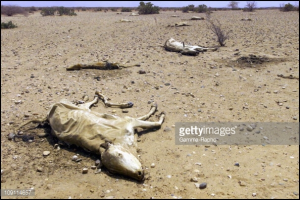

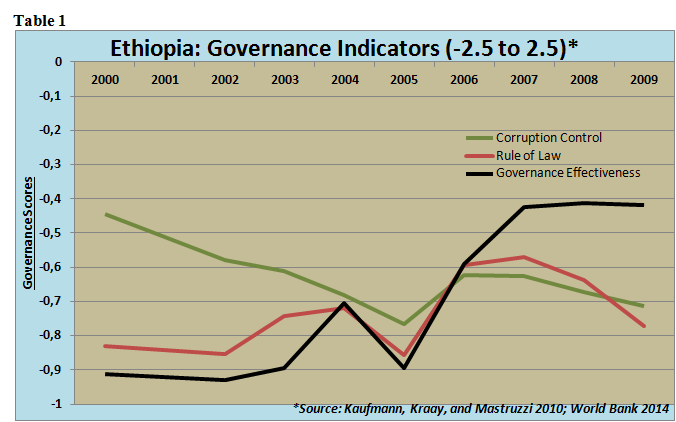
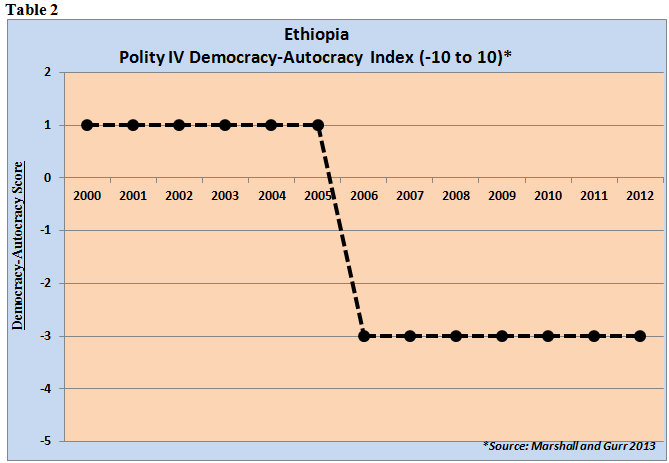


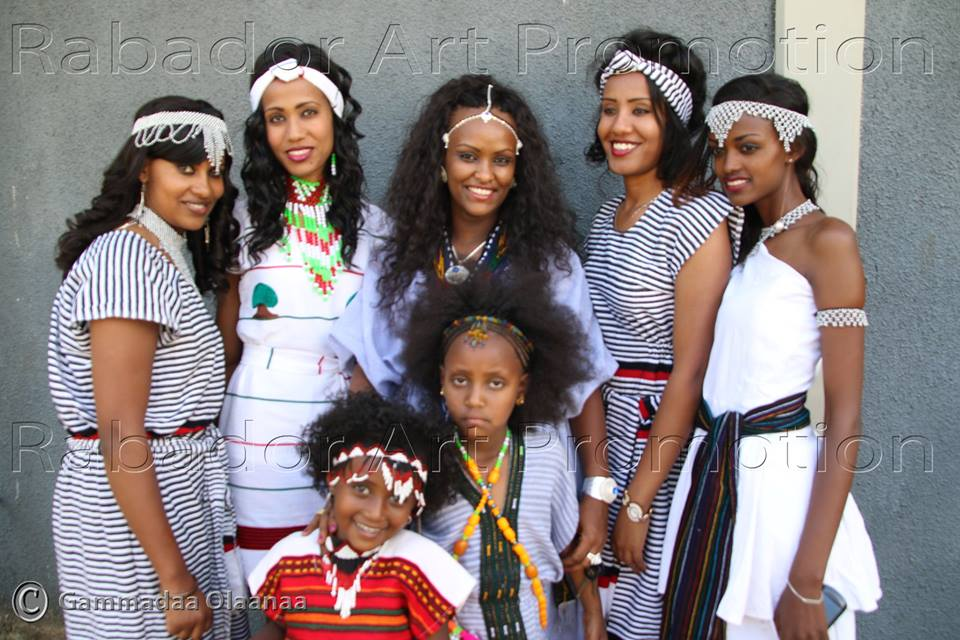
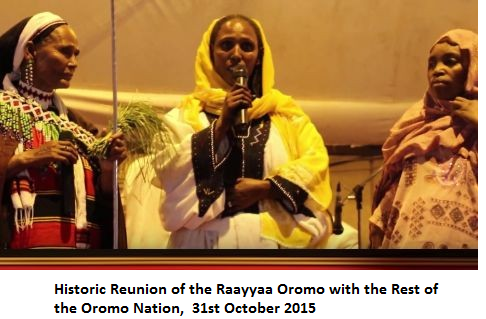
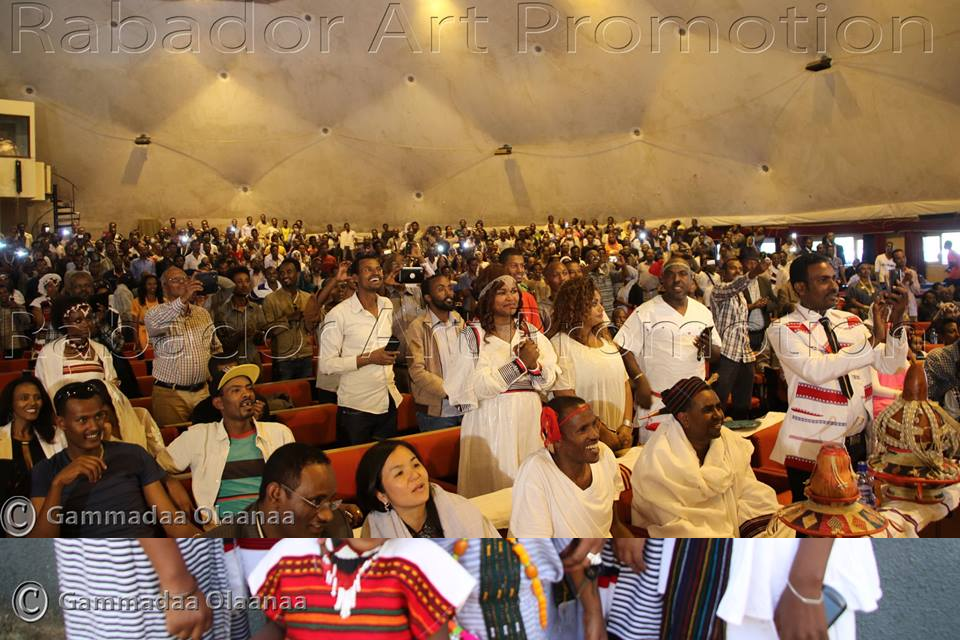
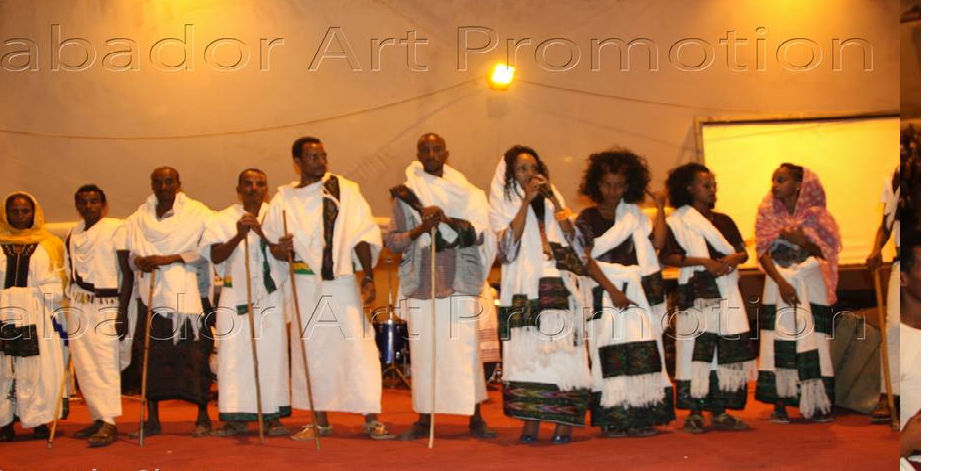
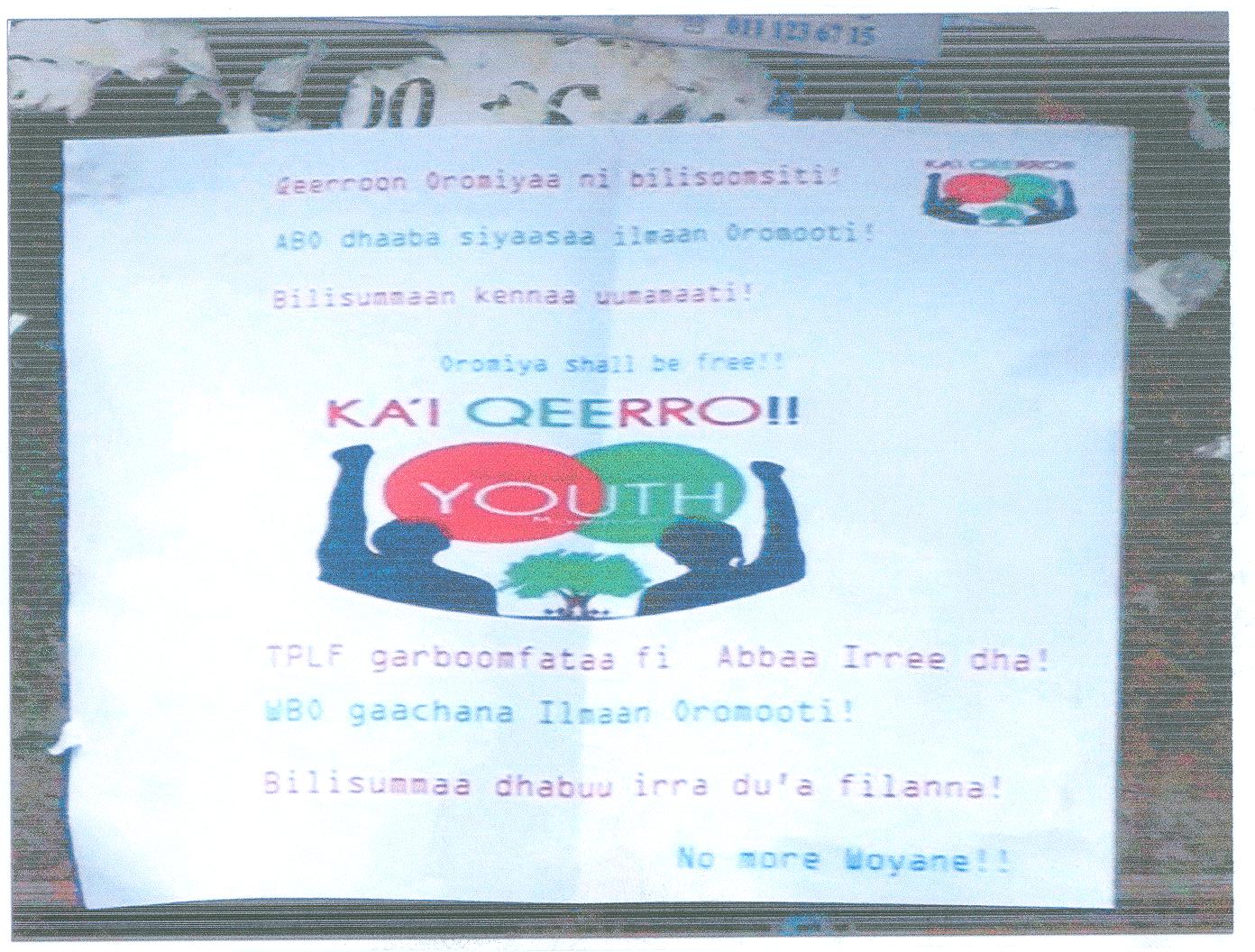

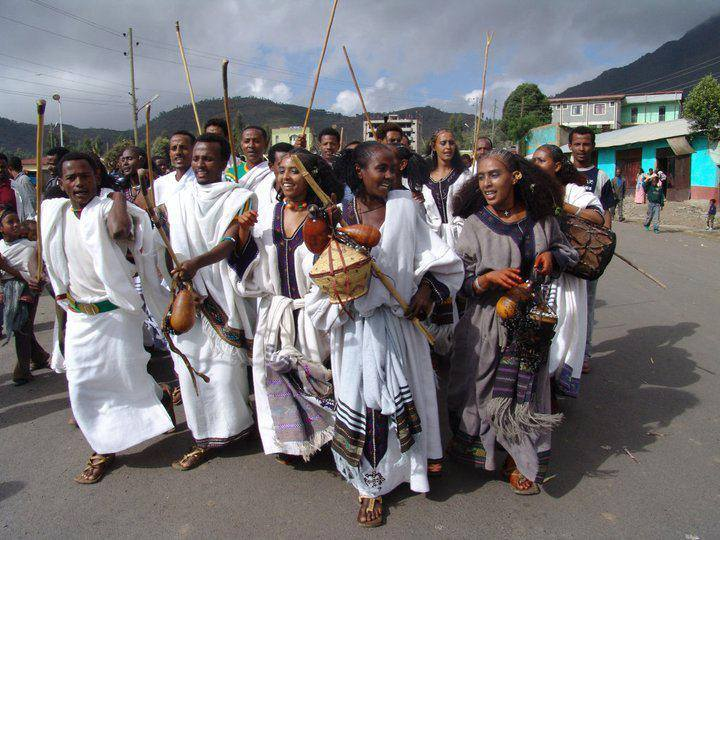






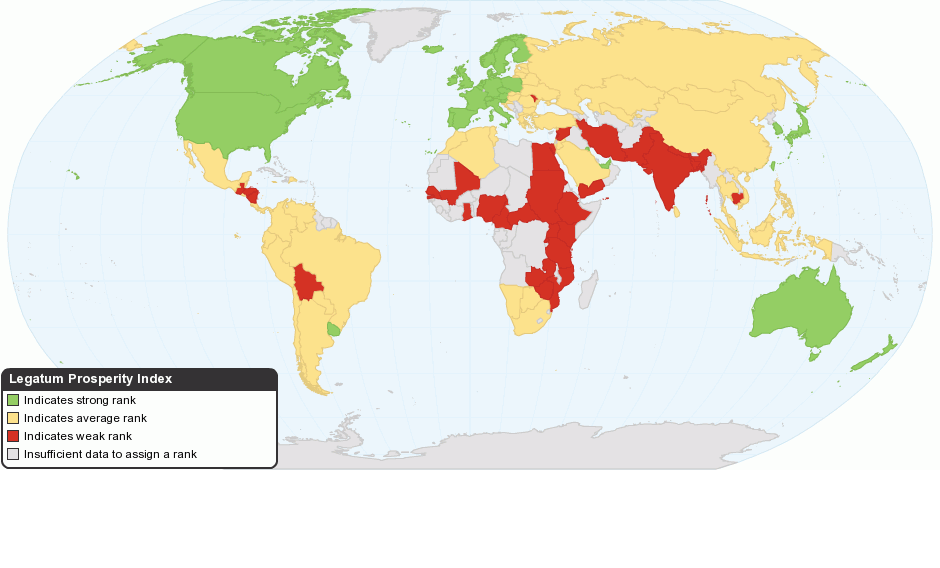
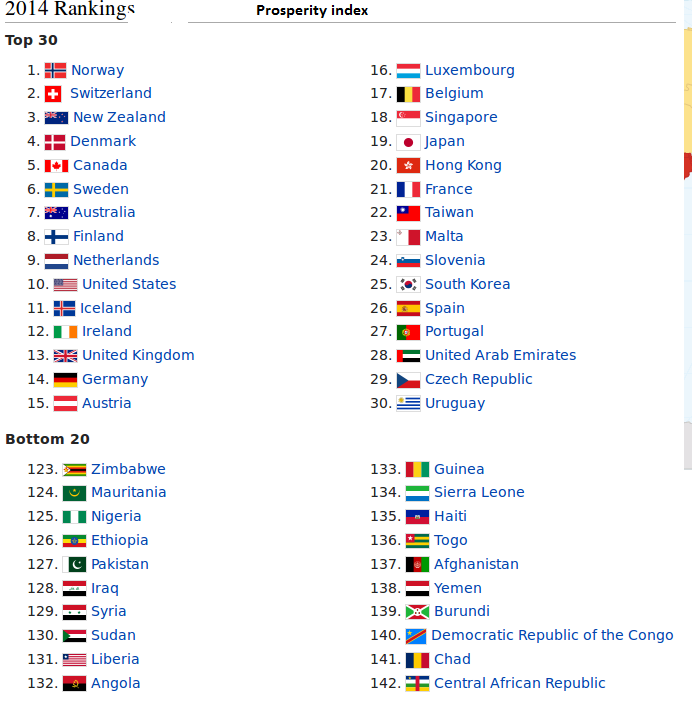



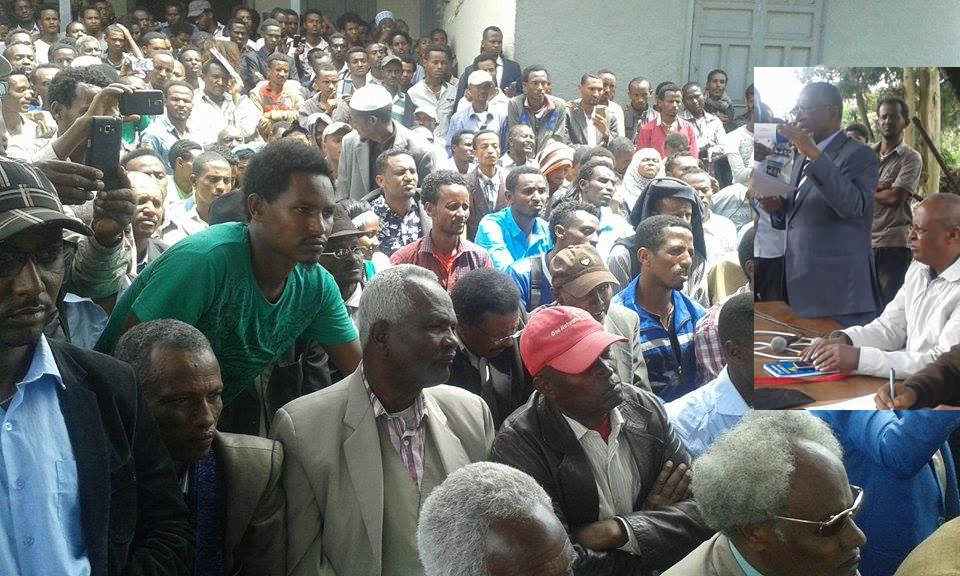
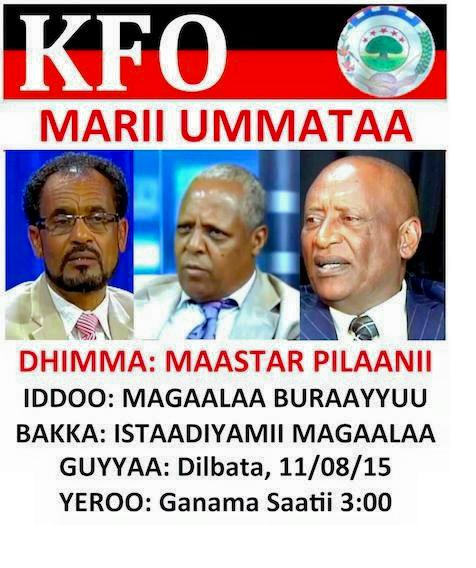
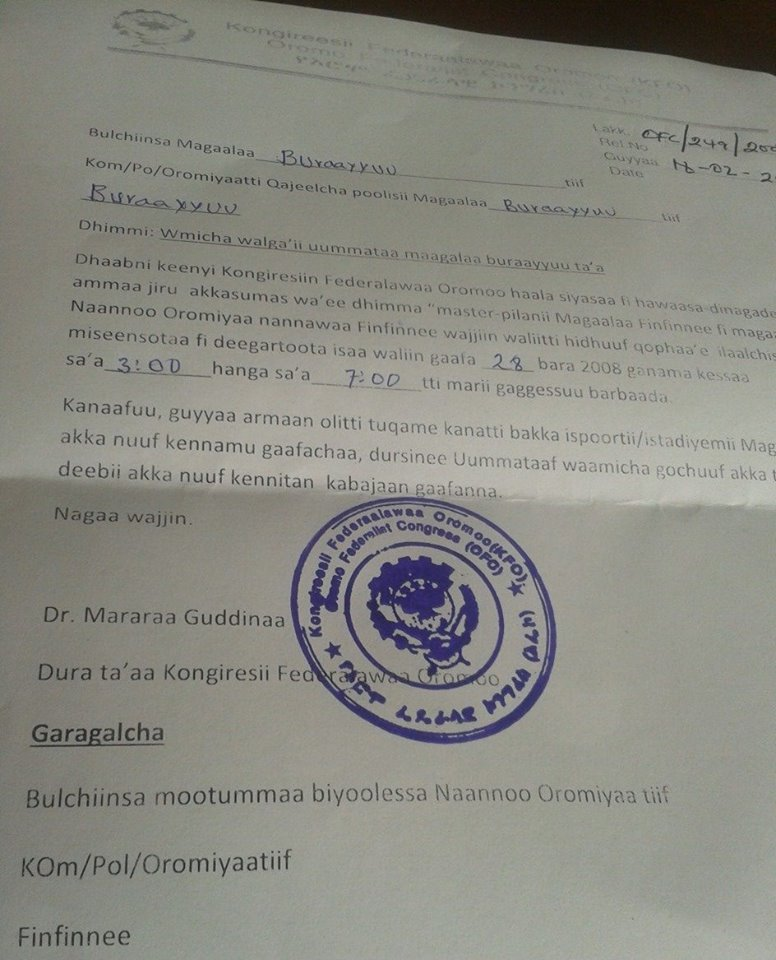
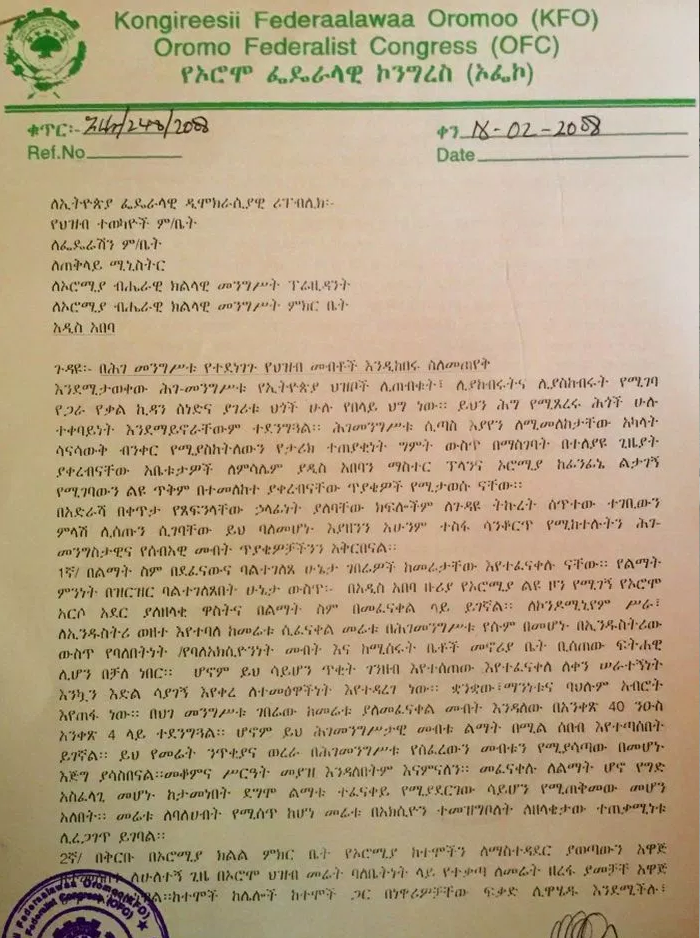
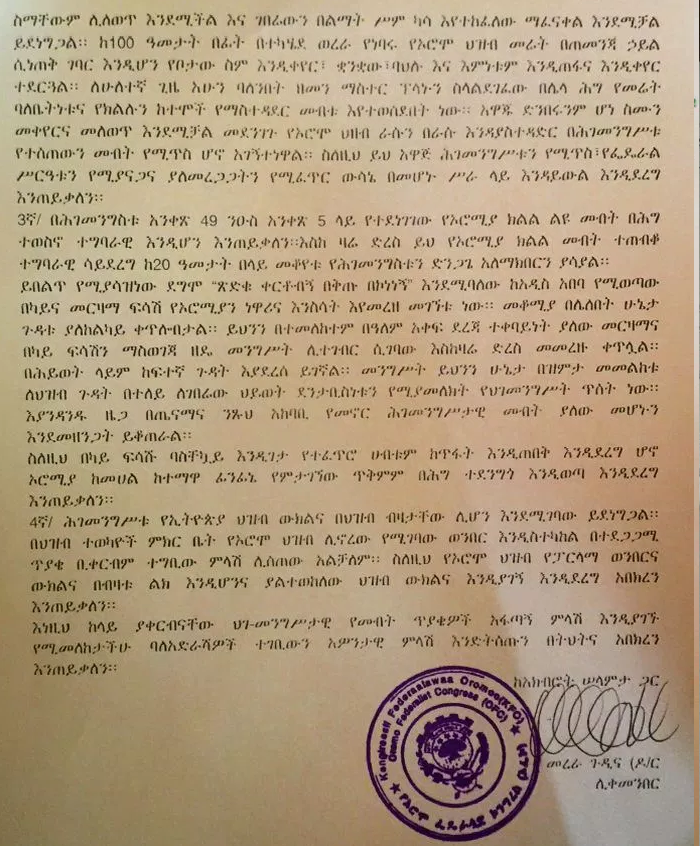
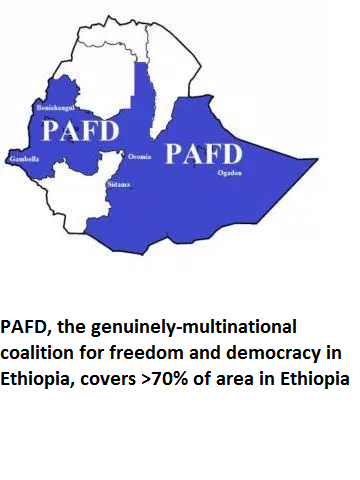
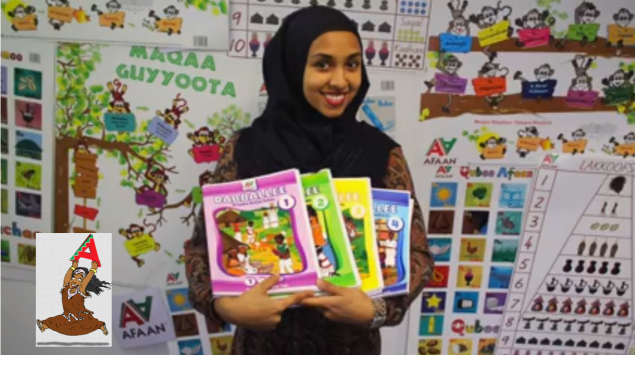

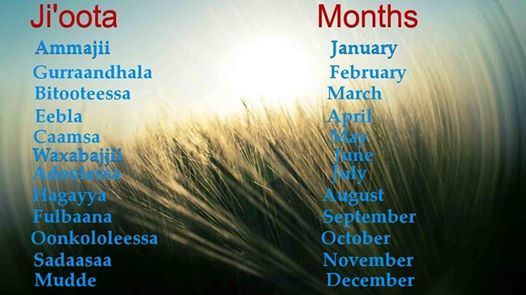


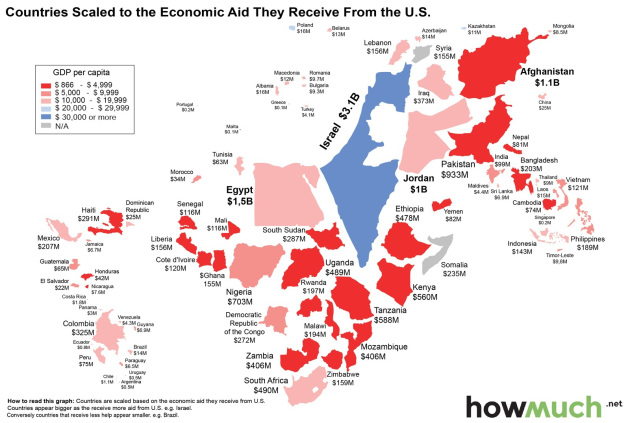

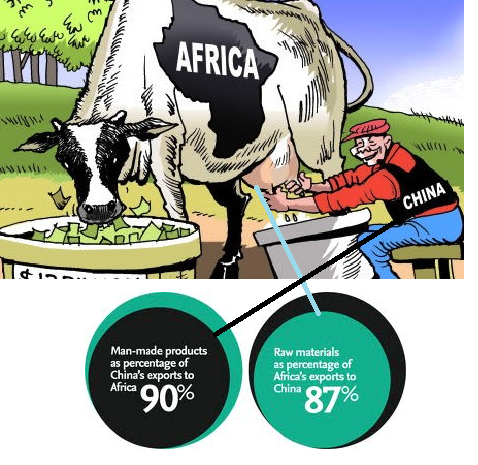


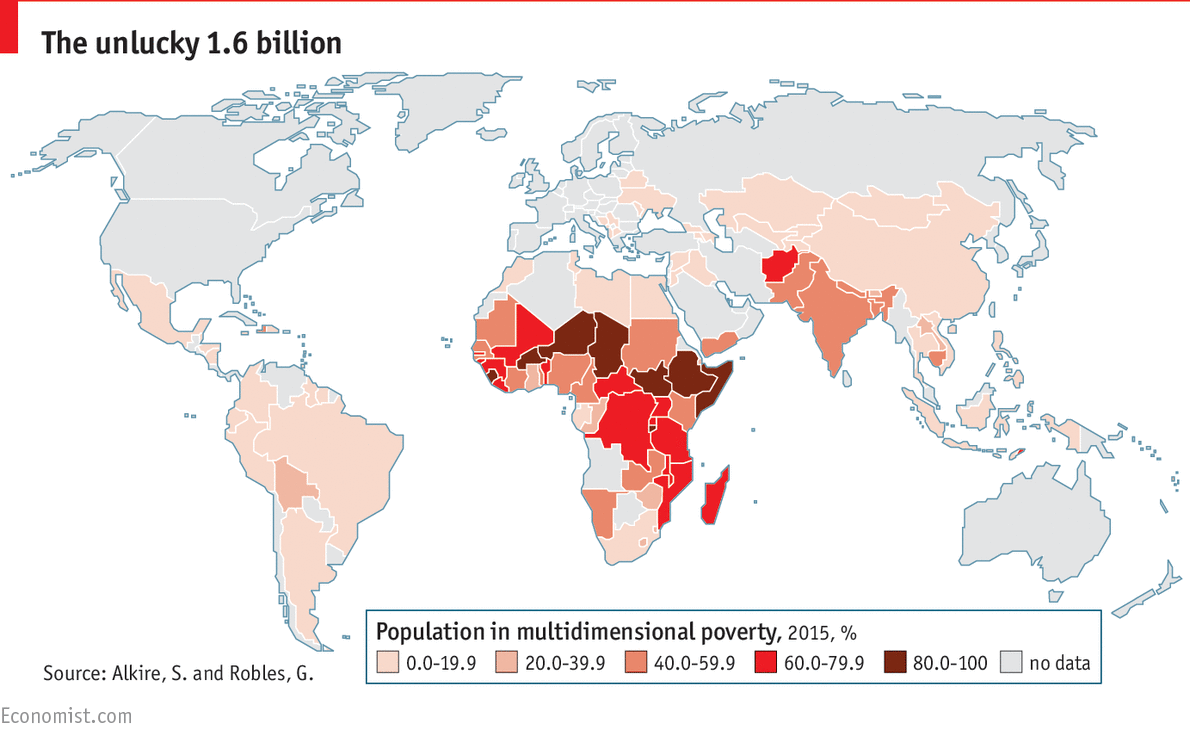

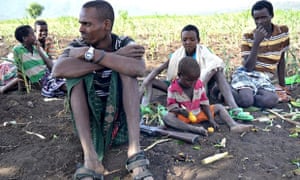


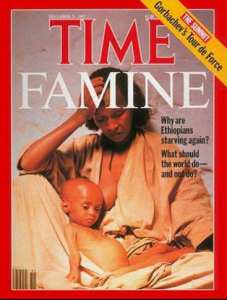


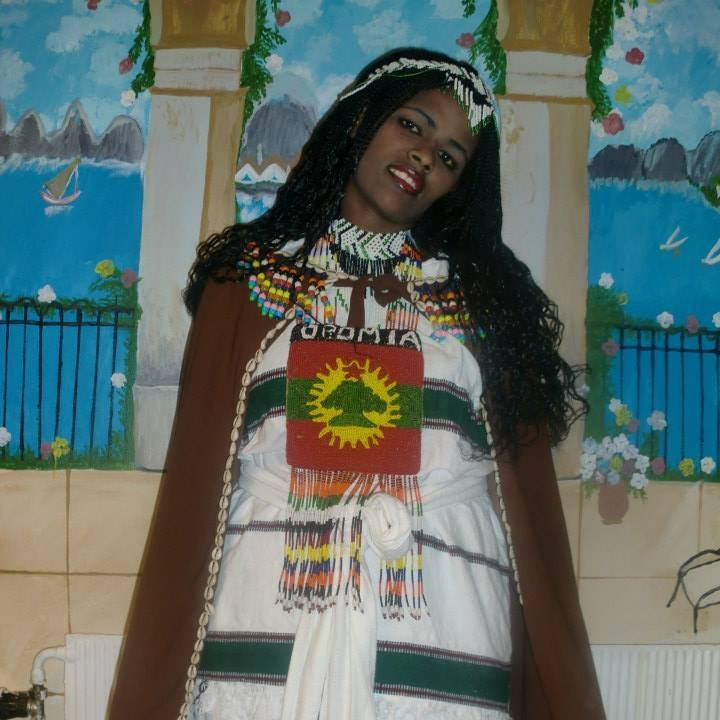
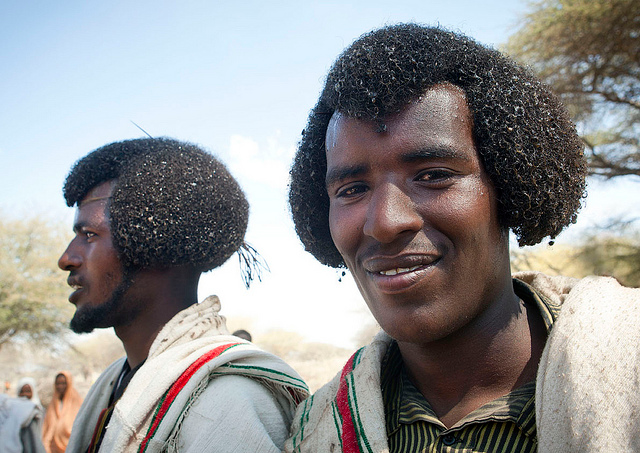
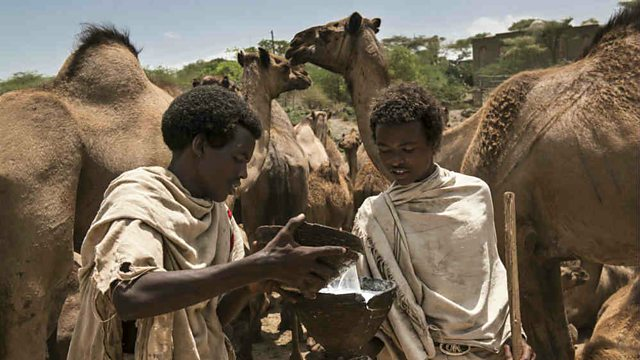


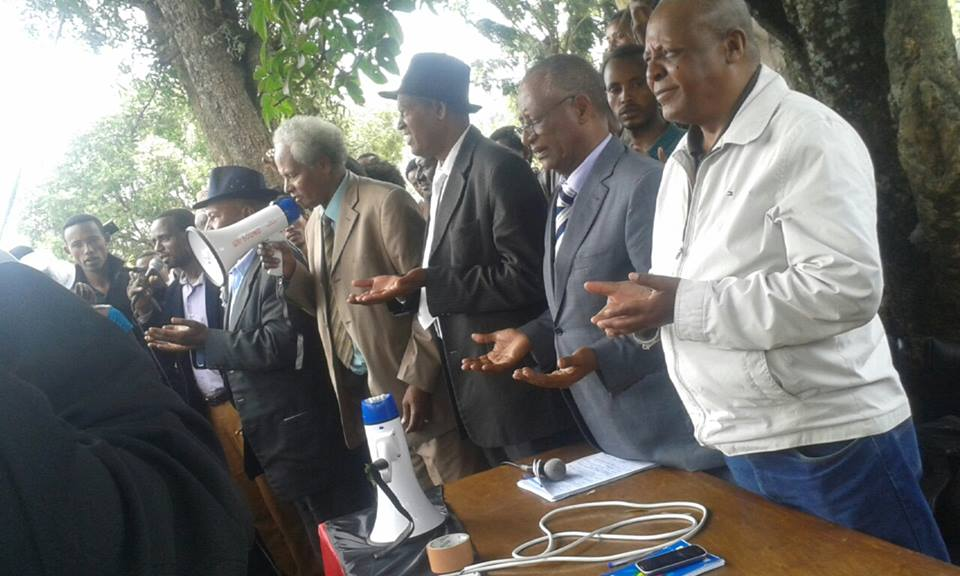
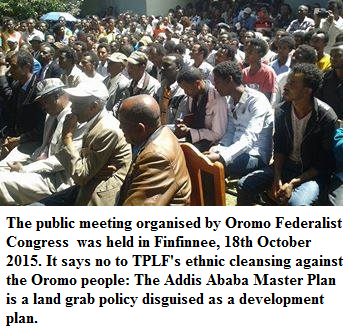
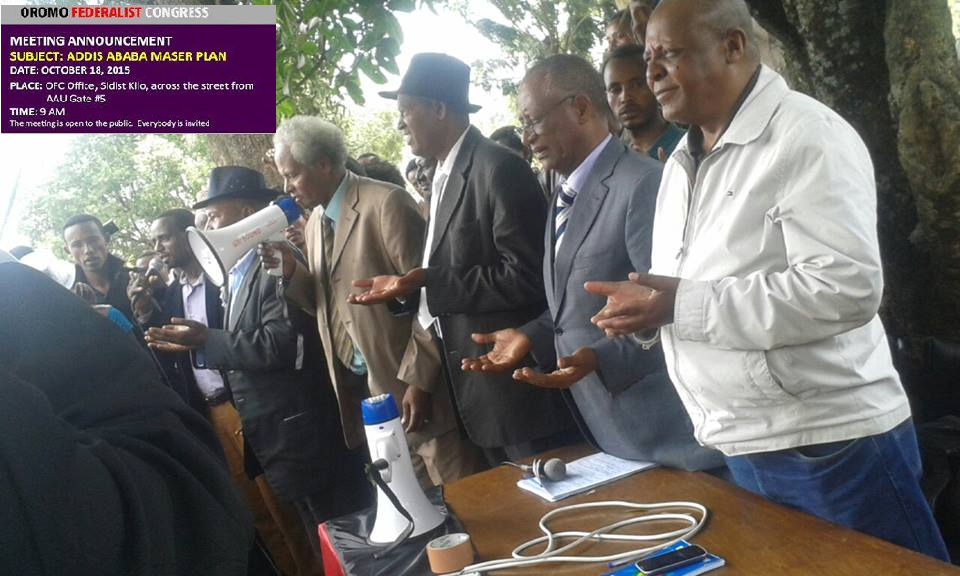
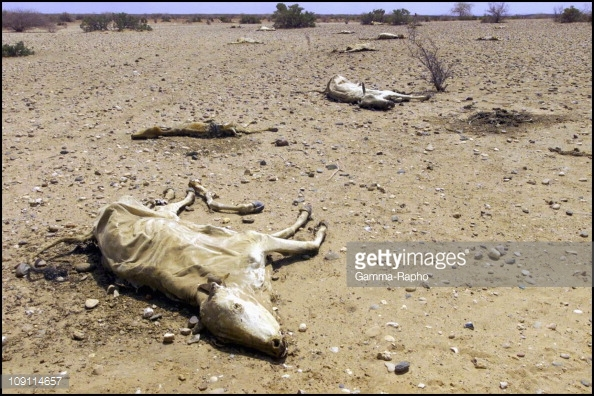

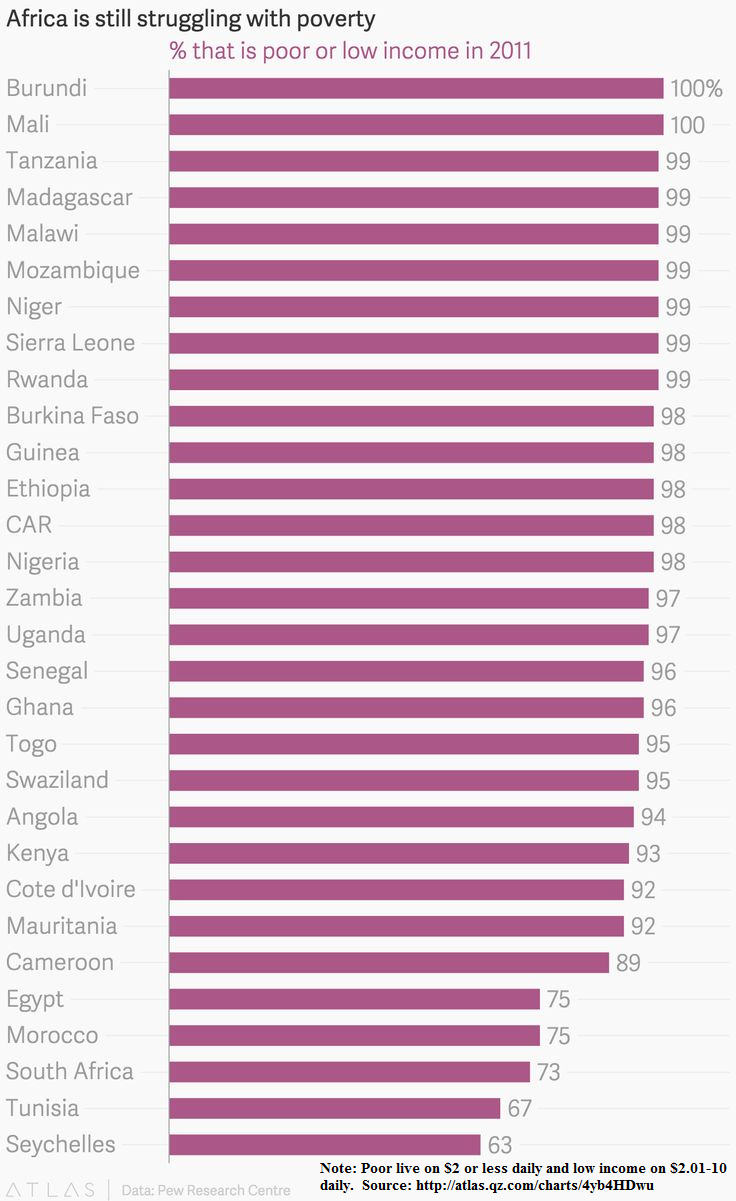



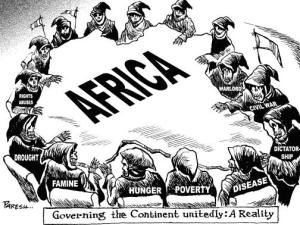


 Oromian Economist
You must be logged in to post a comment.