Economic and development analysis: Perspectives on economics, society, development, freedom & social justice. Leading issues in Oromo, Oromia, Africa & world affairs. Oromo News. African News. world News. Views. Formerly Oromia Quarterly
Hogeessi Fayyaa OMN dubbise akka jedhanitti// Keemikaaloti akkasii kun Yoo soorataman dhukkuba Tiruu fi Kaanserii dhiigaa namarraan ga’uu Maluu jedhan.
Itti gaafatamaan Waajjira poolisii aanaa Diggaa Komaander Tashoomaa Mootummaa akka OMN tti himanitti, namni kun barmeela 18 Keemikaala Zayitii nyaataa Fakkeessuun Gurgurtaaf otuu gara Magaalaa Gimbiitti geessaa Jiruuti kan Qabame.
Waanti Zayitii nyaataati jedhamee fe’amee deemamaatti ture kun qorannoof gara Hospitaala Paasteritti akka ergame kan dubbatan Komander Tashoomeen, erga qoratamee booda Zayita Nyaataa akka hintaane nuu ibsaniiru.
Komaander Tashoomaan gaaffii fi deebii OMN waliin taasisaniin,
“Maalummaan keemikaala Sanaa sirriitti qoratamaa jira. Namni yakka sana dalages qabamee to’annaa mootummaa jala jira.”
Dhimma kana ilaalchisuun waa’ee rakkoolee Keemikaaloti waliin isaanii hinbeekamne kun namarraan ga’anii irratti Ogeessa Fayyaa Dr Abdulsamed Mohammed dubbisneerra.
Dr Abdulsamed hunda dura Maalummaan Keemikaala Sanaa qoratamee beekamuu akka qabu erga nuu himanii booda, Keemikaaloti amala Zayitii qabanii fi akka salphaatti zayita nyaataa waliin wal makatan hedduun jiru. Isaan kun kan qaama Namaa irratti balaa geessisanis ta’e hingeessisne ta’uu maluu Jedhan.
Hata’uutii Keemikalli sun kanneen fayyina namaa miidhan yoo ta’e dheerina yeroo keessa Madda dhukkuba Tiruutii fi Dhukkuba Kaanserii dhiigaa namatti fiduu malu akka Dr Abdulsamed Jedhanitti.
Dr Abdulsamed, Kaanseriin dhiigaa Maal akka ta’e erga nuu ibsanii booda, Isa kana addaan baafachuuf qorattooti, Keemikaalli sun Keemikaala attamii akka ta’e sirriitti qorachuu isaan feesisaa jedhan.
Dr Abdulsamed Mohammed, Itti dabaluunis Keemikaala sana qorachuu qofaa osoo hintaane, tarii Keemikaalli sun yeroo dheeraaf gabaarra kan ture ta’uu waan danda’uuf, iddoowwan Keemikaalli kun itti geessamaa turanii fi naannoon sun guutummaatti sirriitti hubatamee, Jiraattoti naannoo Sanaa Haalli Fayyaa isaanii maal akka fakkaatuu gadi fageenyaan qorachuun barbaachisaadhaa Jedhan.
Documents obtained by hackers from the Italian spyware manufacturer Hacking Team confirm that the company sells its powerful surveillance technology to countries with dubious human rights records.
Internal emails and financial records show that in the past five years, Hacking Team’s Remote Control System software — which can infect a target’s computer or phone from afar and steal files, read emails, take photos and record conversations — has been sold to government agencies in Ethiopia, Bahrain, Egypt, Kazakhstan, Morocco, Russia, Saudi Arabia, South Sudan, Azerbaijan and Turkey. An in-depth analysis of those documents byThe Intercept shows Hacking Team’s leadership was, at turns, dismissive of concerns over human rights and privacy; exasperated at the bumbling and technical deficiency of some of its more controversial clients; and explicitly concerned about losing revenue if cut off from such clients.
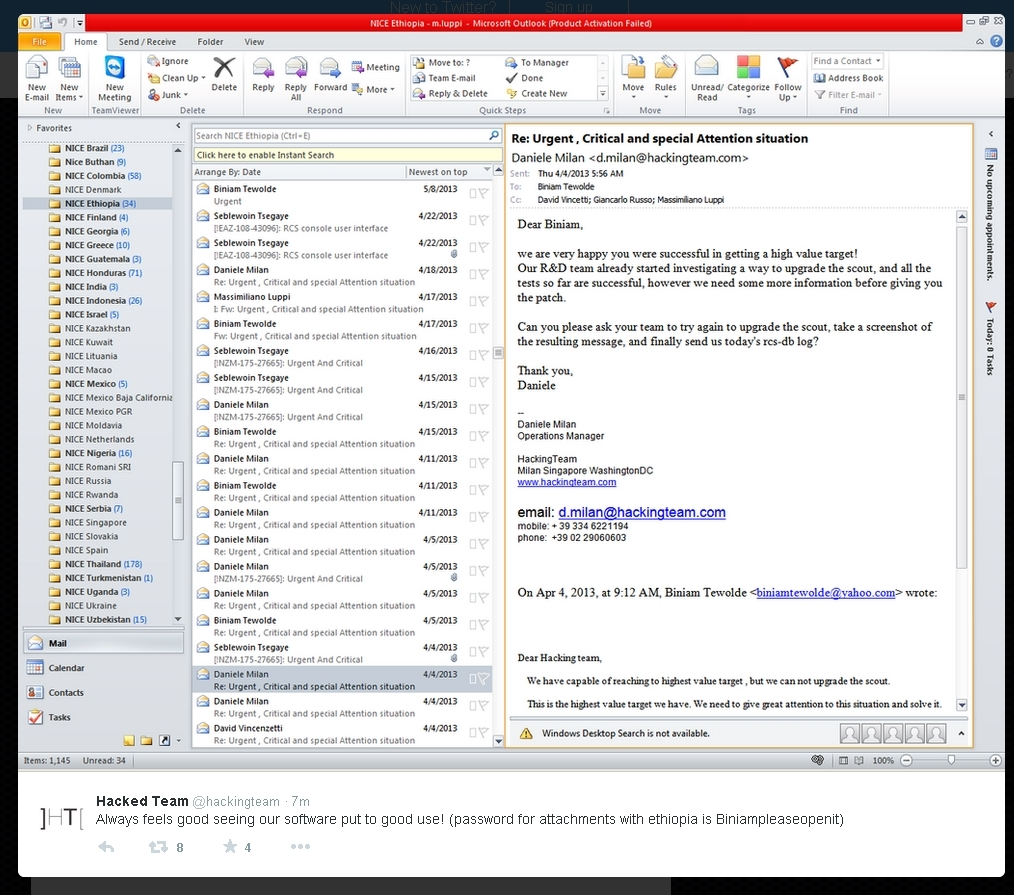
An email from a person linked to several domains allegedly tied to the Meles Zenawi Foundation (MZF), Ethiopia’s Prime Minister until his death in 2012, was published Sunday evening as part of the cache of files taken from Hacking Team.
In the email, Biniam Tewolde offers his thanks to Hacking Team for their help in getting a high value target.
Around the time the email was sent, which was eight months after the Prime Minister’s death, Tewolde had registered eight different MZF related domains. Given the context of the email and the sudden appearance (and disappearance) of the domains, it’s possible all of them were part of a Phishing campaign to access the target. Who the high value target is, remains unknown.
An invoice leaked with the Hacking Team cache shows that Ethiopia paid $1,000,000 Birr (ETB) for Hacking Team’s Remote Control System, professional services, and communications equipment.
Meeshaalee fi tajaajili dhaabbanni kun Mootummotaa fi dhaabbiilee basaasaaf kennu dhimmoota dhuunfaa dhaabbiilee qoratootaa fi Miidiyaalee keessa seenuun miidhaa geesisaa jira.
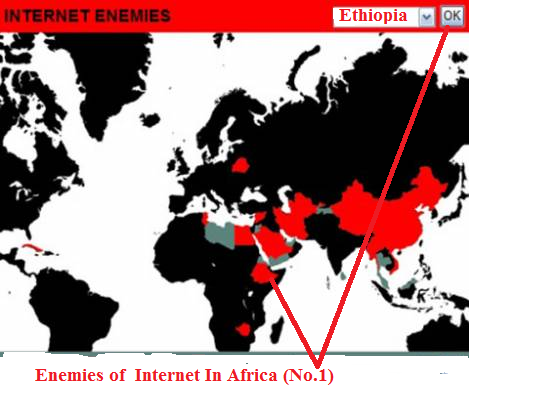
Dhaabbanni Reporters Without Borders kaampaanii basaasaa Hacking Team kana toora kaampaanota diina Interneetii ittiin jedhe galmeessee bubbuleera.
Dhaabbanni nama hatuu ofii isaatiin nan hatama jedhee yaadee hin beeku kan jedhe gabaasichi,akka ragaa amma argame kanaan faayiloota ,Imeelota dokumantoota adda addaa argatan ifa gochaa jiru.
Akka gabaasa Human Rights Watch tti Dhaabbanni Hacking Team Mootummaan Sudan yuuroo kuma 400 fi kuma 80 dhaabbata kanaaf kennuu isaa kanaan dura kan haale oggaa ta’u, amma garuu ragaa kanaan ifattii saaxilameera.
Dhaabbanni Mootummota Gamtoomanii tibba sana Mootummaan Sudaan dhimma kana akka qulqulleessuuf xalayaan kan gaafate yemmuu ta’u, gocha sana hin raawwannee jechuun Sudaan haaltee turuun ishee ni yaadatama.
Daabbanni Mirga dhala namaaf falmu Human Rights Watch Bitootessaa bara 2015 ibsa baaseen,Mootummaan Itoophiyaa meeshaale basaasa spyware jedhaman biyya alaatii galchuun yaada walabaa lammiilee isaa ukkamsaa jira.
OLF Statement on President Obama’s Planned Visit to Ethiopia
Obama’s Planned Visit to Ethiopia is Incompatible with Claims of Democratic Principles of the U.S. Government
Statement from the Oromo Liberation Front (OLF)
OLF Statement
The Oromo Liberation Front (OLF) strongly opposes the planned visit to Ethiopia of the U.S. President Barack Obama on the end of July 2015. As Ethiopia is one of the most brutal regimes of the world, OLF believes that such a visit will result in strengthening the dictatorial minority regime, will boost the regime’s confidence to strengthen its ruthless human rights violations, will give a green light to the regime to continue its repression, economic exploitation, and marginalization of various nations and nationalities of the country under its usual pretense of democracy. OLF also believes that a lasting national and security interest of the U.S. is better protected not by blessing and supporting such a well-known ruthless regime, but by being on the side of the people, supporting the struggle of the peoples of the country for freedom, democracy and justice by using its leverage through exerting the necessary pressure on the regime on power.
In 1991, when the dictatorial military regime of Mengistu Hailemariam was overthrown by the combined struggle of the oppressed peoples of Ethiopia and a Transitional Government was about to be established, a commitment given from the U.S. government to the Ethiopian people was an assurance of “no democracy, no cooperation.” It was the then U.S. Assistant Secretary of State for African Affairs, Herman Cohen, who gave such assurance in public. However, the TPLF/EPRDF group, which took over the government not only by using the military upper hand it had, but also using the blessing of the U.S. official Herman Cohen, demonstrated its anti-democratic nature in practice in a matter of less than one year. Several organizations which struggle for the right of their people, including the Oromo Liberation Front (OLF), opposed the tyrannical and authoritarian practices of the TPLF/EPRDF party as the dominant force and left the then Transitional Government of Ethiopia.
Today, 24 years have passed under the totalitarian TPLF/EPRDF regime erected and protected by the West, mainly the United States of America. It is impossible to enumerate the widespread political repression, economic exploitation, and monopoly of a minority regime in all sectors political, economic and social life. Among many other reports, the repeated reports of human rights organizations, such as Amnesty International, Human Rights Watch, the Human Rights League of the Horn of Africa, and including the Country Report U.S. State Department all shed light to the atrocities of the current Ethiopian regime committed on the peoples of the country, mainly on the Oromo people. Nonetheless, it has to be noted that all these and many other reports show only a small fraction of the repression and brutalities perpetrated by the regime. Most of the political killings, barbaric acts of torture, politically charged arrests, abductions and disappearances carried out by the regime are hidden and remain unreported. The OLF has ample evidence that most acts of ruthlessness committed on the Oromo nationals in several parts of Oromia are not reported at all.
Overall, although some knowingly or unknowingly deny or diminish the repressive nature of the current Ethiopian regime, the truth is that the basic democratic and human rights and freedom of peoples of the country is denied in Ethiopia. While Ethiopia has never seen democratic election in its history, the undemocratic and fake nature of so called “election” carried by the current regime has no parallel even in the Ethiopian standard. Over the last 24 years, the Ethiopian people have been forced to “elect” the TPLF/EPRDF party under the barrel of the gun. The 2015 so called “election” is a clear evidence that, for the people of the country, let alone electing whoever they want, any suspicion about electing the opposition parties the government conveniently put in the election drama has been a crime subjecting citizens to severe punishment. While the so called election drama and its result in which the TPLF/EPRDF declared 100% victory are officially over, as we speak, thousands of Oromo and other nationals are being hunted down and thrown into jail for suspicion of “electing” the few opposition who didn’t even win a single seat in the parliament.
If the U.S.’s claims of strengthening democratic process were true, what is expected of President Obama at the moment was not to plan an official visit to Ethiopia, but to use his leverage to put pressure on the minority Woyane (TPLF) regime to stop terrorizing its citizens, and hold democratic election by openly condemning the process and rejecting the results of the current sham election. It is disturbing that, to the contrary, the U.S. government, looking at the temporary benefit it may or may not get from alliance with the brutal regime and ignoring the suffering of the peoples of the country, is encouraging the regime towards committing more crimes and rewarding the regime for the endless atrocities it has already committed. This is not what is expected of a country which claims to be democratic and acts as the “police” of our planet.
It is to be recalled that, the U.S. Under Secretary for Political Affairs Wendy Sherman, appeared in Finfinnee (Addis Ababa) on one of the days leading to the regime’s “election” drama of 2015, and endorsed the election by suggesting that “Ethiopia had made great strides toward an open and inclusive electoral process.” She went on saying that the U.S. hopes the then upcoming election would be “free, fair, inclusive, and peaceful.” Her endorsement and blessing of the so called “election” as an official U.S. position came at a time when the regime was completing its preparation to run a sham election marred with harassment, arrests, intimidation, and several schemes of vote rigging. The irresponsible blessing and approval by Wendy Sherman of an election which is universally well-known to be full of fraud was condemned by many human rights and other international organizations. Clearly, the endorsement and blessing of this U.S. official has bolstered the confidence of the government to continue its crackdown on dissenting voices, blatantly harass the entire public, and finally, committed naked election fraud and now shamelessly declared 100% victory. The current planned visit of President Obama has no benefit to the peoples of Ethiopia or the region. To the contrary, it is another endorsement and blessing of an election which is very well known by the Ethiopian people and the entire world to be bogus.
The Oromo Liberation Front (OLF) earnestly appeals to the U.S. government to reconsider its position and cancel the planned visit to Ethiopia of President Barack Obama. The OLF would like to reiterate that, although such a visit of a U.S. President could temporarily seem to reinforce the confidence of the brutal regime on power, it will never reverse or pull back the struggle the oppressed peoples of the country are waging to gain their freedom. The history of the struggle of the peoples of the region confirms that no external force can reverse the just fight of people against dictators. Sooner or later, brutal regimes will disappear like a dust. It is only a matter of time.
Victory to the Oromo People!
Oromo Liberation Front
July 4, 2015
Daaw’annaan Obaamaa Gara Itoophiyaatti Saganteeffame Imaammata Sirna Dimokraasii Faallessa
Ibsa Adda Bilisummaa Oromoo
ABOn daaw’annaan Prezidant Obaamaan dhuma baatii Adoolessaa 2015-tti Itophiyaatti adeemsisuuf karoorfate, abbootii irree kan jajjabeessu, bittootni hacuuccaa fi saaminsa ummatoota irratti gaggeessan akka itti fufaniif kan hamilchiisu waan taheef jabeessee morma. Bara 1991 Itoophiyaa keessatti oggaa mootummaan Abbaa Irree Dargii qabsoo ummatootaan aangoo irraa darbamee Mootummaan Cehumsaa kan yeroo hundeeffamu waadaan U.S. irraa dhagahamaa ture yoo sirni dimokiraatawaan mirkanaawe malee gargaarsi gama Ameerikaa irraa hin jiraatu (“No dimokraasii, no cooperation,”) kan jedhu ture. Waadaa U.S. kana ifatti kan dubbatan I/A Gaafatamaa Haajaa Alaa U.S. oggasii Herman J. Cohen turan.
In fact, my standard advice to graduate students these days is “go to the computer science department and take a class in machine learning.” There have been very fruitful collaborations between computer scientists and statisticians in the last decade or so, and I…
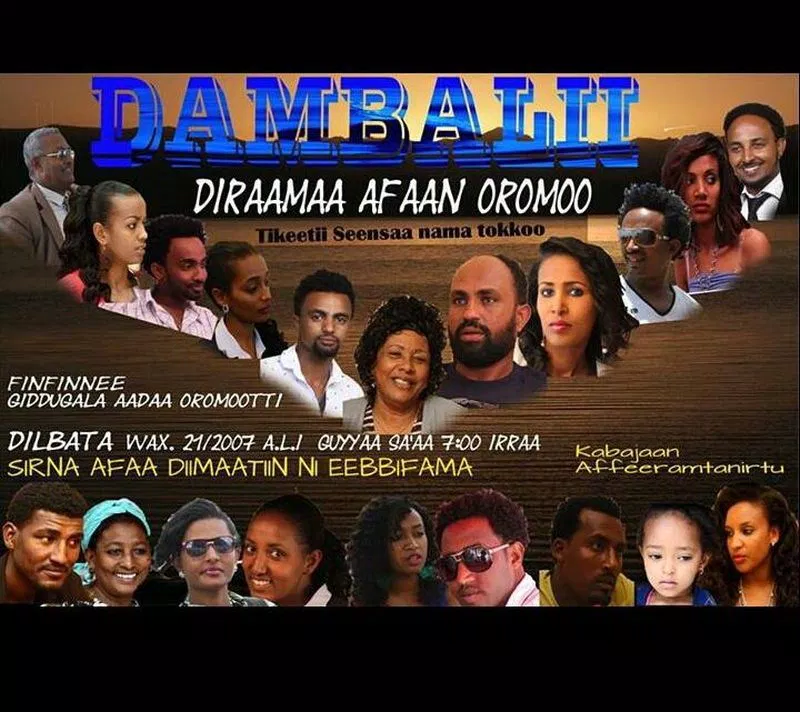
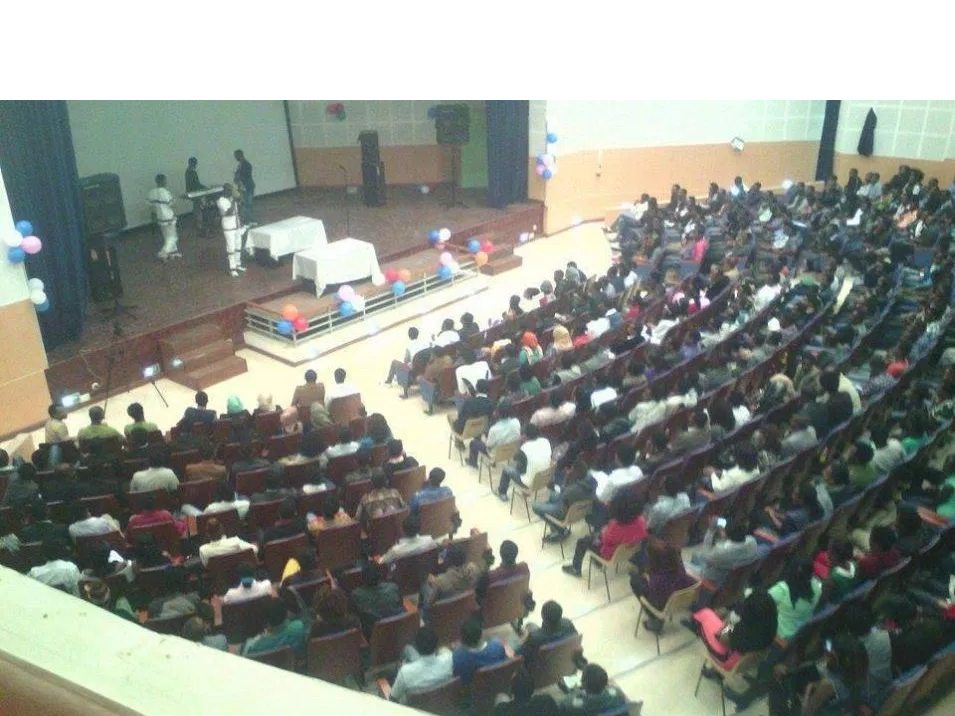
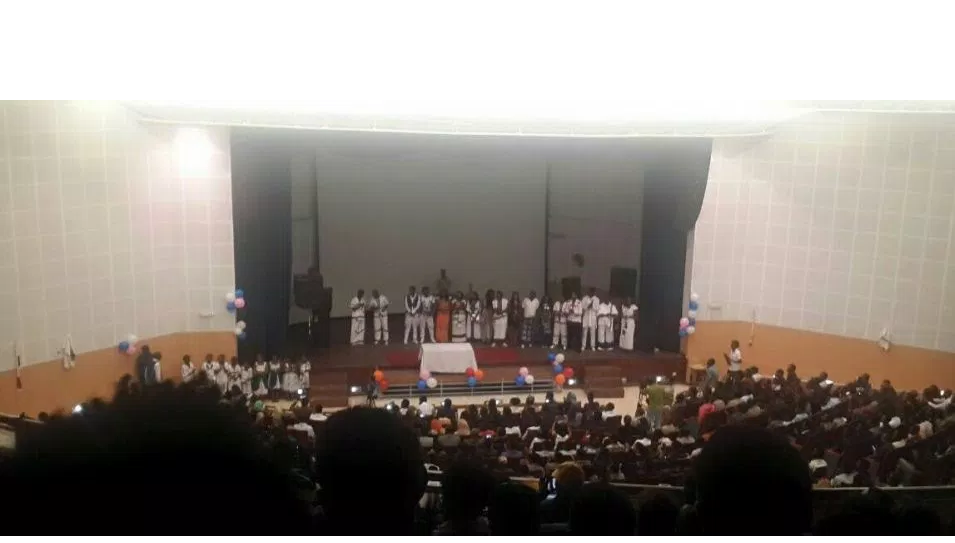
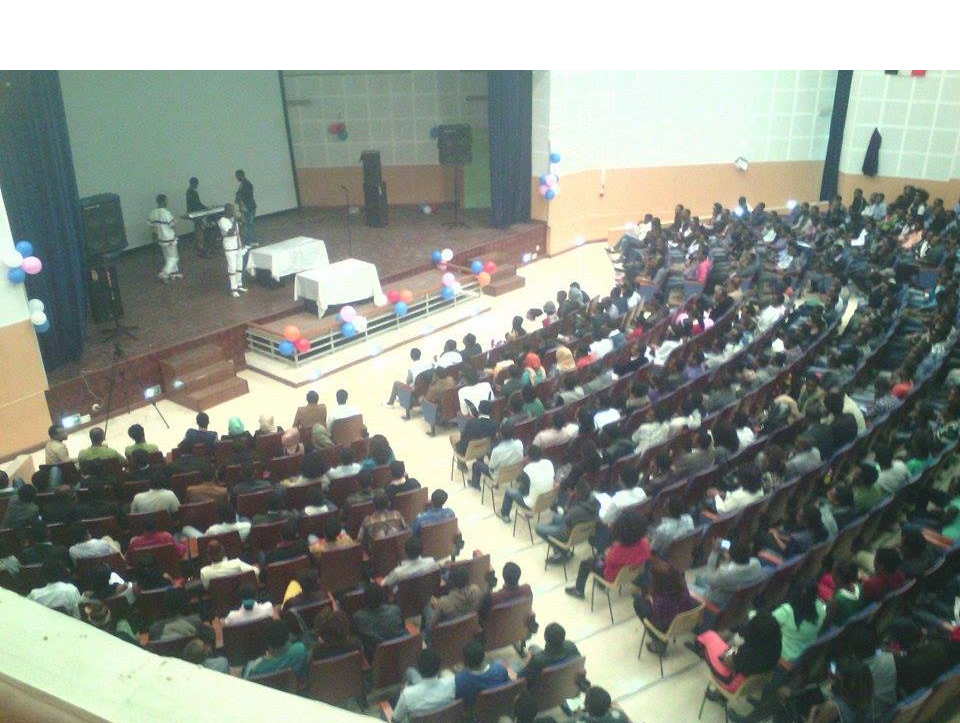
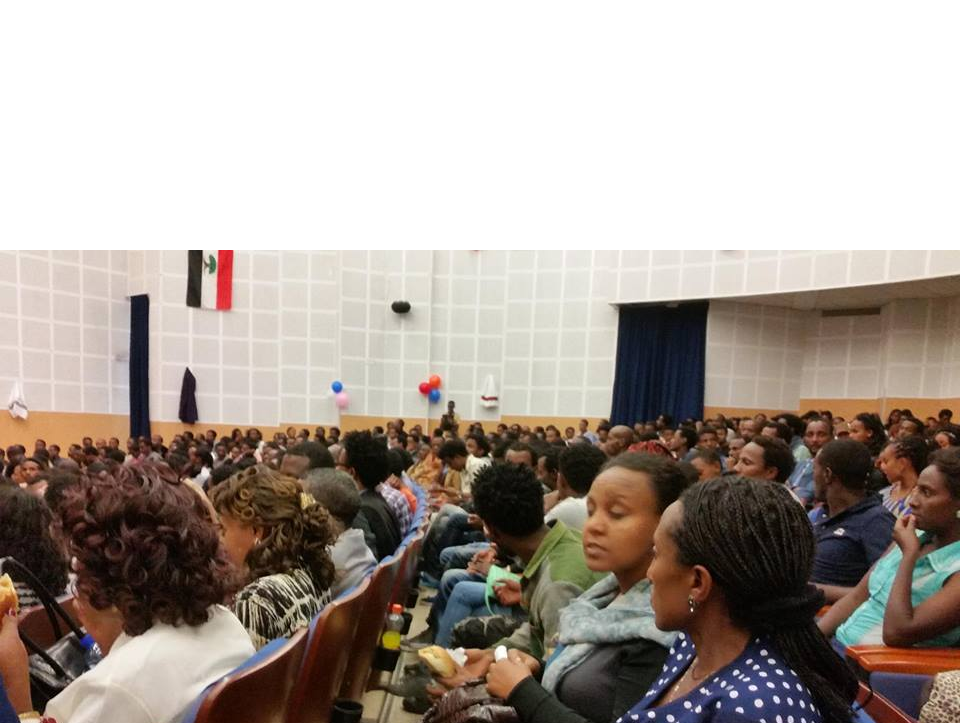
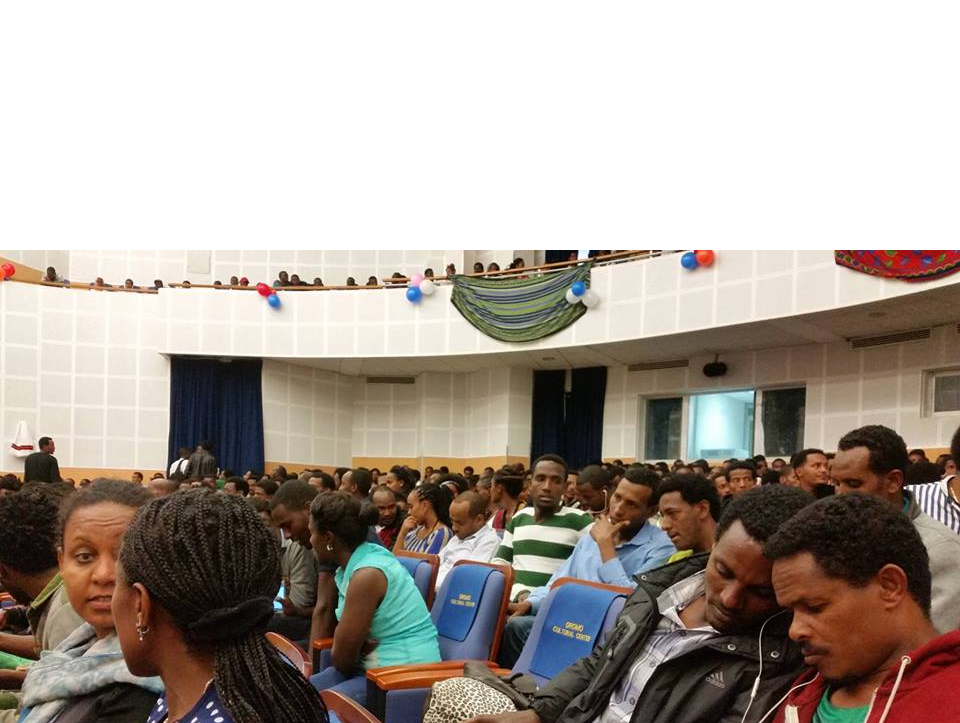
DAMBALII, a new Afaan Oromoo drama series on Oromia Broadcasting Service (OBS), premiered on 28th June 2015, in Finfinnee at Waltajjii Oromoo ( Oromo Cultural Center). Here are PREVIEW of DAMBALII on OBS and some pictures of the beautiful event.
Fiilmiin (Draamaan) Afaan Oromoo haaran Dambalii jedhamu Waxabajjii 28 Finfinnee galma Waltajjii Oromootti eebbifame. Eebba Dambalii irratti uummanni Oromoo heddumaan waan irratti qooda fudhateef galma guutee irraa hafe. Ummanni Oromoo Finfinnee artistoota Oromoo fi aartii Oromoo amma biqilee dagaagaa jiru deeggaruuf akkanatti qooda irratti fudhachuun isaanii kan hedduu nama boonsu dha. Itti dabaleesi sab quunnamtii adda addaatiin namoonni hedduun eebba kana caqasuun haala kanatti akka hedduu itti gammadan hubatamee jira.
The Oromo Liberation Front (OLF) was established in 1973/1974 by Oromo nationalists in the heart of Oromia, Finfinne (Addis Ababa) to exercise the Oromo people’s inalienable right to national self-determination to terminate a century of oppression and exploitation, and to form independent republic of Oromia, or where possible, a political union with other peoples based on equality, respect for mutual interests and the principle of voluntary association. Today OLF has grown and expanded to all parts of Oromo land (Oromia). During the last 40 years, the organization has transformed itself to one of the leading political force in the region. It has brought about or influenced several positive changes in the Oromo society where it has the unparalleled support from all sectors of the population.
The Oromo constitute more than 40% of Ethiopia’s projected 98.9 Million inhabitants. Oromos maintain distinct and homogenous culture and common language, history, descent, and separate territory from Abyssinians who created the Ethiopian empire state. During their long history, the Oromos developed their own cultural, social and political system known as the Gadaa system. The Gadaa is a democratic political and social institution that governed the life of every individual in the society for life long until it was systematically suppressed by the occupiers.
The UNPO General Assembly,
Underlining the persistent violation of human rights in Oromia, Ethiopia that includes arbitrary killings, disappearance, torture, beating, abuse, and mistreatment of detainees by security forces, life-threatening prison conditions, arbitrary arrest and detention; detention without charge and lengthy pre-trial detention, privacy rights including illegal searches; land grabbing, restrictions on academic freedom, restrictions on freedom of assembly and association, freedom of expression and movement; alleged interference in religious affairs, violence and discrimination against women and abuse of children.
Realizing similar reports showing a systematic nature of human rights violations targeting particular people, the Oromo having been the main victim over many years. The Committee for the Elimination of Racial Discrimination (CERD), a UN organ, in 1997 stated that “ … military and police forces have been systematically targeting certain ethnic groups, in particular the Anuak and the Oromo peoples, and [further asserting the prevalence of] summary executions, rape of women and girls, arbitrary detention, torture, humiliations and destruction of property and crops of members of those communities.”
Reflecting on Human rights researcher Professor Tronvoll Kjetill ‘s well-founded claim about a systematic flagrance of human rights in Ethiopia. His study asserts ethnic identity in Ethiopia as a political stigma. Based on primary data mined from major human rights organizations and country reports spanning over ten years he has to say, “from 1995 to 2005, the majority of the reported human rights violations in Ethiopia have occurred in the Oromia regional state, [adding that in all those] years but one, extra-judicial killings and arbitrary arrests have been reported, [and that no any] other regional state has such a consistency of reported human rights violation during this time period.”
Giving consideration to a recent report corroborating these systematic violations. In March 2014, Human Rights Watch‘s report under the title “They Know Everything We do: Telecom and Internet Surveillance in Ethiopia” which highlighted that the government in its pursuit of restricting the rights of the citizens to “freedom of expression, association, and peaceful assembly[ through the application of repressive laws] to decimate civil society organizations and independent media and target individuals with politically motivated prosecutions, [that the Oromo people] particularly affected, with the ruling party using the fear of the ongoing but limited insurgency
Remembering the adoption of very aggressive and unpopular laws such as the press proclamation, the Charity and Civic society Proclamation and the Anti-Terrorism proclamation followed by persistent charges brought against members of the free press and opposition figures,
Noting the situation regarding human rights, the rule of law, democracy and governance in all countries of the Horn of Africa has been of great concern to the Intergovernmental Authority on Development (IGAD), African Union (AU), European Union (EU) and United Nations (UN) for many years;
Whereas there are credible reports of arbitrary arrests, forced labour, torture and maltreatment of prisoners, as well as persecution of journalists and political repression in the region,
Referring to the Genocide Watch report released on 12th of March 2013 that considered Ethiopia has already reached Stage 7, genocidal massacres, against many of its peoples, including the Anuak, Ogadeni, Oromo and Omos, Amnesty International report of October 2014 that indicated a widespread and systematic repression of the Oromo people2 . As the title of the report itself convenes for special concern, saying: “Sweeping repression in the Oromia region of Ethiopia” only “BECAUSE I AM AN OROMO” , the recorded 61 deaths and 903 wounded of Oromo mainly students during peaceful protests in April/May 2014 against the drafted Addis Ababa Master Plan4 and
Reaffirming the US State Department Country Reports on Human Rights Practices for 2014 on Ethiopia “Prison and pre-trial detention centre conditions remained harsh and in some cases life threatening” and the deep concern of the UN Committee Against Torture in its 2010 report about “the routine use of torture” by police, prison officers, and other members of the security forces–including the military–against political dissidents and opposition party members, students, alleged terrorists,…”. The recorded death of student Nuredin Hassen, Galana Nadhii and Nimona Tilahun after severe torture indicates that no any tendency of improvement in maltreating of the prisoners.
Regretting that the EPRDF demonstrated its continued dominance in nationwide elections for local and city council positions held in 2013 and National Election held in May 2015. EPRDF affiliated parties won all but five of approximately 3.6 million seats; 33 opposition parties boycotted the elections. It also fully controlled and declared a landslide victory of the May 2015 National Election.
Understanding further that in its latest report the Committee to Protect Journalists, based on empirical evidence, put Ethiopia the fourth worst place in the world for journalists and one of “the 10 most censored countries” and “ the top 10 worst jailers of journalists worldwide.”
Considering 17 Oromo journalists that have been fired from Oromia Radio and Television Organization (ORTO) since June 25, 2014 Proclaiming the adoption of the National Policy on Women (1993) and the National Action Plan on Gender Equality (2006-2010) and some commendable provisions of the National Constitution discrimination and sexual violence against Oromo women in Ethiopia is still widespread5 , notably in rural areas.
Emphasising to take all necessary measures to ensure any violence against women is prosecuted and punish adequately and that the victims have immediate means of redress and protection, by the CEDAW Committee 2004 recommendation. More generally, to ensure that all the CEDAW Committee 2004 recommendations be fully implemented
Affirming the Human and democratic rights enshrined in the constitution of Federal Republic of Ethiopia that grants the citizen to practise,
Fully believing the international community has a conventional moral duty to inquire the Ethiopian government to a bid to its constitution and international bill of rights it signed,
Appreciating the right groups such as AI, Human Rights Watch, HRLHA, Genocide Watch, OSG, OSGA and etc. that operated under significant government restrictions and managed to outreach the curtailed atrocities committed by EPRDF regime. a ruling regime that remains in power for 25 years by blocking every opportunity of transformation to genuine democracy and blatant disregard and denial for free and fair election.
Condemning boundless human atrocities such as extrajudicial killings, Disappearance, Torture, arbitrary arrests of innocent people, prolonged detention without trial, sexual violence, eviction from their land6 committed by Ethiopian government,
Expresses its grave concern at the continuing imprisonment Oromo students, journalist and political leaders, without having been tried by a court of law, and demands the immediate releases;
Therefore, we, the UNPO General Assembly:
Solemnly affirms that the government of Ethiopia is systematically committing massive human rights violations against the Oromo people
Requests to ensure that those responsible for killings, beatings, torture and other grave human rights violations be brought to justice
Calls upon the Ethiopian government to fully respect human rights and fundamental freedoms, including freedom of association, freedom of expression, freedom of media and freedom of conscience;
Calls on the EU, UN, AU and democratic governments to reconsider their approach to Ethiopia if no progress is made towards compliance with the essential elements of various international agreements in particular on core human rights issues such as access to the International Committee of the Red Cross (ICRC) to visit prisons, release of the political prisoners and etc.;
Deplores the unlawful use of lethal force by the government security force. A sexual violation that destabilise the family and eviction of the Oromo from their ancestral land that is designed to uproot the indigenous people.
Condemns the ever more frequent attacks of armed forces, Police and security agents on peaceful demonstrators.
Insists that in the wake of participation by the European Union and international community in resolving the political problem of the country
Urges the Ethiopian authorities to review the press law, Civil Society Law and Anti-Terrorist proclamation adopted in 2009
Urges the Ethiopian authorities to investigate the allegations of harassment and arbitrary arrests affecting the opposition and civil society organisations and to bring those responsible to trial;
Urge and Encourages Ethiopian authorities to release Oromo political prisoners languishing in prisons for many years unconditionally
Instructs UNPO its President to forward this resolution to the Ethiopian government, to the Council, the Commission and Parliament of EU, to the PanAfrican Parliament and the Executive Council of the African Union, to UN and some democratic governments.
Macha-Tulama Association – USA, Inc
811 Upshur ST NW
Washington, DC 20011
contact@machatulama.org
July 2, 2015
President Barack Obama
The White House
1600 Pennsylvania Avenue
NW Washington, DC 20500
Your Excellency President Obama,
The Board of Directors of the Macha-Tulama Association (MTA), U.S.A., is writing this urgent letter regarding your plan to visit Ethiopia in July 2015. The MTA is a non-profit organization incorporated in the U.S.A. because it was banned in Ethiopia. It advocates for human rights and for social justice for the Oromo and others in the Horn of Africa and beyond. For almost a quarter of a century, Ethiopia has been ruled by the Tigre People’s Liberation Front, which calls itself the Ethiopian People’s Revolutionary Democratic Front. This minority regime has been engaging in sham elections, which are elections only in name. The regime disregards all the principles and practices of democracy in spite of its pretension to be democratic since 1991. The regime’s promise of democratization by restructuring the state, liberalizing the economy, and respecting and protecting human rights has been subverted. While claiming to be a democratic government in order to receive ‘development aid’ and to gain political legitimacy, this regime has killed, imprisoned and tortured the Oromo and other ethno-national groups who have struggled for democracy, national self-determination, human rights, and social justice. In fact, the Oromo people have been mainly targeted for elimination and repression because they are the largest national group in Ethiopia, and they have started to recover, manifest, and exercise their rights to culture, history, and language, which have been repressed by the state of Ethiopia for over a century.
According to a recent Amnesty International report, entitled ‘Because I am Oromo: Sweeping Repression in the Oromia Region of Ethiopia,’ between 2011 and 2014 alone, at least 5000 Oromo were arrested, tortured, and sentenced with extra-judicial executions because of being Oromo and for also peacefully demonstrating against the regime’s land grabbing policies and the so-called Addis Ababa Master Plan, intended to evict millions of Oromo farmers from their homelands in and around Addis Ababa (which the Oromo call Finfinnee), the capital city of Ethiopia. Since 1992, several human rights organizations have been reporting that Oromo prisoners have been predominantly populated Ethiopian prisons and other detention places. As a result these prisons and concentration camps speak Afaan Oromo (the Oromo language), as testified by many nonOromo prisoners.
Mr. President,
It is with shock and profound sadness that we received the message of your intention to visit Ethiopia in July. As the leader of a great country that subscribes to the principles of democracy and fundamental rights and liberties for all human beings, and as the leader of a country whose foreign policy in principle is committed to promoting the ideals of human rights, the rule of law, and democracy around the world, we believe your visit will send a wrong message to the regime and its likes across the globe that they can get away with grotesque violations of human and democratic rights as long as they remain ‘strategic allies’ to the United States.
Mr. President,
Because of these reasons, we earnestly request that you rethink your intention to visit Ethiopia. We believe your visit to the country also sends three messages: First, it encourages the Ethiopian government to continue intensifying its repressive policies. If your government continues to support and finance the regime regardless of what it does, the regime will see no reasons for changing its violent and dictatorial policies. Second, your visit to Ethiopia demonstrates to the affected people that the United States government only gives lip service to democracy and human rights while supporting the dictatorial minority regime of Ethiopia. To the 90 million people who are facing massive human rights violations in Ethiopia, particularly to the over forty million Oromo, your visit will mean that the U.S.A. does not care for the aspiration to live in a free, open, and democratic society. Your visit will also mean that human rights and democratic self-governance are not part of the list of U.S. priorities in Africa and beyond. Third, it convinces the people in Ethiopia and beyond that your policy is not different from some of your officials, such as Undersecretary of State Wendy Sherman, who recently undermined the process of democratization in Ethiopia by endorsing the regime’s record whose democracy, she said, is ‘improving.’ The Undersecretary has been roundly criticized, and we believe, rightly so.
In closing, we would like to bring to your attention that when, in July 2009, you visited Ghana, you made a speech in which you promised that the U.S.A. does not, and will not, support dictatorship and strongmen, and that you seek to assist the development of “strong and sustainable democratic governments” everywhere in Africa. We believe it is only appropriate now to request that you do not ignore your commitment and promise of that historic speech you made in Accra, Ghana, by visiting Ethiopia, the graveyard and prison house of thousands of men and women who have been killed, imprisoned, tortured, maimed, and disfigured only because they have aspired to exercise their God-given rights and to live in a democracy by demanding national self-determination and democratic rights in their own country.
Sincerely,
Asafa Jalata, PhD.,
Chairman of the Board of Directors of the Macha-Tulama Association &
Professor of Sociology and Global and Africana Studies
I would like to bring to your attention the latest disgraceful plan of the Ethiopian government to divide the Oromo people’s worldwide communities under the banner of ‘Oromo Diaspora Day’ from 3rd August 2015 to 10th August 2015. This disguised and sugarcoated plan may sound attractive to some, but it is an old poisonous tactic commonly played by all dictators to divide and rule their subjects. We, members of the Australian Oromo community, completely denounce this day and urge the Oromos and friends of Oromo to refuse to celebrate this day with the Ethiopian dictatorship regime that continues to perpetrate heinous crimes against our people. Celebrating this day with the Ethiopian dictatorship regime is rewarding this government that murders women, children and elderly; that imprisons and tortures our youth, intellectuals and business people; and that confiscates our farmland and leaves our farmers destitute and beggars. We call all Oromos to not be fooled by the dictator’s plan with a hidden agenda to further subdivide us, and reduce us to humiliation and subjugation. It’s very appalling to disregard the sufferings of our people in Oromia and celebrate with the tyranny. We condemn any fake investment plan that comes with the ‘Oromo Diaspora Day’ that will lead to the displacement and the suffering of Oromo farmers and residents in Oromia.
Oromia is under occupation, and our people are under a colonial rule in Ethiopia. Our people are subjected to unimaginable sufferings unparalleled in the history of the Ethiopian empire. Our people have been persecuted, and thousands of Oromos have been killed; thousands have been abducted and disappeared; and thousand have been tortured; thousand have run for their lives and have become refugees. Our farmers have been pushed out of their land, and our people have been marginalized – and Oromia has been put for sale. Oromo has suffered direct and systematic subjugation under this government. The Australian Oromo Community does not recognize anyone or any group that takes part in this very dishonorable ‘Diaspora Day’ in the name of Oromo, for we don’t recognize people who betray their nation for selfish gains.
The August 3-10 ‘Oromo Diaspora Day’ celebration with dictatorship is an appalling day!
Yours Sincerely,
Yadata Saba
President, Australian Oromo Community Association in Victoria Inc
Interventions from neighbours have not brought Somalia the promised peace.
By Abukar Arman*, Aljazeera, 09 May 2014
One of the most potent intoxicants in Africa today is the canned phrase “African solutions for African problems”.
While “ASAP” is an acronym that connotes a timely and efficient result, most if not all, operations that are veiled with the romantic motto, have proven that they are not indigenously conceived, funded or driven.
Since this phrase entered the African lexicon in 2007, it has proved to be of no substantive value to the continent or its people. Contrary to what it was originally intended, the phrase has been taken hostage by domestic political sloganeers and foreign elements eager to advance zero-sum interests. It also became the ideological impetus that helped establish multi-national African forces such as AMISOM.
As is clear in Somalia, this kind of politico-military system – especially when neighbouring states are directly involved – routinely contain or “solve” a problem by creating several newer ones that perpetuate dependency, exploitation and indeed subjugation.
“When one asks a powerful neighbour to come to aid and defend one with his forces…These forces may be good in themselves, but they are always dangerous for those who borrow them, for if they lose you are defeated, and if they conquer you remain their prisoner,” forewarned Niccolo Machiavelli several centuries ago.
In Somalia, not only did our current leadership, and that of the last decade, fail to heed the aforementioned warning, they obediently competed and outperformed each other to prove themselves as unyielding loyal subjects. It is clear that no Somali can pursue a political career in his own country without first getting Ethiopia’s blessings. Already, Ethiopia has installed a number of its staunch cohorts in the current government and (along with Kenya) has been handpicking virtually all of the new regional governors, mayors, etc.
Byproduct of vicious fratricide
Recently, while reading on poverty, I came across the anthropologist Oscar Lewis’ (controversial) theory “the culture of poverty” in which he argues that while poverty might be systemic and generational, it fosters unique self-perpetuating value system that ultimately becomes engrained in the poor person’s way of life.
People who are altered by that attitudinal phenomenon commonly have “a strong feeling of marginality, of helplessness, of dependency, of not belonging. They are like aliens in their own country… (and) have very little sense of history”.
I could not help but reflect on our own self-defeating, self-perpetuating predicament.
As in Stockholm syndrome, a good number of the Somali leadership have become emotionally and politically bonded with the very power that abused them and fuelled enmity between them (off and on) since the seventies.
Capitalising on that psychological advantage, Ethiopia has managed to get the exclusive right to set up an embassy inside the Villa Somalia (government compound), independent “consulates” in Somaliland and Puntland, and independently operating intelligence command centres in each of these balkanised political entities. To further complicate matters, Ethiopia has signed independent “military treaty” with each of these political entities.
Yet, the current leadership – as those before them – seems content with such arrangement. That, needless to say, motivated Kenya to follow the same effective strategy – isolate the centre from the periphery, and lure the latter entities into deals that they can’t refuse.
Exposing the lame ducks
Only a few weeks into the Ethiopia-led (AMISOM) military operation, the UNSGR warned the next violence that targets the UN may force it out of Somalia.
“I am deeply conscious that if we make a mistake in our security presence and posture, and suffer a significant attack, particularly on the UN, this is likely to mean to us withdrawing from Somalia,” said UN Special Representative Nicholas Kay.
To underscore his message, he adds this: “There are scenarios in which if we take further significant losses, then that would have a strategic effect on our mission.”
Was this a reckless telegraphing intended to implicitly dare al-Shabaab with a “Go ahead, make my day; force us back to Nairobi” message? Or was it a cryptic warning intended to preempt the Ethiopia/Kenya tag-team from getting too creative in their covert operations intended to manipulate facts on the ground?
While you ponder, consider adding this into your calculus: The UN deliberately bypassed AMISOM when it commissioned a Ugandan contingent of over 400 Special Forces to guard its facilities and staff. This particular contingent is neither officially part nor does it take any orders from AMISOM. Why?
Because, the controversial implanting of Ethiopia and Kenya into AMISOM has changed its dynamic from a peacekeeping force into a political vehicle.
Ambassador Kay is too experienced to make haphazard security-related statements. He was well aware of what he was saying and where he was saying it. He affirms that awareness in his presentation. Between the lines he was signalling his frustration with the Ethiopia-driven AMISOM, and how he and UNSOM ended up biting the dust. I have argued before that the Ethiopia/Kenya and US/UK interests are in an imminent collision course. read more at:-
British Ambassor: Ethiopian election results bad for democracy
July 3, 2015 Ethiopia(Horn Affairs) — Britain’s Ambassador said: “It is starting to sound as if the ruling party and its allies will have a 100 percent of the seats in parliament. And I think that is not good for democracy; that is what you get in places like North Korea. But actually in Ethiopia you need some diversity of opinion in parliament.”
The Ambassador made the remark during an interview with the English-weekly The Reporter. The interview, published in the weekend, was conducted days before the officially announcement of final election results last Friday. Nonetheless, a total win by the ruling party EPRDF and its allies was widely expected since the last week of May.
Western diplomats in Addis Ababa, unlike elsewhere, seldom remark on domestic politics, especially since the 2005 post-election crisis that impacted relations with a couple of diplomatic missions.
Here is the Ambassador’s comment:
Question: What is your take on the recent election in which the ruling party won all the 547 seats in parliament? Would you characterize it as free, fair and credible?
Beekan Guluma Erena was born in April 24, 1984 at West Oromia, East Wollega zone, in a district called Nunu Kumba. He was born in a very extended family. His father had three wives of which Beekan’s mother was the third. Finally, he had 16 children from those three wives. There were only few children that got educational opportunity. Most of them remained farmers. Beekan faced many ups and downs of life due to the number of his brothers and sisters and unbalance of resource with the number of family households.
Most of the time, his brothers and sisters had continues conflict on the issue of land. This made Beekan face great challenges until he joined Jimma University, Ethiopia for his BED degree. He even remembers that there was a time at which he was forced to drop his education because he couldn’t continue. He was educated without the support of his family.
When he was primary school student, he used to purchase commodities like coffee, salt, lemon and so on and bring them to the market from a distant area walking more than 30 kilo metres on his feet. The he sells the commodities and makes use of its benefit. He spend some years on street with homelessness.
After he joined University to attend higher education, somebody gave his a photo camera called “Yashka.” This was good opportunity for Beekan. Then he used the device for commercial purpose in the campus free times and this was the only financial source he had in the University.
Beekan was medium student at primary education level. Though he made sure that he had educational potential, the bad situation he lived in restricted his ability not to be released. Whatever his situation was, he firmly believed that the best tool to eradicate poverty is education.
He had many memories of what he contributed for his society. To mention one, when he was grade 9 student, he made a tent whose width was only about 2 metres and began to teach uneducated people in his area. Because most of his students were farmers, the only conducive time for this activity was from 5:00 am to 6:30 am. He taught more than 78 people who never got the education opportunity to go to school. At last, 40 students could successfully be promoted to grade two. Now they are in the university. The local government that understand his innovative works supported him by providing him necessary materials like chalk and books. Finally, Mr. Guluma Erena—Beekan’s father—disallowed him not to teach people in his compound because he was afraid that the government may take the land from him and build school there. He got a certificate for this contribution. Finally, Beekan disappear from the area for the difficulties he face many times. Then after his mother passed away and he grown up without family.
Beekan had a dream to be lecturer when he was only grade 7. Fortunately, his childhood dream was realised and he became a lecturer in Ambo University, Ethiopia. Having taught for one years in Ambo University, he was sent to Addis Ababa University to pursue his second degree. He received his M. ED by Oromo language teaching and literature from there and got back to Ambo University. Based on his successful performance, the University after teaching three years sent him again to Addis Ababa for for his PhD education. He is one of the students from the department of Documentary Linguistics and Culture. He is conducting research on a title called ‘Documenting oral poetry and its semantic analysis.
Besides his teaching profession, he is also successful writer. He remembers that he used to write what was in his mind during his primary education. He wished to be a good writer and now he has realised that. Currently, he wrote and published 28 books in his mother tongue that is Oromo. He has been edited more than 60 books which also written in Afaan Oromo. His literary focus is politics, language skills and indigenous oral tradition. His contribution in Oromo literature is bidirectional. First, he wrote many books and made it available for the Oromoo people. Second, he has motivated and supported hundreds of young people to write what is in their mind. As a result, many young people became good writers. Most of his books were published by businessmen and Beekan got no financial support from them. This is because of his financial limitation. Whatever it is, he is happy to give his books to business men because his attention is to help his people rather getting money.
Finally, Beekan has received many trainings and certificates for his multidirectional contribution for his people in one way or another (see his CV attached). But due to his scholarship and cultural and literary activism, the leading political party in Ethiopia has placed him on a blacklist. The current Ethiopian government heavily censors Oromo writers from writing about the political circumstances of the Oromo people. He currently living under a lot of mental and emotional stress and worrying about his safety and life because of the threats he has been receiving from different individuals. These threats to his safety and life are hindering his Ph.D studies at Addis Ababa University. He cannot focus on his studies. He feel afraid and terrorized and he do not move around freely. Sometimes he leave home and go home in a very timely manner out of fear that something will happen to him. Those who are threatening him believe that there is nothing he can do to defend himself from them, and so they continue to threaten. It is as if these men have been appointed official judges and have passed a death sentence on him, without any interrogative examination or involvement of the court. Currently, he is on writing ofNovels, short stories and reference books in Afan Oromo (his mother tongue).
all of his books are available at www.borofa.com. You can order them now.
Obama’s Visit To Ethiopia Sparks Controversy, Concerns Nigeria Was Snubbed
BY SAHARA REPORTERS, NEW YORK
Mr. Akuetteh stated that “as an activist I am not happy when the United States supports dictators or that President Obama is visiting the Ethiopian regime” however “my reading of the trip is that President Obama is going to meet with African Union leaders, which happens to be located in Addis Ababa.”
President of the United States Barack Obama
Activists and some media organizations have expressed concern that President of the United States, Barack Obama, will visit Ethiopia but not Nigeria during his Africa trip next month. Many have pointed out that Nigeria just experienced an historic democratic transfer of power while Ethiopia has a deplorable human rights record.
In addition to the recent democratic transfer of power Nigeria plays a crucial role in African security and is the US’s largest trading partner on the continent. The US also announced a 5 million dollar commitment to Nigeria’s fight against Boko Haram.
According to Nii Akuetteh, an independent Africa analyst, who spoke with SaharaReporters, people should not see President Obama’s decision as “a huge slap in the face to Nigeria.”
Mr. Akuetteh said that “planning a presidential trip abroad is extremely cumbersome” and “one month is too short notice to prep a major trip like this.” He also said that “many in Washington DC would not admit it but they are happy that [former President] Jonathan is no longer in power” and that Obama would not have planned for a trip to Nigeria if he was in power.
President Obama plans to visit Kenya, the country of his father’s birth, for a global entrepreneurship summit before flying to Ethiopia. It should also be noted that Kenya has an abysmal human rights record, with police death squads and ethnic discrimination against Somali communities routine.
Mr. Akuetteh stated that “as an activist I am not happy when the United States supports dictators or that President Obama is visiting the Ethiopian regime” however “my reading of the trip is that President Obama is going to meet with African Union leaders, which happens to be located in Addis Ababa.”
The White House Press Secretary, Josh Earnest, said something similar that Obama “will build on the success of the August 2014 U.S. – Africa Leaders Summit by strengthening ties with our African partners and highlighting America’s longstanding commitment to investing in Africa.”
Nigerian President, Muhammadu Buhari, will visit President Obama in mid-July during his first official visit as President to the United States. It is expected that President Obama and President Buhari will discuss security, terrorism, and trade between the two countries.















 Oromian Economist
Oromia: Macha-Tulama Association Requests President Obama to Rethink Visit to Tyrannical, Undemocratic Ethiopia July 6, 2015
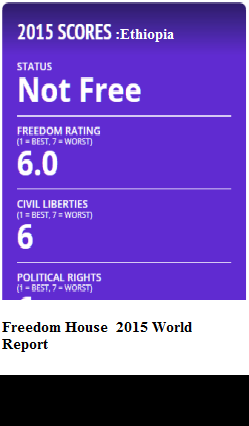
Posted by OromianEconomist in Uncategorized.Tags: Africa, Freedom House in response to comments by Under Secretary for Political Affairs, Macha-Tulama Association Requests President Obama to Rethink Visit to Tyrannical Ethiopia, Obama's plan to visit Ethiopia criticised as 'gift' for repressive government, Oromia
add a comment
The following is a letter to President Obama from the Macha-Tulama Association-USA, Inc.
Macha-Tulama Association – USA, Inc
811 Upshur ST NW
Washington, DC 20011
contact@machatulama.org
July 2, 2015
President Barack Obama
The White House
1600 Pennsylvania Avenue
NW Washington, DC 20500
Your Excellency President Obama,
The Board of Directors of the Macha-Tulama Association (MTA), U.S.A., is writing this urgent letter regarding your plan to visit Ethiopia in July 2015. The MTA is a non-profit organization incorporated in the U.S.A. because it was banned in Ethiopia. It advocates for human rights and for social justice for the Oromo and others in the Horn of Africa and beyond. For almost a quarter of a century, Ethiopia has been ruled by the Tigre People’s Liberation Front, which calls itself the Ethiopian People’s Revolutionary Democratic Front. This minority regime has been engaging in sham elections, which are elections only in name. The regime disregards all the principles and practices of democracy in spite of its pretension to be democratic since 1991. The regime’s promise of democratization by restructuring the state, liberalizing the economy, and respecting and protecting human rights has been subverted. While claiming to be a democratic government in order to receive ‘development aid’ and to gain political legitimacy, this regime has killed, imprisoned and tortured the Oromo and other ethno-national groups who have struggled for democracy, national self-determination, human rights, and social justice. In fact, the Oromo people have been mainly targeted for elimination and repression because they are the largest national group in Ethiopia, and they have started to recover, manifest, and exercise their rights to culture, history, and language, which have been repressed by the state of Ethiopia for over a century.
According to a recent Amnesty International report, entitled ‘Because I am Oromo: Sweeping Repression in the Oromia Region of Ethiopia,’ between 2011 and 2014 alone, at least 5000 Oromo were arrested, tortured, and sentenced with extra-judicial executions because of being Oromo and for also peacefully demonstrating against the regime’s land grabbing policies and the so-called Addis Ababa Master Plan, intended to evict millions of Oromo farmers from their homelands in and around Addis Ababa (which the Oromo call Finfinnee), the capital city of Ethiopia. Since 1992, several human rights organizations have been reporting that Oromo prisoners have been predominantly populated Ethiopian prisons and other detention places. As a result these prisons and concentration camps speak Afaan Oromo (the Oromo language), as testified by many nonOromo prisoners.
Mr. President,
It is with shock and profound sadness that we received the message of your intention to visit Ethiopia in July. As the leader of a great country that subscribes to the principles of democracy and fundamental rights and liberties for all human beings, and as the leader of a country whose foreign policy in principle is committed to promoting the ideals of human rights, the rule of law, and democracy around the world, we believe your visit will send a wrong message to the regime and its likes across the globe that they can get away with grotesque violations of human and democratic rights as long as they remain ‘strategic allies’ to the United States.
Mr. President,
Because of these reasons, we earnestly request that you rethink your intention to visit Ethiopia. We believe your visit to the country also sends three messages: First, it encourages the Ethiopian government to continue intensifying its repressive policies. If your government continues to support and finance the regime regardless of what it does, the regime will see no reasons for changing its violent and dictatorial policies. Second, your visit to Ethiopia demonstrates to the affected people that the United States government only gives lip service to democracy and human rights while supporting the dictatorial minority regime of Ethiopia. To the 90 million people who are facing massive human rights violations in Ethiopia, particularly to the over forty million Oromo, your visit will mean that the U.S.A. does not care for the aspiration to live in a free, open, and democratic society. Your visit will also mean that human rights and democratic self-governance are not part of the list of U.S. priorities in Africa and beyond. Third, it convinces the people in Ethiopia and beyond that your policy is not different from some of your officials, such as Undersecretary of State Wendy Sherman, who recently undermined the process of democratization in Ethiopia by endorsing the regime’s record whose democracy, she said, is ‘improving.’ The Undersecretary has been roundly criticized, and we believe, rightly so.
In closing, we would like to bring to your attention that when, in July 2009, you visited Ghana, you made a speech in which you promised that the U.S.A. does not, and will not, support dictatorship and strongmen, and that you seek to assist the development of “strong and sustainable democratic governments” everywhere in Africa. We believe it is only appropriate now to request that you do not ignore your commitment and promise of that historic speech you made in Accra, Ghana, by visiting Ethiopia, the graveyard and prison house of thousands of men and women who have been killed, imprisoned, tortured, maimed, and disfigured only because they have aspired to exercise their God-given rights and to live in a democracy by demanding national self-determination and democratic rights in their own country.
Sincerely,
Asafa Jalata, PhD.,
Chairman of the Board of Directors of the Macha-Tulama Association &
Professor of Sociology and Global and Africana Studies