Economic and development analysis: Perspectives on economics, society, development, freedom & social justice. Leading issues in Oromo, Oromia, Africa & world affairs. Oromo News. African News. world News. Views. Formerly Oromia Quarterly
HRLHA Holds Public Meetings with Oromo Community Members
The Human Rights League of the Horn of Africa (HRLHA) held, over the past three weeks, public meetings with members of Oromo Communities in four cities of Canada and discussed human rights issues in the Horn of Africa in general and in Ethiopia in Particular. The Oromo communities involved were those of Toronto/Ontario, Edmonton & Calgary/Alberta and Winnipeg/Manitoba; and the major topic of discussion at all the four public meetings was the unabated gross human rights violations by the different regimes of the Ethiopian Government for over a century, with particular focus on what have been happening in the past twenty years under the current TPLF/EPRDF government.
Toronto:
The public gathering in Toronto was held on December 13, 2014 at the office of Oromo Canadian community Association. At the gathering, HRLHA Executive Director Mr. Garoma B. Wakessa explained in his presentation “the gross and Systematic violations of human rights against Oromo nation and other nationals in Ethiopia in the past and at present”by different governments that ruled the country. Extra judicial killings, mass arrests and detentions, kidnappings and disappearances, and tortures under the present government in particular have been discussed in details.
Besides, Mr. Tesfaye Dheressa Kumsa, Director of Investigations and Dissemination with HRLHA, who did a presentation on “Land Grabs and Evictions as a Cultural Genocide”, explained how forced displacements of the Oromos and others from their farm lands and the resultant detachments and disconnections from traditional rural lives have been causing destructions of precious cultural assets, values, and wisdoms from which the societies have been benefiting generation after generation.
The HRLHA presenters explained that they are working with other civil society organizations to bring the perpetrators to justice and urged all human rights advocates to stand together in this regard.
Edmonton and Calgary:
On December 20 and 21, 2014, similar public meetings were held in Edmonton and Calgary/Alberta respectively, and many Oroms participated and discussed human rights violation issues in Oromia and Other regions in Ethiopia.
At the gathering, HRLHA Executive Director Mr. Garoma B. Wakessa presented “the gross and Systematic violations of human rights against Oromo nation and other nationals in Ethiopia in the past and at present” by different governments that ruled the country.
Extra judicial killings, mass arrests and detentions, kidnappings and disappearances, and tortures under the present government in particular have been discussed in details. The participants have actively participated in discussion by giving their perspectives on the continuous gross human right violations by EPRDF government of Ethiopia against Oromo young generation in particular. At the end of the meeting, the consensus has been reached that the perpetrators should be brought to justice for genocide they had committed and also Oromos must pay all necessary sacrifices to resist the evil action of the EPRDF Government to save Oromo nation from more victimizing.
Winnipeg/Manitoba:
On Dec 27, similar meeting was held in Winnipeg/Manitoba and many Oromos participated and discussed human rights violation issues in Oromia and Other regions in Ethiopia.
Winnipeg
Extra judicial killings, mass arrests and detentions, kidnappings and disappearances, and tortures under the present government in particular have been discussed in details. After many hours’ explanations and discussions on genocide the EPRDF government has committed against Oromo nationals and others, the consensus has been reached that the perpetrators should be brought to justice for genocide they had committed and also Oromos must pay all necessary sacrifices to resist the evil action of the EPRDF Government to save Oromo nation from more victimizing.
During the discussions at four meetings held, it has been concluded that, by committing such well documented human atrocity, the Ethiopian government has violated the constitution of the land, regional, and International human rights treaties it has signed and ratified. The continued gross human right violations in Oromia, Ogadenian and Gambela regions in the past twenty three years by the EPRDF Government were/are intentionally committed genocides and crimes against humanity. For its deliberate actions of killings, torturing and disappearing its citizens, the EPRDF Government should be accountable. For the heinous human atrocity of EPRDF government against Oromo, Ogaden and Gambela people there are credible documents and proofs to hold the EPRDF Government accountable for its criminal actions and to bring the perpetrators to justice. The participants raised several questions on the possibilities of bringing the government to justice and all possibilities were explained by the presenters.
Finally Oromo participants of the four meetings thanked all HRLHA members for their commitment of defending human rights and promised to support HRLHA financially to make the organization stronger. HRLHA chapter organization was created during the meetings to help the organization’s more involvement in the communities.
The Obama administration seems finally to have found its voice again in speaking about ongoing genocide in the Darfur region of Sudan. More than a decade after rebellion and conflict began, some three million people are internally displaced or refugees in neighboring Chad. More than 800,000 have been displaced in the past two years; some 2 million human beings have been newly displaced since the disastrously conceived and badly failing UN/African Union Mission in Darfur (UNAMID) took up its civilian protection mandate in January 2008. The death toll from the direct and indirect consequences of violence now exceeds 500,000—and mortality looks to be poised to rise steeply given reduced humanitarian capacity.
After seven years of distinguishing itself only by being…
A panel discussion organised by the Oxford Water Network and the Oxford Martin Programme on Resource Stewardship
Africa faces formidable development challenges in the 21st Century, with expanding populations and accelerating urbanisation; rising demand for water, energy and food; greater hydrological variability predicted with climate change; and persistent poverty and inequalities. Dams seem to promise an appealing package of benefits to meet Africa’s development needs – they can reduce floods, store water for irrigation, provide energy for burgeoning populations and facilitate regional integration. Yet, the benefits and costs of dams are not distributed evenly and new large dams are planned that could alter the political, social and water landscape of the region. What is the role for dams in Africa’s development? Can they give African countries the boost they need for growth and poverty alleviation, or will they only serve to exacerbate environmental problems, conflict and existing inequalities?
See more @ http://www.water.ox.ac.uk/africa-dams-and-development/
Oakland, CA – Today, the Oakland Institute (OI), in collaboration with the Anywaa Survival Organisation (ASO), released Engineering Ethnic Conflict: The Toll of Ethiopia’s Plantation Development on the Suri People, the latest in its series of comprehensive investigative reports about land grabs and forced evictions in Ethiopia. The report uncovers the truth behind a reported massacre of 30 to 50 Suri people in May 2012 near the 30,000-hectare Malaysian-owned Koka plantation. Based on extensive fieldwork, Engineering Ethnic Conflict reveals the destabilizing effects of foreign investment in Southwestern Ethiopia and examines the role of international aid programs in supporting forced evictions in the country.
“The tragic experiences of the Suri people outlined in this report are just one of many examples of the human rights abuses experienced by pastoralist communities in regions across Ethiopia,” said OI’s Executive Director, Anuradha Mittal. “These incidents are intimately tied to the Ethiopian government’s priorities of leasing land to foreign entities,” she continued.
“Some donor countries and development institutions have heralded Ethiopia for its unprecedented economic growth in recent years, which has in turn led to large-scale land acquisitions by foreign interests,” said Nyikaw Ochalla, Executive Director of the Anywaa Survival Organisation. “What has gone underreported is the tragic on-the-ground impact of this growth on indigenous populations. Engineering Ethnic Conflict exposes this harsh reality,” Ochalla continued.
“Unfortunately the Suri and other marginalized groups have no ability to voice their concerns over these developments on their land. There is little in the way of an independent media in Ethiopia that is permitted to cover this story, civil society that could advocate on these issues have been decimated by repressive laws, any criticism of government is met with harassment and detention. So what options are left for the Suri?” said Felix Horne of the Human Rights Watch.
The Suri pastoralist communities have lived in Southwestern Ethiopia for up to 200 to 300 years. The introduction of the large-scale plantations, including the Koka plantation in 2010, has not only made important grazing lands unavailable to the Suri and devastated their livelihoods–but also disturbed political order between the Suri and other local ethnic groups, escalating violent conflicts.
From coerced displacement of the Suri people to the exacerbation of pre-existing ethnic tensions between local groups in the region, Engineering Ethnic Conflict highlights the unreported nightmare experienced by Ethiopia’s traditionally pastoralist communities.
The report comes at a significant time in US politics. The US Senate included provisions in the 2014 Appropriations Bill that effectively diverts development aid funds for Ethiopia away from projects associated with forced evictions. Engineering Ethnic Conflict raises important questions about whether and how this language is being implemented, and the problematic connections between aid from the World Bank Group and other international donors, including the International Fund for Agricultural Development, for programs that support forced displacement and perpetrate violence against pastoralist communities.
“The stance taken by the US government in 2014 was encouraging, but it remains unclear whether action has been taken to implement the provisions of the bill and monitor the situation on the ground in Ethiopia,” said Mittal. “In light of this opacity and the continued violence and human rights abuses, it is time for the US government, other donors, and international institutions to stop turning a blind eye and take a strong stand to ensure aid in the name of development is not contributing to the ongoing atrocities nor supporting the forced displacement of people,” she continued.
The Oakland Institute is an independent policy think tank whose mission is to increase public participation and promote fair debate on critical social, economic and environmental issues (www.oaklandinstitute.org).
About the Anywaa Survival Organisation
Anywaa Survival Organisation is a not-for-profit organisation that believes in social justice and environmentally sensitive development that recognises and respects the rights of indigenous peoples’ active participation and enjoyment of the benefits of development in their own territories without prejudice (www.anywaasurvival.org).
Federal government plans to take over the entire corridor of 25km between Hawasa and Shashamene. Both Sidama Zone or SNNPR and Oromia have not been consulted yet.
Major cities in Oromia are administered in what is termed as “special zone.” Jimma and its surrounding is special zone; Addis Ababa and its surrounding is special zone; Adama and its surrounding is special zone. Now the federal government of Ethiopia is considering to create one for Shashamane because, sources disclose, the city is becoming home for ”nations and nationalities” and economically very significant to be left for the regional government. In fact, the federal government wants to take over the entire corridor of 25km between Hawasa and Shashamene. And both Sidama Zone or SNNPR and Oromia have not been consulted yet. The plan will land on table presumably after 2015 election and EPRDF secures majority in the house that is already decided at the council of ministers in their last successive meetings.
As a tradition, top-down orders from the Government of Ethiopia (GoE), which is mostly controlled and manipulated by the Tigrayan minority group TPLF, would not be questioned by the regional states and the ruling regional “allies.” Any form of divergence from what the GoE says would not be tolerated and often officials are intimidated. The Addis Ababa master plan for example faced stiff resistance and after about months of “mediation,” the GoE via Addis Ababa city administration is bracing for what is thought to be a potential escalation of dispute with Oromia when the plan is once again put for test in January 2015. The exact terms reached between Addis Ababa and Oromia with more arbrating than mediating role of Federal officials will never be known until documents are available for media and public. As to Diriba Kuma himself, he is nervous because he wants to return back to Oromia with his little left reputation. Aafter all Oromia is much formidable place for officials than the federal government, and this master plan is not making things easy for him. Again, he also wants to stay and turn things around, and that would risk him for intimidation by GoE.
The word ‘’federalize’’ is only used in this context to describe the intention of the Federal government. As it is dictated by the constitution and other bylaws, federal government can’t own land. However, the GoE acts as if it owns everything in the empire amplifying the stark reality and difference between what is on paper and what is being practiced. In fact, the creation of special zones can be taken as a strategy of weakening the regional governments by snatching economically viable and productive areas, at the same time, strengthen the much talked about TPLF’s economic empire.
Creating a special zone is not new thing in developing countries. The noble motive of creating such geographic and administrative demarcation is to facilitate development and ensure smooth and dynamic rural-urban divide, and reduce the negative impacts of emerging industries on the the environment and the society. However, the case of Oromia is quite different, or perhaps as the source indicates, disastrous.
In Addis Ababa, rampant mismanagement and corruption of land is source of fortune for few and destitution for most. Although rarely, this has been acknowledged by the city government itself. The last wave of urban land grab was right after the 2005 election. The so called Land Bank was fabricated to ration land to Tigrayans; following that campaign, Ex-Minister Ermisa Legese tells, over 150000 Oromo farmers and their families were displaced in what is now understood as systematic genocide. The second wave of land grab, this time deep into Oromia, is an ongoing project since 2012 right before Mele’s death. And many believe this Adds Ababa master plan legitimizes what has been done under the radar for the last 10 years. We should be afraid that It might take another 15 year but a complete social and economic Abyssinianization of Jimma, Adama and Shashamane is quite possible within this regime unless change is pending.
As smooth as it looks from outside falsely to handle investment and industries, the creation of special zone is an administrative hurdle because it is a redundant procedure. Creating a zone within Zone, society within society, economy within economy, is not sustainable and fair. There are experiences from other federal countries how to develop both social and economic sectors of the population without adversely impacting the livelihood of the people and the ecology. And the best way to do that is not to disconnect the rural surrounding from its urban epicenter.
Special zone model is attentively and particularly geared to be applied in Oromia as neither in Amhara nor in Tigray regions that they have special zones in a way they are in the former. In the later two regions, there are Mekele zone and Bahirdar zone but it is only purely for economic reasons since they have a smooth and consistent social transition from urban to rural settings. Without bold social and economic policy changes, my source thinks, these cities such as Jimma or Adama are administratively would soon be out of Oromia. because of their economic and administrative model and their social mix, which are not according to the interest of the Oromo people, just like Addis Ababa.
Apart from serving as a new hotbed for corruption and mismanagement, the new special zone around Shashamane and its link with Hawasa is intended to create an ‘’atmosphere of cooperation’’ between the two regional states. The increasing hostility between regional states were an intense topic during several federal security meetings. Most of these disputes are over land and border. Tigrayan controlled GoE, heavily influenced by Amhara individuals (not ANDM persei), wants to check and demise the little autonomy of regional state in pretext of ‘’creating one socioeconomic community’’ rhetoric of the constitution thereby pleasing the assimilative and border-phobic motives of some influential Amhara elites to restore their nostalgic interest of the empire and at the same time ensuring the continuous economic hegemony of Tigrayan minority.
Federal government plans to take over the entire corridor of 25km between Hawasa and Shashamene. Both Sidama Zone or SNNPR and Oromia have not been consulted yet
“Dargaggoonni kun Imaanaa guddaatu isin irra jira.Hacuucamuu sodaattanii biyya irraa hin godaaninaa.Jaalala uummataa qabaadhaa. Walii galtee qabaadhaa. Ani amma milli koo tokko gara boollaati. Isin garuu uummata keessan haqaan tajaajiluuf humnaa fi kutannoo cimaa qabaachuu qabdu!!!” Obbo Bulchaa Dammaqsaa
The only pro-democracy Opposition Coalition Party in Ethiopia, Medrek, held a rare rally in Finfinne (Addis Ababa) on Dec. 14, 2014. According to the reports, thousands of rally goers chanted slogans in Afan Oromo, English and Amharic languages demanding the TPLF-led Ethiopian regime free Oromo political prisoners, journalists and other political prisoners. Some of the slogans included: “Free Bekele Gerba!” – “Free Oromo Students!” – “Stop Land-Grabbing” – and “Free Journalists!”
At the rally, senior leaders of Medrek gave rousing speeches; speakers included: Dr. Beyene Petros (the Coalition’s President), Mr. Bulcha Demeksa (Chairman Emeritus of the Oromo Federalist Congress/OFC – one of the political organizations in the pro-democracy Medrek), Mr. Tilahun Endeshaw of the Ethiopian Social Democratic Federal Party/ESDFP, and Mr. Desta Dinka (Leader of the Medrek Youth).
It is not often you hear a Vice President of the World Bank calling for revolution, but Oby Ezekweseli did just that at the Royal African Society’s Annual Lecture last week.
There is an unwritten rule among politicians globally that they do not rubbish their rulers when they are abroad, but Oby – who would not describe herself as a politician – did not hold back.
We should have guessed how fired up she was when the former minister in President Obasanjo’s government in Nigeria and World Bank Vice President set the title: “Africa Rising? What will happen when her citizens arise?” You can watch her presentation here
She traced the lack of participation by the vast majority of Africans in their own development over the past 50 years which has left 70 – 80% of them absolutely poor. She blamed the “parasitic” African elites, not just for looting their countries, but for preventing any of the benefits of economic growth reaching their people. Her own country, Nigeria, is very rich but has some of the worst human development figures in the world.
She also pointed out that external actors, the aid donors, the World Bank and the IMF who drove the structural adjustment economic reforms of the 1990s and 2000s and left African citizens with no part to play in making the national choices for development. These reforms were necessary, she said, but “externals cannot give development to any country or any people… The ownership of the process by African citizens has been the missing link.”
Dismissing the current crop of African rulers, she expressed her pride in the people of Burkina Faso for the uprising that ejected President Blaise Compaoré
, who ruled there for 27 years. The leaders “absolutely don’t care” about their own citizens, she said, but spend their time among the global elite “all of whom have each other’s’ phone numbers”.
The next stage of development, said Oby, can only be done with the participation of the people, “no external force can do that…The change you have been waiting for will not come from the elite class waking up and having an epiphany. The change has to be made by the people. They are the only ones who can.”
And she urged the African diaspora to return to Africa and lead the struggle, a remark that created a moment of awkwardness in the room I noticed.
But I am sure you will agree this was an inspiring, energising message: People of Africa, you are citizens, not slaves. Rise up and demand what is yours and remove the people who have stolen it from you. Could the removal of Compaoré
by mass demonstrations followed by the refusal to accept an interim military ruler be the beginning of an Africa-wide trend as a 21st Century generation comes of age? It is not the usual message that you hear from African ministers or the World Bank.
But there is an anomaly here. If Oby is right then the most democratic countries with the most widespread political participation would be the most prosperous. And the most equal in terms of sharing the national cake. But this is not so.
Put aside the oil and mineral-rich countries in Africa, and, as Oby pointed out, you find that the fastest growers are those with stability and strong institutions such as effective ministries that deliver health and education to their people. In turn these attract aid and investment. These countries are Rwanda, Ethiopia, Uganda, Mozambique and Tanzania.
But what else do they have in common? Ethiopia and Rwanda are top-down dictatorships ruled by parties that fought their way to power and have ruled since 1991 and 1994 respectively. They deliver health and education to their people but they do not allow freedom of speech or association. Their media are tightly controlled. Uganda is a less powerful dictatorship but President Yoweri Museveni also came to power through the barrel of a gun in 1986 and his army has controlled the country ever since. The ‘Walk to Work’ mass movement in 2011, which complained about lack of services and high prices, was brutally suppressed.
Museveni was forced by aid donors to open up politics and he now has to put up with a rumbustious parliament and a moderately free press. A grumpy population, especially in the capital, might vote for someone else if they were sure that someone was allowed to run in a fair election. That is unlikely. At election times the state, including the police and the army, is an extension of the ruling party.
Mozambique and Tanzania are still run by the parties that led those countries at independence. Both will soon become exceedingly rich because of oil and gas; God-given resources that are profoundly anti-democratic. Oil-rich countries do not need to raise taxes from their people, they mainline millions from oil companies straight into the treasury. So whoever is in power when those revenues begin to flow may stay there for decades. There is still some democratic space in these countries and there are real national debates with opposition parties in both of them, although it is unlikely that an opposition party could win without provoking violent reactions from the ruling parties.
So is benign dictatorship the best Africans can hope for? There are certain advantages – stability and consistency. The downside is that it is dangerous to think or speak out so there is no national debate. Meanwhile new generations emerge – especially in Africa where birth rates are high – and dictators become out of touch. If the new generation follow Oby Ezekwesili’s call, Africa will remain exceedingly interesting and exciting and should also become prosperous and powerful.
See more @ http://africanarguments.org/2014/12/11/citizens-of-africa-arise-you-have-nothing-to-lose-but-your-chains-says-oby-ezekwesili-by-richard-dowden/
Is H&M turning a blind eye to land grabs in Ethiopia? TV4 does an investigation into H&M’s cotton sourcing from Ethiopia and discovers the disturbing truth.
The paradox, however, and one of the reasons why despite having so little land, small producers are feeding the planet, is that small farms are often more productive than large ones. If the yields achieved by Kenya’s small farmers were matched by the country’s large-scale operations, the country’s agricultural output would double. In Central America, the region’s food production would triple. If Russia’s big farms were as productive as its small ones, output would increase by a factor of six. Another reason why small farms are the feeding the planet is because they prioritise food production. They tend to focus on local and national markets and their own families. In fact, much of what they produce doesn’t enter into trade statistics – but it does reach those who need it most: the rural and urban poor. If the current processes of land concentration continue, then no matter how hard-working, efficient and productive they are, small farmers will simply not be able to carry on. The data show that the concentration of farmland in fewer and fewer hands is directly related to the increasing number of people going hungry every day. – http://www.grain.org/article/entries/5072-telling-family-farming-fairy-tales
The United Nations declared 2014 as the International Year of Family Farming. As part of the celebrations, the U.N. Food and Agriculture Organisation (FAO) released its annual “State of Food and Agriculture”, which this year is dedicated to family farming. Family farmers, FAO say, manage 70-80 percent of the world’s farmland and produce 80 percent of the world’s food.
But on the ground – whether in Kenya, Brazil, China or Spain – rural people are being marginalised and threatened, displaced, beaten and even killed by a variety of powerful actors who want their land.
Farmer Djeneba Diarra on her farm in Heremakono, Mali (Photo: Joe Penney/Reuters)
A recent comprehensive survey by GRAIN, examining data from around the world, finds that while small farmers feed the world, they are doing so with just 24 percent of the world’s farmland – or 17 percent if you leave out China and India. GRAIN’s report also shows that this meagre share is shrinking fast.How, then, can FAO claim that family farms occupy 70 to 80 percent of the world’s farmland? In the same report, FAO claims that only 1 percent of all farms in the world are larger than 50 hectares, and that these few farms control 65 percent of the world’s farmland, a figure much more in line with GRAIN’s findings.
The confusion stems from the way FAO deal with the concept of family farming, which they roughly define as any farm managed by an individual or a household. (They admit there is no precise definition. Various countries, like Mali, have their own.)
Thus, a huge industrial soya bean farm in rural Argentina, whose family owners live in Buenos Aires, is included in FAO’s count of “family farms”. What about sprawling Hacienda Luisita, owned by the powerful Cojuanco family in the Philippines and epicentre of the country’s battle for agrarian reform since decades. Is that a family farm?
Looking at ownership to determine what is and is not a family farm masks all the inequities, injustices and struggles that peasants and other small scale food producers across the world are mired in.
It allows FAO to paint a rosy picture and conveniently ignore perhaps the most crucial factor affecting the capacity of small farmers to produce food: lack of access to land. Instead, the FAO focuses its message on how family farmers should innovate and be more productive.
Small food producers’ access to land is shrinking due a range of forces. One is that because of population pressure, farms are getting divided up amongst family members. Another is the vertiginous expansion of monoculture plantations.
In the last 50 years, a staggering 140 million hectares – the size of almost all the farmland in India — has been taken over by four industrial crops: soya bean, oil palm, rapeseed and sugar cane. And this trend is accelerating.
In the next few decades, experts predict that the global area planted to oil palm willdouble, while the soybean area will grow by a third.These crops don’t feed people. They are grown to feed the agroindustrial complex.
Other pressures pushing small food producers off their land include the runaway plague of large-scale land grabs by corporate interests. In the last few years alone, according to the World Bank, some 60 million hectares of fertile farmland have been leased, on a long-term basis, to foreign investors and local elites, mostly in the global South.
While some of this is for energy production, a big part of it is to produce food commodities for the global market, instead of family farming.
SMALL WORKS BETTER
The paradox, however, and one of the reasons why despite having so little land, small producers are feeding the planet, is that small farms are often more productive than large ones.
If the yields achieved by Kenya’s small farmers were matched by the country’s large-scale operations, the country’s agricultural output would double. In Central America, the region’s food production would triple. If Russia’s big farms were as productive as its small ones, output would increase by a factor of six.
Another reason why small farms are the feeding the planet is because they prioritise food production. They tend to focus on local and national markets and their own families. In fact, much of what they produce doesn’t enter into trade statistics – but it does reach those who need it most: the rural and urban poor.
If the current processes of land concentration continue, then no matter how hard-working, efficient and productive they are, small farmers will simply not be able to carry on. The data show that the concentration of farmland in fewer and fewer hands is directly related to the increasing number of people going hungry every day.
According to one U.N. study, active policies supporting small producers and agro-ecological farming methods could double global food production in a decade and enable small farmers to continue to produce and utilise biodiversity, maintain ecosystems and local economies, while multiplying and strengthening meaningful work opportunities and social cohesion in rural areas.
Agrarian reforms can and should be the springboard to moving in this direction.
Experts and development agencies are constantly saying that we need to double food production in the coming decades. To achieve that, they usually recommend a combination of trade and investment liberalisation plus new technologies.
But this will only empower corporate interests and create more inequality. The real solution is to turn control and resources over to small producers themselves and enact agricultural policies to support them.
The message is clear. We need to urgently put land back in the hands of small farmers and make the struggle for genuine and comprehensive agrarian reform central to the fight for better food systems worldwide.
FAO’s lip service to family farming just confuses the matter and avoids putting the real issues on the table.
Read more @ http://www.grain.org/article/entries/5072-telling-family-farming-fairy-tales
They tell us that poverty has been cut in half in the last fifteen years or so, but independent watchdogs have repeatedly shown that this claim rests on statistical sleight-of-hand. Moreover, it relies on a poverty line of $1.25 a day, which no longer has any credibility. A more realistic line of $2.50 – the absolute minimum for achieving normal human life expectancy – shows that 3.1bn people remain in poverty today, which is 352m more people than in 1981, according to a 2008 study. And all the while, the wealth ratio between the richest and poorest countries has grown from 44:1 in 1973 to nearly 80:1 today (according to my estimation). The richest 85 people in the world (Mr Gates being one of them) now have more wealth than the poorest 3.5 billion, or half the world’s population. The aid project is failing because it misses the point about poverty. It assumes that poverty is a natural phenomenon, disconnected from the rich world, and that poor people and countries just need a little bit of charity to help them out. People are smarter than that. They know that poverty is a feature of the global economic system that it is very often caused by people, including some of the people who run or profit from the aid agenda. People have become increasingly aware – particularly since the 2008 crash – that poverty is created by rules that rig the economy in the interests of the rich. – http://www.aljazeera.com/indepth/opinion/2014/11/death-international-developmen-2014111991426652285.html
The death of international development
The development industry needs an overhaul of strategy, not a change of language.
By Jason Hickel*
International development is dying; people just don’t buy it anymore. The West has been engaged in the project for more than six decades now, but the number of poor people in the world is growing, not shrinking, and inequality between rich and poor continues to widen instead of narrow. People know this, and they are abandoning the official story of development in droves. They no longer believe that foreign aid is some kind of silver bullet, that donating to charities will solve anything, or that Bono and Bill Gates can save the world.
This crisis of confidence has become so acute that the development community is scrambling to respond. The Gates Foundation recently spearheaded a process called the Narrative Project with some of the world’s biggest NGOs – Oxfam, Save the Children, One, etc. – in a last-ditch attempt to turn the tide of defection. They commissioned research to figure out what people thought about development, and their findings revealed a sea change in public attitudes. People are no longer moved by depictions of the poor as pitiable, voiceless “others” who need to be rescued by heroic white people – a racist narrative that has lost all its former currency; rather, they have come to see poverty as a matter of injustice.
These findings clearly demonstrate that people are beginning to reject the aid-centric approach to development. But instead of taking this as an opportunity to face up to their failures and change the way the industry works, the Gates Foundation and its partner NGOs have decided to stick with business as usual – but to cloak it with fresh language.
Leaked internal documents make it clear that the Narrative Project is nothing more than a PR campaign – a bid to “change public attitudes” by rolling out fresh language that will be more effective at securing public support and donations. The strategy goes like this: Talk about the poor as “equals” who share our values; emphasise that development is a “partnership”; stop casting rich people and celebrities as saviours of the poor; and above all, play up the idea of “self-reliance” and “independence”, with special attention to empowering women and girls. Progressive Westerners love this stuff.
This new framing amounts to little more than a propaganda strategy. Instead of changing their actual approach to development, the Narrative Project just wants to make people think they’re changing it. In the end, the existing aid paradigm remains intact, and the real problems remain unaddressed.
A failing project
Why do people no longer believe in the charity and aid-centric model of development? According to the Narrative Project, it’s because they’re all a bit stupid. They let their personal beliefs override the “facts”. They’re “old” and “conservative”. And they’re too calloused to care about social causes. It doesn’t occur to the development industry that people might have good reasons for their scepticism. And there are many.
For one, the aid project is in fact failing. There have been some achievements, to be sure, but the Gates Foundation and official sources like the UN want the public to believe that these piecemeal gains are tantamount to overall success. They tell us that poverty has been cut in half in the last fifteen years or so, but independent watchdogs have repeatedly shown that this claim rests on statistical sleight-of-hand. Moreover, it relies on a poverty line of $1.25 a day, which no longer has any credibility. A more realistic line of $2.50 – the absolute minimum for achieving normal human life expectancy – shows that 3.1bn people remain in poverty today, which is 352m more people than in 1981, according to a 2008 study.
And all the while, the wealth ratio between the richest and poorest countries has grown from 44:1 in 1973 to nearly 80:1 today (according to my estimation). The richest 85 people in the world (Mr Gates being one of them) now have more wealth than the poorest 3.5 billion, or half the world’s population.
The aid project is failing because it misses the point about poverty. It assumes that poverty is a natural phenomenon, disconnected from the rich world, and that poor people and countries just need a little bit of charity to help them out. People are smarter than that. They know that poverty is a feature of the global economic system that it is very often caused by people, including some of the people who run or profit from the aid agenda. People have become increasingly aware – particularly since the 2008 crash – that poverty is created by rules that rig the economy in the interests of the rich.
A system of plunder
We can trace this rigging process through history. The programmes that global South countries used successfully to build their economies and reduce poverty after the end of colonialism – trade tariffs, subsidies, social spending on healthcare and education – were in many cases actively destroyed by Western intervention in the name of “development”. Western-backed coups in Iran in 1953, Guatemala in 1954, Congo in 1961, Brazil in 1964, Indonesia in 1965, Chile in 1973 – to name just a few – deposed democratically elected leaders with pro-poor platforms to install dictators friendly to multinational corporations. Most of these dictators received billions of dollars in “aid” from Western governments.
When coups fell out of favour with the voting public, the World Bank and the IMF stepped in instead. They leveraged debts to impose crushing “structural adjustment” programmes on poor countries, forcing them to privatise public assets, open their markets to Western goods, cut social spending and reduce wages, and give foreign companies access to extra cheap labour and raw materials. Structural adjustment was one of the greatest single causes of poverty in the global South in the 20th century, and it continues to this day under the guise of “austerity” .
These destructive policies only persist because voting power in the World Bank and the IMF is controlled by rich countries. High-income countries control more than 60 percent of the voting power at the World Bank, but are home to less than 15 percent of the world’s population.
Right now, developing countries lose as much as $900bn each year to tax evasion by multinational companies through trade mispricing, and almost the same sum again through transfer pricing. They lose another $600bn each year in debt service to mostly firslt world banks. These losses alone amount to nearly 20 times more than the total flow of aid, which is a paltry $135bn – and that’s not counting land grabs and other forms of resource theft.
All of this makes it clear that poverty is not a natural condition. It is a state of plunder. It is delusional to believe that charity and aid are meaningful solutions to this kind of problem.
Some people in the NGO community know this all too well, and they are calling for genuine political change: The democratisation of the World Bank and the IMF, fairer trade rules, and an end to tax evasion. But because the leadership at the Gates Foundation and some NGOs find these issues inconvenient such alternative voices are being side-lined in favour of a disingenuous attempt to “fix” public attitudes by pushing ever harder on the same old charity and aid story.
If the Gates Foundation and NGO leadership want to get serious about tackling poverty, they might start by talking to the public about the importance of releasing developing countries from the siphons of rich countries and their corporations. They might help put the final nails in the coffin of the paternalistic story of charity and aid, white saviours and poor brown victims, and tell the real story about how the rich get richer off the backs of the poor. That would be a true starting point for development in the 21st century.
*Dr Jason Hickel lectures at the London School of Economics and serves as an adviser to /The Rules.
Martin Kirk, Global Campaigns Director of /The Rules, contributed to the analysis for this article.
Read more @ http://www.aljazeera.com/indepth/opinion/2014/11/death-international-developmen-2014111991426652285.html
African presidents ‘use China aid for patronage politics’
Most of the $80bn of development funds sent to Africa went to areas where national leaders were born rather than the most needy, says AidData report
African leaders are almost three times more likely to spend Chinese development aid in areas where they have ethnic ties, casting doubt on the humanitarian effectiveness of Beijing’s strict “hands-off” policy in the continent.
China says it spends more than half of its foreign aid in 51 African countries, and AidData, an open-source data centre, says Beijing sent more than $80bn in “pledged, initiated, and completed projects” between 2000 and 2012. Most of that aid went to areas where national leaders were born, indicating a strong political bias, AidData said.
“As soon as [a region] becomes the birthplace of an African president this region gets 270% more development assistance (from China) than it would get if it were not the birth region of the president,” said Roland Hodler, professor of economics at the University of St Gallen in Switzerland and co-author of a report, Aid on Demand: African Leaders and the Geography of China’s Foreign Assistance, published in conjunction with the database.
Ghana, the Democratic Republic of the Congo and Ethiopia received the most Chinese development assistance over the reporting period, the study showed.
China is sending development funds to African governments with the aim of buying long-term political alliances, Hodler said. Sierra Leone’s president, Ernest Bai Koroma, recently used Chinese aid to build a school in Yoni, his hometown, according to the report.
“To us, this suggests that the Chinese principle of non-interference in domestic affairs allows African presidents to use Chinese aid for patronage politics. I am sure the Chinese are aware of this, and I would argue that they accept it because they care more about having a president who is sympathetic to them than about the poor,” said Hodler.
But the study also noted that, contrary to popular belief, Chinese aid to Africa is not strongly tied to countries that host Beijing’s oil and mining operations. “We do not find a strong pattern that Chinese aid only goes to regions where there’s a lot of natural resources. The picture that they only go after natural resources is not really confirmed by our sub-national level analysis,” Hodler said.
Deborah Brautigam, director of the China Africa Research Initiative at John Hopkins University, said: “Most Chinese finance in Africa is not official aid, but business-related export credits borrowed by governments to finance infrastructure projects of various kinds. If these governments want to channel projects to their home town, Chinese banks would have no objection.
“For official aid, which is heavily diplomatic, the Chinese government looks beyond any sitting African leader to all the leaders to come, and to public opinion more generally. This is why they use their official aid for big, visible projects like stadiums, ministry buildings, and airports that can be seen and used by many people – in the capital city – and not tucked away in a rural hamlet.”
Researchers took data that China published on its foreign assistance and mapped where development projects were located. “The Chinese tend to send more aid to countries that are somewhat poorer but within these countries they go for the relatively rich regions,” said Hodler.
China maintains that it sends aid to African governments with the aim of furthering their development agendas.
The Chinese government said in July: “When providing foreign assistance, China adheres to the principles of not imposing any political conditions, not interfering in the internal affairs of the recipient countries and fully respecting their right to independently choosing their own paths and models of development. The basic principles China upholds in providing foreign assistance are mutual respect, equality, keeping promise[s], mutual benefits and win-win.”
• This article was amended on 21 November 2014 to clarify that the $80bn figure for aid to Africa between 2000 and 2012 was an estimate by AidData, not an official Chinese government figure, and that the estimate includes “pledged, initiated, and completed projects”.
Read more @ http://www.theguardian.com/global-development/2014/nov/19/african-presidents-china-aid-patronage-politics
UNPO Publishes Report on Ogaden persecution in Ethiopia
In recent years the Ogaden people in Eastern Ethiopia have increasingly suffered various human rights abuses as the Ethiopian State continues its mission of ethnic oppression.
These violations of human rights often compound the current humanitarian crisis that is developing in the region; with foreign aid funds supporting a state that actively deters humanitarian organisations from operating in the Ogaden region.
To help increase awareness about the worsening situation for the Ogaden people, UNPO has published abackground report outlining some of the major human rights that currently exist.
This report focuses on many of the Ogaden people’s civil and political rights that have been violated by the Ethiopian Government, and puts them into the broader context of the general state of human rights compliance throughout the whole country.
Cause for serious concern continues to be the suppression of the free media and freedom of expression within Ethiopia. Silencing the voices of those willing voice concerns of state suppression means that the outside world is never likely to know the full scale of rights violations that are taking place within the country.
Of further concern to international law is the occurrence of extra-territorial activity of the Ethiopian State in both targeting political opposition and persecuting the Ogaden people. The fact that these actions have now begun to span borders makes it even harder to encourage transparency on the issues.
Mr. Chairman and members of the committee, thank you for providing me the opportunity to speak today about the human rights situation in Ethiopia.
The other panelists have articulated some of the critical issues that are facing Ethiopia ahead of the May 2015 elections. I would like to elaborate on human rights concerns associated with Ethiopia’s many development challenges.
Ethiopia is the one of the largest recipients of development assistance in the world, including more than $800 million in 2014 from the US government. Many of Ethiopia’s 94 million people live in extreme poverty, and poverty reduction is rightly one of both the US and Ethiopian government’s core goals. Improving economic and human development is fundamental to ensuring that Ethiopians are able to enjoy their rights to health care, education, shelter, food and water, and Ethiopia’s government, civil society, international donors and private investors all have important roles contributing to the realization of these rights.
But sustainable development also requires a commitment to the full range of human rights, not just higher incomes, access to education and health care, but the ability for people to express their views freely, participate in public policy decision-making, join associations of their choice, have recourse to a fair and accessible justice system, and live free of abuse and discrimination.
Moreover, development that is not rooted in respect for human rights can be counter-productive, associated with abusive practices and further impoverishment of people already living in situations of extreme poverty. In Ethiopia, over the past few years Human Rights Watch has documented disturbing cases where international donors providing development assistance are turning a blind eye to government practices that fail to respect the rights of all beneficiaries. Instead of improving life in local communities, these projects are proving harmful to them. And given the repression of independent voices, media and associations, there are no realistic mechanisms for many local communities to express their views to their government. Instead, those who object or critique the government’s approach to development projects face the prospect of intimidation, harassment and even serious abuse.
In 2011 in Ethiopia’s western region, Gambella, Human Rights Watch documented such abuses during the implementation of the first year of the government’s “villagization” program. Gambella is a region populated by indigenous groups who have suffered from political marginalization and lack of development for decades. In theory the villagization program aimed to address some of these concerns. This program required all indigenous households in the region to move from their widely separated homes into larger villages – ostensibly to provide improved basic services including much-needed schools, health clinics and roads.
I was in Gambella for several weeks in 2011 and travelled to 16 different villages in five different districts. I met with people who had not yet moved from their homes and others who had been resettled. I interviewed dozens of people who said they did not wish to move but were forced by the government, by police, and by Ethiopia’s army if necessary. People described widespread human rights violations, including forced displacement, arbitrary arrest and detention, beatings, and rape and other sexual violence. Thousands of villagers fled into neighboring countries where they became refugees. At the same time, in the new villages, many of the promised services were not available and the food security situation was dire.
The villagization program has also been implemented in other marginalized regions in Ethiopia. These regions are the same areas where government is leasing large pieces of land to foreign investors, often from India, China and the Gulf states, without meaningful consultation with local communities, without any compensation being paid to local communities, and with no benefits for local communities other than low-paying labor jobs on the plantations.
In the Omo valley in southern Ethiopia, Human Rights Watch found that the combination of sugar and cotton plantations and hydroelectric development is causing the displacement of up to 200,000 indigenous people from their lands. Massive amounts of water are being used for these projects which will have devastating impacts for Lake Turkana across the border in Kenya and the 300,000 indigenous people who live in the vicinity of the lake and depend upon it. The displacement of communities in the Omo valley is well underway. As in Gambella, communities in the Omo valley told Human Rights Watch about coercion, beatings, arrests and threats from military and police to force people to move to new settlements.
Human Rights Watch also found politically motivated abuse in development programs. In 2010, we documented discrimination and “political capture” in the distribution of the benefits of development programs especially prior to the 2010 elections. Opposition party supporters and others who did not support the ruling party were denied access to some of resources provided by donor-funded programs, including food aid, micro credit, seeds, fertilizers, and other critical agricultural inputs needed for food security, and even employment opportunities. Schools, funded as part of education programs by the US and other development partners, were used to indoctrinate school children in ruling party ideology and teachers were required to report youth perceived to support the opposition to the local authorities. These government practices, many of which continue today, show the intense pressure put on Ethiopian citizens to support the ruling party, and the way in which development aid is manipulated to discriminate against certain communities.
All of these cases have several common features. First, the Ethiopian government routinely denies the allegations without investigation, claiming they are politically motivated, while simultaneously restricting access for independent media and investigators. Second, these programs are directly and indirectly funded by Western donors, who seem unwilling to acknowledge, much less address human rights concerns in Ethiopia.
Monitoring and evaluation of these programs for human rights abuses is inadequate. Even when donors carry out assessments to look into the allegations, as has happened in Gambella, they are not conducted rigorously and do not ensure victims of abuses can speak freely and safely. In the current environment in Ethiopia, it is essential for anyone seeking to investigate human rights violations to go to locations where victims can speak openly, to understand the dynamics of the local communities, and recognize the depths of the fear they are experiencing.
All of these problems are exacerbated by the ongoing government crackdown on the media and civil society. The independent press has been ravaged since the 2010 election, with the vast majority of journalists terrified to report anything that is remotely critical of the government. In October I was in a country neighboring Ethiopia where over 30 journalists have fled in the past few months alone. I spoke to many of them: their papers were closed, their families were threatened, and many had been charged under repressive laws merely because they criticized and questioned the Ethiopian government’s policies on development and other issues. I spoke with someone who was forced to seek asylum abroad because he had questioned in writing whether the development of Africa’s largest dam on the Nile River was the best use of money in a country where poverty is pervasive.
As for Ethiopian civil society, it has been decimated by another law, the Charities and Societies Proclamation. It has made obtaining foreign funding nearly impossible for groups working on human rights, good governance, and advocacy. Leading members of the human rights movement have been forced to flee abroad.
Some people take to the streets to peacefully protest. Throughout 2014 there were various protests throughout Ethiopia. In many of these protests, including during the student protests in the Oromia region in April and May of this year, the security forces used excessive force, including the use of live ammunition against the students. We don’t even know how many Oromo students are still detained because the government publicizes no information, there is no comprehensive human rights monitoring and reporting, and family members are terrified of reporting the cases. Members of the Muslim community who organized protests in 2012 against what they saw as government interference in religious affairs have also paid an enormous price for those demonstrations, with many beaten or arrested and most of the protest organizers now imprisoned on terrorism charges.
Finally, bringing about change through the ballot box is not really an option. Given that 99.6 percent of the parliamentary seats in the 2010 election went to the ruling party and that the political space has shrunk dramatically since then, there is little in the way of a viable opposition that can raise questions about government policy, including development plans, or other sensitive topics.
This situation leaves Ethiopians no real means to express concerns over the policies and development strategies imposed by the government. They either accept it, they face threats and imprisonment for speaking out, or they flee their country as thousands have done. The refugee communities in countries neighboring Ethiopia are full of individuals who have tried to raise concerns in all of these ways, and are now in exile.
To conclude, we all recognize that Ethiopia needs and requires development. The problem is how development is being undertaken. Development projects need to respect the rights of the local communities and improve their quality of life, regardless of ethnicity or political perspective. The United States and Ethiopia’s other major partners can and should play a leading role in supporting sustainable, rights-respecting development. The US should not accept arguments that protecting human rights is in contradiction to development goals and implementation.
In 2014, the appropriations bill required the US to scrutinize and suspend funding for development programs in Ethiopia that might contribute to forced evictions in Ethiopia, including in Gambella and Omo. This was an important signal that the abuses taking place were unacceptable, and this should be maintained in the upcoming FY15 appropriations bill, whether it is a stand-alone bill or a continuing resolution.
As one of Ethiopia’s key partners and supporters of Ethiopia’s development, the US needs to do more to ensure it is rigorously monitoring and consistently responding to human rights abuses in Ethiopia, both bilaterally and multilaterally. The US should be pressing the Ethiopian government to ensure that there is genuine consultation on development initiatives with affected communities, that more robust monitoring is put in place to monitor for potential abuses within programs, and that independent civil society, both domestic and foreign, are able to monitor and report on rights abuses. Respect for human rights is first and foremost a concern of all Ethiopians, but it is also central to all US interests in Ethiopia, from security to good governance to sustainable development.
WITNESS LIST:
Soleyana S.Gebremichale, Co-founder, Zone NineBloggersRobert Herman, Vice President of Regional Programming, Freedom HouseSusan Valentine, Africa Program Coordinator, Committee to Protect Journalists
Felix Horne, Ethiopia Researcher, Human Rights Watch
Joshua Klemm, International Rivers
Read more @ http://www.hrw.org/news/2014/11/17/tom-lantos-human-rights-commission-hearing-human-rights-dilemmas-ethiopia
Secretary General of the Amnesty International
Amnesty International Ltd
Peter Benenson House
1 Easton Street
London WC1X 0DW
United Kingdom
Dr. Shiferaw Teklemariam
Minster of Federal Affairs
P.O. Box 5718
Finfinee (Addis Ababa)
Getachew Ambaye
Minister of Justice
P.O. Box 1370
Finfinee (Addis Ababa)
Ethiopia
November 12, 2014
Subject: In Defense of the Latest Amnesty International (AI) report Repression in the Oromia
Dear the Secretary General & the Minsters of the Ethiopian Federal Government:
I am writing this letter to defend the latest Amnesty International (AI) report BECAUSE I AM OROMO’ Sweeping Repression in the Oromia Region of Ethiopia1 from the attacks and mischaracterizations of the Ethiopian government presented on BBC Radio and other media outlets. I believe I am entitled to do this for four reasons.
The first reason is, I was born and raised in Oromia among the followers of the Oromo indigenous religion– Waqefaata. I have witnessed human violations perpetuated by consecutive Ethiopian regimes. During the Haile Selassie regime, I witnessed my family members giving a quarter of their harvests to the Abyssinians and paying taxation without representation in the government. I witnessed many Oromo family members tried not to allow baptizing their children in the Abyssinian Orthodox Church. In the belief that if someone first goes through the Waqefaata ceremony known as Amachisa, the person will remain Waqefaata, my community members developed strategy to take their children through the indigenous ceremony first. Accordingly, in the Amachisa ceremony I got the name Tolera = things are good. After that, they had me baptized because the Oromo people were forced to baptize their children in the Orthodox Church. In the ceremony of baptism they gave me a name Gebre Giyorgis = the slave of George. I leave it to the readers to compare the differences in meaning between the two names.
I heard many stories about many innocent Oromo persons being charged with the crimes they did not commit. In most cases it was to free the Abyssinians from crimes they had committed. There is a case that I well knew- about an Oromo person being penalized for referring to the Supreme Court judge as (አንች=anchi) ‘you’, a term used in Amharic in reference to women,-instead of (እርስዎ=irswo) ‘you’ used in reference to the higher officials. The person did not use the term አንች (anchi) to undermine the Supreme Court. The reason was that he did not fully understand the Amharic language. This means that the Oromo people’s cultural rights are regularly violated and such violations are legal. As the UN document clearly states “human rights are indivisible, interrelated and interdependent”; the rights of the Oromo people to social, economic, political and cultural rights are being violated and this is clearly demonstrated in this case of a person being penalized for making a grammar mistake.
The recent popular revolution in Burkina Faso and the resignation of President Blaise Compaoré has emerged as a ‘warning alarm’ to African tyrants who are bent on eternalising themselves in power. The political crisis in Burkina Faso could be seen as a ‘call for attention’ to the presidents of Democratic Republic of Congo, Republic of Congo and Rwanda who intend to amend their respective constitutions in order to become eligible for a third mandate.[1]
Presented by some Western states (France and the United States) as an effective mediator in resolving regional crises, Compaoré has just failed to prevent and resolve the political crisis in his own country. The Burkinabe people chose to oust Compaoré during the month of October, just as he ousted President Thomas Sankara in October, 27 years earlier. With the complicity of France, Compaoré took power in 1987 by eliminating a Sankara, a transformational leader. Sankara and thirteen collaborators were killed during the coup.[2] The result was that a committed head of state was replaced by a ruler responsive only to the interests of the former colonial power.
During his rule, Compaoré set up a political system largely unresponsive to people’s needs, wants and aspirations. For almost three decades, the Burkinabe people witnessed a high level of corruption, poverty, injustice, a high unemployment rate and a repressive political system. Civil rights and the freedom of the press were undermined. One of the most gruesome examples of this came on December 13th 1998, when the charred bodies of journalists Norbert Zongo and three of his friends were found in their vehicle 100km south of Ouagadougou.[3] The President’s brother, Francois Compaoré, was a prime suspect. Unequal resource distribution has also been one of the main causes of persistent popular disenchantment. According to World Bank statistics from 2012, 46% of the population still lives below the poverty line.[4]
President Compaoré, like many African Heads of State, was more interested in clinging to power than in the needs of his people. Modifying the constitution to stay in power became the ultimate goal for Compaoré. Article 37 of the constitution of Burkina Faso stipulates that ‘the president of Faso is elected for five years by direct universal suffrage in a secret ballot. He can only be re-elected once’. Elected in 2005 and again in 2010, Blaise Compaoré could not stand for re-election without amending this article. On October 21st 2014, Compaoré announced his intention to hold a referendum which, if it went his way, would give him the power to amend the constitution and stand for a fifth presidential term.[5] A wave of popular disapproval spread throughout the country, incorporating both the opposition party and large sections of civil society.
On 30th October, when the amendment of the constitution was due to be debated in parliament, the Burkinabe people stormed into the parliament building and destroyed it.
The weakening of the regime in Ouagadougou not only came from the discontent of civil society but also from perennial mutinies in the army. In 1999 soldiers protested about the payment of their bonuses. In 2011 there was another mutiny, coinciding with civil unrest. Despite the fact that Compaoré at that time added the role of Minister of Defense to his presidential portfolio, the regime continued to show signs of weakness.[6] The relatively low degree of retaliation by the armed forces with regard to the uprisings of 28-30th October show the persistent discontent within the ranks.
Another problem for Compaoré was his firm belief in protecting his ‘Western friends’ above all else – France and the USA. He thus gave little attention to the famous phrase vox populis, vox Dei (the voice of the people is the voice of God). The victories of popular revolutions over tyrannical regimes across the world provide enough evidence to argue that ultimate power lies in the hands of the people.
As we look towards the future, there are several questions to consider: What kind of political future will Burkina Faso have? Will the country undergo the kind of political controversies witnessed in Tunisia and Egypt after the respective downfalls of Ben Ali and Hosni Mubarak? As the former second in command of Compaoré’s presidential guard, will Lieutenant Colonel Zida ensure a transparent transition? Does the military’s ascendance to the helm of the state undermine the intention of the revolution to free the people from tyranny? Is it not high time for the African Union to actively intervene in favour of a peaceful and consensual transition in Burkina Faso?
It is not easy to find specific answers to these questions since the situation on the ground is evolving all the time. But it is high time for the leaders in Burkina Faso to recognise leadership as a process of interaction between leaders and followers. Leaders must be aware and responsive to societal needs. The structure of the transition should be consensually determined by the Burkinabe people in such a way that all the strata of society are taken into account. In this context, a consensual civilian government would be the appropriate structure for an effective democratic transition. As the main political organisation on the continent, the African Union must effectively encourage a peaceful transition in ‘the land of incorruptible people’, as Sankara once called Burkina Faso, before he was deposed by the eminently corruptible Compaoré.
* Albert Mbiatem is a fellow of the African Leadership Centre, King’s College London. He is currently on attachment at the Institute for Peace and Security Studies (IPSS) in Addis Ababa. He is also a research assistant at the University of Buea in Cameroon. This article was first published on Strife blog.
REFERENCES
Radio France Internationale, Revue de Presse. 31 October, 2014.
[1] Bonkoungou, M. (2007) “Burkina Faso Salutes “Africa’s Che” Thomas Sankara”. Reuters, 17 October 2007. And Radio France Internationale, October 27, 2008.
[2] International Crisis Group “Burkina Faso: With or Without Compaoré, Times of Uncertainty” Africa Report N°205, 22 July 2013.
[3] World Factbook and the World Bank. 2012.
[4] Le Figaro, “Au Burkina Faso, Blaise Compaoré Rêve Encore de Pouvoir”. 22 October 2014.
[5] Crisis Group Interview, International Military Official, Ouagadougou, September 2011.
Read more @ http://www.pambazuka.net/en/category/features/93350
Ethiopia, one of the world’s hungriest countries, is selling off vast chunks of its land to foreign investors who are growing food products for export — and those who get in the government’s way are being killed or silenced, according to a new investigation.
Under the country’s controversial “villagization” scheme, huge populations of farming communities are being moved out of their homes on land eyed for development and into new settlements built by the government. Residents not lured out by promises of better infrastructure and services are often forced to go against their will, and resistance often brings violence or intimidation into acquiescence or exile, US-based rights group the Oakland Institute says in a report due for release on Monday.
Now, for the first time, pictures obtained exclusively by VICE News appear to show evidence of the widespread atrocities and abuses being reported by farming communities and minority groups across the country.
An image of a Suri tribe member said to have been of the alleged February 2012 massacre
The pictures were sent to the Institute in April 2012, and are said to depict a massacre carried out by government officials and members of the ethnic Dizi group on behalf of the Ethiopian state against the Suri, one of Ethiopia’s many ethnic indigenous farming groups, in the market town of Maji in February that year.
Since 2010, it is estimated that the government’s “growth and transformation plan” has relocated 1.5 million people into village settlements, rights groups say. The areas afflicted include the Gambella, Afar, Somali, Lower Omo, and Benishangul-Gumuz regions, where local tribes do not have formal land rights. At the same time, huge tracts of land are being sold to investors for development. So far, it is estimated that the government has sold off the rights to 26 percent of Ethiopia’s farmland.
The Suri people own large amounts of cattle and travel through a rapidly shrinking area in southwestern Ethiopia grazing their animals. The land they traditionally use has been sold to investors operating the Koko plantation, a Malaysia-backed project that exports palm oil and other food and farming products. According to testimonies taken by the Oakland Institute, the dispute that led to the reported massacre stems from an incident when three government officials, policemen from the Dizi ethnic tribe, were killed as they attempted to mark areas within a Suri community into which the Koko plantation was expanding.
A few days later, in an apparent act of retaliation, between 30 and 50 Suri men and women were allegedly killed with machetes and stones at a Saturday market in the town of Maji. The bodies were then dumped in a nearby stream. The Oakland Institute said: “It has not been possible to confirm the precise numbers of dead since no police report was filed.”
The pictures prompted an investigation that is detailed in a report by the Oakland Institute scheduled for publication at 9am PST (5pm GMT) on Monday. The investigators encountered many difficulties, they said, as it was “clear that the Suri fear retaliation for speaking out against the government.”
The Institute said the alleged killings show how the state is exploiting complicated, historic ethnic tensions between the Dizi and Suri by employing men from Dizi communities as policemen and local government officials, and tasking them with clearing the Suri communities off the land they have relied on for 300 years.
Maji market, site of the alleged massacre. Image via Katie Sharp
The interviewees are identified only by their initials as the fear of reprisals is great. Activists say the penalty for smuggling this type of information out of Ethiopia can be death. Rights groups in the UK say their contacts inside the country have been arbitrarily arrested and held in torturous conditions for apparent crimes of “communications.” The electronic war Ethiopia has waged against some of its citizens has been reported by Felix Horn from Human Rights Watch.
Speaking to VICE News, Horn said the scale of intimidation is difficult to overestimate. Gaining access to the areas afflicted is almost impossible and telephone lines are problematically easy to trace.
“When you are permitted access to key areas, individuals are terrified to speak to foreign NGOs or journalists. And rightfully so — many Ethiopians are harassed or detained for doing exactly that. In addition, the CSO Law has decimated the ability of local groups to monitor rights abuses — all of which makes Ethiopia one of the most difficult countries in Africa to do meaningful human rights research.”
The use of the CSO Law as a means of denying fundamental rights, tempering freedoms and jailing journalists has been documented. Reports of massacres, rape and forced relocations have been slowly emerging over the past few years, but pictorial evidence has not existed in a credible form.
Anuradha Mittal, the executive director of the Oakland Institute, said it was clear the government’s villigization scheme was creating new tribal conflicts by exploiting old ones, as communities are being forced to compete for the remaining land and water across the country.
She told VICE News the facts were being ignored by the international community, which funds the Ethiopian regime to the tune of $3.2 billion each year.
An image purporting to show a Suri victim of the alleged Maji massacre
“The donors are well aware of the situation on the ground and have chosen to turn a blind eye to gross human rights abuses by their closest ally in Africa.”
Reports of abuses are widespread, having been documented by Human Rights Watch, Amnesty International, and, most comprehensively, by those behind Monday’s report.
As a result of the growing catalogue of evidence, this year the US Senate included provisions to ensure American aid was diverted away from projects “associated with forced evictions.” Though this admission has been welcomed by campaigners, it remains painfully unclear how this will actually be achieved. Those US and UK citizens who paid their taxes last year gave approximately $600 million and £200 million to the Ethiopian government respectively. Almost 10 percent of funding in Ethiopia comes from aid.
A site on Maji’s outskirts where bodies were found following the alleged massacre. Image via Katie Sharp
There have been other accounts of similar instances of violence by the Ethiopian government against the Suri people. An unverified feature on CNN’s iReport, included pictures purported to be of an alleged December 2012 massacre which claimed the lives of 147 people. The writer described the aftermath of a dispute over land that was said to have been sold to a gold mining company:
“The dead bodies are buried in mass graves deep inside Dibdib forest and some bodies were transported to gold mining holes not far from the Dibdib forest.
Some bodies were left out and eaten by vultures and predators. Most of the children were thrown into Akobo River.
After the massacre, the army sent warnings all around the area that if anyone reports about this, the army will do things to these people who report, and more, even worse, things to the Suri.”
The CNN reported could not be verified by VICE News. The picture evidence does not appear to match the massacre described, according to researchers, and the claims have not been independently corroborated. The person who wrote the report is thought to be still inside the country.
Nyikaw Ochalla, a UK-based activist with Anywaa Survival Organization told VICE News it was important to see the alleged massacre in Maji as part of a wider assault. “I saw the pictures and I think it is the reality of what is taking place in Ethiopia right now. The pastoralists are being denied their livelihood and their land is being leased out to foreign investors without their knowledge or consent.”
An image said to show corpses piled up following the alleged market massacre
He also stressed the risks associated with reporting atrocities, both to him and others outside the country, and, most gravely, to those inside. One of his contacts from Gambella is currently being detained in a prison hundreds of miles away in Addis Ababa. “He was not told why he was detained, but (during his) torture it was revealed it was because he had been communicating with me.”
Ochalla was just one interviewee for this report who said they were concerned their communications were being monitored.
The Ethiopian embassy did not respond to questions from VICE News on the Maji market massacre allegations. A UK government spokesman issued a statement saying they “regularly raise human rights with the relevant authorities, including at the highest level of the Ethiopian government.” They also said they were limited in what they could comment on, as the UK Department for International Development (DFID), which handles aid distribution, is being taken to court by an Ethiopian man from another ethnic tribe who says that he was forced off his land and that his community endured atrocities similar to those depicted here.
The British High Court will hear the case of Mr O, now a refugee living in Kenya, early next year. His lawyer Rosa Curling told VICE News the case will challenge the government’s “ongoing failure to properly asses whether UK aid money has been involved in Ethiopia’s villagization program, a program which had a devastating effect on our client and his family.”
Ngo Hole, a member of the Suri tribe killed in the alleged massacre, who previously appeared in a Spanish reality TV show. Image via Katie Sharp.
Mittal said the pictures show how Mr O’s story is being replicated all over the country, and called on the international community to act in the face of mounting evidence. “It is time for the US government, other donors, and international institutions to take a strong stand to ensure aid in the name of development is not contributing to the ongoing atrocities nor supporting the forced displacement of people. “She stressed the Suri are not the only ones being targeted: “Anuaks, Majang in Gambella, Mursi, Bodis, Nyongtham and several other groups in lower Omo and around the country are equally impacted.”
The plantation whose operations prompted the alleged massacre is now reported to have closed down, earlier this year. It is unclear whether the Suri have been allowed back to their land to grow their food, in a country where almost half of the population is malnourished. The government of Ethiopia appears to have done a remarkable job in suppressing dissent, jailing journalists and preventing those with evidence of abuse from letting the donor community know what their taxes are funding.
The Human Rights League of the Horn of Africa (HRLHA) would like to express its deepest concerns about the so-called “Border dispute” between Oromo and Ogadenia nationals which began at the beginning of this month- for the second time in four years- in eastern Hararge Zone of Oromia Regional State.
According to a report obtained by HRLHA from its local reporters in eastern Oromia, the border clash that has been going on since November 1, 2014 around the Qumbi, Midhaga Lolaa, and Mayuu Muluqee districts between Oromo and Ogadenia nationals, has already resulted in the deaths of seven Oromos, and the displacement of about 15,000 others. Large numbers of cattle and other valuable possessions are also reported to have been looted from Oromos by the invaders. .
The HRLHA reporter in the eastern Hararge Zone confirmed that this violence came from federal armed forces (the Federal Liyou/Special Police) from the Ogadenia side; the Oromos were simply defending themselves against this aggression- though without much success because the people were fully disarmed by the federal government force prior to the clash starting.
The names of the seven dead Oromos obtained from the HRLHA reporter are:
No
Name
Age
District
1
Mohamed Rashid Godobe
40
Qumbi, (Mino Town)
2
Yusuf Hasa Ibrahim
35
Qumbi (Mini Town)
3
Abdunasir Abdulahi
53
Mayyuu
4
Hasen Nuruye
42
Midhaga Lolaa
5
Yasin Adam
32
Midhaga Lolaa
6
Hasan Abdule
45
Midghaga Lolaa
77
Mohamed Dheeree
29
Mayyuu Muluqqee
The HRLHA reporter also confirmed that, in the invaded areas of Mayyuu Muluqqee, Midhagaa Lolaa, and Qumbii districts, the hundreds of thousands of people who have been displaced have fled to the highland areas in the eastern Hararge Zone in search of temporary shelters and other basic needs.
Meanwhile, the federal government forces in coordination with the Oromia regional state police are harassing the Community of Grawa in the district of east Hararge Zone of Oromia regional state, saying that they are clearing the community of risky weapons including “Mancaa” the traditional instrument the people of this zone use for cutting trees and other purposes. During this weapons disarming campaign, among those who resisted handing over their “Manca”, Shek Jemal Ahmed, 32 was beaten to death by the federal forces in Grawa district in October 2014.
The HRLHA has reported in May 2013, the government-backed violence against Oromo in the name of border dispute around the Anniya, Jarso and Mi’esso districts in eastern Hararge Zone between the Oromia and Ogaden regional states which had claimed the death of 37 Oromo nationals and the displacement of about 20,000 others
The Human Rights League of the Horn of Africa urges the Ethiopian Federal Government and the Regional Government of Oromia to discharge their responsibilities of ensuring the safety and stability of citizens by taking immediate actions to bring the violence to an end and facilitate the return of the displaced Oromos back to their homes. It also calls upon all local, regional and international diplomatic and human rights organizations to impose necessary pressures on both the federal and regional governments so that they refrain from committing irresponsible actions against their own citizens for the purpose of political gains.
RECOMMENDED ACTION: Please send appeals to the Ethiopian Government and its concerned officials as swiftly as possible, in English, Ahmaric, or your own language expressing:
Refrain from creating the so-called “border-dispute” between Oromo and Ogadenia nations by its “Liyyu Force” literary mean special force camped in Ogaden regional state
Respect the Responsibility to protect (R2P) which states, a state has a responsibility to protect its population from genocide, war crimes, crimes against humanity, and ethnic cleansing[2].
Bring the killers of innocent citizens to the court,
Send Your Concerns to:
His Excellency: Mr. Haila Mariam Dessalegn – Prime Minister of Ethiopia
P.O.Box – 1031 Addis Ababa
Telephone – +251 155 20 44; +251 111 32 41
Fax – +251 155 20 30 , +251 15520
Office of Oromiya National Regional State President Office
Office of the UN High Commissioner for Human Rights
United Nations Office at Geneva 1211 Geneva 10, Switzerland Fax: + 41 22 917 9022 (particularly for urgent matters) E-mail: tb-petitions@ohchr.org this e-mail address is being protected from spambots. You
need JavaScript enabled to view it
Office of the UNHCR
Telephone: 41 22 739 8111
Fax: 41 22 739 7377
Po Box: 2500
Geneva, Switzerland
African Commission on Human and Peoples‘ Rights (ACHPR)
48 Kairaba Avenue, P.O.Box 673, Banjul, The Gambia.
It’s been called by some to be a new form of colonialism. Others say it is outright theft. Land grabs in the developing world create a system so unequal that resource-rich countries become resource dependent. In Ethiopia, one of the world’s largest recipients of foreign aid, the problem is particularly acute. In a country where over 30% of the population (pdf) is below the food poverty line, crops are exported abroad—primarily to India, Saudi Arabia and the Gulf Cooperation Council (GCC) states. http://qz.com/275489/in-ethiopia-foreign-investment-is-a-fancy-word-for-stealing-land/
In Ethiopia, foreign investment is a fancy word for stealing land
By Daniel A. Madina
Since 2000, over 37 million hectares of land, mainly in the world’s poorest nations, have been acquired by foreign investors “without the free, prior, and informed consent of communities” in what, according to Oxfam and other organizations, constitutes a “land grab.” It’s a portion of land twice the size of Germany, according to researchers.
More than 60% of crops grown on land bought by foreign investors in developing countries are intended for export, instead of for feeding local communities. Worse still, two-thirds of these agricultural land deals are in countries with serious hunger problems. A report by the University of Virginia in collaboration with the Polytechnic University of Milan says that a third to a fourth (pdf, p. 1) of the global malnourished population, or 300 to 550 million people, could be fed from the global share of land grabs.
Instead, the land is used to grow profitable crops—like sugarcane, palm oil, and soy. The benefits of this food production “go to the investors and to the countries that are receiving the exports, and not to the benefit of local communities,” says Paolo D’Odorico, professor of environmental sciences at the University of Virginia. He attributes the phenomenon to a global “commodification of land” and says the problem will only get worse in the coming years as food prices continue to rise globally.
Land grabs in the developing world create a system so unequal that resource-rich countries become resource dependent.
In Ethiopia, one of the world’s largest recipients of foreign aid, the problem is particularly acute. In a country where over 30% of the population (pdf) is below the food poverty line, crops are exported abroad—primarily to India, Saudi Arabia and the Gulf Cooperation Council (GCC) states.
Multinationals buy up the land from the Ethiopian government for lease and bring in workers to farm it.
Favorable climate conditions and government relief have led Ethiopia to be chosen as a new production site by many flower growers present in Kenya. Bangalore-based Karuturi Global, the world’s largest rose exporter, has rose plantations in the country, and is planning the development of a 300,000-hectare lease in the Gambella area.
Alfredo Bini, an Italian photojournalist, examined Ethiopian land grabs in his recently released photo series, “Land Grabbing.” For the investors, Bini explains, the deals were not “land grabs” but opportunities to get huge returns on investments.
As Birinder Singh, the executive director of Karuturi in Ethiopia, plainly states in his interview with Bini: “When someone calls it ‘land grab,’ we call it ‘land development.’”
“These companies—mostly Saudi and Indian—are signing deals with the Ethiopian government to lease this land… for 25, 30, sometimes 50 years, depriving local populations of the ability to harvest their crops and feed themselves,” Bini told Quartz. “The government says the lands are empty and not being harvested but from what I saw and documented in my reporting this is entirely not the case.”
Farming women walk along a bank to reach their plot in the Agula region of Tigray. The average size of plots cultivated by the local farmers is no more than 0.6 hectares, hardly sufficient to guarantee sustenance for typical, large Ethiopian families.(Alfredo Bini/Cosmos)
Burning forest around the Karuturi facility, in the Gambella region of Ethiopia, to allow access to bulldozers preparing the ground for oil palm and sugar cane plantations. The area is near a national park where the second largest animal migration in Africa occurs. Karuturi claims they have preserved the free movement of animals through corridors of intact forest.(Alfredo Bini/Cosmos)
A school in Arabhara, a village near the Kebena River, between the town of Amibara and the Aledeghi natural reserve. This area is included in the government-owned Metahara Sugar Factory’s 20,000 hectare expansion plan. The native Afar herders have declared they are ready for an armed revolt rather than accepting their villages being moved.(Alfredo Bini/Cosmos)
The planting of sugar cane cuttings in Awash near Amibara and the Aledeghi natural reserve. This area is included in the government-owned Metahara Sugar Factory’s expansion plan, aimed at boosting sugar and biofuel production.(Alfredo Bini/Cosmos)
A rose growing in one of the greenhouses springing up around Holeta. Favorable climate conditions and government relief have led to Holeta being chosen as a new production site by many flower growers present in Kenya, including Karuturi.(Alfredo Bini/Cosmos)
Once cut, the roses are taken to the stocking and shipping area where they are packed and readied for the daily shipments to Holland.(Alfredo Bini/Cosmos)
Executive director Birinder Singh in the Ethiopian offices in Addis Ababa for Bangalore-based Karuturi.(Alfredo Bini/Cosmos)
Read more @http://qz.com/275489/in-ethiopia-foreign-investment-is-a-fancy-word-for-stealing-land/
Triangle between corporations, government and farmers.
LAND GRABBING OR LAND TO INVESTORS ?
By Alfredo Bini*
October 2, 2014 (Farmlandgrab) — In Ethiopia, more than six million people survive because of UN food aid, while agricultural products cultivated on land leased to foreign investors are exported. A paradox. These land use decisions are made far from the land itself, and far from the people whose lives are rooted in it.
The video below explores the phenomenon of land grabs through the eyes of foreign investors, governments and the people on the land. Images from this video also appeared at the Photoville Festival in Brooklyn, NY. There Grassroots International and allies participated in a panel discussion “Land Grabbing: Raising Awareness with Multimedia” on September 21, 2014.
Land Grabbing is not new. Companies from wealthy countries have always sought low-cost land for agricultural production. Today, governments allocate funds to domestic companies that wish to invest in land overseas. Governments did not provide this type of financial support for much of the last century, but are doing so now in manner reminiscent of colonial practices.
In 2007, after the subprime crisis, capital moved to food commodity markets and prices increased. The price rally coincided with a decrease in exports from some food producing countries. Countries that historically have been vulnerable to these fluctuations sought new food security strategies. The Arab states were the first to move, followed closely by others seeking new and profitable business ventures.
The financial risk to the companies involved in Land Grabbing is almost nonexistent. Governments, motivated by food security concerns, allocate the initial funds to be invested overseas. The EU provides funding to other companies that will produce materials overseas that make it possible to comply with EU “green policies” for biofuel production. The World Bank and the IMF also provide companies with funding, and it is possible to purchase insurance against loss that may result from stability issues in the country where the funds are invested.
*Alfredo Bini is a photojournalist and has found his own personal form of expression in reportage photography. His work has been on show in exhibitions and photography festivals worldwide. His reportages won national and international awards and are used as debating material for presentations and conferences in public venues, universities and on TV news programs. He is represented by the Paris based Cosmos Photo agency.
There is nothing more powerful than an idea whose time has come. People can no longer be cheated (for long) out of their legitimate aspirations for self-rule.
With all the world’s terrain claimed, one’s gain (of independence) must equal another’s loss (of territorial integrity). Borders can therefore either change violently, or can be softened through devolution.
The map of the world is in perpetual flux, with territories splintering and combining in various configurations. North and South Yemen merged in 1990; Czechoslovakia divorced in 1993. South Sudan seceded in 2011; now there’s talk of North and South Korea reunifying along the model of East and West Germany. The fundamental search for more coherent political entities can bring turbulence, but not always violence.
The Scottish precedent is a harbinger of neither global chaos nor the end of multi-national harmony. In fact, devolution’s dialectical opposite is aggregation. The world may splinter, but it also comes together in new combinations such as the European Union, which ultimately absorbs all the continent’s micro-states into a truly multinational federation. Witness the Balkans, where two decades on from the bloody wars of Yugoslavia’s dissolution, all its former republics have become or are candidates for EU membership. If the world wants to see global solidarity of nations, the tribes may need to win first.
How Decentralized Power, Not Democracy, Will Shape the 21st Century
ByParag Khanna @ The Atlantic, 26 September 2014
Last week, the world’s most globe-spanning empire until the mid-20th century let its fate be decided by 3.6 million voters in Scotland. While Great Britain narrowly salvaged its nominal unity, the episode offered an important reminder: The 21st century’s strongest political force is not democracy but devolution.
Before the vote was cast, British Prime Minister David Cameron and his team were so worried by voter sentiment swinging toward Scottish independence that they promised a raft of additional powers to Edinburgh (and Wales and Northern Ireland) such as the right to set its own tax rates—granting even more concessions than Scotland’s own parliament had demanded. Scotland won before it lost. Furthermore, what it won it will never give back, and what it lost it can try to win again later. England, meanwhile, feels ever more like the center of a Devolved Kingdom rather than a united one.
Devolution—meaning the decentralization of power—is the geopolitical equivalent of the second law of thermodynamics: inexorable, universal entropy. Today’s nationalism and tribalism across Europe, Africa, and the Middle East represent the continued push for either greater autonomy within states or total independence from what some view as legacy colonial structures. Whether these movements are for devolution, federalism, or secession, they all to varying degrees advocate the same thing: greater self-rule.
In addition to the traditional forces of anti-colonialism and ethnic grievance, the newer realities of weak and over-populated states, struggles to control natural resources, accelerated economic competition, and even the rise of big data and climate change all point to more devolution in the future rather than less. Surprisingly, this could be a good thing, both for America and the world.
* * *
Woodrow Wilson brought his fierce anti-colonialism to the Paris Peace Conference after World War I, insisting on national self-determination as one of his famous “Fourteen Points.” But stubborn Western Europeans held on to their imperial possessions until World War II bankrupted them. The dismantling of the British and French empires over the course of the 20th century gave birth to more than 75 new countries within four decades. Decolonization was followed by the collapse of the Soviet Union, which created 15 independent states. All told, the jackhammer of devolution has more than tripled the number of countries around the world, from the 51 original member states of the United Nations to its 193 members today.
Strangely, international law as enshrined in the UN Charter appears to work against these trends, strongly privileging state borders as they are as if to freeze the world map in time. But to paraphrase Victor Hugo, there is nothing more powerful than an idea whose time has come. People can no longer be cheated (for long) out of their legitimate aspirations for self-rule.
Devolution helps to sensibly reorganize large and unwieldy post-colonial states. Take the example of India, where more than 60 years of independence have brought little development to peripheral and rural states in the east and northeast of the country. Rather than fostering economic growth outside the capital, New Delhi’s priority instead has been imposing either the Hindi (Mahatma Gandhi’s preference) or English languages across the country. But such malign neglect has only stoked devolutionary pressures. Since 1947, the number of states in the Indian federation has doubled, with the 29th (Telangana) created earlier this year. As state boundaries better conform to ethnic and linguistic boundaries, provincial units can focus more on their internal growth, rather than on having to defend themselves against the center. Notice how the second-largest contributor to Indian GDP besides Mumbai’s Maharashtra state is Tamil Nadu, the state that is geographically farthest from notoriously corrupt New Delhi.
Another accelerant of devolution is ubiquitous data. Much as modern nation-states seem to have lost their monopoly on armed forces, so too has evaporated their dominance of information flows and narratives. Call it the triumph of transparency: Whether through free media, leaks, hacks, democracy, or legal pressure, people increasingly know how their countries are run—and crucially how their money is spent. This March, participants in a nonbinding online referendum in Venice overwhelmingly supported an unofficial “declaration of independence” from Italy. The reason? Venice pays 70 billion euros in taxes per year, but receives only a fraction back in fiscal transfers, meaning support from the capital.
Catalonia, with its unique language and centuries of cultural traditions, made similar calculations with respect to Madrid and is set to vote on independence in November. Spain and Italy’s constitutions forbid secession, but to avoid severe internal unrest beyond that which has already beset them since the financial crisis, both governments will likely grant more autonomy to these important provinces. Ultimately, these upstart—or start-up—regions want the “devo-max” deal the Basques of northern Spain have: complete fiscal autonomy with no taxes paid to the capital.
Even global warming can drive devolution: As Greenland’s ice sheet melts, its 60,000 Inuit have greater access to abundant and valuable reserves of resources such as uranium and natural gas. This creates an incentive for Greenlanders to hoard the potential windfall rather than send it to Copenhagen, which has retained some governing authority over the island since Denmark seized and colonized Greenland nearly three centuries ago. The 2021 date proposed for a Greenland independence vote provides an eerie parallel to Scotland’s referendum, which took place roughly 300 years after that country joined the United Kingdom. Unlike Scotland, however, Greenland’s vote for independence wouldn’t even be close. Make way for another seat at the UN.
* * *
Shrill warnings against devolution ignore the evidence that it is also a logical consequence of connectivity. In the days before Scotland’s independence referendum, Gordon Brown, the Scotland-born former British prime minister, made a passionate appeal to his countrymen to choose unity over independence. Scotland’s “quarrel should be with globalization, rather than England,” he said. But on whose terms should that tug-of-war for jobs be waged? Smaller states and smaller economies have less of a margin for error when it comes to their own survival. Would Scotland have outsourced its manufacturing base to Asia in the way that far-off London capitalists so enthusiastically did? Would Scotland, as politicians in London warned, really have been unable to establish its own currency within 18 months? As even the anti-independence Economist noted, 28 new central banks have been created in the past 25 years; Estonia set up its own central bank and currency in a week. A connected world—the result of Brown’s bogeyman of ‘globalization’—has turned such bureaucratic hurdles into commoditized tasks.
The more cities and provinces attain quality infrastructure—courtesy of investment from their own governments and foreigners—the more they can leverage these new capacities. In America, fiscal federalism is a crucial driver of economic dynamism. For example, Texas has made itself the most business-friendly state in the country by minimizing regulations and keeping taxes low; it now boastsan $8.8 billion surplus. California also experiments at the state level with immigration and greenhouse-gas emissions reduction policies that are best suited to its own needs and goals. Oil-rich British Columbia and gas-and-mineral-rich Western Australia have their own resource wealth funds that have propelled infrastructure investment and growth in cities such as Vancouver and Perth first, before a share of the profits is sent to the distant capitals Ottawa and Canberra.
In Europe, devolution has become a healthy form of competitive arbitrage—a perpetual negotiation to get maximum freedoms from under-performing national governments so that over-performing provinces can get on with their own priorities. An independence movement is brewing in Sardinia, for instance, that would see the already autonomous Italian island sell itself to landlocked (and far better governed) Switzerland as a maritime canton.
Can all devolution be handled so peacefully? With all the world’s terrain claimed, one’s gain (of independence) must equal another’s loss (of territorial integrity). Borders can therefore either change violently, or can be softened through devolution. Devolution is why the Basques and Quebecois are at peace today. To attempt to stem the pro-Russian rebel tide in Ukraine, the parliament in Kiev last week granted self-rule to the eastern provinces of Donetsk and Luhansk as a gesture to keep them within the Ukrainian orbit. Devolution today is thus not just a force of tribalism but a tool of peacemaking.
This kind of thinking will be necessary for remapping the Middle East as the century-old Sykes-Picot map of the region crumbles. The near-total dissolution of the Arab political cartography embodies the most severe entropy, fragmentation, and disorder. Today only the oil-rich micro-states of the Persian Gulf such as Qatar and the UAE have purchased long-term security. But we do not yet know what will replace the current Syria and Iraq—to say nothing of the Islamic State’s plans for Jordan, Lebanon, and beyond.
Yet if one rule of counterinsurgency is to find, protect, and build stable enclaves, that is also a bottom-up approach to replacing Arab colonial cartography with a more legitimate order based on smaller and more coherent islands of stability. Rather than artificial nations, the future Middle East order will likely consist of robust tribal states like Israel and Kurdistan, and urban commercial centers with mixed populations that will protect themselves and their trade routes.
Perhaps a world of smaller states would bring globalization more into balance, with each state maintaining the necessary production and jobs essential for social stability, even if not optimizing global comparative advantage. A world of smaller states might also be a more peaceful one as well, with none able to survive without importing food and goods from others. Such a world would embody the principle of anti-fragility that the author Nassim Taleb advocates: too small to fail.
The map of the world is in perpetual flux, with territories splintering and combining in various configurations. North and South Yemen merged in 1990; Czechoslovakia divorced in 1993. South Sudan seceded in 2011; now there’s talk of North and South Korea reunifying along the model of East and West Germany. The fundamental search for more coherent political entities can bring turbulence, but not always violence.
Thus, the Scottish precedent is a harbinger of neither global chaos nor the end of multi-national harmony. In fact, devolution’s dialectical opposite is aggregation. The world may splinter, but it also comes together in new combinations such as the European Union, which ultimately absorbs all the continent’s micro-states into a truly multinational federation. Witness the Balkans, where two decades on from the bloody wars of Yugoslavia’s dissolution, all its former republics have become or are candidates for EU membership. If the world wants to see global solidarity of nations, the tribes may need to win first. Read @http://www.defenseone.com/threats/2014/09/how-decentralized-power-not-democracy-will-shape-21st-century/95255/
“Once power is seen as a circle and not a pyramid, individuals can reimagine the possible. Once individuals and communities realize that “no one will give us our rights”, new opportunities for cooperation, solidarity and consent can be envisioned, for there is “no freedom in isolation”.”
The Unrepresented Nations and Peoples Organisation (UNPO) took part in the 4th New World Summit (NWS), entitled “Stateless State”, which was organised in the Royal Flemish Theatre of Brussels between 19 and 21 September 2014. The NWS was conceptualized as an attempt to combine art, performance and politicshosting organizations that currently find themselves unrepresented, unacknowledged or excluded from democratic processes due to various, but interconnected geopolitical, economic and political interests. The NWS provided an emancipatory space of innovative aspirations. The central question addressed by the speakers, respondants and the audience was whether the current concept of the ‘State’ is still capable of protecting the people’s right to self-determination in the 21st century.
During the summit, numerous stateless political organizations gathered to discuss the meaning, potential and obstacles that the concept of the ‘State’ carries, starting from their own unique experiences and perspectives and applying this view to the world in general.
Impassioned speakers spoke about aggressive nationalism and how it feeds exclusion and inequality, and together they found solidarity across the structurally different forms of oppressions they all face and continually resist. They questioned, examined and reimagined ‘self-determination’ and ‘independence’ in the free and expressive space of the NWS. They recognized that artistic thought is crucial for changing systems of oppression, boundaries and power.
Notable political representatives and activists considered how to reinstate the power back to the people, or rather, to include the marginalized and unrepresented ‘Stateless States’. Through dialogue and discussions, the NWS participants shared their experiences of transgressing man-made boundaries and recreating spaces of freedom. Times of crisis were seen as opportunities for change and the audience was urged to co-create new communities by using “a collective vision”, as well as employing the power and rights already protected by international and domestic law (although so rarely used in practice).
The first panel, “Oppressive State“, aimed to explore the ‘State’ as an oppressive construct that relies on processes of exclusion and artificial creation of a homogenous community of people, through the denial of historical and cultural elements that could contest it. Speakers of the first panel, Ms Rebiya Kadeer (President of the World Uyghur Congress), Mr Karim Abdian (Ahwazi-Arab Alliance) and Martin Gustav Dentlinger (Captain of the Rehoboth Baster Community) looked at how this happens concretely through the repression of the peoples or communities that do not identify themselves as part of the national community and seek recognition of their civil rights, self-governance and in some cases even independence.
The second panel, “Progressive State”, with contributions from Mr Josu Juaristi (Basque journalist and Member of the European Parliament), Ms Coni Ledesma (National Democratic Front of the Philippines) and Ms Rebecca Gomperts (founder and director of Women on Waves and Women on Web) explored the dynamics of the internationalist progressive struggles for individual self-determination, by developing movements across ‘borders’ as a step towards the articulation of a progressive internationalist commons, for example, though the creation of a parallel State, which includes women, gay and transgender communities as fighters and equals.
The third panel entitled “Global State”, Mr Nasser Boladai (Baluchistan People’s Party), Ms Ayda Karimli (Southern Azerbaijan Alliance) and Mr Adem Uzum (Kurdistan National Congress) tried to analyse the relationship between the State and globalisation, building solidarity beyond the State and a network of parallel States, and how the dialectic between the struggle for self-determination and common survival shapes regional movements.
The fourth panel looked at “New States” to understand which elements really characterize the concept in the 21st century and to what extent a ‘State’ can exist and function without formal international recognition. Mr Moussa Ag Assarid (National Movement for the Liberation of Azawad), Mr Simon P. Sapioper(Minister of Foreign Affairs of the National Government of the Republic of West Papua) and Mr Mohamoud Abdi Daar (Republic of Somaliland in Brussels), and a representative from the Women for Independence took the floor and introduced their claims to independence and liberation, coupled with the consequences of widespread unrecognition.
The last panel, entitled “Stateless State”, Ms Jonsdottir (Icelandic Pirate Party, spokesperson of Wikileaks) addressed the role of digital democratisation in developing post-statist models of democracy and the effects of the digital revolution on stateless internationalism. Ms Dilar Dirik, an activist of the Kurdish Women’s Movement, was the event’s last speaker. She explained how her movement fights for the liberation of the Kurds from State oppression, but also for the liberation of women from patriarchal shackles. For her movement, and for Democratic Confederalism (as an alternative to a nation-State solution), self-sustainability holds the key via 3 pillars: gender equality, radical grassroots democracy and ecology. For any sceptics in the room, she presented how this is not just a utopia, but a reality already implemented by Kurds; crossing borders to protect each other from common threats (such as IS), establishing autonomous organizations etc. She sees the concept of the ‘State’ as a replication of patriarchy, which must challanged with a strong commitment to gender equality as a prerequisite to freedom and democracy.
Once power is seen as a circle and not a pyramid, individuals can reimagine the possible. Once individuals and communities realize that “no one will give us our rights“, new opportunities for cooperation, solidarity and consent can be envisioned, for there is “no freedom in isolation“.
A Criminal State: The Blacklisting of the Oromo Liberation Struggle for Freedom and Democracy
By Dr. Shigut Geleta*, Oromia’s Representatives at the 4th New World Summit
The Oromo Liberation Front (OLF) is a political and militant organization that fights for the self-determination of the Oromo people against Ethiopian rule. As a result of the struggle that began after the Ethiopian colonization of Oromia in the late 19th century, the OLF was formed as a secular, military organization that ousted Emperor Haile Selassie during the Marxist-Leninist revolution in 1974. The OLF has also fought the subsequent Derg military regime (1974-1991) in coalition with other military nationalist organizations, such as the Ogaden National Liberation Front (ONLF), the Eritrean People’s Liberation Front (EPLF) and the Tigrayan People’s Liberation Front (TPLF). When the thirty-year civil war finally led to the toppling of the Derg regime in 1991 and the independence of Eritrea, the OLF participated in the mainly TPLF’s dominated Transitional Government of Ethiopia. As the TPLF consolidated its grip on power and continued to negate the political autonomy of the Oromo, the OLF left the Transitional Government in June 1992, which leads to a violent backlash against the Oromo population. Currently, despite being a democracy in theory, both the military regime as well as the political and economical sphere is dominated by the Tigrayan minority. As a consequence, other oppressed ethnicities such as the Ogaden and the Oromo continue their military and political struggle for self-determination. Following Ethiopia’s adoption of the restrictive Anti-Terrorism Proclamation in 2009, the OLF was blacklisted as a terrorist organization along with the ONLF and the Ginbot 7 movement, which lead to large-scale arrests and prosecution of prominent members of these groups, including parliament members and candidates.
This lecture addressed the manner in which blacklisting a political movement as ‘terrorist’ functions as an ideological cover-up of the enforced administrative construct of the Ethiopian state. Apart from the Oromo, who represent the largest ethnic group in the country, many other peoples struggle for independence from the contested state. At what level can we argue that the state of Ethiopia even exists, when its main legitimacy seems to be based on its capacity to suppress the very political majorities that constitute it? The blacklisting of a people’s history thus becomes a way of evading confrontation with the criminal dimensions of the state itself.
*Dr. Shigut Geleta is Head of the Oromo Liberation Front’s (OLF) Diplomatic Division.
The absolute number of hungry people—which takes into account both progress against hunger and population growth—fell in most regions. The exceptions were Sub-Saharan Africa, North Africa, and West Asia.
The 2014 FAO’s report which is published in September indicates that while Sub-Saharan Africa is the worst of all regions in prevalence of undernourishment and food insecurity, Ethiopia (ranking no.1) is the worst of all African countries as 32 .9 million people are suffering from chronic undernourishment and food insecurity. Which means Ethiopia has one of the highest levels of food insecurity in the world, in which more than 35% of its total population is chronically undernourished.
FAO in its key findings reports that: overall, the results confirm that developing countries have made significant progress in improving food security and nutrition, but that progress has been uneven across both regions and food security dimensions. Food availability remains a major element of food insecurity in the poorer regions of the world, notably sub-Saharan Africa and parts of Southern Asia, where progress has been relatively limited. Access to food has improved fast and significantly in countries that have experienced rapid overall economic progress, notably in Eastern and South-Eastern Asia.Access has also improved in Southern Asia and Latin America, but only in countries with adequate safety nets and other forms of social protection. By contrast, access is still a challenge in Sub Saharan Africa, where income growth has been sluggish, poverty rates have remained high and rural infrastructure remains limited and has often deteriorated.
According to the new report, many developing countries have made significant progress in improving food security and nutrition, but this progress has been uneven across both regions and dimensions of food security. Large challenges remain in the area of food utilization. Despite considerable improvements over the last two decades, stunting, underweight and micronutrient deficiencies remain stubbornly high, even where availability and access no longer pose problems. At the same time, access to food remains an important challenge for many developing countries, even if significant progress has been made over the last two decades, due to income growth and poverty reduction in many countries.Food availability has also improved considerably over the past two decades, with more food available than ever and international food price volatility before. This increase is reflected in the improved adequacy of dietary energy and higher average supplies of protein. Of the four dimensions, the least progress has been made in stability, reflecting the effects of growing political instability.Overall, the analyses reveal positive trends, but it also masks important divergences across various sub- regions. The two sub- regions that have made the least headway are sub-Saharan Africa and Southern Asia, with almost all indicators still pointing to low levels of food security.On the other hand, Eastern (including South Eastern) Asia and Latin America have made the most progress in improving food security, with Eastern Asia experiencing rapid progress on all four dimensions over the past two decades.The greatest food security challenges overall remain in sub-Saharan Africa, which has seen particularly slow progress in improving access to food, with sluggish income growth, high poverty rates and poor infrastructure, which hampers physical and distributional access. Food availability remains low, even though energy and protein supplies have improved. Food utilization remains a major concern, as indicated by the high anthropometric prevalence of stunted and underweight children under five years of age. Limited progress has been made in improving access to safe drinking-water and providing adequate sanitation facilities, while the region continues to face challenges in improving dietary quality and diversity, particularly for the poor. The stability of food supplies has deteriorated, mainly owing to political instability, war and civil strife.
Prevalence of undernourishment in Africa/ #Ethiopia
Summary of Africa Scorecard on Number of People in State of Undernourishment / Hunger Country Name and Number of People in State of Undernourishment / Hunger (2012-2014, Millions):-
1st Ethiopia ( 32.9 million)
2nd Tanzania (17.0)
3 Nigeria (11.2)
4 Kenya (10.8)
5 Uganda (9.7)
6 Mozambique (7.2)
7 Zambia (7.0)
8 Madagascar (7.0)
9 Chad (4.5)
10 Zimbabwe (4.5)
11 Rwanda (4.0)
12 Angola (3.9)
13 Malawi (3.6)
14 Burkina Faso (3.5)
15 Ivory Coast (3.0)
16 Senegal (2.4)
17 Cameroon (2.3)
18 Guinea (2.1)
19 Algeria (2.1)
20 Niger 2.0
21 Central Africa Republic (1.7)
22 Sierra Leone (1.6)
23 Morocco (1.5)
24 Benin (1.0)
25 Togo (1.0)
26 Namibia (.9)
27 Botswana (.05)
28 Guinea Bissau (.03)
29 Swaziland (.03)
30 Djibouti (.02)
31. Lesotho (.02)
Data for South Africa, Sao Tome and Principal, Gabon, Ghana, Mali, Tunisia, Mauritius and Egypt indicate that Prevalence of undernourishment is insignificant or under .01 million. There are no reported data for some countries such as Libya, Sudan, Eritrea, Somalia, Burundi and Gambia.
Read more @ The State of Food Insecurity in the World Strengthening the enabling environment for food security and nutritionhttp://www.fao.org/3/a-i4030e.pdf
UN experts urge Ethiopia to stop using anti-terrorism legislation to curb human rights
GENEVA (18 September 2014) – A group of United Nations human rights experts* today urged the Government of Ethiopia to stop misusing anti-terrorism legislation to curb freedoms of expression and association in the country, amid reports that people continue to be detained arbitrarily.
The experts’ call comes on the eve of the consideration by Ethiopia of a series of recommendations made earlier this year by members of the Human Rights Council in a process known as the Universal Periodic Review which applies equally to all 193 UN Members States. These recommendations are aimed at improving the protection and promotion of human rights in the country, including in the context of counter-terrorism measures.
“Two years after we first raised the alarm, we are still receiving numerous reports on how the anti-terrorism law is being used to target journalists, bloggers, human rights defenders and opposition politicians in Ethiopia,” the experts said. “Torture and inhuman treatment in detention are gross violations of fundamental human rights.”
“Confronting terrorism is important, but it has to be done in adherence to international human rights to be effective,” the independent experts stressed. “Anti-terrorism provisions need to be clearly defined in Ethiopian criminal law, and they must not be abused.”
The experts have repeatedly highlighted issues such as unfair trials, with defendants often having no access to a lawyer. “The right to a fair trial, the right to freedom of opinion and expression, and the right to freedom of association continue to be violated by the application of the anti-terrorism law,” they warned.
“We call upon the Government of Ethiopia to free all persons detained arbitrarily under the pretext of countering terrorism,” the experts said. “Let journalists, human rights defenders, political opponents and religious leaders carry out their legitimate work without fear of intimidation and incarceration.”
The human rights experts reiterated their call on the Ethiopian authorities to respect individuals’ fundamental rights and to apply anti-terrorism legislation cautiously and in accordance with Ethiopia’s international human rights obligations.
“We also urge the Government of Ethiopia to respond positively to the outstanding request to visit by the Special Rapporteurs on freedom of peaceful assembly and association, on torture and other cruel, inhuman or degrading treatment or punishment and on the situation of human rights defenders,” they concluded.
ENDS
(*) The experts: Special Rapporteur on the promotion and protection of human rights and fundamental freedoms while countering terrorism, Ben Emmerson; Special Rapporteur on the rights to freedom of peaceful assembly and of association, Maina Kiai; Special Rapporteur on the promotion and protection of the right to freedom of opinion and expression, David Kaye; Special Rapporteur on the situation of human rights defenders, Michel Forst; Special Rapporteur on the Independence of Judges and Lawyers, Gabriela Knaul; Special Rapporteur on torture and other cruel, inhuman or degrading treatment or punishment, Juan Méndez.
Special Procedures is the largest body of independent experts in the United Nations Human Rights system. Special Procedures is the general name of the independent fact-finding and monitoring mechanisms of the Human Rights Council that address either specific country situations or thematic issues in all parts of the world. Currently, there are 38 thematic mandates and 14 mandates related to countries and territories, with 73 mandate holders.
BBC (4 September 2014) The ONE group says money lost because of corruption would otherwise be spent on school and medicine. An estimated $1tn (£600bn) a year is being taken out of poor countries and millions of lives are lost because of corruption, according to campaigners.A report by the anti-poverty organisation One says much of the progress made over the past two decades in tackling extreme poverty has been put at risk by corruption and crime.
Corrupt activities include the use of phantom firms and money laundering. The report blames corruption for 3.6 million deaths every year.
If action were taken to end secrecy that allows corruption to thrive – and if the recovered revenues were invested in health – the group calculates that many deaths could be prevented in low-income countries.
Corruption is overshadowing natural disasters and disease as the scourge of poor countries, the report says.
One describes its findings as a “trillion dollar scandal”.
“Corruption inhibits private investment, reduces economic growth, increases the cost of doing business and can lead to political instability,” the report says.
“But in developing countries, corruption is a killer. When governments are deprived of their own resources to invest in health care, food security or essential infrastructure, it costs lives and the biggest toll is on children.”
The report says that if corruption was eradicated in sub-Saharan Africa:
Education would be provided to an additional 10 million children per year
Money would be available to pay for an additional 500,000 primary school teachers
Antiretroviral drugs for more than 11 million people with HIV/Aids would be provided
One is urging G-20 leaders meeting in Australia in November to take various measures to tackle the problem including making information public about who owns companies and trusts to prevent them being used to launder money and conceal the identity of criminals.
It is advocating the introduction of mandatory reporting laws for the oil, gas and mining sectors so that countries’ natural resources “are not effectively stolen from the people living above them”.
It is recommending action against tax evaders “so that developing countries have the information they need to collect the taxes they are due” and more open government so that people can hold authorities accountable for the delivery of essential services.
Government media in Ethiopia vs Scholars view of development: A stand-off paradox
Ameyu Etana*
It has been more than a decade since DEVELOPMENT became a buzzword in Ethiopian Radio and Television Agency. As ERTA is a pro-government media and sponsored by the state, there is a strong probability to be under the guise of social responsibility theory when addressing issues. As it is common of using development journalism as an instrument in developmental states, likewise, the Ethiopian government is using media as a big power to making the public participating in development. Television Agency (ERTA) and other media that are pro-government but run under the auspices of private media. Regrettably, probably, it is the most abused and corrupted word beyond what one could imagine. A name developmentalist came to develop a negative connotation for a journalist in Ethiopia. Quite number of academic researches has been done on the single nationwide media in Ethiopia, however; very little of them adduced and proved the professional nature of political power house of Ethiopian government, ERTA.
Ethiopia, a nation came to be a laboratory of political economy is a dish for choose and pick philosophy of politics. The political economy of Ethiopia is democratic developmental state. By their nature such states are repressive. And there has never been a country both democratic and developmental at a time except Ethiopia. Nevertheless, it seems, what we are seeing is not in accord with the political economy.
The Ethiopian government adopted United Nations General Assembly Resolution 41/128:1986. Alike, the right to development is one of the bill rights that had been included in the federal constitution of Ethiopia. Article 43 of FDRE constitution could depict this. To the contrary, mostly, what has been written and what has been practiced seems contradict each other.
As we know, what Ethiopian Television, Ethiopian Radio, Ethiopian Herald, Addis Zemen, Bariisaa, Ethiopian News Agency, Walta Information Center and other government driven media and/or news agency in Ethiopia and other whose names called under the guise of private but pro-government media view development as econometric (statistics use to view development e.g. economic development) view of development. As a result, any report that put Ethiopian development in number presumed to have high political benefit and get the major attention as it makes a headline. Infrastructure, number of investors, their capital, the KM of a road built, export and import quantities, number of graduates, number of higher institutions, and others are mostly at the desk of those media institution. Hence, what is seen is not the human side but the growth side as it uses to be.
Since the philosophy of state media in Ethiopia is development journalism, though wrongly interpreted, the issue of development vastly and exhaustively reported in a form of news, program, documentary, and other types of reports. However, most news are just a report as they lack interpretation while the journalist acts as a conduit than the one who produce it. I.e. Ethiopia is amongst the fastest growing economy in the world though third of its population lives in absolute poverty. In addition, there is been a big unequal economic distribution in the country and unemployment is getting higher albeit it is repeatedly told it is non-oil economy. If so, what is the benefit of jobless growth? Moreover, indigenous knowledge is ignored at the same time modern technology is also getting little attention by farmers, which is discrepancy right now in the country. As the journalism model, those media were supposed to critically examine and meticulously analyze issue that matters most to the people than merely reporting it.
The people of the country have long experienced the use of development for propaganda. Owing to this, it is difficult to identify the real concept of development in the mind of citizens. This resembles the sedative nature of the media in the country. Recently, journalists of Oromia Radio and Television Journalists (ORTO) did a deliberation on the controversial master plan of Addis Ababa, however, regrettably, they got an axe for the mere fact they did speak their mind. Hence, we can say that development is like politics in Ethiopia as it is untouched area to be opened for deliberation.
After all what is development? What scholars say about development?
Several scholars held a debate for decades on what development is until they came to, probably; seems agree as it is all about human development. Lamentably, as Rita Abrahamsen puts it in her book called Disciplining Democracy: Development Discourse and Good Governance in Africa the issue of development became politicized, which is unfortunate as the world came to see help poor countries based on their political ideology they might have than favoring solely for being human.
The leading professor Amartya Sen in his book Development as Freedom which was published in 1999 argues development should be seen as a process of expanding the real freedoms that people enjoy. He contrasts the view of development with the widely prevalent concentration on the expansion of real income and on economic growth as the characteristics of successful development. Poverty, the flip side of development, means capability deprivation that inhibits citizen’s freedom to live, the reason they value most. As a result, development means an expansion of freedom.
For Amartya Sen Poverty is lack of choice, socioeconomic and political deprivation while development is a freedom or emancipation from poverty, empowerment of the people. Therefore, we simply understand us development is all about a people than merely numbers.
Similarly Michael Todaro in his book Economic Development argues that development must be seen as multidimensional process involving major changes in social structure, popular attitudes, and national institutions as well as the acceleration of economic growth, the reduction of inequality and the eradication of absolute poverty. And several scholars including Thomas Alan and others believed development is about empowering and emancipating people from the agony that make them suffer most than ignoring their existence.
Having looked at this, inopportunely we see the paradox in Ethiopia. In the name of development people has been ignored freedom; few are benefiting but millions are joining poverty if not struggling to survive. Rather than sensitizing them the media is pursuing sedative under the auspices of development as submissive people at large are being produced in the country seeing that the issue of development became not open for discussion and untouchable. Regrettably, in the name of investment and several projects, millions are being displaced from the land they presumes their only property they got from their forefathers but, are treated like ignorant who could serve nothing for the development. I.e. it is the residents of Addis Ababa that were deliberating over the contentious master plan for days on the lands of farmers surrounding Addis Ababa. How could this be the right way? By no means it is democratic or developmental? It is highly nonsense and absurd but not surprise as it uses to be in the country.
If development is for the people why do ignore them or why to treating them as against development? By its nature development is not merely road or building, it is about mind development. If the big asset for human, which is mind is not well set, how to manage the entire infrastructure? It seems everything is messed up in Ethiopia. Due to this, the wider public is feeling ignorant to the plans and strategies the government drafts each time.
Consequently, here in Ethiopia, under the guise of development thousands get prisoned, displaced, ignored, dehumanized, unnerved, denied capability, bottled in poverty, whereas, few get rich, empowered, emancipate in such a way to fasten andwiden the gap of living standards of citizens, which is shockingly inhuman. Inconveniently, for the development gained it is not the people but a party or officials get recognition as personal cult is common so far.
The other vital issue we should pay attention to is making the people the participant when the plan is drafted which mean making the people the source of development. If doing so, those who decide by themselves become responsible for the accomplishment, which is a big benefit for the ruled and for the ruler. However, this was not happening rather the people are assumed as ignorant mass that could have no role prior to drafting of the plan but after. http://mohiboni.blogspot.co.uk/2014/08/government-herd-media-in-ethiopia-and.html
*Ameyu Etana is a journalist in Ethiopia and by now he is a graduate student at Addis Ababa University. Can be reached at: ameyuetana@gmail.com You can follow and comment on his articles on mohiboni.blogspot.com and mohiboni.wordpress.com. All are encouraged to challenge. Any idea is welcomed as far as it has adduced.
It is a great honor to be part of the 50th anniversary celebration of the Macha Tulama Association. For a people facing complete erasure, survival itself is a revolutionary act.
The fact that we are gathered here today to honor the founding of Macha Tulama 50 years ago speaks to the fact that despite all odds, we, as a people are survivors. Ethiopian history is full of attempts to annihilate the Oromo—culturally, politically, socially, economically, in all and every ways possible.
Oromos — cast as foreign, aliens to their own lands, have been the targets of the entire infrastructure of the Ethiopian state since their violent incorporation. Our identity, primarily language, religion and belief systems and cultural heritage have been the main targets of wanton destruction.
Oromo and its personhood were already demonized, characterized as embodiments of all that is inferior, shameful and subhuman from the beginning. Oromo people were economically and politically exploited, dominated and alienated.
Oromo cultural, political and religious institutions have been under massive attacks and dismantlement by consecutive Ethiopian governments. Oromos were rendered slaves on their own lands by a colonial land tenure system.
Given the huge systematic and structural forces that have been mobilized against Oromo people and its peoplehood, it is truly astonishing that we have survived. But we have survived not by some miracle, but because our ancestors have continuously resisted violent assimilation, dehumanization, economic exploitation, and complete eradication.
We have survived because our people have courageously and wisely Organized, sang, fought and sacrificed. We have survived because of brilliantly organized Oromo institutions such as Macha Tulama, which have held our communities together.
For five decades, this organization has been the vanguard of the Oromo people’s struggle for freedom, liberty and autonomy. Macha Tulama was conceived at a time when Oromo people desperately needed institutions that would provide direction, leadership, and mobilize the financial, human, intellectual and creative resources to empower Oromo communities.
The upcoming 50th Anniversary Celebration of Macha-Tulama Association (MTA).
This historic event will be held on August 1, 2014 in Washington DC.
Please allow us to explain once again why this celebration will be held in Washington DC, thousands of miles away from Ethiopia.
The story of the establishment of the Macha-Tulama Association was an event of great drama and wonder that has captured the imagination of the Oromo public since 1963, while its banning in 1967 is story of epic proportion which demonstrates Oromo powerlessness in Ethiopia. History of modern Ethiopia includes few cases of injustice and open discrimination equal to the banning of the first Oromo peaceful civic organization, which has come to symbolize the condition of the Oromo nation under successive Ethiopian regimes to the extent that in 2014, the Oromo who constitute the single largest national group in Ethiopia, are not allowed even to celebrate the 50th anniversary of the establishment of their oldest civic organization in their own country.
The leaders of the Macha-Tulama Association came together from different parts of Oromia. They have become the symbol of courage and sacrifices that have propelled millions of Oromo into organized motion. Firm as their grasp of reality, they looked upon peaceful resistance with a boldness of imagination unsurpassed in modern Ethiopian history. What spirit was it that moved them, made them accept sufferings, torture, imprisonment, loss of property, breakup of families and loss of life itself? Without a doubt, it was the spirit of Oromo political awakening that propelled these men and women onto a new historical stage. They became the organizational expression of Oromo national consciousness. Through their struggle and sacrifices, they won a lasting place in the hearts of the Oromo nation. Within four short years the leaders of Association not only united and provided the Oromo with central leadership, but also made them conscious of their unity and their dehumanization as second-class subjects and inspired them to be agents for their freedom and human dignity. The 50th anniversary celebration is organized for honoring the sacrifices made by the leaders and members of Macha-Tulama Association and for keeping alive the spirit of freedom and human dignity for which they struggled.
Without any doubt it was the Macha-Tulama Association that planted the tree of Oromo political consciousness. The limited gains the Oromo achieved since the 1970s was the fruit from that tree of political consciousness. The Tigrayan People’s Liberation Front, which has dominated Ethiopian government since 1991, is determined to deprive the Oromo of any independent organization by banning the Macha-Tulama Association, detaining its leaders from time to time and confiscating its property, thereby demonstrating the utter absence of the rule of law in Ethiopia.
We believe that you feel the pain and the daily humiliation of our people who are even denied the simplest right of celebrating the 50th anniversary of their oldest country-wide civic organization in their own country. Those of us who live in freedom beyond the tyranny of the TPLF regime have moral responsibility for supporting the celebration of the 50th anniversary of the establishment of the Macha-Tulama Association. It will give us a wonderful opportunity for informing the Western world that the Oromo and other peoples in Ethiopia are denied their basic human and democratic rights in their own country. What is greater shame for the TPLF regime that beats the empty drum of democracy than denying the Oromo the right to celebrate the 50th anniversary of their civic organization? Together, let us expose the brutality of the Ethiopian regime and lift up the spirit of our people. Now is the time for those of who are interested in freedom, democracy and the rule of law in Ethiopia to rise to the challenge of publicizing the 50th anniversary celebration so that more people will know about the tyrannical TPLF regime.
The plan of the day is:
· Demonstration at 9AM, gathering in front of the White House, 1600 Pennsylvania Ave NW.
· Marching to US State Department, 2200 C St, NW, at 11AM – ending at 1PM.
· Official Celebration at the Ukrainian Catholic National Shrine, 4250 Harewood Rd, NE, Washington, DC 20017, starting at 4:30PM.
· Continuing with Oromo Cultural Evening at the Ukrainian Catholic National Shrine until midnight.
Please join us so that we joyously celebrate together the 50th anniversary of the Macha-Tulama Association and demonstrate to the TPLF leaders that they will never be able to kill the spirit of freedom and human dignity that the Macha-Tulama Association planted in the heart, mind and soul of the Oromo nation.
We thank you for your cooperation in this noble undertaking.
Land grabbing increased in 2008, when price shocks in the food market alerted the world to the finite limits of food production. From this came a rush to acquire farmland all over the globe and a dramatic increase in the value of arable land. “Land acquisitions,” as they are termed by their proponents, are the latest weapon in the arsenal of conventional development. Although it is claimed that they alleviate poverty and increase technological transfer, employment, and food security, the “grabs” have a range of other motives. Some are politically driven, some provide new markets for corporations, others provide food security for far-off nations. The “grabbers” range from elite businessmen to governments to multinational corporations and are not defined by any one particular demographic.
In Tanzania, the wild Serengeti Desert, home to elephants, lions and a host of other magnificent wildlife, is being carved up as Middle Eastern businessmen purchase huge parcels of land for private hunting rights. The Serengeti is home to the pastoral Masai people, who are now restricted to smaller and smaller territories. As a result they are not only being criminalized for trespassing on their ancestral lands, they are accused of over-grazing and degrading ecosystems as their herds no longer have enough room to graze without impacting grasslands.
In nearby Ethiopia, the government of the Gambela region has enacted a “Villagization” program that promises new schools, wells, medical facilities, and general infrastructure to relocated communities. Unfortunately, these promises have rarely materialized and more often than not the “villagization” process has resembled the violent forcing of communities into state-designated camps, in a process that is clearing the way for foreign agribusiness. Those that stay put in their ancestral homes often find themselves surrounded by new plantations. Two concessions of 25,000 acres and 250,000 acres are currently under development by a Saudi oil billionaire and an Indian flower agribusiness for 60 and 50 years, respectively. The latter, Karuturi Global, is growing oil palm, corn, sorghum, rice, and sugarcane for export back to India, using a labor pool comprised primarily of Indians or Ethiopians from other regions. Karuturi Global pays a measly $2.50 per acre annually – little to none of which is seen by local residents. A few local tribespeople now work for the company, although this is usually because they were left with no choice, their own land having been taken or degraded. These tribespeople used to earn their livelihoods by hunting, fishing, and making honey. When the company began cutting down the forest the bees and the animals vanished; now that the company has started draining the wetlands, the fish will soon be gone too. http://theeconomicsofhappiness.wordpress.com/2014/08/17/land-grabbing-and-the-threat-to-local-land-rights/
Land Grabbing and the Threat to Local Land Rights
By Sophie Weiss*
In recent years, foreign governments and multinational corporations have bought or leased huge tracts of sovereign land in the developing world, converting much of it to industrialized agriculture for export. This “land grabbing” – now widespread across Africa and Asia – is most common in nations with the least secure land tenure systems. Usually the land transfers involve land occupied by indigenous communities; often they are not legally registered as landholders and can be easily evicted. In terms of both ecological and cultural impacts, land grabbing has emerged as one of the most painful manifestations of the globalized economy in the 21stCentury.
Land grabbing increased in 2008, when price shocks in the food market alerted the world to the finite limits of food production. From this came a rush to acquire farmland all over the globe and a dramatic increase in the value of arable land. “Land acquisitions,” as they are termed by their proponents, are the latest weapon in the arsenal of conventional development. Although it is claimed that they alleviate poverty and increase technological transfer, employment, and food security, the “grabs” have a range of other motives. Some are politically driven, some provide new markets for corporations, others provide food security for far-off nations. The “grabbers” range from elite businessmen to governments to multinational corporations and are not defined by any one particular demographic. Many organizations have attempted to estimate how many acres are involved, though there is no central registry and little transparency. The World Bank claimed 120 million acres were transferred in 2010, while Oxfam gave a figure of 560 million acres*.
In Tanzania, the wild Serengeti Desert, home to elephants, lions and a host of other magnificent wildlife, is being carved up as Middle Eastern businessmen purchase huge parcels of land for private hunting rights. The Serengeti is home to the pastoral Masai people, who are now restricted to smaller and smaller territories. As a result they are not only being criminalized for trespassing on their ancestral lands, they are accused of over-grazing and degrading ecosystems as their herds no longer have enough room to graze without impacting grasslands.
In nearby Ethiopia, the government of the Gambela region has enacted a “Villagization” program that promises new schools, wells, medical facilities, and general infrastructure to relocated communities. Unfortunately, these promises have rarely materialized and more often than not the “villagization” process has resembled the violent forcing of communities into state-designated camps, in a process that is clearing the way for foreign agribusiness. Those that stay put in their ancestral homes often find themselves surrounded by new plantations. Two concessions of 25,000 acres and 250,000 acres are currently under development by a Saudi oil billionaire and an Indian flower agribusiness for 60 and 50 years, respectively. The latter, Karuturi Global, is growing oil palm, corn, sorghum, rice, and sugarcane for export back to India, using a labor pool comprised primarily of Indians or Ethiopians from other regions. Karuturi Global pays a measly $2.50 per acre annually – little to none of which is seen by local residents. A few local tribespeople now work for the company, although this is usually because they were left with no choice, their own land having been taken or degraded. These tribespeople used to earn their livelihoods by hunting, fishing, and making honey. When the company began cutting down the forest the bees and the animals vanished; now that the company has started draining the wetlands, the fish will soon be gone too.
In Sri Lanka, instability has given land grabbers the advantage as the country transitions out of a bloody 30-year civil war. During the conflict, the Sinhala Buddhist government claimed several large pieces of land as High Security Zones (HSZ), conveniently located in Tamil territories. In these seizures, local families were evicted from their lands in the name of security. Now that the war is over, the validity of the HSZs has come into question, but instead of returning the land to its original tenders, the government is converting many of the HSZs into Economic Processing Zones and Special Economic Zones, commonly contracting them out to large Chinese and Vietnamese corporations. Meanwhile, hundreds of thousands of Sri Lankan Tamils are relegated to “displaced person camps” with little or no access to resources.
These are only a few of the heart-wrenching examples of land deals across the globe. Large-scale land transfers like these remove all human connection from land management. If the land grabbing trend continues, we could be witnessing the true end of the commons everywhere.
While proponents claim that these land acquisitions provide development to needy regions in the form of technology transfer and employment, these lofty claims require scrutiny. Is this kind of “employment” what is needed or desired among local people? How will technology transfer help them and what kind of technology is needed? In a region thriving on small-scale farming, are large tractors and bulldozers really of any benefit?
First and foremost, what local people need to prosper are secure land rights. Then they can make choices about the technologies they want to adopt, and about how their land can be managed for the benefit of the local communities, economies and ecosystems. To this end, we need an international legal framework that restricts and regulates the ability of foreign businesses to acquire land. Regulations need to limit the size of land deals, ensuring accountability and justice for the communities and ecosystems impacted.
It speaks to the disconnection between governments and indigenous/rural peoples that the land grabbing trend continues to grow; and it speaks to the cruelty of a deregulated global economy that it allows massive industrialized food production for export from the lands of those who are already hungry. Land grabbing may seem a distant problem for those of us outside the regions where it is taking place, but we also have a role to play. Often we don’t know what we are supporting when we buy mass-produced products from global corporations. By keeping our purchases within our local communities, we are keeping our money where we can see it – supporting businesses and communities in our own backyard, rather than enabling corporations to steal someone else’s on the other side of the world. This kind of localization – at the policy and grassroots levels – empowers communities everywhere to defend their relationship to their land, and honors the deep connection and intimate dialogue between cultures and ecosystems. Read more @http://theeconomicsofhappiness.wordpress.com/2014/08/17/land-grabbing-and-the-threat-to-local-land-rights/
____________________
*Sophie Weissis an intern with Local Futures. She graduated with a BA concentration in Geography/International Development Studies from Sarah Lawrence College. She is a printmaker, designer, and critical geography researcher, focusing on indigenous land rights and anti-land grab advocacy for the Oakland Institute, a policy think tank based in Oakland, California.
The levels of poverty and authoritarianism are higher in the Horn of Africa than anywhere else in the continent. Civil liberties are collateral victims. http://rsf.org/index2014/en-africa.php
World Press Index 2014: Ethiopia ranked 143/ 180
According to related index by freedom House, Ethiopia ranked 176/197
Ethiopia is rated Not Free in Freedom in the World 2014, Freedom of the Press 2014, and Freedom on the Net 2013.
The 2014 World Press Freedom Index spotlights the negative impact of conflicts on freedom of information and its protagonists. The ranking of some countries has also been affected by a tendency to interpret national security needs in an overly broad and abusive manner to the detriment of the right to inform and be informed. This trend constitutes a growing threat worldwide and is even endangering freedom of information in countries regarded as democracies. Finland tops the index for the fourth year running, closely followed by Netherlands and Norway, like last year.
The 2014 index underscores the negative correlation between freedom of information and conflicts, both open conflicts and undeclared ones. In an unstable environment, the media become strategic goals and targets for groups or individuals whose attempts to control news and information violate the guarantees enshrined in international law, in particular, article 19 of the International Covenant on Civil and Political Rights, the 1949 Geneva Conventions and the 1977 Protocols Additional 1 and 2 to the Geneva Conventions. Tyrannic countries such as Ethiopia, Turkmenistan and North Korea where freedom of information is non-existent continue to be news and information black holes and living hells for the journalists who inhabit them.
Post-Zenawi Ethiopia – a missed chance to liberalize
Prime Minister Meles Zenawi’s death in August 2012 and his replacement by Hailemariam Desalegn raised hopes of political and social reforms that would benefit freedom of information. Sadly, these hopes have been dashed. The repressive anti-terrorism law adopted in 2009 is a threat that continues to hang over journalists, forcing them to censor themselves. Media that dare to violate the code of silence, especially as regards government corruption, are systematically intimidated.
Djibouti – unable to hear the voice of those without a voice
Djibouti is a highly strategic regional crossroads. Because of its economic and geopolitical advantages, it is easy to turn a blind eye to the dictatorial methods used by Ismail Omar Guelleh, who has ruled since 1999. Under Guelleh, Djibouti has steadily cut itself off from the outside world and suppressed criticism. The list of journalists who have been jailed and tortured gets longer and longer. Releases are only ever provisional. The journalist and Guelleh opponent Daher Ahmed Farah is a case in point. He has been jailed five times and arrested a dozen times since returning to Djibouti in January 2013.
The concept of independent media is completely alien to Djibouti. The only national broadcaster, Radio-Télévision Djibouti, is the government’s mouthpiece. The few opposition newspapers have disappeared over the years. There is an independent radio station based in Europe – La Voix de Djibouti. Two of its journalists have been jailed in the past 12 months.
There are no longer any privately-owned media, and the state media are subject to such close surveillance that they have to conceal entire swathes of contemporary history such as the Arab Spring. Accessing reliable information is impossible in the absence of satellite and Internet connections. A few independent radio stations, such as Radio Erena, manage to broadcast from abroad.
Somalia – danger and authoritarianism
Those who had seen some improvement in Somalia were quickly disabused. Journalists still trying to provide objective news coverage are targeted by both terrorists and security-driven government officials. In 2013, seven journalists were the victims of terrorist attacks blamed with varying degrees of certainty on the Islamist militia Al-Shabaab. In November, Al-Shabaab deprived an entire region of television by seizing satellite dishes on the grounds they carried images that did not respect Islam. Information is seen as threat.
Unfortunately, the Somali government does not help. On the interior minister’s orders, police evicted Radio Shabelle, winner of the 2010 Reporters Without Borders Press Freedom Prize, from its building and seized its equipment in October 2013 after a series of reports criticizing the upsurge in violence in Mogadishu. It was a double blow because the station also used the building to house its journalists, for whom moving about the city is very dangerous. When the equipment was returned a few weeks later, it was so badly damaged as to be unusable. Not that the station is authorized to broadcast anyway, because the communication ministry refuses to give it a permit.
Africa’s poverty persists in the midst of a wealth of natural resources, estimated by the United Nations Economic Commission on Africa as including 12 percent of the world’s oil reserves, 42 percent of its gold, 80 to 90 percent of chromium and platinum group metals, and 60 percent of arable land in addition to vast timber resources.
If these were idle, unexploited resources, it would be one thing.
However, the reality is that they are increasingly being exploited: investment and trade in Africa’s resources sector is on the rise, largely accounting for the sustained GDP growth rates witnessed over the last decade. The Economist magazine has reported increased foreign direct investment into Africa, rising from U.S. $15 billion in 2002, to $37 billion in 2006 to $46 billion in 2012.
While trade with China alone went up from $11 billion in 2003, to $166 billion in 2012, very little can be pointed to in commensurate changes in human development and fundamental economic transformation. It is multi-national corporations and a few local elites which are benefiting disproportionately from the reported growth – exacerbating inequality and further reinforcing the characteristic “enclave economy” structural defect of most African economies.
The disparity between sustained GDP growth rates and Africa’s seemingly obstinate and perverse state of underdevelopment, extreme poverty and deepening inequality brings to the fore issues of inclusivity and responsible governance of domestic resources. The question that is being asked by many – especially Africa’s young people who have assumed the agenda for economic transformation as a generational mandate – is this: Why are we so poor? Yet we are so rich?
Working Group Must Address Trade Misinvoicing and Role of U.S. Business and Government in Facilitating Illicit Finance to Be Truly Effective, Warns GFI
Illicit Financial Flows Drain US$55.6bn Annually from African Continent, Sapping GDP, Undermining Development, and Fueling Crime, Corruption, and Tax Evasion
August 7, 2014, WASHINGTON, DC (GFI) – Global Financial Integrity (GFI) welcomed the announcement from the White House and African leaders today regarding the establishment of a bilateral U.S.-Africa Partnership to Combat Illicit Finance, but the Washington-DC based research and advocacy organization cautioned that any effective partnership must be sure to address deficiencies in both the U.S. and in Africa that facilitate the hemorrhage of illicit capital from Africa.
“We welcome the move by President Obama and certain African leaders to form this partnership on curbing illicit financial flows from African economies,” said GFI President Raymond Baker, who also serves on the UN High Level Panel on Illicit Financial Flows from Africa. “Illicit financial flows are by far the most damaging economic problem facing Africa. By announcing the creation of the U.S.-Africa Partnership to Combat Illicit Finance, President Obama and African leaders have taken the first step towards tackling the most pernicious global development challenge of our time.”
GFI research estimates that illicit financial outflows cost African (both North and Sub-Saharan African) economies US$55.6 billion per year from 2002-2011 (the most recent decade for which comprehensive data is available), fueling crime, corruption, and tax evasion. Indeed, GFI’s latest global analysis found that these illicit outflows sapped 5.7 percent of GDP from Sub-Saharan Africa over the last decade, more than any other region in the developing world. Perhaps most alarmingly, outflows from Sub-Saharan Africa were found to be growing at an average inflation-adjusted rate of more than 20 percent per year, underscoring the urgency with which policymakers should address illicit financial flows.
The problem with illicit outflows from Africa is so severe that a May 2013 joint report from GFI and the African Development Bank found that, after adjusting all recorded flows of money to and from the continent (e.g. debt, investment, exports, imports, foreign aid, remittances, etc.) for illicit financial outflows, between 1980 and 2009, Africa was a net creditor to the rest of the world by up to US$1.4 trillion.
Trade Misinvoicing at the Heart of Illicit Outflows
According to GFI’s research, most of the illicit outflows from Africa—US$35.4 billion of the US$55.6 billion leaving the continent each year—occur through the fraudulent over- and under-invoicing of trade transactions, a trade-based money laundering technique known as “trade misinvoicing.” As GFI noted in a May 2014 study, trade misinvoicing is undermining billions of dollars of investment and domestic resource mobilization in at least a number of African countries. The organization emphasized the importance of ensuring that the new U.S.-Africa partnership prioritizes the curtailment of trade misinvoicing.
“The misinvoicing of ordinary trade transactions is the most widely used method for transferring dirty money across international borders, and it accounts for the vast majority of illicit financial flows from Africa,” said Heather Lowe, GFI’s legal counsel and director of government affairs. “While it is easy to place the blame for this on corrupt officials or transnational crime networks, the truth of the matter is that the bulk of these fraudulent trade transactions are conducted by normal companies, many of them major U.S. and European companies.”
Ms. Lowe continued: “Just yesterday, President Obama announced the Doing Business in Africa Campaign, a U.S. government initiative focused on boosting trade between U.S. and African companies, without a signal mention of the elephant in the room: trade misinvoicing. Increasing trade is important to boosting economic growth across Africa, but only if the trade is done honestly and at fair market values. The single most important step that wealthy nations like the U.S. can take to help African economies curtail illicit flows is to trade legitimately and honestly with Africa. While this topic was not addressed at the U.S.-Africa Business Forum yesterday, it must be on the table as the U.S.-Africa Partnership to Combat Illicit Finance commences its work.”
U.S. Must Clean Up Its Own Backyard
GFI further emphasized the need to address the role of the U.S. financial system as a major facilitator of such outflows.
“For every country losing money illicitly, there is another country absorbing it. Illicit financial outflows are facilitated by financial opacity in tax havens and in major economies like the United States,” said GFI Policy Counsel Joshua Simmons. “Indeed, the United States is the second easiest country in the world—after Kenya—for a criminal, kleptocrat, or terrorist to incorporate an anonymous company to launder their ill-gotten-gains with impunity.
“While governance remains an issue for many African countries, structural deficiencies in the U.S. financial system are just as responsible for driving the outflow of illicit capital. This initiative cannot place the onus entirely on the shoulders of African governments. The burden for curtailing these illicit flows must be shared equally by policymakers in the U.S. and in Africa for this partnership to be effective,” added Mr. Simmons.
The truth is that humanity must now confront, not just poverty, but a convergence of mega crises, all of which are deeply interconnected: Government corruption; ecological destabilization; structural debt; and hyper-consumerism established in the west and rapidly expanding worldwide.
Martin Kirk & Joe Brewer
Right now, a long and complicated process is underway to replace the UN Millennium Development Goals (MDGs), which expire in 2015, with new Sustainable Development Goals (SDGs). These will set the parameters for international development for the next 15 years and every government, UN agency, large corporation and NGO, not to mention billions of citizens on the planet have a stake.
Judging by what’s being produced, though, we have a serious problem. The best way to describe it is with an old joke: There’s a man driving through the countryside, trying to find a nearby town. He’s desperately lost and so when he sees a woman by the side of the road he pulls over and asks for directions. The woman scratches her head and says, “Well, I wouldn’t start from here.”
The best evidence of where the SDGs are starting from is the so-called “Zero Draft” document, first released on 3 June and currently undergoing exhaustive consultation.
First things to note are the big differences with the MDGs. Most strikingly, the SDGs suggest an end to poverty is possible in the next 15 years, whereas the MDGs aimed at halving it. The implication is that we’ve made amazing progress and are now on the home stretch. Secondly, the SDGs get serious about climate change. This is a major paradigm shift and, what’s more, they aim squarely at the heart of the problem: patterns of production and consumption. Impressive. Thirdly, reducing inequality “within and between” countries is included, with a goal of its own. This suggests another paradigm shift, and a controversial one because it opens the door, just a crack, to the idea that the extremely rich might be making an undue amount of their money off the backs of the extremely poor.
Of these three goals, it is fairly certain that two will disappear before the process concludes. There is no way the world’s rich governments and corporations will allow a meaningful challenge to production and consumption patterns, or a focus on reducing inequality. This is a given.
However, there is an even more important problem in the Zero Draft document which is that the very starting point of the issue is profoundly misconceived. How do we know? Because of the language. Language is a code that contains a lot more than its literal meaning, and an analysis of semantic frames in the Zero Draft exposes the logic upon which it is built.
Let’s take the opening paragraph:
“Poverty eradication is the greatest global challenge facing the world today and an indispensable requirement for sustainable development. We are therefore committed to freeing humanity from poverty and hunger as a matter of urgency.”
Poverty can be conceptualised in many ways and in this passage it is presented as both a preventable disease (“to be eradicated”) and as a prison (“to free humanity from”). In both, the framing reveals the framers’ view, conscious or otherwise, on causation. Diseases are just part of the natural world, so if poverty is a disease, it suggest that it is something for which no-one is to blame. The logic of a prison meanwhile is that people are in it for committing a crime. The former denies the idea that human actions may be a cause of inequality and poverty; the latter invokes the idea that poverty is the fault – the crime – of the poor.
Also note the phrase: “the greatest global challenge.” This asserts a logic in which there is a hierarchy of individual issues based on relative importance, with poverty at the top. The truth, however, is that humanity must confront a convergence of mega-crises all of which are deeply interconnected. Government corruption, ecological destabilisation, structural debt, hyper-consumerism established in the West and rapidly expanding in the east and south, for example, are all closely linked. But framing poverty as “the greatest global challenge” conceals the web of interconnected systems and removes them from consideration. The result: No systemic solutions can arise from a logic that denies systemic problems.
There is a good reason for this: it protects the status quo. This logic validates the current system and ordering of power by excusing it of blame and says it can, indeed must, continue business as usual. This is the logic of the corporate capitalist system.
There’s no denying that some excellent progress has been made since 1990 – the year the MDGs measure from – but you don’t need to deny that to know there is something fundamentally wrong with a global economy in which, at a time when wealth grew by 66%, the ratio of average incomes of the richest 5% and the poorest 20% rose from 202:1 to 275:1. Or that the reality masked by the ratios is that one third of all deaths since 1990 (432 million) have been poverty-related. Using UN figures, that’s more than double the combined deaths from the Two World Wars, Mao’s Great Leap Forward, Stalin’s purges, and all military and civilian deaths from the wars in Korea, Vietnam, Afghanistan and Iraq. What’s more, even though we are now seeing around 400,000 deaths every year from climate change, we are pumping 61% more greenhouse gasses into the atmosphere annually than we were in 1990.
The point is that, in light of the logic the language exposes – and we have mentioned just two of many possible examples telling the same story – any glorification of the SDGs we hear over the next year must be seen as reinforcing the logic their language contains.
To really tackle poverty, inequality and climate change, we would need to change that logic to one that is built on an acceptance of how much these problems are the result of human actions. And that the fact of living in poverty makes no inherent comment whatsoever on the person or people concerned, other than that they live in poverty. This in turn would make a wholly different type and scale of change feel like common sense. For example, it would feel obvious to work towards taxing carbon emissions at source and putting in place sanctions against those responsible for hoardingat least $26 trillion in tax havens. We would instinctively reach to introduce laws that give local authorities everywhere the right to revoke corporate charters for serious social or environmental misdeeds anywhere. And the big one: money. Ridiculous though it may sound, right now we allow private banks to control the supply of US dollars, euros and other major currencies that surge through the global economy. These banks charge everyone, including governments, interest on every note, thereby guaranteeing that a constant river of money flows into their coffers, along with immense power. But unfortunately, none of these issues will make it into the SDGs because they contradict the current, dominant logic, and what’s more, because they might actually work and redistribute power and wealth more equitably.
We compound our problems when we allow ourselves to be drawn into processes like the SDG-design are turning out to be. Every ounce of credence given to their frames helps weigh down the center of debate far from where it needs to be. Until the UN can use its powers, resources and privileges to promote policies that grow from the logic of its highest ideals, we may help it, the planet and each other best by divesting our attention from it and finding avenues for change that can.
This article was originally published by Common Dreams.
The fact that we are gathered here today to honor the founding of Macha Tulama 50 years ago speaks to the fact that despite all odds, we, as a people are survivors. Ethiopian history is full of attempts to annihilate the Oromo—culturally, politically, socially, economically, in all and every ways possible.Oromos — cast as foreign, aliens to their own lands, have been the targets of the entire infrastructure of the Ethiopian state since their violent incorporation. Our identity, primarily language, religion and belief systems and cultural heritage have been the main targets of wanton destruction. Oromo and its personhood were already demonized, characterized as embodiments of all that is inferior, shameful and subhuman from the beginning. Oromo people were economically and politically exploited, dominated and alienated.
By HELEN EPSTEIN, The New York Times, Opinion page, AUG. 1, 2014
A specter is haunting Africa — the specter of impunity. Many countries the United States considers allies are in the grip of corrupt, repressive tyrants; others are mired in endless conflict. As Washington prepares to host the first-ever U.S.-Africa Leaders Summit next week, American policy makers must acknowledge their contributions to this dismal situation. By lavishing billions of dollars in military and development aid on African states while failing to promote justice, democracy and the rule of law, American policies have fostered a culture of abuse and rebellion. This must change before the continent is so steeped in blood that there’s no way back.
The summit seeks to highlight Africa’s development successes and promote trade and investment on a continent rich in oil and natural resources. Justice and the rule of law aren’t on the agenda. But they should be, unless American C.E.O.s want to see their investments evaporate.
Title: Listening to Ethiopia’s South: Music, Musicians, and the Performance of Oromo Nationalism Author:Kay Kaufman Shelemay (Professor of Music and of African and African American Studies at Harvard University) Published:Seminar Presentation, African Studies Workshop at Harvard University Language: English Keywords: Ethnography, Ethnomusicology, Music, Oromo Nationalism
On March 3, 2014, Kay Kaufman Shelemay, G. Gordon Watts Professor of Music and of African and African American Studies at Harvard University, presented, “Listening to Ethiopia’s South: Music, Musicians, and the Performance of Oromo Nationalism.” Ingrid Monson, Quincy Jones Professor of African American Music at Harvard University, was the discussant.
Global Innovation Index (GII) 2014: This year, the theme of the report is the ‘Human Factor in Innovation’
The fundamental driver behind any innovation process is the human factor associated with it. We observe that some nations take the lead in innovation capability over others. A major factor for this disparity of innovation prowess is the quality of human capital linked to the innovation activities carried out in these nations. Other factors, such as technology and capital, also influence the innovation process; these directly correlate with the human factor. Hence nurturing human capital at all levels and in all sections of society can be crucial for developing the foundation for innovation.
Human-Centric Innovation: Inspired Talent Is the Engine of Innovation.
Out of 143 countries listed in the Global Innovation Index report released in Sydney, Australia, 18th July 2014, Ethiopia is in the 126th position. The score is 25.4.
Switzerland, the United Kingdom and Sweden are the most innovative countries in the world – and Singapore is Asia’s most innovative economy. No African country made the first 39 spot in the ranking but Mauritius tops the list for African countries coming in at 40. Mauritius (40) and Seychelles (51) beat South Africa (53rd) to the chase in the African continent. The regional winner, Mauritius, has shown an impressive improvement of 13 places from 53rd in 2013. The following Africa countries are in the first 100 rankings: Tunisia (78), Morocco (84), Kenya (85), Uganda (91), Botswana (92), Ghana (96), Cabo Verde (97), Senegal (98) and Egypt (99).
Top 10 in the 2014 rankings:
1. Switzerland
2. United Kingdom
3. Sweden
4. Finland
5. Netherlands
6. USA
7. Singapore
8. Denmark
9. Luxembourg
10. Hong Kong (China)
According to the authors of the report: “These GII leaders have created well-linked innovation ecosystems, where investments in human capital combined with strong innovation infrastructures contribute to high levels of creativity.”
“In particular, the top 25 countries in the GII consistently score high in most indicators and have strengths in areas such as innovation infrastructure, including information and communication technologies; business sophistication such as knowledge workers, innovation linkages, and knowledge absorption; and innovation outputs such as creative goods and services and online creativity.”
11 of the bottom 20 countries are from Africa ( Ethiopia, Sudan, Burundi, Angola, Niger, Algeria, Zimbabwe, Swaziland, Benin, Guinea and Togo). These countries are making the 11 worst African countries.
The Global Innovation Index surveys 143 economies around the world, using 81 indicators – to gauge both their innovation capabilities and measurable results.
The annual rankings is published by Cornell University, INSEAD and the World Intellectual Property Organization. To view the full list, click here
Western countries are using aid to Africa as a smokescreen to hide the “sustained looting” of the continent as it loses nearly $60bn a year through tax evasion, climate change mitigation, and the flight of profits earned by foreign multinational companies, a group of NGOs has claimed.
Although sub-Saharan Africa receives $134bn each year in loans, foreign investment and development aid, research released on Tuesday by a group of UK and Africa-based NGOs suggests that $192bn leaves the region, leaving a $58bn shortfall.
It says aid sent in the form of loans serves only to contribute to the continent’s debt crisis, and recommends that donors should use transparent contracts to ensure development assistance grants can be properly scrutinised by the recipient country’s parliament.
“The common understanding is that the UK ‘helps’ Africa through aid, but in reality this serves as a smokescreen for the billions taken out,” said Martin Drewry, director of Health Poverty Action, one of the NGOs behind the report. “Let’s use more accurate language. It’s sustained looting – the opposite of generous giving – and we should recognise that the City of London is at the heart of the global financial system that facilitates this.”
Supporting regulatory reforms would empower African governments “to control the operations of investing foreign companies”, the report says, adding: “Countries must support efforts under way in the United Nations to draw up a binding international agreement on transnational corporations to protect human rights.”
But NGOs must also change, according to Drewry: “We need to move beyond our focus on aid levels and communicate the bigger truth – exposing the real relationship between rich and poor, and holding leaders to account.”
Sarah-Jayne Clifton, director of Jubilee Debt Campaign, said: “Tackling inequality between Africa and the rest of the world means tackling the root causes of its debt dependency, its loss of government revenue by tax dodging, and the other ways the continent is being plundered. Here in the UK we can start with our role as a major global financial centre and network of tax havens, complicit in siphoning money out of Africa.”
A UK government spokesman said: “The UK put tax and transparency at the heart of our G8 presidency last year and we are actively working with the Organisation for Economic Co-operation and Development to ensure companies are paying the tax they should and helping developing countries collect the tax they are owed.” Read @http://www.theguardian.com/global-development/2014/jul/15/aid-africa-west-looting-continent?CMP=fb_ot
A UK High Court ruling allowing judicial review of the UK aid agency’s compliance with its own human rights policies in Ethiopia is an important step toward greater accountability in development assistance.
Ethiopia: UK Aid Should Respect Rights
By Human Rights Watch, 14th July 2014
(London) – A UK High Court ruling allowing judicial review of the UK aid agency’s compliance with its own human rights policies in Ethiopia is an important step toward greater accountability in development assistance.
In its decision of July 14, 2014, the High Court ruled that allegations that the UK Department for International Development (DFID) did not adequately assess evidence of human rights violations in Ethiopia deserve a full judicial review.
“The UK high court ruling is just a first step, but it should be a wake-up call for the government and other donors that they need rigorous monitoring to make sure their development programs are upholding their commitments to human rights,” said Leslie Lefkow, deputy Africa director. “UK development aid to Ethiopia can help reduce poverty, but serious rights abuses should never be ignored.”
The case involves Mr. O (not his real name), a farmer from Gambella in western Ethiopia, who alleges that DFID violated its own human rights policy by failing to properly investigate and respond to human rights violations linked to an Ethiopian government resettlement program known as “villagization.” Mr. O is now a refugee in a neighboring country.
Human Rights Watch has documented serious human rights violations in connection with the first year of the villagization program in Gambella in 2011 and in other regions of Ethiopia in recent years.
A January 2012 Human Rights Watch report based on more than 100 interviews with Gambella residents, including site visits to 16 villages, concluded that villagization had been marked by forced displacement, arbitrary detentions, mistreatment, and inadequate consultation, and that villagers had not been compensated for their losses in the relocation process.
People resettled in new villages often found the land infertile and frequently had to clear the land and build their own huts under military supervision. Services they had been promised, such as schools, clinics, and water pumps, were not in place when they arrived. In many cases villagers had to abandon their crops, and pledges of food aid in the new villages never materialized.
The UK, along with the World Bank and other donors, fund a nationwide development program in Ethiopia called the Promotion of Basic Services program (PBS). The program started after the UK and other donors cut direct budget support to Ethiopia after the country’s controversial 2005 elections.
The PBS program is intended to improve access to education, health care, and other services by providing block grants to regional governments. Donors do not directly fund the villagization program, but through PBS, donors pay a portion of the salaries of government officials who are carrying out the villagization policy.
The UK development agency’s monitoring systems and its response to these serious allegations of abuse have been inadequate and complacent, Human Rights Watch said. While the agency and other donors to the Promotion of Basic Services program have visited Gambella and conducted assessments, villagers told Human Rights Watch that government officials sometimes visited communities in Gambella in advance of donor visits to warn them not to voice complaints over villagization, or threatened them after the visits. The result has been that local people were reluctant to speak out for fear of reprisals.
The UK development agency has apparently made little or no effort to interview villagers from Gambella who have fled the abuses and are now refugees in neighboring countries, where they can speak about their experiences in a more secure environment. The Ethiopian government’s increasing repression of independent media and human rights reporting, and denials of any serious human rights violations, have had a profoundly chilling effect on freedom of speech among rural villagers.
“The UK is providing more than £300 million a year in aid to Ethiopia while the country’s human rights record is steadily deteriorating,” Lefkow said. “If DFID is serious about supporting rights-respecting development, it needs to overhaul its monitoring processes and use its influence and the UK’s to press for an end to serious rights abuses in the villagization program – and elsewhere.” Read @http://www.hrw.org/news/2014/07/14/ethiopia-uk-aid-should-respect-rights
Tigray People’s Liberation Front (TPLF) minority led regime has ruled Ethiopia for 23 years. During the years TPLF has been in power, they have used various methods to control everything in the country. One of these methods was false accusations against individuals or groups of sympathizing with the Oromo Liberation Front although the question of these individuals or groups has been based on the constitution of the country.
At the beginning when they came to power after overthrowing the Derg regime they promised to democratize the country, however they didn’t take time before they started targeting those who didn’t support their ideas as dissenters were subjected to torture and terrible sufferings in mass detention centres across the country. Over the last 23 years they have been in power, they have carried out unimaginable destruction against human life and natural resources in the country particularly in Oromia region. For instance destruction of Oromia forests and other natural resources as well as the killing of Oromo students, farmers and Oromo intellectuals in all parts of the region.
In December 2003 the government security forces massacred more than 400 Anuak Civilians in Gambella region as reported on January 8, 2004 by Genocide Watch, a US based Human Rights group. Police violence in Tepi and Awassa in the Southern Nations-Nationalities, and Peoples (SNNP) regional state, resulted in the death of more than one hundred civilians and the arrest of hundreds. The Human Rights Watch report 14 January 2003 termed it as Collective Punishment.
War Crimes and Crimes against Humanity in the Ogaden area of Ethiopia’s Somali Regional State, June 2008 and 19 October 2006, the Ethiopian police massacred 193 protesters in violence following last year’s disputed elections, an independent report says. These are very few among many such incidents that I have elected to mention as an example of TPLF security forces’ atrocious acts against innocent people in different parts of the country. The victim of these brutal acts range from very young children to the elderly people by age categories. For example, there was a report that an eight years old child was killed by federal police in Gudar in May 2014.
If any individual does not agree and support their agenda, automatically that person is a member of OLF, according to Woyane regime’s definition. For example, Bekele Gerba, who was a lecturer at Addis Ababa University was arrested in 2010 by the TPLF-led regime simply because he clearly depicted the true evil nature and behavior of TPLF and its members. He said the land inOromia is a private property of the ruling party members. If they want they will sell it or they will give it to the people who support them and these are people who got rich in a way that cannot be reasonably explained. Many Oromo prisoners testified about Oromo people suffering in jail after they have been released or escaped from prison. To name some of them, Ashenafi Adugna and Morkaa Hamdee are among the victims who suffered at the hands of Woyane security forces while they were in prison. Many innocent Oromo people sentenced to life term and death without any evidence that shows their involvement in any criminal act. What happened in the Oromia region against Oromo University and high school students by federal police as reported by the BBC and other mass media is evident to mention as an example.
In general, the brutal acts against Oromo people by TPLF security forces have never been witnessed anywhere in the world. This clearly depicts what the TPLF government and its party members stand for and lack of their perception about personal worth, and the contempt they have for a human being. One can be quite sure that oppression cannot continue forever, and the dark time for Oromo people shall be replaced with justice and freedom.
In a democratic country, the people have right to express themselves freely in accordance with the constitution and the laws of the country; but in Oromia, there is no freedom of speech. No one in Oromia can freely express him/herself. In oromia, the will of the people has been replaced by the will of the TPLF regime. What has been unfolding for the last 23 years in Oromia region is that the TPLF regime is busy fabricating false documents that are used by the brutal regime’s security forces to incriminate, intimidate, persecute, harass, arrest, torture and kill the innocent Oromo people. So for Woyane democracy means not to allow people their freedom of expression, intimidating, persecution, harassment, arresting, torture and killing innocents in cold blood.
Generally, woyane is a tyrant regime which uses power oppressively and unjustly in a harsh and cruel manner against Oromo people to keep itself in power as long as they could, but I strongly believe that the crimes woyane carried out against Oromo people as a part of its lust for wealth and power will not keep them in power rather it shall hasten the time the Oromo people will achieve freedom. It would be wrong to say woyane will stay in power while using excessive force of power and committing crimes against innocent Oromo people in horrible and oppressive character. What the government is doing now by the name of development is meaningless and inhuman; how one can bring development while exposing people to suffering and death is beyond anyone’s imagination.
Playing game with human life to gain wealth and acquire luxurious life in modern time by robbing and plundering the Oromo people’s wealth is simply unacceptable. The TPLF regime should have been grateful to the Oromo people instead of making Oromo people live a horrible life; because the better life enjoyed by the TPLF politicians came as a result of Oromia’s natural resources. Instead of displacing Oromo farmers, dismissing, arresting and killing Oromo students and dismissing Oromo workers from their job, would have given more respect and value for all Oromos. The problem is that the TPLF regime and itsSatellites parties like OPDO never understand the importance of Oromo people and Oromia region in Ethiopia. Oromia is bleeding since woyane has come to power, because woyane governed Oromia by using excessive force and violence.
All countries that have diplomatic relationships with Ethiopia have also played a major role in keeping woyane in power, because woyane has received too much money from these developed countries under the name of humanitarian assistance which woyane uses to buy weapons to brutally crackdown Oromo students, farmers and scholars. Under woyane’s political system there is no legal and moral right, in general, no rule of laws and justice.
On May 2, 2014, BBC reported that the security forces of the regime in Ethiopia had massacred at least 47 University and high school students in the town of Ambo in Oromia region. Human rights watch and other Non- governmental organizations also reported how the Ethiopian government abuses its own citizens for the benefit of the ruling party members.
The inhuman acts of TPLF regime against the Oromo students shows that it does not only kill students but also TPLF wants to kill the whole young generation psychologically which is their evil strategy and tactics in fact became in vain as Oromo students have continued their struggle for justice in Oromia region. We, Oromo should stand together to bring the perpetrators of massacre in Ambo town and other Universities to justice. It is true that as long as Woyane keep getting money and other facilities from developed countries; as developed countries also give priority for strategic interest than human right, it will be like climbing the top of a mountain; however, we should not let them to continue their inhuman action. What we have to know is that those students who have been massacred by woyane security forces could have been mine, our relatives or children. These students are hope of their family, Oromo society and the Oromia region in general.
TPLF-led regime in Ethiopia never understand the value of human being, what democracy and freedom of speech means because since they came to power, they have never learned from their mistakes rather than its political system goes from bad to the worst. Atrocities against our people have to continue because of just addressing the human right issue and the question of justice and freedom. So, to change the woyane’s oppressive and horrible political system in Oromia, all people who believe in justice and who know the value of human being should stand with the Oromo people and say no to the fascist and terrorist government of Ethiopia. Killing Oromo University and high school students in April and May 2014, beating and arresting students and local people, when the students and local people protested peacefully against the expansion of Finfinne and the eviction of Oromo farmers from their indigenous land is a proof that the regime in Ethiopia is being the fascist and terrorist regime. Woyane is always looking for a scapegoat for their evil actions and behaviors, but it is only woyane and its members who are responsible and will be held accountable for the crimes they committed against innocent Oromo people.
Fake leadership in Ethiopia have destroyed the Oromo people, and the constitution and the law of the country is always in favour of the TPLF regime, not the Oromo people. The TPLF regime is simply the worst government I have ever seen in the modern era.
At the end of my piece of writing, I challenge all Oromos to unite, as unity is strength and to contribute whatever we can to bring down woyane and its members from power and to bring justice and freedom to Oromia and I challenge and hope developed countries also will stop financial and technical support to terrorist regime in Ethiopia.
Read more@ http://ayyaantuu.com/horn-of-africa-news/oromia/what-does-democracy-mean-for-tplfeprdf/
Pre 2015 Election and The Fate of The Opposition In Ethiopia
By Firehiwot Guluma Tezera
When we talk about election in Ethiopia, the 2005 national election has become foremost as previous elections under both Derg and EPRDF were fake. The national election of 2005 has shown a hint of democracy until election date in Addis Ababa but in regions it was until one month before the voting date. The ruling party has been harassing the opposition and has killed strong opposition candidates. In Addis Ababa the hint of democracy disappeared after the ruling party diverted the election results.
Having no other option than forcefully suppressing the anger of the people caused by its altering of election results, the ruling party intensified the harassment and killing. So the outcome for the opposition was either to go to prison or follow the path given by EPRDF. Election 2005 ended in this manner.
The plan of the ruling party to give a quarter of the 540 parliamentary seats to the opposition and to minimize outside pressure and to restart the flow of foreign aid was unsuccessful. The election has made the party to assess itself. Even though it was widely accepted that EPRDF had altered the outcome of the 2005 election and had not anticipated the outcome, many have expected that the party will correct its mistakes. But the party says it has learnt from its mistakes but it made the following strategies:
Measures taken post 2005 election
To harass print medias and to formulate and implement harassing press legislatures
The government is the main American ally in east Africa in the anti-terrorist campaign. Through this it gets significant military and financial aid. Using this as a pretext the government formulated and implemented anti-terror laws and used it to harass and imprison parties that struggle peacefully. And through this to weaken peacefull struggle.
Labeling jobless youth as dangerous and discriminating against the educated was identified as mistake during the election. To correct it they tried to share benefits by replacement and to appoint to political positions and making them members
Letting jobless youth to organize and allowing them to get loans but making party membership a precondition and to stop youth joining the opposition by means of benefit
To organize the rest of the people in groups of five and to disperse security personnel among the people and make difficult for the opposition to work with the people
To change the roads built by aid organizations by cobble stone by employing unemployed youth. Employing the youth was good but they request exaggerated amount from the people. By doing this they are hitting two birds with one stone, to make its members beneficiaries and increase their numbers.
EPRDF used the above strategies for the preparation of 2010 elections. By implementing the strategies it has succeeded in increasing its members but they were not genuine supporters but they supported for benefits. When such kind of members increase, it becomes difficult to fulfill their benefits and at the end they become corruptionists. And they will become the ultimate enemies of the party.
The strategies mentioned above have enabled the party to claim to be winning 99% of the votes. Thenext day the then prime minister said” the people have given us 5 years contract believing that we have learnt from our past mistakes. This is a big warning for us. If we don’t live to their expectation they will take away their votes.” This was his scorning speech. But both the people and they know how they won and the 2010 election was declared error free.
Itophiyaa waan halle, durooma waa tattaa, human namaa fi surrii saamuu malee hanga yoonaa waan Oromiyaaf buufte hin qabdu. Surrii itt lola’e kan waajjirbulchii Itoophiaa bara dheeraaf jiraachise. Surroota sana isaanii kan fuuloo ta’ee fula saanii xuraawaa dhosseef. Gaaffiin Oromoo gaaffi bilisummaa sabaawaa sammicha seermalee akasii hambisuuf kan dhihaate yoo ta’u kan koloneeffataa olhaantummaa gad jabeessuuf kan dhihate. Yoo qabamsi raawwate malee dhoofsisaaf irraa ka’i waloo hin jiru. Kan golli sadaffaan qayyabachuu dadhabu sana ta’a. Gaaffiin hiree ofii ofiin murteeffachu dhugooffachuu mirkanii jireenya seenaa sabichaa irratt hundaawaa.
Mootummaan amma jiru kana beekuun kan heera saa keessatt mirga kana galche. Sun waan qajeelaa dha. Sobaan dhiheessuun garuu addagummaa dha. Oromomitiin seexaa qaban kan Oromiyaa keessatt dhalatan, jiraatan, yk hojjetan kanneen keesumsiisoo, michuu, nama biyya walii ta’an waan bilisomuu irraa sodaatan kan hin jirreef isaan waliin qabama raawwachiisuuf akka dhaabbatan eegamuu. Kanneen jibba sanyii fi amantee koloneeffamoo hin qabne ummati Oromoo naga qabeessoo fi aada qabeessoo akka tahan beeku. Nama nagaatt roorrisuun uumaa sabichaa keessa waan hin jirre. Garuu Wayyaaneen ofii yakka hamaa tolchee kan biraatt maqachuun amala see waan ta’eef dammaqanii eeggachuu dha.
Koloneeffataa inni eegalaallee yeroo mootii Itophiyaa fi biyya Oromoo ofiin jechuu labse adda addummaa biyyooti lamaan, Itophiyaa fi Oromiyaan qaban beekuufii saa agarsiisa. Oromoon akka wallaaloti tokko tokko xeeban gosa hedduu of keessaa qaba malee ofii gosa miti. Mootummaan ammaa gaaffii bilisummaa Oromoo irra darbama jira. Heera tumuun, Oromoo qabsoo saanii irraa dagachiisee, hamaa dhiiga lolaasu duuba fiduu deemuuf yeroo bitachuu saa ture. Hacuuccaa hagamiittu dhimma bahuun deebii gaaffii akkasiif barbaachisu yeroo hin beekamneef dabarsuun boombii innaa eeggatee dhukahu waan ta’eef irra darbuun hin dandahamu. Kanaaf bu’aa olloototaa fi addunyaa jedhamee ariitiii dandahamuun ilaalamuu qaba.
Ka’ka’i barattoota dhiheenya ta’e qabattee ilaalamu qaban hedduu keessaa tokko qofaa. Kanneen biro akka “Ittissa Haaromaa” (GRD) kan nammi hedduun kuusaa saa jireenyaa gowwoofamee bondi bituun itt dhagalaase; “Samicha lafaa” kan Oromiyaan ummati see buqqifamuun gatii yartuun gurguramte; Afaan Oromoo waajjiraalee fi waabaroota Finfinnee akka hin seene ittifamuu fakkaatan Oromoo waan laalaniif roorroo biraa irratt dabalamuun qabattee morma guddaa kaasuu danda’an keessatt argamu. Lagi Abbayyaa bishaa gara caalu Oromiyaa irraa argata. Yaa’aan saas lafa Oromiyaa guddaa tuqa. Bishaan qajeellaan dhimma itt bahamuu kan mormu hin jiru. Garuu akki inni itt eegalee malbeekiin kan gorsamu mitii, horiin barbaachisu kan hanga dhumaatt baasu miti, yaadi duuba jirus mamsiisaa dha. Wanti sanaan dhufuu kan Oromiyaa hubuu danda’u samicha lafaa gadi hin ta’u.
What can nationals do to help the struggle back home?
By Ibsaa Guutama*
Finfinnee is found in Oromiyaa, and so it is the indisputable part of it. Oromiyaa has been under occupation for over a century. Finfinnee was turned into the headquarters of the occupying force where Oromo was forced to serve with sweat and blood rather than getting benefit out of its formation. After the overthrow of the Darg, the state of Oromiyaa and the interest it has in Finfinnee was formally recognized by the occupying regime and a sort of administrative structure was created for it.
With what seemed a magic wand, the empire was turned into federation. It is assumed that all federal states will have equal contributions in organizing and running it so that no one state should bear a federal burden alone. Therefore, federal state has to lease Finfinnee if Oromiyaa wills or buy land or found a brand new citadel with master plan of its choice. Other than that, trying to expanding Finfinnee will be denying the change in nature of the empire. The alternative is to recant the officially declared federal status, and reestablish it as a colonial empire. Then, the question becomes not federal, but colonial. Be it as it may for an alien force to kill Oromo in their own land for whatsoever reason is unjustifiable, and so is wanton aggression and criminal.
Now the people of Oromiyaa are showing solidarity to defend their rights more than any other time, whatever the cost may be. Students and parents in north, south, west and east Oromiyaa had simultaneously gone out to protest the meddling of the Ethiopian regime in affairs of Oromiyaa. Though they know that the government is not known to respect its own single-handedly crafted Constitution, they gave it benefit of the doubt and went out to test the truth if the Constitution is constitutional. Alas, the government exposed its true self and met them with live bullets and clubs – imported from abroad, and a special force known as “Agaazii.”
Numerous under ages lost their lives, and properties were destroyed. The world has witnessed in clear terms the impossibility of peaceful struggle under such an empire and such anti-people regime. Their laws are only fake instruments. Since people cannot give up on their birth rights, it is lamentable that the alternative available to them is going to remain the violent ones alone.
Ethiopia so far has given nothing to Oromiyaa, but has taken away everything valuable, material wealth, human labor as well as brains from her. It is the brain drained that sustained Ethiopian bureaucracy for a long time. It is those brains that they use as masks to cover their dirty face.
The Oromo question is a question of national liberation to end such undue exploitation, while that of the colonizer is question of domination. There is no common premise for negotiation unless the occupation ends. That is what third parties might fail to understand. The demand for the realization of the right to national self-determination is based on historic fact of life of the people. It was realizing this that the present regime included such right in its constitution. That was the right thing to do. To fake it, is hooliganism. Conscientious non-Oromo who were born, lived or worked in Oromiyaa are expected to stand with their hosts, friends and Oromo compatriots in resisting occupation and have nothing to fear from being free. Those who have no biases against race and creed of the colonized know that the Oromo are the most peaceful and cultured people. To do harm to innocent human beings is not in the nature of the nation. But the possibility of TPLF committing heinous crimes and putting the blame on others must be watched out.
Even the first colonizer recognized the separate status of the two countries Oromiyaa and Ethiopia when he declared himself as emperor of Ethiopia and Oromo country. Oromo is a nation of many tribes not a tribe (gosa) as some ignorant want to refer to it. The present regime has kept on postponing the question of Oromo liberation. Promulgation of the Constitution was only to distract Oromo from their struggle, and buy time for the bloody repression it was going to unleash later. Whatever repressive force it may apply, the response to such questions cannot be avoided indefinitely for it is a time bomb waiting to explode when the appropriate time comes. Therefore, for the benefit of all neighbors and the world, they have to be attained the soonest possible.
Recent student uprising is only one out of several issues of concern. Others like the unsustainable “Great Renaissance Dam” (GRD) in which many are fooled into spending their life’s saving in buying bonds; “Land Grabbing” where Oromiyaa is being sold at the expense of eviction of natives; prohibition of Afan Oromo from schools and offices in Finfinnee also concern Oromo and could possibly be issues provoking public protest in addition to the overall human rights abuses. The Abbayya River gets most of its water from Oromiyaa and its course touches big swath of Oromo land. No one will object to fair use of the water. But, the ways it started is not diplomatically commendable, financially sustainable and the motive is questionable. The consequence affects Oromiyaa no less than the land grab.
Is the “GRD” for momentary individual or group glory or is it really meant for national benefits as stated. Is it meant to manipulate rifts in international relation in favor of one side and has nothing to do with Ethiopia’s interest? From the nature of the regime that is addicted to amassing wealth for small circle of cohorts, it is not to take the project to completion, but to benefit from possible negotiation to modify or end it. Many harnessed rivers of Oromiyaa did not benefit her, but the mother land and foreign business. Abbayya will not be different. As far as the question of land is concerned, land still remains property of the alien government. The owner can dispose of it as it liked. That is why the regime is selling to whoever asks at very cheap price; or give to supporter who amass wealth by selling it or give it to galtuu Oromo whom they could blackmail later with crime of “kiraayi sabsaabii” (rent seeking). It is Oromo land; the Oromo cannot accept the sale of their land or obliged to respect such contracts. It is unlawful contract that did not take peasant farmers’ interest into consideration. As far as the general Oromo question goes, it seems the regime has signed the end to the right of subjects to peacefully express oneself. Therefore, the form of resistance is sure to change, otherwise any peaceful demonstration there will be suicidal.
After the massacre, the most outrageous thing is the putting of words in mouths of the vulnerable by the regime to say things against their dead compatriots and their struggle. The case is Federal. They are also the ones that turned their guns against children. But they were the Neo-Goobanaa that had come out to distort the real causes of the uprising and blame culprits their masters are going to create for it later. The old Goobanaa served the same pacifying role until his dishonorable fall. The Ethiopian peoples have enough experience about allegations. Coined epithets were for the king “foreign hand,” for Darg “CIA hirelings,” and forWayyaanee they are “terrorists and anti-developments.” The Neo-Goobanaa also tried to deny the objective of the Master Plan that is to turn Finfinnee into one metropolitan “Addis Ababa” forgetting the plan is there in black and white.
The Oromo are opposed, of course, to those bodies that are trying to dismantle Oromiyaa in the name of city planning and development that dispossesses them. No amount of malicious propaganda will stop the Oromo struggle for liberation and the integrity of united Oromiyaa. There cannot be a nation called Oromo without integrated free Oromiyaa. For lack of formidable political organization, students are taking the lead as during the emperor’s days. Just like those days, if old OLF is not ready, other organized group will come forward and revitalize the originalKaayyoo of the liberation movement. As long as repression continues, Oromo revolution cannot be stopped. The wisest thing for Oromo activists is not to waste time lamenting about what happened yesterday, but on what should be done henceforth. Yesterday with its best and worst has gone; to make or break, we have today aiming at better tomorrow.
Committing more crimes to silence the Oromo is already in full gears. The tragic events of past weeks cannot be reversed. But it is hoped that all nationals have already started to ponder on how to stop such crime continuing. Domestically, the wheels of resistance have already started rolling. People who are feeling the brunt of alien repression will continue to put up resistance against dismantling Oromiyaa, and evicting the inhabitants from their ancestral grounds where umbilical cords of generations were buried. They may require only to strengthening their movement as to make it difficult for the enemy to control Oromiyaa. The death of young students and innocent nationals is heartbreaking, but there is always price to be paid for freedom. The spy networks of “Goox,”“Garee” and “Aand Laamist” are broken. The enemy has already started to be frantic; keeping the moment could make it entangled with its own follies and forced to negotiate for own survival. Let us raise issues of concern on how nationals and people in the Diaspora help Oromo struggle back home by assessing areas of sustainable cooperation.
Oromo all over the world are organized into communities as well as faith based and professional associations. But all organizations are infested with active and sleeping cells of infiltrators. To be useful for the national cause, they need to cleanse themselves first. What is said of civic entities is also true for political organizations. The functions of a community organization are limited to a surrounding. The Oromo predicament requires global coordination. It needs an in depth assessment of possibilities and thorough understanding of the issue to operate in unison for pan Oromo benefit. Past experiences have lessons to learn from.
Political organization will be effective if they could coordinate their operations. If they fail, it must be known that organizations and leaders can be born out of a situation and make them irrelevant. Those that cannot for reasons take part in joining efforts should take necessary care as not to be obstacle to people’s struggle. Refusing to yield to ideas of majority and stubbornness do not serve under the prevailing situation. The enemy pokes there to trigger conflict. So everyone has to be vigilant not to be caught off guard. On has also to beware of gents of colonialists and expansionists disguised as missionaries of religious establishments to take part in creating obstacles for cultural development and peoples’ struggle for freedom. These are also to be countered by nationals from faiths for they are divisive and anti-peace.
One important thing to remember is that Wayyaanee is using structures created in its embassies and government fund for espionage wherever there is dissidence. Among its objectives are creating conflicts among nationals abroad to paralyze opposition against it and also to gathering information on their movements. Where possible, they also recruit from among their ranks for their PDO’s. For this, they use modern technics as well as human spies, infiltrators who act more radical than true nationalists. This is carried out in accordance with permanent guidelines given to diplomatic missions. That is why tight organization of trusted members is needed. Oromo nationals are either with national organizations or with the enemy. They cannot serve both camps. Liberal attitudes have to stop in such matters. Safuu serves in Oromo context and only with those who have similar values.
There are peoples neighboring Oromiyaa – who had fallen to colonial rule and still face alienation by the same source. Solidarity of struggle with those is indispensable. Those are sovereign peoples with own territory, and deserve unequivocal recognition from all nations, including Oromo, without any precondition. Those who had already joined hands in struggle have to take it to higher level whenever possible. Enemy hand to divide them has to be watched out. Oromo activists have to give benefit of the doubt for such people as not to jeopardize relations by jumping to conclusions on assumptions. Otherwise, it will be walking into enemy trap.
Many Oromo living abroad are citizens of respective countries they live in. These, as ethnic groups, may have civic organizations. There are many arenas open to them to influence decision making of their respective countries. As long as they have the votes, they will have the voice as well. They have always to keep in memory that the people they left behind are crying to be rescued from dictators. Oromiyaa, a historically free and democratic country, should not remain dependent when they are there for her. It has to remain a challenge to their conscience. Therefore, they should take on themselves that they have at least a role to play in the peaceful or diplomatic struggle of their people. Their people need knowledgeable and skilled manpower as well as material support of all sorts. No Oromo group has more exposure to resources than they do.
People back home are not free to gather and discuss matters of common interest. But when oppression pass their limits, fear of being caught fades away. That is the stage where Oromo is reaching. Whether children demonstrate or not, the Wayyaanee will is not stopping incarcerating and killing Oromo. Unless it breaks the morale of the nation, it is afraid that Oromo will demand ownership of the land and resources it is plundering. As far as possible, it will try to gaga it so that it does not utter a word, produce wealth and it remains uninformed. All who believe being Oromo have to help and devise means that this nation can release itself from the alien entanglement. Those who give their lives and freedom to maintain the name high are doing so believing in their rear.
There is nothing worse than living despised and humiliated in own country. For this reason, those who are not living under that scourge have to be strong and dependable rear. Oromummaa demands that. Because when a person is imprisoned or killed, not only the person, but the community and family enter into political, social and economic crisis that is why to support from the rear becomes essential.
Those activists who started with carbon copying and have passed through alcohol and stencil duplicators have now reached the electronic printer age. Messenger and copper wire telephone they used are now replaced by computer communication. Many did not get chance to see it, but they have traveled tortuous road and passed away contributing to our self-consciousness. We may not realize that the older one is the less comfortable one becomes with computers and modern ideas. Therefore, computer suave and better informed younger generation has to be entrusted with that for efficient functioning of the struggle. The old ways have to phase out, be it in communication or administration, for they are becoming obsolete. In other words, the Gadaa principle of rejuvenation of political process has to be adopted in a way fitting changing times. Wisdom acquired through ages has its proper role to play in Oromo tradition. The Oromo have to gear up for the drive towards liberation in memory of their old and recent martyrs. We cannot help being in tears when our hearts bleed remembering the recent atrocities committed against Oromo youth by occupation’s special force sent by TPLF/EPRDF butchers.
Honor and glory for the fallen heroines and heroes; liberty equality and freedom for the living, and nagaa and araaraa for the Ayyaanaa of our fore parents!

 The Human Rights League of the Horn of Africa (HRLHA) held, over the past three weeks, public meetings with members of Oromo Communities in four cities of Canada and discussed human rights issues in the Horn of Africa in general and in Ethiopia in Particular. The Oromo communities involved were those of Toronto/Ontario, Edmonton & Calgary/Alberta and Winnipeg/Manitoba; and the major topic of discussion at all the four public meetings was the unabated gross human rights violations by the different regimes of the Ethiopian Government for over a century, with particular focus on what have been happening in the past twenty years under the current TPLF/EPRDF government.
 The public gathering in Toronto was held on December 13, 2014 at the office of Oromo Canadian community Association. At the gathering, HRLHA Executive Director Mr. Garoma B. Wakessa explained in his presentation “the gross and Systematic violations of human rights against Oromo nation and other nationals in Ethiopia in the past and at present” by different governments that ruled the country. Extra judicial killings, mass arrests and detentions, kidnappings and disappearances, and tortures under the present government in particular have been discussed in details.
 Besides, Mr. Tesfaye Dheressa Kumsa, Director of Investigations and Dissemination with HRLHA, who did a presentation on “Land Grabs and Evictions as a Cultural Genocide”, explained how forced displacements of the Oromos and others from their farm lands and the resultant detachments and disconnections from traditional rural lives have been causing destructions of precious cultural assets, values, and wisdoms from which the societies have been benefiting generation after generation.
 At the gathering, HRLHA Executive Director Mr. Garoma B. Wakessa presented “the gross and Systematic violations of human rights against Oromo nation and other nationals in Ethiopia in the past and at present” by different governments that ruled the country.



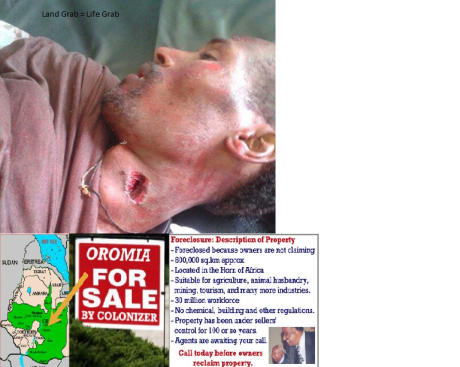




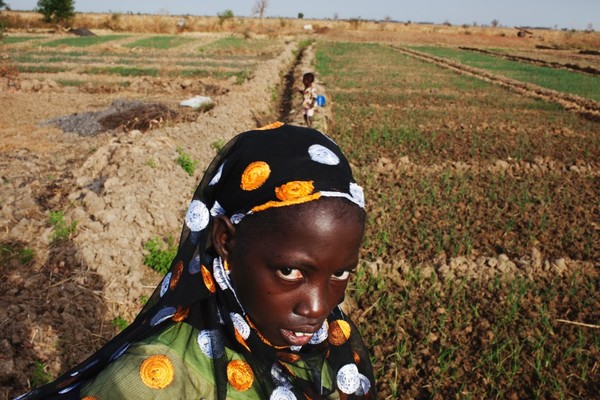 Farmer Djeneba Diarra on her farm in Heremakono, Mali (Photo: Joe Penney/Reuters)




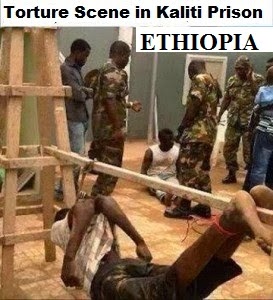


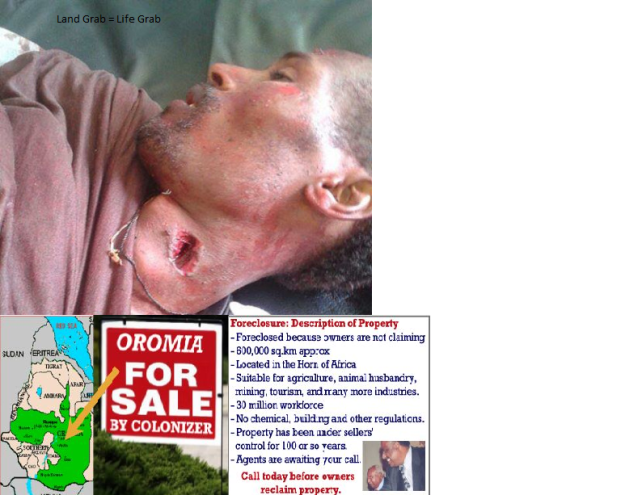


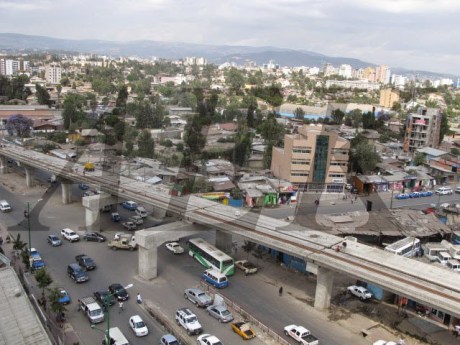
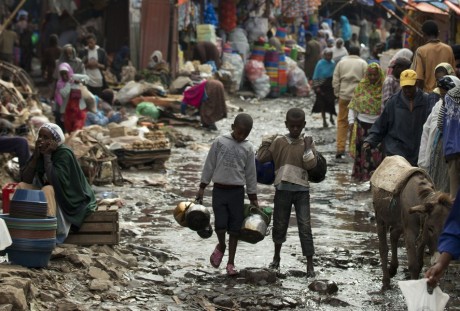


 Working Group Must Address Trade Misinvoicing and Role of U.S. Business and Government in Facilitating Illicit Finance to Be Truly Effective, Warns GFI
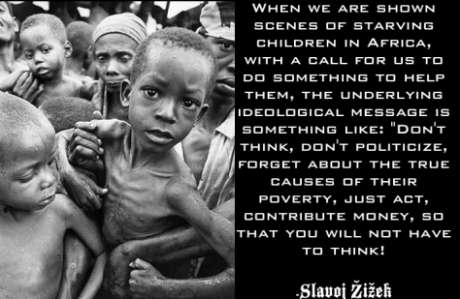


 Oromian Economist
You must be logged in to post a comment.