Economic and development analysis: Perspectives on economics, society, development, freedom & social justice. Leading issues in Oromo, Oromia, Africa & world affairs. Oromo News. African News. world News. Views. Formerly Oromia Quarterly
Ethiopia: The TPLF Hidden Agenda of Reducing the Oromo Population Must be Stopped
HRLHA Appeal and Request for Immediate Action
Ethiopia: The TPLF Hidden Agenda of Reducing the Oromo Population Must be Stopped
HRLHA Appeal and Request for Immediate Action
For Immediate Release
April 17, 2016
Terrorist and Criminal attacks targeting Oromo youth, and children, and even pregnant women have continued unabated since the peaceful protest for justice and freedom began on 12th November 2015 In Oromia.The peaceful and legitimate protests against the injustices in Oromia, in which Oromo people of all walks of life have participated, had a simple and clear demand at the beginning: ” Stop Addis Ababa”s Integration of the Master Plan, and stop land grabbing in Oromia”.
Instead of responding justly to the protestors’ legitimate grievances and restoring their domestic and international rights, the Ethiopian government has chosen to deploy its special squad “Agiazi” and mercilessly crack down on the peaceful protesters. The ruthless Agiazi force used excessive force, killed many promos, beat and detained thousands to stop the protest, which spread to all corners of Oromia Regional State in a few weeks. Oromia towns and villages were turned into war zones as the special Agiazi force continued its random killings of students, children, men and women. During the first two months of the peaceful protests, more than two hundred (200) Oromos were murdered[1], including infants and pregnant women.
In violation of the “Convention on the Rights of the Child” and other international treaties [2]the current government of Ethiopia ratified on 14th May 1991,(see the other treaties ratified by the current of Ethiopian government from the link)[3]Oromo children, including non-schooled children, have been killed by the Agiazi force. Aliya,15 and her brother Nagassa, 8 (photo on right side) were shot in the leg on March 25, 2016[4] on the streets of Ambo town. Many minors/teenagers were killed and others wounded. by the Agiazi force in different parts of Oromia. Some are listed in the following table.
No
Name
Sex
Age
Place of Birth
1
Burte Badhadha Dabal
F
15
Jaldu district, West showa, Oromia
2
Tsegaye Abebe Imana
M
14
Jaldu District, West Showa, Oromia
3
Dereje Gadissa Taye
M
12
Chalia,District, East showa, Oromia
4
Dejene Chala
M
14
Gindeberet, West Showa, Oromia
These cruel and inhumane actions of the Agiazi force against Oromo did not stop the angry protesters from demanding their fundamental rights and freedoms.
Ethiopia Military Generls
The Oromia Regional State president Muktar Kedir and the TPLF security intelligence officer generals removed the civil administration and declared the unofficial martial law as of February 26, 2016. The Oromia Regional State has been subdivided into eight (8) military zones, each to be led by military generals
The merciless Agiazi force has been allowed officially to quell dissents in Oromia by force. On the day following the martial law declaration, the Agiazi squad started breaking into private homes and savagely started to kill and beat children, men and women, including pregnant women. On February 27, 2016 a seven- months pregnant mother of six, living in the West Arsi zone in Oromia state in Ethiopia, was shot down in her home by security forces who had come to her home looking for her husband. Another six- months pregnant woman Shashitu Mekonen was also killed and thrown into the bush in Horro Guduru Wallega, Oromia.
Schools and universities have served as military camps and battle grounds. The merciless Agiazi force broke into university dormitories, savagely killed, raped, beat and detained students (Wallaga University)
The Agiazi murderers intensified their repressions in all corners of Oromia. Since the November 2015 peaceful protest began, over 400 Oromo nationals have been killed, over fifty thousand (50,000) arrested and placed in different police stations, concentration camps, and military camps. Unknown numbers of students have been confined in the Xolay concentration camp where they are exposed to different diseases because of poor diets and sanitation. No medical attention has been given them and a number of prisoners are dying each day, according to information leaked from Xolay concentration camp. This represents the systematic elimination of the Oromo young generation. The late prime Minister Meles Zenawi, the architect of the current TPLF Empire, in 1992 vowed to destroy those he considered major threats to his rule, particularly the most populous nation in the country, the Oromo. He vowed to reduce Oromos to a minority and take over their natural resources.
Bedhadha Galchu
The longest protest (in terms of weeks and months) in the history of Ethiopia has been slowed down by the military crackdowns. When protestors returned home from the street, they started facing another form of atrocity. They were forced day and night to stay indoors, in a kind of house arrest. At night, the Agiazi force would walk into individual homes and pick up youth and kill them, leaving their dead bodies in front of their doors. On April 14, 2016, a university engineering department graduate from Gonder University was cold bloodedly murdered in the Oromia Gujii zone in Oddo Shakisso where he used to live with his parents.
Since Oromia is now under martial law, information, coming out of the Regional State of Oromia is restricted. All social media are being monitored by the military administration.
A number of cell phone users were arrested and their phones taken. Gross human rights abuses, killings, arbitrary arrests, torture and other human rights atrocities are happening in Oromia every day and night.
However, the information about these atrocities is not getting out, because the military has monitored almost all information outlets. The Ethiopian people hear only the well- crafted stories about Ethiopia being on the path to democracy. These stories come from the government mass media.
International and domestic human rights organizations have been reporting the atrocities, although their access to information in Ethiopia is very limited due to their researchers being banned from entering the country. But undercover investigative journalists still bring out the news of the genocide and ethnic cleansing committed in the name of development.
The current human rights atrocities in Oromia have been condemned by some western governments and government agencies, notably the EU and the USA, and UN experts/researchers. But still no meaningful action has been taken to stop the atrocities in Oromia.
When the regime has been pressured enough, they do make concessions and acknowledge the legitimacy of the protestors’ grievances. Indeed the Prime Minister, Hailemariam Dessalegn, has been known to apologize to the people. However, all this seems to be political posturing to deceive the world that is becoming increasingly aware of the atrocities. On the ground, there is no sign of the atrocities abating. There have been no gestures of conciliation. The regime’s force has actually stepped up its mass murders, mass incarcerations and mass rapes.
What is puzzling is that after all these tragedies, the world donor countries and organizations are still silent. It seems surreal. How many people must die before the world responds? How many millions must be jailed and tortured, how many must be gang- raped before this deafening silence is broken?
Can’t the world community learns from what happened in the past, in Rwanda in 1994, in Bosnia, in 1998 and what is happening in Syria ever since 2011? The genocidal act of armed force should not continue and must be stoped by someone, somewhere.
HRLHA is deeply concerned that if International Communities fail in responding to the merciless killings presently taking place in Oromia Regional State as soon as possible , this could lead to a genocide comparable to those in Rwanda (1994), in Yugoslavia (1998) and in Darfur, Sudan (2003).
Therefore, the HRLHA respectfully demands that governments of the west, especially who allies with the Ethiopian government to break their silence about the TPLF hidden agenda of promoting systematic genocide against the Oromo and other nations in Ethiopia and act swiftly as possible to halt the atrocity in Ethiopia.
Recommendations:
The World community must condemn the imposition of Martial Law in Oromia
The United Nations must intervene in Oromia to stop the unprecedented killings, torture and rape by the TPLF squad Agiazi force deployed under martial law
The US government, EU member states and UN must take meaningful measures against the Ethiopian government to stop it committing systematic genocide in Oromia, Ogaden, Gambela, and other southern Ethiopia regional states
Intervene to stop the killings in Oromia using the mandate of the three pillars of the responsibility to protect, as stipulated in the Outcome Document of the 2005 United Nations World Summit (A/RES/60/1, para. 138-140) and formulated in the Secretary – General’s 2009 Report (A/63/677) on implementing the responsibility to protect.
The State carries the primary responsibility for protecting populations from genocide, war crimes, crimes against humanity and ethnic cleansing, and their incitement;
The international community has a responsibility to encourage and assist States in fulfilling this responsibility;
The international community has a responsibility to use appropriate diplomatic, humanitarian and other means to protect populations from these crimes. If a State is manifestly failing to protect its populations, the international community must be prepared to take collective action to protect populations, in accordance with the Charter of the United Nations.
Copied To:
The US Department of State Secretary His Excellency Mr. John Kerry
WASHINGTON, D.C. HEADQUARTERS
(202) 895-3500
OFMInfo@state.gov
Office of Foreign Missions
2201 C Street NW
Room 2236
Washington, D.C. 20520
Customer Service Center
3507 International Place NW
Washington, D.C. 20522-3303
UK Secretary of State for Foreign and Commonwealth Affairs The Rt Hon Philip Hammond MP
Parliamentary
House of Commons, London, SW1A 0AA
Tel: 020 7219 4055
Fax: 020 7219 5851
Email: hammondp@parliament.ukDepartmental
Foreign and Commonwealth Office, King Charles
Street ,
London, SW1A 2AH
Tel: 020 7008 1500
Email: fcocorrespondence@fco.gov.uk
Minister of Foreign Affairs (Canada) His Excellency Stéphane Dion
Enquiries Service (BCI)
Global Affairs Canada
125 Sussex Drive
Ottawa, ON, Canada
K1A 0G2
Email: Enquiry Service – Online form
Minister for Foreign Affairs (Sweden) Her Excellency Margot Wallström
Switchboard: +46 8 405 10 00
Street address: Rosenbad 4
Postal address: SE 103 33 Stockholm
Minister of Foreign Affairs (Normway) His Excellency Børge Brende
Ministry of Foreign Affairs
E-mail: post@mfa.no
Phone: + 47 23 95 00 00
Address: 7. Juniplassen 1, N-0032 Oslo
UN Secretary – General His Excellency Mr. Ban Ki – Moon
Executive Office of the Secretary-General http://www.un.org/sg/
The UN Human Rights Commissioner Mr. Zeid Ra’ad Al Hussein
OHCHR address:
Office of the United Nations High Commissioner for Human Rights (OHCHR)
Palais Wilson
52 rue des Pâquis
CH-1201 Geneva, Switzerland.
Council of Europe Office of the Commissioner for Human Rights
67075 Strasbourg Cedex
FRANCE
+33 (0)3 88 41 34 21
+33 (0)3 90 21 50 53
African Commission on Human and Peoples’ Rights
31 Bijilo Annex Layout, Kombo North District
Western Region P.O. Box 673 Banjul
The Gambia
Tel: (220) 441 05 05, 441 05 06
Fax: (220) 441 05 04
E-mail: au-banjul@africa-union.org
Oromo athletes Lemi Bernanu Hayle and Atsede Baysa won at the 2016 edition of the Boston Marathon, the 120th running of the IAAF Gold Label Road Race, crossing the line in 2:12:44 and 2:29:19 respectively on Monday (18).
It was the first time in the Boston Marathon race’s 120-year history that Oromo athletes representing Ethiopia had swept both the titles.
Atsede Baysa rallied after falling more than 30 seconds off the pace, overcoming the deficit with a strong push through the final four miles to win the women’s Boston Marathon on Monday.
Lemi Berhanu Hayle won the men’s race after breaking away from defending champion Oromo athlete Lelisa Desisa. Hayle won in 2 hours, 12 minutes and 45 seconds.
The men’s race stumbled through halfway in 1:06:43, looking for someone willing to take command into a slight headwind and with temperatures rising to around 20 degrees Celsius.
After a few small breakaways came to nothing, defending champion Lelisa Desisa, hoping to add a third Boston win to his pair from 2013 and 2015, took charge as the course descended from Wellesley Hills to Newton Lower Falls.
Desisa moved to the front as the pack rolled down the hill and then maintained the pace as they crossed the Charles River and started up the opposite bank in the first of the Newton Hills; he slowed slightly but the rest of the pack slowed more, and abruptly a race which had looked more like a dreary committee meeting became notably more interesting.
Only Hayle stuck with Desisa’s big push, and from that point the race was primarily an Oromo duel for supremacy.
Initially Desisa let Hayle set the pace and hovered behind him waiting to move but he then came to the front and began actively trying to shake the younger runner.
Hayle, at 21 already a winner in Dubai in 2015 and runner-up there this January, also had previous wins in Warsaw and Zurich.
He was confident in his ability to win and his speed – with a best 2:04:33, he was third-fastest among the starters – but had never before a race as big as Boston.
Ultimately Hayle took over at the very end, side-by-side with Lelisa through 40km but then taking charge before the mile to go mark in Kenmore Square and opening a gap of 47 seconds back to the tiring Desisa, who held on for second in 2:13:32.
With the racing beginning a few miles after halfway, the second half was slightly faster than the first, 1:06:01 to 1:06:43 for the first half.
Yemane Tsegay won a close-fought duel with 2012 Boston winner Wesley Korir to make it a 1-2-3 finish for Ethiopia; he ran 2:14:02 to the Kenyan’s 2:14:05.
Baysa, 29 and a two-time Chicago Marathon winner came from 37 seconds at the 22-mile mark to overtake the two women in front of her.
She passed fellow Oromo athlete and sometime training partner Tirfi Tsegaye with two miles left, the latter finishing second in 2:30:03.
Kenya’s Joyce Chepkirui, who was disputing the lead with Tsegaye at 22 miles before Baysa started her long charge for glory, was third in 2:30:50 while fellow Kenyan, defending champion Caroline Rotich, dropped out barely five miles into the race.
The women’s race also started slowly, and it ultimately fell to Kenya’s Joyce Chepkirui to take charge of the pace, although as usual the lead changed frequently in the early miles while efending champion Caroline Rotich stepped off the course at 7km and ultimately dropped out.
Halfway was reached in a pedestrian 1:15:25 and the leaders were close enough that Latvia’s star Jelena Prokopcuka tangled with Oromo athlete Fatuma Sado and knocked the latter’s right shoe loose.
Sado stopped and retrieved the shoe, she and Prokopcuka then worked together to regain contact with the pack. Prokopcuka ultimately finished fourth with Sado 16th.
Much like the men, the women rolled down into Newton Lower Falls at a decent clip but slowed when they met the first hills.
Unlike the men, the pack which rode that roller coaster had thinned to four, featuring Tirfi Tsegaye and the Kenyan trio of Chepkirui, Valentine Kipketer and Flomena Daniel; with Baysa well off the back.
After Tsegaye and Chepkirui shook the other pair off, it looked like the women’s race was coming down to a head-to-head duel as well, but Baysa had other ideas; she found a second life after cresting the Newton hills at mile 21.
With Tsegaye frequently twisting around to try and gauge the progress of her sometime training partner, Baysa closed a deficit which had grown to 37 seconds at 22 miles, when she moved into third place.
Tsegaye first tried to drop Chepkirui, but Baysa passed first the Kenyan and then her compatriot.
At 40km, Baysa started pulling clear, and she built a lead of 44 seconds, with Tsegaye second in 2:30:03.
Unlike Hayle, Baysa has a lengthy marathoning resume including victories in Chicago in 2010 and 2012, as well as wins in Saitama, Paris (twice), Xiamen, and Istanbul.
Like the men’s race, the women’s winner was faster in the second half. Baysa passed halfway in 1:15:32 and ran the hilly second half of the race in 1:13:47.
Both Kenya and Ethiopia have indicated that Boston results, along with next weekend’s race in London, will figure in selection for their Olympic team.
However, the defending Olympic champion Tiki Gelana was never a factor in the race, finishing 14th in 2:42:38 and Buzunesh Deba, a frequent contender both here and in New York and the only woman in the field to have run under 2:20:00 in Boston, was seventh in 2:33:56.
The 120th running of the Boston Marathon saw 27,491 starters set out on the classic course from the western suburb of Hopkinton to the finish line in Boston.
The following Sidama scholars and businessmen have been kidnapped by the security forces of the TPLF led government of Ethiopia and are currently languishing in the most notorious prison of the country known as ‘Maikelawi’ in the country’s capital Finfinnee (Addis Ababa):
1) Solomon Naayu (A Business Person)
2) Desalegn Meessa (A Professor at Wolayita Sodo Univeristy)
3) Girma Dishe (A Busienss Person)
4) Shura Kachara (A Business Person)
5 Debebe Daaka (A Business person)
In stark violation of their human rights, some of them have been in detention since November 2015 while others have been incarcerated since early 2016 without any trial. They have been tortured repeatedly to extract confession on crimes they never committed. The reasons given by the Ethiopian security forces for their detention and torture are extremely bizarre. They range from visiting the Oromia region repeatedly during the Oromo protests to receiving telephone calls from their relatives in Diaspora and having some anti-government ideas in their minds.
The TPLF/EPRDF led government of Ethiopia continues to grossly abusing the human rights of the Sidama people and other citizens with impunity for two decades and a half in contempt to its international commitments and the constitution of the country drawn by the regime itself. The aforementioned Sidama people had never committed any crime. Their only crime is being the members of the Sidama society.
The Sidama people and the Sidama National Liberation Front (SNLF) categorically condemns their unlawful detention and torture and demands their immediate and unconditional release.
The SNLF also calls on the international community, the United Nations, the African Union and all human rights organizations to put pressure on the TPLF led regime of Ethiopia to respect basic human and democratic rights of the citizens of the country. The SNLF also calls upon all subjugated nations’ and peoples’ opposition groups and peoples of Ethiopia to be unconditionally united to fight the regime collectively oppressing all with varying degrees.
OROMO STUDENTS SOLIDARITY PROTEST IN WASHINGTON, D.C. COURTESY OF CREATIVE COMMONS @CTJ71081.
“My name is Desta Edosa. I am 33 years old, married and a father of two sons. I am originally from Ethiopia, specifically from Oromia. I came to the United States in 2009 through a visa lottery, and I won. In February 2016, Caren Bedsworth from the American Red Cross called me and left me voice message saying I had a message from relative in Ethiopia. Listening to her voice message, I could not believe at first it was true as I did not know Red Cross gave such services. As Caren provided the office’s address, I looked on the internet and verified that the address mentioned was American Red Cross’s address. I called back Caren and asked who the person was. She delivered the letter to my home and I was so excited when I saw his handwritten letter. It had been about seven years since I last saw him.
“The name of my relative is Galataa Bazzaa. Galataa had just graduated from high school when he was captured by Ethiopian security forces and taken to a prison. He was a very outstanding student who was always known among his classmates and teachers as a straight A’s guy in his academics. By the time he was taken to prison, he had just been admitted to Addis Ababa Medical School to pursue his higher education. Only students of high caliber are given an opportunity to study medical sciences in Ethiopia and Galataa was one of the top.
“To understand the case of Galataa and why he was taken to prison, it is very important to know a little about Oromo people in Ethiopia. Oromo are the largest ethnic majority in Ethiopia which comprises about one third of the total population. Even though Oromo are the majority in Ethiopia, they have been marginalized both economically and politically since the establishment of the country. There was even a time when Oromo language was banned from state media and people were forced to change their Oromo name.
“As a result, Oromo people have been protesting this injustice for almost a century. Even at this time, the Ethiopian government has killed more than 400 Oromo people including kids, pregnant woman and elders because people peacefully demonstrated against land grabs and removal of Oromo farmers from their land due to the expansion of the capital city Addis Ababa (for more information on the Oromo protests, please click here or here).
“Galataa’s story is not different from thousands of Oromo students who are unjustifiably languishing in Ethiopian prison. He was just active both in his academic and among his society and communities. That’s the only reason he has been thrown into jail and sentenced to eight years. The Ethiopian government labels students who protest against it as anti-piece, anti-development and even terrorists if it wants to make the punishment sever. It is very common for Oromo students to be taken to prison in Ethiopia even for just speaking of their mind; that was what happened to Galataa.
“It had been about seven years since I heard from Galataa. I have been informed about his wellbeing by his sisters and brothers but never heard a word directly from him. Even though technology brought the world together these days, it’s still hard to be connected with loved one in a prison cell. The American Red Cross has done such excellent job connecting me directly with a person I care about a lot. I appreciate their service and their team a lot for connecting family over the globe when there is no other possible way. I hope they will keep doing such excellent job and help more Oromo families who lost track of their loved ones.”
Please join the Tom Lantos Human Rights Commission for a briefing on the current human rights situation in Ethiopia.
Home to the Oromo, Ethiopia’s largest ethnic group, the region of Oromia was witness to mostly peaceful student protests in November of 2015 against the Ethiopian Government’s plan to take over territory to expand the nation’s capital. However, this spontaneous outcry has developed into the country’s longest and most widespread protest movement since the ruling party took power in 1991. The government has since ceased border expansion plans, but the discontent has proven to transcend land rights and to extend beyond any one particular ethnic group. The government’s authoritarian structure and tight controls on the media have led many to feel that they have no voice. Peaceful opposition is frequently met with arrest and detention (using the country’s draconian anti-terrorist law) and police brutality too often results in death. Human Rights Watch has received reports of over 200 people killed and several thousand arrested (including many whose whereabouts are unknown), since protests began. Although the documented turmoil threatens to disrupt Ethiopia’s fragile political stability, Ethiopia’s strategic state partners have been relatively quiet.
This briefing will examine Ethiopia’s current human rights situation in light of the recent events in Oromia. Speakers will provide an overview of the human rights situation and challenges, including how Ethiopia’s anti-terrorism law is misused to stifle dissent, and will make recommendations as to what role the U.S. government can play in promoting stabilization by advancing and protecting human rights.
This briefing will be open to members of Congress, congressional staff, the interested public and the media. For any questions, please contact David Howell (for Rep. McGovern) at 202-225-3599 orDavid.Howell@mail.house.gov or Isaac Six (for Rep. Pitts) at 202-225-2411 orIsaac.Six@mail.house.gov.
Hosted by:
James P. McGovern, M.C.
Co-Chairman, TLHRC
Joseph R. Pitts, M.C.
Co-Chairman, TLHRC
Participants
Panelists
Anuradha Mittal , Founder and Executive Director of the Oakland Institute
Mohammed Ademo, Journalist formally with Al Jazeera America
Adotei Akwei, Managing Director, Amnesty International USA
Moderator
Lauren Ploch Blanchard, African Affairs Specialist, Congressional Research Service
Opening Remarks
Rep. Keith Ellison, Executive Committee Member, Tom Lantos Human Rights Commissio
Since November, state security forces have killed hundreds of protesters and arrested thousands in Oromia, Ethiopia’s largest region. It’s the biggest political crisis to hit the country since the 2005 election but has barely registered internationally. And with the protests now in their fifth month, there is an almost complete information blackout.
A teacher arrested in December told me, “In Oromia the world doesn’t know what happens for months, years or ever. No one ever comes to speak to us, and we don’t know where to find those who will listen to our stories.”
Part of the problem is the government’s draconian restrictions on news reporting, human rights monitoring, and access to information imposed over the past decade. But restrictions have worsened in the last month. Some social media sites have been blocked, and in early March security officials detained two international journalists overnight while they were trying to report on the protests. As one foreign diplomat told me, “It’s like a black hole, we have no idea what is happening. We get very little credible information.”
With difficulty, Human Rights Watch interviewed nearly 100 protesters. They described security forces firing randomly into crowds, children as young as nine being arrested, and Oromo students being tortured in detention. But the Ethiopian media aren’t telling these stories. It’s not their fault. Ethiopian journalists have to choose between self-censorship, prison, or exile. Ethiopia is one of the leading jailers of journalists on the continent. In 2014 at least 30 journalists fled the country and six independent publications closed down. The government intimidates and harasses printers, distributors, and sources.
International journalists also face challenges. Some do not even try to go because of the personal risks for them, their translators, and their sources. And when they do go, many Ethiopians fear speaking out against government policies—there are plenty of cases of people being arrested after being interviewed.
Diaspora-run television stations have helped fill the gap, including the U.S.-based Oromia Media Network (OMN). Many students in Oromia told me that OMN was one way they were able to learn what was happening in other parts of the region during the protests. But since OMN began broadcasting in March 2014 it has been jammed 15 times for varying periods. Radio broadcasts are also jammed–as international broadcasters like Voice of America and Deutsche Welle have experienced intermittently for years.
In December OMN began transmitting on a satellite that is virtually impenetrable to jamming. But security forces then began destroying private satellite dishes on people’s homes. Eventually the government applied pressure on the satellite company to drop OMN, which has now been off the air for over two months.
Social media has partially helped fill the information gap. Photos of injured students and videos of protests have been posted to Facebook, particularly in the early days of the protests. But in some locations the authorities have targeted people who filmed the protests on their phones. At various times in the last month, there have been reports of social media and file-sharing sites being blocked in Oromia, including Facebook, Twitter, and Dropbox. Website-blocking has been documented before – in 2013, at least 37 websites with information from Ethiopia were blocked. Most of the sites were operated by Ethiopians in the diaspora.
Independent non-governmental organizations that might be reporting what is happening face similar restrictions. The government’s Charities and Societies Proclamation of 2009 virtually gutted domestic nongovernmental organizations that work on human rights issues. The independent Human Rights Council released a report on the protests in March. It was a breath of fresh air, but the council released it at great risk. As the first report from Ethiopian civil society on an issue of great political significance, it was a damning indictment of the limits of freedom of expression in Africa’s second-largest country, with a population of 100 million.
The government may believe that by strangling the flow of information coming out of Oromia it can limit international concern and pressure. And so far the response from countries that support Ethiopia’s development has been muted. The deaths of hundreds, including many children, have largely escaped condemnation.
Yet the government’s brutally repressive tactics cannot be contained behind Ethiopia’s information firewall for long. The sooner the government recognizes this and acts to stop the mass arrests and excessive use of force, the better the outlook for the government and the affected communities.
The government—with the assistance of its allies and partners—needs to support an independent investigation of the events in Oromia, commit to accountability and justice for the victims, and start dismantling the legislative and security apparatus that has made Ethiopia one of the most hostile places for free expression on the continent. What’s happening in Oromia has long-term implications for Ethiopia’s stability and economic progress, and Ethiopians and the world need to know what is happening.
Felix Horne is the Ethiopia researcher at Human Rights Watch.
INTERNET messaging applications such as WhatsApp haven’t worked for more than a month in parts of Ethiopia that include Oromia region, which recently suffered fatal protests, according to local users.
Smartphone owners haven’t been able to access services including Facebook Messenger and Twitter on the state-owned monopoly Ethio Telecom’s connection, Seyoum Teshome, a university lecturer, said by phone from Woliso, about 115 kilometers (71.5 miles) southwest of the capital, Addis Ababa.
“All are not working here for more than one month,” said Seyoum, who teaches at Ambo University’s Woliso campus. “The blackout is targeted at mobile data connections.”
A spokesman for Twitter Inc. declined to comment on the issue when e-mailed by Bloomberg on Monday. Facebook Inc., which bought WhatsApp Inc. in 2014, didn’t respond to an e-mailed request for comment.
Protests that began in November in Oromia over perceived economic and political marginalisation of Ethiopia’s most populous ethnic group led to a crackdown in which security forces allegedly shot dead as many as 266 demonstrators, according to a March report by the Kenya-based Ethiopia Human Rights Project.
The government has said that many people died, including security officers, without giving a toll. One social-media activist, U.S.-based Jawar Mohammed, disseminated information and footage from protests to his more than 500,000 followers on Facebook.
No explanation
Restricting access isn’t a policy and may be because of “erratic” connections, according to government spokesman Getachew Reda. “We have not yet found any explanation,” he said by phone from Addis Ababa on Monday.
The government has the technology to “control” the messaging applications, the Addis Ababa-based Capital newspaper reported on April 10, citing Andualem Admassie, Ethio Telecom’s chief executive officer. Andualem didn’t answer two calls to his mobile phone seeking comment.
Hawassa city in Ethiopia’s southern region has suffered similar difficulties in accessing applications for more than a month, said Seyoum Hameso, an economics lecturer at the University of East London. “We couldn’t communicate with relatives,” he said in an e-mailed response to questions on Monday.
Traditional economics views humans as robotic machines who make calculated decisions based on logic. In contrast, behavioural economics views humans as irrational and emotional beings who are influenced by biases and experience when making decisions. This infographic takes a closer look at just what behavioural economics is and how it can be used.
Read more at:- https://www.b2binternational.com/publications/what-is-behavioural-economics/
Peoples Alliance for Freedom and Democracy (PAFD) public meeting hosted by Oromo Student Union and Ogaden Community in Germany was held on 9th of April 2016 in Frankfurt am Main, Germany.
It was attended by two Executive committee members of PAFD, human rights advocators, invited guests, Veteran members of successful liberation movement, representatives of youths and Women and generally by the peoples and nations of member organisations of PAFD.
On this meeting, paper was presented by the officials of PAFD on the current political situation in the Horn of Africa with special emphasis on Ethiopia. The objectives of the PAFD were also explained. The atrocious nature of EPRDF across the empire, images and videos of the ongoing protest and public resistance from Oromia have been presented. Artists have entertained with cultural music in between discussions.
Member Communities and other peace loving friends in Germany all gathered on this occasion have expressed their unflinching support and solidarity for the Alliance. They noted that the oppressed peoples in Ethiopia have now reached a tipping point where the outcry of the peoples under Occupation of the Ethiopian regime cannot be ignored any more.
After thorough discussions and comments on the presentations during the meeting the participants continued discussions on the various issues. Finally the participants concluded the meeting upon passing political resolution.
The Political Resolution of this public meeting in Germany: –
Hereby in unison we convey our unflinching support for PAFD in its struggle against the TPLF/EPRDF-led Ethiopian regime, to regain the legitimate national right for the Nations and peoples. We also appreciate the outcome of PAFD congress that brought member organisations under one umbrella leadership to forge stronger bond of unity among member organisations which allowed them to strengthen their combined effort on diplomatic, political and armed struggle against TPLF. The participants of the meeting also summoned all nations and Nationalities in Ethiopia to create a firm ground for a unity of purpose and mutual respect. In the last twenty plus years TPLF/EPRDF has been tactically engaged in instigation of ethnic discord. We call up on our peoples to be aware of “divide and rule” colonial principle and resolve their conflict in a manner they used to live in it.
The Ethiopian government is currently playing a destructive and destabilizing role in the Horn of Africa in general and on the peoples under its rule in particular. The Dictatorial regime run by the TPLF is currently using every means at its disposal to silence the quest of people for justice. Freedom of press, civil Societies and independent judiciary are non-existence in this country. The Regular army and Agazi militias are using brute force against innocent Oromo protesters with complete impunity; extra-judicial executions, enforced disappearances, arbitrary mass detentions and harsh prison terms under dubious laws are practiced beyond imagination. People are evicted from their ancestral land under the pretext of “Development” and “master plans”. We strongly condemn such belligerent act of Ethiopian regime.
The partnership of EU with Ethiopia is aimed to bring a political environment guaranteeing peace, security and stability, which are the solid ground for sustainable economic policies and developments. Respect of human right violations, sustained economic growth, developing the private sector, increasing employment, good governance and etc. are the main witness and visible criterion for the objective of the partnership. Concerning the current Tigryan Peoples Liberation Front (TPLF) led regime of Ethiopia, there is massive evidence, which demonstrates beyond any doubt that the government is intensifying the persecution of Ogadeni, Oromo, Sidama, Gambella, Benishangul and other nations and nationalities in the empire. We appeal to the international communities in general and EU to implement ACP-EU agreement and its resolution passed on 21st January 2016.
The public meeting appreciated Resolution of EU, Concerns of some democratic governments and honours Amnesty International, Human Rights Watch, Human rights League Horn of Africa, Oromia Support Group, Ethiopian Human Rights Council and International Commission of Jurists for their principled and responsible activities in exposing the atrocities of TPLF government behind the curtail. Although the effort of these humanitarian organisations are limited to exposure, as it ought to be as a matter of rule, the participants of this public meeting values this contribution to be immense in bridling the militant and aggressive nature of the TPLF regime.
It is clear that the EPRDF force’s violent manoeuvre is intensifying from day to day. People are being denied to lead peaceful life. Such deplorable act has to be unequivocally condemned by all peace-loving forces. Therefore, we call upon all peoples in the empire of Ethiopia to join us in the struggle against the EPRDF regime.
We also call USA, EU and AU to refrain themselves on current deal with TPLF’s regime about the Oromo protest behind the curtail without the consent of peoples in Ethiopia and particularly in this case the Oromos.
(National Helm) — Two Chinese migrant workers found $356,246 cash in airport and returned it to three travelers from Ethiopia. The migrant workers who were working on a construction project in southern China‘s Guangzhou Baiyun International Airport Friday found a white paper bag containing bulks of US dollar bills unattended.
The workers reported the situation to the police and later on met three Ethiopian travelers who came to claim the lost. The migrant workers’ move won lots of praises after the story went viral.
By James Jeffrey, Inter Press Service, April 11, 2016
The Ethiopian government’s most serious domestic political crisis in more than a decade began over a scruffy football field appropriated by local officials for development.
After students responded by taking to the streets of Ginchi, a small town 80km from the capital, Addis Ababa, their protest was quickly quelled. But a spark had been lit for what has turned into an outpouring of grievances by the Oromo—Ethiopia’s largest ethnic group, accounting for about a third of the country’s 95 million population.
As protests spread, they ostensibly focused on a plan to expand the Ethiopian capital’s city limits into Oromia—the largest of the federal republic’s nine regional states and two city states—which encircles Addis Ababa.
Land in Ethiopia—all of which is government owned—has become an increasingly contentious issue as Ethiopia has opened up to the world, reflecting a worldwide trend particularly effecting developing countries such as Ethiopia.
Globally, investors are increasingly looking to investments not linked to volatile equities and bonds: other countries’ land. And few have attracted as much attention as Ethiopia, with its lowlands watered by the tributaries of the Blue Nile, a particularly bountiful draw.
The Ethiopian government has been on the front foot and quick to respond to such interest, and since around 2009 has leased about 2.5 million hectares to more than 50 foreign investors, from the likes of India, Turkey, Pakistan, China, Sudan and Saudi Arabia.
The so-called Addis Ababa Integrated Development Master Plan was seen as fitting a disturbing trend by the Oromo—many of whom are smallholder farmers—and they weren’t having any more of it. Ethiopia’s security forces are well equipped to deal with protests and unrest, although such has been the scale of the Oromo protests that security forces have been stretched. But even after the Oromo People’s Democratic Organisation—the regional arm of the Ethiopian government—shelved the plan, a government back down described as historic by many, protests continued.
“The widespread, sustained and recurring protests are clear messages of no confidence by a young and restless segment of the population which is driven by a feeling of marginalization,” stated a February editorial in Addis Ababa-based Fortune newspaper.
Many observers in Ethiopia, local and foreigners alike, note that although protests have taken an ethnic-based identity and focused on land, other deeper issues behind them—corruption, unfair elections, political and socioeconomic marginalisation—are familiar to many disenchanted Ethiopian voters.
Numbers of those killed since November given by international rights organisations, activists and observers range from 80 to 250-plus.
Some Addis Ababa residents suggest such numbers are preferable to even higher numbers if the government lost control of a situation that could, they argue, spiral into anarchy.
For against the narrative of a typically brutal Ethiopian government crackdown that brooks no dissent, there have been reports of looting, and organised armed gangs attacking foreign-owned factories, and private and governmental buildings. Even churches were damaged during a particularly violent flare up in the south in February.
Ethiopian citizens had a right to question the master plan but protests were hijacked by people looking to incite violence, according to Getachew Reda, a government spokesperson.
“You shouldn’t define a largely peaceful movement by this,” says a security analyst who focuses on Ethiopia for an Africa-based research organisation.
Despite February’s trouble in the south, many observers in Ethiopia say the majority of protests were peaceful, involving Oromo from across the demographic spectrum airing widely held grievances.
“It is also about competent government structure,” says Daniel Berhane, a prominent Addis Ababa-based political blogger, covering Ethiopia for the website Horn Affairs. “You have got ministries next door to each other not talking, and at every level—regional, zone or district—governmental staff arguing about who is responsible while criticising each other.”
“People have a perception of lack of competence in governance on the ground,” Daniel adds.
The government heeded the call of the people, according to Getachew, and observers say the government deserves credit for listening about the master plan.
But, more importantly, these same observers add, the government must allow Ethiopians to exercise their constitutional right to protest, and handle events in a way that does not escalate.
Protests have often resulted in deployment of military forces to support federal police, both regularly accused of ruthless suppression, with the perceived unaccountability of Ethiopia’s security forces added to the list of grievances, the analyst says.
There have even been reports of police taking head shots and shooting people in the back. But such alleged actions by police in remote locations, with backup often hundreds of miles away, defy logic as they would result in such a ferocious backlash by the local populace, according to a foreign politico in Addis Ababa.
This individual also suggested that some local militia, ostensibly part of state security but who sided with protestors and turned against federal forces, fired from behind women and children at police. Numbers of state security forces killed haven’t been released.
Nevertheless, shooting at protesters, as well as arbitrary arrests, especially of students—who initially formed the body of protests—have a long track record in Ethiopia, preceding this government back to during the brutal military dictatorship that ruled between 1974 and 1991.
Many who fled that period now compose part of the large Ethiopian diaspora, with the government claiming foreign-based opposition bolstered by US-based social media activists is manipulating the situation to its own ends.
“The diaspora magnifies news of what is happening, yes, but no matter how much it agitates it cannot direct at village level in Ethiopia—this is about dissatisfaction,” says Jawar Mohammed, executive director of US-based broadcaster Oromia Media Network, strongly criticised by the government and some non-government observers for fomenting conflict.
Imprisonment of leaders of the Oromo Federalist Congress party, Oromia’s largest legally registered political party, along with thousands of other Oromo political prisoners, makes negotiating a lasting solution a tall order, Jawar says.
Governance in today’s Federal Democratic Republic of Ethiopia—to use its full title—exhibits an inherent tension.
A decentralised system of ethnic federalism jars with the Ethiopian People’s Revolutionary Democratic Front ruling party’s authoritarian one-party developmental state style of leadership, similar to China’s.
“The political space has increasingly narrowed, becoming uneven, non-competitive and unwelcoming…contrary to the diversity of desires and interests in Ethiopian society,” states the same editorial.
It is a long way from the heady hopeful days of Ethiopia’s new federal constitution after the overthrow of the military dictatorship in 1991.
“The ruling government is a victim of its own success—the constitution it developed made promises and people trusted the EPRDF,” the analyst says. “Now people are demanding those rights and the government is responding with bullets and violence.”
The analyst acknowledges the government deserves credit for creating a constitution that is the best fit for an ethnically diverse country like Ethiopia, and for expanding basic services, infrastructure, respecting different cultural and ethnic identities, and better integrating Ethiopia’s large Muslim population.
But, the analyst adds, this federal constitution espouses a liberal philosophy that the government appears unable to reconcile with its decision-making processes.
The government’s hitherto successful job of holding together this particularly heterogeneous federation is not about to crumble tomorrow, observers note.
But things may get worse before they get better, unless underlying sources of friction and frustration are addressed.
The government has since acknowledged there was insufficient consultation with those likely to be effected by the master plan.
And during his latest six-monthly performance report to Parliament in March, Prime Minister Hailemariam Desalegn apologised to those who lost family members during protests, while the government has suggested there will be investigations into allegations of police brutality.
What is happening in Ethiopia could be a foretaste of what is to come elsewhere, as forces of global markets—including a growing global urban population in more developed nations that eats more than it farms—clash with indigenous desires to protect historical homelands.
“A fundamental tenet of the ruling party at its creation was its social democratic focus on farmers, who still make up 80 per cent of the country,” Daniel says. “It cannot suddenly become capitalist.”
Oromo Refugees in Egypt need your immediate protection To: The United Nations Higher Commission for Refugees (UNHCR), Geneva,
Australian Oromo Community Association expresses its deep concern about the rejection of Oromo refugee appeal for protection and resettlement case. We appeal to request your immediate action on a very urgent demand, particularly, that involving Oromo refugees living in Cairo, Egypt.
Oromo refugees fled their homeland to various neighboring countries to rescue their lives and their families. Majority experienced years of detention, torture and suffering behind bars while others escaped due to fear for their lives as the results of occurrences of unbearable human right violations in Ethiopia. Commonly, Oromo refugees have fled from the extra-judicial killings, removal from their properties and land confiscation, illegal arrests, trials without evidence, torture, and constant humiliations.
Therefore, rejection of their refugee case appeal for resettlement and protection means not only making them hopelessness and darken their futurity but also devastating for them as they are left without a guarantee from not to be deported back to Ethiopia that certainly exposing them to detention, torture, and possible death.
The Australian Oromo Community Association intensely concern for the physical and emotional well-being of these refugees and their families. We utterly believe these genuine Oromo refugees are forced to flee persecution and desperately search for safety and protection from violence and intimidation. They are in an extreme situation that needs your prompt action.
Regarding this urgent matter, the Australian Oromo Community Association appeals for your supportive action, and sincerely request to consider their case and continue processing their protection status and resettlement process in third countries. Please show your kind sympathy instantly to save these very vulnerable innocent Oromo refugees’ life in Cairo, Egypt.
Thank you for consideration of our concern and this urgent matter.
VIDEO: Oromo refugees protest for registration outside UNHCR Egypt
By Belen Fernandez, Green Left Weekly, Saturday, April 9, 2016
Members of the Oromo community in Melbourne protest against the Ethiopian regime, Photos: Ali Bakhtiarvandi.
“This government is at least better than previous ones,” remarked a 74-year-old Eritrean man to me last month in the Ethiopian capital of Addis Ababa, his longtime residence.
As it turned out, his assessment of the relative superiority of the current Ethiopian administration was for good reason: two of his children had been killed by a previous ruling outfit, the Derg military junta that took power in 1974 and began eliminating suspected opponents in droves.
Although that particularly bloody epoch came to an end in 1991, many a resident of Ethiopia might nowadays still have cause to complain about homicidal activity by the state.
In the Oromia region surrounding Addis Ababa, for example, there are claims that more than 200 people have been killed by Ethiopian security forces since November 2015, when protests broke out in response to the government’s so-called “Master Plan” to expand the boundaries of the capital by a factor of 20.
As a Newsweek article explains, the Oromo inhabitants of the region viewed the plan as “an attempted land grab that could result in the forced eviction of Oromo farmers and the loss of valuable arable land in a country regularly plagued by drought.”
This was no doubt a valid concern given the government’s established tradition of wantonly displacing Ethiopians in the interest of “development” — that handy euphemism for removing human obstacles to the whims of international and domestic investment capital.
Apparently, torture has also been a difficult habit for security forces to break.
Comprising some 35% of the population, the Oromo are Ethiopia’s largest ethnic group and have regularly decried discrimination by the ruling coalition party, the Ethiopian People’s Revolutionary Democratic Front (EPRDF), which is dominated by ethnic Tigrayan interests.
Politically motivated detention, incarceration, and other abuses have long characterised the landscape in Oromia, and the current protests have seen children as young as eight arrested.
And while the government has opted to shelve the Master Plan for now, protests in Oromia have continued. When I recently visited the town of Woliso, one of many protest sites in the region, residents pointed out that cancelling the plan wouldn’t bring back the dead people.
Events in Oromia have been described as the worst civil unrest in a decade.
Even without the Master Plan, meanwhile, the government is doing a decent job of courting investors. As I travelled west from Addis Ababa toward Woliso – a journey of about two hours — I passed sprawling factory complexes, including one featuring a Turkish flag flying alongside its more indigenous counterparts.
Launched in 2010 with a price tag of US$140 million, the Turkish-owned Ayka Addis factory is said to occupy several hundred thousand square meters of land.
The website of the Ethiopian Investment Commission furthermore lists Ayka Addis as one of “a number of private Industrial Zones” in Ethiopia, described as “success stories.”
Indeed, the EPRDF can point to double-digit economic growth over recent years to justify plowing ahead with its development model. But there’s more to life than GDP – as sizable poverty-stricken sectors of the Ethiopian population can presumably confirm.
About 200,000 people were reportedly in danger of trachoma-induced blindness in Oromia alone.
We might also take a look at the estimated 10.2 million Ethiopians currently “in need of urgent food assistance” — as reported, perhaps ironically, in a March edition of the English-language Ethiopian newspaper Capital, “the paper that promotes free enterprise.”
Additional troublesome statistics are contained in a 2014 BBC dispatch titled “The village where half the people are at risk of blindness.” The village in question is Kuyu, located in the Oromia region; the risk is due to infectious trachoma, “the world’s leading cause of preventable blindness.”
In the end, a lot of people in Oromia and beyond might have greater priorities than, say, income tax immunity for international developers.
Restoring interest and investment in indigenous crops may offer a solution to food insecurity and the increasing loss of biodiversity. Some traditional plant varieties can help improve nutrition and health, improve local economies, create resilience to climate change, revitalize agricultural biodiversity, and help preserve tradition and culture.
Botanical Explorer Joseph Simcox travels around the world, documenting and tasting thousands of crops. He traverses the wilderness, interviews villagers, and searches markets across the globe for rare and indigenous crops. Joseph helps preserve species and varieties that are in danger of extinction, improving biodiversity and distributing rare seeds to the public.
According to the U.N. Food and Agriculture Organization (FAO), just twelve crops provide 75 percent of the world’s food. Three of these crops, rice, maize, and wheat contribute to nearly 60 percent of the protein and calories obtained by humans from plants. Since the beginning of the 20th century, some 75 percent of plant genetic diversity has been lost.
Restoring interest and investment in indigenous crops may offer a solution to food insecurity and the increasing loss of biodiversity. Some traditional plant varieties can help improve nutrition and health, improve local economies, create resilience to climate change, revitalize agricultural biodiversity, and help preserve tradition and culture.
Multidimensional Poverty Index: Ethiopia has the second highest percentage of people who are MPI poor in the world: of Ten Poorest Countries in The World (All in #Africa) – MPI 2015 Ranking
‘Human development is a process of enlarging people’s choices—as they acquire more capabilities and enjoy more opportunities to use those capabilities. But human development is also the objective, so it is both a process and an outcome. Human development implies that people must influence the process that shapes their lives. In all this, economic growth is an important means to human development, but not the goal. Human development is development of the people through building human capabilities, for the people by improving their lives and by the people through active participation in the processes that shape their lives. It is broader than other approaches, such as the human resource approach, the basic needs approach and the human welfare approach.’ -UNDP 2015 Report
Ethiopia’s HDI value for 2014 is 0.442— which put the country in the low human development category— positioning it at 174 out of 188 countries and territories.
In Ethiopia 88.2 percent of the population (78,887 thousand people) are multidimensionally poor while an additional 6.7 percent live near multidimensional poverty (6,016 thousand people). The breadth of deprivation (intensity) in Ethiopia, which is the average of deprivation scores experienced by people in multidimensional poverty, is 60.9 percent. The MPI, which is the share of the population that is multidimensionally poor, adjusted by the intensity of the deprivations, is 0.537. Rwanda and Uganda have MPIs of 0.352 and 0.359 respectively.Ethiopia, UNDP country notes
(Sunday Adelaja’s Blog) — When Poverty and non-existent double digit growth met face-to-Face at a dumpster site called KORA in Ethiopia. As we speak, thousands of people in Addis Ababa survive from the leftover “food” dumped in such dumpsters. People, in fact, used to call them “Dumpster Dieters”. They are either the byproducts or victims of the cooked economic figures. You be the judge!
Yet the new measurement known as the Multidimensional Poverty Index, or MPI, that will replace the Human Poverty index in the United Nations’ annual Human Development Report says that Ethiopia has the second highest percentage of people who are MPI poor in the world, with only the west African nation of Niger fairing worse. You probably heard that Ethiopia has been a fast growing economy in the content recording very high growth rate not just in Africa but the world as well.
This comes as more international analysts have also began to question the accuracy of the Meles government’s double digit economic growth claims and similar disputed government statistics referred by institutions like the IMF. The list starts with the poorest.
Niger
Ethiopia
Mali
Burkina Faso
Burundi
Somalia
Central African Republic
Liberia
Guinea
Sierra Leone
What is the MPI?
People living in poverty are affected by more than just income. The Multidimensional Poverty Index (MPI) complements a traditional focus on income to reflect the deprivations that a poor person faces all at once with respect to education, health and living standard. It assesses poverty at the individual level, with poor persons being those who are multiply deprived, and the extent of their poverty being measured by therange of their deprivations.
Why is the MPI useful?
According to the UNDP report, the MPI is a high resolution lens on poverty – it shows the nature of poverty better than income alone. Knowing not just who is poor but how they are poor is essential for effective humandevelopment programs and policies. This straightforward yet rigorous index allows governments and other policymakers to understand the various sources of poverty for a region, population group, or nation and target their humandevelopment plans accordingly. The index can also be used to show shifts in the composition of poverty over time so that progress, or the lack of it, can be monitored.
The MPI goes beyond previous international measures of poverty to:
Show all the deprivations that impact someone’s life at the same time – so it can inform a holistic response.
Identify the poorest people. Such information is vital to target people living in poverty so they benefit from key interventions.
Show which deprivations are most common in different regions and among different groups, so that resources can be allocated and policies designed to address their particular needs.
Reflect the results of effective policy interventions quickly. Because the MPI measures outcomes directly, it will immediately reflect changes such as school enrolment, whereas it can take time for this to affect income.
In Mount Vernon, Moussa Ali conducts a one-man protest for the Oromo People
It’s a bright, breezy Saturday in Mount Vernon with little else happening, making it even harder to miss Moussa Ali. Dressed in all-black and wearing a T-shirt that reads “I stand with the Oromo People,” Ali stands in front of the Washington Monument and nods at drivers passing him by on Charles Street. He raises his fist above his head and conducts a one-man demonstration.
“I’m protesting,” Ali, a 56-year-old Charles North resident and BP gas station manager, says, keeping his arm raised the whole time. “I’m standing with the Oromo students back home, which is in Ethiopia. The Oromo people are the majority in Ethiopia. In large numbers they are being killed. All young.”
Ali, who is ethnically Oromo, says a minority tribe, the Tigrayans, has had control of the Ethiopian government for over 20 years and oppress, disenfranchise, and take land from the other tribes, especially the largest tribe, the Oromos. According to Human Rights Watch, “Ethiopian security forces are violently suppressing the largely peaceful protests in the Oromia region that began in November 2015.”
Ali says: “They go to the students dorm, break into their rooms and because of this, the students cannot even go to school right now. Some of the students started escaping out of the country into the sea, trying to immigrate to Europe. And that struggle is still continuing right now! I want freedom for my people… this is part of me.”
Ali came to American from Ethiopia as a student 35 years ago, barely slipping the grip of government forces himself.
“[Back then] they started rounding up the students!” Ali says. “I was one of them marching. I used to go around doing the same thing I’m doing right now. I used to have my slogans, march in the towns, underground. Then they found out. They had their own spies. They give my name away. [My friends] told me, ‘The government’s looking for you! You better leave the country.’ That is how I left the country.”
Ali believes Americans should have an interest in this issue too. He says that American tax money in the form of military assistance is used to crush Oromo protests.Foreignassistance.gov shows that the U.S. Department of Defense has given the Ethiopian military $31 million in aid in 2015 alone. This is in addition to veteran American forces training the Ethiopian military.
“The interest for Obama and the United States is just to go after Al Qaeda in Somalia,” Ali says. “They get… cash. They train them. The Ethiopian government go into Somalia and fight for America.”
He shares the experience of his tribe back home with the hope that Baltimoreans can imagine the kind of freedom for his tribe that we have here: “Look at the freedom I have here. I’m talking to you right now. Nobody’s coming, arresting me, threatening me or going to take me to jail or torture me. No fear!”
He says he is “a representative of Baltimore City” who’s doing his part.
“There is no Oromo news except [what you hear from] the Ethiopian government, they choose it,” Ali says. “All over the globe, Oromos, no matter where they are, we are doing this.”
“It’s happening all over,” he continues. “Oromos are protesting in Sweden, France, Australia, England, Oromos are protesting everywhere. We are a strong community in Washington D.C., [but in Baltimore] communities are not large.”
Though he stands alone, he says he’ll “come back again” and be here this upcoming weekend as well for a couple hours.
“We welcome everybody [to stand with us],” Ali says. “I will provide s [t-shirts] if they’re coming.”
@OSA London Conference @London School of EConomics on Violation of Oromo Human Rights in Ethiopia, by Patricia Bartley, Amnesty International UK, Ethiopia Country Coordinator; 3rd April 2016.
Ethiopia’s clampdown on dissent tests ethnic federal structure
Protests sparked by the arrest of Konso leader Kala Gezahegn underlined growing tensions between Ethiopia’s central government and many ethnic populations
BY William Davison, The Guardian, Global development, 8 April 2016
Kala Gezahegn, the traditional leader of Ethiopia’s Konso people. Kala Gezahegn, the leader of the Konso people, addresses a crowd. His arrest highlighted growing tensions in Ethiopia between state power and ethnic groups’ desire for autonomy. Photograph: Courtesy of Kasaye Soka
Nothing seemed amiss when an Ethiopian government vehicle arrived to collect the traditional leader of the Konso people for a meeting in March. But instead of being taken to discuss his community’s requests for more autonomy, Kala Gezahegn was arrested.
Kala’s detention marked a low point in fraught relations between the Konso in southern Ethiopia and the regional authorities in the state capital, Hawassa. Five years ago, the Konso lost their right to self-govern, and growing tensions since then mirror discontent in other parts of Ethiopia.
The 1995 constitution in Africa’s second most populous country allows different ethnic groups to self-govern and protects their languages and culture under a system called ethnic federalism. The largest ethnicities – such as the approximately 35 million-strong Oromo – have their own regional states, while some smaller groups administer zones within regions, as the Konso effectively used to do.
Many of Ethiopia’s ethnic identities, which number more than 80, were suppressed during the imperial and national-socialist eras that preceded the federal system.
What happened in Konso followed demonstrations and killings by security forces in Oromia, the most populous region. A rights group says 266 people have been killed since mid-November during protests over injustice and marginalisation.
Demonstrations were sparked by a government plan to integrate the development of Addis Ababa and surrounding areas of Oromia. After fierce opposition from the Oromo, that scheme was shelved in January, but protests have continued, fuelled by anger over alleged killings, beatings and arrests.
In Amhara, a large region north of Addis Ababa, there was violence late last year related to the Qemant group’s almost decade-old claim for recognition as a group with constitutional rights. The fact that the Qemant rejected a territorial offer from the authorities, saying it was too small, may have provoked local Amhara people. In December, federal security forces were dispatched to contain escalating communal violence.
In Konso, after Kala and other leaders were locked up, thousands took to the streets to protest. During clashes with police on 13 March, three people were killed, and now the dispute seems entrenched.
Women at Fasha market in Ethiopia’s Konso region. Photograph: Grant Rooney/Alamy
The crux of the issue is a 2011 decision to include the Konso – which is in the multi-ethnic Southern Nations, Nationalities and Peoples’ Region (SNNPR) and has 250,000 people – in the newly created Segen zone, thereby removing their right to self-rule. That decision was taken without consultation and resulted in worsening public services and unresponsive courts, says Kambiro Aylate, a member of a committee chosen to represent the community’s demands.
The budget for Konso’s government was reduced by 15%, says Orkissa Orno, another committee member. “The Konso people used their rights to ask for a different administrative structure,” he says.
In a recent interview, prime minister Hailemariam Desalegn blamed the unrest in Oromia on high youth unemployment and a “lack of good governance”, a line echoed by officials in other regions.
Kifle Gebremariam, the deputy president of the SNNPR, said the Konso leaders were arrested on suspicion of maladministration and corruption, issues “completely different” from the political question.
Kifle added that discussions had been held with residents about the status of the administration. “The regional government, including the president, gave them the right response, but they are not peacefully accepting this.”
Kala’s supporters dispute that account, although there have been signs of compromise, with the traditional leader permitted to take part in recent negotiations.
Concerns over the federal system’s ability to withstand such strains are not new. For example, southern groups such as the Wolayta were involved in violent clashes before they were granted their own zone in 2000.
In 2009, the International Crisis Group wrote in a report (pdf): “Ethnic federalism has not dampened conflict, but rather increased competition among groups that vie over land and natural resources, as well as administrative boundaries and government budgets.”
Officials have argued for decades that the focus on minority rights has been integral to an unprecedented period of peace and development.
Assefa Fiseha, a federalism expert at Addis Ababa University, agrees the system has brought stability to a country threatened with fragmentation in the early 1990s after ethno-nationalist rebellions overthrew a military regime.
But a lack of democratisation and centralised economic decision-making works against local autonomy and exacerbates grievances, according to Assefa.
“The regional states, as agents of the regional people, have to be consulted on whatever development project the federal government wants to undertake,” he says.
In fact, the government appears to have been moving in the opposite direction, as its legitimacy depends on economic growth and improving social services and infrastructure.
National projects – 175,000 hectares (430,000 acres) of state-owned sugar plantations in the ethnically rich south Omo area, for instance – are designed, implemented and owned by federal agencies.
The now scrapped integrated Oromia-Addis Ababa plan is another example, as it was developed without scrutiny by “key stakeholders” in the Oromia government, Addis Ababa city and the federal parliament, Assefa says.
One reason for quick decisions in a devolved federation is that the political positions of Ethiopia’s diverse communities are filtered through a rigid ruling coalition.
Along with allied parties, the Ethiopian Peoples’ Revolutionary Democratic Front won every federal and regional legislative seat in May’s elections, extending its control of all tiers of government.
The EPRDF has held power for 25 years, partly by building a popular base of millions of farmers and demanding strict obedience to party doctrine and policy, but some say this is now changing.
The wave of protests, so soon after the landslide election victory, shows that the “dominant party system is facing problems”, Assefa says.
“Growing ethno-nationalism, centralised policymaking and the failure to provide space for political dissent combined together make a perfect storm for violence.”
Ethiopia: Double Digit Growth or Collapsing Economy?
Analysis by Andualem Sisay, All Africa, 8 April 2016
Ethiopian government’s increasing reliance on foreign loans is posing a serious risk of economic collapse, a renowned economist has revealed.
“Take for instance China, which has loaned over $17 billion to the Ethiopian government for infrastructure projects. Our total investment is 40 per cent of the GDP. Our saving is between 10-20 per cent of the GDP.
“We import $13 billion and export $3 billion. They are the ones who are filling all these deficit gaps,” said Dr Alemayehu Geda.
The Addis Ababa and London universities don was presenting his paper on Foreign Direct Investment (FDI) in Ethiopia and Credit Financing.
“What will happen if they stopped such financing tomorrow? What if, for instance, the Chinese government tomorrow says sell for me Ethio Telecom or sell to me Ethiopian Airlines or give me some share or buy my aeroplanes, or I will stop such credit financing?
Strategic items
“The country will collapse, I guarantee you,” he said.
Dr Alemayehu went on: “About 77 per cent of our imports are strategic items. Fuel only has 25 per cent share of the total import. As a result, even if we want to reduce these imports, we can’t. Ethiopia needs to minimise strategic vulnerability.”
The don elaborated giving the example of how the Koreans mitigated against such dependency risks when they used to source 75 per cent of their imports from the US some decades ago.
Dr Alemayehu presented his paper in Addis Ababa at the launch of a two-year 12 series of public dialogue by the Forum for Social Studies – a local civil society, partially financed by the UK’s Department for International Development (DfID).
“The Koreans came out of such vulnerability risk after analysing their situation properly, discussing the issue with their intellectuals and setting long term plans,” he said, advising the Ethiopian government to invest in quality education, skilled labour and improve the negotiations capacity as well as have in place a well-designed policy.
Last decade
Official estimates have shown the Ethiopian economy growing by double digits annually for about a decade now, a figure that has highly been doubted by independent scholars.
The Addis government has been applauded for growing the country’s GDP by around 10 per cent per year for the last decade.
In his paper, Dr Alemayehu indicated that Ethiopia’s external loan included $17.6 billion from China for various infrastructure developments, around $3 billion from Turkish and close to $1 billion from Indian governments.
The World Bank’s data shows that from 2012 – 2016, Ethiopia has taken a total loan of close to $6 billion from the global lender. Last year, Ethiopia for the first time, joined Euro Bond and accessed $1.5 billion.
In addition to loans, reports show that some $3 billion annually came to the country in the form of aid from donors.
Have declined
Ethiopia’s exports have declined from around $3 billion last year to around $2.5 billion this year, as revealed in the recent six-month report of the prime minister to the parliament.
Even though tax collection has been growing by an average of 20 per cent annually over the past five years, Ethiopia’s tax to GDP ratio still stands at 13 per cent, which is less than the around 16 per cent of the sub-Saharan average.
Last year, Ethiopia collected around $6 billion from tax, including $25 million recovered from contraband traders. The figure could have been raised by at least $3 billion had it not been for the generous tax incentives the country has provided to investors, according to latest report of the Ethiopian Revenue and Customs Authority (ERCA).
In only nine months of Ethiopia’s last budget (July 8, 2014 – July 7, 2015), the country provided tax incentives of around $2.4 billion to investors, by exempting them from customs and excise duties and withholding, VAT and surtaxes, according to ERCA’s report.
Financial integrity
A financial integrity report last December indicated that around $2 billion was leaving Ethiopia every year through mis-invoicing and other tax frauds.
When it comes to the FDI coming from China, India and Turkey, close to 71 per cent of their investments in Ethiopia were in the manufacturing sector.
However, job creation, technology transfer and export contribution were insignificant for Ethiopia, which has over an 90 million population dominated by the youth. The country has about 16 per cent unemployment rate, according to Dr Alemayehu.
Between 2003-2012, there were 93 Chinese companies that had reportedly invested $600 million, creating around 69,000 permanent and 79,000 temporary jobs for Ethiopians. There was little contribution to technology transfer and foreign currency generation through the exportation of their products.
According to Dr Alemayehu’s paper, during the same period, Indian investments in Ethiopia created 24,000 and 26,000 permanent and temporary jobs respectively, while 341 Turkish companies operating in Ethiopia created a total of 50,000 jobs.
Though much was being talked about Chinese investments growing in Africa, the Asian giant had less than 4 per cent of total share of FDI on the continent, out of the total stock of $554 billion worth in 2010. Most of the investments in Africa were still dominated by the Western companies, according to Dr Alemayehu.
Prime Minister Hailemariam Desalegn recently told the local media that Ethiopia’s GDP growth was not expected to record a double digit this year and would likely drop to around 7 per cent.
However, his special economic adviser with a ministerial docket, Dr Arkebe Equbay, reportedly told Bloomberg media that the economy was expected to grow by 11 per cent this year.
Foreign debts
The government was now expected to deal with puzzles such as why the economic performance was not as good as in the previous years, with all the generous incentives to investors and huge infrastructure investments mainly dependent on local and external loans?
How to repay its local and foreign debts before the lenders force the government to cede shares in its highly protected businesses, such as, Ethio Telecom, Ethiopian Airlines, the Commercial Bank of Ethiopia, the Ethiopian Insurance Corporation and Ethiopian Shipping Lines is, for sure, the elephant in the room.
But the big question is: How soon will these issues get the attention of a government pre-occupied with trying to feed about a dozen million people affected by drought and dealing with political unrest and conflicts mainly in Oromia and Gondar area of Amhara Region?
What are we talking about when we criticise the networks of shell companies?
ACI, 8 April 2016
At the latest with the revelations of the Panama Papers, mass media and wider public joined a chorus of outrage over the hidden financial assets of politicians, celebrities and criminal organisations. According to ICIJ, the Panama leaks expose “a system that enables crime, corruption and wrongdoing, hidden by secretive offshore companies”. In particular, the Panamanian law firm Mossack Fonseca has become one of the main protagonists in bribery and money laundering scandals. These leaked documents disclose internal files that contain information on 214,488 offshore entities connected to people in more than 200 countries and territories.
What are the services of law firms like Mossack Fonseca? What are shell companies, offshore entities and so-called tax havens? Can they be used for legitimate or illegitimate businesses? What does the current legislation say? Here is a brief guide and explanation of what has been going on for decades in the hidden financial world.
To put it simple, shell companies are corporations without any active business or operations, or companies that passively own the shares of other companies. Shell companies are also referred to as international business companies, personal investment companies, or “mailbox”/”letterbox” companies. Generally, establishing a shell company is no different from setting up any other type of company.
There are legitimate purposes for shell companies, such as helping entrepreneurs gain cheaper and easier public listings on a stock exchange despite minimal sales turnover. Another example of legal use of shell corporations occurs in the case of hidden financial interactions between two companies: if “Company A” does not want to be associated with “Company B”, for instance because of its poor reputation, they can create a shell corporation through which the transaction can be concealed.
Nevertheless, this mechanism is being used to hide corruption and illegal financial transactions such as money laundering and tax evasion. Shell companies have the essential characteristic of being able to obscure the true ownership of an asset. By disguising both the ownership of the shell corporation and its activities, it is relatively simple to conceal the true origin and intent of large amounts of funds that might have been obtained through illegal actions such as drug dealing or other criminal processes.
Shell companies are often formed in so-called tax havens. There are dozens of tax havens besides Panama such as Switzerland, or Luxembourg and many countries in the Caribbean like the British Virgin Islands that provide little or no tax liability and financial information to foreign tax authorities.
The debate surrounding the legality of shell companies is characterised by pro-arguments that in particular focus on the distinct use and counterarguments that question the entire system of shell companies asking why a company should be allowed to hide financial transactions and assets.
Does law enforcement clarify the controversy? Here is the key issue of the discussion: law avoidance is possible and legally permitted – law firms like Mossack Fonseca are specialised to “protect” their clients from the law. Often, governments that harshly criticise tax avoidance and offshore finance are themselves beneficiaries of those strategies. In most cases public anger, accusations of being opportunistic or unethical and undermined political credibility bring about accountability of wrongdoings, not the judgement in a courtroom. Current laws do not require the creators of shell companies – such as Mossack Fonseca – to report who actually controls them. Further, the compliance with international anti-money laundering obligations remains low and inefficient since financial institutions may be negligent or incapable to perform due diligence to the appropriate depth. Anti-Corruption International fights for more transparency and less “legal corruption” in order to stop the immoral businesses of shell companies……
In response to the Ethiopian government’s unrelenting attack on the ongoing #OromoProtests, the United States, European Union, and African Union have been sending delegations to Ethiopia to express their “concerns” about the killings, large scale mass arrest and torture of Oromo Protesters; and urge the Ethiopian government to end the systemic exclusion and marginalization of the Oromo people from Ethiopia’s economic, political, social and urban lives.
But, with whom are these American, European and African Officials meeting and talking in Ethiopia if they don’t meet a single Oromo? More specifically, if they don’t meet and speak with a single Oromo on an Oromo issue, in a country where the Oromo people constitutes close 50% of the population, with whom are they convening and speaking? Who is representing and speaking on behalf of the Oromo people in Ethiopia?
One may think the OPDO, the Oromo wing of the EPRDF– the ruling party in Ethiopia, is representing and speaking for the Oromo people. That is not actually the case. No official from the United States, the European Union or the African Union ever spoke and convened with a single OPDO officials over the last four months.
For instance, no one from the United States delegations that visited Ethiopia in recent months including Ambassador Samantha Power (United States Permanent Representative to the United Nations in New York), Ambassador Linda Thomas-Greenfield (Assistant Secretary of State for African Affairs), Ms. Gayle E. Smith (Administrator of USAID), and Tom Malinowski ( the U.S. Assistant Secretary of State for Democracy, Human Rights, and Labor) convened and talked with a single OPDO officials both at federal and regional levels. They all met with non-Oromo Ethiopian officials with no Oromo present and discussed about the plight of the Oromo people and left, or they told us so.
Similarly, no one from the European Union officials who recently visited Ethiopia to express their concern on the Oromo people’s economic and political marginalization and exclusion and the ongoing bloody crackdown on the #OromoProtests met with a single OPDO official, both at the federal and regional levels.
Some might think these European, African and American officials who visited Addis Ababa over the last four months to express their concern about the systemic exclusion and marginalization of the Oromo people in Ethiopia are meeting and holding consultation with the only legally registered Oromo opposition party, the Oromo Federalist Congress(OFC), officials. That is not the case either.
In early February this year, the Assistant Secretary of State for African Affairs, Ambassador Linda Thomas-Greenfield, who went to Ethiopia to participate on the AU Summit held consultation with the Ethiopian authorities on the Oromo issues. She also said she met with the Oromo community representatives.
It turned out Ambassador Linda Thomas-Greenfield did not meet with anyone from the Oromo wing of the EPRDF, the OPDO, as well as the Oromo Federalist Congress (OFC), the two known groups who claim to represent the Oromo.
Dr. Merera Gudina, the Chairman of the Oromo Federalist Congress, stated on record that no one from OFC met with the delegation of Ambassador Linda Thomas-Greenfield including Ms. Gayle E. Smith, the Administrator of USAID. It is mindboggling who met with Ms. Thomas-Greenfield delegation as there is no known Oromo community in Addis Ababa let alone Oromo community representatives.
Similarly, the African Union spokeswoman stated that African Union is talking with the Ethiopian Authorities behind closed doors on the #OromoProtests. But, who are these proxies with whom these officials are speaking on behalf of the Oromo people?
The representation of the Oromo professionals in the Ethiopian federal government bureaucracy including in the Ethiopian federal security and defense forces are virtually non-existent. One may blame the Amharic only monolingual language policy of the federal government for the total and complete exclusion of Afaan Oromo speakers, but that is just one reason among many written and unwritten exclusionary policies in place.
The critical questions though are, how long could the Ethiopian government keep the Oromo people in obscurity as non-existing majority with no representation?
And how long could the United States, the European Union and the African Union turn blind eyes and deaf ears to the plight of the Oromo people in Ethiopia?
Are violence and war necessary prerequisites for the rights of peaceful people like the Oromo to be respected?
Is investing in peace not less expensive in comparison to investing in war, violence and the resultant humanitarian crisis for the so called development and security partners of Ethiopia, particularly the United States and United Kingdom? #OromoProtests.
In past decades, older generations of Africans had to be tolerant of oppressive governments, which were often dictatorships—if only for their own safety. But the younger generation is more vocal, critical and demanding of their leaders, and unwilling to allow their questions to be left unanswered.
Those higher expectations have been voiced on the streets of African cities from Bujumbura to Cape Town in the last year, but increasingly the murmurings of protest and criticism start via social media apps on mobile phones. And Twitter, with its relatively low bandwidth consumption, good for the slower networks and 3G phones of many African consumers, has played a leading role as a platform for raising political awareness on the continent.
Data from the latest How Africa Tweets report conducted by Portland shows Twitter continues to provide an important platform for political discourse in Africa. The report analyzed 1.6 billion tweets and 5,000 hashtags from 2015 and found that politics-related tweets in Africa, while behind entertainment and commerce, were very much on the rise, and generally topped the rates of political tweets in the United States and United Kingdom.
Whatsapp adds end-to-end encryption; Viber to by-pass blockage
WhatsApp made waves yesterday with its decision to switch on end-to-end encryption for all its billion-plus users. “End-to-end” means the communication is encrypted before it leaves your phone and decrypted only after it reaches the other person’s phone, so nobody else, not even WhatsApp itself, can read or listen to it.
Encryption alone isn’t much help unless all the following things are happening as well.
You’re not storing messages on your phone
If you really need a message to stay secret, delete it after it’s read. If someone gets hold of your phone (e.g. by stealing it) and can get into it—as the FBI has now done with the iPhone used by the San Bernardino shooter—everything that’s on there will still be accessible. Some messaging apps, such as Telegram, have an “auto-destruct” feature that deletes messages from the phone after a set period of time. WhatsApp currently doesn’t. (Telegram, on the other hand, doesn’t use end-to-end encryption by default; you have to choose it.)
You’re not backing up messages to the cloud
WhatsApp doesn’t store your messages on its servers. But in an iPhone, for instance, you can tell WhatsApp to keep a backup of messages in iCloud, Apple’s cloud storage service. Once the information is in the cloud, it could be subpoenaed by a government.
(The Guardian) — From strict privacy policies to its origins in Israel, there are a few things that distinguish Viber, the upstart free calls and messaging application, from its more established rival Skype. But the feature its 200 million international followers seem to appreciate most is the stickers.
A selection of images that can be texted as an alternative to written messages, the stickers available include love hearts, a red rose, the obligatory LOL, and the controversial middle finger hand gesture. There have been outraged calls for its removal.
Viber founder Talmon Marco is listening. “It will not be available by default with the next release of Viber,” he says.
Having begun life three years ago in the Israeli iPhone app store, before going international and onto other mobile platforms including Android, Blackberry and Windows, Viber took the fight to Skype’s home turf by launching a desktop version in May. Downloads onto personal computers are already in the millions.
Speaking from Singapore, Marco is busy preparing the next two important milestones. The first is a sticker store. While this may not sound momentous, it represents the company’s first foray into money making.
The app and all its current services, including calls between Viber users, will remain free. But in order to transform itself into a real business, Viber must search for revenues.
“We announced earlier this year that we will start monetising. The first thing we are going to announce is a sticker store, but we will be introducing additional paid services as early as this year.”
The second development, which is already being tested in Saudi Arabia, is technology that can stop Viber being blocked. During its rapid expansion, Viber has occasionally met resistance from both mobile networks and some of the more authoritarian states.
For some time, many Vodafone customers have been unable to use Viber without disruption, particularly those on pay-as-you-go tariffs, says Marco. Mobile operators have previously voiced concerns about free calls and messaging apps as a threat to their own revenues.
And there has been government opposition. Iran, Syria and Lebanon have all lifted previous blocks on Viber, but the service was recently barred by the Saudi Arabian authorities. Marco says the ban was introduced after Saudi officials indicated to Skype, Viber and the popular messaging service Whatsapp that they would be blocked if they did not agree to be monitored.
Social networks have allowed unprecedented freedom to communicate in Saudi Arabia, propelling a steep adoption curve. They are also relied on by the nation’s many foreign workers as a cheap way to keep in touch with families abroad.
“A few days ago we launched a test of Viber with enhanced connectivity,” says Marco. “This version allows users to connect in places where Viber is blocked. At present we have several thousand users in Saudi Arabia that can access Viber despite the local ban. Once the technology is rolled out, we will likely roll it out to Vodafone UK users as well.”
Marco says he is serious about the right to communicate, and the ability to do so in privacy. Viber’s policy is that if it receives a proper subpoena, it will provide records of who made and received calls, and when, but that no content from those conversations will be shared.
He says Viber does not “have the capability to listen to conversations”. Messages are stored, for two weeks or until they are opened by the recipient, whichever is shorter. Around 80% are deleted in less than a second. The messages are encrypted, and Marco says he has never handed the encryption key to any government.
“We have been asked if we would co-operate. We never provided anybody with anything that will let them listen to conversations or messages on Viber. I do believe people should take notice of the fact that the Saudi government has threatened three companies with shutdown of service – us, Skype and Whatsapp. Only one company was shut down. Users should ask themselves why the other companies were not shut down.”
In fact, Marco has himself been accused by at least one blogger of being an agent of the Israeli state. The rather sketchy claims are based on his military career. He spent four years in the Israel Defence Forces, rising to chief information officer of the central command.
But Viber was funded entirely by what Marco refers to as “friends and family”. “We never took a single dollar from the state of Israel, we are not even incorporated in Israel. We maintain a research and development centre in Israel and that’s it.”
For now, Viber is growing quickly. With just 120 staff, based in Cyprus and Belarus as well as Marco’s homeland, the app is being downloaded by more than 500,000 people a day and reached 200m downloads in May. Last time Viber released information on usage, in February, it was carrying 3bn minutes of calls and 12bn text messages every month. It has some way to go to catch up with Skype – which in April announced 2bn calls a day.
But on the mobile phone, if the iPhone app store reviews are to be believed, Viber is better liked. Skype’s transition to mobile has been rocky, with users complaining the service crashes. Most give Skype a one-star rating on iPhone, while Viber receives the maximum of five stars from most of its reviewers.
Time will tell whether revelations by the Guardian and other media about the extent of Skype’s cooperation with intelligence agencies will harm its business. But Marco believes individuals should care.
“Personally, I would be concerned being on a service knowing that everybody can listen to my conversations,” he says. “People should be concerned about their privacy.”
Events in Oromia have been described as the worst civil unrest in a decade.
Ethiopia’s Oromo Protest ‘Development,’ Displacement and Death
By Belén Fernández, 6 April 2016
Events in Oromia have been described as the worst civil unrest in a decade.
(telesurtv) — “This government is at least better than previous ones,” remarked a 74-year-old Eritrean man to me last month in the Ethiopian capital of Addis Ababa, his longtime residence. Clad in a tattered grey suit and speaking to me in Italian, the man was peddling a book of useful Amharic phrases he had compiled for the foreign visitor, proceeds of which would go toward the purchase of a second-hand comforter for his bed.
As it turned out, his assessment of the relative superiority of the current Ethiopian administration was for good reason: two of his children had been killed by a previous ruling outfit, the Derg military junta that took power in 1974 and began eliminating suspected opponents in droves.
Although that particularly bloody epoch came to an end in 1991, many a resident of Ethiopia might nowadays still have cause to complain about homicidal activity by the state. In the Oromia region surrounding Addis Ababa, for example, there are claims that more than 200 people have been killed by Ethiopian security forces since November 2015, when protests broke out in response to the government’s so-called “Master Plan” to expand the boundaries of the capital by a factor of 20.
As a Newsweek article explains, the Oromo inhabitants of the region viewed the plan as “an attempted land grab that could result in the forced eviction of Oromo farmers and the loss of valuable arable land in a country regularly plagued by drought.”
This was no doubt a valid concern given the government’s established tradition of wantonly displacing Ethiopians in the interest of “development”—that handy euphemism for removing human obstacles to the whims of international and domestic investment capital.
Comprising some 35 percent of the population, the Oromo are Ethiopia’s largest ethnic group and have regularly decried discrimination by the ruling coalition party, the Ethiopian People’s Revolutionary Democratic Front (EPRDF), which is dominated by ethnic Tigrayan interests. Politically motivated detention, incarceration, and other abuses have long characterized the landscape in Oromia, and the current protests have seen children as young as eight arrested.
Apparently, torture has also been a difficult habit for security forces to break.
And while the government has opted to shelve the Master Plan for now, protests in Oromia have continued. When I recently visited the town of Woliso, one of many protest sites in the region, residents pointed out that cancelling the plan wouldn’t bring back the dead people.
Events in Oromia have been described as the worst civil unrest in a decade. The United States, never too quick to condemn the excesses of its African ally, helpfully responded by emitting a “security message” for U.S. citizens and restricting the movements in Oromia of its government personnel; the British government, for its part, provided a color-coded map of Ethiopia on which a vast chunk of land around Woliso is designated inadvisable for “all but essential travel.”
Even without the Master Plan, meanwhile, the government is doing a decent job of courting investors. As I traveled west from Addis Ababa toward Woliso — a journey of about two hours — I passed sprawling factory complexes, including one featuring a Turkish flag flying alongside its more indigenous counterparts.
A January report by the Ethiopian News Agency outlines the government’s goal of luring Turkish and other investors to “priority areas” as part of an overall scheme to convert the economy from agriculture- to industry-based. Noting that “about 110 Turkish investment projects have become operational” and that “incentives from the government includ[e] electricity and cheap labor,” the report highlights the exploits of the Ayka Addis textile factory 20 kilometers west of the Ethiopian capital, in the Oromia region.
Launched in 2010 with a price tag of US$140 million, the Turkish factory is said to occupy several hundred thousand square meters of land.
The website of the Ethiopian Investment Commission furthermore lists Ayka Addis as one of “a number of private Industrial Zones” in Ethiopia, described as “success stories.” The site, which advertises thousands of hectares worth of “investment opportunities” in the country, cites perks including exemptions from customs duties for machinery and other equipment as well as certain exemptions from income taxes.
Indeed, the EPRDF can point to double-digit economic growth over recent years to justify plowing ahead with its development model. But there’s more to life than GDP — as sizable poverty-stricken sectors of the Ethiopian population can presumably confirm.
If we want to consider other, less superficial digits, we might take a look at the estimated 10.2 million Ethiopians currently “in need of urgent food assistance”— as reported, perhaps ironically, in a March edition of the English-language Ethiopian newspaper Capital, “the paper that promotes free enterprise.”
Additional troublesome statistics are contained in a 2014 BBC dispatch titled “The village where half the people are at risk of blindness.” The village in question is Kuyu, located in the Oromia region; the risk is due to infectious trachoma, “the world’s leading cause of preventable blindness.”
At the time of the article’s publication, 200,000 people were reportedly in danger of trachoma-induced blindness in Oromia alone. Quoted in the piece is one Simon Bush of the Sightsavers organization, who remarks that trachoma is “a disease of poverty” that is “endemic in areas which have poor access to water and sanitation.”
All of this is merely to point out that, in the end, a lot of people in Oromia and beyond might have greater priorities than, say, income tax immunity for international developers. Because it doesn’t take a functioning eyeball to see that such development models are themselves in need of some serious development.
Belén Fernández is the author of “The Imperial Messenger: Thomas Friedman at Work,” published by Verso. She is a contributing editor at Jacobin magazine.
Growing public dissatisfaction with ‘rent seeking’ and corruption in the ruling party and government culminated recently in the unprecedented Oromo protests.
Ethiopian migrants, all members of the Oromo community of Ethiopia living in Malta, protest against the Ethiopian regime in Valletta, Malta, Dec. 21, 2015. (photo by REUTERS/Darrin Zammit Lupi)
CAIRO (Almonitor, April 5, 2016) — On March 13, nearly 1,000 people of the Oromo ethnic community took part in a big ceremony celebrating the second anniversary of the Oromia Media Network (OMN), which opposes the ruling regime in Ethiopia.
The ceremony was the first event held by the Ethiopian opposition in Cairo since theoutbreak of violence in Ethiopia between the government and the ethnic community in December. The violence arose over Ethiopia’s “master plan” to expand the capital, Addis Ababa, into large parts of Oromo farmlands without any actual compensation.
At that time, Egypt’s Foreign Affairs Ministry contented itself with issuing a press statement on Dec. 21, saying that the incidents “are an internal Ethiopian issue.”
“We are looking forward to stability and the completion of the comprehensive economic and social development programs in Ethiopia,” the ministry said.
Yet local Ethiopian media outlets continued to circulate statements by Ethiopian officials accusing Cairo of supporting the opposition and of being behind these events in order to weaken Ethiopia. These statements were based on the late Ethiopian Prime Minister Meles Zenawi’s remarks in November 2010 that there was irrefutable evidence of Egypt’s support for insurgents in Ethiopia, under the rule of former President Hosni Mubarak.
At the second anniversary ceremony, OMN head Jawar Mohammed spoke of the need for the Oromo uprising to continue against the policies of the Ethiopian government and the ruling Tigrayan People’s Liberation Front (TPLF) party. He accused the government of adopting systematic policies against the Oromo community and of seizing its land.
A government official who coordinates African affairs and spoke to Al-Monitor on condition of anonymity said, “The Egyptian authorities have nothing to do with the ceremony.”
He explained, “A group of Ethiopian activists applied for a security approval for the ceremony, which they obtained, similarly to any other foreign communities wishing to hold activities in Cairo.”
The United Nations High Commissioner for Refugees (UNHCR) fact sheet issued in February said 6,916 Ethiopian asylum seekers are registered with the UNHCR in Cairo.
“Most of the Ethiopians who are registered with the UNHCR are of the Oromo people, whose registration rate has been constant since 2015,” Marwa Hashem, assistant public information officer for the UNHCR in Cairo, told Al-Monitor.
“The UNHCR have provided all political asylum seekers and refugees from Africa with services such as material aid to the most needy, educational grants, health care and psychosocial support.”
Ahmad Badawi, head of the Egyptian Foundation for Refugee Support, told Al-Monitor, “Egypt is committed to its international obligations not to reject asylum seekers when they do not oppose national security, even those who enter illegally.”
The Egyptian government does not provide any special advantages to Ethiopian refugees without providing the same to other foreign nationals, he said. UNHCR is in charge of providing services to all refugees.
The Oromo ethnic community makes up 40% of Ethiopia’s population, followed by the Amhara and Tigrayan communities, which make up 32% — though Tigrayans control the government through the ruling TPLF party. The Oromia Regional State stretches over large areas in central Ethiopia, where the capital is located, and includes most of Ethiopia’s wealth, as it controls the country’s coffee exports, gold mines and the rivers’ headwaters.
Due to the escalating protests, the Ethiopian government canceled the plan to expand the capital. Yet the Oromo revolution has not ended, as the people continue to demand freedom and fair representation in the government and to protest the ruling party’s practices.
“The Oromo community will continue to protest not only against the Ethiopian government’s master plan, which raised problems in the past, but also to preserve the Oromo ethnic community’s land, culture and language, against the ethnic policies of the Tigrayan who control the rule,” Girma Gutema, an Oromo community activist, told Al-Monitor.
“Eritrea and Sudan supported the Oromo struggle. Yet following the Sudanese-Ethiopian rapprochement, many rebels fled to Eritrea,” Gutema said. However, the Egyptians, as well as the international community, don’t know enough about the Oromo community’s problems to be able to offer support.
Such rumors, he said, are propaganda spread by the Ethiopian government due to its historic bickering with Egypt.
Galma Guluma, an Ethiopian political activist and organizer of the ceremony in Cairo, told Al-Monitor that Cairo is the safest place for Oromo people fleeing Ethiopia, particularly sinceSudan changed its policy and is now turning over Ethiopian oppositionists to their government.
“Fleeing to Cairo was not an easy thing to do. Many refugees went through difficult situations and conditions until they reached the Egyptian border,” Guluma said. “Most of the Oromo refugees in Cairo do not have permanent jobs, and some girls are working as domestic servants. Moreover, they receive very little aid from the civil society organizations.”
Guluma added, “We do not have weapons to face the regime in Ethiopia. Our goal is to focus on [getting] the media to speak of the suffering of the Oromo people,” who are oppressed despite the great wealth in their state.
He noted, “Cairo has been a historical place for the Oromo struggle and the idea of the media network and Oromo radio started in Cairo more than 50 years ago with SheikhMohammed Rashad, who studied at the Al-Azhar University in the 1960s and was honored by [former Egyptian President] Gamal Abdel Nasser.”
The Egyptian political administration has said that, while it seeks to build trust and goodwill, its open-door policy for Oromo refugees is part of an international commitment to the refugees’ case and should not be perceived as an attempt to exploit any internal conflicts to weaken the Ethiopian state.
Nevertheless, this issue remains a focus of constant tension in Egyptian-Ethiopian ties, in addition to the historic conflict over Nile water management.
Ethiopia joined theGlobal Depopulation Policyin 1995 and its total fertility rate has declinedfrom 7 to 3.8 children per woman. This decline was accomplished with naturally fluoridated water that is pumped into the cities from wells in the Rift Valley, where fluoride in water occurs naturally at endemic levels between 1.5 mg-F/L to 36 mg-F/L, which is why 14 million Ethiopians (12% of the population) suffer from skeletal and dental fluorosis, the same percentagethat has below replacement level fertility.
NAIROBI (HAN) March 31. 2016. Public Diplomacy & Regional Security News- “I prefer death to detention at Maekelawi,” prominent opposition leader Bekele Gerba has told a court after enduring appalling conditions in one of the chambers of hell at the notorious Maekelawi Prison in the Ethiopian capital.
The prison cell is sardine-packed: 30 prisoners in a 10×10 meter area. Because it is too crowded, respiration coupled with body heat drips back onto the prisoners from the ceiling. No need to divulge details of the hell-on-earth place called “Maekelawi” prison, where prominent political prisoners from the recent protests in Oromia are being held.
The horrible conditions led Bekele and other top OFC leaders to lauch a hunger strike, and on the fifth day on Sunday, when most of them were in critical health conditions, a small change was introduced: the number of occupants in Bekele’s cell was cut down to 17. Better than before but still brutal.
According to OFC Deputy chairperson, Mulatu Gemechu, prominent Oromo individuals who are at Maekelawi are Bekele Gerba, Dejene Taffa, Desta Dinka, Gurmesa Ayano, Addisu Bulala, Dereje Merga and Alemu Abdisa
This small area was so crowded not only with the human occupants but also personal belongings as well as sanitation goodies for the occupants who are not allowed to get air except very short timeouts at dawn and dusk.
Political prisoners suffer not only for torture or life in extremely appalling prison conditions. They are also handed lengthy appointments so that they would break down psychologically. The court has adjourned the prisoners case for another 28 days.
In another development, Mulatu said an unprecedented crackdown on Oromo people was in full swing throughout Oromia, and the mass arrests came in despite Prime Minister Hailemariam Desalegn’s recent speech sounded promising for the suffering majority. However, on the ground, a brutal massive crackdown is under way as the following list shows:
1. Shashemene, Western Arsi – Close to 1200 people have been taken away as prisoners and no one knows their whereabouts.
2. Chiro, Western Hararghe – Between 800 to 1000 people were hauled away by nine trucks. No one knows their whereabouts.
3. Gujji Zone – 150 people taken away.
4. Ambo, Western Shoa – 103 people taken away
5. Gimbi, Western Wellega – 60 people were arrested and taken to an unknown destination.
6. Qelem, Wellega – 54 people taken away.
7. Horo Gudru, Wellega – 39 people were taken away in one night.
8. Burayu (near Addis) – Two individuals taken away to an unknown destination.
Though Ethiopia is hemmoraging from the political crisis, the government is trying to use the prevalent “drought and famine” as a cover to wipe out dissent in Oromia and beyond.
Why Have Oromo People Been Clashing With The Ethiopian Government For So Long? http://www.afrizap.com/en/why-have-oromo-people-been-clashing-with-the-ethiopian-government-for-so-long
France 24: Focus: Anger among Ethiopia’s Oromo boils over.
Partial list of Oromos mainly students that have been killed by Ethiopian regime police, security agents, Special and armed force during peaceful demonstration of last three months (updated stand. March. 2016)
Partial list of Oromos mainly students that have been killed by Ethiopian regime police, security agents, Special and armed force during peaceful demonstration of last three months (updated stand. March. 2016)
ABC News: Right Group: Oromia: #OromoProtests: Ethiopia’s security forces carrying out serious rights abuses, killings and rapes in clashes with protesters in Oromia
Jirtoota magaalaa fi baadiyaa hundaa reebichaa dhalaa namaaf hin malle reebaa kan turan yoo ta’u,namooni hundi kan garaa keessa waan qabuf bartoota isaa gara mana barumsaa osoo hin erginii mana manasitti dhowee manneen barnootaas cufamanii jiru.
Guyyaa hara’aa immo bartoota fi jirtoota fi kanen mana magaala kireefatan hundi bartoota mana keessan kireessan jiran akka walga’ii qabatan dhiyaatan jechudhaa waarani magaala fi hidhatootni magaala fi baadiyaa mana mana irra deemudha ummata fi bartoota koota walga’ii deemaa jechudhaa dorsisaa kan turaa yoo ta’u,bartootnis jirtootnis namni tokko osoo hin ba’iin haafee jira.
Battala kanatti lola cimaa magaalaa Naqamtee keessatti adeemsifame kanaan daandiin Naqamtee gara Finfinnee kan cufame yeroo ta’u, Barattoonni mana barumsaa Daaloo sagal humna waraanaan ukkaamfamaniiru
#OromoProtests at Asella Teachers College, 28 March 2016 and continues on 29 March 2016.
students at Asella Teachers Training College stage demonstration for the second day in the ray. They were joined by students of the preparatory school.
Afaan qawween dorsifamuun kan duuba hin deebifne barattoonni Yuunibarsiitii Jimmaa Mooraa Arfanirraa Wal ga’uun Walakkaa magaalaa Jimmaa Bakka City centre jedhamutti sagaleesaanii dhageessifataa oolaniiruAkkasuma waamicha eenyummaa guutummaa magaalattii keessa ka jiran ilmaan Oromoo maraaf taasisaniiru.Hirirri kun har’a sa’a ja’arraa eegaluu miidhamni tokkollee osoo barataarra hin ga’in goolabame Dhaamsa Uummata Oromoo Magaalaa Jimmaaf
Nuti ilmaan Keessan osoo osin jirtanii dahoo dhokannee dhabnee yeroo gara yerootti dararaan nurra ga’a jiraachuu hubatanii,nu cina akka dhaabbattan sochiin eegalame hanga galma ga’utti waan itti fufuuf isinilleen nu cina dhaabbadhaa
1. Bulchiinsa waraanaa fi Shoroorkeessaa waraanaa Oromiyaa keessatti uummata keenya irratti gaggeeffamaa jiruu fi yakka duguuginsa Sanyii (genocide) mootummaan Wayyaanee uummata keenyaa fi nurratti gaggeessaa jiruu gadi jabeessuun ni balaaleffanna!!
2. Hiraarsaa fi dararaa Sammuu fi Qamaa (Psychological and physical torture) Bulchiinsii Yuunibarsiitii Jimmaa ergama mootummaa abbaa irree hojii irra olchuuf jechaa barattoota Oromoo Yuunibarsiitii Jimmaa irratti rawwachaa jiruu fi yeroo amma kana immoo barattoota Oromoo 102 irratti beeksisaa baasuun dararaa qor-qalbii gaggeessa jiru gadi jabeessuun kan balaaleffannuu fi Bulchiinsii Yuunibarsiitii Jimmaa fi humnootin tikaa fi Waraanaa yeroo kanatti Jimma irra qubatee jiruu itti gaafatamaa seenaa fi seeraa jalaa yakka isin hin baafnee dalagaa jiraachuu gadi jabeessuun hubachiisuun, gochaa diinummaa fi abbaa irruummaa mootummaa faashistii wayyaanee irra deeddeebiin ni balaaleffanna!!
3. Mootummaan wayyaanee hatattamaan ilmaan oromoo sababaa gaaffii mirgaa abbaa biyyummaaf ukkaamsee ariifatee gadi lakkisuu qaba, kanneen wareegamanii fi madaa’aniif gumaa kanfaluun qaamota aangawoota qajeelfama dabarsaan Hayileemriyaam Dassaleenyii , Abbayi Tsayee, Muktar Kadir, Aster Maammoo, Getachoo Radda, fi Ajajootni waraanaa fi tikaa wayyaanee Seeraatti dhiyaachuun itti gaafatamuu qabu!!
Guyyaa har’aa Bitootessa 22,2016 ganamaa irra egale hanga ammatti dhaaddannoo gargaaraa dhaggesisisaa kan ture yoo ta’u.ammaan kana immoo baratoota Sadarkaa 2ffaa fi qopha’iina mana barumsaa Kaachisitti kan jalaqabee barnooni bilisumaa booda jechudhaa dhaddanoo dhaggeesisisa kan olan mana barumsa Kachisii fuulduratti kan jalqabee yoo ta’udha.
University students who returned home for midterm paid a visit to family of Tolasa Dhufera, the 4th year electrical engineering student who was killed at Haromaya University in December.
#OromoProtests in Sibo town, Bure District, Ilu Ababor students walk out of class and stage a sit-in protest. The picture show district administrators trying to convince them to resume class.
#OromoProtests at Ambo University Walisoo Campus, 21 March 2016
Oromo youth Girma Dereje Ayana, an 11th grade student in Gidda town, Gidda Ayana District, East Walaga. He was badly beaten up by Agazi (TPLF, Ethiopia’s regime fascist ) forces in his hometown and passed away in Naqamte Hospital on 21 March 2016.
#OromoProtests (16 March 2016) continues in Jimma University technology Campus. Agazi has set fire to a dormitory in order to force barricaded students out. They are currently beating those students who escaped the fire and captured.
#OromoProtests continues in Adama University, Oromia, March 2016. fascist forces (Agazi) is attacking students.
#OromoProtests-(16.03.2016, Oromia)This is Abbas Roobaa Bulloo a 16 years old student who was gunned down by Agazi soldiers in Adaba town, West Arsi, today March 16, 2016.
#OromoProtests in Adaabbaa, Arsi, Oromia, March 2016. This is Abbaas Roobaa Bulloo, 16 year old boy killed by fascist TPLF Agazi forces.
Kun Abbaas Roobaa Bulloo, kan waggaa 16 ti. Abbaas guyyaa har’aa Arsii Lixaa magaalaa Adaabbaa keessatti waraan Agaaziitiin ajjeefame.
Bitootessa 16,2016) Godina Harargee Lixaa fi Harargee Bahaatti magalota kannen akka Baddeessaa fi Aanaa Baabillee fi Calanqootti FXGn mootummaa abbaa irree wayyaanee akkuma raasetti itti fufeetu jira. Hidhaa fi ajjechaan kan irratti babal’ataa jiru Godina Lixa Harargee keessaa gochi diinaan raawwatamu hammaataa ta’ullee, ummatni keenya murteeffatee jira.
– Ajjechaa fi hidhaan boodatti nun deebisu
– Dhiigni dhangala’e akkasitti hin hafu; gumaa isaa BILISUMMAADHAAN baasna
– Hidhamtootni hamma bahanii fi hamma bilisummaa fi walabumma keenya
mirkaneessinutti qabson keenya itti fufa kan jedhu waraqaan gidduu kana bittimfamee jira.
Barataan kamuu hirmaannaa barumsaa dhaabee gara FXGtti fuula isaa guutummaatti deebisee kan jiru godina Harargee lamaanuutti jabeeffatee jira. Ummannis barattoota waliin dhaabbatee FXG galmaan gahuuf kutatee ka’ee jira.
Akka Oromiyaatti yeroo ammaa humni waraana wayyaanee kan qubatee jiruu fi konkolaataan daandiirraa dhagaa kaasu kan waraana magaalotaa fi dhaabbilee barnootaa yuuniversitiitti xiyyeeffatun socho’aa jiruu dha.
#BilisummaaOromoo-(16.03.2016, #XumuraGarbummaa, Oromiyaa) Godina addaa naannawaa finfinnee magaalaa sabbataa mana barumsa sadarkaa lammaffaa fi qophaa’inaa Sabbataatti ammaan tana ijoollee Oromootin FDG qabsiifame itti deemamaa jira.Humni waraana agaazii barattoota tumaa jira.
Barattooti garuu diddaa fi mormii isanaii jabeessanii jiru!
#OromoProtests-(16 March 2016, Shambuu, Oromia): These are students in Shambu ( Horo Guduru Walaga) continue with their protests.
#BilisummaaOromoo-(Bitootessa 16 bara 2016, Shambuu, Oromiyaa) Kun Diddaa Oromoo kan Bitootessa 16,2016 Barattootni mana barumsaa qophaa’ina Shaambuutiin gaggeessame. Barattooti kunneen diddaa fi mormii isaanii karaa nagaatiin gaggeessuun gaaffii abbaa biyyummaa Oromoo akka deeggarran mirkaneessan. Didda akana booda dhaadannoo addaddaa dhageessisuun mana barumsaa cufanii galanii jiru.
Barattooti hedduunis sababa Kanaan hidhaatti guuramaa jiru.
#OromoProtests continues in Malkaa Balloo, Harawaacaa town, Hararghe, Oromia, March 2016.
March 14, 2016
Kaleessa mootummaan faashistoota TPLF Adama Yuuniversitii bifa kanaan cacabsuu fi gubuun barattoota Oromoo irratti gochaa Sheexxannummaa fi shorokeesumaa daangaa hin qabne raawwate. Maaltu maal ta’ee hanga ammaatti adda baafachuun hin danda’amne. Yakkii ilmaan Oromoo fi saboota biroo irratti hojjatame kan beekamu eega mootummaan kun kufeetti booda akka ta’uu mamii malee dha. Mootummaa badii fi sanyii duguugaan hiriyyaa hin qabne ta’uuf jiraata.
#OromoProtests in Kiramu, east Wallaggaa, Oromia, 15 March 2016
#FncilaXumuraGbrummaa
March 14, 2016
#Madda Odeeffannoo #Hangaasuu Bilisumaa Oromia Dha
odeefannoo haraa waliif dabarsa……………………………………..Qeerroo shawaa lixaa aanoolee Dandii(gincii), Jalduu, Gindabarat, Amboo, gudar, Gedo, Midaa Qanyi, Noonoo, Dirree incinnii, Ada’aa Bargaa, Bakoo fi Daanoo hojii haaraa wayaaneen to’achuu hin dandeenye in raawanna jedhu. keessattuu, hojetoonni motummaa hojii ni dhabnaa, guyyaa tokko sa’ati walfakatatti dandii guddaa aanaa keenyaa qaxamuruu irraa uffataa keenyaa qorraa fi firashii keenyaa afanee ciifna. kunis, hanga motummaan tplf aangoo gadii dhisuutti ykn gaffiin keenyaa heeraa motummaan mirkana’ee hanga deebi’utti itti fufa jedhu. agazii Osoo hin tanee magaziin iyyuu firashii keenyaa irraa nuu hin kasuu.
1. garuu, abbootiin qabeenyaa fi ummannii nyaata nuu dhiyessuun nuu gargaraa.
2. dargaggoonnii umuriin keessaan waggaa 15-50 tataan kamuu dhiraa dubartii osoo hin jedhiin nuu waliin karaa irraa ciccisuu nuu Barbara.
3. kun halkanii fi guyyaa osoo him jedhiin itti fufa. bilisummaan ummata bal’aaf
#OromoProtests Yeroo amma kanatti Godina Boraana keessatti OPDOn duute off amanu dadhabde bulchoota fi manajaroota ganda bobaasuun ulaaga offi bafaateen namoota adda bafaacha jirti. Kanaaf, off eegaa ha sochoonu.
Injiffannoon Ummata Oromoo Bal’aaf!!!
Fascist TPLF forces at Adama University, 14 March 2016
Amma Univeersitin Finfiinnee fi Adaamaa poolisiifi waranaan guutamtee argamtii
Fascist TPLFAgazi forces shooting #Oromprotsters in Babbile town, East Hararge, 5 March 2016
#OromoProtests#Happening_now Agazi soldiers firing on protesters in
Babbile town, East Hararge . Additional soldiers are seen speeding
towards that direction. March 15, 2016
Amma magaalaa baabbileetti Agaaziin dhukaasa uummatatti baneera.
Akkasumaa konkolaataawwan agaazii fe’an gara magaalattiitti seenaa jiru.
#OromoProtests – Global Solidarity Rally, March 11, 2016
March 11, 2016In North America, protest rallies took place in Washington, DC., Maryland and Virginia; Utah; USA Los Angeles, California; Minneapolis/St. Paul, Minnesota; Lansing, Michigan; Seattle, Washington; Sioux Falls, South Dakota; Syracuse, New York; Seattle, Washington; Phoenix, Arizona; Raleigh, North Carolina; Saskatoon, Calgary, Toronto, Canada and other cities.In Europe, rallies took place in Berlin, Germany; Brussels, Belgium; Rome, Italy; Oslo, Norway; Stockholm, Sweden; Paris, France; London, United Kingdom; and Berne, Switzerland.
‘Journalists in Ethiopia have for years faced obstacles to press freedom. Now, two ongoing news events — a drought in the Ethiopia’s eastern regions, and protests across the central Oromia region — have called for increased travel outside of the capital Addis Ababa, which has become difficult due to a high security presence.’ #OromoProtests
#OromoProtests: This is Dr. Jabessa Dhaba, a Vet. general practitioner who was working in Furda town, Bedeno district, E. Harerge zone. The regime arrested him in Bedeno accusing him of involvement in the #OromoProtests movement. His father, Ob. Dhaba Miressa, was also imprisoned two weeks ago for same reason.
Konso People Protests the tyranny of fascist TPLF Ethiopia’s regime, 8 March 2016
#KonsoProtests- (08.03.2016, #EndSlavery, Oromia) The Konso people have been protesting over the last several months against land grab, demanding self-governing province and improvement in basic development. Last week, the regime arrested leader of their elders council. This led to eruption of protests on Saturday when farmers from various villages marched to the city. The city is currently under military control.
A professor sent me this text ” Today there are more students at Naqamte Hospital than at Walaga University Campus. The 49 you reported earlier are those injured just only at one dormitory building. They attacked 6 buildings and injured several hundreds. The attack began after every slept so it created stampede. I just visited the hospital. Because all the beds and even floors inside are filled with those injured, they are now treating students at building normally used for storage. This is horrible. I cannot live like this let alone teach.” Jawar Mohammed, 8 March 2016
#OromoProtests 8 March 2016: The following students are among those injured at Wallaga University after Agazi raided dormitories last night
1. Malkamuu urgessaa Ararsoo
2. Dasaleeny Tasfaa Galataa
3. Malasee Dukaam Booraa
4. Guddisaa Addisuu Bultumee
5. Badhaasaa Margaa Duressaa
6. Dastaa Fiqaaduu Aagaaa
7. Habtamuu Tasfayee Dajaan
8. Wakjiraa Aimee Araamee
9. Huseenkadiir Hussein
10. Lalisaa Raffisaa waktolee
11. Rattaa Baqqalaa Ayyanaaa
12. Yaasiin moloyee yusuf
13. Hambisaa yaaddaa walgahii
14. Tafarii Dalasaa Gedefaa
15. Gadaa Kumarraa Malkaa
16. Baayisaa Mosee Dhabaaa
17. Tasfayee Getuu
18. Biftuu Hirphoo
19. Kadiir huseen
20. Tasfayee Takkalee
21. Magarsaa Guddataa
22. Malkamuu Hundee
23. Fayeraa Bantii
24. Guutu Fufaa
25. Badhsaa HirkooIn the night Agazi soldiers raided student dormitories at Wallaga University injuring 49 students who are currently being treated at make shift hospital.
#OromoProtests – In Finfinne and other places, March 8, 2016
Finfinnee (Addis Ababa) University Students Have Began Renewed their Protests on March 8, 2016. As students protesting in front of US embassy, forcefully dispersed by by fascist TPLF ‘federal’ police.
Yeroo ammaa kana barattootni university Finfinnee fuula embassy America kan finfinneetti argamuu fuulduratti hiriira mormii gocha ajiru. Mootummaan Ameerikaa sirna garboonfattuu deeggaruu akka dhaabu gaaftaa jiran.
Kun kanan osoo jiruu humnooti Agaazii fi waraana wayyaanee dirmachuun barattoota bittinneessaa jiru; barattoota hedduus rebanii miidhaa irraan gahaniiru; kanneen ukkaamfamanis ni jiru. Diddaan itti fufee jira!!
Ethiopian Students Demand End to Police Crackdowns in Rare Protest in Front of the U.S. Embassy in Finfinne | #ወያኔ_ተነቃንቋል | #OromoProtests
THE NEW YORK TIMES/REUTERS) – ADDIS ABABA — Dozens of university students protested in Ethiopia’s capital on Tuesday, demanding an end to police crackdowns that followed months of demonstrations over plans to requisition farmland in the country’s Oromiya region late last year.
The government wanted to develop farmland around the capital, Addis Ababa, and its plan triggered some of the worst civil unrest for a decade, with rights groups and U.S.-based dissidents saying as many as 200 people may have been killed.
Officials suggest the figure is far lower but have not given a specific number.
Ethiopia has long been one of the world’s poorest nations but has industrialized rapidly in the past decade and now boasts double-digit growth. However, reallocating land is a thorny issue for Ethiopians, many of whom are subsistence farmers.
Authorities scrapped the land scheme in January, but sporadic demonstrations persist and, on Tuesday, students from Addis Ababa University marched in two groups toward the embassy of the United States, a major donor, holding signs that read “We are not terrorists. Stop killing Oromo people.”
Such protests are rare in a country where police are feared as heavy-handed and the government is seen as repressive.
A government spokesman did not immediately respond to requests for comment.
Ethiopia’s Prime Minister Hailemariam Desalegn has promised to address grievances in the Oromiya region and says he blames rebel groups for stoking violence.
Opponents blame harsh police tactics.
“The aim was to highlight the abuses carried out in the region,” one student told Reuters, saying he did not want to be identified for fear of reprisals.
“We waved white cloth to indicate that we were peaceful protesters. But police started beating us up,” he said.
New York-based Human Rights Watch said last month that protesters it spoke to and who had been detained after the outbreak of demonstrations in November had been subjected to severe beatings and never appeared before a judge.
The group said women suffered sexual assaults and mistreatment. It said one 18-year-old student was “given electric shocks to his feet”.
Officials dismissed the report as not worthy of comment.
OromoProtests TPLF’s barbarism against Surma (the Suri people, the Mursi people and the Mekan people) of Lower Omo basin in Southern state. TPLF is torturing the kushitic people of Omo Valley (the Surma) in 21 century as their land is taken for woyanes sugar plantations, owned by a Tigrean.
Namoonni akkanatti Wayyaaneen hiraarfamaa jiran kun lammiilee saba Surmaa kan laga Oomoo irra galaniiti. Ummanni kun lafti isaanii irraa fudhatamee abbaa qabeenyaa Tigree tokko warshaa sukkaraa irratti dhaabuu waan mormaniifi.
#OromoProtests: Taxi and other drivers go on strike in Naqamte town, East Walaga March 4, 2016. They are demanding a the military withdraw from the city and halt the daily abuse.
No vehicle in Naqamte, East Wallagga March 4, 2014
Koreen Qeerroo Kalgaariis jalqaba Qeerroon yeroo hundeeffamu akkamitti akka ka`ee fi maaliraatti hundaaa`ee Qeerroon dhaabbatee, Diinni Biyya Abbaa keenyaa keessumatti Lafa Oromoo irratti waan Diinni gootee Ragaa qabatamaa fi mul`ataa ta`ee Viidiyoon Waan Qeerroon waraabee ol kaa`ee dhiyeessaniiru. Miidhaa fi Roorroo ummata keenya irraan diinni dhaqqabiisaa jiru kana dura dhaabbachuun Qeerroon Bilisummaas saba isaaf ittisaa fi Baamsii inni godhaa turee fi ammas tarkaanfii Qeerroon Fudhataa jirus Viidiyoon Ummataaf dhiyaateera.
Keessumatti Guyyaa ha`aa Gurnaadhala 27/2016 Ummatni Oromoo Kutaa Kanaadaa keessa Jiru Guyyaan inni Tumsaa fi tinisa Qeerroo Bilisummaaf gochuuf walitti dhufe kun Guyyaa Seena qabeesaa fi yoomuu yaadatamaa afudha jedhaniiru. sababni isaas Guraandhala 26/2016 Mootummaan Wayyaanee Bulguun Oromoo fi Oromiyaa Humna qawweetin buchuuf Bulciinsa Naannoo Oromiyaa diiguun Ajaja Waraanaa jala galchuun Ummata Oromoo fi Gutummaa Oromiyaa iratti lola labsuun ishee ni yaadatama.
Ummatni Oromoo labsii Waraana ummata Oromoo irratti godhame kanaaf Naasuu fi sodaa tokko malee Ummata Keenya Biyya keessaa diinaan dhumaa, ajjeefamaa fi hidhamaa jiru bira ni dhaabbanna! Jechuun aantummaan Onnee guutun Qeerroo Bilisummaa fi Ummata Oromoo bira dhaabbachuu fi gargaarsa godhuuf Tumsaa fi dirmannaa qabsoo godhu isaaniif galata Guddaa qabdu jedhaniiru.
Ummatni Oromoo lola waraanaa Ilmaan Tigiraayii Wayyaaneen irrati labsame kana Gamtaa fi tokkummaan Sabni Oromoo kan biyya keessa fi biyya alaa jiru Diina Nu weeraraauuf Lola nurratti labse kana ofirraa qolachuu fi dura dhabbachuuf qophii ta`uu isaa tokkummaa fi gamtaan mul`see jira.
Ummatni Oromoos Yaada Wal ga`ii kana irratti kennataniin, Nuti sabni Oromoo nagaa barbaanna. Qee fi qabeenya keenya tikfannee biyya Abbaa keenyaa Oromiyaa keessaatti nagaa fi tasgabbiin jiraachuu barbaadna. Nuti Sabni Oromoo saba qee isaa fi ollaa isaafillee nagaa hawwudha.
OromoProtests 1 March 2016 continues in Gujii province of Oromia, Anna Sorraa district Me’ee Bokko town.
Bitootessa 1 bara 2016 mormiin mirga Abbaa Biyyuummaa Oromoo fi qabeenna Oromoo godina Gujii Aanaa Sorraa Magaala Me’ee Bokkotti itti fufee oolee jira. Hirirtooti karaa cufuun buufatalee woraanaa fi Pooliisii idilees guban barbadeessan jiru, qabeenna Sheikh Alamudin hedduunis gubatee jira.
#OromoProtests in Horro Guduru Wallagga, Amuru, Oromia, 1st March 2016
#OromoProtests Guyyaa har’aa 01/03 2016 Godina Horro Guduru Wallagga Aanaa Amuru mana barumsa sad 1sada 2 fi BLTO Mormii Issani har’a boda barumsa hin baranuu jechuudha debi’ani galaniruu. Mgaalaan Amuuruu tun bakkoota mormiin baatii afran darbaniif osoo addaan hin citin cichaan itti geggeeffamaa jiru keessaa tokko.
#OromoProtests continues across Oromia so is the killing. Today Agazi forces killed two brothers Teka Qabata & Boja Qabata in Shukute town, Jaldu district, West Shawa March 1, 2016. Jaldu district suffered one of the worst massacre during the first phase of the protest in December where the regime killed over 20 people people. May they join our martyrs in heaven.
#OromoProtests (1st March 2016) In Chalanqo, East Hararge, Oromia, young woman confronted TPLF fascist forces and told them to get lost when they tried to stop and search her.
===========
Gootummaa intla Oromoo intala murti guutoo tanaa laalaa mee.Suuraan tun ganama kana hararge baha magaalaa Calanqotti kaafamte. Oromtittiin tun Agaazii kararratti isii dhaabee sakatta’uu yaalee ‘ati dhiiraa quba nati ladhu mee ni gartaa jaaten!!
#OromoProtests (1st March 2016) in Awaallee, East Hararghe, Oromia
Bitooteessa 1, 2016 Godina Harargee Bahaa magaalaa Awallee gandaa amboo bakka janii hirriraa bahani mormii cimaatu geggeeffamaa jira..Alaabaa ABO fudhatanii dhaadannoo ajaa’ibaa dhageessisaa oolan.
#OromoProtests in Mana Sibuu, Bengu’aa village, 1st March 2016
#Oromoprotests, Bitooteessa 1, 2016 Lixaa wallagaa Aanaa Mana sibuu, Gaanda Bengu’aatti barattooti mana baruumsa sad. 1ffaa hiriira taasisaa oolan.
#OromoProtests (1st March 2016) in Qarsaa town. Oromo nationals Muraadii and Kadir Siraj Ahmed killed by fascist Agazi forces.
Oromo people protesting against planned expansion of capital Addis Ababa in Oromia, Ethiopia’s largest stateEtana Habte
UK (IBTimes) — Protesters and activists in Oromia, Ethiopia’s largest state, have denied they have self-rule in the region, contrary to a governement’ statement given to IBTimes UK. Abiy Berhane, minister counsellor at the Ethiopian Embassy in London said earlier in March people already rule themselves in Oromia, they use Oromo as the official language, they have their own budget and a regional parliament that rules on all political, economic and social aspects.
Who are the Oromo people?
The Oromo people are Ethiopia’s largest ethnic group and their population amounts to more than 25 million (around 35% of Ethiopia’s total population).
Oromo people speak Afaan Oromoo, as well as Amharic, Tigrinya, Gurange and Omotic languages. They are mainly Christian and Muslim, while only 3% still follow the traditional religion based on the worshipping of the god, Waaq.
In 1973, Ethiopian Oromo created the Oromo Liberation Front (OLF), which stemmed from the discontent over a perceived marginalisation by the government and to fight the hegemony of the Amhara people, another large ethnic group in Ethiopia.
OLF – still active today – also calls for the self-determination of the Oromo people. It has been deemed as a terror organisation that carried out violent acts against people in Ethiopia, Somalia and Kenya. The group has always denied such allegations, claiming its mission is to terminate “a century of oppression” against the Oromos.
However, some Oromo people denied the claims made by the official. Activist, author and PhD candidate at London’s Soas University, Etana Habte, told IBTimes UK there is no self-rule in Oromia, where people do not trust the region’s ruling party coalition, Oromo Peoples’ Democratic Organization (OPDO).
“Opdo is an organisation of ex-war captives established by the TigrayanPeople’s Liberation Front (TPLF) inTigray in 1990, when the latter failed to co-opt the Oromo Liberation Front (OLF),” he alleged.
“Oromia’s regional council, Caffee Oromiyaa, has never had any history of independent decisions, it has been approving what is put on the table byTPLF. If Oromia has no self-rule, no regional council of itself, talking about budget and independent decisions is only a mere waste of time.”
Opdo has not responded to a request for comments on the allegations.
Climate of fear
Oromia has been rocked by the deadly protests that erupted in November 2015 against a government draft plan − later scrapped − that aimed to expand the boundaries of the capital Addis Ababa.
Activists claimed some 400 people, at least 200 according to a report by Human Rights Watch (HRW), have been allegedly killed by security forces. The government denied the allegations of violence and claimed legitimate protestshave been infiltrated by people who aim to destabilise the country.
Although the government scrapped the plan, demonstrations are continuing, with peoplecalling for self-rule, the liberation of political prisoners, the end of what they perceive as “military regime” in the region and the cessation of an alleged crackdown by security forces on “peaceful and unarmed” demonstrators, mainly students and farmers.
“The regime is using new strategies to punish Oromia. Amenities have been cut in most urban centres, the regime has brought down all independent TVs and radio broadcasts from overseas, closed selected websites and social media websites. It is doing this in an attempt to breakdown the nerve centre of the protests,” Habte alleged.
“There is a serious climate of fear in the public and there is no guarantee that any person would come back home safely once they leave. This situation has convinced people that the state targets you simply because you are Oromo. Amnesty International’s report published in October 2014 titled, Because I am Oromo: Sweeping Repression In The Oromia Region Of Ethiopia, is an absolute representation of unfolding realities.”
Habte also denied protesters are seeking secession, although it is a right guaranteed by the constitution. He denied that the government started public consultations, contrary to what Berhane told IBTimes UK.
“People are heard time and again saying: ‘We don’t want to be ruled by a government who has killed our loved and respected ones’. It seems too late, but if the regime wants to solve the current crisis, it has to address it at a national level and with national representation.”
Das Berliner Missionswerk setzt sich seit den 1970er Jahren für Menschenrechte und Gerechtigkeit in Äthiopien ein. Was sich gegenwärtig in Oromia abspielt, dem Landesteil Äthiopiens, in dem das Missionswerk über langjährige Partner verfügt, wird durch die hiesigen Medien kaum berichtet und ist darum auch nur Wenigen bekannt.
Das hat den Beirat „Horn von Afrika“ der Berliner Mission, Anfang des Jahres dazu veranlasst Briefe an alle im Bundestag vertretenen Parteien zu schreiben. Worauf sie sehr zustimmende Antworten bekommen haben, mit Ausnahme vom Außenministerium und vom Ministerium für wirtschaftliche Zusammenarbeit und Entwicklung.
Als weiteren Schritt wenden Sie sich nun mit einer Petition an die Öffentlichkeit. Die darin enthaltene Erklärung des Europäischen Parlaments lässt an Deutlichkeit nichts zu wünschen übrig und hoffen mit dieser Aktion dazu beizutragen, dass die Resolution in praktische Politik umgesetzt wird.
Die äthiopische Regierung setzt die Armee gegen friedliche Demonstranten ein. Mehr als 250 Menschen, die gegen Enteignungen und Vertreibungen sowie für die Selbstbestimmung Oromias demonstrierten, wurden bereits getötet. Das Parlament der Europäischen Union hat die äthiopische Regierung aufgefordert, die von ihr unterzeichnete UN-Charta der Menschenrechte zu wahren.
Sehr verehrte Frau Bundeskanzlerin Dr. Angela Merkel, frieren Sie deshalb die Militär- und Budget-Hilfe für Äthiopien ein, bis die äthiopische Regierung die Menschenrechte, vor allem die Meinungs- und Versammlungsfreiheit respektiert.
Die äthiopische Regierung hat einen „Masterplan“ vorgelegt, der eine Ausweitung der Bundeshauptstadt Addis Abeba auf Kosten des Bundeslandes Oromia vorsieht. Er hat bereits zur gewaltsamen Vertreibung von Tausenden von Bauern und ihren Familien geführt und hätte bei konsequenter Umsetzung die faktische geographische Teilung Oromias zu Folge. Dieser Plan hat seit November 2015 in Oromia zu zahlreichen Protest-Demonstrationen geführt. Diese wurden von der äthiopischen Regierung unter Einsatz von Bundespolizei und Militär blutig niedergeschlagen. Mehr als 250 Menschen wurden getötet. Hunderte wurden verwundet, Tausende verhaftet – Jugendliche, Aktivisten, Journalisten, Intellektuelle, Oppositionspolitiker. Menschen riskieren ihr Leben, wenn sie gegen Vertreibungen, Enteignungen und gegen die gewaltsame Einschränkung der in der Verfassung verbrieften Versammlungs-, Demonstrations- und Meinungsfreiheit demonstrieren.
Das Europäische Parlament hat am 21. Januar 2016 in einer Resolution zur Lage in Äthiopien (2016/2520 RSP) die äthiopische Regierung dringend und unmissverständlich aufgefordert, die von ihr unterzeichneten Menschenrechtserklärungen und die eigene Verfassung der Demokratischen Bundesrepublik Äthiopien vom 8.Dezember 1994 zu respektieren und zu praktizieren, insbesondere die Grundrechte und Grundfreiheiten, die Menschenrechte und die demokratischen Rechte.
Stattdessen hat die äthiopische Bundesregierung am 24.Februar 2016 alle kommunalen und regionalen Regierungen im Bundesland Oromia abgesetzt und die zivile Verwaltung durch das Militär ersetzt. Die Regierung Oromias ist faktisch machtlos und die föderale Verfassung Äthiopiens vollends außer Kraft gesetzt. Immer mehr, vor allem gut ausgebildete junge Leute verlieren die Hoffnung und verlassen das Land.
Deutschland unterstützt Äthiopien mit Militärhilfe und mit Haushaltszuschüssen. Die deutsche Bundesregierung unterstützt damit direkt die Unterdrückung der Oromo, den Krieg der äthiopischen Regierung gegen das eigene Volk, die Missachtung der Verfassung Äthiopiens und die vollständige Einschränkung der politischen Freiheiten und der Menschenrechte.
Mit dem Einfrieren der Militär- und Budget-Hilfen aus Deutschland und anderen Geberstaaten könnten wir die äthiopische Regierung zum Einlenken bewegen.
Der Beirat des Berliner Missionswerkes für das Horn von Afrika
In recent months, Ethiopia has seen its worst unrest in a decade. Members of Ethiopia’s Oromo ethnic group, which feels left out of the country’s booming economy, have taken to the streets in protest.
Protesters are calling for equal rights and an end to what they call corruption, land grabs and government oppression. Some Oromo families have been forced off their land, and the government refuses to officially recognise the Oromo language. The government has cracked down on the protests, and activists and human rights groups say over 200 people have been killed. FRANCE 24’s reporter spoke to the families of several victims.
Click on the video player above to watch FRANCE 24’s full report from Ethiopia.


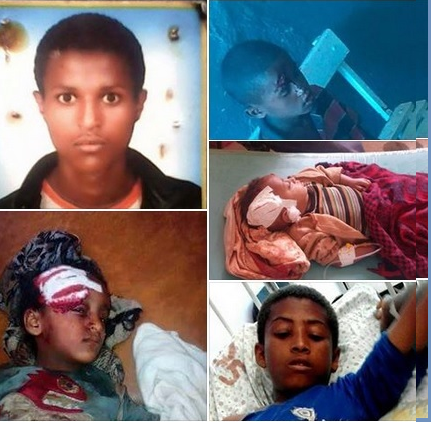
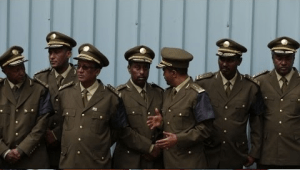








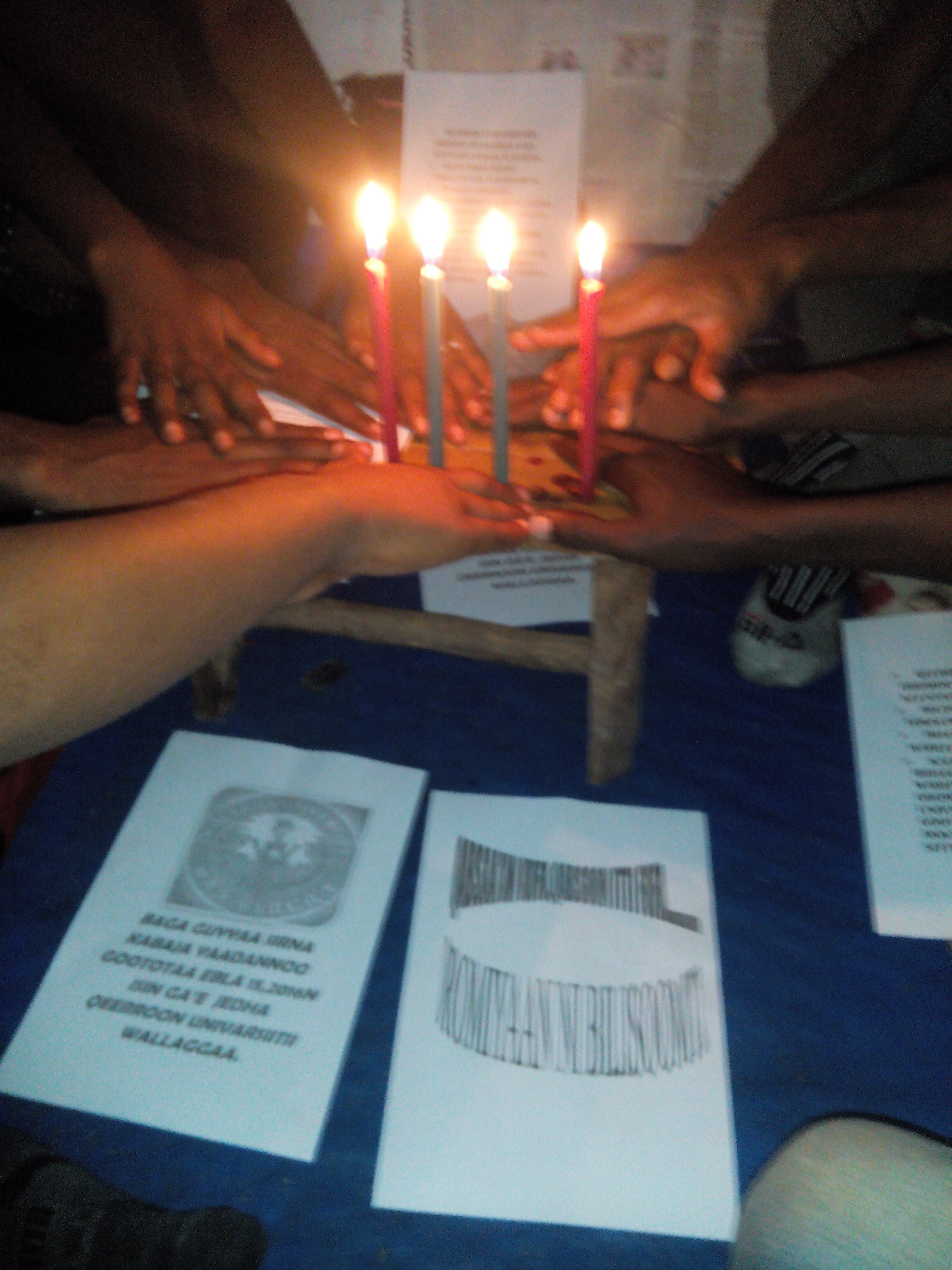



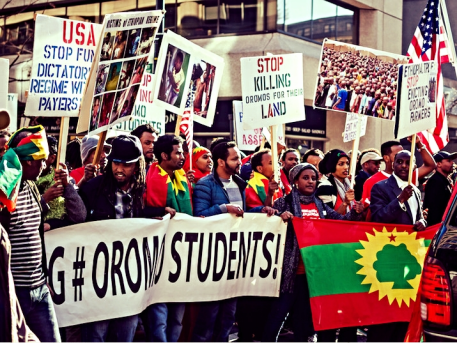


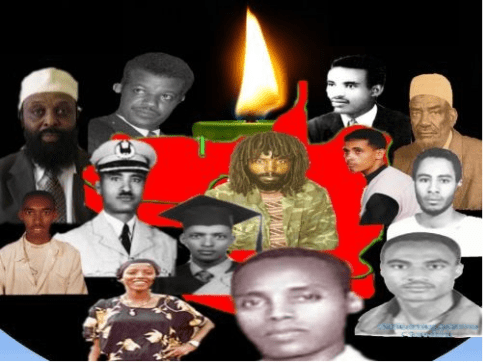


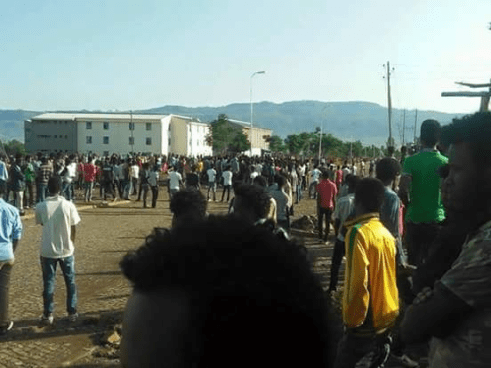
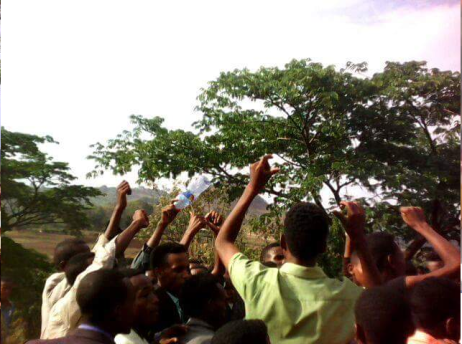

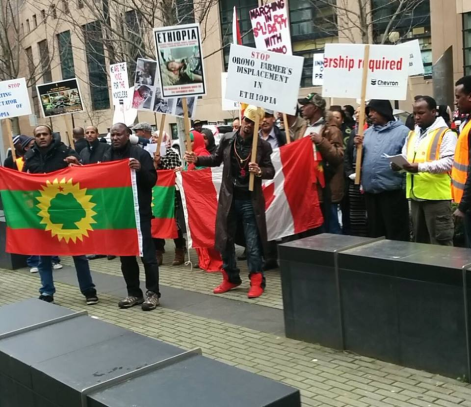
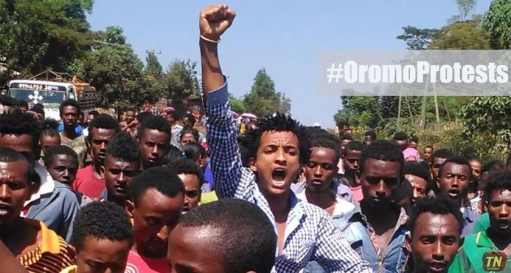
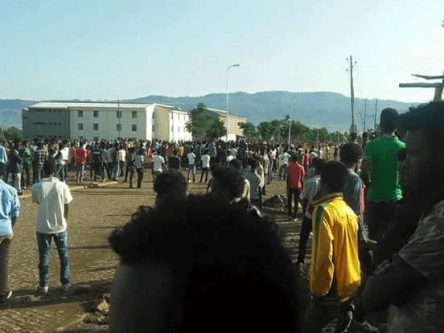
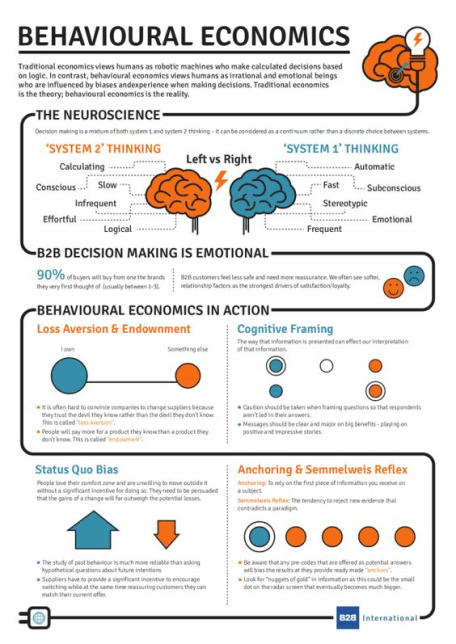
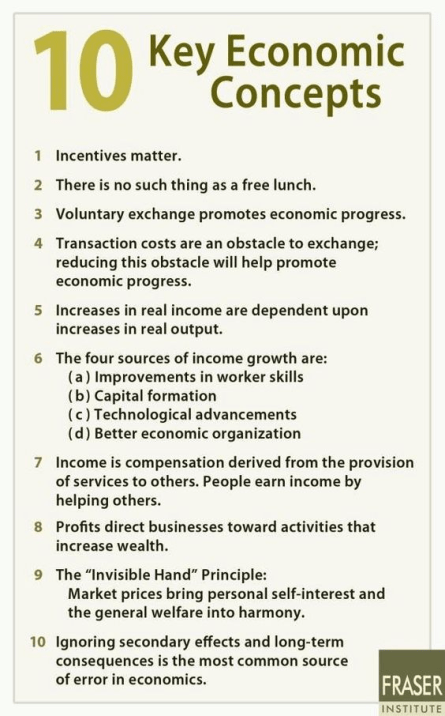
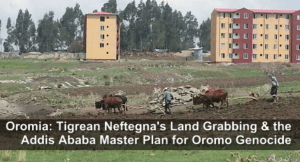
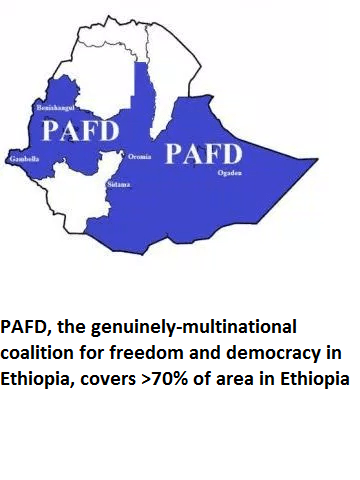

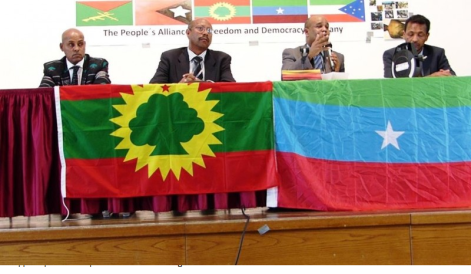
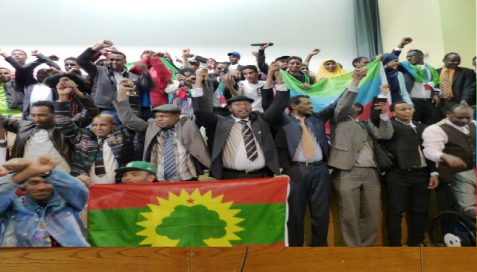
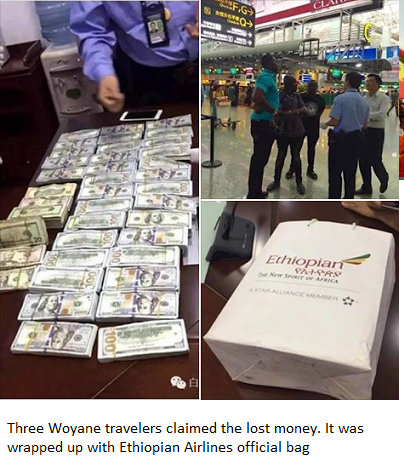
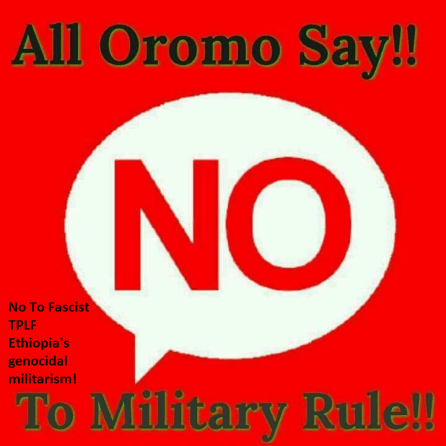
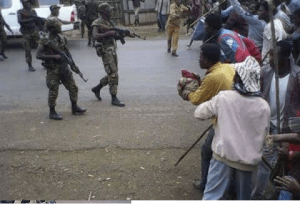
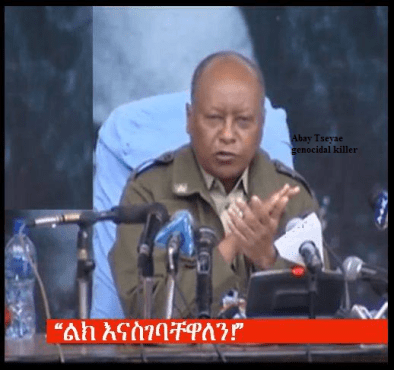
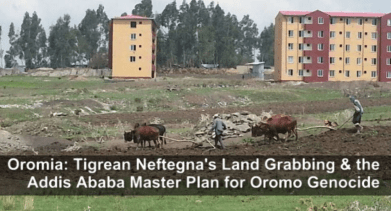






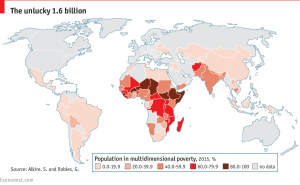
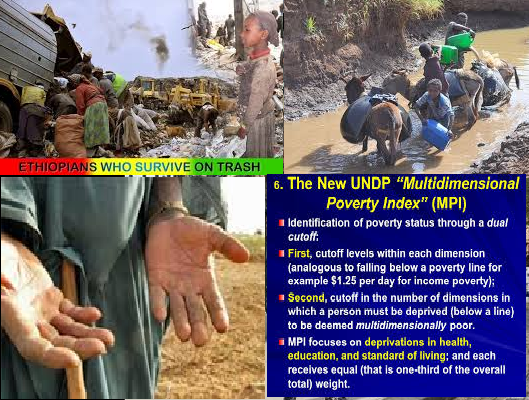


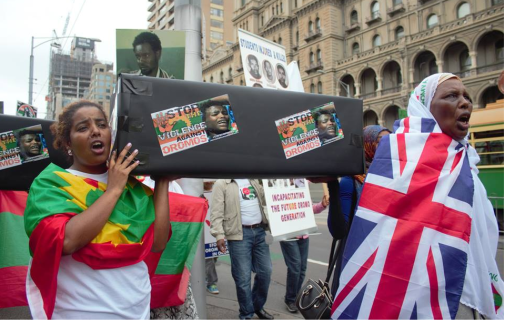



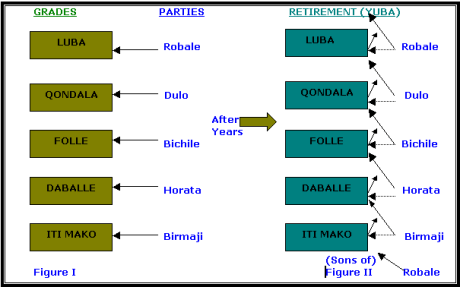
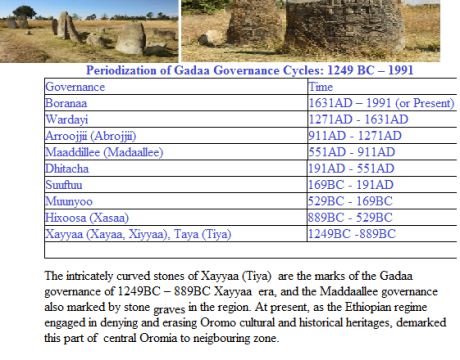

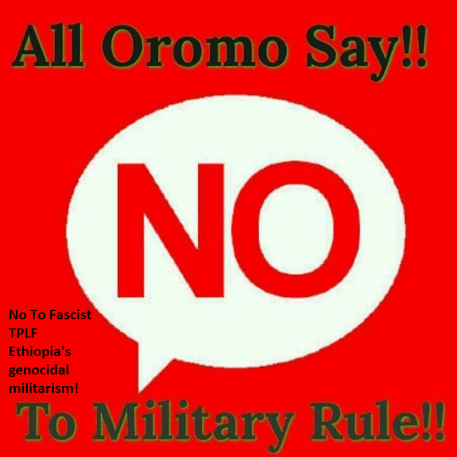


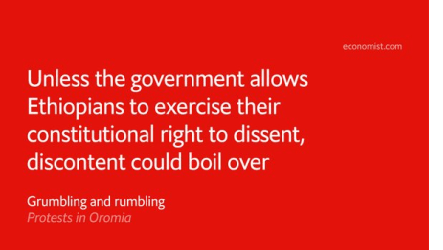
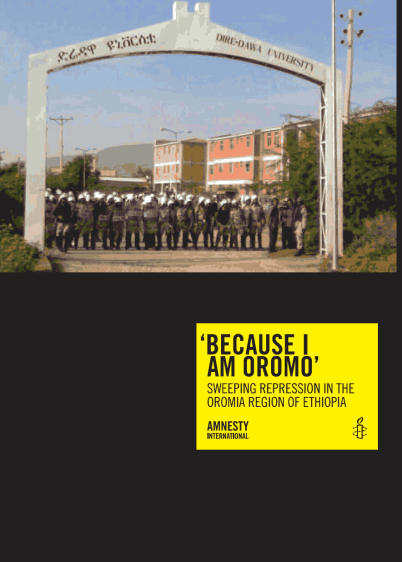
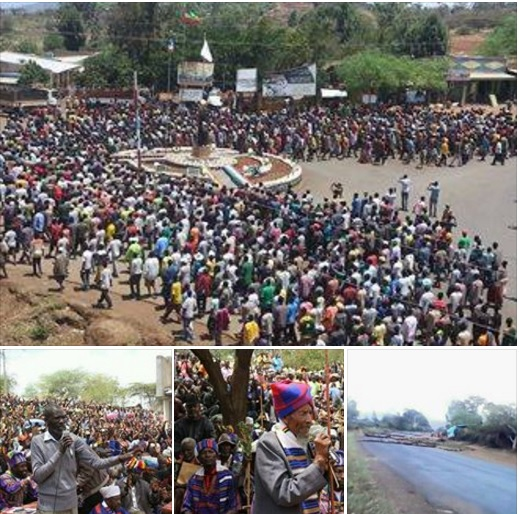
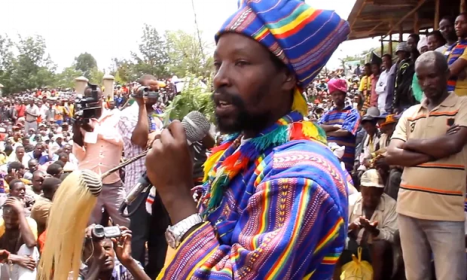
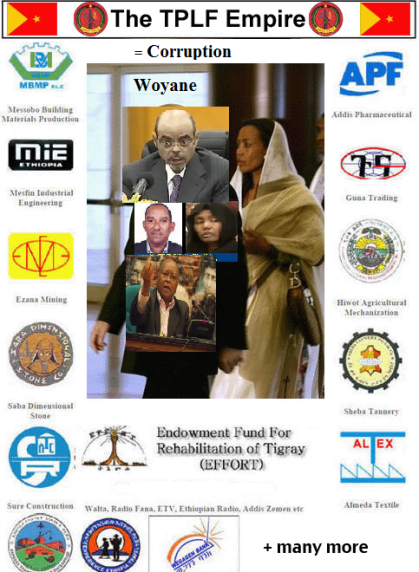
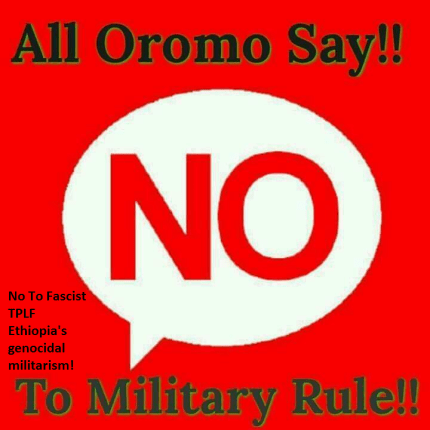
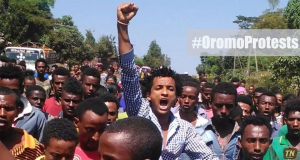







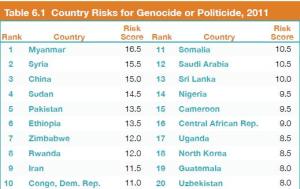
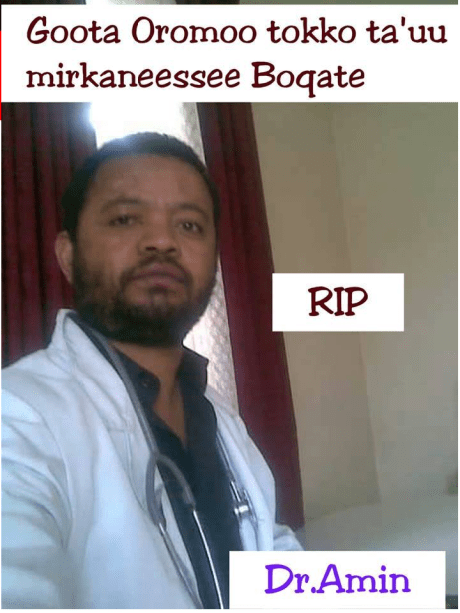




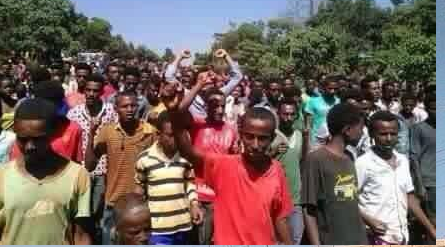



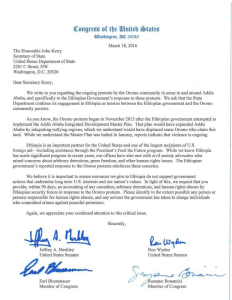

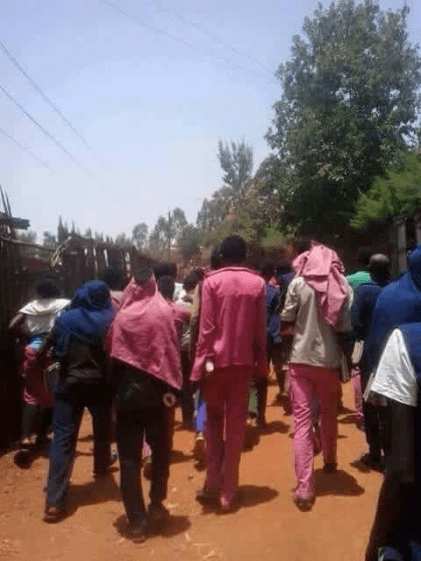



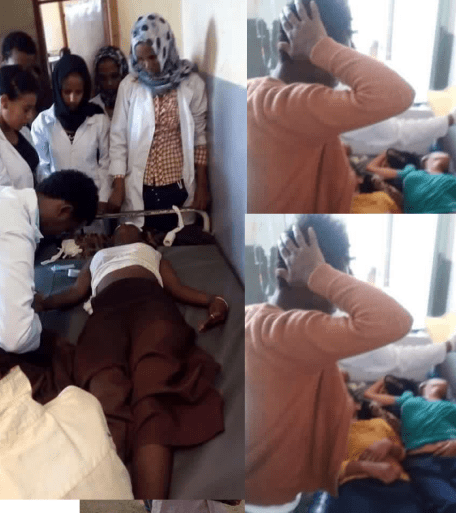
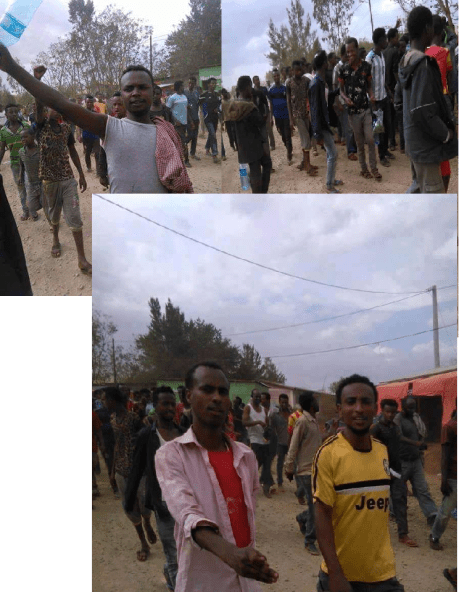

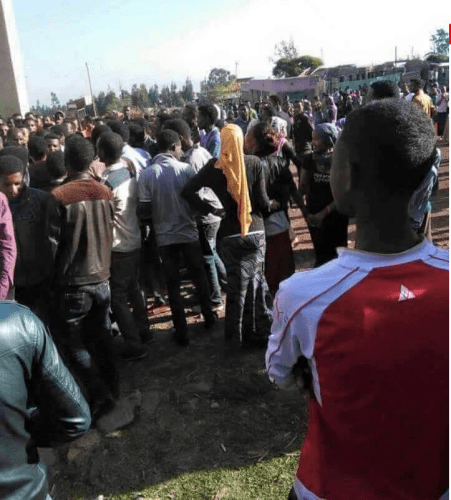

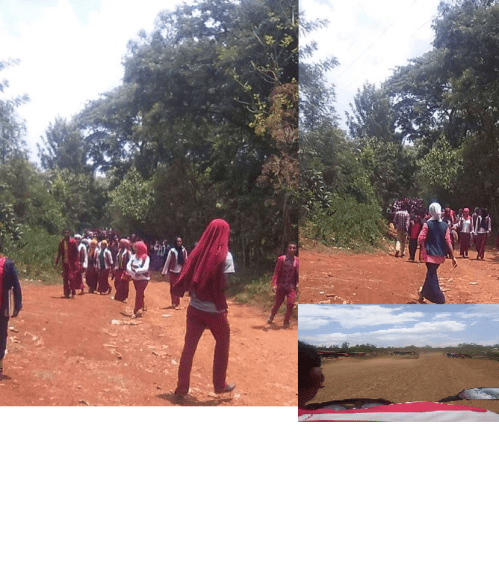


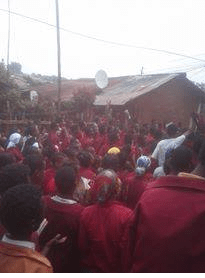



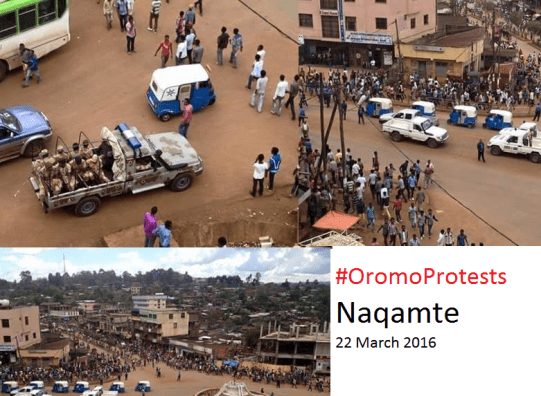
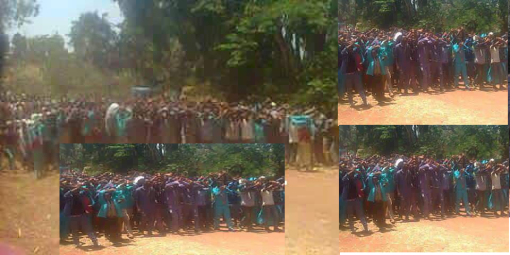
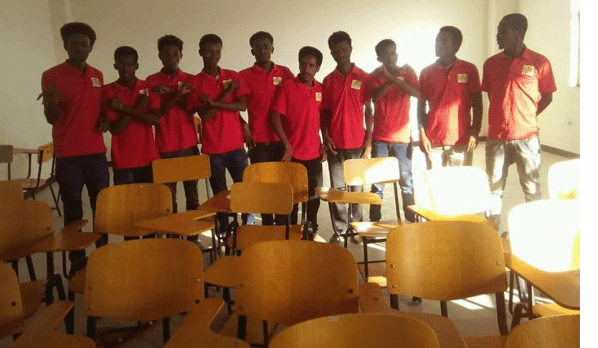
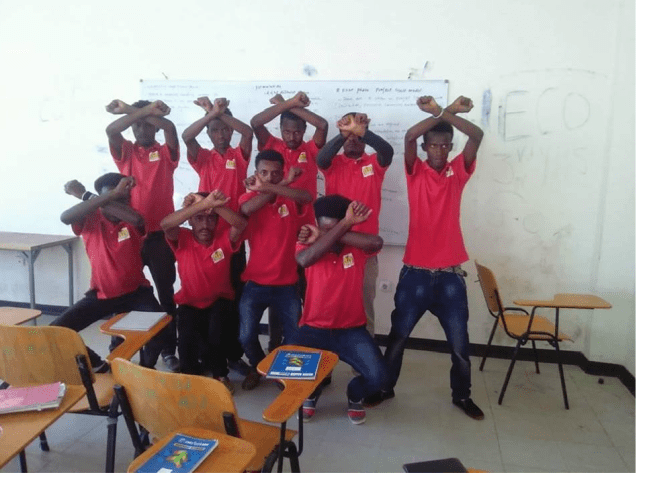



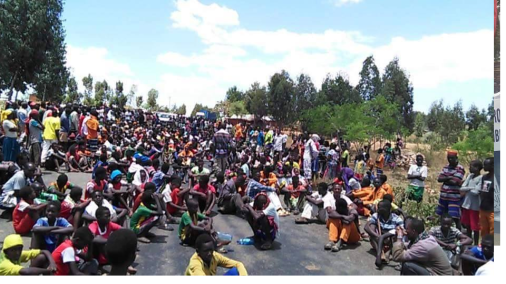
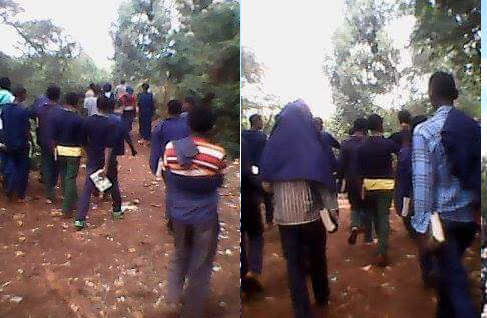


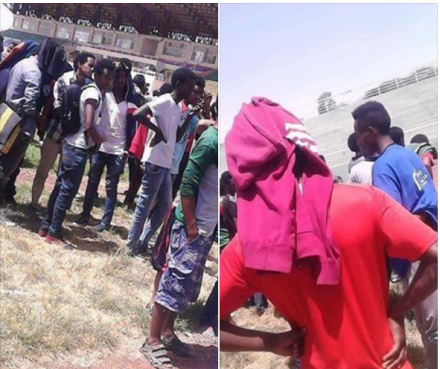
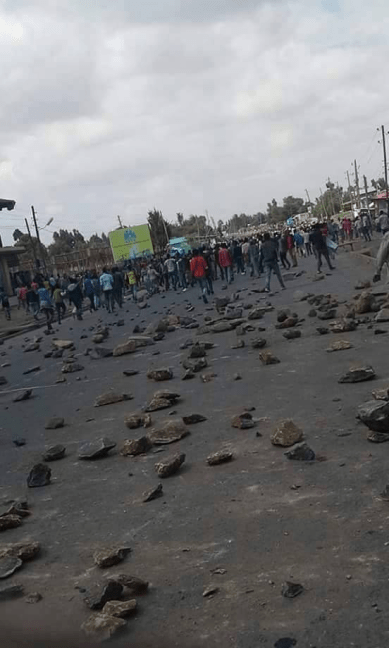

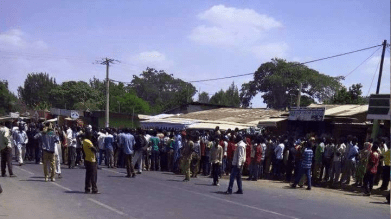
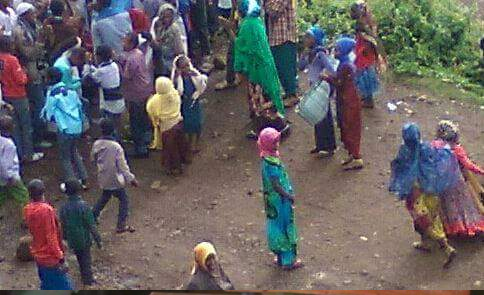
 en hiidhamaan

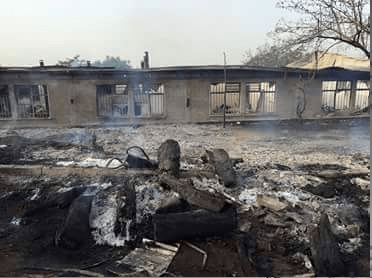
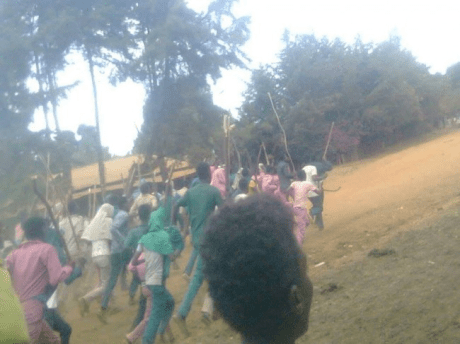
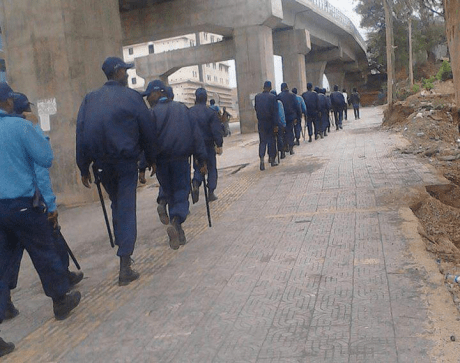
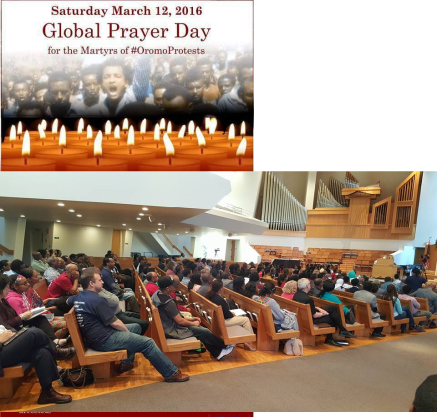
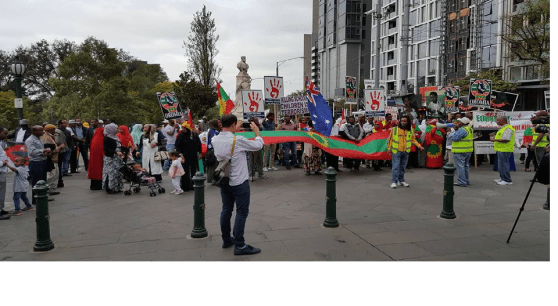

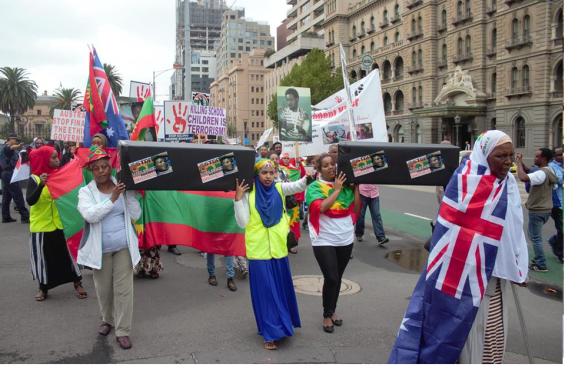

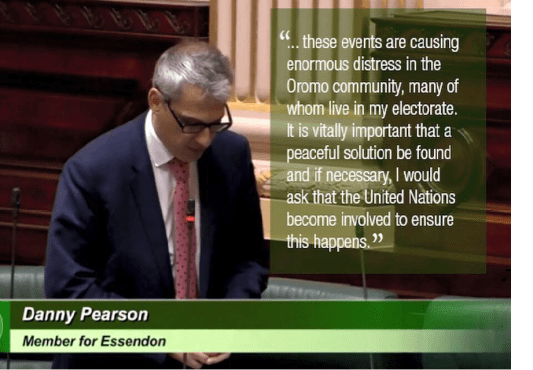
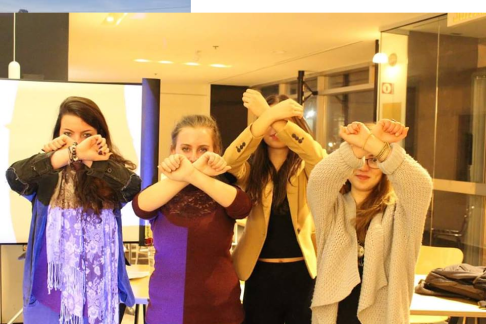
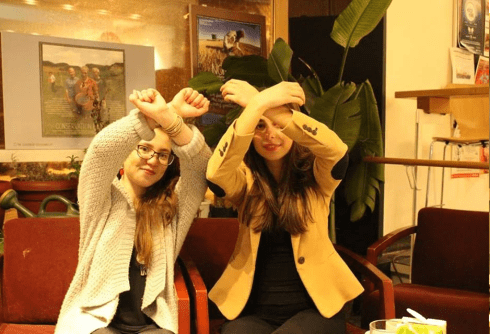
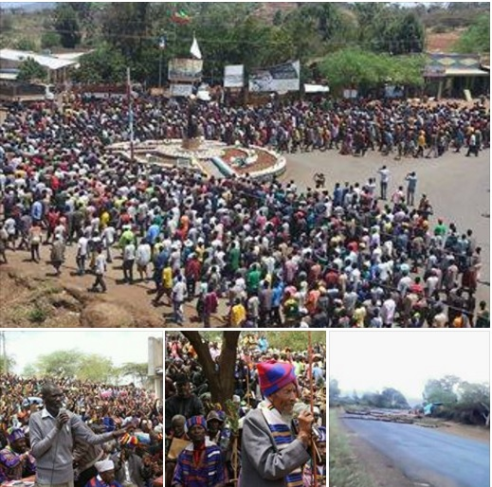
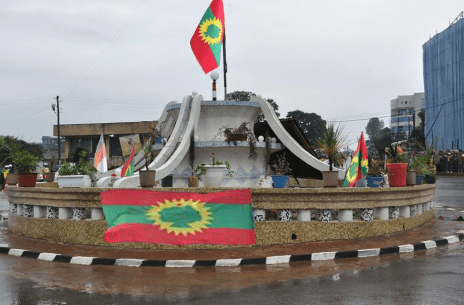


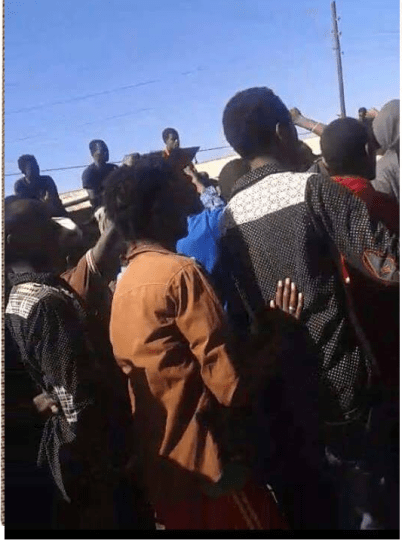
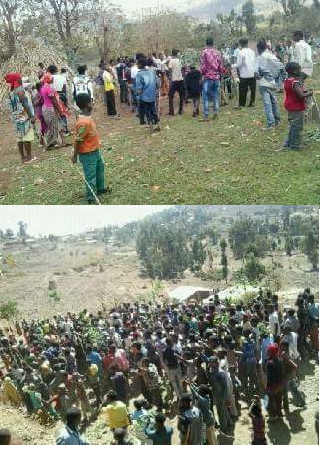
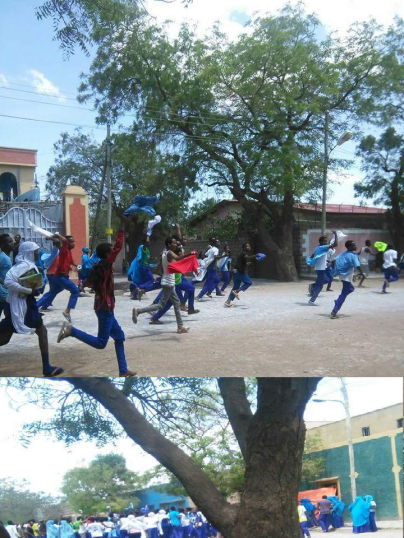
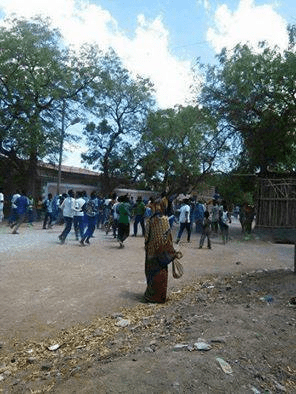


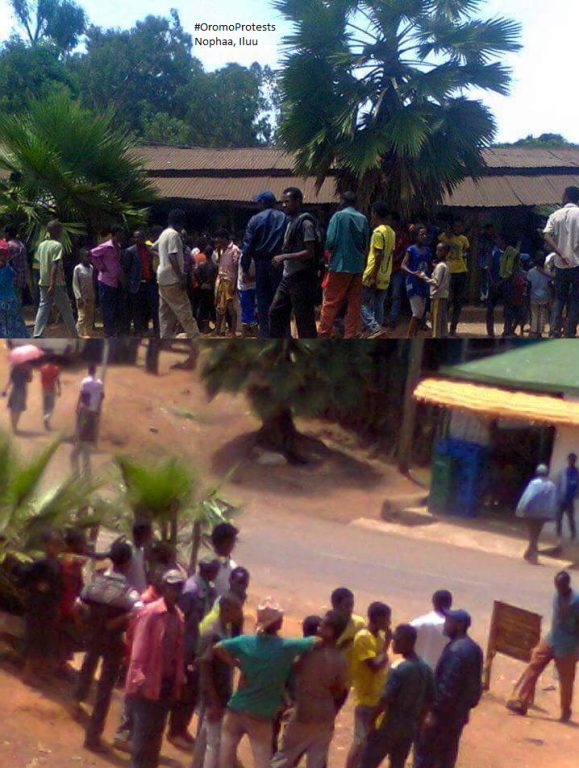
 Guyyaa Har’aa Bitootessa 8,2016 sa’a kanatti barattootni Yuuniversitii Finfinnnee dhibbaan lakkaawaman gara Embaasii Ameerikaa deemuun dhaadannoo dhageesisaa jiru, ammalle itti fufuudhaan naannoo gaar Inxooxxoo qabate qonnan bulaan gama Sulultaas bahuudhan daandi cufee mootummaa EPRDF hin barbaannu ofiin of bulchina, ABOn kallacha qabsoo keenyaati jechaa jiru.


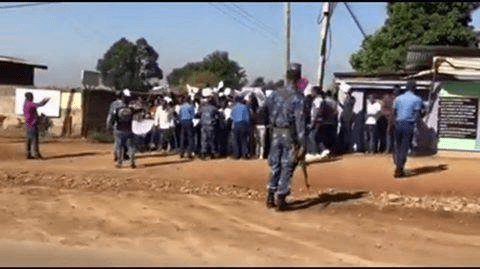


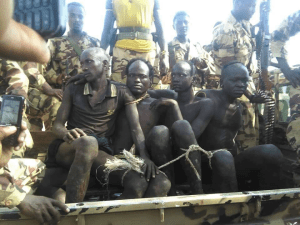

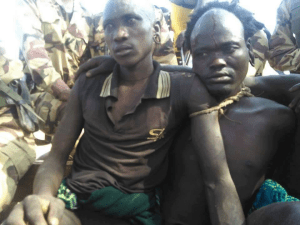
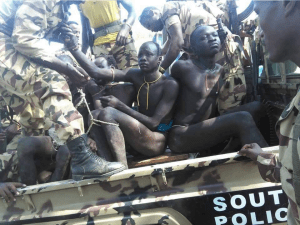


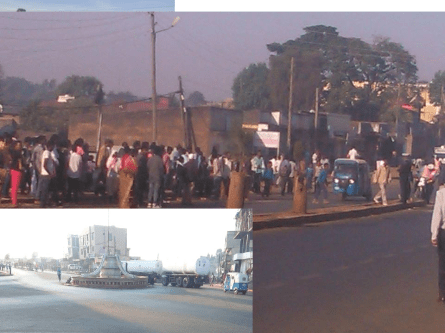


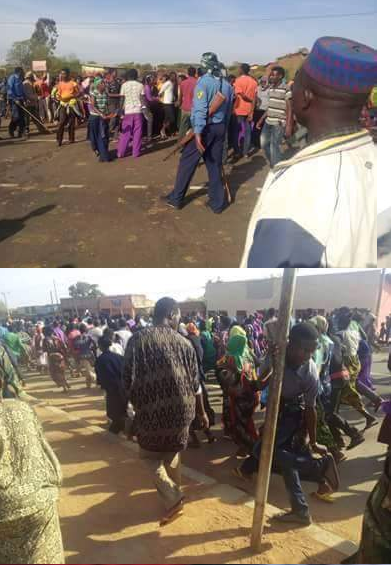




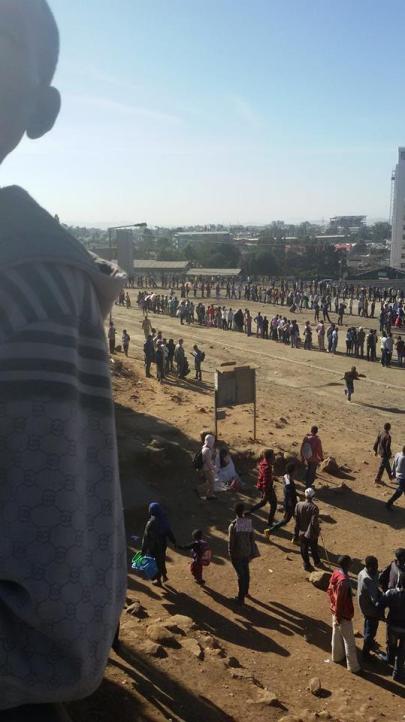


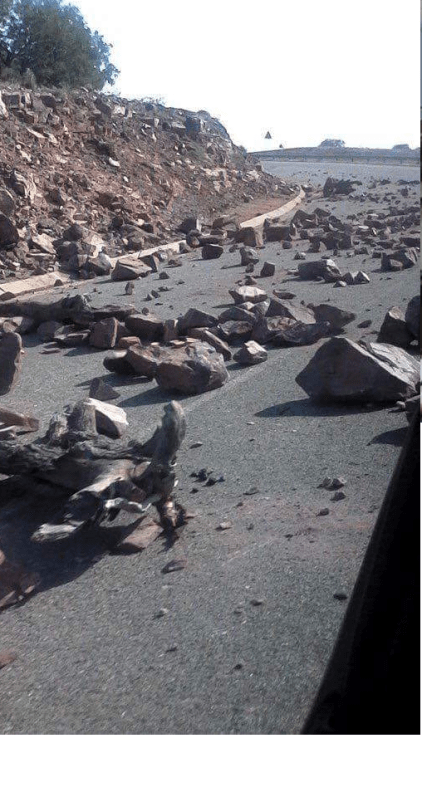
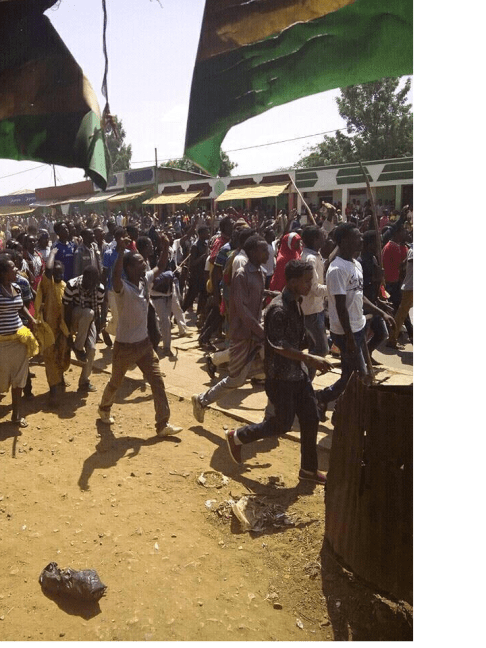
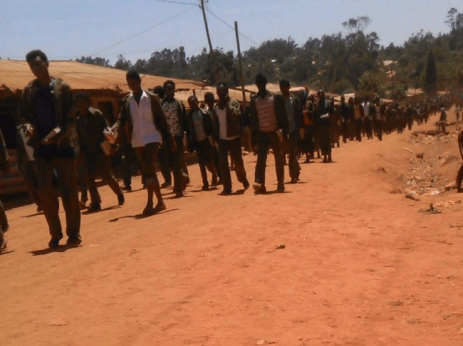
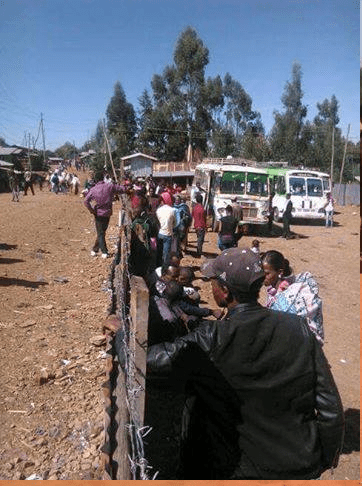
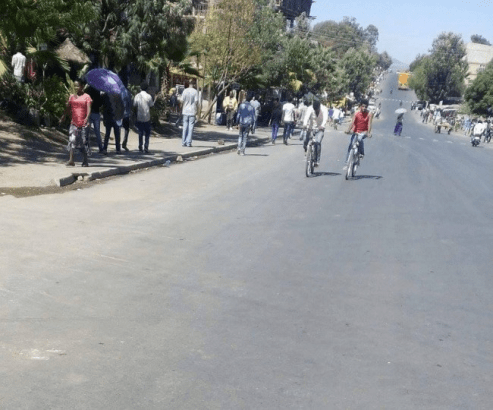
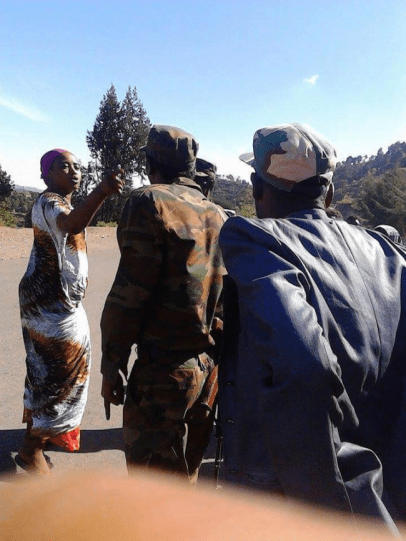
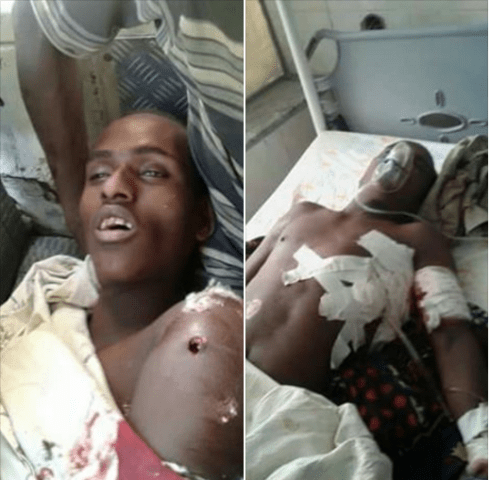

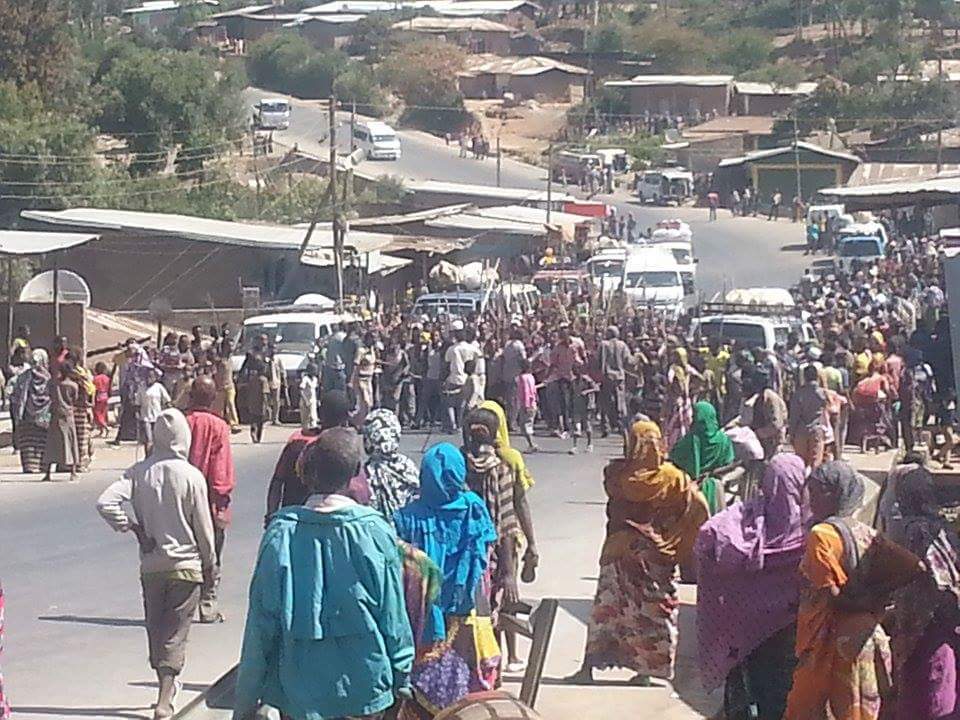


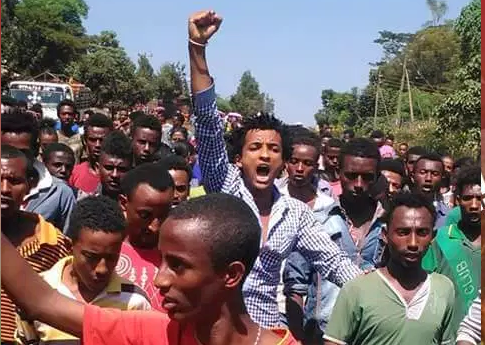
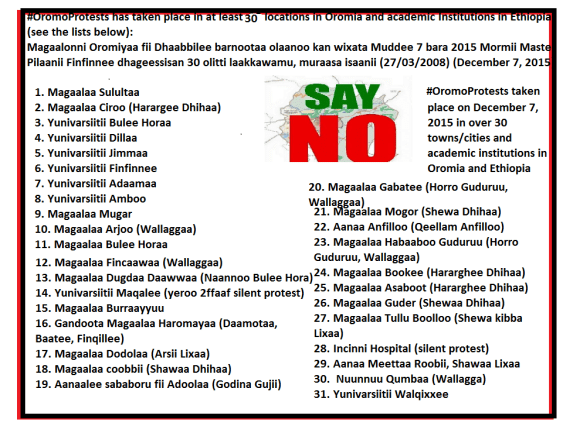


You must be logged in to post a comment.