
Addis Ababa master plan: Oromo protesters claim Liyu police killed 27 after government scraps plan
-
By Ludovica Iaccino, January 20, 2016
Economic and development analysis: Perspectives on economics, society, development, freedom & social justice. Leading issues in Oromo, Oromia, Africa & world affairs. Oromo News. African News. world News. Views. Formerly Oromia Quarterly

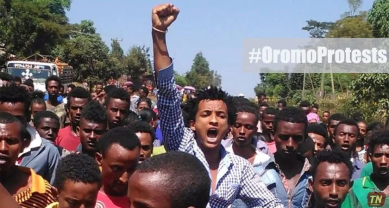
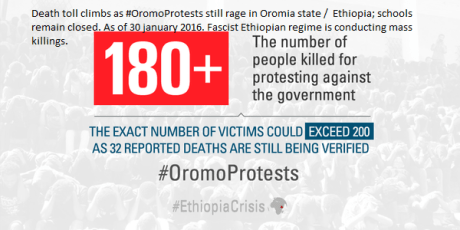
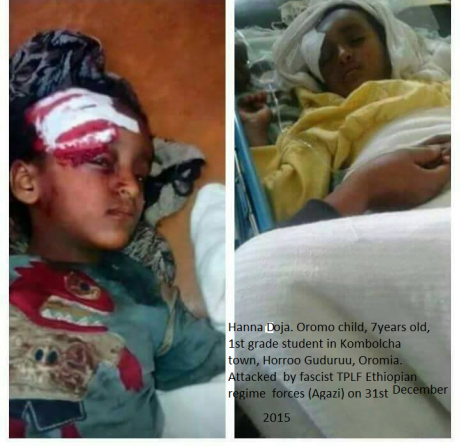
Western governments praise Ethiopia for achieving the fastest growing economy in Africa and for being a key ally in the fight against terrorism. This hides the brutal reality of land grabbing, state/government terrorism, and the incredible cost in human lives and livelihoods. Ethiopia is a multinational country of 100 million people, and all of these nations have suffered state brutality in varying degrees. The country is tightly gripped by the totalitarian repression of a single-party dominated by the elite of a minority ethnic group from Tigray.
This minority regime has created absolute control over the country’s politics, economy, military and media, thus stifling every form of creative dissent. To hang onto power, it has marked every legitimate dissent as terrorism and waged wars against its own people. A handful of Tigrayan elites have used economic growth as a smokescreen behind which they carry out bloody atrocities of land grabbing. They have gobbled up the wealth of the nation to satisfy their insatiable greed and lust for power, thus leaving close to 20 million of their fellow citizens to face starvation.
This regime targets Oromos particularly because they are the most populous nation inhabiting a vast arable and mineral-rich land. The current Oromo protest is an expression of deep grievances under 25 years of such state terrorism, land grabbing and violent repression. It demands the world’s immediate attention. Below is a summary of Oromo protests and the various responses.
– The protest was ignited by elementary and secondary school students in the small town of Giincii on November 12, 2015
– In no time, this spread like wild fire to all parts of Oromia, and Oromos from all walks of life joined the peaceful protests.
– Beautiful images of peaceful protests filled social media. People marching with raised crossed arms or sitting with bowed heads became powerful symbols of peaceful protests.
– The protests attracted wide-spread solidarity from the Oromo diaspora around the world, from other peoples of Ethiopia with similar grievances, and from the Ethiopian diaspora.
– The Ethiopian government has been robbing Oromos of their ancestral lands in the name of development. It has been forcefully evicting millions without adequate compensation or anywhere to go. Hard-working people are reduced to landless, homeless beggars.
– Global land rush has intensified local land grabbing where the government has been violently robing land from the various peoples and leasing out to foreign investors.
– Land is sacred for indigenous Oromos. As they say, dubbiin lafaa dubbii lafee ti [the issue of land is the issue of bones]. Land contains the bones of ancestors symbolizing the depth of the Oromo worldview, knowledge system, history, culture, and identity – a deep spiritual connection. Evicting Oromos from their land is erasing their very existence.
– The trigger for the current peaceful protests is a small soccer field which was taken away from the local youth in the small town of Giincii. Young students in the local primary and secondary schools protested. Enraged by earlier land grab where the nearby Cillimoo Forest was taken away for clearing, parents and other citizens joined the student protests. The environment is as sacred as the land for Oromos; they protect it with their lives.
– By the time the peaceful protests spread and engulfed the whole of the Oromia Regional State, the issue had crystallized around the Addis Ababa Integrated Master Plan, which is the expansion of the capital city into the Oromo lands without any consultation with the people. The government denies that the plan is being implemented, but it is de facto forcefully evicting Oromo farmers from their land and violating their constitutional rights.
– The Master Plan represents an aspect of the ongoing systematic destruction of Oromo identity, history and culture. The protest against the Master Plan is an expression of bottled up grievances, and longstanding issues of injustice and fundamental human rights.
– In 2014, the government mercilessly massacred 78 Oromos, mostly university students peacefully protesting the Master Plan. When bullets are the answer, legitimate grievances remain unaddressed. The current protests raise the same unanswered questions.
– The Master Plan is a smokescreen behind which the government carries out systematic destruction of Oromo identity, history and culture. The Master Plan is only the visible tip of the iceberg; it only calls attention to the deeper grievances around the violation of constitutional rights fundamental human rights and justice.
– The government responded to peaceful protests with its usual bloody violent repression. Its inciting agents killed people, and burned property to tarnish the beauty of the peaceful protests and create an excuse to unleash the military force against unarmed protesters.
– In a dramatic move on 16 December 2015, the Prime Minister vowed to mercilessly crush the protests and deployed the draconian counter-terrorism law to crush the peaceful protesters he marked as terrorists. In effect, this is a declaration of a state of emergency where the administration of the Oromia Regional State is suspended, and Oromia is ravaged by a military force centrally commanded by the Prime Minister. The Ethiopian state turned its military on its own citizens, drowning the people in bloodbath.
– State tyranny has unleashed an all-out genocidal war against Oromos. Merciless killing, beating and mass arrests are now a daily reality in Oromia. Soldiers regularly break into homes and university dormitories, brutally beating people and savagely raping women. In this terroristic punishment of the entire Oromo population, children as young as 8 are killed alongside older people of 85. Girls as young as 12 are gang raped alongside older women. Mothers are killed along with their children. Artists, musicians and journalists are imprisoned and tortured. In universities, Oromo university students are particularly targeted, beaten and killed, imprisoned and tortured. Oromo peace activists and members of opposition political parties are beaten and imprisoned.
– In the current carnage of state terrorism alone (between November 12, 2015 and January 12, 2016), various sources report that over 200 Oromos have been killed while more bodies are still being discovered in the forests, rivers and ditches. Over 2000 people are mercilessly beaten and seriously injured while some are being denied medical treatment. Over 10,000 are imprisoned, and many of these are being tortured at this time.
– While states are responsible for protecting universities from attack according to the UN Human Rights Council, the Ethiopian State has turned universities into war zones and military camps where no critical dialogue can take place. Oromo students are hunted down and beaten, raped, killed or imprisoned. Others run away from university campuses because it is impossible to learn under such conditions of state terrorism. The Ethiopian state is systematically carrying out epistemic genocide against Oromos to destroy their intellectual capacity and stifle critical questioning.
– Human rights organizations like Amnesty International and Human Rights Watch and some Western media have been reporting the atrocities. However, the response from Western governments has been largely silence or mild statements that don’t mean much in terms of addressing the carnage.
– Nations promoting democracy have blindly endorsed the government’s shameless claim of 100% election victory, thus completely stifling dissent. While anyone with a rudimentary sense of democratic process would know how ridiculous this is, Western governments have chosen to endorse the violent totalitarian repression of fundamental freedoms and rights.
– They have emboldened the Ethiopian government to continue its atrocity with impunity. De facto condoning the brutal repression, major donor countries like the U.S.A., the UK and European Union continue to provide aid money with little or no attention to the respect of basic human rights or constitutional rights of the people.
– They continue to praise Ethiopia for development even when humanitarian organizations report that a staggering 20 million need help this year, even as they know this increasing need for food aid by a country that registers double digit economic growth is a sign of failed policy and failed governance.
Any nation genuinely interested in promoting peace and democracy should be outraged by the blatant massacre of peaceful protesters legitimately demanding the respect of their constitutional rights. We demand that Western governments, particularly the donor nations, denounce the atrocities of the Ethiopian government and ask it to immediately and unconditionally:
1) lift the merciless military rule imposed on the Oromo people
2) stop the killing, beating, raping, imprisoning and torturing of innocent people
3) release all peaceful protesters and political prisoners
4) bring to justice those responsible for the genocidal atrocities
5) restore the constitutional rights of the people to hold peaceful rallies
6) avail itself to the calls for peace and national reconciliation
7) allow people to participate in the affairs affecting their lives and livelihoods
8) start participatory development that includes people’s development

Struggle Towards a Peaceful Sociopolitical Transformation in Ethiopia: Bekele Gerba as one of the Leading Icons
By Begna F. Dugassa, Ph.D.

The Tigray Peoples Liberation Front (TPLF) led government of Ethiopia is portraying Bekele Gerba as a violent man and charging him with instigating violence. Ordinary people are characterizing him as a compassionate, kind and a caring teacher, a professor and a humble political prisoner. Some people take it further and think Gerba acquired his political philosophy from the great leaders of our recent past such as Gandhi of India, Martin Luther King of America and Nelson Mandela of South Africa. If that is the case, inspired by those renowned leaders Gerba is humbly facing humiliation. In reality, who is Bekele Gerba?
Bekele Gerba is a deputy chairman of the Oromo Federalist Congress (OFC). In my short personal conversation with him, I found him to be a good listener, humble, compassionate and forgiving. I agree with the view of those who say that he has been influenced by the principles of Gandhi, Martin Luther King and Nelson Mandela. In addition, as a school teacher and professor he might have been influenced by Paulo Freire’s teaching facilitating students “learn to read the word and the world”. He has a strong character and compassion for a peaceful mass movement. At one point he said “promoting a peaceful movement is not the path that scary leaders choose to prevent personal risks, it is a strategy they follow to humbly accept personal humiliation and reduce harm to the public[2]”.

In Gerba’s mind, the principles of Gandhi, King and Mandela are not foreign ideas to him and to the Oromo people; they are indeed consistent with the Oromo principles of nagaa (peace) and (Gada) democratic system of governance which are enshrined in the Oromo culture. He believes that only a peaceful mass movement can guarantee real change and sustain building a democratic society in Ethiopia. In Gebra’s mind and heart, violence has no place. In several interviews, he repeatedly and emphatically noted that even those who are involved in the killing and those who are ordering the killings and imprisonment knew that they are wrong and in the backs of their mind they feel guilty. He believes such self-righteous individuals will realize their wrongs and gradually join the peaceful mass movement.
The first time I heard the name of Bekele Gerba was when a friend forwarded me his powerful speech that he made on the 2010 election debate. His speech was thoughtful and articulate. He is a linguist and his language skills have given him the tools needed to articulate the aspirations of the Oromo people. In many parts of the world having individuals who are thoughtful and articulate is desirable and such individuals are usually respected and rewarded. However, things are different in the eyes of the Ethiopian government officials.
Like many other dictators, the TPLF- led Ethiopian government sees human rights activists as “the enemy”. Soon after Bekele Gerba met the Amnesty International research team, the Ethiopian security forces charged him for crimes he never committed and threw him into jail. TPLF officials fear him not because he is a violent person or conspiring to promote violence, but because he is thoughtful and articulate. The Ethiopian government’s concern is that he can articulate the demands and the aspirations of the Oromo people to the Amnesty International research team. For that the TPLF officials fabricated a dramatic type of crime and sent him to jail. He was released from prison in 2015 after serving four years.
In 2015, the Oromo Studies Association (OSA invited Bekele Gerba (an Oromo) and John Markakis (a Greece-American) to be two keynote speakers. OSA always encourages diverse perspectives and views (because no one has a monopoly on knowledge) to be presented at its annual conferences. Bekele was a university professor before he was imprisoned. Before that he was a school teacher. His lived experiences, and career as a school teacher, university professor, politician and then political prisoner have given him a wide range of perspectives. He was therefore an excellent candidate to be invited by the OSA as one of the keynote speakers. When I learned he was to be one of the OSA’s keynote speakers, on the one hand I was happy that I was going to be able to hear his first hand presentation. On the other hand, I was concerned because many Oromo intellectuals are leaving the country and I wanted him to stay in Oromia to provide the leadership. My reason is I knew one of the motives of the TPLF government is to deny the Oromo people all forms of leaderships.
I know that Bekele Gerba has spent four years in prison for a crime he never committed. I know he clearly understands the social problems that afflict the Oromo people and the causes of those problems. I also know he has met hundreds of Oromo prisoners who are languishing in Ethiopian prisons “because they are Oromo”. He knows that thousands more of Oromo men and women who are languishing in several prisons “because they are Oromo”. Therefore, in my mind I pictured him asssumured in my mind assumeman. ee social conditions in which the Oromo people live. ( from “ pictured him….” to the end is a mess. Better fix it!) He meet thousands an angry man. However, when I met him and talked to him he did not look like an angry man. He was not angry at those who imprisoned him. It is not that he was not hurt. Indeed, he was deeply hurt. Yet, he overcame the pain he went through and chose to forgive those who subjected him to pain. When I clearly understood his deep commitment to a peaceful mass movement and his forgiveness to those who imprisoned him, I was deeply touched. As Hillary Clinton, the Democratic candidate for the US president, once said “forgiveness is a way of opening up the doors again and moving forward, whether it’s a personal life or a national life” I realized the motive of Gerba to forgive is to move forward. I am deeply touched by this.
Let me tell you why I am deeply touched. When I was writing my Ph.D dissertation I was interested in human rights and public health. Therefore, it was natural to associate with students who geared their research interests to peaceful social movements such as Gandhi and Martin Luther King. At that time a friend who was focusing on Gandhi’s philosophy organized a research conference and invited me to present a paper. I presented a paper on Famine and Human Rights in Oromia. In the paper I explored the ways human rights violations perpetuated by consecutive Ethiopian regimes were contributing to cause famine. One of the audience members knew the situation that I was talking about and asked me if Gandhi type leaders need to be born in Ethiopia. I answered the question saying “thousands of Gandhi types of leaders are being born every year, but the social conditions of Ethiopia do not allow them grow. If Gandhi was born in Ethiopia, he would have been killed while he was still young”. I further elaborated saying “although the British colonial rulers and the US slave holders were brutal, the system allowed many British and US citizens to be guided by a sense of “ethics”. Such a system allowed diversity within the dominant group of citizens and for this reason some of the members of the dominant group sympathized with the causes of those who were marginalized. However, the Ethiopian system does not allow diverse opinions to flourish. Abyssinians like Wallelign Mekonnen who are inclined to promote social justice for the oppressed people are killed and such killing has suppressed others. Oromo elites who tried to develop inclusive politics- like Haile Fida- and who tried to reform the Ethiopian Empire could not survive long. Consistent with Newton’s law of motion that states “to every action, there is an equal and opposite reaction” and many Oromo leaders who came after Fida chose to focus on organizing the Oromo people. I was convinced that in such political conditions Gandhi and Martin Luther King types of leaders and inclusive leaders could not grow to be national figures.
When I talked to Bekele Gerba and listened to his interviews, I started to question my own assumptions. Clearly he has successfully overcome the challenges that I identified above and developed a deep commitment to a peaceful mass movement and inclusive politics. The question I had in my mind at that time was, would the Ethiopian government allow such a thoughtful individual who fully adheres inclusive politics (diversity, equity and self-rule on one hand and unity on the other.
In December 2015, the Ethiopian government arrested Bekele Gerba again. When I heard the news, it reconfirmed my view about the system. Professor Merera Gudina rightfully characterized the ways the TPLF leadership thinks and functions when he said “although the TPLF has left the jungle behind, the jungle did not leave them behind.” The TPLF leadership needs to walk up and move away from the violent mindset that was instrumental to them when they were in the jungle. Leading a country with a population of a hundred million and leading a guerilla force are quite different things. They need to realize they are heading the second most popular and linguistically the most diverse empire or federal state in Africa. They need to understand they are heading a country where the headquarters of the African Union is located and hundreds of diplomats stationed. They need to realize that the rule of law of the jungle is unsustainable.
The TPLF leadership need to understand Newton’s law of motion that states “to every action, there is an equal and opposite reaction”. Imprisoning Bekele Gerba and his colleagues does not silence the voice of the Oromo people who are demanding social justice, human rights and rule of law. The voices that the Oromo people clearly and loudly spoke, from the North to South, and East to West in the last three months has delivered a clear message: “we do not allow any forms of injustice”. Consistent with Newton’s law of motion, as the TPLF oppress the Oromo people, evict them from their land, imprison and kill their children, the voices of the people demands for social reform and structural changes will dramatically increase. The TPLF leaders need individuals like Gerba and his colleagues who can be instrumental in facilitating smooth political change and lead social transformation in the country.
Gerba and his colleagues are the beloved sons and daughters of Oromo people and they want them free. Certainly, Gerba and his colleagues are in a better position to secure not only the Oromo children but also, the Tigray children and others. Having said this, let me leave my note with the quote below and encourage the TPLF leadership to reevaluate their framework of thinking, free all political prisoners and join the peaceful march led by Gerba and his colleagues.
Today, I see thousands of Mahatma Gandhis, Martin Luther Kings, and Nelson Mandelas marching forward and calling on us. The boys and girls [i.e. Gerba & others] have joined. I have joined in. We ask you [the TPLF leadership] to join, too.
Kailash Satyarthi
Begna F. Dugassa, Ph.D.
[1] Begna Dugassa, Ph.D., promotes human rights and health. He researches and writes in human rights and public health. His recent work is published in the Journal of Preventive Medicine in February 2016. The title of the article: Free Media as the Social Determinants of Health: The Case of Oromia Regional State in Ethiopia.
[2] Translation is mine.

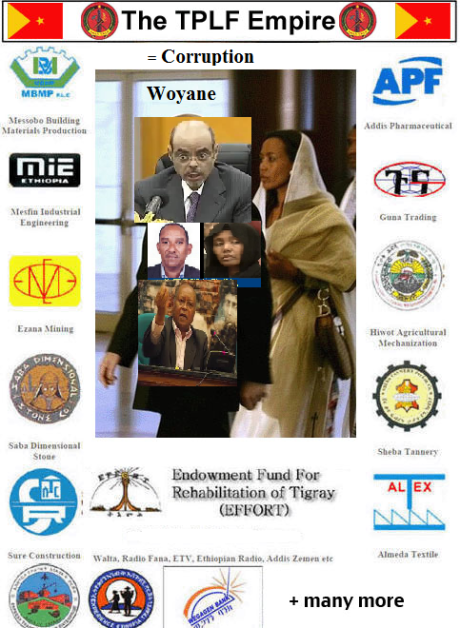
The 2015 Corruption Perceptions Index clearly shows that corruption remains a blight around the world. But 2015 was also a year when people again took to the streets to protest corruption. People across the globe sent a strong signal to those in power: it is time to tackle grand corruption.
José Ugaz, Chair, Transparency International
Ethiopia is listed among the countries in the world where corruption highly prevails. According to Transparency International’s Corruption Perception Index, Ethiopia ranks 103 out of 168 countries and territories included in this year’s index.This doesn’t come as a surprise to many as Ethiopia has been for two decades under the control of a bunch of corrupt officials who are deafening us with the ‘11% economic growth’ mantra while millions of Ethiopians are starving to death.These corrupt officials are killing, torturing and imprisoning citizens in hundreds and thousands because they challenged their corrupt attitudes and their endless greed for wealth and power.
Related:-
The Conflict between the Ethiopian State and the Oromo People, by Dr. Alemayehu Kumsa


Unfortunately it is not unusual for the Ethiopian government to conduct ethnically-based human rights violations in its own country. Only a few weeks go, Oromo civilians were specifically targeted and killed in their home towns following peaceful protests. Today it is the Anuak community who is suffering from oppression by national authorities. The government seems to have started the conflict to repress a group of civilians suspected of affiliation to the Gambella Peoples’ Liberation Movement (GPLM). The People’s Alliance for Freedom and Democracy (PAFD) condemns these atrocities and pleads the international community to take these continuous human rights violations in consideration when engaged in relations with the Ethiopian Government.
Photo courtesy of Julio Garcia @Flickr
On January 27, 2016, around 2:00 am local time, ‘special police’ from the regional administration of Gambella aided by local militia attacked Anuak civilians all over the region. Subsequently, the death of more than four dozen of Anuak civilians have been reported; and the indiscriminate massacre of unarmed Gambella civilians is said to be continuing. Moreover, the local militia close to the regional administrator attacked a prison in Gambella town and residential areas by killing more than 8 people and destroying the regional state prison.
In Gambella, the Ethiopian government arms and trains both the special police forces and the local militias. Therefore, the government is believed to have instigated the current conflict after it has suspected that the Anuak are affiliated to Gambella Peoples’ Liberation Movement (GPLM), one of the founding members of the ‘Peoples’ Alliance for freedom and Democracy’ (PAFD). The instability of the South Sudan is also said to have negatively impacted on the intra-communal harmony.
Between 13 and 16 of December 2003, in Gambella region, the Ethiopian army has massacred over 424 Anuak people, wounding further 200 and causing the disappearances of about 85 people.
Time and again, we have witnessed such profoundly disturbing crimes perpetrated by the current Ethiopian government on civilians of all regions. Since November 2015, the Ethiopian government’s forces are committing similar massacres and brutally treating unarmed Oromo civilians in various Oromia villages and towns. The Oromo civilians are peacefully protesting TPLF’s land-grabbing policies under the pretext of expanding Addis Ababa.
The regime blatantly continues committing similar massacres in Ogaden Somali, Sidama, Tepi-Mezenger, Beni-Shangul and other regions in front of the international community. Civilians and opposition groups and their supporters are arbitrarily imprisoned, continually tortured and denied legal representation. Millions of farmers are continually uprooted from their livelihoods to vacate their land for TPLF’s business. Journalists for writing the truth and all those who dare to exercising their constitutionally guaranteed rights are classified as terrorists.
Therefore, PAFD
– Categorically condemns the Ethiopian government’s systematic instigation of the current conflict in Gambella and urges it to stop the arming of one ethnic group to stand against their own people.
– Calls upon all the Gambella civilians to exercise utmost restraint; stop massacring their own brothers and sisters- instead uniting to resist authoritarian TPLF’s regime
– Calls upon all Gambella related democratic movements and liberation fronts to unite in unanimously denouncing the Ethiopian government’s heinous tactics of inciting conflicts between fraternally co-exited brothers and sisters.
– Calls upon all the international and Ethiopian related democratic forces to unite in condemning the on-going Gambella massacre orchestrated by the Ethiopian government.
– Calls upon all the international humanitarians and Western politicians to rethink their position whilst supporting the Ethiopian TPLF’s authoritarian regime.
– Call upon all foreign groups to desist from interfering in the internal affairs of the Gambella peoples.
For the original press release please download this.
By Habtamu Dugo*, Finfinne Tribune, 1st February 2016
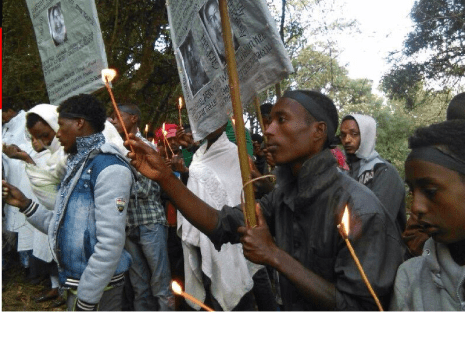
The number of Oromo civilians killed, maimed, tortured, disappeared and raped by Ethiopian government forces has been increasing after Ethiopia’s Foreign Minister Dr. Tedros Adhanom met with the European Union and US Ambassador to the United Nations Samantha Powers. Ignoring concerns by the EU and Ambassador Powers over Ethiopia’s government’s violent responses to peaceful Oromo protesters, Tedros’ government has continued with the killings and many other forms of atrocities against the Oromo people, including killing children.
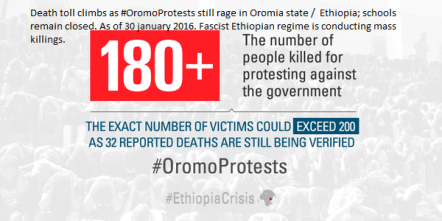
The number of state-led killings has now increased to 185, according Abiyi Atomsa, an Oromo activist who provided the “minimum death tolls”. Another source, Ethiopia Crisis, a group that monitors the crisis and provides updates on the violence, reported on January 29, 2015 that the number of people killed for peacefully protesting against the government over land grabbing “exceeds 200.” A month ago, Human Rights Watch reported that 140 members of the ethnic Oromo were killed for protesting a government plan to expand the boundary of Addis Ababa city into Oromia regional state by evicting Oromo farmers. HRW stated “arrest of respected politician” Bekele Gerba, Deputy Chairman of the Oromo Federalist Congress, marked the escalation of the crisis.
The European Union Parliament, which correctly assessed the crisis and debated on it and passed a 15-point “resolution on the situation in Ethiopia”, is the only international actor with concrete plans to curb massive rights abuses by the Ethiopian government in Oromia if and when this monumental resolution is translated into actions. Not only did the EU parliament condemn the excessive use of violence by government forces against peaceful protesters, it also called for impartial investigations into killings and other human rights violations and for the prosecution of responsible government actors. More importantly, the EU made it clear that aid to Ethiopia will be contingent upon the protection of human rights going forward. The resolution “stresses that financial support to Ethiopia from the EU should be measured attending to the country’s human rights record and the degree to which the Ethiopian government promotes reforms towards democratization, as the only way to ensure stability and sustainable development.”
Contemptuous of the EU and concerns of Western nations providing aid, $3 billion amounting to half of Ethiopia’s national budget, the Ethiopian regime has not taken any steps to de-escalate the situation. In fact, it’s escalating the use of lethal force against unarmed protesters in Oromia and Gambella regions.
The United States government has failed to follow the good example set by the EU parliament; the US does not yet have a concrete plan to curb the unfolding crimes against humanity against the Oromo population by the Ethiopian state. Despite a stark omission of violence against the Oromo protesters by Ethiopian government from a recent White House National Security Council statement, the State Department and some US diplomats have publically expressed increasing levels of concerns about the killings in Oromia, and urged the Ethiopian government to “allow peaceful protests” and called for “a meaningful dialogue about Oromo community [people’s] concerns.”
While increasing expressions of concern are welcome by the Oromo people, all these statements from the US government lack any concrete plans on how to stop the atrocities by the Ethiopian government. Having observed the reluctance by the United States, the Ethiopian government continued with massive atrocity crimes in the state of Oromia. These statements cleverly avoid the need for involving political actors in the said dialogue. It is very well known that the situation calls for more than a dialogue at this stage—a possible change of system or a comprehensive negotiation of a transitional order involving all political actors with opposing ethno-nationalist agenda. Activists on social media tweeted to the White House, the State Department and Ambassador Samantha Powers and demanded a more concrete action that would lead to holding the regime accountable.
Britain has also expressed concern through its member of parliament. James Duddridge, member of the UK Parliament, posted a message on Twitter saying that he, “raised concerns with Tedros Adhanom [Ethiopia’s MFA] about Oromo protests—important for authorities to exercise restraint and address the root causes.” This expression of concern on social media is welcome, but it raises a question as to whether the United Kingdom has any concrete plans to hold the government it helps finance accountable over killings and other forms of crimes against humanity in Oromia and all parts of Ethiopia. Social media activists pointed out to the UK MP that expressing concern will not alter the violent behavior of the Ethiopian government toward Oromo civilians. Activists cited that the killings continued after James Duddridge expressed concern. So, the concern did not have any impact on the behavior of the regime.
However, except for issuing foreign travel advice in Ethiopia to protect its citizens, the British Home Office has not issued a statement condemning the excessive use of force against Oromo civilians. Like the U.S., the U.K. has no publicly-available plan with which to hold its aid darling Ethiopia accountable over massive human rights abuses. The British Department for International Development has kept pumping aid into Ethiopia without accountability mechanism in place regarding how this aid would be used.
Although asking favors is not a bad thing, the Oromo people are not asking the West to do them a favor when they protest in Western cities such as Washington DC, Seattle, Minneapolis, Ottawa, London, Berlin, Melbourne and so on. They are asking for the withdrawal of foreign aid or the conditioning of aid on the protection of human rights because they believe currently the Ethiopian government is using foreign aid to finance its military campaigns in civilian quarters in Oromia and Ethiopia. Oromo demonstrators in the United States, Canada, and at the United Nations headquarters in New York City, demanded them to stop supporting “tyrannical Ethiopian government that is killing children in schools, colleges and universities across Oromia.”
The United States is not committed to democracy and human rights in Ethiopia despite decades of paying lip service. Nothing speaks louder about America’s lack of commitment to human rights and democracy in Ethiopia than US President Barack Obama infamously calling the current one-party totalitarian Ethiopian government “democratically elected,” during a visit to Ethiopia. The US government does not have a detailed plan with which to hold the autocrats in Ethiopia accountable. It is certain that expressing concern will not stop the ethno-partisan government of Ethiopia from carrying out its habitual and planned atrocities against the Oromo people.
In Oromia, none of the perennial questions raised by millions of Oromo marchers in hundreds of cities and villages have been answered so far. The Ethiopian government has not bowed to international laws, its own constitution, and toothless expressions of concern and condolences from Western diplomats and politicians over killings.
Since December 15, Oromia civilian administration has been illegally suspended in Oromia and Oromia has been brought under military rule. The Oromo people were declared “terrorists, witches and devils” by Prime Minister Hailemariam Deslagn and Information Minster Getechew Reda and centrally-coordinated merciless military actions were threatened and acted upon. Henok Gebissa, a visiting international law fellow at Washington Lee University School of Law in Lexington, Virginia, writes about the military occupation of Oromia as follows: “The current military control in Oromiya exactly resembles the famous Nazi Law known as The Third Reich of 1933 that Nazified all German law in order to grant arbitrary power to Hitler to detain and convict Jews.” In this case, the military is giving arbitrary power to elites of Tigrean Peoples Liberation Front ruling Ethiopia. Gebissa also described growing humanitarian crises where, in addition to all schools in Oromia, the government has deployed the military to hospitals in order to prevent injured individuals from getting medical treatment. People are left to die in the streets from bleeding caused by gunshots.
The first step in finding solutions to questions of land ownership and self-rule raised by the Oromo protesters is to stop the killings. Stop firing live ammunition into crowds of innocent school children with backpacks. But so far international actors have not demonstrated the will to stop the killings, let alone find a solution to politico-survival questions raised by the Oromo people.
The Oromo people have not taken the government announcement that it’s going to cancel the master plan as credible because they know that there is no written document to prove that it has canceled the plan. They also don’t trust the ruling party which was ordered to make the statement to dampen the protests and to curtail international media interest in the ever-deepening crisis. The Oromo upgraded their question to the question of national self-government, democracy, justice and release of all political prisoners.
Making over 45 million people in Ethiopia, the Oromo in the homeland and in the diaspora are asking Western partners of the Ethiopian government to at least choke the flow of aid until they (international actors) come up with plans to end pervasive violence and to ensure the creation of a new democratic order that respects the will of the people. Cutting aid to Ethiopia is no simple action since aid accounts for a good half of Ethiopia’s budget and obviously a significant part of that budget is funding the military being used by one group to persecute non-coethnics with the current rulers of Ethiopia who do not represent the Oromo or the rest of the country.
The international community must also urge that journalists, media, human rights organizations, humanitarian organizations and independent observers have access to Ethiopia in general and to hotspots of unfolding crises such as Oromia, Ogaden, Gambella and other regions needing urgent humanitarian help in particular.
The Ethiopian government thrives on massive surveillance and information control whenever it engages in massive atrocities internally. Human Rights Watch’s Ethiopia researcher, Felix Horne writes profoundly that it is such monopolistic control over information by government that has rendered the “massive crisis” invisible to the world. Horne’s recommendation to Ethiopia’s partners: “But they should also be clear that Ethiopia needs to ensure access to information and stop disrupting telecommunications and targeting social media users. The world needs to know what is happening in Oromia—and Ethiopians have a right to know what is happening in their country.”
Simon Allison writes that “Ethiopia exploits AU role to suppress international criticism,” including surveillance on AU activities by the National Intelligence and Security Service of Ethiopia. As result, AU has been effectively prevented from saying anything on Oromo protests.
If the Ethiopian regime continues to deny access to affected regions, the world is correct to assume that Ethiopia is hiding crimes against humanity against the Oromo people and others. The denial of access to information has made it difficult to assess the real magnitude of the crisis although it’s clear the crisis is massive. Number of people being killed by the government is increasing, but the world does not know about it. Death tolls cited in this piece are minimum estimates and they are just the tip of the iceberg as far as the atrocities by government forces are concerned because the regime intentionally prevents any “negative news from coming out of Ethiopia.”
—
* Habtamu Dugo is Adjunct Professor of Journalism and Communications at Howard University, Washington DC. He is also member of the OSA Board of Directors. He can be reached at hab.dugo@gmail.com
The restrictions imposed on media and NGOs have the very real consequence of minimising negative news and information coming out of Ethiopia. This is one element of a censorship regime that is working. Recently, this was apparent in the coverage – or lack thereof – of the huge Oromo protests, where affected communities demonstrated against government plans to expand Addis Ababa. An estimated 140 people were killed, but the situation barely made international news, unlike, for example, the global headlines generated by the Marikana massacre in South Africa, even though the Marikana protest was smaller and far fewer people died.
Still, for an unabashedly authoritarian government, the ability to control information flow is the most significant advantage to hosting the headquarters of the AU. Just like that shiny AU building distracts the eye from the relative poverty of the suburb around it, so hosting the AU in Addis Ababa helps to disguise and obscure the darker elements of the Ethiopian growth story. – DM
How Ethiopia exploits AU role to suppress international criticism
BY SIMON ALLISON, DAILY MAVERICK, 28 JANUARY 2016

Media and civil society at the African Union’s headquarters in Addis Ababa face a stark choice: avoid criticising Ethiopia, or risk being denied access to the continental body. SIMON ALLISON reports on how the Ethiopian government uses its role as gatekeeper to the AU to keep journalists, researchers and activists in check.
ADDIS ABABA – The African Union headquarters, 24-storeys of clean lines and soaring glass, is Addis Ababa’s tallest building. It looks all wrong in the context of its dusty, low-rise surroundings (although increasingly less so, as the city develops furiously around it). It’s almost like it was accidentally transplanted from Shanghai or Beijing, which, in a way, it was – China paid for and built it. But there’s no question that it belongs. The building is Africa’s diplomatic centre, and Addis is the continent’s diplomatic capital. There’s nowhere else it could be.
The city’s starring role in continental politics began in 1963, when Ethiopia brokered a truce between two rival African blocs with different ideas of what a continental body should look like. The breakthrough conference in 1963, where the Organisation of African Unity (OAU) was declared, took place in Addis Ababa, and it was only natural that the new institution should establish its headquarters there too.
Not that there wasn’t a fight. Togo spent $120 million – that was half its annual budget at the time – on a lavish new hotel and conference centre in Lomé, complete with 52 presidential villas, in an effort to persuade the OAU to move its headquarters. The bid failed, and the complex turned into a ludicrously expensive white elephant, abandoned and left derelict for decades.
Togo’s attempt to steal Addis Ababa’s thunder was only crazy because it failed. Had it worked, the investment would have looked like a small price to pay. As Ethiopia well knows, the benefits – both financial and political – far outweigh any costs associated with hosting the AU.
Let’s start with the obvious. The AU rakes in hard currency for Ethiopia. There’s the $2,000-plus a month rentals for staff villas; the restaurants, hotels and conference venues built to cope with the regular influx of summit delegates; the thousands and thousands of flight bookings – often first or business class – which have helped Ethiopian Airlines become the largest airline in Africa. The AU is a cash cow, and Ethiopia has been milking it for more than 50 years.
It’s not just about the AU itself. Almost every African country has an embassy in Addis, because they’ve all got ambassadors to the AU (Why else would the likes of beleaguered Mali, for example, maintain a mission here?). This applies to non-African countries too: Addis Ababa’s status as a diplomatic hub means it attracts more foreign representation than other African capitals of a similar size, including another vast international organisation: the United Nations Economic Commission for Africa. These missions all rent offices and houses, employ local staff, and shop in local stores, as do the research organisations and NGOs who trail in their wake.
While there’s no doubt that the AU is good for the local economy, it’s also true that hosting the AU inflates Ethiopia’s influence over AU decisions. Unlike many African countries, Ethiopia is able to attend every meeting, and, as host, it is given the floor whenever it wishes. It is able to send high-level representation with ease, which can play a major factor in smaller meetings outside of summits. So far, so normal for any major diplomatic city, be it Brussels, Geneva or New York. But Ethiopia takes things even further, using its role as gatekeeper to the AU to protect itself from international scrutiny and criticism, and to monitor those who deal with the continental body.
Non-governmental organisations are particularly affected. In order to open an AU liaison office in Addis, foreign NGOs must first be registered by the Ethiopian government. This registration can be withdrawn at any time, and with it, access to the AU. Several senior staff at international NGOs and civil society organisations told the Daily Maverick that this arrangement is premised on a tacit understanding: as long as you don’t criticise Ethiopia, your registration remains intact, and you are free to interact with the AU. On occasion, this includes hiring a local employee with known links to national intelligence.
“We are very, very careful with what we say about Ethiopia. They are very sensitive, and the AU comes first for us,” said one senior NGO official, speaking on condition of anonymity – for obvious reasons.
A similar arrangement applies to journalists, who cannot receive AU accreditation without first obtaining an Ethiopian press card; the arrangement is slightly different during AU summits, although visiting journalists must still register with the government communications office. Effectively, this means that Ethiopia, a country that is notorious for its tight grip on independent media, controls who can and cannot report on the AU. Again, this forces journalists to make a trade off: either report on the AU, and stay quiet on sensitive issues in Ethiopia, such as human rights violations; or report accurately on Ethiopia and risk deportation and losing access, perhaps permanently, to the AU.
Several prominent NGOs and research organisations, such as Human Rights Watch and International Crisis Group, have declined to open an office in Addis for fear of working in such sensitive conditions, and base their offices that deal with the AU, elsewhere. Likewise, most foreign correspondents choose to work from Johannesburg or Nairobi rather than Addis, even though Addis – with all its diplomatic activity and excellent air links – is a natural base. This not only protects the Ethiopian government from criticism, but weakens scrutiny of the AU itself.
The extent to which Ethiopia’s state security agency is involved in monitoring and screening people who work or visit the AU becomes obvious at the January summits held in Addis Ababa. Their involvement is so blatant, in fact, that the National Intelligence and Security Service actually produces the badges given to all attendees:

The message is unmistakeable: we are watching you.
An Ethiopian government spokesman did not respond to a request to comment for this story.
The restrictions imposed on media and NGOs have the very real consequence of minimising negative news and information coming out of Ethiopia. This is one element of a censorship regime that is working. Recently, this was apparent in the coverage – or lack thereof – of the huge Oromo protests, where affected communities demonstrated against government plans to expand Addis Ababa. An estimated 140 people were killed, but the situation barely made international news, unlike, for example, the global headlines generated by the Marikana massacre in South Africa, even though the Marikana protest was smaller and far fewer people died.
In some ways, the suppression of information about Ethiopia is a missed opportunity. The country is growing at a tremendous rate, and has made huge strides in the provision of healthcare and education. It desperately needs to improve its international image, which (unfairly) remains rooted in the famine reporting of the 1980s. There are good news stories that aren’t being told, as well as bad.
Still, for an unabashedly authoritarian government, the ability to control information flow is the most significant advantage to hosting the headquarters of the AU. Just like that shiny AU building distracts the eye from the relative poverty of the suburb around it, so hosting the AU in Addis Ababa helps to disguise and obscure the darker elements of the Ethiopian growth story. DM
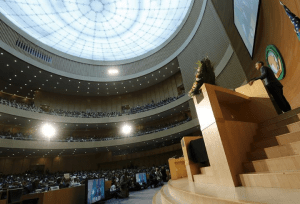
Photo: Delegates listen to remarks by U.S. President Barack Obama at the African Union in Addis Ababa, Ethiopia July 28, 2015. REUTERS/Jonathan Ernst

UNPO, 25 January 2016
On 22 January 2016, the Human Rights League of the Horn of Africa issued a statement, emphasising the recent attention accorded by the United States, European Union and United Nations to the human rights situation in Ethiopia. While The European Parliament, through a recent urgent resolution, calls for a credible, transparent and independent investigation into the killings of at least 140 Oromo protesters and into other alleged human rights violations, the HRLHA condemns the state sponsored violence, calling on the Ethiopian government to “immediately withdraw its special force “Agazi” from the Oromia Regional State and bring the perpetrators to justice.”
Below is the statement published by the Human Rights League of the Horn of Africa:
The tireless voices for the voiceless spoken by human rights organizations such as Amnesty International (AI), Human Rights Watch (HRW), the Human Rights League of the Horn of Africa (HRLHA) and others- for decades-about the gross human rights violations in Ethiopia have caught the attention of the world and finally the hard truth has been revealed.
The US Government, the EU parliament and UN experts condemn the killings, detentions and kidnappings in the Oromo Nation by Ethiopian Government forces. The Oromo nation demand and that their basic freedoms and fundamental rights be respected in their own country.
The USA Government in its statements of December 18, 2015″The United States, Calls for Meaningful Dialogue About Oromo Community Concerns” and 14 January 2016 ” The United States Concerned By Clashes in Oromia, Ethiopia “condemned the Ethiopian brutality against peaceful protestors and urged the government of Ethiopia to permit peaceful protest and commit to a constructive dialogue to address legitimate grievances.
The European Union in its debate on 21 January 2016 discussed the “Human Rights Situation in Ethiopia”. The EU Parliament strongly condemns the recent use of violence by the security forces and the increased number of cases of human rights violations in Ethiopia. It calls for a credible, transparent and independent investigation into the killings of at least 140 protesters and into other alleged human rights violations in connection with the protest movement after the May 2015 federal elections in the country.
The UN Experts in their release of 21 Jan. 2016: “UN experts urge Ethiopia to halt a violent crackdown on Oromia protesters, ensure accountability for abuses“. They called on the Ethiopian authorities to end the ongoing crackdown on peaceful protests by the country’s security forces, who have reportedly killed more than 140 demonstrators and arrested scores more in the past nine weeks.
The Human Rights League of the Horn of Africa appreciates the statements coming out from different governmental agencies and governments exposing the ethnic persecutions and crimes against humanity in Oromia Regional State by Ethiopian Government forces in which over 180 Oromo nationals from all walks of life have been brutalized by the special force “Agazi” , over 8, 050 Oromo were arbitrarily detained and where large numbers were kidnapped and taken to an unknown destination.
To stop further human catastrophes in Oromia Regional State, the HRLHA urges the world community to continue putting pressure on the Ethiopian government:
To immediately withdraw its special force “Agazi” from the Oromia Regional State and bring the perpetrators to justice To unconditionally release the detainees To compensate, all casualties have been done by the government-sponsored criminals To abort the state of emergency declared in Oromia Regional State All authorities who were involved in the present political crisis in the Oromia Regional state, including the PMs special advisor AbayTseye and the PM of Ethiopia HailemariamDessalengn, should be stripped of their government responsibilities To allow independent investigators into the country to conduct an investigation into the present and past gross human rights violations in Oromia Regional State.

By Ellery Roberts Biddle, Global Voices
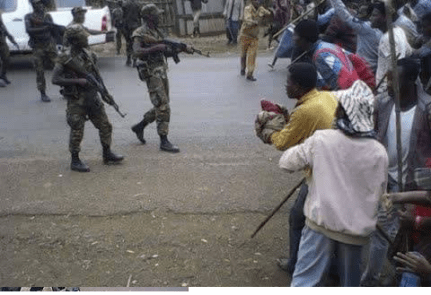
Ethiopian authorities have killed at least 17 children and injured many more involved in peaceful land rights protests since December 2015.
Demonstrations over a plan to expand the capital into the ethnic region of Oromia began in Ethiopia in late November. Since then, there have been 140 confirmed deaths of protesters at the hands of government authorities. Of the 17 minors killed by authorities, most were between the ages of 12 and 17 years old. Citizen media reports also show that many more school children have been injured in the protest movement.
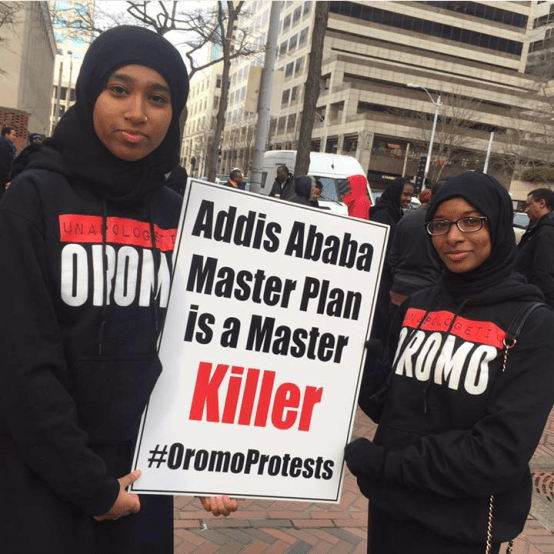
The protesters are speaking out against the so-called “Master Plan” to expand the capital city, Addis Ababa, into Oromia, fearing that the proposed development will result in direct persecution of the Oromo ethnic group, including mass evictions of Oromo farmers from their land. Oromo people, who represent the largest ethnic group in Ethiopia, have experienced systematic marginalization and persecution over the last quarter century. Some estimates put the number of Oromo political prisoners in Ethiopia at 20,000 as of March 2014. The country’s ruling elite, of the EPRDF party, are mostly from the Tigray (only 6% of Ethiopia’s 90 million population ) region, which is located in the northern part of the country.
In parallel with efforts of global organizations such as Human Rights Watch, local activists have worked to document and preserve evidence of these killings since early December. Last week, Ethiopian media scholar Endalk Chala and Oromo activist Abiy Atomssa published a map of confirmed deaths based on a crowdsourced data set comprised of reports from citizens, activists, social media, local media networks and VOA’s Amharic service.
Eighth grader Barihun Shibiru of West Shawa was among a handful of minors who were arrested and executed once in official custody. Shibiru’s funeral was held on December 17.
Citizen videos have also helped document and confirm deaths of minors, including a video that shows students crowding around the body of Lucha Gamachu, a 9th grader at Burqa Wanjo Secondary School. The video was published on Facebook by Jawar Mohammed.
We ask that any person who has evidence of the death or disappearance of protesters please contact us at editor@globalvoicesonline.org.


January 25, 2016 12:22 AM
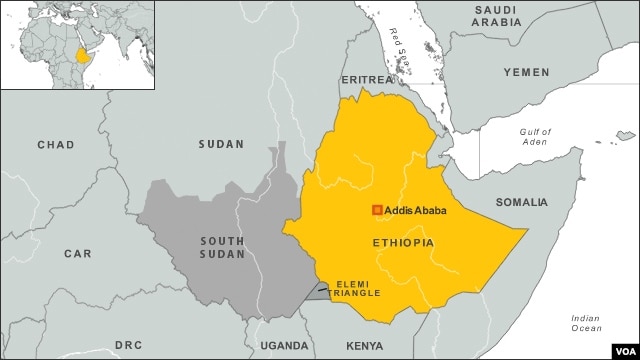
After almost two months of clashes between Oromo protesters and security forces in Ethiopia, authorities have scrapped a “master plan” that would have expanded the boundaries of Addis Ababa and, according to protesters, would have displaced Oromo farmers.
However, observers are divided on the significance of the move by Ethiopia and whether it truly represents a change of policy or just a reaction to negative publicity.
Dr. Awol Allo, a fellow in human rights at the London School of Economics, said he believes the government will find other ways to take land it deems useful.
“I don’t actually believe that the practices of displacement and the eviction and the plunder would cease,” Allo told VOA. “Remember, the expansion of Addis began a very long time ago and it has intensified over the course of the last 10 years because of the influx of investment into the city, both foreign and domestic.”
Compiled by activists
Allo pointed to figures compiled by jailed Oromo activist and opposition leader Bekele Gerba, who said 150,000 Oromo farmers have had their land taken by the government over the past 10 years.
“The practices would continue. They just don’t call them a master plan,” Allo said. “The master plan was basically intended to sort of basically formalize and legalize the processes of annexation and expansion. It may not have that kind of name that gives it a broader mandate, sort of legitimacy and authority, but the practice would nevertheless continue.”
Earlier this week, the European Parliament adopted a 19-point resolution urging Ethiopia to respect the rights of peaceful protestors as well as to cease intimidation and imprisonment of journalists. During a recent visit to Ethiopia, U.S. Ambassador to the United Nations Samantha Power urged the government to engage in dialogue with protesters.
Approximately 140 people were killed during the protests, according activists interviewed by Human Rights Watch.
“What we are urging is that the international community should not turn a blind eye to these gross violations of human rights that have taken place in Ethiopia,” said Mandeep Tiwana, head of policy and research at CIVICUS, a group that works to strengthen civil society and civilian participation in politics.
“They should diplomatically engage with Ethiopia, institute external inquiry into this matter and also bring to court those responsible for excessive force and it appears that security forces have used excessive force against peaceful protesters and in fact there are reports that even children as young as 12 have been killed,” Tiwana said.
Confirmed deaths
The government has confirmed that 13 security forces died in the clashes. VOA made repeated requests for comment from the Ethiopian Embassy in Washington, D.C., but has not yet received an official statement.
The protests come at a particularly difficult time for Ethiopia, as the worst drought to hit the area in 30 years has caused a famine that is particularly affecting the northeast region.
The aid group Save the Children says as many as 10 million people are in need of food aid and calls it one of the two worst humanitarian crises in the world, following only Syria.
But observers hope the desire by the international community to aid those affected by the drought will not prevent them from insisting that Ethiopia respect human rights as it pertains to the Oromo protests.
Muthoni Wanyeki, Amnesty International’s regional director for East Africa, the Horn and the Great Lakes, said her organization and others are calling for three additional measures following the cancellation of the master plan.
Release, investigation
First, they want the unconditional release of the people arrested during the protests. They also want an independent investigation of police conduct, and they are calling for a national dialogue about policing and demonstrations and what is appropriate during protests.
“It is a sign of good faith that the government canceled these immediate plans,” Wanyeki said. “I think the pressure from the community and from all of the people that put aid into Ethiopia’s much wanted development progress need to insist on standards around projects like this.”
Under Ethiopian law, all land belongs to the government and people who are relocated are entitled to compensation.
However, the constitution specifically protects the rights of pastoralists and their right not to be displaced from their land.
Allo said proper compensation and due process has not occurred in the Oromo region around Addis Ababa.
“Their entire livelihood is inextricably tied to the land and land means everything. Their property is a way of living for them so to deprive them of that possibility that prospect of leaving the land that they have known, in the ecologies that they have known, without proper consultation, without appropriate compensation, I think that is a huge injustice,” he said.

The 751 Members of the European Parliament, the only directly-elected body of the European Union (EU), have debated and adopted a powerful motion presented to them on the current situation in Ethiopia. The motion included detailed descriptions about the Oromo protests that have rocked the nation from all corners, the country’s frequent use of the infamous Anti-Terrorism Proclamation to stifle “even mild criticism”, and the pervasive displacement and abuse of millions of Ethiopians in the name of development.
The debate and vote by the European Parliament took place yesterday during a first reading at a plenary session. “Ethiopia resolution adopted by EP plenary without amendments to the text supported by 7 Groups. Only extreme right wing voted against”, reads a tweet from Ana Gomez, a member of the European parliament.
Authored by more than 60 individual members of the European Parliament together with the Socialists and Democrats, S&D Group, the centre-left political group in the Parliament which has 191 members from all 28 EU countries, and supported by seven groups, the motion detailed a disturbing prevalence of human right abuses in Ethiopia perpetrated by the government.
Biggest crisis
The motion describes the recent Oromo protests as “the biggest crisis to hit Ethiopia since the 2005 election violence” and said “security forces used excessive lethal force and killed at least 140 protesters and injured many more.” It also accuses authorities in Ethiopia of arbitrarily arresting “a number of peaceful protesters, journalists and opposition party leaders in the context of a brutal crackdown on the protests in the Oromiya Region,” and “those arrested are at risk of torture and other ill-treatment.”
The motion specifically mentions the arrest on December 23 of Bekele Gerba, deputy chairman of the Oromo Federalist Congress (OFC) Oromiya’s largest legally registered political party. It noted that Bekele was taken to a prison known for torture and other ill-treatment practices and “shortly after he was reportedly hospitalized”. It mentioned that the whereabouts of Bekele Gerba, were “now unknown, raising concerns of an enforced disappearance.” “The government [has] labeled largely peaceful protesters as ‘terrorists’ deploying military forces against them.”
The motion connects the current Oromo protests with “the bloody events of April and may 2014, when federal forces fired into groups of largely peaceful Oromo protesters, killing dozens; at least hundreds more students were arrested, and many remain behind bars.”
In an email interview with Addis Standard, a diplomat who is working at an EU member state embassy here in Addis Abeba, said the motion was “the strongest, detailed and straight forward motion that describes the current situation in Ethiopia.” The diplomat, who wishes to remain anonymous because he is not authorized to speak, further said that reports from various embassies on the ground have helped inform member states about the “fragility” of the situation in Ethiopia.
Asked to comment on whether the Parliament is likely to pass the motion or reject it, the diplomat said, without specifics, that “the current situation in Ethiopia calls for a careful reading of events on the ground and this motion, more likely than less, is Ethiopia as we know it today.”
The motion blames Ethiopia’s government of accusing people who express “even mild criticism of government policy of association with terrorism,” and mentions the dozens of journalists, bloggers, protesters, students and activists who have been prosecuted under the country’s draconian 2009 Anti-Terrorism Proclamation. “Numerous prisoners of conscience, imprisoned in previous years based solely on their peaceful exercise of their freedom of expression and opinion, including journalists and opposition political party members, remained in detention.”
The ruling Ethiopian People’s Revolutionary Democratic Front (EPRDF) won all 547 parliamentary seats in the May 2015 elections, the motion says, “due in part to the lack of space for critical or dissenting voices in the election process; May’s federal elections took place in a general atmosphere of intimidation, and concerns over the lack of independence of the National Electoral Board.”
However, the motion says, Ethiopia enjoys political support from western donors and most of its regional neighbors, “mostly due to its role as host of the African Union (AU) and its contribution to UN peacekeeping, security and aid partnerships with Western countries.” Ethiopia receives more aid than any other African country – close to $3bn per year, or about half the national government budget. But “the current political situation in Ethiopia and the brutal repression of dissent put a serious risk to the security, development and stability in the country.”
Call for action
In light with the detailed human rights violations by the government, the motion included a fifteen point recommendations including a call on the EU to “effectively monitor programs and policies to ensure that EU development assistance is not contributing to human rights violations in Ethiopia, particularly programs linked to displacement of farmers and pastoralists, and develop strategies to minimize any negative impact of displacement within EU funded development projects.”
The motion also condemns the recent use of excessive force by the security forces in Oromiya and “in all Ethiopian regions, the increased cases of human rights violations and abuses, including violations of people’s physical integrity, arbitrary arrests and illegal detentions, the use of torture, and violations of the freedom of the press and of expression, as well as the prevalence of impunity.”
The motion further for the immediate release of all those jailed for exercising their rights to peaceful assembly and freedom of expression, including students, farmers, opposition politicians, academics, bloggers and journalists. It also calls on the government in Ethiopia to carry out a credible, transparent and impartial investigation into the killings of protesters and other alleged human rights violations in connection with the protest movement and to fairly prosecute those responsible, regardless of rank or position. It also urges the government to “immediately invite the UN Special Rapporteur on the rights to freedom of association and peaceful assembly and other UN human rights experts to visit Ethiopia to report on the situation.”
But whether Ethiopia could heed the calls and recommendations remains to be seen.
Members of the European Parliament are elected once every five years by voters right across the 28 Member States of the European Union on behalf of Europe 500 million citizens.
Read more at:
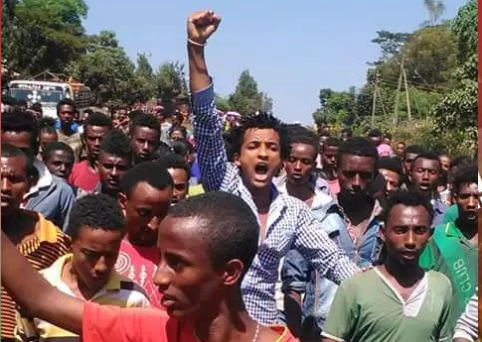
UN experts urge Ethiopia to halt violent crackdown on Oromia protesters, ensure accountability for abuses
GENEVA (21 January 2016) – A group of United Nations human rights experts* today called on the Ethiopian authorities to end the ongoing crackdown on peaceful protests by the country’s security forces, who have reportedly killed more than 140 demonstrators and arrested scores more in the past nine weeks.
“The sheer number of people killed and arrested suggests that the Government of Ethiopia views the citizens as a hindrance, rather than a partner,” the independent experts said, while also expressing deep concern about allegations of enforced disappearances of several protesters.
The current wave of protests began in mid-November, in opposition to the Government’s ‘Addis Ababa Integrated Development Master Plan’ to expand the capital’s municipal boundary. The ‘Master Plan’ could reportedly lead to mass evictions and the seizure of agricultural land in the Oromia region, as well as extensive deforestation.
The UN experts welcomed the Government’s announcement on 12 January 2016 suspending the implementation of the ‘Master Plan’, but were concerned about continuous reports of killings, mass arrests, excessive use of force and other abuses by security forces.
“The Government’s decision is a positive development, but it cannot be seen as a sincere commitment until the security forces stop their crackdown on peaceful protests,” they said. “The role of security forces should be to protect demonstrators and to facilitate peaceful assemblies, not suppress them.”
“We call on the Government to immediately release protesters who seem to have been arrested for exercising their rights to freedom of peaceful assembly and expression, to reveal the whereabouts of those reportedly disappeared and to carry out an independent, transparent investigation into the security forces’ response to the protests,” the experts said.
“Accountability does not erase past abuses, but it is an important step towards rebuilding trust between people and their government,” they stressed. “Impunity, on the other hand, only perpetuates distrust, violence and more oppression.”
The UN independent experts also expressed grave concern over the Ethiopian Government’s application of the Anti-Terrorism Proclamation 652/2009 to arrest and prosecute protesters, labelling them as ‘terrorists’ without substantiated evidence. This law authorises the use of unrestrained force against suspects and pre-trial detention of up to four months.
“Ethiopia’s use of terrorism laws to criminalize peaceful dissent is a disturbing trend, not limited to the current wave of protests,” they experts noted. “The wanton labelling of peaceful activists as terrorists is not only a violation of international human rights law, it also contributes to an erosion of confidence in Ethiopia’s ability to fight real terrorism. This ultimately makes our world a more dangerous place.”
“There are bound to be policy disagreements in any society,” the human rights experts said, “but every Government has the responsibility to give space for people to peacefully express their views and to take these views into account.”
(*) The experts: Mr. Maina Kiai, Special Rapporteur on the rights to freedom of peaceful assembly and of association; Mr. David Kaye, Special Rapporteur on the promotion and protection of the right to freedom of opinion and expression; Mr. Michel Forst, Special Rapporteur on the situation of human rights defenders; Mr. Christof Heyns, Special Rapporteur on extrajudicial, summary or arbitrary executions; and the Working Group on Enforced or Involuntary Disappearances.
The Special Rapporteurs and Working Groups are part of what is known as the Special Procedures of the Human Rights Council. Special Procedures, the largest body of independent experts in the UN Human Rights system, is the general name of the Council’s independent fact-finding and monitoring mechanisms that address either specific country situations or thematic issues in all parts of the world. Special Procedures’ experts work on a voluntary basis; they are not UN staff and do not receive a salary for their work. They are independent from any government or organization and serve in their individual capacity. Learn more, log on to: http://www.ohchr.org/EN/HRBodies/SP/Pages/Welcomepage.aspx
UN Human Rights, Country Page – Ethiopia: http://www.ohchr.org/EN/Countries/AfricaRegion/Pages/ETIndex.aspx
For more information and media requests, please contact Karin Hechenleitner (+41 22 917 96 36 / khechenleitner@ohchr.org)
– See more at: http://www.ohchr.org/EN/NewsEvents/Pages/DisplayNews.aspx?NewsID=16977&LangID=E#sthash.adjSxZFp.KR3g37jZ.dpuf

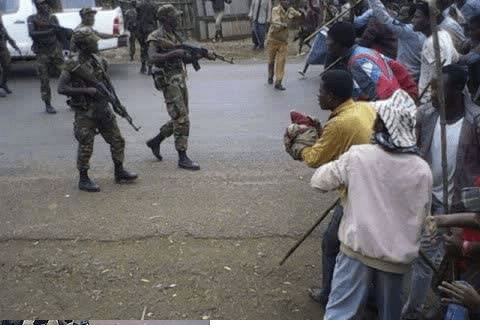
At least 27 protesters from the Oromo community, Ethiopia’s largest ethnic group, have been allegedly killed since the government announced it would scrap a plan to expand the boundaries of the capital Addis Ababa, which triggered mass demonstrations. Protesters in Oromia, one of the nine ethnically-based states of Ethiopia, have continued to demonstrate, arguing they did not trust the statement from the Oromo Peoples’ Democratic Organisation (OPDO) released earlier in January.
A demonstrator told IBTimes UK on conditions of anonymity: “21 peaceful demonstrators were killed yesterday [18 January] and six people are said to have been killed today. It’s really so tragic.”
The number adds to the already more than 140 people allegedly killed by security forces since protests started in November 2015 after the government announced the so-called “Addis Ababa master plan.”
The source alleged that the government deployed special forces, known as Liyu Police, into Oromia towns such as Bedeno and Dire Dawa. Liyu police – formed of Somalian soldiers – was created by the Ethiopian government in 2007 to halt the rise of Ogaden National Liberation Front (ONLF) separatist group. The special forces have been accused of committing crimes including extra-judicial executions.
“They [Liyu Police] have killed about 27 peaceful protesters even after the master plan was said to have been halted,” the source continued.
Ethiopian government’s position
Demonstrators argued that the master plan will lead to forced evictions of Oromo farmers who will lose their lands and become impoverished as a result. They also claimed that forced evictions as well as a perceived marginalisation by the government are already occurring and they threaten the survival of the Oromo’s culture and language.
The Ethiopian government, which has been accused of trying to censor information on the protests, has always denied Oromo people are marginalised and claimed the protests are being orchestrated by some dissidents who aim to destabilise the country. Officials have also refuted the number of deaths given by the activists and opened an investigation to assess the death toll as well as the circumstances of the deaths.
IBTimes UK has contacted the Ethiopian embassy for a comment on the recent death allegations, but has not received a response at the time of publishing.
In a previous interview, Abiy Berhane, minister counsellor at the embassy, told IBTimes UK regarding allegations of violence: “These are just one of the many fabrications that are being circulated by certain opposition groups as part of their propaganda campaign. The unrest cannot be described as a national crisis.
“The disturbances orchestrated by opposition groups have now subsided as the general public understood that the integrated master plan is still at a draft stage and will only be implemented after extensive public consultation in the matter takes place and gains the support of the people.”
European Union condemns “excessive force”
Meanwhile, the European Union has issued a resolution on the ongoing unrest, condemning the “excessive forces by security forces” in Oromia and other Ethiopian regions.
The document reads: “[The EU] calls on the government to carry out a credible, transparent and impartial investigation into the killings of protesters and other alleged human rights violations in connection with the protest movement, and to fairly prosecute those responsible, regardless of rank or position.
“Welcomes the government’s decision to completely halt the Addis Ababa and Oromia special zone master plan, that plans to expand the municipal boundary of Addis Ababa.”
The EU also urged the Ethiopian government to invite a UN rapporteur and human rights experts to investigate and to stop impeding the free flow of information.
More at:-
The Addis plan is one instance in which these two objectives came into direct conflict. Protests over the plan, which Oromo viewed as a land grab undertaken by an oppressive and unrepresentative central government, broke out in late 2015. The government responded witha crackdown that killed 140 people, marking perhaps the deadliest outburst of political violence in the country since its civil war ended in 1991.
The Oromo protests are “engendering an intensified ethnic awareness that has also revitalized calls for genuine self-rule in the region,” Smith writes.
Karuturi had taken over land that the Ethiopian state had sold off as part of a controversial program in which the government leased 3.3 million acres of farmland to foreign investors after allegedly displacing some of that land’s original tenants.
It’s the kind of undertaking that would be substantially harder if Ethiopia were a multiparty democracy, rather than one of Africa’s most thoroughgoing dictatorships.
While Karuturi arguably stood to benefit from Ethiopia’s centralized single-party regime, it’s now learned the risk involved in pouring $100 million into an opaque authoritarian state.
One of Africa’s most promising economies is facing a fundamental problem
Armin Rosen, http://uk.businessinsider.com/ 17 January 2017
Ethiopia, which has averaged double-digit GDP growth over the past decade and enjoys a close strategic relationship with the US, is one of Africa’s emerging economic and political powers and an example of a country that’s improved its economic fortunes without opening its political space.
A January 11th Bloomberg News story hints at a huge problem the country might be facing moving forward.
According to Bloomberg, the Ethiopian government canceled a 2010 lease that Karuturi, an India-based agricultural company, had taken out on 100,000 acres of farmland.
Despite making an over $100 million investment in the country’s farming sector, Karuturi was accused of breaking its lease agreement in developing only 1,200 acres thus far. But the company claimed that it had received waivers from the Ethiopian government in the past, and said that it did not recognize the project’s cancellation.
According to Bloomberg, Karuturi had taken over land that the Ethiopian state had sold off as part of a controversial program in which the government leased 3.3 million acres of farmland to foreign investors after allegedly displacing some of that land’s original tenants.
It’s the kind of undertaking that would be substantially harder if Ethiopia were a multiparty democracy, rather than one of Africa’s most thoroughgoing dictatorships.
While Karuturi arguably stood to benefit from Ethiopia’s centralized single-party regime, it’s now learned the risk involved in pouring $100 million into an opaque authoritarian state.
And Ethiopia’s leaders, who want both economic prosperity and total political control, might soon find that these objectives aren’t nearly as mutually reinforcing as they’d hoped.

Tiksa Negeri/ReutersWomen mourn during the funeral ceremony of Dinka Chala, a primary school teacher who family members said was shot dead by military forces during a recent demonstration, in Holonkomi town, in Oromiya region of Ethiopia on December 17, 2015.
Like Karuturi’s disappeared $100 million investment, the Addis Ababa expansion plan embodies the perils and contradictions of the Ethiopian regime’s long-term strategy of securing internal calm through economic growth and strong ties with foreign powers like the US and China.
As in past eras, the Ethiopian capital is being built up as a showpiece of the country’s modernity and development, and as a reflection of Ethiopia’s sense of its unique place in the world. Addis has one of Africa’s first light rails, a Chinese-built, 19.6-mile system that opened last year.
The city and the surrounding area are home to both of the country’s Chinese special economic zones, industrial parks where Chinese companies get tax breaks in exchange for operating in Ethiopia and hiring local employees. The Addis expansion plan would have incorporated neighboring areas into the capital district, enabling more holistic and centralized urban planning for a rapidly growing and economically vital capital city.
But the expansion plan also came at the expense of land in the Oromia Region — and it ended up exposing some of the deepest fractures in Ethiopian society.
The Oromo are Ethiopia’s largest ethnic group but have been historically excluded from centers of power. Because Ethiopia lacks an ethnic majority (and perhaps because it has a 1,500-year history rife with conflict between the country’s centers of power and it geographic and social periphery), the country’s regions are supposed to receive a certain degree of autonomy under Ethiopia’s 1995 Constitution, which actually gives the regions a right to secede under certain circumstances.
In practice, the center still holds all of the power.

Google MapsLocation of Addis Ababa, capital of Ethiopia.
The current Ethiopian government, which is entirely run by the Ethiopian People’s Revolutionary Democratic Front, which is descended from the militia that overthrew the ruling communist state in 1991 after a protracted civil war, is among the most oppressive in Africa.
The EPRDF regime is dominated largely by elites from the Tigrayan and Amharic ethnic groups. But its rule depends on a baseline of inter-communal harmony — just as it depends on the appearance of progress and economic growth.
The Addis plan is one instance in which these two objectives came into direct conflict. Protests over the plan, which Oromo viewed as a land grab undertaken by an oppressive and unrepresentative central government, broke out in late 2015. The government responded witha crackdown that killed 140 people, marking perhaps the deadliest outburst of political violence in the country since its civil war ended in 1991.
Even if the plan has been suspended, the Addis Ababa expansion push is an extension of aggressive growth policies that are fundamental to the regime’s self-image and possibly its survival, policies enabled by strong arm tactics that a country might not accept accept.
But the protests showed that economic growth and authoritarianism can’t paper over a general sense of frustration.
As Jeffrey Smith, head of the RFK Center’s sub-Saharan Africa-related advocacy programs explained to Business Insider, the suspension of the plan will do little to reduce popular discontent towards the regime.
“If the government is trying to head off larger protests and discontent in the country, then it’s much too little and much too late,” Smith wrote in an email. “During the protests, an estimated 140 people were killed and thousands were injured, opposition leaders and journalists were jailed, and the constitution was shredded … there has been no accountability for the deaths of protesters and dissent continues to be criminalized and violently suppressed.”

Tiksa Negeri/ReutersA worker works on the electrified light rail transit construction site in Ethiopia’s capital Addis Ababa, on December 16, 2014.As with Karuturi’s apparent ejection from the country, the contradictions of trying to build a robust economy without genuine political freedom or basic transparency are manifesting themselves. But with the Addis plan, the stakes are much higher for the regime.
The Oromo protests are “engendering an intensified ethnic awareness that has also revitalized calls for genuine self-rule in the region,” Smith writes.
That’s a huge threat to a government that’s itself came to power following an ethnically fractious civil war. “I think leaders in Addis Ababa has gotten much more than they bargained for,” says Smith.
January 11, 2016
The International Oromo Lawyers Association, a non-profit Organization registered in the State of Minnesota with the objective of promoting the prevalence of the rule of law in Ethiopia, is saddened and shocked by the ongoing wanton mass killings and arrests of thousands of Oromo students, supporting parents and teachers in the State of Oromia, Ethiopia. According to information available to us from different sources including Amnesty International, Human Rights Watch and reputable media networks such as the BBC, CNN and Al Jazeera, the Ethiopian government has deployed a special armed unit (known as the death squad – Agazi) to forcefully suppress the ongoing peaceful demonstration of Oromo students who are simply exercising their fundamental and constitutionally guaranteed freedom of expression to oppose the so called Addis Ababa Master Plan. The Plan which is alleged to have been secretly designed by the order of few key Federal government officials is in fragrant violation of the Constitution which stipulates that any change in the affairs of the Regional States should be discussed at the parliament, the government and by the people of the respective Regional States.
We feel it is our duty to share the prevailing frustration because of past experiences, that the above mentioned “Master Plan” is nothing other than being a pretext to forcibly displace native Oromos from their ancestral land without or insignificant compensation whatsoever and to allocate the vacated land to foreign investors all under the name of development. We have already witnessed in the past ten years when the Federal Government forcibly removed ethnic Oromos from their land without any meaningful compensation and leased the vacated land to investors who converted the wheat producing land into massive production of flowers, at a time the country is facing massive food shortage. The result, as expected, did not bring development but misery to the displaced population and environmental degradation in the community. According to experts, the prevailing famine in Ethiopia, which has affected nearly 15 million people, is largely attributed to such facts of involuntary displacement of the farming population from their ancestral lands and detaching them from their traditional farming profession.
Protest against the ‘AA-Oromia Integrated Master Plan’ started within the ruling party in early 2014. When the federal government disregards these concerns, the issue turned out to be the issue of the public at large and resulted in street protest. However, the authorities preferred to subdue the dissent by force and do it quickly rather than engaging stakeholders in a genuine way and addressing the issues comprehensively. As a result, several lives were lost and properties were destroyed.
This round of protest started after the authorities reinitiated the implementation of plan. Still, the government followed similar violent crackdown and we are witnessing the killing of over hundreds of protesters, the arrest of thousands and uncalculated damages to bodily harm and property damages. There is credible evidence that the government is engaged in blank point killing of what it calls “anti-development” students and parents. Thousands of members and leaders of the well-known Oromo Federalist Congress party known for its advocacy for peaceful means of struggle, including its deputy leader Mr. Bekele Gerba, are now arrested and thrown into jails without due process of law and without any charge whatsoever. Mr Bekele was released few months ago after serving four years of politically motivated charges. Basically, the ongoing protest is far bigger than the master plan itself. While the master plan is an immediate cause; while several issue linked to corruption, dispossession, nepotism, selective justice and political marginalization of the Oromo’s under EPRDF government are the main causes.
It is a high time for the international community and key stakeholders in Ethiopia (USA, UK, EU, China, Russia and AU) to utilize their leverage to deter the crippling of the country in to a full blown civil war by the irresponsible move of the Ethiopian government. Specifically we urge you to push the government to:
IOLA will always be more than glad to provide its time and resource to initiate any positive reform, peaceful coexistence, rule of law and help the implementation of the federal constitution in Ethiopia.
The Executive Board of International Oromo Lawyers Association (EB_IOLA)
January 11, 2016
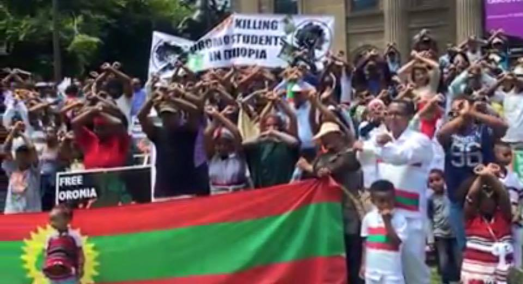
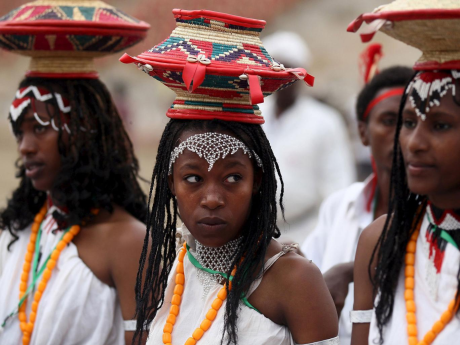
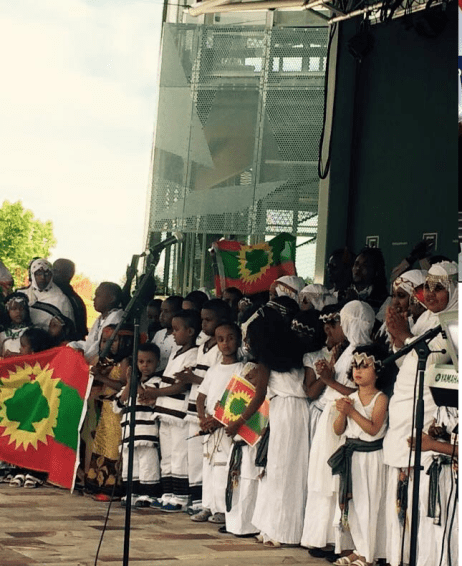
(Atlanta Black Star) — The Oromo protests in Ethiopia. The issue has received little attention in global mainstream media, but it is one that demands our attention. The latest news coming out of the East African nation is troubling, with at least 140 protesters killed in the past few months, according to Human Rights Watch. This represents the greatest bloodshed facing the East African nation since 2005, when 200 people died in post-election violence. Moreover, based on data from #EthiopiaCrisis, 2,000 reportedly have been injured, 30,000 arrested and 800 disappeared.
As Al Jazeera reported, police were accused of opening fire and killing dozens of protesters in April and May of 2014.
With the largest population of any of the federal states in Ethiopia, Oromia has a population of about 27 million—40 percent of the country’s population. The nation’s largest ethnic group, Oromians have their own language, Oromo, which is separate from the official language, Amharic.
At issue in the current conflict is the convergence of ethnic strife, land and economics, beginning with the expansion of the Ethiopian capital, Addis Ababa. As NPR reported, the larger picture is that the world is growing, and there is a big demand for food and arable land. Africa has 60 percent of the usable farmland, and in Ethiopia, the government, which owns all of the nation’s land, has leased large parcels of land to foreign investors from China, India and the Mideast.
In November, protests were set off when a forest was being cleared for development, as part the “master plan” by the Ethiopian government to expand the capital city into surrounding farmland in Oromia. Supporters of greater urbanization, known as the Integrated Regional Development Plan for Addis Ababa, note that the nation faces a food shortage. They believe the nation is susceptible to famine because too many Ethiopians live in rural areas and depend on agriculture. However, people in Oromia claim they are being displaced from their ancestral lands.
As VOA reported, the government plans to develop the farmland outside Addis Ababa into a new business zone. Protesters claim the plan will result in marginalization and reduced autonomy for the Oromo people living outside the nation’s capital. Meanwhile, the Ethiopian government claims the development project on the farmland will lead to new business and benefits to all groups.
As the Washington Post recently reported, President Obama has expressed concern over the events in Ethiopia, while also saying the “United States has consistently applauded Ethiopia for being a model and a voice for development in Africa.”
The nation has been hailed by the U.S. for its economic growth and engaging in the war against al-Shabab, the Somali terrorist group. And Ethiopia has reportedly received substantial aid from the U.S. in this regard. At the same time, the Ethiopian People’s Revolutionary Democratic Front regime has been accused of silencing protest and dissent. For example, Bekele Gerba, deputy chairman of the Oromo Federalist Congress—Oromia’s largest registered political party—was arrested. In addition, the government also allegedly arrested and beat Oromo singer Hawi Tezera, who has a song about the protests.
Further, there are reports of the Ethiopian government clamping down on media outlets covering the protests. According to the Committee to Protect Journalists, the nation is one of the leading jailers of journalists. Authorities have reportedly arrested journalists such as Getachew Shiferaw, editor in chief of the Negere Ethiopia news site, under terrorism charges, and Fikadu Mirkana of Oromia Radio and TV. Further, according to the Post, the government jammed the broadcasting satellite of the U.S.-based television channel ESAT, which has been reporting on the demonstrations by students and farmers.
Although the most recent catalyst for recent protests is the development plan to expand Addis Ababa into Oromia—of which millions of farmers fear displacement—there have been tensions and grievances developing for quite some time. The Oromo have expressed a sense of marginalization and being pushed out of mainstream national life.
According to the group Global Voices, of the nearly 140 peaceful protesters killed in Ethiopia since November, most were killed at close range. More than 70 percent of the dead are reportedly male students, with male farmers accounting for around 20 percent of the deaths. Also among the victims are women and school teachers, including one seven-month pregnant woman and her sister-in-law, who were killed while attempting to escape arrest. Further, at least 10 people were reportedly tortured and killed while in prison, according to Global Voices.
Meanwhile, this round of protests is believed to be unprecedented because of broad-based support and participation—with inter-ethnic coalitions despite the ethnic lines marking the country, including a number of non-Oromo civic groups and political organizations. They are also employing tactics of civil disobedience such as lunch boycotts, sit-ins and roadblocks.
However, the Ethiopian government has characterized its response as being part of the war on terror. Authorities accuse protesters of having links to terrorist groups, according to the Sudan Tribune, and announced that the nation’s Anti-Terrorism Task Force would be leading the response.
“By treating both opposition politicians and peaceful protesters with an iron fist, the government is closing off ways for Ethiopians to nonviolently express legitimate grievances,” said Felix Horne of Human Rights Watch, according to Al Jazeera. “This is a dangerous trajectory that could put Ethiopia’s long-term stability at risk,” he warned.
#OromoProtests: What You Need to Know About Ethiopia’s Crisis That No One Is Talking About
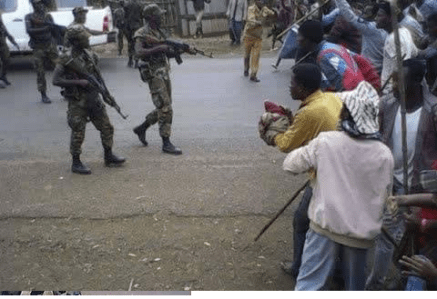
Ethiopian security forces have killed at least 150 people taking part in mass anti-government demonstrations according to human rights and activists groups.
Demonstrators in Oromia, Ethiopia’s largest regional state, have been protesting since Novemeber against the government’s plans to extend the boundaries of the capital Addis Ababa. Protesters say the proposed urban plan, known as Addis Ababa Integrated Master Plan or the “Master Plan”, will displace local farmers through mass evictions.
Addis Ababa is one of the fastest growing populations in the world with a population of 3,384,569 according to the 2007 population census with annual growth rate of 3.8%. In the last 10 years, the capital has steadily encroached on Oromo farmlands. In the last 10-15 years, more than 150,000 Oromo farmers have been evicted from their ancestral lands without adequate notice, compensation and proper relocation.
“Sometimes the informal settlers are given only a few days’ notices before bulldozers arrive on the scene to tear down their shabby houses and lay foundations for new investors,” said Ermias Legesse, a high profile government defector.
The government rejected the accusation, claiming that the plan is intended only to facilitate the development of infrastructure such as transportation, utilities and recreation centers to remote areas.
Protesters say the plan threatens the sovereignty of Oromo communities. According to the Ethiopian constitution, Oromia is one of the nine politically autonomous regional states in the country. However, the constitution also says that the farmers do not own their land, the government does.
Land is a common property of the Nations, Nationalities and Peoples of Ethiopia and shall not be subject to sale or to other means of exchange.
Since November, university students clashed with anti-riot police resulting in between over 100 deaths according to human rights and activist groups. Over 4,000 have been arrested, including journalists, bloggers and Oromo singer Hawi Tezera. Although the government has initiated a media blackout in the capital, protestors have been able to send videos, photos and messages through social media of the state violence.

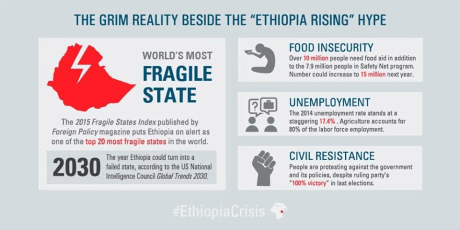
The dying African voices we must resurrect in 2016
By Abiud Onyach, Citizen Digital, 7 January 2016
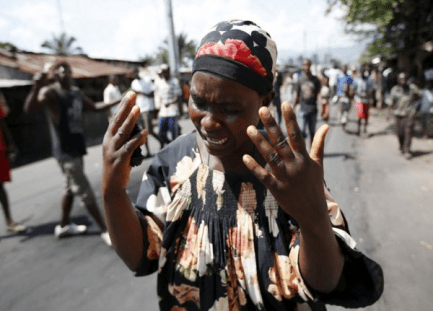
Burundi, 2016
Kenya (Citizen Digital) — We have ushered in a New Year and we are all excited to live up to our New Year resolutions- including those who know they’ll abandon them this month.
This season has a way of renewing hope; sadly the same wind doesn’t blow in some African countries this time of the year.
Indeed there are those who expect little from this year. They lost loved ones, needlessly, in a horrifying fashion from the hands of a government that is supposed to protect them. From Burundi, South Sudan to Ethiopia a mood of distrust between a people and its government hangs in the air.
While the rest of us are grateful for the peace and the promises the New Year brings, we must not forget these voices, lest we lose what makes us Africans, lest we lose our hope for humanity.
As the Kiswahili proverb goes: “When you see your neighbor’s head shaved, pour water on yours.” The trouble in Burundi may not be as far and unrelated from us as we would like to think, and if leaders like Nkurunzinza have their way-they only serve to bolster the resolve of other leaders who are hell bent on violating human rights.
Hiding behind ‘sovereignty’
At no time in the history of independent Africa has the term sovereignty been misused and the non-interference policy used to protect a despot like we’ve seen in 2015.
Sovereignty loosely interpreted is the respect accorded any country as an independent nation capable of self-rule. Under this guise, leaders say that no country is expected to get involved in the internal affairs of another country, even if the said country is bleeding itself to extinction.
Politicians with dictatorial tendencies have thus abused their country’s sovereignty to prevent any form of accountability outside their spheres of influence. On the back bone of non-interference policy, they are denying their citizens basic human rights and brutally dealing with those who oppose them.
In 2015, President Nkurunziza, against popular opinion, insisted on running for a third term despite having already served his two terms as outlined in their constitution.
This selfish leader took advantage of a legal loophole over his first election because he was first elected president by Members of Parliament, who were acting as an electoral college.His argument is that the electorate did not vote in his first term, only in his second term hence the legitimacy of his third term.
Since April last year (2015), at least 400 people have died, scores left injured while 220, 000 people are now refugees in neighboring countries according to the official UN figures.
Already, Nkurunzinza has threatened to fight African Union (AU) peace keepers, following AU’s announcement to send troops to protect civilians.
I cannot wrap my head around the number of innocent children and women affected by this single act of selfishness. Take a moment to think about the lost dreams, the dashed hopes and the bitterness planted in people’s hearts.
This is why we can’t remain silent in 2016. All of us must make our voice heard. We cannot sit mum as another not another genocide takes place in Burundi.
Africa’s youngest failure
South Sudan is another African country with perhaps the most disappointing leaders in African history. After the 2011 secession from Sudan, the country plunged into civil war in 2013 displacing at least 2.2million people.
The great Garang must turn in his grave severally every time we mention Riek Machar or Salva Kirr.
After lengthy stays at luxurious hotels, the two leaders have made numerous peace-pacts in a bloody game they seemingly enjoy to play. One minute they are signing peace agreements, but before the ink dries they’ve already begun showing reservations, at times blatantly dishonoring these pact a mere 48 hours after they have been made,.
Meanwhile, South Sudanese citizens continue to die and with the luckier ones finding their way to refugee camps in other countries.
This too must stop in 2016. We should project the voice of the South Sudanese loud enough to make these two leaders realize South Sudan is bigger than their colossal egos.
The problem with this non-interference policy is that it easily oils the engine of dictatorship and gives license to leaders to kill and plunder their own with little or no consequences.
As we turn a new leaf in 2016, in Ethiopia the Oromo community remains anxious after the government designed an infrastructure development plan that appears malicious and bent on grabbing land from the largest ethnic group in the country.
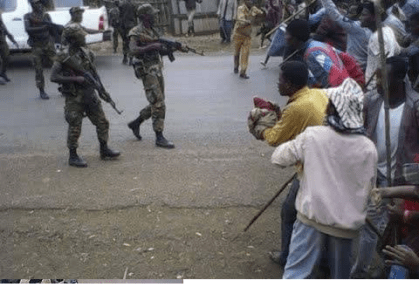
Oromia, 2016
Scores have been killed and a lot others injured and displaced from their land all in the name of development.
While shiny new developments are the crowning jewel of any regime, infrastructural development is useless if humanity is not at the heart of it.
In 2016, we must raise the voice of the Oromo farmers who are driven away from their farmlands into poverty by their government.
In 2016, in addition to all those resolutions we’ve written down and hope to act on, let all Africans, especially, East Africans resolve to stand with the people of Burundi, South Sudan and Ethiopia.
Let us make our voices heard so that 2016 will not be another 2015 where fewer people made life unbearable for the majority over inexcusable selfish interests.
The writer is a Kenyan journalist and communication consultant based in Dar es Salaam.
Share this:
“Where-ever law ends, tyranny begins.”
– JOHN LOCKE
The Rule of Law Index 2015, released by the U.S.-based World Justice project analyses 102 countries worldwide using a survey. The data, collected in 2013, measures how the rule of law is experienced in practical, everyday situations using 47 indicators across eight categories — constraints on government powers, absence of corruption, open government, fundamental rights, order and security, regulatory enforcement, civil justice, and criminal justice.
According to the 2015 Index, Ethiopia’s overall rule of law performance places it in the 91st out of 102 countries worldwide. It’s ranks in civil justice and fundamental rights are 97th and 98th respectively. The top overall performer in the WJP Rule of Law Index 2015 was Denmark.
Ethiopia in 2015 rule of law index: Ranked worst on global and regional level
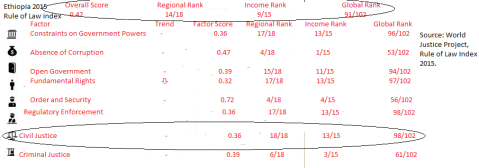
Ethiopia ranks 91/102, one of the worst performers
Read the details at:-
http://data.worldjusticeproject.org/#groups/ETH
Click to access roli_2015_0.pdf
http://worldjusticeproject.org/rule-of-law-index
The World Justice Project (WJP) Rule of Law Index® provides original, impartial data on how the rule of law is experienced by the general public in 102 countries around the globe.
The WJP Rule of Law Index 2015® relies on over 100,000 household and 2,400 expert surveys to measure how the rule of law is experienced in practical, everyday situations by ordinary people around the world. Performance is assessed using 44 indicators across eight categories, each of which is scored and ranked globally and against regional and income peers: Constraints on Government Powers, Absence of Corruption, Open Government, Fundamental Rights, Order and Security, Regulatory Enforcement, Civil Justice, and Criminal Justice.
The WJP Rule of Law Index is the most comprehensive index of its kind and the only to rely solely on primary data. The Index’s scores are built from the assessments of local residents (1,000 respondents per country) and local legal experts, ensuring that the findings reflect the conditions experienced by the population, including marginalized sectors of society.
What is the Rule of Law?
Derived from internationally accepted standards, the World Justice Project’s definition of the rule of law is a system in which the following four universal principles are upheld:
- The government and its officials and agents as well as individuals and private entities are accountable under the law.
- The laws are clear, publicized, stable, and just; are applied evenly; and protect fundamental rights, including the security of persons and property.
- The process by which the laws are enacted, administered, and enforced is accessible, fair, and efficient.
- Justice is delivered timely by competent, ethical, and independent representatives and neutrals who are of sufficient number, have adequate resources, and reflect the makeup of the communities they serve.
These four universal principles are further developed in the nine factors of the WJP Rule of Law Index, which measures how the rule of law is experienced by ordinary people in 99 countries around the globe.
Read more at:

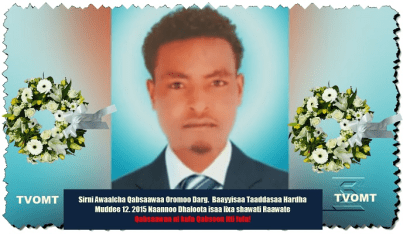

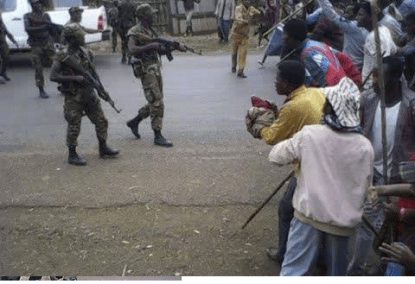
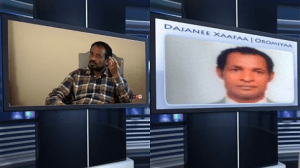

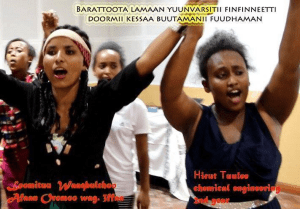

HRLHA Urgent Action
December 25, 2015
 The Human Rights League of the Horn of Africa (HRLHA) has confirmed that deaths resulting from the ongoing crackdown of peaceful protesters in various parts of the regional state of Oromia has now reached 122, while mass arrests and detentions have also been intensified. Top officials of the opposition Oromo Federalist Congress (OFC) party have been targeted in the most recent cases of kidnappings, arrests and detentions. Accordingly, Mr. Dajane Tafa, Deputy General Secretary of OFC, was kidnapped by federal armed forces and taken away to yet unknown destination yesterday morning, December 24, 2015 around the area known as Giyorgis, in the centre of the Capital Finfinne/Addis Ababa on his way to work. In the same way, Mr. Bekele Garba, Deputy Chairman of the OFC, who spent about four years in jail on fabricated allegations and released recently, was also arrested yesterday afternoon from his home in Adama and taken away also by armed federal forces. HRLHA has been informed that homes of both Mr. Dajane Tafa and Mr. Bekele Garba have been searched for hours; and that of Mr. Bekele Gerba in particular remained invaded and surrounded by the federal armed forces until late in the afternoon.

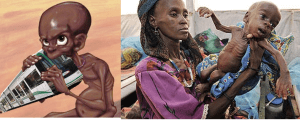
HOW BAD IS THE DROUGHT IN ETHIOPIA?
IRIN humanitarian news and Analysis
19 November 2015
Alarm bells are ringing for a food emergency in Ethiopia. The UN says 15 million people will need help over the coming months. The government, wary of stigma and therefore hesitant to ask for help, has nevertheless said more than eight million Ethiopians need food assistance. Extra imports to stem the crisis are already pegged at more than a million tonnes of grain, beyond the government’s means. Inevitably, comment and media coverage compare the current situation with 1984 – the year Ethiopia’s notorious famine hit the headlines. Reports suggest this is the worst drought in 30 years. One declares it a“code red” drought. So how bad actually is it?
The country of close to 100 million people is huge, spread over an area of more than a million square kilometres that ranges from semi-desert to swamp to mountain ranges and fertile farmland. The weather systems and agricultural patterns are diverse and complex. Even within the higher-altitude areas of the country, the most densely populated, the typical rainy seasons vary and crops are grown at different times of the year. This year, the weather has been prone to even greater variation due to the global climate phenomenon El Niño, last seen in 1997-1998.
Ethiopia produces more than 90 percent of its own food. Last year, the cereal harvest was estimated to be 23 million tonnes, but imports in recent years averaged 1.2 million tonnes – just five percent of that. So even if 2015 and 2016 are bad years (the impact of a poor harvest is felt months later as food stocks run out), the vast majority of Ethiopian people will support themselves and eat produce from their own country. But in a giant like Ethiopia, 15 percent of the population is 15 million people – more than the entire humanitarian caseload of the Syrian crisis. An extra five percent of cereals is another 1.2 million tonnes.The costs and logistics become formidable at this scale.
The weather is only one part of the equation in whether people go hungry. Politics, economics, the availability of seeds and fertiliser, conflict, trade and labour markets, population pressure, social habits, and a host of other factors matter too.
While the science and sociology of food security is complex and layered, international agencies working on drought and hunger-prone countries, including Ethiopia, use a scheme called the Integrated Food Security and Humanitarian Phase Classification Framework (IPC) to simplify the mass of underlying data into a five-step scale – from minimal food security pressure to famine. Some parts of northern Ethiopia are already flagged as being in “Phase 4”, one step from the worst category. More are expected to follow, unless sufficient resources can halt the slide.
Even getting a single view of one year’s weather, let alone human interaction with it, is no simple matter.
For more than 30 years, meteorologists have gathered a giant archive of satellite data for Ethiopia. US satellites, in particular METOP-AVHRR, churn out petabytes of data. Triangulating that with other sources, including ground-based measurement, farm assessments, nutrition, and price monitoring provides a rich toolkit to estimate vegetation, rainfall, soil moisture and temperature – ultimately giving an idea of food on the table.
Considering all the variables, the drought and famine watchdog FEWS NET, established in the wake of the 1984 famine, has used direct, but not alarmist, language to describe the prospects: its latest report for Ethiopia is titled “Large-scale food security emergency projected for 2016”. The UN’s Food and Agriculture Organization, meanwhile, warned: “food security conditions sharply deteriorated.”
Political sensitivity, donor pressures, logistics, media distortion, inefficiency and scepticism may yet conspire to tip more Ethiopians into “Phase 4.” Even in the best-case scenario, the financial resources will be hard to find – $270m is still needed for 2015 alone, according to UN’s emergency aid coordination body, OCHA, and needs are set to rise sharply (the US, the UK and China have pledged relatively early to the response, according to the government).
To illustrate the complexity of weather patterns in Ethiopia and attempt to demonstrate a link with El Niño, IRIN analysed 30 years of satellite imagery to provide some visual evidence of the complex and erratic picture of weather in the Horn of Africa. Read more in the following link
http://newirin.irinnews.org/dataviz/2015/11/19/how-bad-is-the-drought-in-ethiopia

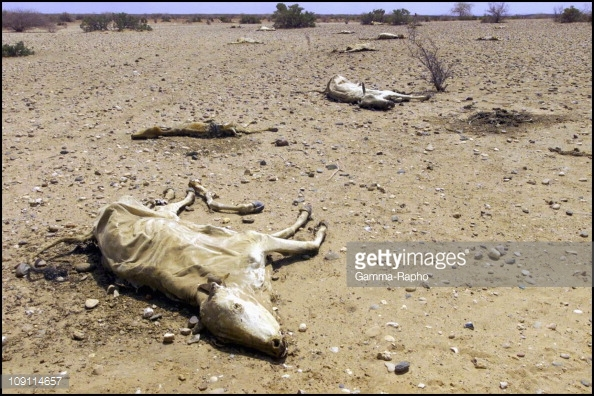

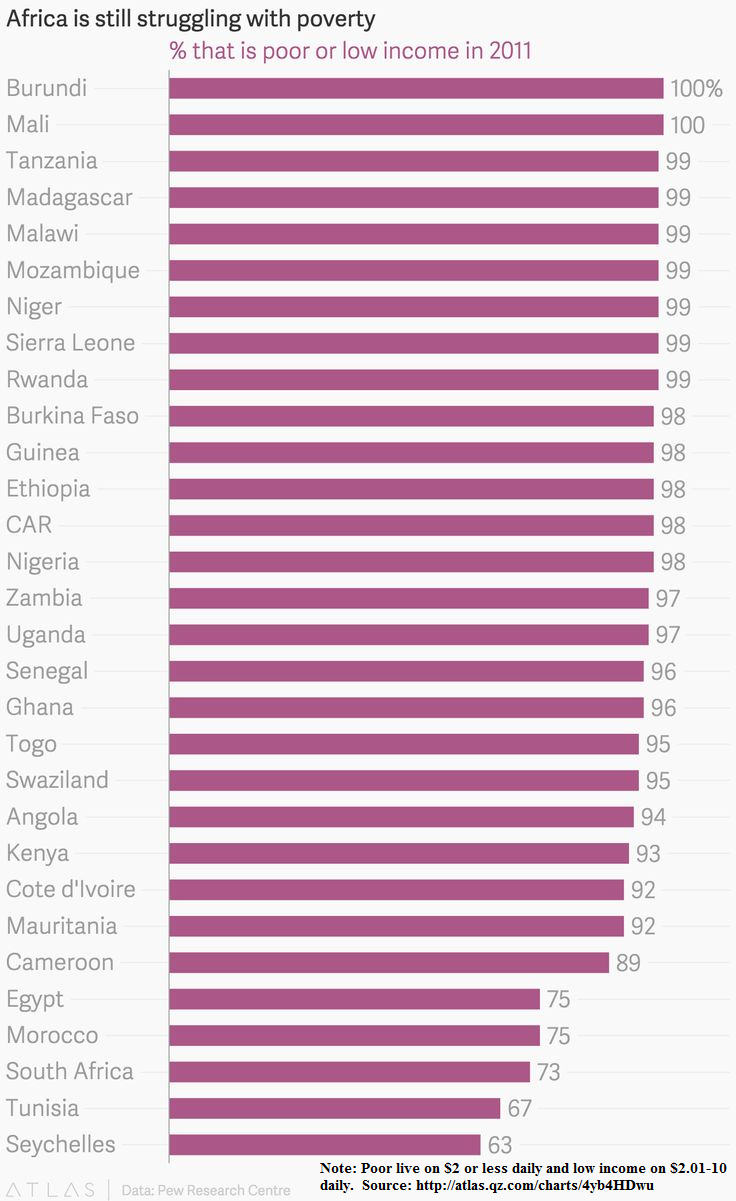


“…UN now warning that without action some “15 million people will require food assistance” next year, more than inside war-torn Syria. ….Hardest-hit areas are Ethiopia’s eastern Afar and southern Somali regions, while water supplies are also unusually low in central and eastern Oromo region.” Unicef
(Unicef, News24, October 22, 2015): The number of hungry Ethiopians needing food aid has risen sharply due to poor rains and the El Nino weather phenomenon with around 7.5 million people now in need, aid officials said on Friday.
That number has nearly doubled since August, when the United Nations said 4.5 million were in need – with the UN now warning that without action some “15 million people will require food assistance” next year, more than inside war-torn Syria.
“Without a robust response supported by the international community, there is a high probability of a significant food insecurity and nutrition disaster,” the UN Office for the Coordination of Humanitarian Affairs, OCHA, said in a report.
The UN children’s agency, Unicef, warns over 300 000 children are severely malnourished.
The Famine Early Warning Systems Network (FEWS NET), which makes detailed technical assessments of hunger, predicted a harvest “well below average” in its latest report.
“Unusual livestock deaths continue to be reported,” FEWS NET said. “With smaller herds, few sellable livestock, and almost no income other than charcoal and firewood sales, households are unable to afford adequate quantities of food.”
Ethiopia, Africa’s second most populous nation, borders the Horn of Africa nation of Somalia, where some 855 000 people face need “life-saving assistance”, according to the UN, warning that 2.3 million more people there are “highly vulnerable”.
El Nino comes with a warming in sea surface temperatures in the equatorial Pacific, and can cause unusually heavy rains in some parts of the world and drought elsewhere.
Hardest-hit areas are Ethiopia’s eastern Afar and southern Somali regions, while water supplies are also unusually low in central and eastern Oromo region.
Sensitive issue
Food insecurity is a sensitive issue in Ethiopia, hit by famine in 1984-85 after extreme drought.
Today, Ethiopia’s government would rather its reputation was its near-double-digit economic growth and huge infrastructure investment – making the country one of Africa’s top-performing economies and a magnet for foreign investment.
Still, nearly 20 million Ethiopians live below the $1.25 poverty line set by the World Bank, with the poorest some of the most vulnerable to weather challenges.
Ethiopia’s government has mobilised $33m in emergency aid, but the UN says it needs $237m.
Minster for Information Redwan Hussein told reporters at a recent press conference that Ethiopia is doing what it can.
“The support from donor agencies has not yet arrived in time to let us cope with the increasing number of the needy population,” he said.
http://www.news24.com/Multimedia/Africa/Malnutrition-in-Ethiopian-children-20110916
http://www.news24.com/Africa/News/Millions-hungry-as-Ethiopia-drought-bites-20151002
Related:-
OMN:Oduu Onk. 21,2015 Beelli godinaalee Oromiyaa hedduu miidhaa jiru, gara godina Shawaa bahaa aanaa Adaamii Tulluu Jidduu Kombolachaa jedhamutti, babaldhatee akka jiru himame.
Jiraattonni aanaa kanaa, gargaarsa dhabanii beelaan miidhamaa jiraachuu isaanii dubbatan.
Beelli Oromiyaa godinaalee adda addaa keessatti bara kana namootaa fi loon miidhaa jiru, ammas kan hin dhaabbanne ta’uun himamaa jira.
Haaluma kanaan gara godina Shawaa Bahaa aanaa Adaamii Tulluu Jidduu Kombolchaatti babaldhatee akka jirullee jiraattonni dubbatan.
Jiraataan aanichaa tokko OMN f akka himanitti, rooba dhabameen wal qabatee, hoongee uumameen, namoonni hedduun araddaalee gara garaa keessa jiraatan, beelaaf saaxialamanii jiru.
Bara kana keessa bokkaan si’a lama qofa reebe kan jedhan namni kun, sababa kanaan namoonni midhaan facafachuu qaban, nyaataaf oolfataniiru.
Kan hafe ammoo kafaltii xaa’oo akka baasaniif wayta mootummaan dirqisiiseetti, midhaan facafachuuf qopheeffatan gurguranii baasiif kennanii jiru.
Namoonni hedduun qabeenya harkaa qaban waan fixataniif, beelaaf saaxilamuu danda’aniiru jedhan.
Akka namni kun jedhanitti, namoonni hedduun baadiyaa keessa jiraatan, beela sukaneessaa isaan miidhaa jiru jalaa, qe’ee isaanii dhiisanii gara magaalatti deemaa jiru.
Namoota gara magaalatti deemaa jiran keessaa manguddoonni humna dhabeeyyi ta’anis ni jiru.
Erga magaalaa gahanii booda, lubbuu ufii jiraachisuuf jecha, hujii humnaa olii hojjatanii jiraachuudhaaf dirqamanii jiran.
Hujii humnaa kana hojjachuudhaaf kan dirqaman, lubbuu ufii du’a irraa hambisuuf kan jedhan namni kun, beelli bara kana aanaa isaanii muudatee jiru, haalan yaddessaa ta’uu dubbatan.
Namoota beela kanaan miidhamanii asii fi achi deemaa jiran kana, gama mootummaa biyya bulchaa jiruun, haga ammaatti birmannaan taasifameef tokkollee akka hin jirre namni kun dubbatan.
Namoonnii baay’een daa’imman isaanii waan nyaachisan dhabanii rakkataa jiru. Loon ammoo marga dheedan dhabuun du’aaf saaxilamaniiru jedhan.
Rakkoo kanaan dura muldhatee hin beekne kana, mootummaanis gargaaruu dhiisee caldhisee ilaalaa jira kan jedhan namni kun, sababa kanaaf haalli ammaan kana jiru garmalee yaaddessaadha.
Mootummaan humanan taaytaa qabatee jiru, diinaggeen biyyattii dijiitii lamaan guddatee jira jechuun wayta faarsaa jiru kanatti, lammiileen biyyattii hedduun beelaan saaxilamuu isaanii midiyaalee gara garaa gabaasaa jiraachuun ni yaadatama.
Usmaan Ukkumetu gabaase.
https://www.oromiamedia.org/2015/10/omn-oduu-onk-21-2015/
https://oromianeconomist.wordpress.com/2015/10/20/why-is-ethiopia-hungry-again/
‘State institutions are dominated by ruling EPRDF officials who reportedly receive preferential access to credit, land leases, and jobs. Under the government’s “villagization” program, hundreds of thousands of indigenous people have been forcibly relocated to new villages with inadequate infrastructure so that the state can lease their lands to commercial agricultural foreign investors.’
Ethiopia’s economic freedom score is 51.5, making its economy the 149th freest in the 2015 Index. Ethiopia is ranked 37th out of 46 countries in the Sub-Saharan Africa region, and its overall score continues to be below the regional average.
With a large domestic market and promising economic prospects, Ethiopia has the potential to become a regional economic powerhouse, but persistent state intervention in the relatively closed economy has suppressed the growth of economic freedom over the past five years.
Overall, the institutional basis of economic freedom in Ethiopia is still weak. A nominally independent judiciary continues to follow government policy advice, and corruption remains endemic. The government has made significant investments in major development projects, including the Grand Renaissance Dam, but restricts foreign investment in major industries and keeps important sectors of the economy closed to global trade and investment.
Ethiopia has had 10 years of steady economic growth, but not enough to reduce poverty. Its per capita income remains among the world’s lowest. Ethiopia is a leading coffee producer. Its economy is largely based on agriculture and is vulnerable to droughts and external shocks.
RULE OF LAW
Corruption is a significant problem in Ethiopia. State institutions are dominated by ruling EPRDF officials who reportedly receive preferential access to credit, land leases, and jobs. Under the government’s “villagization” program, hundreds of thousands of indigenous people have been forcibly relocated to new villages with inadequate infrastructure so that the state can lease their lands to commercial agricultural foreign investors.
LIMITED GOVERNMENT
Ethiopia’s top individual income tax rate is 35 percent, and its top corporate tax rate remains at 30 percent. Other taxes include a value-added tax and a tax on capital gains. The overall tax burden equals 11.6 percent of the domestic economy, and government spending accounts for 16.9 percent of gross domestic product. Public debt equals 22 percent of annual production.
REGULATORY EFFICIENCY
Inconsistent enforcement of regulations often impedes business activity and undermines economic development. The minimum capital requirement for launching a business is higher than the level of average annual income. Much of the labor force is employed in the informal sector. Monetary stability has been weak, and subsidies for the government’s state-led development model are hindering private-sector growth.
OPEN MARKETS
Ethiopia has a 10.3 percent average tariff rate. It is not a member of the WTO, and government procurement processes can favor domestic companies. Foreign investment is heavily regulated. There is no constitutional right to own land. The small financial sector continues to evolve and is largely dominated by banks. The capital market remains underdeveloped, and there is no stock exchange.
Read more At:-
http://www.heritage.org/index/country/ethiopia
 The western media and its sponsors have gone to great lengths to present Ethiopia as a democratic nation whose economy is growing by “double digits”. The suffering Ethiopian people know better but have been muffled and prevented from expressing their aspirations and dreams by a minority mercenary regime. Over the last decade, Ethiopia has been hailed as the “fastest growing non-oil economies” in Africa, maintaining a double-digit annual economic growth rate. Ethiopia’s Gross Domestic Product may have grown (court is still out on that) but according to Simon Kuznets, “the welfare of a nation can scarcely be inferred from a measure of national income.” The measure was never intended as much more than a useful accounting device.
Reports on Ethiopia’s GDP say:
View original post 3,175 more words

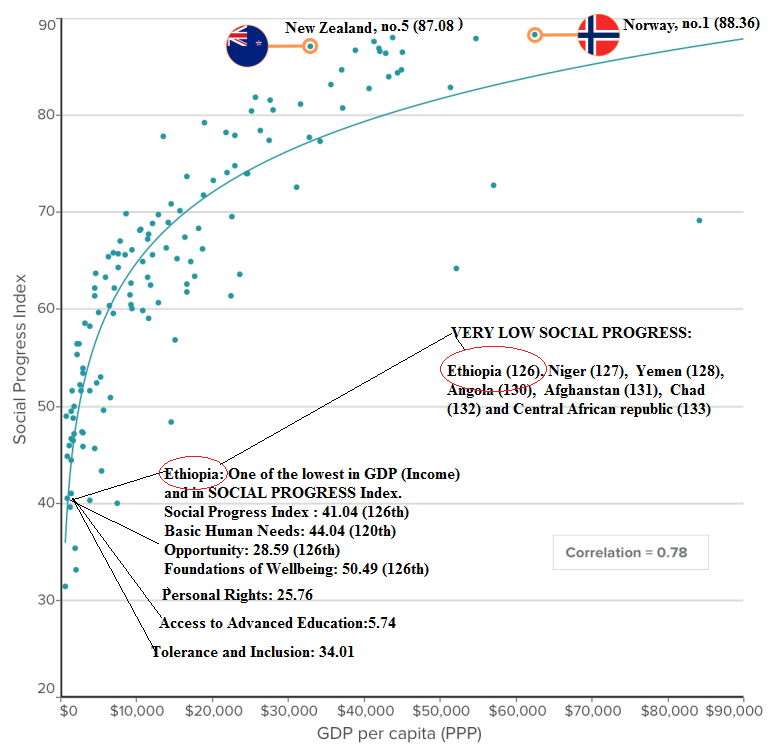
‘Many governments have responded to the turmoil by downplaying or abandoning human rights. Governments directly affected by the ferment are often eager for an excuse to suppress popular pressure for democratic change. Other influential governments are frequently more comfortable falling back on familiar relationships with autocrats than contending with the uncertainty of popular rule. Some of these governments continue to raise human rights concerns, but many appear to have concluded that today’s serious security threats must take precedence over human rights. In this difficult moment, they seem to argue, human rights must be put on the back burner, a luxury for less trying times. That subordination of human rights is not only wrong, but also shortsighted and counterproductive. Human rights violations played a major role in spawning or aggravating most of today’s crises. Protecting human rights and enabling people to have a say in how their governments address the crises will be key to their resolution. Particularly in periods of challenges and difficult choices, human rights are an essential compass for political action. ‘ in Tyranny’s False Comfort, http://www.hrw.org/world-report/2015/essays/tyranny-false-comfort?page=1
‘Ethiopia Hopes that Ethiopia’s government would ease its crackdown on dissent ahead of the May 2015 elections were dashed in 2014.’
‘In April and May, protests erupted in towns throughout the region of Oromia against the planned expansion of Addis Ababa’s municipal boundary into Oromia. Security personnel used excessive force, including live ammunition, against protesters in several cities. At least several dozen people were confirmed dead and hundreds were arrested. Many of them remain in custody without charge. Restrictions on human rights monitoring and on independent media make it difficult to ascertain the precise extent of casualties and arrests. Foreign journalists who attempted to reach the demonstrations were turned away or detained by security personnel. Ethnic Oromos make up approximately 45 percent of Ethiopia’s population and are often arbitrarily arrested and accused of belonging to the banned Oromo Liberation Front (OLF).’
Ethiopia Hopes that Ethiopia’s government would ease its crackdown on dissent ahead of the May 2015 elections were dashed in 2014. Instead the government continued to use arbitrary arrests and prosecutions to silence journalists, bloggers, protesters, and supporters of opposition political parties; police responded to peaceful protests with excessive force; and there was no indication of any government willingness to amend repressive legislation that was increasingly condemned for violating international standards, including at Ethiopia’s Universal Periodic Review at the United Nations Human Rights Council. Freedom of Peaceful Assembly Security forces have harassed and detained leaders and supporters of Ethiopian opposition parties. In July, leaders of the Semawayi (“Blue”) Party, the Unity for Democracy and Justice (UDJ), and the Arena Tigray Party were arrested. At time of writing, they had not been charged but remained in detention. The Semawayi Party’s attempts to hold protests were regularly blocked in 2014. Its applications to hold demonstrations were denied at least three times and organizers were arrested. Over the course of the year, authorities repeatedly harassed, threatened, and detained party leaders. In June, Andargachew Tsige, a British citizen and secretary general of the Ginbot 7 organization, a group banned for advocating armed overthrow of the government, was deported to Ethiopia from Yemen while in transit. The transfer violated international law prohibitions against sending someone to a country where they are likely to face torture or other mistreatment. Tsige had twice been sentenced to death in absentia for his involvement with Ginbot 7. He was detained incommunicado in Ethiopia without access to family members, legal counsel, or United Kingdom consular officials for more than six weeks. He remains in detention in an unknown location. Protests by members of some Muslim communities against perceived government interference in their religious affairs continued in 2014, albeit with less frequency. As in 2013, these protests were met by excessive force and arbitrary arrests from security forces. The trials continue of the 29 protest leaders who were arrested and charged under the Anti-Terrorism Proclamation in July 2012.
In April and May, protests erupted in towns throughout the region of Oromia against the planned expansion of Addis Ababa’s municipal boundary into Oromia. Security personnel used excessive force, including live ammunition, against protesters in several cities. At least several dozen people were confirmed dead and hundreds were arrested. Many of them remain in custody without charge. Restrictions on human rights monitoring and on independent media make it difficult to ascertain the precise extent of casualties and arrests. Foreign journalists who attempted to reach the demonstrations were turned away or detained by security personnel. Ethnic Oromos make up approximately 45 percent of Ethiopia’s population and are often arbitrarily arrested and accused of belonging to the banned Oromo Liberation Front (OLF). Freedom of Association The Charities and Societies Proclamation (CSO law), enacted in 2009, has severely curtailed the ability of independent nongovernmental organizations to work on human rights. The law bars work on human rights, good governance, conflict resolution, and advocacy on the rights of women, children and people with disabilities if organizations receive more than 10 percent of their funds from foreign sources. The law was more rigorously enforced in 2014. In March, Ethiopia was approved for membership in the Extractive Industries Transparency Initiative (EITI), which promotes transparency on oil, gas, and mining revenues, despite the requirement for candidate countries to make a commitment to meaningful participation of independent groups in public debate on natural resource management. Ethiopia’s previous application was denied in 2010 based on concerns over the CSO law. Freedom of Expression Media remain under a government stranglehold, with many journalists having to choose between self-censorship, harassment and arrest, or exile. In 2014, dozens of journalists and bloggers fled the country following threats. In August 2014, the owners of six private newspapers were charged following a lengthy campaign of threats and harassment against their publications. According to the Committee to Protect Journalists, Ethiopia is one of three countries in the world with the highest number of journalists in exile. Since 2009, the Anti-Terrorism Proclamation has been used to target political opponents, stifle dissent, and silence journalists. In July, Ethiopia charged 10 bloggers and journalists known as the Zone 9 Collective under the Anti-Terrorism Proclamation after they spent over 80 days in pre-charge detention. The charges included having links to banned opposition groups and trying to violently overthrow the government. The bloggers regularly wrote about current events in Ethiopia. Among the evidence cited was attending a digital security training course in Kenya and the use of “security in-a-box”-a publicly available training tool used by advocates and human rights defenders. Due process concerns have marred the court proceedings. Other journalists convicted under the Anti-Terrorism Proclamation-including Eskinder Nega, Reeyot Alemu, and Woubshet Taye-remain in prison. The government continues to block even mildly critical web pages and blogs. The majority of opposition media websites are blocked and media outlets regularly limit their criticism of government in order to be able to work in the country. The government regularly monitors and records telephone calls, particularly international calls, among family members and friends. Such recordings are often played during interrogations in which detainees are accused of belonging to banned organizations. Mobile networks have been shut down during peaceful protests and protesters’ locations identified using information from their mobile phones. The government has monitored digital communications using highly intrusive spyware that monitors all activity on an individual’s computer, including logging of keystrokes and recording of skype calls. The government’s monopoly over all mobile and Internet services through its sole, state-owned telecom operator, Ethio Telecom, facilitates abuse of surveillance powers. Abuses of Migrant Workers Hundreds of thousands of Ethiopians continue to pursue economic opportunities in Saudi Arabia, Yemen, Bahrain, and other Gulf countries, risking mistreatment from human traffickers along the migration routes. In Yemen, migrants have been taken captive by traffickers in order to extort large sums of money from their family members. In late 2013 and early 2014, hundreds of thousands of migrant workers, mainly Ethiopians, were detained and deported from Saudi Arabia to Ethiopia. Saudi security forces and civilians attacked Ethiopians, prompting restrictions on migration to certain countries.
Forced Displacement
Both the government of Ethiopia and the donor community failed to adequately investigate allegations of abuses associated with Ethiopia’s “villagization program.” Under this program, 1.5 million rural people were planned to be relocated, ostensibly to improve their access to basic services. Some relocations during the program’s first year in Gambella region were accompanied by violence, including beatings, arbitrary arrests, and insufficient consultation and compensation. A 2013 complaint to the World Bank’s Inspection Panel from Ethiopian refugees, the institution’s independent accountability mechanism, continues to be investigated. Ethiopian refugees alleged that the bank violated its own policies on indigenous people and involuntary resettlement in the manner a national program was implemented in Gambella. In July, a UK court ruled that allegations that the UK Department for International Development (DFID) did not adequately assess evidence of human rights violations in the villagization program deserved a full judicial review. The judicial review had yet to be heard at time of writing. Ethiopia is continuing to develop sugar plantations in the Lower Omo Valley, clearing 245,000 hectares of land that is home to 200,000 indigenous people. Indigenous people continue to be displaced without appropriate consultation or compensation. Households have found their grazing land cleared to make way for state-run sugar plantations, and access to the Omo River, used for growing food, restricted. Individuals who have questioned the development plans face arrest and harassment. Local and foreign journalists have been restricted from accessing the Omo Valley to cover these issues.
HUMAN RIGHTS WATCHLGBT Rights
Ethiopia’s criminal code punishes consensual adult same-sex relations with up to 15 years in prison. In March, Ethiopia’s lawmakers proposed legislation that would make same-sex conduct a non-pardonable offense, thereby ensuring that LGBT people convicted under the law could not be granted early leave from prison. However, in April the government dropped the proposed legislation.
Ethiopia came for Universal Periodic Review in May 2014, and they rejected all recommendations to decriminalize same-sex conduct and to take measures to combat discrimination based on sexual orientation.
Key International Actors
Ethiopia continues to enjoy unquestioned support from foreign donors and most of its regional neighbors, based on its role as host of the African Union (AU); its contribution to UN peacekeeping, security and aid partnerships with Western countries; and its stated progress on development indicators. Its relations with Egypt are strained due to Ethiopia’s construction of the Grand Renaissance Dam, which will divert water from the Nile and is due to be completed in 2018. In 2014, Ethiopia negotiated between warring parties in South Sudan, and its troops maintained calm in the disputed Abyei Region. Ethiopia continues to deploy its troops inside Somalia; they were included in the AU mission as of January. Ethiopia is one of the largest recipients of donor aid in Africa, receiving almost US$4 billion in 2014, which amounted to approximately 45 percent of its budget. Donors remain muted in their criticism of Ethiopia’s human rights record and took little meaningful action to investigate allegations of abuses. Donors, including the World Bank, have yet to take the necessary measures to ensure that their development aid does not contribute to or exacerbate human rights problems in Ethiopia. Ethiopia rejected recommendations to amend the CSO law and the Anti-Terrorism Proclamation that several countries made during the examination of its rights record under the Universal Periodic Review in May.
Read full report at:

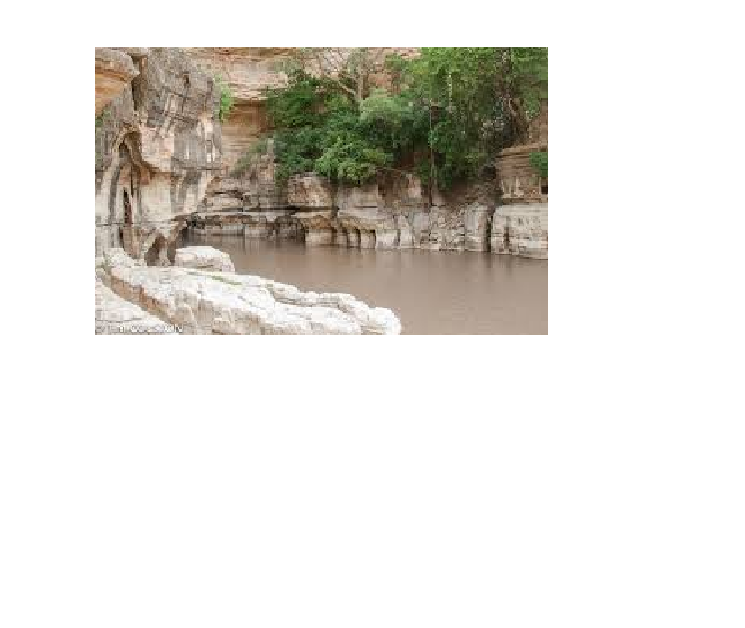
Sof Umar Wall, Bale Oromia (Ancient and magnificent past and present)


Parts of ancient kemetic (Kushitic), Egyptian, material culture (fashion accessories), courtesy of British Museum sources
Traditionally, Oromo women wear necklaces with telsum amulets, triangular and crescent shaped pendants protect from the evil eye and attract the power of the moon or to improve fertility.


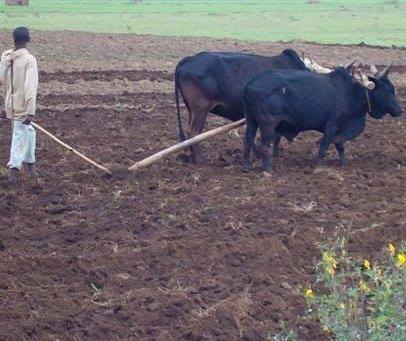
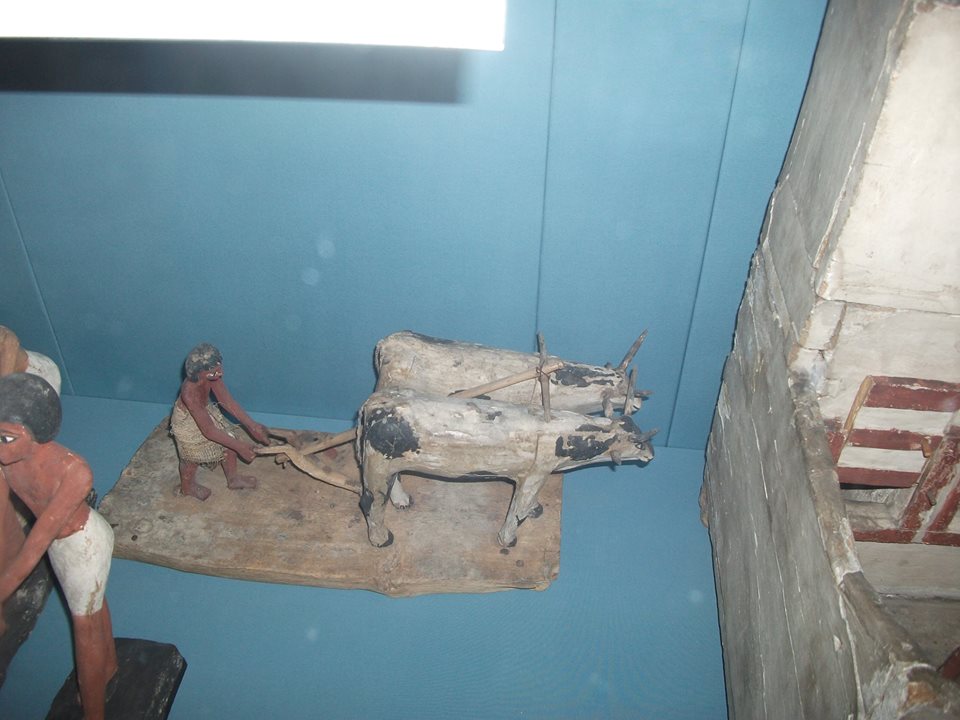
Oromia: The continuity of farming in Oromo society from ancient Kemetic (Kushitic) to present Oromia
Ancient Oromo culture, Irreechaa from the time before the Pyramid
As some indeed suspect, that the science which we see at the dawn of recorded history, was not science at its dawn, but represents the remnants of the science of some great and as yet untraced civilisation. Where, however, is the seat of that civilisation to be located? (J. W. S. Sewell, 1942)
Conquest and dominations are social phenomenon as are dying elsewhere will die in Oromia (Author’s Remark).
JEL: O5, D2
Oromia: Untwist the Twisted History
The topic is about Oromia’s location in space and allocation in humanity and society. It is concerned with Oromia’s physical position in terms of geography and relational to issues of economic conditions, social justices, cultural values, political history and destiny. Civilisation, Colonisation and Underdevelopment are presented in historical and geo-political perspectives. They capture both the space and time perceptions. They are also representing the economic and social conditions and positions. The portrayal we procure the present of the Oromo nation, the core of the Cush (Cushite/ Kemet)/Ham (Hamite), the children of Noah, in North & East Africa in past age from the phantom of the Solomonic dynasty, the history thought in Abyssinian high schools, their text books and elsewhere in the invaders’ literature, abusive literary and oral discourses is that they were savages and that, though Abyssinians and Europeans overrun their lands and have made mere subjects of them, they have been in a way, bestowing a great favour on them, since they have brought to them the benisons of Christian Enlightenment. With objective analysis, however, this paper obliterates and unmakes that inaccurate illustration, wanton falsifications, immorality, intellectual swindle, sham, mischievous tales, the bent and the parable of human reductionism. Hence, it is the step to delineate an authentic portrait of a human heritage, which is infinitely rich, beautiful, colourful, and varied in the retrograde of orthodox misconceptions. The paper is not only a disinclination itself but also a call for and a provocation of the new generation of historians to critically scrutinise and reinvestigate the orthodox approaches to the Oromo history and then to expose a large number of abusive scholarship authorities on the Oromo and Cushitic studies and it detects that they do not really know the intensity and profoundness of the history of these black African people and nations and the performance these Africans registered in the process of creating, making and shaping the prime civilisations of human societies. The study acknowledges and advances a strict contest to an orthodox scholarship’s rendition of Egypt as a white civilisation, which arose during the nineteenth century to fortify and intensify European imperialism and racism. Depending on massive evidences from concerned intellectual works from linguistic to archaeology, from history to philosophy, the study authenticates that Egypt was a Cushitic civilisation and that Cushite civilisation was the authentic offspring of the splendid Upper Nile/ Oromian legacy. The Greek civilisation, which has been long unveiled as the birthplace of Western philosophy and thought, owes its roots to the Cushites thoughts and achievements. The original works of Asfaw Beyene (1992) and F. Demie (in Oromia Quarterly, 1998 & 2000) are giving motivations and also greatly acknowledged. The study also expresses that radical thinkers and multi-genius African historians such as Diop (1991) have not given due attention to the epic centre of Cushitic civilisation, Oromia, the land after and Eastern and South Eastern to Nubia, pre-Aksum central Cush, Aksumite Cush and Cushites civilisation southern to Aksum, etc. The method of enquiry is qualitative and the eclectics of formal and the informal sources, rigorous, casual and careful scholarship argument. Oral history and written documents on history, economy, sociology, archaeology, geography, cosmology and anthropology are based on as references. The paper studies the Oromo history and civilisation in horizontal approach and challenges the reductionist and Ethiopianist (colonialist, racist) vertical approach (topsy-turvy, cookkoo). It goes beyond the Oromo Oral sources (burqaa mit-katabbii) and Africanist recorded studies and western civilisational studies. The approach is to magnify, illuminate and clarify the originality of humanity and civilisation to this magnificent Cushitic (African) beauty. The Origin of Humanity When and where did human life first surface on our cosmos? Who contrived the original and prime human culture and civilisation? Ancient Egyptians contended that it was in their homeland, the oldest in the world, the God modelled the first of all human beings out of a handful of ooze soddened by the vivacity of the life giving sanctified and blessed water, the Nile (see, Jackson, 1995). “The ancient Egyptians called the river Ar or Aur (Coptic: Iaro), “Black,” in allusion to the colour of the sediments carried by the river when it is in flood. Nile mud is black enough to have given the land itself its oldest name, Kem or Kemi, which also means “black” and signifies darkness. In The Odyssey, the epic poem written by the Greek poet Homer (7th century bce), Aigyptos is the name of the Nile (masculine) as well as the country of Egypt (feminine) through which it flows. The Nile in Egypt and Sudan is now called Al-Nīl, Al-Baḥr, and Baḥr Al-Nīl or Nahr Al-Nīl.”http://www.britannica.com/EBchecked/topic/415347/Nile-River Ar or Aur (Coptic: Iaro) is Booruu in modern Afaan Oromo which means turbid in English translations. Lagdi Nayili jedhamee amma waamamu maqaan kun kan akkanatti moggaasameefi, bowwaa jechuudha. Warri kushii, warri biyyaa, waarri durii laga isaanii Aur (Ooruu) jedhanii waamu. Afaan Oromoo amma uni dubbannuutti booruu jechuudha. Booruu (turbid) jechuuni gurri’aacha (Kami) jechuu miti. Booruu (Ooruu, Aur) jechuun kan taliila hin taane kan hin calaliini jechuudha. Dameen laga kanaa kan Moromor (dhidheessa) irraa maddu galaana biroo itti burqan dabalatee biyyoo loolan haramaniin waan booraweef. kaartumitti yoo damee isa (isa taliila) garba Viktooriyaati karaa Ugaanda dhufutti makamu kanasi booressee misiriitti godaana. Dameen Garba Viktooriyaati dhufu iyyuu adii (white) jedhamee mogga’uuni irra hin turre. Bishaani adiini hin jiru. Bishaani hin boora’iini bishaan taliila. Bishaani taliilatu bishaan guri’aacha. Inni ‘Blue’ jedhanisi ‘Blue’ mitti. Bishaan taliilatu, gurri’aacha ‘Blue’ dha. ‘Blue Nile’ jechuu irra ‘Brown’ Nile (Mormor Booruu, Ar, Aur) yoo jedhani ille itti dhiyaata.
The word (Africa) Afrika itself derived from kemetic (Oromo) language. In Oromo, one of the ancient black people (kemet), Afur means four. Ka (Qa, Waqa) means god. Afrika Means the four children of god. It describes the four sub groups of kemet people. Such type of naming system is very common in Oromo even today such as Afran Qallo, Shanan Gibee, Salgan Boorana, Macca Shan, Jimma Afur, Sadan Soddoo, etc. For other theories in this topic please refer to http://atlantablackstar.com/2014/09/23/9-theories-africa-got-name/
One of the oldest Cushites histories to account for the origin and early development of man and his culture survives in a Greek version of the thesis advanced by the ancient Cushites, Oromians and the rest. This marvellous people paraded in golden times in the region called Kush (Punt) in the Hebrew Scriptures and stamped on the present-day upper Nile Oromia (see, Jackson, 1995). Diodorus Siculus, wrote that the Cushites were of the opinion that their country was not only the birthplace of human race and the cradle land of the world’s earliest civilisation, but, indeed, the primal Eden where living things first appeared on Earth, as reported by the Scriptures. Thus, Diodorus was the first European to focus attention on the Cushites asseveration that Upper Nile (Oromia) is the cradle land of world’s earliest civilisation, the original Eden of the human race. Whether by almighty (God) or nature/ evolution (Darwin’s natural selection and survival of the fittest), Oromia was not only the birth place of man himself (e.g., Lucy) but also for many hundred years thereafter is in the vanguard of all world progress (see Diop, 1991 in his African Civilisation; Martin Bernal, 1987). These are also authenticated by the present archaeological inferences in Oromo tropical fields and rivers valleys. The original natives of Egypt, both in old and in the latter ages of development, were Cushite and there is every raison d’être for the discourse that the earliest settlers came from upper Nile Oromia. The original homeland of the Oromians and other Cushites including Chadic, Berber, Egyptian, Beja, Central Cushitic, East Cushitic, South Cushitic, Omotic and Nilotic was the present day upper Nile Oromia. It was from the original Oromo (Madda Walaabu) that the rest of humanity descended diffused to other parts of the world. This can be understood in the analogue of the diffusion of two Oromo families (Borana and Barentuma). While those who expanded to other regions latter taken new family names like Macha, Tulama, Karayyu, etc and those who stayed in original place kept the original name such as Borana. In terms of linguistic, like most scholars, we believe that it is impossible to judge between the theories of monogenesis and polygenesis for human, though the inclination is towards the former. On the other hand, recent work by a small but increasing number of scholars has convinced us that there is a genetic relationship between European, Asian, and African and Cushite languages. A language family originates from a single dialect, proto Cushitic/ Oromo. From such language and culture that must have broken up into Africa, Asiatic, and European and within them a very long time a go. Professor Bernal (1987, in Black Athena, p. 11) confirmed that the unchallenged originality of Oromians and other Cushites nativity to the region and put forward that the latest possibility for initial language break up would be the Mousterian period, 50- 30,000 years Before the Present (BP), however, it may well have much earlier. He further observed that the expansion and proliferation of Cushitic and other Afroasiatic as the promulgation of a culture long pioneered in the East African Rift valley (South Eastern Oromian) at the end of the last Ice Age in the 10th and 9th millennia BC. According to Bernal (1987, p.11) the polar ice caps caged the water within itself, which was during the Ice ages, thus water was significantly less than it is nowadays. He reports that the Sahara and Arabian deserts were even bigger and more inhospitable then than they are presently. In the centuries that ensued, with the rise of heat and increase in the rainfall, greatly the regions became savannah, into which adjoining peoples voyaged. The most successful of these were, the speakers of Proto-Afroasiatic from upper Nile Oromia. Bernal further confirmed that these people not only possessed flourishing and effective skills and techniques of hippopotamus hunting with harpoons but also had domesticated cattle and food crops. The following is quoted from Black Athena: ‘Going through the savannah, the Chadic speakers renched lake Chad, the Berbers, the Maghreb, and the Proto-Egyptians, upper Egypt…. With long-term desiccation of the Sahara during the 7th and 6th millennia BC, there were movements into the Egyptian Nile Valley from the west and east as well as from the Sudan. … A similar migration took place from the Arabian savannah into lower Mesopotamia ‘(Bernal, pp.11-12).
The Origin of Civilisation
There are many things in the manners and customs and religions of the historic Egyptians that suggest that the original home of their human ancestors was in the Upper Nile region and the biblical land of Punt/ Kush (Cush) Or Oromia which include the present day of Cushitic North and East of Africa. Hence, historical records showed that the antiquity of upper Nile Cushitic Oromian civilisation had a direct link with the civilisation of ancient Egypt, Babylonian and Greece. Hence, the Egyptian and Babylonian civilisations are part and parcel of the entire Cushite civilisation. As it is described above, there is wide understanding that Cushites = Egyptians + Babylon + Oromo+ Agau + Somalis + Afars + Sidama + Neolithic Cush + other Cush. There is also an understanding that all the Cushites are branched out (descended) from their original father Oromo which can be described as Oromo = Noah=Ham= Cush= Egyptian + Bablyon+ Agau + Somali + Afar + Sidama + Neolithic Cush + other Cush. Boran and Barentuma, the two senior children and brothers were not the only children of the Oromo. Sidama, Somali, Agau, Afar and the others were children of the big family. Wolayita and the Nilotics were among the extended family and generations of the Cushite. As a hydro-tower of Africa, the present Oromia is naturally gifted and the source of Great African rivers and hosts the bank and valleys of the greatest and oldest civilisations such as Nile (Abbaya), Baro (Sobat), Gibe, Wabe, Dhidhesa, Ganale, Wabi-shebele, Omo, and Awash among others. Oromian tropical land, equatorial forest and Savannah have been the most hospitable ecology on the earth and conducive environment to life and all forms of human economic and social practices. According to Clarke (1995), many of the leading antiquarians of the time, based largely on the strength of what the classical authors, particularly Diodorus Siculus and Stephanus of Nabatea (Byzantium after Roman colonisation and Christianisation), had to say on the matter, were exponents of the vista that the Cushite, the ancient race in Africa, the Near East and the Middle East, or at any rate, the black people of remote antiquity were the earliest of all civilised peoples and that the first civilised inhabitants of ancient Egypt were members of what is referred to as the black, Cushite race who had entered the land as they expanded in their geographical space from the their birthplace in upper Nile Oromia, the surrounding Cushite river valleys and tropical fields. It was among these ancient people of Africa and Asia that classical technology advanced, old world science and cosmology originated, international trade and commerce was first developed, which was the by-product of international contacts, exchange of ideas and cultural practices that laid the foundations of the prime civilisations of the ancient world. Cushite Africa and also of the Middle East and West Asia was the key and most responsible to ancient civilisations and African history. It must also be known that there were no such geographical names, demarcations and continental classification at that time. As a whole, Cushite occupied this region; there was the kernel and the centre of the globe, the planet earth, and the universe. African history is out of stratum until ancient Cushites looked up on as a distinct African/ Asian nations. The Nile river, it tributes, Awash, Baro and Shebele or Juba, etc., played a major role in the relationship of Cushite to the nations in North, South and East Africa. The outer land Savannah, Nile, other Oromian rivers with it Adenian ecology were great cultural highways on which elements of civilisation came into and out of inner North East Africa. After expansions, there was also an offshoot, a graft, differentiation, branching out, internal separation, semi-independence and again interactions, interdependence and co-existence of the common folks. Cushites from the original home made their relationships with the people of their descendants in the South, the North, East and the West, which was as both good, and bad, depending on the period and the regime in power they formed and put in place in the autonomous regions. Cushite Egypt first became an organised autonomous nation in about 6000 B.C. In the Third Dynasty (5345-5307 B.C.) when Egypt had an earnest pharaoh named Zoser and Zoser, in turn, had for his chief counsellor and minister, an effulgent grand named Imhotep (whose name means ‘he who cometh in peace”). Imhotep constructed the famous step pyramid of Sakkarah near Memphis. The building techniques used in the facilitation of this pyramid revolutionised the architecture of the ancient world (Clarke, 1995). Of course, Independent Egypt was not the original home of these ancient technology. However, it was an extension, expansion, advancement and the technological cycle of the Upper Nile Oromia, Nubia, Beja, Agau and other Cushites. Ideas, systems, technologies and products were invented, tested and proved in upper Nile then expanded and adopted elsewhere in the entire Cush regions and beyond. . Bernal (1987, pp. 14-15) has identified strict cultural and linguistic similarities among all the people around the Mediterranean. He further attests that it was south of the Mediterranean and west to the Red Sea’s classical civilisation that give way to the respective north and east. Cushite African agriculture of the upper Nile expanded in the 9th and 8th century millennia BC and pioneering the 8th and 7th of the Indo-Hittite. Egyptian civilisation is Cushite and is clearly based on the rich pre-dynastic cultures of Upper Egypt, Nubia and upper Nile, whose Cushite African and Oromian origin is uncontested and obvious. Of course, Cushite Egypt gave the world some of the greatest personalities in the history of mankind. In this regard, Imhotep was extraordinary discernible. In ancient history of Egypt, no individual left a downright and deeper indentation than Imhotep. He was possibly the world’s first mult-genuis. He was the real originator of new medicine at the time. He revolutionised an architect of the stone building, after which the Pyramids were modelled. He became a deity and later a universal God of Medicine, whose images charmed the Temple of Imhotep, humanity’s earliest hospital. To it came sufferers from the entire world for prayer, peace, and restorative. Imhotep lived and established his eminence as a curative at the court of King Zoser of the Third Dynasty about 5345-5307 B.C. (Duncan, 1932). When the Cushite civilisation through Egypt afar crossed the Mediterranean to become the foundation of what we think of as Greek culture, the teachings of Imhotep were absorbed along with the axioms of other great Cushite African teachers. When Greek civilisation became consequential in the Mediterranean area, the Greeks coveted the world to ponder they were the originators of everything in its totality. They terminated to acknowledge their liability to Imhotep and other great Cushites. Imhotep was forgotten for thousands of years, and Hippocrates, a mythical posture of two thousand years latter, became known as the father of medicine. Regarding to Imhotep’s influence in Rome, Gerald Massey, noted poet, archaeologist, and philologist, says that the early Christians cherished him as one with Christ (Massey, 1907). It should be understood that, while the achievements of Cushite Egypt were one of the best, these are not the only achievements that Cushite Africans can claim. The Nubians, upper Nile, central and eastern Cushites (the Oromo, Agau, Somalia, Afar, etc) were continue to develop many aspects of civilisation independent of Cushite Egyptian interactions. These nations and states gave as much to Egypt as Egypt give to them in terms of trade, ideas and technology as well. There was also a considerable Cushite dominion on what later became Europe in the period preceding Christian era. Cushites played a major role in formative development of both Christianity and Islam. Both the Holly Bible and the Holly Quran moral texts are originated from the Oromo and other Cushite oral and moral principles, beliefs, creeds and teachings. There is a common believe and understanding that Abraham, a seminal prophet, believer and recipient of a single and eternal God was from Central Cush of present Upper Nile Oromia. The Oromos believed in a single and eternal God, Black God (Waaqa Guri’acha) also Blue God according to some scholars who translated the oral history. Waaqa also Ka. While the Oromian faith, social structure and policies were the prime and the origins of all, Judaism, Christianity, and Islam were all the derivatives and originated from the Black God. Waaqayyoo in Oromo is the original, the single, the omnipotent, the prime and the greatest of all the great religions. All aspects of the present day Christian churches were developed in Cushites. One of the more notable of Cushite contributions to the early church was monasticism. Monasticism, in essence, is organised life in common, especially for religious purposes. The home of a monastic society is called a monastery or a convent. Christian monasticism probably began with the hermits of Cushite Egypt and Palestine about the time when Christianity was established as a licit religion (Clarke, 1995). Oral tradition and Arabian records confirm that Bilal, a tall, gaunt, black, bushy-haired, Oromo, was the first High Priest and treasurer of the Mohammedan empire. After Mohamet himself, the great religion, which today numbers upwards of half a billion souls, may be said to have began with Bilal. He was honoured to be the Prophet’s first neophyte. Bilal was one of the many Cushites who concurred in the founding of Islam and later made proud names for themselves in the Islamic nations and expansions. Europe was sluggishing in her Dark Ages at a time when Cushite Africa and Asia were relishing a Golden Age. In this non-European world of Africa and Asian, Cushites built and enjoyed an age of advancement in technology before a period of internal withdrawal and isolation that favoured the Europeans to move a head of them. For more than a thousand years the Cushites were in the ‘Age of Grandeur’ but the second rise of Europe, internal strife, slave trade and colonialism brought the age of catastrophic tragedy, abase and declivity. The early Cushites made spears to hunt with, stone knives to cut with, the bola, with which to catch birds and animals, the blow-gun, the hammer, the stone axe, canoes and paddles, bags and buckets, poles for carrying things, bows and arrows. The bola, stone knives, paddles, spears, harpoons, bows and arrows, bow-guns, the hammer and the axe- all of them invented first by Cushites – were the start of man’s use of power. The present’s cannon, long-range missiles, ship propellers, automatic hammers, gas engines, and even meat cleavers and upholstery tack hammers have the roots of their development in the early Cushite use of (Clarke, 1995). Cushite offered humans the earliest machine. It was the fire stick. With it, man could have fire any time. With it, a campfire could be set up almost any place. With it, the early Africans could roast food. Every time we light a match, every time we take a bath in water heated by gas, every time we cook a meal in a gas-heated oven, our use of fire simply continues a process started by early Cushites: the control of fire. Of course, those early Cushite was the first to invent how to make a thatched hut. They had to be the first because for hundreds of thousand of years they were the only people on earth. They discovered coarse basket making and weaving and how to make a watertight pot of clay hardened in a fire. In the cold weather, they found that the skins of beasts they had killed would keep them warm. They even skin covers for their feet. It was from their first effort much later clothing and shoes developed. Humanity owes the early Cushites much and even much more (Clarke, 1995). The Cushites dociled animals. They used digging sticks to obtain plant roots that could be consumed. They discovered grain as a food, how to store it and prepare it. They learnt about the fermentation of certain foods and liquids left in containers. Thus, all mankind owes to Cushites including the dog that gives companionship and protection, the cereals we eat at break-fast-time, the fermented liquids that many people drink, the woven articles of clothing we wear and the blankets that keep us warm at night, the pottery in which we bake or boil food, and even the very process (now so simple) of boiling water- a process we use every time we boil an egg, or make spaghetti, or cook corned beef. Canoes made it possible for man to travel further and farther from his early home. Over many centuries, canoes went down Baro, the Nile and the Congo and up many smaller rivers and streams. It was in this pattern that the early Cushite civilisation was advanced. From the blowgun of antiquated Cushite, there come next, in later ages, many gadget based on its standard. Some of these are: the bellows, bamboo air pumps, the rifle, the pistol, the revolver, the automatic, the machine gun- and even those industrial guns that puff grains. Modern Scientists certain that by about 3000 B.C., the Cushite farmers in the Nile Valley were growing wheat and barely, cultivating millet, sorghum, and yams. Around 1500 B.C. new crops farming were developed: – banana, sugar cane, and coconut trees and later coffee. The cultivation of bananas and coffees in particular spread rapidly which are suited to tropical forest conditions. Cushites had also domesticated pigs, donkeys, horses, chickens, ducks, and geese, etc. (Greenblatt, 1992). The agricultural revolution brought about a gradual increase in population. Then another development helped expand population still more. The technique of smelting iron innovated by Cushites. Iron working start and then advanced in the Nile valley and then started to spread to other parts of Africa and from who, by way of Egypt and Asian Minor, this art made its way into Europe and the rest of Old World. Iron greatly improved the efficiency of tools and weapons. Iron tools and weapons are much stronger and last longer than those made of stone or wood. Iron axes made it easier to chop tropical trees and clear land for farming. Iron sickles made harvest easier. Iron hoes and other farm tools helped farmers cultivate land more easily. Iron-tipped spears meant more meat. The new technologies boosted the Cushite economy; they increased food production that enabled more people to survive. In addition, iron objects became valuable items in Cushite trade and commercial activities. With his simple bellows and a charcoal fire the Cushite blacksmith reduced the ore that is found in many parts of the region and forged implements of great usefulness and beauty. In general, the Iron technology was instrumental in auguring the rise and expansion of Cushite civilisation (Greenblatt, 1992). Cushite hunters many times cut up game. There still exists for evidences, drawings of animal bones, hearts and other organs. Those early drawings as a part of man’s early beginnings in the field of Anatomy. The family, the clan, the tribe, the nation, the kingdom, the state, humanity and charity all developed first in this region of the cradle of mankind. The family relationships, which we have today, were fully developed and understood then. The clan and the tribe gave group unity and strength. The nation, the common whole was first developed here. It was by this people that early religious life, beliefs, and the belief in one God, the almighty started and expanded. The first formal education of arts, science, astronomy, times and numbers (mathematics) were visual, oral and spoken tradition given in the family, during social and religious ceremonies. Parents, Medicine men, religious leaders, etc were the education heads. Ceremonial Cushite ritual dances laid the basis for many later forms of the dance. Music existed in early Cushite Among instruments used were: reed pipes, single-stringed instruments, drum, goured rattles, blocks of wood and hollow logs. Many very good Cushite artists brought paintings and sculpture into the common culture. The early Cushites made a careful study of animal life and plant life. From knowledge of animals, mankind was able to take a long step forward to cattle rising. From the knowledge of plants and how they propagate, it was possible to take a still longer step forward to agriculture. Today, science has ways of dating events of long a go. The new methods indicate that mankind has lived in Cushite Africa over two million years. In that long, long time, Cushites and people of their descent settled in other parts of Africa and the rest. Direct descents of early Cushites went Asia Minor, Arabia, India, China, Japan and East Indies. Cushites and people of Cushite descents went to Turkey, Palestine, Greece and other countries in Europe. From Gibraltar, they went into Spain, Portugal, France, England, Wales and Ireland (Clarke, 1995). Considering this information, the pre-Colombian presence of Cushite African mariners and merchants in the New World is highly conceivable and somewhat sounds. In this context, the first Africans to be brought to the New World were not in servitude and slavery, which contrary to popular creed. Tormenting references in the Spanish chronicles and other growing body of historical studies advocate that Cushites were the founders, the pioneers and first permanent settlers of America. Commanding authentication as in Bennett (1993, p. 85) cited by Leo Veiner in his work Africa and the discovery of America suggests that African traders founded Mexico long before Columbus. Hence, the Africans influences were extended from Canada in the North to the Maya, Aztec, and Inca civilisation in the South America. The Cushite civilisation is therefore the basis of Indian civilisation. Unlike the western Sudan and in Egypt, the people and nations of upper Nile had lost written records of their ancient times and medieval history. These were destroyed and burned during war of conquests. The early travellers to these areas are also mostly not yet known. Notable kingdoms, republics and states did rise in this part of Africa and did achieve a high degree of civilisation of their time. Scholarly undertakings show that Cushite Africans such as Oromos were the first in human history to invent and implement democratic institutions (e.g. Gada system or Gadaa system), democratic forms of government, elections and unwritten constitution. Democracy was first invented in upper Nile Oromia then to Athens, Greek and to the rest. It was not the other way round. Gada, an accomplishment of Oromian social genius in socio-political organisation is one of the most complex, the world wonder and by far superior to so far other humanity’s social and political imagination and civilisation. Gada in its vector of values constitutes, political institution, the power structure, governing constitution, the ideology, the religion, the moral authority, the economic and the whole way of life of the public, the collective, the social and the private individual. Gada is the social civilization of the Oromo in the Nile civilization. Gada is an atonishing and complex social evolution in human social transformation and an Oromo social perfection. In old Egyptian (Cushite, oromo) dialect it means Ka Adaa. Ka means God. Adaa (law). It means the law of God, the law of waaqa (God). It also symbolizes the dawn of not only civilization but also human freedom as civilazation. ‘Gadaa bilisummaa saaqaa.’ Orthodox historians and some archaeologists believe that the civilisation of Egypt is the oldest in the world, while others give that priority to western Asia or India. It has also been suggested that, since all these cultures possess certain points of similarity, all of them may evolve from an older common civilisation. Men of eminent scholarship have acknowledged this possibility. In this regard, Sir E.A. Wallis Budge (1934) indicated: “It would be wrong to say that the Egyptians borrowed from the Sumerians or Sumerians from Egyptians, but it may be submitted that the literati of both peoples borrowed their theological systems from common but exceedingly ancient source… This similarity between the two companies of gods is too close to being accidental.” A pioneer American Egyptologist, Breasted (1936) advanced the following views: “In both Babylonian and Egypt the convenient and basic number (360), of fundamental importance in the division of the circle, and therefore in geography, astronomy and time-measurement, had its origin in the number of days in the year in the earliest known form of the calendar. While its use seems to be older in Egypt than in Babylonian, there is no way to determine with certainty that we owe it exclusively to either of these two countries. A common origin older than either of is possible.” Sewell (1942) said that the science, which we see at the dawn of recorded history, was not science at its dawn, but represents the remnants of the science of some great and as yet untraced civilisation. Where, however, is the seat of that civilisation to be located?” A number of scholars, both ancient and modern, have come to the conclusion that the world’s first civilisation was created by the people known as Cushite (Oromian) and also known by Greeks as Punt (Burnt Faces). The Greeks argued that these people developed their dark colouration since they were adjacent to the sun than were the fairer natives of Europe. In terms of the sources of well-informed modern authority, Herodotus describes the Cushites as in Lugard (1964) as: “ The tallest, most beautiful and long-lived of the human races,’ and before Herodotus, Homer, in even more flattering language, described them as ‘ the most just of men; the favourites of gods.’ The annals of all the great early nations of Asia Minor are full of them. The Mosaic records allude to them frequently; but while they are described as the most powerful, the most just, and the most beautiful of the human race, they are constantly spoken of as black, and there seems to be no other conclusion to be drawn, than that remote period of history the leading race of the western world was the black race.” Alexander Bulatovich (2000, p.53) of Russia in his 1896-1898 travels in Oromia described the Oromo, which is akin to Herodotus’s description as fallows: “The [Oromo] physical type is very beautiful. The men are very tall, with statuesque, lean, with oblong face and a somewhat flattened skull. The features of the face are regular and beautiful…. The mouth is moderate. The lips are not thick. They have excellent even teeth; large and in some cases oblong eyes and curly hair. Their arm bones are of moderate length, shorter than the bones of Europeans, but longer than among the Amhara tribes. The feet are moderate and not turned in. The women are shorter than the men and very beautifully built. In general, they are stouter than the men, and not as lean as they. Among them one sometimes encounters very beautiful women. And their beauty does not fade as among the Abyssinians. The skin color of both men and women ranges from dark to light brown. I did not see any completely black [Oromo].” According to Homer and Herodotus, the Cushites were inhabited in the Sudan, Egypt, Arabia, Palestine, present Ethiopia, Western Asia and India. In his essay of historical analysis of ancient East Africa and ancient Middle East, roughly in the years between 500BC and 500AD. Jesse Benjamin (2001), brought to our attention that the importance of research focus on global formations, multi- and bi-directional and cultural relations, geopolitical associations, archaeology, linguistics, sociology, cosmology, production, commerce and consumption patterns of these regions. Benjamin (2001) indicates that historiographers have acknowledged and documented that the adored spices, cinnamon (qarafaa in modern Afaan Oromo) and cassia of the Mediterranean sphere produced and come from ‘Cinnamon land.’ The latter is also known in different names as ‘ The other Barbaria,’ ‘Trogodytica,’ Cush, Kush, Upper Nile. or ‘Punt’ but persistently representing the whole environs identified nowadays as the ‘Horn of African’ or that part of Oromia. These show the presence of production, consumption and commercial interactions in the regions. In line with Miller (1969), Wilding (1988), Benjamin (2001) included the Oromian pastoralism, pottery, cosmology and culture in the antiquity and old world civilisation. The identification of the Cushite Oromian civilisation with the present Abyssinia Amhara-Tigre under the name of Ethiopia made by the post civilisation Abyssinian priests translators of the Abyssinian version of the Bible in the 5th and 6th century or some other time, has been a cheating and misrepresentation of true human history. Those Abyssinians who were stealing the history were relatively recent migrant (conquerors) of the region. They occupied the present day Northern Ethiopia (central Cushitic of Agau and Oromo) long after the first human civilisation already originated and advanced in the area and spread to the rest of the world including to Arabia and Mediterranean Europe. The native residents of the region are the Cushite African people (Oromo, Agau, Somali, Sidama, Afar, Beja, Saho, etc). Ethiopian Jews (Falashas) are also Cushite Oromo and Agau who accepted Jews religion. Abyssinian tribes have fabricated their own myth and false history to claim legitimacy to the region and then established a regime truth through continuos fable story, phantom, indoctrination and falsification of the real Cushite history. Semitic immigrants did not found Aksum but the Abyssinians resettled among the Cushites cities and commercial centres in which Aksum was one and latter dominated the ruling power in this very centre of the civilisation of the central Cush. Ge’ez was invented as a language of the centre and latter used as the official language of the church and the colonising Abyssinian ruling class. Ge’ez was initially developed from the mixture of Cushitic and Greek elements that was facilitated by the Cushite trade links to the Greek world. There was also Greek resettlement in Aksum and the surrounding central Cush commercial towns with primary contacts with endogenous Cushite. The earlier rulers of Aksum and Christian converts including Ezana were Cushites. Though Ezana was the first convert from the above (the ruling class) to Christianity, he did not give up his belief in one God (Waqa) (Cushite/ black God). He was also not the first Cushite to be a Christian. In their linkages with a wider world, it is also highly likely and very logical and possible that there were Christians among the civilian Cushite trading communities who had already disseminated their new faith, as so many Oromo merchants were to do latter in the expansion of Islam. The splendid Stella, towers of solid masonry, with non-functional doors and windows at Aksum was not the earliest materialisation but it was the continuity in the manifestation of major indigenous Cushite tradition of monumental architecture in stone, which also later found expression in the rock-hewn churches of the Cushite Agau kings (see also Isichei, 1997 for some of the opinions). Abyssinians were the rulers. They were not the engineers and the builders of the stone monuments. It was the original product and brainchild of Cushite technologist. Of course, their advancement was thwarted with the unfortunate coming of the Abyssinians. Almost all of the original studies of the origin of Cushite civilisation could not penetrate far deep into regions south east to Nubia (Mereo) and could not dig out the other side of the twin, the close link and vast primary sources in present day Oromia. Though the British Museum has collected vast sources on Nubian, it has not kept on or linked any to the sister and more or less identical to the civilisation of the Oromo. For me, as native Oromo with knowledge of oral history and culture, as I observed the Nubian collection in British Museum, what they say Nubian collection is almost identical to Oromia, but in a less variety and quantity. I can say that Nubian and other Cushite civilisations were extensions (grafts) of the vast products of Oromo. I may also be enthused to the inference that the people whose manners and customs have been so thoroughly capitulated by Herodotus, Diodorus, Strabo Pliny and other were not Abyssinians and other Black people at all, but the natives of Upper Nile, Oromos, Agau, Somalis, Afar and the rest of Cushitic people of the present Horn of Africa. Sir Henry Rawlinson in his essay on the early History of Babylonian describes Oromos as the purest modern specimens of the Kushite. Thus, Oromo is Kush and Kush is Oromo. Seignobos (1910), in his scholarly works on the history of Ancient Civilisation reasoned that the first civilised natives of the Nile and Tigiris-Euphrates Valleys were a dark skinned people with short hair and prominent lips, they were called Cushites by some scholars and Hamites by others. So Cushite (Hamite) is generally recognised as the original home of human civilisation and culture both beyond and across the Red Sea. They are the original source of both the African and Asiatic (Cushitic Arabian) civilisation. Higgins in 1965 scholarly undertaking discusses: “I shall, in the course of this work, produce a number of extraordinary facts, which will be quite sufficient to prove, that a black race, in a very early times, had more influence of the affairs of the world than has been lately suspected; and I think I shall show, by some very striking circumstances yet existing, that the effects of this influence have not entirely passed away.” Baldwin in his 1869 study of Arab history expressed in his own words the following: “At the present time Arabia is inhabited by two distinct races, namely descendants of the old Adite, Kushite, …known under various appellations, and dwelling chiefly at the south, the east, and in the central parts of the country, but formerly supreme throughout the whole peninsula, and the Semitic Arabians- Mahomete’s race- found chiefly in the Hejaz and at the north. In some districts of the country these races are more or less mixed, and since the rise of Mahometanism the language of Semites, known as to us Arabic, has almost wholly suppressed the old … Kushite tongue; but the two races are very unlike in many respects, and the distinction has always been recognised by writers on Arabian ethnology. To the Kushite race belongs the purest Arabian blood, and also that great and very ancient civilisation whose ruins abound in almost every district of the country.” Poole (in Haddon, 1934) says, “Assyrians themselves are shown to have been of a very pure type of Semites, but in the Babylonians there is a sign of Kushite blood. … There is one portrait of an Elmite king on a vase found at Susa; he is painted black and thus belongs to the Kushite race.” The myths, legends, and traditions of the Sumerians point to the African Cushite as the original home of these people (see. Perry, 1923, pp. 60-61). They were also the makers of the first great civilisation in the Indus valley. Hincks, Oppert, unearthed the first Sumerian remains and Rawlinson called these people Kushites. Rawlinson in his essay on the early history of Babylonian presents that without pretending to trace up these early Babylonians to their original ethnic sources, there are certainly strong reasons for supposing them to have passed from Cushite Africa to the valley of the Euphrates shortly before the opening of the historic period: He is based on the following strong points: The system of writing, which they brought up with them, has the closest semblance with that of Egypt; in many cases in deed the two alphabets are absolutely identical. In the Biblical genealogies, while Kush and Mizrain (Egypt) are brothers, from Kush Nimrod (Babylonian) sprang. With respect to the language of ancient Babylonians, the vocabulary is absolutely Kushite, belonging to that stock of tongues, which in postscript were everywhere more or less, mixed up with Semitic languages, but of which we have with doubtless the purest existing specimens in the Mahra of Southern Arabia and the Oromo.


The Greek alphabet, the script of English today, is based on the Kemetic alphabet of Ancient Egypt/Kemet and the Upper Nile Valley of Ancient Africa. Ancient Egyptians called their words MDW NTR, or ‘Metu Neter,” which means divine speech. The Greeks called it, ‘hieroglyphics”- a Greek word. The etymology of hieroglyphics is sacred (hieros) carvings (glyph). The Oromos (the Kemet of modern age) called it Qubee.
http://www.youtube.com/watch?v=zMUazEr3BSU&NR=1
Without OROMO, NO Amhara Culture & NO Amharic! – My Beta Israel & Zagwe Roots pt1 Ras Iadonis
http://www.youtube.com/watch?v=9gLJnxgXs0Q&feature=share
http://gadaa.com/oduu/797/2009/09/30/ethiopia-the-story-of-oromos-irreechaa-happy-thanksgiving/
http://www.creative8studios.com/oromia/
http://bilisummaa.com/index.php?mod=article&cat=Waaqeeyfataa&article=446
http://www.africa.kyoto-u.ac.jp/kiroku/asm_normal/abstracts/pdf/25-3/25-3-1.pdf
http://www.americanchronicle.com/articles/view/166451
http://www.gadaa.com/culture.html
http://www.gadaa.com/Irreechaa.html http://waaqeffannaa.org/?page_id=167
http://en.wikipedia.org/wiki/West_Central_Oromo_language http://www.gadaa.com/language.html
http://www.voicefinfinne.org/English/Column/Galma_EOC.htm
http://en.wikipedia.org/wiki/Hamitic#Rwanda_and_Burundii
http://oromocentre.org/oromian-story/special-report-on-the-long-history-of-north-east-africa/
African Philosophy in Ethiopia. Ethiopian Philosophical Studies II with A Memorial of Claude Sumner http://www.crvp.org/book/Series02/master-ethiopia.pdf
http://thetemplesofluxorandkarnak.wordpress.com/category/africa/
https://www.facebook.com/notes/abdi-muleta/the-story-of-irreechaa/257191284319586
“Chaltu as Helen”, which is based on a novelized story of Chaltu Midhaksa, a young Oromo girl from Ada’aa Barga district, also in central Oromia.
Born to a farming family in Koftu, a small village south of Addis Ababa near Akaki, Chaltu led an exuberant childhood. Raised by her grandmother’s sister Gode, a traditional storyteller who lived over 100 years, the impressionable Chaltu mastered the history and tradition of Tulama Oromos at a very young age.
Chaltu’s captivating and fairytale like story, as retold by Tesfaye, begins when she was awarded a horse named Gurraacha as a prize for winning a Tulama history contest. Though she maybe the first and only female contestant, Chaltu won the competition by resoundingly answering eleven of the twelve questions she was asked.
Guraacha, her pride and constant companion, became Chaltu’s best friend and she took a good care of him. Gurraacha was a strong horse; his jumps were high, and Chaltu understood his pace and style.
A masterful rider and an envy to even her male contemporaries, Chaltu soon distinguished herself as bold, confident, outspoken, assertive, and courageous. For this, she quickly became a household name among the Oromo from Wajitu to Walmara, Sera to Dawara, Bacho to Cuqala, and Dire to Gimbichu, according to Tesfaye.
Chaltu traces her lineage to the Galan, one of the six clans of Tulama Oromo tribe. At the height of her fame, admirers – young and old – addressed her out of respect as “Caaltuu Warra Galaan!” – Chaltu of the Galan, and “Caaltuu Haadha Gurraacha!” – Chaltu the mother of Gurraacha.
Chaltu’s disarming beauty, elegance, charisma, and intelligence coupled with her witty personality added to her popularity. Chaltu’s tattoos from her chin to her chest, easily noticeable from her light skin, made her look like of a “Red Indian descent” (Tesfaye’s words).
As per Tesfaye’s account, there wasn’t a parent among the well-to-do Oromos of the area who did not wish Chaltu betrothed to their son. At 14, Chaltu escaped a bride-kidnapping attempt by outracing her abductors.
Chaltu’s grandfather Banti Daamo, a well-known warrior and respected elder, had a big family. Growing up in Koftu, Chaltu enjoyed being surrounded by a large network of extended family, although she was the only child for her parents.
Recognizing Chaltu’s potential, her relatives suggested that she goes to school, which was not available in the area at the time. However, fearing that she would be abducted, Chaltu’s father arranged her marriage to a man of Ada’aa family from Dire when she turned 15.
Locals likened Chaltu’s mannerism to her grandfather Banti Daamo, earning her yet another nickname as “Caaltuu warra Bantii Daamo” – Chaltu of Banti Daamo. She embraced the namesake because many saw her as an heir to Banti Daamo’s legacy, a role usually preserved for the oldest male in the family. Well-wishers blessed her: prosper like your grandparents. She embraced and proudly boasted about continuing her grandfather’s heritage calling herself Chaltu Banti Daamo.
Others began to call her Akkoo [sic] Xinnoo, drawing a comparison between Chaltu and a legendary Karrayu Oromo woman leader after whom Ankobar was named.
Chaltu’s eccentric life took on a different trajectory soon after her marriage. She could not be a good wife as the local tradition and custom demanded; she could not get along with an alcoholic husband who came home drunk and abused her.
When Chaltu threatened to dissolve the marriage, as per Oromo culture, elders intervened and advised her to tolerate and reconcile with her husband. Rebellious and nonconformist by nature, Chaltu, who’s known for challenging old biases and practices, protested “an alcoholic cannot be a husband for Banti Daamo’s daughter!”
Soon she left her husband and moved to Addis Ababa, Ethiopia’s capital, to attend formal education and start a new chapter in life.
Trouble ensues.
In Addis Ababa, her aunt Mulumebet’s family welcomed Chaltu. Like Chaltu, Mulumebet grew up in Koftu but later moved to Addis Ababa, and changed her given name from Gadise in order to ‘fit’ into the city life.
Subsequently, Mulumebet sat down with Chaltu to provide guidance and advice on urban [Amhara] ways.
“Learning the Amharic language is mandatory for your future life,” Mulumebet told Chaltu. “If you want to go to school, first you have to speak the language; in order to learn Amharic, you must stop speaking Afaan Oromo immediately; besides, your name Chaltu Midhaksa doesn’t match your beauty and elegance.”
“I wish they did not mess you up with these tattoos,” Mulumebet continued, “but there is nothing I could do about that…however, we have to give you a new name.”
Just like that, on her second day in Addis, Caaltuu warra Galaan became Helen Getachew.
Chaltu understood little of the dramatic twists in her life. She wished the conversation with her aunt were a dream. First, her name Chaltu means the better one, her tattoos beauty marks.
She quietly wondered, “what is wrong with my name and my tattoos? How can I be better off with a new name that I don’t even know what it means?”
Of course she had no answers for these perennial questions. Most of all, her new last name Getachew discomforted her. But she was given no option.
The indomitable Chaltu had a lot to learn.
A new name, new language, new family, and a whole new way of life, the way of civilized Amhara people. Chaltu mastered Amharic in a matter of weeks. Learning math was no problem either, because Chaltu grew up solving math problems through oral Oromo folktale and children’s games like Takkeen Takkitumaa.
Chaltu’s quick mastery amazed Dr. Getachew, Mulumebet’s husband. This also made her aunt proud and she decided to enroll Chaltu in an evening school. The school matched Chaltu, who’s never set foot in school, for fourth grade. In a year, she skipped a grade and was placed in sixth grade. That year Chaltu passed the national exit exam, given to all sixth graders in the country, with distinction.
But her achievements in school were clouded by a life filled with disappointments, questions, and loss of identity. Much of her troubles came from Mulumebet packaged as life advice.
“Helen darling, all our neighbors love and admire you a lot,” Mulumebet told Chaltu one Sunday morning as they made their way into the local Orthodox Church. “There is not a single person on this block who is not mesmerized by your beauty…you have a bright future ahead of you as long as you work on your Amharic and get rid of your Oromo accent…once you do that, we will find you a rich and educated husband.”
Chaltu knew Mulumebet had her best interest at heart. And as a result never questioned her counsel. But her unsolicited advises centered mostly on erasing Chaltu’s fond childhood memories and making her lose touch with Oromummaa – and essentially become an Amhara.
Chaltu spent most of her free time babysitting Mulumebet’s children, aged 6 and 8. She took care of them and the kids loved her. One day, while the parents were away, lost in her own thoughts, Chaltu repeatedly sang her favorite Atetee – Oromo women’s song of fertility – in front of the kids.
That night, to Chaltu’s wild surprise, the boys performed the song for their parents at the dinner table. Stunned by the revelation, Mulumebet went ballistic and shouted, “Are you teaching my children witchcraft?”
Mulumebet continued, “Don’t you ever dare do such a thing in this house again. I told you to forget everything you do not need. Helen, let me tell you for the last time, everything you knew from Koftu is now erased…forget it all! No Irreechaa, no Waaree, no Okolee, no Ibsaa, No Atetee, and no Wadaajaa.”
Amused by his wife’s dramatic reaction, Getachew inquired, “what does the song mean, Helen?” Chaltu told him she could not explain it in Amharic. He added, “If it is indeed about witchcraft, we do not need a devil in this house…Helen, praise Jesus and his mother, Mary, from now on.”
“Wait,” Getachew continued, “did you ever go to church when you were in Koftu? What do they teach you there?”
Chaltu acknowledged that she’s been to a church but never understood the sermons, conducted in Amharic, a language foreign to her until now. “Getachew couldn’t believe his ears,” writes Tesfaye. But Getachew maintained his cool and assured Chaltu that her mistake would be forgiven.
Chaltu knew Atetee was not a witchcraft but a women’s spiritual song of fertility and safety. All Oromo women had their own Atetee.
Now in her third year since moving to Addis, Chaltu spoke fluent Amharic. But at school, in the market, and around the neighborhood, children bullied her daily. It was as if they were all given the same course on how to disgrace, intimidate, and humiliate her.
“You would have been beautiful if your name was not Chaltu,” strangers and classmates, even those who knew her only as Helen, would tell her. Others would say to Chaltu, as if in compliment, “if you were not Geja (an Amharic for uncivilized), you would actually win a beauty pageant…they messed you up with these tattoos, damn Gallas!”
Her adopted name and mastery of Amharic did not save Chaltu from discrimination, blatant racism, hate speech, and ethnic slurs. As if the loss of self was not enough, seventh grade was painfully challenging for Chaltu. One day when the students returned from recess to their assigned classes, to her classmate’s collective amusement, there was a drawing of a girl with long tattooed neck on the blackboard with a caption: Helen Nikise Gala – Helen, the tattooed Gala. Gala is a disparaging term akin to a Nigger used in reference to Oromos. As Chaltu sobbed quietly, their English teacher Tsige walked in and the students’ laughter came to a sudden halt. Tsige asked the classroom monitor to identity the insulting graffiti’s artist. No one answered. He turned to Chaltu and asked, “Helen, tell me who drew this picture?”
She replied, “I don’t know teacher, but Samson always called me Nikise Gala.”
Tsige was furious. Samson initially denied but eventually admitted fearing corporal punishment. Tsige gave Samson a lesson of a lifetime: “Helen speaks two language: her native Afaan Oromo and your language Amharic, and of course she is learning the third one. She is one of the top three students in the class. You speak one language and you ranked 41 out of 53 students. I have to speak to your parents tomorrow.”
Athletic and well-mannered, Chaltu was one of the best students in the entire school. But she could not fathom why people gossiped about her and hurled insults at her.
Banned from speaking Afaan Oromo, Chaltu could not fully express feelings like sorrow, regrets, fear and happiness in Amharic. To the extent that Mulumebet wished Chaltu would stop thinking in Oromo, in one instance, she asked Chaltu to go into her bedroom to lament the death of a relative by singing honorific praise as per Oromo custom. Chaltu’s break came one afternoon when the sport teacher began speaking to her in Afaan Oromo, for the first time in three years. She sobbed from a deep sense of loss as she uttered the words: “I am from Koftu, the daughter of Banti Daamo.” Saying those words alone, which were once a source of her pride, filled Chaltu with joy, even if for that moment.
Chaltu anxiously looked forward to her summer vacation and a much-needed visit to Koftu. But before she left, Mulumebet warned Chaltu not to speak Afaan Oromo during her stay in Koftu. Mulumebet told Chaltu, “Tell them that you forgot how to speak Afaan Oromo. If they talk to you in Oromo, respond only in Amharic. Also, tell them that you are no longer Chaltu. Your name is Helen.”
Getachew disagreed with his wife. But Chaltu knew she has to oblige. On her way to Koftu, Chaltu thought about her once golden life; the time she won Gurracha in what was only a boys’ competition, and how the entire village of Koftu sang her praises.
Her short stay in Koftu was dismal. Gurraacha was sold for 700 birr and she did not get to see him again. Chaltu’s parents were dismayed that her name was changed and that she no longer spoke their language.
A disgruntled and traumatized Chaltu returns to Addis Ababa and enrolls in 9th grade. She then marries a government official and move away from her aunt’s protective shield. The marriage ends shortly thereafter when Chaltu’s husband got caught up in a political crosshair following Derg’s downfall in 1991. Chaltu was in financial crisis. She refused an advice from acquintances to work as a prostitute.
At 24, the once vibrant Chaltu looked frail and exhausted. The regime change brought some welcome news. Chaltu was fascinated and surprised to watch TV programs in Afaan Oromo or hear concepts like “Oromo people’s liberation, the right to speak one’s own language, and that Amharas were feudalists.”
Chaltu did not fully grasp the systematic violence for which was very much a victim. She detested how she lost her values and ways. She despised Helen and what it was meant to represent. But it was also too late to get back to being Chaltu. She felt empty. She was neither Helen nor Chaltu.
She eventually left Addis for Koftu and asked her parents for forgiveness. She lived a few months hiding in her parent’s home. She avoided going to the market and public squares.
In a rare sign of recovery from her trauma, Chaltu briefly dated a college student who was in Koftu for a winter vacation. When he left, Chaltu lapsed back into her self-imposed loneliness and state of depression. She barely ate and refused interacting with or talking to anyone except her mother.
One afternoon, the once celebrated Chaltu warra Galaan took a nap after a coffee break and never woke up. She was 25.
The bottom line: Fictionalized or not, Chaltu’s is a truly Oromo story. Chaltu is a single character in Tesfaye’s book but lest we forget, in imperial Ethiopia, generations of Chaltu’s had to change their names and identity in order to fit in and be “genuine Ethiopians.” Until recently, one has to wear an Amhara mask in order to be beautiful, or gain access to educational and employment opportunities.
Likewise, in the Ethiopia of today’s “freedom of expression advocates” – who allegedly sought to censor Tesfaye – it appears that a story, even a work of fiction, is fit to print only when it conforms to the much-romanticized Ethiopianist storyline.
So much has changed since Chaltu’s tragic death a little over a decade ago, yet, clearly, much remains the same in Ethiopia. Honor and glory to Oromo martyrs, whose selfless sacrifices had allowed for me to transcribe this story, the Oromo today – a whole generation of Caaltuus – are ready to own, reclaim, and tell their stories.
Try, as they might, the ever-vibrant Qubee generation will never be silenced, again.
Origins of the Afro Comb: 6,000 years of culture, politics and identity
Even today, a significant number of mainstream Egyptologists, anthropologists, historians and Hollywood moviemakers continue to deny African people’s role in humankind’s first and greatest civilization in ancient Egypt. This whitewashing of history negatively impacts Black people and our image in the world. There remains a vital need to correct the misinformation of our achievements in antiquity.
Senegalese scholar Dr. Cheikh Anta Diop (1923-1986) dedicated his life to scientifically challenging Eurocentric and Arab-centric views of precolonial African culture, specifically those that suggested the ancient civilization of Egypt did not have its origins in Black Africa.
Since some people continue to ignore the overwhelming evidence that indicates ancient Egypt was built, ruled, and populated by dark-skinned African people, Atlanta Blackstar will highlight 10 of the ways Diop proved the ancient Egyptians were Black.
Physical Anthropology Evidence
Based on his review of scientific literature, Diop concluded that most of the skeletons and skulls of the ancient Egyptians clearly indicate they were Negroid people with features very similar to those of modern Black Nubians and other people of the Upper Nile and East Africa. He called attention to studies that included examinations of skulls from the predynastic period (6000 B.C.) that showed a greater percentage of Black characteristics than any other type.
From this information, Diop reasoned that a Black race existed in Egypt at that time and did not migrate at a later stage as some previous theories had suggested.
http://atlantablackstar.com/2013/10/25/10-arguments-that-proves-ancient-egyptians-were-black/
”’ኦሮሞና ኦሮሚያ”’
የኦሮሞ ሕዝብ መሠረተ አመጣጥ ከኩሽ ቤተሰብ የሚመደብ ነዉ። በቆዳ ቀለሙና በአካላዊ አቋሙ ከሃሜቲክ እስከ ናይሎቲክ ያጣቀሰ ዝርያ ያለዉ ሕዝብ መሆኑ ታሪክ አረጋግጦታል። በሰሜን ምሥራቅ አፍሪካ ከሚኖሩ ህዝቦች ጋር በብዙ መልኩ ተመሳሳይነት ያለዉ ነዉ። በዚህ ክልል የሚኖሩ ሕዝቦች ታሪክ መመዝገብ ከጀመረበት ጊዜ አንስቶ የኩሽ ቋንቋ ተናጋሪ መሆናቸዉ ተረጋግጧል።
ኦሮሞ የኩሽ ቋንቋ ተናጋሪ ብቻ አይደለም። ይልቁንም ይህ ሕዝብ በአህጉረ- አፍሪካ ቀደሚ ዜጋ ሆነዉ ከኖሩት ሕዝቦች መካከል የመጀመሪያ መሆኑ ይታወቃል። በዚህ የረጅም ዘመናት ታሪኩ ውስጥ ለሥልጣኔዉ የሚሆኑ ባህሎችን እስከማዳበር ደርሷል። ሊንች እና ሮቢንስ የሚባሉ ሁለት የዉጭ ምሁራን ሰሜናዊ ኬኒያ በተገኘዉ ጥንታዊ አምድ ላይ ከትጻፈዉ መረጃ በመነሳት ኦሮሞዎች በ3000 ዓመተ-ዓለም አካባቢ የራሳቸዉ የሆነ የቀን መቁጠሪያ እንደነበራቸዉ አረጋግጠዋል። ይህም ሕዝቡ በዚሁ ክልል ለመኖሩ አንዱ ተጨባጭ ማስረጃ ነው።
ከሊንች እና ሮቢንሰም ሌላ ፕራዉቲ እና ሮሴንፊልድ የተባሉ የታሪክ ሊቃዉንት “Historical Dictionary of Ethiopia” ኢንዲሁም ባትስ : “The Abyssinian Difficulty” በተባሉ ሥራዎቻቸው ; <<ኦሮሞ ጥንታዊ ዝርያና አንጋፋ; ምናልባትም ለበርካታዎቹ የምስራቅ አፍርካ ሕዝቦች የዘር ግንድ ነው>> በማለት ይገልጻሉ።
የኦሮሞ ሕዝብ የምስራቅ አፍርካ (የአፍርካ ቀንድ) ቀዳሚ ቤተኛ ስለመሆኑ አያሌ ማስረጃዎች ኣሉ። ስለዚሁ ጉዳይ ታሪካዊ ሰናዶች በብዛት ይገኛሉ። አባ ባህሬይ የተባሉ የአማራ ብሄር ተወላጅ የጋላ ታሪክ ብለው በሲዳሞና ከፋ ዉስጥ በመዘዋዋር ስላ ኦሮሞ በፃፉት መጽሃፍ በጥላቻ የተሞሉና ትክክል ያል ሆኑ ታሪኮችን ለማሳተም በቅተዋል። ክራፍ በ 1842 ፥ ፍት በ1913 በክልሉ በመዘዋወር ኦሮሞ በምስራቅ አፍርካ ከሁሉም የላቀ ስፍት ያለዉ ሀገር ባለቤት መሆኑን አረጋግጠዋል ።
ከ1850 በፊት ዲ. አባደ ቤክ፥ እስንባርገር ኢንዲሁም ክራፍ የተባሉ አዉሮፓዊያን ዘጎች የኦሮሞን ሕዝብ ፖለቲካዊ ፥ ባህላዊና ማህበራዊ አኗኗር ሥራዓት በማጥናት ለዉጭዉ ዓለም አስተዋዉቀወል። ከዚያም ወዲህ በተለይ ከ 18ኛው መቶ ክፍለ ዘመንና በኋላም ኦሮሚያ በአፄ ምንልክ ተወርራ የኢኮኖሚና የፖለቲካ ሥራዓቷን ከመነጠቋ በፊት ሲቺ የተባለ ኢጣሊያዊ እንዲሁም በሬሊ ; እና ሶሌይሌት የተባሉ የፈረንሳይ ዜጎች በኦሮሚያ ህዝብ ፖለቲኮ-ባህላዊ; ኢኮኖሚያዊና ማህበራዊ ታሪኮች ላይ ያተኮሩ ሥራዎችን አዘጋጅተዉ ለአንባቢያን አቅርበዋል።
ታሪካዊ ጥናቶች አንደሚያረጋግጡት ኦሮሞና ኢትዮጵያ ከ16ኛዉ እስከ 19ኛው መቶ ክፍለ ዘመን አንዱም ሌላዉን አሸንፎ በ ቁጥጥሩ ሥር ሳያደርግ ጎን ለጎን ሆነው ሲዋጉ መቆየታቸው ሆሎኮምብ እና ሲሳይ ኢብሳ በ 1900፥ ፕሮ. መሐመድ ሐሰን በ 1990፥ ፕሮ. አሰፋ ጃላታ በ 1990፥ መሐመድ አሊ በ 1989፥ ሌቪን በ 1965 ፥ ገዳ መልባ በ 1978… ሥራዎቻቸዉ ዉስጥ በስፋት አቅርበዋል። እንዲሁም ጄስማን የተባሉ ጸሐፊ ከ50 ዓመታት በፊት ባሳተሙት መጽሓፍ ከአፄ ምንልክ የደቡብ ወረራ በፊት የነበረችዉ ኢትዮጵያ በሰሜን ከፍታዎች አካባቢ መሆኑን ከመግለጻቸዉም በላይ ማአከሏም በሰሜን ትግራይ ፥ በጌምድር ፥ ላስታና ወሎ ፥ በመሃል ጉራጌ ፥ በ ደቡብ ሸዋ ነው ያሉት ከላይ የተጠቀሱ ምሁራን ያ ቀረቡኣቸዉን ቁም ነገሮች በተጨባጭ መልክኣ ምድራዊ ገጽታ የሚያረጋግጥ ሆኗል።
ጥንታዊቷ አበሲኒያ ቀደም ብሎ በተጠቀሱት ክልሎች ላይ ብቻ የተወሰንች ለመሆኗ አፄ ቴዎድሮስ ኢየሩሳሌም ሳሙኤል ጎባ ለተባሉ የእንግሊዝ ጳጳስ በጻፉት ድብዳቤ ውስጥ ከጠቀሱትም ቁም ነገር መገንዘብ ይቻላል። እችሳቸውም:-
Copyright © Oromianeconomist 2014 and Oromia Quarterly 1997-2014, all rights are reserved. Disclaimer.
https://www.facebook.com/notes/abdi-muleta/the-story-of-irreechaa/257191284319586
- There are over 870 million people in the world who are hungry right now. I’m not talking about could use a snack before lunch hungry, not even didn’t have time for breakfast hungry, but truly, continually, hungry. Of these 870 million people, it’s been estimated by the World Food Programme that 98% live in developing countries, countries that perversely produce most of the world’s food stocks. So why is this the case?
- In Ethiopia an alarming 40.2% of population are undernourished.The 2011 Horn of Africa drought left 4.5 million people in Ethiopia in need of emergency food assistance. Pastoralist areas in southern and south-eastern Ethiopia were most severely affected by the drought. At the same time, cereal markets experienced a supply shock, and food prices rose substantially, resulting in high food insecurity among poor people. By the beginning of 2012, the overall food security situation had stabilized thanks to the start of the Meher harvest after the June-to-September rains resulting in improved market supply — and to sustained humanitarian assistance. While the number of new arrivals in refugee camps has decreased significantly since the height of the Horn of Africa crisis, Ethiopia still continues to receive refugees from Somalia, Sudan and South Sudan. The Humanitarian Requirements Document issued by the government and humanitarian partners in September 2012 estimates that 3.76 million people require relief food assistance from August to December 2012. The total net emergency food and non-food requirement amounts to US$189,433,303. Ethiopia remains one of the world’s least developed countries, ranked 174 out of 187 in the 2011 UNDP Human Development Index.
Read more @ http://www.globalcitizen.org/Content/Content.aspx?id=d7f0ac9b-e3a3-4233-8103-0348bb35e127

‘Our knowledge of the nature of identity relations in pre-colonial Africa is less than complete. However, there is little doubt that many parts of the continent were torn apart by various wars, during that era. Many of the pre-colonial wars revolved around state formation, empire building, slave raids, and control over resources and trade routs. The slave raiding and looting empires and kingdoms, including those of the 19th century, left behind complex scars in inter-identity relations. It is beyond the scope of this paper to discuss in detail the nature of pre-colonial empires in Africa. The examples of the Abyssinian Empire and the Mahdiyya state in Sudan provide a glimpse of the impacts of pre-colonial empires on the prevailing problems in inter-identity relations. The Abyssinian Empire, for example, is credited for creating the modern Ethiopian state during the second half of the 19th century and defending it from European colonialism. However, it also left behind a deeply divided country where the populations in the newly incorporated southern parts of the country were ravaged by slave raids and lootings and, in many cases, reduced into landless tenants, who tilled the land for northern landlords (Pankhurst, 1968). The Empire also established a hierarchy of cultures where the non-Abyssinian cultures in the newly incorporated territories were placed in a subordinate position. There are claims, for instance, that it was not permissible to publish, preach, teach or broadcast in Oromiya [Afaan Oromo] (language of the Oromo people) in Ethiopia until the end of the reign of Emperor Haile Selassie (Baxter, 1978, 228). It requires a great deal of sensitivity to teach Ethiopian history in the country’s schools, since the empire-builders of the 19th century are heroes to some identities while they are viewed as villains who brought destruction and oppression by others. Similarly, Sudan’s Mahdiyya state, which professed Arab identity and was supported by slave raiding communities, left behind complex scars in inter-identity relations, which still plague the country (Francis Deng, 2010).’ pp 10-12
Diversity Management in Africa: Findings from the African Peer Review Mechanism
and a Framework for Analysis and Policy-Making , 2011.
http://www.uneca.org/sites/default/files/publications/3-diversity-management.pdf
Click to access 3-diversity-management.pdf
Related articles:
A number of African governments accused of human rights abuses have turned to public relations companies to salvage the image of their countries.
The BBC’s Focus on Africa magazine asked two experts whether “reputation management” is mostly a cover-up for bad governance.
NO: Thor Halvorssen is president of the New York-based Human Rights Foundation and founder of the Oslo Freedom Forum.
Thor Halvorssen has published extensively on the subject of lobbying
For Public Relations (PR) companies and their government clients, “reputation management” can be a euphemism of the worst sort. In many cases across Africa, it often means whitewashing the human rights violations of despotic regimes with fluff journalism and, just as easily, serving as personal PR agents for rulers and their corrupt family members.
But they also help governments drown out criticism, often branding dissidents, democratic opponents and critics as criminals, terrorists or extremists.
Today, with the preponderance of social media, anyone with an opinion, a smart phone and a Facebook account can present their views to an audience potentially as large as any major political campaign can attract.
This has raised citizen journalism to a level of influence unknown previously. Yet, this communication revolution has also resulted in despotic governments smearing not just human rights advocates, but individuals with blogs as well as Twitter, YouTube and Facebook accounts. This undermines the power and integrity of social media.
And as PR firms help regimes “astroturf” with fake social media accounts, they do more damage than just muddling legitimate criticism with false comments and tweets linking back to positive content – they also make the general public sceptical about social media.
It is no surprise that ruthless governments that deny their citizens basic freedoms would wish to whitewash their reputations. But PR professionals who spin for them should be exposed as amoral.
It is no surprise that ruthless governments that deny their citizens basic freedoms would wish to whitewash their reputations”
For instance, Qorvis Communications, a PR and lobbying firm in the United States, represents Equatorial Guinea – among other allegedly repressive governments – for a reported $55,000 a month. The firm is said to have amassed more than $100 million by helping their clients with “reputation management”.
By burying opposing public opinions or spinning false, positive stories of stability and economic growth on behalf of President Teodoro Obiang Nguema’s brutal regime, the firm is seriously hampering the progress of human rights in the country.
In response, Qorvis says that customers with troublesome human rights records are a very small part of its client base, and that these governments are using Qorvis as a means to be heard in the “court of public opinion”.
Washington Media Group, another American PR firm, was hired in 2010 by the Tunisian government. The autocracy was subsequently described in various media outlets as a “stable democracy” and a “peaceful, Islamic country with a terrific story to share with the world”. Only after the regime’s snipers began picking off protesters did Washington Media Group end its $420,000 contract.
‘Limited engagement’
When a PR firm spins a dictator’s story, it does not just present a different viewpoint, as the firm might want you to believe; rather, it undermines the resources from which people can draw opinions. If a website or magazine commends the government, how is an average citizen to know for certain if the information is accurate or true?
President Teodoro Obiang Nguema
Teodoro Obiang Nguema is accused of leading a brutal regime in Equatorial Guinea
Many firms that operate, or have done, on behalf of kleptocracies in Africa are based not only in the US but also in the United Kingdom. They include Bell Pottinger (Hosni Mubarak’s Egypt), Brown Lloyd James (Muammar Gaddafi’s Libya) and Hill & Knowlton (Yoweri Museveni’s Uganda).
There are likely many more that continue to do this work under the cover of corporate secrecy. When firms get caught or criticised for their activities many say it is “limited engagement” for only a few months or that the task only involved “tourism” or “economic progress”.
If, for instance, a firm served the questionable government in the Democratic Republic of the Congo they would probably insist they are “consultants” helping to create “economic opportunity” and, no doubt, providing a “guiding hand” to the current president as he improves the lot of the Congolese poor.
Yet the spin doctors most probably ignore the fact that President Joseph Kabila’s security forces killed Floribert Chebeya, arguably the DR Congo’s leading human rights defender, and likely “disappeared” his driver (he is still missing). Only after an international uproar were the policemen directly responsible for the killing brought to justice.
Meanwhile, political opponents routinely disappear, journalists are arrested for criticising the government and any comprehensive human rights report contains appalling anecdotes and painful analysis about a country with little judicial independence and respect for the rule of law.
PR agents do not create “economic opportunities” – they alter reality so that certain deals and foreign aid can flow faster and in larger quantities – all the while being rewarded handsomely.
‘Briefcase bandits’
Africa’s spin doctors (mostly American and European) deliberately choose to represent what the Free Africa Foundation’s George Ayittey so refreshingly describes as “Swiss-bank socialists”, “crocodile liberators”, “quack revolutionaries”, and “briefcase bandits”.
Mr Ayittey – a former political prisoner from Ghana – pulls us a lot closer to the truth.
If the mainstream media adopts Mr Ayittey’s language, the free governments of the world would be forced to face the truth and take necessary steps to tie their aid and trade deals to democratic reform for the benefit of Africa’s population.
Sunlight is the best disinfectant, and we must combat the work of firms that provide “reputation management” to oppressive states by exposing their role in abetting injustice.
Those firms may want to consider atoning by volunteering for the civil society groups, human rights’ defenders and economic opportunity organisations working to make Africa free and prosperous.



“Ethiopia, for example, reaps money and plaudits from development giants such as the Gates Foundation while remaining a bastion of authoritarian rule. Economic growth and other positive development outcomes in such states are a mirage, the author argues. His central claim is that no matter how much international aid is poured in, the lives of citizens won’t durably improve without freedom.” -SARAH CHAYES, Book Review, Wall Street Journal
‘The international professionals perpetrate an illusion that poverty is purely a technical problem, distracting attention away from the real cause: the unchecked power of the state against poor people without rights. The dictators whom experts are advising are not the solution — they are the problem. The individual economic and political rights crucial to development include all those we take for granted at home, such as the right to your own property, the right to trade with whomever you wish, the right to protest bad government actions (don’t burn down our houses!), and the right to vote for politicians who do beneficial actions (clean our water!). Technical experts in development sometimes concede some rights and deny others, which disrespects rights for what they are: unalienable. The Uganda story shows the Mubende farmers’ lack of both economic rights (rights to their own property) and political rights (prevented at gunpoint from protesting). The tyranny of experts that neglects rights is first of all a moral tragedy. It reflects a double standard in which we respect rights for the world’s rich — is it conceivable that we would forget these farmers if the story had happened in Ohio? — but not for the poor.
The technocratic approach of dictators advised by experts is also a pragmatic tragedy, because it does not actually work to end poverty. New research by economists on history and modern experience suggest that free individuals with political and economic rights make up remarkably successful problem-solving systems. Such systems based on rights reward a decentralized array of people: Economic entrepreneurs with property rights get to keep the rewards of solving the problems of their consumers. Political entrepreneurs at many government levels and in many departments get rewarded with a longer tenure in office if they solve the citizens’ problems, and they are driven out of office if they don’t. …Focusing on rights yields two perspectives on how development success happens. First, societies that have already attained individual freedom are likely to have already escaped poverty. Economists have gone back deep into our own history to confirm this widely-accepted story for how we in the West escaped our own poverty, but we seem unwilling to consider that the same story could play out in the rest of the world. Second, societies in which there is a positive change in in freedom will likely see a positive change in prosperity (ergo, rapid economic growth and fall in poverty). So what should we do about rights for the poor? Possible starting places for Western policy changes are to not fund dictators, to not support projects that torch farms, to not break promises to investigate rights abuses, and to not let us forget such abuses and missing investigations. But obsessing too much on the “what should we do?” question should not hand the agenda back to the same technical experts who have showed so little interest in the rights of the poor in the first place. The danger of such a tyranny of experts is illustrated by a long history of politicians using technical poverty debates as an excuse to avoid debating rights for the poor. The danger of such a tyranny of experts is illustrated by a long history of politicians using technical poverty debates as an excuse to avoid debating rights for the poor.’ – Read the details and analysis at the original source: http://www.foreignpolicy.com/articles/2014/03/10/the_new_tyranny
 The notion of development assistance was born in a period of unabashed racism.
By SARAH CHAYES
March 7, 2014 (The Wall Street Journal) — Why does poverty persist across so much of the world, despite billions of dollars in international aid and the efforts of armies of development professionals? That is the question that William Easterly explores in “The Tyranny of Experts: Economists, Dictators, and the Forgotten Rights of the Poor.” His answer: a lack of respect for liberty—not just on the part of governments of impoverished countries but also, more provocatively, on the part of the would-be developers themselves.
Mr. Easterly, an economics professor at New York University, joins other students of international aid in decrying the preference for technical fixes when the political structures of recipient states are built to deny political participation and economic opportunity to most of their citizens. “The technocratic illusion,” he writes, “is that poverty results from a shortage of expertise, whereas poverty is really about a shortage of rights.”
Ethiopia, for example, reaps money and plaudits from development giants such as the Gates Foundation while remaining a bastion of authoritarian rule. Economic growth and other positive development outcomes in such states are a mirage, the author argues. His central claim is that no matter how much international aid is poured in, the lives of citizens won’t durably improve without freedom.
Mr. Easterly recalls that the very notion of development assistance was born in a period of unabashed racism, out of a conjunction of two opposing demands. One was the need for late colonial empires to provide a different rationale than racial superiority for their continued domination of the Third World. The other was the desire of Third World leaders to legitimize seizing authoritarian power themselves.
Touting the virtues of development designed by “experts” and delivered by autocrats proved to be a useful strategy for both camps. “Sun Yat-sen,” writes Mr. Easterly of China in 1924, “suggested the idea of technocratic development to resist European imperialism in China, while at the same time in Versailles, the Allies suggested technocratic development to expand European imperialism in Africa.” And, a few decades later, “the new African leaders found state-led technocratic development to be a justification for their own aspirations to unchecked power.”
This marriage of convenience may have sabotaged democracy’s chances of emerging from the rubble of empire, Mr. Easterly suggests, drawing on evidence from China, Colombia and West Africa. The bias in favor of technocratic fixes, and against fundamental political reform, has certainly helped enable autocratic regimes, which, now as then, capture development aid like any other rent. In Yemen, for example, before counterterrorism security cooperation grew to its current scale, aid was a key source of funding for the Ali Abdullah Saleh regime.
Mr. Easterly’s alternative to the autocrat-driven, technocratic model of development is simple: Apply abroad what we know has worked at home—bottom-up solutions, a free flow of ideas leading to innovative experiments and democratic politics. His positive examples aren’t drawn from the international-assistance realm but rather from the organic emergence of economic prosperity in such environments as 12th-century Italian city-states or the Korean auto industry. Hyundai’s rise is presented as an example of an efficient division of labor engineered almost as a matter of course by free-market forces. Unable to farm his infertile land, Chung Ju Yung, who liked tinkering with cars, set up as a mechanic, thereby exchanging “his problem-solving talents . . . for the problem-solving talents of others in producing food for him.” He would go on to found Hyundai.
Mr. Easterly is hardly the first to criticize the international-development community for its avoidance of politics and fixation on technical solutions. But his belabored insistence that freedom and democracy are the only reliable paths to economic prosperity is too general and thus not very helpful for anyone thinking seriously about how to reform development assistance. While he is right to castigate the many aid efforts undertaken in autocratic contexts, few serious Western development professionals today actively promote dictatorship. Indeed, acceptance of much of Mr. Easterly’s reasoning has driven, from the 1990s on, a sharp increase in support for grass-roots development and democratization efforts.
But Mr. Easterly fails to acknowledge such evolutions. And he thereby misses an opportunity to highlight the obstacles that this approach, in turn, has encountered: the tendency of such grass-roots organizations to respond to the desires of donors rather than their own constituencies, their inability to live up to outsize expectations or, when successful, their tendency to suffer repression at the hands of authoritarian states. Nor does Mr. Easterly contend in detail with the fundamental question raised by his book: What explains the persistence of such a “momentous double standard on rights for the West and not for the Rest?”
Some explanations do emerge in passing. Geostrategic priorities, for example, have impelled the U.S. to use foreign aid to reward autocratic allies in the fights against Communism and terrorism. Racism, blatant or otherwise, has made Westerners doubt non-white non-Westerners’ desire for rights and ability to handle them. The desire to self-perpetuate has also been a powerful motive to stick to the status quo for an industry as large as international assistance—a motive Mr. Easterly doesn’t emphasize. Challenging entrenched power structures is a good way to get thrown out of a country, as a number of democracy-promotion organizations recently learned in Egypt.
Apart from these gaps, and the book’s lack of explicit recommendations, its analysis raises some philosophical problems. It draws too sharp an opposition between individualism and collective values. By depicting a global “East” caught in a feedback loop of autocracy and “collectivist values,” Mr. Easterly falls into Samuel Huntingtonesque generalizations. Similarly, he seems to suggest that geography and climate predisposed the Southern Hemisphere to slave-based or extractive economies.
The generalizations, moreover, evade a lot of contrary nuance. The Nordic countries are widely seen as more respectful of community values than the U.S. or Britain. And many of their health and development outcomes outstrip ours. Some might argue that these are smaller, more homogeneous societies, but so are some of the negative examples of “collectivist values” that Mr. Easterly cites, such as the “Maghribi” network, a 10th-century Cairo-based Jewish trading community. And the world economic meltdown of 2008, with devastating development effects for tens of millions, was the result not of excessively collectivist values but the reverse. Poor development outcomes, in other words, aren’t only a matter of rights, as Mr. Easterly argues. At issue is also the distribution of power—justice as well as liberty.
The book’s argument about the power of freedom and democracy to beget development is made by way of a vast historical tableau. From the 12th-century Italian city-states, the narrative winds past the slave trade, expounds the virtues of migration, explores the ideas of Adam Smith and ruminates on the structure of technological innovation. Supporting anecdotes include a Senegalese religious trading community, the Korean automotive industry and an evolving Manhattan neighborhood.
It is hard to trust an author to command such a welter of detail. And indeed, the result is too often haphazard, self-contradictory or erroneous. For example, while the Maghribi traders are said to demonstrate self-sabotaging collectivist values, the Mourides, a modern Somali religious brotherhood that is organized along nearly the same principles, is cited to illustrate the virtues of migration. The Korean auto industry, depicted as embodying “the amazing potentials of specialization and trade,” emerged under an autocratic government applying protectionist laws.
By my count, finally, about 15% of Mr. Easterly’s text recaps what was just said or announces items from later chapters. Subheadings like “Another Key Moment in This Book” suggest an argument that isn’t tight enough to convince on its own merits. And that’s too bad. Mr. Easterly calls for a profound overhaul of the way powerful nations conceive of and implement aid—and, more important, of the broader foreign-policy decision-making of which aid is a component. That change is needed. It’s just not clear this book is crisp or cogent enough to help advance it.
—Ms. Chayes is a senior associate at the Carnegie Endowment for International Peace
To buy this book Click Here

Ethiopia:2013 Country Reports on Human Rights Practices
By US Bureau of Democracy, Human Rights and Labor
27 February 2014
http://www.state.gov/j/drl/rls/hrrpt/2013/af/220113.htm#
– See more at: http://www.state.gov/j/drl/rls/hrrpt/humanrightsreport/index.htm?dlid=220113&year=2013#wrapper
Ethiopia is a federal republic. The ruling Ethiopian Peoples’ Revolutionary Democratic Front (EPRDF), a coalition of four ethnically based parties, controls the government. In September 2012, following the death of former Prime Minister Meles Zenawi, parliament elected Hailemariam Desalegn as prime minister. In national parliamentary elections in 2010, the EPRDF and affiliated parties won 545 of 547 seats to remain in power for a fourth consecutive five-year term. Although the relatively few international officials allowed to observe the elections concluded that technical aspects of the vote were handled competently, some also noted that an environment conducive to free and fair elections was not in place prior to the election. Authorities generally maintained control over the security forces, although Somali Region Special Police and local militias sometimes acted independently. Security forces committed human rights abuses.
The most significant human rights problems included: restrictions on freedom of expression and association, including through arrests; detention; politically motivated trials; harassment; and intimidation of opposition members and journalists, as well as continued restrictions on print media. On August 8, during Eid al-Fitr celebrations, security forces temporarily detained more than one thousand persons in Addis Ababa. The government continued restrictions on activities of civil society and nongovernmental organizations (NGOs) imposed by the Charities and Societies Proclamation (the CSO law).
Other human rights problems included arbitrary killings; allegations of torture, beating, abuse, and mistreatment of detainees by security forces; reports of harsh and, at times, life-threatening prison conditions; arbitrary arrest and detention; detention without charge and lengthy pretrial detention; a weak, overburdened judiciary subject to political influence; infringement on citizens’ privacy rights, including illegal searches; allegations of abuses in the implementation of the government’s “villagization” program; restrictions on academic freedom; restrictions on freedom of assembly, association, and movement; alleged interference in religious affairs; limits on citizens’ ability to change their government; police, administrative, and judicial corruption; violence and societal discrimination against women and abuse of children; female genital mutilation/cutting (FGM/C); trafficking in persons; societal discrimination against persons with disabilities; clashes between ethnic minorities; discrimination against persons based on their sexual orientation and against persons with HIV/AIDS; limits on worker rights; forced labor; and child labor, including forced child labor.
Impunity was a problem. The government, with some reported exceptions, usually did not take steps to prosecute or otherwise punish officials who committed abuses other than corruption.
Factions of the Ogaden National Liberation Front (ONLF), an ethnically based, violent, and fragmented separatist group operating in the Somali Region, were responsible for abuses.
SECTION 1. RESPECT FOR THE INTEGRITY OF THE PERSON, INCLUDING FREEDOM FROM:
a. Arbitrary or Unlawful Deprivation of Life
Members of the security forces reportedly committed killings.
On August 8, security forces in Addis Ababa detained more than one thousand Muslims participating in Eid al-Fitr celebrations. Authorities released most of the detainees shortly thereafter, but there were credible allegations some of the detainees died while in detention.
There continued to be reports of abuses, including killings, by the Somali Region Special Police.
Scattered fighting continued between government forces – primarily regional government-backed militias – and elements of the ONLF. Clashes between ethnic groups resulted in injury and death.
b. Disappearance
There were several reported cases of disappearances of civilians after clashes between security forces and rebel groups.
Security forces detained at least 12 residents of Alamata town in the northern Tigray Region in January following protests against government plans to demolish illegal housing units. The whereabouts of the detainees remained unknown at year’s end.
c. Torture and Other Cruel, Inhuman, or Degrading Treatment or Punishment
The constitution and law prohibit such practices; however, there were reports security officials tortured and otherwise abused detainees.
Authorities reportedly tortured Solomon Kebede, a columnist with Muslim Affairs magazine (see section 2.a.).
Sources widely believed police investigators often used physical abuse to extract confessions in Maekelawi, the central police investigation headquarters in Addis Ababa. Human Rights Watch reported abuses, including torture, occurred at Maekelawi. In an October report the NGO described beatings, stress positions, the hanging of detainees by their wrists from the ceiling, prolonged handcuffing, the pouring of water over detainees, verbal threats, and solitary confinement at the facility. Authorities continued to restrict access by diplomats and NGOs to Maekelawi.
In 2010 the UN Committee Against Torture reported it was “deeply concerned” about “numerous, ongoing, and consistent allegations” concerning “the routine use of torture” by police, prison officers, and other members of the security forces – including the military – against political dissidents and opposition party members, students, alleged terrorists, and alleged supporters of violent separatist groups like the ONLF and the Oromo Liberation Front (OLF). The committee reported that such acts frequently occurred with the participation of, at the instigation of, or with the consent of commanding officers in police stations, detention centers, federal prisons, military bases, and unofficial or secret places of detention. Some reports of such abuses continued during the year.
Prison and Detention Center Conditions
Prison and pretrial detention center conditions remained harsh and, in some cases, life threatening. There were numerous reports that authorities beat prisoners. Medical attention following beatings reportedly was insufficient in some cases.
Physical Conditions: As of September 2012 there were 70,000-80,000 persons in prison, of whom approximately 2,500 were women and nearly 600 were children incarcerated with their mothers. Authorities sometimes incarcerated juveniles with adults and sometimes incarcerated small children with their mothers. Male and female prisoners generally were separated.
Severe overcrowding was common, especially in prison sleeping quarters. The government provided approximately eight birr ($0.42) per prisoner per day for food, water, and health care. Many prisoners supplemented this amount with daily food deliveries from family members or by purchasing food from local vendors, although there were unspecified reports officials prevented some prisoners from receiving supplemental food from their families. Medical care was unreliable in federal prisons and almost nonexistent in regional prisons. Prisoners had limited access to potable water, as did many in the country. Also water shortages caused unhygienic conditions, and most prisons lacked appropriate sanitary facilities. Many prisoners had serious health problems in detention but received little treatment. Information released by the Ministry of Health in 2012 reportedly stated that nearly 62 percent of inmates in various jails across the country suffered from mental health problems as a result of solitary confinement, overcrowding, and lack of adequate health care facilities and services.
The country had six federal and 120 regional prisons. The Ethiopian NGO Justice For All-Prison Fellowship Ethiopia (JFA-PFE) ran model prisons in Adama and Mekele, with significantly better conditions than those found in other prisons. There also were many unofficial detention centers throughout the country, including in Dedessa, Bir Sheleko, Tolay, Hormat, Blate, Tatek, Jijiga, Holeta, and Senkele. Most were located at military camps.
Pretrial detention often occurred in police station detention facilities, where the conditions varied widely. Reports regarding pretrial detention in police stations indicated poor hygiene and police abuse of detainees.
Administration: It was difficult to determine if recordkeeping was adequate due to the lack of transparency regarding incarceration. Authorities did not employ alternative sentencing for nonviolent offenders. Prisons did not have ombudspersons to respond to complaints. Legal aid clinics existed in some prisons for the benefit of prisoners. Authorities allowed the submission by detainees of complaints to judicial authorities without censorship. Courts sometimes declined to hear such complaints. The Ethiopian Human Rights Commission (EHRC) and the Federal Police Commission sometimes investigated allegations of abuse, although there were reports that detainees’ discussions with them were not done in private, which could limit their ability to speak freely.
Authorities generally permitted prisoners to have visitors, although some police stations did not allow pretrial detainees access to visitors (including family members and legal counsel). In some cases authorities restricted family visits to prisoners to a few per year. Family members of prisoners charged with terrorist activity alleged instances of blocked access to the prisoners. There were also reports authorities denied those charged with terrorist activity visits with their lawyers, or with representatives of the political parties to which they belonged. In June prison authorities temporarily granted full visitation privileges to imprisoned journalist/blogger Eskinder Nega; previously, Eskinder was been permitted visits by a select group of individuals. Prison officials limited the number of individuals permitted to visit journalist Reyot Alemu.
Prisoners generally were permitted religious observance, but this varied by prison, and even by section within a prison, at the discretion of prison management. There were some allegations that while in custody authorities denied detainees adequate locations in which to pray. Prisoners were permitted to voice complaints about prison conditions or treatment to the presiding judge during their trials.
Independent Monitoring: During the year the International Committee of the Red Cross visited regional prisons throughout the country.
Regional authorities allowed government and NGO representatives to meet regularly with prisoners without third parties present. The government-established EHRC, which is funded by parliament and subject to parliamentary review, monitored federal and regional detention centers and interviewed prison officials and prisoners in response to allegations of widespread human rights abuses. The JFA-PFE was granted access to various prison and detention facilities.
Improvements: The government and prison authorities generally cooperated with efforts of the JFA-PFE to improve prison conditions. Reports indicated prison conditions, including the treatment of prisoners, improved upon the completion of a local legal aid clinic, although specific data was not available.
d. Arbitrary Arrest or Detention
Although the constitution and law prohibit arbitrary arrest and detention, the government often ignored these provisions. There were multiple reports of arbitrary arrest and detention by police and security forces throughout the country.
Civilians, international NGOs, and other aid organizations operating in the Somali Region reported government security forces, local militias, and the ONLF committed abuses such as arbitrary arrest.
ROLE OF THE POLICE AND SECURITY APPARATUS
The Federal Police reports to the Ministry of Federal Affairs, which is subject to parliamentary oversight. The oversight was loose. Each of the country’s nine regions has a state or special police force that reports to the regional civilian authorities. Local militias operated across the country in loose coordination with regional and federal police and the military, with the degree of coordination varying by region. In many cases these militias functioned as extensions of local EPRDF political bosses.
Security forces were effective, but impunity remained a serious problem. The mechanisms used to investigate abuses by the federal police were not known. There continued to be reports of abuse, including killings, by the Somali Region Special Police. The government rarely publicly disclosed the results of investigations into abuses by local security forces, such as arbitrary detention and beatings of civilians.
The government continued its efforts to provide human rights training for police and army recruits. The EHRC trained more than 100 police officers and prison officials during the year and in 2012 on basic human rights concepts and prisoner treatment. The government continued to accept assistance from the JFA-PFE and the EHRC to improve and professionalize its human rights training and curriculum by including more material on the constitution and international human rights treaties and conventions.
ARREST PROCEDURES AND TREATMENT OF DETAINEES
Although the constitution and law require that detainees be brought to court and charged within 48 hours of arrest, authorities did not always respect this requirement. With court approval, persons suspected of serious offenses may be detained for 14 days without being charged and for additional 14-day periods if an investigation continues. Under the antiterrorism proclamation, police may request to hold persons without charge for 28-day periods, up to a maximum of four months, while an investigation is conducted. The law prohibits detention in any facility other than an official detention center; however, local militias and other formal and informal law enforcement entities used dozens of unofficial local detention centers.
A functioning bail system was in place. Bail was not available for persons charged with murder, treason, and corruption. In most cases authorities set bail between 500 and 10,000 birr ($26 and $530), which most citizens could not afford. The government provided public defenders for detainees unable to afford private legal counsel, but only when their cases went to court. While detainees were in pretrial detention, authorities sometimes allowed them little or no contact with legal counsel, did not provide full information on their health status, and did not provide for family visits.
Arbitrary Arrest: Authorities regularly detained persons without warrants.
On May 24, in the western state of Benishangul-Gumuz, local police detained Muluken Tesfaw, a journalist for the Ethio-Mihdar newspaper, who was investigating allegations that local officials unlawfully evicted ethnic Amhara residents from their homes. The journalist reportedly was not carrying his press credentials. On May 31, authorities released Muluken without charge.
Pretrial Detention: Some detainees reported being held for several years without being charged and without trial. Information on the percentage of detainee population in pretrial detention and the average length of time held was not available. Trial delays were most often caused by lengthy legal procedures, the large numbers of detainees, judicial inefficiency, and staffing shortages.
Amnesty: On September 11, in keeping with a long-standing tradition of issuing pardons at the Ethiopian new year, the federal government pardoned 498 prisoners. Regional governments also pardoned persons during the year. For example, the Southern Nations, Nationalities, and People’s Region (SNNPR) regional government pardoned 1,984 prisoners, the Oromia regional government pardoned 2,604 prisoners, and the Amhara regional government pardoned 2,084 prisoners.
e. Denial of Fair Public Trial
The law provides for an independent judiciary. Although the civil courts operated with a large degree of independence, the criminal courts remained weak, overburdened, and subject to political influence. The constitution recognizes both religious and traditional or customary courts.
TRIAL PROCEDURES
By law accused persons have the right to a fair public trial by a court of law within a “reasonable time,” a presumption of innocence, the right to be represented by legal counsel of their choice, and the right to appeal. The law provides defendants the right against self-incrimination. The law gives defendants the right to present witnesses and evidence in their defense, cross-examine prosecution witnesses, and access government-held evidence. The government did not always allow defendants the right of access to evidence it held. The court system does not use jury trials. Judicial inefficiency and lack of qualified staff often resulted in serious delays in trial proceedings and made the application of the law unpredictable. The government continued to train lower court judges and prosecutors and made effective judicial administration the primary focus of this training. Defendants were often unaware of the specific charges against them until the commencement of the trial; this also caused defense attorneys to be unprepared to provide an adequate defense.
The Public Defender’s Office provided legal counsel to indigent defendants, although its scope and quality of service remained limited due to the shortage of attorneys. Numerous free legal aid clinics around the country, based primarily at universities, provided advice to clients. In certain areas of the country the law allows volunteers, such as law students and professors, to represent clients in court on a pro bono basis.
On January 22, citing national security concerns, the Federal High Court closed the trial of 28 Muslims identified with July 2012 protests and one Muslim accused of accepting funds illegally from a foreign embassy. On December 12, the Federal High Court dismissed charges against 10 of the defendants and reduced charges against 18 others. Although the Federal High Court also closed the trial of 28 additional Muslims the government alleged to have links to al-Qaida and al-Shabaab, the court reopened the trial to the public on October 29. Both trials continued at year’s end.
Many citizens residing in rural areas generally had little access to formal judicial systems and relied on traditional mechanisms of resolving conflict. By law all parties to a dispute must agree to use a traditional or religious court before such a court may hear a case, and either party may appeal to a regular court at any time. Sharia (Islamic law) courts may hear religious and family cases involving Muslims. Sharia courts received some funding from the government and adjudicated the majority of cases in the Somali and Afar regions, which are predominantly Muslim. In addition other traditional systems of justice, such as councils of elders, continued to function. Some women stated they lacked access to free and fair hearings in the traditional justice system because they were excluded by custom from participation in councils of elders and because there was strong gender discrimination in rural areas.
POLITICAL PRISONERS AND DETAINEES
Estimates by human rights groups and diplomatic missions regarding the number of political prisoners varied. The government did not permit access by international human rights organizations.
All of the Ethiopian journalists, opposition members, and activists previously convicted and jailed under the antiterrorism proclamation remained in prison.
On January 8, the Federal Court of Cassation denied journalist Reyot Alemu’s appeal of her conviction on the charge of participating in the promotion or communication of a terrorist act. She was serving a five-year prison sentence.
On May 2, the Federal Supreme Court upheld the sentences of journalist and blogger Eskinder Nega and vice chairman of the opposition front Medrek Andualem Arage for terrorism and treason. In September 2012 the government announced it asked the Federal High Court to freeze the assets of Eskinder and Andualem while investigating whether their assets were used in conjunction with the commission of the crimes for which they were convicted. The court had not issued a decision by year’s end.
The Federal Supreme Court upheld the 2012 convictions under the criminal code of Bekele Gerba and Olbana Lelisa, two well-known political opposition figures from the Oromo ethnic group, for conspiracy to overthrow the government and conspiracy to incite unrest. The Supreme Court subsequently determined the Federal High Court did not consider mitigating circumstances and reduced Bekele’s sentence from eight years to three years and seven months. The Supreme Court also reduced Olbana’s sentenced from 13 to 11 years. Courts convicted 69 members of Oromo political opposition parties, charged separately in 2011 under the criminal code with “attacking the political or territorial integrity of the state.”
CIVIL JUDICIAL PROCEDURES AND REMEDIES
The law provides citizens the right to appeal human rights violations in civil court. No such cases were filed during the year.
f. Arbitrary Interference with Privacy, Family, Home, or Correspondence
The law requires authorities to obtain judicial warrants to search private property; police often ignored the law, and there were no records of courts excluding evidence found without warrants.
There were periodic reports throughout the year police carried out nighttime raids of Muslims’ homes in Addis Ababa to collect evidence against persons they alleged to be terrorists. The government claimed the police had warrants.
Opposition political party leaders reported suspicions of telephone tapping and other electronic eavesdropping, and alleged government agents attempted to lure them into illegal acts by calling and pretending to be representatives of groups – designated by the country’s parliament as terrorist organizations – interested in making financial donations.
The government reportedly used a widespread system of paid informants to report on the activities of particular individuals. During the year opposition members reported ruling party operatives and militia members made intimidating and unwelcome visits to their homes and offices.
Security forces continued to detain family members of persons sought for questioning by the government. There were reports unemployed youths who were not affiliated with the ruling coalition sometimes had trouble receiving the “support letters” from their kebeles (neighborhoods or wards) necessary to get jobs.
The national government and regional governments continued to put in place “villagization” plans in the Afar, Benishangul-Gumuz, Gambella, SNNPR, and Somali regions. These plans involved the relocation by regional governments of scattered rural populations from arid or semiarid lands vulnerable to recurring droughts into designated clusters. The stated purposes of villagization were to improve the provision of government services (i.e., health care, education, and clean water), protect vulnerable communities from natural disasters and attacks, and change environmentally destructive patterns of shifting cultivation. Some observers stated the purpose was to enable the large-scale leasing of land for commercial agriculture. The government described the villagization program as strictly voluntary.
International donors reported that assessments from more than 16 visits to villagization sites since 2011 did not corroborate allegations of systematic human rights violations in this program. They did find problems such as delays in establishing promised infrastructure from rushed program implementation. Communities and individual families appeared to have agreed to move based on assurances from authorities of food aid, services, and land, although in some instances communities moved before adequate basic services and shelter were in place in the new locations. International human rights organizations, however, continued to express concern regarding the villagization process. A report by the Oakland Institute in February stated that the military forcibly relocated communities and committed human rights violations in the Omo Valley. A report by the Oakland Institute in July asserted that, during a January 2012 assessment in the Lower Omo Valley, donor representatives heard testimony from community members regarding human rights violations.
SECTION 2. RESPECT FOR CIVIL LIBERTIES, INCLUDING:
a. Freedom of Speech and Press
The constitution and law provide for freedom of speech and press; however, authorities arrested, detained, and prosecuted journalists and other persons whom they perceived as critical of the government.
Freedom of Speech: Authorities arrested and harassed persons for criticizing the government. The government attempted to impede criticism through various forms of intimidation, including detention of journalists and opposition activists and monitoring and interference in the activities of political opposition groups. Some persons feared authorities would retaliate against them for discussing security force abuses.
Press Freedoms: The government continued to take actions to close independent newspapers. Regulators revoked the operating licenses of Addis Times magazine and Li-Elina newspaper in February and March, respectively, after independent editor Temesgen Dessalegn acquired them. The remaining 14 newspapers had a combined weekly circulation in Addis Ababa of more than 140,000. Most newspapers were printed on a weekly or biweekly basis, with the exception of the state-owned Amharic and English dailies.
The government controlled the only television station that broadcast nationally, which, along with radio, was the primary source of news for much of the population. Four private FM radio stations broadcast in the capital city, one private radio station broadcast in the northern Tigray Region, and at least 16 community radio stations broadcast in the regions. State-run Ethiopian Radio had the largest reach in the country, followed by Fana Radio, which was affiliated with the ruling party.
Government-controlled media closely reflected the views of the government and the ruling EPRDF. The government periodically jammed foreign broadcasts. The law prohibits political and religious organizations and foreigners from owning broadcast stations.
Violence and Harassment: The government continued to arrest, harass, and prosecute journalists. This included the prosecution of three persons associated with the defunct Muslim Affairs magazine under the antiterrorism proclamation.
On January 17, authorities arrested Solomon Kebede, columnist and managing editor of Muslim Affairs. They charged him along with 27 other Muslims in April under the antiterrorism proclamation.
The case against Temesgen Dessalegn, editor in chief of the defunct Feteh newspaper, continued. Charges against him included inciting and agitating the country’s youth to engage in violence, defamation of the government, and destabilizing the public by spreading false reports. Mastewal Berhanu, former publisher and managing director of Feteh, reportedly left the country due to government harassment.
Censorship or Content Restrictions: Government harassment caused journalists to avoid reporting on sensitive topics. Many private newspapers reported informal editorial control by the government through article placement requests and calls from government officials concerning articles perceived as critical of the government. Private sector and government journalists routinely practiced self-censorship.
Libel Laws/National Security: The government used the antiterrorism proclamation to suppress criticism. Journalists feared covering five groups designated by parliament in 2011 as terrorist organizations (Ginbot 7, the ONLF, the OLF, al-Qaida, and al-Shabaab), citing ambiguity on whether reporting on these groups might be punishable under the law. Several journalists, both local and foreign correspondents, reported an increase in self-censorship.
The government used libel laws during the year to suppress criticism.
On May 15, police in Addis Ababa questioned Ferew Abebe, editor in chief of the Sendek newspaper, about 2012 articles that alleged the widow of former prime minister Meles Zenawi refused to vacate the prime minister’s official residence after the death of her husband. Police requested that Ferew reveal his sources to them and would not disclose who initiated the libel claim against Ferew. Ferew posted bail and was released; authorities did not file formal charges by year’s end.
INTERNET FREEDOM
The state-owned Ethio Telecom was the only internet service provider in the country. The government restricted access to the internet and blocked several websites, including blogs; opposition websites; and websites of Ginbot 7, the OLF, and the ONLF. The government also temporarily blocked news sites such as al-Jazeera. Websites such as Facebook, Twitter, and Yahoo! were temporarily inaccessible at times. Several news blogs and websites run by opposition diaspora groups were not accessible. These included Addis Neger, Nazret, Ethiopian Review, CyberEthiopia, Quatero Amharic Magazine, Tensae Ethiopia, and the Ethiopian Media Forum. Authorities took steps to block access to Virtual Private Network providers that let users circumvent government screening of internet browsing and e-mail. According to the International Telecommunication Union, approximately 1.5 percent of individuals used the internet in 2012.
In March, Citizen Lab, a Canadian research center at the University of Toronto, identified 25 countries, including Ethiopia, that host servers linked to FinFisher surveillance software. According to the report, “FinFisher has gained notoriety because it has been used in targeted attacks against human rights campaigners and opposition activists in countries with questionable human rights records.” A “FinSpy” campaign in the country allegedly “used pictures of Ginbot 7, an Ethiopian opposition group, as bait to infect users.”
In March police arrested university student Manyazewal Eshetu, for posting allegations of government corruption on Facebook. Authorities later released Manyazewal without charge.
ACADEMIC FREEDOM AND CULTURAL EVENTS
The government restricted academic freedom, including through decisions on student enrollment, teachers’ appointments, and the curriculum. Authorities frequently restricted speech, expression, and assembly on university and high school campuses.
According to sources, the ruling party via the Ministry of Education continued to give preference to students loyal to the party in assignments to postgraduate programs. Some university staff members commented that priority for employment after graduation in all fields was given to students who joined the party.
Authorities limited teachers’ ability to deviate from official lesson plans. Numerous anecdotal reports suggested non-EPRDF members were more likely to be transferred to undesirable posts and bypassed for promotions. There were unspecified reports of teachers not affiliated with the EPRDF being summarily dismissed for failure to attend unscheduled meetings. There continued to be a lack of transparency in academic staffing decisions, with numerous complaints from individuals in the academic community alleging bias based on party membership, ethnicity, or religion.
According to multiple credible sources, teachers and high school students in grade 10 and above were required to attend training on the concepts of revolutionary democracy and EPRDF party ideology.
A Ministry of Education directive prohibits private universities from offering degree programs in law and teacher education. The directive also requires public universities to align their curriculum offerings with the ministry’s policy of a 70-to-30 ratio between science and social science academic programs. As a result the number of students studying social sciences and the humanities at public institutions continued to decrease, and private universities focused heavily on the social sciences.
b. Freedom of Peaceful Assembly and Association
FREEDOM OF ASSEMBLY
The constitution and law provide for freedom of assembly; however, the government did not respect this right. Organizers of large public meetings or demonstrations must notify the government 48 hours in advance and obtain a permit. Authorities may not refuse to grant a permit but may require that the event be held at a different time or place for reasons of public safety or freedom of movement. If authorities determine an event should be held at another time or place, the law requires that organizers be notified in writing within 12 hours of the time of submission of their request.
The government denied some requests by the Semayawi (Blue) Party and Medrek, the largest opposition coalition, to hold protests in Addis Ababa, although the government officially permitted a June 2 Semayawi Party demonstration. The march was widely reported as the first mass outpouring of discontent permitted by the government since protests in 2005. The government subsequently allowed additional protests to take place in Addis Ababa and several other cities, although organizers in most cases alleged government interference, and authorities required several of the protests to move to different dates or locations from those the organizers requested. Protest organizers alleged the government’s claims of needing to move the protests based on public safety concerns were not credible.
Local government officials, almost all of whom were affiliated with the EPRDF, controlled access to municipal halls, and there were many complaints from opposition parties that local officials denied or otherwise obstructed the scheduling of opposition parties’ use of halls for lawful political rallies. There were numerous credible reports that owners of hotels and other large facilities cited unspecified internal rules forbidding political parties from utilizing their space for gatherings.
Regional governments, including the Addis Ababa regional administration, were reluctant to grant permits or provide security for large meetings.
The government arrested persons in relation to opposition demonstrations. This included a March 17 protest and a planned August 31 protest by the Semayawi Party. Authorities also arrested Unity for Democracy and Justice Party members before and after a July 17 protest.
On August 31, security forces raided the headquarters of the Semayawi Party to prevent a demonstration planned for the following day. Authorities reportedly temporarily detained 60 to 90 persons and beat some of them. The demonstration would have coincided with a mass public rally promoting interfaith tolerance organized by the government.
Beginning in late 2011 and continuing throughout the year, some members of the Muslim community held peaceful protests following Friday prayers at several of Addis Ababa’s largest mosques, the Aweliya Islamic Center in Addis Ababa, and at other locations throughout the country. Most demonstrations occurred without incident, although police met some with arrests and alleged use of unnecessary force. For example, on August 8, security forces in Addis Ababa detained more than one thousand Muslims participating in Eid al-Fitr celebrations.
FREEDOM OF ASSOCIATION
Although the law provides for freedom of association and the right to engage in unrestricted peaceful political activity, the government limited this right.
A report of the UN Special Rapporteur on the Rights to Freedom of Peaceful Assembly and Association stated, “The enforcement of these [the CSO law] provisions has a devastating impact on individuals’ ability to form and operate associations effectively.”
The CSO law bans anonymous donations to NGOs. All potential donors were therefore aware their names would be public knowledge. The same was true concerning all donations made to political parties.
International NGOs seeking to operate in the country had to submit an application via Ethiopian embassies abroad, which was then submitted by the Ministry of Foreign Affairs to the Charities and Societies Agency.
c. Freedom of Religion
See the Department of State’s International Religious Freedom Report at http://www.state.gov/j/drl/irf/rpt/.
d. Freedom of Movement, Internally Displaced Persons, Protection of Refugees, and Stateless Persons
Although the law provides for freedom of internal movement, foreign travel, emigration, and repatriation, the government restricted some of these rights.
The government cooperated with the Office of the UN High Commissioner for Refugees (UNHCR) and other humanitarian organizations in providing protection and assistance to internally displaced persons (IDPs), refugees, returning refugees, asylum seekers, stateless persons, and other persons of concern; however, at times authorities, armed groups and the situation of insecurity limited the ability of humanitarian organizations to operate.
According to the UN, humanitarian organizations reported 36 incidents that impeded humanitarian work in the first six months of the year compared with 34 during the same period in 2012; 32 of these cases were in the Somali Region. The incidents included violence and hostility against humanitarian personnel, theft of assets, interference with the implementation of humanitarian programs, and restrictions on importation of personnel and goods into the country for humanitarian work. This data referred broadly to humanitarian work and were not limited to activities focusing on IDPs or refugees.
Although the Somali regional government granted several organizations access to Nogob (formerly Fik) to start humanitarian operations, access to areas in the Somali Region remained challenging due to continuing clashes between government forces and the ONLF, as well as reports of al-Shabaab elements operating in and around Somali refugee camps in Dolo Ado. Cases were noted in which NGOs were denied access to areas of operation despite agreements with regional officials. In numerous cases NGOs deferred travel to program activity sites due to insecurity. On June 13, suspected ONLF gunmen fired on a mobile health and nutrition team supported by the UN Children’s Fund in Korahe zone and seriously injured one person.
In-country Movement: The government continued to relax but did not completely remove restrictions on the movement of persons into and within the Somali Region, continuing to argue the ONLF posed a security threat (see section 2.d., Internally Displaced Persons). Security concerns forced a temporary halt of deliveries of food and medicine in the limited areas affected by fighting.
The government continued a policy that allowed refugees to live outside of a camp. According to the Administration for Returnees and Refugee Affairs (ARRA), which managed the out-of-camp program, 3,412 refugees lived outside of the camps in 2012, compared with 1,294 in 2011. Prior to this policy the government gave such permission primarily to attend higher education institutions, undergo medical treatment, or avoid security threats at the camps.
Foreign Travel: On October 23, the government enacted a temporary ban on citizens travelling to the Middle East for employment. The ban did not affect citizens travelling for investment or business reasons. The government stated it issued the ban to prevent harassment, intimidation, and trauma suffered by those working abroad as domestic employees.
Exile: Several citizens sought political asylum in other countries or remained abroad in self-imposed exile.
INTERNALLY DISPLACED PERSONS (IDPS)
The International Organization for Migration (IOM) estimated the total number of IDPs in the country as of June to be 363,141, an increase of 71,487 from the period January through March. The increase was mostly due to conflict and flooding in the Somali and Gambella regions. Drought also caused displacements during the year.
In January conflict between ethnic Oromos and Somalis over border demarcation and land ownership displaced approximately 55,000 persons from Gursum, Meyu, Kimbi, and Chinaksen districts in Oromia Region. Insecurity resulted in the delay of humanitarian assistance. The impacted population remained displaced at year’s end.
Heavy rainfall in the Somali Region from late March to early April resulted in severe flooding in Faafan, Jerer, Korahe, Nogob, and Shebele zones, destroying homes and displacing thousands. Joint assessments by the United Nations, NGOs, and the government reported the floods affected 500 households in Kebredihar and 5,756 in the Mustahil, Ferfer, and Kelafo districts of Shebelle zone. Flooding from April to June displaced an additional 36,792 individuals in Ferfer, Kelafo, and Mustahil, and 6,657 individuals in the Kebrediar and Dobowein districts of Korahe zone.
During the year drought caused the displacement of more than 22,000 persons in Afar.
According to the IOM, an estimated 80 percent of all IDPs were considered “protracted” IDPs, for whom durable solutions (return to home areas, local integration, and resettlement in other parts of the country) were not possible at the time. This was due to lack of resolution of the conflict, lack of political decision or resources to support local integration, or undesirability of resettlement to other areas of the country.
The government, through the Disaster Risk Management Food Security Sector (DRMFSS) and regional and district administrations, encouraged humanitarian responses to internal displacement and facilitated assessments to determine humanitarian needs. Humanitarian organizations usually provided assistance received by IDPs. For example, both the DRMFSS and the local government helped to coordinate the humanitarian response following conflict between ethnic Somali and Oromo residents of East Hararghe zone, Oromia Region.
PROTECTION OF REFUGEES
Access to Asylum: The law provides for the granting of asylum or refugee status, and the government has established a system for providing protection to refugees.
According to the UNHCR, the country hosted 423,851 refugees as of September. The majority of refugees were from Somalia (242,588), with others coming from Sudan (31,951), South Sudan (67,958), Eritrea (77,083), and other countries particularly Kenya (4,271).
The UNHCR, the ARRA, and humanitarian agencies continued to care for Sudanese arrivals fleeing from conflict in Sudan’s Blue Nile State. The government also extended support to South Sudanese asylum seekers from South Sudan’s Jonglei State; 5,776 of these asylum seekers crossed into the country by July, raising the total of South Sudanese asylum seekers to more than 67,000.
Eritrean asylum seekers continued to arrive in the country. This included a large number of unaccompanied minors. Many Eritreans who arrived in the country regularly departed for secondary migration through Egypt and Sudan to go to Israel, Europe, and other final destinations.
Employment: The government did not grant refugees work permits.
Access to Basic Services: The UNHCR and ARRA, with support from NGOs, provided refugees in camps with basic services such as health, education, water, sanitation, and hygiene. For those outside of camps, there were no reports of discrimination in access to public services.
Durable Solutions: The government granted refugee status to asylum seekers from Eritrea, Somalia, South Sudan, and Sudan. The government welcomed refugees to settle permanently in the country but did not offer a path to citizenship or facilitate integration. It permitted Eritrean refugees to live outside refugee camps provided they sustained themselves financially. The government provided some support for Eritreans who were pursuing higher education. During the first half of the year, approximately 2,600 refugees departed the country for resettlement.
SECTION 3. RESPECT FOR POLITICAL RIGHTS: THE RIGHT OF CITIZENS TO CHANGE THEIR GOVERNMENT
The constitution and law provide citizens the right to change their government peacefully. The ruling party’s electoral advantages limited this right.
Elections and Political Participation
Recent Elections: In August 2012, following the death of Prime Minister Meles Zenawi, the ruling EPRDF elected Hailemariam Desalegn to take Meles’s place as chairman of the party and subsequently nominated him for the post of prime minister. In September 2012 parliament elected Hailemariam as prime minister.
In the 2010 national parliamentary elections, the EPRDF and affiliated parties won 545 of 547 seats to remain in power for a fourth consecutive five-year term. Government restrictions severely limited independent observation of the vote. Although the relatively few international officials allowed to observe the elections concluded technical aspects of the vote were handled competently, some also noted the lack of an environment conducive to free and fair elections prior to election day. Several laws, regulations, and procedures implemented since the 2005 national elections created a clear advantage for the EPRDF throughout the electoral process. There was ample evidence that unfair government tactics, including intimidation of opposition candidates and supporters, influenced the extent of the EPRDF victory. In addition, voter education was limited to information about technical voting procedures and was done only by the National Electoral Board just days before voting began.
The African Union, whose observers arrived one week before the vote, deemed the elections to be free and fair. The EU, some of whose observers arrived a few months before the vote, concluded the elections fell short of international standards for transparency and failed to provide a level playing field for opposition parties. The EU observed a “climate of apprehension and insecurity,” noting that the volume and consistency of complaints of harassment and intimidation by opposition parties was “a matter of concern” and had to be taken into consideration “in the overall assessment of the electoral process.”
The EPRDF’s continued dominance was demonstrated in nationwide elections to local and city council positions held in April. EPRDF-affiliated parties won all but five of 3.6 million seats; 33 opposition parties boycotted the elections.
Political Parties: Political parties were predominantly ethnically based. The government, controlled by the ruling EPRDF, restricted media freedom and arrested opposition members. Constituent parties of the EPRDF conferred advantages upon their members; the parties directly owned many businesses and were broadly perceived to award jobs and business contracts to loyal supporters. Several opposition political parties reported difficulty in renting homes or buildings in which to open offices, citing visits by EPRDF members to the landlords to persuade or threaten them not to rent property to these parties.
There were reports authorities had terminated the employment of teachers and other government workers if they belonged to opposition political parties. According to Oromo opposition groups, the Oromia regional government continued to threaten to dismiss opposition party members, particularly teachers, from their jobs. Government officials alleged that many members of legitimate Oromo opposition political parties were secretly OLF members and more broadly that members of many opposition parties had ties to Ginbot 7. At the university level members of Medrek and its constituent parties were able to teach.
Registered political parties must receive permission from regional governments to open and occupy local offices.
Participation of Women and Minorities: No laws or cultural or traditional practices prevented women or minorities from voting or participating in political life on the same basis as men or nonminority citizens, although women were significantly underrepresented in both elected and appointed positions. The Tigray Regional Council held the highest proportion of women nationwide, at 48.5 percent.
The government’s policy of ethnic federalism led to the creation of individual constituencies to provide for representation of all major ethnic groups in the House of People’s Representatives. There were more than 80 ethnic groups, and small groups lacked representation in the legislature. There were 24 nationality groups in six regional states (Tigray, Amhara, Beneshangul-Gumuz, the SNNPR, Gambella, and Harar) that did not have a sufficient population to qualify for constituency seats based on the 2007 census; however, in the 2010 elections, individuals from these nationality groups competed for 24 special seats in the House of People’s Representatives. Additionally these 24 nationality groups have one seat each in the House of Federation.
Women held three federal government ministerial positions and 152 of 547 seats in the national parliament.
SECTION 4. CORRUPTION AND LACK OF TRANSPARENCY IN GOVERNMENT
The law provides criminal penalties for corruption by officials. Despite the government’s prosecution of numerous officials for corruption, some officials continued to engage in corrupt practices. Corruption, especially the solicitation of bribes, remained a problem among low-level bureaucrats. Police and judicial corruption also continued to be problems. Some government officials appeared to manipulate the privatization process, and state- and party-owned businesses received preferential access to land leases and credit.
Corruption: The Ministry of Justice has primary responsibility for combating corruption, largely through the Federal Ethics and Anticorruption Commission (FEACC).
During the year the FEACC initiated criminal proceedings against the director general of the Ethiopian Revenues and Customs Authority, his deputy, and as many as 60 other government officials and private business leaders for alleged corrupt practices. Most trials continued at year’s end, although some cases were dropped due to lack of evidence.
Whistleblower Protection: The law provides protection to public and private employees for making internal disclosures or lawful public disclosures of evidence of illegality, such as the solicitation of bribes or other corrupt acts, gross waste or fraud, gross mismanagement, abuse of power, or substantial and specific dangers to public health and safety. The law also specifically bars appointed or elected officials and public servants from making direct or indirect reprisals against whistleblowers.
Financial Disclosure: The law requires all government officials and employees officially register their wealth and personal property. The president and prime minister registered their assets. By the end of 2012, a total of 32,297 federal government officials registered their assets, according to the FEACC. The FEACC held financial disclosure records. According to the law, any person seeking access to these records may do so by making a request in writing, although access to information on family assets may be restricted unless the FEACC deems the disclosure necessary. The law includes financial and criminal sanctions for noncompliance.
Public Access to Information: The law provides for public access to government information, but access was largely restricted. The law includes a sufficiently narrow list of exceptions outlining the grounds for nondisclosure. Responses generally must be made within 30 days of a written request, and fees may not exceed the actual cost of responding to the request. The law includes mechanisms for punishing officials for noncompliance, as well as appeal mechanisms for review of disclosure denials. Information on the number of disclosures or denials during the year was not available.
The government publishes its laws and regulations in the national gazette prior to their taking effect. The Government Communications Affairs Office managed contacts between the government, the press, and the public; the private press reported the government rarely responded to its queries.
SECTION 5. GOVERNMENTAL ATTITUDE REGARDING INTERNATIONAL AND NONGOVERNMENTAL INVESTIGATION OF ALLEGED VIOLATIONS OF HUMAN RIGHTS
A few domestic human rights groups operated, but with significant government restrictions. The government was generally distrustful and wary of domestic human rights groups and international observers. State-controlled media were critical of international human rights groups such as Human Rights Watch.
The CSO law prohibits charities, societies, and associations (NGOs or CSOs) that receive more than 10 percent of their funding from foreign sources from engaging in activities that advance human and democratic rights or promote equality of nations, nationalities, peoples, genders, and religions; the rights of children and persons with disabilities; conflict resolution or reconciliation; or the efficiency of justice and law enforcement services. The implementation of the law continued to result in the severe curtailment of NGO activities related to human rights. In July 2012 the UN high commissioner for human rights expressed concern that civil society space “has rapidly shrunk” since the CSO law’s enactment.
Some human rights defender organizations continued to register either as local charities, meaning they could not raise more than 10 percent of their funds from foreign donors but could act in the specified areas, or as resident charities, which allowed foreign donations above 10 percent but prohibited activities in those areas.
One of several sets of the law’s implementing regulations, commonly known as the 70/30 rule, caps administrative spending at 30 percent of an organization’s operating budget. The regulations define training of teachers, agricultural and health extension workers, and other government officials as an “administrative” cost, contending the training does not directly affect beneficiaries, thus limiting the number of training programs that can be provided by development assistance partners who prefer to employ train-the-trainer models to reach more persons. The government addressed application of this regulation on a case-by-case basis. A Civil Society Sector Working Group cochaired by the Ministry of Federal Affairs and a representative of the donor community convened periodically to monitor and discuss challenges that arose as the law was implemented.
The government denied most NGOs access to federal prisons, police stations, and political prisoners. The government permitted the JFA-PFE, one of four organizations granted an exemption enabling them to raise unlimited funds from foreign sources and to engage in human rights advocacy, to visit prisoners. The JFA-PFE played a positive role in improving prisoners’ chances for clemency.
Authorities limited the access of human rights organizations, the media, humanitarian agencies, and diplomatic missions to conflict-affected areas, although it eased such restrictions. Humanitarian access in the Somali Region improved in particular. The government lacked a clear policy on NGO access to sensitive areas, leading regional government officials and military officials frequently to refer requests for access to the federal government. Officials required journalists to register before entering conflict regions. There were isolated reports of regional police or local militias blocking NGOs’ access to particular locations on particular days, citing security concerns. Some agencies limited project activities for security reasons.
Some persons feared authorities would retaliate against them if they met with NGOs and foreign government officials who were investigating allegations of abuse.
UN and Other International Bodies: Requests to visit the country from the UN special rapporteur on torture and other cruel, inhuman, or degrading treatment or punishment remained outstanding.
Government Human Rights Bodies: The EHRC investigated human rights complaints and produced annual and thematic reports. The commission operated 112 legal aid centers in collaboration with 17 universities and two civil society organizations, the Ethiopian Women Lawyers’ Association and the Ethiopian Christian Lawyers Fellowship. The commission also completed the preparatory measures to sign collaborative agreements with two additional universities. The EHRC reported its Addis Ababa headquarters resolved 90 percent of the 952 complaints submitted to it during 2012.
The Office of the Ombudsman has authority to receive and investigate complaints with respect to administrative mismanagement by executive branch offices. From September 2011 to September 2012, the office received 2,094 complaints. Of these, the ombudsman opened investigations into 784, and the office reported it resolved the remaining cases through alternative means. The majority of complaints dealt with social security, labor, housing, and property disputes. The Office of the Ombudsman did not compile nationwide statistics.
SECTION 6. DISCRIMINATION, SOCIETAL ABUSES, AND TRAFFICKING IN PERSONS
The constitution provides all persons equal protection without discrimination based on race, nation, nationality or other social origin, color, gender, language, religion, political or other opinion, property, birth, or status, but the government did not fully promote and protect these rights. The constitution does not address discrimination based on disability, sexual orientation, or gender identity.
Women
Rape and Domestic Violence: The law criminalizes rape and provides for penalties of five to 20 years’ imprisonment, depending on the severity of the case; the law does not expressly address spousal rape. The government did not fully enforce the law, partially due to widespread underreporting. Recent statistics on the number of abusers prosecuted, convicted, or punished were not available. Anecdotal evidence suggested reporting of rapes had increased since the 2004 revision of the criminal code but the justice system was unable to keep up with the number of cases.
Domestic violence, including spousal abuse, was a pervasive social problem.
Although women had recourse to the police and the courts, societal norms and limited infrastructure prevented many women from seeking legal redress, particularly in rural areas. The government prosecuted offenders on a limited scale. Domestic violence is illegal, but government enforcement of laws against rape and domestic violence was inconsistent. Depending on the severity of damage inflicted, legal penalties range from small fines to imprisonment for up to 10 to 15 years.
Domestic violence and rape cases often were delayed significantly and given low priority. In the context of gender-based violence, significant gender gaps in the justice system remained, due to poor documentation and inadequate investigation. “Child friendly” benches hear cases involving violence against children and women. Police officers were required to receive domestic violence training from domestic NGOs and the Ministry of Women, Children, and Youth Affairs. There was a commissioner for women and children’s affairs in the EHRC.
Women and girls experienced gender-based violence, but it was underreported due to cultural acceptance, shame, fear, or a victim’s ignorance of legal protections.
Harmful Traditional Practices: The most prevalent harmful traditional practices were FGM/C, uvula cutting, tonsil scraping and milk tooth extraction, early marriage, and marriage by abduction.
Marriage by abduction is illegal, although it continued in some regions despite the government’s attempts to combat the practice. A 2009 Population Council study of seven regions found that 2.6 percent of married female youth reported their marriage occurred through abduction. The study found the rate to be 12.9 percent in the SNNPR, 4.4 percent in Oromia, 3 percent in Afar, and less than 1percent in Beneshangul Gumuz. The study did not include the Gambella or Somali regions. Forced sexual relationships accompanied most marriages by abduction, and women often experienced physical abuse during the abduction. Abductions led to conflicts among families, communities, and ethnic groups. In cases of marriage by abduction, the perpetrator did not face punishment if the victim agreed to marry the perpetrator.
Female Genital Mutilation/Cutting (FGM/C): FGM/C is illegal, but the government did not actively enforce this prohibition or punish those who practiced it.
Sexual Harassment: Sexual harassment was widespread. The penal code prescribes penalties of 18 to 24 months’ imprisonment, but authorities generally did not enforce harassment laws.
Reproductive Rights: Individuals and couples have the right to decide freely and responsibly the number, spacing, and timing of children and to have the information and means to do so free from discrimination, coercion, and violence. The 2011 Demographic and Health Survey (DHS) indicated a modern contraceptive prevalence of 27 percent nationwide among married women, a twofold increase from the survey done six years earlier. The survey found 25.3 percent of married girls and women ages 15 to 49 had unmet family planning needs. The 2011 DHS indicated the maternal mortality rate was 676 deaths per 100,000 live births as compared with 673 per 100,000 reported in the 2005 DHS. The immediate causes of maternal mortality included excessive bleeding, infection, hypertensive complications, and obstructed labor, with the underlying cause being the prevalence of home births and lack of access to emergency obstetric care. Only 9 percent of women reported delivering in a health facility or with a skilled birth attendant.
Discrimination: Discrimination against women was a problem and was most acute in rural areas, where an estimated 85 percent of the population lived. The law contains discriminatory regulations, such as the recognition of the husband as the legal head of the family and the sole guardian of children more than five years old. Courts generally did not consider domestic violence by itself a justification for granting a divorce. Irrespective of the number of years the marriage existed, the number of children raised, and joint property, the law entitled women to only three months’ financial support if a relationship ended. There was limited legal recognition of common-law marriage. A common-law husband had no obligation to provide financial assistance to his family, and as a result, women and children sometimes faced abandonment. Traditional courts continued to apply customary law in economic and social relationships.
According to the constitution all land belongs to the government. Both men and women have land-use rights, which they may pass on as an inheritance. Land law varies among regions. All federal and regional land laws empower women to access government land. Inheritance laws also enable widowed women to inherit joint property they acquired during marriage.
In urban areas women had fewer employment opportunities than men, and the jobs available did not provide equal pay for equal work. Women’s access to gainful employment, credit, and the opportunity to own or manage a business was further limited by their generally lower level of education and training and by traditional attitudes.
The Ministry of Education reported female participation in undergraduate and postgraduate programs increased to 144,286 during the 2011-12 academic year, compared with 123,706 in 2010-11, continuing the trend of increasing female participation in higher education.
Children
Birth registration: Citizenship is derived from one’s parents. The law requires all children to be registered at birth. Children born in hospitals were registered while most children born outside of hospitals were not. The overwhelming majority of children, particularly in rural areas, were born at home.
Education: As a policy, primary education was universal and tuition-free; however, there were not enough schools to accommodate the country’s youth, particularly in rural areas. The cost of school supplies was prohibitive for many families, and there was no legislation to enforce compulsory primary education. The number of students enrolled in schools expanded faster than trained teachers could be deployed.
Child Abuse: Child abuse was widespread. A 2009 study conducted by the African Child Policy Forum revealed prosecuting offenders for sexual violence against children was difficult due to inconsistent interpretation of laws among legal bodies and the offender’s right to bail, which often resulted in the offender fleeing or coercing the victim or the victim’s family to drop the charges. “Child friendly” benches heard cases involving violence against children and women. During the year the Federal Court of First Instance announced that tribunals hearing cases relating to families and children would keep extended hours to accommodate children’s school schedules. There was a commissioner for women and children’s affairs in the EHRC.
Forced or Early Marriage: The law sets the legal marriage age for girls and boys at 18; however, authorities did not enforce this law uniformly, and rural families sometimes were unaware of this provision. In several regions it was customary for older men to marry young girls, although this traditional practice continued to face greater scrutiny and criticism.
According to the 2011 DHS, the median age of first marriage among women surveyed between the ages of 20 and 49 was 17.1 years. The age of first marriage appeared to be rising. In 2005 the median age of marriage for women surveyed between 20 and 24 was 16.5 years, and while 39 percent of women between 45 and 49 reported being married by age 15, only 8 percent of young women between 15 and 19 years of age reported being or having been married.
In the Amhara and Tigray regions, girls were married routinely as early as age seven. Child marriage was most prevalent in the Amhara Region, where the median first marriage age was 15.1 years, according to the 2011 DHS, compared with 14.7 years in 2005. Regional governments in Amhara and, to a lesser extent, Tigray offered programs to educate young women on problems associated with early marriage.
Harmful Traditional Practices: Societal abuse of young girls continued to be a problem. Harmful practices included FGM/C, early marriage, marriage by abduction, and food and work prohibitions.
The majority of girls in the country have undergone some form of FGM/C, although the results of the 2009 Population Council survey suggested its prevalence had declined. Sixty-six percent of female respondents ages 21 to 24 reported they were subjected to FGM/C compared with 56 percent of those ages 15 to 17. Of the seven regions surveyed, the study found the rates to be highest in Afar (90.3 percent), Oromia (77.4 percent), and the SNNPR (74.6 percent).
FGM/C was much less common in urban areas, where only 15 percent of the population lived. Girls typically experienced clitoridectomies seven days after birth (consisting of an excision of the clitoris, often with partial labial excision) and infibulation (the most extreme and dangerous form of FGM/C) at the onset of puberty. The penal code criminalizes practitioners of clitoridectomy, with imprisonment of at least three months or a fine of at least 500 birr ($26). Infibulation of the genitals is punishable with imprisonment of five to 10 years. No criminal charges have ever been brought for FGM/C. The government discouraged the practice of FGM/C through education in public schools, the Health Extension Program, and broader mass media campaigns.
Sexual Exploitation of Children: The minimum age for consensual sex is 18 years, but authorities did not enforce this law. The law provides for three to 15 years in prison for sexual intercourse with a minor. The law provides for one year in prison and a fine of 10,000 birr ($530) for trafficking in indecent material displaying sexual intercourse by minors. The law prohibits profiting from the prostitution of minors and inducing minors to engage in prostitution; however, commercial sexual exploitation of children continued, particularly in urban areas. Girls as young as age 11 reportedly were recruited to work in brothels. Customers often sought these girls because they believed them to be free of sexually transmitted diseases. Young girls were trafficked from rural to urban areas. They also were exploited as prostitutes in hotels, bars, resort towns, and rural truck stops. Reports indicated family members forced some young girls into prostitution.
Infanticide or Infanticide of Children with Disabilities: Ritual and superstition-based infanticide continued in remote tribal areas, particularly South Omo. Local governments worked to educate communities against the practice.
Displaced Children: According to a 2010 report by the Ministry of Labor and Social Affairs, approximately 150,000 children lived on the streets, of whom 60,000 were in the capital. The ministry’s report stated families’ inability to support children due to parental illness or insufficient household income exacerbated the problem. These children begged, sometimes as part of a gang, or worked in the informal sector.
A 2010 Population Council Young Adult Survey found that 82.3 percent of boys who lived or worked on the streets had been to or had enrolled in school, 26.4 percent had lost one parent, and 47.2 percent had lost both parents. Among these boys, 72 percent worked for pay at some point in their lives. Government and privately run orphanages were unable to handle the number of street children.
Institutionalized Children: There were an estimated 5.4 million orphans in the country, according to a 2010 report by the Central Statistics Authority. The vast majority lived with extended family members. Government orphanages were overcrowded, and conditions were often unsanitary. Due to severe resource constraints, hospitals and orphanages often overlooked or neglected abandoned infants. Institutionalized children did not receive adequate health care.
International Child Abductions: The country is not a party to the 1980 Hague Convention on the Civil Aspects of International Child Abduction.
Anti-Semitism
The Jewish community numbered approximately 2,000 persons. There were no reports of anti-Semitic acts.
Trafficking in Persons
See the Department of State’s Trafficking in Persons Report at http://www.state.gov/j/tip/.
Persons with Disabilities
The constitution does not mandate equal rights for persons with disabilities. The law prohibits discrimination against persons with physical and mental disabilities in employment and mandates access to buildings. It is illegal for deaf persons to drive.
The law prohibits employment discrimination based on disability. It also makes employers responsible for providing appropriate working or training conditions and materials to persons with disabilities. The law specifically recognizes the additional burden on women with disabilities. The government took limited measures to enforce the law, for example, by assigning interpreters for hearing-impaired civil service employees.
The law mandates building accessibility and accessible toilet facilities for persons with physical disabilities, although specific regulations that define the accessibility standards were not adopted. Buildings and toilet facilities were usually not accessible. Landlords are required to give persons with disabilities preference for ground-floor apartments, and this was respected.
Women with disabilities were more disadvantaged than men with disabilities in education and employment. An Addis Ababa University study from 2008 showed that female students with disabilities were subjected to a heavier burden of domestic work than their male peers. The 2010 Population Council Young Adult Survey found young persons with disabilities were less likely to have ever attended school than young persons without disabilities. The survey indicated girls with disabilities were less likely than boys with disabilities to be in school; 23 percent of girls with disabilities were in school, compared to 48 percent of girls without disabilities and 55 percent of boys without disabilities. Overall, 47.8 percent of young persons with disabilities surveyed reported not going to school due to their disability. Girls with disabilities also were much more likely to suffer physical and sexual abuse than girls without disabilities. Of sexually experienced girls with disabilities, 33 percent reported having experienced forced sex. According to the same survey, some 6 percent of boys with disabilities had been beaten in the three months prior to the survey, compared with 2 percent of boys without disabilities.
There were several schools for hearing and visually impaired persons and several training centers for children and young persons with intellectual disabilities. There was a network of prosthetic and orthopedic centers in five of the nine regional states.
The Ministry of Labor and Social Affairs worked on disability-related problems. The CSO law continued to affect negatively several domestic associations, such as the Ethiopian National Association of the Blind, the Ethiopian National Association of the Deaf, and the Ethiopian National Association of the Physically Handicapped, like other civil society organizations.
National/Racial/Ethnic Minorities
The country has more than 80 ethnic groups, of which the Oromo, at approximately 35 percent of the population, is the largest. The federal system drew boundaries roughly along major ethnic group lines. Most political parties remained primarily ethnically based.
Clashes between ethnic groups during the year resulted in injury and death. In January ethnic clashes broke out at Addis Ababa University reportedly due to anti-Oromo graffiti. The clashes resulted in injury to as many as 20 persons. In February clashes between members of the Afar, Somali, and Oromo ethnic groups in the eastern town of Awash Arba reportedly resulted in the deaths of more than 20 persons.
Authorities in the western region of Benishangul-Gumuz forcibly evicted as many as 8,000 ethnic Amhara residents from their homes; some of those evicted alleged police beat and harassed them because of their ethnicity. The regional president publically stated the evictions were a mistake and called on the evictees to return. Government officials also stated that victims would be compensated for lost property and any injuries sustained. Authorities dismissed several local officials from their government positions because of their alleged involvement in the evictions, and charged some of these officials with criminal offenses.
Societal Abuses, Discrimination, and Acts of Violence Based on Sexual Orientation and Gender Identity
Consensual same-sex sexual activity is illegal and punishable by imprisonment under the law. There is no law prohibiting discrimination against lesbian, gay, bisexual, and transgender (LGBT) individuals. There were some reports of violence against LGBT individuals; reporting was limited due to fear of retribution, discrimination, or stigmatization. There are no hate crime laws or other criminal justice mechanisms to aid in the investigation of abuses against LGBT persons. Persons did not identify themselves as LGBT persons due to severe societal stigma and the illegality of consensual same-sex sexual activity. Activists in the LGBT community stated they were followed and at times feared for their safety. There were periodic detentions of some in the LGBT community, combined with interrogation and alleged physical abuse.
The AIDS Resource Center in Addis Ababa reported the majority of self-identified gay and lesbian callers, most of whom were male, requested assistance in changing their behavior to avoid discrimination. Many gay men reported anxiety, confusion, identity crises, depression, self-ostracism, religious conflict, and suicide attempts.
Other Societal Violence or Discrimination
Societal stigma and discrimination against persons living with or affected by HIV/AIDS continued in the areas of education, employment, and community integration. Persons living with or affected by HIV/AIDS reported difficulty accessing services. Despite the abundance of anecdotal information, there were no statistics on the scale of the problem.
SECTION 7. WORKER RIGHTS
a. Freedom of Association and the Right to Collective Bargaining
The constitution and the law provide workers, except for certain categories of workers primarily in the public sector, with the right to form and join unions, conduct legal strikes, and bargain collectively, although other laws severely restrict or excessively regulate these rights. The law specifically prohibits managerial employees, teachers, health care workers, and civil servants (including judges, prosecutors, and security service workers) from organizing unions. Other workers specifically excluded by law from unionizing include domestic workers and seasonal and part-time agricultural workers.
A minimum of 10 workers is required to form a union. While the law provides all unions with the right to register, the government may refuse to register trade unions that do not meet its registration requirements. The law stipulates a trade union organization may not act in an overtly political manner. The law allows administrative authorities to appeal to the courts to cancel union registration for engaging in prohibited activities, such as political action. While the law prohibits antiunion discrimination by employers and provides for reinstatement for workers fired for union activity, it does not prevent an employer from creating or supporting a workers’ organization for the purpose of controlling it.
Other laws and regulations that explicitly or potentially infringe upon workers’ rights to associate freely and to organize include: the CSO law; Council of Ministers Regulation No. 168/2009 on Charities and Societies to reinforce the CSO law; Proclamation No. 652/2009 on Antiterrorism. During the year the International Labor Organization (ILO) Committee of Experts on the Application of Conventions and Recommendations noted the CSO law gives the government power to interfere in the right of workers to organize, including through the registration, internal administration, and dissolution of organizations, and that the Antiterrorism Proclamation could become a means of punishing the peaceful exercise of freedom of expression and the right to organize.
While the law recognizes the right of collective bargaining, this right was severely restricted. Negotiations aimed at amending or replacing a collective agreement must be completed within three months of its expiration, or the provisions on wages and other benefits cease to apply. Civil servants, including public school teachers, have the right to establish and join professional associations, but are not allowed to negotiate for better wages or working conditions. Furthermore, the arbitration procedures in the public sector are more restrictive than those in the private sector.
Although the constitution and law provide workers with the right to strike to protect their interests, the law contains detailed provisions prescribing excessively complex and time-consuming formalities that make legal strike actions difficult to carry out. The law requires aggrieved workers to attempt reconciliation with employers before striking and includes a lengthy dispute settlement process. These provisions applied equally to an employer’s right to lock workers out. Two-thirds of the workers involved must support a strike for it to occur. If a case has not already been referred to a court or labor relations board, workers retain the right to strike without resorting to either of these options, provided they give at least 10 days’ notice to the other party and the Ministry of Labor and Social Affairs and make efforts at reconciliation.
The law also prohibits strikes by workers who provide essential services, including air transport and urban bus service workers, electric power suppliers, gas station personnel, hospital and pharmacy personnel, firefighters, telecommunications personnel, and urban sanitary workers. The list of essential services exceeds the ILO definition of essential services. The law prohibits retribution against strikers, but also provides for excessive civil or penal sanctions against unions and workers involved in unauthorized strike actions. Unions may be dissolved for carrying out strikes in “essential services.”
The informal labor sector, including domestic workers, is not unionized and is not protected by labor laws. Lack of adequate staffing prevented the government from effectively enforcing applicable laws during the year. Court procedures were subject to lengthy delays and appeals.
Freedom of association and the right to collective bargaining were not respected. Although the government permits unions, the government established and controlled the major trade unions. As it had for more than four years, the government continued to use its authority to refuse to register the National Teachers’ Association (NTA) on the grounds that a national teacher association already existed, and that the NTA’s registration application was not submitted in accordance with the CSO law. According to the Education International report to the ILO in 2011, government security agents subjected members of the NTA to surveillance and harassment, with the goal of intimidating teachers to abandon the NTA and forcing them to give up their long-standing demand for the formation of an independent union. In November 2012 the ILO’s Committee on Freedom of Association expressed its concern with regard to serious violations of the NTA’s trade union rights, including continuous interference in its internal organization that prevented it from functioning normally, as well as interference by way of threats, dismissals, arrest, detention, and mistreatment of NTA members. The committee urged the government to register the NTA without delay; to ensure the CSO law was not applicable to workers’ and employers’ organizations; and to undertake civil service reform to fully protect the right of civil servants to establish and join organizations of their own choosing.
While the government allowed citizens to exercise the right of collective bargaining freely, representatives negotiated wages only at the plant level. It was common for employers to refuse to bargain. Unions in the formal industrial sector made some efforts to enforce labor regulations.
Despite the law prohibiting antiunion discrimination, unions reported employers fired union activists. There were reports most Chinese employers generally did not allow workers to form unions and often transferred or fired union leaders, and intimidated and pressured members to leave unions. Lawsuits alleging unlawful dismissal often take years to resolve because of case backlogs in the courts. Employers found guilty of antiunion discrimination were required to reinstate workers fired for union activities and generally did so. While the law prohibits retribution against strikers, most workers were not convinced the government would enforce this protection. Labor officials reported that, due to high unemployment and long delays in the hearing of labor cases, some workers were afraid to participate in strikes or other labor actions. Antiunion activities occurred but were rarely reported.
b. Prohibition of Forced or Compulsory Labor
The law prohibits most forms of forced or compulsory labor, including by children, but it also permits courts to order forced labor as a punitive measure. The government did not effectively enforce the forced labor prohibition, and forced labor occurred. Both adults and children were forced to engage in street vending, begging, traditional weaving, or agricultural work. Children also worked in forced domestic labor. Situations of debt bondage also occurred in traditional weaving, pottery, cattle herding, and other agricultural activities, mostly in rural areas.
Also see the Department of State’s Trafficking in Persons Report at http://www.state.gov/j/tip/.
c. Prohibition of Child Labor and Minimum Age for Employment
By law the minimum age for wage or salary employment is 14 years. The minimum age provisions, however, only apply to contractual labor and do not apply to self-employed children or children who perform unpaid work. Special provisions cover children between the ages of 14 and 18, including the prohibition of hazardous or night work. The law defines hazardous work as work in factories or involving machinery with moving parts or any work that could jeopardize a child’s health. Prohibited work sectors include passenger transport, electric generation plants, underground work, street cleaning, and many other sectors. The law expressly excludes children under age 16 attending vocational schools from legal protection with regard to the prohibition on young workers performing hazardous work. The law does not permit children between the ages of 14 and 18 to work more than seven hours per day, between 10 p.m. and 6 a.m., on public holidays or rest days, or on overtime.
The government did not effectively enforce these laws. The lack of labor inspectors and controls prevented the government from enforcing the law. The resources for inspections and the implementation of penalties were extremely limited. Despite the introduction of labor inspector training at Gondar University in 2011, insufficient numbers of labor inspectors and inspections resulted in lax enforcement of occupational safety and health measures and in increased numbers of children working in prohibited work sectors, particularly construction. The National Action Plan to Eliminate the Worst Forms of Child Labor was signed at the end of 2012.
While primary education is free, it is not compulsory, and net school enrollment was low, particularly in rural areas. To underscore the importance of attending school, joint NGO and government-led community-based awareness raising activities targeted communities where children were heavily engaged in agricultural work. During the year the government invested in modernizing agricultural practices and constructing schools to combat the problem of child labor in agricultural sectors.
Child labor remained a serious problem. In both rural and urban areas, children often began working at young ages. Child labor was particularly pervasive in subsistence agricultural production, traditional weaving, fishing, and domestic work. A growing number of children worked in construction. Children in rural areas, especially boys, engaged in activities such as cattle herding, petty trading, plowing, harvesting, and weeding, while other children, mostly girls, collected firewood and fetched water. Children worked in the production of gold. In small-scale gold mining, they dug their own mining pits and carried heavy loads of water. Children in urban areas, including orphans, worked in domestic service, often working long hours, which prevented many from attending school regularly. They also worked in manufacturing, shining shoes, making clothes, as porters, directing customers to taxis, parking, public transport, petty trading, and occasionally herding animals. Some children worked long hours in dangerous environments for little or no wages and without occupational safety protection. Child laborers often faced physical, sexual, and emotional abuse at the hands of their employers.
Also see the Department of Labor’s Findings on the Worst Forms of Child Labor at http://www.dol.gov/ilab/programs/ocft/tda.htm.
d. Acceptable Conditions of Work
There is no national minimum wage. Some government institutions and public enterprises set their own minimum wages. Public sector employees, the largest group of wage earners, earned a monthly minimum wage of approximately 420 birr ($22). The official estimate for the poverty income level was approximately 315 birr ($16) per month.
Only a small percentage of the population, concentrated in urban areas, was involved in wage-labor employment. Wages in the informal sector generally were below subsistence levels.
The law provides for a 48-hour maximum legal workweek with a 24-hour rest period, premium pay for overtime, and prohibition of excessive compulsory overtime. The country has 13 paid public holidays per year. The law entitles employees in public enterprise and government financial institutions to overtime pay; civil servants receive compensatory time for overtime work. The government, industries, and unions negotiated occupational safety and health standards. Workers specifically excluded by law from unionizing, including domestic workers and seasonal and part-time agricultural workers, generally did not benefit from health and safety regulations in the workplace.
The Ministry of Labor and Social Affairs’ inspection department was responsible for enforcement of workplace standards. The country had 380 labor inspectors, but due to lack of resources, the labor inspectors did not enforce standards effectively. The ministry’s severely limited administrative capacity; lack of an effective mechanism for receiving, investigating, and tracking allegations of violations; and lack of detailed, sector-specific health and safety guidelines hampered effective enforcement of these standards. In addition penalties were not sufficient to deter violations.
Compensation, benefits, and working conditions of seasonal agricultural workers were far below those of unionized permanent agricultural employees. The government did little to enforce the law. Most employees in the formal sector worked a 39-hour workweek. Many foreign, migrant, and informal sector workers worked more than 48 hours per week.
Workers have the right to remove themselves from dangerous situations without jeopardizing their employment. Despite this law most workers feared losing their jobs if they were to do so. Hazardous working conditions existed in the agricultural sector, which was the primary base of the country’s economy. There were also reports of hazardous and exploitative working conditions in the construction and fledgling industrial sectors.
Read further @http://www.state.gov/j/drl/rls/hrrpt/2013/af/220113.htm#
(OPride) — The United States in a scathing report on Thursday accused Ethiopia of curtailing freedom of expression and association, using politically motivated trials, harassment and intimidation of activists and journalists.
Ethiopia holds estimated 70,000-80,000 persons, including some 2,500 women and nearly 600 children incarcerated with their mothers, in severely overcrowded six federal and 120 regional prisons, the U.S. said in its voluminous 2013 Human Rights Reportreleased by Secretary of State John Kerry. “There also were many unofficial detention centers throughout the country, including in Dedessa, Bir Sheleko, Tolay, Hormat, Blate, Tatek, Jijiga, Holeta, and Senkele,” the report said.
While it said pretrial detention in local police stations were marred with poor hygiene and police abuse, the report also highlighted impunity for security forces who often commit politically-motivated killings against dissidents and opposition party members as “a serious problem.” The Ethiopian government rarely, if ever, took actions “to prosecute or otherwise punish officials who committed abuses other than corruption,” the report added.
The report named some of the well-known political prisoners and journalists including Eskinder Nega, Bekele Gerba, Olbana Lelisa, Reeyot Alemu and Woubeshet Taye.“Federal Supreme Court upheld the 2012 convictions under the criminal code of Bekele Gerba and Olbana Lelisa, two well-known political opposition figures from the Oromo ethnic group, for conspiracy to overthrow the government and conspiracy to incite unrest,” the report noted.
“The Supreme Court subsequently determined the Federal High Court did not consider mitigating circumstances and reduced Bekele’s sentence from eight years to three years and seven months. The Supreme Court also reduced Olbana’s sentenced from 13 to 11 years. Courts convicted 69 members of Oromo political opposition parties, charged separately in 2011 under the criminal code with “attacking the political or territorial integrity of the state.”
Gerba, who has fully served out his reduced time, was widely expected to be released last month. However, according to family sources, prison officials gave conflicting reasons for his continued imprisonment, including that his time at the Maekelawi prison doesn’t count or his file was misplaced. Meanwhile, both Gerba and Lelisa are reportedly ill with restricted and limited medical care.
Terminally ill
Lelisa is a longtime Oromo rights activist with Oromo Peoples Congress (OPC), who rose through the ranks of the organization from a sole member to top leadership. He competed in the last three elections representing the Caliya district in West Shewa. He was elected to the Oromia regional parliament in 2005. He was subsequently arrested on concocted charges of plotting to overthrow government by working with the Oromo Liberation Front (OLF), recruiting youth for armed rebellion and for inciting the frequent youth revolt in Ambo and West Shewa.
Lelisa, who has so far served three years of the 11 years sentence, reports being mistreated while in prison. He has repeatedly been beaten by unidentified men at Kaliti prison with orders from security services. He has sustained serious wounds from the beatings by government agents who pose as prisoners, according to OPride sources. Lelisa, who is terminally ill and said to be on a long-term medication for undisclosed condition, had repeatedly appealed to the higher court about his mistreatment but received no response to date.
Singling out the Oromo
While the State Department’s report is short on details, there are several evidences that show the Ethiopian government continues to single out Oromo dissidents. Last year, the OLF released a partial list (independently verified by a reputable OPride source) of 528 individuals sentenced to death and life imprisonment on purely political grounds.
The list includes names of individuals, their gender, and ethnic backgrounds. Underscoring the disproportionate repression of the Oromo, of the 528 individuals who were sentenced to death or life imprisonment by the Ethiopian courts, 459 are Oromo nationals followed by 52 Amhara nationals. “This list clearly indicates that the minority regime in Ethiopia is using its kangaroo courts for destroying Oromo and Amhara nationals who are viewed as potential threat to the regimes hold on to power,” one informant, who asked not to be named, told OPride.
As documented by various international human rights organizations, today, it is a serious crime, under the Tigrean dominated Ethiopian government to support any independent Oromo organization. Thousands of Oromos have been imprisoned, tortured and killed extra-judicially for no apparent reason other than expressing Oromo national feeling and for their support of Oromo organizations such as the OLF.
The selective and systematic targeting of Oromo in Ethiopia by the current began in 1992 when the OLF which jointly ruled Ethiopia from 1991-1992 with the Tigrayan Liberation Front (TPLF) was banned and its members and supporters jailed for years and hundreds executed without due process of law. Although Oromia, the Oromo regional state in Ethiopia, is autonomous in name, the Oromo do not have any meaningful voice in the affairs of their own state, which is totally controlled by the TPLF.
The later represents no more than seven percent of the population of Ethiopia, while the Oromo, who constitute the single largest national group in Ethiopia and the third largest national group in the whole of Africa. The Oromo are denied the basic democratic rights to organize freely and legally and express their political opinions. There is no single independent newspaper or media outlet catering to the Oromo populace in their native tongue.
The TPLF fears the Oromo numerical strength deliberately characterizes all independent Oromo organizations, which it does not control as the “terror wing” of the OLF. The goal for such characterization is to persecute peaceful supporters of the OLF behind the façade of fighting against a “ terrorist organization.” Under the anti-terror law of the current Ethiopian regime, anyone who is suspected of peacefully supporting the OLF, could be sentenced to life imprisonment or executed. The above mentioned 459 Oromo nationals who were sentenced to death or life imprisonment are all suspected OLF supporters.
Destroying the lives of 528 innocent human beings on political ground is a crime against humanity, which must be condemned by all civilized nations. The tearless cry of the U.S. AnnuaL Human Rights report notwithstanding, at this moment no calling is more urgent and more noble and no responsibility greater for those who believe in human rights than raising their voice for pressuring the government of Ethiopia to free the 528 innocent individuals who were sentenced to death and life imprisonment on purely political grounds.
In the last year alone, two Oromo activists have died in prison under mysterious circumnances. Last year, OPride reported about the death in prison of former UNHCR recognized refugee, engineer Tesfahun Chemeda. Last month, a former parliamentary candidate from Chalenqo in Western Hararghe, Ahmed Nejash died in prison. According to an OPC source, Nejash successfully run and challenegd Sufian Ahmed, Ethiopia’s Minister of Finance and Development, during the 2010 elections. He was subsequently arrested in 2011 alleged of being an OLF activist. Although his death recieved scant media coverage even within the Oromo community, a close relative of the late Jarra Abba Gadaa, Nejash is one of the veterans of Oromo people’s struggle. “He was sentenced to seven years, which was also upheld by the higher court,” the OPC told OPride source said. “He was in Zuway with Bekele and Olbana and he was healthy the last time I saw him in 2013.”
http://www.opride.com/oromsis/news/horn-of-africa/3735-us-slams-ethiopia-s-human-rights-abuse
Copyright © OromianEconomist 2014 and Oromia Quarterly 1997-2014. All rights reserved. Disclaimer.


‘Ethiopia’s Lower Omo Valley, a UNESCO World Heritage site and home to 200,000 agro-pastoralists, is under development for sugar plantations and processing. The early stages of the development have resulted in the loss of land and livelihoods for thousands of Ethiopia’s most vulnerable citizens. The future of 500,000 agro-pastoralists in Ethiopia and Kenya is at risk.’ – Human Rights Watch
http://www.hrw.org/node/123131
http://www.huffingtonpost.com/lori-pottinger/ethiopia-pushes-river-bas_b_4811584.html
(Nairobi) – New satellite imagery shows extensive clearance of land used by indigenous groups to make way for state-run sugar plantations in Ethiopia’s Lower Omo Valley, Human Rights Watch and International Rivers said today. Virtually all of the traditional lands of the 7,000-member Bodi indigenous group have been cleared in the last 15 months, without adequate consultation or compensation. Human Rights Watch has also documented the forced resettlement of some indigenous people in the area.
The land clearing is part of a broader Ethiopian government development scheme in the Omo Valley, a United National Educational, Scientific and Cultural Organization (UNESCO) World Heritage Site, including dam construction, sugar plantations, and commercial agriculture. The project will consume the vast majority of the water in the Omo River basin, potentially devastating the livelihoods of the 500,000 indigenous people in Ethiopia and neighboring Kenya who directly or indirectly rely on the Omo’s waters for their livelihoods.
“Ethiopia can develop its land and resources but it shouldn’t run roughshod over the rights of its indigenous communities,” said Leslie Lefkow, deputy Africa director at Human Rights Watch. “The people who rely on the land for their livelihoods have the right to compensation and the right to reject plans that will completely transform their lives.”
A prerequisite to the government’s development plans for the Lower Omo Valley is the relocation of 150,000 indigenous people who live in the vicinity of the sugar plantations into permanent sedentary villages under the government’s deeply unpopular “villagization” program. Under this program, people are to be moved into sedentary villages and provided with schools, clinics, and other infrastructure. As has been seen in other parts of Ethiopia, these movements are not all voluntary.
Satellite images analyzed by Human Rights Watch show devastating changes to the Lower Omo Valley between November 2010 and January 2013, with large areas originally used for grazing cleared of all vegetation and new roads and irrigation canals crisscrossing the valley. Lands critical for the livelihoods of the agro-pastoralist Bodi and Mursi peoples have been cleared for the sugar plantations. These changes are happening without their consent or compensation, local people told Human Rights Watch. Governments have a duty to consult and cooperate with indigenous people to obtain their free and informed consent prior to the approval of any project affecting their lands or territories and other resources.
The imagery also shows the impact of a rudimentary dam built in July 2012 that diverted the waters of the Omo River into the sugar plantations. Water rapidly built up behind the shoddily built mud structure before breaking it twice. The reservoir created behind the dam forced approximately 200 Bodi families to flee to high ground, leaving behind their crops and their homes.
In a 2012 report Human Rights Watchwarned of the risk to livelihoods and potential for increased conflict and food insecurity if the government continued to clear the land. The report also documented how government security forces used violence and intimidation to make communities in the Lower Omo Valley relocate from their traditional lands, threatening their entire way of life with no compensation or choice of alternative livelihoods.
The development in the Lower Omo Valley depends on the construction upstream of a much larger hydropower dam – the Gibe III, which will regulate river flows to support year-round commercial agriculture.
A new film produced by International Rivers, “A Cascade of Development on the Omo River,” reveals how and why the Gibe III will cause hydrological havoc on both sides of the Kenya-Ethiopia border. Most significantly, the changes in river flow caused by the dam and associated irrigated plantations could cause a huge drop in the water levels of Lake Turkana, the world’s largest desert lake and another UNESCO World Heritage site.
Lake Turkana receives 90 percent of its water from the Omo River and is projected to drop by about two meters during the initial filling of the dam, which is estimated to begin around May 2014. If current plans to create new plantations continue to move forward, the lake could drop as much as 16 to 22 meters. The average depth of the lake is just 31 meters.
The river flow past the Gibe III will be almost completely blocked beginning in 2014. According to government documents, it will take up to three years to fill the reservoir, during which the Omo River’s annual flow could drop by as much as 70 percent. After this initial shock, regular dam operations will further devastate ecosystems and local livelihoods. Changes to the river’s flooding regime will harm agricultural yields, prevent the replenishment of important grazing areas, and reduce fish populations, all critical resources for livelihoods of certain indigenous groups.
The government of Ethiopia should halt development of the sugar plantations and the water offtakes until affected indigenous communities have been properly consulted and give their free, prior, and informed consent to the developments, Human Rights Watch and International Rivers said. The impact of all planned developments in the Omo/Turkana basin on indigenous people’s livelihoods should be assessed through a transparent, independent impact assessment process.
“If Ethiopia continues to bulldoze ahead with these developments, it will devastate the livelihoods of half a million people who depend on the Omo River,” said Lori Pottinger, head of International Rivers’ Ethiopia program. “It doesn’t have to be this way – Ethiopia has options for managing this river more sustainably, and pursuing developments that won’t harm the people who call this watershed home.”
Background
Ethiopia’s Lower Omo Valley is one of the most isolated and underdeveloped areas in East Africa. At least eight different groups call the Omo River Valley home and the livelihood of each of these groups is intimately tied to the Omo River and the surrounding lands. Many of the indigenous people that inhabit the valley are agro-pastoralist, growing crops along the Omo River and grazing cattle.
In 2010, Ethiopia announced plans for the construction of Africa’s tallest dam, the 1,870 megawatt Gibe III dam on the Omo River. Controversy has dogged the Gibe III dam ever since. Of all the major funders who considered the dam, only China’s Industrial and Commercial Bank of China (ICBC) provided financing (the World Bank, African Development Bank, and European Investment Bank all declined to fund it, though the World Bank and African Development Bank have financed related power lines).
The Ethiopian government announced even more ambitious plans for the region in 2011, including the development of at least 245,000 hectares of irrigated state-run sugar plantations. Downstream, the water-intensive sugar plantations, will depend on irrigation canals. Although there have been some independent assessments of the Gibe dam project and its impact on river flow and Lake Turkana, to date the Ethiopian government has not published any environmental or social impact assessments for the sugar plantations and other commercial agricultural developments in the Omo valley.
According to the regional government plan for villagization in Lower Omo, the World Bank-supported Pastoral Community Development Project (PCDP) is funding some of the infrastructure in the new villages. Despite concerns over human rights abuses associated with the villagization program that were communicated to Bank management, in December 2013 the World Bank Board approved funding of the third phase of the PCDP III. PCDP III ostensibly provides much-needed services to pastoral communities throughout Ethiopia, but according to government documents PCDP also pays for infrastructure being used in the sedentary villages that pastoralists are being moved to.
The United States Congress in January included language in the 2014 Appropriations Act that puts conditions on US development assistance in the Lower Omo Valley requiring that there should be consultation with local communities; that the assistance “supports initiatives of local communities to improve their livelihoods”; and that no activities should be supported that directly or indirectly involve forced evictions.
However other donors have not publicly raised concerns about Ethiopia’s Lower Omo development plans. Justine Greening, the British Secretary of State for International Development, in 2012 stated that her Department for International Development (DFID) was not able to “substantiate the human rights concerns” in the Lower Omo Valley despite DFID officials hearing these concerns directly from impacted communities in January 2012.
Ethiopia: Land, Water Grabs Devastate Communities | Human Rights Watch
http://www.hrw.org/news/2014/02/18/ethiopia-land-water-grabs-devastate-communities


“Compare that with the mean wealth of a South African at $11,310, Libyan ($11,040) and Namibian ($10,500). While the average Ethiopian has his asset base standing at a mere $260 despite years of economic growth and foreign investment – wealth has not filtered through to the people. With this kind of glaring inequality between and within countries, the “Africa Rising” narrative risks masking the realities of millions of Africans struggling to get by in continent said to be on the move.” http://www.africareview.com//Blogs/Africa-is-rising-but-not-everywhere/-/979192/2219854/-/12at0a8/-/index.html?relative=true
………………………………………………………………………………………………………………………………………………..
“Africa Rising” is now a very popular story – a near-universal belief that the continent is the next investment frontier after more than a decade of sustained high growth rates and increased foreign direct investment.
We even now have memes for this new narrative.
But some people have their doubts about this whole “Afro-optimism” talk – they say Africa isn’t really rising.
They argue that Africa’s low levels of manufacturing and industrialisation discredit the continent’s “growth miracle”. Its share of world trade is remains very small compared to Asia.
Well, Africa cannot be reduced to a single narrative. We have been victims of this before – for hundreds of years the continent has always been seen in a kind of Hobbesian way – where life is poor, nasty, brutish and short.
Now, there is a minority global elite working round the clock trying to turn this long-held view of a continent.
While I do not begrudge them for their PR efforts – we cannot mask the glaring inequality in Africa by developing a new optimist narrative about the continent.
There are many stories about Africa. Not just one.
Genocide
While the sun shines bright in Namibia, not the same can be said of Malawi where the government is bankrupt or the Central African Republic (CAR) where sectarian violence is increasingly becoming genocidal.
Pretty much everyone else in the world seems accustomed to the living hell that is Somalia.
But we have also come to a consensus that Botswana and Ghana are the model countries in Africa.
South Africa is a member of the BRICS. While the petro-dollars are changing the fortunes of Angola – it has grown its wealth per capita by 527 per cent since the end of the civil war in 2002.
Not much can be said of South Sudan. Oil has not done anything despite pronouncements by the liberation leaders that independence holds much promise for the young nation’s prosperity.
The country imploded barely three years into into its independence.
This is the problem of a single narrative – it is indifferent to the growing and glaring inequality in Africa and its various political contexts.
Many Africans still have no access to the basic necessities of life. Millions go to bed without food and die from preventable diseases.
Others live in war-ravaged countries in constant fear for their lives. You can bet the last thing on their mind is not a blanket “rising” narrative about Africa and the promise it holds. That is not their Africa, its someone else’s.
Yes. “Africa Rising” may be real. But only to a small minority.
Wealth distribution
A report by New World Wealth highlights the variations in wealth distribution across the continent’s 19 wealthiest countries.
Africa’s total wealth stood at $2.7 trillion last year down from $3 trillion in 2007 after taking a hit from the global financial crisis.
These 19 countries control 76 per cent while the remaining 35 scrape over $648 billion. And most of this wealth is concentrated in northern and southern Africa.
The western, central and eastern regions have some of the poorest individuals on the continent with the highest per capita wealth from this group – with the exception of Angola – coming from Nigeria at $1,350.
Compare that with the mean wealth of a South African at $11,310, Libyan ($11,040) and Namibian ($10,500).
While the average Ethiopian has his asset base standing at a mere $260 despite years of economic growth and foreign investment – wealth has not filtered through to the people.
With this kind of glaring inequality between and within countries, the “Africa Rising” narrative risks masking the realities of millions of Africans struggling to get by in continent said to be on the move.
The sun may be shining bright in Africa – but only in favoured parts of it.
Read further @:


It is to be recalled that Finfinnee (Addis Ababa) was founded as the present capital city the so called Ethiopian in 1886 by a man called Minilik II. During this time, the area was inhabited by the Oromo people and the area was almost covered with natural forest. Initially the Shawa government made it seat at Ankober. Hence, before the founding of Finfinee as a political and economic capital of the king, all the areas within the present Finfinnee and the surround areas was free like any other Oromia lands. However, after 1886 the Semitic people from the northern segments and others had taken the land and the Oromo people who were used to live in these areas were forced lost their land through time.
For example, according to Central Statistics Agency of Ethiopia (2007) Out of the 2,738,248 100% total population living in Finfinnee, the total number of the Oromo people living in the city was only 534,255 (19.51%). Since its founding as a capital, Finfinnee remained the capital city for the successive Ethiopian regimes (Menilik II, Lij Eyassu, Zawuditu, Hailesillasse I, Mengistu, Melles and HaileMariam). Through time, the number of inhabitants increased and urbanization expanded greatly. The deliberate and implicitly planned mission and decision of the Semitic people to erase any sign of Oromo history from Finfinnee was started during the forcefully integration of Oromo people into Ethiopia as second-class citizens and the process has continued in the present government.
Different people mostly from the northern part of the so called Ethiopia have come from the various ethnic groups come and settled in the capital owing to its supper suitable agro-climatic and exploit the natural within the outside today’s Finfinne from the near distance in the name of work and investment. Where did those Oromo farmers go when Finfinnee became the property of new invaders? Be in mind that the Oromo’s are pushed to the peripheral areas of the capital and the number of Oromo people inhabitants decreased from time to time, as the above data depicts. The indigenous people of the land were pushed out one after the other and were replaced by the invaders from the north. What is happening to the Oromo people living on the outskirt of Finfinne today? It is simply the continuation of a process, which had resulted in a massive displacement of an indigenous Oromo people.
B. The New Master Plan of Fifinnee and Areas to be Incorporated
For the last 100 or so years the Master Plan of Finfinnee city was revised several times. The recent proposal of preparing new Master Plan for City administration that planned to incorporates all the towns and districts lying within the range of 1 hour commuting distance from the Finfinnee, justifies the blatant violation of the constitution and their voracious appetite to systematically replacing resource and land deficient people to these fertile lands owned by the Oromo people. According to the proposed plan of established the “Integrated Regional Development Plan”, an additional 36 towns and 17 districts currently administered by the Oromia regional State will be merged with Finfinnee so that the right of the land use will be determined by the central mayor .
The new Master Plan was intended to incorporate Oromia’s land locating in 100kms around the Finfinnee city. According to Ethiopia Government preparation, the following 36 Towns and 17 Districts are included in the newly planned Master plan. (See the figure 1.)
Some of the Towns are: Adama, Sodere, Mojo, Wenji Adama, Ejere, Alem Tena, Koka, Adulala, Bushoftu, Dukem, Gelen, Akaki Beseka, Godino, Chefe Donsa, Sebeta , Sendafa, Milkewa, Wendoda, Sirti, Duber,Gorfo, Chancho, Mulo, Debra,Muger , Ulo, Adis Alem, Holota, Burayu,Debre Genet, Illu Teji, Tefki, Sebeta, Boneya, Melka Kunture and etc.
Some of the Districts areas are: Adama, Dodota, Bora, Lome, Liben chukala, Adea (around Bushoftu), Akaki, Gimbichu, Bereh(around Sebeta), Aleltu, Jida, Sulultu, Ejere, Welmera, Illu, Sebeta Hawas and etc.
Today, when the world is concerned about preserving ecology and wild life in their natural habitat, it is an Ethiopian Government that is clearing an indigenous Oromo people from their home Land in the name of inequitable Economic Development. Hence, who should stand and speak for these innocent people and argue to preserve the right of the extremely vulnerable Oromo people living in the proposed territories and to preserve the indigenous Oromo people, culture, Languages and etc. Otherwise sooner than latter these great people will be marginalized and lost their identities.

Figure 1: The newly Developed and proposed Master Plan of the tomorrow’s Finfinne over the coming 25 years
C. The Agenda behind the “Integrated Regional Development Plan (IRDP)”
An office called “Addis Ababa and the surrounding Oromia Integrated Development Plan” prepared an International and National Conference on June 2013 at Adama Town, Galma Abba Gadaa. The Objective of organizing the conference of the top ranking government cadres (mostly OPDO’s) was to work on the manifesting of the proposed Integrated Regional Development Plan (IRDP) and prepare the cadre’s to work on the people.
On the Conference, it was stated that, the Purposes of the “IRDP” are:
Instrumental to unleashing Regional Development Potentials
Enables localities addressing their mutual development challenges
Enables localities addressing their mutual development challenges
Strengthens complementarities and interconnection of localities
These purposes can be the explicit or clear objectives of the plan. However, the plan have hidden or implicit agenda. Systematically bringing the land under their custody so that, it will sooner or later scramble among their impoverished people in their region. For example, the Finfinnee City Administration and Finfinnee Special Zone can address their mutual development challenges without being incorporated into one master plan. However, the Master plan is not prepared on mutual benefit as the plan is solely prepared by Finfinnee City Administration, despite the name of the office. Hence, though development is boldly emphasized, the main purpose seems to clear the Oromo farmers from their lands in the name of unfair Economic Development.
It was also stated that the Pillars of the Integrated Regional Development Plan are:
Regional Infrastructure Networks
Natural Resource and Environment Stewardship
Cross – Boundary Investments/ e.g FDI)
Joint Regional Projects
However, there seem hidden agenda behind these pillars. For example, in the name of cross-Boundary Investments, local Oromo farmers are going to lose their land for the so-called “investors” and under the pretext of promoting national economy through FDI initiatives In addition, if the plan is going to be realized natural and environmental degradation is inevitable.
In addition, the Basic Principles of the Integrated Regional Development Plan are:
Ensuring Mutual Benefits
A joint development Framework – not a substitute for local plans
An Integrated Regional Plan voluntarily accepted by participating partners
Differences resolved through negotiation and under in-win scenario
Nevertheless, the plan will not ensure a mutual benefit at it is largely intended to displace Oromo farmers from their land. In additions, the populations of the two areas are not homogenous. Hence, they have no common interest. Even though it is said the “IRDP’ will be voluntarily accepted by participating partners, the top cadres in Oromia themselves have strongly opposed the plan on the conference. Beside, the implicit objective of the plan is to remove/avoid the differences in language and culture there by to plant “Ethiopianism or Tigreans” on Oromo land. The plan is intended to say good bye to Oromo Culture and language. The other thing is that the differences between Oromo and others cannot be resolved as it is intended to eradicate Oromo identity, culture and language. As we know from history, Oromo’s never compromised on these issues. Hence, if the plan is to be implemented, peaceful co-existence may not be there.
D. Problems that may come because of the Integrated Regional Development Plan
As different sources shown, many Oromo’s living in Special Zone has already lost their land in the name of foreign direct investment and land grasping. This is because of several fa3ctories are constructed in the special zone by taking the Lands from local Oromo farmers. It is not new to see Oromo labor workers or guards in their own land. Family members are highly displaced by this measure. Many went to street. Not only the displaced Oromos damaged by this. It is said chemical coming out of the factories are also hurting the health of the remaining Oromos. It is said that “In Central Oromia, thousands of people and their livestock died due to the industrial pollution directly released to rivers and lakes.”
Taking the above as an experience, there also different reasons why the newly Master plan of Finfinne should not be implemented on Oromo people. Some of the reasons are:
1. It will bring Extreme Poverty: It is inevitable that the local Oromo farmers lost their land in the name of investment and urbanization. This means that the Oromos are systematically cleaned from their own land, as they were cleaned from Finfinnee in earlier days. Hence, the local farmers lose their land which is part of their permanent asset. After the lose their land, the farmers will going to work for 300 birrr in the factory or serve as house servant or home guard, which is already started. By doing so, the farmers face extreme poverty. In addition, the gap between rich and poor will very high. For example, one writer described the impact of “investment” saying:
“The current regime has sold out more than 3 million hectares of fertile land to the foreigner investors after forcefully displacing Oromo farmers from their ancestral land. The grabbing of land ended the indigenous people without shelter and foods. This displacement of the Oromo people accompanied by limitless human rights violations set the Oromo to be the vast number of immigrants in the Horn of Africa.”
2. Family displacement and disintegration: Members of a family will be displaced and disintegrated as a result of loosing their land. In addition, the workers of Finfinnee special zone will be displaced as they are working in Afan Oromo.
3. Abuse of constitutional rights: After long year of struggle and sacrifice of thousands of Life, Afan Oromo given constitution right to be used in administration, school and other sectors in Oromia region. This is one of the basic objectives that Oromos has been struggling. However, if the master plan is going to be implemented, working language of Finfinnee City, Amharic, is going to be used in the areas. By doing so, the local people will be forced to learn new language to use it for different purpose. The measure will take back Oromo to the “Atse” region. The Federal Constitution states “Every people, nation and nationality have the right to speak, to write and to develop their own language, as well as to express, to develop and to promote their culture and history.Article 39” will be clearly violated. The Oromo living in Finfinnee Special Zone will lose the rights that the FDRE constitution guarantees them.
4. Academic and psychological impacts on Oromo students: If the newly proposed master plan of Finfinnee City is going to be implemented, Oromo students living in the surrounding area will attend their education in Amharic, which is second language to the students. It is strongly argued that using the native languages of students as a medium of instruction is a decisive factor for effective learning However, this situation, failure to give a role to native languages and largely depending on second/foreign language instruction, brought various difficulties to students. The students are expected to entangle not only with learning the subject matters but also the language itself. It also creates difficulty to students in expressing themselves and as a result it limits their classroom participation as there is fear of making mistakes. In addition, it is a barrier to smooth classroom communication. It is also argued that use of a second/foreign language in education negatively affects the ability and the ease with which knowledge is acquired by students. It also affects the performance of students and creates difficulties in developing their cognitive skills. Moreover, giving low status to native languages of students in educational setting leads to marginalization of majority of the citizens from active engagement in the development arena. In general, the master plan will have negative impacts on Oromo students in various academic aspects.
5. Impact on Identity and Culture of Local Oromo People: The new plan will make Oromos to lose their identity and culture, like the previous regimes did. This is because people having different identity and culture are going to settle on Oromo land. The settlers will push out the Oromo identity and replace by their own. The Oromo’s will have very limited opportunity to exercise their cultural value and linguistic form. The language and cultural development will be also hampered by the new plan.
6. Economic impact: If the master plan is going to be realized, the Finfinnee City Adminstration will control all economic aspects of the areas. The income that is collected from different factories will be taken. The Oromiya government will loose great income to Finfinnee city administration.
7. Impact on Natural Resource and Environment: As the result of the plan, there will be overspread ground and surface water pollution. In addition, there will be severe deforestation and natural resource depletion.
8. Cutting Oromia into East and West Regions: The new Master Plan of Finfinne city will cut the current Oromia into two parts i.e. Eastern and Western. This is because the Central and great part of Oromia is proposed to be taken and incorporated into Finfinnee. Hence, the Central part that joins East and West will be taken.
D. What Should be done to Save the Oromo People around Finfinnee
As shown above, the master plan is so disadvantage for Oromia. In general, if we see the plan, it will affect local Oromo people in various aspects. However, the government who is supposed to represent the Oromo people is unable to see the danger. So we kindly ask the Oromos at home and Diaspora and other concerned bodies to forward ways and mechanisms to stop the intended plan. We ask the Oromo people and international communities, who will stand for the Oromo’s living around Finfinnee??
If we read an honest history of the present and past Governments of Ethiopia, we would conclude that the present Government is truly facing a difficult dilemma. At the dawn of the 21st century, we can neither run away from ourselves nor hide our realities. We have to face our generation and the historical realities of our time. It is undeniable that today, people demand respect for their human and national rights. Above all, people will not rest until their identity and their sovereignty over what is theirs is ensured. These are the peoples’ most burning issues. They realize that they have to make utmost effort of their own. It is within the context of the above-mentioned framework that the Oromo people resolutely demand their rights and freedom. It is to those who want to deny the rights and freedoms of the people that we are most bitterly opposed. It is a crime to deny the national identity and sovereignty of a people no matter how sophisticated the tactics used to do so. It is equally wrong to see the national desire of a people from a selfish perspective. It is based on the above concepts and precepts that the Oromo people continue their unceasing and bitter struggle against being treated as second class citizens. We know that our struggle is just for it is motivated by our desire to preserve our dignity and identity as a people.
We, the sons and daughters of the Oromo people, strenuously oppose the implementation of new Master Plan for Finfinne administration because we fully understand the historical development of the desire of other people to displace the Oromo people in order to benefit the non-Oromo new comers and their lackeys in this country. This highly orchestrated conspiracy, the present Oromo generation shall not tolerate at any cost. It will steadfastly and resolutely resist the conspiracy.
We also request international communities to put pressure on FDRE/TPLF Government and Finfinnee City Administration to stop the proposed Master Plan, which directly or indirectly harm the Oromo people.
We call on the Federal Government of Ethiopia, House of Peoples’ Representatives, the Federation Council, the Oromia Council to stop clearing Oromo people from their home Land in the name of inequitable Development and replacing others on their land.
Please generate comments as many as possible on what should be done about the plan.
May Waaq Gurraacha help us!
From: Sabbontoota Oromoo, Oromia.
We are always Oromo First!!!!
Sabbontoota Oromo can be reached at sabboontotaaoromo@yahoo.in
 Raya refers a tract of land stretching from Ala wuha in the south to Alaje in the north. That is bigger than Adwa and Axum awrajas combined. Historically, this is where the Weyane rebellion started in 1928 as a spontaneous reaction to a repressive system of the time. Originating in their present day Kobo wereda, the revolt would quickly spread to cover the entire Raya and Wejerat provinces. Later, the inhabitants of Enderta joined the revolt and a sort of quasi-organized alliance was formed after a decade of Raya and Wejerat rebellion. This alliance, Weyane, would emerge so potent that by its heyday it practically liberated the provinces of Raya, Wejerat and Enderta. The imperial government with the support of British Air force resorted to aerial bombardment of the rebel held areas which caused a wide-spread damage, including complete erasure of villages. However, the most detrimental factor that actually caused the demise of Weyane was to come from none other than Adwa people. In 1943, Dejazmach Gebrehiwot Meshesha along with a dozen of Adwans exploited the trust vested on them to assassinate the leaders of the Weyane movement. This is significant for in the Ethiopian tradition, at least until then, if one manages to kill the leader one will win the battle. Meshesha and co. breach of the traditional trust and value was so venomous that even to this date mistrust and resentment runs high in Raya. It is to be noted that if not for Meshesha of Adwa, the people were in a very strong bargaining position and if one has to look how similar revolts in Bale and other regions were resolved, the rebels demand for better governance was within reach. As a thank you for their contribution, Meshesha and his fellow Adwans were rewarded heavily by Haileselasse while a series of punitive attacks continued on the ‘originators’ of Weyane and ultimately Raya was divided between Wollo and Tigray.
Clearly, 7 towns (Robit, Gobiye, Waja, Mersa, Korem, Wedisemro, Chelena) of Raya from the total 11, i.e., 64% of the town that existed in the 1994 Census Ethiopia have died or are dying. Well, with Adwa awraja towns the figures show a hard-to-believe growth registering as ridiculous as 1033% for Gerhusenay, Idegaarbi(377%), Nebelet(266%); even noticeable is the emergence of a novel city (Diobdibo) in the 2007 census, attesting to the developmental and modernization campaigns in Adwa rural areas as well. The bar graph of the rate at which towns are expanding (Adwa) or shrinking (Raya) shown below can only be a proof that in the so-called Tigray “killil” both, depending on the area, de-constructive and constructive policies are in operation. To the unsuspecting, it may occur that this might have to do with the pre-1991 TPLF bandit caused civil war. However, it is not quite so for, for instance, there was no single bomb that was dropped on Adwa towns nor was a confrontation in populated areas in the entire Adwa awraja. There was insignificant causality as far as the civilian population of Adwa is concerned for the TPLF military engagement tactic in Adwa/Axum area was totally different from the rest awrajas. For example, Korem town alone might have received far more arial bombardment than the entire Adwa awraja. From SehulMikael (the Godfather of Ethiopia’s disintegration), to Meshesha-Sebhat-Meles-Sebhat(again), there exist very little dissimilarity. Right now, Alamata, the only remaining city not to die fast enough as Adwans would have liked to see, is under open destruction. The residents never complained on the absence of developmental activity but never expected that the Adwa administration of the city will come-up with a destruction agenda. Surprised by the revelation, the unsuspecting residents went to Mekelle to air their grievances in the hope that the big men there might be rational and take proper action. However, Abay Woldu’s administration did not give it a second to listen; just ordered more Bulldozers, armored tanks and a battalion to effectively carry out the planned destruction. Worse, those who complained the demolishing of their belonging are rounded-up and now languish in Adwa operated secret Tigrayan jails
Reference:
http://ethiofreespeech.blogspot.co.uk/2014/02/ethiopia-raya-under-destruction.html?spref=fb

‘The second poorest country in the world according to the United Nations Development Programme (UNDP) Multidimensional Poverty Index, [2] Ethiopia consistently ranks extremely low upon a variety of socioeconomic, development and human rights indicators. [3] Recently, however, Ethiopia has experienced economic growth – making it amongst ‘Africa’s best performing economies.’ [4] This development reiterates the Ethiopian government’s lofty ambitions to attain ‘middle-income status by 2020.’ [5] The validity, sustainability, and possible ramifications of Ethiopia’s purported and ambitious economic transformation in the near future – which could prove beneficial domestically and regionally – merits closer analysis.’ – http://pambazuka.org/en/category/features/90435
To begin with, it is important that Ethiopia’s economic growth translate into broad scale development. While Ethiopia has reportedly witnessed tangible progress on the UN’s Millennium Development Goals (MDGs), [7] the International Monetary Fund (IMF) has noted that there still remains ‘a pressing need for policies to translate positive growth outcomes into stronger employment gains and further reduction in poverty and set off a dynamic, virtuous cycle of self sustaining and broad-based growth.’ Further challenges include high levels of youth and female unemployment, greater efforts being required to identify and address the needs of those in severe and chronic poverty (approximately 25 million or 27 percent of Ethiopians live in extreme poverty), and pervasive malnutrition. [8]
Ethiopia’s economic growth also arouses questions of equitable growth and redistribution. Handley et al. (2009) outline that, although essential, economic growth is not always wholly sufficient to reduce poverty or inequality. Rather, an assortment of measures must be undertaken to ensure that poorer strata of society are incorporated into national economic growth. [9] Even with Ethiopia’s past reduction of much national inequality, dramatic inequities in education and employment – and broad discrimination – along rural-urban, gender, and ethno-religious lines are starkly apparent. [10]
Another critical issue emanating from Ethiopia’s economic growth and general developmental efforts is the manner in which they have been pursued. For example, a vital component of Ethiopia’s agricultural development strategy is the ‘villagization’ program that entails the relocation of millions of people from locations reserved for industrial plantations. [11] Ethiopia is an agrarian-based society in which more than 80 percent of Ethiopians depend on agriculture and pastoralism for subsistence. Issues arising from the program have led to greater food insecurity, a destruction of livelihoods and the loss of cultural heritage. Additionally, the program, which frequently utilizes forced evictions, has been plagued by a plethora of human rights violations. A variety of human rights groups have documented beatings, killings, rapes, imprisonment, intimidation and political coercion by the government and authorities. [12]
While Ethiopia has suggested that leasing land to foreign investors is necessary to modernize farming, enhance domestic food production and generate employment, [13] it continues to struggle mightily with hunger, under-nutrition and stunting. [14] Further, a UN report has even suggested that such investment deals negatively impact local populations. [15]
Importantly, projections of Ethiopia’s forthcoming evolution into a middle-income country must address the fact that Ethiopia remains overwhelmingly dependent on foreign aid. Long unable to produce enough food for its population, the nation has been dependent on foreign food aid for decades; [16] recent World Food Programme data illustrates that the country remains one of the largest recipients of food aid in the world. [17]
Siyoum, Hilhorst, and Van Uffelen (2012) also note that more than 8 million Ethiopians rely on food aid. Furthermore, the authors find that Ethiopia’s food insecurity stems from government failures in addressing major structural problems including poor soil fertility, environmental degradation, population pressure, fragmented landholdings and a severe lack of income-generating opportunities outside of agriculture. [19]
In addition to its reliance on food aid, Ethiopia is highly dependent on external economic assistance. In 2011, Ethiopia was the world’s fifth largest recipient of official humanitarian aid and received $3.6 billion in total assistance, [20] the latter figure representing between 50-60 percent of its total budget. [21] Additionally, Ethiopia’s 2011 share of total official development assistance – approximately 4 percent – placed it behind only Afghanistan.
According to Finland’s Country Strategy for Development Cooperation in Ethiopia, published by the Finnish Ministry of Foreign Affairs, Ethiopia’s dependency challenges include the fact that its ‘…humanitarian support programmes are fragmented,’ [22] an outcome likely influenced by the expansive network of foreign development, religious, and charity organizations (2000-4000 in total). [23] The Finnish report also notes that ‘a large proportion of the Ethiopian people have limited coping mechanisms at their disposal.’ Furthermore, the country is faced with ‘an immediate need [to] transition from humanitarian aid to development [and]…without a range of dynamic and comprehensive activities to promote effective private sector development, particularly in agriculture, it will be very difficult to achieve the anticipated growth rates under the [growth and transformation plan].’ [24]
In fact, recent years have seen Ethiopia’s vaunted annual GDP growth rate decrease. [25] Utilizing World Bank data, which reports Ethiopia’s 2012 GNI per capita as $380 (current US$), [26] Ethiopia’s transition to lower middle-income status (between $1,036 – $4,085) [27] would require an annual growth rate of approximately 20 percent. This would appear to be highly unlikely, even if overlooking its recent descending economic trend or the negative effects of inflation.
These issues may be exacerbated by an array of financial risks. According to the IMF, Ethiopia faces growing external debt, [28] even though it was the beneficiary of debt cancellation in 2005 via the Heavily Indebted Poor Countries (HIPC) and Multilateral Debt Relief Initiatives (MDRI) programs. [29] Additionally, it is has experienced a worsening of its foreign exchange shortage, and a lack of sufficient financing for its growth and transformation plan. [30]
Beyond the aforementioned developmental challenges, issues of aid dependency and financial risks, domestic governance and external geopolitical factors represent critical concerns for Ethiopia. A multicultural, ethnically-diverse country with a state-structure built along institutionalized ethnic entrenchment in a nominal federal arrangement dominated by a single minority group; rising tensions with a resilient, large and historically repressed Islamic constituency; and troubled ties with neighbours are both challenges and possible impediments to Ethiopia’s projected economic growth unless adequately addressed.
Currently, political oppression, ethnic discrimination, extrajudicial executions, torture and other abuses in detention, [31] in addition to economic factors, have led hundreds of thousands of Ethiopians to flee the country. Many fall prey to human smugglers and traffickers who engage in a variety of the most depraved forms of abuse or exploitation. [32]
Additionally, Ethiopia has been at the forefront of a variety of conflicts. The separatist Ogaden National Liberation Front (ONLF) continues to wage an insurgency against the central government, [33] while terrorism – largely arising from Ethiopia’s policies and interventions in neighbouring regions – has been a constant threat. According to Global Humanitarian Assistance, in each of the years from 2002-2011 Ethiopia was engaged in some form of active conflict. [34] Prior, the 1998-2000 period saw Ethiopia wage a costly war against Eritrea. Since then, Ethiopia has failed to abide by its obligations as ruled by the international Eritrea-Ethiopia Boundary Commission, [35] and instead continues to occupy sovereign Eritrean territories – thus posing an unnecessary problem to both countries and the surrounding region. [36] Ethiopia’s recent tension with Egypt regarding the construction of Ethiopia’s Renaissance Dam is an additional dimension that complicates an already tenuous regional political landscape. [37]
Last, a potential crisis within or outright collapse of the Ethiopian state calls into question any projections of Ethiopia’s impending transition to middle-income status. Since 2006, Ethiopia has experienced a downward trend in the Fund for Peace (FFP) Failed States Index, while for 2013 it received amongst the lowest rankings. [38] This outcome is buttressed by Marshall and Cole’s (2011) State Fragility Index and Matrix which classifies Ethiopia as one of the eight ‘most fragile’ states in the world. State fragility is reported as an aggregate score of an array of governance categories including state effectiveness, legitimacy, security, armed conflict and other socio-economic and political factors. [39] Finally, the National Intelligence Council’s Global Trends 2030: Alternative Worlds (2012) suggests that Ethiopia is among the top 15 ‘high risk’ nations slated for state failure by 2030. [40]
In conclusion, Ethiopia’s recent economic growth and developmental progress are respectable achievements, particularly within a region long plagued by a variety of ailments. However, suggestions of Ethiopia’s socioeconomic transformation may prove fanciful if they fail to consider and address a variety of significant concerns.
-Fikrejesus Amahazion, a PhD candidate focusing on Political Economy, Development and Human Rights.
Read more from original source @:
http://pambazuka.org/en/category/features/90435
Related reference:
The interactive snapshot of 125 countries showing the best and worst places in the world to eat, and the challenges people face getting enough of the right food.
Around the world, one in eight people go to bed hungry every night, even though there is enough food for everyone.
Ethiopia ranks 123 (worst) in over all food availability.
The Empire States of Ethiopia is a product of colonial conquest. Ethiopia is formed during the 19the century colonial scramble for Africa after the Abyssinian State, the only Black colonial power that took part in the colonial partition of Africa, conquered the Oromos, Sidamas, Ogadenese and other present day Southern Ethiopian peoples. Because of the conquest, the Oromos and other subject peoples were forcefully incorporated into Abyssinia, which was later on renamed Ethiopia.
As an outcome of a colonial conquest, the essence of the Ethiopian Empire State is the deprivation, oppression, subjugation and exploitation of the conquered peoples’ national, political, civic, cultural, social and economic rights. Stated differently, the defining characteristics of the Ethiopian Empire state, since its formation up to present, are the denial of national rights, human rights, and freedoms to the Oromo and other subject peoples. Furthermore, as the old adage goes, “a nation that oppresses others it not itself a free nation,” the successive Ethiopian regimes did not also respect the human rights and freedoms of its citizens, the Abyssinians.
The successive Ethiopian regimes’ stance on ratification of or accession to International Instruments designed for the promotion and protection of human rights corroborates the Ethiopian Empire State’s long-standing anti-human rights policies. It is a fact of history that the Ethiopian regime led by the late Emperor Haile Sillassie was among few states that did not sign/ratify the Universal Declaration of Human Rights of 1948. The Emperor Haile Sillassie regime, which was laboring in consolidation of the colonial conquests and Amharization of the conquered peoples, was engaged in gross violation of human rights, including practice of slavery and servitude failed to sign the Universal Declaration of Human Rights that, among others, abolished slavery and servitude and set standard for human rights protection.
It is instructive to note that, the Emperor Haile Sillassie regime declined from signing the Universal Declaration of Human Rights with, among others, the then minority apartheid regime of South Africa, the other notorious regime for being anti-human rights. The Ethiopian regime led by Emperor Haile Sillassie became Member of the United Nations on 13 November 1945, but it did not become a party to any Intentional Human Rights Conventions.
A military regime, known as Dergue, led by Colonel Mengistu Haile Mariam overthrew Emperor Haile Sillaasie’s regime in 1974. As far as respect for human rights and accession to Intentional Human Rights Conventions is concerned, the Dergue regime continued its predecessor’s anti-human rights policy and practice. The Military regime did not become a party to International Covenant on Economic, Social and Cultural Rights and International Covenant on Civil and Political Rights that have entered into force in 1976.
However, apparently following its patron the now defunct Soviet Union, the Ethiopian Military regime became a party to International Convention on the Elimination of All Forms of Racial Discrimination, 23 June 1976, Convention on the Elimination of All Form of Discrimination against Women, 10 September 1981, and Convention on the Rights of the Child, 14 May 1991.
It is a mockery that the Ethiopian Military regime that failed to be a party to International Covenant on Economic, Social and Cultural Rights and International Covenant on Civil and Political Rights, became a party to International Conventions that prohibit racial discrimination, discrimination against women and the Conventions on the Rights of the Child. Unlike the incumbent Tigrai Peoples Liberation Front, (TPLF) led Ethiopian regime, the two preceding Ethiopian regimes did not pretend to be champions of human rights and stayed out of the International Instruments and Mechanisms made and established for ensuring the protections of Human Rights and freedoms.
As a result of the proposal and strong push made in 1991-92 by Oromo Liberation Front (OLF) group who were then a member of Ethiopian Transitional Government, the current Ethiopian regime of TPLF was forced to depart from the positions held by its predecessors and has acceded to the following international human rights treaties: International Covenant on Civil and Political Rights, 11 June 1993, International Covenant on Economic, Social and Cultural Rights, 11 June 1993, and Convention against Torture and Other Cruel, Inhuman or Degrading Treatment of Punishment, 13 March 1994,
Apparently, accession to International Human Rights Treaties were one of the decisions the TPLF regime made as soon as it came to power as a consequence of two significant factors: (1) the proposal and the push the OLF group made to accept ICCPR and ICESCR and (2) the attempt the TPLF Regime made to please its foreign donors. However, the regime’s gross and appalling human rights violation records in the last fourteen years prove a contrary intention. Stated differently, the TPLF regime’s human rights record proves that the TPLF regime’s position on human rights is not any better, if not worse, than its predecessors that were not parties to the International Human Rights Covenants.
The TPLF regime’s engagement in a gross human rights violation of Oromos and other people is being recognized not only by reputable international non-governmental organizations that monitor states’ compliance with international human rights laws, but also by State Members of the United Nations, including the Untied States of America.
Read more from original source@ http://www.oromoliberationfront.org/Publications/OSvol11Art1003.htm
Oromia Speaks Vol. 11 Issue 1
Further References:
‘Article 2, paragraph 2 of the ICESCR obliges each State Party to guarantee that the rights enunciated in the Covenant are exercised without discrimination as to, inter alia, ethnic origin. In practice, however, the Government of Ethiopia directly and indirectly discriminates against several disadvantaged ethnic groups, including but not limited to the Oromo and the Anuak.’ –http://www2.ohchr.org/english/bodies/cescr/docs/ngos/AHR_Ethiopia_CESCR48.pdf
http://www.youtube.com/watch?v=4cHBNsqKWnM
http://www.hrw.org/en/reports/2005/05/09/suppressing-dissent
http://www.unpo.org/article/16330
http://oromochurchdc.com/joomla259/index.php/ct-menu-item-9/ct-menu-item-11
http://www.oromo.org/OSG/pr_49.pdf
http://www.hrw.org/world-report/2013/country-chapters/ethiopia
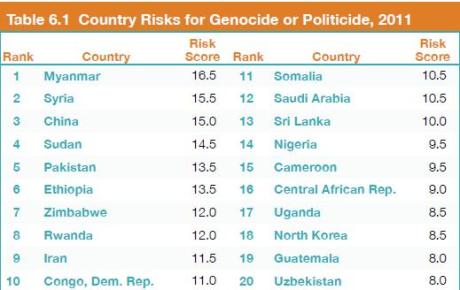

Source: Genocide Watch
http://www.genocidewatch.org/alerts/countriesatrisk2012.html
http://birhanumegersalenjiso.blogspot.co.uk/2014/01/nuding-ethiopian-history-and-naked.html
http://ethiofreespeech.blogspot.no/2014/01/the-human-right-issues-and-violations.html
Ethiopia: land of slavery & brutality – the League of Nations, Geneva 1935
‘
An old Abyssinian was shooting with the sight adjusted at more than a thousand
metres. I said to the Dedjiajmatch [dejazmach] that the bullets might fall on the mountain
and kill someone. He burst out laughing and said, “What does it matter if they
do? There is nobody here but Shangalla [shankilla]”.’
Friends at ER:
The above quote was an extract from a document or a memorandum presented by the Italian Government delineating the reasons for the expulsion of Ethiopia from the League of Nations, the forerunner of today’s United Nations Organisation. The main point of their argument was the condition of slavery and gebbar (a slave-like system) to which Abyssinia/Ethiopia had reduced its subject populations in the southern half of its empire, while pillaging their lands.
The change of political masters in Addis Ababa has so far been a mere case of taking turns at abusing the populations of these same southern provinces of Ethiopia to benefit the gun-toting invaders from the “Habesha highlands” of northern Ethiopia (Tigre-Woyane at the moment).
In this light, you may find the following document of great historical significance. It also provides an insight into the unchanged modus operandi of all Ethiopian regimes before or since.
Here is the complete document….
“Geneva, September 11th , 1935. Official No. C.340.M.171.1935.VII.
(I) CONDITIONAL ADMISSION OF ETHIOPIA TO THE LEAGUE OF NATIONS.
As regards the condition required by Article I of the Covenant [accord]
regarding effective guarantees of a sincere intention to observe international
obligations, the Sub-committee pointed out that, in the past, Ethiopia had not
fully observed her international engagements. During the discussion it was
stressed how difficult it was to reconcile Ethiopia’s demand with the
circumstance that Ethiopia, once admitted to the league, might sit in judgement
on countries under mandate, more civilised than Ethiopia herself and not
stained with the disgrace of slavery…
(II) POLITICAL STRUCTURE AND CONDITIONS OF ETHIOPIA IN RELATION TO ARTICLE I OF
THE COVENANT [of the League of Nations].
(Summary):
Clear distinction between the Abyssinian State and the territories conquered by
it. Difference of religion, language, history, race, and political and social
structure. Negus’s domination over non-Abyssinian populations. The gebbar
system (a form of slavery) applied to subject populations. The Ethiopian
Government’s responsibility for the decimation of the subject populations.
Ethiopia’s incapacity to possess a colony.
ABYSSINIA AND HER “COLONIES”: DISTINCTION BETWEEN THE ABYSSINIAN STATE AND THE
CONQUERED TERRITORIES.
On this subject it is first of all necessary to obtain a fundamental idea of
the position. It is commonly said that Ethiopia is a national State in Africa
which forms a single unit. Nothing could be further from the facts. The
Ethiopian State, in its present form, is composed of two regions which are
clearly distinct both geographically and politically.
(i) The old Abyssinian State, consisting of the regions inhabited mainly by
Abyssinian populations speaking kindred languages derived from Southern Arabic.
But the old Abyssinian State itself could not be called a national State,
because even in those regions there are considerable non-Abyssinian minorities,
such as the Agau in the Tsana and Nile regions, the Falasha of Semien,
professing the Jewish religion …and others. Nevertheless, their common
allegiance to the dynasty of the House of Solomon, and the fact that for ages
they [peoples of the northern half of Ethiopia] had belonged to the same group
of States, have to a certain extent welded all these regions into a political
unit which, though rough and shapeless in structure, might have a position of
its own in the composition of present-day Ethiopia.
This Abyssinian State has well-defined and exact historical, geographical and ethnical boundaries. On the west, towards the Nile basin, and on the east, towards Danakil, the frontier of
the Abyssinian State coincided with the edge of the plateau. The Abyssinians, a
mountain people, are clearly distinguished by race, language and religion from
the populations which inhabit the torrid Danakil plain and the valleys sloping
down towards the Sudan.
To the south, the boundary of the Abyssinian State was marked by the course of
the Blue Nile as far as its confluence with the Adabai, by the watershed
between the Blue Nile and the Awash, and by the course of the river Awash as
far as its entry into the Danakil plain. The territories beyond these
boundaries, in the south, are inhabited by non-Abyssinian populations which,
throughout the centuries of their history, have been traditional enemies of the
Abyssinian State.
(ii) The non-Abyssinian areas recently conquered by the arms of the Negus
Menelik.-Beyond the confines of this nucleus of the Abyssinian State there
were, until forty years ago, other native States, some of which have a long
historical tradition of independence. Among the principal may be mentioned the
Emirate of Harrar, which comprised the regions between the river Awash, the
Webi Shebeli, and the south-eastern edge of the plateau, having the inhabitants
of Ogaden as tributaries.
The Emirate of Harrar is a Moslem State which was
ruled for centuries by the dynasty of its Emirs, and was the cultural and
religious centre of Islam in South-East Africa. The continuous relations
maintained by the Emirate with the Arab countries of the Levant had brought
that state up to a level of civilisation far superior to that of Abyssinia. We
need only mention the fact that, even to-day, Harrar is the only town in the
territory of the present Ethiopian State which is built of masonry and is not
composed of huts hovels made of branches, apart from few buildings in Addis
Ababa.
In the south-west, the kingdom of kafa was founded by the western Sidama
peoples. The political and social constitution of this kingdom and its history
(which comprises at least 600 years of independence, from the fourteenth
century to the Abyssinian conquest) form the subject of various well-known
works published only recently; and, not to quote Italian writers, we need only
refer to the voluminous work of the Austrian traveller Franz Bieber.
In the south, there is the kingdom of Wollamo, founded by the Sidama
populations of the Omo. How this peaceful little agricultural State was
devastated and destroyed by the Abyssinians is described in a work by a
Frenchman, M Vanderheym, which is nothing les than an indictment of the
Abyssinian State.
In the west, there is the Sultanate of Jimma, a Moslem State that became a
centre in Westrn Ethiopia towards which Moslem currents flowed from Harrar and
Egypt. Under the patriarchal administration of its sultans of the local
dynasty, Jimma had reached a high degree of economic prosperity, which it
retained, being the only Moslem State remaining independent of the Abyssinians
until the Negus annexed it to Ethiopia a few months ago.
The Abyssinian State is completely different in every respect from these vast
“colonies” which it has recently acquired:
(a) In religion, because the Abyssinians are Monophysite Christians, whereas
the Somali, Harrari, [deleted] [Oromo], Sidama are largely Moslem, and in part
still pagan;
(b) In language, because the Abyssinians speak Amharic and Tigrai (Semitic
languages), whereas in the conquered regions the languages spoken are totally
different from the Abyssinian languages, but are interrelated among
themselves-e.g.-Galla [Oromo], Somali, Kafi, Wolamo, etc.;
(c) In political and social structure, because the Abyssinian State is based on
the feudal system, whereas the Emirate of Harrar was organised on the model of
the States of the Arabian peninsula, and the Sidama States have a highly
centralised organisation of their own;
(d) In race, because the Abyssinians are Semiticised people, whereas the [deleted],
Sidama, Somali, Tishana, Yambo and the rest are Cushitic and Nilotic peoples;
(e) In history, because the Emirate of Harrar, for instance, has for centuries
waged relentless warfare against the Abyssinian State. Indeed, this warfare
might be said to constitute the whole history of Abyssinia itself; records of
it existed from at least the fourteenth century onwards. The Abyssinian
domination constitutes, in fact, the subjugation of a conquered people by its
age-long enemy.
DOMINATION OF THE NEGUS OVER NON-ABYSSINIAN POPULATIONS.
The Abyssinian domination in the conquered countries takes concrete form in the
slave trade and the so-called gebbar system. The slave trade will be considered
below. It should be pointed out here, however, that the slave trade is due not
only to a desire for gain, but also to the idea, deep-rooted in the
Abyssinians’ mind, that their victories have left them absolute masters of
populations which, in their eyes, are no more than human cattle.
This conception of the Abyssinians is confirmed b a typical incident narrated by Sir
Arnold Hodson in his work Where the Lion Reigns (page 41): ‘An old Abyssinian
was shooting with the sight adjusted at more than a thousand metres. I said to
the Dedjiajmatch [dejazmach] that the bullets might fall on the mountain and kill someone.
He burst out laughing and said, “What does it matter if they do? There is
nobody here but Shangalla [shankilla]”‘ (Shangalla is the name given by the Abyssinians to
the Nilotic peoples).
The gebbar system is a form of slavery, and is regarded as such by European
writers and travellers. In each of the countries conquered and annexed by
Abyssinia, a body of Abyssinian troops is stationed, comprising the soldiers
themselves and their families. The inhabitants of the conquered country are
registered in families by the Abyssinian chiefs, and to every family of
Abyssinians settled in the country there is assigned one or more families of
the conquered as gebbar. The gebbar family is obliged to support the Abyssinian
family; it gives that family its own lands, builds and maintains the huts in
which it lives, cultivate the fields, grazes the cattle, and carries out every
kind of work and performs all possible services for the Abyssinian family. All
this is done without any remuneration, merely in token of the perpetual
servitude resulting from the defeat sustained thirty years ago. It amounts to
what Anglo-Indians are accustomed to call “the law of the jungle”.
The gebbar can never obtain freedom from their chains, even by ransom. They must not leave
the land assigned for their work, and, if they run away, they themselves are
subject to the terrible punishment which are inflicted in Ethiopia, and to
which we shall refer shortly, while their village is bound to supply the
Abyssinians with another family to be reduced to the condition of gebbar, in
place of the fugitive family.
As to the effects of slavery and the gebbar system, all who know the facts are
agreed: the non-Abyssinian regions of Ethiopia are becoming a vast desert.
Every Abyssinian chief sent to those parts finds it necessary on his arrival to
provide himself with slaves and his soldiers’ families with gebbar. And when he
leaves the conquered countries to be transferred elsewhere, he takes away with
him, and allow his soldiers to take away with them, the greatest possible
number of slaves and gebbar to be employed at his new residence. This constant
draining of the population of the subject territories is particularly terrible,
because the slaves and gabbar are decimated, during the long journeys, by
hunger, thirst and ill-treatment from their Abyssinian masters. We quote
evidence from non-Italian sources.
Sir Arnold Hodson (Seven Years in Southern Abyssinia, London, 1927, page 146)
writes of Kafa: ‘There has recently been a change of Governors in Kafa, and, as
usual, the outgoing official was taking away as much as he could in goods and
slaves’. … Thus the population of Kafa, which Cardinal Gugliemo Massaja
estimated at a million and a half before the Abyssinian conquest, is now
reduced to 20,000. Again, whereas Vittorio Bottego estimated the population of
the Burji in 1895 at 200,000, there are now no more than 15,000 people in the
region. And Sir Arnold Hodson, who was Consul at Gardulla, not far from Burji,
writes as follows (Seven Years in Southern Abyssinia, page 102): ‘Burji had
been sadly devastated quite recently, and very few natives were left there. The
responsibility for this rests with a former Governor of Sidamo, named Ato
Finkabo, who appears to have carried on a very flourishing business in slaves
from these parts. In fact, he became so enterprising that most of the natives
who were left fled to Conso and Boran to escape falling into his clutches’.
George Montandon calculates (Au pays des Ghimirra, page 223) that the
population of Ghimirra has declined in a few years from 110,000 to 10,000.
The responsibility of the Addis Ababa Government for this incredible state of
affairs in the non-Abyssinian areas of the south is particularly great, because
it has compelled some of the more warlike non-Abyssinian peoples to arm
themselves in defence of their lives and liberty; and theses foreign peoples,
having acquired arms and ammunition, have in their turn become slave-raiders,
preying upon the unarmed neighbouring tribes, and so have increased the
destruction and the scourge of slavery.
In conclusion we need only quote …Major M Darley, who has had a very long
experience of Ethiopian affairs, and who wrote in 1926, three years after
Abyssinia’s entry into the League (Slaves and Ivory, page 34): ‘Abyssinia
should be the heart of North-East Africa, but all the veins or roads, which
should supply the rest of the starving body with nourishment, are blocked by
the Abyssinian policy, abysmal and suicidal, of depopulation, retrogression and
racial extermination’.
It will thus be seen that the Ethiopian State, administratively and politically
disorganised as It is, carries the dire effects of its domination (slavery and
gebbar) into vast regions of East Africa which were conquered by the arms of
the Negus only a few years ago. It is surely in the interests of civilisation
that the Harrari, [deleted] [Oromo], Somali, Sidama, and other peoples which have
for centuries formed separate national entities, should be removed from
Abyssinian oppression. To effect an immediate settlement of this grave problem
is, indeed, to act in conformity with the spirit of the covenant, which
requires that colonisation should be carried out only by advanced States which
are in a position to ensure the development and welfare of the native
peoples…
The documents show:
(a) That Ethiopia recognises slavery as a legal condition;
(b) That raids for the capture of individuals for purposes of slavery are
continuing on a large scale, especially in the southern and western regions of
Ethiopia;
(c) That the slave trade is still practiced;
(d) that the Ethiopian Government participates directly in the slave trade by
accepting slaves in payment of taxes and allowing detachments of regular troops
to capture new slaves;
(e) That, in addition to slavery proper, there exists the institution known as
“gebbar”, to which the population of non-Ethiopian [sic] regions are subject,
and which is a form of servitude akin to slavery;
(f) That the Ethiopian Government has taken no account of the recommendations
made to it by the committee of Experts on slavery, more particularly as regards
the abolition o the legal status of slave, as appears further from the report
submitted to the League of Nations in May 1935…
By her conduct, Ethiopia has openly placed herself outside the covenant of the
League and has rendered herself unworthy of the trust placed in her when she
was admitted to membership. Italy, rising up against such an intolerable
situation, is defending her security, her rights and her dignity. She is also
defending the prestige and good name of the League of Nations.”
http://www.ethiopianewsforum.com/viewtopic.php?f=2&t=60396
http://www.huffingtonpost.co.uk/eleanor-ross/ethiopia-human-rights_b_4649953.html?utm_hp_ref=tw
Copyright © OromianEconomist 2014 & Oromia Quarterly 1997-2014, all rights are reserved. Disclaimer.

Oromo Studies Association’s (OSA’s) Letter to U.S. Secretary of State on the Killings of 59 and Wounding of 42 Oromos in Eastern Oromia by Ethiopian-Trained “Liyu Police”:
January 17, 2014
The Honorable John F. Kerry
Secretary of State
U.S. Department of State
2201 C Street N.W.
Washington, DC20520
Subject: The killings of 59 Oromo men, women and children, the wounding of 42 others, the confiscation of property and the forcible removal of people from their ancestral land in eastern Ethiopia
Dear Mr. Secretary,
I am writing this letter on behalf of the Oromo Studies Association, an independent scholarly, multi-disciplinary, non-profit organization based in North American. My purpose is to bring to your attention and to protest on behalf of the members of OSA a crime committed against the Oromo in Eastern Ethiopia, that is, the killings of 59 Oromo men, women and children, the wounding of 42 others and the confiscation/destruction of property with an estimated value of Eth$14,726,000 in the eastern Oromia zone of Ethiopia. These acts of extreme and unprovoked violence, killings, violent wounding, burning of houses and confiscation of cattle and other property of the Oromo citizens in eastern Oromia zone, were committed by Ethiopian government-trained special Somali militia forces known as “Liyu Police” (translation: Special Police Force). The Ethiopian regime arms Somali in that region while disarming Oromo farmers. These actions of deliberately arming one people while equally deliberately disarming the other and, thus, by creating conflict between formerly closely related people – groups who have lived peacefully as neighbors for centuries – goes beyond abdicating governmental responsibility. It is a heinous crime that this government commits against peoples within its jurisdictional borders. The world regards these victims as citizens of Ethiopia, but they are being seriously mistreated with no proper defense available.
In the past several months, there has been a new wave of killing of Oromo nationals in particular who reside in the eastern Oromia zone of Ethiopia. Targeted Oromo victims suffer also the confiscation of their property and removal by the thousand of residents from their ancestral lands. This is a miserable new policy which constitutes nothing less than a strategy for creating a blood feud between the two culturally related people, namely, the Oromo and Somali in eastern Oromia zone of Ethiopia. In the sacred land of their birth, Oromo children, women and unarmed men are killed systematically by Ethiopian government Special Police forces. Once the slaughter is completed, these government-equipped forces then callously deny their victims even decent burial, which, in itself, is a crime against humanity.
The Ethiopian government is responsible for inflicting a great deal of harm and damage on defenseless Oromo peasants through this practice of arming Somali against disarmed Oromo farmers by building special police force comprised of Somalis. This appears to be a continuation of the callously inhuman policy of the Ethiopian regime that led to the removal of Oromo peasants from seven major ancestral regions covering extensive territories in the eastern Oromia zone of Ethiopia. Most OSA members are Oromo Americans, who closely follow events in the region and whose findings are confirmed by the reports of pain and suffering of their families – mothers, fathers, sisters, brothers, relatives and friends – who were killed, wounded and displaced, and whose livelihood was destroyed by Ethiopian government Special Police forces made up of Somali armed by the regime.
The Oromo Studies Association, OSA, was established 26 years ago by international scholars from around the globe to promote studies related and relevant to the Oromo and other peoples in the Horn of Africa. In its attempt to create academic forums where ideas and research findings about the Oromo and other people of Ethiopia and the Horn of Africa are freely discussed, OSA has established a peer-reviewed Journal of Oromo Studies, other periodic publications, as well as organizing regular mid-year and annual conferences. OSA has been involved in building a knowledge base for creating a democratic future for the peoples of Ethiopia and the Horn of Africa. In our scholarly organization Somali and Oromo scholars work together. The Journal of Oromo Studies publishes research papers on Somali studies. Our goal is to strengthen historical relations between the two related peoples.
You may be surprised to learn that Oromia, the Oromo regional state in Ethiopia, is the largest, the richest and the most densely populated regional state in Ethiopia. Because the Oromo constitute the single largest national group in Ethiopia – and in the entire region – they are regarded as the greatest threat to the ruling minority group, dominated by members historically affiliated with the Tigrayan Liberation Front (TPLF). The current government is dominated by Tigrayans persons whose ethnicity represents less than seven percent of the population of Ethiopia. Current Ethiopian government policies, which target populations on the basis of ethnicity, are best understood in light of a history of ethnic politics and ethnic discrimination. Arming Somalis to destroy Oromo in order to confiscate their lands and other resources continues ethnic politics in its most brutal form.
Oromo do not have powerful friends in the western world who bring the injustices that they suffer to the attention of international community. The Oromo Studies Association requests that you respond to our voice as a voice of conscience uttered to the international community. We urge that you immediately put pressure on the Ethiopian regime to desist from driving Oromo out their ancestral land in eastern Oromia zone of Ethiopia. We request that the State Department under your able leadership look into this critical matter take effective action while there is time to reverse a criminal policy and save the lives and livelihood of vulnerable populations in Eastern Ethiopia.
In the light of the issue raised which is only the most recent of an ongoing series of violent attacks on Oromo farmers in eastern Oromia zone during 2013, the Oromo Studies Association (OSA) urgently requests that the State Department utilize its good offices to seek justice by putting pressure on the Ethiopian government to:
• Stop immediately the Liyu Police attacks on Oromo farmers in the eastern Oromia zone of Ethiopia.
• Return, without delay, those who were forcibly driven from their ancestral lands in eastern Oromia zone of Ethiopia.
• Bring to speedy trial those who ordered the Liyu Police force to attack, killing 59 defenseless Oromo children, men and women and wounding 42 others while confiscating or destroying property estimated at Eth$14,726,000.
• Pay compensation for the lives lost and the property confiscated from those defenseless Oromo farmers in eastern Oromia zone of Ethiopia.
• Urge the Ethiopian government officials to stop the forcible removal of thousands of Oromo farmers from their ancestral lands in eastern Oromia zone of Ethiopia and make sure that such measures will never be repeated in Oromia or other parts of Ethiopia.
• Advise the leaders of the Ethiopian government to abandon the cruel and crude policy of disarming Oromo while unleashing the special police force on defenseless children, men and women.
• Strongly urge the leaders of the Ethiopian government to respect and implement the provisions in their own Constitution, which officially guarantees respect for human rights and democratic governance.
The Oromo Studies Association requests that the State Department, under your leadership, set an example by taking the above measures in a timely fashion.
You have an extraordinary opportunity to make a difference in the lives of millions of Oromo and other people in Ethiopia. Our scholarly association appreciates your good efforts in this regard.
Sincerely,
Ibrahim Elemo, President
Oromo Studies Association
P.O.Box: 6541
Minneapolis, MN 55406-0541
E-mail: ielemo@weisshospital.com
CC:
Ambassador Girma Birru
Embassy of FDRE, Washington, D.C
3506 International Drive, N.W.
Washington, D.C. 20008
Mr. Ban Ki-moon, Secretary-General
Office of the Secretary General of United Nations
885 Second Avenue
New York, NY 10017, USA
Mr. David Cameron, Prime Minister of UK
10 Downing Street, London, UK
The Hon. Tony Abbott, MP
Prime Minister
Parliament House
CANBERRA ACT 2600
Liyu Police is Ethiopia’s (TPLF’s) style of Janjaweed to conduct genocide against the Oromo people.
http://www.britannica.com/EBchecked/topic/1003597/Janjaweed
Copyright © Oromianeconomist 2014 and Oromia Quarterly 1997-2014. All rights reserved. Disclaimer
Ethiopian is among the poorest in Africa, while South Africa tops the continent’s list of wealth per capita, a new survey released on Tuesday showed.
South Africa’s wealth per person last year was $11,310, according to research by consultancy New World Wealth, which has offices in the UK and South Africa. South Africa’s wealth per person grew 169% from $4,200 in 2000. Ethiopia’s wealth per capita last year stood at $260.
This was very far lower than that of Zimbabwe ($570), Tanzania ($450), Mozambique ($430) and Uganda ($360).
Wealth per capita is a measure of the net assets held by individuals including real estate, shares, business interests and intangibles, while excluding primary residences, according to the research released on Tuesday.
Libya ($11,040 wealth per capita), Tunisia ($8,400), Algeria ($6,250), Morocco ($5,780) and Egypt ($4,350) rank high on the list. Namibia, with per capita wealth of $10,500, and Botswana at $6,580 were among the top-ranked countries in Africa last year. This was, however, well below the global average of $27,600 and a fraction of that of the top-ranked countries such as Switzerland and Australia with wealth per capita of more than $250,000. When it comes to fastest-growing countries by economic growth per capita from 2000 to 2012, Angola tops the continental list, followed by Ghana and Zambia.
http://www.bdlive.co.za/economy/2014/01/08/sa-at-top-of-wealth-list-for-africa-zimbabwe-near-bottom
http://issuu.com/world.bank.publications/docs/9780821396162
Copyright © Oromianeconomist 2014 and Oromia Quarterly 1997-2014. All rights reserved. Disclaimer.

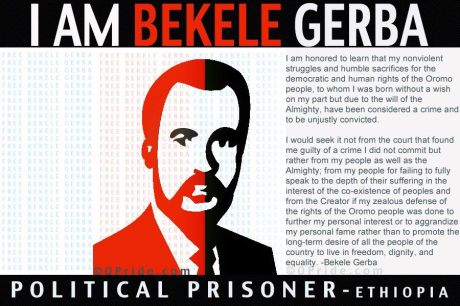
JEL: D2, D6
Death Squad: The Dynamics of State Terror in Oromia
State terror is described as a politically motivated violence, transgression, repression, torture and murder aimed at citizens by authoritarian governments. Jeffrey A. Sluka (2000, p.3) has eloquently defined as:
“State terror refers to the use or the threat of violence by the state or its agents or supporters , particularly against civilian individuals and populations, as a means of political intimidation and control (i.e., a means of repression).”Overwhelming empirical evidence demonstrates state violence has been standard in Abyssinian empire and occupied Oromia in particular.
Researchers have documented that in the end of 19th century alone 5 million Oromos were victims of Abyssinian mass killings. Prominent political leaders, cultural figures, artists, writers and enterpreueners have been murdered. The Oromo sport heroes like Ababba Biqila (during Haile Selassie regime) and Mammo Walde (by Melese regime) were murdered. Who can forget the cold blood murder of singer Ebbisa Adunya by Meles regime killing squad? Who can forget the murder of engineer Tasfahun Camadaa by the same tyrannic state?
Abyssinian rulers has been engaged in state terrorism to maintain the status quo and eliminate the courage and voice for change. Hence, the voice against subjugation has been labelled as terrorism. At present terrorism is a new ideology.
The Oromo society under the Abyssinian system has been regimented by force, fear and intimidiation. There is no recourse to justice. There is no rule of law. The media is wholly controlled by the government, it served to regulate all intellectual, cultural and political activity, and at the same time, to defame the critics and opponents of the ruling regime. There is little room for creative work; the function of art has to be entirely political, the function of a writer no other than that of a partisan. Freedom of Speech, of press, and of association has been systematically curbed. Terror has been employed to enforce obedience. The secret police subjected the dissidents to unscrupulous intimidation and tortures in order to elicit confessions from them. The government is not only annihilated dissidents but also suppressed the opposition within its ruling party. The ruling clique systematically purged the so called anti-peace and narrow nationalists from its rank and file. The Agazi and Liyu Police are conducting systematic mass genocidal killings. Recent research conducted indicates that 0ver 87% of the political prisoners by Ethiopia are Oromo nationals.
https://docs.google.com/file/d/0B-aJwZDI00JQb2RvZmV4Mm5Iamc/edit?pli=1
Reality and Vision: The Way Out
Leo Tolstoy in his masterpiece and one of the greatest novels in any language on the earth, War and Peace put forward the following compelling historical assertions:
‘All historians agree that the external activity of states and nations in their conflicts with one another is expressed in wars and that as a direct result of greater or less success in war the political strength of states and nations increases or decreases. Strange as may be the historical account of how some king or emperor, having quarrelled with another, collects an army, fights his enemy’s army, gains a victory by killing three, five , or ten thousand men, and subjugates a kingdom and an entire nation of several millions, all the facts of history (as far as we know it) confirm the truth of the statement that the greater or lesser success of one army against another is the cause, or at least an essential indication, of an increase or decrease in the strength of a nation – should obliged that whole nation to submit. An army gains a victory, and at once the rights of the conquering nation have increased to the detriment of the defeated. An army has suffered defeat, and at once a people loses its rights in proportion to the severity of the reverse, and if its army suffers a complete defeat the nation is quite subjugated.’
Tolstoy’s logical insight and historical depiction of conquer and conquest well describes the grim realities and experiences of Abyssinian and Oromian saga of 19th and 20th century and also of the present day. As a result of the defeat of the Oromian defence, Oromia has lost its rights and the power of Abyssinia stretched over Oromia to the extent of the destruction of the independent existence of Oromia and its capital Finfinnee.
As a result, the people of Oromia become dehumanised, the conquered and the colonised subject of Abyssinian oppressors. The consequences of this tragedy in development studies are what Wilber (1988) calls ‘convoluted history and convoluted development.’ This can succinctly and elegantly depicted through the Paulo Freire’s (1988) terminology of educational process also known in his world view of the development process of the oppressed as the pedagogy of the oppressed. Development in this framework taken as the recitation, in human history, of the progressive freeing of peoples and nations from the domination of nature, peoples and other nations. Accordingly, in terms of Wilber (1988): ‘Development becomes the means, not the end, for the end is to enhance what people value. Development or growth is desirable only if it is consistence with people’s deepest values.’ Development cum liberation is a means to overcome oppressive and exploitative forces of all kinds. In order to achieve those ‘deepest values’, people who are the subject of the development process have to able to hold these essential key and locus of power of this very process and their density. In the context of Oromia, the lack of holding this essential key kept the country and the people in the present grim nature development process, the underdevelopment or low level development trap.
In Tolstoy’s 19th century trajectory, Russia had to liberate itself from Napoleon (France). In the Trajectory of pedagogy of the oppressed, Freire (1988) : ‘The oppressed, having internalised the image of the oppressor and adopted his guidelines, are fearful of freedom. Freedom would require them to eject this image and replace it with autonomy and responsibility. Freedom is to be acquired by struggle, not by gift. It must be pursued constantly and responsibly. Freedom is not an ideal located outside of man; nor is it an ideal which becomes myth. It is rather indispensable condition for the quest for human completion.’ From both writers, in their evocative delineations of human experiences, we come to understand that the compelling realities of nations like Oromia and its people that they have to empower themselves and do their best to earn their intimate values.
The Critical Minimum Effort: What Role for Oromummaa?
Oromian Freedom Function
Bilisummaa (Freedom) is a positive function of Qabsoo (Struggle) and Tokummaa Oromo (Oromo Unity) (T) and the Spirit of Oromummaa ( here in after the O factor). These three variables together form the minimum critical efforts (MCE) for Bilisummaa. They are not just mere positive factors. Rather they are real causations.
B= f(Q,T,O)
Garbummaa (Subjugation cum slavery), the inverse function of bilisummaa is the positive function of Abyssinian occupation (A), Neo Gobanaa’s factor (N factor) and Lack of Oromo unity(L) and Unoromummaa (U) (lack of the Spirit of Oromummaa). These three variables (ANL) together form the primary factors or causations of Garbummaa.
G= f(A, N, L, U)
Garubummaa (G) is the negation of Bilisummaa (B) and vice versa. The N factor is the negative of the O factor and vice versa.
http://www.unpo.org/article/13167#.TmlG41taQqc.facebook
http://www.gadaa.com/culture.html
Interview with Oromo farmer who was uprooted by TPLF instigated conflict beween Oromos and Ogadenians
‘Waraannii naannoo Soomalii, Oromoo daangaa Soomaletti dhihaattu ammaas weeyrare, namni kumaan lakkaawamu
balaa haarayaaf Saaxilaman. Gabaasaan Mayyu (ona Anniyyaa) irraa nu dhaqqabe akka mirkaneeysutti. Waraannii dhaabbataan
naannoo Soomalii kan Ogaaden fii loltoonni Liyyuu Polis kan Ogaaden keeysatti ummata shoorarkeeysuun beekkame, daangaa naannoo Oromiyaa cabseee, lafa Oromoo Anniyyaa, Mayyuu Muluqee humnaan dhuunfate. Akka gabaasaa tanaatti, torbaan dabre guyyaa
Salaasaa, tuutni loltoota Somalee lamaanuu harka tokko tahanii Oromoorratti waliin bobbahanii jiraattoota Oromoo kanneen naannoo Mayyuuqubatan balaa guddaa irraan gahanii jiran. Gaafa dura humna waraanaatiin dhufanii Oromiyaa dhunfatan, Wayyaaneen Ummata
Oromoo kan amma wayyaba tahe saba xiqqatti deebisuun nidandayama yaada ja’u Mallas dubbatee ture. Sagantaa dabaa, tan ummata Oromoo xiqqeeysuufii lafa isaa dhiphisuu kana hojiirra oolchuuf Wayyaneen, ollaalee Oromiyaa gara hundaan hidhachiiftee Oromoorratti bobbaasaa jirti. Humni Liyyuu Poolis, humna wayyaaneen jaartee hidhachiifte tahuun hubatamaadha. Tarkaanfiin Liyyuu Poolis fii humna waraana Ogaaden kan amma Mayyutti bobbahee kuni Oromoo lafa isarraa buqqisani saba biraa qubsiisuuf sagantaa lafa kaayyame dalagatti
hiikuuf duula walirraa hin cinne tahee jira. Akka kanaan baatii ( ji’a ) jahan dabre baha Oromiyaa kutaa Harar, Oromoota Anniyya, Oromoo Jaarsoo tiifii Oromoo naannoo Mi’eeysoo qubatan lafa isaaniirraa buqqiftee Ogaadenootaafii Issaaf kennanii ummatoota Oromoo fii Soomalee jiddutti xifaa uumani jiran. Baatii April tana keysa, lafa Anniyyaa ona Mayyuu irratti duulli gara Ogaadeniin baname Oromoo kumaatamaan lafa isaa, Mayyurraa buqqisee jira. Oromoon meeshaa,humna waranaatiifii lojistikii (logistics) akka isaanii waan hin qabneef lola itti baname dura dhaabbatuu hin dadeenye. Warri Oromoo Anniyyaa, Jaarsoofii Mieeysoon lolaa jiru kun eenyu faa? 1, Waraana
mootummaa naannoo Soomalii fii,2, waraana addaa ka liyuu police ja’amu, ka wayyaaneen akeeka ykn dalagaa tanaaf qopheeyfatte. Mayyu lafa jidduu Cululiifii laggeen Ereriifii Gobeelle jiddutti argamti. Lafti Mayyu ja’amtu tun hedduu guddoodha. Dheerinni isii kaabaa kibbatti km 350 ni caalti, baharraa dhihatti KM 180 ni caalti. Lola haaraya kanaan Qabeenyi Anniyyarraa a’ame (saamame); Loon 475, Gaala 25 fii Harree 15. Ummanni Oromoo Anniyyaa kan ona isaarraa buqqa’ee Huusetti walitti qabamee jiru 500,000 ni gayan ja’ama. Namoonni taniis ni jira. Lafa qonnaa kani duraan qabaniifii oomisha isaanii akkasumatti dhiisanii biraa baqatan. Ummanni Oromoo qawwee gayaa
hin qaban. Bakka heddutti mootummaanirraa hiiktee jirt. Hanga xiqqaa harkatti hafeef ammoo rasaasa hin qaban. gara geejjibaatiin
akkasumatti ir’ina guddaa qaban. Yeroo kuni tahu Soomalootaafii Wayyaanota hidhannoo fii rasaasni konkolataa, xayyaaraa fii gaalatti
fe’mee jala deema. Karaa biraatiin yoo Oromoon Anniyya humna waraana Soomalee kan ofirraa dhawan OPDOn hidhannoo ni hiikkachiifti.Torbaan dabre yeroo ummanni Oromoo Anniyyaa humna Soomalee ifirraa ittisuuf tattaafate, OPDOn ajaja Wayyaneetiin amoota Oromoo kudhanirraa qawwee hiikanii turan. Balaan ammaa tuni tan Anniyya, Jaarsoo fii Mi’eeyso qofa xiyyeeffattee miti.
Balaan tuni tan Wayyaneedhaan karoorfamte; balaa duguugiinsa shanyiiti. Kanaafuu Oromoon gara hundaan harka walqabatee, duguuginsa
shannyi kan akka ummataatti isaan aaggate kanarraa if eewaluu qaba.’ Source: Oromo social networks, 7th May 2013
“The research and information unit of the Oromo Liberation Front (OLF) has conducted a study on the allegiance that accounted for some political prisoners to be sentenced or otherwise been unjustly detained. The herewith attached partial list of political prisoners has been collected from prisons of Kaliti, Torhailoch (Military Police Prison), Maikelawi and Kilinto. Almost all prisoners are charged for act of terror, violation of territorial integrity, attempts to overthrow the constitutional order by violent means and being suspected member of OLF or any other organizations. These political prisoners are ranging in age from young high school and University students to elderly civic society leaders. Professionally, they are also diverse – from farmers, businessmen, government employees, political leaders, journalists and etc. The overwhelming portions are Oromos and some are also from different nations and nationalities of Ethiopia. Most of these political prisoners already gave prison service for several years; many of them are tortured and subjected to irreversible mental damages, and some of them were shot to death in the course of time. Since the fall of Transitional Government in 1992, Ethiopian authorities continued to severely restrict basic rights of freedom of expression, association, and assembly. Violation of human rights is a daily record of the regime. Instead of solving the root cause of political conflict, it rather declared war on the Oromo people and its vanguard Organisation, the OLF. Consequently, many thousands of Oromos and other nationals were arbitrarily arrested and detained and remain at risk of torture, ill-treatment and extrajudicial killings. Many of them were executed during peaceful demonstrations due to excessive use of force by police or security agents. The TPLF regime promulgated and adopted the restrictive Anti-Terrorism Proclamation in 2009. This regime, which from its very initial, was known for its massive human rights violations is currently using this law to justify all atrocities it conducted. In this attempt to hood wink opinions of the international community, the EPRDF regime is still trying to make others believe that the current problem of the empire is act of terror but not deep rooted political conflict of domination. The OLF vehemently opposes any forms of terrorism and reject the use of terrorism neither as a form of struggle nor also for suppression of dissidents by states. Thus, we denounce the Ethiopian state terrorism that is used to crush any form of struggle and decent. OLF is cognizant of, and appreciate the concern of various human rights advocating organizations and some democratic governments that expressed their concerns about Anti-Terrorism, Press and Civic society laws of Ethiopia on various international forums. In a country like Ethiopia where the government structure is monopolized by a single ethnic group, legalizing the abuse of the universal human rights is a way that leads for the establishment of a totalitarian system which is more sustaining than a simple personal dictatorship. Therefore, OLF alarms that the dangerous political development sustaining over Ethiopia demands more than just a concern but towards a proactive action of the international communities and UN member states. We denounce legalized form of state terrorism and call up on the international community to exert diplomatic pressure on Ethiopian government to release all political prisoners unconditionally and repeal these brutal and repressive laws.”
‘The study confirms that there is clear nexus between authoritarian rule,
man-made famines, and genocide in Ethiopia.’
http://www.codesria.org/IMG/pdf/Mekuria_Bulcha.pdf
Copyright © 2013 & Oromia Quarterly 1997-2013, all rights are reserved. Disclaimer.

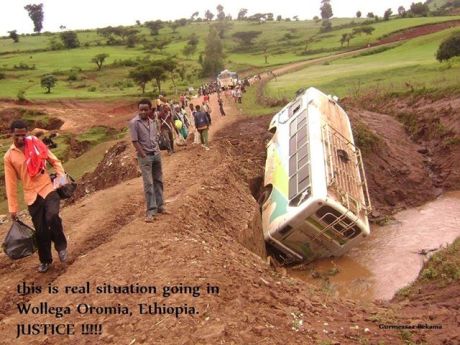
The Corrupt Empire is uncompetitive: Ethiopia Is Amongst World’s Least Competitive Countries
Despite its damn statistics of massive long term paper growth of TPLF Ethiopia’s economy, the country is still ranked among the worst performing in the Global Competitive Index (GCI) 2013 -2014, recently released by the World Economic Forum. (see page 163 for the detail summary of the report). According to the report, Ethiopia dropped 15 places from last year’s 106th position to 121st among the 144 countries profiled.
The Global Competitive Index , which was introduced in 2004, measures how the combinations of institutions, policies, and other factors determine the level of productivity of a country. The GCI scores is calculated by putting together the 12 pillars of competitiveness, such as: institutions, infrastructure, macroeconomic environment, health and primary education, higher education and training, goods market efficiency, labour market efficiency, financial market development, technological readiness, market size, business sophistication and innovation.
According to the ranking, Ethiopia is placed in the poorest pool of economic development possible (see, the following graphics). Ethiopia ranked as a “factor driven” economy which includes Nigeria, Liberia, Lao, Mali and Yemen.There are four stages of development with innovation-driven economies being the best pool of economies.

Ethiopian economic productivity is one of the poorest despite clear advantages of its internal market and economies of scale with population over 85 million compared to other African countries. Due to its population, it has a large internal market size (66 position), only next to Nigeria (the largest internal market size in Africa, also performing poor).
GCI has identified weak basic institutional requirements (118) of Ethiopia that account 60% of the index ranking: corruption, poor infrastructure, poor primary education, poor macroeconomic environment, efficiency enhancers and technological readiness.
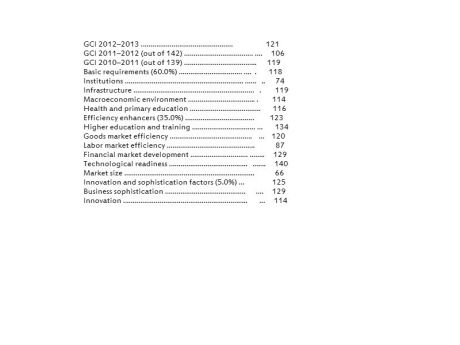
The GCI has noticed with Ethiopia’s economy the following among the most problematic factors for doing business:
Access to finance, corruption, inefficient government bureaucracy, inflation, policy instability, tax regulations and inadequate supply of infrastructure.
Technological readiness is also the worst performance:
Availability of latest technologies (132)
Firm-level technology absorption (139)
FDI and technology transfer (128)
Individuals using Internet, % (142)
Broadband Internet subscriptions/100 pop (131)
Mobile broadband subscriptions/100 pop (120)
Ethiopia with a population of over 85 million only produces $31.7 billion GDP with per capita income of $1 per day.
Key indicators, 2011
Population (millions) ……………………………………….85.1
GDP (US$ billions)* ……………………………….. ………31.7
GDP per capita (US$) ……………………………….. …365.2
GDP (PPP) as share (%) of world total …………..0.12
Sectoral value-added (% GDP), 2011
Agriculture …………………………………………………. ..41.9
Industry ……………………………………………………… .12.6
Services ……………………………………………………. ..45.5
Human Development Index, 2011
Score, (0–1) best ………………………………………. ….0.36
Rank (out of 187 economies) ……………………………174
Sources: IMF; UNFPA; UNDP; World Bank and GCI
The report noted that Mauritius has replaced South Africa (53rd) as the most competitive country in Sub-Saharan Africa. Ranked 45th position the country moved up nine places this year.The country’s best performance has supported by “transparent public institutions (ranked at 39th) with clear property rights and strong judicial independence and an efficient government (29th).”
Switzerland, ranked at number one is the most competitive country in the world. For top ten Sab Saharan African countries See:
http://www3.weforum.org/docs/GCR2013-14/GCR_Infographic_SubSaharanAfrica_2013-2014.jpg
Click to access WEF_Africa_Competitiveness_Report_2013.pdf
Click to access WEF_Africa_Competitiveness_Report_2013.pdf
www3.weforum.org
The tyrannic TPLF group since seized power in 1991 has clearly engaged in massive corruption and unethical business practices without any constraints by national or international business rules. As a ruling force, it not only owns strategic sectors of the economy and engages in commercial and trading activities, it also puts private sectors those are outside its space of armed robbery in a hopeless no-win situation. The muscled economic dominance through such massive scale corruptions and brute forces has also been used as a political weapon to harass, incarcerate, dominate, weaken and control its political opponents to maintain its corruption empire for ever. The TPLF, the core corruption force in the present Ethiopian government, has transformed the economy from State ownership of the pre- 1991 to TPLF & Tigrayan elite private ownership by buying investment assets formerly owned by the government of Ethiopia. ‘At the same time, the TPLF has also started a huge investment program of its own through sham corporate structures.For example, the TPLF controlled Endowment Fund of Rehabilitation of Tygrai (EFFORT) is a conglomerate with an asset estimated well over a billion Ethiopian Birr involved in business investment in all aspect of the Ethiopian economy.’
Related articles
- We All Oromos Need Freedom (oromostruggleforfreedom.wordpress.com)
Firehiwot Guluma | Sept 4, 2013
 Since the dictator TPLF seized power, it has been clearly engaged in massive corruption and unethical business practices by national or international business rules. As a ruling party, it not only owns strategic sectors of the economy and engages in commercial and trading activities, it also puts competing private sectors in a hopeless no-win situation. This preponderant economic dominance is also used as a political weapon to harass, incarcerate, dominate, weaken and control opposition forces in order to stay in power indefinitely.
The TPLF, the core political power of Ethiopian government, has transformed the Ethiopian economy from State ownership to the private ownership by political parties, mainly the TPLF, by buying investment assets formerly owned by the government of Ethiopia, as prescribed by the World Bank Report and political coercion by the United States Government. At the same time, the TPLF has also started…
View original post 51 more words


The tyrannic and minority rule of TPLF Ethiopian government has been conducting genocidal killings against the majority (the Oromo people), nations and nationalities in Southern and Eastern Ethiopia. In its policies and strategies of Nazi and Apartheid style, it has mainly targeting the Oromo who make more than 40% of the population of the Horn of Africa. Engineer Tesfahun Chemada Gurmeessaa is the latest victim of TPLF’s planned and systematic genocide going on. Ethiopian empire (Horn of African) is one of the least developed, economically very impoverished and marginalized in the world. It is the most world food aid dependent region. The tyrannic and corrupt regime in its statistical lies and paper growth has reported that it has registered the fastest economic growth in Africa. Practical observation on the ground indicates the opposite (it is poverty alone that is growing). The politically motivated sectarian regime actually destroys the very scarce and rare resources the region holds and the dynamics of the society (Oromo and other non-Tigrayan) that it has put under its genocidal target : engineers, teachers, graduate students, the writers, the farmers, business men and women, the natural forest (the ecosystem) and the ancient human culture of the region.
The followings are republications among the latest petitions initiated and open letters made by concerned citizens and Oromo human rights advocates in the calls for the reversal of the ongoing crime against humanity. For further details and actions please refer to the original sources as they are acknowledged in this page.
Dear President Barack Obama,
The #Oromo People < http://www.oromo.org/enocide-against-the-oromo-people-of-thiopia.html> are the single largest Nation in the Horn of Africa under the brutal rule of successive Ethiopian rulers nearly for a century & half now. At this very moment, the current EPRDF regime, which controls Ethiopia for the last 22 years, has intensified the killing, detaining, displacing, expelling our people from every sectors of our society, from all corners of our country for no tangible reasons, but simply due to politics of fear and an excuse for extension of its ruling terms under various pretext.
Dear Mr. President,
In history, our people have never had such tactical gross abhorrent human rights violations of the highest order in any past Ethiopian successive governments that parallel to the current EPRDF tyrannical regime in part due to the shielding effect of present day Geopolitical dynamics.
Time and again, many peasants, students, skilled professionals, journalists, Artists, prominent nationalists, even Government ministers, and local and International activists have tried to demonstrate, petition and stage worldwide rallies to the Whitehouse and other Government and NGO institutions in various occasions in several countries to demand on Ethiopian Govt. to stop atrocities, but no concrete response was achieved yet.
There is no particular crime that our people have committed to suffer from such purposefully calculated heinous crimes by the ruling party against innocent civilians. Despite out loud preaches of Modern Democracy all over the world, our people are still well silenced and voiceless under gunpoint not to demand or petition their Govt. and no words from independent major world media outlets to expose these crimes and brutalities committed by this regime.Our people have been denied the right to collect and rest the bodies of their family members, relatives or friends who are victims of the Ethiopian Govt. The very recent cases in point among many others, are the refusal by the Govt. of the bodies of victims of Kofale Massacre & that of Engineer Tesfahun Chemeda, who was subjected to refoulement from Kenya to Ethiopia in few years back and killed this August 2013 in the notorious Kaliti Prison. Instead of allowing the family burry their son, the Govt. agents took his sister to jail accusing her of publicising Engineer Chemeda’s news of death at their hands.
Dear Obama,
We hereby so kindly seeking your urgent support in voicing our strongest objection & hold the Ethiopian ruling EPRDF accountable for all its inhuman actions and atrocities being committed under various excuses and urge this regime to respect the rule of law, human rights & Democracy in Ethiopia. There will be no time that our people seek urgent help from USG and International communities than right now! Enough is better than over, justice, peace and democracy for the Oromo & other nationalities in the Horn of Africa shall prevail.
Therefore; we, the undersigned individuals, would like to request your highest Office and all whom this may concern to influence the Ethiopian Govt. to respect the basic human & constitutional rights, stop genocide on peaceful people & obey rule of law to eventually transition itself from absolute Dictatorship to Democratic form of Government.
Thanks for your precious Mr. President,
Thanks everyone for taking your time to sign, share (on social media) & forwarding to friends.
Sincerely,
http://www.thepetitionsite.com/202/786/158/stop-atrocities-in-ethiopia/?taf_id=9925175&cid=fb_na
The HRLHA Statement
The Human Rights League of the Horn of Africa strongly condemns the atrocious torture and inhuman treatment by the Ethiopian government against its citizens and hold it accountable for the death of a political prisoner and prisoner of conscience Engineer Tesfahun Chemeda on August 24, 2013 in Kaliti prison.
HRLHA informants confirmed that Engineer Chemed died in Kaliti Penitentiary due to the severe torture inflicted on him while he was in different detentions centers from 2007 until the day he died. We also protest the fact that he was denied medical treatment by the government.
Engineer Tesfahun Chemeda, an Oromo national, was handed over by Kenyan authorities to Ethiopian Security agents in April 2007 from where he had granted a refugee status from UNHCR in Kenya after he had fled to Kenya to escape persecution by the EPRDF government of Ethiopia.
Engineer Tasfahun Chemeda was one of the 15 Oromo nationals who was sentenced to life in prison in 2010 by the Ethiopian court http://humanrightsleague.com/2010/07/a-call-for-the-reversal-of-the-racial-politically-motivated-and-discriminatory-sentence-by-a-court-in-ethiopia/ for his activism and political beliefs that were different from the ruling EPRDF government of Ethiopia.The Ethiopian Government is accountable for Torturing Mr. Chemeda in prison, thereby violating the 1984 Convention against Torture and Other Cruel, Inhuman or Degrading Treatment or Punishment, an agreement which Ethiopia signed and ratified in 1994 For denying Engineer Tesfahun medical treatment, violating the rights of prisoners which are clearly stated in international law and International covenants on civil and political rights article 10(1) “. All persons deprived of their liberty shall be treated with humanity and with respect for the inherent dignity of the human person”. and Constitution of the Federal Democratic Republic of Ethiopia, the Rights of Persons Held in Custody and Convicted Prisoners article 21 (1) “All persons held in custody and persons imprisoned upon conviction and sentencing have the right to treatments respecting their human dignity”.
By handing over the Oromo refugees and others, the Kenyan Government is also breaching its obligations under international treaties as well as customary laws.
Under the Convention against Torture and Other Cruel, Inhuman or Degrading Treatment or Punishment (1465 U.N.T.S. 185,) the Kenyan Government has the obligation not to return a person to a place where they will face torture or ill-treatment.
Article 3 of the Convention against Torture provides: No state party shall expel, return (“refouler”) or extradite a person to another state where there are substantial grounds to believe that they would be in danger of being subjected to torture.
The Human Rights League of the Horn of Africa calls upon the Ethiopian authorities to immediately carry out an independent investigation into Engineer Tesfahun’s death, including whether torture played a part in his death, and disclose to the public anyone found responsible and bring that person to justice. The HRLHA also calls upon the Western political allies of the TPLF/EPRDF Government of Ethiopia to exert pressures so that it is forced to turn around and start working on the genuine democratization of the country, halting the systematic elimination of citizens who demand basic rights and fundamental freedoms,
Finally we extend our condolences to Tesfahun’s family and friends in their time of grief as well as all Ethiopians who have been falsely accused, illegally detained or wrongly killed at the hands of a brutal and hypocritical regime. Engineer Tesfahun is just one of thousands of victims of the EPRDF government’s campaign of violence, repression and efforts to curtail basic freedoms and fundamental rights of Ethiopians at all costs.
http://ayyaantuu.com/horn-of-africa-news/ethiopia/ethiopia-the-government-is-accountable-for-the-death-of-a-political-prisoner-at-an-ethiopian-jail/
The following is an open letter of the Oromia Support Group in Australia (OSGA) to Hon. Kevin Rudd, Australian PM, on the death in Ethiopian custody of Engineer Tesfahun Chemeda, after refoulement from Kenya.
——————-
Oromia Support Group in Australia
P.O. Box 38
Noble Park, 3174, Vic
E-mail: info@osgaustralia.com
Date: August 26th 2013
Open letter
Death in Ethiopian custody of Engineer Tesfahun Chemeda, after refoulement from Kenya
To: Honourable Kevin Rudd,
Australian Prime Minister
It is with sadness and anger that Oromia Support Australia Inc. OSGA reports the death of a young Oromo in Kaliti prison, Ethiopia, on 24 August, 2013. Tesfahun Chemeda was a student activist in Ethiopia and a political asylum seeker among refugees in Kenya, where he was granted refugee status by UNHCR. He was arrested with a colleague, Mesfin Abebe, by Kenyan ‘anti-terrorist police’ on 2 April 2007.
Although cleared by the anti-terrorist unit and by the FBI, the men were subject to refoulement to Ethiopia at the request of the Ethiopian authorities. UNHCR, the Refugee Consortium of Kenya and the Kenyan Human Rights Commission were told in court, after their application for habeas corpus that the men had been returned to Ethiopia, whereas they remained in custody in Kenya for at least two more days after the court hearing.
Tesfahun and Mesfin disappeared in detention in Ethiopia until charged with terrorist offences in December 2008. They were sentenced to life imprisonment in March 2010. [1] (Mesfin’s death sentence was later commuted.)
Tesfahun was transferred from Zeway prison to Kaliti, where he had been held in solitary confinement for nearly two years before he was killed. [2]
This is not the first time young Oromo men and women have been killed in detention. For example, Alemayehu Garba, partially paralysed with polio, was shot dead with 18 others in Kaliti prison in November 2005. [3]
Refoulement of UNHCR-recognised refugees from Sudan, Djibouti and Somaliland continues. [4]
How long must we wait for Australian Government and other western governments to stop maintaining the Ethiopian People’s Revolutionary Democratic Front (EPRDF) in power? Over one third of Ethiopia’s budget is in foreign aid. Ethiopia receives more aid from the Australia than any other country in the Africa.
It is a shocking state of affairs and an appalling way to spend Australian taxpayers’ money. Oromia Support Group in Australia Inc. tired of hearing from officials that they take every opportunity to engage with representatives of the Ethiopian government at the highest level to express their serious concerns about human rights abuses and lack of democratic progress in Ethiopia.
We have been hearing this for years. When are we going to see an effective response by those who control Ethiopia’s purse strings?
If Australia is so committed to providing aid to Ethiopia, than at least we should insist on it being contingent on real, measurable benchmarks of human rights and democratisation and not the desk-based studies of government-controlled data which support the status quo in Ethiopia.
This should be backed by effective sanctions so that members of the Ethiopian government are prevented from travelling to Australia and other western countries and investing in property and businesses outside of Ethiopia.
Unless meaningful sanctions are applied, growing disaffection with the west, previously noted by former US Ambassador Yamamoto, is likely to mature further. Under the oppression of the Ethiopian regime, opposition voices are becoming more likely to find expression in the very movements which the support of Ethiopia, because of its cooperation in the ‘war on terror’, is meant to avoid.
The authoritarian regime in Ethiopia is a major cause of instability affecting the whole of the Horn of Africa. Supporting it and investing in it is a short-sighted policy.
Yours sincerely,
Marama F. Qufi
Chairperson,Oromia Support Group in Australia Inc.
(For Dr Trevor Trueman, Chair, Oromia Support Group)
——-
[1] http://www.oromo.org/osg/Report_46.pdf, pp.43-44.
[3] http://www.oromo.org/osg/Report_43.pdf, p.22
[4] For example, Badassa Geleta was among 18 refugees returned to Ethiopia from Djibouti on 31 December 2012 and detained in Dire Dawa. He was awaiting resettlement in Canada. Riyana Abdurahman, a 23 year-old teacher, was abducted from Hargeisa on 23 Novermber 2012 and imprisoned in Jigjiga, Somali Region, Ethiopia.
……………………………………………………………………………………………………………………………………………………………………………………………………………………………………………..
Mark Simmonds MP
Parliamentary Under Secretary of State for Foreign and Commonwealth
Affairs (Africa)
Foreign and Commonwealth Office
King Charles Street
London SW1A 2AH
25 August 2013
Open letter
Death in Ethiopian custody of Tesfahun Chemeda, after refoulement from Kenya
Dear Minister,
It is with sadness and anger that I report the death of a young Oromo in Kaliti prison, Ethiopia, on 24 August, yesterday. Tesfahun Chemeda was a student activist in Ethiopia and a political activist among refugees in Kenya, where he was granted refugee status by UNHCR. He was arrested with a colleague, Mesfin Abebe, by Kenyan anti-terrorist police on 2 April 2007.
Although cleared by the anti-terrorist unit and by the FBI, the men were subject to refoulement to Ethiopia at the request of the
Ethiopian authorities. UNHCR, the Refugee Consortium of Kenya and the KenyanHuman Rights Commission were told in court, after their application for habeas corpus, that the men had been returned to thiopia, whereas they remained in custody in Kenya for at least two more days after the court hearing.
Tesfahun and Mesfin disappeared in detention in Ethiopia until charged with terrorist offences in December 2008. They were sentenced to lifebimprisonment in March 2010. [1] (Mesfin’s death sentence was later
commuted.)
Tesfahun was transferred from Zeway prison to Kaliti, where he had been held in solitary confinement for nearly two years before he was killed.[2]
This is not the first time young Oromo men have been killed in detention. For example, Alemayehu Garba, partially paralysed with
polio, was shot dead with 18 others in Kaliti prison in November 2005.[3] Refoulement of UNHCR-recognised refugees from Djibouti and Somaliland continues.[4]
How long must we wait for Her Majesty’s Government and other western governments to stop maintaining the EPRDF in power? Over one third of Ethiopia’s budget is in foreign aid. Ethiopia receives more aid from the UK than any other country in the world.
It is a shocking state of affairs and an appalling way to spend UK taxpayers’ money. I am tired of hearing from Ministers and officials
that they take every opportunity to engage with representatives of the Ethiopian government at the highest level to express their serious concerns about human rights abuses and lack of democratic progress in Ethiopia.
I have been hearing this for over twenty years. When are we going to see an effective response by those who control Ethiopia’s purse strings?
If the UK is so wedded to providing aid to Ethiopia, than at least we should insist on it being contingent on real, measurable benchmarks of human rights and democratisation and not the desk-based studies of government-controlled data which support the status quo in Ethiopia.
This should be backed by effective sanctions so that members of the Ethiopian government are prevented from travelling to the UK and America and investing in property and businesses outside of Ethiopia.
Unless meaningful sanctions are applied, growing disaffection with the west, previously noted by former US Ambassador Yamamoto, is likely to mature further. Under the oppression of the Ethiopian regime, opposition voices are becoming more likely to find expression in the very movements which the support of Ethiopia, because of its cooperation in the ‘war on terror’, is meant to avoid.
The authoritarian regime in Ethiopia is a major cause of instability affecting the whole of the Horn of Africa. Supporting it and investing in it is a short-sighted policy.
Yours sincerely,
Dr Trevor Trueman, Chair, Oromia Support Group.
1 http://www.oromo.org/osg/Report_46.pdf, pp.43-44.
2 http://www.opride.com/oromsis/news/horn-of-africa/3701-oromo-activist-tesfahun-chemeda-dies-in-prison-while-serving-life-sentence
3 http://www.oromo.org/osg/Report_43.pdf, p.22
4 For example, Badassa Geleta was among 18 refugees returned to Ethiopia from Djibouti on 31 December 2012 and detained in Dire Dawa. He was awaiting resettlement in Canada. Riyana Abdurahman, a 23 year-old teacher, was abducted from Hargeisa on 23 Novermber 2012 and imprisoned in Jigjiga, Somali Region, Ethiopia. Tesfahun-chemeda-dies-in-prison-while-serving-life-sentence
[3] http://www.oromo.org/osg/Report_43.pdf, p.22
[4] For example, Badassa Geleta was among 18 refugees returned to Ethiopia from Djibouti on 31 December 2012 and detained i Dire Dawa. He was awaiting resettlement in Canada. Riyana Abdurahman, a 23 year-old teacher, was abducted from Somali Land. http://qeerroo.org/2013/08/26/death-in-ethiopian-custody-of-tesfahun-chemeda-after-refoulement-from-kenya-open-letter-of-dr-trevor-trueman-of-osg-to-uks-parliamentary-under-secretary-of-state-for-foreign-and-co/
OLF Statement on the death of Engineer Tesfahun Chemeda and His Short Biography
Engineer Tesfahun was born in 1976 from his father Mr. Chemeda Gurmessa and his mother Mrs. Giddinesh Benya at Harbu village, Guduru district, eastern Wallaga, western Oromia. He was lucky enough to get the slim chance of going to school for his likes under the occupation. He completed his school starting at Looyaa, then Fincha’aa and at Shambo in 1996. His remarkably high scoreenabled him to join the university in Finfinne (Addis Abeba) where he graduated with BSc in Civil Engineering in 2001. Subsequently:
1. Sept. 2004–Jan 2005 – he worked as unit manager for the maintenance of Arsi-Bale road project run by Oromia Rural Road Maintenance Authority and Ethio-Italian Company.
2. Worked at Degele-Birbirsa RR50 project in Salle-Nonno District in extreme South-west of Ilu-Abba-Bore Zone
3. Worked on four simultaneous road projects for settlements; Kone-Chawwaqaa, Baddallee-Kolosirri, Gachi-Chate and Yanfa-Ballattii
4. Worked as a project manager for Chawwaqa district head office construction in Ilu-Harari.
5. Oct. 2001–July 2003 site engineer for Siree-Nunu-Arjo Rural Road of Wallaga district.
Because of the policy of persecution andsurveillance imposed on him, like any educated and entrepreneurial Oromo class as per TPLF’s standing policy, he decided to flee to Kenya for his safety. He sought protection from the UNHCR office in Nairobi explaining his position, and got accepted and recognized as a refugee. However, for unknown reasons, he and his colleague in skill and refugee life, Mesfin Abebe Abdisa, were arrested and eventually handed over to the Ethiopian authorities by the Kenyan counterpart on April 27, 2007, due to the agreement between the two countries.
Ethiopia, being a member of the Joint Anti-Terrorism Task Force (JATT), formed under the auspices U.S. that includes Uganda and Kenya as well, continues to abduct Oromo refugees from the neighbouring countries where they sought UN protection, under the pretext of anti-terrorism. The two innocent victims Tesfahun and Mesfin were handed over to the Ethiopian authorities who took them handcuffed and blindfolded at 2:00AM local time on May 12, 2007, purportedly to have them investigated for terrorism at the JATT Main Investigation Branch in Finfinne (Addis Abeba).
From Apr. 27 to May 12, 2007, before handing them over, they were interrogated at the Kenyan National Bureau of Investigation near Tirm Valley by American agents and Kenyan Anti-Terror Police Unit. The Kenyan officer Mr Francis, who led the investigation, concluded the innocence of these two victims and requested the Kenyan authority to immediately let them free. However, another Kenyan CID agent Ms. Lelian, who is suspected of having close connection with the Ethiopian agents, opposed the decision and facilitated the handing over of these two innocent victims.
Once in the hands of the Ethiopian agents, they were taken to the notorious dark Central Investigation compound, known as Ma’ikelawii, where they were interrogated under severe torture for a year and a quarter.
Engineer Tesfahun was then presented before a court of magistrates of all Tigrian nationals in Jul. 2008, who passed the life sentence on him on March 31, 2010. The two were subsequently moved from the maximum security prison to an unknown destination for the pretext of planning to escape. They were taken for further torture in another underground location by a squad directly commanded by the late Prime Minister Meles Zenawi. It was only since last three months that they were returned to Qallitti main prison. The beating was so severe that the engineer repeatedly requested and needed medical treatment which he was of course denied and eventually succumbed to the torture impact yesterday Aug. 24, 2013. He became the latest victim of the vicious systematic genocide against the Oromo.
Regarding the fate of these two engineers, the OLF strongly believes that the way Kenyan authorities have been handing over innocent Oromo refugees to the anti-Oromo Ethiopian criminal regime is against the relevant international conventions. We strongly request the Kenyan government to desist from this practice of the last 22 years of handing over innocent Oromo victims who seek refuge in their country. The Kenyan government cannot avoid sharing the responsibility of such murders of innocent people who they hand over to the notorious regime that is well known for its anti Oromo campaign.
The OLF extends its heartfelt condolence to the family relatives and friends of Engineer Tefahun and calls on the Oromo people to double the struggle for freedom as the only way to be free of such persecutions.
Oromia Times
Godina Dhihaa Oromiyaa bakkotaa gara garaatti sabboontotni ilmaan Oromoo ajjeechaa suukkaaneessaa mootuummaan Wayyaanee EPRDF hayyuu Oromoo Injinner Tasfahun Camadaa irratti raawwatamettii gadda guddaa itti dhaga’amee, ibsachuun
Anotaa gara garaa keessatti Hagaayyaa 25/2013 irraa egaluun reeffaa gooticha Injiner Tasfahun Camadaa eegaa turan. Keessaattuu Magaalaa Amboo, Gudarii , Geedoo fi Hanga Godina Horroo Guduruu Wallaaggaa Anaa Guduruutti sabboontotni Oromoo
reeffaa gootichaa Oromoo walqindeessuun simmannaaf egaa kan turan ta’uu gabaasi Qeerroo naannicha irraa beeksisa.
Awwaalchaa gooticha Oromoo Injineer Tafahun Camadaan walqabatee mootummaan Wayyaanee humna waaraanaa bobbaasuun uummata sodaachisuuf yaaluun, reeffii isaas guyyaa uummataan simatamuuf waan eegamaa tureef mootummaan Wayyaanee ta’e jedhee halkan akka darbuu fi maatii isaan akka dhaqabu taasise.Haalli kunis bakkaa hundatti sammuu uummataa keessaatti hadhaa kana hin jedhamne fi kulkkulfannaa uumee jira.
Sirni gaggeessaa awwaalcha hayyuu fi goota Oromoo Injiiner Tasfaahuu Camadaa Hagayya 26,2014 godina dhalotaa isaa Onaa Guduruu keessaatti ganda Harbuu iddoo jedhamu itti bakkaa hiriyoonnii isaa , sabboontotni Oromoo,Qeerroowwaan,dargaggoonnii Oromoo, Baratootni Oromoo dhaabbiilee barnotaa garaagaraa irraa boqonnaaf galanii jiran bakkoota garaagaraa irraa walitti dhammaachuun sirna awwaalcha gooticha Oromoo Enjineer Tasfahuun Camadaa irraatti argamuun marartoo fi jaalala goota kanaaf qaban agarsiisuun kabajaan aduunyaa kana irraa gaggefame.
Sirna sana irrattis haala sagalee jabaan fi dhadhannoon hangana hin jedhamneen Ummaannii fi sabboontotni dargaggoonnii Oromoo dhadannoowwaan argaman gadii dhageesisan.
1.Tasfaahuun hin dunee ummataa Oromoof jedhetu wareegame,
2. Wareegama hayyuu keenyaan bilisummaan uummataa keenyaa ni mirkana’a!!
3, Qabsoo hayyuun Oromoo Tasfahuun Camadaa irraatti, wareegamee fiixaan ni baafna.
4, Wayyaaneen diinaa uummataa keenyaati!!
5, Gumaan Hayyuu Oromoo Tasfahuun Camadaa irree qeerrootiin ni baafama!!
6, Diinni goota keenyaa qabsaa’aa kuffisuus qabsoon inni egalee hin kufuu itti fufaa kan jedhuu fi Walaloo fi seenaan Hayyuu Oromoo Injiineer Tasfahuun Camadaa uummataaf dubbifamuun haala aja’inbsiisaa ta’een sirni awwaalchaa isaa rawwate.
Walumaa galattii sirna awwaalchaa enjiiner Tasfahuun Camadaa irraatti kutaalee Oromiyaa gara dhihaa fi magaalota Finfinnee Adaamaa dabalatee Uummaannii Oromoo tilmaamaan 10,000 olitti lakkaa’amani tu irraatti kan argamee fi dargaggoonnii hedduun waraanaa Wayyaaneetiin utuu achii hin ga’iin karaattii kan dhorkamuun deebifaman ta’uu odeessii nu qaqqabee jiruu ifaa godhee jira.
Kana malees, Caasaaleen Qeerroo kan Godinotaa Lixaa Shawaa, Jimmaa, Iluu Abbaa Booraa , fi Godina kibbaa lixaa Shawaa erga gootichi Oromoo hayyuun ija uummataa ta’ee kun wareegamuu dhaga’anii gaddaa guddaa isaanitti dhaga’ame ibsachaa guyyaa sirni awwaalcha isaa rawwatamee bakkuma jiranitti maadheewwan walitti dhufuun dungoo qabsiifachuun sirna awwalchaa kana hirmaachuun gadda isaanii waliif ibsuun qabsoo gootni Oromoo kun irraatti wareegamee galmaan ga’uuf waadaa isaanii haaromsan.
Sirna Awwalchaa Gooticha Oromoo Injiineer Tasfahuun Camadaa ilaalchisuun gabaasni Qeerroo Oromiyaa gara gara irraa itti fufa.
Qbasa’an Kufus Qabsoon ittii Fufa!.
VOA Afaan Oromoo News
http://www.voaafaanoromoo.com/audio/audio/319438.html
| M | T | W | T | F | S | S |
|---|---|---|---|---|---|---|
| 1 | ||||||
| 2 | 3 | 4 | 5 | 6 | 7 | 8 |
| 9 | 10 | 11 | 12 | 13 | 14 | 15 |
| 16 | 17 | 18 | 19 | 20 | 21 | 22 |
| 23 | 24 | 25 | 26 | 27 | 28 | 29 |
| 30 | 31 | |||||


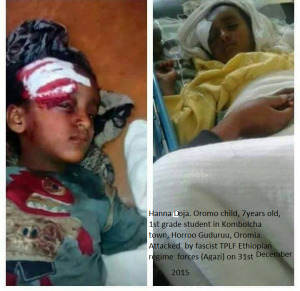

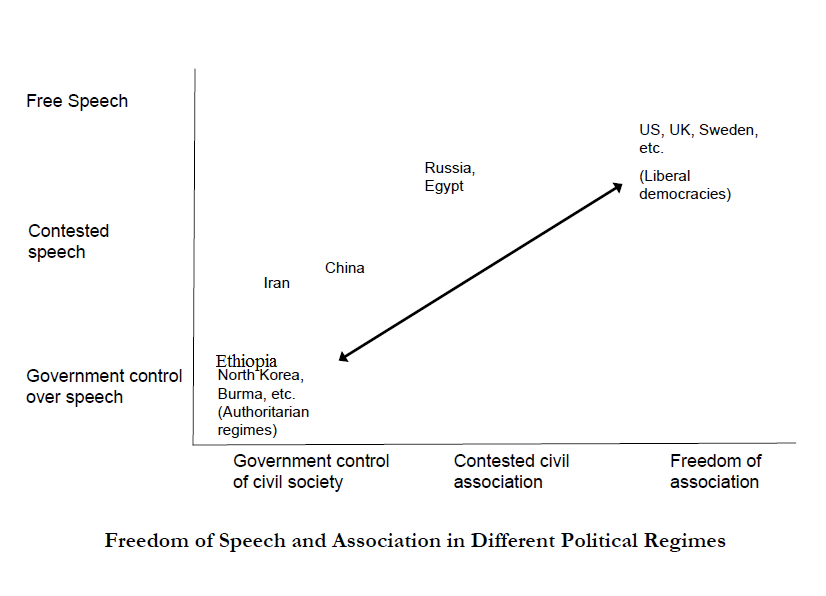




 Oromian Economist
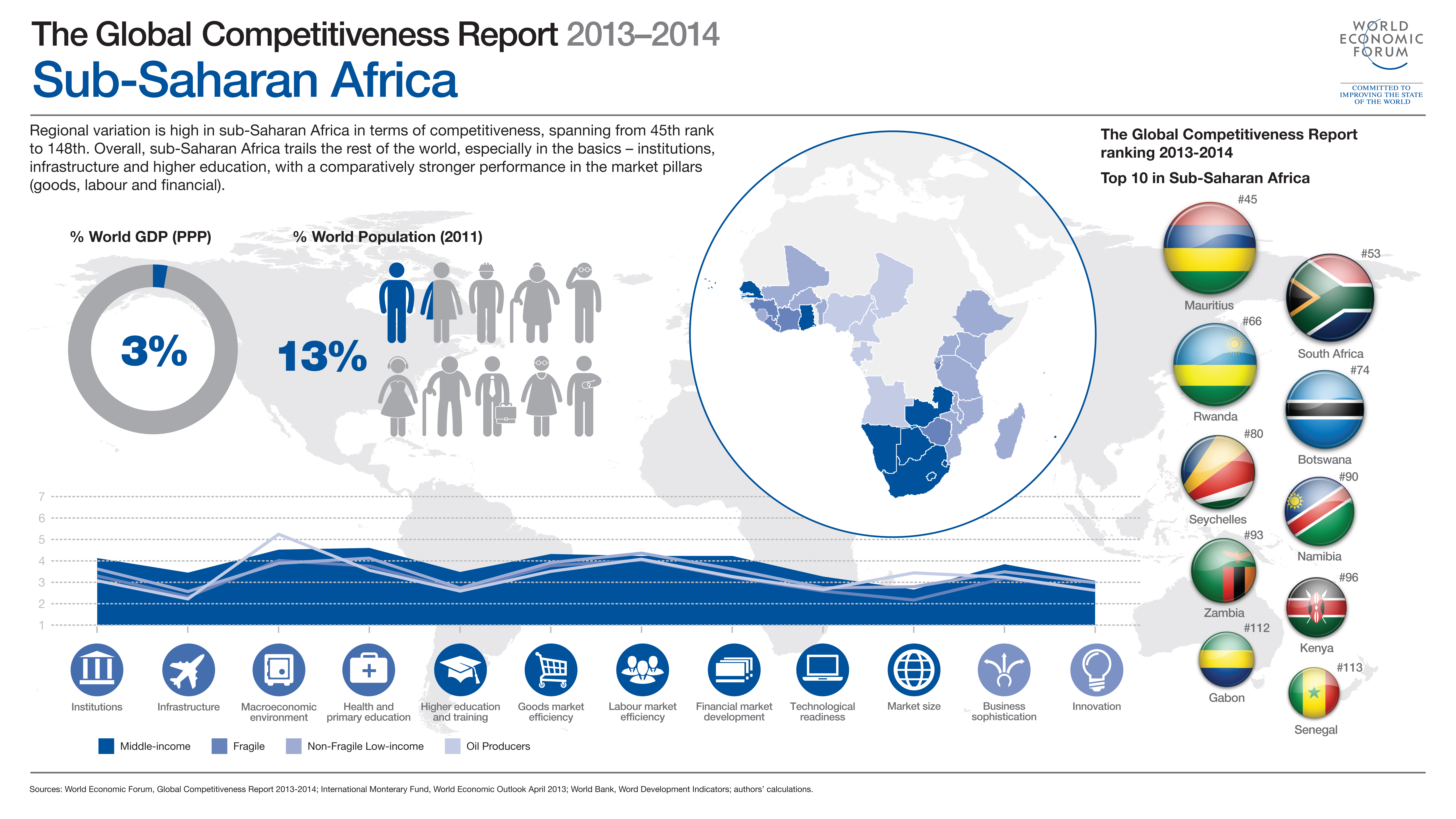
You must be logged in to post a comment.