

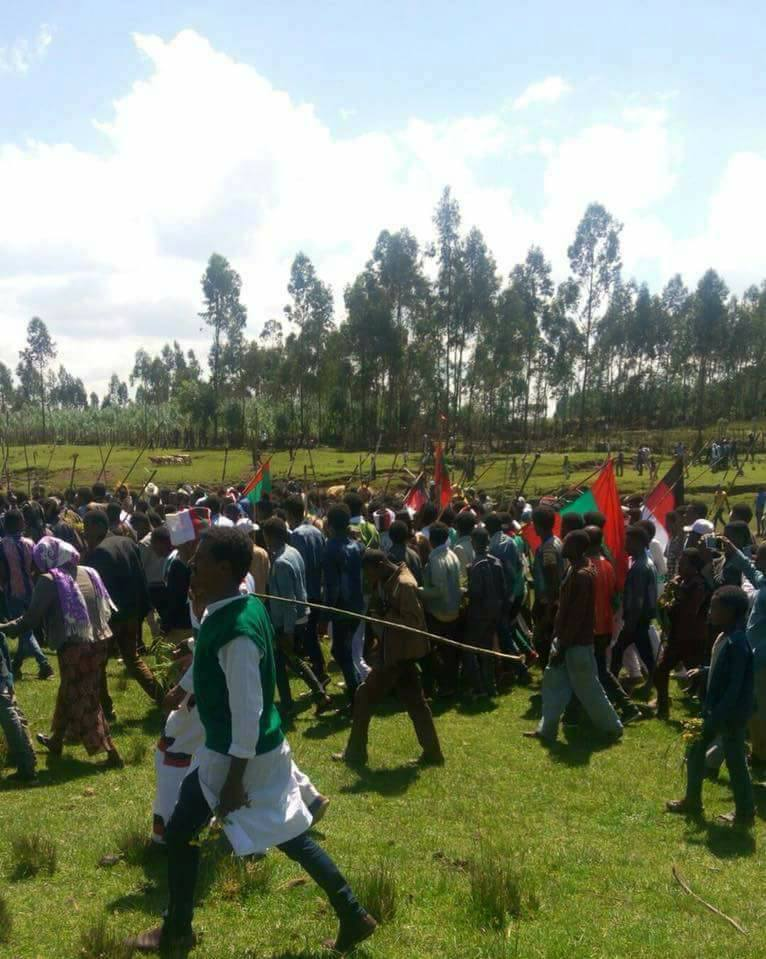
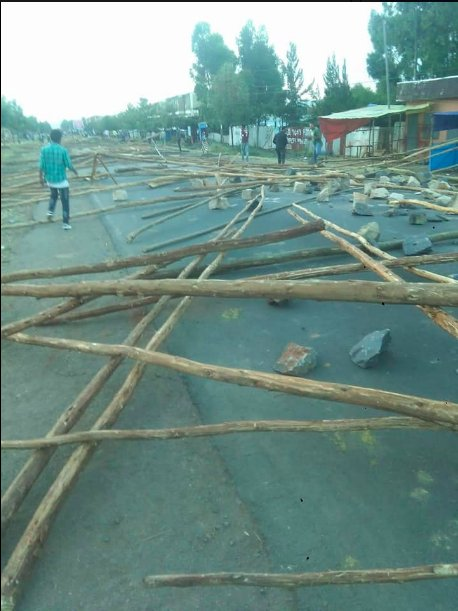
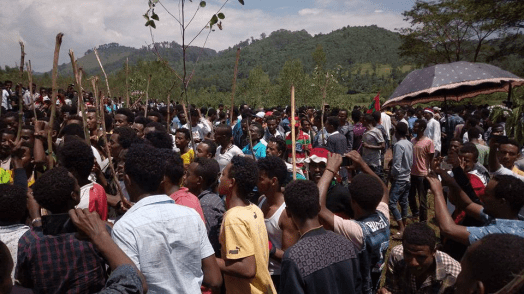
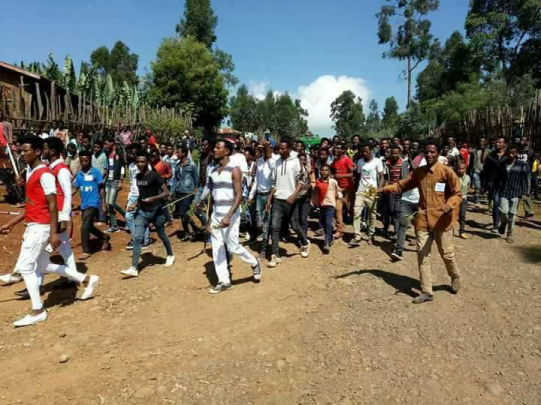
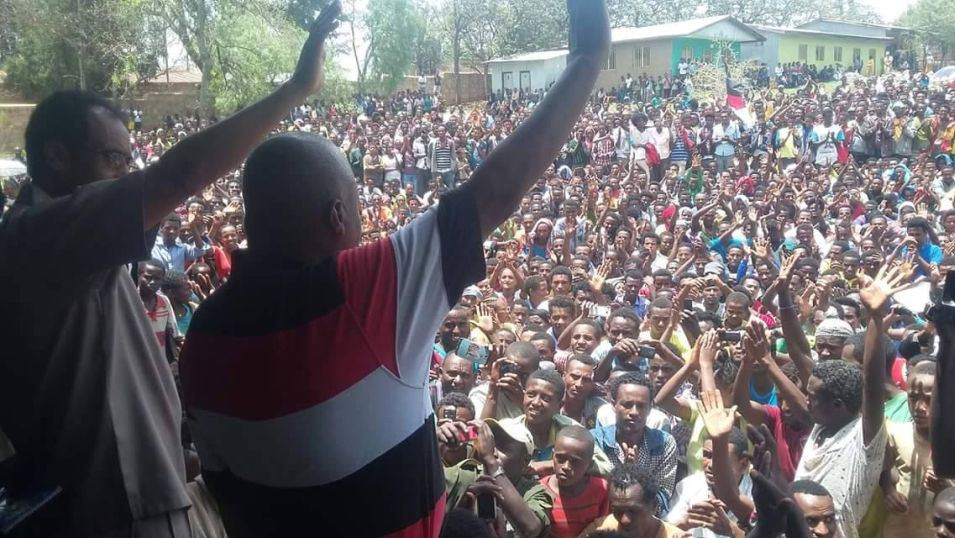
The Oromo Protest, approaching its fourth year, is now an established historical fact as an Oromia-wide, yearlong resistance movement involving the entire Oromo population. Despite frustrating obstacles to the attainment of its broad goals, the resistance has had many successes. It has rocked an entrenched authoritarian political system to its roots, nibbling down the Ethiopian federal government to paralysis and compelling the Oromia regional government to embrace the demands of the Oromo people. It has exposed the inequities of an economic system purported to be on an inexorable trajectory of growth and broad-based benefits for all citizens. The Ethiopian military, the third largest in Africa, deployed extensively to put down the resistance, was shown to be impotent against unarmed but determined protestors. In sum, the Oromo Protest, an epochal event in Ethiopia’s history, has occasioned the rise of an emergent Oromo nation and a resurgent Oromo nationalism.
In the last half century, the goals of Oromo nationalists have always been the same as the political demands of other Ethiopians. But when the Oromo raise them, they invariably evoke a rhetorical question: “What do the Oromo really want?” This is not an honest query but a mischievous scheme designed to marginalize the Oromo nation, disparage Oromo political demands, and criminalize the Oromo nationalist movement. It is a ploy employed by Ethiopia’s powerholders to make the Oromo the perpetual outsider and cast the Oromo national movement into a subversive nationalism.
Within the framework of this ploy, Oromo nationalism is consistently labeled as a separatist movement that injects discord into domestic politics and threatens the stability of the existing state system in the Horn. In scholarly literature, Oromo nationalists are depicted as disciples of Eritrean secessionists whose objective is the dismemberment of the Ethiopian state. In Ethiopian popular consciousness, Oromo nationalists came to represent a relic of the era of liberation movements who, unlike the levelheaded “democrats” of our time, want to tear down the state, subvert democracy, thwart development and disrupt peace. Simply put, Oromo nationalism was rendered a genie that should be kept inside the bottle.
The eminent British anthropologist Paul Baxter observed this phenomenon nearly forty years ago. In a definitive article published 1978, “Ethiopia’s Unacknowledged Problem: The Oromo,” he wrote:
The efflorescence of feelings of common nationhood and of aspirations for self-determination among the Oromo has not been much commented upon. Yet the problem of the Oromo people has been a major and central one in the Ethiopian Empire ever since it was created by Minilik in the last two decades of the nineteenth century. If the Oromo people only obtain a portion of the freedoms which they seek then the balance of political power in Ethiopia will be completely altered. If the Oromo act with unity they must necessarily constitute a powerful force.
For the next four decades, even though both the Oromo nation and Oromo nationalism continued to play a critical role in matters of war and peace, in the formation and fall of regimes, and in the quest for equality and justice, the Oromo question remained Ethiopia’s unacknowledged problem that must be confined the periphery of Ethiopian politics.
Ethiopia’s Unacknowledged Problem
The contemporary Oromo struggle emerged during the revolutionary fervor of the late 1960s as a movement against national and class oppression. During this time, the impoverished, overtaxed and landless Oromo peasants Bale presented their grievances in an armed rebellion, the Bale Rebellion, which lasted several years. Oromo elite who served in the imperial regime as civilian and military officials, realizing that their place was always subordinate to the dominant Amhara, started to join the nationalist camp. In 1963, their dissatisfaction coalesced into an organized movement with the establishment of the Mecha Tulama Self-help Association (MTA).
By the late 1960s, the Bale rebellion had been quelled and the MTA had been outlawed by the imperial government. In response, Oromo nationalists founded a political organization named the Ethiopian National Liberation Front (ENLF) in 1971. Led by Hajji Hussien Sorra, one of the leaders of Bale rebellion, the ENLF’s declared objective was to overthrow Haile Sellassi’s “feudal regime” and to create a “progressive republic” based on a decentralized union comprised of autonomous regions. Specifically, it supported land distribution to peasants, freedom of the press, release of political prisoners and the right to organize political parties and professional associations. Put succinctly, the focus of the Oromo nationalists during this period was on the restoration of human dignity for an Oromo and respect for the identity of the nation.
In the 1970s, the Ethiopian Student Movement (ESM) became the locus of opposition political activities against the imperial government. Oromo nationalists were not just members of the ESM unions but also served in various leadership roles. In these capacities, they participated in the articulation of the two major political questions, encapsulated in the motto of “land to the tiller” and “the question of nationalities,” that have since shaped Ethiopian politics. These same political demands that animated the ESM also galvanized Oromo nationalists.
The twin questions of land and identity culminated in the Ethiopian Revolution of 1974. During the early phases of the revolution, Oromo nationalists gave critical support to the Derg government for issuing the Land Nationalization Proclamation of 1975 and introducing various measures to allow cultural expressions of the various nationalities of Ethiopia. Many Oromo nationalists became leaders of the various political parties of the time including the All Ethiopia Socialist Union or Me’ison (Haile Fida) and the Revolutionary Struggle of Ethiopia’s Oppressed or Eche’at (Baro Tumsa) and the League of the Proletariat or Wez Liig (Senay Likki). Once the Derg consolidated its power, it made any talk of the nationalities question a treasonable crime. Oromo nationalists in urban centers were subsequently imprisoned, tortured and killed. Oromo farmers in the eastern region were labelled collaborators of the Said Barre regime, rounded up indiscriminately and summarily executed.
In the aftermath of this unparalleled brutality, some Oromo nationalists joined the armed struggle in the Chercher highlands in the East. At the same time, Oromo nationalist intellectuals framed Oromo nationalist goals in terms of freedom from the Amhara nafxanya class who had oppressed and persecuted Oromo peasants and from the descendants of the nafxanya in urban areas who kept Oromo professionals in perpetual second class status. As Leenco Lata, a leading leader of the Oromo Liberation Front (OLF) put it in a recent interview on ESAT, “framing the Oromo national question as a colonial question was necessary because Oromoness itself was threatened with extinction by the assimilationist policies of the imperial regime.” The political program that was sketched in the context of a worldview shaped by the prevailing realities of the time culminated in the regime change of 1991.
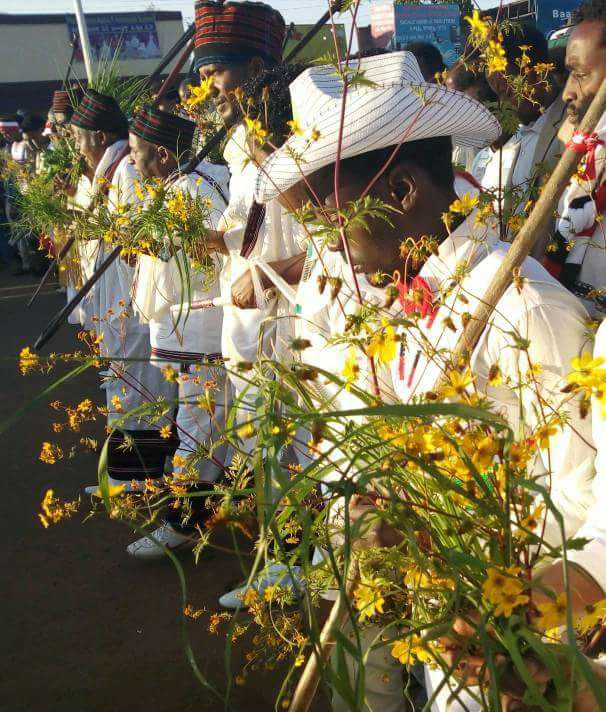
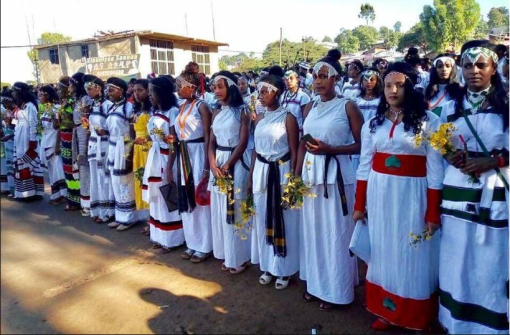
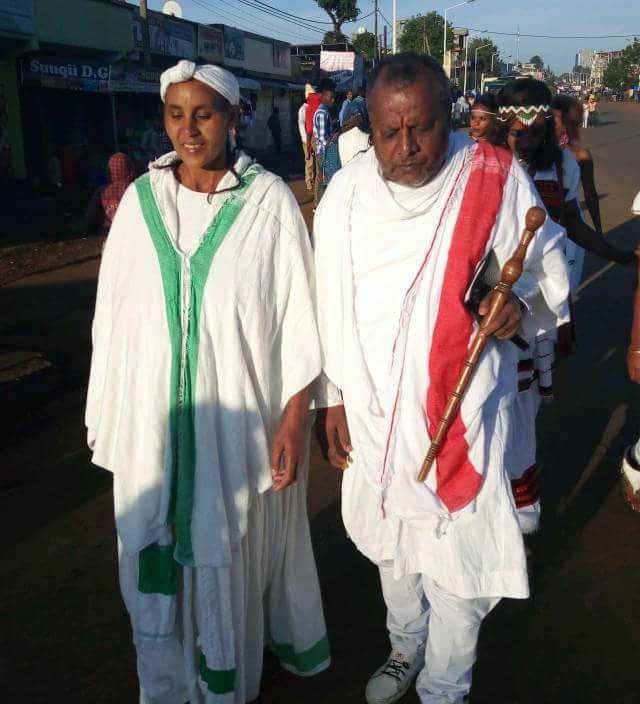
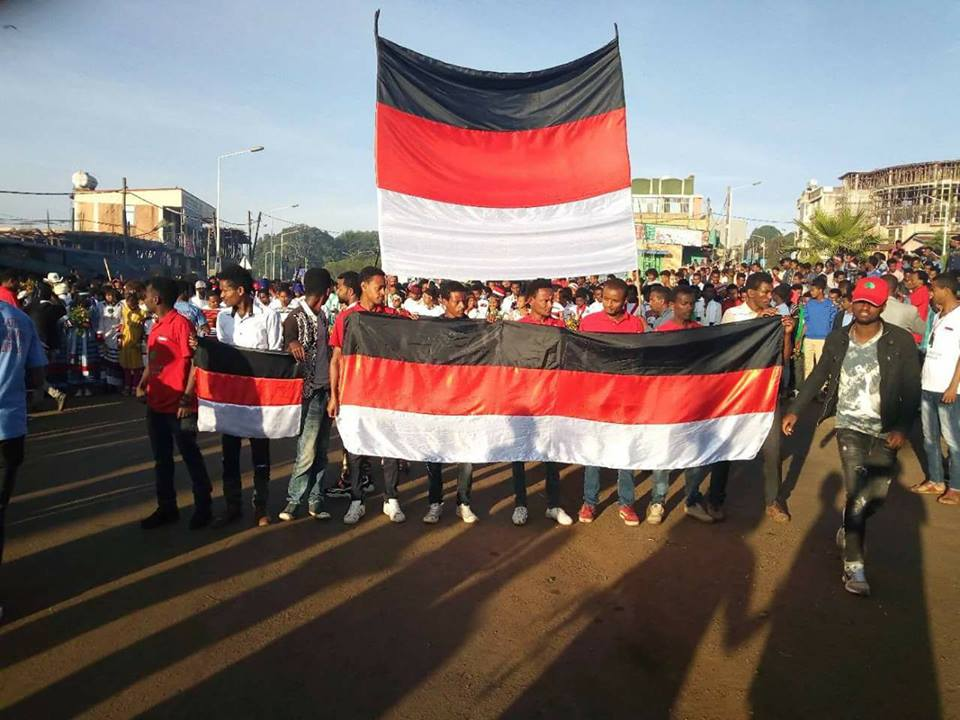
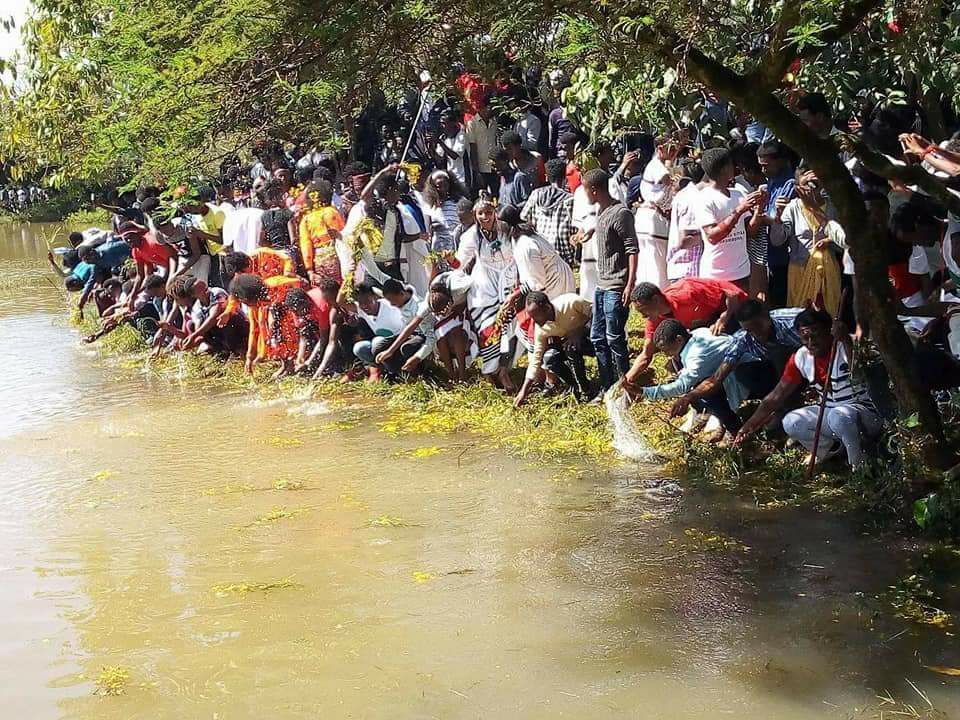
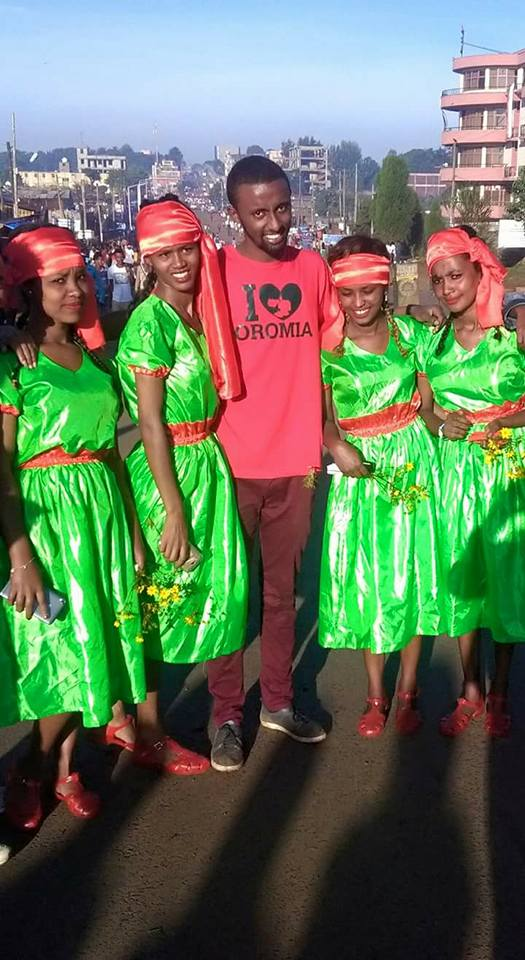
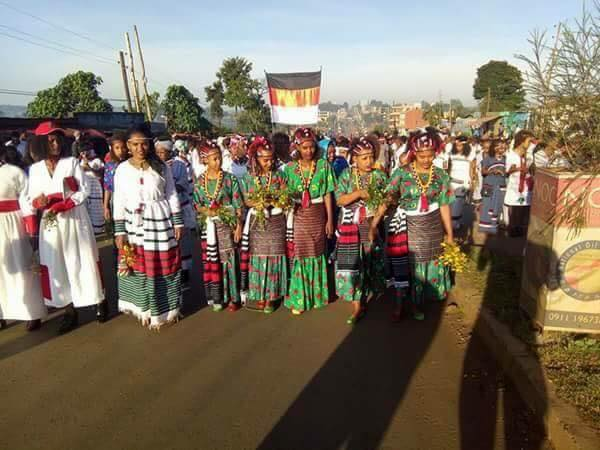
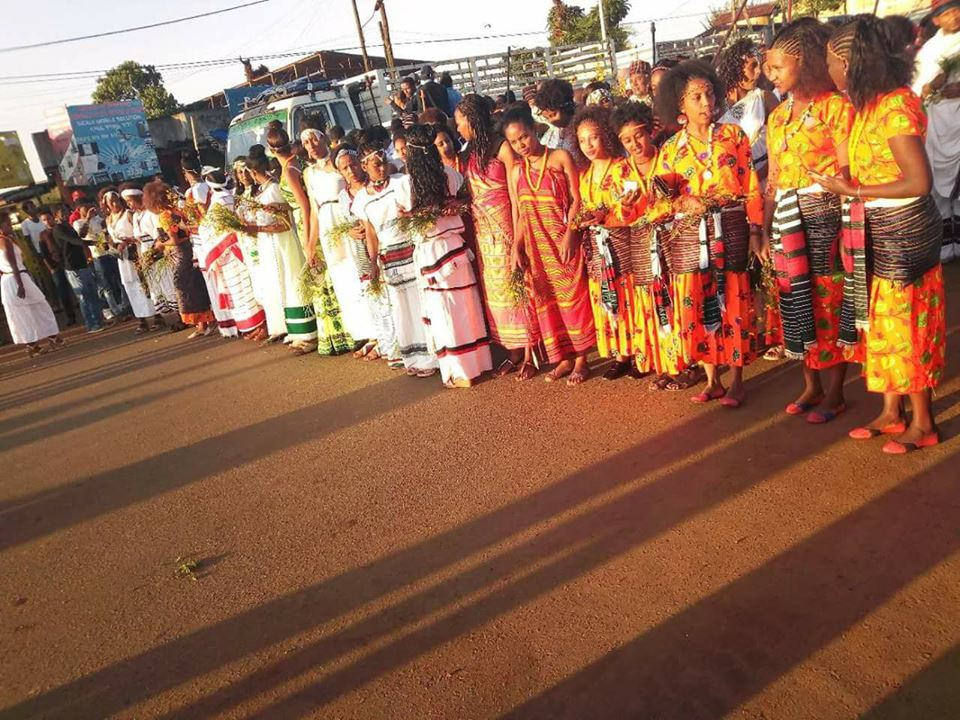
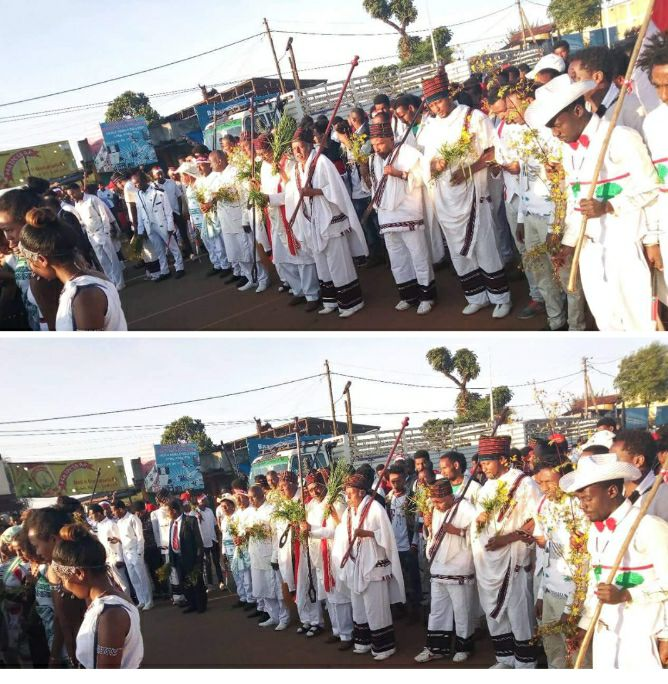
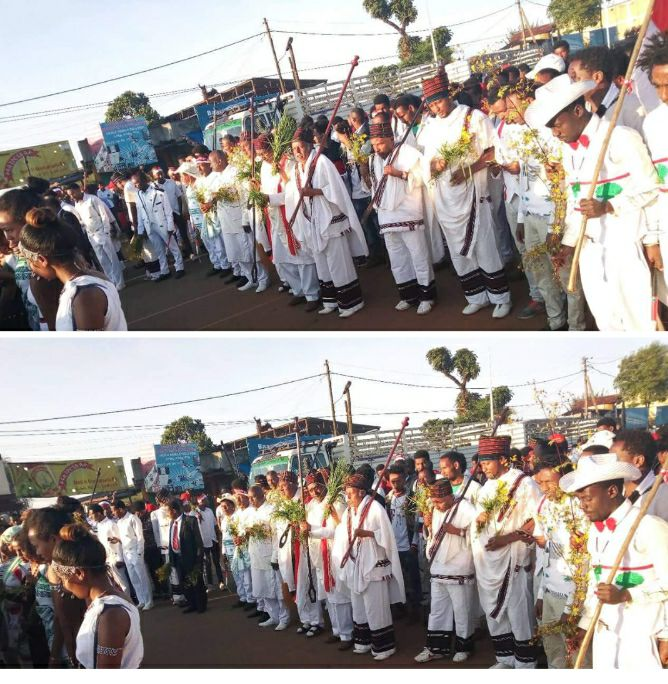
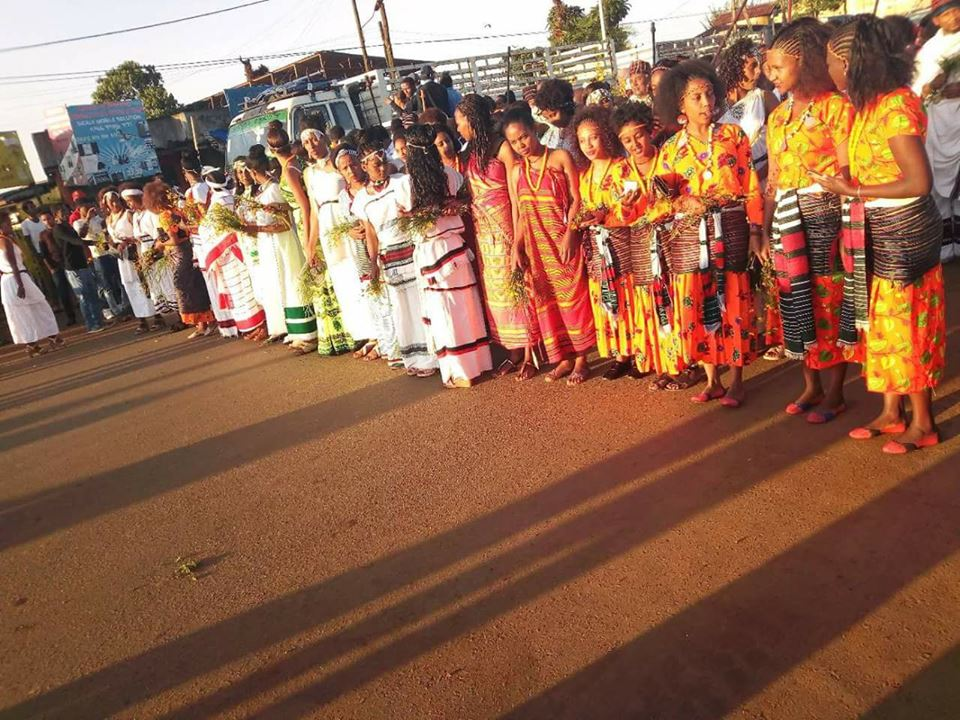
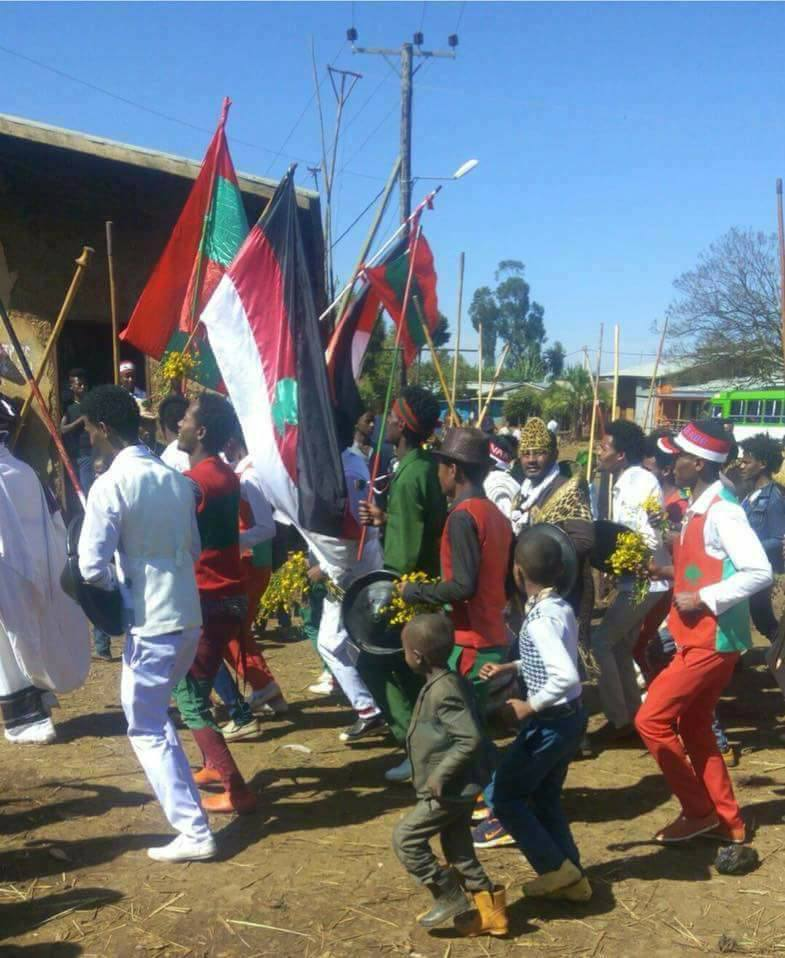
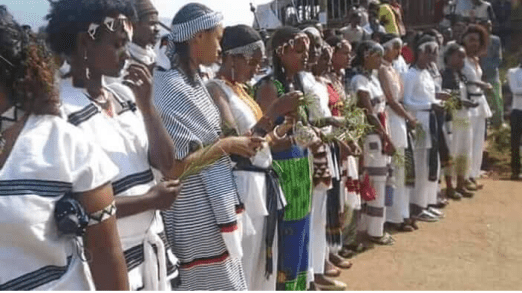
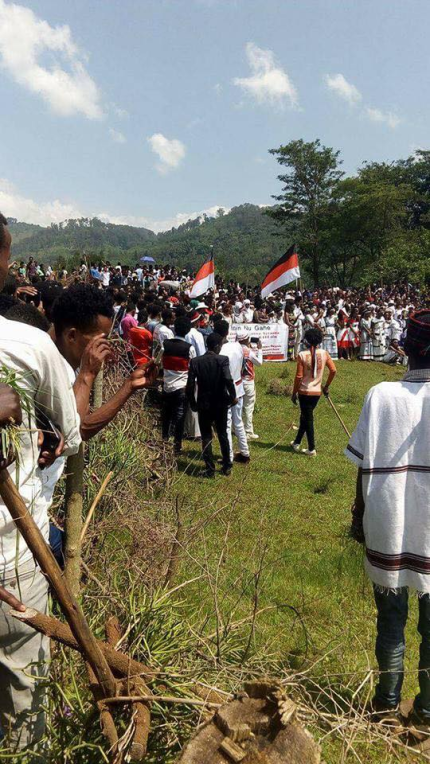
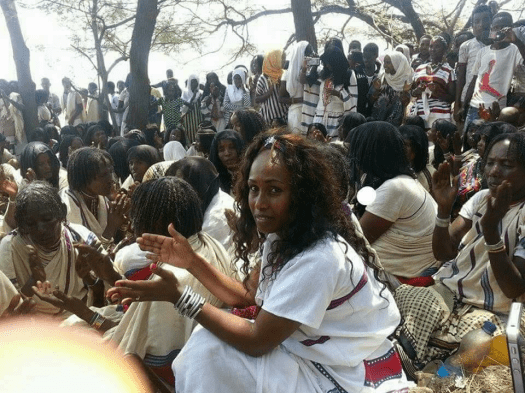
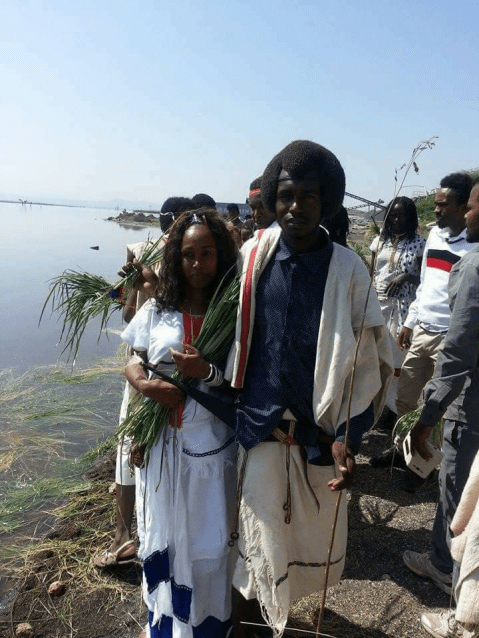
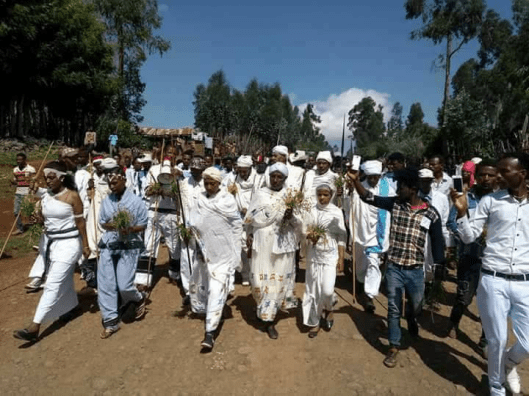
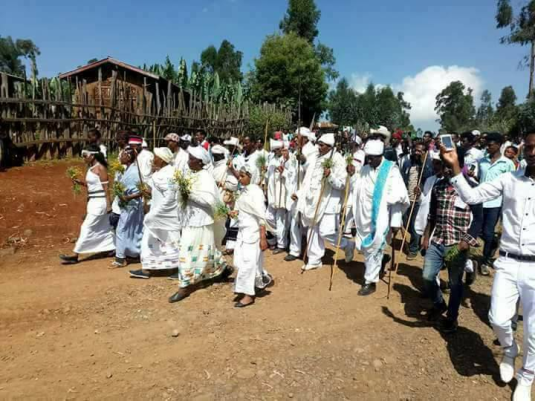
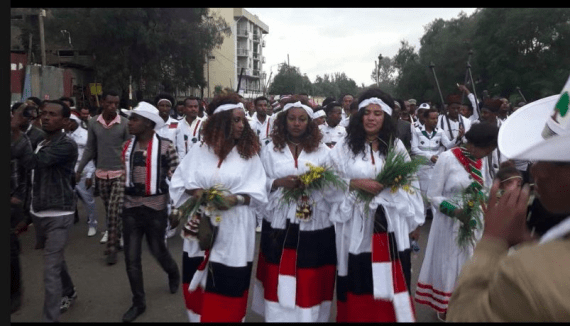
In the 1990s, the Oromo struggle began to move away from the guerilla movement posture it had for decade to a mass movement on Ethiopia’s national political stage. Within the framework of the language-based federal structure, the use of the Oromo language as the working language in Oromia and the use of Latin script in writing in Afaan Oromo, the Oromo people gradually overcame the cultural domination of the era of assimilation and came to realize that they have a common destiny as a unified nation. This sense of unity was reinforced by protest songs, resistance literature, cultural performances and a public display of new symbols of national pride. The annual Irreecha festival, celebrated in Bishoftu from the early 1990s onwards, became a manifestation an Oromo cultural renaissance and a nationalist struggle that had entered a more mature stage of political evolution.
By 2000, Oromo cultural consciousness, resulting from cultural renaissance and mounting deprivation caused by the barefaced exploitation of the Woyyane era, began to coalesce as an organized collective action. The forest fire of 2000 in Bale and opposition to the relocation of the capital of Oromia from Addis Ababa to Adama in 2003 prefigured a more powerful and resilient civic action that erupted a decade later in 2014. This was the university student-led protests opposing the planned implementation of the now infamous Addis Ababa and Surrounding Oromia Special Region Integrated Development Master Plan.
Since 2014, despite ebbs and flows, the Oromo protest has continued to this day. Even though this epochal phenomenon has yet to achieve its goals, it has incontrovertibly changed the face of Ethiopian politics permanently. With the Oromo People’s Democratic Organization (OPDO) ending its quarter century long drama of dissimulation and promoting the longstanding agenda of Oromo nationalist movement, Oromo nationalism become the leitmotif of politics in Oromia and in Ethiopia. As such, the fate of the Ethiopian polity is now inextricably linked with answering the Oromo demands for freedom, equality and justice. Ethiopia’s unacknowledged problem has been acknowledged as Ethiopia’s political problem that can no longer be externalized or pushed to the periphery.
Oromo Protest, an Oromo Renaissance
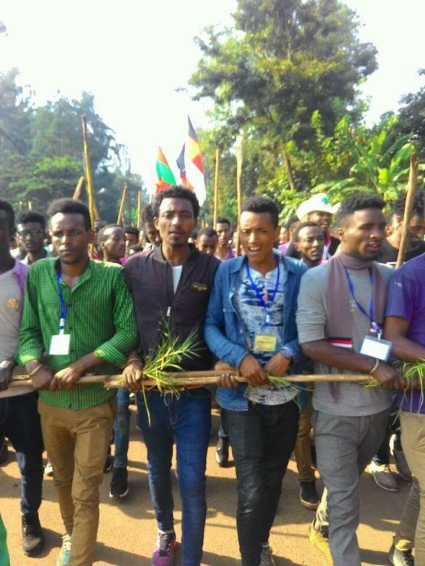
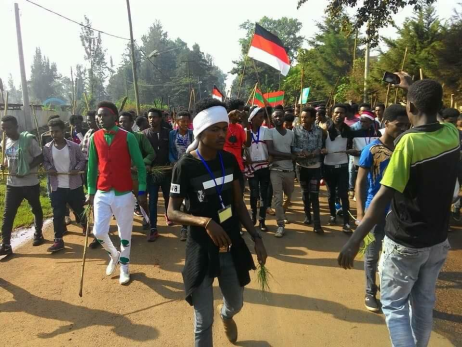
The Oromo Protest, the current stage of the long Oromo struggle, is characterized by fast, aggressive, sharp-paced resistance actions that took advantage of technology, artistic expressions and the ingenuity of organizers. Tech-savvy activists creatively employed new communication technologies—especially social media via the Internet—for the mobilization of collective action and the subsequent creation, organization, and implementation of tactical moves in pursuit of strategic goals. They were able to use the Internet to initiate and organize a broad spectrum of activities, including consumer boycotts, public protests, stay-at-home strikes, and demonstrations.
In addition to organizing and implementing collective actions on the ground in Oromia, social media technologies were used to coordinate transnational actions between activists in the diaspora and their counterparts at home. The technologies were used in promoting a sense of community and collective identity among Oromo society, creating less-confined political spaces, establishing connections with other social movements, and publicizing the Oromo cause to gain support from the global community.
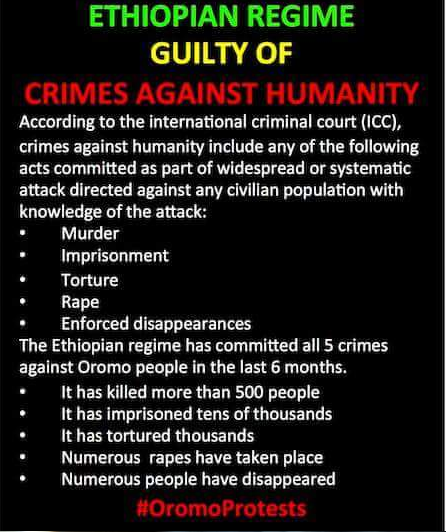
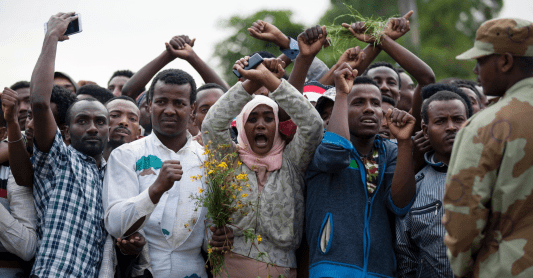
One of the internal characteristics of the Oromo protests is the activists’ devotion to planning and execution of sophisticated civil actions. The activists created symbols, notably the crossed hands over the head, and employed new methods, tactics and actions which were quickly adopted by protestors in major cities, towns and villages across Oromia. Though Oromia-wide in scope, the network of activists who organized and led the protests remained invisible to the regime’s security apparatus. Unable to pin-down the organization and leadership of the protests, the regime resorted to a dragnet approach which landed leading Oromo political leaders in jail and hundreds of thousands of ordinary Oromo in concentration camps. Thousands more were forced into exile while thousands more were summarily executed by security forces acting with impunity.
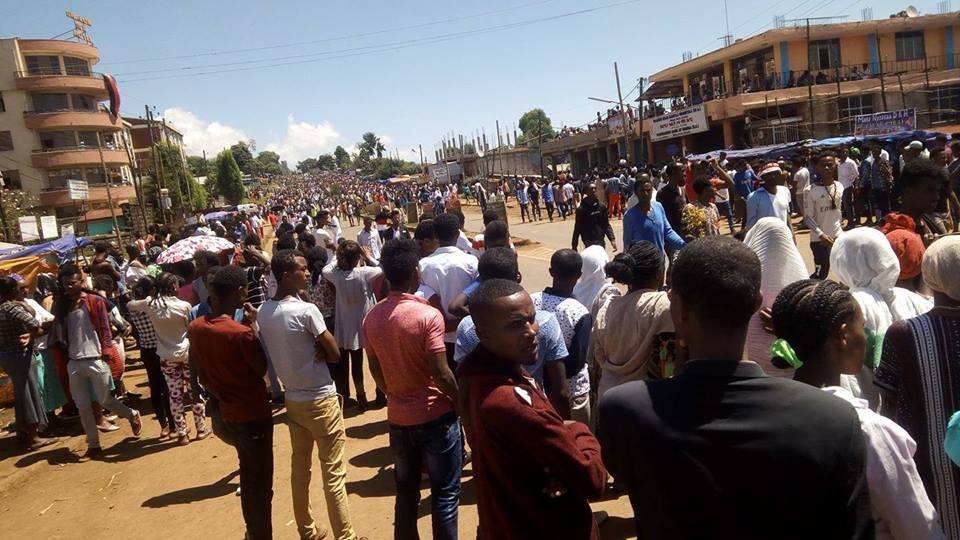
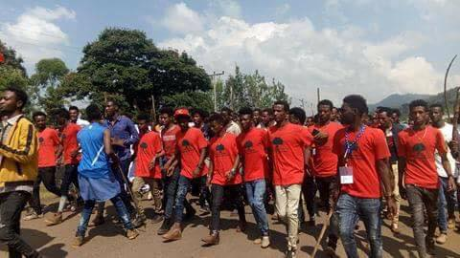
Their sacrifices are not in vain. The Oromo Protest has ended the era of secretly-conceived, elite-directed and vertically-implemented bad policies. Confronting the regime with waves of demonstrations and insisting to have a voice in their government, the protestors have impressed on the current and future powerholders the true meaning of the principle of popular sovereignty. Streaming into the streets for nearly a year in the face of a heavily armed military that has no qualms raining bullets on unarmed citizens, the Oromo protesters have shown the futility of the use of brute force against a conscious and determined citizenry. Demanding respect for the constitution, the federal arrangement, and the rule of law, the protestors have defended the gains of the Oromo national movement.
Until the Oromo Protest, the Tigray People’s Liberation Front (TPLF) managed to remain in power by dividing the Oromo people into supporters of the “good” OPDO who are pro-peace, pro-democracy and pro-development “patriots” and of the “evil” OLF who are anti-peace, anti-democracy and anti-development “terrorists.” These dichotomies have now dissolved. The political rhetoric of the current OPDO leaders is indistinguishable from those of an OLF nationalist whom they have despised for a quarter century. Oromia government officials and diaspora-based activists now speak with one voice about the future. This signifies the convergence of Oromo interests and an emerging consensus in addressing the longstanding and current demands the Oromo people.
The apparent unity purpose among Oromo political forces is one of the enduring legacies of the Oromo Protest. Oromo demands are no longer the pawn of the competing positions enunciated in political programs. Through the slogans, chants, placards, speeches, songs and other forms of expression, the Oromo protestors have re-articulated the longstanding Oromo quest for self-determination. At this stage of the struggle, the Oromo people demand positive liberty, the freedom to exercise democratic rights, constitutional rule, respect for human rights and the right to live in peace. They also demand negative liberty or freedom from violence, authoritarian rule, deprivation, arbitrary detention, torture and murder by security forces.
Rearticulated as such it is clear that the longstanding demands of the Oromo people for self-determination are not antagonistic to the demands of all peoples in Ethiopia. They are not only the same demands as other peoples of Ethiopia but also consistent with the rights that are enumerated in the Ethiopian constitution and in notable international human rights declarations and convents such as the Universal Declaration of Human Rights (UDHR), the International Covenants on Civil and Political Rights (ICCPR) and the International Covenant on Economic, Social, and Cultural Rights (ICESCR). By expressing Oromo demands so clearly and unambiguously, the Oromo protestors have rendered ineffective the TPLF’s tactic of presenting Oromo demands as a plot designed to dismember and destroy the Ethiopian state.
The Oromo Protest’s immediate impact is on the Oromia government leaders. At least three cases exemplify the new leaders’ transformation. First, when Lemma Megersa, President of the Oromia region, decided to stay away from the Irreecha celebrations of 2017, he showed a rare political acumen of exercising leadership by refraining from acting impulsively. Second, during the celebrations at Lake Arsadi, Burayuu and in other places all over Oromia, the Oromia police acted in the best police tradition that the force’s mission is “to protect and serve.” Third, after the Liyu Police of the Somali region engineered the forced displacement of hundreds of thousands of Oromo from the Somali region, the regional government quickly organized a relief effort to attend to the needs of the displaced. The senior leader of the OPDO, Abba Duulaa Gammada, realizing that his seat of power wasn’t matched by the authority to effect change, resigned in protest. In recent weeks, the new leaders have foiled the plot to instigate conflict between the Amhara and Oromo people and helped diffuse public fear of an impending inter-ethnic conflict by holding a solidarity conference in with the people of the people of the Amhara region.
It is true that the current OPDO leaders were forced by the resilience and determination of the Oromo Protest to respond to popular demands. Regardless, they made the right decision in choosing to heed the people’s voice, embrace the protestors’ vision and desist from doing more harm. Beyond these overall adjustments, the specific actions they made since the Ireecha festival of 2017 are important not just in resolving existing problems but also in terms of their implications for the future. A leader avoiding an opportunity to bask in limelight is a first in Ethiopia. A police force exercising restraint not to shoot at protestors sets a precedent that will be a model of police behavior in the future. A high level official giving up power rather than continue to be a hatchet man presages a new era in Ethiopian politics. The ‘reformed’ OPDO is an unmistakable example of the institutionalization Oromo nationalism.
The Oromo Protest has also reshaped Oromo nationalism forcing its intellectual leaders to reckon the many lost opportunities, strategic blunders, and self-destructive initiatives that have obviated progress toward self-determination. There is now an emerging Oromo nationalism that is pragmatic and is oriented towards solving the problems of everyday life. It is nationalism that is not and cannot be depicted as destructive, dystopian and iconoclastic. It is nationalism that is rational and has a responsible approach to nation-building. No longer the pariah in Ethiopian politics, the new generation of Oromo nationalists is now a positive force for desirable change and for devising workable solutions for Ethiopia’s future.
The Oromo Protest has shown that the force that poses a threat to the unity of Ethiopians is not the Oromo demand for self-determination, which in fact is the ultimate exercise of democratic rights, but a government that is committed to perpetuating a single group’s domination of the state by pitting against each other the various nations and nationalities in the country. The solution to the country’s ills cannot be achieved by denying the right to choose one’s ethnonational identity. The future of unity lies in the construction of a genuine multinational federation based on equality, justice, human dignity and constitutional rule. This is the Oromo alternative vision to a workable social contract for a future of peace and prosperity.
The Oromo Alternative
Nearly forty years after Paul Baxter bemoaned Oromo political marginalization and lack of unity among them, in 2012, the eminent University of Chicago sociologist, the late Donald Levine, expressed optimism about the role of the Oromo in Ethiopia in an article entitled “the Oromo vision could electrify Ethiopia.” He writes:
Oromo leaders could promote wider understanding of the democratic ethos of the remarkable political Gada system and invite themselves more robustly into the Ethiopian center, with a vigorous campaign to reform democratic procedures, protect human rights, and guarantee civil liberties for ALL Ethiopians. Such a role would be in keeping with the expansive project of the Oromo people and their most salient traditional virtues.”
The Oromo vision that Levine proposed for Ethiopia is precisely the vision that the Oromo Protest has put forth. It is a vision of a freedom, equality, justice and dignity in a participatory democracy. What makes it so compelling is that it is shaped by Oromo indigenous knowledge traditions rather by transplanted ideologies or borrowed experiences that have thus far proven to produce only failed experiments and false starts for positive change. The Oromo vision reaffirms Oromo democratic ethos, notions of inclusive economic development, principles of peace-maintenance and respect for human rights rather than by opposition to the now defunct Ethiopian colonialism. As such, it offers a refreshing alternative to the current one-party dictatorship and holds out a realistic hope for attaining a peaceful, prosperous and democratic Ethiopia.
In addition, Oromo nationalism is no longer an urban-centered movement led by a handful of elites but a broad-based social movement involving Oromos from all walks of life. Protests occurred in all of the twenty-one zones of Oromia and in over 200 cities and numerous villages. The absence of a distinct class of elite leaders did not result in chaos and the reign of unruliness in Oromia during the protests. Despite the effort to fan inter-ethnic suspicion and instigate conflict, the protest exercised great restraint not to let emotions run high and create a circumstance where non-Oromo citizens in Oromia could be harmed. By acting responsibly, the protestors have shown that Oromo nationalism isn’t a negative nationalism that poses a threat to non-Oromo or to Ethiopia’s unity but a movement rooted in the Oromo tradition of social inclusiveness, tolerance and willingness to relate to non-Oromo on the basis of common humanity.
These are positive reasons as to why non-Oromo Ethiopians should find a more reliable, stable, and enduring partner in Oromo leaders to create people-based solidarity against domination. Because of the new realities in Ethiopia, solidarity is now possible on the basis of broadly shared democratic, cultural and geographic values. The majority of Ethiopians are members of a national community of the badly governed. The risk of not having solidarity is too grave and the penalty of refusing to forge one too high. That imposes the moral imperative of seeking solidarity based not on ill-defined uniformity or uncritical acceptance of the other but on common ground and common purpose, and mutual acceptance of each other’s differences, and a willingness to tolerate each other’s excesses. It is solidarity for a more positive future which envisions a shared commitment to the ideals of democracy, human rights, government accountability and transparency and other ideas of both positive and negative freedoms.
Even governments who have interest in the Horn of Africa region should find in the Oromo a more credible and better alternative to the incumbent regime to stabilize the region. This is not to suggest that the Oromo cause should be subservient to the needs of the rest of the world, but a simple statement that the Oromo peoples’ quest for fundamental human rights, rooted in its own heritage and traditional values, is not antithetical to international principles that have avoided conflict and sustained peace in the world. Oromo nationalist leaders realize that the Oromo cause is more attainable if it is aligned with the needs of the international community.


 Ethiopia suffered a dramatic decline of internet freedom over the past year. #netfreedom2017 http://freedomhou.se/2zD0tlI












































Prof Al Mariam: ‘My Letter to President Trump Requesting Targeted Sanctions Against the TPLF Regime in Ethiopia’ October 3, 2017
Posted by OromianEconomist in Horn of Africa Affairs, Human Rights, Uncategorized.Tags: Africa, Al Mariam's Commentaries, Bishoftu Massacre, Bishoftu Massacre 2nd October 2016 at Irreecha, Ethiopia, Genocide, Letter to President Trump, Oromia, TPLF, TPLF/EPRDF Ethiopian Regime is a Contra to a Developmental State
1 comment so far
My Letter to President Trump Requesting Targeted Sanctions Against the TPLF Regime in Ethiopia
Posted in Al Mariam’s Commentaries By almariam On October 1, 2017
October 2, 2017
Donald Trump
President of the United States
The White House
1600 Pennsylvania Avenue NW
Washington, DC 20500
Re: REQUEST FOR SANCTIONS AGAINST PERSONS AND ENTITIES INVOLVED IN THE IRRECHA MASSACRES ON OCTOBER 2, 2016 AND OTHER CRIMES AGAINST HUMANITY COMMITTED IN ETHIOPIA
Dear Mr. President:
I am writing this letter for two purposes. First, I wish to thank you for imposing sanctions[1] on certain senior current and former South Sudan government officials and South Sudanese companies responsible for undermining peace, security and stability in that violence-wracked country.
Second, I am writing to request imposition of similar sanctions against members of the ruling regime in Ethiopia self-styled as the “Ethiopian People’s Revolutionary Democratic Front” led and dominated by the Tigrean People’s Liberation Front (TPLF), an entity listed as a terrorist organization in the Global Terrorism Database[2] (GTD).
The last act of terrorism committed by the TPLF, according to the GTD, was on August 16, 2016[3].
I believe it is fair and proper to give credit where credit is due. While some have claimed the sanctions imposed on South Sudan’s leaders and their accomplices are meager and inadequate[4], I believe the action sends a clear and unambiguous message to all Africans in positions of power that protection of human rights is a central component of an America-first U.S. foreign policy in Africa, a fact that has been underscored by Secretary of State Rex Tillerson[5].
I am especially elated to learn the U.S. Treasury Department “will forcefully respond to the atrocities ongoing in South Sudan by targeting those who abuse human rights, seek to derail the peace process, and obstruct reconciliation in South Sudan.” Such a resolute statement goes a long way in reassuring not only the people of South Sudan but also all Africans that the U.S. will not merely talk the talk about being on the “right side of history” but also walk the talk by acting decisively and selectively against individuals and entities engaged in gross human rights violations.
I wish to point out for the record that the sanctions you have imposed in South Sudan are in stark contrast to the Obama administration’s lifting of sanctions against the Sudan in its last week in office.
During his presidential candidacy in 2007, Barack Obama said[6], the “genocide in Darfur [Sudan] is a stain on our souls… As a president of the United States I don’t intend to abandon people or turn a blind eye to slaughter.”
In the final week of his presidency, on January 13, 2017, Mr. Obama turned a blind eye to the genocidal Sudanese regime and stood on the “wrong side of history” when he rescinded sanctions authorized pursuant to Executive Order 13067[7] of November 3, 1997 and Executive Order 13412[8] of October 13, 2006 related to the policies and actions of the Government of Sudan.
In issuing his rescission of Executive Order 13761[9], Mr. Obama whitewashed the bloody genocidal crimes of the Sudanese regime by speciously claiming that regime has shown “positive actions over the past 6 months”. The “actions” allegedly included maintaining cessation of hostilities in conflict areas in the Sudan, improving humanitarian access and counterterrorism cooperation.
It is said, “one swallow does not make a summer.” It is incomprehensible to me how Mr. Obama could gloss over and excuse atrocities committed over a period exceeding two decades on mere gestures of good behavior over six months.
What is even more appalling is Mr. Obama’s duplicity and hypocrisy in completely ignoring Sudan’s close ties with North Korea and purchase of weapons from that rogue regime for use in the commission of human rights violations and atrocities. In lifting sanctions against the Sudan, Mr. Obama also conveniently ignored the fact that Sudan has been on the list[10] of state sponsors of terrorism since 1993 and had provided a haven to Osama bin Laden.
Perhaps one should not be surprised by Mr. Obama’s stratagems and sophistry in exculpating those on the “wrong side of history”, as he used to call them. When Mr. Obama visited Ethiopia in July 2015, he unabashedly declared the TPLF regime, which claimed electoral victory by capturing 100 percent of the “parliamentary” seats, as “democratically elected[11].”
In light of Mr. Obama’s double-speak and duplicity on human rights in Africa, I find your recent targeted sanctions against South Sudan and the tenor of your administration’s emerging human rights policy forthright, refreshing and encouraging.
I believe selective and targeted sanctions such as the one imposed against South Sudanese leaders and companies can serve as effective tools of an America-first foreign policy in advancing the cause of human rights globally, and particularly in Africa. Targeted sanctions selectively and purposefully focus on leaders, their family members and supporters, political elites and segments of society known to be directly responsible for human rights violations or in aiding, abetting and giving material support in the commission of such violations. Blanket sanctions are more likely to inflict greater hardship and suffering on the general population, and often those engaged in gross human rights violations find ways to circumvent them. It has been observed that “targeted sanctions” or “smart sanctions” are like “smart bombs”, considerably reducing collateral damage on civilian populations.
I believe in the old saying, “What is sauce for the goose is sauce for the gander.” What is good for South Sudan is good for Ethiopia.
I am requesting that you follow up with targeted sanctions against current and senior members of the “Ethiopian People’s Revolutionary Democratic Front” led and dominated by the Tigrean People’s Liberation Front and other entities aiding and abetting that regime in the commission of human rights violations in Ethiopia. The evidence of human rights violations supporting targeted sanctions against the TPLF regime is overwhelming, incontrovertible, substantial and compelling.
The Irreecha Massacres of October 2, 2016
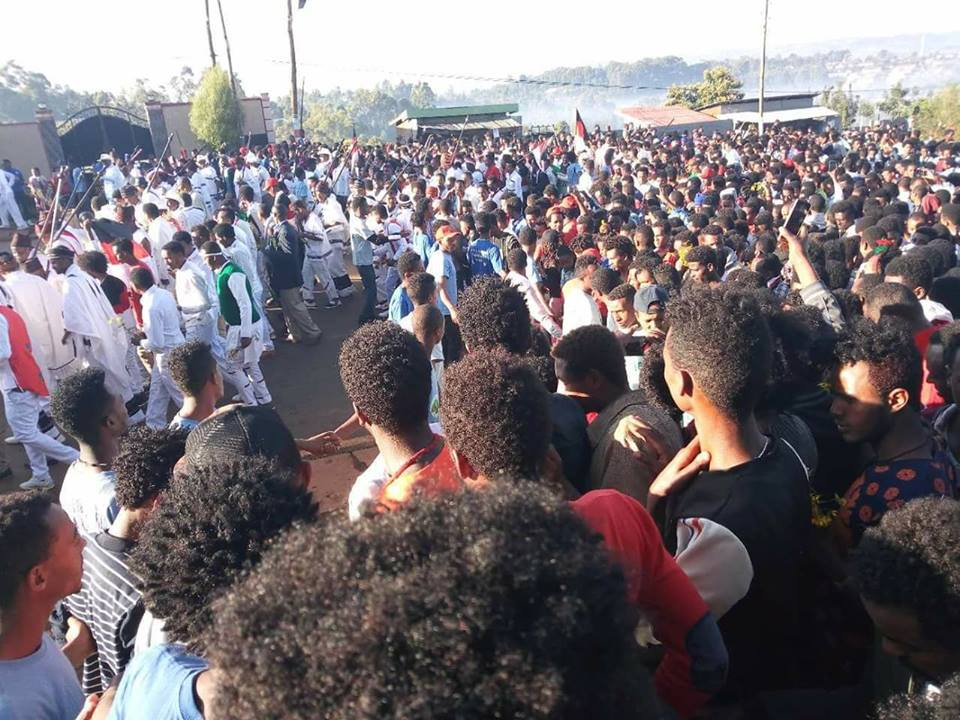
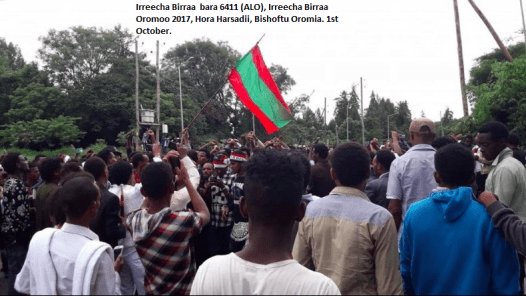
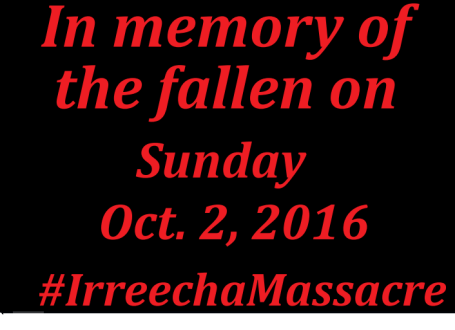
On October 2, 2016, troops loyal to the ruling Tigrean Peoples’ Liberation Front opened fire indiscriminately on crowds at a religious festival known as “Irreecha” attended by an “estimated 2 million people”[12] in the town of Bishoftu, some 45 miles southeast of the capital Addis Ababa.
The TPLF regime reported 52 dead from what it said was crowd “stampede[13] caused by anti-government elements”. In a televised address, the regime’s prime minster blamed the victims for provoking troops into using indiscriminate deadly force.
On October 3, 2016, Freedom House issued a statement[14] on the Irreecha Massacres demanding an independent investigation: “The deaths in Bishoftu occurred because security forces fired tear gas and live ammunition at a crowd of over a million people celebrating a religious occasion. The government of Ethiopia should allow a truly independent body to investigate the tragedy at Bishoftu as well as security forces’ well-documented record of using excessive force against peaceful gatherings.”
Eyewitness reports including statements by accredited Voice of America Amharic Service program journalists revealed that heavily armed regime troops had taken tactical positions behind the VIP grandstand hidden from direct view of the crowd and suddenly opened live fire on the unarmed and peacefully protesting crowd after the official program could not proceed due to crowd demands and chants against the regime.
On October 8, the TPLF regime declared a “state of emergency” suspending the constitution and instituting martial law under an entity called “Command Post[15]”.
On November 12, 2016, the regime officially reported[16] arresting “11,607 people, including 347 women”. The U.S. State Department in its 2016 human rights report[17]stated, “Many [of the thousands arrested] were never brought before a court, provided access to legal counsel, or formally charged with a crime.” The actual number of persons arrested was significantly higher than officially reported. In March 2017, the Command Post “announced that 4,996 of the 26,130 people detained for allegedly taking part in protests would be brought to court.”
An “investigative report” on the Irreecha Massacres released by the regime’s human rights organization in April 2016 rubberstamped the regime’s original position: “The violence happened because the protesters were using guns and so security forces had no other option.”
In its June 2016 report entitled “Such a Brutal Crackdown’: Killings and Arrests in Response to Ethiopia’s Oromo Protest”, Human Rights Watch stated, “security forces in Ethiopia have used excessive and lethal force against largely peaceful protests that have swept through Oromia, the country’s largest region, since November 2015.”
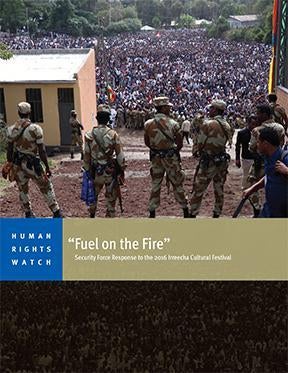
On September 19, 2017, Human Rights Watch in its 33-page report entitled “Fuel on the Fire’: Security Force Response to the 2016 Irreecha Cultural Festival” provided details on the regime’s “use of force in response to restive crowds at 2016’s Irreecha.” The report “found evidence that security force personnel not only triggered the stampede that caused many deaths but subsequently shot and killed some members of the crowd.”
Over the past year, the TPLF regime has committed unspeakable atrocities in Northern Ethiopia including Gonder, Wolkait, Bahr Dar and other locations.
The Irreecha Massacres are only the latest in the 26-year sordid history of gross and egregious human rights violation by the TPLF regime in Ethiopia.
On May 16, 2005, one day after the general election, the late leader of the TPLF regime, Meles Zenawi, also declared a state of emergency, outlawed all public gatherings and placed under his direct personal command and control all police, security and military forces in the country. Zenawi personally authorized the use of deadly force against any protesters in the post-election period. As a result, nearly a thousand people were either killed or severely wounded by regime troops. Zenawi subsequently set up an Inquiry Commission. That Commission was forced to go into exile following harassment and threats by the TPLF regime to falsify its findings. In November 2006, that Commission shared[18] its findings with members of the Africa Subcommittee in the House of Representatives. The Inquiry Commission laid the entire blame at the feet of the TPLF regime and rejected their spurious claims and justifications for use of deadly force.
A partial list of the names of the victims of the Meles Massacres is publicly available.
A list of names of those security, military and police officials directly involved in the post-2005 election massacres is also available. The TPLF regime to date has taken no action against these officials.
In May 2014, troops loyal to the TPLF regime massacred at least 47 university and high school students in the town of Ambo 80 miles west of the capital Addis Ababa. Eyewitnesses reported significantly higher casualties and fatalities than officially reported. Human Rights Watch (HRW) issued a statement[19] condemning the “shooting at and beating [of] peaceful protesters in Ambo, Nekemte, Jimma, and other towns”. According to HRW, the student “protests erupted over the release of the proposed Addis Ababa Integrated Development Master Plan” which would “expand Addis Ababa’s municipal boundary to include more than 15 communities in Oromia” and displace Oromo farmers and residents.
In December 2003, the TPLF massacred hundreds of Anuak people in Gambella in Western Ethiopia. Human Rights Watch documented that TPLF troops “subjected Anuak communities throughout the region to widespread and systematic acts of murder, rape, torture, arbitrary imprisonment and the destruction of entire villages.” Genocide Watch sent a fact-finding team in Gambella and secured[21] authentic documents “proving that the Gambella massacres were planned at the highest levels of the Ethiopian government, and even given the code name “Operation Sunny Mountain”. A report[20] by the Harvard Law School Human Rights Program on the Anuak Massacre concluded, “From December 2004 to at least January 2006, the ENDF (Ethiopian National Defense Forces) attacked and abused Anuak civilians in Gambella region – wantonly killing, raping, beating, torturing, and harassing civilians.”
In 2007, the TPLF regime massacred hundreds of people in the Ogaden region of Ethiopia. Human Rights Watch in its June 2008 report[22] entitled “Collective Punishment: War Crimes and Crimes against Humanity in the Ogaden area of Ethiopia’s Somali Region” documented, “Ethiopian troops have forcibly displaced entire rural communities, ordering villagers to leave their homes within a few days or witness their houses being burnt down and their possessions destroyed and risk death.”
The TPLF regime has refused to undertake meaningful and credible investigations into these crimes against humanity despite requests by human rights groups and even the U.N. The TPLF regime has refused entry to all UN special rapporteurs since 2007 to investigate human rights violations in Ethiopia.
The TPLF regime has dismissed and ignored all calls for an independent investigation of the Irreecha Massacres by United Nations top human rights official[23], the African Commission[24], the European parliament[25], and members of United States Congress[26].
The difference between the South Sudanese regime and the TPLF regime on human rights is the difference between Tweedledee and Tweedledum. Both regimes are peas in a pod. Thus, what is good enough for the South Sudanese regime is good enough for the TPLF regime.
I believe an America-first human rights policy which employs targeted sanctions to promote human rights, democracy and peace in Africa is not only necessary but also likely to produce outcomes that are consistent with the values and principles of American taxpayers.
Millions of refugees are leaving Africa to come go to Europe and North America because life is hell for them in Africa under brutal and bloodthirsty dictatorships, not merely to seek better economic opportunities. The U.S. can effectively deal with this problem by addressing the root cause of migration out of Africa, namely, brutal and oppressive dictatorships that treat their citizens as slaves and their countries’ treasuries and resources as their private estates. Selective and targeted sanctions aimed at the financial and logistical incapacitation of leaders, political elites and segments of society known to be directly responsible for human rights violations or engaged in aiding, abetting and giving material support in the commission of such violations in Africa is the proverbial two-by-four that will quickly get their attention.
For well over a decade, I have argued without pause that the best way to help Africa is to let Africa help itself. Africa can never be free until African leaders are held to account and forced to abandon the culture of panhandling, which have perfected as an art form. The U.S. must end its aid welfare program to African dictators who siphon off much of that aid and deposit it in their private offshore bank accounts. Your transition team hit the nail on the head when it demndaed answers from the State Department to the following question: “With so much corruption in Africa, how much of our funding is stolen?”
I wish I could definitively answer that question for you. But I can say definitively that to begin the effort to find out “how much of our funding is stolen” in Africa, we must make targeted sanctions a central part of the America-first foreign policy in Africa.
Mr. President, what I am asking is not anything extraordinary. I am merely requesting that you impose the same targeted sanctions you imposed on the leaders, supporters and business entities in South Sudan to the leaders, supporters and business entities responsible for human rights violations in Ethiopia. What is good enough for South Sudan is good enough for Ethiopia.
Mr. President, when Mr. Obama visited Ghana in his first trip to Africa in July 2009, he said, “Now, make no mistake: History is on the side of these brave Africans, not with those who use coups or change constitutions to stay in power. Africa doesn’t need strongmen, it needs strong institutions.”
The people of Ethiopia and the people of Africa are on tenterhooks to find out if you are going to stand with African dictators or the common people yearning to breathe free.
I am betting my bottom dollar that you will stand with the people of Africa and not the dictators who lord over them, as did Mr. Obama.
I will guarantee that you will have 100 million fans in Ethiopia if you institute targeted sanctions against members of the TPLF regime and its cronies involved in gross human rights violations, and win more than a 1.2 billion Africans if you make targeted sanctions a core part of your America-first policy in Africa.
I guarantee it!
Sincerely,
Alemayehu (Al) G. Mariam, M.A., Ph.D., J.D.
Professor and Attorney at Law
Cc: Hon. Rex Tillerson, U.S. Secretary of State
Hon. Steven T. Mnuchin, U.S. Secretary of the Treasury
Hon. Nimrata “Nikki” Haley, U.S. Ambassador to the United Nations
==========================
[1] https://www.treasury.gov/press-center/press-releases/Pages/sm0152.aspx
[2] http://www.start.umd.edu/gtd/search/Results.aspx?perpetrator=2127
[3] http://www.start.umd.edu/gtd/search/IncidentSummary.aspx?gtdid=201608260003
[4] http://foreignpolicy.com/2017/09/06/u-s-sanctions-south-sudanese-leaders/
[5] https://www.state.gov/secretary/remarks/2017/05/270620.htm
[6] https://www.youtube.com/watch?v=QEd583-fA8M
[7] https://www.treasury.gov/resource-center/sanctions/Documents/13067.pdf
[8] https://www.treasury.gov/resource-center/sanctions/Documents/13412.pdf
[9] https://www.gpo.gov/fdsys/pkg/DCPD-201700026/pdf/DCPD-201700026.pdf
[10] https://www.state.gov/j/ct/list/c14151.htm
[11] https://www.nytimes.com/2015/07/28/world/africa/obama-calls-ethiopian-government-democratically-elected.html?mcubz=3&mtrref=www.google.com&gwh=BBE0F6C584580DEF4C73E4D0F43ECE1F&gwt=pay
[12] http://www.cnn.com/2016/10/03/africa/ethiopia-oromo-deaths/index.html
[13] http://www.independent.co.uk/news/world/africa/ethiopia-stampede-violent-clashes-death-toll-oromia-disaster-bishoftu-protest-more-than-100-a7342951.html
[14] https://freedomhouse.org/article/ethiopia-more-150-dead-after-security-forces-fire-crowd
[15] http://www.ena.gov.et/en/index.php/politics/item/2067-command-post-established-to-oversee-implementation-of-emergency-rule
[16] http://www.aljazeera.com/news/2016/11/ethiopia-state-emergency-arrests-top-11000-161112191919319.html
[17] https://www.state.gov/j/drl/rls/hrrpt/humanrightsreport/#wrapper
[18]http://www.ethiomedia.com/addfile/ethiopian_inquiry_commission_briefs_congress.html
[19] https://www.hrw.org/news/2014/05/05/ethiopia-brutal-crackdown-protests
[20] http://hrp.law.harvard.edu/wp-content/uploads/2013/02/Ethiopia_2006_Report.pdf
http://www.genocidewatch.org/ethiopia.html[21]
[22]https://www.hrw.org/report/2008/06/12/collective-punishment/war-crimes-and-crimes-against-humanity-ogaden-area-ethiopias
[23] http://www.reuters.com/article/us-ethiopia-violence-un-idUSKCN10L1SY
[24] http://www.achpr.org/sessions/59th/resolutions/356/
[25] http://www.europarl.europa.eu/sides/getDoc.do?pubRef=-//EP//TEXT+TA+P8-TA-2016-0023+0+DOC+XML+V0//EN&language=EN
[26] https://www.congress.gov/115/bills/hres128/BILLS-115hres128ih.pdf