Economic and development analysis: Perspectives on economics, society, development, freedom & social justice. Leading issues in Oromo, Oromia, Africa & world affairs. Oromo News. African News. world News. Views. Formerly Oromia Quarterly
“All animals are equal, but some animals are more equal than others.”
-George Orwell, Animal Farm
“The very common way that the EPRDF and its agents try to shift the public attention from lack of human and democratic rights and the daylight looting of the country’s resources, is by referring to the ‘impressive’ economic development registered in their rule. If they are talking about the only region that they are exclusively devoted to developing, then, they are absolutely right.”
In TPLF /Tigray dominated minority tyrannic regime of Orwellian social and development policy, all nations and nationalities in theory are equal in Ethiopia, but in reality Tigray is more equal than others. This is not a development process.
According to UNDP report, while more than 45% of children in Tigray have achieved Net Lower Secondary Enrollment, the statistics for Oromia is only 16.9%, very huge inequality variations. The report indicated that while Human development Index (HDI) of Tigray is the highest (above national average), states such as Oromia, Afar, Ogaden and Amhara have the lowest HDIs, below the national HDI of 0.461. These are the outcomes of Tigray only, exclusionist, social, economic and development policies of the ruling regime. UNDP is not exposing the Tigray only growth and development strategy but we can read from its data and graphs.
As the TPLF has been engaged (https://oromiaeconomist.wordpress.com/2014/10/30/amnesty-internationals-report-because-i-am-oromo-a-sweeping-repression-in-oromia/) in destabilizing, robbing and massive evictions of people from their ancestral home and land grabs in Oromia, by all sorts of engagement, resource and soil transfers, it has conducting massive subsidized development in its Tigray home. In other studies, BBC Magazine in its 20th April 2015 publication under the title ‘ Turning Ethiopia’s desert green,’reports: ” A generation ago Ethiopia’s Tigray province was stricken by a famine that shocked the world. Today, as Chris Haslam reports, local people are using ancient techniques to turn part of the desert green. In the pink-streaked twilight, a river of humanity is flowing across Tigray’s dusty Hawzien plain. This cracked and desiccated landscape, in Ethiopia’s far north, occupies a dark corner of the global collective memory. Thirty years ago, not far from here, the BBC’s Michael Buerk first alerted us to a biblical famine he described as “the closest thing to hell on earth”. Then Bob Geldof wrote Do They Know It’s Christmas? – a curious question to ask of perhaps the world’s most devoutly Christian people – and thereafter the name Tigray became synonymous with refugees, Western aid and misery. The Tigrayan people were depicted as exemplars of passive suffering, dependent on the goodwill of the rest of the planet just to get through the day without dying. But here, outside the village of Abr’ha Weatsbaha, I’m seeing a different version. From all directions, streams of people are trickling into that human river.” http://www.bbc.co.uk/news/magazine-32348749.
Martin Plaut’s analysis which is based on world banks report is also interesting and important to refer here which is as follows:-
The World Bank has just published an authoritative study of poverty reduction in Ethiopia. The fall in overall poverty has been dramatic and is to be greatly welcomed. But who has really benefited?
This is the basic finding:
In 2000 Ethiopia had one of the highest poverty rates in the world, with 56% of the population living on less than US$1.25 PPP a day. Ethiopian households experienced a decade of remarkable progress in wellbeing since then and by the start of this decade less than 30% of the population was counted as poor.
There are of course many ways of answering the question – “who benefited” – were they men or women, urban or rural people. All these approaches are valid.
The Ethnic Dimension
But in Ethiopia, where Ethic Federalism has been the primary driver of government policy one cannot ignore the ethnic dimension.
Here this graph is particularly telling:
Tigray first
The answer is clear: it is the people of Tigray, whose party, the TPLF led the fight against the Mengistu regime and took power in 1991, who benefited most. What is also striking is that the Oromo (who are the largest ethnic group) hardly benefited at all.
This is what the World Bank says about this: “Poverty reduction has been faster in those regions in which poverty was higher and as a result the proportion of the population living beneath the national poverty line has converged to around one in 3 in all regions in 2011.”
The World Bank does little to explain just why Tigray has done (relatively) so well, but it does point to the importance of infrastructure investment and the building of roads. It also points to this fact: “Poverty rates increase by 7% with every 10 kilometers from a market town. As outlined above, farmers that are more remote are less likely to use agricultural inputs, and are less likely to see poverty reduction from the gains in agricultural growth that are made. The generally positive impact of improvements in infrastructure and access to basic services such as education complements the evidence for Ethiopia that suggests investing in roads reduces poverty.”
Not surprisingly, the TPLF under Prime Minister Meles Zenawi and beyond concentrated their investment on their home region – Tigray. The results are plain to see. https://martinplaut.wordpress.com/2015/01/23/ethiopias-poverty-reduction-who-benefits/
In its 2014 National Human Development Report, which has been written on the theme of “Accelerating Inclusive Growth for Sustainable Human Development in Ethiopia,” UNDP indicates that 25 million Ethiopians currently remain trapped in poverty and vulnerability. This and many Ethiopians just above the poverty line are vulnerable to shocks and food insecurity. Maternal health care has lagged well behind other health statistics and the availability of effective health care is inconsistent across the country. UNDP’s educational indicators suggest ongoing problems with the quality of education, as shown by retention rates and educational performance markers. UNDP says, perhaps most worrying from the standpoint of inclusive growth are the high rates of un- and underemployment in both urban and rural areas, especially as large numbers of productive jobs for the poor and near-poor are needed under current and projected labour market trends. Economic growth over the past decade has generally meant an increase in productivity and output levels in some parts of the economy, but these have been accompanied by increasing severity of poverty. The absolute number of the poor is roughly the same as 15 years ago and a significant proportion of the population hovers just above the poverty line and is vulnerable to shocks. Moreover, the severity of poverty 2 increased from 2.7 per cent in 1999/2000 to 3.1 per cent in 2010/11 (MoFED, 2013b). The prevalence of vulnerabilities and food insecurity are on the rise.
According to UNDP report, during the last three years (2010/11-2012/13), inflation was in double digits. The inflation rate, which was 18 per cent in 2010/11, increased to 33.7 per cent in 2011/12, declined to 13.5 per cent in 2012/13 and fell further to 8.1 per cent in December 2013. Other studies demonstrate that inflation figures have always been in double digits including 2013 and 2014 and at present.
Further, UNDP says with a Human Development Index (HDI) of 0.435 in 2013, the country is still classified as a “low human development” country, based on UNDP’s Human Development Index. Even though Ethiopia is one of the 10 countries globally that has attained the largest absolute gains in its HDI over the last several years, in the most recent Human Development Report (2014) Ethiopia ranks 173rd out of 187 countries. Thus, its Human Development Index (HDI) has not moved appreciably during the past decade, when compared with other developing countries that have registered similar growth rates. Looking at the HDI values of Seychelles, Tunisia and Algeria, which are in the high HDI bracket, and the other 12 African countries, which are in the medium HDI bracket, the major reasons why Ethiopia is still in the low HDI bracket are low education performance (particularly low mean years of schooling) and low GNI per capita. The minimum mean years of schooling and GNI per capita for medium HDI countries were 3.5 years and US$3,000, respectively in contrast to Ethiopia’s mean years of schooling of 2.6 years and GNI per capita of US$1,300. The inequality-adjusted Human Development index (IHDI), which is basically the HDI discounted for inequalities, is also computed for Ethiopia. Between 2005 and 2013, the IHDI increased from 0.349 to 0.459 indicating an average human development loss of 0.5 per cent per annum due to inequalities in health, access to education and income. According to (UNDP 2014), Ethiopia’s IHDI for 2013 was 0.307 in contrast to HDI of 0.435 indicating an overall human development loss of 29.4 per cent.
With regard to regional disparities in HDI values, while Tigray is significantly above national average, the four states of Afar, Somali, Amhara and Oromia have the lowest HDIs, below the national HDI of 0.461.
The outcome of the development strategy of Tigray only when mathematically averaged to the whole regions cannot hide TPLF’s Apartheid policy on Oromia and the rest as it is only the development focus for 5% of the 94 million population. Thus, Tigray is rich but Ethiopia is poor. Ethiopia is rich and fast growing only for development tourists those who lodge in Finfinne and tour to Tigray to take a sample and conclude the result for the whole states.
With regard to regional disparities in HDI values, while Tigray is significantly above national average, the four states of Afar, Somali, Amhara and Oromia have the lowest HDIs, below the national HDI of 0.461.
Another social indicator which demonstrates that Tigray is more equal than others is health services. UNDP’s report confirms that there are wide inequalities in the immunization status of children in Ethiopia. Children of educated women, rich households, and Finfinnee (Addis Ababa) and Tigray State have higher chances of being fully immunized. Children from the richest and middle income households are less likely to have no immunization at all (by 74 per cent and 57 per cent respectively) compared with those from the poorest households. Children from SNNPR, Oromiya and Amhara are 3.82, 7.00 and 3.65 times less likely to be fully immunized compared with those from Tigray, which has the second highest proportion of fully immunized children. According to UNDP, a report by Save the Children (2014) also raises concerns about equity in health services citing how immunization coverage is different among different income groups, and between urban and rural areas. According to the report, children from richest households are twice as likely to be immunized compared to those from the poorest households and children in urban areas are twice as likely to be immunized as those in rural areas. Based on revised data from the National Water Sanitation and Health Inventory, national potable water supply coverage increased from 58 per cent to 68.4 per cent between 2009/10 and 2012/13, reflecting an increase in both rural and urban coverage. Even though many health outcomes have improved significantly over the last decade, Ethiopia is still lagging behind on some measures. For example, Ethiopia has still higher than expected shares of malnutrition compared with countries at the same income level. What is especially striking about Ethiopia’s health data is the exceptionally high level of maternal mortality, given Ethiopia’s income level.
UNDP argues that that development can be inclusive and reduce poverty only if all people contribute to creating opportunities, share the benefits of development and participate in decision making.
Ethiopia at a Glance (UNDP Report Data)
Population: 85.8 million (2013)
GDP: US$46.6 billion (2013)
GDP per capita: US$550 (2013)
Annual Average Br/US$ exchange rate: 18.3 (2012/13)
Life expectancy at birth (years): 62.2 (2013)
Primary school gross enrolment rate (%): 95.3 (2012/13)
Births attended by skilled health professional (%): 23.1 (2012//13)
Contraceptive prevalence rate (%): 28.6 (2011)
Literacy rate (% of both sexes aged 15 and above): 46.7 (2011)
Unemployment rate (urban) (%): 16.5 (2012/13)
Unemployment rate among urban youth (15-29) (%): 23.3 (2011/12)
Areas further than 5 km from all-weather roads (%): 45.8 (2012/13)
Mobile phone subscribers (million): 23.8 (2012/13)
Poverty can be an outcome of inefficient use of common resources and a result of exclusive mechanisms. Weak policy environment, inadequate infrastructures, weak access to technology and credits can cause poverty. Poverty can also result from the use of mechanisms by some groups in a society or community to exclude others from participating in democratic and economic development process (Ajakaiye and Adeyeye, 2002). This is defined by Hazell and Haddad ( 2001) as social deprivation…From the different reasons mentioned above in relation to poverty in developing countries, it is clear that strategies to alleviate poverty and help poor people must aim at improving the productivity and the living conditions of smallholder farmers and landless agriculture workers who constitute the majority of poor people. Furthermore, agriculture is seen as central to rural development. It is the major economic driver, the hub of rural activities, and permanent estate (IRG, 2002). The improvement in agriculture productivity is based on agricultural research and improved technologies. In many developing counties government must play an important role in this domain. However poor people may benefit from agriculture productivity only if favorable macroeconomic and trade policies good infrastructure and access to credit, land, and markets is in place.
As far as land is concerned, government in many developing countries must undertake land reform program not only for a better distribution of land but also to create mechanism capable to define and enforce property right. Land reform can promote smallholder entry into the market, reduce inequalities in land distribution, increase efficiency and thus boost output.
The ubiquitous problem of poverty continues to confound development practitioners, politicians and researchers alike. In spite of countless efforts to eliminate poverty over the past decade, 2.5 billion people live on less than $2 a day and 880 million people still live on less than $1. Most of these depend on agriculture for their livelihoods (World Development Report, 2008). While some progress has been made in some countries, the ambitious goal of halving poverty by the year 2015 appears like it will not be achieved. The objective of this paper is to characterize the problem of poverty and attempt to proffer possible insights on pathways that may jettison the rural poor out of misery into prosperous economic agents with a brighter hope for the future.
An Anatomy of Poverty
Poverty is a multifaceted concept. It affects many aspects of the human conditions, including physical, moral and psychological. According to Sen…
The levels of poverty and authoritarianism are higher in the Horn of Africa than anywhere else in the continent. Civil liberties are collateral victims. Post-Zenawi Ethiopia – a missed chance to liberalize Prime Minister Meles Zenawi’s death in August 2012 and his replacement by Hailemariam Desalegn raised hopes of political and social reforms that would benefit freedom of information. Sadly, these hopes have been dashed. The repressive anti-terrorism law adopted in 2009 is a threat that continues to hang over journalists, forcing them to censor themselves. Media that dare to violate the code of silence, especially as regards government corruption, are systematically intimidated. …There is no sign of any loosening of the vice that grips the Ethiopian media and the regime is unlikely to tolerate criticism before the elections in 2015. http://rsf.org/index2014/data/index2014_en.pdf
Ethiopia has been ranked at 176th spot among 199 countries on press freedom by US-based non-governmental organisation Freedom House.
In its Press Freedom Report 2014, not surprisingly, Ethiopia achieved a press freedom score of 81 and is categorized as “not free”, with North Korea, Belarus, Syria and the like. Ethiopia’s score in 2015 is 83 which is a declining trend.
According to Freedom House, each country or territory is given the press freedom score from 0 (best) to 100 (worst) on the basis of 23 methodology questions which are divided into three sub categories: economic environment, political environment and legal environment.
The total scores determine the status designation of free, partly free or not free.
A total score of 0-30 means press freedom status of “free”, 31-60 is categorised as “partly free”, and 61-100 is “not free”.
Neighboring Kenya and Uganda are with 122nd and 125th ranking spots respectively.
The top nations which scored the highest in press freedom are the Scandinavian countries of Norway, Sweden, Finland and Denmark, as well as European countries like Belgium, the Netherlands and Switzerland.
Freedom House noted that global press freedom declined in 2014 to its lowest point in more than 10 years.
It said the steepest decline relates to two factors – the passage and use of restrictive laws against the press, often on national security grounds, and the ability of local and foreign journalists to physically access and report freely.
Press freedom in Ethiopia declined in 2014 as the government launched a crackdown on journalists and bloggers ahead of the May 2015 elections. Among those arrested were six members of the Zone 9 blogging collective who regularly wrote on issues of human rights and governance. The government of Prime Minister Hailemariam Desalegn continued to use the draconian antiterrorism law to stifle dissent, targeting both print and online journalists, with some prosecuted in absentia. Others faced charges such as defamation. With 17 journalists behind bars as of December 1, according to the Committee to Protect Journalists (CPJ), Ethiopia was the second-worst jailer of journalists in Africa, after Eritrea.
Legal Environment
While the constitution guarantees freedom of the press, the 2005 criminal code contains many provisions that limit this right, including restrictions on “obscene” communication, defamation, and criticism of public officials. In April 2014, the state-owned broadcaster—the Ethiopian Radio and Television Agency (ERTA)—was found guilty of defaming the opposition Unity for Democracy and Justice party in a multipart documentary. The court ordered ERTA to air a correction, though an ERTA journalist who served as a presenter for the film was acquitted. In October, Temesghen Desalegn, the former editor and owner of the now-defunct independent weekly Feteh, was sentenced to three years in prison for incitement, criminal defamation, and false publication related to 2012 articles that criticized the government’s repression of student activists and ethnic minorities.
The 2009 antiterrorism law, ostensibly designed to address crimes related to armed insurgencies, has been used extensively against journalists. Most journalists prosecuted under the law have been accused of collaboration with government-designated terrorist organizations simply for publishing information about such groups or conducting interviews with their leaders. In February 2014, Somali journalist Mohamed Aweys Mudey was sentenced to 27 years in prison on terrorism charges. He had been arrested in November 2013 and detained for four months for allegedly possessing information about the operations of Somali extremist group the Shabaab in Ethiopia. In April 2014, six bloggers associated with the Zone 9 collective were arrested along with three independent journalists. The nine detainees were charged in July with receiving aid and instructions from terrorist groups with the intention to destabilize the country. In August, the government also brought criminal charges against five magazines—Lomi, Enqu, Fact, Jano, and Addis Guday—and the weekly newspaper Afro-Times. They were accused of “encouraging terrorism, endangering national security, repeated incitement of ethnic and religious hate, and smears against officials and public institutions.” The publishers of three of the magazines fled the country, but they were convicted in absentia and sentenced to over three years in prison. At least five other journalists were already serving sentences or in pretrial detention for alleged terrorism offenses, while two Eritrean journalists have been imprisoned without charge since 2006, also for suspected terrorist activities. Several additional journalists have been convicted in absentia.
Other restrictive laws that impede the practice of journalism include the 2008 Freedom of the Mass Media and Access to Information Proclamation, which imposes onerous licensing and registration requirements and harsh sanctions for violations, and the 2012 Telecom Fraud Offences Proclamation, which prescribes significant fines and up to eight years in prison for those convicted of using the telecommunications network to disseminate a “terrorizing message.” The latter law also criminalizes the use of popular voice over internet protocol (VoIP) communications software such as Skype for commercial purposes, or to bypass the telecommunications monopoly of state-owned Ethio Telecom.
The government’s selective enforcement of the laws and the lack of an independent judiciary mean that journalists have few guarantees of due process or a fair trial. Charges are often filed arbitrarily in response to personal disputes. Court cases can continue for years, and many journalists have multiple charges pending against them.
Ethiopia has one of the continent’s most progressive freedom of information laws, but access to public information is largely restricted in practice, and the government has traditionally allowed only state-owned media outlets to cover official events.
The 2009 Proclamation for the Registration and Regulation of Charities and Societies has crippled the ability of nongovernmental organizations to monitor and advocate for media freedom and other human rights issues, in part by restricting foreign funding and imposing rigid and intrusive spending rules.
In April 2014, a staff member of the international advocacy group Article 19 was detained upon arrival in Ethiopia from Kenya, held without access to a lawyer for more than a day, and deported with a warning not to return. He had been scheduled to provide journalists with security training. International organizations and activists have mounted public campaigns on behalf of jailed Ethiopian journalists, but they have had little concrete effect. Eskinder Nega, a journalist and blogger who was sentenced to 18 years in prison in 2012 for his critical reporting, was named as the recipient of the 2014 World Association of Newspapers and News Publishers (WAN-IFRA) Golden Pen of Freedom Award. The Zone 9 bloggers received significant international support after their arrest, particularly on social media. Nigerian and Tanzanian bloggers organized the first Africa-wide “tweetathon” to call for their release, and legal petitions were submitted to the African Union and the United Nations.
Political Environment
Censorship and self-censorship are routinely practiced. Many private newspapers report that officials attempt to control content through article placement requests and telephone calls to editors about stories that are critical of the government. In June 2014, 20 journalists from the state-owned Oromia Radio and Television Organization were fired with no formal explanation. The journalists said the mass dismissal could be linked to their views on a student protest movement that challenged a government plan to cede parts of Oromia State to the federal capital region of Addis Ababa.
The government obstructs access to numerous websites, including independent and international news sites, opposition websites, and the sites of groups designated as terrorist organizations. Controversial political blogs, many of which are based abroad, are blocked, preventing important voices from contributing to the local political debate. Tor, a software package that allows users to circumvent internet filtering and browse the web anonymously, has been blocked since Ethio Telecom adopted deep packet inspection (DPI) to control internet traffic in 2012. In 2013, employees of the independent Ethiopian Satellite Television Service (ESAT), a satellite broadcaster run by diaspora journalists operating abroad, were targeted with sophisticated spyware that can be used to copy files, obtain passwords, and intercept Skype calls and instant messages.
Media outlets face significant restrictions on coverage of mass protests, particularly those by the Muslim community against policies that threaten their religious freedoms, which began in 2012. Journalists who cover the demonstrations have faced arrests and harassment. In July 2014, photojournalist Aziza Mohamed of Addis Guday was arrested and held without charge for supposedly inciting protesters to violence. The editor and the managing director of the defunct Muslim weekly Ye Muslimoch Guday were similarly arrested for coverage of the protests in 2012 and 2013, respectively, and their trials on terrorism charges were ongoing in late 2014.
Harassment and intimidation of critical journalists in Ethiopia remains a common practice among law enforcement officials. A 2013 Human Rights Watch report documented dozens of cases of abuse and mistreatment of inmates at the Maekelawi detention center—a key federal facility for journalists and other political prisoners in Addis Ababa—including unlawful interrogation tactics and denial of access to basic needs, as well as to family members and lawyers, in order to obtain coerced confessions. Growing concerns about politically motivated charges and possible imprisonment have led a record number of Ethiopian journalists to flee abroad. According to CPJ, more than 30 journalists left the country during 2014, twice as many as in the previous two years combined.
Economic Environment
The number of print outlets covering politics decreased significantly after 2005, while weekly papers and magazines on business and lifestyle topics—catering to the growing urban middle class—are proliferating. The state operates the only national television station and owns almost all radio outlets, the primary sources of information for Ethiopians. State-controlled media are biased in favor of the government and the ruling party. Broadcasting law prohibits any political, religious, or foreign entities from owning stations, though the owners of the few private radio stations are generally seen as friendly to the authorities. The signals of international broadcasters such as Deutsche Welle and Voice of America (VOA) have occasionally been jammed, reportedly with technical support from the Chinese government.
Fear of prosecution and heavy taxes on the publishing process have effectively concentrated the printing industry in the hands of the largest state-run printer, Berhanena Selam Printing Press. In 2012, Berhanena Selam introduced a revised “standard contract” that allows it to refuse distribution of content deemed to be contrary to state interests. Publishers must submit to the contract or risk losing their printing privileges. The printer voided agreements with Feteh and the opposition dailyFinote Netsanet that year, effectively putting the former out of business. By giving the state enterprise the power to vet and review articles before printing them, the new contract essentially reestablished official prepublication censorship in Ethiopia.
Ethiopia and neighboring Djibouti, which has a population of less than a million, are the only countries in Africa to maintain a complete monopoly on telecommunications, including provision of internet service. With the support of the Chinese government, Ethio Telecom managed to raise mobile connectivity to nearly 29 percent of the population in 2013, though internet connectivity remained at a meagre 2 percent. The government’s control of the telecommunications sector has allowed it to contain the potential of new communication technologies to enable civic and political mobilization, but it continues to invest massive resources in these technologies to support its own state surveillance apparatus and development agenda.
Global press freedom hits decade low – survey
AFP, Washington, 29 April 2015
Freedom of the press around the world has plummeted to the worst level in a decade, a survey warned Wednesday, with the United States and China both tightening the noose.
Journalists globally encountered more restrictions from governments, militants, criminals and media owners, the annual report by the human rights group Freedom House said.
“Journalists faced intensified pressure from all sides in 2014,” said Jennifer Dunham, project manager of the report.
“Governments used security or antiterrorism laws as a pretext to silence critical voices, militant groups and criminal gangs used increasingly brazen tactics to intimidate journalists, and media owners attempted to manipulate news content to serve their political or business interests.”
One factor was the passage and use of restrictive laws, often on national security grounds.
“One of the most troubling developments of the past year was the struggle by democratic states to cope with an onslaught of propaganda from authoritarian regimes and militant groups,” Dunham said.
“There is a danger that instead of encouraging honest, objective journalism and freedom of information as the proper antidote, democracies will resort to censorship or propaganda of their own.”
Of the 199 countries and territories studied in 2014, a total of 63, or 32 percent, were rated “free” for the news media, while 71 (36 percent) were “partly free” and 65 (32 percent) “not free.”
Only 14 percent of the world’s inhabitants live in countries with a free press, Freedom House said.
The rating for the United States fell due to detentions, harassment, and rough treatment of journalists by police during protests in Ferguson, Missouri, the report said.
Elsewhere in the Americas, declines in press freedom were seen in Honduras, Peru, Venezuela, Mexico and Ecuador.
The report said only five percent of people in the Asia-Pacific region have a free press, and that the rating for China fell as “authorities tightened control over liberal media outlets.”
Europe as a region had the highest score but also experienced the second-largest decline over the past 10 years.
The report also cited tougher conditions for journalists in Russia, Syria, Algeria, Nigeria and Ethiopia, while Tunisia “registered the best score of any Arab country.”
When we are condemning J-Zuma and his fellow Zwelithini‘s statement, we must not skip the fundamental question of “why are citizens running away from their countries in Africa? Why Zimbabweans, Nigerian, Mozambicans etc. are so many in South Africa? What Malian, Senegalese, Eritreans… are doing on the Mediterranean Sea? What Ethiopian, Eritreans… are looking for in Libya on their way to cross the sea? And Why African Leaders and institutions are silence on these questions? Close to 2000 migrants died crossing the Mediterranean to Europe this year only, many times more than during the same period in 2014…
Many in our continent, many of our leaders and institutions know the answers to these questions. Unfortunately, there are no actions being taken to resolve them; there are not even any honest acknowledgements of the problem; rather we are served with empty diplomatic statements everyday with no decisive action for change. We are turning around and the situation is getting worse.
Within a week, Ethiopians were hit with a quadruple whammy. On April 19, the Libyan branch of the Islamic State in Iraq and the Levant (ISIL) released a shocking video purporting to show the killings and beheadings of Ethiopian Christians attempting to cross to Europe through Libya. This came only days after an anti-immigrant mob in South Africa killed at least three Ethiopian immigrants and wounded many others. Al Jazeera America reported that thousands of Ethiopian nationals were stranded in war-torn Yemen. And in the town of Robe in Oromia and its surroundings alone, scores of people were reportedly grieving over the loss of family members at sea aboard a fateful Europe-bound boat that sank April 19 off the coast of Libya with close to 900 aboard.
These tragedies may have temporarily united Ethiopians of all faiths and ethnic backgrounds. But they have also raised questions about what kind of desperation drove these migrants to leave their country and risk journeys through sun-scorched deserts and via chancy boats.
The crisis comes at a time when Ethiopia’s economic transformation in the last decade is being hailed as nothing short of a miracle, with some comparing it to the feat achieved by the Asian “tigers” in the 1970s. Why would thousands of young men and women flee their country, whose economy is the fastest growing in Africa andwhose democracy is supposedly blossoming? And when will the exodus end?
After the spate of sad news, government spokesman Redwan Hussein said the tragedy “will be a warning to people who wish to risk and travel to Europe through the dangerous route.” Warned or not, many youths simply do not see their dreams for a better life realized in Ethiopia. Observers cite massive poverty, rising costs of living, fast-climbing youth unemployment, lack of economic opportunities for the less politically connected, the economy’s overreliance on the service sector and the requirement of party membership as a condition for employment as the drivers behind the exodus.
A 2012 study by the London-based International Growth Center noted (PDF) widespread urban unemployment amid growing youth landlessness and insignificant job creation in rural areas. “There have been significant increases in educational attainment. However, there has not been as much job creation to provide employment opportunities to the newly educated job seekers,” the report said.
One of the few ISIL victims identified thus far was expelled from Saudi Arabia in 2013. (Saudi deported more than 100,000 Ethiopian domestic workers during a visa crackdown.) A friend, who worked as a technician for the state-run Ethiopian Electricity Agency, joined him on this fateful trek to Libya. At least a handful of the victims who have been identified thus far were said to be college graduates.
Given the depth of poverty, Ethiopia’s much-celebrated economic growth is nowhere close to accommodating the country’s young and expanding population, one of the largest youth cohorts in Africa. Government remainsthe main employer in Ethiopia after agriculture and commerce. However, as Human Rights Watch noted in 2011, “access to seeds, fertilizers, tools and loans … public sector jobs, educational opportunities and even food assistance” is often contingent on support for the ruling party.
Still, unemployment and lack of economic opportunities are not the only reasons for the excessive outward migration. These conditions are compounded by the fact that youths, ever more censored and denied access to the Internet and alternative sources of information, simply do not trust the government enough to heed Hussein’s warnings. Furthermore, the vast majority of Ethiopian migrants are political refugees fleeing persecution. There are nearly 7,000 registered Ethiopian refugees in Yemen, Kenya has more than 20,000, and Egypt and Somalia have nearly 3,000 each, according to the United Nations refugee agency.
As long as Ethiopia focuses on security, the door is left wide open for further exodus and potential social unrest from an increasingly despondent populace.
Ethiopians will head to the polls in a few weeks. Typically, elections are occasions to make important choices and vent anger at the incumbent. But on May 24, Ethiopians will be able to do neither. In the last decade, authorities have systematically closed the political space through a series of anti-terrorism, press and civil society laws. Ethiopia’s ruling party, now in power for close to 24 years, won the last four elections. The government has systematically weakened the opposition and does not tolerate any form of dissent.
The heightened crackdown on freedom of expression has earned Ethiopia the distinction of being the world’sfourth-most-censored country and the second leading jailer of journalists in Africa, behind only its archrival, Eritrea, according to the Committee to Protect Journalists.
There is little hope that the 2015 elections would be fundamentally different from the 2010 polls, in which the ruling party won all but two of the 547 seats in the rubber-stamp national parliament. The ruling party maintains a monopoly over the media. Authorities have shown little interest in opening up the political space for a more robust electoral contest. This was exemplified by the exclusion of key opposition parties from the race, continuing repression of those running and Leenco Lata’s recent failed attempt to return home to pursue peaceful political struggle after two decades of exile. (Lata is the founder of the outlawed Oromo Liberation Front, fighting since 1973 for the rights of the Oromo, Ethiopia’s marginalized majority population, and the president of the Oromo Democratic Front.)
A few faces from the fragmented and embittered opposition maybe elected to parliament in next month’s lackluster elections. But far from healing Ethiopia’s gashing wounds, the vote is likely to ratchet up tensions. In fact, a sea of youth, many too young to vote, breaking police barriers to join opposition rallies bespeaks not of a country ready for elections but one ripe for a revolution with unpredictable consequences.
Despite these mounting challenges, Ethiopia’s relative stability — compared with its deeply troubled neighbors Somalia, South Sudan, Eritrea and Djibouti — is beyond contention. Even looking further afield, across the Red Sea, where Yemen is unraveling, one finds few examples of relative stability. This dynamic and Ethiopia’s role in the “war on terrorism” explains Washington’s and other donors’ failure to push Ethiopia toward political liberalization.
However, Ethiopia’s modicum of stability is illusory and bought at a hefty price: erosion of political freedoms, gross human rights violations and ever-growing discontent. This bodes ill for a country split by religious, ethnic and political cleavages. While at loggerheads with each other, Ethiopia’s two largest ethnic groups — the Oromo (40 percent) and the Amhara (30 percent) — are increasingly incensed by continuing domination by Tigreans (6 percent).
Ethiopian Muslims (a third of the country’s population of 94 million) have been staging protests throughout the country since 2011. Christian-Muslim relations, historically cordial, are being tested by religious-inspired violence and religious revivalism around the world. Ethiopia faces rising pressures to choose among three paths fraught with risks: the distasteful status quo; increased devolution of power, which risks balkanization; and more centralization, which promises even further resistance and turmoil.
It is unlikely that the soul searching from recent tragedies will prompt the authorities to make a course adjustment. If the country’s history of missed opportunities for all-inclusive political and economic transformation is any guide, Ethiopians might be in for a spate of more sad news. As long as the answer to these questions focuses on security, the door is left wide open for further exodus and potential social unrest from an increasingly despondent populace.
*Hassen Hussein is an assistant professor at St. Mary’s University of Minnesota.
OROMO LIBERATION FRONT (OLF) AND OTHER PROMINENT OPPOSITION POLITICAL GROUPS AND SOME CIVIC SOCITIES OF ETHIOPIA HELD A CONFERNCE IN EUROPEAN PARLIAMENT, BRUSSELS, BELGIUM
On 23 of April 2015, a high level conference entitled ‘Cartoon Democracy – Authoritarian Rule and Elections in Ethiopia’ was held in European Parliament, Brussels, Belgium. The conference was organised by some members of European Parliament from different Party Groups and member states and UNPO. The conference was unique in a sense it is standing against the established mind set-ups and traditional working system of politics in the Ethiopia Empire. It managed to assemble a diversified gathering that includes various opposition leaders, journalists, international experts, politicians and human rights advocators. The conference was aimed at consulting and coordinating various voices on the ever worsening political landscape in Ethiopia.
This Conference which was held a week after the US official Under Secretary of State for Political Affairs Wendy Sherman praised Ethiopia as a democracy, suggesting Ethiopia made great strides toward an open and inclusive electoral process. Despite the US official already endorsed the outcome of Ethiopia’s traditional National election, on the other side the Atlantic Ocean, the Europeans are showing a firm stand against endorsing Sham and ceremonial election. The keynote speaker of the conference clearly indicated that assisting Authoritarian one party rule might lead the country to formidable civil conflict. The current prevalent inter- and intra-regional armed conflict, popular uprising, desperate repressive acts of the regime against civilians, rampant corruption, mismanagement, Hunger, population growth, Environmental degradation, displacement of peoples as a result of land grabbing, high rate of the expansion of pandemic diseases, government-instigated ethnic conflicts as an instrument of divide-and-rule, etc. are all indicative for Ethiopian regime’s authoritarian nature and lack of democracy in the country. Read More:-Report of EU conference 23042015 Brussels
United in Opposing Ethiopian Cartoon Democracy: European Parliament Conference Offers Platform for Dialogue ahead of 24 May Election
Overall, there seemed to be a strong agreement among the speakers on two main points: firstly, that any real democratic change and cessation of ongoing human rights abuses in Ethiopia can only be achieved through joint action involving all ethnic and political opposition movements; and secondly, that the EU and other major donors must hold the Ethiopian government accountable for its actions, by conditioning and better overseeing the flow of funds, thus ensuring that foreign aid is not being misused to perpetrate human rights violations and oppress the people it is supposed to serve. Following this successful conference, UNPO, together with its partners, will continue to work towards ensuring the Ethiopian peoples’ voices are better heard on the international stage, and encourage different ethnic and political groups to put their differences aside and work together towards positive change in Ethiopia.
Chinese-African investment has been dubbed ‘neo-liberalism with Chinese characteristics’. Africa’s trade links with Asian economies, where Africa supplies primary commodities and Asia supplies manufactured goods, simply replicate Africa’s relationship of dependency with Western traditional partners. There are grounds for this argument as many academics and policy-makers perceive China as another capitalist state following its corporate interest and profit motives (Li, Wenping, and Mbaye, 2010). Bond (2006) reiterates, ‘Chinese penetration only presents the ugly face of predatory capitalism’.
In measuring national progress, Ethiopia as in its GDP per head records one of the lowest in Social Progress Index 2015. Ethiopia ranks 126 of 133 countries.
‘The Social Progress Index offers a rich framework for measuring the multiple dimensions of social progress, benchmarking success, and catalyzing greater human wellbeing…. Economic growth alone is not enough. A society that fails to address basic human needs, equip citizens to improve their quality of life, protect the environment, and provide opportunity for many of its citizens is not succeeding. We must widen our understanding of the success of societies beyond economic outcomes. Inclusive growth requires achieving both economic and social progress.’
Ethiopia (126), Niger (127), Yemen (128), Angola (130), Afghanstan (131), Chad (132) and Central African republic (133).
Ethiopia’s outcome:
One of the lowest in GDP (Income) and in SOCIAL PROGRESS Index. Social Progress Index : 41.04 (126th) Basic Human Needs: 44.04 (120th) Opportunity: 28.59 (126th) Foundations of Wellbeing: 50.49 (126th)
Water and Sanitation: 23.50
(Access to piped water, Rural access to improved water source, Access to improved sanitation facilities).
Personal Rights: 25.76
(Political rights, Freedom of speech, Freedom of assembly/association, Freedom of movement, Private property rights).
Access to Information and Communications:33.09
(Mobile telephone subscriptions, Internet users, Press Freedom Index)
Tolerance and Inclusion: 34.01
(Discrimination and violence against minorities, Religious tolerance,Community safety net).
Access to Advanced Education:5.74
(Years of tertiary schooling, Women’s average years in school,Inequality in the attainment of education, Globally ranked universities).
Ten countries in the world have been ranked as Very High Social Progress Countries as these countries generally have strong performance across all three dimensions. The average dimension scores for this tier are: Basic Human Needs is 94.77, Foundations of Wellbeing is 83.85, and Opportunity is 83.07.
As with most high-income countries, the top 10 countries score lowest on Ecosystem Sustainability and Health and Wellness.
Nearly all of the top 10 are relatively small countries, with only Canada having a population greater than 25 million.
The top three countries in the world on Social Progress are Norway, Sweden, and Switzerland with closely grouped scores between 88.36 and 87.97.
Canada is the only country among the G7 countries that has been ranked in top ten on SPI 2015
Under the High Social Progress Countries tier, there are 21 countries. This group includes a number of the world’s leading economies in terms of GDP and population, including the remaining six members of the G7: the United Kingdom, Germany, Japan, the United States, France, and Italy. The average dimension scores for this tier are: Basic Human Needs is 90.86, Foundations of Wellbeing is 77.83, and Opportunity is 73.82
The third tier of Upper Middle Social Progress Countries comprises of 25 countries. This group reveals that high GDP per capita does not guarantee social progress. Average scores for this tier are: Basic Human Needs is 80.66, Foundations of Wellbeing is 73.52, and Opportunity is 57.73.
The fourth tier Lower Middle Social Progress Countries comprises of 42 countries. The average dimension scores for this tier are: Basic Human Needs is 72.34, Foundations of Wellbeing is 66.90, and Opportunity is 47.14
Under the Low Social Progress Countries tier, there are 27 countries which include many Sub-Saharan African countries. The average dimension scores for this tier are: Basic Human Needs is 50.03, Foundations of Wellbeing is 58.01, and Opportunity is 38.35.
Under the Very Low Social Progress Countries tier, there are 8 countries. The average dimension scores for this tier are: Basic Human Needs is 38.46, Foundations of Wellbeing is 48.55, and Opportunity is 26.05.
The lowest five countries in the world on Social Progress are Ethiopia, Niger, Afghanistan, Chad, Central African Republic.
The Social Progress Index, first released in 2014 building on a beta version previewed in 2013, measures a comprehensive array of components of social and environmental performance and aggregates them into an overall framework. The Index was developed based on extensive discussions with stakeholders around the world about what has been missed when policymakers focus on GDP to the exclusion of social performance. Our work was influenced by the seminal contributions of Amartya Sen on social development, as well as by the recent call for action in the report “Mismeasuring Our Lives” by the Commission on the Measurement of Economic Performance and Social Progress.
The Social Progress Index incorporates four key design principles:
Exclusively social and environmental indicators: our aim is to measure social progress directly, rather than utilize economic proxies. By excluding economic indicators, we can, for the first time, rigorously and systematically analyze the relationship between economic development (measured for example by GDP per capita) and social development. Prior efforts to move “beyond GDP” have comingled social and economic indicators, making it difficult to disentangle cause and effect.
Outcomes not inputs: our aim is to measure the outcomes that matter to the lives of real people, not the inputs. For example, we want to measure a country’s health and wellness achieved, not how much effort is expended nor how much the country spends on healthcare.
Holistic and relevant to all countries: our aim is to create a holistic measure of social progress that encompasses the many aspects of health of societies. Most previous efforts have focused on the poorest countries, for understandable reasons. But knowing what constitutes a healthy society for any country, including higher-income countries, is indispensable in charting a course for less-prosperous societies to get there.
Actionable: the Index aims to be a practical tool that will help leaders and practitioners in government, business and civil society to implement policies and programs that will drive faster social progress. To achieve that goal, we measure outcomes in a granular way that focuses on specific areas that can be implemented directly. The Index is structured around 12 components and 52 distinct indicators. The framework allows us to not only provide an aggregate country score and ranking, but also to allow granular analyses of specific areas of strength and weakness. Transparency of measurement using a comprehensive framework allows change-makers to identify and act upon the most pressing issues in their societies.
These design principles are the foundation for our conceptual framework. We define social progress in a comprehensive and inclusive way. Social progress is the capacity of a society to meet the basic human needs of its citizens, establish the building blocks that allow citizens and communities to enhance and sustain the quality of their lives, and create the conditions for all individuals to reach their full potential.
This definition reflects an extensive and critical review and synthesis of both the academic and practitioner literature in a wide range of development topics. The Social Progress Index framework focuses on three distinct (though related) questions:
Does a country provide for its people’s most essential needs?
Are the building blocks in place for individuals and communities to enhance and sustain wellbeing?
Is there opportunity for all individuals to reach their full potential?
These three questions define the three dimensions of Social Progress: Basic Human Needs, Foundations of Wellbeing, and Opportunity.
‘Colonial laws and practices have not imposed themselves on the independent Africa; the real and biggest problem has been the unwillingness of the current African leadership to change and/ or repeal the many unjust colonial laws. If anything, colonial laws and practices have either at worst been maintained to protect whites and the black African elite interests or at best been adapted to suit the needs of the African leadership, needs of ruling tribes or clans or nations at the expense of all others….If there is anything that Africa should learn from the latest xenophobic attacks in South Africa, it is that the continent has yet to command its independence and seriously address tribal prejudice and stereotypes. Governments continue to show little or no interest in respecting people and dealing with simmering internal social injustices. African independence has perpetually shown no empathy towards any black communities carrying a different social identification from those wielding authority. Historically, we have struggled with accommodating internal diversity.
The starting point towards correcting one’s mistakes is owning them. Africa needs to stop hiding behind colonialism and accept most of the problems we face today are our internal creation and only we can make the necessary changes required. Africans can conveniently blame colonialism all they want but the majority of conflicts between nations and communities show more internal prejudice and less external intervention as the cause.’
If there is anything that Africa should learn from the latest xenophobic attacks in South Africa, it is that the continent has yet to command its independence and seriously address tribal prejudice and stereotypes. Governments continue to show little or no interest in respecting people and dealing with simmering internal social injustices. African independence has perpetually shown no empathy towards any black communities carrying a different social identification from those wielding authority. Historically, we have struggled with accommodating internal diversity.
“Under Secretary Sherman’s comments today were woefully ignorant and counter-productive,” said Daniel Calingaert, executive vice president of Freedom House. “Ethiopia remains one of the most undemocratic countries in Africa. By calling these elections credible, Sherman has tacitly endorsed the Ethiopian government’s complete disregard for the democratic rights of its citizens. This will only bolster the government’s confidence to continue its crackdown on dissenting voices.”
In response to today’s comments by Under Secretary for Political Affairs, Wendy Sherman, in which she referred to Ethiopia as a democracy and the country’s upcoming elections free, fair, and credible, Freedom House issued the following statement:
“Under Secretary Sherman’s comments today were woefully ignorant and counter-productive,” said Daniel Calingaert, executive vice president of Freedom House. “Ethiopia remains one of the most undemocratic countries in Africa. By calling these elections credible, Sherman has tacitly endorsed the Ethiopian government’s complete disregard for the democratic rights of its citizens. This will only bolster the government’s confidence to continue its crackdown on dissenting voices.”
Background:
Since coming into power in the early 1990s, the Ethiopian People’s Revolutionary Democratic Front (EPRDF) has dominated politics through a combination of political cooptation and harassment. The country experienced a degree of democratization through the early 2000’s, culminating in the most competitive elections in the county’s history in 2005. Since these elections, the EPRDF has restricted political pluralism and used draconian legislation to crack down on the political opposition, civil society organizations, and independent media. In the 2010, EPRDF and its allies won 546 out of 547 parliamentary seats.
Freedom House is an independent watchdog organization that supports democratic change, monitors the status of freedom around the world, and advocates for democracy and human rights.
U.S Department of State Endorsing of Upcoming Elections: Denial and Disrespect
The Human Rights League of the Horn of Africa (HRLHA)
HRLHA Statement:
The Human Rights League of the Horn of Africa (HRLHA) strongly opposes to the position that the U.S State Department has taken in regards to the upcoming Ethiopian election and the overall democratization process in the country in the past twenty-four years; and describes the comments by the Under Secretary of State as a sign of disrespect for ordinary citizens of Ethiopia and disregard for the human miseries that hundreds of thousands of Ethiopian have gone through under the EPRDF/TPLF-led government.
The HRLHA has no doubt at all that the U.S Government in general and U.S Department of State in particular, with the biggest and highly staffed of all Western embassies in Ethiopia, are very well aware of the political realities that have been prevailing in the country over the past two decades. An excellent proof is the Country Reports on Human Rights Practices that is issued annually by the US Department of State itself. Suppressions and denials of fundamental human rights in Ethiopia under the EPRDF/TPLF Government were being reported on by various human rights and humanitarian as well as government and diplomatic agencies; and, based on the facts revealed in such reports, the Ethiopian Government has repeatedly been ranked as the worst both at the regional and global levels.
In a country that has witnessed the highest number of political incarceration in its history, where unarmed students and other civilians were gunned down in hundreds simply because they attempted to exercise some of their fundamental rights, in “one of the ten most censored countries” where the existence of independent media has become impossible and, as a result, press freedom has been curtailed completely, where all sorts of socio-economic rights have been tied to political sympathy and supports, it would be an insult and disrespect to its ordinary citizens, and a disregard for the precious lives of innocent people that have been taken away by brutal hands to say that such a country is a democracy, and that the upcoming elections would be free and fair while intimidations and harassments of opposition candidates, as well as potential voters, were taking place out in the field even while the Under Secretary of State was making the comments. While encouraging the most repressive government and governing party towards becoming more dictatorial, the Under-Secretary of State’s comments discourage and undermine the sacrifices that the Ethiopian peoples have paid and are still paying to realize their century-old dream of building free and democratic country.
The Human Rights League of the Horn of Africa (HRLHA) requests that the Under Secretary of State retract the wrong comments and apologize to the Ethiopian peoples. It also urges the U.S State Department to recognize and acknowledge the realities in Ethiopia and use the close ties that exists between the two governments to put pressure on the ruling EPRDF/TPLF party so that it allows the implementation of a genuine democracy.
This is the state terrorism of the TPLF-led Ethiopian regime that continues to drive thousands of Oromo and other nationals in the Ethiopian empire to seek refuge in uninhabitable, volatile and inhospitable corners of the world. During today’s incident (watch the video below), it’s only because Finfinne is the Capital (with many international watching eyes) that the Tigrean regime’s elite killing squad had not used live bullets to violate the mourners’ freedom of assembly. Almost a year ago, on April 30, 2014, in Ambo (some 100 or so kilometers away from the Capital), the same federal militarized police force used deadly force during a nonviolent Oromo students protest against the ‘Addis Ababa Master Plan’ for Oromo Genocide; in a single day, more than 100 Oromo students and non-student civilians were killed by the federal security force in Ambo on April 30, 2014.
Belonging–why South Africans refuse to let Africa in
Sisonke Msimang, AFRICASACOUNTRY.COM
This piece was first published on October 22, 2014, but with the new wave of xenophobic violence against black African migrants and refugees in South Africa’s Kwazulu-Natal province fueled by hateful and offensive remarks by the Zulu King, for which he refuses to apologize, we feel it is important to republish this today. The South African President, Jacob Zuma, has been slow to condemn the King and now some traditional leaders, like this guy, are backing the King. Not surprising the King also his supporters on social media. That violence is now threatening to spread to Johannesburg (locals talk of racist, violent messages against non-South African blacks being shared on social media like Whatsapp), so we feel it is important to republish the piece again today. Meanwhile, the twitter handle #XenophobicSAis a good way to keep up with these shameful events-Ed. Any African who has ever tried to visit South Africa will know that the country is not an easy entry destination. South African embassies across the continent are almost as difficult to access as those of the UK and the United States. They are characterised by long queues, inordinate amounts of paperwork, and officials who manage to be simultaneously rude and lethargic. It should come as no surprise then that South Africa’s new Minister of Home Affairs has announced the proposed establishment of a Border Management Agency for the country. In his words the new agency “will be central to securing all land, air and maritime ports of entry and support the efforts of the South African National Defence force to address the threats posed to, and the porousness of, our borderline.” Political observers of South Africa will understand that this is bureaucratic speak to dress up the fact that insularity will continue to be the country’s guiding ethos in its social, cultural and political dealings with the rest of the continent. Perhaps I am particularly attuned to this because of my upbringing. I am South African but grew up in exile. That is to say I was raised in the Africa that is not South Africa; that place of fantasy and nightmare that exists beyond the Limpopo. When I first came home in the mid 1990s, in those early months as I was learning to adjust to life in South Africa, I was often struck by the odd way in which the term ‘Africa,’ was deployed by both white and black South Africans. Because I speak in the fancy curly tones of someone who has been educated overseas, I was often asked where I was from. I would explain that I was born to South African parents outside the country and that I had lived in Zambia and Kenya and Canada and that my family also lived in Ethiopia. Invariably, the listener would nod sympathetically until the meaning of what I was saying sank in. ‘Oh.’ Then there would be a sharp intake of breath and a sort of horrified fascination would take hold. “So you grew up in Africa.” The Africa was enunciated carefully, the last syllable drawn out and slightly raised as though the statement were actually a question. Then the inevitable, softly sighed, “Shame.” In the early years after I got ‘home,’ it took me some time to figure out how to respond to the idea that Africa was a place that began beyond South Africa’s borders. I was surprised to learn that the countries where I had lived – the ones that had nurtured my soul in the long years of exile – were actually no places at all in the minds of some of my compatriots. They weren’t geographies with their own histories and cultures and complexities. They were dark landscapes, Condradian and densely forested. Zambia and Kenya and Ethiopia might as well have been Venus and Mars and Jupiter. They were undefined and undefined-able. They were snake-filled thickets; impenetrable brush and war and famine and ever-present tribal danger. Though they thought themselves to be very different, it seemed to me that whites and blacks in South Africa were disappointingly similar when it came to their views on ‘Africa.’ At first I blamed the most obvious culprit: apartheid. The ideology of the National Party was profoundly insular, based on inspiring everyone in the country to be fearful of the other. With the naiveté and arrogance of the young, I thought that a few lessons in African history might help to disabuse the Rainbow Nation of the notion that our country was apart from Africa. I made it my mission to inform everyone I came across that culturally, politically and historically we could call ourselves nothing if not Africans. What I did not fully understand at that stage was that it would take more than a few lectures by an earnest ‘returnee,’ to deal with this issue. This warped idea of Africa was at the heart of the idea of South Africa itself. Just as whiteness means nothing until it is contrasted with blackness as savagery, South African-ness relies heavily on the construction of Africa as a place of dysfunction, chaos and violence in order to define itself as functional, orderly, efficient and civilised. As such, the apartheid state was at pains to keep its borders closed. The savages at the country’s doorstep were a convenient bogeyman. Whites were told that if the country’s black neighbours were let in, they would surely unite with the indigenous population and slit the throats of whites. By the same token, black people were told that the Africans beyond South Africa’s borders lived like animals; they were ruled by despots and governed by black magic. When apartheid ended, the fear of African voodoo throat slitting should have ended with it. Indeed on the face of things, the fear of ‘Africa,’ has abated and has been replaced by the language of investment. South African capital has ‘opened up’ to the rest of the continent and so fear has been taken over by self-interest and new forms of extraction. In the parlance of South Africans, our businesses have ‘gone into Africa.’ Like the frontiersmen who conquered the bush before them they have been quick to talk about ‘investment and opportunity’ to define our country’s relationship with the continent. The pre-1994 hostility towards ‘Africa’ has been replaced by a paternalism that is equally disconcerting. Africa needs economic saviours and white South African ‘technical skills’ are just the prescription. Amongst many black South Africans, the script is frightfully similar. The recent collapse of TB Joshua’s church in Nigeria, in which scores of South Africans lost their lives has highlighted how little the narrative has changed in the minds of many South Africans. Many have called in to radio shows and social media asking, what the pilgrims were doing looking for God in such a God forsaken place? In the democratic era we have converted the hatred of Africa into a crude sort of exceptionalist chauvinism. South Africans are quick to assert that they don’t dislike ‘Africans.’ It’s just that we are unique. Our history and society are too different from theirs to allow for meaningful comparisons. See – we are even lighter in complexion than them and we have different features. I have heard the refrain too many times, ‘We don’t really look like Africans.’ Never mind the reality that black South Africans come in all shades from the deepest of browns to the fairest of yellows. This idea that South Africans are so singular in our experience; that apartheid was such a unique experience that it makes us different from everyone else in the world, and especially from other Africans, is an important aspect of understanding the South African approach to immigration. As long-time researcher Nahla Vahlji has noted, “the fostering of nationalism produces an equal and parallel phenomenon: that of an affiliation amongst citizens in contrast and opposition to what is ‘outside’ that national identity.” In other words, South Africans may not always like each other across so-called racial lines, but they have a kinship that is based on their connection to the apartheid project. Outsiders – those who didn’t go through the torture of the regime – are juxtaposed against insiders. In other words foreigners are foreign precisely because they can not understand the pain of apartheid, because most South Africans now claim to have been victims of the system. Whether white or black, the trauma of living through apartheid is seen as such a defining experience that it becomes exclusionary; it has made a nation of us. The Truth and Reconciliation Commission (TRC) which sought to uncover the truth behind certain atrocities that took place under apartheid, was also an attempt to make a nation out of us. While it won international acclaim as a model for settling disputes that was as concerned with traditional notions of justice as it was with healing the wounds of the past, there were many people inside South Africa who were sceptical of its mission. As Premesh Lalu and Brendan Harris suggested as the Commission was starting its work in the mid 1990s, the desire for the TRC to create the narrative of a new nation led to a selection of “elements of the past which create no controversy, which create a good start, for a new nation where race and economic inequality are a serious problem, and where the balance of social forces is still extremely fragile.” This is as true today as it was then. Attending the hearings was crucial for me as a young person yearning to better understand my country, but I am objective enough to understand that one of the consequences using the TRC as the basis for forging a national identity is that ‘others’ – the people who were not here in the bad old days – have found it difficult to find their place in South Africa. Aided and abetted by the TRC and the discursive rainbow nation project, South Africans have failed to create a frame for belonging that transcends the experience of apartheid. Twenty years into the ‘new’ dispensation, many South Africans still view people who weren’t there and therefore who did not physically share in the pain of apartheid as ‘aliens.’ The darker-hued these aliens are, the less likely South Africans are to accept them. Even when black African ‘foreigners’ attain citizenship or permanent residence, even when their children are enrolled in South African schools, they remain strangers to us because they weren’t caught up in our grand narrative as belligerents in the war that was apartheid. While it is easy to locate the roots of xenophobia in our colonial and apartheid history, it is also becoming clear that our present leaders do not understand how to press the reset button in order to remake our country in the image of its future self. They have not been able to outline a vision for the new South Africa that is inclusive of the millions of African people who live here and who are ‘foreign’ but indispensable to our society for cultural, economic and political reasons. America – with all its problems – offers us the model of an immigrant nation whose very conception relied on the idea of the ‘new’ world where justice and freedom were possible. Much can be said about how that narrative ignores those who were brought to the country as slave cargo. It is patently clear that America has also denied the founding acts of genocide that decimated the people of the First Nations who lived there before the settlers arrived. Indeed, one could argue that while oppression and murder begat the United States of America, the country’s founding myth is an inclusive one, a story of freedom and the right to life. In South Africa murder and oppression also birthed a new nation, but the founding myth of our post 1994 country has remained insular and exclusive, a story of freedom and the right to life for South Africans. The South African state has always been strongly invested in seeing itself as an island of morality and order in a cesspool of black filth. The notion of South Africa’s apartness from Africa is deeply embedded in the psyche that ‘new’ South Africans inherited in 1994 but it goes back decades. For example, the 1937 Aliens Act sought to attract desirable immigrants, whom it defined in the law as those of ‘European’ heritage who would be easily assimilable in the white population of the country.’ This law stayed on the books until 1991, when the National Party, in its dying days, sought to protect itself from the foreseeable ‘deluge’ of communist and/or barbaric Africans. The Aliens Control Act (1991) removed the offensive reference to ‘Europeans’ but it kept the rest of the architecture of exclusion intact. As a result, when the new South Africa was born the old state remained firmly in place, continuing to guard the border from the threats just across the Limpopo, as it always had. It was a decade before the Bill on International Migration came into force in 2003 and it too retained critical elements of the old outlook. The ANC politicians running the country somehow began to buy into the idea that immigrants posed a threat to security. Immigration continued to be seen as a containment strategy rather than as a path to economic growth. As President Jacob Zuma tightens his grip on the security sector, and extends the power and reach of the security cluster in all areas of governance, this attitude seems to be hardening rather than softening. None of South Africa’s current crop of political leaders seem to be asking the kinds of questions that will begin to resolve the question the role that immigration can and should play in the building of our new nation. South Africa’s political leadership sees Africa in one of two ways: either as a market for South African goods, differentiated only to the extent that Africans can be sold our products; or as a threat, part of a deluge of the poor and unwashed who take ‘our jobs and our women.’ No one in government today seems to understand that post-apartheid South Africa continues to be the site of multiple African imaginations. One cannot deal with ‘Africa’ without dealing with the subjectivity of what South Africa meant to Africa historically, and the disappointment that a free South Africa has signified in the last decade. So much of the pan-Africanist project – even with its failings – has been about an imagined Africa in which the shackles of colonialism have been thrown off. South Africa has always been an iconic symbol in that imaginary. Robben Island and Nelson Mandela, the burning streets of Soweto, Steve Biko’s bloodied, broken body: these images did not just belong to us alone. They brought pain and grief to a continent whose march towards self-determination included us, even when our liberation seemed far, far away. With the invention of the ‘new’ South Africa the crucial importance of African visions for us have taken a back seat. South Africans have refused to admit that we are a crucial aspect of the African project of self-determination. In failing to see ourselves in this manner, we have denied ourselves the opportunity to be propelled – transported even – by the dreams of our continent. What would South Africa be like without the ‘foreign’ academics who teach mathematics and history on our campuses? How differently might our students think without their deep and critical insights about us and the place we occupy in the world? How might we understand our location and our political geography differently if ‘foreigners’ were not here offering us different ways of wearing and inhabiting blackness? What would our society look like without the tax paying ‘foreigners’ whose children make our schools richer and more diverse? What would inner city Johannesburg smell like without coffee ceremonies and egusi soup? What would Cape Town’s Greenmarket square be without the Zimbabwean and Congolese taxi drivers who literally make the city go? In an era in which borders are coming down and becoming more porous to encourage trade and contact, South Africa is introducing layers of red tape to the process of moving in and out of the country. The outsider has never been more repulsive or threatening than s/he is now. This is precisely why Gigaba’s announcement of the Border Management Agency is so worrisome. Yet it was couched in careful language. Ever mindful of the xenophobic reputation that South Africa has in the rest of the continent, Gigaba asserts, “We value the contributions of fellow Africans from across the continent living in South Africa and that is why we have continued to support the AU and SADC initiatives to free human movement;but [my emphasis] this cannot happen haphazardly, unilaterally or to the exclusion of security concerns.” Ah, there it is! The image of Africa and ‘Africans’ as haphazard, disorderly and ultimately threatening is in stark contrast to South Africa and South Africans as organised, efficient and (ahem) peace-loving. The subtext of Gigaba’s statement is that South Africans require protection ‘foreigners’ who are hell bent on imposing their chaos and violence on us. Nowhere has post-apartheid policy suffered from the lack of imagination more acutely than in the area of immigration. Before they took power, many in the ANC worried about the ways in which the old agendas of the apartheid regime state would assert themselves even under a black government. They understood that there was a real danger of the apartheid mentality capturing the new bureaucrats. Despite these initial fears, the new leaders completely under-estimated the extent to which running the state would succeed in dulling the imaginations of the new public servants and burying their intellect under mountains of forms and rules and processes. They also didn’t understand that xenophobia would be so firmly lodged in the soul of the country, that it would be one of the few phenomena would unite blacks and whites. South Africa’s massive immigration fail is a tragedy for all kinds of reasons. At the most basic level, the horrific levels of violence and intimidation that many African migrants to South Africa face on a daily basis represent an on-going travesty of justice. Yet in a far more complex and nuanced way, South Africa’s rejection of its African identity is a tragedy of another sort. All great societies are melanges, a delicious brew of art and culture and intellect. They draw the best from near and far and make them their own. By denying the contribution of Africa to its DNA, South Africa forgoes the opportunity to be a richer, smarter, more cosmopolitan and interesting society than it currently is. In spite of ourselves South Africans still have a chance to open our arms to the rest of the continent. The window of opportunity for allowing our guests to truly belong to us as they have always allowed us to belong to them is still open. I fear however, that the window is closing fast. http://africasacountry.com/belonging-why-south-africans-refuse-to-let-africa-in/
(Oromo Refugees in Aden) – Yemen seeking for international attention to the excessive discrimination made against us, in particular all the last two decades. The right delayed is the right denied.
Subject: problem of the Oromo Refugees in Yemen remains unsolved, while Other refugees enjoy with fair protection and the rights (to live or move with free, education, health, resettlement out of Yemen just for better changes of life etc) which the Oromo refugees are denied even, after more than 17 years of deprivation and discrimination. And now under fire of the war
Who is behind and why is this all about? Is it sensible to think or say that such huge discrimination and inhuman treatment against the Oromo refugees, in particular is made out of the sight of or, does the international community including the relevant law intends to discriminate against the Oromo refugees? And what will the outcome or effects of the closed eyes (of the governments, human rights etc) to the abuses facing the Oromo refugees in Yemen be on future of the human rights?
Despite the prevailing situation is serious in general and probable to deteriorate our situation from bad to worse or to expose us more to the dangers anticipated/ intended, but it is not seemed however to be much different from the war of the excessive discriminations inflicted on us, in particular since more than 17 years as refugees in Yemen. As Oromo refugees we were under constant threats, intimidation, systematical discrimination and deprivation of the rights as refugees and, or the right to seek /claim against or for fair protection and treatment as equal as the other refugees in Yemen.
Specific details
Threats: harassment and extortion the Oromo refugees with UNHCR mandates (in the streets, at their work places and even, in their home etc) by the police just for they are” Oromo refugees” that compelled the Oromo to hide under the pretense of Somalis on need (during movement out of the living area etc). Intimidation: frightening the Oromo refugees by threatening situation or forcibly deportation for claiming for the right to protection, equal treatment to other refugees, Or for claiming against the abuses. Systematical discrimination: whenever we seek for the right to (protection, education, etc), the response for this by UNHCR (national staffs) in Aden is to say that we are not allowed to have or to seek for these rights in Yemen because the authority doesn’t recognize or that it does consider the Oromo refugees as illegal.
We are honest that we should respect the irregular policy of the Yemeni government towards us because it has been clear to be unwilling to grant the Oromo refugees as others. But we are seriously pointing to UNHCR which fails a pinnacle of its obligation towards us by procrastination with our refugee protection.
Oromo refugees particularly, in Aden are trapped in the moist of systematical pressures and deprivation by UNHCR , which was and still having political outlook towards us and practicing very scathing criticism( as to blame us as though we behave to contravene against the law etc) and misinformation against us excessively as a pretext to disprove or deny as well as to blur the international attention towards the well-founded and flagrant threats facing the Oromo refugees, in particular in Yemen. Whatever we seek or claim for (e.g. Refugee protection, assistance, the rights etc as refugees) is distorted as being for resettlement (: as if our entire claim intends for resettlement) even though it is for specific assistance. On the contrary, UNHCR is giving resettlement in third countries just for better change, for non-Oromo refugees those are granted all the rights as equal as the host community. Sometimes UNHCR claims that they are treating the Oromo refugees as same as the others by offering them assistance needed including resettlement. And at the same time they contradict what they’ve already mentioned by saying that ‘our refugee status has been deaden for belonging to the (OLF), which has lost its political legitimacy in the world. But they are still unable to respond to the question says “ how could the Oromo Refugees in Aden – Yemen seeking for international attention to the excessive discrimination made against us, in particular all the last two decades. The right delayed is the right denied. failure of the” OLF” policy in the world effect on only the refugees in Yemen apart from those in other countries of asylum”?
We are under influence of the national staffs who struggle hard to hide and confuse the actual facts related to our prolonged sufferings. UNHCR expatriate doesn’t perceive severity / situation facing us, because we are denied the right to access to persons of concern, and any written letter is interceded by the staffs intend to fail our reasonable claim before reaching the person of concern. So, they use to deter and eliminate us even, our committee leaders by their guards or the police. The staffs just then give the expats distorted information and persuade them wrongly about our intention.
What kind of the humanity is this, of which the deserving people are deprived while offered for those who should be considered as secondary concern?
In spite of such flagrant abuses, unkind treatment and discrimination treated against Oromo refugees, but the international community uses to turn a blind eye towards us by relying on the distorted information given by its customers (UNHCR) concern problems of the Oromo refugees.
All this discrimination is made to us because we are defenseless and without advocate, although the situation necessitates because the general attention to the refugee protection has become less and complicated unless international advocacy is made on behalf of these refugees according to the relevant laws. But the silence of the international community, Human Rights watch etc towards these inhuman treatments against the Oromo in particular has discouraged humanity and courage much more the abusive policy of the Ethiopian government against Oromo in Yemen.
UNHCR has played very crucial role in getting the Oromo refugees deprived of not only the rights as refugee in Yemen, but also of humanitarian intervention endeavored by some government interests and supports humanity such as( the government of Canada, which made great attempts two consecutive years [ 2004, 2005 ] willingly intending to give the Oromo refugees citizenship. But UNHCR in Aden denied the two times missions preventing them even, from visiting location of the Oromo refugees. However, we never forget the praiseworthy attempts intended by government of Canada.
The prolonged deprivation or discrimination treated against us has now been affecting our children those were born under the flag of UNHCR in Yemen. If the law itself discriminates against the parents, isn’t there any of the laws which support the right of the children?
This is not for the first time but we wrote a lot of petition to you since 2004 but never brought any positive change. Instead, we have been made to face worse and badly overreacted pressures resulted from the petitions applied, because no intervention or attention has been made towards us, excepting the amnesty’s very humanitarian Endeavour which should never be forgotten. But UNHCR blocked the process before reaching destination.
Comment on the Oromo communities in (the global continents) On behalf of the Oromo refugees living under appalling condition in Yemen, we would like to mention fraternal regards to all the Oromo communities in the world and we hope for you great success in your efforts aiming for the Oromo problems inside and outside of Oromia in general and for the Oromo Refugees in Aden – Yemen seeking for international attention to the excessive discrimination made against us, in particular all the last two decades. The right delayed is the right denied. Refugees those have threatened by the abusive policies emanating from the despotic government of Ethiopia in countries of asylum.
As we believe Oromo has lots of intellectuals in many countries in the word but we are disappointed and surprising about their silence on the sufferings of their people (refugees). What is the main role they have played in bringing a possible solution for their threatened refugees particularly, those in the Arab countries although a massive petition to you has been applied? We hope this time should not be as before.
You are aware of what is going on in Yemen that has compelled the international community to take its peoples from Yemen. Refugees (Somalis) have been leaving and others even, the Eritrean refugees have been promised by the Ethiopian authority to be taken from Yemen. But what about the Oromo refugees who have nowhere to return although Oromo is the most vulnerable, the most threatened refugee in Yemen? UNHCR in Aden also has left us heedlessly and without even, a piece of advice concern the dangers surrounding despite we are the most liable refugees to any possible threats on the ground more than any others.
Effects expected from this deterioration towards us: Oromo refugees in Yemen are beset by Ethiopian abusive policy through the Saudi which is striking on Yemen.
As we know the last aggressive deportation process made against thousands of Ethiopian from Saudi Arabia was carried out by the request from the Ethiopian authority through its friendly relationship with kingdom of Saudi. And now it is controlling completely all over Yemen and it is intending to deploy its forces that can be very harmful to us in Yemen. It is believable that Saudi will carry out forcibly deportation against us on the request of Ethiopia. In addition there is rumor information that some political faction in Yemen uses to recruit and exploit peoples (refugees) in struggling. And this can make us target to any possible revenge.
As remembered last year on 7 March 2014 Ethiopian authority came to our settled area called Basateen with Yemeni authority to make plane how to deport Ethiopian refugees In Aden/ Yemen. The other side is the Ethiopian government is planning and made agreement with Djibouti government to deport Oromo refugees in Yemen by sea if by the plane is impossible, as we hearing information and we seen in this month they taken 30 Ethiopian embassy community from Aden to Ethiopia by the sea.
Therefore, we are writing this urgent appeal letter to international community( US government, human rights organizations and others) seeking your urgent attention and assistance to get us rid of this threatening situation as soon as possible.
Finally, we would like to insist you( the Oromo communities and representatives wherever they are) to give a good support to this petition and enable it reach to all peoples of concern and governments possible to give us lasting solution as humanitarian.
Thank you
You can contact to: Abdulmalik Mohamed Ahmed. Mobile No, +967-771361374
Ahmed Kamal Abdalla, Mobile No. +967-771605410/+967-734420407
Over 250,000 East African refugees trapped in Yemen
Many refugees and asylum-seekers from Somalia, Ethiopia and Eritrea say they have nowhere else to go
Tens of thousands of East African refugees and asylum-seekers are at risk of being left behind in Yemen’s roiling violence, deprived not only of safe options for evacuation but also of a home country that might take them in, activists and U.N. officials said this week.
Since pitched fighting between Yemen’s Houthi rebels and forces loyal to the ousted president erupted in March, escape from the country has been arduous even for foreign citizens and wealthy Yemenis. Airports are under fire and commercial transportation cut off, forcing the most desperate to charter simple power boats and make harrowing journeys across the Red Sea.
But for the over 250,000 registered Somali, Ethiopian and Eritrean refugees and asylum-seekers, the situation is even more trying. The U.N. High Commissioner for Refugees (UNHCR) and its partners have a contingency plan to receive 100,000 refugees in Somalia’s relatively stable regions of Somaliland and Puntland, and another 30,000 in Djibouti, but that process will unfold over the next six months. And it is barely underway.
“The reality is that there are limited options for people to get out,” said Charlotte Ridung, the Officer-in-Charge for the UNHCR in Yemen. “Some have fled by boat, but many ports are closed, and fuel is an issue so the options for escape are indeed limited.”
As gunbattles and aerial bombardment engulf the port city of Aden, at least 2,000 people have fled urban areas to take shelter in the nearby Kharraz refugee camp, Ridung said. Thousands more refugees and Yemenis alike have begun to make the dangerous voyage across the water, including 915 people who fronted $50 each for boats from the Yemeni port of Mukha to Somalia — among them Somalis returning home for the first time in decades.
There, the UNHCR registered “women and children who arrived extremely thirsty and asking for water,” Ridung said. They included a pregnant woman who was immediately transferred to a hospital to deliver her baby.
Meanwhile, asylum-seekers and migrants traveling in the opposite direction from East Africa continue to arrive in war-wracked Yemen. Last Sunday, the UNHCR registered another 251 people, mostly Ethiopians and Somalis, who arrived by boat at the port city of Mayfa’a. Whether they were unaware of the violence in Yemen or hopeful mass evacuations from the country might take them somewhere safer is unclear.
“Many people think when they reach Yemen they’ll get passage to Europe right away, but it is wrong information,” said Sana Mohamed Nour, 21, an Eritrean refugee and community leader in the Yemeni capital city of Sanaa. “We are trying our best to get out.”
For those like Nour, whose parents brought her to Yemen from politically oppressive Eritrea when she was just an infant, Yemen’s violence has made the daily hardships of refuge that much worse. Many refugees, who are only able to find informal work as maids, construction workers or day laborers, have lost their jobs in recent weeks as businesses shut down and people hole up in their homes. The closure of ports means food and other supplies are dwindling in the country, which imports roughly 90 percent of its food. “At night, we can’t sleep,” she said. “And when we go out during the day, we’ll be asked for ID or passport [by security forces], and there’s a lot of people [being] taken to prison.”
The options for escaping Yemen are somewhat more acceptable to Somalis, the largest refugee contingent in Yemen at over 236,000, according to UNHCR estimates. While violence has plagued Somalia since the early 1990s — including the Al-Qaeda-linked Al-Shabab insurgency that still terrorizes pockets of the country — many Somali refugees have taken the war in Yemen as their cue to finally return, if not to their home towns then to the Somaliand and Puntland regions.
The situation is different for political refugees, who include most of the over 14,000 Eritrean and Ethiopian refugees or asylum-seekers left in Yemen. They say returning home would mean political persecution, imprisonment or violence. “The Somali refugees can go back to their home country, because there was no problem, and it will take them,” said Abdulmalik Mohamed Ahmed, a 42-year-old ethnic Oromo refugee from Ethiopia, who lives in Aden with his five children. “But we have no place or country to welcome us. We are just waiting.”
Ahmed said many of the estimated thousands of Oromos in Yemen are fearful that the Ethiopian government, which denies it persecutes Oromos and considers them economic migrants, will try to use evacuation efforts to whisk his people back home and perhaps into prison. In recent days Ethiopian embassy officials have deployed in Oromo neighborhoods in Aden, hoping to round up volunteers for government-run charter flights back to Ethiopia, he said.
But the idea of relocating anywhere in the Horn of Africa, as the U.N. is planning, is unfeasible, Ahmed said. Somalia, which borders Ethiopia to the east, is within reach of the government in Addis Ababa that imprisoned Ahmed once and still holds his father. “If we go back it is clear, we will face our fate there,” he said.
The U.N. has told refugee community leaders that it is “working on” getting them out, Nour said, but there has been little sign of progress. Members of the Eritrean diaspora have been called upon to help negotiate transportation for refugees, but she fears “no one else is talking about refugees in Yemen.”
“We are waiting, and every day the situation gets worse.”
‘According to ICIJ, which studied 7,200 World Bank financed projects between 2004 and 2013, at least 3.4 million people have lost their land or their jobs because of them and there’s little follow up on how these residents fare after they have been relocated. In some cases, World Bank funding may have funded forced relocations that turned violent: two former Ethiopian officials told ICIJ that funds diverted from a $2 billion health and education initiative have gone toward mass evictions in western Ethiopia where soldiers raped and beat locals.
Of the studied World Bank projects, which range from dams to schools and oil pipelines, more than 400 caused the displacement of locals. This happened mostly in Asia and Africa: 2.72 million have been displaced in China, India and Vietnam, and almost 100,000 in Ethiopia.’
The investigation’s key findings include:
Over the last decade, projects funded by the World Bank have physically or economically displaced an estimated 3.4 million people, forcing them from their homes, taking their land or damaging their livelihoods.
The World Bank has regularly failed to live up to its own policies for protecting people harmed by projects it finances.
The World Bank and its private-sector lending arm, the International Finance Corp., have financed governments and companies accused of human rights violations such as rape, murder and torture. In some cases the lenders have continued to bankroll these borrowers after evidence of abuses emerged.
Ethiopian authorities diverted millions of dollars from a World Bank-supported project to fund a violent campaign of mass evictions, according to former officials who carried out the forced resettlement program.
From 2009 to 2013, World Bank Group lenders pumped $50 billion into projects graded the highest risk for “irreversible or unprecedented” social or environmental impacts — more than twice as much as the previous five-year span.
A team of more than 50 journalists from 21 countries spent 11 months documenting the bank’s failure to protect people moved aside in the name of progress.
A shocking investigative journey into the way the resource trade wreaks havoc on Africa, ‘The Looting Machine’ explores the dark underbelly of the global economy.
Africa: the world’s poorest continent and, arguably, its richest. While accounting for just 2 percent of global GDP, it is home to 15 per cent of the planet’s crude oil, 40 per cent of its gold and 80 per cent of its platinum. A third of the earth’s mineral deposits lie beneath its soil. But far from being a salvation, this buried treasure has been a curse.
‘The Looting Machine’ takes you on a gripping and shocking journey through anonymous boardrooms and glittering headquarters to expose a new form of financialized colonialism. Africa’s booming growth is driven by the voracious hunger for natural resources from rapidly emerging economics such as China. But in the shadows a network of traders, bankers and corporate raiders has sprung up to grease the palms of venal local political elites. What is happening in Africa’s resource states is systematic looting. In country after country across the continent, the resource industry is tearing at the very fabric of society. But, like its victims, the beneficiaries of this looting machine have names.
For six years Tom Burgis has been on a mission to expose corruption and give voice to the millions of Africans who suffer the consequences of living under this curse. Combining deep reporting with an action-packed narrative, he travels to the heart of Africa’s resource states, meeting a warlord in Nigeria’s oil-soaked Niger Delta and crossing a warzone to reach a remote mineral mine in eastern Congo. The result is a blistering investigation that throws a completely fresh light on the workings of the global economy and will make you think twice about what goes into the mobile phone in your pocket and the tank of your car. http://www.amazon.co.uk/The-Looting-Machine-Tom-Burgis/dp/0007523092
Africa’s natural resources: Blood earth
Huge natural resources and poor governance are a dreadful combination
AFRICANS ask many questions about what ails a continent that abounds with natural riches yet suffers, too, from greedy rulers, bad government and entrenched poverty. The replies they get range from the outright racist to the climatic (countries in the tropics suffer from more parasites and disease than in more temperate latitudes) to the political, with many blaming colonialism or so-called neo-colonialism for the continent’s woes.
For Tom Burgis, a journalist with the Financial Times, the problem is, paradoxically, Africa’s wealth of natural resources. He is not the first to write about countries with the “resource curse”. Nor does his book add to the copious academic literature on the subject. But Mr Burgis sees Africa—with a third of the Earth’s mineral deposits and some of its weakest institutions—as being particularly vulnerable to the predations that arise from the combination of mineral wealth and poor governance.
“The Looting Machine” is the fruit of Mr Burgis’s many travels through Africa, from bars in Port Harcourt to gleaming new office towers in Luanda, as well as his work as an investigative journalist. He presents a lively portrait of the rapacious “looting machine” in which international mining companies contrive with local African elites to strip the continent of its resources. In doing so he is not short of anecdotes (nor copious footnotes). In Angola he points to a small group that controls the state and has amassed great wealth. In parts of Nigeria these resource rents are shared between an elite that controls the state and armed warlords who held it to ransom through blowing up pipelines and kidnapping oil workers.
“In the place of the old empires are hidden networks of multinationals, middlemen and African potentates,” Mr Burgis says. “These networks fuse state and corporate power. They are aligned to no nation and belong instead to the transnational elites that have flourished in the era of globalisation.”
Yet for all the rhetorical flourish, Mr Burgis fails to explain why some states with bountiful natural resources manage them in ways that deepen democratic institutions and benefit the poor. One need not look as far as Norway for this. Botswana gets a mention for its economic dependence on diamonds (it is a major producer), but less so for its democratic traditions, excellent health and education systems and stability.
“The Looting Machine” reads partly like a mystery thriller and partly like a court submission, with its detailed descriptions of the corporate connections between Chinese companies with interests across the continent. Mr Burgis offers a rich collage of examples showing the links between corrupt companies and African elites. But he fails to argue convincingly that natural resources are the primary, or even a major, source of Africa’s troubles. http://www.economist.com/news/books-and-arts/21647954-huge-natural-resources-and-poor-governance-are-dreadful-combination-blood-earth?fsrc=scn/tw/te/pe/ed/LootingMachine
” “Assyrians themselves are shown to have been of a very pure type of Semites, but in the Babylonians there is a sign of Kushite blood. … There is one portrait of an Elmite king on a vase found at Susa; he is painted black and thus belongs to the Kushite race.” The myths, legends, and traditions of the Sumerians point to the African Cushite as the original home of these people (see. Perry, 1923, pp. 60-61). They were also the makers of the first great civilisation in the Indus valley. Hincks, Oppert, unearthed the first Sumerian remains and Rawlinson called these people Kushites. Rawlinson in his essay on the early history of Babylonian presents that without pretending to trace up these early Babylonians to their original ethnic sources, there are certainly strong reasons for supposing them to have passed from Cushite Africa to the valley of the Euphrates shortly before the opening of the historic period: He is based on the following strong points: The system of writing, which they brought up with them, has the closest semblance with that of Egypt; in many cases in deed the two alphabets are absolutely identical. In the Biblical genealogies, while Kush and Mizrain (Egypt) are brothers, from Kush Nimrod (Babylonian) sprang. With respect to the language of ancient Babylonians, the vocabulary is absolutely Kushite, belonging to that stock of tongues, which in postscript were everywhere more or less, mixed up with Semitic languages, but of which we have with doubtless the purest existing specimens in the Mahra of Southern Arabia and the Oromo.” https://oromianeconomist.wordpress.com/…/oromia-untwist-th…/
The Sumerians were one of the earliest urban societies to emerge in the world, in Southern Mesopotamia more than 5000 years ago. They developed a writing system whose wedge-shaped strokes would influence the style of scripts in the same geographical area for the next 3000 years. Eventually, all of these diverse writing systems, which encompass both logophonetic, consonantal alphabetic, and syllabic systems, became known as cuneiform.
It is actually possible to trace the long road of the invention of the Sumerian writing system. For 5000 years before the appearance of writing in Mesopotamia, there were small clay objects in abstract shapes, called clay tokens, that were apparently used for counting agricultural and manufactured goods. As time went by, the ancient Mesopotamians realized that they needed a way to keep all the clay tokens securely together (to prevent loss, theft, etc), so they started putting multiple clay tokens into a large, hollow clay container which they then sealed up. However, once sealed, the problem of remembering how many tokens were inside the container arose. To solve this problem, the Mesopotamians started impressing pictures of the clay tokens on the surface of the clay container with a stylus. Also, if there were five clay tokens inside, they would impress the picture of the token five times, and so problem of what and how many inside the container was solved.
Subsequently, the ancient Mesopotamians stopped using clay tokens altogether, and simply impressed the symbol of the clay tokens on wet clay surfaces. In addition to symbols derived from clay tokens, they also added other symbols that were more pictographic in nature, i.e. they resemble the natural object they represent. Moreover, instead of repeating the same picture over and over again to represent multiple objects of the same type, they used diferent kinds of small marks to “count” the number of objects, thus adding a system for enumerating objects to their incipient system of symbols. Examples of this early system represents some of the earliest texts found in the Sumerian cities of Uruk and Jamdat Nasr around 3300 BCE, such as the one below. http://www.ancientscripts.com/sumerian.html
A Pentagon report blames Ethiopian regime’s atrocities for the creation of Al Shabab
(Joint Special Operations University and the Center for Special Operations Studies and Research, 7th April, 2015) — Ethiopian soldiers were accused of committing a wide range of atrocities, including firing mortars on civilian hospitals, press institutions, and houses, and rape, theft, kidnapping, and murder of Somali civilians. Among many Somalis, these strikes established the U.S. as an instigator of the Ethiopian invasion, which provided a propaganda opening for al Qaeda and precipitated a flood of foreign jihadi fighters into Mogadishu. By early 2008, confidential Somali sources estimate that some 2,000 foreign fighters had entered Somalia, approximately 40 percent of them from the Somali diaspora. While the moderate members of the SCIC fled into Eritrea and Djibouti—where they established allied political movements called the Alliance for the Re-Liberation of Somalia—the hardline elements of the SCIC regrouped, and more were trained by the new foreign fighters in the use of remote-controlled detonations. Suicide bombings and other un-Somali tactics became increasingly common.
On 21 March 2007, a Somali mob dragged the bodies of Ethiopian and TFG soldiers through the streets of Mogadishu and set them on fire. Over the next two years, outrage over Ethiopian atrocities—particularly the systemic use of rape—prompted more than 20 members of Minnesota’s Somali diaspora to return to Mogadishu to fight the Ethiopian and TFG forces. Their possession of U.S. passports raised the specter of home-grown terrorism and heightened concerns about Somalia’s conflict in Washington.18 Even members of AMISOM began to hear the name of al-Shabaab, which emerged in the midst of the public anger as a popular resistance movement.
By the end of 2007, Ethiopian casualties escalated to an unsustainable level: Somali sources living throughout Mogadishu at that time estimate that Ethiopian forces suffered approximately 200 casualties (wounded and fatalities) each week. The TFG remained hopelessly swamped in political infighting—Prime Minister Gedi was fired and in his place came a parade of four prime ministers over the next five years. Ethiopia, losing patience with the TFG and increasingly doubtful that the African Union would succeed in deploying an adequate peacekeeping mission to relieve Ethiopian forces, began to look for an exit strategy. By the end of March 2008, the Ethiopian National Defense Force (ENDF) claimed to have drawn down to approximately 2,500 troops, mostly based in Mogadishu and Baidoa (although Somali sources dispute this figure). Nevertheless, the operation was still a financial drain for Ethiopia, which prompted the government in Addis Ababa to call for international assistance to reimburse its costs. Ethiopia was also thought to have concluded by early 2008, in the face of rising public support for al-Shabaab, that a military solution in Somalia would not be possible.
Read more at: http://jsou.socom.mil/JSOU%20Publications/JSOU14-5_BrutonWilliams_AMISOM_FINAL.pdf
Western Governments’ Aid is Funding Human Rights Repression in Ethiopia
The Human Rights League of the Horn of Africa (HRLHA)Presented by Garoma B. Wakessa, Executive DirectorOSA Mid-Year Conference at Maximilians-University, GermanyMarch 28-29, 2015. After its first year of being in power, the TPLF government made its next step the weakening and/or eliminating of all independent opposition political organizations in the country. To pretend that it was democratizing the country, the TPLF signed five international human rights documents from 1991 to 2014. These include the “Convention against Torture and Other Cruel Inhuman or Degrading Treatment or Punishment”. Despite this, it is widely known that the TPLF has tortured many of its citizens ever since it assumed power and has continued that to the present day. The TPLF Government adopted a new constitution in 1995; based on this constitution, it formed new federal states.The new Ethiopian constitution is full of spurious democratic sentiments and human rights terms meant to inspire the people of Ethiopia and the world community. The TPLF’s pretentious promise to march towards democracy has enabled it to receive praise from people inside and outside including donor countries and organizations. The TPLF government has managed somehow to maintain a façade of credibility with Western governments including those of the USA and the UK, who have supported them since 1991. From 1991 onwards, the TPLF militia has been fully equipped with the UK government, equipment that the TPLF security force has used for intensive killings, abductions, and disappearances of a vast number of people. The victims were Oromo, Ogaden, Sidama peoples and others whom the TPLF suspected of being members, supporters or sympathizers of the Oromo Liberation Front (OLF). TPLF high officials to ordinary level cadres in the various regional states have engaged in enriching themselves and their family members by looting and embezzling public wealth and properties, raping young women in the occupied areas of the nations and nationalities of Ethiopia, and committing many other forms of corruption. The TPLF government declared, in 2004[1], an investment policy that resulted in the eviction of indigenous peoples from their lands and livelihoods. Ethiopia is receiving a significant aid package estimated at one-third of its annual budget from donor governments and governmental ganizations each year. The donations pouring into Ethiopian Government banks are in the name of development, humanitarian and security aid. The Ethiopian government is using these development aids to suppress political dissent, freedom of expression and assemblies. Human rights campaigners have repeatedly urged donor governments to ensure that their aid Money is utilized in an accountable and transparent manner- not for political repression. However, the Ethiopian government has boldly rejected even measured criticism of its human rights record with sweeping, contemptuous denials. Donor governments have appeared reluctant to challenge the Ethiopian government’s complete refusal to engage in constructive dialog about the donor government’s many human rights-related failings. Western governments have been too timid to challenge the government publicly. Instead, their aid policies are influenced by Ethiopia’s perceived status as the most stable country in the Horn of Africa and made Ethiopia their friend to fight the “global war on terrorism.” The development project funded by the UK government and run by the World Bank has been used for a violent resettlement program in Ethiopia. Britain’s Department for International Development (DfID) is the primary sponsor of the World Bank’s foreign aid initiative, supposedly set up to improve basic health, education, and public services in Ethiopia[2]. Those who attempted to oppose or resist evictions were murdered and/or jailed by the TPLF[3]. European Union (EU) is also working with the government of Ethiopia on several development programs. The partnership between Ethiopia and the EU is based on the African-EU strategic partnership[4] which gives emphasis to Peace and security and good governance and human rights. Regarding the governance and human rights under the strategic priority (b) it says,” the promotion of democratic governance and human rights constitutes a central feature of the Africa-EU dialog and partnership”. Moreover, the Cotonou/city of Benin agreement defines relations between the EU and Africa collectively, and between the EU and ACP countries. Based on this policy, EU and Ethiopia signed in Nairobi on June 19, 2014 European Union aid in favor of Ethiopia in an amount of 745.2 million EUR to be made available to Ethiopia for the period 2014-2020 based on Article 8 of the Cotonou Agreement which is to provide the basis for political relations and dialogue between Ethiopia and the EU. By providing help to the dictatorial regime in Ethiopia, the EU has breached:
The Africa-EU Strategic Partnership, a joint Africa-EU strategy policy adopted in Lisbon in 2007/ Lisbon, 9 December 2007 16344/07.”[5]
EU International Cooperation and Development policy which is primarily based on good governance and respect for human rights, their national country’s laws and international human rights standards,[6]
The giving away of Oromo land in the name of investment also includes Addis Ababa, the capital city situated at the center of Oromia Regional State. More than 30,000 Oromos were evicted by the TPLF/EPRDF Government from their lands and livelihoods in the areas around the capital city and suburbs. Their lands have been given to the TPLF officials, members and loyal cadres over the past 24 years. The TPLF government prepared a plan called “ Addis Ababa Integrated Master Plan” in 2013/2014, a project that aimed at annexing about 36 towns and surrounding villages into Addis Ababa. The project was challenged by the Oromo People’s Democracy Organization/OPDO in March 2014 in the seminar given to the members how to implement the project. The challenge was first supported by Oromo students in different universities, colleges and high schools in Oromia. The resistance then spread to Oromo farmers, Oromo intellectuals in all corners of Oromia Regional State and Oromo nationals living in different parts of the world. TPLF Agazi snipers brutalized More than seventy Oromo students from among the peaceful protestors. The “Addis Ababa integrated master plan”threatens to evict more than two million farmers from around the capital city. More than five thousand Oromos from all walks of life were imprisoned in different parts of Oromia Regional State. The inhuman military actions and crackdowns by the TPLF government against peaceful protestors were condemned by various international media such as the BBC[7], human rights organizations such as Amnesty International and the HRLHA[8]. The government admitted that it killed nine of them[9]. As well, more than seventy Oromo youths were brutalized. The HRLHA believes that the gross human rights violations committed by the TPLF government in the past 24 years against Oromo, Ogaden, Gambella, Sidama and others were pre-planned and intentional. The TPLF killed, tortured, and kidnapped and disappeared thousands of Oromo nationals, Ogaden and other nationals simply because of their resources and ethnic backgrounds. The recent research conducted by Amnesty International and released under the title “Because I am Oromo”: SWEEPING REPRESSION IN THE OROMIA REGION OF ETHIOPIA’[10], confirms that people in Ethiopia who belongs to other ethnic groups have been the victims of the TPLF. The TPLF’s inhuman actions against the citizens are clearly genocide, a crime against humanity[11]and an ethnic cleansing, acts, that breach domestic and international laws, and all international treaties the government of Ethiopia has signed and ratified. We at HRLHA firmly believe that the TPLF government leaders are accountable as a group and as individuals for the crimes they have committed and are committing against Oromos and others. Therefore, the HRLHA calls upon EU member donor states, investors and Organizations reassess their relationship with the Ethiopia TPLF/EPRDF government for its persistent brutal, dictatorial, and suppressive actions against innocent and unarmed civilians and refrain themselves from helping the dictatorial regime in Ethiopia. Recommendations:
Western Government donors should abide by their development and aid policy which says “no democracy, no aid”. The EU must respect its “Africa-EU Strategic Partnership, a joint Africa-EU strategy policy adopted in Lisbon in 2007/ Lisbon, 9 December 2007 16344/07.”[12]
The EU must abide by the Cotonou partnership agreement EU International Cooperation and Development policy which is primarily based on good governance and respect for human rights, their national country’s laws and international human rights standards,[13]
So, then, how was Africa decolonized, if the UN knew what it meant by self-determination, but it did not know what is a people? What happened is that the UN did not look at peoples, but instead looked at what it called Non-Self-Governing Territories, accepting the territorial boundaries as they were at the time – essentially, the colonial boundaries.
Whatever those boundaries were – they did not follow ethnic lines. When Rhodes conquered Rhodesia, there were no Rhodesians living there. The colonial boundaries were determined in Berlin in 1885 – with no African involvement whatsoever and without regard of what African peoples may have wanted.
I think what the UN did at the time was understandable given the circumstances and it was widely supported in Africa as well. But not universally: in 1958, the first All-African People’s Conference denounced “the artificial boundaries drawn by imperialist powers” [1].
A few years later, in 1963, the OAU charter made no mention any more of self-determination, but instead defended the territorial integrity of its member states. Ali Mazrui has called this ‘pigmentational self-determination’ [2]:
African leaders were in favour of self-determination, but only to the extent that it concerned independence from European domination. However, they did not realize that respecting European boundaries in fact also helped to preserve their dependence on their former colonial masters.
In 1981, the OAU adopted the African Charter on People’s and Human Rights (also known as the Banjul Charter). In Article 20, it states: “All peoples (…) shall have the unquestionable and inalienable right to self-determination. They shall freely determine their political status and shall pursue their economic and social development according to the policy they have freely chosen.”
So – the UN does recognize the right to self-determination and this right is also recognized by the African Union. This leads to only one possible conclusion: African countries have achieved independence, yes.
But African peoples, by and large, have not been asked for their opinion. In other contintents, people were asked, though it did not happen very often. Recent examples from Europe include the 1990 referendum which led to the independence of the Slovenian people and the 2014 referendum in which the Scottish people elected to stay part of the UK.
If we accept that peoples have the right to self-determination – then it is clear that many African peoples have not yet been able to enjoy this right. When will the peoples of Africa get the right to self-determination?
Almost everybody will have heard about the right ho self-determination. It is said that this is a right all peoples have. But where does this right come from and what does it mean? Wat does it mean in an African context? That is what I will try to explore in this post.
Origins
The right to self-determination is enshrined in the Charter of the United Nations, as adopted in 1945, immediately after the end of the Second World War. Four African countries were amongst the first 50 signatories of this Charter: Egypt, Ethiopia, Liberia and South Africa.
In Article 1, the Charter states that the UN is based on ‘respect for the principle of equal rights and self-determination of peoples’. This is nice, and peoples all over the world to this day are defending their claims to independence based on this principle. But has it always been like this? What does it mean? Where does this idea come from?
To understand the origins of the idea of a right to self-determination, we have to go back to the First World War of 1914-1918 and to the United States and its President at the time, Woodrow Wilson. The US had sought to understand the causes that led to the War and it wanted to establish a number of ideas and proposals that would prevent a new war. One of those ideas was the principle of self-determination.
Note that before the First World War, most nations in fact were multi-ethnic and the peoples in them did not have any such right. Going back to Pharaonic times or before, rulers generally received their legitimacy from God or the Gods and the people or peoples ruled by them were supposed to obey and be content.
In the words of the British monarchy: “Honi soit qui mal y pense” – evil is he who thinks evil of it. Countries like Poland and Ukraine were formed after the war. In part, the concept of self-determination was introduced to try to thwart the impact of the 1917 Russian revolution, which sought to establish a multi-ethnic proletarian dictatorship.
So – this principle of self-determination is a relatively new phenomenon. It is not something that comes from African, Asian or European political thought. Perhaps it should not come as a surprise that the idea was born in the US – a country which itself obtained its independence from Britain through war. It is important to realize that before 1918, no such formal principle existed – not in Africa, not in Europe, nowhere.
This resolution provided the formal underpinning for Africa’s decolonization, as monitored by the Special Committee on Decolonization, which was established in 1961.
Meaning
So – under international law as it stands now, peoples have the right to self-determination. But what does self-determination mean? This has in fact been elaborated on in the same UN resolution. The resolution specifies that a people should be free to choose what it wants: either free association with an independent State, integration into an independent State, or independence. All three are legitimate options that comply with the principle.
To understand the full meaning of the principle, then, what remains is to understand what the word ‘people’ means in this context. Unfortunately, it is precisely this essential bit that has never been resolved. Wikipedia says: “A people is a plurality of persons considered as a whole, as in an ethnic group or nation.”
That seems a bit circular – people is a nation, but then what is a nation? A people? Merriam-Webster gives a more precise definition: a people is “a body of persons that are united by a common culture, tradition, or sense of kinship, that typically have common language, institutions, and beliefs, and that often constitute a politically organized group”.
Self-determination in Africa
So, then, how was Africa decolonized, if the UN knew what it meant by self-determination, but it did not know what is a people? What happened is that the UN did not look at peoples, but instead looked at what it called Non-Self-Governing Territories, accepting the territorial boundaries as they were at the time – essentially, the colonial boundaries.
Whatever those boundaries were – they did not follow ethnic lines. When Rhodes conquered Rhodesia, there were no Rhodesians living there. The colonial boundaries were determined in Berlin in 1885 – with no African involvement whatsoever and without regard of what African peoples may have wanted.
I think what the UN did at the time was understandable given the circumstances and it was widely supported in Africa as well. But not universally: in 1958, the first All-African People’s Conference denounced “the artificial boundaries drawn by imperialist powers” [1].
A few years later, in 1963, the OAU charter made no mention any more of self-determination, but instead defended the territorial integrity of its member states. Ali Mazrui has called this ‘pigmentational self-determination’ [2]:
African leaders were in favour of self-determination, but only to the extent that it concerned independence from European domination. However, they did not realize that respecting European boundaries in fact also helped to preserve their dependence on their former colonial masters.
A reader may ask if I am more clever than the UN and if I in my turn can offer a clear definition of what a people is – and of what that would mean in practice for Africa. That is a point.
Even though I think that Western ethnologists have done more to divide than to unite the peoples in Africa – I cannot myself offer anything better than the still vague Merriam-Webster definition. I would venture though that if a group of persons chooses to call and manifest itself as a people – it probably is.
In 1981, the OAU adopted the African Charter on People’s and Human Rights (also known as the Banjul Charter). In Article 20, it states: “All peoples (…) shall have the unquestionable and inalienable right to self-determination. They shall freely determine their political status and shall pursue their economic and social development according to the policy they have freely chosen.”
So – the UN does recognize the right to self-determination and this right is also recognized by the African Union. This leads to only one possible conclusion: African countries have achieved independence, yes.
But African peoples, by and large, have not been asked for their opinion. In other contintents, people were asked, though it did not happen very often. Recent examples from Europe include the 1990 referendum which led to the independence of the Slovenian people and the 2014 referendum in which the Scottish people elected to stay part of the UK.
If we accept that peoples have the right to self-determination – then it is clear that many African peoples have not yet been able to enjoy this right. When will the peoples of Africa get the right to self-determination?
Post By
Bert is a Dutchman who was trained as a social scientist. He has been active in the environment and development movement in the Netherlands and else where, starting his ‘career’ in the Anti-Apartheid movement. Bert has lived in Kenya for four years and is passionate about anything related to culture and intercultural communications. He is a world citizen with a particular interest in Africa, loved for its diversity and richness.
—
[1] Cited in: Changing African Perspectives on the Right of Self-Determination in the Wake of the Banjul Charter on Human and Peoples’ Rights, Kwaw Nyameke Blay, Journal of African Law Vol. 29, No. 2 (Autumn, 1985), pp. 147-159. Cambridge University Press.
[2] A. Mazrui, Towards a Pax Africana, London, 1967, p 15.
‘Fears of political bloodshed in Nigeria appear to have been averted for now, after incumbent Goodluck Jonathan conceded defeat in the presidential election against Muhammadu Buhari. The election is likely to usher in the beginning of a crucial new era in Nigerian society, one plagued by corruption and Islamic extremism. A former Major General in the Nigerian Army, Buhari led a military coup against the civilian government on the 31st December 1983 and ruled as dictator until behind deposed by another coup in August 1985. During his short period of rule, Buhari became known for his fierce stance against corruption, his promotion of an ultra-disciplined society, his economic failings and his disregard for human rights.
His victory is a testament to the weak rule of Jonathan, who failed to stem government corruption or halt the brutal onslaught of Boko Haram in the north of the country. Buhari, unlike Jonathan, is a Muslim and hails from the north where he remains extremely popular.’
Buhari (r) has seemingly seen off the challenge of Jonathan
A former Major General in the Nigerian Army, Buhari led a military coup against the civilian government on the 31st December 1983 and ruled as dictator until behind deposed by another coup in August 1985. During his short period of rule, Buhari became known for his fierce stance against corruption, his promotion of an ultra-disciplined society, his economic failings and his disregard for human rights.
His victory is a testament to the weak rule of Jonathan, who failed to stem government corruption or halt the brutal onslaught of Boko Haram…
Director of the Global Justice Now Nick Dearden said:
“It’s scandalous that UK aid money is being used to carve up Africa in the interests of big business. This is the exact opposite of what is needed, which is support to small-scale farmers and fairer distribution of land and resources to give African countries more control over their food systems. Africa can produce enough food to feed its people. The problem is that our food system is geared to the luxury tastes of the richest, not the needs of ordinary people. Here the British government is using aid money to make the problem even worse.”
Ethiopia, Ghana, Tanzania, Burkina Faso, Côte d’Ivoire, Mozambique, Nigeria, Benin, Malawi and Senegal are all involved in the New Alliance.
In a January 2015 piece in The Guardian, Dearden continued by saying that development was once regarded as a process of breaking with colonial exploitation and transferring power over resources from the ‘first’ to the ‘third world’, involving a revolutionary struggle over the world’s resources. However, the current paradigm is based on the assumption that developing countries need to adopt neo-liberal policies and that public money in the guise of aid should facilitate this. The notion of ‘development’ has become hijacked by rich corporations and the concept of poverty depoliticised and separated from structurally embedded power relations.
Some £600 million in UK aid money courtesy of the taxpayer is helping big business increase its profits in Africa via the New Alliance for Food Security and Nutrition. In return for receiving aid money and corporate investment, African countries have to change their laws, making it easier for corporations to acquire farmland, control seed supplies and export produce.
Last year, Director of the Global Justice Now Nick Dearden said:
“It’s scandalous that UK aid money is being used to carve up Africa in the interests of big business. This is the exact opposite of what is needed, which is support to small-scale farmers and fairer distribution of land and resources to give African countries more control over their food systems. Africa can produce enough food to feed its people. The problem is that our food system is geared to the luxury tastes of the…
Here are two different perceptions of the development aid business that is targeting developing countries. One is from Forbes.com; while the other is from Euro-correspondent.com. interestingly, both of these opposing understandings are admitting the controversy of excessive profits made by those rich funding agencies and their middlemen who are paid to invest on their governments’ behalf.
Looking at these contrasting perceptions, they both confirm that it is totally unacceptable to create hundreds of billions of dollars for European agencies and European citizens in just few years out of the poverty of Africa, Asia and Latin America under the covers of development aid and business. Such practices shed lights on the undisclosed objectives of development aid and business.
Claiming that the fast huge wealth made by middlemen, such as Mo Ibrahim and Celtel, from the British aid agencies backing is justified because they made mobile phone revolution…
The 2015 Commemoration of Odaa-Bultum (One of the Major Oromo Gadaa System’s Administrative Centers)
Finfinne Tribune | Gadaa.com
Oromos from all corners of Oromiyaa have converged at the once-banned Odaa-Bultum, one of the major Oromo Gadaa System’s administrative centers and located in Eastern Oromiyaa, to celebrate Odaa-Bultum and witness the peaceful power-transfer to the newAbbaa-Gadaa; the celebration will last for eight days, starting on January 28, 2015. According to sources, the new Abbaa-Gadaa of Odaa-Bultum will be inaugurated at this week-long celebration.
Odaa-Bultum, together with the other Odaa’s across Oromiyaa, was banned by the invading Habesha army at the end of the 19-century. Though the banning was meant to destroy and erase people’s memory of the Oromo Gadaa heritage, the strong collective societal memory of the Gadaa System continues to propel the ongoing Renaissance of the Gadaa System across Oromiyaa.
One day they arrested me and they showed me everything. They showed me a list of all my phone calls and they played a conversation I had with my brother. They arrested me because we talked about politics on the phone. It was the first phone I ever owned, and I thought I could finally talk freely. — Former member of an Oromo opposition party, now a refugee in Kenya, May 2013
The vast majority of the cases documented by Human Rights Watch involving access to phone recordings involved Oromo defendants organizing Oromos in cultural associations, student associations, and trade unions. No credible evidence was presented that would appear to justify their arrest and detention or the accessing of their private phone records. These interrogations took place not only in Addis Ababa, but in numerous police stations and detention centers throughout Oromia and elsewhere in Ethiopia. As described in other publications, the government has gone to great lengths to prevent Oromos and other ethnicities from organizing groups and associations.123 While the increasing usefulness of the mobile phone to mobilize large groups of people quickly provides opportunities for young people, in particular, to form their own networks, Ethiopia’s monopoly and control over this technology provides Ethiopia with another tool to suppress the formation of these organizations and restrict freedoms of association and peaceful assembly. Human Rights Watch interviews revealed that interrogations seem to follow a similar pattern in which individuals are repeatedly told that security “is monitoring everything” and they should confess to various charges. If confessions are not forthcoming, security officials reveal knowledge of individual phone calls. If a confession or information is not revealed then an entire list of phone calls is produced or an individual phone call is played. At this stage, if no confession or information is obtained, prolonged detention takes place. As is often the case in Ethiopia, arbitrary detention without formal charges is common. In the cases Human Rights Watch has documented, mistreatment in detention at this stage frequently occurs. THEY KNOW EVERYTHING WE DO
(Human Rights Watch, New York) – The Ethiopian government has renewed efforts to silence independent voices abroad by using apparent foreign spyware, Human Rights Watch said today. The Ethiopian authorities should immediately cease digital attacks on journalists, while foreign surveillance technology sellers should investigate alleged abuses linked to their products.
Independent researchers at the Toronto-based research center Citizen Lab on March 9, 2015, reported new attempts by Ethiopia to hack into computers and accounts of Ethiopian Satellite Television (ESAT) employees based in the United States. The attacks bear similarities to earlier attempts to target Ethiopian journalists outside Ethiopia dating back to December 2013. ESAT is an independent, diaspora-run television and radio station.
“Ethiopia’s government has over the past year intensified its assault on media freedom by systematically trying to silence journalists,” saidCynthia Wong, senior Internet researcher at Human Rights Watch. “These digital attacks threaten journalists’ ability to protect the safety of their sources and to avoid retaliation.”
The government has repressed independent media in Ethiopia ahead of the general elections scheduled for May, Human Rights Watch said. Many privately owned print publications heavily self-censor coverage of politically sensitive issues or have shut down. In the last year, at least 22 journalists, bloggers, and publishers have been criminally charged, at least six publications have closed amid a campaign of harassment, and many journalists have fled the country.
Many Ethiopians turn to ESAT and other foreign stations to obtain news and analysis that is independent of the ruling Ethiopian People’s Revolutionary Democratic Front. However, intrusive surveillance of these news organizations undermines their ability to protect sources and further restricts the media environment ahead of the elections. Government authorities have repeatedly intimidated, harassed, and arbitrarily detained sources providing information to ESAT and other foreign stations.
Citizen Lab’s analysis suggests the attacks were carried out with spyware called Remote Control System (RCS) sold by the Italian firm Hacking Team, which sells surveillance and hacking technology. This spyware was allegedly used in previous attempts to infect computers of ESAT employees in December 2013. If successfully installed on a target’s computer, the spyware would allow a government controlling the software access to activity on a computer or phone, including email, files, passwords typed into the device, contact lists, and audio and video from the device’s microphone and camera.
Citizen Lab also found that the spyware used in the attacks against ESAT appeared to have been updated as recently as December 2014. On November 19, a security researcher, Claudio Guarnieri, along with several nongovernmental organizations, publicly released a tool called Detekt, which can be used to scan computers for Hacking Team RCS and other spyware. Citizen Lab’s testing determined that Detekt was able to successfully recognize the version of RCS used in a November attack, but not the version used in a December attack. Citizen Lab concluded that this may indicate that the software had been updated sometime between the two attempts.
These new findings, if accurate, raise serious concerns that Hacking Team has not addressed evidence of abuseof its product by the Ethiopian government and may be continuing to facilitate that abuse through updates or other support, Human Rights Watch said.
Hacking Team states that it sells exclusively to governments, particularly law enforcement and intelligence agencies. The firm told Human Rights Watch in 2014 that “we expect our clients to behave responsibly and within the law as it applies to them” and that the firm will suspend support for its technology if it believes the customer has used it “to facilitate gross human rights abuses” or “who refuse to agree to or comply with provisions in [the company’s] contracts that describe intended use of HT [Hacking Team] software.” Hacking Team has also stated that it has suspended support for their product in the past, in which case the “product soon becomes useless.”
Media reports and research by independent human rights organizations in the past year have documented serious human rights violations by the Ethiopian government that at times have been facilitated by misuse of surveillance powers. Although spyware companies market their products as “lawful intercept” solutions used to fight serious crime or counterterrorism, the Ethiopian government has abused its counterterrorism laws to prosecute bloggers and journalists who merely report on public affairs or politically sensitive issues. Ethiopian laws that authorize surveillance do not adequately protect the right to privacy, due process, and other basic rights, and are inconsistent with international human rights requirements.
Hacking Team previously told Human Rights Watch that “to maintain their confidentiality” the firm does not “confirm or deny the existence of any individual customer or their country location.” On February 25, 2015, Human Rights Watch wrote to the firm to ask whether it has investigated possible abuse of its products by the Ethiopian government to target independent media and hack into ESAT computers. In response, on March 6 a representative of the firm emailed Human Rights Watch that the company “take[s] precautions with every client to assure that they do not abuse our systems, and, we investigate when allegations of misuse arise” and that the firm is “attempting to understand the circumstances in this case.” The company also stated that “it can be quite difficult to get to actual facts particularly since we do not operate surveillance systems in the field for our clients.” Hacking Team raised unspecified questions about the evidence presented to identify the spyware used in these attacks.
Human Rights Watch also asked the company whether contractual provisions to which governmental customers agree address governments’ obligations under international human rights law to protect the right to privacy, freedom of expression, and other human rights. In a separate March 7 response from the firm’s representative, Hacking Team told Human Rights Watch that the use of its technology is “governed by the laws of the countries of our clients,” and sales of its technology are regulated by the Italian Economics Ministry under the Wassenaar Arrangement, a multilateral export controls regime for dual-use technologies. The company stated that it relies “on the International community to enforce its standards for human rights protection.”
The firm has not reported on what, if any, investigation was undertaken in response to the March 2014 Human Rights Watch report discussing how spyware that appeared to be Hacking Team’s RCS was used to target ESAT employees in 2013. In its March 7 response, the company told Human Rights Watch that it will “take appropriate action depending on what we can determine,” but they “do not report the results of our investigation to the press or other groups, because we consider this to be an internal business matter.”
Without more disclosure of how Hacking Team has addressed potential abuses linked to its business, the strength of its human rights policy will be in question, Human Rights Watch said.
Sellers of surveillance systems have a responsibility to respect human rights, which includes preventing, mitigating, and addressing abuses linked to its business operations, regardless of whether government customers adequately protect rights.
“Hacking Team should publicly disclose what steps it has taken to avoid abuses of its product such as those alleged against the Ethiopian government,” Wong said. “The company protects the confidentiality of its customers, yet the Ethiopian government appears to use its spyware to compromise the privacy and security of journalists and their sources.”
Oromo: HRLHA Plea for Release of Detained Peaceful Protestors
February 8, 2015 By Stefania Butoi Varga, Human Rights Brief, Center for Human Rights & Humanitarian Law*
From March to April 2014, members of Ethiopia’s largest ethnic group, the Oromo, engaged in peaceful protests in opposition to the Ethiopian government’s implementation of the “Integrated Regional Development Plan” (Master Plan). The Oromo believe that the Master Plan violates Articles 39 and 47 in the Ethiopian Constitution, by altering administrative boundaries around the city of Addis Ababa, the Oromia State’s and the federal government’s capital. The Oromo fear they will be excluded from the development plans and that this will lead to the expropriation of their farmlands.
In response to these protests, the Ethiopian government has detained or imprisoned thousands of Oromo nationals. In a January 2005 appeal, theHuman Rights League of the Horn
of Africa (HRLHA) claimed that the Ethiopian government is breaching the State’s Constitution and several international treaties by depriving the Oromo prisoners of their liberty. Amnesty International reports that some protestors have also been victims of “enforced disappearance, repeated torture, and unlawful state killings as part of the government’s incessant attempts to crush dissent.”
Under the Ethiopian Constitution, citizens possess the rights to liberty and due process, including the right not to be illegally detained. Article 17 forbids deprivation of liberty, arrest, or detention, except in accordance with the law. Further, Article 19 provides that a person has the right to be arraigned within forty-eight hours of his or her arrest. However, according to the HRLHA, a group of at least twenty-six Oromo prisoners were illegally detained for over ninety-nine days following the protests. The HRHLA claims that these detentions were illegal because the prisoners were arrested without warrants, and because they did not appear before a judge within forty-eight hours of their arrest. The Ethiopian authorities’ actions also disregard the United Nations International Covenant on Civil and Political Rights (ICCPR), which requires that no one be subject to arbitrary arrest, and that those arrested be promptly brought before a judge. Ethiopia signed and ratified the ICCPR in 1993, and is thus bound to uphold the treaty.
Additionally, the Ethiopian Constitution deems torture and unusual punishment illegal and inhumane. According to Article 18, every citizen has the right not to be exposed to cruel, inhuman, or degrading behavior. Amnesty International reports that certain non-violent Oromo protestors suffered exactly this treatment, including a teacher who was stabbed in the eye with a bayonet for refusing to teach government propaganda to his students, and a young girl who had hot coals poured onto her stomach because her torturers believed her father was a political dissident. Amnesty International further recounts other instances of prisoners being tortured through electric shock, burnings, and rape. If these reports are an accurate account of the government’s actions, the Ethiopian authorities are not only acting contrary to their constitution, but also contrary to the United Nations Convention Against Torture (CAT). According to Article 2 of the CAT, a State Member must actively prevent torture in its territory, without exception. In addition, an order from a high public authority cannot be used as justification if torture is indeed used. Ethiopia ratified the CAT in 1994, and is thus obligated to uphold and protect its principles.
The HRLHA pleads that the Ethiopian government release imprisoned Oromo protesters. This would ensure that the intrinsic human rights of the Oromo people, guaranteed by the Ethiopian Constitution and several international treaties ratified by Ethiopia would finally be upheld. Furthermore, it would restore peace to and diminish the fear among other Oromo people who have abandoned their normal routines in the wake of government pressure, and have fled Ethiopia or have gone into hiding.
*The Human Rights Brief is a student-run publication at American University Washington College of Law (WCL). Founded in 1994 as a publication of the school’s Center for Human Rights and Humanitarian Law, the publication has approximately 4,000 subscribers in over 130 countries.
Torture survivor inspired by Elie Wiesel’s ‘Night’
By Feyera Negera Sobokssa*
February 10, 2015 (Washington Jewish Week) — I am a torture survivor who was persecuted by the government of Ethiopia because I was advocating for the Oromo ethnic group in the country. I suffered so much between 1991 and 1996; even now I feel the severe trauma of what I experienced at the hands of torturers. I was trying to search for the right vocabulary to explain what happened to me.
After traveling to the United States in 2000, I came across a book called Night by Holocaust survivor Elie Wiesel. This book helped me describe the human brutality and the need to speak out for others who did not have the same opportunity.
This paragraph in Night (p. viii) helped inspire me to become a voice for other victims of torture. Wiesel wrote about the importance of becoming:
“a witness who believes he has a moral obligation to try to prevent the enemy from enjoying one last victory by allowing his crimes to be erased from human memory.”
When I was a young boy in the 1950s and 60s, I witnessed how the government treated my people, the Oromos. The Oromos are the largest ethnic group in Ethiopia, more than one-third of the population. They have their own culture and traditions; our language, Afan Oromo, was banned in schools, government offices and the courts. As a child, I remember seeing Oromo boys beaten if they spoke the language. Even today, the ruling elites in Ethiopia still use the term “galla” to refer to Oromos. “Galla” is a horrible, derogatory word used to dehumanize Oromos and to keep them in a low position.
I was distributing a book called “History of the Galla” in 1991 the first time government agents arrested me. They grabbed me by the arms and took me to a military camp. They forced me to drink something, probably a hallucinogenic drug, and made me dance in front of the soldiers. They wanted to know what types of books I was reading, besides “History of the Galla,” I told them Exodus by Leon Uris was one of my favorite books.
My worst torture experience was in a military camp in 1995. Soldiers inflicted a terrible kind of torture called “Code Number Eight.” They tied my elbows together, causing terrible pain in my chest and damaging my ligaments and muscles. Then they suspended me on a metal object and kept me like that for long hours for two nights. It was so horrible I remember asking the security forces to kill me. They said “We don’t want you to die, we want you to suffer.”
I finally escaped Ethiopia in the year 2000, leaving my children behind. My wife was in a special refugee camp in Germany which used to be a Nazi concentration camp. I immediately was granted political asylum. Shortly after that I discovered the Torture Abolition and Survivors Support Coalition (TASSC). TASSC is a place that helps survivors give meaning to their lives. They assigned me a case manager who talked to me about PTSD, she listened and cared about me. She also helped my family by writing a recommendation to bring my daughter from Ethiopia to Washington. Today, TASSC provides counseling, housing, health care and pro bono legal services to survivors in the Washington area. It also has an advocacy program where survivors meet congressional staff to create awareness about the impact of torture on victims and their families.
I have always thought the Oromos and the Jewish people have a lot in common because Oromos were persecuted just like the Jews. I realized this a long time ago after readingExodus and visiting the Holocaust museum. It was unbelievable to read about the gas chambers and what happened in Auschwitz and other concentration camps. But Exodus also gave me hope. People who were persecuted can rise from the depths of despair to be free. That made me think that one day Oromos can be free too.
Last April, TASSC organized a Passover Seder that focused on the universal desire for freedom by honoring survivors and their journey from persecution to freedom. The Bible teaches us the story of Moses, Pharaoh and the Exodus. I brought Night to the seder and shared what the book means to me with the Jews and the other survivors. The Seder was a wonderful connection for survivors because it helped us transform our pain into strength.
Ultra-nationalistic totalitarian movements brought Nazism and Fascism to Germany and Italy, creating hatred for minorities. Many people do not know that we also have a totalitarian regime in Ethiopia controlled by a small ethnic group who are oppressing the Oromos and other ethnic groups. We have to fight these kinds of movements everywhere in the world. According to the human rights group Genocide Watch, Ethiopia has already committed “genocidal massacres against many of its peoples.”
Elie Wiesel was right when he said “Silence helps the perpetrators, not the victims.” For this reason, over the last ten years, I have become a TASSC “truth speaker,” going to schools, universities and churches to speak about torture and create awareness about the persecution of the Oromo people. If given the chance, I would welcome the opportunity to connect with the Jewish community in Washington by visiting synagogues and Jewish groups.
*Feyera Sobokssa is a torture survivor from Ethiopia who received political asylum in 2001. He began his political activities as a young man employed as an accountant by Ethiopian Airlines, helping to distribute publications about the Oromo ethnic group and their history of persecution by the Ethiopian government. Feyera is now a spokesman against torture with the Torture Abolition and Survivors Support Coalition (TASSC). He is a strong advocate for human rights and for raising awareness about the plight of the Oromos in Ethiopia.
With Nigeria leading the pack of top loser counties in Africa, Ethiopia alone lost a cumulative of USD 16.5 billion between 1970 and 2008. But, since 2010, Ethiopia more likely lost USD 10 billion which could have shortened significantly the 13 years journey that the country have taken to achieve MDG4 (reduce child mortality by two thirds ) to nine years. In addition to that, the panel found out that failing to curtail illicit financial flows cost the country some six percent of its GDP annually.
Ethiopia: Panel Names One of Ethiopia Top Sources for Illicit Financial Flow
By Berhanu Fekade, All Africa
A high level panel delegated by the African Union (AU) and chaired by Thabo Mbeki, the former president of South Africa, has found Ethiopia to be among the top African nations in terms of being a source of illicit financial flows (IFFs), most of which makes ways to the developed world.
The panel was tasked to find out how prone Africa is for a systematic financial theft which mostly is orchestrated by giant multinational companies operating in the continent. The panel’s report dubbed “track it, stop it and get it” found that in five decades alone, the continent is estimated to have lost one trillion dollars; and currently nations including Ethiopia are losing some 60 billion dollars due to illicit financial flows across the board. With Nigeria leading the pack of top loser counties in Africa, Ethiopia alone lost a cumulative of USD 16.5 billion between 1970 and 2008. But, since 2010, Ethiopia more likely lost USD 10 billion which could have shortened significantly the 13 years journey that the country have taken to achieve MDG4 (reduce child mortality by two thirds ) to nine years. In addition to that, the panel found out that failing to curtail illicit financial flows cost the country some six percent of its GDP annually.
This figure puts the country among the top ten losers; rather creditors via illicit financial flows. Next to Nigeria, countries like Egypt, South Africa, Morocco, Angola, Algeria, Cote d’Ivorie, Sudan, Ethiopia and the Democratic Republic of Congo are the top ten countries which are still losing out billions of dollars in form of “illegally earned, transferred or used” money as it (illicit financial flow) is defined by the panel. Names of the top illicit finance receiving nations include the US, China, India, Spain, France, Japan, Germany, South Korea, Mexico, and the like.
During the summit of heads of state and government which was concluded late last week, the panel appeared before the leaders to present its report on the findings of the three-year-long study that the panel has conducted. In its 15 main findings, the report made it loud and clear that the amount of money leaving Africa via IFFs is muscling up over the years. In 2010, the sums of dollars that flew out of the continent are estimated to be 60 billion dollars. Hence, the report went on to indicate that time has come to prompt the continent to the fact that illicit financial flows are political issues. According to Mbeki, the leaders have decided to adopt the report during the 24th ordinary summit.
The report basically made three classifications regarding the way illicit finances are flowing: via commercial activities, falsification of prices (trade mispricing), quantities and qualities of traded goods. Transfer pricing, profit shifting, tax evasion and the tax incentives which lack cost benefit analysis are some of the systemic commercial thefts the high level panel reported upon. Arms and drugs smuggling, human trafficking, poaching, oil and mineral theft are the criminal activities facilitated by illicit financial flows, the panel argued. Corruption and nontransparent deals are also the impeding factors to curtail the flight of finance from Africa. However, some studies allude to the fact that it is corruption which is extremely bleeding the continent really bad. These studies indicate that, up to 150 billion dollars annually is lost due to corrupt systems along the board in the continent.
To make matters worse, the continent faces huge gaps to finance infrastructural requirements as well as human development issues. The illicit flights alone largely exceed the official development assistants many African nations receive, Mbeki noted.
“For African farmers, what some are calling rising has been a sinking.
The sabotage of African economies by Africans is on the rise, be it through deficit theft, corruption or wars that never seem to end, our capacity to destroy our treasures and manpower is growing faster than our capacity to build them.
This definitely does not constitute rising, because:
You cannot rise when you do not have electricity to power your industries.
You cannot rise without technology or industries, not in the century, not ever.
You cannot rise with poor or not transport infrastructure.
You cannot rise when the majority of your people are sleeping on empty stomachs, raising malnourished children whose survival in the world is made uncertain by stunted development of their brains and bodies.
You cannot be rising if your share of profits from agricultural production is declining.
You cannot rise if you are busy wrecking your own economy through corruption, theft and other forms of sabotage
And you definitely cannot be rising if the environment and biodiversity that sustains life is dying in your hands.
So, what am I saying? I am not saying that Africa cannot rise, on the contrary, I am saying that Africa CAN rise but only if we work extra hard, understand the world we live in and take charge of our destiny.
I love the final quote from Mr. Annan “We should not mistake hope for achievement”. Given the situation in Africa at the moment, I am scared to think the some leaders if not all are complacent with where we are. To me, this is leadership WITHOUT vision. There are so many issue plaguing our continent right now ASIDE from diseases. The greatest illnesses that kill us are birthed from we, ourselves. Power hunger, greed, selfishness, hate, over zealous self ambition, a disgusting lack of humility and intense vanity.
Even though might be what we see at the moment, I see an Africa that is free from the above. An Africa that is led by people wanting to make a difference in the world and not in the depth of their pockets. The situation now is NOT what is will always be. However, for that to happen, WE, the fourth generation MUST stand up in belief for our Africa, pull up our socks and MAKE THINGS HAPPEN. What do you think?
No great nation was made by Wimps – You can quote me on that!”
Africa is not rising, survey shows. Research suggests that the boom benefits only a narrow elite while leaving the poor and unemployed behind.
Here is me picking up from where I left off with my Africa is NOT rising article which is a featured presentation from Mr. AlI Mfuruki from Tanzania. The presentation was done at a Tedx event late last year. This is in fact part 3 of a 3 series post dedicated to his presentation (Simply because his assessment of the “Africa rising” media propaganda was so relevant and accurate for anyone wanting to build the continent). In case you have not had the chance to go through the first 2 posts, here you go: Africa is NOT rising – Part I & Africa is NOT rising – Part II
This is the final post in this series. Mind you; Only once you had read the first 2 posts, will you be able to get the full gist of his presentation. Please go on and click the links above then come…
January 28, 2015 — Farmers and local communities in north-eastern Nigeria are losing their livelihoods, as American prisons tycoon turns their land into a profit-making venture under the guise of US and UK aid
Farmers in the Taraba area affected by Dominion Farms’ takeover of the lands they’ve worked for generations
Small-scale farmers are being forced to leave the lands their families have farmed for generations so that an American corporation can set up a huge agribusiness plantation in north-eastern Nigeria, supported by the Nigerian, American and British governments.
Dominion Farms is run by evangelical Christian Calvin Burgess from Oklahoma in the United States. In the US his business Dominion Properties develops and leases properties to government bodies from the Drugs Enforcement Agency to US Border Patrol, and has also developed more high-security prison facilities than any other privately owned company in the US.
It’s clear that he personally regards his farm enterprises in Africa as missions – as it says on his own company website: “Mr Burgess is active in the organization and operation of faith-based missions focused on the citizens of poor and developing nations, including his personal investment in Dominion Farms Ltd.”
However Dominion Farms already has a questionable track record in Kenya, where it took over the Yala River area and was said to have displaced local farmers, as well as releasing chemicals and pollutants into local land and water.
In Nigeria, farmers in the state of Taraba are being ejected from lands they have traditionally used all their lives to make way for Dominion Farms to establish a 30,000 hectare rice plantation. The lands Dominion Farms is using are in fact part of a public irrigation scheme that thousands of families rely on for their food needs and wider livelihoods. People living locally were not only not informed about the Dominion Farms project but also had no opportunity to feed in to the process. Although the company has already started to occupy the land, local inhabitants have still heard nothing about any plans for compensation or resettlement.
The lands are part of an irrigation scheme that families rely on for their food needs
The lands are part of an irrigation scheme that families rely on for their food needs
The Dominion Farms project forms part of the US- and UK-backed New Alliance for Food Security and Nutrition in Africa and the Nigerian government’s Agricultural Transformation Agenda, both of which pay lip service to food security and farmers’ livelihoods but which in practice seem to have the opposite effect.
‘Food security’ is often used as a way to justify large tracts of land being subjected to agricultural industrialisation, as well as moves to single monolithic crops. In fact, many local farmers’ groups and cooperatives – in Nigeria, Kenya and other countries subject to New Alliance incursions such as Ghana – point out that the idea of food security is an illusion as it is dependent on outside forces, often with hidden agendas. In fact, ‘food sovereignty’ is a much more useful aim, where local farmers can pool knowledge of indigenous crops and crop mixing techniques that allow them to be self sustaining and beyond.
Local farmer Mallam Danladi K Jallo said: “Our land is very rich and good. We produce a lot of different crops here like rice, beans, guinea corn, cassava, soya beans, millet, yam as well as fish farming and the rearing of animals like goats, sheep and cattle. But since Dominion Farms people arrived with their machine and some of their working equipment we were asked to stop our farm work and even leave our lands as the land is completely given to the Dominion Farms project.”
Rebecca Sule, one of the affected woman farmers from the local community, said: “The only story we hear is that our land is taken away and will be given out. We were not involved at any level. For the sake of the future and our children, we are requesting governmental authorities to ask Dominion Farms to stay away from our land.”
“We are requesting authorities to ask Dominion Farms to stay away from our land.”
“We are requesting authorities to ask Dominion Farms to stay away from our land.”
Raymond Enoch, who is one of the authors of a new report on Dominion Farms in Nigeria and director of the Center for Environmental Education and Development in Nigeria, said: “The local people are united in their opposition to the Dominion Farms project. They want their lands back so that they can continue to produce food for their families and the people of Nigeria.”
Heidi Chow, food sovereignty campaigner from Global Justice Now, which has been challenging the UK Government on its role in these events, said: “Aid money should be spent supporting communities to develop sustainable agriculture rather than supporting initiatives which are enabling companies to evict those communities. Initiatives like the New Alliance seem to be more about providing opportunities for agribusiness to carve up the resources of African countries rather than trying to address poverty or hunger.”
Today’s report was produced by two Nigerian NGOs, Environmental Rights Action/Friends of the Earth Nigeria and Center for Environmental Education and Development, with the support of Global Justice Now and GRAIN. It is based on field investigations and interviews conducted with local farmers, community leaders and government officials.
Farmers, in the already volatile and insecure northern part of Nigeria, have been really left in limbo when it comes to their future livelihoods. Also affected are the pastoralists who have historically roamed across these lands with cattle. Readers in Nigeria, the US and the UK can contact their respective governments to tell them what they think about what is happening – while this has grave implications for the people affected, it is also a part of a huge US and UK-led agribusiness strategy that affects all countries that have signed up to the New Alliance (Benin, Burkina Faso, Cote d’Ivoire, Ethiopia, Ghana, Malawi, Mozambique, Nigeria, Senegal and Tanzania).
In the meantime, another Taraba farmer, Mallam Ismaila Gebi, is putting himself and his family on the line: “We had all the intention of writing to the state government. We were ready for peaceful demonstrations, dialogue and even to cry out to the whole world just to hear our voices, the voices of poor innocent farmers. But if none of the above mentioned strategies did not work out then we can mobilise against Dominion Farms for our land, the land of our forefathers, with our families and remain there until they answer us.”
Counter-terrorism operations have had a corrosive effect on local struggles for human rights and democracy in Africa. The extraordinary powers given to intelligence agencies and the police within liberal democracies enabled authoritarian governments to redefine the internal friend-enemy dynamics and situate local political conflicts within the framework of the global war on terror. The forms of knowledge and systems of truth generated by the discourse of the war on terror supplied authoritarian governments with new conceptual constellations and explanatory schemas within which to rationalise and justify their oppressive politics. In the decade since 9/11, governments that stop at nothing to secure and consolidate their power turned to the discourse of terrorism to silence opposition politicians, journalists, activists and various forms of dissenting voices under the guise of fighting terrorism.
Just as the war against communism at the height of the cold war provided authoritarian governments such as Apartheid South Africa with juridico-political instruments used to justify their violence, the war on terror has become one of the key instruments at the disposal of authoritarian governments used to harass and eliminate legitimate political adversaries from the democratic public sphere.
Awol Allo, is LSE Fellow in Human Rights at the Centre for the Study of Human Rights and Department of Sociology. For more commentary on African politics and policy, read the Africa at LSE blog:http://blogs.lse.ac.uk/africaatlse/
‘The industrial age of energy and transportation will be over by 2030. Maybe before. Exponentially improving technologies such as solar, electric vehicles, and autonomous (self-driving) cars will disrupt and sweep away the energy and transportation industries as we know it. The same Silicon Valley ecosystem that created bit-based technologies that have disrupted atom-based industries is now creating bit- and electron-based technologies that will disrupt atom-based energy industries.
Clean Disruption projections (based on technology cost curves, business model innovation as well as product innovation) show that by 2030:
– All new energy will be provided by solar and wind.
– All new mass-market vehicles will be electric.
– All of these vehicles will be autonomous (self-driving).
– The new car market will shrink by 80%.
– Gasoline will be obsolete. Nuclear is already obsolete.
– Up to 80% of highways will be redundant.
– Up to 80% of parking spaces will be redundant.
– The concept of individual car ownership will be obsolete.
– The Car Insurance industry will be disrupted.
The Stone Age did not end because we ran out of rocks. It ended because a disruptive technology ushered in the Bronze Age. The era of centralized, command-and-control, extraction-resource-based energy sources (oil, gas, coal and nuclear) will not end because we run out of petroleum, natural gas, coal, or uranium. It will end because these energy sources, the business models they employ, and the products that sustain them will be disrupted by superior technologies, product architectures, and business models. ‘
If you hold shares in fossil fuel industries, whether coal, oil, or natural gas, or traditional car manufacturers,
And, if Lancaster, CA, is any indication of a trend, a “McMansion” will lose its value because it is powered by (a) fossil fuels, and (b) drawing on centralized power generation which will become increasingly expensive as utility companies’ customer base shrinks. And that assumes that the local municipality doesn’t orphan homes lacking solar power which, if adopted, will drive these homes value down faster.
“In our recently released report – The Poor are Getting Richer and Other Dangerous Delusions – we showed that there are now almost double the number of people living on under $2 a day in sub-Saharan Africa than there were in 1981.”
“In fact, the alternatives to industrial agriculture can be more effective in combating hunger. Small-scale sustainable agriculture (agroecology) can, by cutting out the corporates and their fat profit margins, feed more people, more sustainably, than any large-scale farm using patented seed to produce food for export. Indeed, a recent study (using data from 57 developing counties) showed that farmers switching to sustainable methods on average increased their yields by 73 per cent.”
“Instead of trying to fight African farmers into submission and turning them into a disenfranchised corporate labour force, Gates should be promoting their freedom to adopt practices that help improve their livelihoods.” http://leftfootforward.org/2015/02/why-bill-gates-big-bet-for-the-future-is-wrong/
Why Bill Gates’ ‘big bet for the future’ is wrong
By Alex Scrivener is policy officer at Global Justice Now
The world’s richest man has a solution to Africa’s hunger problem – and it’s not a good one
He’s done it again. Bill Gates has saved the world.
At least, he has put out his annual letter in which the world’s richest man tells us how well things are going in the world and how a whole host of serious global problems are going to be ‘solved’ soon.
Last year, he devoted his letter to busting three ‘myths that block progress for the poor’. In it, he expounded the triumphalist argument that ‘the world is better than it has ever been’, the implication being that it is aid, alongside the benevolent hand of the market, that has helped people out of poverty.
Unfortunately, the world is not doing as well as he says. In our recently released report – The Poor are Getting Richer and Other Dangerous Delusions – we showed that there are now almost double the number of people living on under $2 a day in sub-Saharan Africa than there were in 1981.
And the countries, like Venezuela and China, where there has been significant poverty reduction have actually received very little aid and have often ignored many of the economic policies advocated by the World Bank, IMF and big business moguls like Gates.
In his new letter, Gates has turned his attention to a more specific set of problems, but the same triumphalist tone dominates.
His ‘big bet’ is that the lives of people in poor countries will improve faster in the next 15 years than at any other time in history. Child deaths will fall by half, Africa will be able to feed itself, mobile banking and better software will radically improve the lives of the poor.
I can only hope that he’s right. But if there’s one thing for sure, it’s that if we want to attain these goals, we shouldn’t follow some of the policies that he advocates.
For one of his targets, halving child deaths, Gates doesn’t even say how he sees this happening. Although the reference to pharmaceutical companies donating drugs suggests that he sees the answer in charity by the very companies that are killing many poor people by denying them cheap generic drugs. Suffice to say, I don’t share his optimism on this.
But it is his proposed solution to Africa’s hunger problem which is potentially the most dangerous.
As with pretty much every global problem one could care to mention, Gates’ answer to the problem of African hunger involves business, charity and that wonderfully vague concept of ‘innovation’.
Gates compares crop yields in Africa to those of the USA and concludes that the problem would be solved if only Africa used more intensive farming methods and introduced new strains of corn and wheat.
What he doesn’t say explicitly in the letter, is that these new grains and ‘innovative’ farming methods will come as part of a corporate takeover of African agriculture. Gates’ charitable foundation is a major backer of the Alliance for a Green Revolution in Africa (AGRA), a scheme that has been criticized because of the involvement of huge agribusiness corporation Monsanto.
AGRA is based on a similar green revolution in Asia, which raised crop yields at the cost of bringing increased rural inequality and decreased biodiversity. Asia’s green revolution certainly made the food production statistics look better, but the intensive industrial farming methods it favoured were often actually quite damaging for the rural communities the project was theoretically helping.
This is the model that Gates wants in Africa. Out with the inefficient peasant farmers, in with corporate, large-scale, intensive farms.
But if food production increases, isn’t it worth getting rid of peasant farming and replacing it with large-scale farms, despite the negative side-effects?
This argument makes sense on a superficial level. However, while industrial agriculture can increase crop yields, there are other more sustainable ways of achieving the same result.
In fact, the alternatives to industrial agriculture can be more effective in combating hunger. Small-scale sustainable agriculture (agroecology) can, by cutting out the corporates and their fat profit margins, feed more people, more sustainably, than any large-scale farm using patented seed to produce food for export. Indeed, a recent study (using data from 57 developing counties) showed that farmers switching to sustainable methods on average increased their yields by 73 per cent.
Instead of trying to fight African farmers into submission and turning them into a disenfranchised corporate labour force, Gates should be promoting their freedom to adopt practices that help improve their livelihoods.
Another part of the answer may lie in allowing Africa to go back to the future – the continent was self-sufficient in food in the 1960s. Since then, African countries have been forced to open their markets to foreign imports by countries that hypocritically preach the gospel of free markets while heavily protecting their own agricultural industries with subsidies and tariffs. Unravelling this unfair state of affairs could help African producers compete.
Bill Gates probably genuinely believes he is a force for progress. But until he wakes up to the reality that more sustainable and effective alternatives exist to the mainstream corporate solutions, he could end up doing more harm than good.
RAlex Scrivener is policy officer at Global Justice Now
Getting United, Bold, Loud and Active Key to Uncover the Suffering of Minority Women and Misuse of EU Funds in Ethiopia
On 4 February 2015, the Unrepresented Nations and Peoples Organization (UNPO) in cooperation with the Ogaden National Liberation Front (ONLF), hosted by Ana Gomes MEP (S&D) and Julie Ward MEP (S&D) at the European Parliament in Brussels, welcomed a number of international guests to speak about the serious issues facing minority groups in Ethiopia, particularly ethnic minority women. At the event titled ‘Minority Women’s Rights: An Ethiopian Inferno?’, participants spoke about the systematic persecution of Ogaden and Oromo ethnic groups in Ethiopia by the ruling regime; combining expert analysis and personal accounts to not only share views, but also help plot a course of action.
In his introduction UNPO Secretary General, Marino Busdachin, raised the hypocritical stance of the western world towards Ethiopian governance and the Ethiopian people – a theme that would run through the course of the discussions that followed. By outlining the huge amount of aid that Ethiopia receives – over $3 billion per year on average – Mr Busdachin questioned the motives of the European Union (EU). Aid constitutes over half of the total budget of the Ethiopian government (with the EU being the second largest single contributor), yet there is no transparency in the use of this aid and no safeguards or effective conditions attached to money in order to ensure its proper usage. To this end Mr Busdachin concluded by saying that the 15 May upcoming elections in Ethiopia are an opportunity for the EU to change its relationship with Ethiopia, encourage democratic opposition to the regime and wake up to its responsibilities outside of Europe.
Mr Busdachin then passed the floor to Julie Ward MEP who spoke of her political concerns surrounding the use of aid funds in the Ethiopian regime’s policy of systematic violence used against Ethiopian minorities, particularly women. Ms Ward said that the violence in Ethiopia is “causing a fractured society” and causing sections of this society to crumble like a house of cards. She said that the use of violence in any country makes minority women particularly vulnerable as the combination of deeply rooted discrimination and use of physical force in a socio-political mean that minority women lose their power to influence and improve society. Like Mr Busdachin before her, she attacked the EU’s role in providing funds to Ethiopia while turning a blind eye to how these funds are being used on the ground. Ms Ward concluded powerfully by admitting that “silence is complicity; silence is guilt”, if the EU does not speak out then it is complicit too.
Ana Gomes MEP then extrapolated on the points made by Ms Ward by talking about the inherent lack of transparency in the Ethiopian governance structure. Drawing on her personal experiences of visiting Addis Ababa, Ms Gomes talked about the Ethiopian regime’s ability to use politically correct language and let the international community hear what they want to hear. The EU in turn has used Ethiopia as an exemplary case study of what aid promotion can achieve. This reciprocal denial between the regime and the EU means that it has become very hard to actually discover the true situation in the country. Restriction on freedom of expression and the freedom of the media particularly distressed Ms Gomes, who underlined that the EU needs to support brave journalists and activists on the ground, who in turn can reveal much of the truth that is hidden by organisations, media outlets and political parties supportive of the Ethiopian government. She finished by stating that the Ethiopian diaspora also has a responsibility; they are in a position to know part of the true situation in Ethiopia but not be constrained by restrictions on their freedom of expression. Ms Gomes called on all Ethiopian ethnic minority diaspora to unite, forgoing any current disagreements and finding the right platform from where to voice their concerns and ideas.
The first panel Divide and Conquer – State Sanctioned Repression in Ethiopia was opened by Mr Abdullahi Mohamed of the African Rights Monitor, who gave an account of Ethiopia’s non-compliance with several international human rights conventions. Mr Mohamed described how the Ethiopian regime has signed many international human rights conventions but continuously fails to follow through with any of the recommendations made by international actors regulating convention implementation. Among these are examples of Ethiopian unwillingness to submit mandatory reports – the 2011 Ethiopian state review requested by the Committee on Civil and Political Rights was 17 years late – and the regular denial of access to minority regions to UN monitoring groups and special rapporteurs. Mr Mohamed also highlighted the pressing need for Ethiopia to allow access to minority regions such as Ogaden for international humanitarian organisations whose continued absence from the area is causing serious humanitarian crises.
The next speaker was Mr Abdullahi Hussein, former head of the Ethiopian state media, who had managed to smuggle over 100 hours of footage to Sweden when he fled his home country, appalled by the brutal crimes committed by the regime he had worked for. He presented his findings from the footage and personal accounts of what he experienced. His moving story recounted how he progressed in the governance structure of Ethiopia and became increasingly exposed to military fear tactics and persecution in minority areas such as the Ogaden region. He spoke of media dominance by the regime and the smokescreen that is created to prevent the outside world learning of serious persecutions that take place, especially with regard to sexual violence used against women in the infamous Prison Ogaden.
The floor was then given to Mr Ato Abebe Bogale, Vice-Chairman of the Ethiopian political opposition movement Ginbot 7, who expressed his exasperation that despite the myriad human rights reports and empty words of foreign powers, no concrete action is being taken. He stressed the extent to which systematic persecution of political opposition, minority groups and women has permeated throughout all levels of governance in Ethiopia and is a pandemic that needs to be stopped. He called on the EU to stop focusing on the apparent economic improvements that are being made in the country and to consider the human cost of achieving positive growth figures saying, “for the sake of humanity and for the betterment of Ethiopia and Africa, please stop helping the dictatorship within the country”. Mr Bogale’s speech was followed by Ms Dorothée Cambou, PhD candidate at the Free University of Brussels (VUB) specialising in the rights of indigenous groups. Ms Cambou contextualised the actions of the Ethiopian government within its national, regional and international legal obligations, and emphasised the land rights of indigenous peoples in relation to development projects.
The first speaker on the second panel Victims of Politics – Women in Ogaden and Oromia was Ms Juweria Bixi Ali who, on behalf of young Ogaden women in Ethiopia, spoke of the vulnerability that minority women in Ethiopia experience being the targets of the dictatorship’s attempts to break the will of ethnic minorities in the country. She spoke passionately about the horrors that minority women experience at the hands of military personnel who are specifically trained how to rape and abuse women in order to “shame the men and disgrace the women”. Ms Ali described how the military use tactics of sexual violence and orchestrated starvation against women in particular in order to instil the maximum amount of fear in a people.
Following Ms Ali was Mr Graham Peebles, a freelance journalist who had visited the Ogaden and surrounding regions on a number of occasions. He spoke of many of the interviews that he had conducted with both the victims and confessed perpetrators of these crimes. He spoke of how orchestrated rape and fear tactics have become a norm in Ethiopia, and the horrors that he spoke of are by no means isolated cases. He described that no woman, particularly those of targeted ethnic groups, is safe from the state sponsored persecution. He concluded with yet another plea to the EU to eliminate their hypocritical practices of providing financial support to this regime and questioned how donor countries around the world could have a clear conscience when supporting such blatant criminality.
The floor was then passed to Dr Baro Keno Deressa who gave a chilling account of the medical issues that occur from regular use of rape against women. He described how rape that is used for extracting information, political terror and as a reward for soldiers does not only undermine the social standing of women but can cause terrible, untreatable medical conditions that victims have to live with for the rest of their lives, including HIV transmission and genital deformation. He also outlined that the rape tactics used by the Ethiopian government against Oromo women are destroying the traditional social fabric of the Oromo people, creating a large gap in gender equality in a people that are traditionally egalitarian and have a long and proud history of democratic values.
The final speaker of the panel was Dr Badal Hassan, representative of the ONLF, who called on the Ethiopian regime to remove all suffering and oppression that his people face and allow them to pursue their right to self-determination. He summarised the main facts surrounding the persecution of the Ogaden and Oromo peoples: tens of thousands of civilian executions, tortures, rapes and forced migration. He also spoke of the persecutions that Ethiopia conducts against Ogaden and Oromo people who have fled to neighbouring countries making this an international issue rather than a domestic problem. He concluded by calling on all Ethiopians, regardless of ethnicity or religion, to unite and raise their collective voices against oppression.
Ms Ana Gomes MEP closed the panel discussion by reaffirming her commitment to take the issues that had been raised to the relevant parliamentary committees and push for promises to be made and firm action to be taken. Although she said it may be a slow process, she urged everyone present, especially the Ethiopian diaspora to “get united, bold, loud and active”, assuring that there are politicians like herself and Ms Julie Ward who will listen, and in time, will make others listen too.
UNPO is fully committed to work towards raising the issues of human rights and democracy in Ethiopia with all relevant international stakeholders and demand concrete action to address the persecution of innocent civilians; be they Ogadeni, Oromo, or from any other ethnic group. The 4 February conference at the European Parliament was an important first step in the right direction, but much more remains to be done to overcome the silent complicity of Western donors in relation to the Ethiopian inferno.
In the case of its broad associative definition, government normally consists of legislators, administrators, andarbitrators. Government is the means by which state policy is enforced, as well as the mechanism for determining thepolicy of the state. A form of government, or form of state governance, refers to the set of political systems and institutions that make up the organisation of a specific government.
On the surface, identifying a form of government appears to be easy, as all governments have an official form. The United States is a federal republic, while the former Soviet Union was a socialist republic. However self-identification is not objective, and as Kopstein and Lichbach argue, defining regimes can be tricky.[7] For example, elections are a defining characteristic of a democracy,[citation needed] but in practice elections in the former Soviet Union were not “free and fair” and took place in a single party state. Thus in many practical classifications it would not be considered democratic.
Identifying a form of government is also complicated because a large number of political systems originate as socio-economic movements and are then carried into governments by specific parties naming themselves after those movements; all with competing political-ideologies. Experience with those movements in power, and the strong ties they may have to particular forms of government, can cause them to be considered as forms of government in themselves. Read more at:
Ogaden: Repression of Dissent Intensifies with Approaching May 2015 Elections
According to the latest Human Rights Watch report, the Ethiopian Government has been reinforcing its campaign of arrests, persecution and unlawful violence as a strategy of silencing peaceful political dissent. In addition to the political under-representation of minorities in Ethiopia, journalists and dissenters face widespread Government censorship. All are hoping for greater political rights and freedoms in the period leading up to the May 2015 general elections.
The Ethiopian government during 2014 intensified its campaign of arrests, prosecutions, and unlawful force to silence criticism, Human Rights Watch said today [29 January 2015] in its World Report 2015.
The government responded to peaceful protests with harassment, threats, and arbitrary detention, and used draconian laws to further repress journalists, opposition activists, and critics.
“The Ethiopian government fell back on tried and true measures to muzzle any perceived dissent in 2014,” said Leslie Lefkow, deputy Africa director. “Journalists and dissenters suffered most, snuffing out any hope that the government would widen political space ahead of the May 2015 elections.”
In the 656-page world report, its 25th edition, Human Rights Watch reviews human rights practices in more than 90 countries.
In his introductory essay, Executive Director Kenneth Roth urges governments to recognize that human rights offer an effective moral guide in turbulent times, and that violating rights can spark or aggravate serious security challenges. The short-term gains of undermining core values of freedom and non-discrimination are rarely worth the long-term price.
Ethiopia’s dismal rights record faced little criticism from donor countries in 2014. Throughout the year, state security forces harassed and detained leaders and supporters of Ethiopian opposition parties.
Security personnel responded to protests in Oromia in April and May with excessive force, resulting in the deaths of at least several dozen people, and the arrests of hundreds more. The authorities regularly blocked the Semawayi (Blue) Party’s attempts to hold protests.
Media remain under a government stranglehold, with many journalists having to choose between self-censorship, harassment and arrest, and exile. In 2014, dozens of journalists fled the country following threats.
In July, the government charged seven bloggers known as Zone 9 and three journalists under the abusive Anti-Terrorism Proclamation. In August, the owners of six private publications were charged under the criminal code following threats against their publications. The government blocks websites and blogs and regularly monitors and records telephone calls.
The authorities have been displacing indigenous populations without appropriate consultation or compensation in the lower Omo Valley to make way for the development of sugar plantations. Villagers and activists who have questioned the development plans face arrest and harassment.
The government showed no willingness to amend the Anti-Terrorism Law or the Charities and Societies Proclamation, despite increasing condemnation of these laws for violating basic rights.
Authorities more rigorously enforced the Charities and Societies Proclamation, which bars organizations from working on human rights, good governance, conflict resolution, and advocacy on the rights of women, children, and people with disabilities if the organizations receive more than 10 percent of their funds from foreign sources.
“The government’s crackdown on free expression in 2014 is a bad sign for elections in 2015,” Lefkow said.

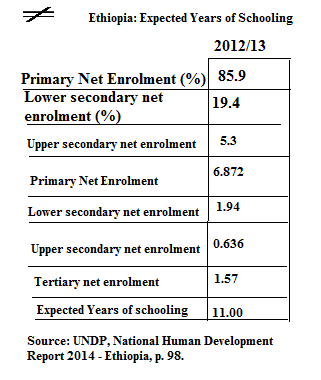
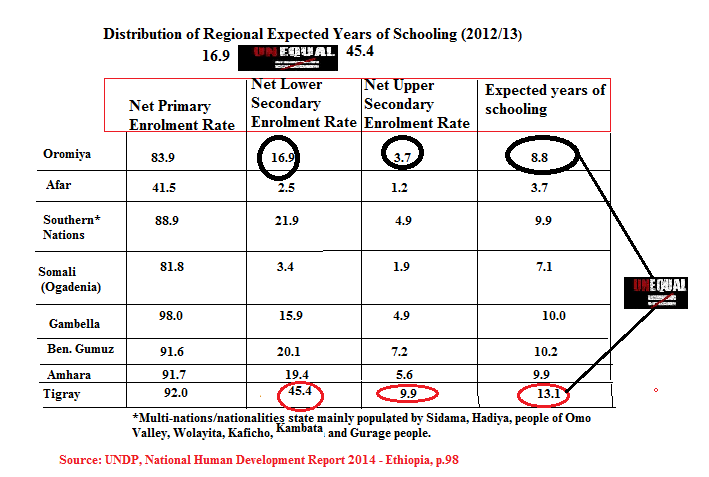
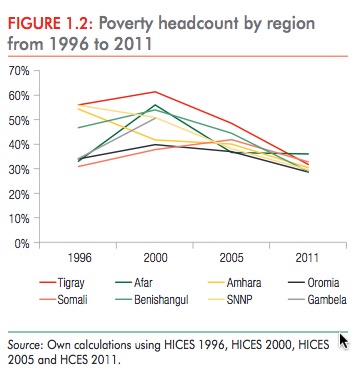
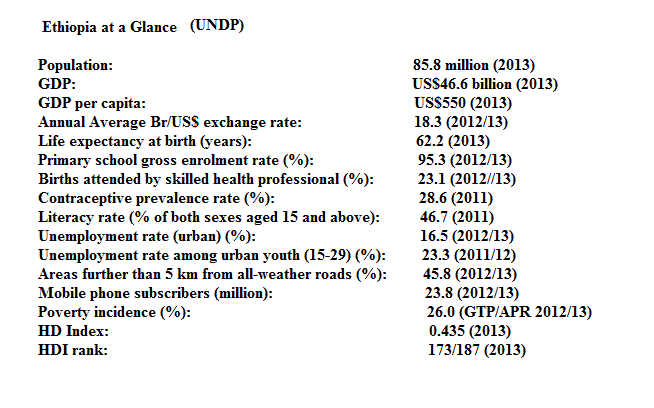

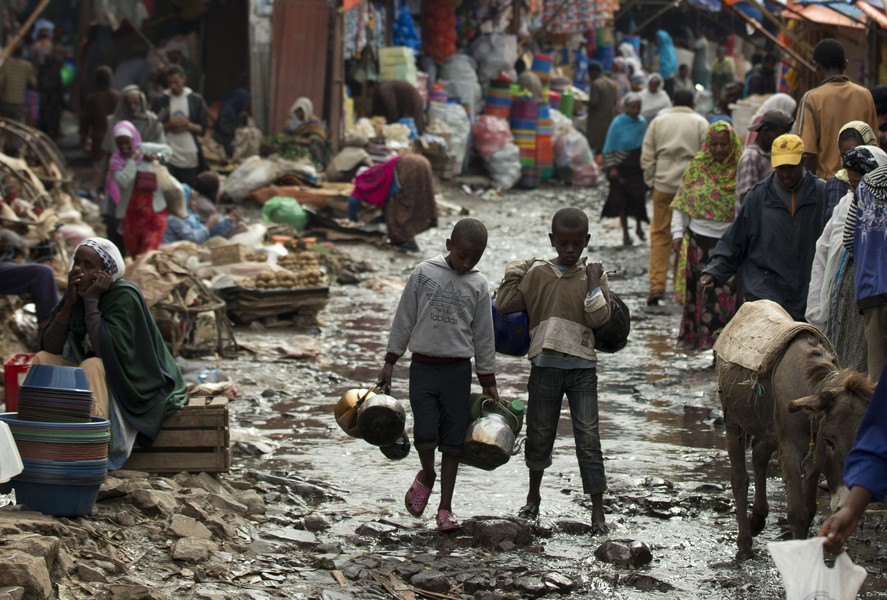



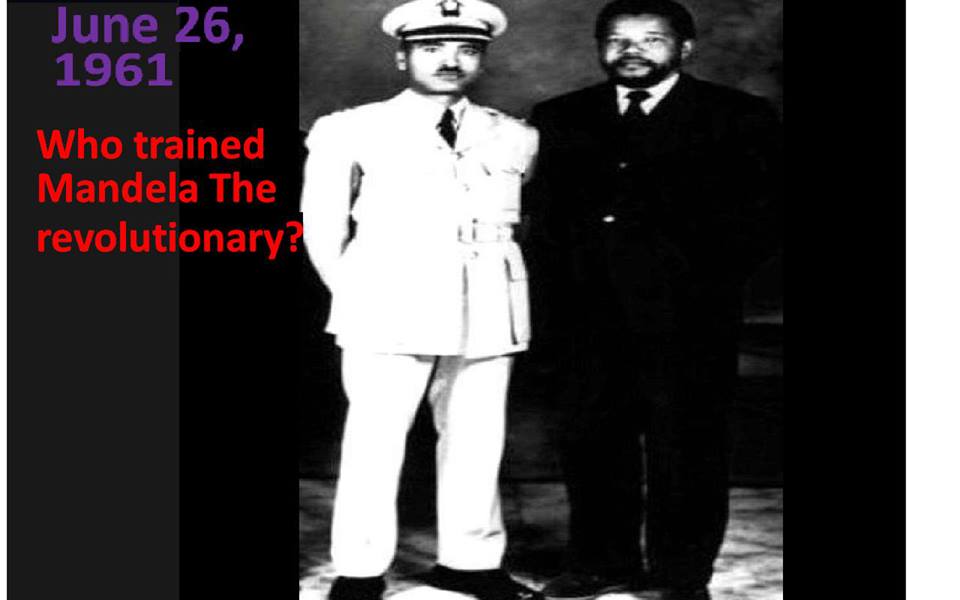
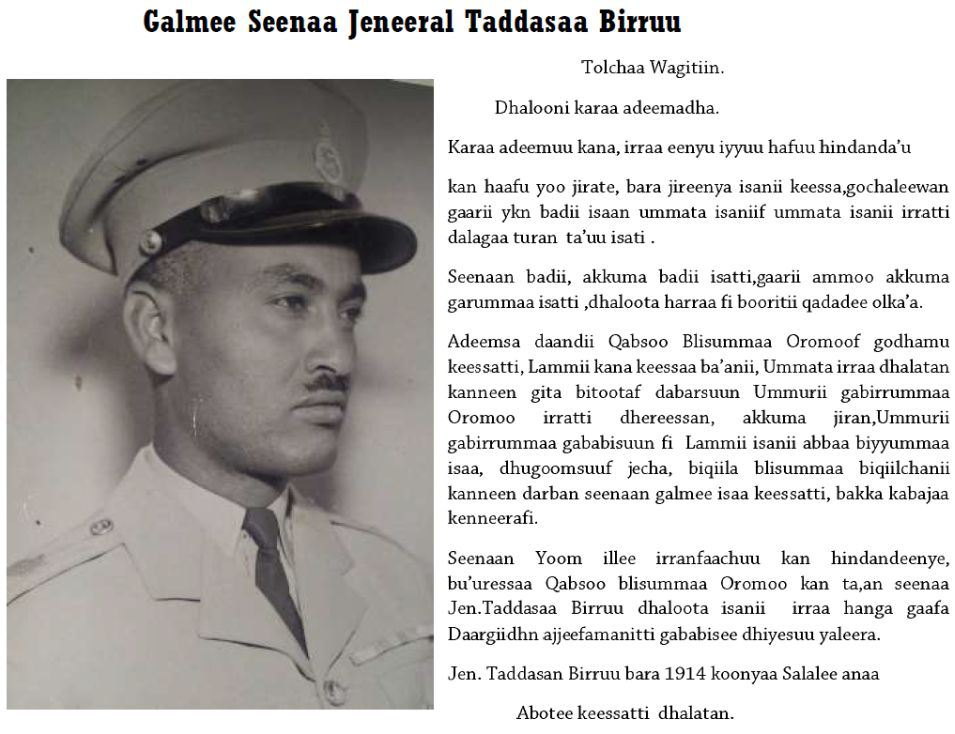
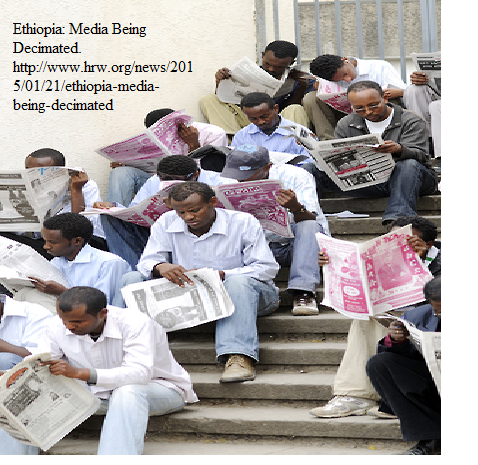
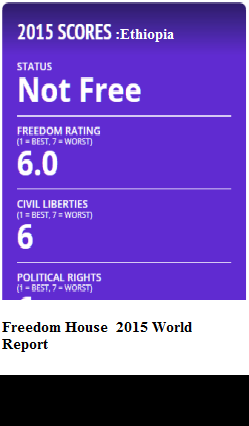
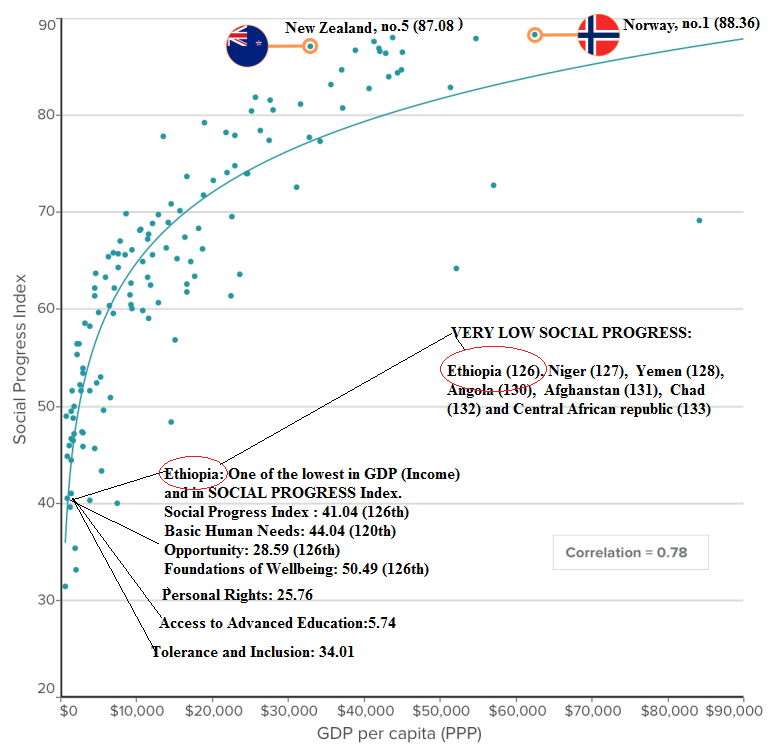
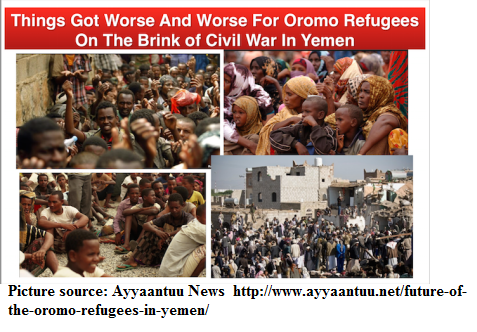
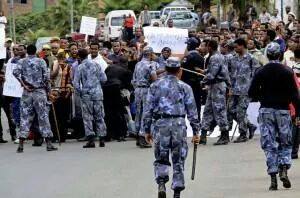
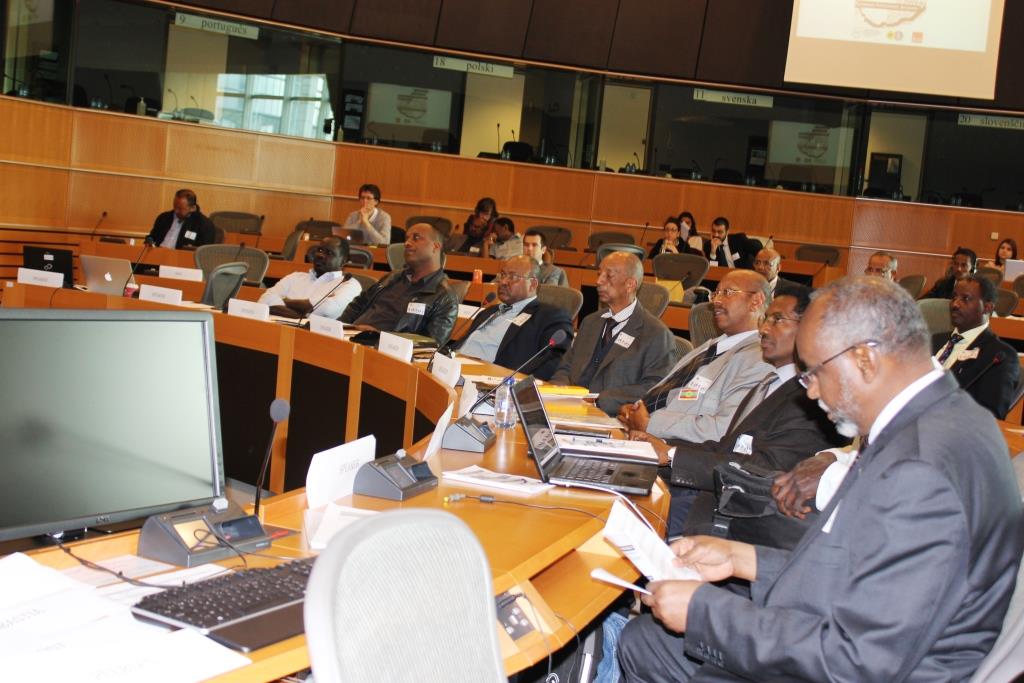
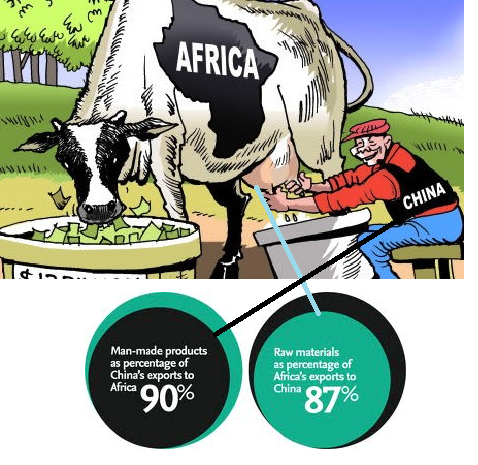


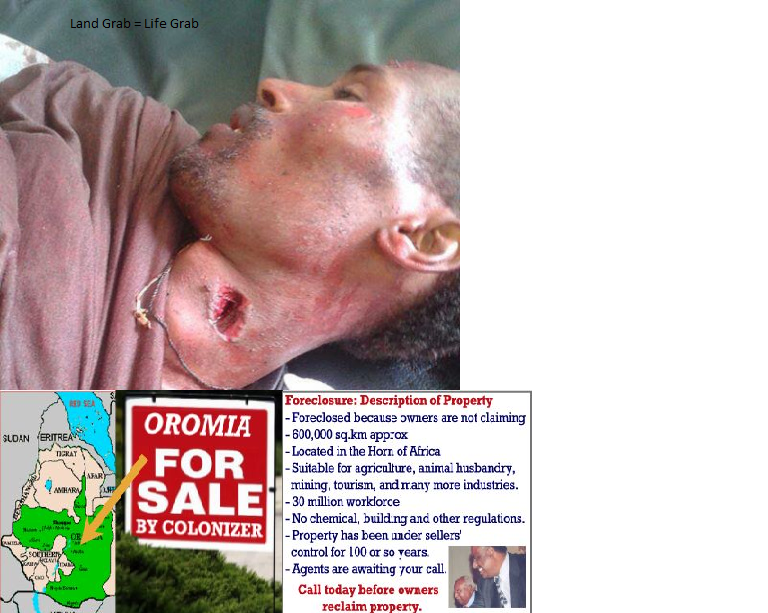
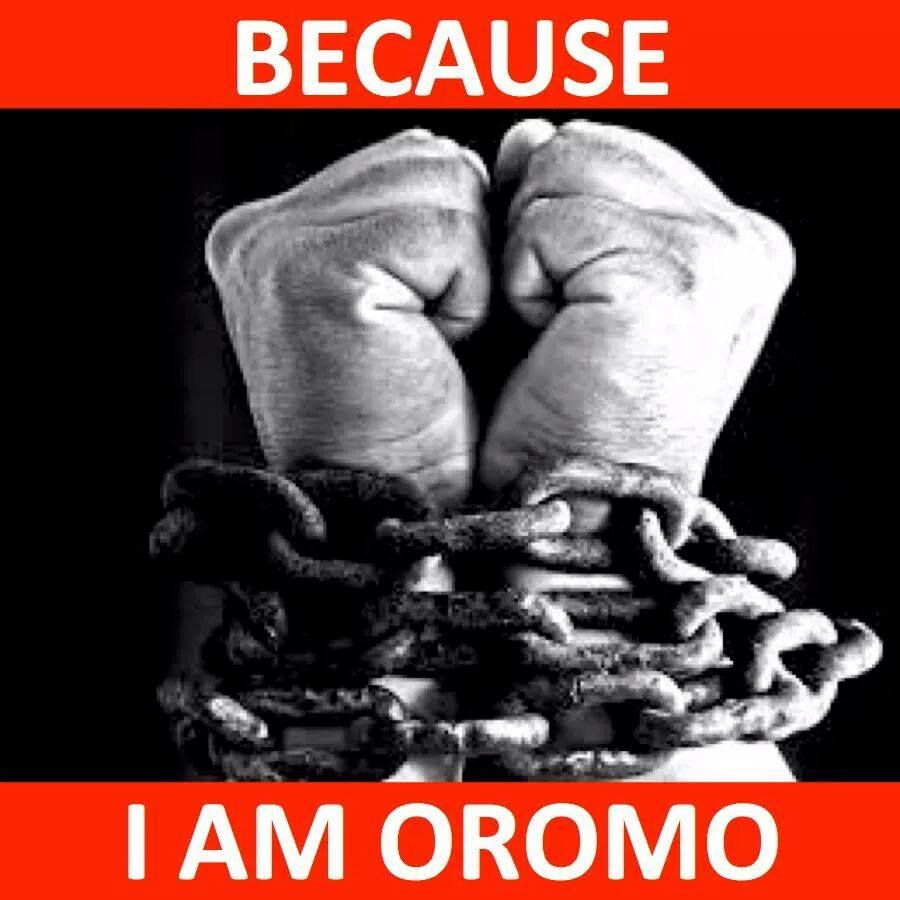
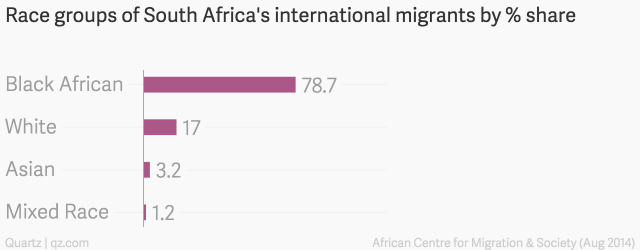


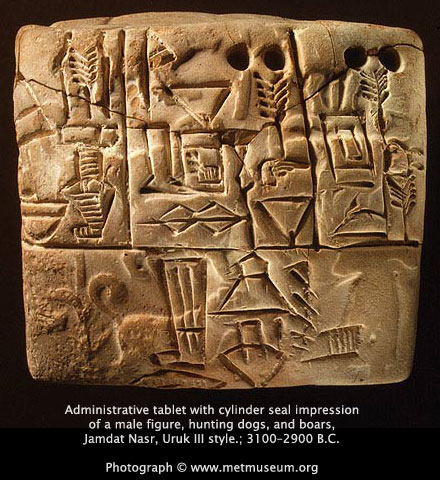
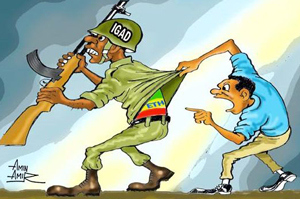

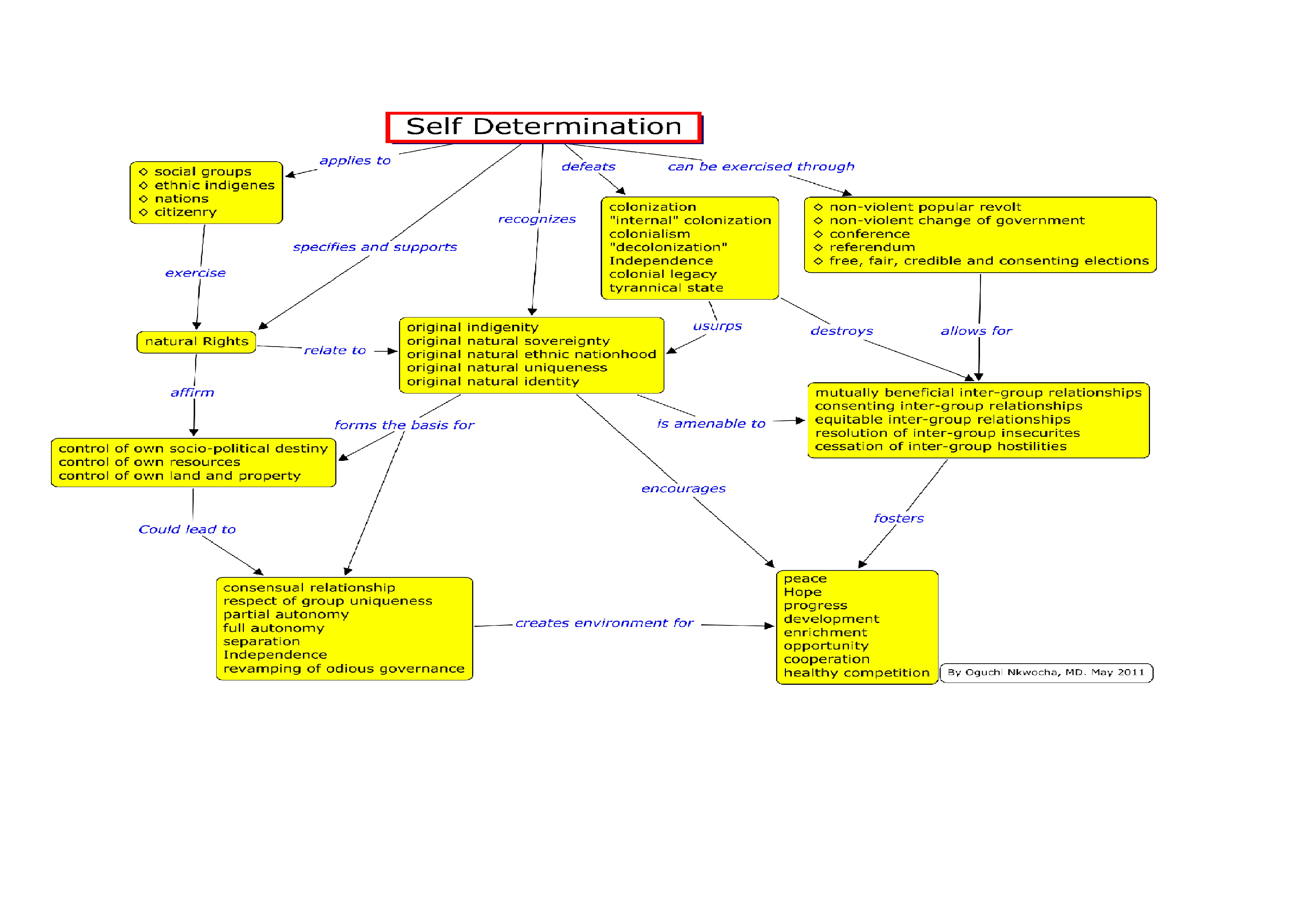
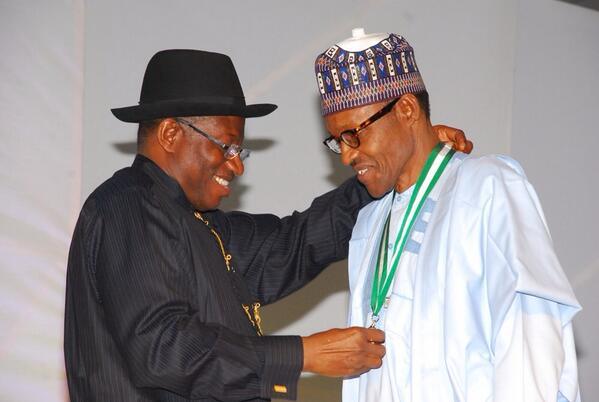




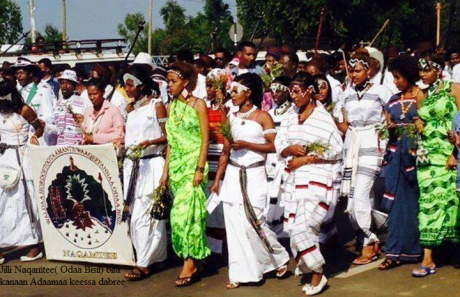
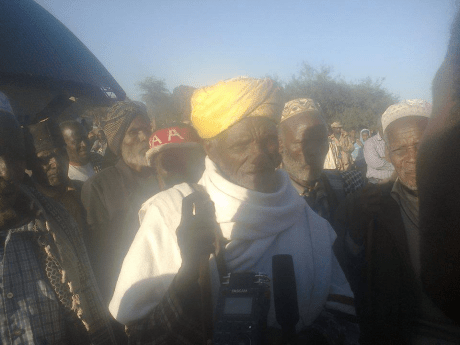



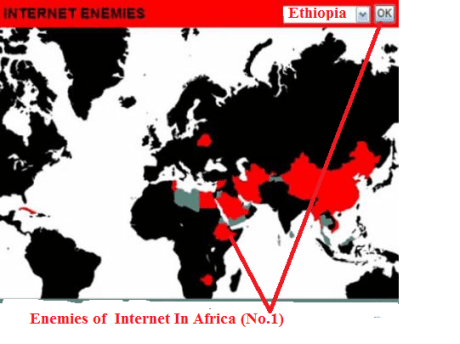


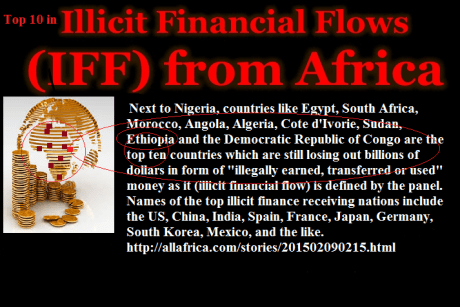


 Here is me picking up from where I left off with my Africa is NOT rising article which is a featured presentation from Mr. AlI Mfuruki from Tanzania. The presentation was done at a Tedx event late last year. This is in fact part 3 of a 3 series post dedicated to his presentation (Simply because his assessment of the “Africa rising” media propaganda was so relevant and accurate for anyone wanting to build the continent). In case you have not had the chance to go through the first 2 posts, here you go:




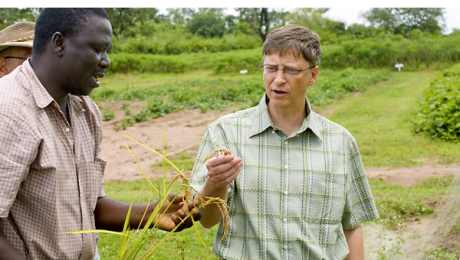


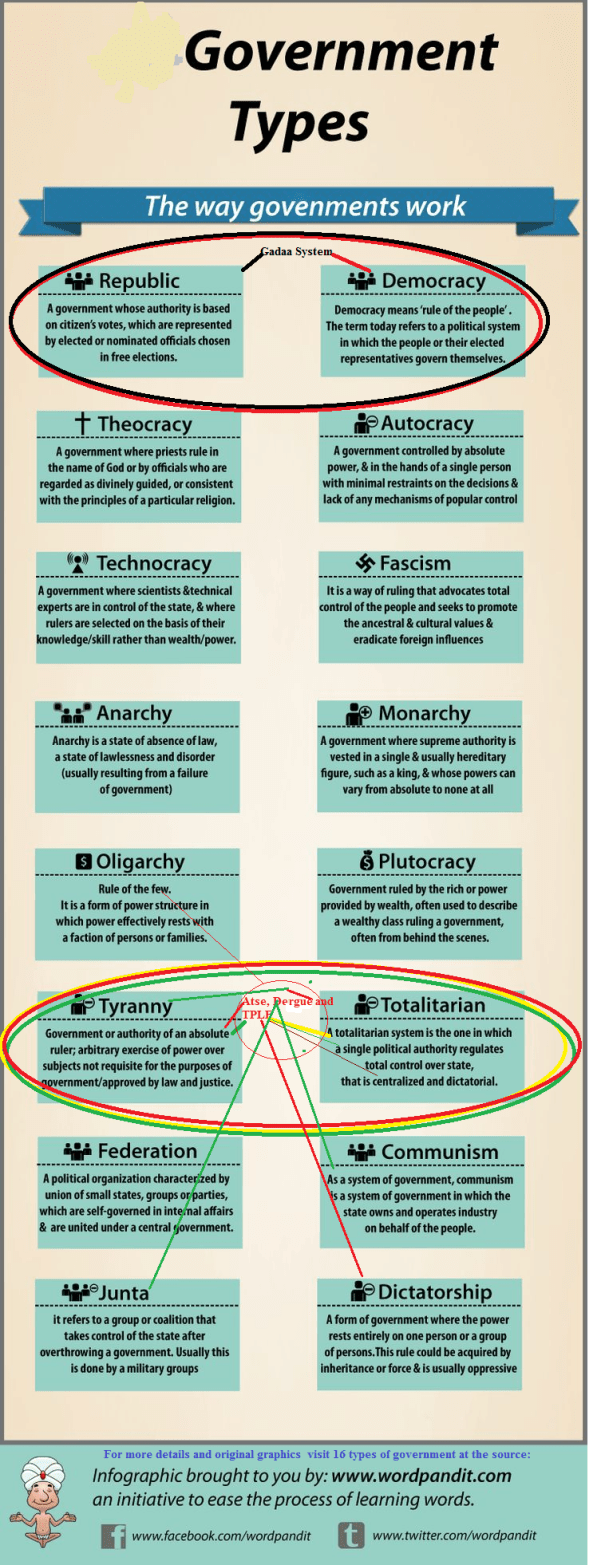


 Oromian Economist
Freedom House: U.S. Wrong to Endorse Ethiopia’s Elections. #Africa #Oromia April 23, 2015
Posted by OromianEconomist in Africa, Ethiopia's Colonizing Structure and the Development Problems of People of Oromia, Ethnic Cleansing, Free development vs authoritarian model, Groups at risk of arbitrary arrest in Oromia: Amnesty International Report, Sham elections, The Tyranny of TPLF Ethiopia.Tags: Africa, African Studies, Ethiopia's sham elections, Freedom House in response to comments by Under Secretary for Political Affairs, Genocide against the Oromo, The Tyranny of Ethiopia, Under Secretary Sherman’s comments, Wendy Sherman
2 comments
https://freedomhouse.org/article/us-wrong-endorse-ethiopias-elections#
U.S. Wrong to Endorse Ethiopia’s Elections
(Frredom House, Washington, April 16, 2015)
In response to today’s comments by Under Secretary for Political Affairs, Wendy Sherman, in which she referred to Ethiopia as a democracy and the country’s upcoming elections free, fair, and credible, Freedom House issued the following statement:
“Under Secretary Sherman’s comments today were woefully ignorant and counter-productive,” said Daniel Calingaert, executive vice president of Freedom House. “Ethiopia remains one of the most undemocratic countries in Africa. By calling these elections credible, Sherman has tacitly endorsed the Ethiopian government’s complete disregard for the democratic rights of its citizens. This will only bolster the government’s confidence to continue its crackdown on dissenting voices.”
Background:
Since coming into power in the early 1990s, the Ethiopian People’s Revolutionary Democratic Front (EPRDF) has dominated politics through a combination of political cooptation and harassment. The country experienced a degree of democratization through the early 2000’s, culminating in the most competitive elections in the county’s history in 2005. Since these elections, the EPRDF has restricted political pluralism and used draconian legislation to crack down on the political opposition, civil society organizations, and independent media. In the 2010, EPRDF and its allies won 546 out of 547 parliamentary seats.
Ethiopia is rated Not Free in Freedom in the World 2015, Not Free in Freedom of the Press 2014, and Not Free in Freedom on the Net 2014.
Freedom House is an independent watchdog organization that supports democratic change, monitors the status of freedom around the world, and advocates for democracy and human rights.
Join us on Facebook and Twitter (freedomhousedc) and Instagram. Stay up to date with Freedom House’s latest news and events by signing up for our RSS feeds, newsletter and our blog.
https://freedomhouse.org/article/us-wrong-endorse-ethiopias-elections#
Ethiopians dispute US official’s assessment of their ‘democracy’
U.S Department of State Endorsing of Upcoming Elections: Denial and Disrespect
The Human Rights League of the Horn of Africa (HRLHA)
The Human Rights League of the Horn of Africa (HRLHA) strongly opposes to the position that the U.S State Department has taken in regards to the upcoming Ethiopian election and the overall democratization process in the country in the past twenty-four years; and describes the comments by the Under Secretary of State as a sign of disrespect for ordinary citizens of Ethiopia and disregard for the human miseries that hundreds of thousands of Ethiopian have gone through under the EPRDF/TPLF-led government.
The HRLHA has no doubt at all that the U.S Government in general and U.S Department of State in particular, with the biggest and highly staffed of all Western embassies in Ethiopia, are very well aware of the political realities that have been prevailing in the country over the past two decades. An excellent proof is the Country Reports on Human Rights Practices that is issued annually by the US Department of State itself. Suppressions and denials of fundamental human rights in Ethiopia under the EPRDF/TPLF Government were being reported on by various human rights and humanitarian as well as government and diplomatic agencies; and, based on the facts revealed in such reports, the Ethiopian Government has repeatedly been ranked as the worst both at the regional and global levels.
In a country that has witnessed the highest number of political incarceration in its history, where unarmed students and other civilians were gunned down in hundreds simply because they attempted to exercise some of their fundamental rights, in “one of the ten most censored countries” where the existence of independent media has become impossible and, as a result, press freedom has been curtailed completely, where all sorts of socio-economic rights have been tied to political sympathy and supports, it would be an insult and disrespect to its ordinary citizens, and a disregard for the precious lives of innocent people that have been taken away by brutal hands to say that such a country is a democracy, and that the upcoming elections would be free and fair while intimidations and harassments of opposition candidates, as well as potential voters, were taking place out in the field even while the Under Secretary of State was making the comments. While encouraging the most repressive government and governing party towards becoming more dictatorial, the Under-Secretary of State’s comments discourage and undermine the sacrifices that the Ethiopian peoples have paid and are still paying to realize their century-old dream of building free and democratic country.
The Human Rights League of the Horn of Africa (HRLHA) requests that the Under Secretary of State retract the wrong comments and apologize to the Ethiopian peoples. It also urges the U.S State Department to recognize and acknowledge the realities in Ethiopia and use the close ties that exists between the two governments to put pressure on the ruling EPRDF/TPLF party so that it allows the implementation of a genuine democracy.
http://www.ayyaantuu.net/u-s-department-of-state-endorsing-of-upcoming-elections-denial-and-disrespect/