jump to navigation

Defend the Oppressed Peoples in Ethiopia June 15, 2017

Posted by OromianEconomist in Uncategorized.
Tags: , , , , , , , , , , , , , , , , , ,
2 comments

Why this is important

CLICK HERE PLEASE SIGN ON TO STOP THE ATROCITIES AND GENOCIDE COMMITTED BY THE ETHIOPIAN STATE

LAND GRABBING IN ETHIOPIA & ABYSSINIA MUST STOP

WATCH !

The International Criminal Court (ICCt) announced on 15 September 2016 it will now hold corporate executives and governments legally responsible for environmental crimes. The court’s new focus on land grabbing and environmental destruction could help put a dent in corporate and governmentalimpunity. Politicians and corporate bosses who are chasing communities off their land and trashing the environment will find themselves standing trial in the Hague alongside war criminals and dictators. However, far‐sighted covers by USAmerican corporate investors through corporate fronts from e.g. India restrict the ICCt, since neither the USA nor India ‐ as other rogue states like Sudan or Israel ‐ are parties to the Rome Statute of the ICCt.

Click to access 20160915_OTP‐Policy_Case‐Selection_Eng.pdf

Latest Updates:

01. Dec. 2016: 
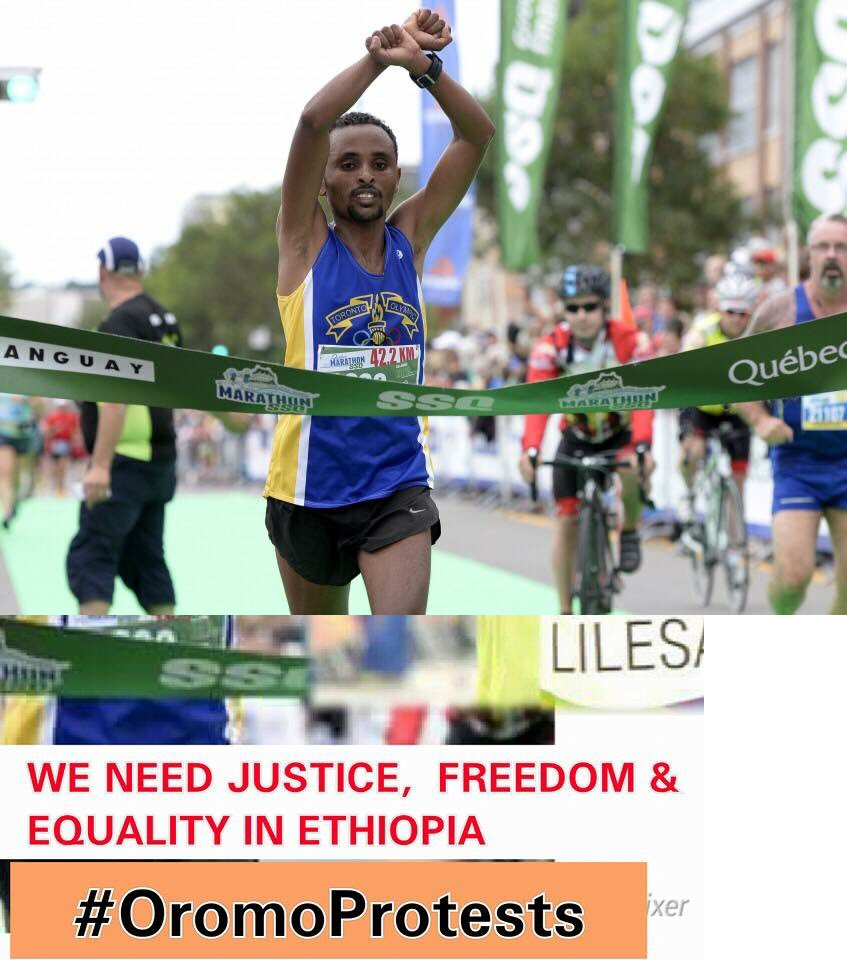
Ethiopian forces from the command post of Ethiopia’s sweeping State Of Emergency command post detained leading Oromo ethnic group and government opposition figure Prof. Dr. Merera Gudina, chairman of the Oromo Federalist Congress (OFC), upon his arrival at Addis Ababa Bole International Airport after returning from Brussels, where he testified at the EU parliament on the current situation in Ethiopia alongside with Prof. Berhanu Nega of Patriotic Ginbot 7 (G7), an armed freedom fighter group, and Rio Olympics marathon silver medallist ‐ athlete Feyisa Lellisa. Also four relatives of Prof. Merera were detained.

23. Nov. 2016:
Oromo asylum seeker and UNHCR registered refugee Yaazoo Kabbabaa ‐ the prominent leader of ‘Qeerro‘ (The Oromo youth group who is leading the protests in Ethiopia) ‐ was attacked in Cairo during the evening while he was returning home from visiting friends, by people described as Ethiopian state agents following him. During the incident Mr. Kabbabaa was injected in the neck with a toxic substance. Luckily he was rescued and brought to a hospital, where he regained consciousness in the meantime. It is, however, not yet clear if he will remain paralyzed. His medical bills are being covered by a campaign: https://www.gofundme.com/yaazoo‐kabbabaas‐medical‐fund . Please chip in! Ethiopian dissidents who fled the country live in constant fear from agents sent by the Addis regime after them.

* 14. Nov. 2016:
Oromo Leadership Convention was held in Atlanta, Georgia, USA, November 11 ‐ 13
Oromo United and Steadfast to Continue Revolution Against TPLF Regime

Click to access Press‐Release‐English.pdf

* 20. Oct. 2016:
As we predicted: The brutal regime felt empowered by Merkel’s visit and the promised millions of Euro for “police training” and “to try to quell the unrest”. In just the one week after her ill‐conceived visit almost 3,000 Oromo women and men were rounded up in different locations and thrown in jail. Reportedly Ethiopian agents were sent to neighbouring countries to hunt down dissidents. Ethiopian authorities admitted to Reuters on Thursday they had detained 1,645 people.

* 15. Oct. 2016: The Dictatorial Regime proclaims STATE OF EMERGENCY http://hornaffairs.com/en/2016/10/19/ethiopia‐directive‐execution‐state‐emergencyfull‐text/

* 11. Oct. 2016: German Chancellor Angela Merkel travelled to the Ethiopian capital of Addis Ababawhere she was welcomed by the PM of the corrupt regime with military honours. Amid protests in Germany against the insensitive visit, Merkel offered millions of Euro in bilateral agreements, to train the police and mediation to try and quell the rising unrest in Ethiopia. Just two days prior to Merkel’s visit, the Ethiopian regime declared a six‐month state of emergency in order to undertake even more brutal measures to suppress popular protests.

* 02. Oct. 2016: 
At least 52 people directly killed by police action against protesters during Oromia religious festival of Irreechaa, the Oromo Thanksgiving, in Bishooftuu. Others died in the ensuing stampede. 175 dead bodies have been loaded and taken to Addis Ababa according to a police source. That’s in addition to over 120 at Bishoftu hospital. ECOTERRA Intl., Human Rights Watch and the UN called for an independent investigation.

* 01. Oct. 2016: ECOTERRA Intl. demands the immediate and unconditional release of illegally arrested Ethiopian scientist and blogger Seyoum Teshome. Police arrested the prominent writer and commentator Teshome today, who writes for http://www.Ethiothinkthank.com and lectures at Ambo University.

* 16. June 2016: Ethiopian security forces killed at least 500 people in the recent wave of anti‐government demonstrations, US‐based Human Rights Watch (HRW) says in its most comprehensive report into the Oromo protests.
https://tinyurl.com/j7nanmr
Even government officials admitted that over 170 Oromo protesters were killed.

Meanwhile the atrocities against the Mursi and other aboriginal nations of Ethiopia continue unabated.

Foreign investments through the present Ethiopian governance are unethical and taxpayers all over the world must ensure that their governments, who are state‐sponsors or donors to the Ethiopian governance, stop immediately any support until these crimes against humanity end.

Land Grabbing is the purchase and lease of vast tracts of land from poor, developing countries by wealthier nations and international private investors. It has led to unprecedented misery especially in Africa, South‐America and India.African Food Security is in jeopardy and lands half the size of Europe have already been grabbed.

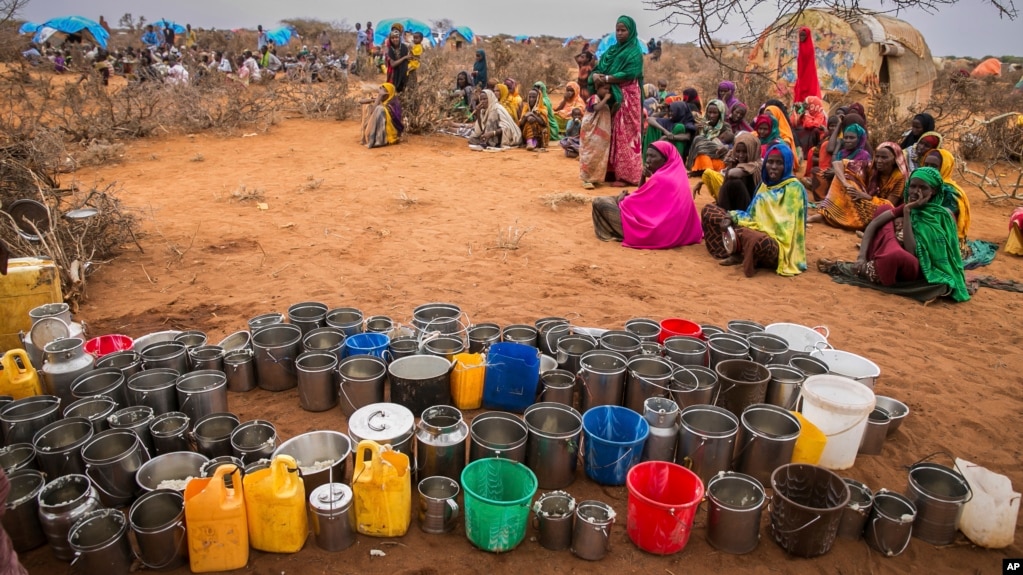
The Ethiopian government has forcibly displaced hundreds of thousands of indigenous people from their ancestral lands. It has rendered formerly sustainably living small‐scale farmers and pastoral communities dependent on food aid, which is paid for by the taxpayers and well‐wishers from donor countries, while the profits of these industrial agriculture‐, oil‐ and gas‐ventures go into the pockets of private investors and corrupt officials.

THIS MUST STOP

The recently enacted Kampala Convention ‐ an Africa‐wide treaty and the world’s first that protects people displaced within their own countries by violence, natural disasters or large‐scale development projects ‐ is violated blatantly and with impunity by Ethiopia.

PLEASE SIGN ON
URGE THE AFRICAN UNION AND THE ETHIOPIAN GOVERNANCE TO STOP THE ETHIOPIAN ATROCITIES AND GENOCIDE

The African Union Convention for the Protection and Assistance of Internally Displaced Persons in Africa must be enforced!

Read more:
Indian investors are forcing Ethiopians off their land
By John Vidal (TheGuardian)

Thousands of Ethiopians are being relocated or have already fled as their land is sold off to foreign investors without their consent

Ethiopia’s leasing of 600,000 hectares (1.5m acres) of prime farmland to Indian companies has led to intimidation, repression, detentions, rapes, beatings, environmental destruction, and the imprisonment of journalists and political objectors, according to a new report.

Research by the US‐based Oakland Institute suggests many thousands of Ethiopians are in the process of being relocated or have fled to neighbouring countries after their traditional land has been handed to foreign investors without their consent. The situation is likely to deteriorate further as companies start to gear up their operations and the government pursues plans to lease as much as 15% of the land in some regions, says Oakland.

In a flurry of new reports about global “land grabbing” this week, Oxfam said on Thursday that investors were deliberately targeting the weakest‐governed countries to buy cheap land. The 23 least‐developed countries of the world account for more than half the thousands of recorded deals completed between 2000 and 2011, it said. Deals involving approximately 200m ha of land are believed to have been negotiated, mostly to the advantage of speculators and often to the detriment of communities, in the past few years.

In what is thought to be one of the first “south‐south” demonstrations of concern over land deals, this week Ethiopian activists came to Delhi to urge Indian investors and corporations to stop buying land and to actively prevent human rights abuses being committed by the Ethiopian authorities.

“The Indian government and corporations cannot hide behind the Ethiopian government, which is clearly in violation of human rights laws,” said Anuradha Mittal, director of the Oakland Institute. “Foreign investors must conduct impact assessments to avoid the adverse impacts of their activities.”

Ethiopian activists based in UK and Canada warned Indian investors that their money was at risk. “Foreign investors cannot close their eyes. When people are pushed to the edge they will fight back. No group knows this better than the Indians”, said Obang Metho, head of grassroots social justice movement Solidarity Movement for a New Ethiopia (SMNE), which claims 130,000 supporters in Ethiopia and elsewhere.

Speaking in Delhi, Metho said: “Working with African dictators who are stealing from the people is risky, unsustainable and wrong. We welcome Indian investment but not [this] daylight robbery. These companies should be accountable under Indian law.”

Nyikaw Ochalla, director of the London‐based Anywaa Survival Organisation, said: “People are being turned into day labourers doing backbreaking work while living in extreme poverty. The government’s plans … depend on tactics of displacement, increased food insecurity, destitution and destruction of the environment.”

Ochall, who said he was in daily direct contact with communities affected by “land grabbing” across Ethiopia, said the relocations would only add to hunger and conflict.

“Communities that have survived by fishing and moving to higher ground to grow maize are being relocated and say they are now becoming dependent on government for food aid. They are saying they will never leave and that the government will have to kill them. I call on the Indian authorities and the public to stop this pillage.”

Karuturi Global, the Indian farm conglomerate and one of the world’s largest rose growers, which has leased 350,000 ha in Gambella province to grow palm oil, cereals maize and biofuel crops for under $1.10 per hectare per year, declined to comment. A spokesman said: “This has nothing to do with us.”

Ethiopia has leased an area the size of France to foreign investors since 2008. Of this, 600,000 ha has been handed on 99‐year leases to 10 large Indian companies. Many smaller companies are believed to have also taken long leases. Indian companies are said to be investing about $5bn in Ethiopian farmland, but little is expected to benefit Ethiopia directly. According to Oakland, the companies have been handed generous tax breaks and incentives as well as some of the cheapest land in the world.

The Ethiopian government defended its policies. “Ethiopia needs to develop to fight poverty, increase food supplies and improve livelihoods and is doing so in a sustainable way,” said a spokeswoman for the government in London. She pointed out that 45% of Ethiopia’s 1.14m sq km of land is arable and only 15% is in use.

The phenomenon of Indian companies “grabbing” land in Africa is an extension of what has happened in the last 30 years in India itself, said Ashish Kothari, author of a new book on the growing reach of Indian businesses.

“In recent years the country has seen a massive transfer of land and natural resources from the rural poor to the wealthy. Around 60 million people have been displaced in India by large scale industrial developments. Around 40% of the people affected have been indigenous peoples,” he said.

These include dams, mines, tourist developments, ports, steel plants and massive irrigation schemes.

According to Oakland, the Ethiopian “land rush” is part of a global phenomenon that has seen around 200m ha of land leased or sold to foreign investors in the past three years.

The sales in Africa, Latin America and Asia have been led by farm conglomerates, but are backed by western hedge and pension funds, speculators and universities. Many Middle East governments have backed them with loans and guarantees.

Barbara Stocking, the chief executive of Oxfam, which is holding a day of action against land grabs on Thursday, called on the World Bank to temporarily freeze all land investments in large scale agriculture to ensure its policies did not encourage land grabs.

“Poor governance allows investors to secure land quickly and cheaply for profit. Investors seem to be cherry‐picking countries with weak rules and regulations because they are easy targets. This can spell disaster for communities if these deals result in their homes and livelihoods being grabbed.”
While DFID, GIZ etc. failed and fail to act on Human Rights violations ‐ see also: http://www.anywaasurvival.org

‐ and please note that many believe the Indian companies act simply as straw‐men for USAmerican land‐grabbing interests Incl. AGRA and Monsanto), who are competing now with similar Chinese interests in Africa.

‐‐‐‐‐‐‐‐‐‐

In the harsh Ogaden region of Eastern Ethiopia, impoverished ethnic people are being murdered and tortured, raped, persecuted and displaced by government paramilitary forces. Illegal actions carried out with the knowledge and tacit support of donor countries, seemingly content to turn a blind eye to war crimes and crimes against humanity being committed by their brutal, repressive ally in the region; and a deaf ear to the pain and suffering of the Ogaden Somali people.

read: http://www.counterpunch.org/2013/02/08/ethiopian‐annihilation‐of‐the‐ogaden‐people/

Meanwhile the Ethiopian GIBE III dam project is devastating the lives of remote southern Ethiopian ethnicities. Pastoralists living in the Omo valley are being forcibly relocated, imprisoned and killed due to the ongoing building of a massive dam that shall turn the region into a major centre for commercial farming ‐ mostly by foreign ventures. War is in the making.

see also: http://www.genocidewatch.org/ethiopia.html

Since mid‐November 2015, large‐scale protests have again swept through Oromia, Ethiopia’s largest region, and the response from security forces has again been brutal. They have killed countless students and farmers, and arrested opposition politicians and countless others.

Since then Ethiopia has been shaken by a global wave of anti‐government protests over the controversial “Addis Ababa Integrated Development Master Plan” https://en.wikipedia.org/wiki/Oromia_Special_Zone_Surrounding_Finfinne , which is just another form of grabbing land from the Oromo people. The regime had insisted on escalating its violations of human rights through the implementation of this very dangerous policy of land grabbing in Oromia. While the Oromo people were peacefully protesting against the unfair land use policy at least over 180 innocent Oromo civilians were killed in the three months from mid November 2015 to mid January 2016.
After two months of global protests, the Ethiopian government finally announced the cancellation of this development plan https://www.oromiamedia.org/tag/finfinne‐master‐plan/ for Addis Ababa (Finfinne) http://www.ohchr.org/Documents/Issues/IPeoples/WG/IGFM1‐oromo‐4b.doc and its expansion into neighbouring Oromia state. But the problem hasn’t gone away.

In violation of the EU resolution and despite international pressure, reports are confirming now that the regime’s loyal armed forces continue to attack the civilian population in many parts of Oromia. Though these violations of civil rights during the process of land grabbing have reached a new climax, the capacity of human rights organizations to access data of extra‐judicial killings and disappearances in the region is at an unprecedented low.

There is a war of ethnic cleansing officially declared against the Oromo people and implemented across Oromia. Though it has been difficult even to keep up with reports of the death toll some confirmed records are now showing that more than 400 civilians have been killed as of 19. February 2016. 

This rein of state terror must end!

‐ see also the previous HRW report https://www.hrw.org/news/2016/01/22/ethiopias‐invisible‐crisis

On January 12, 2016 the Ethiopian government announced it was cancelling the master plan, but that hasn’t stopped the protests and the resultant crackdown. Although the protest was initially about the potential for displacement, it has become about so much more. Despite being the biggest ethnic group in Ethiopia, the Oromos have often felt marginalized by successive governments and feel unable to voice their concerns over injust government policy. Oromos who express dissent are often arrested and tortured or otherwise mistreated in detention, accused of belonging to the Oromo Liberation Front (OLF), a group that has long been mostly inactive and that the government designated a terrorist organization. The government is doing all it can to make sure that the news of these protests doesn’t circulate within the country or reach the rest of the world. Of recent the Ethiopian Government has even resorted to use their Cyber‐crime Act to treat bloggers as terrorists. Ethiopia’s allies, including governments in the region and the African Union, have largely stood by as Ethiopia has steadily strangled the ability of ordinary Ethiopians to access information and peacefully express their views, whether in print or in public demonstrations. But they should be worried about what is happening in Oromia right now, as Ethiopia — Africa’s second most‐populous country and a key security ally of the US — grapples with this escalating crisis.

‐‐‐‐‐‐‐‐‐‐‐‐‐‐‐‐‐‐‐

Sons and Daughters
By Maya Angelou

If my luck is bad 
And his aim is straight 
I will leave my life 
On the killing field 
You can see me die 
On the nightly news 
As you settle down 
To your evening meal.

But you’ll turn your back 
As you often do 
Yet I am your sons 
And your daughters too. 

In the city streets 
Where the neon lights 
Turn my skin from black 
To electric blue 
My hope soaks red 
On the pavement’s 
gray 
And my dreams die hard 
For my life is through. 

But you’ll turn your back 
As you often do 
Yet I am your sons 
And your daughters too. 

In the little towns 
Of this mighty land 
Where you close your eyes 
To my crying need 
I strike out wild 
And my brother falls 
Turn on your news 
You can watch us bleed.

‐‐‐‐‐‐‐‐‐‐‐‐‐‐‐‐‐‐‐‐‐‐

ECOTERRA Intl.
SURVIVAL & FREEDOM for PEOPLE & NATURE
join the phalanx directly: africanode[at]ecoterra.net
fPcN ‐ interCultural (friends of Peoples close to Nature) e‐mail: collective[at]fpcn‐global.org


QZ: We’d have a better chance of preserving Africa’s dying languages if we learned their history June 14, 2017

Posted by OromianEconomist in Uncategorized.
Tags: , , , , , ,
add a comment

We’d have a better chance of preserving Africa’s dying languages if we learned their history

By Abdi Latif Dahir, Quartz  Africa


‘Across the world, African languages are slowly taking the center stage and are being recognized for their importance. For instance, you can now learn Zulu on an app, read a growing list of articles in African languages on Wikipedia, and receive thousands of dollars in awards for your fictional Swahili piece or poem. And many universities from Ethiopia to South Africa are making African languages like Afan Oromo and isiXhosa a compulsory subject. But Africa still has some of the world’s highest concentration of at-risk languages. And that can be reversed by first understanding and studying the past history, present evolution, and future use of these languages.’  Click here to read the full article QZ.

New African: A conspiracy in the wild June 14, 2017

Posted by OromianEconomist in Uncategorized.
Tags: , , , , , , ,
1 comment so far

A conspiracy in the wild


For over 10 years, the Northern Rangelands Trust, a Kenya-based conservation initiative, has been acquiring land in the arid north of the country. Today, it controls almost 10% of Kenya’s land mass. Environmental journalist John Mbaria investigates.

In its dying days, the Obama Administration pumped massive amounts of money into supporting a powerful NGO accused of using below-the-radar tactics to control a huge amount of Kenyan land, thereby using conservation as a subtle tool for dispossessing tens of thousands of pastoralists, who have unwittingly participated in their own dispossession.

Much of the land, whose control is enforced by local well-armed militias, has recently been granted UN-protected status. And with financial backing from powerful Western donors, the Northern Rangelands Trust’s (NRT) activities are largely insulated from public scrutiny.

Unless the new Trump administration discontinues the US government’s support to wildlife conservation in Africa, the NRT is set to continue having a say over vast, mineral-rich lands in the north and coastal areas of Kenya.

Most of these lands have been identified, in official documents, as areas of immense potential capable of becoming the very basis of the country’s future economic progress. These areas are also crucial to the maintenance of the extensive livestock husbandry practised by millions of pastoralists in northern Kenya.

Today, the NRT effectively controls 44,000 km2 (or 10.8m acres) of land – that’s roughly eight per cent of Kenya’s 581,309 km2 landmass. Interestingly, the organisation appears to have acquired a decisive say over these lands by co-opting the local leadership. Consequently, NRT’s control of the lands in Kenya’s Upper Rift, North and Coastal areas is facilitated by local political and community leaders, some of whom are co-opted as members of the organisation’s Board.

This has been done through community wildlife conservation, a model in which landowners assert the right to manage and profit from wildlife on their lands.

Conservancies have proliferated across pastoralist, wildlife-rich areas in northern and southern Kenya. They are also an extremely attractive funding prospect for Western donors in the conservation sector.

All the cash is handed over, not directly to the landowners, who have constituted themselves into 33 community conservancies, but to the NRT, which acts like a middleman and which has taken up not just conservation, but other roles (including security arrangements) that are ordinarily performed by national governments.

Among the biggest financial supporters of NRT, the former Obama administration consistently extended tens of millions of dollars to the organisation through the United States Agency for International Development (USAid). As if to underscore how important the NRT’s work was to the Obama Administration, the organisation’s Chief Programs Officer, Tom Lalampaa, and its founder, Ian Craig, were among the people given the privilege of making short presentations about their work when the former US president visited Kenya last July.

America’s latest support to the organisation was announced in a press statement released by the US Embassy in Nairobi in late November 2016. In the communiqué, the US Ambassador to Kenya, Robert F. Godec, said
the US’s new 5-year, $20m support was meant “to help expand” the NRT’s operations in Coastal
Kenya.

He hailed NRT’s partnership with the communities, terming it “a shared vision of protecting ecosystems and promoting peace for a better future”. He added that the cash would be used to support the work of community rangers, to conserve wildlife and fisheries, improve livelihoods, and advance women’s enterprises.

For its part, NRT, through Craig (who signed off as the organisation’s Director of Conservation), said the cash would be used to fund the opening up of new conservancies and create a conservation trust fund.


The former Obama administration consistently extended tens of millions of dollars to the NRT through USAid.


Though the US government believes that the NRT shares “the visions of protecting ecosystems” with the communities in Upper Rift, the North and on the Coast, recent developments in Kenya have proved otherwise. Indeed, the US support comes at a time when some well-armed herders, from some of the same communities the NRT has helped to form community conservancies, have invaded sprawling private ranches in Laikipia and elsewhere, leading to human fatalities, the killing of wild animals and forcing the deployment of specialised security units from the Kenya police.

The work of NRT and the West’s support to conservation in some of Kenya’s arid-and-semi-arid lands has altered the human/ wildlife dynamics in some areas. This has also invited curious concern from conservation experts, who believe that the US and other countries in the West have been supporting a controversial organisation that has been usurping the role of Kenya’s human and wildlife security organs, as well as destroying the age-old ability of tens of thousands of herders to live off their land.

As New African found out in extensive visits and interviews with different people in the affected areas, the NRT-inspired community-conservation model is simple and can be quite attractive for anyone ignorant of its implications, especially for the lives and livelihoods of local people.

After co-opting the local leadership, the NRT appears to have crafted MOUs with the communities owning the vast tracts of land. In most cases, the communities’ land-ownership claims are based on the most rudimentary rights – an ancestral claim to the land.

Community members are also reputed to retain significant respect for, and allow themselves to be guided by, local leadership which, in most cases, uses its standing in communities to advance, and persuade “lesser” members of communities to conform with the wishes of the NRT.

This is not so difficult as the organisation has come up with quite an attractive package for the  communities, including securing for them investors interested in developing lodges and other tourism facilities, once they agree to set aside some of their lands for exclusive use by wildlife and the investors.

NRT also promises bursaries for school children, employment for community members, a ready market for the livestock and the setting up of a grazing plan to prevent livestock deaths through drought in the drylands of Kenya.

“NRT’s approach is quite attractive to communities who have been neglected by successive governments in Kenya since the country attained independence from the British,” says Daniel Letoiye, a Samburu County resident who previously worked as a programme officer with NRT.

However, hidden in the fine print are consequences that are considered grave for the pastoralist groups in Northern Kenya. “Even when droughts occur, many of the pastoralist groups [who have signed up to the agreements] cannot access part of their lands that are now set aside for wildlife conservation and which constitute community conservancies,” says Michael Lalampaa, an official with the Higher Education Loans Board who hails from Samburu County.

Samburu comunity elders discuss their perspectives with the author in Samburu County

Lalampaa complains that the NRT compels communities to set aside the best portions of their lands for the exclusive use of wildlife and the tourist investors. Lalampaa says that the organisation usually identifies leaders and elites within relevant communities who aid in persuading the pastoralists to set aside big parcels of land for conservation purposes. “Once the agreements are put in place, it becomes impossible for the herders to access some areas with pastures in the conservancies … they are confronted by armed scouts who evict them.” He adds that it is “sad that at times, livestock ends up dying simply because the owners cannot graze the animals in what used to be their own lands.”

This has proven problematic especially since vast sections of the relevant rangelands have been depleted year-in, year-out by overgrazing and are inhabited by people who have become increasingly vulnerable to the devastating effects of climate change.

As a result, hundreds of thousands of livestock end up competing over the remaining patches of grasslands and dwindling water sources such as the Ewaso Nyiro River.

This happens, as copious reports show, in an area largely ignored by the Kenya government, inhabited by morans, have taken up cattle- rustling as a traditional pastime.

Claims have also been made that NRT’s activities have far-reaching implications on the entire country and therefore need to be handled with more than casual attention by Kenya’s allies across the world, the government as well as the people of Kenya.

“The sheer geographical, financial, cultural, and political scale of this intervention calls for a lot more thought than has been given to it thus far,” said Dr Mordecai Ogada, a conservation consultant based in Laikipia County.

Dr Ogada believes that the Kenya Wildlife Service (KWS) has “abdicated” from its responsibility to inspire the formation and sound management of conservation activities outside Kenya’s protected areas. But top officials at KWS – which has lately been experiencing financial difficulties – deny this, saying that they see no problem with the operations of the NRT.

However, KWS appears critical of recent moves by foreign governments to fund the NRT. “Conservation NGOs like NRT have recently benefited from funding from development partners, following the paradigm shift where development partners and other governments prefer to fund communities through NGOs rather than governments directly,” said Paul Gathitu, KWS spokesperson and head of corporate communications.

Attempts by New African to elicit comments from NRT met with no success. Nevertheless, on its website, the organisation – which calls itself a “movement” – announces that it has been raising funds to aid the formation and running of conservancies.

NRT also says that it supports the training of relevant communities and helps to “broker agreements between conservancies and investors”. It claims that it provides donors with “a degree of oversight” by participating directly in how community conservancies and incomes accrued are managed.  This was evident as New African toured eight conservancies in Isiolo, Marsabit, Samburu and Laikipia, where NRT has appointed its own managers who are in charge of the day-to-day running of the conservancies.

Besides the managers, there are the members of the Board and grazing committees who are, on paper, supposed to be making decisions that suit the needs of the true owners of the land.

However, there is evidence that main decisions are made by NRT and that the organisation has maintained little or no engagement with the owners of the land and local public institutions.

Besides the US, NRT’s activities are funded by a host of other private companies and bodies in the West. Some of the principal donors to NRT include the Danish Development Agency (DANIDA); the Nature Conservancy (a US-based international NGO); and Agence Française de Développement (AFD) of France. NRT is also bankrolled by other donors who fund its long-term programmes – including Fauna & Flora International, Zoos South Australia, Deutsche Gesellschaft für Internationale Zusammenarbeit (GIZ of Germany), US Fish and Wildlife Service, San Diego Zoo, International Elephant Foundation, Saint Louis Zoo, Running Wild and others. These latter donors have boosted what NRT terms a pooled conservation fund that has a lifespan of more than five years.

The Tullow Oil Company, that has been involved in oil prospecting in Turkana County, has funded NRT to the tune of $11.5m in a five-year project meant to aid the latter in establishing and operating new conservancies in Turkana and West Pokot counties.

Seventy per cent of the money was meant to go directly to community conservancies’ bank accounts for meeting operational costs (i.e. staff salaries, the purchase and running of vehicles, the acquisition of computers and other equipment), while 30% was to enable the formation and management of the conservancies.


The NRT has maintained little or no engagement with the owners of the land and local public institutions


But this did not go down well with the Turkana County government, which declared the relevant conservancies illegal, with the County Executive for Energy, Environment & Natural Resources ordering NRT to stop its operations there.

Later, the County Governor, Josphat Nanok, termed NRT’s move to establish conservancies in Turkana as “ill-advised with a hidden agenda”.

Dr Ogada believes that the millions of dollars in grants given by the US and other countries in the West have made NRT a “launch pad” for what he terms “a new conservation paradigm” in East Africa.

“NRT has championed this model of conservation very actively for the last decade [resulting] in a situation where challenges or mistakes aren’t spoken about by donors or implementers because of the sheer scale of professional and financial investment in an institution [which like all others] does have inherent weaknesses,” he added.

The NRT’s security function is considered one of the most controversial aspects of the community conservancy movement in Kenya. Usually, maintenance of security within countries is a preserve of governments. But on its website, the organisation says that it inspires community conservancies to “tackle insecurity holistically”.

This includes conducting anti-poaching operations, wildlife monitoring and providing what it terms “invaluable [support] to the Kenya Police in helping to tackle cattle rustling and road banditry”.

The organisation says that by 2014, it had facilitated the training of 645 rangers who operate in the conservancies while Dickson ole Kaelo, the chief executive of the Kenya Wildlife Conservancies Association, reported that over 2,300 community rangers have been trained so far.

Normally, the organisation selects community members and takes them for training by the KWS’s personnel at the wildlife agency’s Manyani Training School, close to Kenya’s biggest national park, Tsavo.

Here, the rangers are taught “bush craft skills, as well as how to effectively gather and share intelligence, monitor wildlife and manage combat situations”. The involvement of KWS in the training of the community rangers was confirmed, but downplayed, by Michael Kipkeu, KWS’s Senior Assistant Director in charge of the Community Wildlife Service. “The KWS law enforcement academy provides tailor-made community scouts’ training.”

After being trained by KWS, the rangers are given more advanced training than what is posted on the NRT’s website. For instance, according to the Save the Rhino NGO, the rangers are given Kenya Police Reserve accreditation and “sufficient weapons handling training”.

Such advanced training involves tactical movement with weapons, ambush and anti-ambush drills, handling and effective usage of night-vision and thermal-imaging equipment, and ground-to-air communications and coordination.

There are also suspicions that the bigger scheme is to ensure that Kenya unwittingly “forfeits” some of the lands under the NRT by getting them declared by UNESCO as World Heritage Sites.

The scheme to have UNESCO declare some of the biggest private game ranches and wildlife conservancies in Laikipia, Samburu, and islands in the Coast as World Heritage Sites is now being pursued in earnest.

“Legally, the move may not amount to much but knowing how lobbying is done, if the government were to [seek to] change ownership, listings would be put up to demonstrate how special these ranches are and why they should remain with the present landowners,” said Njenga Kahiro, a former Programme Officer with Laikipia Wildlife Forum. The aim, Kahiro avers, is “to create a super-big protected area … all of it [covered by] the World Heritage Convention.”   NA


Indexing Ethiopia June 14, 2017

Posted by OromianEconomist in Uncategorized.
Tags: , , , , , , ,
1 comment so far


Indexing Ethiopia

Last week, Vision of Humanity issued its 2017 Global Peace Index (GPI).  Its report on Ethiopia is certainly the most distressing though unequivocal, straightforward and clear-cut. The state of peace worsened in Ethiopia more than any other country in sub-Saharan Africa, and arguably the rest of the world.

For someone who is completing his second decade of unrelenting and unwavering struggle for human rights and peaceful change in Ethiopia, the GPI report is heartbreaking and mournful.

Reading between the lines is my profession. When I read the words “the state of peace has worsened in Ethiopia more than any other country”, I know what exactly what that means. I know what the opposite of the absence of civil peace is. When the state of civil peace in Ethiopia is in such dire and grave peril, the unthinkable becomes more real by the day.

I want to think only about civil peace in Ethiopia. Nothing else. I dream of peace and brotherhood and sisterhood among the diverse people of Ethiopia. Peace with equality and justice for all. Peace and understanding without force. Peace offerings among all people of Ethiopia. Peaceful resistance.

I dream of a peaceful Ethiopia where everyone greets each other with “Salam” and “Shalom. I believe all humanity “must turn from evil and do good [and] seek peace and pursue it”, for the “Blessed are the peacemakers.”

I don’t like George Orwell’s 1984 declaration, “War is peace.”

I much prefer Jimi Hendrix’s formulation from the days of my youth, “When the power of love overcomes the love of power, the world will know peace.”

I believe when the power of love overcomes the love of power, Ethiopia will know peace.

In this commentary, I review the latest findings of the various indices on Ethiopia. Peace is a many-splendoured thing.

What do the “Indices” have to say about Ethiopia?

Is there hope for peaceful change in Ethiopia?

Global Peace Index 2017

Last week, Vision of Humanity issued its 2017 Global Peace Index  (GPI). Ethiopia was #1 on the list of “Top Five Fallers”, followed by Burundi, Saudi Arabia, Mali and Lesotho.

GPI provides “a comprehensive analysis of the state of peace in the world”.

GPI reports the “world slightly improved in peace last year” but the “score for sub-Saharan Africa was influenced by deteriorations in various countries—notably Ethiopia, which worsened more than any other country, reflecting a state of emergency imposed in October 2016 following violent demonstrations.” (Emphasis added.)

Simply stated, the state of peace is in its most precarious and risky state in Ethiopia.

I have been warning for some time that the black apartheid system set up by the Thugtatorship of the Tigrean People’s Party (T-TPLF) has set Ethiopia on a trajectory to civil war. (That is the 600-pound gorilla in the room few dare to talk about openly.) That is why the GPI report is so worrisome and painful to me. It gnaws at my own deep concerns and anxieties about the current state of peace in Ethiopia.

In my December 2016 commentary, I bluntly asked, “Is Ethiopia going in the direction of a civil war?”

In my April 9 commentary, I warned that unlike the masters of apartheid in South Africa who made peace in the nick of time, time to make peace in Ethiopia is running out fast for the T-TPLF.

In my commentary in The Hill last month, I urged passage of the pending human rights bill in the U.S. Congress because “Ethiopia is at a tipping point” now. It is clear what the tipping point is. It is that point of no return.

Failed (Fragile) States Index 2017

Ethiopia is ranked 15th failed state out of  178 on the Failed States Index (FSI) and is rated as “High Alert”. It is #1 on the list of “Most Worsened Country in 2017” in terms of “susceptibility to instability”  and “fractionalization and group grievance”.

The FSI is “an assessment of 178 countries based on twelve social, economic, and political indicators that quantify pressures experienced by countries, and thus their susceptibility to instability.”

The FSI devotes a full chapter focusing on Ethiopia (at p. 13) and concludes, “Ethiopia’s overall Fragile States Index (FSI) score has been incrementally worsening over the past decade, moving from 95.3 in 2007, to a score of 101.1 in this year’s 2017 index, with Ethiopia — along with Mexico — being the most worsened country over the past year.”

The FSI points out that, “Tigray elites are perceived to still hold significant political power within the essentially one -party state. Military leadership has also been dominated by Tigrayans, which makes perceptions of Tigray influence within the state apparatus all the more unpalatable to populations that feel increasingly excluded.”

Corruption Perception Index 2016 and Global Financial Integrity

Ethiopia is ranked 108 out of 176 countries on the Corruption Perception Index (CPI).

The CPI ranks countries “by their perceived levels of corruption, as determined by expert assessments and opinion surveys.”  The CPI generally defines corruption as “the misuse of public power for private benefit.”

According to CPI, Ethiopia “is among the top ten African countries by cumulative illicit financial flows related to trade mispricing. This amount may be much higher if funds from corruption and other criminal activities are considered.”

According to Global Financial Integrity (GFI)  “illicit financial flows out of Ethiopia nearly doubled to US$3.26 Billion in 2009 over the previous year, with corruption, kickbacks and bribery accounting for the vast majority of that increase.” GFI reported, “Ethiopia  lost US$11.7 billion to illicit financial outflows between 2000 and 2009.”

U.N. Human Development Index 2017

Ethiopia ranks 174 out of 188 countries on the U.N. Human Development Index (HDI).

The adult literacy rate in Ethiopia is 49.1 percent.  Government expenditure on education (as % of GDP) is 4.5. Expected years of schooling (years) is 8.4. The population with at least some secondary education (% aged 25 and older) is 15.8. The pupil-teacher ratio, primary school (number of pupils per teacher) is 64. The primary school dropout rate (% of primary school cohort) is a mind-boggling 63.4.

The HDI is a “measure of average achievement in key dimensions of human development: a long and healthy life, being knowledgeable and have a decent standard of living.”

Economist Democracy Index 2017

The Economist Intelligence Unit’s Democracy Index  (DI) scores 167 countries on a scale of 0 to 10 based on 60 indicators. The indicators are grouped into five different categories measuring pluralism, civil liberties, and political culture.

Ethiopia scores 3.73 on the D.I. and is classified as “authoritarian”.

According to DI, the authoritarian “nations are often absolute dictatorships” with “some conventional institutions of democracy”. Ethiopia scores at the bottom because  “infringements and abuses of civil liberties are commonplace, elections- if they take place- are not fair and free, the media is often state-owned or controlled by groups associated with the ruling regime, the judiciary is not independent, and there is omnipresent censorship and suppression of governmental criticism.”

The T-TPLF is an absolute dictatorship which clings to power by an emergency decree.

Economic Freedom of the World Index (EFI) 2016

Ethiopia is classified as “Least Free” on the EFI with a score of 5.60 out of 10. Ethiopia ranked 145 out of 159 countries.

Economic freedom is defined as “(1) personal choice, (2) voluntary exchange coordinated by markets, (3) freedom to enter and compete in markets, and (4) protection of persons and their property from aggression by others.”

To earn high ratings on the EFI, among other things,  “a country must provide secure protection of privately owned property, a legal system that treats all equally, even-handed enforcement of contracts, and a stable monetary environment.”

Ethiopia was classified as Least Free on the DI because Ethiopians have little economic freedom when they acquire property. They are often subjected to the use of force, fraud, or theft in property acquisitions and there is little protection from physical invasions by others.

Countries that enjoy high levels of economic freedom manifest “higher average income per person, higher income of the poorest 10%, higher life expectancy, higher literacy, lower infant mortality, higher access to water sources and less corruption.” Because Ethiopia has low levels of economic freedom, it scores very low on measures of literacy, life expectancy and infant mortality. 

Bertelsmann Stiftung Transformation Index 2016 (BSI)

Ethiopia is in the rump of the Bertelsmann Stiftung Transformation Index (BTI).

On “Political Transformation”,  Ethiopia scored 3.23 (113 out of 129 countries). On “Economic Transformation” Ethiopia scored 3.86 (109 out of 129 countries) followed by 3.48 on the “management index” (108 out of 129).

The BTI analyzes and evaluates the quality of democracy, viability of market economy and political management in 129 developing and transition countries. It “measures successes and setbacks on the path toward a democracy based on the rule of law and a socially responsible market economy.”

The BTI’s detailed and extraordinarily revealing report calls Ethiopia a “façade democracy” and makes certain keen observations:

Ethiopia ‘remains one of Africa’s poorest countries, with a third of the population still living below the poverty line, and its regime is one of the continent’s most authoritarian in character. Between five and seven million people require emergency (donor) food aid throughout the year.’

Ethiopia ‘continues to be categorized as an authoritarian state, a category it shares with neighboring states including Eritrea and Sudan.’

Official results show that the governing-party coalition under the leadership of the Tigray People’s Liberation Front (TPLF) secured a 99% majority in the 2010 polls.

The increased incidence of government land-grabbing activities – the lease of land previously used by smallholders and pastoralists to foreign investment and agrobusiness companies – has prompted heavy unrest in Gambela, in Oromo and other regions. In the western Gambela region, as many as 70,000 people have been forced to move as a result. Women’s rights are protected by legislation, but are routinely violated in practice.

The national parliament (in which the opposition parties held just a single seat during the period under review) is regarded as a rubber-stamp institution, without any influence on decision-making processes within the EPRDF, the sole ruling party for 24 years.

The government maintains a network of paid informants, and opposition politicians have accused the government of tapping their telephones. It is therefore unrealistic to expect that elected parliamentarians can freely and fairly participate in law-making.

Ethiopia does not have an independent judiciary with the ability and autonomy to interpret, monitor and review existing laws, legislation and policies. Access to fair and timely justice for citizens, at least as conventionally defined by legal experts, cannot be said to exist. In general, there are no judges able to render decisions free from the influence of the main political-party leaders, despite these jurists’ professionalism and sincerity. The independence of the judiciary, formally guaranteed by the constitution, is significantly impaired by political authorities and the high levels of corruption. High-level judges are usually appointed or approved by the government.  The judiciary functions in ways that usually support the political stances and policies of the government. Pro-government bias is evident in political and media-freedom cases, as well as in business disputes.

Officeholders who break the law and engage in corruption are generally not adequately prosecuted, especially when they belong to the ruling party (EPRDF). In some cases, “disloyal” civil servants are subject to legal action. Corruption remains a significant problem in Ethiopia due to the lack of checks and balances in the governing system. EPRDF officials reportedly receive preferential access to credit, land leases and jobs.

Although the political system consists formally of an elected parliament based on (unfair) competition between several parties, Ethiopia must be regarded as a “facade democracy.” The legally elected institutions are in fact part of an authoritarian system that does not offer citizens a free choice between competing political parties. Since 2005, the government has harassed and imprisoned political opponents, journalists and members of the Muslim population.

Freedom in the World Index 2017 (FWI)

In the Freedom in the World Index,  Ethiopia received an aggregate score of 12/100 (0=least free; 100=most free).

On “Freedom”, Ethiopia was rated 6.5/7; and on “Civil “Liberties” 6/7 (1=most free; 7=least free)

Freedom in the World is an annual survey “that measures the degree of civil liberties and political rights in every nation and significant related and disputed territories around the world.”

Multidimensional Poverty Index 2016 (MPI)

Ethiopia ranks 174 out of 185 countries on the MPI.

MPI defines poverty not only by income but a variety of other  “factors that constitute poor people’s experience of deprivation – such as poor health, lack of education, inadequate living standard, lack of income (as one of several factors considered), disempowerment, poor quality of work and threat from violence.”

According to MPI, life expectancy in Ethiopia is 64.6 years. The expected years of schooling is reported at 8.4 years.

Ethiopia has a Geni coefficient of 33.2.

The Gini coefficient is a measure of inequality in society. (A Gini coefficient of zero expresses perfect equality, e.g. where everyone has the same income; and a Gini coefficient of 1 (or 100%) expresses maximal inequality among values).

On the gender development index, Ethiopia scores 0.842 and ranks  174/185.

The Ethiopian population living below the poverty line ($1.90 per day) was reported at 35.3% for 2005-2014.

The Ethiopian “population in severe multidimensional poverty” is a staggering 67%.

Freedom on the Net Index 2016 (FNI)

On the Freedom on the Net Index, Ethiopia’s overall score is 83/100 (0=most free; 100= least free).

Ethiopia is one of the least connected countries in the world with an internet penetration rate of only 12 percent, according to 2015 data from the International Telecommunications Union (ITU).

FNI reported, “A handful of signal stations service the entire country, resulting in network congestion and frequent disconnection.  In a typical small town, individuals often hike to the top of the nearest hill to find a mobile phone signal.”

On obstacles to internet access, Ethiopia received a score of 23/25; limits on content 28/35 and violations of users rights 32/40.

Freedom House which publishes the FNI “assesses each country’s degree of political freedoms and civil liberties, monitor censorship, intimidation and violence against journalists, and public access to information.”

FNI noted, “The legal environment for internet freedom became more restrictive under the Computer Crime Proclamation enacted in June 2016, which criminalizes defamation and incitement. The proclamation also strengthens the government’s surveillance capabilities by enabling real-time monitoring or interception of communications.”

FNI reported that “authorities frequently shutdown local and national internet and mobile phone networks and social media to prevent citizens from communicating about the protests.  The Ethiopian government’s monopolistic control over the country’s telecommunications infrastructure via EthioTelecom enables it to restrict information flows and access to internet and mobile phone services.”

Reporters Without Borders Press Freedom Index 2017 (RWBI)

Ethiopia ranked 150/180 with a score 50.34 on the RWBI.

The RWBI is based on a survey conducted by Reporters Without Borders covering issues of  “freedom, pluralism, media independence, environment and self-censorship, legislative framework, transparency, infrastructure,  penalties for press offences, existence of a state monopoly and other related factors.”

The RWBI reports that the regime in Ethiopia uses “terrorism charges to systematically silence the media.” Journalists are sentenced to long prison terms and the “anti-terrorism law” has been used to “hold journalists without trial for extended periods.” According to the RWBI, “there has been little improvement since the purges that led to the closure of six newspapers in 2014 and drove around 30 journalists into exile. Indeed, the state of emergency proclaimed in 2016 goes so far as to ban Ethiopians from looking at certain media outlets. Additionally, the Internet and social networks were often disconnected in 2016. Physical and verbal threats, arbitrary trials, and convictions are all used to silence the media.”

Freedom House Freedom of the Press 2017 (PHFP)

Ethiopia received a total score of  86/100 (0=Most Free, 100=Least Free) on the PHFP.

On the “legal environment” of the press, the score was 29/30. On “political environment”, the score was 38/40.

PHFP reported,

Ethiopia was the second-worst jailer of journalists in sub-Saharan Africa. Ethiopia’s media environment is one of the most restrictive in sub-Saharan Africa. The government of Prime Minister Hailemariam Desalegn continues to use the country’s harsh antiterrorism law and other legal measures to silence critical journalists and bloggers. As of December 2016, Ethiopia was detaining 16 journalists, making it the fifth-worst jailer of journalists in the world and the second-worst in sub-Saharan Africa, after Eritrea. In addition to the use of harsh laws, the government employs a variety of other strategies to maintain a stranglehold on the flow of information, including outright censorship of newspapers and the internet, arbitrary detention and intimidation of journalists and online writers, and heavy taxation on the publishing process.

What is the price of peace in Ethiopia?

Will Ethiopia go the way of peace thorugh atonement and reconciliation or take the path of civil war and bloodshed?

President John F. Kennedy warned that, “Those who make peaceful revolution impossible will make violent revolution inevitable.”

Nelson Mandela taught that the choice of violent revolution is exclusively in the hands of the oppressor and the oppressed merely imitate the oppressor in the choice of the means of struggle.  Mandela explained (forward clip to 13:39 min.) in 2000:

The methods of political action which are used by the oppressed people are determined by the oppressor himself. If the oppressor uses dialogue, persuasion, talking to the other, the oppressed people will do precisely the same. But if the oppressor decides to tighten oppression and to resort to violence, what he is saying to the oppressed is if you want to change your method, your condition, do exactly what I am doing. So in many cases those people who are being condemned for violence are doing nothing else. They are replying, responding to what the oppressor is doing…. Generally speaking, it doesn’t mean that a person because a person believes that freedom comes through the barrel of a gun, that person is wrong. He is merely responding to the situation in which he and his community finds himself or herself.  (Emphasis added.)

So, whether the future of Ethiopia will be decided by dialogue, persuasion and talking to each other or in a civil war is entirely in the hands of the T-TPLF.

My dream for Ethiopia is merely a reflection of Mandela’s dream for Africa: “I dream of an Africa which is in peace with itself. I dream of the realization of unity of Africa whereby its leaders, some of whom are highly competent and experienced, can unite in their efforts to improve and to solve the problems of Africa.”

Ethiopians united can never be defeated!!!

The time for peace, dialogue, persuasion and talking to each other in Ethiopia is NOW.

Or never!


GPI 2017: Peacefulness in Africa deteriorates to worst level in almost a decade. Ethiopia suffered the biggest deterioration (both within SSA and globally) June 14, 2017

Posted by OromianEconomist in Uncategorized.
Tags: , , , , , , , ,
1 comment so far

More than half of all countries in Sub-Saharan Africa (SSA) saw their level of peacefulness deteriorate in 2017. Out of the five countries with the largest deteriorations worldwide, four were in SSA.

SSA’s level of peacefulness, as measured by the 2017 Global Peace Index (GPI) regional score, deteriorated to its worst level since 2008. Although the region recorded notable annual improvements between 2011 and 2013, SSA’s GPI score has been consecutively worsening for the past four years, albeit by different magnitudes.

 Despite the fact that the trend for the safety & security and ongoing conflict GPI domains has been improving since 2008, the deterioration in the overall score since this reference year has been driven by a worsening trend in the militarisation domain. The reason behind this becomes clear when we disaggregate these domains by their respective GPI indicators; with access to small arms, military expenditure and UN peacekeeping funding being the ones that deteriorated the most since 2008. Political Terror is another indicator that deteriorated significantly during this time. Notable improvements were however recorded in the indicators for political instability and the deaths from conflict, although the indicator for intensity of conflict has been worsening since 2013.
Ethiopia suffered the biggest deterioration (both within SSA and globally). This was reflected in a sharp worsening of the indicators measuring internal peace levels, leading Ethiopia to suffer a 16 rank deterioration: falling from 118th to 134th.  Read more at: Vision of Humanity: Peacefulness in Africa deteriorates to worst level in almost a decade

Ethiopia Travel Warnings June 13, 2017

Posted by OromianEconomist in Uncategorized.
Tags: , , , , , , , , ,
1 comment so far

 172fe-ethiopia2bshuts2boff2bmobile2binternet2bnationwide2bwithout2bexplanationViber, twitter, Facebook and WhatsApp Are strictly forbidden in Fascist regime (TPLF) Ethiopia


Ethiopia Travel Warning

LAST UPDATED: JUNE 13, 2017

The Department of State warns U.S. citizens of the risks of travel to Ethiopia due to the potential for civil unrest and arbitrary detention since a state of emergency was imposed in October 2016. The Government of Ethiopia extended the state of emergency on March 15, 2017, and there continue to be reports of unrest, particularly in Gondar and Bahir Dar in Amhara State. This replaces the Travel Warning of December 6, 2016.

The Government of Ethiopia routinely restricts or shuts downs internet, cellular data, and phone services, impeding the U.S. Embassy’s ability to communicate with U.S. citizens in Ethiopia and limiting the Embassy’s ability to provide consular services. Additionally, the Government of Ethiopia does not inform the U.S. Embassy of detentions or arrests of U.S. citizens in Ethiopia.

Avoid demonstrations and large gatherings, continuously assess your surroundings, and evaluate your personal level of safety. Remember that the government may use force and live fire in response to demonstrations, and that even gatherings intended to be peaceful can be met with a violent response or turn violent without warning. U.S. citizens in Ethiopia should monitor their security situation and have contingency plans in place in case you need to depart suddenly.

Given the state of emergency and the unpredictable security situation, U.S. citizens in Ethiopia should have alternate communication plans in place, and let family and friends know that communication may be limited while you are in Ethiopia. The Department of State strongly advises U.S. citizens to registeryour mobile number with the U.S. Embassy to receive security information via text or SMS, in addition to enrolling in the Smart Traveler Enrollment Program (STEP).

For further information:

Embassies & Consulates

Assistance for U.S. Citizens

U.S. Embassy Addis Ababa

Entoto Street
PO Box 1014
Addis Ababa, Ethiopia


VOA: Lammiiwwan Ameerikaa Gara Itiyoophiyaatti Akka Hin Imalle Akeekkachiisi Kenname: Ministrii Dhimma Alaa


Lammiiwwan Ameerikaa Gara Itiyoophiyaatti Akka Hin Imalle Akeekkachiisi Kenname: Ministrii Dhimma Alaa

Lammiiwwan Ameerikaa Gara Itiyoophiyaatti Akka Hin Imalle Akeekkachiisi Kenname: Ministrii Dhimma Alaa

Naannoo Amaaraa Gonder fi Baahir Daar keessatti walitti bu’iinsi itti fufuu isaa tuquu dhaan ministriin dhimma alaa Ameerikaa kan kana dura baatii Sadaasaa keessa baase akeekkachiisa imalaa har’as haaressuun baasee jira.

Labsiin yeroo hatattamaa itiyoopiyaa keessatti baatii Okoloolessaa keessa erga labsameen booda jeeqamni ka’uu fi ajaja seeraatiin ala hidhamuun jiraachuu waan danda’uuf ministriin dhimma alaa lammiiwwan United States gara biyya sanaatti akka hin imalle akeekkachiisee jira.

Akeekkachiisi imalaa har’a ba’e mootummaan Itiyoopoiyaa labsicha Bitootessa 15 waan dheeressuu isaa tuquu dhaan Gondarii fi Baahir Daar keessa amma iyyuu walitti bu’iinsi jiraachuu gabaasaaleen ibsaniiru jedha.

Akeekkachiisi kun mootummaan Itiyoopiyaa yeroo dhaa gara yerootti Interneetii fi tajaajila moobaayila harkaa waan cufuuf embasiin US lammiiwwan Ameerikaa Itiyoopoiyaa keessa jiran irra ennaa rakkinni ga’u tajaajila gorsaa kennuuf ni rakkataa jedha.

Kanatti dabaluu dhaan mootummaan Itiyoopoiyaa lammiiwwan Ameerikaa ennaa to’annaa jala oolchu embasiitti kan hin beeksisne ta’uu illee tuqee jira.

Akeekkachiisi sun lammiiwwan bakka mormiiin uummataa itti geggeessamu ykn wal ga’iin geggeessamu irraa akka fagaatan, yeroo mara nageenya naannoo isaanii akka to’ataniif of eeggatan yaadachiisee jira.

Akeekkachiisi imalaa kun kana duras yeroo adda addaatti kan ba’e waan ta’eef bal’inaan marsaa interneetii keenyaa afaanoromoo.voanews.com irraa argachuu dandeessan.


Toxic leaders affect companies, and governments. How to deal with them June 13, 2017

Posted by OromianEconomist in Uncategorized.
Tags: , , , ,
add a comment
 Toxic leadership is characterised by a number of familiar traits: unwillingness to take feedback, lying or inconsistency, cliquishness, autocracy, manipulation, intimidation, bullying, and narcissism. The toxic leader can – if allowed to run rampant for long enough – destroy organisational structures over time and bring down an entire organisation. This applies to countries too.

There are a number of reasons for this. The most obvious is that a toxic leader can influence organisational culture through aversive action. This can include flouting organisational processes, rewarding loyalty over competence, normalising socially unacceptable behaviours like infighting, and by breaking down trust and eroding clear lines of authority.

A toxic leader’s other, more insidious, influence is through what they do to the relationships between people around them.

Psychologists, Paul Babiak and Robert Hare, describe how two factions typically develop in an organisation once the deviant leader’s ascent has begun. One faction consists of supporters, pawns and patrons. The other is made out of people who remain true to their principles, realising they have been used and abused, or that the organisation whose ultimate goals they still support is in danger.

If it sounds familiar it’s because South Africans are spectators to exactly this kind of factionalism. In recent months pro and anti President Jacob Zuma factions have been involved in increasingly energetic mudslinging matches.

For many, Zuma represents the quintessential toxic leader. Whether one is for or against the president, it remains that he’s at very least a controversial figure, and criticism of him has been known to lead to reprisals.

The good news is that toxic leadership can be overcome. When it’s understood and challenged, it can be dismantled or reformed.

The toxic environment

Where there is toxic leadership, the ethics of the working environment are compromised. Typical behaviours are abuse of privileges, theft, violence and verbal abuse. Any number of these can be recognised from news reports around South African politics.

Scandals over the awarding of government tenders, the mismanagement of taxpayer funds and the maintenance of corrupt relationships are now an all too familiar reality in South Africa.

But a toxic leader does not absolve employees who choose to engage in deviant conduct. Ministers and private sector supporters who choose personal gain or corrupt relationships remain responsible for their own choices. Of course, it’s much easier to make the wrong decision if it’s the dominant way of doing things in a particular environment.

Such behaviour may be rooted in financial gain, or lie within the culture of an organisation. The motivation to achieve results may spark greater numbers of people to either actively harm, or passively ignore, the welfare of others to achieve their desired end.

This is why the removal of a psychopathic leader doesn’t guarantee the eradication of toxicity as it’s likely to be entrenched at lower levels of organisational leadership by the leader’s sycophants.

Fighting from the bottom up

The responsibility to move against toxic leadership doesn’t lie with an individual, but concerns the organisation as a whole.

In the public sphere, this responsibility extends to society as a whole.

Crucial to overcoming the toxic leader’s negative impact is for other members of the organisation to remain firm and loyal to their principles, and to take a united stand.

If people are able to stand together against toxic leadership, the leader may leave of their own accord. Once this happens individuals in the rest of the organisation need to cleanse the organisation by distancing themselves from the leader’s negative actions.

Another way of tackling toxic leadership is to find out who they answer to, if it’s not immediately apparent, and appeal to this authority. Bullies are not always swayed by open dialogue or whistleblowing, but may answer to a higher law if this is done formally and armed with the facts. In the case of an errant public servant, this may be achieved through, for example, the judiciary and institutions like the Public Protector.

If all these fail, there are ways to manage the situation with the toxic leader in position. It’s necessary to understand the leader’s history to analyse how they got to this point. Share this with key decision makers. This is vital because a core aspect of the solution is to establish a coalition of like-minded individuals who understand the leader’s negative impact.

The coalition should not take a punitive, antagonistic approach, but rather a supportive one, using appropriate benchmarks and timelines that reflect the goals of all key stakeholders.

Much of what’s observed in the corporate world applies to leadership in the public sector. With proper interventions, a valuable level of accountability can be brought into the workplace and to service delivery.

The accountability of leaders can be increased through forums like townhall meetings to force them to think deeply about their behaviour and decisions. Where politics is concerned, visible performance management like this can do wonders for the well-being of citizens.

It’s also critical to establish mechanisms to protect people speaking up against leaders – the whistleblowers – as their actions should be free of fear, such as loss of income.

With protection mechanisms in place, employees and citizens alike should be able to freely raise issues and protect both themselves and their ideals, whether their concerns relate to a private company or a government department.


The article is original in   The Conversation


Linda Ronnie is Senior Lecturer in Organisational Behaviour and People Management, Graduate School of Business, University of Cape Town.

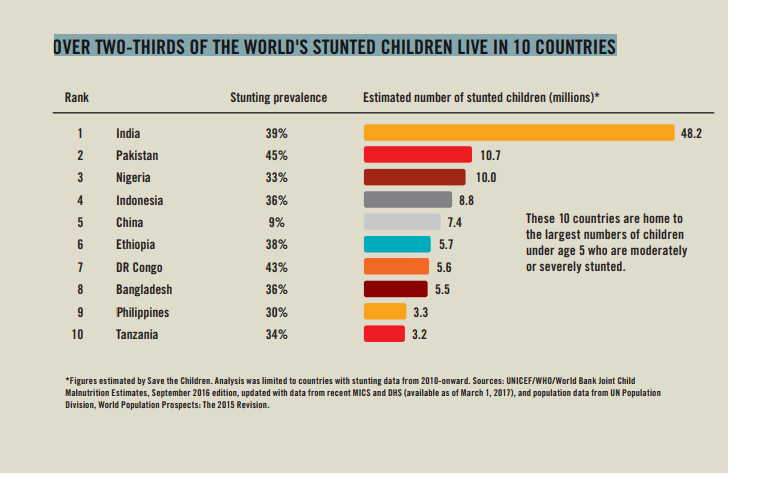
CHILDHOOD: OVER TWO-THIRDS OF THE WORLD’S STUNTED CHILDREN LIVE IN 10 COUNTRIES. #Ethiopia June 13, 2017

Posted by OromianEconomist in Uncategorized.
Tags: , , , ,
add a comment


10 countries (India, Pakistan, Nigeria, Indonesia,  China, Ethiopia, DR Congo, Bangladesh, Philippines and Tanzania) are home to the largest numbers of children  under age 5  in the world who are moderately or severely stunted.


The 10 worst countries in the world to be a child are all in Africa

Quartz Africa, June 12, 2017


A child in Angola is 20 times more likely to die before the age of 5 than one in the United States. Children in parts of sub-Saharan Africa are among the worst off in the world, according to a report from the international NGO, Save the Children, which ranks 172 countries based on where childhood is the most protected and where it’s been eroded the most.

European countries like Norway, Slovenia, and Finland rank first while Niger, Angola, and Mali came in last. The US ranked 36th. Out of the 10 countries at the bottom of the list, seven were in West or Central Africa. “Children in these countries are the least likely to fully experience childhood, a time that should be dedicated to emotional, social and physical development, as well as play,” the report (pdf) said.


Human Right Council Ethiopia Releases Report On Rights Abuses Committed Under Current State Of Emergency June 13, 2017

Posted by OromianEconomist in #OromoProtests.
Tags: , , , , , , , , , ,
1 comment so far

Human Rights Council (HRCO) Ethiopia, a non-profit, non-governmental organization, has released 49 pages of report detailing widespread human right abuses committed by the security under the current State of Emergency, first declared on Oct. 08, 2016, and extended by four more months in March 2017.

In the report, which was originally published on May 29th, but was largely unseen due to the week-long nationwide internet blackout, HRCO documented details of abuses, including extrajudicial killings, torture, and imprisonment committed in 18 Zones and 42 Woredas of three regional states: Oromia, Amhara and Southern Nations, Nationalities and People’s Region (SNNPR) states as well as abuses committed in ten different Kifle Ketemas(administrative unites) in the capital Addis Abeba.

The detailed accounts of the report covered the months between October 2016 and May 2017 – of which HRCO said it held field assessments between October 2016 and February 2017.  Accordingly, HRCO published names, background information as well the circumstances of extrajudicial killings of 19 people in various places. Fifteen of those were from the Oromia regional state, the epicenter of the year-long antigovernment protests, while three were from SNNPR and one was from the Amhara regional state. The account of the 19 killed included the Oct. 10, 2016 gruesome killing by security officials of Abdisa Jemal and two of his brothers,  Merhabu Jemal and Tolla Jemal, in east Arsi Zone, Shirka Woreda, Gobesa 01 Kebele, some 270km south east of the capital Addis Abeba.

HRCO also documented the detention of 8,778 individuals from Oromia regional state followed by 5, 769 people from SNNPR, 640 from Amhara, 411 from the capital Addis Abeba and one from the Afar regional state. A total of 6, 926 individuals were also detained from unspecified locations, bringing the total number of people detained in the wake of the state of emergency to 22, 525. It also criticized the inhuman conditions faced by detainees in many of the detention camps.

Out of the 22, 525 people, 13, 260 were detained in several facilities including military camps, colleges and city administration halls located in Oromia regional state, while 5, 764 of them were detained in Amhara regional state; 2, 355 were detained in Afar and 430 were detained in the capital Addis Abeba. This list includes list of names such as journalist Elias Gebru and opposition politician Daniel Shibeshi, who have recently been charged after months of detention. HRCO also said 110 people were held at unknown locations.

HRCO’s report came a little over one month after the Ethiopian Human Rights Commission, (EHRC), a government body tasked to investigate recent anti-government protests that rocked Ethiopia, admitted in April that a total of 669 Ethiopians were killed during the 2016 widespread anti-government protests. EHRC’s report, however, has not been released to the wider public, yet.

According to the government’s own account more than 26 thousand Ethiopians were detained in various places including military camps. This number is including those who were detained prior to the state of emergency. More than 20 thousand have since been released but about 5,000 are currently facing trials in various places.

Owing to Ethiopia’s outright refusal to accept outside independent investigation, including from the UN Human Rights Commission, ERCO’s report stands as the only independent investigation into widespread state violence in Ethiopia. AS

AS: COMMENTARY: ETHIOPIA’S UNSTABLE POLITICAL LANDSCAPE IN UNSTABLE REGION June 12, 2017

Posted by OromianEconomist in #OromoProtests.
Tags: , , , , , , ,
1 comment so far

Finfinnee (Addis Abeba) , June 12/2017 – The year 2016 placed Ethiopia on major newspapers across the world including Financial Times, and Washington Post as well as major broadcast media outlets such as the BBC and Aljazeera all due to the persistent, widespread and escalating anti-government protests that engulfed the country.

The question many asked was “Why are Ethiopians protesting?”  Ethiopians were protesting mainly because of, to refer to a July 2001 research by Acemoglu, Johnson and Robinson: “state and private predation”, (not to be confused with lack of good governance or corruption); state violence; and repression of democratic rights.

Given the yearlong protest and the government’s response to it, it is imperative to analyze Ethiopia’s political instability in an already unstable region. Many political analysts assert that Ethiopia is experiencing an alarming level of political instability that will intensify the instability in the Horn of African region.

In this article, I will use a political instability forecasting model developed by Goldstone et.al (2010) to assess the situation in Ethiopia.

Goldstone et.al (2010) model is distinguished by its accuracy, simplicity, and policy implications. The model accuracy is impressive, exhibiting 80 percent accuracy in predicting the onset of political instability with a two-year lead time. It is unique in the sense that its policy implication – that is, political institution reform – is both within reach in the short term and the least costly option for national and international communities. The model is simple in its specification, too, and it uses only four variables in estimation. The four explanatory variables are infant mortality, conflict in neighboring states, political and economic discrimination, and regime type.

The model predicts an increased likelihood of political instability in countries that exhibit one or more of these factors: high infant mortality rate, location in conflict-prone neighborhood, discrimination against one or more minorities, and a non-democratic regime type. Instead of using a binary measure of regime type (autocracy/democracy) or a three-category measure (autocracy/anocracy/democracy), Goldstone et.al constructed a new categorical measure of regime type. They did this by using the two-polity component (openness in executive recruitment and competitiveness of political participation) from the polity data set and creating a two-dimensional space that can be used to identify the regime types of full autocracy, partial autocracy, partial democracy, partial democracy with factionalism and full democracy. (Please See table below.)

Regime Type: Ethiopia (1995, 2000, 2005, 2010 and 2014)

Competitiveness of political participation
Executive Recruitment Repressed (0) Suppressed  (1) Unregulated  (2) Factional (3) Transitional (4) Competitive (5)
Ascription(1) FA FA PA PA PA PA
Ascription +Designation (2) FA FA PA PA PA PA
Designation(3) FA FA PA PAETH 2005, 2010 & 2014 PA PA
Self-Selection(4) FA FA PA PA PA PA
Transition fromself-selection (5) FA FA PA PA PA PA
Ascritption +Election (6) PA PA PD PDF PD PD
Transitional orRestricted election (7) PA PA PD PDFETH 1995 & 2000 PD PD
Competitive Election(8) PA PA PD PDF PD FD

The table format and analysis is reproduced from Goldstone et. al (2010), and data is based on POLITY IV scales for Executive Recruitment (EXREC) and Competitiveness of Political Participation (PARCOMP). FA – Full Autocracy, PA – Partial Autocracy, PD – Partial Democracy, PDF – Partial Democracy with Factionalism, and FD – Full Democracy

Where does Ethiopia stand along these four independent variables?

The first variable of interest is infant mortality rate.  Over the past twenty years, Ethiopia has made great progress in reducing infant mortality rate compared to the rest of Sub-Saharan Africa (SSA). According to this data from the World Bank, in 1990, Ethiopia’s infant mortality rate was 121.6 while SSA’s was 108.5; in 2015, Ethiopia’s number was 41.4 while SSA’s was 56.4. One can say that Ethiopia’s performance on this front is truly impressive.

The second variable is whether the country is located in conflict-prone neighborhood. Ethiopia shares borders with six countries: Somalia (1640 km), South Sudan (1299 km), Eritrea (1033 km), Kenya (867 km), Sudan (744 km), and Djibouti (342 km). Based on data from the Center for Systemic Peace’s Major Episodes of Political Violence, Ethiopia is situated in a neighborhood ravaged by prolonged conflict. Somalia, which shares the longest border with Ethiopia, has suffered an ongoing civil war since 1988 that claimed the lives of more than 117,000 Somalis and led to the migration and displacement of hundreds of thousands of its people. South Sudan, which shares the second longest border with Ethiopia, has gone through a devastating civil war (1998-2014) and an ongoing ethnic violence with a loss of 16,000 lives. Eritrea (part of Ethiopia until its succession in 1991-2) experienced war with Ethiopia itself from 1998-2000, a war, which, by many estimates, cost the lives of more than 70, 000 on both sides. Kenya, a relatively stable country, has been subject to spurts of ethnic violence between 1991 and 2008, costing 4,300 lives. And it is estimated that the 1983-2002 ethnic war in Sudan had claimed the lives of nearly one million Sudanese; and the recent ethnic violence (2011-2014) has claimed 4,000 lives. Djibouti’s civil war (1991-1994) had also led to the death of 1,000 people in the tiniest Horn of African nation.

It is clear, then, that Ethiopia is surrounded by countries characterized by recurring ethnic violence and civil war. There is a need to analyze this “neighborhood factor” in Ethiopia by incorporating four other factors that significantly increase the impact of a “bad neighborhood” on political stability.

First, Ethiopia itself is marred by its own civil war. Its struggles with Oromo separatists (1999-2000) and ethnic violence among the Somali and Oromo people (2007-2014) have resulted in the death of thousands.

Second, Ethiopia is directly involved in either peace-keeping missions (in the case of Darfur in Sudan and Somalia) or in conflict (in the case of Somalia and Eritrea) which have separate implications in several neighboring countries.

Third, the prolonged nature of the conflicts in these neighboring countries and within Ethiopia itself add another dimension.

Finally, different ethnic groups affected by ethnic violence or ethnic wars span across all the region’s borders (Somalia, Djibouti, Kenya, South Sudan, and Eritrea), increasing the risk of political instability.

The third factor is whether there exist political or economic discrimination. According to the Minorities at Risk Project by the Center for International Development and Conflict Management (CIDCM), four ethnic groups are subject to discrimination in Ethiopia: the Oromo, Somali, Amhara and Afar. Although to a lesser extent, the report also named Tigreans as a minority at risk, stating that:

“Currently, Tigreans possess special status within Ethiopian politics and society with the best official posts, military positions, and of university slots allotted to those of the Tigray province … While Tigreans remain an advantaged minority in Ethiopia to date, it is unclear whether the EPRDF’s mix of political maneuvering and governmental heavy-handedness will last.”

In addition to the minorities subjected to political and economic discrimination, the Political Instability Task Force (PTIF) has identified possible target groups of genocide and politicide in Ethiopia, including supporters of the Oromo and Somali secessionists (2001, 2005 and 2011) and the people of Gambella (2005) and Anuak (2005, 2011).

The last variable of interest is regime type. Ethiopia had a partial democracy with factionalism from 1995-2000 but then transitioned to a partial autocracy from 2005-2014. The country’s score worsened in terms of executive recruitment, dropping from a 7 (transitional/restricted election) to a 3 (designation). This suggests that executive recruitment is not competitive, but rather closed to contestation. The second component, competitiveness of political participation, has remained factional since 1995. It is evident that the relationship among political elites has not improved in the last 20 years, and the political sphere in the country remains exclusive.

Ethiopia’s status based on these four variables indicates that the country is highly likely to experience political instability (civil war or adverse regime change) in the near future. It is imperative that all concerned parties- the Ethiopian people, political groups, civic society, the international community and donor countries, step up their efforts to prevent the onset of political instability in Ethiopia and the Horn of Africa.  AS


ED’s Note: the author can be reached at gurradimae@gmail.com


OSA: STATEMENT ON THE ATTEMPT TO ALTER THE QUBEE (ALPHABET) OROMO WRITTEN ALPHABET. #ABCDeebisaa #OromoProtests June 12, 2017

Posted by OromianEconomist in #ABCDeebisaa.
Tags: , , , , , , , , , ,
1 comment so far

#ABCDeebisaa

OSA: STATEMENT ON THE ATTEMPT TO ALTER THE QUBEE (ALPHABET) OROMO WRITTEN ALPHABET

For Immediate Release
June 9, 2017
The Oromo Studies Association (OSA) believes the Ethiopian government’s decision to rearrange the order of the Qubee Afaan Oromoo which has been in official use for a quarter century is misguided.
On June 3, 2017, the state-owned TV Oromiyaa (TVO) reported that the Oromia regional state, apparently at the behest of the Federal Ministry of Education of Ethiopia, had decided to alter the order of the qubee (alphabet) used in written Afaan Oromoo (the Oromo language). According to the TVO report, the Oromia Education Bureau made the decision over a year ago and introduced a new primary school curriculum in which the order of Qubee Afaan Oromoo was altered. New textbooks were distributed and early grade teachers were trained to implement the curriculum. Surprisingly, this changes were implemented quietly without consultation or input from the public and experts in the field.
The news report also stated that the changes were prompted by a finding of a USAID-funded study, the Early Grade Reading Assessment (EGRA). The study was conducted in 2010 in eight regions and six languages by an American consultancy firm, RTI International. The critical finding of the study that ostensibly occasioned the curricular change was: “by the end of the second grade, a third of students were unable to read at all and about half read at much lower level than the proficiency benchmarked for that grade.”
OSA scholars and experts have scrutinized the EGRA document and several other studies conducted with the support of the USAID-funded Reading for Ethiopia’s Achievement Developed Technical Assistance (READ TA) Project. The EGRA researchers did inquire if the scripts and writing systems used in the various regional states had any differential impact on reading skills. The report found no direct link between the two variables and made no recommendation that altering the order of alphabets would improve early grade reading skills. In fact, the study posits that children learn to read faster in their mother-tongue. Accordingly, the USAID project mentioned above supported mother tongue instruction to improve early grade reading. In light of this, OSA maintains that the Oromia regional state’s attempt to leverage external support to implement its ill-advised scheme is a disgraceful act that should not be allowed to stand.
In addition to the EGRA study, officials of the Oromia Education Bureau and its associated experts offered an additional justification for the alteration of the qubee order. They claimed that a “word frequency test” they administered showed the Oromo language had more words whose first letter is the alphabet “L.” This was offered as the rationale for rearranging the qubee order. That means, early grade students will henceforth learn alphabets begin with L, A, G, M, rather than the customary A, B, C, D. If this were in the US, Big Bird and Barney will have to relearn their A, B, C, D, and their alphabet songs.
OSA members and other experts have run similar tests and found that by far the most frequent word in the Oromo language has “A” as the first letter. In fact, “L” is ranked as 13th in one of the tests, 19thwhen the letter is followed by the vowel “a” and 42nd when the upper case “L” is used in the test.
Viewed from the technical vantage point, there is no linguistic or pedagogical basis for altering the qubee order.  In the absence of any study that shows the qubee alphabet as a drag on reading skills or word frequency test results that shows “L” to be the most frequent occurrence,  nothing warrants the Oromia Education Bureau’s decision to change the order of the qubee alphabet and secretly implementing a structural curriculum change. OSA rejects the justifications given by the Oromia regional state officials and the experts as reasons for the ill-conceived scheme.
In fact, the OSA leadership believes that this scheme has a strategic objective. To implement curricular changes that are so radical and disruptive can have no constructive purpose. There is only a political goal to the unjustified changes. Given that the use of the qubee alphabet has gone on for a quarter century, the change to the order of qubee could only create resentment and frustration with the use of the qubee alphabet. OSA believes that tinkering with the Qubee Afaan Oromoo is a slippery slope that shouldn’t be embarked on. It must be opposed.
OSA reaffirms its unflinching support for the use of the Latin alphabet as the sole means of written Afaan Oromoo. The studies that the government has cited as the basis for its action identifies inadequacy of textbooks, reading materials, low student-teacher ratio, truancy and teacher absenteeism as factors for the low level of reading fluency throughout the country. The tried-and-true means for improving reading proficiency is more reading and reading more. The Oromia Education Bureau should focus on what works and turn away from the meaningless proposition to alter the sequence of the Latin alphabet which has almost nothing to do with improving reading fluency.
OSA believes that the decision to change the order of Qubee Afaan Oromoo constitutes violence against the long and bitter struggle Oromo struggle for written Oromo language.  In the 1840s, Oromo slaves began to use Latin alphabets to write in the Oromo language. In the 1870s, Emperor Menelik’s conquest precipitated the adoption of the Ge’ez script for written Oromo literature. For the next century, the Oromo language languished under the clutches of the ill-fitting Geez script.  The use of the Latin alphabet in Oromo transcription re-emerged later in the 20th century, exactly a century later. It was adopted as the official alphabet of written Afaan Oromoo on November 3, 1991 when over 1,000 Oromo intellectuals assembled in the Ethiopian parliament and made a historic and momentous decision to adopt the Latin alphabet in writing in Afaan Oromoo. In light of this history, the Oromia Education Bureau has a choice to make: either stand with the Oromo struggle for written Afaan Oromoo or take the side of those that seek to continue the violence against written Afaan Oromoo that commenced with Menelik’s conquest.
When qubee was adopted as the sole means of written Afaan Oromo, ABCD was the order of the alphabets. This order is synonymous with the Oromoo qubee. What was adopted in a solemn occasion cannot be undone surreptitiously and in such a nonchalant manner as Oromia officials have done.  It is bewildering why the Oromia government officials even contemplated changing by an administrative fiat the sequencing of the Latin alphabet that evolved over several millennia. The order of the qubeealphabets is what unifies the Oromo nation with the rest of the world that uses Latin alphabets. There is no justification for changing this relationship.

Today qubee is the identity of a new generation of Oromo, it is a monument to the triumph of Oromo nationalism, and a symbol of the bitter sacrifice the Oromo have paid to be free from oppression, domination and marginalization.  It is engrained in the minds of the new generation of Oromo and entwined with the Oromo struggle for self-determination. A violence against qubee amounts to a violence against the Oromo struggle for freedom and justice and freedom from violence.  OSA asserts that the order of the alphabet used in written Afaan Oromoo is sacrosanct. It is inalterable.


Ezekiel Gebissa, President, Studies Association

Mekuria Bulcha, Chair, OSA Board of Directors


UNPO: Oromo: Alterations of Afan Alphabet Raise Concerns About Community’s Cultural Rights June 10, 2017

Posted by OromianEconomist in Uncategorized.
Tags: , , , , , , , , , , , , , ,
2 comments

#ABCDeebisaa

Oromo: Alterations of Afan Alphabet Raise Concerns About Community’s Cultural Rights

UNPO, 9 June 2017

Photo courtesy of USAID Ethiopia@flickr

Authorities in Oromia changed the order of the Roman alphabet used for the Afan Oromo language on the grounds that the old alphabet order is allegedly an obstacle to the reading skills of Oromo school children. According to Oromo intellectuals, however, this change is aiming at diminishing the cultural rights of the Oromo people who have been subject to a marginalisation process for years. This issue is occupying the center of Ethiopia’s political news cycle, even though this regulation had been silently carried out in 2016. Therefore, there are doubts as to whether the regime uses this debate to divert public attention from large-scale Oromo protests. In the past months, the Ethiopian government has been in the world’s spotlight due to massive human rights violations in the country.


This article has been published by Global Voices


Authorities in Oromia, Ethiopia’s largest state, have infuriated language experts and Oromo nationalists with their decision to re-arrange the order of the alphabet of the region’s language, Afan Oromo.

In multilingual and multiethnic Ethiopia, orthographic choices are complex linguistic and political decisions that have great socio-political consequences.

Among Ethiopia’s written languages, most write their language in either the Ge’ez or Ethiopic alphabet, known as “Fidel,” or the Roman alphabet. Afan Oromo officially adopted the Roman alphabet — in its usual order of ABCD and so on — after the current government come to power in 1991.

However, more than a quarter century later, the regional educational authorities of Oromia announced they were reshuffling the “Qubee Afan Oromo” (as the alphabet is called). The first seven letters are:

L A G I M Aa S


Justifying the change, authorities blamed the old alphabet order as the reason why reading skills among primary school children in Oromia remain poor. They even cited a research to back up their claim.

There is, however, a problem with their argument. It was based on a misrepresentation of the findings of the research. In fact, the research, which was funded by US Agency for International Development (USAID) in 2010, revealed a broader problem of reading skills not only among Afan Oromo-speaking primary school students, but also students whose mother tongue was Amharic, Hararigna, Sidaamu Afoo, Somali and Tigrinya.

In the study, pedagogic and logistical difficulties were identified as factors for poor reading skills in Ethiopia’s six major regions. However, the order of alphabet was not cited as a factor for the dismal reality. In a post on the citizen journalism site OPride.com, one blogger agreed with the findings of the research but questioned the connection it had to the alphabet order, writing:

There is little disagreement on the core problem here: The education quality crisis in Ethiopia needs fixing. The disagreement here though is on the proposed solutions. This is underscored by a key question that everyone is asking: JUST HOW DOES REORDERING THE AFAAN OROMO ALPHABET IMPROVE READING AND LEARNING OUTCOMES?

‘Yet another fraud perpetrated on the Oromo people’

The change actually took effect in 2016 and school textbooks already reflect the reshuffling, but it was done so quietly. So much so that the news of the letter order change only made it into Ethiopia’s political news cycle after government affiliate Oromia Broadcasting Service reported about it. Over last two years, a series of political events with far-reaching repercussions such as protests and internet outages has dominated the country’s news cycle.

As soon as the change was reported, concerned Oromo intellectuals started raising questions.

For them, this is the latest attempt in a series of steps intended to diminish the cultural rights of the Oromo people, who have historically been marginalized in Ethiopia. On Facebook Awol Kassim Allo, wrote:

“The casual change/disfiguring of the Alphabet of a language spoken by more than 40 million people without any debate and discussion is appalling. The excuse given to justify it – improving the ability of children to read at early stages of instruction – is lame and cannot stuck up to scrutiny. …This is yet another fraud perpetrated on the Oromo people and it must be rejected.”

The circumstance of the change also stoked another fear: that the decision to alter the order of the letters might be a plot by people who were disgruntled when the Oromos opted to adopt the Roman alphabet over the Ge’ez alphabet in 1991.

Prior to 1991, Afan Oromo was written in different alphabets. The first Oromo Bible was printed in Ge’ez letters in the 19th century. During the reign of emperor Haile Selassie (1930-1974), Afan Oromo was not a written language.

When Ethiopia’s military regime came to power in 1974, it decreed that all Ethiopian languages must be written exclusively in Ge’ez alphabet— a draconian policy intended to promote unity among Ethiopia’s diverse ethnic groups.

Parallel to the Ge’ez letters, however, Oromo language experts and Oromo nationalists were also using the Roman alphabet. Paul Baxter, a social anthropologist, wrote that the Roman alphabet was used to transcribe the Afan Oromo language among Kenyan Oromos in the 1940s.

Proponents of the Ge’ez alphabet believe that Ge’ez signifies the rich liturgic and literary tradition of Ethiopia. For them, preserving Ge’ez in the age of the Roman alphabet’s domination is a sign of resistance to cultural globalization and a symbol of identity. Responding to Awol Kassim Allo’s post on Facebook, Abeba Teshale wrote:

“Simple, structured, logical, Ethiopian, African, Amharic/Tigregna alphabet is there for any one interested to adopt. 26 vs 338 syllables! There is an alphabet for each sound and for the ones that don’t have one, we could crate a symbole. Just a thought”

For many Oromos, though, adopting the Roman alphabet is a matter of selecting an alphabet that best fits the Afan Oromo sound system.

According to academic Teferi Degeneh Bijiga, who wrote his doctoral dissertation on the topic of Afan Oromo writing system, complex historical, cultural and linguistic forces were at play when Oromo intellectuals decided to adopt the Roman alphabet in 1991.

Over the next few weeks, this issue will be front and center in Ethiopian politics, where the Ethiopian government is operating under a state of emergency because of the protests that began over land use as well as political and economic marginalization in Oromia in November 2015.

Africa: Extractive industries push Africa’s indigenous peoples to the margins June 10, 2017

Posted by OromianEconomist in Uncategorized.
Tags: , , , , , ,
add a comment

“Worrying that so little is done to protect the environment and the indigenous peoples,” says the report.
With detailed field studies from Kenya, Cameroon, Uganda and Namibia, a new report sheds light on the consequences of extractive industries on land rights and indigenous peoples in Africa. “Worrying that so little is done to protect the environment and the indigenous peoples,” says the report.

Environmental degradation, cultural ethnocide and gross human rights violations: For indigenous peoples these are some of the consequences of the current global race for natural resources and raw materials.

The skyrocketing global demand for natural resources is driven by the growth of both western and non-western economies and the liberalization of transnational investments and agreements.

Indigenous peoples in Africa are among the first to feel the consequences of the global increase in extractive industries, as they often live, where natural resources are found.

Terra nullius: No recognition of collective land rights

Indigenous peoples in many cases share collective land rights. But this ownership of the lands is not officially recognized by African states. Therefore indigenous peoples’ lands are often seen as fertile ground for natural resource exploitation.

“It is considered terra nullius, no one’s land, since there is no ‘visible’ use or occupation of the land,” says the new report, issued by the African Commission on Human and Peoples’ Rights and International Work Group for Indigenous Affairs (IWGIA) with support from the Ministry of Foreign Affairs of Denmark.

When mining and construction companies move in, indigenous peoples generally get evicted from their ancestral lands and territories without any free, prior and informed consultation, consent or compensation.

“We struggle with the misconception that extractive industries benefits society by bringing modernity. This illogic defies the very fundamental freedoms of indigenous peoples,” says Dr. Melakou Tegegn, Expert Member of the Working Group on Indigenous Populations/Communities in Africa under the African Commission on Human and Peoples’ Rights.

Indigenous peoples host wanted natural reserves and resources

In 2020, 70 percent of all copper will be extracted from indigenous peoples’ territories, and in 2009, 70 percent of all uranium used in nuclear reactors was sourced from indigenous peoples’ territories.

And the tendency shows that the growth of extractive industries in Africa will continue.

“The pressure of the extractive industries leads to the question, if indigenous peoples will actually be able to stand up against this new and major direct threat to their environment, livelihoods and lives. If the international community and African states don’t prioritize the principle of free, prior and informed consent, the future survival of indigenous peoples and their unique cultures will be seriously threatened,” says Marianne Wiben Jensen, IWGIA’s Senior Advisor on Africa and land rights and Expert Member of the Working Group on Indigenous Populations/Communities in Africa.

The new report will be presented at the meeting of the UN Expert Mechanism on the Rights of Indigenous Peoples in July 2017, where the conclusions and recommendations of the study will be discussed.

“I believe the impact of the study will be enormous. It can inform many in Africa, including governments, on the state and consequences of extractive industries on the rights of indigenous peoples. And it can serve as source for civic action for policy changes on the ground,” says Dr. Melakou Tegegn, Expert Member of the Working Group on Indigenous Populations/Communities in Africa.

The Working Group will organize national dialogues on the findings and recommendations of the study in the countries covered in the study.

Extractive Industries, Land Rights and the Indigenous Populations/Communities’ Rights: East, Central and Southern Africa
Includes field studies in Kenya, Cameroon, Uganda and Namibia

Published by the African Commission on Human and Peoples’ Rights (ACHPR) and IWGIA with financial support from the Ministry of Foreign Affairs of Denmark

Published online: May 29, 2017


About the African Commission’s Working Group on Indigenous Populations / Communities in Africa

In 2003, the African Commission on Human and Peoples’ Rights established the Working Group on Indigenous Populations/Communities in Africa with the responsibility to advise the Commission on matters relating to the rights of indigenous populations/communities on the continent. In this capacity, the Working Group found it appropriate to commission a study on extractive industries, land rights and indigenous populations/communities to inform and guide its activities and that of all other stakeholders. http://www.achpr.org/mechanisms/indigenous-populations/about/

About International Work Group for Indigenous Affairs (IWGIA)

Since 2001, IWGIA, an international human rights organisation defending indigenous peoples’ rights, has been represented in the Working Group on Indigenous Populations/Communities in Africa with Marianne Wiben Jensen as an expert member. For almost 50 years, IWGIA has documented the fight for indigenous peoples’ rights. IWGIA works through a global network of indigenous peoples’ organisations and international mechanisms. IWGIA promotes the recognition, respect and implementation of indigenous people’s rights to land, cultural integrity and development on their own terms.


Oromia: Tartiiba qubee jijiiruun fumaata hin ta’u. #ABCDeebisaa #OromoProtests June 6, 2017

Posted by OromianEconomist in #ABCDeebisaa, #OromoProtests, Uncategorized.
Tags: , , , , , , , , ,
add a comment

“Early grade reading: The incompetent Ethiopian government has once again to demonstrate its prejudice against the Oromo people. It was supposed to help puples overcome their deteriorating reading skill with US provided fund. RTI (research institute) recommended raising teaching reading skill not alphabet distortion. It pointed out the need for competent teachers to teach the language and teaching aids for the kids. That is what should be improved. It recommended “particular attention to the frequency of letters and words in the language” not to start the alphabet board with those letters as pseudo experts in Sulultaa and their bosses want to convince the people. Qubee Oromo was introduced after the policy was thoroughly discussed by the then legislature. Now it is announced without telling the form of decision making it followed. This is a package that the Oromo people won by their struggle that costed so much sweat and blood. It cannot be taken away without costing the same amount. This is harbinger of worst things to come and should not be passed in silence. People that put Oromummaa after alien interest might have collaborated in this shameful act of isolating Qubee from the long tested Latin alphabet formation. But the main assault is coming from the sinister regime and it alone has to account for it. The empire is no more the source of Oromo knowledges and to meddle with Qubee at one center cannot stop its flourishing and getting desiminated from another center. Oromo have to learn from their Wala’ita neighbors of the past years, when they rose in 1998 against “Wedagogda” Qubee that was meant to distort their identity. Qubee can be acceptable only in the form adopted by the Oromoo.”-Ibsaa Gutamaa


The Qube Saga: Another Attack on the Oromo People


Abdii Boruu:- Tartiiba Qubee Afaan Oromoo jijjiiruun waan boba’aa jirurratti boba’aa dabaluu dha


“Qubeen siidaa injifannoo Oromoo ti!” Ezekiel Gebissa


Toltu Tufa, Barreessituu kitaabban Dabballee akkana jette:-

“Qubeen Afaan Oromoo ar’a ittiin fayyadamnu argamuu kan danda’e ijibbaata hayyoonni Oromoo yeroo dheeraaf godhan irraahi. Akkasumas warraaqsi quddina afaanii bara dheeraaf hayyootaa godhamaa turuun isaa ni beekama. Itti fufuudhaan, Sadaasa 3 bara 1991 magaala gudditti Oromiyaa Finfinnee keessatti Afaan Oromoo afaan hujii, barnoota fi mana murtii ta’ee akka tajaajilu seeran labsame jira. Labsa guyyaa seena qabeessa kana irratti NAMOONNI 1000+ ta’an argatan. Labsa kana irratti maan guddoota, hayyoota, dargaggootaa fi bakka bu’ootni dhaabilee Oromoo gara garaa qooda fudhatanii jiru. …Amma, harka namni kudhan qofaatiin, tattaaffii namni 1000 ol kan heera fi seeran dalagame diiguudhaaf ka’anii jiru. Ummanni kanneen karaa #OromoProtests akka irraa haa bannuuf jechu dubbii kana oofuu eegalan.#OldTricks #TimeWasters.”   


OPride: The Qubee Afaan Oromo fiasco: What We Know and What We Don’t Know


OMN- Jijjiiramuu Tartiiba Qubee Ilaalchisee Marii 2ffaa (LIVE)


Double-digit propaganda, Ethiopia’s top 10 wealthiest people, and Ethiopia’s 87 million poor June 4, 2017

Posted by OromianEconomist in Uncategorized.
Tags: , , , , , , , ,
1 comment so far


You will see in the news, and officials of the oppressive Ethiopian government will  smile convincingly when they tell you, that Ethiopia is thriving with a “double-digit” economic growth.Yet many experts and scholars will explain to you why this is triple-digit nonsense and quadruple-digit propaganda.

Read more from the original source: Double-digit propaganda, Ethiopia’s top 10 wealthiest people, and Ethiopia’s 87 million poor

Famine: Forecasters Say Drought May Linger in Ethiopia June 3, 2017

Posted by OromianEconomist in Famine in Ethiopia.
Tags: , , , , , , ,
1 comment so far
By Sora Halake, VOA, June 02, 2017 

FILE - People wait for food and water in the Warder district in the Somali region of Ethiopia, Jan. 28, 2017.

FILE – People wait for food and water in the Warder district in the Somali region of Ethiopia, Jan. 28, 2017.

Forecasters are warning that Ethiopia could face more rainfall deficits, deepening a drought that has left nearly eight million of the country’s people in need of aid.

Dr. Chris Funk is a climate scientist at the United States Geological Survey (USGS) whose research focuses on African and Asian countries. He told VOA’s Horn of Africa Service that there is a 50 percent chance another El Nino weather event could form in the Pacific Ocean this year.

“If it’s a moderate or strong El Nino, that would definitely tilt towards odd, below normal rain for northern Ethiopia,” he said. “That is what happened unfortunately in 2015, when we had a strong El Nino that reduced rains in northern and central Ethiopia and we are concerned about that possibility.”

Ethiopia tends to receive its heaviest rain between mid-June and mid-September, especially in the north.

The moderate rainy season that runs from February to May was disappointing, said Dula Shanko, deputy director for the Ethiopian meteorological department.

“March rain was very poor for areas that get rain [in] this time,” he said. “In April and May it shows little progress but not enough.”

He added that rain was sparse in the southern regions of Somali and Oromia.

Out of 7.78 million Ethiopians in need of food assistance, 3.6 million are in Oromia.

Lower than normal rains in 2015 and 2016 contributed to the ongoing food crisis by killing livestock and reducing farm output. The drought has forced farmers and pastoralists to search for water, pushing students to drop out of school in some areas.

The impact has been especially harsh in Oromia, where massive protests against the government took place two years ago and officials have maintained a state of emergency. In this region, Borana, Guji, West Guji East, West Harerge, North Shewa, East Shewa, Arsi and Bale provinces are highly affected, according to a government report.

Ethiopian officials say they are working to counter the drought by providing food for both animals and people.

“The combined effort from local, federal government and citizens averted the country from falling to famine before it happens [and] saved countless lives by allocating millions of dollars for this purpose,” said Debebe Zewude, a public officer for the National Disaster and Risk Management Commission (NDRMC).

But government intervention only goes so far when it doesn’t rain.

“Carcasses of cows, goats litter over the roads throughout the districts,” said Dida Guyo of Nagelle Borana, a city in Oromia. “I would say thousands of animals are dead due to drought from this area.”

The situation is grave, said Borbor Bule, a resident of Dubluk, a town in the south of the country.

“This is our only source of income,” he added. “We have lost our proud breeds. I have lost more than 10 animals. More than 50 animals are dead in my village alone.”

“I have never seen anything like this in my life,” he said. “… God forbid, we are fearing for human life.”


The Foreign Desk: Horn of Africa: a country in a state of emergency: Ethiopia. Protests have put the government under pressure and hundreds have been killed. So what’s next? June 3, 2017

Posted by OromianEconomist in #OromoProtests.
Tags: , , , , , ,
1 comment so far
 

https://monocle.com/radio/shows/the-foreign-desk/178/play/

New World Health Organization Director Accused Of “Genocide” In Ethiopia. #OromoProtests June 3, 2017

Posted by OromianEconomist in Uncategorized.
Tags: , , , , , , , , , , ,
add a comment

New World Health Organization Director Accused Of “Genocide” In Ethiopia.


Find out why some Ethiopians are not pleased with the new Director-General of World Health Organization, Dr. Tedros Adhanom Ghebreyesus.


Somalia: Will the Real Farmaajo Please Stand Up? June 2, 2017

Posted by OromianEconomist in #OromoProtests, Ethiopia's Colonizing Structure and the Development Problems of People of Oromia, Afar, Ogaden, Sidama, Southern Ethiopia and the Omo Valley, Ethiopian Empire, Ethnic Cleansing, Somalia.
Tags: , , , , , , , , ,
add a comment

The recent visit by newly-elected President of Somalia Mohamed Abdullahi Mohamed ‘Farmaajo’ to Addis Ababa, Ethiopia, can be considered as unusual, not because the relations between the two countries soured in the aftermath of his election, but because he subtly campaigned for an anti-Ethiopian slogan on the eve of the 8 February presidential elections in Mogadishu. His supporters and many other Somalis had anticipated that Farmaajo would delay an early political engagement with the current Ethiopian regime led by the Tigray People’s Liberation Front (TPLF)/The Ethiopian People’s Revolutionary Democratic Front (EPRDF). Farmaajo’s visit culminated in a press conference held together with the Ethiopian Prime Minister HailemariamDesalegn.

When one combines the discursive analysis with a psychosomatic assessment on the video clip of the press conference in Addis Ababa, it can be observed from the faces of the once overconfident TPLF/EPRDF policy-makers that they appear to be anxious about another – in addition to Eritrea, or even South Sudan or the Sudan – critical political façade from Mogadishu. This does not mean that they are unaware that Mogadishu government remains utterly toothless, but a small amount of criticism towards their behaviour and practices in the Horn in general and Somalia in particular stemmingfrom the new team in the Villa Somalia would add an insult to theinjury. Therefore, the approach from which the TPLF/EPRDF policy-makers could benefit most at this time is through appeasing Farmaajo and making him sleep with friendly but forged overdose diplomatic gesture.The speeches made in the news conference indicated that the TPLF/EPRDF regime in Ethiopia were not only sceptical about the new development in Mogadishu, but they were wary about what Farmaajo would put on the table. However, upon assessing him closely, they seem to have found out that he is not the man they feared.

The TPLF/EPRDF policy-makers were expecting Ethiopia to be the first country to which Farmaajo was to travel following his election. Instead, Addis Ababa became the seventh after Riyadh, Nairobi, Abu Dhabi, Djibouti, Aman and Ankara, in the capital cities that he visited thus far. The wide public support the Somali public welcomed Farmaajo’s election, which was itself a reaction towards the detested regime of Hassan Sheikh Mohamoud, has revealed to the TPLF/EPRDF policy-makers that they could not dictate, as they had done with the corrupt regime of Hassan Sheikh, with their own terms what they need from Somalia. Hence the importance to find a new route out of the anxiety in the TPLF/EPRDF inner circle generated by the Farmaajo’s unexpected election. I still recall vividlyafter the previous president Hassan Sheikh Mohamoud went to Jigjiga unannounced in early August last year, I met Farmaajo, sipping a tea at Sarova Panafric Hotel in one cool Nairobi afternoon. After reading to him my take on the visit from my mobile phone, I looked Farmaajo and saw his reaction was mild.

Influential Somali opinion makers have every reason to be a bit sceptical of any dealings with Ethiopia, but one has todraw to their attention to the fact that there is no such an ‘Ethiopia’ at the moment. The TPLF/EPRDF regime is currently in a weakposition, insofar as it suffers from internal power struggles exacerbated by the increasing Oromo and Amhara dissents. Historically, for so long, the Ethiopian political order hasbeen dependent for existence and survival on the character of a powerful ruler. Upon the death of the former Tigray rebel leader Meles Zenawi, the TPLF/EPRDF central committee failed to come up with a powerful successor at par with the deceased leader from the Tigray political actors within the ruling party. No need to note that HailemariamDesalegn is another DaherRayaale (the former accidental Somaliland president); Desalegnwas chosen to create a balance between the two Tigray groups vying for power tiresomely during the post-Zenawi period. Be that as it may, Ethiopia is still under the state of emergency that was declared in October last year as a result of riots instigated by the Master Plan project which attempted to displace a significant number of Oromos from their farming lands on the outskirts of Addis Ababa. The Oromo uprising, supported by Amhara unrest, created a confusion and chaos within the TPLF/EPRDF, leading to accusations and counter-accusations as reported by the suppressed print media.

Tourists and travellers are still cautioned not to venture into Amhara and Oromo regions unless that is necessary. The only region the TPLF/EPRDF authorities effectively (remote)-controls from Addis Ababa is the Somali region which, because of the divisive clan-based politics, they were able dividing the Somalis along clan, even sub-clan or sub-subclan lines in order to fish out from their persistent power and resource contestation. Consequently, the Somali region is next to Tigray region, which many (but not all) are obedient to the TPLF/EPRDF regime due to ethnic affiliation with the TPLF. This does not imply that people in the Somali region support the regime; they are on the contrary waiting for a momentum to articulate their own self-determination as was nearly achieved but missed in late 1994. In Addis Ababa last year, when I asked about the appalling human rights situation in the Somali region, several TPLF/EPRDF regime advisers told me they would kick out the Somali region’s monocratic president Abdi Mohamed Omar, known as ‘Abdi Ileey’, but they expressed a fear that his replacement may open a Pandora’s box. This is a clear testimony that, insofar as they keep a tight grip on the region, they would be fine with the open-ended oppression. However, they could not apply this harsh policy to the Amhara or Oromo regions where people are more united and politically well-informed in the Ethiopian politics than the pastoralist clanically-divided (mostly) nomadic Somalis in the region. When I visited Jigjiga in April last year, I felt amused that the peculiar yet parochial question was: which sub-clan is larger than that or this to cut the larger cake from the regional state?.

Reflecting on these empirical localised internal political nuances, the Somali-Ethiopian relations in the broader geopolitics or biopolitics warranta very close but critical re-reading to envisage Addis Ababa’s future manoeuvres in Somalia. Unlike foreign policies of the successive Somalia regimes, which have often been inconsistent, incoherent, incomprehensive and unclear, the TPLF/EPRDF foreign policy changes as the need emerge. It comes as no surprise that both political (and military) culture of the TPLF/EPRDF draws from a reformed rational political calculation that solicits to buy a brief interval in every time of transition. It seems on the surface that this philosophy is based on ‘do this now, but do the other with the right time’.

Farmaajo and his team do not seem to understand the fragile situation of the Ethiopian regime, let alone what is going on the inner circle or the behind-the-scenes. Most strikingly, they appear unable to read the subtle ways the history is profoundly manipulated to construct or craft something meaningful out of it. For instance, one wonders why Farmaajo’s team did not raise their concerns when the TPLF/EPRDF cadres put on his back during the press conference this clear message: ‘Welcome to Ethiopia, the Land of Origins’, which literally means ‘welcome to your land of origins’. From the Ethiopian ‘highlander’ historical point of view, Somalis are considered as were part and parcel of the Ethiopian Empire through the ages. One could recall Emperor Haile Selassie’s famous speech in QabriDaharre in 1956, in which he boldly stated to his audience that Somalis and Ethiopians are the same, since ‘we drank water drawn from the same river’. The Ethiopian Herald published at the time some Somali elders kissing his hand with scornful manner unaccustomed to then proud Somalis. Several highlander Ethiopian historians and other Ethiopianists stick to this day to the notion that Somalis were once part of Ethiopian Empire, which is a false premise that can be counter-checked with available archaeological evidence and historical findings that Afar, Oromo, Saho, Somali and other lowland ethnic communities in the Horn of Africa had been the founders and defenders of the Adal and Ujuuraan sultanates well before the Abyssinian intrusion in 1887.

Mohamed Haji Ingiriis

Mohamed Haji Ingiriis a Somali scholar studying Somali history at the University of Oxford. He can be reached at: ingiriis@yahoo.com

Newsweek: WHY ETHIOPIA BLOCKED MOBILE INTERNET AGAIN June 1, 2017

Posted by OromianEconomist in #OromoProtests.
Tags: , , , , , , , , ,
add a comment

WHY ETHIOPIA BLOCKED MOBILE INTERNET AGAIN


Ethiopians may have experienced a frustrating sense of déjà vu when they tried to log on to social media or use the internet on their cellphones Wednesday.

That’s because the Ethiopian government has terminated mobile internet connectivity, a tactic the administration has used repeatedly in recent years to quell anti-government sentiment.

Ethiopia’s deputy communications minister, Zadig Abrha, confirmed to AFP on Wednesday that “mobile data has been deactivated,” but declined to provide any further information. The country’s sole telecommunications provider, the state-owned Ethio Telecom, has also refused to comment.

Preliminary data from Google showed a dramatic fall in search traffic from the Horn of Africa country from Tuesday afternoon, which did not appear to have returned to normal by Wednesday evening. It is unclear whether both mobile and fixed internet connections were blocked, but the majority of Ethiopians who do use the internet do so on mobile devices: The country has 11.95 mobile-broadband subscriptions per 100 people, compared to 0.66 fixed-broadband subscriptions, according to the International Telecommunications Union.

Read more: Ethiopian athlete urges the world to help stop “persecution of Oromo people”

Julie Owono, the director of Paris-based internet freedom organization Internet Sans Frontières (ISF), says that the latest reports she has received were that internet connectivity had returned by Thursday morning, but that connectivity was not stable or fast. Owono tells Newsweek that access to some social media websites remains restricted.

Despite being one of Africa’s fastest-developing economies, Ethiopia has an extremely low internet penetration rate of just 2.9 percent, according to U.S. NGO Freedom House; in neighboring Kenya, penetration stands at 43 percent.

Internet access has been patchy since the government imposed a six-month state of emergency following a year of protests that were concentrated in the Oromia region, surrounding the capital Addis Ababa, and resulted in hundreds of protesters being killed by security forces. (The state of emergency was extended by four months in March.)

Ethiopia telecoms office

A woman walks past an Ethio Telecom office in Ethiopia’s capital, Addis Ababa, on November 9, 2015. Ethiopia only has one telecommunications provider and a very low internet penetration rate.TIKSA NEGERI/REUTERS

This time, the internet shutdown appears to be linked to university entrance exams taking place across the country this week. Around the same time in 2016, Ethiopia blocked access to social media sites—including Facebook, Twitter and Instagram— after copies of the exams were leaked online.

The Ethiopian government has not confirmed whether the exam period, which ends on Friday, is the reason for the shutdown. Newsweek contacted the Ethiopian embassy in London for a comment, but received no immediate reply.

But Owono says that the risk of an exam leak does not justify shutting down mobile internet for the entire population, and that the Ethiopian government’s repeated use of the tactic shows that it “fears connectivity.”

“For the wrong reasons, [it] sees the internet as a threat rather than as an opportunity,” says Owono. She points out that increasing internet connectivity and availability is part of the United Nations’ Sustainable Development Goals, a global agenda for development. “The reaction of the Ethiopian regime is contrary to this global aim.”

Ethiopia is not alone in Africa in closing down the internet to deal with social issues. In April, Cameroon lifted a three-month internet blackout in the country’s English-speaking regions, home to about one-fifth of the population, following mass protests there in late 2016. Egyptian authorities have ordered internet service providers to block access to 21 news websites, claiming that they backed terrorism or reported fake news, in a move criticized by press freedom activists.

Internet blackouts have also proven to be financially costly to countries. Between July 1, 2015 and June 30, 2016, the internet was shut down for a period of 30 days in Ethiopia; this cost the country’s economy $8.6 million, according to a report by the Brookings Institution.


Related Articles:

Global Voices:Ethiopia Imposes Nationwide Internet Blackout


ENCA:Ethiopia shuts off mobile internet without explanation


ETHIOPIA SHUTS OFF MOBILE INTERNET NATIONWIDE WITHOUT EXPLANATION.  KEEPING IT REAL WITH ADEOLA  31 May 2017

Ethiopia said on Wednesday it had deactivated mobile internet service, but offered no explanation for the countrywide outage that also briefly affected the African Union headquarters and a massive UN facility.

This is the second time in recent months that Africa’s second most populous country has turned off its mobile data service, which most businesses and consumers rely on for internet access.

RSF slams Ethiopian govt over nationwide internet blackout

ETHIOPIA


The media advocacy group, Reporters Without Borders (RSF) has slammed the Ethiopian government for an internet shutdown believed to be linked with upcoming national exams.

According to RSF, the action was “a danger to freedom of information and press freedom.” The nationwide blackout started late Tuesday without formal communication.

A deputy communications minister later confirmed to the AFP news agency, Zadig Abrha as simply saying “mobile date has been deactivated.” It is not known when services will be restored.

The shutdown is aimed at preventing a repeat of leaks that occurred last year. We are being proactive. We want our students to concentrate and be free of the psychological pressure and distractions that this brings.

3rd day of nationwide mobile internet blackout in : a danger for freedom of information and !

The government subsequently confirmed the shutdown and said it was to protect the integrity of high school exams. Thousands of students will take the Grade 10 exams between May 31 until June 2 whiles Grade 12 papers will be taken between June 5 and June 8.

The respective exams are for university entrance purposes and also for enrollment into national vocational courses. “The shutdown is aimed at preventing a repeat of leaks that occurred last year,” Mohammed Seid, public relations director of Ethiopia’s Office for Government Communications Affairs, told Reuters.

“We are being proactive. We want our students to concentrate and be free of the psychological pressure and distractions that this brings.”

There was a widespread leak of exams papers last year leading to a cancellation of papers. Beside shutdowns related to education, the government has also blocked internet in the wake of anti-government protests that hit the country last year.

Even though it is not known exactly when services will be restored the government says only access to social media was blocked and that other essential services like airline bookings and banking outfits had access to internet. Diplomatic outfits and international organizations operating in the country also have connection.


Oromia: #OromoProtests:#OromoRevolution: Gabaasa Fincila Xumura Garbummaa (FXG) Oromiyaa 2017 (May) May 31, 2017

Posted by OromianEconomist in #OromoProtests.
Tags: , , , , , , , , , , , , , , ,
3 comments

 Odaa OromooOromianEconomist

oromoprotests-one-year-on-struggle-november-2015-2016oromorevolution-oromoprotests

Oromo Protests defend Oromo National Interest

#OromoPRotests tweet and share#OromoProtests against the Ethiopian regime fascist tyranny. Join the peaceful movement for justice, democracy, development and freedom of Oromo and other oppressed people in Ethiopia

https://videopress.com/embed/Kv0UV52t?hd=0&autoPlay=0&permalink=0&loop=0

scotiabank-toronto-waterfront-half-marathon-winner-kinde-asafa-showing-the-protest-juster

an-oromo-youth-hero-shanted-down-down-woyane-on-the-face-of-mass-killers-tplf-agazi-at-bishoftu-2nd-october-2016-oromoprotestsFeyisa Lelisa Rio Olympian and world icon of #OromoProtestsQuebec City Marathon winner, Oromo athlete, Ebisa Ejigu, replicates Rio Olympic medallist’s #OromoProtests. p3Athlete Fraol Ebissa Won the Germany 10Km race and shows his solidarity with #OromoProtests. 4 September 2016. p2oromo-athlete-tamiru-demisse-center-reacts-after-the-final-of-mens-1500m-of-the-rio-2016-paralympicoromo-oromo-athletes-tamiru-demisse-c-megersa-tasisa-l-and-sport-journalist-adugna-angasu-r-who-are-in-rio-de-janeiro-brazil-for-the-paralympic-2016-show-solidarity-in-a-world-stage-to-oromoathlete-hajin-tola-winner-of-mississauga-canken-5k-race-protests-in-support-of-ethiopias-oromo-peopleathlete-hirut-guangul-joined-the-brave-movement-as-she-won-the-womens-marathon-and-in-solidarity-with-oromoprotests-25-september-2016-this-video-is-viral-on-social-media-in-her-adoration
Oromo Students protest @ Mandii, Western Oromia 25th November 2015Oromo Students protest @ Ambo, Oromia 25th November 2015 picture1

Gaaffiiwwan yeroo ammaastop killing Oromo People#GrandOromoProtests 6 August 2016, in Oromia including in Finfinnee (Addis Ababa), the capital.


Oromo Olympic marathon athlete Fayyisaa Lalisaa in the social and international media. #OrompProtests global icon. p7

the-heroes-said-down-down-wayyane-down-on-2nd-october-2016-at-irreecha-bishoftu-to-protests-mass-killings-p2oromorevolution-thefinalmarchforfreedomoromoprotests-and-fascist-tplfs-human-rights-violations-anaginst-civilians-2016-bbc-sources

Gincii, Amboo, Jalduu, Gudar, Giddaa Ayyaanaa, Mandii, Najjoo, Laaloo Assaabii, Jaarsoo, Gullisoo, Bojjii, Gujii,Dambi Doolloo, Gimbii, Naqamtee, Buraayyuu, sabbataa, Dirree Incinnii, Adaamaa, Harammayyaa, Mattuu, Baale (Robee), Madda Walabu, Walliisoo, Tulluu Boolloo, Sulultaa (Caancoo), Horroo Guduruu, Buuraayyuu, Dirree Dhawaa, Calanqoo, Ada’aa Bargaa, Baddannoo, Holootaa, Shaashee, Awaday (E. Harargee), Hara Qallo (Goro Dola, Gujii), Gaasaraa (Baalee), Bulee Hora, Jimmaa, Arjo, Heebantuu, Giddaa Ayyaanaa ,Kiiramuu, Ciroo, Dodolaa, Anfilloo (Mugii), Walqixxee, Diillaa, Bishooftuu, Finfinnee,  Yuniversiitii Finfinnee, Geedoo, Asallaa,  Shaambuu, Agaarfaa, Sibuu Siree, Kotobee, Wacaalee, Saalaalee, Machaaraa, Ammayyaa, Tokkee  Kuttaayee, Innaangoo, Baabbichaa, Laaloo Qilee, Hiddii Lolaa, .Mugii, Arsi Nagallee, Baabbichaa, Shukutee,  Baakkoo Tibbee, Jalduu, Gindoo, Buun’dho Beddellee, Grawwaa, Gaara Mul’ataa, Qarsaa, Qobboo (Dardar, Eastern Oromia), Sinaanaa (Baalee), Jimmaa Arjoo, Bojjii, Kombolcha,  Aggaaroo,Tajji (Iluu), Qilxuu Kaarraa, Baabboo Gambel, Daawoo,Tulu Milki (Warra Jarso), Hirnaa, Xuulloo,  Masalaa, Galamso, Bordode, Mi’esso, Waheel, Diggaa, Arjoo Guddattuu, Guraawa, waamaa Adaree, Shabee Somboo, Limmuu Saqaa, Amuruu (Agamsa), Daroo Labuu (Gaadulloo), Yaabelloo, Aliboo (Jaartee Jardagoo), Saasigga, Magaalaa Dafinoo, Dhumugaa, Daroo Labuu (Buraysaa) Begii (Kobor), Mardida Halo Guba (Daroo Labuu), Qassoo, Bonayyaa Boshee, Baalee  (Dalloo Mannaa), Jimmaa Raaree (Magaalaa Gobaan), Nophaa (Iluu), Bordoddee, Togowacaalee, Dooguu, Metekel (Wanbara), Asaasaa, Waabee, Heeraroo, Doguu, Quufanziq (Dadar), Boku Luboma (Miyo, Borana), Eddoo, Dirree (Ada’aa), Qilxuu Kaarraa, Shebel town, Bate, Walanchiti, Warra Jiruu,  Boolee Bulbulaa, Diilallaa, Gannat Haaraa (dodolaa)……………


Amajjii (January): 1, 2, 3, 4, 5, 6, 7, 8, 9, 10, 11, 12, 13, 14, 15, 16, 17, 18, 19, 20, 21, 22, 23, 24, 25, 26, 27, 28, 29, 30, 31 ……2017

Gurraandhala (February) 1, 2, 3, 4, 5, 6, 7, 8, 9, 10, 11, 12, 13, 14, 15, 16, 17, 18, 19, 20, 21, 22, 23, 24, 25, 26, 27, 28…..2017

Bitootessa ( March): 1, 2, 3, 4, 5, 6, 7, 8, 9, 10, 11, 12, 13, 14, 15, 16, 17, 18, 19, 20, 21, 22, 23, 24, 25, 26, 27, 28, 29, 30, 31……..2017

Ebla (April): 1, 2, 3, 4, 5, 6,7, 8, 9,10, 11, 12, 13, 14, 15, 16, 17, 18, 19, 20, 21, 22, 23, 24, 25, 26, 27, 28, 29, 30…… 2017

Caamsaa (May): 1, 2, 3, 4, 5, 6, 7, 8, 9, 10, 11, 12, 13, 14, 15, 16, 17, 18, 19, 20, 21, 22, 23, 24, 25, 26, 27, 28, 29, 30, 31 ……….2017


Down! down! Down With Wayyanee! Down TPLF!

https://videopress.com/embed/Kv0UV52t?hd=0&autoPlay=0&permalink=0&loop=0

https://youtu.be/D5YauwAQTgU

#OromoProtests: International Community Alarmed as Ethiopia Crisis Worsens

#OromoProtests. International Community Alarmed as Ethiopia Crisis Worsensfreedom-in-the-world-2017-ethiopia-profile-not-free-and-deteriorating-situation

Ethiopia received a downward trend arrow due to the security forces’ disproportionate and often violent response to massive, primarily peaceful antigovernment protests in the Oromia and Amhara regions, as well as an emergency declaration in October that gave the military sweeping powers to crack down on freedoms of expression and association.

Ethiopia's scores in freedom in the world 2016, freedom House World Report, January 2016.

Ethiopian regime guilty of crime against humanity

Click here for #OromoProtests/ #OromoRevolution Report 1-30 April 2017

Click here for #OromoProtests/ #OromoRevolution report 1-31 March  2017

Click here for #OromoProtests/ #OromoRevolution report 1-28 February 2017

Click here for #OromoProtests/ #OromoRevolution report 1-31 January 2017

Click here for #OromoProtests/ #OromoRevolution report 1-31 December 2016

Click here for #OromoProtests/ #OromoRevolution report 1-30 November 2016

Click here for #OromoProtests/ #OromoRevolution  report  1 – 31 October 2016

Click here for #OromoProtests report 1- 30 September 2016

Click here for #OromoProtests report 1- 31 August 2016 PDF

Click here for #OromoProtests Updates, 1st July – 31st July 2016 PDF

Click here for #OromoProtests Updates, 1st June – 30 June 2016 PDF

Click here for #OromoProtests updates, 1st – 31st May 2016

Click here for #OromoProtests updates, 1st – 30 April 2016

Click here for #OromoProtests updates, 1st – 31st March, 2016

Click here for #OromoProtests updates, November 2015- February 29, 2016


For Latest News click here for OromianEconomistonfacebook

#OromoProtests twitter


The Hill: Ethiopia at tipping point as Congress mulls human rights bill

HRC35: Addressing the pervasive human rights crisis in Ethiopia.

Fragile States Index (FSI) 2017: Ethiopia: The Most-worsened Country Over The Past Year

Rubio, Cardin Introduce Bipartisan Resolution Calling on Ethiopia to Respect Human Rights, Open Democratic SpaceMAY 17 2017

HRW: European Parliament Demands Investigation Into Ethiopia Killings. #OromoProtes

UNPO: European Parliament Resolution Condemns Crackdown on Civil Society in Ethiopia

Why I run: I will continue to protest until the Oromo people in Ethiopia gain their freedom.

Surveillance and State Control in Ethiopia

U.N. RENEWS CALLS TO INVESTIGATE DEADLY ANTI-GOVERNMENT PROTESTS IN ETHIOPIA

Feyisa Lilesa urges world to do more to help the Oromo people (via Newsweek)

The Hill: USA doesn’t need Ethiopia in its war on terror in the Horn of Africa

WHO Director General Nominee Tedros Adhanom Represents Ethiopia’s Repressive Regime. #WHA70

AP News: UN HUMAN RIGHTS CHIEF: ETHIOPIA BLOCKED ACCESS TO PROTEST AREAS


Quartz Africa: Ethiopia’s humans rights problems may tank its ambition to become a global apparel center

Genocide Watch: Land Grabbing and Violations of Human Rights in Ethiopia

ESPN The Magazine: Why Olympic Silver Medalist Feyisa Lilesa Didn’t Go Home

Scholars at Risk Network: Release and drop charges against Dr. Merera Gudina

Human Rights violations in Ethiopia must be investigated by independent body, rights group

TV Link: Why the Oromo People Are Fleeing Ethiopia

Fear of Investigation: What Does Ethiopia’s Government Have to Hide?

London Marathon favourite Feyisa Lilesa amazing protest. #OromoProtests

#OromoJustice in Ethiopia: Pass HR 128

Why Is Western Media Ignoring Ongoing Atrocity In Ethiopia?

UNPO: Oromo: Violent Oppression and Disregard for Human Rights Continue as State of Emergency Gets Prolonged

Ethiopia extends emergency as old antagonisms fester

The Ethiopian state of emergency that was declared October 2016 continues to fuel outward displacement, and Ethiopian asylum seekers interviewed in Yemen, are increasingly referring to the unrest as a key reason for their migration out of the country.


OSA 2017: Oromo Studies Association Mid-Year Conference: Social Media and Social Movements: Leadership,Transnationalism and the Oromo Quest for Transformation

Fascist Ethiopia: Would Extending the State of Emergency solve grievances of citizens?

Fascist Ethiopia’s regime (TPLF) extends its state of emergency by four months

Ethiopia’s increasing outmigration highlights wider economic and security problems

Oromo-American Citizen Council (OACC): Extension of the State of Emergency-All is Not Well in Oromia

OMN: Prof. Ezekiel B. Gebissa in conversation with Canada MP Bob Zimmer (March 29, 2017)

Oromia: OMN: Qophii Jiruuf jireenyaa Artist Dirribee Gadaa Bit 28, 2017. OMN: Interview with one of the most creative minds in Oromo music and art, artist singer Dirribee Gadaa

UNPO caught up with Shigut Geleta of the Oromo Liberation Front, one of our speakers at our conference “Women’s Inferno in #Ethiopia” co-organised with the People’s Alliance for Freedom and Democracy (PAFD) and hosted by Liliana Rodrigues MEP (S&D). Mr Geleta highlights his great concern for #women‘s rights in #Ethiopia, as they are the first victims when conflict strikes.

Urgency of Addressing the Plight of Women Belonging to Vulnerable Groups in Ethiopia Highlighted at UNPO EP Conference

Oromia: Athletic Nation Report: The global icon of #OromoProtests Olympian Feyisa Lilesa (Fayyisaa Leellisa) wins the New York City 2017 Half Marathon. Mare Dibaba Wins the Lisbon City

Forbes: Ethiopia’s Cruel Con Game

Ethiopia: IN-DEPTH ANALYSIS: QOSHE GARBAGE DUMP COLLAPSE: A TRAIL OF CORRUPTION, CRIMINAL NEGLIGENCE AND COUNTLESS VICTIMS

Congressman Urges U.S. to End Alliance with Brutal Ethiopian Regime

HRW: US: Stand Up for Ethiopians as Government Stifles Protests, Jails Journalists Human Rights Watch Statement on Ethiopia to US Congress

Rep. Chris Smith: Ethiopia should acknowledge its challenges and seek reasonable solutions


ETHIOPIA: FASCIST TPLF’S PROXY WAR THROUGH THE LIYU POLICE

Liyu police raids in Oromia testing Ethiopia’s semblance of calm

US Bureau of Democracy, Human Rights and Labor : Ethiopia: Country Reports on Human Rights Practices for 2016

Oromo Revolution echoes around the globe

The police brutalities resulted in several deaths. A death toll of 150 was recorded in Ethiopia, 32 in DRC and one in Mali.  To date, not one security agent has been prosecuted for any of the killings in the three countries. Unfortunately, this is just one of the many violations perpetrated against protestors, journalists and media organisations in Africa as reported in the maiden edition of the Freedom of Expression Situation in Africa report by the African Freedom of Expression Exchange (AFEX) compiled for the period July to December 2016.

THE MESSENGER :Ethiopia state media face scrutiny from Facebook fact-checkers

OMN: Weerara Poolisii Addaa ilaalchisee Dhaabbileen Siyaasaa Oromoo maal jedhu?

ETHIOPIA:  The Ethiopian Government is Plotting a War Among  the Nations and Nationalities in Ethiopia


HRLHA Press Release


""

International Human Rights Day  marks the anniversary of the adoption of the Universal Declaration of Human Rights on December 10, 1948. Crafted in the shadow of the horrors of the Holocaust and World War II, the Declaration gave the world the vision it needed to stand up to fear and the blueprint it craved to build a safer and more just world.  Its single premise is:   “Recognition of the inherent dignity and of the equal and inalienable rights of all members of the human family is the foundation of freedom, justice and peace in the world.”


Human Rights Day Message:United Nations High Commissioner for Human Rights Zeid Ra’ad Al Hussein’s message for Human Rights Day 10 December 2014.


In observing Human Rights Day, its important to  highlight the horrific going on in 2014 in our world. The following document is the summary of horrific repression going on against Oromo people by tyrannic Ethiopian  regime:

http://www.amnesty.nl/sites/default/files/public/because_i_am_oromo.pdf

https://oromianeconomist.wordpress.com/?s=because+I+am+Oromo&searchbutton=go%21

” data-medium-file=”” data-large-file=”” class=”alignleft wp-image-4426″ src=”https://qeerroo.files.wordpress.com/2012/05/hrlha.jpg?w=151&h=151″ alt=”HRLHA” style=”margin: 0px 7px 2px 0px; padding: 4px; border: none; float: left; display: inline;”>February 26, 2017The  Ethiopian Somali Liyu Police led by the Ethiopian Federal government’s killing squad have been engaged in a cruel war for the past six months against the Oromo nation in fifteen districts of Oromia.   The Oromia districts that have been invaded by the two aforementioned forces are in east and east- west Hararge Zone, Eastern Oromia,  Guji,  Borana and  Bale, South Oromia zones, Southern Oromia of Oromia Regional State.


Freedom House: Freedom in the World 2017: Ethiopia Profile: Not free and in downward trends with political rights and civil liberties: Aggregate score of 12/100

UNPO: Oromo: Political Conviction Endures, while Communities Refuse to be Stifled

How should the US react to human rights abuses in Ethiopia?

Real Media Press: WHY IS ETHIOPIA’S SITUATION THE MOST UNDER-REPORTED CONFLICT IN THE WORLD?

Ethiopia: War Crimes Against the Oromo Nation in Ethiopia

African Studies Centre Leiden: ASCL worried about Ethiopian political scientist Dr Merera Gudina

Ethiopia in Crisis: What is going on now in Oromia is a massacre in the name of emergency, terrorising civilian populations

Stop Genocide Against the Oromo People: The Whole of Oromia Must Act to Stop the Agazi and Liyu Police Terror in Hararge, Bale, Borana and Gujii

IHS Jane’s Country Risk Daily Report: War Crimes: Crimes Against Humanity: The genocide against Oromo people involving Ethiopia’s Somali region police (Liyu Police), a segment of fascist TPLF’s Agazi forces

Fascism: Corruption: TPLF Ethiopia: Inside the Controversial EFFORT

AI: ETHIOPIA TORTURE AND OTHER ILL-TREATMENT: The torturous fields of Ethiopia’s rehabilitation centre

The NY Times: OLYMPICS: Feyisa Lilesa, Marathoner in Exile, Finds Refuge in Arizona


The hero, the legend and the thinker: Oromo Athlete Feyisa Lilesa’s spectacular finish at Aramco Houston Half Marathon January 16, 2017

THE INTEREST THAT IS NOT SO SPECIAL: ADDIS ABEBA, OROMIA, AND ETHIOPIA


Mail & Guardian Africa: Ethiopia’s political ripple a big test for infrastructure-led Chinese approach

BBC: Oromia: No regrets for Ethiopia’s Olympic protester. #OromoProtests #OromoRevolution

Free Dr. Merera Gudina And All Political Prisoners In Ethiopia

Oromia: Human Rights League New Year’s Message: “It always Seems Dark Until the Sun Rises”

Oromia (Africa): Oromo Person of The Year 2016: The Qubee Generation. #OromoProtests #OromoRevolution

BBC: Africa’s top hashtags of 2016: #OromoProtests and #AmharaProtests

 Stop Your madness with Masterplan and Resolve the Master Problem

Hof-Land: Ausgestoßene im eigenen Land

ETHIOPIA: THE STATE OF EMERGENCY CANNOT BECOME THE NORM

Samantha Power, the Unites States ambassador to the United Nations (UN) has called for the release of a leading Ethiopian opposition member, Bekele Gerba

HRW: The Year in Human Rights Videos

WP: A state of emergency has brought calm to Ethiopia. But don’t be fooled.

THE HUMAN COST OF ETHIOPIA’S SWEEPING STATE OF EMERGENCY: “I NEVER WANTED TO SEE TOMORROW”

In his interview with VOA, U.S. Assistant Secretary of State for Democracy, Human Rights, and Labor, Tom Malinowski discussed the current Ethiopian situation and his concerns regarding human right protection. He said, “It’s a very difficult situation. The country is under a state of emergency, and a state of emergency by definition means that certain rights are suspended. Due process is suspended. And however much the government may feel that the state of emergency has brought calm temporarily to the country, it also brings with it certain risks. It risks adding a new layer of grievances to those grievances that initially led people in Oromia and Amhara to come out onto the streets. At first they were concerned about land seizures and lack of jobs and representation, all of which the government has acknowledge to be real and legitimate. But now they’re also upset about the arrests and the violence. And the longer this continues, the more those grievances are likely to build. At the same time, it risks giving greater power to the security apparatus in a way that could delay the introduction of the reforms that the Prime Minister and the government have, to their great credit, said are necessary.” Listen the first part of VOA interview at: http://bit.ly/2h3kmYO https://www.facebook.com/us.emb.addisababa/posts/1372399152802454


Ana Gomes (MEP): Ethiopia: Arrest of Dr. Merera Gudina – Annual report on Human Rights and Democracy

Africa News: EU parliament writes to Ethiopian president over detained Oromo leader, Professor Merera Gudina

AU expresses concern about upcoming Summit in restive Ethiopia

Africa News: Oromia’s Olympic athlete, Feyisa Lilesa, has been named among the 2016 top 100 global thinkers by the Foreign Policy (FP) magazine.

EurActive: EU: Commission to Ethiopia: ‘start addressing legitimate grievances of your people’December 2, 2016


The Independent: Ethiopian opposition leader testifies to EU over lack of political freedoms – and is immediately arrested upon his return. European politicians ‘shocked’ by arrest of Merera Gudina

BBC: Ethiopian opposition leader arrested after Europe trip

WP: Ethiopia arrests top Oromo opposition politician after Europe Parliament speech

Ethiopian Opposition Leader from Restive Region Arrested


One Year Anniversary of Oromo Protests Against Land Grabs


Africa Times: #Oromo news network in U.S. works to defeat Ethiopia’s media blackout


#OromoRevolution Australian MP Andrew Wilkie the parliament speaking about the of Oromo people

https://youtu.be/mmhJ1EevSqQ


OROMIA: OMN: Gaafiif Deebii Gammadaa Waariyoo Down Down Wayane TPLF Jechuun Kan Beekamu. #OromoProtests


The African Commission on Human and Peoples’ Rights: Resolution on the Human Rights Situation in Ethiopia


Ethiopia: State of Emergency Used as Systematic State Repression in Ethiopia HRLHA Press Release


Open Democracy: Ethiopia’s crisis: Things fall apart: Will the centre hold? By RENÉ LEFORT 19 November 2016


Why is the Ethiopian diaspora so influential?

The Oromo protests have changed Ethiopia

The struggle of the Oromo people has finally come to the attention of the global public conscience.


Newsweek: ETHIOPIA: OROMO POLITICIAN ARRESTED AFTER SPEAKING TO EUROPEAN PARLIAMENT


#OromoProtests: A year on struggle: This is a video made by Swedish students in Skara about the protests going on in Ethiopia. #OromoRevolution

Pambazuka News: Some thoughts on the deteriorating situation in Ethiopia. #Oromorotests #OromoRevolution

HRW: Will Ethiopia’s Year-Long Crackdown End?

Need for Meaningful Reforms, Accountability

Olympics dissident: Ethiopia could ‘become another Libya’

AI: Ethiopia: After a year of protests, time to address grave human rights concerns


Crossing Arms: The Plight and Protest of the Oromo in Ethiopia


State of emergency: Fascist TPLF Ethiopia’s government command post soldiers raping and killing


The Final Desperate Emergency Martial Law of Ethiopia and its Implications


“Open Letter to Government of Ethiopia” From Lotte Leicht, EU Director, Human Rights Watch. #OromoProtests #OromoRevolution #Africa


Global Journalist: Ethiopia’s State of Emergency & #OromoProtests


One Of The World’s Best Long Distance Runners Is Now Running For His Life


HRW: Ethiopia: State of Emergency Risks New Abuses: Directive Codifies Vague, Overbroad Restrictions. 

 An Ethiopian government directive under a state of emergency contains overly broad and vague provisions that risk triggering a human rights crisis, Human Rights Watch said  in a legal analysis. The government should promptly repeal or revise all elements of the directive that are contrary to international law.  31 October  2016.


 Ethiopia’s state of emergency silences aid workers — and some of their work


Venture Africa: WHY THE ‘PLANNED’ HUMAN RIGHTS VIOLATION IN ETHIOPIA SHOULD BE A GLOBAL CONCERN. #OromoProtests


https://www.youtube.com/watch?v=JkNRF-erHls

Al Jazeera: Ethiopia ‘ruthlessly targeted’ Oromo ethnic group, report finds.

Ethiopia’s Regime Faces Precarious Times As Diaspora Plans for the Future


AI: Ethiopia: Draconian measures will escalate the deepening crisis. #OromoProtests


How Ethiopia’s State of Emergency affects Universal Declaration of Human Rights

Emergency Declared in Ethiopia but the decree means nothing to those who have lived with inhumanity worse than death.


Ethiopia’s crisis is a result of decades of land disputes and ethnic power battles


DW: New Ethiopian clampdown

Ethiopia’s state of emergency could trigger civil war and food shortage


The National Interest: Ethiopia Opens a Pandora’s Box of Ethnic Tensions


Oromia: Yakka Waraanaa Ummata Oromoo Irratti Gaggeeffama Jiru Ilaalchisuun Ibsa Gamtaa Barattoota Oromoo (Oromo Student Union )


Ibsa Ejjeennoo Barattoota Oromoo Yuuniversiitii Jimmaa,  October 7, 2016


Irreecha Massacre: Bishoftu Massacre: Fascist Ethiopia’s regime (TPLF) has committed war crimes and crimes against humanity in Oromia (Ethiopia) on the peaceful Irreecha ceremony- Oromo thanksgiving day, 2nd October 2016 where over 4 million celebrating the Oromo National Cultural Day at Horaa Harsadii, Bishoftu, Oromia.


Gabaasaa qindaawaa armaan gadii kan nama balaa san irraa hafeen nuu dhihaate kana obsaan dubbisaa. Sana booda wanti kaleessa Hora Haarsadeetti tahe maal akka fakkaatu hubannoo gahaa horattu.
■■■■■■■■■■■■■■■■■
“Kan dhagaa darbaate ummata miti. Yeroo dheeraaf mormiin walitti fufinsaan deemaa ture. Waanuma godhan dhaban. Gubbaan helekoopitara nurra naanneessaa turan. Helekoopitarri marsaa duraa ergaa baga geessan jedhu gubbaa gad facaasaa ture. Sun kan akeekkameef ayyaana ummataaf yaadamee miti. Sodaachisaaf ture. Yeroo helekopitarichi nurratti gad siqee naannawuu umman guutuun harka wal qaxxaamursuun mallattoo didda itti agarsiisaa ture. Haalichi cimee itti fufe. Mormiin bifa adda ta’een deeme. Qeerroon guutummaan iddoo silaa Opdof isaan qabachiisu barbaadan dursite ganamumaan waan qabatteef kallattii dhaban. Karaa mormii ittiin qabaneessan dhaban. Midiyaaleen addunyaas ta’e isaan biyya keessaa bifa danda’aniin haalicha waraabaa turan. Guutummaan mormii waan tureef kallattiin dabarsu hin dandeenye. Fuuldura keenyatti faranjoota heedduu argaa ture. Waraabaa turan.

Midiyaaleen alaa carraa nu bira ga’uu hin arganneef malee gara ummata mormii irra jiruutti seenuun jiddu jidduun gaafiif deebii taasisaa turan. Qeerroon sodaa tokkoon alatti isaanitti himaa ture. Manguddoonnis akkasuma himaa turan. Mootumma shiftaa kana hin barbaannu,opdo hin barbaannu,ofiin of bulchina jechaanii ture. Ammas mormiin cimaa dhufe. Ummanni kallattii hundaan gara irreechaatti dhufu mormii dhaggeesisaa dhufa. Sagantaa gaggeeffachuu taasuma isaan hin dandeenye. Haalli kun hedduu isaan aarse. Ni boba’an. Naannolee adda addaatii qarshii kanfalaniif ummanni isaan geejibbaan fidatanis isaanitti gara gale. Mormiin liqimfamee mormitti seene. Woyaneen waan qabdee gad dhiiftu dhabde. Poolisoonni jidduu ummataa dhaabde hidhannoo hin qaban. Agaazii gara duubaatiin dhaabdee jirti. Booda irra as ba’an malee tasuma hin mul’atan ture.

Adaduma baayinni ummata gara horaa dhufu dabaluun mormiin haala duraanii caale cime. Dirreen irreechaa dirree mormii qofa taate. Kanatu isaan dhukkubse. Ummanni miliyoona heddu dirree irreechaa irratti bakka miidiyaaleen addunyaa baay’een argamanitti isaan salphise. Kanaaf maratan. Summii saamii irraan helekopitaraan gad roobsan. Ummata joonjesan. Sab booda dirreen aaraan guutamte. Agaaziin iddoo jirtuu as baate. Rasaasaan dha’amuu ummata arguu qofa taate. Boolla meetira 10-15 gad fagaatutu jidduu waraanaaf ummataa jira. Boolla kanatti baayee fixan. Lakkofsi ummata dhumee hedduu dabaluu danda’a. Rasaasa isaanii cinatti boollichis isaaniif tumseera.”
Yaya Beshir irraa


Human Rights Watch: Q&A: Recent Events and Deaths at the Irreecha Festival in Ethiopia

The genocidal massacres of Oromos at the Irreechaa Fesival: The lies of the Tigre-led Ethiopian government


UN Human Rights Briefing Note on EthiopiaOctober 7, 2016


Indian Professor in Ethiopia: An Appeal to the International Community about Human Rights Situation. #OromoProtests #OromoRevolution


African Arguments: Ethiopia: How popular uprising became the only option. #OromoProtests #OromoRevolution


BBC: Are Ethiopian protests a game changer? #OromoProtests


Aljazeera: Oromo protests: Ethiopia unrest resurges after stampede

VOA: Ethiopia Protests Continue Despite Call for Calm. #OromoProtests #Bishoftu Massacre


Ethiopia: human rights defender condemns deadliest mass murder in Oromia. #IrreechaaMassacre #OromoProtests


Ethiopia Human Rights Abuses Spark U.S. Congressional Action

Oakland Institute: After Irreechaa Tragedy, the US Must Take Action for Human Rights in Ethiopia


Ana Gomez, MEP, Statement at European Union regarding the mass killings conducted by fascist Ethiopia’s regime (TPLF) at Irreecha Oromo National Cultural celebration event in Bishoftu, Oromia where over 4 million people congregate on 2nd October 2016


Risk Advisory: Ethiopia | Assessment of government stability amid ongoing protests

The Ethiopian government is looking increasingly unstable, and the security environment in Ethiopia is looking more dangerous.


This is Africa: Ethiopia at a crossroads: apartheid, civil war or reconciliation?


ETHIOPIA’S GRADUAL JOURNEY TO THE VERGE OF CRISIS

Lelisa’s Message

A wave of protest in Ethiopia highlights the country’s history of exploitation and dispossession.


Click here  to read Daily Maverick: Ethiopia Mourns– but mourns what, exactly?

The Economist: The downside of authoritarian development: Ethiopia cracks down on protest: Once a darling of investors and development economists, repressive Ethiopia is sliding towards chaos


CCTV America: Who are Ethiopia’s Oromo and what’s behind the wave of protests in the country?

“Internet mobile irrati fayadamuuf mali argameera… akkas agodhani qeeroon Setting..more network….mobile network… access network name…. harka mirgara + kan jedhu tuqu… name kanjedhu … et.wap… APN… et.wap…. proxy…10.204.189.211… port…9028…. authentication… PAP or CHAP kan jedhu guutu… kana booda qeerroon mirgaan galte Mobile jam Tplf irraa hanu… sanan fayadama jira amaan kana.” #OromoRevolution.


For those following the Feyisa Lilesa and in Ethiopia: Sifan Hassan on his demonstration – “He’s my hero.”

For those following the Feyisa Lilesa and in Ethiopia: Sifan Hassan on his demonstration – “He’s my hero.”

Athlete Sifan Hassan, the European champion – “I’m Oromo and Feyisa is my hero”

https://www.facebook.com/v2.3/plugins/post.php?app_id=249643311490&channel=https%3A%2F%2Fstaticxx.facebook.com%2Fconnect%2Fxd_arbiter%2Fr%2FSh-3BhStODe.js%3Fversion%3D42%23cb%3Df2de287767684ac%26domain%3Dorom

Fayyisaa Leellisaa goota Oromoo


ETHIOPIA SHUTS OFF MOBILE INTERNET NATIONWIDE WITHOUT EXPLANATION

31 May 2017

Ethiopia said on Wednesday it had deactivated mobile internet service, but offered no explanation for the countrywide outage that also briefly affected the African Union headquarters and a massive UN facility.
 Ethiopia said on Wednesday it had deactivated mobile internet service, but offered no explanation for the countrywide outage that also briefly affected the African Union headquarters and a massive UN facility.
 This is the second time in recent months that Africa’s second most populous country has turned off its mobile data service, which most businesses and consumers rely on for internet access.
The country’s single telecommunications provider disabled its data service for weeks last year amid fierce anti-government protests which have since been curbed under a state of emergency in place since last October.
“Mobile data has been deactivated,” deputy communications minister Zadig Abrha told AFP, declining to elaborate further.
A spokesperson for the state-owned Ethio Telecom did not respond to multiple requests for comment.
http://www.adeolafayehun.com/2017/05/ethiopia-shuts-off-mobile-internet.html

Team Seattle: Great News!

Effective May 25, 2017, Washington State
Senator Maria Cantwell joined other senators as
a co-sponsor of S.R. 168.
A resolution supporting respect for human rights and encouraging inclusive governance in Ethiopia.

Senator Cantwell was also among the original co-sponsors for similar resolution last year, S.R.432.

Thank you Senator Cantwell for your continues support!

Please refer to the following link for S.R. 168.

https://www.congress.gov/…/115th…/senate-resolution/168/text


Godina Arsii Aanaa Dodolaa Gandaa fi Magaala Eddoo Keessaa Dargaggoonni Oromoo Umurii 20 Hidhaa Keeessatti Dararamaa Jiru.

No automatic alt text available.Caamsaa 29,2017/ Kanneen maqaan isaan armaan gaditti woraqaa fuula duraa irratti tuqamee Himataamtoota Qeerroo Aanaa Dodolaa Magaala Eddoo yoo tahan, kanneen fuula lammaaffaa irratti agartaan ammoo warraa faaydaan Xiqqoon sobamaani Qeerroo irratti ragaa bahuuf dhihaatanii dha. Abbaan Alaangaa Aanaa Dodolaa Himannaa Qeerroo Eddoo irratti banee immoo Tasfaye Dheekkoo jedhama.No automatic alt text available.

Worroonni ragaa baana jettaani faayda xiqqoon bitaamtanis gochaa jibbisisaa fi Amala ammaan dura Eddoon ittiin hin beekmne maqa xureessummaa fi maqa balleessumma akkasii irraa of eega isiniin jenna.Eddoo biyyaa Afaan tokkoo, karoora tokkoo, kaayyoo tokkon, waliin duuluu, fi waliif duuluun beekamtu murnii xiqqoo faayda xiqqoo ragaa baataani boruu seenaa fi ummannii eddoos isin gafataa irraa dhabbaadha isiniin Jenna. Abbaan Alangaa obbo Tasfaye Dheekkofis kanumaa dhaamna.” Continue reading


Qeerroon Godina Arsii Lixaa Aanaa Gadab Asaasaatti FXG Itti Fufan.

Caamsaa 24,2017/ Godina Arsii Lixaa Aanaa Gadab Asaasaatti Gareen Ispoortii Bulchiinsa magaalaa Asaasaa Shaampiyoonaa liigii kilaboota Oromiyaa ta’uun gara liigii biyyoolessaatti darbee jira.kanumaan wal qabatee Qeerroon Dargaggoonni Oromoo Daandii Magaalattii guutudhaan  NI MOONA TOKKUMMAAN NI MOONA YOOMUMAA NIMOONA TOKKUMMAN ENSHUSHEEN DAANGAA OROMOO LIXXU IRRA IJJATTEE MORMA ISHEEN KUTTUU jechaa ooluu maddeen keenya magaalaa Asaasaa irraa gabaasanii jiru. Continue reading

“NU DHISAA” Irreessa Barattooti Oromoo Yuniversitii Bulee Horaa Kabajatan Irratti Mootummaan TPLF Tear-Gas Itti Gadhiise.

https://videopress.com/embed/l4wGKOuZ?hd=0&autoPlay=0&permalink=0&loop=0


Dambi Dolloo irra rasaasatu heddummatee,
Kan gootaa hin beeknuu basaastuu lama galaafatee


‘Breaking: Abera Bulcha, the TPLF mercenary who last years gunned down young student named Iyasu Solomon in Yemalogi Walal district of Qellam Wallaga province has been killed tonight. His brother also sustained serious injury. This is the 3rd security official to be killed in Qellam Walaga province in the last few months.
========
Bitamaan Wayyaanee Abarraa Bulchaa jedhamu kan bara darbe Godina Qeellam Wallaggaa Aaana Yamaalogi Walal keessatti barataa Iyyaasuu Solomoon ajjeese galgala kana tarkaanfii irratti fudhatameen yeroo ajjefamu obboleessi isaas madayee jira. Baatilee sadan darbe keessatti basaasota ilmaan Oromoo ficcisiisan kan godina Qeellam keessatti haleelaman keessaa Abarraan nama sadaffaati.’ Jawar Mohammed


Wixineen Labsii Keeyyata 49(5) hiikuuf qophaaye dantaa Oromiyaan Finfinnee irrraa qabdu kan dhabamsiisu malee kan eegsisu miti. A leaked legislative document: TPLF’s baby candy for Oromia: Is it the question of Freedom or Question of Addis Ababa


SQ-Sagalee Qeerroo Bilisummaa Oromoo,Caamsaa 9,2017


Oromia: Dookumantarii: Gadaa Oromoo Sayyoo May 31, 2017

Posted by OromianEconomist in Sirna Gadaa.
Tags: , , , , , , , , , , , , , ,
add a comment


The Hill: Ethiopia at tipping point as Congress mulls human rights bill May 30, 2017

Posted by OromianEconomist in #OromoProtests.
Tags: , , , , , , , , , , , , ,
1 comment so far


Ethiopia at tipping point as Congress mulls human rights bill

Ethiopia at tipping point as Congress mulls human rights bill

© Getty Images


Ethiopia has been under a state of emergency decree since October 2016. That decree imposes “draconian restrictions on freedom of expression, association, and assembly that go far beyond what is permissible under international law.” There has been a significant deterioration in human rights violations in Ethiopia over the past decade.

For over a decade, Representatives Christopher Smith (R-N.J.) and the late Donald Payne (D-N.J.) toiled tirelessly to pass a bill promoting democracy and human rights accountability in Ethiopia. In 2007, HR 2003, co-sponsored by 85 members, passed the House.

That bill sought to promote human rights, democracy, judicial independence, press freedom and counterterrorism cooperation; and it strongly urged release of all political prisoners. The bill died in the Senate, supposedly due to a hold placed by Sen. James Inhofe(R-Okla.).

In February, Representative Smith introduced H.Res. 128  to “support respect for human rights and encourage inclusive governance” in Ethiopia. Last Week, Senators Ben Cardin (D-Md.) and Marco Rubio (R-Fla.) introduced S.Res. 168, co-sponsored by 14 senators, which mirrors the House version.

In a statement, Cardin cautioned “partnering with the Ethiopian government on counterterrorism does not mean that we will stay silent when it abuses its own people.” Rubio underscored the “critical” need for the U.S. to remain “vocal in condemning Ethiopia’s human rights abuses against its own people.”

During the March 9 hearing on the H.Res. 128, Smith stated  that there are “at least 10,000 political prisoners” in the country. He condemned the arbitrary imprisonment of opposition party leaders, criminalization of journalism under an “antiterrorism law” and the absence of the rule of law and “lack of due process in Ethiopian courts”.

Ranking member Karen Bass (D-Calif.) also underscored the “steady assault on the human and civil rights of citizens” and the deprivation of the “right of peaceful assembly and freedom of expression” in Ethiopia.

In its 2017 report on Ethiopia, Human Rights Watch (HRW) documented the large-scale “crack-down” by “Ethiopian security forces” against “largely peaceful demonstrations, killing more than 500 people.”  HRW also documented that, “Security forces arrested tens of thousands of students, teachers, opposition politicians, health workers, and those who sheltered or assisted fleeing protesters.” HRW’s findings are corroborated by the U.S. State Department and Freedom House.

According to the Committee to Protect Journalists, Ethiopia ranked fourth on is 2015 list of the 10 Most Censored Countries and is the fifth-worst jailer of journalists worldwide. In May 2010, the ruling regime in Ethiopia claimed to have won 99.6 percent of the parliamentary seats. In 2015, it claimed 100 percent of the seats.

The ruling regime in Ethiopia has refused all requests for an independent human rights inquiry by U.N. special rapporteurs. Similar calls by the European parliament, the African Commission and the U.N. High Commissioner for Human Rights have fallen on deaf ears.

Despite a history of massive human rights violations, the Obama administration has provided unwavering political and financial support to the ruling regime in Ethiopia. When Obama visited Ethiopia in July 2015, he anointed that regime, which claimed to have won all parliamentary seats, “democratically elected.” Between 2010-16, the U.S. has provided well over $5 billion to Ethiopia, making it the second-largest recipient of U.S. aid in Africa.

Earlier this month, Secretary of State Rex Tillerson in a speech to State Department employees announced  that, “Guiding all of our foreign policy actions are our fundamental values: our values around freedom, human dignity, the way people are treated.”

In a speech of 6,511 words, Tillerson devoted a stunning 1,057 words to talk about American values and their role in guiding the future of American foreign policy. Tillerson declared the way “we represent our values” is “by conditioning our policy engagements on people adopting certain actions as to how they treat people”.

Human rights represent the rock-solid foundation of the American Republic as eloquently proclaimed in the Declaration of Independence and implemented in the Bill of Rights. Without Eleanor Roosevelt, there would have been no Universal Declaration of Human Rights.

President Jimmy Carter rightly affirmed  in his farewell address that, “America did not invent human rights. In a very real sense, it is the other way round. Human rights invented America.” In a 2012 N.Y. Times op-ed, Carter wondered if the U.S. had abdicated its moral leadership in the arena of international human rights.

The pending human rights bill is judiciously crafted to help advance human rights protections, promote democratic shared governance and institutionalize accountability and transparency in Ethiopia by improving oversight and monitoring of U.S. assistance. Congress should pass it.

There a quiet riot, if not a creeping civil war, taking place in Ethiopia today. The massive uprisings and resistance in the Oromiya and Amhara regions of the country over the past year and the militarized response backed by an emergency decree is merely one indication of the downward spiral into a vortex of civil strife compounded by muted ethnic hatred and hankering for revenge.

There are deep grievances against the ruling regime than cannot be papered over by an emergency decree. With claims of 100 percent election victory, the regime suffers from a serious legitimacy deficit, which creates conditions for violent and nonviolent resistance. Ethiopia today is at a tipping point.

Passage of a human rights and inclusive governance bill will go a long way in staving off widespread internecine conflict in Ethiopia. By insisting on structural reforms, the bill creates the necessary conditions for peaceful political dialogue among contending groups and helps open political spaces for peaceful change.

For instance, the provisions in the bill demanding repeal of the draconian “anti-terrorism” and “civil society” laws could help open the political space for dialogue and negotiations. The alternative to passage of the human rights bill is for the U.S. to watch idly as the slow burning fuse inches closer to the Ethiopian powder keg.


Alemayehu (Al) Mariam is a professor of political science at California State University, San Bernardino, with research interests in African law and human rights. He is a constitutional lawyer and senior editor of theInternational Journal of Ethiopian Studies.


Ethiopia’s Liyyu Police – Devils on Armored Vehicles May 28, 2017

Posted by OromianEconomist in Uncategorized.
Tags: , , , , , , , , , , , , , , , ,
4 comments


HISTORY REPEATING ITSELF IN THE HORN OF AFRICA: IS THE CRIME IN DARFUR BEING REPLICATED IN EASTERN AND SOUTHERN OROMIA REGIONAL STATE OF ETHIOPIA?


It is saddening to witness repetitions of similar tragic events in history. Recurrences of such dreadful events can even sound farcical when they happen in a very short span of both time and space. This is exactly what is currently happening in the Horn of Africa.  It is barely over a decade since the height of the Darfur genocide.  One would hope that the international community has been well informed to avoid repetition of Darfur like tragedy anywhere in the world.  However, it is depressing to observe that the Darfur crisis is in the process of being replicated in Ethiopia.

In this piece, I will explain how the scale of the crisis unfolding in Ethiopia’s Eastern and Southern regions (and those brewing up in other regions) can have a potential to dwarf the Darfur crisis.  The Janjaweed militia (in the case of Sudan) and the so-called Liyyu police (in the case of Ethiopia) are the catalysts for the crisis in their respective regions. For this reason, I will focus my analysis on explaining missions and functions of these two proxy militias.

Sudan’s Janjaweed – Devils on Horseback

In order to draw a parallel between the Darfur and Eastern Oromia, it would prove useful to recap the Janjaweed story.  Janjaweed literally means devils on horseback presumably because the Janjaweed often arrived riding horses while raiding and wreaking havoc in villages belonging to non-Arab ethnic groups. The origin of Janjaweed is rooted in a long established traditional conflict primarily over natural resources such as grazing rights and water control among the nomadic Arabized and the sedentary non-Arabized ethnic groups in Chad and Sudan. The Janjaweed militia were initially created as a pan-Arab Legion by the late Mohammed Gadafi in 1972 to tilt power balance in favor of the Arabized people of the region.  The key point to note here is that the origin of the Janjaweed as well as the conflict between Arabized and non-Arabized people in the region long predates the Darfur crisis which started in 2003.

The beginning of the Darfur crisis signified a confluence of the traditional conflict between ethnic groups with another strand of conflict in the region – the wider conflict between Sudanese national army and regional liberation movements, the Justice and Equality Movement (JEM), and the Sudan Liberation Movement/Army. The latter was still fighting to liberate what has now become South Sudan. In 2003, the government of Sudan encountered setbacks in its military operations against JEM and SPLA. In its desperate attempt to overcome failures in military front and also cover up for its planned ethnic cleansing in Darfur, the Al-Bashir government applied divide and rule tactic, thereby merging the two strands of the conflicts into one.  This was accomplished by organizing, training, arming and providing all necessary logistical support to the Janjaweed militia of the Arabized ethnic group in Darfur.  This was how Al-Bashir’s government has engineered ethnic cleansing and undertaken genocide in Darfur with a brutal efficiency, using the Janjaweed as a proxy militia group.  The number of people killed in Darfur was estimated to range between 178,000 to 462,000. Human rights groups have documented staggering number of rapes and mass evictions and destructions of livelihoods of millions of people in the region.

Ethiopia’s Liyyu Police – Devils on Armored Vehicles

“Liyyu” is an Amharic expression to mean “special”, so Liyyu police denotes a “special police”.  If the Janjaweed are devils on horseback, then Liyyu police can be described as demons maneuvering armored vehicles.  It is instructive to examine why, where, and when the regime in Addis Abeba has created Liyyu police.

The Liyyu police was created in 2008 in the Somali People’s Regional State of the ethnically constituted federal government of Ethiopia.  It is important to note that like any other regional state, the Somali Regional State (SRS henceforth) has a regular police force of its own.  But why was a special police required only for SRS?

The key point is to recognize that Liyyu police is nothing but only a variant of the usual proxy politics that has riddled Ethiopia’s political affair during the ruling EPRDF era.  This special force has no separate existence and no life of its own as such but it is just a proxy militia purposely created to cover up for human right abuses that was being perpetrated by Ethiopia’s National Defense Force (ENDF) but also planned to be intensified in its battles against the Ogaden National Liberation Front (ONLF).

The armed wing of ONLF, the Ogaden National Liberation Army (ONLA), has been engaged in armed conflict with ENDF for many years. This conflict reached a turning point in April 2007, when the ONLA raided an oil field and killed 74 ENDF soldiers and nine Chinese engineers.  This was followed by frequent clashes between ONLA and ENDF. The conflicts have led to gross human rights violations in the region at a scale unheard before. In its report of early 2008, the Human Rights Watch accused the ENDF for committing summary executions, torture, and rape in Ogaden and has called for donors to take necessary measures to stop crimes against humanity.

In an article entitled “Talking Peace in the Ogaden: The search for an end to conflict in the Somali Regional State (SRS) in Ethiopia”, author Tobias Hagmann observes that the creation of Liyyu police is essentially “indigenization of confrontation”.  In other words, the government in Ethiopia established Liyyu police to create a façade that human rights violations in Ogaden and its neighboring regional state are “local conflicts”. This was done pretty much in similar fashion with Sudanese government that resorted to countering freedom fighters in Darfur through the Janjaweed militia.  However, unlike the Janjaweed which were already in place, the government in Ethiopia had to assemble the Liyyu police from scratch, applying doggy recruitment methods, including giving prisoners the choice between joining Liyyu police or remaining in jail. The founder and leader of Liyyu Police was none other than the current President of SRS, Abdi Mohammed Omar, known as “Abdi Illey”, who was security chief at the time.

The size of Liyyu militia is estimated to have grown considerably over the years, currently standing at approximately around 42,000. However, any debate over the size of Liyyu police is essentially a superfluous argument, given that there is a very blurred line between ENDF and Liyyu police.  After all, it requires an expert eye to distinguish between the military fatigues of the two groups. It has been proven time and again that ENDF soldiers often get engaged in military actions disguised as Liyyu police by simply changing their military uniform to that of Liyyu police. In fact, it is a misnomer to consider Liyyu police as a unit separately operating with different military command structure within the Ogaden region.  For all intent and purposes, if we ignore niceties, the Liyyu police is a battalion of Ethiopia’s army operating in the region.

Fomenting Inter-Ethnic Conflict

Liyyu police is a special force with a dual purpose.  The first purpose has already highlighted Liyyu as a camouflage for atrocities being committed by ENDF in the SRS, to relegate such atrocities to a “local affair”, as if it is internal conflict between Somalis themselves.

Liyyu’s second purpose is to aggravate the already existing traditional conflicts between Somalis and Oromos over pasture and water resources.  ONLA in Ogaden and Oromo Liberation Army, OLA (the military wing of the outlawed Oromo Liberation Front – OLF) have frustrated the Ethiopian army for decades.  While OLA has had support all over Oromia, it has traditionally been most active in Eastern and Southern Oromia – Oromia’s districts bordering with the SRS.

Therefore, the EPRDF government realized that it could ride on existing traditional conflicts through a proxy militia to fight two liberation fronts. This was carbon copy of how things were done in Darfur, indicating how dictators learn from each other. Except that the EPRDF had to create Liyyu police from scratch, it acted in similar fashion with the way the Bashir government used the Janjaweed militia in Darfur.

Oromo and Somali herdsmen have traditionally clashed over grazing and water resources but such conflicts have always short-lived due to effective conflict resolution mechanisms practiced by local elders on both sides. These conflict resolution systems have evolved over centuries of peaceful coexistence between the two communities. The EPRDF government’s divide and rule strategy has long targeted to change this equilibrium, and exploit the existing conflict to its advantage.

Conflicts have traditionally arisen when herds arrived at water holes, leading to confrontations as to whose cattle get served first, essentially a conflict over “resource use”, rather than “resource ownership”. Conflicts flare up often among the youth but they were immediately put under control by the elders. Besides, each side are equally equipped with simple tools such as traditional sticks or simple ammunitions, so there has always been power equilibrium.  But the regime sought an effective means of aggravating these conflicts by transforming them in to a permanent one.

Such manipulation of the situation was done essentially in two ways.  First, supplying deadly modern military equipment, training and military logistics to Liyyu police, thereby destabilizing the existing power balance. Second, and critically, by changing the nature of the conflict from “use rights” to “ownership” of the resource itself.  The conflicts were engineered to be elevated from clashes between individual members of communities to that between Somali and Oromo people at a higher scale.

The seeds for conflicts were sown in the process of redrawing borders along adjacent districts of the Somali and Oromia regional states. In this process, the number of contested Kebeles, the lowest administrative units in Ethiopia, were made to suddenly proliferate.  Over a decade ago, the number of such contested kebeles already escalated to well over 400. In order to resolve disputes between the two regional states, a referendum was held in October 2004 in 420 kebeles along 12 districts or five zones of the Somali Region. The outcome of the referendum was that Oromia won 80% of the disputed kebeles and SRS won the remaining kebeles.  Critically, regardless of the outcome, severe damage was already done to durable good-will in community relationships due to purposeful manipulation of the process by the regime in Addis Abeba before, during and after the referendum.

Once the referendum results were known, all the dark forces bent on divide and rule needed to do was to nudge the Somalis to claim that the vote were rigged during the referendum and hence they should aim to get their territory back by other means, that is to say by force and the Liyyu police was created to do the job.

Since it came into existence, Liyyu’s operations have often overlapped but with varying degrees of intensities across its dual-purposes.  During its first phase, Liyyu police focused on operations within Somali region. These operations had much less to do with fighting ONLA but raiding villages and drying up popular support base of the ONLF, in the process committing gross human rights violations at a massive scale. Human rights organizations have widely documented arbitrary detentions, extrajudicial executions, rapes, tortures and ill-treatment of detainees in the region.

Over the years, however, Liyyu’s operations have increasingly focused on the second pillar of the proxy militia’s mission – cross border raids into Oromia.  However, Liyyu’s frequent raids into Oromia have not received enough attention from human rights organizations and hence atrocities committed by this proxy militia on Oromo communities over a decade or so has not been well documented.  The authorities in Addis Abeba, who have purposefully sown seeds of conflict to aggravate traditional clashes, have often deliberately misreported Liyyu Police raids as “the usual fights” between Oromo and Somali herdsmen but nothing could be further from the truth.

In a desperate attempt to gain popular support from the Somali people, the Liyyu police military adventures have been conducted in the name of regaining territory the SRS lost to Oromia during the referendum of 2004.  The evidence one could adduce for this is that every time Liyyu Police encroached into Oromia and occupied a village, they would immediately hoist the Somali flag as a sign of declaring that territorial gains.  The proxy militia has done so after attacking and killing large number of civilians and displacing thousands of households in numerous districts in Eastern Oromia: Qumbi, Mayu Mulluqe, Goohaa, Seelaa Jaajoo, Miinoo. Liyyu Police overrun the town of Moyale in Southern Oromia resulting in the death of dozens of people and forcing tens of thousands to flee to Kenya. It was reported that during an attack on Moyale town in Southern Oromia “the 4th army division [of ENDF] stationed just two miles outside the town center watched silently as the militia overrun the police station and ransacked the town. Then the militia was allowed safe passage to retreat after looting and burning the town while administrators of the Borana province who protested against the army complacency were thrown to jail.”

Alliances and Counter-Alliances

The Oromo Peaceful protests erupted on 12th November 2015 and then engulfed the nation, spreading to all corners of Oromia like a forest fire.  Oromo Protests ignited Amhara resistance, and then ended up with Oromo-Amhara alliance.  It became commonplace to see solidarity slogans on placards carried by protestors both in Amhara and Oromia. It should be noted that Oromo and Amhara population constitute well over two-third of Ethiopia’s population. It was historical acrimony and rivalry between these two dominant ethnic groups which provided a fertile ground for the divide and rule strategy so intensely practiced by the current regime which is dominated by the TPLF, the Tigrean People’s Liberation Front. The Tigre ethnic group account for less than 6% of Ethiopia’s population.

The Oromo-Amhara solidarity sent shock waves among the Tigrean ruling elites.  The Oromo Protest, Amhara Resistance and other popular protests elsewhere in Ethiopia exposed the fake nature of the coalition in the ruling party, the Ethiopian People’s Revolutionary Front (EPRDF). It has always been an open secret that EPRDF essentially means TPLF (the Tigrean People Liberation Front). The remaining parties, especially the OPDO (Oromo People’s Democratic Party) was cobbled up in haste from prisoners of war when TPLF was approaching Addis Abeba to control power by ousting the military junta back in 1991. However, even the so-called OPDO – lately joined by the Amhara National Democratic Movement (ANDM) – felt empowered by the popular protests in their respective regions sending a clear sign that TPLF was about to be left naked with its garbs removed.

Now that the Tigreans realized that they cannot reply on dividing Oromo and Amhara any more, they resorted to another variant of divide and rule – fostering alliance between minorities to withstand the impending solidarity between the two majority ethnic groups. This strategic shift was elucidated by two most senior TPLF veterans, Abay Tsehaye and Seyoum Mesfin, in their two-part interview conducted (in Amharic) with the government affiliated Fana Broadcasting Corporation. The TPLF-dominated-EPRD’s new strategy was to present the Oromo-Amhara coalition as a threat to the minority ethnic groups, such as Tigre and Somali.  The regime has already experimented pitting minority against majority at different scales: Tigreans against the rest of Ethiopians at national scale, Somali against Oromo at regional scale, and many more similar fabricated divisions at regional and local levels in many communities across Ethiopia.  What is new is the fact that these two relatively separate strands are explicitly brought together and extensively implemented at national scale.

In addition to the interview cited above, one can adduce more evidences to illustrate the new machination by the Tigre and Somali political and security alliance.  For instance, there was an incidence in which Amhara popular uprising caused some ethnic Tigreans to get relocated from the Amhara regional state. What happened next raised eyebrows of many observers: Abdi Mohamoud Omar, SRS President who rules his people with iron fist, declared his cabinet’s endorsement to “donate 10 million birr for displaced innocent Ethiopian people [Tigreans] from Gondar & Bahir Dar cities of the Amhara regional state”.

Further evidence regarding the maneuvering of minority alliance with deadly intent comes from Aigaforum, a TPLF mouthpiece. In an article entitled “Liyyu Police: The Savior”, the website came up with the following jumbled up assertion: “they [Liyyu Police] are from the people and for the people of Somali region; to protect the honor and dignity of their own people and overall Security of the region, and Ethiopia at large. This special force has a mandate primarily to protect the people of [the] region, to secure and stabilize the aged conflict in Somali region of Ethiopia.  This Special force is not like a tribal militia from any specific clan or sub-clan in the region, rather they are holistic and governmental arms —who are well screened, registered and recruited from kebeles and woredas and trained [as per the] standards [of] Ethiopian military training package and armed with modern military equipment. Besides being regional state special forces; they are part and parcel of Ethiopian arm[y].”

In an overzealous effort to glorify the devilish proxy militia, aigaforum inadvertently exposes TPLF by admitting that actually Liyyu Police is part and parcel of the national army, a fact the TPLF politicians have never admitted in public.

Towards full-scale atrocity?

The alliance between Tigre elites and Abdi Mohammed Omar’s cabinet got manifested in the transformation of Liyyu police’s mission from sporadic military excursions to full scale invasion of Oromia. This started by deploying Liyyu police in Oromia to attack and disburse peaceful protestors. For instance, based on eye witness accounts Land-info reported that starting from January 2016 Liyu Police was being used against Oromo demonstrators in many locations, including in Dire Dawa and Bededo.

By the third quarter of 2016, popular protests did not only intensify but literally covered most parts of the country.  However, protests that were inherently peaceful were transformed into confrontations between the protestors and the security forces because the latter have already mowed down the lives of hundreds of innocent civilians during the previous months.  In a desperate attempt to hang onto power, the TPLF dominated regime enacted a State of Emergency (SoE) on October 8, 2016.

An essential component of the SoE is securitization of many regions and transport corridors in Ethiopia.   Particularly, Oromia, the birth place of the latest popular protest, was literally converted into a “high security prison” and Oromos were effectively “put under house arrest”.  Oromia’s regional government was made redundant, being replaced at all levels by Military Command Posts, a form of local and regional government by a committee of armed officers. This was exactly the way it has been for the most part of the previous two decades except that the SoE signaled a temporary move to direct control by the military, abandoning the all too familiar indirect controls through puppet civilian parties such as OPDO.

Soon after the SoE was enacted, Abdi Illey declared an all-out war and the Liyyu Police was unleashed on all fronts along the Oromia and SRS boundary, stretching over a total of close to 1200 km. According to information from the Oromia Regional State, the 14 districts affected in the latest wave of Liyyu Police invasion are: Qumbi, Cinaksan, Midhaga Tola, Gursum, Mayu Muluqe and Babile in East Hararghe; Bordode in West Hararghe; Dawe Sarar, Sawena, Mada Walabu and Rayitu in Bale; Gumi Eldelo and Liban in Guji; and Moyale in Borana.  It is highly significant to note that there is at least 500 km “as the-crow-flies” distance between Qumbi (extreme North East) and Moyale (extreme South West).  Therefore, the sheer number of districts affected, the physical distances between them, and the simultaneous attacks at all fronts indicate that Liyyu’s latest invasion of Oromia is a highly sophisticated and coordinated military adventure which can only be understood as planned by the TPLF-dominated regime’s military central command.

The SoE was enacted with explicit intention of laying information blackout all over Ethiopia, particularly in the highly securitized Oromia Regional State.   For this reason, it is difficult to obtain reliable estimates on victims of Liyyu’s invasion of Oromia.  Human Rights Watch (HRW) has been receiving reports that dozens of casualties have been, including many civilians in Oromia but “[R]estrictions on access have made it difficult to corroborate details.” Locals indicate that Liyyu police have so far killed large numbers of civilians.  Oromo civilians have given up with the hope of getting any meaningful protection from ENDF, given that by now it has become an open secret that the latter is complicit in the invasion.  Consequently, in a desperate act of survival, Oromos have organized a civilian defense force.  Based on incidents of confrontation between Liyyu Police and Oromo civilian defense force around 23rd February 2017 in Southern Oromia, the Human Rights League for Horn of Africa (HRLHA) reported about 500 people were killed, over 200 injured.  If so much destruction has happened in a few days and few districts, then it is possible to imagine that wanton destructions must have been happening during several months of Liyyu police’s occupation in all districts across the long stretch along the Oromia-Somali region boundaries.  Opride, an online media, reported: “Mothers and young girls have been gang raped, according to one Mayu resident, who spoke to OPride by phone. He said the attacking Liyu Police were fully armed and they moved about in armored vehicles brandishing machine guns and other heavy weapons. They stole cattle, goats, camels and other properties.”

Publicity and Accountability

When it comes to publicity and awareness, Darfur and Eastern Oromia can only be contrasted.  Although it did not lead to avoiding large-scale atrocities, the international community got involved in the case of Darfur at much early stage of the crisis.  On the contrary, it is well over a decade now since Abdi Illey’s Liyyu police began rampaging in Ogaden as well as Oromia but the international community has chosen to turn a blind eye to the regional crisis, which has gained momentum and now nearly getting out of control.

Perhaps the reason gross human rights violations by Liyyu Police has been ignored or tolerated by the international community lies in the fact that some donors have been directly implicated in financing and supporting the paramilitary group. For instance, the British Press has repeatedly accused DFID for wasting UK tax payer money on providing training to the Somali Liyyu Police.  Similarly, there are evidences to suggest that the notorious proxy militia has also been funded by the US government.  It is no wonder then that the UK, US, and the rest of the international community have ignored for so long the unruly Liyyu Police’s military adventures in Ogaden and Oromia.

Last week, the HRW released a report entitled Ethiopia: No Justice in Somali Region Killings. This report is timely in raising awareness of the general public as well as drawing the attention of authorities in the UK and the US, who are most directly implicated with financing the militia group.  However, I would hasten to add that what has been lacking is the political will to act and curb the activities of Liyuu police.  Starting from 2008 the HRW has released numerous similar reports but this did not stop the atrocities the paramilitary group is committing from escalating over the years.

The HRW’s report asserting that “Paramilitary Force Killed 21, Detained Dozens, in June 2016”, indicates that the report is anchored on an incident that happened in SRS about ten months ago.  Although the focus of the report was on the particular incident in SRS, it has also highlighted Liyyu Police’s latest atrocities in Oromia.  As indicated in the report, the SoE related movement restrictions means the HRW had to release the report on the incidence in SRS with ten months delay.  Clearly, HRW and other human rights organizations could not undertake any meaningful independent assessment on the damages caused by the latest invasion into Oromia.  The point here is that while HRW has been grabbling with conducting inquiries into a case in which dozens of people were killed or detained in SRS in mid-2016, Liyyu police has killed and abducted hundreds in Oromia since the start of 2017.

The TPLF dominated EPRDF regime in Addis Abeba has long started sowing the seeds of divide and rule strategy coupled with deliberate acts of fomenting conflicts between different communities.  The motivation is pretty clear –it is an act of survival, a minority rule can sustain itself only if it turned other ethnic groups against each other.  The case of Liyyu Police and its latest invasion of Oromia fits into that scheme.

If not addressed timely and decisively, Liyyu Police’s invasion of Oromia has a potential to turn into a full-blown atrocities that is likely to dwarf what happened in Darfur. Clearly, the tell-tale signs are already in place. Genocide Watch, the international alliance to end genocide, states that “Genocide is always organized, usually by the state, often using militias to provide deniability of state responsibility (the Janjaweed in Darfur.) Sometimes organization is informal (Hindu mobs led by local RSS militants) or decentralized (terrorist groups.) Special army units or militias are often trained and armed. Plans are made for genocidal killings.”

In Ethiopia, this situation on the ground is rapidly changing and it requires an urgent response from the international community.


WEF: Africa doesn’t need charity, it needs good leadership May 27, 2017

Posted by OromianEconomist in Africa, Aid to Africa.
Tags: , , , , , ,
add a comment


Incompetence in leadership in most African countries is not only the problem of people who occupy positions in government; it is a reflection of the leadership culture. We’ve had different leaders with the same results for decades. The power distance that exists between leaders in government and citizens is also reflected in organizations and families. In such a structure, leaders don’t serve; they are served, because occupying leadership positions make leaders superior and unaccountable to the people they lead. Africa needs leadership development systems, and it is incumbent on development partners and global leaders to understand how cultural differences affect these.


It has become obvious that it is politics that drives the economies of nations. Acemoglu and Robinson assert in their seminal book Why Nations Fai’ that the major difference between developed countries and developing countries is in their political evolution. Developed countries have political and economic systems that are inclusive and offer opportunities for most people to create wealth.

However, most developing economies have political and economic systems that are extractive. Those in the ruling class have a strong hold on political power, and use it to channel economic resources to benefit themselves and those close to them. Foreign aid, when channelled through such extractive systems, almost never reaches the most vulnerable in society. We need to rethink the form of aid Africa needs and the platforms for distributing or offering it.


African National Congress Youth League members interrupt a memorial service for anti-apartheid activist Ahmed Kathrada in Durban, South Africa, April 9, 2017.

Image: REUTERS/Rogan Ward


There is an ongoing discussion on the effectiveness of foreign aid in helping the economic development of Africa. One thing is obvious: the results are not exactly what Africa’s development partners have expected, and the reasons are not far-fetched. Dambisa Moyo, global economist and author, contends in her book Dead Aid that while foreign aid that addresses humanitarian needs caused by drought and conflict is helpful, most of the aid given to African countries is rather harmful. The OECD provides comprehensive statistics on the kinds and volume of aid received by the continent up until 2015. Moyo lists the problems enhanced by aid to include corruption, civil conflict, shrinking of the middle class, and the instilling of a culture of dependency. All of these combine to make Africa unattractive to global investors.

It has become obvious that it is politics that drives the economies of nations. Acemoglu and Robinson assert in their seminal book Why Nations Fai’ that the major difference between developed countries and developing countries is in their political evolution. Developed countries have political and economic systems that are inclusive and offer opportunities for most people to create wealth.

However, most developing economies have political and economic systems that are extractive. Those in the ruling class have a strong hold on political power, and use it to channel economic resources to benefit themselves and those close to them. Foreign aid, when channelled through such extractive systems, almost never reaches the most vulnerable in society. We need to rethink the form of aid Africa needs and the platforms for distributing or offering it.

Also, globalization is the reality of our day and age. There is increasing economic, social, technical, cultural and political interdependence between nations. People are more inter-connected now than ever before. The availability of worldwide communication systems through rapid improvements in communication technology and the internet has led to more international trade and cultural exchange. But globalization does not appear to be hastening Africa’s development. The problem is also rooted in the political structure and the leadership culture prevalent in Africa.

The problem is leadership

Some years ago, I had a discussion with Donald Duke, former governor of Cross River State in Nigeria. I commended his vision for a plan to attract large numbers of tourists from around the world, impacting positively on the economy of the state and the nation. I observed that a large number of leaders in Nigeria can’t envision Nigeria as a developed nation, and talk more of mobilizing citizens to actualize the vision. He replied with an illustration: Nigeria, he said, is like an aircraft that is being flown by pilots that did not go to flying school. He added that when the plane crashes, everyone blames the pilot. The question therefore is: where are Africa’s leadership “flying schools?” How and where do Africans acquire sophistication in the leadership skills required to guide the continent into development?

Children return from school in the mid-morning, in Ikarama village on the outskirts of the Bayelsa state capital, Yenagoa, in Nigeria's delta region October 8, 2015. Tensions are building in the swampland of the Niger Delta as an amnesty that aimed to bring stability to Nigeria's volatile southern region is due to expire at the end of the year. While the region's towns and cities are mostly calm, local residents say kidnappings and armed robberies are on the increase in the mangrove swamps, where most oil wells are located. Former military ruler and Muslim northerner President Muhammadu Buhari said in his inauguration speech in May that he might

Image: REUTERS/Akintunde Akinleye

The cultivation of leaders with exceptional character and skills is critical to Africa’s development. Africa’s development partners should recognize that it is too late to teach someone who occupies a high position in government how to lead during side talks at global events. They should also bear in mind that there has to be alignment between the sense of identity of the leader and that of the followers for leadership to work.

Incompetence in leadership in most African countries is not only the problem of people who occupy positions in government; it is a reflection of the leadership culture. We’ve had different leaders with the same results for decades. The power distance that exists between leaders in government and citizens is also reflected in organizations and families. In such a structure, leaders don’t serve; they are served, because occupying leadership positions make leaders superior and unaccountable to the people they lead. Africa needs leadership development systems, and it is incumbent on development partners and global leaders to understand how cultural differences affect these.

Wanted: effective leadership development systems

Opportunities for developing leaders have never been greater in our increasingly complex world. Diagnosing leadership development needs, especially in Africa, requires an assessment of the entire leadership culture. For example, the GLOBE project, conceived of by Robert J. House of the Wharton Business School and conducted on organizations and middle-level managers around the world, describe countries in sub-Saharan Africa as scoring high in power distance and in-group collectivism, but low in performance orientation. Leaders do whatever it takes to produce results in such a leadership culture, and they usually position themselves and their cronies above the law. Most of the citizens have leadership potential, but several factors inhibit their leadership development, such as bad governance, poverty, corruption and religious bias. Most young people in Africa are hungry to learn and to realize their potential. They seek respected mentors and resources to help them navigate the complex life challenges they face. However, there is a dearth of institutions and curricula to help them realize such desires.

A broader view of leadership development provides insights into why some initiatives are more successful than others at generating change in individual behaviour. To have an impact, the capabilities being developed in the individual need to mesh with the leadership culture in which the leader is embedded. Most of the leadership development curriculum developed in Western countries may not particularly address individual situations, especially youth in developing parts of the world, who have little education as a foundation, and who are distracted by the struggle for survival occasioned by rampant poverty.

According to the GLOBE studies, emerging leaders in some developing countries approach foreigners cautiously; that’s because they’re not used to participative styles of leadership, and prefer bold, assertive styles of leadership. The notion of fear is high due to the conservativeness in the culture, and most people have not been trained to be independent thinkers that are willing to step outside their ‘boxes’ unless directed to do so by leaders. They have developed a learned state of helplessness, with the overwhelming feeling that they cannot change their circumstances. The culture is permission seeking. Unfortunately, the ruling class is not interested in granting permission for the mass of the people to be admitted into its cadre. In such a culture, the community dominates the individual, and women are hardly empowered.

Change is possible

Africa’s large youth population presents a great opportunity to influence the emergence of a new generation of leaders. The reality, though, is that the elite class on the continent tends to appropriate the existing curriculum for leadership development in expensive executive education programmes in business schools, whose fees are beyond the capabilities of the major part of the population. There is a need to democratize the leadership development process in the developing world. The high rate of infusion of mobile technology could be an advantage. This will make formal and informal leadership development an inclusive process that will reach people at all levels of society.

Africa needs cultural change agents that will leverage both business and non-profit platforms to offer leadership development training to a large proportion of the population. Such agents must have experienced a change in their own mind-sets. Development partners around the globe who genuinely seek Africa’s transformation should appreciate that the extractive leadership structures in that part of the world will not allow the intellectual, material and financial resources they distribute to create any meaningful and lasting change on the continent. They should cut down on the volume of financial aid, while partnering with cultural change agents who are democratizing the development of leaders at all levels, enhancing the evolution of inclusive political and economic structures.


The evidence almost always wins May 27, 2017

Posted by OromianEconomist in 10 best Youtube videos, 25 killer Websites that make you cleverer, Uncategorized.
Tags: , , ,
add a comment

Odaa OromooOromianEconomist


‘You can lose your faith. You can’t lose facts. In the end, the evidence almost always wins, as it did for Napoleon, as it will for Trump. And instead of tasting the sweet fruit of gradual accomplishment, they drank the bitter brew of abject failure. Many of them, in this moment, would find that ego that had whispered affirmations in their ears for so long, was now saying something quite different. It’s not a way to live. It’s not a way to do big things. It’s a way to fail big.’


Ryan Holiday InstagramYou have to believe in yourself, they say. “If you don’t, who will?” goes the seductive logic. When no one else believed in me, I believed in myself. And so a seemingly empowering but innocuous phrase has been inscribed on a million inspirational quote images, been the subject of countless self-help books and…

via I Don’t Have Faith In Myself, I Have Evidence — Thought Catalog

Global Voices: Ethiopian Protester Sentenced to Six Years Behind Bars for Facebook Posts May 27, 2017

Posted by OromianEconomist in #OromoProtests, Because I am Oromo.
Tags: , , , , , , , , , , , , ,
add a comment

Ethiopian Protester Sentenced to Six Years Behind Bars for Facebook Posts

Yonatan Tesfaye. Photo shared on Twitter by Eyasped Tesfaye @eyasped

This week in Ethiopia, two prominent human rights advocates and critics of the ruling government were given long-term prison sentences for “incitement” on Facebook.

On May 25, Yonatan Tesfaye was sentenced to six years and three months in prison for “inciting” antigovernment protests in nine Facebook updates.

Breaking: fed court sentenced former oppos’n Blue party PR head to six years & 3 months in jail for terrorism

The 30-year-old activist has been an outspoken opponent of government’s violent response to the popular protest movement that has challenged Ethiopia’s ruling party and government since 2015. Yonatan had previously served as a press officer for the leading opposition Blue Party before resigning in 2015.

Yonatan was jailed for nine Facebook posts that expressed solidarity with the protesters, called for open dialogue and pleaded for an end to the violence.

The day before his sentencing, Yonatan’s former colleague Getachew Shiferaw, was found guilty of inciting violence for a private message he sent to colleagues through his Facebook messenger app. The former editor-in-chief of opposition newspaper Negere Ethiopia, Getachew was sentenced to one year and six months in prison:

Breaking- court sentenced , editor-in-chief of Negere Ethiopia NP, to 1yr & half in jail, time he already served

The Facebook message that allegedly contained inciting content made reference to a heckling incident targeting late Prime Minister Meles Zenawi at a 2012 symposium in Washington, D.C. In the message Getachew wrote, “since the political space in Ethiopia is closed heckling Ethiopian authorities on public events [sic] should be a standard practice.”

These cases are among many others of less well-known citizens who have spoken out against the regime’s violent targeting of protesters demanding protections for land rights and other fundamental freedoms. According to Human Rights Watch, at least 800 people have died at the hands of Ethiopian police, and thousands of political opponents have been imprisoned and tortured during the protests.

Facebook is a key tool for activists — and law enforcement

Facebook, along with other social media platforms, has had a central role in interactions between authorities and protesters. Ethiopian authorities have blamed social media for waves of protests that began in April 2014 and have continued ever since. In October 2016, Facebook was blocked in Ethiopia as part of the government’s state of emergency. But activists — and likely Ethiopian law enforcement — have continued to use the platform via VPN.

Although it is difficult to know the precise number of detainees, dozens of arrests appear to have been triggered by a person posting, liking or sharing a post on Facebook. Others have been arrested for communicating with diaspora-based activists through Facebook messages.

These cases have been compounded by an increasingly common practice in which Ethiopian authorities demand that detainees divulge their Facebook logins and passwords. In some cases, people have been arrested before being charged, forced to hand over their Facebook credentials, and then charged based on what authorities find in their accounts.

Police will arrest activists, force them to hand over their Facebook credentials, and then charge them based on what they find in their private message logs.

Getachew was charged with “inciting violence” after he was forced to give his username and password of his Facebook page. The private chat texts on his Facebook message were presented as evidence in his charge sheet.

Whatever the court decides, friends and family members of Yonatan and Getachew wanted the case to end. So, they would learn their fate, to take their fight to the next stage. But their case, like so many others court cases, had been delayed.

In Ethiopia, it is not uncommon for court cases involving bloggers journalists and politicians to take longer than other cases. This causes exhaustion for defendants and brings pain to their loved ones.

Yonatan and Getachew each spent 18 months in jail before they learned their fate. They were brought before the court at least a dozen times. Their private Facebook accounts were laid bare by authorities. Judges failed to appear in court, and police failed to bring defendants to court on their trial days, causing their cases to drag on for 18 months.

Facebook has been a critical platform for Ethiopian activists and rights advocates working to document and communicate human rights violations. This makes the experience of Yonatan and Getachew an especially chilling story for Ethiopians.

Gendered Impacts of Large-scale Land Acquisitions in States of Oromia and Benishangul-Gumuz May 26, 2017

Posted by OromianEconomist in Uncategorized.
Tags: , , , , , , , ,
add a comment

Gendered Impacts of Large-scale Land Acquisitions in Western Ethiopia

Author: Forests and Livelihoods: Assessment, Research and Engagement (FLARE)

Date: May 24, 2017


This study presents the results of a comparative assessment of the effects of four cases of land transactions in western Ethiopia in the states of Oromia and Benishangul-Gumuz. The study contributes to the larger body of research on large-scale land transactions. It does so through a particular focus on how these transactions are affecting women and women’s livelihoods in comparison to those of men.

  • Key Findings
  • Related Analyses

The study identifies four consistent outcomes across the studied cases:

(1) They reduced available land and parcel sizes for agricultural households;

(2) They reduced available grazing area, livestock holdings, milk consumption/sale, and availability of other livestock products;

(3) They prompted out-migration and increased labor requirements from women who came to manage both their normal domestic chores but also had to take address new tasks outside the home;

(4) Finally, they reduced available forest area and forest products such as firewood and non-timber goods, again increasing the labor burden of women. Preliminary evidence of changes in nutrition and diets point to an important avenue for future research.

Gendered impacts of large-scale land acquisitions in States Oromia and Benishangule -Gumuz

– See more at: http://rightsandresources.org/en/publication/gendered-impacts-large-scale-land-acquisitions-western-ethiopia/#.WSiVbVTytdg

Bipartisan Resolution Calling on Ethiopia to Respect Human Rights, Open Democratic Space May 25, 2017

Posted by OromianEconomist in #OromoProtests.
Tags: , , , , , , ,
add a comment

Washington, D.C. – U.S. Senators Marco Rubio (R-FL) and Ben Cardin (D-MD) today introduced a Senate resolution condemning excessive use of force by Ethiopian security forces that led to hundreds of deaths last year, and calling on the Ethiopian government to release all political opposition, dissidents, activists, and journalists and to respect the rights enshrined in its constitution.

“As the Ethiopian government continues to stall on making progress on human rights and democratic reform, it is critical that the United States remains vocal in condemning Ethiopia’s human rights abuses against its own people,” said Rubio, chairman of the Foreign Relations subcommittee on human rights and civilian security. “I will continue to work with my colleagues in the Senate to urge the Ethiopian government to respect the rule of law and prioritize human rights and political reforms.”

“The Ethiopian government must make progress on respecting human rights and democratic freedoms.  I am deeply troubled by the arrest and ongoing detention of a number of prominent opposition political figures.  The fact that we have partnered with the Ethiopian government on counterterrorism does not mean that we will stay silent when it abuses its own people,” said Cardin, ranking member of the Senate Foreign Relations Committee. “On the contrary, our partnership means that we must speak out when innocent people are detained, and laws are used to stifle legitimate political dissent.”

The resolution notes that hundreds of people have been killed and thousands were arrested during the course of the protests in Ethiopia. To date, there has not been a credible accounting for security forces’ excesses.

Joining Rubio and Cardin as original cosponsors of the resolution are Senators Thom Tillis (R-NC), Ron Wyden (D-OR), Dick Durbin (D-IL), John Cornyn (R-TX), Debbie Stabenow (D-MI), Chris Coons (D-DE), Cory Gardner (R-CO), Cory Booker (D-NJ), Sherrod Brown (D-OH), Al Franken (D-MN), Chris Van Hollen (D-MD), and Jeff Merkley (D-OR).


USA on Ethiopia, senate resolution

Wixineen Seeraa Haaraan Seenaateroonni US Dhiheessan Qaamota Lammiiwwan Itoophiyaa Irratti Dhiitaa Mirgaa Hamaa Geechisan Irra Qoqqobbin Akka Kaayamu Gaafata.


OMN: Oduu (Caamsaa 18, 2017)


WEF: Build a ‘human economy’. It could help Africa to fight extreme inequality May 25, 2017

Posted by OromianEconomist in Uncategorized.
Tags: , , , , , ,
add a comment

Putting people before GDP: Policymakers and leaders across the continent can tackle the issues of poverty and inequality if they take a “human economy” approach. This means focusing on “what works for the majority of African people” rather than measuring growth solely by GDP.

Build a ‘human economy’, says Oxfam. It could help Africa to fight extreme inequality

By Joe Myers, WEF, 4 May 2017

A gold miner uses a bicycle to transport a sack of sandy soil from a small scale mine in Bugiri, 348 km (216 miles) east of Kampala, Uganda's capital February 5, 2013. REUTERS/Edward Echwalu (UGANDA - Tags: ENVIRONMENT BUSINESS EMPLOYMENT COMMODITIES) - RTR3DE5Z

Seven of the world’s 20 most unequal countries are in Africa.
Image: REUTERS/Edward Echwalu

Strong GDP growth in Africa is a good thing, right? Not if the benefits aren’t shared equally, argues a new Oxfam report.

Africa has experienced a decade of significant growth – at one point, six of the 10 fastest growing global economies were on the continent – but the proceeds haven’t been evenly distributed.

Millions have been left behind, and to make matters worse, slowing growth could increase poverty further, says Oxfam. The most pessimistic forecasts suggest 250 to 350 million more people could be living in extreme poverty in the next 15 years.

There is a solution though: the human economy.

Extreme economic inequality

Seven of the world’s 20 most unequal countries are in Africa, with Swaziland the most unequal, followed by Nigeria, Namibia and South Africa.

In South Africa, the richest 1% owns 42% of the country’s total wealth and three billionaires have the same wealth as the bottom 50% of the population, according to Oxfam.

Image: Oxfam

Why is inequality so high? The impact of colonialism lingers, and the structure of many African economies means the benefits of growth have not been shared, according to the report.

Inadequate investment in agriculture, large informal sectors and over-reliance on extractive industries have exacerbated inequality.

The hardest hit are young people and women, particularly in rural areas. Ignoring their potential is having a major impact on African economies. Gender inequality costs sub-Saharan Africa more than $90 billion every year. Meanwhile, better policies and investment in young people could be worth up to $500 billion every year for 30 years.

With Africa’s large – and growing – youth population, there is an urgent need for action.

Image: United Nations

Putting people before GDP

The legacy of colonialism and current policies can be overcome, argues the paper.

Policymakers and leaders across the continent can tackle the issues of poverty and inequality if they take a “human economy” approach. This means focusing on “what works for the majority of African people” rather than measuring growth solely by GDP.


Oromia: Irreecha Arfaasaa: Irreecha Oromo Spring Celebrations: Ayyaani Irreecha Arfaasaa Oromoo haala ho’aa fi gammachiisaan Baatii Caamsaa Bara 2017 kabajamee jira May 25, 2017

Posted by OromianEconomist in Irreecha Arfaasaa.
Tags: , , , , , , , ,
add a comment


Dressed in cultural costumes, the Oromo people   revel in the return of spring by visiting the ancient sites including   at Bulee Horaa, Southern  Oromia.

Ayyaanni Irreecha (irreessa) Arfaasaa bara kanaa, bara 6411 A.L.O.,  Bulee Horaatti ummata Oromootiin Caamsaa kana  haala gaariin kabajamee jira.


Related:

Irreechaa Arfaasaa: Oromo Festival of Good Spirit – celebrated in Australia

#IrreechaaArfaasaa-Oromo Festival of Good Spirit (Irreecha Arfaasaa) celebrated at Mount Dandenong, Melbourne, Victoria, Australia .


Famine: Hunger to hit emergency levels in Ethiopia despite rains May 25, 2017

Posted by OromianEconomist in Uncategorized.
Tags: , , , , , ,
add a comment

Hunger to hit emergency levels in Ethiopia despite rains

NAIROBI, May 24 (Thomson Reuters Foundation) – Hunger is likely to reach emergency levels in Ethiopia and the number in need of food aid will rise beyond the current 7.7 million, experts said, as drought has decimated livestock, rains have been erratic and aid is in short supply.

Prolonged drought, followed by floods, has pushed millions across East Africa into crisis, with 7 million in neighbouring Somalia also needing aid, the United Nations said as it grapples with the highest global hunger levels in decades.

“Despite enhanced rainfall at the end of April into early May over many areas of Ethiopia, food security outcomes are still expected to deteriorate,” the U.S.-based Famine Early Warning Systems Network (FEWS NET) said on Wednesday.

Herders in southeastern Ethiopia will be worst hit over the next three months, it said, with hunger reaching the fourth “emergency” level on a five-phase scale, where the fifth level is famine.

“The current marginal improvements in pasture and water are likely to be depleted by early June, which will mean rangeland resources will rapidly decline, and subsequently livestock body conditions,” it said, with the next rains due in October.

The number of Ethiopians who need food aid surged to 7.7 million from 5.6 million between January and April.

This number is expected to increase in the second half of the year, the U.N. Office for the Coordination of Humanitarian Affairs said this week.

“Increased funding is needed urgently, in particular to address immediate requirements for clean drinking water, much of which is being delivered long distances by truck as regular wells have dried up,” it said.

The Trump administration has proposed to drastically cut U.S. funding for global health and food aid programmes amid opposition from Congress.

(Reporting by Katy Migiro @katymigiro, editing by Alisa Tang. Please credit the Thomson Reuters Foundation, the charitable arm of Thomson Reuters, that covers humanitarian news, women´s rights, trafficking, property rights and climate change.


Read more: http://www.dailymail.co.uk/wires/reuters/article-4536996/Hunger-hit-emergency-levels-Ethiopia-despite-rains.html#ixzz4i58YKYbV
Follow us: @MailOnline on Twitter | DailyMail on Facebook

HRC35: Addressing the pervasive human rights crisis in Ethiopia. May 25, 2017

Posted by OromianEconomist in #OromoProtests.
Tags: , , , , , , , ,
2 comments

HRC35: Addressing the pervasive human rights crisis in Ethiopia


Your Excellency,


To Permanent Representatives of

Members and Observer States of the

UN Human Rights Council

Geneva, 25 May 2017


RE: Addressing the pervasive human rights crisis in Ethiopia

Your Excellency,

The undersigned civil society organisations write to draw your attention to persistent and grave violations of human rights in Ethiopia and the pressing need to support the establishment of an independent, impartial and international investigation into atrocities committed by security forces to suppress peaceful protests and independent dissent.

As the UN Human Rights Council (UN HRC) prepares to convene for its 35th session from 6 – 23 June 2017, we urge your delegation to prioritise and address through joint statements the ongoing human rights crisis in Ethiopia.

In the wake of unprecedented, mass protests that erupted in November 2015 in Oromia, Amhara, and the Southern Nations Nationalities and Peoples (SNNPR) regional states, Ethiopian authorities routinely responded to legitimate and largely peaceful expressions of dissent with excessive and unnecessary force. As a result, over 800 protesters have been killed, thousands of political activists, human rights defenders, journalists and protesters have been arrested, and in October 2016, the Ethiopian Government declared a six-month nationwide State of Emergency, that was extended for an additional four months on 30 March 2017 after some restrictions were lifted.

The State of Emergency directives give sweeping powers to a Command Post, which has been appointed by the House of People’s Representatives to enforce the decree, including the suspension of fundamental and non-derogable rights protected by the Ethiopian Constitution, the African Charter on Human and Peoples’ Rights, and other international human rights treaties to which Ethiopia is party. More information on the human rights violations occurring under the current State of Emergency is included in the Annex at the end of this letter.

Lack of independent investigations

Few effective avenues to pursue accountability for abuses exist in Ethiopia, given the lack of independence of the judiciary – the ruling EPRDF coalition and allied parties control all 547 seats in Parliament.

Ethiopia’s National Human Rights Commission, which has a mandate to investigate rights violations, concluded in its June 2016 oral report to Parliament that the lethal force used by security forces in Oromia was proportionate to the risk they faced from the protesters. The written Amharic version of the report was only recently made public, and there are long-standing concerns about the impartiality and research methodology of the Commission. On 18 April 2017, the Commission submitted its second oral report to Parliament on the protests, which found that 669 people were killed, including 63 members of the security forces, and concluded that security forces had taken “proportionate measures in most areas.”  Both reports are in stark contrast with the findings of other national and international organisations, including Amnesty International and Human Rights Watch. The Global Alliance of National Human Rights Institutions has rated the Commission as B, meaning the latter has failed to meet fully the Paris Principles.

Refusal to cooperate with regional and international mechanisms

In response to the recent crackdown, the UN High Commissioner for Human Rights, Zeid Ra’ad Al Hussein, has called for “access for independent observers to the country to assess the human rights situation”, and recently renewed his call for access to the country during a visit to the capital, Addis Ababa. Ethiopia’s government, however, has rejected the call, citing its own investigation conducted by its Commission. UN Special Procedures have also made similar calls.

In November 2016, the African Commission on Human and Peoples Rights adopted a resolution calling for an international, independent, and impartial investigation into allegations of the use of excessive and unnecessary lethal force by security forces to disperse and suppress peaceful protests. Recent European parliament and US Congressional resolutions have also called for independent investigations. The Ethiopian embassy in Belgium dismissed the European Parliament’s resolution citing its own Commission’s investigations into the protests.

As a member of the UN HRC, Ethiopia has an obligation to “uphold the highest standards” of human rights, and “fully cooperate” with the Council and its mechanisms (GA Resolution 60/251, OP 9), yet there are outstanding requests for access from Special Procedures, including from the special rapporteurs on torture, freedom of opinion and expression, and peaceful assembly, among others.

Recommendations

During the upcoming 35th session of the UN HRC, we urge your delegation to make joint and individual statements reinforcing and building upon the expressions of concern by the High Commissioner, UN Special Procedures, and others.

Specifically, the undersigned organisations request your delegation to publicly urge Ethiopia to:

    1. urgently allow access to an international, thorough, independent, impartial and transparent investigation into all of the deaths resulting from alleged excessive use of force by the security forces, and other violations of human rights in the context of the protests;
    2. respond favourably to country visit requests by UN Special Procedures,
    3. immediately and unconditionally release journalists, human rights defenders, political opposition leaders and members as well as protesters arbitrarily detained during and in the aftermath of the protests;
    4. ensure that those responsible for human rights violations are prosecuted in proceedings which comply with international law and standards on fair trials; and
    5. fully comply with its international legal obligations and commitments including under the International Covenant on Civil and Political Rights, the African Charter on Human and Peoples’ Rights, and its own Constitution.

With assurances of our highest consideration,

Sincerely,

Association for Human Rights in Ethiopia

CIVICUS: World Alliance for Citizen Participation

Civil Rights Defenders

DefendDefenders (East and Horn of Africa Human Rights Defenders Project)

Ethiopia Human Rights Project

Freedom House

Front Line Defenders

Global Centre for the Responsibility to Protect

Human Rights Watch

International Federation for Human Rights (FIDH)

International Service for Human Rights

Reporters Without Borders

World Organisation Against Torture (OMCT)

HRC35: Addressing the pervasive human rights crisis in Ethiopia


ANNEX: BACKGROUND

A repressive legal framework

The legal framework in Ethiopia restricts the enjoyment of civil and political rights, and therefore the activity of the political opposition, civil society, and independent media in the country.

The Charities and Societies Proclamation (2009) caps foreign funding at 10% for non-governmental organisations working on human rights, good governance, justice, rule of law and conflict resolution. The law has decimated civil society and human rights activism in the country. Currently, a handful of independent human rights organisations continue to operate, but with great difficulty.

The Anti-Terrorism Proclamation (2009) has been used repeatedly to silence critical voices. Political opposition party leaders and members, people involved in public protests, religious freedom advocates and journalists have been arrested and charged under this law. Both laws are a matter of great concern and have been repeatedly raised in international forums, including at Ethiopia’s Universal Periodic Review (UPR) in 2014.

Overarching restrictions under the State of Emergency

The State of Emergency directives restrict the organisation of political campaigns, demonstrations, and any communication that may cause “public disturbance.” It also bans communications with foreign governments and NGOs that may undermine ‘national sovereignty, constitutional order and security’, and the right to disseminate information through traditional and social media. Additionally, the Command Post was given sweeping powers to arbitrarily arrest and detain individuals without due process.

A few weeks before the State of Emergency was extended by an additional four months, the government announced it was lifting some of these restrictions, including the Command Post’s power to arbitrarily arrest people or conduct property searches without warrants, curfews, and certain restrictions regarding sharing of information online and offline.

Despite some improvements in internet access since mobile data services were restored throughout parts of the country on 2 December 2016, social media platforms such as Whatsapp, Facebook and Twitter remain inaccessible except through VPNs.

Mass arrests

Since the declaration of the State of Emergency, the Command Post announced that tens of thousands have been arbitrarily arrested and transported to different detention centers throughout the country. Most of the detainees were held for a period of around three months in Awash, Alage, Bir Sheleko, and Tolay police and military camps. In November 2016, authorities announced the release of 11,607 people who were detained under the State of Emergency following “rehabilitation training programs.” One month later, authorities announced they were releasing an additional 9,800 detainees.  Former detainees have reported being subjected to torture, harsh prison conditions, and other forms of ill treatment. In late March 2017, the Command Post announced through state media that 4,996 of the 26,130 people detained for allegedly taking part in protests would be brought to court.

Continued targeting of the political opposition, the media and civil society

According to the Association for Human Rights in Ethiopia, three of Ethiopia’s main opposition parties, the Unity for Democracy and Justice Party (UDJ), Blue Party, and All Ethiopian Unity Party (AEUP) have claimed that a large number of their members were targeted by Command Post and arbitrarily arrested.

On 30 October 2016, Dr. Merera Gudina, a professor and prominent opposition leader of the Oromo Federalist Congress was arrested after his return from Brussels where he provided testimony on the current political crisis to some members of the European Parliament and described human rights violations being committed in Ethiopia. On 3 March 2017, prosecutors formally charged Dr. Merera with a bid to “dismantle or disrupt social, economic and political activity for political, religious and ideological aim […] under the guise of political party leadership”. Dr. Merera was also accused of meeting with an organisation designated as a terrorist group contravening restrictions contained in the State of Emergency directives.

Members of the Wolqait Identity Committee, including Colonel Demeqe Zewude, have also faced allegedly politically motivated criminal charges under the 2009 Anti-Terrorism Proclamation. Their attempted arrest sparked protests in the Amhara capital of Gondar in August 2016.

On 18 November 2016, journalists Elias Gebru and Ananiya Sori were arrested by security forces, according to the Association for Human Rights in Ethiopia. Both were reportedly arrested in relation to their criticism of government policies and actions. Ananiya was released on 13 March 2017. At the time of writing, Elias is still being held in prison without due process of law.

On 6 April 2017, Ethiopia’s Supreme Court ruled that two bloggers from the Zone 9 collective previously acquitted of terrorism charge should be tried instead on charges of inciting violence through their writing. If convicted of the charge, Atnaf Berhane and Natnael Feleke would face a maximum prison sentence of 10 years. The court also upheld the lower court’s acquittal of two other Zone 9 bloggers, Soleyana S Gebremichael and Abel Wabella.


Aid: World is plundering Africa’s wealth of ‘billions of dollars a year’ May 25, 2017

Posted by OromianEconomist in Africa, Africa and debt.
Tags: , , , , , ,
add a comment


African countries received $162bn in 2015, mainly in loans, aid and personal remittances. But in the same year, $203bn was taken from the continent, either directly through multinationals repatriating profits and illegally moving money into tax havens, or by costs imposed by the rest of the world through climate change adaptation and mitigation. This led to an annual financial deficit of $41.3bn from the 47 African countries where many people remain trapped in poverty. – Honest Accounts 2017.

World is plundering Africa’s wealth of ‘billions of dollars a year’

Research by campaigners claims aid and loans to the continent are outweighed by financial flows to tax havens and costs of climate change mitigation

The headquarters of the African Union in Addis Ababa, Ethiopia
The headquarters of the African Union in Addis Ababa, Ethiopia. Campaigners said illicit financial flows account for $68bn a year. Photograph: Sean Gallup/Getty Images

More wealth leaves Africa every year than enters it – by more than $40bn (£31bn) – according to research that challenges “misleading” perceptions of foreign aid.

Analysis by a coalition of UK and African equality and development campaigners including Global Justice Now, published on Wednesday, claims the rest of the world is profiting more than most African citizens from the continent’s wealth.

It said African countries received $162bn in 2015, mainly in loans, aid and personal remittances. But in the same year, $203bn was taken from the continent, either directly through multinationals repatriating profits and illegally moving money into tax havens, or by costs imposed by the rest of the world through climate change adaptation and mitigation.

This led to an annual financial deficit of $41.3bn from the 47 African countries where many people remain trapped in poverty, according to the report, Honest Accounts 2017.

The campaigners said illicit financial flows, defined as the illegal movement of cash between countries, account for $68bn a year, three times as much as the $19bn Africa receives in aid.

Tim Jones, an economist from the Jubilee Debt Campaign, said: “The key message we want to get across is that more money flows out of Africa than goes in, and if we are to address poverty and income inequality we have to help to get it back.”

The key factors contributing to this inequality include unjust debt payments and multinational companies hiding proceeds through tax avoidance and corruption, he said.

African governments received $32bn in loans in 2015, but paid more than half of that – $18bn – in debt interest, with the level of debt rising rapidly.

The prevailing narrative, where rich country governments say their foreign aid is helping Africa, is “a distraction and misleading”, the campaigners said.

Aisha Dodwell, a campaigner for Global Justice Now, said: “There’s such a powerful narrative in western societies that Africa is poor and that it needs our help. This research shows that what African countries really need is for the rest of the world to stop systematically looting them. While the form of colonial plunder may have changed over time, its basic nature remains unchanged.”

The report points out that Africa has considerable riches. South Africa’s potential mineral wealth is estimated to be around $2.5tn, while the mineral reserves of the Democratic Republic of the Congo are thought to be worth $24tn.

However, the continent’s natural resources are owned and exploited by foreign, private corporations, the report said.

Bernard Adaba, policy analyst with Isodec (Integrated Social Development Centre) in Ghana said: “Development is a lost cause in Africa while we are haemorrhaging billions every year to extractive industries, western tax havens and illegal logging and fishing. Some serious structural changes need to be made to promote economic policies that enable African countries to best serve the needs of their people, rather than simply being cash cows for western corporations and governments. The bleeding of Africa must stop!”

However, Maya Forstater, a visiting fellow for the Centre for Global Development, a development thinktank, said the report did not provide a meaningful look at the issues.

Forstater said: “There are 1.2 billion people in Africa. This report seems to view these people and their institutions as an inert bucket into which money is poured or stolen away, rather than as part of dynamic and growing economies. The $41bn headline they come up with needs to be put into context that the overall GDP of Africa is some $7.7tn. Economies do not grow by stockpiling inflows and preventing outflows but by enabling people to invest and learn, adapt technologies and access markets.

“Some of the issues that the report raises – such as illegal logging, fishing and the cost of adapting to climate change – are important, but adding together all apparent inflows and outflows is meaningless.”

Forstater also questioned some of the report’s methodology.

The coalition of campaigners, including Jubilee Debt Campaign, Health Poverty Action, and Uganda Debt Network, said those claiming to help Africa “need to rethink their role”, and singled out the British government as bearing special responsibility because of its position as the head of a network of overseas tax havens.

Dr Jason Hickel, an economic anthropologist at the London School of Economics, commenting on the report, agreed that the prevailing view of foreign aid was skewed. Hickel said: “One of the many problems with the aid narrative is it leads the public to believe that rich countries are helping developing countries, but that narrative skews the often extractive relationship that exists between rich and poor countries.”

A key issue, he said, was illicit financial flows, via multinational corporations, to overseas tax havens. “Britain has a direct responsibility to fix the problem if they want to claim to care about international poverty at all,” he said.

The report makes a series of recommendations, including preventing companies with subsidiaries based in tax havens from operations in African countries, transforming aid into a process that genuinely benefits the continent, and reconfiguring aid from a system of voluntary donations to one of repatriation for damage caused.


Famine: Ethiopia feeling the impact of successive serious droughts May 21, 2017

Posted by OromianEconomist in Uncategorized.
Tags: , , , , ,
add a comment

  • At the end of April, the National Disaster Risk Management Commission reported the number of people in need of immediate food assistance had reached 7.7 million, an increase by 2.1 million from the commission’s estimate at the beginning of the year.
  • In 2015 and 2016, Ethiopia experienced its worst drought in half a century in which 10.2 million people needed emergency aid, while 7.9 million people were chronically food insecure and dependent on an ongoing relief program. Still reeling from the effect of that devastating episode, which was induced by El Niño, an ocean-warming climatic phenomena with global impact on weather patterns, swathes of the country have experienced rain failure again.
  • The drought is also causing an increase in the number of internal refugees. According to the International Organization for Migration there are currently 696,000 displaced persons at 456 sites throughout Ethiopia.
  • Exacerbating the problem, year-on-year food inflation has reached 12.6 per cent, the highest since January 2016

Ethiopia feeling the impact of successive serious droughts

THE MESSENGER,NEWS & INVESTIGATIONS FROM EAST AFRICA, 18 MAY 2017


With a recent increase in the number of people needing emergency food assistance, the impact of Ethiopia’s drought is worsening. And that comes only around a year after one of the country’s most severe dry spells in decades.

At the end of April, the National Disaster Risk Management Commission reported the number of people in need of immediate food assistance had reached 7.7 million, an increase by 2.1 million from the commission’s estimate at the beginning of the year. At that time, $948 million dollars was requested to help the affected people — who are mostly in the south and east of the country — under half of which has been contributed.

In the worst hit Somali regional state, an estimated 785,000 people are suffering from hunger, malnutrition and water shortages. After visiting the area in late February, UN Central Emergency Response Fund’s Stephen O’Brien stressed the importance of prompt action. “Millions of people’s lives, livelihoods and wellbeing depend on continued donor support,” he said. “Time lost means lives lost.”

Exacerbating the problem, year-on-year food inflation has reached 12.6 per cent, the highest since January 2016, according to Ethiopia’s Central Statistical Agency, with major staples such as teff, maize, wheat, sorghum and barley exhibiting increases. The government had previously pledged to keep the inflation rate in the single-digit range.

Although central bank governor Teklewold Atnafu told lawmakers in April that prices were under control, economic research firm Business Monitor International expects soaring inflation in coming months because of reduced agricultural output due to the lack of rain. However, the statistics agency says that despite the drought an increase in production has been registered in the last main Meher season (June to September 2016) harvesting season with close to 290.4 million quintals of crops yielded. That means production showed an 8.8 percent increase from last year, which is likely to be roughly in line with Ethiopia’s consistently high official economic growth figures.

Food inflation is up in spite of official reports of increased food production.

An assessment of the secondary Belg season (roughly, February to April) will be used as a basis for a revised Humanitarian Requirements Document that is expected to be released in July. Planners hope that early publication of the document, capturing the impact of the Belg rains, will help mobilize donations to prevent a projected break in the delivery of food aid.

In 2015 and 2016, Ethiopia experienced its worst drought in half a century in which 10.2 million people needed emergency aid, while 7.9 million people were chronically food insecure and dependent on an ongoing relief program. Still reeling from the effect of that devastating episode, which was induced by El Niño, an ocean-warming climatic phenomena with global impact on weather patterns, swathes of the country have experienced rain failure again.

According to the World Bank, it often takes as many as four years for households to recover from a drought because of asset depletion. The non-governmental organization Save the Children says the previous crisis left more than half the nation’s pastoralists destitute due to loss of livestock. An April announcement of the UN’s World Meteorological Organization predicts that El Niño has a 50 to 60 per cent probability of returning this year.

 In 2015 and 2016, Ethiopia experienced its worst drought in half a century.

The ongoing Productive Safety Net Programme (PSNP) currently provides regular food or cash transfers for 8 million Ethiopians, half of whom live in currently drought-affected areas. During severe rain shortages, the program expands to include new beneficiaries, as well as increasing the period of support from five to seven months of the year. To deal with the extra burden, one of the main donors, the World Bank, approved an extra $100 million for the PNSP on May 2, the same amount it topped the program up with last year. The PSNP recipients, plus the 7.7 people in need of emergency support, amount to more than one-sixth of Ethiopia’s population.

The drought is also causing an increase in the number of internal refugees. According to the International Organization for Migration there are currently 696,000 displaced persons at 456 sites throughout Ethiopia. And, additionally, the country hosted 830,000 refugees from other countries as of March. Because neighboring South Sudan and Somalia are deeply impacted by the conflict and drought, respectively, an increase in the number of refugees is likely.

UN OCHA’s latest humanitarian funding update, from May 10, says there is a $507 million shortfall, of which $291m is needed for food aid. After avoiding catastrophe last year, donors praised Ethiopia’s government for diverting as much as $700 million to the relief operation. (The main sources were alleged to be cash allocated for road development and funds that had accrued in an oil stabilization fund). Mitiku Kassa, head of Ethiopia’s disaster commission, is now urging donors to step up their funding, while the government is again mobilizing all the resources it can. “We all must work hand in hand to tackle this problem,” he says.

But even if that occurs, while the country is still managing to avoid the dreaded famine classification, the impact of successive serious droughts on a fragile and resource-stretched nation is mounting.


Surveillance and State Control in Ethiopia May 21, 2017

Posted by OromianEconomist in #OromoProtests.
Tags: , , , , , , , , , ,
3 comments


A small Tigray elite dominates a political system that formally derives its legitimacy from ethnoregional autonomy and representation. This has fueled resentment and discontent in many parts of the country. As a result, the government fears that any space for autonomous civic action could spark further mobilization and unrest, potentially triggering defections within the ruling apparatus.


The Ethiopian People’s Revolutionary Democratic Front came to power in 1991 as an insurgent coalition intent on transforming Ethiopia’s politics and economy. Over the past two decades, the government’s heavy-handed approach has fostered significant regional and ethnic discontent.

TACTICS

The Ethiopian People’s Revolutionary Democratic Front (EPRDF) came to power in 1991 as an insurgent coalition intent on transforming Ethiopia’s politics and economy. Over the past two decades, the government’s heavy-handed approach has fostered significant regional and ethnic discontent. As the EPRDF’s grip on power has weakened, it has moved to further close political and civic space. Two laws adopted in 2009—the Charities and Societies Proclamation and the Anti-Terrorism Proclamation—decimated the country’s already weak human rights community. The government’s crackdown has also extended to development and humanitarian groups, which have been targeted with burdensome funding regulations and government harassment.

The closing of civic space in Ethiopia has the following key features:

  • Harsh restrictions on foreign funding for civil society organizations working on a wide range of politically related issues.
  • Violent repression of civic mobilization in the name of counterterrorism and anti-extremism.
  • Efforts to bring all independent civil society groups—including development and humanitarian actors—in line with the government’s national development policy.

Civil Society Growth Amid Constraints

A History of Repression

While Ethiopia has a long history of mutual self-help organizations and informal community groups, the formal nongovernmental sector has historically been weak and marked by adversarial relations with the state.407Any autonomy enjoyed by civil society during the reign of emperor Haile Selassie was severely restricted after the Marxist Derg regime assumed power in 1974. State authorities closed down or co-opted almost all independent professional organizations and interest groups, including traditional associations in rural areas. Those organizations that survived state repression focused on providing emergency relief services. However, the famines of the 1970s and 1980s forced the Derg leadership to open the door to international assistance, triggering an influx of foreign NGOs that often relied on local partners to facilitate delivery of humanitarian aid.408

Ethiopia’s NGO sector expanded rapidly during the brief period of political liberalization that followed the EPRDF’s ascent to power. As aid flowed into the country to support the political transition, new professional associations and development organizations emerged, as well as a handful of advocacy groups.409 The Ethiopian Teachers Association took an active role in challenging the government’s education reforms. Traditional associations such as the Mekane Yesus church in western Oromia and the Southern Nations, Nationalities, and Peoples’ Region added human rights components to their community work, and student activism flourished.410At the same time, most civil society organizations had relatively limited resources and capacity, and their impact on state policy remained marginal. Given Ethiopia’s dire humanitarian situation after years of civil war, many groups continued to focus on service delivery and relief efforts.411 Those that ventured into advocacy typically worked on relatively safe issues such as children’s and women’s rights and operated within existing policy frameworks.412

Continued Government Suspicion

Despite efforts at liberalization, the EPRDF remained suspicious of independent media and civil society. Beginning in the early 1990s, the government sought to bring independent trade unions under EPRDF control by replacing government critics with party loyalists. The Ethiopian Teachers Association and the Confederation of Ethiopian Trade Unions—both of which had been critical of the government’s reforms—experienced sustained harassment. The president of the teachers association was convicted of armed conspiracy in 1996, and the confederation chairman fled the country in 1997. State officials also set up a rival teachers association of the same name that was staffed exclusively with EPRDF supporters.413

The lack of a comprehensive legal framework governing civil society created additional barriers for nongovernmental groups, with some being arbitrarily denied registration for having ostensibly political goals. For instance, the ruling party characterized the Ethiopian Human Rights Council, the country’s most prominent human rights monitoring group, as a partisan political movement affiliated with the Amhara-dominated opposition, rejected its application for registration, and temporarily blocked the organization’s bank account.414 When prominent intellectuals and professionals from Addis Ababa’s Oromo community formed the Human Rights League in 1996, the group’s leaders were promptly arrested for being supporters of the Oromo Liberation Front—although their case never went to trial.415

Throughout the 1990s and early 2000s, the civil society sector as a whole remained vulnerable to state control. Most civil society organizations were led by urban elites and lacked a strong grassroots base. Many did not have a significant presence beyond the capital and in rural areas. This provided fodder for government accusations of parasitism and rent-seeking. Distrust among NGOs also stood in the way of forming sector-specific coalitions and consortiums that could have maximized their outreach and impact. At the same time, the government rarely consulted civil society organizations in its policy formulation processes.416 Beginning in 2003, it began to consider restrictions on foreign funding of civil society organizations, arguing that external funding for political and rights advocacy amounted to illegitimate meddling in the country’s internal affairs.417

Narrowing of Political Space

The 2005 Postelection Crisis

The 2005 election proved to be a turning point for Ethiopian civil society. The run-up to the election witnessed unprecedented displays of political competition and opposition party coordination. Civil society organizations sponsored televised debates on public policy issues and sued the government to be allowed to monitor the polls.418 Early election results indicated that the opposition coalition had made unexpected gains, suggesting a win of more than 180 parliamentary seats. When official tallies indicated that the ruling party had won, the largest opposition coalition refused to concede defeat. They alleged that the ruling party had stolen the election, while the EPRDF claimed that opposition parties had conspired to overthrow the government by unconstitutional means. The ensuing standoff continued for months, with violence erupting between protesters and security forces across the country.419

In this climate of intense polarization, government authorities accused civil society organizations that had monitored the polls and conducted voter education efforts of sparking unrest and inciting violence.420 Even before the election, the government had ordered representatives of highly visible international organizations providing democracy and governance aid to leave the country, including the International Foundation for Electoral Systems, the International Republican Institute, and the National Democratic Institute. Surprised by the outpouring of opposition support, EPRDF officials concluded that foreign-funded human rights groups and independent media outlets had coordinated with the opposition to undermine the ruling party.421

Yet the EPRDF did not immediately move to impose legal restrictions on civil society. Rather, the clampdown unfolded in two main phases. In the immediate aftermath of the election, the EPRDF was in crisis mode. Its initial efforts centered on quelling opposition protests and consolidating power ahead of the 2008 local elections. Approximately 20,000 protesters and as many as 150 opposition leaders, activists, and journalists were arrested, and numerous independent newspapers and magazines were shut down.422 Two well-known human rights lawyers, Daniel Bekele and Netsanet Demisse, were among the first to be charged with conspiracy and incitement to overthrow the government. In 2007, both were sentenced to two and a half years in prison.423

The EPRDF introduced a series of laws that specifically targeted activities that had facilitated widespread popular mobilization during the previous election cycle.

The EPRDF viewed the opposition’s success as an existential threat to its own survival and to the ethnic federation it had constructed. Starting in 2005, the party leadership embarked on a massive party rebuilding effort, investing significant resources in expanding local party structures and bringing the rural population back into the party’s fold.424 It strengthened its control over local administrative units (kebele) that have the capacity to monitor households and restrict access to government services.425 Party membership increased from 760,000 in 2005 to more than 4 million in 2008. The government also passed electoral reforms that ensured the EPRDF’s dominance in the 2008 polls. For example, it drastically increased the number of local council seats, which made it impossible for any but the largest parties to field enough candidates to seize control of the councils. These efforts paid off: in 2008 the EPRDF won virtually all the local council seats. Together with the revival of mass associations and youth cooperatives, these reforms effectively incorporated millions of Ethiopians into EPRDF structures and government organizations.426

Institutionalization of Legal Restrictions

The second phase of the crackdown began as the 2010 general election drew near. Aiming to prevent a repeat of the 2005 crisis, the EPRDF introduced a series of laws that specifically targeted activities that had facilitated widespread popular mobilization during the previous election cycle: independent media publishing, civil society advocacy and monitoring, free public debate, and opposition party coordination. The Mass Media and Freedom of Information Proclamation, passed in December 2008, allowed prosecutors to stop any print publication that threatened national security concerns or the public order—a provision that has been used to target independent newspapers. In addition, the law criminalized the “defamation” of legislative, executive, or judiciary authorities and raised defamation fines to about $10,000.427

In February 2009, the government adopted the Proclamation for the Registration and Regulation of Charities and Societies (referred to hereafter as the Charities and Societies Proclamation), the first comprehensive law governing Ethiopian nongovernmental organizations. While civil society organizations were allowed to contribute to the draft proclamation, they had little meaningful influence over the final version.428 The law imposed a wide range of burdens on civil society. Most important, it divided all civil society organizations into three categories: Ethiopian charities and societies, Ethiopian resident charities and societies, and foreign charities and societies. The first category comprises all NGOs that receive at least 90 percent of their funding from domestic sources, and only these groups are allowed to work on “the advancement of human and democratic rights; the promotion of equality of nations, nationalities and peoples and that of gender and religion; the promotion of the rights of the disabled and children’s rights; the promotion of conflict resolution or reconciliation; and the promotion of the efficiency of the justice and law enforcement services.”429 This means that any organization that receives significant outside funding is effectively barred from a wide range of advocacy, peacebuilding, and rights-focused activities. The government justified this provision as necessary to ensure that organizations working on political issues are “Ethiopian in character” and, in an apparent nod to Russia, to prevent “color revolutionaries” from trying to overthrow the regime.430

For many Ethiopian civil society organizations, this provision was devastating. Given the dearth of domestic funding sources, they had relied almost exclusively on external aid. They had few alternative options; the Ethiopian government was unlikely to fund any advocacy efforts or politically related programs. In addition, the proclamation specified that any charity or society could allocate no more than 30 percent of its budget to administrative activities—while classifying an unusually wide range of expenditures as administrative costs.431 As a result, organizations were forced to count basic operational expenses—including staff allowances and benefits, monitoring and evaluation expenditures, and travel and training costs—as administrative overheads, triggering widespread pushback.432

The 2009 Anti-Terrorism Proclamation also had a debilitating effect on civil society and independent media. Like similar legislation around the world, the law includes extremely broad definitions of terrorist activity and material support for terrorism and imposes long prison sentences and even the death penalty for a wide range of crimes.433 The law’s vague language grants authorities the power to prosecute journalists who publish articles about protest movements, armed opposition groups, or any other individuals deemed as terrorist or anti-peace.434 Rights advocates also found themselves at risk of prosecution for carrying out or supporting terrorist acts.435 The law was particularly pernicious given the Ethiopian government’s extensive capacity to monitor citizen communications, including mobile phones and landlines.436 Since coming into force, the law has been broadly applied in criminal cases involving opposition politicians, activists, and journalists, even though credible evidence of communication with or support for terrorist groups is almost never provided. The judicial system lacks the independence and capacity to push back against abusive applications of the law.437

Repression in the Name of National Security

Targeting of Activists for Security-Related Offenses

With this restrictive legal framework in place, government authorities had new tools at their disposal to suppress civic activism and independent media in moments of crisis. Two key patterns have emerged over the past six years. First, the EPRDF has relied on its almost complete control over radio, television, and print media to cast pro-democracy and human rights activists as terrorists and foreign agents, tapping into popular fears of Islamic radicalism, foreign intervention, and ethnic strife. For example, after the U.S. Department of State issued its 2009 Human Rights Country Report on Ethiopia, the state-controlled Ethiopian Television Agency broadcast a three-part series accusing several Ethiopian human rights groups of supplying false information to the U.S. government in exchange for support.438 Media outlets also regularly blame foreign powers and organizations for stirring domestic unrest and use this alleged interference to justify extrajudicial action.439

These prosecutions had a chilling effect on the country’s online activists and remaining independent reporters—at least sixty journalists have fled the country since 2010.

Second, the government has used court proceedings to selectively intimidate and silence high-profile activists, reporters, and civil society leaders, typically based on alleged national security threats. For example, following repeated demonstrations by Ethiopia’s Muslim community against government interference in religious affairs between 2012 and 2014, Ethiopia’s Federal High Court convicted the protest leaders on charges of terrorism and conspiracy to create an Islamic state in Ethiopia.440 In the thirteen months before the 2015 polls—the first to be held following former prime minister Meles Zenawi’s death in 2012—journalists also witnessed escalating harassment by security and judicial officials.441 In April 2014, this campaign culminated in the arrest of three journalists and six bloggers from the Zone 9 blogging collective, who were convicted under the criminal code and the antiterrorism law for having links to banned opposition groups and attempting to violently overthrow the government.”442 In August 2014, an additional six newspapers and magazines were charged with encouraging terrorism, among other charges.443 These prosecutions had a chilling effect on the country’s online activists and remaining independent reporters—at least sixty journalists have fled the country since 2010.444 Security forces have also arrested and detained rights activists and lawyers who defend political prisoners, often without formally charging them with crimes.445

Extension of Rural Surveillance and Control

At the same time, the state’s extensive administrative apparatus has continued to subject citizens in rural areas to threats and detention, creating a pervasive climate of fear. The state’s surveillance capacities at the local level have stifled civic activism and dissent in many places without the need for violent repression.446 The EPRDF has relied on a pre-existing system of local governance that existed under the Derg regime to extend government control. Officially, Ethiopian officials insist that these local-level institutions are voluntary associations formed in regions like Oromia in order to advance rural agriculture and development. However, human rights organizations report that they are often used to monitor citizens’ activities, report incidents of dissent, and selectively withhold government benefits.447Attesting to this dramatic closing of civic and political space, the EPRDF and its affiliates claimed 99.6 and 100 percent of parliamentary seats in 2010 and 2015, respectively. These overwhelming majorities signaled political continuity after the upheaval that followed the 2005 polls and Zenawi’s sudden death, reminding the party’s rank and file that defection was pointless given that the EPRDF still controlled all access to public office.448

Citizens have nevertheless continued to mobilize, as evidenced by the widespread antigovernment protests that broke out in the Oromia and Amhara regions in 2015 and 2016. The government’s response to these outbursts of citizen discontent has been violent suppression: security forces arrested more than 11,000 people over the course of one month and killed at least 500.449 Once again, authorities have claimed that demonstrators are part of banned opposition groups in order to delegitimize the protests. The current state of emergency, declared in October 2016 and extended repeatedly since then, has imposed additional barriers on freedoms of assembly, association, and expression. The implementing directive initially restricted access to and usage of social media and banned communication with so-called terrorist and anti-peace groups as well as contact with foreign governments and NGOs that could affect “security, sovereignty and the constitutional order.”450 It also allowed the army to be deployed across the country for a period of at least six months. The government has blamed human rights groups seeking to document violations by security forces for stirring up unrest and has denounced diaspora groups for spreading misinformation about the government’s response to the protests.451

Support for Mass-Based and Development Associations

In contrast to its crackdown on independent groups, the EPRDF government has encouraged the growth of mass-based and state-supported development associations as a more authentic expression of grassroots activism. While these organizations have traditionally focused on development and service delivery, the government elevated their role with respect to governance and rights advocacy after the 2005 election—just as it began cracking down on independent media and civic activism. Most mass-based associations have their roots in the armed struggle against the Derg regime. For example, the Women’s Association of Tigray can be traced back to the Women’s Committee of the Tigray People’s Liberation Front, established in 1976.452 The structures of these associations typically extend from the national level down to the regional, district (woreda), and village (kebele)levels, providing a wide societal reach. Development associations, on the other hand, are membership organizations that focus on promoting local development in their respective areas of operation.453 In Ethiopia, each regional state has its own development association, such as the Tigray Development Association and the Oromo Development Association.

Both mass-based and development associations generally lack political independence and financial and technical capacity.454 They tend to collaborate closely with sector ministries and bureaus, and government bodies often view them as implementing agencies rather than independent actors that represent the interests of their members.455 For example, owing to their presence in remote rural areas, mass-based organizations have played an important role in recruiting new party members and mobilizing EPRDF support ahead of local and national elections.456 In contrast, the few remaining independent trade unions and professional societies have experienced continued harassment and government interference. For example, the government has refused to register the National Teachers Association, which was forced to hand over its property, assets, and name to the government-aligned Ethiopian Teachers Association. Security agents have subjected the association’s members to surveillance and harassment.457The Confederation of Ethiopian Trade Unions, the Ethiopian Bar Association, and the Ethiopian Free Press Journalists Association have faced similar attacks.

DRIVERS

The Ethiopian government’s efforts to restrict civil society are a function of the EPRDF’s doctrine of revolutionary democracy, state-led development agenda, and struggle for political survival. Despite the party’s control over state institutions, the country’s political structure remains fundamentally fragile. A small Tigray elite dominates a political system that formally derives its legitimacy from ethnoregional autonomy and representation. This has fueled resentment and discontent in many parts of the country. As a result, the government fears that any space for autonomous civic action could spark further mobilization and unrest, potentially triggering defections within the ruling apparatus. The opposition’s unexpected gains in the 2005 election in particular sparked a renewed effort to consolidate party control by eliminating or co-opting alternative centers of power.

The EPRDF’s Ideological Underpinnings

The EPRDF was formed as a political coalition between different ethnic-based liberation fronts that had fought Mengistu Haile Mariam’s military regime. The Tigray People’s Liberation Front, which had led the insurgency under the command of Zenawi, recognized that transitioning from a rebel movement to a national government would require the support of the country’s many ethnic groups. At the same time, Zenawi sought to preserve the Tigray People’s Liberation Front’s highly hierarchical structure. He and his allies were trained in Marxist ideology and rejected liberal democracy as a viable political model to achieve economic and political transformation.458 Instead, they conceived of the EPRDF as a Leninist vanguard party that rules on behalf of the rural masses. While the party adapted to the end of the Cold War by retreating from an explicitly socialist approach, it retained its core—though ambiguously defined—doctrine of revolutionary democracy, which stresses grassroots participation via mass organizations and party cells. Political competition and interest representation occur under the mantle of the vanguard party. As a result, even in the 1990s, the party had limited interest in encouraging the expansion of an independent civil society, which it considered an urban and elite-driven phenomenon with limited transformative potential.

The EPRDF’s pursuit of rapid economic development further reinforced the government’s efforts to extend its control over the civic sphere. The EPRDF came to power with a vision of itself as the only actor that could effectively tackle the country’s underdevelopment. Other societal actors—including civil society—had to be subordinated to the government’s modernization and industrialization efforts. Party leaders viewed development NGOs as opportunists who sought out foreign money to fund their inflated salaries and expenses without serving the public interest. They also blamed them for fostering aid dependence at the expense of long-term development and argued that their funding streams and activities should be subjected to greater government control.459 According to the EPRDF model, the development state not only intervenes in the economy, but “also has a role in guiding ‘appropriate’ citizen behavior and constructing useful social networks” that advance the national development agenda.460 Local kebele and sub-kebele administrative structures have been imposed from above both as tools of development and mechanisms of political control.461 This approach has gone hand in hand with a dramatic expansion of public goods and services meant to ensure continued popular support—particularly in light of growing ethnoregional discontent.462

A Contested Political Settlement

At the core of the EPRDF’s efforts to suffocate independent civil society lies the fear of further antiregime mobilization. Despite the government’s developmental success record, its position of power remains fundamentally fragile, owing primarily to the internal contradictions of the EPRDF regime. After coming to power, the EPRDF instituted a complex system of ethnic federalism that granted an unprecedented degree of political autonomy and representation on the basis of ethnicity. The EPRDF’s ascent was celebrated as the liberation of Ethiopia’s nations and nationalities from decades of centralized rule. The party also formally committed to multiparty elections and political pluralism.

However, these constitutional guarantees have not resulted in an actual decentralization of executive power.463 Instead, the state has become increasingly intertwined with the ruling party, and political and economic power has gradually become concentrated in the hands of a small elite. Ethiopia’s regions are governed by ethnoregional parties that are de facto subordinate branches of the EPRDF—which remains dominated by the ethnic Tigray, who make up only 6 percent of Ethiopia’s total population. Party leaders know that if the EPRDF were to open space for civic mobilization, it could mean the end of Tigray rule. The opposition’s unexpected gains in the 2005 election justified these fears. Throughout the 1990s and the early 2000s, Ethiopia had held regular elections, but the hegemony of the ruling EPRDF was never threatened. The opposition remained divided, and the ruling party used coercive means and its incumbency advantage to prevent rival parties from participating on a level playing field.464 When political space temporarily opened up in the lead-up to the 2005 polls and opposition actors unified, the EPRDF’s grip on power proved to be tenuous. As a result, the EPRDF under the leadership of Zenawi embarked on a de facto restoration of the one-party state.

After having eliminated the immediate threat of the political opposition, the government’s attention turned to civil society and the media. The ruling party’s continued control and legitimacy depends on regulating access to information and channeling civic activism through party and state structures. The fact that civil society organizations had monitored the 2005 elections, conducted voter education efforts, and condemned the security forces’ subsequent crackdown only reinforced the government’s view that advocacy organizations were partisan actors allied with opposition forces and set on upending EPRDF rule. As a result, most civil society organizations were not surprised when the government moved to enact further NGO restrictions ahead of the 2010 polls, even though many had not anticipated just how stifling the legislation would be.465 In sum, the EPRDF has compensated for vulnerabilities of the current political settlement by continuously extending the party’s control over Ethiopian society; any alternative space—whether in the political sphere or in civil society—could potentially emerge as a challenge to its continued authority.466

IMPACT

The political and legal changes introduced between the 2005 and 2010 elections had a profound impact on Ethiopian civil society. The total number of active organizations has shrunk, and many groups have been forced to shift their focus from political and rights-based work to development and service delivery in order to keep receiving foreign funding. As a result, there are very few advocacy and human rights monitoring groups left in the country. Initially, development organizations did not feel affected by the new legal regime. However, government-imposed budget specifications have forced them to abandon certain activities and have hindered the formation and operation of civil society networks and umbrella organizations.

Consequences of the Crackdown

Shrinking of the Human Rights Community

The Charities and Societies Proclamation and the Anti-Terrorism Proclamation had a dramatic impact on human rights work in Ethiopia. The circle of active and professional human rights organizations was already small before the laws were passed. These groups, which were mostly established during the 1990s, provided legal aid and civic education, monitored elections and human rights violations, and advocated for the rights of minorities, women, and other vulnerable groups. Many were focused on single issues, such as voter education, religious freedom, peacebuilding and conflict resolution, and women’s rights.

The restrictions on foreign funding caused a near cessation of independent advocacy activities.

After the Charities and Societies Proclamation took effect, human rights and conflict resolution organizations faced a stark choice: they could either try to continue their work, which meant they would have to raise 90 percent of their funding from domestic sources, or register as resident charities and shift toward more politically neutral development and relief work. Given the lack of domestic funding sources, the restrictions on foreign funding caused a near cessation of independent advocacy activities. Many organizations opted to change their focus, knowing that they would not be able to sustain their work without international support.467 For example, local and international organizations such as Mercy Corps, Pact Ethiopia, Action for Development, and the Oromia Pastoralist Association abandoned their conflict resolution work and reduced their support for local peace committees.468 Those that lacked the resources and human capacity to retrain their staff and develop new programming shut down their operations altogether. Others fled the country in fear of prosecution under the antiterrorism law.469 The result was a rapid decline in the number of active human rights organizations in the country. Only around 10 percent of the 125 previously existing local rights groups reregistered under the new law.470

Reduced Capacity for Advocacy, Outreach, and Assistance

A small number of organizations—including the Ethiopian Bar Association, the Human Rights and Peace Center, the Human Rights Council (HRCO; previously the Ethiopian Human Rights Council), and the Ethiopian Women Lawyers Association (EWLA)—chose to reregister as Ethiopian charities and societies to continue their work. These groups have faced a dearth of domestic funding, which has forced them to scale back their work. While community-based giving is common across Ethiopia, there is no strong tradition of donating to charitable organizations. Organizations have struggled to raise money through membership fees and fund-raising events.471 As noted above, the Charities and Societies Proclamation imposed additional hurdles by giving the Charities and Societies Agency the power to deny or delay any fund-raising or income-generation proposals.472 The law also prohibits anonymous donations, which means that citizens who donate to human rights groups face potential political repercussions.473 To make matters more difficult, the agency froze the bank accounts of both the HRCO and EWLA after the law had been passed, depriving them of their accumulated savings.474

Faced with harassment and funding cuts, human rights organizations had to disband key training and assistance programs. For example, the HRCO had previously conducted human rights education seminars and workshops that aimed to raise awareness of human rights standards among public servants, police officers, and judicial officials. Despite initial skepticism, participation in these workshops was on the rise before the passage of the Charities and Societies Proclamation: in 2009, a total of 1,034 officials took part.475 After the law was passed, the organization’s budget shrank from $351,000 in 2008 to $26,300 in 2011, forcing it to disband the program.476 Another civil society initiative to establish child protection units at police stations was similarly suspended.477 EWLA—the only major NGO advocating for women’s rights and gender equality at the national level—has had to abandon key areas of work. The association had provided free legal aid to more than 17,000 women and established an emergency hotline for women that received 7,332 calls in the first eight months of its existence.478 After the Charities and Societies Proclamation was passed, EWLA was forced to cut 70 percent of its staff, shut down its hotline, and give up most of its public education work, continuing to provide only a small amount of free legal aid using volunteers.479

Reduction in Human Rights Monitoring

It has also become much more difficult for local and international groups to accurately document human rights violations and security force abuses. Before 2009, the HRCO monitored and documented human rights violations through twelve branch offices across Ethiopia. It was the only civil society group conducting extensive field investigations, including in high-risk areas.480 After the enactment of the Charities and Societies Proclamation and the Anti-Terrorism Proclamation, half of the organization’s staff—including the director—left the country in fear of government reprisals. The organization was forced to close nine of its twelve branch offices, which curtailed its ability to effectively collect information and communicate with victims of human rights abuses.481 The number of field investigators decreased from seventeen to four, dramatically limiting the organization’s reach. Increased government harassment makes the work of the remaining investigators more difficult and dangerous.482

International organizations that could complement domestic monitoring efforts have been barred from entering the country or accessing certain regions. The International Red Cross was expelled from the Ogaden region in 2007 for allegedly aiding separatist forces, and Médecins sans Frontières has been denied access to certain areas.483 Ethiopian officials have denied entry to Human Rights Watch researchers and prevented Amnesty International, the International Federation for Human Rights, and the East and Horn of Africa Human Rights Defenders Project (among others) from opening offices in Ethiopia. The government has then used their absence from the ground to deny the legitimacy of their reports.484

Those who tried to systematically collect information faced government surveillance, threats, and repression.

As a result of these restrictions, it has become increasingly difficult to undertake independent investigations into human rights abuses and monitor the government’s use of international donor funds.485 This became evident during the recent suppression of antigovernment protesters in Oromia and Amhara. As demonstrations broke out in Oromia in 2015, there were few independent analysts on the ground who could corroborate reports of security force abuses.486 Those who tried to systematically collect information faced government surveillance, threats, and repression. In the summer of 2016, four of the HRCO’s members were arrested and detained, likely because they were documenting the crackdown on antiregime demonstrators.487Government restrictions on Ethiopian NGOs have impeded their ability to prepare and submit parallel reports to international human rights treaty bodies.488 The Ethiopian diaspora has attempted to fill this gap by gathering information remotely through their contacts in the country.489

Faced with criticisms, the Ethiopian government has highlighted its own human rights institution, the Ethiopian Human Rights Commission, which was created in 2000 and has been tasked with monitoring and raising awareness of human rights issues in the country. However, the commission lacks the technical and financial capacity to effectively carry out its mandate. It has yet to publish a single report detailing human rights violations in the country.490 In fact, it has at times been used to counteract the work of independent civil society organizations.491 For example, in 2016, the commission denied allegations made by civil society groups that Ethiopian security forces had used excessive force against demonstrators and declared the government’s response to have been “proportional.”492

Barriers to Election Monitoring and Voter Education

Independent civil society groups have also been forced to strike election monitoring and voter education from their mandates. Ahead of the 2005 elections, civil society organizations conducted civic and voter education efforts across the country. International donors allocated $6.2 million to support a free and fair electoral process, which included $1.6 million for twenty-four Ethiopian NGOs to provide information about the polls to voters.493 The National Electoral Board of Ethiopia initially barred most civic groups from observing the election, but national courts reversed the board’s decisions shortly before the vote. Despite the lateness of the court decision, the HRCO sent out 1,550 observers on polling day to monitor the vote.494

The 2010 and 2015 parliamentary elections occurred in an entirely different context. Ahead of the 2010 polls, independent groups struggled to obtain the necessary accreditation from the electoral board to monitor the elections or conduct voter outreach. For example, the HRCO was asked to remove both election observation and voter education from its statute to reregister with the government.495 The Ethiopian Civil Society Network for Elections, which consisted of twenty-four member groups, was dissolved.496The InterAfrica Group, which played a key role in organizing public debates in the run-up to the 2005 election, had shifted toward other activities and receded from the public eye.497

The Charities and Societies Proclamation encourages mass-based organizations to “actively participate in the process of strengthening democratization and election,” observe the electoral process, and cooperate with electoral organs.498 However, as noted above, these organizations remain closely aligned with the ruling party. The largest authorized domestic election observation group to monitor the 2010 polls, the Consortium of Ethiopian Civil Societies for Election Observation, is a case in point: it found the elections to be free and fair, despite a 99.6 percent victory by the ruling party.499 In contrast, the EU Election Observation Mission stated that the elections fell short of international standards.500Since the 2010 election, the only international observers to monitor Ethiopian elections have been from the African Union. The EU declined to take part after its previous recommendations were rejected by the Ethiopian government.501 Meanwhile, voter education has been taken over by the electoral board, which lacks independence from the government. In 2015, the board launched its voter education campaign just days before the election and limited its efforts to instructing citizens on how to find polling stations and complete their ballots.502

New Constraints for Development Work

Initially, development organizations did not feel particularly affected by the new legal framework.503 A key feature of the Charities and Societies Proclamation is that it treats rights advocacy and development work as distinct areas of activity. While organizations working on issues such as gender equality, children’s rights, and minority protection are prohibited from receiving foreign funding, the same restriction does not apply to development aid and humanitarian organizations. Indeed, the total number of organizations involved in development and service delivery grew in the six years following the enactment of the law.504

However, the government’s new funding rules and the overall shrinking of civic space have nevertheless constrained their work. First, the government’s bifurcation of Ethiopian civil society organizations failed to take into account that many aid organizations over the past few decades have embraced a rights-based approach to development that focuses on the connections between poverty, political marginalization, and discrimination. These groups were forced to abandon their work on national policy questions and shift toward more apolitical and service-oriented activities. The fear of criminal prosecutions for infringements of the NGO law reinforced this trend: many NGOs began practicing self-censorship and refraining from any open criticism of government policies to avoid administrative or legal reprisals.505

Second, the Charities and Societies Proclamation prohibits any organization from spending more than 30 percent of their budgets on administrative costs.506 Government officials justified this provision—what became known as the 70/30 regulation—as a mechanism to ensure that the majority of project funding reaches the intended beneficiaries rather than going toward excessive overhead costs. Yet for many organizations, the government’s expansive definition of administrative overhead meant that they could not comply with the requirement without drastically reducing the scope of their work. Expenses they considered critical to project implementation—such as staff allowances, travel and trainings costs, monitoring and evaluation expenses, and vehicle purchases—suddenly counted as administrative costs. Many organizations noted that spending on vehicles, fuel, and driver salaries was essential to maintaining project sites in remote rural areas. For example, health organizations providing mobile outreach services, trainings for health extensions workers, and clinical mentorship suddenly had to classify all of their core activities as administrative expenses.507 The guideline proved particularly challenging for civil society networks and umbrella groups that aimed to enhance individual member organizations’ influence and shape national policy discussions. Under the new guideline, these networks are no longer allowed to engage in advocacy work and can only finance their work through member contributions.508

Adaptation Strategies

Shift Toward Development and Service Provision Activities

To survive in the new legal and political environment, the majority of Ethiopian civil society organizations have chosen to shift their activities toward technical development and local service delivery work, moving away from any issues that could be construed as politically sensitive. A 2011 survey of thirty-two NGOs conducted by the Taskforce for Enabling Environment for Civil Society in Ethiopia found that 70 percent of development organizations and 44 percent of human rights organizations changed their organizational mandates and activities in order to preserve their access to foreign funding.509

Some organizations were able to simply rebrand stigmatized activities in a way that made them more palatable to government officials. They did so by removing any references to rights or governance from their mission statements, funding applications, and activity reports. Most international organizations successfully reregistered using the same tactic.510 For example, the pre-2010 mission statement of Action Aid’s Ethiopia branch was titled Rights to End Poverty and noted their work with excluded populations “to eradicate absolute poverty, inequality and denial of rights.” In response to the new law, the group changed its mission to ensuring “that poor people effectively participate and make decisions in the eradication of their own poverty and their well-being generally.”511

To survive in the new legal and political environment, the majority of Ethiopian civil society organizations have chosen to shift their activities toward technical development and local service delivery work.

Other groups had to undergo a more radical restructuring process. A significant shift in mandate and programming was feasible only for larger organizations that had sufficient human resources.512 For example, the prominent human rights organization Action Professionals’ Association for the People completely reoriented its mission toward providing socioeconomic services for the poor, producing research, and conducting capacity development activities. The Organization for Social Justice Ethiopia renamed itself the Organization for Social Development and shifted from human rights and voter education to corporate social responsibility. The Ethiopian Arbitration and Conciliation Center stopped providing conflict resolution and arbitration and began focusing on capacity building and judicial training.513

The abandonment of the rights-based focus has had a significant impact on the Ethiopian development landscape. Moving away from the underlying drivers of marginalization, many organizations have ceased their awareness-raising, advocacy, and training activities. For example, NGOs that previously worked on child trafficking, child labor, and juvenile justice had to abandon their focus on children’s rights and focus instead on livelihood improvements and direct support to orphans and vulnerable children.514The Forum on Street Children Ethiopia, which had sponsored child protection units in police stations and trained justice sector officials on children’s rights, ceased its child protection activities at the end of 2010.515Resident charities that have nevertheless engaged in gender equality, children’s rights, and justice sector reform have received official warnings from the government.516 Foreign-funded organizations are also barred from working on women’s rights and gender equality, meaning that they no longer advocate for policy and legal reforms on key issues such as female genital mutilation, unsafe abortions, and childhood marriage.517 On the other hand, those organizations that successfully shifted their work to purely developmental activities have continued to collaborate closely with government agencies at the national and regional levels and maintain fruitful working relationships.518

Compliance and Resistance in Response to the 70/30 Guideline

Adaptation to the 70/30 rule proved to be another significant challenge for the sector. Organizations undertook different measures to ensure their compliance, including cutting down on staff training and salaries, giving up capacity-building and training activities, reducing the frequency of field visits, or refocusing their work on urban or semi-urban areas.519 In addition, many groups had to drastically reduce their expenditures on monitoring and evaluation, which in turn made them less attractive partners for international donors.520 According to civil society representatives working in education, health, gender equality, and food security, the overall impact of the 70/30 directive was a decrease in the quality of service delivery and an inability to meet donor expectations with respect to project design, implementation, and monitoring and evaluation.521

After extensive domestic and international pressure, the government agreed to amend the 70/30 guideline in 2015. The regulation now classifies salaries, transportation costs, and training-related expenses as operational rather than administrative expenses. However, the majority of Ethiopian civil society organizations still struggle to fulfill the requirements. While the Charities and Societies Agency has been slow and inconsistent in enforcing the law, it has repeatedly closed down organizations that have failed to comply. In June 2016, the agency announced that it had shut down more than 200 NGOs over the previous nine months. The announcement followed a new directive imposing additional penalties for noncompliance with the Charities and Societies Proclamation.522 The effort may have been triggered by the Federal Auditor General’s performance audit of the agency, which found evidence of widespread inefficiencies and weak enforcement.523

Working Under the Radar

The few Ethiopian human rights groups that remain active in the country have struggled to survive. Raising local funding has proven particularly difficult. Before the Charities and Societies Proclamation came into force, the HRCO successfully negotiated with its international funders to invest some of the organization’s core funding into a property that could generate rental income for the organization.524 Other groups have organized film screenings or music evenings. However, such efforts have raised only small amounts that fail to cover even basic operating expenses.525 In addition, applications to the Charities and Societies Agency for proposed fund-raising activities have often been met with delays, forcing organizations to cancel planned events.526 As noted above, all active human rights groups have adjusted to the new context by further downsizing their activities and disbanding central areas of work.527

The primary survival strategy has been to carve out space at the local level, with the support of international donors. For example, the EU successfully negotiated exemptions in the government’s restrictive legal framework that allow limited amounts of international funding to flow to Ethiopian charities and societies, in spite of the 10 percent foreign funding limit. While these funding arrangements depend on the approval of Ethiopian authorities, they have ensured the survival of organizations like the HRCO, Vision Ethiopian Congress for Democracy, and EWLA that would otherwise most likely have vanished.528 However, receiving aid through government-approved channels has not protected these groups from harassment by security officials. Most recently, in October 2016, security agents raided an HRCO’s organizational fund-raiser—which had earlier been authorized by government authorities—and briefly detained the organization’s leaders before releasing them with a warning not to criticize the government.529 A number of regional organizations registered with local sector offices have been able to continue their work on gender equality, children’s and disability rights, and the rights of the elderly. For example, the Amhara Women’s Association has continued to focus on gender-based violence and the prevention of female genital mutilation. However, these types of regional organizations tend to have limited resources, which reduces their scope for action.530

INTERNATIONAL RESPONSES

Similarly as in the case of Egypt, U.S. and European security interests have constrained Western responses to shrinking civic space in Ethiopia. The Ethiopian government’s successful development track record has further complicated international pushback. European and U.S. leaders have primarily engaged in quiet diplomacy rather than public shaming of Ethiopian authorities. They have focused their behind-the-scenes pressure on short-term issues on which they felt tangible progress could be achieved, such as the release of political prisoners. Lastly, they have generally not used overseas development assistance or security cooperation as tools to gain leverage, even though the EU managed to renegotiate assistance modalities to channel limited amounts of funding to embattled civil society organizations.

Competing Economic and Security Interests

International responses to the closing of space for civil society in Ethiopia have to be understood in the context of Ethiopia’s broader relationship to Western donor governments. In recent years, Ethiopia has been one of the largest African country recipients of overseas development assistance, receiving an average of $3.5 billion from international donors.531 However, although the Ethiopian government is highly dependent on external development assistance, Western governments have been hesitant to use this leverage to push back against repressive efforts in the country for several reasons.

First, Ethiopia’s status as a security and counterterrorism partner has made the country relatively impervious to external conditionality. The Ethiopian government has built an international reputation as an anchor of stability in a fragile region.532 The Ethiopian National Defense Forces have a played a key role in the fight against Al-Shabaab in Somalia and served as peacekeepers in the disputed Abyei area between Sudan and South Sudan. From 2011 to 2016, the U.S. military also used an Ethiopian base to launch unmanned aerial vehicles assigned to counterterrorism operations in East Africa.533 The EU, on the other hand, has relied on Ethiopia to stem the flow of migrants from East Africa and the Horn of Africa.534 Western governments fear that heightened pressure could destabilize the Ethiopian government, thereby creating further instability in the Horn of Africa.535Second, Ethiopian leaders have been highly effective at warding off international pressure by highlighting the government’s commitment to economic development and its substantial developmental track record, as well as by threatening to turn further toward China in the event of Western funding cuts. Third, international donors have been unwilling to cut their humanitarian and development assistance out of concern that such a drastic step would only end up hurting the country’s poorest populations, which are already vulnerable to drought and famine.

Behind-the-Scenes Pressure Against the Charities and Societies Proclamation

In 2008, news of the draft Charities and Societies Proclamation triggered international diplomatic pressure behind the scenes. International partners privately lobbied the Ethiopian government to remove some of the law’s harshest provisions. Throughout the drafting process, Western governments showcased an unusual degree of unity and coordination in condemning the law. Delegations from the EU, the United States, and the United Kingdom (UK) expressed their concern over the legislation during high-level meetings with Ethiopia’s prime minister and Ministry of Justice officials.536For example, the assistant secretary for democracy, human rights, and labor traveled to Ethiopia to share U.S. concerns with Zenawi, raising issues such as the 10 percent cap on foreign funding and the limit on administrative overhead.537 However, these efforts did not significantly impact the final proclamation. The government agreed to a few amendments but retained the core features of the law. At the same time, it publicly accused the international community of illegitimate meddling.538

The international reaction to the passing of the law was timid. In a presidential declaration, the EU welcomed the “thorough exchanges of views” it had with the Ethiopian government regarding the law.539 It neither condemned the law nor asked for its repeal. The statement stood in contrast to the EU’s significantly stronger criticism of the 2006 Russian NGO law and similarly repressive legislation passed in Zimbabwe in 2004.540 Moreover, the European Commission simultaneously announced 250 million euros in additional assistance for the Ethiopian government. On the U.S. side, the Department of State issued a public statement of concern.541 Various high-level U.S. officials subsequently raised the issue of the shrinking civic space in meetings with their Ethiopian counterparts, but they rarely addressed the question in public.

Shift to New Funding Modalities

After the law’s passage, Western governments shifted their focus from lobbying to adaptation. The Civil Society Sub Group of the Development Assistance Group—a network of bilateral and multilateral donors established in 2001—set up a monitoring system to track the enforcement of the Charities and Societies Proclamation and collect systematic evidence on the challenges faced by civil society organizations. In addition, the group funded an Adaptation Facility to help Ethiopian civil society groups adjust to the new legal environment.542 The first part of this project was funded by USAID, whereas the second part was funded by a group of donors that included the Swedish International Development Agency, Irish Aid, the Danish and Dutch embassies, and the Canadian International Development Agency and was executed by a local CSO Taskforce.543

The EU also successfully pushed for an exemption from the Charities and Societies Proclamation. Thanks to the Cotonou Agreement—a treaty that obliges EU partner countries to more fully involve nonstate actors in development and policy planning—the EU convinced Ethiopian authorities to label the EU’s Civil Society Fund a domestic funding source. As a result of this exemption, the EU was able to keep funding civil society groups engaged in human rights and advocacy work, which would otherwise have been be barred from raising more than 10 percent of their budget from foreign sources.544 Between 2006 and 2012, the Civil Society Fund dispensed 14.9 million euros in small grants and capacity-building support to more than 250 Ethiopian civil society organizations.545 In 2012, the EU launched a second incarnation of the fund that allocated an additional 12 million euros to Ethiopian NGOs.546 As part of the agreement, Ethiopian government authorities participate in the funding allocation decisions and therefore exercise some degree of control over the process. The program has nevertheless benefited a few organizations working directly on democracy and rights, including the HRCO, EWLA, the Consortium of Christian Relief and Development Associations, and the Vision Ethiopian Congress for Democracy. In addition, the EU has channeled grants to Ethiopian NGOs through the European Instrument for Democracy and Human Rights.547

The U.S. government has struggled to continue its democracy assistance activities in the country. USAID initially continued funding the United Nations Development Program’s Democratic Institutions Program, which provided technical capacity building to Ethiopian governmental institutions, including the Ethiopian Human Rights Commission and the Federal Ethics and Anti-Corruption Commission. Yet it phased out its support after the Electoral Board denied civil society groups the right to provide voter education ahead of the 2010 elections.548 The National Democratic Institute and the International Republican Institute did not resume their in-country activities after having been expelled from the country in 2005.549 However, the National Endowment for Democracy has continued disbursing small discretionary grants to Ethiopian civil society organizations, including the Vision Ethiopian Congress for Democracy, the Forum for Social Studies, and the Peace and Development Center (see Figure 6).550

Quiet Diplomacy

At the diplomatic level, both the EU and United States continued to address the human rights situation in Ethiopia privately and within the framework of high-level meetings and formal political dialogues with the Ethiopian government. Their efforts centered primarily on monitoring the impact of the Anti-Terrorism Proclamation and its use against journalists, opposition activists, and religious leaders. U.S. officials raised these issues in meetings of the U.S.-Ethiopian bilateral Democracy, Governance, and Human Rights Working Group.551 EU officials also regularly discussed the Charities and Societies Proclamation and the Anti-Terrorism Proclamation during its Article 8 dialogues with the Ethiopian government. These dialogues derive their name from Article 8 of the Cotonou Agreement, which requires the EU and its development partners to “regularly engage” in dialogue about democracy and human rights.552

This type of quiet diplomacy led to little political change. The Ethiopian government adopted a highly formalistic approach to dialogue that provided few opportunities for a genuine debate on governance and human rights. On the EU side, the Article 8 dialogues were hampered by the lack of political engagement by member states and the absence of verifiable human rights benchmarks.553 International lobbying efforts proved most effective when they centered on specific cases, such as the release of political prisoners. For example, U.S. officials privately urged the government to cease the harassment and detention of opposition party supporters, which may have contributed to the release and pardon of a number of opposition leaders and journalists.554 Similarly, the EU expressed strong concern about the fate of the Zone 9 bloggers, who were imprisoned in 2014 and ultimately released in 2015 shortly after Obama’s visit.555

Yet high-level public pressure remained rare, even as the human rights situation in Ethiopia deteriorated further. Several prominent U.S. officials glossed over Ethiopia’s backsliding on democracy in public statements. The former under secretary of state for political affairs, Wendy Sherman, caused a small stir among human rights organizations in 2015 when she referred to Ethiopia as “a democracy that is moving forward” and asserted that Ethiopia was willing to “make every election better than the last one in being inclusive” and “[make] sure everybody’s rights are respected.”556Obama faced a similar backlash in 2015 when he became the first sitting U.S. president to visit Ethiopia—the same year that the EPRDF claimed to have won all 547 parliamentary seats in a landslide victory. During his visit, Obama called Ethiopia’s government “democratically elected,” seemingly legitimizing the flawed elections.557 While praising Ethiopia as an “outstanding” partner in the war on terror, he privately pressed Prime Minister Hailemariam Desalegn for improvements on human rights and political freedoms.558 Faced with criticism, the Obama administration argued that raising the profile of governance concerns during a high-level meeting would be more effective than sidelining the Ethiopian government.559 As in the case of Russia and Egypt, Obama’s team thus prioritized what they termed “principled engagement” over punitive diplomacy.560

Continued Aid Flows

While the United States and European countries have engaged Ethiopian authorities on democracy and human rights issues in public statements and private meetings, they have not applied any significant financial or economic sanctions to pressure the Ethiopian government to open up political space. U.S. aid to Ethiopia has fluctuated greatly over the years, but it has generally not been subject to conditions relating to democracy and human rights. The Security Assistance Monitor reports that the United States has provided between $300 million and $900 million in economic aid and between $1 million and $25 million in security aid to Ethiopia every year since 2003.561 While Ethiopia’s access to foreign military financing and military education and training funds has been subject to certifications from the secretary of state that Ethiopia has improved along various political indicators, U.S. support for peacekeeping, counterterrorism, and other defense operations is exempt from such certifications.562

In Europe, the Nordic countries and the European Parliament have been the most vocal and public advocates for greater European conditionality toward Ethiopia. In January 2013, the European Parliament passed a resolution imploring the European Commission and other international donors to make military and development assistance to Ethiopia contingent on political reforms, including “the repeal or amendment of the Charities and Societies Proclamation and the Anti-Terrorism Proclamation.”563However, these efforts have translated into few tangible changes in assistance modalities. For example, the EU has never activated Article 96 of the Cotonou Agreement to suspend development aid to Ethiopia over democracy and governance concerns.564 After the Ethiopian government’s 2005 postelection crackdown, the EU did cancel its direct budget support to Ethiopia’s national treasury.565 Yet it redirected the funds to the World Bank’s Protection of Basic Services program in Ethiopia, which later came under fire from human rights organizations for enabling the EPRDF’s human rights abuses.566 The EU also approved a “middle-sized” governance incentive tranche—meant to incentivize and reward political reform—even as the country experienced a significant tightening of civic and political space.567 Ethiopia stands out as the only low-income African country other than The Gambia where the European Development Fund has not named democratic governance as a “focal area.”568 Between 2005 and 2014, the EU allocated only 3 percent of its total EU aid to Ethiopia to support governance reform programs.569

The United Kingdom, another major source of economic and military assistance for Ethiopia, has not significantly changed its policy toward Ethiopia since the crackdown on civil society intensified in 2009. In recent years, Ethiopia has consistently been among the top five recipients of British development aid. In fact, between 2015 and 2016, Ethiopia moved up from being the UK’s third-highest aid recipient (313 million pounds) to being the UK’s second-highest aid recipient (388 million pounds), with only Pakistan receiving more aid.570 In the past, UK aid has come under fire for allegedly supporting human rights abuses by the Ethiopian government, as in the case of Mr. O, an Ethiopian farmer who filed a suit against the UK Department for International Development for indirectly funding a “villagization” program in which Ethiopian security forces displaced hundreds of Ethiopian villagers.571

As noted in the introduction, the reluctance to use political conditionality partly stems from donors’ desire to support the Ethiopian government’s development efforts and concerns that increased pressure in the form of financial and development penalties would only hurt the most marginalized and impoverished Ethiopians.572 Donor governments also worry that isolating the Ethiopian government could further increase China’s influence in the country—particularly since the EPRDF already views Chinese investment as an important alternative to Western support.573 They point to existing evidence that democratic conditionality rarely works.574 Moreover, the belief that sustainable democracy in fact requires economic development and political stability remains prevalent among many donors, reinforced by multiple short-term incentives to continue diplomatic and assistance cooperation around counterterrorism and migration management.

Weak Responses to the Current Crisis

The disjunction between Western countries’ aid relationship to the Ethiopian government and concerns over increasing repression in the country became even more apparent during the Ethiopian government’s crackdown on protesters in 2015 and 2016. On the one hand, the frequency of high-level statements and condemnations increased. The European Parliament repeatedly issued strong statements criticizing the EPRDF’s handling of the protests. In January 2016, it passed another resolution calling on the EU to link its development cooperation with Ethiopia to democratic reform commitments and mitigate the “negative impact of displacement within EU-funded development projects.”575 In 2016, the EU delegation in Addis Ababa and various EU member states cosponsored a joint mission to Ethiopia’s Oromia region to conduct field visits, meet with stakeholders, and evaluate the human rights situation of protestors targeted by Ethiopian security forces. Similarly, twelve U.S. senators in April 2016 introduced a resolution condemning the use of violence against protesters and civil society and calling on the secretary of state to review U.S. security assistance to Ethiopia.576

At the same time, U.S. and EU officials have given no indication of a broader policy shift. In November 2015, the EU and Ethiopia signed a Declaration on a Common Agenda on Migration and Mobility, which allocates further financial support to the Ethiopian government to manage migration flows in the Horn of Africa.577 On the sidelines of the European Development Days in June 2016, EU leaders and the Ethiopian prime minister signed a joint declaration, Towards an EU-Ethiopia Strategic Engagement, which sets up a comprehensive process of cooperation along shared interests, including counterterrorism, trade, migration and economic development.578 While the initiative includes annual consultations on human rights and governance, it remains to be seen whether they will serve as an effective forum to challenge Ethiopian officials on the shrinking of civic space. After meeting Desalegn in March 2017, the EU’s high representative, Federica Mogherini, did not address the ongoing state of emergency in Ethiopia, and even praised the government’s establishment of a dialogue with the opposition.579 For now, it seems that the EU will continue to embrace quiet diplomacy while refraining from applying public pressure or conditionality, while the new U.S. administration has given no indication of a shift in approach.

NOTES

407 Jeffrey Clark, “Civil Society, NGOs, and Development in Ethiopia: A Snapshot View,” World Bank, June 30, 2000, http://documents.worldbank.org/curated/en/611131468773954100/Civil-society-NGOs-and-development-in-Ethiopia-a-snapshot-view, 1.

408 Clark, “Civil Society, NGOs, and Development in Ethiopia,” 4.

409 Sisay Alemahu Yeshanew, “CSO Law in Ethiopia: Considering Its Constraints and Consequences,” Journal of Civil Society 8, no. 4 (2012): 372.

410 . Ben Rawlence and Leslie Lefkow, “‘One Hundred Ways of Putting Pressure’: Violations of Freedom of Expression and Association in Ethiopia,” Human Rights Watch, March 2010, https://www.hrw.org/sites/default/files/reports/ethiopia0310webwcover.pdf.

411 . Clark, “Civil Society, NGOs, and Development in Ethiopia,” 5–6.

412 . Bahru Zwede and Siegfried Pausewang, eds., Ethiopia: The Challenge of Democracy From Below (Uppsala: Nordic Africa Institute, 2002), 109.

413 . Abadir M. Ibrahim, The Role of Civil Society in Africa’s Quest for Democratization (Cham, Switzerland: Springer, 2016), 137; and “Ethiopia: The Curtailment of Rights,” Human Rights Watch, December 9, 1997, https://www.hrw.org/report/1997/12/09/ethiopia-curtailment-rights.

414 Zwede and Pausewang, Ethiopia, 110.

415 Siegfried Pausewang and Günter Schröder, “Ethiopia,” in Encyclopedia of Human Rights,ed. David P Forsythe(New York: Oxford University Press, 2009), 161.

416 . Zwede and Pausewang, Ethiopia, 109.

417 . Debebe Hailegebriel, “Ethiopia,” International Journal for Not-for-Profit Law 12, no. 2 (February 2010).

418 . Terrence Lyons, “Ethiopia in 2005: The Beginning of a Transition?,” Center for Strategic and International Studies, January 20, 2006, https://www.csis.org/analysis/africa-notes-ethiopia-2005-beginning-transition-january-2006, 3.

419 Jon Abbink, “Discomfiture of Democracy? The 2005 Election Crisis in Ethiopia and Its Aftermath,” African Affairs 105, no. 419 (2006): 174–99.

420 . Lovise Aalen and Kjetil Tronvoll, “The End of Democracy? Curtailing Political and Civil Rights in Ethiopia,” Review of Political Economy 36,no. 120 (2009): 193–207.

421 Interview with specialist on civil society in Ethiopia, January 9, 2016.

422 Simegnish Yekoye Mengesha, “Silencing Dissent,” Journal of Democracy 27, no. 1 (January 2016): 90.

423 Ibid., 90.

424 . Sarah Vaughan, “Revolutionary Democratic State-Building: Party, State and People in the EPRDF’s Ethiopia,” Journal of Eastern African Studies 5, no. 4 (2011): 633.

425 . Aalen and Tronvoll, “The End of Democracy?,” 203.

426 . Vaughan, “Revolutionary Democratic State-Building,” 634.

427 Mengesha, “Silencing Dissent,” 92.

428 Hailegebriel, “Ethiopia.”

429 . “Civic Freedom Monitor: Ethiopia,” International Center for Not-for-Profit Law (ICNL), last updated October 27, 2016, http://www.icnl.org/research/monitor/ethiopia.html; and “Ethiopia: Proclamation No. 621/2009 of 2009, Charities and Societies Proclamation,” Federal Negarit Gazeta, February 13, 2009, http://www.refworld.org/docid/4ba7a0cb2.html.

430 Dereje Feyissa, “Aid Negotiation: The Uneasy “Partnership” Between EPRDF and the Donors,” in Reconfiguring Ethiopia: The Politics of Authoritarian Reform,eds. Jon Abbink and Tobias Hagman (New York: Routledge, 2013), 208–9.

431 . “Civic Freedom Monitor: Ethiopia,” ICNL.

432 . Berhanu Denu and Ato Getachew Zewdie, “Impact of the Guideline to Determine Charities’ and Societies’ Operational and Administrative Costs (70/30 Guideline)—Phase III,” Development Assistance Group Ethiopia, September 2013, http://esap2.org.et/wp-content/uploads/2014/11/Report-10_7030-Phase-III_Sep2013.pdf.

433 . Lewis Gordon, Sean Sullivan, and Sonal Mittal, “Ethiopia’s Anti-Terrorism Law: A Tool to Stifle Dissent,” Oakland Institute, January 2015, 9.

434 “One Hundred Ways,” Human Rights Watch.

435 . Gordon, Sullivan, and Mittal, “Ethiopia’s Anti-Terrorism Law,” 9.

436 . Hilary Matfess, “Rwanda and Ethiopia: Developmental Authoritarianism and the New Politics of African Strong Men,” African Studies Review 58, no. 2 (September 2015): 194.

437 Leonardo R. Arriola and Terrence Lyons, “The 100% Election,” Journal of Democracy 27, no. 1 (January 2016): 82.

438 “One Hundred Ways,” Human Rights Watch.

439 “Ethiopia Blames ‘Foreign Enemies’ for Stoking Unrest,” Al Jazeera,October 10, 2016, http://www.aljazeera.com/news/2016/10/ethiopia-blames-foreign-enemies-stoking-unrest-161010100148946.html.

440 . Awol Allo, “Ethiopia Politicizes Courts to Strangle Dissent,” Al Jazeera America,July 10, 2015, http://america.aljazeera.com/opinions/2015/7/ethiopia-politicizes-courts-to-strangle-dissent.html.

441 Shannon Orcutt, “Caught Up in Bitter Contests: Human Rights Defenders Working in the Context of Elections in Sudan, Ethiopia, Burundi and Uganda,” East and Horn of Africa Human Rights Defenders Project (EHAHRDP), Human Rights House, September 2015, https://www.defenddefenders.org/2015/09/caught-up-in-bitter-contests-report-on-human-rights-defenders-working-in-the-context-of-elections/, 18.

442 Agence France-Presse, “Ethiopian Bloggers and Journalists Charged With Terrorism,” Guardian, July 18, 2014, https://www.theguardian.com/world/2014/jul/18/ethiopian-bloggers-journalists-zone-nine-charged-terrorism-ginbot-7.

443 . Orcutt, “Caught Up in Bitter Contests,” 18.

444 Ibid., 19; Mengesha, “Silencing Dissent,” 89; and “Journalism is Not a Crime: Violations of Media Freedoms in Ethiopia,”Human Rights Watch, January 2015, https://www.hrw.org/report/2015/01/21/journalism-not-crime/violations-media-freedoms-ethiopia.

445 . Bureau of Democracy, Human Rights, and Labor, “2009 Country Reports on Human Rights Practices: Ethiopia,” U.S. Department of State, March 11, 2010, https://www.state.gov/j/drl/rls/hrrpt/2009/af/135953.htm.

446 . “‘One Hundred Ways of Putting Pressure,’” Human Rights Watch.

447 “Suppressing Dissent: Human Rights Abuses and Political Repression in Ethiopia’s Oromia Region,” Human Rights Watch, May 9, 2005, https://www.hrw.org/report/2005/05/09/suppressing-dissent/human-rights-abuses-and-political-repression-ethiopias-oromia.

448 Arriola and Lyons, “The 100% Election,” 85.

449 “Ethiopia Extends State of Emergency by Four Months,” Al Jazeera,March 30, 2017, http://www.aljazeera.com/news/2017/03/ethiopia-extends-state-emergency-months-170330110807086.html.

450 “Legal Analysis of Ethiopia’s State of Emergency,” Human Rights Watch, October 30, 2016, https://www.hrw.org/news/2016/10/30/legal-analysis-ethiopias-state-emergency.

451 . See, for example, “Human Rights Watch Encourages Opposition Violence in Ethiopia,” Official Blog of the Ministry of Foreign Affairs of Ethiopia, October 22, 2016, https://mfaethiopiablog.wordpress.com/2016/10/22/human-rights-watch-encourages-opposition-violence-in-ethiopia-article-drtedros/.

452 Tracking Trends in Ethiopia’s Civil Society (TECS), “Mass Based Societies in Ethiopia: Prospects and Challenges,” Development Assistance Group Ethiopia, March 2012, http://www.dagethiopia.org/new/images/DAG_DOCS/TECS_Policy_Brief_MBS_Final_English_2April12.pdf, 16.

453 . Gebre Yntiso, Debebe Haile-Gebriel, and Kelkilachew Ali, “Non-State Actors in Ethiopia—Update Mapping,” Ethiopia–European Union Civil Society Fund and Civil Society Support Programme, March 2015, 66.

454 TECS, “Mass Based Societies in Ethiopia,” 23.

455 Ibid.

456 Dupuy, Ron, and Prakash, “Hands Off My Regime!,” 29.

457 Bureau of Democracy, Human Rights, and Labor, “2013 Country Reports on Human Rights Practices: Ethiopia,” U.S. Department of State, February 27, 2014, https://www.state.gov/j/drl/rls/hrrpt/2013/af/220113.htm.

458 . Arriola and Lyons, “The 100% Election,” 79.

459 . Feyissa, “Aid Negotation,” 209.

460 Matfess, “Rwanda and Ethiopia,” 186.

461 “‘One Hundred Ways of Putting Pressure,’” Human Rights Watch.

462 Meles Zenawi, “States and Markets: Neoliberal Limitations and the Case for a Developmental State,” in Good Growth and Governance in Africa: Rethinking Development Strategies, eds. Akbar Noman, Kwesi Botchwey, Howard Stein, and Joseph E. Stiglitz(Oxford: Oxford University Press, 2011).

463 Tobias Hagmann and Jon Abbink, “The Politics of Authoritarian Reform in Ethiopia, 1991 to 2012,” in Reconfiguring Ethiopia, 3.

464 Pausewang and Schröder, “Ethiopia,” 160.

465 . Author interview with specialist on civil society in Ethiopia, January 9, 2016.

466 Feyissa, “Aid Negotiation,” 214.

467 “Stifling Human Rights Work: The Impact of Civil Society Legislation in Ethiopia,” Amnesty International, March 2012, http://files.amnesty.org/archives/afr250022012eng.pdf, 12.

468 Yntiso, Haile-Gebriel, and Ali, “Non-State Actors in Ethiopia,” 43.

469 Author interview with specialist on civil society in Ethiopia, January 9, 2016.

470 Dupuy, Ron, and Prakash, “Hands Off My Regime!,” 15.

471 “The Impact of the CSO Proclamation on the Human Rights Council,” Human Rights Council (HRC), July 2011, https://www.ehrco.org/wp-content/uploads/2016/03/impact_of_the_cso_proclamation_on_hrco.pdf, 8.

472 . Ibid., 4.

473 . Ibid.

474 . Amnesty International, CIVICUS, and Human Rights Watch, “Ethiopia: Supreme Court Ruling Marks a Further Erosion of Human Rights Work,” joint public statement, Human Rights Watch, October 19, 2012, https://www.hrw.org/news/2012/10/19/ethiopia-supreme-court-ruling-marks-further-erosion-human-rights-work.

475 “The Impact of the CSO Proclamation,” HRC, 12.

476 . Ibid., 9, 12.

477 . HRC et al., “Joint UPR Submission by the Ethiopian CSO Taskforce: Human Rights Council (HRC), Vision Ethiopia Congress for Democracy (VECOD), Ethiopian Human Rights Service (EHRS), Ye Ethiopia Ye Fiteh Seratoch Ma’ekel (Center for Legal Pluralism in Ethiopia,” UPR Info, September 2013, https://www.upr-info.org/sites/default/files/document/ethiopia/session_19_-_april_2014/js6_upr19_eth_e_main.pdf, 5.

478 . “Stifling Human Rights Work,” Amnesty International,26.

479 Ibid.,13.

480 Ibid., 24.

481 . “The Impact of the CSO Proclamation,” HRC, 9.

482 Ibid.

483 . Xan Rice “UN Fears Humanitarian Crisis in Remote Ethiopian Region,” Guardian, September 20, 2007, https://www.theguardian.com/society/2007/sep/20/internationalaidanddevelopment.internationalnews.

484 Addis Standard, “Ethiopia: The Slow Death of a Civilian Government and the Rise of a Military Might,” AllAfrica, January 24, 2017, http://allafrica.com/stories/201701240915.html.

485 Kenneth Roth, “Ethiopia: Development Assistance Group Should Address Human Rights in Ethiopia” (letter to Kenichi Ohashi, Ethiopia country director for the World Bank), Human Rights Watch, December 17, 2010, https://www.hrw.org/news/2010/12/17/ethiopia-development-assistance-group-should-address-human-rights-ethiopia.

486 “140th Special Report (Executive Summary),” HRC, March 14, 2016, https://ehrco.org/2016/03/140th-special-report-executive-summary/.

487 “Ethiopia: Civil Society Groups Urge International Investigation Into Ongoing Human Rights Violations,” press release, Amnesty International, August 30, 2016, https://www.amnesty.org/en/press-releases/2016/08/ethiopia-civil-society-groups-urge-international-investigation-into-ongoing-human-rights-violations/.

488 . Yntiso, Haile-Gebriel, and Ali, “Non-State Actors in Ethiopia,” 43.

489 “Ethiopia’s Compliance with the Convention on the Rights of Persons With Disabilities” (submitted to the 16th Session of the Committee on the Rights of Persons with Disabilities, August 15–September 2, 2016), Advocates for Human Rights, http://www.theadvocatesforhumanrights.org/uploads/ethiopian_-_crpd_-_july_2016.pdf.

490 HRC et al., “Joint UPR Submission,” 2.

491 Addis Standard, “Ethiopia: The Slow Death of a Civilian Government.”

492 . Ibid.

493 “Ethiopia: The 15 May 2005 Elections and Human Rights,” Amnesty International, April 2005, http://www.refworld.org/pdfid/42ae98270.pdf, 6.

494 . “The Impact of the CSO Proclamation,” HRC, 13.

495 . “Stifling Human Rights Work,” Amnesty International,18.

496 . Dupuy, Ron, Prakash, “Hands Off My Regime!,” 16.

497 Addis Standard, “Ethiopia: The Slow Death of a Civilian Government.”

498 . “Charities and Societies Proclamation,” Federal Negarit Gazeta.

499 . “Coalition of Civil Societies Says Ethiopia’s Elections Fair, Democratic,” Xinhua,May 25, 2010, http://en.people.cn/90001/90777/90855/6997960.html.

500 . European Union Election Observation Mission to Ethiopia, “Final Report on the House of People’s Representatives and State Council Elections,” Election Observation and Democracy Support, May 2010, http://www.eods.eu/library/EUEOM%20FR%20ETHIOPIA%2008.11.2010_en.pdf.

501 Marthe van der Wolf, “No Western Observers for Ethiopian Elections,” Voice of America,May 20, 2015, http://www.voanews.com/a/no-western-observers-for-ethiopian-elections/2779335.html.

502 Bureau of Democracy, Human Rights and Labor, “2010 Country Reports on Human Rights Practices: Ethiopia,” U.S. Department of State, April 8, 2011, http://www.state.gov/j/drl/rls/hrrpt/2010/af/154346.htm.

503 Interview with Ethiopian civil society activist, January 9, 2017.

504 Yntiso, Haile-Gebriel, and Ali, “Non-State Actors in Ethiopia,” 14.

505 Barbara Unmüßig et al., “Closure of the Heinrich Böll Foundation Office in Ethiopia,” Heinrich Böll Stiftung, November 29, 2012, https://us.boell.org/2012/11/29/closure-heinrich-boll-foundation-office-ethiopia-democracy.

506 Denu and Zewdie, “Impact of the Guideline.”

507 . TECS, “On CHSOs Engaged in the Health Sector,” Development Assistance Group Ethiopia, December 2013, http://www.dagethiopia.org/new/images/DAG_DOCS/TECS_Information_Bulletin_10_CSOs_in_health_sector.pdf.

508 TECS, “Impact of the Proclamation and Guidelines on Consortia (Networks),” Development Assistance Group Ethiopia, August 2013, http://dagethiopia.org/new/images/DAG_DOCS/Policy_Brief_6_Consortia_August_2013.pdf.

509 Dupuy, Ron and Prakash, “Hands Off My Regime!,” 16.

510 . Ibid., 17.

511 . Ibid., 18.

512 . Ibid., 11.

513 . Ibid., 18.

514 TECS, “Charities Working With Children,” Development Assistance Group Ethiopia, August 2014, http://esap2.org.et/wp-content/uploads/2014/11/Policy-Brief-13-Children-August-2014.pdf.

515 Bureau of Democracy, Human Rights, and Labor, “Country Reports on Human Rights Practices for 2011: Ethiopia,” U.S. Department of State, May 24, 2012, https://www.state.gov/j/drl/rls/hrrpt/2011/af/186196.htm.

516 . Yntiso, Haile-Gebriel, and Ali, “Non-State Actors in Ethiopia,” 43.

517 “Stifling Human Rights Work,” Amnesty International, 22.

518 . TECS, “Charities Working With Children.”

519 Hiwot Getachew Gebreyohannes, “The Challenges and Prospects of ChSA ‘70/30 Guideline’ Implementation on the Performance of NGOs in Ethiopia: A Case Study of Food for the Hungry/Ethiopia (FH/Ethiopia)” (master’s thesis, School of Management Studies, Indira Gandhi National Open University, April 2016), http://repository.smuc.edu.et/bitstream/123456789/1433/1/Hiwot%20Getachew.pdf, 22–23; and Denu and Zewdie, “Impact of the Guideline.”

520 Berhanu Denu and Ato Getachew Zewdie, “Early Evidence of the Impact of the 70/30 Guideline to Determine Operational and Administrative Costs (Guideline 2/2003 EC) Phase II,” Development Assistance Group Ethiopia, http://www.dagethiopia.org/new/images/DAG_DOCS/Policy_Brief_5_70_30_phase_II_April_2013.pdf.

521 Ibid.

522 Yoseph Badwaza, “Ethiopia: Attack on Civil Society Escalates as Dissent Spreads,” Freedom House, July 22, 2016, https://freedomhouse.org/blog/ethiopia-attack-civil-society-escalates-dissent-spreads.

523 Author interview with specialist on civil society in Ethiopia, January 9, 2016.

524 Ibid.

525 Ibid.

526 . CIVICUS, EHAHRDO and HRC, “Joint NGO Submission to the UN Universal Periodic Review,” CIVICUS, September 16, 2013, http://www.civicus.org/images/CIVICUS_EHAHRDP_HRCO_Joint_Ethiopia_UPR_Submission.pdf, 4.

527 “Stifling Human Rights Work,” Amnesty International,5.

528 . Bureau of Democracy, Human Rights, and Labor, “Country Reports on Human Rights Practices for 2011: Ethiopia”; and Yntiso, Haile-Gebriel, and Ali, “Non-State Actors in Ethiopia,” 76.

529 . “Ethiopia Undermines Financial Support for Human Rights Groups,” Freedom House, October 24, 2016; and interview with specialist on human rights in Ethiopia, November 25, 2016.

530 . Yntiso, Haile-Gebriel, and Ali, “Non-State Actors in Ethiopia,” 69.

531 Luis Flores, “Development Aid to Ethiopia: Overlooking Violence, Marginalization, and Political Repression,” Oakland Institute, 2013, https://www.oaklandinstitute.org/sites/oaklandinstitute.org/files/OI_Brief_Development_Aid_Ethiopia.pdf, 1.

532 . Awol Allo, “Ethiopia’s Unprecedented Nationwide Oromo Protests: Who, What, Why?,” African Arguments, August 6, 2016, http://africanarguments.org/2016/08/06/ethiopias-unprecedented-nationwide-oromo-protests-who-what-why/.

533 “US Shuts Down Drone Base in Ethiopia,” BBC, January 4, 2016, http://www.bbc.com/news/world-africa-35220279.

534 . James Jeffrey, “Europe Pays Out to Keep a Lid on Ethiopia Migration,” IRIN,October 24, 2016, https://www.irinnews.org/analysis/2016/10/24/europe-pays-out-keep-lid-ethiopia-migration.

535 . Interview with specialist on human rights in Ethiopia, November 25, 2016.

536 . Hailegebriel, “Ethiopia.”

537 Alphia Zoyab, “Criminalizing Humanitarian Aid—Ethiopia’s Controversial New Law,” International Affairs Review, December 7, 2008, http://www.iar-gwu.org/node/50.

538 Hailegebriel, “Ethiopia.”

539 “Declaration by the Presidency on Behalf of the EU on the Adoption of the Charities and Societies Proclamation by the House of Peoples’ Representatives of the Federal Democratic Republic of Ethiopia,” press release, Council of the European Union, January 30, 2009, http://europa.eu/rapid/press-release_PESC-09-7_en.htm.

540 . Lotte Leicht and Georgette Gagnon, “Letter to the European Union on Their Disappointing Reaction to the Ethiopian NGO Law,” Human Rights Watch, February 10, 2009, https://www.hrw.org/news/2009/02/10/letter-european-union-their-disappointing-reaction-ethiopian-ngo-law.

541 Robert Wood, “New Ethiopian Law Restricts NGO Activities,” press statement, U.S. Department of State, January 8, 2009, https://2001-2009.state.gov/r/pa/prs/ps/2009/01/113692.htm.

542 ICNL, “The NGO Legal Enabling Environment Program (LEEP): Quarterly Programmatic Report, July–September 2009,” U.S. Agency for International Development, http://pdf.usaid.gov/pdf_docs/Pdacp042.pdf, 3; and Hailegebriel, “Ethiopia.”

543 . Yntiso, Haile-Gebriel, and Ali, “Non-State Actors in Ethiopia,” 14, 48.

544 “About CSF,” Ethiopia–European Union Civil Society Fund, http://csf2.org/?q=content/about-csf; and “Answer Given by High Representative/Vice-President on Behalf of the Commission,” European Parliament, March 9, 2012, http://www.europarl.europa.eu/sides/getAllAnswers.do?reference=E-2012-001616&language=EN; “Annual Action Programme 2011 Covered by the Country Strategy Paper 2008–2013 for the European Development Fund in Ethiopia,” Germany Trade and Invest, https://www.gtai.de/GTAI/Content/DE/Trade/Fachdaten/PRO/2011/10/P19726.pdf?v=6; Max Hennion et al., “Evaluation of the Commission of the European Union’s Co-Operation With Ethiopia,” European Commission, January 2012, http://ec.europa.eu/europeaid/how/evaluation/evaluation_reports/reports/2012/1301_vol1_en.pdf.

545 “Quarterly Newsletter of the EU Delegation to Ethiopia (July-October 2016),” Delegation of the EU to Ethiopia, November 2, 2016, https://eeas.europa.eu/delegations/ethiopia/13782/quarterly-newsletter-of-the-eu-delegation-to-ethiopia-july—october-2016_en; and “Supporting Non-State Actors, Building Partnerships,” Ethiopia–European Union Civil Society Fund, http://csf2.org/sites/default/files/CSF%20BROCHURE%20Jun%2021-FINAL.pdf.

546 “About CSF,” Ethiopia–European Union Civil Society Fund.

547 Karen Del Biondo, “Multiple Principals, Multiple Agents: EU and US Democracy Assistance in Sub-Saharan Africa,” Center on Democracy, Development, and the Rule of Law, December 2014, http://cddrl.fsi.stanford.edu/sites/default/files/del_biondo_1_final.pdf, 19; and Yntiso, Haile-Gebriel, and Ali, “Non-State Actors in Ethiopia,” 55.

548 Ibid., 18.

549 Ibid.

550 “Ethiopia 2015,” National Endowment for Democracy, http://www.ned.org/region/africa/ethiopia-2015/.

551 . “U.S. and Ethiopia Hold 6th Bilateral Democracy, Governance and Human Rights Working Group in Addis Ababa,” press release, U.S. Embassy in Addis Ababa, March 30, 2016, https://ethiopia.usembassy.gov/pr_2016_20.html.

552 “Answer Given by High Representative/Vice-President Ashton on Behalf of the Commission,” European Parliament, November 9, 2012, http://www.europarl.europa.eu/sides/getAllAnswers.do?reference=E-2012-008050&language=EN; “Answer Given by High Representative/Vice-President Ashton on Behalf of the Commission,” and European Parliament, March 9, 2012, http://www.europarl.europa.eu/sides/getAllAnswers.do?reference=E-2012-001616&language=EN.

553 Federica Petrucci et al., “Thematic Evaluation of the European Commission Support to Respect of Human Rights and Fundamental Freedoms (Including Solidarity with Victims of Repression),” European Commission, December 2011, http://ec.europa.eu/europeaid/how/evaluation/evaluation_reports/reports/2011/1298_vol1_en.pdf, 49.

554 Bureau of Democracy, Human Rights, and Labor, “2009 Country Reports on Human Rights Practices: Ethiopia.”

555 . “Answer Given by Vice-President Mogherini on Behalf of the Commission,” European Parliament, September 11, 2015, http://www.europarl.europa.eu/sides/getAllAnswers.do?reference=E-2015-008413&language=EN.

556 “Press Availability by Wendy R. Sherman,” U.S. Embassy in Addis Ababa, April 16, 2015, https://ethiopia.usembassy.gov/wendy-sherman-foreign-minister.html; “The United States’ Irresponsible Praise of Ethiopia’s Regime,” Washington Post,April 30, 2015, https://www.washingtonpost.com/opinions/ethiopias-wrong-turn/2015/04/30/e170d29c-ed1f-11e4-a55f-38924fca94f9_story.html; Mohammed Ademo, “US Official Praises Ethiopian ‘Democracy,’ Rest of World Begs to Differ,” The Scrutineer (blog), Al Jazeera America,April 18, 2015, http://america.aljazeera.com/blogs/scrutineer/2015/4/18/us-official-praises-ethiopian-democracy-us-begs-to-differ.html.

557 . “Remarks by President Obama and Prime Minister Hailemariam Desalegn of Ethiopia in Joint Press Conference,” White House, July 27, 2015, https://www.whitehouse.gov/the-press-office/2015/07/27/remarks-president-obama-and-prime-minister-hailemariam-desalegn-ethiopia.

558 . Katrina Manson, “Barack Obama Urges Ethiopia to Improve Political Freedoms,” Financial Times, July 27, 2015, https://www.ft.com/content/fcd537c2-346d-11e5-b05b-b01debd57852.

559 . Edward-Isaac Dovere, “Obama Differs From Top Aides Over Ethiopia’s Democracy,” Politico,July 27, 2015, http://www.politico.com/story/2015/07/obama-differs-from-top-aides-over-ethiopias-democracy-120657.

560 . Richard Youngs, “The End of Democratic Conditionality: Good Riddance?,” FRIDE, September 2010, http://fride.org/descarga/WP102_The_end_democratic_conditionality_ENG_set10.pdf, 3.

561 “Security Aid: Ethiopia, 2000–2016,” Security Assistance Monitor, http://securityassistance.org/data/program/military/Ethiopia/1996/2016/is_all/Global.

562 Consolidated Appropriations Act of 2012, H.R. 2055, 112th Cong. (2011), https://www.congress.gov/bill/112th-congress/house-bill/2055; Consolidated Appropriations Act of 2014, H.R. 3547, 113th Cong. (2013), https://www.congress.gov/bill/113th-congress/house-bill/3547; Consolidated and Further Continuing Appropriations Act of 2015, H.R. 83, 113th Cong. (2013), https://www.congress.gov/bill/113th-congress/house-bill/83/text; Consolidated Appropriations Act of 2016, H.R. 2029, 114th Cong. (2015), https://www.congress.gov/bill/114th-congress/house-bill/2029/text.

563 . European Parliament, Resolution of 15 January 2013 on EU Strategy for the Horn of Africa, 2012/2026(INI), January 15, 2013, http://www.europarl.europa.eu/sides/getDoc.do?type=TA&reference=P7-TA-2013-0006&language=EN&ring=A7-2012-0408.

564 Karen Del Biondo and Jan Orbie, “The European Commission’s Implementation of Budget Support and the Governance Incentive Tranche in Ethiopia: Democracy Promoter or Developmental Donor?,” Third World Quarterly 35, no. 3 (2014).

565 Ibid.

566 “Development Without Freedom: How Aid Underwrites Repression in Ethiopia,”Human Rights Watch, October 19, 2010, https://www.hrw.org/report/2010/10/19/development-without-freedom/how-aid-underwrites-repression-ethiopia; and Helen Epstein, “Why Are We Funding Abuse in Ethiopia?” New York Review of Books, March 14, 2013, http://www.nybooks.com/daily/2013/03/14/why-are-we-funding-abuse-ethiopia/.

567 . Del Biondo and Orbie, “The European Commission’s Implementation of Budget Support and the Governance Incentive Tranche in Ethiopia.”

568 Christine Hackenesch, “Good Governance in EU External Relations: What Role for Development Policy in a Changing International Context?,” Directorate-General for External Policies, European Parliament, July 2016, http://www.europarl.europa.eu/RegData/etudes/STUD/2016/578012/EXPO_STU(2016)578012_EN.pdf.

569 Ibid.

570 . UK Aid Development tracker, https://devtracker.dfid.gov.uk/; and “Ethiopia Is Top UK Aid Recipient,” Voice of America, February 28, 2011, http://www.voanews.com/a/ethiopia-is-top-uk-aid-recipient-117204413/157544.html.

571 Claire Provost, “Ethiopia’s Rights Abuses ‘Being Ignored by US and UK Aid Agencies,’” Guardian,July 17, 2013, https://www.theguardian.com/global-development/2013/jul/17/ethiopia-rights-abuses-us-uk-aid-agencies; and David Smith, “’Britain Is Supporting a Dictatorship in Ethiopia,’” Guardian, July 6, 2014, https://www.theguardian.com/world/2014/jul/06/britain-supporting-dictatorship-in-ethiopia.

572 . William Easterly and Laura Freschi, “Why Are We Supporting Repression in Ethiopia?,” New York Review of Books,November 15, 2010, http://www.nybooks.com/daily/2010/11/15/why-are-we-supporting-repression-ethiopia/.

573 . David H. Shinn, “The Evolution of China-Ethiopia Relations,” This Is Africa, March 31, 2015, http://www.thisisafricaonline.com/News/The-evolution-of-China-Ethiopia-relations?ct=true.

574 . Youngs, “The End of Democratic Conditionality.”

575 European Parliament, Resolution of 21 January 2016 on the Situation in Ethiopia, 2016/2520(RSP), January 21, 2016, http://www.europarl.europa.eu/sides/getDoc.do?pubRef=-//EP//TEXT+TA+P8-TA-2016-0023+0+DOC+XML+V0//EN.

576 “Cardin, Rubio, Colleagues Condemn Ethiopia’s Crackdown on Civil Society,” press release, U.S. Senate Committee on Foreign Relations, April 20, 2016, https://www.foreign.senate.gov/press/ranking/release/cardin-rubio-colleagues-condemn-ethiopias-crackdown-on-civil-society-.

577 . “European Union and Ethiopia Sign Common Agenda on Migration and Mobility,” press release, European Commission, November 11, 2015, http://europa.eu/rapid/press-release_IP-15-6050_en.htm.

578 “Ethiopia, EU Sign Joint Declaration Towards Strategic Engagement,” Ethiopian News Agency, June 15, 2016, http://www.ena.gov.et/en/index.php/politics/item/1495-ethiopia-eu-sign-joint-declaration-towards-strategic-engagement

579 “HRVP Federica Mogherini Meets Ethiopian Prime Minister Hailemariam Desalegm,” press release, European Union External Action, March 17, 2017, https://eeas.europa.eu/headquarters/headquarters-homepage/22980/hrvp-federica-mogherini-meets-ethiopian-prime-minister-hailemariam-desalegn_en.

End of document

QZ: Creativity will be the source of our next industrial revolution, not machines May 20, 2017

Posted by OromianEconomist in Economics.
Tags: , , , , , ,
add a comment


Quartz: COMPETITIVE ADVANTAGE: Creativity will be the source of our next industrial revolution, not machines


Growth in the first industrial revolution was driven by engineering, the second through electricity and production lines, and the third by technology and information. The modern economies that will undergo a fourth industrial revolution will not be those that worship machines, but those that support human creativity. When we understand how people think and work best, we will be compelled to put our workers’ well-being first in the name of both health and economic productivity.

For centuries, human health has been systematically traded for economic growth. The word labor originated in medieval Europe during a decline in slavery and widespread adoption of money, and symbolizes the monetization of human skill: “productive work, especially physical toil done for wages.” Its modern definition, and how we perceive productivity, came about through the process of industrialization.

The first, second, and third industrial revolutions

In the mid-17th century, the nature of work changed when rural, agrarian societies shifted to become urban and industrial. Economic growth meant going underground for energy and into factories for manufacturing. The detrimental effects to workers’ health in these industries are well documented: In the name of financial gain, miners and factory workers were subject to hazardous conditions that often resulted in illnesses, physical pain, and early death.

The first industrial revolution presented economic opportunities fraught with dangerous labor. The tradeoff of well-being for economic benefit was clear: Employers knowingly ran businesses that paid workers not just for their time, but also for their health.

 Employers knowingly ran businesses that paid workers not just for their time, but also for their health. Over time, machines took over from humans in dictating the pace of production, and working hours soared. Rising demand outpaced supply, meaning that businesses could maximize profits by manufacturing around the clock. An extensive study by the International Labour Organization (ILO) into working hours explains how the concept of “working time” in early industrialization was based on the perception that hours spent outside work were regarded as “lost time.”

Through these developments, the perceived dichotomy of work and life emerged: Work is the time dedicated to economic gain, while life is the time spent on our mental and physical needs. Four hundred years later, our contemporary culture of “living for the weekend” is a reflection of how this form of exchange became an accepted aspect of our existence.

The fourth industrial revolution

Western countries now firmly in throes of the third industrial revolution successfully shifted from manual to skilled labor. Yet the mentality that time spent outside work is “lost” hasn’t changed. The ILO study points out that even a recorded decrease in working hours is shaky because of the institutionalization of overtime and out-of-office work, such as mindlessly replying to emails on your phone.

One example of how businesses and organizations are trying to create a more effective workforce is not actually based in work, but in the office spaces in which it is conducted. The new wave of “fun” workplaces that are now standard in high-tech companies is a continuation of finding solutions to the wrong problem; the aim of such designs is often to encourage longer work hours and company loyalty. Facebook went as far as offering workers $10,000 to live closer to the office.

However, the link between an employee spending more time in the office and being more productive with their time is rather tenuous. Workers might clock more hours and stay longer at a company if the surroundings are comfortable, but the assumption that this makes them better at what they do is unfounded.

Another design-based example is open-plan offices. In the push to lower overheads—and under the false assumption that it would encourage better working practices—private rooms were traded for non-divided workspaces. This resulted in environments that increase stress, particularly due to noise. Stress has become the dominant cost to human health at work. A 2016 report found that stress accounted for 37% of all work-related ill-health cases in the UK and 45% of all working days lost due to ill health.

Studies carried out as early as the 1970s have shown that stress can be beneficial for performing simple or familiar tasks, but detrimental to ones requiring complex, flexible thinking. The prefrontal cortex is an area of the brain associated with executive function, which contributes to decision making, predictions, and many of our highest cognitive processes related to learning and imagination. Increased levels of catecholamine released during stress harms the performance of the prefrontal cortex, including persistent loss of these functions from chronic stress. Naming just one aspect of how working conditions affect us cognitively, there are many more that stem from our environmental and social context.

As robots increasingly take on manual labor, we will need to foster what differentiates human from machine (at least for now): creativity. Evidence that psychological and physical well-being is paramount to creative thinking will turn the historic exchange of human health for economic growth on its head. As Klaus Schwab, founder of the World Economic Forum writes, “I am convinced of one thing—that in the future, talent, more than capital, will represent the critical factor of production.”


Why I run: I will continue to protest until the Oromo people in Ethiopia gain their freedom. May 20, 2017

Posted by OromianEconomist in #OromoProtests.
Tags: , , , , , , , , ,
2 comments

Why I run 


I will continue to protest until the Oromo people in Ethiopia gain their freedom.


 ALJAZEERA ENGLISH, 19 May 2017
Feyisa Lilesa of Ethiopia crosses his wrists in solidarity with the Oromo people after crossing the finish line at the 2016 Rio Olympics [Reuters/Athit Perawongmetha]

by 

Feyisa Lilesa is a long-distance runner from Ethiopia and a member of the Oromo people.

My name is Feyisa Lilesa. I am an exiled marathon runner from Ethiopia.

I have not been back to my country since winning a silver medal at the Rio Olympic Games last August. In Rio, as I approached the finish line, I crossed my wrists above my head in solidarity with the men, women and children who have died fighting for their rights and those who are still suffering under the brutal regime in Ethiopia.

It was a sign of nonviolent resistance used by protesters in my native Oromia region, the largest of Ethiopia’s nine ethnic-based states.

Much has changed since my Olympic protest in Rio. I now live and train in exile in the United States. Last February, I was reunited with my wife and two children.

Meanwhile, despite the global spotlight my protest attracted, the killings, imprisonment and harassment of my people by Ethiopian security forces have only worsened.

This is why I continue to protest, after every race and at every media event.

In a few days, the World Health Organization (WHO) member states will elect a new director general at the 70th World Health Assembly. One of the top three candidates is Tedros Adhanom, current special adviser to the Ethiopian prime minister and Ethiopia’s former foreign and health minister. Adhanom is travelling the world discussing human rights (while comically admitting Ethiopia’s record is “not perfect“) as part of his campaign to lead WHO.

Adhanom is one of the chief architects of Ethiopia’s repressive regime. He has been a cabinet minister for more than a decade. In 2015 and 2016, according to human rights organisations security forces killed hundreds of peaceful protesters; the number in my opinion might be more than 1000. Adhanom, then the country’s foreign minister, downplayed the extent of the problem and denounced even the scant international scrutiny of Ethiopia’s human rights record.

In an op-ed last October, Adhanom targeted Human Rights Watch – blaming the New York-based nonprofit and the Ethiopian diaspora for whipping up anti-government protests. Having systematically decimated domestic opposition, the civil society and independent press, this was part of his regime’s attempt to intimidate and silence critics abroad. Like the government he served, which spends millions of dollars on lobbying to shore up international support, Adhanom has turned to PR agencies to whitewash his image.

Adhanom is now travelling around the world hypocritically talking about health as a human right. But when he was health minister, his office refused to acknowledge large cholera outbreaks, which cost many lives. Today Ethiopia is also covering up yet another cholera outbreak, using the euphemism of acute watery diarrhoea.

Adhanom has also been touting his success with Ethiopia’s national Health Extension Program. I have friends who worked as extension workers and know communities that were supposed to benefit from this much-hyped initiative. Particularly in Oromo areas, the services never reached the people who needed them the most.

OPINION: The Oromo protests have changed Ethiopia

In some towns, poorly supplied health centres were built and extension workers with 10th grade education – who had only a year of medical training – were assigned to staff the facilities.

However, the poor training, distance the workers had to travel to get to the satellite offices and the lack of medical equipment and supplies meant the majority still don’t have access to quality health services. Moreover, admission into the programme requires party membership and mandatory political indoctrination.

In other words, Adhanom’s health ministry used the donor-funded health extension programme as a coercive political recruitment tool for the ruling Ethiopian People’s Revolutionary Democratic Front (EPRDF). In some cases, people were denied access or were asked to join EPRDF in order to access even the measly services provided by extension workers.

That is not all. Ethiopia has gained international praise for reaching the United Nations Millennium Development Goals. However, in Oromia today, babies often still die in great numbers from preventable diseases like diarrhoea. The true child mortality rate is never recorded since the statistics are falsified with the aim of meeting global development goals and keeping foreign aid coming. This practice has so far escaped international scrutiny given the lack of independent press, organised opposition and robust civil society in Ethiopia.

After years of authoritarian backsliding, Ethiopia is now effectively a military state, ruled by a Command Post that was setup to oversee the country’s now 8-month-long state of emergency, declared in October.

Despite these crimes, there is still an opportunity for Adhanom and the Ethiopian regime to do the right thing.

First, the martial law must be immediately lifted and protesters, journalists, opposition leaders and civil society members must be released from jail. Specifically, Oromo opposition leaders Bekele Gerba, Merera Gudina and their colleagues, must be released without further delay. Authorities must also allow independent investigation, including by UN Special Rapporteurs on torture and assembly, into human rights violations and the killings of protesters.

Second, instead of blaming the diaspora and neighbouring countries for the deepening political crisis, authorities must meet the protesters demands for a free and fair Ethiopia. That entails opening up the political environment and allowing the country’s 100 million citizens to elect their leaders – ending the hegemony of Adhanom’s Tigrayan ethnic group.

Finally, Adhanom – still a special adviser to the Ethiopian prime minister – must withdraw from the election for director general of the WHO and issue a formal apology to the Ethiopian people, the African Union and human rights groups for trying to divert attention from the crimes he and his government have committed over the last two decades and a half.

International civil society groups, the media and WHO member states face a unique opportunity to send a clear message that human rights matter. And perpetrators and enablers of atrocious crimes cannot be rewarded for their complacence in the face of egregious right abuses. Member states must reject Adhanom’s candidacy and demand that Ethiopia stops covering up water-borne diseases and be transparent about its record of child mortality and other key indicators.

I look forward to one day returning home to run across the blood red soil of my homeland. However, until the Oromo people gain their freedom, I will continue to protest in solidarity.  

Feyisa Lilesa is a long-distance runner from Ethiopia and a member of the Oromo people.


UNPO: European Parliament Resolution Condemns Crackdown on Civil Society in Ethiopia May 19, 2017

Posted by OromianEconomist in #OromoProtests.
Tags: , , , , , , , , , ,
2 comments

European Parliament Resolution Condemns Crackdown on Civil Society in Ethiopia

UNPO, 18 May 2o17


Photo credit: Antoine Lemonnier via Foter.com CC BY-NC-SA

On 18 May 2017, the European Parliament passed a resolution on Ethiopia, drawing attention to the violent crackdown on civil society in the country and shedding light more particularly on the case of Oromo opposition politician Dr Merera Gudina, still behind bars. The resolution urges the Ethiopian government to end the state of emergency and the restrictions it entails, as well as to stop using anti-terrorism legislation to suppress peaceful opposition. The European Union (EU) High Representative is called to “put pressure on the Ethiopian government” for it to allowan independent investigation into the killings of protesters. The current humanitarian crisis affecting the Ogaden region and beyond is also tackled in the document.

The last eight months have been a synonym of political repression and humanitarian distress for Ethiopia’s most vulnerable peoples and particularly for the inhabitants of Oromia and Ogaden. On 8 October 2016, in response to ongoing protests after the Irrecha massacre of 2 October, during which 600 demonstrators were killed, the Ethiopian government declared a six-month state of emergency for Oromia. In the following week alone, the Ethiopian authorities had already arrested more than 1,600 people, mainly from the Oromia and Amhara regions. At the end of March 2017, the government announced an extension of the state of emergency by four months.

One emblematic case of the violent crackdown on human rights and civil liberties in the country is the arrest, on 1 December 2016, of Dr Merera Gudina, a high-level Oromo opposition politician, shortly after his return to Ethiopia. In his speech from 9 November in the European Parliament, Dr Gudina had roundly condemned the arrests that followed the institution of the state of emergency. On 23 February 2017, Dr Merera Gudina was charged with terrorism by Ethiopian prosecutors and since then he remains in jail, along with other political leaders, journalists and prominent elders.

Along with a dire human rights situation, the people from the region of Ogaden and beyond face a life-threatening crisis involving a devastating wave of deaths due to a cholera epidemic and famine. Due to this, since November 2016, it is estimated that 2,000 people have died in the remote rural areas of Ogaden.

During the debate that preceded the vote, MEPs raised their concerns over the recent events in Oromia and the overall human rights and humanitarian situation in the country. The text was supported by six parliamentary groups and authored by more than 90 MEPs.

A little bit more than a year after the last European Parliament resolution on Ethiopia, UNPO is glad to see that the MEPs are keeping up their efforts to bring up the plights of the Ethiopian peoples in the hemicycle. More than ever, our organization is committed to pursue its work with its Members, partners and decision-makers to urge Ethiopia to guarantee the protection of the human rights of its citizens, especially those who are the most vulnerable.

You can access the resolution by clicking here.

To watch the video of the plenary debate, please click here.

To read Human Rights Watch’s article on this topic, please click here.


HRW: European Parliament Demands Investigation Into Ethiopia Killings. #OromoProtes May 19, 2017

Posted by OromianEconomist in #OromoProtests.
Tags: , , , , , , , , , ,
2 comments


European Parliament Demands Investigation Into Ethiopia Killings

Resolution Calls for Urgent UN Inquiry Into Protester Deaths and Detention