Economic and development analysis: Perspectives on economics, society, development, freedom & social justice. Leading issues in Oromo, Oromia, Africa & world affairs. Oromo News. African News. world News. Views. Formerly Oromia Quarterly
Contemporary capitalism revolves around neoliberalism, globalization and financialization, with the latter being the dominant force in this triad. Yet, there is still confusion about the nature and dynamics of financialization, including its impact on the economy. What is clear, however, is that capitalism has become quite prone to regular and systemic crises under financialization as the system now thrives ever increasingly on debt and quick profits. In this interview, professor of economics and co-director of the Political Economy Research Institute at the University of Massachusetts at Amherst, Gerald Epstein, a leading authority on financialization, sheds light on finance capital and why it needs to be brought under control.
… [F]inancialization can lead to economic expansion or stagnation, depending on the relative size of these factors. But it almost always increases inequality. In addition, it almost always leads to financial instability and even crises.
Pasar Minggu Baru is a quiet, leafy neighborhood for refugees and asylum seekers, whose paths to there have been long and fraught, South Jakarta, Indonesia, July 26, 2017. (K. Varagur)
Ranna, 24, an Oromo Ethiopian woman, is not only a third-generation refugee, but also a two-time refugee. Indonesia, which is home now, is the second place to which she has been displaced in her young life.
She was born in Saudi Arabia because her mother, the daughter of a prominent dissident, fled Ethiopia before her birth. But that country did not recognize asylum-seekers and she was officially stateless. After a brief interlude in Ethiopia, where she was deported to at age 16 and where she earned a bachelor’s degree, she was again forced to flee during a government crackdown on Oromo activists in 2015.
After a harrowing interlude in Djibouti, where she says Oromo asylum-seekers were being rounded up and deported because of an agreement with the Ethiopian government, Ranna’s smuggler booked her, her mother and her brother on a flight to Indonesia. It was a country where they knew no one and did not speak the language.
Pasar Minggu Baru abuts a commuter rail line, South Jakarta, Indonesia, July 26, 2017. (K. Varagur)
They were granted refugee status within a year and able to make a home in Pasar Minggu Baru, a South Jakarta neighborhood that abuts a commuter train line and station. Over the last three years, the neighborhood has come to house an enclave of East African refugees and asylum-seekers, some of whom arrived, like Ranna, through unscrupulous smugglers. Others got stuck in transit when Australia blocked maritime refugee arrivals in 2014.
East African asylum seekers face years-long wait times to even be granted refugee status in Indonesia, according to Trish Cameron, an independent refugee lawyer based in Jakarta. And if that happens, they face even longer wait times for resettlement out of Indonesia — if they are resettled at all, which is not a given, especially as developed countries have closed their doors in recent years.
“There’s not really anywhere to go right now,” said Ranna.
Pasar Minggu Baru community
There are about 200 Oromo refugees in Jakarta, according to Cameron, and “hundreds” of East African refugees in Pasar Minggu Baru. Ranna said she finds it quite safe.
An alleyway in Pasar Minggu Baur, which is home to many East African refugees, South Jakarta, Indonesia, July 26, 2017. (K. Varagur)
“They don’t make you feel like a stranger, maybe because refugees have been hosted here for a long time,” said Ranna. There also is a small Arab market nearby, a happy coincidence because her family speaks Arabic from their time in Saudi Arabia.
Although Ranna has been a Muslim her whole life, she began wearing a headscarf only when she moved to Jakarta, out of respect, she said, for her neighbors.
About 16 percent of the 14,093 refugees and asylum-seekers registered with UNHCR Indonesia are from East Africa, said Mitra Salima Suryono, a spokesperson for the agency. Most are from Somalia, Ethiopia and Sudan, plus a handful from Eritrea, Uganda and Mozambique.
Today, Ranna volunteers intensively as a translator — she is fluent in Oromo, Arabic, Amharic and English, and is now conversational in Bahasa Indonesia — to help asylum-seekers in her community prepare for their interviews.
Oromo unrest
The Oromo people are the largest ethnic group in Ethiopia, split about evenly between Muslims and Christians [Ethiopian Orthodox and Protestant], and account for about one-third of the country’s population.
The protests that began in 2015 grew out of a grass-roots movement led by students in the Oromia region. There also is a history of armed struggle for self-determination, however, led by the Oromo Liberation Front, an opposition group formed in 1973 after a military coup. The government has outlawed the OLF as a terrorist organization and blames anti-government protests on OLF and other groups that it labels “anti-peace elements.”
Ranna’s grandfather was a member of OLF and was the earliest family member to flee Ethiopia as a refugee. Although Ranna came to her homeland only as a young adult, she quickly picked up the nationalist energy that ran through her family. She became a prominent student activist and public health official, and was in her first year of medical school when she had to leave for Indonesia.
“There is grief inside me whenever I think about our people,” said Ranna. “Even in my short time there I could see how wrong it was.”
She spent a night in jail (“it felt like a year”) for her activism, but her middle brother suffered a worse fate before he could flee: He simply disappeared.
Human Rights Watch says more than 800 protesters have been killed since the unrest began in November 2015 and thousands more people have been arrested.
In December 2016, the Ethiopian government announced it would release nearly 10,000 people detained for “rehabilitation.”
Ranna’s youngest brother had just finished 10th grade when they fled, and in him, she sees signs of the aimless boredom that is now typical of the refugee experience in Indonesia, where refugees cannot legally work or attend school. Her mother has diabetes, and is in and out of hospitals.
She still manages to make spongy injera bread in their makeshift house. Ranna herself has acute anxiety and trouble sleeping at night, bearing, as she does, the weight of her family and community, and extant fears about the Ethiopian state.
Ranna doesn’t regret her activism, even as she and her family prepare for an indefinite stay in Indonesia. “I couldn’t see people dying in front of me and do nothing,” she said. “I could not.”
The equality effect can appear magical. In more equal countries, human beings are generally happier and healthier; there is less crime, more creativity, more productivity, and – overall – higher real educational attainment. The evidence for the benefits of living more economically equitable lives is now so overwhelming that it will soon start to change politics and societies all over the world.
Greater equality is not sufficient for widespread happiness, but it is necessary. This is borne out by looking at statistics from all over the world – as well as by surveying long stretches of human history with the benefit of hindsight.
Greater economic equality does not mean all people doing very similar work, or living in very similar types of families, or similar homes. It does not mean all schools being the same or all people being paid exactly the same. It means moving towards all people being respected and fairly rewarded for the work they do, the contributions they make and the needs they have. It means respecting reciprocity. Money is relative. If some people are over-rewarded, others are effectively fined.
Equality means being afforded the same rights, dignity and freedoms as other people. These include the right to access resources, the dignity of being seen as able, and the freedom to choose what to make of your life on an equal footing with others. Believing that we all deserve such parity is very far from suggesting that we would all behave in the same way if we had more equal opportunities.
Although leftwing and green politicians tend to advocate greater equality more vocally, and rightwing and fascist ones tend to oppose it, equality is actually not the preserve of any political label. Great inequality has been sustained or increased under systems labelled as socialist and communist. Some free-market systems have seen equalities grow and the playing field become more level. Anarchistic systems can be either highly equitable or inequitable. Many such social systems existed in the past before the rule of law and the concept of property became widespread, and they were not all greatly equitable or inequitable. Click here to read more at The New Internationalist
‘Known to many as a “walking library” because of his incredibly deep knowledge of Oromo history, Edao Oda is a long-time member of the Oromo community in Tennessee and a life-long participant in the Oromo national struggle. He is a father, a friend for many, and he has throughout his life selflessly helped others in need and devoted his time to researching and teaching about the Oromo people. Due to his commitment to the Oromo cause, he has sacrificed and suffered immensely as a political prisoner, torture survivor and political exilee.
Obbo Edao Odaa Boruu Dorii is widely known as historian, he is also a legal expert, linguist and translator and fluent in many languages including in Afaan Oromoo, Amharic, English, French and Russian. He studied at General Wingate, Prince Mekonnen, Nefas Silk (pre- college). He studied undergraduate and postgraduate degree courses in Finfinnee (Addis Ababa) University, Moscow Institute of Economics and Statistics, University of London, Birkbeck College (Applied Statisttics and Operations Research), University of North London (MA Employment and Human Resources Studies), University of Westminster, London and University of Tennessee, Knoxville.
Edao Odaa Boruu Dorii was born and brought up in Finfinnee. He and his family are among the survivors of indigenous Oromo of Finfinnee. He lived in Moscow, London (Camden Town) and Tennessee (Knoxville).
Edao Odaa Boruu Dorii is pure, selfless, multi-genius, a champion of human freedom and Oromo superhero.
‘Edao Oda Boru, An Exemplary Oromo, is a national treasure’.- Teferi Degeneh Bijiga
Qallačča and Bokkuu: Themes in the ancient Qaallu institution and rock paintings of Hararqee— implications for social semiosis and history of Ethiopia
In Journal of Sociology and Anthropology
Vol. 1(4), pp. xxx – xxx, July 2013 DOWNLOADED
By Dereje Birbirso (PhD)
School of Foreign Language, College of Social Science and Humanities, Haramaya University
Little or none is known about the social origin and meaning of the ancient rock paintings of Ethiopiaand Horn of Africa. This article critically analyzed some of the ancient rock paintings of Hararqee (Eastern Ethiopia) with the intention to understand the social semiotical and rhetorical structures that underlie beneath these social ‘texts’. It did so through using the ancient Qaallu Institution of the Oromo of East and Horn of Africa as analytical device. Multi-disciplinary approach that combined concepts
from various disciples was adopted as a guiding theoretical framework, while the Eurocentric approach that mystifies and de-Ethiopinizes them was rejected. Field data was collected from various sites besides archival data. Informants expert with the local’s social epistemology or wisdom were selected and used as ‘critical friends’. The results revealed both substantive and methodological insights.
Substantively, it suggests that the Oromo Qaallu Institution and its sub-themes such as the preChristian belief in Black Sky-God, line of descent and identity, kingdomization, pastoral festival, and bovine symbolism crosscutting all of these. Methodologically, the unique Oromo social semiosis which can be referred to as ‘metaplasmic witticism’ appeared as the underlying rhetorical structure.
Key words: Oromo, Qaallu institution, Horn of Africa, Ethiopia, ancient rock paintings, language, social semiosis, Laga Oda.
Demonstrators chant slogans while flashing the Oromo protest gesture in October. (Reuters/Tiksa Negeri)
A new tax levied by authorities on small businesses and vendors has reportedly led to protests in Ethiopia’s Oromia region with the military and police deployed to bring the situation under control. The tax hike is being imposed on businesses with an annual turnover of up to 100,000 birr ($4,300), as part of a new government proposal to boost the tax base and raise much-needed government revenue.
Residents in Ambo city in Oromia damaged two state-owned vehicles, according to Addis Standard newspaper, while businesses in Woliso town shut their businesses in protest. The paper also quoted state officials saying that even though the situation was currently under control, there were plans for region-wide protests.
Like many sub Saharan Africa countries, tax collection in Ethiopia is still a low share of GDP when compared with the average for OECD countries of around 34%. Just 15.2% of Ethiopia GDP was generated by tax revenue as of 2015, according to the World Bank. Last year, a World Bank survey also showed that 54% of businesses thought the process of complying with taxation was more burdensome than the amount of due tax itself.
The new reports from Oromia are significant given that it was the genesis of anti-government protests that hit the country in Nov. 2015. The demonstrations initially began in response to the government’s master plan which sought to expand the capital Addis Ababa into neighboring towns and villages inhabited by the Oromo, the country’s largest ethnic group. The Oromo said the plan would displace farmers and stymie the growth of their culture and identity.
For Oromos, who make up at least a third of the population, they believe the federal capital, which they call Finfinne, belongs to Oromia. They recount a long history of grievance which casts Oromos as colonial subjects violently displaced from their land and alienated from their culture.
The Ethiopian government reacted with force to the protests, leading to the death of 669 protesters, according to a government-mandated investigation. Last October, the government also declared a still-ongoing state of emergency, shut down the mobile internet, and banned the use of social media networks to document the unrest.
Abbaa biyyummaa Oromoo hubachuuf Finfineen kan Oromoo ta´uun isaa shakkiin hin jiru, kana seeraa fi seenaan hardhallee borullee itti gaafannu ta´a. Kanaaf kana duuba Oromoon bakkoota kana qayyabatee itti dhimma bahu koreen ni labsiti.
i. Cabiinsa Halagaa Dura Ilmaan Oromootu Finfinnee Bulchaa Turan Madda Seenaa Irraa
1. Caffeen Tuulamaa kan bulaa turte gooticha Oromoo Tufaa Munaan ta`uu
2. Birbirsa fi Manni Gullallee kan bulchaa ture Qajeelaa Dooyyo
3. Teechoo kan bulchaa ture Guddataa Araddoo
4. Boolee Kan bulchaa ture Shubu Ejersaa
5. Boolee Bulbulaa kan bulchaa ture Soraa Lomee
6. Kolfee kan bulchaa ture Axale Jatanii
7. Qaraniyoo/Dalattii kan bulchaa ture Jamo Dabalee
8. Jarsaye kan bulchaa ture Galatee Ashate
9. Yakkaa kan bulchaa ture Abeebee Tufa
ii. Karra Shanan Finfinnee
1. Karra Qirxi – karra gara kaaba geessu
2. Karra Qoree – karaa Jimmatti geessu
3. Karra Allo- Karaa Walloo/Daseetti nama geessu
4. Karra Qaallu/Qaallitti- karaa Bsiooftuutti nama geessu
5. Karra Gafarsaa- Gara dhiyaatti nu geessu
Grade 9 students in the Collective Voice program at Aden Bowman Collegiate share their lives and opinions through columns. Selected columns run each Monday in The Saskatoon StarPhoenix. The phrase ‘money can’t buy happiness’ is all too familiar. Money and happiness are both vital and relevant to my life and the lives of all people in our society.
Money is motivation to go to work and attend school in order to get a higher paying job. A full bank account may buy you a lavish vacation, a sports car or a nice house, but will it buy you happiness?
Being happy has a unique meaning to every individual. I consider myself to be a happy person. I give to others, I am content with my life and I surround myself with positive experiences and people. According to an article in New Statesman, a British magazine, the five ingredients for a happy life are basic biological needs, security, relationships, respect and life purpose — in that order.
Money is not on that list. Yet money can support things that make us happy, like social outings and vacations.
Dr. Merara Gudina is taking legal action against the Ethiopian regime at the African Commission on Human and Peoples Rights!
Represented by the Centre for the Advancement of Human Rights and Democracy in Ethiopia (CAHDE), he is challenging the unlawful killings of more than 1000 people during the 2015-16 protests in the Oromia, Amhara, and SNNP regions, and the state of emergency.
The initial complaint filed by CAHDE challenges, among other things,
The unlawful killings of more than 1000 people during the 2015-16 protests in the Oromia, Amhara, and SNNP regions;
The refusal of the government to establish an independent commission of inquiry to investigate the killings during the protests;
The legality of the state of emergency and the proportionality of measures taken during the emergency;
As this is a massive and resource-intensive undertaking, CAHDE is trying to raise the sum of £15,000 to fund the case.
The funds raised will go towards:
· Research and written submissions to the Commission
· Documentation
· Strategic third party interventions on behalf of the complainant
Why is a legal challenge important?
In democratic countries, strategic litigation is to promote and reinforce change in policy, legislation, and institutional practice. In authoritarian states, strategic litigation is used to create awareness and publicize the broader cause.
A ‘report’ by the Ethiopian Human Rights Commission found that 669 people have been killed between August and October of 2016. The ‘report’ lacks credibility and legitimacy, but most fundamentally, it commits an affront to the dignity of the deceased by failing to properly identify and publicize the victims. The public deserves nothing less than a full and complete official account of what happened and this case gives us an opportunity to force the government to publish the names of the victims.
We hope you will join us in our bid to seek justice and put on record the abuses of the government.
Please note that this fundraiser is carried out by CAHDE and the complainant had no part in the planning and execution of the fundraising.
CAHDE is a charity registered in England and Wales (Reg. No. 1164292)
“When plunder becomes a way of life for a group of men in a society, over the course of time they create for themselves a legal system that authorizes it and a moral code that glorifies it.”
― Frédéric Bastiat
And also, protests against this new systematic escalation of TPLF’s thievery in the name of taxation is viral on Ethiopia’s related social and independent media.
Oromia business owners asked to pay upto 500% tax compared to previous year. Mutinational companies who extract resources has 3 years taxfri pic.twitter.com/5mlb05liSn
On 7 July 2017, a letter expressing concerns for the human rights situation in Ethiopia, signed by 38 Members of the European Parliament (MEPs), was addressed to European Union High Representative Federica Mogherini. Highlighting the violent suppression of Oromo protests by the Ethiopian State, the letter, in line with the European Parliament resolution passed in May, calls for an independent investigation into the killings of protesters.
During the protests that occurred in the Ethiopian regions of Oromia, Amhara and the SNNPR in 2016, government security forces used aggressive repression against the peaceful protesters, causing the protests to descend into chaos. Besides this violence against demonstrators, the security forces also used systematic sexual violence against ethnic minority and indigenous women across the country and continued to jail political activists without any legitimate ground. One of them, British citizen Andy Tsege, is currently held on death row.
In an effort led by the office of MEP Julie Ward, a letter was drafted and sent around the European Parliament expressing serious concerns over the treatment of Ethiopian protesters by armed security forces during the mobilisations and asking High Representative Federica Mogherini – head of the European External Action Service (EEAS) – to react accordingly.
In the letter, the MEPs call for the EEAS to issue a statement expressing their concern and condemning the violence with which protests have been met in Ethiopia and for an independent investigation into the conduct of the police forces during the protests to be conducted. The letter – signed by thirty-eight MEPs, spanning six different political groups – can be read in its entirety here.
UNPO expresses its gratitude to the MEPs who threw their support behind this letter, taking it as a sign of a growing European concern regarding the difficulties faced by, among others, the Oromo, the Ogadeni and the Amhara protesters and the violations of human rights against minorities and indigenous peoples in Ethiopia in general. Our organisation is committed to pursue its close collaboration with decision-makers to move toward a greater respect and a guarantee of the safeguard of human rights for all of Ethiopia’s peoples and especially the most vulnerable. UNPO hopes that the MEPs’ call will lead to a strong EU response and, in the long run, to significant improvements on this matter.
The transition from Ethiopian culture to that of the U.S. may have been drastic, but for Metropolitan Transportation Network (MTN) Inc. President and CEO Tashitaa Tufaa, an Ethiopian of the Oromo ethnic group who immigrated here in 1992, adjusting to baseball-consumed television and the occasional unrelenting Minnesota snowstorm was a small price to pay for a life of security.
“Let me put it this way: Whatever I did not have back in Ethiopia, I have it now through my freedom,” Tufaa says. “If you are free, then your mind is free, and you can use your talent wherever you want to go.”
While Tufaa’s talent eventually brought him to own and operate MTN — a school bus company based in Fridley, Minnesota, that provides student transportation for dozens of local public, private, and charter schools and owns more than 300 vehicles — the road to success was windy and unpaved. Although he majored in political science and diplomacy, he couldn’t legally work for the U.S. State Department because he wasn’t yet a U.S. citizen, so he started working a civil service job with the Minnesota government.
Tufaa’s drive to drive
Tufaa wasn’t earning enough to pay his mortgage, so he started working nights and weekends as a driver for Metro Mobility, a Minneapolis-area transportation provider for people with physical and mental disabilities. There, he discovered an unexpected passion.
“I fell in love with driving, really,” he says. “It’s very flexible and there’s fresh air, and instead of being in the office, you go to the parks and drive around with open windows. There are so many different things to love about it.”
Desiring more flexibility and hoping for higher pay, Tufaa left Metro Mobility and started driving a cab, where, he says, “I would drive drunk people from the bar, people coming from work, and everyone else.”
Despite his formal education and his urge to succeed, Tufaa struggled to hold these jobs. Unsatisfied with unsteady employment and energized with his newfound craving to get behind the wheel, Tufaa was determined to dive into the city of Osseo’s school transportation scene.
“In the summer of 2003, I started actually writing letters and delivering them to the school districts, offering them services that weren’t around,” Tufaa says. “Many of them made fun of me, but there was one transportation director who was willing to give me a chance because I had been bothering him so much.”
“We put ourselves in our customers’ shoes, and we listen to the feedback we receive. As a result, people want to do business with us, and we don’t turn our backs.”
Tashitaa Tufaa, president and CEO, Metropolitan Transportation Network
Expanding the business
Because of his persistent effort, Tufaa was awarded a single opportunity to transport three homeless children to school with the van he owned, a task that he says he succeeded at, receiving no complaints. From there, the director started offering him more consistent work, and this one-time errand steadily matured into a full-blown company that he now conservatively estimates to be worth $35 million. Today, Tufaa employs over 400 people who transport more than 15,000 K-12 students to school every day across the Twin Cities metropolitan area.
Fleet Facts Headquarters: Fridley, Minnesota Vehicles in fleet: Over 300 Fleet mix: IC Bus, Thomas Built Buses Fueling mix: Diesel, CNG Service area:Metropolitan Twin Cities area Routes serviced daily:Over 400 Drivers: 275 and 125 contracted Staff members: 30 Students transported daily: Over 15,000
“I did see a need here in the school bus industry for a contractor that was dedicated, that was doing business wholeheartedly,” he says.
Tufaa capitalized on this recognized need and founded MTN in 2004. More recently, MTN’s expanding customer base inevitably resulted in the need for a space about 30% larger than the existing one. The new facility is expected to be ready in July. The redevelopment will cost about $2.7 million and is being handled by Thor Companies, a real estate development and construction company that is also based in Fridley.
“It will have corporate offices, a break room where drivers can enjoy themselves, a fleet maintenance shop, and parking storage inside for the buses,” Tufaa says. “It’s a much better and newer space — a good image for both our customers and those who work here.”
The majority of updates will focus on the exterior site improvements, such as landscaping, a complete resurfacing of the asphalt parking lot, and enhancements to the security systems.
Top-notch equipment
Because the agency is responsible for the well-being of thousands of students, Tufaa says he ensures that each bus is equipped with top-notch technology, from two-way radios to GPS to surveillance camera systems.
“We want the maximum safety possible in all of our buses in order to protect the families and children that we service,” he says. “Safety is number one.”
He recounts an instance where a driver’s bus had broken down and hisradio had stopped working. Fortunately, the team realized it had broken down because of its lack of movement on the GPS system. Sure enough, upon physically locating the bus through the ground tracking system, Tufaa and his team found it immobile and were able to service it.
Because Metropolitan Transportation Network transports more than 15,000 students daily, Tufaa says he ensures each bus has quality safety equipment, such as two-way radios, GPS, and surveillance cameras.
Leadership style
Tufaa calls himself a “field guy,” meaning he does not like to remain in the office. In fact, despite MTN’s recent expansion, Tufaa decided not to build himself a personal office. Instead, he works in available desk spaces when necessary and still drives buses every day.
“I don’t want to be a guy who just stays inside. I want to be out there in the field,” he says. “I sit with the drivers and I listen to them. I listen to their stories in the morning and the afternoon, and then I drive the bus to see what the issue is. This way, instead of someone reporting to me, I see it firsthand.”
Tufaa attributes his leadership style to his perilous upbringing in Ethiopia. Because he spent many years of his life in danger, he’s able to more easily adapt to everyday business challenges.
“We put ourselves in our customers’ shoes, and we listen to the feedback we receive. As a result, people want to do business with us, and we don’t turn our backs,” he says. “In Ethiopia, I was raised in harm, and so it’s easier for me to understand where people come from, whether it’s with our customers or our employees.”
MTN is undergoing a $2.7 million expansion, which includes renovated corporate offices, a fleet maintenance shop, a break room, and parking inside for the buses.
Employee appreciation
Appreciation for MTN employees stands tall on Tufaa’s priorities as a business owner. Every year, the company holds an employee appreciation banquet where everyone, from the human resources team to the workshop mechanics, is invited to mingle with their peers, along with their plus-one.
“We want to show our employees that we value them,” Tufaa says. “We are a family, and the MTN family gets together once a year, every year, to enjoy this classy corporate-style dinner.”
Other MTN-planned gatherings that aim to boost company morale include a monthly bulletin that informs the team about company happenings and employee birthdays, as well as weekly prepared breakfast for drivers, blood drives, summer barbecues, and day trips to support the local pro baseball team at the Minnesota Twins stadium.
Sometimes the recognition goes beyond simple social events, like when Tufaa expressed his gratitude by naming a newly built site the Iverson Terminal, after the last name of a driver who had suddenly passed away.
“We named it after her because our drivers have an ownership in our company,” he says. “We don’t want to be just another corporation.”
Challenges, rewards
Tufaa’s triumph does not come without its challenges. As with school bus contractors and districts across the U.S., he has been affected by the widespread driver shortage, and he worries about Minnesota’s slippery roads in the winter. He’s also had to forgo significant family events in order to keep his business afloat, especially while it was just getting started.
“There are some things I’ve had to compromise to get where we are as a business, but as long as my wife and family understood me, that was all that mattered,” Tufaa recalls. “I had to work extremely long hours in the beginning, and sometimes it came down to paying the people who were working for me before being able to pay myself.”
Eventually, the achievements overcame the hardships, and now Tufaa and the whole MTN team work fervently to transport the community’s youth to their daily education.
“As a contractor, it’s important to love what you do,” he says. “I still drive, and I love taking those children to school.”
Manni murtii Federaalaa himannaa Dr. Mararaa Guddinaa, Dr. Biraahnuu Naggaa fi obbo Jawaar Mohamed ISAT FI OMN irratti himannaa abbaan alangaa dhiyeesse dhaggeeffatee jira. Dr. Mraraanis himannaan isaan irratti dhiyaate kanneen bakka hin jiraannetti himatamaniittii adda ba’ee akka, ilaalamuuf gaafataniiru. Dr. Mararaan yakkamaa utuu hin taane hidhamaa siyaasaa ti jechuun ille mana murtichatti dubbataniiru.
For many activists the revised bill is wholly insufficient. There are no plans to “pay a penny” to Oromia for use of its natural resources, such as water, or for dumping the city’s waste on its farmlands.
Nine months into a state-of-emergency imposed to quell popular unrest, Ethiopia’s ruling party, the Ethiopian People’s Revolutionary Democratic Front (EPRDF), has unveiled its first significant political concession. But the furor surrounding the draft bill presented to parliament last week reveals just how deep tensions in Africa’s second most populous country still run. At stake is the answer to a highly charged question: who owns Addis Ababa?
For Oromos, who make up at least a third of the population and formed the backbone of last year’s mobilization against the central government, the answer is simple: the federal capital, which they call Finfinne, belongs to Oromia. They recount a long history of grievance which casts Oromos as colonial subjects violently displaced from their land and alienated from their culture.
This anger became especially acute in the past decade as Addis Ababa expanded rapidly and when, in April 2014, the authorities published a new master plan which proposed further eviction of Oromo residents and farmers in the name of development. “The issue of Finfinne is the heart of our politics,” says Gemechis, an Oromo resident of the city. “It is where we lost everything.” The master plan was dropped in January 2016 but demonstrations continued unabated until October.
Addis Ababa, with a population approaching four million people, is also home to the African Union and the UN Economic Commission for Africa and is widely regarded as Africa’s diplomatic capital—and indeed the world’s third largest diplomatic hub.
Pro-Oromo protesters in Addis Ababa. (Reuters/Tiksa Negeri)
The new bill is a symbolically important effort to address some of the protesters’ demands, and to give concrete meaning to Oromia’s constitutionally-enshrined “special interest” in the capital. Proposed changes include making Afan Oromo an official language of the federal government alongside Amharic, as well as setting up Afan Oromo schools in the city; renaming the city “Finfinne/Addis Ababa”; restoring original Oromo names of public squares, roads and neighborhoods; and the establishment of a joint council with the federal government to administer the city.
It is a watered down version of an earlier draft that reportedly met with much objection inside the ruling party. This is not surprising since the meaning of “special interest” has never been fully spelt out and there is much debate as to how much privilege Oromos should have in a multiethnic city that, despite being located entirely within Oromia, has a population that is only around 20% Oromo.
For many activists the revised bill is wholly insufficient. There are no plans to “pay a penny” to Oromia for use of its natural resources, such as water, or for dumping the city’s waste on its farmlands, says Seyoum Teshome, an academic and blogger. “The bill is trash.” He and others argue that promises to pay farmers proper compensation for further evictions merely proves that the government still intends to expand the boundaries of the city.
Holy Trinity Cathedral in Addis Ababa was built after 1941 to commemorate the liberation of Ethiopia from Fascist Italy. Photo by David Stanley via Flickr. CC BY 2.0
At the end of June, the Ethiopian Council of Ministers revealed a bill that seeks to address questions of social services, language, education and culture involving the country’s capital, Addis Ababa, and Oromia, Ethiopia’s largest region within which Addis Ababa is located.
The government and its supporters say the law is needed to redress the historical injustices that the people of Oromia suffered since the establishment of Addis Ababa. Critics see the law as a tactic to disenfranchise the residents of Addis Ababa. Some go further in their allegation that the law is intended to worsen the already sensitive ethnic relations in Ethiopia.
Most of the debate about the bill has fallen along the lines of regional elites against more cosmopolitan elites, tradition against modernity, and ethno-nationalists against civic nationalists — divisions that are often a source of strife in Ethiopia.
On the map of Ethiopia, Addis Ababa is a stretch of high plains inside the state Oromia. With just 0.047 percent of the country’s territory, Addis Ababa is the largest metropolitan area in Ethiopia. Numerous ethnic and religious groups from every corner of Ethiopia live in Addis Ababa; a significant number of Addis Ababa’s 4 million residents generally present themselves as cosmopolitan, liberal and post-ethnic.
Oromia, meanwhile, is home to the Oromo people, the single largest ethnic group comprising at least 34 percent of Ethiopia’s 100 million population, but which has also historically been politically marginalized. Addis Ababa is the seat of the current government — EPRDF, which is dominated by the Tigrayan People’s Liberation Front — and although it is inside the state, Oromia does not control the city; the federal government does and has since 1991 when Ethiopia was transformed into a federation of nine ethnic-based regional states.
The Ethiopian constitution, however, accorded Oromia what the government called “Special Interest” over Addis Ababa when it was adopted in 1995 due to the city’s unique location.
The purpose of the new draft law is to legislate the “Special Interest” provisions of the constitution and solve other problems that have arisen between Addis Ababa and Oromia, such as the possible expansion of the city’s boundaries, which would have meant the eviction of Oromo farmers whose subsistence depends on farmlands that are located around the city.
The expansion, among other things, was at the heart of protests mounted by Oromo students from 2014 to 2016. The Ethiopian government cracked down on the movement hard; according to rights organizations, hundreds were killed and thousands were arrested before Ethiopian government declared a state of emergency in October 2016.
The proposed law is contentious, but many expect that it will be passed over the next few days.
Addis Ababa’s skyline provides a backdrop for Meskal Square, site of military parades and rallies during the Communist era which ended in 1991. Photo by David Stanley via Flickr. CC BY 2.0
Incorporating Oromo identity into Addis Ababa
There are about 13 “titles” in the bill, each dedicated to the “Special Interest” of the state of Oromia over Addis Ababa.
In its major provisions, the bill would incorporate Oromo (known as “Afaan Oromo”) as a working language of the municipality, mandate that the city government provide education for residents of Addis Ababa whose mother tongue is Afaan Oromo, and preserve Oromo cultural enclaves and buildings within the city. The bill also sanctions the use of Finfine (in Oromo language) as an alternative name of Addis Ababa and allows the renaming of streets, public squares, and neighborhoods in Addis Ababa with names memorializing Oromo culture and identity.
This part of the bill has been discussed widely on social media as it deals with the history, identity and language use of Addis Ababa.
Opponents fear it causes division and strife by appealing Oromo nationalists, and some have further claimed the problems these provisions claim to solve don’t actually exist.
However, many Oromo nationalists support this part of the bill, albeit with qualms.
Who owns Addis Ababa land?
Oromo nationalists, however, categorically oppose a different part of the bill that deals with the ownership of land in Addis Ababa.
In the current practice, the federal government owns the land and the bill explicitly asserts that Addis Ababa is a federal land. But the bill would warrant the state of Oromia to acquire and develop land for government activities and public services free of occupancy payment.
For critics, that doesn’t do enough to grant Oromia its rightful and historical ownership of the city of Addis Ababa. As a guest author of the pro-government news analysis site the HornAffairs wrote:
The constitution clearly provides that territorially the Ethiopian State is structured into only nine regional states. The territory of Ethiopia comprises the territory of these member states.
Apart from the member states territory there is no piece of land belonging to the federal government or any other kind of administration. Any conception of Addis Ababa as an administration with its own separate territorial jurisdiction outside of Oromia or as a federal territory is ruled out from the beginning.
Anyone living in Addis is living in Oromia Regional State.
Non-Oromo opponents of the bill claim that this section will allow discrimination against Addis Ababa residents, who usually present themselves as post-ethnic and cosmopolitan.On Facebook, the former chairman of Addis Ababa Chamber of Commerce, Kebour Ghenna, wrote:
Very soon, I will be celebrating my sixtieth birthday in Addis Ababa. My son was born in Addis Ababa. I was born in Addis Ababa. My father was born Addis Ababa. My grandfather also!
Last week’s EPRDF arbitrary edict, offering Addis Ababa an absurd affirmative action model has come as a surprise and shock to me… I am sure to many others too. This decree reinforces further the attempt of the government to divide of Addis Ababians according to ethnic lines, and disenfranchises a huge number of residents.
But Oromo nationalists argue back that they were forcefully removed from the land over the course of numerous bloody disputes, so it makes sense for Oromia to be guaranteed some level of influence over the city. In his response to Kebour Ghenna, Birhanemeskel Abebe wrote:
No Armageddon! No Apocalypse at the return of Addis Ababa’s as an Oromia City and Capital!
Healthcare and jobs
Another important component of the bill deals with jobs, social and health care services.
Under current practice, all Ethiopians including Oromos in Addis Ababa are entitled to jobs, social and health care services. But the bill would institute opportunity structures for Oromo youth who live in and around the city of Addis Ababa, seeming to imply that there is discrimination against Oromos in Addis Ababa. Opride, a news analysis site wrote:
…the draft further alienates and excludes the Oromo people from the city by misconstruing basic constitutional and human rights as Oromia’s special interest. For example, a key provision on health care states that Oromos living in towns and rural areas around Addis Ababa can “access health care services at government hospitals and medical facilities like any resident of the city.” This is laughable. It implies that there is a law in place that currently prevents Oromos from seeking medical treatment at public hospitals and clinics in Addis Ababa. Or that Addis Ababa residents currently enjoy preferential access and treatment at public health institutions in the city.
Seenaa Solomon is a talented musician, actor and journalist. She is one of the most adored in Oromo (indigenous) cultural music with her inspirational and beautiful songs and lyrics. Because she is an Oromo woman, promotes Oromo culture and music, and advocates for the rights of people under tyrannical regime, she has been kidnapped by TPLF Ethiopia’s fascist forces and thrown into Ma’ekelawi torture camp.
Legitimised by a language of sovereignty, greater border controls are part of an emerging containment era in which Africans’ movements – not only towards Europe but even across the continent – are becoming pathologised and criminalised. There are continental variations. Some countries and sub-regions are less committed to control than others, but so-called containment development is undeniably on the rise. In this new developmental mode, success is measured primarily by the ability to keep people at home.
Critics of this approach focus heavily and justifiably on the migrants condemned to camps and detention centres, and the growing numbers who die before reaching their destination. Others note the extraordinary growth in a range of unsavoury professions: smuggling, kidnapping, and trafficking. Although often tinged with an alarmism driven by moral outrage or professional interest, these stories of exploited people and extinguished lives need to be told.
Yet focusing exclusively on the migrant victims of new containment technologies and practices, risks overlooking their implications for the continent’s governance and all Africans’ human rights. At the very least, the kind of bilateral arrangements various African countries are signing with the EU will scupper African Union plans to promote easier and safer movement within the continent. They will similarly curtail free movement policy proposals circulating within sub-regional economic communities.
In place of multilateralism, we are likely to get stronger militaries and more authoritarian leaders. Indeed, directing aid and weapons to existing leadership in the region will almost certainly erode democracy and heighten insecurity and instability.
The EU’s new migration-linked development aid emphasises the need to create local opportunities so people need never move. The results are likely to be increased investment in rural areas. While not in itself a bad thing, such spending will be distorted by the desire to fix people in place. African leaders may care little about migration towards Europe, but under these new agreements they risk losing aid money if they fail to control populations within their borders. And ongoing urbanisation can also present a political challenge to their power. Maintaining people in situ – not only within their countries but within “primordial” rural communities – helps maintain systems of ethnic patronage and prevents unruly urbanites from protesting at the presidential gates.
Securitised border management of the kind South Africa is mooting is a gateway to the kind of containment strategies the EU is promoting. Within this new paradigm, millions will be detained in facilities across Africa or condemned to die along land and water borders. Smuggling, trafficking, and corruption will blossom in place of trade that could increase prosperity. Overseeing this will be politicians empowered by military aid windfalls and a global community without the moral authority to condemn their human rights abuses.
The vast majority of Africans who have no European fantasies will live in decreasingly democratic countries. The African Union and regional campaigns promoting development through accountable institutions and freer movement will also likely lead nowhere. The results – heightened inequality within and between countries, along with increased poverty and likelihood of conflict – will create precisely the pressures to migrate that Europe hopes to contain. – IRIN News
Associate professor at the Graduate School of Architecture at the University of Johannesburg
JOHANNESBURG, 5 July 2017
South Africa’s National Assembly recently passed a bill to set up a new border management agency. The Border Management Authority will fall under Home Affairs, a government department long distinguished by its lack of respect for immigrant and refugee rights. But there are other, deeper causes for concern.
Whereas previously, police and customs officers were under strict (if not always effective) civilian oversight, this new agency will be able to circumvent constitutional constraints. Broader changes to immigration and asylum policies are also in the works, such as a “risk-based” vetting system that could be used to justify barring most people from entering the country overland. Bolstering these efforts are plans to detain asylum seekers at processing centres dotted along the border.
South Africa’s new border management strategy has equivalents across the continent that likely do little to prevent smuggling and human trafficking or to stop terrorism – the justifications often used for such securitisation. Instead, they help reinforce authoritarian leadership and undermine regional governance initiatives. In the longer term, they are likely to impact development.
Free movement – within countries or to neighbouring areas – is central to people finding work and surviving in these precarious times. Constraints on such movement, whatever the source, are fundamentally anti-poor and anti-freedom. They treat migrants as suspected criminals, rather than as people legitimately seeking protection or employment. Many of these policies are being implemented with aid from the European Union and strong domestic support. Countries like Eritrea already maintain a repressive “exit visa” system while Central African Republic, Ethiopia, Niger, and Sudan are all planning enhanced border management strategies, including bio-metric tracking and militarisation.
Containment era
Militarising the margins has become an integral plank in the continent’s new approach to “migration management”. Following the Valletta Summit in late 2015, the EU created a trust fund that is funnelling billions of euros of development aid through bilateral arrangements with African states, including those with appalling human rights records, such as Sudan and Eritrea. Legitimised by a language of sovereignty, greater border controls are part of an emerging containment era in which Africans’ movements – not only towards Europe but even across the continent – are becoming pathologised and criminalised. There are continental variations. Some countries and sub-regions are less committed to control than others, but so-called containment development is undeniably on the rise. In this new developmental mode, success is measured primarily by the ability to keep people at home.
Critics of this approach focus heavily and justifiably on the migrants condemned to camps and detention centres, and the growing numbers who die before reaching their destination. Others note the extraordinary growth in a range of unsavoury professions: smuggling, kidnapping, and trafficking. Although often tinged with an alarmism driven by moral outrage or professional interest, these stories of exploited people and extinguished lives need to be told.
Yet focusing exclusively on the migrant victims of new containment technologies and practices, risks overlooking their implications for the continent’s governance and all Africans’ human rights. At the very least, the kind of bilateral arrangements various African countries are signing with the EU will scupper African Union plans to promote easier and safer movement within the continent. They will similarly curtail free movement policy proposals circulating within sub-regional economic communities.
While the Economic Community of West African States (ECOWAS), already has a working protocol, it has been compromised by fears of terrorism and EU-funded programmes to deter migration through the region. In the Southern African Development Community (SADC) and the East African Community (EAC), proposals modelled on the ECOWAS framework are now less likely to move forward. This domesticates politics in ways that weaken the regional governance mechanisms needed to address collective development concerns and negotiate more favourable global trade positions. In place of multilateralism, we are likely to get stronger militaries and more authoritarian leaders. Indeed, directing aid and weapons to existing leadership in the region will almost certainly erode democracy and heighten insecurity and instability.
Growth industry
What is perhaps most worrying is how emergent border management approaches are likely to extend and proliferate beyond borders. Efforts promoted by the EU, with complicity from many African leaders, effectively seek to limit movement and freedom across and within countries. Europe fears that any movement – typically towards cities – will beget further moves, some of which will be towards the European motherland.
The EU’s new migration-linked development aid emphasises the need to create local opportunities so people need never move. The results are likely to be increased investment in rural areas. While not in itself a bad thing, such spending will be distorted by the desire to fix people in place. African leaders may care little about migration towards Europe, but under these new agreements they risk losing aid money if they fail to control populations within their borders. And ongoing urbanisation can also present a political challenge to their power. Maintaining people in situ – not only within their countries but within “primordial” rural communities – helps maintain systems of ethnic patronage and prevents unruly urbanites from protesting at the presidential gates.
Securitised border management of the kind South Africa is mooting is a gateway to the kind of containment strategies the EU is promoting. Within this new paradigm, millions will be detained in facilities across Africa or condemned to die along land and water borders. Smuggling, trafficking, and corruption will blossom in place of trade that could increase prosperity. Overseeing this will be politicians empowered by military aid windfalls and a global community without the moral authority to condemn their human rights abuses.
The vast majority of Africans who have no European fantasies will live in decreasingly democratic countries. The African Union and regional campaigns promoting development through accountable institutions and freer movement will also likely lead nowhere. The results – heightened inequality within and between countries, along with increased poverty and likelihood of conflict – will create precisely the pressures to migrate that Europe hopes to contain.
(TOP PHOTO: South African soldiers apprehend irregular migrants from Zimbabwe. Guy Oliver/IRIN)
On 30 June 2017, the People’s Alliance for Freedom and Democracy (PAFD) issued a press statement denouncing the Ethiopian People’s Revolutionary Democratic Front (EPRDF)’s violation of the rights of the Oromo in the framework of the expansion of Addis Ababa. The “masterplan” aiming at expanding the capital into surrounding Oromia, thus threatening of eviction a number of Oromo farmers, had sparked the protests that led the ruling party to impose a state of emergency in the country back in October 2016. While the power in place has officially made a U-turn, cancelling the plan after months of peaceful demonstrations in Oromia and beyond, the PAFD today fears that the masterplan will be indirectly implemented, thus overlooking the rights of the region’s inhabitants.
Article 49 (5) of the current Ethiopian constitution recognizes the Oromia’s special interest in Finfinnee (Addis Ababa). According to these rights, Oromia should have had the said interests honored, decades ago. However, in the past 26 years, TPLF’s regime has repeatedly denied these and the other fundamental rights; instead displacing tens of thousands of Oromo peasants from the environs of Finfinnee and the other neighboring villages and districts, as the capital rapaciously expands. Tens of thousands of Oromo civilians have been murdered by the security and armed forces of the incumbent for demanding these rights to be honored. Tens of thousands become destitute beggars in their own ancestral lands; whereas TPLF and its affiliates exponentially increase their wealth in Oromo land, including in Finfinnee.
Furthermore, between 70 and 80, 000 unlawfully incarcerated Oromo’s noncombatant civilians including prominent politicians, academics, peasants, students of all categories, are to date languishing in various substandard prison cells and discreet torturing chambers. To this date, TPLF works hard to continue with its confiscation of the Oromo land, the current fake, the ‘Oromo interest in Finfinnee’ mantra is, a continuation of its plots to further displace millions.
As we speak, TPLF pretends to be caring for the Oromo nation’s interests in their own soil, despite it has continually brutalized the nation for the last 26 years for demanding these. TPLF’s pretense on legalizing the special interest for Oromo nation in Finfinnee is nothing other than; firstly, a plot to deceive the Oromo nation, and secondly separate them from their fellow non-Oromo country men and women with whom they have peacefully coexisted for centuries, with the said systematically masterminded plots. Thirdly and ultimately, the regime aims at indirectly implementing its Addis-Master plan under whose name, the regime has mass murdered Oromo civilians; for abhorring crimes, no one held into account to date.
Therefore, TPLF demonstrates its inaptness when, it erroneously asserts that, the Oromo nation doesn’t know its malicious plots against the Oromo’s national interest. The fact is that, the level of Oromo national consciousness is beyond TPLF’s comprehension; the reason why it recklessly plans for further bloodshed. From this time onwards, the Oromo nation never allow TPLF’s barbaric regime to continually milk its wealth peacefully. The Oromo is not stagnating with the level of the 18th century mentality of subservience. If TPLF begs the subservience of the Oromo nation and the rest peoples of Ethiopia after this period, it plays fatal game. The time of innocence and subservience is over. We would like to reiterate that, TPLF’s brutal regime must know that, the sons and daughter of the Oromo nation have already shaken its foundation since October 2015 Oromo revolution. This is clear to both friends and foes, including the incumbent. It was the Oromo revolution coupled with lately joined Amhara, that has obliged TPLF’s regime to impose ‘State of Emergency’ since October 2016. It must be crystal clear to TPLF and its Oromo quislings that, the Oromo nation never surrenders its rights. The nation with likeminded nations and peoples of the country fights, to the last drop of blood. This must be unambiguously clear.
We strongly believe that, the owner of the land in Finfinnee and its environs is the Oromo nation, but no one else. TPLF can’t give Oromo’s land to Oromo people. Instead, TPLF must lease the Oromo land from the Oromo people. It can’t be other way around. Therefore, the current maliciously masterminded, fake Oromo ‘special interests’ lies and deceits brings no benefit to the Oromo people. The Oromo nation unequivocally knows this unshakable fact, as do its allies and the entire peoples of Ethiopia. TPLF’s reckless plots, rather will be extremely dangerous, as it is unfolding whilst the regime is ruling the country under State of Emergency.
Finally, disregarding the outcries and bloods of thousands of Oromo people, who have been gunned down in broad day lights by the army and security forces of this very regime, whilst demanding their fundamental rights, the ongoing TPLF’s attempts only exacerbates, already volatile situation. It further angers the Oromo nation and their allies, thus prepare them for further bitter struggle. It must be clear to TPLF’s from Oromia, and the other regions’ looted wealth intoxicated generals and politicians that, the Oromo nation never allow its land to be further graveyards for its sons and daughters whilst enriching TPLF and its affiliates. We strongly believe and reiterate that, the said special interest are better rationed to those who have settled in Oromo land including in Finfinnee, for all including TPLF and its bandit-generals, by the legitimate owners of the land, the Oromo nation. TPLF’s minority regime has no legitimate rights to overtake the land of the Oromo whose population constitute over 40% out of 104 million. The actions and policies of TPLF’s minority regime is indefensible, thus, we wholly condemn it with all possible words, and urge it to uncondti0nally stop it.
Following the circulation on social media of a document said to be draft law for determining Oromia Regional State’s interest in Addis Ababa, there was a flurry of comments on what the meaning of Article 49(5) of FDRE constitution could be.
Some wanted to see Addis Ababa as a federal territory in which Oromia Regional State only has a special interest. Others chose to consider Addis Ababa as a City State accountable only to the federal government. Still others called for constitutional amendment in order to make Addis Ababa Administration accountable to Oromia Regional State.
In all sides, though, the discussion was narrowly focused on Article 49.
It was as if everybody is trying to limit his/her engagement with the constitution to the barest minimum level possible. That may tell a story about the passion with which Ethiopians hold their constitution. And when one considers the political reality, not the constitutional rules per se, no wonder passion for the constitution lacks.
With regard to the tripartite relationship the constitution calls for in Addis Ababa, in the political practice over the last decades, the federal government prevailed. Addis Ababa barely survived. The interest of Oromia was completely relegated.
The thesis of this article is that FDRE constitution provides fair and balanced approach in addressing the diverse concerns represented by the Federal Government, Oromia Regional State and Addis Ababa Administration.
Because, the three constitutional propositions under Article 49: (1) Addis Ababa shall serve as the capital city of the federal government; (2) the residents of Addis Ababa shall have full right of self-government; and (3) Addis Ababa Administration shall be accountable to the federal government – can fully be given meaning without remotely suggesting that Addis Ababa is outside the territorial/functional jurisdiction of Oromia Regional State.
Any interpretation otherwise would in fact make the constitution document for lessons in self contradictions. For somebody concerned in the determination of where the law stands, therefore, calling the Federal Government’s adventure into the territorial and functional jurisdictions of Oromia Regional state over the last decades unconstitutional is as easy as saying the emperor has no clothes. It only requires honesty.
One must wonder, how come so obvious a constitutional provision be misconstrued for so long? Especially when it relates to the largest and most populous member of the federation at the center of it all?
The answer would take us to the story of what became the fate some of the architects of the constitutional principles and how fast some of the other architects grew into power elites playing a wealth game even at the risk of the same constitutional order they fought to establish.
A shift from subserviently abiding the central government to assertion of their authority by regional states? And could this start in Oromia? Does Oromia Regional Administration have the gut to reclaim the authority it has long abdicated and end up becoming the major guarantor of the federal constitutional order?
If so and the issues involved are clear and simple. They only require FDRE Constitution 101 discussion on the following questions:
1/ Finfinne/Addis Ababa: does it fall out of the territorial jurisdictions of Oromia regional state?
The constitution clearly provides that territorially the Ethiopian State is structured into only nine regional states. The territory of Ethiopia comprises the territory of these member states.
Apart from the member states territory there is no piece of land belonging to the federal government or any other kind of administration. Any conception of Addis Ababa as an administration with its own separate territorial jurisdiction outside of Oromia or as a federal territory is ruled out from the beginning.
Anyone living in Addis is living in Oromia Regional State.
What this means is the territorial limit in which the residences of Addis Ababa are given full right of self-government lays within the territorial jurisdiction of Oromia‐ a regional government established to give effect to the self-determination right of the Oromo nation.
Addis Ababa/Finfinee is a place where the self-determination right of the Oromo nation and the self-governance right of Addis Ababa residents interplay.
In other words, Addis Ababa is a local government structure within the state of Oromia. But unlike the other local government structures in the regional state Addis Ababa is constitutionally named self-government structure.
The reason for that is quite understandable.
Oromia Regional State is a state administration which is established to give effect to the constitutional rights to self-determination of the Oromo nation. And as such among its primary responsibilities are the promotion of the linguistic and cultural rights of the Oromo nation and the preservation of their history. This is in addition to its role as a regional self-administrator.
One can, therefore, assume that in formulating administrative, economic and social policies of the regional states and in determining the regional state structure historical, cultural and linguistic considerations may be applied.
This may not always suit to the priori ties of the residents of Addis Ababa who as a matter of fact are culturally and linguistically distinct from the bigger Oromia.
Apart from this consideration, however, Addis Ababa residents’ rights to local self-government has the same meaning as the right to self-government of the residents of any of the other Oromia regional government’s local structures.
2/ Does the full right of self-government of Addis Ababa residents exclude accountability to Oromia regional state?
Local self-governance presupposes administering one’s own matter in one’s own locality and proportional participation in the regional and federal matter.
What are the self-matters for Addis Ababa Administration? What are the powers and responsibilities that will be required to undertake effectively such matters? What resources does Addis Ababa need to use or administer? Where does Addis Ababa Administration’s finance come from?
Pondering over these questions in light of the federal constitution makes the answer obvious and unequivocal.
Be it for Addis Ababa or any other local administration in any of the regional states, the federal constitution doesn’t provide list of powers and responsibilities. Nor does it gives them their own revenue sources.
Whatever authority local governments have comes from regional government laws. That makes accountability to the regional administration evident. Plus full measure of self-government does not suggest the absence of accountability.
If that was what it means, the constitution wouldn’t have made the Addis Ababa administration accountable to the federal government.
3/ What does accountability/responsibility of Addis Ababa Administration to the Federal government mean?
The Ethiopian constitution establishes governments at two tiers: federal and regional. Both tiers of governments do have legislative, executive and judiciary powers and separate revenue sources. The constitution clearly prohibits each level of governments from acting on the powers and responsibilities of the other.
Therefore, there is no way the federal government, without viola ting the constitution, could legislate or assume judicial or executive authority on matters reserved for regional governments.
The powers and functions reserved for the federal government relate to issues that affect the interest of the whole nation. The constitution has not given power to the federal government to engage in the day to day governmental activity of any locality in the country.
Whenever the federal government engages itself in any locality in any region it must demonstrate that it is ac ting on federal matter that concerns the country in its entirety.
If the task undertaken is a federal one, then the cost will be borne by the federal government and it will be covered out of the revenue sources reserved for the federal government. And all the revenues assigned to the federal government must be marked for expenditures that benefit the whole country.
But if the task falls under the responsibilities and functions given to regional states, the cost could be covered from regional government revenue sources. The federal government may delegate its powers and responsibilities to regional states. And whenever it does so, it could hold the regional state responsible/accountable.
But on matters of regional matter (maters falling under the powers and competencies of the regional state), there is no constitutional way of making a regional state or any local self-government structure within the state accountable to the federal government.
Therefore, the issue of a regional government structure’s accountability to the federal government could be raised only in relation to federal matters. The federal government could never hold a local government in a given state responsible/accountable to itself on issues of regional matters.
In the first place it could never delegate to any local self-governing structure powers and functions given to a regional state. That would be usurpation of power.
Article 49 (3) of the constitution says that the Administration of Addis Ababa shall be responsible to the Federal Government. That is precisely because as per sub article 1 of the same article the City has been selected to serve as the Capital City for the Federal government.
There will be a number of issues in Addis Ababa which could affect the effectiveness of the federal government in discharging its constitutional responsibilities. To such extent only, therefore, the federal government has a concern in Addis Ababa Administration and could hold the administration accountable.
A good test to identify on what issues Addis Ababa Administration shall be accountable to the federal government is to check as to how the project/activity is financed.
If Addis Ababa exercise powers and responsibilities delegated to it by the federal government, the expenditure would be covered by the federal government. Then the accountability to the federal government would be a proper and constitutional one.
But that is pretty rare. The functions and activities of Addis Ababa Administration are bread and butter issues. Tasks and activities which fall under jurisdictions left to regional states.
In terms of accountability, therefore, much of the talk should be between Addis and Oromia. Accountability to the Federal government is need based and is exceptional. That is why it is clearly stated in the constitution.
Accountability to the regional government is the principle. It is so because of the Administration being the integral structure of the regional state.
To just read the statement of the constitution that Addis Ababa Administration shall be accountable to the federal government and regard it as to mean that the federal government should take charge of all the legislative, executive and judiciary matters of Addis Ababa is misinterpretation of the federal constitution at its grandest level.
Therefore, as the issues discussed above indicate all roads seem to lead to the Oromia Regional State legislators. Caffee Oromia could start the deliberation on Addis/Finfinne Charter. The issue of course merits discussions by all the stake holders.
The Federal Legislators in the meantime should deliberate to repeal the Addis Ababa City Charter and replace it with a new proclamation which limits itself to the constitutional interests of the Federal Government.
Better also for them to look into the other laws, which as per the above discussed and other principles of the constitution, are glaringly in contradictions to the federal constitution.
The Oromo Studies Association (OSA) believes the draft law’s utter neglect of the Oromo people’s demands risks reigniting conflict on the unresolved issue of Oromia’s right over Addis Ababa.
On June 27, 2017, the Council of Ministers of the Government of Ethiopia announced that it has adopted a draft legislation to determine by law the “special interest” provision of the 1995 Ethiopian Constitution and sent it to the House of People’s Representatives. The legislation was an abridged version of the draft law the government had leaked a few weeks earlier and quickly disavowed after a backlash from a deeply skeptical public about the intent and contents of the legislation. On June 29, the draft legislation was taken up by House of People’s Representative with a view to promulgating it as law.
The Ethiopian Constitution posits, in Article 49 (5), that the special interest of the State of Oromia in Addis Ababa concerns three important areas: the provision of social services, the utilization of natural resources and joint administration of the city in lieu of the fact that Addis Ababa location within the State of Oromia. The law that was designed to determine these issues would be expected to explain in detail the meaning and process of implementation of the constitutional provisions.
Assessed by any measure, the draft legislation is not worthy of its name. Nowhere does it attempt to define the “special interest” provision of the constitution or recognize the struggle of the Oromo people and their demands regarding Finfinnee/Addis Ababa. The draft legislation doesn’t designate the Oromia regional government as the beneficiary of the constitutional “special interest.” The boundary of Finfinnee is not delimited, even though that is a sinquanon for implementation of the proclamation. Instead there are indications of intent to expand the city limits into the Oromia state territory. With regard to social services, the proclamation only reiterates conventions and practices already in use and in place.
Rather than defining the constitutional provision, the “proclamation” rehashes policy issues that any city government must undertake to serve its citizens. Providing inter-state transport services shouldn’t be a matter defined by law as a “special interest;” market forces are already at work in this respect. Providing youth employment is a responsibility of an incumbent in any city government. It cannot be designated as a special interest of a state. Overall, if there is anything resembling a definition of the constitutional provision, it is allusions to the rights of Finfinne residents who happen to be Oromo rather than those of the Oromia regional state as stipulated in the constitution. The proclamation also re-grants constitutional rights to Oromo residents as if their rights within Finfinnee aren’t already protected by the Ethiopian Constitution.
In this sense, OSA considers the draft proclamation a mockery of the process of legislation that should be solemn and dignified. Even worse, the proclamation is an insult to the legitimate demand of the Oromo people for which, in the last two years, thousands have given their lives, limbs and livelihoods. To reduce the Oromo people’s demands to issues of youth unemployment, compensation for confiscated properties and provision of services is a dangerous political ploy that entails severe consequences.
As a scholarly organization that has documented the struggle of the Oromo people for freedom, justice, dignity and human rights, OSA condemns the Ethiopian regime’s blatant disregard for the Oromo people’s demands over Finfinnee. OSA scholars have documented the history of violent conquests and the consequent dispossession of Oromo lands, dislocation of homesteads and displacement Oromo people from the area today known as Addis Ababa.
It is unconscionable that the Ethiopian regime, when it is given the chance to correct historical injustices, has chosen to pursue the short term goal of perpetuating in power a group that has been there for more than a quarter century by force. OSA feels that the complete failure of the Ethiopian government to heed the cry of the Oromo people can only pave the way for more violence and bloodshed.
Cognizant of the long history and the intensity of the current demands of the Oromo people, OSA calls upon the following to take immediate action to obviate conflict and its horrendous consequences.
To the Ethiopian Government
The Oromo interest on Finfinnee is not “special.” It is historical and inherent. If this draft legislation were to have a chance of being accepted as adequate, it should respond to the Oromo people’s articulation of their interest during their protests last year. At a minimum, the draft legislation must include the following provisions.
Delimit the boundary of Finfinnee the city boundary as it existed in 1991. Continued expansion is a recipe for renewed conflict.
Recognize the Oromia regional government’s right to joint governance of the city. – Establish the Oromo language as a working language.
Respect the political, economic and civil rights of all the residents.
Recognize the city resident full democratic right of municipal self-governance instead of treating them as subjects of federal authority.
– Restore and legally establish the city’s indigenous name, Finfinnee, as the official name of the city.
Established by legislation the Oromo people’s right to socio-cultural, economic, environmental, and political benefits in the city and take measures to facilitate the enjoyment of these rights.
To Oromo people all over Oromia and Ethiopia:
OSA is believes that your protest last year has brought you to the verge of victory. Your gallantry and fearless engagement of security forces has caused the Ethiopian government at all levels to heed your demands. OSA salutes you on your achievements and your discerning wisdom concerning timing and appropriateness of direct action.
OSA believes the government is aware of the power of your commitment to peaceful protest. We reckon that it will quickly abandon its misguided draft legislation. At the same time, we fully support your commitment to peaceful protest.
OSA affirms its commitment to continue to provide the institutional support and intellectual materials needed to press on the Oromo people’s struggle for ensuring Oromia’s interest on Finfinnee.
To Foreign Governments and Donors supporting the Ethiopian government:
The issue of land and the Oromo interest over Finfinnee were the main causes of the protests that lasted for nearly a year in Oromia in 2016. This draft legislation on Oromia’s “special interest” is now being described as a backdoor attempt to implement the dreaded Addis Ababa Master Plan that triggered the protests. Governments and representatives of the international community have an obligation to use their good offices and leverage to persuade the Ethiopian government to refrain from forging ahead with this draft proclamation.
OSA urges all parties to understand that Oromos are a force for peace and stability in Ethiopia and the Horn of Africa. Respect for human rights and commitment to peace and justice have been the traditional governing principles of Oromos. It is in the interest of those states that have security and other interests in Ethiopia to support these enduring Oromo values and denounce the rule of violence and rule by administrative fiat. OSA is aware that all foreign parties in Ethiopia pursue their own interests. However, an interest that is singularly self-serving cannot guarantee long term stability.
To Non-governmental organizations and rights groups
In line with OSA statement on the Master Plan and the Oromo protests, issued on December 9, 2016, we reiterate our commendation of the courageous work of Amnesty International, Human Rights Watch, and International Crisis Group in
investigating crises affecting the Oromo over the years. The irresponsible act of the Ethiopian regime in drafting the Oromia “special” interest legislation undermines the demands of the Oromo people over Finfinnee. As such, it is bound to provoke public anger. We urge you to continue to document the injustices that are being perpetrated under the state of emergency that has been in effect since October 9, 2016.
To International and Foreign Media Outlets:
OSA calls upon all forms of print, broadcast and online media to document and publicize the events underway in Ethiopia. The issue of Finfinnee is a potent political issue. We urge you to watch the events surrounding this draft proclamation as it is pregnant with all the elements that ignited a historic protests movement that resulted in the death of thousands of people in 2016.
The scheme to dispossess the Oromo of their land and homeland, to dislocate them from their livelihood, and destroy their language and cultural identity, whether expressed blatantly as a Master Plan or shrouded with a cloak of a “special interest” draft law, is a threat to the economic wellbeing and survival as a nation. OSA affirms its commitment to offer all possible intellectual and scholarly assistance to strengthen the efforts to prevent its implementation.
The Unrepresented Nations and Peoples Organization (UNPO),in collaboration with theThird Generation Project(TGP) and MSP Willie Rennie (Scottish Liberal Democrats), held a conference entitled ‘Sharing Perspectives on the Rights of the Unrepresented on the Eve of UNPO’s XIII General Assembly’ on 26 June 2017. The Conference provided an opportunity for sharing perspectives on the situation of unrepresented Nations and Peoples, with a special focus on third generation human rights. Representatives of indigenous groups and minorities, as well as academics, activists and politicians addressed some of the major issues faced by these communities, stressing particularly those pertaining to identity. Over three panels, interveners provided a breadth of insights into state-sponsored oppression against unrepresented groups, the double marginalisation and discrimination of women from unrepresented communities, and the power of advocacy to foster political change.
During the opening remarks, Co-host MSPWillie Rennie reminded the audience that human rights are embedded in the DNA of the Scottish Parliament, which reaffirms human rights in its daily work. Third Generation Project Executive Director Prof Alison Watson, stressed the importance of working directly with the people who represent communities that are facing stigmatisation and discrimination and the need to create policies that reflect their concerns. UNPO General Secretary Marino Busdachin, then professed that even though the international community is often calling for the respect of the rights of unrepresented minorities, their rights and freedoms are still to be consolidated. In that sense, UNPO fulfils the important role of advocating for the respect of these rights and fostering a political answer to minorities’ concerns. Lastly, Mr Hanno Schedler, Deputy Head of the Asia/Africa Department of the Society for Threatened Peoples, declared that human rights violations and minority oppression are prevented from accessing the public debate in democratic States as well.
Opening the first panel on “State-sponsored oppression against unrepresented communities” moderated by Third Generation Project Policy Director Bennett Collins, Prof Dr Hermann Kreutzmann, Professor of Human Geography at Freie Universität Berlin, enlightened the audience about the dangers of the China-Pakistan Economic Corridor (CPEC). Mr Enghebatu Togochog, Director of the Southern Mongolian Human Rights and Information Centre, denounced the Chinese plan to resettle nomadic people to assimilate them in the Han Chinese population and eradicate their nomadic lifestyle. He claimed that this plan makes nomadic people homeless and jobless and, above all, constitutes a massive cultural genocide. Then, Dr Shigut Geleta, Deputy Head of Foreign Relations for the Oromo Liberation Front, made note of the Ethiopian government’s oppression of the plethora of peoples in Ethiopia today and the threat to democracy in this increasingly instable country. Lastly, Dr Fiona McConnell, Associate Professor at the University of Oxford, then took the floor to speak about the State repression suffered by minority communities at international decision-making fora and explained that the intimidation of minorities by States prevents them from making their voice be heard at the United Nations.
The second panel, moderated by Prof Alison Watson, began with Ms Roseanna McPhee, Human Rights Activist from the Gypsy Travallers Community, who gave a moving account of her experience as a discriminated and stereotyped Gypsy woman. She also described various and intersecting forms of discrimination towards women pertaining to minorities. Ms Mona Silavi, Representative of the Ahwaz Human Rights Organisation in Brussels and Co-founder of Ahwazi women organisation Niprasu, then stressed the importance to legally recognise women’s right to be able to tackle the strong and varied discriminations they are suffering from. Lastly, Ms Khalisa Mahad Mohamed, Human Rights and Women’s Rights Activist from the Ogaden National Liberation Front, explained that, as conflict in Ethiopia intensified, women became the first victims of State-sponsored persecution, finding themselves subject to rape and other forms of sexual violence. Thousands were and are still detained and humiliated in order to terrorise their families and destabilise their communities.
On the third and last panel, moderated by Mr Tommaso Nodari, UNPO Programme Director, Mr Matteo Angioli, Secretary of the Global Committee for the Rule of Law Marco Pannella, claimed that “the rule of law is not in good shape around the world” and expressed the concern of NGOs representatives regarding the rise of authoritarian regimes. To conclude the last panel, Sen. Paul Strauss stressed UNPO’s role in promoting the right for the unrepresented to vote within their constituency, giving the example of the U.S. District of Columbia.
Opening of the UNPO’s XIII General Assembly
To open the UNPO’s XIII General Assembly, Mr Nasser Boladai, President of UNPO, emphasised that unifying minorities from all over the world makes them stronger, and stressed the necessity of uniting unrepresented peoples. Mr Marino Busdachin then pointed out all the nations that wish to see their right to self-determination fulfilled, and highlighted the need to restore democracy and the rule of law as a universal right. MEPDr Josep-Maria Terricabras, who is Catalonian, claimed that nations, much like individuals, are constantly changing and therefore must accept the differences that come with change. Then, Ms Laura Harth, United Nations Representation of Nonviolent Radical Party, explained the Radical Party’s guiding principle of nonviolence that dominates the political struggle and detailed the party’s work toward giving a voice to the unrepresented groups who are denied access to the political arena. Lastly, drawing on examples of Catalonia and Scotland, Mr Willie Rennie closed the session by reminding the audience of the importance of distinguishing self-determination and independence.
To watch the conference back watch our live stream:
As massive protests swept across Ethiopia last year, the dire human rights situation in the country made headlines around the world. The Financial Times described it as Ethiopia’s “Tiananmen Square moment,” and then-US Assistant Secretary for Democracy, Human Rights, and Labor, Tom Malinowski called the government’s crackdowns on dissent “self-defeating tactics.”
A poster of Olympic silver medallist Feyisa Lilesa at a protest in Oakland, California. Making the crossed arm gesture is now a criminal offense under Ethiopia’s state of emergency. Credit: Elizabeth Fraser.
The protests that brought this unprecedented attention to the country were rooted in land grabs. Starting in November 2015, Ethiopians took to the streets to oppose a “Master Plan” to expand the borders of Ethiopia’s capital, Addis Ababa, which would have displaced Oromian farmers from their homes and land. The plan was eventually canceled, but the protests struck a nerve and became more widespread, calling for human rights and democracy in the country.
After failed attempts to quell the increasing dissent with force, the Ethiopian government imposed a country-wide state of emergency in October 2016. Since then, the news out of Ethiopia has waned, but problems remain.
The State of Emergency: A Veil to Hide Political Turmoil
In late July 2016, as protests spread from Oromia to the Amhara region, the country’s two largest ethnic groups – who together make up over 60 percent of the population – joined together. Despite being faced with violence from the security forces, citizens refused to back down and took to innovative means, like shaving their heads in solidarity with political prisoner Bekele Gerba and launching city-wide stay-at-home protests. In August, when Olympic silver medallist Feyisa Lilesa crossed his hands above his head in solidarity with the protests as he crossed the finish line at the Rio Olympics, the plight of his people was brought to the TV screens of millions around the world. And in October, the political situation in Ethiopia further unravelled as dozens if not hundreds were killed at an annual Irreechaa celebration in Oromia, when the police response to protests triggered a stampede.
To curb this mounting dissent, a state of emergency was imposed in October 2016, including a long list of draconian measures curtailing freedoms across the country. Security forces were given greater powers, social media and diaspora news outlets were banned, curfews and travel restrictions were imposed, and more. Over 26,000 people were arrested, most of whom were sent to “rehabilitation camps,” where detainees reportedly endured physical violence, degrading conditions, and were forced to take part in a training program to ensure allegiance to the ruling party.
In March 2017, while some of the restrictions were lifted, the state of emergency was extended for another four months.
An oral report from one internal investigation, provided by the Ethiopian Human Rights Commission (EHRC) in April 2017, concluded that nearly 670 people lost their lives in last year’s violence, over 600 of whom were civilians. The commission, however, went on to blame much of the violence on opposition groups, as well as diaspora-based media outlets such as the Oromo Media Network and the television station ESAT. Worse still, the commission deemed that the use of force by security officials in many instances was “proportionate.”
Several observers have challenged these findings and question the EHRC’s independence. The Commission is both funded and overseen by the parliament and is led by Dr. Addisu Gebregziabher, who took the appointment after finishing his term as deputy chairman of the National Electoral Board of Ethiopia – the agency under which the current government won 100 percent of the seats in parliament in the last election.
A few weeks after the EHRC’s oral report was heard, UN High Commissioner for Human Rights Zeid Ra’ad Al Hussein traveled to Ethiopia where he met with numerous government officials, as well as political prisoners at the notorious Kilinto jail.
In a press conference, High Commissioner Zeid brought attention to several issues plaguing Ethiopia, including the need for more “substantive, stable and open democratic space.” Zeid also noted that laws such as the Anti-Terrorism and Charities of Societies Proclamations are not aligned with international legal norms. High Commissioner Zeid did not, however, corroborate the EHRC’s findings, as his delegation was not granted permission to travel to areas affected by recent protests. Calls for an international investigation thus remain.
“I am also concerned that an excessively broad definition of terrorism may be misused against journalists, bloggers, and members of opposition parties … if the fight against terrorism is misused as a pretext to attack perceived dissent, this only feeds grievance and will weaken the State.”
UN High Commissioner for Human Rights, Zeid Ra’ad Al Hussein, May 2017
Simmering Discontent
While the state of emergency may have taken Ethiopia out of the international spotlight, it has failed to address the issues that fueled protests.
Political dissent continues to be a criminal offense. For instance, in a “further blow to press freedom in the country,” the editor of the newspaper Negere Ethiopia, Getachew Shifteraw, was sentenced to 18 months in prison for “inciting subversion.” Yonatan Tesfaye – the former spokesperson for the opposition “Blue Party” – was found guilty of encouraging “terrorism” because of his Facebook posts and sentenced to six-and-a-half years in prison. And indigenous land rights defender, Mr. Okello Akway Ochalla, is serving a nine-year sentence for speaking out about human rights abuses in his home region of Gambella.
Opposition party members likewise continue to be detained. Bekele Gerba, deputy chairman of the Oromo Federalist Congress (OFC) has been in jail since December 2015. The evidence used against Gerba includes a video in which he advocates for non-violent struggle. Merera Gudina, the chairman of the OFC, was arrested after returning from a trip to Brussels in November 2016, where he spoke to the European parliament about the current state of emergency.
The government’s second Growth and Transformation Plan (GTP II) continues to advocate for foreign investment in large-scale commercial farming operations, which raises concerns about further land grabbing, forced displacement, and loss of livelihoods.
Unsurprisingly, given these circumstances, many expect that protests will resume once the emergency measures are lifted, with one Oromo-based judge calling the situation a “fire under ashes.”
International Complacency
At the same time, the international community has been complacent about ongoing crisis in Ethiopia. Sure, after the state of emergency was enacted, visits by some foreign dignitaries took place, including calls for democracy and fundamental freedoms. And yes, the EU recently passed a resolution on the situation in the country. But Ethiopia continues to be celebrated for its economic growth and enjoys extensive financial backing from Western and non-Western donors alike. This includes billions of dollars in multilateral and bilateral funding, as well as significant foreign investments from countries like India and China.
While millions of Ethiopians continue to be denied basic human rights, this international support sends the message that the Ethiopian government can continue its crack down on democracy and people without consequences. International complacency towards the regime may well stem from concerns around maintaining stability in an unstable region. But this short-sighted approach ignores the fact that continued repression could lead to more loss of lives and a region spiralling out of control.
Kuni gonkumaa fudhatama hin qabu. Wixineen kun Oromiyaaf waan tokko osoo hin kennin magaalattiin kan amma duraa daran akka babal’attee Oromoo lafaa buqqiftu kan godhuudha. Kuni salphina. Hasharbashar wixineen kun qabate facebook Addis Araggaa dubbihimaa OPDO jalaa argattu. Jawar Mohammed
In a country where federalism is opted, a given legal policy matter may be percieved by all states, or by group of states or by one state. Accordingly, one can divide states’ interest into three; universal, categorical, and special [particularistic] interest. Space will not allow a full flegde analysis of the first two types. I focus only on special [particularistic] interest.
In special state interest, legislation affects a single state only or same legislation may have differential effects on states. It is percieved either by a single state or by different states in different ways. A single state percieves an interest vis-a-vis the federal government that it shares with no other state[s].
The concept of special interest entered the Ethiopian legal regime in 1992, in Transitional peroid. A Proclamation enacted to establish fourtheen National Regional Self-governments, proclamation number 7/1992, Article 3(4) reads:
The special interests and political rights of the Oromo over Region Thirteen [Harari] and Region Fourtheen [Addis Ababa] are reserved. These Regions shall be accountable to the Central Transitional Government and the relations of these Self-governments with the Central Transitional Government shall be prescribed in detail by special law.
Article 49(5) of the FDRE Constitution articulates:
The special interest of the State of Oromia in Addis Ababa, regarding provision of social services or utilization of natural resources and other similar matters, as well as joint administrative matters arising from the location of Addis Ababa within the State of Oromia, shall be respected. Particulars shall be determined by law.
Pursuant to the second proviso of the same Article, the coming [law] proclamation should address the followings:
⃣. Provision of social services፡
Access to housing, education, health, water, transport, other matters needed for achieving adequate living standards constitute social services.
⃣. Utilization of natural resources፡
Water, forest, mineras, stones, and everything else natural are natural resources. However, one may note that there is hardly any natural resources that the City offers to Oromia. The City itself is dependent on the natural resources of Oromia, out of the City.
⃣. Joint administrative matters፡
Administration is a practical management and direction of the executive department and its agencies. In effect, it involves and starts from representation in the Council and Administration of the City. The word ‘joint’ is important as it impresses fifty fifty per adminstration.
⃣. Other similar matters፡
The phrase, ‘other similar matters’ have no objectivity. Two lines of interpretations can be accorded.
The narrow line of interpretation argues other similar matters is meant to show matters that are immediate to those expressly mentioned. Accordingly, it includes land administration, free access to infrastructures, buildings, halls, industry, naming of the City and sub cities, security matters, participation on policy matters concerning matters affecting interests, and the like.
The second line of argument is broad. It includes automatic representation without election or permanent allocation of a percentage of seats of Addis Ababa City Council, addition of Afaan Oromo as working language of the City, levy and collect revenues and taxes, and the like.
⃣. Addis Ababa as part of Oromia vs independent City:
During the Transitional Period, as established by ‘proclamation’ {not proclamation in strict sense} number 1/1991, Addis Ababa was a City State, proclamation number 7/1992, Article 3(1). This proclamation is repealed by the Federal Constitution, proclamation number 1/1995, by which Addis Ababa is omitted to be City State, by default of Article 47(1).
The Constitution spells out that Residents of Addis Ababa have full measure of self government, and shall be represented in the House of Peoples’ Representative, Article 49(2 and 4). These two Sub-articles give an impression that Addis Ababa is an independent City. It is by the same impression the Charters of the City are proclaimed, establishing the City as independent Chartered City Administration, proclamations number 87/1997 and 361/2003.
Further, Article 49(3) of the Constitution renders the Administration of the City responsible to the Federal Government. The Federal Government, hence, has interest over the City in this regard.
The same Constitution emphasizes the location of Addis Ababa is [with] in Oromia. In line with this scenario, Article 2(1) of the Revised Constitution of Oromia, proclamation number 46/2001, defines Oromia as an ‘… uninterrupted territory…’ The quoted phrase is intended to convey Oromia as landmass, the territory of which is connected from one point to the next without being interrupted. It, in effect, claims Addis Ababa as part and parcel of the State or City within the State.
The proclamation is expected to entertain and harmonize the status of the City as self government City while determining the special interest of Oromia as the location of the City is within the State.
⃣. Intergovernmental relations:
Federalism inevitably implies intergovernmental relations. Leave alone the existence of the interests of Federal Government and Oromia, which are two different governments in the Ethiopian Federation, over Addis Ababa, the recognition of special interest of Oromia in the City Administration, joint administration in particular, necessitates the existence of intergovernmental relations.
The recognition of special interest of Oromia despite the City has full measure of self government and the responsibility of the City to the Federal Government entails the tripartite interrelations, Article 49(2,3 and 5).
The proclamation should ascertain this trinity and establish a channeling institution among them.
⃣. Spillover effects:
Spill over effects are externalities those are not directly evolved in something. In one way or another, the recognition of special interest is a due acknowledgement of the existence of [negative] spill over effect.
Among different studies, a study conducted by Action Professionals Association for the People, aka APAP, indicated downstream users of rivers flowing out of Addis Ababa face health problems, environmental pollution and other human suffering due to the pollution by liquid and solid products of industries and garbages of dwellers of the City, APAP, press release, 20/12/2005. Hence, it seems, the Constitution is trying to disseminate the message that the spillover effect can only be redressed if and only if the special interest is recognized.
The proclamation, while determining the special interest, should address the scheme of redressing the spillover effects in particular.
The Constitution is general in general and Article 49(5) is general in particular. As the Constitution has these things to accomplish, the determining proclamation should address the same in detail. Failing in short of these, the proclamation does not fully and duly serve the purpose of the Constitution.
‘Bu’aa addaa Oromiyaan Finfinnee irraa qabdu: Qurrammi Oromoo Dargi finqilche waan biraa waliin hobbaatii heera saa aango 45/5 keessatt dabales argamsiisee jira. Suniyyuu naannaa waggaa 25f Mormii Oromoo lafa sossoosaa fi wareegama yeros baafameef malee awwaalamee ture. Amma TPLF wuxinee seeraa qabattee sana laalu irratt ifsa baasee jira. Sunis wuxinee seeraa kan dursee ambaaf dhimise ture. Yaa’a tumaa keessa maal fakkaatee akka bahu ta’innaan malee hin beekamu. Mootummaan TPLF ang’aa isa duraa ari’ee Finfinnee kan qabate akka boojuutt malee Oromoon yk ummati biraa fedheef miti. Kanaaf Finfinnee irratt angoo fi mirga, akkasumas abbaawummaa biyya Finfinnee marsee jiru irratt ejjennoo seeraa haa tahu safuu hin qabu. Akka ifsichi jedhutt Finfinneen laaqii Oromiyaa gidduutt argamtu utuu hin tahin qaama saatii. Haalli danuu seenaa, mooraa lolataa koloneeffataa taasiseen jijjiiramuu kan dandahu yoo Oromiyaan kolonummaa baate qofa. Koloneeffataa fi kanneen biroo waliin hariiroo ummachuun kan dandahamu yoo Oromiyaan kolonummaa baate qofa. Yoo haalli sun jijjiiramee Oromiyaan jara kaan waliin federeeshina uumuu barbaadde, finnooti federaawan hundi haala maaliin Finfinnee akka magaalaa muummitii federeeshinaatt dhimma bahan yk magaalaa biraa bu’uursuuf dhoofsisuu qabu. Itt gaafatammi bulcha magaalaa Finfinnee fi magaalota Oromiyaa hundaa federaalaaf utuu hin tahin finnaa Oromiyaaf taha. Seerri ittiin bulan dhimma federaalaa utuu hin tahin kan Oromiyaatii. Haasaan waa’ee bu’aa Oromiyaan Finfinnee irraa qabduu si’ana walmaraa jiru waa’ee mirgaaf utuu hin tahin gara dabarsuu fi malaammaltummaaf kan karoorfame.’ Ibsaa Guutamaa
Ten Preliminary Measures Oromia MayTake on Addis Ababa Until the Prodigal City will Submit to the Jurisdiction of Oromia
***********************************************************************
Until the full ownership and territorial integrity of Oromia is fully and completely restored on Addis Ababa as an Oromia city, the Oromia Regional State and the Oromo people should start taking the following preliminary measures to force the submission of the prodigal city of Addis Ababa to the full legislative, executive and judicial power of Oromia National Regional Government, with immediate effect.
1. Oromia National Regional State should immediately and unilaterally delimit and demarcate the boundary between this prodigal city and Oromia National Regional State based on the 1991 border of this city, and ban this city from collecting any form of tax outside its borders and jurisdiction.
2. Oromia National Regional State should immediately adopt Afaan Oromo as the working language for all official and business communications with this prodigal city.
3. Oromia National Regional State should stop using Addis Ababa as the market hub for all Oromia business, and relocate to Oromia cities. All Oromia markets including but not limited to grain markets, vegetable and fruit markets, meat and live animal markets, coffee markets, hid and skin markets and all other resources of Oromia should be relocated to Oromia cities. Oromia should license Oromia based exporters for all Oromia resources and products; and ban Addis Ababa-based exporters from exporting Oromia commodities, goods, and products.
4. Oromia National Regional State should immediately stop using Addis Ababa general distributors and wholesalers, and start licensing Oromia general distributors and wholesalers to distribute imported goods and services throughout Oromia. Oromia National Regional State should immediately license Oromia importers of all goods and services sold in Oromia markets.
5. Oromia National Regional State should immediately issue laws that will impose tariff, taxes and sale price on water and electricity supplies Oromia provides to Addis Ababa, and start rebuilding Oromia from these proceeds.
6. Oromia National Regional State should immediately impose a toll on all Addis Ababa licensed cars including private and commercial cars, taxis, trains and buses that use Oromia roads. The proceeds collected from these road tolls will be used to rebuild Oromia infrastructures and maintain Oromia roads.
7. Oromia National Regional State should immediately issue laws that will impose dry port service fees for all imports and exports passing through the inland dry port at Mojo to Addis Ababa.
8. Oromia National Regional State should start charging lease and real estate taxes on all Addis Ababa owned properties located in Oromia including factories, businesses, and other facilities.
9. All Addis Ababa waste disposal facilities in Oromia should be closed until the health effect and environmental sustainability of those facilities are studied and Oromia determines the appropriate cost and fees Addis Ababa should pay to continue using these facilities, if at all.
10. Oromia National Regional State should issue laws that will totally ban Addis Ababa from getting any land either in the form of a lease or sale from private or government entities in Oromia except through limited term rent!
In an admittedly non-conventional manner, we view the global economy via two interconnected lenses. The first lens is a combination of two practical foundations of economics: (a) based on observations made by economists Colin Clark and Jean Fourastié in the 1940s that technology has persistently replaced the need for human labor throughout increasingly widening sectors of the economy (see chart below). We can now observe that the services sector, now comprising over 72% of the economy has reached a tipping point where technology is increasingly replacing the need for human labor to the extent that increasingly wider sections of the population no longer seem to possess assets to contribute to the production of economic activity.
Colin Clark and Jean Fourastié
And (b) In 1979, the world’s economic systems discontinued using gold as a method of creating and valuing currency, and thus, ended the process of what is called ‘fractional reserve banking’ (where banks are able to lend more than they have on deposit). Fractional reserve banking was replaced by fiat currency, where local commercial banks create new currency when real estate loans are created.
From the convergence of these two practical foundations of economics—technology replacing mass labor and fiat currency created from real estate lending—we can now observe that the conventional metrics used by political institutions and banking systems the world over in determining the relationship between commercial real estate and residential real estate are no longer viable. Banking systems have self-evolved to move away from market lending to creating financial instruments that are traded exclusively between the banks themselves (this is referred to as the ‘shadow banking system’).
Government institutions, however, have not evolved… and thus have essentially become irrelevant in terms of managing affairs of economics.
The second lens with which Wealth Beyond Nations views the global economy is a moral and philosophical view of how and why individuals and groups interact with each other. Prior to Adam Smith’s Wealth of Nations in 1776, the benefits of economic activity were in the main enjoyed by elites (the aristocracies, monarchs, and churches, which were all prone to violent upheavals). Smith’s blueprint provided a process by which the masses could both contribute and benefit from participating in what he referred to as ‘a commercial society’, and it was this commercial society which self-maintained social order.
But in modern circumstances where economic production no longer needs the masses to contribute to production, how can the masses expect to participate in such a commercial society?
But even deeper, we observe that societies across the world are constructed upon a foundation of consuming materialthings that merely contribute to their sense of self-aggrandizement (and most often, not to their overall well-being). John Kenneth Galbraith’s seminal work in 1958, The Affluent Society, already observed that this foundation was simply unsustainable.
Consequently, if it is true and accurate to restate the central problem underpinning the global economies as being: contributions to economic production by the human masses is no longer the glue that holds societies together, as well as the observation that almost everyone on the planet is operating from outdated knowledge of how economic markets operate… then, and only then, can we begin to grasp the severity of the real problem. Then, and only then, can we begin to grapple with exploring real solutions to the real problem. Click here to read more..
International Human Rights Day marks the anniversary of the adoption of the Universal Declaration of Human Rights on December 10, 1948. Crafted in the shadow of the horrors of the Holocaust and World War II, the Declaration gave the world the vision it needed to stand up to fear and the blueprint it craved to build a safer and more just world. Its single premise is: “Recognition of the inherent dignity and of the equal and inalienable rights of all members of the human family is the foundation of freedom, justice and peace in the world.”
Human Rights Day Message:United Nations High Commissioner for Human Rights Zeid Ra’ad Al Hussein’s message for Human Rights Day 10 December 2014.
In observing Human Rights Day, its important to highlight the horrific going on in 2014 in our world. The following document is the summary of horrific repression going on against Oromo people by tyrannic Ethiopian regime:
” data-medium-file=”” data-large-file=”” class=”alignleft wp-image-4426″ src=”https://qeerroo.files.wordpress.com/2012/05/hrlha.jpg?w=151&h=151″ alt=”HRLHA” style=”margin: 0px 7px 2px 0px; padding: 4px; border: none; float: left; display: inline;”>February 26, 2017The Ethiopian Somali Liyu Police led by the Ethiopian Federal government’s killing squad have been engaged in a cruel war for the past six months against the Oromo nation in fifteen districts of Oromia. The Oromia districts that have been invaded by the two aforementioned forces are in east and east- west Hararge Zone, Eastern Oromia, Guji, Borana and Bale, South Oromia zones, Southern Oromia of Oromia Regional State.
In his interview with VOA, U.S. Assistant Secretary of State for Democracy, Human Rights, and Labor, Tom Malinowski discussed the current Ethiopian situation and his concerns regarding human right protection. He said, “It’s a very difficult situation. The country is under a state of emergency, and a state of emergency by definition means that certain rights are suspended. Due process is suspended. And however much the government may feel that the state of emergency has brought calm temporarily to the country, it also brings with it certain risks. It risks adding a new layer of grievances to those grievances that initially led people in Oromia and Amhara to come out onto the streets. At first they were concerned about land seizures and lack of jobs and representation, all of which the government has acknowledge to be real and legitimate. But now they’re also upset about the arrests and the violence. And the longer this continues, the more those grievances are likely to build. At the same time, it risks giving greater power to the security apparatus in a way that could delay the introduction of the reforms that the Prime Minister and the government have, to their great credit, said are necessary.” Listen the first part of VOA interview at: http://bit.ly/2h3kmYO https://www.facebook.com/us.emb.addisababa/posts/1372399152802454
An Ethiopian government directive under a state of emergency contains overly broad and vague provisions that risk triggering a human rights crisis, Human Rights Watch said in a legal analysis. The government should promptly repeal or revise all elements of the directive that are contrary to international law. 31 October 2016.
“Internet mobile irrati fayadamuuf mali argameera… akkas agodhani qeeroon Setting..more network….mobile network… access network name…. harka mirgara + kan jedhu tuqu… name kanjedhu … et.wap… APN… et.wap…. proxy…10.204.189.211… port…9028…. authentication… PAP or CHAP kan jedhu guutu… kana booda qeerroon mirgaan galte Mobile jam Tplf irraa hanu… sanan fayadama jira amaan kana.” #OromoRevolution.
For those following the Feyisa Lilesa and #OromoProtests in Ethiopia: Sifan Hassan on his demonstration – “He’s my hero.”
Kana malees barattoonni hagi tokko magaalaa gadi dhiisanii baadiyatti baqataniiru. Barattoonni kutaa 10ffaa fi 12ffaa ammoo qormaata xumuranii gara maatii isaanitti deebi’aniiru.
Mana hidhaa magaalaa Amboo fi buufata leenjii poolisii Oromiyaa Sanqalleetti kanneen hidhamanis heddu ta’uu nutti himtee jirti.
Loltoota Wayyaaneetiin wayta ammaa kana guutumatti nagaa fi tasgabbiin dhabameera kan jettu barattuun magaalaa Amboo tun rakkoo kana irra aanuuf ammoo gaaffiin ummata Oromoo deebii argachuu qaba.
Ba’aa gabrummaa Wayyaaneen nurratti feetee jirtu ufirraa qaarisuu qofatu fala jechuun ni dubbatti.
Barattoota barumsa isaanii hordofuudhaaf gara mana barumsaa deemanitti danqaa uumuun loltoota Wayyaanee haarawa akka hin taane himtee, inni ammaa garuu sodaa jabaadhaan kan guuttameedha.
Bittootni Itophiyaa seenaan ummata Oromoo, aadaa fi afaan isaa akka hin dagaagne, hin baratamnee fi hin beekamne taasisuu irratti baroota dheeraaf hojjatan. Dhabama aadaa, afaanii fi seenaa ummata Oromoo irratti kan ofii dagaagfatuun akeeka bittootaa waan tureef wanneen eenyummaa Oromoo mul’isan hundi ugguramoo kan ittiin hin baratamne, ittiin hin hojjatamnee fi ittiin wal hin quunnamamne taasifamuun dhabamaatti dhiheeffamaniii turan.
Bittootni eenyummaa Oromoo dhabamsiisuuf yaalii ol aanaa godhan illee beektotni Oromoo garuu matayyaanis tahe gareen dhabama irraa hambisuuf gumaachi godhan ol aanaa dha. Afaan Oromoo afaan quunnamtii qofa osoo hin taane Afaan hojii fi barnootaa akka tahuuf yaaliin baroota dheeraaf adeemsisan milkaa’ee Afaan hojii fi kan barnootaa kan tahe waggoota 26n dura bara 1991 keessa tahuunis ni yaadatama. Continue reading
The Sidma are one of the ancient and indigenous Kemetic (Kushitic) African people. They are the 3rd largest nation in Ethiopia. Fichee- Cambalaalaa is the UNESCO registered heritage festivity simbolizes the Sidama nation New Year and national event. The Sidama people celebrated the 2017 event colorfully on 21st and 22nd June in Hawasa (the Sidama people capital) and all over the Sidama Land.
Here is the report (video) from Oromia Media Network (OMN) in Afaan Oromoo:
Fichee-Chambalaalla is a New Year festival celebrated among the Sidama people. According to the oral tradition, Fichee commemorates a Sidama woman who visited her parents and relatives once a year after her marriage, bringing ”buurisame”, a meal prepared from false banana, milk and butter, which was shared with neighbours. Fichee has since become a unifying symbol of the Sidama people. Each year, astrologers determine the correct date for the festival, which is then announced to the clans. Communal events take place throughout the festival, including traditional songs and dances. Every member participates irrespective of age, gender and social status. On the first day, children go from house to house to greet their neighbours, who serve them ”buurisame”. During the festival, clan leaders advise the Sidama people to work hard, respect and support the elders, and abstain from cutting down indigenous trees, begging, indolence, false testimony and theft. The festival therefore enhances equity, good governance, social cohesion, peaceful co-existence and integration among Sidama clans and the diverse ethnic groups in Ethiopia. Parents transmit the tradition to their children orally and through participation in events during the celebration. Women in particular, transfer knowledge and skills associated with hairdressing and preparation of ”buurisame” to their daughters and other girls in their respective villages. Click here to read more.
Court of Appeal hearing next week in legal claims against mining giant Vedanta on behalf of 1,826 Zambian villagers
The Court of Appeal will next week hear legal arguments on behalf of 1,826 Zambian villagers in their legal action against UK mining giant Vedanta Resources Plc and its Zambian subsidiary, Konkola Copper Mines (KCM).
The Court of Appeal hearing will take place in London from Wednesday 5 July and is expected to finish on Friday 7 July. The judgment from this hearing will play a significant role in defining the future liability of multinational companies for alleged human rights and environmental abuses abroad.
The villagers allege that their land and livelihood has been destroyed by the pollution from the Nchanga Copper Mine owned by Vedanta Resources PLC through their subsidiary KCM. London based lawyers for the Zambian villagers, Leigh Day, will argue that the English Courts are the only route for their clients to achieve justice against the mining giants.
Ethiopia: The Charade of Democracy, Rule of Law, and Justice in the Oromo Nation In Ethiopia
__________________________________
The OPDO is primarily accountable for the human misery against the Oromo Nation
When the current Ethiopian government seized power in 1991, the suffering of nations and nationalities that had happened for over a century in Ethiopia hoped for its end, and freedom, justice, and equality under genuine democracy- as promised and put on paper by the Transitional Government of Ethiopia (TGE)- would prevail.
The TGE’s “Transitional Period Chapter of Ethiopia, 1991” was a period of hopefulness, the beginning of a democratic and accountable system in which the people would be empowered and able to hold their leaders to account. The Transitional Period Chapter allowed all nations and nationalities have equal rights and be allowed to send their political organizations to take part in the transitional government’s parliament.
However, following the broad and multi dimensional promises declared in the Transitional Period Chapter, hopes of progressing along a reformist democratic path appear to be slipping back and promises have receded.
Members and supporters of political organizations assumed in the TGE including members and supporters of Oromo political organizations have been taken to prisons, killed, abducted and human rights violations have become rampant all over Oromia under the so called “Peaceful and Democratic Transitional Government of Ethiopia”
a new democratic system of Ethiopia.
At the beginning of 1992, genuine Oromo political organizations which had been part of the formation of the so-called Peaceful and Transitional Government of Ethiopia (TGE) have been forced to leave the TGE without preconditions. As the genuine Oromo political organizations left the TGE, their members and supporters have been targeted and many have been killed, abducted, and forcefully disappeared and other thousands have been arrested by TPLF militias using the surrogate organization OPDO as a finger pointing to their fellow Oromos.
The Tigray People Liberation Front (TPLF) formed the surrogate Oromo Organization in 1991 when they realized that the military government was failing to use them to penetrate into Oromia (south) from their homeland Tigray (North). The OPDO was created and programmed to serve its master (TPLF) by a remote operation. Over time, the TPLF leaders have strengthened their hold on power, entrenched themselves and built up enough confidence in walk freely into the invaded nations and nationalities’ territories. In doing this, the TPLF showed to the world community that peace and justice had been secured in all corners of the country. Western states, including the UK & US governments who were the leading supporters of the TPLF, backed it to silence citizens who demanded peace and equality in the country.
The TPLF led TGE have been able to play on Western funding governments and organizations’ security concerns in the Horn of Africa, especially as the civil war in the neighboring country Somalia became a threat to the security of the Horn of Africa Region.
After The US Embassies bombing on August 7, 1998 in Nairobi, Kenya and Dar es Salaam, Tanzania,
( make it “ US Embassy’s” in the link) and the September 11, 2001, Terrorist attack on the New York World Trade Center Towers, the “War on Terror” and fear of instability became greater drivers of Western policy than encouraging the rule of law and democratic freedoms around the Horn. The EPRDF government claimed that it is the strongest military force in the region and continued, as a result, to garner substantial budgetary and military support especially from the US government.
The financial aid the EPRDF collected from the Western states, including big financial support from the US government, enabled it to entrench power at home to dehumanize its citizens who tried to exercise their constitutional rights of assembly, free speech, and peaceful protests. The Oromo, the largest nation in Ethiopia who could not detach itself from subjugation by its northern neighbor rulers for over 1.5 centuries, again became victims under the EPRDF regime.
As history repeated itself, the TPLF came to Oromia under the cover of the surrogate Oromo organization, the OPDO. This surrogate group, most of whose members were non-Oromos, opened the door to the TPLF militias who have killed thousands, abducted many, forcefully kidnapped and arrested millions of Oromos in the past twenty plus years.
The OPDO helped the TPLF not only to incarcerate Oromo nationalists, but also collaborated with the invaders in killing, abducting, and forcefully disappearing thousand of thousands of Oromos who demanded democracy and self-determination in the past twenty-six years, demands that turned into the Oromo social movement of 2015-2016. The Oromo nation’s social movement was the continuation of the Oromo youth revolt against subjugation (Qabsoo Didda Gabrummaa) was created in 2005.
The Oromo student movement against the regime was officially started in 2005 in Ambo town, West Shewa, in November 09, 2005 by students of the Ambo High School who staged a peaceful demonstration against inequality and injustice in Oromia. At least five students were reported killed, including students Jagama Badhane and Kabbada Badhassa, and a younger female student, and the police killed at least two more) at a protest rally in response to Jagama’s death.
The struggle of Oromo youth spread to all high schools, colleges and universities in Oromia and Oromo students expressed their grievances in different schools in different days with peaceful demonstrations, demanding non-discrimination at school, and the rights of free speech and assembly.
Since the Oromo youth revolt against subjugation was officially started, until the great Oromo social movement broke out in 2015, several high school, college and university Oromo students have been killed, incarcerated, and forcefully disappeared.
The inspiring news from Ginch town, the small town in the south-west Showa zone, and its courageous action and struggle for real democracy and respect for the rule of law and human rights attracted the attention of million Oromos to continue with their demands despite the fact that several students were killed during the students’ peaceful protest in 2014 all over Oromia Regional State schools and universities.
The Oromo nation’s peaceful demonstration started in 2015 and spread all over Oromia and received the attention of the world community and was reported widely. During the continued demonstration in Oromia between November 2015-Octber 2016, over 2000 Oromos have been killed, hundreds of thousands have been incarcerated and other thousands have been forcefully disappeared in different places at different times,.
The protests continued vigorously until the October 2, 2016 tragedy in which over 700 innocent Oromos in one day were massacred by the TPLF killing squads at the Oromo Irrecha festival /Oromo Thanksgiving day celebration. The Federal government of Ethiopia had demonstrated its cruelty against the Oromo nation by shooting into the crowds. The inhuman and terrorist acts of the government escalated the tension between the government and the protesting Oromos, government and government-linked properties were destroyed, and around 600 more Oromos were killed and others were taken to prisons including to military camps.
The government of Ethiopia was forced to declare a state of emergency to silence the Oromos’ anger; on October 8, 2016, a state of emergency was declared for six months.The six month state of emergency was used for more killings, imprisonments, raping and forceful abductions of Oromos from their homes or villages.
Irrecha Festival /Oromo Thanksgiving Day Massacre (October 2, 2016), The Unforgoten Day in Oromo History
For example, on November 6, 2016 at 5:00 am, three brothers- Marabu Jamalo, Abdissa Jamalo and Tola Jamalo- were killed in cold blood by the TPLF killing squad Agazi force in their home in Eastern Arsi Zone in Shirka district. Their father Mr. Jamalo Hussein said “my children have been killed by the fascist government killing squad, Agazi, not because they stole or did anything wrong, but only because they are Oromos”.
Hailu Ephrem , a sixteen- year old boy and Ibsa Runde, a seventeen year old boy were killed while playing in their area.They have been killed for no apparent reason- except perhaps that the psychopathic killing machines called Agazi have to kill Oromos to satisfy their masters’ orders. The mother of Hailu Ephrem, Mrs Tadelu Tamama, a mother from Dembidolo, Welega (Oromia region of Ethiopia) told VOA Afaan Oromo service radio “After the soldiers shot and killed my son in front of me “They told me to sit down on my dead son’s body”.
To continue with its crimes against humanity, the Ethiopian government extended the state of emergency for more four months until August 2017.
Due to this multi-phase reality of institutionalized violence and impunity in Ethiopia, the numbers of Oromos fleeing their homeland, (at least 100,000 per year) and trying to cross from neighboring countries into Europe are increasing from year to year. This has resulted in many drowning deaths in the Mediterranean and Gulf of Aden repeatedly.
Perpetuating Injustice Against the Oromo nation Under the Guise of Democracy
The Oromo People Democratic Organization (OPDO) is primarily accountable for the human miseries in Oromia in the past quarter century.
As history repeats itself behind the multi-generational reality of institutionalized acts of repression, killings, discrimination, and evictions from livelihoods committed against the Oromo nation, Oromo individuals and groups were/are the major role players collaborating with the invaders.
These Oromo groups who were created by non-Oromo political organization to collaborate with them are powerless and used simply as an instrument to harass supporters and members of independent political organizations, and nationals in Oromo community. The OPDO members repeatedly claim they are representing their people in one or another.
OPDO, the surrogate of the TPLF, claimed that it represented the Oromo nation from its first day of creation as a part of a multinational political organization, the Ethiopian People Revolutionary Democratic Front (EPRDF). However, in the past twenty-six years of federalism, the Oromo people have witnessed when the OPDO served the TPLF, acts of repression, torture and crime against the Oromo nationalists followed. In Oromia, the OPDO collaborated with TPLF securities to spy on the people.
The Federalist system in Ethiopia is a nominal designed system to influence the world community that Ethiopia is moving towards democracy and rule of law.
Both the Ethiopian Constitution of 1995 article 8 (1) and the Constitution of the Regional State of Oromia 1995 article 8 (a) declared simultaneously;
“ All sovereign power resides in the Nations, Nationalities and Peoples of Ethiopia”,.
and “sovereign power in the Regional State of Oromia resides in the people of
Oromo Nation”
As the nations and nationalities in Ethiopia know, the nations and nationalities’ constitutional rights which have been enshirined in Federal and Regional States Constitutions were only meant for the political consumption for the Tigrian People Liberation Front (TPLF). In the past twenty- six years, all regional government and different department offices, including the regional administration head offices, have been controlled by the TPLF direct assigned members.
The OPDO, who are loudly voicing the sovereignty of their government under the guise of democracy, could not save the lives of thousands of Oromo from killings, abductions and forceful disappearances over the past twenty- six years.The domination of the TPLF in Oromia Regional state and their committing crimes against humanity in the Oromo nation in the past twenty six years could not make OPDO free from the atrocities committed in Oromia. The OPDO authorities have been collaborating with the TPLF security agents to assassinate Oromo nationalists, to dismantle Oromo independent political organizations, to disable Oromo independent institutions,and etc. OPDO officials from top to bottom in the past and present, Oromia members of parliament in the past and present are all primarily accountable for those who have been killed, disappeared, tortured, whose lands have been taken and whose families have been scattered – for all the miseries impacts the Oromo people have faced and are still facing.
An acute humanitarian emergency is unfolding in Ethiopia’s Somali region, with malnutrition reaching alarming levels, the international medical organization Doctors Without Borders/Médecins Sans Frontières (MSF) said today.
MSF teams in the region’s Doolo Zone report 67 deaths of malnourished children so far in June.
“The numbers of young children with severe acute malnutrition in Doolo Zone are the highest our teams have seen in the area in the 10 years we have worked in the region,” said Saskia van der Kam, MSF nutritional adviser.
MSF teams, working alongside Ethiopian health authorities, have set up 27 outpatient therapeutic feeding centers and four inpatient therapeutic feeding centers to treat children with severe malnutrition. In the locations of Danod, Lehel-Yucub, Wardher, Galadi, and Daratole, MSF teams have treated 6,136 children under five for severe acute malnutrition since January. By comparison, MSF treated 491 children in these areas for severe acute malnutrition during the same period in 2016—a more than tenfold increase.
In the first two weeks of June alone, 322 severely malnourished children were admitted in the four inpatient feeding centers supported by MSF. Despite all medical efforts, 51 of these children did not survive. The total number of deaths among children in June has risen to 67.
“The deaths of these children show the gravity of the situation,” said van der Kam. “What we are seeing is a humanitarian emergency.”
Thousands of People are Fully Dependent on External Aid
The malnutrition crisis comes in the wake of two failed rainy seasons. Many people have seen their livestock die because of the drought, which has forced them to abandon their traditional nomadic way of life. They have settled in informal camps, where they do not have enough food and safe water to survive.
“When the drought came, our animals died so we could no longer stay in the bush,” said Fardausa, a local woman who brought her three-year-old granddaughter, Maida, for treatment to one of the MSF-supported therapeutic feeding centers. “I have never seen a situation like this. We had animals that gave us everything we needed. Now we have nothing and our children become sick and die.”
Droughts are nothing new for people in this area. The mainly pastoralist population knows how to adapt to avoid losing as few camels and cows as possible until the next rains come. But after two failed rainy seasons in a row, many can no longer cope and are now totally dependent on external aid.
“Our teams are seeing entire communities left without milk, as most of their animals have died,” said Karline Kleijer, MSF emergency program manager. “Without their animals, they no longer have a source of income or the means of transporting food and water when on the move. People are knocking on our doors begging for food.”
Malnutrition Soars as Food Aid Runs Short
People in the camps have been receiving food aid and the regional government has been providing cooked meals in most of the informal camps. However, supplies of food are insufficient for the high number of displaced people in need and are now running out.
“In the last week of May, the distribution of cooked food was halted, and the monthly distribution of dry food rations was delayed, leaving large numbers of people without any food at all,” Kleijer said.
More concerning, the World Food Program has warned that its supply of emergency food aid for the Somali region will run out at the end of July, leaving 1.7 million people even more vulnerable to malnutrition.
MSF Urges Donors and Other Organizations to Scale up Their Support to the Somali Region
Fearing a stark deterioration of the nutrition and humanitarian situation in the Somali region, MSF is planning to expand its emergency response to other zones, including Jarar and Nogob.
“Our teams are working with the health authorities to reach as many children as possible to provide them with therapeutic food to reduce the immediate mortality, rather than provide comprehensive care to a smaller number of children,” said Kleijer. “But we shouldn’t have to make such a choice. More food aid and more humanitarian organizations need to arrive in this region urgently.”
MSF calls on donors to increase their support to Ethiopia to ensure that a continuous supply of food reaches people in need. Humanitarian organizations must also dispatch teams and supplies to the hardest-hit areas to prevent the crisis from escalating further.
A man at a funeral holds up the portrait of Tesfu Tadese Biru, 32, a construction engineer who died during a stampede after police fired warning shots at an anti-government protest in Bishoftu during Irreecha, the thanksgiving festival of the Oromo people, in Denkaka Kebele, Ethiopia, October 3, 2016. REUTERS/Tiksa Negeri/File Photo
Academic Endalk Chala has been mapping the deaths of men and women killed in Ethiopia’s Oromia region, since violence erupted in November 2015By Sally Hayden
LONDON, June 29 (Thomson Reuters Foundation) – It was late 2015 when Endalk Chala began documenting deaths in his home country of Ethiopia, scouring Facebook, Twitter, and blogs to piece together who had died and where.
Chala comes from Ginchi, a town 72 km (45 miles) from Addis Ababa where protests began in November 2015, initially over a government plan to allocate large swathes of farmland to the capital city for urban development.
The plan would have displaced thousands of Oromo farmers, the largest ethnic group in Ethiopia.
“There were reports that people were killed in the protests and no one was reporting about it. No one cared who these people are,” Chala told the Thomson Reuters Foundation by phone.
“The information was all over the internet, not well organised. I just wanted to give perspective.”
While the land re-allocation project was officially scrapped by authorities, protests and conflict reignited over the continued arrest and jailing of opposition demonstrators with full-scale protests over everything from Facebook to economics.
Several hundred protesters were killed in the 11 months to October 2016 when the government declared a state of emergency and shut down communications, including the internet.
More than 50 people died at a single demonstration that month, after a stampede was triggered by police use of teargas to disperse anti-government protesters at a religious festival.
Watch: the map-maker’s mission
Witnesses also reported security forces firing live rounds into crowds of protesters at multiple locations.
A government report presented to parliament in April acknowledged a death toll 669 people – 33 of them security personnel – although activists believe it could be much higher.
For the government shutting off the internet for periods all but ended online contact across Ethiopia, leaving it to the Ethiopian diasporas to pull together the facts.
DIASPORA’S DATABASE
Enter Chala, a PhD student in Oregon, the United States, who decided to log every death he could on an interactive map, inspired by a similar Palestinian project.
“I started to collect the information from the internet: Facebook, Twitter and blogs. And I started to contact the people who had put that information out,” he said.
Once word spread that Chala was collating the deaths, Ethiopian friends and activists began to send details, including photographs of those injured and killed. They contacted Chala via social media and instant messaging applications like Viber.
Chala learned that Ethiopians in rural areas were driving miles to put evidence of the killings online, but he still feared there were information black holes.
In its report of 669 deaths presented to parliament, the Ethiopian Human Rights Commission – which works for the government – blamed protesters for damaging land and property.
In the report, seen by the Thomson Reuters Foundation, the Commission said the disturbances had damaged public services, private property and government institutions. It also cited harm to investment and development infrastructure.
However the United Nations High Commissioner for Human Rights, Zeid Ra’ad Al Hussein, criticised the government for a lack of accountability and called for access to protest sites.
Neither the Ethiopian Human Rights Commission nor the Ethiopian government responded to requests for comment.
FACEBOOK LEADS TO JAIL
In a country where fear of reprisals is common place, it is easier for those living outside Ethiopia to speak out, said Felix Horne, Ethiopia researcher at Human Rights Watch.
“Any time victims of human rights abuses share information with outside groups, with journalists – either domestic or international – there’s often repercussions, quite often from local security officials,” he said.
Protesters run from tear gas being fired by police during Irreecha, the thanks giving festival of the Oromo people in Bishoftu town of Oromia region, Ethiopia, October 2, 2016. REUTERS/Tiksa Negeri – RTSQE9N
Horne said Facebook was a key source of information in the early stages of the protests but this was quickly seized on by the government and security officials checked students’ phones.
Last month, an opposition politician was sentenced to 6-1/2 years in prison because of comments he wrote on Facebook.
Horne, whose organisation also attempted to document the deaths, agreed that numbers are important for accountability, but said a focus on the death toll alone can be de-humanising.
“We’ve talked to so many people who were shot by security forces. Many of them children. Many of them students. The numbers sort of dehumanises these individuals.”
COST OF FREE THINKING
Benta, a 29-year-old veterinarian and former government employee who took part in the protests, saw nine people shot.
Speaking to the Thomson Reuters Foundation by phone from Kenya, his new home, he recalled how a soldier fired directly on a car in Aje town, West Arsi on Feb. 15 last year. Five people were shot, two died and three were wounded, he said.
Olympic silver medallist Feyisa Lilesa makes a gesture while crossing the finish line at the Rio Olympics to protest Ethiopia’s treatment of his ethnic group, the Oromo people on August 21, 2016. REUTERS/Athit Perawongmetha
Six months later, on Aug. 6, Benta was participating in another protest in Shashamane in the Oromia region, when he saw four people shot. He says he was detained and tortured for nearly two months and has now made a new life in Nairobi.
“If you’re expressing your freedom, you’ll be shot, and if you’re asking for your rights, you’ll be detained,” he said.
Chala said bullet wounds were the most common injuries visible on the photos that flooded in to him from Ethiopia and the brutality he witnessed has stayed with him.
“It really hit me very hard,” he said.
“People will forget. They’ll bottleneck their emotions and grievances and the government will just extend and buy some time, and there will be another bubble sometime in the future. That’s a vicious circle.”
In a tragedy akin to the Treaty of Wichale of May 2, 1889, the Ethiopian federal government is repudiating the self-governance rights of the Oromo people of themselves and their territory by trying to separate Addis Ababa from Oromia.
This is very problematic and evil by design which will undermine social harmony and peaceful coexistence among Ethiopians, and maybe even might lead to Ethiopia’s disintegration as a nation.
The issue is very simple for every living human being to understand. If Oromo lands where other Ethiopian ethnic groups settle in large number and live are snatched and taken away from the Oromo people under the pretext of Oromos have become minority in their own city or land or Oromos cannot govern other Ethiopian ethnic groups (which comes only out of the heart of a group who has extreme hatred and disrespect for the Oromo people), then, why on Earth will the Oromos allow for other ethnic groups to come and live among them in the first place?
This malicious and evil policy driven by shortsighted land grab agenda by few will force the Oromo people to adopt xenophobic attitude or not to allow anymore for other Ethiopian ethnic groups to live anywhere among the Oromo people. That is natural human instinct particularly when it is clear that the policy is not to live together with the Oromo people but to slowly take Oromo people’s land by eliminating the Oromo.
This is not nuclear science. All Ethiopians who really care about Ethiopia and harmony among Ethiopians should just close their eyes for a minute and think about it. It is a nightmarish situation. I don’t understand why EPRDF is doing this against the Oromo people and the Ethiopian people unless the intention is something evil and sinister.
I strongly advise EPRDF and the Ethiopian government to immediately restore the status of Addis Ababa as one of the Oromia cities under Oromia jurisdiction, and decide upon the special interest of the federal government in Addis Ababa.
Imagine what will happen if the same situation is contemplated on Gonder, Bahir Dar, Mekele or Awassa? Will the Amhara or Tigray people sit idle?
How long could the EPRDF continue disrespecting the Oromo people and for what end?! If the EPRDF as a group thinks the Oromo people will not assert their rights in their own country and on their own land? Then, the EPRDF has little understanding of the Oromo people and the Ethiopian history! I don’t know why this policy of mutual self-destruction become a top priority for the EPRDF when there are many other policy options available to it?
In Ethiopia’s capital (and elsewhere in Ethiopia), homeless people are plentiful. Nobody really knows just how many Ethiopians spend most of their time on the streets, though the number of street children alone is well over 100,000. Wherever you go in Addis Ababa or in other towns in Ethiopia, you will never have any trouble at all finding an abundance of beggars, street children, even whole families, many spending their days and nights trying survive on the streets, and some begging or selling pitiful amounts of items by day and sleeping in what you can barely called homes at night.I lived in Ethiopia for four years, from 2012 to 2017. The brutal and oppressive regime shot thousands of peaceful protesters, and escalated control of it citizens by killing more protesters, torturing, jailing them, creating a state-of-emergency designed to stifle human rights more strictly, and sending tens of thousands of them to “education camps.”I left Ethiopia, reluctantly because I loved my job as a professor there, after I saw federal soldiers brutally beating unarmed peaceful students, and was almost shot myself by an out-of-control soldier who screamed at me as he was shaking and pointing his kalashnikov at me. When I criticized the brutality of the regime to my colleagues at Addis Ababa University, I was harassed and forced to resign. But that’s another story.Prior to that, every Sunday for many months in 2015 and 2016, I would get up early morning and deliver bread and candy to street-bound people in various areas of Addis Ababa. I got to know some of these homeless people almost as friends. Each one has a terribly tragic story to tell, often of neglect of their human rights. I will share some of these stories in future posts.
According to the charity, an estimated 20 million people are at risk of starvation in South Sudan, Ethiopia, Kenya and Somalia unless provision of relief food is stepped up by national governments and bilateral donors.
So far, only South Sudan has declared famine in some parts of the country while Ethiopia, Kenya and Somalia could be the next epicenter of hunger and malnutrition.
NAIROBI, June 19 (Xinhua) — Countries in East and Horn of Africa region are staring at a large-scale humanitarian crisis occasioned by acute food and water scarcity, international charity, Christian Aid said on Monday.
According to the charity, an estimated 20 million people are at risk of starvation in South Sudan, Ethiopia, Kenya and Somalia unless provision of relief food is stepped up by national governments and bilateral donors.
“The recent disappointing rains in Ethiopia, and also in Kenya have shattered any faint hopes for water sources to fill up, pastures to regenerate and harvest to be viable,” said Christian Aid’s Head of Humanitarian Programs for Africa, Maurice Onyango.
The UN had earlier warned of a looming specter of mass starvation in the greater Horn of Africa region as acute drought and conflicts hobble efforts to feed the population.
So far, only South Sudan has declared famine in some parts of the country while Ethiopia, Kenya and Somalia could be the next epicenter of hunger and malnutrition.
The UN Office for Coordination of Humanitarian Affairs (UNOCHA) says that cumulatively, 13.4 million people in Kenya, Somalia and Ethiopia are food insecure.
Onyango noted that the magnitude of food insecurity in the region has not matched the capacity of humanitarian agencies to respond.
“Communities affected by drought are relying more on outside aid, stretching humanitarian agencies and local authorities to respond,” said Onyango, adding that Christian Aid has so far provided life saving assistance to nearly 50,000 people affected by drought in the region
Besides providing emergency assistance to drought victims in the East and Horn of Africa, Christian Aid and a consortium of partners are investing in resilience projects to help communities cope with climatic shocks.
Onyango said the Charity has built the capacity of farmers and herders in arid zones to manage water and pasture in a sustainable manner.
“If the world wants to avert future catastrophes of this scale, we need to invest in helping communities become more resilient to disasters,” said Onyango.
“Today is a win for everyone in our community,” says Aliya Balo, president of the Oromo Association of Manitoba.
TREVOR HAGAN / WINNIPEG FREE PRESSTeresa Fekensa got support from the local Oromian community during the Manitoba Marathon.
Although Teresa Fekensa has never been to Winnipeg before this weekend, he felt right at home at the Manitoba Marathon.
The 35-year old, who immigrated to Toronto two years ago, won the men’s full marathon with an impressive time of 2:38:03.2. Despite travelling from out of town for the event, Fekensa may have had the biggest cheering section. Members of the Oromo Association of Manitoba came out to support him, as nearly 20 local Oromians proudly waved their flags as Fekensa crossed the finish line. Oromia is a region in Ethiopia, where Fekensa is originally from.
TREVOR HAGAN / WINNIPEG FREE PRESSManitoba Marathon winner Teresa Fekensa with the flag of Oromia.
None of them had any relation to Fekensa or really knew him before he made the trip for the marathon, but when they heard one of their own were coming in to compete, they wanted to show their support and make him feel comfortable.
“Today is a win for everyone in our community,” says Aliya Balo, president of the Oromo Association of Manitoba.
Fekensa immigrated to Toronto because he felt he wasn’t getting the right training, but more importantly, because he was protesting against the government. Thousands of protesters in the Oromia region have been killed, so for his safety and passion for running, he had to leave.
“I came to Canada to run,” says Fekensa, who trains at the Toronto Olympic Club. “Because of the situation in my country, I protested and didn’t want to stay there.”
Members of the Oromo Association of Manitoba say their people back home have no freedom and are under military control. To show their support for the protests, they cross their arms above their heads, which is exactly what Fekensa did when he crossed the finish line at the Manitoba Marathon.
“If people do that (in Oromia), the (government) will shoot you,” says Yoseph Gobena, an Oromo Association of Manitoba board member who immigrated to Winnipeg in 2006. “We’re not allowed to freely share our interests and express our freedom.”
Fekensa’s achievement shows that Oromian’s can not only participate in the Canadian community, but also succeed, Gobena says. He hopes Fekensa can open the door for more Oromian runners to come to Canada and is thankful to the Canadian government for giving his people freedom.
Fekensa, who was happy to have the support of local Oromians, says he plans to return to Winnipeg next year to defend his title. But that’s not his only goal for the future.
“My goal is to run for Canada and win for Canada, in any marathon,” he says.
Emily Ratzlaff, a local physiotherapist, was the first woman to cross the finish line in the women’s full marathon. It was her second time competing at the Manitoba Marathon and her first time running the full marathon.
“I’m surprised that I won,” says the 31-year old who finished the race in 3:14:38.8.
When she was four miles away from the finish line, she was told she was the leader and she couldn’t believe it, she says.
“I was excited, but I was also in pain so I just needed to keep running and finish,” says Ratzlaff who has competed in the Boston Marathon twice.
In the half marathon races, it was a pair of Bisons that stole the show.
University of Manitoba Bisons’ track athlete Daniel Heschuk, 20, finished first in the men’s half marathon and 26-year-old former Bisons’ track athlete Jaclyn Adamson was the winner in the women’s half marathon.
Adamson came into the Manitoba Marathon with some extra confidence from winning a marathon in Fargo last month.
“I thought Fargo was a fluke, so I was happy with how today went,” she says. “I went into it with no expectations and didn’t know any ladies running.”
Adamson was surprised she ran this quick at the Manitoba Marathon because of the weather conditions. It was hard to get traction with the roads being slippery and that her clothes quickly felt heavy from all the rain, she says.
It was a difficult race for Heschuk, who is originally from Neepawa. Heschuk was unable to make it to the medal ceremony as he needed medical attention after the race.
“Honestly there was a couple times during the race where I thought I couldn’t do this anymore,” he says.
Heschuk says what got him through those tough stretches was thinking of his uncle Mark Cameron, who died last year at the age of 40 from complications in a surgery. His uncle went through a lot, as he lived with a learning disability and survived a leukemia diagnosis at the age of five. He says his uncle was a huge fan of Terry Fox and participating in the Terry Fox run, so he wanted to dedicate this year’s race to him.
“If he can go through all this pain growing up, I can go through one hour of pain in this marathon,” Heschuk says.
Sidama: -TPLF is destroying Sidama to erase its national identity for the first time in its history
By Denboba Natie,June 2017
The unprecedented level of pain TPLF’s regime is inflicting on the Sidama nation is transcending sane imagination. TPLF’s actions against the Sidama nation defy belief simply because the nation – whose economy is potentially capable of enriching the entire South – is made beggar on its own soil. The degree of injustices to which the Sidama nation is subjected under this brutal regime is deeper, complex and multifaceted; only those who can see today’s Sidama situation beyond TPLF’s lies, deceits and rhetoric can understand. Unaddressed in time, the Sidama is at the verge of destruction. The society is left without representation at all levels: from the Sidama Zone to the pseudo-parliamentarians in Finfinne (also known as Addis Ababa). Sidama is the only nation, even in the Ethiopian standard, whose TPLF-picked cadres utter no word – from bottom to top – whilst working against their own people. For the last 4 or 5 years in particular, the Sidama intelligentsia, students, business community, peasants and the wider society at large have effectively been silenced by the unprecedented level of military presence in the Sidama land, and the 1-to-5 North Korean-style spying apparatuses and surveillance operating in Sidama. TPLF’s anti-Sidama mission is implemented through the nation’s worst enemy – Shiferaw Shigute (TPLF’s second-best advocate in the South of Ethiopia – following the current puppet Prime Minister Hailemairam Desalegn).
Therefore, as in Oromia, Ogadenia, Amhara, Konso, Gambella, Benshangul and the rest of Ethiopia (if not worst), an unprecedented level of anger and frustration is fermenting in the Sidama land although it is unclear when it is likely to explode to full scale. The fire of change is smoldering although it needs brave Sidama national leadership (within) – which can set it on, so that it won’t be extinguished by barbaric TPLF without totally burning it, for the seeds of freedom, liberty and democracy to be able to germinate and yield fruits.
Since its inception, TPLF’s criminally-stitched regime has been causing serious harm to the Sidama nation although this hasn’t been an exclusive practice. For example, TPLF has been causing such deliberately masterminded harms to the Oromo, Ogadenia, Gambella, Konso, Amhara and the rest of the peoples in the country. These nations and peoples of Ethiopia – including Sidama, have been continually brainwashed with lies and deceits, thus allowed themselves to be silently enslaved for the last 26 years, whilst bickering with one another on minor issues. Besides, the move of various nations since October 2015’s Oromo resistance is encouraging, although such resistances need commonality of purpose, unity, more focus, holistic and inclusive approach by accommodating differences, without agreeing until TPLF is removed from power.
In Sidama, in addition to the burden the entire nations and peoples of the country are sharing, the magnitude of harm TPLF has caused and is causing is multifaceted and different for various reasons. Despite Sidama being the fourth or at least fifth largest nation of the country with the population size of about 6 million, TPLF has denied Sidama of its constitutional rights to regional self-determination (although nominal) – a right which had been granted to 20,000 populated Harari. Tigray is not larger than Sidama in the size of its population and is much far less with economic contribution in 1991. Hundreds of Sidama civilians have been massacred, and tens of thousands have been unlawfully incarcerated for demanding the said rights. Equivalent to tens of billions of worth dollars budget have been withheld and denied to the Sidama nation as the nation is denied the said rights for the last 26 years. TPLF pockets all sums of money during these periods. Doing so makes the nation the most victimized nation in Ethiopia, given the size of its population and economic contribution. To the contrary, TPLF’s companies expropriating its resources in Sidama have become millionaires.
The continued denial of constitutionally guaranteed quest of the Sidama nation for regional self-determination has got significant ramifications. The nation can’t exist as a national entity without being in a position of formulating its own policies. Having regional autonomy – although nominal, enables Sidama to manage its own resources by setting its own priorities, economic, education, agricultural, more essentially cultural and local development policies, although these are all controlled by TPLF. For example, the Oromo nation has been equally brutalized by TPLF, besides, it has managed to develop its cultural aspects in the past 26 years which is a precursor of social consciousness. I’m proud of the Oromo nation in this aspect. This is the opposite in Sidama. The Sidama’s cultural heritages are rapidly eroding at an alarming rate. The symbol, even nominal, of regional autonomy, for the nation would mean huge as doing so helps the nation to continue as a national entity, albeit subjugation. Today, the Sidama nation is at the brink of losing itself in the utopian sea of TPLF masterminded confusion. If someone goes to Hawassa, the Sidama capital, people hardly see the signature of the nation. If one goes to Mekele, Gonder, Bahirdar or elsewhere in the contrary, it’s easy to see the signature of the host nation. In Sidama, however, only its displaced beggars symbolize its national demise.
The Sidama nation is denied these fundamental rights by successive rulers, although TPLF is the worst in facilitating the demise of the nation, faster than any person can imagine. Needless mentioning, to ascertain this argument, it’s worth looking at the fake Sidama history book facilitated by TPLF and written under the supervision of Sidama’s worst quisling, Shiferaw Shigute – and his likes. This is the sign of national disgrace.
I argue that TPLF’s denial of Sidama’s constitutionally guaranteed rights has got serious ramifications to the nation’s survival as a national entity; if it’s left unaddressed. I further argue that, I can justify that, since TPLF assumed power in 1991, it has threatened the survival of Sidama as a national entity for the first time since the creation of the Ethiopian state in today’s form in the late 1880s. This must be crystal clear to both friends and foes. Moreover, those who’re busying themselves to implement TPLF’s anti-Sidama policies in the Sidama land must unambiguously know the level of damage they are causing to the survival of the nation. This is a historical error; inexcusable and unforgettable mistake inevitably costs the culprits dearly when the right time comes, sooner or later.
TPLF uses various methods to dehumanize the nation whilst expropriating its resources. By this regime – more than all its predecessors, the Sidama is belittled, denigrated, massacred, continually silenced, displaced and made destitute. The nation is told and retold that it is incapable of managing its own affairs unless being dictated by the invading TPLF and its handpicked messengers, such as the aforementioned quisling. Sidama’s sons and daughters are kept at bay whilst their resources taken away in front of their eyes for the last 26 years. All Sidama environs surrounding Hawassa have been taken by TPLF’s business empire by leaving tens of thousands of Sidama peasants penniless and destitute. As indicated above, if the generation is silenced, subjugated, impoverished and kept at bay, the survival of Sidama – as a national entity – will not only be compromised, but also seriously at the risk of destruction. This is a wake-up call for the Sidama nation.
Moreover, TPLF’s denial of the Sidama nation of their constitutional rights to the nominal regional self-governance adversely affected not only Sidama, but also the wider 56 various southern nations and peoples of Ethiopia – which are amalgamated into a pressure-cooker known as the Southern Ethiopia Nations and Peoples Regional State (SNNPR) to be collectively enslaved. These diverse nations and peoples were previously five regions in which the Sidama was one of. This pressure-cooker has been created by the late TPLF’s PM Meles Zenawi in 1994/5, after totally merging the previously five distinct regions. Ever since, Sidama has been crippled in several ways without a single person from Sidama Zone at the federal level uttering a single word on behalf of the nation.
To make the situation worst, the injustice imposed on the Sidama nation has become severe since the May 24, 2002 Sidama massacre in Looqqe village (outskirt of the Sidama capital, Hawassa), where the regime’s army and security forces have summarily executed over 69 confirmed Sidama peaceful and unarmed civilian demonstrators – who were demanding TPLF to respect the Sidama nation’s rights to regional self-determination.
In its heyday after assuming power in 1991 by toppling its authoritarian predecessor, Derg’s regime, TPLF appeared to be serious about defending the rights of historically subjugated nations of the political South, including the Oromo. Besides, its subterfuge became clear when it systematically denied nations’ constitutionally guaranteed rights, few years after its grip on power. Unarmed civilians, in all parts of the country, have become the subjects of ongoing brutalities of unprecedented scales – including massacres, mass incarcerations, tortures and disappearances. Millions have been obliged to flee their country due to TPLF’s brutality and deliberately caused poverty.
In the actions only comparable with Europe’s Scramble for Africa, TPLF remains busying itself with the expropriation of the resources of the entire country with varying degrees. It has also gone beyond the expropriation of resources. For example, it has removed previously existing equipment from various hospitals, such as Tikur Anbassa Hospital, during its first year in power. From Tikur Anbassa – for instance, it has removed the Swiss-donated giant auto-sterilizer – which was used for an operation theater – and had taken it to a hospital in Mekele, Tigray. Various army facilities, construction and public transport sites – from where it has ransacked buses, lorries and automobiles and tens of thousands of military vehicles to take all to Tigray, in addition to exclusively monopolizing the entire economy, military and politics of the country ever since it came to power in 1991.
Not only brutalizing the dissents and expropriating the resources of the country, but also, time and again, it has shown its unpreparedness for a pluralist political system in a multi-ethnic and multi-national Ethiopia. TPLF has continually ignored this workable politico-economic system, totally disregarding its own paper-tiger ethnic-based federalism advocating constitution. TPLF dictates its lifeless constitution which theoretically grants universally recognized rights to the stakeholders without recognizing it.
Cognizant of its ramification as the older colonial rulers of the world, as indicated above, whilst expropriating their wealth, TPLF is working hard and is tirelessly working to erode the national identity of the Sidama nation. It mercilessly murders those Sidama civilians who dare demanding their rights as it has been the case during the Sidama Looqqe massacre of May 24, 2002. This is also the case in Oromia, Ogadenia, Konso, Amhara, Gambella, Benshangul … and elsewhere in the country.
Ironically, the Sidama traitors are blinded of the truth. They hardly see the world outside the lenses TPLF has given them. They worship TPLF as their personal god and believe that TPLF is omnipotent. They hardly breath a single word even under their own roof, with erroneous belief that, TPLF knows everything they do 24/7. Therefore, puppet PM Hailemariam Desalegn had once publicly venerated the late evil TPLF’s PM Meles Zenawi by praising him like God. They agree to the genocide the regime continually commits on the nations and peoples of Ethiopia with varying degrees. They agree to the displacements of the Sidama nation from their ancestral lands to vacate it for TPLF’s companies. The Sidama cadres are molded to believe that it is absolutely right for TPLF’s security and army forces to do whatever barbarism, incarceration and tortures of unarmed civilians to steal Sidama’s land in the name of ‘development’; they think nothing otherwise.
Furthermore, in the Sidama Zone, even the cadres are handled differently because the Sidama is an epicenter of the battle for TPLF’s survival in the South of Ethiopia, simply because TPLF has got no mass base in the entire country apart from the South through two historical failures, namely Hailemariam Desalegn and Shiferaw Shigute – in addition to Kassu Ilala and handful other South Ethiopia’s quislings. TPLF uses and throws when the surrogates fail to do their job – it replaces them with other quislings under their tacit belief that ‘this is not good enough to brainwash Sidama.’ The nation is heading towards its demise.
Finally, the Sidama nation – as the rest of the peoples of Ethiopia, including its cousin (Oromo) – has been subjected to ongoing tragedy. Traditionally gallant, the nation has been denied of its dignity and self-pride by TPLF. The nation is humiliated time and again, and is being groomed to lose its direction to become visionless. The nation is coerced by TPLF’s Sidama surrogates to think and believe that TPLF has got godly power, thus the nation must shut up and follow their orders without questioning it. Sidama quislings are stage-managing TPLF’s anti-Sidama policy in the Sidama land with all possible means, including intimidating, massacring, silencing and impoverishing their own people.
Sidama’s new generation is misguided, has become hopeless – thus it has been obliged to scavenge over the leftovers of TPLF – instead of fighting for its legitimate rights whilst its wealth enriches TPLF’s bandits. The families of Sidama youth – who have sent their children to universities by selling their precious assets – are obliged to helplessly see their returnee graduate children sitting idle without aspirations, hopes and dreams. Sidama’s development activities, which were supported by foreign aid – have been dismantled by the order of TPLF’s late PM and the remaining few serve political purposes of the regime and its cadres. The Sidama land has become a battleground which the TPLF rulers scramble over while its over 6-million legitimate owners are silently driven into nonexistence with deprivation. The Sidama land has become hell for its owners whilst TPLF entirely controls its abundant economy, political and related affairs.
For how long will the Sidama remain silent? For how long will the nation tolerate slavery? For how long will the nation put up with its worst quislings who are stage-managing its suffering? For how long will the nation remain belittled and deceived? For how long will, the historically gallant Sidama nation, remain subservient to the brutal TPLF’s rule? For how long will its wealth enrich TPLF whilst its sons and daughters are surviving on a single meal a day? For how long will the nation allow its lands to be freely confiscated by TPLF’s apparatuses leaving Sidama peasants beggars on their own soil? Uncustomary fear or silence Sidama nation?
Dying defending own rights and land is privilege and much more dignified than dying under slavery in silence whilst nation’s survival is at stake!
The Sidama Nation, Wake up!
* Denboba Natie can be reached at denbobanatie@yahoo.co.uk
In Ethiopia, a state of emergency has been in place since October, following a year of protests where around 1000 were killed by security forces, tens of thousands detained, and key opposition figures charged under the antiterrorism law. Restrictions have resulted in a cessation of protests for now, providing a window of opportunity for the government, but there is little sign that they are moving to implement human rights reforms. Ethiopia has ignored repeated calls for international investigations, saying it can investigate itself, but recent investigations by the Human Rights Commission have not met even the most basic standards of impartiality, underlining the need for an international investigation.
As called for by 262 Congolese and 9 international NGOs ahead of this session, it is critical that the Council immediately launch a Commission of Inquiry into violations committed in Congo’s Kasai region, providing it with the independence, resources and expertise needed to document abuses, identify those responsible, and ensure justice for victims.
The Council should also address the serious human rights situations in Turkey and Ethiopia:
Turkey’s new political system has centralized enormous power in the president without the checks and balances fundamental to rule of law in a democracy. The referendum introducing it took place in a repressive climate under a state of emergency in place since the failed July 2016 coup. Emergency decrees resulted in the summary dismissal of more than 100,000 civil servants, of whom 50,000 are jailed pending trial. Today, Turkey is the world leader in jailing journalists – over 150 since last July – and charging them with terrorist offenses. They have also jailed leaders and members of parliament from the pro-Kurdish parliamentary opposition – and only yesterday a parliamentarian from the main opposition party – and repeatedly threatened to reintroduce the death penalty.
In Ethiopia, a state of emergency has been in place since October, following a year of protests where around 1000 were killed by security forces, tens of thousands detained, and key opposition figures charged under the antiterrorism law. Restrictions have resulted in a cessation of protests for now, providing a window of opportunity for the government, but there is little sign that they are moving to implement human rights reforms. Ethiopia has ignored repeated calls for international investigations, saying it can investigate itself, but recent investigations by the Human Rights Commission have not met even the most basic standards of impartiality, underlining the need for an international investigation.
Finally, we are deeply disappointed that, in our understanding, Greecewas not willing to support an appropriately strong expression of concern at the deteriorating human rights situation in China, a situation that warrants serious attention by this Council, denying the EU the opportunity to address country concerns under item 4 with one voice, for the first time since the institution-building text was adopted ten years ago.
Many decades after the official end of the western empires in Africa, the continent is still being sucked dry by a cartel made up of small local elites, multi-national companies and foreign governments. The money given to Africa to help its so-called “development” is referred to as “aid”, when in fact it should be seen as a form of reparations for a history of colonisation and ongoing domination that has left the African people almost as far from economic and social justice as they were when the European empires packed up and left in the years following the end of the Second World War.
We should be putting our western guilt to good use and pressuring government to regulate “investment” in the continent.
The world’s second-largest continent, Africa, is still defined in the western media in just two principle ways.
The more “woke” understanding of Africa is the idea of “Africa Rising”, which is defined by images of young people on bustling streets speaking on mobile phones. “Africa Rising” stories tend to focus on smart entrepreneurs doing something tech-related in massive urban centres like Lagos, Nairobi or Cape Town. They promote an image of the continent that is considered modern and future-focused. These stories are often, as the Kenyan journalist Parselelo Kantai once put it to me, “insidious little fictions manufactured by global corporate finance”.
The other main narrative is the more familiar one: hapless Africa, the tragic continent that can only continue to survive with the help of aid money provided to it by outsiders. This is the narrative of Live Aid and Bono, the story told to us immediately after news reports of famine and unrest in places that, we are made to believe, just can’t get by without western charity.
Given these two themes, it would seem unlikely that more money is taken out of the 47 countries that form what is commonly called “Sub-Saharan Africa” than is put back in. Yet, British and African campaign groups, including Global Justice Now, released a report this month which found that, in 2015, much more money was taken out of Africa in the form of illegal extraction of natural resources, tax avoidance and spiralling interest on debt repayments than was “given” to the continent in the form of aid and grants.
The report, entitled Honest Accounts 2017 , finds that the countries of Africa are “collectively net creditors to the rest of the world, to the tune of $41.3 billion [£32.2 billion] in 2015”.
Rather than Africa being a hapless continent dependent on the rest of the world, it is the exploited continent whose natural resources are enriching a local and global elite at the expense of the vast majority of its citizens, and whose governments can do little about the illegal syphoning of revenue into tax havens.
According to War on Want, 101 (mostly British) companies listed on the London Stock Exchange control an identified $1.05 trillion (£820 billion) worth of resources in Africa in just five commodities: oil, gold, diamonds, coal and platinum. Twenty-five of those companies are incorporated in tax havens.
While African countries receive around $19 billion (£14 billion) in aid in the form of grants, $68 billion (£53 billion) is taken out in capital flight. The main culprits are multinational corporations and corrupt officials with their large infrastructure of lawyers, bankers, accountants and financial advisors skilled in tax dodging.
The main device used is transfer pricing. By overpricing imports and under-pricing exports on customs documents, companies and individuals can move money to tax havens. This means that multi-national companies deliberately misreport the value of their imports or exports in order to reduce the tax they have to pay on them. Furthermore, these same companies repatriate $32 billion (£25 billion) in profits made in Africa to their home countries every year. Money made on the continent of Africa, then, is returned to enrich those outside of Africa.
The report goes on to say that African governments paid out $18 billion (£14 billion) in debt interest and principal payments in 2015. Though they received $32.8 billion (£25.6 billion) in loans, the overall level of debt is rising rapidly, and loans often lock African governments into even more debt: private lenders, the report notes, “are encouraged to act irresponsibly because when debt crises arise, the IMF, World Bank and other institutions lend more money, which enables the high interest to private lenders to be paid, whilst the debt keeps growing”. Ghana is losing 30 percent of its government revenue to debt repayments. Private lenders benefit, while ordinary Africans suffer.
Illegal logging, fishing and the trade in wildlife and plants are also hurting Africa, with an estimated $29 billion (£22.6 billion) a year being stolen from the continent through these practices. Climate change is hitting the continent particularly badly; though of course the extractive and industrial practices that led to climate change were a phenomenon of non-African countries.
As Bernard Adaba, policy analyst with ISODEC in Ghana, says: “‘Development’ is a lost cause in Africa while we are haemorrhaging billions every year to extractive industries, western tax havens and illegal logging and fishing. Some serious structural changes need to be made to promote economic policies that enable African countries to best serve the needs of their people rather than simply being cash cows for western corporations and governments.”
Many decades after the official end of the western empires in Africa, the continent is still being sucked dry by a cartel made up of small local elites, multi-national companies and foreign governments. The money given to Africa to help its so-called “development” is referred to as “aid”, when in fact it should be seen as a form of reparations for a history of colonisation and ongoing domination that has left the African people almost as far from economic and social justice as they were when the European empires packed up and left in the years following the end of the Second World War.
Recognising the troubling role western governments and companies play in the impoverishment of Africa could serve as a beginning to reverse this process. The Honest Accounts report proposes a number of steps that can be taken to help reverse the flow of money out of Africa, including putting less faith in the extractives industry, enabling transparent and responsible lending and regulating the investment that corporations bring in to African countries.
The report also speaks of the damage done by enforced privatisation (sometimes disguised as aid) across the continent, and calls for the promotion of “economic policies that genuinely lead to equitable development”. Currently, too little power lies in the hands of local people and the market is given free rein.
Tax havens are a key issue, one that was recognised in Labour’s election manifesto, which said that the “current global tax system is deeply unjust”. Jeremy Corbyn’s party promises to “act decisively on tax havens”, which play a key role in allowing vast sums of money to be taken out of Africa. The UK enablesthis wealth extraction to take place and sits at the head of a vast network of tax havens.
Finally, there is the need for more public recognition of what is going on. This is not about stoking up western guilt; it is about identifying the causes behind rising inequality in Africa and elsewhere, and about correcting a lazy media narrative that patronises and insults Africans while keeping everyone in a state of ignorance. The truth is this: Africa is still being plundered. It is time western governments and the western media stopped pretending otherwise.
Africa: Deforestation and Malaria – What’s the Relationship Between the Two?
By Kelly Austin, Lehigh University, The Conversation
Despite being a preventable and curable disease, malaria continues to affect people in 91 countries. In 2015 alone there were 212 million cases and about 430,000 deaths. Sub-Saharan Africa carries a disproportionately large burden with 90% of malaria cases and 92% of deaths from the disease.
Malaria is a very old parasitic disease. It is transmitted to humans through the bite of the female Anopheles mosquitoes. Not all types of Anopheles mosquitoes like the same conditions but, in general, standing water, increasing temperatures and sunlight are favourable to most malaria-carrying species. This explains why, for a long time, infection has been linked to environmental conditions.
Despite this link, little research has been done on what makes certain areas more conducive to malaria-carrying mosquitoes. My new study of 67 less-developed, malaria-endemic nations is an attempt to fill this gap. It shows a link between deforestation and increasing malaria rates across developing nations.
Linking forest loss to malaria
The goal was to establish whether there was an identifiable link between forest loss and malaria prevalence rates across countries. Previous studies show evidence of a link between forest loss and mosquito populations or malaria parasite levels. In Kenya, for example, one study in the highlands found that living on land without trees led to increased risk of contracting malaria. But there was a lack of research on whether this was a general trend or whether these findings were isolated to certain settings, influenced by nuances of the local ecology.
I used data on forest cover from the Food and Agriculture Organisation, and malaria prevalence rates from the World Health Organisation at the national level. My research found that even when controlling for other known factors, like health care provision and latitude, nations that experience more forest loss tend to have higher rates of malaria.
In addition to making this broad link, the findings confirms research that shows deforestation isn’t a natural phenomenon, but is caused by human activities. The study found that rural population pressures, such as firewood collection for fuel, and specialisation in agriculture, are key to rural forest loss in malaria-endemic nations.
Deforestation increases the incidents of malaria because it creates several favourable conditions for the Anopheles mosquito. These include:
Pools of water being exposed to sunlight. This increases temperatures, promoting more ideal breeding grounds. Creating ditches and puddles which are more likely to pool less acidic water. This is more conducive to Anopheles larvae development.
Reducing the absorption of water – primary growth forests tend to be heavily shaded with thick debris on the ground. This absorbs water and often leaves any standing water acidic, and creating “tree bowls” where stumps are left behind and gather pool water.
Solutions lie with people
Since people cause the loss of trees, it’s crucial to emphasise the human drivers when looking for solutions. For example, changes in agricultural practices should be pursued, such as leaving some trees and practicing more shade or mixed cultivation. This could replace plantation agriculture which involves clear-cutting forests and could help mitigate some of the harmful effects.
Malaria remains a leading cause of death and a threat to health in many countries across the Global South. There have been major improvements in malaria prevention, diagnosis, and treatment over the last several decades. But changes to the natural environment increase the scope and severity of the risk. It’s within the power of governments – and people – to ensure that this doesn’t happen by implementing or mandating more sustainable forest management.
Disclosure statement
Kelly Austin does not work for, consult, own shares in or receive funding from any company or organization that would benefit from this article, and has disclosed no relevant affiliations beyond the academic appointment above.
Ethiopia: “There’s been a brilliant PR campaign on its part to sell a story that does not really exist.”
‘Yet the data show that manufacturing now accounts for a smaller slice of Ethiopia’s economy than at almost any point since the early 1980s.In 2015, the sector accounted for just 4.1 per cent of Ethiopia’s gross value added, well below the peak of 7.8 per cent in 1997, according to data from the World Bank, as the second chart shows. Moreover, manufacturing accounts for a smaller share of Ethiopia’s economy than that of virtually any other country in sub-Saharan Africa.
South Africa, Kenya, Ivory Coast, Cameroon, Benin, Malawi, Mozambique and even Zimbabwe all generate at least 10 per cent of their gross value-added from manufacturing, with the likes of Nigeria and Uganda not far behind, as the third chart shows. Across sub-Saharan Africa as a whole, 10.6 per cent of continental GVA emanates from the sector, according to the World Bank, raising the question as to why Ethiopia is seen as one of the few African nations to have made a go of manufacturing.
“Ethiopia has the smallest manufacturing share of any of the African countries we look at,” says Charles Robertson, chief economist at Renaissance Capital, a Moscow-based investment bank with a focus on emerging markets. “There’s been a brilliant PR campaign on its part to sell a story that does not really exist.”
John Ashbourne, Africa economist at Capital Economics, a consultancy, adds: “Media coverage of Ethiopia’s manufacturing sector sometimes exaggerates its economic importance. A close look at the country’s economy shows that it is much more similar to its African peers than leaders in Addis Ababa would like to admit.”
Despite the hype, Ethiopia exported just $44m worth of shoes in 2015, for example, 0.25 per cent of those exported by Vietnam and less than the footwear exports of the cordwaining powerhouse that is El Salvador. The east African state’s entire exports of clothing and textiles are worth just a tenth of its coffee exports.’ FT
Ethiopia’s success in attracting foreign manufacturers is often held up as a beacon of hope that sub-Saharan Africa, by far the poorest region on the planet, can follow the well-trodden development model that has allowed the rest of the world to become richer.
Industrialisation has largely been the key to development elsewhere, allowing relatively unproductive subsistence agricultural workers to be absorbed by a rapidly growing manufacturing sector boasting far higher productivity.
With China now slewing off lower valued-added manufacturing jobs in sectors such as textiles and basic electronics as wages rise rapidly in the Middle Kingdom, low-wage Africa has long been seen as a potential rival to the likes of Bangladesh and Vietnam for such jobs, as suggested by the first chart.
While this has yet to happen on any meaningful scale — the continent accounts for just 1 per cent of global manufacturing output — Ethiopia has won plaudits for attracting Chinese, Turkish and US investment into garment and shoe factories, notably from Chinese shoemaker Huajian Group, which employs 4,000 people in an industrial park outside Addis Ababa, the capital.
This had led to the country being described as a regional manufacturing powerhouse. Yet the data show that manufacturing now accounts for a smaller slice of Ethiopia’s economy than at almost any point since the early 1980s.
In 2015, the sector accounted for just 4.1 per cent of Ethiopia’s gross value added, well below the peak of 7.8 per cent in 1997, according to data from the World Bank, as the second chart shows.
Moreover, manufacturing accounts for a smaller share of Ethiopia’s economy than that of virtually any other country in sub-Saharan Africa.
South Africa, Kenya, Ivory Coast, Cameroon, Benin, Malawi, Mozambique and even Zimbabwe all generate at least 10 per cent of their gross value-added from manufacturing, with the likes of Nigeria and Uganda not far behind, as the third chart shows.
Across sub-Saharan Africa as a whole, 10.6 per cent of continental GVA emanates from the sector, according to the World Bank, raising the question as to why Ethiopia is seen as one of the few African nations to have made a go of manufacturing.
“Ethiopia has the smallest manufacturing share of any of the African countries we look at,” says Charles Robertson, chief economist at Renaissance Capital, a Moscow-based investment bank with a focus on emerging markets. “There’s been a brilliant PR campaign on its part to sell a story that does not really exist.”
John Ashbourne, Africa economist at Capital Economics, a consultancy, adds: “Media coverage of Ethiopia’s manufacturing sector sometimes exaggerates its economic importance. A close look at the country’s economy shows that it is much more similar to its African peers than leaders in Addis Ababa would like to admit.”
Despite the hype, Ethiopia exported just $44m worth of shoes in 2015, for example, 0.25 per cent of those exported by Vietnam and less than the footwear exports of the cordwaining powerhouse that is El Salvador. The east African state’s entire exports of clothing and textiles are worth just a tenth of its coffee exports.
Slightly more charitably, Mr Ashbourne does suggest that part of the “Ethiopia story” is that it has been more successful than many of its regional peers in attracting investment from “big brand names” from overseas.
Moreover, while in some African states a fair chunk of manufacturing activity may be a byproduct of those countries’ primary sectors (eg oil refining in Nigeria, processing and packaging of agricultural products in Kenya), Ethiopia is instead producing “relatively high quality goods that are exported”.
“It’s being pulled into these global supply chains, which is not common across Africa and is impressive. Exports have risen sharply, [Ethiopian manufacturing] does employ more people than it used to,” Mr Ashbourne adds, even if job growth since the turn of the century has been faster in areas such as construction, mining, transport and the public sector.
Mr Robertson believes it is Ethiopia’s close links to China that has captured the world’s interest. This extends beyond investments such as that of Huajian and China’s funding of a $4.2bn, 470-mile rail line from Addis Ababa to the port of Djibouti, which opened this year.
More fundamentally, Ethiopia is following the state-led, investment-heavy development model so successfully blazed by China
“What has captured the interest is this comparison with China,” says Mr Robertson. Whereas most African countries are pursuing a private sector-led development model, “Ethiopia has adopted the five-year plan, top-down approach that we have seen in China,” which focuses on rolling out infrastructure such as electricity provision first, then developing light manufacturing, followed by heavy industry.
“People are saying China has grown for 30 years at a very fast pace with a top-down programme. Ethiopia has grown very fast for 10 years [around 11 per cent a year] with a top-down programme. [People] are jumping to the conclusion that Ethiopia is following [in terms of manufacturing growth] when it’s really not,” he adds.
Ethiopia’s rapid economic growth since 2004 does, though, raise the question as to whether other sub-Saharan states, with their private sector-led, bottom-up development models, could or should follow its lead.
Mr Robertson, for one, does not believe the likes of Nigeria would be well suited to the Ethiopian approach. Firstly, Ethiopia can manage a state-led process because it has a strong bureaucracy, something that is lacking in much of Africa but has developed in Ethiopia because the country “has a long history of relatively stable government dating back to 1270,” Mr Robertson says.
Secondly, Nigerians are wealthier than Ethiopians and are used to far more freedom than a government-led, top-down economic model would permit, he argues.
“It is being used as an example in Nigeria but I don’t think it will fit. [Nigerians] are too democratic, too free, too opinionated. Ethiopia has had this regime in place for 30 years and it’s working and they have shown a commitment to relatively low corruption.
“In Ethiopia nobody has anything. Nigerians are three times richer and I just can’t see them being put into the communist box. Ghana, Senegal and Kenya have all moved beyond that stage.”

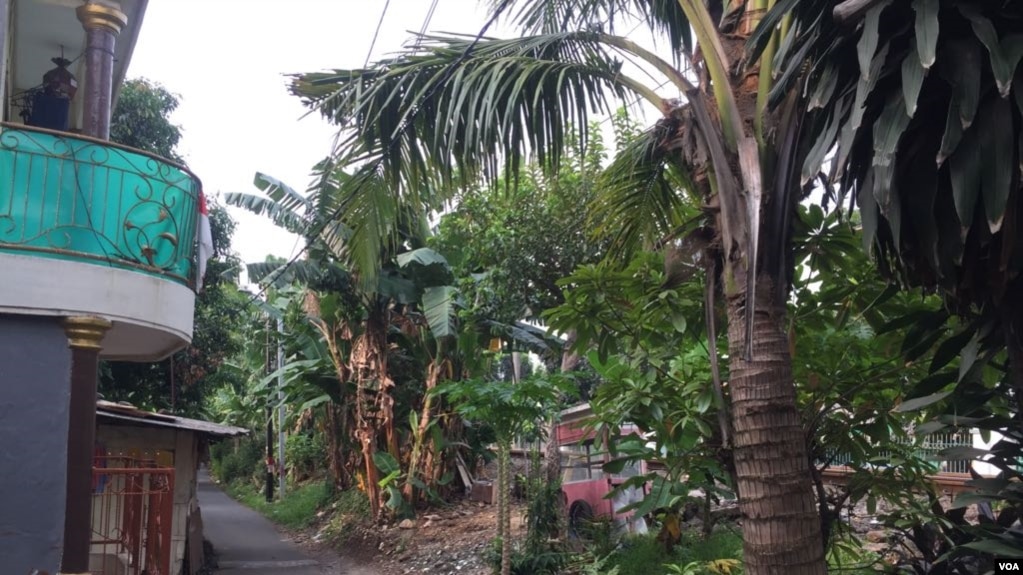
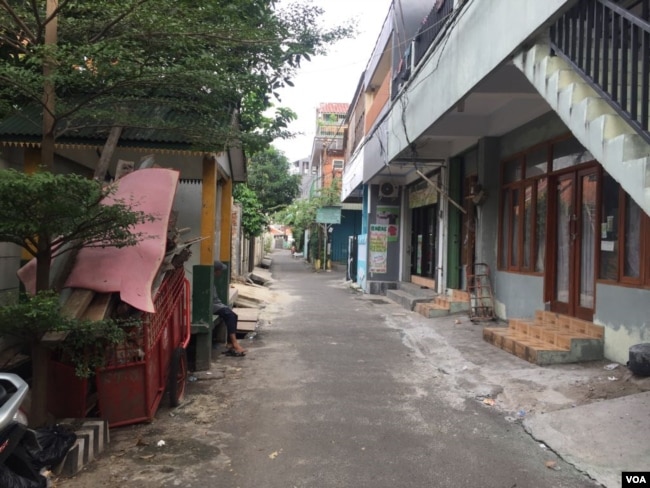
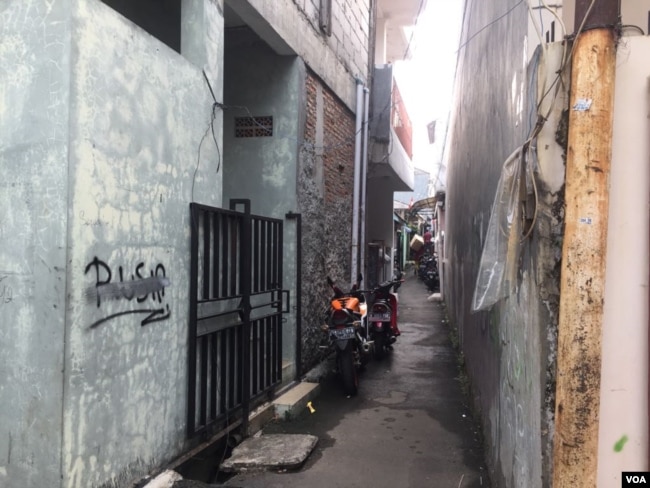
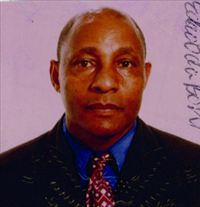


 jalatti Argaman keessatti lagannaan gabayaa itti fufeeti jira Qobbootti Lagannaan gabaa roga hundaan godhamaa kan jiru yoo ta’uu wayyaanen daldaltoota walitti qabdee dirqamaan gara hojii keessanii akka deebitan jettee doorsisaa jirti.daldaltoonnis gibirri humnaa ol nutti fe’ame kan doorsisa kamuu kan nu sodaachisuu miti.nuti waan waggaa kudhanitti dalagannee hin arganne waggaa tokkotti mootummaadhaaf kaffaluu maaltu fide osoo hin hojjanne jiraachuu ni dandeenya jechuun ergamtoota wayyaanee ufirraa oofaniiti jiru.



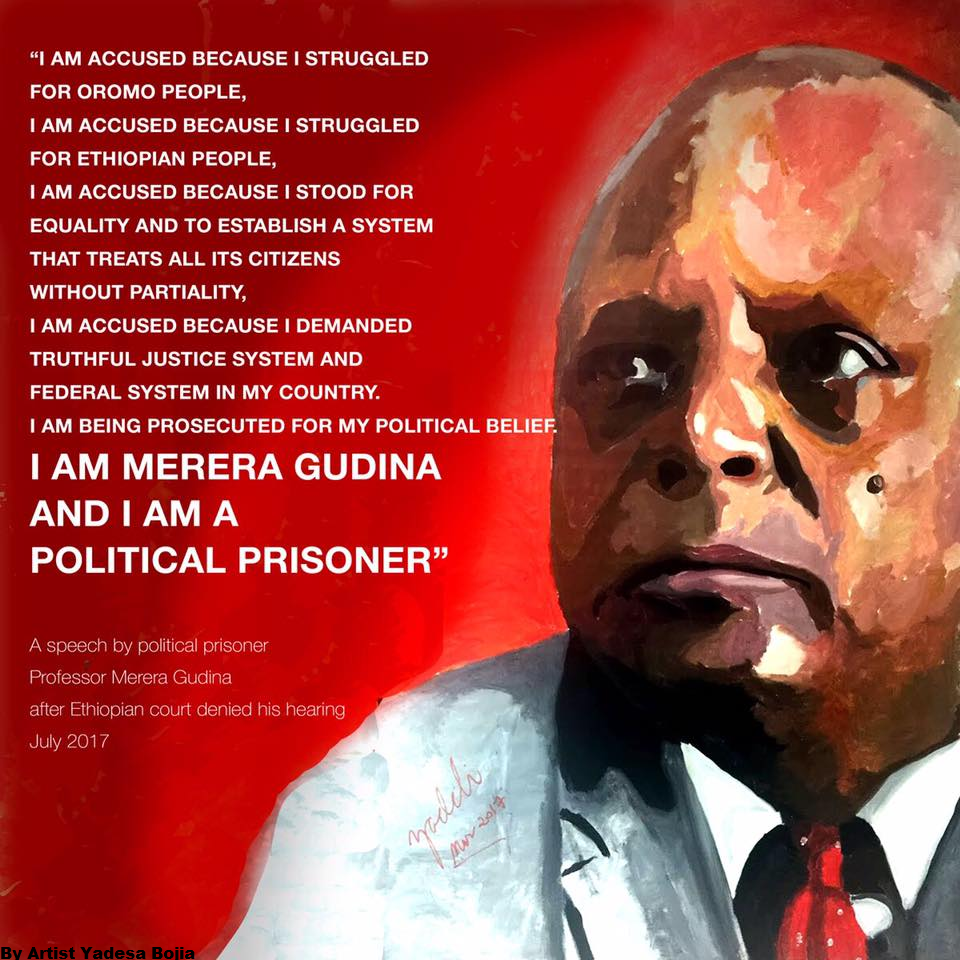

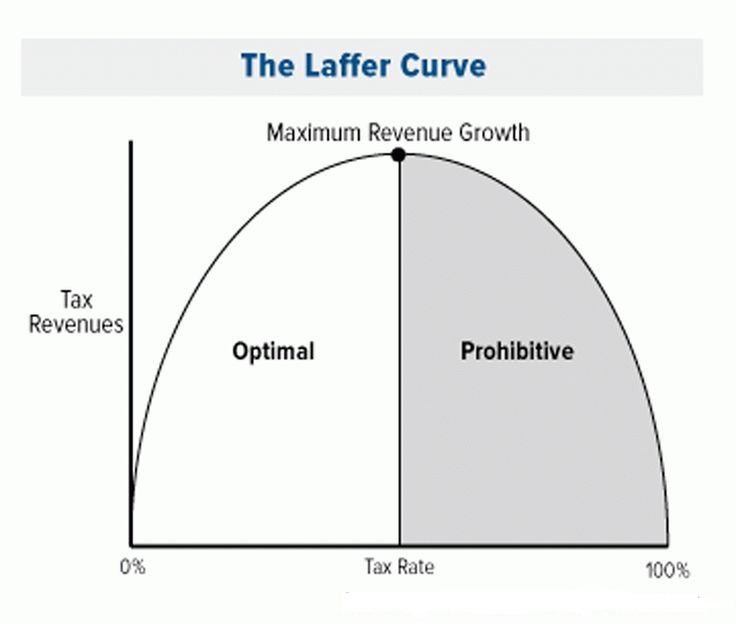




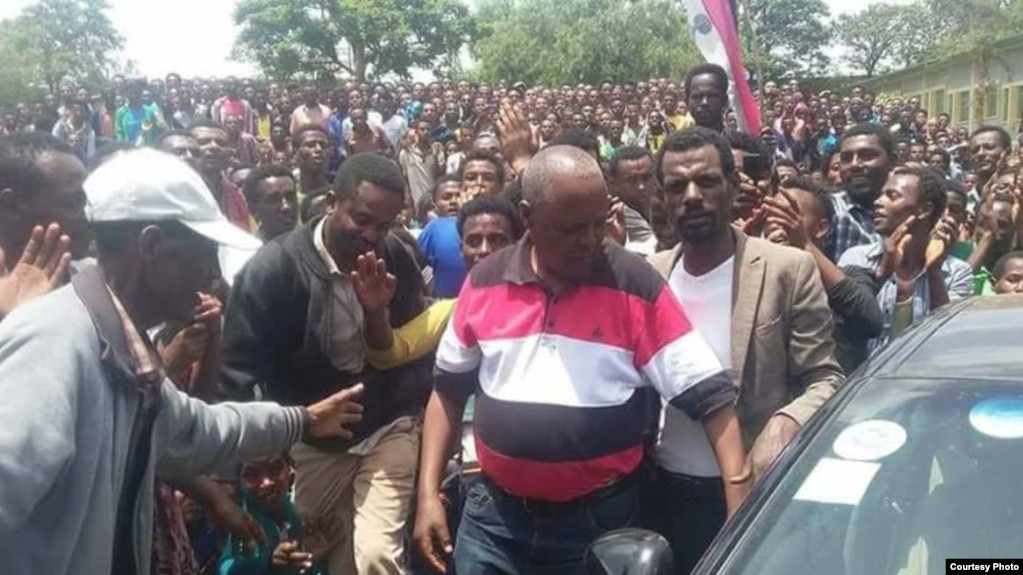


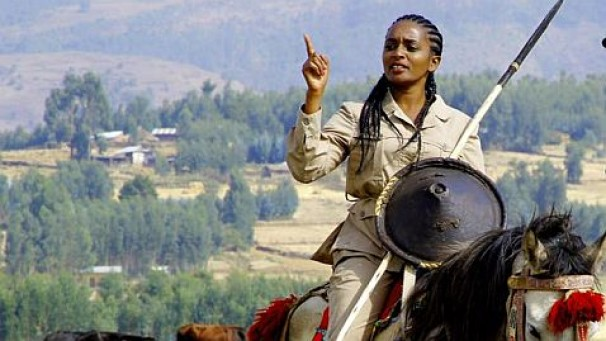
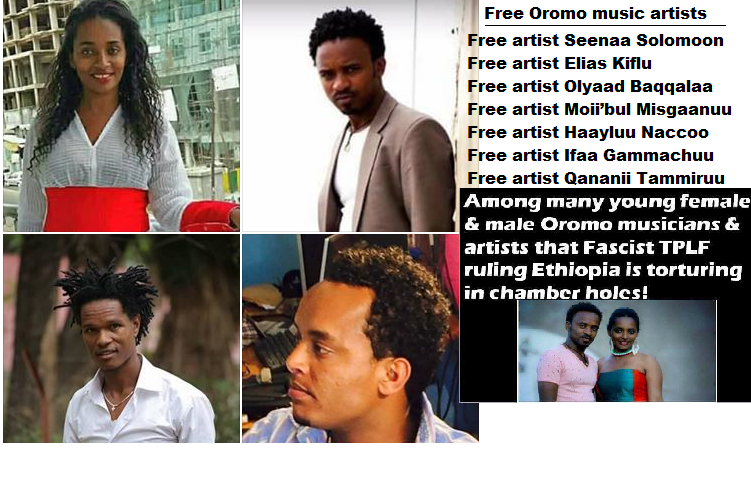




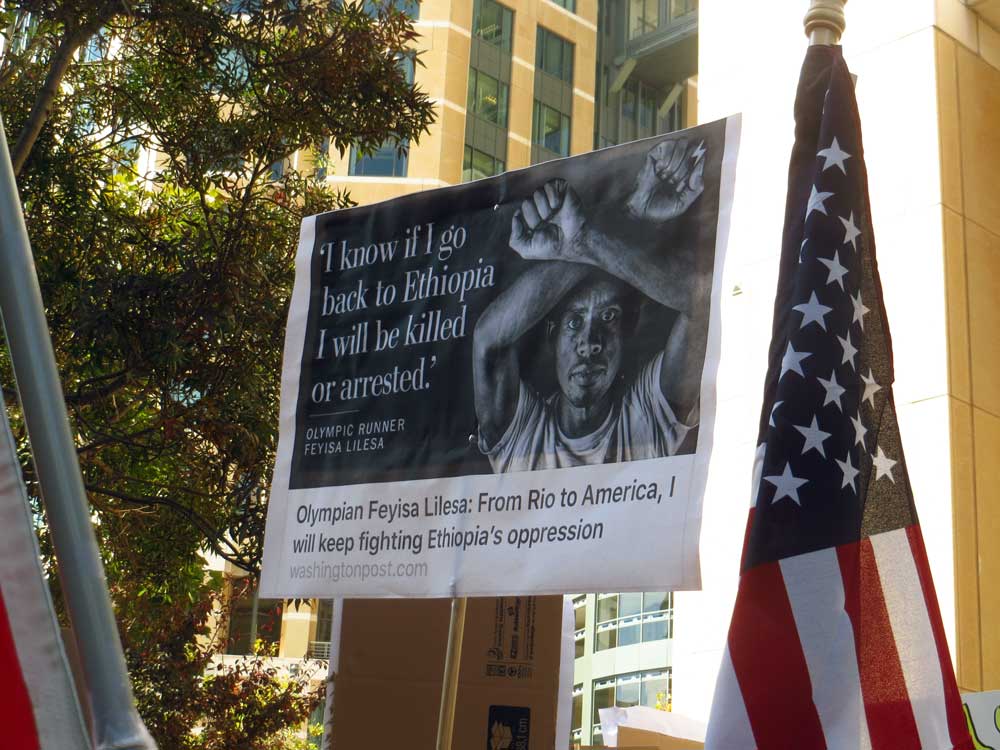






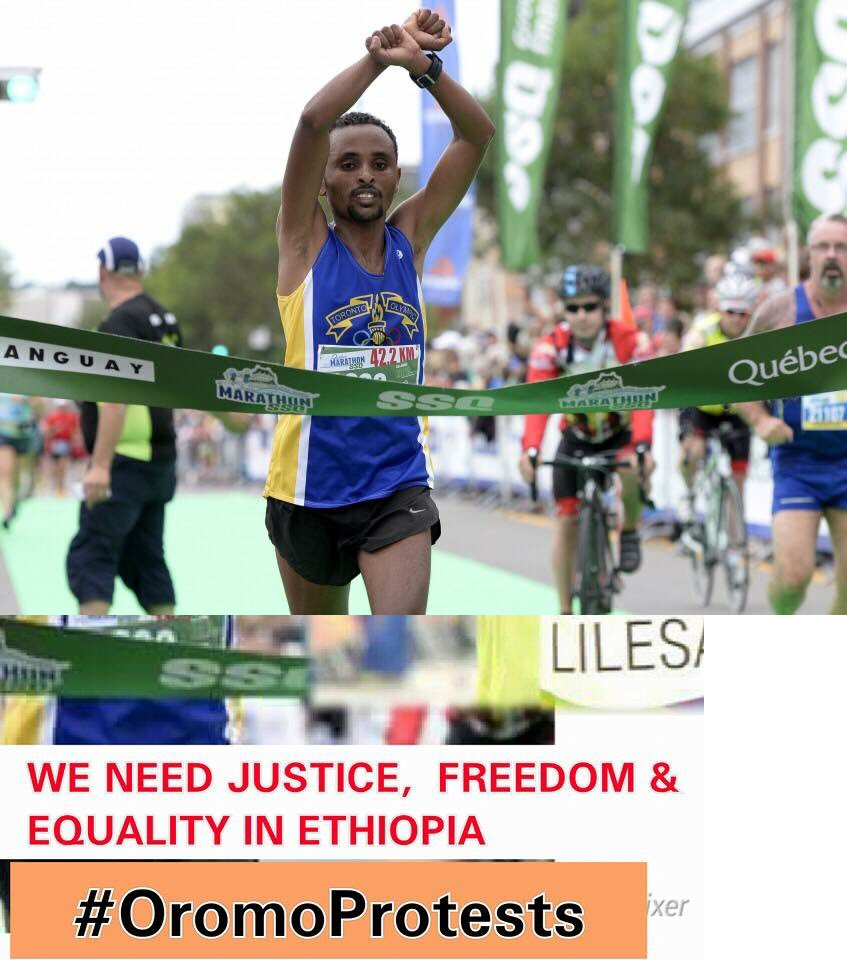


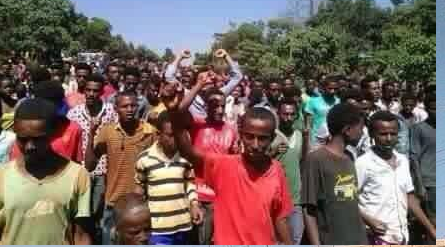





 Waxabajjii 29,2017/Yuunversiitii Wallaggaa keessatti sirna eebbifamtoota bara kanaa irratti diddaan ka’uu. mala jechuun Wayyaaneen baratoota ba’aaf gala dhorkaa jiraachuu Qeerroon gabaase.
 Waxabajjii 30.2017/ Godina Arsii Aanaa Shirkaa Magaalaa Gobeessaa keessatti Dargaggoonni Oromoo hidhamaa jiru. Godina Arsii Aanaa Shirkaatti Ayyaana Iidalfaxriitti Ummanni Akka mormii godhuuf waamicha karaa adda addaatin godhaa turtanii jirtu jechuun Ilmaan Oromoo mana isaanitii guuramuun hidhatti darbatamaa jiru. Akka gabaasni Aanicharraa nu gahe addeessutti dargaggoonni hanga ammaatti mana hidhaatitti darbataman Muhammad Jabboo Aliyyii, Huseen Amaan Gaaradoo, Turaa Jamaal Waakkannee, Ibraahim Jamaal H/ Hasan, Reeduwaan Sh/ Amiin Turee, Awwaloo Ahmad Aloo , Abdii Muhaammad Jamaal, Mahdii Muhaammad Amiin kanneen jedhaman kan keessatti argaman ta’uu maddeen keenya Shirkarraa gabaasanii jiru.





 Biiroon Barnoota OPDO Oromiyaa keessatti tartiiba qubee Afaan Oromoo A B C E F….Z ture jijjirudhaan tartiiba haaraa L irraa eegalu uumee kitaaba barnootaa maxxansee barsiisuu eegaluun wal qabatee gutummaa Oromiyaa keessatti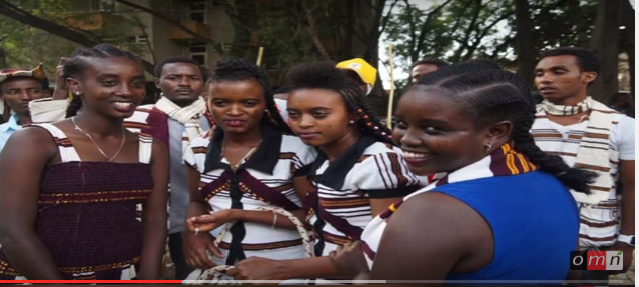


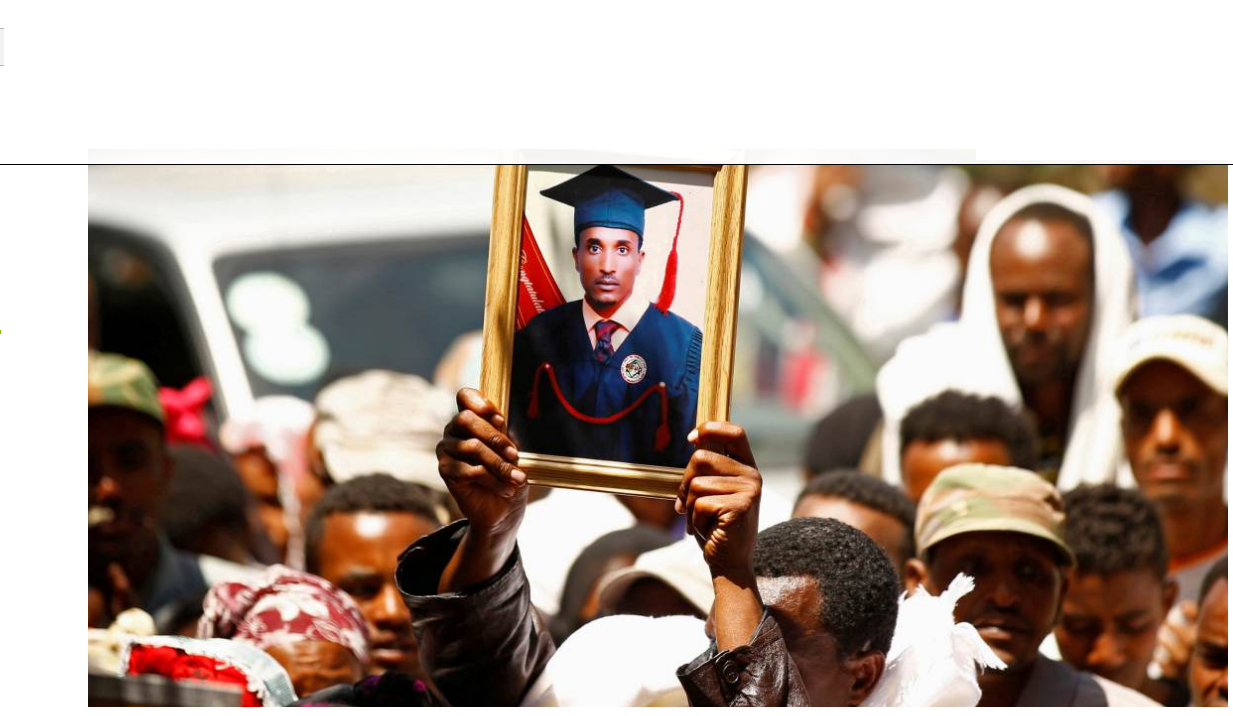



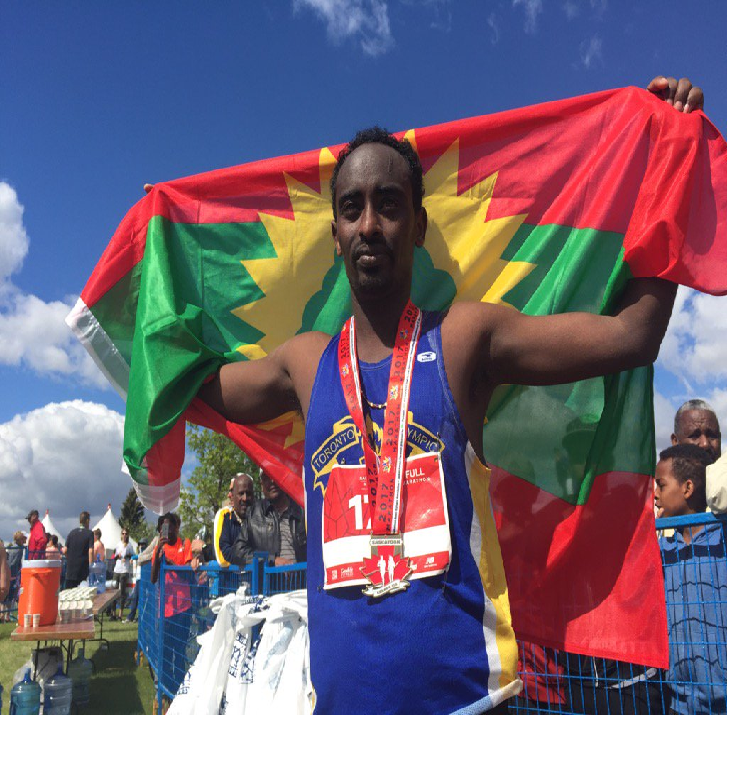





 Oromian Economist

You must be logged in to post a comment.