Economic and development analysis: Perspectives on economics, society, development, freedom & social justice. Leading issues in Oromo, Oromia, Africa & world affairs. Oromo News. African News. world News. Views. Formerly Oromia Quarterly
In January 2017, when Ethiopia’s candidate for director-general of World Health Organization, Tedros Adahanom, stormed to the top of the final three candidates — beating out six other candidates — it was a high time for Ethiopia’s government.
Although Adahanom had faced ferocious opposition from his fellow citizens, he has largely made it through unscathed, giving a propaganda victory for Ethiopian state media. With his well-funded campaign, Adahanom has traveled to more than 120 countries, and his supporters felt confident that his election is all but a matter of time.
Then on May 13, the New York Times ran a story reporting that a “prominent global health expert” had accused Adahanom of concealing three cholera epidemics from 2008 to 2011 during his tenure as Ethiopia’s health minister. Lawrence O. Gostin made the allegations; he is an informal adviser to one of Adahanom’s opponents in the director-general race, the UK’s David Nabarro, but Nabarro told the New York Times that he had not instructed Gostin to make the accusations on his behalf.
Abebe Gellaw, a prominent Ethiopian journalist in the diaspora, wrote on Facebook that it was only the beginning:
New York Times has a hard-hitting article on Tedros Adhanom. Tedros says it is a “smear campaign”. But the revelation is just the tip of the iceberg. A lot more will come out in the next few days…
A screenshot of the New York Times article on Tedros Adahanom. Click the image to read the story on nytimes.com
The explosive article made Adahanom and his supporters defensive while it created a sense of vindication for his opponents. Adahanom has denied the allegations. A former Reuters journalist who wrote Ethiopia’s cholera outbreak in 2009, however, responded on Twitter that the accusations as detailed in the New York Times story was consistent with what he had seen.
Cholera/diarrhoea outbreak hits 18,000 in Ethiopia
Cholera and other diarrhoeal diseases have infected 18,000 people in Ethiopia over the last three weeks in many parts of the country, including the capital Addis Ababa, according to a document seen…
In responding to the allegations, Adahanom accused Nabarro’s camp of engaging in smear campaign with imperialistic intentions. Pro-government groups took this line of accusation even further, claiming Nabarro is working with Ethiopian opposition groups that are labeled as “terrorists.”
Since April 2014, a popular protest movement in Ethiopia has challenged the government, which in turn has responded brutally. According to Human Rights Watch, at least 800 people have died, and thousands of political opponents and hundreds of dissidents have been accused of terrorism. Since October 2016, authorities have imposed some of the world’s toughest censorship laws after it declared a state of emergency.
Now, the tactic of calling opponents “terrorists” has spilled over Ethiopia’s borders and might create blowback for Adahanom as his record is examined critically by international media.
The health ministers of WHO member states will vote for the new director-general on May 23, 2017.
“The state of emergency was also used as a tool to crackdown on political opponents and media. An estimated 400 people have been killed in clashes with security forces in Oromia alone. The increased pressure in 2017 marks a continuation of a long-term worsening trend for Ethiopia, whose score has increased from 91.9 in 2006 to a high of 101.1 in 2017.” – Clicck here to read more at Fund For Peace: MOST WORSENED COUNTRIES IN 2017
Since the end of an almost two-decades long civil war that began in 1991, the Ethiopian People’s Revolutionary Democratic Front (EPRDF) has provided relative political stability and enabled strong economic development. Though an inter-state conflict with Eritrea over disputed territory flared in 1998-2000, since the ceasefire was declared between the two countries in December 2000, Ethiopia has been on a path of strong fiscal growth and has become an increasingly respected player within the international community. Ethiopia’s Gross Domestic Product (GDP) has risen from US$8.2 billion in 2000, to an impressive US$61.5 billion in 2015 – coinciding with major injections of foreign capital from development partners. Looking past these golden dollar sign headlines, however, there are signals that deep social and political fissures have the potential to set the country back on a path to conflict.
Ethiopia’s overall Fragile States Index (FSI) score has been incrementally worsening over the past decade, moving from 95.3 in 2007, to a score of 101.1 in this year’s 2017 index, with Ethiopia — along with Mexico — being the most-worsened country over the past year.
Some of this can be attributed to External Intervention, with its FSI score moving from 6.7 in 2007 to 8.7 in 2017, making it Ethiopia’s most worsened indicator overall for the decade. In 2000, Ethiopia received US$687.8 million in Official Development Assistance (ODA).1 By 2015, it had risen to over four times this with US$3.23 billion in ODA, mostly from the U.S., World Bank and European partners focused on social infrastructure and humanitarian aid.2 While this suggests low capacity of the state to plan and respond to natural disasters without external aid, arguably this development funding has also been crucial in stimulating the rapid economic trajectory of the country. Ethiopia’s economic indicators have both made improvements over the past decade, with FSI scores for Uneven Economic Development shifting from 8.6 in 2007 to 6.5 in 2017, and Poverty & Economic Decline from 8.0 in 2007 to 7.0 in 2017. While the economic trajectory tells one part of the story, the gap in public services between the urban areas such as bustling Addis Ababa, and rural areas – where 81% of the population still live3 — hint at growing disparities. The country’s Public Services score in the FSI has worsened from 7.0 in 2007 to 8.8 in 2017 – much of this is due to poor access to internet and communications, as well as limited improvements in water and sanitation facilities within the county.4 Health infrastructure also remains weak in many areas, with only 15% of births attended by a skilled health professional, and just 0.02 Doctors per 1,000 people within the populous country.5 The highly centralized nature of the EPRDF means that the nine ethno-linguistic regions of Ethiopia have limited power and resources for provision of public services. The military also plays an active role in reinforcing the centralized development agenda – with much of the county’s development driven via the military-controlled conglomerate Metals, Engineering Corporation (METEC). As a 2016 report by Dutch think tank Clingendael surmised, this increases risks of “corruption, nepotism and inefficient resource allocation,”6 all of which can increase the disconnect between development and rural populations.
Compounding these growing disparities between rural populations and economic growth are complex political and ethnic tensions. The historical influence of the Tigray ethnic group – which accounts for about 6% of the population – has been evident since the Ethiopian empire, and reinforced after the Tigray People’s Liberation Front (TPLF) defeated the Ethiopian government in 1991. The TPLF transitioned into the multi-party EPRDF, though Tigray elites are perceived to still hold significant political power within the essentially one-party state. Military leadership has also been dominated by Tigrayans,7 which makes perceptions of Tigray influence within the state apparatus all the more unpalatable to populations that feel increasingly excluded.
It is amidst this climate that major protests and violence have erupted against the government in Oromia and Amhara regions – home to the two largest ethnic groups in Ethiopia. Beginning in November 2015, Oromians began protesting the government’s planned expansion of the capital Addis Ababa into Oromia. Spiraling into a broader fight for increased political freedoms, representation and economic and land rights, the protests were met with brutal crackdowns by public security forces. Reflecting these dynamic factors, Ethiopia has seen negative spikes in its FSI score from 2016 to 2017 in Group Grievance, Human Rights and Rule of Law and State Legitimacy. Human Rights Watch suggests that more than 500 people have been killed during the government demonstrations in 2016, as well as reported incidents of arbitrary detention, torture, and media repression aided by the government’s State of Emergency declared in October 2016.8
While ethnicity remains a politicized factor within Ethiopia – and salient driver of group grievance for populations who feel excluded – it is useful to remember that conflict and violence operates within a system. Issues related to land tenure, access to resources, and economic exclusion can also be contributing drivers for the current insecurity. This is also complicated by ongoing demographic pressures resulting from floods and drought, and flows of refugees and Internally Displaced Persons (IDP) from natural disasters, the effects of climate change, and neighboring countries’ insecurity. Indeed, the FSI score for Refugees & IDPs has steadily worsened over the past decade from 7.9 in 2007 to 9.3 in 2017.
Ethiopia’s centralized government control has served it well for economic growth and rebuilding after the civil war and conflict with Eritrea – as well as maintaining control of the security apparatus amidst neighboring conflicts and regional instability. However, as worsening FSI scores show through both a longer-term trajectory, and recent 2017 spikes, the country must change course to strengthen internal social and economic resiliency. The recent spate of protests and insecurity in areas such as Oromia and Amhara demonstrate the need for political reform – both in perceptions of ethnic elite power – and in more meaningful political representation of each region. This will help to address the disparities in public service provisions that are adding to group grievance and feelings of exclusion. A less centralized approach will also help build governance capacities at regional and local levels – which will support rural development, and provide a chance for better targeted planning and response for natural disasters. As the fourth largest ODA recipient country in 2015, international partners should also continue to play an encouraging role in Ethiopia’s reform, including expansion of civil liberties which will reduce group grievance and increase the perceived legitimacy of the state.
Through addressing the conflict risks and structural vulnerabilities within the country, Ethiopia has a chance to continue a path of peaceful prosperity and even greater economic growth and development.
There’s one drawback to the project observers are calling China’s Marshall Plan. The One Belt One Road initiative, marketed as a modern-day recreation of the ancient Silk Road trading route, is about gaining access to new markets for Chinese goods. (Soft power and finding work for Chinese construction companies are important factors too.)
In this way, One Belt, One Road is similar to Britain’s colonial trade routes, used to take natural resources from its outposts as well as ship finished goods back to its colonial subjects, Eric Olander and Cobus van Staden at the China Africa podcast have observed.
African countries are already flooded with Chinese products. Chinese exports to African countries reached $103 billion in 2015, a figure that is likely much higher because of underreporting and smuggled goods. African countries are exporting far less to China than they’re importing. After years of falling commodity prices, now only 10 out of 53 sub-Saharan African countries have a trade surplus with China, according to 2015 data.– qz.com
China’s campaign to build a massive network of land and sea links connecting Asia, Europe, the Middle East, and Africa is expected to benefit the African countries along the route. Chinese companies will spend at least $1 trillion on roads, ports, and other updates to infrastructure in more than 60 countries that make up the…
Neoliberalism, Harvey writes, is “a theory of political economic practices that proposes that human well-being can best be advanced by liberating individual entrepreneurial freedoms…within an institutional framework [of] strong private property rights, free markets, and free trade” [8]. He goes on to write that neoliberalism “seeks to bring all human action into the domain of the market” [9]. In short, neoliberalism offers a set of market-based solutions to social ills. It supposes that problems experienced collectively can be conquered by individuals. An important aspect of this an antipathy to state intervention. The state, in the neoliberal understanding, only gets in the way of individual entrepreneurs who want to alleviate problems. Hence, deregulation is a prime aspect of neoliberal practice. To quote Steger and Roy in Neoliberalism: A Very Short Introduction, “the state is to refrain from interfering with the economic activities of self-interested citizens” [10]. Neoliberalism presents a profound hatred of collective action in favor of individual motivation. This does not mean, however, that the state under neoliberalism is impotent, ineffectual, or meaningless. On the contrary. Although the regulatory and public service components of the state will be stripped bare under neoliberalism (we will examine this in more detail later), the military and police-the repressive state apparatus-will be inflated to new heights. Harvey writes that the state must “secure private property rights and…guarantee, by force if need by, the proper functioning of markets. Furthermore, if markets do not exist [in water, healthcare, and education, for example] then they must be created, by state action if necessary” [11]. Neoliberalism, then, is not against the state. It is against the state when it interferes with market mechanisms, but is perfectly happy to lean on the state when the neoliberal order is resisted or challenged. Under neoliberalism, the state must protect the interests of the aforementioned entrepreneurial individuals (the capitalists). It will not hesitate to use violence to do this.
It should be noted that this process of violent state intervention has been common, literally, since the very beginning of capitalism. An important part of the development of capitalism in England, for instance, was the land enclosure. rich landowners used their control of state processes to appropriate public land for their private benefit. This created a landless working class that provided the labor required in the new industries developing in the north of England. EP Thompson writes, “in agriculture the years between 1760 and 1820 are the years of wholesale enclosure in which, in village after village, common rights are lost” [12]. He goes on to say, “Enclosure (when all the sophistications are allowed for) was a plain enough case of class robbery” [13].
Dr. David Nabarro is one of the candidates in the fray for election of the next Director-General of the World Health Organisation (WHO) which will be held on May 23.
He has been preparing for this role for a lifetime, in a career path that has seen him travel to 50 countries and responding to the needs of people with Malaria, HIV/AIDS and Tuberculosis. He has also been pioneering a global movement on improving nutrition across 59 countries.
Besides, Dr. David Nabarro will focus on non-communicable diseases (NCDs), which are currently responsible for 70% of all deaths across the world. He is also committed to addressing the stigma of mental health, including depression which affects a staggering 300 million people globally.
Dr David Nabarro said, “We cannot afford to be unprepared for the next global emergency. I have experience on the ground, in communities and in running international crisis responses to ensure that WHO is ready to respond promptly when, not if, the next crisis hits.”
“Meanwhile we continue to fight a global epidemic of chronic diseases. They are killing more than 40 million people a year. As Director-General, I will champion prevention – it makes absolute sense to invest in preventing and reducing the long-term suffering and costs associated with conditions such as diabetes, cancer and heart disease.”
Dr David Nabarro is the UK Candidate to be the next Director-General of the WHO and has over 40 years of experience working in international public health as a practitioner, educator and public servant.
Reacting to Dr. David Nabarro’s candidacy, Lindiwe Majele Sibanda, CEO of the Food, Agriculture and Natural Resources Policy Analysis Network (FANRPAN) said, “David is one of the most committed, passionate humanitarians I have had the privilege of working alongside. His breadth of experience as a doctor, development expert and multilateral adviser makes him the best choice for WHO’s next Director-General. He is able to bring diverse groups of people together and find solutions to some of the most challenging problems through brave and visionary leadership.”
“His energy is amazing! His expertise in addressing wicked problems such as climate change and malnutrition is unparalleled which is why I am confident that David will ensure WHO is fit to face the challenges of the next decade and that the poorest and most vulnerable do not get left behind.”
Dr. David Nabarro said that should he be elected Director-General, his goal is for everyone, everywhere to have universal access to the healthcare they need, especially women and children and added that WHO’s role is to provide rapid and high quality support to governments and their citizens.
As human beings, we are in our very nature compassionate and collaborative, but our current monetary and economic systems are based on the narrative of separation that creates and encourages competition. For too long, we have told a story about nature ‘red in tooth and claw’ and excused the worst of human behaviour as natural. Scarcity is primarily a mindset and lack of collaboration not a biophysical reality! Competition creates scarcity, which in turn is used to justify competitive behaviour (a vicious circle).
The natural limits of bioproductivity and healthy ecosystems functions don’t create scarcity as such. Collaboration can turn these natural planetary limits into enabling constraints to create abundance for all within healthy ecosystems and a healthy biosphere. Collaboration creates shared abundance, which in turn invites more collaboration (a virtuous circle). We choose which world we want to bring forth together! – Dr. Daniel Christian Wahl
US doesn’t need Ethiopia in its war on terror in the Horn of Africa
BY ALEMAYEHU G. MARIAM,THE HILL, 5 MAY 2017
Earlier this month, U.S. Defense Secretary Jim Mattis visited the Middle East and Africa to “reaffirm key U.S. military alliances” and engage with strategic partners.” Mattis only visited the tiny nation of Djibouti in the Horn of Africa where the U.S. maintains its largest military base. Ethiopia was conspicuously absent from the “strategic partner” lineup.
Social intelligence is the key to career and life success. Do you have it?
Intelligence, or IQ, is largely what you are born with. Genetics play a large part. Social intelligence (SI), on the other hand, is mostly learned. SI develops from experience with people and learning from success and failures in social settings. It is more commonly referred to as “tact,” “common sense,” or “street smarts.”
Emotional intelligence starts with understanding your own emotions (self-awareness), then being able to manage them (self-regulation) and use them to achieve your goals (self-motivation).
Once you are able to understand and manage yourself, then you start to understand the emotions and feelings of others (empathy) and finally to influence them (social skills).
It’s no secret that good leaders are also good communicators. And the best leaders have learned that effective communication is as much about authenticity as the words they speak and write.
Indeed, communication and leadership are inextricably tied. How can you galvanize, inspire or guide others if you don’t communicate in a clear, credible, authentic way?
Great leaders are people with the skills, commitment, and character that we want to emulate. The very best lead by example and aren’t afraid to roll up their sleeves and work side-by-side with followers. They are Optimistic and Inspirational. Great leaders build bridges, not walls. They do the right things. They don’t abuse or “damage” followers in the process. They unite, not divide. And, they leave the followers and the team/organization/country better off than when they began to lead.
Some Ethiopians are fiercely campaigning against Tedros Adhanom, Ethiopia’s candidate to replace Margaret Chan Fung Fu-chun, as director general of World Health Organization, just a few weeks before member states are set to vote on the final three candidates.
Tedros, a former Ethiopian foreign and health minister, along with Pakistan’s Sania Nishtar and the UK’s David Nabarro are the three director-general nominees who made the cut from a larger pool of candidates in January.
Tedros, who is running a well-funded campaign, is considered as a prime contender in the race. His candidacy was endorsed by the African Union, and just last week he picked up an endorsement of Andrew Mitchell, the UK’s former international development secretary.
However, he is facing unrelenting opposition from his own citizens.
Ethiopians who feel marginalized by their country’s government are campaigning hard against him online, arguing he should not be elected because he represents the interests of Ethiopia’s autocratic ruling elites and not the people.
They have set up online petition pages against Tedros and produced a documentary film detailing what they consider to be his failures and his alleged mismanagement of funds while he was Ethiopia’s health minister.
They have organized Twitter campaigns under a hashtag #NoTedros4WHO to organize conversations surrounding the topic. To make his Ethiopian government profile at the top of the public’s consciousness, his opponents have share detailed research that accuses Tedros of inefficiencies, misreporting, and exaggerations of his achievements when he used to serve in Ethiopia.
However, amid fears that the campaign might diminish his chances, government groups are also running a parallel campaign supporting his candidacy. They have downplayed the opposition as unpatriotic, mean-spirited and trivial jealousy.
Since April 2014, a popular protest movement in Ethiopia has challenged the government, which has responded brutally. According to Human Rights Watch, at least 800 people have died, and thousands of political opponents and hundreds of dissidents have been imprisoned and tortured. Since October 2016, authorities have imposed some of the world’s toughest censorship laws after it declared a state of emergency.
The role of ethnic politics
Some of Tedros’ detractors say they oppose his candidacy because of his alleged incompetence. But a big part of what drives the fierce opposition to Tedros is the logic of ethnic politics.
Tedros holds a Ph.D. from the University of Nottingham in community health. He studied biology at Asmera University before he completed a master’s degree in immunology of infectious diseases in London.
When people hear his name, as qualified as he may be, his opponents associate him with a repressive Ethiopian government that has killed people, jailed thousands of political opponents, and imprisoned and tortured dissidents.
His meteoric rise to power started soon after he finished his Ph.D. in 1999 when he was tasked to lead the Tigray region’s health department. After two short years in Tigray, he was promoted to Ethiopia’s minister for health by the late prime minister Meles Zenawi, a Tigrayan himself. In 2012 when Meles Zenawi died, Tedros became Ethiopia’s foreign minister.
Tigray is one of the nine regional states that are federated based on ethnolinguistic compositions.
Over the past 26 years, the Tigrayan elites have taken center stage in Ethiopia’s political affairs, largely due to their control of the military, security and the economy of Ethiopia. Though accounting for only 6% of Ethiopia’s population, all senior positions of country’s military and security and the most meaningful positions in state institutions are packed by Tigrayan elites. This has always been a sore point with the elites of the Oromo and Amhara ethnicities, who together comprise 65% of Ethiopia’s population.
Ethiopia’s government has used authoritarian tactics against its people and the country’s politic space is a closed one; however, it enjoys the support of powerful countries such as the United States and the United Kingdom.
Domestic disputes on a global platform
The vigorous opposition to the Tedros candidacy suggests that Ethiopians political struggle has spilled over into the international arena. In some sense, it also suggests that these global platforms have become a substitute for a repressed domestic political space.
Since Ethiopia’s local political institutions and communications infrastructure are controlled by the government, diaspora groups, however sporadic and uncoordinated their efforts may be, have used the opportunity to shed light on the human rights violations using Twitter campaigns.
Zeid expressed alarm at the “extremely large number” of arrests and said some charges against those detained “may be misplaced.”He asked that U.N. staffers be allowed to visit the areas of unrest. “We may then perhaps provide a list to the government and ask for specific releases” of people detained, Zeid said. “This requires more attention.”
ADDIS ABABA, Ethiopia (AP) — Ethiopian officials have blocked United Nations access to areas that experienced deadly protests during one of the country’s most violent periods in recent memory, the U.N. human rights chief said Thursday.
Zeid Ra’ad al-Hussein spoke during a three-day visit to the East African nation at the government’s invitation. Ethiopian Prime Minister Hailemariam Desalegn has rejected United Nations and other outside requests to investigate the months of anti-government protests demanding more political freedoms.
The government has said at least 669 people were killed and largely blames the political opposition for the unrest. Opposition figures and human rights groups say security forces killed protesters, while the government has called security forces’ response “proportionate.”
More than 26,000 people were detained amid the protests, and Ethiopia in October declared a state of emergency that recently was extended.
Zeid expressed alarm at the “extremely large number” of arrests and said some charges against those detained “may be misplaced.”
He asked that U.N. staffers be allowed to visit the areas of unrest. “We may then perhaps provide a list to the government and ask for specific releases” of people detained, Zeid said. “This requires more attention.”
The human rights chief also expressed concern about anti-terrorism laws in Ethiopia, saying that “an excessively broad definition of terrorism may be misused against journalists, bloggers and members of opposition parties.”
Earlier Thursday, Zeid addressed the crisis in neighboring South Sudan, saying up to 50,000 civilians in the country’s Upper Nile region are at imminent risk of human rights violations as government troops close in.
Many civilians in Aburoc town, some of whom recently fled a military attack on nearby Kodok town, are ethnic Shilluk and have faced a sharp rise in government attacks as South Sudan’s civil war continues.
Zeid said military commanders on both sides show little regard for protecting civilians.
Separately, the U.N. humanitarian affairs agency said roughly 100,000 civilians have been displaced after a South Sudan government offensive in the Jonglei region.
Army spokesman Santo Domic Chol did not comment on fighting in either location but said government attacks on civilians “didn’t make sense” because civilians are not armed.
Associated Press writer Justin Lynch in Nairobi, Kenya contributed.
Breaking:UN High Commissioner for Human Right "My office unable to corroborate or confirm findings of th #Ethiopian Human Rights Commission" pic.twitter.com/aT2TyFS5iT
At a press conference, Zeid said he was concerned about the mass arrests last year during protests driven by discontent among the country’s two largest ethnic groups, which left hundreds dead.
“The extremely large number of arrests, over 26,000, suggests it is unlikely rule of law guarantees have been observed in every case,” Zeid said.
“I am requesting the government to consider, if possible, the release of a number of individuals whose arrest or conviction appears to have been motivated by fear of criticism rather than evidence of intent to spark violent overthrow,” he said. – More at Daily Mail.
NewsweeK: U.N. Renews Calls to Investigate Deadly Anti-Government Protests in Ethiopia
The U.N. has renewed calls to the Ethiopian government to let human rights officials conduct independent investigations into allegations of abuses by security forces against protesters in the country in 2015 and 2016.
“Tens of millions of hectares of land on the African continent have been grabbed by foreign investors in recent years. This has led to loss of life, land, and livelihoods for millions, and threatened the very survival of entire communities and indigenous groups,” commented Anuradha Mittal, Executive Director of the Oakland Institute. “The World Bank must acknowledge that this is not development. It is not poverty reduction. These are investments for corporate profits that exploit and displace people.”
In Africa, the investigation uncovered 11 projects backed by IFC clients that have transferred approximately 700,000 hectares of land to foreign investors. The projects include agribusiness concessions in the Gambela region of Ethiopia that were cleared of their indigenous inhabitants during a massive forcible population transfer campaign in the area; oil palm plantations in Gabon that have destroyed 19,000 hectares of rainforest and infringed on the customary land rights of local communities; and a gold mine in Guinea that led to the violent forced eviction of 380 families.
“These projects are antithetical to the World Bank’s mission of fighting poverty through sustainable development,” said David Pred, Managing Director of Inclusive Development International.
Oakland, CA—The World Bank Group has indirectly financed some of Africa’s most notorious land grabs, according to a report by a group of international development watchdogs. The World Bank’s private-sector arm, the International Finance Corporation (IFC), is enabling and profiting from these projects by outsourcing its development funds to the financial sector.
“Pouring money into commercial banks that are driven only by profit motivations is not the way to foster sustainable development,” said Marc Ona Essangui, Executive Director of Brainforest and winner of the Goldman environmental prize in 2009. “In Gabon, this development model has instead enabled a massive expansion of industrial palm oil, which threatens our food security and the ecological balance of Congo Basin’s ancient rainforests.”
“Tens of millions of hectares of land on the African continent have been grabbed by foreign investors in recent years. This has led to loss of life, land, and livelihoods for millions, and threatened the very survival of entire communities and indigenous groups,” commented Anuradha Mittal, Executive Director of the Oakland Institute. “The World Bank must acknowledge that this is not development. It is not poverty reduction. These are investments for corporate profits that exploit and displace people.”
The report is based on a yearlong investigation conducted by Inclusive Development International, which found that IFC-supported commercial banks and private equity funds have financed projects across the world that have forcibly displaced hundreds of thousands of people and caused widespread deforestation and environmental damage. In Africa, the investigation uncovered 11 projects backed by IFC clients that have transferred approximately 700,000 hectares of land to foreign investors.
The projects include agribusiness concessions in the Gambela region of Ethiopia that were cleared of their indigenous inhabitants during a massive forcible population transfer campaign in the area; oil palm plantations in Gabon that have destroyed 19,000 hectares of rainforest and infringed on the customary land rights of local communities; and a gold mine in Guinea that led to the violent forced eviction of 380 families.
“These projects are antithetical to the World Bank’s mission of fighting poverty through sustainable development,” said David Pred, Managing Director of Inclusive Development International. “They also make a mockery of the IFC’s social and environmental Performance Standards, which are supposed to be the rules of the road for the private sector activities that the IFC’s intermediaries support.”
Inclusive Development International’s yearlong investigation uncovered 134 harmful or risky projects financed by 29 IFC financial-sector clients. These projects are found in 28 countries and on every continent except Antarctica. A database of the findings can be found here.
In response to the concerns raised in the Outsourcing Development investigation and by the IFC’s Compliance Advisor Ombudsman, IFC Executive Vice President Philippe Le Houérou recently acknowledged the need for the World Bank Group member to re-examine its work with financial institutions. In a blog post from April 10, Le Houérou wrote that the IFC would make “some important additional improvements to the way we work,” by scaling back the IFC’s high-risk investments in financial institutions, increasing its oversight of financial intermediary clients and bringing more transparency to these investments, among other commitments.
The IFC has also exited investments in banks highlighted by the Outsourcing Development investigation, including ICICI and Kotak Mahindra in India and BDO Unibank in the Philippines.
“We welcome the IFC’s new commitments to encourage a more responsible banking system by increasing its oversight and capacity building of financial sector-clients moving forward,” said Pred. “However, rather than simply divest, we want to see the IFC work with its clients to redress the serious harms that communities have suffered as a result of the irresponsible investments that we have brought to light.”
“IFC’s collusion in land-grabbing in Africa is deeply shocking, so its pledge to reduce high risk lending to banks is welcome, said Kate Geary, Forest Campaign Manager for Bank Information Centre Europe. “But how can we be sure when there is no disclosure of where over 90 per cent of IFC’s money invested through third parties ends up? The IFC’s financial sector clients must come clean about projects they are financing so they can be held accountable to their commitments to invest responsibly.”
Financial-sector lending represents a dramatic shift in how the IFC does business. After decades of lending directly to companies and projects, the World Bank Group member now provides the bulk of its funds to for-profit financial institutions, which invest the money as they see fit, with little apparent oversight. Between 2011 and 2015, the IFC provided $40 billion to financial intermediaries such as commercial banks and private equity funds. Other development finance institutions have followed suit.
Unjust Enrichment: How the IFC Profits from Land Grabbing in Africa is available at:
Ethiopia wants companies that make clothes to view it as one of the world’s most hospitable places to operate. Low employee wages and cheap power have led foreign companies to gravitate towards the Horn of Africa nation in recent years. The government recognizes the strategic importance of garment and textile making, and has continued to invest in the sector by constructing large industrial parks like the Hawassa Industrial Park.
But its land and human rights problems could jeopardize that ambition, according to a new report from risk consultancy firm Verisk Maplecroft. Protests over land reform and political participation have rocked the country since 2015, leading to the reported death of hundreds of people and the detention of tens of thousands of others.
“The sector remains exposed to a host of political, social and environmental risks,” says Emma Gordon, a senior Africa analyst with Verisk. And “many of these issues are unlikely to be resolved over the coming five to ten years.”
These concerns could affect the cotton industry, and limit the opportunity to expand sustainable production. The persistence of child labor, water pollution, the exposure of workers to harmful chemicals, and the possibility of resumption of protests also pose a threat.
Ethiopia is one several east African countries—including Kenya, Uganda, and Tanzania—identified as an important center for apparel sourcing. In a 2015 survey by global management company McKinsey, Ethiopia appeared as one of the top countries worldwide where companies wanted to source their garments from in the next five years.
Retail giants such as H&M, Primark, and Tesco have sourced or established textile factories in Ethiopia to diversify from Asian markets like China and Bangladesh. The footwear industry in Ethiopia is also growing, with the Huajian Group, the Chinese manufacturer that produces Ivanka Trump’s shoe brand, talking about plans to move production to Ethiopia.
Industrial parks in Ethiopia (Courtesy/ Verisk Maplecroft)
These operations could be undermined by the political and social protests. The demonstrations began over plans to expand the capital Addis Ababa into neighboring towns and villages populated by members of the Oromo community—the country’s largest ethnic group. Although the Tigray-dominated government canceled the plans, protests escalated.
At the height of the protests in August and September 2016, flower farms and foreign commercial properties worth millions were burnt. The government responded by quashing the protests, shutting down the internet, and instituted a state of emergency in October that has lasted to date.
Gordon says that given that the “underlying drivers” of the protests have not been addressed, it is “highly likely that similar protests will erupt again.”
Land problems are also expected to intensify as drought ravages the country. Last week, the government announced that 7.7 million people were in need of emergency food aid. While the economy depends on agriculture, just 5% of the country’s land is irrigated, according to the United States Agency for International Development. The competition over fertile land as well as the government’s controversial plan to lease large swaths of land to foreign investors and private interests could jeopardize prospects for companies interested in doing business in Ethiopia.
“Investors are likely to become increasingly unpopular in the communities that they rely on for both their security and their workforces,” Gordon said.
Lindiwe MazibLiuko, a South African politician and former leader of the opposition, thinks it does. In a session on leading in an era of disruption, she called for a new generation of leaders to do a better job of addressing the continent’s challenges.
For an outsider, Addis Ababa is the seat of the Ethiopian federal government. It is also the host city of the Headquarters of the African Union (AU), formerly the Organization of African Unity (OAU), and the United Nations Economic Commission for Africa (ECA), and other international organizations, and diplomatic mission numbering over one hundred twenty embassies and consulates making it the diplomatic capital of Africa with the potential to become one of the leading world metropolis.
However, this very rosy picture becomes more murky and troublesome when one looks into the domestic sides of Addis Ababa. The domestic picture of Addis Ababa is in stark contrast to what it claims to portray itself nationally and globally. It is one of the most segregationist and discriminatory city in the world. It is built on evicting and dispossessing the Oromo people of their ancestral land through the war of conquest, and a predatory land grab policy that evicted and dispossessed the land belonging to the Oromo people.
In 1843, Major William C. Harris, the Head of United Kingdom’s Delegation who visited Ethiopia during that time and stayed with an Amhara warlords of the day vividly recorded in his book “The Highlands of Aethiopia (1844, Vols. I-III)” his eyewitness description of the carnage, the savagery, and the barbarity of those warlords on Oromo residents of Finfinnee. Major Harris’s Book Vol. II (p. 185-198) accounts on how tens of thousands of Oromo peaceful and unarmed residents of Finfinnee were massacred and destroyed by a European armed savages and warlords through its war of looting expeditions. In 1887, Addis Ababa was built on the graves of those brave Oromo heroes and heroines.
This agony of Oromo forefathers on whose grave Addis Ababa is built is the everyday agony and brutalizing memory every Oromo youth carries in his heart and lives with every single day. It is the cause for which every single Oromo will fight for and die for until the ownership rights of the Oromo people on Addis Ababa is fully and completely restored and respected.
Fast forward, over the last 25 years alone, Addis Ababa evicted close to one million Oromo residents from Oromo districts surrounding Addis Ababa silently and incrementally through systematic and consistent military style operations. In his Book “ The Meles Legacy: Addis Ababa, the Ownerless city”, Erimias Legesse, the Former State Minister for Ethiopian Government’s Spokesperson Office, accounted over 10 years he was in the Addis Ababa City Council alone, close to 150,000 Oromo families were evicted from their land, and their whereabouts are unknown.
When the recent French supported Addis Ababa Master Plan slated to evict twelve million Oromos in ten years’ time from 36 cities and seventeen woredas in Central Oromia zones was announced it triggered the memories of 1840- 1887 all over again. The Oromo people protested and drew the battle lines not to be played again.
2. How is the EPRDF handling question of the Oromo people over Addis Ababa?
In spite of the war of conquest partly mentioned above, no other Ethiopian regimes formally questioned the ownership rights of the Oromo people on Addis Ababa, since its creation in 1887, except the current EPRDF government of Ethiopia.
Let’s recap this. Under all previous Ethiopian regimes, including that of Emperor Menelik II, Lij Iyasu, Queen Zewiditu, Emperor Haile-Selassie, and the military regimes of General Teferi Bantii & Colonel Mengistu Haile-Mariam, the status of Addis Ababa as the seat of the central government and its status as the Capital City of Shewa Province has never been disputed or questioned or even debated!
Administratively, the Municipality of Addis Ababa was reporting to Menagesha Awraja, an area that covers pretty much the current Special Oromia Zone surrounding Addis Ababa. Menagesha Awraja in turn was reporting to the Shewa Province which in turn reports to the Ethiopian central government. At no time in its history was Addis Ababa separated from Shewa Province and placed under the political control of the Ethiopian central government let alone becoming a separate region except in the last 25 years.
The project of separating Addis Ababa from the Oromia State and that of the Oromo people started rolling as soon as the current government took the state power from the Derg Regime in 1991. As soon as it assumed the state power, the government of the late Prime Minister Meles Zenawi established Addis Ababa as a separate region, calling it Region 14, by proclamation No.7/ 1992 in 1992. Article 49 sub article 5 of the current federal constitution simply adopted the watered down version of this proclamation.
To avoid immediate backlash from the Oromo people, the newly crowned rebels recognized “the political rights and special interests of the Oromo people and region 4 over Addis Ababa” under Article 65 of Proclamation No.7/1992. The political rights and special interests of the Oromo people enshrined under this proclamation has never been legal elaborated or even get discussed. In short, Proclamation 7/1992 denied the Oromo population of the former Shewa Province their city in the name of self-administration, and the entire Oromo people the right to administer one of their city and the loss of the heartland of Oromia and their capital city with stroke of a pen.
In a further strategy to weaken the Oromo people’s ownership rights on Addis Ababa and empower Addis Ababa as a colonial enclave, the EPRDF government divided and disenfranchised Shewa Oromo population in the former Shewa Province into five zones which now includes West Shewa, North Shewa, South West Shewa, East Shewa, and the Special Oromia Zone surrounding Addis Ababa. A small part of the old Shewa province is also redistricted under the Amhara National Regional State with Debre Berhan as its zonal capital.
This strategy, which seems to have worked well until the #OromoProtests, was to divide and give the OPDO boys small balls for each one of them in their respective zones so that they will take off their eyes from the bigger ball while the big guys will play the national political and economic tournament with perfection with the bigger ball in Addis Ababa. The EPRDF sold this poly of creating six zones out of the previously one and very strong Shewa province as an administrative convenience for these newly created zones. In reality, none of the newly created zones gained any politically and economic advantage in the last 25 years except being weakened, impoverished, disenfranchised and gerrymandered to benefit the predatory beasts in Addis Ababa.
The current so called “talks” on Article 49 sub article 5 of the Federal Constitution’s “special interests clause of Oromia in Addis Ababa” is sequel two of the poly of the EPRDF to finish and perfect what the 19th Century war of conquest failed to do by completely separating Addis Ababa from Oromia and the Oromo people.
3. How is Addis Ababa treating the Oromo people now?
The policies of Addis Ababa toward the Oromo people has always been predatory. Its policies are premised on evicting, dispossessing, displacing and exploiting the Oromo to benefit, make room and place for non-Oromo settlers. Over the last twenty-five years, Addis Ababa is not only displacing and evicting the Oromo people, it is also the prison and torture capital of the Oromo people where all major torture centers and hidden prisons including Ma’ikalawi are located. Some call Addis Ababa the Gitmo of the Oromo people where tens of thousands of Oromos are tortured, killed, and detained.
Politically, economically and socially speaking, except for the nominal claim that Addis Ababa is the capital city of Oromia, Addis Ababa is the antithesis of everything Oromo. There is virtually no Oromo political, economic and cultural presence in Addis Ababa. All political, economic and cultural powers are fully in the hand of the settlers. Despised, marginalized and excluded in their own land, the Oromo people are considered as undesirables and strangers not welcomed in Addis Ababa, and are openly discriminated against.
According to the Addis Ababa City Charter, Amharic is the only official working language of the city. This means Afaan Oromo is legally and factually banned in Addis Ababa. Afaan Oromo speakers neither get employment nor public services this city provides through its public institutions. Afaan Oromo speakers’ political participation in Addis Ababa is unthinkable. Instead, the EPRDF government appoints Amharic speaking Oromo with no political constituency in the city as the Mayor of Addis Ababa to serve as a rubber stamp for the wish and whim of the deep state, and cow the Oromo people through well perfected political fraud.
There is no single Afaan Oromo public school or college in Addis Ababa. There is no single Afaan Oromo print or broadcast media for Afaan Oromo speakers in Addis Ababa. All Addis Ababa-based print and broadcast media outlets, theaters, and cinema centers, youth centers, museums, and city operated social institutions are legally banned from using Afaan Oromo. With the exception occasional translation services in court hearings, there is no single entity that provides even translation or interpretation services for Afaan Oromo speakers. All legal documents and court decisions are issued only in Amharic.
In fact, since the environment of discrimination is so pervasive and heavy, almost all private businesses and social institutions including churches, banks, hospitals, clinics, hotels, cafés, retail and wholesale shops conducts all their businesses only Amharic. One hardly finds Afaan Oromo speaking businesses or churches in Addis Ababa.
For Afaan Oromo speaking citizens of Addis Ababa, Oromo refugees in New York or Washington DC or Minneapolis have more self-worth and rights than Afaan Oromo speakers in Addis Ababa. Oromo speaker in Washington DC, New York or Minneapolis can get interpretation services in hospitals and other public institutions, a right an Oromo in Addis Ababa could not even contemplate.
Although it might be unfair to blame Addis Ababa for all the misery and ills of the Oromo people, it is fair to say that all the racist and discriminatory policies and laws against the Oromo people by the Ethiopian regimes continue to be hatched and nurtured in Addis Ababa. The Ethiopian government’s monolingual language policies and systemic policies of exclusion and marginalization of the Oromo people from Ethiopia’s economically, politically and social systems are developed and executed with near perfection and exported to the rest of the country from here.
Addis Ababa is a city that aspires to become a global city before it becomes a city to its own people on whose land it is founded. Owing to this discriminatory and segregationist policies, the Oromo people’s relationship with this city is that of love and hate. They love it because they believe it is their city. They hate it because they are being segregated, discriminated and unwelcomed in it.
4. What is the demand of the Oromo people on Addis Ababa?
The demand of the Oromo people on Addis Ababa is simple and straight forward. It is the demand to right the wrongs listed above! It is the demand of ownership right of the Oromo people on their land and their city. It is the demand of the Oromo people to politically administer their city and have a part in its development. It is the demand for the Oromia national regional government to have a taxing power (the power to impose and collect tax) and police power (the power to issue laws and policies and enforce them) on Addis Ababa and to administer it.
Rejection of the Ethiopian government’s aggression and denial of self-governance rights of the Oromo people of themselves and their capital city, Addis Ababa, is at the heart of the #Oromoprotests that is going on for the last two years.
This demand of the Oromo people over Addis Ababa is best encapsulated in the single rallying cry of the #OromoProtests. It says “Finfinneen Handhura Oromiya ti!” in Oromo language. Loosely translated, it means “Addis Ababa is the heart, the umbilical cord & the center of Oromia!” It simply means Addis Ababa is the heartland of Oromia and Oromia’s capital city. The two are inseparable; one and the same! Oromia will not exist without Addis Ababa, and Addis Ababa will not exist without Oromia!
The slogan “Finfinneen Handhura Oromiya ti!” shows the undisputed ownership, full political and economic rights including the police and taxing powers of the Oromia State over Addis Ababa. The slogan shows Addis Ababa is inextricably connected with the dignity and the honor of the Oromo people.
The Oromo people have never ever lost, relinquished, nor abandoned their ownership rights on Addis Ababa, and never will! Not now! The future belongs to the Oromo people to right the wrongs and injustices perpetrated on the Oromo people in Addis Ababa and its surroundings. The OPDO has no political, legal or historical mandate from the Oromo people to sign any form of surrender agreement that undermines, diminishes, compromises or further complicates the fully political, economic and social rights of the Oromo people on Addis Ababa. Not now. Not ever!
5. Why has OPDO no legitimacy to sign the surrender agreement with EPRDF and Addis Ababa Municipality?
OPDO cannot spend the political capital it never had both within the Oromo people and the member organizations of the EPRDF. For the last 27 years of its existence, OPDO was literally homeless and never had a legally recognized capital city to govern the Oromo people.
Most people don’t know this very important fact. OPDO’s boutique offices in Addis Ababa has no legal basis to exist there. Neither the federal government’s constitution nor the charter of Addis Ababa city administration nor the constitution of Oromia recognizes Addis Ababa as the capital city of Oromia. Not even the internal party rules of EPRDF recognizes Addis Ababa as the political capital of OPDO, nominally the ruling party in Oromia.
The EPRDF, mainly the TPLF, decides where the OPDO should be in a given year depending on the political tempo of the Oromo people. Initially, in 1991, OPDO was kept in Addis Ababa because of the pressure from the OLF. Then, after the OLF got weakened, OPDO was sent to Adama. When the pressure mounted on EPRDF/TPLF from Matcha Tullama Self-Help Association, the Oromo students, and OFC, OPDO was returned from Adama to Addis Ababa where it still exists.
Now, the EPRDF and Addis Ababa city powerholders are talking to the OPDO on the “special interests of the Oromo people over Addis Ababa” because of the #OromoProtests while those Oromo leaders who voiced their concern with the Oromo people like Dr. Merara Gudina, Bekele Gerba and tens of thousands other brave Oromo leaders are languishing in prison.
For the EPRDF, OPDO, in spite of the good intentions and brave efforts of some OPDO leaders, are just a front to pursue their selfish economic, political and security interests in Oromia, and use it as a tool to appease the Oromo people when the going gets tough. All well-meaning and enlightened OPDO leaders from top to bottom knows this political reality and fact. And the Oromo people knows it very well.
Therefore, the OPDO has no political and legal mandate of its own to negotiate, compromise and agree to anything fundamental let alone sign off on the surrender agreement of any sort short of the full political, economic and social rights of the Oromo people over Addis Ababa.
If the EPRDF leadership and the powerholders in Addis Ababa want a legitimate and final solution on the question of Addis Ababa and other Oromo issues, please release the Oromo leaders in prison and negotiate with them and other rightfully designated Oromo people’s leaders.
It is important for the EPRDF leadership and the deep state in Addis Ababa to know that their political fraud of separating Addis Ababa from Oromia is dead on arrival. The Oromo people will never ever accept, negotiate or compromise on any gamesmanship and deception short of complete and clearly defined full political, economic, cultural and administrative rights of the Oromo people and Oromia National Regional State over Addis Ababa.
‘Finfinnee is an Oromo city; it is the capital of Oromia, it can not be neutral. As such, it will undergo a fundamental change. Anyone who cries foul of the ”special interest” proclamation, specially those within the federal government, should know that the simplest solution to the problem is to change the seat of federal government. How about that? Any attempt to deny or resist changes to the city might very soon turn it into a sieged Balkan town.’- Biyya Oromiyaa
‘If you want to respect the so called ‘special interest’ of Oromia in Finfinnee, start with the simple act of making the Finfinnee City Council accountable to Oromia. Formally recognize the Oromo name of the city and of its sub-cities. Declare Afaan Oromo as one of the working languages of the city. Anything less is a joke. (But then, what of politics in Ethiopia today is not a brutal joke?’ #OromoRevolution – Tsegaye Ararssa
Land Grabbing and Violations of Human Rights in Ethiopia
Malkamuu Jaatee, Anywaa Survival Organization
28 January 2016
Introduction
Land grabbing is classically known as the seizing of land by a nation, state or organization, especially illegally or unfairly. It is recently redefined as a large scale acquisition of land through purchases or leases for commercial investment by foreign organizations (6). Both micro and macro scales of land grabbing can result in displacement of indigenous communities and disappearance of their identities over time, because land is not only a fixed asset essential to produce sufficient amount of crop and animal to secure supply of food, but it is the foundation of identities (language, culture, & history) of communities living on the land.
Changes to land use without consultation of traditional owners of the land – mainly by forceful displacement of indigenous peoples, can, in the long-term, result in the disappearance of human communities traditionally identified with that ancestral land. Both expansion of amorphous towns & cities, without meaningful integration of indigenous peoples and large-scale transfers of rural land to investors, are the major political strategies of the current government of Ethiopia under the Tigrayan People’s Liberation Front (TPLF) or the Ethiopian People’s Revolutionary Democratic Front (EPRDF) to achieve the target of the systematic eradication of rural communities living around cities and at vicinity of agro-industries, mainly in Oromia and Southern (Benishangul-Gumuz, Gambella and Omo) regions. Conflicts arising from land grabbing have become very complex wars disturbing the daily lives of the oppressed peoples of Ethiopia, because the peoples are undemocratically represented by the regime.
Conflicts arising from land grabbing have become very complex wars disturbing the daily lives of the oppressed peoples of Ethiopia, because the peoples are undemocratically represented by the regime.
The allocation of farmland to investors has been going on in Ethiopia since at least 1995. The years between 2003 and 2007 were the boom years for cut-flower exportation to Europe. Demand for land by foreign investors began to increase sharply since 2006. More than one-third of the land allocated to investors in the ten years period was given out in 2008. Year 2008 was a mad rush of investors to get access to land with many applicants requesting large tracts measuring more than 10,000 hectares (21). About one million hectares of land was transferred to 500 foreign investors in the period between 2003 and 2009. The largest foreign holding is Karuturi Company of India, which has been given 0.3 million hectares of land in Gambella and 11,000 in Bako district of Oromia (21). In 2009 and 2010, about 0.5 million hectares was allocated to investors. The land transferred to investors between 2004 and 2008 was 1.2 million hectares (27).
The land transferred to large-scale investors, without including land already allocated, has been planned to increase from 0.5 million in 2011 to 2.8 million hectares in 2013, and to 3.3 million hectares in 2015 (15 & 16). Total land transferred to investors will measure about 38% of land currently utilized by smallholders (21). Therefore, at least 7 million hectares of agricultural land was transferred to investors between 1995 and 2016. In addition the long-term plan to expand Addis Ababa city administration at 200 kilometers radius was secretly designed by the regime until the hidden plan has made public in 2014.
The impact of land grabbing in Ethiopia is manifested through five interconnected factors that the regime has designed to sustain its military, political and economic powers in order to protect its brutal and savage governance system for the next quarter or half a century. Analytical evaluation of effect of current land grabbing policy indicates destabilization of livelihood assets of rural communities of Oromia and Southern Ethiopia through the following five factors: aggravation of poverty, increase of food insecurity, intensification of conflicts, degradation of ecosystem quality, and deterioration of human rights conditions (13). This review focuses on the human rights violation and its political implications.
1. Deterioration of conditions for basic human rights in Ethiopia
The TPLF regime is escalating its violations of human rights through the implementation of a very dangerous policy of land grabbing in Oromia and Southern Ethiopia. The regime has killed at least 180 innocent Oromo civilians in the last two months (mid November 2015 to mid January 2016), while the Oromo people peacefully protesting against the unfair land use policy. Thanks to the founders of media technologies, reports of human rights violations are daily circulated around the globe at high intensity and are known to the international communities. The regime is accustomed to kill unarmed civilians since it has illegally controlled the capital city of Oromia, Finfinne (Addis Ababa), on May 28, 1991. Between 1994 and 2010, OSG (the Oromo Support Group, a UK-based human rights organization) has reported 4185 instances of extrajudicial killings, and 944 disappearances of civilians suspected of supporting groups opposing the government, a majority of them from the Oromo people (19). The capacity of human rights organization to access data of extrajudicial killings and disappearances in Ethiopia is at most limited to 10% of data recorded by the OSG, because carrying out politically motivated extrajudicial killings in darkness is common in the security system of the regime. Therefore, the number of civilians murdered by the regime, between 1991 and 2016, can be above 56,000 (fifty six thousands) based on a conservative estimation of the recorded extrajudicial killings in Ethiopia.
The violations of civil rights during the process of land grabbing include both direct and systematic crimes against humanity. Human rights violations directly carried out by the regime include physical mistreatment like beating, raping, detaining, torturing and killing during the forced evictions of rural communities from their ancestral land. Survival’s director, Stephen Corry, said that, “The Ethiopian government and its foreign backers are bent on stealing tribal land and destroying livelihoods: they want to reduce self sufficient rural communities to a state of dependency, throw all who disagree into prison, and pretend this is something to do with progress and development” (24). Systematic violations of human rights mainly involve limitation of accessibility to basic human needs through the destruction of livelihood assets of the people. Outcomes of violations of the legitimate rights of indigenous people to access ancestral land are as follows: increase of population living in extreme poverty; reduction of subsistence crop and animal production; unsafe drinking water and shortage of food; poor health conditions; increase of internal displacements and refugees; financial disability to access basic needs; and reduction to the status of forced manual laborer.
The direct human rights violation practices of the regime in Oromia and Southern (Benishangul-Gumuz, Gambella and Omo) regions of Ethiopia demonstrate atrocities of the land grabbers. For example, human rights violations in the lower Omo valley are characterized by arbitrary arrests and detentions, beatings and mistreatment, governing through fear and intimidation, and violations of economic, social and cultural rights (11). The government and its police force are cracking down, jailing and torturing indigenous people and raping women in the Omo region that the people do not oppose the land grabs and an interviewee said, “Now the people live in fear – they are afraid of the government” (23). In a report based on more than 100 interviewees in May and June 2011, a victim from Gambella said, “My father was beaten for refusing to go along [to the new village] with some other elders, he said, ‘I was born here – my children were born here – I am too old to move so I will stay,’ but he was beaten by the army with sticks and the butt of a gun, he had to be taken to hospital, and he died because of the beating” (10). About 200 Bodi, 28 Mursi and 20 Suri tribes men and women of Omo region are in jail, and the indigenous people now fear that the security forces may start killing people and they said, “The arrests are a show of force, to intimidate us not to oppose the land grabbing policy: ‘we lived here in peace, in the heart of our land, the place where all of our cattle were grazing during both the rainy and dry seasons; but now, in this place there is a plantation owned by a rich Malaysian company who trained 130 soldiers and armed them with 130 machine guns by the government: if our people oppose the land grabbers, the soldiers are ready to kill us” (22). Since mid November 2015, the regime put Oromia under a martial law. The Oromo people of all age (children, youth, and elderly) and all classes (schoolchildren, university students, peasants, teachers, medical staff, engineers and other civilians) are indiscriminately targeted by the brutal and savage governance of the regime. The special military (Agazi) and the federal police forces of the regime have wantonly killed hundreds of Oromo civilians since April 2014. The regime has declared war on the Oromo people in order to maintain its illegal occupation of Oromia.
The then head of the TPLF regime, Prime Minister Meles Zenawi, rejected the critics of land grabbing as ill-informed and he said, “We want to develop our land to feed ourselves rather than admire the beauty of fallow fields while we starve.” Also the head of the government agency responsible for land leasing (Mr. Essayas Kebede) said, “Ethiopia benefits in many ways from land deals that we will receive dollars by exporting food; the farms provide jobs; they import know how; they will help us to boost productivity; and therefore, we will improve food security” (20). However, the institutionalization of corruptions will effectively limit the distribution of investment benefits to the poor people of Ethiopia. For example, between 2000 and 2009, Ethiopia lost US$11.7 billion to illicit financial outflows. The illicit money leaving the economy in 2009 was US$3.26 billion, double of the amount in 2007 and 2008, and greatly exceeds the US$ 2 billion value of total exports of Ethiopia in 2009 (8). Even though the peoples of Ethiopia try, by any means, to fight poverty, the possibility to defeat evil system is full of challenges. The global shadow financial system happily absorbs money that corrupt public officials, tax evaders and abusive multinational corporations siphon away from the peoples of Ethiopia (8). Therefore, the implementation of global land grabbing policies directly limit socio-economic development of the rural communities to access primary human needs – mainly sufficient food, pure & safe water, and adequate house, cloth, & medical services.
Human rights violations directly carried out by the regime include physical mistreatment like beating, raping, detaining, torturing and killing during the forced evictions of rural communities from their ancestral land.
The right to feed households and family is realized in rural areas of Sub-Saharan Africa with the right to access agricultural land to produce sufficient food through crop and animal productions. Failure of African governments to protect & guarantee sustainable use of land & water, to produce food by subsistence peasants, constitutes a violation of the right to food, because assuring long-term supply of food is part of their obligations in relation to the right to food. The right to adequate food exists when every individual, household or family has achieved physical & economic access to adequate food at all times or means for its procurement. Agricultural investment policy of the TPLF regime encourages export oriented crop production. For example, the Saudi Star produces rice in Ethiopia and export to the Middle East. Karuturi marketing & logistics make no secret of the fact that the investment is commercial that the company will sell its agricultural products to those who pay most (20). But, at least 80% peoples of Ethiopia are very poor to access food economically to buy it, if it is available. Agricultural companies mainly focus on production of commercial crops, because investment on agriculture in remote areas is profit oriented. Therefore, the investment on the production of local stable food crop is very marginal. For example, the investment of Indian agro-companies on food crop is less than 10% (25). The violation of land accessibility rights of rural communities has resulted in increase of starvation rate through dramatic reduction of subsistence crop or/and animal productions. Therefore, the land grabbing policy of the TPLF regime will increase food insecurity.
The right of rural communities to access agricultural land is the most important factor to achieve primary standard of living, because agriculture is the foundation of the livelihood assets of rural communities. Access to land is an essential element of the right to an adequate standard of living and the realization of the right to work (art. 11 and art. 6 ICESCR). Land grabbing leads to forced displacements and refugees. The right to adequate housing is the right to live somewhere in security, peace and dignity (3). The right to housing is directly linked to the right to be protected from forced evictions. For example, the forced displacement of 270,000 indigenous peoples from the western Gambella and Omo regions to new villages by the government of Ethiopia details the involuntary nature of the transfers, loss of livelihoods, deteriorating food situations, and ongoing abuses by the armed forces against the affected people: and that many of the areas from which people are being moved are leased by the government for commercial agricultural development (10 & 11). The violation of the rights to live somewhere in peace is defined as the permanent removals of individuals, families, and/or communities from their homes and/or lands that they occupy, on either a permanent or temporary basis, without offering them appropriate measures of protection (4). Rural communities of the Omo Valley of South Ethiopia are neither ‘backward’ nor in need ‘modernization,’ they are as much a part of the 21st century civilization as the multinationals that seek to appropriate their land; but forcing them to become manual laborers will certainly lead to a drastic reduction in quality of their lives, and condemn them to starvation and destitution like many of their fellow countrymen’ (23). Despite some instances of income improvement by export opportunities, the expansion of world agricultural trade has failed to translate into better living conditions for most of workers on farm in the developing world (12).
Governments and private investors assume rural community accessibility to the job market compensates for the loss of land and livelihoods. However, income derived from daily wages never replaces livelihood assets of rural community, which are constantly and directly derived from land use. For example, some peasants were employed as casual laborers (day laborers) by the coffee plantation following eviction from their land and they received about 1$ per day for a fixed amount of work that they have often completed in two days work (1). Large shares of commercial agriculture jobs are characterized with very poor working conditions mainly very low payment, low-skilled daily work, seasonal fluctuation, without health insurance, very high risk of accidental death without insurance, violence, harassment, and employment of underage children. A young boy is digging up weeds kneeling in the middle of a sugar cane field in blistering temperature of 40 C º, while an Indian worker stands over him to make sure he does not miss any and Red is eight years old and earns 73 pence for one day work, i.e. less than the cost of using pesticides (20). Children attending primary school are significantly decreased in areas of land grabbing. Deputy Head of a school (Tigaba Tekle), near the Karuturi farm said that only 5 out of 60 students are sometimes attending a class, because most of them are working at agricultural fields of Karuturi (20). Land commercialization will never establish sustainable and safe employment opportunities for rural peoples of Oromia & Southern regions, because colonial governance system never takes into consideration security and dignity of oppressed peoples. Therefore, unsustainable and unsafe employment conditions can not compensate loss of livelihoods of rural communities forcefully evicted from ancestral land.
2. Political function of land grabbing policy of the TPLF regime
Governance authorities of imperial, military, and TPLF regimes are highly centralized with absolute land ownership right to sustain rule of dictatorship through chains of colonial agents at regional, provincial, and local levels of Ethiopia. Gebar land tenure system in the South as well as the Rist tenure system of North Ethiopia during imperial regime shows some resemblance to the current land tenure system and with some reservations also it resembles that of the military regime, with the exceptions that the communal Rist system is replaced by the organs of state, i.e. the peasant associations. Land grabbing is the major source of military, political, and economic powers of successive regimes of Ethiopia. Government of Ethiopia (the TPLF regime) is owner of the land, but the rights of individuals and communities are ‘holding (use) rights’ (Proclamation No. 456/200550). Though ethnic equality is now legally recognized, in practice, emergent regions are still politically marginalized and permitted less autonomy, partly due to the federal development strategy, which requires central control of local land resources and changes in livelihoods (14).
Centralization of land governance politics of successive regime of Ethiopia is manifested through the following five levels of land use rights: owner-ship, management, sanction, full accessibility right, & limited accessibility right (Table-1). Land tenure politics of both imperial and military or TPLF regimes are generally sharing similar political goal, i.e. manipulation of land use rights to maintain monopoly of governance powers. The commercialization of land has served as a political advantage for the state, because it enhances greater concentration of authority in the hands of the governors. A woreda (district) or an urban administration shall have the power to expropriate rural or urban landholdings for public purpose where it believes that it should be used for a better development project to be carried out by public entities, private investors, cooperative societies or other organs, or where such expropriation is decided by the appropriate higher regional or federal government organ for the same purpose (Proclamation No. 455/200558).
Table 1: Two types of land use rights in Ethiopia since 1889
The TPLF regime is intentionally violating the land accessibility right of rural communities of Oromia and Southern Ethiopia to achieve political goals of maintaining its brutal & savage governance system. The regime has already institutionalized practices of human right violations through manipulation of constitution. It formulated politically motivated proclamations to limit humanitarian activities of Non Governmental Organizations (NGOs) using charities proclamation and to crash political opponents through manipulation of anti-terrorism law in order to protect its monopolistic ownership of military, political, and economic powers (18). The regime is not hesitated to practice arbitrary arrest, long detention, or extrajudicial killings of tens of thousands, and torturing peoples suspected to be supporters of opposition political organizations to sustain fears in civil societies. The regime is systematically escalating the level of insecurity by aggravating poverty, expanding borders of food insecurity, manipulating conflicts, degrading safety of ecosystem, and escalation of violations of human rights in order to produce the poorest of poor peoples mainly in colonized regions of Ethiopia. Thus it is intended to use victims of poverty as political animal through manipulation of land use right. The regime easily regulates support of rural communities for the opposition political parties by threatening subsistence livelihoods of about 80% of 95 million people. The rural communities are directly controlled by the regime and they cannot freely vote opposition political parties during election, because they will be deprived of land use right if they do so.
The regime […] uses food aid as an instrument to achieve political objectives, and to protect its governance powers.
The very existence of governance powers of the regime is possible only with external aids. Foreign aid was essential for birth of the TPLF regime and it is also very essential for growth and expansion of the regime, as oxygen is essential for lung. During the 1974 – 1991 financial, material, & technical supports of the international donor communities were channeled through political NGOs organized by the TPLF to areas under its control to support both military and emergency programs (17). The aids were resulted in increase of peasant-based supports, legitimacy expansion among the civilian population, use of aid resources to support organizational structures, and quantitative capability in feeding the armies (26). Since 1991, the regime received very huge sum of financial aids. It received at least a sum of US $ 50 billion in development aid as of 2015. However, majority of peoples in Ethiopia remained in the most wretched poverty, despite decades of development aids. The regime is manipulating foreign military and development aids as instrument to suppress peaceful transfer of governance powers since 1991 through marginalization of legitimate opposition political parties or fronts. The government of Ethiopia used donor-supported programs, salaries, and training opportunities as political weapons to control the population, punish dissent, and undermine political opponents—both real and perceived, that the local officials deny these people (i.e. supporters of opposition parties) to access seeds and fertilizer, agricultural land, credit, food aid, and other resources for development (9). Policies of aggravating poverty through destruction of livelihoods of rural communities are systematically implemented by the regime to sustain political manipulation of aids, because either emergency or development aids are political instrument of the regime to enforce political support. Therefore, increasing level of poverty is tactical increase of enforcement of peoples electing the regime.
The regime is frequently manipulating food aid distribution to crash supporters of political opponents. It uses food aid as an instrument to achieve political objectives, and to protect its governance powers. Land grabbing policy of the regime is systematically intended to increase size of people dependent on food aids in order to secure political support using food aids. For example: “Despite being surrounded by other communities which are well fed, a village with a population of about 1700 adults is starving. We were told that in the two weeks prior to our team’s arrival 5 adults and 10 children had died. Lying on the floor, too exhausted to stand, and flanked by her three-year-old son whose stomach is bloated by malnutrition, one woman described how her family had not eaten for four days. Another three-year-old boy lay in his grandmother’s lap, listless and barely moving as he stared into space. The grandmother said, we are just waiting on the crop, if we have one meal a day we will survive until the harvest, beyond that there is no hope for us (2).” The affected families were supporters of opposition political party participated in 2010 election in Southern Ethiopia. The regime intentionally increases climate of insecurity and fear in society that for those depend on food aids they must support the ruling party in order to survive threat of systematic assassination. Therefore, political loyalty to the ruling party (the TPLF/EPRDF regime) governs the existence of rural communities of Ethiopia.
3. Conclusion
The review indicates the genocidal plan systematically designed by the TPLF regime using the unfair land use policy as a tool in Oromia and Southern Ethiopia to achieve the political goal of complete ownership of the land through silent eradication of the indigenous communities in the long-term. “Genocide Watch considers Ethiopia to have already reached Stage 7, genocidal massacres, against many of its peoples, including the Anuak, Ogadeni, Oromo, and Omo tribes” (7). The people of Oromia in particular, and all oppressed peoples of Ethiopia in general, are struggling to reverse this policy of systematic genocide waged on them by successive regimes of Ethiopia.
International and local human rights organizations have frequently produced reports of violations of constitutional rights of peoples of Ethiopia… However, the defenders of successive regimes of Ethiopia have not paid attention to any of the independent reports.
The effort of human rights organizations to defend victims of the evil policy of land grabbing in particular, and the politically motivated human rights violations in general, are full of challenges, because the transformation of the global business into unfair economic development is mostly to the advantage of the strongest. Both international and local human rights organizations have frequently produced reports of violations of constitutional rights of peoples of Ethiopia by the TPLF/EPRDF regime since early 1990. However, the international communities and defenders of successive regimes of Ethiopia have not been paid attention to any of the independent reports.
The United Nations in particular, and the international community in general, should actively engage in establishing independent commissions of justice both at regional and global levels to investigate negative effects of unfair land grabs that threaten the existence of indigenous human communities in order to enable victims of land grabbing to access fair justice. I would like to close with a song of King David. “God presides in the great assembly; he gives judgement among the `gods`: How long will you defend the unjust and show partiality to the wicked? Defend the cause of the weak and fatherless, maintain the rights of the poor and oppressed. Rescue the weak and needy; deliver them from the hand of the wicked. They know nothing, they understand nothing. They walk about in darkness; all the foundations of the earth are shaken.” (Psalm 82: 1 – 5)
On Thursday, the Ethiopian government increased its count of the number of people requiring emergency food aid from 5.6 million to 7.7 million, a move that aid agencies say was long overdue. The figure is expected to rise further as southeast Ethiopia confronts another fierce drought.
But with food crises erupting across the continent and the government’s budget strained by last year’s drought, the money isn’t there to fight it. There could eventually be as many people in Ethiopia needing emergency food assistance as in Somalia and South Sudan combined.
There have also been accusations that the government is playing down the severity of the crisis to keep the country from looking bad internationally. During the earlier drought, it was months before the government admitted there was a problem, in part because Ethiopia had gained a reputation as Africa’s rising star and didn’t want to go back to being associated with drought and famine.
The contrast is clear in the bustling capital, Addis Ababa, where rainy skies and a hive of construction projects make it feel thousands of miles away from any drought. While Pizza Hut restaurants are set to soon open in the capital, thousands of children in the arid southeast suffer from acute malnutrition, and cholera is ripping through the relief camps.
World Food Program supplies are distributed in a village in Jijiga district, part of Ethiopia’s Somali region. (Michael Tewelde/World Food Program)
ADDIS ABABA, Ethiopia — The announcement by the United Nations in March that 20 million people in four countries were teetering on the edge of famine stunned the world and rammed home the breadth of the humanitarian crisis faced by so many in 2017.
Yet even as donors struggle to meet the severe needs in the war-torn nations of Nigeria, South Sudan, Somalia and Yemen, another crisis, more environmental in nature, is taking place nearby — nearly unnoticed.
On Thursday, the Ethiopian government increased its count of the number of people requiring emergency food aid from 5.6 million to 7.7 million, a move that aid agencies say was long overdue. The figure is expected to rise further as southeast Ethiopia confronts another fierce drought.
But with food crises erupting across the continent and the government’s budget strained by last year’s drought, the money isn’t there to fight it. There could eventually be as many people in Ethiopia needing emergency food assistance as in Somalia and South Sudan combined.
Ethiopia, long associated with a devastating famine in the 1980s, returned to the headlines last year when it was hit by severe drought in the highland region, affecting 10.2 million people. Food aid poured in, the government spent hundreds of millions of its own money, and famine was averted.
Now it’s the turn of the lowland region, particularly the area bordering Somalia, where a drought brought on by warming temperatures in the Indian Ocean has ravaged the flocks of the herders in the region and left people without food.
With their sheep and goats mostly dead, the nomads are clustered in camps surviving on aid from the government and international agencies — but that food is about to run out.
“This response capacity that is currently holding it at bay is about to be overwhelmed,” said Charlie Mason, humanitarian director of Save the Children, which is particularly active in Ethiopia’s impoverished Somali region. “We’ve spent all the money we’ve got, basically.”
With donors focused on Somalia across the border, little international aid has found its way to the Ethiopian areas hit by that drought. “I think it’s partly because there are other priorities, and they are not signaling loudly enough to donor offices,” Mason said.
According to a document detailing Ethiopian’s humanitarian needs that was drawn up in January by the government and aid agencies, Ethiopia needs nearly $1 billion to confront the crisis, more than half of which it still lacks. That figure also does not take into account the revised estimates in the numbers of people requiring aid.
During last year’s drought, Ethiopia came up with more than $400 million of its own money to fight off famine, but this year, it has been able to commit only $47 million, probably because of an exhausted budget.
There have also been accusations that the government is playing down the severity of the crisis to keep the country from looking bad internationally. During the earlier drought, it was months before the government admitted there was a problem, in part because Ethiopia had gained a reputation as Africa’s rising star and didn’t want to go back to being associated with drought and famine.
The contrast is clear in the bustling capital, Addis Ababa, where rainy skies and a hive of construction projects make it feel thousands of miles away from any drought. While Pizza Hut restaurants are set to soon open in the capital, thousands of children in the arid southeast suffer from acute malnutrition, and cholera is ripping through the relief camps.
The United Nations World Food Program (WFP), which is working in Ethiopia’s drought-hit Somali region, has started cutting its food rations to 80 percent. It is short $121 million for its Ethiopia operation this year, and the money is expected to run out over the summer.
If no new money arrives, the rations could be cut to 420 calories for the whole day — the equivalent of a burger. The government’s food contribution will probably suffer a similar fate.
“It’s stretching the humanitarian community,” WFP regional spokeswoman Challiss McDonough said, referring to the string of crises in the Horn of Africa and elsewhere on the continent. “I don’t think of it as donor fatigue. Quite frankly, the donors have been extremely generous, continuing to be so — but they are overwhelmed.”
There is also the fact that the Horn of Africa has been incredibly unlucky these past few years in terms of weather. Though famine was averted, many parts of the Ethiopian highlands are still recovering from the 2015-2016 drought, which was attributed to the El Niño ocean-warming phenomenon in the Pacific.
The U.N. World Meteorological Organization said Friday that there is a 50 percent to 60 percent chance that the Pacific will see another strong warming trend this year, which means Ethiopia’s highlands will be slammed again at a time when world resources are scarcer than ever.
“The droughts are coming more frequently and more often and they are worse — and that’s climate change. That’s very, very clear,” McDonough said. “You talk to any farmer how are the rains now compared to 20-30 years ago, they see a difference in their lifetimes, particularly the older ones.”
Even while they have one of the smallest carbon footprints on the globe, herders’ fragile existence in the arid climate of the Horn of Africa is probably the most threatened by climate change.
Adding to aid organizations’ concerns is a proposal by the Trump administration to slash U.S. contributions to international aid institutions, including the WFP. The U.S. government is the largest donor to the program. The proposed cuts, part of the president’s 2018 budget blueprint, are likely to face stiff opposition in Congress.
Paul Schemm is the Post’s overnight foreign editor based in Addis Ababa, Ethiopia, joining the paper in 2016. He previously worked for the Associated Press as North Africa chief correspondent based in Morocco and prior to that in Cairo as part of the Middle East regional bureau.
After his dramatic protest at the Rio Olympics, Ethiopian marathoner Feyisa Lilesa didn’t feel safe returning home. But even in his new life in America, he can’t be sure what waits for him around the corner.
by Kurt Streeter, EPSN The Magazine, 1st May 2017.
May 1, 2017 — Scholars at Risk (SAR) is gravely concerned that Dr. Merera Gudina was arrested and is currently facing multiple charges in apparent retaliation for peacefully exercising his right to freedom of expression and association. Dr. Gudina is scheduled to attend his next hearing on May 4, 2017.
SAR understands that on December 1, 2016, Dr. Gudina, a former political science professor at Addis Ababa University, returned to Ethiopia following a trip to Belgium, where he addressed members of the European Union Parliament about alleged human rights violations and the current political crisis in Ethiopia. That day, Ethiopian security officers reportedly arrested Dr. Gudina at his home for “trespassing the state of emergency rules of the country,” – specifically for violating a prohibition on communication with “banned terrorist organisations and anti-peace groups.” He was then brought to Maekelawi Prison, where he was reportedly placed in solitary confinement.
On February 23, 2017, Dr. Gudina was formally charged with violating Articles 27/1, 32/1/A & B, and 238/1 & 2 of the Federal Democratic Republic of Ethiopia’s Criminal Code (ECC), which are in connection to accusations that he organized widespread protests in Ethiopia since October 2016 and that he attempted to overthrow Ethiopia’s constitutional order. Dr. Gudina has additionally been charged with violating ECC Article 486/B for “giving a false and damaging statement about the government to the media,” and Article 12/1 of the State of Emergency Proclamation for the Maintenance of Public Peace and Security No.1/2016, which criminalizes contact with individuals designated by the government as terrorists. SAR understands that Dr. Gudina, who has refuted these charges in court, is scheduled to attend his next hearing on May 4, 2017.
SAR calls for emails, letters, and faxes respectfully urging the authorities to release and drop all charges against Dr. Gudina ahead of his next hearing; or, pending this, to ensure his well-being while in custody, including access to legal counsel and family, and his removal from solitary confinement, and to ensure that his case proceeds in a manner consistent with Ethiopia’s obligations under international law, in particular internationally recognized standards of due process, fair trial, and free expression.
International Human Rights Day marks the anniversary of the adoption of the Universal Declaration of Human Rights on December 10, 1948. Crafted in the shadow of the horrors of the Holocaust and World War II, the Declaration gave the world the vision it needed to stand up to fear and the blueprint it craved to build a safer and more just world. Its single premise is: “Recognition of the inherent dignity and of the equal and inalienable rights of all members of the human family is the foundation of freedom, justice and peace in the world.”
Human Rights Day Message:United Nations High Commissioner for Human Rights Zeid Ra’ad Al Hussein’s message for Human Rights Day 10 December 2014.
In observing Human Rights Day, its important to highlight the horrific going on in 2014 in our world. The following document is the summary of horrific repression going on against Oromo people by tyrannic Ethiopian regime:
” data-medium-file=”” data-large-file=”” class=”alignleft wp-image-4426″ src=”https://qeerroo.files.wordpress.com/2012/05/hrlha.jpg?w=151&h=151″ alt=”HRLHA” style=”margin: 0px 7px 2px 0px; padding: 4px; border: none; float: left; display: inline;”>February 26, 2017The Ethiopian Somali Liyu Police led by the Ethiopian Federal government’s killing squad have been engaged in a cruel war for the past six months against the Oromo nation in fifteen districts of Oromia. The Oromia districts that have been invaded by the two aforementioned forces are in east and east- west Hararge Zone, Eastern Oromia, Guji, Borana and Bale, South Oromia zones, Southern Oromia of Oromia Regional State.
In his interview with VOA, U.S. Assistant Secretary of State for Democracy, Human Rights, and Labor, Tom Malinowski discussed the current Ethiopian situation and his concerns regarding human right protection. He said, “It’s a very difficult situation. The country is under a state of emergency, and a state of emergency by definition means that certain rights are suspended. Due process is suspended. And however much the government may feel that the state of emergency has brought calm temporarily to the country, it also brings with it certain risks. It risks adding a new layer of grievances to those grievances that initially led people in Oromia and Amhara to come out onto the streets. At first they were concerned about land seizures and lack of jobs and representation, all of which the government has acknowledge to be real and legitimate. But now they’re also upset about the arrests and the violence. And the longer this continues, the more those grievances are likely to build. At the same time, it risks giving greater power to the security apparatus in a way that could delay the introduction of the reforms that the Prime Minister and the government have, to their great credit, said are necessary.” Listen the first part of VOA interview at: http://bit.ly/2h3kmYO https://www.facebook.com/us.emb.addisababa/posts/1372399152802454
An Ethiopian government directive under a state of emergency contains overly broad and vague provisions that risk triggering a human rights crisis, Human Rights Watch said in a legal analysis. The government should promptly repeal or revise all elements of the directive that are contrary to international law. 31 October 2016.
“Internet mobile irrati fayadamuuf mali argameera… akkas agodhani qeeroon Setting..more network….mobile network… access network name…. harka mirgara + kan jedhu tuqu… name kanjedhu … et.wap… APN… et.wap…. proxy…10.204.189.211… port…9028…. authentication… PAP or CHAP kan jedhu guutu… kana booda qeerroon mirgaan galte Mobile jam Tplf irraa hanu… sanan fayadama jira amaan kana.” #OromoRevolution.
For those following the Feyisa Lilesa and #OromoProtests in Ethiopia: Sifan Hassan on his demonstration – “He’s my hero.”
When marathon silver medalist Feyisa Lilesa crossed the finish line at the Rio Olympics, he crossed his arms above his head in an “X”, a sign of protest against the Ethiopian government’s treatment of his people, the ethnic Oromo.
FeyisaLilesa crosses the finish line of the Men’s Marathon athletics event during the Rio 2016 Olympic Games on August 21, 2016. Lilesa crossed his arms above his head as a protest against the Ethiopian government’s crackdown on political dissent. | ADRIAN DENNIS/AFP/Getty Images
“[I knew] I would be jailed or killed if not, I would [never be allowed] out of that country and allowed to participate in any international competition or race at all,” Lilesa told the Thomson Reuters Foundation.
“I am quite sure those things would happen to me,” he said in a Skype interview from Rio where he has been staying since Monday when the rest of his team mates returned to Ethiopia.
The Oromia region, home to more than 25 million Oromos, has been riven by unrest for months over land rights and allegations of human rights violations.
Lilesa, 26, is one of thousands of Ethiopians estimated by activists to have left the country amid a security crackdown on demonstrations sparked by a conflict over land use policies.
Map of municipal plans to expand city limits and include some parts of the Oromiya region within the capital city Addis Ababa.
Human Rights Watch estimated 400 demonstrators were killed by security forces between November 2015 and June 2016 during protests triggered by government plans to include some parts of Oromiya within the capital Addis Ababa’s limits.
Victim shot down during protests. | Oromia Media Network
Up to 100 people were shot in a single weekend in August when security forces also shut down the internet for 48 hours, according to activists.
Thousands more have been arrested, including the prominent Oromo activist Bekele Gerba, who was taken from his home in December.
The government, which disputes the death toll and says the protests are being staged illegally, stoked by rebel groups and overseas-based dissidents, did not respond to several requests by the Thomson Reuters Foundation for a comment.
Lilesa’s fear of being jailed upon his return home reflects the experiences of other Ethiopians who have spoken out against the government.
In the Greek capital Athens, 26-year-old Muaz Mahmud Ayimoo is staying in a cramped apartment with five other Oromo friends who are traveling with him.
A student from Haro Dumal city in Oromiya, Ayimoo was arrested by authorities and imprisoned for a month last November after he attended several non-violent protests along with fellow students.
Conditions for those detained were wretched and abuse was regular, Ayimoo said.
“They used to take us out one by one, torture us with electricity and beat us badly,” he told the Thomson Reuters Foundation.
MuazMahmudAyimoo, a 26-year-old Ethiopian refugee is staying in a cramped apartment in Athens with five other Oromo friends who are traveling with him. | Thomson Reuters Foundation
Ayimoo’s family in Ethiopia paid a bribe for his release, later selling everything they had to get him to Europe.
“I can’t go back because I would lose my life,” he said.
Those in Athens are the lucky ones: Ayimoo’s wife and baby girl drowned in April after the boat they were on crossing the Mediterranean from Libya sank, killing hundreds, according to survivors.
“I could hear the screaming of my baby as I fell. I couldn’t save my family,” he said.
MuazMahmudAyimoo shows photograph of his wife and daugther before their boat sank in the Mediterranean Sea. | Thomson Reuters Foundation
Other Ethiopians now following the unrest from abroad include the journalists of the Oromia Media Network, a dissident satellite TV channel broadcasting into Ethiopia in the Oromo language from Minneapolis in the United States, a city home to around 40,000 Oromo.
Jawar Mohammed, executive director of the Oromia Media Network in Minneapolis. | Thomson Reuters Foundation
“We became part of the whole protester story,” said Jawar Mohammed, executive director of the network, which he said is watched by more than 11 million people in the Middle East and Africa at peak times.
Mohammed also regularly posts updates on his Facebook page, with more than 800,000 followers, about the unrest in his homeland.
Abel Wabella, 30, an activist who wrote for Zone9, a blog which focused on social and civic issues in Ethiopia, was imprisoned between April 2014 and October 2015 in what critics say was an attack on press freedom.
“I think the government is not ready for real reform the people are demanding right now. The people are tired of their false promises and will escalate their resistance,” he said.
Top image: Like many Ethiopian protesters across the world, women cross their hands during a protest against human rights violations in Ethiophia’s Oromia region, in front of United Nation’s information center in Pretoria, South Africa. | Ihsaan Haffejee/Anadolu Agency/Getty Images
ETHIOPIA: How Long the International Community Should Entreat the Rejection of an Independent Investigation into Human Rights Abuses in Ethiopia
HRLHA Press Release
April 23, 2017
The international community finally realized that the Ethiopian government was using democracy as a facade to dehumanize its citizens. Since the current government of Ethiopia came to power in 1991, six international treaties have been signed and ratified by the government, including the Convention against Torture and Other Cruel, Inhuman or Degrading Treatment or Punishment – at which the Ethiopian government’s security is mostly accused more than any dictator country in the world. This means, from a total of thirteen international treaties, Ethiopia had ratified eight, out of which two were signed during the Military Derg era.
It has not been easy for the international community to accept that a country, such as Ethiopia – which signed and ratified a number of international human rights treaties – has the moral to breach the norms of each treaty and commits massacres against its citizens. The ingenuity of the Ethiopian government has become to be known to the international community very lately, beginning from the land-grab-related human rights violations of the 2010’s in Gambela, Oromia, Benishangul – as reported by human rights organizations, such as HRW, AI and HRLHA and the Oakland Institute … thanks to the outcry of national, regional and international human rights organizations to expose the hidden agenda of the Ethiopian government. Though, reports on Ethiopia’s human rights violations spread all over, Ethiopia was elected as a member of the United Nations Human Rights Council in 2011 for a three-year term. After the completion of the first three-year term, it was also reelected on October 28, 2015 for another three-year term. To be legible for the election, the candidate State’s contributions to the promotion and protection of human rights are considered.
The current Ethiopian government began destabilizing the nations and nationalities in the country as it seized power in 1991. The two biggest nations, the Oromo and the Amhara – were the most targeted. Over the course of the first twenty-three years (1991-2014), hundreds of thousands of prominent citizens, political party leaders, members and supporters, journalists, union leaders and members have been killed, forced to disappear, imprisoned and forced to exile. The undisclosed tragedy in the country for so long has started to attract the international attention only in March 2014 when Oromo university students protested against the “Addis Ababa Integrated Master Plan” – which had continually taken place for over four months at which Oromos of all walks of life participated. During the crackdowns on the protests, over 81 Oromos of age 7-81 had been brutally murdered by Ethiopian government’s murderers. The so-called “Addis Ababa Master Plan” was designed to annex 36 Oromo towns evicting an estimated of over three-million Oromo farmers without consultation and compensation. The “Addis Ababa Integrated Master Plan” dispute reignited in November 2015 throughout Oromia and lasted for almost a year until the October 2, 2016 massacre – the incident which changed the peaceful protests to violent. During the protests – which had taken place for almost a year (November 2015 – October 2016) in Oromia Regional State, over 2000 Oromos had been killed by the Ethiopian government’s killing squad known as the Agazi force.
October 2, 2016 was the Oromo Irreecha/Thanksgiving day in which over four-million Oromos had come to gather from all corners of the Oromia Regional State to celebrate at Bishoftu where the government’s Agazi killing squad massacred peaceful people – at which over 700 people were killed through stampede and gunshots from the ground – and supported by air attack. October 2, 2016 was the game changer in the history of the Oromo struggle for self-determination, democracy and justice. The peaceful protest was changed into violent all over the Oromia Regional State. Several government-owned and government-linked properties were destroyed.
The Prime Minister of Ethiopia Hailemariam Dessalegn gave a permission to its killers – deployed all over the Oromia Regional State – to take all necessary actions against the uprising, and several thousand Oromos were killed, imprisoned and forcefully disappeared. To calm down the violent actions in the region, the government of Ethiopia declared a State of Emergency on October 8, 2016. After the State of Emergency was declared, many expected the situation could improve. However, the government’s killing squads deployed deep into Oromia villages used the opportunity to kill more Oromos at their homes, at their neighborhoods during day and night times, raped women and girls in front of their families, and looted valuable properties.
For example,
(1) Hailu Ephrem , the sixteen-year-old boy and Ibsa Runde, seventeen-year-old boy, had been killed, simply in their daily routine like any other playing in their area. They had been killed for no apparent reason except the psychopathic killing machines called Agazi had to kill Oromos to satisfy their masters’ order. The mother of Hailu Ephrem, Mrs Tadelu Tamama, a mother from Dembidolo, Welega (Oromia region of Ethiopia) told VOA Afaan Oromo service radio, “After the soldiers shot and killed my son in front of me ‘They told me to sit down on my dead son’s body’.”
(2) On November 6, 2016 at 5:00am, three brothers – Marabu Jamalo, Abdissa Jamalo and Tola Jamalo – were shot dead by the TPLF killing squad (Agazi force) in their home in Easter Arsi Zone in Shirka district. Their father Mr. Jamalo Hussein said “my children have been killed by the fascist government killing squad, Agazi, not because they stole or did anything wrong, but only because they are Oromos ” – told to HRLHA reporter in the area.
Such crimes are widespread all over Oromia and Amhara regional states, especially at night, and are being perpetrated on an ever-increasing scale and as part of the State of Emergency policy. There is also evidence of the government targeting special groups, such as youth, educated citizens and journalists in those regions. With such criminal records for over two decades, Ethiopia was elected to the other UN subsidiary organization , UN Security Council, on June 28, 2016. This was a period when the Ethiopian government had massacred several Oromos simply because they expressed their grievances in peaceful protest. Regarding this unfair election, the HRLHA expressed its concerns to the President of the 70th Session of the United Nations General Assembly, H.E. Mr. Mogens Lykketoft in its press release “THE ETHIOPIAN GOVERNMENT SHOULD NOT BE REWARDED FOR MASSACRING ITS PEOPLE.”
Ethiopia, a country with high human rights violations – has been allowed to be elected to both the United Nations Human Rights Council and United Nations Security Council positions, the positions which require respect/protect and promote human rights at the global level, and maintain international peace and security, develop friendly relations among nations and cooperate in solving international problems and in promoting respect for human rights.
In the past two years, non-governmental organizations, government agencies and some government offices requested the Ethiopian government to allow access to independent investigations to assess the human rights violations in the country. Requests for independent investigations of the human rights violations in Ethiopia came from the following agencies:
#
Agencies
Date
Europe an Parliament resolution on Ethiopia (2016/2520(RSP))
However, the Ethiopian government has rejected the call of the international community for independent investigations into Ethiopia human rights crises in the past two years. The Chair of the European Parliament’s Subcommittee on Human Rights (DROI), Elena Valenciano (S&D, ES), who visited Ethiopia recently also released a statement calling for an independent investigation into 2 October 2016 killings that claimed the lives of at least 52 people, according to the government media, or over 700 people, according to HRLHA and other reports.
However, the Ethiopian Prime Minister Hailemariam Dessalegn again rejected the call for external investigations by saying “Ethiopia’s sovereignty should be respected,” according the BBC report on April 18, 2016. PM Hailemariam pointed out that the Ethiopia’s Human Rights Commission is an independent institution in the country with whom his government must relay and could be strengthened. He clearly underlined his government’s position for peace, democracy and fundamental rights of the Ethiopians. In his interview with BBC, the PM of Ethiopia said “Ethiopia does not need independent investigator as far as Ethiopia is an independent country.” The government of Ethiopia is committed to continue suppressing all kinds of freedom and democracy in the country. It is unfortunate that Ethiopians could not detach themselves from dictatorial regimes for over a century, “History repeats itself,” again and again.
Therefore, the HRLHA would like to call upon donor governments and international government agencies to take all necessary and decisive measures against the Ethiopian government to respect international human rights and humanitarian laws, and all human rights treats it signed and ratified.
HRLHA Press Release
April 23, 2017
The international community finally realized that the Ethiopian government was using democracy as a facade to dehumanize its citizens. Since the current government of Ethiopia came to power in 1991, six international treaties have been signed and ratified by the government, including the Convention against Torture and Other Cruel, Inhuman or Degrading Treatment or Punishment – at which the Ethiopian government’s security is mostly accused more than any dictator country in the world. This means, from a total of thirteen international treaties, Ethiopia had ratified eight, out of which two were signed during the Military Derg era.
It has not been easy for the international community to accept that a country, such as Ethiopia – which signed and ratified a number of international human rights treaties – has the moral to breach the norms of each treaty and commits massacres against its citizens. The ingenuity of the Ethiopian government has become to be known to the international community very lately, beginning from the land-grab-related human rights violations of the 2010’s in Gambela, Oromia, Benishangul – as reported by human rights organizations, such as HRW, AI and HRLHA and the Oakland Institute … thanks to the outcry of national, regional and international human rights organizations to expose the hidden agenda of the Ethiopian government. Though, reports on Ethiopia’s human rights violations spread all over, Ethiopia was elected as a member of the United Nations Human Rights Council in 2011 for a three-year term. After the completion of the first three-year term, it was also reelected on October 28, 2015 for another three-year term. To be legible for the election, the candidate State’s contributions to the promotion and protection of human rights are considered.
The current Ethiopian government began destabilizing the nations and nationalities in the country as it seized power in 1991. The two biggest nations, the Oromo and the Amhara – were the most targeted. Over the course of the first twenty-three years (1991-2014), hundreds of thousands of prominent citizens, political party leaders, members and supporters, journalists, union leaders and members have been killed, forced to disappear, imprisoned and forced to exile. The undisclosed tragedy in the country for so long has started to attract the international attention only in March 2014 when Oromo university students protested against the “Addis Ababa Integrated Master Plan” – which had continually taken place for over four months at which Oromos of all walks of life participated. During the crackdowns on the protests, over 81 Oromos of age 7-81 had been brutally murdered by Ethiopian government’s murderers. The so-called “Addis Ababa Master Plan” was designed to annex 36 Oromo towns evicting an estimated of over three-million Oromo farmers without consultation and compensation. The “Addis Ababa Integrated Master Plan” dispute reignited in November 2015 throughout Oromia and lasted for almost a year until the October 2, 2016 massacre – the incident which changed the peaceful protests to violent. During the protests – which had taken place for almost a year (November 2015 – October 2016) in Oromia Regional State, over 2000 Oromos had been killed by the Ethiopian government’s killing squad known as the Agazi force.
October 2, 2016 was the Oromo Irreecha/Thanksgiving day in which over four-million Oromos had come to gather from all corners of the Oromia Regional State to celebrate at Bishoftu where the government’s Agazi killing squad massacred peaceful people – at which over 700 people were killed through stampede and gunshots from the ground – and supported by air attack. October 2, 2016 was the game changer in the history of the Oromo struggle for self-determination, democracy and justice. The peaceful protest was changed into violent all over the Oromia Regional State. Several government-owned and government-linked properties were destroyed.
The Prime Minister of Ethiopia Hailemariam Dessalegn gave a permission to its killers – deployed all over the Oromia Regional State – to take all necessary actions against the uprising, and several thousand Oromos were killed, imprisoned and forcefully disappeared. To calm down the violent actions in the region, the government of Ethiopia declared a State of Emergency on October 8, 2016. After the State of Emergency was declared, many expected the situation could improve. However, the government’s killing squads deployed deep into Oromia villages used the opportunity to kill more Oromos at their homes, at their neighborhoods during day and night times, raped women and girls in front of their families, and looted valuable properties.
For example,
(1) Hailu Ephrem , the sixteen-year-old boy and Ibsa Runde, seventeen-year-old boy, had been killed, simply in their daily routine like any other playing in their area. They had been killed for no apparent reason except the psychopathic killing machines called Agazi had to kill Oromos to satisfy their masters’ order. The mother of Hailu Ephrem, Mrs Tadelu Tamama, a mother from Dembidolo, Welega (Oromia region of Ethiopia) told VOA Afaan Oromo service radio, “After the soldiers shot and killed my son in front of me ‘They told me to sit down on my dead son’s body’.”
(2) On November 6, 2016 at 5:00am, three brothers – Marabu Jamalo, Abdissa Jamalo and Tola Jamalo – were shot dead by the TPLF killing squad (Agazi force) in their home in Easter Arsi Zone in Shirka district. Their father Mr. Jamalo Hussein said “my children have been killed by the fascist government killing squad, Agazi, not because they stole or did anything wrong, but only because they are Oromos ” – told to HRLHA reporter in the area.
Such crimes are widespread all over Oromia and Amhara regional states, especially at night, and are being perpetrated on an ever-increasing scale and as part of the State of Emergency policy. There is also evidence of the government targeting special groups, such as youth, educated citizens and journalists in those regions. With such criminal records for over two decades, Ethiopia was elected to the other UN subsidiary organization , UN Security Council, on June 28, 2016. This was a period when the Ethiopian government had massacred several Oromos simply because they expressed their grievances in peaceful protest. Regarding this unfair election, the HRLHA expressed its concerns to the President of the 70th Session of the United Nations General Assembly, H.E. Mr. Mogens Lykketoft in its press release “THE ETHIOPIAN GOVERNMENT SHOULD NOT BE REWARDED FOR MASSACRING ITS PEOPLE.”
Ethiopia, a country with high human rights violations – has been allowed to be elected to both the United Nations Human Rights Council and United Nations Security Council positions, the positions which require respect/protect and promote human rights at the global level, and maintain international peace and security, develop friendly relations among nations and cooperate in solving international problems and in promoting respect for human rights.
In the past two years, non-governmental organizations, government agencies and some government offices requested the Ethiopian government to allow access to independent investigations to assess the human rights violations in the country. Requests for independent investigations of the human rights violations in Ethiopia came from the following agencies:
#
Agencies
Date
Europe an Parliament resolution on Ethiopia (2016/2520(RSP))
However, the Ethiopian government has rejected the call of the international community for independent investigations into Ethiopia human rights crises in the past two years. The Chair of the European Parliament’s Subcommittee on Human Rights (DROI), Elena Valenciano (S&D, ES), who visited Ethiopia recently also released a statement calling for an independent investigation into 2 October 2016 killings that claimed the lives of at least 52 people, according to the government media, or over 700 people, according to HRLHA and other reports.
However, the Ethiopian Prime Minister Hailemariam Dessalegn again rejected the call for external investigations by saying “Ethiopia’s sovereignty should be respected,” according the BBC report on April 18, 2016. PM Hailemariam pointed out that the Ethiopia’s Human Rights Commission is an independent institution in the country with whom his government must relay and could be strengthened. He clearly underlined his government’s position for peace, democracy and fundamental rights of the Ethiopians. In his interview with BBC, the PM of Ethiopia said “Ethiopia does not need independent investigator as far as Ethiopia is an independent country.” The government of Ethiopia is committed to continue suppressing all kinds of freedom and democracy in the country. It is unfortunate that Ethiopians could not detach themselves from dictatorial regimes for over a century, “History repeats itself,” again and again.
Therefore, the HRLHA would like to call upon donor governments and international government agencies to take all necessary and decisive measures against the Ethiopian government to respect international human rights and humanitarian laws, and all human rights treats it signed and ratified.
THE three-hour bus-ride to Ambo from Addis Ababa, Ethiopia’s capital, offers a glimpse into the country’s future. The road is well paved; irrigation ditches and polytunnels criss-cross commercial farmland; electricity lines leap over forested hills. The signal granting access to mobile internet is clear and constant. As the bus pulls into Ambo, a trading centre in Oromia, the largest and most populous of Ethiopia’s nine ethnically based regions, the street is bustling.
But there are signs, too, that not all is well. An army truck rolls down the main road. Federal police surround the entrance to the local university. Unemployed young men playing snooker in bar point at a building across the road: it used to be a bank, but it was burnt down. Three years ago 17 local boys were shot dead by security guards as they protested on the doorstep, the young men say.
Ambo has a reputation for dissent. It was on these streets that protests against authoritarian rule started in 2014 before sweeping across the country. They culminated in the declaration of a six-month state of emergency on October 9th last year.
Students from Ambo University led the charge in opposing a since-shelved plan to expand the capital city into surrounding farmland. Oromo identity is especially powerful here: locals speak angrily about being pushed aside by ethnic Tigrayans, who they say dominate the government despite making up less than 6% of the population.
The country’s leading opposition politician, Merera Gudina—who was charged with inciting terrorism in February and was scheduled to appear in the dock on April 24th—comes from this area. When the ruling Ethiopian People’s Revolutionary Democratic Front (EPRDF) extended the emergency law for another four months (albeit after watering down its most draconian provisions) on March 30th, it was because of places like Ambo. Hundreds of its citizens have been arrested and subjected to months of “re-education” in military camps. Although stability has more or less returned to Ethiopia there are still young men across Oromia and Amhara, the second-largest region, who talk of protesting once more when the state of emergency is eventually lifted.
Not everyone feels this way. There may have been plenty of raised eyebrows when the prime minister, Hailemariam Desalegn, told Parliament on March 15th that 82% of Ethiopians wanted the state of emergency extended. But few want a return to disorder, and many admit that further emergency rule might not be so bad. Shopkeepers and restaurant owners in particular recall that businesses—as well as schools—were closed for months during the unrest. “Peace and security is more valuable than anything,” says a weary pharmacist.
Yet the challenge of addressing both the frustrations of angry youngsters and the concerns of anxious property owners is one the EPRDF is struggling to solve. Ethiopia’s economy is still growing at a healthy 7% a year, one of the fastest rates in Africa, even though drought has again hit large parts of the country. Foreign investment, which the government is promoting energetically, has held up surprisingly well. But with political freedom now a thing of the past, the government’s legitimacy rests on it delivering the prosperity it has long promised to all its citizens.
Its response to the crisis has, therefore, been primarily an economic one. Its top priority is to reduce youth unemployment, of at least 30% in urban areas. It hopes to do so through promoting industrial parks such as the one in the southern town of Awassa, which opened in 2016. It is Africa’s largest and is expected to provide 60,000 jobs. But even the largest industrial parks are still a drop in an ocean of unemployment. And since most of the jobs they provide are low-skilled, they will do little to help the hundreds of thousands of university graduates entering the job market each year. “I’m a graduate in accounting but I work as a hotel cashier,” laments one exasperated Ambo resident.
Political reform has been much less of a priority. Only one regional president has lost his job, though many ought to shoulder quite a bit of the blame for the unrest because of poor governance. A cabinet reshuffle in November included some high-profile changes: an Oromo controls the foreign ministry for the first time, for instance. But dialogue with opposition parties has made little progress. They must still ask permission to give a press conference or hold a public meeting. And an expansive anti-terrorism law, which has crimped their activities since 2009, will still be in place even when the last of the emergency provisions are lifted. The government has long promised to tackle corruption, which is the cause of much unhappiness. But there have been no high level prosecutions since October, even though tens of thousands of low-level officials have been sacked.
Alexis de Tocqueville, a 19th-century French historian, argued that the most dangerous time for a bad government is when it begins to reform itself. The EPRDF is not the ancien regime of pre-revolutionary France. But it has taken de Tocqueville’s lesson to heart. It views Ethiopia as a house of cards that might easily topple. So the old model persists: development now, democracy later.
But it will educate more students about the cause.
“Cupcakes are an attention grabber,” said Adrienne Sgarlato, a Fairfield senior from West Caldwell, N.J., said. “College students are always looking for an incentive.”
Attached to each cupcake the students grabbed Friday on their way in and out of the DiMenna Nyselius Library was a fact about Gerba:
“This is Gerba’s second time being imprisoned.”
“It is speculated that Professor Gerba’s arrest was a reaction to the protests taking place across the Oromia region.”
“An Ethiopian court brought terrorism-related charges against Professor Gerba and 21 others in connection with the protests.”
Professor Janie Leatherman, who leads a service learning class called International Human Rights, called the cupcake idea clever.
“When you do work in peace and conflict resolution, you have to think about what kinds of tools you can use that will end up in the hands of those you want to influence,” Leatherman said. “In terms of outreach and advocacy, cupcakes — with a message —is something very indigenous to this community.”
Leatherman’s class devoted a week to educating the larger university community about Gerba, a professor of foreign languages at Addis Ababa University and a peace activist who has translated the works of Martin Luther King into Ethiopian. Gerba was also First Secretary General of the Oromo Federalist Congress, a political party, and his latest arrest came in December 2015. Terrorism charges were later leveled against him.
Other student events included a panel discussion, a research symposium and a celebration of Ethiopian food and music. At every event, a petition the class started calling for Gerba’s release grew longer.
Leatherman consulted with Scholars at Risk, an international advocacy group that works to free educators and others who become political prisoners, before the course began.
Last year, Leatherman taught a class called Politics and Humanitarian Action, that worked to free Mohammad Hossein Rafiee, an imprisoned chemist in Iran. The work included a meeting with the United Nations Special Rapporteur on Human Rights on Iran, and subsequently a visit to the UN. The class wrote a 50-page case dossier on Rafiee.
Last September, after spending 15 months in prison, Rafiee was released on medical furlough, due to poor health, and was allowed to recuperate at home, without guards.
“We are still concerned about his well-being,” Leatherman said.
She said she believes the work of the class helped elevate the case. And Clare Farne Robinson, an advocacy director for Scholars at Risk, said if it weren’t for the students’ efforts, the case would most likely have missed out on this larger, international audience.
“I am confident that the increased pressure that the students (and others) placed on Iran had a role to play in this,” Robinson said. The class also was in contact with Rafiee’s family, giving them hope.
The 16 students in Leatherman’s current class are hoping for a similar outcome.
“It is not out of reach,” said Jessica Held, an international studies and Spanish major from Pelham, N.Y.
Held said it is important to spread the word.
“People in this class are like-minded,” she said. “There are kids who are not. Who don’t really know as much about world issues.”
McNamee, a junior from Lowell, Mass., said she never knew there were classes like this.
“It’s cool to be working on something that can change another human’s life,” she said.
Leatherman also works with Alfred Babo, a sociology professor, in teaching the class, which touches on the broader topics of human rights and ethnic strife in Ethiopia in addition to fighting specifically for Gerba’s freedom.
Chances are you won’t make it in person to the March for Science in Washington DC, but you can be part of the ongoing Earth Day campaign to educate everyone about climate change, and its unprecedented threat to our planet.
The theme of this year’s Earth Day, on 22 April, is Environmental and Climate Literacy. The Earth Day Network, which coordinates the global awareness-raising day, is launching an ambitious drive to ensure every student in the world is “climate literate” when they leave high school – by Earth Day 2020.
You certainly don’t need to be a climatologist to talk knowledgeably about climate change, but it helps to have the key facts at your fingertips. So here’s a handy guide to get you up to speed on the climate change basics.
The Earth has been getting warmer – for 627 months in a row
2016 was the hottest year on record, according to separate analyses by scientists at NASA’s Goddard Institute for Space Studies (GISS) and the National Oceanic and Atmospheric Administration (NOAA). It was also the third year in a row to set a new record for global average surface temperatures.
This record-breaking heat is part of a long-term warming trend. The Earth’s average surface temperature has risen about 1.1 degrees Celsius since the late 19th century, when modern record-keeping began, and is projected to rise further over the next hundred years or so.
The warming, most of which has happened in the past 35 years, is being driven largely by increased carbon dioxide and other man-made emissions into the atmosphere.
We’ve now had 627 months warmer than normal, when compared with an 1881-1910 baseline. If you were born later than December 1964, you’ve never known a month cooler than average, according to Climate Central.
Image: Climate Central
The Paris Agreement
Years in the making, the Paris Agreement, signed by 196 nations in 2015, aims to keep global temperature increase well below 2 degrees Celsius above pre-industrial levels, and if possible, below 1.5 degrees Celsius.
This can only be achieved if countries stick to their commitments to significantly reduce greenhouse gas emissions.
During his campaign, President Donald Trump promised to withdraw the US from the landmark agreement.
Image: REUTERS/Ian Langsdon
Carbon dioxide emissions
Air bubbles in glaciers provide a record of temperature and carbon dioxide stretching back 800,000 years, so scientists know the planet has experienced global warming before.
The primary cause is the emission of greenhouse gases into the atmosphere, mostly carbon dioxide, which form a blanket that traps heat at the Earth’s surface.
Rising global temperatures affect rainfall in many places and increase the chances of extreme weather events such as floods, droughts or heat waves occurring.
Climate-related disasters worldwide have more than tripled since 1980. The US experienced 32 weather events between 2011 and 2013 that each caused at least $1 billion in damage.
Image: United States Environmental Protection Agency
Rising sea levels
The planet’s oceans are also seeing big changes – they’re becoming warmer and more acidic, glaciers and ice sheets are melting and sea levels are rising.
The Intergovernmental Panel on Climate Change (IPCC) projects a sea-level rise of 52-98cm by the end of this century if greenhouse gas emissions continue to grow, or of 28-61cm if they’re significantly reduced.
Polar ice
Arctic sea ice is not only shrinking, but the oldest ice is melting, which makes it even more vulnerable to melting in future.
But the real climate wildcard is Antarctica’s ice sheet. The IPCC estimated it could contribute about 20cm of sea-level rise this century, but also warned of the possibility it could be several tens of centimetres more if the ice sheet became rapidly destabilized.
Trees absorb carbon dioxide as they grow, acting as a “carbon sink”. Cutting them down means more greenhouse gases entering the atmosphere, which speeds up the pace and severity of climate change.
Climate change and rising ocean temperatures are the greatest threat, and are behind the mass bleaching along Australia’s Great Barrier Reef for the second year in a row.
Bleaching occurs when extreme heat, pollution or low tides cause coral to expel algae living in their tissues, turning them white. Coral can recover from bleaching events, but they are under more stress and if the algae loss continues they eventually die.
Image: The Conversation
The impact on humans and animals
People are already suffering the consequences of climate change. Around 22.5 million people were displaced by climate or weather-related disasters between 2008 and 2015, according to the UN Refugee Agency (UNHCR). Climate change is also a factor in conflicts driving people from their homes.
The UNHCR says that natural resources such as drinking water are likely to become more scarce and food security will become an even bigger concern in future because some crops and livestock won’t survive in parts of the world if conditions become too hot and dry, or cold and wet.
Climate change is also threatening wildlife: using satellite data from NASA, scientists estimate a possible 30% drop in the global population of polar bears over the next 35 years. That’s because sea ice is their main habitat, and it is shrinking.
In February 2016, an 18-year-old student who I will call Tolessa and two friends took part in their first protest, in Oromia’s East Hararghe zone. As the crowd moved forward, they were met by a line of regional police, federal police and the army. Shortly thereafter and without warning, security forces fired live ammunition into the crowd hitting Tolessa four times. Miraculously he survived. But his two friends were not so lucky.
I first interviewed him in April 2016 for the Human Rights Watch June 2016 report on abuses during the first six months of the Oromo protests. Several days ago, Tolessa got in touch with me again to update me on his condition.
I spoke to him around the time that Ethiopia’s national Human Rights Commission submitted an oral report to parliament on the protests. This was the Commission’s second report to parliament, covering the protests between June and September in parts of Oromia, Amhara, and SNNPR regions. The Commission found that 669 people were killed, including 63 members of the security forces, and concluded – once again – that security forces had taken “proportionate measures in most areas.”
While many will focus on the death toll, the commission’s conclusion that the use of force was mostly proportionate and appropriate is in stark contrast to the descriptions of victims like Tolessa, and at odds with the findings of other independent investigators. At this stage, the grounds for the commission’s conclusion are unclear, since no written report has yet been published.
In its first oral report to parliament, in June, the commission similarly concluded that the level of force used by federal security forces in Oromia was proportionate. The written version of this report was only made public this week, 10 months later. In the 92 page English version [134 pages in Amharic] there is no mention of security forces firing on protesters, mass arrests, torture in detention, or any one of a slew of other abuses that have been widely reported.
Instead, the commission largely describes violence committed by protesters as described to the commission members by local government officials, security forces, and elders. It parrots the government’s narrative, making many references to Oromo Liberation Front (OLF) involvement, but never provides any evidence for this allegation. It references interviews with detainees, but otherwise fails to describe the commission’s methodology, including how many protesters, victims, and witnesses its members interviewed.
It’s quite possible that many protesters and victims of security force abuses would not speak to the commission because of the widespread perception that it has no independence from the government. Independence is crucial for any successful national human rights commission, and the Ethiopian institution has failed to meet this bar for many years. I know first-hand that it is not difficult to find protesters willing to share their experiences.
Armed security officials watch as protesters stage a protest against government during the Irreechaa cultural festival in Bishoftu, Ethiopia on October 02, 2016.
Aside from the commission’s activities, there is no domestic scrutiny of security force abuses. The members of parliament are all from the ruling party and affiliates. The judiciary lacks independence on politically motivated cases. Various courts have consistently refused to investigate mounting allegations of torture from detainees. Harassment, prosecutions, and swathes of restrictions have stifled independent media and nongovernmental organizations. In this situation, the commission and other “independent” institutions like the ombudsmen could play a vital role in scrutinizing abuse by Ethiopia’s security forces, but they too are apparently hamstrung by government influence.
The government consistently tries to frame the protests as the result of lack of “good governance” and youth unemployment. Yet one of the most common slogans heard on the streets of Oromia and Amhara, particularly in the later months of the protests, was a call to respect human rights, stop shooting protesters, and stop imprisoning students. The patterns of abuse documented by several human rights groups in Oromia during various periods, including the 2005 pre-election period and between 2011-2014 are strikingly similar. In each case, the government ignored calls for independent investigations, denied the allegations, and claimed they were politically motivated. These longstanding patterns of abuse against those who challenge the government, committed with complete impunity, are key to understanding the levels of anger fueling protests in the streets of Oromia over the last 18 months. And Oromia isn’t the only place in Ethiopia that has experienced serious rights violations by security forces – sometimes repeatedly – without meaningful investigations.
In Gambella, Human Rights Watch documented possible crimes against humanity by the Ethiopian army in 2003 and 2004, including extrajudicial executions, rape, and torture. In the Somali Regional State (SRS), the Ethiopian military committed war crimes and possibly crimes against humanity between mid-2007 and 2008 during their counterinsurgency campaign against the Ogaden National Liberation Front (ONLF). The government-allied Liyu police have subsequently committed numerous extrajudicial killings, torture, rape, and other attacks on civilians in SRS. Instead of permitting independent investigators to come in, the Ethiopian government consistently shuts the door and insists that Ethiopian institutions, such as the Human Rights Commission, can do the job.
I asked Tolessa his view of the commission. He said it’s “just another arm of the government,” and noted that the its head, Dr Addisu Gebregziabher, was previously chair of the National Electoral Board, another body with questionable independence. While the commission’s lack of independence is hardly newsworthy, it does underscore the need for independent, international scrutiny of Ethiopia’s rights record, especially given the government’s dubious claims that the commission’s investigations are credible. Prime Minister Hailemariam Desalegn reiterated this claim during an April 18 interview with the BBC, rejecting calls for a UN investigation into the protests by stating that Ethiopia is “an independent country that can investigate its own cases.” Yet these repeated refusals beg the question: if the security forces acted appropriately, then what is the government trying to hide?
Ethiopia is currently a member of both the United Nations Security Council and the United Nations Human Rights Council, which requires it to uphold the “highest standards of human rights.” Yet the government repeatedly rejects efforts to hold it to account, refusing entry to all UN special rapporteurs since 2007, except the Special Rapporteur on Eritrea. There are many outstanding requests from these UN monitors – on torture, freedom of opinion and expression, and peaceful assembly, among others. Recent calls by the United Nations top human rights official, the African Commission, the European parliament, and some members of United States Congress, for international investigations have all been dismissed. The government also avoids judicial scrutiny at the highest level as it is not a member of the International Criminal Court (ICC).
Ethiopia is certainly not alone in disliking international scrutiny of its rights record, yet many countries recognize that there are benefits to cooperation, particularly if there is genuine commitment to transparency, accountability, and improving human rights. Ethiopia’s continuous refusals call into question all of these commitments, instead making clear that it is not willing to stop using excessive force against protesters or torturing dissenters into silence.
Human Rights Watch research in many countries has demonstrated that a decision to ignore atrocities and reinforce a culture of impunity carries a high price, and merely encourages future abuses, which should concern investors, diplomats, and others concerned about the long-term stability of Ethiopia following almost 18 months of bloody turmoil. An international investigation would be a first important step in ending Ethiopia’s culture of impunity and would send a powerful and overdue message to the Ethiopian government that its security forces cannot shoot and kill peaceful protesters with impunity. And it would send an important message to victims like Tolessa that their pleas for justice are being heard.
It looked innocuous and many did not even know what it meant. After 26 miles of gruelling competition, Ethiopian Feyisa Lilesa approached the Sambadrome, Rio’s carnival venue and the Olympic marathon finishing line, in second place.
Then he raised his arms and crossed them. And then again, repeating the gesture all the way over the last 100 metres to the finish line. With an Olympic silver medal secured, celebration might have been expected. But as they watched 6,000 miles away back home, his wife and family were fearing the consequences of that simple act.
Unknown to them, Lilesa, 27, one of the favourites for next Sunday’s London Marathon, had been running with a goal which surpassed the individual glory of winning an Olympic medal. He had told nobody of his plan, not even his wife and family.
+4
Ethiopian Feyisa Lilesa made a political statement as he crossed the finishing line in Rio
The crossed arms were a signal of protest about the persecution of his people, the Oromo, in Ethiopia, a country riven by political violence and dispute, where Amnesty International reports at least 800 protesters have been killed. Amnesty has urged the Ethiopian government to end mass arrests and beatings, as well as the unlawful detention of journalists and politicians making the Oromo cause.
‘You can’t even think in your head without feeling suspicious that someone is listening to your thoughts, let alone speaking or telling someone,’ says Lilesa. ‘So I made a decision that I had to keep it to myself. Because if I was to tell someone — even my family — and the word gets out, I would not even be able to go to Rio. So I went there having not told a single person.’
That made his first phone call to his wife, Iftu Mulisa, and children, daughter Soko, five, and son Sora, three, a traumatic affair. While many Oromo people were jubilant their cause was being publicised, his wife was aghast. There was no question in his mind of returning to Ethiopia. However, his family were stuck there.
‘When I first called her I just didn’t have the words to tell her and I didn’t have the words to say to her,’ he says. ‘It was a challenge initially just talking to her and explaining my decision and why I didn’t consult with them.
+4
Lilesa with his wife, daughter Soko, five, and son Sora in their apartment in Arizona
‘But she understood the importance of this. The problem in the country has reached every household. They understand the importance and what it means. Their two main differences were that I did not consult with them when I was planning this and not having a concrete plan for them or the future and what might happen to them.
‘This gesture was started by university students and people knew about it. A lot of people were arrested essentially for showing that gesture. Coincidentally, that same day, the government stopped a rally in Addis Ababa. People went home because the city was engulfed by military forces and they happened to be watching TV.
‘The race was being broadcast on state television when it happened, the first time I showed the gesture. But since I kept repeating it, they quickly cut the live transmission and went back to the studio. People understood why the transmission was cut abruptly.
‘Of course my family was scared and they were shocked because they didn’t know what would happen to me. I had fears for my family. But a lot of people were getting killed. I knew it was just a matter of time before it reached my family. It has touched almost every household.
+4
Lilesa’s wife was aghast that he had publicised the persecution of the Oromo people
‘In fact, my brother-in-law was one of the people arrested and taken away from university and he remains in jail to this day. Young people were being killed, elderly were being killed. My friends were in jail and I had other friends who were being killed. So my family also feared the same fate. I feared they would be affected one day and that they had not was just that it was not their turn.
‘But generally at the time, I didn’t really care much about my life and the consequences this would bring to my family, because I knew the fate other people were going through in that country.’
Lilesa knew he needed a medal for his plan to succeed. ‘If I didn’t win a medal no one would have noticed me. No one would have seen my protest. It would not have had the impact. No one would have actually believed my story and I could have potentially returned to Ethiopia and bad things might have happened to me. So winning the medal was part of my plan.’
He was briefly in no man’s land in Rio de Janiero. Though he says many team-mates and officials supported his protest, he was persona non grata. ‘They don’t even want to see my face, so I don’t expect them to allow me to run for the country,’ he says.
The Ethiopian government have encouraged him to return home, saying he would be welcome. He does not believe them. ‘I didn’t have fears about my life but I did have fears that I might not be able to compete,’ he says. ‘I thought this was the end of my career as an athlete.’
+4
The 27-year-old is one of the favourites for next Sunday’s London Marathon
Fears for his family and career have now been addressed. Ethiopian exiles arranged a flight from Brazil to the US and he is now based in Flagstaff, Arizona, a magnet for top-class distance runners, where he can train properly.
Last month he won the New York Half Marathon in preparation for the London Marathon. More significantly, in February his family were finally permitted to join him in the US.
The reunion was understandably an emotional affair, Soko sprinting into her father’s arms when she finally saw him at the airport. ‘This was very, very important,’ he says. ‘And at least my mind is in one place in the sense that this is one weight lifted off my back. Now that at least I don’t have to worry about the safety of my children.
‘Also, I was living alone and I didn’t have much help. Now that my wife is here she can at least help me with some things I need. But the problem that put me in this position — the problem of my people — remains. My worries and concerns about that remain.’
His protests will continue. He is critical of those icons of Ethiopian athletics, Haile Gebrselassie and Kenenisa Bekele, the latter of whom he will face in London, who he says have benefited from keeping quiet and not criticising the government.
‘I admire Haile as a runner, as champion and as someone who broke a world record,’ says Lilesa. ‘But on the other hand rich people are generally benevolent and they give back to their people and they help the poor. In Ethiopia, the rich people we have are selfish and greedy and they live a parasitic life where they attach themselves to the government.’
A representative of Gebrselassie and Bekele responded by saying that such criticisms did not take account of the complicated and volatile political situation in Ethiopia, where they both still live.
LILESA wants people, especially the British, to know more about the plight of the Oromo in Ethiopia. ‘Our people are being imprisoned, hundreds remain in jail. Others are being killed. Over the past year, people have been dropping like leaves. Others are running away to save their lives — to South Africa — and have died along the way.
‘The Oromo people are the majority in my country. They have a lot resources in terms of the economy. Despite that, we don’t have the political power. They have lost all their freedoms and rights.
‘I want people in England to put pressure on their government because they do provide the biggest amount of aid to the Ethiopian government, to use that leverage not to cosy up to the Ethiopian rulers but to change their behaviour and to allow our people to have their freedom and rights.
‘We don’t hate the people of Ethiopia. Our fight and issues are with the system. What I expressed is based on my experience. I’m speaking about the injustices I saw all my life. The world may not have known… until now.’
The athlete says he could be killed if he goes back home
Exiled Ethiopian runner Feyisa Lilesa has vowed to protest against the government at Sunday’s London Marathon, saying “blood is flowing” in his home country.
Feyisa caught the world’s attention when made a protest gesture in solidarity with the Oromo people while crossing the line in the marathon race at the Rio 2016 Olympics.
In an interview with the BBC’s Sport Today, the silver medalist said he did not regret making the gesture.
How can I regret [it]? I come from the people. My people are dying, still. The blood is flowing.”
He added that would not return to Ethiopia while the current government was in power as he would be “automatically” killed, jailed or barred from leaving the country.
Feyisa refused to go back to Ethiopia after the Olympics, despite the government saying he would be welcomed as a hero.
He is currently living in the US with his wife and children on a temporary visa.
In Rio, Feyisa became the first Ethiopian to finish in the top two of a men’s Olympic marathon since 2000, claiming silver behind Kenya’s Eliud Kipchoge.
As he crossed the line, he lifted his arms to form an X above his head, the same gesture used in protests by the Oromo people, the country’s largest ethnic group, which has suffered a crackdown at the hands of the Ethiopian government.
Getty Images
The ‘X’ sign is used as a symbol of protest in Ethiopia
The state-backed Ethiopia Human Rights Commission said earlier this week that 669 people were killed in protests since November 2015.
The government has blamed the violence on “terrorists”.
A state of emergency has ben in force since last October to curb the unrest.
Good jobs. Wellbeing. Environment. Fairness. Health.
It is, of course, entirely possible for an economy to go faster and faster without getting closer to meeting these goals – indeed, while heading in the opposite direction.
GDP is like a speedometer: it tells you whether your economy is going faster or slower. As in cars, a speedometer is useful but doesn’t tell you everything you want to know. For example, it won’t tell you whether you are overheating, or about to run out of fuel.
Above all, the speedometer doesn’t tell you whether or not you’re going in the right direction. If you suggest to a car driver that you might be on the wrong road, and the response is “then we must go faster”, you might think that’s pretty stupid. Yet this is what happens whenever complaints about the state of the economy elicit a commitment to boost growth.
So what is the right direction for a modern economy? That’s a relatively easy question to answer: when you ask people, they say much the same things. A good economy meets everyone’s basic needs. It means people are healthy and happy with life. It avoids storing up potential sources of long-term trouble, such as extreme inequality and environmental collapse.
It is, of course, entirely possible for an economy to go faster and faster without getting closer to meeting these goals – indeed, while heading in the opposite direction.
Now the trickier part. What would be the economic equivalent of a compass? We need to measure the direction of economic travel in a way that’s comparable to how GDP measures its speed – easy to communicate, and amenable to being influenced by policy decisions.
The New Economics Foundation (NEF), where I was the Executive Director until December 2015, proposed five indicators in an October 2015 report. Imagine them arrayed like dials on a dashboard that you can glance at for an overall picture, as well as study in more detail if you want. Why five? It’s hard to capture everything that matters in one metric, and psychological research demonstrates that people struggle to hold more than five things in their heads at once.
1. Good jobs. Employment statistics tell us what proportion of people have jobs. They don’t tell us what proportion of those with jobs are paid too little to afford a decent standard of living, or worry about whether they’ll still have work next month.
According to UK government figures, 94% of people were in work in 2014 – up nearly two percentage points in four years. However, the NEF calculated that only 61% were in secure jobs paying a living wage – down a similar amount in the same period.
2. Wellbeing. A growing economy is not an end in itself – it’s a means to improving people’s lives. Few would disagree that the ultimate aim of public policy is wellbeing; we care about GDP because we assume it means more wellbeing. So why not also measure wellbeing directly?
The validity of research into measuring wellbeing, by asking people about their life satisfaction, is now widely accepted. Such measures capture a range of things that people care about and that policies can influence – from income and health to housing and social connections.
Some governments do measure life satisfaction, including the UK (it increased from 7.4 to 7.6, on a scale of 0-10, in the four years to 2014). However, it remains at the margins of policymaking.
3. Environment. The NEF propose a national indicator of lifestyle-related carbon emissions, relative to an allocation calculated from global targets for avoiding dangerous levels of climate change.
In four years, the UK’s position deteriorated from using 91% of its allocation to 98%.As climate is a global problem, this indicator is effectively a measure of responsible global citizenship.
4) Fairness. Research increasingly shows that high income inequality has negative social consequences, while casting doubt on the idea that it incentivises hard work.
Comparing the average incomes of the top and bottom 10%, inequality in the UK has been worsening by an average of 0.8% a year for the last four years.
5) Health. The NEF proposes “avoidable deaths” as a simple, easily-understandable measure that captures the quality of health interventions – not only treatment, but also prevention.
Here, the UK shows a positive trend, but with plenty of room for further improvement – the latest figures suggest 23% of deaths need not have happened.
Image: New Economics Foundation (NEF)
The NEF designed these measures with the United Kingdom in mind, working with the UK’s Office of National Statistics. But they are, in principle, just as meaningful for other countries.
The shortcomings of GDP, as a measure of what we want from an economy, are not a new discovery. The NEF and others have been making the case for years. But while various proposals for alternatives have engaged the interest of policymakers and technocrats, they have not yet taken hold among politicians.
That’s understandable: any politician who suggests new ways to judge their performance is also creating new ways to fail, and many policies that will pay long-term dividends on these indicators will also impose short-term costs.
More broadly, there remains a reluctance to move away from viewing economics as a hard, mathematical science, and accept the need to incorporate more of a social science mindset. In effect, we need another value shift in economics, comparable to those that shaped the last century – Kenyesianism and neoliberalism.
However, while the problems with the current economic system are increasingly widely appreciated, we still lack a compelling, coherent, simple alternative narrative. I hope these indicators can help that narrative to develop.
A hypothesis is an assumption, something proposed for the sake of argument so that it can be tested to see if it might be true.
In the scientific method, the hypothesis is constructed before any applicable research has been done, apart from a basic background review. You ask a question, read up on what has been studied before, and then form a hypothesis.
A theory, in contrast, is a principle that has been formed as an attempt to explain things that have already been substantiated by data. It is used in the names of a number of principles accepted in the scientific community, such as the Big Bang Theory. Because of the rigors of experimentation and control, its likelihood as truth is much higher than that of a hypothesis.
Freelance journalist based in Addis Ababa and regular contributor to IRIN
DOLO ADO, 19 April 2017
Dead camels rot on the outskirts of informal settlements in Ethiopia’s rain-starved Somali region as their owners, once proudly self-sufficient pastoralists, turn to government aid to stay alive.
Ethiopia is facing a drought so terrible that nomadic herders, the hardiest of survivors, have been pushed to the brink. The lucky ones receive supplies of food and brackish water, but the majority, who have settled in spontaneous camps in the remotest reaches, must look after themselves.
“We call this drought sima,” said 82-year-old Abdu Karim. “It means ‘everyone is affected’. Even when I was a child, no one spoke of a drought like this one.”
Across the Horn of Africa, people are struggling after three successive years of failed rains. In Somalia and Yemen, there is real fear of famine. While Ethiopia’s remote southern region has been spared the warfare that has deepened the crisis confronting its neighbours, the drought has been no less brutal.
“Having lost most of their livestock, they have also spent out the money they had in reserve to try to keep their last few animals alive,” said Charlie Mason, humanitarian director at Save the Children.
“For those who have lost everything, all they can now do is go to a government assistance site for food and water.”
Livestock are the backbone of the region’s economy. Pastoralists here are estimated to have lost in excess of $200 million-worth of cattle, sheep, goats, and camels. That is not only a blow to their wealth, but also deprives them of the meat and milk that is the mainstay of the pastoralist life-support system.
Last year, more than 10 million people were affected by an El Niño-induced drought. The government spent an unprecedented $700 million, while the international community made up the rest of the $1.8 billion needed to meet their needs.
This year, the appeal is for $948 million to help 5.6 million drought-affected people, mainly in the southern and eastern parts of the country. So far, only $23.7 million has been received.
“Last year’s response by the government was pretty remarkable,” said World Vision’s Ethiopia director, Edward Brown. “We dodged a bullet. But now the funding gaps are larger on both sides. The UN’s ability is constrained as it looks for big donors – you’ve already got the US talking of slashing foreign aid.”
Under strain
The government has a well-established safety net programme managed by the World Bank that supports the chronically food insecure, typically with cash-for-work projects.
But it doesn’t pick up those affected by sudden shocks like the current drought. They fall under a new and separate programme, which is struggling to register all those in need.
There are 58 settlements for the internally displaced in the Somali region currently receiving government aid. But that’s only a fraction of the 222 sites containing nearly 400,000 displaced people identified in a survey by the International Organization for Migration.
Forty-four percent of these camps reported no access to food, and only 31 percent had a water source within a 20-minute walk.
“People were surviving from what they could forage to eat or sell but now there is nothing left,” said one senior aid worker who visited a settlement 70 kilometres east of the southern town of Dolo Ado, where 650 displaced pastoralist families weren’t receiving any aid at all.
The only livestock left alive in the camp was one skinny cow, its rib cage undulating through its skin, and her new-born calf. In some shelters people were reported as too weak to move.
James Jeffrey/IRIN
“There’s a logical reason to limiting the number of temporary assistance sites – because otherwise getting assistance to people scattered over such a large area becomes a massive challenge,” said Mason.
“The authorities are doing their best. This is a natural disaster, which has affected a huge number of people over an area larger than the UK or New Zealand, and we’re in a race against the clock to get enough food and clean water to enough people in time.”
But given the security restrictions on travel in the Somali region, and the well-known nervousness aid agencies have over antagonising the government, it is very hard to gauge how many people may have fallen through the cracks and are not receiving assistance.
Refugees vs IDPs
The Ethiopian government is far more open over the refugees it helps. It has maintained an open-door policy and currently shelters an estimated 800,000.
Just outside Dolo Ado, where the Ethiopian border intersects with Kenya and Somalia, are two enormous camps. With rows of corrugated iron roofs glinting in the sun, each houses about 40,000 Somalis escaping their own food crisis and ongoing conflict.
“I came with my family because of drought and fear,” said 51-year-old Hasaam Muhammed Ali. He arrived in Buramino camp in 2012 with his two wives and 17 children. “People have different opinions but I know what is there – I will not go back. Perhaps, if the country gets peace like Ethiopia, I might.”
Refugees complain of headaches and itchy skin due to the pervading heat of 38 – 42 degrees Celsius, and of a recent reduction in their monthly allowance of cereals and grains from 16 to 13.5 kilograms.
However, they are guaranteed that ration, along with water, health and education services – none of which is available to IDPs in a settlement on the outskirts of Dolo Ado.
“We don’t oppose support for refugees – they should be helped as they face bigger problems,” said 70-year-old Abiyu Alsow. “But we are frustrated as we aren’t getting anything from the government or NGOs.”
Abiyu spoke amid a cluster of women, children, and a few old men beside makeshift domed shelters fashioned out of sticks and fabric. Husbands were away either trying to source money from relatives, looking for daily labour in the town, or making charcoal for family use and to sell.
“When people cross borders, the world is more interested,” said Hamidu Jalleh from the UN’s emergency aid coordination office, OCHA. “Especially if they are fleeing conflict, it is a far more captivating issue. But the issue of internally displaced persons doesn’t [generate] the same attention.”
In the Somali region’s northern Siti zone, IDP camps from droughts in 2015 and 2016 are still full. It takes between seven and 10 years for pastoralists to rebuild flocks and herds after losses of more than 40 percent, according to research by the International Livestock Research Institute and the UN’s Food and Agriculture Organization.
“Humanitarian responses around the world are managing to get people through these massive crises to prevent loss of life,” said Mason. “But there’s not enough financial backing to get people back on their feet again.”
And Ethiopia’s crisis is far from over. The main spring Gu/Ganna rains have finally begun in parts of the Somali region, but they were a month late.
The forecast is that they will be below average and won’t regenerate pasture sufficiently for the pastoralists, who have lost so much, to rebuild their lives.
“Rule of law is essential if you want to have a functioning economy,” says Samuel Gregg in the PovertyCure series. “You cannot have a functioning economy without secure property rights. You cannot have a functioning economy unless contracts are enforced. You cannot have a functioning economy if government officials can act in an arbitrary fashion.”
Indeed, as the following excerpt explains, a society can have the right people with the right skills and the right tangible goods and materials, but if individuals lack things like property rights, fair rules, access to courts, and access to markets, economic activity will fizzle as social frustration climbs.
“Try and imagine a football match without rules,” says economist Hernando De Soto. “…The rules are crucial to get that game going. But everyone knows how to drive a ball. Everybody knows how to buy and sell, so there is plenty of entrepreneurship in the world. The problem is the rules. In two-thirds of the world, there isn’t yet the rule of law.”
Woman with child in Burundi, the country with the second smallest GNI per capita in the world. Low GNI is an indicator of severe economic inequality and hardships related to poverty.The Gross National Income, or GNI, represents the sum of a nation’s Gross Domestic Product (GDP) plus any other net income received from overseas. Therefore, the gross national income measures both the domestic income of a country and the income it receives from abroad.The GNI per capita measures the average income earned by a person in a given country and is calculated by simply dividing the total GNI of the country by the total size of the population. Generally, GNI per capita is used to compare the state of wealth of a population and the standard of living in a country with those of other nations. GNI per capita is expressed in international dollars, and is based on Purchasing Power Parity (PPP), how far the money will go in buying commonly purchased goods in relation to that money’s ability to do the same elsewhere on the planet. When determining a country’s development status, GNI becomes an important economic factor. Taking into account all the considerations listed above, it becomes quite easy to understand why the countries with the smallest GNIs per capita tend to be developing countries which struggle with poor Infrastructure in terms of social welfare and economic development alike.
Malawi’s Economic Issues
According to World Bank data, the country with the smallest GNI per capita is Malawi, with 250 international dollars of income per person. Although the country enjoys a democratic and stable government, the economy continues to operate within a poor fiscal environment, characterized by the country’s high debt levels. The social environment is characterized by a proliferation of inequality and poverty, with over a half of the population being considered as poor, and one-quarter of it living in extreme poverty. The low agricultural productivity is one of the main obstacles in reducing the poverty, further worsened by increasing erratic weather patterns.
Post-Conflict Poverty in Burundi
Burundi, with a GNI of 270 international dollars, is the country with the second smallest GNI per capita. Even if the country is in the process of transitioning from a post-conflict economy to a stable, peacetime economy, poverty remains at troublingly high levels. The country is focusing on developing its basic social services, modernizing the public finance sector, and upgrading institutions and infrastructure across the board. Though it possesses a modernized industrial establishment, it above all relies on the agricultural sector, energy production, and mining for the majority of its revenues. The growing economy will increasingly offer more employment opportunities, and hopefully improvements in the standard of living will be quick to follow.
Underdeveloped Resources in the Central African Republic
The Central African Republic has the third-smallest GNI per capita value (330 international dollars). While it’s true that the country has recently been devastated by a political crisis, the Central African Republic was among the countries with the highest poverty rates well before the recent tumultuous events. The country possesses abundant natural resources but, unfortunately, they are generally very underdeveloped. Subsistence agriculture represents almost one-third of the gross domestic product. Exports of diamonds and wood, while relatively significant domestically, have clearly not been enough to raise the economy to the level of a major global power.
Liberia’s Epidemic
Liberia’s economy was gravely affected by the Ebola crisis that swept Africa for much of the new millennium. Indeed, the outbreak essentially reversed many of the important gains the country has made in the fights against political and economic insecurity and poverty. The quarantines implemented due to the Ebola epidemic affected the production and exports of rubber as workers were restricted in their daily travels, and contamination from African goods became a global concern. The weak business environment constrains the growth of manufacturing industries, and most of the important sectors suffered production disruptions due to the epidemic. The economy of Liberia definitely needs effective implementation of an economic recovery plan
Other Countries With Low per Capita GNIs
Besides these countries, the Democratic Republic of Congo, Niger, Gambia, Madagascar, Guinea, Guinea-Bissau, and Ethiopia are all struggling with extreme poverty as well. Within them, GNI per capita rates vary from 380 to 550 international dollars. This often becomes even more concerning when considering that income disparities often leave the general population in an even poorer state the already bad numbers would suggest. Collectively, these countries need strong economic reforms to begin to fight poverty and increase the welfare of their citizens and secure stronger standings on the global economic scene.
As documented in the archives of history throughout the world, Oromo’s are not the only indigenous people targeted for their land and their identity. This article will be exploring the indigenous people of Americas, the Native Americans in comparison to the Oromo people. Native Americans have their own way of life, culture, tradition, language and indigenous religious beliefs untouched by the outside world. They were communal society in nature. They embraced a philosophy of living in harmony with nature. The land has and still has special place in their spirituality, as something scared, something to be protected and nurtured. Contrary, to their European invaders that viewed the land only from economic points of view.
At the end of 15th century Europeans migrated to the Americas to conquer the land and resources. Their only obstacle was removing the indigenous people off of the land in order to achieve their objectives. However, the special relationship Native Americans had with their land presented a challenge to the new conquerors. The Europeans wanted the land to settle on, to use, to prosper from and to own. Native Americans viewed land as part of their identity, intrinsic in nature and not dependent on economic again or be swayed by it. Thus, the Indian wars spanning decades are part of these two opposing views. The Native Americans put up a fierce resistance against the Europeans and it was apparent to them that were losing. The Europeans could not win by arm forces, so they used the law to achieve their objectives.
The most devastating blow to Native Americans was delivered as a piece of legislature called The Dawes Act of 1887 which allowed for the allotment of tribal land to an individual ownership. When an individual Native American accepts these pieces of land he/she is granted a U.S. citizenship which means they are no longer under the protections of Indian tribal land and jurisdiction. Thus, every U.S citizen has to abide by the law of the land and state laws and regulations as well. This elaborate plan allowed United States government to take control of 90 million acres of Indian land and made 90,000 Indians Landless in their own ancestral land. In 1908 another legislature called the Curtis Act was introduced to the law which delivered the final blow to Native Americans. The Curtis act, basically abolished tribal communal jurisdiction and rendered tribal government useless.
After they have lost control of their lands and their way of life, a war was declared on their identity. In the name of assimilation, Native Americans were forced to assimilate into Europeans ways of life. Children were forcefully removed from their families and communities and sent to Indian boarding schools established by Europeans to be more “civilized.” They were forced to abandon their languages, cultural heritage and their identity. Their elaborate plan worked because we now see people who have lost their pride, sense of identity and a place they once called home. They live as second citizens in their own ancestral land and trying to survive.
In the Native American Story, European settlers took the center stage as an unwelcomed intruder of once pride filled people while in the Oromo Story we have a garden variety of oppressors. All of these oppressors have one characteristics in common, savagery. We can reflect back to the time long before intruders entered Oromo land and remember how our society functioned. We had our own governing system, culture, tradition, language and peace among us. That order and harmony we had among us and our neighbors were disturbed because savages took over our land and our ways of life much like Europeans took over Indian lands. Menelik II created a land reform that suited his special interest and allowed him to ration our land to his officers, generals and whoever he deemed worthy. Our own land was leased to us by appointed people and the church and the reminder was under direct control of this brute.
Every regime that came and left had one form of land reform or another, but one thing is crystal clear, none of those reforms are in the best interest of the Oromo people. Case in point, what is going on with Finfinne’s sounding area special Oromiya zone is no different. I have outlined how an oppressor can hide behind the law to achieve an objective in the Native American story. The current situation in Oromiya is exactly the same. The law should only be considered law if it upholds a high moral value not when it caters to the special few while disregarding others. We have managed to keep our identity, culture and language against all odds. Are we now defeated both in sprit and in strength to allow our enemies to rob us of our land under the guise of development? Are we ready to say that those who wrote history in their own blood, so that you and I can stand tall as Oromos, did so in vein? Are we ready, to give up? If we are anything like our ancestors the answer is Never!
My massage to the TPLF is that, as much as you like to think of yourselves as clever, I would like to say you did not invent the wheel. You have recycled an old idea and trying to paint it new. We recognize your agenda and we are fully aware. You will not win!!! We will prevail!
Over the past 26 years the Ethiopian government has been dominated by the Ethiopian People’s Revolutionary Democratic Front (EPRDF) and its allies. Meles Zenawi served as president of Ethiopia from 1991 to 1995 and then as prime minister from 1995 until his death in August 2012. His successor, Hailemariam Desalegn, has continued to strengthen his party’s power in the parliament.
Protesters call on the Ethiopian government to respect human rights, Washington DC, USA, 23 September 2006.
Over the last four election cycles, the ruling coalition has consolidated its parliamentarian super majority by alienating opposition parties and progressively closing democratic space in Ethiopia. As a result, the coalition won all of parliament’s 547 seats during the 2015 election, which was widely criticized for “voter coercion, intimidation, and barriers to registration.” Leading up to the election, numerous opposition party members were harassed, arrested, and even killed. The government continues to use arbitrary arrests and prosecutions to silence journalists, bloggers, protesters, and supporters of opposition political parties.
In 2009, the government passed a law that bars civil society organizations that work on human rights, governance, and advocacy from receiving more than 10 percent of their funds from foreign sources. Since most organizations heavily rely on international funding, the law effectively eliminated Ethiopia’s once thriving civil society. Media remains under a government stranglehold, with many journalists having to choose between self-censorship, harassment and arrest, or exile. In 2014, dozens of journalists and bloggers fled the country and six private newspapers closed after a protracted campaign of threats and harassment against them. According to the Committee to Protect Journalists, Ethiopia ranks among the top three countries in the world for the number of journalists in exile.
The last two years have been marked by a further crackdown on freedom of association in response to the mass protests in the Oromia and Amhara regions. Protests erupted in 2015, when the ethnic Oromo population, which accounts for nearly a third of Ethiopia’s total population, pushed back on a proposed city expansion plan that threatened their farmland. Over the past quarter century most of the regions, including Oromia and Amhara, have been left out of the country’s decision-making processes. The protests were a larger demonstration of frustration with the government’s discriminatory treatment of the Oromo people and their exclusion from Ethiopia’s political and economic spheres. Since November 2015, more than 600 protestors have been killed during the demonstrations and thousands more detained. Restrictions on human rights monitoring and on independent media make it difficult to ascertain the precise extent of casualties and arrests.
Despite the crackdown, protests continued, and in response, the government issued an eight-month long state of emergency on October 9, 2016, which suspended constitutionally guaranteed rights and gave sweeping powers to the security sector. Leaders of political parties that represent the region, like the Oromo Federalist Congress (OFC), have been arrested and accused of being terrorists. Thousands of detainees were subjected to a “rehabilitation programme” conducted by the military during detention. Before release, detainees were required to wear “Never Again” t-shirts during a graduation ceremony, which stood for their ‘promise’ to not protest against the government in the future. Despite international scrutiny and condemnation for its recent actions, the Ethiopian government has not called off its state of emergency and is moving forward with prosecution of opposition leaders.
In 2010, the UN Committee Against Torture reported it was “deeply concerned” about “numerous, ongoing, and consistent allegations” concerning “the routine use of torture” by police, prison officers, and other members of the security forces against political dissidents and opposition party members. The committee reported such acts frequently occurred with the consent of commanding officers in police stations, jails, military bases, and unofficial or secret places of detention.
In January 2016, the Ethiopian government’s attacks on the right to freedom of assembly and freedom of expression prompted the European Parliament to pass a resolution condemning the violent crackdown. In September 2016, civil society organizations signed on to a joint letter addressed to the United Nations Human Rights Council (UNHRC) urging it to hold Ethiopia accountable for its numerous rights violations. Both the European Union and the UN have also commented on the crackdown in Ethiopia and called upon the government to practice “restraint” with their security forces.
On September 1, 2016, the African Union (AU) also issued a statement expressing concern about the growing political violence Ethiopia. Dr. Nkosazana Dlamini Zuma, then Chairperson of AU Commission, urged “dialogue among all stakeholders in Ethiopia,” and called for “lasting solutions to the social, political and economic issues motivating the protests.” Despite attempts by the international community to persuade Ethiopia to amend its laws through mechanisms such as the Universal Periodic Review, the government has resisted.



 Some of this can be attributed to External Intervention, with its FSI score moving from 6.7 in 2007 to 8.7 in 2017, making it Ethiopia’s most worsened indicator overall for the decade. In 2000, Ethiopia received US$687.8 million in Official Development Assistance (ODA).1 By 2015, it had risen to over four times this with US$3.23 billion in ODA, mostly from the U.S., World Bank and European partners focused on social infrastructure and humanitarian aid.2 While this suggests low capacity of the state to plan and respond to natural disasters without external aid, arguably this development funding has also been crucial in stimulating the rapid economic trajectory of the country. Ethiopia’s economic indicators have both made improvements over the past decade, with FSI scores for Uneven Economic Development shifting from 8.6 in 2007 to 6.5 in 2017, and Poverty & Economic Decline from 8.0 in 2007 to 7.0 in 2017. While the economic trajectory tells one part of the story, the gap in public services between the urban areas such as bustling Addis Ababa, and rural areas – where 81% of the population still live3 — hint at growing disparities. The country’s Public Services score in the FSI has worsened from 7.0 in 2007 to 8.8 in 2017 – much of this is due to poor access to internet and communications, as well as limited improvements in water and sanitation facilities within the county.4 Health infrastructure also remains weak in many areas, with only 15% of births attended by a skilled health professional, and just 0.02 Doctors per 1,000 people within the populous country.5 The highly centralized nature of the EPRDF means that the nine ethno-linguistic regions of Ethiopia have limited power and resources for provision of public services. The military also plays an active role in reinforcing the centralized development agenda – with much of the county’s development driven via the military-controlled conglomerate Metals, Engineering Corporation (METEC). As a 2016 report by Dutch think tank Clingendael surmised, this increases risks of “corruption, nepotism and inefficient resource allocation,”6 all of which can increase the disconnect between development and rural populations.


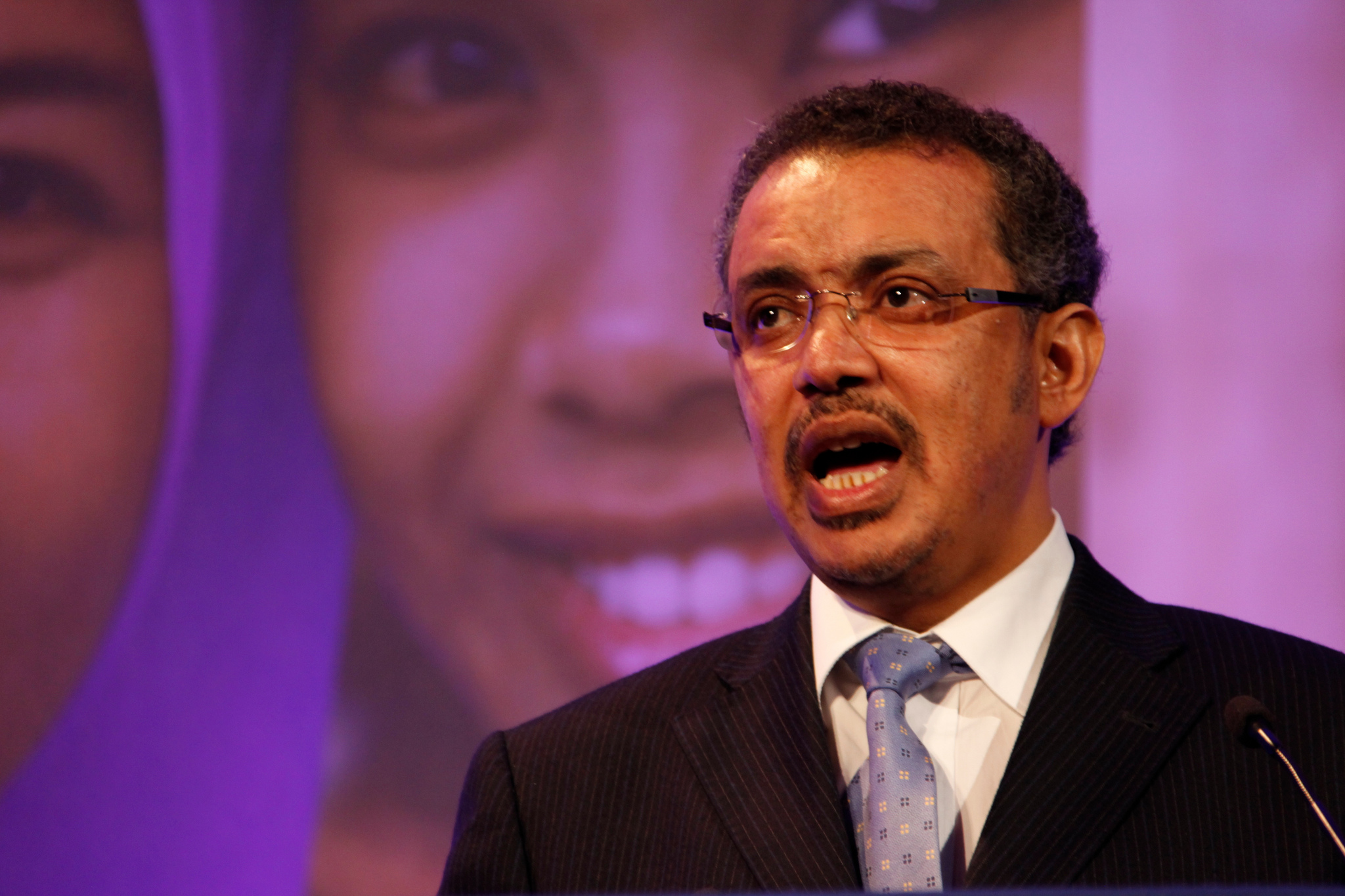


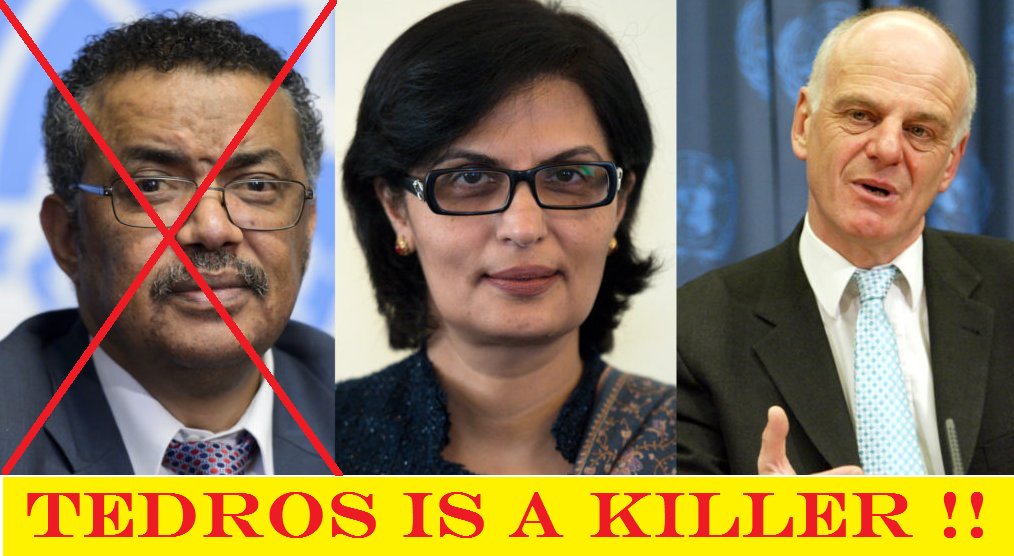

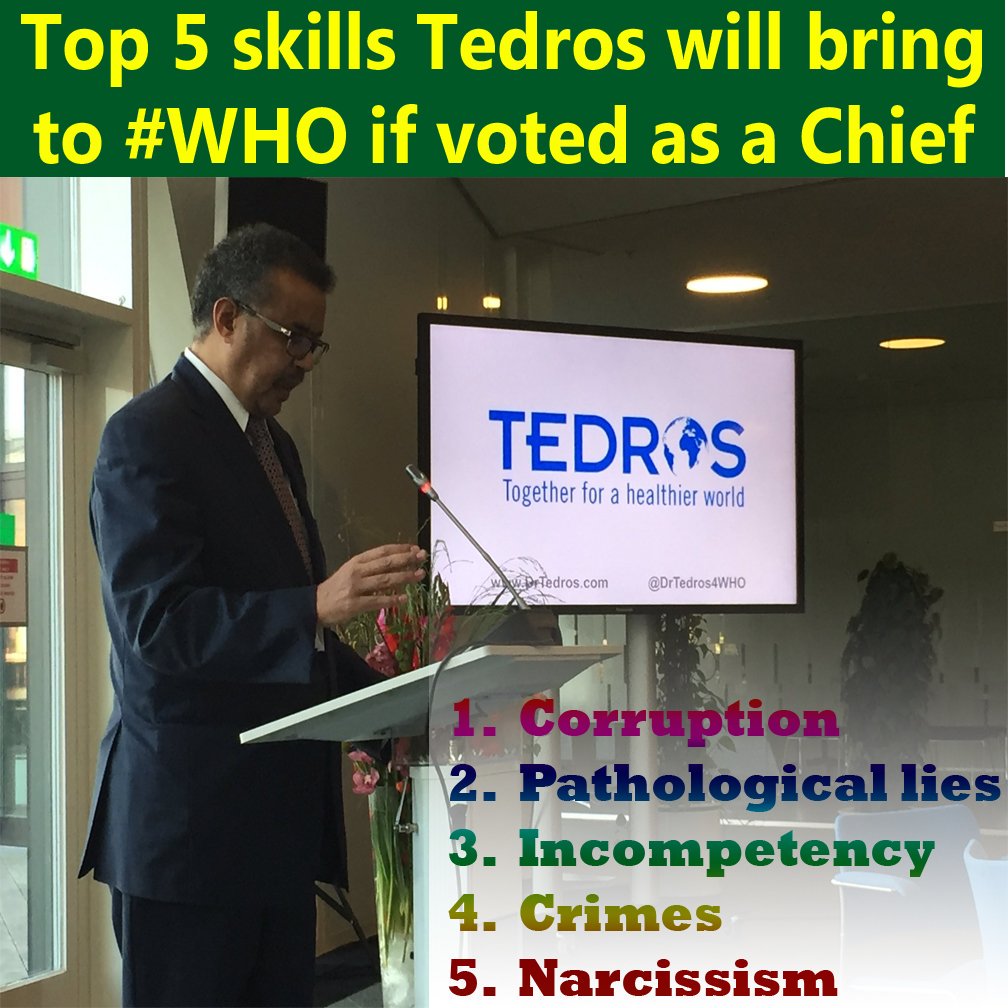


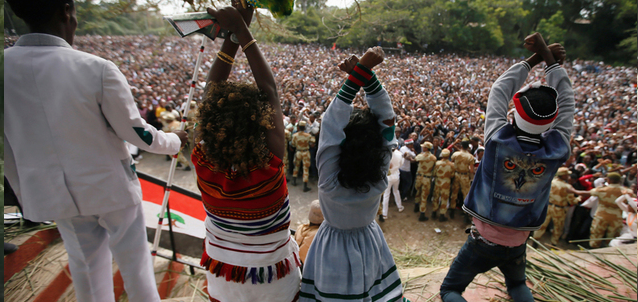


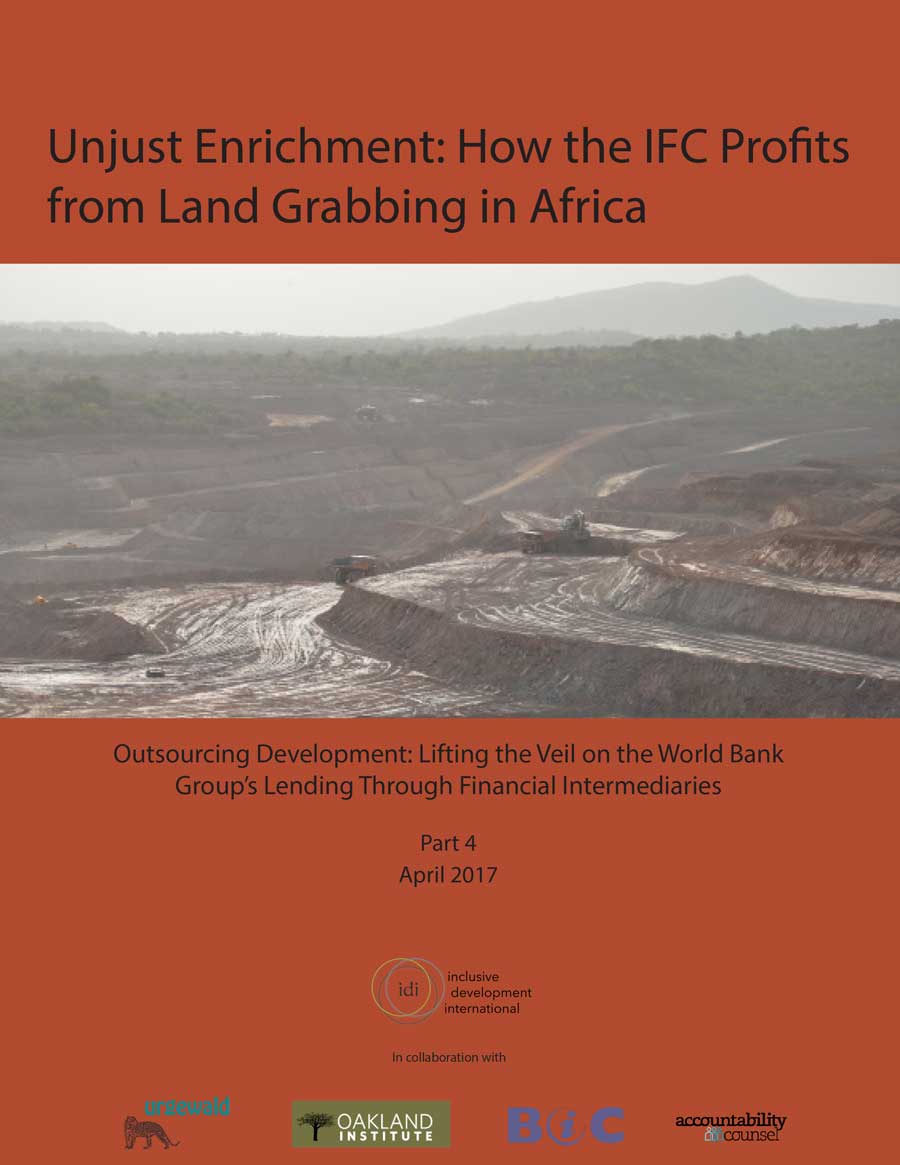







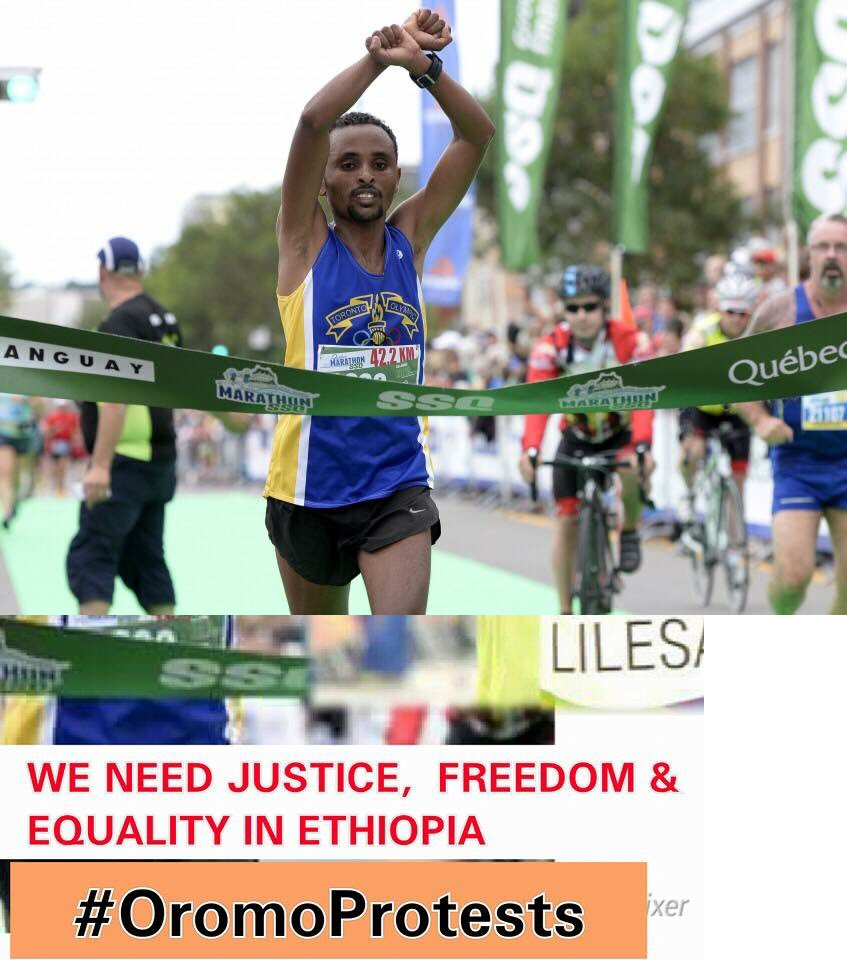


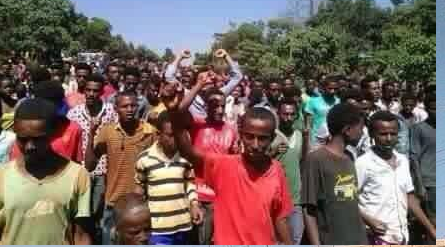





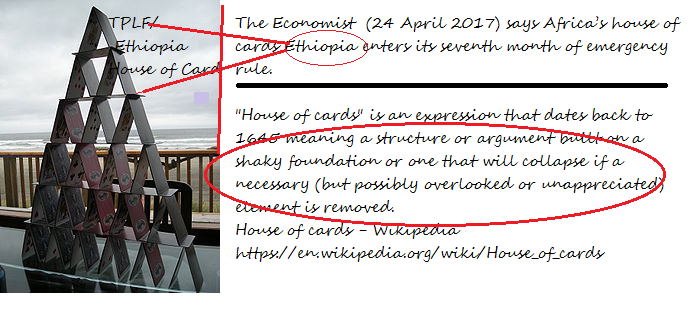



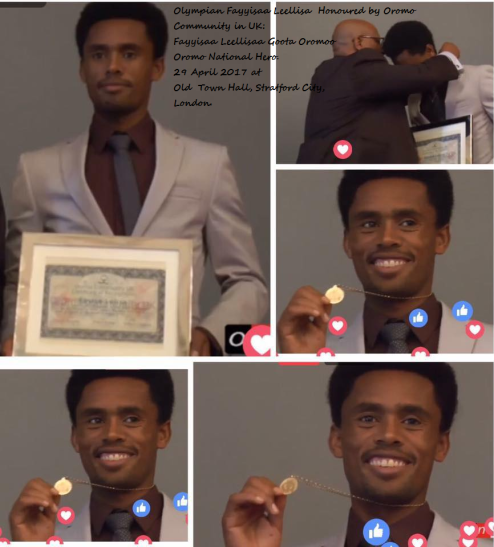








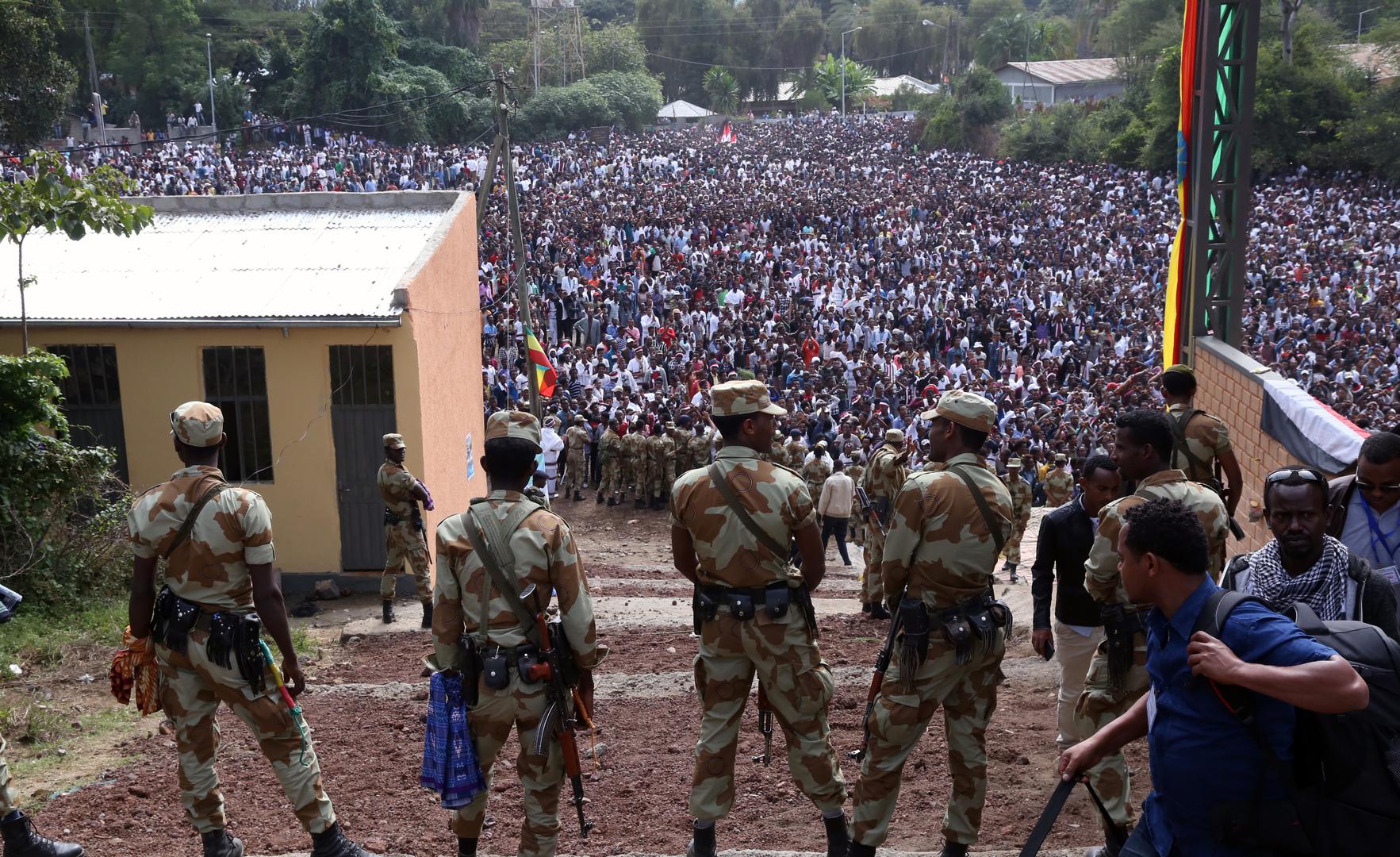







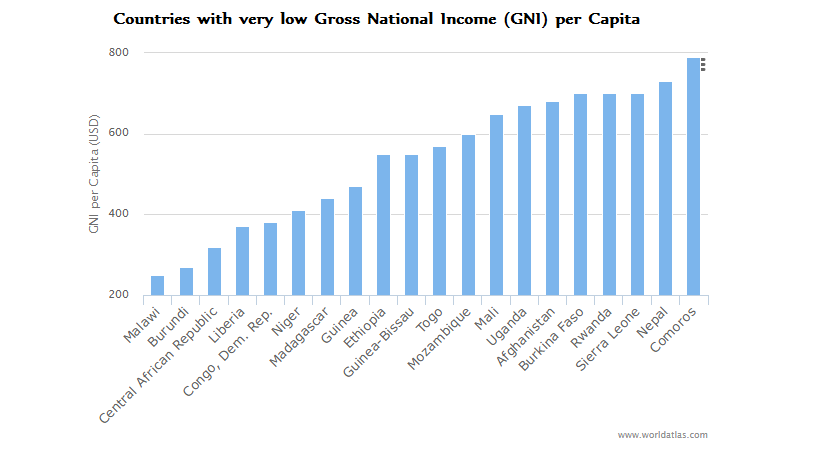


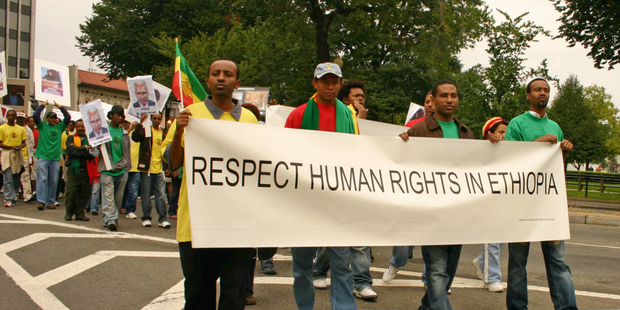


 Oromian Economist


What are the key elements of social intelligence? Click here to read the full article by Ronald E Riggio Ph.D. Cutting-Edge Leadership
Read more at: https://www.skillsyouneed.com/ips/social-skills-emotional-intelligence.html
It’s no secret that good leaders are also good communicators. And the best leaders have learned that effective communication is as much about authenticity as the words they speak and write.
Indeed, communication and leadership are inextricably tied. How can you galvanize, inspire or guide others if you don’t communicate in a clear, credible, authentic way?
Here are 5 essential communication practices of effective leaders. Click here to read at Forbes the 5 Habits of Highly Effective Communicators: Mind the say-do gap. Make the complex simple. Find your own voice. Be visible. Listen with your eyes as well as your ears.
How to Spot a Bad Leader: Click here to learn the tactics used by leaders from hell.
Click here to read on 5 Steps to Great Leadership: How do our leaders measure up?