Economic and development analysis: Perspectives on economics, society, development, freedom & social justice. Leading issues in Oromo, Oromia, Africa & world affairs. Oromo News. African News. world News. Views. Formerly Oromia Quarterly
Within a week, Ethiopians were hit with a quadruple whammy. On April 19, the Libyan branch of the Islamic State in Iraq and the Levant (ISIL) released a shocking video purporting to show the killings and beheadings of Ethiopian Christians attempting to cross to Europe through Libya. This came only days after an anti-immigrant mob in South Africa killed at least three Ethiopian immigrants and wounded many others. Al Jazeera America reported that thousands of Ethiopian nationals were stranded in war-torn Yemen. And in the town of Robe in Oromia and its surroundings alone, scores of people were reportedly grieving over the loss of family members at sea aboard a fateful Europe-bound boat that sank April 19 off the coast of Libya with close to 900 aboard.
These tragedies may have temporarily united Ethiopians of all faiths and ethnic backgrounds. But they have also raised questions about what kind of desperation drove these migrants to leave their country and risk journeys through sun-scorched deserts and via chancy boats.
The crisis comes at a time when Ethiopia’s economic transformation in the last decade is being hailed as nothing short of a miracle, with some comparing it to the feat achieved by the Asian “tigers” in the 1970s. Why would thousands of young men and women flee their country, whose economy is the fastest growing in Africa andwhose democracy is supposedly blossoming? And when will the exodus end?
After the spate of sad news, government spokesman Redwan Hussein said the tragedy “will be a warning to people who wish to risk and travel to Europe through the dangerous route.” Warned or not, many youths simply do not see their dreams for a better life realized in Ethiopia. Observers cite massive poverty, rising costs of living, fast-climbing youth unemployment, lack of economic opportunities for the less politically connected, the economy’s overreliance on the service sector and the requirement of party membership as a condition for employment as the drivers behind the exodus.
A 2012 study by the London-based International Growth Center noted (PDF) widespread urban unemployment amid growing youth landlessness and insignificant job creation in rural areas. “There have been significant increases in educational attainment. However, there has not been as much job creation to provide employment opportunities to the newly educated job seekers,” the report said.
One of the few ISIL victims identified thus far was expelled from Saudi Arabia in 2013. (Saudi deported more than 100,000 Ethiopian domestic workers during a visa crackdown.) A friend, who worked as a technician for the state-run Ethiopian Electricity Agency, joined him on this fateful trek to Libya. At least a handful of the victims who have been identified thus far were said to be college graduates.
Given the depth of poverty, Ethiopia’s much-celebrated economic growth is nowhere close to accommodating the country’s young and expanding population, one of the largest youth cohorts in Africa. Government remainsthe main employer in Ethiopia after agriculture and commerce. However, as Human Rights Watch noted in 2011, “access to seeds, fertilizers, tools and loans … public sector jobs, educational opportunities and even food assistance” is often contingent on support for the ruling party.
Still, unemployment and lack of economic opportunities are not the only reasons for the excessive outward migration. These conditions are compounded by the fact that youths, ever more censored and denied access to the Internet and alternative sources of information, simply do not trust the government enough to heed Hussein’s warnings. Furthermore, the vast majority of Ethiopian migrants are political refugees fleeing persecution. There are nearly 7,000 registered Ethiopian refugees in Yemen, Kenya has more than 20,000, and Egypt and Somalia have nearly 3,000 each, according to the United Nations refugee agency.
As long as Ethiopia focuses on security, the door is left wide open for further exodus and potential social unrest from an increasingly despondent populace.
Ethiopians will head to the polls in a few weeks. Typically, elections are occasions to make important choices and vent anger at the incumbent. But on May 24, Ethiopians will be able to do neither. In the last decade, authorities have systematically closed the political space through a series of anti-terrorism, press and civil society laws. Ethiopia’s ruling party, now in power for close to 24 years, won the last four elections. The government has systematically weakened the opposition and does not tolerate any form of dissent.
The heightened crackdown on freedom of expression has earned Ethiopia the distinction of being the world’sfourth-most-censored country and the second leading jailer of journalists in Africa, behind only its archrival, Eritrea, according to the Committee to Protect Journalists.
There is little hope that the 2015 elections would be fundamentally different from the 2010 polls, in which the ruling party won all but two of the 547 seats in the rubber-stamp national parliament. The ruling party maintains a monopoly over the media. Authorities have shown little interest in opening up the political space for a more robust electoral contest. This was exemplified by the exclusion of key opposition parties from the race, continuing repression of those running and Leenco Lata’s recent failed attempt to return home to pursue peaceful political struggle after two decades of exile. (Lata is the founder of the outlawed Oromo Liberation Front, fighting since 1973 for the rights of the Oromo, Ethiopia’s marginalized majority population, and the president of the Oromo Democratic Front.)
A few faces from the fragmented and embittered opposition maybe elected to parliament in next month’s lackluster elections. But far from healing Ethiopia’s gashing wounds, the vote is likely to ratchet up tensions. In fact, a sea of youth, many too young to vote, breaking police barriers to join opposition rallies bespeaks not of a country ready for elections but one ripe for a revolution with unpredictable consequences.
Despite these mounting challenges, Ethiopia’s relative stability — compared with its deeply troubled neighbors Somalia, South Sudan, Eritrea and Djibouti — is beyond contention. Even looking further afield, across the Red Sea, where Yemen is unraveling, one finds few examples of relative stability. This dynamic and Ethiopia’s role in the “war on terrorism” explains Washington’s and other donors’ failure to push Ethiopia toward political liberalization.
However, Ethiopia’s modicum of stability is illusory and bought at a hefty price: erosion of political freedoms, gross human rights violations and ever-growing discontent. This bodes ill for a country split by religious, ethnic and political cleavages. While at loggerheads with each other, Ethiopia’s two largest ethnic groups — the Oromo (40 percent) and the Amhara (30 percent) — are increasingly incensed by continuing domination by Tigreans (6 percent).
Ethiopian Muslims (a third of the country’s population of 94 million) have been staging protests throughout the country since 2011. Christian-Muslim relations, historically cordial, are being tested by religious-inspired violence and religious revivalism around the world. Ethiopia faces rising pressures to choose among three paths fraught with risks: the distasteful status quo; increased devolution of power, which risks balkanization; and more centralization, which promises even further resistance and turmoil.
It is unlikely that the soul searching from recent tragedies will prompt the authorities to make a course adjustment. If the country’s history of missed opportunities for all-inclusive political and economic transformation is any guide, Ethiopians might be in for a spate of more sad news. As long as the answer to these questions focuses on security, the door is left wide open for further exodus and potential social unrest from an increasingly despondent populace.
*Hassen Hussein is an assistant professor at St. Mary’s University of Minnesota.
OROMO LIBERATION FRONT (OLF) AND OTHER PROMINENT OPPOSITION POLITICAL GROUPS AND SOME CIVIC SOCITIES OF ETHIOPIA HELD A CONFERNCE IN EUROPEAN PARLIAMENT, BRUSSELS, BELGIUM
On 23 of April 2015, a high level conference entitled ‘Cartoon Democracy – Authoritarian Rule and Elections in Ethiopia’ was held in European Parliament, Brussels, Belgium. The conference was organised by some members of European Parliament from different Party Groups and member states and UNPO. The conference was unique in a sense it is standing against the established mind set-ups and traditional working system of politics in the Ethiopia Empire. It managed to assemble a diversified gathering that includes various opposition leaders, journalists, international experts, politicians and human rights advocators. The conference was aimed at consulting and coordinating various voices on the ever worsening political landscape in Ethiopia.
This Conference which was held a week after the US official Under Secretary of State for Political Affairs Wendy Sherman praised Ethiopia as a democracy, suggesting Ethiopia made great strides toward an open and inclusive electoral process. Despite the US official already endorsed the outcome of Ethiopia’s traditional National election, on the other side the Atlantic Ocean, the Europeans are showing a firm stand against endorsing Sham and ceremonial election. The keynote speaker of the conference clearly indicated that assisting Authoritarian one party rule might lead the country to formidable civil conflict. The current prevalent inter- and intra-regional armed conflict, popular uprising, desperate repressive acts of the regime against civilians, rampant corruption, mismanagement, Hunger, population growth, Environmental degradation, displacement of peoples as a result of land grabbing, high rate of the expansion of pandemic diseases, government-instigated ethnic conflicts as an instrument of divide-and-rule, etc. are all indicative for Ethiopian regime’s authoritarian nature and lack of democracy in the country. Read More:-Report of EU conference 23042015 Brussels
United in Opposing Ethiopian Cartoon Democracy: European Parliament Conference Offers Platform for Dialogue ahead of 24 May Election
Overall, there seemed to be a strong agreement among the speakers on two main points: firstly, that any real democratic change and cessation of ongoing human rights abuses in Ethiopia can only be achieved through joint action involving all ethnic and political opposition movements; and secondly, that the EU and other major donors must hold the Ethiopian government accountable for its actions, by conditioning and better overseeing the flow of funds, thus ensuring that foreign aid is not being misused to perpetrate human rights violations and oppress the people it is supposed to serve. Following this successful conference, UNPO, together with its partners, will continue to work towards ensuring the Ethiopian peoples’ voices are better heard on the international stage, and encourage different ethnic and political groups to put their differences aside and work together towards positive change in Ethiopia.
Chinese-African investment has been dubbed ‘neo-liberalism with Chinese characteristics’. Africa’s trade links with Asian economies, where Africa supplies primary commodities and Asia supplies manufactured goods, simply replicate Africa’s relationship of dependency with Western traditional partners. There are grounds for this argument as many academics and policy-makers perceive China as another capitalist state following its corporate interest and profit motives (Li, Wenping, and Mbaye, 2010). Bond (2006) reiterates, ‘Chinese penetration only presents the ugly face of predatory capitalism’.
The Ethiopian Government is Responsible for the Inhuman Treatments against Ethiopian Refugees and Asylum Seekers around the World
HRLHA Press Release
25th April 2015
The Human Rights League of the Horn of Africa has been greatly saddened by the cold-blooded killing of 30 Christian Ethiopian refugees and asylum seekers in the past week in Libya by a group called Islamic State in Iraq and Syria/ ISIS. The HRLHA also highly concerned about thousands of Ethiopian refugees and asylum seekers living in different parts of Yemen were victimized due to the political crises in Yemen and hundreds have suffered in South Africa because of the unprecedented actions taken by a gang opposing refugees and asylum seekers in the country. The suppressive policy of the EPRDF/TPLF government has forced millions of Ethiopians to flee their country in the past twenty-four years. The mass influx of Ethiopian citizens into neighboring countries every year has been due to the EPRDF/TPLF policy of denying its citizens their socioeconomic and political rights. They have also fled out of fear of political persecution and detention. It has been repeatedly reported by human rights organizations, humanitarian and other non – governmental organizations that Ethiopia is producing a large number of refugees, estimated at over two hundred fifty thousand every year.
The HRLHA calls upon the Ethiopian government to unconditionally release the detained citizens and allow those who have been injured during the clash with police to get medical treatment.In connection with the incident that took place in Libya, on April 22, 2015 tens of thousands of Ethiopians marched on government- organized rallies against the killing of Ethiopian Christians in Libya. However, with the demonstrators’ angry expressions were directed at the authorities, the police used tear gas against them and hundreds of people were beaten on the street and arrested. On the 23rd and 24th of April 2015 others were picked up from their homes and taken to unknown destinations according to the HRLHA reporter in Addis Ababa.
Recommendations:
The Ethiopian government must stop political suppression in the country and respect the human rights treaties it signed and ratified
The Ethiopian Government must provide the necessary lifesaving help to those Ethiopians stuck in crises in the asylum countries of Yemen, South Africa and others.
The EPRDF/TPLF government must release journalists, opposition political party members, and others held in Ethiopian prisons and respect their right to exercise their basic and fundamental rights enshrined in the constitution of Ethiopia and international standard of human rights instruments.
In measuring national progress, Ethiopia as in its GDP per head records one of the lowest in Social Progress Index 2015. Ethiopia ranks 126 of 133 countries.
‘The Social Progress Index offers a rich framework for measuring the multiple dimensions of social progress, benchmarking success, and catalyzing greater human wellbeing…. Economic growth alone is not enough. A society that fails to address basic human needs, equip citizens to improve their quality of life, protect the environment, and provide opportunity for many of its citizens is not succeeding. We must widen our understanding of the success of societies beyond economic outcomes. Inclusive growth requires achieving both economic and social progress.’
Ethiopia (126), Niger (127), Yemen (128), Angola (130), Afghanstan (131), Chad (132) and Central African republic (133).
Ethiopia’s outcome:
One of the lowest in GDP (Income) and in SOCIAL PROGRESS Index. Social Progress Index : 41.04 (126th) Basic Human Needs: 44.04 (120th) Opportunity: 28.59 (126th) Foundations of Wellbeing: 50.49 (126th)
Water and Sanitation: 23.50
(Access to piped water, Rural access to improved water source, Access to improved sanitation facilities).
Personal Rights: 25.76
(Political rights, Freedom of speech, Freedom of assembly/association, Freedom of movement, Private property rights).
Access to Information and Communications:33.09
(Mobile telephone subscriptions, Internet users, Press Freedom Index)
Tolerance and Inclusion: 34.01
(Discrimination and violence against minorities, Religious tolerance,Community safety net).
Access to Advanced Education:5.74
(Years of tertiary schooling, Women’s average years in school,Inequality in the attainment of education, Globally ranked universities).
Ten countries in the world have been ranked as Very High Social Progress Countries as these countries generally have strong performance across all three dimensions. The average dimension scores for this tier are: Basic Human Needs is 94.77, Foundations of Wellbeing is 83.85, and Opportunity is 83.07.
As with most high-income countries, the top 10 countries score lowest on Ecosystem Sustainability and Health and Wellness.
Nearly all of the top 10 are relatively small countries, with only Canada having a population greater than 25 million.
The top three countries in the world on Social Progress are Norway, Sweden, and Switzerland with closely grouped scores between 88.36 and 87.97.
Canada is the only country among the G7 countries that has been ranked in top ten on SPI 2015
Under the High Social Progress Countries tier, there are 21 countries. This group includes a number of the world’s leading economies in terms of GDP and population, including the remaining six members of the G7: the United Kingdom, Germany, Japan, the United States, France, and Italy. The average dimension scores for this tier are: Basic Human Needs is 90.86, Foundations of Wellbeing is 77.83, and Opportunity is 73.82
The third tier of Upper Middle Social Progress Countries comprises of 25 countries. This group reveals that high GDP per capita does not guarantee social progress. Average scores for this tier are: Basic Human Needs is 80.66, Foundations of Wellbeing is 73.52, and Opportunity is 57.73.
The fourth tier Lower Middle Social Progress Countries comprises of 42 countries. The average dimension scores for this tier are: Basic Human Needs is 72.34, Foundations of Wellbeing is 66.90, and Opportunity is 47.14
Under the Low Social Progress Countries tier, there are 27 countries which include many Sub-Saharan African countries. The average dimension scores for this tier are: Basic Human Needs is 50.03, Foundations of Wellbeing is 58.01, and Opportunity is 38.35.
Under the Very Low Social Progress Countries tier, there are 8 countries. The average dimension scores for this tier are: Basic Human Needs is 38.46, Foundations of Wellbeing is 48.55, and Opportunity is 26.05.
The lowest five countries in the world on Social Progress are Ethiopia, Niger, Afghanistan, Chad, Central African Republic.
The Social Progress Index, first released in 2014 building on a beta version previewed in 2013, measures a comprehensive array of components of social and environmental performance and aggregates them into an overall framework. The Index was developed based on extensive discussions with stakeholders around the world about what has been missed when policymakers focus on GDP to the exclusion of social performance. Our work was influenced by the seminal contributions of Amartya Sen on social development, as well as by the recent call for action in the report “Mismeasuring Our Lives” by the Commission on the Measurement of Economic Performance and Social Progress.
The Social Progress Index incorporates four key design principles:
Exclusively social and environmental indicators: our aim is to measure social progress directly, rather than utilize economic proxies. By excluding economic indicators, we can, for the first time, rigorously and systematically analyze the relationship between economic development (measured for example by GDP per capita) and social development. Prior efforts to move “beyond GDP” have comingled social and economic indicators, making it difficult to disentangle cause and effect.
Outcomes not inputs: our aim is to measure the outcomes that matter to the lives of real people, not the inputs. For example, we want to measure a country’s health and wellness achieved, not how much effort is expended nor how much the country spends on healthcare.
Holistic and relevant to all countries: our aim is to create a holistic measure of social progress that encompasses the many aspects of health of societies. Most previous efforts have focused on the poorest countries, for understandable reasons. But knowing what constitutes a healthy society for any country, including higher-income countries, is indispensable in charting a course for less-prosperous societies to get there.
Actionable: the Index aims to be a practical tool that will help leaders and practitioners in government, business and civil society to implement policies and programs that will drive faster social progress. To achieve that goal, we measure outcomes in a granular way that focuses on specific areas that can be implemented directly. The Index is structured around 12 components and 52 distinct indicators. The framework allows us to not only provide an aggregate country score and ranking, but also to allow granular analyses of specific areas of strength and weakness. Transparency of measurement using a comprehensive framework allows change-makers to identify and act upon the most pressing issues in their societies.
These design principles are the foundation for our conceptual framework. We define social progress in a comprehensive and inclusive way. Social progress is the capacity of a society to meet the basic human needs of its citizens, establish the building blocks that allow citizens and communities to enhance and sustain the quality of their lives, and create the conditions for all individuals to reach their full potential.
This definition reflects an extensive and critical review and synthesis of both the academic and practitioner literature in a wide range of development topics. The Social Progress Index framework focuses on three distinct (though related) questions:
Does a country provide for its people’s most essential needs?
Are the building blocks in place for individuals and communities to enhance and sustain wellbeing?
Is there opportunity for all individuals to reach their full potential?
These three questions define the three dimensions of Social Progress: Basic Human Needs, Foundations of Wellbeing, and Opportunity.
‘Colonial laws and practices have not imposed themselves on the independent Africa; the real and biggest problem has been the unwillingness of the current African leadership to change and/ or repeal the many unjust colonial laws. If anything, colonial laws and practices have either at worst been maintained to protect whites and the black African elite interests or at best been adapted to suit the needs of the African leadership, needs of ruling tribes or clans or nations at the expense of all others….If there is anything that Africa should learn from the latest xenophobic attacks in South Africa, it is that the continent has yet to command its independence and seriously address tribal prejudice and stereotypes. Governments continue to show little or no interest in respecting people and dealing with simmering internal social injustices. African independence has perpetually shown no empathy towards any black communities carrying a different social identification from those wielding authority. Historically, we have struggled with accommodating internal diversity.
The starting point towards correcting one’s mistakes is owning them. Africa needs to stop hiding behind colonialism and accept most of the problems we face today are our internal creation and only we can make the necessary changes required. Africans can conveniently blame colonialism all they want but the majority of conflicts between nations and communities show more internal prejudice and less external intervention as the cause.’
If there is anything that Africa should learn from the latest xenophobic attacks in South Africa, it is that the continent has yet to command its independence and seriously address tribal prejudice and stereotypes. Governments continue to show little or no interest in respecting people and dealing with simmering internal social injustices. African independence has perpetually shown no empathy towards any black communities carrying a different social identification from those wielding authority. Historically, we have struggled with accommodating internal diversity.
Macha Tulama USA: Urgent Call to Help Refugees in Yemen, Libya and South Africa
April 21, 2015
As we all have been following the events happening in Yemen, South Africa and Libya and other countries in the Middle East and Africa, Oromos and other nationals are facing gross human rights violations, brutal and cold blooded murder. Oromos are appealing to Macha Tulama Association (MTA) to stand for them in any capacity as soon as possible. The appeal and plea are coming to MTA email address daily in large number. Our people are in desperate situation in the countries where they are seeking refuge to save their lives.
In the past, MTA-USA offered modest help in the wake of such emergencies. What is happening now is even more dangerous for Oromo nationals. MTA is now ready to facilitate the collection and delivery of financial support to those who are in desperate need. Time is of the essence in this issue. MTA is also planning to find the ways to support the resettlement works of the UNHCR and International Organization for Migration (IOM).
Therefore, we hereby request all Oromos and friends of Oromos to respond to these emergency calls for support of our brothers and sisters by contributing as much as we can online or by mailing check or money order to our address. We have created a separate account for this specific purpose. The board of MTA will look in to the means and ways of disbursing the funds soon and will announce on our website and social media.
To donate online, click on the “Donate” button below which takes you to “Emergency Reponse – Yemen, Libya and South Africa” page.
If you want to send check or money order, please make it payable to Macha Tulama and mail to the address below. If you have any question, email us at machatulama.usa@gmail.
“Under Secretary Sherman’s comments today were woefully ignorant and counter-productive,” said Daniel Calingaert, executive vice president of Freedom House. “Ethiopia remains one of the most undemocratic countries in Africa. By calling these elections credible, Sherman has tacitly endorsed the Ethiopian government’s complete disregard for the democratic rights of its citizens. This will only bolster the government’s confidence to continue its crackdown on dissenting voices.”
In response to today’s comments by Under Secretary for Political Affairs, Wendy Sherman, in which she referred to Ethiopia as a democracy and the country’s upcoming elections free, fair, and credible, Freedom House issued the following statement:
“Under Secretary Sherman’s comments today were woefully ignorant and counter-productive,” said Daniel Calingaert, executive vice president of Freedom House. “Ethiopia remains one of the most undemocratic countries in Africa. By calling these elections credible, Sherman has tacitly endorsed the Ethiopian government’s complete disregard for the democratic rights of its citizens. This will only bolster the government’s confidence to continue its crackdown on dissenting voices.”
Background:
Since coming into power in the early 1990s, the Ethiopian People’s Revolutionary Democratic Front (EPRDF) has dominated politics through a combination of political cooptation and harassment. The country experienced a degree of democratization through the early 2000’s, culminating in the most competitive elections in the county’s history in 2005. Since these elections, the EPRDF has restricted political pluralism and used draconian legislation to crack down on the political opposition, civil society organizations, and independent media. In the 2010, EPRDF and its allies won 546 out of 547 parliamentary seats.
Freedom House is an independent watchdog organization that supports democratic change, monitors the status of freedom around the world, and advocates for democracy and human rights.
U.S Department of State Endorsing of Upcoming Elections: Denial and Disrespect
The Human Rights League of the Horn of Africa (HRLHA)
HRLHA Statement:
The Human Rights League of the Horn of Africa (HRLHA) strongly opposes to the position that the U.S State Department has taken in regards to the upcoming Ethiopian election and the overall democratization process in the country in the past twenty-four years; and describes the comments by the Under Secretary of State as a sign of disrespect for ordinary citizens of Ethiopia and disregard for the human miseries that hundreds of thousands of Ethiopian have gone through under the EPRDF/TPLF-led government.
The HRLHA has no doubt at all that the U.S Government in general and U.S Department of State in particular, with the biggest and highly staffed of all Western embassies in Ethiopia, are very well aware of the political realities that have been prevailing in the country over the past two decades. An excellent proof is the Country Reports on Human Rights Practices that is issued annually by the US Department of State itself. Suppressions and denials of fundamental human rights in Ethiopia under the EPRDF/TPLF Government were being reported on by various human rights and humanitarian as well as government and diplomatic agencies; and, based on the facts revealed in such reports, the Ethiopian Government has repeatedly been ranked as the worst both at the regional and global levels.
In a country that has witnessed the highest number of political incarceration in its history, where unarmed students and other civilians were gunned down in hundreds simply because they attempted to exercise some of their fundamental rights, in “one of the ten most censored countries” where the existence of independent media has become impossible and, as a result, press freedom has been curtailed completely, where all sorts of socio-economic rights have been tied to political sympathy and supports, it would be an insult and disrespect to its ordinary citizens, and a disregard for the precious lives of innocent people that have been taken away by brutal hands to say that such a country is a democracy, and that the upcoming elections would be free and fair while intimidations and harassments of opposition candidates, as well as potential voters, were taking place out in the field even while the Under Secretary of State was making the comments. While encouraging the most repressive government and governing party towards becoming more dictatorial, the Under-Secretary of State’s comments discourage and undermine the sacrifices that the Ethiopian peoples have paid and are still paying to realize their century-old dream of building free and democratic country.
The Human Rights League of the Horn of Africa (HRLHA) requests that the Under Secretary of State retract the wrong comments and apologize to the Ethiopian peoples. It also urges the U.S State Department to recognize and acknowledge the realities in Ethiopia and use the close ties that exists between the two governments to put pressure on the ruling EPRDF/TPLF party so that it allows the implementation of a genuine democracy.
This is the state terrorism of the TPLF-led Ethiopian regime that continues to drive thousands of Oromo and other nationals in the Ethiopian empire to seek refuge in uninhabitable, volatile and inhospitable corners of the world. During today’s incident (watch the video below), it’s only because Finfinne is the Capital (with many international watching eyes) that the Tigrean regime’s elite killing squad had not used live bullets to violate the mourners’ freedom of assembly. Almost a year ago, on April 30, 2014, in Ambo (some 100 or so kilometers away from the Capital), the same federal militarized police force used deadly force during a nonviolent Oromo students protest against the ‘Addis Ababa Master Plan’ for Oromo Genocide; in a single day, more than 100 Oromo students and non-student civilians were killed by the federal security force in Ambo on April 30, 2014.
On April 20, 2015, Oromos in Ambo defied TPLF’s ban of Oromo’s freedom of assembly and filled a stadium, where Dr. Merera Gudina, Chairman of the Oromo Federalist Congress (OFC), was campaigning for the upcoming election (watch the video below). It’s to be noted that the TPLF regime tried to subdue Ambo a year ago during the Oromia-wide #OromoProtests against the ‘Addis Ababa Master Plan’ for Oromo Genocide. Almost a year ago, on April 30, 2014, more than 100 Oromo students and non-student civilians were killed by the Tigrean regime’s elite killing squad known as the Agazi Force; and thousands have been arrested just because they are Oromos, as an Amnesty International report revealed in October 2014. Shortly after April 2014, TPLF imposed on Oromia a sort of martial law where Oromos have been prohibited from assembly. On April 20, 2015, Ambo once again showed that it can never been subdued into submission by the TPLF state-sponsored terror by defying TPLF’s ban on Oromo’s freedom of assembly – and holding a rally to express support for OFC.
Meanwhile, another top OFC official, Obbo Baqqalaa Nagaa, is on campaign tour overseas to solicit support for his organization. According to the schedule, Obbo Baqqalaa Nagaa will be meeting with supporters in Las Vegas on April 23, 2015, and in Seattle on April 25, 2015.
OFC/Medrek Election Campaign in Ambo with Dr. Merera Gudina:
OFC/Medrek Election Campaign in Gindeberet:
Read more at: http://walabummaa43.blogspot.no/2015/04/ambo-defied-tplfs-ban-of-oromos-freedom.html
Letter to UN from Oromo Community in Seattle on Plight of Refugees in Yemen
Open letter to UNHCR from the Oromo Community Services of Seattle (OCSS)
………………………………………………………………………………………………………………..
Antonio Guterres, United Nations High Commissioner for Refugees
Case Postale 2500
CH-1211 Genève 2 Dépôt
Switzerland
Dear Commissioner Guterres,
We, the Oromo Community in Seattle*, are writing this letter to express our deep concern and dismay regarding the inhuman suffering of Oromo refugees in Yemen. Thousands of Oromo refugees have fled their homeland to neighboring countries, including Yemen, seeking protection from persecutions, large-scale arbitrary detentions, disappearances, tortures and extra-judicial killings they would be subjected to from the Ethiopian government due to their ethnic identity and political opinions. According to the Amnesty Internationalreport ‘Because I am Oromo’ – Sweeping Repression in the Oromia Region of Ethiopia, that was released on October 2014, between 2011 and 2014, at least 5000 Oromo have been arrested, tortured, and faced extra-judicial executions due to their peaceful opposition to the government. This report is self-evident that Oromo were forced to escape to rescue their lives from possible harassment of the Ethiopian government.
Currently, it is estimated that over ten thousands Oromo refuges reside in refugee camps in Yemen, including Sana and Eden. The current political turmoil in Yemen put the refugees’ lives in dire situation. Reports reaching us from Yemen indicate that refugees are trapped with no help in situation beyond their control. We have also received a report that a number of Oromo refugees have been killed, and some of them wounded by the flying bullets and indiscriminate ongoing fighting due to lack of adequate protection. Lives that they clenched to save are again put them in grave danger.
We are gravely concerned about the deteriorating condition of Oromo refugees in Yemen unless your leadership and international community intervene as soon as possible, and necessary steps are taken immediately to save the lives of the refugees. Oromo refugees in Yemen are also suffering from lack of food, shelter and medical care. Furthermore, the Ethiopian government security agents follow Oromo refugees and abduct some individuals using the current political crisis as an opportunity. This situation also jeopardizes the safety of the refugees.
We believe that, at this critical juncture, your leadership and the active engagement of the international community could mean the difference between life and death for many Oromo refugees. The Universal Declaration of Human Rights, signed in 1948 and 1951, have articles that recognize the rights for refugees. Any country that has signed these declarations is obliged to respect them. When every letter of these declarations violated, member countries of the UN and humanitarian organizations should not keep silent.
Your Excellency,
We strongly believe that as a UN refugee agency, you are sanctioned to making a lasting impact on the lives of refugees and other displaced communities around the world by focusing on the basic needs and rights for refugees – like shelter, water, food, safety and protection from harm. Silence about the dire situation of Oromo refugees in Yemen is not only inhuman, but it is also a flagrant violation of the letter and spirit of the 1951 UN Convention, the 1967 Protocol Relating to Status of Refugees, and the UN General Assembly Resolution 2198 (XXI).
It is a duty of the United Nations High Commissioners for Human Rights, UNHCR and the international community to take a swift action to rescue the refugees whose lives and freedom have fallen in a grave danger. We earnestly demand the UNHCR and member nations to extend their humanitarian assistance so as to find a way in which the refugees could be rescued from that imminent humanitarian disaster that may result in carnage. We believe Oromo refugees, as any other people in the world, are entitled to get protection and humanitarian from the UNHCR and governments that signed 1951 Geneva Convention.
We, therefore, appeal to the UNHCR, all UN member nations and other humanitarian organizations to put all necessary pressure on the governments and groups to refrain from violating the rights of refugees in Yemen and territories under their control. As the current situation in Yemen exposes Oromo refugees to further threats, we demand respectfully the UNHCR Office to find urgently durable solutions in which the lives of the refugees can be saved. We also request urgent medical care, food and shelter for Oromo refugees in Yemen.
Sincerely Yours,
Oromo Community Services of Seattle
C.C:
H. E. Ban Ki-moon
Secretary-General
The United Nations
New York. NY 10017
E-mail: Inquiries@UN.Org
Fax: 212-963-7055
U.S. Secretary of State
John Kerry
Washington, DC 20520
E-mail: Secretary@state.gov
European Union
E-mail: public.info@consilium.eu.int
Fax: Fax (32-2) 285 73 97 / 81
U.S. Committee for Refugees
1717 Massachusetts Ave. NW
Suite 200
Washington, DC 20036
Tel: 202-347-3507
Fax: 202-347-3418
E-mail: uscr@irsa-uscr.org
Amnesty International
International Secretariat
1 Easton Street
London
WC1X 0DW, UK
Fax: +44-20-79561157
Human Rights Watch
Rory Mungoven
Global Advocacy Director
350 Fifth Avenue, 34th Floor
New York, NY 10118-3299 USA
Tel: 1-(212) 290-4700
Fax: 1-(212) 736-1300
———– * Oromo Community Services of Seattle
Address: 7058 32nd Avenue S. Suite # 101 – Seattle, WA 98118
Tel: (206) 251-1789
‘We live in a era of big data, but developing countries are suffering from a data drought: governments and the international community know less about the world’s poorest than they think….While the World Bank estimates that the number of people living on less than $1.25 a day is 1.01 billion, the report claims the number could be up to 350 million more than that…The report, which was based mostly on secondary research, publicly available databases, and original interviews, also claims that maternal mortality figures for sub-Saharan Africa in 2013 could be double the stated 133,000, and the number of people living with HIV/AIDS could have been overstated by 20%…“We take for granted that statistics are based on fact, and that they’re scientific or empirical when often they’re not—they’re estimations or political negotiations,” Elizabeth Stuart, a research fellow at the ODI tells Quartz…There are many reasons for this data dearth. Populations in developing countries often live either in highly spread out or dense, shifting communities like urban slums, making traditional data collection methods, such as censuses and household surveys, expensive, too infrequent and potentially dangerous. Over 40% of countries in sub-Saharan Africa have not had a survey in seven years.’
Belonging–why South Africans refuse to let Africa in
Sisonke Msimang, AFRICASACOUNTRY.COM
This piece was first published on October 22, 2014, but with the new wave of xenophobic violence against black African migrants and refugees in South Africa’s Kwazulu-Natal province fueled by hateful and offensive remarks by the Zulu King, for which he refuses to apologize, we feel it is important to republish this today. The South African President, Jacob Zuma, has been slow to condemn the King and now some traditional leaders, like this guy, are backing the King. Not surprising the King also his supporters on social media. That violence is now threatening to spread to Johannesburg (locals talk of racist, violent messages against non-South African blacks being shared on social media like Whatsapp), so we feel it is important to republish the piece again today. Meanwhile, the twitter handle #XenophobicSAis a good way to keep up with these shameful events-Ed. Any African who has ever tried to visit South Africa will know that the country is not an easy entry destination. South African embassies across the continent are almost as difficult to access as those of the UK and the United States. They are characterised by long queues, inordinate amounts of paperwork, and officials who manage to be simultaneously rude and lethargic. It should come as no surprise then that South Africa’s new Minister of Home Affairs has announced the proposed establishment of a Border Management Agency for the country. In his words the new agency “will be central to securing all land, air and maritime ports of entry and support the efforts of the South African National Defence force to address the threats posed to, and the porousness of, our borderline.” Political observers of South Africa will understand that this is bureaucratic speak to dress up the fact that insularity will continue to be the country’s guiding ethos in its social, cultural and political dealings with the rest of the continent. Perhaps I am particularly attuned to this because of my upbringing. I am South African but grew up in exile. That is to say I was raised in the Africa that is not South Africa; that place of fantasy and nightmare that exists beyond the Limpopo. When I first came home in the mid 1990s, in those early months as I was learning to adjust to life in South Africa, I was often struck by the odd way in which the term ‘Africa,’ was deployed by both white and black South Africans. Because I speak in the fancy curly tones of someone who has been educated overseas, I was often asked where I was from. I would explain that I was born to South African parents outside the country and that I had lived in Zambia and Kenya and Canada and that my family also lived in Ethiopia. Invariably, the listener would nod sympathetically until the meaning of what I was saying sank in. ‘Oh.’ Then there would be a sharp intake of breath and a sort of horrified fascination would take hold. “So you grew up in Africa.” The Africa was enunciated carefully, the last syllable drawn out and slightly raised as though the statement were actually a question. Then the inevitable, softly sighed, “Shame.” In the early years after I got ‘home,’ it took me some time to figure out how to respond to the idea that Africa was a place that began beyond South Africa’s borders. I was surprised to learn that the countries where I had lived – the ones that had nurtured my soul in the long years of exile – were actually no places at all in the minds of some of my compatriots. They weren’t geographies with their own histories and cultures and complexities. They were dark landscapes, Condradian and densely forested. Zambia and Kenya and Ethiopia might as well have been Venus and Mars and Jupiter. They were undefined and undefined-able. They were snake-filled thickets; impenetrable brush and war and famine and ever-present tribal danger. Though they thought themselves to be very different, it seemed to me that whites and blacks in South Africa were disappointingly similar when it came to their views on ‘Africa.’ At first I blamed the most obvious culprit: apartheid. The ideology of the National Party was profoundly insular, based on inspiring everyone in the country to be fearful of the other. With the naiveté and arrogance of the young, I thought that a few lessons in African history might help to disabuse the Rainbow Nation of the notion that our country was apart from Africa. I made it my mission to inform everyone I came across that culturally, politically and historically we could call ourselves nothing if not Africans. What I did not fully understand at that stage was that it would take more than a few lectures by an earnest ‘returnee,’ to deal with this issue. This warped idea of Africa was at the heart of the idea of South Africa itself. Just as whiteness means nothing until it is contrasted with blackness as savagery, South African-ness relies heavily on the construction of Africa as a place of dysfunction, chaos and violence in order to define itself as functional, orderly, efficient and civilised. As such, the apartheid state was at pains to keep its borders closed. The savages at the country’s doorstep were a convenient bogeyman. Whites were told that if the country’s black neighbours were let in, they would surely unite with the indigenous population and slit the throats of whites. By the same token, black people were told that the Africans beyond South Africa’s borders lived like animals; they were ruled by despots and governed by black magic. When apartheid ended, the fear of African voodoo throat slitting should have ended with it. Indeed on the face of things, the fear of ‘Africa,’ has abated and has been replaced by the language of investment. South African capital has ‘opened up’ to the rest of the continent and so fear has been taken over by self-interest and new forms of extraction. In the parlance of South Africans, our businesses have ‘gone into Africa.’ Like the frontiersmen who conquered the bush before them they have been quick to talk about ‘investment and opportunity’ to define our country’s relationship with the continent. The pre-1994 hostility towards ‘Africa’ has been replaced by a paternalism that is equally disconcerting. Africa needs economic saviours and white South African ‘technical skills’ are just the prescription. Amongst many black South Africans, the script is frightfully similar. The recent collapse of TB Joshua’s church in Nigeria, in which scores of South Africans lost their lives has highlighted how little the narrative has changed in the minds of many South Africans. Many have called in to radio shows and social media asking, what the pilgrims were doing looking for God in such a God forsaken place? In the democratic era we have converted the hatred of Africa into a crude sort of exceptionalist chauvinism. South Africans are quick to assert that they don’t dislike ‘Africans.’ It’s just that we are unique. Our history and society are too different from theirs to allow for meaningful comparisons. See – we are even lighter in complexion than them and we have different features. I have heard the refrain too many times, ‘We don’t really look like Africans.’ Never mind the reality that black South Africans come in all shades from the deepest of browns to the fairest of yellows. This idea that South Africans are so singular in our experience; that apartheid was such a unique experience that it makes us different from everyone else in the world, and especially from other Africans, is an important aspect of understanding the South African approach to immigration. As long-time researcher Nahla Vahlji has noted, “the fostering of nationalism produces an equal and parallel phenomenon: that of an affiliation amongst citizens in contrast and opposition to what is ‘outside’ that national identity.” In other words, South Africans may not always like each other across so-called racial lines, but they have a kinship that is based on their connection to the apartheid project. Outsiders – those who didn’t go through the torture of the regime – are juxtaposed against insiders. In other words foreigners are foreign precisely because they can not understand the pain of apartheid, because most South Africans now claim to have been victims of the system. Whether white or black, the trauma of living through apartheid is seen as such a defining experience that it becomes exclusionary; it has made a nation of us. The Truth and Reconciliation Commission (TRC) which sought to uncover the truth behind certain atrocities that took place under apartheid, was also an attempt to make a nation out of us. While it won international acclaim as a model for settling disputes that was as concerned with traditional notions of justice as it was with healing the wounds of the past, there were many people inside South Africa who were sceptical of its mission. As Premesh Lalu and Brendan Harris suggested as the Commission was starting its work in the mid 1990s, the desire for the TRC to create the narrative of a new nation led to a selection of “elements of the past which create no controversy, which create a good start, for a new nation where race and economic inequality are a serious problem, and where the balance of social forces is still extremely fragile.” This is as true today as it was then. Attending the hearings was crucial for me as a young person yearning to better understand my country, but I am objective enough to understand that one of the consequences using the TRC as the basis for forging a national identity is that ‘others’ – the people who were not here in the bad old days – have found it difficult to find their place in South Africa. Aided and abetted by the TRC and the discursive rainbow nation project, South Africans have failed to create a frame for belonging that transcends the experience of apartheid. Twenty years into the ‘new’ dispensation, many South Africans still view people who weren’t there and therefore who did not physically share in the pain of apartheid as ‘aliens.’ The darker-hued these aliens are, the less likely South Africans are to accept them. Even when black African ‘foreigners’ attain citizenship or permanent residence, even when their children are enrolled in South African schools, they remain strangers to us because they weren’t caught up in our grand narrative as belligerents in the war that was apartheid. While it is easy to locate the roots of xenophobia in our colonial and apartheid history, it is also becoming clear that our present leaders do not understand how to press the reset button in order to remake our country in the image of its future self. They have not been able to outline a vision for the new South Africa that is inclusive of the millions of African people who live here and who are ‘foreign’ but indispensable to our society for cultural, economic and political reasons. America – with all its problems – offers us the model of an immigrant nation whose very conception relied on the idea of the ‘new’ world where justice and freedom were possible. Much can be said about how that narrative ignores those who were brought to the country as slave cargo. It is patently clear that America has also denied the founding acts of genocide that decimated the people of the First Nations who lived there before the settlers arrived. Indeed, one could argue that while oppression and murder begat the United States of America, the country’s founding myth is an inclusive one, a story of freedom and the right to life. In South Africa murder and oppression also birthed a new nation, but the founding myth of our post 1994 country has remained insular and exclusive, a story of freedom and the right to life for South Africans. The South African state has always been strongly invested in seeing itself as an island of morality and order in a cesspool of black filth. The notion of South Africa’s apartness from Africa is deeply embedded in the psyche that ‘new’ South Africans inherited in 1994 but it goes back decades. For example, the 1937 Aliens Act sought to attract desirable immigrants, whom it defined in the law as those of ‘European’ heritage who would be easily assimilable in the white population of the country.’ This law stayed on the books until 1991, when the National Party, in its dying days, sought to protect itself from the foreseeable ‘deluge’ of communist and/or barbaric Africans. The Aliens Control Act (1991) removed the offensive reference to ‘Europeans’ but it kept the rest of the architecture of exclusion intact. As a result, when the new South Africa was born the old state remained firmly in place, continuing to guard the border from the threats just across the Limpopo, as it always had. It was a decade before the Bill on International Migration came into force in 2003 and it too retained critical elements of the old outlook. The ANC politicians running the country somehow began to buy into the idea that immigrants posed a threat to security. Immigration continued to be seen as a containment strategy rather than as a path to economic growth. As President Jacob Zuma tightens his grip on the security sector, and extends the power and reach of the security cluster in all areas of governance, this attitude seems to be hardening rather than softening. None of South Africa’s current crop of political leaders seem to be asking the kinds of questions that will begin to resolve the question the role that immigration can and should play in the building of our new nation. South Africa’s political leadership sees Africa in one of two ways: either as a market for South African goods, differentiated only to the extent that Africans can be sold our products; or as a threat, part of a deluge of the poor and unwashed who take ‘our jobs and our women.’ No one in government today seems to understand that post-apartheid South Africa continues to be the site of multiple African imaginations. One cannot deal with ‘Africa’ without dealing with the subjectivity of what South Africa meant to Africa historically, and the disappointment that a free South Africa has signified in the last decade. So much of the pan-Africanist project – even with its failings – has been about an imagined Africa in which the shackles of colonialism have been thrown off. South Africa has always been an iconic symbol in that imaginary. Robben Island and Nelson Mandela, the burning streets of Soweto, Steve Biko’s bloodied, broken body: these images did not just belong to us alone. They brought pain and grief to a continent whose march towards self-determination included us, even when our liberation seemed far, far away. With the invention of the ‘new’ South Africa the crucial importance of African visions for us have taken a back seat. South Africans have refused to admit that we are a crucial aspect of the African project of self-determination. In failing to see ourselves in this manner, we have denied ourselves the opportunity to be propelled – transported even – by the dreams of our continent. What would South Africa be like without the ‘foreign’ academics who teach mathematics and history on our campuses? How differently might our students think without their deep and critical insights about us and the place we occupy in the world? How might we understand our location and our political geography differently if ‘foreigners’ were not here offering us different ways of wearing and inhabiting blackness? What would our society look like without the tax paying ‘foreigners’ whose children make our schools richer and more diverse? What would inner city Johannesburg smell like without coffee ceremonies and egusi soup? What would Cape Town’s Greenmarket square be without the Zimbabwean and Congolese taxi drivers who literally make the city go? In an era in which borders are coming down and becoming more porous to encourage trade and contact, South Africa is introducing layers of red tape to the process of moving in and out of the country. The outsider has never been more repulsive or threatening than s/he is now. This is precisely why Gigaba’s announcement of the Border Management Agency is so worrisome. Yet it was couched in careful language. Ever mindful of the xenophobic reputation that South Africa has in the rest of the continent, Gigaba asserts, “We value the contributions of fellow Africans from across the continent living in South Africa and that is why we have continued to support the AU and SADC initiatives to free human movement;but [my emphasis] this cannot happen haphazardly, unilaterally or to the exclusion of security concerns.” Ah, there it is! The image of Africa and ‘Africans’ as haphazard, disorderly and ultimately threatening is in stark contrast to South Africa and South Africans as organised, efficient and (ahem) peace-loving. The subtext of Gigaba’s statement is that South Africans require protection ‘foreigners’ who are hell bent on imposing their chaos and violence on us. Nowhere has post-apartheid policy suffered from the lack of imagination more acutely than in the area of immigration. Before they took power, many in the ANC worried about the ways in which the old agendas of the apartheid regime state would assert themselves even under a black government. They understood that there was a real danger of the apartheid mentality capturing the new bureaucrats. Despite these initial fears, the new leaders completely under-estimated the extent to which running the state would succeed in dulling the imaginations of the new public servants and burying their intellect under mountains of forms and rules and processes. They also didn’t understand that xenophobia would be so firmly lodged in the soul of the country, that it would be one of the few phenomena would unite blacks and whites. South Africa’s massive immigration fail is a tragedy for all kinds of reasons. At the most basic level, the horrific levels of violence and intimidation that many African migrants to South Africa face on a daily basis represent an on-going travesty of justice. Yet in a far more complex and nuanced way, South Africa’s rejection of its African identity is a tragedy of another sort. All great societies are melanges, a delicious brew of art and culture and intellect. They draw the best from near and far and make them their own. By denying the contribution of Africa to its DNA, South Africa forgoes the opportunity to be a richer, smarter, more cosmopolitan and interesting society than it currently is. In spite of ourselves South Africans still have a chance to open our arms to the rest of the continent. The window of opportunity for allowing our guests to truly belong to us as they have always allowed us to belong to them is still open. I fear however, that the window is closing fast. http://africasacountry.com/belonging-why-south-africans-refuse-to-let-africa-in/
Fincha Elementary School is a typical example of all primary schools in Oromia: No lights, no sits, no books, no toilets and overcrowded with 185 students per class.
(Oromo Refugees in Aden) – Yemen seeking for international attention to the excessive discrimination made against us, in particular all the last two decades. The right delayed is the right denied.
Subject: problem of the Oromo Refugees in Yemen remains unsolved, while Other refugees enjoy with fair protection and the rights (to live or move with free, education, health, resettlement out of Yemen just for better changes of life etc) which the Oromo refugees are denied even, after more than 17 years of deprivation and discrimination. And now under fire of the war
Who is behind and why is this all about? Is it sensible to think or say that such huge discrimination and inhuman treatment against the Oromo refugees, in particular is made out of the sight of or, does the international community including the relevant law intends to discriminate against the Oromo refugees? And what will the outcome or effects of the closed eyes (of the governments, human rights etc) to the abuses facing the Oromo refugees in Yemen be on future of the human rights?
Despite the prevailing situation is serious in general and probable to deteriorate our situation from bad to worse or to expose us more to the dangers anticipated/ intended, but it is not seemed however to be much different from the war of the excessive discriminations inflicted on us, in particular since more than 17 years as refugees in Yemen. As Oromo refugees we were under constant threats, intimidation, systematical discrimination and deprivation of the rights as refugees and, or the right to seek /claim against or for fair protection and treatment as equal as the other refugees in Yemen.
Specific details
Threats: harassment and extortion the Oromo refugees with UNHCR mandates (in the streets, at their work places and even, in their home etc) by the police just for they are” Oromo refugees” that compelled the Oromo to hide under the pretense of Somalis on need (during movement out of the living area etc). Intimidation: frightening the Oromo refugees by threatening situation or forcibly deportation for claiming for the right to protection, equal treatment to other refugees, Or for claiming against the abuses. Systematical discrimination: whenever we seek for the right to (protection, education, etc), the response for this by UNHCR (national staffs) in Aden is to say that we are not allowed to have or to seek for these rights in Yemen because the authority doesn’t recognize or that it does consider the Oromo refugees as illegal.
We are honest that we should respect the irregular policy of the Yemeni government towards us because it has been clear to be unwilling to grant the Oromo refugees as others. But we are seriously pointing to UNHCR which fails a pinnacle of its obligation towards us by procrastination with our refugee protection.
Oromo refugees particularly, in Aden are trapped in the moist of systematical pressures and deprivation by UNHCR , which was and still having political outlook towards us and practicing very scathing criticism( as to blame us as though we behave to contravene against the law etc) and misinformation against us excessively as a pretext to disprove or deny as well as to blur the international attention towards the well-founded and flagrant threats facing the Oromo refugees, in particular in Yemen. Whatever we seek or claim for (e.g. Refugee protection, assistance, the rights etc as refugees) is distorted as being for resettlement (: as if our entire claim intends for resettlement) even though it is for specific assistance. On the contrary, UNHCR is giving resettlement in third countries just for better change, for non-Oromo refugees those are granted all the rights as equal as the host community. Sometimes UNHCR claims that they are treating the Oromo refugees as same as the others by offering them assistance needed including resettlement. And at the same time they contradict what they’ve already mentioned by saying that ‘our refugee status has been deaden for belonging to the (OLF), which has lost its political legitimacy in the world. But they are still unable to respond to the question says “ how could the Oromo Refugees in Aden – Yemen seeking for international attention to the excessive discrimination made against us, in particular all the last two decades. The right delayed is the right denied. failure of the” OLF” policy in the world effect on only the refugees in Yemen apart from those in other countries of asylum”?
We are under influence of the national staffs who struggle hard to hide and confuse the actual facts related to our prolonged sufferings. UNHCR expatriate doesn’t perceive severity / situation facing us, because we are denied the right to access to persons of concern, and any written letter is interceded by the staffs intend to fail our reasonable claim before reaching the person of concern. So, they use to deter and eliminate us even, our committee leaders by their guards or the police. The staffs just then give the expats distorted information and persuade them wrongly about our intention.
What kind of the humanity is this, of which the deserving people are deprived while offered for those who should be considered as secondary concern?
In spite of such flagrant abuses, unkind treatment and discrimination treated against Oromo refugees, but the international community uses to turn a blind eye towards us by relying on the distorted information given by its customers (UNHCR) concern problems of the Oromo refugees.
All this discrimination is made to us because we are defenseless and without advocate, although the situation necessitates because the general attention to the refugee protection has become less and complicated unless international advocacy is made on behalf of these refugees according to the relevant laws. But the silence of the international community, Human Rights watch etc towards these inhuman treatments against the Oromo in particular has discouraged humanity and courage much more the abusive policy of the Ethiopian government against Oromo in Yemen.
UNHCR has played very crucial role in getting the Oromo refugees deprived of not only the rights as refugee in Yemen, but also of humanitarian intervention endeavored by some government interests and supports humanity such as( the government of Canada, which made great attempts two consecutive years [ 2004, 2005 ] willingly intending to give the Oromo refugees citizenship. But UNHCR in Aden denied the two times missions preventing them even, from visiting location of the Oromo refugees. However, we never forget the praiseworthy attempts intended by government of Canada.
The prolonged deprivation or discrimination treated against us has now been affecting our children those were born under the flag of UNHCR in Yemen. If the law itself discriminates against the parents, isn’t there any of the laws which support the right of the children?
This is not for the first time but we wrote a lot of petition to you since 2004 but never brought any positive change. Instead, we have been made to face worse and badly overreacted pressures resulted from the petitions applied, because no intervention or attention has been made towards us, excepting the amnesty’s very humanitarian Endeavour which should never be forgotten. But UNHCR blocked the process before reaching destination.
Comment on the Oromo communities in (the global continents) On behalf of the Oromo refugees living under appalling condition in Yemen, we would like to mention fraternal regards to all the Oromo communities in the world and we hope for you great success in your efforts aiming for the Oromo problems inside and outside of Oromia in general and for the Oromo Refugees in Aden – Yemen seeking for international attention to the excessive discrimination made against us, in particular all the last two decades. The right delayed is the right denied. Refugees those have threatened by the abusive policies emanating from the despotic government of Ethiopia in countries of asylum.
As we believe Oromo has lots of intellectuals in many countries in the word but we are disappointed and surprising about their silence on the sufferings of their people (refugees). What is the main role they have played in bringing a possible solution for their threatened refugees particularly, those in the Arab countries although a massive petition to you has been applied? We hope this time should not be as before.
You are aware of what is going on in Yemen that has compelled the international community to take its peoples from Yemen. Refugees (Somalis) have been leaving and others even, the Eritrean refugees have been promised by the Ethiopian authority to be taken from Yemen. But what about the Oromo refugees who have nowhere to return although Oromo is the most vulnerable, the most threatened refugee in Yemen? UNHCR in Aden also has left us heedlessly and without even, a piece of advice concern the dangers surrounding despite we are the most liable refugees to any possible threats on the ground more than any others.
Effects expected from this deterioration towards us: Oromo refugees in Yemen are beset by Ethiopian abusive policy through the Saudi which is striking on Yemen.
As we know the last aggressive deportation process made against thousands of Ethiopian from Saudi Arabia was carried out by the request from the Ethiopian authority through its friendly relationship with kingdom of Saudi. And now it is controlling completely all over Yemen and it is intending to deploy its forces that can be very harmful to us in Yemen. It is believable that Saudi will carry out forcibly deportation against us on the request of Ethiopia. In addition there is rumor information that some political faction in Yemen uses to recruit and exploit peoples (refugees) in struggling. And this can make us target to any possible revenge.
As remembered last year on 7 March 2014 Ethiopian authority came to our settled area called Basateen with Yemeni authority to make plane how to deport Ethiopian refugees In Aden/ Yemen. The other side is the Ethiopian government is planning and made agreement with Djibouti government to deport Oromo refugees in Yemen by sea if by the plane is impossible, as we hearing information and we seen in this month they taken 30 Ethiopian embassy community from Aden to Ethiopia by the sea.
Therefore, we are writing this urgent appeal letter to international community( US government, human rights organizations and others) seeking your urgent attention and assistance to get us rid of this threatening situation as soon as possible.
Finally, we would like to insist you( the Oromo communities and representatives wherever they are) to give a good support to this petition and enable it reach to all peoples of concern and governments possible to give us lasting solution as humanitarian.
Thank you
You can contact to: Abdulmalik Mohamed Ahmed. Mobile No, +967-771361374
Ahmed Kamal Abdalla, Mobile No. +967-771605410/+967-734420407
Over 250,000 East African refugees trapped in Yemen
Many refugees and asylum-seekers from Somalia, Ethiopia and Eritrea say they have nowhere else to go
Tens of thousands of East African refugees and asylum-seekers are at risk of being left behind in Yemen’s roiling violence, deprived not only of safe options for evacuation but also of a home country that might take them in, activists and U.N. officials said this week.
Since pitched fighting between Yemen’s Houthi rebels and forces loyal to the ousted president erupted in March, escape from the country has been arduous even for foreign citizens and wealthy Yemenis. Airports are under fire and commercial transportation cut off, forcing the most desperate to charter simple power boats and make harrowing journeys across the Red Sea.
But for the over 250,000 registered Somali, Ethiopian and Eritrean refugees and asylum-seekers, the situation is even more trying. The U.N. High Commissioner for Refugees (UNHCR) and its partners have a contingency plan to receive 100,000 refugees in Somalia’s relatively stable regions of Somaliland and Puntland, and another 30,000 in Djibouti, but that process will unfold over the next six months. And it is barely underway.
“The reality is that there are limited options for people to get out,” said Charlotte Ridung, the Officer-in-Charge for the UNHCR in Yemen. “Some have fled by boat, but many ports are closed, and fuel is an issue so the options for escape are indeed limited.”
As gunbattles and aerial bombardment engulf the port city of Aden, at least 2,000 people have fled urban areas to take shelter in the nearby Kharraz refugee camp, Ridung said. Thousands more refugees and Yemenis alike have begun to make the dangerous voyage across the water, including 915 people who fronted $50 each for boats from the Yemeni port of Mukha to Somalia — among them Somalis returning home for the first time in decades.
There, the UNHCR registered “women and children who arrived extremely thirsty and asking for water,” Ridung said. They included a pregnant woman who was immediately transferred to a hospital to deliver her baby.
Meanwhile, asylum-seekers and migrants traveling in the opposite direction from East Africa continue to arrive in war-wracked Yemen. Last Sunday, the UNHCR registered another 251 people, mostly Ethiopians and Somalis, who arrived by boat at the port city of Mayfa’a. Whether they were unaware of the violence in Yemen or hopeful mass evacuations from the country might take them somewhere safer is unclear.
“Many people think when they reach Yemen they’ll get passage to Europe right away, but it is wrong information,” said Sana Mohamed Nour, 21, an Eritrean refugee and community leader in the Yemeni capital city of Sanaa. “We are trying our best to get out.”
For those like Nour, whose parents brought her to Yemen from politically oppressive Eritrea when she was just an infant, Yemen’s violence has made the daily hardships of refuge that much worse. Many refugees, who are only able to find informal work as maids, construction workers or day laborers, have lost their jobs in recent weeks as businesses shut down and people hole up in their homes. The closure of ports means food and other supplies are dwindling in the country, which imports roughly 90 percent of its food. “At night, we can’t sleep,” she said. “And when we go out during the day, we’ll be asked for ID or passport [by security forces], and there’s a lot of people [being] taken to prison.”
The options for escaping Yemen are somewhat more acceptable to Somalis, the largest refugee contingent in Yemen at over 236,000, according to UNHCR estimates. While violence has plagued Somalia since the early 1990s — including the Al-Qaeda-linked Al-Shabab insurgency that still terrorizes pockets of the country — many Somali refugees have taken the war in Yemen as their cue to finally return, if not to their home towns then to the Somaliand and Puntland regions.
The situation is different for political refugees, who include most of the over 14,000 Eritrean and Ethiopian refugees or asylum-seekers left in Yemen. They say returning home would mean political persecution, imprisonment or violence. “The Somali refugees can go back to their home country, because there was no problem, and it will take them,” said Abdulmalik Mohamed Ahmed, a 42-year-old ethnic Oromo refugee from Ethiopia, who lives in Aden with his five children. “But we have no place or country to welcome us. We are just waiting.”
Ahmed said many of the estimated thousands of Oromos in Yemen are fearful that the Ethiopian government, which denies it persecutes Oromos and considers them economic migrants, will try to use evacuation efforts to whisk his people back home and perhaps into prison. In recent days Ethiopian embassy officials have deployed in Oromo neighborhoods in Aden, hoping to round up volunteers for government-run charter flights back to Ethiopia, he said.
But the idea of relocating anywhere in the Horn of Africa, as the U.N. is planning, is unfeasible, Ahmed said. Somalia, which borders Ethiopia to the east, is within reach of the government in Addis Ababa that imprisoned Ahmed once and still holds his father. “If we go back it is clear, we will face our fate there,” he said.
The U.N. has told refugee community leaders that it is “working on” getting them out, Nour said, but there has been little sign of progress. Members of the Eritrean diaspora have been called upon to help negotiate transportation for refugees, but she fears “no one else is talking about refugees in Yemen.”
“We are waiting, and every day the situation gets worse.”
‘According to ICIJ, which studied 7,200 World Bank financed projects between 2004 and 2013, at least 3.4 million people have lost their land or their jobs because of them and there’s little follow up on how these residents fare after they have been relocated. In some cases, World Bank funding may have funded forced relocations that turned violent: two former Ethiopian officials told ICIJ that funds diverted from a $2 billion health and education initiative have gone toward mass evictions in western Ethiopia where soldiers raped and beat locals.
Of the studied World Bank projects, which range from dams to schools and oil pipelines, more than 400 caused the displacement of locals. This happened mostly in Asia and Africa: 2.72 million have been displaced in China, India and Vietnam, and almost 100,000 in Ethiopia.’
The investigation’s key findings include:
Over the last decade, projects funded by the World Bank have physically or economically displaced an estimated 3.4 million people, forcing them from their homes, taking their land or damaging their livelihoods.
The World Bank has regularly failed to live up to its own policies for protecting people harmed by projects it finances.
The World Bank and its private-sector lending arm, the International Finance Corp., have financed governments and companies accused of human rights violations such as rape, murder and torture. In some cases the lenders have continued to bankroll these borrowers after evidence of abuses emerged.
Ethiopian authorities diverted millions of dollars from a World Bank-supported project to fund a violent campaign of mass evictions, according to former officials who carried out the forced resettlement program.
From 2009 to 2013, World Bank Group lenders pumped $50 billion into projects graded the highest risk for “irreversible or unprecedented” social or environmental impacts — more than twice as much as the previous five-year span.
A team of more than 50 journalists from 21 countries spent 11 months documenting the bank’s failure to protect people moved aside in the name of progress.
Ethiopians talk of violent intimidation as their land is earmarked for foreign investors
David Smith, Guardian Africa network, 14 April 2015
New report gives damning indictment of the government’s mandatory resettlement policy carried out in a political climate of torture, oppression and silencing. Breaking the Silence
Ethiopia has long faced criticism for forcibly relocating tens of thousands of people from their ancestral homes.
The human cost of Ethiopia’s “villagisation” programme is laid bare by damning first person testimony published on Tuesday. The east African country has long faced criticism for forcibly relocating tens of thousands of people from their ancestral homes to make way forlarge scale commercial agriculture, often benefiting foreign investors. Those moved to purpose-built communes are allegedlyno longer able to farm or access education, healthcare and other basic services.
The victims of land grabbing and displacement are given a rare voice in We Say the Land is Not Yours: Breaking the Silence against Forced Displacement in Ethiopia, a report from the California-based thinktank the Oakland Institute. Some of the interviewees still live in Ethiopia, while others have sought political asylum abroad, and all remain anonymous for their own safety.
‘My village refused to move so they forced us with gunshots’
“My village refused to move,” says one, from the community of Gambella. “So they forced us with gunshots. Even though they intimidated us, we did not move – this is our land, how do we move? They wanted our land because our land is the most fertile and has access to water. So the land was promised to a national investor. “Last year, we had to move. The promises of food and other social services made by the government have not been fulfilled. The government gets money from donors but it is not transferred to the communities.” The land grab is not only for agriculture, the interviewee claims, but the community has also seen minerals and gold being mined and exported. “We have no power to resist. We need support. In the villages, they promised us tractors to help us cultivate. If money is given to the government for this purpose, we don’t know how it is used. “The government receives money from donors, but they fill their pockets and farmers die of hunger. The Saudi Star rice paddy in Gambella. The government wants to voluntarily resettle 200,000 people in the region over the next three years.
Opposition will not be tolerated
Opposition to the scheme is not tolerated, according to the witness. “People are intimidated – we are forced to say positive things about villagisation, but really we refuse to accept the programme. If you challenge, the government calls you the mastermind of conflict. “One of the government officials was opposed to the government. They wanted to put him in prison. He escaped and is now in Kenya, living as a political refugee.”
Agriculture makes up nearly half the GDP of Ethiopia, where four in five people live in rural areas. But since the mid-2000s, the government has awarded millions of hectares of land to foreign investors. The commune development programme, which aims to move 1.5 million rural families from their land to new “model” villages across the country, has faced allegations of violent evictions, political coercion, intimidation, imprisonment, rapes, beatings and disappearances. A witness from Benishangul laments: “This is not development. Investors are destroying our lands and environment. There is no school, [no] food security, and they destroy wild fruits. Bamboo is the life of people. It is used for food, for cattle, for our beds, homes, firewood, everything. But the investors destroy it. They destroy our forests. “This is not the way for development. They do not cultivate the land for the people. They grow sorghum, maize, sesame, but all is exported, leaving none for the people.” In response to the report’s allegations, a spokesperson for the Ethiopian embassy in London has denied that the country engages in land-grabbing, saying: “As our economic track record clearly shows, the vast majority of Ethiopians have benefitted from the growth and sustainable development programme under implementation.”
‘The government dictates’
Another interviewee, from South Omo, says mandatory resettlement has stoked conflict among different ethnic groups. “There was no open consultation between the community and the government. If there was a common agreement based on joint consultations, perhaps the community might accept. But, the government dictates. “We are scared that the highlanders will come and destroy our way of life, culture, and pasture land. What will we do? The government says we can keep two to three cattle, but this is a challenge. Our life is based on cattle, and we cannot change overnight. I keep cows, oxen, sheep, goats – where do we go? “The investors take land in the Omo Valley. They clear all land, choose the best place where trees are, leaving the area open. They say it is for development, but they are clearing the forests. I wonder how to reconcile development with forest destruction.” Such accounts threaten to dent the image of Ethiopia, a darling of the development community that has enjoyed double digit economic growth for the best part of a decade. The government has been criticised for brooking little opposition, clamping down on civil society activism and jailing more journalists than any country in Africa, except its neighbour Eritrea.
‘Basic human rights are not being upheld’
A government employee told the researchers: “I want the world to know that the government system at the federal level does not give attention to the local community. “There are three dynamics that linger in my mind that explain today’s Ethiopia: villagisation, violent conflict, and investment. They are intertwined and interrelated. It is hard for outsiders to know what leads to what. When people are free, they talk. When they are afraid of repercussion, they stop.” Critics have claimed that British aid to Ethiopia’s promotion of basic services programme were being used by the Ethiopian government to help fund the villagisation programme. But last month the Department for International Development announced that it was ending the contributions because of Ethiopia’s “growing success”.
Ethiopia: UK Company Takes License to Produce Largest Gold and Silver Reserve in Ethiopia
The mining of gold and silver will support our national economy A United Kingdom company, KEFI Minerals Ethiopia Limited, has discovered the largest gold and silver ore reserve, and took a license from the Ministry of Mines yesterday at the Ministry. Minister of Mines Tolosa Shagi said that the type of licensing given to the company is large-scale mining in western Welega Zone. After exploring for the last 8 to 9 years in the area and fulfilling the required regulations, the Ministry has provided them with license to carry out mining in Ethiopia. http://www.directorstalk.com/ethiopia-uk-company-takes-license-to-produce-largest-gold-and-silver-reserve-in-ethiopia/ As a result more than 1600 Oromo families from Western Oromia (West Wallaggaa) are being dispossessed and evicted from their ancestral land.
A shocking investigative journey into the way the resource trade wreaks havoc on Africa, ‘The Looting Machine’ explores the dark underbelly of the global economy.
Africa: the world’s poorest continent and, arguably, its richest. While accounting for just 2 percent of global GDP, it is home to 15 per cent of the planet’s crude oil, 40 per cent of its gold and 80 per cent of its platinum. A third of the earth’s mineral deposits lie beneath its soil. But far from being a salvation, this buried treasure has been a curse.
‘The Looting Machine’ takes you on a gripping and shocking journey through anonymous boardrooms and glittering headquarters to expose a new form of financialized colonialism. Africa’s booming growth is driven by the voracious hunger for natural resources from rapidly emerging economics such as China. But in the shadows a network of traders, bankers and corporate raiders has sprung up to grease the palms of venal local political elites. What is happening in Africa’s resource states is systematic looting. In country after country across the continent, the resource industry is tearing at the very fabric of society. But, like its victims, the beneficiaries of this looting machine have names.
For six years Tom Burgis has been on a mission to expose corruption and give voice to the millions of Africans who suffer the consequences of living under this curse. Combining deep reporting with an action-packed narrative, he travels to the heart of Africa’s resource states, meeting a warlord in Nigeria’s oil-soaked Niger Delta and crossing a warzone to reach a remote mineral mine in eastern Congo. The result is a blistering investigation that throws a completely fresh light on the workings of the global economy and will make you think twice about what goes into the mobile phone in your pocket and the tank of your car. http://www.amazon.co.uk/The-Looting-Machine-Tom-Burgis/dp/0007523092
Africa’s natural resources: Blood earth
Huge natural resources and poor governance are a dreadful combination
AFRICANS ask many questions about what ails a continent that abounds with natural riches yet suffers, too, from greedy rulers, bad government and entrenched poverty. The replies they get range from the outright racist to the climatic (countries in the tropics suffer from more parasites and disease than in more temperate latitudes) to the political, with many blaming colonialism or so-called neo-colonialism for the continent’s woes.
For Tom Burgis, a journalist with the Financial Times, the problem is, paradoxically, Africa’s wealth of natural resources. He is not the first to write about countries with the “resource curse”. Nor does his book add to the copious academic literature on the subject. But Mr Burgis sees Africa—with a third of the Earth’s mineral deposits and some of its weakest institutions—as being particularly vulnerable to the predations that arise from the combination of mineral wealth and poor governance.
“The Looting Machine” is the fruit of Mr Burgis’s many travels through Africa, from bars in Port Harcourt to gleaming new office towers in Luanda, as well as his work as an investigative journalist. He presents a lively portrait of the rapacious “looting machine” in which international mining companies contrive with local African elites to strip the continent of its resources. In doing so he is not short of anecdotes (nor copious footnotes). In Angola he points to a small group that controls the state and has amassed great wealth. In parts of Nigeria these resource rents are shared between an elite that controls the state and armed warlords who held it to ransom through blowing up pipelines and kidnapping oil workers.
“In the place of the old empires are hidden networks of multinationals, middlemen and African potentates,” Mr Burgis says. “These networks fuse state and corporate power. They are aligned to no nation and belong instead to the transnational elites that have flourished in the era of globalisation.”
Yet for all the rhetorical flourish, Mr Burgis fails to explain why some states with bountiful natural resources manage them in ways that deepen democratic institutions and benefit the poor. One need not look as far as Norway for this. Botswana gets a mention for its economic dependence on diamonds (it is a major producer), but less so for its democratic traditions, excellent health and education systems and stability.
“The Looting Machine” reads partly like a mystery thriller and partly like a court submission, with its detailed descriptions of the corporate connections between Chinese companies with interests across the continent. Mr Burgis offers a rich collage of examples showing the links between corrupt companies and African elites. But he fails to argue convincingly that natural resources are the primary, or even a major, source of Africa’s troubles. http://www.economist.com/news/books-and-arts/21647954-huge-natural-resources-and-poor-governance-are-dreadful-combination-blood-earth?fsrc=scn/tw/te/pe/ed/LootingMachine
” “Assyrians themselves are shown to have been of a very pure type of Semites, but in the Babylonians there is a sign of Kushite blood. … There is one portrait of an Elmite king on a vase found at Susa; he is painted black and thus belongs to the Kushite race.” The myths, legends, and traditions of the Sumerians point to the African Cushite as the original home of these people (see. Perry, 1923, pp. 60-61). They were also the makers of the first great civilisation in the Indus valley. Hincks, Oppert, unearthed the first Sumerian remains and Rawlinson called these people Kushites. Rawlinson in his essay on the early history of Babylonian presents that without pretending to trace up these early Babylonians to their original ethnic sources, there are certainly strong reasons for supposing them to have passed from Cushite Africa to the valley of the Euphrates shortly before the opening of the historic period: He is based on the following strong points: The system of writing, which they brought up with them, has the closest semblance with that of Egypt; in many cases in deed the two alphabets are absolutely identical. In the Biblical genealogies, while Kush and Mizrain (Egypt) are brothers, from Kush Nimrod (Babylonian) sprang. With respect to the language of ancient Babylonians, the vocabulary is absolutely Kushite, belonging to that stock of tongues, which in postscript were everywhere more or less, mixed up with Semitic languages, but of which we have with doubtless the purest existing specimens in the Mahra of Southern Arabia and the Oromo.” https://oromianeconomist.wordpress.com/…/oromia-untwist-th…/
The Sumerians were one of the earliest urban societies to emerge in the world, in Southern Mesopotamia more than 5000 years ago. They developed a writing system whose wedge-shaped strokes would influence the style of scripts in the same geographical area for the next 3000 years. Eventually, all of these diverse writing systems, which encompass both logophonetic, consonantal alphabetic, and syllabic systems, became known as cuneiform.
It is actually possible to trace the long road of the invention of the Sumerian writing system. For 5000 years before the appearance of writing in Mesopotamia, there were small clay objects in abstract shapes, called clay tokens, that were apparently used for counting agricultural and manufactured goods. As time went by, the ancient Mesopotamians realized that they needed a way to keep all the clay tokens securely together (to prevent loss, theft, etc), so they started putting multiple clay tokens into a large, hollow clay container which they then sealed up. However, once sealed, the problem of remembering how many tokens were inside the container arose. To solve this problem, the Mesopotamians started impressing pictures of the clay tokens on the surface of the clay container with a stylus. Also, if there were five clay tokens inside, they would impress the picture of the token five times, and so problem of what and how many inside the container was solved.
Subsequently, the ancient Mesopotamians stopped using clay tokens altogether, and simply impressed the symbol of the clay tokens on wet clay surfaces. In addition to symbols derived from clay tokens, they also added other symbols that were more pictographic in nature, i.e. they resemble the natural object they represent. Moreover, instead of repeating the same picture over and over again to represent multiple objects of the same type, they used diferent kinds of small marks to “count” the number of objects, thus adding a system for enumerating objects to their incipient system of symbols. Examples of this early system represents some of the earliest texts found in the Sumerian cities of Uruk and Jamdat Nasr around 3300 BCE, such as the one below. http://www.ancientscripts.com/sumerian.html
A Pentagon report blames Ethiopian regime’s atrocities for the creation of Al Shabab
(Joint Special Operations University and the Center for Special Operations Studies and Research, 7th April, 2015) — Ethiopian soldiers were accused of committing a wide range of atrocities, including firing mortars on civilian hospitals, press institutions, and houses, and rape, theft, kidnapping, and murder of Somali civilians. Among many Somalis, these strikes established the U.S. as an instigator of the Ethiopian invasion, which provided a propaganda opening for al Qaeda and precipitated a flood of foreign jihadi fighters into Mogadishu. By early 2008, confidential Somali sources estimate that some 2,000 foreign fighters had entered Somalia, approximately 40 percent of them from the Somali diaspora. While the moderate members of the SCIC fled into Eritrea and Djibouti—where they established allied political movements called the Alliance for the Re-Liberation of Somalia—the hardline elements of the SCIC regrouped, and more were trained by the new foreign fighters in the use of remote-controlled detonations. Suicide bombings and other un-Somali tactics became increasingly common.
On 21 March 2007, a Somali mob dragged the bodies of Ethiopian and TFG soldiers through the streets of Mogadishu and set them on fire. Over the next two years, outrage over Ethiopian atrocities—particularly the systemic use of rape—prompted more than 20 members of Minnesota’s Somali diaspora to return to Mogadishu to fight the Ethiopian and TFG forces. Their possession of U.S. passports raised the specter of home-grown terrorism and heightened concerns about Somalia’s conflict in Washington.18 Even members of AMISOM began to hear the name of al-Shabaab, which emerged in the midst of the public anger as a popular resistance movement.
By the end of 2007, Ethiopian casualties escalated to an unsustainable level: Somali sources living throughout Mogadishu at that time estimate that Ethiopian forces suffered approximately 200 casualties (wounded and fatalities) each week. The TFG remained hopelessly swamped in political infighting—Prime Minister Gedi was fired and in his place came a parade of four prime ministers over the next five years. Ethiopia, losing patience with the TFG and increasingly doubtful that the African Union would succeed in deploying an adequate peacekeeping mission to relieve Ethiopian forces, began to look for an exit strategy. By the end of March 2008, the Ethiopian National Defense Force (ENDF) claimed to have drawn down to approximately 2,500 troops, mostly based in Mogadishu and Baidoa (although Somali sources dispute this figure). Nevertheless, the operation was still a financial drain for Ethiopia, which prompted the government in Addis Ababa to call for international assistance to reimburse its costs. Ethiopia was also thought to have concluded by early 2008, in the face of rising public support for al-Shabaab, that a military solution in Somalia would not be possible.
Read more at: http://jsou.socom.mil/JSOU%20Publications/JSOU14-5_BrutonWilliams_AMISOM_FINAL.pdf
While the majority of the population is getting poorer and poorer every year, a minority of the population, especially those loyal to the ruling party, are becoming millionaires overnight. The exaggerated economic development rhetoric of EPRDF is unsubstantiated for it is not based on facts and is against what is happening on the ground. It is simply a means to cover up the unspeakable atrocities they are inflicting up on the people. The inflation that we, ordinary people, are suffering from is mainly their own making. Because of inflation, an item which used to cost one Birr a year ago now costs one birr and 40 cents. This shows that the value of one Birr is approximately 72 cents. http://allafrica.com/stories/201504071221.html
Ethiopia: Why EPRDF’s Growth Rhetoric Is Faulty
Eidmon Tesfaye*
OPINION, allafrica.com
By and large, Ethiopia recorded 17 years of economic stagnation under the leadership of the Dergue, a military government. For example, in 1990/91, the growth rate of the Ethiopian gross domestic product (GDP) was negative 3.2pc, whereas cyclical unemployment was about 12pc, the rate of inflation was about 21pc, and the country’s budget was at a deficit of 29pc of GDP. For the last five years, Ethiopia has gathered momentum by recording steady economic growth. Along with this growth, however, the country has seen an accelerated, double-digit increase in the price of goods and services. The very common way that the EPRDF and its agents try to shift the public attention from lack of human and democratic rights and the daylight looting of the country’s resources, is by referring to the ‘impressive’ economic development registered in their rule. If they are talking about the only region that they are exclusively devoted to developing, then, they are absolutely right.
The reality in other regions of the country, however, speaks quite the opposite. Even if we believe the double digit economic growth that the EPRDF claims to have registered in the last five years, it all will be dwarfed by the sky high rate of inflation, the second highest in Africa – the first being Zimbabwe which is actually experiencing a currency collapse. Thus, inflation has remained a scourge of the Ethiopian economy. Stated in simple words, Ethiopia, at this juncture, is faced with an overheating economy. With the global soaring prices of oil, wheat, corn, and minerals, this condition cannot be regarded as unique to the Ethiopian situation. What makes the Ethiopian case a special one is that Ethiopia is a low-income country. The increase in the Consumer Price Index (the main gauge of inflation), has become very detrimental to the low-income groups and retirees who live with fixed incomes. The risk of inflationary pressure is reducing the purchasing power of the Ethiopian Birr. Because of inflation, an item which used to cost one Birr a year ago now costs one birr and 40 cents. This shows that the value of one Birr is approximately 72 cents. As it stands, financial liberalisation is not an option. Financial intermediaries may accelerate inflation if the National Bank of Ethiopia (NBE) relaxes its financial and monetary policies that regulate them to maintain the statutory liquidity requirement of demand and time deposits. In addition, an increase in money supply could accelerate inflation if the central bank substantially reduces the discount rate or buys existing government bonds from investors. The discount rate is the interest rate charged by the NBE when member banks borrow from it. Ethiopian banks overuse their reserve facilities to boost their credit portfolio. The excess reserve in Ethiopia was due to more savings. The demand for bank credit rose sharply to finance large scale investment projects by the public enterprises and the rapidly expanding private sector. Substantial negative real interest rates and commercial banks’ excess reserves facilitated the rapid expansion of credit. The link between money supply and other determinants of growth is not an automatic process. However, if we abide by the principles of the transmission mechanism, we might argue that the increase in money supply in Ethiopia might have contributed to an increase in investment. However, the problem of inflation in the Ethiopian economic environment cannot be tackled without addressing the large budget deficit.
More signs are appearing to suggest that what the EPRDF says regarding the economic development is incredible. For instance, recently, the Ministry of Finance & Development (MoFED) blamed the Central Statistics Agency (CSA) for its inefficiency in providing accurate data. This accusation is long overdue. An agency which cannot determine the size of population can never be trusted to give us the accurate measure of a relatively complicated matter – growth. At the time when the price of everything was doubling and tripling within a year, the inflation rate instead of being 200pc or 300pc or even more, the same statistics agency reported a much lower inflation rate. This rate is the basic component in calculating the economic development. In order to determine the change in growth, the value of domestic production has to be discounted at the current rate of inflation. If the rate of inflation assumed in discounting is far less than the actual rate, a country will, wrongly, be considered to have registered a higher rate than the actual. This is how, against World Bank and IMF predictions and the economic reality of the world, which is slowly hitting the third world, the authorities are telling us the country will register double digit growth again. While the majority of the population is getting poorer and poorer every year, a minority of the population, especially those loyal to the ruling party, are becoming millionaires overnight. The exaggerated economic development rhetoric of EPRDF is unsubstantiated for it is not based on facts and is against what is happening on the ground. It is simply a means to cover up the unspeakable atrocities they are inflicting up on the people. The inflation that we, ordinary people, are suffering from is mainly their own making. EPRDF companies and their affiliates, of course, have hugely benefitted from the manipulation and exploitation of the very thing that made our life worse and worse, inflation. So this talk of double digit economic development is simply a joke and a bluff. If Ethiopia is to achieve long-term sustainable growth, its developmental process has to be rooted in the Ethiopian system of thought and its people-centered approach, rather than depending on the Western capitalist or Chinese models of industrialisation by invitation to gain various forms of external assistance. Since agriculture is the backbone of the Ethiopian economy, its sustainable development model must be one of self-sufficiency to feed its own people instead of producing environmentally insensitive horticultural products to amass foreign currency.
Contrary to expectations, given the resources and techniques of production, the Ethiopian agricultural sector seems to have exhausted its productivity growth. To improve productivity under these conditions would require substantial investment in research and development. For example, since deforestation, desertification, increase in population, shortage of water, and air-related disease are to a large extent the symptoms of poverty, the poor need to be organised to formulate and implement their own development strategies and ensure that their basic needs are fulfilled. If policymaking is to be based on land security and adhering to environmentally-sensitive, cooperative systems, it is reasonable to assume that Ethiopia would not only achieve growth and equity (with full employment and modest inflation) but could also empower the Ethiopian people to fully participate in the design and management of long-lasting development paradigms. *Eidmon Tesfaye He Is an Expert With Master’s Degree in Agricultural Economics & Rural Development (aerd); He Can Be Contacted Via:Edimondrdae@gmail.com Source: http://allafrica.com/stories/201504071221.html
We need to do more. We need to take seriously the proposition that languages are part of a person’s – and a society’s – identity and we need to value languages as we do other precious resources.
If we don’t actively counter the forces of cultural homogenization, the morbidity and mortality rates among languages will continue to climb.
Language diversity brings many benefits: each tongue contains a wealth of knowledge, often reflecting rich spiritual and cultural traditions, critical medicinal and agricultural practices and unique understandings, all providing a lens into how different groups of people view the world. Language is intrinsic to a people’s identity, so to lose a language may mean to lose a people.
The first step in reversing this decline is the simplest but also the toughest: local communities, national governments, and the international community need to value language diversity. Not all do. Local communities may see their native languages as obstacle to joining the modern world. Governments are often concerned about promoting one unifying national language, and the international community often focuses on commercially viable languages or ones with significant political clout.
We are moving toward one tongue: 97% of the world speaks only 4% of the world’s languages. Once we realized that plant and animal species were disappearing from the earth, we worked to protect them out of concern that losing even a single species may have dire consequences for the well-being of the whole planet. We need to do the same for languages.
This will require a radical shift in how we think about most of the 6,000 or so languages we still have left. Some are on the verge of extinction, others are slowly losing out to national and global languages, and most fall somewhere in between. If we don’t actively counter the forces of cultural homogenization, the morbidity and mortality rates among languages will continue to climb.
Language diversity brings many benefits: each tongue contains a wealth of knowledge, often reflecting rich spiritual and cultural traditions, critical medicinal and agricultural practices and unique understandings, all providing a lens into how different groups of people view the world. Language is intrinsic to a people’s identity, so to lose a language may mean to lose a people.
The first step in reversing this decline is the simplest but also the toughest: local communities, national governments, and the international community need to value language diversity. Not all do. Local communities may see their native languages as obstacle to joining the modern world. Governments are often concerned about promoting one unifying national language, and the international community often focuses on commercially viable languages or ones with significant political clout.
In the U.S., the goal has historically been to melt immigrant voices into one English-speaking pot. There are many good reasons for this including economics and social cohesion, but in the process, minority languages — and the people who speak them — have been pushed aside. Recently, language advocates have been making some headway in demanding public library materials, instruction for driver’s licenses and elections and emergency rooms, and immersion classes, in multiple languages.
There are some linguistic winds shifting in Indonesia as well. Home to 706 living languages spread across an archipelago of 6,000 inhabited islands, Indonesia has long focused on trying to get all of its 250 million people to speak a single language. But just last month, the Indonesian embassy in the U.S. posted an infographic touting Indonesia as leading the world in the number of trilingual speakers.
Admittedly, the the trilingualism is among Indonesian, Javanese and English – each of which enjoys millions of speakers. And, like other countries, Indonesia hasn’t gone so far as to support even a fraction of its living languages. Still, when the Indonesian government posts – officially and presumably proudly – that they rank high in trilingualism, one can take this as a small but important sign that Indonesia, and other countries as well, are beginning to understand the value of their languages.
We need to do more. We need to take seriously the proposition that languages are part of a person’s – and a society’s – identity and we need to value languages as we do other precious resources.
What would this look like? Local schools would teach in multiple tongues. The Internet would be friendlier to a wider range of languages. We would tell stories in their original languages. And we would honor linguists and lexicographers and language teachers and learners as much as we do athletes and scientists and celebrities.
Through these and other approaches, we would figure out new ways of sharing – and appreciating – knowledge embedded in minority languages, particularly with words and concepts that are unique to those languages.
As with endangered species, the goal with languages should not be to wait until there are only a few remaining survivors and then place them under protection (i.e. make recordings of the last speakers). Rather, we should take the more sustainable path of preserving the diverse natural habitats where minority languages are spoken. This means taking a cultural, political and even economic approach to saving languages … and starting as soon as possible.
Read more at Source: http://www.huffingtonpost.com/alissa-stern/valuing-languages_b_7002682.html
Western Governments’ Aid is Funding Human Rights Repression in Ethiopia
The Human Rights League of the Horn of Africa (HRLHA)Presented by Garoma B. Wakessa, Executive DirectorOSA Mid-Year Conference at Maximilians-University, GermanyMarch 28-29, 2015. After its first year of being in power, the TPLF government made its next step the weakening and/or eliminating of all independent opposition political organizations in the country. To pretend that it was democratizing the country, the TPLF signed five international human rights documents from 1991 to 2014. These include the “Convention against Torture and Other Cruel Inhuman or Degrading Treatment or Punishment”. Despite this, it is widely known that the TPLF has tortured many of its citizens ever since it assumed power and has continued that to the present day. The TPLF Government adopted a new constitution in 1995; based on this constitution, it formed new federal states.The new Ethiopian constitution is full of spurious democratic sentiments and human rights terms meant to inspire the people of Ethiopia and the world community. The TPLF’s pretentious promise to march towards democracy has enabled it to receive praise from people inside and outside including donor countries and organizations. The TPLF government has managed somehow to maintain a façade of credibility with Western governments including those of the USA and the UK, who have supported them since 1991. From 1991 onwards, the TPLF militia has been fully equipped with the UK government, equipment that the TPLF security force has used for intensive killings, abductions, and disappearances of a vast number of people. The victims were Oromo, Ogaden, Sidama peoples and others whom the TPLF suspected of being members, supporters or sympathizers of the Oromo Liberation Front (OLF). TPLF high officials to ordinary level cadres in the various regional states have engaged in enriching themselves and their family members by looting and embezzling public wealth and properties, raping young women in the occupied areas of the nations and nationalities of Ethiopia, and committing many other forms of corruption. The TPLF government declared, in 2004[1], an investment policy that resulted in the eviction of indigenous peoples from their lands and livelihoods. Ethiopia is receiving a significant aid package estimated at one-third of its annual budget from donor governments and governmental ganizations each year. The donations pouring into Ethiopian Government banks are in the name of development, humanitarian and security aid. The Ethiopian government is using these development aids to suppress political dissent, freedom of expression and assemblies. Human rights campaigners have repeatedly urged donor governments to ensure that their aid Money is utilized in an accountable and transparent manner- not for political repression. However, the Ethiopian government has boldly rejected even measured criticism of its human rights record with sweeping, contemptuous denials. Donor governments have appeared reluctant to challenge the Ethiopian government’s complete refusal to engage in constructive dialog about the donor government’s many human rights-related failings. Western governments have been too timid to challenge the government publicly. Instead, their aid policies are influenced by Ethiopia’s perceived status as the most stable country in the Horn of Africa and made Ethiopia their friend to fight the “global war on terrorism.” The development project funded by the UK government and run by the World Bank has been used for a violent resettlement program in Ethiopia. Britain’s Department for International Development (DfID) is the primary sponsor of the World Bank’s foreign aid initiative, supposedly set up to improve basic health, education, and public services in Ethiopia[2]. Those who attempted to oppose or resist evictions were murdered and/or jailed by the TPLF[3]. European Union (EU) is also working with the government of Ethiopia on several development programs. The partnership between Ethiopia and the EU is based on the African-EU strategic partnership[4] which gives emphasis to Peace and security and good governance and human rights. Regarding the governance and human rights under the strategic priority (b) it says,” the promotion of democratic governance and human rights constitutes a central feature of the Africa-EU dialog and partnership”. Moreover, the Cotonou/city of Benin agreement defines relations between the EU and Africa collectively, and between the EU and ACP countries. Based on this policy, EU and Ethiopia signed in Nairobi on June 19, 2014 European Union aid in favor of Ethiopia in an amount of 745.2 million EUR to be made available to Ethiopia for the period 2014-2020 based on Article 8 of the Cotonou Agreement which is to provide the basis for political relations and dialogue between Ethiopia and the EU. By providing help to the dictatorial regime in Ethiopia, the EU has breached:
The Africa-EU Strategic Partnership, a joint Africa-EU strategy policy adopted in Lisbon in 2007/ Lisbon, 9 December 2007 16344/07.”[5]
EU International Cooperation and Development policy which is primarily based on good governance and respect for human rights, their national country’s laws and international human rights standards,[6]
The giving away of Oromo land in the name of investment also includes Addis Ababa, the capital city situated at the center of Oromia Regional State. More than 30,000 Oromos were evicted by the TPLF/EPRDF Government from their lands and livelihoods in the areas around the capital city and suburbs. Their lands have been given to the TPLF officials, members and loyal cadres over the past 24 years. The TPLF government prepared a plan called “ Addis Ababa Integrated Master Plan” in 2013/2014, a project that aimed at annexing about 36 towns and surrounding villages into Addis Ababa. The project was challenged by the Oromo People’s Democracy Organization/OPDO in March 2014 in the seminar given to the members how to implement the project. The challenge was first supported by Oromo students in different universities, colleges and high schools in Oromia. The resistance then spread to Oromo farmers, Oromo intellectuals in all corners of Oromia Regional State and Oromo nationals living in different parts of the world. TPLF Agazi snipers brutalized More than seventy Oromo students from among the peaceful protestors. The “Addis Ababa integrated master plan”threatens to evict more than two million farmers from around the capital city. More than five thousand Oromos from all walks of life were imprisoned in different parts of Oromia Regional State. The inhuman military actions and crackdowns by the TPLF government against peaceful protestors were condemned by various international media such as the BBC[7], human rights organizations such as Amnesty International and the HRLHA[8]. The government admitted that it killed nine of them[9]. As well, more than seventy Oromo youths were brutalized. The HRLHA believes that the gross human rights violations committed by the TPLF government in the past 24 years against Oromo, Ogaden, Gambella, Sidama and others were pre-planned and intentional. The TPLF killed, tortured, and kidnapped and disappeared thousands of Oromo nationals, Ogaden and other nationals simply because of their resources and ethnic backgrounds. The recent research conducted by Amnesty International and released under the title “Because I am Oromo”: SWEEPING REPRESSION IN THE OROMIA REGION OF ETHIOPIA’[10], confirms that people in Ethiopia who belongs to other ethnic groups have been the victims of the TPLF. The TPLF’s inhuman actions against the citizens are clearly genocide, a crime against humanity[11]and an ethnic cleansing, acts, that breach domestic and international laws, and all international treaties the government of Ethiopia has signed and ratified. We at HRLHA firmly believe that the TPLF government leaders are accountable as a group and as individuals for the crimes they have committed and are committing against Oromos and others. Therefore, the HRLHA calls upon EU member donor states, investors and Organizations reassess their relationship with the Ethiopia TPLF/EPRDF government for its persistent brutal, dictatorial, and suppressive actions against innocent and unarmed civilians and refrain themselves from helping the dictatorial regime in Ethiopia. Recommendations:
Western Government donors should abide by their development and aid policy which says “no democracy, no aid”. The EU must respect its “Africa-EU Strategic Partnership, a joint Africa-EU strategy policy adopted in Lisbon in 2007/ Lisbon, 9 December 2007 16344/07.”[12]
The EU must abide by the Cotonou partnership agreement EU International Cooperation and Development policy which is primarily based on good governance and respect for human rights, their national country’s laws and international human rights standards,[13]
So, then, how was Africa decolonized, if the UN knew what it meant by self-determination, but it did not know what is a people? What happened is that the UN did not look at peoples, but instead looked at what it called Non-Self-Governing Territories, accepting the territorial boundaries as they were at the time – essentially, the colonial boundaries.
Whatever those boundaries were – they did not follow ethnic lines. When Rhodes conquered Rhodesia, there were no Rhodesians living there. The colonial boundaries were determined in Berlin in 1885 – with no African involvement whatsoever and without regard of what African peoples may have wanted.
I think what the UN did at the time was understandable given the circumstances and it was widely supported in Africa as well. But not universally: in 1958, the first All-African People’s Conference denounced “the artificial boundaries drawn by imperialist powers” [1].
A few years later, in 1963, the OAU charter made no mention any more of self-determination, but instead defended the territorial integrity of its member states. Ali Mazrui has called this ‘pigmentational self-determination’ [2]:
African leaders were in favour of self-determination, but only to the extent that it concerned independence from European domination. However, they did not realize that respecting European boundaries in fact also helped to preserve their dependence on their former colonial masters.
In 1981, the OAU adopted the African Charter on People’s and Human Rights (also known as the Banjul Charter). In Article 20, it states: “All peoples (…) shall have the unquestionable and inalienable right to self-determination. They shall freely determine their political status and shall pursue their economic and social development according to the policy they have freely chosen.”
So – the UN does recognize the right to self-determination and this right is also recognized by the African Union. This leads to only one possible conclusion: African countries have achieved independence, yes.
But African peoples, by and large, have not been asked for their opinion. In other contintents, people were asked, though it did not happen very often. Recent examples from Europe include the 1990 referendum which led to the independence of the Slovenian people and the 2014 referendum in which the Scottish people elected to stay part of the UK.
If we accept that peoples have the right to self-determination – then it is clear that many African peoples have not yet been able to enjoy this right. When will the peoples of Africa get the right to self-determination?
Almost everybody will have heard about the right ho self-determination. It is said that this is a right all peoples have. But where does this right come from and what does it mean? Wat does it mean in an African context? That is what I will try to explore in this post.
Origins
The right to self-determination is enshrined in the Charter of the United Nations, as adopted in 1945, immediately after the end of the Second World War. Four African countries were amongst the first 50 signatories of this Charter: Egypt, Ethiopia, Liberia and South Africa.
In Article 1, the Charter states that the UN is based on ‘respect for the principle of equal rights and self-determination of peoples’. This is nice, and peoples all over the world to this day are defending their claims to independence based on this principle. But has it always been like this? What does it mean? Where does this idea come from?
To understand the origins of the idea of a right to self-determination, we have to go back to the First World War of 1914-1918 and to the United States and its President at the time, Woodrow Wilson. The US had sought to understand the causes that led to the War and it wanted to establish a number of ideas and proposals that would prevent a new war. One of those ideas was the principle of self-determination.
Note that before the First World War, most nations in fact were multi-ethnic and the peoples in them did not have any such right. Going back to Pharaonic times or before, rulers generally received their legitimacy from God or the Gods and the people or peoples ruled by them were supposed to obey and be content.
In the words of the British monarchy: “Honi soit qui mal y pense” – evil is he who thinks evil of it. Countries like Poland and Ukraine were formed after the war. In part, the concept of self-determination was introduced to try to thwart the impact of the 1917 Russian revolution, which sought to establish a multi-ethnic proletarian dictatorship.
So – this principle of self-determination is a relatively new phenomenon. It is not something that comes from African, Asian or European political thought. Perhaps it should not come as a surprise that the idea was born in the US – a country which itself obtained its independence from Britain through war. It is important to realize that before 1918, no such formal principle existed – not in Africa, not in Europe, nowhere.
This resolution provided the formal underpinning for Africa’s decolonization, as monitored by the Special Committee on Decolonization, which was established in 1961.
Meaning
So – under international law as it stands now, peoples have the right to self-determination. But what does self-determination mean? This has in fact been elaborated on in the same UN resolution. The resolution specifies that a people should be free to choose what it wants: either free association with an independent State, integration into an independent State, or independence. All three are legitimate options that comply with the principle.
To understand the full meaning of the principle, then, what remains is to understand what the word ‘people’ means in this context. Unfortunately, it is precisely this essential bit that has never been resolved. Wikipedia says: “A people is a plurality of persons considered as a whole, as in an ethnic group or nation.”
That seems a bit circular – people is a nation, but then what is a nation? A people? Merriam-Webster gives a more precise definition: a people is “a body of persons that are united by a common culture, tradition, or sense of kinship, that typically have common language, institutions, and beliefs, and that often constitute a politically organized group”.
Self-determination in Africa
So, then, how was Africa decolonized, if the UN knew what it meant by self-determination, but it did not know what is a people? What happened is that the UN did not look at peoples, but instead looked at what it called Non-Self-Governing Territories, accepting the territorial boundaries as they were at the time – essentially, the colonial boundaries.
Whatever those boundaries were – they did not follow ethnic lines. When Rhodes conquered Rhodesia, there were no Rhodesians living there. The colonial boundaries were determined in Berlin in 1885 – with no African involvement whatsoever and without regard of what African peoples may have wanted.
I think what the UN did at the time was understandable given the circumstances and it was widely supported in Africa as well. But not universally: in 1958, the first All-African People’s Conference denounced “the artificial boundaries drawn by imperialist powers” [1].
A few years later, in 1963, the OAU charter made no mention any more of self-determination, but instead defended the territorial integrity of its member states. Ali Mazrui has called this ‘pigmentational self-determination’ [2]:
African leaders were in favour of self-determination, but only to the extent that it concerned independence from European domination. However, they did not realize that respecting European boundaries in fact also helped to preserve their dependence on their former colonial masters.
A reader may ask if I am more clever than the UN and if I in my turn can offer a clear definition of what a people is – and of what that would mean in practice for Africa. That is a point.
Even though I think that Western ethnologists have done more to divide than to unite the peoples in Africa – I cannot myself offer anything better than the still vague Merriam-Webster definition. I would venture though that if a group of persons chooses to call and manifest itself as a people – it probably is.
In 1981, the OAU adopted the African Charter on People’s and Human Rights (also known as the Banjul Charter). In Article 20, it states: “All peoples (…) shall have the unquestionable and inalienable right to self-determination. They shall freely determine their political status and shall pursue their economic and social development according to the policy they have freely chosen.”
So – the UN does recognize the right to self-determination and this right is also recognized by the African Union. This leads to only one possible conclusion: African countries have achieved independence, yes.
But African peoples, by and large, have not been asked for their opinion. In other contintents, people were asked, though it did not happen very often. Recent examples from Europe include the 1990 referendum which led to the independence of the Slovenian people and the 2014 referendum in which the Scottish people elected to stay part of the UK.
If we accept that peoples have the right to self-determination – then it is clear that many African peoples have not yet been able to enjoy this right. When will the peoples of Africa get the right to self-determination?
Post By
Bert is a Dutchman who was trained as a social scientist. He has been active in the environment and development movement in the Netherlands and else where, starting his ‘career’ in the Anti-Apartheid movement. Bert has lived in Kenya for four years and is passionate about anything related to culture and intercultural communications. He is a world citizen with a particular interest in Africa, loved for its diversity and richness.
—
[1] Cited in: Changing African Perspectives on the Right of Self-Determination in the Wake of the Banjul Charter on Human and Peoples’ Rights, Kwaw Nyameke Blay, Journal of African Law Vol. 29, No. 2 (Autumn, 1985), pp. 147-159. Cambridge University Press.
[2] A. Mazrui, Towards a Pax Africana, London, 1967, p 15.
‘Fears of political bloodshed in Nigeria appear to have been averted for now, after incumbent Goodluck Jonathan conceded defeat in the presidential election against Muhammadu Buhari. The election is likely to usher in the beginning of a crucial new era in Nigerian society, one plagued by corruption and Islamic extremism. A former Major General in the Nigerian Army, Buhari led a military coup against the civilian government on the 31st December 1983 and ruled as dictator until behind deposed by another coup in August 1985. During his short period of rule, Buhari became known for his fierce stance against corruption, his promotion of an ultra-disciplined society, his economic failings and his disregard for human rights.
His victory is a testament to the weak rule of Jonathan, who failed to stem government corruption or halt the brutal onslaught of Boko Haram in the north of the country. Buhari, unlike Jonathan, is a Muslim and hails from the north where he remains extremely popular.’
Buhari (r) has seemingly seen off the challenge of Jonathan
A former Major General in the Nigerian Army, Buhari led a military coup against the civilian government on the 31st December 1983 and ruled as dictator until behind deposed by another coup in August 1985. During his short period of rule, Buhari became known for his fierce stance against corruption, his promotion of an ultra-disciplined society, his economic failings and his disregard for human rights.
His victory is a testament to the weak rule of Jonathan, who failed to stem government corruption or halt the brutal onslaught of Boko Haram…
Director of the Global Justice Now Nick Dearden said:
“It’s scandalous that UK aid money is being used to carve up Africa in the interests of big business. This is the exact opposite of what is needed, which is support to small-scale farmers and fairer distribution of land and resources to give African countries more control over their food systems. Africa can produce enough food to feed its people. The problem is that our food system is geared to the luxury tastes of the richest, not the needs of ordinary people. Here the British government is using aid money to make the problem even worse.”
Ethiopia, Ghana, Tanzania, Burkina Faso, Côte d’Ivoire, Mozambique, Nigeria, Benin, Malawi and Senegal are all involved in the New Alliance.
In a January 2015 piece in The Guardian, Dearden continued by saying that development was once regarded as a process of breaking with colonial exploitation and transferring power over resources from the ‘first’ to the ‘third world’, involving a revolutionary struggle over the world’s resources. However, the current paradigm is based on the assumption that developing countries need to adopt neo-liberal policies and that public money in the guise of aid should facilitate this. The notion of ‘development’ has become hijacked by rich corporations and the concept of poverty depoliticised and separated from structurally embedded power relations.
Some £600 million in UK aid money courtesy of the taxpayer is helping big business increase its profits in Africa via the New Alliance for Food Security and Nutrition. In return for receiving aid money and corporate investment, African countries have to change their laws, making it easier for corporations to acquire farmland, control seed supplies and export produce.
Last year, Director of the Global Justice Now Nick Dearden said:
“It’s scandalous that UK aid money is being used to carve up Africa in the interests of big business. This is the exact opposite of what is needed, which is support to small-scale farmers and fairer distribution of land and resources to give African countries more control over their food systems. Africa can produce enough food to feed its people. The problem is that our food system is geared to the luxury tastes of the…
Here are two different perceptions of the development aid business that is targeting developing countries. One is from Forbes.com; while the other is from Euro-correspondent.com. interestingly, both of these opposing understandings are admitting the controversy of excessive profits made by those rich funding agencies and their middlemen who are paid to invest on their governments’ behalf.
Looking at these contrasting perceptions, they both confirm that it is totally unacceptable to create hundreds of billions of dollars for European agencies and European citizens in just few years out of the poverty of Africa, Asia and Latin America under the covers of development aid and business. Such practices shed lights on the undisclosed objectives of development aid and business.
Claiming that the fast huge wealth made by middlemen, such as Mo Ibrahim and Celtel, from the British aid agencies backing is justified because they made mobile phone revolution…
The Major Challenges of Opposition Parties in Ethiopia and the Case of Leenco Lata’s ODF
By Kiya Tesfaye*
Since the adoption of the new Constitution in 1995, Ethiopia has organized 4 elections carried out regularly ever 5 years (in 1995, 2000, 2005 and 2010); the ruling party, TPLF, claimed victories in all of these elections. Unfortunately, post-election reports always show that none of the elections in Ethiopia has so far been free, fair and democratic.
Through intimidation by local cadres, or by withholding basic government rations from rural and urban poor households, people had been forced to vote for TPLF. Through such controversial elections, TPLF had claimed victories over the majority of the votes. In some places, where the TPLF had been unable to win, stealing the ballot cards had been the case. Election frauds, reactions of the opposition parties to the unfair elections, and anger of the public had been the main reasons to see instabilities, chaos, mass arrests, deaths, harassment and disorders in the aftermaths of election periods. Therefore, due to the undemocratic nature of these elections, dissenting political parties had been unable to win over the dictatorial TPLF regime – which indirectly means that people can’t change their leaders through the ballot box in Ethiopia.
In absence of free and fair election, the election itself can’t be a means to justify the legitimacy of a given government. Thus, the 2015 election will not be different from the past. According to the National Electoral Board, nearly 35 million people had registered to vote, and 60 opposition parties had registered to run for parliamentary polls dated for May 24, 2015.
Having seen the previous elections in Ethiopia, what will we expect from the upcoming 2015 election? I have a firm belief that the upcoming election will not be any different from the previous ones unless otherwise the opposition parties can make miracles helped through the divine power. Given the totalitarian nature of TPLF, no one in Ethiopia votes for the opposition parties to win the election and form a government, but instead people vote for dissenting parties only to have some seats in the TPLF-dominated Parliament.
In meantime, it is important to remind that it is not due to lack of alternative policies that opposition parties fail to win an election in Ethiopia. The major reasons why opposition parties are unable to win elections in Ethiopia are due to the fact that they are mired in multiple challenges, unlike the ruling party. I will briefly discuss these challenges below.
Major Challenges of Opposition Parties in Ethiopia
1. ABSENCE OF FREEDOM OF MEDIA
In the absence of independent media outlets, it is almost impossible to hold free and fair elections. Unfortunately, Ethiopia, under the TPLF government, is not a friendly home for independent media. The government in Ethiopia is best known for its systematic repression of the very few independent media outlets. Especially after the Anti-Terrorist Proclamation of 2009, independent media have been subjected to intimidation, harassment, and in most cases, exile. You can hardly find a single independent, non-state affiliated media outlet in Ethiopia today. The majority of newspapers, and radio and television stations are state controlled or state affiliated. The very few pseudo-independent media, which in some cases are accused of being state-affiliated behind the screen, are also subject to strict procedures of state censorship. The main radio and television stations, which are run by the state, are usually seen broadcasting the propaganda of the TPLF regime and promote government policies; and in contrary, they have no room to broadcast the human rights violations and corruptions of the dictatorial administration of the ruling party.
Since more than 85% of the population in Ethiopia resides in rural areas, radio is the only medium of news, and hence, this gives the ruling party a significant advantage in promoting its policies and preserving itself as the irreplaceable political party by controlling the radio access to the rural population. Journalists of local media outlets, which deviate from state censorship of the government, usually face arrests, harassment, shutdowns and/or exile.
The only media opportunities available for the local opposition parties are Diaspora-based media. Usually, most of these websites are blocked and cannot be accessed in Ethiopia while popular stations like OMN [Oromia Media Network] are jammed by the government in Ethiopia. It is clear that media can have huge impacts to the mind of a society. Due to the fear of the power of media, TPLF has been denying media access to opposition parties, and at the same time, restricting the blossoming of independent media in the country – forcing opposition parties to rely on Diaspora-based media outlets.
The case for Oromo media is even worse. Being the largest nation, Oromo lacks access to media in Afan Oromo, which is the largest language spoken in the Horn of Africa; it is safe to say that there is no single Afan Oromo media outlet in Ethiopia. Due to the fear of the government for independent Oromo media, Oromo political organizations suffer from the absence of freedom of media, more than others.
2. ABSENCE OF A NEUTRAL ELECTORAL BOARD
The National Electoral Board of Ethiopia, which is theoretically supposed to be an autonomous and independent body, has been accused of being the mouthpiece of the ruling party. The Election Board, which consists of nine individuals strategically nominated by the late Prime Minister, has been the major reason for the lack of fair and free elections in Ethiopia.
Dr. Merga Bekana (Chairman) and Dr. Addisu Gebre-Egziabher (Deputy Chairman) are key figures in the Board that is accused of working for the interest of TPLF. The latter, Dr. Addisu, who is currently working as a Head of a Department in the Ministry of Federal Affairs and a close friend for members of the TPLF Central Committee, is purposely assigned in the Board to protect the interest of TPLF. The Election Board has also been accused of interfering in the internal affairs of opposition parties, and putting complicated procedures and criteria for opposition parties with the goal of expelling them from election runs when found not abiding with these complicated election procedures and criteria.
3. The NON-NEUTRALITY OF THE MILITARY
What has enabled the TPLF regime to brutally rule the country for more than two decades is not its ability to create a robust and democratic political, social and economic environment. The strength of TPLF is its military. The military, which is almost dominated by one nation, the Tigreans, from which the TPLF ruling party officials also come, has been the backbone to the dictatorial regime of TPLF. Basically, a military is responsible to maintain peace, uphold constitutional orders and protect the territorial sovereignty of the country. But, in the case in Ethiopia, the TPLF government has been usually criticized for using the military for spying, intimidating and arresting opposition party individuals. It is not uncommon to hear accusations from dissenting political parties about being spied upon and about their everyday activities being tracked by the military intelligence services, and in some cases, about physical obstacles put on their ways during election campaigns.
THE CASE OF LEENCO LATA’S ODF
Having seen the three major challenges of opposition parties in Ethiopia, ODF [Oromo Democratic Front] will never be an exception to not be mired in these aforementioned challenges, had its move to Ethiopia turned long lasting. ODF’s 24-hour stay in the country, after all, is a witness to what this article wants to address. Members of ODF are prominent politicians with ample experiences in Oromo and Ethiopian politics, and had been pioneers of the Oromo struggle for freedom, and hence, they can have the possibility to make positive impacts on the political atmosphere in Ethiopia. However, that is not what the government in Ethiopia wants at all. Although the government claims to have established a multiparty system to convince donor countries, that remains true only in books; especially, chasing away exiled politicians who had come back home for a peaceful political struggle, has proven the multiparty system in Ethiopia fake and nonexistent.
The above challenges of opposition parties deliver one clear message to outsiders who observe politics in Ethiopia. That is, the totalitarian nature of the TPLF regime. Despite holding regular elections every 5 years – visually appealing rituals for the international community, the TPLF regime wants to rule the country eternally and brutally by using brute-force. Period.
* Kiya Tesfaye is an Oromo activist and lives in Norway; he can be reached at kiyaa28@gmail.com
See more at: http://finfinnetribune.com/Gadaa/2015/03/kiya-tesfaye-the-major-challenges-of-opposition-parties-in-ethiopia-and-the-case-of-leenco-latas-odf/
ETHIOPIA EXPANDS SURVEILLANCE CAPACITY WITH GERMAN TECH VIA LEBANON
By Claire Lauterbach
25 March 2015 (Privacy International) — German surveillance technology company Trovicor played a central role in expanding the Ethiopian government’s communications surveillancecapacities, according to a joint investigation by Privacy International and netzpolitik.org.
The company, formerly part of Nokia Siemens Networks (NSN), provided equipment to Ethiopia’s National Intelligence and Security Service (NISS) in 2011 and offered to massively expand the government’s ability to intercept and store internet protocol (IP) traffic across the national telecommunications backbone. Trovicor’s proposal was to double the government’s internet surveillance capacity: two years’ worth of data intercepted from Ethiopian networks would be stored.
Trovicor’s predecessor in intelligence solutions, Siemens Pte worked closely with its British partner Gamma Group International via an offshore company in Lebanon to expand lawful interception in the east African country. Gamma Group’s highly intrusive FinFisher malware suite was used to target Ethiopian dissidents. Forensic traces of FinFisher malware have also been traced back to one of Gamma’s Lebanese operations.
Together, the companies and their Lebanese offshore subsidiaries helped one of Africa’s most repressive governments spy on one of its largest populations.
Backdoors to the backbone
Since 1991, Ethiopia has been governed by the Ethiopian People’s Revolutionary Democratic Front (EPDRF), a coalition of ethnically-based political parties that has severely restricted freedom of expression, association and peaceful assembly. Police has and security forces have been accused of torture. The National Intelligence and Security Service (NISS), an Ethiopian intelligence agency has used intercepted communications data to identify and punish targets it perceives as opposed to the government. Journalists, activists and average citizens widely assume that their communications are extensively monitored. Phone records and transcripts have also been used to extract confessions under torture, according to Human Rights Watch.
The Information Network Security Agency (INSA), created in 2011, consolidated and extended the state’s surveillance and censorship of internet traffic. It is reported to have used ‘deep packet inspection’ which allows for the inspection and rerouting of internet traffic as it passes an inspection point and fulfils certain criteria defined by the inspecting agent. In 2012, it blocked access to the anonymous browsing service Tor, further restricting safe spaces for communication. INSA is alleged to be the agency responsible for using offensive malware from Italy-based Hacking Team in 2013 and 2014 to target journalists.
Ethio Telecom runs the country’s phone and internet services as a state-owned monopoly. In 2010, the Ethiopian government contracted France Telecom to manage the company, changed its former name and embarked on a serious expansion of the country’s infrastructure. While good news for rural Ethiopians who have much less access to quality communications services, the government also expanded its surveillance capacities to match.
Trovicor was central to this expansion plan. The Munich-headquartered company sells monitoring centres to government and law enforcement clients worldwide to capture, monitor, analyse and store all data acquired during investigation activities transmitted on a wide spectrum of networks. Trovicor technicians work to integrate interception gateways provided by Trovicor or partner companies into network infrastructure of service providers to funnel communications data to the monitoring centres.
Trovicor continues the work of Nokia Siemens Network (NSN), a Helsinki-based joint venture of German conglomerate Siemens AG and Finnish telecoms company Nokia. In 2009, NSN sold its intelligence wing ‘Siemens Intelligence Solutions’ to Perusa Partners Fund 1 LP, a private investment firm, amid controversy that it supplied of surveillance systems to Iran. Perusa renamed its new acquisition ‘Trovicor.’
In January 2010, two representatives of the company presented an Ethiopian customer with a detailed operational plan to massively expand the government’s capacity to monitor IP traffic, according to a document obtained by netzpolitik.org.
Ethiopia’s fiber optic backbone carries the country’s mobile and internet traffic. Signals travel across Ethiopia through many different traffic routers including local and regional routers and international gateways. IP traffic originating or travelling abroad, for example to and from Gmail’s US-based storage servers, would pass through internet gateways at three sites. In 2010, the existing fiber optic cable routes radiated from Addis Abeba along the country’s roadways to key towns including Gonder and the Sudan border to the northwest, Mek’ele to the North, Nekemte to the West, Awassa to the south, Dire Dawa to the East and out to the Red Sea via Djibouti. That year, the government planned to add 37 new fiber routes covering a distance of around 10,000 kilometers and reaching further into rural Ethiopia.
The government required massively expanded powers to intercept IP traffic across the new and existing cables. The government was to add new local-level ‘edge routers’ (ER) to 25 new locations. At each of these ER, Trovicor proposed, the company would install its own next generation network (NGN) taps. These taps would not interfere with the transmission of the signal. Instead, they would also transmit traffic from the ER to a Trovicor aggregation switch that would transmit the signal to the government’s monitoring centre – provided by Trovicor. The monitoring centre would require data from all 25 new aggregation switches to be provided to it on a single 10GbE link.
The government would double its storage and archiving capacity under Trovicor’s plan. Two years’ worth of data transmitted across Ethiopian networks could now be analysed. A total of 3 terabytes could be stored online and actively queried by monitoring centre analysts; a further 28 terabytes of material could be archived.
With Trovicor’s plan, analysts would be able to locate a mobile caller based on his or her proximity to cell phone towers. Trovicor offered to add this geolocation capacity – a “very cheap solution in comparison to the positioning systems” – to the monitoring centre and to integrate the centre with the network architecture provided by Chinese company ZTE.
Throughout this period Ethio Telecom regularly conducted business with Nokia and Siemens companies, some of it for lawful interception, according to records obtained by Privacy International. It is not clear whether Trovicor was ultimately chosen to expand network interception capacities according to the January 2010 plan. Trovicor was, however, doing business in Ethiopia in 2011. In June 2011 the company sent a shipment to the NISS security agency from Munich to Frankfurt and onwards to Addis Abeba via an Ethiopian Airways flight, according to company records. Its exact contents are unknown. Trovicor and Siemens did not respond to requests for comment.
The Lebanese Connection
The 7th floor of Broadway Building in Beirut’s fashionable Hamra district houses two surveillance technology companies – Elaman and Gamma Group, or rather, their offshore affiliates.
Headquartered in Munich, Elaman sells a range of surveillance equipment, from communications monitoring centres to specialist cameras and body-worn call interception devices. It is also a distributor and close partner of the British surveillance consortium Gamma Group. Elaman marketed FinFisher, a malware suite that allows its user to access all stored data and even to take control of the microphone and camera, before Gamma took over the promotion and leadership behind the product in the late 2000s. The Elaman-Gamma partnership had “successfully been involved over the past five years in projects and contracts worth more than 200 million euros”, according to one brochure.
Both companies provide powerful surveillance technology via Lebanon. Four joint stock companies – Elaman – German Security Solutions SAL, Gamma Group International SAL, Gamma Cyan SAL Offshore, and Cyan Engineering Services SAL – share the same registered address, above the Beirut offices of humanitarian charity Save the Children.
Siemens paid one of these companies, Gamma Group International SAL, for an “Ethiopia Lawful Interception” project sometime before July 2011. Gamma Group International SAL’s business is facilitated by Nabil Imad who appears as a beneficiary on a bank account attributed to Gamma, according to information obtained by Privacy International. Lebanese law requires joint stock companies, known by the French acronym SAL, to have between three and 12 shareholders, the majority of whom must be Lebanese. Nabil ‘Sami’ Imad is listed as the director of both Gamma Cyan SAL and Elaman SAL while ‘Sami Nabil Imad’ appears as director of Gamma Group International SAL. Mohammad Farid Mattar, a lawyer representing the heir of assassinated former Lebanese prime minister Rafik Hariri at the Special Tribunal for Lebanon, is also listed as a director of Gamma Group International SAL. The Lebanese company’s only listed non-Lebanese shareholder is its chairman, John Alexander Nelson Louthean. Louthean directs Gamma Group International Ltd. Gamma Group and Mattar both declined to offer comment.
In a written response to Privacy International’s and Netzpolitik’s questions regarding the operation, a lawyer for Gamma would neither confirm nor deny the details of this report. The same lawyer, speaking on Mr. Mattar’s behalf, would neither confirm nor deny Mr. Mattar’s involvement.
The “Ethiopia Lawful Interception” project could have been to integrate FinFisher into an Ethiopian Trovicor monitoring centre. Trovicor has offered to supply Gamma products to governments worldwide, including inTajikistan in 2009. A 2010 Gamma Group newsletter celebrated a new partnership with Trovicor based on successful collaboration in joint ventures. Wikileaks has identified that Gamma employees Stephan Oelkers and Johnny Debs visited Ethiopia in 2013 and Elaman CEO Holger Rumscheidt visited in 2012.
The combination of the two companies’ capabilities at the time – massive monitoring centres and the deployment of the FinFisher malware – presents a very concerning capability in the hands of a repressive government. FinFisher was used to target members of the Ethiopian political movement, Ginbot 7. Researchers at the Citizen Lab, a technology laboratory based in Canada, analyzed malware samples and determined that a FinFisher campaign originating in Ethiopia used pictures of Ginbot 7 members as bait to infect users – the corrupted files, when opened, would install the spyware onto the user’s device.
FinFisher was deployed against Ethiopians living abroad as well. Tadesse Kersmo is a London-based lecturer and member of Ginbot 7. Suspecting that his device was compromised, in 2013, he submitted his computer to Privacy International which, in collaboration with a research fellow of the Citizen Lab, analysed the device and found traces of FinFisher malware. The Citizen Lab’s forensic analysis of FinFisher samples obtained elsewhere have linked certificates for the samples to Cyan Engineering Services SAL. Kersmo used to use his computer to keep in touch with his friends and family and continued to advocate for democracy back in Ethiopia. With his chats and Skype calls logged, his contacts accessed, and his video and microphone remotely switched on, it was not only Kersmo that was threatened, but also every member of the movement.
Meanwhile in Germany, where Trovicor is headquartered and Gamma GmbH had an office before they transformed into FinFisher GmBH, German authorities maintain that they are unaware of either company supplying surveillance equipment to Ethiopia. After an investigation prompted by mounting evidence that German companies are leaders in the sale of surveillance technology worldwide, the German export agency said in a letter to the Bundestag that it found no records of any sale of surveillance technology to Ethiopia. However, the absence of records does not mean that no sales were made; unlike the sale of arms and other military equipment that necessitate the consideration of the human rights implications of a sale by export authorities, the sale of surveillance technology was not covered by any export regulation at the time of its export, allowing companies and their customers to trade free from any public scrutiny.
Back in Ethiopia, journalists, activists and many ordinary citizens self-censor in the face of constant government surveillance of their private communications. “We use so many code words and avoid talking directly about so many topics that often I’m not sure I know what we are really talking about” said one person who spoke with Human Rights Watch.
Thousands of kilometres away, European companies and their slightly closer Lebanese entities are responsible for these silences.
The Calanqoo Massacre Memorial Monument Inaugurated on March 21, 2015.
The Calanqoo Massacre Memorial Monument was inaugurated on March 21, 2015, in the presence of thousands of attendants. The Calanqoo Massacre was perpetrated on the Oromo people and other neighboring peoples on January 6, 1887. During this day-long atrocious killing of thousands of innocent Oromos and others, King Menelik of Abyssinia was himself presented as a leader of his Neftegna army.
See more at Finfinne Tribune and Gadaa.com, Bitootessa/March 21, 2015
The 2015 Commemoration of Odaa-Bultum (One of the Major Oromo Gadaa System’s Administrative Centers)
Finfinne Tribune | Gadaa.com
Oromos from all corners of Oromiyaa have converged at the once-banned Odaa-Bultum, one of the major Oromo Gadaa System’s administrative centers and located in Eastern Oromiyaa, to celebrate Odaa-Bultum and witness the peaceful power-transfer to the newAbbaa-Gadaa; the celebration will last for eight days, starting on January 28, 2015. According to sources, the new Abbaa-Gadaa of Odaa-Bultum will be inaugurated at this week-long celebration.
Odaa-Bultum, together with the other Odaa’s across Oromiyaa, was banned by the invading Habesha army at the end of the 19-century. Though the banning was meant to destroy and erase people’s memory of the Oromo Gadaa heritage, the strong collective societal memory of the Gadaa System continues to propel the ongoing Renaissance of the Gadaa System across Oromiyaa.
The African land question is replete with issues of increasing landlessness, insecure tenancy, eviction and conflict. Portrayed against the backdrop of African Land Tenure and Foreign Land Ownership, commonly referred to as Land Grabs, this article raises questions as to whether such a phenomenon poses a threat or provides opportunity for sustainable development in Africa. More specifically, our thesis contends that the current land acquisitions by foreign investors have put the land question in Africa back on the global development agenda and also argues that land ownership and land use in Africa is a highly contentious, yet emotive, and worthy of critical analysis.
The concept of land is complex and incorporates many different aspects. Even when land is narrowly defined as a question of control over agricultural and pastoral land (rather than rights to natural resources such as water, minerals or forests, which are linked to, and to a large degree, embedded within the question of land rights), the land question is multi-dimensional, with economic, political, social and spiritual dynamics – it is as one civil society activist put it, “When someone loses their land not only do they lose their livelihood, but they also lose their identity”.
During the period 2007 to 2008, when the food insecurity crises pervaded the globe, the land question took on a new meaning and direction. Africa became the new frontier for global food and agro-fuel production. Currently, billions of dollars are being mobilised to create the infrastructure that will connect more of Africa’s farmland to global markets, and billions more are being mobilised by investors to take over those farmlands to produce for foreign markets.
In a rapidly globalising world, land demands are to an increasing extent driven by factors anchored exogenously. Products derived from land use are often not consumed where they are produced. The globalisation of the economy implies that local land use changes are increasingly driven by demands for products that are part of commodity chains with a large geographical span. Local human needs and local capital input are not necessarily as important determinants for land as was the case in many land use systems before the phenomena of globalisation swept the world. In this respect, the land question in Africa has come to the fore, once again. However, this time around, Africa has become the new frontier of land acquisitions – not by local people, but by foreign financial institutions, specifically multinational corporations.
Various terminologies have been used to describe the phenomenon of land outsourcing in Africa and other developing countries. Terms such as “commercialisation”, “colonisation”, “new imperialism”, neo-colonialism”, “land grabbing”, “agro- investments” and “new land invasions” are being used to describe the land acquisition process in Africa. Some investigators contend that the direct control of land by foreign companies is only part of a general trend towards the commodification of land in Africa. They warn that in this period of globalisation, a new inherent tension of security of property rights is born in a hegemonic form, and this in turn, is based on the right to exclude and alienate land. In this respect, it is the peasantry which suffers the most, especially being alienated and evicted from their customary land, once again.
A combination of higher and more volatile global commodity prices, demand for green energy, population growth, urbanisation and globalisation and its overall effects on economic development are the main macro-level factors that have contributed to the land grab phenomena. More specifically, though, the strategic programmes for land acquisition are of food security, particularly in the investor countries, bio-fuels for energy markets in the developed world, finance and hedge funds for land speculation, and more recently, biochar production for the carbon market accreditation.
Given the financial meltdown of 2008, all sorts of players in the finance and food industries, investment houses that manage workers’ pensions, private equity funds looking for a fast turnover, hedge funds which are driven off the now collapsed derivatives market and grain traders seeking new strategies for growth are turning to land, for both food and fuel production – as a new source of profit. Traditionally, land itself is not a typical investment for many of these transnational firms. Indeed, land is so fraught with political conflict that many countries don’t even allow foreigners to own it. And land doesn’t appreciate overnight like gold.
To get a return, investors need to raise the productive capacities of the land. Moreover, the food and financial crises of 2008 combined have turned agricultural land into a new strategic asset. Globally, food prices are high and land prices are low and most of the “solutions” to the food crisis talk about pumping more food out of the land that is available. Clearly, there is money to be made by getting control of the best soils, near available water supplies, as fast as possible.
While the benefits for land-seekers are obvious, the benefits to African countries may not be as apparent. For example, one of the most important patterns to notice in these transnational land acquisitions is the limited importance of financial transfers. Recent reports by the Food and Agricultural Organisation (FAO) reveal that the main benefit to the host country is perceived to be investor commitments like employment creation and infrastructure development. Similarly, other reports indicate that such land agreements can provide macro-level benefits such as GDP growth and greater government revenue, raise local living standards, and bring technology, capital and market access. In addition, improving the productivity of African agriculture undoubtedly serves as a huge point of interest for governments seeking foreign investment and in turn transnational land leases.
Despite the possibility for benefits associated with such land transfers, reactions from land-based movements, civil society organisations and organisations like the Oakland Institute and GRAIN have been highly critical and the perceived costs to the local land users appear high. Complaints about the lack of transparency in land agreements are widespread, a problem which can easily spur corruption and unfair negotiations. Many reports describe unbalanced power relationships where rich governments or international corporates have an obvious advantage in negotiating with African nations that may not always be politically stable or respectful of the rights of their citizens and may lack the institutional frameworks necessary to enforce contracts.
Similarly, the issue of land tenure comes up repeatedly, as African governments are criticised for failing to protect their agricultural workers from exploitation in this regard and accused of leasing land that they only “nominally own.” Land deals are often done in secret without informing the current land users, which causes them to be suddenly dispossessed.
Land garbs are also beginning to pose other threats and risks. Many global analysts predict that the biggest security threats in the twenty-first century may centre on disputes over water and the food that earth’s dwindling water supply is able to produce. The greatest threat to our common future, writes Lester Brown, President of the Earth Policy Institute, “is no longer conflict between heavily armed superpowers, but rather spreading food shortages and rising food prices—and the political turmoil this would lead to.”
Commodity speculation in food staples has created huge profits for companies such as the American investment firm Goldman Sachs, which is regarded as one of the world’s leaders in the trading of crop futures. Many other international banks are also heavily involved. The United Kingdom–based public interest group World Development Movement (WDM, now renamed Global Justice) estimates that Barclays, for example, has made up to £340 million a year from speculating on food prices. The WDM also found that financial speculation on food had nearly doubled in the preceding five years, from $65 billion a year to $126 billion a year worldwide.
Even ‘prestigious’ universities are joining the queue to invest in these new hedge funds. A new report on land acquisitions in seven African countries suggests that Harvard, Vanderbilt and many other US colleges with large endowment funds have invested heavily in African land in the past few years. Much of the money is said to be channelled through London-based Emergent asset management, which runs one of Africa’s largest land acquisition funds, run by former JP Morgan and Goldman Sachs currency dealers.
Land grabs—whether initiated by multinational corporations and private investment firms, sovereign wealth funds in the Middle East or state entities such as China and India—are now in the news constantly.
Land grabs in the contemporary period are reminiscent of the colonial era with foreign nations again staking a claim on the continent. Moreover, since African governments are partnering with foreign investors in the land grab, onlookers are left to question if this is another case of corrupt African leaders selling their citizens short or simply governments pursuing an economic development opportunity. Evidence suggests a marked disparity in the benefits received by those involved in and affected by these transnational land acquisitions, particularly for those originally dwelling on the land.
Such a problem deserves both increased international attention and country-level debate to ensure these agreements provide more equal benefits to all parties involved.
The new phenomenon of land outsourcing spawns it own discourses and prescriptions as to how land should be held and how disputes and conflicts should be adjudicated and the institutional frameworks that should underpin such systems. Thus holistically viewed, land outsourcing has to be understood within the context of two mutually inclusive processes, i.e. the macro level (global, regional and national levels) and the micro level (the peasantry and the intermediary administration). In this respect, it is essential to understand nuances and narratives at the intersections of the two, in order to establish what is really going on within the land acquisition process.
The possibility of volatile land conflicts also loom large within the context of the land acquisition process. Given that most of these acquisitions are for macro scale crop production, it is highly likely that a large number of vulnerable rural inhabitants will be displaced. As long as the African peasantry feel and experience economic exclusion, they are more likely to protest politically about their lack of access to land.
Given the recent history of colonial exploits, we contend that the new phenomenon of land acquisition begs the question of how to make the new agreements consensual endeavours as opposed to unwelcomed “land grabbing” that infringes upon the rights of local land holders. While there are definite possibilities for macro level economic benefits for African countries from foreign investment in agriculture and land development, these gains may not be felt by those originally dwelling on the land. The issue must be seriously and immediately debated by African governments, civil society organizations, policy makers, politicians and scholars.
Finally, the authors are of the sincere conviction that business schools, if they are ‘worth their weight in salt’ and bear any testimony to the intrinsic values of social entrepreneurship should assist in unveiling the exploitative tentacles of insidious financial institutions and multinational corporations. In this respect, business educators can contribute significantly by introducing issues of social responsibility, social justice and ethics in their programmes, especially when they deal with investment portfolios of the new hedge funds and multinational companies. This must of necessity be the founding principle of mission statements of all business schools in Africa and other emerging economies.
Certainly investors can make huge profits through investments in new international hedge funds which focus on land, but at what cost? Let us be reminded, once again by Dalrymple’s visionary account of the history of the East India Company – “its story has never been more current”. The new wave of ‘looting’ of land and other natural resources will continue on a scale hitherto unknown. We need to think of the thousands of people in Africa and other emerging nations who are and will become landless in the countries of their birth by an act which is transcribed by a pen on a piece of paper, and then ‘transported’ by a click of a button, thousands of kilometers away to be sanctioned and acted upon. The negative multiplier effects of such acts are too horrendous to contemplate. Remember Dalrymple’s prophetic words!
Source: From part of the article:
Hedge funds and corporate raiders in Africa: Space invaders of the third kind by Dhiru Soni, Ahmed Shaikh, Anis Karodia and Joseph David, 2015-03-16, Issue 718
Ahmed Shaikh, is a senior Faculty and the CEO of REGENT Business School. Anis Karodia, is senior Faculty and Director of the Centre of Health Care Management at REGENT Business School. Joseph David, is senior Faculty and Director of the Centre for Public Sector Management at REGENT Business School. Dhiru Soni, is a researcher and consultant to the higher education sector
This historical Irreechaa celebration was captured 112 years ago- 1903 at Lake Hora, Bishoftu town. Irreechaa is one of the indigenous Oromo culture by which Oromos are getting together to thank their Creator called Waaqaa or God for the reason that He helped them to turn a year. For a reason that God or Waaqaa transferred them from the rainy and difficult season to a shiny and enjoyable season Oromos are getting together and give their thanks for the Great Lord I .e. Waaqaa or God. It was then banned and the banning era was ended with the fall down of Mengistu’s regime in 1991. The Oromo people celebrate Irreechaa to thank Waaqaa (God) for the blessings and mercies they have received throughout the previous year. The thanksgiving is celebrated at the sacred grounds of Hora Harsadi (Lake Harsadi), Bishoftu, Oromia. The Irreechaa festival is celebrated every year at the beginning of Birraa (the sunny new season after the dark, rainy winter season). Irrecha is celebrated throughout Oromia and around the world where diaspora Oromos live especially North America and Europe. The Oromo people consider the winter rainy season of June to September as the time of difficulty. The heavy rain brings with it lots of things like swelling rivers and floods that may drown people, cattle, crop, and flood homes. Also, family relationship will severe during winter rain as they can’t visit each other because of swelling rivers. In addition, winter time could be a time of hunger for some because of the fact that previous harvest collected in January is running short and new harvest is not ripe yet. Because of this, some families may endure food shortages during the winter. In Birra (the season after winter in Oromoland), this shortage ends as many food crops especially maize is ripe and families can eat their fill. Other crops like potato, barley, etc. will also be ripe in Birra. Some disease types like malaria also break out during rainy winter time. Because of this, the Oromos see winter as a difficult season. However, that does not mean the Oromo people hate rain or winter season at all. Even when there is shortage of rain, they pray to Waaqaa (God) for rain. The Oromo people celebrate Irreechaa not only to thank Waaqaa (God) but also to welcome the new season of plentiful harvests after the dark and rainy winter season associated with nature and creature. On Irreechaa festivals, friends, family, and relatives gather together and celebrate with joy and happiness. Irreechaa festivals bring people closer to each other and make social bonds. Moreover, the Oromo people celebrate this auspicious event to mark the end of rainy season, known as Ganna, was established by Oromo forefathers, in the time of Gadaa Melbaa in Mormor, Oromia. The auspicious day on which this last Mormor Day of Gadaa Belbaa – the Dark Time of starvation and hunger- was established on the 1st Sunday of last week of September or the 1st Sunday of the 1st week of October according to the Gadaa lunar calendar has been designated as National Thanksgiving Day by modern-day Oromo people.

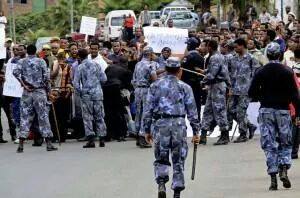
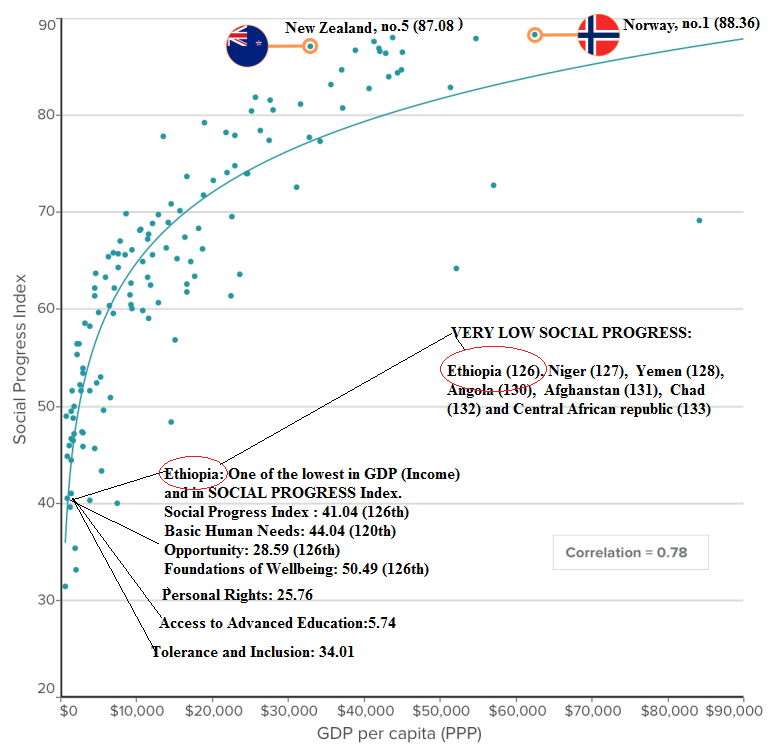
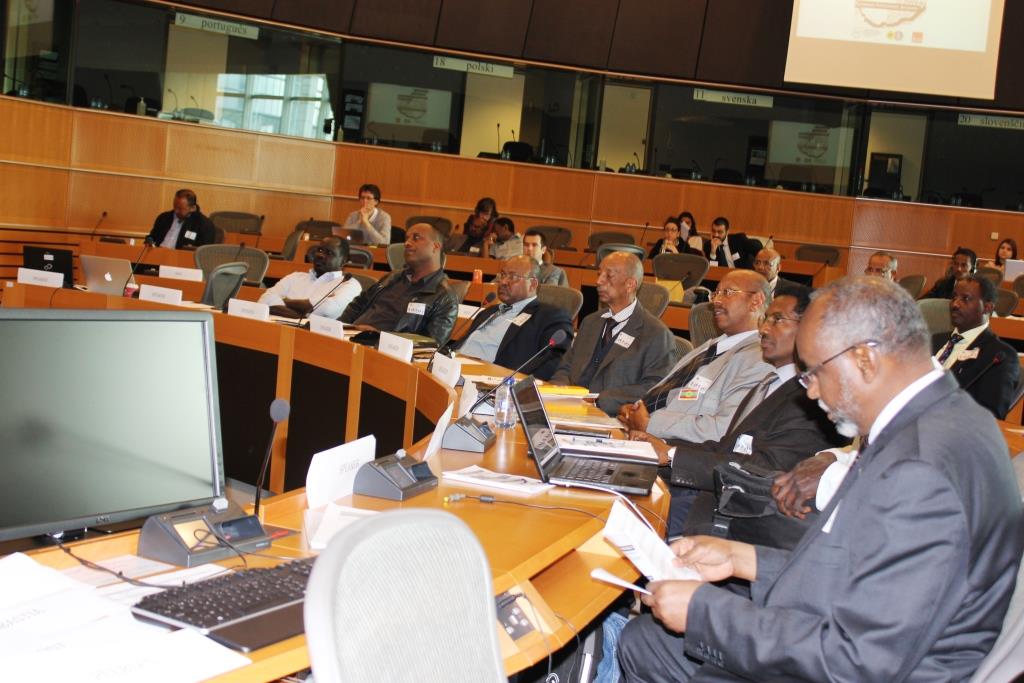
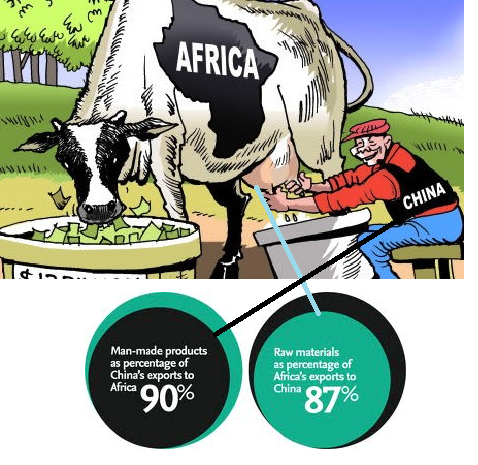




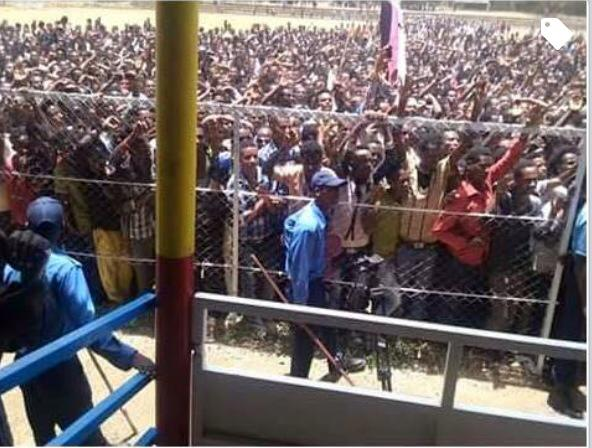
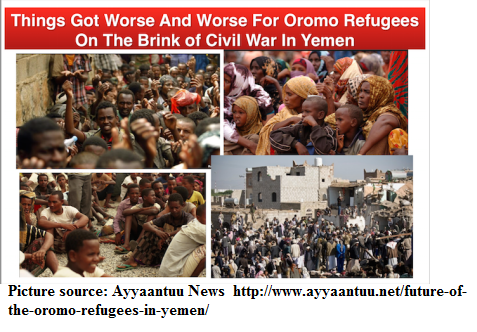
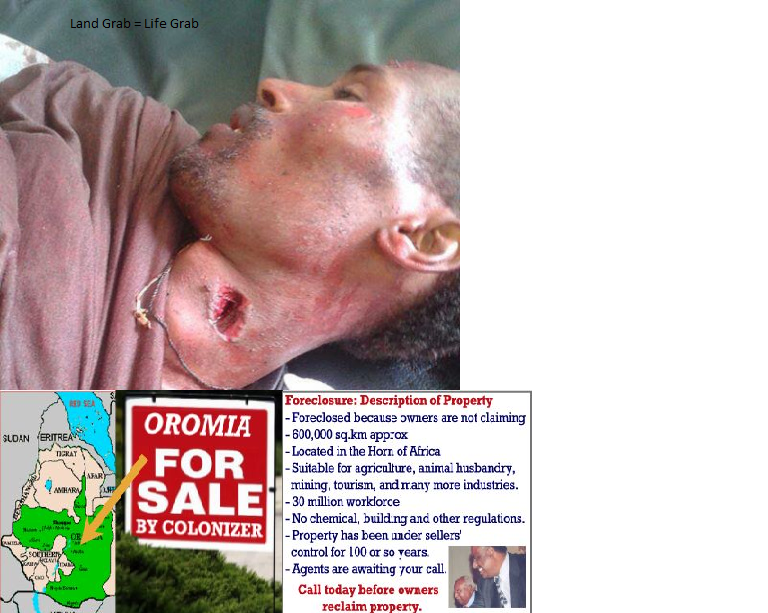
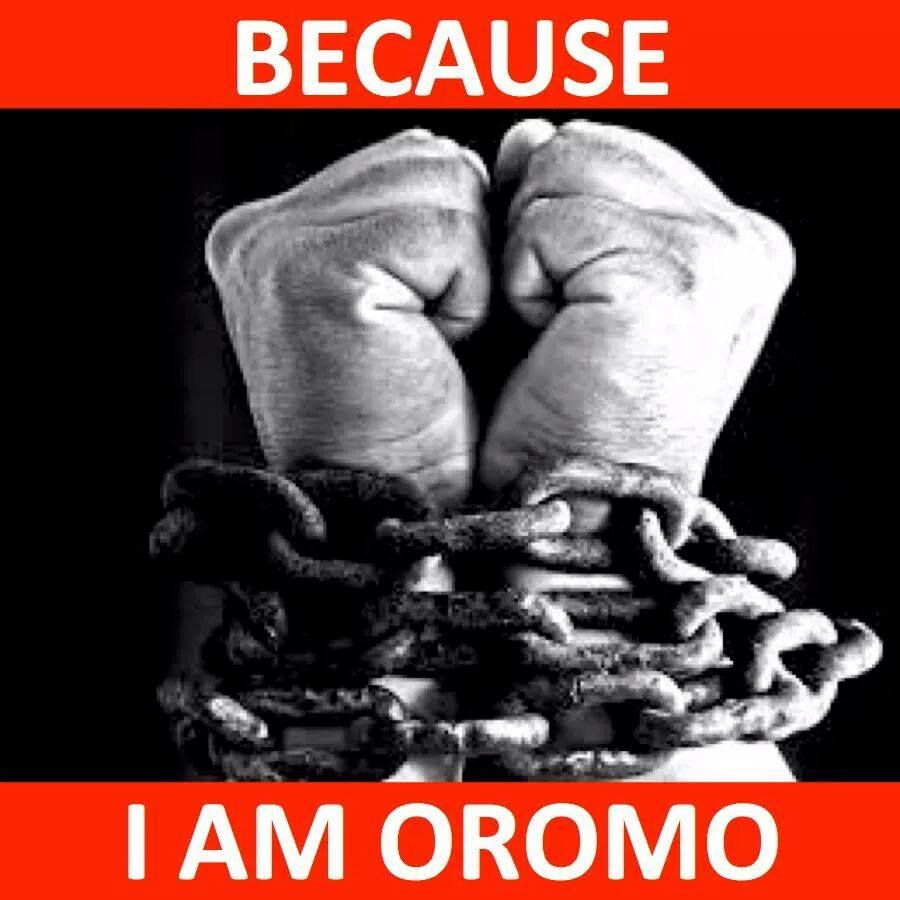
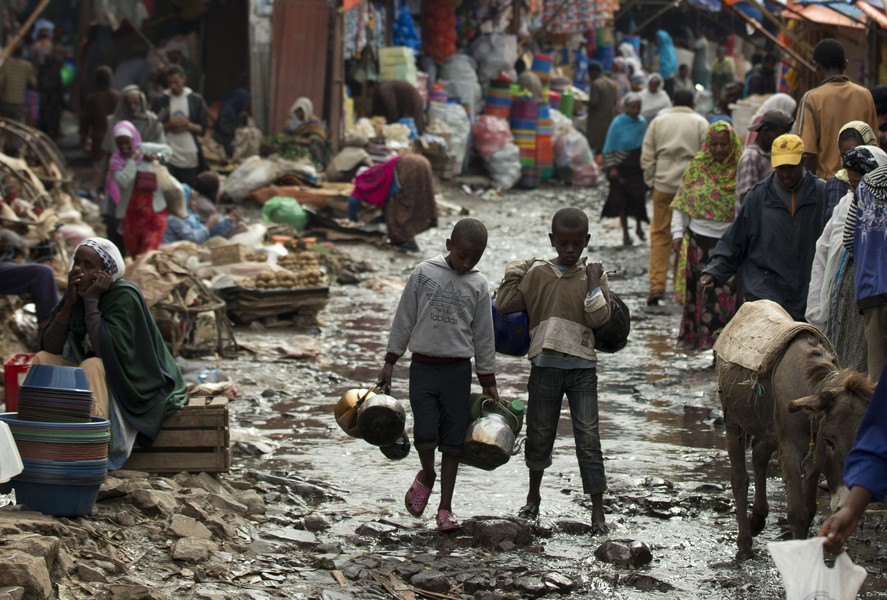
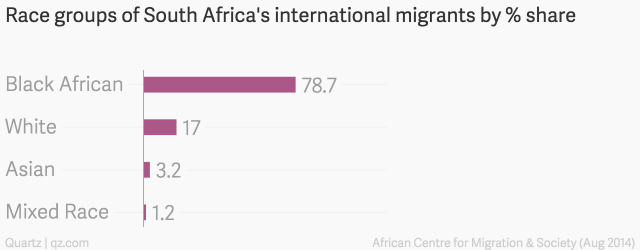


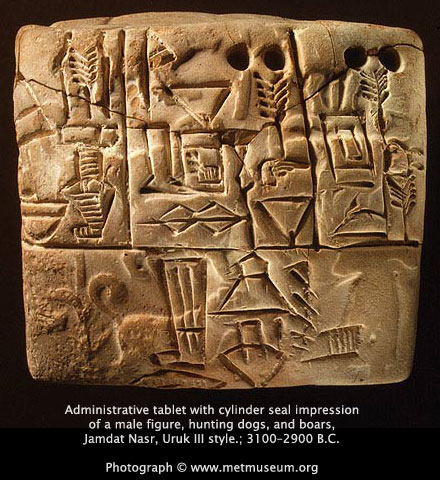

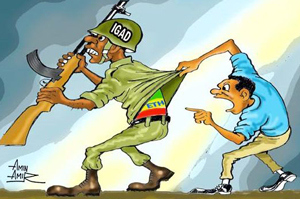
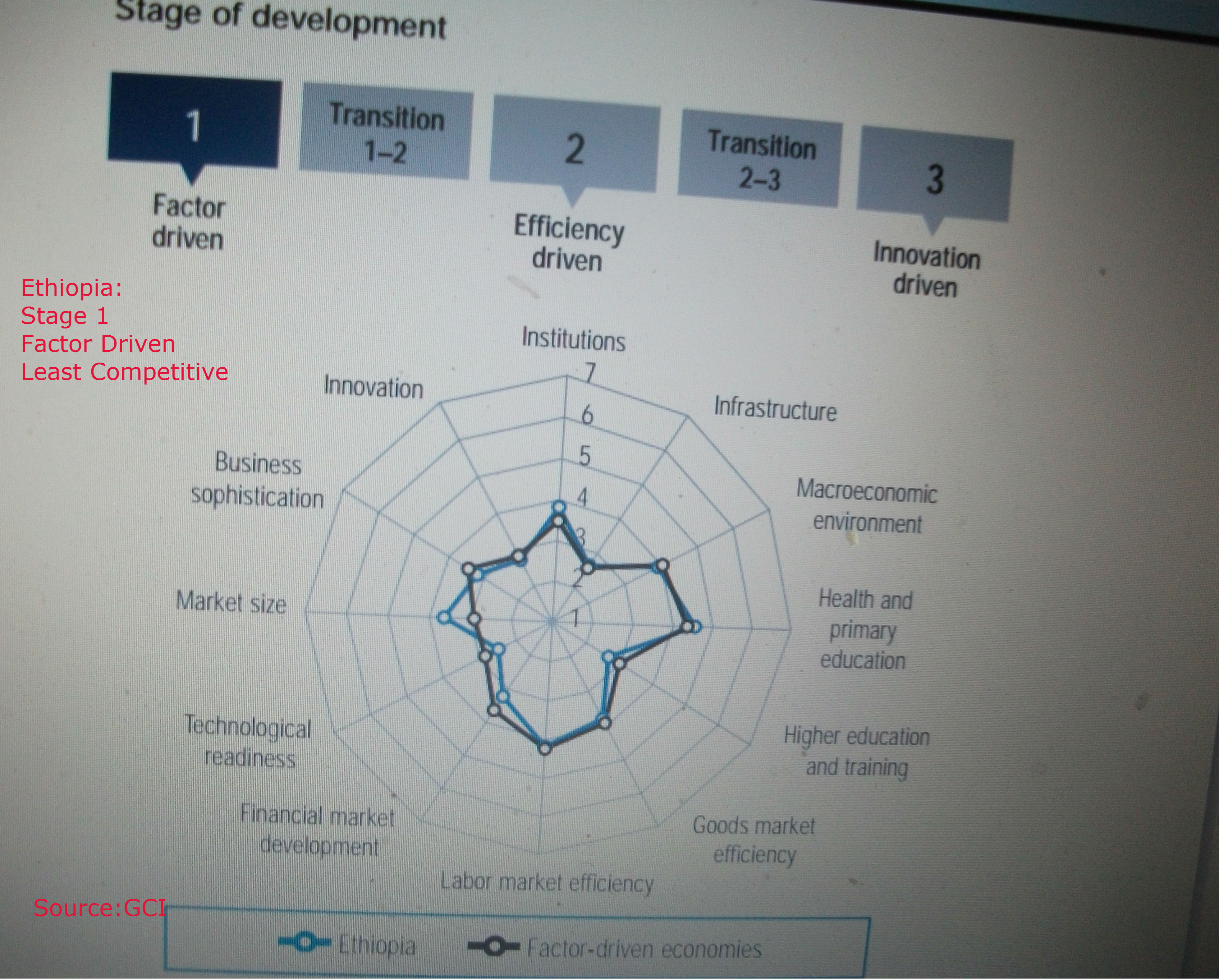


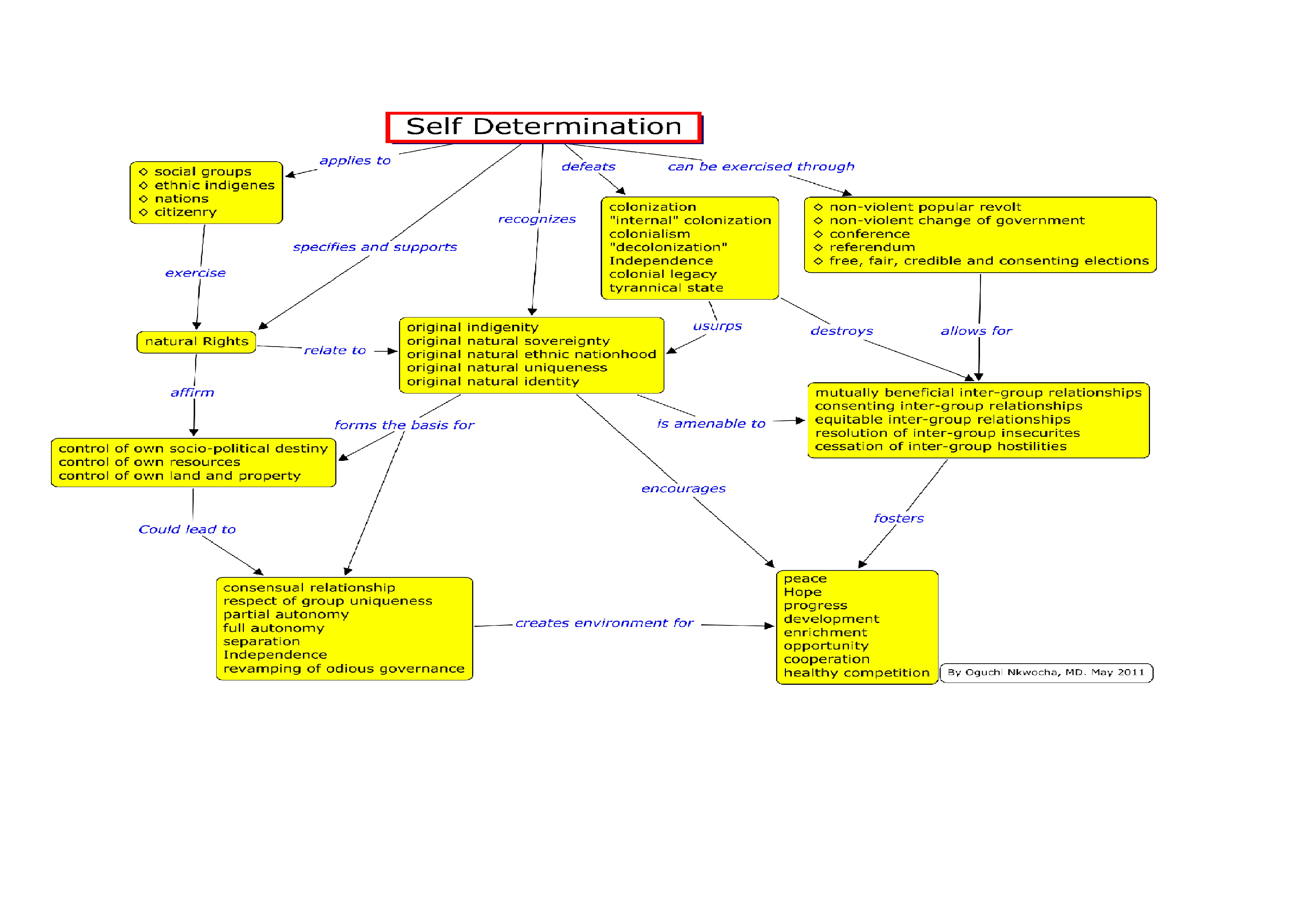
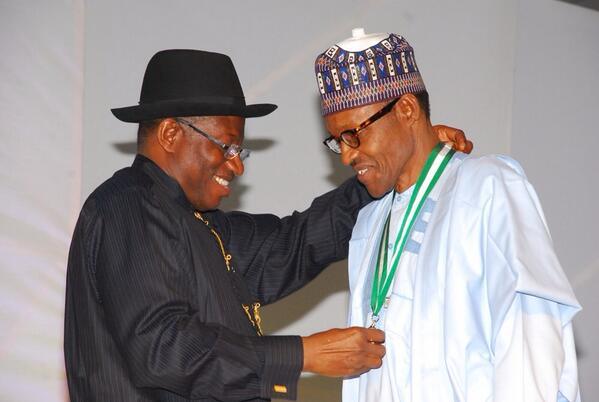


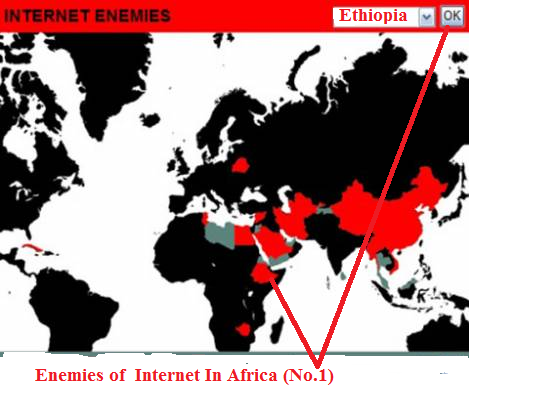
 25 March 2015 (Privacy International) — German surveillance technology company

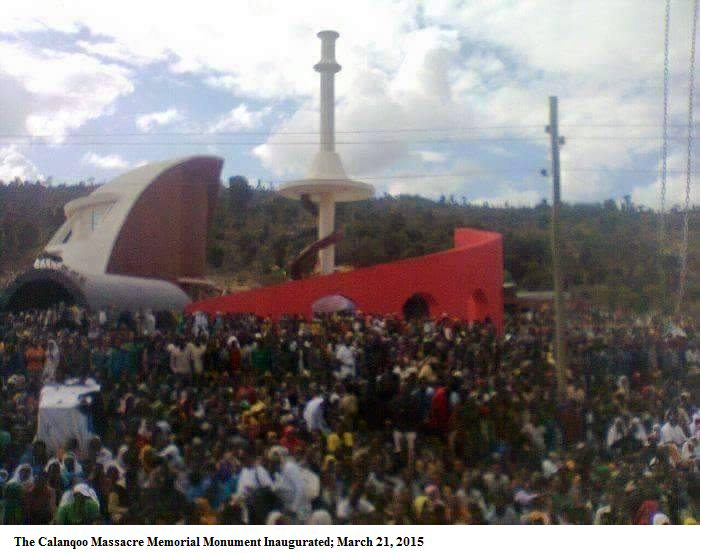
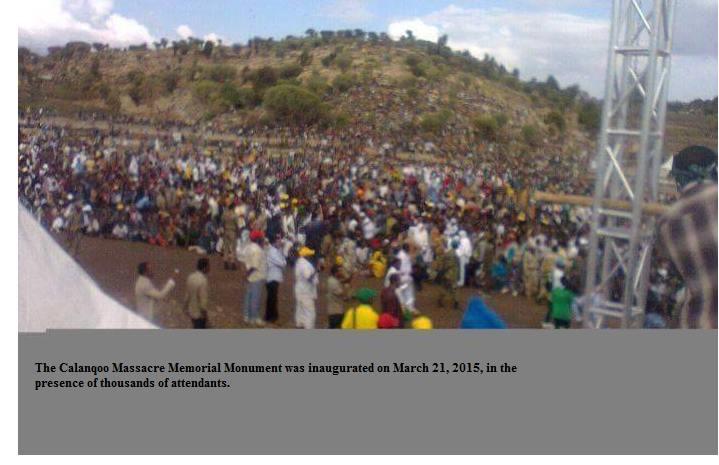
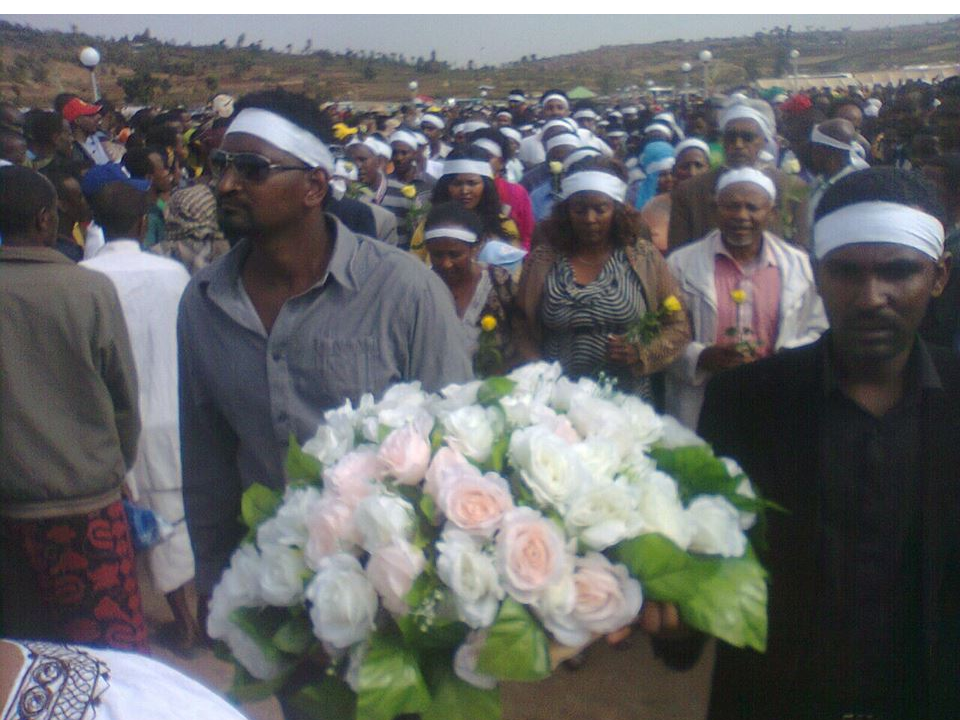

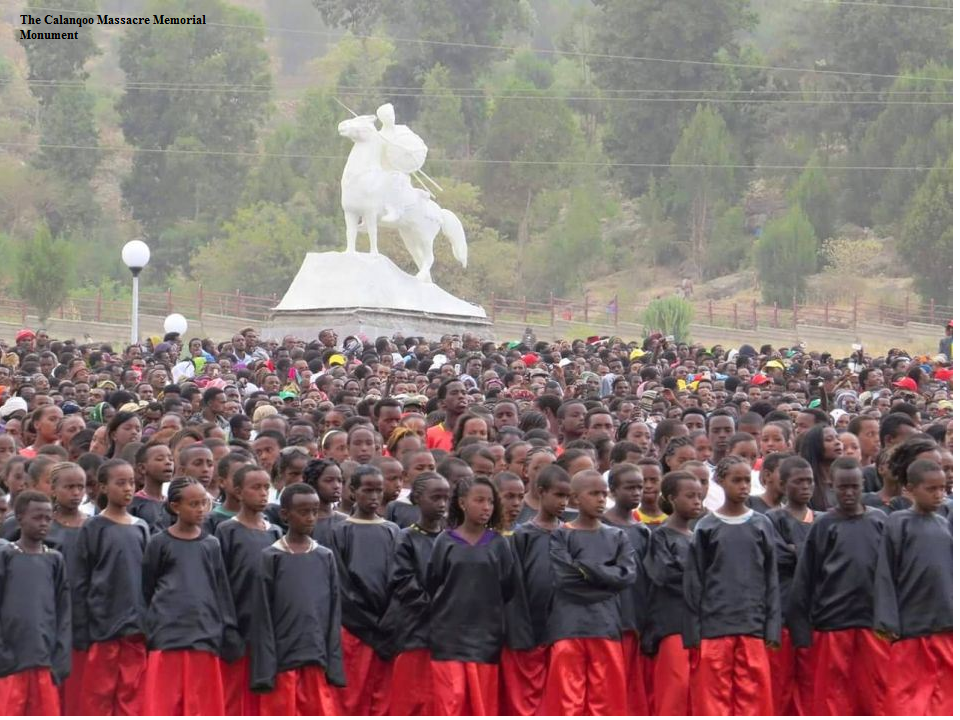




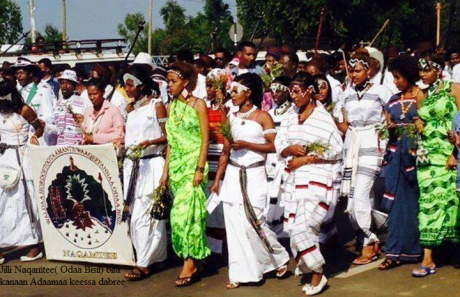
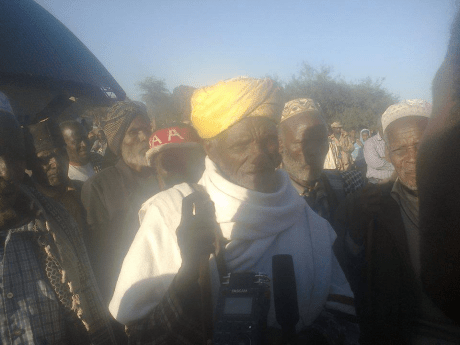


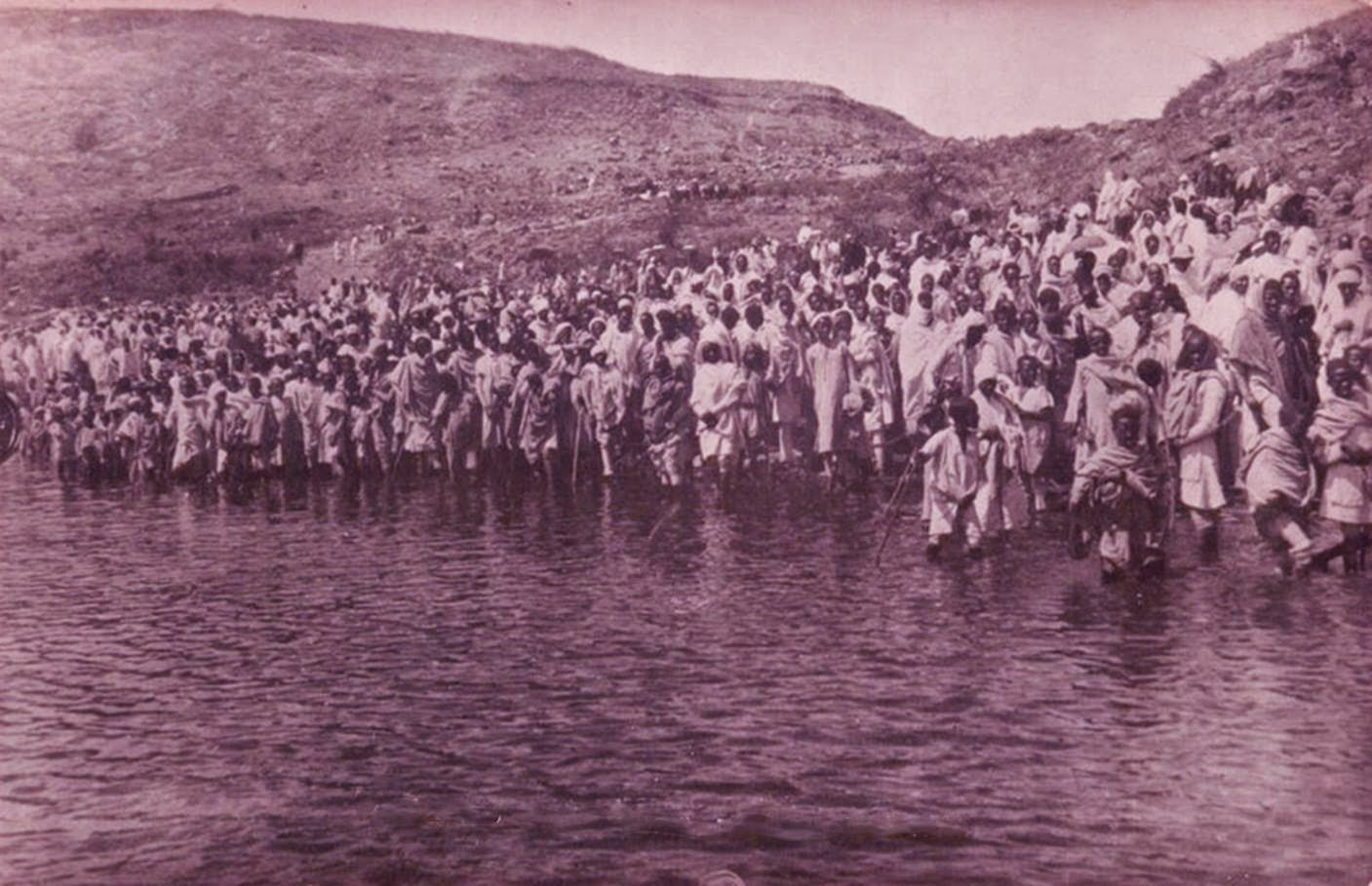


 Oromian Economist
Freedom House: U.S. Wrong to Endorse Ethiopia’s Elections. #Africa #Oromia April 23, 2015
Posted by OromianEconomist in Africa, Ethiopia's Colonizing Structure and the Development Problems of People of Oromia, Ethnic Cleansing, Free development vs authoritarian model, Groups at risk of arbitrary arrest in Oromia: Amnesty International Report, Sham elections, The Tyranny of TPLF Ethiopia.Tags: Africa, African Studies, Ethiopia's sham elections, Freedom House in response to comments by Under Secretary for Political Affairs, Genocide against the Oromo, The Tyranny of Ethiopia, Under Secretary Sherman’s comments, Wendy Sherman
2 comments
https://freedomhouse.org/article/us-wrong-endorse-ethiopias-elections#
U.S. Wrong to Endorse Ethiopia’s Elections
(Frredom House, Washington, April 16, 2015)
In response to today’s comments by Under Secretary for Political Affairs, Wendy Sherman, in which she referred to Ethiopia as a democracy and the country’s upcoming elections free, fair, and credible, Freedom House issued the following statement:
“Under Secretary Sherman’s comments today were woefully ignorant and counter-productive,” said Daniel Calingaert, executive vice president of Freedom House. “Ethiopia remains one of the most undemocratic countries in Africa. By calling these elections credible, Sherman has tacitly endorsed the Ethiopian government’s complete disregard for the democratic rights of its citizens. This will only bolster the government’s confidence to continue its crackdown on dissenting voices.”
Background:
Since coming into power in the early 1990s, the Ethiopian People’s Revolutionary Democratic Front (EPRDF) has dominated politics through a combination of political cooptation and harassment. The country experienced a degree of democratization through the early 2000’s, culminating in the most competitive elections in the county’s history in 2005. Since these elections, the EPRDF has restricted political pluralism and used draconian legislation to crack down on the political opposition, civil society organizations, and independent media. In the 2010, EPRDF and its allies won 546 out of 547 parliamentary seats.
Ethiopia is rated Not Free in Freedom in the World 2015, Not Free in Freedom of the Press 2014, and Not Free in Freedom on the Net 2014.
Freedom House is an independent watchdog organization that supports democratic change, monitors the status of freedom around the world, and advocates for democracy and human rights.
Join us on Facebook and Twitter (freedomhousedc) and Instagram. Stay up to date with Freedom House’s latest news and events by signing up for our RSS feeds, newsletter and our blog.
https://freedomhouse.org/article/us-wrong-endorse-ethiopias-elections#
Ethiopians dispute US official’s assessment of their ‘democracy’
U.S Department of State Endorsing of Upcoming Elections: Denial and Disrespect
The Human Rights League of the Horn of Africa (HRLHA)
The Human Rights League of the Horn of Africa (HRLHA) strongly opposes to the position that the U.S State Department has taken in regards to the upcoming Ethiopian election and the overall democratization process in the country in the past twenty-four years; and describes the comments by the Under Secretary of State as a sign of disrespect for ordinary citizens of Ethiopia and disregard for the human miseries that hundreds of thousands of Ethiopian have gone through under the EPRDF/TPLF-led government.
The HRLHA has no doubt at all that the U.S Government in general and U.S Department of State in particular, with the biggest and highly staffed of all Western embassies in Ethiopia, are very well aware of the political realities that have been prevailing in the country over the past two decades. An excellent proof is the Country Reports on Human Rights Practices that is issued annually by the US Department of State itself. Suppressions and denials of fundamental human rights in Ethiopia under the EPRDF/TPLF Government were being reported on by various human rights and humanitarian as well as government and diplomatic agencies; and, based on the facts revealed in such reports, the Ethiopian Government has repeatedly been ranked as the worst both at the regional and global levels.
In a country that has witnessed the highest number of political incarceration in its history, where unarmed students and other civilians were gunned down in hundreds simply because they attempted to exercise some of their fundamental rights, in “one of the ten most censored countries” where the existence of independent media has become impossible and, as a result, press freedom has been curtailed completely, where all sorts of socio-economic rights have been tied to political sympathy and supports, it would be an insult and disrespect to its ordinary citizens, and a disregard for the precious lives of innocent people that have been taken away by brutal hands to say that such a country is a democracy, and that the upcoming elections would be free and fair while intimidations and harassments of opposition candidates, as well as potential voters, were taking place out in the field even while the Under Secretary of State was making the comments. While encouraging the most repressive government and governing party towards becoming more dictatorial, the Under-Secretary of State’s comments discourage and undermine the sacrifices that the Ethiopian peoples have paid and are still paying to realize their century-old dream of building free and democratic country.
The Human Rights League of the Horn of Africa (HRLHA) requests that the Under Secretary of State retract the wrong comments and apologize to the Ethiopian peoples. It also urges the U.S State Department to recognize and acknowledge the realities in Ethiopia and use the close ties that exists between the two governments to put pressure on the ruling EPRDF/TPLF party so that it allows the implementation of a genuine democracy.
http://www.ayyaantuu.net/u-s-department-of-state-endorsing-of-upcoming-elections-denial-and-disrespect/