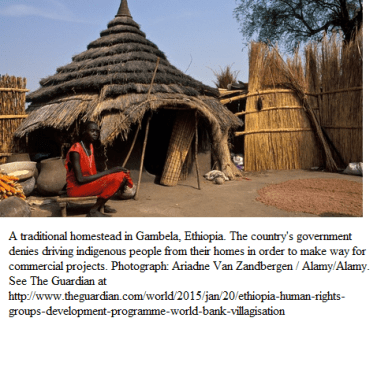
A major UK- and World Bank-funded development programme in Ethiopia may have contributed to the violent resettlement of a minority ethnic group, a leaked report reveals. The UK’s Department for International Development was the primary funder of a World Bank-run development project aimed at improving health, education and public services in Ethiopia, contributing more than £388m of UK taxpayer funds to the project. However, a scathing draft report of the World Bank’s internal watchdog said that due to inadequate oversight, bad audit practices, and a failure to follow its own rules, the Bank has allowed operational links to form between its programme and the Ethiopian government’s controversial resettlement programme. Multiple human rights groups operating in the region have criticised the Ethiopian government’s programme for violently driving tens of thousands of indigenous people, predominantly from the minority Anuak Christian ethnic group, from their homes in order to make way for commercial agriculture projects – allegations the Ethiopian government denies. Many of those resettled remain in poor conditions lacking even basic facilities in refugee camps in South Sudan. The leaked World Bank report, obtained by the International Consortium of Investigative Journalists and seen by the Guardian, rejected claims from the Bank’s management that no link existed between their programme and villagisation. According to the report, weak audit controls meant bank funds – which included over £300m from the UK’s Department for International Development – could have been diverted to implement villagisation. The report did not itself examine whether the resettlement programme had involved human rights abuses, saying such questions were outside its remit. However, the watchdog highlighted a series of failures in the planning and implementation of the programme, including a major oversight in its failure to undertake full risk-assessments as required by bank protocol. Crucially for the Anuak people, the bank did not apply required safeguards to protect indigenous groups. Anuradha Mittal, the founder of the Oakland Institute, a California-based development NGO which is active in the region, said DfID was an active participant in the programme, and should share responsibility for its failings. “Along with the World Bank and other donors, DfID support constitutes not only financial support but a nod of approval for the Ethiopian regime to bring about ‘economic development’ for the few at the expense of basic human rights and livelihoods of its economically and politically most marginalised ethnic groups,” she said. Mittal was also critical of the World Bank panel’s draft findings, falling short of directly implicating the World Bank and its fellow donors in the resettlement programme. “It is quite stunning that the panel does not think that the World Bank is responsible for villagisation-related widespread abuses in Ethiopia resulting in destruction of livelihoods, forced displacement of Anuaks from their fertile lands and forests.” Disclosure of the draft report’s findings come as the UK government faces increasing scrutiny over its involvement in villagisation. DfID is the project’s largest donor and in March ministers will face a judicial review over whether the UK’s contributions indirectly funded the resettlement programme. The case has been brought by a farmer from the Gambela region who claims he was violently evicted from his land. Responding to the report’s findings, David Pred of Inclusive Development International – the NGO which filed the original complaint on the Anuak group’s behalf – said: “The Bank has enabled the forcible transfer of tens of thousands of indigenous people from their ancestral lands. “The Bank today just doesn’t want to see human rights violations, much less accept that it bears some responsibility when it finances those violations.” A World Bank spokesman declined to answer the Guardian’s questions about the report. “As is standard procedure, World Bank staff cannot comment on the results of the inspection panel’s investigation until the executive board of the World Bank Group has had the opportunity to review the panel’s report over the coming weeks.” In previous statements the bank’s management said there was no evidence of widespread abuses or evictions. Asked about the findings, a DfID spokesman said: “We do not comment on leaked reports. “Britain’s support to the Promotion of Basic Services Programme is specifically for the provision of essential services like healthcare, schooling and clean water, and we have no evidence that UK funds have been diverted for other purposes.” http://www.theguardian.com/world/2015/jan/20/ethiopia-human-rights-groups-development-programme-world-bank-villagisation
A major UK- and World Bank-funded development programme in Ethiopia may have contributed to the violent resettlement and evictions of the indigenous people January 20, 2015
Posted by OromianEconomist in Afar, Africa, Ethiopia's Colonizing Structure and the Development Problems of People of Oromia, Ethnic Cleansing, Free development vs authoritarian model, Gambella, H & M, Land and Water Grabs in Oromia, Ogaden, Omo, Omo Valley, Sidama, Southern Ethiopia and the Omo Valley, UK Aid Should Respect Rights, World Bank.Tags: Africa, African Studies, Gembella, Genocide, Genocide against the Oromo, Human rights violations, Land grabbing, Land grabs in Africa, Omo, State and Development, World Bank
add a comment
Ethiopia: human rights groups criticise UK-funded development programme
Leaked World Bank report rejects claims from the Bank’s management that no link existed between their programme and villagisation
The Guardian, Tuesday 20 January 2015
China: The Scramble for Africa January 19, 2015
Posted by OromianEconomist in Africa, Africa and debt, Africa Rising, China and Africa, Colonizing Structure.Tags: Africa, African Studies, China and Africa, Colonizing Structure, economics, Land grabs in Africa
1 comment so far

China in Africa: One among many
The Economist, Jan 17th 2015
ACROSS Africa, radio call-in programmes are buzzing with tales of Africans, usually men, bemoaning the loss of their spouses and partners to rich Chinese men. “He looks short and ugly like a pygmy but I guess he has money,” complained one lovelorn man on a recent Kenyan show. True or imagined, such stories say much about the perceived economic power of Chinese businessmen in Africa, and of the growing backlash against them.
China has become by far Africa’s biggest trading partner, exchanging about $160 billion-worth of goods a year; more than 1m Chinese, most of them labourers and traders, have moved to the continent in the past decade. The mutual adoration between governments continues, with ever more African roads and mines built by Chinese firms. But the talk of Africa becoming Chinese—or “China’s second continent”, as the title of one American book puts it—is overdone.
The African boom, which China helped to stoke in recent years, is attracting many other investors. The non-Western ones compete especially fiercely. African trade with India is projected to reach $100 billion this year. It is growing at a faster rate than Chinese trade, and is likely to overtake trade with America. Brazil and Turkey are superseding many European countries. In terms of investment in Africa, though, China lags behind Britain, America and Italy (see charts).

If Chinese businessmen seem unfazed by the contest it is in part because they themselves are looking beyond the continent. “This is a good place for business but there are many others around the world,” says He Lingguo, a sunburnt Chinese construction manager in Kenya who hopes to move to Venezuela.
A decade ago Africa seemed an uncontested space and a training ground for foreign investment as China’s economy took off. But these days China’s ambitions are bigger than winning business, or seeking access to commodities, on the world’s poorest continent. The days when Chinese leaders make long state visits to countries like Tanzania are numbered. Instead, China’s president, Xi Jinping, has promised to invest $250 billion in Latin America over the coming decade (see article).
The growth in Chinese demand for commodities is slowing and prices of many raw materials are falling. That said, China’s hunger for agricultural goods, and perhaps for farm land, may grow as China’s population expands and the middle class becomes richer.
Yet Africans are increasingly suspicious of Chinese firms, worrying about unfair deals and environmental damage. Opposition is fuelled by Africa’s thriving civil society, which demands more transparency and an accounting for human rights. This can be an unfamiliar challenge for authoritarian China, whose foreign policy is heavily based on state-to-state relations, with little appreciation of the gulf between African rulers and their people. In Senegal residents’ organisations last year blocked a deal that would have handed a prime section of property in the centre of the capital, Dakar, to Chinese developers. In Tanzania labour unions criticised the government for letting in Chinese petty traders.
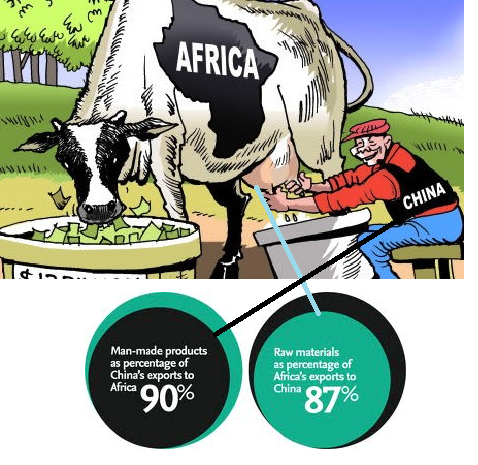
Some African officials are voicing criticism of China. Lamido Sanusi, Nigeria’s former central bank governor, says Africa is opening itself up to a “new form of imperialism”, in which China takes African primary goods and sells it manufactured ones, without transferring skills.
After years of bland talk about “win-win” partnerships, China seems belatedly aware of the problem. On a tour of the continent, the Chinese foreign minister, Wang Yi, said on January 12th that “we absolutely will not take the old path of Western colonists”. Last May the prime minister, Li Keqiang, acknowledged “growing pains” in the relationship.
China has few political ambitions in Africa. It co-operates with democracies as much as with authoritarian regimes. Its aid budget is puny. The few peacekeepers it sends stay out of harm’s way. China’s corporatist development model has attracted few followers beyond Ethiopia and Rwanda. Most fast-growing African nations hew closer to Western free-market ideas. In South Sudan, the one place where China has tried to flex its diplomatic muscle, it has achieved embarrassingly little. Attempts to stop a civil war that is endangering its oil supply failed miserably.
Chinese immigrants in Africa chuckle at the idea that they could lord it over the locals. Most congregate in second-tier countries like Zambia; they are less of a presence in hyper-competitive Nigeria. Unlike other expatriates, they often live in segregated camps. Some thought, after a decade of high-octane engagement, that China would dominate Africa. Instead it is likely to be just one more foreign investor jostling for advantage.
The increased concentration of wealth: 80 rich people now have as much as 50% of the rest of humanity combined January 19, 2015
Posted by OromianEconomist in Economics.Tags: economics, Poverty and Inequality, The increased concentration of wealth
add a comment

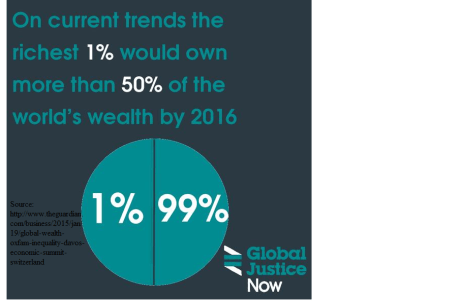
WIDENING GAP:80 rich people now have as much as 50% of the rest of humanity combined
http://qz.com/329099/80-rich-people-now-have-as-much-as-50-of-the-rest-of-humanity-combined/
Billionaires are getting richer, according to a new study from Oxfam. Gather together the wealth of the world’s richest people, and you now only need 80 of them before there’s enough in the pot to equal everything owned by the poorest 50% of the rest of the world combined. Back in 2010, you’d have needed 388 of the world’s richest to balance those scales.

The richest of the top 1%, the top billionaires on Forbes’ rich list, have seen their wealth accumulate faster over the last five years than even the rest of the super-rich, Oxfam said. In 2010, the richest 80 people in the world had a net wealth of $1.3 trillion. By last year, that was up to 1.9 trillion, an increase of $600 billion.
Together with the rest of the 1%, that group owned 48% of global wealth in 2014. That’s more uneven than in 2010, when they owned a little over 44%.
However, according to Oxfam’s data, we’ve been here before. Back in 2000, the 1% owned a higher percentage of global wealth than they do today. For a few years, the trend seemed to show that number falling, as the world’s poorest clawed some of it back. But in the past five years, that’s reversed.
Part of the problem, as identified by Oxfam, is that the rate of increase for the rich has speeded up, and it’s now so much higher than that for everyone else that it’s increasing the gap.
The 1% has entered parlance, but who’s included? And do they constitute a problem or an asset?
Who are these people?
With a world population of 7.2 billion, there are around 72 million people in the top 1%—not all of whom are billionaires. In 2014, there were 1,645 people listed by Forbes as being billionaires, with Bill Gates back at the top after a year off. Of these, 90% are male, and 30% are American. And there’s evidence they’ve been running the show for a long, long time.
Is rising inequality inevitable?
Oxfam says not. In a campaign, the charity focuses on changes that could be made to the way global society is organized, including the eradication of extreme poverty and economic empowerment of women.
Why does it matter?
Economists like Dan Altman and Thomas Piketty argue that wealth inequality hampers growth and will only get worse in the future. Somehave argued that it could be a good thing. And many have blamed it for misery, hopelessness and, ultimately, violence.
http://qz.com/329099/80-rich-people-now-have-as-much-as-50-of-the-rest-of-humanity-combined/
Great Loss to the Human Rights Community as Legendary Dr. Martin Hill Passes On January 19, 2015
Posted by OromianEconomist in Dr. Martin John Dudley Hill.Tags: Human rights, Martin John Dudley Hill, Oromo
add a comment

(Advocacy for Oromia) We are deeply saddened to hear the death of Dr. Martin Hill, a long time friend and voice for the voiceless oppressed peoples of the world including the Oromo. Dr. Martin Hill passed away on Friday 9 January 2015.
Dr. Hill worked at the Amnesty Secretariat office in London, as a researcher and a campaigner on the Horn of Africa in the human rights field for over 32 years.
I first met Dr. Hill in 1989 when he led the first Amnesty International delegation to Somalia during the period of military dictatorship. At sub-regional level where many human rights violations and suffering for the past three decades and lack of attention globally, Dr. Hill brought human rights issues and concerns in the limelight and earned the admiration and love of many people particularly Ethiopians, Eritreans and Somalis.
Dr. Hill was a friend to me and to my late uncle, Dr. Ismail Jumale Ossoble, (the only human rights lawyer who consistently defended prisoners of conscience in the dreaded national security court). Dr. Ossoble was a prisoner of conscience himself and was Amnesty International’s principle research contact in Somalia during the 80s and 90s. We subsequently established Dr. Ismail Jumale Human Rights Centre in 1996 and I co-directed the centre for 6 years starting in 1996 before I went into exile. During this period, I was the principle Somali contact for Amnesty International and I worked very closely with Dr. Hill.
Dr. Hill worked with us on the protection and promotion of human rights for Somalis including a sign up campaign during the 50th UDHR anniversary celebrations where Dr. Ismail Jumale Centre was able to garner over 1.5 million signatures including first signature by the founding first President, the late Aden Abdulle Osman at his farm in Shalambood District of lower Shabale region, former Prime Ministers, faction leaders, and civil society groups among others.
I particularly remember the first human rights defenders training for Somalis that Dr. Hill organized in 1997 in Kenya and I was part of that training. He was instrumental in organizing sub-regional networks consultation meetings to the run up of the All Africa Human Rights Defenders Conference I 1998 and subsequently the global human rights summit in Paris in December 1998.
He also supported our research initiative during our initial mission, Africa Human Rights Defenders Project in the East and Horn of Africa while I was at York University. Dr. Hill was present as founding member of East and Horn of Africa Human Rights Defenders Network in 2005 in Entebbe, Uganda.
Dr. Hill will be remembered for his ardent support to human rights in the Horn of Africa. He inspired and mentored so many human rights activists who are now working with prominent human rights organizations around the world. He contributed to the fight against human rights violations and ending the culture of impunity in the sub-region.
Our thoughts, and those of the wider human rights community, are with his family and many friends around the world. The East and Horn of Africa Human Rights Defenders Project staff, East and Horn of Africa Human Rights Defenders Network and the Pan Africa Human Rights Defenders Network, extend our sincerest condolences to his wife, Dawn Hill and children.
Great Loss to the Human Rights Community as Legendary Dr. Martin Hill Passes On
Martin Hill Funeral Annoucement (1)
Sirna Awwaalcha Dr. Martin Hill
Hawaasota Oromoo UK fi biyya adda addaa keessa jirtan maraaf!
Fira ummata cunqurfame addunyaa fi warri sagalee hinqabne sagaleen isaanii akka dhagahamu godhaa kan turani Dr. Martin Hill biyya lafaa kana irraa lubbuun dabruu isaanii gadda guddaan ibsina. Ummatoota cunqurfamanii fi miidhaan irra gahe keessaa ummatni Oromoo tokko yommu ta’u Dr. Martin bara dhibba kudha sagalii fi saddeettamootaa fi sagaltamoota keessa rakkoo Oromoo irra gahaa ture ifa baassuu fi saaxiluun Oromoon akka gargaaramu godhaa nama turani dha.Yeroo dheeraaf adunyaa irratti mirga dhala namaaf ka falmu dhaaba ‘Amnesty International’ jedhamu geggeessaa ka turan Dr. Martin Hill biyya lafaa kana irraa ka dabran Jimaata dabre Amajji 16, 2015 yommuu ta’u sirni awwaalcha isaanii Jimaata dhufu Amajjii 23, 2015 ganama sa’a 11:00 irratti London keessatti waldaa teessoon isaa kanaa gadi kaa’ametti raawwata. ‘Amnesty International’ dhuma bara 2014 keessas akkuma rakkoo ummatoota addunyaa cunqunrfaman saaxile ka Oromoo irra gahes “Because I am Oromo” jechuun biyyi lafaa akka sirriitti hubatu godhe. Kanaaf Oromoo dabalatee fira ummata cunqunrfamtoota biyya lafaa kan turani sirna awwaalcha Dr. Martin Hill irratti akka argamtan gaafanna.
Guyyaan: Amajjii 23, 2015
Sa’a: 11:00
Bakki:
Holy Trinity Church & Saint Matthias Centre
Trinity Rise, Tuise Hill
London, SW2 2QP
Brixton irraa
Otobusiin: 2, 415, 432 (Stop F)
Bakka kana irraa daqiiqaa 10 deemsisa
Hawaasa Oromoo UK
=========================
To all members of Oromo Communities in the UK and around the world!
We are deeply saddened to hear the death of Dr. Martin Hill, a long time friend and voice for the voiceless oppressed peoples of the world, including the Oromo. The funeral service of Dr. Martin Hill, who was the director of the Amnesty International for a long time, will be held on Friday, 23rd January 2015 at the following address and time.
Date: 23rd January 2015
Time: 11:00 AM
Place: Holy Trinity Church and Saint Matthias Centre, Trinity Rise, Tulse Hill, London SW2 2QP
Transport from Brixton station to the Church,
Buses: 2, 415, 432, (Stop F)
10 minutes from the stop.
Oromo Community UK
Africa: resource curse or leadership curse? January 17, 2015
Posted by OromianEconomist in Africa, Africa Rising, Corruption in Africa, Dictatorship, Illicit financial outflows from Ethiopia, Leadership curse.Tags: Africa, African Studies, Developing country, leadership curse, State and Development, Sub-Saharan Africa, The Tyranny of Ethiopia, Tyranny
1 comment so far
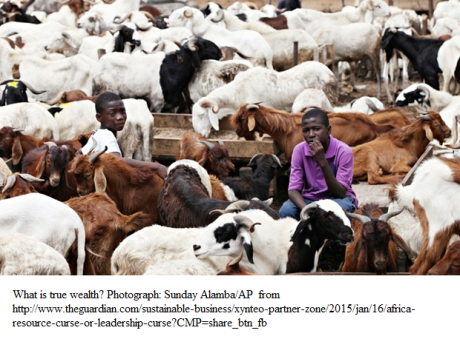
The main challenge for Africa is to reinvent how it grows, in a way that creates opportunities for all. The opportunity to go to a good hospital; the opportunity to attend a competent school and develop technical and intellectual skills; the opportunity of not being discriminated against based on gender; or simply the opportunity to produce a couple more litres of milk and become an abundant farmer instead of a subsistence farmer. The key is having the possibility of living like Malik wanted to, by trading and sharing his goats and vegetables, or choosing a more “westernized” lifestyle.
In order to shape this new kind of growth and reverse this leadership curse, it is fundamental to reinvent leadership itself.
Africa’s “eternal” incumbent leaders – such as Equatorial Guinea’s president, Obiang; his Uganda congener, Museveni; or Cameroon’s head, Biya – have not steered the wheel in the direction of generalised prosperity. They have instead narrowed the chances for anyone else to achieve it.
Africa needs leaders from different disciplines, places and generations, who are capable of challenging the status quo and framing a new development phase. And the importance of involving both policy and business is large. The curse can only be lifted if government, civil society and business leaders collaborate to craft long-term strategies for their countries and people.
In a nutshell, there is a need to develop African leaders who are capable of acting differently. Leaders who not only have a broad understanding of the contextual world but also have an in-depth knowledge and respect for local behaviour. Leaders who are capable of composing a better future by going beyond the golden GDP growth quest or revenues pursuit; and who instead value their ecosystems as a whole: their existing human and natural resources. Leaders who Malik would be proud to go home to.
The big question remains: is Africa ready to overcome these barriers?
Xyntéo analyst Joao Sousa blogs on an encounter that made him reflect on what the golden GDP quest means for the people of Africa
Joao Sousa, The Guardian
A few weeks ago, on one of my regularly-occurring train rides to Oslo airport, I sat next to someone who would make me rethink the way I perceive the world. This man was a 40-something Somalian who had been living in Oslo for longer than he wanted. I greeted him and he greeted me back, telling me his name was Malik and that he was from Jilib, in Somalia.
I have always been curious about life in Somalia, and wondered whether the Somali novelist Nuruddin Farah’s books convey the media-blurred reality of the place.
So I asked him what it was like in Somalia. “Very good,” he said, “in Somalia we would be very rich if it were not for the war.”
I wondered what he could be talking about, considering Somalia isn’t known for riches and resources. He then showed up humans’ differing perceptions of “wealth” by saying, “We have lots of goats and we even grow our own vegetables.” Wealth, to Malik, is evidently very different from wealth according to the average westerner.
Knowing the situation in Somalia is now more stable, I asked him whether he had any plans to go back, and he told me, with watering eyes, that one of his remaining dreams is to return home and live from what he can get from the land, with his community.
The same week that I met Malik, newspapers all over the world were full of stories about Nigeria’s “miraculous” GDP recalculation, which saw its numbers double overnight despite “missing billions”. The ordinary Nigerian person, however, stood exactly in the same place as they were the day before.
Nigeria and Somalia are very different sub-Saharan countries. The first, one could say, suffers from the resource curse; the second simply suffers. Nigeria is the largest African oil producer; Somalia has one of the lowest GDP per capita (PPP) in the world, 90 times lower than in Norway.
But in spite of the differences the two countries have many similarities (and, no, I don’t mean Boko Haram and Al Shabaab). Both are highly exposed to climate change, which degrades their land and causes food and water scarcity. Both have dysfunctional educational systems, malfunctioning political arrangements, hindered rules of law, and flawed wealth distribution. (Jim Yong Kim, the World Bank president, was right when he connected all these issues in one sentence: “We will never end poverty if we don’t tackle climate change.”) And both have an enormous untapped natural and human potential that can only be met if their future leaders are visionary and transformative.
Spin the globe, close your eyes and try to point to Africa. The probability is that your finger lands on a country with similar symptoms to Nigeria and Somalia. Look at Angola, with its rocketing growth over the last decade; or the frequently-cited success story of Botswana, with its impressive economic indicators. GDP figures might indicate everything is rosy, but scratch the surface and the symptoms described above – dysfunctional education systems and so on – remain. Oil-rich, gas-rich, tanzanite-rich, just-culturally-rich or not-rich-at-all, many African countries suffer from the same syndromes. This makes me wonder if there is a resource curse or if it is instead a leadership curse.
Africa’s asymmetric and trembling growth has its foundations in models primarily designed by and for developed countries. Moreover, its success is – most times wrongfully – measured by its countries’ GDPs alone, leading to occurrences like the misleading example of Nigeria’s recent GDP recalculation.
Crucially, millions of “Maliks” don’t think GDP is relevant when they think about measuring wealth. By Malik’s measure – having the ability to live among his community and from the land – Africa is perfectly placed to create a new kind of growth, by approaching consumption and wealth in a way that isn’t simply about GDP or revenue and that is, instead, about looking holistically to people’s current and future needs and behaviours.
The main challenge for Africa is to reinvent how it grows, in a way that creates opportunities for all. The opportunity to go to a good hospital; the opportunity to attend a competent school and develop technical and intellectual skills; the opportunity of not being discriminated against based on gender; or simply the opportunity to produce a couple more litres of milk and become an abundant farmer instead of a subsistence farmer. The key is having the possibility of living like Malik wanted to, by trading and sharing his goats and vegetables, or choosing a more “westernized” lifestyle.
In order to shape this new kind of growth and reverse this leadership curse, it is fundamental to reinvent leadership itself.
Africa’s “eternal” incumbent leaders – such as Equatorial Guinea’s president, Obiang; his Uganda congener, Museveni; or Cameroon’s head, Biya – have not steered the wheel in the direction of generalised prosperity. They have instead narrowed the chances for anyone else to achieve it.
Africa needs leaders from different disciplines, places and generations, who are capable of challenging the status quo and framing a new development phase. And the importance of involving both policy and business is large. The curse can only be lifted if government, civil society and business leaders collaborate to craft long-term strategies for their countries and people.
In a nutshell, there is a need to develop African leaders who are capable of acting differently. Leaders who not only have a broad understanding of the contextual world but also have an in-depth knowledge and respect for local behaviour. Leaders who are capable of composing a better future by going beyond the golden GDP growth quest or revenues pursuit; and who instead value their ecosystems as a whole: their existing human and natural resources. Leaders who Malik would be proud to go home to.
The big question remains: is Africa ready to overcome these barriers?
Introduction to Microeconomics: Understanding Market Economy January 17, 2015
Posted by OromianEconomist in Economics, Uncategorized.Tags: Applied economics, economics, Microeconomics, Supply and Demand
add a comment
“Supply and demand is perhaps one of the most fundamental concepts of economics and it is the backbone of a market economy.”

Economics Basics: Supply and Demand
Supply and demand is perhaps one of the most fundamental concepts of economics and it is the backbone of a market economy.
Market Economy is a system largely determined by free enterprise. It is a system in which decision regarding investment, production and distribution are based on supply and demand, and prices of goods and services are determined in a free market and free price system. Markets determines the allocation of resources and economic resources are privately owned.
Market is made up of people, consumers and entrepreneurs, attempting to buy and sell on the best term possible. Through the grouping process of give and take, they move from relative ignorance about others’ wants and needs to a reasonably accurate understanding of how much can be bought and sold at what price. The market function as an ongoing information and exchange system.
A free market is…
View original post 8,264 more words
Introduction to Economics January 17, 2015
Posted by OromianEconomist in Economics.Tags: Applied economics, Comparative Advantage, Economic policy, economics, Macroeconomics, Microeconomics
add a comment
Oromia: The Ethiopian Empire Formation And Its consequences On The #Oromo And Beyond. #Africa January 16, 2015
Posted by OromianEconomist in Afar, Agaw people, Boran Oromo, Ethiopia's Colonizing Structure and the Development Problems of People of Oromia, Ethiopian Empire, Ethnic Cleansing, Mursi, National Self- Determination, Ogaden, OLF, Oromia, Oromiyaa, Sidama, Southern Ethiopia and the Omo Valley, The Tyranny of Ethiopia.Tags: Africa, African Studies, Ethiopian Empire, Genocide against the Oromo, National Self Determination, Ogaden, Oromia, Oromiyaa, Oromo people, Paul Baxter, Sidama, Tyranny
add a comment
“…The sustained and bloody campaign of Minilik resulted in the cutting of limps of men of all ages, breasts of women of the Arssi Oromos, which many Oromo Anthropologists, historians and the elderly equate it to the genocide committed against the Armenians by the Ottman Turks Empire during the First World War, in which over a million Armenians were killed.”
The Ethiopian Empire Formation And Its consequences On The Oromo And Beyond
By Bakkalcho Barii
With the help of the then three colonial powers, Minilik, the Abyssinian king managed to break and conquer the Oromo Country and beyond in the last two decades of the nineteenth century. Following this war of conquest, the invading Abyssinian colonial army not only committed genocide on the entire Oromo, Walita, Sidama, and other people, but also, committed cultural, historical, social,and economic genocides in this new frontiers by imposing Abyssinian culture, language, way of life, administrations, and religion. These crimes were committed by presenting anything Abyssinian as superior to the languages, cultures, system of governance of the new colonies, as Europeans did practice when they conquered vast territories in Africa, Asia, and Latin America.
Thanks to their heroes and heroines, the Oromo and the Southern people begun the journey of re-claiming what istheirs and re-writing their own history. Like other Empires in history, the Ethiopian Empire shall collapse by the subjected people, on which it has been built on, and that processes of de-colonization and the wheel of freedom is marching forward with full gear so that those subject nations shall claim their due place among the free nations of the world. The late P.T.W Baxter spent much of his time studying mainly the Boran and the Arssi Oromos. Paul Baxter documented and wrote many research books and articles on the Oromo way of life, their Gada system of governance and their experiences under the Ethiopian empire after the Minlik colonial army managed to conquer much of the Oromo land and the Southern nations by default and with the help of the then European Colonial powers, the French, the British and the Italians.
In his research article titled “Ethiopia’s Unacknowledged Problem: The Oromo” (July 1978) wrote the following; “Each of the Oromo peoples has a distinctive history but all shared comparable experiences; ……….perhaps I may select a few observed by myself in Arssi to illustrate some common types of Oromo experience under Abyssinian rule. …… The Arssi and the Oromo Country beyond were finally subjugated by Shoan gun power in 1887 after six different annual campaigns which R.H Kofi Darkwa, the Ghanaian historian of Menilek reign, summarizes as “perhaps the most sustained and the most bloody war which Menilek undertook.”
The above description of the sustained and bloody campaign of Minilik resulted in the cutting of limps of men of all ages, breasts of women of the Arssi Oromos, which many Oromo Anthropologists, historians and the elderly equate it to the genocide committed against the Armenians by the Ottman Turks Empire during the First World War, in which over a million Armenians were killed.
Paul Baxter and John Hinnant, who both studied the Arssi, the Boran and the Guji Oromos in the 1960s, summarized the experiences of those Oromos under conquest as the following: “The Arssi described their conquest by Abyssinians as the commencement of an era of miseries, since which life has not run as God intended it but out of true”. “The Boran likewise divided their history into two eras, before and after, the first of which was good and the second bad” to describe what colonization has brought upon them.
Similarly, John Hinnant described the experiences of the Guji Oromos as tending “to blame all social problems on their incorporation into the Ethiopian empire.” The above feelings and humiliation expressed and felt by the Boran, the Arssi and the Guji Oromos are the same as the feelings and humiliation felt by the Oromos of the Wollo, the Rayya, the Karayu, the Ittu, the Leqa, the Mecha, and the Tulama.
One would always ask how successive Abyssinians regimes managed to rule over the Southern nations, including the Oromo’s (currently known as the subjects or colonies), who constitute more than two-third of the entire populations of the Ethiopian Empire for so long?
The precise answer to the above question was given by Paul Baxter in his article “Ethiopia’s Unacknowledged Problem: The Oromo, in which he says “ The absolute political domination and cultural dominance of the Amhara ( now the Tigres), has resulted in the public presentation of Ethiopia as a state with a much more unitary culture than , in fact, it has. Even scholars have come to accept Ethiopia at the evaluation of its own sophisticated and charming elite.”
The current Tigrian elites copied their Amhara elite’s, their predecessors, in presenting their Empire as a unitary and at peace with itself while waging unprecedented war of genocide on the Oromo people and other nations. They (both the Amhara & Tigre elites) hired foreign PR companies, influential individuals, and lobbyists in Western capitals and political corridors to maintain their marginalization of the Oromos and the Southern people, and present their Empire at peace with itself at the expense and misery of the subject people.
Of all the Abyssinian regimes, the current TPLF regime can only be equated with that of Minilik rule because TPLF rulers, like Minilik openly declared the entire Oromo people as the enemy of the state, and placed them in open concentration camps, in parallel with what the Nazi Germany inflicted on the Jewish communities of Europe during the Second World War.
The question many Oromos and friends of Oromos raise is Why is it the current rulers of the Empire (the TPLF), and their unprecedented scale of human rights violations and abuses on the Oromos is different from the past three regimes of the Empire rulers?
Unlike the past three regimes, who rose from the Amahric speaking Abyssinians, the TPLF originates from a minority Tigre region, which comprises only about five percent of the current Ethiopian Empire population, and was junior partners or foot-soldiers with the invading Minilik army during a war of conquest and expansion of the Abyssinian Empire towards the south.
Secondly, the TPLF rose from a century old power struggle with its close kin, the Amharas, who defeated the Tigre king Yohannes IV. In other words, the TPLF came to power not only to rule over the Empire but also to avenge their century old wounds against their kin, the Amharas. Thirdly, TPLF’s cleverly learnt the shortcomings of the Amaharas rulers over the colonies and, for the first time in the history of the Empire forcefully accepted the existence of independent nations like the Oromo’s, and allowed some form of self-rule and the use of their languages in office and schools.
However, when it comes to responding to the democratic and justice demands of the Oromo for total liberation from alien rulers, TPLF created satellite organizations who speak the languages of the indigenous population and used them as a Trojan horses to kidnap, harass, kill, displace and jail thousands of innocent Oromo for only demanding their country Oromia be free, and it is only the Oromos as owners and custodians of their Country Oromia, who shall decide their future relationships with neighbouring countries, including the Abyssinian themselves. According to official reports by Amnesty International, Oromia Support Group and other local human rights bodies, currently there are close to 45,000 innocent Oromo prisoners of conscience in different TPLF concentration camps.
Finally, the event of the September the 11th, 2001, in which thousands of innocent American lives were lost by a global terrorist organization called Al-Qaida. This horrific incident played well in the hands of TPLF rulers and exploited to receive billions of dollars and military aid in the name of fighting Islamic extremism in the region, but in actual facts to crash its opponents by bullying and invading neighbouring countries of the region with the tacit support of the Western powers.
The late TPLF ruler, Meles Zenawi loudly and clearly declared on many occasions that, TPLF conquered the Empire’s power by the barrel of guns, and, therefore, it can only be forced out of power by those who can use the same tactics. This reminded me of that famous saying “Power never gives up by will” but only by force.
The current minority regime of the TPLF hell-bent on not only committing unprecedented human rights atrocities against the Oromos and other nations in the South, its determinations to displace millions of Oromo from their ancestral land and selling those lands at the lowest bid to its foreign backers, destroy their forests by clearing in the name of development, and expose current and future generations of Oromos and the southern nations to environmental genocide shall have huge implications for the years to come.
The challenge for the Oromos and the people of the South is that the old guards, who conquered and built the Ethiopian Empire are so desperate and furious for losing the Empire to their junior partners, and making everything they can to re-claim their lost glory in the name of united Ethiopia, one vote and individual democratic rights slogans. These old guards of the Empire are barking and pulling their hair inside and outside of the country to undo the symbolic self-rule that is currently in-place that successive Oromo generations earned by much blood and sacrifice.
As one of my favourite young broadcaster, journalist and poet Abdi Fixe recently put on his comment regarding the fire that destroyed the Taitu Hotel in Finfinnee, “ where were these people who were so enraged by the burning of a hotel, for which the cause of the fire is not known yet, and silent when the TPLF Agazi militia murdered over seventy Oromo University students at Ambo and other Universities across Oromia for peacefully demonstrating against the expansion of Finfinnee? Where were these people when TPLF Agazi army carried out mass murder on the people of the Gambella, Sidama? Where were these people when TPLF deliberately burned Forests across all over Oromia?
In fact, they were cheering and clapping from the side when and every time TPLF carries-out their dirty work and some of them even could not hide their hatred towards the Oromos, the Gambellas, the Sidamas, and went on air and different social Medias in support of TPLF’s dirty deeds against the Oromo and the South. For Oromo and Southern compatriots in the Diasporas, keep it up the pressure on TPLF’s backers not to fund and support this in-humane and autocratic regime by coordinating your resources and hiring PR groups, lobbyists on behalf of your people back in the Empire, by collecting facts and figures of human rights violations that were committed and going to be committed, and expose them to governments and agencies in the West not to support this brutal regime diplomatically, financially and militarily.
Describing why the Oromo demand for statehood has not received news coverage in the West, despite the problem of the Oromo has been a major and central one in the Ethiopian Empire ever since it was created by Minilk in the last two decades of the 19th Century, Paul Baxter attributes the failings of the Western media for failing to cover this major issue due to two major factors: The first factor was all “the difficulties the Ethiopian Empire has been enduring were the conflicts in the north and eastern frontiers ( with Eritrea and Somalia), which were fairly reported due to their accessibility to foreign reporters, coupled with the interests of the Great Powers and their satellites have been involved”. “The second factor for the under-coverage or total absence of covering the Oromo and the Ethiopian Empire conflicts was the absolute political domination and cultural dominance of the Amhara has resulted in the public presentation of Ethiopia as a state with a much more unitary culture than, in fact, it has. Even some Western and “African Scholars” have come to accept Ethiopia at the evaluation of its own sophisticated and charming elite.” There is one last myth or propaganda both the Abyssinian camps are using as a last resort to foil the total liberation of Oromos and the Southern people, including the Ogadenian Somali brothers, who have similar aspirations being free from Abyssinian domination. This last myth or propaganda currently waged and used by both Abyssinian camps are puffing out “is if Oromia shall become independent, their neighbouring Nations such as Sidama, Walita, Kambata, Hadiya, Harari & Somali will be dominated or even cease to exist as a people.
This is a complete myth used as a last resort to delay the inevitable liberation of Oromia and other nations indicated above. We Oromos, have lived peacefully and protected these nations to maintain their way of life, languages, culture, religious practices, and we have been living with these nations for thousands of years. Imagine if these nations were bordering either the Amhara or Tigre Abyssinians? Their fate would have very similar to the Wollo Oromos who were forced to be Amharized and the Rayya Oromos, who were forced to abandon their language and history to be Tigre speaking people. Above all, we Oromos share common way of life and share closer kinship with our neighbours unlike what the Empire rulers try to portray.
One last message to my Oromo and the Southern compatriots to support their political and media organizations to shed lights and expose the chronic human rights violations perpetrated by successive Abyssinian regimes, so that their people back home shall rise and get rid-off them once and for all for peace to reign in that part of Africa. Strengthening and empowering Oromo Media Organizations will fill this void and the under-reporting of Oromo and the southern people conflicts with the Ethiopian Empire.
Let me quote the late P.T.W. Baxter and conclude my message:
“……But the efflorescence of feelings of common nationhood and aspirations for self-determination among the cluster of peoples who speak Oromo has not been much commented upon. Yet the problem of the Oromo people as has been a major and central one in the Ethiopian Empire ever since it was created by Minilik in the last two decades of the nineteenth century. If the Oromo people only obtain a portion of the freedoms which they seek then the balance of political power in Ethiopia will be completely altered. If the Oromo act with unity they must necessarily constitute a powerful force. ………..If an honest and free election was held ( an Unlikely event) and the people voted by ethnic blocks, as experience of elections elsewhere in Africa suggests that they well might do, then around half the votes would be cast by Oromo for the Oromo…”
May Waqaa Bless our forefathers, fathers, mothers, brothers and sisters who paid the ultimate price for the dignity of the Oromo People and the southern nations.
Bakkalcho Barii
This article is originally published in ayyaantuu.com
Seenaa Gabaabduu Sabboonaa Oromoo Obbo Araarsoo Boruu (1952 – 2015) January 16, 2015
Posted by OromianEconomist in Obbo Araarsoo Boruu, Oromo, Oromo Identity, Oromummaa.Tags: Africa, African Studies, Obbo Araarsoo Boruu, Oromiyaa, Oromo, Oromo people, Oromummaa
add a comment
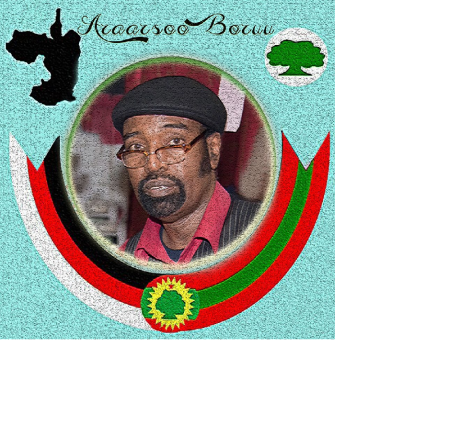
Seenaa Gabaabduu Sabboonaa Oromoo Obbo Araarsoo Boruu
(1952 – 2015)
 Qabsoon bilisummaa ummata Oromiyaa, arra, sadarkaa if duuba hin deebine geeysee jirti. Akkanumaa waliin, bahaa-bu’ii amna isii keessatti warra dhaabbiin rooraatuu fii kanneen Xophiyummaan a’oo seente jidduu, lammii keessaa, kanneen galii isii irraa shakkii qaban heddu. Garuu, yo kan durin wal cinaa qabame, lakkooysi warra kanaa akkaan xiqqa.
Hamma walakkaa baroota torbaatamootaatti, warri kaayoon qabsoo bilisummaa Oromiyaa abjuu hujiin hin fassaramne itti fakkaachaa turte baayye. Haalli san, murannoo qabsaawota dirree qabsoo saaqaniin injifatamee, kaayoon bilisummaa dhaabbii takkittii mooraa qabsoo taatee lammii keessa babal’achutti seente. Milkii tanaaf Elemoo Qilxuu fii Jaarraa Abbaa Gadaa tiin alatti warri itti faarfaman hin jiran.
Gaafa jeeynoonni armaa olitti maqaan dhawame, kaayoo bilisummaa tiif wareegama barbaachisu kennuuf muratanii daggala Oromiyaa seenan, kaayoo deemaniin bowwaasuu fii tumsa barbaachisuun warri bira dhaabbatan jibiri. Qoonni jara kanaa, babal’ina kaayoo bilisummaa tan gaafa qacalee tiif murteessa ture. Sadarakaa qabsoo tan gaafa kanaa keessatti, qabsaawota maqaan tarree duraatti tarrifamu keessaa tokko, Rabbi rahamata haa godhuu fii, Araarsoo Boruu (Ahmad Muussaa Haaji Alii Boruu) ti.
Araarsoo, abbaa isaa Obboo Mussaa Haaji Alii Boruu tii fii haadha isaa Aadde Haloo (Halimaa) Aadamirraa Baha Oromiyaa, Godinaa Bareentumaa, magaalaa Dirree Dhawaa, duubbee Masgiid Jum’aa, naannoo maqaa akaakoo isaa tiin moggaafamuun, ganda Haaji Boruu-tti beekkamutti Caamsaa 10, bara 1952, dhalate.
Gaafa sammuun Araarsoo barnoota fudhachuu geeyse, ijibbaata sirna gabrummaa dura dhaabbachuu, tan gaafa inni dhalte lammiin hordofaa turan irraan kan ka’e, akkuma daa’imman yaroo saniitti, mana barnoota Amaaraa (akka gaafas itti beekkamutti) irraa iggitamee, Amantii Islaamaa tii fii Arabii akka baratuuf, Madrasaa Gubee geeyfame.
Madrasatti, Araarso, qu’annaa hifaata malee tiin, yaroo gabaabduu keessatti if bira dabree, warra waliin baratan gargaarutti seene. Xiqqo booda, san bira kutee, barachaa, manuma barnootaa sanitti, joollee barnootaan isaa gad jiran barsiisuu jalqabe. Barnoota madrasaa akka xumureen, guddaan, dheeraan, barnoota ammayyaa tiif, mana barnoota Madrasa Jadiidaa geeyfame. Araarso akkuma mana barnoota kaanitti, kanattiis, barnoota isaatti akkaan cime. Barnoota sadarkaa duraa booda kan jiddu galaa tiif mana barnoota Laga Harree-tti dabree, waliigala kutaa duraa, baroota gabaabotti keessa fullahee, kan lamadaatti tarkaanfate.
Gama biraa tiin, Araarso sab-boonota bara 1974, magaalaa Dirree Dhawaa keessatti maadheeleen gurmaawan keessaa tokko. Magaalaa san keessatti, barattootaa fii dafkaan bultoota dammaysuu fii jaaruu, akkasumatti ammallee, qotee buloota naannoo sanii if beeysisuu irratti odoo haalaan hojjatuu, ji’a Waxabajjii tan bara 1977, gama universitiitti tarkaanfachuuf, qormaata hulaa kudha lamaa fudhatee, barumsa maraan qabxii ol-aantu galmeesse.
Yaroon tuni, yaroo qabsoon hidhannoo bilisumma ummata Oromiyaa qacalee ti ture. Qabsoo hidhannoo qacalee gubbisuuf warra jalqabaan marxifatan keessaa Araarso angafa tahe. Akka hujiin Dirree Qabsoo karaa qabatteen, biyya alaa deemee qabsoo bilisummaa tiif tumsa akka argamsisuuf qaadhimame. Araarso barnoota isaa itti fufuuf karaa universitii Finfinnee deemuu dhiisee, dirqama qaadhimameef hobbaafachuuf, jilaa waliin, biyyarraa sossoohe. Amna miilaa tan guyyaa torbaa booda, ji’a Onkololeessaa kan bara 1977a, magaalaa Jabuutii seene.
Gaafni Araarso faan Jabuuti seenan, gaafa biiyti sirna bulchiinsa gabrummaa Faransaayii jalaa reefu bilisa itti baate ture. San malees, yaroon san, yaroo Oromoonni biyya san keessa jiran, jijjiirama arkametti fayyadamuun, caasaa Embaasii mootummaa Xophiyaa jalaa walaba taateen, if gurmeessanii maqaa Caayaa Oromoo ja’uun mootummaa haarayatti if galmeessan ture.
Jilli Araarso irraa tokkoo, Caayaa Oromoo magaalaa Jabuutii tan reefu jaaramaa jirtu caaseysuu fii karaa qabsiisuu irratti qooda guddaa laatan. Gama biraa tiin, miseensonni caayaa tiis, qoma bal’oon isaan simatanii, dhimma biyyaa bahaniif if dura tarkaanfachiisuu irratti dugugguruu (lafee duuydaa) tahaniif.
Araarso, karoora biyyaa bahaniif fiixa baasuu irratti, ramaddii hujii tan magaalaa Jabuutii keessatti isa hambifte gammachuun fudhatee, hujitti seene. Gama tokkoon, dhimma siyaasaa tan biyyaa baheefiif dhaabotaa fii Embaasiilee ambaarra daddeemaa, gama kaaniin, lammii Oromoo kanneen biyya san keessatti if wallaalanii alagooman dammaysuu fii Caayatti dabaluu irratti hifannaa malee halkanii fii guyyaa carraaquu jalqabe.
Lakkuma qabsoon bilisummaa finiinaa deemtuun, Oromoonni baayyinaan baqatanii Jabuutii gaafa seenuu jalqaban, Araarso daran hirriiba dhabaa dhufe. Baqattootaaf iddoo bulmaataa tii fii dhihana irraa arkatan barbaaduu fii qubachiisuu dirqama godhate. Akka hara fudhataniin, bixxillee baqattumaa akka arkataniif waan barbaachisu godhuu fiin ba’aa isarra jirtu taate. San boodaas, kanneen qubsumaaf karaa Amerikaa fii Kanadaa deemuu barbaadaniif, korboo guutuu, afaan hiikuu fii mala dhawuun tan isaa taate. Warra dalagachuuf karaa Sa’udii deemuu fedhanii fiis baasabooraa fii viisaa biyya sanii barbaaduuf, oowwa biyya sanii keessa, olii fii gad kan daddeemu tahe.
Gama biraa tin, rakkoo dirree qabsoo bilisummaa ummata Oromiyaa keessatti bara 1978 arkamte furuuf, Araarso, tattaafata guddaa godhe. Haala dhalate irraa kan milkaawu diina qofa taachaa hubachuun, dhibdeen ganamumaan akka dhaamtuuf karaa dandayuu maraan carraaqe. Ijibbaanni isaa fiixa bahuuf dinnaan, odoo hin jaalanne, dhaabbi fudhachuu dirqame. Dhaabbiin, murannoo cimtuu waliin, gaafas Araarso fudhate, tokkummaa Oromoo cimsuu irratti qooda guddaa gummachite.
Addi Bilisummaa Oromoo, biyya Soomaalee keessatti heeraan hojjachuuf akka hayyama arkateen, Araarso achiitti ramadamee, jalqaba bara 1980i, Jabuutii irraa gamas sossoohe. Soomalee keessatti itti gaafatamaa Waajjira Hargeessaa tahee, qabsoo bilisummaa tiif dirqama isaa hobbaafachaa odoo jiruu, dhaabaan waldhabee, biraa deemee, ji’a Adooleessaa kan bara 1982a, bahara Hindii qaxxaamuree Sa’uudii seene.
Araarso Sa’uudii dhaquun hawaasa achi ture keessatti jijjiirama cima fide. Araarso Sa’uudii keessatti, ilmaan Oromoo faffac’arraa akka gurmaawan godhe. Dhaaba maqaa Tokkummaa Hojjattoota Oromoota Riyaad (THOR) ja’uun gurmeessee, ifii fii wal malees, qabsoo bilisummaa Oromiyaa tiif waan hedduu akka gumaachan godhe. Biyya dibbee dhawuun boquu nama dhabsiisu keessatti, agarsiisa aadaa tii fii daawwiilee dhooysatti qopheessanii, Oromoota achii malees, kanneen naannoo biraa akka irraa barataniif viidiyoon waraabanii wanni lammii keessa facaasan, irree qabsoo bilisummaa akkaan cimsite.
 Haalli Sa’uudii akkaa-gara dhaabaa gaafa dhufe, maatiif biyya qubsumaa barbaacha, Sadaasa 19, bara 1986, biyya Xaaliyaanii – magaalaa Roomaa warraa waliin seenan. Hamma yaroon achii sossoohuu geeysutti, akkuma Riyaaditti Roomaa keessattiis, lammii gargaaruu fii gurmeessuu hujii godhate. Hooggana isaa fii kanneen biraa tiin, waldayni baqattoota Oromoota Roomaa keessatti dhaabbatee, yaroo gabaabduu keessatti, damee Tokkummaa Barattoota Oromoo Aroppaa (TBOA) keessaa kan hundarra cimaa tahee arkame.
Araarsoo fii maatii: Bitaarraa gama mirgaatti, Faayoo, Tiyyaa,
Araarso, Faxxumee, Leensaa fii Guulaa
Araarso, jiruu baqattummaa irraa hara fudhatee qubachuuf, Ebla 14 bara 1988, maatii isaa waliin biyya Kanadaa magaalaa Torontoo dhufe. Akka Torontoo seenettiis, hujiin sabaa jalaa in hafne. Wanni qubsumaa hanqattee, miseensa Tokkummaa Oromoo Amerikaa Bitaa (TOAB) damee Ontariyoo tahee, murannoo isaa saniin, mooraa qabsoo bilisummaa gabbisutti seene.
Araarso, nama naamusa cimaan faayame. Nama yaada isaa ifatti ibasatu, kan namaa tiis qamaa qalbiin gurra banee caqasu. Nama dhaabbii bilisummaa ummata Oromiyaa tan ganama manaa baheef irraa takkaa hin daddabini. Nama dirqama fudhate hamma hobbaafatuu hirriibni hin fudhanne. Guddaa fii xiqqaa lammii tiif jaalalaa fii kabajaa qabuun, qabsaawaa fii sab-boonaaf fakkeenya dhugaa tahe.
Waldhabbii qabsaawotaa tan bara 1978 irraa kaasee, Araarso, “bilisummaa biyyaa tii fii walabummaa sabaa tiif tokkummaan qabsaawotaa barbaachisaa dha,” je’ee nama yaadu. Yaada isaa kana, afaan bira kutee, katabbii isaa tan akkaan faayamteen taraaree, suuraan miidhaysee, kaleen agarsiiseen odoo abdii hin kutanne, irra daddeebi’ee, yaroo hedduu dooyaarratti agarsiisee jira. Yaroo dhukkubni itti sharafee hafuura itti kutaa dhufees, wanni dhaammate, wasiyyaan isaa, “tokkummaa qabsaawotaa fiduuf tattaafata godhaa jirtan itti jabaadhaa,” tan jattu.
 Araarso, bara dabre, Amajjii 19, 2014, hawaasa Torontoo kanneen gadda haadha warraa, Aadde Faxxum Abdukariim Alii, tiif walitti qabaman irratti, “Ambayyoo! Ani silaa nama du’a Fxxumee irraa dandamatuu miti. Garuu, haalli keessan irraa na hambise. Galatoomaa!” jechuun jaalala haada warraa tiif qabu ibsee ture. Duuba, tin’isni hawaasaa akka hawwe hin taaneef. Akki je’ee hanqattee, amata isaatti, Amajjii 15, bara 2015, dhukkuba yaroo gabaabduu keessatti isa sardeen, magaalaa Torontoo keessatti, adunyaarraa gale.
Araarsoo fii Faxxumeen, dhuma bara 1981, Somaalee keessatti irbuu jaarsaa jaartummaa waliif seenan. Eega gaafasii, hamtuu fii toltuu isaan mudattu mara jaalala namayyu hinaafsiftuun keessa hulluuqan. Akkuma wal-jaalatanitti wal jalaa hafuu didanii, Guulaa, Faayoo, Tiyyaa fii Leensaa biyya ambaa keessatti hadiyyomsanii, wal duraa duuba, deeman. Ilmaan isaanii malees, hawaasa Oromoo magaalaa Torontoo garaa raasan.
Rabbi jannataan haa qananiyu!
Oromiyan ni bilisoomti!
Abbaa Urjii
http://www.gulelepost.com/2015/01/16/seenaa-gabaabduu-obbo-araarsoo-boruu-1952-2015/
Economics: Role and Method of Econ (1.1-1.5) January 16, 2015
Posted by OromianEconomist in Economics, Uncategorized.Tags: economics
add a comment
‘Economics is the study of choices we make among our many wants and desires given our limited resources. With unlimited resources we wouldn’t have to worry about scarcity.
Resources are inputs that we use to produce goods and services. These include Capital, Entrepreneurship, Land and Labor (CELL). Capital is the goods we make to produce other goods. Entrepreneurship are machines that are used to make products. Land is our natural resources and Labor is the human effort put into making products. Scarcity is defined as products that are desirable but limited. These cause us to change our decision and and give up opportunities that we value, this is known as the Economic Problem.’

1.1
Economics is the study of choices we make among our many wants and desires given our limited resources. With unlimited resources we wouldn’t have to worry about scarcity.
Resources are inputs that we use to produce goods and services. These include Capital, Entrepreneurship, Land and Labor (CELL). Capital is the goods we make to produce other goods. Entrepreneurship are machines that are used to make products. Land is our natural resources and Labor is the human effort put into making products.
Scarcity is defined as products that are desirable but limited. These cause us to change our decision and and give up opportunities that we value, this is known as the Economic Problem. Every person, worker and firms all face the Economic Problem. Consumers have to decide what to buy, save and how much of their money to invest. Workers have to decide where to work, what to do…
View original post 469 more words
2015 Global Economic Prospects January 15, 2015
Posted by OromianEconomist in Economics.Tags: 2015 Global Economic Prospects, Africa, African Studies, Developing country, economics, World Bank
add a comment
The global economy is still struggling to gain momentum as many high-income countries continue to grapple with the legacies of the global financial crisis and emerging economies are less dynamic than in the past. After rising marginally in 2014, to 2.6 percent, world GDP will grow by an estimated 3.0 percent in 2015 and 3.3 percent in 2016, supported by gradual recovery in high-income countries, low oil prices, and receding domestic headwinds in developing countries. Developing economies are expected to see an increase in growth from 4.4 percent in 2014 to 4.8 percent and 5.3 percent in 2015 and 2016, respectively. Lower oil prices will lead to sizeable real income shifts to oil-importing countries from oil-exporting ones. Risks to the global outlook remain tilted downwards. Weak global trade growth is anticipated to persist during the forecast period, potentially for longer than currently expected should the Euro Area or Japan experience a prolonged period of stagnation or deflation. Financial conditions could become volatile as high-income economies tighten monetary policy on diverging timelines. Rapid reassessment of risk could also be triggered by a spike in geopolitical tensions, bouts of volatility in commodity markets, or financial stress in major emerging market economies. Worryingly, the weak recovery in many high-income economies and slowdowns in several large emerging markets may be a symptom of deeper structural weaknesses.
Developing countries face significant policy challenges in an environment of weak global growth and considerable uncertainty. Fiscal buffers need to be rebuilt to ensure the effectiveness of fiscal policy in the future. Central banks need to balance policies to support growth against measures to stabilize inflation and currencies or to bolster financial stability. Progress on implementing structural reforms must be continued to boost long-term growth. The fragile global outlook makes the implementation of growth enhancing policies and structural reforms even more urgent to improve the odds of achieving the World Bank Group’s goal of ending extreme poverty by 2030.
The current juncture presents a window of opportunity for reform. The sharp decline in oil prices means that policymakers could implement subsidy and tax reforms to help rebuild fiscal space or finance better targeted pro-poor policies while removing distortions that hinder activity. The challenge now is for policymakers to seize this opportunity.
Kaushik Basu, Chief Economist and Senior Vice President
The World Bank
Read more at https://openknowledge.worldbank.org/handle/10986/20758
Oromia: The Intricately Carved Xayyaa (Tiya) Megaliths of Gadaa Oromo Heritage of 1249BC – 889BC January 14, 2015
Posted by OromianEconomist in Africa, Gadaa System, Maaddillee Oromo, Munyoo Oromo, Munyoyaya Oromo, Oromiyaa, Oromo, Rayya Oromo, Waata Oromo, Wardei Oromo, Xayyaa Oromo.Tags: Africa, African culture, African Studies, Gadaa System, Oromiyaa, Oromo, Oromo culture, Oromo people, Oromummaa, Xaayyaa (Tiya) Oromo Gadaa Heritage, Xayyaa (Xiyyaa) or Tiya, Xayyaa Oromo
4 comments
Philosopher and Social Anthropologist Prof. Gammachu Magarsaa has so far periodized 9 Gadaa Oromo Governance cycles for the time since 1249BC in which one cycle takes 360 years. We can see as follows:
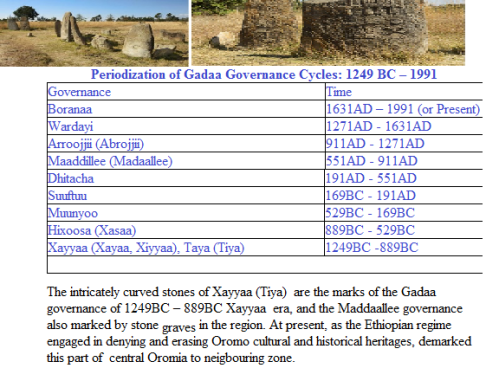
The intricately curved stones of Xayyaa (Tiya) are the marks of the Gadaa governance of 1249BC – 889BC Xayyaa era, and the Maddillee governance also marked by stone graves in the region. At present, as the Ethiopian regime engaged in denying and erasing Oromo cultural and historical heritages, redistricted this part of central Oromia to neighboring zone.
So, in reading the following article we must refer to the above study.
The Intricately Carved Tiya Megaliths of Ethiopia
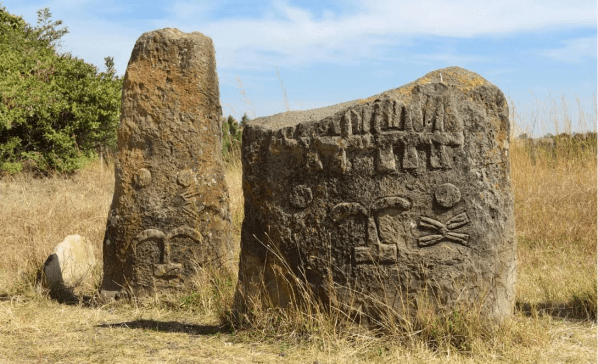
January 13, 2015 (Ancient Origins) — The Tiya stones are part of an archaeological site located in central Ethiopia, in an area known as the Gurage Zone. The 46 large, decorated Tiya megaliths have been declared a UNESCO World Heritage Site. Although the construction of such megaliths is an ancient tradition in Ethiopia, the Tiya stones are fairly ‘recent’, dating to sometime between the 10th and 15th centuries. Remarkably little is known about the Tiya stelae, beyond descriptions of their physical appearance. These large monuments likely had some cultural significance when erected, but their meaning remains unclear and very few efforts have been made towards understanding these magnificent monoliths.
The town of Tiya is found in central Ethiopia, located in the Soddo Region, in an area known as the Gurage Zone. Over 100 stelae can be found scattered across nine distinct megalithic pillar sites within the zone, 46 of which can be found at Tiya.
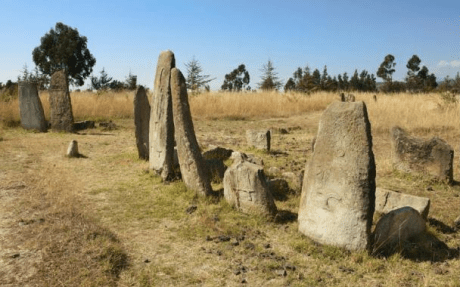
The pillar sites contain large stelae (monuments) of three types – anthropomorphic, phallic, and non-anthropomorphic/non-phallic. Anthropomorphic stelae are those which are given a human form. Phallic stelae are tall, thin shafts. The final stelae are flat monuments that take on neither an anthropomorphic nor phallic form, yet still take on the same basic form as the other megaliths. Each of these types of stelae are prominent within the nine sites of the Gurage Zone. Additionally, most of the stelae in the Gurage Zone contain elaborate decorations, including symbols that resemble plants, swords, and human figures, standing “akimbo,” with their hands on their hips and elbows turned out.
The monoliths at Tiya are taller than the stelae found elsewhere in the zone, with the tallest reaching over 16 feet (5 meters) high. Thirty two of the Tiya stelae bear decorative symbols.
In April 1935, one of the Tiya stones, engraved with a sword symbol, was discovered during a German expedition. Local residents refer to the stelae as Yegran Dingay, or Gran’s Stone. This is in reference to the ruler of the Adal Sultanate, Imam Ahmad ibn Ibrahim al-Ghazi. In addition to the stelae at Tiya, there have been other finds of archaeological significance. During excavations, several tombs have been found. In the area, researchers have also discovered tools form the Middle Stone Age. Several sets of remains have been found in the area, with the bodies dating to sometime between the 12th and 14th centuries. Upon examination, it appeared that the remains belonged to individuals who were killed in battle. This may be fitting, as some say that the Tiya stones appear to be laid out like a row of headstones. There has been speculation that these are, perhaps, the site of a mass burial for those killed in battle.

The Tiya stelae are similar to stelae found in other areas, such as those that can be found en route between Djibouti City and Loyada. The stelae near Djibouti City include anthropomorphic and phallic stelae, and some of those near Loyada contain a T-shaped symbol. Some of these stelae also contain the symbols found on the Tiya stelae.

The Tiya stones were declared to be a UNESCO World Heritage Site in 1980. A UNESCO World Heritage Site is a place that is considered to be of special cultural or physical significance. These worldwide sites are protected in hopes of preserving any cultural significance they may hold. The site of the Tiya stones joins many other UNESCO World Heritage Sites in Ethiopia, including: Axum, Lalibela, Semien Mountains National Park, Fasiledes Castle, the lower Valley of the Awash River, the lower Valley of the Omo, Muslim Holy City Harar, and the Konso Landscape. Altogether, these sites are the important remains of ancient Ethiopian culture, although it has been said that there has not been enough effort towards understanding the archaeology of Ethiopia.
Fully understanding the purpose and function of the Tiya stones is difficult because of the small amount of research that has been done in the area. Identification as a UNESCO World Heritage Site should be helpful towards learning more about the stelae, but surprisingly little has been done in the past 35 years since that occurred.
 Sites such as the Tiya stones should be protected to ensure that any cultural secrets they hold will remain preserved, and perhaps someday be discovered. As a site created by the ancestors of those who live in Tiya and nearby areas, any significance of the megaliths may still apply to those who live there today. By protecting the site, UNESCO and other interested groups can ensure that the stones are preserved for future generations. There is the hope that more research will be undertaken in order to learn more about the amazing megaliths at Tiya, including who constructed them, why they did so, and what significance the monuments hold.
Source: Ancient Origins
http://ayyaantuu.com/horn-of-africa-news/the-intricately-carved-tiya-megaliths-of-ethiopia/
Copyright © OromianEconomist 2015 & Oromia Quarterly 1997-2015, all rights are reserved. Disclaimer.
Cyberwarfare and Encryption January 13, 2015
Posted by OromianEconomist in Cyberwarfare.Tags: Cyberwarfare, Encryption, Information Warfare
add a comment
‘Cyberwarfare is defined as offensive and defensive measures designed to achieve superiority of control of cyberspace (Internet, networks, software and hardware) or parts thereof. Although cyberwarfare is often thought of as an activity practiced by the state, attacks against corporations and the theft of credit card data can also be considered attacks against state sovereignty and symbols of statehood, and, hence, cyberwarfare.’

The recent cyberhacking attacks on Sony, CentCom and a number of well known companies over the past few years (especially Home Depot and Target) highlight a major development in the online world known as cyberwarfare. Cyberwarfare is defined as offensive and defensive measures designed to achieve superiority of control of cyberspace (Internet, networks, software and hardware) or parts thereof.
Although cyberwarfare is often thought of as an activity practiced by the state, attacks against corporations and the theft of credit card data can also be considered attacks against state sovereignty and symbols of statehood, and, hence, cyberwarfare. The information released in the Sony attacks, despite it being a foreign company, largely pertained to American operations and that bastion of Americana, Hollywood. Especially as it was an American subsidiary, Sony Pictures Entertainment, based in Culver City, Ca. And of course governments can, and do, invoke such attacks as justification for…
View original post 1,008 more words
Ethiopia: The Water Grabbing Dam, Ecological Destruction, Social Devastation, Hunger And Conflicts January 13, 2015
Posted by OromianEconomist in Access to water, Africa, African Poor, Water Grabs.Tags: Access to water, Africa, African Studies, Environment, Gibe Dam, Land grabbing, Land grabs in Africa, Omo, Turkana, Water grabs
add a comment
Ethiopia dam will turn Lake Turkana into ‘endless battlefield’, locals warn
John Vidal, The Guardian
Ethiopia dam will turn Lake Turkana into ‘endless battlefield’, locals warn
Kenyans near world’s largest desert lake predict conflict, hunger and cultural devastation when hydroelectric project is completed.
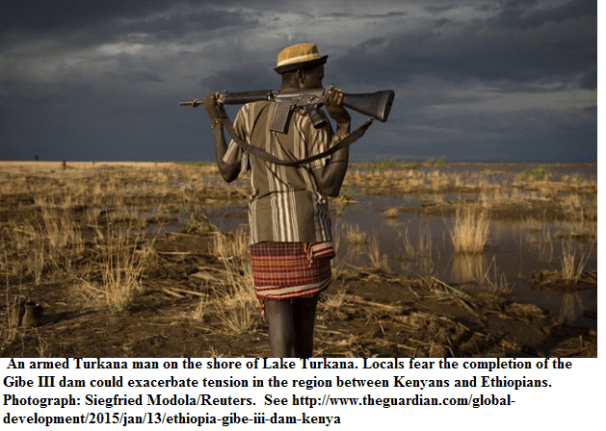
The Turkana are traditionally nomadic pastoralists, but they have seen the pasture that they need to feed their herds suffer from recurring droughts and many have turned to fishing. However, Lake Turkana is overfished, and scarcity of food and pastureland is fuelling long-standing conflict with Ethiopian indigenous Dhaasanac, who have seen grazing grounds squeezed by large-scale government agricultural schemes in southern Ethiopia.
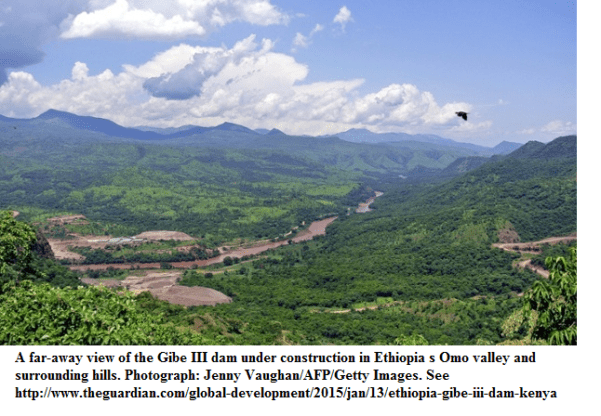
Locals fear the completion of the Gibe III dam could exacerbate tension in the region between Kenyans and Ethiopians.
People living near Lake Turkana in northern Kenya have little understanding that the fresh water essential to their development is likely to dry up when a huge hydoelectric dam in neighbouring Ethiopia is completed.
Fishermen, farmers, teachers and others living near the world’s largest desert lake say Turkana’s volume has reduced significantly over the past 30 years because of higher temperatures and changing weather patterns.
But few of the 100 people interviewed by a Kenyan researcher for International Rivers watchdog said they had been consulted or warned what could happen when the reservoir of the Gibe III dam, one of Africa’s largest hydropower projects, is completely filled in about three years’ time. The $1.8bn construction project, which is 90% complete, will start limited power generation in June.
The downstream impact of the dam is hotly contested. Some hydrologists have predicted that Ethiopia’s expansion of water-intensive sugar and cotton plantations on the Omo river, which the Gibe 111 dam allows, could reduce flow to Lake Turkana by up to 70%. This would kill ecosystems and greatly reduce the water level of the lake.
This, says International Rivers, could make the difference between marginal livelihoods and famine for the tens of thousands of already vulnerable people who depend on the lake for their livelihoods.
When told of the possible impact of the project, ethnic groups and communities near the lake predicted widespread conflict, hunger and cultural devastation. “If the Gibe III dam is constructed, the lake will dry up and this will lead to desertification and there will be depletion of resources: there will be no fish, no farming, and low humidity [and less rain]. If that is the case, the community will be finished,” said Sylvester Ekariman, chairman of the council of elders in Kakalel pastoral village.
The government says the Gibe III dam will boost development, give access to power for many Ethiopians — about half of the population — currently living without it. But critics say Ethiopia must also consider the environmental and social impact it will have on some 500,000 people living downstream and at Lake Turkana in neighbouring Kenya, who rely on the river for their livelihood.
Currently, the lake, which could split into two if incoming water is restricted, helps to prevent conflict between communities in Ethiopia and Kenya, and locally between the Turkanas and the Rendille ethnic groups, who live on opposite sides of the lake. If the lake shrinks, conflict is much more likely, says the report.
“This place will turn into an endless, uncontrollable battlefield,” said Joseph Atach, an assistant chief at Kanamkuny village.
Helen Alogita, a seed seller, told researcher Narissa Allibhai that she feared the people living on the other side of the lake. “They will come and kill us and that will bring about enmity among us as we turn on each other due to hunger. Find the person [building the dam] and ask them where they expect our communities to go? Where are our Kenyan leaders? If famine and hunger will make us die of starvation, where will they get votes from?”
Fisherman Dennis Epem said: “When the lake goes back, our enemies, which are the people of Ethiopia, will be reaching here. They have weapons, but we don’t have weapons. How will we defend ourselves when the people of Ethiopia cross? This lake is our security.”
Many of the people interviewed in the 14 communities said they were angry that an Ethiopian dam should affect Kenyans. “Not a single country [should] harm the other one by taking its waters without discussing with the other countries, because water is life. It should not be decided by one country. Who is funding these Gibes? They should withdraw their assistance or the loans they are giving,” the researcher was told.
Children sitting on the Omo River bank which is slightly cracked due to the lowering of water level. Gibe III Dam, Africa’s Tallest Dam with installed capacity of 1870 MW which is under construction, is said to impact 500,000 Ethiopians and Kenyans relying their lives on Omo River and Lake Turkana. The lowering of water level and the change of water salinity may especially impact aboriginal tribes who already live in severe drought and poverty, and may end the fragile peace between tribes.
“Awareness of the dam’s impacts and development process is extremely low,” said Allibhai. “A majority of interviewees were extremely uninformed. Any consultations with local communities were either minimal or non-existent. People in the villages had either heard about the dam only through local NGO Friends of Lake Turkana’s awareness-raising or through rumours; misinformation was rampant.
“Those in the towns were slightly more informed, especially the few with access to the internet – but even so, not one interviewee was sure of the details of the upstream developments, agreements and progress,” she said.
“All community members are opposed to the dam and irrigated plantations, as it will deprive them of their livelihoods and lead to increased famine, conflict and death. Their messages to the Kenyan and Ethiopian governments and the international community reflect their despair, and feelings of helplessness, anger and betrayal.”
Many older people said the developments in Ethiopia could tip the region into a crisis because climate change had made them more vulnerable. The lake was already much smaller than it was 30 years ago and villages like Impressa Beach, Lokitoenyala and Nachukui used to be under water, said locals. Rains are unpredictable and temperatures and wind have increased.
“These water grabs will disrupt fisheries and destroy other ecosystems upon which local people depend,” said Lori Pottinger, International Rivers’ Africa campaigner. “Local people have not been consulted about the project nor informed about its impacts on their lives.”
Both the Kenyan and Ethiopian governments have strongly backed the dam, which they maintain will increase development by providing more electricity.
The World Bank, which has been strongly criticised for funding developments that force evictions, is supporting the transmission line from the dam to Kenyan cities.
The Ethiopian government this week strongly rejected claims that the dam would harm Lake Turkana. A spokeswoman said: “The dam will provide a regular flow of water to Lake Turkana, which gives the possibility of providing a water supply throughout the year, whereas the lake is currently short of water in the dry season. The regular flow of water will also improve the aquatic life of Lake Turkana, providing a better livelihood for people living round the lake.
“The project … is instrumental in forging regional integration – the Gibe III dam will have a role in the realisation of close economic cooperation between Ethiopia, Kenya and the countries beyond. Kenya [will] obtain more than 300MW of electricity from Ethiopia.
“Campaigners are consciously trying to distort all these positive developments … in order to incite misunderstanding between the fraternal countries of Ethiopia and Kenya.” she said.
The Kenyan government was invited to respond to the report but has so far declined.
Suggestions for action by the communities ranged from using force to stop the dam, persuading the the Kenyan government to stand up for the people of Turkana and Marsabit, pressing for donors to withdraw funding and requesting compensation.
http://www.theguardian.com/global-development/2015/jan/13/ethiopia-gibe-iii-dam-kenya
Oromo Street January 13, 2015
Posted by OromianEconomist in 25 killer Websites that make you cleverer, Africa, MINNEAPOLIS, Oromo Street.Tags: Africa, African Studies, Little Oromia, MINNEAPOLIS, Oromiyaa, Oromo, Oromo culture, Oromo Diaspora, Oromo people, Oromo Street
2 comments
The Proposal to Name a Road in Minneapolis as “Oromo Street” is Approved.
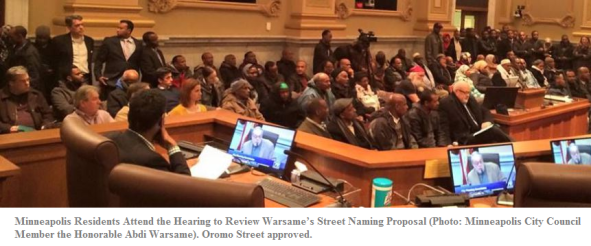
The hearing held by the Minneapolis City Planning Commission on Jan. 12, 2015, to decide on Council Member Abdi Warsame’s application for commemorative street names along the city’s Cedar riverside area has approved Warsame’s proposal.
According to the now approved Warsame’s proposal, the section of the 4th Street South in Minneapolis, Minnesota, between Cedar Avenue and 15th Avenue South will be named “Oromo Street.”
The Oromia Media Network (OMN) covered the news during its January 12, 2015, nightly news as follows:

Source: Finfinne Tribune | Gadaa.com
See also: http://www.opride.com/oromsis/news/3784-minneapolis-may-soon-get-a-commemorative-oromo-street
What is a developed country? January 12, 2015
Posted by OromianEconomist in Developed country, Economics.Tags: Developed country, Developing country, Development, Development and Change, Economic development, economics, Governance issues, State and Development
add a comment
“A developed country is one, where all its people are literate, have respect for their fellow beings around them, have job security, medical insurance, a well planned and organized retirement for elderly, an organized system of operating private business, an organized system of security, both for individual, family, business and as well as society, and most importantly, a vision to develop with science.”
Why Some Countries Are Poor and Others Rich. #Africa January 11, 2015
Posted by OromianEconomist in Ethiopia's Colonizing Structure and the Development Problems of People of Oromia, Afar, Ogaden, Sidama, Southern Ethiopia and the Omo Valley.Tags: African culture, African Studies, poverty, State and Development, Sub-Saharan Africa, Tyranny and its myth
add a comment
‘The reason why some countries are rich and others poor depends on the quality of their institutions, the culture they have, the natural resources they find and what latitude they’re on.’
Oromian Voices: Current Affairs, News, Views, Analysis and Entertainment from Oromia Media Network, Madda Walaabuu and Other Various sources January 10, 2015
Posted by OromianEconomist in Ancient African Direct Democracy, Oromia, Oromia Satelite Radio and TV Channels, Oromian Voices, Oromiyaa, Oromo, Oromo Artists, Oromo Media Network, Oromo Music, Oromo Nation, Oromo Social System, Oromo Sport, Oromummaa, Qubee Afaan Oromo, Self determination, Sidama, Sirna Gadaa, The Oromo Library, The Tyranny of Ethiopia, Theory of Development.Tags: African culture, Developing country, Development and Change, Free Media, Gadaa System, Genocide against the Oromo, Horn of Africa, Human rights violations, Land grabbing, Land grabs in Africa, National Self Determination, News & Current Affairs, News from Oromia, Oduu dhimma Oromoo, Oromia, Oromia and African current Affairs, Oromia News Channels, Oromia's Independent Media, Oromian Current Affairs, Oromo culture, Oromo people, Oromummaa, State and Development, Tyranny, Universal Declaration of Human Rights
5 comments

http://www.voaafaanoromoo.com/
Do you know this facts about Oromo and Oromia? http://www.oromoliberationfront.info/press/Oromo-flyer-ver.4.0.pdf
http://http://vimeo.com/110569775
Does British aid to Africa help the powerful more than the poor?
UK gives £1bn to brutal Ethiopian regime
http://www.thetimes.co.uk/tto/news/politics/article4250755.ece
Thousands of Ethiopians tortured by brutal government security forces… while Britain hands over almost £1 BILLION in aid money
Read more: http://www.dailymail.co.uk/news/article-2812850/Thousands-Ethiopians-tortured-brutal-government-security-forces-Britain-hands-1-BILLION-aid-money.html#ixzz3HZYFsNOe
http://www.dailymail.co.uk/news/article-2812850/Thousands-Ethiopians-tortured-brutal-government-security-forces-Britain-hands-1-BILLION-aid-money.html
http://https://www.oromiamedia.org/2014/10/omn-oduu-onkololeessa-9-2014/
SBO Onkoloolessa 08 Bara 2014 Oduu – Qophii Ayyaana Irreechaa fi SBO Sagantaa Afaan Amaaraa
Ummatni Oromoo fi dargaggootni Oromoo addatti ammo barattootnii University, Kolejotaa fi Manneen barnootaa sadarkaa tokkoffaa fi Lammaffaa torbanoota lamaan darbe gaaffii sirna fi seeraa Mootummaan Oromiyaa akka deebisuu fi mirga abbaa biyyummaa Oromoo gaafataa turre. Haa tahu malee gaaffii keenyaaf deebiin mootummaa human Polisa Federalaa biyyattiin qabdu hidhannoo guutuu waliinii fi waraana Agazii dargaggota, barattootaa fi ummata harka qullaa irratti bobbaasuun Oromiyaa guutuu dirree waraanaa godhee lubbuun namaa hedduu fi qabeenyi barbadaawee jira. Gaaffiin keenya gaaffii mirgaa fi seera qabeessaa waan taheef: Ummatni fi barattootni kumaan lakkaawaman kan mana hidhaa haaraa bakka bakkatti Polisi Federalaa bane keessatti dararamaa jiran hatattamaan akka gadi lakkifaman. Galmeen hidhamtootaa kumaan lakkaawamu kunis Ummta Oromoo fi addunyaaf ifa akka tahu. Kanneen Barattotaa fi Ummata Oromoo nagaa meeshaa baraneen bakka bakkatti ajjeefaman kudhanootaan lakkaawaman ajjeesan fi akkataa itti ajjeefaman Qaama Walaba Tahe Mootummoota Gamtoomaniin utubameen akka qoratamanii fi seeratti akka dhihaatan. Hidhamtootni Siyaasaa biyyatti guutuu keessa waggaa 23 darban hidhaa keessatti murtii kijibaan fi murtii malee dararamaa jiran hundi haal duree tokko malee akka gadi lakkifaman. Polisni Federalaa fi waraanni mootummaa Federalaa naatoo tokko malee irra deddeebi’ee ummata Oromoo fi ummatoota biro mirga isaanii nagaan gaafatan rashanaa jiru Oromiyaa keessaa hatattamaan akka gadi lakkisee bahu. Poolisnii fi Dabballootni Wayyanneen/EPRDF University, Kolejotaa fi Manneen barnootaa keessaa akka gadi lakkifamanii fi mooraan barnootaa hundi siyaasaa partii EPRDF fi tikaa fi Poolisa irraa bilisa akka tahu. Oromiyaa Guutuu Keessatti Ummata Oromoo lafa irraa buqqisuun akka hatattamaan dhaabbatu fi kanneen buqqifamaniif beenyaan akka baafamu Mirgi Hiree Murteeffannaan Ummata Oromoo akka kabajamu Qabsoon Bilisumma Oromoo fi sochiin gaaffii mirgaa Qeerroon gaggeeffamu nagaan kan gaggeeffamuu fi nagaan mirga falamtuu tahuu mirkaneessina. Qabsoo karaa nagaa gaggeessinu kanaaf deebii karaa nagaa akka nuuf kennamu gadi jabeessinee gaafatna. Qabsoon keenya fi sochiiin nagaan godhamu kun ummata nagaa saba kamuu, lammii kamuu fi nam tokkeenis tahe gurmuun kan nagaan hojjatatee bahee galu ykn qabeenya isaa kan target godhate miti. Gaffiin keenya sirna cunqursaa fi gaaffiilee mirga ummata Oromoo fi hegeree jireeneya keenya kan ilaalan akka deebii argatan qofaa dha. Kanneen maqaa keenaan ummata biraa irratti duulaa fi doorsisa godhan ni mormina. Gaaffiilee keenyas barnoota keenya barataa ummata keenya waliin nagaan akka deebii argatan sochii keenya itti fufaa hanga gaaffiin keenya deebii gahaa argatan kan hin dhaabbatne tahuu mirkaneessina Sochiin keenya fi gaaffiin keenya kan haqaa waan tahaniif humni Qeerroo Bilisummaa Oromoo caasaa isaa guutummaa Oromiyaa keessatti diriirfatee sochii kana adda durummaan erga gaggeessuu eegalee waggoota lama gahee jira. Ummanni Oromoo Oromiyaa keessa fi biyya alaa jiru ofitti simatee deggersa nuu taasisaa jiruuf guddoo galateeffatna. Gama biraan ammo humnoonnii fi namoonni dhuunfaan sochii warraaqsaa Oromiyaa keessatti finiinee ol bahe kana gaaffii haqaati jechaa gama tokkoon ammo sochiin biyya keessaa hogganummaa hin qabu jechuun qindoominaa fi bilchina dhalooti ammaa irra gahee sochii FDG Oromoo kana gadi xiqqeesuun sochii hogganaa fi qindoomina kan hin qabne fakkeessuun warri dhiheessuu barbaaddan doggoggora kana irraa of ittiftanii dargaggoonni humnaa fi dandeettii sochii kana qindeessuu qabaachuu keenya bartanii akka nu cinaa dhaabbattan waamicha isinii goona. Kana malees nagaa jallattootni fi kannen mirga ilma namaa kabajan hundi akka nu cinaa dhaabbatan waamicha keenya gadi jabeessinee dabarfatna Ilmaan Oromoo waraana mootummaa , Poolisa Federala, hidhattootaa gandaa fi poolisni Oromiya obbolaa keessan irratti dhukaasuu keessaa akka dhaabbattan fi yoo waamicha kana diddan seenaa fi seerri akka isin gaafatu hubachiifna. Waraana, Poolisa Federalaa fi tika mootummaa Fedralaa keessa kan jirtan hundi ummata nagaa fi barattoota da’aimman irratti dhukaasuu akka irraa dhaabbattan gadi jabeessinee gaaftna. Seenaa fi seeraan akka itti gafatamuufdeemtan hubachiifna Ka’i Qeerroo!! Qabsoon Hanga galii isaa gahu Itti Fufa! Qeerroo Bilisummaa Caamsaa 9, 2014 Finfinnee Ibsa Qeerroo Bilisummaa Oromoo, Caamsaa 9, 2014 Finfinnee 
OROMO VOICE RADIO
]
http://http://qeerroo.org/2014/10/03/sagalee-qeerroo-bilisummaa-oromoo-onkoloolessa-03bara-2014/

Ibsa Ejjannoo Hirmaattota Kora 38ffaa TBOJ/UOSG
Fulbaana/September 17, 2014 · Finfinne Tribune http://gadaa.net/FinfinneTribune/2014/09/ibsa-ejjannoo-hirmaattota-kora-38ffaa-tbojuosg/ Date: 14-09-2014 TBOJ (UOSG) Tel: 01745994312 E-Mail: tboj.uosg@gmail.com Kora 38ffaa Tokkummaa Barattoota Oromoo Jarmanii (TBOJ) Fulbaana 14 bara 2014 Sa’a booda saatii 12:15 irraa egalee waaree booda amma saatii 18:30 magaalaa Frankfurt, galma Universitii Joon Volfigaang kessatti geggefame. Kaayyoon waliga’ii:- 1ffaa haala qabsoo bilisummaa Oromoo (QBO) yeroo ammaa irratti mariiyatuun hubannoo siyasaa argatuu fi 2ffaa raawii hojii TBOJ/UOSG Caayaa ABO Onkoololeessa 6 bara 2012 amma Fulbaana 14, 2014 gamaagamun booda Koree Hojii Geggesitu (KHG) gadaa ittii aanuu filachuudha. Walga’iin ergaa Eeebbaa Manguddoo Oromoottin tahe boode, faaruu Alaabaa Oromiyaan akkasumas Jaallan QBO irrati otto falmanuu kufaniif yaadannoo godhun banamee. Hogganaa olaanaa ABO mata duree bara 1990 asi “QBO” ABOn gageefamu maal akka fakkaatu fi maal keessa akka darbe fi amma hoo ABO maal akka gochaa jiru akkasumas WBOn maal gochaa akka jiru irratti Ibsaa balaa Miseensoota TBOJ/UOSG kennaniruu. Mata duree kana irratti gaaffii fi deebiin akkasumas Yaada Ijaaroo tahan balinaan kennaniruu. Itti-aansuun gabaasaan raawii hojii Onkoololeessa bara 2012 haga Fulbaana 14, 2014 KHG TBOJ fi KHG damilee TBOJ irraa hirmaatota waliga’iif dhiyaate. Gabaasaa gamaagamuu fi raggaasisun booda KHG gadaa ittii aanuu filachuu fi ibsa Ijjannoo baafatun sagantaan koraa 38ffaa TBOJ milkiin xumurameera. Ibsa Ejjannoo Nuti miseensotiin TBOJ walga’ii kana hirmaannee turre haala siyaasaa QBO irratti ergi mariyanneen booda, ummata Oromoo fi Oromiyaa sirna gabiromfannaa (kolonii) bara ammaa motummaa Habashaa, gartuu wayaaneen (TPLFn) hogganamaa jiru, jalatti gidirfamaa jiru bilisomsuuf qabsoo hadhooftuu hogganummaa jaarmaa ABOn geggefamaa jiru gutummaan tumsaa, gumaata nu irraa barbaadamu gama maraan kennuuf qophii ta’uu kenya ni mirkaneessina! 1. QBO hirmannaa ummata Oromoo fi hogganummaa ABOn geggefamaa jiruu ni deggerra! 2. Qabsoo hidhannoo, siyasaa, fi dipilomasii ABO geggessaa jiru diinagideen ni utubna! 3. Qabsoo fincila diddaa gabirummaa karaa qeerroo Oromiyaa, barattotaa, fi ummata Oromoo geggefamaa jiru waan nu irraa barbaachisu maraan ni tumsina! 4. Sagalee QBO haala hundaa kessatti firotaa fi dinoota ni dhageessifina! 5. Saamichaa Lafa fi Qabeenya Oromoof Oromiyaa akkasumas shororkaa ummata Oromoo irratti dinoti fi farreen QBO raawataa jiraatan injifachuuf hubannoo fi kutannoon sagantaa QBO milkomsuuf heera jaarmaa ni tiksina! 6. Araaraa ABO QC fi ABO giduuti tahe labsamee ni deggerra! 7. Yakkoota dhittaa mirga-namomaa ummata Oromoo irratti karaa motummaa gabironfataa TPLF (Wayaanee) raawatamaa jiru ni balaaleffanna! 8. Hogganummaa motummaa wayaaneen yakkoota dhiittaa mirga namaa ummata Oromoo irratti raawatamaa jiru hambisuuf akka hawaasoti Addunyaa dhibbaa godhan ni gaafanna! 9. Lammii Oromiyaa kanneen meeshaa motummaa TPLF ta’uun yakkoota hiriyaa hin qabne ummata Oromoo irratti raawachisuun sirna motummaa Habashootaa tiksuuf boojiyamtan akka gara moraa QBO makamuun mirga abbaa biyyummaa ummata Oromoo kabachisuuf qabsooftan waamicha ilaalcha Oromummaa hundeefate isiniif erginerra! 10. Master Plan –> Master killer dha! Kana cimsinee morminaa! Injifatnnoon ummata Oromoof! Hirmaattota Kora 38ffaa TBOJ (Jarmanii, Frankfurt – Fulbaana 14, 2014) KHG TBOJ/UOSG Tokkummaa Bartoota Oromoo Biyya Awurooppaa, Damee Jarmanii Union of Oromo Students in Europe, German Branch Postfach 510610 • 13366 Berlin Tel: + 49 (0)151 63727696 e-Mail: tboj.uosg@gmail.com embed]http://https://www.youtube.com/watch?v=YUQxnvRrm5Q[/embed]
The Oromo Gadaa System Lecture Tour: By Abbaa Gadaa Bayyanaa Sanbatoo of Caffee Tulama at the OSA Workshop on “Gadaa Research and Renaissance”
Reported Fulbaana/September 4, 2014 By Finfinne Tribune | Gadaa.com
The following is a statement from the President of the Oromo Studies Association (OSA), Ob. Jawar Mohammed. ———————————————————————– SUBJECT: Abbaa Gadaa Bayyanaa Sanbatoo’s Visit to North America You might recall that Abbaa Gadaa Bayyanaa Sanbatoo, due to issues related to his visa, was unable to arrive on time to speak and participate as a distinguished guest at OSA’s 28th Annual Conference that took place at Howard University in Washington, DC on August 2-3, 2014, with the theme, “Gadaa and Oromo Democracy: Celebrating Forty Years of Research and Renaissance.” We are pleased to inform you that he was finally able come to the United States. OSA has extended its theme focusing on the Gadaa democracy through the end of the year, and Abbaa Gadaa Bayyanaa will speak at a series of OSA-organized workshops in various cities in the United States from September 6-27, 2014 – focusing on the ongoing work of reviving the Gadaa system.
 He will also participate as a Guest of Honor at several Irreecha celebrations organized by the Oromo in the Diaspora.We invite all who are interested in the Gadaa democratic system, and Oromo culture in general, to attend these workshops and participate in the spectacular Irreecha celebrations to be held throughout September and October 2014.We would like to extend our appreciation to local individuals and institutions – who participated in preparing these events. We are also grateful to the United States Consular Service for the assistance they provided in issuing Abbaa Gadaa Bayyanaa’s travel documents.The attached flyer contains general information about dates and cities where Abbaa GadaaBayyanaa will be speaking.Jawar Mohammed President, Oromo Studies Association
http://gadaa.net/FinfinneTribune/2014/09/complete-list-of-the-u-s-a-lecture-tour-abbaa-gadaa-bayana-sanbatu-of-caffee-tulama-at-the-osa-workshop-on-gadaa-research-and-renaissance/ 


 Annual Oromo Sports Event in UK, 23rd August 2014 held in Leeds, England.
Little Oromia (aka Minnesota) Agust 2014:The Year’s Biggest Diaspora Festival of Oromummaa
 http://www.osfna.org/


 The Oromo Gadaa Democracy meets the American Congress Democracy. Abbaa Gadaa (Rt.) Aagaa Xanxanoo and Abbaa Gadaa (Rt.) Moonaa Godaanaa meet Senator Al Franken (from the State of Minnesota).


 (July 20, 2014 (Gadaa) — Minnesota’s Twin Cities, also known as “Little Oromia” for being the home of the largest Oromo population outside of the Horn of Africa, will be the venue for the 2014 OSFNA Sports Tournaments. Less than two weeks are left before this year’s 19th Annual OSFNA Soccer Tournament kickoff on August 2, 2014. First started in 1996, the OSFNA (Oromo Sports Federation of North America) organizes an annual soccer tournament among teams drawn from majorNorth American cities with sizable Oromo expat populations, and the venue for each year’s tournament has been rotating among the participating cities over the last 19 years. Unlike previous years, the 2014 OSFNA Sports Tournaments will include basketball, women’s volleyball and the Abebe Bikila Legacy Two-Mile Race in addition to the soccer tournament, according to information posted on OSFNA.org. What’s more, this year’s Soccer Tournament will also include gameparticipants from Australia. OMN (Oromia Media Network) has also partnered with OSFNA to broadcast the 2014 OSFNA Soccer Tournaments live.
Lasting for a week (August 2, 2014 to August 9, 2014) known as the OROMO WEEK, sports is only one of the activities in Little Oromia. The OROMO WEEK is also a time of heritage (Oromummaa) celebration for the Oromo expats in Little Oromia and those visiting Little Oromia from all over the world. A number of music concerts with Oromo recording artists, the Bakakkaa Oromo
Music Awards (debuting this year), the Mr. and Miss Oromo North America Pageant Show, and community and civic conferences are among the non-sports activities during this year’s OROMO WEEK. In addition, heritage products (such as music CD’s, drama/music DVD’s, drama/music VCD’s, cultural clothes, food, etc.) will be available for purchase at stalls located at/near the event arenas. The following is a mini-schedule of the activities during the 2014 OROMO WEEK in Little Oromia; this section will be updated regularly as new information becomes available. August 2, 2014 – August 9, 2014: OSFNA Sports Tournaments For full content, visit Gadaa http://ayyaantuu.com/horn-of-africa-news/oromia/little-oromia-aka-minnesota-gears-up-for-the-years-biggest-diaspora-festival-of-oromummaa/
OSA2014: Remarks by Former Abbaa Gadaa Aagaa Xanxano, and Gadaa Scholar Prof. Asmarom Legesse
The Oromo Studies Association’s 2014 Annual Conference theme: “Gadaa and Oromo Democracy: Celebrating 40 Years of Research and Oromo Renaissance.” Oromo Gadaa leaders as they taking part in the 28th OSA Conference at Howard University in Washington DC, 2nd August 2014. Jemjem Udessa, Lagassa Dhaba, Dirribi Demissie speaking about Gadaa System. Standing ovation for Prof. Asmerom Leggese as he receives a collection of books from the Guji Oromo Gadaa delegation (see pictures below): 

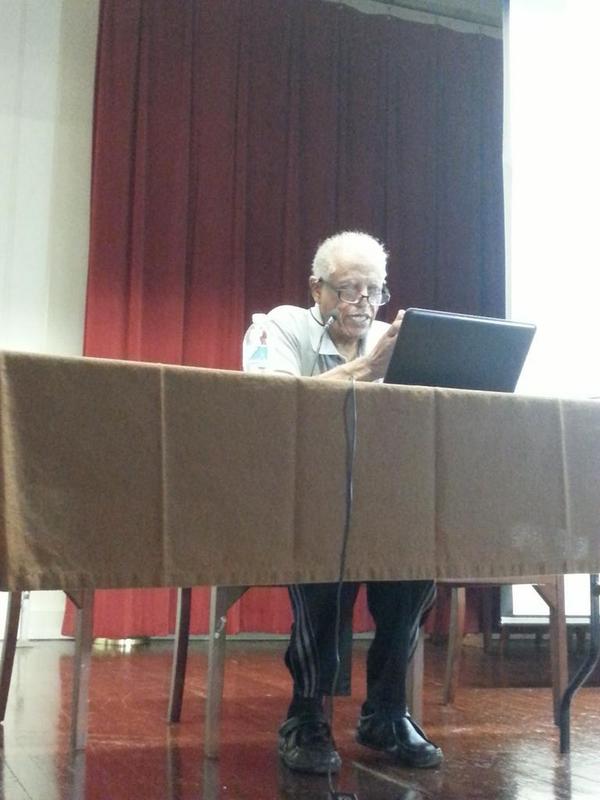
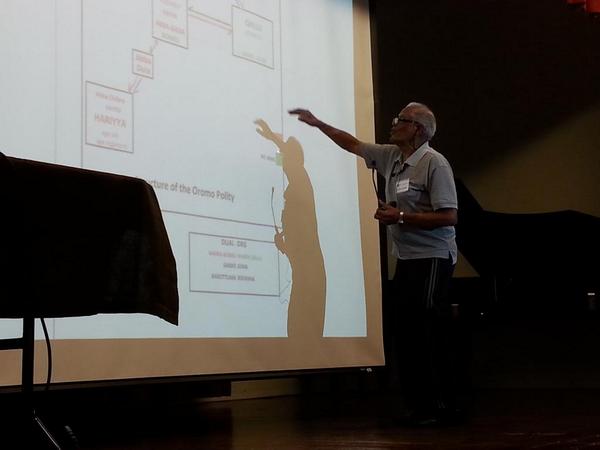 Prof. Asmerom Leggese, Lecturing Gadaa System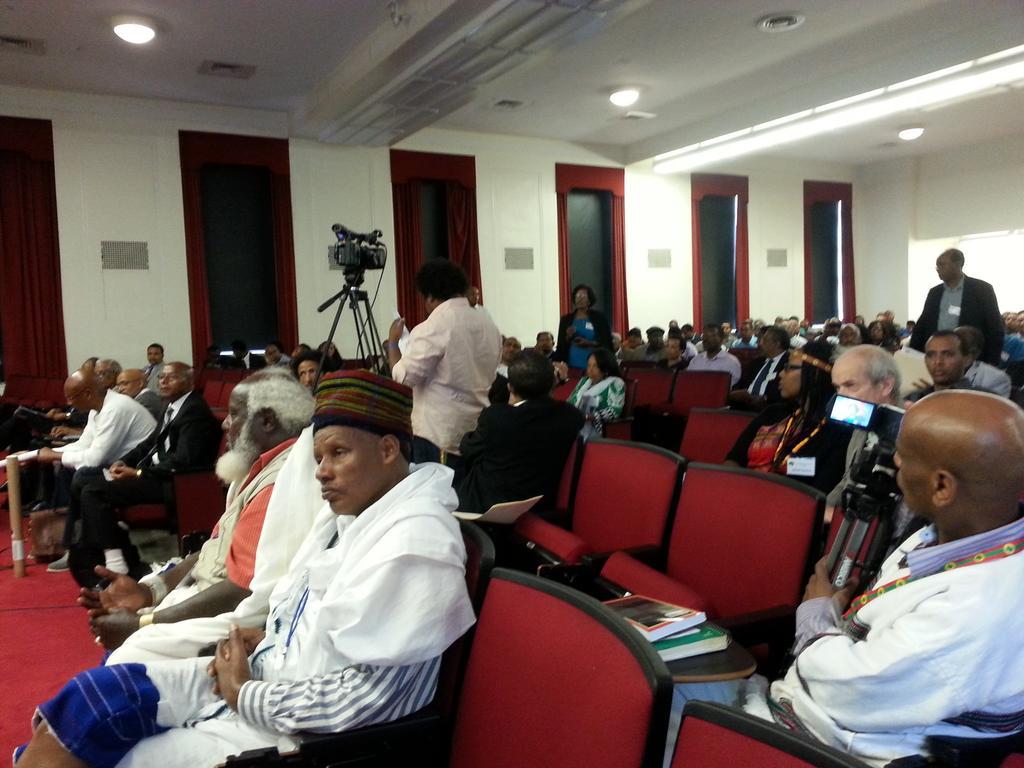
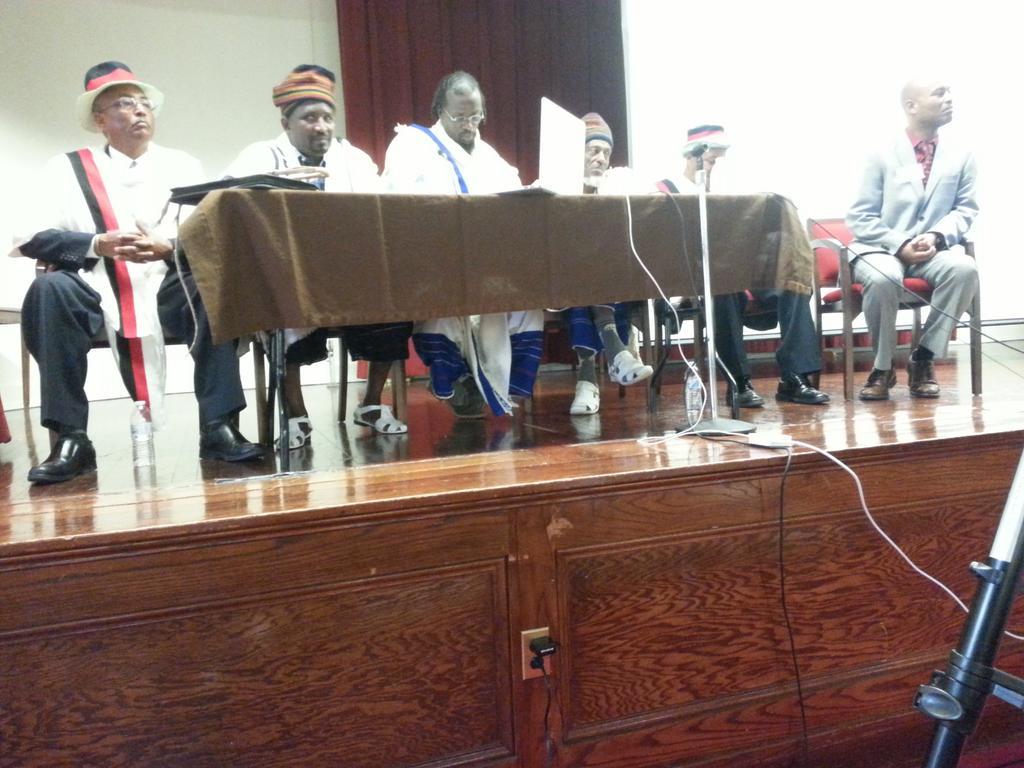


 The Oromo Abbaa Gadaa -Abbaa Gadaa of Tuulama Oromo, two Yubas (EX-AbbaGadaas-Aagaa Xinxanoo and Moonaa Godaanaa) with other Gadaa leaders arrived in DC on 30 July 2014 to attend the OSA Conference https://www.dropbox.com/s/0aqyhiv4w276thu/OSA%202014%20Conference%20Program%20Final.docx See Pictures below:


 Below is Bakkalcha TV’s 2-part interview with Oromo recording artist Lencho Abdishakur. Also, check out Lencho Abdishakur’s new album, titled “Yoomi Laata Guyyaan? 2014, Vol. 3″ – now available on Amazon.com. What’s more, Lencho Abdishakur’s critically acclaimed sophomore album, “Makiyayee, Vol. 2,” is also available on Amazon.com. Source: http://gadaa.net/FinfinneTribune/2014/07/bakkalcha-tv-interview-with-oromo-recording-artist-lencho-abdishakur/ http://www.oromotv.com/young-oromo-diaspora-leadership-is-promising-meet-the-president-of-osfna/
OMN: ODUU ADOOLESSA 23, 2014

Sagalee Qeerroo Bilisummaa kan Adoolessa 22 2014
 https://www.youtube.com/watch?v=OAfvf9kLqdc#t=180
Oromo Voice Radio (OVR) Broadcast, July 23, 2014

https://www.youtube.com/watch?v=HCCWLKlgxXs https://www.oromiamedia.org/2014/07/omn-oduu-adoolessa-23-2014/ https://www.oromiamedia.org/2014/07/omn-oduu-adoolessa-22-2014/ http://www.youtube.com/watch?v=fDSoVBx_bTQ&list=PLMNB_JthHxcCU3N6iOxQldUGudVOL55_e https://www.youtube.com/watch?feature=player_embedded&v=vzaSCKU0V4M https://www.youtube.com/watch?feature=player_embedded&v=11ZHm75or34 https://www.youtube.com/watch?v=uk1laLxpFGg https://www.youtube.com/watch?feature=player_embedded&v=-gLah0JCWdE http://oromovoice.org/wp-content/uploads/2014/07/alpha6-140721-1600.mp3 https://www.youtube.com/watch?v=8sgaa5HYKyI https://www.youtube.com/watch?v=5DjxcpgKW0A https://www.youtube.com/watch?feature=player_embedded&v=Sj3sXKweGOM http://www.youtube.com/watch?v=rIRbjvL1blQ https://www.youtube.com/watch?v=jgLg0RVlSeY https://www.youtube.com/watch?feature=player_embedded&v=FMqpFQ1Du9k https://www.youtube.com/watch?v=hYtTuI3Xd_o https://www.youtube.com/watch?feature=player_embedded&v=mciWlvurIBo
‘Maqaa Shororkeessummaan Doorsisamuun Qabsoo Karaa Nagaa irraa Nu Hin Deebisu’
17.07.2014 11:32
WASHINGTON, DC —Mootummaan Ihaadegrakkoodimookiraasiibiyyattiikeessaakaraanagaafuruunkaraaitti danda’amu mariibiyyoolessaafbalbalabanuuirramormitootattimaqaashororkeessummaamoggaaseehidhuu,doorsisuufigidirsuunqabsookaraanagaaboodattideebisuu hin danda’u,jechuudhaangamtaanpaartiileemormitootaaMedrekibsabaasee jira.Barreessaan ol’aanaan paartichaa,ObboGabruuGabre-mariyaamakkajedhanitti,hoogganoonni,miseensonniifideggertoonni gamtaaisaanii,keessumaaOromiyaa fiTigiraaykeessattihedduunhidhamaniijiran.OromiyaakeessattikarooramagaalaaFinfinneedantaaOromiyaadhabsiisa,jedhanmormuudhaanbarattootahiriiranagaabahanirrattitarkaanfiiajjeechaafihidhaafudhatameealagaazzexeessotamootummaadhugaajirugabaasuuyaalanirrattitarkaanfiinfudhatamuuisaailleedubbatu,ObboGabruun.Gaaffii fideebiiguutuudhaggeeffadhaa.Marsariitiinkeenya kanirraanudhaggeeffachuudandeessan.
Gabaasaa Guutuu Armaa Gaditti Caqasaa
http://www.voaafaanoromoo.com/content/article/1959382.html?utm_source=twitterfeed&utm_medium=facebook https://www.youtube.com/watch?feature=player_embedded&v=mciWlvurIBo https://www.youtube.com/watch?v=yMAlavqCbk4 https://www.youtube.com/watch?feature=player_embedded&v=dnrfGdXn8J8 https://www.youtube.com/watch?v=hDYgba3P2UI https://www.youtube.com/watch?feature=player_embedded&v=jGmYAGEJGUQ
ONLF – Ethiopian Regime Trained Assassins Kill Kenyan Civilians In Garissa
Jul 14, 2014

July 14, 2014 (ONLF Press Release) The Ethiopian security has assassinated three Kenyan civilians and gravely wounded another one in Garissa, Kenya during the last week of June and the first week of July. The latest victim, Mr. Asad Yusuf was shot and killed in the evening of July 9, 2014. He was a Kenyan Somali civilian and was killed because he was assisting refugee from the Ogaden. He was a businessman and had a large family. A week ago another young man was also killed for the same reason and two weeks ago one man was killed and another wounded. Assassin Abdirahman Hajir who was a member of the Liyu Police, the killing squads in the Ogaden, funded and trained by the Ethiopian regime, was apprehended and has confessed that he carried out the last two killings. He also confessed that the Ethiopian security has trained and sent him and a team of 19 assassins and support staff to create chaos in Kenya. They were assembled in Addis Ababa and came through Moyale town. Furthermore, he stated “others were also dispatched to Somali and the Neighbouring countries to assassinate opponents to the regime, including Somali officers in Somalia and Ethiopian opposition figures”. The Ethiopian regime has taken a policy of coercion, extermination and mass execution against the Ogaden People in Ethiopia, so they fled to the neighbouring countries. Many of these refugee sought asylum in Kenya which has been a safe haven for the refugees in the Horn and central Africa, because of their hospitality and for their respect of International and African laws of Refugees. Therefore, since 2009, the Ethiopian government decided to routinely abduct and commit extrajudicial executions, including politically motivated killings in Kenya and so far the action taken by the Kenyan government to protect the refugees it gave asylum was not enough to stop such criminal acts. After failing to deter Somalis from Ogaden to keep seeking refugee in Kenya, despite all these inhumane acts, the Ethiopian regime has now decided to punish the local Somali Kenyans for supporting the refugees and in order to create Chaos and destabilize the North-East Provence of Kenya. Furthermore, the Ethiopian regime is getting bolder in flaunting International law and human rights laws by extending its criminal acts against its victims across international borders and is violating the Human Rights of those who seek asylum from its heinous acts in Ethiopia. The policy of the Ethiopian regime is to create chaos and endanger the stability of the Horn of Africa. If this continues unchecked it will lead to dangerous consequences for all concerned. ONLF condemns the Ethiopian regime and call upon the UNHCR and the Kenyan government to take seriously their responsibility to protect its civilians and the refugees that are under its care. (ONLF)
Why Ethiopia’s Oromo Are Angry At KTN
http://yassinjumanotes.blogspot.co.uk/2014/07/why-ethiopias-oromo-are-angry-at-ktn.html?m=1 http://ayyaantuu.com/horn-of-africa-news/why-ethiopias-oromo-are-angry-at-ktn/
Kan Daandiin Harkaa Bade Hooggana Itiyoopiyaa” jedha Barruun Hayyuu Faransaay Tokk0
15.07.2014 18:20
WASHINGTON, DC —Waa’ee siyaasa Itiyoophiyaa kan hordofaniif hayyuu biyya Faransaayii kan ta’an Rene Lefort dhiiyeenya kana barreeffama mata dureen isaa “Ethiopia a Leadership in disarry“ ykn kan daandiin harkaa bade hoggana Itiyoopiyaa jedhu maxxansanii jiru. Lefort waa’eeItiyoophiyaa fikeessumaa waa’ee biyyootiiAfrikaauffeesahaaraagadiibaroota1970mootaakaaseemaxxansaaleebiyyaFaransaayiikanAkaka Le Monde, Liberation,fiLENouveljedhamaniifbarreessaa turan.Bara 2012 barreeffamamatadureenisaa “Ethiopia after meles” yknItiyoophiyaamallasboodaajedhubarreessaniiodeeffaannooguddaankanirraargameefihedduukanduddubachiise ture.Barreefama isaammaa EthiopialeadersinDisarryjedhukanairraa ka’uudhaan ittigaafatamaansagantaaleegaanfaAfrikaa PeterHeinleinReneLefortwaliingaaffiifideebiigaggeesseejira.
Gabaasaa guutuu kutaa 1ffaa armaa gadiitti dhaggefadhaa
http://www.voaafaanoromoo.com/content/article/1958091.html?utm_source=twitterfeed&utm_medium=facebook https://www.youtube.com/watch?v=e2y1esSjRd0
The following is a press release from the Australian Oromo Community in Victoria, Australia. Ebla/April 22, 2014Australian Oromo Community Association in Victoria Inc. A.B.N. 52 554 165204Press ReleaseSUBJECT: Safeguarding the Rights of Oromo Refugees and Asylum SeekersThe Australian Oromo Community in Victoria Australia (AOCAV), a non- profitable organisation established in 1984 to facilitate community development, preservation of Oromo culture, and promoting cross cultural awareness and harmony between the Australian-Oromo and mainstream Australians, and to serve as voice of the Oromo people, is concerned about the ongoing swoops targeting refugees and asylum seekers in various urban centres in Kenya.Reports from different media indicate that over 6000 refugees and asylum seekers have been arrested in these crackdowns. According to AOCAV’s informant, more than two thousand asylum seekers and refugees have been detained in the Kasarani Stadium in the Capital, as a temporary police station, while some are being held at the Pangani, Kasarani and other police stations. More than 400 Oromos and other Ethiopian immigrants have been arrested in these crackdowns.AOCAV applauds the Government of Kenya for hosting nearly 400,000 refugees from nine African countries, which is an enormous task. We also appreciate the continuing efforts to strengthen security for all persons living in Kenya. While we appreciate these efforts, our concern is that innocent Oromo refugees and asylum seekers have been arrested during the security operation. AOCAV does not support refugees and asylum seekers who engage in criminal activities, but maintains that any such persons should be subjected to proper judicial procedures by the government with due respect to their vulnerability and human rights.We understand that the government’s duty to maintain national security cannot be disputed, however, it is imperative for the State to guarantee the safety and protection of all registered refugees and asylum seekers residing in Kenya. According to the Refugees Act of 2006, the government of Kenya has an obligation to protect the rights of refugees and asylum seekers – which includes the right to seek asylum. Kenya is party to various international and regional conventions governing protection of refugees and asylum seekers, and therefore, it has a duty to protect such persons.AOCAV urges the government to uphold and safeguard the rights of Oromo refugees and asylum seekers in Kenya even as it continues its security operations. It is our stand that recent government’s actions should not negate the gains made by the state towards the protection of refugees and asylum seekers in Kenya. We call upon the leaders of the government of Kenya to guard against making remarks and actions which may jeopardize the protection of Oromo refugees and asylum seekers. AOCAV also requests the governments of the Western countries as well as international organizations to continue interfering in this matter so that the safety and security of the arrested Oromo refugees and asylum seekers in Kenya could be ensured.Sincerely,Yadata SabaPresident, Australian Oromo Community in Victoria Australia120 Race course Rd Flemington, VIC 3031P.O.BOX 2123 Footscray VIC 3011Tel + 61 412 795 909 Tel +61 422 869 709Email: ocaustralia@gmail.com Website: www.oromocommunity.org.au

Gadaa.com: Oromo & Oromia » Safeguarding the Rights of Oromo Refugees and Asylum Seekers in Kenya
gadaa.com
https://www.youtube.com/watch?feature=player_embedded&v=Lcsk2xD8peU http://www.youtube.com/watch?v=-TQTcamqcuY https://www.youtube.com/watch?feature=player_embedded&v=LHv37eC6f8Y https://www.youtube.com/watch?v=vM38Leih3Jo https://www.youtube.com/watch?v=OrZzWYhIcxY https://www.youtube.com/watch?v=vM38Leih3Jo https://www.youtube.com/watch?v=7mMZ_zxhxIA https://www.youtube.com/watch?v=7mMZ_zxhxIA http://www.youtube.com/watch?v=S6SlBlZIj_g http://www.youtube.com/watch?v=L1pEYf5b-n8 https://www.youtube.com/watch?v=lP1v_C-OrFs https://www.youtube.com/watch?feature=player_embedded&v=RH7ypnokkYY https://www.youtube.com/watch?v=sGIhEu8NlMg https://www.youtube.com/watch?feature=player_embedded&v=J_tZ1WLvOh4 https://www.youtube.com/watch?feature=player_embedded&v=fLLXj0ds994 http://www.youtube.com/watch?v=xp6Z8VoJpT8 https://www.youtube.com/watch?v=0mqdoChZZy8 https://www.youtube.com/watch?v=KtO69zltqg0 https://www.youtube.com/watch?v=5sWZBZehyp8 https://www.youtube.com/watch?feature=player_embedded&v=38f6wsm5Ti8 https://www.youtube.com/watch?v=QH3NAafGRA4 https://www.youtube.com/watch?v=zBTmJOT8vw8 https://www.youtube.com/watch?feature=player_embedded&v=F0LUEJJASuM https://www.youtube.com/watch?feature=player_embedded&v=bm9TkF9OkNI http://www.youtube.com/watch?v=FVRQTBiQ4Ns https://www.youtube.com/watch?feature=player_embedded&v=pZ8NIIeZxuQ http://www.youtube.com/watch?v=AhaEVL8hBQc https://www.youtube.com/watch?feature=player_embedded&v=7f0gCV1QAow https://www.youtube.com/watch?feature=player_embedded&v=jxizV71yVL4 https://www.youtube.com/watch?feature=player_embedded&v=eoETmLhRwUk https://www.youtube.com/watch?v=AmHlT1-Yk0o https://www.youtube.com/watch?v=ChD2_s1cHu8 https://www.youtube.com/watch?v=jv3WUkS6PW0 https://www.youtube.com/watch?v=QaRNsX9mJKk https://www.youtube.com/watch?v=HNfmqzJz4SU https://www.youtube.com/watch?v=HEtdt1MOdQ0 https://www.youtube.com/watch?v=YoIqtsTG9Ec https://www.youtube.com/watch?feature=player_embedded&v=OxBCI4YsPQM https://www.youtube.com/watch?feature=player_embedded&v=4JAOjpSZD9k https://www.youtube.com/watch?v=ldqCdSRy6Ss https://www.youtube.com/watch?feature=player_embedded&v=mwO_nap3ehk https://www.youtube.com/watch?v=XUIAbN5Y6MY http://www.youtube.com/watch?v=ensXA32sKNw https://www.youtube.com/watch?v=SgK9w5bU3E4 https://www.youtube.com/watch?v=QhRk2P3DCng https://www.youtube.com/watch?v=XeVPLqfSSKk https://www.youtube.com/watch?feature=player_embedded&v=iLsT5osqMzI http://www.youtube.com/watch?v=V5JN0VbGy5g https://www.youtube.com/watch?v=obStRbbNT_U http://www.youtube.com/watch?v=oA1LOgAByzk https://www.youtube.com/watch?feature=player_embedded&v=r-meHSBJAtk https://www.youtube.com/watch?v=PBT3tytT5cM https://www.youtube.com/watch?feature=player_embedded&v=b9j8y-vjuPE http://www.youtube.com/watch?v=MbloDtUDC88 https://www.youtube.com/watch?feature=player_embedded&v=nUux089jV8Q https://www.youtube.com/watch?v=9bBtHCmKX2Q https://www.youtube.com/watch?v=1Nnu7vEk2Pg https://www.youtube.com/watch?v=PStYG8tuv_w https://www.youtube.com/watch?v=B-slUVIXVUE https://www.youtube.com/watch?feature=player_embedded&v=OS6rCpi8bS8 https://www.youtube.com/watch?feature=player_embedded&v=ry_sVur7EGU https://www.youtube.com/watch?feature=player_embedded&v=ry_sVur7EGU https://www.youtube.com/watch?feature=player_embedded&v=1L9ukeQEv74 https://www.youtube.com/watch?feature=player_embedded&v=IAynn0kiWjM https://www.youtube.com/watch?feature=player_embedded&v=1mqF5k5LnQ0 https://www.youtube.com/watch?feature=player_embedded&v=eCxFxJZdIKw https://www.youtube.com/watch?feature=player_embedded&v=0_NK6rNNUkQ https://www.youtube.com/watch?feature=player_embedded&list=PLMNB_JthHxcCU3N6iOxQldUGudVOL55_e&v=AgeQAkpTDJg https://www.youtube.com/watch?v=nB__vP8A4fc https://www.youtube.com/watch?feature=player_embedded&v=81EEZwa9KG8 https://www.youtube.com/watch?v=IXjkVMgFBoY https://www.youtube.com/watch?v=Qrw5liIhcVY https://www.youtube.com/watch?v=u0h8AQk6Bdc https://www.youtube.com/watch?v=snCBfh7USP4 https://www.youtube.com/watch?feature=player_embedded&v=z-jLp7IhJPM https://www.youtube.com/watch?v=l3cEfRUvqqg https://www.youtube.com/watch?feature=player_embedded&v=yhnSUWJy0dc https://www.youtube.com/watch?v=5TJKy7d7ieg https://www.youtube.com/watch?v=GgKA4e7vmoA http://ayyaantuu.com/horn-of-africa-news/panel-discussion-on-the-integrated-regional-development-plan-aka-addis-ababa-master-plan/
Panellists Temam Batee Head of Foreign Affairs for the Oromo Liberation Front (OLF), Kumsa Burayou (the former Editor-In-Chief of Madda Walabu magazine) and Tsegaye Regassa (the former Senior Lecturer at Addis Ababa University and PhD Candidate at University of Melbourne Law School), talk about the university students protest against the “Integrated Regional Development Plan” (AKA Addis Ababa Master Plan) in Ethiopia. http://www.pressgazette.co.uk/ethiopian-journalist-branded-terrorist-and-locked-18-years-wins-2014-golden-pen-freedom http://www.themusichutch.com/listen-song/sbo-waxabajjii-04-bara-2014/128252/ https://www.youtube.com/watch?v=GaoA1XeEUX4 https://www.youtube.com/watch?v=xmhotqD1vQM https://www.oromiamedia.org/2014/05/omn-qophiilee-caamsaa-24-2014/ http://www.youtube.com/watch?list=PLMNB_JthHxcCU3N6iOxQldUGudVOL55_e&v=3mH510uAL-w&feature=player_embedded http://www.youtube.com/watch?v=e6w2R8rvfdA https://www.youtube.com/watch?feature=player_embedded&v=bzenDDZ_j2Y https://www.youtube.com/watch?v=CqgY-Afn6T4 https://www.youtube.com/watch?v=bDNJUOJ9gas https://www.youtube.com/watch?feature=player_embedded&v=jYwbZciZYlc https://www.youtube.com/watch?feature=player_embedded&v=PW6vhAkBMko https://www.youtube.com/watch?v=ytucWS5-dAg https://www.youtube.com/watch?feature=player_embedded&v=rPG4YJAWpcw https://www.youtube.com/watch?v=q5Q761JoIaM https://www.youtube.com/watch?v=OyJNfZ95KZU https://www.youtube.com/watch?feature=player_embedded&v=3hKQBqOaavY https://www.youtube.com/watch?v=sSBMvJn2Biw http://www.youtube.com/watch?v=Cj9mOxZt7AA https://www.youtube.com/watch?feature=player_embedded&v=OyJNfZ95KZU https://www.youtube.com/watch?feature=player_embedded&v=6tlAHIhmZig https://www.youtube.com/watch?v=YpKR3WNgI4s https://www.youtube.com/watch?v=lbiwjG7D_rQ https://www.youtube.com/watch?feature=player_embedded&v=pTCj5we8-5Q https://www.youtube.com/watch?v=0XRgJ86tC_0 https://www.youtube.com/watch?feature=player_embedded&v=0yA2iI815rw https://www.youtube.com/watch?feature=player_embedded&v=pF7eSGNVPpU https://www.youtube.com/watch?feature=player_embedded&v=9wgY9Q5h8Vs https://www.youtube.com/watch?feature=player_embedded&v=Ta2QKPz04XI https://www.youtube.com/watch?v=lbiwjG7D_rQ https://www.youtube.com/watch?v=s6JewLUjlzI https://www.youtube.com/watch?feature=player_embedded&v=rgkdy_IMcEE https://www.youtube.com/watch?feature=player_embedded&v=-hK54sVF1l0 https://www.youtube.com/watch?feature=player_embedded&v=ZhrdtoVJk4U https://www.youtube.com/watch?v=8k9AnlqNzmg http://www.youtube.com/watch?v=lalEpADudik
http://www.youtube.com/watch?v=kRXEFgQNJ_0
http://www.youtube.com/watch?v=Ay4VWYI-YWU https://whttp://www.youtube.com/watch?v=H3aygsot4Ysww.youtube.com/watch?feature=player_embedded&v=01Un6Rc64QY http://www.youtube.com/watch?v=W2Y8kj0YWbg http://www.http://www.youtube.com/watch?v=a_bAOL3mIbQ youtube.com/watch?v=H3aygsot4Ys https://www.youtube.com/watch?feature=player_embedded&v=oXzEuN49afM http://www.youtube.com/watch?v=mjnjM4Ra7D4 http://www.youtube.com/watch?v=dIIxT2idbiU https://www.youtube.com/watch?feature=player_embedded&v=BRt5y8s6wU4 https://www.youtube.com/watch?feature=player_embedded&v=uylFgWZhtOQ https://www.youtube.com/watch?feature=player_embedded&v=3ymy0yFND14 http://www.youtube.com/watch?v=YzXv3ZUCFl0 https://www.youtube.com/watch?v=b-0kj4w5HPk https://www.youtube.com/watch?feature=player_embedded&v=RrOnaf1RpDU http://www.youtube.com/watch?v=PoTkn_q7PNA https://www.youtube.com/watch?feature=player_embedded&v=DLlwV2UIW0k https://www.youtube.com/watch?feature=player_embedded&v=gFua-ufA0o0 https://www.youtube.com/watch?feature=player_embedded&v=UoEWdmM4RaU http://www.youtube.com/watch?v=J_QB2YaQXTs&list=PLMNB_JthHxcCU3N6iOxQldUGudVOL55_e&feature=player_embedded https://www.youtube.com/watch?feature=player_embedded&v=zUNOZYkADFY https://www.youtube.com/watch?feature=player_embedded&v=9pSIUnmJzOk https://www.youtube.com/watch?feature=player_embedded&v=J_QB2YaQXTs https://www.youtube.com/watch?feature=player_embedded&v=EG-Yco3RzOw https://www.youtube.com/watch?feature=player_embedded&v=DLlwV2UIW0k https://www.youtube.com/watch?feature=player_embedded&v=ovb7tdyN9VQ https://www.youtube.com/watch?feature=player_embedded&v=71cRF1jPCBQ https://www.youtube.com/watch?feature=player_embedded&v=rTQ5wYMpQFQ http://www.youtube.com/watch?v=ErBJ2pq1N78 http://www.youtube.com/watch?v=7RVM79OViqM
WBEZ’s Worldview: Oromo students fight for land rights – Oromo Activists Kadiro Elemo and Seenaa Jimjimo Speak to the Chicago Public Radio
https://soundcloud.com/wbez-worldview/ethiopias-oromo-students-fight-for-land-rights https://www.youtube.com/watch?v=tooxiccoRu8 https://www.youtube.com/watch?feature=player_embedded&v=KSMs45auZQk https://www.youtube.com/watch?feature=player_embedded&v=aZR4h9Xl_mo https://www.youtube.com/watch?feature=player_embedded&v=Dz1CYnjwjsE https://www.youtube.com/watch?feature=player_embedded&v=lv8-ZF9yvyI https://www.youtube.com/watch?feature=player_embedded&v=lv8-ZF9yvyI http://www.youtube.com/watch?v=CG_7VvnqEzU
Discussion on #OromoProtests with former and current IOYA presidents … tune in here for all locations: http://tunein.com/radio/KTNF-950-s31969/ http://www.youtube.com/watch?v=GjW32C_4VS0
http://www.oromoliberationfront.org/sbo.html http://www.voaafaanoromoo.com/audio/Audio/405430.html https://www.youtube.com/watch?v=mVNefrDjBME https://www.youtube.com/watch?v=mVNefrDjBME https://www.youtube.com/watch?feature=player_embedded&v=nQ3x0L9wfpU https://www.spreaker.com/user/ragabaa/rso-gabaasa-diddaa-oromiyaa?sp_redirected=true#_=_ http://www.youtube.com/watch?v=bH0NXnsssE8 https://www.youtube.com/watch?feature=player_embedded&v=cZgk8ZD5qCk https://www.facebook.com/photo.php?v=631862306861384 https://www.youtube.com/watch?feature=player_embedded&v=ndJ1NE0qV_M http://www.youtube.com/watch?v=erbMVtR34U0 https://www.youtube.com/watch?v=6eK3j229qMQ https://www.youtube.com/watch?feature=player_embedded&v=h4STfZRg_28 http://www.youtube.com/watch?v=Hr38iESBXpw http://www.youtube.com/watch?v=Z3_AWytE16g http://www.youtube.com/watch?v=pkQyKa4JP2c https://www.youtube.com/watch?feature=player_embedded&v=TS4uBorS9Xw https://www.youtube.com/watch?v=M1XaquXWPRM#t=32 https://www.youtube.com/watch?feature=player_embedded&v=atYOA02iY68 http://www.youtube.com/watch?v=mgJB_lCILv8 https://www.youtube.com/watch?feature=player_embedded&v=UxyLPRmenPA http://www.youtube.com/watch?v=Ibhjw2eDx_o http://www.youtube.com/watch?v=vzO3tr0rfZw http://www.youtube.com/watch?v=cPvxJqSnh3I https://www.youtube.com/watch?feature=player_embedded&v=MbM35SYli0g http://www.youtube.com/watch?v=vDQKViDF5eM http://www.youtube.com/watch?v=sAyGTZOKnc0 http://www.youtube.com/watch?v=ysEH01VDwHg https://www.youtube.com/watch?feature=player_embedded&v=Km-3PqeCLE4 https://www.youtube.com/watch?feature=player_embedded&v=Km-3PqeCLE4 http://www.youtube.com/watch?v=u5A25txsNps http://www.youtube.com/watch?v=Yp1YdJ8r1EQ http://www.youtube.com/watch?v=WHsvg_Gwj5Q https://www.youtube.com/watch?feature=player_embedded&v=yxknX0Nh5Ww http://www.youtube.com/watch?v=AcQ6UF5eVdA https://www.youtube.com/watch?feature=player_embedded&v=NTAs22VdIi0 https://www.youtube.com/watch?feature=player_embedded&v=MH-JfprbvFU http://www.youtube.com/watch?v=BddgywL-S-8 https://www.youtube.com/watch?feature=player_embedded&v=ZD0ThSA2pU8 http://www.youtube.com/watch?v=1yRLd1Fzsag https://www.youtube.com/watch?feature=player_embedded&v=SXjPqqbHLWA https://www.youtube.com/watch?feature=player_embedded&v=GOlCjQXrlxI http://www.voanews.com/mp3/voa/africa/orom/orom1730aWED.mp3 https://www.youtube.com/watch?feature=player_embedded&v=3g2QT7RGJsc https://www.youtube.com/watch?feature=player_embedded&v=2UzbScoPDxo https://www.youtube.com/watch?feature=player_embedded&v=CuI6JXeN9y4 https://www.youtube.com/watch?feature=player_embedded&v=Ly7L1p1RAWE https://www.youtube.com/watch?feature=player_embedded&v=uXsIrbdbEQ4 http://www.youtube.com/watch?feature=player_embedded&v=sqF3gECERcU http://www.youtube.com/watch?v=jBnauhTIClg http://www.youtube.com/watch?feature=player_embedded&v=3g2QT7RGJsc http://www.youtube.com/watch?feature=player_embedded&v=zEO_1ZITNgE http://www.youtube.com/watch?v=VmlR-jvGgjI https://www.youtube.com/watch?feature=player_embedded&v=7Ez4nmg9RpI https://www.youtube.com/watch?feature=player_embedded&v=MrWs8yJh5mY https://www.youtube.com/watch?feature=player_embedded&v=uRI4IkNrR3s https://www.youtube.com/watch?feature=player_embedded&v=hzxwSimXpko https://www.youtube.com/watch?feature=player_embedded&v=TL5oakZbDx8 https://www.youtube.com/watch?feature=player_embedded&v=6JVvOK1FrNc https://www.youtube.com/watch?feature=player_embedded&v=EjyDZ_zdyBI https://www.youtube.com/watch?feature=player_embedded&v=XbNtTj-cGzY https://www.youtube.com/watch?feature=player_embedded&v=onyY8FlXDcY https://www.youtube.com/watch?feature=player_embedded&v=H7K6iwEsN5w http://www.youtube.com/watch?feature=player_embedded&v=VtB15Je4z98 https://www.youtube.com/watch?v=_zzf4_GP3I0 https://www.youtube.com/watch?feature=player_embedded&v=3iKxo5-jShk https://www.youtube.com/watch?feature=player_embedded&v=h8x3xNwRnes http://www.youtube.com/watch?feature=player_embedded&v=A5tHzYo30VI https://www.youtube.com/watch?feature=player_embedded&v=eAWO4By-cXY https://www.youtube.com/watch?feature=player_embedded&v=dCS51747WQc https://www.youtube.com/watch?feature=player_embedded&v=XM5lvSzpA3M https://www.youtube.com/watch?feature=player_embedded&v=KkOLwCPCZI0 https://www.youtube.com/watch?feature=player_embedded&v=K8wrvZ6GsE4&list=PLMNB_JthHxcALaFHoyO6WNXQnZCs5tLEO https://www.youtube.com/watch?feature=player_embedded&v=3ao3qhoESBM https://www.youtube.com/watch?feature=player_embedded&v=txuM8Mq8wUs http://www.youtube.com/watch?feature=player_embedded&v=7nfQNh-Chzw https://www.youtube.com/watch?feature=player_embedded&v=nSb1EJUbh8k http://www.youtube.com/watch?feature=player_embedded&v=wWa8cC4moxQ https://www.youtube.com/watch?feature=player_embedded&v=MoxHN2Xy5YE https://www.youtube.com/watch?feature=player_embedded&v=Kfd1jhUThMs https://www.youtube.com/watch?feature=player_embedded&v=d2XjAnXTwCU https://www.youtube.com/watch?feature=player_embedded&v=GB_ZRpCU_nA
Ethiopia: Habasha myth and peoples’ liberation | Hooda Habashaa fi bilisummaa Ummataa January 10, 2015
Posted by OromianEconomist in Africa, Ethiopia's Colonizing Structure and the Development Problems of People of Oromia, Afar, Ogaden, Sidama, Southern Ethiopia and the Omo Valley.Tags: Africa, African Studies, Ethiopia's colonizing Structure, Tyranny and its myth
add a comment
Habasha myth and peoples’ liberation | Hooda Habashaa fi bilisummaa Ummataa
By Ibsaa Guutamaa | January 9, 2015
 In olden times it is customary for rulers to claim mystic origins different from their people. Such origins have some divine trait to justify limitless power for the man at the head, the king. That was how the Solomonic dynast of Abyssinia was told to have been created by a book composed in Egypt, called “Kibira Nagast”. In olden times it is customary for rulers to claim mystic origins different from their people. Such origins have some divine trait to justify limitless power for the man at the head, the king. That was how the Solomonic dynast of Abyssinia was told to have been created by a book composed in Egypt, called “Kibira Nagast”. |
Bara duri moototi madda hooda ummata saaniirraa adda tahe ofii kennu turan. Maddoti akkasii moototaaf aangoo hin dangahamne akka kennuuf qaccee gubbaan hidhata qabutu jira. Akka sanatt hundee mootummaa Habashaa Solomonawaa akka tahe kan himu moor “Kibira Nagast” jedhamuu Masaritt akka uumame kan himamu. Moor kun moototi Habashaa hundeen saanii Mooticha Israa’el Solomoon irraa akka bu’e hima. |
| It claims for Habasha kings an origin that traces to King Solomon of Israel. A son was born from out of wedlock romance between the king and the Queen of Sheba when she came to visit him from somewhere in the South as told. Queen of Sheba is known only through religious books of the Middle East and there is no history book that mentions her or her exact country. That is why she is claimed by Arabs and African alike. Even then her committing adultery with King Solomon and having a son was not mentioned in the religious books. That is why many believe that Minilik I was a creation of the Coptic Church to have permanent influence on Habashaa Kings and never existed as presented. His name started to appear in the said document, Kibra Nagast, for the first time. Thus everything surrounding him and his mother is myth told over and over by generations of Habashaa clerics known as daftaraa.The myth had served the Habashaa ruling clique to rule over their people with fear of the heavenly and iron fist. The people are never citizens with full rights over their individual life and national affairs. They were subjects that pay tributes and serve the rulers without question. The clerics play great role in cramming down the myth and the possible supernatural retribution if doubted into the minds of the masses making them believe that it would be sin to disobey the rulers, in particular the king. In the last four centuries Habashaa power was never transferred peacefully. Kings were overthrown by individuals that declare themselves kings. Except for those daredevils there were rare mass movements to overthrow the kings for they are under the fear of divine retribution. Even movement like that in Goojjam in 1960s targeted the Governor General Tsahayuu Inqusillaasee’s harsh rule not the Emperor.The kings were presented as demigod throughout their history until the over throw of Emperor Haile Sillaasee. With the last emperor a saturation point was reached where people started doubting the sinfulness of rebellion against injustice. In earlier times the chief priest from Alexandria can condemn the rebellion or untie the people from allegiance to the king. That was what the church did to Iyyaasuu; it untied the people from allegiance to him. To over throw the last emperor no priest interference was required because the chief priest was also under threat for it was not individual rebellion but mass revolution that came to change the setup of the monarchical rule. That be as it may the reverence for those holding power still persists among the Habashaa masses. It is a bone deep ethos that does not easily get erased.Through the years prior to that many changes have taken place. Many independent nations were annexed to Habashaa kingdom by force. Except for the land holding system, all autocratic vices of governance were transplanted to the colonies. The world’s technology and needs have started to grow in leaps and bounds. Africa was divided among alien colonizers. The world had carried out two world wars. These have prompted the demand for liberation and freedom by oppressed and colonized peoples of the world. But still they are the sly elites that dominate the political fields in Habashaa land. Power is yet far off from the people. It would have been advantageous for all oppressed peoples of the empire had the Habasha people asserted their right to be governed by those they truly elect. However waiting until they do that or fighting for them to achieve democratic rule cannot be a precondition for others to be free. To negotiate with a democratic state about freedom would have been easier than dealing with bunches of undemocratic dictators. For development, regional understanding and proper governance of the Horn of Africa the existence of democratic states can be the only warranty.
Unable to cop up with the new situation the emperor has to give way. Though the major role for the change was played by the colonies, power did not go to them for they were not organized. The occupation army took over and filled offices with new class. Some members of the old ruling class took individual actions opposing the change. But they were easily crushed because the oppressed sided with the junta. The remaining landed gentry were easily cajoled to get in line and pledge allegiance to the new order. The new rulers asserted that the source of power is not Devine but the people. But “One Ethiopia or Death” slogan was adopted assuring Darg’s loyalty to the empire state reassuring the Habasha people. Thus at least formally the Solomonic legend was mostly demystified. The new regime and its left leaning cohorts echoed after Mao Zedong that “Political power grows out of the barrel of a gun” making their heritage more clear. They are going to impose their rule with power of the gun alone unlike the ancient Nafxanyaa that used the gun plus the Cross. The same principle is adhered to down to the present day. The Darg was forced out of power in the same way it came, by the power of the gun. For those that replaced them just like their predecessors, negotiation for the dissolution and sanctity of the empire was off the table. For the colonies nothing short of its destruction could answer their question. But a make believe policy that recognize peoples’ rights was put into a charter. The traditional power sharing practice between the two major Habashaa groups, Amaaraa and Tigrawayi was not respected. Tigray went alone to exploit the colonies for benefit of individual rulers and fringe benefit of their region. The causes that led to over throw of the different Habashaa regimes are not yet addressed. Material deprivation of the masses in the mother country is still continuing except for the especial advantage Tigray got at the expense of others. Amaaraa elites have turned blind eye to their people’s plight while focusing on how to snatch away Oromiyaa from their cousins. As for the colonies their resources are busy building infrastructure of Tigray. Roads, electric power, health facilities, defense force etc are mushrooming. Education facilities that produce future leaders for the empire with exclusive curriculum are said to be flourishing in Tigray alone. For the colonies nothing significant was done. Even plans for infrastructure development started by the emperor are not completed. The previous regimes, including the Italians built roads to the colonies so that as much resources and services as possible are sifted out. From that Oromiyaa had some trickled benefits though incomparable to what colonial masters gained from it. The present ones added nothing to it to deny the indigenous smooth access to information and market. As long as they have power over the market they can force low prices on products and higher communication and transport cost locally. That gives them monopoly over movement of wealth of the colonies. The policy that allowed for land grabbing has brought in voracious groups that may side with Wayyaanee in defense of their investment, there by prolonging the subjugation of Oromiyaa and its neighbors with possible fast extinction of some minorities already on the verge. Habashaa rulers have managed their own people with unending terror. The conquest of new land might have relieved the age old internal tension. Able bodied men were given the opportunity to share in the colonial spoils. They were infatuated by their new gains, power, land, hunting grounds, vegetation, water, gold and other natural resources and above all free labor. The rulers and their followers were guided by intuition not knowledge. They took for granted the new land and never went back to alleviate the agony of those who are still suffering under brutal rule of petty chiefs they left behind. They feed the people only with false hopes and grandeur and fame they brought for them internationally. Those are the Nafxanyaa parasites that had been reaping without sawing for over a century. It never clicks their minds that a time will come that they will be demanded to hand over to the owners all their loots. When that time arrives they know they have nowhere to go and no one to turn to. Whatever they had looted will return to the legitimate owners from wherever they were stashed. This they know and it is its nightmare that is driving them crazy terrorists in order to live a day more. Despite the myth’s falling apart conspirators are trying to patch them together. They mix up history of ancient Kush (Nuubiyaa) cited by Greek historians and the religious books of the Middle East, with that of recent Abyssinia to confuse world public opinion. Still Ethiopia’s colonial nature is being suppressed by dishonest writers, politicians and diplomats. They tell of Ethiopia maintaining her independence untouched by “The Scramble for Africa”. But they do not tell of which Ethiopia they are talking. If they are talking of Abyssinia, that may be true. Abyssinia had participated in the Scramble for Africa. It is only racist mind that denies this. Free countries like Afar, Ogaadeeniyaa, Wala’ita, Sidaamaa, Kaficho, Oromiyaa and all the counties south of Habashaa land were colonized then with support of other colonizer buddies. Now is the time to write the true history of the region of which Habashaa is one among the many. This truth must be a part of freedom fighters manual. One has to know the driving force behind the enemy that makes it selflessly greedy and brutal. Now Ethiopian empire has become good only for history books for it cannot keep one people subservient to another anymore. Descendants of the first “Nafxanyaa” in Oromiyaa were the most privileged members of the society distinctly different from the indigenous people around them. They were owners of land and most of the wealth it produced. That land based economic wealth came to an end with land proclamation of 1975. But their umbilical cord with the empire state was not totally severed. Most were still trusted more than the oppressed for which the revolution claimed to come. But still they were hard hit by the revolution in general terms. That be as it may, the colonial state cannot escape the responsibility by changing its name and ideology, not descendents of the first Nafxanyaa. It is the one that has to apologize and redressed all harms done. As for the descendants no one can deny them being an Oromiyaan if they desire so. But if they are still the bragging types by the broken bones and spilt blood of their forebears in the process of colonization it could be considered “rubbing salt on a wound”. But for those that stand for justice and equality there is nothing to fear from independent free Oromiyaa. Because they were born in Oromiyaa for most of them there is no other country to claim or better relations they could depend on. To support free Oromiyaa or continuation of the empire is their individual choice. The problem in which descendant of the first Nafxanyaa find themselves in, needs to be addressed by liberation activists. Given from what they were told at bed side story or as indoctrination at schools, any change in the status quo can be freighting for they were not told about Oromo accommodativeness at the same time. Throughout their lives they had been seeing Oromo the dehumanized and timid not the real one. The real one is not vengeful but brave and passionate; to make peace is the arena of the brave and true offspring of the Gadaa fathers. It must be understood that the sacrifices the oppressed made are not to oppress others in turn. It is to bring peace, freedom and happiness for all Oromiyaans irrespective of ethnicity or past records. Descendants of the first Nafxanyaa are being hammered from left and right by false history and gruesome consequences if the colonies were freed. That is daily reinforced by continuous propaganda of those that are not personally affected but have something to gain from chaos that may ensue. The struggle for liberation is not based on ethnicity. It is the demand for, liberation from alien domination, justice, freedom and equality. The Nafxanyaa descendant may be answerable for their own folly like all Oromiyaans not for their forefathers. As for ethnicity of the Nafxanyaa for many of them it is all a myth that their forefathers were made to accept of being Amaaraa, whether they were recruited from Abyssinia or Oromiyaa. Purposely they have made Amaaraa synonymous with Orthodox Christianity to which most gun wielders are proselytized, to keep Oromo Nafxanyaa apart from the Waaqeffataa and Muslim indigenous. It is up to them to verify if racism has anything to do with the Oromo question and even if they were real Habashaa before they are thrown to fright by made up ethnic cleansing scarecrow. Otherwise, to join a group that denies Oromoo having land in Africa would be, denying one’s own identity or self-hatred. It will also be denying Minilik’s claim that is on record of his being “Emperor of Abyssinia and the Oromo countries”. The first Nafxanyaa had destroyed more than half the population, their sovereignty, culture, language, national identity and tradition mercilessly. That is all remembered for its historic value not to affect generations that are not responsible. But anyone that continues with that animosity and contempt for the colonial peoples even under the present situation cannot escape being responsible for condoning criminal actions. There cannot be peace, stability and development in the region without the rule of law, democracy and freedom. The colonizer has nothing to gain from peace and stability of the region. Rule of law, democracy and freedom for all does not give it exclusive access to resources. Therefore it will not accept the right of nations to national self-determination that includes independence of the colonies which is a democratic right. In addition losing authority for those that abused human rights while in power makes them vulnerable to the wrath of justice. For these reasons it is highly unlikely for it to give up power willingly. Therefore for activists to waver at every turn is no solution, only firm stand could lead to victory. Peoples’ right is not something that one gives to another but is a birth right recognized by Assembly of nations. Today political forces of Oromiyaa are not well organized to enforce their nation’s rights but spontaneous people’s movements for liberation are fast rolling. Whether liberal Oromo or fundamentalist Habasha like it or not, the struggle for independence will never stop. OLF can stand only for independence as its program dictates and for nothing short of that as long as it remains OLF. The following is UN resolution 3070 of 30, November 1973 for everyone to know: The General Assembly ∙∙∙ 1. Reaffirms the inalienable right of all people under colonial and foreign domination and alien subjugation to self-determination, freedom and independence in accordance with General Assembly resolutions 1514 (XV) of 14 December 1960, 2649 (XXV) of 30 November 1970 and 2787 (XXVI) of 6 December 1971; 2. Also reaffirms the legitimacy of the peoples’ struggle for liberation from colonial and foreign domination and alien subjugation by all available means, including armed struggle; 3. Calls upon all States, in conformity with the Charter of the United Nations and with relevant resolutions of the United Nations, to recognize the right of all peoples to self-determination and independence and to offer moral, material and any other assistance to all peoples struggling for the full exercise of their inalienable right to self-determination and independence; Frightening the masses with the divine power of kings has already eclipsed. Then all the dirty policies of the kings were covered up under the saying “Kings make no mistake” and they were presented as fountains of justice with no flaws. Now with that myth broken leaders of the empire stand naked and their naked force exposed. They cannot distance themselves from implementation of their oppressive inhuman policies. Rule of law had never been a concern of Habasha rulers though there were traditional redress mechanisms in the ancient ones. The present ones have full control over all mechanism and it is only them that are judges for their actions. Therefore to save the Habasha from abuse of power, peoples of the colonies from dehumanization and extermination they have to go. To be ruled by rude gangsters is sin. Wayyaanee is on its way out soon forced by its own mistakes and corruption. But the question Oromo liberators have to answer is what next? The cry of “terrorism” for Wayyaanee is one of the methods to get aid and attention from western countries in particular USA. But how long should the tax payer’s money prop a corrupt unsustainable dying system? The truth is there is no terrorism in Ethiopia except for the incumbent government itself. It is to hide its true terrorist nature and win appreciation when it kills and imprisons so many people for being terrorists. Actually they were not terrorists but Oromo; it is terrorizing them not to dare ask for justice. Under the pretext of fighting terrorism they fulfill their objective of keeping the Oromo nation under subjugation with the material and moral support they get. The vanguard political organization Oromo have, the OLF is branded terrorist to smear any dissenting Oromo voice as members of OLF and therefore “terrorist”! Reports of human right organization had exposed the Ethiopian government of abusing its people in particular the Oromo. Oromo are law abiding peace loving people with democratic tradition. To which ever religion they might belong so far no extremism is observed among the Oromo. All believers understand their place and role within the Oromo national political setting. There Gadaa background seems never forgotten when it comes to maintain peace and conciliation (Nagaa and Araaraa). They were good fighters and good peace makers prior to all indoctrinations. Still they have the stamina to fight and to make peace but for freedom and independence of their country, Oromiyaa, not for “clash of civilization”. Unlike the Habashaa their civilization was known for accommodativeness. No religion or religious sect had ever been considered as second class citizen in Oromiyaa while religious segregation is obvious in Abyssinia from time immemorial as opposed to what they lecture to the world. That has to be understood as not to be swayed by Wayyaanee smear campaign. The Oromo are victims of Wayyaanee terror not vis-versa. Oromiyaa is the country of the brave. The brave believe in fair play at any time. No violence should be used against the unarmed and there is no terrorizing the not aware innocent civilian. That is the skill Wayyaanee is trained for. That is what it is carrying out on the Oromo and crying of Oromo being “terrorists”. Oromo can be called terrorist only if resisting alien subjugation can be termed so. Be that what it may the Oromo will continue fighting with the occupation army of aliens until their right for national self-determination up to and including independence is realized. Honor and glory for the fallen heroines and heroes; liberty equality and freedom for the living and nagaa and araaraa for the Ayyaanaa of our fore parents! Ibsaa Guutama |
Fuudhaa alatt meshebbelaan Mootichaa fi Mootittii Saabaa irraa yeroo iseen biyya tahe gara kibbaatii isa daawwachuu dhufte akka ilmi dhalate dubbata. Mootittiin Saabaa moorota dhugeeffannoo Baha Gidduu malee moor seenaa biraan dhahuu, yookaan biyyisee bakka kam akka tahe kan agarsiisu hin jiru. Kanaafi kan Afrikaa fi Arabiyaanis keenya kan jedhaniin. Moorota dhugeeffannoo keessatt Mooticha Solomoon waliin sagaggaluu see haatahu ilma godhachuun see hin himamne. Kanaaf Minilik I galmistaana Kopti fedha mootummaa Habashaarratt dhiibbaa dhaabbataa gochuuf kan uume malee akka himameti kan hin jirre jedhanii hedduun amanuu. Maqaan saa jalqabaaf mooricha “Kibira Nagast” jedhame irratt qofa kan mullate. Egaa want naannaa saa fi naannaa haadha sa jiru hundi hooda irra deddeebi’amee dhaloota daftaroota Habashaan himamee dha.Hoodichi garee bulchituu Habashaa, soda gubbaa fi abootee sibiilan akka mo’an tajaajila bahe. Ummatichi nambiyyoota lubbuu ofii fi dantaa sabichaa irratt gonka mirga guutuu qaban hin turre. Gabbaarii gibiraa baaftuu fi bulchoota gaaffii malee tajaajiltu turan jechuu dha. Qeesoti, hoodichaa fi balaa yoo ciicatan gubbaa itt dhufuu dandahu sammuutt gad hudumuun yoo bulchoota,keessaayyuu mootichaa sarmuu didan cubbuu akka tahu sodachisaa turanii. Jaarra arfan darban keessa angoon mootii Habashaa nagaan tokko irraa kan biraatt darbee hin beeku. Moototi namoota mootii of godhaniin finqilchamu turan. Sodaa haaloo bahannaa gubbaa dhufuun,abba tokkoota xaranga’oo homaa hin sodaanneen malee sochiin ummataa bulchoota irratt godhaman hamma hin jirre turan. Sochooti 1960moota keessa Goojjam ture illee hammina Bulchaa Muumicha TSahaayuu Inqusillaasee irratt kan xiyyeeffate malee Mootii Moototaa hin laalu ture.Moottoti seenaa saanii hundaa kaasee hanga finqilchamuu Hayila Sillaaseett akka cittuuwaaq tahanitt ilaalamu turani dhumaa want halle morma nama gahuun ummattooti daba irratt finciluun cubbuu tahuu ciicachuutt kahan. Dur Qeesii muummichi Alaksandariyaa fincila sooka’uu yk ummata mootii amanamuu irraa hiikuu dandahu turani. Sana ture galmistanni kan Iyyaasuutt tolche; ummata amanama isaaf qabanirraa hiikeen. Mooticha isa dhumaa finqilchuuf gidduu seenuu qeesii hin barbaachifne ture; diddaa abba tokkee utuu hin tahin warraaqsa waan tureef qeesichi muummichuu dorsifamaa ture. Sunis tahee ulfinni ummati Habashaa kanneen aangoo irra jiranii qabu ammalee cichee jira. Hooda hamma lafeett seene waan taheef salphaatt hin haqamu.Waggooti sanaan dura geedarama hedduutu tahe. Saboota ofiin buloo hedduutu humnaan mootummaa Habashaatt dabalame. Sirna qabiyyee lafaa malee hamaan mootumma abbaa hirrumaa Habashaa akka jiruti kolonota irrati habaqalame. Tekinooloojii fi fedhi addunyaa dachaan guddachuu eegalan. Afrikaan koloneeffatoo halagaa gidduutt qircamte. Addunyaan lola waraan addunyaa lama godhe. Sanneen cunqurfamootii fi koloneefatamtooti addunyaa bilisummaa akka gaafatan jajjabeese. Haatahu malee ammayyuu dirree malbulchaa keessatt olantummaa abshaalota gurguddoo Habashaatu muldhata ture. Angoon ummata irraa ammallee fagoo jirtii. Utuu ummati Habashaa kan isaan dhugaan filatan qofa mallee eenyuu nun bulchu jedhanii ummatoota cunqurfamoota adduyaaf anjaa qaba ture. Haa tahu malee hamma isaan sana gochuu dandahanitt yk bulcha demokratawaa argachuuf lolatanitt eeguun jarri kaan bilisoomuuf hala duree tahuu hin dandahu. Finnaa demokratawe waliin waa’ee birmadummaa dhoofsisuun tuuta abbaa hirrootaa waliin gochuu irra salphata ture. Gaanfa Aftikaaf finnooti demokratawan jiraachuun misoomaa, walqayyabannoo godinaa fi bulcha akkaaf iggitii taha ture
Haala haaraan wal fudhachuu dadhabuun mootichi bakka gad dhiisuutu irra ture. Yoomallee jijjiirama taheef qooda guddaa kan gumaachan kolonoota tahan waan hin ijaaramneef aangoon isaanitt hin dabarre. Waraana biyya qabatee jirutu fudhatee gita haaraa itt naqee. Miseensoti gita dullachaa tokko tokko jijjiiramichaan mormuu yaalanii turani. Cunqurfamtooti loltuu waliin waan dhaabbataniif salphaatt macalaqfamuu dandahan. Abbaan lafaa hafan, salphaatti toora galfamanii akka sirna haaraaf kakuu seenan tolfaman. Bulchooti haaraan maddi aangoo gubbaa utuu hin tahin ummata jedhan. Garuu dhaadannoo haaraa “Itophiyaa tokko yk du’a” jedhu guddifachuun Dargiin empayeriif amanamaa akka tahe ummata Habashaaf mirkaneesse. Akkasitt hoodummaan durdurii Solomonawaa hanga tokko raawwate. Mootummaa haaraaf jala kaattuun saa bitaatt duufaa turan dhaalmaa saanii xaliila gochuun Maa’oo Zedongiin qiliwwisanii “Angoon malbulchaa afaan qawwee keessaa olbaha” jedhaa turan. Kan nafxanyaan durii qawwee fi qaxaamurroott dhimma bahe isaan kun afaan qawwee qofaan fedha saanii nama irratt fe’uuf deemu jechuu dha. Akeekuma kanatu hanga harraatt daddarbuun dhimma itt bahamaa jira. Dargiin akkuma ofii dhufett afaan qawween dhiibamee aangoo irraa ari’ame. Kan bakka isaa bu’aniif akkuma angafa saanii digammii fi ulfummaan empayeraa kan hin dhoofisisamne jedhani. Kolonootaaf diigama saa gaditt gaaffii saaniif deebii tahuu kan dandahu hin jiru. Garuu imaammati fakkeessaa kan mirga ummataa beeku chartara keessa galfamee ture. Angoo hirmachuun durboota lamaan Amaaraa fi Tigraawaayi giduu dudhaan ture hin ulfeeffamne. Tigrayi bu’aa abba tokkootaa fi harcaatuu ummatichaaf argamuu dandahuuf samichatt kophaa bobbahe. Kaasaan mootota Habashaa finqlaachisaa ture ammayyuu deebii hin arganne. Dhabiisi waatattaa ummaticha biyya haadha, anjaa addaa Tigray dhabiisa jara kaaniin argateef malee ammayyuu itt fufa jiraa. Oromoo akkamiti durbii keenya irraa buufannaa irratt xiyyeefachuun gurguddoon Habashaa rakkina saba saaniitt ija duruufata jiru. Waan kolonota ilaalu irratti qabeenyi saanii Tigraayiif jalcaasa akka commee margaa jiran, karaa, humna elektika, dhaabota fayyaa,humna ittisaa kkf ijaaruutt tattaafataa jira. Dhaaboti barumsaa hogganoota empayeraa egeree homishuuf adddatt kurfibarumsaa Tigray qofaaf dagaagaa jira jedhu. Kolonootaaf hagas waanti hojjetame hin jiru. Karoorri misa jalcaasaa nugusichaan diriire illee hin xumuramne. Moototi darban Xaliyanii dabalatee qabeenya fi tajaajila baafachuuf karaa ni ijaaru turanii. Sana keessaa hamma gahaa hin argatin malee Oromiyaan coccobduu hin dhabdu turte. Jarri si’anaa abbaan biyyaa iyyaatii fi gabaatt saaqaa salphaa akka hin arganneef homaa itt hin daballee. Hanga gabaa irratt dhuunfaa qabanitt gatiin hoomishaa akka cabu fi gatiin geejjibaa fi quunnamtii naannaa akka olkahu dirqisiisuu dandahu. Sun sochii qabeenyaa kolonotaa irratt humna dhuunfaa kennafi. Imaammati saamicha lafaa murnoota gomgomaa tahan horii lafarra oolchan eeggachuuf gara Wayyaanee goranii gadi qaba Oromiyaa fi olloota see dheeresuu ni gargaaru taha. Sunis sabooti bubbucuun tokko tokko kan durumaayyuu fittee irra jiran akka lafarra haqaman gochuu dandaha. Moototi Habashaa goolii hin daangaa hin qabnneen ummata saanii gurmeessaa turan. biyyoota haaraa argachuun bokoka waggootiif keessaa turan hanga tokko afuura fudhachiisaniiru taha. Kan dandeettii qaamaa qaban saamicha koloneeffannaa keessatt akka qooda fudhatan carraan kennameefii ture. Bu’aa haaraa itt bahaniin, aangoo, lafa, dirree balla adamoo, bosona, bishaan, warqee fi qabeenya uumaa biraa fi hunda caalaa humna namaa tolaan basha’anii turan. Bulchootii fi jaleewwan saanii coraamaan masakamu malee beekumsa hin qaban turan. Lafi haaraan kan saanii tahee akka hafutt fudhatan malee deebi’anii firoota saanii ammayyuu “shuumata” xixxinnoo hacuucuucuunii dandahan harkatt dhiisanii bahan deebi’anii gadadoo saanii salphisuu hin yaadne. Abdii fi guddina sobaa addunyaa irratt argamsiisaniif laachuufii malee wanti dabalaniif hagas mara miti. Jarri sun Nafxanyaa digaloota jaarraa tookkoo oliif utuu hin facaasiin galfataa bahanii. Waanti saamichaan gurratan bar tokko abbaatt deebisuu akka dirqamuu dandahan takkaa sammuuti dhufee hin beeku. Gaafas bakka dhaqanii fi nammi itt dheessan akka hin jire beekuu. Kan saaman hundi bakka kuufatanii abbaa seerawaatt deebi’aa. Kana waan beekaniif yaaciin saa guyyaa tokko buluf gooltuu maraatuu tahuutt isaan oofaa jira. Hoodicha gargar faca’aa jiru sadooti walitt suphuuf yaala jiru. Seenaa Kuush (Nubiyaa) durii Girikootaa fi moorota amantee Baha Gidduun dhahamee fi kan Habashaa dhiheenyaa walitt makuun ilaalcha addunyaa afanfajjeessuu barbaadu. Ammallee uumaan kolonummaa Itophiyaa innich dhugaan barreesota hin amanamne, malbulcheessoo fi malbeekotaan ukkaanfamaa jira. Itophiyaa akka waan “Hirmannaa Afrikaan” hin tuqamnee fi walabummaa see eegdee jiraatett himu. Garuu kan Itophiyaa kami akka jedhaa jiran hin himani. Yoo waa’ee Habashaa dubbatu tahe dhugaa tahuu dandaha. Habashaan “Hirmannaa Afriikaa” keessati qooda fudhatteetii. Kan kana haalu sammuu sanyeesituu qofa. Biyyooti bilisi Afar, Ogaadeeniyaa, Wala’ita, Sidaamaa, Kaficho, Oromiyaa fi biyyooti kibba biyya Habashaa jiran hundi gargaarsa miiltolee see koloneeffatoo biraatiin koloneeffatee turte. Yeroon seenaa godinichaa isa dhugaa kan Habashaas dabalatu barreessan ammaa. Dhugaan kun qaama qabattee harka duultu bilisummaa tahuu barbaachisa. Nammuu humna duubaa diinni hammma of wallaaldhalee donna fi bineensa tahuutt oofaa jiru baruu qaba. Amma empayerri Itophiyaa, ummata tokko kan biraaf jalee godhee tursuu waan hin dandeenyeef, kan inni tolu moor seenaa qofaafii. Horeen Nafxanyaa jalqabaa Oromiyaa keessa jiran, miseensota hawaasichaa keessaa kan bashaan jiraachuu saaniin abbaa biyyaan irraa adda tahanii mullatan turanii. Lafaa fi waan inni baasu irratt abbaa turan. Qabeenyi, lafa irratt hundaawe sun labsa lafaa 1975n raawwate. Garuu hiddi handhuura saanii guutummaati Empayera irraa hin citne ture. Caalaan saanii cunqurfamoota labsichi dhufeef jedhaman caalaa amanamummaa qabu turan. Waliigalatt garuu warraaqsichaan hedduu rukutaman. Sun akka sana tahus finnaan kolonummaa maqaa fi ilaalcha jijjiirradhe jedhus balleessaa darbett kan gaafatamu isa malee horee Nafxanyaa kana miti. Badii tahe hundaaf aagii tufsiifatee kan dabe qajeelchuuf abbaawummaa isatu qaba. Horee Nafxanyaa yoo ni fedhu tahe Oromiyoo akka tahan nammi isaan haalu hin jiru. Garuu yoo isaan ammayyuu “kan abbooliin keenya dhiga itt lolaasanii, lafee saanii itt caccabsan” jedhanii dhaadatan tahe “madaa irratt soogidda dibuu” isa jedhan taha. Jara walqixxummaa fi qajeeltuuf dhaabbataniif garuu Oromiyaa walabaa fi bilisa irraa wanti sodaatan hin jiru. Oromiyaa keessatt waan dhalataniif hedduun saanii biyya biraa fi hariiroo wayyaa irratt hirkatan hin qabani. Oromiyaa walaba deggeruu haa tahu akka empayerri itt fufu, filachuun mirga saaaniiti. Yeroo rafan waan itt himamaa guddatanii fi waabariitt kan sammuu dhiqaman yoo laalamu halli jiru jijjiiramuun, walfaana akka Oromoon nama hin ciigaane waan itt hin himamneef sodaachisaa tahu dandaha. Jireenya saanii guutuu Oromoo namummaa baafame fi birdhataa malee isa dhugaa hin agarre. Inni dhugaa haaloof kan sardamu mitii, garuu jannaa fi garalaafessa; nagaa buusuun qooda jannaa fi ijoollee warra abbaa gadaati. Kan qayyabatamuu qabu wareegammi cunqurfamooti godhan kan biraa darbanii cunqursuuf akka hin taane. Oromiyoo hundaaf, utuu lammii fi gocha darban hin laalin, nagaa, birmadummaa fi gammachuu argamsiisuufii. Horeen Nafxanyaa eegalaa wanti bitaa fi mirgaa itt afuufamaa jiru seenaa sobaa fi yoo kolonoti bilisa bahan waan hamaa irra gahuu dandahani. Kun holola kanneen dubbiin suduudaan hin tuqnee burjaajiin yoo dhalate keessaa waa arganaa lata jedhaniin jajjabaatee oofamaa jira. Qabsoon bilisummaa lammummaa irratt kan hundaawe utuu hin tahin gaaffii gadi qabaa halagaa jalaa bilisoomuu , qajeeltuu, birmadummaa fi walqixxummaati. Horeen Nafxanyaa akkuma Oromiyoo hundaa balleessaa ofiif malee kan abboolii saaniif hin gaafatamani. Waan lammumaa horee Nafxanyaa jalqabaa ilaalu irratt caalaa saaniif hooda abbooliin saanii Gondorii haa tahu Oromiyaa madaqfamanis Amaraa akka tahan fudhachiifamanii. Itt yaadamee Amaaraa fi Kiristinnaan Ortodoxii tokko jedhame. Nafxanyaa Oromoo fi Moslima fi Waaqeffannaa Oromoo abbaa biyyaa gargar baaasuuf inn nafxanyaan akka itt cuubamee, jara kaan ciigahu tahe. Gaaffiin Oromoo sanyeessaa tahuu fi dhiisuu saa yoo Habashaa dhugaa tahanillee utuu soda haxaawa lammiin hin baaragin ofumaa mirkaneeffchuu qabu. Sana malee murna Oromoon Afrikaa keessaa lafa hinqabu jedhanitt makamuun eenyummaa ofii haaluu yk of jibbuu taha. Sanatt dabalee Minilik II illee an “Mootii Habashaa fi Biyyoota Oromoo” ti ofiin jedhe dhara jechuu taha. Nafxanyaa duraa dilormaa Oromoo walakaa ol, moo’umma, aadaa, afaan, eenyummaa sabummaa, fi dudhaa saanii garalaafina tokko malee mancaase. Sun hundi seenaaf yaadatamu malee dhaloota abbaawummaa itt hin qabne tuquuf miti. Haatahu maleehala amma jiru keessatt eenyuu kan hamajaajummaa sanaan itt fufee ummata kolonichaaf tuffii agarsiisu gocha yakka deggeruu saaf abbaawummaa fudhachuu jalaa hin bahu. Seeraan bulummaa, demokraasii fi birmadummaan uumamu malee godinicha keessatt nagaa fi tasgabiin hin jiraatuu. Koloneeffataan nagaa fi tasgabii naannichaa irraa bu’aa argatu hin qabu. Seeraan bulummaa, demokraasii fi tasgabin qabeenya kolonootaatt saaqaa addaa hin kennuufi. kanaaf mirga hiree sabummaa ofii ofiin muteeffachuu kolonootaa kan walabummaa dabalatu, mirga demokraatawaa tahe, hin fudhatu. Kana irratt dabalee kanneen mirga ilmaan namaatt yeroo tahitaa irra jiran roorrisan dheekkamsa qajeeltuutt isaan saaxilaa. Kanaaf fedhaan tahitaa gaddhiisuun saanii waan hin yaadamne. Qabsaawoti marsaa hundatt daddaaquun furmaata hin tahuu; ejjennoo sirrii fudhachuu qofatu baasaa. Mirgi ilmaan namaa kan eenyuu namaa kennu utuu hin tahin Yaa’ii Addunyaan kan beekamee. Hardha humni Oromoo mirga sabaa kabachiisuuf jabaatee hin ijaaramne haa tahu malee sochiin walabummaa ummati godhu tasaawaan, ariitiin konkolaataa jira. Oromoo waahidhibnee hataatuu bu’uursituun Habashaa, jaallatee dhiiftee qabsoon walabummaa hin dhaabbatu. ABOn akka sagantaan saa ajajutt ABO tahee itt fufuuf walabummaa qofaaf ijaajjuu malee sanaa gaditt waanti tahu hin jiru. Kan itt haanu akka hundi beekuuf murtoo ST (UN) 3070 30, Sadaasaa 1973tii: (furaan afaanii kan kanati) Yaa’iin idilee ∙∙∙ 1.Keessa deebi’ee mirga ummata kolonummaa fi olhantummaa halagaa jala jiran hin tuqamne kan hiree murteeffachuu, birmadummaa fi walabummaa akka murtoo Yaa’ii Idilee 1514 (XV) 14, Muddee 1960, 2649(XXV) 30, Sadaasa 1970 fi 2787 (XXVI) 6 Mudde 1971; 2. Akkasumas seerawummaa qabsoon ummatootaa bilisummaa kolonummaa fi olhantummaa biyya alaa fi gadiqaba halagaa jalaa bahuuf karaa jiru hundaan qabsoo hidhannoo dabalachuun tolchan keessa deebinee mirkaneessina: 3. Akka Chartera Saboota Tokkoomanii fi Konvenshinoota Saboota Tokkoomanii dubbiin laalutt mirga ummatooti hundii hiree saanii murteeffachuu fi walabummaaf qabanii fi gargaarsa jajjabeessaa, waatattaa fi gargaarsa biraa ummataa shakala guutu mirga saanii hin tuqamne kan hiree murteeffachuu fi walabummaaf qabsaawaa jiranii hundaaf akka godhan finnoota hundaaf waamicha goonaaf: Ummatoota humna hoodaa moototaan sodaachisuun qaata dukkanaawe. Yeros imaammatooti moototaa xuraawoo hundi jecha “Moototi homaa hin balleessan” jedhuun golgamuun akka waan isaan burqaa qajeeltuu dogoggora hin qabneett dhiheefamu turan. Amma hoodi sun cabee hogganooti empayeritt olgaa dhaabbachuun humnni saanii qullaa tahe saaxilamaa jira. Imaammatoota saanii cunqursoo tahan hojii irra oolchuu irraa of fageessuu hin dandahanii. Mootota Habashaa duriif, dudhaan karaan itt waan tokko tokko qajeelfatan yoo jiraateyyuu, seeraan bulmaati dhimma saanii tahee hin beeku. Jarri ammaa karaa halle too’annaa jala oolfatanii waan jiraniif gocha saaniif isaanumatu abbaa dhaddachaati. Kanaaf Habashaa roorroo angoo irraa baraaruu fi ummatoota kolonii namummaa baafamuu fi badiisa irraa oolchuuf jarri baduu qabu. Tuuti addagee biyya bulchuun cubbuu dha. Wayyaaneen ulfina dabaanbulummaa ofiin dhihoo karaa bahaa qabata. Garuu gaaffiin bilisa baaftoti Oromiyaa deebisuu qaban itt haaneewoo kan jedhu? Iyyi “Goolii” Wayyaaneef mala ittiin jara dhihaa keessaayyuu US irraa gargaarsaa fi hubannoo itt argatuu. Dhugaan saa isuma mootummaarra jiru malee, gooltuun biraa empayera Itophiyaa keessa hin jirtuu. Uumaa saa isa dhugaa dhossee shororkeessituu dha jedhee yeroo inni nama lakkoofsa hin qabne hidhuu fi ajjeesu mararfannoo akka kennaniif barbaada. Garuu jarri gooltuu utuu hin tahin Oromoo dha; mataa ol qabatanii akka hin deemnee fi ugganii qajeeltuu akka hin gaafanneef goolaani. Gargaarsa jajjabeesaa fi waatattaa argataniin akeeka ofii Oromoo gadqabaa jala jiraachisuu fiixaan baafachuuf imaammata gooltuu loluu jala gugatanii bobba’aa jiru. Sagalee Oromoo hin sarmineef faaluuf dhaaba malbulchaa Kallacha qabsoosaa tahe gooltuutt moggaase. Gabaasii dhaboota mirga ilmaan namaa mootummaan Itophiyaa akka ummata ofiitt, keessaayyuu Oromoott roorrisu saxilaa jiru. Oromoon ummata seeraan buloo, nagaa jaallatoo fi dudhaa demokraasii qabanii. Dhugeeffannoo kamuu haa qabaatanii hanga yoonaa karisummaan Oromoo keessatt hin muldhannee. Yeroo nagaa fi araaratt dhufu duubbeen saanii Gadaa kan irraanfatame hin fakkaatuu. Amantooti hundi marsaa malbulcha sabichaa keessatt bakkaa fi qooda ofii beeku. Yaada cichaa hunda jala seenuu dura loltuu fi naga buusoo beekamoo turani. Ammallee “walitt bu’a qaroomaa”f utuu hin tahin, birmadummaa fi walabummaa biyya saanii, Oromiyaaf annisaa lolaa fi nagaa buusuu qabu. Qaroommi saanii hunda hammataa tahuun beekama. Miseensi amantee yk murna amantee kamuu Oromiyaa keessatt takkaa akka nambiyyoota sadakaa lammafaatt ilaalamanii hin beekanii; Habashaa keessatt garuu akka addunyaatt hodeessan utuu hin tahin yeroo hin beekamnee kaasee ciiga’amnii ifaa dhaa. Duula maqaa faalaa wayyaaneen utuu hin raafamin sun qayyabatamuu qaba. Oromoon gaaga’amtoota Wayyaaneeti malee cookkoo saa miti. Oromiyaan biyya goototaati. Gooti yoomuu tapha walgitu fedha. Jeequmsi kan hin hidhannee fi noola qubaa hin qabne irratt raawwatamuu hin qabu. Sun ogummaa Wayyaaneen ittii leenjifame. Sana kan inni Oromoo irratt gochaa Oromoon gooltuu dha jedhee caraanuu. Oromoon gooltuu dha jedhamuu kan dandahu yoo gadqaba halagaa ofirraa faccisuun sana jedhame qofa. Sun waan fedhe haa tahu Oromoon waraana halagaa irra buufatee jiru loluu hanga mirgi hiree ofii murteeffachuu hojiirra ooluufitt itt fufa. Ulfinaa fi surraan dabaankufootaaf; walabummaa, walqixxummaa fi bilisummaan kan hafaniif; nagaa fi araarri Ayyaana abboolii fi ayyoliif haa tahu! Ibsaa Guutama |
Fordi jeg er oromo: Because I Am Oromo January 10, 2015
Posted by OromianEconomist in Africa, Amnesty International's Report: Because I Am Oromo, Fordi jeg er oromo.Tags: Africa, African Studies, Because I Am Oromo: Amnesty International Report, Fordi jeg er oromo, Genocide against the Oromo, National Self Determination, Oromia, Oromo, Oromo people
add a comment
Kelilew Urga:- Norwegian Newspaper’s Coverage of the Crimes Committed Against Innocent Oromo by the TPLF/Tigrean Govt
Amajjii/January 9, 2015 · Finfinne Tribune Gadaa.com http://finfinnetribune.com/Gadaa/2015/01/kelilew-urga-norwegian-newspapers-coverage-of-the-crimes-committed-against-innocent-oromo-by-the-tplftigrean-govt/
Below is an article in a Norwegian newspaper covering the human rights crimes committed against innocent Oromo by the TPLF/Tigrean government. The scanned version of the article (and the text format of the article) are also presented below (language: Norwegian).

Scanned version:

Full Text:
————————
Fordi jeg er oromo
Oromoere den største etniske urfolkegruppen i Øst-Afrika med en befolkning på rundt 40 millioner i området fra Etiopia til Kenya og deler av Somalia og Egypt. Oromoere er Etiopias største etniske gruppe, og deres språk er den fjerde mest talte i Afrika (etter arabisk, hausa, og swahili). Oromo snakkes over et geografisk stort område. De andre navnene på språket inkluderer afaan oromo, oromiffa og oromo. Men språket og dets brukere utsettes for i marginalisering og diskriminering av den etiopiske regjeringen.
Oromoerne i Etiopia har blitt kuet av de etiopiske herskere siden forrige kvartal av det 19. århundre. Oromo ble da utestengt for bruk i undervisning, massemedia og det offentlige liv. Afaan oromo ble forbudt først under keiser Haile Selassies regime. Den gang ble oromotalende privat og offentlig latterliggjort. Regjeringen gjorde alt i sin makt for å sikre dominans av abyssiner-språk og -kulturer på bekostning av oromo. Dette fortsatte senere under kommunistregimet som fulgte etter keiserens fall. I 1992 ble forbudet opphevet, og språket brukes i Oromia-områder med visse restriksjoner.
Alle de påfølgende etiopiske regimer, inkludert dagens, har drevet bevisste og systematiske kampanjer av feilinformasjon om oromoere og deres språk og kultur for å opprettholde undertrykkelsen av folkegruppen.
Hvorfor har de etiopiske herskere undertrykt Oromo?
Det tigrinja-ledede regimet har i hovedsak valgt seg ut oromoere grunn av deres økonomiske ressurser og politiske motstand. Oromia-støttegruppen uttaler: “Fordi Oromo spenner over Etiopias rikeste områder og utgjør halvparten av befolkningen i Etiopia, blir de sett på som den største trusselen mot den nåværende tigrinja-ledede regjeringen. I ettertid har flere Oromo-organisasjoner, inkludert Oromo Relief Association, blitt nedlagt og undertrykt av regjeringen. Den hyppigst anvendte begrunnelsen for å anholde oromoere er at de er mistenkt for å støtte OLF.”
Human Right Watch, Amnesty International og andre internasjonale organisasjoner retter jevnlig søkelys mot statens hensynsløse forfølgelse av oromoere, basert utelukkende på deres oppfattede opposisjon til regjeringen. Det nevnes hvordan oromoere stadig utsettes for vilkårlig arrest, langvarig fengsling uten rettssak, tvungen forsvinning, gjentatt tortur og ulovlige statlige drap som eksempler på regjeringens uopphørlige forsøk på å knuse dissens.
“Den etiopiske regjeringens ubøyelige aksjon mot reell eller innbilt dissens blant oromoere er sweeping in its scale og ofte sjokkerende i sin brutalitet,” sa Clair Beston, Amnesty Internationals Etiopia-forsker. “Dette er tydeligvis gjort for å advare, kontrollere eller bringe til taushet alle tegn på politisk ulydighet i regionen.” Ifølge rapporter fra Amnesty International har 5000 etniske oromoere blitt arrestert mellom 2011 og 2014 basert på deres faktiske eller mistenkte fredelige opposisjon til regjeringen.
Disse inkluderer fredelige demonstranter, studenter, medlemmer av opposisjonspolitiske partier og mennesker som gir uttrykk for sin oromo-kulturarv. I tillegg til disse blir folk fra alle samfunnslag, som bønder, lærere, helsepersonell, tjenestemenn, sangere, forretningsfolk og utallige andre jevnlig arrestert i Oromia basert kun på mistanke om at de ikke støtter regjeringen. Mange er anklaget for å ha ”oppildnet andre mot regjeringen”. Familiemedlemmer av mistenkte har også vært forfulgt kun basert på mistanke om at de deler et familiemedlems syn eller har arvet sine meninger, eller de er arrestert i stedet for deres savnede slektning.
Mange av de arresterte har sittet fengslet uten grunn i måneder eller år og blitt utsatt for gjentatt tortur. I hele regionen er hundrevis av mennesker arrestert i uoffisiell forvaring i militærleire. Mange blir nektet kontakt med advokater og familiemedlemmer. Dusinvis av de faktiske eller mistenkte dissentere har blitt drept. Majoriteten av dem er anklaget for å støtte Oromo Liberation Front (OLF), den væpnede gruppen i regionen.
Under Tigrinyan People’s Liberation Fronts brutale styre har rettssaler vært viktige arenaer for undertrykkelse. Siden TPLF tok makten i 1991 har mennesker blitt myrdet, torturert og uskyldig fengslet under grunnløse og falske, fabrikerte anklager om at de støtter Oromo Liberation Front.
Kilder: Amnesty Internationals rapport publisert 28. oktober 2014
Oromia støtte-gruppe
BBC NEWS 28. oktober 2014
UCLA Language Materials Project
Av Kelilew Urga
Read @ http://finfinnetribune.com/Gadaa/2015/01/kelilew-urga-norwegian-newspapers-coverage-of-the-crimes-committed-against-innocent-oromo-by-the-tplftigrean-govt/
Oromia: Featuring Raya Wollo (Raya Oromo) People. #Oromo. #Africa January 8, 2015
Posted by OromianEconomist in 10 best Youtube videos, 25 killer Websites that make you cleverer, Africa, Because I am Oromo, Black History, Boran Oromo, Culture, Cushtic, Kemetic Ancient African Culture, Meroetic Oromo, Munyoyaya Oromo, Orma Oromo, Oromia, Oromiyaa, Oromo, Oromo Culture, Oromo Identity, Oromo Nation, Oromo Social System, Waata Oromo, Wardei Oromo.Tags: Africa, African culture, African Studies, Cushitic, Oromia, Oromiyaa, Oromo, Oromo culture, Oromo people, Oromummaa, Raya Oromo, Waloo Oromoo
5 comments
Featuring Raya Wollo (Raya Oromo) People: Northernmost Cushitic Oromo People
January 8, 2014 (kwekudee trip down memory lane) — Celebrating our African historical personalities,discoveries, achievements and eras as proud people with rich culture, traditions and enlightenment spanning many years.

The Raya Wollo people, sometimes called Raya Oromo are agricultural and music-loving Cushitic Oromo people but now mixed with small amalgamated Tigre and Amhara bloodlines living in the Debubawi Zone of the current Tigray Regional State at the eastern edge of the Ethiopian highlands in Ethiopia.
 Historically, the Raya Wollo (Raya Oromo), with the Yejju Oromo, are the northernmost groups of the Oromo people and are a part of the Wollo Oromo Tribe. Their women especially are known by their distinctive hair-braiding styles and facial tattoos.

The Wollo Oromo (particularly the Raya Oromo and Yejju Oromo) were early Oromo holders of power among the increasingly mixed Ethiopian state. The later north-to-south movement of central power in Ethiopia led to Oromos in Shewa holding power in Ethiopia together with the Shewan Amhara. “In terms of descent, the group that became politically dominant in Shewa – and Subsequently in Ethiopia – was a mixture of Amhara and Oromo; in terms of language, religion and cultural practices, it was Amhara.

Currently, Debubawi Zone/Raya-Azebo woreda (county) is bordered on the south by Alamata, on the southwest by Ofla, on the northwest by Endamehoni, on the north by Hintalo Wajirat, and on the east by the Afar Region. The administrative center of this woreda (county) is Mersa; other town in Raya-Azebo includes Weyra Wuha.
Despite their historic resistance against dominance (read any literature on Ethiopian history, the Raya Oromo revolt given below is mentioned as the first revolt against the Teferi government as early as the late 1920′s and as the predecessor of the Bale Oromo revolt), Raya’s ties with the rest of Oromia have weakened due to years of wars in that part of the region. Today, the challenge should be given to Oromo artists to produce music of the Raya in Afan Oromo; music serves as a cultural ambassador as well as a path to reconnect to one’s historic past (heritage). It’s also paramount that the Oromo Studies Association (OSA) set up a session during its annual meeting to deliberate on the history of Raya Oromo and on ways to bring about the renaissance of Oromummaa in Raya.
Why the name Raya Wollo?
Wollo was an historical region and province in the northeastern part of Ethiopia, with its capital city at Dessie. The province was named after the Wollo Oromo, who settled in this part of Ethiopia in the 17th century. An older name for Wollo is Lakomelza.
Following the invasion by Britain that toppled Italian colonial authority in 1941, the provinces of Amhara Sayint, Azabo, Lasta, Raya Province, Wag, and Yejju were added to Wollo. A number of peasant rebellions rocked Wollo, which included the Woyane rebellion in 1943, and revolts of the Yejju Oromo in 1948 and 1970. With the adoption of the new constitution in 1995, Wollo was divided between the Afar Region, which absorbed the part of the province that extended into the Afar Depression; the Tigray Region, which annexed the northwestern corner; and the Amhara Region, which absorbed the remainder of the province in the Ethiopian highlands.


Northern Marginalization under Shewan Rule
The northern provinces of Gonder, Gojjam, Wollo and Tigray are the heartland of the “core” culture of Ethiopia — the Ethiopian Orthodox church, the Amharic language and script, plow-based agriculture, and many elements of the social system of the country derive from this historic region. Most of the Emperors also came from here.
At the end of the 19th century, the center of power in Ethiopia decisively shifted from the north to Shewa, with the assumption of the title of Emperor by Menelik, King of Shewa. Menelik was an Amhara, from the dynasty that ruled Manz, at the northern tip of the modern province of Shewa. The majority of the inhabitants of the rest of Shewa were Oromo — as is the case today. In terms of descent, the group that became politically dominant in Shewa (and subsequently in Ethiopia) was a mixture of Amhara and Oromo; in terms of language, religion and cultural practices, it was Amhara. The northern Amhara regarded the Shewans as “Galla” (the pejorative term for Oromo), and together with the Tigrayans and some of the Agau and Oromo people in Wollo, resisted the new Shewan domination, which led to their economic and political marginalization.

Revolt in Wollo
Between 1928 and 1930 there was a rebellion — or a series of rebellions — in northern Wollo against Shewan domination. The specific political cause was support for Ras Gugsa Wale, a northern Amhara lord with a strong claim on the throne, against the Shewan Ras Teferi (who crowned himself the Emperor Haile Selassie after defeating the revolt). The government suppression of the revolt led to quartering soldiers with local people, interrupting the salt trade, and involved massive looting and confiscation of cattle. Combined with drought and locusts, the result was famine. Haile Selassie ordered the importation of grain from India to supply Addis Ababa, but there was no relief for north Wollo. Political measures were taken after the revolt, including the replacement of much of the administration, which formerly had local roots, with appointees from Shewa; and the joining of the rebellious districts to the province of southern Wollo, which was ruled with harshness and venality by the crown prince. These helped to contribute to the further marginalization of the area, and the series of famines which plagued the area up to the fall of the Emperor.
The cumulative impact of imperial misrule and the petty tyrannies of local landlords created an atmosphere in which development was extremely difficult, as described by two consultants investigating the possibility of starting livestock projects:
Wollo is virtually impossible … there is such an obscuring weight of disbelief, suspected innuendo and antagonisms; such a mess of mis-government at petty levels, and such a
lading of landlords that there is almost nothing to start with and nowhere to start that
will not go wrong or sour … [there is] the smothering welter of the weeds of an
entrenched and stagnant society.
The Weyane in Tigray
Following the restoration of Haile Selassie after the defeat of the Italians in 1941, there was a revolt in Tigray. Known as the Weyane, this was the most serious internal threat that Haile Selassie faced. An alliance of the Oromo semi-pastoralists of Raya Azebo, disgruntled peasants, and some local feudal lords, under the military leadership of a famous shifta, Haile Mariam Redda, the rebels nearly succeeded in overrunning the whole province.4 British aircraft had to be called in from Aden in order to bomb the rebels to ensure their defeat. While some of the aristocratic leaders, such as Ras Seyoum Mengesha, were treated gently and ultimately allowed to return and administer the recalcitrant province, there were reprisals against the ordinary people. Most notably, the Raya and Azebo Oromo were subjected to wholesale land alienation, and much of their territory was transferred to the province of Wollo. This area was badly hit in subsequent famines, partly as a consequence.

Tax Revolts in Gojjam
Gojjam treasured its independence for centuries, and did not submit willingly to Shewan rule. The issue around which opposition repeatedly coalesced was any attempt by the central government to measure land and tax it. Taxation was not only resented as the imposition of unjust exertions by government, but was feared as the means whereby the traditional land tenure system would be undermined, and the farmers’ independence destroyed.
In the 1940s and ’50s there was a series of attempts to measure land in Gojjam, prior to taxation. In the face of peasant resistance, including violence, all attempts failed. In the early 1960s, only 0.1 per cent of the land had been measured, and Gojjam, one of the richest and most populous provinces, paid less land tax than the poor and thinly populated province of Bale. In 1950/1 there was armed resistance, including a plot to assassinate Haile Selassie. However the most serious revolt occurred in 1968, in response to the most systematic attempt to levy an agricultural income tax to date.
In February 1968, in reaction to the arrival of parties of government officials accompanied by armed police, the peasants of Mota and Bichena districts resorted to armed resistance. After months of stalemate while much of the province remained out of government control, Haile Selassie sent troops to Gojjam in July and August. The air force bombed several villages; it burned houses but its main task was probably intimidating the resistance. Several hundred people died, according to contemporary accounts, but the Gojjamis remained defiant.
Finally, in December, Haile Selassie backed down. He visited Gojjam in 1969, cancelled all tax
arrears, and made no serious attempt to collect the new taxes.
Famines in Wollo and Tigray
In 1974, the Emperor Haile Selassie became notorious for his attempts to conceal the existence of the famine of 1972-3 in Wollo. This, however, was only one in a succession of such incidents. Prof. Mesfin Wolde Mariam of Addis Ababa University has documented how the famines of 1958 and 1966 in Tigray and Wollo were treated with official indifference, bordering on hostility towards the peasants who were considered sufficiently ungrateful for the divinely-sanctioned rule of Haile Selassie as to allow themselves to defame his reputation by dying of famine.
There was severe famine in Tigray in 1958 which went without significant government relief. In 1965/6, reports of famine from Were Ilu awraja in Wollo arrived at the Ministry of the Interior in November 1965, one month after the situation became clear to the local police, but no action was taken. The information took a further 302 days to reach the Emperor, who then requested the Ministry of the Interior to act — which it did by asking officials in Wollo to send a list of the names of the people who had died.6 A small relief distribution was then authorized.
The only consistent response to famine was to regard it as a security problem — famine created destitute migrants, who needed to be prevented from entering towns, particularly Addis Ababa.
Both the 1958 and 1965/6 famines killed tens of thousands of people.
The famine that struck Wollo during 1972-3 played a crucial role in Ethiopian history:
“the revelation of that famine by the British television journalist Jonathan Dimbleby played a key
role in precipitating the downfall of the rule of Haile Selassie. Between 40,000 and 80,000
people died.” The famine also led directly to the creation of the Relief and Rehabilitation
Commission (RRC), the powerful government department mandated to prevent and ameliorate
future famines, and to coordinate international assistance. The 1972-3 famine was the last one
in which there were no functioning mechanisms for the delivery of large-scale humanitarian
relief.
The Wollo famine was popularly blamed on drought, a backward and impoverished
social system, and the cover-up attempted by the imperial government. These factors were all
important — though it must be remembered that specific actions by the government, especially
after the Ras Gugsa and Weyane revolts, were instrumental in creating the absence of
development. In addition, forcible alienation of resources and violence also played an important
role.
The group that suffered most from the famine were the Afar pastoral nomads of the
Danakil desert. Famine had already gripped them in early 1972. The Afar inhabit an arid semi-
wilderness, utilizing pastures over a large area to support their herds. In times of drought, they
are forced to move to areas which they do not normally exploit. Traditional drought reserves
included the Tcheffa Valley, on the rift valley escarpment, and pastures along the inland delta of
the Awash river where the waters dissipate into the desert. In the 1960s the Tcheffa Valley
became the location of commercial sorghum farms, and small farmers from nearby also began
to use much of the land. Meanwhile, large cotton plantations were developed along the Awash.
By 1972, 50,000 hectares of irrigated land had displaced 20,000 Afar pastoralists.
During the years of good rainfall, the loss of the drought reserves was not noticed by the
Afar, but when repeated drought struck, they found that a necessary resource they had utilized
sporadically for generations had been alienated, without compensation. Famine among the Afar
was certainly caused by drought — but by drought acting on a society that had been deprived of
the means of responding to that threat.

Official indifference to the plight of the Afar is illustrated by an incident in 1974, when
the flood waters of the Awash river were directed to the Dubti valley in order to irrigate cotton
plantations. The resident Afar population was not informed, and 3,000 lost their homes, while
100 were “missing.”
Mobility is crucial to survival among the Afar. Nomadic in normal times, the ability to
move freely over large distances becomes a vital concern when resources are short. In the early
1970s, the Afar’s mobility was further restricted by the flow of weaponry to their nomadic
neighbors and competitors, the Issa (who are ethnic Somali). The Issa themselves were
suffering from the alienation of much of their pasture and restrictions on their movement. The
result was an attempt by the Afar to appropriate wells formerly used by the Issa. This led to
widespread armed clashes, especially in 1972. One Afar reported “Many people die. Disease is
the first cause but the Issa are the second.” Meanwhile, a survey done among the Issa reported
that homicide by the Afar was a major cause of death. The famine also resulted in large-scale
armed clashes between the Afar and their Oromo neighbors in Wollo.

The second group which suffered severely from the famine included farmers in a narrow
strip of middle-altitude areas of northern and central Wollo. Those who suffered most were
tenants. The Raya and Azebo Oromo had been reduced to that state by massive land alienation
after they participated in the Weyane revolt against Haile Selassie in 1943. Others were forced
to mortgage or sell their land by the stresses of repeated harvest failures in the early 1970s.
Landlords took advantage of their tenants’ penury by insisting on the payment of large rents,
often in kind. This demand could be backed up by force, as most influential landlords had a
retinue of armed guards. The enforcement of crippling tenancy contracts in time of shortage had
the effect of taking food from the hungry. Thus, during 1973, the famine area exported grain to
the provincial capital, Dessie, and to Addis Ababa.
The famine was much less severe in Tigray province, despite the drought affecting both
provinces. The difference can be largely accounted for by the different modes of land tenure —
in Tigray, most farmers owned their own land; in middle-land Wollo, most were tenants.
Finally, the Emperor Haile Selassie considered that the peasants and nomads of Wollo
were shaming His reputation by starving, and resolved to ignore them. Reports of famine were
consistently ignored or denied. In response to a report by UNICEF documenting famine
conditions in July 1973, the Vice-Minister of Planning retorted: “If we have to describe the
situation in the way you have in order to generate international assistance, then we don’t want
that assistance. The embarrassment to the government isn’t worth it. Is that perfectly clear?”
Though the governor of Wollo, Crown Prince Asfa Wossen, was both greedy and
incompetent (at the time of the famine he forced the closure of commercial sorghum farms in
the Tcheffa Valley by engaging in litigation, claiming their ownership), Haile Selassie was
never in ignorance of the conditions in Wollo. A UN official visited him in early 1973 and
found him well-informed — his attitude was that peasants always starve and nothing can be
done, and that in any case it was not the Shewan Amhara who were dying. On belatedly
visiting the province in November 1973, his one remedial action was to announce that all who
had sold or mortgaged their land in the previous year could return and plow it during the coming
season, only leaving it to their creditors afterwards. Even this minimal and tardy gesture was
not enforced.
The 1975 Northern Rebellions
The Wollo famine contributed to the downfall of Haile Selassie, not because the hungry
peasants and nomads revolted and forced him out, but because the issue gained political
currency among the students and middle classes of Addis Ababa. However, that is not to say
that the famine, and more generally the eight decades of political marginalization and economic
stagnation that preceded it, did not have serious consequences at the time of the 1974 revolution
and the years following.

In the early 1970s, “peasant risings in various provinces [were] an even more closely
guarded secret than the famine”. These revolts intensified in during the revolution, with a
series of rebellions led by feudal leaders in each of the northern provinces. In Wollo, there was
a revolt by a feudal lord, Dejazmatch Berhane Maskal. In March 1975, he destroyed an
Ethiopian airlines DC3 at Lalibella. In October, he rallied supporters after a spree of killings of
former landlords by peasants and government security officers. Dej. Berhane’s ill-armed force
of 5,000 was defeated by government militia and air force attacks near Woldiya in December
1975, but he continued to cause problems for the government for years. Another feudal leader,
Gugsa Ambow, had brief military successes in northern Wollo, before the army foiled an
attempt to capture Korem in mid-1976, reportedly causing 1,200 fatalities among Gugsa’s
peasant army and local villagers.18 Other smaller revolts occurred in Gojjam and Shewa.
The most significant rebellion started in Tigray. This was an insurrection led by the
former governor, Ras Mengesha Seyoum (son of the governor at the time of the 1943 Weyane).
Ras Mengesha fled to the hills with about 600 followers in November 1984, when the Dergue
executed 60 officials of the previous regime. Ras Mengesha combined with other members of
the aristocracy, notably General Negga Tegegne (former governor of Gonder) and formed the
Ethiopian Democratic Union (EDU) in 1976. They obtained encouragement from western
countries. With Sudanese military assistance, the EDU occupied the towns of Metema, Humera
and Dabat (all in Gonder province) between February and April 1977,19 but was defeated by the
militia force sent to the province in June-July.

The EDU remained active in Tigray, where two other rebel groups were also
operational. The Tigrayan People’s Liberation Front (TPLF) was set up in February 1975 by a
group of left-wing students and peasants, incorporating the Tigray National Organization,
created three years earlier. Prominent among its early leaders was Berihu Aregawi; later the
front was headed by Meles Zenawi. In 1978, the TPLF set up the Relief Society of Tigray
(REST), headed by Abadi Zemo. It espoused a mix of Tigrayan nationalism and socialist
transformation. The Ethiopian People’s Revolutionary Party (EPRP), after defeat in the urban
Red Terror (see chapter 6), retreated to a base in rural eastern Tigray in mid-1977.
The EDU was rent by divisions between its leaders, and its aristocratic leaders failed to
gain popular support among their erstwhile tenants. Crucially, it suffered defeat at the hands of
the TPLF.20 The EPRP was also defeated by the TPLF and driven into Gonder, creating lasting
bitterness between the two organization.
After the ill-fated Peasants’ March of 1976, the government launched a series of five military offensives in Tigray: November 1976, June 1978, October-November 1978, March-
April 1979 and May-June 1979. Small towns such as Abi Adi changed hands several times. By
1979, REST estimated that 50,000 people in Tigray were displaced on account of war.
Refugees from Tigray and Gonder began to arrive in Sudan in early 1975. By May there were
34,000; by 1978 there were 70,000. In February 1979, the Ethiopian army invaded Sudanese
territory at Jebel Ludgi, forcing the evacuation of the nearby refugee camp of Wad el Hileui.

Dates and Event of Raya Wollo (Raya Oromo) people
1929: Oromo peasants and nomads in Yejju, Raya or Wajerat districts of present southern Tigray and northern Wallo revolted against the rule of Haile Selassie and refused to pay the heavy taxes imposed on them. The government dispatched troops to put down the revolt. The peasants with few arms they possessed were able to defeat the troops and capture a large quantity of arms and ammunition. Additional arms were obtained by the nomads from the Red Sea coast in Tajura.
1929: The Oromo fighters of the revolt in Yejju and Raya controlled a large part of their area and closed the trade route that connected Dasee, the capital of Wallo, to the south. In a battle with the government forces in October 1929, the Oromo fighters captured 2,000 rifles and 12,000 cartridges.
1930: Tafari Makonnen, throne name Haile Sellassie I, Conquering Lion of the Tribe of Judah, Elect of God and Emperor of Ethiopia, succeeded Zawditu to the throne.
1930: A large government force, led by the war minister, Mulugeta, arrived in Yejju and Raya regions. The Oromo fighters put up stiff resistance. The Oromo resistance was finally put down, although temporarily, mainly by the use of airplanes. It was the first time airplanes were ever used in a war in the Empire.
1931: The first constitution of Ethiopia was introduced. In this document the term “Abyssinia” was dropped in favor of “Ethiopia,” thereby defining Abyssinians and all the colonized peoples as “Ethiopians.”
1935/1936: Oromo of Raya and Qobbo were fighting Haile Selassie’s army. At one point, on April 3, 1936 near Ashange Lake, they almost trapped Haile Selassie himself fleeing from the Italians. He never put his feet in this area again after that. During the same period, the Oromo guerrillas attacked the retreating Ethiopian army led by Ras Mulugeta and inflicted heavy casualties. They revenged his earlier (1930) aerial attack on them by killing his son; he himself narrowly escaped. One of the reasons for the attack was, the Ethiopian army on its way to the war had looted the property of the Oromo communities.
1943: The Oromo uprising in Raya was temporarily suppressed with the assistance of the British Royal Air Force stationed in Aden. Many of the leaders of the Oromo movement were also implicated in the Woyane revolt in Tigray in 1943.
1947/1948: The Raya Oromo rose up in arms again. Again after they had liberated a large area of their land, the movement was stopped when the British Royal Air Force in Aden, at the request of the Ethiopian regime, bombed the Oromo guerrilla positions
 |
 |
Source: kwekudee trip down memory lane
Read more @ original source: http://ayyaantuu.com/horn-of-africa-news/oromia/featuring-raya-wollo-raya-oromo-people-northernmost-cushitic-oromo-people/
Oil, Commodities, And The Dollar Trade January 8, 2015
Posted by OromianEconomist in Economics, Oil, The sate of world Economy, Uncategorized.Tags: commodities and dollar, economics, Oil, Oil price, Oil supply and demand, Supply and Demand, The state of world economy
add a comment
‘The world’s debt situation has become a gigantic Ponzi scheme that makes all others look like children trying to sell candy to a baby. So what is the world situation on oil supply? There is currently an excess of supply and a reduction in usage. China is no longer using oil at a burn rate that makes the Americans look like Sunday drivers. But that is not all that is happening. Commodity prices are falling greatly due to lack of demand. China is no longer building factories and cities that will never be used. Their demand for electrical production has been reduced through lack of industrial activity and gigantic construction projects. In the past ten years the play was in commodity speculation and boy did the speculators speculate, steal, even. Not that demand has collapsed the prices for raw commodities has collapsed with it. Australia is hurting and will suffer some severe economic reverses. Already mines are closing and layoffs appearing. Their housing bubble is bursting as it their job markets. And they are the only ones. Many developing countries are starting to see their trade with China decline. Right now China has become the middle man in the world markets. Where it once produced products using its own labor forces and factories, it has out sourced the unfinished parts to the various undeveloped countries where labor is still cheaper. But here in America we have seen a downturn in demand of goods coming from China.’
Oromo: Thousands of Nationals Detained for Protesting Against Government Decisions. #Africa. #Oromia January 8, 2015
Posted by OromianEconomist in Because I am Oromo, Ethiopia's Colonizing Structure and the Development Problems of People of Oromia, Ethnic Cleansing, Genocidal Master plan of Ethiopia, Groups at risk of arbitrary arrest in Oromia: Amnesty International Report, Janjaweed Style Liyu Police of Ethiopia, Jen & Josh (Ijoollee Amboo).Tags: Africa, African Studies, Because I am Oromo, Human rights violations, Land grabs in Africa, Oromia, Oromiyaa, Oromo, Oromo people, Oromummaa
add a comment
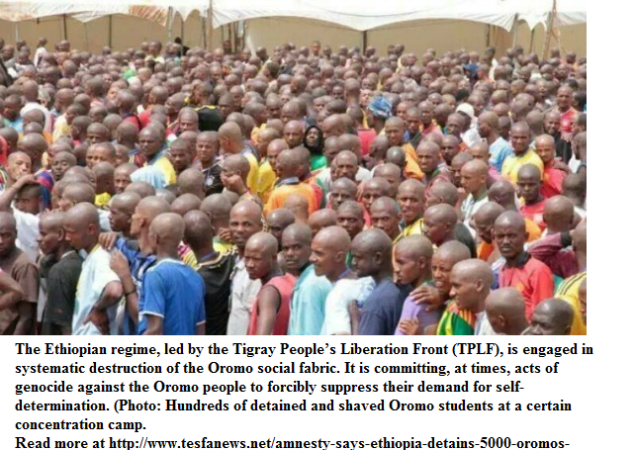
The Human Rights League of the Horn of Africa released an appeal that describes the crackdown on the Oromo community, which has been particularly significant in the last 10 months, after the protests, held in March and April 2014, against the annexation of some Oromo towns to the territory of Addis Ababa. The organization highlighted in particular, the situation of a group of 26 prisoners, who have been illegally detained, beaten, tortured and deprived of their few belongings.
Below is the Appeal from the Human Rights League of the Horn of Africa, also available in .pdf format:
Since the March-April 2014 crackdowns against the peaceful Oromo protesters who have protested against the Ethiopian Federal Government’s plan of annexation of 36 small Oromia towns to the capital city of Addis Ababa under the pretext of the “Addis Ababa Integrated Plan”, thousands of Oromo nationals from all walks of life from all corners of Oromia regional state including Wollo Oromo’s in Amhara regional state have been detained or imprisoned. Some have disappeared and many have been murdered by a special commando group called “the Agiazi force”. The “The Agiazi” force is still chasing down and arresting Oromo nationals who participated in the March-April, 2014 peaceful protests. Fearing the persecution of the Ethiopian government, hundreds of students did not return to the universities, colleges and high schools; most of them have left for the neighboring states of Somaliland and Puntiland of Somalia where they remain at high risk for their safety. Wollo Oromos who are living in Ahmara regional state of Oromia special Zone are also among the victims of the EPRDF government. Hundreds of Wollo Oromos have been detained because of their connection with the peaceful protests of March-April 2014. The EPRDF government has detained many Oromo nationals in Wollo Oromia special Zone under the pretext of being members or supporters of the Oromo Liberation Front (OLF), as prisoners’ voices from Dessie/Wollo prison have revealed.
From among the many Oromos who were picked from different districts and places from Wollo Oromia special Zone in Amhara regional state in April 2014, the HRLHA reporter in the area has received a document which shows that 26 Oromo prisoners pleaded to the South Wollo High Court that they were illegally detained first in Kamise town military camp for 36 days, Kombolcha town Police Station for 27 Days, and Dessie city higher 5 Police Station for 10 days- places where they were severely tortured and then transferred to Dessie Prison in July 2014. According to the document, they were picked up from three different districts and different places by federal police and severely beaten and tortured at different military camps and police stations and their belongings including cash and mobile telephones were taken by their torturers. In their appeal letter to the South Wollo high court they demanded
1. Justice and release from the prison because they had been arrested without court warrant and didn’t appear in front of the court for more than eight months- which violates the Ethiopian constitution.
2. The return of their belongings, including 1000 – 5000 Eth Birr and their mobile phones. […]
The Ethiopian Government for the past 23 years has continually breached:
1. the 1995 Constitution of Ethiopia Articles 14-19 by arresting citizens without court warrant, used torture and inhumane degrading treatments and deprived citizens of their livelihoods and generally discriminated against Oromo nationals
2. international treaties it has signed and ratified
2.1. CAT –Convention against Torture and other Cruel, Inhumane or Degrading Treatments or Punishment (1994)
2.2. CCPR – International Covenant on Civil and Political Rights (1991)
2.3. CESCR – International Covenants on Economic, Social and Cultural Rights (1991) and
2.4. CERD – International Convention on the Elimination of All Forms of Racial Discrimination (1976)
The Human Rights League of the Horn of Africa (HRLHA) strongly condemns the irresponsible actions of the Ethiopian Government and its agents for their inhumane treatments of citizens. The government should be held accountable for failing its duty and responsibility to protect and promote human rights in its territory.
The HRLHA calls upon regional and international donor States and Organizations to take measurable steps against the Ethiopian TPLF/EPRDF government for its persistent brutal, dictatorial, and suppressive actions against innocent and unarmed civilians.
RECOMMENDED ACTION: Please send appeals to the Ethiopian Government and its concerned officials as swiftly as possible, in English, Amharic, or your own language expressing:
– for the immediate and unconditional release of prisoners illegally detained and pay compensation
– urging the Ethiopian authorities to ensure that these detainees would be treated in accordance with the regional and international standards on the treatment of prisoners,
For further information on the detainees and on where to address the concerns, please see the attachedfile.
Source: http://unpo.org/article/17822
Kemants, Neglected Ethnic Group in Ethiopia– Deserve Your Voice January 8, 2015
Posted by OromianEconomist in Agaw people, Ethiopia's Colonizing Structure and the Development Problems of People of Oromia, Afar, Ogaden, Sidama, Southern Ethiopia and the Omo Valley, Uncategorized.Tags: African Studies, Agaw people, Kemants, National Self Determination
add a comment
Why the world cry for Mandela? He has many qualities among them are democracy and fairness. The Kemant people had suffered in previous regimes and the suffering is now reaching its peak. One may despise these oppressed people, should not been forgotten that God is also observing injustice taking place.
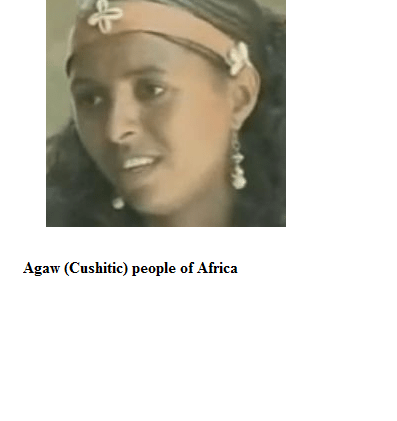

By Prof. Yigzaw Kebede (e-mail message)
We speak Amharic, but we are not Amharas, but Amharas are our … friends and neighbors.
Dear all,
You might have heard about the Kemant request which is not yet settled. I am distributing this e-mail to clarify some confusion on issues which are circulating in the community. We are also ready to receive your genuine comments.
Here are some of the facts and false rumors:
1. What is the Keamnt’s request? The request is for recognition of identity and self rule. This is the same request that some people characterized as the demand for secession. Actually, the secession was neither our request and nor our interest, will never be our concern in the future.
2. Is our request illegal? Not at all. Our request is constitutional on basis of Article 39. Despite this is the truth, some government officials say the group who…
View original post 1,301 more words
UNPO: Updated Report on the Persecution of Ogaden People in Ethiopia. #Africa January 8, 2015
Posted by OromianEconomist in Africa, Ethiopia's Colonizing Structure and the Development Problems of People of Oromia, Afar, Ogaden, Sidama, Southern Ethiopia and the Omo Valley, Ethnic Cleansing, Ogaden.Tags: Africa, African Studies, Genocide, Human rights violations, Ogaden, Tyranny
1 comment so far

In recent years the Ogaden people in Eastern Ethiopia have increasingly suffered various human rights abuses as the Ethiopian State continues its mission of ethnic oppression.
These violations of human rights often compound the current humanitarian crisis that is developing in the region; with foreign aid funds supporting a state that actively deters humanitarian organisations from operating in the Ogaden region.
To help increase awareness about the worsening situation for the Ogaden people, UNPO has published a background report outlining some of the major human rights that currently exist.
This report focuses on many of the Ogaden people’s civil and political rights that have been violated by the Ethiopian Government, and puts them into the broader context of the general state of human rights compliance throughout the whole country.
Cause for serious concern continues to be the suppression of the free media and freedom of expression within Ethiopia. Silencing those willing to voice concerns of state suppression means that the outside world is never likely to know the full scale of rights violations that are taking place within the country.
Of further concern to international law is the occurrence of extra-territorial activity of the Ethiopian State in both targeting political opposition and persecuting the Ogaden people. The fact that these actions have now begun to span borders makes it even harder to encourage transparency on the issues.
Source: http://unpo.org/article/17831
For a full copy of the report click here. UNPO Ogaden 2015 Report
The South Sudan peace process: prospects for 2015 January 7, 2015
Posted by OromianEconomist in Africa, South Sudan.Tags: Africa, African Studies, Developing country, IGAD, South Sudan, Sub-Saharan Africa
1 comment so far
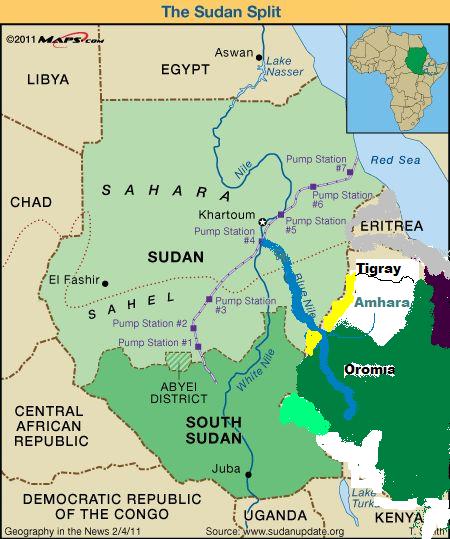
‘These are not achievements of which IGAD can be too proud. The peace process is at a particularly perilous juncture. The last round of talks in December 2014 went nowhere.’
(African Arguments, 6th January 2015) Predicting conflict in South Sudan is easy. Those who warn that the coming of the dry season means further bloodshed are not being especially astute; they are stating the obvious. What to do about this likelihood is a much harder question.
Almost as obvious is to observe that the peace process is weakened by continued fighting. Is the sequence of a comprehensive cessation of hostilities first, then productive peace talks second, necessary? Desirable, yes, but necessary?
Almost paradoxically, limited, ongoing violence has not so far been the main obstacle to progress in the peace process: more of a problem is the inability of the parties to demonstrate goodwill and genuinely commit to finding a solution. Since the Bahir Dar talks in September 2014, violence certainly hasn’t prevented both warring parties from continuing to talk – in the earlier months of 2014 this was not always the case.
Today, more consequential to the environment for talks are the rhetoric and antagonism of preparations for escalating the conflict, rather than any individual episode of conflict itself; the increasing authoritarianism and paranoia of the government in Juba; provocative declarations that national elections will be held on schedule (all too similar to the strategy of the NCP in Sudan, unfortunately); and on both sides, prevaricating leaders who care more about their own interests than that of their so-called constituencies.
Which returns South Sudan to external intervention: the formal, IGAD peace process. For all its flaws, without the peace process, the war would be completely unconstrained.
Neighbouring states would have privileged their narrow, bilateral interests even more than they have done already. A full-fledged proxy war between Sudan and Uganda could have developed months ago – there is still a real risk that it might.
These are not achievements of which IGAD can be too proud. The peace process is at a particularly perilous juncture. The last round of talks in December 2014 went nowhere.
The consultations of the government in Juba, and the SPLM/A (In Opposition) in Pagak, have widened rather than narrowed the gaps between the parties. The participation of political parties other than the SPLM remains contested, with other political parties having had no effective presence since Bahir Dar.
The Tanzania hosted intra-SPLM dialogue in Arusha has opened a parallel process that further detracts from the IGAD effort. Arusha, only in its second round of talks, is still in a honeymoon phase, compared to the relative bitterness now felt in almost a year of talks in Ethiopia.
(An aside: Finland and Switzerland, the donors supporting the Arusha process, should have been far more cognizant of the risks of encouraging forum shopping; this failure of understanding, particularly in the case of Switzerland, so long-engaged in South Sudan, is inexcusable.)
Having effectively exhausted the classical mode of negotiations, the mediation has turned again to that unwieldy but potentially transformative option: a summit of IGAD heads of state and government, to be held sometime later this month in Addis Ababa. This will be the seventh IGAD summit on South Sudan since December 2013, and it is unclear whether the lesson of past meetings – particularly that of the August summit – have been fully learned.
This is probably IGAD’s last chance – another summit failure and the organization’s credibility and political capital will be almost spent. The need to demonstrate ‘success’ may be counterproductive: IGAD may be tempted to spin any summit outcome positively, or threaten the parties to sign up to an agreement they are not ready to believe in.
In the limited time IGAD has left to achieve meaningful progress in resolving the South Sudan crisis, it is vital that the mistakes made in the past year are not repeated. Avoiding these errors will not be sufficient for resolution – that depends on the South Sudanese (and of course, there are plenty of other pitfalls); it will, however, make the prospect of success more likely.
Here are four tasks the IGAD mediators should urgently undertake:
Adequately prepare for the next summit.
Most events involving heads of state are so tightly choreographed and well planned they might as well be ballet performances. Recent IGAD summits have suffered from a total lack of choreography.
There needs to be a clear game plan for the summit, and strategies in place to ensure traps and detours do not ensnare the meeting. Summit meetings are not wellsuited to details and can’t get bogged down on minutiae.
It is critical that heads of state are adequately prepped and briefed before they arrive in Addis. Otherwise the summit will, at best, make little tangible progress, and at worst, go backward
Make real efforts to reach out to more South Sudanese.
At this stage, the occasional press release or press conference is not enough. The mediation needs to marshal the full force of South Sudanese society towards an irreversible peace.
Most South Sudanese – even those nominally aligned to one side or the other – have little idea what their representatives are doing in their name. The parties to the talks have proven to be intransigent and stubborn; most people don’t know enough about these machinations to express their own outrage and demand change.
Individual church leaders have demonstrated a willingness to stand up and state the uncompromised truth: IGAD should more actively compliment these efforts, and itself campaign for peace in towns and communities across South Sudan. Building a constituency for peace and pressure from below may help change the behavior of those too arrogant to otherwise work for peace
Resolve the representation of political parties, and challenge civil society delegates to be useful.
No peace process outcome will be fully legitimate if it excludes the diversity of political actors in South Sudan. Feeble though most political parties are, the exclusion of the official opposition is an open sore in the process. An exclusive, SPLM stitch-up serves the narrowest of elites, and must be avoided.
Much has been said about civil society’s participation in the IGAD peace process. Regrettably, the most useful contributions from civil society have come from those outside of the peace process: the work of David Deng and the South Sudan Law Society, the Development Policy Forum and the Sudd Institute.
Unfortunately, the cogent work of such individuals and institutions has not been espoused by their civil society colleagues present in Addis Ababa. Civil society needs to raise its game.
The mediation needs to be blunt with civil society delegates: merely showing up to eat lunch and silently attend meetings is not good enough. Civil society delegates can still advance ideas, offer innovation and identify political hypocrisy; but they cannot do so if they are mostly silent.
Abandon the CPA model as the template for the mediation.
The CPA should not be understood outside of its context of time and place. It still offers useful elements for South Sudan in 2015.
But, far too often, the IGAD mediation, and most prominently the CPA’s chief mediator and his staff, have let the CPA model imprison their thinking and their tactics.
I do not wish to critique the CPA at length here: it is only necessary to point out that in so many ways, and not necessarily as the fault of the mediation of the time, the CPA failed or was inadequate. Consequently, it should be a cautionary guide for the current process, but not the only guide.
Similar advice would be well heeded by the parties, who themselves all too often refer to what happened in Machakos or Naivasha. Considering alternatives, being creative, and acknowledging past failure – rather than romanticizing the history of the CPA mediation effort in South Sudan as one of unmitigated success – would be far more illuminating.
As I wrote earlier, none of these actions are guarantees for success. But the mediators must understand where they have gone wrong, and quickly take corrective action.
Ultimately, should this incarnation of the IGAD mediation fail, the primary blame and responsibility must fall on those negotiating, no matter the deficiencies of the mediators. But the mediators can improve the odds.
Not every mediation can succeed. Witness the innumerable attempts (and innumerable mediators) who have tried to resolve the conflict in Palestine; more recently, the failure of both Kofi Annan and Lakhdar Brahimi to resolve the Syrian crisis.
There is no shame in accepting that this process, too, has its limitations. To fail to do so would be to a further disservice to the people of South Sudan.
The author is a diplomat based in Addis Ababa.
Source: http://africanarguments.org/…/the-south-sudan-peace-proces…/
Internet and its enemies: 36 out of 65 assessed countries show decline in internet freedom, 41 passed or proposed new laws to curb It. #Ethiopia. #Africa January 6, 2015
Posted by OromianEconomist in 10 best Youtube videos, 25 killer Websites that make you cleverer, Africa, African Internet Censorship, Ethiopia & World Press Index 2014, Facebook and Africa, Internet Freedom.Tags: African Studies, Enemies of Press Freedom, Internet Freedom
add a comment
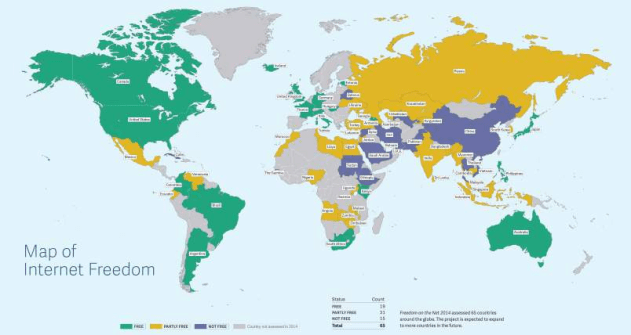
January 6, 2015 (Dazeinfo) — Amid all those talks of an overwhelmingly large majority of people (83%) wanting to make the right to access the internet at affordable prices a basic human right, most of us do not bother to look beyond getting connected to the net. Without undermining the importance of being connected to the internet, there is no doubting the need to ensure freedom over the internet.
Sadly enough, internet freedom has fallen for the fourth consecutive year in wake of more and more countries introducing belligerent and often offensive online censorship measures while others tightened the noose and made their existing measures in regard to the same more rigorous.
The fifth annual Freedom on the Net 2014 report released by Freedom House, an independent watchdog organization, tracks the developments between May 2013 and May 2014 and observed that out of the 65 assessed countries, 36 have shown a negative trajectory in 2014.
Key Findings of the Freedom on the Net 2014 Report
It has been observed that an increasing number of countries are now giving legal sanction to laws that curb internet freedom, in total contrast with the previous government policy of controlling the internet using invisible strings.
Expressing dissent with the government policy or not toeing their line in the online space can invite legal action now, due to which more and more individuals and media outlets are under pressure to either censor their online behavior or face legal action and, in extreme cases, even arrest.
That is in addition to blocking and filtering of content which are among the most common means of online censorship. Imprisoning those who put up ‘undesirable’ content is being seen by governments as a deterrent and, according to them, encourages self-censorship.
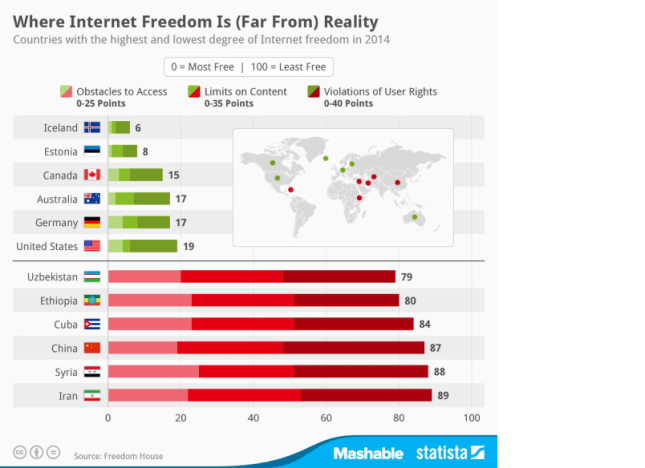
At the same time, the use of physical violence against internet users ‘appears to have decreased in scope,’ says the report.
Of the 65 countries being assessed, 36 showed a decline in the degree of Internet freedom since May 2013.
Five countries with the most and least internet freedom were depicted in the form of a chart by the online statistics portal, Statista:
Iran, Syria and China were confirmed as the worst abusers of internet freedom in the world- a dubious honor for them! Countries wishing to impose more restrictions (like Iran, Belarus and Uzbekistan) often cite China as an example!
Iceland was ranked as the country with the highest degree of internet freedom. Five more countries which were appreciated in this regard are Estonia, Canada, Australia, Germany and the United States.
41 countries passed or proposed new laws to penalize expressing of views over the internet, to increase the surveillance capabilities of the governments or to increase the powers of the government to control the content which get published online.
Very few countries recorded an improvement in the degree of freedom over the internet.
India and Brazil were among those few nations where some curbs were taken off. Belarus also eased some restrictions.
Concern was shown over both democratic and authoritarian governments seeking to curb the freedom of the internet.
Penalty for online expression in some countries is worse than for similar expression off the internet.
19 countries passed new laws to increase surveillance or to restrict user anonymity.
The number of people detained or prosecuted for their online behavior touched a record high, surpassing all previous figures.
Among those prosecuted, online journalists and bloggers covering anti-government demonstrations were among the prime targets.
Women all over the world “face immense cultural and socio-economic barriers to ICT access, resulting in significant gender gap in ICT use.
The LGBTI community also faces great threats and harassment over the internet.
With more and more internet users beginning to guard their online privacy, “malware attacks against government critics and human rights organizations have evolved to take on a more personalized character.”
Shocking Instances of Curbs on Internet Freedom across the World!
There have been many instances of internet freedom being curbed all over the world. And it is not only surprising but also shocking that even the so-called ‘democratic’ countries have not been liberal with their internet access policy. Some incidents which sent shock waves across everyone’s spines during the period covered by the report are:
The Russian government enacted a law to crack down on all online media which criticized the Vladimir Putin’s policy toward Kremlin without any judicial oversight. Three major news sites were blocked within six weeks as a result of this law.
One of the worst offenders, Iran, does not allow its citizens to access social networking sites like Facebook, Instagram, YouTube and Twitter. Those promoting Sufism online were made to serve long prison sentences. Six Iranians who recorded a video of them dancing to Pharrell’s song “Happy” and posted it on YouTube (the video later went viral) were punished with 91 lashes each and six months of imprisonment. The director was ‘awarded’ a full year.
A new law in Ethiopia allows the government to snoop into computers, networks, internet sites, social media platforms, television and radio stations “for any possible damage to the country’s social, economic, political and psychological well-being”, citing that blogs, social media sites and other digital media have the potential to “instigate war, to damage the country’s image and create havoc in the economic atmosphere of the country.”
Governments in Turkey, Thailand, Russia, Kazakhstan and Italy allow agencies controlled by them to block content with no judicial oversight and with little or no transparency at all.
Uzbekistan passed a law requiring owners of cybercafés to record browsing history of customers for three months.
The draconian ‘bloggers law’ passed by the Russian government in May 2014 increased government surveillance of social media users by making it mandatory for anyone having sites or pages which draw more than 3,000 daily views to register with the telecommunications regulator.
A blogger in Ethiopia was sentenced to an 18 year term while six more await a trial for expressing dissent over government policies or actions over the internet.
News site editors in Azerbaijan were arrested and implicated under charges of hooliganism or drug possession.
Kavita Krishnan, a women’s rights activist in India, was harassed online by someone using the handle @RAPIST.
Mukhlif al-Shammari who posted a YouTube video about mistreatment of females in Saudi Arabia was jailed for five years.
Egyptian government used an application called Grindr to track and prosecute men belonging to the homosexual community. Russian and Ugandan governments also usedonline tools and malware to lure people belonging to this community and then harassed them.
In June 2013, a woman in Pakistan was stoned to death by local men after she was found guilty of possessing a mobile phone by the tribal court!
Iceland, which boasts of a 97% internet access, has no restrictions over the use of social sites and the government does not block any content was presented as a noteworthy example.
Sanja Kelly, Freedom House’s project director for Freedom on the Net, explained that governments are finding new and less detectable manners to control free speech online
“As authoritarian rulers see that blocked websites and high-profile arrests draw local and international condemnation, they are turning to murkier – but no less dangerous – methods for controlling online conversations”, says Sanjay.
Though it is important to ensure that the internet becomes accessible for a larger number of people, mere access to it will be no good if the government makes it an additional channel for snooping over its citizens or the users are threatened, harassed, discredited, punished or imprisoned for not bowing to the rulers’ diktats.
Read more @ http://ayyaantuu.com/horn-of-africa-news/36-out-of-65-assessed-countries-show-decline-in-internet-freedom-41-passed-or-proposed-new-laws-to-curb-it/
Ethiopia: The Indigenous People Are Pushed Out of Their Fertile Lands. #Mursi #Africa January 6, 2015
Posted by OromianEconomist in Africa, Ethiopia's Colonizing Structure and the Development Problems of People of Oromia, Afar, Ogaden, Sidama, Southern Ethiopia and the Omo Valley, Ethnic Cleansing, Land Grabs in Africa, Mursi.Tags: Africa, African Studies, Land grabbing, Land grabs in Africa, Mursi, The Tyranny of Ethiopia
add a comment
The people pushed out of Ethiopia’s fertile farmland
By Matthew Newsome
 January 6, 2015 (BBC) — The construction of a huge dam in Ethiopia and the introduction of large-scale agricultural businesses has been controversial – finding out what local people think can be hard, but with the help of a bottle of rum nothing is impossible.
After waiting several weeks for letters of permission from various Ethiopian ministries, I begin my road trip into the country’s southern lowlands.
I want to investigate the government’s controversial plan to take over vast swathes of ancestral land, home to around 100,000 indigenous pastoralists, and turn it into a major centre for commercial agriculture, where foreign agribusinesses and government plantations would raise cash crops such as sugar and palm oil.
After driving 800km (497 miles) over two days through Ethiopia’s lush highlands I begin my descent into the lower Omo valley. Here, where palaeontologists have discovered some of the oldest human remains on earth, some ancient ways of life cling on.
Some tourists can be found here seeking a glimpse of an Africa that lives in their imagination. But the government’s plan to “modernise” this so-called “backward” area has made it inaccessible for journalists.
As my jeep bounces down into the valley, I watch as people decorated in white body paint and clad in elaborate jewellery made from feathers and cow horn herd their cows down the dusty track.
I arrive late in the afternoon at a village I won’t name, hoping to speak to some Mursi people – a group of around 7,000 famous for wearing huge ornamental clay lip plates.
The Mursi way of life is in jeopardy. They are being resettled to make way for a major sugar plantation on their ancestral land – so ending their tradition of cattle herding.
Meanwhile, a massive new dam upstream will reduce the Omo River, ending its seasonal flood – and the food crops they grow on its banks.
It is without doubt one of the most sensitive stories in Ethiopia and one the government is keen to suppress.
Human rights groups have repeatedly criticised schemes like this, alleging that locals are being abused and coerced into compliance.
I’d spoken to local senior officials in the provincial capital of Jinka, before travelling into the remote savannah.
The suspicion is palpable as the chief of the south Omo zone lectures me. Local people and the area’s reputation have been greatly harmed by the negative reports by foreigners, he says.
Eventually a frank exchange takes place and I secure verbal permission to report on the changes taking place in the valley.

- Situated approximately 300km south-west of the capital Addis Ababa, the dam is 246m high
- Work started in July 2006 and was estimated to take 118 months (nearly 10 years)
- The government says it will provide much needed-power and help develop the country’s economy
- Authorities say no-one has been forced from their home

It seems prudent to let the Mursi tribe and attendant police warm to my presence before I start asking questions. After all, I have the whole evening.
But a brief chat with the tribe ends abruptly with the entrance of a police officer, wearing a replica Manchester United football shirt, vehemently waving a dog-eared copy of the country’s constitution.
I am prohibited from talking to anyone and must immediately climb back into my jeep, drive back up the mountain and return to Jinka, he says.
As often in Ethiopia, he doesn’t explain exactly why.
I object to driving through the wilderness at dusk on safety grounds and so a compromise is reached: I will pitch my hammock outside the police station, a short stroll away from the village, with armed guards watching my every move.
The political boss of the zone comes on the two-way radio. “This is house arrest,” I protest. “No, just a misunderstanding,” he replies.
 The prospect of returning home without interviews is unthinkable. My ruse is to distract my captors.
I sit them down for a meal of pasta and vegetables – and brimming beakers of spiced rum – in front of my laptop, which is playing an Ethiopian comedy.
After saying good night I strike out through the scrubland.
I run without sense of direction through bush and bog, crawl under fences, and negotiate large herds of noisy cattle. I have to find a village elder I met earlier, and interview him before policemen and their flashlights turn up.
So I am relieved to stumble on two boys milking their cows in the moonlight. They lead me to the elder’s hut. The sound of so many rudely-awakened animals in our wake fills me with dread that searchlights are heading our way.
The moment arrives. I squat in front of the elder inside his mud dwelling, surrounded by his sleeping companions: several cows, a goat and a cat. My dictaphone is poised to record truths heard by few journalists in this media-muzzled region.
I ask him in broken Amharic what is going on. He tells me: “The government is telling us to sell our cattle and modernise like townspeople – they say our land is the property of the sugar corporation. We have not been asked what we want or need.
“If we do not accept the resettlement plans, we’ll be taken to jail. How can we survive if we have no access to land, cattle or water?”
I promptly thank the elder for his time, apologise for disrupting his evening and head back to my open-air jail.
On reaching my hammock I find several dozing policemen and an empty bottle of rum. Mission accomplished.
The Mursi people
- About 10,000 Mursi people live in Ethiopia
- Traditionally insert pottery plates known as debhinya in the lower lips of young women
- They live in an area surrounded by the rivers Mara, Omo and Mago, which flow into Lake Turkana
- Mursi territory was incorporated into Ethiopia during the reign of King Menelik II in the 19th Century
Read @ http://www.mursi.org/
Ethiopia: Bad governance and abysmal poverty January 5, 2015
Posted by OromianEconomist in Africa Rising, African Poor, Corruption, Corruption in Africa, Free development vs authoritarian model, Illicit financial outflows from Ethiopia.Tags: Africa, African Studies, Causes of poverty, Developing country, Ethiopia and poverty, Koshe, poverty, Tyranny, Tyranny and poverty
add a comment
Ethiopia: Home of Thousands of Garbage Scavangers
http://www.tesfanews.net/ethiopia-home-for-thousands-of-garbage-scavengers/
British journalist Caroline Knowles writes that Addis Ababa’s city dump (aka Koshe) as the main source of survival for many poor Ethiopians. But, Why the Ethiopian government allow its people to live like this? Is it because they don’t know or because they don’t care?
By Caroline Knowles,
MY first sight of Koshe, Addis Ababa’s giant 50-year-old landfill site, is from the highway. It runs alongside it, and away from the road as far as the eye can see: a giant, murky, grey-brown raised area of partially decomposed rubbish, with occasional bright specks of colour. As my hopes rise from having found it, my heart sinks as I try to take it in.
The interpreter I have engaged for this mission through my contacts, a junior academic at Addis Ababa University, is not keen on going ahead. Leaving the taxi and crossing the highway by the bridge, I try to absorb the panoramic view afforded by this elevated viewpoint over the highway.
This 36-hectare site – shrinking as the city attempts to regulate it – is patrolled from the air by large vultures, diving into the rubbish. Motley crews of wild dogs gambolling and snatching at the soft ground patrol it at ground level. Smoke rises in several places, adding a layer of haze to the murky colour scheme. Yellow bulldozers nose the heap and shift and level it; municipal rubbish trucks and flatbed trucks with skips arrive from all over the city and discharge their contents.
Between the dogs, the birds and the machines there was something else, something I could only slowly take in: 200 to 300 people, dressed in the same murky hues as the rubbish dump, backs bent, hooks in hand, were working on its surface.
Feeling queasy I walk towards the end of the bridge. In order to reach the steps and the rubbish, I must walk past three young men who are using the vantage point of the bridge for surveillance and information gathering. In an unspoken negotiation I don’t understand, they take in my camera, and my shoulder bag containing digital recorders and money, and let me pass. This silent confrontation, between the comforts of my world and the difficulties of theirs, only further develops my anxieties.

Descending the steps, I walk to the edge of the dump where I am met by the site supervisor and his aides. They want a stamped authorisation of my visit from the relevant municipal department. What looks like a vast area, open to the surrounding countryside, is as closed to me as a Korean petrochemical plant. I turn back and head into the city to secure the relevant authorisation.
TRASH TALKS
The city dump is an inventory, of a kind, of its material life. Addis in rubbish is not London or Moscow in rubbish. Rubbish provides a crude and deeply flawed account of cities and their social, political and economic contexts. Rubbish displays social, material and income differences.
Indeed, some people’s rubbish provides others with the fabric of their everyday life. Maybe this is the best way to think about Koshe – as a redistribution centre which indexes the differences between people’s life-journeys, refracted through material cultures at their point of disposal.

Not just the content, the handling of rubbish displays cities too. How cities deal with their rubbish reveals them. It is a major challenge for municipal authorities in Addis, who are only able to deal with two-thirds of the rubbish, distributed in collection points all over a city that is fast expanding – leaving the rest to private contractors and the age-old informal dumping practices on streets and in rivers. Thus rubbish provides a visual commentary on urban citizens’ behaviour as well as the efficacy of municipal governance.
SCRATCHING A LIVING
Getting myself into the rubbish is a story of municipal offices cluttered with old computers, fans, desks, officials and permissions. It is about writing a letter in Amharic explaining what I want to do and why. It is about waiting until the electricity comes back on and we can photocopy my university ID. There are phone calls to the landfill site and arrangements are made. Everybody is charming. I’ve come from London to take a look at the rubbish. Why? I am following a piece of plastic around the world. Really! First world problems!
I go back to Koshe – which means ‘dirty’ in Amharic – and hand over the necessary papers to the site supervisor, in his makeshift office at the roadside of the dump. Minutes later, I am scrambling after him, out on to the rubbish heap, navigating around the dogs which I fear, and the areas where it is soft underfoot and I sink up to my knees. My stomach is churning with fear. My interpreter and I are using Olbas oil to mask the smell.
– – – – – –
– – – – – –
We stop north of the main road, where it is firmer underfoot, in the area where the activity is concentrated. This is the place to which the municipal authorities and the site supervisor direct the trucks to dump their loads. A single white towelling slipper, with the Hilton Hotel logo on it, stands out in the grey-brown mush.
This area is a hive of activity that peaks to a frenetic pace with the arrival of new loads, and then falls away, leaving a more continuous stream of slower activity, and a legacy of dust and smoke that gets in everyone’s eyes.

As rubbish trucks turn off the main road on to the edge of the site, a group of five or six young men jump on the back and ride to the dumping area with it. This puts them at an advantage for grabbing the best items as the truck discharges its load onto the tip, but not without risk. The mechanism that crushes the rubbish occasionally catches a young man in its deadly and disfiguring grasp.
As the young men jump off with the rubbish and begin picking items that catch the eye, the line of men and women, that has formed along both sides of the truck, spring into action, grabbing items and stashing them in woven plastic sacks. These are held tightly in one hand; in the other a homemade metal hook with a white handle, used to grab and dig into the grey-brown surface of the heap, is held. This hooked instrument earns the pickers – sometimes referred to as scavengers – the name ‘scratchers’.
The moment of discharge unleashes a tense scramble for the most valuable items; a competition in which masculine physical strength prevails, and young, agile, women put up a good fight. Scratchers then go on searching, or rest until the next truck arrives, or regroup around the bulldozers unearthing new bounty. The social and material relationships of the dump demand skilled navigation.
From the vantage point of the dump, the scratchers rework the geographies and hierarchies of the city. The tensest flurries of competitive scratching accompany the arrival of trucks from the most affluent areas, with the best rubbish. The Bole area, with its upscale detached housing, mall, hotels and the international airport, sends the most prized items, the cast-offs of affluence, including waste airline food in large green plastic bags, to the dump. Scratchers collect the food discarded by airline passengers for themselves, leaving a large pool of bright green plastic bags, which attracts a herd of goats.

Rubbish from the central part of the city, from international hotels, the African Union HQ buildings and the embassies, is similarly sought after, and monopolised by the fittest young men. Scratchers recognise the sources of rubbish from the colours and types of trucks used by the different sub-cities and private contractors. And they recognise the drivers and their helpers, who regularly work the same areas. The discarded traces of the city’s more affluent lives, especially foreign residents and visitors, most animate the dump. Rubbish logs social inequalities in cities and provides a minimal redress.
The dump has temporal rhythms. Scratchers know what time the trucks arrive from different parts of the city. From 8am through the morning is the busiest time. The dump is geared to municipal collection and transportation. By 5pm things are dying down as the trucks stop for the night, and the scratching continues with fewer scratchers at a slower pace. Bulldozers moving stuff around and digging into the surface of the dump also provide new scratching opportunities, and a lively crowd gathers around them. Scratching is a 24-hour activity, with people arriving after their working day is over. Some scratchers work throughout the night wearing torches attached to headbands. Scratching it seems is a (stigmatised) way of life as much as a way of getting by.
Within the urban geographies of affluence, materials establish another set of hierarchies. Scratchers search for anything they can use for themselves, or resell. Materials have a value in recycling, providing an afterlife for discarded objects. Metals, including nails, are the most valuable booty, and men dominate this, although a few women have ventured into metals too. Wood has value as firewood. Tourist clothes and shoes can be cashed in at the Mercato salvage section. Some scratchers just come to eat.
But plastics are the most ubiquitous material on the dump, and among plastics, water bottles the scratchers refer to as ‘highland’, after a popular brand of bottled water, dominate, and in this niche women prevail.
Scratchers specialise in particular materials. Specialisms result from advice from experienced scratchers, from serendipity, or from knowledge of shifting recycling prices, gathered at the edge of the dump. Here materials are counted or weighed, and turned into cash, with the agents from factories using recycled materials.
A pile of white dusty material arrives from the leather factory. The dogs take up residence. They are ejected by a group of men, who have decided that this is a good place to sit, while waiting for the next truck.

In their working clothes – they scrub up outside of work and look completely different – scratchers are dressed similarly and grimily, making them the same colour as the rubbish heap. Men wear trousers, shirts and tee shirts, baseball caps and sometimes hoodies to protect their heads from the sun. Women wear scarves and baseball caps, skirts, trousers, t-shirts and blouses. Some carry infants on their backs. All wear sturdy shoes, often trainers.
The scratching population numbers 200–300, but expands after holidays with casual pickers. More women than men do it by a ratio of about three to one, and, while people in their 20s and 30s predominate, ages range from teens to seniors. Most live in the villages around the dump in simple, rusted, corrugated iron dwellings, sometimes with satellite dishes. Rubbish has provided a source of local employment and subsistence for generations over its 50-year history, and is firmly embedded in local calculations of subsistence and accumulation.
About 50 scratchers live in cardboard and plastic makeshift shelters off the edge of the dump, safely away from passing vehicles and next to a pen full of pigs. The rubbish sustains rural arrivals, for whom it works as a gateway to the city, as well as long-term residents, whose rural routes have settled into the past, making them locals.
The ministry and its field agents say that the rubbish dump is a source of dangerous working practices by people who, like the rubbish they sort, are consigned to live beyond the limits of civic life. A litany of accidents, deaths and disfigurements as scratchers take risks to recover value, are recited by the site supervisor:
“Food comes from some place and a guy is going into the truck and he is injured and they take him to hospital but he died. Also someone else lost their legs in an encounter with a bulldozer. Two months ago a man who jumped in the truck dropped off when it broke. In recent accidents, two were women. The bulldozer operator has a lot to do to push the garbage. If they see something they want when the bulldozer moves the garbage, they don’t think about their life.”
In living beyond formal systems of governance, this city suburb of rubbish is more like the Somali borderlands, patrolled by contrabandists and gunrunners, than a part of the city. There is a police station nearby, and policing and the justice system are slowly taking back the dump from a parallel system of authority, a mafia of five ‘big men’. The big men control access by scratchers in exchange for fees, making themselves wealthy in the process. But recently, some of them have been imprisoned, shifting the balance of power towards the authorities.
Once far away, a place outside of the city, outside systems of formal employment, taxation, law and municipal governance, Koshe is now on the edge of a city that has grown to meet it in what are fast becoming its upscale southern suburbs. A new development of large detached houses nearby anticipates this future – new housing for those in a position to benefit from rising prosperity, and a consequent shrinkage and rehabilitation of the landfill site. These changes have far-reaching consequences for the scratchers of Koshe.
– – – – –
NOTE: The above article was first published on The Guardian Newspaper under the title “Inside Addis Ababa’s Koshe Rubbish Tip Where Hundreds Literally Scratch a Living”. It is an extract from the new book Flip-Flop: A Journey Through Globalisation’s Backroads by Caroline Knowles. (Pluto Press, £18.99).
Source: Tesfanews.net
Read more at http://www.tesfanews.net/ethiopia-home-for-thousands-of-garbage-scavengers/#IEroeAVG1RmyFU7j.99
Decolonizing Development:The Political and Cultural Locations of Nationalism and National Self-determination (The Case of Oromia) January 4, 2015
Posted by OromianEconomist in Africa, Colonizing Structure, Development, Dictatorship, Economics, Gadaa System, Humanity and Social Civilization, Ideas, Knowledge and the Colonizing Structure., Language and Development, Oromia, Oromia Quarterly, Oromo, Oromo Identity, Oromo Nation, Oromo Social System, Oromo the Largest Nation of Africa. Human Rights violations and Genocide against the Oromo people in Ethiopia, Self determination, Sirna Gadaa, The Oromo Democratic system, The Oromo Governance System, Theory of Development, Tyranny, Uncategorized, Wisdom.Tags: Africa, African Studies, Anthony Smith, Couchiching First Nation, Decolonization, Development, Economic and Social Freedom, Freedom, Genocide, Horn of Africa, nation, Nation and Nationalism, Nation and Nationalism in Africa, National freedom, National identity, National liberation, National Self Determination, Nations, Nubia, Oromia, Oromia Quarterly, Oromo, Oromo identity and culture, Oromo Liberation Front, Oromo people, Oromummaa, Politics and Nationalism, Scotland, Self determination, State, State and Development, Temesgen M. Erena, The Oppressed, The Oromo theory of development, Theorizing nation and nationalism, United Nations, Universal Declaration of Human Rights
3 comments
Decolonising Development:The Political and Cultural Locations of Nationalism and National Self-determination (the Case of Oromia)
Several scholars have argued that national self-determination is a claim for cultural independence and that nationalism in general is based on the right to cultural autonomy, right to a culture. In the Oromo context, national self-determination is about the representation of collective identity and dignity. It is the demand of the Oromo people to govern themselves. Practically, this can be interpreted as let us be governed by people who are like us, people of our nationality or people who accept and respect our value system. For the last hundred years and so, the Oromo nation has suffered from Abyssinian expansionism, social, ecological and economic destruction and continuous and intensive cultural and physical genocide. The Abyssinians and Oromians connections have been the coloniser (refers to the former) and the colonised (refers to the latter) relationships. Contrary to the Ethiopianist discourse, they have not developed a common unifying identity, social and political system. While the Abyssinians feel a sense of glory of their kings, warlords and dictators, the Oromians feel victimisation to these rulers, so they have not emerged a common ancestry, culture and collective memory, which can result in common ‘Ethiopian’ identity. From the perspective of Oromo social construction, the present Ethiopian domination over Oromia is a continuation of what pervious generations of Oromo nation had experienced. Thus, the Oromo people, sees the present political arrangement as illegitimate because it is a rule by the people who have engaged in destroying them. So, they claim not only cultural but also political independence. Oromo nationalism is also very democratic. It follows the UN principles of self-determination for the citizens of Oromia, claiming independence from the tyranny of Ethiopian Empire. The latter has been constructed based on Amhara-Tigre nationalism. The Oromo nationalism also offers democratic solutions to the ethnic minorities in the Ethiopian Empire. Scholars of Oromo studies claim that there is fundamental behavioural, linguistic, ethnic and cultural differences between the Abyssinians (northern) and their subjects (Southern). The Oromo, Sidama, Afar and the Ogaden (Ogaden Somalians) nations, beyond their common Cushitic progeny, they have common experiences of victimisation and illegitimately absorbed by Abyssinian southward expansion. Their collective memory of past experiences and present victimisation are making common identity. This identity is a key to understand politics there and to work together for self-determination, to recover their lost humanity.
For the early version of this article, see Temesgen M. Erena, The Political and Cultural Locations National Self – Determination, Oromia Quarterly, Vol. II, No.2, March 1999; Temesgen, M. Erena, Oromia: The Nation and the Politics of National Self – Determination, Oromia Quarterly, Vol. I, No.2, December 1997, ISSN 1460-1346.
Man knows himself only insofar as he knows the world, and becomes aware of the world only in himself, and of himself only in it. Every new object, well observed, opens a new organ in ourselves.
-Goethe, Maximen und Reflexionen, VI Build therefore your own world. -Ralph Waldo Emerson, Nature
Introduction
The passions of national freedom and national interest are probably the strongest in the whole political spectrum that characterises the present world. Kellas (1998) holds that it is stronger than the passions aroused by religion, class, individual or group interest. This passion is not all futile, either. In Gellener’s (1983) understanding, nationalism has been considered as essential to the establishment of a modern industrial society. According to Smith (1991), it is ‘the sole vision and rationale of political solidarity.’ For Kellas (1998), it provides legitimacy to the state, and inspires its citizens to feel an emotional attachment towards it. It can be a source of creativity in the arts, and enterprise in the economy. Its power to mobilise political engagement is unrivalled, particularly in the vital activity of nation building. It is intimately linked with the operation of popular democracy. Indeed, the global pattern is a mosaic of political drives, economic interests, linguistic pride, cultural imperatives, psychological needs and nations seeking identity. These factors are manifesting as a powerful staying power in a modern Africa, either. As European colonialism and socialism melted away, the perpetual existence of the backlash against ‘neo-colonial’ colony colonialism and the reviving of national selfdom become more and more significant in social and political dynamics of contemporary multi-ethno-nation African societies. The African experience is motivated by the same aspirations as that of elsewhere. At its root is a need for freedom, dignity, for the right of people of distinct social communities to function freely and independently. In this regard, Oromia represents the case of rejuvenating claim for national freedom and the struggle against more than a century old Abyssinian Empire colonialism in Africa. Oromia is a homeland for an Oromo nation, a group of people with a common culture and value system (seera fi aadaa), language ( Afaan Oromo), political institutions (Gadaa), and historical memories and experiences. Oromia is the single largest, homogeneous and endogenous nation in Africa with a population of 40 to 45 million. Both in terms of territorial and population size, more than two-third’s today’s sovereign states that are making members of UN (United Nations) are smaller than Oromia. The Cushite (see Demie, 1998) Oromo people have inhibited their homeland, Oromia, since pre-history and in antiquity were the agents of humanity’s documented Cushitic civilisation in terms of science, technology, art, political and moral philosophy. The links between the Oromo and the ancient civilisations of Babylon, Cush and Egypt has been discussed in Asfaw Beyene (1992) and John Sorenson (1998) scholarly works. Utilising prodigious evidence from history, philosophy, archaeology and linguistics, Diop (1974 and 1991) confirms that the Cushite Egyptian civilisation was emerged from the Cushite civilisations of North East Africa, particularly, the present day Western Sudan and upper Nile Oromia (also known as Cush or Punt). Indeed, except the name of places, saints and prophets, many of the Old Testament and the Holy Koran moral texts are copies of the Oromo moral codes. The formers are written documents while the latter are orally transmitted. Since the late 1880s the Oromo people have disowned their sovereignty. They disowned their autonomous institutions of governance, culture, education, creativity, business, commerce, etc. Thus, they have been claiming for national self-determination, national-self government and the right to their own state and resist the Abyssinian Empire saver (supremacist’s) nationalism. The Oromians are not only against the quality of Ethiopian Empire governance but also against the philosophy on which it is based: domination, dehumanisation, inequality, double standard, hypocrisy, deceit, exclusion, chauvinism, war institution, rent-seeking, extractive state, conservatism, feudalism, Aste fundamentalism (Aste Tewodros, Aste Yohannis, Aste Menelik, Aste Haile Sellasie), etc. The political goal of national self-determination (national self-government) is asserted in the outlook and attitudes of the Oromo political and social organisations. Of course, the Oromo nationalism, which supports the interests and identity of the Oromo people, is a more subtle, complex and widespread phenomenon than common understanding and observation. It is within this context that we are going to discuss the Oromos’ politics of national self-determination and the search for the national homeland, the demand for reinventing a state of their own in the following sections.
Defining Nation, Nationalism and Self- determination
To define nation and nationalism is as Benjamin Akzin (1964, pp. 7-10) discussed five decades ago, to enter into a terminological jungle in which one easily gets lost. Different scholarly disciplines have their own more or less established and more or less peculiar ways of dealing with nation and nationalism. Ideally, our definition of nation and nationalism should be induced of elements of nationalist ideology. Getting at such a definition has confirmed phenomenally strenuous. Hugh Seton-Watson, an authority in this domain, has deduced that ‘no scientific definition’ of a nation can be concocted. All that we can find to say is that a nation exists when significant number of people in a community consider themselves to form a nation, or behave as if they formed one (Seton-Watson, 1982, p.5).Van den Berghe (1981) defines a nation as a politically conscious ethnic group. Several attempts have been made at making a cardinalist definition of the term, pointing out one or more key cultural variables as defining variables. Among those tried are language, religion, common history/descent, ethnicity/race, statehood and common territory (homeland). For a group of people to be termed a nation, its members typically have to share several of these characteristics, although historically, one criterion may have been predominant (for example, language in Germany, or culture and history in France). In the case of Oromo, common language (Afaan Oromo), common territory (Biyya Oromo, dangaa Oromiyaa or Oromia), common historical experiences (victimisation to Ethiopian Empire rules or Abyssinocracy) are particularly very significant. Stalin made his undertaking in 1913. His definition includes four criteria: the members of a nation live under the same economic conditions, on the same territory, speak the same language, and have similar culture and national character (Seton-Watson, 1982, p.14). Neither Ernest Gellner nor Eric Hobsbawn, two influencials, gave definite definitions of the nation in their major achievements. Indeed, they are very hostile towards what they define as nationalism. ‘…For ever single nationalism which has so far raised its ugly head…’ (Gellner, 1983, p.45), this is a Gellner’s conception and sees the world as naturally divided into nations, each with its own individuality. This implies an acceptance of the nationalist self-perception. There are also other conceptualisations. A social anthropologist, Thomas Hylland Eriksen (1992, p. 220) says ‘a nation is an ethnic group whose leaders have either achieved, or aspire to achieve, a state where its cultural group is hegemonic’, Anthony H. Birch (1989, p.6) considers that a nation is best defined as ‘a society which either governs itself today, or has done so in the past, or has a credible claim to do so in the not-too- distant future. Kellas (1998) defines the nation as a group of people who feel themselves to be a community bound together by ties of history, culture and common ancestry. Nations have ‘objective’ characteristics, which may include a territory, a language, a religion, or common descent, and ‘subjective’ characteristics, essentially a people’s awareness of its nationality and affection for it. In the last resort it is ‘the supreme loyalty’ for people who are prepared to die for their nation. The definition of ‘nation’ which we will make use of in the following is one suggested by Anthony D. Smith (1983,pp. 27-109, 1991, p. 14; 1995); a definition mastering well the ‘sounding board’ dimension. Smith here defines a nation as ‘a named human population sharing a historic territory, common myths and historical memories, a mass, public culture, a common economy and common legal rights and duties for all members. A recent definition of Smith holds nationalism, one manifestation of national-self-determination, as ‘an ideological movement for attaining and maintaining autonomy, unity and identity on behalf of a population deemed by some of its members to constitute an actual or potential ‘nation’ (Smith, 1991, p. 73; 1995). For Smith nationalism has a deep ethnic roots and rejuvenates itself in response to global and domestic impulses. While the phenomenon of globalisation and technocratic culture are there, nationalism is an eternal nature and nourishes and propels itself on technocratic innovations. In this context, national self-determination may be defined as many part aspirations of a nation: To be free to freely determine one’s own national identity, culture, including language, education, religion, and form of government, to be free of rule by another ‘nation’, that is to overcome social and political systems of domination and exclusion in which nations other than one’s own wield predominant power. To be free to select its own form of government; and those governed within it have the right of unflagging consent.
Culture and the Politics of Self-determination
Nation, nationalism and national self-determination are commanding attentions. One of the perennial issues within nationalism is whether national self-determination can stand alone, or whether it requires a ‘qualifier’ from within cultural or political ideas or both to clarify its precise cultural and political location. Several scholars have argued that national self-determination is a claim for cultural independence and that nationalism in general is based on the right to cultural independence and that nationalism is based on the right to a culture. Nielson, for example, peers a nation as groups of people whom ‘perceive themselves as having a distinct culture and traditions’, and Tamir presents that a nation is a community in which individuals develop their culture, and they therefore regard their place within a nation as membership in a cultural group. Indeed, she argues that ‘the right to national-self determination stakes a cultural rather than a political claim, namely, it is the right to preserve the existence of a nation as a distinct cultural entity.’ Will the people who demand national self-determination be satisfied with such an arrangement? Tamir gives credence to that the idea of basing the right to self-determination on the right to a culture is the one that has best conformity with a liberal internationalist viewpoint. That is thinkable, but international liberalism is incompetent on this particular matter. A nationalism, which is based on culture and cultural distinctions, was not very long a go. It is a concept that characteristic the thesis of right wing, or romantic theorists such as Herder. Indeed, Herder’s nationalism was not political, and it distrusted a state as something external, mechanical, not emerging spontaneously from the life of the people. Nevertheless, in the Oromo context the claim for national self-determination is a political rather than a cultural one. If we look at the distinction between the two, it would seem that the claim for national self-determination involves more than a demand to be tolerated while the cultural question is. For example, the Catalan’s and Quebecois’ culture and identity have been tolerated and respected to some extent, and yet many of them thought that this did not reflect a situation of self-determination. Indeed, meeting their claim would involve legislation and redefinition of institutions within the state, and perhaps even a new state. In the Oromo case the demand is actually the claim to have control over their lives. This does not mean over every individual’s private life, but over the public aspect of one’s existence, i.e. the system of mutual relationships, which reflect and sustain one’s membership of a certain collective. Here the self is conceptualised within the context of community, but one that has to be real, actual, and functioning and performing. Otherwise these communal ties are too abstract, which makes it impossible for the self to be defined by them. The statement of Cohen has to be recalled: ‘A person does not only need to develop and enjoy his powers. He needs to know who he is, and how his identity connects him with particular others. He must… find something outside himself which he did not create… He must be able to identify himself with some part of objective social reality’ (Cohen, 1988). Moreover, self-realisation, however, cannot be merely a mental situation; thus this community cannot be only cultural. It must be a political situation at least so that, in order for the Oromo people to realise themselves, they must not be dependent on the goodwill of a second party. They then must be certain that their self-realisation in all spheres of life will not be prevented by the Abyssinian government, the TPLF, the Orthodox Church, and so forth. They should therefore be politically active and watch such institutions carefully. In addition, they must participate in politics in order to decide collectively upon public matters, which influence their self-realisation. So the Oromos claim for national-self determination is about the realisation of their potential status, ability and collective character, which may be achieved only through participation in autonomous political institutions. But for more than a century Oromos have been denied access to these institutions, either officially or in practice. In other words, if Oromos as a nation achieve self-determination they will better able to participate, better represented, better able to deliberate, gain much more control over their life than formerly and more autonomous. The Oromos demand for national self-determination thus, aims at establishing those institutions, which are needed for the realisation of the self-determination. When an Oromo demands national self-determination, he/she is not asserting that he/she would like to control his/her private life, e.g. his/her job, his/her shopping activities, his/her love affairs. Many Oromos do not control these aspects of their lives and yet nevertheless demand national self-determination. But the same principle also applies to cultural life. The Oromos may be allowed more-or-less to use their language, have their own newspapers and theatre, and the freedom of worship, etc. which are making cultural freedom. Actually, these rights are hardly exist at present. But when they claim national self-determination they are not only referring to these aspects of life, as political community: they want to be able to form and choose among and vote for the Oromo political parties, to observe the Oromo constitutional laws, to pay taxes to an Oromo authority, and to have a history (and indeed, myth) of independent Oromo state, from which their identity and self-determination can derive. Thus, the Oromo’s Declaration for Independence will emphasise parliamentary participation and the need to form a constitution, rather than cultural activities. In general the Oromos demand for national self-determination entails that the individuals in this nation should be citizens, engaged in politics as members of a community committed to the realisation of certain (their own) common goods, rather than participating as individuals who seek their self-interests, as it is implied by the right- to- culture school of thought and Liberal Internationalists. Perhaps for this reason Margalit and Halbertal revise the right-to- culture argument, arguing that the right is to a certain culture rather than to culture. A certain culture, then, becomes a common good. And yet, this is not enough, because they still regard the common good in cultural rather than political terms: ‘shared values and symbols… are meant to serve as the focus for citizens’ identification with the state, as well as the sources of their willingness to defend it even at the risk of their lives (Margalit and Halbertal, 1994). Why, then, do theories adhere to the culture discourse? Of course, for most of the Western theorists, the term national self-determination is affiliated to the strive to become part of humanity, to regain the human condition of autonomy; it is adjoined to the struggle to be part of the free world, of the more progressive forces; it is seen as decolonisation, as civilisation, as an attempt made to become part of the world of liberty, rights, and justice. But, it is seen as part of centrifugal forces, from the centre to the global, universalism or what Lane (1974) calls as ‘total situation’ or citizenship based on individual freedom and social justice. These theorists, therefore, universalise the notion of national self-determination: they make it part of liberalism. The liberals’ universal approach tends to be uniformist. This makes a society rootless and a citizen far removed from those who control his/her destiny. On the other hand, the notion as it is put forward and used by the Oromos that the demand for national self-determination is also centripetal, from the global and the greater units to the smaller ones. These groups demand the disengagement from the ‘other’, the global, the colonist, even from other humanity, by asserting that ‘we are not merely the essential equal and part of humanity, but rather we are also different and distinct: we have our own political identity, which we want to preserve, sustain, and establish institutionally, like the Scottish vision in multi-nation state Europe. This is the language of liberation from colonisation. It is also the language of particularisation within the universal or the global, and it seems that the uniformist approach is not sensitive enough to the real Oromos problems. Thus, the Oromos quest for self-determination involves the ultimate goal of particularism (its own unique space), reinventing the Oromia State, owning the national homeland. Of course, in a heterogeneous society of the Ethiopian Empire, though uniformity may simplify system of control, social justice will not be attained in one vast monolithic block of oppressed by colonial legislation, bureaucrats and its armies. An important work of Professor Asafa Jalata, an authority in the study of Oromo nationalism kindly quoted as’ The Oromo question involves both colonialism and ethno nationalism. Ethiopian colonialism has been imposed by global capitalism on the Oromo nation. Ethiopians, both Amharas and Tigrayans, through establishing settler colonialism in Oromia, have systematically killed millions of Oromo and expropriated their lands and other resources from the last decades of the nineteenth century until today. Ethiopian colonialists already destroyed the people called Agaw by taking their lands, systematically killing them, and assimilating the survivors. They attempt to do the same thing to the Oromo by destroying the Oromo national movement, confiscating Oromo lands, and forcing the remaining Oromo into ‘settlement villages’ or (reservations). Many times, some Oromo organisations attempted to democratize Ethiopia so that the Oromo would achieve equal citizenship rights and maintain their ethno cultural identity. Determined to maintain their colonial domination and to destroy the Oromo cultural personality through ethnocide or assimilation, Ethiopian colonialists destroyed or suppressed those Oromo political forces that attempted to transform Ethiopia into a multinational democratic society. Therefore, most Oromos are convinced that their rights and freedom cannot be obtained and respected without creating their own state, or state that they can create as equal partners with other ethno national groups interested in forming a multinational democratic society to promote ethno cultural diversity and human freedom. Hence, Oromo nationalism is an ideology of the subjugated Oromo who seek human rights, freedom, justice, and democracy’ (Jalata, 1997). In fact social justice can be attained when and only when the oppressed majority able to rule its homeland. The Oromos work for national self-determination is the great humanist and historical task in terms of Freire (1993) argument ‘To liberate themselves and their oppressors as well. The oppressors, who oppress, exploit, and rape by virtue of their power, cannot find in this power the strength to liberate either the oppressed or themselves. Only power that springs from the weakness of the oppressed will be sufficiently strong to free both. Any ‘attempt to soften the power of the oppressor in difference to the weakness of the oppressed almost always manifest itself in the form of false generosity; indeed, the attempt never goes beyond this.’ In this context, for Oromos in order to have the continued opportunity to express their ‘generosity,’ the Habasha colonist must perpetuate injustice, too. Tyranny is the permanent fount of this ‘generosity,’ that sustains at the price of death, dehumanisation, despair and poverty. ‘True generosity consists precisely in fighting to destroy the causes which nourish false charity.’ (Freire, 1993). For further discussions on Oromo nationalism, universalism, globalism, Ethiopianist discourses and Oromo Nationalism, see Sorenson (1998) and Sisai Ibssa (1998).
Concluding Thoughts
Man as a social animal always seeks his own territory and belongings to a social group in which his identity and sense of community is observed and respected. In the defence of the cause for social justice and social ecology, these are basic tenets to backlash against the danger of the rhetoric of universalism, polyarchy and false perspectives of social uniformity, which appear to appreciate the social problems from a single privileged point. Georg Hegel, The Phenomenology of Mind ( New York, 1967 edition), in his famous philosophical discussion of the relationship between ‘lordship and bondage’ maintained that a single consciousness could know itself only through another, even in a condition of totally unequal power relationship. According to this philosophical model, the lord (the oppressor) is lord only through the relationship with a bondservant (the oppressed, the one whose humanity is stolen). In the relationship, however, the other is annulled. The self of the mastery, the lord, derives from the conquest and negation of the servant, the bond. Only recognition of the selfhood of the other permits for its annulations. Thus, lordship covertly recognises the separate identity of the dominated. They are normally equal selves locked into unequal hierarchy. Metaphorically, Hegel’s dialectics of lordship and bondage is very important to understand the Ethiopian domination over Oromia. However, in the Ethiopianist discourse, the essential equality of the selves has been escaped totally. Rather, the persisting hierarchy has taken for granted. According to Sorenson (1998), Ethiopianist scholars like Clapham, Sven Rubenson and Levine because of their attachment to one version of the Ethiopian past and present make them either or unwilling to engage with the full complexity of the problem. From this point of view, to accept the unchanging polarity of Ethiopia and Oromia in the lordship-bondage relationship is to succumb to a structure of Ethiopian aggression and colonialism. The Oromians demand for national self-determination is, however, the civilised step out of the polarity upon which the coercive hierarchy relies, it is the collective political demand, as its main purpose is to achieve the good of the social whole, humanisation, the essential liberation of the Oromo national identity, dignity and the reinvention of Oromia as a sovereign state. The Abyssinian occupation of Oromia, the existence of the Abyssinian Rule, war-lordism and their armies in Oromia and the making of Finfinnee their garrison station, the centre of their crowds is not only an act of conquest, aggression and colonialism but also, from Oromo perspective, such elements are symbols of bondage and slavery that negate the Oromo selfhood as equal essential. For the last over hundred years, the Oromo nation has disowned selfhood, its own state or administration, and lived as a bondage of Abyssinia. The Abyssinian administration which has undermined the Oromo national traditions, exploited it economically, and maintained order through mechanical and repressive means- such a nation actually must seek national self-determination to foster within its politics, to bring dignity, justice, freedom and democracy and to survival as essential equal, as a nation and as part of humanity and its civilisation. It is necessary for Oromians to build the world of their own, a world which make them capable to sustain as a group of human people. They must able to liberate themselves and the violent, the oppressor too. In this context, the Oromo issue is a test case to the deceptive ‘democracy world-wide’ which is being advocated in the USA foreign policy and manipulated by the neo-nafxanyas (see Ibssa, 1998). It is a challenge to contemporary theories of democracy and polyarchy (Robinson, 1997) and actors of post cold war Ethiopian politics who simply take for granted that the boundaries and powers of political community in the ‘Horn’ have already been settled. Thanks to the dedicated works of human rights activists, particularly the OSG (the Oromia Support Group) and its UK based publication, Sagalee Haaraa, we have been well informed on plights of human population and their environment in the entire region. We are interested to recommend this publication to all actors of the region. In this context, we are confident to say that Ethiopian democracy rhetoric or federalism sham politics is nothing more than a fig leaf, covering up the continuation of an extraction of the ‘politics of the belly’, in terms of Bayart (1993) from ‘prudish eye of the West.’ Its democratic rhetoric is a new type of rent seeking (extracting economic rent). By making believe, it enables the collection of international aid that includes diplomatic, military and humanitarian. It enables the seizure of the resources of the modern economy for the benefit of the Tigrayan elites. The situation is not in democracy’s favour, rather it is a situation that the Tyranny is retaining control over the security forces, economic rents and the support of the West. Such manipulation is not new for Africa. Menilik, Haile sellassie, Mengistu, Mobutu, Biya, Senghor and Diouf did the same thing either in Ethiopia or elsewhere in the continent at one time or another. The Quote from Bayart’s (1993) African analyis comes to our mind ‘…The support of western powers and multilateral institutions of Bretton Woods and the Vatcan, who despite having waved the flag of democratic conditionality and respect for human rights, have not dared to pursue such sentiments to their logical conclusion and have continued to think in terms of ‘Mobutu or Chaos’ where Gorbachev given up saying ‘Ceaucescu or chaos’…’. Indeed, very recently, we have read the deceptive descriptions to neo-Mobutu, neo-Mengistu, etc.: democratic, new generation, confident and pragmatic, etc. Sadly, everything changes so that everything stays the same. Nevertheless, the oppressed Oromos are not passive objects, either. They have not allowed themselves to be ‘captured’, as in the past they have demonstrated their historical ability to resist dehumanisation, despair and poverty, and predictably will continue to resist until the justice will come to them. An everyday Oromo coins the following: ‘Victory to the Oromo people! Oromia shall be free!’ We feel moral and social responsibility to support the just cause of fellow humanity.
Listen to Oromo Voice Radio (OVR) Broadcast Afaan Oromo interviews with Dr. Almayayyoo Birru on topic of Self-determination:
http://ayyaantuu.com/horn-of-africa-news/oromia/oromo-freedom-from-what-and-for-what-part-1/
http://gadaa.com/oduu/4613/2010/06/27/on-the-question-of-nationalities-in-ethiopia/
‘External self-determination, in particular, seems to carry dual meaning. On the one hand it is taken to mean full independent statehood, while on the other hand it is taken to mean external recognition by other states within the
international community.’
http://bemis.org.uk/docs/redefining-self-determination.pdf
‘Every individual/group possesses a moral right to secede. The burden of proof rests with the opponents of secession.’ http://web.stanford.edu/~tomz/working/secede.pdf
This article is mainly credited to Oromia Quarterly 1997 & 1999.
Copyright © Oromianeconomist 2015 and Oromia Quarterly 1997-2015. All rights reserved. Disclaimer.
Related articles
- The Ethiopian Apartheid Policy on Oromo at Irreecha Festival (oromocentre.org)
- Oromia and Oromo (bilisummaaa.wordpress.com)
- Oromo,on the move (bilisummaaa.wordpress.com)
- Invitation to Oromo National Thanksgiving Day (oromocentre.org)
- Contours of the Emergent & Ancient Oromo Nation (oromianeconomist.wordpress.com)
- Bulcha Demeksa’s Exclusive Interview (walelgnemekonnen.wordpress.com)
- The latest Victims of Injustice in Ethiopia, 9 members of the Oromo Federalist Congress (walelgnemekonnen.wordpress.com)
- For More Than 130 Years Tested and Failed Unity of Abyssinia, Oromia and Others Nations Colonized to Form Ethiopia. (odaakoo.wordpress.com)
- East Africa rights group says hundreds of Oromo nationals arrested by Ethiopia (bikyamasr.com)
Oromo Voice Radio (OVR): Madda Walaabuu Media Foundation (MWMF) will start English program. #Oromo #Africa January 3, 2015
Posted by OromianEconomist in 25 killer Websites that make you cleverer, Africa, Oromia, Oromia Satelite Radio and TV Channels, Oromiyaa, Oromo, Oromo Culture.Tags: Africa, African culture, African Studies, Development and Change, Free and independent media, Madda Walaabuu Media Foundation, Oromiyaa, Oromo, Oromo culture, Oromo News, Oromo people, Oromo Voice Radio, Oromummaa, Sub-Saharan Africa
1 comment so far
Madda Walaabuu Media Foundation (MWMF) will start English program

Oromo Voice Radio (OVR) English Service will be launched on 5 January 2015, every Monday for 15 Minutes from 7:15-7:30 pm Oromia Local time. For the start OVR English Service program will be aired once a week, and with time it hopes to increase the time length and scope of the program.
MWMF is a non-governmental, non-partisan and non-profit organization, incorporated in Washington, D. C. (USA) and Melbourne Australia.Founded in 2013 by a broad based collective of human rights advocates, civic society leaders, journalists and community members who are committed to the principles of democracy, human rights, freedom and justice, the MWMF provides an independent voice for the Oromo people and other voiceless communities of the Horn of Africa, including the Diaspora communities from the region.
The MWMF envisions that providing public education through its media outlets will enhance knowledge and appreciation about the true nature of the Oromo society and also the interest and its neighbours. MWMF’s pride is our common bond, aspirations, achievements and the desire to be a positive voice in the global society.
The OVR English Service program is designed to address issues that impact on the daily life of Oromo people and its neighbours in the Horn of Africa. It broadcasts 15 minutes English Program every Mondays at 7:15 PM local time at 16 MB or 17850 kHz.
For further information please call Mr. Aliye Geleto Anota on 61422602204 or email mwmfdirector@gmail.com
Saudi Star To Restart Rice Project on Disputed #Anuak Lands in Ethiopia. #Gambela. #Oromia #Omo. #Africa. January 3, 2015
Posted by OromianEconomist in Africa, African Poor, Amnesty International's Report: Because I Am Oromo, Colonizing Structure, Corruption in Africa, Ethiopia's Colonizing Structure and the Development Problems of People of Oromia, Afar, Ogaden, Sidama, Southern Ethiopia and the Omo Valley, Ethnic Cleansing, Gambella, Genocidal Master plan of Ethiopia, Land Grabs in Africa, Land Grabs in Oromia, Oromia, Uncategorized.Tags: Africa, African Studies, Gambela, Genocide against the Oromo, Horn of Africa, Human rights violations, Land grabbing, Land grabs in Africa, Land Grabs in Oromia, Omo, The Tyranny of Ethiopia
add a comment
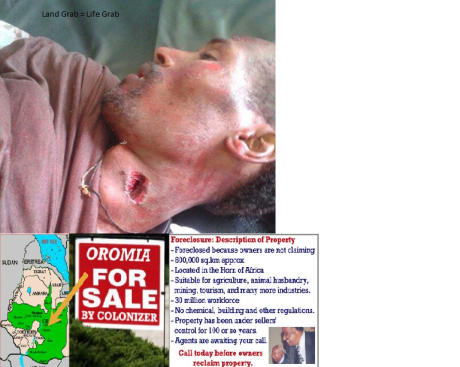
Saudi Star Agricultural Development plans to pump $100 million into a rice export project in Gambella region of Ethiopia despite allegations of human rights violations surrounding the “villagization” program under which the land has been taken from indigenous Anuak pastoralists to lease to foreign investors.
The company is owned by Mohamed al-Amoudi, who was born in Ethiopia to a Saudi father and an Ethiopian mother. Al-Amoudi made a fortune from construction contracts to build Saudi Arabia’s national underground oil storage complex. Now a billionaire many times over, al-Amoudi has invested heavily in Ethiopia where he owns a gold mine and a majority stake in the national oil company.
Al-Amoudi was one of the first to invest in a new scheme under which president Meles Zenawi offered to lease four million hectares of agricultural land to foreign investors and his company was also one of the first to become the subject of controversy. After Saudi Star was awarded a 10,000 hectare (24,700 acres) lease in 2008, a dozen aggrieved Anuak villagers attacked Saudi Star’s compound in Gambella in 2010 and killed several employees.
Saudi Star abandoned work at the time but this past November the company announced that it would return to invest millions to grow rice using new large-scale flood irrigation techniques. Saudi Star hopes to sell its produce to Saudi Arabia under King Abdullah’s Food Security Program.
“We know we’re creating job opportunities, transforming skills, training local indigenous Anuak,” Jemal Ahmed, Saudi Star CEO told Bloomberg. “The government wants the project to be a success and see more Gambella people able to work and produce more, that’s the big hope.”
But activists say that Saudi Star’s newly invigorated project in Gambella is likely to have a detrimental impact on the local population, notably pastoralist groups like the Anuak as well as the Nuer.
“Sadly, right now, the Anuak, nearly all small subsistence farmers, are becoming refugees in their own land as they are internally displaced from indigenous land their ancestors have possessed for centuries,” Obang Metho, Executive Director of Solidarity Movement for a New Ethiopia, told the Africa Congress on Effective Cooperation for a Green Africa.
“They have become ‘discardable’ by a regime that wants their land, but not for them, in order to lease it to foreigners and regime-cronies for commercial farms,” he added.
All told as many as 1.5 million subsistence farmers are expected to be offered voluntary relocation to new settlements where the government has told them that they will be given housing, social services and support infrastructure under the villagization program.
However, activists like Human Rights Watch and the Oakland Institute say that the relocation process has been plagued by violence and broken promises.
Instead of getting housing, villagers are forced to build their own tukols – traditional huts – and risk beatings if they speak out, says Human Rights Watch, which conducted interviews of 100 residents during the first round of villagization that occurred in 2010.
The majority of resettlements did not have a school, health clinic or even water wells, says the Oakland Institute. Lack of agricultural assistance such as seeds, fertilizers, tools and trainings, have further exacerbated the risk of hunger and starvation among families.
The traditional pastoralist communities also say that they are having a hard time adapting to sedentary farming practices in the new settlements. “We want you to be clear the government brought us here…to die…right here,” an Anuak elder in Abobo district told Human Rights Watch. “They brought us no food, they gave away our land to foreigners so we can’t even move back. On all sides the land is given away, so we will die here in one place.”
The Human Rights League of the Horn of Africa (HRLHA) holds meetings with #Oromo Community members. #Oromia. #Africa January 3, 2015
Posted by OromianEconomist in Africa, Amnesty International's Report: Because I Am Oromo, Ethiopia's Colonizing Structure and the Development Problems of People of Oromia, Afar, Ogaden, Sidama, Southern Ethiopia and the Omo Valley, Genocidal Master plan of Ethiopia, Human Rights Watch on Human Rights Violations Against Oromo People by TPLF Ethiopia, Land Grabs in Oromia, Oromo Diaspora, Oromo Identity, Oromo Nation, Oromo Protests, Oromummaa, The Tyranny of TPLF Ethiopia.Tags: 'BECAUSE I AM OROMO’: SWEEPING REPRESSION IN THE OROMIA, Africa, African Studies, Genocide against the Oromo, Human rights violations, Land grabbing, Oromiyaa, Oromo, Oromo people, Oromummaa, The Tyranny of Ethiopia
add a comment
HRLHA Holds Public Meetings with Oromo Community Members
 The Human Rights League of the Horn of Africa (HRLHA) held, over the past three weeks, public meetings with members of Oromo Communities in four cities of Canada and discussed human rights issues in the Horn of Africa in general and in Ethiopia in Particular. The Oromo communities involved were those of Toronto/Ontario, Edmonton & Calgary/Alberta and Winnipeg/Manitoba; and the major topic of discussion at all the four public meetings was the unabated gross human rights violations by the different regimes of the Ethiopian Government for over a century, with particular focus on what have been happening in the past twenty years under the current TPLF/EPRDF government.
Toronto:
 The public gathering in Toronto was held on December 13, 2014 at the office of Oromo Canadian community Association. At the gathering, HRLHA Executive Director Mr. Garoma B. Wakessa explained in his presentation “the gross and Systematic violations of human rights against Oromo nation and other nationals in Ethiopia in the past and at present” by different governments that ruled the country. Extra judicial killings, mass arrests and detentions, kidnappings and disappearances, and tortures under the present government in particular have been discussed in details.
 Besides, Mr. Tesfaye Dheressa Kumsa, Director of Investigations and Dissemination with HRLHA, who did a presentation on “Land Grabs and Evictions as a Cultural Genocide”, explained how forced displacements of the Oromos and others from their farm lands and the resultant detachments and disconnections from traditional rural lives have been causing destructions of precious cultural assets, values, and wisdoms from which the societies have been benefiting generation after generation.
The HRLHA presenters explained that they are working with other civil society organizations to bring the perpetrators to justice and urged all human rights advocates to stand together in this regard.
Edmonton and Calgary:
On December 20 and 21, 2014, similar public meetings were held in Edmonton and Calgary/Alberta respectively, and many Oroms participated and discussed human rights violation issues in Oromia and Other regions in Ethiopia.
 At the gathering, HRLHA Executive Director Mr. Garoma B. Wakessa presented “the gross and Systematic violations of human rights against Oromo nation and other nationals in Ethiopia in the past and at present” by different governments that ruled the country.
Extra judicial killings, mass arrests and detentions, kidnappings and disappearances, and tortures under the present government in particular have been discussed in details. The participants have actively participated in discussion by giving their perspectives on the continuous gross human right violations by EPRDF government of Ethiopia against Oromo young generation in particular. At the end of the meeting, the consensus has been reached that the perpetrators should be brought to justice for genocide they had committed and also Oromos must pay all necessary sacrifices to resist the evil action of the EPRDF Government to save Oromo nation from more victimizing.
Winnipeg/Manitoba:
On Dec 27, similar meeting was held in Winnipeg/Manitoba and many Oromos participated and discussed human rights violation issues in Oromia and Other regions in Ethiopia.

Winnipeg
Extra judicial killings, mass arrests and detentions, kidnappings and disappearances, and tortures under the present government in particular have been discussed in details. After many hours’ explanations and discussions on genocide the EPRDF government has committed against Oromo nationals and others, the consensus has been reached that the perpetrators should be brought to justice for genocide they had committed and also Oromos must pay all necessary sacrifices to resist the evil action of the EPRDF Government to save Oromo nation from more victimizing.
During the discussions at four meetings held, it has been concluded that, by committing such well documented human atrocity, the Ethiopian government has violated the constitution of the land, regional, and International human rights treaties it has signed and ratified. The continued gross human right violations in Oromia, Ogadenian and Gambela regions in the past twenty three years by the EPRDF Government were/are intentionally committed genocides and crimes against humanity. For its deliberate actions of killings, torturing and disappearing its citizens, the EPRDF Government should be accountable. For the heinous human atrocity of EPRDF government against Oromo, Ogaden and Gambela people there are credible documents and proofs to hold the EPRDF Government accountable for its criminal actions and to bring the perpetrators to justice. The participants raised several questions on the possibilities of bringing the government to justice and all possibilities were explained by the presenters.
Finally Oromo participants of the four meetings thanked all HRLHA members for their commitment of defending human rights and promised to support HRLHA financially to make the organization stronger. HRLHA chapter organization was created during the meetings to help the organization’s more involvement in the communities.
Read @ http://ayyaantuu.com/human-rights/hrlha-holds-public-meetings-with-oromo-community-members/
Ibsa Bara Haaraa Qeerroo Bilisummaa Oromoo Irraa Kenname. #Oromo January 1, 2015
Posted by OromianEconomist in Africa, Because I am Oromo, Oromia, Oromiyaa, Oromo, Qeerroo.Tags: Africa, African Studies, Development and Change, Economic and Social Freedom, National Self Determination, Oromiyaa, Oromo, Oromo culture, Oromo people, Oromummaa, Qeerroo
add a comment
 Amajjii 1, 2015
Uummata Oromoo hundi baga nagana bara haraawaa Amajjiin 1, 2015 fi guyyaa WBOn isin gahe. Barri 2015 Sabni Oromoo bara cunqursaan jaarraa olii keessaa hiikamee Oromiyaa keessa nagaa, tasgabbii fi jaalanaan abbumaan jiraatu akka nuu ta’u hawwii fi dhugoomsa kaayyoo kanaaf ciccoominaan qabsaawuu qabnuu isinii dabarsina.
Bara 2014 darbe keessatti uumati Oromoo baadiyyaa irraa hamma magaalaatti dararaa sirna bulchiinsa EPRDF Wayyaanee jalatti argaa bahe dha. Qabeenya saamamuu irra darbee hidhaa,ajjeechaa fi biyyaa arihamuu dhittaa mirga namaa haalaan hammaataa keessa darbe. Haalli gabrummaa dhufaa darbaa daran hammaachuu irraan dargaggooti Oromoo(Qeerroon) cunqursaa kana darbaa baadhachuun nu gahe jechuun fincila diddaa gabrummaaf (FDG)Oromiyaa guutuu keessatti qabsiisuun mirga uumata keenyaa yeroo falmataa turre dha. Haala kanaan gaaga’ami lubbuu dhabamuu fi hidhaan uumata Oromoo addattis dargaggoota Oromoo irraan gahe kan yeroo kamuu caalaa hammaataa ture. Falmii mirga Oromoo fi dhumaatii uumata Oromoo irraanis lammiileen Oromoo biyyoota ambaa jiraatan tokkummaan dhaabbatanii mirga sabaa falmuu irratti eenyummaa fi jalaala biyyaaf qaban muldhisanii jiru. Haalli tokkummaa Oromoo waliigala bara 2014 keessatti muldhate jabinaan itti fufuun waggaan itti deemnu 2015 keessa kan kaayyoo saba Oromoo injifatnoon golboobu akka ta’u hogganni Qeerroo bilisummaa Oromoo gadi jabeessee dhaammata.
- Guyyaa seena qabeessa guyyaa WBO Amajjii tokko bara 2015 sababeeffachuun hojii qindeesitooti Qeerroo bilisummaa Oromoo Oromiyaa bakka maraa walitti dhufuun walitti dhufuun haala qabsoo bilisummaa Oromoo sochii warraaqsa FDG Qeerroo bilisummaa Oromoon durfamuu, haala Siyaasaa Impaayerri Itoophiyaa keessatti kuftee jirtuu, gochaa hammeenya mootummaan abba irree Wayyaaneen EPRDF itti fufinsaan uummata Oromoo irratti gaggeessa jiruu, olola maqaa filannoo dimookiraasii sobaan oofaa jiru, haalaa Master planii Finfinnee fi waligalatti haala uummatni Oromoo fi lammiileen cunqurfamoo biyyatti keessa jiran irratti hundaa’uun marii bal’aa gaggeessuun uummata Oromoo hundaa fi lammiilee cunqurfamoo biyyattii hundaaf ibsa gabaaba armaan gadii dabarsee jira!!
- Amajjiin tokko guyyaa WBO, guyyaa warannii Oromoo mirga uummata Oromoo kabachiisuuf bara baraan wareegama qaalii kanfaluun Oromiyaan har’a arginu kunii fiuummatni Oromoo har’a jiraatnu kun akka jiraannu waraana uummata Oromoo irraa ijaaramee fiuummatichi bilisummaa isaa fi birmadummaan isaa kabajamee fi mirgi abbaa biyyummaa isaaeegamee fi Oromoon qabeenyaa isaa fi uummata isaa fi biyya isaa irratti aangoo siyaasaa qabateeakka ofiin of bulchuuf waraana wareegama qaalii fi bu’aa ba’ii qabsoo keessa darbuun as ga’eewaan ta’eef nuti Qeerroon Bilisummaa Oromoo WBOf kabajaa fi jaalala guddaa qabna.Uummatni Oromoo hundi waraana kana akka qaroo ija isaatti akka ilaallatuu fi tumsa gamahundaan godhamuun akka cina dhaabbatu waamicha dabarsina. Amajjiin tokko guyyaan WBObarri 2015 guttummaa Oromiyaa fi biyyoota Oromoon jiru hundatti sirnaan akka kabajamuudhaamsa dabarsaa, addatti Qeerroon bilisummaa Oromoo guyyaa kana bifa adda ta’een lafacaasaan Qeerroo Bilisummaa Oromoo jiru hundatti kabajuuf qophii dursaa xummuruu keenya nihubachiifna.
- Mootummaan abbaa irree EPRDF gochaa hammeenyaa uumata Oromoo Oromiyaa irraa kaasuu fiballeessuu imaamata godhatee jiruu fi olola dharaa uumata Oromoo irratti gaggeessa jiruufseeratti dhiyaachuu qaba. Dhiitaa mirga dhala namaa fi ukkamsaa mirga dimookiraasiimootummaan abbaa irree gaggeessa jiruuf mootummootni gamtooman, dhaabbileen mirga dhalanamummaa addunyaa, fi uummatni Oromoo gama hundaan mootumman yakkamaanWayyaanee himatamee mana murtii idil addunyaa ICC ‘tti dhiyaachuun yakka duguginsa sanyiigaggeessa jiruuf akka itti gaafatamu jabeessinee gaafatna!! Kana irratti irra guddaan hayyoonniOromoo alaa fi biyya keessa jirtan tokkummaan irratti akka qabsooftan abdii isin irratti gatna.
- Biyyaa fi dachii Itiyopiyaa dimookiraasiin hin jirretti maqaa Filannoo jedhuun mootummaan Wayyaanee olola deemsisaa jiru ni balaaleffanna. Filatnoon dharaa baroota 23 deemaa jiru umriiWayyaanee dheeressuuf kan deemu malee diimokiraasii dhugaa kan muldhisu akka hin taanebeekama. Kanaafuu filmaati ammaa kunis lammiilee cunqurfamoo biyyattii fi uummata Oromoohunda kan hin ilaallannee ta’uu hubachiisuun uummatni Oromoo cufti dimookiraasii dhugaa, kanmirgi ilma namaa fi mirgootni dimookiraasii keessatti kabajamanii fi bilisummaan uummataOromoo kan itti mirkanaa’uu fiduuf Warraaqsi FDG haalaan jabaatee kan itti fufuu ta’uu nihubachiifna!!
- Dhaabbileen mormitoota biyyatti maqaa uummata Oromoon ijaaramtanii diraama dimookiraasiikijibaa Wayyaanee keessatti hiriirtanii jirtan, maqaaf malee mirga kan hin qabne, miseensabilisaan ijaarrachuu kan hin dandeenye, uummata Oromoo bilisaan ijaaruu fi sochoosuu haalaahin dandeenyee fi bakka barbaadanitt wajjiraalee banachuun socho’uu kan hin dandeenyee ,taatanii utuu jirtanii, Dimookiraasiin jira filmaatatti seenee Wayyaanee waliin morkii goonajechuun sochii bu’aa hin qabnee fi jijjirama fiduu hin dandeenye keessatti waan argamtaniifyeroon gara sochii Warraaqsa FDG ‘tti makamuun akka mirga Oromoo dhugaaf falmitanwaamicha lammummaa isinii dabarsina.
- Goototni Qeerroon (dargaggootni Oromoo) bara darbee jalqaba baatii Ebla 2014 irraa eegaluungaaffii mirga abbaa biyyummaa fi dimookiraasii karaa nagaa bifa qindaa’een mootummaa abbaairree Wayyaanee gaafachuun FDG irratti kaasuun sagaleen uummata Oromoo hanga sadarkaa idil-addunyaatti dhaga’amuu danda’ee jira, gaaffii karaa nagaa fi dimookiraasii dhiyeeffanneefdeebii ajjeechaa fi hidhaa Oromoo irratti raawwachuu EPRDF/TPLF fudhateen ija mootummataaddunyaa duratti yakkamaa ta’uun isaa hubatamee jira. Sochiin FDG bifa garaagaraan jabaachuunhanga guyyaa har’atti itti fufinsaa fi qindoomina haala qabuun jabaatee itti fufaa jira. UummatniOromoo bakka jirtan hundaa warraqsa kana cina akka dhaabbattan waamichaa keenya dabarsina!!
- Hogganni Qeerroo Bilisummaa Oromoo yeroo kamiinuu olitti qabsoo bilisummaa Oromoo galiiisaan ga’uuf sochii warraqsa FDG qindeessuu, uummata Oromoo sadarkaa garaagara keessa jiruuijaaruun jabeessuu, garaagarummaan ilaalchaan akka wal hin qoodnee fi tokkummaa UummataOromoo jabeessuun ,mootummaa abbaa irree Wayyaaneetti xummura gochuuf kutannoo fimurannoodhaan qabsoo warraqsaa biyyooleessaa (national revolution) gaggeessuuf qophii ta’uuni hubachiifna.
- Walii galatti Oromiyaa irratti Oromoon ofiin of bulchuuf furmaatni guddaan jiru FDG jabeessuufi Uummani Oromoo bakka hundatti gaaffii mirga hiree murteeffannaa jabeessuun sagaleetokkoon harka wal qabatnee yeroon gamtaan warraaqa biyyalessaa FDG keessatti hiriiruuntokkummaan qabsoofnu amma jechuun uummata Oromoo waliigalaaf dhaamsa dabarfatna.
Gadaan Gadaa Bilisummaati!
Injifannoon Uumata Oromoof!
Bara Milkii
Qeerroo Bilisummaa Oromoo
Amajjii 1,2015 Oromiyaa
https://qeerroo.files.wordpress.com/2015/01/ibsa-qeerroo-bilisummaa-oromoo-amajjii-1-2015.pdf
OPride.com’s Oromo Person of the Year 2014: #Oromo Student Protesters. #Oromia #Africa January 1, 2015
Posted by OromianEconomist in Africa, Oromia, Oromians Protests, Oromiyaa, Oromo, Oromo and the call for justice and freedom, Oromo Protests, Oromo Protests in Ambo, Oromo students movement, Oromo students protests, Stop evicting Oromo people from Cities.Tags: #OromoProtests, National Self Determination, Oromia, Oromo, Oromo people, Oromo Students Protests, Oromummaa
add a comment

(OPride) — For energizing and unifying the Oromo public both at home and in the Diaspora, for keeping the beacon of liberty from being extinguished, for selfless sacrifice to advance Oromo rights and for bringing international media attention to the plight of Oromo people, Oromo Student Protesters are OPride’s Oromo Person of the Year.
The Master Plan
In March 2014, the Addis Ababa and Surrounding Oromia Special Zone Integrated Development Plan Project Office organized a workshop for journalists and civil servants in Adama, 90 kms east of Ethiopia’s capital, Addis Ababa. The training, conducted by officials from the Oromia regional state and representatives of the Addis Ababa city administration, continued through mid-April. It was intended to generate momentum before “a joint master plan,” which would ostensibly facilitate efficient resource use, eliminate existing contradictions and link the city’s developmental activities with the Oromia Special Zone, is unveiled.
Established in 2008, the Oromia Special Zone is comprised of eight towns (Dukam, Lagatafo-Lagadadhi, Sandafa Buke, Sululta, Holota, Burayu, Sabata and Galan) and six districts (Walmara, Sabata Hawas, Akaki, Sululta, Mulo and Barak). The zone has a total area of 4,800 square kms and 15 townships.
The special zone was established in response to local concerns over lack of attention and proper planning in the hinterland and the unchecked, horizontal urban sprawl around the capital. The renewed interest in the area, which ironically coincided with rampant land speculation and a chaotic industrial construction boom, was further strengthened by Oromia’s local development plan crafted in 2010.
 Founded in 1886 by emperor Menelik II and his wife Taytu Betul on conquered Oromo land, Addis Ababa, which Oromos call Finfinne, has “complete powers of self- administration” with its own police, city council, budget and other public functions overseen by a mayor (appointed by the ruling party). Regardless of the reasons for the creation of the Oromia special zone, the city’s unique place as both a state capital and federal capital— the constitution granting special interest in the provision of services or the utilization of resources to Oromia — has been at the center of the debate over the city’s horizontal spread over the years.Oromo activists have been calling for clarification of the Ethiopian constitution’s special status clause, as well as language instruction and other services for the city’s Afaan Oromo speakers. In theory, the creation in 2011 of a joint project office tasked with fashioning a joint strategy and a master plan was meant to assuage these grievances.
However, as noted by workshop participants in April, the project office not only took an arrogantly top-down approach in crafting the master plan but also expanded the city’s territorial jurisdiction by a whopping 1.1 million hectares, an area more than 20 times the capital’s current size, according toleaked documents. The proposed plan would put 36 Oromia towns under Addis Ababa’s — thereby federal government’s — direct control.
In a rare report by the state-run Oromiyaa TV (OTV), journalists and officials from the Oromo People’s Democratic Organization (OPDO), the Oromo elements in Ethiopia’s ruling coalition, sounded-off about the lack of public consultation and potential violation of Oromia’s autonomy and territorial integrity, as well as threats to the livelihood of Oromo farmers in the areas covered by the proposed plan. The planning office apparently did not even bother to consult with mayors of the affected municipalities and other regional and Oromia Special Zone officials. Moreover, the state’s rubberstamp legislative chamber, Chaffee Oromia, did not deliberate on it, leaving rank-and-file OPDO members deeply disgruntled.
“The issue of Addis Ababa and surrounding Oromia towns is not a question of towns; it is a question of identity,” one speaker said at the workshop in Adama. “When we speak of identity, there are fundamental steps we ought to take to ensure that the plan would incorporate and develop the surrounding towns while also protecting Oromo’s economic, political and historical rights.”
The speaker added: “we are keenly aware of the city’s past spatial growth. We don’t want a city that pushes out farmers and their children but one that accepts and develops with them…more importantly we don’t want a master plan developed by one party and pushed down to us.”
OTV’s segment on the opposition to the master plan came as a shocker to many. Established in 2006, the network has been serving as an unabashed government mouthpiece, giving only lip service to issues of concern to the Oromo other than scant cultural programming. Within days after OTV’s report, thousands of Oromo students at all regional universities in Oromia took to the streetsopposing the master plan (starting at Jimma University and quickly spreading to Haramaya, Ambo, Wollaga, Matu, Bule Hora, Addis Ababa, Adama and Madawalabu universities). In one instance, on April 29, an estimated 25,000 people partook in a citywide demonstration in the flashpoint town of Ambo, 80 miles west of Finfinne. Federal security forces responded as usual, firing live ammunition at unarmed protesters, killing at least 50 people and injuring many others while hundreds were arrested, according to eyewitness reports.
Authorities saw OTV’s report on the master plan as an indirect rebuke of its campaign to unveil the plan. TVO then went mute, apparently per orders from federal authorities, keeping eerie silence as protests spread across Oromia and received significant coverage in the international press. Shortly thereafter, an indoctrination campaign was organized for the OTV journalists, which according to a number of participants, ended without any breakthrough in the form of agreement.This was followed by mass firing of journalists seen as agent provocateurs, including Bira Lagasse, who presented the April OTV report on the master plan.
Marketed as the megacity of the future — complete with a new railway system courtesy of the Export-Import Bank of China — Ethiopia’s sprawling capital faces increased pressures to meet international standards and ongoing urbanization challenges. Half of Ethiopian population, roughly 67 million, is projected to reside in towns and cities by 2040, up from only 18 percent in 2013. Addis Ababa hopes to lead the charge in urbanization and become one of the top ten tourist destinations in Africa by 2025. Even as they insist that the controversial master plan offers a win-win solution for all stakeholders, Addis Ababa city officials say high economic integration and uniform land use and development strategies with surrounding Oromia towns is key to that effort.
Ethiopia’s GenQ: A lethal threat?
Student protests have been a fixture in the contemporary Oromo history. Students have been demonstrating in Oromia since the mid-1990s. The budding Oromo student activism can be likened to the cactus. You cut it down and it would grow back even more luxuriant as if in vengeance. You depopulate it in one place and it would mushroom elsewhere. It is in no need of a nourishing climate or soil; it thrives in the lowlands, the highlands, and anywhere in between. Seeing it as a lethal threat to its continued grip on power, the ruling party has been cracking down hard. However, the protesters grew more and more strident rather than abate. Resilient as they have been over the years, Oromo students have paid hefty prices for their dissent against the regime in Finfinne. That is why the repression by the authorities could hardly dampen the spirit of an increasingly assertive generation of Oromo youth that is just coming of age.
 To be sure, one of the positive developments under the current regime is the adoption in 1991 of the country’s federalism, which carved Ethiopia into nine federated and theoretically autonomous states. However, for all its promises of maintaining Ethiopia’s territorial integrity, the constitutional guarantees for decentralization of authority have rarely been applied. Final decision-making power still rests with the central government, with supposedly semi-autonomous states enjoying only a semblance of self-rule. Consequently, EPRDF’s failure to abide by its own constitution, frequent top-down changes in education policy, denial of academic freedom and the government’s misguided development policies have been among the most contentious issues for Oromo students over the last two decades.
Dubbed the Qubee generation, today’s college and high school students in Oromia are like a new species of Oromo. Studied in their mother tongue, Afaan Oromo, and keenly aware of their state’s boundaries and the Oromo people’s longstanding misgivings about the Ethiopian state, the average Oromo protester personifies the indomitable spirit of Oromo nationalism and a steely determination to see to it that the injustice against the Oromo becomes a thing of the past. Such open national consciousness was hitherto unthinkable in Ethiopia, which remained a unitary state in large part by harshly suppressing Oromo self-expressions.
Oromo student protests through the years
The heightened Oromo student activism of the late ‘90s and early 2000s coincided with widespreadhuman rights violations and mass expulsions of student leaders from various universities and colleges. Based on available record, from 1999 to 2004 alone, more than 1,000 Oromo students were dismissed from Addis Ababa, Jimma, Adama and Haramaya universities. Tens of students disappeared without trace while hundreds have been forced into exile — some still languishing in refugee camps across neighboring East African countries.
After a brief lull, sustained protests began in early 2000 in response to massive forest fires in Bale and Borana zones of Oromia. Amid apparent neglect and allegations of federal government’s involvement in setting the forests ablaze, students across Oromia took to the streets demanding swift action. Authorities responded by rounding up the students, firing live ammunition at peaceful protesters and detaining those suspected of organizing the protests.
In early 2001, Oromo students at Addis Ababa University began protesting after authorities blocked their efforts to publish a student newspaper and organize a student union. The students also opposed the stationing of uniformed police and undercover security agents on college and university campuses. High school and university students around the country joined the strike calling for academic freedom. Protesters were further angered by the killing in Tigray of Oromo student Simee Tafara by unidentified security agents. More than 3,000 Oromo students were arrested. “Government forces responded to the protests with extreme brutality, killing more than thirty people, wounding some four hundred, and arresting thousands,” the Human Rights Watch reported at the time. “Academic life ground to a halt for one month around the country, and most AAU students who participated in the strike did not return to class for one year. About 250 students fled to Kenya; others went to Djibouti or Sudan.”
Again in early 2002, following sustained Oromo student protests over economic depression and rising cost of fertilizers, the federal Rapid Deployment Forces killed at least 10 students and injured many others in Shambu, Naqamte, Gedo, Ambo, Gimbi, Najo, Dembi Dolo, Guder, Robe and Kofele towns. In May 2002, authorities arrested more than 320 students from various institutions of higher learning in and around Addis Ababa. Tens of students were dismissed from Adama, Haramaya and Addis Ababa universities.
Following a year of tensions, in 2004, Oromo student protests returned in response to the government’s attempt to relocate Oromia’s capital from Finfinne to Adama. More than 350 Oromo students were expelled from Addis Ababa University alone. Hundreds of students, teachers and Oromo intellectuals were arrested throughout Oromia in a move seen as an effort to eliminate educated and politically conscious members of the society. Schools across Oromia were closed for most of the year. “In some places, police used live ammunition to disperse demonstrators, killing several school students,” according to Amnesty International’s report. “Demonstrators were detained for several months; some were beaten and made to do strenuous physical exercises while in custody.” Thousands of protesters, including leaders of the Oromo welfare organization, the Macha Tulama Association, remain in prison or are serving lengthy sentences under trumped up charges.
Oromo students took to the streets once again in 2006 following disputed parliamentary elections. In fact, as UC Berkeley’s Leonardo Arriola rightly noted, while international media reports focused almost exclusively on the opposition protests in Finfinne, post-election “protests in Oromia resulted in more than 15,000 detentions and 80 reported deaths.” The trend continued in the year with yet another killing of innocent Oromo student, Shibiru Demissie, at Mekelle University. While there have been sporadic protests over the last half decade, the 2014 #OromoProtests were a watershed — not just in their size and duration but also in the participation of other sectors of society, urban dwellers, bureaucrats and rural folk, including members of the ruling party.
All in all, since 2000, Ethiopian security and military forces have killed hundreds of peaceful protesters. Despite the recurring and perennial protests the storyline remains the same: Peaceful protesters shot at close ranges; significant numbers injured; hundreds dismissed from high schools and universities and many more fleeing the country to seek safety.
Implications for Ethiopia’s future
The names of some of those indiscriminately gunned down by security forces such as Diribe Jifar, Getu Diriba, Jagama Badhane, Gammachu Hirphaasa, Alsan Hassan and many others or those who died in prison from torture such as Alemayehu Gerba and Tesfahun Chemeda, have become household names, their struggles forever ingrained in the consciousness of the ever vibrant Qubee generation as well as the wider Oromo public. Still, these are but few whose names entered the public domain. Many more perished without due recognition or remain unjustly imprisoned with their fates and future hanging in balance. One thing is certain: Killing, imprisonment and forced exile have thus far failed to discourage or undermine Oromo student activism.
Ethiopia continues to be haunted by an age-old problem: the unaddressed Oromo question. Despite making up close to half of the country’s 96 million population, the Oromo continue to face political repression, social marginalization and social alienation. Instead of addressing Oromo grievances, controlling Oromia’s resources and the suppression of Oromo dissent has been a constant preoccupation for successive Ethiopian rulers.
 It doesn’t take a political scientist to realize that addressing the Oromo question is tantamount to removing the albatross from Ethiopia’s neck. As the Horn of Africa country prepares for yet another sham election in May, calls to democratically address gapping deficits in governance, rule of law and respect for human rights would grow louder. The specter of more student protests and violent suppression would continue to sour state-society relations. Despite the rising risk on Ethiopia’s stability, the authorities lack the will to heed calls for any sensible reform and accommodation of dissent.
The Addis Ababa and Surrounding Oromia Special Zone Integrated Development Plan Project Office is reportedly forging ahead with the controversial master plan. Any attempt to impose a widely unpopular proposal on the Oromo guarantees the return of yet another protest by Oromo students—even before the hundreds and thousands of young students rounded up during the 2014 protests were released from incarceration. But if history is any guide, the threat of arrest, beating, torture and exile alone will not quell the protests.
Ethiopia has recently been named to the top ten leading jailers of journalists in the world. While the media blackout has aided the regime to keep the lid on the plight of Oromo prisoners, in 2015, amid growing social media use inside the country, it would be impossible to suppress another anti-government protest. Even by the government’s own admission, tensions are expected to run high in Ethiopia ahead of the 2015 elections. The ruling party’s standoff with the urban opposition is at its peak. Rural support has all but evaporated. Ethiopia’s stability could be put to a severe test should the various grievance-fueled protests link up across ethnic, political and religious cleavages that have emasculated the potency of challenges to the ruling party.
Buoyed by past success at suppression, the authorities have every reason to underestimate the power of the Oromo Student Protester. With a radical shift in strategic thinking on the part of protest organizers, a new round of protests would not stop at simply re-energizing and unifying the Oromo public. It can become a catalyst for a countrywide pro-democracy movement. The selfless sacrifices of the Oromo Protester cannot forever remain fruitless. It has already drawn international media attention to the plight of Oromo people. The Oromo Student Protester, OPride’s Person of the Year, through sheer determination in the face of mortal and physical danger, through its capacity to rebound, and its irrepressible yearning for freedom is destined to write and right not only Oromia’s but also Ethiopia’s history.
Read more @ http://www.opride.com/oromsis/news/3783-opride-s-oromo-person-of-the-year-2014-oromo-student-protesters
These are short interviews with farmers who have lost thier farmlands. #Landgrabs. #Oromia. #Africa January 1, 2015
Posted by OromianEconomist in Because I am Oromo, Ethiopia's Colonizing Structure and the Development Problems of People of Oromia, Land and Water Grabs in Oromia, Land Grabs in Africa, Land Grabs in Oromia, No to land grabs in Oromia, No to the Addis Ababa Master Plan, Uncategorized.Tags: Africa, African Studies, Gambela and Omo, Genocide against the Oromo, Land grabbing, Land grabs in Africa, Land Grabs in Oromia, The Tyranny of Ethiopia
add a comment
The Ethiopian Government land owner¬ship right has created it easier for flower growers to get land easily. Abiy Mezgebu, 28 has lost his piece of land because of the government influence and pressure. The government paid him a small amount of money – “I had to take the small amount of money that the government offered me and they threatened me to take away my land if I would refuse to take the offer,” says Abiy. Now Abiy is a laborer in the Menagesha Farms. He has lost his land – his means of living for ages.
Aduna Workneh, father of five, lives across bunches of flower farms near Addis Ababa. Officials from the government and flower farms came and talked to him in person. They told me I will benefit better if I take the offer from the government and leave my land. Initially, I refused the offer – because they money would feed my family for a few years, but my land will feed till the ages of my grandchildren and even beyond.” However, Aduna was forced to take the offer and he is now a landless man. He is not sure about his future.
These flower farms benefit us nothing; at least they were expected to provides employment opportunity, says Aduna. Only a few members of our community got employed; as for the majority are not from this area. Showing across the valley, Aduna says – this whole valley was covered by indigenous trees – now is cut down and green houses have been constructed on them. We were able to collect firewood from leftovers and foliage in the forest – the flower farms have taken away everything from us.

 This is a teenage girl working in Dugda Flower Farm. This was owned by her father in Dugda area…and taken away by the Ethiopian governemnt and given to a TPLF affiliate businessman…now she works as a labourer in this farm being paid under half a dollar a day…
The Ethiopian Government land owner¬ship right has created it easier for flower growers to get land easily. Abiy Mezgebu, 28 has lost his piece of land because of the government influence and pressure. The government paid him a small amount of money – “I had to take the small amount of money that the government offered me and they threatened me to take away my land if I would refuse to take the offer,” says Abiy. Now Abiy is a laborer in the Menagesha Farms. He has lost his land – his means of living for ages.
Aduna Workneh, father of…
View original post 182 more words
2014 in review January 1, 2015
Posted by OromianEconomist in Uncategorized.Tags: Africa, African Studies, Economic and development analysis, economics, Oromia, Oromian Perspectives, Oromo, The pursuit for Justice and freedom
add a comment
The WordPress.com stats helper monkeys prepared a 2014 annual report for this blog.

Here’s an excerpt:
The concert hall at the Sydney Opera House holds 2,700 people. This blog was viewed about 42,000 times in 2014. If it were a concert at Sydney Opera House, it would take about 16 sold-out performances for that many people to see it.
Ethiopia: 2014 Trafficking in Persons Report. #Oromo #Africa December 31, 2014
Posted by OromianEconomist in Africa, Domestic Workers, Human Traffickings, Slavery, The Tyranny of TPLF Ethiopia, Youth Unemployment.Tags: Africa, African Studies, Domestic Workers, Human Traffickings, Modern Slavery, The Tyranny of Ethiopia
add a comment
Ethiopia: 2014 Trafficking in Persons Report
http://www.state.gov/j/tip/rls/tiprpt/countries/2014/226721.htm#.VKOCop-RPe0.facebook
 (31ST DECEMBER 2014, US DEPARTMENT OF STATE: OFFICE TO MONITOR AND COMBAT TRAFFICKING IN PERSONS) — Ethiopia is a source and, to a lesser extent, destination and transit country for men, women, and children who are subjected to forced labor and sex trafficking. Girls from Ethiopia’s rural areas are exploited in domestic servitude and, less frequently, prostitution within the country, while boys are subjected to forced labor in traditional weaving, herding, guarding, and street vending. The central market in Addis Ababa is home to the largest collection of brothels in Africa, with girls as young as 8-years-old in prostitution in these establishments. Ethiopian girls are forced into domestic servitude and prostitution outside of Ethiopia, primarily in Djibouti, South Sudan, and in the Middle East. Ethiopian boys are subjected to forced labor in Djibouti as shop assistants, errand boys, domestic workers, thieves, and street beggars. Young people from Ethiopia’s vast rural areas are aggressively recruited with promises of a better life and are likely targeted because of the demand for cheap domestic labor in the Middle East.
Many young Ethiopians transit through Djibouti, Egypt, Somalia, Sudan, or Yemen as they emigrate seeking work in the Middle East; some become stranded and exploited in these transit countries, and are subjected to detention, extortion, and severe abuses—some of which include forced labor and sex trafficking—while en route to their final destinations. Young women are subjected to domestic servitude throughout the Middle East, as well as in Sudan and South Sudan. Many Ethiopian women working in domestic service in the Middle East face severe abuses, including physical and sexual assault, denial of salary, sleep deprivation, withholding of passports, confinement, and even murder. Ethiopian women are sometimes exploited in the sex trade after migrating for labor purposes—particularly in brothels, mining camps, and near oil fields in Sudan and South Sudan—or after fleeing abusive employers in the Middle East. Low-skilled Ethiopian men and boys migrate to Saudi Arabia, the Gulf States, and other African nations, where some are subjected to forced labor. In October 2013, the Ethiopian government banned overseas labor recruitment. Preceding the ban, Ministry of Labor and Social Affairs (MOLSA) officials reported that up to 1,500 Ethiopians departed daily as part of the legal migration process. Officials estimated this likely represented only 30 to 40 percent of those migrating for work; the remaining 60 to 70 percent were smuggled with the facilitation of illegal brokers. Brokers serve as the primary recruiters in rural areas. Over 400 employment agencies were licensed to recruit Ethiopians for work abroad; however, government officials acknowledged many to be involved in both legal and illegal recruitment, leading to the government’s ban on labor export. Following the ban, irregular labor migration through Sudan is believed to have increased. Eritreans residing in Ethiopia-based refugee camps, some of whom voluntarily migrate out of the camps, and others who are lured or abducted from the camps, face situations of human trafficking in Sudan and Egypt’s Sinai Peninsula.
Since November 2013, the Saudi Arabian government has deported over 163,000 Ethiopians, including over 94,000 men working mostly in the construction sector and over 8,000 children working in cattle herding and domestic service; international organizations and Ethiopian officials believe thousands were likely trafficking victims. Many migrants reported not having repaid debts to those who smuggled them to Saudi Arabia, rendering some of them at risk for re-trafficking.
The Government of Ethiopia does not fully comply with the minimum standards for the elimination of trafficking; however, it is making significant efforts to do so. The Federal High Court convicted 106 traffickers and worked with international partners to shelter and provide emergency care to trafficking victims. In 2013, following an influx of trafficking victims returning to Ethiopia, the government recognized problems with its oversight of Ethiopian-based employment agencies, which were failing to protect workers sent overseas. In response, the government temporarily banned labor recruitment and began to revise the relevant employment proclamation to ensure improved oversight of these agencies and better protection of its citizens while working abroad. The government facilitated the return of thousands of Ethiopians, including many likely trafficking victims, deported from Saudi Arabia and elsewhere during the reporting period, and coordinated with NGOs and international organizations to provide services to the returning migrants. The government relied on NGOs to provide direct assistance to both internal and transnational trafficking victims and did not provide financial or in-kind support to such organizations. The government did not deploy labor attachés or improve the availability of protective services offered by its overseas diplomatic missions. The absence of government-organized trainings in 2013 was a concern. The government also did not effectively address child prostitution and other forms of internal trafficking through law enforcement, protection, or prevention efforts. It did not report on the number of victims it identified in 2013.
Recommendations for Ethiopia:
Complete amendments to the employment exchange proclamation to ensure penalization of illegal recruitment and improved oversight of overseas recruitment agencies; strengthen criminal code penalties for sex trafficking and amend criminal code Articles 597 and 635 to include a clear definition of human trafficking that includes the trafficking of male victims and enhanced penalties that are commensurate with other serious crimes; enhance judicial understanding of trafficking and improve the investigative capacity of police throughout the country to allow for more prosecutions of internal child trafficking offenses; increase the use of Articles 596, 597, and 635 to prosecute cases of labor and sex trafficking; improve screening procedures in the distribution of national identification cards and passports to ensure children are not fraudulently acquiring these; allocate appropriate funding for the deployment of labor attachés to overseas diplomatic missions; institute regular trafficking awareness training for diplomats posted abroad, as well as labor officials who validate employment contracts or regulate employment agencies, to ensure the protection of Ethiopians seeking work or employed overseas; incorporate information on human trafficking and labor rights in Middle Eastern and other countries into pre-departure training provided to migrant workers; engage Middle Eastern governments on improving protections for Ethiopian workers; partner with local NGOs to increase the level of services available to trafficking victims returning from overseas, including allocating funding to enable the continuous operation of either a government or NGO-run shelter; improve the productivity of the national anti-trafficking taskforce; and launch a national anti-trafficking awareness campaign at the local and regional levels.
Prosecution
The Government of Ethiopia maintained its anti-trafficking law enforcement efforts during the reporting period, but its efforts continued to focus wholly on transnational trafficking, with little evidence that the government investigated or prosecuted sex trafficking or internal labor trafficking cases. Ethiopia prohibits sex and labor trafficking through criminal code Articles 596 (Enslavement), 597 (Trafficking in Women and Children), 635 (Traffic in Women and Minors), and 636 (Aggravation to the Crime). Article 635, which prohibits sex trafficking, prescribes punishments not exceeding five years’ imprisonment, penalties which are sufficiently stringent, though not commensurate with penalties prescribed for other serious crimes, such as rape. Articles 596 and 597 outlaw slavery and labor trafficking and prescribe punishments of five to 20 years’ imprisonment, penalties which are sufficiently stringent. Articles 597 and 635, however, lack a clear definition of human trafficking, do not include coverage for crimes committed against adult male victims, and have rarely been used to prosecute trafficking offenses. Instead, Articles 598 (Unlawful Sending of Ethiopians to Work Abroad) and 571 (Endangering the Life of Another) are regularly used to prosecute cases of transnational labor trafficking. The absence of a clear legal definition of human trafficking in law impeded the Ethiopian Federal Police’s (EFP) and Ministry of Justice’s ability to investigate and prosecute trafficking cases effectively. Officials began drafting amendments to the Employment Exchange Services Proclamation No. 632/2009, which governs the work of approximately 400 licensed labor recruitment agencies; planned amendments will prohibit illegal recruitment and improve oversight of recruitment agencies.
During the reporting period, the EFP’s Human Trafficking and Narcotics Section, located within the Organized Crime Investigation Unit, investigated 135 suspected trafficking cases—compared to 133 cases in the previous reporting period. The federal government reported prosecuting 137 cases involving an unknown number of defendants relating to transnational labor trafficking under Article 598; of these cases, the Federal High Court convicted 106 labor traffickers—compared to 100 labor traffickers convicted in the previous reporting period. Officials indicated that these prosecutions included cases against private employment agencies and brokers, but did not provide details on these cases or the average length of applied sentences. Between June and July 2013, courts in the Southern Nations, Nationalities, and Peoples Region (SNNPR) reportedly heard 267 cases involving illegal smugglers and brokers. In addition, in Gamo Gofa, a zone within SNNPR, the zonal court convicted six traffickers in 2013—the first convictions in that area’s history. The EFP investigated allegations of complicity in trafficking-related crimes involving staff at several foreign diplomatic missions in Addis Ababa; the EFP arrested several staff at these missions.
In 2013, the government did not initiate any sex trafficking prosecutions, including for child prostitution. It also did not demonstrate adequate efforts to investigate and prosecute internal trafficking crimes or support and empower regional authorities to effectively do so. Regional law enforcement entities throughout the country continued to exhibit an inability to distinguish human trafficking from human smuggling and lacked capacity to properly investigate and document cases, as well as to collect and organize relevant data. In addition, the government remained limited in its ability to conduct international investigations. The government did not provide or fund trafficking-specific trainings for law enforcement officials, though police and other officials received training from international organizations with governmental support during the year. Seventy-seven judges also received training on both child labor and human trafficking. The government did not report any investigations, prosecutions, or convictions of public officials allegedly complicit in human trafficking or trafficking-related offenses. For example, reports suggest local kabele or district level officials accepted bribes to change the ages on district-issued identification cards, enabling children to receive passports without parental consent; passport issuance authorities did not question the validity of such identification documents or the ages of applicants.
Protection
The government did not provide adequate assistance to trafficking victims—both those exploited internally or after migrating overseas—relying almost exclusively on international organizations and NGOs to provide services to victims without providing funding to these organizations. However, following the Saudi Arabian government’s closure of its border and massive deportation of migrant workers, officials worked quickly and collaboratively with international organizations and NGOs to repatriate and accommodate over 163,000 Ethiopian returnees from Saudi Arabia and several hundred from Yemen. The government did not report the number of victims it identified and assisted during the year. It remained without standard procedures for front-line responders to guide their identification of trafficking victims and their referral to care. During the reporting period, following the return of Ethiopians exploited overseas, the Bole International Airport Authority and immigration officials in Addis Ababa referred an unknown number of female victims to eleven local NGOs that provided care specific to trafficking victims. Typically such referrals were made only at the behest of self-identified victims of trafficking. One organization assisted 70 trafficking victims during the year—often from Saudi Arabia, Kuwait, Qatar, Yemen, and Lebanon—providing shelter, food, clothing, medical and psychological treatment without government support. The government’s reliance on NGOs to provide direct assistance to most trafficking victims, while not providing financial or in-kind support to such NGOs, resulted in unpredictable availability of adequate care; many facilities lacked sustainability as they depended on project-based funding for continued operation. Despite its reliance on NGOs to provide victims care, the government at times created challenges for these organizations as a result of its 2009 Charities and Societies Proclamation. This proclamation prohibits organizations that receive more than 10 percent of their funding from foreign sources from engaging in activities that promote—among other things—human rights, the rights of children and persons with disabilities, and justice. These restrictions had a negative impact on the ability of some NGOs to adequately provide a full range of protective services, including assistance to victims in filing cases against their traffickers with authorities and conducting family tracing.
The government operated child protection units in the 10 sub-cities of Addis Ababa and six major cities, including Dire Dawa, Adama, Sodo, Arba Minch, Debre Zeit, and Jimma; staff at the units were trained in assisting the needs of vulnerable children, including potential trafficking victims. Healthcare and other social services were generally provided to victims of trafficking by government-operated hospitals in the same manner as they were provided to other victims of abuse. The government continued to jointly operate an emergency response center in the Afar Region jointly with the IOM, at which police and local health professionals provided medical and nutritional care, temporary shelter, transport to home areas, and counseling to migrants in distress, including trafficking victims. While officials reportedly encouraged victims to assist in the investigation and prosecution of their traffickers, there were no protective mechanisms in place to support their active role in these processes. For example, Ethiopian law does not prevent the deportation of foreign victims to countries where they might face hardship or retribution. There were no reports of trafficking victims being detained, jailed, or prosecuted in 2013. The limited nature of consular services provided to Ethiopian workers abroad continued to be a weakness in government efforts. Although Employment Exchange Services Proclamation No. 632/2009 requires licensed employment agencies to place funds in escrow to provide assistance in the event a worker’s contract is broken, the Ministry of Foreign Affairs (MFA) has never used these deposits to pay for victims’ transportation back to Ethiopia. Nonetheless, in one case, a young woman in domestic servitude was pushed off the fifth story of a building by her employer in Beirut; once the victim was out of the hospital, the Ethiopian Embassy assisted in her repatriation, and upon her arrival, officials referred her to an NGO for assistance.
While officials worked to facilitate the return of stranded migrants and detainees, many of whom are believed to be trafficking victims, its focus was solely emergency assistance, with minimal direct provision of or support for longer-term protective services necessary for adequate care of trafficking victims. In April 2013, through a bilateral agreement with Yemeni officials, the Ethiopian government facilitated the return of 618 Ethiopian migrants stranded in Yemen after having failed to cross the Saudi Arabian border or been deported from Saudi Arabia. The government did not coordinate humanitarian assistance for these returnees upon their arrival in Addis Ababa. IOM coordinated subsequent returns, providing shelter at the IOM transit center in Addis Ababa, where returnees received medical care and psycho-social support while UNICEF conducted family tracing. The government did not provide financial or in-kind support to these IOM-led operations.
Beginning in November 2013, the Saudi Arabian government began massive deportation of foreign workers, who lacked proper visas or employment papers. The Ethiopian government led the repatriation and closely collaborated with IOM as part of an emergency response to the deportation of 163,000 Ethiopians from Saudi Arabia—many of whom were likely trafficking victims. Ethiopian diplomats worked to identify Ethiopian detainees stuck in 64 Saudi detention camps and various ministries met twice a week in an effort to return the migrants as rapidly as possible because of inhumane conditions within Saudi deportation camps. With a peak of 7,000 returning each day, the government partnered with IOM to provide food, emergency shelter, and medical care, and facilitate the deportees’ return to their home areas. Those requiring overnight stays in Addis Ababa were accommodated in IOM’s transit center and three transit facilities set up by the government; two of these were on government training campuses and one was rented at the government’s expense. The Disaster Risk Management and Food Security Section of the Ministry of Agriculture set up incident command centers at transit centers where representatives from all ministries addressed issues among returnees. The Ministry of Health and the Ministry of Women, Children, and Youth Affairs provided blankets, food, and the approximate equivalent of $12,000 to a local NGO that assisted 87 severely traumatized trafficking victims identified among this population—believed to be only a mere fraction of the total number of victims needing comprehensive counseling and reintegration support among these deportees. Regional governments established committees to provide returnees basic assistance and planned to support their reintegration via the establishment of cooperatives and small businesses. For example, in Addis Ababa, 3,000 returnees received psychological support and 1,743 graduated from technical skills training. While the government contributed the equivalent of approximately $2.5 million towards repatriation costs, it requested reimbursement from IOM via donors for the equivalent of approximately $27,000 worth of food.
Prevention
The government made moderate efforts to prevent human trafficking. It coordinated both regional and national awareness raising campaigns. In 2013, nationally-owned media companies aired a drama series which portrayed the dangers of being trafficked. The Women’s Development Army, a government run program, raised awareness of the dangers of sending children to urban areas alone and of the potential for abuse when illegal brokers facilitate migration. Working-level officials from federal ministries and agencies met weekly as part of the technical working group on trafficking, led by MOLSA. The inter-ministerial taskforce on trafficking met quarterly and was extensively involved in responding to the deportation of Ethiopians from Saudi Arabia.
Officials acknowledged that licensed employment agencies were involved in facilitating both legal and illegal labor migration and, as a result, enacted a temporary ban on the legal emigration of low-skilled laborers in October 2013. The ban is set to remain in place until draft amendments to the employment exchange proclamation are enacted to allow for greater oversight of private employment agencies, to mandate the placement of labor attachés in Ethiopian embassies, and to establish an independent agency to identify and train migrant workers. The government monitored the activities of labor recruitment agencies and closed an unknown number of agencies that were identified as having sent workers into dangerous conditions. Officials acknowledged that the ban may encourage illegal migration; as a result, the EFP mobilized additional resources to monitor Ethiopia’s borders. In February 2014, the EFP intercepted 101 Ethiopians led by an illegal broker at the border with Sudan. In early November 2013, the government sent a delegation of officials to Saudi Arabia to visit various camps where Ethiopians were being held. Due to the poor conditions in the camps and numerous reports of abuse, the Ethiopian government acted to remove all of their citizens swiftly. During the year, a planned government-funded, six-week, pre-departure training for migrant workers was suspended due to lack of funding. Labor migration agreements negotiated in the previous reporting period with Jordan, Kuwait, and Qatar remained in place; the government negotiated new agreements in 2013 with the Governments of Djibouti, Sudan, the UAE, and Kenya. However, these agreements did not explicitly contain provisions to protect workers—such as by outlining mandatory rest periods, including grounds for filing grievances, and prohibiting recruitment fees.
In 2013, the government established the Office of Vital Records to implement a June 2012 law requiring registration of all births nationwide; however, the lack of a uniform national identification card continued to impede implementation of the law and allowed for the continued issuance of district-level identification cards that were subject to fraud. MOLSA’s inspection unit decreased in size during the reporting period from 380 to 291 inspectors as a result of high turnover rates and limited resources. In 2013, the government’s list of Activities Prohibited for Young Workers became law. MOLSA inspectors were not trained to use punitive measures upon identifying labor violations, and expressed concern that such efforts would deter foreign investment. The government provided Ethiopian troops with anti-trafficking training prior to their deployment abroad on international peacekeeping missions, though such training was conducted by a foreign donor.
http://www.state.gov/j/tip/rls/tiprpt/countries/2014/226721.htm#.VKOCop-RPe0.facebook
Short term effect on the average consumer as oil prices drop. (Theoretical approach) December 28, 2014
Posted by OromianEconomist in Economics, Uncategorized.Tags: economics, Oil price, Supply and Demand
add a comment
Most economists agree that Oil is considered to be a normal good, by normal we mean that as your income goes up you would buy more of that good, that is a basic definition. As oil prices fall you would expect that oil consumption would increase, however in the short-run that is not the case. Oil in fact is inelastic in the short run, inelastic means that its consumption is not sensitive to price. Companies still need to operate at the same rate to satisfy their operations and people still need to drive to get to work. It takes time for markets to adjust and people to change their way of living. The long run is a different topic by itself and is out of the scope of this post. You are not going to buy a 8 cylinder pick up after you hear oil fell this month are you?
We can then agree that oil consumption would not change in the short run. Now we can check the graph that I have made to illustrate a theoretical approach of what consumers are going through at this point of time.


Most economists agree that Oil is considered to be a normal good, by normal we mean that as your income goes up you would buy more of that good, that is a basic definition. As oil prices fall you would expect that oil consumption would increase, however in the short-run that is not the case. Oil in fact is inelastic in the short run, inelastic means that its consumption is not sensitive to price. Companies still need to operate at the same rate to satisfy their operations and people still need to drive to get to work. It takes time for markets to adjust and people to change their way of living. The long run is a different topic by itself and is out of the scope of this post. You are not going to buy a 8 cylinder pick up after you hear oil fell this month are you?
We can…
View original post 408 more words
Oromia: Untwist the Twisted History December 28, 2014
Posted by OromianEconomist in Africa, Development, Gadaa System, Humanity and Social Civilization, Ideas, Language and Development, Oromia, Oromo, Oromo Identity, Oromo Nation, Oromo Social System, Qubee Afaan Oromo, Sirna Gadaa, The Oromo Governance System, The Oromo Library, Theory of Development, Wisdom.Tags: Africa and America, African conditions, African culture, African Diaspora, African history, African Studies, Afro Combo, Ancient Africa, Ancient people, Ancient writing systems, Awash Valley, Berbers, Black British, Black Latin America, Classical civilization, Cushite, Cushitic languages, Dhidheessa, EAst African Rift Valley, Egypt, endigenous people, Ethiopia, Fulani, Gadaa, Gadaa System, Gibe Valley, History of Ancient black people, Irreecha, Irreessa, Kemet, Kingdom of Kush, Kush, Lucy, Madda Waalabuu, Martin Bernal, Nation and Nationalism, Nile, Nile valley, Nubia, Omo Valley, Origin of Humanity, Oromia, Oromia Region, Oromiyaa, Oromo, Oromo and Ancient Egypt, Oromo culture, Oromo music, Oromo people, Oromummaa, Qubee Afaan Oromo, Siiqqee, Sub-Saharan Africa, Sudan, The Moors, Upper Nile
45 comments
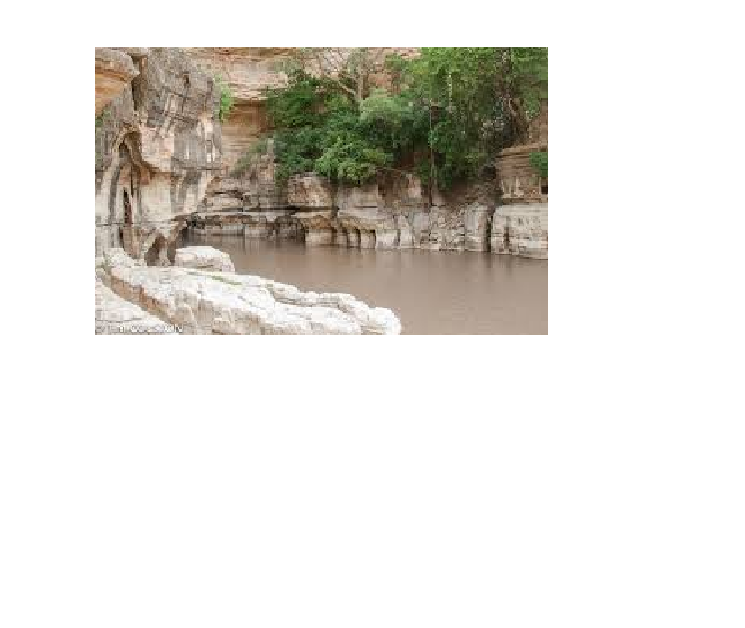
Sof Umar Wall, Bale Oromia (Ancient and magnificent past and present)


Parts of ancient kemetic (Kushitic), Egyptian, material culture (fashion accessories), courtesy of British Museum sources
Traditionally, Oromo women wear necklaces with telsum amulets, triangular and crescent shaped pendants protect from the evil eye and attract the power of the moon or to improve fertility.


Oromia: The continuity of farming in Oromo society from ancient Kemetic (Kushitic) to present Oromia
http://www.youtube.com/watch?feature=player_embedded&v=DqrTiW8XUy0
http://www.youtube.com/watch?v=_Lr2D8KlZKo
Ancient Oromo culture, Irreechaa from the time before the Pyramid
As some indeed suspect, that the science which we see at the dawn of recorded history, was not science at its dawn, but represents the remnants of the science of some great and as yet untraced civilisation. Where, however, is the seat of that civilisation to be located? (J. W. S. Sewell, 1942)
Conquest and dominations are social phenomenon as are dying elsewhere will die in Oromia (Author’s Remark).
JEL: O5, D2
Oromia: Untwist the Twisted History
The topic is about Oromia’s location in space and allocation in humanity and society. It is concerned with Oromia’s physical position in terms of geography and relational to issues of economic conditions, social justices, cultural values, political history and destiny. Civilisation, Colonisation and Underdevelopment are presented in historical and geo-political perspectives. They capture both the space and time perceptions. They are also representing the economic and social conditions and positions. The portrayal we procure the present of the Oromo nation, the core of the Cush (Cushite/ Kemet)/Ham (Hamite), the children of Noah, in North & East Africa in past age from the phantom of the Solomonic dynasty, the history thought in Abyssinian high schools, their text books and elsewhere in the invaders’ literature, abusive literary and oral discourses is that they were savages and that, though Abyssinians and Europeans overrun their lands and have made mere subjects of them, they have been in a way, bestowing a great favour on them, since they have brought to them the benisons of Christian Enlightenment. With objective analysis, however, this paper obliterates and unmakes that inaccurate illustration, wanton falsifications, immorality, intellectual swindle, sham, mischievous tales, the bent and the parable of human reductionism. Hence, it is the step to delineate an authentic portrait of a human heritage, which is infinitely rich, beautiful, colourful, and varied in the retrograde of orthodox misconceptions. The paper is not only a disinclination itself but also a call for and a provocation of the new generation of historians to critically scrutinise and reinvestigate the orthodox approaches to the Oromo history and then to expose a large number of abusive scholarship authorities on the Oromo and Cushitic studies and it detects that they do not really know the intensity and profoundness of the history of these black African people and nations and the performance these Africans registered in the process of creating, making and shaping the prime civilisations of human societies. The study acknowledges and advances a strict contest to an orthodox scholarship’s rendition of Egypt as a white civilisation, which arose during the nineteenth century to fortify and intensify European imperialism and racism. Depending on massive evidences from concerned intellectual works from linguistic to archaeology, from history to philosophy, the study authenticates that Egypt was a Cushitic civilisation and that Cushite civilisation was the authentic offspring of the splendid Upper Nile/ Oromian legacy. The Greek civilisation, which has been long unveiled as the birthplace of Western philosophy and thought, owes its roots to the Cushites thoughts and achievements. The original works of Asfaw Beyene (1992) and F. Demie (in Oromia Quarterly, 1998 & 2000) are giving motivations and also greatly acknowledged. The study also expresses that radical thinkers and multi-genius African historians such as Diop (1991) have not given due attention to the epic centre of Cushitic civilisation, Oromia, the land after and Eastern and South Eastern to Nubia, pre-Aksum central Cush, Aksumite Cush and Cushites civilisation southern to Aksum, etc. The method of enquiry is qualitative and the eclectics of formal and the informal sources, rigorous, casual and careful scholarship argument. Oral history and written documents on history, economy, sociology, archaeology, geography, cosmology and anthropology are based on as references. The paper studies the Oromo history and civilisation in horizontal approach and challenges the reductionist and Ethiopianist (colonialist, racist) vertical approach (topsy-turvy, cookkoo). It goes beyond the Oromo Oral sources (burqaa mit-katabbii) and Africanist recorded studies and western civilisational studies. The approach is to magnify, illuminate and clarify the originality of humanity and civilisation to this magnificent Cushitic (African) beauty. The Origin of Humanity When and where did human life first surface on our cosmos? Who contrived the original and prime human culture and civilisation? Ancient Egyptians contended that it was in their homeland, the oldest in the world, the God modelled the first of all human beings out of a handful of ooze soddened by the vivacity of the life giving sanctified and blessed water, the Nile (see, Jackson, 1995). “The ancient Egyptians called the river Ar or Aur (Coptic: Iaro), “Black,” in allusion to the colour of the sediments carried by the river when it is in flood. Nile mud is black enough to have given the land itself its oldest name, Kem or Kemi, which also means “black” and signifies darkness. In The Odyssey, the epic poem written by the Greek poet Homer (7th century bce), Aigyptos is the name of the Nile (masculine) as well as the country of Egypt (feminine) through which it flows. The Nile in Egypt and Sudan is now called Al-Nīl, Al-Baḥr, and Baḥr Al-Nīl or Nahr Al-Nīl.”http://www.britannica.com/EBchecked/topic/415347/Nile-River Ar or Aur (Coptic: Iaro) is Booruu in modern Afaan Oromo which means turbid in English translations. Lagdi Nayili jedhamee amma waamamu maqaan kun kan akkanatti moggaasameefi, bowwaa jechuudha. Warri kushii, warri biyyaa, waarri durii laga isaanii Aur (Ooruu) jedhanii waamu. Afaan Oromoo amma uni dubbannuutti booruu jechuudha. Booruu (turbid) jechuuni gurri’aacha (Kami) jechuu miti. Booruu (Ooruu, Aur) jechuun kan taliila hin taane kan hin calaliini jechuudha. Dameen laga kanaa kan Moromor (dhidheessa) irraa maddu galaana biroo itti burqan dabalatee biyyoo loolan haramaniin waan booraweef. kaartumitti yoo damee isa (isa taliila) garba Viktooriyaati karaa Ugaanda dhufutti makamu kanasi booressee misiriitti godaana. Dameen Garba Viktooriyaati dhufu iyyuu adii (white) jedhamee mogga’uuni irra hin turre. Bishaani adiini hin jiru. Bishaani hin boora’iini bishaan taliila. Bishaani taliilatu bishaan guri’aacha. Inni ‘Blue’ jedhanisi ‘Blue’ mitti. Bishaan taliilatu, gurri’aacha ‘Blue’ dha. ‘Blue Nile’ jechuu irra ‘Brown’ Nile (Mormor Booruu, Ar, Aur) yoo jedhani ille itti dhiyaata.
The word (Africa) Afrika itself derived from kemetic (Oromo) language. In Oromo, one of the ancient black people (kemet), Afur means four. Ka (Qa, Waqa) means god. Afrika Means the four children of god. It describes the four sub groups of kemet people. Such type of naming system is very common in Oromo even today such as Afran Qallo, Shanan Gibee, Salgan Boorana, Macca Shan, Jimma Afur, Sadan Soddoo, etc. For other theories in this topic please refer to http://atlantablackstar.com/2014/09/23/9-theories-africa-got-name/
One of the oldest Cushites histories to account for the origin and early development of man and his culture survives in a Greek version of the thesis advanced by the ancient Cushites, Oromians and the rest. This marvellous people paraded in golden times in the region called Kush (Punt) in the Hebrew Scriptures and stamped on the present-day upper Nile Oromia (see, Jackson, 1995). Diodorus Siculus, wrote that the Cushites were of the opinion that their country was not only the birthplace of human race and the cradle land of the world’s earliest civilisation, but, indeed, the primal Eden where living things first appeared on Earth, as reported by the Scriptures. Thus, Diodorus was the first European to focus attention on the Cushites asseveration that Upper Nile (Oromia) is the cradle land of world’s earliest civilisation, the original Eden of the human race. Whether by almighty (God) or nature/ evolution (Darwin’s natural selection and survival of the fittest), Oromia was not only the birth place of man himself (e.g., Lucy) but also for many hundred years thereafter is in the vanguard of all world progress (see Diop, 1991 in his African Civilisation; Martin Bernal, 1987). These are also authenticated by the present archaeological inferences in Oromo tropical fields and rivers valleys. The original natives of Egypt, both in old and in the latter ages of development, were Cushite and there is every raison d’être for the discourse that the earliest settlers came from upper Nile Oromia. The original homeland of the Oromians and other Cushites including Chadic, Berber, Egyptian, Beja, Central Cushitic, East Cushitic, South Cushitic, Omotic and Nilotic was the present day upper Nile Oromia. It was from the original Oromo (Madda Walaabu) that the rest of humanity descended diffused to other parts of the world. This can be understood in the analogue of the diffusion of two Oromo families (Borana and Barentuma). While those who expanded to other regions latter taken new family names like Macha, Tulama, Karayyu, etc and those who stayed in original place kept the original name such as Borana. In terms of linguistic, like most scholars, we believe that it is impossible to judge between the theories of monogenesis and polygenesis for human, though the inclination is towards the former. On the other hand, recent work by a small but increasing number of scholars has convinced us that there is a genetic relationship between European, Asian, and African and Cushite languages. A language family originates from a single dialect, proto Cushitic/ Oromo. From such language and culture that must have broken up into Africa, Asiatic, and European and within them a very long time a go. Professor Bernal (1987, in Black Athena, p. 11) confirmed that the unchallenged originality of Oromians and other Cushites nativity to the region and put forward that the latest possibility for initial language break up would be the Mousterian period, 50- 30,000 years Before the Present (BP), however, it may well have much earlier. He further observed that the expansion and proliferation of Cushitic and other Afroasiatic as the promulgation of a culture long pioneered in the East African Rift valley (South Eastern Oromian) at the end of the last Ice Age in the 10th and 9th millennia BC. According to Bernal (1987, p.11) the polar ice caps caged the water within itself, which was during the Ice ages, thus water was significantly less than it is nowadays. He reports that the Sahara and Arabian deserts were even bigger and more inhospitable then than they are presently. In the centuries that ensued, with the rise of heat and increase in the rainfall, greatly the regions became savannah, into which adjoining peoples voyaged. The most successful of these were, the speakers of Proto-Afroasiatic from upper Nile Oromia. Bernal further confirmed that these people not only possessed flourishing and effective skills and techniques of hippopotamus hunting with harpoons but also had domesticated cattle and food crops. The following is quoted from Black Athena: ‘Going through the savannah, the Chadic speakers renched lake Chad, the Berbers, the Maghreb, and the Proto-Egyptians, upper Egypt…. With long-term desiccation of the Sahara during the 7th and 6th millennia BC, there were movements into the Egyptian Nile Valley from the west and east as well as from the Sudan. … A similar migration took place from the Arabian savannah into lower Mesopotamia ‘(Bernal, pp.11-12).
The Origin of Civilisation
There are many things in the manners and customs and religions of the historic Egyptians that suggest that the original home of their human ancestors was in the Upper Nile region and the biblical land of Punt/ Kush (Cush) Or Oromia which include the present day of Cushitic North and East of Africa. Hence, historical records showed that the antiquity of upper Nile Cushitic Oromian civilisation had a direct link with the civilisation of ancient Egypt, Babylonian and Greece. Hence, the Egyptian and Babylonian civilisations are part and parcel of the entire Cushite civilisation. As it is described above, there is wide understanding that Cushites = Egyptians + Babylon + Oromo+ Agau + Somalis + Afars + Sidama + Neolithic Cush + other Cush. There is also an understanding that all the Cushites are branched out (descended) from their original father Oromo which can be described as Oromo = Noah=Ham= Cush= Egyptian + Bablyon+ Agau + Somali + Afar + Sidama + Neolithic Cush + other Cush. Boran and Barentuma, the two senior children and brothers were not the only children of the Oromo. Sidama, Somali, Agau, Afar and the others were children of the big family. Wolayita and the Nilotics were among the extended family and generations of the Cushite. As a hydro-tower of Africa, the present Oromia is naturally gifted and the source of Great African rivers and hosts the bank and valleys of the greatest and oldest civilisations such as Nile (Abbaya), Baro (Sobat), Gibe, Wabe, Dhidhesa, Ganale, Wabi-shebele, Omo, and Awash among others. Oromian tropical land, equatorial forest and Savannah have been the most hospitable ecology on the earth and conducive environment to life and all forms of human economic and social practices. According to Clarke (1995), many of the leading antiquarians of the time, based largely on the strength of what the classical authors, particularly Diodorus Siculus and Stephanus of Nabatea (Byzantium after Roman colonisation and Christianisation), had to say on the matter, were exponents of the vista that the Cushite, the ancient race in Africa, the Near East and the Middle East, or at any rate, the black people of remote antiquity were the earliest of all civilised peoples and that the first civilised inhabitants of ancient Egypt were members of what is referred to as the black, Cushite race who had entered the land as they expanded in their geographical space from the their birthplace in upper Nile Oromia, the surrounding Cushite river valleys and tropical fields. It was among these ancient people of Africa and Asia that classical technology advanced, old world science and cosmology originated, international trade and commerce was first developed, which was the by-product of international contacts, exchange of ideas and cultural practices that laid the foundations of the prime civilisations of the ancient world. Cushite Africa and also of the Middle East and West Asia was the key and most responsible to ancient civilisations and African history. It must also be known that there were no such geographical names, demarcations and continental classification at that time. As a whole, Cushite occupied this region; there was the kernel and the centre of the globe, the planet earth, and the universe. African history is out of stratum until ancient Cushites looked up on as a distinct African/ Asian nations. The Nile river, it tributes, Awash, Baro and Shebele or Juba, etc., played a major role in the relationship of Cushite to the nations in North, South and East Africa. The outer land Savannah, Nile, other Oromian rivers with it Adenian ecology were great cultural highways on which elements of civilisation came into and out of inner North East Africa. After expansions, there was also an offshoot, a graft, differentiation, branching out, internal separation, semi-independence and again interactions, interdependence and co-existence of the common folks. Cushites from the original home made their relationships with the people of their descendants in the South, the North, East and the West, which was as both good, and bad, depending on the period and the regime in power they formed and put in place in the autonomous regions. Cushite Egypt first became an organised autonomous nation in about 6000 B.C. In the Third Dynasty (5345-5307 B.C.) when Egypt had an earnest pharaoh named Zoser and Zoser, in turn, had for his chief counsellor and minister, an effulgent grand named Imhotep (whose name means ‘he who cometh in peace”). Imhotep constructed the famous step pyramid of Sakkarah near Memphis. The building techniques used in the facilitation of this pyramid revolutionised the architecture of the ancient world (Clarke, 1995). Of course, Independent Egypt was not the original home of these ancient technology. However, it was an extension, expansion, advancement and the technological cycle of the Upper Nile Oromia, Nubia, Beja, Agau and other Cushites. Ideas, systems, technologies and products were invented, tested and proved in upper Nile then expanded and adopted elsewhere in the entire Cush regions and beyond. . Bernal (1987, pp. 14-15) has identified strict cultural and linguistic similarities among all the people around the Mediterranean. He further attests that it was south of the Mediterranean and west to the Red Sea’s classical civilisation that give way to the respective north and east. Cushite African agriculture of the upper Nile expanded in the 9th and 8th century millennia BC and pioneering the 8th and 7th of the Indo-Hittite. Egyptian civilisation is Cushite and is clearly based on the rich pre-dynastic cultures of Upper Egypt, Nubia and upper Nile, whose Cushite African and Oromian origin is uncontested and obvious. Of course, Cushite Egypt gave the world some of the greatest personalities in the history of mankind. In this regard, Imhotep was extraordinary discernible. In ancient history of Egypt, no individual left a downright and deeper indentation than Imhotep. He was possibly the world’s first mult-genuis. He was the real originator of new medicine at the time. He revolutionised an architect of the stone building, after which the Pyramids were modelled. He became a deity and later a universal God of Medicine, whose images charmed the Temple of Imhotep, humanity’s earliest hospital. To it came sufferers from the entire world for prayer, peace, and restorative. Imhotep lived and established his eminence as a curative at the court of King Zoser of the Third Dynasty about 5345-5307 B.C. (Duncan, 1932). When the Cushite civilisation through Egypt afar crossed the Mediterranean to become the foundation of what we think of as Greek culture, the teachings of Imhotep were absorbed along with the axioms of other great Cushite African teachers. When Greek civilisation became consequential in the Mediterranean area, the Greeks coveted the world to ponder they were the originators of everything in its totality. They terminated to acknowledge their liability to Imhotep and other great Cushites. Imhotep was forgotten for thousands of years, and Hippocrates, a mythical posture of two thousand years latter, became known as the father of medicine. Regarding to Imhotep’s influence in Rome, Gerald Massey, noted poet, archaeologist, and philologist, says that the early Christians cherished him as one with Christ (Massey, 1907). It should be understood that, while the achievements of Cushite Egypt were one of the best, these are not the only achievements that Cushite Africans can claim. The Nubians, upper Nile, central and eastern Cushites (the Oromo, Agau, Somalia, Afar, etc) were continue to develop many aspects of civilisation independent of Cushite Egyptian interactions. These nations and states gave as much to Egypt as Egypt give to them in terms of trade, ideas and technology as well. There was also a considerable Cushite dominion on what later became Europe in the period preceding Christian era. Cushites played a major role in formative development of both Christianity and Islam. Both the Holly Bible and the Holly Quran moral texts are originated from the Oromo and other Cushite oral and moral principles, beliefs, creeds and teachings. There is a common believe and understanding that Abraham, a seminal prophet, believer and recipient of a single and eternal God was from Central Cush of present Upper Nile Oromia. The Oromos believed in a single and eternal God, Black God (Waaqa Guri’acha) also Blue God according to some scholars who translated the oral history. Waaqa also Ka. While the Oromian faith, social structure and policies were the prime and the origins of all, Judaism, Christianity, and Islam were all the derivatives and originated from the Black God. Waaqayyoo in Oromo is the original, the single, the omnipotent, the prime and the greatest of all the great religions. All aspects of the present day Christian churches were developed in Cushites. One of the more notable of Cushite contributions to the early church was monasticism. Monasticism, in essence, is organised life in common, especially for religious purposes. The home of a monastic society is called a monastery or a convent. Christian monasticism probably began with the hermits of Cushite Egypt and Palestine about the time when Christianity was established as a licit religion (Clarke, 1995). Oral tradition and Arabian records confirm that Bilal, a tall, gaunt, black, bushy-haired, Oromo, was the first High Priest and treasurer of the Mohammedan empire. After Mohamet himself, the great religion, which today numbers upwards of half a billion souls, may be said to have began with Bilal. He was honoured to be the Prophet’s first neophyte. Bilal was one of the many Cushites who concurred in the founding of Islam and later made proud names for themselves in the Islamic nations and expansions. Europe was sluggishing in her Dark Ages at a time when Cushite Africa and Asia were relishing a Golden Age. In this non-European world of Africa and Asian, Cushites built and enjoyed an age of advancement in technology before a period of internal withdrawal and isolation that favoured the Europeans to move a head of them. For more than a thousand years the Cushites were in the ‘Age of Grandeur’ but the second rise of Europe, internal strife, slave trade and colonialism brought the age of catastrophic tragedy, abase and declivity. The early Cushites made spears to hunt with, stone knives to cut with, the bola, with which to catch birds and animals, the blow-gun, the hammer, the stone axe, canoes and paddles, bags and buckets, poles for carrying things, bows and arrows. The bola, stone knives, paddles, spears, harpoons, bows and arrows, bow-guns, the hammer and the axe- all of them invented first by Cushites – were the start of man’s use of power. The present’s cannon, long-range missiles, ship propellers, automatic hammers, gas engines, and even meat cleavers and upholstery tack hammers have the roots of their development in the early Cushite use of (Clarke, 1995). Cushite offered humans the earliest machine. It was the fire stick. With it, man could have fire any time. With it, a campfire could be set up almost any place. With it, the early Africans could roast food. Every time we light a match, every time we take a bath in water heated by gas, every time we cook a meal in a gas-heated oven, our use of fire simply continues a process started by early Cushites: the control of fire. Of course, those early Cushite was the first to invent how to make a thatched hut. They had to be the first because for hundreds of thousand of years they were the only people on earth. They discovered coarse basket making and weaving and how to make a watertight pot of clay hardened in a fire. In the cold weather, they found that the skins of beasts they had killed would keep them warm. They even skin covers for their feet. It was from their first effort much later clothing and shoes developed. Humanity owes the early Cushites much and even much more (Clarke, 1995). The Cushites dociled animals. They used digging sticks to obtain plant roots that could be consumed. They discovered grain as a food, how to store it and prepare it. They learnt about the fermentation of certain foods and liquids left in containers. Thus, all mankind owes to Cushites including the dog that gives companionship and protection, the cereals we eat at break-fast-time, the fermented liquids that many people drink, the woven articles of clothing we wear and the blankets that keep us warm at night, the pottery in which we bake or boil food, and even the very process (now so simple) of boiling water- a process we use every time we boil an egg, or make spaghetti, or cook corned beef. Canoes made it possible for man to travel further and farther from his early home. Over many centuries, canoes went down Baro, the Nile and the Congo and up many smaller rivers and streams. It was in this pattern that the early Cushite civilisation was advanced. From the blowgun of antiquated Cushite, there come next, in later ages, many gadget based on its standard. Some of these are: the bellows, bamboo air pumps, the rifle, the pistol, the revolver, the automatic, the machine gun- and even those industrial guns that puff grains. Modern Scientists certain that by about 3000 B.C., the Cushite farmers in the Nile Valley were growing wheat and barely, cultivating millet, sorghum, and yams. Around 1500 B.C. new crops farming were developed: – banana, sugar cane, and coconut trees and later coffee. The cultivation of bananas and coffees in particular spread rapidly which are suited to tropical forest conditions. Cushites had also domesticated pigs, donkeys, horses, chickens, ducks, and geese, etc. (Greenblatt, 1992). The agricultural revolution brought about a gradual increase in population. Then another development helped expand population still more. The technique of smelting iron innovated by Cushites. Iron working start and then advanced in the Nile valley and then started to spread to other parts of Africa and from who, by way of Egypt and Asian Minor, this art made its way into Europe and the rest of Old World. Iron greatly improved the efficiency of tools and weapons. Iron tools and weapons are much stronger and last longer than those made of stone or wood. Iron axes made it easier to chop tropical trees and clear land for farming. Iron sickles made harvest easier. Iron hoes and other farm tools helped farmers cultivate land more easily. Iron-tipped spears meant more meat. The new technologies boosted the Cushite economy; they increased food production that enabled more people to survive. In addition, iron objects became valuable items in Cushite trade and commercial activities. With his simple bellows and a charcoal fire the Cushite blacksmith reduced the ore that is found in many parts of the region and forged implements of great usefulness and beauty. In general, the Iron technology was instrumental in auguring the rise and expansion of Cushite civilisation (Greenblatt, 1992). Cushite hunters many times cut up game. There still exists for evidences, drawings of animal bones, hearts and other organs. Those early drawings as a part of man’s early beginnings in the field of Anatomy. The family, the clan, the tribe, the nation, the kingdom, the state, humanity and charity all developed first in this region of the cradle of mankind. The family relationships, which we have today, were fully developed and understood then. The clan and the tribe gave group unity and strength. The nation, the common whole was first developed here. It was by this people that early religious life, beliefs, and the belief in one God, the almighty started and expanded. The first formal education of arts, science, astronomy, times and numbers (mathematics) were visual, oral and spoken tradition given in the family, during social and religious ceremonies. Parents, Medicine men, religious leaders, etc were the education heads. Ceremonial Cushite ritual dances laid the basis for many later forms of the dance. Music existed in early Cushite Among instruments used were: reed pipes, single-stringed instruments, drum, goured rattles, blocks of wood and hollow logs. Many very good Cushite artists brought paintings and sculpture into the common culture. The early Cushites made a careful study of animal life and plant life. From knowledge of animals, mankind was able to take a long step forward to cattle rising. From the knowledge of plants and how they propagate, it was possible to take a still longer step forward to agriculture. Today, science has ways of dating events of long a go. The new methods indicate that mankind has lived in Cushite Africa over two million years. In that long, long time, Cushites and people of their descent settled in other parts of Africa and the rest. Direct descents of early Cushites went Asia Minor, Arabia, India, China, Japan and East Indies. Cushites and people of Cushite descents went to Turkey, Palestine, Greece and other countries in Europe. From Gibraltar, they went into Spain, Portugal, France, England, Wales and Ireland (Clarke, 1995). Considering this information, the pre-Colombian presence of Cushite African mariners and merchants in the New World is highly conceivable and somewhat sounds. In this context, the first Africans to be brought to the New World were not in servitude and slavery, which contrary to popular creed. Tormenting references in the Spanish chronicles and other growing body of historical studies advocate that Cushites were the founders, the pioneers and first permanent settlers of America. Commanding authentication as in Bennett (1993, p. 85) cited by Leo Veiner in his work Africa and the discovery of America suggests that African traders founded Mexico long before Columbus. Hence, the Africans influences were extended from Canada in the North to the Maya, Aztec, and Inca civilisation in the South America. The Cushite civilisation is therefore the basis of Indian civilisation. Unlike the western Sudan and in Egypt, the people and nations of upper Nile had lost written records of their ancient times and medieval history. These were destroyed and burned during war of conquests. The early travellers to these areas are also mostly not yet known. Notable kingdoms, republics and states did rise in this part of Africa and did achieve a high degree of civilisation of their time. Scholarly undertakings show that Cushite Africans such as Oromos were the first in human history to invent and implement democratic institutions (e.g. Gada system or Gadaa system), democratic forms of government, elections and unwritten constitution. Democracy was first invented in upper Nile Oromia then to Athens, Greek and to the rest. It was not the other way round. Gada, an accomplishment of Oromian social genius in socio-political organisation is one of the most complex, the world wonder and by far superior to so far other humanity’s social and political imagination and civilisation. Gada in its vector of values constitutes, political institution, the power structure, governing constitution, the ideology, the religion, the moral authority, the economic and the whole way of life of the public, the collective, the social and the private individual. Gada is the social civilization of the Oromo in the Nile civilization. Gada is an atonishing and complex social evolution in human social transformation and an Oromo social perfection. In old Egyptian (Cushite, oromo) dialect it means Ka Adaa. Ka means God. Adaa (law). It means the law of God, the law of waaqa (God). It also symbolizes the dawn of not only civilization but also human freedom as civilazation. ‘Gadaa bilisummaa saaqaa.’ Orthodox historians and some archaeologists believe that the civilisation of Egypt is the oldest in the world, while others give that priority to western Asia or India. It has also been suggested that, since all these cultures possess certain points of similarity, all of them may evolve from an older common civilisation. Men of eminent scholarship have acknowledged this possibility. In this regard, Sir E.A. Wallis Budge (1934) indicated: “It would be wrong to say that the Egyptians borrowed from the Sumerians or Sumerians from Egyptians, but it may be submitted that the literati of both peoples borrowed their theological systems from common but exceedingly ancient source… This similarity between the two companies of gods is too close to being accidental.” A pioneer American Egyptologist, Breasted (1936) advanced the following views: “In both Babylonian and Egypt the convenient and basic number (360), of fundamental importance in the division of the circle, and therefore in geography, astronomy and time-measurement, had its origin in the number of days in the year in the earliest known form of the calendar. While its use seems to be older in Egypt than in Babylonian, there is no way to determine with certainty that we owe it exclusively to either of these two countries. A common origin older than either of is possible.” Sewell (1942) said that the science, which we see at the dawn of recorded history, was not science at its dawn, but represents the remnants of the science of some great and as yet untraced civilisation. Where, however, is the seat of that civilisation to be located?” A number of scholars, both ancient and modern, have come to the conclusion that the world’s first civilisation was created by the people known as Cushite (Oromian) and also known by Greeks as Punt (Burnt Faces). The Greeks argued that these people developed their dark colouration since they were adjacent to the sun than were the fairer natives of Europe. In terms of the sources of well-informed modern authority, Herodotus describes the Cushites as in Lugard (1964) as: “ The tallest, most beautiful and long-lived of the human races,’ and before Herodotus, Homer, in even more flattering language, described them as ‘ the most just of men; the favourites of gods.’ The annals of all the great early nations of Asia Minor are full of them. The Mosaic records allude to them frequently; but while they are described as the most powerful, the most just, and the most beautiful of the human race, they are constantly spoken of as black, and there seems to be no other conclusion to be drawn, than that remote period of history the leading race of the western world was the black race.” Alexander Bulatovich (2000, p.53) of Russia in his 1896-1898 travels in Oromia described the Oromo, which is akin to Herodotus’s description as fallows: “The [Oromo] physical type is very beautiful. The men are very tall, with statuesque, lean, with oblong face and a somewhat flattened skull. The features of the face are regular and beautiful…. The mouth is moderate. The lips are not thick. They have excellent even teeth; large and in some cases oblong eyes and curly hair. Their arm bones are of moderate length, shorter than the bones of Europeans, but longer than among the Amhara tribes. The feet are moderate and not turned in. The women are shorter than the men and very beautifully built. In general, they are stouter than the men, and not as lean as they. Among them one sometimes encounters very beautiful women. And their beauty does not fade as among the Abyssinians. The skin color of both men and women ranges from dark to light brown. I did not see any completely black [Oromo].” According to Homer and Herodotus, the Cushites were inhabited in the Sudan, Egypt, Arabia, Palestine, present Ethiopia, Western Asia and India. In his essay of historical analysis of ancient East Africa and ancient Middle East, roughly in the years between 500BC and 500AD. Jesse Benjamin (2001), brought to our attention that the importance of research focus on global formations, multi- and bi-directional and cultural relations, geopolitical associations, archaeology, linguistics, sociology, cosmology, production, commerce and consumption patterns of these regions. Benjamin (2001) indicates that historiographers have acknowledged and documented that the adored spices, cinnamon (qarafaa in modern Afaan Oromo) and cassia of the Mediterranean sphere produced and come from ‘Cinnamon land.’ The latter is also known in different names as ‘ The other Barbaria,’ ‘Trogodytica,’ Cush, Kush, Upper Nile. or ‘Punt’ but persistently representing the whole environs identified nowadays as the ‘Horn of African’ or that part of Oromia. These show the presence of production, consumption and commercial interactions in the regions. In line with Miller (1969), Wilding (1988), Benjamin (2001) included the Oromian pastoralism, pottery, cosmology and culture in the antiquity and old world civilisation. The identification of the Cushite Oromian civilisation with the present Abyssinia Amhara-Tigre under the name of Ethiopia made by the post civilisation Abyssinian priests translators of the Abyssinian version of the Bible in the 5th and 6th century or some other time, has been a cheating and misrepresentation of true human history. Those Abyssinians who were stealing the history were relatively recent migrant (conquerors) of the region. They occupied the present day Northern Ethiopia (central Cushitic of Agau and Oromo) long after the first human civilisation already originated and advanced in the area and spread to the rest of the world including to Arabia and Mediterranean Europe. The native residents of the region are the Cushite African people (Oromo, Agau, Somali, Sidama, Afar, Beja, Saho, etc). Ethiopian Jews (Falashas) are also Cushite Oromo and Agau who accepted Jews religion. Abyssinian tribes have fabricated their own myth and false history to claim legitimacy to the region and then established a regime truth through continuos fable story, phantom, indoctrination and falsification of the real Cushite history. Semitic immigrants did not found Aksum but the Abyssinians resettled among the Cushites cities and commercial centres in which Aksum was one and latter dominated the ruling power in this very centre of the civilisation of the central Cush. Ge’ez was invented as a language of the centre and latter used as the official language of the church and the colonising Abyssinian ruling class. Ge’ez was initially developed from the mixture of Cushitic and Greek elements that was facilitated by the Cushite trade links to the Greek world. There was also Greek resettlement in Aksum and the surrounding central Cush commercial towns with primary contacts with endogenous Cushite. The earlier rulers of Aksum and Christian converts including Ezana were Cushites. Though Ezana was the first convert from the above (the ruling class) to Christianity, he did not give up his belief in one God (Waqa) (Cushite/ black God). He was also not the first Cushite to be a Christian. In their linkages with a wider world, it is also highly likely and very logical and possible that there were Christians among the civilian Cushite trading communities who had already disseminated their new faith, as so many Oromo merchants were to do latter in the expansion of Islam. The splendid Stella, towers of solid masonry, with non-functional doors and windows at Aksum was not the earliest materialisation but it was the continuity in the manifestation of major indigenous Cushite tradition of monumental architecture in stone, which also later found expression in the rock-hewn churches of the Cushite Agau kings (see also Isichei, 1997 for some of the opinions). Abyssinians were the rulers. They were not the engineers and the builders of the stone monuments. It was the original product and brainchild of Cushite technologist. Of course, their advancement was thwarted with the unfortunate coming of the Abyssinians. Almost all of the original studies of the origin of Cushite civilisation could not penetrate far deep into regions south east to Nubia (Mereo) and could not dig out the other side of the twin, the close link and vast primary sources in present day Oromia. Though the British Museum has collected vast sources on Nubian, it has not kept on or linked any to the sister and more or less identical to the civilisation of the Oromo. For me, as native Oromo with knowledge of oral history and culture, as I observed the Nubian collection in British Museum, what they say Nubian collection is almost identical to Oromia, but in a less variety and quantity. I can say that Nubian and other Cushite civilisations were extensions (grafts) of the vast products of Oromo. I may also be enthused to the inference that the people whose manners and customs have been so thoroughly capitulated by Herodotus, Diodorus, Strabo Pliny and other were not Abyssinians and other Black people at all, but the natives of Upper Nile, Oromos, Agau, Somalis, Afar and the rest of Cushitic people of the present Horn of Africa. Sir Henry Rawlinson in his essay on the early History of Babylonian describes Oromos as the purest modern specimens of the Kushite. Thus, Oromo is Kush and Kush is Oromo. Seignobos (1910), in his scholarly works on the history of Ancient Civilisation reasoned that the first civilised natives of the Nile and Tigiris-Euphrates Valleys were a dark skinned people with short hair and prominent lips, they were called Cushites by some scholars and Hamites by others. So Cushite (Hamite) is generally recognised as the original home of human civilisation and culture both beyond and across the Red Sea. They are the original source of both the African and Asiatic (Cushitic Arabian) civilisation. Higgins in 1965 scholarly undertaking discusses: “I shall, in the course of this work, produce a number of extraordinary facts, which will be quite sufficient to prove, that a black race, in a very early times, had more influence of the affairs of the world than has been lately suspected; and I think I shall show, by some very striking circumstances yet existing, that the effects of this influence have not entirely passed away.” Baldwin in his 1869 study of Arab history expressed in his own words the following: “At the present time Arabia is inhabited by two distinct races, namely descendants of the old Adite, Kushite, …known under various appellations, and dwelling chiefly at the south, the east, and in the central parts of the country, but formerly supreme throughout the whole peninsula, and the Semitic Arabians- Mahomete’s race- found chiefly in the Hejaz and at the north. In some districts of the country these races are more or less mixed, and since the rise of Mahometanism the language of Semites, known as to us Arabic, has almost wholly suppressed the old … Kushite tongue; but the two races are very unlike in many respects, and the distinction has always been recognised by writers on Arabian ethnology. To the Kushite race belongs the purest Arabian blood, and also that great and very ancient civilisation whose ruins abound in almost every district of the country.” Poole (in Haddon, 1934) says, “Assyrians themselves are shown to have been of a very pure type of Semites, but in the Babylonians there is a sign of Kushite blood. … There is one portrait of an Elmite king on a vase found at Susa; he is painted black and thus belongs to the Kushite race.” The myths, legends, and traditions of the Sumerians point to the African Cushite as the original home of these people (see. Perry, 1923, pp. 60-61). They were also the makers of the first great civilisation in the Indus valley. Hincks, Oppert, unearthed the first Sumerian remains and Rawlinson called these people Kushites. Rawlinson in his essay on the early history of Babylonian presents that without pretending to trace up these early Babylonians to their original ethnic sources, there are certainly strong reasons for supposing them to have passed from Cushite Africa to the valley of the Euphrates shortly before the opening of the historic period: He is based on the following strong points: The system of writing, which they brought up with them, has the closest semblance with that of Egypt; in many cases in deed the two alphabets are absolutely identical. In the Biblical genealogies, while Kush and Mizrain (Egypt) are brothers, from Kush Nimrod (Babylonian) sprang. With respect to the language of ancient Babylonians, the vocabulary is absolutely Kushite, belonging to that stock of tongues, which in postscript were everywhere more or less, mixed up with Semitic languages, but of which we have with doubtless the purest existing specimens in the Mahra of Southern Arabia and the Oromo.


The Greek alphabet, the script of English today, is based on the Kemetic alphabet of Ancient Egypt/Kemet and the Upper Nile Valley of Ancient Africa. Ancient Egyptians called their words MDW NTR, or ‘Metu Neter,” which means divine speech. The Greeks called it, ‘hieroglyphics”- a Greek word. The etymology of hieroglyphics is sacred (hieros) carvings (glyph). The Oromos (the Kemet of modern age) called it Qubee.
http://www.youtube.com/watch?feature=player_detailpage&v=XQUU85mDlFo
http://www.youtube.com/watch?feature=player_detailpage&v=XQUU85mDlFo
http://www.youtube.com/watch?feature=player_embedded&v=ei0In0HGYVU
http://www.youtube.com/watch?NR=1&feature=endscreen&v=2jd1Y5z4CUk
https://www.youtube.com/watch?feature=player_detailpage&v=nArdTXwU3IQ
https://www.youtube.com/watch?feature=player_embedded&v=vcW9yOjF_Ts
http://www.youtube.com/watch?feature=player_embedded&v=WKGRSkVvzqk#!
http://www.youtube.com/watch?v=zMUazEr3BSU&NR=1
http://www.youtube.com/watch?v=wHuypnitFYk
Without OROMO, NO Amhara Culture & NO Amharic! – My Beta Israel & Zagwe Roots pt1 Ras Iadonis
http://www.youtube.com/watch?v=9gLJnxgXs0Q&feature=share
http://gadaa.com/oduu/797/2009/09/30/ethiopia-the-story-of-oromos-irreechaa-happy-thanksgiving/
http://www.creative8studios.com/oromia/
http://bilisummaa.com/index.php?mod=article&cat=Waaqeeyfataa&article=446
http://www.africa.kyoto-u.ac.jp/kiroku/asm_normal/abstracts/pdf/25-3/25-3-1.pdf
http://www.americanchronicle.com/articles/view/166451
http://www.gadaa.com/culture.html
http://www.gadaa.com/Irreechaa.html http://waaqeffannaa.org/?page_id=167
http://en.wikipedia.org/wiki/West_Central_Oromo_language http://www.gadaa.com/language.html
http://www.voicefinfinne.org/English/Column/Galma_EOC.htm
http://en.wikipedia.org/wiki/Hamitic#Rwanda_and_Burundii
http://oromocentre.org/oromian-story/special-report-on-the-long-history-of-north-east-africa/
African Philosophy in Ethiopia. Ethiopian Philosophical Studies II with A Memorial of Claude Sumner http://www.crvp.org/book/Series02/master-ethiopia.pdf
http://thetemplesofluxorandkarnak.wordpress.com/category/africa/
https://www.facebook.com/notes/abdi-muleta/the-story-of-irreechaa/257191284319586
CHALTU AS HELEN: AN EVERYDAY STORY OF OROMOS TRAUMATIC IDENTITY CHANGE
“Chaltu as Helen”, which is based on a novelized story of Chaltu Midhaksa, a young Oromo girl from Ada’aa Barga district, also in central Oromia.
Born to a farming family in Koftu, a small village south of Addis Ababa near Akaki, Chaltu led an exuberant childhood. Raised by her grandmother’s sister Gode, a traditional storyteller who lived over 100 years, the impressionable Chaltu mastered the history and tradition of Tulama Oromos at a very young age.
Chaltu’s captivating and fairytale like story, as retold by Tesfaye, begins when she was awarded a horse named Gurraacha as a prize for winning a Tulama history contest. Though she maybe the first and only female contestant, Chaltu won the competition by resoundingly answering eleven of the twelve questions she was asked.
Guraacha, her pride and constant companion, became Chaltu’s best friend and she took a good care of him. Gurraacha was a strong horse; his jumps were high, and Chaltu understood his pace and style.
A masterful rider and an envy to even her male contemporaries, Chaltu soon distinguished herself as bold, confident, outspoken, assertive, and courageous. For this, she quickly became a household name among the Oromo from Wajitu to Walmara, Sera to Dawara, Bacho to Cuqala, and Dire to Gimbichu, according to Tesfaye.
Chaltu traces her lineage to the Galan, one of the six clans of Tulama Oromo tribe. At the height of her fame, admirers – young and old – addressed her out of respect as “Caaltuu Warra Galaan!” – Chaltu of the Galan, and “Caaltuu Haadha Gurraacha!” – Chaltu the mother of Gurraacha.
Chaltu’s disarming beauty, elegance, charisma, and intelligence coupled with her witty personality added to her popularity. Chaltu’s tattoos from her chin to her chest, easily noticeable from her light skin, made her look like of a “Red Indian descent” (Tesfaye’s words).
As per Tesfaye’s account, there wasn’t a parent among the well-to-do Oromos of the area who did not wish Chaltu betrothed to their son. At 14, Chaltu escaped a bride-kidnapping attempt by outracing her abductors.
Chaltu’s grandfather Banti Daamo, a well-known warrior and respected elder, had a big family. Growing up in Koftu, Chaltu enjoyed being surrounded by a large network of extended family, although she was the only child for her parents.
Recognizing Chaltu’s potential, her relatives suggested that she goes to school, which was not available in the area at the time. However, fearing that she would be abducted, Chaltu’s father arranged her marriage to a man of Ada’aa family from Dire when she turned 15.
Locals likened Chaltu’s mannerism to her grandfather Banti Daamo, earning her yet another nickname as “Caaltuu warra Bantii Daamo” – Chaltu of Banti Daamo. She embraced the namesake because many saw her as an heir to Banti Daamo’s legacy, a role usually preserved for the oldest male in the family. Well-wishers blessed her: prosper like your grandparents. She embraced and proudly boasted about continuing her grandfather’s heritage calling herself Chaltu Banti Daamo.
Others began to call her Akkoo [sic] Xinnoo, drawing a comparison between Chaltu and a legendary Karrayu Oromo woman leader after whom Ankobar was named.
Chaltu’s eccentric life took on a different trajectory soon after her marriage. She could not be a good wife as the local tradition and custom demanded; she could not get along with an alcoholic husband who came home drunk and abused her.
When Chaltu threatened to dissolve the marriage, as per Oromo culture, elders intervened and advised her to tolerate and reconcile with her husband. Rebellious and nonconformist by nature, Chaltu, who’s known for challenging old biases and practices, protested “an alcoholic cannot be a husband for Banti Daamo’s daughter!”
Soon she left her husband and moved to Addis Ababa, Ethiopia’s capital, to attend formal education and start a new chapter in life.
Trouble ensues.
In Addis Ababa, her aunt Mulumebet’s family welcomed Chaltu. Like Chaltu, Mulumebet grew up in Koftu but later moved to Addis Ababa, and changed her given name from Gadise in order to ‘fit’ into the city life.
Subsequently, Mulumebet sat down with Chaltu to provide guidance and advice on urban [Amhara] ways.
“Learning the Amharic language is mandatory for your future life,” Mulumebet told Chaltu. “If you want to go to school, first you have to speak the language; in order to learn Amharic, you must stop speaking Afaan Oromo immediately; besides, your name Chaltu Midhaksa doesn’t match your beauty and elegance.”
“I wish they did not mess you up with these tattoos,” Mulumebet continued, “but there is nothing I could do about that…however, we have to give you a new name.”
Just like that, on her second day in Addis, Caaltuu warra Galaan became Helen Getachew.
Chaltu understood little of the dramatic twists in her life. She wished the conversation with her aunt were a dream. First, her name Chaltu means the better one, her tattoos beauty marks.
She quietly wondered, “what is wrong with my name and my tattoos? How can I be better off with a new name that I don’t even know what it means?”
Of course she had no answers for these perennial questions. Most of all, her new last name Getachew discomforted her. But she was given no option.
The indomitable Chaltu had a lot to learn.
A new name, new language, new family, and a whole new way of life, the way of civilized Amhara people. Chaltu mastered Amharic in a matter of weeks. Learning math was no problem either, because Chaltu grew up solving math problems through oral Oromo folktale and children’s games like Takkeen Takkitumaa.
Chaltu’s quick mastery amazed Dr. Getachew, Mulumebet’s husband. This also made her aunt proud and she decided to enroll Chaltu in an evening school. The school matched Chaltu, who’s never set foot in school, for fourth grade. In a year, she skipped a grade and was placed in sixth grade. That year Chaltu passed the national exit exam, given to all sixth graders in the country, with distinction.
But her achievements in school were clouded by a life filled with disappointments, questions, and loss of identity. Much of her troubles came from Mulumebet packaged as life advice.
“Helen darling, all our neighbors love and admire you a lot,” Mulumebet told Chaltu one Sunday morning as they made their way into the local Orthodox Church. “There is not a single person on this block who is not mesmerized by your beauty…you have a bright future ahead of you as long as you work on your Amharic and get rid of your Oromo accent…once you do that, we will find you a rich and educated husband.”
Chaltu knew Mulumebet had her best interest at heart. And as a result never questioned her counsel. But her unsolicited advises centered mostly on erasing Chaltu’s fond childhood memories and making her lose touch with Oromummaa – and essentially become an Amhara.
Chaltu spent most of her free time babysitting Mulumebet’s children, aged 6 and 8. She took care of them and the kids loved her. One day, while the parents were away, lost in her own thoughts, Chaltu repeatedly sang her favorite Atetee – Oromo women’s song of fertility – in front of the kids.
That night, to Chaltu’s wild surprise, the boys performed the song for their parents at the dinner table. Stunned by the revelation, Mulumebet went ballistic and shouted, “Are you teaching my children witchcraft?”
Mulumebet continued, “Don’t you ever dare do such a thing in this house again. I told you to forget everything you do not need. Helen, let me tell you for the last time, everything you knew from Koftu is now erased…forget it all! No Irreechaa, no Waaree, no Okolee, no Ibsaa, No Atetee, and no Wadaajaa.”
Amused by his wife’s dramatic reaction, Getachew inquired, “what does the song mean, Helen?” Chaltu told him she could not explain it in Amharic. He added, “If it is indeed about witchcraft, we do not need a devil in this house…Helen, praise Jesus and his mother, Mary, from now on.”
“Wait,” Getachew continued, “did you ever go to church when you were in Koftu? What do they teach you there?”
Chaltu acknowledged that she’s been to a church but never understood the sermons, conducted in Amharic, a language foreign to her until now. “Getachew couldn’t believe his ears,” writes Tesfaye. But Getachew maintained his cool and assured Chaltu that her mistake would be forgiven.
Chaltu knew Atetee was not a witchcraft but a women’s spiritual song of fertility and safety. All Oromo women had their own Atetee.
Now in her third year since moving to Addis, Chaltu spoke fluent Amharic. But at school, in the market, and around the neighborhood, children bullied her daily. It was as if they were all given the same course on how to disgrace, intimidate, and humiliate her.
“You would have been beautiful if your name was not Chaltu,” strangers and classmates, even those who knew her only as Helen, would tell her. Others would say to Chaltu, as if in compliment, “if you were not Geja (an Amharic for uncivilized), you would actually win a beauty pageant…they messed you up with these tattoos, damn Gallas!”
Her adopted name and mastery of Amharic did not save Chaltu from discrimination, blatant racism, hate speech, and ethnic slurs. As if the loss of self was not enough, seventh grade was painfully challenging for Chaltu. One day when the students returned from recess to their assigned classes, to her classmate’s collective amusement, there was a drawing of a girl with long tattooed neck on the blackboard with a caption: Helen Nikise Gala – Helen, the tattooed Gala. Gala is a disparaging term akin to a Nigger used in reference to Oromos. As Chaltu sobbed quietly, their English teacher Tsige walked in and the students’ laughter came to a sudden halt. Tsige asked the classroom monitor to identity the insulting graffiti’s artist. No one answered. He turned to Chaltu and asked, “Helen, tell me who drew this picture?”
She replied, “I don’t know teacher, but Samson always called me Nikise Gala.”
Tsige was furious. Samson initially denied but eventually admitted fearing corporal punishment. Tsige gave Samson a lesson of a lifetime: “Helen speaks two language: her native Afaan Oromo and your language Amharic, and of course she is learning the third one. She is one of the top three students in the class. You speak one language and you ranked 41 out of 53 students. I have to speak to your parents tomorrow.”
Athletic and well-mannered, Chaltu was one of the best students in the entire school. But she could not fathom why people gossiped about her and hurled insults at her.
Banned from speaking Afaan Oromo, Chaltu could not fully express feelings like sorrow, regrets, fear and happiness in Amharic. To the extent that Mulumebet wished Chaltu would stop thinking in Oromo, in one instance, she asked Chaltu to go into her bedroom to lament the death of a relative by singing honorific praise as per Oromo custom. Chaltu’s break came one afternoon when the sport teacher began speaking to her in Afaan Oromo, for the first time in three years. She sobbed from a deep sense of loss as she uttered the words: “I am from Koftu, the daughter of Banti Daamo.” Saying those words alone, which were once a source of her pride, filled Chaltu with joy, even if for that moment.
Chaltu anxiously looked forward to her summer vacation and a much-needed visit to Koftu. But before she left, Mulumebet warned Chaltu not to speak Afaan Oromo during her stay in Koftu. Mulumebet told Chaltu, “Tell them that you forgot how to speak Afaan Oromo. If they talk to you in Oromo, respond only in Amharic. Also, tell them that you are no longer Chaltu. Your name is Helen.”
Getachew disagreed with his wife. But Chaltu knew she has to oblige. On her way to Koftu, Chaltu thought about her once golden life; the time she won Gurracha in what was only a boys’ competition, and how the entire village of Koftu sang her praises.
Her short stay in Koftu was dismal. Gurraacha was sold for 700 birr and she did not get to see him again. Chaltu’s parents were dismayed that her name was changed and that she no longer spoke their language.
A disgruntled and traumatized Chaltu returns to Addis Ababa and enrolls in 9th grade. She then marries a government official and move away from her aunt’s protective shield. The marriage ends shortly thereafter when Chaltu’s husband got caught up in a political crosshair following Derg’s downfall in 1991. Chaltu was in financial crisis. She refused an advice from acquintances to work as a prostitute.
At 24, the once vibrant Chaltu looked frail and exhausted. The regime change brought some welcome news. Chaltu was fascinated and surprised to watch TV programs in Afaan Oromo or hear concepts like “Oromo people’s liberation, the right to speak one’s own language, and that Amharas were feudalists.”
Chaltu did not fully grasp the systematic violence for which was very much a victim. She detested how she lost her values and ways. She despised Helen and what it was meant to represent. But it was also too late to get back to being Chaltu. She felt empty. She was neither Helen nor Chaltu.
She eventually left Addis for Koftu and asked her parents for forgiveness. She lived a few months hiding in her parent’s home. She avoided going to the market and public squares.
In a rare sign of recovery from her trauma, Chaltu briefly dated a college student who was in Koftu for a winter vacation. When he left, Chaltu lapsed back into her self-imposed loneliness and state of depression. She barely ate and refused interacting with or talking to anyone except her mother.
One afternoon, the once celebrated Chaltu warra Galaan took a nap after a coffee break and never woke up. She was 25.
The bottom line: Fictionalized or not, Chaltu’s is a truly Oromo story. Chaltu is a single character in Tesfaye’s book but lest we forget, in imperial Ethiopia, generations of Chaltu’s had to change their names and identity in order to fit in and be “genuine Ethiopians.” Until recently, one has to wear an Amhara mask in order to be beautiful, or gain access to educational and employment opportunities.
Likewise, in the Ethiopia of today’s “freedom of expression advocates” – who allegedly sought to censor Tesfaye – it appears that a story, even a work of fiction, is fit to print only when it conforms to the much-romanticized Ethiopianist storyline.
So much has changed since Chaltu’s tragic death a little over a decade ago, yet, clearly, much remains the same in Ethiopia. Honor and glory to Oromo martyrs, whose selfless sacrifices had allowed for me to transcribe this story, the Oromo today – a whole generation of Caaltuus – are ready to own, reclaim, and tell their stories.
Try, as they might, the ever-vibrant Qubee generation will never be silenced, again.
Origins of the Afro Comb: 6,000 years of culture, politics and identity

https://www.youtube.com/watch?feature=player_embedded&v=jglq42cXqho
Even today, a significant number of mainstream Egyptologists, anthropologists, historians and Hollywood moviemakers continue to deny African people’s role in humankind’s first and greatest civilization in ancient Egypt. This whitewashing of history negatively impacts Black people and our image in the world. There remains a vital need to correct the misinformation of our achievements in antiquity.
Senegalese scholar Dr. Cheikh Anta Diop (1923-1986) dedicated his life to scientifically challenging Eurocentric and Arab-centric views of precolonial African culture, specifically those that suggested the ancient civilization of Egypt did not have its origins in Black Africa.
Since some people continue to ignore the overwhelming evidence that indicates ancient Egypt was built, ruled, and populated by dark-skinned African people, Atlanta Blackstar will highlight 10 of the ways Diop proved the ancient Egyptians were Black.
Physical Anthropology Evidence
Based on his review of scientific literature, Diop concluded that most of the skeletons and skulls of the ancient Egyptians clearly indicate they were Negroid people with features very similar to those of modern Black Nubians and other people of the Upper Nile and East Africa. He called attention to studies that included examinations of skulls from the predynastic period (6000 B.C.) that showed a greater percentage of Black characteristics than any other type.
From this information, Diop reasoned that a Black race existed in Egypt at that time and did not migrate at a later stage as some previous theories had suggested.
http://atlantablackstar.com/2013/10/25/10-arguments-that-proves-ancient-egyptians-were-black/
”’ኦሮሞና ኦሮሚያ”’
የኦሮሞ ሕዝብ መሠረተ አመጣጥ ከኩሽ ቤተሰብ የሚመደብ ነዉ። በቆዳ ቀለሙና በአካላዊ አቋሙ ከሃሜቲክ እስከ ናይሎቲክ ያጣቀሰ ዝርያ ያለዉ ሕዝብ መሆኑ ታሪክ አረጋግጦታል። በሰሜን ምሥራቅ አፍሪካ ከሚኖሩ ህዝቦች ጋር በብዙ መልኩ ተመሳሳይነት ያለዉ ነዉ። በዚህ ክልል የሚኖሩ ሕዝቦች ታሪክ መመዝገብ ከጀመረበት ጊዜ አንስቶ የኩሽ ቋንቋ ተናጋሪ መሆናቸዉ ተረጋግጧል።
ኦሮሞ የኩሽ ቋንቋ ተናጋሪ ብቻ አይደለም። ይልቁንም ይህ ሕዝብ በአህጉረ- አፍሪካ ቀደሚ ዜጋ ሆነዉ ከኖሩት ሕዝቦች መካከል የመጀመሪያ መሆኑ ይታወቃል። በዚህ የረጅም ዘመናት ታሪኩ ውስጥ ለሥልጣኔዉ የሚሆኑ ባህሎችን እስከማዳበር ደርሷል። ሊንች እና ሮቢንስ የሚባሉ ሁለት የዉጭ ምሁራን ሰሜናዊ ኬኒያ በተገኘዉ ጥንታዊ አምድ ላይ ከትጻፈዉ መረጃ በመነሳት ኦሮሞዎች በ3000 ዓመተ-ዓለም አካባቢ የራሳቸዉ የሆነ የቀን መቁጠሪያ እንደነበራቸዉ አረጋግጠዋል። ይህም ሕዝቡ በዚሁ ክልል ለመኖሩ አንዱ ተጨባጭ ማስረጃ ነው።
ከሊንች እና ሮቢንሰም ሌላ ፕራዉቲ እና ሮሴንፊልድ የተባሉ የታሪክ ሊቃዉንት “Historical Dictionary of Ethiopia” ኢንዲሁም ባትስ : “The Abyssinian Difficulty” በተባሉ ሥራዎቻቸው ; <<ኦሮሞ ጥንታዊ ዝርያና አንጋፋ; ምናልባትም ለበርካታዎቹ የምስራቅ አፍርካ ሕዝቦች የዘር ግንድ ነው>> በማለት ይገልጻሉ።
የኦሮሞ ሕዝብ የምስራቅ አፍርካ (የአፍርካ ቀንድ) ቀዳሚ ቤተኛ ስለመሆኑ አያሌ ማስረጃዎች ኣሉ። ስለዚሁ ጉዳይ ታሪካዊ ሰናዶች በብዛት ይገኛሉ። አባ ባህሬይ የተባሉ የአማራ ብሄር ተወላጅ የጋላ ታሪክ ብለው በሲዳሞና ከፋ ዉስጥ በመዘዋዋር ስላ ኦሮሞ በፃፉት መጽሃፍ በጥላቻ የተሞሉና ትክክል ያል ሆኑ ታሪኮችን ለማሳተም በቅተዋል። ክራፍ በ 1842 ፥ ፍት በ1913 በክልሉ በመዘዋወር ኦሮሞ በምስራቅ አፍርካ ከሁሉም የላቀ ስፍት ያለዉ ሀገር ባለቤት መሆኑን አረጋግጠዋል ።
ከ1850 በፊት ዲ. አባደ ቤክ፥ እስንባርገር ኢንዲሁም ክራፍ የተባሉ አዉሮፓዊያን ዘጎች የኦሮሞን ሕዝብ ፖለቲካዊ ፥ ባህላዊና ማህበራዊ አኗኗር ሥራዓት በማጥናት ለዉጭዉ ዓለም አስተዋዉቀወል። ከዚያም ወዲህ በተለይ ከ 18ኛው መቶ ክፍለ ዘመንና በኋላም ኦሮሚያ በአፄ ምንልክ ተወርራ የኢኮኖሚና የፖለቲካ ሥራዓቷን ከመነጠቋ በፊት ሲቺ የተባለ ኢጣሊያዊ እንዲሁም በሬሊ ; እና ሶሌይሌት የተባሉ የፈረንሳይ ዜጎች በኦሮሚያ ህዝብ ፖለቲኮ-ባህላዊ; ኢኮኖሚያዊና ማህበራዊ ታሪኮች ላይ ያተኮሩ ሥራዎችን አዘጋጅተዉ ለአንባቢያን አቅርበዋል።
ታሪካዊ ጥናቶች አንደሚያረጋግጡት ኦሮሞና ኢትዮጵያ ከ16ኛዉ እስከ 19ኛው መቶ ክፍለ ዘመን አንዱም ሌላዉን አሸንፎ በ ቁጥጥሩ ሥር ሳያደርግ ጎን ለጎን ሆነው ሲዋጉ መቆየታቸው ሆሎኮምብ እና ሲሳይ ኢብሳ በ 1900፥ ፕሮ. መሐመድ ሐሰን በ 1990፥ ፕሮ. አሰፋ ጃላታ በ 1990፥ መሐመድ አሊ በ 1989፥ ሌቪን በ 1965 ፥ ገዳ መልባ በ 1978… ሥራዎቻቸዉ ዉስጥ በስፋት አቅርበዋል። እንዲሁም ጄስማን የተባሉ ጸሐፊ ከ50 ዓመታት በፊት ባሳተሙት መጽሓፍ ከአፄ ምንልክ የደቡብ ወረራ በፊት የነበረችዉ ኢትዮጵያ በሰሜን ከፍታዎች አካባቢ መሆኑን ከመግለጻቸዉም በላይ ማአከሏም በሰሜን ትግራይ ፥ በጌምድር ፥ ላስታና ወሎ ፥ በመሃል ጉራጌ ፥ በ ደቡብ ሸዋ ነው ያሉት ከላይ የተጠቀሱ ምሁራን ያ ቀረቡኣቸዉን ቁም ነገሮች በተጨባጭ መልክኣ ምድራዊ ገጽታ የሚያረጋግጥ ሆኗል።
ጥንታዊቷ አበሲኒያ ቀደም ብሎ በተጠቀሱት ክልሎች ላይ ብቻ የተወሰንች ለመሆኗ አፄ ቴዎድሮስ ኢየሩሳሌም ሳሙኤል ጎባ ለተባሉ የእንግሊዝ ጳጳስ በጻፉት ድብዳቤ ውስጥ ከጠቀሱትም ቁም ነገር መገንዘብ ይቻላል። እችሳቸውም:-
Copyright © Oromianeconomist 2014 and Oromia Quarterly 1997-2014, all rights are reserved. Disclaimer.
Related articles
https://www.facebook.com/notes/abdi-muleta/the-story-of-irreechaa/257191284319586
- The Ethiopian Apartheid Policy on Oromo at Irreecha Festival (oromocentre.org)
- This Month in Recorded Oromo History – Highlights (bilisummaaa.wordpress.com)
- Invitation to Oromo National Thanksgiving Day (oromocentre.org)
- The Wonderful Cushitic Oromia: Naming is Identifying (freedomfororomo.wordpress.com)
- “Little Oromia” celebrates all week long in Minneapolis By Michele St. Martin (oromoland.wordpress.com)


 Oromian Economist
You must be logged in to post a comment.