Economic and development analysis: Perspectives on economics, society, development, freedom & social justice. Leading issues in Oromo, Oromia, Africa & world affairs. Oromo News. African News. world News. Views. Formerly Oromia Quarterly
Ethiopia: Making sense of 100 percent election victory
Messay Kebede, Pambazuka News, Issue 729
3rd June 2015
The 24 May election was worse than a sham. In turning the poll into a process of complete elimination of the opposition, the government and the ruling party have loudly told the Ethiopian people that any hope of change through peaceful means is just an illusion.
According to the National Election Board of Ethiopia, the result of last week’s national election is that the EPRDF (Ethiopian People’s Revolutionary Democratic Front) has achieved a complete victory by grabbing all the parliamentary seats. The same board and the Ethiopian government qualified the result as a triumph of democracy, which leads one to assume that in today’s Ethiopia the progress of democracy is measured by the size of exclusion of opposition parties from parliamentary participation. In 1995, the process resulted in 75 seats to various opposition parties; then it evolved to one representative in 2010; until it has reached the present stage of advanced democracy with zero representative from the opposition. Bravo to the EPRDF! Be it noted that this novel interpretation of democracy seems to be endorsed by the American government through the authoritative voice of Wendy Sherman, the Under Secretary for Political Affairs (go to http://www.diretube.com/ethiopia/under-secretary-of-state-wendy-sherman-talking-about-ethiopia-video_851c48f3b.html) The only step remaining to achieve the apex of democracy is the banning of opposition parties, obvious as it is that they have become obsolete.
On a serious note, last week’s election appears very enigmatic to many observers. For one thing, in view of the creeping discontent in the country, which is even expressed outwardly here and there, in view also of the paranoia of the regime showing an unprecedented level of mobilization of its repressive forces to intimidate voters and stifle dissenting voices, a complete parliamentary victory strikes by its utter impossibility. There is only one possible conclusion: not only the election was not free and fair, but it was also subjected to fraudulent practices, such as stealing or eliminating votes supporting the opposition.
The question that comes to mind is the following: if neither the people and opposition parties give an iota of credibility to the official result, nor for that matter the officials and the cadres of the ruling party themselves––since they used all repressive and fraudulent means to eliminate the opposition––in a word, if nobody lends any credibility to the official outcome, why is the ruling party going through such a costly, time-consuming, and utterly useless exercise? What is the expected gain?
Can we say that the election serves the purpose of renewing legitimacy? But how can a government renew legitimacy by claiming an unbelievable victory? Who falls for a score of 100 percent? What about the international community? Perhaps, but again provided that you come up with something believable, and 100 percent is not believable. Accordingly, such a score defeats its purpose, if it is legitimacy.
This is what is most perplexing: a lesser score (say, for example, of 80 percent) would have gained some credibility without, however, endangering the hegemony of the ruling party. Indeed, why not leave some seats to the opposition? So long as the ruling party retains an overwhelming majority, the opposition does not present any risk. What is more, the presence of the opposition, however negligible, would give some sense to the voting process in the parliament.
There is more: in turning the election into a process of elimination of the opposition by all means necessary, the government and the ruling party are loudly telling the Ethiopian people that any hope of change through peaceful means is just an illusion. This is none other than forcing the people to seek other means, namely, violent forms of struggle, such as uprisings and armed struggle. It is hard to understand why a government would push its own people to violent methods.
If, instead of renewing legitimacy, a score of 100 percent only succeeds in cornering people to violent means, why on earth would a government adopt such a detrimental policy? We only saw negative sides. Where is the gain? The huge enigma here is that, unlike most dictatorial states, the regime in Ethiopia has recognized multiple opposition parties, even if it has restricted their activities to what it deems tolerable. While the general rule for dictatorial regimes is to ban opposition parties altogether, the Ethiopian regime recognizes them except that it does not want them in parliament. Since in both cases the result is the same, the behavior of the Ethiopian regime may become intelligible if we get hold of the reason why even dictatorial regimes that ban opposition parties organize elections.
Where no opposition parties exist, the purpose of election cannot be the achievement of victory. As there is no contest, the claim of victory would be simply surreal. By contrast, single-party regimes are concerned with the number of people who come out to vote, the issue being to get out the maximum number of voters by all means necessary. Clearly, the objective is not to gain the majority of votes; rather, it is to demonstrate force. Elections are meant to show the extent of the control of the government and the ruling party over the people. The less the people like the regime, the higher is its need to show the maximum electoral score, thereby displaying its invincibility. The message is then clear enough: even if you do not like the regime, there is nothing you can do about it. As such, it is a celebration of defiance, a parade, a showoff of political force.
It seems to me that the dominant party in the governmental coalition, the TPLF (Tigrayan People’s Liberation Front), has perfected the meaning of election under dictatorial rule: unlike one-party dictatorships, it recognizes opposition parties, allows them some freedom of maneuver, only to deprive them of even one seat in the parliament as a manifestation of its absolute hegemony. This is none other than an extreme form of political bullying, as in the case when a child donates his toy to another child and takes it back after some time as a way of showing his dominance by aggravating the frustration of the other child.
The ultimate goal of this political bullying is, of course, the inculcation of submission through the sense of hopelessness. While in democratic countries, elections establish the legitimacy of states through the exercise of popular sovereignty, in dictatorial regimes, like that of the TPLF, they are periodical rituals displaying the submission of the people. To the extent that these elections raise and then dash hopes for change, they renew the sense of hopelessness of the people, and so deepen their resignation.
* Messay Kebede is professor of philosophy at the University of Dayton, Ohio (USA). He previously taught philosophy at Addis Ababa University (Ethiopia). He is the author of five books: Meaning and Development (1994), Survival and Modernization—Ethiopia’s Enigmatic Present (1999), Africa’s Quest for a Philosophy of Decolonization (2004), Radicalism and Cultural Dislocation in Ethiopia, 1960-1974 (2008), and Ideology and Elite Conflicts: Autopsy of the Ethiopian Revolution (2011). He has also published numerous articles in professional and nonprofessional journals.
* THE VIEWS OF THE ABOVE ARTICLE ARE THOSE OF THE AUTHOR/S AND DO NOT NECESSARILY REFLECT THE VIEWS OF THE PAMBAZUKA NEWS EDITORIAL TEAM
By Kasembeli Albert(Radio mw Afrika) — Anxiety has gripped the Kenyan corridors of power and the National Police Service Commission (NPSC) after it emerged that Ethiopian National Intelligence and Security Service (NISS) has infiltrated the Kenya police service and established a unit within, which pays allegiance to NISS and executes orders from Addis Ababa.
Security pundits consider this an act of treason on the part of Kenya police officers involved.
Despite notification from the Kenya spy-master – National Security Intelligence Services (NSIS), sources intimated to The Sunday Express that nothing had been done to avert the lurking threat to the national security by such infiltration by a foreign agency.
“This guys are operating with impunity as though they are no longer officers of the National police Service,” said a senior police officer at Vigilance House.
When contacted the Inspector General, David Kimaiyo denied knowledge of such a unit operating under his arm bit. “Am not aware of that. In fact am hearing it from you,” said Kimaiyo.
Though officials at the Ethiopian Embassy in Nairobi declined to comment on the matter only referring as to Addis Abba, our sources within the embassy divulged that 50 polices officers are on the pay roll of the Ethiopia Government.
The officers under the command of senior police officer based in Nairobi received a total monthly payment of 900,000 Ethiopia Birr (KSh4.5 million) monthly minus the allowances and money meant to facilitate specific operations. The officers are said to live a lavish life and are accessible to top of the range cars.
Even as Ethiopia appears to be using the old spying system. Questions are emerging as to why the government has never taken stern measures against officers involved including charging them with treason because it is clear espionage.
Security analyst Simiyu Werunga attributes this to poor pay and deplorable working conditions, leaving the officers more vulnerable to corruption and bribery. “The government should take a stern action against the suspects for having taken part in criminal activities against their country even after taking an oath,” he said.
It is worth noting that NISS is a very powerful and dreaded organ of Ethiopia’s totalitarian government. It is to protect national security by providing quality intelligence and reliable security services. Under the plans presented, it is accountable to the Prime Minister. The agency has a wide permit to lead intelligence and security work both inside and outside Ethiopia.
“The unit specifically compiles intelligence reports as to specifics missions as requests made by Addis,” said a source privy to operations of the unit. The unit too specifically monitors the operations of Ethiopian dissidents and refugees living in Kenya.
The unit is also said to be responsible for kidnappings of Ethiopian refuges and dissidents and their subsequent repatriation to Addis Ababa where they face death, brutality and long prison sentences. The unit has specific detail to trail their eyes on Oromo Liberation Front (OLF) and the Oganden National Liberation Front (ONLF).
Last week, two police officers appeared in court charged with alleged abduction of two ONLF leaders in Nairobi. On January 26, two top officials of ONLF were abducted from outside a popular restaurant in Upper Hill, Nairobi. The two who were identified as Mr Sulub Ahmed and Ali Hussein were members of the ONLF negotiation team that was in Nairobi for a proposed third round of talks.
It is claimed security agencies from Ethiopia and Kenya were involved in the kidnapping. They were abducted by men who were in three waiting cars. One of the cars, a black Toyota Prado was seized and detained at the Turbi police station on Monday but the two were missing amid speculation they had been taken across to Ethiopia. The ONLF officials were invited by the Kenyan government for peace negotiations.
The two officers charged, a Chief Inspector Painito Bera Ng’ang’ai and Constable James Ngaparini are attached to Nairobi Area CID. He added the officers had been identified by witnesses as having participated in the abduction of Mr Sulub Ahmed and Ali Hussein who were members of the ONLF negotiation team that was in Nairobi for a proposed third round of talks.
Last week, the Human Rights League of the Horn of Africa (HRLHA) wrote to President Uhuru Kenyatta expressing its deep concern regarding the safety of four Oromo refugees from Ethiopia who were arbitrarily arrested by Kenyan anti-terrorist squad from Isili area in Nairobi on different dates of operations and taken to unknown destinations.
According documents in our possession, Mr. Tumsa Roba Katiso, (UNHCR attestation File#: NETH033036/1) was arrested by people claiming to by a team of Kenyan police, who arrived at the scene in two vehicles, on February 1, 2014 at around 10:00 AM from 2nd Avenue Eastleigh Nairobi on his way home from shopping. The other three refugees, Mr. Chala Abdalla, Mr.Namme Abdalla, and the third person whose name is not known yet were picked up from their home which is located in the same vicinity.
They are alleged to have been picked by the special police squad on the payroll of Addis Ababa. The whereabouts of those Ethiopian-Oromo refugees is unknown until the time of going to press.
The HRLHA is highly suspicious that those Ethiopian-Oromo refugees might have been deported to Ethiopia. And, in case those Ethiopian-Oromo refugees have been deported, the Ethiopian Government has a well-documented record of gross and flagrant violations of human rights, including the torturing of its own citizens who were involuntarily returned to the country.
The government of Ethiopia routinely imprisons such persons and sentences them to up to life in prison, and often impose death penalty. There have been credible reports of physical and psychological abuses committed against individuals in Ethiopian official prisons and other unofficial or secret detention centres.
Under Article 33 (1) of the Convention relating to the Status of Refugees (189 U.N.T.S. 150), to which Kenya is a party, “[n]o contracting state shall expel or forcibly return a refugee in any manner whatsoever to the frontiers of territories where his life or freedom would be threatened on account of his . . . political opinion.”
This obligation, which is also a principle of customary international law, applies to both asylum seekers and refugees, as affirmed by UNHCR’s Executive Committee and the United Nations General Assembly. By deporting the four refugees and others, the Kenyan Government will be breaching its obligations under international treaties as well as customary law.
Though some government officials denied it is official government policy, the Kenyan Government is well known for handing over refugees to the Ethiopian Government by violating the above mentioned international obligations. Engineer Tesfahun Chemeda, who died on August 24, 2013 in Ethiopia’s grand jail of Kaliti due1 to torture that was inflicted on him in that jail, was handed over to the Ethiopian government security agents in 2007 by the Kenyan police.
Tesfahun Chemeda was arrested by the Kenyan police, along with his close friend called Mesfin Abebe, in 2007 in Nairobi, Kenya, where both were living as refugees since 2005; and later deported to Ethiopia. The Ethiopian government detained them in an underground jail in a military camp for over one year, during which time they were subjected to severe torture and other types of inhuman treatments until when they were taken to court and changed with terrorism offences in December 2008. They were eventually sentenced to life imprisonment in March 2010.
“The Human Rights League of the Horn of Africa (HRLHA) is highly concerned about the safety and security of the above listed refugees who were recently arrested by the Kenyan anti-terrorist forces; and for those who are still living in Kenya,” said a communiqué petitioning President Kenyatta to intervene.
It urges the government of Kenya to respect the international treaties and obligations, and unconditionally release the arrested refugees, and refrain from handing over to the government of Ethiopia where they would definitely face torture and maximum punishments. It also urges all human rights agencies (local, regional and international) to join the HRLHA and condemn these illegal and inhuman acts of the Kenyan Government against defenseless refugees.
HRLHA requests western countries as well as international organizations to interfere in this matter so that the safety and security of the arrested refugees and those refugees currently staying in Kenya could be ensured.
In the recent past, the rendition of Oromo refugees has been in the news. Kenyan authorities have been accused of illegal rendition of Oromo refugees to Ethiopia under the pretext of cracking down on the Oromo Liberation Front (OLF) militias. While in Ethiopia, the individuals are allegedly arraigned before special courts where they are handed heavy jail sentences ranging from death to life in prison.
The fundamental objective of the Oromo liberation movement is to exercise the Oromo peoples’ right to national self-determination and end centuries of oppression and exploitation. The OLF believes the Oromo people are still being denied their fundamental rights by Ethiopian colonialism. According to Terfa Dibaba, head of the Oromo Relief Association (ORA) based in Germany, 21 Oromo refugees have been adducted in Nairobi and Moyale and illegally shipped to Addis Ababa where they have been locked in custody.
Some of the people abducted in Nairobi and Moyale and clandestinely whisked to Ethiopia and languishing in jail include: Jatani Kuuno, Liban Wario and Milki Doyo. These, ORA alleges, were abducted in a friend’s house in Moyale by Kenyans enlisted by the Ethiopia authorities and ferried in two Kenya government’s Land Rovers to Ethiopia.
Others are Dabaso Kutu, Libani Jatani and Deban Wario. They are currently on trial in Ethiopia. Impeccable source have confided that a Kenyan, Abrhim Dambi, the head of the head of Ethiopian Spy network detailed to track down political dissidents has now fled to Addis Ababa where he is hosted by the government after he was exposed.
“Development should be all about satisfying the needs of the people and improving their livelihood patterns. Development should be what the people actually want or need, and not what national governments or global institutions think that the people need or want. The MDGs – as aresult of modernization and neo-liberal ideologies – were articulated and presented by the international agencies as “real development’’ or as legitimate solutions to the development problems of people in the respective countries of the Global South. But in reality, they did not capture the priorities and problems facing the people in those contexts. The issue of sustainability is embedded in what people actually want and people are at the centre of sustainable development. The authors of the MDGs do not find out what the people really want – instead, they designed and formulated the goals on different assumptions, thus reinforcing the existing power relations in the global structure of power.”
“The argument that the Global South is facing problems of development may be generally true, but the problems are not actually defined and understood within the context of situations and everyday realities in the respective countries. It is thus important not to make general statements of development, but to concretise them in relation to the contexts and settings where they are to be applied. Both the MDGs and the SDGs, as general or universal frameworks for global development practice, fail to acknowledge how this general problem finds its expression in the concerned countries.”
“…An independent development commission should be inaugurated by the United Nations General Assembly in each country that is signatory to the post-2015 development agenda. The commission should be allowed to perform its responsibilities independently without undue interference from national governments and international institutions. The composition of the commission should include: local activists and NGOs, a national government official, local academics, development experts, a UNDP official and a representative of global financial institutions. The commission should be saddled with matter relating with global development financing, fund disbursement, monitoring, evaluation and implementation of development projects. The commission must also ensure that funds are channelled to approved projects, projects are executed according to approved standards and reflect the real costs of the projects. In evaluating the projects, the commission should develop its own yardstick for measuring whether targets and indicators outlined to actualise (a) particular goal(s) are achieved or not. This will help to checkmate the griming reality of weak state institutions, corruption and mismanagement that undermined the performance of the MDGs especially in Sub-Saharan Africa.” – A. Bayo Ogunrotifa, Pambazuka News, Issue 728
Grand developmentalism: MDGs and SDGs in Sub-Saharan Africa
At the dawn of the twenty-first century, international development efforts have been coalesced around the framework of the Millennium Development Goals (MDGs). The MDGs are a set of ambitious goals and national targets put forward and ratified by the United Nations General Assembly in 2000 to eradicate extreme poverty and hunger – however, a significant progress towards reaching the targets has been notably achieved or deemed successful in some countries but in others, especially in sub-Sahara Africa, the progress has been marginal or deemed unsuccessful. A variety of factors has been attributed to this failure: over-ambitious goals themselves and unrealistic expectations (Clemens & Moss 2005); aid dependence over growth and self-reliance (Manning 2010); lack of ownership and commitment (Amin 2006; Ogunrotifa 2012); limited state capacities and governance incapabilities (Mishra 2004; Oya 2011); non-emphasis on sustainable development (Sachs 2012); evaluation and implementation problems (Fukuda-Parr & Greenstein); and the failure to take into account different national realities, capacities and development levels (Rippin 2013).
The outlined factors are just symptoms and not the real issue that undermine the achievement of the MDGs in Africa. The fundamental trouble associated with the MDGs is the way in which goals, targets and indicators articulated in the programme of the MDGs are conceived, defined and formulated, which are in sharp contrast to the real world situation and do not reflect the true picture of what is on ground in Africa. This is regarded as ‘’grand developmentalism’’—the general and narrow way in which development issues are defined and problematized takes priority over questions posed by the empirical world.
This has important implications on international discussions on the post-2015 development agenda that emphasises the incorporation of visionary indigenous and independent development paths and ideas on the successor agenda to the expiring MDGs (the post-2015 development agenda and the Sustainable Development Goals – SDGs) that is currently in discussion.
WHAT IS ‘GRAND DEVELOPMENTALISM?’
The term ‘grand developmentalism’ was coined from the notion of conceptual fetishism articulated by C. Wright Mills in his treatise on sociological imagination (1959). Mills argues that abstracted empiricism loses its grip on social reality by prioritising methods rather than the problems of the empirical world. Mills posits that grand theory engages in a fetishization of abstract concepts in place of genuine and substantive problems of the empirical world.
In other words, it is the concepts rather than the actual problems that are of paramount importance to grand theorists. However, grand theory is particularly relevant to this paper because of its engagement with development discourse. Grand developmentalism is the dialectical engagement of grand theory but goes beyond the remit of the later. In grand developmentalism, development issues are problematized on the basis of narrow or general definition without adequate empirical grounding, such that the conceptual frames and schemes are created on the basis of a narrow problem definition. If the problem definition is flawed, the conceptual schemes, variables and methodology to interrogate the issue and arrive at workable solutions, will also be flawed, while the evaluation and implementation process will be problematic.
Development I define in this paper as solving the social problems of the people (citizens) in socio-culturally appropriate and locally sustainable ways, as they [problems] are experienced, perceived and understood by the people. This definition is in sharp contrast to the western-centric development paradigm that conceived the global north as ‘’developed’’ and the Global South as “underdeveloped’’ and that the latter needs to be more modern and develop by catching up with the former. International agencies (as appendages of the western imperialistic establishment) reinforce this development paradigm by ensuring that they control the aspirations of the Global South, and redefine their problems, priorities and realities in a way that has nothing to do with the actual situations.
Grand developmentalism lost all contact with the social, cultural and historical dimension of development of the societies it purports to offer solutions because it works at a high level of generality and superficiality. Given the degree of generality in its problem definition, grand developmentalism creates concepts that are suitable to the narrowly defined problem, whereas concepts should have been derived from the empirical world. This therefore negates the contextual and specific problem of development it seeks to analyse and proffer solutions.
MDGS: A FORM OF GRAND DEVELOPMENTALISM
The Millennium Development Goals are an outcome of the United Nations Millennium summit held in the year 2000. The origin of the MDGs goes back much further in time, and some of the most important components will be discussed in this paper. In fact, it is important to strip the MDGs naked in order to flesh out their basis, compositions and essentials. The MDGs comprise of 8 goals, 18 targets and 48 indicators. The goals and targets have been set (mostly) for 2015, using 1990 as a benchmark or baseline. They evolve out of the ‘resolutions of 23 international conferences and summits held between 1990 and 2005’ (Rippin 2013). They are clearly worked out by an ‘’Inter-agency and Expert Group on the Millennium Development Goal Indicators (IAEG), consisting of experts from the DAC, World Bank, IMF and UNDP’’ (Manning 2009; c.f. Hulme 2009; Hulme 2010). The development as understood in the MDGs is a reflection of neo-liberalism and a modernisation approach that seeks to reinforce the hegemony of the Western economic model in the Global South, and strengthen their mainstream development discourse. The 8 goals, 18 targets and 48 indicators articulated in the MDGs programme are quantitative in nature, design and outlook. They are designed to be evaluated and measured in a statistical format[1] .
The most obvious shortcomings associated with the quantitative approach are that they do not reveal the real life situations or subjective dimension of the life world of the people, context and settings under study. These goals, targets and indicators are the perfect example and reflections of grand developmentalism as they imply that development “research starts with a concern for numbers or measurement, which it elevates over the specific qualities of the empirical world it is attempting to analyse’’ (Gane 2012: 154). Technocrats of the respective agencies are unduly rigid towards the use of quantitative methodology and techniques – which is not wrong in itself, but in this case implies the impositions of quantitative techniques on all aspects and dimensions of development issues and problems regardless of the specific contexts and demands of the empirical world. The sort of difficulties inherent in the MDGs stemmed from the philosophical and methodological foundations that underpin the conception of the programme itself. The MDGs as a form of grand developmentalism can be expressed exemplary in the following ways:
POVERTY REDUCTION AND HUNGER
The targets and indicators used to define, measure and tackle poverty and hunger obscure the nature of reality or real life experience of poverty in developing countries. Questions that need to be asked instead are: what are the natures of poverty in different countries of the Global South (but also Global North)? Is the poverty situation in Nigeria the same as the nature and level of poverty in Bangladesh and Vietnam? How is poverty seen and defined by the people in developing countries? What are policies that generate and engender poverty? Does the poverty situation transcend the global yardstick of US$1 per day [1993 Purchasing Power Parity (PPP)], or rather, what are the cultural, social, historical and moral dimensions of poverty? The established targets of reducing by half the proportion of people whose income is less than US$1 a day and the proportion of people who suffer from hunger is a one-size-fit-all yardstick that cannot adequately measure poverty and hunger. This is a danger of grand developmentalism.
GENDER EQUALITY AND EMPOWERMENT OF WOMEN
The issue of gender and women empowerment features prominently in the third goal of the MDGs, and this intersects with primary education with respect to equality between boys and girls in terms of primary school enrolment. However, it is unclear what forms and shape gender takes in developing countries as far as the MDGs are concerned. Inability to understand how gender is entrenched and shapes the everyday lives of people in different places will affect efforts being made to address gender inequality in access to education and women empowerment. The MDGs failed to adequately capture the social, cultural and historical contexts that underpinned and shaped gender in developing countries; and the sorts of cultural beliefs and practices that promote gender inequality in the Least Developed Countries (LDCs). In fact, without delving into the questions of what sorts of cultural practices inhibit girls’ education and what forms of national policies promote gender inequality in education enrolment and attainment, achieving gender equality and women’s empowerment will remain unrealistic and vague.
ENVIRONMENTAL SUSTAINABILITY
The most important targets to achieve environmental sustainability—which is the seventh goal of the MDGs—is to integrate the principles of sustainable development into national and global policies; reduce-by-half the proportion of people who have no access to safe drinking water and basic sanitation; and to improve the living conditions of slum dwellers. The indicators to achieve these targets seemed unrealistic and unworkable. This stems from the fact that the MDGs did not take into consideration the low level of industrialisation, the contribution of carbon emission to global carbon emission, and the policies and programmes that undermine the sustainable provision of clean drinking water in the Global South. The complexities inherent in the local realities of environmental sustainability make the targets and indicators impracticable. Furthermore, it is problematic that the western world, which is entirely responsible for the environmental problems the Global South is facing, is not mentioned in this goal and, even more remarkable, is not even asked to reduce their emissions or to make drinking water available by not letting firms like Nestlé etc. privatise the drinking water of the world! As a form of grand developmentalism, the issue posed by environmental sustainability in the MDGs did not address the nature of capitalistic policies that promote environmental problems in the Global South. This indicates that the important targets responsible for environmental problems in the Global South as far as the MDGs are concerned are neglected while unrealistic targets are put forward.
UNRELIABLE SOURCE OF FINANCING
The implementation of programmes and projects required a guaranteed financial war chest to achieve its overall targets and objectives. Yet, as far as the MDGs are concerned, there is no guaranteed financial outlay or specialised savings and international gold reserve for their attainment. The means to finance MDG measures are based on financial pledges and commitments from the Global North. The financial commitment from developed countries is premised on the condition that recipient countries must operate openly and non-discriminatory towards the global trading and financial system. This is meant by the “global partnership for development’’. Basically, it determines that poorer countries must be part of a neo-liberal system that requires recipient countries to open their markets for all goods from the North before they can receive Official Development Assistance (ODA), aid and grants, and debt relief from the latter. This is not only problematic because donor countries may experience financial crises and economic recession and may not be able to fulfil their financial commitment and pledges. It may render aid dependent relationships futile and put the attainment of the MDGs into serious challenges. As the source of financing is not based on the size of the economies and the GDP of the respective LDCs but depends on foreign aid as the main source of financing, there is no independent financial pathway for developing countries to achieve the MDGs other than ODA, debt relief, aid and grants articulated in the eighth goal.
EVALUATION, IMPLEMENTATION AND ENFORCEMENT OF MDGS
The millennium declaration that paves way for the endorsement of the MDGs in the global space was made in 2000 while the benchmark of its implementation was backdated to 1990. Technically, there was a period of 15 years to implement the MDGs across different societies in the LDCs. But it is unclear how the MDGs would be implemented in the Global South within the said period. Are the MDGs producing the intended effect? Are there targets set for each year? How are the targets going to be achieved? How much does it cost to achieve the targets? Whose agencies or institutions are saddled with the responsibility of monitoring, evaluating and implementing the MDGs? Do beneficiaries of development projects talk back about the effects of the projects? When they do, are their voices reflected as ‘’native’’ point of view or disciplined and translated to institutional points of view?
While in some settings in the Global South, measurement, evaluation and implementation are being taken seriously inability to take these questions in some settings into consideration constitutes a problem for measuring the progress and performance of the MDGs’ progress such that “even in the case of countries with a perceptible acceleration of progress consideration doubt has been raised whether this acceleration is the result of real national commitment or rather an effort of ‘speaking the language’ in order to secure donors’ support’’ (Rippin 2013: 19). This problem of evaluation and implementation makes the MDGs a form of grand developmentalism.
SUSTAINABILITY DEFICIT
The third critique is the huge sustainability deficit inherent in the MDGs. Development should be all about satisfying the needs of the people and improving their livelihood patterns. Development should be what the people actually want or need, and not what national governments or global institutions think that the people need or want. The MDGs – as aresult of modernization and neo-liberal ideologies – were articulated and presented by the international agencies as “real development’’ or as legitimate solutions to the development problems of people in the respective countries of the Global South. But in reality, they did not capture the priorities and problems facing the people in those contexts. The issue of sustainability is embedded in what people actually want and people are at the centre of sustainable development. The authors of the MDGs do not find out what the people really want – instead, they designed and formulated the goals on different assumptions, thus reinforcing the existing power relations in the global structure of power. Sustainability here is linked significantly to ownership, participation and power-relations. The centrality of sustainable development indicates that people’s ownership and participation in the development conception and design will promote the sustainability of such project. I believe that people protect and sustain development projects that emanate from them and address their needs and wishes. The MDGs are suffering from sustainable deficits because there is no provision for how the projects would be sustained by the people who are the end-users.
A NOTE ON THE PROPOSED SUSTAINABLE DEVELOPMENT GOALS (SDGS)
The UN and other international (development) agencies are currently working on post-2015 development agenda. Following the UN conference in Rio de Janeiro (2012), an Open Working Group was established to develop a set of sustainable development goals that will be part ofthe UN development agenda beyond 2015.[2]
From the outline of the SDG proposal, it is already clear that the basic premise underlying development is still unchanged. The development paradigm is still a top-down approach; implying that the Global South is incapable of facilitating its own development without external assistance and seeks to foster aid-dependent relationships. The SDG proposal implies the notion that the respective countries of the Global South are incapable of driving and engendering their own developmental initiatives. The SDG proposal as a development programme is founded on the basis of modernisation and neo-liberal approaches whose rendition serves as the prism that shapes the orientation and mandate of international agencies towards acting as a sole repository of ‘legitimate’ development solutions that will ensure that development in the Global South is fast-tracked to the pace of development in the global north without having to undergo latter’s historical circumstances and processes. This imposition of development strategies and ideas on the Global South is the basis of grand developmentalism as people in the Global South are not allowed to control their development destiny and define their problems and priorities in relations to their respective local realities. This inhibits the ability of the Global South to develop according to their own pace, capacities and realities.
What is questionable in the proposal is how different national priorities and realities are taken into consideration. The SDGs set global targets for measuring development, with the authors of the SDGs assuming that those goals and targets are the legitimate solutions to development problems faced by the respective countries in the Global South, which they will not object to. What will be problematic in the proposed SDGs is that the definition of development problems and priorities will be put together in some capital city of the Global South where “policy is thus bureaucratised and depoliticised through ‘commonsense’’ practices such as planning and strategies” (Escobar 1991: 667) which are exogenous to social and political situations or been derived vis-à-vis grassroots movements.
Third, the SDGs are the rehash of the MDGs in terms of financing. Huge development projects and programmes implicit in the SDGs require guaranteed levels of financing for them to be executed and implemented. So far, it is not clear at all how guaranteed financial outlay or specialised savings and international gold reserve for the attainment of the SDGs are spelt out – and whether the third conference on financing for development in July 2015[3] will see an end to this.
Finally, the notion of ‘’sustainability’’ in the SDGs document is vague. What sorts of social relations to the grassroots are involved in the design, planning and implementation of development projects? What forms of power do the SDGs foster or undermine? The fundamental crux of the proposed SDGs is that international agencies’ notion of development articulated in the document prioritised and privileged bureaucratic and institutional definition of the problem rather than the actual problems obtained in local contexts. Sustainability in the SDG case is non-existent because people in the Global South are not the driver nor are they at the centre of such sustainable development initiatives, and as such, they are incapable of sustaining development projects that are not of their own making.
CONCLUSION: TOWARDS A POST-2015 DEVELOPMENT AGENDA
The argument that the Global South is facing problems of development may be generally true, but the problems are not actually defined and understood within the context of situations and everyday realities in the respective countries. It is thus important not to make general statements of development, but to concretise them in relation to the contexts and settings where they are to be applied. Both the MDGs and the SDGs, as general or universal frameworks for global development practice, fail to acknowledge how this general problem finds its expression in the concerned countries.
As far as the discussion on the post-2015 development agenda is concerned, a participatory process must urgently be facilitated. It must start from grassroots development research where local activists, anthropologists, sociologists and NGOs are engaged with a view to mapping out the real development problems faced by the people and identify sustainable solutions to them. The participatory process should proceed towards national consultations where policy makers, economists, and development experts are engaged in debates, deliberations and discussions about the findings of grassroots development research. Through this participatory medium, national capacity, the characteristics of the economy (i.e. GDP), and a country’s financial state would have to be taken into consideration and formulated into national priorities, targets and indicators for achieving national development goals. Thereafter, a thematic consultation between the national governments and global institutions should be facilitated. This would ensure that important national development issues with differentiated targets that reflect a universal goal framework are derived in a participatory process.
Secondly, an independent development commission should be inaugurated by the United Nations General Assembly in each country that is signatory to the post-2015 development agenda. The commission should be allowed to perform its responsibilities independently without undue interference from national governments and international institutions. The composition of the commission should include: local activists and NGOs, a national government official, local academics, development experts, a UNDP official and a representative of global financial institutions. The commission should be saddled with matter relating with global development financing, fund disbursement, monitoring, evaluation and implementation of development projects. The commission must also ensure that funds are channelled to approved projects, projects are executed according to approved standards and reflect the real costs of the projects. In evaluating the projects, the commission should develop its own yardstick for measuring whether targets and indicators outlined to actualise (a) particular goal(s) are achieved or not. This will help to checkmate the griming reality of weak state institutions, corruption and mismanagement that undermined the performance of the MDGs especially in Sub-Saharan Africa.
Finally, a fundamental re-examination of global development financing from aid dependent relationship (over-reliance on ODA as enshrined in the MDGs) to available domestic fiscal affordability is needed. This will help to create independent financial pathways for LDCs to achieve the development goals at their own pace and level of development. Rather than relying on donor’s agencies and international institutions in implementing all development goals and targets, the financial gap between country’s fiscal capabilities and national priorities has to be plugged through debt relief, ODA and financial aid from international institutions.
Conclusively, the ideas and practices of global sustainable development that would come after 2015 should be developed in relation to the complexities of development issues in the LDCs and not on abstract agendas and strategies that are constituted in a universalistic frame. This will incorporate the perspectives of the North and the Global South in the participatory process of drawing up a new agenda that will reflect a win-win situation where strategic ‘’engagement of local mobilization with global discourses, and of local discourses with the global structure of power’’ as Cooper (1997: 85) brilliantly captured, are entrenched.
* A. Bayo Ogunrotifa teaches at the University of Edinburgh, UK.
REFERENCES
1. Amin, S. (2006): “The Millennium Development Goals: A Critique from the South.” Monthly Review, March 2006, accessed January 6, 2015,http://monthlyreview.org/2006/03/01/the-millennium-development-goals-a-critique-from-the-south
2. Clemens, M. & Moss, T. (2005): What’s Wrong with the Millennium Development Goals? CGD Working Paper. Accessible at http://tinyurl.com/orrpjgk
3. Clemens, M.A., Kenny, C.J & Moss, T.J. (2007): ‘The Trouble with the MDGs: Confronting Expectations of Aid and Development Success’.World Development, 35 (5): 735–751,
4. Cooper, F. (1997): Modernizing Bureaucrats, Backwards Africans, and the Development Concept in Cooper, F. & Packard, R. (eds) International development and the Social Sciences: Essays on the History and Politics of Knowledge. Berkeley: University of California Press.
5. Escobar, A. (1991): Anthropology and the Development Encounter.The Making and Marketing of Development Anthropology. American Ethnologist, Vol. 18 (4): 658-682.
6. Fukuda-Parr, S. & Greenstein, J. (2010): How should MDG implementation be measured: faster progress or meeting targets? Centre for inclusive growth working paper 63. Accessible at http://tinyurl.com/ortwhn6
7. Gane, N. (2012) ‘Measure, value and the current crisis of sociology’. The Sociological Review, 59(S2) 151-173.
8. Hulme, D. (2009): The Millennium Development Goals (MDGs): a short history of the world’s biggest promise, BWPI Working Paper 100, 2009
9. Hulme, D. (2010): Lessons from the making of the MDGs: human development meets results-based management in an unfair world, IDS Bulletin 41(1), 15-25
10. Manning, R. (2009): Using indicators to encourage development: lessons from the Millennium Development Goals, DIIS Report
11. Mills, C.W. (1959): The Sociological Imagination. Harmondsworth: Penguin.
12. Mishra, U. (2004): Millennium development goals: whose goals and for whom? BMJ. Sep 25, 2004; 329(7468): 742
13. Ogunrotifa A.B. (2012): ‘Millennium Development Goals in sub-Saharan Africa: A critical assessment’. Radix International Journal of Research in Social Science, 1(10): 1-22
14. Ojogwu, C.N (2009): The challenges of Attaining Millennium Development Goals In Education in Africa, College Student Journal.
15. Oya, C. (2011): Africa and the millennium development goals (MDGs): What’s right, what’s wrong and what’s missing. Revista De Economia Mundial, 27, 19–33. Retrieved from http://www.semwes.or
16. Rippin, N. (2013): Progress, Prospects and Lessons from the MDGs. Background research paper submitted to High Level Panel on the Post-2015 Development Agenda. Accessible at www.post2015hlp.org/…/Rippin_Progress-Prospects-and-Lessons-from-t..
17. Sachs, J. D. (2012): From millennium development goals to sustainable development goals.Lancet, 379, 2206–2211.
18. Sahn, D.E and Stifel, D.C. (2003): Progress towards the Millennium Development Goals in Africa. World Development, 31 (1): 23-52.
19. Sumner, A., Lawo, T. (2010): The MDGs and beyond: pro-poor policy in a changing world, EADI Policy Paper
20. UNDP (2003): Indicators for monitoring the MDGs. Accessible atwww.undp.org/content/dam/aplawas/publications
* THE VIEWS OF THE ABOVE ARTICLE ARE THOSE OF THE AUTHOR/S AND DO NOT NECESSARILY REFLECT THE VIEWS OF THE PAMBAZUKA NEWS EDITORIAL TEAM
Ethiopian Regime Destruction of Somalia communities along the Somali Border
ONLF Press Release
May 31, 2015
The Special killing squads of the Ethiopian Regional Administration in Ogaden called the Liyu police, which is funded, trained and armed by the Ethiopian government has committed genocide in the villages near Shilaabo district of Ogaden along the Somali border, killing hundreds of civilians and burning several villages. Among the dead are more than 50 women, children and the elderly, who were wantonly cut into pieces. The epicentres of these massacres were the villages of Lababaar, Xaadh Xaadh, Xindhowreed, and other villages towards the Barmagoog and the Somali border near the Gal-Mudug region. The killings started on the May 26 and are still on going.
The Liyu police, which routinely conducts these heinous massacres in other Ogaden villages, went to Lababaar and demanded money from livestock at the village well. The people, who had no money, told the Liyu police commanders that they could not afford the exorbitant prices levied against them. The Liyu Police leader ordered the beheading of several elders. The people resisted and several members of the community were summarily executed. Then the Liyu police started spraying the remaining civilians with bullets.
The people decided to resist and then, the Liyu police started attacking all the villages in the area and shooting every one on sight, specially targeting women and children who are defenceless.
These communities, who reside on both sides of the border, are now a target for the Liyu police. The Ethiopian regular army closed the border crossings between Somalia and the Ogaden and is assisting the Liyu police with ammunition and medical support, while cornering and killing the wounded and escaping civilians to Somalia in order to obliterate any evidence.
ONLF condemns the Ethiopian government in the strongest term possible for unleashing these Gestapo-like killing squads on the Somali people in the region and calls the international community to send a fact-finding mission to the Ogaden to investigate the current incidence and the general conduct of the Liyu police in the Ogaden. The Ogaden is closed to international independent media and no independent local media is allowed.
ONLF informs the Somali people in Somalia that the Liyu Police is an Ethiopian regime created army that is being used to suppress all Somalis in Ogaden and is not the army of any Somali clan in Ogaden. Therefore, they shall hold the Ethiopian regime responsible for this catastrophe.
Finally, ONLF calls all Somalis in Ogaden and Neighbouring Somalia to unite against the Ethiopian regime that is responsible for the current malaise in the Horn of Africa and avoid the clan animosities being kindled and sponsored by the Ethiopian regime.
A week of clashes with Ethiopian paramilitary unit in Somalia leaves 35 dead
Mail & Guardian, 1st June 2015
Ethiopia has been in quite some cross-border controversy lately; two weeks ago its security forces entered and took over a Kenya police station.
In this handout pictured released by the African Union-United Nations Information Support Team, Ethiopian soldiers ready themselves. (Photo via AFP).
FOR the second time in two weeks, Ethiopians security forces are being accused of unauthorised or heavy-handed action in neighbouring countries.
In the latest incident at least 35 people, most of them civilians, have been killed in a week of clashes in villages near Somalia’s border with Ethiopia, officials and traditional elders said Sunday.
The sources said the clashes involved Somali clan militia and members of the Liyu police, an Ethiopian paramilitary unit operating in Ethiopia’s ethnic Somali region.
“The Liyu Police Unit launched an attack on innocent civilians. They are attacking villagers and killing people who keep livestock,” Hussein Weheliye Irfo, the governor of the Galgadud region in central Somalia, told reporters.
He said the Somali government was aware of the clashes and also called for the intervention of Ethiopia’s government and the African Union force in Somalia, AMISOM.
On May 18, Kenya security forces were put on high alert after about 50 heavily-armed Ethiopian soldiers and police officers crossed the border and reportedly took over a police station.
According to Kenya’s leading newspaper Daily Nation, police said the incident at Illeret Police Station in North Horr came just a week after surveyors had completed demarcating the Kenya-Ethiopia border.
The Ethiopians disembarked and took strategic positions around the police station.
They inspected the area and took photos of the area, which is 16 kilometres from the border.
“Their intention is not clear,” read a brief from Kenya’s Inspector-General of Police Joseph Boinnet’s office in Nairobi.
Week of Galgadud fighting
Speaking on the Galgadud incidents, sources in the region said fighting started a week ago and escalated on Friday.
“It is effecting a vast area and the casualties are very high, 35 dead bodies have been counted so far,” Mohamed Garane, a traditional elder in Guricel district where the wounded are hospitalised, said by telephone.
Another elder in the region, Daud Moalim Ise, said the Liyu force had used “excessive force” and said up to 45 had been killed.
“We have received around 29 wounded, most of them civilians. Many others are unable to reach here,” added Ali Omar, director of the main hospital in Guricel district. “Among them are women and children with severe gunshot wounds.
It was not apparently clear what sparked the clashes, which are separate from ongoing battles between African Union troops and Al-Qaeda-linked Al-Shabaab insurgents in the far south of the country. Several sources said the fighting may surround allegations that a Liyu police member had raped a local woman.
(Advocacy4oromai, Melbourne, 30 May 2015) The Oromo Irreecha Arfaasaa festival, held on 30 Mya 2015 for the first time in Melbourne, Victoria, Australia at Mount Dandenong.
The ceremony was celebrated at Mount Dandenong to promote the Oromo Good Spirit tradition of respect for nature and gratefulness for life.
It was celebrated under the theme of “Moving Forward: Restoring the Good Spirit of Humanity” in which it aimed to celebrate Irreechaa festivals to follow our tradition and religion in society, to create public awareness where Oromo cultural and religious issues was discussed.
According to the organisers the festival was designed to provide a better understanding of Oromo culture, history and humanity, to pave the way for promotion of the Oromo culture, history, and lifestyle.
The Celebration of Irreechaa Arfaasaa, a national Spirit Day, is held yearly both to thank Waaqaa for the blessings and mercies we have received throughout the past…
The following is a letter from former U.S. Senate candidate Prof. Mohammed Tahiro to U.S. President Barack Obama regarding Ethiopia’s General Election, which was held on 24 May 2015:-
——
Mohammed Tahiro
May 27, 2015
President Barack Obama
The White House
1600 Pennsylvania Avenue
NW Washington, DC 20500
Dear Mr. President, Thank you for the opportunity to write to you on an issue that is important to me as well as the United States. Ethiopia held regional and parliamentary elections for the fifth time under the current Constitution on Sunday, May 24, 2015. Unlike previous elections, the current election was conducted in the absence of international observers. The African Union sent fifty six observers to monitor elections with over forty five thousand polling stations. The 2005 and 2010 elections were marred with serious allegations of vote rigging by the ruling EPRDF. The European Union and international human rights organizations had condemned the practices of the Ethiopian government as fraudulent and undemocratic. In 2010, the ruling party declared itself winner of 99.6 percent of parliamentary seats; out of a total of 547 seats, only 1 seat went to an opposition politician. Many people believe this alone is evidence enough to indict the government as illegitimate. In the years and months leading up to the current election, the government had allegedly been engaged in open prosecutions of opposition party leaders and supporters. There are credible reports of political killings throughout the country. In Oromia State, opposition leaders were detained, tortured, and some allegedly killed by an unpopular government determined to staying power. Allegations of widespread vote rigging have also been reported in Gondar and throughout the northern counties as well as the South. Opposition parties allege the Ethiopian Electoral Board is staffed by government operatives with the sole purpose of putting its seal of approval on a preordained outcome. Mr. President, diaspora-based independent media outlets, such as the Oromia Media Network (OMN) and others, have been reporting claims of harassment and abuses against opposition leaders and supporters perpetrated by the government. Entrenched political and economic interests are testing the legendary decency of the Ethiopian people. Contempt for the people and the rule of law has been the hallmark of this government. Their refusal to yield to the will of the people has nudged the country one step closer to a civil conflict. As an American, I believe supporting true democracy in Ethiopia is in the long term strategic interest of the United States. In the election held last Sunday, the ruling party printed the ballots, took possession of the ballots, manned the polling stations, and counted cast ballots. This is not a democratic process by any measure. MEDREK, a coalition of main opposition parties, has declared the election fraudulent and that it will not accept the outcome. The people of Ethiopia are demanding fair elections. Fair elections mean guaranteeing the integrity of the process. To that end, I’m asking you, Mr. president, to support the initiative to hold new elections in twenty four months, with at least one international observer from the United States, the United Nations, or the European union manning every polling station. Until such time as Ethiopia is ready to have an independent election commission, it’s only fair that the elections be conducted under the auspices of the United Nations. only then, can we even come close to guaranteeing the integrity of the process.
Thank you for your consideration and I eagerly await your response.
Most Respectfully,
Mohammed Abbajebel Tahiro
Former U.S. Senate Candidate for the State of Texas
In its literal definition, the term development is generally understood to mean an intentionally conceived course of action that aims to realize the full potential of a given population. Though previously the notion of planned development was largely confined to communist countries, it now seems to have drawn some attention across the board.
Probably, the reason why the word has attracted attentions outside the communist block was partly due to the phenomenal success registered with US Marshal Plan and “Reverse Course” program to rehabilitate the war-torn Europe and Japan respectively in the aftermath of World War II.
Later on, several attempts have been made to replicate the success of the aforementioned planned development interventions in most developing countries after they won their political independence. Nevertheless, unlike the European and Japanese case, an all-out success with planned development in many of the developing countries, with the exception of a handful of Asian and Latin American countries, had remained until very recently quite a distant dream.
To the contrary, the net outcome of long years of planned development interventions in many of these countries for the most part ended in creating unbridgeable income gap between the rich and the poor, pervasive poverty, environmental degradation, chronic political dictatorship, civil wars, insecurity and instability.
The ever changing economic models and strategies which these countries have opted to on various occasions such as economic growth approach, centrally planned socialist economy, growth and transformation plan, structural-adjustment program, poverty alleviation program, participatory development and all that could well be symptomatic of the crisis of planned development in the past decades.
Of course, in speaking the adoption of a development model, it is worth noticing that there may be several internal and external factors that directly or indirectly impact the choice made by a given country. The competing major international ideological orientations, the fashionable development discourses, the leverage and influence of hegemonic powers, the influence of global financial and economic institutions, bilateral and multilateral diplomatic relationships between and among countries and the political and ideological orientations of the powers that be are to mention but a few.
Be that as it may, in this article I would like to argue about Ethiopia’s adoption of the ‘developmental state’ ideology that can largely be attributed to the incumbent’s political interest to mend legitimacy crisis and carry on with its repressive rule. And for this to happen it has apparently resorted to different political strategies as briefly discussed below.
Mystifying development
One of the biggest lessons learned from the failure of the first ever attempted ‘economic growth’ model that sought only to enhance the national economic wealth of the nation – GDP – was that a true and sustainable development must give due attention to all-round development which includes, among others, the economic, social, moral, intellectual and spiritual needs and demands of the larger population.
Subsequently, this has led to the new concept of an inclusive, participatory and human-centered development that has found wide currency since the 1980s. Such concepts of development also compel the need to make citizens active and conscious actors in a development process that ultimately determines their destiny.
Contrary to this, what is now transpiring in Ethiopia largely looks a full-blown psychological campaign to instill false-consciousness among the people by elevating the notion of development to a mystique and idol stature. The intention behind this clearly lies in making people unconscious and unquestioning actors who would readily submit to everything that comes in the name of development.
Consider the unrelenting media propaganda which scarcely misses mentioning development in the course of the day. Now, each and every government initiation comes wrapped with the tag of development. While a view or an action that aligns with the government would soon receive the honorific title of ‘developmental’, in contrast, any dissenting view or action would quickly be admonished as ‘anti-development’. In short, observing how the term development is used today in Ethiopia, probably one gets the impression that it might have acquired a new meaning which approximates something ‘sacred’.
Just imagine for a moment what a message of a sticker commonly put on the door of a soon-to-be-demolished shop that reads, “Sealed for Development Purpose” implicitly implies. In this connection, it is also worth to recall the occasion some years back when the top religious leaders had appeared on the public media to ‘consecrate’ the “Great Renaissance Dam” whereby they pronounced any non-consenting gesture towards the construction of the dam to be viewed as a kind of blasphemy that deserves some sort of admonition.
When people attempt to make the things that they themselves have created an object of worship, in the Marxist economic discourse, it is often said to be a form of fetishism. Thus, the unrelenting effort that the Ethiopian government has been waging supposedly to mystify and idolize the notion of development could be none other than “development fetishism”.
Development as a pretext
One major reason for instilling the attitude of “development fetishism” among the people seems to lie in the government’s ambition of attaching itself with a rather eye-catching infrastructural and building construction activities now underway in the country irrespective of its effect on the living realities of the ordinary mass and thereby portray itself as an indispensable actor without which Ethiopia’s development would be impossible to think of.
In this regard, it’s worth looking back at the circumstances that led the government to proclaim the status of ‘developmental state’ some few years back. Apparently, the government switched to the idea of ‘developmental state’ following the infamous 2005 election when it lost its credibility with the larger public. Furthermore, it was followed by the time when it kept itself busy with issuing some draconian laws. From this it follows that the declaration of ‘developmental state’ was but a tacit act of openly installing an authoritarian system.
After all, the notion of ‘developmental state’ is often associated either with those Asian countries with a communist political system or naked authoritarian regimes that have clung to power for so long, except Japan.
Evidently, all the messages and actions that now emanate from the ruling party in connection with the upcoming election also well signify how the ruling part is determined to use development as an excuse to cling to power indefinitely without any serious contender. Ironically, all this is not only against the unrelenting rhetoric of democracy and freedom but also in flagrant contradiction to the spirit of the constitution that itself has given birth to.
Fought for the sake of development or justice?
While proclaiming the status of developmental state which is in many ways repressive, the present day rulers seem to have forgotten why in the first place they had fought a bitter war against the former repressive regime, the Dergue. Surely, it was not so much for the sake of primarily economic development as it was for social justice.
As a matter of fact, development – especially that of material and physical – is just one among many other important duties and functions that a just government is required to carry out. This is not to say, however, for poor countries like ours the issue of development is not an imperative one. Yet, to promote development at the expense of justice, the rule of law, freedom and democratic rights, which in fact are crucial for sustainable development, presumably by virtue of being a ‘developmental state’ is very much unbecoming of such a sort of government.
Above all, the essence of a truly democratic government lies in its commitment to advance the freedom and democratic right as well as the welfare and security of its citizens. Indeed, the prime difference between authoritarian and democratic government rests on the fact that in the latter such great questions as development that evidently bears great stake in the life of people are to be decided not by whims and illusions of an individual or a group of tyrannical rulers but by well-informed, rational needs and demands of the larger citizens. Certainly, no thoughtful and rational government would attempt to reduce citizens to be blind worshipers of an idol that is created for political purpose. As the eminent classical sociologist Emile Durkheim had put it, “A healthy political system requires good faith and the avoidance of force and fraud. It requires, in a word, justice.” Ed’s Note: The writer can be reached at tayesosa@yahoo.com
Election Delays Stable, Secure and Democratic Future for Ethiopia
UNPO, 24 May
Almost 37 million Ethiopians had registered to cast their ballots in Ethiopia’s parliamentary and regional elections which took place on Sunday 24 May 2015. Although the results will only be announced in June, history shows that the only winner will be the long-ruling Ethiopian Peoples’ Revolutionary Democratic Front (EPRDF), led by incumbent Prime Minister Hailemariam Desalegn: the party is expected to “win” nearly all – if not all – of the 547 seats in parliament and thus form the Government. Since 2005 the EPRDF has engaged in repressing any dissent and political opposition in Ethiopia, cracking down on independent media and civil society organizations, while charging government critics under harsh anti-terrorism laws. This has left the country without any viable counter voice to the ruling party and resulted in highly controlled political participation – something which according to the Ogaden National Liberation Front (ONLF), Oromo Liberation Front (OLF) and Sidama Liberation Front (SLF) is reflected in Sunday’s “fake” election.
In 2010, the EPRDF won 99.6% of the parliamentary seats, with various election observation missions (EOMs), including that of the European Union, saying the election was marred by intimidations and harassment of opposition activists. Human Rights Watch stated that the victory was the “culmination of the government’s five-year strategy of systematically closing down space for political dissent and independent criticism”. Such allegations were repeated on the occasion of this year’s election, which was the first since the death of former PM Meles Zenawi, the man who transformed the EPRDF into a powerful political organisation, while completely disregarding international standards for democratic governance and respect for human rights. The Government has denied any allegations of misconduct and accused the opposition, as well as its archenemy Eritrea, of plotting a disruption of the vote. Just before the elections, PM Desalegn claimed: “We remain vigilant and confident that the general election will be peaceful, free and fair, notwithstanding destabilisation attempts that may be tried by Eritrea or its local emissaries, which we will respond to with stern measures”.
The National Election Board of Ethiopia claims that the environment created for political parties this year was exceptional. However, the only international body present to monitor the electoral process was the African Union, the headquarters of which is based in Addis Abeba. The European Union and the United States, which monitored the 2005 and 2010 elections, did not participated this time, and their recommendations from the previous years remain largely ignored. It should also be noted that already before the Election Day, human rights groups claimed on Saturday 23 May that the polls could not be free or fair due to a lack of freedom of speech and participation byindependent media.
According to Al Jazeera, the voting process itself was smooth but the fractured opposition has complained of irregularities in the run-up to the election and of harassment and intimidation of their supporters. Furthermore, opposition groups also complained that several of their members were detained. Despite all these allegations, on the day of the election, the African Union’s EOM stated that the electoral process was held in an “orderly manner”. The polls closed at 6 pm on Sunday, but the final results will only be released by the National Electoral Board after 22 June 2015.
In a joint statement released the day after the elections, the Ogaden National Liberation Front, the Oromo Liberation Front and the Sidama Liberation Front put forth that the elections were not an expression of the democratic will of all the people, and that the preparation, the process and the final results of this election were and will be intentionally flawed. Therefore, according to international standards, the election process cannot be considered free, fair and impartial. The three liberation fronts also argue that is not an accident that the international community opted out of observing this election, and instead purposely kept away to avoid legitimising this fake excercise of democracy. The complete statement is available here.
As highlighted during the latest in a series of conferences organised by UNPO, entitled “Cartoon Democracy: Authoritarian Rule and Elections in Ethiopia”, UNPO deeply regrets that ethnic and political opposition groups in Ethiopia were once again deprived of their basic right to freely participate in determining the future course of their country. This should serve as a wake-up call for the EU, US and UK – the three largest development donors to Ethiopia – to better monitor and condition how their funds are being spent and to increase their support to democracy and human rights. Otherwise, the much praised stability of Ethiopia is very much at risk.
Ethiopia’s May 24 Parliamentary and Regional Elections
May 27, 2015
Press Statement
Marie Harf Deputy Department Spokesperson, Office of the Spokesperson
Washington, DC
May 27, 2015
The United States commends the people of Ethiopia for their civic participation in generally peaceful parliamentary and regional elections on May 24. We acknowledge the National Electoral Board’s organizational efforts and the African Union’s role as the only international observer mission on the ground. We also note the importance of the nine televised party debates as progress in fostering open public discussion of the challenges facing the country. We encourage all candidates, political parties and their supporters to resolve any outstanding differences or concerns peacefully in accordance with Ethiopia’s constitution and laws.
The United States remains deeply concerned by continued restrictions on civil society, media, opposition parties, and independent voices and views. We regret that U.S. diplomats were denied accreditation as election observers and prohibited from formally observing Ethiopia’s electoral process. Apart from the election observation mission fielded by the African Union, there were no international observer missions on the ground in Ethiopia. We are also troubled that opposition party observers were reportedly prevented from observing the electoral process in some locations.
A free and vibrant media, space for civil society organizations to work on democracy and human rights concerns, opposition parties able to operate without impediment, and a diversity of international and domestic election observers are essential components for free and fair elections. The imprisonment and intimidation of journalists, restrictions on NGO activities, interference with peaceful opposition party activities, and government actions to restrict political space in the lead-up to election day are inconsistent with these democratic processes and norms.
The United States has a broad and strong partnership with Ethiopia and its people. We remain committed to working with the Ethiopian Government and its people to strengthen Ethiopia’s democratic institutions, improve press freedom, and promote a more open political environment consistent with Ethiopia’s international human rights obligations.
Blue Party Wins in Addis Ababa with 61.9%, Medrek Wins in Oromia with 52.1%
(Eritrean Press) – IT IS A LANDSLIDE FOR THE OPPOSITIONS
Allen Connelly, a western representative for the exit poll organizing group said, “The exit poll was carried out by a coalition of university student volunteers from Addis Ababa, Jimma and Adama.”
Independent team of college students randomly surveyed thousands of voters statewide on Sunday. The exit poll reportedly cross-examined thousands voters from Oromia and all 10 districts of Addis Ababa. All voters surveyed were asked for their party selection, their age and their ethnicity.
Mr Connelly said his group organized exit polls in Addis Ababa and Oromia state because of shortage of volunteers in other states. Two volunteers were arrested (then later released) by police in Dire Dawa and Ambo while operating the exit polls, added Mr Connelly.
According to the exit poll final results, the ruling party EPRDF received 26.4 percent of the votes in Oromia while the opposition party Medrek got nearly 52.1% (most of them in central and western Oromia zones.)
The OFC branch of Medrek and OPDO branch of EPRDF were the most popular parties mentioned by Oromia voters during the exit polls.
The EDP, UDJ, AEUO and other small opposition parties collectively received only 21.5% in Oromia, according to the survey.
In Addis Ababa city, the unofficial results show the opposition Blue Party won the election with 61.9% while the EDP, UDJ, Medrek and AEUO got a combined 30.6% and the ruling party EPRDF received only 7.5%. The AEUO and EDP parties were more popular among the older age city voters while the city youth overwhelmingly selected the Blue Party. Many Blue Party voters cited previous UDJ (Andinet Party) affiliation.
Among those Addis Ababa voters who voted for all the opposition (92.5%); nearly 38% identified themselves as Amhara ethnic groups, 21.5% mixed ethnic group, 17% as Oromo, 14.5% as Gurage and the rest were smaller ethnicities.
Some voters complained about the ballot box malfunction and many eyewitnessed opposition party election observers being harassed by the police. The majority voters during the exit poll said they have no confidence that their vote will be counted.
Related:
In Pictures/Videos: Review of the Historic Oromo Nationals’ Rallies for OFC/Medrek in Oromia (April/May 2015)
‘Déjà vu in Ethiopia’s May 24, 2015 Sham Elections: Marred by rampant electoral fraud, malpractice and violence by the ruling TPLF to stay on and maintain the 24 years tyrannic rules’
VOA: Mr. Elias Hadero, Hadiya National & Medrek Candidate in Southern Region, Claims Vote Rigging.
VOA: Mr. Elias Hadero, a Hadiya National and a Regional Parliament candidate of the Ethiopian Social Democracy-Southern Ethiopian People’s Democratic Union (a Medrek party), explains the vote rigging in the Southern Nations, Nationalities and Peoples’ Region. http://gadaa.net/FinfinneTribune/2015/05/voa-mr-elias-hadero-hadiya-national-medrek-candidate-in-southern-region-claims-vote-rigging/
No Democracy in Ethiopia. No fair and free election in Ethiopia. Caamsaa 24/2015 Mooraan Yuunibarsiitii Jimmaa, Mattuu, Wallaggaa, Amboo, fi Dirree Dawaa addatti humni waraanaa guddaan itti seenee jira.
OLF Statement: The Ethiopian sham election serves only the dictatorial government
The Ethiopian sham election serves only the dictatorial government
The Tigray dictatorial ruling class was built on excessive military power. The regime indulged the country into extreme poverty. The corruption of the ruling class was one of the main machinery that put the country into the highest level of economic inequalities where the few members of the ruling class became the richest and the majority of the citizens are unable to even earn their daily bread. This high level of inequality resulted into absolute poverty, migration and loss of lives of hundreds of thousands of people. Today hundreds of thousands of Ethiopian people are living in hunger and insecurity in their own country. Some are cherished in Sahara desert and Mediterranean Sea while they were trying to escape from unfair and abusive government. For the last 24 years, since the Tigray ruling class came to power, the corruption, displacement of people and human rights abuses have increased with the tremendous speed. This misery darken the political space and eradicated people’s hope for democracy. The Ethiopian people have been denied political freedom and rights of expression of their opinions. In this current regime, it is a crime to have different political opinion rather than supporting the Tigray ruling class’s party. The Ethiopian regime recorded highest level of Human rights abuses, killings, and intimidations not only in African continent but also in the world. The Tigray ruling class came to power with military force; it has built its dictatorial regime on military power and will continue to do so. One party dictatorship rule was the vision they had from the very beginning. They proved their vision within the last 24 years. In the future, they want to rule Ethiopia under one party dictatorship rule. The Tigray ruling class never listened to the Ethiopian people, nor willing to listen in the future. The responses to peoples’ questions were imprisonments, tortures and killings. The main priority for the Tigray ruling class is to stay on power. One of the strategy they designed to stay on power is to carry out fake election every five years. The last four elections proved that the ruling class is the most dictatorial regime on the planet. This 5th election that will take place on May 24, 2015 is not different from the previous elections. This election will not make any change to the political system and democracy in the country but it is only to renew the power of the ruling class for the next 5 years. This election is not democratic and not expected to fulfil the interest of the Ethiopian people. The election board is established by the current ruling class; the so called participating political parties are not treated fairly; the members of the opposition parties are arrested, harassed and beaten; the election process do not follow the democratic principle. Therefore, one can easily to judge the outcome of such unfair and sham election. The Ethiopian people was struggling for peace and democracy for several years. Among the people struggling for their rights the Oromo people was on the forefront. The Oromo people was struggling for many years and made huge sacrifices to regain their freedom and democracy. The Oromo people is not struggling to gain nominal seats in dictatorial government system but to become free from a century long political, economic and social domination. This objective cannot be achieved through participating in the election organised by the dictatorial ruling class. Particularly to the Oromo youngsters and students, you have made significant sacrifices to move the Oromo struggle forward. In order to make your sacrifices yield a fruit, you must continue your struggle for freedom and democracy. Participating in this fake election means that you forget the sacrifices your brothers and sisters made. Participating in this election means that you’re building the power of your perpetrators. From many years’ experience, the OLF knows the plan and behaviour the Tigray ruling class. The OLF knows that this regime is not prepared to leave its position even if they lose the election, which is unlikely within the current election process. Therefore, the OLF wants to inform the Ethiopian people in general and the Oromo people in particular, that this election stands only to serve the Tigray ruling class and to keep them in power for the next 5 years. This election does not fulfils the interest the Ethiopian people and do not lead to peace, stability and economic development of the country. The OLF wants to remind the Oromo and other people in Ethiopia that it should not mislead by this sham election. Particularly to the Oromo people, you are the first target of the Tigray ruling class. The power and strength of this regime works against you. So the OLF remind you to stay away from any activity, including the current election that build the Tigray regime and keep them in power. Victory to the Oromo people! Oromo Liberation Front May 23, 2015
Filannoon Fakkeessaa fi Kijibaa Abbootii Irree malee Ummatoota hin Fayyadu.
Filannoon Fakkeessaa fi Kijibaa Abbootii Irree malee Ummatoota hin Fayyadu. Bittaan gita bittoota Tigraay ummatootaa Itophiyaa irratti humna qawween of irroomse Itophiyaa tarree biyyoota hiyyeeyyii keessaa baasuu hin dandeenye. Kadhaa gargaarsa alagaa irraa argamuun jireessuu keessaa baasuu dadhabee har’as taanaan Impaayerittiin hiriira biyyoota gargaarsaan jiraatan keessatti akka hiriirtetti jirti. Saaminsi daangaa dhabe murna aangoo irra jiruun adeemsifamu abbootii aangoo duroomsee lammiilee sadarkaa of jiraachisuu dadhabuu fi abdii dhabuu irraa, kanneen osoo jireenya barbaadanii galaana keessatti dhuman, biyyoota gara garaa keessatti haala suukanneessaa fi gaddisiisaan ajjeefaman lakkoobsi guddaa dha. Bilisa tahanii gurmaa’uun, yaada qaban ibsatuun guutummaatti yakkatti fudhatamee hidhaa, ajjeechaa fi roorroo gosa gara garaa lammiilee irraan gahuun Itophiyaan biyyoota Afriikaa irra dabree sadarkaa addunyaatti iyyuu tarree duraa keessatti argamuun haala qabatamaa biyyattii keessaa ibsa. Saaminsi, cunqursaan, buqqa’insi fi dhiittaan mirga dhala namaa waggoota 24 dabraniif adeemsifamee fi sadarkaan har’a irra gahe egeree biyyattii kan dukkaneesse, ummatoota kan abdii dhabsiise dha. Wayyaaneen qawween dhufe. Qawweenis jiraate. Fuula duras Itophiyaa abbaa irrummaa paartii tokkoo jala tursuun murtii isaa bosonaa qabatee dhufe tahuun kan shakkamu miti. Ammas kana ifaan labsatee jira. Mootummaan Wayyaanee, ummatootni maal barbaadan? maal gaafataa jiran? Maalis hawwan? jedhee yaada ummatootaa hubatee gaaffii isaaniif deebii kennuuf kan fedhii hin qabne tahuu irraa gaaffiin ummatootaa deebii hin argatiin jiran. Kan Wayyaaneetti fardii, akkaataa itti aangoo humnaan argate tiksatuu danda’u irratti bobba’uu qofa. Waan taheef aangoo isaatti iggitii godhatuuf mala adda addaatti fayyadama. Tooftaalee aangoo irra ittiin of tursuuf itti gargaaramaa turee fi jiru keessaa filannoon kijibaa waggaa shan shanitti adeemsifamu isa tokko. Filannoon Caamsaa 24, 2015 itti baallamamee jirus Wayyaanee aangomsuun alatti faydaa biraa argamsiisu hin qabu. Sababootni isaas haalli filannoon kun ittiin adeemsifamu kan ulaagaa filannoo dimokraatwaa hin guutne tahuu qofa osoo hin taane murni Wayyaanee sagalee ummataan aangoo kan gadi hin dhiisne tahuu murteeffatuu irraa ti. Filannoon 5ffaa kun filannoota kanaan duraa irraas addummaa hin qabu. Kan filannoo kana mataa itti tahuun geggeessaa jiru boordiin filannoo kan sirnichaan sirnichaaf utubame dha. Kana waliin dorsisii fi dinniinni, hidhaa fi dhaaninsi mootummaa Wayyaaneen ummatoota irratti raawwatamaa jiru nageenya isaa kan gaaffii jala galche, bilisummaa isaa haqee sodaa itti bulche dha. ABOn akeekaa fi amala Wayyaanee bareechee waan beekuuf, akkasumas, itti bahi filannoo iftoomina hin qabnee, haqa irratti hin hundoofnee fi dimokraatawaa hin taanee maal akka tahu waan hubatuuf filannoo Caamsaa 24, 2015 hawwii fi fedhiin ummatootaa ittiin guutamaa irraa hin eegu. Kana irraa ka’uudhaanis yeroo gara garaatti ummatootni Itophiyaa addatti ammo ummatni Oromoo filannoo fakkeessii Wayyaanee akka lagatu waamichaa kan dabarsaa ture. Har’a Itophiyaa keessatti jibbinsa Wayyaanee fi sirna cunqursaa Wayyaaneen durfamu irraa ummatootni qabsoo hadhaawaa geggeessaa fi gaaffiilee adda addaa kaasaa jiran. Kanneen sirnicha irratti mormii finiinsaa jiran keessaa ummatni Oromoo durummaan hiriiree argama. Ummatni Oromoo kan ilmaan isaa wareegaa jiru, qabeenya isaa itti dhabaa fi baqaaf saaxilamee mankaraaruu irratti argamu, filannoo kijibaa keessatti hirmaatee barcuma lamaas tahe kudha lama argatuuf miti. Rakkoo siyaasaa, dinagdee fi hawaasummaa jaarraa tokkoo oliif irratti saare dhabamee walabummaan isaa dhugoomee bilisa tahee jiraachuufi. Akeeknii fi hawwiin ummata Oromoo kun ammoo filannoo sirna abbaa irrummaa jalatti geggeeffamuun tasa hin argamu. Waan taheef ummatni Oromoo haqa kana hubatuun furaan dhibdee isaa qabsoon malee kan hin argamne tahuu beekee, filannoo kijibaan akka hin dagamne ABO irra deebi’ee gadi jabeessee hubachiisuu fedha. Filannoo kana keessatti hirmaatuun mootummaa irratti qabsaawaa jiru seeressuu qofa taha. Filannoo mootummaa farra ummata Oromoo irroomsu keessatti qooda fudhatuun haada sirnichi mormatti nu kaa’ee jiru ofitti jabeessuu qofa taha. Addatti ammo dargaggoon Oromoo qabsoo bilisummaa Oromoo fuula dura tarkaanfachiisuu keessatti wareegamni baasaa turtanii fi jirtan akka firii godhatu dandeessisuuf Fincila Diddaa Gabrummaa jabeessuun filmaata isa duraa akka tahetti itti fufsiisuun murteessaa dha. Morkaa fi xiqiin ykn jibbiinsa Wayyaanee qofa irraa ka’uun filannoo kijibaa jala gugatuun wareegama kanaan dura baafame irratti bishaan naquu taha. Waan taheef ummatni keenya sochii aangoo mootummaa Wayyaanee seeressuu kamuu lagatuun mirga isaa qabsoo isaan harka galfatuuf akka qabsoo isaa finiinsu ABO gadi jabeessee waamicha isaa haaromsa. Injifatnoo Ummata Oromoof! Adda Bilisummaa Oromoo Caamsaa 18, 2015
Ethiopia’s election is a wake-up call on human rights and sound governance
By Daniel Calingaert and Kellen McClure The Guardian, Saturday 23 May 2015
‘Ethiopia’s elections are just an exercise in controlled political participation.’ Jason Mosley
On Sunday, millions of Ethiopians will line up at polling stations to participate in Africa’s largest exercise of political theatre. A decade-long campaign by Ethiopia’s government to silence dissent forcibly has left the country without a viable political opposition, without independent media, and without public challenges to the ruling party’s ideology.
For most Ethiopians, these elections are a non-event.
The one potential dividend of these sham polls, however, is the international attention they will garner for the government’s growing political repression. The blatant disregard for internationally recognised standards for free and fair elections just might convince Ethiopia’s largest donors that it is time to rethink their relationship with an increasingly authoritarian government.
As long as democratic governance and respect for human rights are pushed aside by donors in favour of economic development and security cooperation, Ethiopia’s long-term stability is at serious risk.
Since 2005, the ruling Ethiopian Peoples’ Revolutionary Democratic Front’s (EPRDF) has cracked down on independent media and human rights groups.
In 2009, parliament passed the charities and societies proclamation, which placed restrictive regulations on non-government organisations, including limitations on foreign funding. Today,only a handful of these groups exist, and most are struggling to survive.
The preferred government strategy for eliminating independent media is to file criminal charges against publishers, and to impose hefty fines and prison terms. When lawsuits do not succeed, the government simply arrests journalists, as occurred last year when bloggers and journalists affiliated with the Zone 9 blogging collective were apprehended. The group remains imprisoned and charged as terrorists.
Post-election, the EPRDF, secure in its hold on power, might be willing to allow a small degree of dissent: Ethiopian officials are increasingly wary of reactions by the international community to the crackdown on critics and in 2013 published a national human rights action plan.
Global development podcast What causes conflict and how can it be resolved? – podcast
From the ready availability of weapons to the marginalisation of women, many factors can push a population towards conflict
The US, UK and European Union – Ethiopia’s largest donors – need to increase their support for democracy and human rights because much can be done right now.
Despite years of political repression, a new generation of human rights defenders is slowly emerging. The Zone 9 bloggers represented this new generation, using new technologies to educate fellow Ethiopians on exercising and defending their rights.
The human rights and democracy groups that remain are finding creative ways to conduct their work. This includes working with traditional development organisations, which the government generally tolerates, or focusing on seemingly apolitical issues, such as government accountability and corruption, that are important in strengthening Ethiopia’s democracy.
Donor countries fall short in their support for these groups. In the US, President Barack Obama’s latest budget request includes some $400m (£257m) in assistance to Ethiopia – but only $2m of it is for democracy and human rights programming.
The UK is equally parsimonious in democracy support. One reason is that the EPRDF makes it difficult for domestic groups to accept outside aid.
Donors could take concrete action right now. First, supporting off-shore programming allows activists to travel outside Ethiopia to get technical and strategic advice. Second, donors’ strategies for Ethiopia should include funds specifically dedicated to strengthening independent media outlets and journalists; the EU intends to take this step after the election.
Placards belonging to protestors outside the Foreign Commonwealth Office to demand the immediate release of UK citizen, Andargachew Tsege, who is being held in incommunicado detention in Ethiopia, having been kidnapped in Yemen in June 2014. Facebook Twitter Pinterest
A poster demanding the release of UK citizen Andargachew Tsege, who was kidnapped in Yemen last June and is being held in Ethiopia. Photograph: Stephen Chung/Alamy
Also, donors can find ways around foreign funding restrictions by pushing for the creation of funding pools considered local under Ethiopian law. The EU did this in 2011, when it created the Civil Society Fund, providing assistance to local human rights and democracy groups. The US should use its economic and diplomatic leverage to do likewise, a move that would provide a much-needed lifeline for these groups.
Greater funding for human rights will be vital for Ethiopian activists, whose reach has been limited by the charities and societies proclamation.
Before that came into being six years ago, the country’s leading human rights organisation, the Ethiopian Human Rights Council (EHRCO), operated with a budget of $400,000 and 60 employees.
Today, its budget is less than half that figure, and staffing is down 80%. The only thing keeping EHRCO alive is financial aid from the EU Civil Society Fund.
Ethiopia receives nearly $4bn in official development assistance. This is more than any other country in Africa and makes up a significant portion of the government’s annual budget. If the US, UK, EU and Canada coordinated policies, Ethiopia would have to respond to their human rights and democracy concerns.
Ethiopia’s election should be a wake-up call for the international community. With each successive election that does not allow genuine choice, both apathy and resentment grow, and Ethiopia risks falling prey to the same instability that has plagued its neighbours.
Daniel Calingaert is executive vice-president of Freedom House. Kellen McClure is an advocacy officer in its Africa programmes.
Even by Ethiopia’s own standard, the 2015 elections appear to be far less competitive than the last two polls. The country’s one-time vocal opposition is all but decimated, in part because of their own undoing but largely due to the ever-tightening political space and the lack of freedom to organize.
Ethiopia: Onslaught on human rights ahead of elections
Amnesty International, 22 May 2015
The run-up to Ethiopia’s elections on Sunday has been marred by gross, systematic and wide-spread violations of ordinary Ethiopians’ human rights, says Amnesty International.
“The lead-up up to the elections has seen an onslaught on the rights to freedom of expression, association and assembly. This onslaught undermines the right to participation in public affairs freely and without fear as the government has clamped down on all forms of legitimate dissent,” said Muthoni Wanyeki, Amnesty International’s Regional Director for East Africa, the Horn and the Great Lakes.
The Ethiopian authorities have jailed large numbers of members of legally registered opposition political parties, journalists, bloggers and protesters. They have also used a combination of harassment and repressive legislation to repress independent media and civil society.
The lead-up up to the elections has seen an onslaught on the rights to freedom of expression, association and assembly. This onslaught undermines the right to participation in public affairs freely and without fear as the government has clamped down on all forms of legitimate dissent.
In the run-up to Sunday’s elections, opposition political party members report increased restrictions on their activities. The Semayawi (Blue) Party informed Amnesty International that more than half of their candidates had their registration cancelled by the National Electoral Board. Out of 400 candidates registered for the House of Peoples Representatives, only 139 will be able to stand in the elections.
On 19 May, Bekele Gerba and other members of the Oromo Federalist Congress (OFC)-Medrek were campaigning in Oromia Region when police and local security officers beat, arrested and detained them for a couple of hours.
On 12 May, security officers arrested two campaigners and three supporters of the Blue Party who were putting up campaign posters in the capital Addis Ababa. They were released on bail after four days in detention.
In March, three armed security officers in Tigray Region severely beat Koshi Hiluf Kahisay, a member of the Ethiopian Federal Democratic Unity Forum (EFDUD) Arena-Medrek. Koshi Hiluf Kahisay had previously received several verbal warnings from security officials to leave the party or face the consequences.
In January, the police violently dispersed peaceful protesters in Addis Ababa during an event organized by the Unity for Democracy and Justice Party (UDJ). Police beat demonstrators with batons, sticks and iron rods on the head, face, hands and legs, seriously injuring more than 20 of them.
At least 17 journalists, including Eskinder Nega, Reeyot Alemu and Wubishet Taye, have been arrested and charged under the Anti-Terrorism Proclamation (ATP), and sentenced to between three and 18 years in prison. Many journalists have fled to neighboring countries because they are afraid of intimidation, harassment and attracting politically motivated criminal charges.
Civil society’s ability to participate in election observation has been restricted under the Charities and Societies Proclamation (CSP) to only Ethiopian mass based organizations aligned with the ruling political party.
Amnesty International calls on the Africa Union Election Observation Mission (AU EOM) currently in Ethiopia to assess and speak to the broader human rights context around the elections in both their public and private reporting. It also calls on the AU EOM to provide concrete recommendations to address the gross, systematic and widespread nature of violations of the rights to freedom of expression, association and assembly which have undermined the right to participate in public affairs freely and without fear.
“The African Union’s election observers have a responsibility to pay attention to human rights violations specific to the elections as well as more broadly,” said Wanyeki. “The African Charter on Human and Peoples’ Rights protects the right of Ethiopians to freely participate in their government. This right has been seriously undermined by violations of other civil and political rights in the lead-up to the elections.”
Background
Amnesty International has been monitoring, documenting and reporting on the human rights situation in Ethiopia for more than four decades.
Since the country’s last elections in 2010, the organization has documented arbitrary and politically motivated arrests and detentions, torture and other ill-treatment, as well as gross, systematic and wide-spread violations of the rights to freedom of expression and association.
European Parliament Discusses Situation in Ethiopia ahead of 24 May Election: Is the EU Evaluating an Ambiguous Tradeoff?
UNPO, 22 May 2015
On 20 May 2015, the situation in Ethiopia ahead of the 24 May parliamentary election was discussed during the European Parliament’s monthly plenary session in Strasbourg. After an introductory statement on the EU’s policy towards Ethiopia by Commissioner Christos Stylianides, speaking on behalf of EU foreign affairs chief Federica Mogherini, MEPs from across Europe and the political spectrum were given the opportunity to express their point of view on the issue. While several MEPs expressed deep concern for the human rights situation in Ethiopia, especially in the Ogaden region, and argued that the EU should make better use of its power and funds, others underlined the importance of maintaining a good relationship with the country, considered to be a cornerstone for stability in the Horn of Africa. Overall, the debate largely reflected the EU’s dilemma of a constant tradeoff between economic/security related interests and its core values of human rights, democracy and the rule of law.
That Ethiopia is an important partner to the European Union, especially thanks to the stabilising role it plays in the Horn of Africa and in countering religious extremists such as Al Shaabab, is hardly any breaking news. Neither is the important progress the country has made in terms of economic development in recent years. And yet, this is what the statement of the EU High Representative for Foreign Affairs and Security Policy/ Commission Vice-President Federica Mogherini emphasised, while also, albeit rather softly, approaching the problems surrounding the upcoming Ethiopian election. While recognising that 24 May will not signify a victory for pluralist democracy with a free and fair plebiscite, the statement continued by stressing that the EU has raised its concerns with the Ethiopian government and that democratic transition always takes time.
Among the MEPs participating in the debate, Davor Ivo Stier (EPP), Miroslav Piotrovski (ECR), Cécile Kyenge (S&D), Lidia Senra Rodriguez (GUE), Jordi Sebastiá (EFA/Greens), Bogdan Wenta (EPP), Fabio Massimo Castaldo (EFDD), Josef Weidenholzer (S&D), Alessia Mosca (S&D), Julie Ward (S&D) and Ana Gomes (S&D) expressed great concern with regards to the human rights situation in the country, referring to, amongst others, the appalling statistics on imprisoned and exiled journalists and the difficulties faced by opposition groups who had tried to register for the elections. Many of the aforementioned also highlighted the fact that the previous elections, in 2005 and 2010 respectively, to which the EU had sent election observation missions, had been declared ‘not fair’ – a criticism bluntly rejected by Ethiopia.
The alarming situation in the Ogaden region, where trade and humanitarian embargos, accompanied by severe repression and human rights violations, including systematic rape, are severely affecting the population, was raised by Julie Ward, Ana Gomes, Josef Weidenholzer and Jordi Sebastiá. Well informed about the dynamics in the Horn of Africa, they warned that the situation in Ethiopia is all but stable; on the contrary the Ethiopian Government’s repressive policies are providing fertile ground for extremists to operate on.
Moreover, many of the interventions echoed that the EU and its Member States should be bolder in conditioning development funds to Ethiopia on the respect for human rights and fundamental freedoms. Also highlighted was the importance of carefully monitoring these funds and making sure that they are actually used for development projects, rather than to finance crackdown on dissidents and political opposition movements. In this context, it was recommended that the EU issue a statement ahead of the elections, or immediately after, stating clearly that it does not consider these elections a manifestation of democracy.
Another line of argument was maintained by MEPs Louis Michel (ALDE), James Carver (EFDD), Marie-Christine Arnautu (non-attached) and Steeve Briois (non-attached), who argued that although the EU should encourage Ethiopia to adhere to international human rights standards, the first priorities should be to keep a good relationship with the government and put even more emphasis of the question of regional stability.
Following the heated debate the ball was passed back to the Commission for the HR/VP’s response: whereas the EU will continue to engage in development efforts, it will also work towards strengthening human rights, and deepen its engagement to promote long-term democratisation in Ethiopia. This seemingly vague approach shows that the EU is currently facing a moral dilemma with regards to Ethiopia, whereby the economic and security interests at stake allow for a rather relaxed attitude towards Ethiopia even, if it is clear that the latter does not adhere to the Union’s core values of democracy, rule of law and respect for human rights, including minority rights.
Nevertheless, the announcement made during the Plenary session of HR/VP Mogherini’s intention to travel to Ethiopia in the near future could be seen as an opportunity for the EU to take a firmer stance on the human rights dimension of its relations with Ethiopia under the Cotonou Agreement, and to pressure for the embargo to be lifted and for international NGOs and journalists to be allowed access to the Ogaden region. Although it might be economically beneficial for the EU to maintain its soft approach to Ethiopia in the short term, UNPO firmly holds that the only way to achieve long-term stability and prosperity is through the unconditional fulfilment of the human rights of all Ethiopians, including the Ogaden and Oromo people.
You can access the list of speakers and the video of their statement on the European Parliament’s website(the discussion on the situation in Ethiopia started at 17:10).
Ethiopia: Elections Signal Need for U.S. Policy Change
Freedom House, Washington, May 21, 2015
In advance of Ethiopia’s elections scheduled for May 24, Freedom House issued the following statement and policy recommendations:
“The Ethiopian government’s disregard for international standards for free and fair elections as it prepared for voting should convince the United States that it must rethink and shift its relationship with that government,” said Mark P. Lagon, president of Freedom House. “For Ethiopia to represent a stable, reliable ally in the region, U.S. security and economic assistance must be accompanied by Obama administration strongly urging it take tangible steps to strengthen civil society’s voice, good governance, and democracy.”
Policy Recommendations
Reallocate a portion of the economic and security assistance to programs dedicated to supporting democracy.
Push for creation of a special U.S. fund that could become a source of outside support for Ethiopian human rights and democracy groups.
Regularly request that visiting U.S. officials obtain access to detention centers where journalists, human rights defenders and other political prisoners are being held.
Pursue a strict application of all laws and regulations, including the Leahy Law, that ensure security assistance does not go to perpetrators of human rights abuses.
Include in the USAID country development strategy clear guidance on the importance of supporting independent media in Ethiopia, to promote freedom of expression, ensure accountability of government, and fight corruption.
Freedom House is an independent watchdog organization that supports democratic change, monitors the status of freedom around the world, and advocates for democracy and human rights.
Burundi’s turmoil points to a shifting social and political landscape
Clár Ní Chonghaile, The Guardian, Thursday 21 May 2015
Analysts see the upheaval in Burundi as symptomatic of a public craving for principled politics and an end to the era of the autocratic statesman
The upheaval in Burundi may bear many of the hallmarks of a classic African military coup but, for some analysts, the crisis is indicative of a newfound public hunger for good governance, and a reaction against administrations run by political strongmen who cloak repression in the trappings of democracy.
As global leaders work on the sustainable development goals (SDGs), a blueprint for governing development over the next 15 years, young people in Burundi are making their own demands, of their leaders as well as international donors.
Their appeals for democracy and abuse-free institutional processes mirror the call in SDG 16 to promote the rule of law, ensure equal access to justice, and develop effective, accountable and transparent institutions.
Burundi refugees say there is no turning back as fears grow of reprisals at home.
Burundi’s crisis began in late April after the ruling CNDD-FDD party nominated President Pierre Nkurunziza to run for a third term in the country’s June elections, despite a two-term constitutional limit. Protesters took to the streets and clashed with police.
Then, on 13 May, Major General Godefroid Niyombare told reporters that he had dismissed the president. The attempted coup was short-lived, however, and Niyombare is now on the run. Nkurunziza is back in charge, and fears of reprisals are widespread.
Rights groups say at least 20 people have been killed and more than 110,000 Burundians have fled to neighbouring countries, raising fears of a “severe humanitarian crisis”.
Some observers predict a drawn-out period of uncertainty and violence, with particular risks for opposition activists and the media. Protests continued on Wednesday, while the government said local and parliamentary elections would be delayed for a week but the presidential elections would go ahead as planned on 26 June.
Some elements of the crisis – the timing of the coup to coincide with the president’s absence at a regional summit, the fear of ethnic tensions exploding – seem to hark back to Burundi’s unstable past. But Jesper Bjarnesen, senior researcher at the Nordic Africa Institute, says the dynamic is different this time.
Bjarnesen visited the Burundian capital Bujumbura recently and met with young activists who style themselves “the Arusha generation”, a nod to the peace accords that, in 2005, brought an end to a 12-year civil war between Hutu rebels and the mainly Tutsi army.
For these activists, ethnicity is no more the issue than Nkurunziza himself: rather, they feel the president has violated the constitution.
“It’s about political principles,” says Bjarnesen. “That is remarkable. It’s not that long ago that ethnicity was in many ways the … defining split. What I got from [the activists] was this sense that formal politics are just not a useful medium for those not in power.”
Yolande Bouka, a researcher in conflict prevention and risk analysis at the Institute for Security Studies, says Burundi’s government has long shown a disdain for the Arusha peace accords that has chipped away at trust between political actors.
The protestors and the opponents to Nkurunziza’s third term are trying to evoke an African spring
Jesper Bjarnesen, senior researcher at the Nordic Africa Institute
“Should the conflict drag on and erode inter-ethnic trust … it is possible to see a flare-up of ethnic tensions,” says Bouka, adding that the international community should have acted sooner on warning signs that the authorities were cracking down on dissent after the 2010 elections.
Nkurunziza is not alone in attempting to use almost absolute political power to extend his rule. Next door, Rwanda’s president, Paul Kagame, is said to be considering another term despite a two-term limit. Uganda’s Yoweri Museveni, already one of Africa’s longest serving leaders, has already changed the constitution to allow him to run again.
There are more cautionary tales. In the Democratic Republic of the Congo, Joseph Kabila was forced to withdraw a bill seen as an attempt to extend his term after protests in January. Nkurunziza may also be mindful of Burkina Faso’s former president, Blaise Compaoré, one of Africa’s longest serving leaders, who was forced from office after he tried to change the constitution and run for another term.
End of Africa’s ‘big men’?
The idea that the “big man” model of rule is running out of steam may be gaining traction among the continent’s leaders.
At a regional summit this week, west African heads of state discussed a proposal to limit presidential mandates. The proposal was rejected because of opposition from Gambia and Togo, where there are no term limits, Reuters reported. But the discussion did not go unnoted.
“The protestors and the opponents to Nkurunziza’s third term are trying to evoke an African spring, with Burkina Faso setting the precedent. They are trying to use public protests to end a regime that has used both legal and illegal ways of reinforcing its grip on power,” says Bjarnesen.
Burundi unrest leaves 50,000 refugees facing dire conditions in Tanzania.
Thierry Vircoulon, project director for central Africa at the International Crisis Group, says Burundi’sproblems are in the 2010 elections, which most opposition parties boycotted.
“The first mandate of President Nkurunziza was about the consolidation of his power within the ruling party, and his second mandate was about the consolidation of his grip over the institutions and the preparation of his third mandate. This is a pattern that we see in a lot of post-conflict regimes in the region,” says Vircoulon.
A former Belgian colony, Burundi is one of Africa’s poorest countries, ranking 180 out of 187 states in the 2014 UN human development index. It relies on foreign aid for half its national budget. Britain’s Department for International Development ended bilateral aid in 2012, and has been criticised by a parliamentary committee for doing so.
Bjarnesen says that while donors are in a catch-22 situation, suspending assistance will only hurt the poorest. This month, the EU said it would withhold €2m ($2.2m) of aid, while Belgium also announced a suspension of electoral aid.
“Cutting aid in itself just does not work,” says Bjarnesen. “The threat now of cutting funding to the elections, who is that serving?”
For Bjarnesen, elections now would be devastating for the opposition but perhaps palatable to international partners – a situation that encapsulates an ideological tug-of-war between the merits of stability versus true democracy.
“To a large extent, the international community would rather have some sort of elections and then relative stability rather than continued political instability with the threat of conflict,” he says.
“That’s the biggest weakness of the response from the international community: it’s so short-sighted and focused on visible symptoms … whereas what is actually keeping the status quo is this kind of structural violence that has been in place since Nkurunziza came to power.”
Bjarnesen is critical of “international lenience” towards African governments. “The argument would be these are young democracies, they need time to develop … I think that moment has passed. I don’t see any reason why you would measure democracy in Burundi against standards other than those you use in the UK or Sweden.”
Peoples under Threat is Minority Rights Group’s annual authoritative rankings table which highlights those countries around the world where the risk of mass killing is greatest. Peoples under Threat is created by compiling data on the known antecedents to genocide or mass political killing. While the individual indicators describe the current situation – what is happening – the index as a whole seeks to predict what may happen. As an early warning tool, Peoples under Threat has been widely used by UN officials and other human rights and conflict prevention practitioners. Almost all the significant episodes of civilian killing that occurred over the last year took place in countries which were near the top of, or major risers in, 2015’s Peoples under Threattable. The Peoples under Threat ranking highlights countries most at risk of genocide and mass killing. The ranking is created by compiling data on the known antecedents to genocide or mass political killing. Click on a country to view its Peoples under Threat information. The large orange number indicates the country’s position in the ranking. http://peoplesunderthreat.org/ Indigenous people at risk , Anuak, Afars, Oromo, Somalis, smaller minoritiesOromo rally in LondonCommunities at risk in Ethiopia:Anuak, Afars, Oromo, Somalis, smaller minorities
Summary
The report shows that Ethiopia ranked ninth in 2014’s Peoples under Threat index – the same position as in 2013’s index. It is one of the countries that ranked the risk for genocidal mass killing is the highest. The culprit is the government controlled by the TPLF regime.
2015 Data
Peoples under Threat value
Self-determination conflicts
5
Major armed conflict
1
Prior genocide / politicide
1
Flight of refugees and IDPs
0.0013
Legacy of vengeance – group grievance
8.9
Rise of factionalized elites
8.7
Voice and Accountability
-1.293
Political Stability
-1.394
Rule of Law
-0.622
OECD country risk classification
7
TOTAL
16.38
The overall measure for each country is based on a basket of 10 indicators. The number in each row is drawn from the source for that particular indicator. The sources of data and calculations used are detailed on the Notes to Table page.
Background
Ethiopia ranked ninth in 2014’s Peoples under Threat index – the same position as in 2013’s index.
How is Peoples under Threat calculated? Since the genocide in Rwanda in 1994, our ability to identify those situations most likely to lead to genocide or mass killing has improved. A number of comparative studies of the factors preceding historic episodes of political mass killing had been undertaken since the 1970s, but it was not until the 1990s that researchers pioneered quantitative longtitudinal analysis of a wide range of such factors, enabling the testing of different causal hypotheses. This research enabled the identification of those preconditions that were most likely to lead to genocide and political mass murder (politicide). Minority Rights Group International has drawn on these research fi ndings to construct the Peoples under Th reat table, although responsibility for the fi nal table is exclusively our own. Peoples under Th reat is specifi cally designed to identify the risk of genocide, mass killing or other systematic violent repression, unlike most other early warning tools, which focus on violent confl ict as such. Its primary application is civilian protection. Indicators of confl ict are included in the table’s construction, however, as most, although not all, episodes of mass ethnic or religious killing occur during armed confl icts. War provides the state of emergency, domestic mobilization and justifi cation, international cover, and in some cases the military and logistic capacity, that enable massacres to be carried out. Some massacres, however, occur in peacetime, or may accompany armed confl ict from its inception, presenting a problem to risk models that focus exclusively on current confl icts. In addition, severe and even violent repression of minorities may occur for years before the onset of armed confl ict provides the catalyst for larger scale killing. Th e statistical indicators used all relate to the state. Th e state is the basic unit of enquiry, rather than particular ethnic or religious groups at risk, as governments or militias connected to the government are responsible for most cases of genocidal violence. Formally, the state will reserve to itself the monopoly over the legitimate means of violence, so that where non-state actors are responsible for widespread or continued killing, it usually occurs with either the complicity of the state or in a ‘failed state’ situation where the rule of law has disintegrated. Certain characteristics at the level of the state will greatly increase the likelihood of atrocity, including habituation to illegal violence among the armed forces or police, prevailing impunity for human rights violations, official tolerance or encouragement of hate speech against particular groups, and in extreme cases, prior experience of mass killing. Egregious episodes of mass killing targeted principally at one group have also seen other groups deliberately decimated or destroyed. However, some groups may experience higher levels of discrimination and be at greater risk than others in any given state. Minority Rights Group International has identifi ed those groups in each state which we believe to be under most threat. (Th is does not mean that other groups or indeed the general population may not also be at some risk.) It should be noted that although these groups are most often minorities, in some cases ethnic or religious majorities will also be at risk and in relevant cases are therefore also listed in the table. In some cases, all the groups in the country are at risk of ethnic or sectarian killing. Th e overall measure is based on a basket of ten indicators. Th ese include indicators of democracy or good governance from the World Bank; confl ict data from the Heidelberg Institute for International Confl ict Research and the Center for Systemic Peace; data on the fl ight of refugees, internally-displaced persons and other populations of concern from the UN High Commissioner for Refugees; indicators of group division or elite factionalization from the Fund for Peace and the Carnegie Endowment for International Peace; the US State Failure Task Force data on prior genocides and politicides; and the country credit risk classifi cation published by the Organization for Economic Cooperation and Development (as a proxy for trade openness). For citations and further information, see the notes to the table. For a fuller discussion of the methodology, see State of the World’s Minorities 2006. Based on current indicators from authoritative sources, Peoples under Threat seeks to identify those groups or peoples most under threat in 2015. http://www.minorityrights.org/13054/attachments/MRG_SWM15_PUTBrief_COMB_8.pdf
The Oromo Federalist Congress (OFC/Medrek) campaign tour has continued in south and south western Oromia. On the 19th and 20th May 2015 , the campaign tour made a stop at Beddelle in Illuu Abbaa Boora, South Western Oromia (led by Baqqalaa Garbaa) and in Shaakkiso & Bule Hora in Guji/Borana, Southern Oromia (led by Baqqalaa Nagaa).Yet again, the OFC rally drew massive turnouts in thousands as potential voters, who braved the constant harassment and intimidation of Ethiopia’s tyrannic TPLF regime to express their solidarity with OFC/Medrek. https://www.oromiamedia.org/2015/05/omn-oduu-caamsaa-19-2015/ Here are some of the pictures from Bule Hora viral in social media:- Deeggarsi Caamsaa 19 fi 20 bara 2015 Magaalaa Bulee Horaatti Barreessaa Olaanaa Koongirensii Federaalawaa Oromoo Obbo Baqqalaa Naggaaf Godhamaa Ture Hedduu Kan Nama Gammachiisuu fi Nama Boonsu Dha.
Do not allow TPLF’s electoral fraud.
From procedural violations of electoral law that is to distort results to the outright use of violence against opposition candidates and voters, what TPLF Ethiopia is doing is electoral Frauds. By means of electoral fraud or vote rigging TPLF is illegally interfering with the process of an election. That is to continue in its tyrannic rules.
In free and fair elections citizens each get one ballot and one vote. This is their right and it is their right to vote freely for whoever they want, without anyone doing anything to stop them. That’s how democratic elections work.
However, electoral frauds are the opposite of the free and the fair. As experts in the field demonstrate, electoral fraud is the most serious form of electoral malpractice, which is almost any wrong doing affecting election procedures and materials.
Studies show that electoral fraud is most likely to occur during elections in countries where basic freedoms and rights are not sufficiently guaranteed. As electoral fraud is most likely to occur in countries where freedoms and rights are not sufficiently guaranteed, and the election in TPLF Ethiopia today is being held under these conditions, then electoral fraud is to be expected in many ways. As TPLF is working 100 % to fraud the election, the amount and severity of TPLF’s fraud depends on (can only be minimized by) the ability of the voters (public), the international community, and other social institutions (political parties, independent media, civil rights advocates, monitoring organizations, etc.) to effectively stand to protect the freedoms and rights of voters and candidates. In this completely tyrannic system, independent media and civil right organizations are already curtailed.
It is indisputable that electoral fraud is a violation of some of the most sacred political rights, such as the right to freely vote and to stand for elections. In fact, the most frequent allegations of electoral fraud arose in countries classified by Freedom House as not free or partly free. Freedom House classifies Ethiopia as not free.
Fraudulent electoral commission: The Electoral Authority or Electoral Management Body (EMB) that administering the elections suppose to perform in a neutral manner, regardless of whether its part of the executive branch of government or form an independent electoral commission. The latter is currently the prevailing model worldwide. But in the TPLF Ethiopia’s elections the board is fraudulent appointed by TPLF to serve TPLF tyranny to stay in power contrary to the public’s will.
TPLF is intimidating voters (opposition):If someone is intimidated to vote (or not vote) then this is electoral fraud. The TPLF securities are threatening candidates and voters with terror, injury, damage or harm. TPLF’s Agazi is treating opposition candidates and civilian with violence.
Bribing voters: TPLF also buys voters and candidates.TPLF also has set up many fake parties that pretend as independent. This is electoral fraud.
Voting as someone else (TPLF’s made up cards):The person could be alive, dead or completely made up -if someone pretends to be someone other than themselves in order to vote they have committed electoral fraud. Treating: Paying for food, drink or entertainment in exchange for voting or not voting. This is identified as being used by TPLF. Multiple voting: It is illegal to vote on behalf of someone else unless some one is officially appointed as their proxy. Secrecy: Each ballot paper is secret, asking someone to reveal their ballot paper is an offence. TPLF is forcing people to sign for TPLF through its 1-5 spy structure. False registration information: It is an offence to deliberately give wrong information when applying to register. All these are in use by TPLF as it controls the elections process.
Political communication, civic education and voter information: Genuine elections allowing for the free expression of the will of the people require a level playing field. This is a precondition for political parties and candidates to be able to convey their programs and platforms to the public on a fairly equal basis in all areas of the country where they compete. A level playing field would also require that voters are given the necessary information to properly handle a ballot paper as well as to make a free choice among different options. As a tyrannic system, freedom of information, communication and expressions are continue to be curtailed in Ethiopia now.
Voting and counting operations: In free and fair elections, voting procedures should be guided by the principles of transparency and equal application for all voters. Standards include: equal access to polling stations (including transportation and accessibility for the disabled); voting booth placement for secrecy of the ballot; neutral and effective polling station staff; safeguards against double voting (voter identification and/or indelible ink); facilitating the completion of the ballot (ballot format, vote by the disabled or the illiterate); and, presence of party and candidate representatives. Except as otherwise dictated by extraordinary security circumstances, the first count of the votes will be made at the polling station level with party representatives and other observers present. More aggregated counts will also be completed and witnessed.by party representatives and other observers. Party representatives should be entitled to receive a copy of tallies. The TPLF/Woyane, in its electoral fraud system is busy all over in putting its garbage in aiming for the garbage outcome.
Bakkee Jaan meedaa jedhamutti kanneen argaman deggertootaa fi miseensota paarti MEDREK 200 hin caalle turan. Kanaaf jecha wal ga’iin sun geggeessamuu kan hin dandeenye ta’uu miseensota, deggertootaaf gaazexeessota achitti argamaniif kan ibsan barreessaa paartii medreK obbo Gebru G/Mariyaam turan.
Doktor Mararaa hiriira Amboo irratti
Kanaaf kan itti gaafatamu hiriirri sun waltajjii Masqalaatti akka hin geggeeffamne kan dhorke bulchiinsa magaalaa Finfinnee, IHADEG fi poolisii dha jedhan.
Wal ga’ii nuti har’a waamne akkuma sila jedhame waltajjii Masqalatti ture. Hin eeyamamu jechuu dhaan asitti akka geggeessamu ta’e. Asi immoo naannoon isaa poolisii dhaan marfamee, poolisiinis isa kana duraa caalaa heddumminaan ba’ee uummati akka rifatu godhe jedhan.
Kanneen ofi irra deebi’anis jiru. Kanaaf kaadhimamtoonni magaalaa Finfinnee ofii isaanii beeksisuuf wal ga’ii isaan har’a waaman akka barbaadametti milkaa’uu baatu iyyuu kanneen asitti argamtan uummata keenyaaf ergaa dabarsuuf ni geessu waan ta’eef soda kana bira darbitanii asitti argamuu keessaniif maqaa kaadhimamtootaa fi maqaa paartii Medrekiin isinan galateeffadha jedhan.
Barreessichi Medrek VOAf akka ibsanitti wal ga’iin sun maaliif utuu hin geggeessamin akka hafe dubbataniiru. IHADEG ofii isaatiif wal ga’ii garaa garaa asitti waamee jira. Namoota karaa adda addaan gara wal ga’ii kanaa dhufanis ni dhorku jedhan. Hiriira kana irratti uummata hagamiitu argama jettanii tilmaamtanii turtan isa jedhuuf ennaa deebisan:
Nuti uummata kuma 35-50 oltu argama jennee eegaa turre. Kana immoo wal ga’iilee kutaalee biyyaatti geggeessine irratti arginee jirra. TV irrattis argamee jira. Inni kan Finfinnee waan addaa miti. Garuu dhiibbaa nu irra kaa’ameen ba’iin isaa kana ta’eera. Gama keenyaan ergaan darbeera waan ta’eef hagas waan nu jeequ miti jedhaniiru.
Bulchiinsi magaalaa Finfinnee gama isaan deebii kenneen waltajjiin Masqalaa waan hin eeyamamneef sababi isaa maal akka ta’e ibsee jira.
Bulchiinsa Finfinneetti itti gaafatamaan daayroktreetii kaabinee obbo Feleqee Negaash akka jedhanitti haalli qabatamaan waltajjii masqalaa ifaa dha. Waltajjiin sun ijaarsi daandii baaburaa fi sochiiwwan ka biroon naannoo itti geggeessamu waan ta’eef wal ga’iif akka hin eeyamamne ibsaniiru.
Duula filannoo Amboo fi Gudar Dr. Mararaa waliin
Yeroo dhiyoo wal ga’ii ittisa laga Abayaa ilaallate kanneen geggeessan angawoota mootummaa ol aanoos waltajjii masqalaatti akka hin geggeessine dhorkinee turre jedhan. Obbo Feleqeen akka jedhanitti Medrek wal ga’ii sana akka geggeessuuf garuu JAN MEDAn eeyamameera jedhan.
Paartii Medrek ilaalchisuun komeewwan kanneen biroon dhiyaatan garuu Finfinnee dhaa ala waan ta’aniif raga akka hin qabaanne tuqaniiru. Mana maree bakka bu’otaaf kanneen dorgoman kaadhimamtoota 270 kan dhiyeesse Medrek, naannolee adda addaa keessatti duula filannoo geggeessaa jira. Dura taa’aa paartichaa dabalatee bulchiinsi ol aanaan ka Medrek har’a Jan Meedaatti hin argamne. Paarticha bakka bu’uun kan dubbatan obbo Gebru G/mariyaam garuu filannoon sun kan haqaaf walabaa akka ta’u paartii biyya bulchuuf waamicha dabarsaniiru.
Ethiopia ranks at 115 out of 124 countries in the ‘Human Capital Index’ because of its poor performance on educational outcomes, says the Human Capital Report 2015 issued by the World Economic Forum (WEF).
The index is dominated by European countries with two countries from the Asia and Pacific region and one from the North America region also making it into the top 10.
Finland topped the ranking of the Human Capital Index in 2015, scoring 86% of its human capital, followed by Norway, Switzerland, Canada and Japan.
Sweden, Denmark, the Netherlands, New Zealand and Belgium also seized the places in the top 10 list. Ethiopia scored 50.25 out of 100.
The leaders of the index are high-income economies that have placed importance on high educational attainment and a correspondingly large share of high-skilled employment.
The World Economic Forum (WEF) released the Human Capital Report 2015 in Geneva, Switzerland on Thursday 14 May 2015.
The WEF prepared the report in collaboration with Mercer, an American global human resource and related financial services consulting firm.
The report elaborates the status of different countries across the world on the Human Capital Index and provides key inputs for policy makers to augment capacities of human capital in 124 countries it has surveyed.
In the index, WEF highlighted Ethiopia’s scarcity of skilled employees, poor ability to nurture talent through educating, training and employing its people.
“Talent, not capital, will be the key factor linking innovation, competitiveness and growth in the 21st century,” said WEF Executive Chairman Klaus Schwab releasing the report at a news conference in Cologny, near Geneva, Switzerland.
In sub-Saharan Africa, Mauritius (72) holds the highest position in the region. While another six countries rank between 80 and 100, another 17 countries from Africa rank below 100 in the index. South Africa is in 92nd place and Kenya at 101. The region’s most populous country, Nigeria (120) is among the bottom three in the region, while the second most populous country, Ethiopia, is in 115th place. With the exception of the top-ranked country, the region is characterized by chronically low investment in education and learning.
Except Yemen (40.7) all the 10 poorest performers are African Countries: Ethiopia (50.25), Burkina Faso (49.22), Ivory Coast ( 49.02), Mali (48.51), Guinea (48.25), Nigeria (48.43), Burundi (46.76), Mauritania (42.29) and Chad (41.1).
The countries are ranked on the basis of 46 indicators that track “how well countries are developing and deploying their human capital focusing on education, skills and employment”.
The index takes a life-course approach to human capital, evaluating the levels of education, skills and employment available to people in five distinct age groups, starting from under 15 years to over 65 years. The aim is to assess the outcome of past and present investments in human capital and offer insight into what a country’s talent base will look like in the future.
Objectives: Iodine is an essential nutrient needed for the synthesis of hormone thyroxin. Hormone thyroxin is involved in the metabolism of several nutrients, the regulation of enzymes and differentiation of cells, tissues and organs. Iodine deficiency (ID) impairs the development of the brain and nervous system. It affects cognitive capacity, educability, productivity and child mortality. ID hinders physical strength and causes reproductive failure. The objective of this paper is to explore if the health impacts of ID are more common and severe among women. Design: Using primary data (notes from a visit) and secondary data, this paper examines if the effects of ID are more common and severe among Oromo women inEthiopia. Findings: The health impacts of ID are more common and severe among women. Conclusions:ID is an easily preventable nutritional problem. In Oromia, the persistence of ID is explained by the Ethiopian government’s colonial social policies. Preventing ID should be seen as part of the efforts we make to enhance capacity building, promote health, gender equity and social justice. Implications: Iodine deficiency has a wide range of biological, social, economic and cultural impacts. Preventing ID can be instrumental in bringing about gender equity and building the capacity of people.
Dugassa, B. (2013) Iodine deficiency and women’s health: Colonialism’s malign effect on health in Oromia region, in Ethiopia. Health, 5, 958-972. doi: 10.4236/health.2013.55127.
Dugassa, B. and Negassa, A. (2012) Understanding the ecology of iodine deficiency and its public health implications: The case of oromia region in Ethiopia. Journal of Community Nutrition & Health, 1, 4-17.
Stewart, G., Carter, J., Parker, A. and Alloway, B. (2003) The illusion of environmental iodine deficiency. Environmental Geochemistry and Health, 25, 165-170. doi:10.1023/A:1021281822514
Meletis, C. and Zabriskie, N. (2007) Iodine, a critically overlooked nutrient. Alternative & Complementary Therapies, 13, 132-136. doi:10.1089/act.2007.13309
Ingenbleek, Y. and Jung, L.B. (1999) A new iodized oil for eradicating endemic goiter. In: Abdulla, M., Bost, M., Gamon, S., Arnaud, P. and Chazot, G., Eds., New Aspects of Trace Element Research, Smith-Gordon, London.
Human rights organization appeals to UNHCR for lifesaving assistance to Oromo refugees in Yemen
The following is a statement from the Human Rights League of the Horn of Africa (HRLHA), “a non-political and nonpartisan organization which attempts to challenge abuses of human rights of the peoples of various nations and nationalities in the Horn of Africa. HRLHA is aimed at defending fundamental human rights, including freedoms of thought, expression, movement and organization. It is also aimed at raising the awareness of individuals about their own basic human rights and that of others. It has intended to work on the observances as well as due processes of law. It promotes the growth and development of free and vigorous civil societies.”
——-
May 16, 2015
HRLHA’s Appeal to the United Nations High Commissioner for Refugees (UNHCR)
Mr. Antonio Guterres
United Nations High Commissioner for Refugee (UNHCR)
Case Postale 2500
CH-1211 Geneve 2 Depot Suisse
Emails: infoDesk@ohchr.org; GUTERRES@unhcr.org
Attention To:
Mr Amin Awad
Middle East and North Africa Bureau
UNHCR, Geneva
Dear Mr. Guterres,
The Human Rights League of the Horn of Africa/HRLHA is very concerned about the current humanitarian crisis in the Republic of Yemen following the internal conflicts and political instabilities that have broken down the social services in the country. Many nongovernmental and humanitarian organizations are reporting that the crisis in Yemen has highly affected refugees and asylum seekers who came from the Horn of Africa to Yemen to escape the volatile situations in Somalia, Ethiopia, Eritrea and other places. Among the most vulnerable are Oromo refugees and asylum seekers residing in Sanaa, Aden and other areas in Yemen.
According to the letter disseminated by the Oromo refugee community in Aden-Yemen under the heading “Only Oromo refugees are still caught up under the fire and critical circumstance and also expecting an imminent danger”, Oromo refugees are desperately seeking attention and lifesaving assistance of the UNHCR. The UNHCR’s Middle East and North Africa branch office confirmed its commitment to providing life–saving assistance for the needy people under its strategy’s priority: “UNHCR’s strategic priorities in 2015 are: to deliver innovative operational responses, including lifesaving assistance; to ensure protection for all people of concern with a particular focus on the most vulnerable, especially those in urban areas; to seek durable solutions, including resettlement as a protection tool; and to continue to respond to ongoing emergencies.” (UNHCR, Middle East and North Africa – http://www.unhcr.org/pages/4a02db416.html)
Dear Mr. Guterres,
HRLHA, Amnesty International and Human Rights Watch have reported and are still reporting that the Oromos are fleeing their country to escape persecutions by the current Ethiopian government led by the TPLF/EPRDF. The recent research document released by Amnesty International – “Because I am Oromo” – Sweeping Repression in the Oromia Region of Ethiopia – exposes that how Oromos have been regularly subjected to arbitrary arrests, prolonged detentions without charges, enforced disappearances, repeated tortures and unlawful state killings since 1991, when the current Ethiopian government came into power, as part of the government’s incessant attempts to crush dissidents.
Dear Mr. Guterres,
Thousands from other nations and nationalities in Ethiopia have also been killed, kidnapped and arrested by the TPLF/EPRDF government because of exercising their fundamental rights or holding political opinions different from TPLF/EPRDF’s political agenda.
Therefore, the HRLHA politely urges the UNHCR to:
1. Provide food and shelter assistance to vulnerable Oromo and other refugees in Yemen
2. Move them to safer neighboring countries in the Middle East or beyond.
Sincerely,
Garoma B. Wakessa
Director, HRLHA
Contact Addresses:
– 994 Pharmacy Avenue, M1R 2G7 Toronto Ontario, Canada
– Tel:- (416) 492 2506 or (647) 280 7062
– E-Mail:- hrldirector@mail.org
– Web site:- www.humanrightsleague.org
Dr. Merera Gudina, Chairman of the Oromo Federalist Congress (OFC/Medrek), and Ob. Bekele Gerba, former prisoner of conscience and OFC’s top official, jointly campaigned in Gudar, western Oromia, on Sunday, May 17, 2015, for the upcoming General Election, scheduled to be held on May 24, 2015. Thousands of supporters joined the OFC leaders in Gudar. http://gadaa.net/FinfinneTribune/2015/05/photos-dr-merera-gudina-ob-bekele-gerba-jointly-campaign-for-ofcmedrek-in-guder-oromia/
The Global African looks at land theft in Ethiopia & the connection between Belgian colonization and HIV in the Congo.
Bio
Bill Fletcher, Jr. is a columnist, activist, author and labor organizer. He is the executive assistant to the national vice president of the American Federation of Government Employees. Bill is an editorial board member of BlackComentator.com, as well as the chairman of the Retail Justice Alliance. He is also the co-author of “Solidarity Divided”; and the author of the newly released book, ‘They’re Bankrupting Us’ – And Twenty Other Myths about Unions . He is a co-founder of the Center for Labor Renewal, and has served as President of TransAfrica Forum and was formerly the Education Director and later Assistant to the President of the AFL-CIO.
Transcript:
BILL FLETCHER, HOST, THE GLOBAL AFRICAN: Today on The Global African, we’ll talk about the legacy of Belgian colonization in the Congo and a recent report on land grabs in Ethiopia.That’s today on The Global African. I’m your host, Bill Fletcher. Thanks for joining us again. And don’t go anywhere.
~~~FLETCHER: According to a new report from the Oakland Institute entitled We Say the Land Is Not Yours, the government of Ethiopia has been forcibly removing many Ethiopians from their native lands through a so-called village-ization program. The program, supposedly intended to modernize the East African nation, has sold off millions of hectares of land to foreign investors. These investors, often large-scale agriculture companies, are buying very valuable land at a cheap price. Instead of cultivating land and producing food for the people, most of the yields are being used to export to other nations.After being forced off their land, natives are cut off from access to fertile land, health care, and educational opportunity, languishing in poverty.The country’s villagization program has faced allegations in the past of torture, political coercion, imprisonment, rapes, and disappearances against those attempting to form resistance.We’re joined now with our guest from the Oakland Institute in California, Anuradha Mittal, who is the executive director and founder of the institute, which aims to create opportunity for public participation and democratic debates on key issues worldwide. Under her leadership, the Institute has unveiled land investment deals in Africa and around the world.Thank you very much for joining us on the program.ANURADHA MITTAL, EXEC. DIR., OAKLAND INSTITUTE: Thanks for having me.FLETCHER: So I just read this report that you issued concerning land theft in Ethiopia. And I had not seen anything about this in the mainstream media. And I was curious. Let’s start with how did you uncover this situation and what brought it to your attention.MITTAL: Well, in the case of Ethiopia we at the Institute have been working since 2007, 2008, when we were contacted by the communities both within Ethiopia as well as people who are now in the diaspora, people who have been forced to live in exile, who have fled the country because of the political oppression. And what we started hearing about was that in the name of development, vast tracts of land are being cleared where ethnic groups, indigenous communities have been living as agropasturalists, or growing their food, or using the forest for their medicines, for their farms.And with this displacement, you’re seeing large-scale plantations of cotton, of sugarcane coming into being in the name of development, that this will lead Ethiopia to the next century and make it a renaissance state.So we were really concerned by the kind of displacement that is happening. The government plans to give away 7 million hectares of land, leading to the displacement of over 1.5 million people. And there’s no consultation, there is no free prior informed consent. The way communities are being moved is through forced displacement, and we were very concerned about it.FLETCHER: When the Ethiopian regime that currently is in power took over in the ’90s, overthrowing Mengistu, their program seems to be completely antithetical to what we’re witnessing right now, where the regime seems to be serving the interests of global agricultural capitalists.MITTAL: You’re right on, I mean, what had happened earlier, the so-called villagization, when people were forced off their lands and the so-called villages were supposed to be created where better social services would be provided. And that was challenged. But not today. It is the same pretext that is being used that better social services would be provided, better education opportunities would be provided to communities who are being moved. And so this is the whole rhetoric of development. But our research on the ground shows that the lands which have been cleared, actually then given away to foreign investors who are coming in from India, from Malaysia, from Turkey and just about everywhere, especially in areas such as Gambela or Lower Omo, and leading to forcible displacement of people.The other shocking thing, Bill, that–I think it’s important to remember is that this kind of development, which leads to eviction of people against their choice from their homes and lands, is happening thanks to donor countries. It is happening because it has the blessings of financial institutions such as the World Bank.FLETCHER: I’d like you to explain that a little bit more. Why–what are the, what’s the interest of the World Bank in all of this?MITTAL: Well first of all, there is this belief that large-scale plantations, large-scale agriculture will lead to development and the benefits of which will somehow trickle down to those at the bottom. We have seen that trickle-down does not really ever happen.Secondly, you have these loans that are being provided. When you look at Ethiopia, over 60 percent of its budget comes from outside. Some of the key donors are United States, United Kingdom, the World Bank.And also we have another relationship. In the United States, Ethiopia is our closest ally in Africa. It is our ally in the war on terrorism. So we tend to turn a blind eye to the repression that is happening on the ground.FLETCHER: Is there an ethnic side to what’s going on? That is, are there certain ethnic groups in Ethiopia that are disproportionately affected by this? Or is this pretty much across the board?MITTAL: Well, this is happening across the board, and it’s happening to the ones who are in minority. So, for instance, in Lower Omo you have the Bodis, the Suris, the Mursis, the Nyangatoms, the Hamars who are being impacted. In case of Gambela, Anuaks are predominantly targeted. So it is a country which is ruled by a minority, the Highlanders, or the Tigrayans. And their control is being maintained through political and economic repression by displacing people from their lands, which makes their livelihoods even more difficult. And secondly, it helps to control the country politically and stay in power.FLETCHER: There’s two questions here. One is: what is happening to the populations that are being displaced? In similar situations around the world, there’s a tendency for people to move into the urban centers. Is that what’s happening here? Are people leaving the country? And the second question is about resistance. What kind of resistance is building?MITTAL: Well, both are great questions. I think Ethiopia is a little bit unique, because given the kind of political oppression you have, given there is no political space to be able to speak out as you hear from the testimonies presented in the report, which we basically felt we had to do because our fieldwork, when we have put out in reports, has been challenged by the Ethiopian government, and this time we could say it is not some Western NGO challenging the Ethiopian government, these are the voices of people within Ethiopia.So it is a very, very dire situation.In terms of resistance, again, when we look around the world, given we work around the world, we see resistance on the ground, but it is pretty appalling. In Ethiopia, again, because of the lack of civil society, lack of freedom of media, and the fact that you can be arrested, the fact that Ethiopian security forces are not just arresting people within Ethiopia, but taking away people from Kenya and South Sudan who might have challenged government’s policies, we are finding very little resistance on the ground.The resistance is more of having the courage to storytell groups such as Human Rights Watch or tell groups like the Oakland Institute what the reality is on the ground. So the resistance is of people who refuse to give up and refuse to move from their lands. And in return they’re facing persecution, they’re facing arrest, intimidation, beatings. You know, the prisons of Ethiopia are full of people who have challenged government’s development strategy.FLETCHER: Is there any sense of global support for the peoples that are facing these evictions? Or are they pretty much on their own?MITTAL: Well, I think more and more of the world knows what is happening in Ethiopia. There are groups from International Rivers, Human Rights Watch, Oakland Institute, Survival International who have been supporting the communities on the ground who have been putting out information to inform and educate. For instance, the U.S. Congress just recently deferred–UK’s development agency stopped financing PBS, the program for basic services, which was linked to the villagization scheme of the Ethiopian government. So this pressure from outside is resulting in kind of taking away some of the resources from the Ethiopian government that is financing and is facilitating displacement of people.But, of course, a lot of work remains to be done. Because of our research, it was exposed by Channel 4 in Sweden that H&M was sourcing its cotton from Lower Omo, these plantations which have come into being by displacing indigenous agropasturalists from Lower Omo. And because of the pressure, H&M had to announce that they would not source cotton from Lower Omo. So I think it is very important to keep spreading the word, to keep educating, and to keep exposing that development strategy which is based on a denial of human rights–and not just denial, but abuse of human rights cannot be a development strategy for any nation.FLETCHER: Ms. Mittal, thank you very, very much.MITTAL: Thank you. Pleasure to speak with you.FLETCHER: Absolutely. I look forward to it in the future.MITTAL: Same here. Take care. Bye-bye.FLETCHER: Bye-bye, now.And thank you for joining us for this segment of The Global African. I’m your host, Bill Fletcher. And we’ll be back in a moment, so don’t go anywhere.
~~~FLETCHER: One of the greatest holocausts of the 19th century, indeed of all time, was the murder of 10 million Congolese when the Congo, then known as the Congo Free State, was the personal property of King Leopold of Belgium–more than 10 million Congolese murdered in order to enrich this monarch of Europe.The legacy of that holocaust lives with us today and is detailed in an excellent piece by Dr. Lawrence Brown. The impact of that holocaust and the colonization of what is now the Democratic Republic of the Congo resulted in conditions that were fertile for the development of what came to be known as HIV and AIDS. HIV-AIDS first surfaces in what is now Kinshasa, which was at that time, in the 1920s, Leopoldville, in 1920, and spread as a result of the practices that were carried out by the Belgians as they tore the country apart.The Ghost of Leopold Still Haunts Us is the title of an essay written by our next guest, Dr. Lawrence Brown from Morgan State University, an assistant professor in the Department of Health Policy and Management.Dr. Brown, thank you for joining us again.DR. LAWRENCE BROWN, ASST. PROF., DEPT. HEALTH POLICY AND MGMT, NSU: Absolutely. Pleasure to be here.FLETCHER: Great. I was really struck by this article. It’s the connection that you make between Belgian colonialism and the development of AIDS. I had not seen anything like that before. And it was so different from the conspiracy theory pieces that people read, the utter denial that we see. What inspired you to write it?BROWN: Absolutely. I really had been doing a lot of thinking and studying around colonization, how that impacted health of populations and how enslavement, how these historical traumas impact the health of populations. So when I ran across this article that basically found the authors conducting a genetic analysis of the virus itself and tracking it down, through this sort of forensic process, to Kinshasa in the 1920s, I was really fascinated, because I had been looking at the Democratic Republic of Congo and its history. And so when I ran across the article and I began to read it, I noticed the word Belgium really didn’t come up in the article at all. And I was familiar with Adam Hochschild, King Leopold’s Ghost, and the story of how King Leopold and his Force Publique, this military regiment, had brought such terror and devastation to the Congolese populations, killing up to 10 million of the Congolese people, that I was really fascinated by the sheer absence of the mention of Belgian colonization.So that got my mind to thinking, and I decided I needed to write something to sort of understand, help people understand how the social determinants of health would have impacted the development and the ignition of HIV.FLETCHER: And you’re describing the Congo Holocaust.BROWN: Essentially, yes.FLETCHER: I mean, more people were killed in what was then the Congo Free State, right?BROWN: Right. It started out as the Congo Free State.FLETCHER: ‘Cause it was the personal property of King Leopold.BROWN: Absolutely. King Leopold II of Belgium.FLETCHER: That’s right.BROWN: He owned it for about 26 years.FLETCHER: That’s right. More people were killed there than the Nazis killed in their Holocaust.BROWN: Absolutely. It was terrible.FLETCHER: Now, one of the things that I was struck by then is that there are those that have tried to dismiss the issue of HIV and AIDS as being related to a virus by simply saying that it’s because of poverty.BROWN: Right.FLETCHER: President Mbeki, the former president of South Africa, was one who was very much in that direction. But you’re making a very different argument.BROWN: Absolutely. You know, the World Health Organization defines social determinants of health as the conditions in which we live, play, work, and pray. And so the social determinants of health help contribute to a disease’s spread, how it evolves, how it is able to infect and spread among human populations.And so what happened in the Belgian Congo in the 1920s is that–this article says it started in 1920s in Kinshasa. So it gives us a starting point. So we know, for instance, that the CIA starts in 1947, so the CIA didn’t create this virus. We know that certain things–we can basically say we can rule out some of the conspiracies based on this analysis.But what we do need to know and figure out is that in the ’20s it wasn’t called Kinshasa, it was called Leopoldville.FLETCHER: That’s right.BROWN: This was part of King Leopold’s domain and the Belgians’ domain by the 1920s. They had built an extensive railway system in the Democratic Republic of Congo, as we know it today, using free African labor–or forced African labor of the Congolese. They had thousands and ten thousands of men and women carrying the supplies and materials that were needed to create this railroad. They had folks who lived and died under the strain of the push to create this sort of transportation. And the railroads were used to extract ivory, and then rubber, from which King Leopold II became rich, to extract those resources from the African people.And so in the article it mentions that having this railway was critical to the spread of the virus because it allowed the transportation from places like Kinshasa, as we know it today, to /kəngɑːli/ and different cities within the nation. And so, understanding that the railways did help the spread of the virus is important, but it’s also important to understand the forced African labor that was used to build that railway and to transport the laborers, even later, after the real railroad was built, along those railways, so the transportation of people back and forth, all in the service of colonization.FLETCHER: Let me go back for a second, 1920 Leopoldville, when they say that that’s when HIV-AIDS emerged. It didn’t pop out of the air.BROWN: No.FLETCHER: So what happened?BROWN: Well, you have the animal-to-human transmission. It’s just like we’ve been talking about the Ebola virus recently, a zoonotic disease that emerges out of animal-human contact. So, in this case the theory is that chimpanzee meat in some form or fashion was consumed by an African Congolese, and thereby transmitting the simian form of that virus.Well, how might that have happened? People in that region maybe had been eating that meat on and off for several hundreds of years. They’d known how to eat that meat very properly, cooked it quite well. But under the conditions that the Belgians were putting the Congolese under, they totally disrupted the Congolese food supply to such that witnesses say that laborers were starving because they couldn’t grow their own food. So now they’re importing food from Belgium, they’re importing food so that the Congolese can eat other people’s food to survive, but they’re sending them into the forest to go and extract rubber down from the vines, they’re sending them into the forest, and folks have to climb up the trees to extract this rubber from the tree, many of them falling asleep and dying or injuring themselves in the process. And so, in this environment of extreme hunger, I could see someone saying, I don’t have anything to eat right now, maybe there is a dead chimpanzee somewhere, I’m going to take that and not cook it properly because I’m so hungry under these conditions, and then you have the transmission from animal to human in this case.FLETCHER: Fascinating. So forgive the very basic questions, but I’m not a scientist. Nineteen-twenty.BROWN: Right.FLETCHER: Okay. Then it seems to emerge publicly around 1980.BROWN: Right. So where was the virus hiding?FLETCHER: Where was a virus? Right.BROWN: Well, you know, I think that from what we understand there, really sort of this article gives three primary vectors. We’re talking about the railway that we talked about earlier. It allows for humans to travel up–the host for the virus to travel across the country, transmitting the virus. It talks about–so you have host, you have the transportation.Then you also have another vector they talk about, commercial sex workers, and so what we know as or what people commonly referred to as prostitutes. And so there are Congolese scholars that say, well, even the commercial sex work is rooted in colonization, because the Belgians would take Congolese women and exploit them in various ways. They would exploit them in terms of helping–using them to please the workers in vile ways. They would use women to–they took some of them as their second wives in the Congo Free State and later the Belgian Congo. So they perverted the very being and the spirit of the Congolese women, and as such created a sort of commercial sex work industry that allowed the virus to sort of proliferate originally.Now, in terms of spreading beyond the borders, the analysis basically says that by the ’60s or ’70s there were Haitian workers that were working in the Belgian Congo. And by the ’60s, of course, the Congo becomes Zaire under Mobutu. And so the Haitian workers working there, professionals, they go back to Haiti having contracted the virus, and then maybe a few Haitians go to New York or go to the United States, and the virus sort of emerges there in the 1980s. But it had been sort of percolating all along. I think you see in the medical literature there were people dying that they can sort of trace back and say, this was probably the disease. In the ’60s and ’70s they were starting to see something’s going on and it’s not right.FLETCHER: But what did the Belgians see between 1920 and 1960, when the Congo became independent? Is there any evidence that they even noticed that there was a problem?BROWN: I don’t think they knew that there was a specific problem with this particular disease. Now, they did have public health campaigns to help stop, like, sleeping disease and other diseases that are infectious diseases that were there at the time.Now, the important thing to know is that they were reusing syringes to sort of inoculate people against certain diseases that they knew about at the time. And so, inadvertently, I believe, you’re reusing needles, and that could have helped proliferate the spread of the virus as well at the time. So those are the kind of dynamics that even in terms of the colonial public health system, the Belgians could have played a role in terms of helping to proliferate the virus. So, whether it’s the colonial public health system, whether it’s animal-to-human transmission, whether it’s commercial sex workers or the railroads, the Belgian colonization system, first with King Leopold and then under the Belgian government, played a role in the transmission of this disease.FLETCHER: When the Belgians left the Congo in 1960, they did nothing to help in any kind of transition. They were trying to actually Balkanize the Congo, as you know, the whole fight around the Katanga province and trying to separate it off. There’s no indication that there was–I’m assuming that there was no indication of any effort to deal with any medical issues when they moved out.BROWN: Yeah, not to my knowledge. But the Belgian government did collaborate with the CIA in terms of the assassination of Patrice Lumumba, the first prime minister of the Democratic Republic of Congo. So the Belgian government plays a very powerful role, in terms of even after they leave, determining, charting the future course of the Democratic Republic of Congo, so that it’s much more likely to move in a less Pan-African direction and more so in a much more brutal dictator direction.And why is that important? Of course, if you have someone who’s in your stead managing in a neocolonial arrangement, that continues the facilitation of extracting resources from the country. And so you have critical minerals that are predominant all over the country–copper, diamonds, or coltan that’s in our smart phones and cell phones, right? And so people are fighting over those resources today. There’s been a tremendous civil war that’s been going on. Up to 5 million Congolese people have been killed in this civil war.And you see under King Leopold people’s hands being cut off because they didn’t produce enough rubber. And then in this civil war you see sort of the same thing, people’s hands being cut off as a form of punishment. And it sort of–you know, we look at how people tend to reproduce the trauma that they have experienced under these sort of extreme, harsh forms of brutalization and oppression. And that’s what I think is important to know is that so much of what’s going on in the Congo today finds its root in that period when King Leopold II–.FLETCHER: Dr. Brown, thank you very much for joining us on The Global African.BROWN: My pleasure.FLETCHER: And thank you for joining us for this episode of The Global African. I’m your host, Bill Fletcher. And we’ll see you next time.
End
DISCLAIMER: Please note that transcripts for The Real News Network are typed from a recording of the program. TRNN cannot guarantee their complete accuracy.
Addis Standard – I would like to congratulate you for being a free man at last. But what was it like to be in prison?
Bekele Gerba – Prison is not a place one appreciates to be. But I think it is also the other way of life as an Ethiopian; unfortunately it has become the fate of many of our people. You will find a lot of students, youngsters, brothers and sisters, sons and fathers, husbands and wives. Especially when it comes to the Oromo, they are there in great numbers. Therefore going there or being there was a very good experience by itself because you will understand the agony and the hardship our people are facing at the moment. There are lots of problems there too, from the type of food people eat to the type of bed they sleep on. But there are a lot of things to learn from them so I think for me it has been a place of training. What was your everyday life like and what was your biggest challenge?
My biggest challenge was the first one year and two months when I was kept in maximum security in Kality prison. The room was very small and the type of people we were with are regarded as deadly criminals in this country; they fight and even the police are scared of them. Sometimes they use drugs and they fight easily with anybody. It is a very difficult place. After being there for a year and two months I was sent to Ziway. Ziway is a place where people who come from the countryside are always kept; people who are economically not well off, mainly people who are allegedly suspected of having links with the Oromo Liberation Front (OLF). And most of them are Oromos there. There is this popular term that says ‘the prisons in Ethiopia speak Afaan Oromo.’ Is it what you are confirming to me now?
Exactly. If you take away the large number of thieves (the most popular crime there [in Ziway] is theft – and say may be out of 5000 or 6000 prisoners there about 3000 or 4000 thieves) and if you take away those people who are suspected of corruption, very few in number in fact, the rest you can say they are all Afaan Oromo speakers.
How did that make you feel as a politician whose party represents the Oromo and as an Oromo?
In one way I am very glad to be there because I felt myself sharing the agony of my own people. How am I different from those people? Those people went to prison because they demanded their rights; I was also there because I demanded my rights. In this country I thought that the Oromos are being excluded from the political and from the economic spheres or participation, something I always object. Therefore I am very glad to be there. I remember the first day I went to the court before my arrest just to see how the court was proceeding when about 500 or 600 Oromos were imprisoned and then taken to the court. I went there as a party member to witness and to see what was going on around. I felt very badly because I saw the prosecutors organizing false evidences; they were calling upon people and they were giving them orientations to testify against people whom they didn’t know at all, whom they have never seen before. I was sad and I called some media that day and gave a brief interview. I think it was after the airing of that interview that the government started following me in order to stop what I was doing. But since I was the spokesman of my party that was the job given to me – to give press conferences or sometimes press releases of what was going on around the party and anything related to the Oromo people. But after I went to prison I was relieved because I had to experience the agony of my people; I had to share their pain and I am glad for that. Going by your own explanation, if living the pain and agony of your fellow countrymen brought you relief, how did that affect your other life that you stood for? You had a family, you had a political life, and you had a career that you had to leave behind.
Like anybody else, like a human being, when you miss your family of course you feel sad. But my family is no different from other peoples’ family. For example there is a family that I know, the husband was in prison and when he was released the wife was taken to prison. Their children are growing up without a father at one time and a mother at another; my children are no better than these. And if only my family, if only a group of people enjoy normal life and the great majority are not doing the same, I think your happiness or your joy cannot be complete. Of course when I first went there I thought my family would be affected very badly but they are very courageous and they were very supportive psychologically. They were very strong and thanks to many Oromos my children did not quit school and my family has not suffered as such economically. Your daughter Bontu gave an interview to Afuraa Biyyaa radio station once and told the station you were suffering from ill health. Walk me through that. What happened? How did you maintain your health afterwards?
During the first two three days soon after I was taken to Ma’ekelawi [prison] I started having severe headache and the nurses told me that my blood pressure was high. I had never had that experience before. I was then taken to the Police Hospital and was diagnosed with the same thing; the nurses told me that I looked like a chronic hypertensive patient. I have not had that kind of medical history. Since then until I came out of the prison a few days ago, my blood pressure has been on the rise; I think may be because of the tension, I don’t know. But I am happy that after I was released I am quite okay. I haven’t taken any medication or I have not consulted any physician since my release; I feel I am healthy.
What did help you maintain your everyday sanity when you were there? Was it your interaction with other inmates? Did you have access to books?
The first year was a very difficult time and we have not had enough books and we didn’t know how to smuggle books or any magazines or anything to be read. We have not had any relations with the police; that was a very difficult time until we adjusted ourselves to the prison situations. But later on we started having some books to read that some friends brought for us. We started reading and on a small scale started writing, although it was very difficult to get it out because every three weeks or so the prison police would conduct a search and take away anything that is written; that was the difficult part of it. But after I went to the prison in Ziway I had a chance to meet senior people from the army and from the air force who were accused of staging a coup. Those are people like General Tefera and General Asamenew who were taken to Ziway together. We stayed together and they are very understanding people; they like reading, they like discussions and I enjoyed the discussions. We shared books; we read whatever books we could lay our hands on. That helped me to squeeze through all these bad times. Moving out of your time in prison, can you tell me what it was like growing up as Bekele Gerba, an Oromo child?
Surprisingly the place I was born and raised is a typical monolingual area. All the people around, all the shop owners or all the government employees and all the school staff speak only one single language, Afaan Oromo. It is a very special place I can say even by Oromia standards. Therefore I didn’t know whether there was any kind of difference between one ethnic group and the other or if there was any kind of oppression elsewhere. But when you go to colleges and universities you will begin to realize there are various ethnic groups and there are various things you will find difficult to tolerate. When I went to the big towns like Addis Abeba and I speak my own language in a taxi or in a bus people turn around and take a look at me; that was when I started to get surprised. And then the consciousness, the social consciousness – not as such political – the reality makes you a bit conscious. However I have not had any bad experience until I graduated from university and went to Wolega again as a high school teacher. And I like speaking languages; I am an outgoing person. I have no problem living with other ethnic group members. But it is later on that I came to understand that there is something wrong going on against the ethnic group I came from. Is that what drove you to get involved in politics?
Yes. Even in my employment for about 25 years I had never been involved in politics. I was simply an academician and I thought that politics was not a job for everyone. I am a teacher and if I am a good teacher in my profession I thought that will do and that was that. But gradually I found out that my peoples’ grievance is not addressed in a way that it should be. So I thought I could get involved in politics to contribute my share. I don’t know whether I had done anything or had made any change because before I could do anything substantial I was taken to prison. My life experience as a politician is not more than three years. But within that short period as a politician, I think it was during the 2010 election debate that in a rather succinct argument you spoke about the use and abuse of land distribution and said land was used to advance political causes. What made you take that very strong stand against the ruling party?
You know land is the most important resource in this country, not only in this country but everywhere. It is this resource that everybody who comes to power tries to get control of. If you simply open your eyes and look at what happens around Addis Abeba, then you will see how people are being evicted, and how other people who cannot explain where they get that amount of money from are being catapulted overnight into so much wealth. From my own experience I had a lot of friends who were brought up with me, who had been teachers with me yesterday but who had a lot of money today. That’s okay if it is a legal one.
Realizing that I tried to make a kind of taxonomy, a kind of classification, even though I cannot recall it perfectly now. Accordingly our level of citizenship is divided into various categories. There are people who when they travel around they see a land their eyes fell on and feel like having it and who can have it. Whoever is born and brought there they don’t care. So they can evict everybody and they can sell or hand it over to their friends. I call these people first class citizens. And many of these people are who claim themselves to have liberated us by struggling for 17 years. But what they did not do is liberate these poor farmers; in fact in this regard the Dergue did better for me because it took the land from the landlords and distributed it to the poor farmers, to the tillers. But this time it is the other way round.
And then there are others – regional officials like if you take the Oromia cabinet members, or the SNNPR cabinet members or the Amhara if you like – they can be categorized as second class citizens. They have their power to take any land they wish but there is a power above them. Frankly this power is the power of the TPLF who are the first class citizens. Second class citizens can sell and give but there are others above them who will watch them and who will control them. And then there are the lower hierarchies like the municipalities, for example, or like the Zonal administrators. They have also the same power but above them they know that there are two more hierarchies and may be sometimes they can be accountable. They know that whatever is remaining from the top two, they will get some amount.
And then there are others who do not own anything, who do not own any land but who just look and witness what is going on around, but who are quiet, who are made to become voiceless, who cannot do anything – like the civil servants. And finally the last one is the farmer. He is the farmer who is being looted, who is being evicted, but if at all something happens, like if the country is at war with neighboring countries or with any enemy, these are the people who are called upon to die for this land, a the land for which they don’t have any power on, for the land from which they can be evicted any time. It is the sons and daughters of these people who are going to the warfront and pay with their dear lives. But on the ground they have nothing. For example if you go around Addis Abeba and take a look at someone who is guarding a building and then ask who that man is, he will immediately tell you he was born and brought up there. And he will tell you that it was his land on which that huge building is built. These are mainly Oromos by the way.
Were you speaking that because the majority of this case is happening in and around lands predominantly belonging to the Oromos or was it because it is a trend that represents the rest of the country?
The pattern is all the same. In the name of investment people are being evicted in the South, in Amhara or even in Tigray regions. What makes Oromia very different is that the land is very close to the center and the investors, these high officials and the government representatives, all these wealthy people want to dwell around it; they want the area very much. The land is very nice, the location is very good, and the weather is good. So everyone puts his eyes on it. Otherwise the trend is all the same everywhere.
But the government argues it is offering compensations…
What does compensation mean? How much money is enough for someone who is evicted forever? Not only him but his children, his grandchildren and the next generation? What makes this very difficult is these people don’t have any profession other than farming. They don’t have any other skill. So how much compensation is enough for these people? Speaking of which, last year in May a number of University students were killed, imprisoned and have disappeared, I am sure you have heard about it, because they were protesting against the Addis Abeba Master plan, which wanted to include around eight peripheral localities known as the Oromia Region Special Zone. What was your take on that? How did you react when you heard about it?
This is obviously a crime. A massive crime has been committed, and people must be accountable for it. The students did not die in vain for me. They paid sacrifices in order to protect the constitution of this country which says each of the nine regions and the two city administrations has specific boundaries. Addis Abeba has its boundary too. Even though it has not been demarcated on the ground, it was a boundary which is lesser than what it was during the Dergue and greater than what it was during Hailesellasie regime. This was how it was agreed upon during the Transitional Government [24 years ago]. But today the outskirts have turned into Addis Abeba. On daily basis massive farmlands of the farmers are being included into the boundaries of Addis Abeba. So, when I say these students didn’t die in vain, I meant that it was simply to protect the constitution. The Vatican City State is in Rome but the Vatican City state cannot say I have to expand into Rome. That is not possible.
For me the idea is not to expand Addis Abeba as such; it is not to turn it into a beautiful or into a modern city but to change the social structure of Addis Abeba and its vicinity. By doing this what will happen is the language spoken around those areas will change. If you take Dukem, Legatafo, Burayu, Legedadhi or Sululta not long ago, may be some ten years ago, Afaan Oromo used to be the main language. But this doesn’t exist any longer. That is what I call language shift. There is a shift when you change the population, when you change the social structure, then the culture and the language will be destroyed. This is how the Australian Aborigines lost their languages, lost their identity, lost their history, and lost everything. This is how Red Indians in North America lost their identity, lost their language and lost everything. I think for me this is not different. Even though we live in the same country, and we call ourselves Ethiopians – and for me I call myself as an Ethiopian and as an Oromo at the same time – the idea is grave. Javier Perez De Cuellar, the former UN Secretary General in his writing entitled “Our Creative Diversity” wrote: “Put a people in chains, strip them, plug up their mouths, they are still free. Take away their jobs, their passport, the tables they eat on, the bed they sleep in, they are still rich. A people become poor and enslaved when they are robbed of the tongue left to them by their ancestors, they are lost forever.” No one likes to be lost forever.
But the argument from the ruling party and sympathizers of the plan is that they need to do whatever they are doing because Addis Abeba is also the capital of the federal government, the seat of the AU and of the ECA, you if like. How do you react to that argument?
Why so much focus on developing Addis Abeba only? Why is that? Why not Bahir Dar? Why not Hawassa why not Mekele? Why is the focus on Addis Abeba? And why is Addis Abeba so much concerned about the development of Oromia? When you say it is the capital of the country do you mean it is the seat of the diplomatic community? and the federal government? It is not only because of the diplomats and the civil services in the federal government that Addis Abeba is expanding. It is because of various reasons, one of which is perception – people think they are safe in Addis Abeba than any other cities in the regions. But we can work on that, the government can work on developing other cities. There is no problem in doing that. The other problem is it is not only because Addis Abeba is the capital of the federal government, it is a self-administered, a self-chartered city. It is regarded as having a status of a region. But regions, as I said earlier, have their own borders. That is all. If the constitution is no longer working, then Addis Abeba can expand indefinitely. Otherwise you cannot cut some part of Tigray and hand it over to Amhara and cut some part of Afar and hand it over to the Somali. Constitutionally it has been made impossible. That is it. No single region should be allowed to trespass that. The third is why is Addis Abeba concerned about the plan? Where is the regional government if Addis Abeba is making a plan for Oromia?
Do you think this dilemma traces its root from the very federal system the country says it is following? What, in your opinion, does the federal system currently in use in Ethiopia mean to the ordinary people? Do you think it is losing its relevance beyond being a toll deployed to serve political ends? Or as a famous Oromo legal expert once said, I quote: “beyond dishes, dances and dresses”? What does it represent?
Constitutionally this country is a federal country but as many people think, this is not a gift from the ruling EPRDF. Federalism evolved or it came out of the situation that existed 24 years ago. Twenty four years ago there were about 17 armed groups actively engaged in rebellion, with all their weapons and strongholds. So when the Dergue collapsed there was no way out of the political deadlock except to go for federalism because everyone could have gone home on his own way; the Oromos had the OLF, the Ogadens have the ONLF and so on. So except federalism no other kind of government was possible.
I think it is an argument that Leenco Lataa recently wrote in one of the local newspapers published here. That said how do you evaluate the last 24 years? Has the country lived up to the federalism arrangement? Where did the county perform best, if there is any, and where did it lag behind?
I have not read what Leenco has written. But it is true that federalism was dictated by the situation at the time. But since then what’shappening is its concept and practice is being eroded on a daily basis. If you look at regions I don’t think they are even electing their own rulers. Practically I think the country is as unitary and as centralized as it has been before. There was one big man, the late Prime Minister [Meles Zenawi] who used to appoint regional officials without the consent of the people of the regions, who used to transfer them to the federal government as he likes. That was what was happening and continued to this day. In federalism you plan your own way, levy taxes in your own way, you execute it in your own way; your priority is different from the federal government or other regions. That is not what’s happening now, but if you take Addis Abeba city for example, which is also the seat of the Oromia regional state, in the name of self-administered city its officials singlehandedly decide on the fate of the city and its areas. For them the creation of the Addis Abeba recreational ground in Burayu may be a high priority. But for the Oromia region to which the area belongs to a school of high standard may be its priority. But as things are happening now the federal government plans by itself and executes by its own finance. That is not true federalism.
So you are firmly implying that the federal system the country is following now was dictated by the existing circumstances 24 years ago but fell short of its purpose?
Yes it didn’t serve its purpose. I am saying this because we know so many people who were elected by their constituencies, but who are moved from power by the federal government. To bring another example, in March 2011 about one thousand Oromos were taken to the Ma’ekelawi prison in Addis Abeba but the Oromia regional state didn’t know; they didn’t have any knowledge of the Oromos taken by federal security agents from every corner of Oromia. Here is when one should ask what is this regional government doing? Did the regional government invite the federal government to come and act on its behalf to bring these people to justice? Are they incapable of bringing them to justice in their own region? So what is federalism? Let’s talk about ethnic federalism. Do you think there is a deliberate misrepresentation and exploitation of what ethnic federalism stands for? An exploitation by the powers that be of deploying the concept as a means to prolong their time in power, and a deliberate attempt by people who advocate for the so called unity using the side effects of ethnic federalism?
People say ethnic federalism doesn’t take us anywhere. But I simply say that the ethnic federalism that came about 24 years ago because of the situation we were in is a necessary evil that we cannot avoid. Because our identity, our language, our culture has been denied for many years before that and it is only through this way that we can promote our language, our culture, and our identity. But it is true that it is a very broad topic but I don’t believe in the idea of the unionists because on party level, for example within Medrek, there were various ethnic based parties like the Arena Tigray. You know if you scratch any party you will find out that the issue of ethnicity is underlined but by the name it implies something else, just like we have the Federal Democratic Republic of Ethiopia. Does it mean it is federal? Does it mean it is democratic? There is nothing in a name. Therefore for me every party in this country is an ethnic based party. I am not saying it’s a bad thing; it becomes bad when one ethnic group becomes a foe to another.
Politically, it becomes bad when it is used as a tool of repression against others; when it is imposed. When somebody imposes his own agenda on another, then the problem comes. If you say don’t speak your language speak only mine then here comes the problem.
But willingly I can learn your language and you can learn mine. For example people complain that we are not able to work in the regions because we don’t know the language. In the first place you are there because you want to sell your knowledge, your skill and your service, is that not? If I went to Tigray to sell my knowledge, my skill or to sell my expertise then I have to interact with the people who want to be served in the language they understand. Nobody is disallowed to work there. But the only thing is serve these people in the language they understand. Otherwise if I am an Oromo and if I want to go to Tigray and ask all the Tigray people to speak Afaan Oromo, I think that is crazy and it should be addressed. This is a situation that often goes wrong. But people love their language very much, they want to promote their culture, they want their identity very much. If there is another mechanism by which this can be addressed, such as by geographic kind of federalism, that is okay.
Does this reinforce your belief in a just ethnic federalism system that this country has to wake up to one day?
Yes and we have to appreciate our diversity. Look, if we are of the same age, wearing the same clothes, of the same height, of the same color, eat the same food, and dance the same way to the same music this world would be nasty, it would be really ugly! Very ugly! We don’t want to turn this earth into hell. We want our diversity. We want other people to sing in their own way, speak in their own language, to wear different kinds of dresses. I think the idea of trying to bring everything into one is not a sane idea. I would like to ask you the next question as someone who is an Oromo politician. Currently there are at least two predominant Oromo discourses. The first is the discourse for secessionism, although it’s a discourse that looked as if it was losing ground since the split within the former administration of the OLF, many people think it has surfaced again when the “Oromo first” debate came about in the recent past. The second is the Oromo discourse supporting a greater autonomy within the federal government – a better way of federalism that gives the Oromo a greater say in their affairs. For this group secessionism is no longer the call of the day. Where does Bekele Gerba stand? What do you see as a better way forward for the Oromo people?
Well my stand is very clear in this issue. I always say that first the rights of the Oromo should be respected. The Oromos are located in the middle of this country; they have formed this country, they are part of this country, they will remain in this country. You cannot think about Ethiopia without the presence of the Oromos. They have sustained it and they are in the center of this massive land. Therefore I think what is very important is that their rights is respected; there should be no compromise. If so I can boldly say from what I have seen and experienced that the Oromos are not after secession. But the problem is when the situation continues like it is now; when the exploitation, the eviction, the attempt to assimilate, to destroy their language, to destroy their culture, to destroy their identity goes on in such a way I think people may think otherwise. It is true that people who are following this very closely may assume the situation is getting desperate. But for me it’s not that desperate and I still believe that things can be put in the right track, and the wrongs can be righted. If we start righting the wrongs, then I think the question of an independent Oromia or an independent land will not be a very serious issue.
But it is exactly what many Oromos feel is not happening. For them this very grim situation the country keeps on generating has continued. Reports indicate that the exile of the Oromo has continued en mass as we speak; the jailing, the killing, the mysterious disappearance of University students just a year ago didn’t help either. Don’t you think this makes the secessionism discourse to gain momentum? As someone who has been in the center of the politics in the country do you see there is still hope for peaceful struggle for the rights and respect of the Oromo? Is there a room for that? Does the political space allow for that to exist?
There is a challenge. But I think there is still hope. I always believe that things can change gradually. Because of the culture we were in for hundreds, or may be thousands of years, we used to think changing a government is only possible by violence, or armed struggle. But I think that time has passed now; it is possible to change regimes and to confront governments by peaceful means of struggle. If people are very much committed to peaceful struggle, I think the situation will change and the government must exploit this situation – meaning that, as an opposition,we are very helpful, we can contribute much. Going to the jungle and destroying everything, crashing everything and building it when you come back again as new doesn’t take this country anywhere. And if the current leadership was wise, they could have designed many ways in which armed struggle in the future would not be a possibility. But I don’t think they are smart. The legacy now is that people are still toying with armed struggle. Ten years ago when the opposition, Kinijit, won Addis Abeba and much of the country, things would have changed a lot had they been given what was theirs at that time. People would begin to trust that it is possible to change regimes without war, thorough the ballot box, and the political tradition itself would have been one step forward. But we lost that. We lost that chance because of the power mongering attitude of the ruling EPRDF; we lost that big chance.
But don’t you think the refusal of the opposition to get into the parliament itself has contributed?
But they [the opposition] had pieces of information about Addis Abeba at that time that all the treasury that used to belong to Addis Abeba city administration were handed over to the federal government including transport facilities; the state capital of Oromia was called back again and Oromia was to tax the city. So it was because of what the EPRDF did that the opposition refused to accept the city. I am not saying they did a good job, or the right thing; I think they could have taken the challenge. All I am saying is it was because of what EPRDF did that everything turned into ashes and the possibility of changing regimes and leadership in this country through the ballot box failed.
Ethiopia is about a month away from holding yet another general election. Do you think elections for a country like Ethiopia are a means of sustaining power for those who have it; for the sake of the L word – legitimacy, as many argue? Or do you believe it is a means to change the political order peacefully?
From the experience we have so far I don’t think EPRDF is ready to give power anytime. If you look at what they are doing now in terms of the use of media space, they allocated 500 hours, but they designed it in a way that they can take a bulk or the large share once again. In the last election [in 2010] 10 million ETB was allocated to all the parties out of which 9.5 million went back to the EPRDF and 300, 000 ETB went to EDP. Do you believe if I tell you that we received just 3,600 ETB? That was about 175 Euros. This time they have allocated 30 million ETB and if you ask around you may find out that more than twenty something millions of it went back to the pocket of EPRDF again. Soyou are saying holding elections is just another way of legitimizing the time in power?
That is it. It is already a foregone conclusion. For me EPRDF has already won. I think there is very little thing we expect from this election. So what does it mean to be in an opposition party trying to survive under such circumstances? What makes your party decide to exist all together?
The objective of a political party is not only to seize power. If you can get the wrongs to be corrected by the ruling party that is already something; if you can do it yourself that is even better. But if you cannot do it and someone does it then that is also fine. Therefore we will try to contribute our best in this regard, irrespective of the hard situations we find ourselves in; there is no way out. We don’t want to go to armed struggle; we don’t want to show on television Ethiopians killing Ethiopians for power. So even though pursuing peaceful struggle is very difficult I personally always appreciated the likes of Mahatma Gandhi; I have always appreciated the struggles of people like Martin Luther King and I think we have to continue that way. Rome was not built in one day.
How did your prison experience change your political determination? Did it reshape you in any way? Will you go back practicing politics again?
I think I am stronger than I was when I went to prison; I consider myself more prepared and stronger than before. And I can never be out of politics; I don’t want to be out of politics. When you were handed the eight year sentence back in 2012, you made a speech that became a symbol of the rally behind the ‘free Bekele Gerba’ campaign. In this speech you said that if you were to ask an apology you would ask it from the “Almighty” and, I quote: “from my people for failing to speak to the depth of their suffering in the interest of the co-existence of people.” Don’t you think it’s exactly this attitude of putting the “interest of the co-existence of people” at the expense of the suffering of others that is sustaining repression in this country? That people like you keep silent for the sake of co-existence?
If you see what is happening in this country by members or group of people coming from certain ethnic groups against other ethnic groups you will be very sad. But these people should live together. This peaceful co-existence can be built if I have some share; if you and the others have some share as well. Personally, for example, I cannot speak everything that I saw of what happened to the Oromos at some point in this prison known as Kilinto; it was really very sad. Well coordinated and against one single ethnic group of prisoners, who are not able to defend themselves – both by the police, by the officials, by fellow prisoners, virtually everybody other than members of that ethnic group. But you don’t speak everything and at the same time you don’t generalize too because if TPLF has done something bad it doesn’t mean the whole Tigraians are like that. At the end these people have to live together. The TPLF may not be there after some point, but these people must continue to live together, so we should not put that kind of animosity among people. So there are times when you don’t speak everything. That was the idea; it is only for peaceful co-existence of these people. I did nothing for my own benefit and I am not scared for my life if I have spoken everything; I have not addressed it very well only because I want these people to co-exist. That is it.
Currently there are many political activists who are behind bars, and as many are exiled. Some of these youngsters are the same people who looked up to you as a role model. What do you say to them? How should they continue to be the voice for those who are rendered voiceless? What advice do you give them because many of them are the same young activists who spoke for you when you couldn’t from your prison cell? What words of wisdom do you share with them?
First I would like to thank everyone who supported me, who supported my family, who demanded my release, and who never forgot the cause for which I was there…I would like to thank them all. But at the same time you know doing politics in Ethiopia is a very difficult task, because the politics is, whether we like it or not, geared in such a way that it is ethnically motivated. Everybody tries to see everything from his ethnic group point of view. Is that a bad thing?
No, it is not bad. It becomes bad when what you want to achieve is at the expense of other ethnic groups. There should not be any hidden agenda that will exclude the other ethnic groups; whether we like it or not every group, every individual wants his right as we want ours. It is only by self-respect that we can maintain peace and brotherhood in this country. Now you may ask if there is peace in this country. The fact that the guns are silent, the fact that there is no war going on in the country doesn’t necessarily mean that it is as such very peaceful. We are carrying around so many things that can ignite any time. So the young generation must think about its future. This young generation should not listen if they hear these old politicians of the 1960s or 1950s who are old professors and who wrote many things and researched around but who do not contribute to the peaceful co-existence of the people of this country. They are gone, their time is gone and their time is going. But the young generation must think about its own future. And that future should be based on the idea that all should respect one another. We should respect one another. The right of one group or one ethnic group or one community depends also on the right of the other ethnic group. If there is injustice somewhere it will affect justice everywhere. When the Amharas are attacked the Oromos, the Tigraians, the Sidamas, the Somalis and so on must act. That’s what I believe in.
This article provides photos and personal stories of some of the many migrants risking the Mediterranean crossing to arrive in Europe. This dangerous undertaking would not be attempted if the situation they left behind was not so dire.
Mr. António Guterres,
United Nations High Commissioner for Refugees
Case Postale 2500
CH-1211 Genève 2 Dépôt
Switzerland
Re: Urgent Concern for Oromo Refugees in Yemen, Libya and South Africa
Your Excellency Mr. Guterres,
We, members of the Oromo Community Associations, civic and professional organizations in the United States write this urgent letter to you to bring to your attention and seek your immediate intervention on behalf of the Oromo refugees and asylums seekers currently stranded and exposed to violence in Yemen, Libya and South Africa. We are shocked by the news of barbaric execution of 28 Ethiopian refugees (including many Oromo) by ISIS in Libya on April 19, 2015. We strongly condemn this inhuman act. We are also distressed by the news of hundreds of refugees who died last month while trying to cross the Mediterranean Sea from North Africa to southern Europe. Many Oromo refugees are also caught up in the violent conflict in Yemen and the anti-immigrant violence in South Africa at the same time.
Like many immigrants, these Oromo refugees and asylum seekers have no safe place to return to. They fled from their homes in Ethiopia due to political imprisonment and brutal killings. They were seeking relief from repression at home and hoping to reach a safe place. But now many of them are caught in another violent situation and continue to suffer without any support. Many have already died in transition or in refugee camps. Our heart is bleeding by the horror that our brothers and sisters are experiencing in Libya, Yemen and South Africa.
At the same time, their immediate relatives, including children and aged parents, are brutalized by a repressive regime in Ethiopia. The Oromo people have been subjected to widespread and systematic human rights violations and killings at home in Ethiopia for several years. Systematic and sustained repressive actions such as targeted killings, abductions and disappearances, unlawful imprisonments and torture against the Oromo people have been widespread for over two decades. The Ethiopian government denies the Oromo and other peoples the freedom of association, press and free expression, although these rights are enshrined in its constitution. Several members of opposition political groups and journalists, professors and students are routinely detained, imprisoned or ‘disappeared’ (killed in hidden detentions places). Oromo leaders who genuinely defend the rights of the community are marginalized and stifled in political decision-making process or intimidated, arbitrarily detained and subjected cruel treatments. Several international organizations such as Amnesty International, Human Rights Watch, and International Crisis Group have widely documented and archived numerous cases of such state-sponsored atrocities over the years.
Dear Mr. Guterres,
We, the undersigned, members of the Oromo community associations, civic and professional organization in the United States, respectfully appeal to you for urgent intervention to save the lives of the suffering Oromo refugees in Libya, Yemen and South Africa. To alleviate their suffering and save their lives,
We request urgent relief supply to those stranded refugees in Libya and Yemen.
Urge the South African government to provide adequate protection to refugees and asylum seekers, and end the anti-immigrant violence immediately.
We would also like to draw your attention to the tragic political repression in Ethiopia that is contributing to the displacement of thousands of young people and their flight to refugee camps. To minimize the displacement of farmers, workers, students and professionals, we call upon you to use the diplomatic and political influence of your office and put adequate pressure on the government of Ethiopia:
To stop its intimidation, acts of violence, arrests and killing of innocent people, and respect their basic human and civil rights.
To establish an independent and credible commission of inquiry to investigate the violence perpetrated against students over the last year and recommend remedial measures to help the victims and their relatives.
To stop harassing and intimidating innocent citizens and end political repression and the violations of human rights.
To remove from office and bring to justice corrupt officials who threaten and intimidate the people and contribute to their displacement.
To release all journalists, student protestors and all political prisoners unconditionally.
We hope you will act promptly and save the lives of many refugees and asylum seekers, and urge Ethiopian government to change its repressive policy that is driving people from their homes to refugee camps.
Respectfully,
The Oromo Community of Atlanta, Georgia
The Oromo Community of Arizona
The Oromo Community of Boston, MA
The Oromo Community of Chicago, Illinois
The Oromo Community of Columbus, Ohio
The Oromo Community of Dallas, Texas
The Oromo Community of Denver, Colorado
The Oromo Community of Huston, Texas
The Oromo Community of Kentucky
The Oromo Community of Los Angeles, California
The Oromo Community of Memphis, Tennessee
The Oromo Community of Minneapolis and St. Paul, Minnesota
The Oromo Community Association of Michigan
The Oromo Community of Nashville, Tennessee
The Oromo Community of New Jersey
The Oromo Diaspora Association of New York
The Oromo Community of Northern California
The Oromo Community of Pennsylvania
The Oromo Community of Portland, Oregon
The Oromo Community of San Diego, California
The Oromo Community of Seattle, Washington
The Oromo Community of South Dakota
The Oromo Community of Utah
The Oromo Community Organization of Washington, DC Metropolitan Area
C.C:
E. Ban Ki-moon
Secretary-General
The United Nations
New York. NY 10017
E-mail: Inquiries@UN.Org
Fax: 212-963-7055
The State Department recommends U.S. citizens maintain a high level of security awareness during the electoral period and avoid political rallies, polling centers, demonstrations, and crowds of any kind as instances of unrest can occur. Review your personal security plans; remain aware of your surroundings, including local events; and monitor local news stations for updates. Although there have been no specific incidents of violence targeting U.S. citizens, U.S. citizens are urged to exercise caution and stay current with media coverage of local events. Election results are scheduled to be announced June 22, 2015.
During previous elections, the Ministry of Foreign Affairs (MFA) required all diplomats and international organization staff living in Addis Ababa to receive an official pass from the MFA if they planned to travel outside of Addis Ababa during the election season. While not in effect this election, the U.S. Embassy continues to urge U.S. citizens to be aware of election sensitivities. We especially recommend avoiding public polling stations on the day of the election, including schools and other public buildings. In Addis Ababa alone there will be nearly 1,600 polling stations – roughly one polling station for every kilometer.
We strongly recommend that U.S. citizens traveling to or residing in Ethiopia enroll in the Department of State’s Smart Traveler Enrollment Program (STEP) at travel.state.gov. STEP enrollment gives you the latest security updates, and makes it easier for the U.S. Embassy or nearest U.S. Consulate to contact you in an emergency. If you do not have Internet access, contact the nearest U.S. Embassy or Consulate to enroll directly.
Regularly monitor the State Department’s website, where you can find current Travel Warnings, Travel Alerts, and the Worldwide Caution. Read the Country Specific Information for Ethiopia. For additional information, refer to the “Traveler’s Checklist” on the State Department’s website.
The U.S. Embassy in Addis Ababa is located at Entoto Street, P.O. Box 1014. The Consular Section of the Embassy may be reached by telephone: +251-111-306000 or e-mail at consacs@state.gov, and is open Monday-Thursday, 7:30 a.m.-5:00 p.m. For after-hours emergencies, U.S. citizens should call +251-111-306911 or 011-130-6000 and ask to speak with the duty officer
‘OFC/MEDREK’S Election Symbol (“Five Fingers with the Open Palm”/”High Five”) Goes Viral. As Medrek’s campaign for the upcoming General Election (to be held on May 24, 2015) continues in the State of Oromia led by Dr. Merera Gudina’s Oromo Federalist Congress (OFC), and in the Southern State led by Dr. Beyene Petros’ Ethiopian Social Democratic Party (ESDP) – both member parties of the Medrek democratic multinational coalition, the election symbol of Medrek (“five fingers with the open palm,” or shortly the “high five”) has gone viral on the social media as well as on the campaign trails, and “give me high five” has also become a catchphrase to indicate a democratic multinational.’ Gadaa.net/FinfinneTribune
The Oromo Federalist Congress’s (OFC/Medrek) trailblazing campaign tour for the upcoming General Election (to be held on May 24, 2015) has continued in Oromia; over the week, the campaign train has passed through small and big towns in Arsii and Harargee Zones. In East Harargee, Dr. Merera Gudina, chairman of OFC, was presented with a plaque with photos of Mr. Nelson Mandela, Gen. Tadesse Birru and Dr. Merera Gudina (see below).
Here’s also a video of the Naqamtee OFC campaign meeting from last week:
ODUU GADDAA: OBBO DHAQQABOO EEBBAA DHALATANII WAGGAA 163 ISAANIITTI LUBBUN DHAN BOQOTAN. Oromo Elder Dhaqqaboo Eebbaa (1853-2015): The oldest man ever to have lived has died at age of 163. His eldest son Ahmed Dhaqqboo now at age of 128 is the oldest living person on earth.
This is the moment of deepest sorrow for Oromo people as they have lost their respected elder, the oldest and one of the richest library. The burial ceremony of Dhaqqaboo Eebbaa was held at his birth place in rural village of Dodolaa District in West Arsi Zone of Oromia State. Dhaqqaboo Eebbaa was born in 1853 in specific rural place called Serufta around Dodolaa town from his father Eebbaa Badhaaso and his mother Washo Kolocho. He passed away on May 10, 2015 at 11: 30 pm. Dhaqqaboo Eabbaa was dubbed by many as a living library of three his centuries with his old memories and knowledge of the social, economic and political history of the people and the country. He had witnessed major historical events in the Oromo nation and North East Africa. Obbo Dhaqqaboo Eebbaa had lived through independent Oromia in the second half of 19th century, witnessed the colonization of his country and nine Ethiopian empire regimes. His eldest son Ahmed Dhaqqboo is now the oldest living person, he is 128 years old. He considered his father as his best friend. Even though the world knows little about the legendary Oromo elder, Obbo Dhaqqaboo Eebbaa will be remembered in recorded Oromo history, by his villagers and the entire Oromo people forever. He is deeply missed. Rest in Peace! Biyyoon isinitti haa salphatu.
Part I 1 . Introduction
Election fever is gaining momentum in Ethiopia. It is ‘Election 2015’, the 5th general election since Ethiopia’s formal adoption of the more (or less) liberal constitution of 1995 that ended the hesitant ‘transition’ from the Derg’s military rule to a western-style representative democracy[1]. The projected aim of the transition was to liberalize and pluralize the politics, to reform and resuscitate the economy, to restructure the state (through democratization and decentralization), and to transform the hitherto tenuous state-society relations. Through the constitution, the regime provided itself the legal edifice on which to ensure that transitional project is attained and a liberal democracy (expressed through representative and participatory institutions) is formally instituted. In a gesture of transforming the state, the constitution recognized national diversity, legalized collective rights such as the right to self-determination[2], and institutionalized federal non-centralization. Having ostensibly demilitarized politics [3], electoral contestation became the formal mode of contending for political power. The election fever that is steadily gripping the nation now is the symptom of that contention.
Over the last few weeks, controversy has progressively raged over the politics and the logistics of the upcoming election. Decisions pertaining to recognition by the National Electoral Board of Ethiopia (NEBE) of political parties with the ‘right’ leadership [4], registration of ‘qualified’ candidates [5], and ensuring the proper adherence to the relevant rules of constitutional, electoral, and political party registration laws have provoked a lot of ire among some of the parties seeking to partake in the election. Rulings over who is qualified as a candidate and which party is qualified as a contestant have unleashed a conversation over the process and speculations over the outcome of the election. In the first election debate conducted live on public television, the major ideological fault lines between the three major political parties were outlined. In the same week, we heard that some of the parties (such as the Ethiopian Federal Democratic Unity Forum, alias Medrek in Amharic) were denied access to the state media (Ethiopian Broadcasting Corporation, EBC) on the pretext that the parties’ criticism of the media’s bias towards the incumbent is an attempt to undermine the impartiality of the media. Their petition to the NEBE has not found a response yet. Not entirely unexpectedly, tension has started to build up.
As anyone familiar with Ethiopia and its histories knows, the tension around elections is only symptomatic of deeper issues that have roots in—but never contained by—the political contestations of the past. In this piece, I offer a reflection on what election means to the various sectors of the population in the Ethiopian polity in the light of that past. I will thus reflect on what election means to the incumbent, the opposition political parties, and to the electorate, north and south. Along the way, I will also reflect on the mood in the context of which the election takes place. By drawing historical parallels between 2015 and 1915 (historical moments when two dead leaders—Meles Zenawi and Menelik II, respectively -rule from the grave in spite of the place holders whose genealogies make them unlikely successors, namely Prime Minister Hailemariam Desalegn and Emperor Eyasu II, alias Lij/Abeto Eyasu, respectively), I will point to the continuity in the nature of the State in which the election takes place, irrespective of the appearance of change. Lastly, I will offer my points on what is beyond winning and losing this particular election, and how it affects the nature of the Ethiopian state.
The starting point of this reflection is that election is a language. It is the new language one speaks in order to secure democratic legitimacy. Posited within the confines of liberal constitutionalism, it is a particular language with the idiom and vernacular of modern representative democracy. Whoever is proficient in this language technically ‘wins’ the election. In this piece, in a rather iterative manner, I reflect on the ‘facility’ or ‘proficiency’ of the contestants in this language within the context of Ethiopia in order to imagine what is beyond winning (or losing) this election.
The thrust of my argument is that there is much more work to do about the state than partaking in the motion of election. There is more to Ethiopia than mastering the language of election. I suggest that to EPRDF election is a mode of securing a technical legitimacy. To its adversaries, it is a mode of resistance to hegemonic oppression. Some of its adversaries resist its hegemonic position if only to replace it with their own. Others resist it and the State form it embodies and represents. For this latter group, the election is, more than anything else, a gesture of negating the status quo, it is a talking back to power, an utterance of societal pain long suppressed and contained. It is a way of sustaining a lamentation. It is yet another moment of reminding Ethiopia that all is not well. For the protagonists in this election saga, especially for the ruling EPRDF, the election is merely war by other means. As such, for EPRDF, it is a mode of entrenching its power by eliminating its opponents through the technology of election. Consequently, the election has little to do with the desired transformation of the state-society relations in Ethiopia.
As a result, I argue, there is little the election can do to tackle outstanding political issues that are contained in the unfinished business of state-building. In particular, there is little it can do to expand citizenship to the subject peoples of the wider South. EPRDF’s anti-democratic posture to disallow a political space where deeply political issues can be discussed (by reducing everything down to the technicalities of law and economic governance) is a proclamation of closure of politics by relegating the discussion to the realm of techniques. Election is thus reduced to a mode of enhancing what the French philosopher Michel Foucault calls ‘governmentality’, a technical-ideological apparatus of controlling and regulating the population by eliciting acquiescence in their own control and regulation. EPRDF’s adversaries, especially the north-central ethio-political class, also play their own role in this proclamation and enactment of closure of politics by aestheticizing a heavily contested political issue. As I shall argue in subsequent sections, they engage in exoticizing and aestheticizing an essentially political issue of the past and the future. They engage in a double movement that also politically demonizes – and excludes – the essentially political questions (such as the question of diversity [sameness and difference], historical political violence/injustice, misrecognition, inclusion-in-citizenship, and co-equal (re)founding of the polity. They thus aestheticize the inaugural violence by iconizing the leaders of the past through a raft of artistic products (images and lyrics, pictures and songs, etc) thereby rehabilitating them from the tyranny and oppression they represented, the tyranny and oppression they were once criticized for. At the same time, they demonize what could probably be the most important political question of modern Ethiopia—the question of diversity—by presenting it rather negatively as “politicized ethnicity.”
By so doing, i.e., by removing the important issues from the realm of the political to that of the aesthetic, they do their own bit of closing the political space for discussing the irreducibly political questions politically. The combined effect of these closures (by both groups)—born chiefly out of insecurity of EPRDF as a Government, only symptomatic of the greater insecurity of the ever more fragile Ethiopian State it runs, manages, and embodies—causes our judgement of the process and consequence of the election to be pessimistic. The insecurity of the ‘eternal kingdom’ assumed to have been established by Menelik, Haileselassie, and Mengistu; the insecurity born out of the incomplete nation-building project, prompts EPRDF’s opponents of the Amhara constituency to aspire for similar closure of the political space through aestheticization and exoticization of the infinitely political questions. 2. The Mood: Hope and Anticipation, or Angst and Despair?
Election is time-bound. Its temporality is its essence. The intensity or lack thereof is the function of its being limited in time. As a result, its process, outcome, and significance are dependent on the ‘political ecology’ of the time. It is dependent on what is ‘in the air’, what is troubling the polity, and what is exercising the large majority of the electorate. This is because election needs a particular kind of ‘democratic ambience’, as it were, a (more or less) festive atmosphere imbued with hope and anticipation (the subtext of which is fear and anxiety). Election has its own ‘mood’, sort of a national ‘political labor’. Understanding the mood – capturing the pulse of the polity in the electoral moment – helps us situate the election (the process, the result, and the context) in proper perspective. This underscores the supreme importance of a ‘right’ ‘political ecology’ that can engender hope (of winning) and of security (in the event of losing).
Hope and anxiety attend to all elections, the hope of winning and the angst of losing. However, in as much as possible, it is important that a proper balance is stricken between hope and fear, anticipation and despair. After all, the hope of renewal – the promise of exercising creative agency among the electorate – is an important ingredient of a healthy electoral democracy.
What attends Election 2015 in Ethiopia? Two areas of the public life of Ethiopia must be considered in order to map the electoral mood, namely the civic-political space for active citizens who can engage in politics on the one hand and the ‘nature’ of the state and its relation with the society on the other. 2.1 Civic-Political Space in Decline
The civic-political space has been a subject of controversy, especially since the 2005 election, the election that revealed not only the outer limits of the public sphere but also the foundational cracks in the State form in Ethiopia. In the wake of the 2005 election, the regime started to stiffen the rules of procedure in the parliament thereby limiting the discursive space even within the EPRDF-dominated parliament. That was followed by a raft of legislations on the civic/public space available for dissent, or its discursive and institutional articulation. These legislations constrained freedoms that are instrumental for, and constitutive of, democracy at a time. The Freedom of Mass Media and Access to Information Proclamation (Proclamation N0. 590/2008), the Anti-terrorism Proclamation (Proclamation No. 652/2009), and the Charities and Societies Proclamation (Proclamation No. 621.2009) were the three major legislative acts deployed by the Ethiopian government to (re)occupy the already limited space for political dissent and consequent pluralism. These laws, for all their preambular commitment to expand and implement constitutional right to freedom of expression, press and association rationalized and perfected the pre-existing streak noticed in the regime’s intolerance of expressed dissent. Self-censorship has become a way of being, a way of life, among journalists and other writers as a result. The prohibitive punishment/fines in the media and press laws and the expansion of the anti-terrorism law to press products (art 6 of Proc. 652/2009) [vi] have effectively muted an overt criticism. The extensive use of surveillance [vii], the blocking of several websites (perceived to be in opposition to the regime in power), jamming of other press/media outlets has contributed to the increasing undermining of the expression of robust dissent.
The challenge of financial self-sustenance faced by civil society organizations working on causes related to human rights, democracy, and conflict, among otbers, owing to the prohibition of external funding above the 10 % maximum has not only forced such bodies to close or re-organize themselves as purely humanitarian organizations or relocate themselves as foreign or ‘resident’ NGOs, it also severely limited their voice as an alternative articulation of socio-economic challenges of the people from the perspective of daily lived experience [viii]. The government increasingly became the only source of information on vital socio-economic and political issues of various sectors of the society.
The invocation of the anti-terrorism law for trivial reasons such as having a contact with foreign journalists, international non-governmental human rights organizations (such as Amnesty International and the Human Rights Watch), or foreign diplomats and embassies has effectively smothered people into watching their contacts and relationships. People feel that their relationships and exchanges (physical and electronic) are monitored. The invocation of the anti-terrorism law in relation to the Muslim activists protesting government intervention in religious affairs [ix]and the ‘Zone 9’ [x] bloggers and journalists jailed and currently standing trial has unveiled to us how the law can be strategically deployed against those the government perceives as opponents. This and other cases have shown the extent to which one can freely and peacefully express dissent without harassment, intimidation, and the terror of standing trial under the anti-terrorism law.
The pattern of government denial of the right of assembly and peaceful political demonstrations, especially when organized by political groupings perceived as fierce opponents of the regime (such as the Semayawi Party), selective permission of such meetings to factions of parties the government seeks to weaken (e.g. the faction within Unity for Democracy and Justice, UDJ), denial of meetings even within the premises of private organizations such as hotels to some groups (e.g. UDJ at the Imperial Hotel, 2009), the constant outlawing of meetings and demonstrations by unreasonably exploiting the “notification” duty under the Freedom of Assembly Proclamation (Proclamation No-3/1991) – where the duty to notify the municipality is interpreted as the duty to seek and secure prior permission – have all contributed to the practical stifling of freedom of assembly and peaceful demonstration. Through this strategy – and the rhetoric of averting “street action” and “color revolutions” [xi] – the government has effectively silenced political protest to its decisions, policies, and laws. This in turn has weakened and subverted participatory democracy envisaged in the constitution (art 8(3)). In practice, such violation of the right to assembly and peaceful demonstration has been repeatedly witnessed in the Muslim protest to the government’s unconstitutional intervention in the choice of leadership of, and doctrines for, the Muslim population (since 2011).
Freedom of association of political parties has repeatedly been violated in the process of political party registration by the NEBE. The recent intervention by the NEBE to ‘recognize’ the leadership of factions within the UDJ and the All Ethiopian Unity Party (AEUP) is not only meddling with the internal issues of political parties, but also unconstitutionally limiting the freedom of association of members and their right to a choice of the leaders they deem fit to lead them.
Apart from this, one can say that there is a healthy ‘electoral climate’ only when – in addition to the right to vote and be elected – citizens have the right to administrative justice, i.e., the right of access to justice in a free, fair, and impartial court or tribunal, in the event that these rights are violated or threatened. The voter intimidation historically observed in the process of voter-registration by the kebeles (often suggesting possible deprivation of vital social and public services sought from local offices) are violative of the very basic political rights that are constitutive of the very essence of democratic practice. At times such intimidations tend to forget that their right to elect includes the freedom not to vote. They forget that in Ethiopia, voting is a right, not a duty.
The enhanced developmentalist gestures of the incumbent which views individual civil and political rights as less important in the face of the colossal “war on poverty”; the unabashed emphasis on growth (even in the Growth and Transformation Plan, GTP); its increasing turning away from its ‘original’ (1991) commitment to liberal policies (also charted out in the constitution); its continued neglect, or deliberate weakening, and strategic and manipulative use of democratic institutions (i.e., institutions of representation [House of Peoples’ Representatives, HPR, and House of Federation, HOF], empowerment [NEBE, Ethiopian Human Rights Commission, Ombudsman], and of accountability and monitoring [e.g. the judiciary, Anti-corruption Commission, Auditor General] are not helping to create an environment conducive for a free and fair election. To that extent, there are complaints, grumblings, and disaffection among most of the opposition political actors who have a stake in the election. So, the rules and rulings around the process suggest that the mood is less than ideal. But a more complete account of the mood is revealed only when we examine the contradictions that come from the state form in Ethiopia. In the next sub-section [which will come in the form of a second instalment in this series of reflection around Elections 2015], I will turn to considering these contradictions that emanate from the state form and the constraints they impose on electoral democracy.
Endnote
*Tsegaye R Ararssa is a Constitutional lawyer currently in the process of completing his PhD studies at the University of Melbourne Law School. He can be contacted at tsegayer@gmail.com.
[1] The Transitional Charter of July 1991 starts with recognition of the supreme importance of the UDHR, especially civil and political rights such as freedom of expression, assembly, association. It explicitly made assertions about the need for comprehensive restructuring of the state by ensuring equality and sovereignty of the ‘nations, nationalities, and peoples” of Ethiopia and by foregrounding the right to self-determination as an organizing principle. It was negotiated principally among ethno-national liberation fronts (most centrally TPLF, OLF, EPLF but also others) who referred to themselves as “the peace-loving forces of Ethiopia”. See, Provisional Government of Ethiopia, ‘Transitional Period Charter,’ Negarit Gazetta, Proclamation No. 1/1991.
[2] Art 39 (1-3) entitles every “nation, nationality, and people” to the right to political, cultural, and economic self-determination.
[3] EPRDF was quick to work on disarming the army of the Derg and the fighters of the other liberation fronts that negotiated the Transition with it. It also proclaimed its TPLF fighters to serve as the Ethiopian Defence Force of the transitional period. The demobilization of some of the soldiers came later after the formal inauguration of the FDRE as per the Constitution. It is interesting that the first government-like institution set up everywhere immediately after the arrival of EPRDF on the scene was the “Peace and Stability Committees”. Most meetings it held in its attempt to build rapport with the people was invariably called “Peace and Democracy Conference”. The people who negotiated the Transitional Charter referred to themselves as “the peace Loving Forces of Ethiopia.” There was a rhetoric that privileged peace even in the leaders’ speeches/interviews on why relinquish Ethiopia’s right/interest over Eritrea without a fight. The climactic moment in this series of peace-venerating rhetoric came when a line is inserted even in the preamble of the FDRE Constitution to the effect that the constitution-makers are “determined to consolidate, as a lasting legacy, the peace and the prospect of a democratic order…” This flourish in rhetoric never matched with reality. The fact that TPLF’s army became the State’s national army and substantially remained to be so to date indicates not only the partisan nature of the army but also the fundamentally militarized nature of EPRDF’s politics that keeps a politicized guerilla fighters for a national army. Obviously, the needed separation of politics from (military) force in a democracy is absent in Ethiopia.
[4] The NEBE made a blunder around the election of the leadership of the All Ethiopian Unity p party (AEUP), the Unity for Democracy and Justice (UDJ).
[5] Some candidates of parties such as the UDJ and Semayawi (notably its leader Engineer Getinet Yilikal) were excluded allegedly because of the overcrowding of candidates that are running for elections in one electoral district.
[vi] Art 6 entitled “Encouragement of terrorism” reads as follows: “Whoever publishes or causes the publication of a statement that is likely to be understood by some or all of the members of the public to whom it is published as a direct or indirect encouragement or other inducement to them to the commission or preparation or instigation of an act of terrorism stipulated under article 3 of this proclamation is punishable with rigorous imprisonment from 10 to 20 years.” This article has been almost routinely (ab) used to arrest persons who run photocopy shops both in Addis Ababa and other towns.
[viii] The law on Charities and Societies limits the amount of foreign money that goes into the budget of an Ethiopian (activist) NGO to a maximum of 10 % of the total. The reason given is to limit an external influence on the local organization’s agenda of promoting human rights, democracy, peace and security, etc. In principle, the argument goes, these issues of governance are a matter under the sovereign jurisdiction of the government of Ethiopia and are not items to be shaped by financing external forces. In order to get more funding, one should be registered as a ‘resident’ or a foreign/international NGO who, if it seeks to work on issues of political governance (e.g. elections, democracy, human rights, conflict resolution, constitutionalism and rule of law, prisons, access to justice, minorities etc), should get a specific permission from the government. This has made it necessary for many of the NGOs to recast the focus of their work shifting mostly from human rights to humanitarian causes and their approach from human rights based approach (HRBA) to needs-based approach (NBA).
[ix] The Muslim activists have been protesting peacefully against the government’s interference in their religious affairs. They particularly called on the government to desist from assigning teachers and determining the content of the teachings to be delivered in Mosques. They also sought to exercise their right to select their own religious leaders without any influence by the government. After the arrest and indictment of the leaders of these protests (and those government claims are associated with them), the protestors continued to demonstrate demanding the release of their leaders. Their peaceful protest has been met by a series of violence, arrests, and various forms of intimidation by the government’s police and security forces. The arrested leaders have been tried for terrorism since. Their case has gone has been debated before regular and constitutional tribunals (CCI/HOF) and is even presented to the African Commission on Human and Peoples’ Rights. The Muslim protestors relentlessly insisted on a peaceful resistance throughout; when they are unlawfully forced to face trial, they tried to exhaust all the possible legal remedies both national and international with a hope that the government will have no excuse in accusing them of any form of violence let alone terrorism. By so doing, they are in effect putting the entire system on trial.
[x] In March 2014, six bloggers (whose blog is known as Zone 9) and three journalists were suddenly arrested and are now being tried for terrorism.
[xi] The term “Color Revolution” is often mockingly used in Ethiopia to invoke the memory of the Rose Revolution (of Georgia) and Orange Revolution (of Ukraine) and deny their possibility in Ethiopia. It is also used by EPRDF to suggest that, unlike the regimes in Georgia and Ukraine, they are too strong to be unseated by such street actions and unarmed/civilian struggles

 (Radio mw Afrika) — Anxiety has gripped the Kenyan corridors of power and the National Police Service Commission (NPSC) after it emerged that Ethiopian National Intelligence and Security Service (NISS) has infiltrated the Kenya police service and established a unit within, which pays allegiance to NISS and executes orders from Addis Ababa.

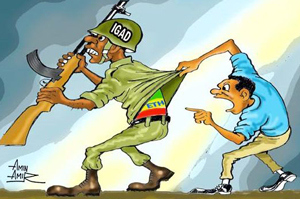

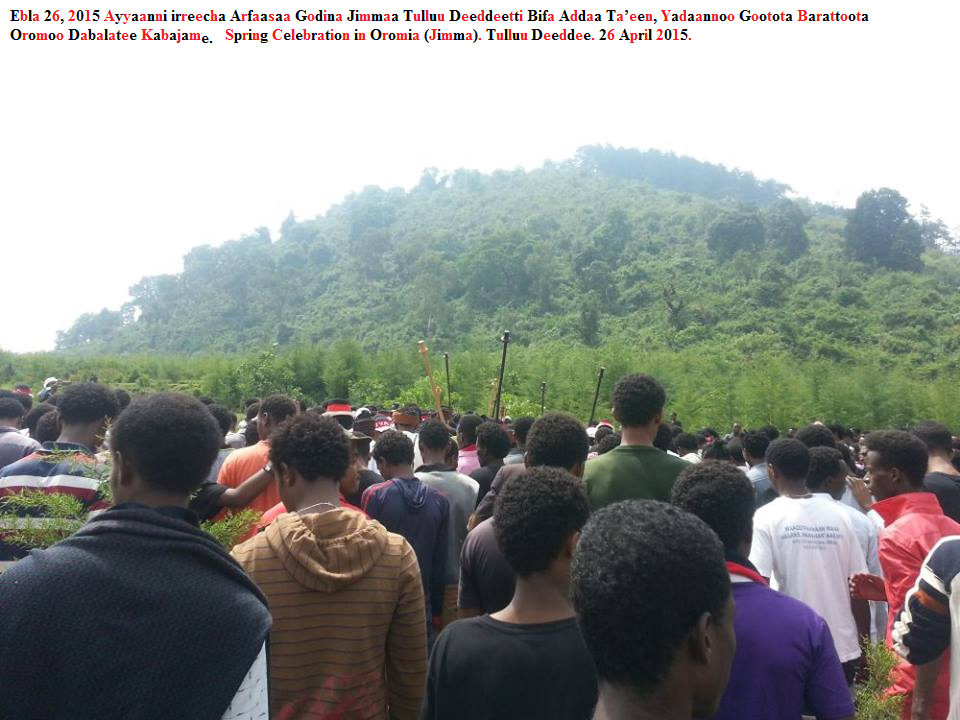


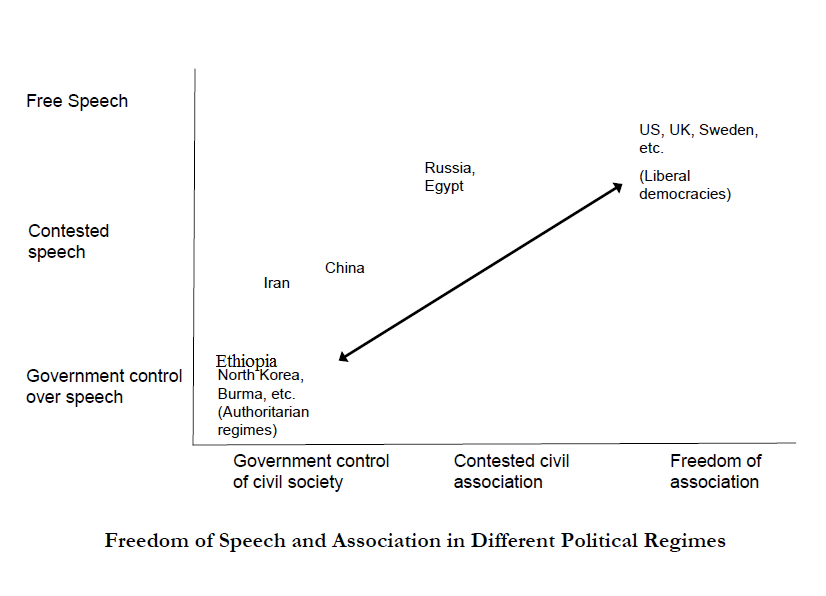

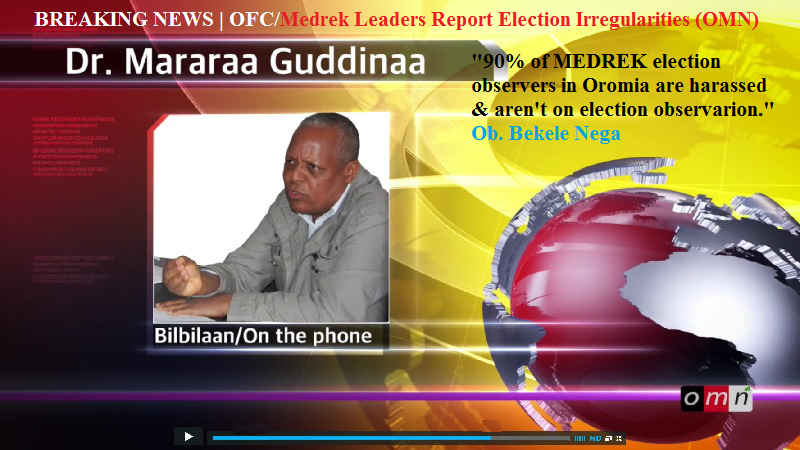


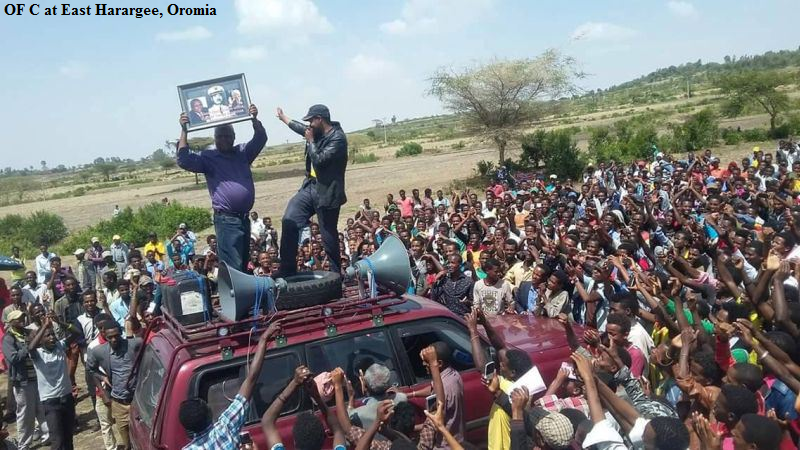
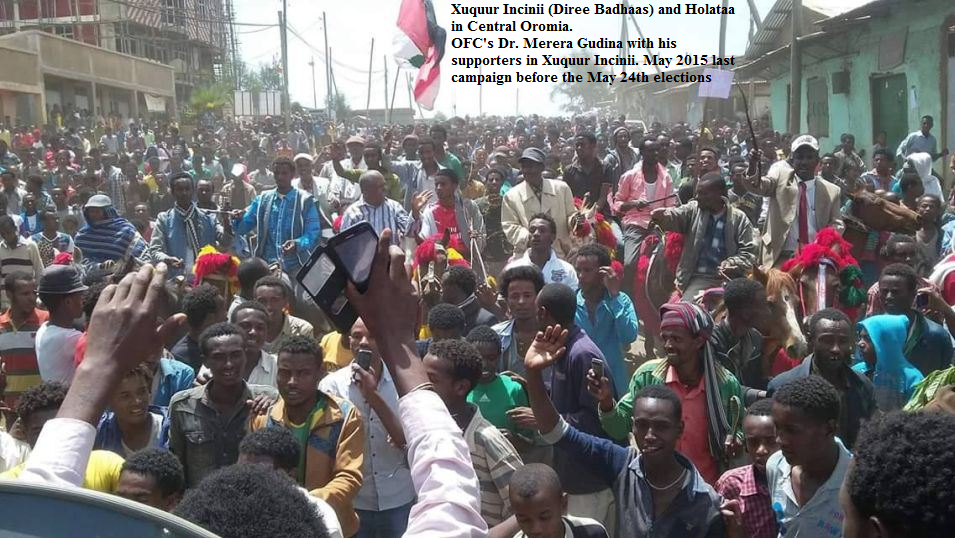
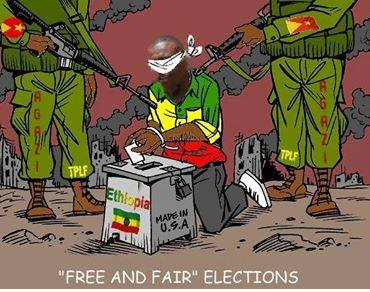
 Addis fortune


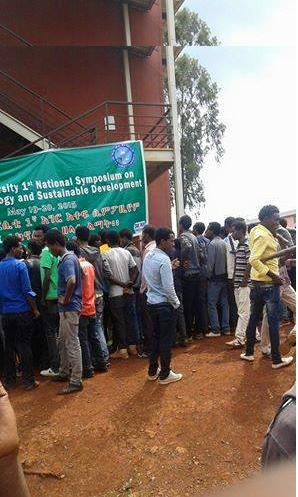
 በኦሮሚያ ክልል ፊንፊኔ ዙሪያ ልዩ ዞን በረህ አለልቱ ምርጫ ክልል ገዋሳ 02 ምርጫ ጣቢያ በአንድ ለአምስት የተደራጁ ‹ካድሬዎች› መራጮቹን እያዋከቡ መሆኑን መራጮች ተናግረዋል፡፡ በምርጫ ክልሉ ለተወካዮች ም/ቤት የሰማያዊ ፓርቲ ተወዳዳሪ አቶ አበበ አካሉ ጉዳዩን እያጣሩ መሆናቸውን አስታውቀዋል፡፡ለመምረጥ የሚመጡት እየተፈተሹ እና ስልክ ይዘው እንዳይገቡ እየተደረገ ነው
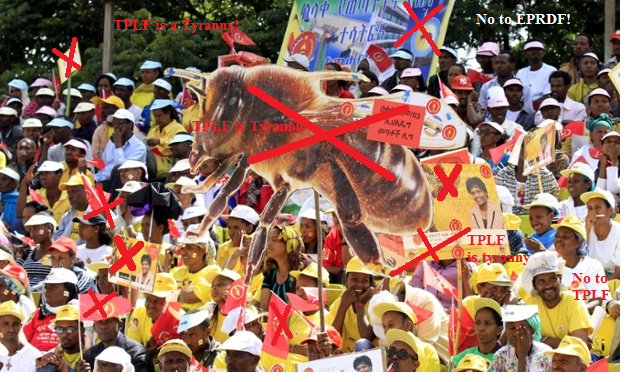


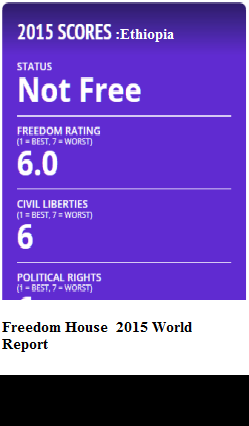
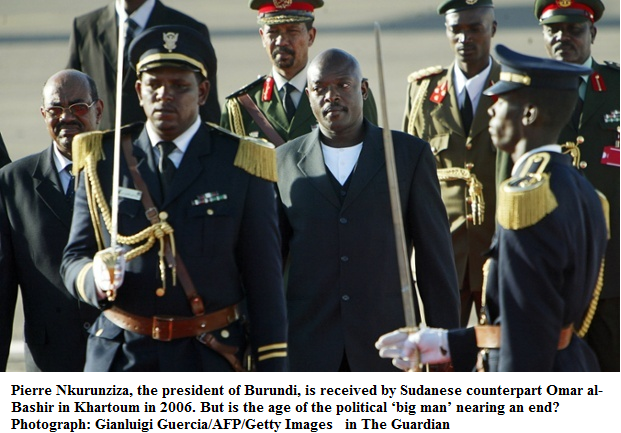


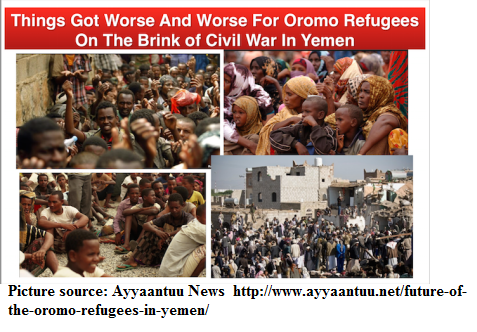

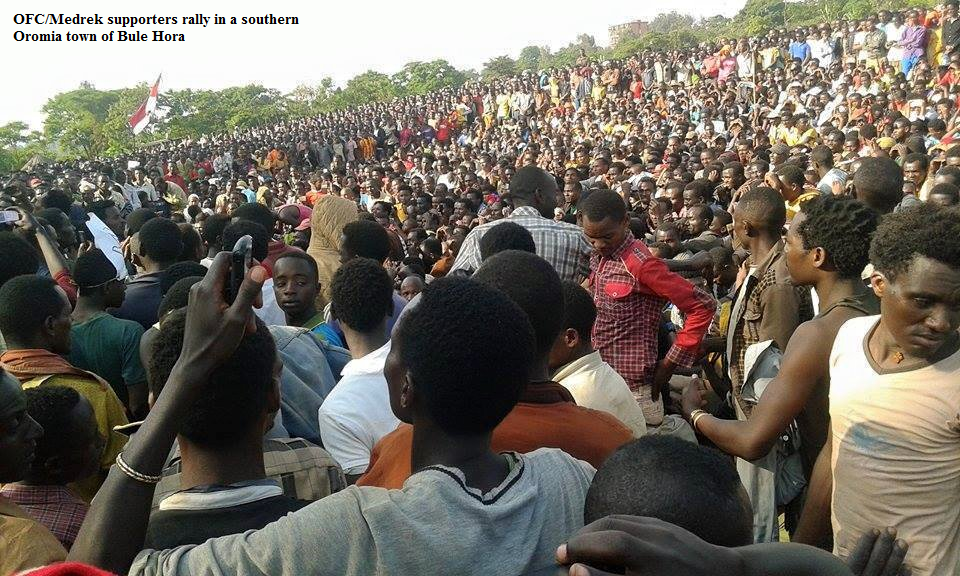
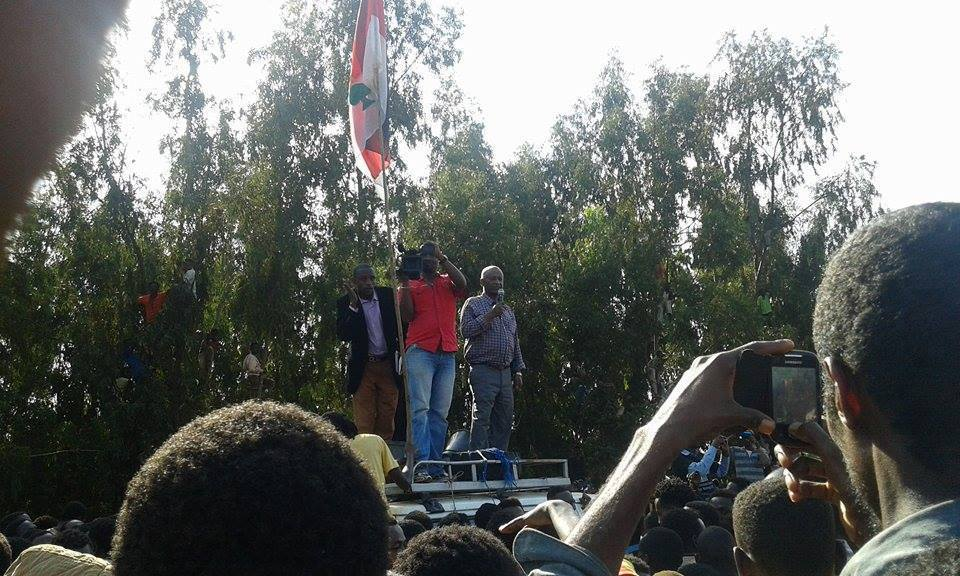
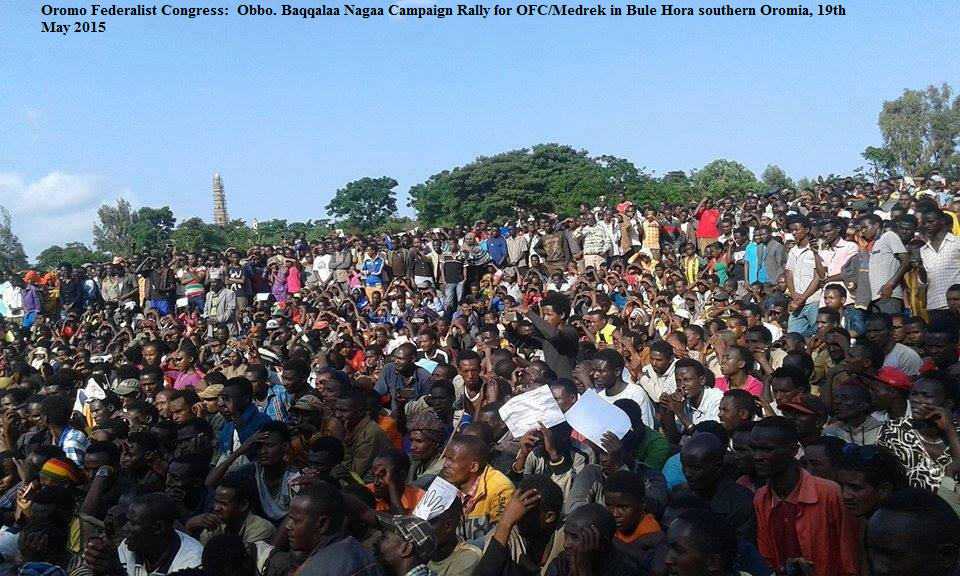
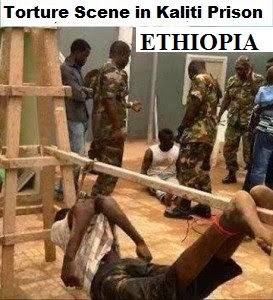

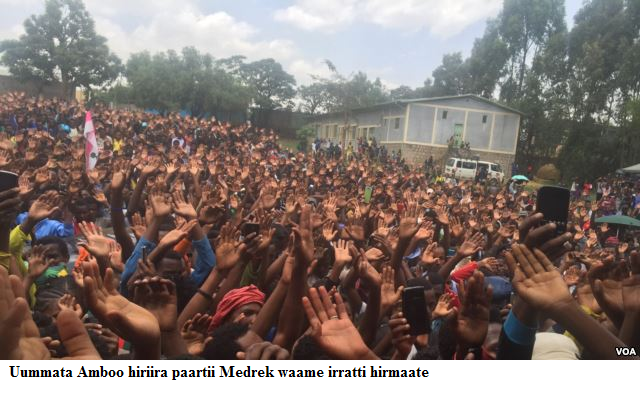


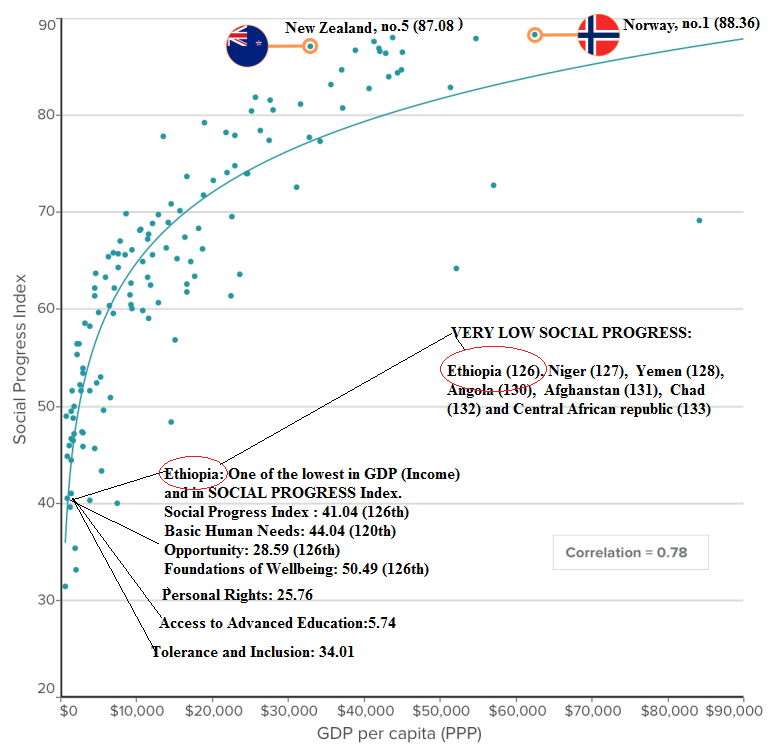

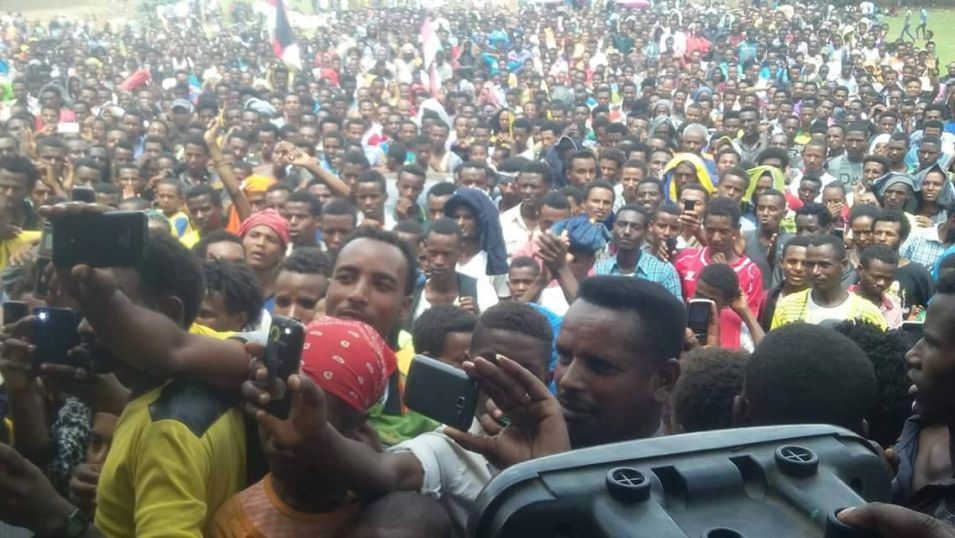
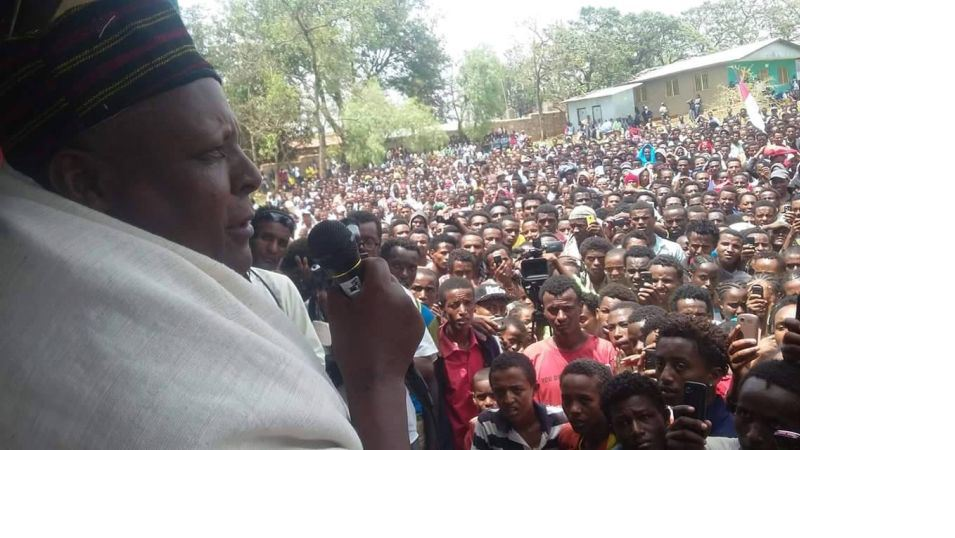
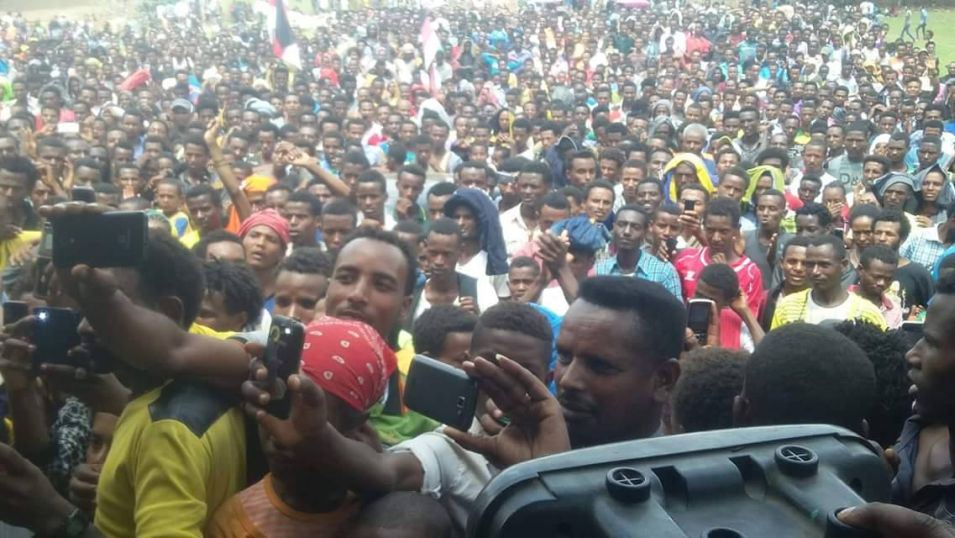
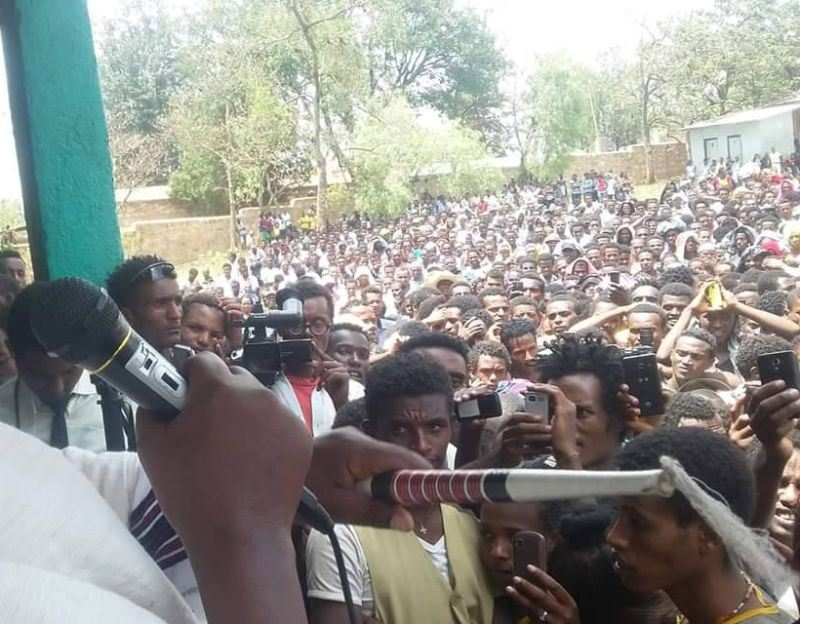
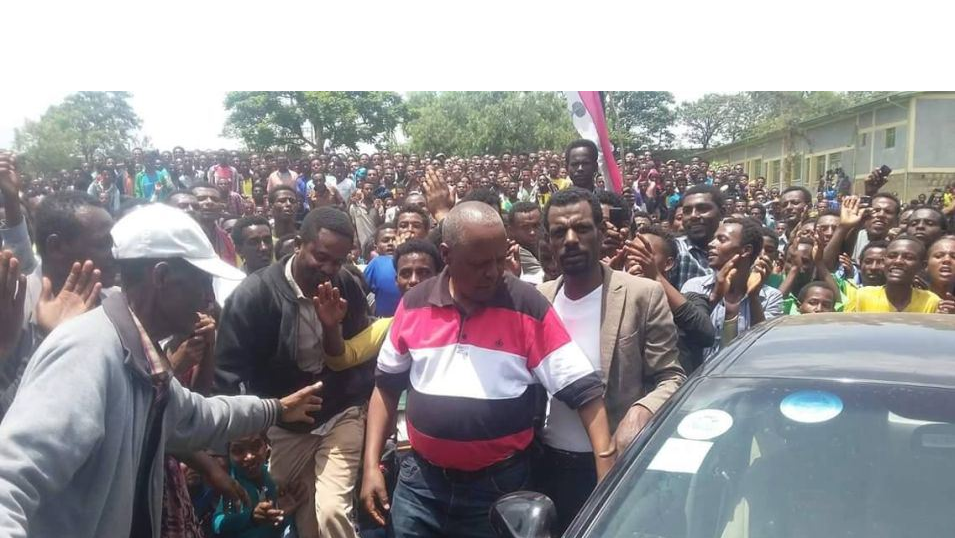

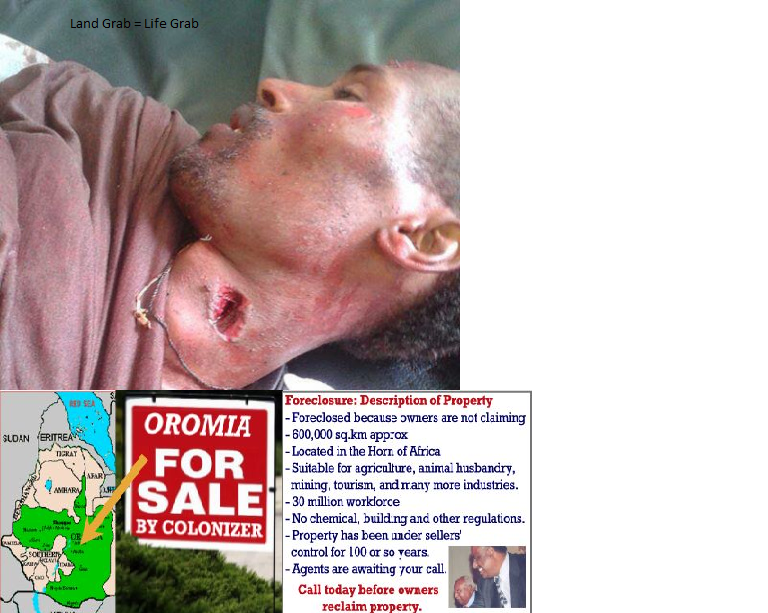






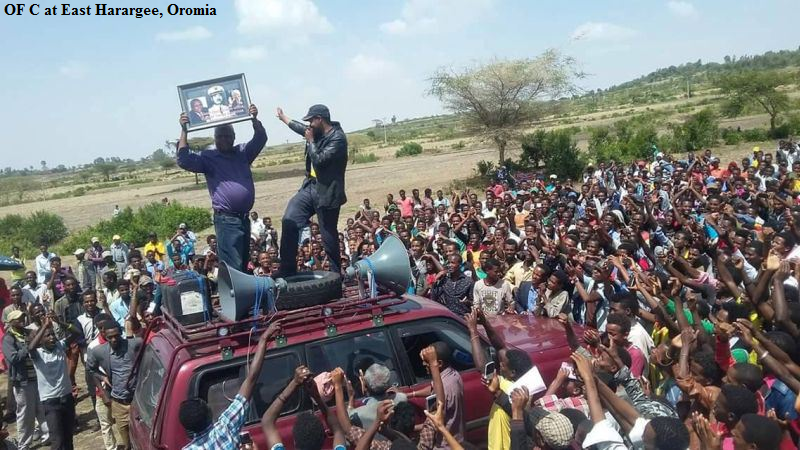
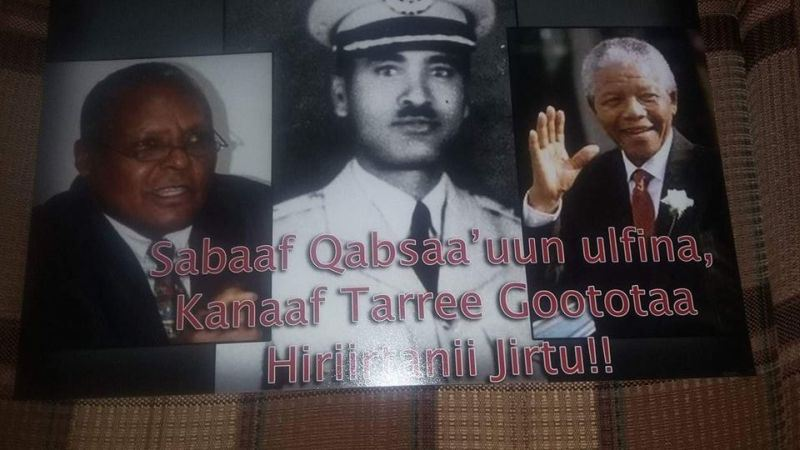
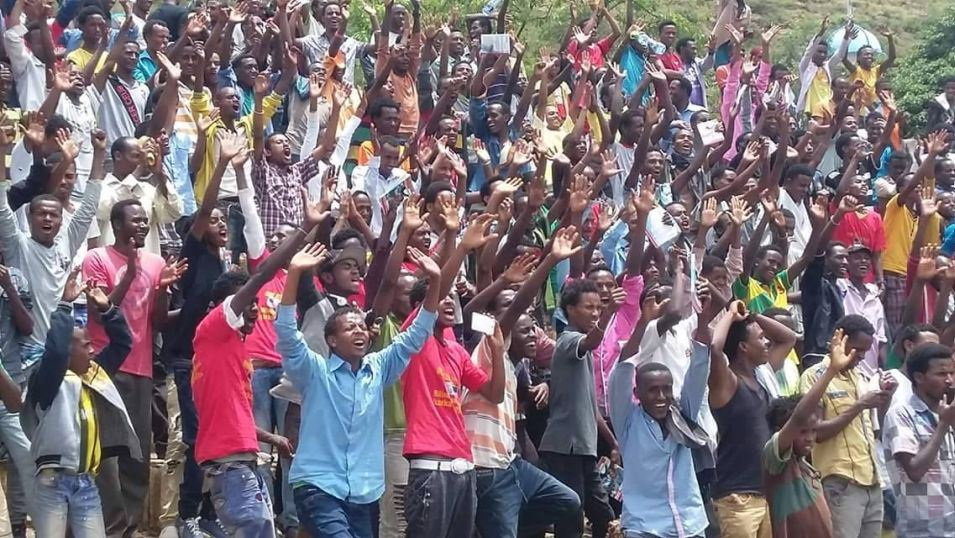
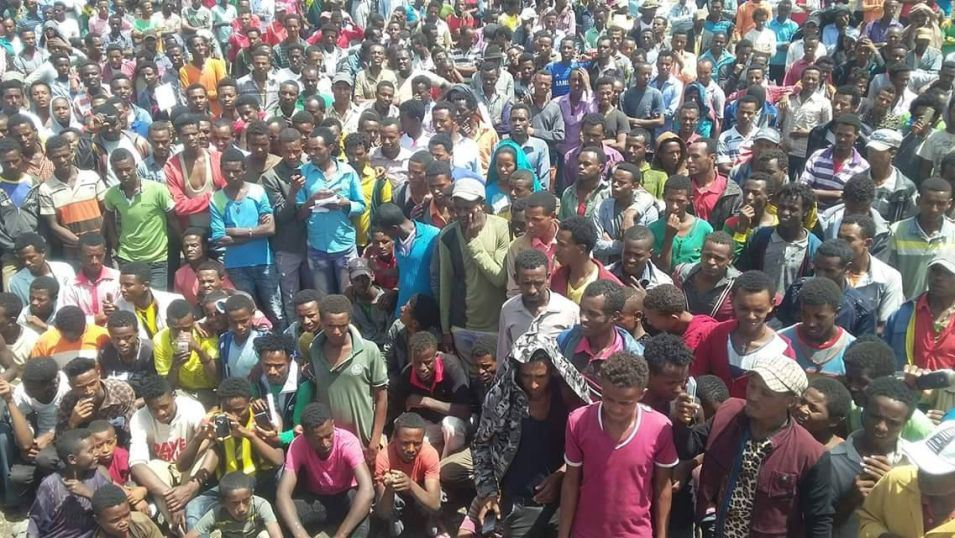
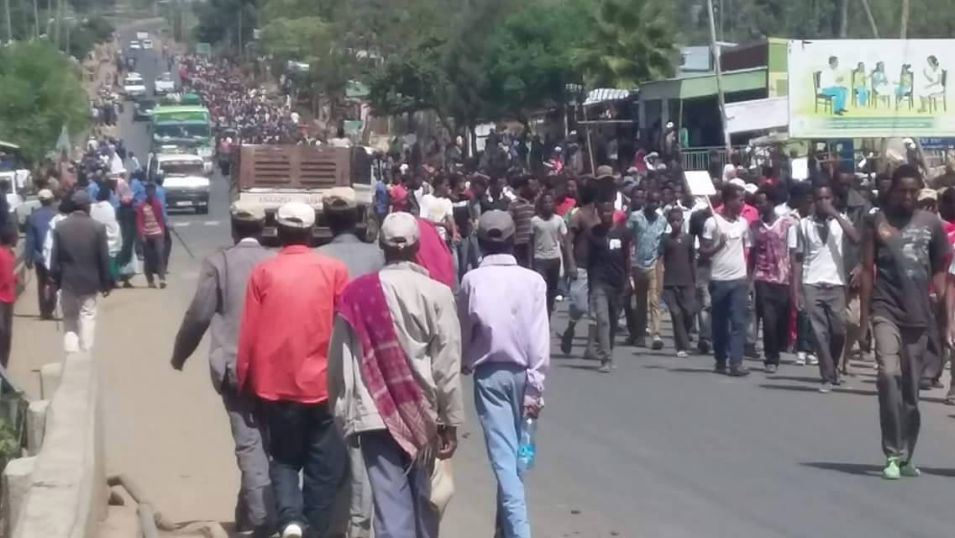
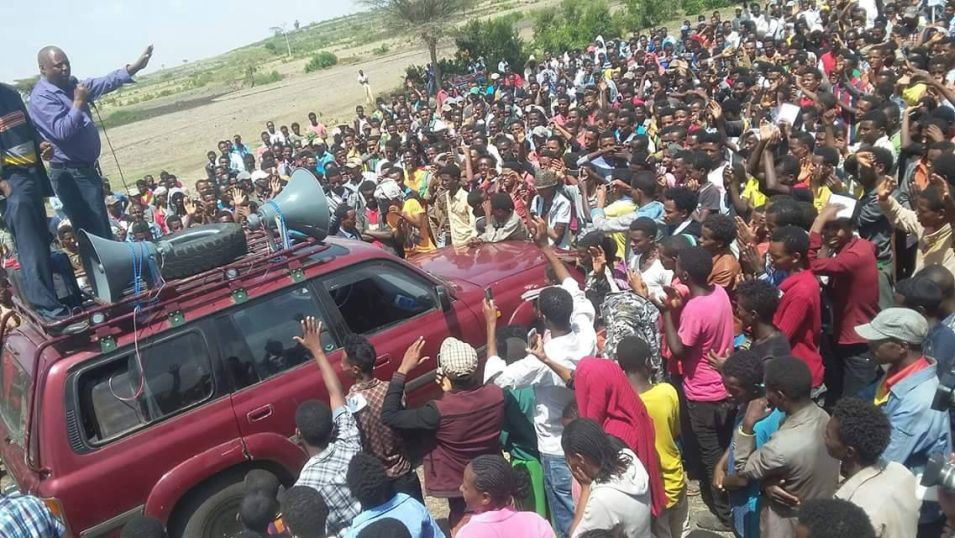
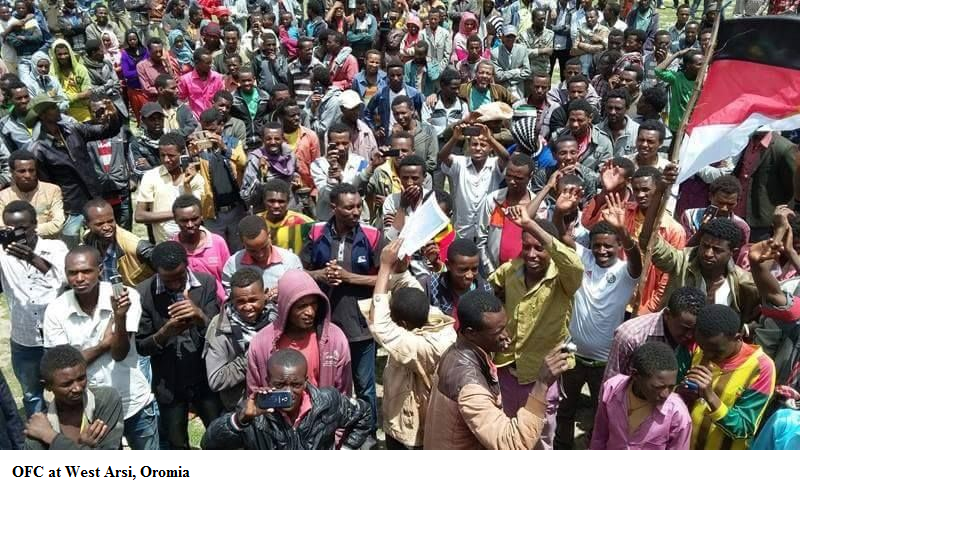
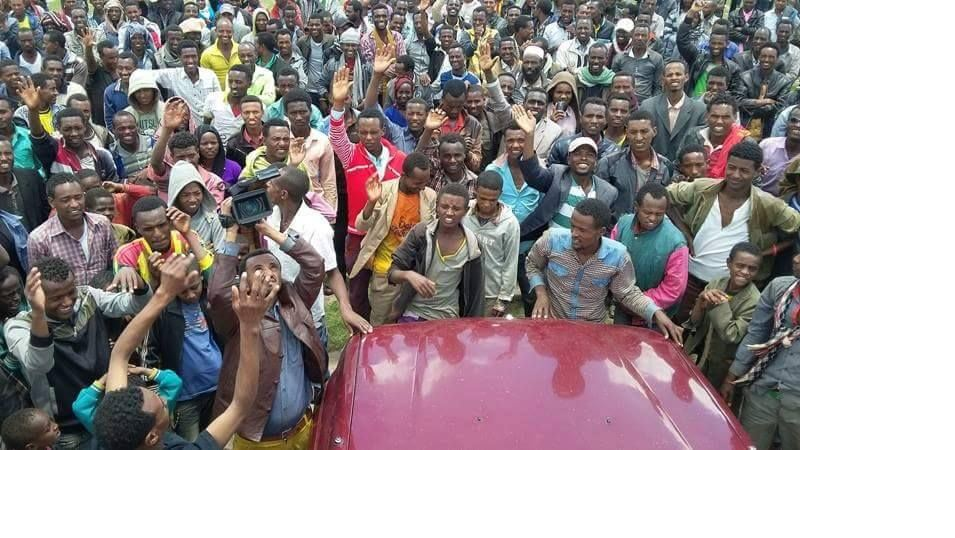
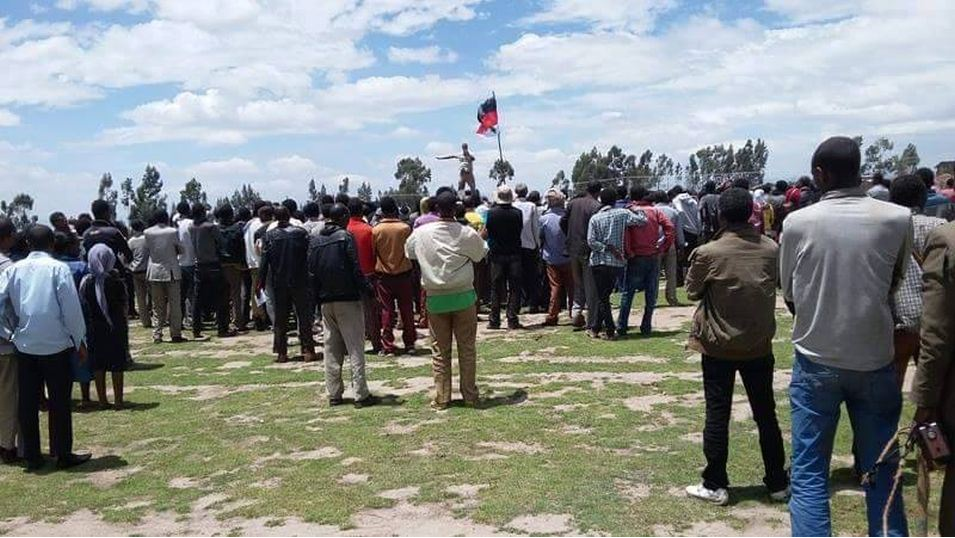
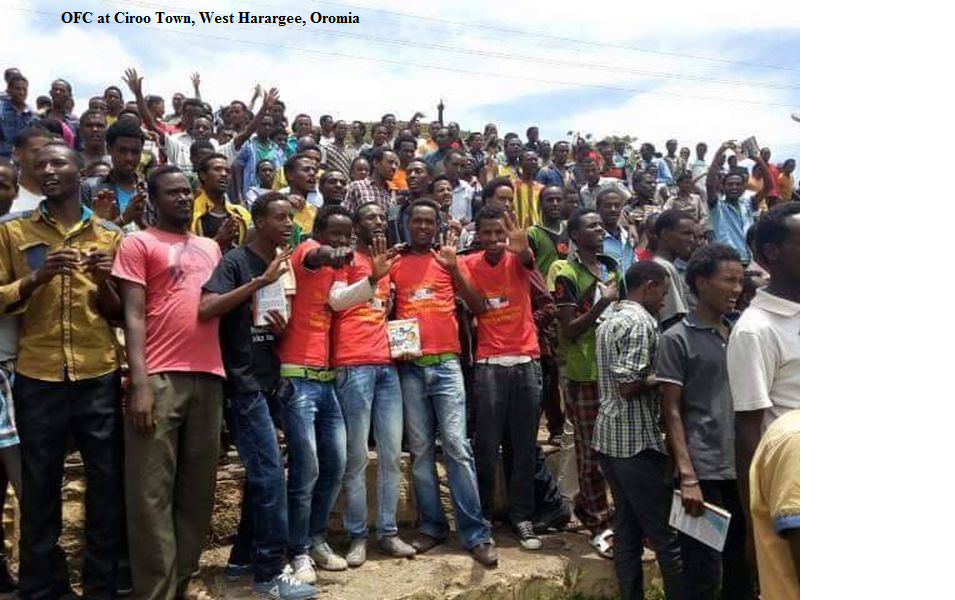
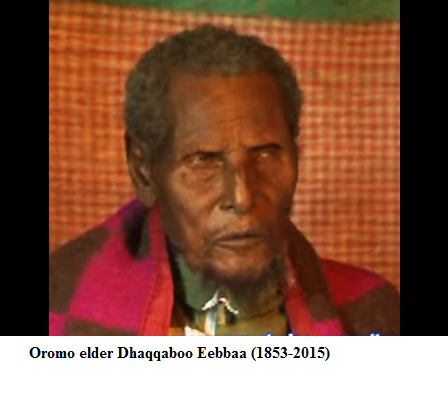


 Oromian Economist
A letter from former U.S. Senate candidate Prof. Mohammed Tahiro to U.S. President Barack Obama regarding Ethiopia’s General Election, which was held on 24 May 2015. May 29, 2015
Posted by OromianEconomist in Sham elections.Tags: Africa, African Studies, Déjà vu in Ethiopia’s May 24, Ethiopia's sham elections, Freedom House in response to comments by Under Secretary for Political Affairs, Professor Mohammed Tahiro's letter to President Obama, UNPO
add a comment
The following is a letter from former U.S. Senate candidate Prof. Mohammed Tahiro to U.S. President Barack Obama regarding Ethiopia’s General Election, which was held on 24 May 2015:-
——
Mohammed Tahiro
May 27, 2015
President Barack Obama
The White House
1600 Pennsylvania Avenue
NW Washington, DC 20500
Dear Mr. President, Thank you for the opportunity to write to you on an issue that is important to me as well as the United States. Ethiopia held regional and parliamentary elections for the fifth time under the current Constitution on Sunday, May 24, 2015. Unlike previous elections, the current election was conducted in the absence of international observers. The African Union sent fifty six observers to monitor elections with over forty five thousand polling stations. The 2005 and 2010 elections were marred with serious allegations of vote rigging by the ruling EPRDF. The European Union and international human rights organizations had condemned the practices of the Ethiopian government as fraudulent and undemocratic. In 2010, the ruling party declared itself winner of 99.6 percent of parliamentary seats; out of a total of 547 seats, only 1 seat went to an opposition politician. Many people believe this alone is evidence enough to indict the government as illegitimate. In the years and months leading up to the current election, the government had allegedly been engaged in open prosecutions of opposition party leaders and supporters. There are credible reports of political killings throughout the country. In Oromia State, opposition leaders were detained, tortured, and some allegedly killed by an unpopular government determined to staying power. Allegations of widespread vote rigging have also been reported in Gondar and throughout the northern counties as well as the South. Opposition parties allege the Ethiopian Electoral Board is staffed by government operatives with the sole purpose of putting its seal of approval on a preordained outcome. Mr. President, diaspora-based independent media outlets, such as the Oromia Media Network (OMN) and others, have been reporting claims of harassment and abuses against opposition leaders and supporters perpetrated by the government. Entrenched political and economic interests are testing the legendary decency of the Ethiopian people. Contempt for the people and the rule of law has been the hallmark of this government. Their refusal to yield to the will of the people has nudged the country one step closer to a civil conflict. As an American, I believe supporting true democracy in Ethiopia is in the long term strategic interest of the United States. In the election held last Sunday, the ruling party printed the ballots, took possession of the ballots, manned the polling stations, and counted cast ballots. This is not a democratic process by any measure. MEDREK, a coalition of main opposition parties, has declared the election fraudulent and that it will not accept the outcome. The people of Ethiopia are demanding fair elections. Fair elections mean guaranteeing the integrity of the process. To that end, I’m asking you, Mr. president, to support the initiative to hold new elections in twenty four months, with at least one international observer from the United States, the United Nations, or the European union manning every polling station. Until such time as Ethiopia is ready to have an independent election commission, it’s only fair that the elections be conducted under the auspices of the United Nations. only then, can we even come close to guaranteeing the integrity of the process.
Thank you for your consideration and I eagerly await your response.
Most Respectfully,
Mohammed Abbajebel Tahiro
Former U.S. Senate Candidate for the State of Texas