Economic and development analysis: Perspectives on economics, society, development, freedom & social justice. Leading issues in Oromo, Oromia, Africa & world affairs. Oromo News. African News. world News. Views. Formerly Oromia Quarterly
Oromo culture from ancient to present, Irrechaa time
Oromo nation and Gadaa system
Please do not call the Oromo people (the Oromians) a tribe and by extension all African nations and nationalities:
You know Why?
Read the following: What Achebe wrote referring to his Igbo people is equally applicable to the Oromo.
Chinua Achebe the renowned African novelist and poet, the author of Things fall apart, the best known and best selling novel ever in his book Home and exile (Oxford University Press, 2000, pp.3-5) says the following:
“The Igbo people of south eastern Nigeria are more than ten million and must be accounted one of the major peoples of Africa. Conventional practice would call them a tribe, but I no longer follow that convention. I call them a nation. ‘Here we go again!,’ You may be thinking. Well, let me explain. My Pocket Oxford Dictionary defines tribe as follows: ‘group of people (esp. primitive) families or communities linked by social , religious or blood ties and usually having a common culture and dialect and a recognized leader.’ If we apply the different criteria of this definition to Igbo people we will come up with the following results:
a. Igbo people are not primitive; if we were I would not be offering this distinguished lecture, or would I?;
b. Igbo people are not linked by blood ties, although they may share many cultural traits;
c. Igbo people do not speak one dialect; they speak one language which has scores of major and minor dialects;
d. and as for having one recognized leader, Igbo people would regard the absence of such a recognized leader as the very defining principle of their social and political identity.
Therefore, all in all, Igbo people would score very poorly indeed on the Oxford dictionary test for tribe.
My little Oxford dictionary defines nation as, ‘ a community of people of mainly of common descent, history or language, etc, forming a state or inhabiting a territory. This may not be a perfect fit for the Igbo, but it is close. In addition I like it because, unlike the word tribe, which was given to me, nation is not loaded or derogatory, and there is really no good reason to continue answering a derogatory name simply because somebody has given it to you.”
We see the word everywhere: throughout news reports of African struggles, in old films and on the latest television shows. You’ve probably even heard it used in a recent class covering topics related to history or anthropology.
“Tribe” has become a well-known, frequently used word to describe a particular group of people, specifically within a non-Western nation. The word seems to predominantly flood media outlets when an African ethnic group is involved in conflict or famine.
According to the Oxford Dictionaries’ newest definition of the word, a tribe is described as, “A social division in a traditional society consisting of families or communities linked by social, economic, religious, or blood ties, with a common culture and dialect, typically having a recognized leader.”
But what exactly are we implying when we use the word “tribe?” In an African context, when did this word originate and what words can we use as alternates?
Assan Sarr, assistant professor of history at Ohio University, says the word tribe first began spreading throughout Africa during the Scramble for Africa, or the period of European colonization of the continent.
“For much of Africa it seems that the word tribe became associated with the continent more during the 19th century, which means that it coincided with European imperialism,” Sarr says. “So, for Africans, the use of the word is really wrapped up in colonialism and that is one of the major reasons why Africans, or scholars who work on Africa, do not prefer the use of the term tribe to describe Africans.”
With a powerful history and past, the word “tribe” reflects social theories of the 19th century regarding stages of evolution and primitivism.
Even today, many negative connotations and falsities have continued with the use of the term to describe certain peoples within continents like Africa. The fallacies provoked by this pejorative language can include visuals of ethnic groups as clusters of half naked, barbarous, uncivilized and uneducated individuals with long feathers in their hair or spears in hand.
Definitions of the word also seem to point toward a society that exists outside of the state, one that is simple, small and static, and without the same structure as that which may be found in other complex societies and civilizations.
Sarr says the discrepancies are easily noticeable when comparing a commonly labeled tribal group, such as the Igbo, with that of Flemings, or the Flemish. The Igbo and Flemings are similarly categorized by their language and culture, and the Igbo are actually drastically greater in size — yet only the Igbo are considered a tribe.
“You don’t hear of the Irish tribe, or the Italian tribe, or the Spanish tribe. It’s always the various Arab tribes, or the Indian tribes, or the African tribes and that, for me, is one of the most potent issues that we need to be aware of. Here we are essentializing these people, we’re making them look distinctive,” Sarr says. “You are using it to refer to a group of people that share a certain historical experience, certain cultural traits, a language. This seems to me to be the perfect definition of an ethnic group, so why use the word tribe?”
Americans and Westerners are not the only people using this term, as some Africans refer to themselves as a part of a tribe. However, Sarr says that Africans do not use this word with the same assumptions and implications as those who brought it to the continent in the 19th century, or as those who may use it today in Westernized states.
In fact, as mentioned in Talking About Tribe by Africa Action, when some Africans are taught English, they are told that the correct, recognizable word to describe their ethnic group is “tribe.” In their own language, such as Zulu, the word used to describe their ethnic group actually translates to “people” or “nation.”
People and nation are two alternatives of tribe that can also be used in English to portray these multifaceted groups. Using the term “ethnic group” is also acceptable, or just simply calling them by their names – the Mende, the Wolof, the Hausa and so on.
“If they call themselves Igbo that means that word itself has a cultural meaning that the people themselves can associate with, rather than this foreign concept, this idea, that is used by others to describe them that does not capture all of their complex sets of ideas and histories and relationships,” Sarr says.
Using words like tribe and continuing to view places such as Africa as one place with one culture and one type of people is common, yet very detrimental. It is vital to be conscious of the history of the language we are using, and what our words may be negatively implying or stereotyping.
“How do we talk about Africa in a more intelligent, culturally sensitive, and helpful way? It’s this idea of unpacking all of the things that one acquired and grew up with,” Sarr says. “You have all these assumptions, these Eurocentric views, but once you start unpacking that and seeing that this is not true, then you begin to see some real interesting facts about the world.”
So, then, how was Africa decolonized, if the UN knew what it meant by self-determination, but it did not know what is a people? What happened is that the UN did not look at peoples, but instead looked at what it called Non-Self-Governing Territories, accepting the territorial boundaries as they were at the time – essentially, the colonial boundaries.
Whatever those boundaries were – they did not follow ethnic lines. When Rhodes conquered Rhodesia, there were no Rhodesians living there. The colonial boundaries were determined in Berlin in 1885 – with no African involvement whatsoever and without regard of what African peoples may have wanted.
I think what the UN did at the time was understandable given the circumstances and it was widely supported in Africa as well. But not universally: in 1958, the first All-African People’s Conference denounced “the artificial boundaries drawn by imperialist powers” [1].
A few years later, in 1963, the OAU charter made no mention any more of self-determination, but instead defended the territorial integrity of its member states. Ali Mazrui has called this ‘pigmentational self-determination’ [2]:
African leaders were in favour of self-determination, but only to the extent that it concerned independence from European domination. However, they did not realize that respecting European boundaries in fact also helped to preserve their dependence on their former colonial masters.
In 1981, the OAU adopted the African Charter on People’s and Human Rights (also known as the Banjul Charter). In Article 20, it states: “All peoples (…) shall have the unquestionable and inalienable right to self-determination. They shall freely determine their political status and shall pursue their economic and social development according to the policy they have freely chosen.”
So – the UN does recognize the right to self-determination and this right is also recognized by the African Union. This leads to only one possible conclusion: African countries have achieved independence, yes.
But African peoples, by and large, have not been asked for their opinion. In other contintents, people were asked, though it did not happen very often. Recent examples from Europe include the 1990 referendum which led to the independence of the Slovenian people and the 2014 referendum in which the Scottish people elected to stay part of the UK.
If we accept that peoples have the right to self-determination – then it is clear that many African peoples have not yet been able to enjoy this right. When will the peoples of Africa get the right to self-determination?
Almost everybody will have heard about the right ho self-determination. It is said that this is a right all peoples have. But where does this right come from and what does it mean? Wat does it mean in an African context? That is what I will try to explore in this post.
Origins
The right to self-determination is enshrined in the Charter of the United Nations, as adopted in 1945, immediately after the end of the Second World War. Four African countries were amongst the first 50 signatories of this Charter: Egypt, Ethiopia, Liberia and South Africa.
In Article 1, the Charter states that the UN is based on ‘respect for the principle of equal rights and self-determination of peoples’. This is nice, and peoples all over the world to this day are defending their claims to independence based on this principle. But has it always been like this? What does it mean? Where does this idea come from?
To understand the origins of the idea of a right to self-determination, we have to go back to the First World War of 1914-1918 and to the United States and its President at the time, Woodrow Wilson. The US had sought to understand the causes that led to the War and it wanted to establish a number of ideas and proposals that would prevent a new war. One of those ideas was the principle of self-determination.
Note that before the First World War, most nations in fact were multi-ethnic and the peoples in them did not have any such right. Going back to Pharaonic times or before, rulers generally received their legitimacy from God or the Gods and the people or peoples ruled by them were supposed to obey and be content.
In the words of the British monarchy: “Honi soit qui mal y pense” – evil is he who thinks evil of it. Countries like Poland and Ukraine were formed after the war. In part, the concept of self-determination was introduced to try to thwart the impact of the 1917 Russian revolution, which sought to establish a multi-ethnic proletarian dictatorship.
So – this principle of self-determination is a relatively new phenomenon. It is not something that comes from African, Asian or European political thought. Perhaps it should not come as a surprise that the idea was born in the US – a country which itself obtained its independence from Britain through war. It is important to realize that before 1918, no such formal principle existed – not in Africa, not in Europe, nowhere.
This resolution provided the formal underpinning for Africa’s decolonization, as monitored by the Special Committee on Decolonization, which was established in 1961.
Meaning
So – under international law as it stands now, peoples have the right to self-determination. But what does self-determination mean? This has in fact been elaborated on in the same UN resolution. The resolution specifies that a people should be free to choose what it wants: either free association with an independent State, integration into an independent State, or independence. All three are legitimate options that comply with the principle.
To understand the full meaning of the principle, then, what remains is to understand what the word ‘people’ means in this context. Unfortunately, it is precisely this essential bit that has never been resolved. Wikipedia says: “A people is a plurality of persons considered as a whole, as in an ethnic group or nation.”
That seems a bit circular – people is a nation, but then what is a nation? A people? Merriam-Webster gives a more precise definition: a people is “a body of persons that are united by a common culture, tradition, or sense of kinship, that typically have common language, institutions, and beliefs, and that often constitute a politically organized group”.
Self-determination in Africa
So, then, how was Africa decolonized, if the UN knew what it meant by self-determination, but it did not know what is a people? What happened is that the UN did not look at peoples, but instead looked at what it called Non-Self-Governing Territories, accepting the territorial boundaries as they were at the time – essentially, the colonial boundaries.
Whatever those boundaries were – they did not follow ethnic lines. When Rhodes conquered Rhodesia, there were no Rhodesians living there. The colonial boundaries were determined in Berlin in 1885 – with no African involvement whatsoever and without regard of what African peoples may have wanted.
I think what the UN did at the time was understandable given the circumstances and it was widely supported in Africa as well. But not universally: in 1958, the first All-African People’s Conference denounced “the artificial boundaries drawn by imperialist powers” [1].
A few years later, in 1963, the OAU charter made no mention any more of self-determination, but instead defended the territorial integrity of its member states. Ali Mazrui has called this ‘pigmentational self-determination’ [2]:
African leaders were in favour of self-determination, but only to the extent that it concerned independence from European domination. However, they did not realize that respecting European boundaries in fact also helped to preserve their dependence on their former colonial masters.
A reader may ask if I am more clever than the UN and if I in my turn can offer a clear definition of what a people is – and of what that would mean in practice for Africa. That is a point.
Even though I think that Western ethnologists have done more to divide than to unite the peoples in Africa – I cannot myself offer anything better than the still vague Merriam-Webster definition. I would venture though that if a group of persons chooses to call and manifest itself as a people – it probably is.
In 1981, the OAU adopted the African Charter on People’s and Human Rights (also known as the Banjul Charter). In Article 20, it states: “All peoples (…) shall have the unquestionable and inalienable right to self-determination. They shall freely determine their political status and shall pursue their economic and social development according to the policy they have freely chosen.”
So – the UN does recognize the right to self-determination and this right is also recognized by the African Union. This leads to only one possible conclusion: African countries have achieved independence, yes.
But African peoples, by and large, have not been asked for their opinion. In other contintents, people were asked, though it did not happen very often. Recent examples from Europe include the 1990 referendum which led to the independence of the Slovenian people and the 2014 referendum in which the Scottish people elected to stay part of the UK.
If we accept that peoples have the right to self-determination – then it is clear that many African peoples have not yet been able to enjoy this right. When will the peoples of Africa get the right to self-determination?
Post By
Bert is a Dutchman who was trained as a social scientist. He has been active in the environment and development movement in the Netherlands and else where, starting his ‘career’ in the Anti-Apartheid movement. Bert has lived in Kenya for four years and is passionate about anything related to culture and intercultural communications. He is a world citizen with a particular interest in Africa, loved for its diversity and richness.
—
[1] Cited in: Changing African Perspectives on the Right of Self-Determination in the Wake of the Banjul Charter on Human and Peoples’ Rights, Kwaw Nyameke Blay, Journal of African Law Vol. 29, No. 2 (Autumn, 1985), pp. 147-159. Cambridge University Press.
[2] A. Mazrui, Towards a Pax Africana, London, 1967, p 15.
Appeal Letter of Oromo Students of Jimma University
To: The Administration of Jimma University
Jimma
March 2, 2015
We, the Oromo students of Jimma University, are deeply disturbed by the multifaceted repression, subjugation, political marginalization, economic exploitation, and mass and indiscriminate killings that the Oromo people are subjected to by the current TPLF/EPRDF government and profoundly distressed by the endless insults, harassment and humiliations we are facing from the remnants of the old and neo-nafxanyas (gun carriers who settled on our land by force) here in our university and in the Ethiopian empire at large. To add insult to our injury, Abay Tsehaye, one of the prominent leaders of the Ethiopian regime and one of the founders of the Tigrean People Liberation Front (TPLF), has demonstrated his contempt of the Oromo people by his current provocative and inflammatory remark. It has been exposed on several independent media outlets that Abay Tsehaye arrogantly stated that, the so called Addis Ababa Master Plan, which was met with fierce opposition from the Oromo public, “will be realized whether you like it or not” and bragged that anyone who opposes the Master Plan “will face severe punishment”. Basically, this Tigrean chief, who is currently serving as the “advisor” of the TPLF-led government, undermining the power of the people, arrogantly stated that the Oromo people have no right to oppose the evil plan that the Tigrean led Ethiopian regime has put forward.
Abay Tsehaye’s contemptuous and disrespectful remark is a clear testimony of the attitude of the entire TPLF gang who has been using the so called OPDO “Oromo organization” as a tool to subjugate the Oromo nation and not in any measure an equal partner in the EPRDF coalition as they try to mislead the public. We consider his disdainful and condescending remark as remorseless and callous act of ridiculing of the blood and graves of our fallen brothers and sisters who he and his cohorts have murdered in broad day light for no crime other than showing opposition to this so called “Master Plan” they have designed in order to loot Oromo land and subjugate the great Oromo nation. Read More:-
Ethiopia: stealing the Omo Valley, destroying its ancient Peoples
Megan Perry* / Sustainable Food Trust
A land grab twice the size of France is under way in Ethiopia, as the government pursues the wholesale seizure if indigenous lands to turn them over to dams and plantations for sugar, palm oil, cotton and biofuels run by foreign corporations, destroying ancient cultures and turning Lake Turkana, the world’s largest desert lake, into a new Aral Sea.
What is happening in the lower Omo Valley shows a complete disregard for human rights and a total failure to understand the value these tribes offer Ethiopia in terms of their cultural heritage and their contribution to food security.
There is growing international concern for the future of the lower Omo Valley in Ethiopia. A beautiful, biologically diverse land with volcanic outcrops and a pristine riverine forest; it is also aUNESCO world heritage site, yielding significant archaeological finds, including human remains dating back 2.4 million years.
The Valley is one of the most culturally diverse places in the world, with around200,000 indigenous people living there. Yet, in blind attempts to modernise and develop whatthe government sees as an area of ‘backward’farmers in need of modernisation, some of Ethiopia’s most valuable landscapes, resources and communities are being destroyed.
A new dam, called Gibe III, on the Omo River is nearing completion and will begin operation in June, 2015, potentially devastating the lives of half a million people. Along with the dam, extensive land grabbing is forcing thousands from their ancestral homes and destroying ecosystems.
Ethiopia’s ‘villagisation’ programme is aiding the land-grab by pushing tribes into purpose built villages where they can no longer access their lands, becoming unable to sustain themselves, and making these previously self-sufficient tribes dependent on government food aid.
A total disregard for the rights of Ethiopia’s Indigenous Peoples
What is happening in the lower Omo Valley, and elsewhere, shows a complete disregard for human rights and a total failure to understand the value these tribes offer Ethiopia in terms of their cultural heritage and their contribution to food security.
There are eight tribes living in the Valley, including the Mursi, famous for wearing large plates in their lower lips. Their agricultural practices have been developed over generations to cope with Ethiopia’s famously dry climate.
Many are herders who keep cattle, sheep and goats and live nomadically. Others practice small-scale shifting cultivation, whilst many depend on the fertile crop and pasture land created by seasonal flooding.
The vital life source of the Omo River is being cut off by Gibe III. An Italian construction company began work in 2006, violating Ethiopian law as there was no competitive bidding for the contract and no meaningful consultation with indigenous people.
The dam has received investment from the Industrial and Commercial Bank of China, and the hydropower is primarily going for export rather than domestic use – despite the fact that 77% of Ethiopia’s population lacks access to electricity.
People in the Omo Valley are politically vulnerable and geographically remote. Many do not speak Amharic, the national language, and have no access to resources or information. Foreign journalists have been denied contact with the tribes, as BBC reporter Matthew Newsome recently discovered when he was prevented from speaking to the Mursi people.
There has been little consideration of potential impacts, including those which may affect other countries, particularly Kenya, as Lake Turkana relies heavily on the Omo River.
At risk: Lake Turkana, ‘Cradle of Mankind’
Lake Turkana, known as the ‘Cradle of Mankind’, is the world’s largest desert lake dating back more than 4 million years. 90% of its inflow comes from the Omo. Filling of the lake behind the dam will take three years and use up to a years’ worth of inflow that would otherwise go into Lake Turkana.
Irrigation projects linked with the dam will then reduce the inflow by 50% and lead to a drop of up to 20 metres in the lake’s depth. These projects may also pollute the water with chemicals and nitrogen run-off. Dr Sean Avery’s report explains how this could devastate the lake’s ancient ecosystems and affect the 300,000 people who depend on it for their livelihoods.
Tribal communities living around the lake rely on it for fish, as well as an emergency source of water. It also attracts other wildlife which some tribes hunt for food, such as the El Molo, who hunt hippo and crocodile. Turkana is home to at least 60 fish species, which have evolved to be perfectly adapted to the lake’s environment.
Breeding activity is highest when the Omo floods, and this seasonal flood also stimulates the migration of spawning fish. Flooding is vital for diluting the salinity of the lake, making it habitable. Livestock around the lake add nutrients to the soil encouraging shoreline vegetation, and this is important for protecting young fish during the floods.
Lake Turkana is a fragile ecosystem, highly dependent on regular seasonal activity, particularly from the Omo. To alter this ancient ebb and flow will throw the environment out of balance and impact all life which relies on the lake.
Severely restricted resources around the lake may also lead to violence amongst those competing for what’s left. Low water levels could see the lake split in two, similar to the Aral Sea. Having acted as a natural boundary between people, there is concern that conflict will be inevitable.
Fear is already spreading amongst the tribes who say they are afraid of those who live on the other side of the lake. One woman said, “They will come and kill us and that will bring about enmity among us as we turn on each other due to hunger.”
Conflict may also come from Ethiopians moving into Kenyan territory in attempts to find new land and resources.
A land grab twice the size of France
The dam is part of a wider attempt to develop the Omo Valley resulting in land grabs and plantations depending on large-scale irrigation. Since 2008 an area the size of France has been given to foreign companies, and there are plans to hand over twice this area of landover the next few years.
Investors can grow what they want and sell where they want. The main crops being brought into cultivation include, sugar, cotton, maize, palm oil and biofuels. These have no benefit to local economies, and rather than using Ethiopia’s fragile fertile lands to support its own people, the crops grown here are exported for foreign markets.
Despite claims that plantations will bring jobs, most of the workers are migrants. Where local people (including children) are employed, they are paid extremely poorly. 750km of internal roads are also being constructed to serve the plantations, and are carving up the landscape, causing further evictions.
In order to prepare the land for plantations, all trees and grassland are cleared, destroying valuable ecosystems and natural resources.
Reports claim the military have been regularly intimidating villages, stealing and killing cattle and destroying grain stores. There have also been reports of beatings, rape and even deaths, whilst those who oppose the developments are put in jail. The Bodi, Kwegi and Mursi people were evicted to make way for the Kuraz Sugar Project which covers 245,000 acres.
The Suri have also been forcibly removed to make way for the Koka palm oil plantation, run by a Malaysian company and covering 76,600 acres. This is also happening elsewhere in Ethiopia, particularly the Gambela region where 73% of the indigenous population are destined for resettlement.
Al-Moudi, a Saudi tycoon, has 10,000 acres in this region to grow rice, which is exported to the Middle East. A recent report from the World Bank’s internal watchdog has accused a UK and World Bank funded development programme of contributing to this violent resettlement.
For many tribes in the Omo Valley, the loss of their land means the loss of their culture. Cattle herding is not just a source of income, it defines people’s lives. There is great cultural value placed on the animals. The Bodi are known to sing poems to their favourite cattle; and there are many rituals involving the livestock, such as the Hamer tribe’s coming of age ceremony whereby young men must jump across a line of 10 to 30 bulls.
They will no longer be independent but must rely on government food aid or try to grow food from tiny areas of land with severely reduced resources.
Ethiopia’s food security
Ethiopia is currently experiencing economic growth, yet 30 million people still face chronic food shortages. Some 90% of Ethiopia’s national budget is foreign aid, but instead of taking a grass-roots approach to securing a self-sufficient food supply for its people, it is being pushed aggressively towards industrial development and intensive production for foreign markets.
There is a failure to recognise what these indigenous small-scale farmers and pastoralists offer to Ethiopia’s food security. Survival of the Fittest, a report by Oxfam, argued that pastoralism is one of the best ways to combat climate change because of its flexibility.
During droughts animals can be slaughtered and resources focused on a core breeding stock in order to survive. This provides insurance against crop failure as livestock can be exchanged for grain or sold, but when crops fail there can be nothing left. Tribal people can also live off the meat and milk of their animals.
Those who have long cultivated the land in the Omo Valley are essential to the region’s food security, producing sorghum, maize and beans on the flood plains. This requires long experience of the local climate and the river’s seasonal behaviour, as well as knowledge of which crops grow well under diverse and challenging conditions.
Support for smallholders and pastoralists could improve their efficiency and access to local markets. This would be a sustainable system which preserved soil fertility and the local ecosystem through small-scale mixed rotation cropping, appropriate use of scarce resources (by growing crops which don’t need lots of water, for example) and use of livestock for fertility-building, as well as for producing food on less productive lands.
Instead, over a billion dollars is being spent on hydro-electric power and irrigation projects. This will ultimately prove unsustainable, since large-scale crop irrigation in dry regions causes water depletion and salinisation of the soil, turning the land unproductive within a couple of generations.
Short of an international outcry however, the traditional agricultural practices of the indigenous people will be long gone by the time the disastrous consequences becomes apparent.
*Megan Perry is Personal and Research Assistant to SFT Policy Director, Richard Young.
URGENT APPEAL TO INTERNATIONAL COMMUNITY AND HUMAN RIGHTS ADVOCATES
Oromo Refugee Community Welfare Association, Kenya
The Oromo Refugee Community Welfare Association is a registered organization under the Societies Act at Registrar of Societies in Kenya. It’s a non-political and non-profit making, whose mission is to promote, protect and advocate the rights of Oromo Refugee and asylum seekers in Kenya.
Thus, the Oromo community legal officials have the responsibility to appeal to the concerned body that the entire of the Oromo community here in Kenya is exposed to imminent danger from Ethiopian security agents. They used different methods to crack down innocent refugee’s, especially whom they still expected that the mastermind of unrest going on in that state. This has been found and confirmed from the invitation letter proposed by Oromo Regional State high officials.
The invitation move is intended to perpetuate the previous persecution which has been done on several refugees who are currently living here in Kenya. To highlight on this matter; the incident which encountered the innocent and surviving refugees have been drawn as follows.
Arrest and Repatriation of Asylum seekers
In 2004 for example, over 750 Oromo refugees who escaped to Kenya, majority number being students from various institutions from the Oromia region has been forcefully deported back and exposed to several persecutions. The Kenya authority arrested them in Moyale by mislead of the Ethiopian government allegation at Kenya border town. On their arrival, they reported to Moyale Police Station for a few days, then hosted for about a week at the Butiye Primary School.
They were later transferred to Odda Airstrip a few kilometers away from Moyale town, provided to tenants and food. After two weeks of their stay at the airstrip, they were visited by some people said to be officials of the UNHCR, unfortunately, while the said UNHCR officials were addressing the crowd, contingent of Kenya Military lorries, surrounded them, brutalized and forcefully loaded them into the military lorries and took them back to Ethiopia and handed over to the aggressively waiting Ethiopian security forces.
Among the deported students
Mahadi Halakhe, a former student from Moyale High School. Mr. Mahadi fled back to Kenya after serving the detention and torture, at present lives in Kenya recognized refugee with UNHCR mandate.
Adunya Dhaba, a former student from Mekele University
Legesse Abetu, a former student of Addis Ababa University.
Teshale Tesfaye, a former student of Addis Ababa University
On 4th October 2010, three Oromo asylum seekers who were registered with UNHCR were arrested from Huruma – Nairobi. The three are: –
Diida Godana – UNHCR File No. Neth 034648
Wako Godana
Guyo Biqo
The three were arrested and detained at the Gigiri Police Station for eight (8) days without any charges and trial before the law court. Through the effort of community and human rights organization that facilitated a legal representation, the three were arraigned in court with malicious charges of being unlawfully in Kenya and suspected OLF members by false allegations of Ethiopian security agents. For reference, “CMS 328/10 Nairobi, the case is pending for hearing as they are out on a cash bail of Kshs. 100,000 each.
DEPORTATION OF OROMO REFUGEES WHO LIVES WITH UNHCR MANDATE IN KENYA
Legesse Angessa and Teklu Bulcha Dhinsa were abducted from Dhadhab Refugee Camp and deported back to Ethiopia.
In 2005, Mr. Liiban Jarso, Olqabaa Lataa and Amansiisa Guutaa (former student from Addis Ababa University) were abducted from Eastleigh, Nairobi and unlawfully deported back to Ethiopia. In connection to this and many other disappearances of Oromo refugees, hundreds of Oromo refugees marched in mass demonstrations and gathered outside the UNHCR office in Nairobi on 27th December 2005 to complain the rise of insecurity and abduction cases instigated by the Ethiopian government and claimed that some had been killed.
The Kenya government authority intervened and the security detectives arrested three Ethiopian men believed to be secret security agents deployed to cause atrocities to Oromo refugees in Kenya. The three; Mr. Tesfaye Alemayo and Lulu were charged and tried before the law court which ruled and ordered their deportation to Ethiopia.
On 27th April 2007 the Kenya terrorist police arrested Engineer Tesfahun Chemeda and Mesfin Abebe from a Nairobi hotel. They have lived as recognized refugees since 2005 under the concern of UNHCR mandate. They were charged as a suspected terrorist and arraigned before a law court in Nairobi.
Efforts by members of Oromo community, the Kenya Human Rights Commission and the UNHCR to prevent their refinement went to no avail, when on 7th May 2007 during a court hearing, Kenyan officials told a local judge, the two were already deported back to Ethiopia to face terrorism charges. Later on, they were then sentenced to life imprisonment. Moreover, because of harsh conditions and torture at the prison, one of the arrested engineer Tesfahun Chemeda passed on. Nevertheless, the Ethiopian government brutally arrests, tortured, killed, and expelled innocent Oromo students from different universities who stood for their constitutional rights. Those who survived from such persecution compelled to exile from their homeland to neighboring countries like Kenya, which host a bigger number of these Oromo refugees.
OROMO REFUGEES WHO WERE ASSASSINATED BY ETHIOPIAN SECURITY IN KENYA
Jattani Ali Tandu, assassinated in Nairobi hotel on 2nd July 1992.
In 2003, asylum seeker Mr. Halakhe Diidoo was killed by Ethiopian security in the town of Moyale – Kenya as he crossed to seek asylum.
In 2004, Mr. Areeroo Galgalo was gunned down in Moyale – Kenya just some 50 metres away from Moyale Police Station as he was heading to seek asylum at the police station.
On 4th September 2007, Mr. Gaaromse Abdisaa was shot dead in Moyale town – Kenya while in bid to save his life and seek asylum.
6th November 2007, a group of ten (10) Oromo refugees was attacked in their living apartment in Eastleigh Nairobi. At least two were killed on the sport and some injured.
On 20th March 2010, Mr. Asefa Alemu Tana, a refugee with UNHCR File No.: Neth 029833/1 was found dead at his home near a bathroom, with deep head injuries. He lived in Huruma with his family members.
On 1st February 2013, Mr. Dalacha Golicha a registered asylum seeker with UNHCR appointment letter was shot dead at his home in Huruma Nairobi.
On 4th April 2013, Mr. Mohamed Kedir Helgol was shot dead and left in his private car along Eastleigh Street. It’s our great belief with no doubt that the killers of Oromo refugee are the Ethiopian secret security agents in Kenya.
In 1994 a twenty four year old Boru was found hanged on a tree at the backyard of the camp. Most Oromos believe that the EPRDF agents killed him.
In 1994 an unknown gunman, who is believed to be an EPRDF agent, shot and killed many Oromo refugees inside the refugee camp.
In the same year (1994), an Oromo religious man, Shek Abdusalam Mohammed Madare, was shot and wounded seriously. As a result, many Oromos living in the camp had protested against the discriminating killings of the Oromo refugee.
In 1995 three Oromo houses were burnt down in Kakuma camp, where a 5 year old baby girl, Hajo Ibrahim, was killed.
N 1996 a frustrated Oromo refugee, who fled from the camp and was found dead in the surrounding area, after half of his body was eaten by scavengers.
In 1998 a group of masked gunmen, showered bullets in the Oromo section of the camp for several hours.
In 1998 Mr. Rashid Abubaker was found dead in Eastleigh by gunmen believed to be EPRDF agents.
In 1999 Mr. Sulxan Adem, Awal and Mohammed Seraj were kidnapped by unknown secret agents, and disappeared.
On 3rd June, 2000 a young nationalist Abudulwasi Abdulaziz was killed by EPRDF government secret killing square on the Juja Road at Pangani. He was a member of the Oromo Traditional Band.
In the same year (2000) Mr. Alamu a well known and respected Oromo in Dadab, was killed by unidentified people, but it is believed that those killers were assisted by the Ethiopian authorities.
In the same year (2000), a UNHCR field officer named Shida had found one of the Ethiopian community members who bought a gun to kill the Oromo. She was said to have brought the person to Nairobi so that he would be charged in Kenya for his killing attempt.
In the same year (2000), one Oromo refugee was shot and lost one of his limbs.
In the same year (2000), in Dadab Mr. Solomon was shot dead.
In 2001 Ifrah Hussein was kidnapped in Kakuma by an unknown group of people and her whereabouts unknown to this date.
In 2001 Mr. Jamal Mussa, Mr. Mohammed Adem and Mr. Mohammed Jamal and Tofik Water all disappeared and their whereabouts are still unknown.
In 2001 again the one Oromo refugee was killed in a planned car accident, the car was driven by an Ethiopian who is believed to be an Ethiopian government agent.
At the beginning of 2002 Awel Mohammed Hussein was kidnapped from Dadab, and then found while he was taken to Dolo Military Camp in Ethiopia where he was killed by EPRDF soldiers two days later.
In the same year four Oromo refugees escaped in Kakuma fleeing to Nairobi from planned assassination by EPRDF squad.
On 2nd November 2002 Mr. Indalkachaw Teshome Asefa was murdered by Ethiopian security forces in Moyale town.
On the same day the body of Oromo women, believed to be murdered by security force was found in the town.
In December, 2009 an organized attempt by the Ethiopian government to deport some innocent Oromo refugee community members Mr. Mamed Said a well known elder of the community Mr. Alemu Ware and Yesuf Mohamed was reversed with the help of concerned bodies and the cry of Oromo community members.
The recent plan of the Ethiopian security agents who came here in Kenya was to trap and exhaust the survivors of Oromo refugee’s life who are residing here in Kenya.
Therefore, the entire Oromo community here in Kenya would like to appeal to its members to refrain from attending the expected meeting organized by Oromia regional state of high officials which is to be held on 14TH February 2014. Besides, the Oromo community would like to appeal to the international community and international human rights organizations as well as human rights activists to intervene the situation and provide legal protection.
Oromo Refugee community welfare Association Walda Walgargaarsa Hawaasa Baqattoota Oromoo
Torture survivor inspired by Elie Wiesel’s ‘Night’
By Feyera Negera Sobokssa*
February 10, 2015 (Washington Jewish Week) — I am a torture survivor who was persecuted by the government of Ethiopia because I was advocating for the Oromo ethnic group in the country. I suffered so much between 1991 and 1996; even now I feel the severe trauma of what I experienced at the hands of torturers. I was trying to search for the right vocabulary to explain what happened to me.
After traveling to the United States in 2000, I came across a book called Night by Holocaust survivor Elie Wiesel. This book helped me describe the human brutality and the need to speak out for others who did not have the same opportunity.
This paragraph in Night (p. viii) helped inspire me to become a voice for other victims of torture. Wiesel wrote about the importance of becoming:
“a witness who believes he has a moral obligation to try to prevent the enemy from enjoying one last victory by allowing his crimes to be erased from human memory.”
When I was a young boy in the 1950s and 60s, I witnessed how the government treated my people, the Oromos. The Oromos are the largest ethnic group in Ethiopia, more than one-third of the population. They have their own culture and traditions; our language, Afan Oromo, was banned in schools, government offices and the courts. As a child, I remember seeing Oromo boys beaten if they spoke the language. Even today, the ruling elites in Ethiopia still use the term “galla” to refer to Oromos. “Galla” is a horrible, derogatory word used to dehumanize Oromos and to keep them in a low position.
I was distributing a book called “History of the Galla” in 1991 the first time government agents arrested me. They grabbed me by the arms and took me to a military camp. They forced me to drink something, probably a hallucinogenic drug, and made me dance in front of the soldiers. They wanted to know what types of books I was reading, besides “History of the Galla,” I told them Exodus by Leon Uris was one of my favorite books.
My worst torture experience was in a military camp in 1995. Soldiers inflicted a terrible kind of torture called “Code Number Eight.” They tied my elbows together, causing terrible pain in my chest and damaging my ligaments and muscles. Then they suspended me on a metal object and kept me like that for long hours for two nights. It was so horrible I remember asking the security forces to kill me. They said “We don’t want you to die, we want you to suffer.”
I finally escaped Ethiopia in the year 2000, leaving my children behind. My wife was in a special refugee camp in Germany which used to be a Nazi concentration camp. I immediately was granted political asylum. Shortly after that I discovered the Torture Abolition and Survivors Support Coalition (TASSC). TASSC is a place that helps survivors give meaning to their lives. They assigned me a case manager who talked to me about PTSD, she listened and cared about me. She also helped my family by writing a recommendation to bring my daughter from Ethiopia to Washington. Today, TASSC provides counseling, housing, health care and pro bono legal services to survivors in the Washington area. It also has an advocacy program where survivors meet congressional staff to create awareness about the impact of torture on victims and their families.
I have always thought the Oromos and the Jewish people have a lot in common because Oromos were persecuted just like the Jews. I realized this a long time ago after readingExodus and visiting the Holocaust museum. It was unbelievable to read about the gas chambers and what happened in Auschwitz and other concentration camps. But Exodus also gave me hope. People who were persecuted can rise from the depths of despair to be free. That made me think that one day Oromos can be free too.
Last April, TASSC organized a Passover Seder that focused on the universal desire for freedom by honoring survivors and their journey from persecution to freedom. The Bible teaches us the story of Moses, Pharaoh and the Exodus. I brought Night to the seder and shared what the book means to me with the Jews and the other survivors. The Seder was a wonderful connection for survivors because it helped us transform our pain into strength.
Ultra-nationalistic totalitarian movements brought Nazism and Fascism to Germany and Italy, creating hatred for minorities. Many people do not know that we also have a totalitarian regime in Ethiopia controlled by a small ethnic group who are oppressing the Oromos and other ethnic groups. We have to fight these kinds of movements everywhere in the world. According to the human rights group Genocide Watch, Ethiopia has already committed “genocidal massacres against many of its peoples.”
Elie Wiesel was right when he said “Silence helps the perpetrators, not the victims.” For this reason, over the last ten years, I have become a TASSC “truth speaker,” going to schools, universities and churches to speak about torture and create awareness about the persecution of the Oromo people. If given the chance, I would welcome the opportunity to connect with the Jewish community in Washington by visiting synagogues and Jewish groups.
*Feyera Sobokssa is a torture survivor from Ethiopia who received political asylum in 2001. He began his political activities as a young man employed as an accountant by Ethiopian Airlines, helping to distribute publications about the Oromo ethnic group and their history of persecution by the Ethiopian government. Feyera is now a spokesman against torture with the Torture Abolition and Survivors Support Coalition (TASSC). He is a strong advocate for human rights and for raising awareness about the plight of the Oromos in Ethiopia.
Sexual violence with special emphasis on sexual aggression in Oromia Regional State in Ethiopia*
By Dr. Baro Keno | February 6, 2015
Love and Honour for our living and fallen heroes who resisted any barbarian act against Oromo nation
Addee Asli Oromo: The first woman in the history of Ethiopian Empire that sentenced to death because of her political vision about Oromo people but released after 18 years in prison as a result of international communities campaign.
Addee Urjii Dhaabaa: Is one out of many Oromo Women that survived sexual aggression of Ethiopian government military force, police and security agents.
Thank you Mr, Chairman
Your excellences member of the European parliament, Dear participants, Ladies and Gentlemen, my most heartfelt thanks are extended to the Organising Committee of this seminar. I am particularly grateful to my informants Asli Oromo, Urjii Dhaabaa, Ilfinesh Qano and Dinkinesh Dhereessaa whom I am able to speak to about the agony they endured and who also morally supported of the Oromo women survivors of sexual violence who able to speak to them while their stay in Ethiopian Prison.
Ladies and Gentlemen,
Ethiopia is the tenth largest country in Africa and it is the second most populated country in Africa with projected population of 100 million by 2020. It has a number of nations/ nationalities with distinct culture. Ethiopia consists of peoples speaking more than 80 different languages (CSA, 2006)[1]. Currently, Ethiopia is classified into nine regional states. Oromia is the largest regional state in land mass and population. Ecologically and agriculturally Oromia region is the richest region in the Horn of Africa. Oromos are accounted for more than 45% of the population of the Ethiopian empire. The population size of the Oromo people and their resources makes Oromia the heart of Ethiopia. Failure and progress in Oromia regional state is grossly contribute to the failure and progress to Ethiopia.
Oromo people are egalitarian society. Historically their democratic system of government known as “Gadaa” governed the social, economic political affairs of the Oromo people. Under Gadaa, Oromo women developed their own unique institution known as “Siiqee”. Oromo women used Siiqee institution to defend their rights, promote their interests and challenge male domination. After the Oromo people are colonized in 1880s all Oromo institutions are either totally banned or incapacitated. Since then the Oromo people are denied the right to determine on their social, economic, political and cultural affairs. For example, banning or incapacitating Siiqee hindered the Oromo women defending their rights. The colonial power not only banned and incapacitated Oromo institutions but also introduced and/or widened gender hierarchy and discriminatory social practices. This conditioned Oromo women to bear double burdens (i.e. colonial and male domination) and exposed them to sexual violence.
Ladies and Gentlemen,
The definition and the scope of sexual violence is a major problem in communications as it can be defined either narrowly or broadly. Here are four selected exemplary definitions of the term for the purpose of this presentation. The United Nations Declaration on the Elimination of Violence against Women (UN, DEVAW, 1993)[2], defines violence against women as: ‘any act of gender-based violence that results in, or is likely to result in, physical, sexual or psychological harm or suffering to women, including threats of such acts, coercion or arbitrary deprivation of liberty, whether occurring in public or private life.
The second definition of violence which is worthy to consider is one that is found in the Protocol to the African Charter on Human and Peoples’ Rights on the Rights of Women in Africa, better known as the Maputo Protocol, which was adopted by the African Union in 2003 in Maputo, Mozambique and entered into force in 2005 (AU, Maputo Protocol, 2003)[3]. As per this protocol, violence against women means: “all acts perpetrated against women which cause or could cause them physical, sexual, psychological, and economic harm, including the threat to take such acts; or to undertake the imposition of arbitrary restrictions on or deprivation of fundamental freedoms in private or public life in peace time and during situations of armed conflicts or of war” (AU, Maputo Protocol, 2003: article 1.b. paragraph. 8)
The third one is expertise definition of DeGue and DiLillo (2005)[4]. They classified these unwanted sexual behaviours into four categories: sexual offense, sexual coercion, sexual assault, and sexual aggression. According to their definition sexual aggression is referred to as perpetrating unwanted sexual intercourse through the use of physical force (DeGue & DiLillo, 2005).
The fourth one is the Security Council resolutions (1325, 1820, 1888, and 1960) that fundamentally changed the concept of considering sexual violence not as a second class crime but as a tactic of war.
In 2008, U.N. Security Council Resolution 1820 affirmed that sexual violence can constitute a war crime, a crime against humanity. In several ongoing conflicts in Africa, notably those in DRC, Darfur, and Ethiopia’s Oromia and Ogaden region, sexual violence has reportedly been used by one or more conflict parties as a tool of war.
Ladies and Gentlemen,
Despite a wide spectrum of sexual violence, there is strong limitation to get enough information in Oromia, Ethiopia. This because of the fear of social exclusion or fear of being marginalized by society, which will bring serious consequences. Occasionally survivors are silent because they felt they would never achieve any redress. Indeed, no individual perpetrators such as soldier or security officer appears to have been, or is ever likely to be, held to account. In World Health Organizations (WHO) multi-country study on domestic violence and women’s health conducted in ten countries including Ethiopia[5], indicated in rural Ethiopia, nearly half of the women had tolerated and didn’t talk the incident to anybody. Very few (6%) had fought back to defend themselves, and other 30% had left home on one or more occasions to escape from violent husbands/partners. In addition, the WHO study confirmed that between 19% and 51% of victims had ever left home for at least one night and between 8% and 21% reported leaving 2–5 times[6].
Ladies and Gentlemen,
The practices of sexual aggression or perpetrating unwanted sexual intercourse through the use of physical force in Oromia, Ethiopia is mainly politically motivated rape to destabilize the Oromo social system, ill-treatment or torture, as a reward for soldiers, for extracting of information and social humiliation.
Torture or ill- treatment
Torture and ill-treatment have been used by Ethiopia’s police, military, and other members of the security forces to punish a spectrum of perceived dissenters, including university students, members of the political opposition, and alleged supporters of insurgent groups. Human Rights advocators have documented incidents of torture and ill-treatment by the Ethiopian security forces in a range of settings. Gang rape against women is one of the frequent patterns of abuse by the security agents, soldiers and police officers of the federal and state governments involving commanding officers. In several cases information from rape survivors reveals the involvement of military commanders.
Rape in the area of insurgent zones
Rape committed during war is often intended to terrorize the population, break up families, destroy communities, and, in some instances to change the ethnic make-up of the next generation. It is rumoured that the Ethiopian government security forces use rape to deliberately infect women with HIV or render women from the targeted community incapable of bearing children. In rural areas where OLF armed forces are operating after any combat unlawful killings, gang rape, torture, beating, and abuse and mistreatment of the nearby villagers by security forces is quite common. The soldiers have collected young Oromo girls and women into their camps or base and gang raped them in front of their relatives, fathers, brothers, and husbands. This is done to humiliate and demoralize the women and the Oromo people.
Pre-trial rape or in detention centres, Military camps and unofficial prisons
Amnesty International (AI) reported in almost all its annual reports on Ethiopia’s human rights status reveals that women’s rape is an act of torture used as a form of coercion or punishment. Rape also occurs as a result of security services exploiting situations where women are held arbitrarily, incommunicado and sometimes in unofficial places of detention – in all places where women are beyond the protection of the law and at heightened vulnerability to sexual violence. For example, in its October, 2014 report describedrape including gang rape is one of the most frequently reported methods of torture.
Ladies and Gentlemen,
To be a specific I will mention the experience of few out of the many women reported their experiences and observations.
Women reporting rape against themselves and others:
Ladies and Gentlemen, I communicated with one of the victim of sexual aggression committed to her by members of Ethiopian defence force. Aaddee Urjii Dhaabaa.
Urjii is currently residing in Colorado, USA. Since 1993 until 2005 she was consistently arrested, detained without Court warranty. On our personal communication she reported during her detention in High School of Dire Dawa, Hurso, Mana Iyasuu of Gara Mul’ata and other detaining centres she said: ‘I was raped at every place of detentions now and then by six to ten armed forces every day.
The barbarity of Ethiopian troops was beyond imagination they repeatedly gang-raped her every night until she could no longer walk. She told they inserted broken beer bottle in to her genital body. They were burning a candle on her vagina. Urji told she was bleeding following the rape. Making her long story short, she subsequently developed a fistula and has urinary incontinence currently using diapers for her daily life. A woman named Haadha Oromo who currently residing in Canada faced the same problem like that of Urji because of her sympathetic expression for Urji.
Oromia Support Group (OSG), 2012[7] reported about some Oromo women victims of sexual aggressions. For instance:-
Biftu: she was detained in Dire Dawa police station, together with her sister-in-law, just after the May 2005 elections. She was raped by five policemen every night for 20 days. Her sister-in-law was also raped. She was told ‘We will do this every day until you bring your brother.’ She is now infertile because of a gynaecological infection.
Amina: estimated to be only 11 or 12 when, in 1993, soldiers took away her parents and three siblings from their home in Masala, near Chiro in West Hararge. Two soldiers took her into the forest and raped her. She was abandoned there and found by strangers from a nearby village next day.
Kadija: was only about 14 years old when three soldiers took away her mother in Kemise, Wollo, in 1991. Another soldier remained behind, threatened her with a pistol and raped her in her house
Abiba Ali Was born in Wachile, Arero, Borana Region and she was a housewife and street vendor (clothes, matches, sugar, small items). Her husband was a supporter of the OLF but not a member. He was arrested in 2004 and taken to Harero and then disappeared. She has looked for him ‘in every jail’.
Seven days after her arrest, eight uniformed soldiers came to her house demanding to see OLF documents. They took her to the bush with her one year old twin boys. From 8.00 p.m. to 12.00 midnight, the eight soldiers raped her in front of her sons and left her there. She was unable to walk and was found by neighbours 9.00 a.m. next morning. Since that time she has frequency of urination – about every 10 minutes. (OSG Press release nr.46, 2010)
Reports extracted from AI October 2014:
AI report 28 Oct 2014 reported about a woman who was released from prison. Subsequently arrested again and spent nearly three months detained without charge in Dalo Mana, in Bale Zone. She was subjected to torture, including rape, in an attempt to force her to reveal her husband’s whereabouts. At the end of this period, she told AI, she signed a condition of release that she would report her husband’s whereabouts within one month or she would be shot. She fled the country after release. In the same report AI mentioned that it interviewed over 15 people who reported one or more incidents of rape. Interviewees also reported to AI incidents of rape taking place in people’s homes, and in detention centres and perpetrated by the members of the military or police forces and by the members of the security services who came to threaten or intimidate them, search for evidence or demand information.
Rape is used as a form of torture against the victim to threaten them or their relatives, as punishment for the alleged activities of her relatives or to coerce her into giving information. In a number of these cases, women were raped by two or more perpetrators and it occurred on repeated occasions. Several of them have reported that they had had children as a result of rape and two women who were visibly pregnant during interviews told Amnesty International their pregnancies resulted from rape by security services in detention or in their homes:
One woman arbitrarily detained without charge for nine months in a military camp in Shinile told Amnesty International: “During the interrogation, I was thoroughly beaten. I cried for help saying that I was not guilty and should not be killed. One night three men came to my cell and said that I was being taken for interrogating but they just took me to a room and all raped me. After that, they just threw me back into the cell. I was not the only one – they would do the same to the other women there.”
“I was raped by three men – one after the other. I remember them very clearly and can identify them. Rape happened several times over the nine months. This was not unique to me; the other women in the cell had the same experience. There were so many soldiers in the camp and they were all taking advantage of the situation. They had no shame.”
Women reported incidents of rape against others:
Asli Oromo:
Asli was in prison for more than 18 years (from 1992 to 2010). After13 years in prison, Ethiopian government gave her death penalty. She was the first Oromo woman or the first woman in Ethiopian Empire to be sentenced to death penalty for her political and national vision. She was released with the influence of international community and fled the country and currently residing in Texas, USA. From my communication it is completely difficult to provide the information I received about her sufferings and the conciliation she did to her fellow Oromos with this little time and words. She was detained in Dire Dawa, Hurso, Sarkam, Zuway and Qaliti. For most part she was kept in confined solitary room or toilets. She was interrogated and tortured by higher military and police Officials such as General Samora, Hasan Shifaa and Military judge Liul. She was severely tortured with all miserable torture systems reported.
She is now infertile because of these sever torture mainly poking on her abdomen with barrel. She witnessed that in her stay in Hurso and Qaliti many Oromo women told her that before their arrival to the place they were gang raped. An Oromo women whom she did not want to give her name are currently residing in USA is infected by HIV as a result of gang rape.
Ilfnesh Qannoo:
Ilfnesh is a beloved professional singer of popular songs. She has been detained several times by EPRDF regime. She is currently residing in Bergen, Norway. In our communication she witnessed the case of Mrs Aberash Dabala.
Mrs. Aberash Dabala was born and lived in Chancho town about 40kms north of Finfinnee until her death on 14 December 1993 at the age of 22. Before her death she was in detention centre and raped by military officers and she was pregnant from this rape by the time of her death.
Dinkinesh Dhereessaa:
Currently residing in Washington D.C USA who was a long time prisoner in Karchale and known to many human rights advocators in which the court ruling was reversed by officials of the government told me that in prison she met some Oromo women who shared the misery they faced in Hurso sometimes before by being raped every night by the members of government armed force as a punishment.
Sexual aggressions in Refugee camps
Ethiopia has bordering neighbours: Somalia, Djibouti, Sudan, South Sudan, Kenya and Eritrea. Thousands of Oromos have subsequently fled from Oromia, Ethiopia, to these neighbouring countries either to escape the economic hardship that is the result of government discrimination and marginalization or following threats to their lives or their families for their political, media, or civil society work. Thus, this people without their intention are forced to flee their beloved Oromia to save their lives by leaving their families and possessions. As a result of lobbying and intergovernmental relation of Ethiopia’s government with neighbouring countries, in countries of asylum, the Oromo are faced with similar prejudices and discrimination in all refugee camps by security agents of Ethiopian government and/or hosting country.
For instance on 16 February 1997 the Kenyan Human Rights Commission released a report, titled “The Forgotten People”: Human Rights Violations in Moyle and Marsabit Districts, which includes accounts and testimonies of detention, torture, murder, disappearance and rape by Kenyan police on Oromo in Kenya.
Sexual aggression in human trafficking
An anonymous woman revealed that she became the victim of sex slavery after she attempted to find work as a domestic worker in Saudi Arabia. Alem Dechasa committed suicide in April 2012 in Lebanon, where she apparently sexually abused.
Infection by HIV/AIDS Virus
In Ethiopia, women account for a larger share of those directly affected by HIV/AIDS. In 2006, the national HIV prevalence was estimated to have been 3% among males and 4% among females. In the same year, 55% of the estimated1.32 million People Living with HIV/AIDS were women. They accounted for 54.5% of AIDS related deaths and 53.2% of new infections.
The ‘Single Point HIV Prevalence Estimate issued by MOH and HAPCO(2007) [8]vividly shows the gender dimension of HIV/AIDS in Ethiopia in relation to prevalence rate of the virus, the number of HIV positive, new infections with the virus and annual HIV deaths. The 2008[9], 2009[10] and 2010[11] estimates also show that the gap in HIV prevalence rate, rate of new infections with the virus and HIV death between men and women would continue. What these estimates suggest is that HIV/AIDS has become more and more a disease of the women in Ethiopia as in most countries in the Sub-Saharan region (UNFPA)[12]. War and instability are major contributing factors in the spread of the HIV/AIDS in Africa, and most military personnel are known to be HIV positive (Harker, 2001).
Benga F. Dugassa (2009)[13] analysing HIV/AIDS from the framework of human rights revealed that social, economic, political marginalization of women are social ills, which create conditions that can exacerbate biological process to the disease. On his research on Oromo women he concluded that the HIV/AIDS epidemic disproportionately affects more women than men. The fact is that, as with many other diseases, HIV/AIDS has its own social pathways. The higher number of HIV/AIDS patients among women reflects their subordination, illiteracy, and poverty level. Whether or not the resources of the country are vast or limited, they should be fairly distributed. Women should be empowered and have equal say in the social, economic, and political affairs of the country.
Impact on Victims and Communities:
Survivors of sexual violence often suffer from short-term and long-term consequences with regard to their health, psychological well-being, and social integration.
In addition to physical injuries, potential health consequences include:
Sexually transmitted diseases (including HIV/AIDS), miscarriages, forced pregnancy, and traumatic fistula—debilitating tears in the tissue of the vagina, bladder, and rectum[14].
Access to treatment and follow-up care is insufficient, location is limited, and victims were intimidated by military/security forces.
The legal provisions regarding gender based violence are specified in the gender based violence section.
Legal Framework:
The Constitution of the Federal Democratic Republic of Ethiopia ratified in 1995, made all the international conventions part of the domestic law, requires the interpretation of the human rights provisions of the Constitution to be in conformity with international conventions. The Constitution under Article 25 provides for the right to equality before the law without discrimination and under Article 35 proclaims the equal rights of women, including in marriage, and the right to be free from harmful traditional practices. Moreover, Ethiopia is a party to the Convention on the Elimination of All Forms of Discrimination against Women (CEDAW), which in Article 16 requires states parties to take appropriate measures to eliminate discrimination against women in all matters relating to marriage.
Articles 558 and 599 of the 1957 Ethiopian Penal Code allowing abductors and rapists to escape punishment through marriage contravene both the Constitution of Ethiopia and the international conventions to which Ethiopia is a party.
Article 35 of the FDRE constitution, though never specific about GBV, outlaws any custom and tradition that results in mental or bodily harm to women. Under the same article, the state also assume obligation to enforce the right of women to eliminate the influences of harmful customs.
There are also basic supportive legal grounds conducive for combating the HIV/AIDS pandemic and other related infectious diseases, among which, the following are the major ones. Article 34 (4) and article 35 (9) of the Constitution[16] provide the right to health care and the right to protection from harmful customs and practices. Moreover, Article 35 (7) of the Constitution provides equal rights for women with regard to inheritance and property rights. On the other hand, article 514 of the Penal Code[17] makes any deliberate or negligent act to transmit any kind of disease to a person punishable by law.
However, Ethiopian government always failed to comply with its constitution and covenants which it decorated on paper for the purpose of foreign aid. While arresting and intimidating Oromo women and other nationals.
Conclusion and Recommendations
Sexual violence has serious consequences for women’s physical and mental health. It affects their reproductive health i.e. unwanted pregnancy, increased HIV infection and other sexually transmitted diseases as well as complications linked to pregnancy and post-maternal. It hinders their self-steam cause depression or loss of self-confidence. It also causes injuries disability and even death.
Sexual violence is a violation of human right to liberty and freedom from fear, and torture. Human rights violation affects the physical and social wellbeing and it is now recognized as a priority public health issue. Sexual coercion exists along a continuum from forcible rape to nonphysical forms of pressure that compel girls and women to engage in sex against their will.
Culturally limited access to family planning services, high fertility, low reproductive health and emergency obstetric services, and poor nutritional status and infections all contributed to elevate maternal mortality. Although changing international and national laws are major steps towards finding lasting remedies and ending sexual violence are important, they cannot be successful without a fundamental change in the Ethiopian human rights records and in the attitudes of people towards the sexual abuse of women. On its turn this cannot be achieved until the Ethiopian government abides its own constitution and implement the principles set in ethno/national federalism and resolve the deep rooted political conflicts. Hence I recommend:-
Regarding the social, economic, political and cultural rights of the Oromo people is essential to find the lasting remedy to sexual violence in Oromia.
If the political/cultural rights of Oromo people are respected, Oromo woman would freely re-institutionalize Siiqee. At the same time, the Oromo people would develop their indigenous democratic governance Gadaa and allow the voice of women to be heard. This will reduce gender hierarchy and delegitimize harmful cultural practices.
Genital mutilation and gender hierarchy are introduced and/or widened following the colonial cultural impositions. If the cultural rights of Oromo people are respected they will be in a better position to critically evaluate the harmful practices imposed upon them and change. For example, to enhance people’s knowledge about human rights i.e. sexual violence, it is necessary to develop free media. Through free media i.e. radio, newspaper, TV and social media we can effectively educate regard for human rights and raise awareness the impacts of sexual violence.
If economic rights of the Oromo people are respected they will more effectively use their resources in raising awareness about sexual violence, support the victim and enhance recovery and rehabilitation in Oromia and in all neighbouring countries.
We need to encourage and assist Oromo women organisation in Oromia and Diaspora to make a fruitful contribution in societal change at home and abolish all forms of discrimination in Ethiopia in general and Oromia in particular.
Exert a diplomatic pressure on Ethiopian government to end impunity for perpetrators of sexual violence and seek justice for victims;
Protecting and empowering civilians who face sexual violence in conflict areas, in particular women and girls who are targeted disproportionately;
Strengthening coordination and ensuring a more coherent response from the UN system on its member states;
Increasing recognition of rape as a tactic of war as a crime against humanity;
and;
Finally the ultimate remedy for politically motivated sexual aggression is to exert a pressure on Ethiopian government to solve the deep rooted political conflict of the empire by respecting the right of people to self-determination that paves way to build a broad based peace through the initiative and ownership of the people themselves.
(M.L.King: True peace is not merely the absence of tension; it is the presence of justice).
Thank you,
——————————–
[1] Central Statistics Agency CSA. (2006) Ethiopia demographic and health survey 2005. Addis Ababa: CSA.
[2] UN Declaration on the Elimination of Violence against Women General Assembly Resolution 48/104 of 20 December 1993
[3] AU. (2003). The Protocol to the African Charter on Human and Peoples’ Rights on the Rights of Women in Africa, better known as the Maputo Protocol, adopted by the African Union.
[4] DeGue, S., & DiLillo, D. (2005). “You would if you love me”: Toward an improved conceptual and etiological understanding of nonphysical male sexual coercion. Aggression and Violent Behaviour, 10(4), 513–532
[5] WHO Multi-country Study on Women’s Health and Domestic Violence against Women
[6] WHO Multi-country Study on Women’s Health and Domestic Violence against Women summary report 005
[7] Oromia Support Group Report 48 May 2012 Djibouti: destitution and fear for refugees from Ethiopia
[8] MOH and HAPCO (2007), “Single Point HIV Prevalence Estimate”, Addis Ababa, Ethiopia
[9] Federal Democratic Republic of Ethiopia/HAPCO. 2008. Report on Progress towards Implementation of the UN Declaration of Commitment on HIV/AIDS. HAPCO: Addis Ababa.
[10] FMoH, 2008/09 Administrative Report and HAPCO, 2010 Report
[11] FMoH, 2008/09 Administrative Report and HAPCO, 2010 Report
[13] Women’s Rights and Women’s Health During HIV/AIDS Epidemics: The Experience of Women in Sub-Saharan Africa Begna F. Dugassa
[14] United Nations, In-Depth Study on All Forms of Violence against Women: Report of the Secretary-General, U.N.document A/61/122/Add.1, July 6, 2006, esp. pp. 47-49. See also CRS Report RS21773, Reproductive Health Problems in the World: Obstetric Fistula: Background Information and Responses, by Tiaji Salaam-Blyther.
[15] See, for example, LaShawn R. Jefferson, “In War as in Peace: Sexual Violence and Women’s Status,” in HRW, World Report 2004; MSF March 2009; and others
[16] FDRE (1995) the Constitution of the Federal Democratic Republic of Ethiopia. Addis Ababa.
[17] Penal Code of the Empire of Ethiopia, Proclamation No. 158 of 1957, Negarit Gazeta
(EBIL, Iraq) — As you walk around the streets of this city of 500,000, you could be forgiven for thinking you’re in the capital of a small but up-and-coming Middle Eastern country. Police officers and soldiers sport the national flag on their uniforms — the same flag that flies proudly on public buildings, and, in a giant version, from a towering pole in the center of town. There’s a national anthem, which you might hear on the national evening TV news, broadcast solely in the local language. You’ll also notice imposing buildings for parliament and the prime minister, as well as thediplomatic missions of a number of foreign states, some of them offering visas.
Yet appearances deceive: This is not an independent state.
Yet appearances deceive: This is not an independent state. You’re in Iraq — more precisely, the part of northern Iraq known officially as the Kurdistan Regional Government (KRG). You’ll be reminded of this fact when you open your wallet to pay for something: the local currency is still the Iraqi dinar (though the U.S. dollar circulates widely). Nor do any of the foreign governments that maintain consulates in Erbil recognize Kurdish statehood; nor, for that matter, does the government of the KRG itself. For the time being, Iraqi Kurdistan is still under Baghdad’s writ.
Emphasis on “for the time being.” In July of last year, KRG President Massoud Barzani asked his parliament to start preparing for a referendum on independence. It was a suitably dramatic response to the stunning disintegration of the Iraqi state under then-Prime Minister Nouri al-Maliki. Earlier, in January 2014, Maliki’s government had cut off financial transfers to the Kurds as part of a fight over control of oil resources, enraging Erbil even as his repressive policies toward Iraq’s Sunni Arabs were fueling the dramatic rise of the Islamic State (IS). Last summer, after IS forces shocked the world by seizing control of Mosul, Iraq’s second-largest city, the jihadists pushed from there deep into Kurdish territory, at one point getting within 25 miles of Erbil.
Buoyed by U.S.-led airstrikes on IS positions, the Kurdish army, the Peshmerga, soon rallied, forcing the Islamic State to retreat. But the Kurds didn’t stop there. The collapse of the demoralized Iraqi Army in large swathes of northern Iraq had created a vacuum that Kurdish troops were only too happy to fill. Almost by accident, KRG leaders abruptly found themselves ruling 40 percent more territory than at the start of the conflict.
This expansionbrought a particularly important prize: Kirkuk, the city long hailed by Iraqi Kurdish nationalists as “our Jerusalem,” the spiritual and political focus of a future state.
This expansion brought a particularly important prize: Kirkuk, the city long hailed by Iraqi Kurdish nationalists as “our Jerusalem,” the spiritual and political focus of a future state. It also helps that Kirkuk sits at the center of one of Iraq’s biggest oil fields, and that gives the Kurds a lucrative source of income that could help to sustain the economy of a new country. Iraq’s Kurds, Arabs, and Turkmen have long squabbledover control of the city; in the 1980s, Saddam Hussein poured huge resources into an “Arabization” campaign that used forced population transfers to undermine Kurdish influence there. In June 2014, by contrast, the government in Baghdad could only look on helplessly as Peshmerga forces supplanted fleeing Iraqi troops and took over the city.
The 30 million Kurds of the Middle East don’t only live in Iraq, of course. But all of them are feeling the tremors of change. Iran, which has a significant Kurdish minority of its own, is strengthening its ties with the KRG, which it views as a vital ally in the fight against IS. In Syria, the civil war has enabled Kurds to set up wide-ranging self-administration in the northeast of the country — thus eroding the border between Syrian and Iraqi Kurds, who now travel back and forth across the line without visas. And in Turkey, home to the region’s largest Kurdish minority, the government of President Recep Tayyip Erdogan has abandoned long-held policies aimed at the suppression of a distinct Kurdish identity and is conducting peace talks with the Kurdish Workers’ Party (PKK), responsible for a decade-long insurgency in eastern Turkey.
All of this means that the Kurds, who enjoy the unenviable status of the world’s largest nation without a state, now find themselves on the verge of establishing their first viable national homeland — nearly a century after the Great Powers carved up the post-World War I Ottoman Empire into the countries of today’s Middle East, ultimately leaving the Kurds out in the cold. (The Soviet Union sponsored the creation of a Kurdish republic in Iran in 1946, but it quickly collapsed when the Soviets withdrew their support.)
“An independent Kurdistan is something that all Kurds dream of,” retiree Ramzi Maaroof, 65, told me as we chatted in the Erbil bazaar. “I’ve been waiting all my life to see it.”
“An independent Kurdistan is something that all Kurds dream of,” retiree Ramzi Maaroof, 65, told me as we chatted in the Erbil bazaar. “I’ve been waiting all my life to see it.”
If the dream finally becomes a reality, there is one nation in particular that the Kurds will have to thank for it: the United States. Even though U.S. policy toward the Kurds has often been subordinated to the same spirit of realpolitik that defines so many of Washington’s policies in the region, today’s Iraqi Kurdistan traces its origins to two key events: the establishment of a no-fly zone over the region after the Allied victory over Saddam in 1991, and the overthrow of the Iraqi dictator in the U.S.-led invasion in 2003. As a result, Kurds tend to be overwhelmingly pro-American — to an extent that comes as quite a jolt to anyone who’s spent time in other parts of the Middle East.
And yet President Obama and his predecessors in the White House have all been notably reluctant to give their blessing to Kurdish statehood — out of the not entirely unreasonable fear that creating a new player in such a volatile neighborhood could invite serious instability. To name but one possible risk: a declaration of secession by Iraqi Kurdistan could prompt the final collapse of rump Iraq into separate Sunni and Shiite statelets, intensifying sectarian conflict throughout the region.
This climate of uncertainty helps to explain why Kurdish leaders respond to questions about their timetable for statehood with perceptible caution. “The path is full of obstacles,” says Fuad Hussein, President Barzani’s chief of staff. Iraqi Kurds, he says, are still a long way from standing on their own feet economically. Kirkuk may give them a promising source of petroleum, but since they have no access to the sea, they’re dependent on the goodwill of Baghdad or their neighbors to ship their oil to world markets. And even if matters have improved in recent years, Hussein notes, that goodwill is far from given. Over the past century all the governments that harbor big Kurdish minorities have embarked on brutal efforts to tamp down any hint of Kurdish self-determination — and Kurds haven’t forgotten. More urgently, Iraqi Kurds still face a major existential threat from the new Islamic State stretching along a 600-mile border to the south. Andcollapsing oil prices certainly don’t help.
Far from wholeheartedly embracing President Barzani’s announcement of the independence referendum, most Kurdish officials now hasten to downplay it. “There will come a time when Kurdistan will become an independent state,” Deputy Prime Minister Qubad Talabani told me. “Whether now is the right time is not clear.” For his part, Hussein stressed that the Kurds are intent on giving Iraq another chance — especially now that the troublesome Maliki, who resigned in September, has given way to the much more congenial Prime Minister Haider al-Abadi, who recently signed a deal with the Kurds ensuring them a 17 percent share of Iraqi oil revenues as well as funding for the Kurdish military. (Indeed, Barzani’s referendum announcement may have been aimed partly at pressuring Baghdad to get serious about negotiations.)
“We want to give Iraq a chance to be a democratic state,” Hussein assured me.
“We want to give Iraq a chance to be a democratic state,” Hussein assured me. He didn’t have to add that the Kurds have been waiting for just such an outcome for more than a decade now, and that they can’t be expected to wait forever.
But they’ll still need to proceed carefully. Given the vulnerabilities of their position, the Kurds can’t afford to be seen as the ones responsible for the final demise of Iraq. If Iraqi Kurdistan really does decide to grab the ring of independence, it will need to make sure that Baghdad, its own neighbors, and, perhaps, most importantly, the United States, are all more or less reconciled with the move. Hussein compares the birth of a Kurdish state to a newborn baby: “We don’t want to have a child that has many illnesses, and that will pass away after a few months. A child must have a good environment, and parents that will take care of it.” If Kurdistan is to be born, he says, “it must be a part of stability in this area.” Of course, even the healthiest babies have sometimes been known to give fits to the neighbors. The Kurds may yet pull it off. But don’t bet on it anytime soon.
CONTESTED TERRAINS:
CONFLICTS BETWEEN STATE AND LOCAL COMMUNITIES OVER THE MANAGEMENT AND
UTILIZATION OF NECH SAR NATIONAL PARK, SOUTHERN ETHIOPIA
Asebe Regassa Debelo
Bayreuth International Graduate School of African Studies, Bayreuth, Germany
Journal of Sustainable Development in Africa (Volume 13, No.5, 2011)
ISSN: 1520-5509. Clarion University of Pennsylvania, Clarion, Pennsylvania
ABSTRACT In Ethiopia, development models have been borrowed from different countries since the mid 19th century. Despite their difference in discourses over political and economic ideologies, successive regimes in the country shared similarities in their relationship with the society. The Ethiopian state has been perceived as predatory state for its exploitative nature and because of its reliance on the poor in extracting revenue. In 1991, Ethiopia experienced a new political order that ostensibly promised the society with rights of self-government, decentralization of power and local development through empowerment of local institutions. Nevertheless, the top-down and centrist approach in the planning and management of development schemes have been the features of the current regime. Taking the case of Nech Sar national park as a case study, this paper argues that the official narratives of development and conservation contradict local conceptions and ultimately fail to ensure both conservation and development missions it intends to achieve. Rather, state intervention threatens the livelihood of local communities and sustainability of biodiversity in the park.
Keywords: Development, Conservation, Local communities, Conceptions of nature INTRODUCTION
In Ethiopian history, the territories in the southern part of the country have been represented as a natural space ‘unspoiled’ by human activities where as the people are portrayed as ‘close to nature’. In a close investigation of the north-south dichotomies in Ethiopia, an analogy can be drawn with Europeans’ perception of Africa during the colonial conquest. In other words, the north has been represented as ‘historical’ while the south is viewed as ‘natural’ or ‘wilderness’. David Turton (2009) argues that the Ethiopian state used the ‘wilderness’ notion in peripheral south as a mechanism of state building, control of the people and territories, and for building legitimacy through so called development and conservation schemes. Following the incorporation of the south into the Ethiopian empire in the late
19th century through military conquest, the state-society relationship has been paternalistic in which the state is perceived as predatory because of its policies of suppression and exploitation.
A new political landscape was introduced in 1991 following the institutionalization of ethnic federalism and its policy instruments of decentralization, self-government and local autonomy (Clapham 2002). Ostensibly, the new political order was thought to redress past injustices and inequalities. In principle, ethnic federalism grants ethnic based self-government to different ethnic groups and presumably ensures decentralization of power as vehicle of local development. According to Mohammed Salih and John Markakis (1998), the Ethiopian experiment of ethnic federalism envisions development
harnessing ethnicity as a vehicle. They contend that; Decentralization in Ethiopia is not seen merely as device for the satisfaction of ethnic political demands, but also as the path leading to democratization through devolution of decision making in a manner that enables more people to influence the political process. Furthermore, since decentralization and democratization are regarded as requisite to development, the empowerment of ethnicity is intended to harness ethnicity to the purposes of
development (Mohammed and Markakis, 1998, p. 8, emphasis added).
Although institutionalization of ethnic federalism is supposed to ensure self-government of the constituent nations and nationalities in Ethiopia, different critiques have been outlined by scholars, particularly regarding its practical implementation. For instance, as Dereje (2006) contends in his study of the Gambela case, despite a promising start (formal and symbolic empowerment) ‘the political blessing’ has turned out to be a curse for the majority of ordinary men and women who experienced the federal experiment as escalation of conflict. The message implicated in the argument indicates persistence of disparities between the national discourse of the experiment and its actual realities at local levels.
Likewise, based on his fieldwork analysis among the Siltie in South Ethiopia, Zerihun (2004) contends the presence of hierarchical structures in state-peasant relationship in development programs despite the rhetoric of participatory development advanced by the government. He further argues that the concept, “development”, itself is perceived and being practiced by elites and ethnic entrepreneurs as a technocratic process to be administered and planned by the state rather than negotiated with, and contested by, the peasants (Zerihun, 2004). In line with this concern, Mohammed and
Markakis critically point out that it is crucially important to note that the success of this unfinished altruistic project depends on “whether the formal i.e. constitutional provisions of decentralization and democratization are realized in practice” (1998, p.8).
More specifically, the Ethiopian experiment of ethnic federalism and its policy instruments of decentralization and selfgovernment failed to move beyond rhetoric. Centralized and top-down administrative systems are still in place while local communities’ participation in decision making processes is far from practical. In this article, the national discourse of ethnic federalism that ostensibly promotes decentralized governance and local development through empowerment of
local administrative units will be analyzed by taking the management of Nech Sar National Park as a case study. By so doing, it probes whether the envisioned and highly applauded ethnic federalism has been translated into practice. THE NECH SAR NATIONAL PARK: A CONTESTED TERRAIN
Unlike in other African states where national parks and game reserves were established following the commencement of colonial conquest in the late 19th century, Ethiopia entered into international environmental politics (with reference to Protected Areas) in 1960s (Abiyot, 2009). The country began collaborating with international institutions such as UNESCO in early 1960s as a step towards adopting western conservation practices. The first partnership was established when a team of Ethiopian delegation participated in a conference organized by UNESCO in 1962 in Paris that deliberated
on “Economic Development and Conservation of Natural Resources: Flora and Fauna”. The Ethiopian team requested UNESCO Director-General to provide the country with necessary support for the survey of potential areas to be reserved as national parks. To this end, UNESCO sent a team that surveyed and recommended three areas: Semein Mountain, Awash and Omo Valleys in 1965. Later on, a British Biologist added Nech-Sar to be established as national park in 1967 that came into effect in 1974 as game reserve (Abiyot, 2009; Tewasen, 2003). It was this partnership that later enabled Ethiopia to adopt the ‘conventional’ or classical conservation approach as implemented elsewhere in colonial Africa. 51
Source: http://www.southtourism.gov.et/Home/Nature/NationalParks/NNPBigMap.html
The major initiative for the establishment of the park was “for preservation of the endemic Swayne’s Hartebeest and for its scenic beauty” (Dessalegn, 2004) but later because of its richness in biodiversity, other objectives were included. The park is endowed with over 800 species of higher plants, 91 species of Mammals, 351 species of birds, and others such as insects. The park features a great diversity of animal population with the dominant ones including Burchell’s Zebra, Grant’s gazelle, the endemic Swayne’s hartebeest, Nile crocodile in Lake Chamo, Lesser Kudu, lion, wild dog and other animals (APF Annual Report, 2007). Moreover, the landscape that constitutes underground water forests and the ‘Forty
Springs’ add to its scenic beauty. As a result, the park was established with the aim of preserving immense natural resources and generating economic benefits from tourism for the country (Dessalegn, 2004; APF Annual Report, 2007).
Before the establishment of the park, the territory was used by the Guji Oromo agro-pastoral community as a wet season grazing land whereas the fertile eastern escarpment has been extensively utilized by both the Koore and Guji communities for agriculture (Tadesse, 2004; Getachew, 2007). Before the state intervention through conservation program, the Guji lived with the wildlife in mutually complementary manner. However, adopting the western approach that presumes wildlife and people as incompatible mixes, the park management has taken fierce measures against local communities throughout the three regimes. The local Guji and Koore communities were evicted from the park in two phases. The first was in 1982 under the military regime while the second was in 2004/5 under the EPRDF (Ethiopian
Peoples’ Revolutionary Democratic Front) that is on power since 1991. Following the eviction of the local people from the park, wildlife, particularly the herbivorous, were reported to have migrated with the people. Perhaps, this experience is against the ‘conventional’ conservationist thought that presumes local people as threats to wildlife in and around protected areas. This scenario raises a fundamental question on what implicit relationships exist between the people and the animals. Thus, this paper attempts to investigate different conceptions of nature and the implications that such disparities invoke on conservation practices in and around Nech Sar national park. It also probes into human-wildlife 52
relations in and around the park. As points of departure, this paper raises questions which include: How do the Guji conceptualize/perceive their environment? What are the basis of relationship between human and non-human ‘worlds’ in Guji’s cosmological scheme? What approaches has been followed by the park administration in Nech Sar national park?
What conservation implication does the different conception of nature entail? With a total size of 514 km2 (official figure during its establishment), the park adjoins Arba Minch town in the west,
Amaro Mountains in the East, Lakes Abaya and Chamo in the north and south respectively. In fact, parts of the two lakes are included into the park territory in 1990s. It should be noted that following change in administrative systems at national levels, the park was also reported to have undergone changes in size. Local communities and some academic sources indicate that the official figure is far less than the actual park size (Tadesse, 2004). It is rather estimated to be over 1000km2 . In terms of interaction with human population, in the west Arba Minch town dwellers and in the east Guji and Koore communities heavily rely on resources in the park for different livelihood purposes. While urban dwellers
exploit forest resources for charcoal, firewood, timber, and construction materials, the Koore extensively use the eastern border of the park (sometimes inside the park territory) for agriculture. Similarly, the Guji agro-pastoral communities graze their cattle in and around the park while cultivating crops such as maize, coffee, banana, sweet potato and avocado in a contested lowland area that adjoins the park and the Koore people. It has been claimed that the whole territory now designated as national park was Guji’s dry season grazing land since 16th century (Getachew, 2007).
From its establishment till the downfall of the military regime, the park management was typically state-centered, topdown, exclusionary and coercive against local people. In a similar approach to the classical protectionist conservation approach, it used ‘fences and fines’ and considered local people as hostile to nature, particularly to the wildlife. Oral narratives of the communities (particularly Guji’s and Koore’s) indicate that the park management strictly controlled any access to the park by establishing police stations and taking coercive measures against the people who are found utilizing resources in and around the park territories. For instance, at present if a person is caught hunting or grazing his cattle in
the park, he would be jailed for six months and would pay fifty Ethiopian Birr (about three dollars) per head of cattle. In short, customary rights were criminalized whereas indigenous knowledge of resource management was denigrated. To make the matter worse, the military regime forcefully evicted over 2000 Koore and Guji communities in 1982 (Dessalegn, 2004). During the eviction, houses, crops, and properties were burnt to ashes. Many cattle died in shortage of water and pasture en-route to new settlement areas. Since the state did not prepare any resettlement areas for the displaced people, they were prompted to compete over resources with other neighboring communities such as the Konso
and Burji. This led to protracted inter-ethnic conflict that further destabilized the region and impoverished the people.
Following the regime change in 1991 and the subsequent legal and political vacuum created for a while, both communities returned to their previous settlement areas. But the people’s attitude towards the park and their relationship with the wildlife was changed to hostility. Informants from both communities recall memories of how people reacted against wildlife and resources of the park. Some further pointed out that “people began to associate the animals with the state because it was for those animals that the state evicted the people” (informant, Shanxara Halake, May 2011). As a result, both groups began massive killing of animals for food and commerce. Moreover, the Guji started grazing their cattle far inside the centre of the park while hundreds of Koore community moved down to the Sermale basin for
agricultural activities. On the western side where it adjoins Arba Minch town, massive destruction of forests for timber, charcoal, firewood, and construction materials were reported to have been taken place (APF Annual Report, 2007). Informants from Arba Minch town bitterly recall that the period was a time when people destroyed resources as if it were enemy’s property. Although some sorts of administrative decentralization have been put in place in post 1991 period (the park was administered by SNNPR – Southern Nations, Nationalities and Peoples Region – from 1991 to 2004 and then was given to African Parks Foundation), the conservation philosophy was not changed across the three regimes. The fundamental protectionist approach of the pre-1970s that advocates complete isolation of protected areas from human interaction and perceives local people as foes to the ‘wilderness’ continued to date. As a result, since late 1990s, resettlement programs were proposed as the only strategies to ‘sustainably’ manage the park and its resources. In a preparation to transfer the management of the park to The Netherlands-based Multinational Company (African Parks Foundation – APF), the resettlement process of the Guji and Koore communities became an inevitable option. While over thousand Koore
households were resettled to Abulo and Alfacho villages (some 50km to the south bordering Konso and Burji ethnic groups) in 2004/5, the Guji community initially refused to move. Finally, the SNNPR government deployed a police force gainst the Guji and pushed them away from the Nech-Sar plains at gunpoint. Reports from oral informants and other sources indicate that 463 Guji houses were burnt during the eviction while about 5000 people were evicted (Dowie, 2009).
The justification on the side of the park and government, particularly SNNPR, for the resettlement program is that local communities have continuously been encroaching into the park territory for pasture, water, agriculture and poaching. Therefore, it is claimed that increased competition between livestock and wildlife would threaten the survival of the latter and by implication affects the economic gain to be earned through tourism. It is also argued that further agricultural expansion into the park territory threatens homes of wildlife while hunting actually risks the life of the animals.
In contrast to what community-based conservation advocates propose, the actions of Ethiopian government and the APF in the early years of the new Millennium clearly fit into the classical conservation discourses that used to promote strict isolationist approach. According to Zube and Busch (1990), for sustainable environmental management, involvement of local peoples becomes uncompromised. The authors emphasize that sustainable community based conservation strategies
in protected areas include four possibilities: 1) a condition where local people are involved in managing the park and/or reside in the park, 2) park management delivers services for people residing outside the park, 3) maintenance of traditional uses inside the park (from outside) 4) local people’s involvement in tourism related activities (Zube and Busch, 1990, p. 117-126). As it has been noted above, this view itself does not address the dichotomous perceptions on human-non-human relations. It rather tries to seek a rights-based solution to local communities. As it was clearly stipulated in the agreement between the government and APF, the Ethiopian government took the mandate and responsibility to resettle the local people so that the company would proceed in fencing the park to deter any human and
livestock entrance into the territories designated for the park (APF Annual Report, 2007). In this regard, the resettlement program would detach the local people from their customary land because the sites selected for the resettlement were located at a minimum of 50km to the south of the park. It had also economic consequences as it dislocates the communities from the fertile lowland area called Tsalke, which is drained by Sermale River. The fertile Sermale basin provides year round opportunity for agriculture through irrigation. Currently, the people produce mango, avocado, coffee, banana, enset, maize, and root crops. For the Guji and few Koore communities who still live adjacent to the park,
the Sermale valley provides a means of survival that cannot be compromised.
The agro-pastoralist Guji community has had long history of interaction with the wildlife. Therefore, an insight into their cosmologies, perceptions on development and conservation approaches gives us a clear understanding of the implication of difference between national and local discourses on development and conservation. Since the Guji are one of the major local actors who influence the dynamics in the park, this paper focuses on different levels of confrontation between the Guji and the state over the park. GUJI COSMOLOGIES
The Guji people belong to the larger Oromo nation and inhabit southern part of Ethiopia. Currently, they live in Oromia regional state in Borana and Guji zones with few members of the community included in NSSP (Southern Nations, Nationalities and Peoples) regional state in Sidama and Gedeo zones. The Guji community perceives the advent of park administration as an intervention into their historical harmonious relationship with the wildlife. The historical conservation practices among the Guji were entwined with their cosmological schemes and embedded in their culture, beliefs and norms. The Guji are among a few of Oromo nation who have strong cultural connection with their environments (Van De Loo, 1991). For the Guji, culture, peace and supernatural power, Waaqa (God) are strongly
entwined. Baxter (1991, p. 9) explains that “Guji, like other Oromo society, are keenly aware that the maintenance of their culture depends on the maintenance of Nagea: Peace, that is amongst them considered as a community and between them and God. But this peace is not a free gift; its maintenance requires continuous, earnest application, and is never sure or certain”. According to Baxter, the duty of maintaining peace rests on the shoulder of elders and requires them to provide continuous rituals, prayers, sacrifices, blessings and obeying the rules of Waaqa (Baxter 1991). The Guji elders
provide rituals and prayers to Waaqa on behalf of all people, cattle and their environment at large. The Guji believe that failure to maintain harmony with Waaqa may inflict by withholding the rain on which all animals and humans absolutely depend. The author remarks that “For fertility to continue and for all people and things to grow and mature, the Earth, the cattle and the women must all be moist” (Baxter, 1991, p. 10). Among the Guji community, cattle herding and possession of large herd of cattle are associated with cultural pride, economic values (wealth), sense of Guji identity and provides social privilege in marriage arrangement and inter-societal relationships. Tadesse (2006, p. 209) describes that though the Guji practise mixed economy of animal husbandry and crop cultivation, “their real wealth consists of cattle, sheep, goats and horses. Emotions and pride are centred on stock.
People who do not own cattle are not considered to be proper Guji”. In Guji culture, beyond the economic values, cattle are used for rituals, transition rites, gift, bride price, compensation during reconciliations, and as a symbol of social prestige. Therefore, the Guji count not in terms heads of cattle but of moona (kraal) that ranges from seventy to hundreds.
(However, the stock – source of wealth and reflection of Guji identity – is currently under serious depletion because restriction to pasture land and change in climatic conditions in the horn of Africa.) Their strong attachment to the stock provides the Guji with knowledge about their environment. As Van De Loo (1991) indicates, the Guji possess deep knowledge of the anatomy, disease and remedies that they acquired through religious practices and experiences. Despite owning large number of livestock, the Guji have traditionally no meat feeding culture. In most cases, their food constitutes barley, maize, and milk products. Meat is eaten only on special occasions such as festivals, reception of a special guest, weddings and so on. Traditionally, it was culturally prohibited among the Guji to eat the meat of wild
animals. While the reason for low meat consumption culture in reference to livestock is related to the value they give to cattle; the Guji claim that traditionally they do not eat meat of wild animals for many reasons. This prohibition was associated to religious belief, social implications and health factors.
The first one is closely related to their cosmological scheme in that they have an oath to safeguard the animals under the protection of the supernatural power, Waaqa/God. For the Guji, their relationship with wildlife is part and parcel of their connection to the supernatural power, Waaqa. Guji’s worldview puts the biophysical, the human and the supernatural in one integral component of the environment. They argue that the relationship between the three is based on reciprocity.
They state that;
Waaqa created us with cattle so that we look after them, care for them and use them for our needs. But these animals [wild animals] do not have shepherd except God Himself. Waaqa gave us the responsibility to care for the animals on his behalf and he cares for our cattle, people and generally nagaa Gujii [peace of the Guji land]. Therefore, if one kills the one that God looks after, he will inflict through famine, drought, disease and instability that destroys livestock and people. But, when we care for the animals, Waaqa reciprocates us with fertility, abundance, rain, and peace. Therefore, from our forefathers until today, we lived with these animals in peace and harmony. They are also peaceful to us (Group discussion, Ergansa, April 2011).
Through a reciprocal relationship, they expect Waaqa to bless them with fertility, peace, abundance, and health which they would get only by doing something good to the environment, especially caring for animals. In Guji worldview, all living and non-living things in their environment were created by a supernatural power, Waaqa. They believe that Waaqa created them with their cattle and gave them water and pasture to nurture their animals. It is their inherent conviction that they were born pastoralists, to look after cattle. At same time, they are conscious about the presence of other ‘cattle’ whose shepherd is Waaqa himself. These are what other people call wildlife. The Guji do not categorize “wild” and
“domesticated” in a strict sense of the words. The dichotomy prevails only when it comes to place of residence and ownership.
The Guji maintain a balance of food chain by safeguarding the prey wildlife, particularly herbivorous animals who seek refuge close to their homesteads in fear of big predators. A Guji elder said that “we care for the animals by providing grass and water, for example if we come across an animal in process of delivery or attacked by a predator. We do this because we want to save the life of the animals. Its owner loves them as we love our cattle” (interview with Danbala Badacha, May 2011). This also goes to what Tim Ingold (2000) explains as trust and reciprocity in human-non-human relations. According to the people, the preys developed trust upon the people and approach them seeking protection.
Another restriction is related to culture. Among the Qaalluu clan (a clan from where Qaalluu religious leaders are hereditarily elected), there are restrictions on many food items. Qaalluu institution is a religious institution that regulates the relationship of people with Waaqa. The leaders are seen as intermediaries between the two. The restriction includes poultry items, cabbage, meat from all wild animals, and some cereals such as millet, teff and sorghum. Many of the Guji around Nech Sar national park are from Alabdu clan – the clan known among the Guji as Qaalluu clan. Therefore, in traditional context, they were prohibited from eating the flesh of wild animals. Social taboos contribute to biodiversity conservation by imposing different levels of restrictions on members of a social group. Colding and Folke (2001) identified six types of social taboos exercised by indigenous peoples in different parts of the world. These include segment, temporal, method, life history, specific-species and habitat taboos (see Colding and Folke, 2001 for details on each category). In the context of Qaalluu regulation, a specific-species taboo applies to Guji’s restriction on consumption of specific animals. However, in traditional context, Guji’s prohibition of the killing of all wildlife, except those used for
cultural pride, can be related to general social taboo regardless of species specificity. Colding and Folke argue that such restrictions are mainly associated with beliefs in that “in some traditional societies taboos are enforced through beliefs that spirits will sanction violators by invoking illness upon people” (2001, p. 589). Likewise, the Guji believe that violation of the ancestral oath with Waaqa would invoke disasters on their livestock, people and the environment by causing drought that would lead to famine, the spread diseases and the disruption of peace. Moreover, avoidance of specific food items, including wild animals is meant to maintain their legitimacy as religious leaders.
Restriction to bush meat is also related to social implications it perpetuates. A person who kills wild animals for food is categorized among the poor because killing wildlife for food is perceived as derived from poverty. Poverty implies low social prestige, which in turn is reflected in marriage arrangement and other interpersonal relations. An elder from the Ergansa village recalled the tradition that “if a person is once labeled as killing animals for food, people would not give him their daughters for marriage. They would label the person saying he is from those who eat bush meat but now everyone abandoned the safuu (norms)”. Moreover, the Guji link the prohibition of bush meat with health conditions.
They claim that eating bush meat spoils one’s mouth and destroys teeth. It is also explained that it causes diseases (Getachew, 2007).
But it should be noted that there are exceptions in Guji’s prohibitions of the killing of wild animals. The first is when they need the meat for medicinal purposes. Even in the past, the people used to selectively kill some animals for medicine but once they kill a single animal, its meat can be kept for long period of time. The second exception is killing big game animals out of motives related to cultural honor. The Guji kill also big game animals for midda (honor). The killing of animals such as lion, buffalo, elephants and rhino give the killer a prestige of midda (Tadesse, 1994). The Guji claim that they were given midda culture by Waaqa. It is a culture through which they reveal their pride, greatness, bravery and thus the Guji believe that all these are given to them from Waaqa. However, today, it is only lion that exists
in and around the park.
As indicated above, institutions of resource governance and ethics pertaining to the utilization and access to resources among the Guji have been entwined with their cosmological schemes. Their attachment to their environment as part of their connection to Waaqa, religious institutions such as the Qaalluu institution, the socio-political system called the Gadaa system and other social norms and values are important local frameworks that guide the nature of resource management among the group. It is also worth mentioning that the livelihood engagement of the people, that is, pastoral activity prompts the people to systematically utilize the resources (pasture and water) in order to cope up to local climate
variability. Among the Guji, access to resource is decided by clan elders in which all members of the clan are eligible to common pasture and water grounds. However, granting water sources and pasture to members of other clan or ethnic group(s) is considered as future investment during times of scarcity or in cases of drought. There are also other social networks such as marriage and trade that necessitate sharing resources. The Guji say that letting livestock to die by blocking access to water and pasture is considered as transgressing Guji’s oath with Waaqa. Such act is believed to bring infliction by the Waaqa who would hold back rain or causes diseases. For the Guji, conservation and development are understood from cultural point of view. For instance, while caring for the environment is part of their cosmological schemes of local knowledge and belief, what they consider appropriate development scheme is something that is compatible to local values, customs and livelihood traditions. Although they
have expectations to get schools for their children, road connecting to the nearest markets, health centre, mill machine and access to pure water, any ‘development’ program that disrupts their traditional livelihood system – pastoralism – is not acceptable to the ordinary men and women. As stated earlier in this paper, livestock signifies beyond mere economic purpose among the Guji. Thus, state’s development conception that gives emphasis to settled agriculture and ecotourism project in the area is seen by the Guji as a challenge to their livelihood and a restriction on their customary rights of
resource utilization. THE NATIONAL DISCOURSE: THE STATE’S CONCEPTION OF DEVELOPMENT AND CONSERVATION
Following the birth of the modern Ethiopian state in the late 19th century through military conquest of the then autonomous states in the south, the state was noted for ethnic-based political dominations, economic exploitation and socio-cultural marginalization upon the subjected people (Vaughan, 2003). During those periods, peasants were restricted from their customary land rights while pastoral communities were highly marginalized from access to any social services (Hagmann and Mulugeta, 2008). Thus, because of its exploitative nature, the Ethiopian state remained predatory over the
people, particularly in the south. As Donald Donham (1986, p. 24) remarks on exploitation of the subjected peoples of the south, “By the early twentieth century, extractions from northern peasants lightened, just as those from southern peoples were made more heavy”. Donham bemoans that the Ethiopian state comprised a dual system in which the political economy of the north was sustained by massive transfer of wealth from the southern regions and that the peoples of the south were, notwithstanding their region’s contribution to the national economy, denied access to political power,
economic resources, and cultural autonomy.
Despite their contribution to the national economy, the peoples in the subjugated regions of the south were not given equal opportunities in the national economic, political and social affairs of the country not least their representation as ‘backward’ and ‘close to nature’ as portrayed in the legend of ‘Great Tradition’ (Donham, 1986; Levin 2000; Turton 2009). Such history of domination continued for over half a century until mid 20th century. In the 1960s, the pervasiveness of Amhara domination provoked a reaction from the subject peoples. Grievances that they were being economically-exploited, administratively-oppressed, socially-marginalized and culturally-stigmatized by the few Amhara
elites operating within ethnic-based oppressive system fomented a sense of ethnic self-awareness among the subjugated peoples. People who shared the historical experiences of oppression began to witness their dichotomized existence of privilege and deprivation based on ethnic distinctiveness. They harnessed on a repertoire of traditional values and deployed them as a fortification against the Amhara/Ethiopian ethnic hegemony (Bassi 1996; Seyoum 2001). Gradually, ethnic consciousness – a sense of awareness of being oppressed, exploited and marginalized on ethnic basis by elites of a 58
particular ethnic group – grew up into sense of ethnic nationalism, mainly among the educated segments of the oppressed ethnic groups who later contributed to the rise in ethnic self-representations and sense of identity among their respective groups.
Among possible factors that transformed ethnic grievances into consciousness and later into ethnic nationalism, the role of education was significant. In the post 1941 period, the expansion of modern education, specifically the opening of a university and colleges, brought a particular group of students close to the centre of political activity. Born in rural conditions, this group of students had direct experiences of the depredations of the ethnic-based oppressive system. The opportunity of higher education enabled them to conceptualize Amhara hegemony within Ethiopia in a broader
international dimension of colonial oppression. This cohort played a pivotal role in articulating ethnic grievances as ethnic consciousness and transforming the latter into ethnic nationalism, thereby in generating support for ethnonationalist liberation movements who included issues of ethnicity in their political agenda.
In effect, ethnic nationalism was articulated by the Ethiopian Student Movement (ESM) in the 1960s. This opened a new chapter for ethnic politics in the country where talking about ethnic diversity was condemned as a threat to national unity.
The ESM was first organized by Hailesillasie I University (now Addis Ababa University) students as a protest against the exploitative class relations under the imperial regime, which had impoverished the rural life. After mid 1960s, the movement added ‘the nationality question’ into the list of political agenda (Balsvik, 1985).
For the activists of the ESM, Marxist-Leninist philosophy was initially their inspiration for setting their political agenda. The solution they prescribed as a cure of the problem of national oppression – right to self-determination of nations and nationalities including secession – was brought to public attention in 1969 by an article written by Wallelign Mekonnen, one of the leaders of the student movement who was killed in 1972 during an attempted hijack of (Balsvik, 1985; Merera, 2003).The article sparked a political bombshell to the regime by explicitly addressing ethnicity and exposing the Amhara dominance and oppression to the public. A portion of his article reads as follows:
Is it [Ethiopian national identity] not simply Amhara and to a certain extent Amhara-Tigre supremacy? Ask anybody what Ethiopian culture is? Ask anybody what Ethiopian language is? Ask anybody what Ethiopian religion is? Ask anybody what is the national dress? It is either Amhara or Amhara-Tigray!! To be a ‘genuine Ethiopian’ one has to speak Amharic, to listen to Amharic music, to accept the Amhara-Tigre religion, Orthodox Christianity, and to wear the Amhara-Tigre shama in international conferences. In some cases to be an ‘Ethiopian’, you will even have to change your name. In short, to be an Ethiopian, you will have to wear an Amhara mask (Quoted in Balsvik 1985, 277).
Wallelign’s article broke the ice of silence on the issue of ethnicity among Ethiopian students. His was a strong condemnation of the century long illusion of the success of the imperial regime’s ‘nation-building’ project. Thus, the political, historical, economic and social realities of the country expressed in the form of ethnic-based oppression became the basis for the rise of ethno-nationalist movements devoted to a struggle for liberation from the century long ‘colonial experience’ or ‘national oppression’ (Merera, 2003). In short, ethnicity became an aspect of the call for political change of the major liberation fronts such as the Tigray People’s Liberation Front (TPLF) and OLF (Oromo Liberation Front) and many others since the 1960s. In the process, the last feudal regime was toppled in the 1974 revolution that brought a military junta to the political scene. Although some signs of recognition to issues of diversity were seen during the early years of the military regime, it could not move beyond rhetoric (Clapham, 2009). Clapham argues that the early promises of the military regime (i.e. the derg) that attracted popular support became a nightmare to most of the Ethiopian masses as the centralist policy
undermined local autonomies of those who contested the structure of the state itself (ibid). By the end of 1980s TPLF managed to organize other ethnic-based movements and formed Ethiopian Peoples’ Revolutionary Democratic Front/EPRDF. In part because of its failure to address the nationalities questions, the military junta was ousted by the combined forces of different liberation movements. With EPRDF’s seizure of state power in 1991, ethnicity has been formally institutionalized as the foundation of ethnic federalism as a new political arrangement (Clapham, 2002; Turton 2006).
As a brainchild of the student movement, TPLF/EPRDF emphasized on rights of nations, nationalities and peoples to ‘self-determination’ (Clapham, 2009). In contrast to its predecessor, the military regime, which attempted to resolve the country’s most difficult issue – ethnic question vis-à-vis unity – through class struggle, the TPLF/EPRDF sought resolution to the issue through ‘voluntary’ federalism based on ethnic based autonomous units in a pursuit for forging national unity (Clapham, 2009). In this manner, the federal arrangement was conceived in the Transitional Charter of 1991 but was enacted by the 1994 constitution that came into effect a year later. The Ethiopian Constitution of 1995 can be described as comprehensive for embracing essential democratic values and declaring Ethiopia to be a party to all major international treaties on human rights and public law (Abbink, 2009). Article
39 of the Constitution, with its reference to rights of nations, nationalities and peoples, reveals the centrality of ethnicity as the organizing principle of the new political system:
Every Nation, Nationality and People in Ethiopia has an unconditional right to self-determination, including the right to secession…Every Nation, Nationality and People in Ethiopia has the right to speak, to write and to develop its own language; to express, to develop and to promote its culture; and to preserve its history…Every Nation, Nationality and People in Ethiopia has the right to a full measure of self-government which includes the right to establish institutions of government in the territory that it inhabits and to equitable representation in state and Federal governments (Art. 39:3 of FDRE Constitution, 1995). Besides the envisioned promises of the political order in granting opportunities of self-government to nations and nationalities, it was also highly applauded by many scholars as a vehicle to harness local development through economic decentralization and empowerment of local institutions (Mohamed and Markakis, 1998; Kidane, 1997). However, as Asefa Fiseha (2006) contends, the Ethiopian ‘experiment’ of ethnic federalism suffers from rifts between rhetoric and practice lacking genuine devolution of power and precarious regional and local administrative units with strong
intervention from federal state. Although over twenty years have elapsed since the implementation of the political model, its success is still contested among scholars (Dereje, 2010). Apart from the view of detractors who skeptically see the experiment from a political dimension, the practice of ethnic federalism is still far behind the rhetorical promises (ibid). Although it opened some degree of political spaces and granted freedom of expression free before 2005, the new political order is at weakest point as far as genuine decentralization and local empowerment are concerned (Clapham,
2009; Dereje, 2010). Therefore, the success of the political order should be assessed on the basis of whether the discourse is translated into practice. The contestations and claims between different actors over Nech Sar national park illustrate how local conceptions of development and conservation confront with the national discourses. CONFRONTATIONS BETWEEN LOCAL AND NATIONAL DISCOURSES OF DEVELOPMENT AND CONSERVATION IN NECH SAR NATIONAL PARK
An analysis of the existing conditions in and around Nech Sar national park can be posited within the contexts of local claims of entitlement (claims of customary rights, recognition of local knowledge, local livelihood conditions and questions of benefit sharing and participation), inter-regional conflicts of interests, issues related to self-government (the constitutional provisions versus the practice on the ground) and differences in conceptions of development and resource governance. In this section, I analyze how these conflicting views are contested, negotiated and acted upon. By so doing,
the implications of such contestations on development and conservation in and around the park will be elaborated by drawing on whether the national discourses are translated into practice.
The Guji challenge the state intervention into what they consider as their customary right drawing on historical claims and cosmological schemes. Historically, they argue that their ancestors were prior settlers in the area since the 16th century (Getachew, 2007). According to this claim, all the territories located to the east of Arbaminch town (including the town itself) were traditional Guji lands. Place names such as Siqala, Secha, Bishaan Hare, Haro Rophi, Bonke and many others were all Afan Oromo names – the language the Guji speak as all other Oromo groups. It was following the establishment of the town of Arbaminch and the national park in 1974 respectively that the Guji were pushed out to the
eastern part of the park. Besides reliance on history of settlement, the Guji seem to have systematically used the law (the constitution) to defend their rights to the land. According to Article 43 (2) of the FDRE (1995), Nationals have the right to participate in national development and, in particular, to be consulted with respect to policies and projects affecting their community”. However, in 2004/05 when the government agreed to transfer the management of the park to APF and took the responsibility of resettling the Guji and Koore communities who reside in and around the ‘park territories’, the
local communities were reported that they have been removed from their land at gun point without consent (Dawie, 2009). This contradicts with the official narratives of participatory development and decentralized government that advocate empowerment of local institutions in decision-making processes.
From cosmological dimension, the Guji challenge the ‘modernist’ approach espoused by the state contending that while the state institutions present conservation from isolationist perspective, the local people have inherent wisdom and belief that holistically treat human and non-human nature because of their connection to the supernatural power. A view of a Guji elder substantiates this argument in that:
If we or our ancestors didn’t care for the animals, wouldn’t it be that they would have been perished long time ago? Who cared for them before the coming of the state? Who cared for them 50 years ago? It was our grandparents, our parents and ourselves. But, these people [the park authorities] came yesterday [recently] and began telling us what to do and what not to do. We rather know how to live with the animals. We care for the animals as we do for our livestock not because of their order but because of orders we received from our Waaqaa through our ancestors. We care for them so that our cattle would multiply (interview with Gaga, April 2011). The Guji challenge state’s paternalistic approaches in which it imposes what to do and what not to do. In development spheres as well, successive Ethiopian regimes had similar views on pastoralist communities. For instance, pastoralist areas were noted as threats to the national security as a result of their trans-border movements and infiltration of small arms. As a result, they faced heavy forces of suppression in the hands of the central state. On the contrary, the country
heavily depends on pastoral communities for its export items like hides. Since 1991, the federal arrangement produced more of sedentary lifestyle based on more permanent and less flexible boundaries (Hagmann and Mulugeta, 2008). Such differential treatment of livelihood engagements that represents some activities as more preferred than others prompts one to ask whether the constitutional provisions are really translated into practice. As evidenced in 2004/05, after the Guji refused to move to the proposed resettlement site, the police force of the SNNP regional state forcefully displaced
them burning their huts and confiscating their properties. Ironically, Ethiopia’s federal constitution determines that “Ethiopian pastoralists have the right to free land for grazing and cultivation as well as the right not to be displaced from their own lands” (FDRE 1995, Art. 40).
In the process of transferring the management of the park to APF in 2004/05, the SNNP regional state government convened several meetings with representatives from Gamo Gofa zone, Amaro district, park authorities and regional bureau of agriculture. However, except in one meeting, no representatives from Oromia regional state were availed. To make the rhetoric of participation more questionable, there was no genuine involvement of local communities in the planning of resettlement program not least in the management of the park. Informants from both Guji and Koore communities argue that they were informed about the resettlement through local government authorities as inevitable government policy of development. One Guji informant remarks that; We don’t know if this government is really a government of the people or government of animals. Animals were better treated than our children, our livestock and ourselves in the past. We thought this government [EPRDF] would improve our conditions but still no change. They came and told us to go to Abulo Alfacho or elsewhere in Oromia. But we have nowhere to go. This is out ancestral land (interview with Danbala Badacha, May 2011).
Besides their discontent on exclusion in terms of participation in decision making, members of local communities expressed their dissatisfaction on the failed promise related to benefit sharing. Although involvement in ecotourism is not the primary motive of the people, particularly the elders and women, they still question that there is no benefit trickled down from this sector. In the Guji village in Ergansa – a village bordering the park on eastern side, children were observed attending primary school in huts made of wood and grass, were sitting on stones. There is no road connecting the village to the nearest market. The local people had to travel three to four days when they want to take their livestock
and other goods to the market. Besides the challenges this invokes in connection to time and energy of the people, it also reduces the price of livestock to be sold as the animals lose weight along the way without enough food and water. The other risky option for the local Guji people to get access to market is traveling on Lake Abaya by the traditional boat. The passengers risk their lives by crocodile and waves that sink the boat. Although the park authorities and other government officials used to tell the people that the income from the park through ecotourism will be used to provide social services to the local people, such promise remained unrealistic. Rather, the park authority sees the local people as threats to the park and works its level best to denounce all their activities labeling them as poachers and criminals.
At this junction, it is imperative to note that the official narratives of development and conservation that has been ‘emulated’ by successive regimes in Ethiopia contrast with local practical contexts (Clapham, 2006). As Clapham argues, the attempts of emulating foreign development discourses failed in Ethiopia mainly because it lacked harmonization with local contexts and by and large has been exclusionary of local traditions, customs and practices (2006). In this line, I would argue that the state version of development and conservation in the case of ‘ecotourism’ scheme in Nech Sar national park confronts with local conceptions and in the process brings different levels of contestation, negotiation and
display of power positions between different actors involved – the state and its agencies on the one hand and local actors on the other. However, it is worthy to single out the heterogeneity of actors in each category. Among the state category for example, Oromia regional state persistently demonstrated its positions supporting the local Guji claims for entitlement. In 2004/05, the regional government was given a responsibility to facilitate the resettlement of Guji Oromo into Oromia region. However, according to claims from SNNP regional state authorities, particularly officials in Amaro
district and Gamo Gofa zone – the two major actors in park affairs – the resettlement was delayed by reluctance of Oromia regional state. The views from Oromia questions the territorial reconfiguration of the park itself claiming that it was supposed to be administered under the region building its claim on Guji’s historical settlement in the area. This poses inter-regional conflict of interests on the governance of the park and the people surrounding it. Because of lack of institutional set-up to solve such inter-regional conflicts, except the Ministry of Federal Affairs, the federal arrangement seems to function through strong intervention of the federal government. That is why the park management has been
swinging between private company, SNNPR government and lastly the Ethiopian Wildlife Conservation Authority.
Office turnover and shifting conditions of management structures have obstructed consistency in management approach and produced mistrust on the part of the local people on whom to account for in cases of breaches in formal or informal agreements.
Another important aspect of the confrontation is its resultant consequence in changing local people’s attitude towards the park and prompting them to seek alternative mechanisms of securing their rights. According to James Scott (1990), the powerless would opt to hidden transcripts or hidden forms of resistance under conditions of domination. Likewise, as the domination of state apparatus continues to be stronger and stronger deploying coercive forces, the local people switch differently in covert and overt contexts. For example, they talk the words of the state (development and conservation) in
public spaces or with a researcher before rapport establishment. Their defiance of the state programs is evinced through acts of breaking park laws and discussions among members of the group. As signs of contesting the park boundaries, cattle trespass, hunting in the park and collecting forest resources are a few of acts conducted at night. More importantly, scouts employed from local communities also switch between the state and their members contextually. They are paid their salary by the government but they have also strong social networks with the local communities. Besides their connection through kinship and marriage, they depend on the people for much of their livelihood. Depending on government salary does not sustain the scouts and their family. As a result, they keep considerable number of livestock
with their kin who live close to the park. As a result, the scouts find themselves in dilemma in the confrontation between the state/park authorities and the local people. As one scout mentioned on conditions of anonymity, they conform to both state and local obligations differently. For instance, when they encounter hunters or cattle trespassers in the park territory, they chase the ‘intruders’ but report to the officials that the locals escaped the attempts of capture.
Elders from the local people argue that government intervention through so-called development and conservation schemes by evicting the people from their customary had changed the way local people; particularly the youth relate themselves with the park. Unlike in the past when the people considered the wildlife as part of their environment to be cared for, the distinction created by the state between the park and the people has brought a reconstruction of identity among the youth in which they identify the park and wildlife as foes. It can, therefore, be argued that any development program that excludes local values, norms and practices risks its missions. The ‘ecotourism’ project in Nech Sar national
park has has not only excluded the local people from their land by criminalizing their customary rights but it created a new hostile relationship between the people and the park. The ultimate effect of such top-down and non-participatory development and conservation program is destructive both to the people and the park resources. CONCLUSION
In Ethiopia development and conservation models have been ‘emulated’ from more developed countries with the presumption that similar models would be replicated as they functioned in the host countries. Although adopting development models is not a cause of failure by itself, as it transformed Japan’s development to the expected end since the late 19th century for example, the politics of ‘emulation’ demands consideration of local contexts at best (Clapham, 2006). In the Nech Sar national park case, there are contesting views on conceptions of development and conservation.
The Ethiopian state has adopted the western approaches of nature conservation and development through ‘ecotourism’ that was derived from the protectionist perspectives of colonial period in Africa. This perspective not only excludes local people from their customary land rights, but it denigrates local knowledge of resource governance, management and conservation practices. As a result, the state ‘development’ and ‘conservation’ programs have created a hostile relationship between the people and the park and threatens the lives of the people and sustainability of the resources in
the park, particularly the wildlife for the protection of which the park was initially established.
Acknowledgement The fieldwork for this research has been done as part of my PhD project at the University of Bayreuth, Germany. While the travel expenses from Germany to Ethiopia were covered by the German Academic Exchange Service (DAAD), all other fieldwork costs have been supported by Bayreuth International Graduate School of African Studies (BIGSAS).
Read more at: http://www.jsd-africa.com/Jsda/Vol13No5_Fall2011_A/PDF/Contested%20terrains.pdf
“…The sustained and bloody campaign of Minilik resulted in the cutting of limps of men of all ages, breasts of women of the Arssi Oromos, which many Oromo Anthropologists, historians and the elderly equate it to the genocide committed against the Armenians by the Ottman Turks Empire during the First World War, in which over a million Armenians were killed.”
The Ethiopian Empire Formation And Its consequences On The Oromo And Beyond
By Bakkalcho Barii
With the help of the then three colonial powers, Minilik, the Abyssinian king managed to break and conquer the Oromo Country and beyond in the last two decades of the nineteenth century. Following this war of conquest, the invading Abyssinian colonial army not only committed genocide on the entire Oromo, Walita, Sidama, and other people, but also, committed cultural, historical, social,and economic genocides in this new frontiers by imposing Abyssinian culture, language, way of life, administrations, and religion. These crimes were committed by presenting anything Abyssinian as superior to the languages, cultures, system of governance of the new colonies, as Europeans did practice when they conquered vast territories in Africa, Asia, and Latin America.
Thanks to their heroes and heroines, the Oromo and the Southern people begun the journey of re-claiming what istheirs and re-writing their own history. Like other Empires in history, the Ethiopian Empire shall collapse by the subjected people, on which it has been built on, and that processes of de-colonization and the wheel of freedom is marching forward with full gear so that those subject nations shall claim their due place among the free nations of the world. The late P.T.W Baxter spent much of his time studying mainly the Boran and the Arssi Oromos. Paul Baxter documented and wrote many research books and articles on the Oromo way of life, their Gada system of governance and their experiences under the Ethiopian empire after the Minlik colonial army managed to conquer much of the Oromo land and the Southern nations by default and with the help of the then European Colonial powers, the French, the British and the Italians.
In his research article titled “Ethiopia’s Unacknowledged Problem: The Oromo” (July 1978) wrote the following; “Each of the Oromo peoples has a distinctive history but all shared comparable experiences; ……….perhaps I may select a few observed by myself in Arssi to illustrate some common types of Oromo experience under Abyssinian rule. …… The Arssi and the Oromo Country beyond were finally subjugated by Shoan gun power in 1887 after six different annual campaigns which R.H Kofi Darkwa, the Ghanaian historian of Menilek reign, summarizes as “perhaps the most sustained and the most bloody war which Menilek undertook.”
The above description of the sustained and bloody campaign of Minilik resulted in the cutting of limps of men of all ages, breasts of women of the Arssi Oromos, which many Oromo Anthropologists, historians and the elderly equate it to the genocide committed against the Armenians by the Ottman Turks Empire during the First World War, in which over a million Armenians were killed.
Paul Baxter and John Hinnant, who both studied the Arssi, the Boran and the Guji Oromos in the 1960s, summarized the experiences of those Oromos under conquest as the following: “The Arssi described their conquest by Abyssinians as the commencement of an era of miseries, since which life has not run as God intended it but out of true”. “The Boran likewise divided their history into two eras, before and after, the first of which was good and the second bad” to describe what colonization has brought upon them.
Similarly, John Hinnant described the experiences of the Guji Oromos as tending “to blame all social problems on their incorporation into the Ethiopian empire.” The above feelings and humiliation expressed and felt by the Boran, the Arssi and the Guji Oromos are the same as the feelings and humiliation felt by the Oromos of the Wollo, the Rayya, the Karayu, the Ittu, the Leqa, the Mecha, and the Tulama.
One would always ask how successive Abyssinians regimes managed to rule over the Southern nations, including the Oromo’s (currently known as the subjects or colonies), who constitute more than two-third of the entire populations of the Ethiopian Empire for so long?
The precise answer to the above question was given by Paul Baxter in his article “Ethiopia’s Unacknowledged Problem: The Oromo, in which he says “ The absolute political domination and cultural dominance of the Amhara ( now the Tigres), has resulted in the public presentation of Ethiopia as a state with a much more unitary culture than , in fact, it has. Even scholars have come to accept Ethiopia at the evaluation of its own sophisticated and charming elite.”
The current Tigrian elites copied their Amhara elite’s, their predecessors, in presenting their Empire as a unitary and at peace with itself while waging unprecedented war of genocide on the Oromo people and other nations. They (both the Amhara & Tigre elites) hired foreign PR companies, influential individuals, and lobbyists in Western capitals and political corridors to maintain their marginalization of the Oromos and the Southern people, and present their Empire at peace with itself at the expense and misery of the subject people.
Of all the Abyssinian regimes, the current TPLF regime can only be equated with that of Minilik rule because TPLF rulers, like Minilik openly declared the entire Oromo people as the enemy of the state, and placed them in open concentration camps, in parallel with what the Nazi Germany inflicted on the Jewish communities of Europe during the Second World War.
The question many Oromos and friends of Oromos raise is Why is it the current rulers of the Empire (the TPLF), and their unprecedented scale of human rights violations and abuses on the Oromos is different from the past three regimes of the Empire rulers?
Unlike the past three regimes, who rose from the Amahric speaking Abyssinians, the TPLF originates from a minority Tigre region, which comprises only about five percent of the current Ethiopian Empire population, and was junior partners or foot-soldiers with the invading Minilik army during a war of conquest and expansion of the Abyssinian Empire towards the south.
Secondly, the TPLF rose from a century old power struggle with its close kin, the Amharas, who defeated the Tigre king Yohannes IV. In other words, the TPLF came to power not only to rule over the Empire but also to avenge their century old wounds against their kin, the Amharas. Thirdly, TPLF’s cleverly learnt the shortcomings of the Amaharas rulers over the colonies and, for the first time in the history of the Empire forcefully accepted the existence of independent nations like the Oromo’s, and allowed some form of self-rule and the use of their languages in office and schools.
However, when it comes to responding to the democratic and justice demands of the Oromo for total liberation from alien rulers, TPLF created satellite organizations who speak the languages of the indigenous population and used them as a Trojan horses to kidnap, harass, kill, displace and jail thousands of innocent Oromo for only demanding their country Oromia be free, and it is only the Oromos as owners and custodians of their Country Oromia, who shall decide their future relationships with neighbouring countries, including the Abyssinian themselves. According to official reports by Amnesty International, Oromia Support Group and other local human rights bodies, currently there are close to 45,000 innocent Oromo prisoners of conscience in different TPLF concentration camps.
Finally, the event of the September the 11th, 2001, in which thousands of innocent American lives were lost by a global terrorist organization called Al-Qaida. This horrific incident played well in the hands of TPLF rulers and exploited to receive billions of dollars and military aid in the name of fighting Islamic extremism in the region, but in actual facts to crash its opponents by bullying and invading neighbouring countries of the region with the tacit support of the Western powers.
The late TPLF ruler, Meles Zenawi loudly and clearly declared on many occasions that, TPLF conquered the Empire’s power by the barrel of guns, and, therefore, it can only be forced out of power by those who can use the same tactics. This reminded me of that famous saying “Power never gives up by will” but only by force.
The current minority regime of the TPLF hell-bent on not only committing unprecedented human rights atrocities against the Oromos and other nations in the South, its determinations to displace millions of Oromo from their ancestral land and selling those lands at the lowest bid to its foreign backers, destroy their forests by clearing in the name of development, and expose current and future generations of Oromos and the southern nations to environmental genocide shall have huge implications for the years to come.
The challenge for the Oromos and the people of the South is that the old guards, who conquered and built the Ethiopian Empire are so desperate and furious for losing the Empire to their junior partners, and making everything they can to re-claim their lost glory in the name of united Ethiopia, one vote and individual democratic rights slogans. These old guards of the Empire are barking and pulling their hair inside and outside of the country to undo the symbolic self-rule that is currently in-place that successive Oromo generations earned by much blood and sacrifice.
As one of my favourite young broadcaster, journalist and poet Abdi Fixe recently put on his comment regarding the fire that destroyed the Taitu Hotel in Finfinnee, “ where were these people who were so enraged by the burning of a hotel, for which the cause of the fire is not known yet, and silent when the TPLF Agazi militia murdered over seventy Oromo University students at Ambo and other Universities across Oromia for peacefully demonstrating against the expansion of Finfinnee? Where were these people when TPLF Agazi army carried out mass murder on the people of the Gambella, Sidama? Where were these people when TPLF deliberately burned Forests across all over Oromia?
In fact, they were cheering and clapping from the side when and every time TPLF carries-out their dirty work and some of them even could not hide their hatred towards the Oromos, the Gambellas, the Sidamas, and went on air and different social Medias in support of TPLF’s dirty deeds against the Oromo and the South. For Oromo and Southern compatriots in the Diasporas, keep it up the pressure on TPLF’s backers not to fund and support this in-humane and autocratic regime by coordinating your resources and hiring PR groups, lobbyists on behalf of your people back in the Empire, by collecting facts and figures of human rights violations that were committed and going to be committed, and expose them to governments and agencies in the West not to support this brutal regime diplomatically, financially and militarily.
Describing why the Oromo demand for statehood has not received news coverage in the West, despite the problem of the Oromo has been a major and central one in the Ethiopian Empire ever since it was created by Minilk in the last two decades of the 19th Century, Paul Baxter attributes the failings of the Western media for failing to cover this major issue due to two major factors: The first factor was all “the difficulties the Ethiopian Empire has been enduring were the conflicts in the north and eastern frontiers ( with Eritrea and Somalia), which were fairly reported due to their accessibility to foreign reporters, coupled with the interests of the Great Powers and their satellites have been involved”. “The second factor for the under-coverage or total absence of covering the Oromo and the Ethiopian Empire conflicts was the absolute political domination and cultural dominance of the Amhara has resulted in the public presentation of Ethiopia as a state with a much more unitary culture than, in fact, it has. Even some Western and “African Scholars” have come to accept Ethiopia at the evaluation of its own sophisticated and charming elite.” There is one last myth or propaganda both the Abyssinian camps are using as a last resort to foil the total liberation of Oromos and the Southern people, including the Ogadenian Somali brothers, who have similar aspirations being free from Abyssinian domination. This last myth or propaganda currently waged and used by both Abyssinian camps are puffing out “is if Oromia shall become independent, their neighbouring Nations such as Sidama, Walita, Kambata, Hadiya, Harari & Somali will be dominated or even cease to exist as a people.
This is a complete myth used as a last resort to delay the inevitable liberation of Oromia and other nations indicated above. We Oromos, have lived peacefully and protected these nations to maintain their way of life, languages, culture, religious practices, and we have been living with these nations for thousands of years. Imagine if these nations were bordering either the Amhara or Tigre Abyssinians? Their fate would have very similar to the Wollo Oromos who were forced to be Amharized and the Rayya Oromos, who were forced to abandon their language and history to be Tigre speaking people. Above all, we Oromos share common way of life and share closer kinship with our neighbours unlike what the Empire rulers try to portray.
One last message to my Oromo and the Southern compatriots to support their political and media organizations to shed lights and expose the chronic human rights violations perpetrated by successive Abyssinian regimes, so that their people back home shall rise and get rid-off them once and for all for peace to reign in that part of Africa. Strengthening and empowering Oromo Media Organizations will fill this void and the under-reporting of Oromo and the southern people conflicts with the Ethiopian Empire.
Let me quote the late P.T.W. Baxter and conclude my message:
“……But the efflorescence of feelings of common nationhood and aspirations for self-determination among the cluster of peoples who speak Oromo has not been much commented upon. Yet the problem of the Oromo people as has been a major and central one in the Ethiopian Empire ever since it was created by Minilik in the last two decades of the nineteenth century. If the Oromo people only obtain a portion of the freedoms which they seek then the balance of political power in Ethiopia will be completely altered. If the Oromo act with unity they must necessarily constitute a powerful force. ………..If an honest and free election was held ( an Unlikely event) and the people voted by ethnic blocks, as experience of elections elsewhere in Africa suggests that they well might do, then around half the votes would be cast by Oromo for the Oromo…”
May Waqaa Bless our forefathers, fathers, mothers, brothers and sisters who paid the ultimate price for the dignity of the Oromo People and the southern nations.
Bakkalcho Barii
This article is originally published in ayyaantuu.com
Fulbaana/September 17, 2014 · Finfinne Tribune http://gadaa.net/FinfinneTribune/2014/09/ibsa-ejjannoo-hirmaattota-kora-38ffaa-tbojuosg/ Date: 14-09-2014 TBOJ (UOSG) Tel: 01745994312 E-Mail: tboj.uosg@gmail.com Kora 38ffaa Tokkummaa Barattoota Oromoo Jarmanii (TBOJ) Fulbaana 14 bara 2014 Sa’a booda saatii 12:15 irraa egalee waaree booda amma saatii 18:30 magaalaa Frankfurt, galma Universitii Joon Volfigaang kessatti geggefame. Kaayyoon waliga’ii:- 1ffaa haala qabsoo bilisummaa Oromoo (QBO) yeroo ammaa irratti mariiyatuun hubannoo siyasaa argatuu fi 2ffaa raawii hojii TBOJ/UOSG Caayaa ABO Onkoololeessa 6 bara 2012 amma Fulbaana 14, 2014 gamaagamun booda Koree Hojii Geggesitu (KHG) gadaa ittii aanuu filachuudha. Walga’iin ergaa Eeebbaa Manguddoo Oromoottin tahe boode, faaruu Alaabaa Oromiyaan akkasumas Jaallan QBO irrati otto falmanuu kufaniif yaadannoo godhun banamee. Hogganaa olaanaa ABO mata duree bara 1990 asi “QBO” ABOn gageefamu maal akka fakkaatu fi maal keessa akka darbe fi amma hoo ABO maal akka gochaa jiru akkasumas WBOn maal gochaa akka jiru irratti Ibsaa balaa Miseensoota TBOJ/UOSG kennaniruu. Mata duree kana irratti gaaffii fi deebiin akkasumas Yaada Ijaaroo tahan balinaan kennaniruu. Itti-aansuun gabaasaan raawii hojii Onkoololeessa bara 2012 haga Fulbaana 14, 2014 KHG TBOJ fi KHG damilee TBOJ irraa hirmaatota waliga’iif dhiyaate. Gabaasaa gamaagamuu fi raggaasisun booda KHG gadaa ittii aanuu filachuu fi ibsa Ijjannoo baafatun sagantaan koraa 38ffaa TBOJ milkiin xumurameera. Ibsa Ejjannoo Nuti miseensotiin TBOJ walga’ii kana hirmaannee turre haala siyaasaa QBO irratti ergi mariyanneen booda, ummata Oromoo fi Oromiyaa sirna gabiromfannaa (kolonii) bara ammaa motummaa Habashaa, gartuu wayaaneen (TPLFn) hogganamaa jiru, jalatti gidirfamaa jiru bilisomsuuf qabsoo hadhooftuu hogganummaa jaarmaa ABOn geggefamaa jiru gutummaan tumsaa, gumaata nu irraa barbaadamu gama maraan kennuuf qophii ta’uu kenya ni mirkaneessina! 1. QBO hirmannaa ummata Oromoo fi hogganummaa ABOn geggefamaa jiruu ni deggerra! 2. Qabsoo hidhannoo, siyasaa, fi dipilomasii ABO geggessaa jiru diinagideen ni utubna! 3. Qabsoo fincila diddaa gabirummaa karaa qeerroo Oromiyaa, barattotaa, fi ummata Oromoo geggefamaa jiru waan nu irraa barbaachisu maraan ni tumsina! 4. Sagalee QBO haala hundaa kessatti firotaa fi dinoota ni dhageessifina! 5. Saamichaa Lafa fi Qabeenya Oromoof Oromiyaa akkasumas shororkaa ummata Oromoo irratti dinoti fi farreen QBO raawataa jiraatan injifachuuf hubannoo fi kutannoon sagantaa QBO milkomsuuf heera jaarmaa ni tiksina! 6. Araaraa ABO QC fi ABO giduuti tahe labsamee ni deggerra! 7. Yakkoota dhittaa mirga-namomaa ummata Oromoo irratti karaa motummaa gabironfataa TPLF (Wayaanee) raawatamaa jiru ni balaaleffanna! 8. Hogganummaa motummaa wayaaneen yakkoota dhiittaa mirga namaa ummata Oromoo irratti raawatamaa jiru hambisuuf akka hawaasoti Addunyaa dhibbaa godhan ni gaafanna! 9. Lammii Oromiyaa kanneen meeshaa motummaa TPLF ta’uun yakkoota hiriyaa hin qabne ummata Oromoo irratti raawachisuun sirna motummaa Habashootaa tiksuuf boojiyamtan akka gara moraa QBO makamuun mirga abbaa biyyummaa ummata Oromoo kabachisuuf qabsooftan waamicha ilaalcha Oromummaa hundeefate isiniif erginerra! 10.Master Plan –> Master killer dha! Kana cimsinee morminaa! Injifatnnoon ummata Oromoof! Hirmaattota Kora 38ffaa TBOJ (Jarmanii, Frankfurt – Fulbaana 14, 2014) KHG TBOJ/UOSG Tokkummaa Bartoota Oromoo Biyya Awurooppaa, Damee Jarmanii Union of Oromo Students in Europe, German Branch Postfach 510610 • 13366 Berlin Tel: + 49 (0)151 63727696 e-Mail: tboj.uosg@gmail.com embed]http://https://www.youtube.com/watch?v=YUQxnvRrm5Q[/embed]
The Oromo Gadaa System Lecture Tour: By Abbaa Gadaa Bayyanaa Sanbatoo of Caffee Tulama at the OSA Workshop on “Gadaa Research and Renaissance”
Reported Fulbaana/September 4, 2014 By Finfinne Tribune | Gadaa.com
The following is a statement from the President of the Oromo Studies Association (OSA), Ob. Jawar Mohammed. ———————————————————————– SUBJECT: Abbaa Gadaa Bayyanaa Sanbatoo’s Visit to North America You might recall that Abbaa Gadaa Bayyanaa Sanbatoo, due to issues related to his visa, was unable to arrive on time to speak and participate as a distinguished guest at OSA’s 28th Annual Conference that took place at Howard University in Washington, DC on August 2-3, 2014, with the theme, “Gadaa and Oromo Democracy: Celebrating Forty Years of Research and Renaissance.” We are pleased to inform you that he was finally able come to the United States. OSA has extended its theme focusing on the Gadaa democracy through the end of the year, and Abbaa Gadaa Bayyanaa will speak at a series of OSA-organized workshops in various cities in the United States from September 6-27, 2014 – focusing on the ongoing work of reviving the Gadaa system.
He will also participate as a Guest of Honor at several Irreecha celebrations organized by the Oromo in the Diaspora.We invite all who are interested in the Gadaa democratic system, and Oromo culture in general, to attend these workshops and participate in the spectacular Irreecha celebrations to be held throughout September and October 2014.We would like to extend our appreciation to local individuals and institutions – who participated in preparing these events. We are also grateful to the United States Consular Service for the assistance they provided in issuing Abbaa Gadaa Bayyanaa’s travel documents.The attached flyer contains general information about dates and cities where Abbaa GadaaBayyanaa will be speaking.Jawar Mohammed President, Oromo Studies Association
Little Oromia (aka Minnesota) Agust 2014:The Year’s Biggest Diaspora Festival of Oromummaa
http://www.osfna.org/ The Oromo Gadaa Democracy meets the American Congress Democracy. Abbaa Gadaa (Rt.) Aagaa Xanxanoo and Abbaa Gadaa (Rt.) Moonaa Godaanaa meet Senator Al Franken (from the State of Minnesota). (July 20, 2014 (Gadaa) — Minnesota’s Twin Cities, also known as “Little Oromia” for being the home of the largest Oromo population outside of the Horn of Africa, will be the venue for the 2014 OSFNA Sports Tournaments. Less than two weeks are left before this year’s 19th Annual OSFNA Soccer Tournament kickoff on August 2, 2014. First started in 1996, the OSFNA (Oromo Sports Federation of North America) organizes an annual soccer tournament among teams drawn from majorNorth American cities with sizable Oromo expat populations, and the venue for each year’s tournament has been rotating among the participating cities over the last 19 years. Unlike previous years, the 2014 OSFNA Sports Tournaments will include basketball, women’s volleyball and the Abebe Bikila Legacy Two-Mile Race in addition to the soccer tournament, according to information posted on OSFNA.org. What’s more, this year’s Soccer Tournament will also include gameparticipants from Australia. OMN (Oromia Media Network) has also partnered with OSFNA to broadcast the 2014 OSFNA Soccer Tournaments live.
Lasting for a week (August 2, 2014 to August 9, 2014) known as the OROMO WEEK, sports is only one of the activities in Little Oromia. The OROMO WEEK is also a time of heritage (Oromummaa) celebration for the Oromo expats in Little Oromia and those visiting Little Oromia from all over the world. A number of music concerts with Oromo recording artists, the Bakakkaa Oromo
Music Awards (debuting this year), the Mr. and Miss Oromo North America Pageant Show, and community and civic conferences are among the non-sports activities during this year’s OROMO WEEK. In addition, heritage products (such as music CD’s, drama/music DVD’s, drama/music VCD’s, cultural clothes, food, etc.) will be available for purchase at stalls located at/near the event arenas. The following is a mini-schedule of the activities during the 2014 OROMO WEEK in Little Oromia; this section will be updated regularly as new information becomes available.August 2, 2014 – August 9, 2014: OSFNA Sports Tournaments For full content, visit Gadaahttp://ayyaantuu.com/horn-of-africa-news/oromia/little-oromia-aka-minnesota-gears-up-for-the-years-biggest-diaspora-festival-of-oromummaa/
OSA2014: Remarks by Former Abbaa Gadaa Aagaa Xanxano, and Gadaa Scholar Prof. Asmarom Legesse
July 14, 2014 (ONLF Press Release)The Ethiopian security has assassinated three Kenyan civilians and gravely wounded another one in Garissa, Kenya during the last week of June and the first week of July. The latest victim, Mr. Asad Yusuf was shot and killed in the evening of July 9, 2014. He was a Kenyan Somali civilian and was killed because he was assisting refugee from the Ogaden. He was a businessman and had a large family. A week ago another young man was also killed for the same reason and two weeks ago one man was killed and another wounded. Assassin Abdirahman Hajir who was a member of the Liyu Police, the killing squads in the Ogaden, funded and trained by the Ethiopian regime, was apprehended and has confessed that he carried out the last two killings. He also confessed that the Ethiopian security has trained and sent him and a team of 19 assassins and support staff to create chaos in Kenya. They were assembled in Addis Ababa and came through Moyale town. Furthermore, he stated “others were also dispatched to Somali and the Neighbouring countries to assassinate opponents to the regime, including Somali officers in Somalia and Ethiopian opposition figures”. The Ethiopian regime has taken a policy of coercion, extermination and mass execution against the Ogaden People in Ethiopia, so they fled to the neighbouring countries. Many of these refugee sought asylum in Kenya which has been a safe haven for the refugees in the Horn and central Africa, because of their hospitality and for their respect of International and African laws of Refugees. Therefore, since 2009, the Ethiopian government decided to routinely abduct and commit extrajudicial executions, including politically motivated killings in Kenya and so far the action taken by the Kenyan government to protect the refugees it gave asylum was not enough to stop such criminal acts. After failing to deter Somalis from Ogaden to keep seeking refugee in Kenya, despite all these inhumane acts, the Ethiopian regime has now decided to punish the local Somali Kenyans for supporting the refugees and in order to create Chaos and destabilize the North-East Provence of Kenya. Furthermore, the Ethiopian regime is getting bolder in flaunting International law and human rights laws by extending its criminal acts against its victims across international borders and is violating the Human Rights of those who seek asylum from its heinous acts in Ethiopia. The policy of the Ethiopian regime is to create chaos and endanger the stability of the Horn of Africa. If this continues unchecked it will lead to dangerous consequences for all concerned. ONLF condemns the Ethiopian regime and call upon the UNHCR and the Kenyan government to take seriously their responsibility to protect its civilians and the refugees that are under its care. (ONLF)
The following is a press release from the Australian Oromo Community in Victoria, Australia. Ebla/April 22, 2014Australian Oromo Community Association in Victoria Inc. A.B.N. 52 554 165204Press ReleaseSUBJECT: Safeguarding the Rights of Oromo Refugees and Asylum SeekersThe Australian Oromo Community in Victoria Australia (AOCAV), a non- profitable organisation established in 1984 to facilitate community development, preservation of Oromo culture, and promoting cross cultural awareness and harmony between the Australian-Oromo and mainstream Australians, and to serve as voice of the Oromo people, is concerned about the ongoing swoops targeting refugees and asylum seekers in various urban centres in Kenya.Reports from different media indicate that over 6000 refugees and asylum seekers have been arrested in these crackdowns. According to AOCAV’s informant, more than two thousand asylum seekers and refugees have been detained in the Kasarani Stadium in the Capital, as a temporary police station, while some are being held at the Pangani, Kasarani and other police stations. More than 400 Oromos and other Ethiopian immigrants have been arrested in these crackdowns.AOCAV applauds the Government of Kenya for hosting nearly 400,000 refugees from nine African countries, which is an enormous task. We also appreciate the continuing efforts to strengthen security for all persons living in Kenya. While we appreciate these efforts, our concern is that innocent Oromo refugees and asylum seekers have been arrested during the security operation. AOCAV does not support refugees and asylum seekers who engage in criminal activities, but maintains that any such persons should be subjected to proper judicial procedures by the government with due respect to their vulnerability and human rights.We understand that the government’s duty to maintain national security cannot be disputed, however, it is imperative for the State to guarantee the safety and protection of all registered refugees and asylum seekers residing in Kenya. According to the Refugees Act of 2006, the government of Kenya has an obligation to protect the rights of refugees and asylum seekers – which includes the right to seek asylum. Kenya is party to various international and regional conventions governing protection of refugees and asylum seekers, and therefore, it has a duty to protect such persons.AOCAV urges the government to uphold and safeguard the rights of Oromo refugees and asylum seekers in Kenya even as it continues its security operations. It is our stand that recent government’s actions should not negate the gains made by the state towards the protection of refugees and asylum seekers in Kenya. We call upon the leaders of the government of Kenya to guard against making remarks and actions which may jeopardize the protection of Oromo refugees and asylum seekers. AOCAV also requests the governments of the Western countries as well as international organizations to continue interfering in this matter so that the safety and security of the arrested Oromo refugees and asylum seekers in Kenya could be ensured.Sincerely,Yadata SabaPresident, Australian Oromo Community in Victoria Australia120 Race course Rd Flemington, VIC 3031P.O.BOX 2123 Footscray VIC 3011Tel + 61 412 795 909 Tel +61 422 869 709Email: ocaustralia@gmail.com Website: www.oromocommunity.org.au
Gadaa.com: Oromo & Oromia » Safeguarding the Rights of Oromo Refugees and Asylum Seekers in Kenya
Below is an article in a Norwegian newspaper covering the human rights crimes committed against innocent Oromo by the TPLF/Tigrean government. The scanned version of the article (and the text format of the article) are also presented below (language: Norwegian).
Scanned version:
Full Text:
————————
Fordi jeg er oromo
Oromoere den største etniske urfolkegruppen i Øst-Afrika med en befolkning på rundt 40 millioner i området fra Etiopia til Kenya og deler av Somalia og Egypt. Oromoere er Etiopias største etniske gruppe, og deres språk er den fjerde mest talte i Afrika (etter arabisk, hausa, og swahili). Oromo snakkes over et geografisk stort område. De andre navnene på språket inkluderer afaan oromo, oromiffa og oromo. Men språket og dets brukere utsettes for i marginalisering og diskriminering av den etiopiske regjeringen.
Oromoerne i Etiopia har blitt kuet av de etiopiske herskere siden forrige kvartal av det 19. århundre. Oromo ble da utestengt for bruk i undervisning, massemedia og det offentlige liv. Afaan oromo ble forbudt først under keiser Haile Selassies regime. Den gang ble oromotalende privat og offentlig latterliggjort. Regjeringen gjorde alt i sin makt for å sikre dominans av abyssiner-språk og -kulturer på bekostning av oromo. Dette fortsatte senere under kommunistregimet som fulgte etter keiserens fall. I 1992 ble forbudet opphevet, og språket brukes i Oromia-områder med visse restriksjoner.
Alle de påfølgende etiopiske regimer, inkludert dagens, har drevet bevisste og systematiske kampanjer av feilinformasjon om oromoere og deres språk og kultur for å opprettholde undertrykkelsen av folkegruppen.
Hvorfor har de etiopiske herskere undertrykt Oromo?
Det tigrinja-ledede regimet har i hovedsak valgt seg ut oromoere grunn av deres økonomiske ressurser og politiske motstand. Oromia-støttegruppen uttaler: “Fordi Oromo spenner over Etiopias rikeste områder og utgjør halvparten av befolkningen i Etiopia, blir de sett på som den største trusselen mot den nåværende tigrinja-ledede regjeringen. I ettertid har flere Oromo-organisasjoner, inkludert Oromo Relief Association, blitt nedlagt og undertrykt av regjeringen. Den hyppigst anvendte begrunnelsen for å anholde oromoere er at de er mistenkt for å støtte OLF.”
Human Right Watch, Amnesty International og andre internasjonale organisasjoner retter jevnlig søkelys mot statens hensynsløse forfølgelse av oromoere, basert utelukkende på deres oppfattede opposisjon til regjeringen. Det nevnes hvordan oromoere stadig utsettes for vilkårlig arrest, langvarig fengsling uten rettssak, tvungen forsvinning, gjentatt tortur og ulovlige statlige drap som eksempler på regjeringens uopphørlige forsøk på å knuse dissens.
“Den etiopiske regjeringens ubøyelige aksjon mot reell eller innbilt dissens blant oromoere er sweeping in its scale og ofte sjokkerende i sin brutalitet,” sa Clair Beston, Amnesty Internationals Etiopia-forsker. “Dette er tydeligvis gjort for å advare, kontrollere eller bringe til taushet alle tegn på politisk ulydighet i regionen.” Ifølge rapporter fra Amnesty International har 5000 etniske oromoere blitt arrestert mellom 2011 og 2014 basert på deres faktiske eller mistenkte fredelige opposisjon til regjeringen.
Disse inkluderer fredelige demonstranter, studenter, medlemmer av opposisjonspolitiske partier og mennesker som gir uttrykk for sin oromo-kulturarv. I tillegg til disse blir folk fra alle samfunnslag, som bønder, lærere, helsepersonell, tjenestemenn, sangere, forretningsfolk og utallige andre jevnlig arrestert i Oromia basert kun på mistanke om at de ikke støtter regjeringen. Mange er anklaget for å ha ”oppildnet andre mot regjeringen”. Familiemedlemmer av mistenkte har også vært forfulgt kun basert på mistanke om at de deler et familiemedlems syn eller har arvet sine meninger, eller de er arrestert i stedet for deres savnede slektning.
Mange av de arresterte har sittet fengslet uten grunn i måneder eller år og blitt utsatt for gjentatt tortur. I hele regionen er hundrevis av mennesker arrestert i uoffisiell forvaring i militærleire. Mange blir nektet kontakt med advokater og familiemedlemmer. Dusinvis av de faktiske eller mistenkte dissentere har blitt drept. Majoriteten av dem er anklaget for å støtte Oromo Liberation Front (OLF), den væpnede gruppen i regionen.
Under Tigrinyan People’s Liberation Fronts brutale styre har rettssaler vært viktige arenaer for undertrykkelse. Siden TPLF tok makten i 1991 har mennesker blitt myrdet, torturert og uskyldig fengslet under grunnløse og falske, fabrikerte anklager om at de støtter Oromo Liberation Front.
Kilder: Amnesty Internationals rapport publisert 28. oktober 2014
Oromia støtte-gruppe
BBC NEWS 28. oktober 2014
UCLA Language Materials Project
Why the world cry for Mandela? He has many qualities among them are democracy and fairness. The Kemant people had suffered in previous regimes and the suffering is now reaching its peak. One may despise these oppressed people, should not been forgotten that God is also observing injustice taking place.
We speak Amharic, but we are not Amharas, but Amharas are our … friends and neighbors.
Dear all,
You might have heard about the Kemant request which is not yet settled. I am distributing this e-mail to clarify some confusion on issues which are circulating in the community. We are also ready to receive your genuine comments.
Here are some of the facts and false rumors:
1. What is the Keamnt’s request? The request is for recognition of identity and self rule. This is the same request that some people characterized as the demand for secession. Actually, the secession was neither our request and nor our interest, will never be our concern in the future. 2. Is our request illegal? Not at all. Our request is constitutional on basis of Article 39. Despite this is the truth, some government officials say the group who…
Decolonising Development:The Political and Cultural Locations of Nationalism and National Self-determination (the Case of Oromia)
Several scholars have argued that national self-determination is a claim for cultural independence and that nationalism in general is based on the right to cultural autonomy, right to a culture. In the Oromo context, national self-determination is about the representation of collective identity and dignity. It is the demand of the Oromo people to govern themselves. Practically, this can be interpreted as let us be governed by people who are like us, people of our nationality or people who accept and respect our value system. For the last hundred years and so, the Oromo nation has suffered from Abyssinian expansionism, social, ecological and economic destruction and continuous and intensive cultural and physical genocide. The Abyssinians and Oromians connections have been the coloniser (refers to the former) and the colonised (refers to the latter) relationships. Contrary to the Ethiopianist discourse, they have not developed a common unifying identity, social and political system. While the Abyssinians feel a sense of glory of their kings, warlords and dictators, the Oromians feel victimisation to these rulers, so they have not emerged a common ancestry, culture and collective memory, which can result in common ‘Ethiopian’ identity. From the perspective of Oromo social construction, the present Ethiopian domination over Oromia is a continuation of what pervious generations of Oromo nation had experienced. Thus, the Oromo people, sees the present political arrangement as illegitimate because it is a rule by the people who have engaged in destroying them. So, they claim not only cultural but also political independence. Oromo nationalism is also very democratic. It follows the UN principles of self-determination for the citizens of Oromia, claiming independence from the tyranny of Ethiopian Empire. The latter has been constructed based on Amhara-Tigre nationalism. The Oromo nationalism also offers democratic solutions to the ethnic minorities in the Ethiopian Empire. Scholars of Oromo studies claim that there is fundamental behavioural, linguistic, ethnic and cultural differences between the Abyssinians (northern) and their subjects (Southern). The Oromo, Sidama, Afar and the Ogaden (Ogaden Somalians) nations, beyond their common Cushitic progeny, they have common experiences of victimisation and illegitimately absorbed by Abyssinian southward expansion. Their collective memory of past experiences and present victimisation are making common identity. This identity is a key to understand politics there and to work together for self-determination, to recover their lost humanity.
For the early version of this article, see Temesgen M. Erena, The Political and Cultural Locations National Self – Determination, Oromia Quarterly, Vol. II, No.2, March 1999; Temesgen, M. Erena, Oromia: The Nation and the Politics of National Self – Determination, Oromia Quarterly, Vol. I, No.2, December 1997, ISSN 1460-1346.
Man knows himself only insofar as he knows the world, and becomes aware of the world only in himself, and of himself only in it. Every new object, well observed, opens a new organ in ourselves.
-Goethe, Maximen und Reflexionen, VI Build therefore your own world. -Ralph Waldo Emerson, Nature
Introduction
The passions of national freedom and national interest are probably the strongest in the whole political spectrum that characterises the present world. Kellas (1998) holds that it is stronger than the passions aroused by religion, class, individual or group interest. This passion is not all futile, either. In Gellener’s (1983) understanding, nationalism has been considered as essential to the establishment of a modern industrial society. According to Smith (1991), it is ‘the sole vision and rationale of political solidarity.’ For Kellas (1998), it provides legitimacy to the state, and inspires its citizens to feel an emotional attachment towards it. It can be a source of creativity in the arts, and enterprise in the economy. Its power to mobilise political engagement is unrivalled, particularly in the vital activity of nation building. It is intimately linked with the operation of popular democracy. Indeed, the global pattern is a mosaic of political drives, economic interests, linguistic pride, cultural imperatives, psychological needs and nations seeking identity. These factors are manifesting as a powerful staying power in a modern Africa, either. As European colonialism and socialism melted away, the perpetual existence of the backlash against ‘neo-colonial’ colony colonialism and the reviving of national selfdom become more and more significant in social and political dynamics of contemporary multi-ethno-nation African societies. The African experience is motivated by the same aspirations as that of elsewhere. At its root is a need for freedom, dignity, for the right of people of distinct social communities to function freely and independently. In this regard, Oromia represents the case of rejuvenating claim for national freedom and the struggle against more than a century old Abyssinian Empire colonialism in Africa. Oromia is a homeland for an Oromo nation, a group of people with a common culture and value system (seera fi aadaa), language ( Afaan Oromo), political institutions (Gadaa), and historical memories and experiences. Oromia is the single largest, homogeneous and endogenous nation in Africa with a population of 40 to 45 million. Both in terms of territorial and population size, more than two-third’s today’s sovereign states that are making members of UN (United Nations) are smaller than Oromia. The Cushite (see Demie, 1998) Oromo people have inhibited their homeland, Oromia, since pre-history and in antiquity were the agents of humanity’s documented Cushitic civilisation in terms of science, technology, art, political and moral philosophy. The links between the Oromo and the ancient civilisations of Babylon, Cush and Egypt has been discussed in Asfaw Beyene (1992) and John Sorenson (1998) scholarly works. Utilising prodigious evidence from history, philosophy, archaeology and linguistics, Diop (1974 and 1991) confirms that the Cushite Egyptian civilisation was emerged from the Cushite civilisations of North East Africa, particularly, the present day Western Sudan and upper Nile Oromia (also known as Cush or Punt). Indeed, except the name of places, saints and prophets, many of the Old Testament and the Holy Koran moral texts are copies of the Oromo moral codes. The formers are written documents while the latter are orally transmitted. Since the late 1880s the Oromo people have disowned their sovereignty. They disowned their autonomous institutions of governance, culture, education, creativity, business, commerce, etc. Thus, they have been claiming for national self-determination, national-self government and the right to their own state and resist the Abyssinian Empire saver (supremacist’s) nationalism. The Oromians are not only against the quality of Ethiopian Empire governance but also against the philosophy on which it is based: domination, dehumanisation, inequality, double standard, hypocrisy, deceit, exclusion, chauvinism, war institution, rent-seeking, extractive state, conservatism, feudalism, Aste fundamentalism (Aste Tewodros, Aste Yohannis, Aste Menelik, Aste Haile Sellasie), etc. The political goal of national self-determination (national self-government) is asserted in the outlook and attitudes of the Oromo political and social organisations. Of course, the Oromo nationalism, which supports the interests and identity of the Oromo people, is a more subtle, complex and widespread phenomenon than common understanding and observation. It is within this context that we are going to discuss the Oromos’ politics of national self-determination and the search for the national homeland, the demand for reinventing a state of their own in the following sections.
Defining Nation, Nationalism and Self- determination
To define nation and nationalism is as Benjamin Akzin (1964, pp. 7-10) discussed five decades ago, to enter into a terminological jungle in which one easily gets lost. Different scholarly disciplines have their own more or less established and more or less peculiar ways of dealing with nation and nationalism. Ideally, our definition of nation and nationalism should be induced of elements of nationalist ideology. Getting at such a definition has confirmed phenomenally strenuous. Hugh Seton-Watson, an authority in this domain, has deduced that ‘no scientific definition’ of a nation can be concocted. All that we can find to say is that a nation exists when significant number of people in a community consider themselves to form a nation, or behave as if they formed one (Seton-Watson, 1982, p.5).Van den Berghe (1981) defines a nation as a politically conscious ethnic group. Several attempts have been made at making a cardinalist definition of the term, pointing out one or more key cultural variables as defining variables. Among those tried are language, religion, common history/descent, ethnicity/race, statehood and common territory (homeland). For a group of people to be termed a nation, its members typically have to share several of these characteristics, although historically, one criterion may have been predominant (for example, language in Germany, or culture and history in France). In the case of Oromo, common language (Afaan Oromo), common territory (Biyya Oromo, dangaa Oromiyaa or Oromia), common historical experiences (victimisation to Ethiopian Empire rules or Abyssinocracy) are particularly very significant. Stalin made his undertaking in 1913. His definition includes four criteria: the members of a nation live under the same economic conditions, on the same territory, speak the same language, and have similar culture and national character (Seton-Watson, 1982, p.14). Neither Ernest Gellner nor Eric Hobsbawn, two influencials, gave definite definitions of the nation in their major achievements. Indeed, they are very hostile towards what they define as nationalism. ‘…For ever single nationalism which has so far raised its ugly head…’ (Gellner, 1983, p.45), this is a Gellner’s conception and sees the world as naturally divided into nations, each with its own individuality. This implies an acceptance of the nationalist self-perception. There are also other conceptualisations. A social anthropologist, Thomas Hylland Eriksen (1992, p. 220) says ‘a nation is an ethnic group whose leaders have either achieved, or aspire to achieve, a state where its cultural group is hegemonic’, Anthony H. Birch (1989, p.6) considers that a nation is best defined as ‘a society which either governs itself today, or has done so in the past, or has a credible claim to do so in the not-too- distant future. Kellas (1998) defines the nation as a group of people who feel themselves to be a community bound together by ties of history, culture and common ancestry. Nations have ‘objective’ characteristics, which may include a territory, a language, a religion, or common descent, and ‘subjective’ characteristics, essentially a people’s awareness of its nationality and affection for it. In the last resort it is ‘the supreme loyalty’ for people who are prepared to die for their nation. The definition of ‘nation’ which we will make use of in the following is one suggested by Anthony D. Smith (1983,pp. 27-109, 1991, p. 14; 1995); a definition mastering well the ‘sounding board’ dimension. Smith here defines a nation as ‘a named human population sharing a historic territory, common myths and historical memories, a mass, public culture, a common economy and common legal rights and duties for all members. A recent definition of Smith holds nationalism, one manifestation of national-self-determination, as ‘an ideological movement for attaining and maintaining autonomy, unity and identity on behalf of a population deemed by some of its members to constitute an actual or potential ‘nation’ (Smith, 1991, p. 73; 1995). For Smith nationalism has a deep ethnic roots and rejuvenates itself in response to global and domestic impulses. While the phenomenon of globalisation and technocratic culture are there, nationalism is an eternal nature and nourishes and propels itself on technocratic innovations. In this context, national self-determination may be defined as many part aspirations of a nation: To be free to freely determine one’s own national identity, culture, including language, education, religion, and form of government, to be free of rule by another ‘nation’, that is to overcome social and political systems of domination and exclusion in which nations other than one’s own wield predominant power. To be free to select its own form of government; and those governed within it have the right of unflagging consent.
Culture and the Politics of Self-determination
Nation, nationalism and national self-determination are commanding attentions. One of the perennial issues within nationalism is whether national self-determination can stand alone, or whether it requires a ‘qualifier’ from within cultural or political ideas or both to clarify its precise cultural and political location. Several scholars have argued that national self-determination is a claim for cultural independence and that nationalism in general is based on the right to cultural independence and that nationalism is based on the right to a culture. Nielson, for example, peers a nation as groups of people whom ‘perceive themselves as having a distinct culture and traditions’, and Tamir presents that a nation is a community in which individuals develop their culture, and they therefore regard their place within a nation as membership in a cultural group. Indeed, she argues that ‘the right to national-self determination stakes a cultural rather than a political claim, namely, it is the right to preserve the existence of a nation as a distinct cultural entity.’ Will the people who demand national self-determination be satisfied with such an arrangement? Tamir gives credence to that the idea of basing the right to self-determination on the right to a culture is the one that has best conformity with a liberal internationalist viewpoint. That is thinkable, but international liberalism is incompetent on this particular matter. A nationalism, which is based on culture and cultural distinctions, was not very long a go. It is a concept that characteristic the thesis of right wing, or romantic theorists such as Herder. Indeed, Herder’s nationalism was not political, and it distrusted a state as something external, mechanical, not emerging spontaneously from the life of the people. Nevertheless, in the Oromo context the claim for national self-determination is a political rather than a cultural one. If we look at the distinction between the two, it would seem that the claim for national self-determination involves more than a demand to be tolerated while the cultural question is. For example, the Catalan’s and Quebecois’ culture and identity have been tolerated and respected to some extent, and yet many of them thought that this did not reflect a situation of self-determination. Indeed, meeting their claim would involve legislation and redefinition of institutions within the state, and perhaps even a new state. In the Oromo case the demand is actually the claim to have control over their lives. This does not mean over every individual’s private life, but over the public aspect of one’s existence, i.e. the system of mutual relationships, which reflect and sustain one’s membership of a certain collective. Here the self is conceptualised within the context of community, but one that has to be real, actual, and functioning and performing. Otherwise these communal ties are too abstract, which makes it impossible for the self to be defined by them. The statement of Cohen has to be recalled: ‘A person does not only need to develop and enjoy his powers. He needs to know who he is, and how his identity connects him with particular others. He must… find something outside himself which he did not create… He must be able to identify himself with some part of objective social reality’ (Cohen, 1988). Moreover, self-realisation, however, cannot be merely a mental situation; thus this community cannot be only cultural. It must be a political situation at least so that, in order for the Oromo people to realise themselves, they must not be dependent on the goodwill of a second party. They then must be certain that their self-realisation in all spheres of life will not be prevented by the Abyssinian government, the TPLF, the Orthodox Church, and so forth. They should therefore be politically active and watch such institutions carefully. In addition, they must participate in politics in order to decide collectively upon public matters, which influence their self-realisation. So the Oromos claim for national-self determination is about the realisation of their potential status, ability and collective character, which may be achieved only through participation in autonomous political institutions. But for more than a century Oromos have been denied access to these institutions, either officially or in practice. In other words, if Oromos as a nation achieve self-determination they will better able to participate, better represented, better able to deliberate, gain much more control over their life than formerly and more autonomous. The Oromos demand for national self-determination thus, aims at establishing those institutions, which are needed for the realisation of the self-determination. When an Oromo demands national self-determination, he/she is not asserting that he/she would like to control his/her private life, e.g. his/her job, his/her shopping activities, his/her love affairs. Many Oromos do not control these aspects of their lives and yet nevertheless demand national self-determination. But the same principle also applies to cultural life. The Oromos may be allowed more-or-less to use their language, have their own newspapers and theatre, and the freedom of worship, etc. which are making cultural freedom. Actually, these rights are hardly exist at present. But when they claim national self-determination they are not only referring to these aspects of life, as political community: they want to be able to form and choose among and vote for the Oromo political parties, to observe the Oromo constitutional laws, to pay taxes to an Oromo authority, and to have a history (and indeed, myth) of independent Oromo state, from which their identity and self-determination can derive. Thus, the Oromo’s Declaration for Independence will emphasise parliamentary participation and the need to form a constitution, rather than cultural activities. In general the Oromos demand for national self-determination entails that the individuals in this nation should be citizens, engaged in politics as members of a community committed to the realisation of certain (their own) common goods, rather than participating as individuals who seek their self-interests, as it is implied by the right- to- culture school of thought and Liberal Internationalists. Perhaps for this reason Margalit and Halbertal revise the right-to- culture argument, arguing that the right is to a certain culture rather than to culture. A certain culture, then, becomes a common good. And yet, this is not enough, because they still regard the common good in cultural rather than political terms: ‘shared values and symbols… are meant to serve as the focus for citizens’ identification with the state, as well as the sources of their willingness to defend it even at the risk of their lives (Margalit and Halbertal, 1994). Why, then, do theories adhere to the culture discourse? Of course, for most of the Western theorists, the term national self-determination is affiliated to the strive to become part of humanity, to regain the human condition of autonomy; it is adjoined to the struggle to be part of the free world, of the more progressive forces; it is seen as decolonisation, as civilisation, as an attempt made to become part of the world of liberty, rights, and justice. But, it is seen as part of centrifugal forces, from the centre to the global, universalism or what Lane (1974) calls as ‘total situation’ or citizenship based on individual freedom and social justice. These theorists, therefore, universalise the notion of national self-determination: they make it part of liberalism. The liberals’ universal approach tends to be uniformist. This makes a society rootless and a citizen far removed from those who control his/her destiny. On the other hand, the notion as it is put forward and used by the Oromos that the demand for national self-determination is also centripetal, from the global and the greater units to the smaller ones. These groups demand the disengagement from the ‘other’, the global, the colonist, even from other humanity, by asserting that ‘we are not merely the essential equal and part of humanity, but rather we are also different and distinct: we have our own political identity, which we want to preserve, sustain, and establish institutionally, like the Scottish vision in multi-nation state Europe. This is the language of liberation from colonisation. It is also the language of particularisation within the universal or the global, and it seems that the uniformist approach is not sensitive enough to the real Oromos problems. Thus, the Oromos quest for self-determination involves the ultimate goal of particularism (its own unique space), reinventing the Oromia State, owning the national homeland. Of course, in a heterogeneous society of the Ethiopian Empire, though uniformity may simplify system of control, social justice will not be attained in one vast monolithic block of oppressed by colonial legislation, bureaucrats and its armies. An important work of Professor Asafa Jalata, an authority in the study of Oromo nationalism kindly quoted as’ The Oromo question involves both colonialism and ethno nationalism. Ethiopian colonialism has been imposed by global capitalism on the Oromo nation. Ethiopians, both Amharas and Tigrayans, through establishing settler colonialism in Oromia, have systematically killed millions of Oromo and expropriated their lands and other resources from the last decades of the nineteenth century until today. Ethiopian colonialists already destroyed the people called Agaw by taking their lands, systematically killing them, and assimilating the survivors. They attempt to do the same thing to the Oromo by destroying the Oromo national movement, confiscating Oromo lands, and forcing the remaining Oromo into ‘settlement villages’ or (reservations). Many times, some Oromo organisations attempted to democratize Ethiopia so that the Oromo would achieve equal citizenship rights and maintain their ethno cultural identity. Determined to maintain their colonial domination and to destroy the Oromo cultural personality through ethnocide or assimilation, Ethiopian colonialists destroyed or suppressed those Oromo political forces that attempted to transform Ethiopia into a multinational democratic society. Therefore, most Oromos are convinced that their rights and freedom cannot be obtained and respected without creating their own state, or state that they can create as equal partners with other ethno national groups interested in forming a multinational democratic society to promote ethno cultural diversity and human freedom. Hence, Oromo nationalism is an ideology of the subjugated Oromo who seek human rights, freedom, justice, and democracy’ (Jalata, 1997). In fact social justice can be attained when and only when the oppressed majority able to rule its homeland. The Oromos work for national self-determination is the great humanist and historical task in terms of Freire (1993) argument ‘To liberate themselves and their oppressors as well. The oppressors, who oppress, exploit, and rape by virtue of their power, cannot find in this power the strength to liberate either the oppressed or themselves. Only power that springs from the weakness of the oppressed will be sufficiently strong to free both. Any ‘attempt to soften the power of the oppressor in difference to the weakness of the oppressed almost always manifest itself in the form of false generosity; indeed, the attempt never goes beyond this.’ In this context, for Oromos in order to have the continued opportunity to express their ‘generosity,’ the Habasha colonist must perpetuate injustice, too. Tyranny is the permanent fount of this ‘generosity,’ that sustains at the price of death, dehumanisation, despair and poverty. ‘True generosity consists precisely in fighting to destroy the causes which nourish false charity.’ (Freire, 1993). For further discussions on Oromo nationalism, universalism, globalism, Ethiopianist discourses and Oromo Nationalism, see Sorenson (1998) and Sisai Ibssa (1998).
Concluding Thoughts
Man as a social animal always seeks his own territory and belongings to a social group in which his identity and sense of community is observed and respected. In the defence of the cause for social justice and social ecology, these are basic tenets to backlash against the danger of the rhetoric of universalism, polyarchy and false perspectives of social uniformity, which appear to appreciate the social problems from a single privileged point. Georg Hegel, The Phenomenology of Mind ( New York, 1967 edition), in his famous philosophical discussion of the relationship between ‘lordship and bondage’ maintained that a single consciousness could know itself only through another, even in a condition of totally unequal power relationship. According to this philosophical model, the lord (the oppressor) is lord only through the relationship with a bondservant (the oppressed, the one whose humanity is stolen). In the relationship, however, the other is annulled. The self of the mastery, the lord, derives from the conquest and negation of the servant, the bond. Only recognition of the selfhood of the other permits for its annulations. Thus, lordship covertly recognises the separate identity of the dominated. They are normally equal selves locked into unequal hierarchy. Metaphorically, Hegel’s dialectics of lordship and bondage is very important to understand the Ethiopian domination over Oromia. However, in the Ethiopianist discourse, the essential equality of the selves has been escaped totally. Rather, the persisting hierarchy has taken for granted. According to Sorenson (1998), Ethiopianist scholars like Clapham, Sven Rubenson and Levine because of their attachment to one version of the Ethiopian past and present make them either or unwilling to engage with the full complexity of the problem. From this point of view, to accept the unchanging polarity of Ethiopia and Oromia in the lordship-bondage relationship is to succumb to a structure of Ethiopian aggression and colonialism. The Oromians demand for national self-determination is, however, the civilised step out of the polarity upon which the coercive hierarchy relies, it is the collective political demand, as its main purpose is to achieve the good of the social whole, humanisation, the essential liberation of the Oromo national identity, dignity and the reinvention of Oromia as a sovereign state. The Abyssinian occupation of Oromia, the existence of the Abyssinian Rule, war-lordism and their armies in Oromia and the making of Finfinnee their garrison station, the centre of their crowds is not only an act of conquest, aggression and colonialism but also, from Oromo perspective, such elements are symbols of bondage and slavery that negate the Oromo selfhood as equal essential. For the last over hundred years, the Oromo nation has disowned selfhood, its own state or administration, and lived as a bondage of Abyssinia. The Abyssinian administration which has undermined the Oromo national traditions, exploited it economically, and maintained order through mechanical and repressive means- such a nation actually must seek national self-determination to foster within its politics, to bring dignity, justice, freedom and democracy and to survival as essential equal, as a nation and as part of humanity and its civilisation. It is necessary for Oromians to build the world of their own, a world which make them capable to sustain as a group of human people. They must able to liberate themselves and the violent, the oppressor too. In this context, the Oromo issue is a test case to the deceptive ‘democracy world-wide’ which is being advocated in the USA foreign policy and manipulated by the neo-nafxanyas (see Ibssa, 1998). It is a challenge to contemporary theories of democracy and polyarchy (Robinson, 1997) and actors of post cold war Ethiopian politics who simply take for granted that the boundaries and powers of political community in the ‘Horn’ have already been settled. Thanks to the dedicated works of human rights activists, particularly the OSG (the Oromia Support Group) and its UK based publication, Sagalee Haaraa, we have been well informed on plights of human population and their environment in the entire region. We are interested to recommend this publication to all actors of the region. In this context, we are confident to say that Ethiopian democracy rhetoric or federalism sham politics is nothing more than a fig leaf, covering up the continuation of an extraction of the ‘politics of the belly’, in terms of Bayart (1993) from ‘prudish eye of the West.’ Its democratic rhetoric is a new type of rent seeking (extracting economic rent). By making believe, it enables the collection of international aid that includes diplomatic, military and humanitarian. It enables the seizure of the resources of the modern economy for the benefit of the Tigrayan elites. The situation is not in democracy’s favour, rather it is a situation that the Tyranny is retaining control over the security forces, economic rents and the support of the West. Such manipulation is not new for Africa. Menilik, Haile sellassie, Mengistu, Mobutu, Biya, Senghor and Diouf did the same thing either in Ethiopia or elsewhere in the continent at one time or another. The Quote from Bayart’s (1993) African analyis comes to our mind ‘…The support of western powers and multilateral institutions of Bretton Woods and the Vatcan, who despite having waved the flag of democratic conditionality and respect for human rights, have not dared to pursue such sentiments to their logical conclusion and have continued to think in terms of ‘Mobutu or Chaos’ where Gorbachev given up saying ‘Ceaucescu or chaos’…’. Indeed, very recently, we have read the deceptive descriptions to neo-Mobutu, neo-Mengistu, etc.: democratic, new generation, confident and pragmatic, etc. Sadly, everything changes so that everything stays the same. Nevertheless, the oppressed Oromos are not passive objects, either. They have not allowed themselves to be ‘captured’, as in the past they have demonstrated their historical ability to resist dehumanisation, despair and poverty, and predictably will continue to resist until the justice will come to them. An everyday Oromo coins the following: ‘Victory to the Oromo people! Oromia shall be free!’ We feel moral and social responsibility to support the just cause of fellow humanity.
Listen to Oromo Voice Radio (OVR) Broadcast Afaan Oromo interviews with Dr. Almayayyoo Birru on topic of Self-determination:
‘External self-determination, in particular, seems to carry dual meaning. On the one hand it is taken to mean full independent statehood, while on the other hand it is taken to mean external recognition by other states within the
international community.’
(OPride) — For energizing and unifying the Oromo public both at home and in the Diaspora, for keeping the beacon of liberty from being extinguished, for selfless sacrifice to advance Oromo rights and for bringing international media attention to the plight of Oromo people, Oromo Student Protesters are OPride’s Oromo Person of the Year.
The Master Plan
In March 2014, the Addis Ababa and Surrounding Oromia Special Zone Integrated Development Plan Project Office organized a workshop for journalists and civil servants in Adama, 90 kms east of Ethiopia’s capital, Addis Ababa. The training, conducted by officials from the Oromia regional state and representatives of the Addis Ababa city administration, continued through mid-April. It was intended to generate momentum before “a joint master plan,” which would ostensibly facilitate efficient resource use, eliminate existing contradictions and link the city’s developmental activities with the Oromia Special Zone, is unveiled.
Established in 2008, the Oromia Special Zone is comprised of eight towns (Dukam, Lagatafo-Lagadadhi, Sandafa Buke, Sululta, Holota, Burayu, Sabata and Galan) and six districts (Walmara, Sabata Hawas, Akaki, Sululta, Mulo and Barak). The zone has a total area of 4,800 square kms and 15 townships.
The special zone was established in response to local concerns over lack of attention and proper planning in the hinterland and the unchecked, horizontal urban sprawl around the capital. The renewed interest in the area, which ironically coincided with rampant land speculation and a chaotic industrial construction boom, was further strengthened by Oromia’s local development plan crafted in 2010.
Founded in 1886 by emperor Menelik II and his wife Taytu Betul on conquered Oromo land, Addis Ababa, which Oromos call Finfinne, has “complete powers of self- administration” with its own police, city council, budget and other public functions overseen by a mayor (appointed by the ruling party). Regardless of the reasons for the creation of the Oromia special zone, the city’s unique place as both a state capital and federal capital— the constitution granting special interest in the provision of services or the utilization of resources to Oromia — has been at the center of the debate over the city’s horizontal spread over the years.Oromo activists have been calling for clarification of the Ethiopian constitution’s special status clause, as well as language instruction and other services for the city’s Afaan Oromo speakers. In theory, the creation in 2011 of a joint project office tasked with fashioning a joint strategy and a master plan was meant to assuage these grievances.
However, as noted by workshop participants in April, the project office not only took an arrogantly top-down approach in crafting the master plan but also expanded the city’s territorial jurisdiction by a whopping 1.1 million hectares, an area more than 20 times the capital’s current size, according toleaked documents. The proposed plan would put 36 Oromia towns under Addis Ababa’s — thereby federal government’s — direct control.
In a rare report by the state-run Oromiyaa TV (OTV), journalists and officials from the Oromo People’s Democratic Organization (OPDO), the Oromo elements in Ethiopia’s ruling coalition, sounded-off about the lack of public consultation and potential violation of Oromia’s autonomy and territorial integrity, as well as threats to the livelihood of Oromo farmers in the areas covered by the proposed plan. The planning office apparently did not even bother to consult with mayors of the affected municipalities and other regional and Oromia Special Zone officials. Moreover, the state’s rubberstamp legislative chamber, Chaffee Oromia, did not deliberate on it, leaving rank-and-file OPDO members deeply disgruntled.
“The issue of Addis Ababa and surrounding Oromia towns is not a question of towns; it is a question of identity,” one speaker said at the workshop in Adama. “When we speak of identity, there are fundamental steps we ought to take to ensure that the plan would incorporate and develop the surrounding towns while also protecting Oromo’s economic, political and historical rights.”
The speaker added: “we are keenly aware of the city’s past spatial growth. We don’t want a city that pushes out farmers and their children but one that accepts and develops with them…more importantly we don’t want a master plan developed by one party and pushed down to us.”
OTV’s segment on the opposition to the master plan came as a shocker to many. Established in 2006, the network has been serving as an unabashed government mouthpiece, giving only lip service to issues of concern to the Oromo other than scant cultural programming. Within days after OTV’s report, thousands of Oromo students at all regional universities in Oromia took to the streetsopposing the master plan (starting at Jimma University and quickly spreading to Haramaya, Ambo, Wollaga, Matu, Bule Hora, Addis Ababa, Adama and Madawalabu universities). In one instance, on April 29, an estimated 25,000 people partook in a citywide demonstration in the flashpoint town of Ambo, 80 miles west of Finfinne. Federal security forces responded as usual, firing live ammunition at unarmed protesters, killing at least 50 people and injuring many others while hundreds were arrested, according to eyewitness reports.
Authorities saw OTV’s report on the master plan as an indirect rebuke of its campaign to unveil the plan. TVO then went mute, apparently per orders from federal authorities, keeping eerie silence as protests spread across Oromia and received significant coverage in the international press. Shortly thereafter, an indoctrination campaign was organized for the OTV journalists, which according to a number of participants, ended without any breakthrough in the form of agreement.This was followed by mass firing of journalists seen as agent provocateurs, including Bira Lagasse, who presented the April OTV report on the master plan.
Marketed as the megacity of the future — complete with a new railway system courtesy of the Export-Import Bank of China — Ethiopia’s sprawling capital faces increased pressures to meet international standards and ongoing urbanization challenges. Half of Ethiopian population, roughly 67 million, is projected to reside in towns and cities by 2040, up from only 18 percent in 2013. Addis Ababa hopes to lead the charge in urbanization and become one of the top ten tourist destinations in Africa by 2025. Even as they insist that the controversial master plan offers a win-win solution for all stakeholders, Addis Ababa city officials say high economic integration and uniform land use and development strategies with surrounding Oromia towns is key to that effort.
Ethiopia’s GenQ: A lethal threat?
Student protests have been a fixture in the contemporary Oromo history. Students have been demonstrating in Oromia since the mid-1990s. The budding Oromo student activism can be likened to the cactus. You cut it down and it would grow back even more luxuriant as if in vengeance. You depopulate it in one place and it would mushroom elsewhere. It is in no need of a nourishing climate or soil; it thrives in the lowlands, the highlands, and anywhere in between. Seeing it as a lethal threat to its continued grip on power, the ruling party has been cracking down hard. However, the protesters grew more and more strident rather than abate. Resilient as they have been over the years, Oromo students have paid hefty prices for their dissent against the regime in Finfinne. That is why the repression by the authorities could hardly dampen the spirit of an increasingly assertive generation of Oromo youth that is just coming of age.
To be sure, one of the positive developments under the current regime is the adoption in 1991 of the country’s federalism, which carved Ethiopia into nine federated and theoretically autonomous states. However, for all its promises of maintaining Ethiopia’s territorial integrity, the constitutional guarantees for decentralization of authority have rarely been applied. Final decision-making power still rests with the central government, with supposedly semi-autonomous states enjoying only a semblance of self-rule. Consequently, EPRDF’s failure to abide by its own constitution, frequent top-down changes in education policy, denial of academic freedom and the government’s misguided development policies have been among the most contentious issues for Oromo students over the last two decades.
Dubbed the Qubee generation, today’s college and high school students in Oromia are like a new species of Oromo. Studied in their mother tongue, Afaan Oromo, and keenly aware of their state’s boundaries and the Oromo people’s longstanding misgivings about the Ethiopian state, the average Oromo protester personifies the indomitable spirit of Oromo nationalism and a steely determination to see to it that the injustice against the Oromo becomes a thing of the past. Such open national consciousness was hitherto unthinkable in Ethiopia, which remained a unitary state in large part by harshly suppressing Oromo self-expressions.
Oromo student protests through the years
The heightened Oromo student activism of the late ‘90s and early 2000s coincided with widespreadhuman rights violations and mass expulsions of student leaders from various universities and colleges. Based on available record, from 1999 to 2004 alone, more than 1,000 Oromo students were dismissed from Addis Ababa, Jimma, Adama and Haramaya universities. Tens of students disappeared without trace while hundreds have been forced into exile — some still languishing in refugee camps across neighboring East African countries.
After a brief lull, sustained protests began in early 2000 in response to massive forest fires in Bale and Borana zones of Oromia. Amid apparent neglect and allegations of federal government’s involvement in setting the forests ablaze, students across Oromia took to the streets demanding swift action. Authorities responded by rounding up the students, firing live ammunition at peaceful protesters and detaining those suspected of organizing the protests.
In early 2001, Oromo students at Addis Ababa University began protesting after authorities blocked their efforts to publish a student newspaper and organize a student union. The students also opposed the stationing of uniformed police and undercover security agents on college and university campuses. High school and university students around the country joined the strike calling for academic freedom. Protesters were further angered by the killing in Tigray of Oromo student Simee Tafara by unidentified security agents. More than 3,000 Oromo students were arrested. “Government forces responded to the protests with extreme brutality, killing more than thirty people, wounding some four hundred, and arresting thousands,” the Human Rights Watch reported at the time. “Academic life ground to a halt for one month around the country, and most AAU students who participated in the strike did not return to class for one year. About 250 students fled to Kenya; others went to Djibouti or Sudan.”
Again in early 2002, following sustained Oromo student protests over economic depression and rising cost of fertilizers, the federal Rapid Deployment Forces killed at least 10 students and injured many others in Shambu, Naqamte, Gedo, Ambo, Gimbi, Najo, Dembi Dolo, Guder, Robe and Kofele towns. In May 2002, authorities arrested more than 320 students from various institutions of higher learning in and around Addis Ababa. Tens of students were dismissed from Adama, Haramaya and Addis Ababa universities.
Following a year of tensions, in 2004, Oromo student protests returned in response to the government’s attempt to relocate Oromia’s capital from Finfinne to Adama. More than 350 Oromo students were expelled from Addis Ababa University alone. Hundreds of students, teachers and Oromo intellectuals were arrested throughout Oromia in a move seen as an effort to eliminate educated and politically conscious members of the society. Schools across Oromia were closed for most of the year. “In some places, police used live ammunition to disperse demonstrators, killing several school students,” according to Amnesty International’s report. “Demonstrators were detained for several months; some were beaten and made to do strenuous physical exercises while in custody.” Thousands of protesters, including leaders of the Oromo welfare organization, the Macha Tulama Association, remain in prison or are serving lengthy sentences under trumped up charges.
Oromo students took to the streets once again in 2006 following disputed parliamentary elections. In fact, as UC Berkeley’s Leonardo Arriola rightly noted, while international media reports focused almost exclusively on the opposition protests in Finfinne, post-election “protests in Oromia resulted in more than 15,000 detentions and 80 reported deaths.” The trend continued in the year with yet another killing of innocent Oromo student, Shibiru Demissie, at Mekelle University. While there have been sporadic protests over the last half decade, the 2014 #OromoProtests were a watershed — not just in their size and duration but also in the participation of other sectors of society, urban dwellers, bureaucrats and rural folk, including members of the ruling party.
All in all, since 2000, Ethiopian security and military forces have killed hundreds of peaceful protesters. Despite the recurring and perennial protests the storyline remains the same: Peaceful protesters shot at close ranges; significant numbers injured; hundreds dismissed from high schools and universities and many more fleeing the country to seek safety.
Implications for Ethiopia’s future
The names of some of those indiscriminately gunned down by security forces such as Diribe Jifar, Getu Diriba, Jagama Badhane, Gammachu Hirphaasa, Alsan Hassan and many others or those who died in prison from torture such as Alemayehu Gerba and Tesfahun Chemeda, have become household names, their struggles forever ingrained in the consciousness of the ever vibrant Qubee generation as well as the wider Oromo public. Still, these are but few whose names entered the public domain. Many more perished without due recognition or remain unjustly imprisoned with their fates and future hanging in balance. One thing is certain: Killing, imprisonment and forced exile have thus far failed to discourage or undermine Oromo student activism.
Ethiopia continues to be haunted by an age-old problem: the unaddressed Oromo question. Despite making up close to half of the country’s 96 million population, the Oromo continue to face political repression, social marginalization and social alienation. Instead of addressing Oromo grievances, controlling Oromia’s resources and the suppression of Oromo dissent has been a constant preoccupation for successive Ethiopian rulers.
It doesn’t take a political scientist to realize that addressing the Oromo question is tantamount to removing the albatross from Ethiopia’s neck. As the Horn of Africa country prepares for yet another sham election in May, calls to democratically address gapping deficits in governance, rule of law and respect for human rights would grow louder. The specter of more student protests and violent suppression would continue to sour state-society relations. Despite the rising risk on Ethiopia’s stability, the authorities lack the will to heed calls for any sensible reform and accommodation of dissent.
The Addis Ababa and Surrounding Oromia Special Zone Integrated Development Plan Project Office is reportedly forging ahead with the controversial master plan. Any attempt to impose a widely unpopular proposal on the Oromo guarantees the return of yet another protest by Oromo students—even before the hundreds and thousands of young students rounded up during the 2014 protests were released from incarceration. But if history is any guide, the threat of arrest, beating, torture and exile alone will not quell the protests.
Ethiopia has recently been named to the top ten leading jailers of journalists in the world. While the media blackout has aided the regime to keep the lid on the plight of Oromo prisoners, in 2015, amid growing social media use inside the country, it would be impossible to suppress another anti-government protest. Even by the government’s own admission, tensions are expected to run high in Ethiopia ahead of the 2015 elections. The ruling party’s standoff with the urban opposition is at its peak. Rural support has all but evaporated. Ethiopia’s stability could be put to a severe test should the various grievance-fueled protests link up across ethnic, political and religious cleavages that have emasculated the potency of challenges to the ruling party.
Buoyed by past success at suppression, the authorities have every reason to underestimate the power of the Oromo Student Protester. With a radical shift in strategic thinking on the part of protest organizers, a new round of protests would not stop at simply re-energizing and unifying the Oromo public. It can become a catalyst for a countrywide pro-democracy movement. The selfless sacrifices of the Oromo Protester cannot forever remain fruitless. It has already drawn international media attention to the plight of Oromo people. The Oromo Student Protester, OPride’s Person of the Year, through sheer determination in the face of mortal and physical danger, through its capacity to rebound, and its irrepressible yearning for freedom is destined to write and right not only Oromia’s but also Ethiopia’s history.
Read more @ http://www.opride.com/oromsis/news/3783-opride-s-oromo-person-of-the-year-2014-oromo-student-protesters
Self-determination “denotes the legal right of people to decide their own destiny in the international order,” the Legal Information Institute.
This right was enshrined in international law with its inclusion in the UN Charter in 1945. Article 1 of the Charter states that one of the purposes of the United Nations is: “to develop friendly relations among nations based on respect for the principle of equal rights and self-determination of peoples.”
In the International Covenant on Civil and Political Rights and the International Covenant on Economic, Social and Cultural Rights, this was made even more explicit: “All peoples have the right of self-determination. By virtue of that right they freely determine their political status and freely pursue their economic, social and cultural development.”
For people deprived of equal rights and political participation, self-determination could take many forms: independence, assimilation, sovereign association, or another form they choose for themselves. But no one has a right to self-determination at the expense of someone else.
“It is well known that any attempt to deny a human group its self-determination only intensifies its demand for sovereignty and enhances its collective identity,” writes Shlomo Sand in The Invention of the Jewish People. “This does not, of course, give a particular group that sees itself as a people the right to dispossess another group of its land in order to achieve its self-determination.
Self-determination is not just a utopian ideal. It is a legal right. The contents of the UN Charter and the Covenant on Civil and Political Rights.
There is an name for ruling over people while preventing them from being part of the political process that governs their lives. It’s called colonialism, In international law, it is a crime against humanity.
see more @ https://alethonews.wordpress.com/…/the-persistent-u-s-oppo…/
Self determination (international law)
Self-determination denotes the legal right of people to decide their own destiny in the international order. Self-determination is a core principle of international law, arising from customary international law, but also recognized as a general principle of law, and enshrined in a number of international treaties. For instance, self-determination is protected in the United Nations Charter and the International Covenant on Civil and Political Rights as a right of “all peoples.”
The scope and purpose of the principle of self-determination has evolved significantly in the 20th century. In the early 1900’s, international support grew for the right of all people to self-determination. This led to successful secessionist movements during and after WWI, WWII and laid the groundwork for decolonization in the 1960s.
Contemporary notions of self-determination usually distinguish between “internal” and “external” self-determination, suggesting that “self-determination” exists on a spectrum. Internal self-determination may refer to various political and social rights; by contrast, external self-determination refers to full legal independence/secession for the given ‘people’ from the larger politico-legal state.
See, e.g.:
Independence of Kosovo (from Serbia), advisory proceedings currently pending before the ICJ.
Independence of Abhkazia (from Georgia).
See also:
uti possidetis juris, requiring the maintenance of the territorial status quo to preserve stability, order and traditional legal boundaries (and hence possibly conflicting with principle of self-determination) (Burkina Faso/Mali, ¶¶25-26, pp.16-17 (“At first sight this principle [UPJ] conflicts outright with another one, the right of peoples to self-determination.”)
The Obama administration seems finally to have found its voice again in speaking about ongoing genocide in the Darfur region of Sudan. More than a decade after rebellion and conflict began, some three million people are internally displaced or refugees in neighboring Chad. More than 800,000 have been displaced in the past two years; some 2 million human beings have been newly displaced since the disastrously conceived and badly failing UN/African Union Mission in Darfur (UNAMID) took up its civilian protection mandate in January 2008. The death toll from the direct and indirect consequences of violence now exceeds 500,000—and mortality looks to be poised to rise steeply given reduced humanitarian capacity.
After seven years of distinguishing itself only by being…
His Excellency Mr Ban Ki-Moon
United Nations Secretary-General
Office of the Secretary General of United Nations
885 Second Avenue
United Nations Headquarters
Room DHL-1B-154
New York, NY 10017
Fax +1 212-963-4879
Your Excellency
I write on behalf of the Oromo Liberation Front (OLF) to bring to your kind attention the plight of the Oromo people and to ask you to request the Security Council of the United Nations to treat the matter as a priority, to condemn the lawless atrocities by the Ethiopian regime, adopt appropriate actions to bring perpetrators to account, and safeguard the wellbeing of the Oromo and other peoples in Ethiopia.
In the land of their birth, the Oromo, who constitute the single largest national group in Ethiopia, are denied the most basic democratic right to organize freely and legally and express their political opinion. We do not know any country in the world, expect Ethiopia, where 35 million Oromo people are denied the right to have their own newspapers, to elect their own leaders and support an organization of their choice. Today, it is a serious crime, even punishable by death, to support independent Oromo organizations, such as the Oromo Liberation Front (OLF), internationally recognized organization, which jointly ruled Ethiopia with the TPLF in 1991/92. Supporters of the OLF and other independent organizations are harassed, detained for years without charge and their property confiscated without due process. Your Excellency, there is no doubt that the OLF enjoys support from the majority of the Oromo population. The current Ethiopian regime is dominated and controlled by the ruling Tigrayan People’s Liberation Front (TPLF). The TPLF represents less than seven percent of the population of Ethiopia. The TPLF, which fears the Oromo numerical voting power in any free and fair election, has directed multi-faceted attack on the Oromo political organizations, cultural institutions, educational establishments, the press and the killings of Oromo men and women, young and old, truly reaching a very dangerous proportion. This has to stop before it is too late. Today in Ethiopia all independent Oromo organizations are crippled and our people’s legal newspapers and magazines closed down. Even the Matcha and Tulama Association, a civic association, which was established in 1963 was closed down, its leaders detained and its property confiscated. We believe the TPLF dominated Ethiopian government deliberately targets the Oromo for persecution. This has been well documented by several human rights organizations, including the Ethiopian Human Rights League, European Parliament, Human Rights Watch/Africa, and Human Rights League of the Horn of Africa, Oromia Support Group and the State Department Annual Human Rights Report. The very recent 156 page Amnesty International October 2014 report clearly demonstrates that the TPLF dominated Ethiopian regime deliberately targets the Oromo population for persecution. This attack on the Oromo must be stopped before it is too late.
The Amnesty International, AI, report contains graphic accounts of arassment, intimidation, arbitrary and indefinite detention in formal and secret detention centres, extra-judicial killings and disappearances of innocent civilians on mere suspicion of individuals for sympathies with the Oromo Liberation Front. Collective punishment sometimes punishing entire neighbourhoods and penalising a close relative in place of a suspect, and mutilation and rape in detention are also common place in Oromia.
Peaceful demonstrators are wantonly beaten, tortured and mutilated, and many suspects indefinitely disappeared. The AI report is thoroughly detailed and it is based on information gathered in real time from real victims past and present, and from close family and friends of victims and from observers on the ground. The report provides specific cases that constitute crimes against humanity and violation of international law against arbitrary and cruel punishment. Whilst the report brings forth the regime’s
arbitrary and lawless behaviour, it must be said that it only scratches the surface, as the reality is even much worse.
There is no question that details unearthed by AI constitute extra-judicial killings and violations of international law. If disputed, the facts can be verified but the regime has to agree and guarantee another neutral investigation. The fact remains that the Oromo people and indeed all the different population groups in Ethiopia are undergoing a harrowing experience under abject misrule with no respite. What is happening in Ethiopia that AI report brought forth is a denial of basic freedoms including freedom to organise, freedom of expression, freedom to life and personal security, the freedom to be judged and the freedom to take part in decisions over ones affairs. As experience somewhere showed such lawlessness by governing elites lead to complete breakdowns and increased violence leading to even worse mass suffering and deaths and engulfing ever wider areas within the country and beyond. On experience of similar tragedies elsewhere including Somalia, Liberia, Sierra Leone, Afghanistan, Iraq and Syria, the behaviour of the current Ethiopian regime constitute a clear and present threat to international peace and security, which should not be ignored.
Your Excellency, my people were brought under Ethiopian domination through violent conquest during the Scramble for Africa and made part of the expanded Empire of Ethiopia. My organisation was forced to resort to armed resistance to regain Oromo people’s national rights only after the previous imperial regime adopted violent repression to Oromo attempts at peaceful processes to regain their basic human and democratic rights. The military dictatorship that replaced the imperial regime in 1974 initially raised hopes for a democratic alternative but soon snuffed the life out of any such hopes by instituting an intolerant one party dictatorship that respected no law, trampled elementary democratic practices and denied our people’s right to determine its destiny. The violation of basic human rights by that regime was also well documented by AI and many other human rights organisations.
My organization the OLF and the core of the present regime the Tigrean People’s Liberation Front, TPLF, were during the Marxist military regime on the same side opposing and exposing the lawlessness and excesses of that regime, and they solemnly committed themselves to institute a democratic future for all the oppressed peoples in Ethiopia. They also agreed to recognise their respective peoples’ rights to decide their own affairs and to freely determine their future destiny. They were partners also in organising a transitional programme enshrined in a charter which guaranteed basic liberties for the individual and self-determination of peoples including the Oromo.
According to the transitional programme, all peoples in Ethiopia would govern their affairs and participate in central government on equal basis. The process meant to guarantee equality and a level playing field for all parties with stake in the process. Unfortunately, within less than two years of the transitional exercise, the TPLF and its stalking-horse the Ethiopian Peoples’ Revolutionary Democratic Front, EPRDF, systematically drove all autonomous organisations out of the transitional process and ever since running a one party dictatorship. While opposition parties are registered in name, in an echo of practices in eastern European countries during the Cold War, their members face constant intimidation, harassment and repression and their political activities severely curbed. Similarly, the regime in Ethiopia does not tolerate any criticism of its arbitrary actions, not even a peaceful demonstration by the affected people. The peaceful protests in Oromia at the beginning of the current year 2014 was triggered by the regime’s arbitrary plans to extend the city limits of Addis Ababa against the wishes of the Oromo people, when, as witnessed, the regime unleashing severe repression firing live ammunition on peaceful demonstrators killing many, and detention, torture and disappearance of many more.
Your Excellency, there are undeniable changes from the era of the imperial rule and the Marxist military regime when the very name Oromo and Oromia were outlawed. However, mere facade of federal framework on paper that the current regime boasts does not amount to a real change. The trampling of basic human and democratic rights and the denial of our people’s right to decide their own affairs is fraught with further resentment and resistance. As the saying goes, a stitch in time saves nine. That is why we call on Your Excellency to bring the ever deteriorating situation in Ethiopia to the attention of the Security Council asking them to adopt measures that impress on the TPLF/EPRDF regime to uphold basic freedoms including freedom of expression, organisation, peaceful demonstration, and respect for the national rights of the Oromo people.
It will be recalled that the regime in Ethiopia has on several occasions during the past two decades organised sham elections to justify its misrule. However, far from giving it legitimacy, the charade has only deepened the mistrust and scorn of the Oromo and all other peoples and political players in Ethiopia. Regardless, the regime is again busy to run a similar election in 2015. The result is of course simple to predict. In view of the total obliteration of any meaningful competitors, the TPLF/EPRDF will retain power and the status quo will be maintained. This is an opportunity for the Security Council to
act to prevent maintenance of the status quo, which would speed a slide down the treacherous trail trekked in the past by similar tyrannical regimes in Sierra Leone, Somalia, Liberia and Syria with ruinous consequences. Your kind and swift action is much appreciated.
More @ https://oromianeconomist.com/wp-content/uploads/2014/12/appeal-letteer-to-un-general-secretary-mr-ban-ki-moon-12-11-2014.pdf
Federal government plans to take over the entire corridor of 25km between Hawasa and Shashamene. Both Sidama Zone or SNNPR and Oromia have not been consulted yet.
Major cities in Oromia are administered in what is termed as “special zone.” Jimma and its surrounding is special zone; Addis Ababa and its surrounding is special zone; Adama and its surrounding is special zone. Now the federal government of Ethiopia is considering to create one for Shashamane because, sources disclose, the city is becoming home for ”nations and nationalities” and economically very significant to be left for the regional government. In fact, the federal government wants to take over the entire corridor of 25km between Hawasa and Shashamene. And both Sidama Zone or SNNPR and Oromia have not been consulted yet. The plan will land on table presumably after 2015 election and EPRDF secures majority in the house that is already decided at the council of ministers in their last successive meetings.
As a tradition, top-down orders from the Government of Ethiopia (GoE), which is mostly controlled and manipulated by the Tigrayan minority group TPLF, would not be questioned by the regional states and the ruling regional “allies.” Any form of divergence from what the GoE says would not be tolerated and often officials are intimidated. The Addis Ababa master plan for example faced stiff resistance and after about months of “mediation,” the GoE via Addis Ababa city administration is bracing for what is thought to be a potential escalation of dispute with Oromia when the plan is once again put for test in January 2015. The exact terms reached between Addis Ababa and Oromia with more arbrating than mediating role of Federal officials will never be known until documents are available for media and public. As to Diriba Kuma himself, he is nervous because he wants to return back to Oromia with his little left reputation. Aafter all Oromia is much formidable place for officials than the federal government, and this master plan is not making things easy for him. Again, he also wants to stay and turn things around, and that would risk him for intimidation by GoE.
The word ‘’federalize’’ is only used in this context to describe the intention of the Federal government. As it is dictated by the constitution and other bylaws, federal government can’t own land. However, the GoE acts as if it owns everything in the empire amplifying the stark reality and difference between what is on paper and what is being practiced. In fact, the creation of special zones can be taken as a strategy of weakening the regional governments by snatching economically viable and productive areas, at the same time, strengthen the much talked about TPLF’s economic empire.
Creating a special zone is not new thing in developing countries. The noble motive of creating such geographic and administrative demarcation is to facilitate development and ensure smooth and dynamic rural-urban divide, and reduce the negative impacts of emerging industries on the the environment and the society. However, the case of Oromia is quite different, or perhaps as the source indicates, disastrous.
In Addis Ababa, rampant mismanagement and corruption of land is source of fortune for few and destitution for most. Although rarely, this has been acknowledged by the city government itself. The last wave of urban land grab was right after the 2005 election. The so called Land Bank was fabricated to ration land to Tigrayans; following that campaign, Ex-Minister Ermisa Legese tells, over 150000 Oromo farmers and their families were displaced in what is now understood as systematic genocide. The second wave of land grab, this time deep into Oromia, is an ongoing project since 2012 right before Mele’s death. And many believe this Adds Ababa master plan legitimizes what has been done under the radar for the last 10 years. We should be afraid that It might take another 15 year but a complete social and economic Abyssinianization of Jimma, Adama and Shashamane is quite possible within this regime unless change is pending.
As smooth as it looks from outside falsely to handle investment and industries, the creation of special zone is an administrative hurdle because it is a redundant procedure. Creating a zone within Zone, society within society, economy within economy, is not sustainable and fair. There are experiences from other federal countries how to develop both social and economic sectors of the population without adversely impacting the livelihood of the people and the ecology. And the best way to do that is not to disconnect the rural surrounding from its urban epicenter.
Special zone model is attentively and particularly geared to be applied in Oromia as neither in Amhara nor in Tigray regions that they have special zones in a way they are in the former. In the later two regions, there are Mekele zone and Bahirdar zone but it is only purely for economic reasons since they have a smooth and consistent social transition from urban to rural settings. Without bold social and economic policy changes, my source thinks, these cities such as Jimma or Adama are administratively would soon be out of Oromia. because of their economic and administrative model and their social mix, which are not according to the interest of the Oromo people, just like Addis Ababa.
Apart from serving as a new hotbed for corruption and mismanagement, the new special zone around Shashamane and its link with Hawasa is intended to create an ‘’atmosphere of cooperation’’ between the two regional states. The increasing hostility between regional states were an intense topic during several federal security meetings. Most of these disputes are over land and border. Tigrayan controlled GoE, heavily influenced by Amhara individuals (not ANDM persei), wants to check and demise the little autonomy of regional state in pretext of ‘’creating one socioeconomic community’’ rhetoric of the constitution thereby pleasing the assimilative and border-phobic motives of some influential Amhara elites to restore their nostalgic interest of the empire and at the same time ensuring the continuous economic hegemony of Tigrayan minority.
Federal government plans to take over the entire corridor of 25km between Hawasa and Shashamene. Both Sidama Zone or SNNPR and Oromia have not been consulted yet
“Dargaggoonni kun Imaanaa guddaatu isin irra jira.Hacuucamuu sodaattanii biyya irraa hin godaaninaa.Jaalala uummataa qabaadhaa. Walii galtee qabaadhaa. Ani amma milli koo tokko gara boollaati. Isin garuu uummata keessan haqaan tajaajiluuf humnaa fi kutannoo cimaa qabaachuu qabdu!!!” Obbo Bulchaa Dammaqsaa
The only pro-democracy Opposition Coalition Party in Ethiopia, Medrek, held a rare rally in Finfinne (Addis Ababa) on Dec. 14, 2014. According to the reports, thousands of rally goers chanted slogans in Afan Oromo, English and Amharic languages demanding the TPLF-led Ethiopian regime free Oromo political prisoners, journalists and other political prisoners. Some of the slogans included: “Free Bekele Gerba!” – “Free Oromo Students!” – “Stop Land-Grabbing” – and “Free Journalists!”
At the rally, senior leaders of Medrek gave rousing speeches; speakers included: Dr. Beyene Petros (the Coalition’s President), Mr. Bulcha Demeksa (Chairman Emeritus of the Oromo Federalist Congress/OFC – one of the political organizations in the pro-democracy Medrek), Mr. Tilahun Endeshaw of the Ethiopian Social Democratic Federal Party/ESDFP, and Mr. Desta Dinka (Leader of the Medrek Youth).
International Human Rights Day marks the anniversary of the adoption of the Universal Declaration of Human Rights on December 10, 1948. Crafted in the shadow of the horrors of the Holocaust and World War II, the Declaration gave the world the vision it needed to stand up to fear and the blueprint it craved to build a safer and more just world. Its single premise is: “Recognition of the inherent dignity and of the equal and inalienable rights of all members of the human family is the foundation of freedom, justice and peace in the world.”
Human Rights Day Message:United Nations High Commissioner for Human Rights Zeid Ra’ad Al Hussein’s message for Human Rights Day 10 December 2014.
In observing Human Rights Day, its important to highlight the horrific going on in 2014 in our world. The following document is the summary of horrific repression going on against Oromo people by tyrannic Ethiopian regime:
UNPO Publishes Report on Ogaden persecution in Ethiopia
In recent years the Ogaden people in Eastern Ethiopia have increasingly suffered various human rights abuses as the Ethiopian State continues its mission of ethnic oppression.
These violations of human rights often compound the current humanitarian crisis that is developing in the region; with foreign aid funds supporting a state that actively deters humanitarian organisations from operating in the Ogaden region.
To help increase awareness about the worsening situation for the Ogaden people, UNPO has published abackground report outlining some of the major human rights that currently exist.
This report focuses on many of the Ogaden people’s civil and political rights that have been violated by the Ethiopian Government, and puts them into the broader context of the general state of human rights compliance throughout the whole country.
Cause for serious concern continues to be the suppression of the free media and freedom of expression within Ethiopia. Silencing the voices of those willing voice concerns of state suppression means that the outside world is never likely to know the full scale of rights violations that are taking place within the country.
Of further concern to international law is the occurrence of extra-territorial activity of the Ethiopian State in both targeting political opposition and persecuting the Ogaden people. The fact that these actions have now begun to span borders makes it even harder to encourage transparency on the issues.
About 1.6 million people in Spain’s northeastern region of Catalonia have voted in favor of breaking away from the country and carving out a new nation in a symbolic independence poll, according to partial official results.
Results released early on Monday with 88 percent of votes counted showed that over two million people voted and 1.6 million favored forming a new nation.
More than five million were eligible to vote, meaning many did not bother to participate amid worries about the vote’s lack of legal guarantees and its non-binding status.
Catalan lawmakers opted for the watered-down poll after plans to hold an official referendum on independence were suspended by Spain’s Constitutional Court amid the central government’s challenge that the referendum was unconstitutional. The court then suspended the mock vote on the same grounds.
Spanish state prosecutors said they were continuing an investigation to determine if by holding the informal vote the Catalan government had broken the law.
Justice Minister Rafael Catala called the vote “an act of propaganda organized by pro-independence forces and lacking any democratic validity.”
The regional government defied the suspension, manning polling stations with 40,000 volunteers.
“Despite the enormous impediments, we have been able to get out the ballot boxes and vote,” Catalan president Artur Mas said after casting his ballot at a school in Barcelona.
Polls in recent years say the majority of Catalonia’s 7.5 million inhabitants want an official vote on independence, while around half support cutting centuries-old ties with Spain. It came two months after the Scots voted to remain in the United Kingdom.
Sunday’s symbolic vote was the latest massive pro-independence demonstration in the wealthy region fiercely proud of its own traditions and language.
“I voted for independence because I’ve always felt very Catalan,” said Nuria Silvestre, a 44-year-old teacher. “Maybe I wasn’t so radical before, but the fact that they are prohibiting (the vote) from Madrid has made me.”
Mas has said the vote was only symbolic. It likely will lead to regional elections that would stand in for a referendum on independence, unless the Spanish government relents. http://america.aljazeera.com/articles/2014/11/9/catalonia-symbolicvotefavorsindependence.html
“Once power is seen as a circle and not a pyramid, individuals can reimagine the possible. Once individuals and communities realize that “no one will give us our rights”, new opportunities for cooperation, solidarity and consent can be envisioned, for there is “no freedom in isolation”.”
The Unrepresented Nations and Peoples Organisation (UNPO) took part in the 4th New World Summit (NWS), entitled “Stateless State”, which was organised in the Royal Flemish Theatre of Brussels between 19 and 21 September 2014. The NWS was conceptualized as an attempt to combine art, performance and politicshosting organizations that currently find themselves unrepresented, unacknowledged or excluded from democratic processes due to various, but interconnected geopolitical, economic and political interests. The NWS provided an emancipatory space of innovative aspirations. The central question addressed by the speakers, respondants and the audience was whether the current concept of the ‘State’ is still capable of protecting the people’s right to self-determination in the 21st century.
During the summit, numerous stateless political organizations gathered to discuss the meaning, potential and obstacles that the concept of the ‘State’ carries, starting from their own unique experiences and perspectives and applying this view to the world in general.
Impassioned speakers spoke about aggressive nationalism and how it feeds exclusion and inequality, and together they found solidarity across the structurally different forms of oppressions they all face and continually resist. They questioned, examined and reimagined ‘self-determination’ and ‘independence’ in the free and expressive space of the NWS. They recognized that artistic thought is crucial for changing systems of oppression, boundaries and power.
Notable political representatives and activists considered how to reinstate the power back to the people, or rather, to include the marginalized and unrepresented ‘Stateless States’. Through dialogue and discussions, the NWS participants shared their experiences of transgressing man-made boundaries and recreating spaces of freedom. Times of crisis were seen as opportunities for change and the audience was urged to co-create new communities by using “a collective vision”, as well as employing the power and rights already protected by international and domestic law (although so rarely used in practice).
The first panel, “Oppressive State“, aimed to explore the ‘State’ as an oppressive construct that relies on processes of exclusion and artificial creation of a homogenous community of people, through the denial of historical and cultural elements that could contest it. Speakers of the first panel, Ms Rebiya Kadeer (President of the World Uyghur Congress), Mr Karim Abdian (Ahwazi-Arab Alliance) and Martin Gustav Dentlinger (Captain of the Rehoboth Baster Community) looked at how this happens concretely through the repression of the peoples or communities that do not identify themselves as part of the national community and seek recognition of their civil rights, self-governance and in some cases even independence.
The second panel, “Progressive State”, with contributions from Mr Josu Juaristi (Basque journalist and Member of the European Parliament), Ms Coni Ledesma (National Democratic Front of the Philippines) and Ms Rebecca Gomperts (founder and director of Women on Waves and Women on Web) explored the dynamics of the internationalist progressive struggles for individual self-determination, by developing movements across ‘borders’ as a step towards the articulation of a progressive internationalist commons, for example, though the creation of a parallel State, which includes women, gay and transgender communities as fighters and equals.
The third panel entitled “Global State”, Mr Nasser Boladai (Baluchistan People’s Party), Ms Ayda Karimli (Southern Azerbaijan Alliance) and Mr Adem Uzum (Kurdistan National Congress) tried to analyse the relationship between the State and globalisation, building solidarity beyond the State and a network of parallel States, and how the dialectic between the struggle for self-determination and common survival shapes regional movements.
The fourth panel looked at “New States” to understand which elements really characterize the concept in the 21st century and to what extent a ‘State’ can exist and function without formal international recognition. Mr Moussa Ag Assarid (National Movement for the Liberation of Azawad), Mr Simon P. Sapioper(Minister of Foreign Affairs of the National Government of the Republic of West Papua) and Mr Mohamoud Abdi Daar (Republic of Somaliland in Brussels), and a representative from the Women for Independence took the floor and introduced their claims to independence and liberation, coupled with the consequences of widespread unrecognition.
The last panel, entitled “Stateless State”, Ms Jonsdottir (Icelandic Pirate Party, spokesperson of Wikileaks) addressed the role of digital democratisation in developing post-statist models of democracy and the effects of the digital revolution on stateless internationalism. Ms Dilar Dirik, an activist of the Kurdish Women’s Movement, was the event’s last speaker. She explained how her movement fights for the liberation of the Kurds from State oppression, but also for the liberation of women from patriarchal shackles. For her movement, and for Democratic Confederalism (as an alternative to a nation-State solution), self-sustainability holds the key via 3 pillars: gender equality, radical grassroots democracy and ecology. For any sceptics in the room, she presented how this is not just a utopia, but a reality already implemented by Kurds; crossing borders to protect each other from common threats (such as IS), establishing autonomous organizations etc. She sees the concept of the ‘State’ as a replication of patriarchy, which must challanged with a strong commitment to gender equality as a prerequisite to freedom and democracy.
Once power is seen as a circle and not a pyramid, individuals can reimagine the possible. Once individuals and communities realize that “no one will give us our rights“, new opportunities for cooperation, solidarity and consent can be envisioned, for there is “no freedom in isolation“.
A Criminal State: The Blacklisting of the Oromo Liberation Struggle for Freedom and Democracy
By Dr. Shigut Geleta*, Oromia’s Representatives at the 4th New World Summit
The Oromo Liberation Front (OLF) is a political and militant organization that fights for the self-determination of the Oromo people against Ethiopian rule. As a result of the struggle that began after the Ethiopian colonization of Oromia in the late 19th century, the OLF was formed as a secular, military organization that ousted Emperor Haile Selassie during the Marxist-Leninist revolution in 1974. The OLF has also fought the subsequent Derg military regime (1974-1991) in coalition with other military nationalist organizations, such as the Ogaden National Liberation Front (ONLF), the Eritrean People’s Liberation Front (EPLF) and the Tigrayan People’s Liberation Front (TPLF). When the thirty-year civil war finally led to the toppling of the Derg regime in 1991 and the independence of Eritrea, the OLF participated in the mainly TPLF’s dominated Transitional Government of Ethiopia. As the TPLF consolidated its grip on power and continued to negate the political autonomy of the Oromo, the OLF left the Transitional Government in June 1992, which leads to a violent backlash against the Oromo population. Currently, despite being a democracy in theory, both the military regime as well as the political and economical sphere is dominated by the Tigrayan minority. As a consequence, other oppressed ethnicities such as the Ogaden and the Oromo continue their military and political struggle for self-determination. Following Ethiopia’s adoption of the restrictive Anti-Terrorism Proclamation in 2009, the OLF was blacklisted as a terrorist organization along with the ONLF and the Ginbot 7 movement, which lead to large-scale arrests and prosecution of prominent members of these groups, including parliament members and candidates.
This lecture addressed the manner in which blacklisting a political movement as ‘terrorist’ functions as an ideological cover-up of the enforced administrative construct of the Ethiopian state. Apart from the Oromo, who represent the largest ethnic group in the country, many other peoples struggle for independence from the contested state. At what level can we argue that the state of Ethiopia even exists, when its main legitimacy seems to be based on its capacity to suppress the very political majorities that constitute it? The blacklisting of a people’s history thus becomes a way of evading confrontation with the criminal dimensions of the state itself.
*Dr. Shigut Geleta is Head of the Oromo Liberation Front’s (OLF) Diplomatic Division.
UN experts urge Ethiopia to stop using anti-terrorism legislation to curb human rights
GENEVA (18 September 2014) – A group of United Nations human rights experts* today urged the Government of Ethiopia to stop misusing anti-terrorism legislation to curb freedoms of expression and association in the country, amid reports that people continue to be detained arbitrarily.
The experts’ call comes on the eve of the consideration by Ethiopia of a series of recommendations made earlier this year by members of the Human Rights Council in a process known as the Universal Periodic Review which applies equally to all 193 UN Members States. These recommendations are aimed at improving the protection and promotion of human rights in the country, including in the context of counter-terrorism measures.
“Two years after we first raised the alarm, we are still receiving numerous reports on how the anti-terrorism law is being used to target journalists, bloggers, human rights defenders and opposition politicians in Ethiopia,” the experts said. “Torture and inhuman treatment in detention are gross violations of fundamental human rights.”
“Confronting terrorism is important, but it has to be done in adherence to international human rights to be effective,” the independent experts stressed. “Anti-terrorism provisions need to be clearly defined in Ethiopian criminal law, and they must not be abused.”
The experts have repeatedly highlighted issues such as unfair trials, with defendants often having no access to a lawyer. “The right to a fair trial, the right to freedom of opinion and expression, and the right to freedom of association continue to be violated by the application of the anti-terrorism law,” they warned.
“We call upon the Government of Ethiopia to free all persons detained arbitrarily under the pretext of countering terrorism,” the experts said. “Let journalists, human rights defenders, political opponents and religious leaders carry out their legitimate work without fear of intimidation and incarceration.”
The human rights experts reiterated their call on the Ethiopian authorities to respect individuals’ fundamental rights and to apply anti-terrorism legislation cautiously and in accordance with Ethiopia’s international human rights obligations.
“We also urge the Government of Ethiopia to respond positively to the outstanding request to visit by the Special Rapporteurs on freedom of peaceful assembly and association, on torture and other cruel, inhuman or degrading treatment or punishment and on the situation of human rights defenders,” they concluded.
ENDS
(*) The experts: Special Rapporteur on the promotion and protection of human rights and fundamental freedoms while countering terrorism, Ben Emmerson; Special Rapporteur on the rights to freedom of peaceful assembly and of association, Maina Kiai; Special Rapporteur on the promotion and protection of the right to freedom of opinion and expression, David Kaye; Special Rapporteur on the situation of human rights defenders, Michel Forst; Special Rapporteur on the Independence of Judges and Lawyers, Gabriela Knaul; Special Rapporteur on torture and other cruel, inhuman or degrading treatment or punishment, Juan Méndez.
Special Procedures is the largest body of independent experts in the United Nations Human Rights system. Special Procedures is the general name of the independent fact-finding and monitoring mechanisms of the Human Rights Council that address either specific country situations or thematic issues in all parts of the world. Currently, there are 38 thematic mandates and 14 mandates related to countries and territories, with 73 mandate holders.
Essence of the Scottish Referendum in the Eyes of an Oromo Nationalist
By Boruu Barraaqaa | September 9, 2014
It is obvious that both supporters and opponents of Oromian independence in Ethiopia are watching carefully what is going on in the UK. Both political entities have their own reasons for their respective wishes. Some Abyssinian elites could ridiculously try to resemble their cause to that of English elites, who were in the forefront of building the great nation, UK. However, there is no factual resemblance between the savage invaders from Abyssinia and the most civilized, prosperous and the leading democratic nation in the world. In spite of the fact that the British were once the brutal colonialist rulers in the world history, I don’t judge them by their history of yesterday in this context, but by who they are and what they are contributing for the betterment of our world today.
Therefore, our comparison should not be based on the past history, but on what is going on today. I am happy to see a historical test that is happening in a leading democratic nation, UK, but I will not have a cause to rejoice if I see the Scottish independence or to be sad by their possible defeat simply because of I am from a fellow suppressed nation in Africa. The encouraging event for the colonized peoples like the Oromo is just to witness such kind of referendums around the world and grabbing some experiences for their own future. Feelings that could spark from any result of the referendum should be left for the stakeholders.
Before I try to shed some light on the prospective result of the referendum, let me contrast the politico-historical back ground of Scotland and Oromia.
First and for most, Scotland is a nation in the long civilized Europe, particularly part of the state whose flag remembered in history as ‘No sunset over the Union Jack’, while Oromia has been suffered under a barbaric African feudo-dictatorial system.
Oromia and Scotland share some similarities in their political, historical, religious, social, and many other features, however, their differences are much greater than their similarities in contrasting with the typical figure they have in their respective unions (empire in the Oromian-Ethiopian case). To start with population number comparison, out of 60. 6 million (2006 estimate, now approximately 63 m.) of UK population, England constitutes the majority number (around 83 per cent) while Scotland is a third minority with under 9 per cent of total population, followed by the least minorities of Wales (5 per cent) and Northern Ireland (3 per cent). However, being a home to the single largest national group, Oromia constitutes the majority number in Ethiopia with approximately 50% of the total population (including Amharic, Tigrigna and other languages speaking Oromos). So in the case of population number, land mass and economic significance, Oromia resembles to England, not to Scotland.
The other significant point of difference between the two nations is historical backgrounds. The kingdom of Great Britain was formed by the Act of Union of 1707 between England and Scotland (emphasis add). England (including the principality of Wales, annexed in the 14th century and legally unified with England in the 16th century) and Scotland had been separate kingdoms since the early Middle Ages (emphasis added). Despite being part of the union, Scotland has retained its own legal system, its own Church (Church of Scotland), a substantially different education system, and the right to issue its own bank notes. However, Oromia and Ethiopia have never signed such acts of union in history. Abyssinia invaded Oromia in the second half of 19th century, which led to the creation of modern (not the Kushite great antiquity) Ethiopia as an empire. Retaining its own legal egalitarian system (the Gada), its own religion (Waqeffannaa), its own education system (Gada classes), and issuing its own bank notes were definitely inconceivable rights in the Ethiopian empire system.
In case of politics also we find an edifice difference between UK’s Scotland and Ethiopia’s Oromia. Scotland is represented by 59 Members of Parliament (MPs) in the House of Commons (prior to the 2005 general election the number was 72). With the parliamentary elections of May 6, 1999, Scotland gained its own Scottish Parliament for the first time in nearly 300 years. There are 129 Members of the Scottish Parliament (MSPs) today. In Ethiopia, however, there were no such representation systems even for a symbol, until very recent time. Even in the Woyane’s federal administration system, members of parliament are ‘elected’ by their allegiance to the ruling EPRDF core party- TPLF, not by the will of the constituencies. Those who are said to have represented the Oromo people have no courage, right or the capacity to argue for the Oromo cause in their rubber stamp parliament.
There has been an astonishing development in the Scotland politics of recent times. The people of Scotland have shown an interesting growing of nationalism in the last few decades, particularly from 1980. Two leading British parties, the Labour Party and the Conservative Party, shared the majority of Scottish seats in Parliament from the 1920s until the late 1970s. Since then, however, the Conservative Party, although the party of government for the United Kingdom as a whole from 1979 to 1997, increasingly became a minority party in Scotland. By the 1990s it had become less popular than the Scottish National Party (SNP), which was founded in 1934 in order to press for complete self-government.
In the case of Oromia-Ethiopia, however, the fact is quite a reverse one. The vanguard organization that represents the majority’s cause of the nation (Oromo Liberation Front), was forced to leave the system as soon as the regime took power and later has been banned for more than the last two decades. The two opposition parties in Oromia (OPC and OFDM currently merged as OFC) have never had the right to strengthen their influence over the ruling party in the region. Despite their later merger, the new united party is showing more emaciation to death, due to the ongoing deliberate harassments by the ruling party cadres.
The only point which resembles both nations, the Oromo and the Scots, could be roughly the political inferiority. However, even here the difference is greater. Scotland is a country in an outstanding world democracy that can fulfil its every demand in a peaceful and negotiable way, whereas Oromia is under one of the Third World notorious dictatorship systems which deceives the world under the guise of ‘on the process to build a democratic system’.
Let’s turn to the essence of Scottish upcoming referendum. Even though they have a legally recognized self rule system, the Scots are still never satisfied by the rights they have obtained so far. In 2012 election, the Scottish National Party (SNP) won the majority seats of Scotland’s parliament and proclaimed that it will hold a referendum in September 2014. Accordingly, now on the verge of possible secession after seven months, the UK Prime Minister David Cameron is reacting to the approaching concern. In one of his previous interviews with BBC Mr. Cameroon said “Centuries of history hang in the balance; a question mark hangs over the future of United Kingdom.” In his speech, he mentioned that there are four compelling reasons to save the Union: the economic benefits of being a bigger country, greater international clout, connection between people and the cultural impact of the UK. I personally share the four truths about UK that the Prime Minister mentioned. However in Ethiopia, if the Oromo gained such right to hold a referendum, the truths Mr. Cameron mentioned for UK do not work for it. As he remind, UK is both economically and politically one of the leading nations in the world. But Ethiopia is one of the poorest, starved and backward nations in the world, which has never shown any meaningful progress despite tens of billions of dollars it has earned from governments like UK itself. The reason is crystal clear. Its government is among the most brutal, suppressive and corrupt states on the globe. These are some of our shining differences. So no need to surprise if, in case, the majority of Scot population vote in favour of saving the Union or the referendum fails to win independence.
As I have mentioned above, all member states of the UK have a good devolved power to their respected countries. Scotland, which is one of these benefited countries, could neither lose much because of its voting for Yes nor gain much for voting No. Mr. Cameron also urged people in Scotland who wanted to see further devolution to vote No in the referendum. From the promise of more devolution by the UK government, Scotland could benefit more weather it votes for the No Independence or otherwise.
When we back to the fact in Ethiopia, the Oromo can see a huge deference in voting for Ethiopian unity or for Oromian independence. Constituting the majority portion of the total population with the significance economy, the Oromo have lost most of their political, economic, social and cultural benefits to the alien regimes who have ruled them with iron and fist for more than a century. To end the unjust system, there must be significant power devolution to Oromia level. Only after then, the need for stay in a possible new and just union or to go could be determined by holding a referendum.
As an Oromo, It is not my interest to see a torn apart UK. I don’t believe my nation would benefit from UK’s decline by any ways. Though I am not against the rights of the Scottish people, I believe that it is a stronger, a prosperous, an exemplary and a united Great Britain which can contribute much in assisting genuine world democratisations. I don’t wish to see their national failure in tit for tat of what they have contributed in supporting brutal regimes like that of Ethiopia. It is my wish to see them remaining as a strong and peaceful nation as they are and set the record straight by playing a leading role in taking major actions against the repressive regimes around the world, particularly Ethiopia’s EPRDF.
‘Across Europe, independence fever is spreading – from Scotland to Spain, from Cornwall to Catalonia. The eyes of nationalists in several nations will be on Scotland’s referendum on September 18.’ #Oromia
Scottish independence: Why Catalonia, Flanders and Venice will be watching
O flower of Scotland, when will we see your like again?
Perhaps a lot sooner than you might expect. Scots will go to the polls next month to decide on their country’s future, but the referendum on independence could spark similar moves in other countries.
Across Europe, independence fever is spreading – from Scotland to Spain, from Cornwall to Catalonia. The eyes of nationalists in several nations will be on Scotland’s referendum on September 18.
‘That’s the place in Europe where there’s most interest in what’s happening in Scotland because the Catalan government is proposing a referendum of their own.’
A referendum asking Catalans if they want to break away from Spain has a tentative date – November 9 – but the Spanish government deems any such poll as unconstitutional.
‘They are in complete deadlock,’ said Prof Keating. ‘It’s just a train crash. No one knows what’s going to happen. The Catalans say if you can have a referendum in Scotland, then why not in Spain? They’re having a very frustrating argument about whether it’s legal or not, which means they haven’t even got to discussing the economic consequences of independence.’
In Scotland, this is where the battle lines of the debate between the Yes and No campaigns have been drawn. What will decide the outcome of the vote? It’s the economy, stupid.
‘It seems the Yes side has done a better side of campaigning by far,’ said Prof Keating. ‘They’ve cornered many of the big issues about Scottishness, about Union, about welfare. But there is uncertainty about the economic implications. That’s something the nationalists have not been able to reassure people on.’
Despite this, the Yes campaign has seen a slight increase in its share of the vote, if the latest opinion polls this week are anything to go by – about 43% of Scots want independence. But questions about industry, investment and currency are making the majority think twice about breaking away. Prof Keating said it was ‘remarkable’ that the polls have remained relatively unchanged in the past year.
But what has changed in the past few years is the relationship between a nation and its inhabitants. The world has become smaller.
‘We’re in a completely new era,’ said Prof Keating. ‘The nation state in its classic sense just doesn’t exist any more. Because of globalisation, global free trade and European regulation, the states are pretty much powerless. This means that wealthy regions in particular don’t see any need for the state any more.
‘You can become independent if you’re in the European Union, you still get access to the single market.
This is a fantastic and humorous TedTalk from Italian aid worker Ernesto Sirolli.
When most well-intentioned aid workers hear of a problem they think they can fix, they go to work. This, Ernesto Sirolli suggests, is naïve. In this funny and impassioned talk, he proposes that the first step is to listen to the people you’re trying to help, and tap into their own entrepreneurial spirit. His advice on what works will help any entrepreneur.
All 17 minutes are worth watching, but the first 3 or so are especially recommended. Enjoy!
It is a great honor to be part of the 50th anniversary celebration of the Macha Tulama Association. For a people facing complete erasure, survival itself is a revolutionary act.
The fact that we are gathered here today to honor the founding of Macha Tulama 50 years ago speaks to the fact that despite all odds, we, as a people are survivors. Ethiopian history is full of attempts to annihilate the Oromo—culturally, politically, socially, economically, in all and every ways possible.
Oromos — cast as foreign, aliens to their own lands, have been the targets of the entire infrastructure of the Ethiopian state since their violent incorporation. Our identity, primarily language, religion and belief systems and cultural heritage have been the main targets of wanton destruction.
Oromo and its personhood were already demonized, characterized as embodiments of all that is inferior, shameful and subhuman from the beginning. Oromo people were economically and politically exploited, dominated and alienated.
Oromo cultural, political and religious institutions have been under massive attacks and dismantlement by consecutive Ethiopian governments. Oromos were rendered slaves on their own lands by a colonial land tenure system.
Given the huge systematic and structural forces that have been mobilized against Oromo people and its peoplehood, it is truly astonishing that we have survived. But we have survived not by some miracle, but because our ancestors have continuously resisted violent assimilation, dehumanization, economic exploitation, and complete eradication.
We have survived because our people have courageously and wisely Organized, sang, fought and sacrificed. We have survived because of brilliantly organized Oromo institutions such as Macha Tulama, which have held our communities together.
For five decades, this organization has been the vanguard of the Oromo people’s struggle for freedom, liberty and autonomy. Macha Tulama was conceived at a time when Oromo people desperately needed institutions that would provide direction, leadership, and mobilize the financial, human, intellectual and creative resources to empower Oromo communities.
The upcoming 50th Anniversary Celebration of Macha-Tulama Association (MTA).
This historic event will be held on August 1, 2014 in Washington DC.
Please allow us to explain once again why this celebration will be held in Washington DC, thousands of miles away from Ethiopia.
The story of the establishment of the Macha-Tulama Association was an event of great drama and wonder that has captured the imagination of the Oromo public since 1963, while its banning in 1967 is story of epic proportion which demonstrates Oromo powerlessness in Ethiopia. History of modern Ethiopia includes few cases of injustice and open discrimination equal to the banning of the first Oromo peaceful civic organization, which has come to symbolize the condition of the Oromo nation under successive Ethiopian regimes to the extent that in 2014, the Oromo who constitute the single largest national group in Ethiopia, are not allowed even to celebrate the 50th anniversary of the establishment of their oldest civic organization in their own country.
The leaders of the Macha-Tulama Association came together from different parts of Oromia. They have become the symbol of courage and sacrifices that have propelled millions of Oromo into organized motion. Firm as their grasp of reality, they looked upon peaceful resistance with a boldness of imagination unsurpassed in modern Ethiopian history. What spirit was it that moved them, made them accept sufferings, torture, imprisonment, loss of property, breakup of families and loss of life itself? Without a doubt, it was the spirit of Oromo political awakening that propelled these men and women onto a new historical stage. They became the organizational expression of Oromo national consciousness. Through their struggle and sacrifices, they won a lasting place in the hearts of the Oromo nation. Within four short years the leaders of Association not only united and provided the Oromo with central leadership, but also made them conscious of their unity and their dehumanization as second-class subjects and inspired them to be agents for their freedom and human dignity. The 50th anniversary celebration is organized for honoring the sacrifices made by the leaders and members of Macha-Tulama Association and for keeping alive the spirit of freedom and human dignity for which they struggled.
Without any doubt it was the Macha-Tulama Association that planted the tree of Oromo political consciousness. The limited gains the Oromo achieved since the 1970s was the fruit from that tree of political consciousness. The Tigrayan People’s Liberation Front, which has dominated Ethiopian government since 1991, is determined to deprive the Oromo of any independent organization by banning the Macha-Tulama Association, detaining its leaders from time to time and confiscating its property, thereby demonstrating the utter absence of the rule of law in Ethiopia.
We believe that you feel the pain and the daily humiliation of our people who are even denied the simplest right of celebrating the 50th anniversary of their oldest country-wide civic organization in their own country. Those of us who live in freedom beyond the tyranny of the TPLF regime have moral responsibility for supporting the celebration of the 50th anniversary of the establishment of the Macha-Tulama Association. It will give us a wonderful opportunity for informing the Western world that the Oromo and other peoples in Ethiopia are denied their basic human and democratic rights in their own country. What is greater shame for the TPLF regime that beats the empty drum of democracy than denying the Oromo the right to celebrate the 50th anniversary of their civic organization? Together, let us expose the brutality of the Ethiopian regime and lift up the spirit of our people. Now is the time for those of who are interested in freedom, democracy and the rule of law in Ethiopia to rise to the challenge of publicizing the 50th anniversary celebration so that more people will know about the tyrannical TPLF regime.
The plan of the day is:
· Demonstration at 9AM, gathering in front of the White House, 1600 Pennsylvania Ave NW.
· Marching to US State Department, 2200 C St, NW, at 11AM – ending at 1PM.
· Official Celebration at the Ukrainian Catholic National Shrine, 4250 Harewood Rd, NE, Washington, DC 20017, starting at 4:30PM.
· Continuing with Oromo Cultural Evening at the Ukrainian Catholic National Shrine until midnight.
Please join us so that we joyously celebrate together the 50th anniversary of the Macha-Tulama Association and demonstrate to the TPLF leaders that they will never be able to kill the spirit of freedom and human dignity that the Macha-Tulama Association planted in the heart, mind and soul of the Oromo nation.
We thank you for your cooperation in this noble undertaking.
A Generation, Fearless of Death and Detention, Will Crumble Mountains
By Firehiwot Guluma Tezera*
There is an Ethiopian saying, “one would lose what one has in the hand while reaching for more from the upper shelf.” While this selfish individual tries to get hold of more, what one has already have will be scattered all over the place. Lately, in the Habesha camp, fear has spread, and uneasiness has increased likewise.
Soothing, warnings, rebuking, and many others had been tried. Unfortunately, they try to tell us that the source of their problem is the national struggle of the Oromo people. In reality, the aim and goal of the struggle of the Oromo people is to get rid of authoritarian rulers, and thus, to achieve the right to self-determination for the Oromo people – based on international regulations and laws. The importance of the struggle is not only for the Oromo people, but for all peoples of the empire who are suffering under the colonial rule. So, the Oromo people trust in the united struggle of the oppressed peoples. The Oromo national movement will wedge, and has been wedging, joint struggles with forces of similar aims. In other ways, the Oromo people demonstrate peace in their cultural and administrative structures, and support fair unity. Fair unity helps the weak and stands for the oppressed. A good demonstration is the exemplary unity of the different ethnic groups living in today’s Oromiyaa – despite the numerous attempts by anti-Oromo groups to create rifts between the Oromo people and the other ethnic groups.
As the Oromo people – in their social lives and national struggle – respect the rules of human rights, by any measure, they are not threats to neighboring and same-region peoples; the information, which has been disseminated by groups wanting to re-instate the old system and TPLF jointly and independently, has turned out to be fake and false time and again.
The truth has been illustrated at various times by different individuals. But as long as those Oromo-phobic individuals who could not understand it give in, we must show and teach them theoretically and by action how the Oromo struggle has matured. Accordingly, the Oromo struggle has come a long way and has reached a stage where it cannot be averted; even though they are not going to like it, I would like to demonstrate through credible facts:
• By the sacrifices paid by its dear children, the Oromo Nation has been able to show to the whole world its country’s boundaries and its true history. By blood and bones of her children, our country Oromiyaa will be respected till eternity. This is the reality.
• The language and culture of Oromo people has been developing on solid foundation. Today Afan oromo has its own alphabets. Millions study, teach and do research by it. Medias with International audience broadcast by it. It has become language of literature. As this indicates that the struggle is nearing the end, we must take note.
• The Oromo people’s struggle has arrived at the generation which does not fear death, and which is ready to sacrifice for its dignity and for the sovereignty of Oromiyaa. This confirms all. As this reality has already been seen on the ground, there is no need for further explanations.
• The international community has not only understood, but forced to look for solutions about the arbitrary killings of the Oromo people. This is the fruit of the relentless struggle. Even if you don’t like it, you know the exact gist.
• Today, we have arrived at a historical chapter where the Oromo people have demonstrated that they will not crack by propaganda of anti-Oromo elements, and that they have stood together in unison for a common goal. This cooperation among all segments of the Oromo people has started to shake your power base – giving you high blood pressure as demonstrated by the recent uprising.
• As the Oromo national struggle consists of all options, Oromiyaan mountains, valleys and forests are witnessing strong military preparations. Accordingly, in May 2014 the Oromo Liberation Army has attacked enemy soldiers, and more than 200 soldiers have been put out of action. It has also confiscated a number of military equipment.
Overall, the Oromo people have scored important victories, and are mobilizing their human and material resources to claim the rest of their rights. So, are you trying to stop this visionary generation by imprisonment? Or trying to fool them through rebuke and fake words? To tell you the truth, that era has passed. Let me help you realize the truth. You can’t stop them. This is because you can’t stop a generation with a cause. The better way is to drop the old eyeglasses, which has twisted the truth, and straighten your views and live together. May God help you.
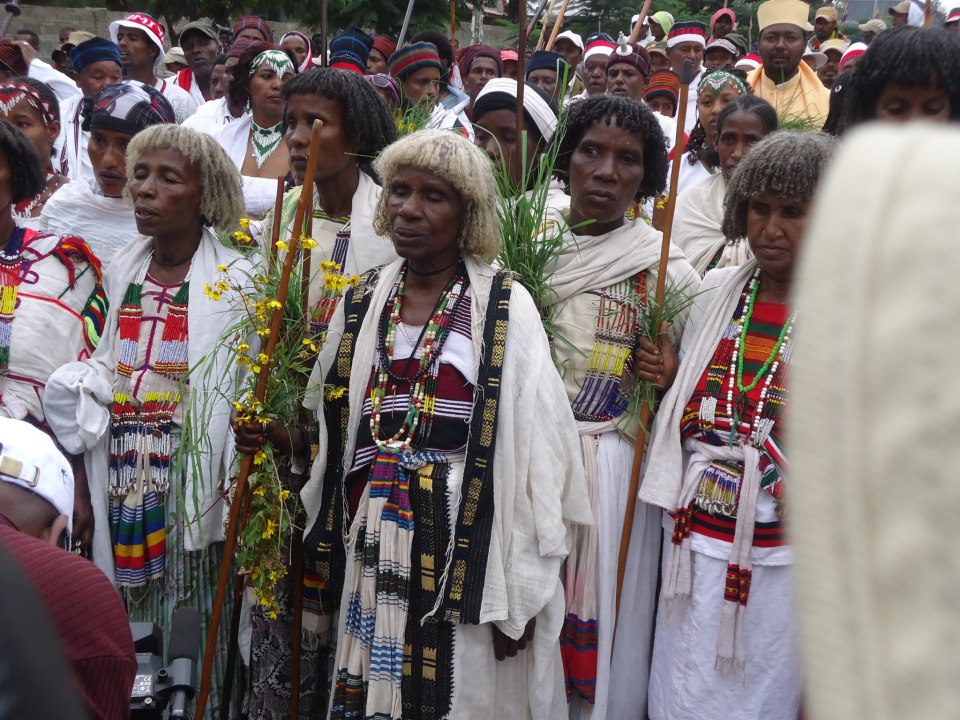


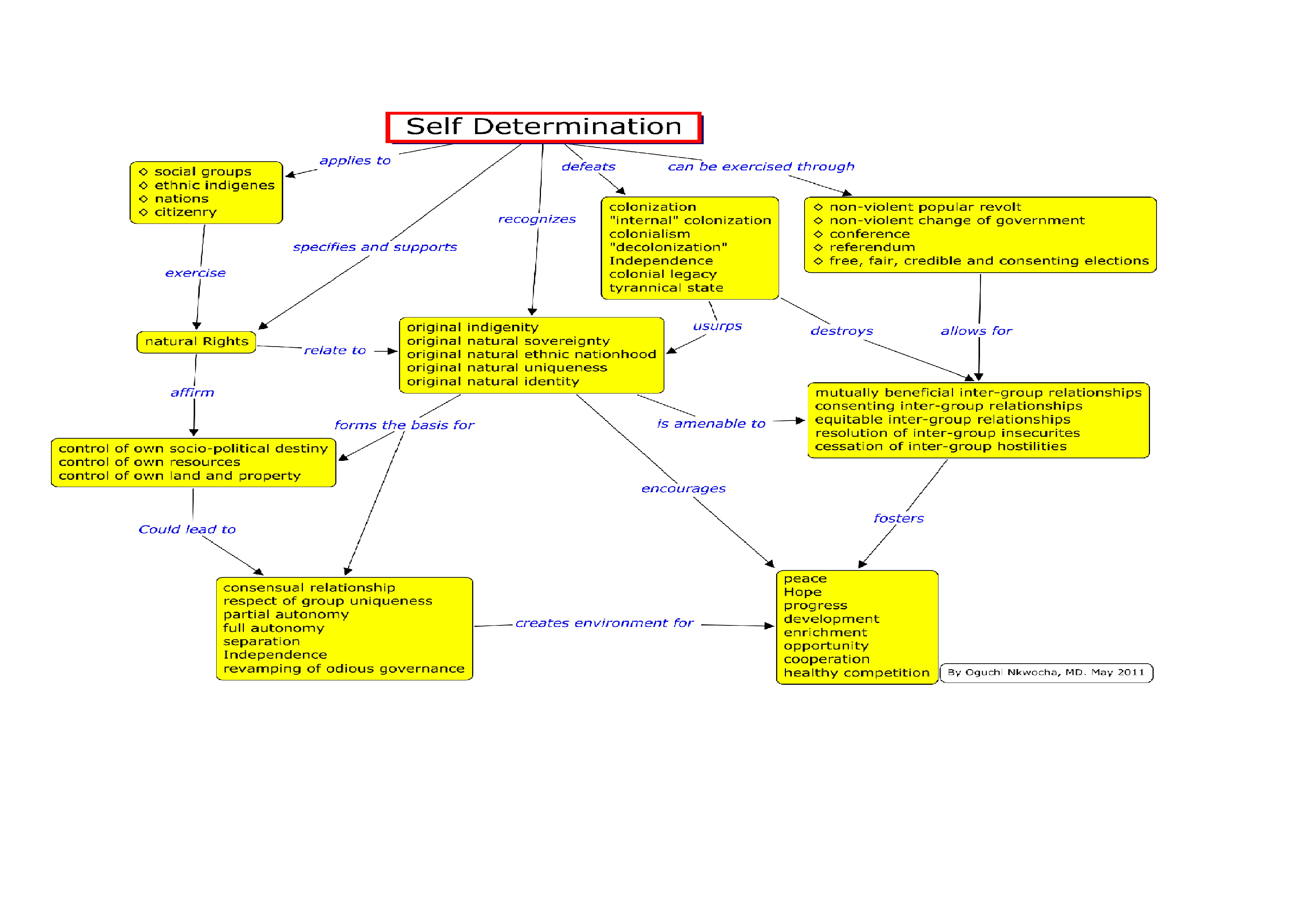

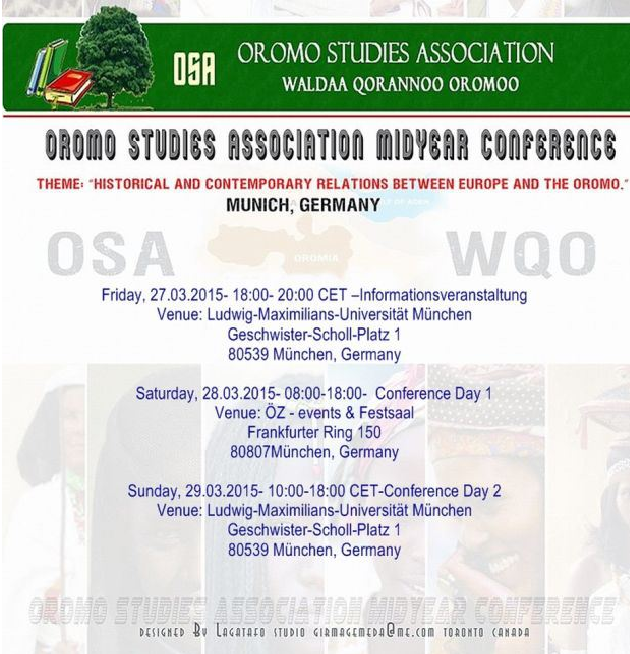

 Adeemsi amma biyya keenya keessatti lafa dimookiraasiin hin jirreetti filaannoo dimookiraataawaa gaggeessa jirra jechuun ololli lallabamaa jiru kun dhaabbachuu qaba. Biyyatti keessa bu’uurri dimookiraasii hin jiru, ilmaan Oromoo jumlaan hidhaatti guuramaa, Ajjeefamaa, barnoota irraa arii’atamaa fi doorsifamaa ,Oromummaan yakkamaa, akkasumas Oromoon qe’ee fi qabeenyaa isaa irraa buqqa’aa, fi mirga abbaa biyyummaa dhabnee waan jirruuf biyya dimookiraasiin hin jirree fi mirgi namummaa fi dimookiraasii dhiitamaa jiru keessatti maqaa filannoo gaggeessina jedhuun kaardii filannoo hiruu fi olola sobaa filannoo dimookiraasii jechuun lallabuu dura mirgootni dimookiraasii fi namummaa kabajamuu qabu. Haalli rakkisaa kanaan uummatni keenya xaxamee utuu jiruu adeemsi amma Mooraa Yuunibarsiitii keessatti kaardii Filannoo hiruuf jirra jechuun Mootummaan EPRDF lallabaa jiru jabeessinee balaaleffachuun, ibsa ejjennoo armaan gadii dabarsina.

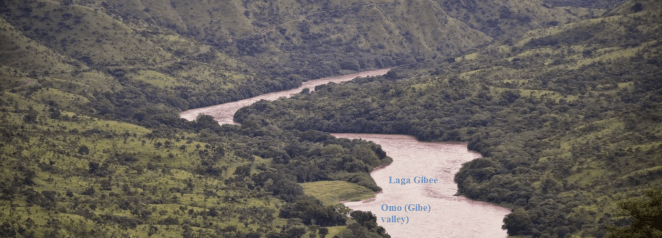
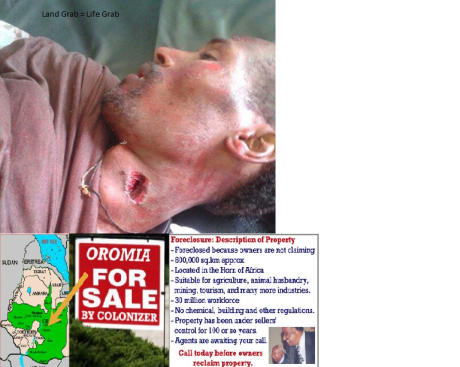

 Oromo Refugee community welfare Association


 Addee Asli Oromo: The first woman in the history of Ethiopian Empire that sentenced to death because of her political vision about Oromo people but released after 18 years in prison as a result of international communities campaign.
 Addee Urjii Dhaabaa: Is one out of many Oromo Women that survived sexual aggression of Ethiopian government military force, police and security agents.

 Ethiopia is the tenth largest country in Africa and it is the second most populated country in Africa with projected population of 100 million by 2020. It has a number of nations/ nationalities with distinct culture. Ethiopia consists of peoples speaking more than 80 different languages (CSA, 2006)
 Oromo people are egalitarian society. Historically their democratic system of government known as “Gadaa” governed the social, economic political affairs of the Oromo people. Under Gadaa, Oromo women developed their own unique institution known as “Siiqee”. Oromo women used Siiqee institution to defend their rights, promote their interests and challenge male domination. After the Oromo people are colonized in 1880s all Oromo institutions are either totally banned or incapacitated. Since then the Oromo people are denied the right to determine on their social, economic, political and cultural affairs. For example, banning or incapacitating Siiqee hindered the Oromo women defending their rights. The colonial power not only banned and incapacitated Oromo institutions but also introduced and/or widened gender hierarchy and discriminatory social practices. This conditioned Oromo women to bear double burdens (i.e. colonial and male domination) and exposed them to sexual violence.
 The definition and the scope of sexual violence is a major problem in communications as it can be defined either narrowly or broadly. Here are four selected exemplary definitions of the term for the purpose of this presentation. The United Nations Declaration on the Elimination of Violence against Women (UN, DEVAW, 1993)
 The third one is expertise definition of DeGue and DiLillo (2005)
 Despite a wide spectrum of sexual violence, there is strong limitation to get enough information in Oromia, Ethiopia. This because of the fear of social exclusion or fear of being marginalized by society, which will bring serious consequences. Occasionally survivors are silent because they felt they would never achieve any redress. Indeed, no individual perpetrators such as soldier or security officer appears to have been, or is ever likely to be, held to account. In World Health Organizations (WHO) multi-country study on domestic violence and women’s health conducted in ten countries including Ethiopia
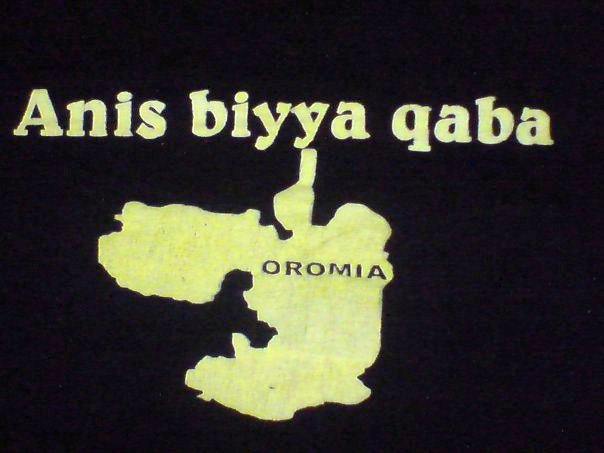
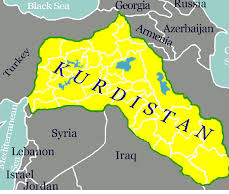



 He will also participate as a Guest of Honor at several Irreecha celebrations organized by the Oromo in the Diaspora.We invite all who are interested in the Gadaa democratic system, and Oromo culture in general, to attend these workshops and participate in the spectacular Irreecha celebrations to be held throughout September and October 2014.We would like to extend our appreciation to local individuals and institutions – who participated in preparing these events. We are also grateful to the United States Consular Service for the assistance they provided in issuing Abbaa Gadaa Bayyanaa’s travel documents.The attached flyer contains general information about dates and cities where Abbaa GadaaBayyanaa will be speaking.Jawar Mohammed President, Oromo Studies Association


 Annual Oromo Sports Event in UK, 23rd August 2014 held in Leeds, England.


 The Oromo Gadaa Democracy meets the American Congress Democracy. Abbaa Gadaa (Rt.) Aagaa Xanxanoo and Abbaa Gadaa (Rt.) Moonaa Godaanaa meet Senator Al Franken (from the State of Minnesota).


 (July 20, 2014 (Gadaa) — Minnesota’s Twin Cities, also known as “Little Oromia” for being the home of the largest Oromo population outside of the Horn of Africa, will be the venue for the 2014

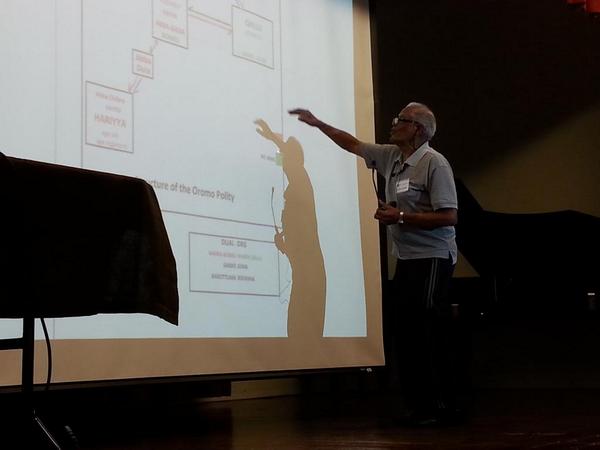 Prof. Asmerom Leggese, Lecturing Gadaa System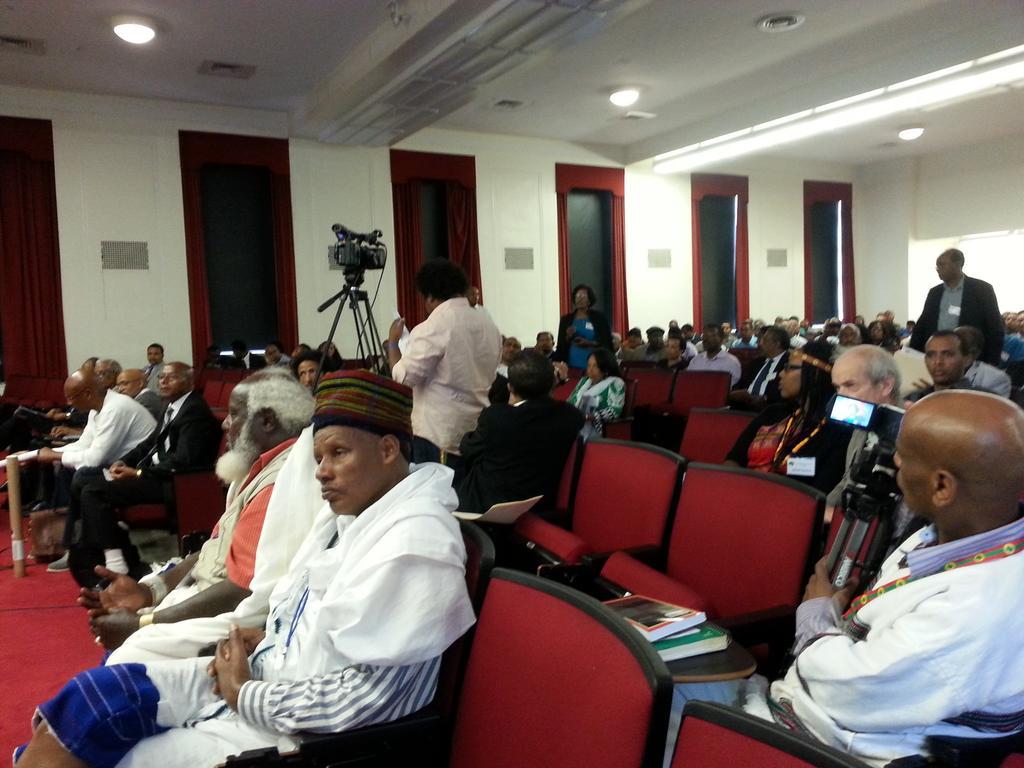
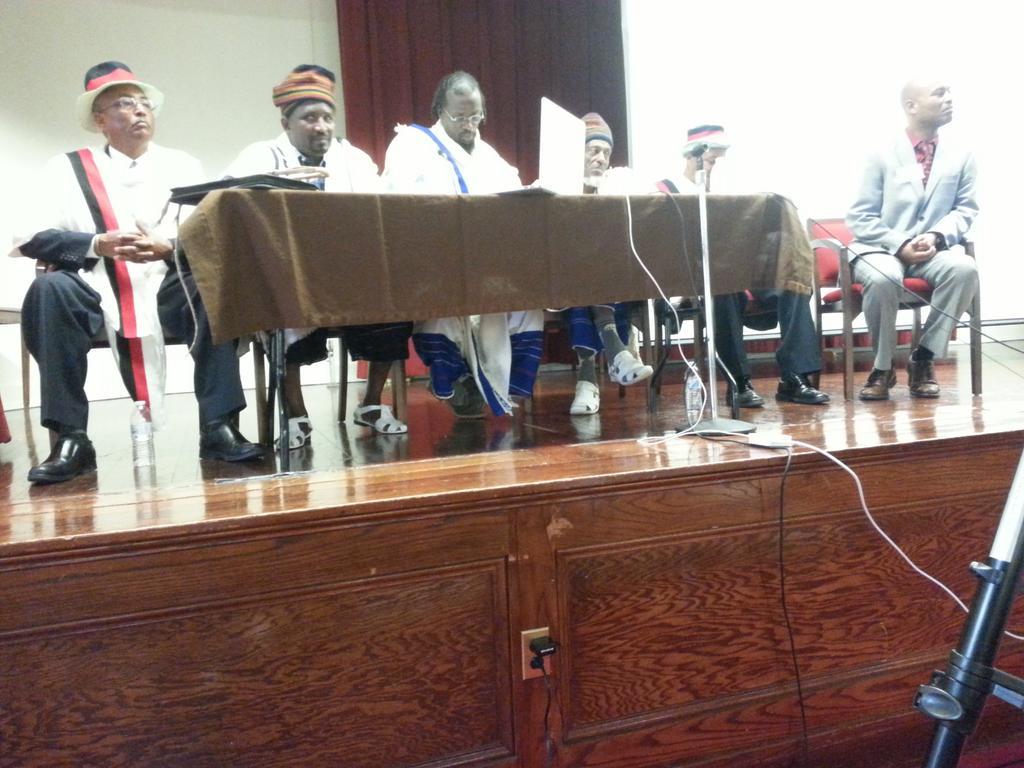


 The Oromo Abbaa Gadaa -Abbaa Gadaa of Tuulama Oromo, two Yubas (EX-AbbaGadaas-Aagaa Xinxanoo and Moonaa Godaanaa) with other Gadaa leaders arrived in DC on 30 July 2014 to attend the OSA Conference


 Below is Bakkalcha TV’s 2-part interview with Oromo recording artist Lencho Abdishakur. Also, check out Lencho Abdishakur’s new album, titled



 Amajjii 1, 2015


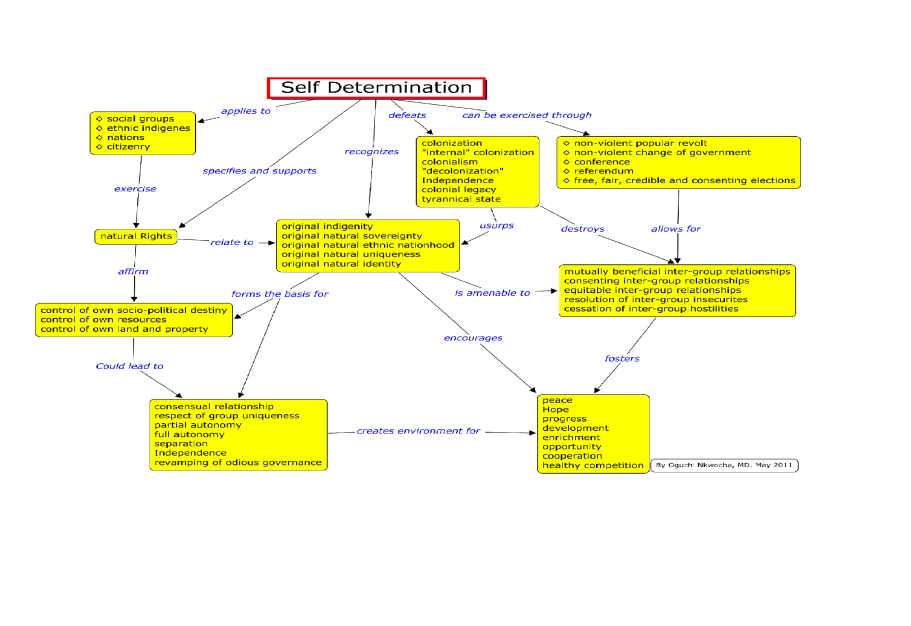


 The other significant point of difference between the two nations is historical backgrounds. The kingdom of Great Britain was formed by the Act of Union of 1707 between England and Scotland (emphasis add). England (including the principality of Wales, annexed in the 14th century and legally unified with England in the 16th century) and Scotland had been separate kingdoms since the early Middle Ages (emphasis added). Despite being part of the union, Scotland has retained its own legal system, its own Church (Church of Scotland), a substantially different education system, and the right to issue its own bank notes. However, Oromia and Ethiopia have never signed such acts of union in history. Abyssinia invaded Oromia in the second half of 19th century, which led to the creation of modern (not the Kushite great antiquity) Ethiopia as an empire. Retaining its own legal egalitarian system (the Gada), its own religion (Waqeffannaa), its own education system (Gada classes), and issuing its own bank notes were definitely inconceivable rights in the Ethiopian empire system.
 There has been an astonishing development in the Scotland politics of recent times. The people of Scotland have shown an interesting growing of nationalism in the last few decades, particularly from 1980. Two leading British parties, the Labour Party and the Conservative Party, shared the majority of Scottish seats in Parliament from the 1920s until the late 1970s. Since then, however, the Conservative Party, although the party of government for the United Kingdom as a whole from 1979 to 1997, increasingly became a minority party in Scotland. By the 1990s it had become less popular than the Scottish National Party (SNP), which was founded in 1934 in order to press for complete self-government.


 Oromian Economist
You must be logged in to post a comment.