jump to navigation

Ethiopia has been suffering from a super centralized TPLF autocratic, barbaric and terroristic rule.  October 9, 2017

Posted by OromianEconomist in Ethiopia's Colonizing Structure and the Development Problems of People of Oromia, Afar, Ogaden, Sidama, Southern Ethiopia and the Omo Valley, Ethiopian Empire, Ethnic Cleansing, Horn of Africa Affairs, Human Rights.
Tags: , , , , , , , , , , , , , , ,
1 comment so far


For the last 26 years, Ethiopia has been suffering from a super centralized TPLF autocratic, barbaric and terroristic rule.

It is beyond dispute that the recent event witnessed in Eastern and Southern Oromia is nothing but TPLF’s last ditch futile effort at the triangulation and expansion of the conflict in the face of the ongoing broad based and persistent opposition to its repression. The Oromo, Amhara, Somali, Sidama, Gurage, Wolayita and the other Ethiopian peoples are saying NO, in one voice, to the decades of repressions, killings, incarcerations, humiliations, displacements and robberies of their resources by the TPLF junta. The Ethiopian people are rising in unison to break out of the shackles of slavery and fear the TPLF has put them in.

It is a well established fact TPLF’s longstanding strategy of diffusing bipolar conflicts between itself and the Oromo, Amhara, Somali, Sidama or Gurage people –just to mention the major heavy weights in Ethiopian politics in terms of shear demographic size – is triangulation of the conflict. For instance, the TPLF always attempts to add a front to the real conflict between itself and the Oromo people and between itself and the Amhara people by inciting (fabricating) conflict between the Oromo and Amhara peoples. Based on this strategy, the TPLF has been attempting incessantly for the last 26 years to incite conflicts mainly between the Oromo and Amhara peoples. Fortunately, the diabolical efforts by the TPLF has been rendered for the most part pre-emptively ineffective thanks to the long history of peaceful coexistence between the two peoples.

Moreover, the massive demonstrations held in Oromia and Amhara States over the recent years put, in no uncertain terms, the final nail to the coffin of this TPLF’s savage strategy triangulating the conflict as TPLF-Oromo-Amhara conflict. The dumb-founded TPLF was left with nothing but to whisk a few bribed Somali elders carrying a “10 million birr donation check” to Mekele instructing them to tell the people of Tigray that they are not alone in this and that the Somali people are by their side. This was intended not only to calm the Tigray people who have been growing increasingly isolated, nervous and uncomfortable by the latest cascades of erratic and impulsive reactions by the TPLF to suppress the popular demands but it was also to officially declare that the efforts to triangulate the conflict is moving East. It is obvious that since the strategy of triangulation of the TPLF-Oromo people bipolar conflict or TPLF-Amhara people bipolar conflict has been dealt a final blow, TPLF was forced to play what it thought was its next best card from the few diminishing cards left in its hands. In a very interesting twist of events, Seye Abraha, a rebel commander-turned-defense minister who was a member of the Politburo of the TPLF and who is believed to be one of the main authors and architects of the TPLF war doctrine went to the same place, Easter Ethiopia, in 1991 in relation to the TPLF-Oromo conflict and bragged something to the effect of “…TPLF can create a war let alone winning a war….” Fast forward – we are here today. Alas, terrorist TPLF is at it again – trying to transplant the vortex of conflict at Oromia-Somali border in order to open a new front on the Oromo people for being on the forefront of the struggle of the Ethiopian people for peace, freedom, justice and democracy. So it is evidently clear that what we are seeing unfolding right in front of our eyes in Eastern Oromia today is nothing but that strategy of the triangulation of conflict at work.


The Culprit is the TPLF – Not Ethnic Federalism 

By Aklilu Bekele,


The current horrendous situation the barbaric and kleptomaniac dictatorial TPLF regime has put Ethiopian in has brought the debate on ethnic based federalism back into the spotlight. Nowadays, barely a minute goes by without hearing or seeing the opponents of the ethnic based form of federalism in Ethiopia attempting to pound on ethnic federalism to gain the maximum political capital possible out of the bad situations and the suffering of the innocent victims of the TPLF led state terrorism. The veteran as well as the newly minted opponents of ethnic federalism are shouting at the height of their voices using any platform they can find that the ongoing war perpetuated by the TPLF regime against the Oromo people, particularly in Eastern and Southeastern Oromia, is yet another irrefutable proof for the failure of ethnic federalism in Ethiopia. They even go as far as arguing that ethnic federalism has failed in Ethiopia in and of itself out of its own shear weight and inherent nature and not because of the failure of the TPLF to implement it whole-heartedly. The way the opponents are trying to frame the debate betrays their frantic jubilant mood as if their longstanding dream had come true.

Before I delve into the counter arguments made by the proponents of ethnic federalism, allow me to throw in a few sentences about the war the TPLF is waging against the Ethiopian people of Oromo origin in Eastern Oromia. It is beyond dispute that the recent event witnessed in Eastern and Southern Oromia is nothing but TPLF’s last ditch futile effort at the triangulation and expansion of the conflict in the face of the ongoing broad based and persistent opposition to its repression. The Oromo, Amhara, Somali, Sidama, Gurage, Wolayita and the other Ethiopian peoples are saying NO, in one voice, to the decades of repressions, killings, incarcerations, humiliations, displacements and robberies of their resources by the TPLF junta. The Ethiopian people are rising in unison to break out of the shackles of slavery and fear the TPLF has put them in.

It is a well established fact TPLF’s longstanding strategy of diffusing bipolar conflicts between itself and the Oromo, Amhara, Somali, Sidama or Gurage people –just to mention the major heavy weights in Ethiopian politics in terms of shear demographic size – is triangulation of the conflict. For instance, the TPLF always attempts to add a front to the real conflict between itself and the Oromo people and between itself and the Amhara people by inciting (fabricating) conflict between the Oromo and Amhara peoples. Based on this strategy, the TPLF has been attempting incessantly for the last 26 years to incite conflicts mainly between the Oromo and Amhara peoples. Fortunately, the diabolical efforts by the TPLF has been rendered for the most part pre-emptively ineffective thanks to the long history of peaceful coexistence between the two peoples.

Moreover, the massive demonstrations held in Oromia and Amhara States over the recent years put, in no uncertain terms, the final nail to the coffin of this TPLF’s savage strategy triangulating the conflict as TPLF-Oromo-Amhara conflict. The dumb-founded TPLF was left with nothing but to whisk a few bribed Somali elders carrying a “10 million birr donation check” to Mekele instructing them to tell the people of Tigray that they are not alone in this and that the Somali people are by their side. This was intended not only to calm the Tigray people who have been growing increasingly isolated, nervous and uncomfortable by the latest cascades of erratic and impulsive reactions by the TPLF to suppress the popular demands but it was also to officially declare that the efforts to triangulate the conflict is moving East. It is obvious that since the strategy of triangulation of the TPLF-Oromo people bipolar conflict or TPLF-Amhara people bipolar conflict has been dealt a final blow, TPLF was forced to play what it thought was its next best card from the few diminishing cards left in its hands. In a very interesting twist of events, Seye Abraha, a rebel commander-turned-defense minister who was a member of the Politburo of the TPLF and who is believed to be one of the main authors and architects of the TPLF war doctrine went to the same place, Easter Ethiopia, in 1991 in relation to the TPLF-Oromo conflict and bragged something to the effect of “…TPLF can create a war let alone winning a war….” Fast forward – we are here today. Alas, terrorist TPLF is at it again – trying to transplant the vortex of conflict at Oromia-Somali border in order to open a new front on the Oromo people for being on the forefront of the struggle of the Ethiopian people for peace, freedom, justice and democracy. So it is evidently clear that what we are seeing unfolding right in front of our eyes in Eastern Oromia today is nothing but that strategy of the triangulation of conflict at work.

Apologies for digressing more than I initially wanted. Going back to my main theme of this writing, the proponents of ethnic federalism are also making their point by arguing that what is certain to have failed in Ethiopia is not the ethnic federalism form of state but the absolute centralism that has bedeviled Ethiopia for over a century. They argue that the absolute unitary dictatorship (one language and one religion policy, among others) had been tried fiercely and in earnest (whole-heartedly with absolute commitment, giving it all they had and to the fullest extent possible) in Ethiopia from Menilik to Haile Selassie to Mengistu for over a century but it failed and failed miserably. The TPLF has continued the same old tired unitary militaristic dictatorship with a thinly veiled facade of federalism. If there is anything that makes the TPLF regime different from its predecessors, it is its pretension and con artistry to create an illusion of change by marginally changing the form without changing the substance an iota, none whatsoever.

Ethiopia has never tried federalism of any form nor democracy in its history. How can we conclude that something has failed when we have not tried it whole-heartedly in the first place? What type of experimentation is that? I believe the opponents of ethnic federalism know very well that what exists in today’s Ethiopia is not any form of federalism but an absolutely centralized TPLF dictatorship. They are blaming the form instead of the substance. They are attempting to use the current TPLF war on the Oromo people in Eastern and other parts of Oromia as an opportune moment and the casus belli for the war they have already declared anyway on ethnic federalism. It is hard to fathom but one dares to ponder that the opponents of ethnic federalism are so gullible that they would believe that Ethiopia’s multifaceted and multilayered complicated problems would vanish in one day were the TPLF take off its veil of fake federalism and come out naked for what it truly is; namely, the worst dictatorial centralist regime Ethiopia has ever known. The elaborate TPLF spy network that has been installed throughout Ethiopia spanning from the TPLF politburo all the way down to the infamous one-to-five (1-2-5) structure is an irrefutable testimony to the absolute dictatorial centralism under which the TPLF regime has been ruling and plundering the Ethiopian people since it controlled the state power in May 1991. This is the truth in the today’s Ethiopia.
However, the truth doesn’t matter for the opponents. They have the propensity to kick the truth aside if it is doesn’t serve their political purposes. Their untenable and feeble argument about the failure of federalism (whatever its form may be) in Ethiopia falls flat in the face of the reality on the ground in Ethiopia. The reality in Ethiopia has been out there for everyone to see with his/her naked eyes without any need for a visual aid. For the last 26 years, Ethiopia has been suffering from a super centralized TPLF autocratic, barbaric and terroristic rule.

The opponents’ argument makes sense if and only if we accept a hypothetical premise that Ethiopia has had a democratic system for the last 26 years. Otherwise, how can we blame ethnic federalism as the cause of the crises we are seeing unfolding in Ethiopia today or for the last 26 years for that matter because federalism never works without democracy? If we don’t accept the premise that Ethiopia is a democracy today, then blaming ethnic federalism for the country’s crises is not only absurd but it is also like indicting someone who has nothing to do with the crime. In fact, pointing finger to the ethnic federalism is in tune with what the terrorist TPLF propagandists are attempting in vain these days to hoodwink and make us believe with a vivid intent of deflecting the focus away from the real issue – themselves. In a nutshell, the opponents’ argument doesn’t stand to reason nor to any meaningful scrutiny. It is rather an intentional misrepresentation of the facts on the ground in order to divert our attention away from the real problems the country has been facing and their immediate and longstanding causes.

Just for the sake of argument, let us assume that what the opponents say is true and agree to abandon our efforts to institute a genuine ethnic federalism in Ethiopia. If that is the case, then it automatically begets that we have to also abandon our struggle for democracy because democracy has also failed in Ethiopia today. I hope the opponents would not argue with the same zeal as they do against ethnic federalism that democracy is flourishing in Ethiopia under the TPLF rule. If the opponents are arguing that the democratic experimentation has succeeded but it is only the ethnic federalism that has failed in Ethiopia today, then it is worth considering going to other forms of federal systems.

However, if the opponents of ethnic federalism agree that democracy has also failed in Ethiopia today, then there is a fallacy in their argument because true federalism (whatever its form may be) cannot be implemented without democracy. Democracy is an essential pre-requisite for any form of federalism. If the opponents of ethnic federalism accept the premise that democratization has failed in the TPLF ruled Ethiopia, are they also telling us with the same breath to forgo our struggle for democracy and leave Ethiopia and the Ethiopian people at the mercy of the barbaric, plunderous terrorist TPLF? Otherwise, if they accept the glaring truth that there is no democracy in Ethiopia, then they have to shift their accusing fingers to the failure of the democratization process and the TPLF instead of the non-existent ethnic federalism. There is an Amharic saying that goes something like ‘searching for dung where no cow has been”.

I would like to conclude by stating the obvious at the risk of sounding redundant and repetitive. The reality is that what have failed in Ethiopia over and over again for over a century are dictatorship and centralism. Ethnic federalism is the only realistic antidote not only for the birth defect and chronic ailments Ethiopia has been suffering from since its inception but for its unique multicultural nature and its recorded history of ethnic repression as well. We understand that the pre-TPLF Ethiopia for which the opponents of ethnic federalism in Ethiopia are nostalgic was a heaven for them but that doesn’t mean it was the same for everyone. The pre-TPLF and the TPLF Ethiopia is the same hell for the majority of the Ethiopian people. We, in the freedom camp, are striving to create an Ethiopia that is free, fair and just, an Ethiopia that treats all its citizens equal, an Ethiopia that is democratic, multicultural and ethnic federalist that we all call home and be proud of.

Oromia: Waan Sammuu Abbaa Duulaa Jijjiiree Dhageeffadha. Abadula Gemeda, the Speaker of the Ethiopian House of Peoples’ Representatives, has resigned from his position.  October 9, 2017

Posted by OromianEconomist in Uncategorized.
Tags: , , , , , ,
add a comment

Odaa Oromoooromianeconomist

Related:-


Breaking News: Abadula Gemeda resigns as Speaker of Parliament, Addis Standard reports

Onkoloolessa/October 7, 2017 · Finfinne Tribune | Gadaa.com  

According to a local online-based newspaper named Addis Standard, Mr. Abadula Gemeda, the Speaker of the Ethiopian House of Peoples’ Representatives, has resigned from his position. Addis Standard, through its Twitter account, broke the news a little an hour ago, at 9:49am local time (with the Ethiopian traditional day-hour counting, it was 3:49 in the morning when the news came). Here’s the Twitter published by @addisstandard, and its Facebook post.

UPDATED: The online-based newspaper indicated that one of the reasons for the resignation of the Speaker was his protest over the federal government’s handling of the security issues in the Oromia-Somalia border; the border crisis had resulted in the displacement of more than 50,000 people in the Oromia-side alone.

Twitter:


BBC Afaan Oromoo: Abbaa Duulaa Gammadaa: Jeneraala, Pireezidaantii, Af-yaa’ii … Achii hoo?


Opride News:  Ethiopia’s Speaker of the House, Abba Dula Gamada, resigns


OPINION: PROTEST RESIGNATION: RAMIFICATIONS OF A POLITICAL ACT

Oromia: Athletic nation Report: Oromo Olympian Tirunesh Dibaba Wins Women’s 2017 Bank of America Chicago Marathon at a time of 2: 18:30. US’s Galen Rupp wins the Men’s. October 9, 2017

Posted by OromianEconomist in Athleteics, Athletic nation, Oromo women, Uncategorized.
Tags: , , , , , , , ,
add a comment

Odaa OromoooromianeconomistOromo Olympian Tirunesh Dibaba win the 2017 Women's Chicago Marathon

Oromo Olympian Tirunesh Dibaba Wins 2017 Bank of America Chicago Marathon

Three-time Olympic gold medalist Tirunesh Dibaba has won the women’s field of the 2017 Bank of America Chicago Marathon.

Dibaba beat out defending champion Florence Kiplagat, keeping her from winning her third consecutive Chicago Marathon.

“This is my third marathon and I’m very happy to have won here,” Dibaba said after her win. “I worked very hard for this.”

Dibaba recorded her fastest marathon earlier this year in London, coming across the finish line at two hours, 17 minutes 56 seconds. She is currently the third fastest woman running distances longer than 42 kilometers.

Dibaba picked up three gold medals and three bronze medals from the last four Summer Olympic Games.

https://twitter.com/skinnergj/status/917234805460234242


Africa News: Aside her gold medal, Dibaba will walk away with $100,000 prize money. The second and third candidates get $75,000 and $50,000 respectively.

Oromia: Irreecha Birraa 2017: Malkaa Ateetee: Irreecha Oromo Thanksgiving Colorfully Celebrated at Gafarsaa, Buraayyuu with Massive Turn Out October 8, 2017

Posted by OromianEconomist in Irreecha, Irreecha Birraa, Irreecha Oromo.
Tags: , , , , , ,
5 comments


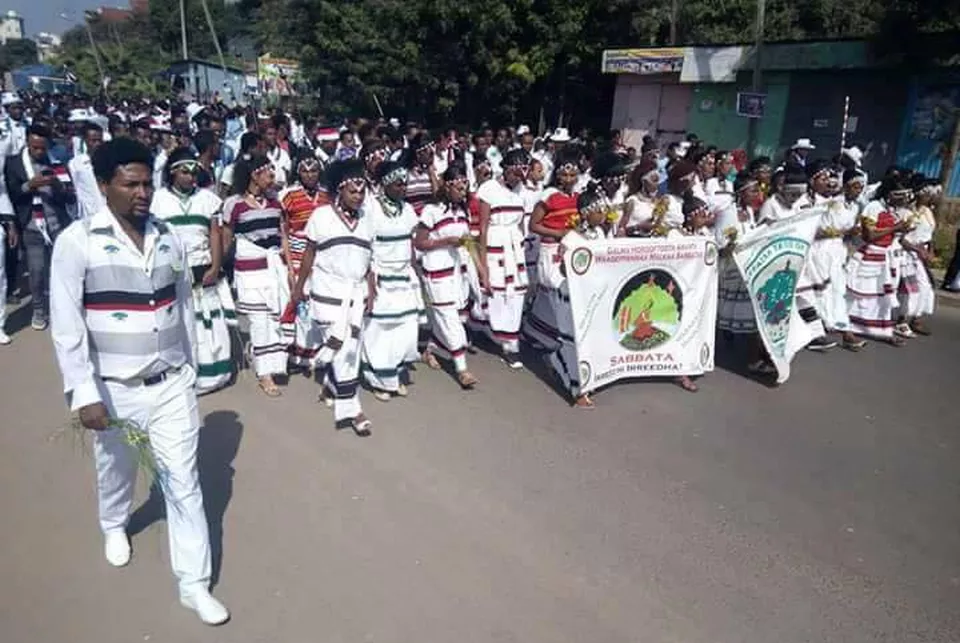
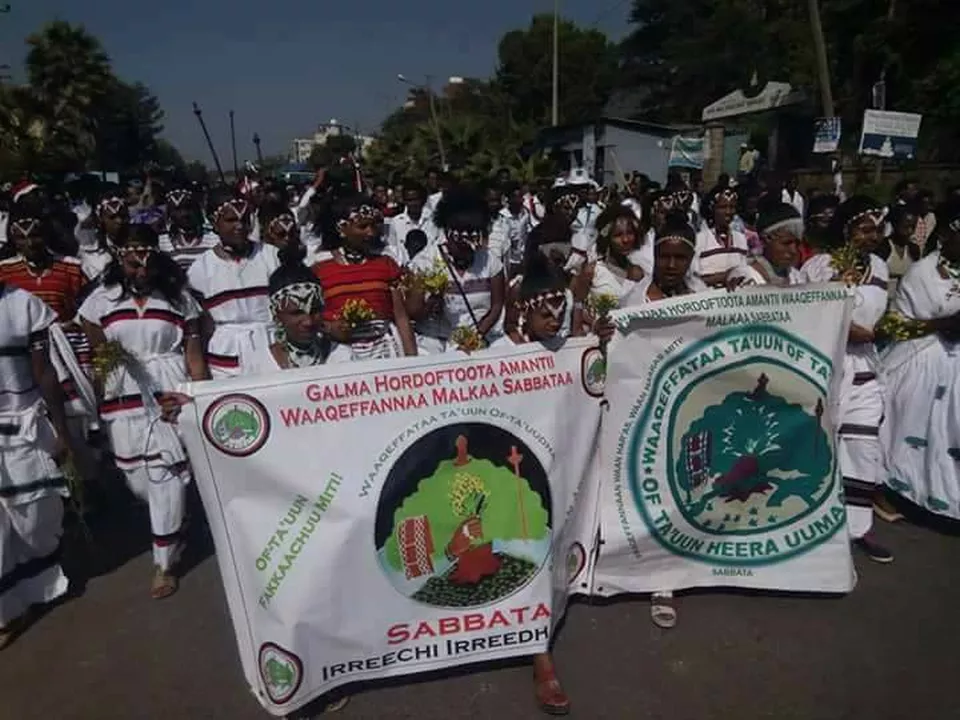
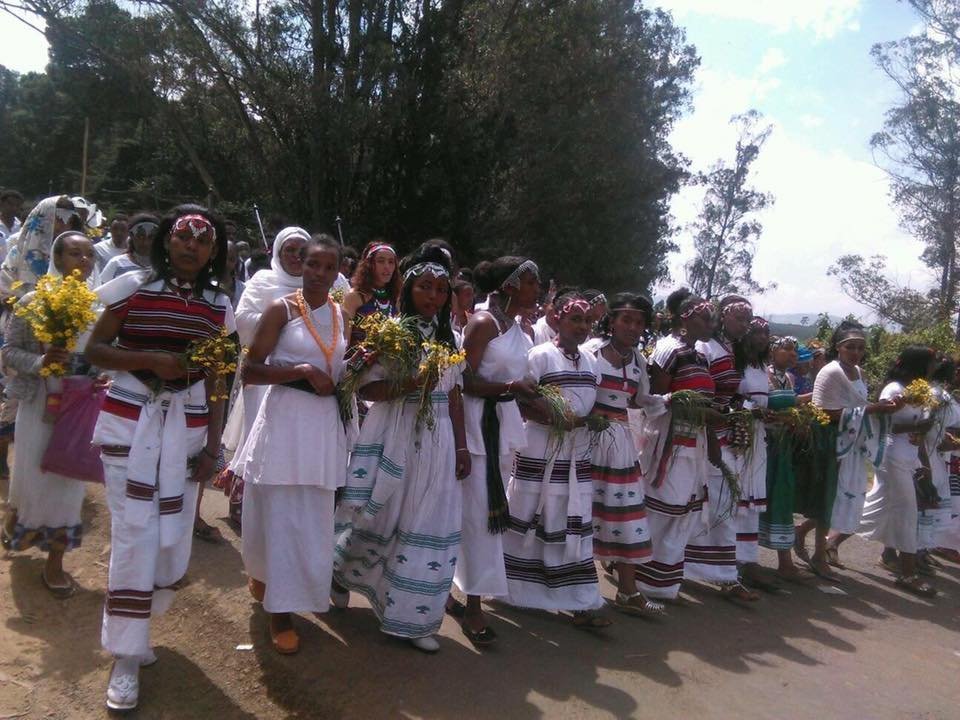
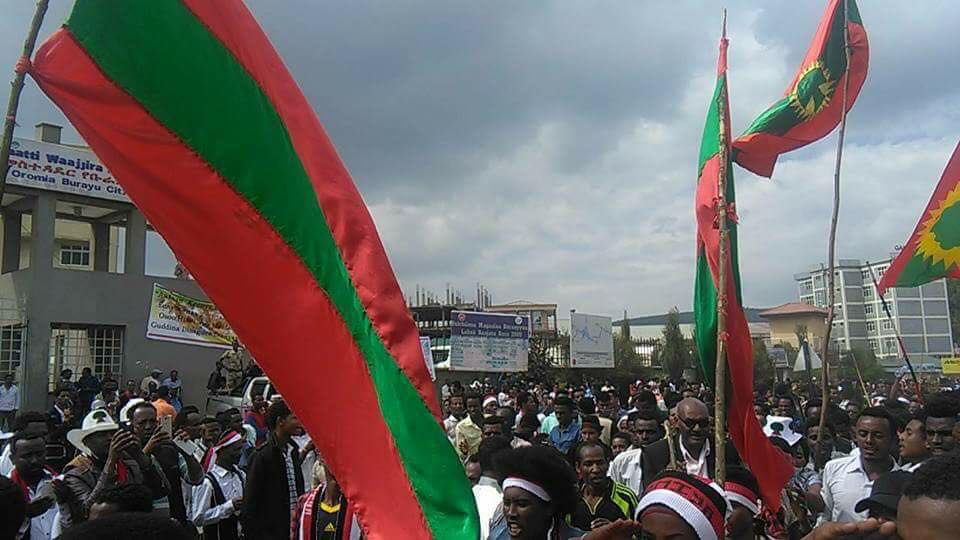
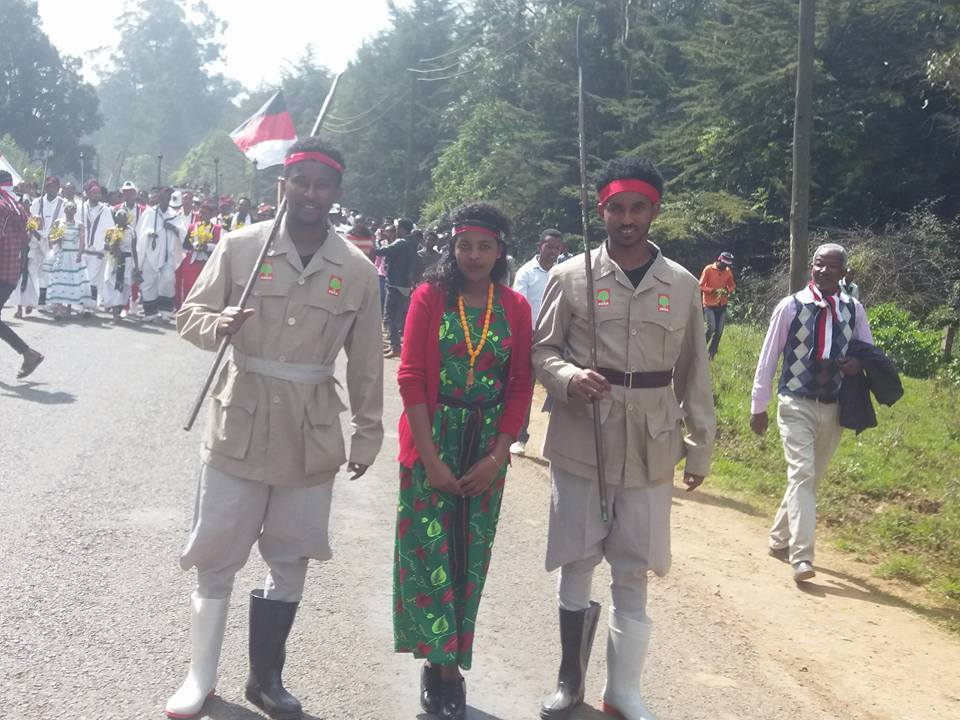
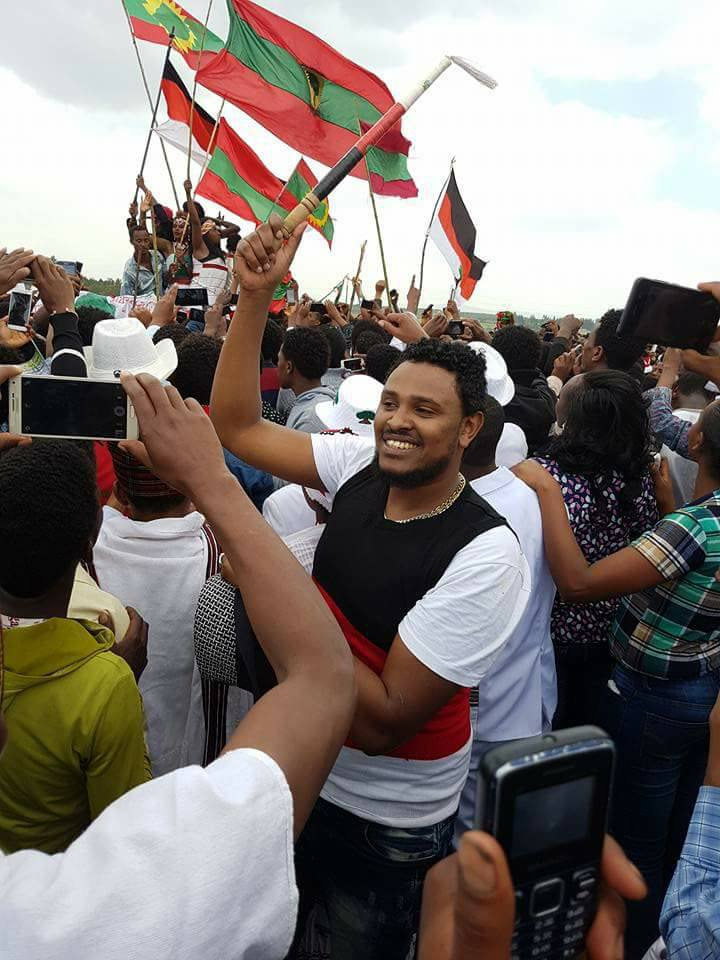
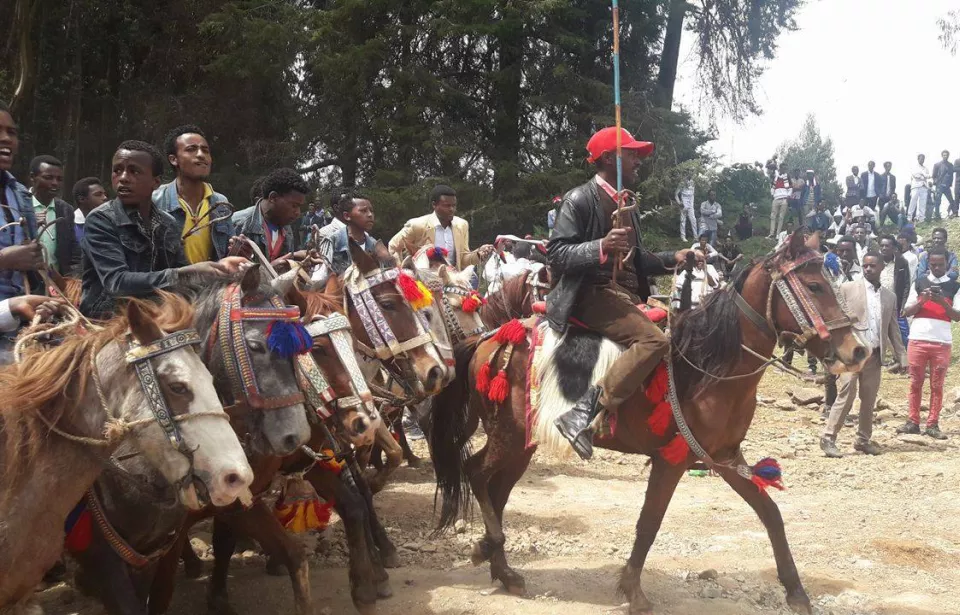
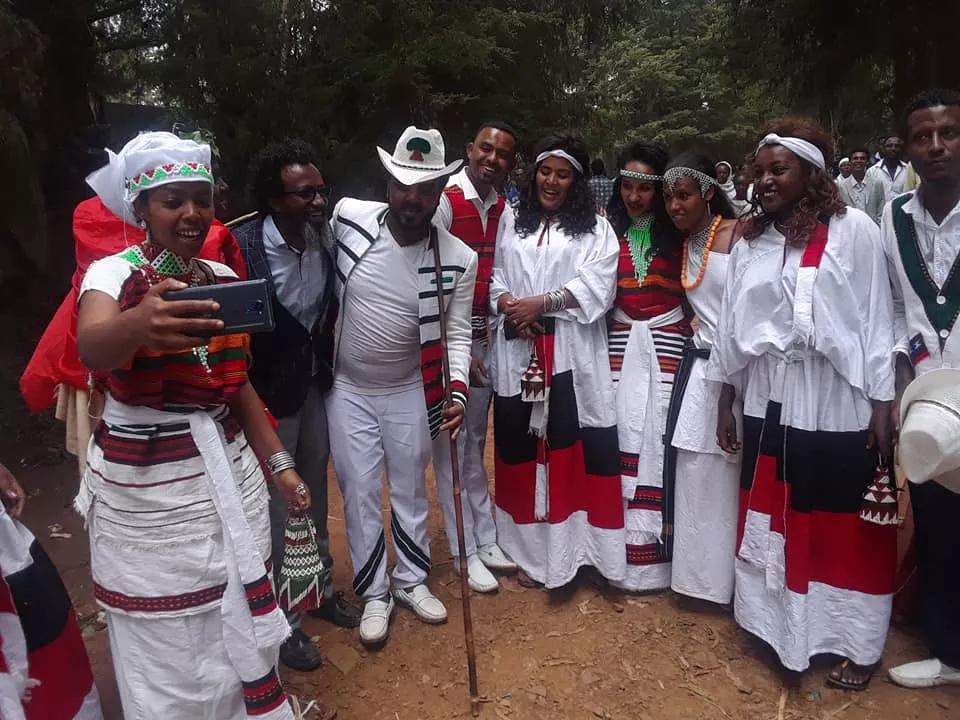
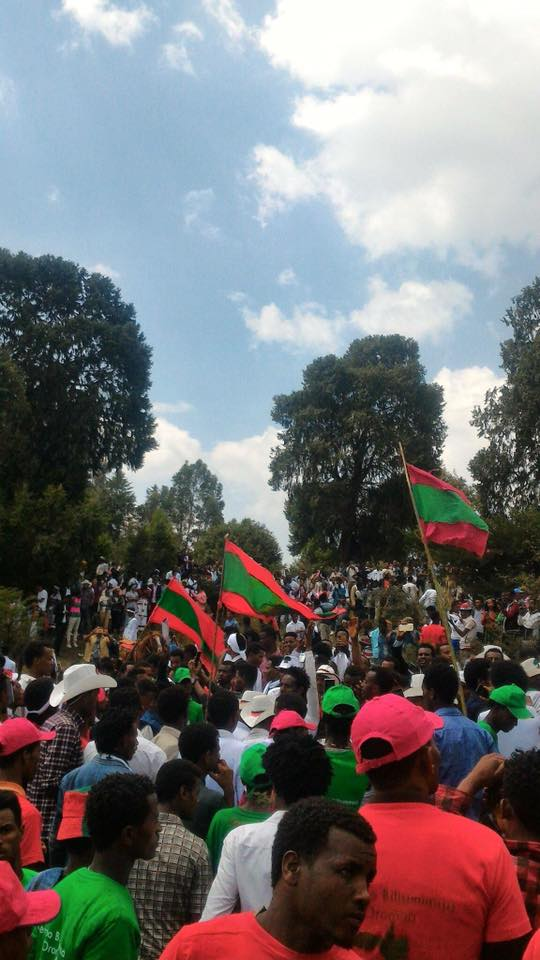
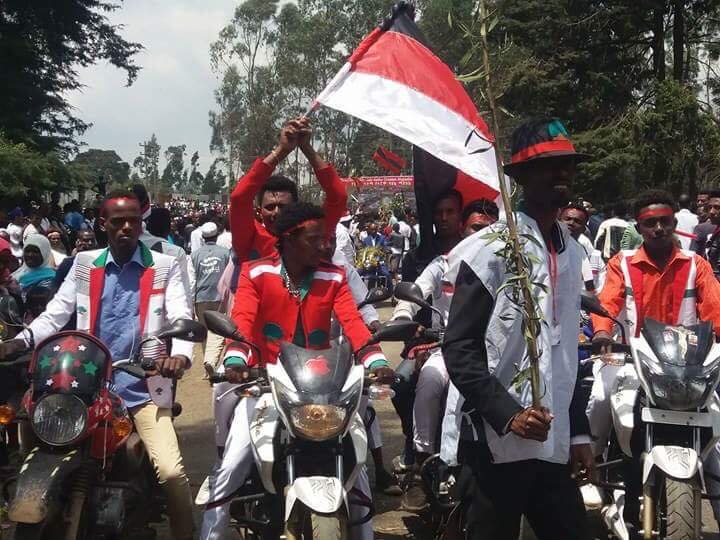
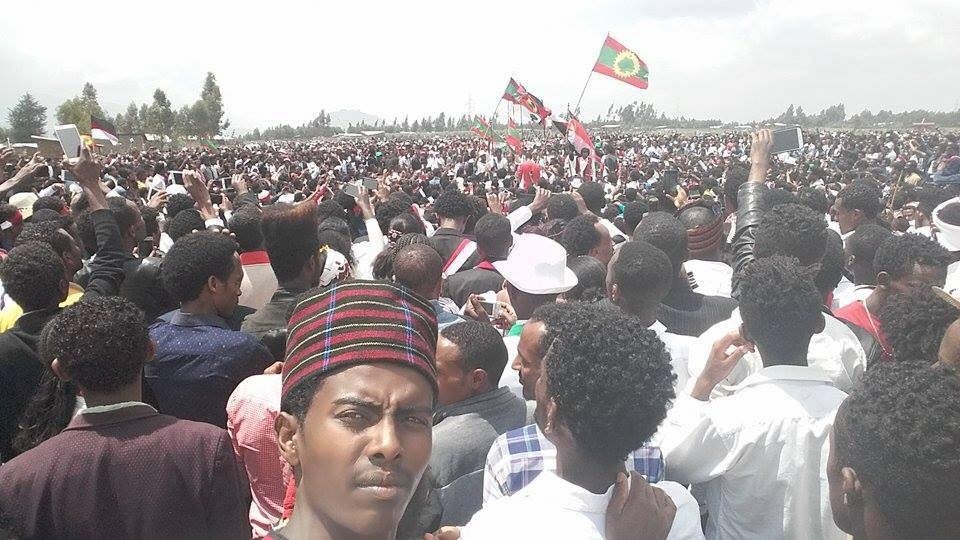
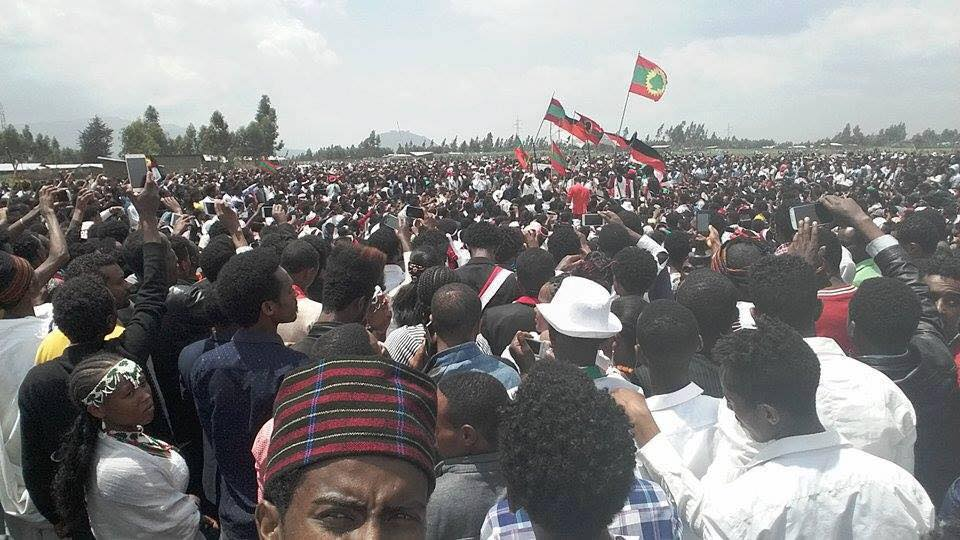
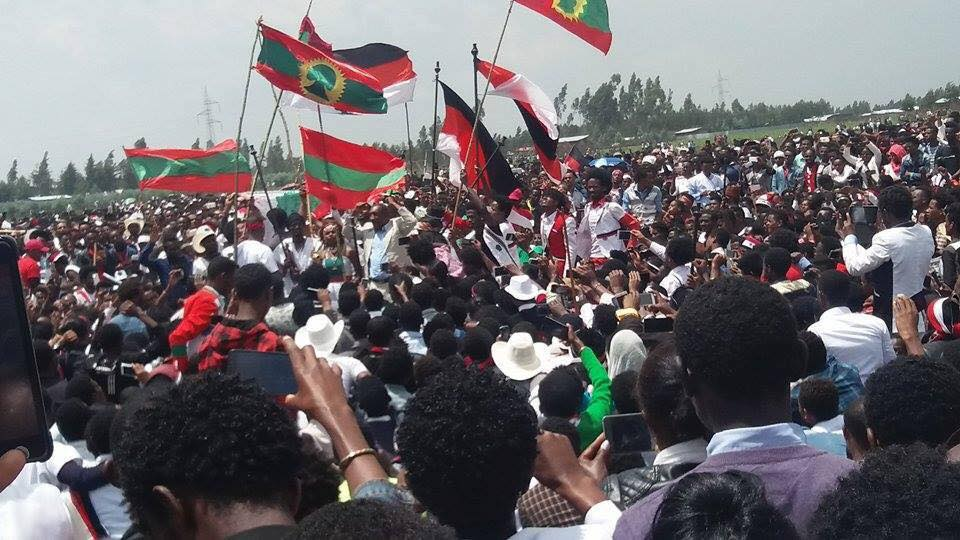
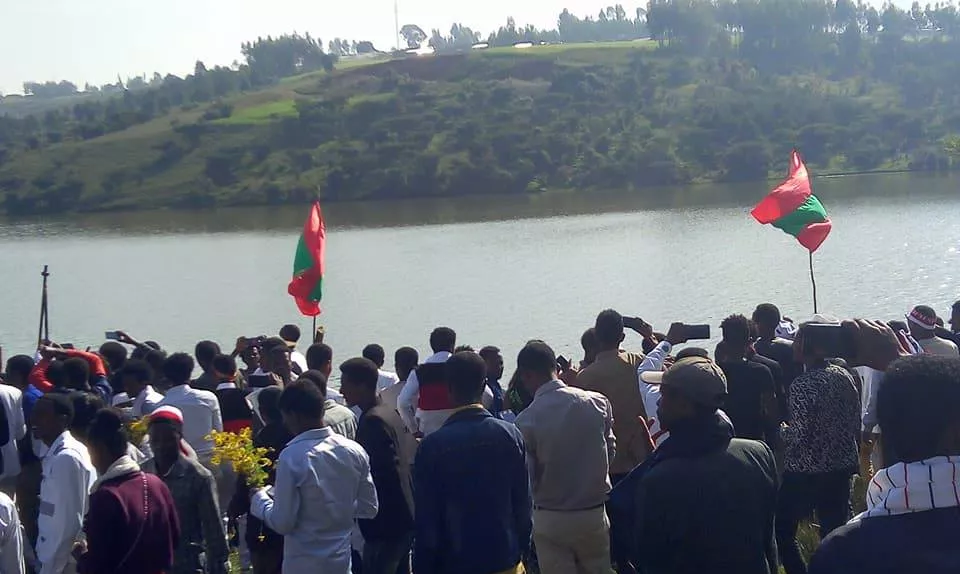
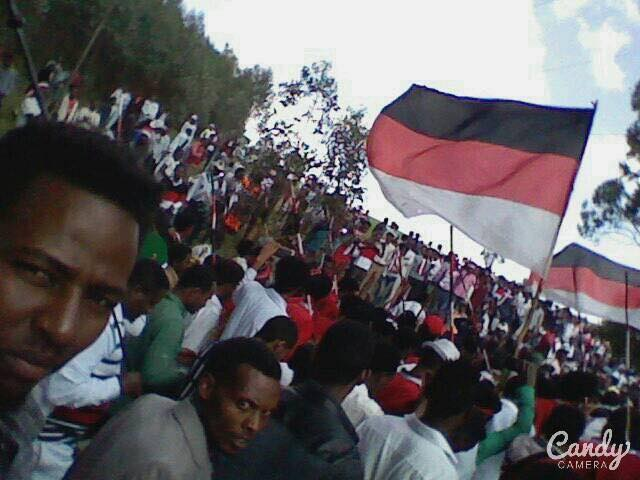
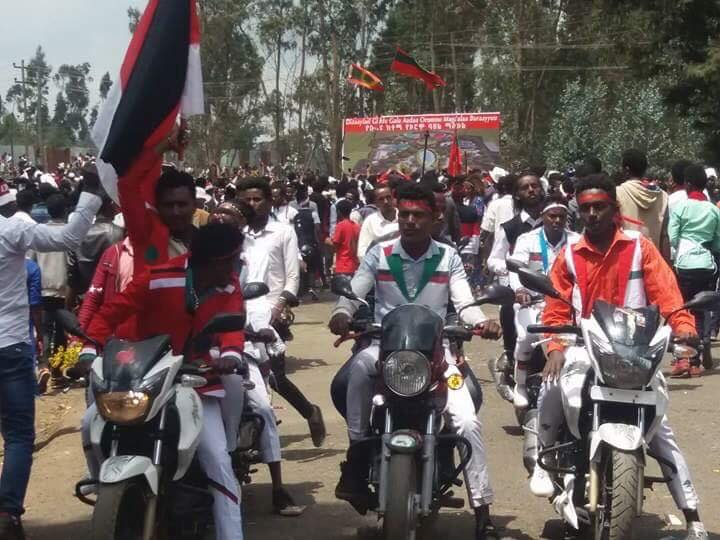
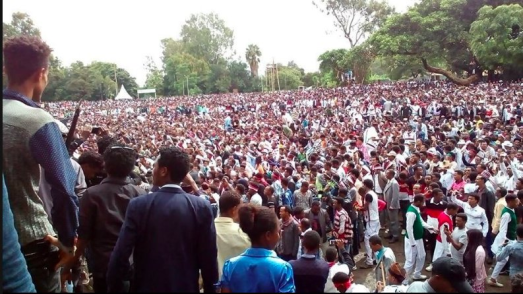
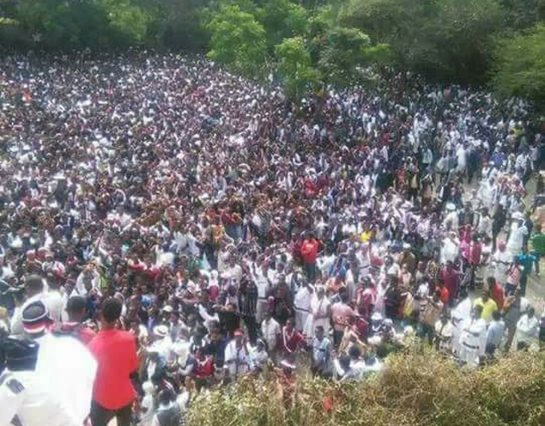
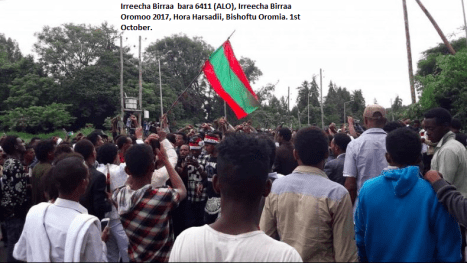
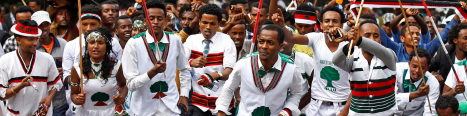
As a continuation of  the celebration of Oromo national and Cultural Holiday, massive people turned out on 8th October 2017 to celebrate the colorful festive season at Malkaa Ateetee. The event was peacefully held and concluded in jubilation at Hora Gafarsaa in Buraayyu, Oromia, 10 km west to Finfinnee, the capital. This is the 2nd biggest Irreecha Birraa celebration a week after the grand festival at Hora Harsadii, Bishoftuu, on 1st October 2017.  The event was also marked by #Oromoprotests against Ethiopia’s regime.  Fundraising was made to support the Oromo people displaced by Liyu Police attacks.

Here are some of the pictures and videos at Irreecha Birraa Malkaa Ateetee:-

#Irreecha2017


Oromia: Saliha Sami: Ni Baafna Gumaa (New Oromo Music) October 4, 2017

Posted by OromianEconomist in Oromo Music, Saliha Sami, Uncategorized.
Tags: , , , ,
add a comment


Odaa OromoooromianeconomistThe awarding wining muscian, Oromo record artist Saliha Sami

Prof Al Mariam: ‘My Letter to President Trump Requesting Targeted Sanctions Against the TPLF Regime in Ethiopia’ October 3, 2017

Posted by OromianEconomist in Horn of Africa Affairs, Human Rights, Uncategorized.
Tags: , , , , , , , , ,
1 comment so far

Odaa Oromoooromianeconomist

bishoftu-mascare-2nd-october-2016-fascist-ethiopias-regime-tplf-conducted-masskillings-against-oromo-people-at-irreecha-celebration

My Letter to President Trump Requesting Targeted Sanctions Against the TPLF Regime in Ethiopia

October 2, 2017

Donald Trump
President of the United States
The White House
1600 Pennsylvania Avenue NW
Washington, DC 20500

Re: REQUEST FOR SANCTIONS AGAINST PERSONS AND ENTITIES INVOLVED IN THE IRRECHA MASSACRES ON OCTOBER 2, 2016 AND OTHER CRIMES AGAINST HUMANITY COMMITTED IN ETHIOPIA 

Dear Mr. President:

I am writing this letter for two purposes. First, I wish to thank you for imposing sanctions[1] on certain senior current and former South Sudan government officials and South Sudanese companies responsible for undermining peace, security and stability in that violence-wracked country.

Second, I am writing to request imposition of similar sanctions against members of the ruling regime in Ethiopia self-styled as the “Ethiopian People’s Revolutionary Democratic Front” led and dominated by the Tigrean People’s Liberation Front (TPLF), an entity listed as a terrorist organization in the Global Terrorism Database[2] (GTD).

The last act of terrorism committed by the TPLF, according to the GTD, was on August 16, 2016[3].

I believe it is fair and proper to give credit where credit is due. While some have claimed the sanctions imposed on South Sudan’s leaders and their accomplices are meager and inadequate[4], I believe the action sends a clear and unambiguous message to all Africans in positions of power that protection of human rights is a central component of an America-first U.S. foreign policy in Africa, a fact that has been underscored by Secretary of State Rex Tillerson[5].

I am especially elated to learn the U.S. Treasury Department “will forcefully respond to the atrocities ongoing in South Sudan by targeting those who abuse human rights, seek to derail the peace process, and obstruct reconciliation in South Sudan.” Such a resolute statement goes a long way in reassuring not only the people of South Sudan but also all Africans that the U.S. will not merely talk the talk about being on the “right side of history” but also walk the talk by acting decisively and selectively against individuals and entities engaged in gross human rights violations.

I wish to point out for the record that the sanctions you have imposed in South Sudan are in stark contrast to the Obama administration’s lifting of sanctions against the Sudan in its last week in office.

During his presidential candidacy in 2007, Barack Obama said[6], the “genocide in Darfur [Sudan] is a stain on our souls… As a president of the United States I don’t intend to abandon people or turn a blind eye to slaughter.”

In the final week of his presidency, on January 13, 2017, Mr. Obama turned a blind eye to the genocidal Sudanese regime and stood on the “wrong side of history” when he rescinded  sanctions authorized pursuant to  Executive Order 13067[7] of November 3, 1997 and Executive Order 13412[8] of October 13, 2006 related to the policies and actions of the Government of Sudan.

In issuing his rescission of Executive Order 13761[9],  Mr. Obama whitewashed the bloody genocidal crimes of the Sudanese regime by speciously claiming that regime has shown “positive actions over the past 6 months”. The “actions” allegedly included maintaining cessation of hostilities in conflict areas in the Sudan, improving humanitarian access and counterterrorism cooperation.

It is said, “one swallow does not make a summer.” It is incomprehensible to me how Mr. Obama could gloss over and excuse atrocities committed over a period exceeding two decades on mere gestures of good behavior over six months.

What is even more appalling is Mr. Obama’s duplicity and hypocrisy in completely ignoring Sudan’s close ties with North Korea and purchase of weapons from that rogue regime for use in the commission of human rights violations and atrocities. In lifting sanctions against the Sudan, Mr. Obama also conveniently ignored the fact that Sudan has been on the list[10] of state sponsors of terrorism since 1993 and had provided a haven to Osama bin Laden.

Perhaps one should not be surprised by Mr. Obama’s stratagems and sophistry in exculpating those on the “wrong side of history”, as he used to call them. When Mr. Obama visited Ethiopia in July 2015, he unabashedly declared the TPLF regime, which claimed electoral victory by capturing 100 percent of the “parliamentary” seats, as “democratically elected[11].”

In light of Mr. Obama’s double-speak and duplicity on human rights in Africa, I find your recent targeted sanctions against South Sudan and the tenor of your administration’s emerging human rights policy forthright, refreshing and encouraging.

I believe selective and targeted sanctions such as the one imposed against South Sudanese leaders and companies can serve as effective tools of an America-first foreign policy in advancing the cause of human rights globally, and particularly in Africa. Targeted sanctions selectively and purposefully focus on leaders, their family members and supporters, political elites and segments of society known to be directly responsible for human rights violations or in aiding, abetting and giving material support in the commission of such violations. Blanket sanctions are more likely to inflict greater hardship and suffering on the general population, and often those engaged in gross human rights violations find ways to circumvent them. It has been observed that “targeted sanctions” or “smart sanctions” are like “smart bombs”, considerably reducing collateral damage on civilian populations.

I believe in the old saying, “What is sauce for the goose is sauce for the gander.” What is good for South Sudan is good for Ethiopia.

I am requesting that you follow up with targeted sanctions against current and senior members of the “Ethiopian People’s Revolutionary Democratic Front” led and dominated by the Tigrean People’s Liberation Front and other entities aiding and abetting that regime in the commission of human rights violations in Ethiopia. The evidence of human rights violations supporting targeted sanctions against the TPLF regime is overwhelming, incontrovertible, substantial and compelling.

The Irreecha Massacres of October 2, 2016

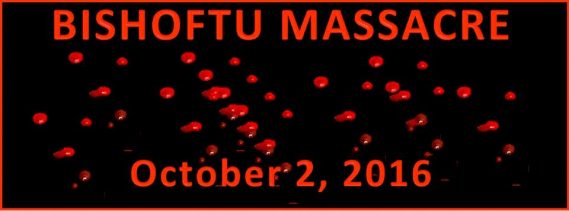
On October 2, 2016, troops loyal to the ruling Tigrean Peoples’ Liberation Front opened fire indiscriminately on crowds at a religious festival known as “Irreecha” attended by an “estimated 2 million people[12] in the town of Bishoftu, some 45 miles southeast of the capital Addis Ababa.

The TPLF regime reported 52 dead from what it said was crowd “stampede[13] caused by anti-government elements”. In a televised address, the regime’s prime minster blamed the victims for provoking troops into using indiscriminate deadly force.

On October 3, 2016, Freedom House issued a statement[14] on the Irreecha Massacres demanding an independent investigation: “The deaths in Bishoftu occurred because security forces fired tear gas and live ammunition at a crowd of over a million people celebrating a religious occasion. The government of Ethiopia should allow a truly independent body to investigate the tragedy at Bishoftu as well as security forces’ well-documented record of using excessive force against peaceful gatherings.”

Eyewitness reports including statements by accredited Voice of America Amharic Service program journalists revealed that heavily armed regime troops had taken tactical positions behind the VIP grandstand hidden from direct view of the crowd and suddenly opened live fire on the unarmed and peacefully protesting crowd after the official program could not proceed due to crowd demands and chants against the regime.

On October 8, the TPLF regime declared a “state of emergency” suspending the constitution and instituting martial law under an entity called “Command Post[15]”.

On November 12, 2016, the regime officially reported[16] arresting “11,607 people, including 347 women”. The U.S. State Department in its 2016 human rights report[17]stated, “Many [of the thousands arrested] were never brought before a court, provided access to legal counsel, or formally charged with a crime.” The actual number of persons arrested was significantly higher than officially reported. In March 2017, the Command Post “announced that 4,996 of the 26,130 people detained for allegedly taking part in protests would be brought to court.”

An “investigative report” on the Irreecha Massacres released by the regime’s human rights organization in April 2016 rubberstamped the regime’s original position: “The violence happened because the protesters were using guns and so security forces had no other option.”

In its June 2016 report entitled “Such a Brutal Crackdown’: Killings and Arrests in Response to Ethiopia’s Oromo Protest”, Human Rights Watch stated, “security forces in Ethiopia have used excessive and lethal force against largely peaceful protests that have swept through Oromia, the country’s largest region, since November 2015.”

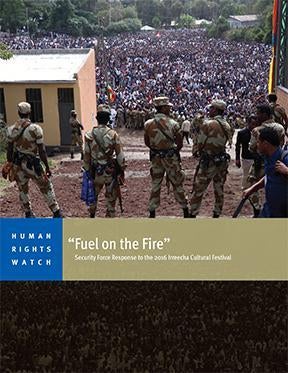
On September 19, 2017, Human Rights Watch in its 33-page report entitled “Fuel on the Fire’: Security Force Response to the 2016 Irreecha Cultural Festival” provided details on the regime’s “use of force in response to restive crowds at 2016’s Irreecha.” The report “found evidence that security force personnel not only triggered the stampede that caused many deaths but subsequently shot and killed some members of the crowd.”

Over the past year, the TPLF regime has committed unspeakable atrocities in Northern Ethiopia including Gonder, Wolkait, Bahr Dar and other locations.

The Irreecha Massacres are only the latest in the 26-year sordid history of gross and egregious human rights violation by the TPLF regime in Ethiopia.

On May 16, 2005, one day after the general election, the late leader of the TPLF regime, Meles Zenawi, also declared a state of emergency, outlawed all public gatherings and placed under his direct personal command and control all police, security and military forces in the country. Zenawi personally authorized the use of deadly force against any protesters in the post-election period. As a result, nearly a thousand people were either killed or severely wounded by regime troops. Zenawi subsequently set up an Inquiry Commission. That Commission was forced to go into exile following harassment and threats by the TPLF regime to falsify its findings. In November 2006, that Commission shared[18] its findings with members of the Africa Subcommittee in the House of Representatives. The Inquiry Commission laid the entire blame at the feet of the TPLF regime and rejected their spurious claims and justifications for use of deadly force.

partial list of the names of the victims of the Meles Massacres is publicly available.

list of names of those security, military and police officials directly involved in the post-2005 election massacres is also available. The TPLF regime to date has taken no action against these officials.

In May 2014, troops loyal to the TPLF regime massacred at least 47 university and high school students in the town of Ambo 80 miles west of the capital Addis Ababa. Eyewitnesses reported significantly higher casualties and fatalities than officially reported. Human Rights Watch (HRW) issued a statement[19] condemning the “shooting at and beating [of] peaceful protesters in Ambo, Nekemte, Jimma, and other towns”. According to HRW, the student “protests erupted over the release of the proposed Addis Ababa Integrated Development Master Plan” which would “expand Addis Ababa’s municipal boundary to include more than 15 communities in Oromia” and displace Oromo farmers and residents.

In December 2003, the TPLF massacred hundreds of Anuak people in Gambella in Western Ethiopia. Human Rights Watch documented  that TPLF troops “subjected Anuak communities throughout the region to widespread and systematic acts of murder, rape, torture, arbitrary imprisonment and the destruction of entire villages.” Genocide Watch sent a fact-finding team in Gambella and secured[21]  authentic documents “proving that the Gambella massacres were planned at the highest levels of the Ethiopian government, and even given the code name “Operation Sunny Mountain”. A report[20] by the Harvard Law School Human Rights Program on the Anuak Massacre concluded, “From December 2004 to at least January 2006, the ENDF (Ethiopian National Defense Forces) attacked and abused Anuak civilians in Gambella region – wantonly killing, raping, beating, torturing, and harassing civilians.”

In 2007, the TPLF regime massacred hundreds of people in the Ogaden region of Ethiopia. Human Rights Watch in its June 2008 report[22] entitled “Collective Punishment: War Crimes and Crimes against Humanity in the Ogaden area of Ethiopia’s Somali Region” documented, “Ethiopian troops have forcibly displaced entire rural communities, ordering villagers to leave their homes within a few days or witness their houses being burnt down and their possessions destroyed and risk death.”

The TPLF regime has refused to undertake meaningful and credible investigations into these crimes against humanity despite requests by human rights groups and even the U.N. The TPLF regime has refused entry to all UN special rapporteurs since 2007 to investigate human rights violations in Ethiopia.

The TPLF regime has dismissed and ignored all calls for an independent investigation of the Irreecha Massacres by United Nations top human rights official[23]the African Commission[24], the European parliament[25], and members of United States Congress[26].

The difference between the South Sudanese regime and the TPLF regime on human rights is the difference between Tweedledee and Tweedledum. Both regimes are peas in a pod. Thus, what is good enough for the South Sudanese regime is good enough for the TPLF regime.

I believe an America-first human rights policy which employs targeted sanctions to promote human rights, democracy and peace in Africa is not only necessary but also likely to produce outcomes that are consistent with the values and principles of American taxpayers.

Millions of refugees are leaving Africa to come go to Europe and North America because life is hell for them in Africa under brutal and bloodthirsty dictatorships, not merely to seek better economic opportunities. The U.S. can effectively deal with this problem by addressing the root cause of migration out of Africa, namely, brutal and oppressive dictatorships that treat their citizens as slaves and their countries’ treasuries and resources as their private estates. Selective and targeted sanctions aimed at the financial and logistical incapacitation of leaders, political elites and segments of society known to be directly responsible for human rights violations or engaged in aiding, abetting and giving material support in the commission of such violations in Africa is the proverbial two-by-four that will quickly get their attention.

For well over a decade, I have argued without pause that the best way to help Africa is to let Africa help itself. Africa can never be free until African leaders are held to account and forced to abandon the culture of panhandling, which have perfected as an art form. The U.S. must end its aid welfare program to African dictators who siphon off much of that aid and deposit it in their private offshore bank accounts. Your transition team hit the nail on the head when it demndaed answers from the State Department to the following question: “With so much corruption in Africa, how much of our funding is stolen?”

I wish I could definitively answer that question for you. But I can say definitively that to begin the effort to find out “how much of our funding is stolen” in Africa, we must make targeted sanctions a central part of the America-first foreign policy in Africa.

Mr. President, what I am asking is not anything extraordinary. I am merely requesting that you impose the same targeted sanctions you imposed on the leaders, supporters and business entities in South Sudan to the leaders, supporters and business entities responsible for human rights violations in Ethiopia. What is good enough for South Sudan is good enough for Ethiopia.

Mr. President, when Mr. Obama visited Ghana in his first trip to Africa in July 2009, he said, “Now, make no mistake: History is on the side of these brave Africans, not with those who use coups or change constitutions to stay in power. Africa doesn’t need strongmen, it needs strong institutions.”

The people of Ethiopia and the people of Africa are on tenterhooks to find out if you are going to stand with African dictators or the common people yearning to breathe free.

I am betting my bottom dollar that you will stand with the people of Africa and not the dictators who lord over them, as did Mr. Obama.

I will guarantee that you will have 100 million fans in Ethiopia if you institute targeted sanctions against members of the TPLF regime and its cronies involved in gross human rights violations, and win more than a 1.2 billion Africans if you make targeted sanctions a core part of your America-first policy in Africa.

I guarantee it!

Sincerely,

Alemayehu (Al) G. Mariam, M.A., Ph.D., J.D.
Professor and Attorney at Law

Cc: Hon. Rex Tillerson, U.S. Secretary of State
Hon. Steven T. Mnuchin, U.S. Secretary of the Treasury
Hon. Nimrata “Nikki” Haley, U.S. Ambassador to the United Nations

==========================
[1] https://www.treasury.gov/press-center/press-releases/Pages/sm0152.aspx

[2] http://www.start.umd.edu/gtd/search/Results.aspx?perpetrator=2127

[3] http://www.start.umd.edu/gtd/search/IncidentSummary.aspx?gtdid=201608260003

[4] http://foreignpolicy.com/2017/09/06/u-s-sanctions-south-sudanese-leaders/

[5] https://www.state.gov/secretary/remarks/2017/05/270620.htm

[6] https://www.youtube.com/watch?v=QEd583-fA8M

[7] https://www.treasury.gov/resource-center/sanctions/Documents/13067.pdf

[8] https://www.treasury.gov/resource-center/sanctions/Documents/13412.pdf

[9] https://www.gpo.gov/fdsys/pkg/DCPD-201700026/pdf/DCPD-201700026.pdf

[10] https://www.state.gov/j/ct/list/c14151.htm

[11] https://www.nytimes.com/2015/07/28/world/africa/obama-calls-ethiopian-government-democratically-elected.html?mcubz=3&mtrref=www.google.com&gwh=BBE0F6C584580DEF4C73E4D0F43ECE1F&gwt=pay

[12] http://www.cnn.com/2016/10/03/africa/ethiopia-oromo-deaths/index.html

[13] http://www.independent.co.uk/news/world/africa/ethiopia-stampede-violent-clashes-death-toll-oromia-disaster-bishoftu-protest-more-than-100-a7342951.html

[14] https://freedomhouse.org/article/ethiopia-more-150-dead-after-security-forces-fire-crowd

[15] http://www.ena.gov.et/en/index.php/politics/item/2067-command-post-established-to-oversee-implementation-of-emergency-rule

[16] http://www.aljazeera.com/news/2016/11/ethiopia-state-emergency-arrests-top-11000-161112191919319.html

[17] https://www.state.gov/j/drl/rls/hrrpt/humanrightsreport/#wrapper

[18]http://www.ethiomedia.com/addfile/ethiopian_inquiry_commission_briefs_congress.html

[19] https://www.hrw.org/news/2014/05/05/ethiopia-brutal-crackdown-protests

[20] http://hrp.law.harvard.edu/wp-content/uploads/2013/02/Ethiopia_2006_Report.pdf

http://www.genocidewatch.org/ethiopia.html[21]

[22]https://www.hrw.org/report/2008/06/12/collective-punishment/war-crimes-and-crimes-against-humanity-ogaden-area-ethiopias

[23] http://www.reuters.com/article/us-ethiopia-violence-un-idUSKCN10L1SY

[24] http://www.achpr.org/sessions/59th/resolutions/356/

[25] http://www.europarl.europa.eu/sides/getDoc.do?pubRef=-//EP//TEXT+TA+P8-TA-2016-0023+0+DOC+XML+V0//EN&language=EN

[26] https://www.congress.gov/115/bills/hres128/BILLS-115hres128ih.pdf
Africa Times: Ethiopia’s Oromo hold peaceful memorial at Irreecha festival October 2, 2017

Posted by OromianEconomist in Oromo Protests, Uncategorized.
Tags: , , , , ,
1 comment so far

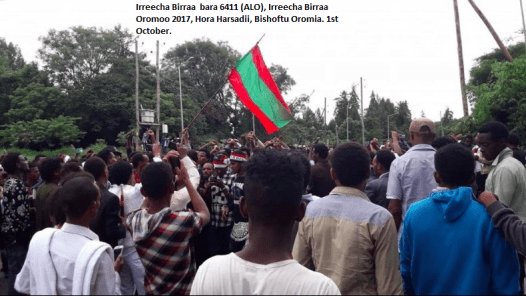
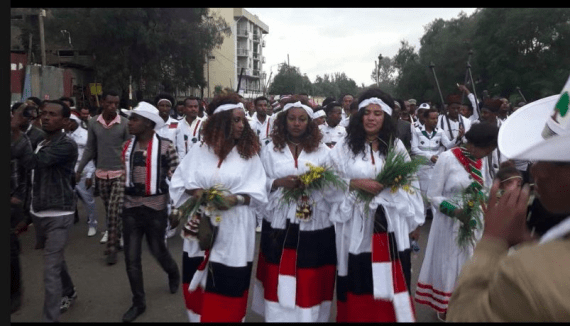
Odaa OromoooromianeconomistIrreecha Birraa bara 6411 (ALO), Irreecha Birraa Oromoo 2017, Hora Harsadii, Bishoftu Oromia. 1st OctoberIrreecha Birraa bara 6411 (ALO), Irreecha Birraa Oromoo 2017, Hora Harsadii, Bishoftu Oromia. 1st October colorfully celebrated with millions Oromo people

Ethiopia’s Oromo hold peaceful memorial at Irreecha festival

Ethiopia’s Oromo hold peaceful memorial at Irreecha festival

By AT editor – 1 October 2017

In Ethiopia, this year’s Irreecha festival brought peaceful but powerful protest as the Oromo people marked the anniversary of last year’s massacre at Bishoftu.

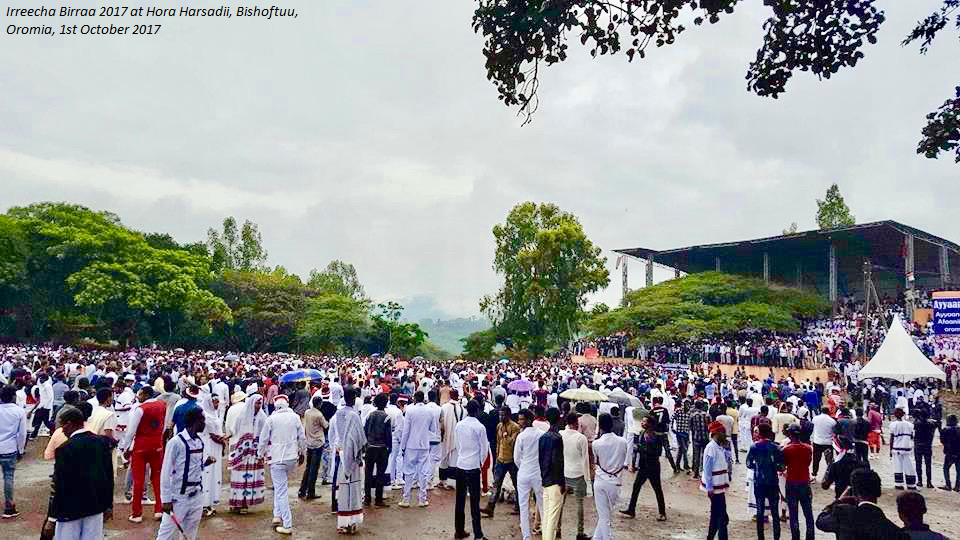
More than 1.5 million people were expected to attend the annual thanksgiving celebration. Despite the rainy skies, they came; once there, the crowds chanted anti-government slogans with the now-familiar crossed arms symbol of protest against Ethiopian authorities they say have long persecuted them – and who, in 2016, opened fire as the scene at Bishoftu deteriorated into chaos.

“May the almighty avenge those that are killing our people,” said the traditional Oromo Gadaa leader as he delivered a blessing. “May the almighty avenge those who killed our people here last year. May the almighty avenge the unavenged. May the almighty end our national ordeals.”

The Ethiopian Human Rights Commission denied the military used lethal force in an official report on unrest in Oromia released in April. The EHRC said 669 people had died in ethnic clashes overall, including 465 Oromo civilians, while blaming the Oromo Media Network (OMN), other diaspora sources, and Oromo political opposition groups for escalating the crisis while defending all national security measures as appropriate.

The report results were questioned by international governments and human rights organizations who say they are consistently denied the access needed for an independent investigation. Many of the thousands who were arrested during a 10-month state of emergency remain detained, including key Oromo political opposition leaders.

Security remained tight for this year’s Irreecha celebration, as Ethiopian authorities banned weapons and set up security checkpoints while promising that armed forceswould remain on the perimeter of the event but not venture inside.

 Related:-

“Sifan Lola Yaa WBO” Irreecha Bishooftuu 2017

Continue reading 

Irreecha 2017: The Oromo National And Cultural Holiday, Oromians in Millions Celebrating the Blessing Festival in Oromia and all over the Globe. And also remembering the October 2nd 2017 Bishoftu (Irreecha) Massacre October 1, 2017

Posted by OromianEconomist in Irreecha, Irreecha Birraa, Uncategorized.
Tags: , , , , , ,
7 comments


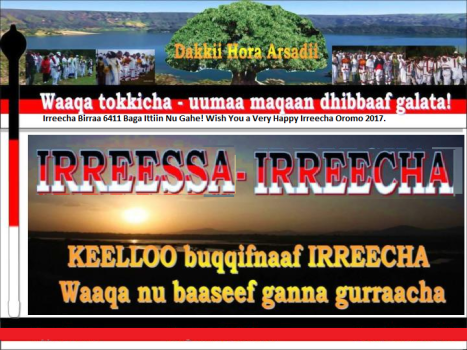
Odaa OromoooromianeconomistIrreechaOromoWaaq2014Irreecha Birraa 6411 Baga Ittiin Nu Gahe! Wish You a Very Happy Irreecha Oromo 2017..png

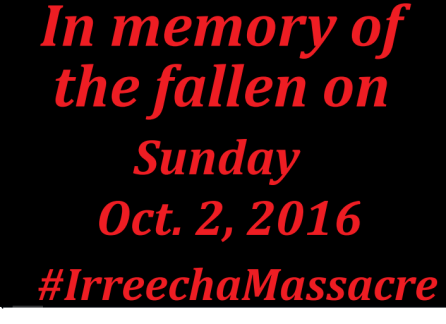
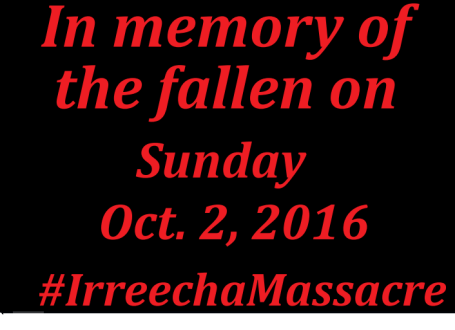
remember-irreechamassacre

Irreecha Birraa bara 6411 (ALO), Irreecha Birraa Oromoo 2017, Hora Harsadii, Bishoftu Oromia. 1st October 2017 colorfully celebrated with millions Oromo in Bishoftu, Oromia.png

Irreecha Birraa (Malkaa) Oromoo 2017 ( 6411 ALO) colorfully celebrated in Bishoftu, Hora Harsadii, Oromia, 1st October 2017..png

Irreecha Birraa (Malkaa) Oromoo 2017 ( 6411 ALO) colorfully celebrated in Bishoftu, Hora Harsadii, Oromia, 1st October 2017

Irreecha Birraa (Malkaa) Oromoo 2017 ( 6411 ALO) Colorfully Celebrated in Bishoftu, Hora Harsadii, Oromia, 1st October 2017..pngIrreecha Birraa bara 6411 (ALO), Irreecha Birraa Oromoo 2017, Hora Harsadii, Bishoftu Oromia. 1st October colorfully celebrated with millions Oromo people

Irreecha Birraa bara 6411 (ALO), Irreecha Birraa Oromoo 2017, Hora Harsadii, Bishoftu Oromia. 1st October

Irreecha Birraa bara 6411 (ALO), Irreecha Birraa Oromoo 2017, Hora Harsadii, Bishoftu Oromia. 1st October colorfully celebrated with millions Oromo people. Happy Irreecha 2017

Irreecha Birraa bara 6411 (ALO), Irreecha Birraa Oromoo 2017, Hora Harsadii, Bishoftu Oromia. 1st October colorfully celebrated with millions Oromo in Bishoftu, Oromia

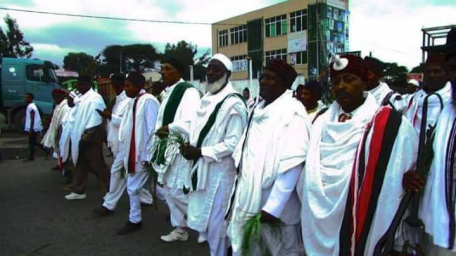
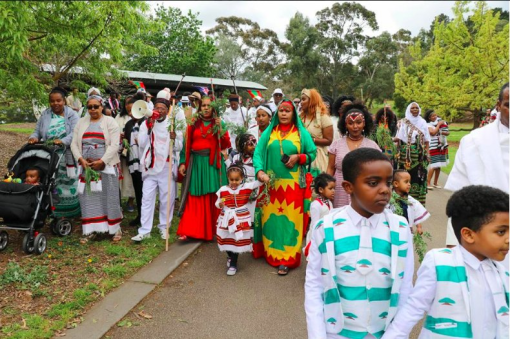
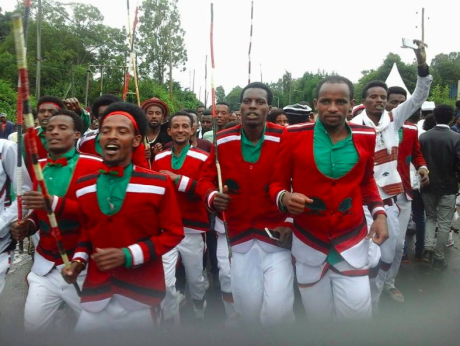
Irreecha (Irreessa)  Birraa Oromoo kan Bara 2017 (akka lakkoobsa Oromootti kan Bara 6411)  akka gaariitti karooreffatamee, haala oo’aa fi bareedan kabajamaa jira.  Lammi keenya bara  darbe ajjeechi sanyii daguugga irratti rawwateefi yaadannoon godhamaatti jira.  Here are some of  live  pictures, videos and reports refer to Irreecha Oromo Thanksgiving 2017 (6411 in Oromo Calendar)  Celebrations. The blessing and colorful event that started in mid August and continue to be celebrated Birraa (September- October). Millions have attended Hora Harsadi (Bishoftuu, Oromia) with success on 1st October 2017.  Irreecha is the most important event (season) in Oromo people national calendar. #Irreecha2017

(OPride)―On this festive yet somber occasion, the Oromo are out in great numbers, as colorful and vibrant as ever. It’s Irreecha, the “thanksgiving holiday,” as was described by a host of foreign media outlets in the wake of the disaster that left hundreds dead last year. With the grievances that led to the tipping of the vase last year left unaddressed, justice long sought over the massacre still a pipe dream, with countless remaining behind bars, the Oromo people are back in Bishoftu having unanimously declared that the show must go on. Click here to read more.

In Pictures: Irreecha celebrated colorfully, and peacefully, in Oromia: Click here to see full text of  Finfinne Tribune | Gadaa.com

Irreechi 2017: Rakkoo nageenyaa malee, mormii cimaa waliin kabajame. BBC Afaan Oromoo gutummatti ilaaluf as tuqaa.

Ayyaanni Irreechaa bara 2017 suuraan yoo ibsamu. BBC Afaan Oromoo as tuqa ilaalaa.

“Uummanni ofiin of eeguunsaa nageenya buuse” Poolisii Oromiyaa,” BBC Afaan Oromoo

የኢሬቻ በዓል ተቃውሞ ቢሰማበትም በሰላም ተጠናቀቀ click here to read full text, BBC Amharic

BBC News Afaan Oromoo – #Irreecha2017 biyyoota addunyaa gara garaa keessatti. Dabalataan as tugaa ilaalaa. #OromoUnity . Irreecha Birraa 2017 Celebration over the world, click here for more.

Ethiopia’s Oromo community has staged their thanksgiving celebrations known as Irreecha. Click here for more CGTN report.


Africa Times: Ethiopia’s Oromo hold peaceful memorial at Irreecha festival


https://twitter.com/roobsan/status/914412014247796736

 https://www.facebook.com/100009377299297/videos/1909312559391302/


https://youtu.be/DX7wiYz52Hs


https://www.youtube.com/watch?v=zNeubD28rFg

OROMIA: IRREECHAA: THE CHERISHED OROMO HERITAGE AND ITS CHALLENGING TASk

Africa News: Ethiopia’s ethnic Oromos, tourists gather for Irreecha 2017

Oromia: Haala Kabaja Ayyaana Irreecha Malkaa bara 2017 ilaalchisee ibsaafi qajeelfama

https://twitter.com/dethiopien/status/914390341628899329

https://twitter.com/addisgazetta/status/914388728986169344

Irreecha Birraa Oromo 2017 celebrated in Melbourne, Australia, 1st October 2017.png

Irreecha Birraa bara 6411 (ALO), Irreecha Birraa Oromoo 2017, Hora Harsadii, Bishoftu Oromia. 1st October colorfully celebrated with millions Oromo people. Happy Irreecha 2017.png


Irreecha bara 2016: “Iddoon ija koo itti dhabedha” BBC Afaan Oromoo irratti guutuutti dubbisuuf as tuqaa.

Statement of International Oromo Lawyers Association In Commemoration Of Irreecha Massacre, 2nd October 2016. September 30, 2017

Posted by OromianEconomist in Uncategorized.
Tags: , , , , , ,
add a comment

Odaa Oromoooromianeconomist

remember-irreechamassacre

International Oromo Lawyers Association (IOLA)  logo

Statement of International Oromo Lawyers Association In Commemoration Of Irrecha Massacre.


It is one year ago that the world witnessed the naked brutality of the TPLF-led Ethiopian regime, when it carried out a large scale massacre against the Oromo people gathered at the annual thanks-giving festival – Ireecha, in Bishoftu, some 45 kilometers, south of the capital.


According to reliable information, close to 1000 civilians were killed as a result of combination of stampede and use of life bullets as well as blockade of paths by the security forces. By all accounts, and conclusions by human rights experts, the tragedy was a well-designed and pre-planned government action against the Oromo people, who were already engaged in a year-long peaceful demonstration in the entire Oromia State region, demanding respect for their fundamental human rights.


Today, a year later, the government did not carry an investigation nor hold any official accountable for the death of the thousand civilians which resulted from the use of disproportionate use of force. To the contrary, it arrested and detained thousands of Oromo civilians for alleged instigation of disturbances.


This year, the festival is going to take place at the usual place following established rituals.  What is now becoming everyone’s worry is that, participants of the festival may try to use the opportunity to express their dissatisfaction with the way the government addresses, or failed to address at all, their demand for respect for their fundamental rights, which may be used as a pretext by the security forces to react with a force which is disproportional to the demand and the civilian character of the demanding population.


That being the case, IOLA would like to join the international community in general and human rights institutes in particular in expressing its deepest concern regarding the possibility of unrest and subsequent harm to the civilian population during this year’s celebration of Ireecha.


It therefore demands that the government should:

  1. Take advance measures to put in place all what is needed for the citizens to peacefully celebrate Ireecha as per established ritual and without disturbances by the security forces;
  2. Ensure that security forces use proportionate force needed to maintain law and order;
  3. Take all the necessary security measures to ensure that the physical safety and security of civilians festival-goers is not compromised;
  4. Remind its security forces and give them clear guidance that Ethiopia is bound by the international Covenants and Conventions it had signed and that they should adhere and properly implement the United Nations Basic Principles on the use of Fire Arms.


International Oromo Lawyers Association.

OROMIA: IRREECHAA: THE CHERISHED OROMO HERITAGE AND ITS CHALLENGING TASK September 30, 2017

Posted by OromianEconomist in Irreecha Birraa, Irreecha Oromo, Irreessa, Uncategorized.
Tags: , , , , , , , , ,
1 comment so far

Odaa Oromoooromianeconomist

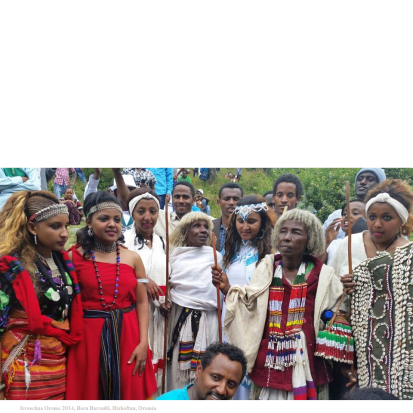
Irreecha Oromo 2014 Hora Harsadii, Oromia

IRREECHAA: THE CHERISHED OROMO HERITAGE AND ITS CHALLENGING TASK

Getaachew Chemeda ( Member: Gadaa Meelbaa)


14440855_1012083622242098_3525717134028063329_nSince time immemorial Oromo men, women, youths, and elders have been rallying together to express thanks and happiness to their Waaqa, who according to the Oromo concept of colour is symbolised by the colour gurraacha, meaning black. By its very original concept the colour gurraacha (black) did not stand for mourning, grief or for the expression of sorrow. It was used to symbolise the invisible supreme power that can do and undo anything anywhere in the universe. Having this narrative tradition in mind, the Oromos have been getting together around rivers or lakes to thank their Waaqa Gurraacha at the end of the rainy season. They strongly believe that, it was Waaqa who delivered them from the restraining rainy season and brought them to the cherished flowery season. This great event, called Irreecha in Afaan Oromoo, is celebrated every year at the end of September or in the first week of October. https://youtu.be/Pk3W49aKXDY
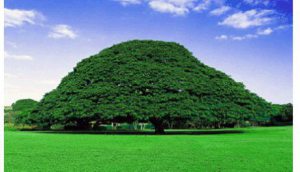
Irreecha holds an important social event in Oromo people’s aspiration for peace, prosperity, abundance, fertility, and a hope for the renewal of a new social life. Like ancient Egyptians who used to celebrate the yearly inundation of the River Nile as a symbol of life giving, Oromos have been celebrating their new year on the side of river banks or lakes which, according to Oromo mythology, is the source of all life. Some of the hymens ancient Egyptians sang while praising the Nile were:

Oh Nile! You rise out of the earth and come to nourish Egypt! You quench the thirsty desert! You bring forth the barley! You create the wheat! You fill the granaries and the storehouses, not forgetting the poor. For You we pluck our harps, for You we sing! [1]                        

                                     Creation Narrative Stories

It was not only the ancient Egyptians or the Oromos who had creation stories in relation to water. In the Japanese telling stories, we find water holding the core of the dawn of creation. First, there was an ocean, out of which the many Japanese Islands were believed to have been created. There was a god known as Izanagi and a goddess Izanami. The gods, as a couple, had three children, of whom the grandson of the Sun Goddess had become the first Emperor of Japan, Nippon, as known to the native population.[2]
The gods used a long spear and stirred up mud at the bottom of the ocean.  It was out of the stirred up mud those more than 6000 Japanese islands were believed to have been created. On the eastern side, out of the glittering Pacific Ocean, the sun rose every morning. It was the cherished sun’s rays which had a big role in illumining, nourishing, and bringing up the Japanese archipelagos to life. This is the Japanese thought of their land, Mount Fuji being the most beautiful and sacred one.[3]

For the Japanese, Japan has not only been their country.  Japan has been their world and their religion. The creation story the people share in common and the passionate love they have for their country has continued to make up the coherent faith of their oneness. And, out of the cherished mythology, they have undoubtedly benefited enormous groundwork principles for their social and technological advancement we are witnessing today.

When we come to the antique Scandinavians of northern Europe, we find similar watery creation stories. In the beginning there was an abyss filled with water. The water froze; and lastly melted down. Out of the melted water, a giant being of human form called Ymir emerged. Thereafter, a man and woman were created out of Ymir’s armpits. In short, this was the beginning of ancient Scandinavian telling stories about the myth of human creation.[4]
The Oromo myth of creation holds the view that water being the source of androgynous being. According to Oromo narration story, by the unfathomable wisdom of Waaqa Gurraacha, the androgyny was divided in to two parts and became male and female. After the division, the two opposite sexes began to live separately on the either side of the river. Though they were able to see each other across the river, they were hampered from joining each other by the overflow of the river.  When the river subsided and sank down into its course, during the flowering season, they were able to cross the river and embraced each other.[5] Here was the point, during the flowering season, according to Oromo belief, when the first gaa’ila  (engagement for marriage) started to blossom.

Many of us may remember when newly married Oromo couples were coming to Irreecha at Hora Harsadii, enforced by nobody but only inspired by the tradition to get the blessings of the hayyuus and Abbaa Gadaas. But that was not performed on October 2, 2016 because of the heinous massacre carried out by the incumbent Ethiopian regime that disrupted the whole process of the ceremony.

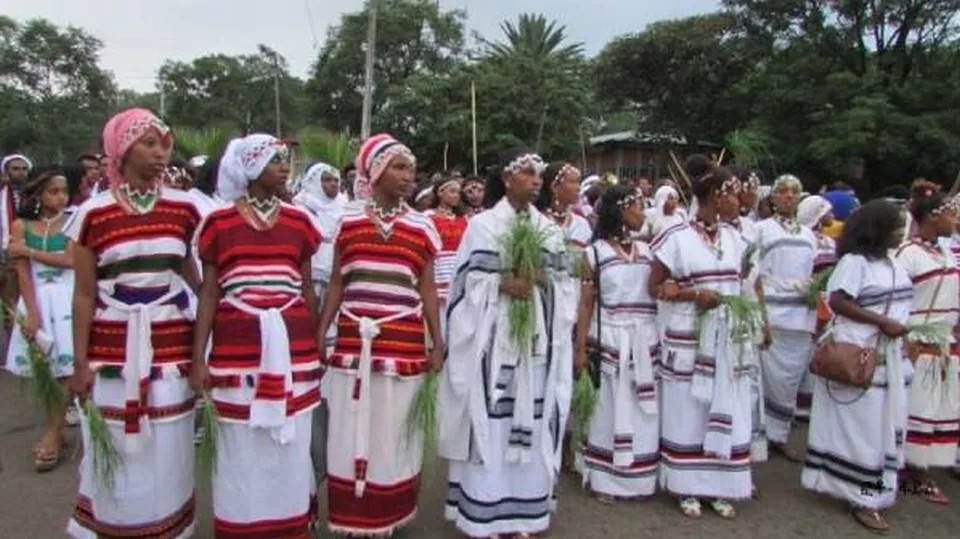
Having this entire narrative story in mind, defending and combatting all challenging obstacles and heinous crimes imposed on them, the Oromos have continued to celebrate their yearly thanksgiving Irreecha festival, dressing beautiful national costumes suited for the occasion.

Norms of Irreecha Celebration

Today, at national level, millions of Oromos are celebrating Irreecha Birraa, on the side of Hora Harsadii in Bishooftuu town. At national or local levels, there are traditionally agreed upon norms that govern the whole process of the ceremony from the beginning to the end, which is deeply rooted in the strongly and humanely established Oromo views for peace, love, prosperity, and human dignity. Based on Oromo clans’ successive generation by birth, there are individuals who offer blessings first, second, and so on. This is dually (angafaa fi qixisuu) restructured in Oromo kinship organisations whose function of check and balance has become basic foundation for the indigenous Gadaa  Oromo Democracy to flourish.

The ceremony commences first by offering thanks and greeneries to Waaqa, followed by blessing all creatures of Waaqa to be at peace with each other. They also give admiration and honour to Waaqa’s wisdom who gave them a perfect bliss of land with abundant natural resources. This is one of the inherent reasons why the Oromos are cherishing their ancestral homeland, Oromiyaa (Biyya Oromoo) as part of their natural right, be it in peace or war times.

In the case of Irreecha Birraa, it is the Abbaa Malkaa who ‘opens the door’ of the malkaa (river) by charmingly welcoming those who arrived at the site in peace.[6] Those distinguished hayyuus from senior and junior clans (mana angafaa fi qixisuu) and the Abbaa Gadaa from the incumbent Gadaa party are traditionally honoured to take leading positions in giving thanks and blessings to all. Even the Ayyaantu-Qaalluus, who are believed to be the guardians of the laws of Waaqa and the  custodians of Oromo traditional religion, have no seniority right  to claim either to take the leading position or to give blessings first. They have their own defined time and place to do so. Failure to honestly follow those agreed upon traditional charter, could lead to chaos and eventually to the disintegration of the society. Nevertheless, despite so many apartheid walls erected among Oromo regions by builders of the imperial palace of political Ethiopia (in contradiction to historical Ethiopia), the Oromos are not able to be divided by the walls. They are chiselling down the walls and are patiently moving forward in unison.

         Is Irreecha a Religion?

As common to any Oromo meetings or conferences, thanking Waaqa and blessing each other precede the opening of the agenda of the meetings. There is no exception for the thanksgiving Oromo new year celebration, Irreecha. Since the Oromo name of Waaqa is the centre of Oromo Natural Religion, the solemn invocation of Waaqa at Irreecha or elsewhere cannot be avoided. This is the core issue, the authenticity of Oromo natural religion and Oromo morality that seem to have scared general managers of ‘Revelation Industries’ and their sponsors in Oromia. They are prompted to develop phobic images against essential Oromo values: vilifying, desecrating, defaming, and bedevilling Oromo material and spiritual assets as a whole. Why? The answer is so unilineal, not parallel.

Irreecha has been one of the major Oromo events that distinguishes, makes, and marks the identity of an Oromo personality as a member of the nation.

  • It is a social festival that praises Waaqa who helped them come together in peace and embrace the incoming bright-sunny season.
  • It is a social festival that sees off the out-going rainy season, wishing its recurrent appearance in peace, happiness, abundance, fertility, equality, fraternity and a hope for victory against all forms of evils.  

But, as has obviously been duplicated by foreign media outlets, particularly after the Irreecha massacre of October 2, 2016, there is a clear tendency to look on Irreecha as a ‘religious festival’. It is quite villainous and sinisterial to depict the general Oromo sense of Oromo-self only from a single perspective. Is Habasha’s Inkutatash not Qiddus Yohannes’ religious celebration or is it a new year festival?  Is Tigrian’s Ashanda the worshipping of Churches of Saints or season greetings? Is European Christmas the celebration of Christ’s birth day, or is it the continuation of pre-Christianity European culture of winter solstice celebration?

When it comes to Irreecha Oromo, it is propagated as heathenish or animist religion that makes a tree or a river the centre of worship. This can simply be attested from the recently publicised sub-human propaganda by a self-declared “Prophet” named Suraphael Demise https://youtu.be/u2hrjMaSeqM

We do not understand whether such inconsiderate propaganda is really a reflection from a fully-developed human brain or is it a proxy psychological war sponsored by the monstrous Satan.                                                                                                                                                                                                                                                                                                                                           If one wants to talk or know about Oromo religion, it is called Waaqeffanna, not Irreecha. Where is the self-organised Waaqeffannaa religion right now? One may ask the Tigrian Ethiopian regime, sitting in Minilk’s imperial palace; muddling the peoples of that empire,  sponsoring divisive and xenophobic people like Suraphel  Demise.

Waaqeffannaa by its natural origin, contrary to revelationists’ assertions who claimed to have seen visions and heard voices, is neither a claimed vision nor claimed heard voices. Had it been a claimed vision or claimed voices, it could have been dwelling on narrating about a place of everlasting torture or about a place of eternal delight in the afterlife. In the narrative story telling of Waaqeffannaa there were no individuals who did claim any visions or heard voices for its establishment as a religious institution. It emerged naturally out of the organised Oromo people’s activities in the remote antiquity. Henceforth, Waaqeffannaa, as a natural religion, has become the common vision of Oromo people’s common mind. It is free from claiming any received information of the afterlife, be it from the chamber of the sinners or from the chamber of the pious. However, Waaqeffannaa may wonder or speculate what could be happening beyond the veil of a man’s soul (lubbuu) after his dead body was ceremonially buried. Revealed religions claimed and are still claiming that they had unveiled the veil, saw the souls, and heard their voices from chambers of the ‘hell and heaven’.

In its strictest sense, Irreecha is not a religious institution. It is a ritualised social event; certainly, adorned and accompanied by Oromo Natural Religion known as Waaqeffannaa. Waaqeffannaa and Irreecha have been with the Oromos, by the Oromos, and for the Oromos since the dawn of creation long before the conception of revealed religions.

                 The Irreecha Massacre and the “Tasa” Monument

 An attempt to ban the Irreecha festival started the time when Oromos lost their sovereign rights to Abyssinian firearms under the supreme commandship of King Minilk of Shewa. After the Tigrian-led Ethiopian regime took the imperial palace by force in 1991, the orchestration to ban the Irreecha ceremony was concluded. This time, the regime took the first apartheid action by banning the revived Matcha-Tulama Self-Help Association and the freely organised Waaqeffaanaa religious association. Instead of directly banning Irreecha, however, like Matcha-Tulama and Waaqeffanaa, the regime renewed the old Nugus-Orthodox tactics of hijacking anything good of the Oromos and good for the Oromos.

A delegate led by Abba Duulaa Gammadaa, the then president of ‘Oromia Regional State’ was despatched to Hora Harsadii to hijack Irreecha. The delegate failed to accomplish the mission it intended to seal and returned to the palace in dismay. Here was planted the seed of the evil action that took thousands of innocent lives on October 2, 2016 at Hora Harsadii, Bishooftuu.

Ahead of the massacre, the regime meticulously orchestrated provocative tactics that could incite the people against itself. It imposed rules that are too antagonistic to the established Irreecha tradition. When the people reacted to the evil provocation, its ill-behaved security forces started firing life bullets from the ground and from armoured vehicles against millions of celebrants. Military helicopter flew over them spraying teargas on them. On this day, that barbaric action changed the happy Oromo Irreecha event to a bloody grief.   https://www.youtube.com/watch?v=R_3miIwY4mQ&t=33s

The regime and its killing forces rejoiced the success of their fascistic actions on human carnages. The regime’s trumpet Prime Minister, Haile Mariam Desalegn, was so quick to deny the massacre and said, “No single bullet was heard; but because of stampede about 52 people were killed.” Finally, like Muktar Kadir who thanked the Agazi killing forces, Ethiopia’s Prime Minister thanked the regime’s mercilessly firing forces  https://youtu.be/Q6cSzgiZdc8

To remember the success of their evil plan, the Tigrian-Ethiopian regime erected a very offensive stone they call “Memorial Monument”. A deaf monument, that speaks of nothing about the root cause of the massacre. Sadly, what is inscribed on the monument seems to be articulated in the way it could depict the lost human lives as unworthy ones. It reads in Afaan Oromoo “Tasa Lubbuun Isaanii dabreef, for suddenly passed away lives”

This “Tasa Monument” was erected in a faraway place where the actual massacre did not take place

 Conclusion

The Oromos have tried to do everything positive for Ethiopia. But why are they being reciprocated with negativity for their positive generosity? When the Oromos are coming out for peace, those who are making huge business in the name of “Ethiopia” are incessantly confronting them with vibrant forms of violence, persecution and marginalisation.

 In former days, before Oromo country and their central holy site, Walaabu, had fallen to naftenya’s bayonet, Oromo generations in every Oromo clan were making pilgrimage to Walaabu. The purpose of the journey was more of religious, that they sought the anointment and blessings of Abbaa Muudaa, who was believed  to be the eldest son of Oromo [Orma], the Spiritual Father of the nation holding the centre of Oromo Natural Religion, the belief in Waaqa Tokkicha.[7]

The pilgrims, who were scattered in north-east Africa, representing their clans, used to travel a long journey and arrived at the Muuda site. On their return to their clans, they came back with qumbii (myrrh), which the Abbaa Muuda distributed to them as a symbol of his fatherly holy blessings. This had been considered as dangerous and anti-peace to Abyssinian crosses and crowns. Subsequently, with the invention and consolidation of the ‘New Ethiopia’, qinyi gizaat, (the Amharic version for colonial empire) by King Minilik of Shewa, Oromo’s journey to the Muuda holy site was prohibited. It was finally banned at the beginning of the twentieth century. Huntingford who collected good information from various sources wrote:

”—after the Abyssinian conquest of [Oromia], however, the pilgrimage was forbidden owing to its political and nationalistic influence.—as opportunities for stirring up Oromo patriotism and forming plans of rebellion for men of all the  Oromo tribes met at Walaabu.”[8]

This inhumane and erratic ideology will get nowhere. It is now far from halting down Oromo people’s aspiration for regaining their lost freedom. We, including those in ati-Oromo camps, are daily watching and witnessing the reality on the ground.  The more direct wars and propaganda campaigns are pouring on the Oromos, the more their heroisms are reinvigorated. Irreecha will continue to march forward with its noble objectives of thanksgiving social festivities: vitalising, remaking, and remarking Oromummaa (Oromo-ness).


Related:-

IRREECHA – THE COLORS, THE IDENTITY AND THE PRIDE OF OROMO NATION

https://twitter.com/twitter/statuses/914112218479972352

Oromia: Farm land grab: Game over for Flora EcoPower September 28, 2017

Posted by OromianEconomist in Land and Water Grabs in Oromia, Land Grabs in Africa, Land Grabs in Oromia, Uncategorized.
Tags: , , , , ,
add a comment
Odaa Oromoooromianeconomist
Game over for Flora EcoPower
Africa Intelligence | 22 September 2017 [FR], INDIAN OCEAN NEWSLETTER ISSUE 1458

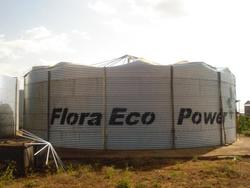
One final straw for the German company which owns 70,000 ha of land in Oromia has put a definitive end to its Ethiopian adventure.
According to information obtained by the Indian Ocean Newsletter, the oil production and biofuel refining company Flora EcoPower Ethiopia, a subsidiary of the German group Acazis AG, has been ravaged by the fighting between Oromos and Somalis (ION 1457). Despite statements of reassurance from Prime Minister Hailemariam Desalegn, the conflict between the two communities is intensifying with each passing day. Already affected by the anti-government demonstrations which have broken out in Oromia National Regional State (ONRS), foreign business operators, like the Saudi-Ethiopian magnate Mohammed Hussein al-Amoudi (ION 1421), are now having to deal with ethnic clashes too.
Ethiopia allocated 70,000 ha of land to Flora EcoPower in the region of West Hararghe, which straddles the districts of Daro Lube and Boke, to enable it to produce castor, groundnut and eucalyptus oil. However, this region, where al-Amoudi’s Horizon Plantations Ethiopia is also active, borders onto the Somali National Regional State (SNRS, see here).
Flora EcoPower, which is run by Patrick Bigger and Andreas Burger, has never managed to turn the venture into a success. Subject to insolvency proceedings since July 2015, for many years the company has been trying to attract investment for its farm and refinery, and for a long time thought it would succeed in the case of Herakles Farm. Run by Bruce Wrobel, the company is the public face in Africa of the American investment firm Blackstone Group, founded by Stephen A. Schwarzman.
In 2013, managers from Herakles’ operation in Cameroon came to assess Flora EcoPower’s production resources and its performance, but no partnership ultimately came of it. In the end, Patrick Bigger and Andreas Burger entrusted the running of their oil refinery in Fetachu, near to Harar, to the Ethiopian firm K&S, which is run by Pakistanis from Sudan and Yemen who have already worked in Ethiopia for the Endowment Fund for the Rehabilitation of Tigray (EFFORT, a group of companies with links to the EPRDF, Ethiopia’s ruling coalition) and for Al-Habesha Sugar Mills, owned by the Pakistani investor Abdul Majeed Pardesi.


https://twitter.com/farmlandgrab/status/913080161121325056

https://twitter.com/AnywaaSurvival/status/911221123924332550
Land activists around the world celebrated the news of the collapse of one of the world’s biggest land grabs: the Indian company Karuturi Global Ltd’s 300,000 hectare farmland deal in Ethiopia. 


ETHIOPIA IS GRAPPLING WITH HEIGHTENED RISK OF STATE COLLAPSE, IT IS TIME FOR ORDERLY TRANSITION   September 27, 2017

Posted by OromianEconomist in #OromoProtests, Ethiopia's Colonizing Structure and the Development Problems of People of Oromia, Afar, Ogaden, Sidama, Southern Ethiopia and the Omo Valley, Ethiopian Empire, Ethnic Cleansing, Horn of Africa Affairs, Uncategorized.
Tags: , , , , , , ,
add a comment

Thousands of internally displaced Oromos from the recent conflict in eastern Ethiopia remain in temporary shelters

Addis Abeba, September 27/2017 – Ethiopia is fast descending into turmoil as the result of incessant state-sanctioned violence and repression. Popular demands that precipitated a three year-long protest, which started in Oromia in 2014and then spread to the Amhara and other regions, remain unaddressed. The discontent in the two most populous regional states, Oromia and Amhara, home to two-thirds of the country’s population of over 100 million, is deep and widespread. The resulting anxiety, expressed by serious Ethiopia watchers, is confirmed by the country’s leader, Prime Minister Hailemariam Desalegn, who once warned that the continued protests could push Ethiopia into a situation similar to what has prevailed in neighboring Somalia for the last 26 years: state collapse.

The popular protests signaled a regime in crisis. After ruling for a quarter century, the ruling coalition, the Ethiopian People’s Revolutionary Democratic Front (EPRDF), began to exhibit signs of decomposition. Nowhere is this well archived than the reporting by this magazine over the last six years.  The economy, once touted as the envy of the world, started experiencing a downward spiral. Tensions emerged at the highest echelons of the security apparatus with the civilian and military intelligence at loggerheads over the direction of the regime’s response to the protests. Beginning in December 2016, two months into the state of emergency that was declared to suppress the protests, the situation got further complicated with rising tensions between regional states – first between the Amhara and Tigray regions and currently between the Oromia and Somali regional states.

Escalating Tensions

For years, Oromo residents near the regional frontiers have complained of an aggressive attempt by the Somali Regional State to forcefully dispossess their land. Until recently their grievances fell on deaf ears. The conflicts escalated in February and March 2017 as incursions and raids conducted by the Somali Special Police (the Liyu Police), also known as the Liyu Hayil, and militia intensified along the border between the two regional states stretching from Chinaksan in the East (near the border with Somaliland) and Moyale (near the border with Kenya).

Cross-border raids and fighting increased in frequency and intensity in early August and tensions boiled over in mid-September in Oromia’s East Hararghe Zone, where at least 60 people were killed, according to locals. In addition to its assault on Oromo civilians in Oromia, members and sympathizers of the Liyu Police are currently attacking and expelling Oromo residents and merchants from the Somali region.  As a result, hundreds of Oromos have been killed and tens of thousands displaced from their homes in the Somali region. Authorities in the Oromia region have begun sounding alarm about an all-out war of aggression by the notorious Somali Special Police.

In a more ominous development, officials from the two states are engaged in an unprecedented war of words, particularly on social media. Their tangling is not limited to words.  The security organs of the two states have been battling each other over the territories along the common border.

All of this is happening under the watchful eyes of the federal army and security forces, which are now ordered by the Prime Minister to man the common border between the two states and all major roads in Oromia. Oromo residents in the affected areas question the neutrality of the federal army, particularly the impartiality of Tigrean kingmakers in the ruling EPRDF coalition, and not a few accuse them of abetting and enabling the still-ongoing Liyu Police incursions into undisputed Oromo territories.

Critics contend that Tigrayan generals and intelligence officials, the current de facto rulers of Ethiopia, have two overarching objectives for empowering and enabling the Liyu Police and leaders of the Somali region: to cripple the three-year-long Oromo resistance against the EPRDF government, and to undermine, weaken and control the new leaders of the Oromia regional state, who have recently shown some signs of autonomy from the overbearing center. The development risks provoking a total breakdown of law and order on the peripheries, which can gradually creep toward the center—leading to state collapse.

Signs of Collapse

Predicting state collapse, a complex phenomenon with multiple causes and effects, is never easy.  However, those writing on state collapse, such as Caty ClementRobert Rotberg, and Claire Vallings and Magüi Moreno-Torres, agree that the legitimacy, or lack thereof, enjoyed by state institutions and their capacity or failure to deliver the political and economic goods needed by society are the primary indicators. Having refused to open up the political space to allow the population to render judgment on its political legitimacy, the EPRDF regime, in power for over a quarter of a century, had instead sought to predicate its legitimacy on the economy’s exaggerated performance. The resulting political instability now threatens to bring the economy to a standstill.

Many observers in and outside Ethiopia, including current and former Ethiopian officials, have offered a bleak prognosis about the country’s fate. For example, last year the former Chief of Staff of Ethiopian Defense Forces, General Tsadikan G/Tensae, warned that the mass protests in Oromia and Amhara regions in particular and EPRDF’s failure to contain them augurs the onset of a full-fledged political crisis. His colleague, Gen. Abebe Teklehaimanot also expressed similar concern about the country’s prospects for stability unless significant reforms are implemented.

Similarly, a string of international media headlines and expert analyses warn of a growing political crisis. Articles appearing in Open DemocracyForeign Policy JournalForeign Affairs,  and the Guardian, just to mention a few, have joined the chorus about an impending collapse. Perhaps acting out of this fear, Ethiopia declared a state of emergency in October 2016, which lasted for nearly ten months. The declaration was a stunning reversal for Ethiopia’s rulers, who had some success portraying Ethiopia as an island of stability in a troubled region and propagating a myth of “Ethiopia rising.”

Several trend indices point to Ethiopia’s growing state fragility. According to the Fragile State Index, for example, Ethiopia’s fragility has been rising steadily since 2006. The Index of State Weakness designates Ethiopia as one of the world’s critically weak states. Noting the complete lack of political rights, Freedom House has consistently rated Ethiopia as Not Free — with a score of only 14 out of 100 in its 2017 report.

And all states that collapsed had one thing in common: a violent dictatorship locked into a win-lose conflict with a populace determined to untangle the incumbent regime from the reins of power. The breakdown of state-society relations marks a milestone in a trajectory towards state collapse.  Other credible risk assessments underscore this same bleak picture for Ethiopia.

Recently, Christopher Clapham, a long-time Africa watcher, noted that Ethiopia is both the anchor and the main source of the perennial instability that has haunted the Horn of Africa region for decades. Should the Ethiopian state implode, as all indicators point toward, the whole region, where a quarter of a billion souls eke out an already precarious existence, would go down with it.

This is not an implausible scenario. Ethiopia is situated in a region harboring two already collapsed states (Somalia and South Sudan), two failing states (Sudan and Eritrea), and yet another fragile state (Kenya). It also abuts the world’s most volatile region, the Middle East. All of these factors about Ethiopia’s increasing fragility ought to have set off alarm bells in Washington, Brussels, London, and Addis Ababa itself, seat of the African Union.

To be sure, the EPRDF is not the sole culprit for all of Ethiopia’s ills. There are factors beyond its control that contribute to the ongoing political convulsion. One such factor is soaring population growth. Ethiopia’s population has doubled since EPRDF came to power, putting unbearable pressure on the environment and natural resources in a country where backward agriculture is the dominant means of agricultural production. In addition, there are a number of quite contentious issues hampering any consensus among the political class.

Divided elites

Ethiopia’s political class is beholden to deeply divergent diagnoses and remedies to tackle the mounting problems. It doesn’t agree even on such uncomplicated issues as the bases of the country’s statehood. EPRDF is convinced that Ethiopia is a nation of nations. Structuring Ethiopia as a federation of nations, nationalities, and peoples stemmed from this conviction.

The elites of the Oromo and other marginalized groups hold the view that the structuring of Ethiopia as a multinational federation was a positive step but dismiss EPRDF’s federation as bogus. Indeed federalism without democracy is an oxymoron. Their fear is that an undemocratic federation of nations could produce a repeat of the former Soviet Union and Yugoslavia’s disastrous fates. Members of these groups insist that only democratizing the present federation can avert such eventuality.

Another vocal group, hailing predominantly from the previous ruling elite, rejects the emphasis on Ethiopia’s multinational nature and aspires to forge the country’s numerous ethnic groups into a single Amharic-speaking nation—resurrecting the policies and memories of successive feudal and military regimes that stoked decades of armed conflicts and brought the state at different junctures to the brink of collapse. Since neither of these groups is willing to heed the fears, pains, and perspective of the other, a debate of the deaf has been going on among them for the last three decades.

These contrasting positions come with the dangerous implication of pulling the country in opposite directions. The concern that this configuration of political stands could culminate in ripping Ethiopia apart should not be underestimated.

A successful mobilization by multiple rival groups against a resented centralized power is a harbinger of regime collapse. All indications are that mobilization by both the Oromo and the Amhara, even within the EPRDF, is gathering momentum, thereby exacerbating the regime’s incoherence. To date the protests among the Oromo and Amhara have largely remained peaceful.  However, increased repression has made the breakout of armed insurrection all but certain. Most disconcertingly, regime collapse could easily morph into state collapse in Ethiopia as the regime has intricately tied its fate to the survival of the state.

Precipitating factors

The second most threatening factor is the refusal of the ruling party to institute the reforms demanded by the protesters. When the ruled refuse to live under the old order and rulers are unable to carry on in the old way, breaking out of the impasse could be achieved only by instituting significant reforms. And this is just what the EPRDF has been utterly unable and unwilling to do. Without reforms, the specter of a revolutionary breakdown looms around the horizon.

The excessive securitization of the Ethiopian state to stifle growing dissent is also having two unintended consequences.  First, it is making rising dissent inevitable. Second, ballooning costs of securing the regime could easily bankrupt it. The recent tax-hike, which resulted in one of the first successful attempts at a general strike in decades, presages what is to come.

The main obstacle to instituting any kind of reform is the lack of democracy and honest conversation within the ruling party. The EPRDF is composed of four entities: (1) The Tigrayan People’s Liberation Front (TPLF), (2) The Amhara National Democratic Movement (ANDM), (3) The Oromo People’s Democratic Organization (OPDO) and (4) The Southern Ethiopian People’s Democratic Movement (SEPDM). Of all of these, the TPLF, speaking for the least populous constituency, plays a dominant role, thereby standing the EPRDF pyramid on its apex. The inherent instability of this setup accounts for much of Ethiopia’s fragility than anything else.

Growing fragility

States become susceptible to failure when two factors come into play. The first occurs when rulers lose their mandate to govern and their administration of the affairs of the state becomes illegitimate in the eyes and hearts of a growing sector of the concerned populace. The three-year-long protests in Oromia and Amhara regions bespeak the loss of mandate to govern. The second happens when the rulers’ capacity to keep the governed in tow is exhausted. The failure of the state of emergency to quell the popular appetite for resistance against the system attests to this fact. And there seems to be a dialectical relationship between soliciting legitimacy and seeking domination. As coercion is deployed more frequently, the consent of the ruled plummets, and rulers would be forced to increasingly resort to naked coercion, which further diminishes their legitimacy and necessitates the application of even more coercion.   For the EPRDF regime, more repression is not yielding the anticipated results.

This vicious cycle has characterized EPRDF’s rule ever since it came to power in 1991. It started with a questionable legitimacy, which steadily diminished with each passing decade. In order to make up for this falling legitimacy, EPRDF bolstered and fine-tuned its instruments of coercion and control. The crude application of these tools in the absence of an astute political leadership creates more security problems than it solves. To make matters worse, since the death in 2012 of its strongman, Meles Zenawi, the EPRDF has shown signs of atrophy, discord, and unraveling. In place of the centralized rule that characterized earlier decades, multiple sources of authority are currently vying for influence—at times violently.

Political fragmentation

Within the EPRDF, inter and intra-party relations have broken down. Both ANDM, ruling the Amhara region, and OPDO, ruling Oromia, are pressing for more autonomy from the TPLF-dominated center in a bid to respond to the growing popular chorus to end Tigrean domination of the country’s politics, economy, and security apparatus. The gap between the official rhetoric of the devolution of power and the reality of continuing centralization has undermined the resilience normally accruing to a federal arrangement. At the moment, the system is more brittle than it has ever been. The failure to stop armed incursions into Oromia from the Somali region, which has led to the killing of innocent people and mass expulsion of Oromo civilians from the Somali region, is a worrisome sign of the breakdown of central control.

The Oromo protests happened despite the long running process of extending party control over the populace, which culminated in 1 out of 5 Ethiopians (i.e., 20 million) being harnessed into an elaborate state surveillance system. This level of regime penetration of society is unprecedented in Ethiopian history and quite likely in the entire African Continent. This panoptic surveillance structure, however, proved totally useless in averting mass uprising particularly by the Oromo and the Amhara.

That is why authorities resorted to a state of emergency as part of the regime’s increasing reliance on force and coercion to stay in power. Yet even after martial law was imposed, the rebellious societies remain restive and will likely rise up again. It had to be lifted because it had become ineffectual and a burden. This begs a very important question: What would EPRDF do that it has not done to date in order to contain the imminent mass upsurge?

The incumbent regime shows no indication of heeding and addressing the protesters’ grievances. The regime’s effort to placate the people, including through declarations of war on rampant corruption, abuse of power, problems of good governance, cabinet reshuffles, and promises of “deep renewal” have come to naught. And the kneejerk reaction of violently putting down resistance protests has not worked so far and is unlikely to work in the future. This is what makes state failure in Ethiopia a real possibility.

In addition to the mounting political crisis, Ethiopia also faces a looming humanitarian catastrophe. Drought and famine are back in the headlines: See, for example, the  TelegraphBBCDWWashington PostEuro NewsSave the ChildrenOxfamWorld Food ProgramCBC, and IRC, just to mention a few. According to the United Nations, 20 million are suffering from acute food shortages, and in many places the situation has already developed into a famine. This time the crisis is not affecting the traditional famine-prone regions of northern Ethiopia, but the Eastern and Southern regions.

Call for action

The escalating conflict along the vast border between the Somali and the Oromia states indicates that Ethiopia’s political crisis is showing no sign of abating. Instead, it is deepening. It is almost universally believed among the Oromo that the conflict is not between the two brotherly populations, the Oromo and the Somali. Rather, it is a proxy war waged by the Tigreyan military brass, which practically rules the country, to intimidate the Oromo as well as the new OPDO leaders, who are increasingly asserting their autonomy from the TPLF under whose hegemony they grudgingly toiled the last 26 years. The Liyu Police happened to be another handy element in its toolbox of the strategy of “divide and conquer.”

The conflict between two large states of the Ethiopian federation has worsened the growing fear of state fragility. Ethiopia’s implosion would have catastrophic reverberations not only in the strife-ridden Horn of Africa but for the entire continent and beyond. The combined effect of these crises is bound to affect neighboring states and could reach as far as Europe, where the flood of refugees from the Middle East has already led to the rise of nativist and populist far-right-extremists. Until now, the EPRDF regime has been given the benefit of the doubt by its Western and other backers despite its gross abuse of power and persistent violations of human rights.

What would further destabilization of the Horn, home to a quarter of a billion, do? Africa and the rest of the world cannot afford Ethiopia, with a population of over 100 million, disintegrating into chaos. The EPRDF regime has laid the groundwork for this eventuality by design or default, and its continued hold on state power would only worsen the crisis. This should not be lost on anyone harboring the least goodwill toward Ethiopia, the troubled Horn region and its suffering population.

The international community has a stark choice: either it wakes up to the dangers and saves Ethiopia from collapse, or faces the consequences. Only an orderly transition toward a legitimate and accountable political order could avert the imminent danger of collapse. It is the best way out for the regime. And the international community needs to step up efforts to come face to face with the ensuing reality. The alternative is being swept away by a tidal wave of popular anger that has been building up for 26 years under a brutal, corrupt, and unyielding dictatorship.

The international community can no longer hope that the regime can muddle through these crises as it has always done. This time around the gravity of Ethiopia’s collapse is qualitatively different from previous situations, not to mention deadly serious.  The writing is on the wall: state collapse is on the horizon. AS 


Oromia: Athletic Nation Report: The Story Of The Only Man Bold Enough To Gap Kipchoge In Berlin September 25, 2017

Posted by OromianEconomist in Athletic nation, Uncategorized.
Tags: , , , , , , , ,
1 comment so far
Harry Prevor,   Flotrack, Sep 25, 2017

There were 24 talented athletes announced in this year’s Berlin Marathon elite men’s field earlier this month, but most track fans stopped scrolling after three. After all, the ‘script’ of this race was clear: one of Eliud Kipchoge, Kenenisa Bekele, or Wilson Kipsang was going to win. And if any of them was to be challenged, the last one would be Kipchoge — the pre-race favorite who had run 2:00:25 in his most recent marathon, although the time was unofficial in terms of world records.So if we were to say that the only runner to challenge Kipchoge with less than 5K to go would be neither Bekele nor Kipsang, but the man listed No. 23 on the elite field list, most track pundits would have been skeptical to say the least. But that was precisely the reason that made Guye Adola’s 2:03:46 marathon debut record for second place in Berlin so special — and what could be an indicator of incredible things to come.

To be fair, Adola didn’t come in to the race penniless — he won the world half marathon bronze medal three years ago, and his half marathon PR of 59:06 was (albeit marginally) faster than that of any of the “Big Three.” But as we’ve learned from Zersenay Tadese, a  half-marathon ace doth not a great marathoner make, so the 26-year-old Adola was expected to go out conservatively in the second pace group for his first-ever marathon, possibly hoping to pick up the scraps for a fourth-place finish.

But that didn’t stop Adola from abandoning conventional wisdom and crossing the half-marathon with group one at a suicidal pace of 61:30, right alongside the Big Three and Vincent Kipruto. Despite his untidy stride, he seemed comfortable, and his strength prevailed once Bekele and Kipruto fell off the pack early.

The true moment of glory for Adola was just after 30K. When Kipsang walked off the course nauseous at the timing mat, the unthinkable had happened — all but one of the Big Three were out, and the marathon debutant was the only runner to remain with Kipchoge with just over 10K to go in the race. As we would soon learn, Adola wasn’t content to simply run with the best — he wanted to dethrone the best, so he made the boldest move in the race to create a two-second gap on Kipchoge with 5K to go. The move sent Twitter into a storm.

The duel was on, and the odds seemed to be stacked against Adola; he ran like a beginner to the roads, drifting alongside Kipchoge rather than in front or behind him, and running wide of every turn despite several mid-race pointers from his competition. The timing of his late-race move will no doubt be questioned for weeks to come, but ultimately Adola had to settle for second in Berlin as Kipchoge played the patient game and drifted past Adola in the final miles.

Though Adola came up just short of the win, he was rewarded with a shiny new 2:03:46 de-facto PR — a mark that would have been an outright PR for all but seven runners in history. Discounting Moses Mosop’s wind-aided Boston run from 2011, his time was also the fastest marathon debut in history, taking that title away from current marathon world-record holder Dennis Kimetto.

He was brash, young, and his run was rife with tactical mistakes. But Guye Adola’s run in Berlin meant much more than his time or place — it could mean the coming of the world’s next great marathoner, and, yes, possibly even the world’s next marathon all-time record holder.


Eliud Kipchoge won the 2017 Berlin Marathon in 2:03:32, coming just short of his goal to break the world record of 2:02:57, set on the German capital course in 2014 by Dennis Kimetto, but outlasting one of the greatest marathon fields ever assembled to prove his status as the best in the world. Runner-up Guye Adola ran 2:03:46 in his debut marathon, the fastest time for a debutante and 10th-fastest time in world history, as top competitors Kenenisa Bekele and Wilson Kipsang dropped out and did not finish the race.

Related:-

A bizarre exchange between Eliud Kipchoge and Guye Adola near the 35K mark of the 2017 Berlin Marathon

Oromia: Ethiopia: Making Sense of the Liyyu Police Aggression September 23, 2017

Posted by OromianEconomist in Horn of Africa Affairs, Uncategorized.
Tags: , , , , , , , , , ,
add a comment

Odaa Oromoooromianeconomisttplf-ethiopias-federal-army-abbay-tsehaye-and-samora-yunus-are-architects-of-the-ongoing-ethnic-cleansing-against-oromo-in-south-and-eastern-oromia

Making Sense of the Liyyu Police Aggression
By Tsegaye R Ararssa, 21 September 2017

1. Introduction

The Liyyu Police aggression in Eastern and South Eastern Oromia has caused the death of hundreds and the displacement of tens, if not hundreds, of thousands. Needless to say, it has immensely exacerbated the already fragile conditions of human security in the region. Human suffering is piling.

The actual impact of the aggression is yet to be accounted for. The real story of the conflict is yet to be told. To date, the aggression has been (mis)conceived by many as an ethnic conflict, a border dispute, a counter-insurgency measure, etc. In part, this is because of the deliberate mischarachterization of the aggression by TPLF as a conflict between ethnic Somalis and ethnic Oromos.

In this piece, I consider the question of how to make sense of this phenomenon. In so doing, I shall try to explore what Abdi Ile’s war is and what it is not. I will also explore the actors and interests involved, the motivations behind their involvement, what challenges there are to solve the problem, and what needs to be done as we look ahead.

2. Making Sense of the Conflict: What it is not

Contrary to what apologists of TPLF say, the atrocities perpetrated by the Liyyu Police are NOT about ethnic conflict. Nor are they about a border conflict. Granted, there have always been low key conflicts among pastoralists living in the border areas. Often, these conflicts are over shared water wells or grazing land. When these occur, elders from both sides of the border (usually the Gurtii from the neighbouring Somali villages and the Abba Gadaas from the neighbouring Oromia villages) settle the disputes in accordance with the traditional laws (known also as Xeer in the Somali region and Seera Aadaa Oromoo in Oromia) of the two groups.

As numerous studies by anthropologists and other social scientists routinely show, such conflicts over shared resources do occur frequently and seasonally, especially in times when drought affects one or the other, or both, sides of the borders.
They are never perceived and performed as border conflicts between Oromia and Somali regions. They never involved regional (and federal) forces with heavily mechanized military facilities. Security forces of the formal sector appear on the scene only when the conflict escalates beyond the capacity of the elders and the local security actors (Peace Committees, local militias, district police, and other law-enforcement agents including the social and district courts). There has never been a time when a mechanized military formation invades local towns; perpetrates unspeakable atrocities on residents (including arbitrary executions, rapes of women and children, forced disappearances, eviction of residents, looting and vandalzing offices of local administration, etc); hoists the Somali region’s flag in the place of Oromia flags in Oromo towns; issues new Somali identity cards; etc. There has never been a time when a paramilitary force brutalized civilian local population claiming that the territory belongs to the Somali, and not to the Oromia, region.

Granted, the inter-state borders in the Ethiopian federation are porous. And that is as it should be. Granted, given most of the borders are drawn top-down (often without any consultation of the consent of the local populations), there are spots where peoples’ settlement pattern do not fit the political map of the regions. There are thus demands for reassignment of people into regions that they have been cut off at the moment of forming the regional self-governments (as per Proclamation No 7/1992) and later sates (as per the provisions of the 1995 constitution).

The fact that the boundaries are not properly delineated at the time the states were constitutionally recognized as such made inter-state and inter-ethnic borders open to adjustments through ad hoc political negotiations and/or decisions, constitutional litigations, and/or referendum. There have been areas between the Somali and Oromia regions where such border-related issues were variably politically negotiated, constitutionally adjudicated, and popularly decided through referenda (in 2004). However, none of these areas were raised even as a pretext for the current Liyyu Police aggression in East and West Hararghe Zones, in Baale Zone, in Gujii Zone, and in Borana Zone. The only towns at issue in the referendum were Mi’essoo (in Hararghe Zone) and Moyyaale (Borana Zone). None of these warranted such a vast aggression that, in time, led to the murder of hundreds of peoples and the displacement of hundreds of thousands of peoples.

Apologists of the TPLF regime in Addis Ababa often invoke the Ethio-Somali war of 1977 to revive a remembered sentiment widely held among the habesha public that there is a covert measure orchestrated by ONLF to satisfy the irredentist dream to secede from Ethiopia and form ‘Greater Somalia’. Given Somalia itself is a failed state whose future is yet uncharted at this point in time; given Somaliland is a quasi-sovereign state waiting to be recognized by the international community; and given the ONLF is denied a space by years of brutal attack by the Ethiopian military and Abdi Ile’s Liyyu Police (especially since 2007/8); any casual observer of the region knows that the Liyyu Police aggression on Oromia has NNOTHING to do with the urge to suppress irredentist movements. Nor does it have any semblance to the ethio-Somalian war of 1977. That it is NOT a war conducted to form ‘Greater Somalia’ (the propaganda in some circles aside) cannot be overstressed.

TPLF seeks to portray this as a counter-insurgency war against the Oromo Liberation Front (OLF) and Ogaden National Liberation Front (ONLF), operating in the area. It is NOT! It was a memory of a short time ago that Prime Minister Hailemariam and the then spokesperson of the Ethiopian government, Getachew Redda, asserted that “the OLF is dead and buried in Oromia.” These phantoms of OLF and ONLF as ‘terrorist organizations’ are deliberately ‘produced’ at will in order to justify the state violence in the areas.

While the President of the Somali region, Abdi Iley officially talks about border issues as the reason for his soldiers’ aggression, the TPLF government in Addis Ababa claims that the cause of the violence is the existence of “insurgents, terrorists, and extremist forces” bent on destroying “the constitutional order.” (The question to ask in this regard is: if the constitutional is in danger, what then is the Federal Government doing to avert the danger? Of course, the answer is too obvious to need reflection: this is TPLF’s war on Oromos, this time, from the outside in.)

It should also be clear that, contrary to the TPLF propaganda otherwise, this is NOT a counter-terrorist war. If it is a counter-terrorist war, according to law, it is not a regional force that is supposed to act unilaterally to wage war on another region. As per the counter terrorism law and the general principle that terrorism is a matter of national concern, combatting terrorism is primarily the responsibility of Federal Security Forces (Federal Police, Federal Army, and the Federal Intelligence, alias National Security, office).

3. Making Sense of the Conflict II: What it is

If, as we have seen above, the violence is not about inter-ethnic rivalry, border disputes, suppressing irredentism, counter-insurgency, counter-terrorism, combatting extremism, etc), what then is it about? How should we understand what the conflict is about? First and foremost, one needs to understand the Liyyu Police aggression in juxtaposition with the ongoing Oromo revolution and the political dynamics emerging in Oromia. Pressed by a survival instinct, the ‘ruling party’ in Oromia, OPDO, has started to make a few symbolic concessions (albeit feeble ones at that) to some demands of the Oromo Revolution. Whether OPDO is doing this as a strategy of co-opting the revolution to calm down the region for TPLF rule, or as a populist alignment of interests with the revolution so that they can have a better bargaining capacity vis-à-vis TPLF, or out of a genuine interest to see the just demands of the Oromo be heard and vindicated is rather dubious.

Spearheaded by the Qeerroo Oromiyaa, the Oromo Revolution had demanded, inter alia, autonomy from TPLF in administering the region; more self-rule in the federation and better representation in the country (shared rule), protection from eviction from one’s own land, evacuation of the Agazi from Oromia, withdrawal of the infamous Master Plan, greater representation (cultural, socio-economic, and political) in Finfinnee, implementation of constitutional ‘Special Interest’ (I Article 49(5), land justice for the displaced, linguistic justice for Afaan Oromoo (the demand to make Afaan Oromoo a co-equal working language of the Federal Government), accountability of the federal forces for the Irreechaa Massacre of 2016 and the over 1000 killings since October 2015, release of all political prisoners, etc.

These demands were all made manifest peacefully in demonstrations, boycotts, strikes, and other forms of civil resistance. Very soon, OPDO’s gesture of wanting to address these demands, albeit reluctantly, and its gaining a hearing among some sectors of the Oromo public, started sending shockwaves to the TPLF’s leaders and a measure of tremors in the TPLF patchwork of coalition called EPRDF. The populist rhetoric of the new team of OPDO leaders (of the relatively more visible Lammaa Magarsaa, Dr Abiy Ahmed, and Addisu A Kitessa) started to unsettle the TPLF officials. The gestures towards economic empowerment of the Oromo youth through a program they called ‘The Economic Revolution’ agitated TPLF’s special interest groups (whose largely illicit business empire is based in Oromia). In this new OPDO, the TPLF saw more a threat than an ally who rules Oromia for TPLF. If the Oromo Revolution has to be crushed or tamed somehow, then this OPDO team must be sabotaged, distracted, or removed altogether. Abdi Ile’s war on Oromia, aimed as it was at achieving these goals easily, was TPLF’s response to the threat the Oromo demands posed against their interest in Oromia.

The Liyyu Police aggression should thus be characterized as nothing but a counter-protest war on Oromia. In addition to deflecting the questions being asked, the war is planned as a vengeful act of destabilizing and eventually dismembering Oromia. The TPLF’s portrayal of this as an ethnic clash between Oromos and Somalis was a deliberate act of mischaracterizing and hyping the conflict so that TPLF comes intervene in the name of ensuring peace and security in Oromia (thereby authorizing itself to remove the administration, and decide unilaterally on the boundaries and reconfigure the standing of Oromia as a constituent unit in the Federation in such a way that it benefits the economic and political power of TPLF and embedded Tigrayan elite).

The war conducted by Liyyu Police is TPLF’s usual act of trading in fear and terror. As the major conflict entrepreneur in the Horn of Africa in the last several decades, TPLF has made it a habit to contrive sub-national conflicts and manipulate them to its advantages. It instigates, or directly enacts, violence and creates a narrative that entrenches hostility and mistrust among groups. When the conflict escalates, it acts as a peace-maker and entrenches its presence as a peace keeper. In this way, it circulates hostilities intermittently and manipulates the groups to view each other as permanent enemies.

This rule through fabrication of conflicts is TPLF’s mode of operation as the party that has captured the state that literally embodies the rule of violence. The inaugural violence encoded into the body politic known as the modern Ethiopian state continues to simmer and boil. The State is still saddled with political contradictions that it never found a resolution for. TPLF’s rule, instead of finding the much needed resolution, conserves the contradictions and cashes them out as needed to play groups against each other.

For TPLF, war is—and has always been–a way of doing politics. This war by Abdi Ile now is TPLF’s way of repressing dissident politics through war. One can even go further to say that it is TPLF’s governance style to fabricate contrived, often low key, conflicts as a way of galvanizing (international) legitimacy as a peace-maker.

More concretely, we need to remember that Abdi Ile’s war is TPLF’s method of destabilizing the Oromia regional government in order to undermine its efforts to check contraband trade trafficking in weapons and small arms, illegal export of commodities such as caat, food items, sugar, etc to neighboring countries and importing various other commodities therefrom.

Owing to the heavy investment of TPLF’s economic elite in the region’s illicit trade and trafficking, this can as well be characterized as a war of special interest groups against accountability. The people with these ‘special interests’ are linked to, or are themselves, senior political, intelligence, and military officials.

As such, it is also a war of lawlessness against incipient forces of legality. That is why even the OPDO repeatedly invokes legality, respect for the constitution, and justice as a justification and a vindicating ground in its power struggle with the ‘gentry’ in TPLF’s business, political, and military complex.

To the extent that it is also a war against OPDO, as Abdi Iley makes it look like, the war may be the first signs of a ‘house divided against itself’. It may be the beginning of the end of TPLF and EPRDF as we knew it so far.

From statements by the regime’s propaganda machine (online and offline), TPLF now has developed a distaste for federalism pluralism, and democracy (even as a rhetorical tool). Federalism checks its unbridled power in the regions. The TPLF media machine flirts with the rhetoric of national unity and territorial integrity as more paramount than federalism. The recognition of diversity and the rhetoric of plural (almost consociational) democracy is seen as an obstacle to ‘unipolar rule’ by TPLF as a hegemon.

Seen in this light, Abdi Ile’s war is a war against federalism and the plural democracy it promises in the light of popular demand for democratic self-expression at the regional level.
In the remaining sections, I will explore the actors involved, their interests, and their motivations in greater detail. I will also reflect on what needs to be done to resolve the problem and submit some ‘modest proposals’ for the ‘way forward…..


Related articles to read:-

The Wire: Decoding the Eastern Ethiopian Conflict

ANALYSIS: RISING DEATH TOLL, DISPLACEMENT AND PROTESTS IN EAST, SOUTH AND SOUTH EAST ETHIOPIA. WHAT LIES BENEATH?

Ethiopia’s Liyyu Police – Devils on Armored Vehicles

“List of TPLF Military and Intelligence officers involved in planning and commanding the Somali region Liyu Police mercenary paramilitary!!
=====================================
1. Col. Gebremedihin Gebre, Shhinelle Zone Coordinator and deputy commander of Somali Special Forces
2 Col. Fiseha, chief of intelligence of somali regional government, specializing particularly in Oromos and Oromia issue, also heads and supervises Fefem zone security
3. Col. Gitet Tesfaye , coordinates and leads disputed borders issue and security
4. Major Desalegn Haddish, Babile front intelligence chief
5 Major Abraha Sisay, heads training of mercenaries and
somali recruits at Bobas training center
6 Brigadier General Hadgu Belay, advisor to the president of Somali region on security and organizational affairs on
security at regional government level
7 Col. Gebretensae, heads and coordinates Somali militias organization Oromo mercenaries working with the TPLF officials
1. Lieutenant Hassan Ali, former member of defense forces of Ethiopia, now commands a Liyu Police unit consisting 120 members at attacking Erer district( wereda)
2. Captain Mohammed Ibrahim, with a unit of 120 members at Babile front( WEREDA)
3 Sergeant Usman Mohammed, Garalencha district
4 Sergeant Jibril Ahmed spies on Oromo militia in Gursum district, to Fafam direction
5 Sergeant Mohamed Usman, Raqe, Meyu Muluke areas military operations
6 Sergeant Fuad Aliyi, Chinaksen district
* The Liyu Police and Somali region militia are organized in 26 regiment each consisting up to 500 personnel.”

Oromia: Haala Kabaja Ayyaana Irreecha Malkaa bara 2017 ilaalchisee ibsaafi qajeelfama September 21, 2017

Posted by OromianEconomist in Irreecha, Uncategorized.
Tags: , , , , , ,
1 comment so far

Odaa Oromoooromianeconomistoromo-people-picture-at-irreecha-oromo-2016-at-horaa-harsadii-bishoftu-oromia-2nd-october-2016

Haala Kabaja Ayyaana Irreecha Malkaa Hora Harsaditti  bara /2017 ilaalchisee ibsaafi qajeelfama

Tumaa Caffee Gumii Tokkummaa Abbootii Gadaa Oromiyaa kan Fulbaana 06, 2010 teessuma Odaa Bultumitti dhimma Irreechaa ilaalchise baase irratti erga mari’annee booda fudhannee jirra. Abbootiin Gadaatis dhimma kana sirriitti gadi fageessanii erga mari’atanii booda murtii bilchaataafi ejjannoo cimaan gadi bahuu isaaniitiif ni galatoomfanna. Haaluma kanaan ayyaana bara kanaa Qeerroon godinaalee hundaa erga mari’annee booda akkaataa kabaja ayyaana Irreechaa irratti ibsaafi qajeelfama armaan gadii baafnee jirra.

Akkuma nu hundi gaddaan yaadannu irreecha bara dabree irratti yakka seenaan hin irraanfanne nurratti hojjatamee obboleeyyan keenya dhibbaatamaan wareegamanii jiran. Ayyaanni baranaa kan yakka san itti yaadannuudha. Kanaaf waamicha Gumii Abbootii Gadaa fudhachuudhaan;

1) Ayyaanni baranaa kan obboleeyyan keenya bara dabre harka diinaatiin wareegaman itti yaadannu ta’a.

2) Ayyaanni kun nagayaan akka raawwatamuuf waamicha Gumuu Abbootii Gadaa fudhachuun Qeerroon tumsa irraa barbaadamu hunda akka goonu waadaa galla.

3) Ayyaanni kun akkuma aadaan ajajutti abbummaan Gumii Abbootii Gadaa Oromiyaatiin geggeeffamuu qaba.

4) Waltajjiin ayyaanichaa hooggansa Abbootii Gadaa jalatti dargaggoota saba biratti jaal’atamoo ta’aniin geggeeffama. Sagantaan ayyanichaa dursee waliigalteedhaan kan qophaa’u ta’a

5) Yakka bara dabre hojjatameef mootummaan hanga ammaa yakkamaa tokkos adda baasee hin adabne. Haala kana keessatti waltajjii irreechaa irratti qondaalli mootummaa kamiyyuu argamuun miira hirmaattotaa jeequun rakkoo uumuu waan maluuf akka hin argamne cimsinee akeekkachiifna.

6) Poolisiin Oromiyaa, hidhannaa maalee, nagaa fi tasgabbii uummata keenyaa eeguuf, hojii tikaa fi tasgabeessuu seeraan irraa eegamuu dhiibbaa tokko malee gochuutu irraa eegama. Hojii sakatta’iinsaa poolisiin Oromiyaafi namoonni Gumiin Abbootii Gadaa dursee filee leenjisuun geggeeffama. Namoonni kunis mallattoo addaa ittin beekaman laatamuufi qaba.

7) Akkaataan wareegamtoota bara dabree ittiin yaadannu
– Jala bultii ayyaanchiaa irratti sangataan doongoo obsuu mooraa Gumii Abbootii Gadaatti geggeeffama.
– Hirmaattonni wareegamtoota yaadachuudhaaf muraa sabbataa ykn huccuu adii harka mirgaattii hidhatu
– Kaayyoo qabsoo isaan irratti wareegaman bakkaan gahuuf murannoo fi waadaa haaromsuuf sabbata ykn muraa huccuu diimaa mataatti hidhatu
– Waltajjiin yeroo banametti daqiiqaa lamaaf caldhisuudhaan wareegamtoota erga yaadannee booda manguddoon warra wareegameef kadhannaa godhu. Walaloon yaadannoo gootota wareegaman yaadachiisuuf ta’u kan dursee Gumii Abbootii Gadaatiin raggaasifme ni dubbifama.

Haaluma kanaan Qeerroofi uummanni keenya akkuma durii baay’inaan Irreecha baranaa irratti hirmaachuun, gootota bara dabre nu biraa kufan kabajaan yaadachaa, haala Oromiyaafi Oromoo yeroo ammaa mari’achaa, ayyaana qabsoo hadhaawaan as gahe kana daran miira Oromummaatiin akka miidhagsinu waamicha isiniif dhiheessina.

Qeerroo Oromiyaa


HRW: Ethiopia: Exercise Restraint at Upcoming Irreecha Festival. International Inquiry Needed into Deaths at 2016 Event September 21, 2017

Posted by OromianEconomist in Human Rights Watch on Human Rights Violations Against Oromo People by TPLF Ethiopia, Irreecha, Uncategorized.
Tags: , , , , , , , , ,
add a comment

Odaa Oromoooromianeconomist

HRW

Ethiopia: Exercise Restraint at Upcoming Festival

International Inquiry Needed into Deaths at 2016 Event

Human Rights Watch, 19 September 2017

Petitioning the Ethiopian Government and United Nations Security Council: Stop Unspeakable Abuses, Prevent Deportation of Oromo September 19, 2017

Posted by OromianEconomist in Ethnic Cleansing, Horn of Africa Affairs, Human Rights, Uncategorized.
Tags: , , , , , , , , ,
1 comment so far

There should be no place for state-sponsored armed gangs terrorizing people in eastern Ethiopia, killing and displacing thousands – and we are asking for your help to try and stop it.

In today’s world we like to believe that governments don’t use mercenaries to wage covert wars against their own citizens.  We like to think that ethnic cleansing does not happen because leaders cannot keep their evil deeds secret. Anyone with an iPhone can capture them and broadcast them around the world.

What we like to think is a bit passé is happening. The Ethiopian government, using a shadowy armed gang called Liyyu Hayil (Special Forces), has been terrorizing people in the Somali and Oromia regional state of Ethiopia.

The Liyyu Hayil has been terrorizing and killing Somali people within the Somali National Regional State of Ethiopia since 2008.  It has extended its death mission to the Oromia Regional State, the largest and most populous in the Ethiopian federation. Nearly 500,000 Oromo residents of the Somali region have been forced to leave their homes and deported to the Oromia region.

Sign this petition urging the Ethiopian government to disband the Liyyu Hayil and stop the heinous atrocities immediately.

The atrocities of the Liyyu Hayil has been documented by in Human Rights Watch reports and media outlets, including the GuardianAllAfricaOPrideInternational media outlets, and media organizations and activists abroad have reported on the situation.

My colleagues and I have signed an open letter to raise awareness about the ethnic-cleansing in-the-making. This week, 55,000 have been rounded up, loaded on trucks and dumped off in the territory of the Oromia region.

Sign this petition to join us in urging the international community to prevent the deportation of Oromo that is already underway.

Thank you!

This petition will be delivered to:

ONLF: Press release on the conflict between Somalis and Oromos created by TPLF. September 17, 2017

Posted by OromianEconomist in Horn of Africa Affairs, Uncategorized.
Tags: , , , , , , , , , , ,
add a comment

Odaa OromoooromianeconomistONLF


Press release on the conflict between Somalis and Oromos created by TPLF

September 16, 2017


TPLF regime has created deadly conflict between Somali and Oromo nations in Ethiopia. Hundreds of innocent civilians have been reported dead and many others have been displaced.

The cause of the conflict is not about land dispute as the regime and its puppet administrations claim.

The TPLF regime in Addis Ababa has been working to instigate violence and hostility between the two fraternal nations by using the puppet administrations in Somali and Oromo regions. The purpose of this action is to weaken the struggle of these nations and to divert them from their strategic goals.

The regime in Addis Ababa is well known for creating conflicts and hostilities between nations in order to redirect the attacks from freedom and democratic organisations and diminish the effects of the countrywide people’s uprising against the minority TPLF regime.

Somali and Oromo nations are under TPLF rule and they fight for their rights, they have a long history of cooperation and coexistence. Therefore, both nations are reminded to understand that this violence has been instigated by the TPLF regime to thwart their struggles to achieve their goals and thus, to sabotage the popular uprising in many parts of Ethiopia.

Therefore, ONLF calls upon Somali and Oromo nations to stop immediately this hostility between them and to respect each other and live peacefully side by side as they used to be for centuries.

ONLF also calls upon political organisations, civil society organisations and intellectuals of both nations which are against the divide and rule policy of TPLF to work hard toward easing of the fighting and the hostility.
ONLF strongly condemns the Ethiopian government for creating hostility between neighbourly nations and calls upon the international community to make the TPLF regime accountable for war crimes and the crimes against humanity.

Ogaden National Liberation Front ( ONLF)


Relief support for people affected in ongoing conflicts in the border areas between the Oromia and Somali Regions of Ethiopia, which has caused the death of many people, and the displacement of thousands in east, south and South East Ethiopia. September 16, 2017

Posted by OromianEconomist in Uncategorized.
Tags: , , , , ,
add a comment
Odaa Oromoooromianeconomist
International Fundraising Initiative for Displaced People in Oromia.png

Relief fund for displaced people

Relief support for people affected in ongoing conflicts in the border areas between the Oromia and Somali Regions of Ethiopia., which has caused the death of many people, and the displacement of thousands  in east, south and South East Ethiopia.

Your donation will help the displaced and those who lives were adversely affected by the death of income earners of a family, through HIRPHA International.

HIRPHA International is Oromo humanitarian  organization incorporated in the Sate of Minneapolis, Minnesota.

 
https://twitter.com/Abbaacabsa/status/909157813687078913

ANALYSIS: RISING DEATH TOLL, DISPLACEMENT AND PROTESTS IN EAST, SOUTH AND SOUTH EAST ETHIOPIA. WHAT LIES BENEATH? September 14, 2017

Posted by OromianEconomist in Uncategorized.
Tags: , , , , , , , , , , , , , , , ,
2 comments

Thousands of Oromo are displaced from their homes in eastern Ethiopia

Liyat Fekade

Addis Abeba, September 13/2017 – Increasing numbers of civilian casualties due to military actions in parts of east, south and south east Ethiopia over the last weeks has now led to fresh protests, more deaths and displacements in several places in eastern Ethiopia.

On the other hand, federal and regional authorities have gone from denial to pointing fingers at one another to explain the root cause of what is visibly becoming an alarming breach of peace and stability in many areas bordering the Oromia and Somali regional states.

In the past few months, Addis Standard has been reporting on several incidents of raids by armed men who casually cross from the Somali regional state to villages and towns under the administrative jurisdiction of the Oromia regional state.

Addis Standard interviewed local residents in several towns and villages, including Chinakson, Mieso, Deder and Gursum in east and west Hararghe; Moyale, Liben and Gumii Edelo in Guji Zone in southern Ethiopia; as well as in Sewena, Meda Wolabu and Dawe Serer woredas (district zones) in Bale, south east Ethiopia, on several occasions since March 2017.  Almost all the people interviewed say armed men who are members of the “Liyu police” force were often the culprits of cross border raids that ends in the death of civilians.

Contentious border issues

The boundary between the two neighboring regional states has been a hotly contested affair since Ethiopia became a federal state in 1995.  In Oct. 2004 the two regions have conducted a border referendum, which was held to determine the residents’ choice for administrative status of villages and towns located adjacent the two regional states.

The referendum was conducted in 420 Kebeles located in 12 different Woredas across five zones of the Somali Regional state. According to the official results of the referendum, residents in close to 80% of the disputed areas have voted to be under the administration of the Oromia regional state. But claims alleging voting irregularities persist. And subsequent ethnic conflicts have led to the displacement in late 2004 and early 2005 of more than 80,000 people on both sides.

Although clashes of various degrees, particularly between the Borana Oromo and the Garii communities (often triggered by meager resources, such as shortage of water and pasture where available,) have remained the hallmark between the two communities in Moyale and its environs, locals in various places claim cross border raids by armed men became much more frequent and have contributed in fueling these conflicts, especially after the establishment of the “Liyu Police” in April 2007.

In March 2017, as attacks against civilians intensified and were solely blamed on border disputes, Addisu Arega Kitessa, head of the Oromia government communication affairs office, said the result of the referendum were “final” and will not be altered.  Addisu also blamed the “raids by armed men” as economic in nature. “After attacking the areas, these armed militiamen engage in looting of properties.”

And in April 2017 Abdi Mohamud Omar, a.k.a, Abdi Illey, and Lemma Megerssa, presidents of Somali and Oromia regional states respectively, have signed an agreement to end “border hostilities”. Three months later on August 19, the Oromia regional state said that as part of that agreement, of the 68 contested towns and villages between the two regions, 48 were returned to be under the administration of the Oromia regional state. And that “border issues were resolved and peace was restored.”

Recent escalation 

As of late however, the somewhat sporadic military raids due to border and economic issues and have not only intensified but took a different shape.

Usman Omar, one of the eight local elders who traveled to Addis Abeba from East Hararghe Zone, Gursum Woreda to file complaints at the federal house of federation warned in an exclusive interview with Addis Standard that “the situation in the region [was] very bad…we have been under the Oromia Regional state since the 2004 border referendum [because] we [chose] to but we are forced to pay a heavy sacrifice for that.” By the time the elders were in Addis Abeba looking for answers, an attack by armed men has left seven civilians dead in Chinakson in east Hararghe and its environs. Chinakson has always been under the Oromia regional state and local residents do not believe the attack was motivated by a “non-existing border conflict.”

Blames, more deaths, displacement and protests

Residents in all these areas who either contacted or were interviewed by Addis Standard speak in unison and anger regarding the role of the “Liyu police” in fueling the conflict. However, despite growing pressures both from the residents and online Oromo activists, officials from the Oromia regional state have refrained from pointing fingers at this paramilitary elite force, until Tuesday September 12 that is.

On Monday September 11, Selama Mohammed, Gursum woreda administrator, and Mohammed Abdurahman, former security affairs deputy head of Deder town in east Hararghe, as well as a Tajudin Jamal, a member of the Oromia police in Harar, were taken from their car while en route to Harar from Jijiga, the capital of the Somali regional state. According to the locals, they were taken to a police station by members of the Somali police force together with “Liyu police”. Selama Mohammed and Tajudin Jamal were found dead in Bombas, half way between Harar and Jijiga, while Mohammed Abdurahman got hurt while escaping. He is now admitted to Dil Chora referral hospital in Dire Dawa.

The incident triggered mass protests in several cities on Tuesday, the sternest being in Deder and Gursum, the later where Selama Mohammed and Tajudin Jamal were known by the locals as “men of the people”, according to Abdi Dulee Mohammad, a resident of the town who spoke to Addis Standard by phone. Protesters were chanting “down, down Woyane,” the Tigriyna term used to refer to TPLF, the all too powerful member of Ethiopia’s ruling party EPRDF. “The young people who went out to the streets to protest know that “Liyu Police” is the creation of TPLF as a gift to Abdi Illey. We all know that,” Abdi Dulee said.

According to Abdi Dulee, the locals have increasingly become resentful of the extrajudicial stretch by members of the “Liyu Police.” “Sometimes girls as young as 12 are taken by these men even in peace times,” he said, “there is a lot of anger and no peace will come unless they are removed.”

The “Liyu police” was created in 2008 to operate in the Somali Regional State (SRS) which had its own regular police force of its own. Its creation preceded an attack in 2007 by the Ogaden National Liberation Army (ONLA), the armed wing of the Ogaden National Liberation Front (ONLF) in a Chinese oil field that killed 74 members of the federal army and nine Chinese engineers.

(ED’s Note: For more on the dynamics involving the role of “Liyu Police”, please read this analysis  published on Addis Standard as part of our continuous coverage).

 But, the role of the “Liyu police” came to another twist when online activists posted an ID card of a captured armed man called Shune Kherow Abdi, who is described on the ID as a member of the National Army of the neighboring Republic of Somalia. The information was later on confirmed by Addisu Arega Kitessa, head of the Oromia government communication affairs office, who posted the ID with short note saying that the person is indeed a member of the Somalia National Army.

“This incident not only complicates matters but also calls for a careful reading of the dynamics of the conflict in the area that involves more than 1000 km shared border between the two regional states in Ethiopia,” said a political science professor at the Addis Abeba University (AAU), who wants to remain anonymous. According to him, the creation of “Liyu Police” has “outlived its purpose, if there were any. It is time the federal government revisits the presence of such police force in the region not only because members of the “Liyu Police” are repeatedly accused of rights violations previously in Ogaden and now in Oromia,  but also because of the regional dynamics and Ethiopia’s relationship with the neighboring Somalia.”

Blames and counter blames

Officials from the Somali regional state do not only loath allowing access to mainstream media but also maintain a habit of selectively granting access to pro-government journalists, bloggers  and commentators to disseminate choreographed information. Our repeated attempt to get interviews in the past two weeks bore no result so far.

But on Tuesday Sep. 12, the VOA Amharic held a rare interview with Edris Ismael Abdi, head of the Somali regional state Communication Bureau.  What he said during the interview gave many a chill.

Edris Ismael Abdi was not only willing to provide adequate response to the questions, but threw alarming accusations of mass killings and torching of villages orchestrated by what he claimed were members of the Oromo Liberation Front (OLF) in coordination with officials of the Oromia regional state and Oromo online activists, particularly Jawar Mohammed. Edris also personally criticized Addisu Arega Kitessa of partnering with OLF and Jawar to “destabilize Ethiopia”. He also accused Addisu of “forging evidence” in reference to the ID card; and went on to accuse the Oromia regional state of being staffed by “officials who sympathize with OLF’s ideology.”

However, Edris’s tirade fell flat when asked if he was willing to provide solid evidence. “I don’t have it compiled at the moment,” he said, but insisted “their deeds bear witness.” He also said he can provide evidence of captured rebels who were held under police custody.

Addisu on his part countered the statement from Edris and spoke about the “negative role” being played by members of the “Liyu Police.” This was the first time Addisu spoke of the involvement by the “Liyu police”. “What is happening is not what Edris said was happening. Members of the “Liyu police” are crossing over to villages under the administration of the Oromia regional state and are attacking civilians. The people are witnesses for this.”  He also denied that there were areas where the OLF was active. “We are conducting investigations and are compiling a detailed report which will be released in the near future.”

Addisu further explained about the progress of redrawing contested areas, which were the sources of previous conflicts. Later on, he wrote on his Facebook page with a link to the VOA interview and said: “It’s surprising to hear my friend Edris Ismael Abdi…is trying to defend Shune Kherow Abdi, a soldier from Somalia Republic captured in Moyale while killing innocent people. I hope this irresponsible statement is not an official statement from Somali National Regional State Government. It rather seems Edris Ismael’s personal opinion.”

But on Wednesday September 13, the Somali Regional state communication affairs bureau proved Addisu wrong when they posted on their official Facebook page a contemptuous statement accusing the Oromia regional state of having direct links with the OLF, an organization labeled by the federal government as a terrorist organization.

“This is a troubling turn of event”, said our interviewee from the AAU, who has written several academic papers on the fault lines of Ethiopia’s federalism.  “Whoever did that knows that this is an accusation the federal government will not take lightly given past experiences. They know that every Oromo dissenting voice within the country has been dealt a severe blow in the pretext of membership to OLF. So, if you are not concerned by this turn of event so far, you should now.”

Today afternoon, Addisu issued his response in his personal Facebook page in which he expressed his frustrations about, among others, the use of poor and inflammatory language in the statement from the Somali regional state, which “helps nothing but further fuel the situation.”

More death and displacement

Protests have taken place in several cities in eastern Hararghe yesterday and to a lesser extent today. Although reports indicate of heavy causalities, the exact numbers are hard to come by. According to Addisu, 18 people – 12 from Somali and 6 from the Oromo ethnic groups – were killed in just one day yesterday during a protest by angry local residents in Awoday, a commercial city in eastern Hararghe. The protesters took to the street after news of the killing of Selama Mohammed and Tajudin Jamal came out, according to Addisu.  Some 200 suspects were placed under police custody.

On Friday September 01 residents of Mieso town, west Hararghe zone, took matters into their own hands and engaged in a daylong fighting with members of the “Liyu Police”. The clash left “more than 30 people”, including “more than a dozen army members”, dead and several others injured.  “We couldn’t take the killings our men, the raping of our girls and the lootings of our cattle by bandits openly supported by the Liyu Police,” wrote Abdulatif Kererro, a resident of the town in a message sent to Addis Standard.

As chain of similar events followed, a fighting between local residents and what they continued insisting were members of the “Liyu police” quickly spread to the south and south eastern Ethiopia and has claimed unknown numbers of lives.

The youth in Moyale town of Guji zone, 795 km south of Addis Abeba, have come out en mass to fight against the taking of “our holy sites,” according to one resident. “For example, Gofa and Ia’ee are among our nine Tulas (deep wells) taken by the Garee community – a Somali pastoralist clan.” According to him, the taking over of these areas were not entirely driven by the Garee, “who lived alongside us for generations and, who, despite occasional competition for resource, never touched our sacred places,” rather, he says, it was “orchestrated and supported by the “Liyu police” and members of militia belonging to the Somali regional state for sheer reason of capitalizing on chaos.”   Relative calm has returned since the last “three days,” he said.

But one cannot say the same about eastern Ethiopia. Yesterday, around 600 ethnic Oromo residents of Tog Wajale (Wachale) in eastern Ethiopia towards the border with the Republic of Somalia, as well as hundreds from Jijiga town, the capital of the Somali regional state, were forced to flee their homes. Some have made it to Harar while others are arriving in several places such as Gursum in east Hararghe to take refugee.

The displacement has continued throughout today with some of the displaced telling disturbing stories of mutilation and killing of a woman and detention of men, according to DW Amharic.

The federal government has deployed members of the federal army in parts of eastern and western Hararghe as well as Jijiga. But the displacement has continued with thousands more said to have already been on the road.

Our interviewee from the AAU concurs with the decision by the federal government to send federal army members, but he is critical of the “root cause of the problem, which is the presence of a special force in a fragile region and the hope that it will serve as checks and balances – it is delusional. You cannot maintain peace and stability by a proxy force which operates in impunity.”

Other Ethiopians have taken to Facebook to denounce the special elite force. “The Ethiopian government can no longer justify the continued existence of the paramilitary force called ‘Liyu Police,’” wrote Awol Kassim Allo, a lecturer of law at Keele University. “There can be no legitimate reason for a country that plays an active part in regional and global peacekeeping operations to keep its own peace with a notorious paramilitary force known for its lethal ferocity.”

Although many, including Abdi Dulee and the professor from AAU, agree that removing the “Liyu Polcie’ may be the solution, other critiques are skeptical of the federal government’s willingness to do just that. “The federal government instigated the conflict to compromise Lemma [Megerssa], divert attention and consolidate the minority coalition,” wrote one such critique in a message. “The escalation would legitimize the federal government’s intervention in the person of Samora Yenus, [the federal army chief]. This would discredit OPDO, emboldens the military and equates Oromia, the biggest and largest national state with an aspiration to be a mainstream political force with Ethiopian Somali state, Ethiopia’s Chechnya.” He said he believed the federal government was “behind the escalation and the calculated neglect of the crisis.”

On Friday September 08, during a New Year press conference, Dr. Negeri Lencho, head of the federal communication affairs bureau, admitted that “there were other forces” operating in some parts within the two regional states. “We have information that recently lives were lost in some areas due to fresh conflicts. These fresh conflicts have nothing to do with border issues between the two regional states. Our information is that officials from both regional states are working on implementing to resolve the border issues. However, there are some instigation by some forces assigned by unknown actors,” Dr. Negeri said. He also said the federal government has placed the situation “under control.” But events in eastern Ethiopia until the publishing of this article prove him wrong. AS 

Related:-


The Dictatorial and Predatory Ethiopian TPLF Regime Will Never Succeed in Instigating Conflicts Between The Sisterly Oromo And Sidama Nations! September 13, 2017

Posted by OromianEconomist in Uncategorized.
Tags: , , , , , , , , , , , , , , ,
add a comment

Odaa Oromoooromianeconomist

The Dictatorial and Predatory Ethiopian TPLF Regime Will Never Succeed in Instigating Conflicts Between The Sisterly Oromo And Sidama Nations!

SNLF Press Release, 12 September 2017

Sidama Nation Flag


The predatory Tigre Ethiopian Empire is crumbling from within and without. It is destroying itself from endemic economic and political corruption from within. The demise of the brutal regime is precipitated from without by the mass uprising of the majority Oromo nation who are demanding an end to the over a century of political and economic marginalization, and restoration of freedom, justice and self-rule in their vast Oromia land. The Oromo uprising has been continuing since 2015.

Instead of answering the legitimate question of the Oromo nation by granting them their inalienable democratic rights to self-determination, the TPLF regime embarked on desperate measures to cling onto illegitimate political power. It has also monopolised the economic aspects of the entire country. The political aspects in Oromia alone included, brutal massacre of over 1,500 peaceful Oromo protesters since 2015; mass imprisonment of over 60,000 Oromo civilians; imprisonments of the entire leadership of the Oromo Federalist Congress including the renowned Professor of Political Science, Marara Gudina and prominent politician, Bekele Gerba, as well as a dozen Sidama political activists including a prominent business person, Solomon Naayu, and Dawassa Daaka, most of whom are languishing in Qilinxo prison today.

When the regime realized its genocidal measures were insufficient to quell the mass uprising engulfing the entire country, it resorted to yet other barbaric measures of divide and rule among the sisterly oppressed nations. First, the TPLF trained, armed, aided and abetted the Somali militia to attack the innocent Oromo civilians causing death of hundreds of our Oromo brothers and sisters and destruction of properties since 2016. Using a mercenary puppet Ogadeni Somali regional renegade leader, the TPLF regime continues to relentlessly instigate conflicts between the two sisterly Ogadeni Somali and the Oromo nations as we speak. The TPLF regime is also perpetrating similar crime by mobilising a similarly downtrodden Gambella civilians to fight the Oromo nation.

Moreover, having failed to stir conflict between the Sidama and Oromo nations, the TPLF recently attempted to ignite instability in the border between the Sidama and Wolayita nations. The regime attempted to sow discord between the two nations over the 6 disputed villages (Kebeles) where the Sidama people lived for hundreds of years in peace with their Wolayita neighbours. The people on both sides understood and rejected the relentless attempt by the TPLF rogue empire to sow seeds of hatred and conflict among the two nations that lived side by side in peace for millennia.

The desperate and crumbling Tigre Ethiopian Empire seems to neither give in to the popular demands nor give up its genocidal acts of stirring conflicts among the various oppressed nations of the south. We also understand that the TPLF regime is instigating such conflicts in northern part of Ethiopia. In the past two months, the TPLF went deep into the eastern Sidama land where the people have lived together with their Oromo neighbours in peace and harmony for generations and attempted to ignite conflicts between the two peoples. TPLF’s attempts to ignite such conflicts between the Sidama and Oromo cousins have been foiled time and again, with wise and sensitive management of these attempts by the elders of both nations. Both nations have time and again rejected the plots of the TPLF regime as they wholly denounce its interference in their affairs.

However, in the past two months, the TPLF managed to cause unnecessary deaths and damage to the properties of the Sidama residents in eastern Sidama by aiding and abetting its local surrogates in Oromia as well as Sidama region to commit crimes against the will of the two sisterly peoples. Dozens of the Sidama citizens have been displaced from their homes.

The primary objective of the TPLF’s primitive divide and rule measures are sustaining the crumbling Tigre Empire by undermining the unity among the oppressed nations of the south. Therefore, the Sidama National Liberation Front (SNLF) understands that these measures are, further aimed specifically at weakening the Peoples’ Alliance for Freedom and Democracy (PAFD), the political movement that encompasses the Oromo, Sidama, Ogadeni Somali, Gambella and Banishangul and Gumuz nations that accounts for over 60% of the population and 70% of land mass of the empire.  However, we assure the TPLF regime that the unity among the oppressed nations of the south is rock solid, thus will never be dented by its primitive tactics of divide and rule.

Finally, the SNLF unconditionally condemns in the strongest possible terms the barbaric and relentless attempts by the Ethiopian TPLF regime to aid and abet genocide among the oppressed nations of the south. The sisterly Sidama and the Oromo nations will conquer once again any attempt to divide them. Our wise elders will ensure peace, stability and harmony not only between the sisterly Sidama and Oromo nations but among all Cushitic and other oppressed nations of the south and work hand in hand to hasten the demise of the predatory TPLF regime that has been plundering their resources and massacring their peoples for far too long.

Sidama National Liberation Front (SNLF),

September 12, 2017

Related:-

ONE FOOT IN THE GRAVE: THE CURRENT STAGE OF THE TPLF-FASCISTS OF FAKE ETHIOPIA

Oromia: Atheltic Nation Reports: Olympian and the global icon of #OromoProtests Feyisal Lilesa finishes 3rd in his the Great North Run Half Marathon Debut. Sir Mo Farah 1st and Jake Robertson 2nd. September 11, 2017

Posted by OromianEconomist in Uncategorized.
Tags: , , , , , , , , , , , ,
add a comment

Odaa OromoooromianeconomistOromo athlete Feyisa Lilesa (the global icon of #OromoProtests) wins the Bogota Half Marathon, 30 July 2017.


Olympian and the global icon of #OromoProtests Feyisal Lilesa finishes 3rd in his the Great North Run Debut on 10 September 2017. Sir Mo Farah 1st and Jake Robertson was 2nd.

Oromo Olympian Feyisa Lilesa finishes 3rd in the Great North Run Half Marathon.png

https://twitter.com/seddonnews/status/906833921366687744

Mo Farah and Feyisa Lilesa to go head-to-head at Great North Run


Ethiopia: The Never Ending Horror Against the Oromo Nation September 11, 2017

Posted by OromianEconomist in Uncategorized.
Tags: , , , , , , , , , , ,
1 comment so far

Odaa Oromoooromianeconomist


Ethiopia: The Never Ending Horror Against the Oromo Nation

Human rights League of the Horn of Africa

Ethiopia is Descending into Civil War

 HRLHA  Urgent Action


Sept  9, 2017

The peaceful street protests in Oromia that shook Ethopia for over one year (November 2015-October 2016) turned violent after the reckless action by the government when its military attacked civilians and murdered over 700 at the Oromo Irrecha Festival  on October 2, 2016.

The  fascistic action of the Ethiopian government turned a peaceful protest into a violent one  in which many people were killed and government property was destroyed by the angry protesters.

The TPLF/EPRDF government declared a six- month state of emergency- later extended to ten months- on October 8, 2016 with the pretext of calming the violence in Oromia. During the  State of Emergency, the government killing squad members were deployed in all villages of the Oromia Regional state where they committed killings, kidnappings, and arrests during the ten months of the State of Emergency.

Under the State of Emergency, the TPLF/ EPRDF government- trained  Liyu Police led by the killing  Squad Agazi  were deployed  along  the long border  between Somali and Oromia regional states and occupied 32 districts of Oromo land from the  south Borana zone to the northeast  Hararge zone; many people were killed from both sides. During the six- month war between the federal government force backed Liyu Police and Oromo farmers  over 500 people have been killed, and many other Oromos have been forcefully kidnapped  and taken to Somali Region.

The border crisis between Somali and Oromia regional states was settled as a result of negotiations between the Oromia and Somali state authorities by annexing  15 Oromia villages into the Somali regional state.

However, two months after the signing of the agreement between the two sides, the pre-planned and  unprecedented war against the Oromo nation was re-aggravated  along the borders of all sides of Oromia by the Ethiopian Federal government- sponsored regional militias. As a result, intense fighting has occurred from mid- August 2017  until this report was compiled   in the Eastern Oromia, Gursum, East Hararge,  Rayitu and Saweena, Bale zone, Chamug Borana zone, Wachile and Moyale Gujji zones- over 56 people have already been killed from both sides.

The HRLHA  informant has also reported similar war is happening on the border of Benshangul in the west, Gambela  in the southwest, Afar in the North. As a result, the Oromo people are currently essentially at war with the Federal government-backed regional militias in all directions.

Horror

The current Oromia Regional State Authorities could not protect their people from the aggression of neighbor states backed by the Federal Killing squads.

The Ethiopian Federal government, which in theory has a state duty and a responsibility to bring peace and harmony among the nations and nationalities in the country, actually instigated the conflict  between Oromia and all its neighboring states. The TPLF/EPRDF government’s  killing squad Agazi force collaborated with the invaders and continued its ruthless repression which will probably drive the country into a full-fledged civil war.The Oromo  farmers, who were disarmed by the Oromo People’s Democratic Organization (OPDO) during the State of emergency,  have no option other than to confront  the attacks perpetrated against them from all directions.

To reverse the shadow of the looming civil war which could result in human tragedy, and atrocity in Ethiopia, the donor governments such as the USA, the UK, Canada, Swedin, Norway and government agencies like the UN, AU and EU  and subsidiary  organizations (African Commission on Human and Peoples’ Rights, EU Human Rights Commission and UN human rights council) have to express their concerns  to the  government of Ethiopia to stop backing small groups from fighting against the largest ethnic group- the Oromos- and instead act responsibly to stabilize the country.

This is a cosmopolitan ideal of protecting people inside states against mass atrocities as a matter of common obligation. The Responsibility to Protect (R2P), coined in 2001 under the leadership of the Canadian government and adopted by 150 heads of states and governments in 2005, obliges the international community to intervene to stop atrocities.

As a matter of principle, a state shoulders the primary responsibility to prevent and protect its own citizens against horrific acts, but if it is unable or unwilling to prevent and protect its population from genocide, war crimes, ethnic cleansing and crimes against humanity, the responsibility is thus shifted to the international community. The R2P states, “ when a state is unable or unwilling to protect its population from genocide, war crimes, crimes against humanity and ethnic cleansing, the international community has the responsibility to intervene”.

The UN Charter’s first and most essential aim is to “maintain international peace and security”. However, when the UN was first created, it was an enormous undertaking based on hope.

Today, one critical question on everyone’s lips is whether the United Nations is living up to its mandate, more particularly, of maintaining international peace and security. Amid ongoing human rights crises in Ethiopia it is hard to figure out what exactly the UN & AU have done to uphold their responsibilities. Nevertheless, it is not too late to act today.  

Recommendation:

The international communities and agencies can play a decisive role to stop the looming civil war in Oromia/Ethiopia  by::

  • Major donor governments, including the USA, the UK & Canada, Sweden, Norway and Australia should stop funding the authoritarian TPLF/EPRDF government
  • Putting pressure on the government of Ethiopia to respect the principle of  R2P,  and shoulder its primary responsibility to prevent and protect its own citizens against horrific acts
  • Putting pressure on the TPLF/EPRDF government to allow neutral investigators to probe into the political crisis in the country as the precursor to international community intervention

The HRLHA therefore calls, yet again, upon the international community to act collectively in a timely and decisive manner – through the UN Security Council and in accordance with the UN charter on a case-by – case basis to stop the looming Civil War in Oromia/Ethiopia

Copied To:

  • UN Human Rights Council
    OHCHR address: 
    Office of the United Nations High Commissioner for Human Rights (OHCHR)
    Palais Wilson
    52 rue des Pâquis
    CH-1201 Geneva, Switzerland.
  • Africa Union (AU)
    African Union Headquarters
    P.O. Box 3243 | Roosevelt Street (Old Airport Area) | W21K19 | Addis Ababa, Ethiopia
    Tel: (251) 11 551 77 00 | Fax: (251) 11 551 78 44Webmaster: webmaster@africa-union.org
  • The US Department of State 
    WASHINGTON, D.C. HEADQUARTERS
    (202) 895-3500
    OFMInfo@state.gov
    Office of Foreign Missions
    2201 C Street NW
    Room 2236
    Washington, D.C. 20520
    Customer Service Center
    3507 International Place NW
    Washington, D.C. 20522-3303

Professor Martha Kuwee Kumsa: Unsung heroine and iron lady! September 10, 2017

Posted by OromianEconomist in Uncategorized.
Tags: , , , , , ,
add a comment

Odaa Oromoooromianeconomist


Professor Kwee kumsa, inspirational Oromo woman

“Even though my imprisonment was limited to the radius of the prison compound – Ethiopia itself was a giant cell.”

Martha Kuwee Kumsa is an Oromo born in Ethiopia where she worked as a young journalist in the later half of the 70’s. She was separated from her three young toddlers, tortured and thrown in jail where she remained incarcerated without charge or trial for the ten years of the 80’s. She was released and brought to Canada through the intervention of Amnesty International and PEN International. She has chosen social work as her mid life career change and now teaches Social Work at Wilfred Laurier University.


(Jun 17, 2006)
Martha Kuwee Kumsa is standing in front of her social work students at Wilfrid Laurier University in Waterloo. Out of the corner of one eye, the Ethiopian-born woman catches sight of a man in uniform lingering in the hall. She continues her lecture, but her heart beats faster and her breathing becomes heavier. Then she gets a clear view of the man — and it’s a university security officer, not a soldier come to drag her away. She relaxes.

“It’s amazing how the brain works and the body responds,” the soft-spoken Kumsa says of the triggers she has learned to cope with over the years.

Martha Kuwee Kumsa of Kitchener is at home in Canada, but still has strong feelings about her native Ethiopia. For years she had long dreadlocks, but two months ago she cut them off in a symbolic gesture.

Terror, struggle, pain and grief have all been part of a long journey in which she lost her husband, her home and sense of security.

Two months ago, in an act symbolic of those losses, she lifted her dreadlocks and cut them off.

Kumsa, 51, who now lives in Kitchener, had let her hair grow since moving to Canada and starting work on her PhD. This spring, however, she decided a woman her age shouldn’t have hair down to her buttocks.

Kumsa knows now, however, that there was more to the haircut than that. In Ethiopia, women who cut their hair are often in mourning.Image

Martha Kumsa was born in Dembi Dollo, a small town 800 kilometres southwest of the Ethiopian capital, Addis Ababa, near the border of Sudan.

The youngest daughter of a Presbyterian minister, she was named Martha after the Christian nurse who delivered her. The name she holds close to her heart is her middle name, Kuwee, the name of a heroine in Oromo history. But Kumsa wasn’t allowed to go by Kuwee in Ethiopia, where the Oromo people, the largest ethnic group in the country, are still struggling for equality.

Read more at source: Professor Martha Kuwee Kumsa: Unsung heroine and iron lady!

Related:-

Oromia: Ethiopia: NEWS: “LOCAL GOVERNMENT FAILING US” SAY RESIDENTS FRUSTRATED WITH KILLINGS IN MOYALE AS BORDER CONFLICTS INCREASE September 8, 2017

Posted by OromianEconomist in Uncategorized.
Tags: , , , , , , , , , , ,
add a comment

 Moyale

Addis Standard staffs

Addis Abeba, September 08/2017 – Residents of Ethiopia’s Moyale town, 795 km south of Addis Abeba, in Guji zone, Borena, say both local and regional government officials have “failed us repeatedly” in the face of renewed border incursions followed by attacks by what they described were members of the “Liyu Police”, a special paramilitary force operating within the Ethiopian Somali regional state.

The complaint from residents who talked to Addis Standard came following yesterday’s bloody fighting between the locals and what Addisu Arega, head of communications affairs bureau of the Oromia regional state, said were “armed men who crossed over to the border from the Ethiopian Somali regional state”.

Several people were reported to have been killed during the daylong fighting in Chamuqi woreda in the town of Moyale and its environs. Addisu told DW Amharic that yesterday’s fighting was a “serious conflict” and that causalities were reported, but he said the regional state was not able to verify the number of causalities and the extent of the damage as of yet due to the “ongoing conflict”.

Dube Qajelcha, a resident of Moyale town, told Addis Standard that several accounts from the people around put the number of causalities both from the members of the “Liyu Police” and the locals to more than 30. “Most of the causalities are from the members of the “Liyu police” who were met with resistance from the locals when they crossed to the Chamuqi village,” Dube said.

According to Addisu, the Somali regional state administration had in the past began a project in Chamuqi woreda, which is under the administrative boundaries of the Oromia regional state, but had to stop following negotiations. But armed men from the Somali regional state returned back and tried to waive the Somali regional state’s flag.

Dube Qajelcha said the local youth have taken matters into their own hands and “went to fight against members of the “Liyu Police” who then stared to indiscriminately fire at the locals.”  “Officials of the Oromia regional government knew about this repeated incident in the past but have chosen to ignore it,” he said “they have failed us.”

Another resident of the town who wanted to remain anonymous expressed his anger at the “OPDO leadership who, just a few months ago, were seen shaking hands with officials from the Somali regional state pretending that the problems were resolved.  We all know that the real problem is not a border issue. The real problem is the use of the “Liyu Polcie” by the Somali regional government to loot our cattle, rape our women and kill our men,” he said, “the Oromia regional state know this. We have been telling them since ten years now, but they are unable to deal with our plights.”

Several bodies of dead military men and civilians have littered Oromo social media activists throughout yesterday. And in late afternoon similar conflict erupted in Rayitu Gelbi woreda of Bale zone, south east Ethiopia. According to DW Amharic at least four people were killed in yesterday fighting and the federal army reserve from Ginir, Bale, were seen mobilizing toward the area, DW said quoting eye witnesses.  However, reports indicate the conflict is still ongoing.

The incident is not an isolated one; it is an extension of a growing tension related to border and resource issues between the two regional states but one that is exacerbated by the persistent raid by the members of the “Liyu Police” into towns and villages of areas under the administrative border of the Oromia regional state.

The “Liyu police” is a special police force established in April 2007 following an attack by the Ogaden National Liberation Front (ONLF) rebel group on a Chinese oil exploration that killed 74 Ethiopians and nine Chinese workers. However, since its establishment the paramilitary force is repeatedly accused of committing atrocious crimes against civilians with pure impunity.

Mieso 1

On Tuesday this week, Addisu Arega reported that four children were hurt when a hand grenade went off in in Mieso town eastern Ethiopia.  He posted another report on the same day saying armed men who crossed from the Somali regional state have opened fire against civilians in the same town and have wounded two people. On Friday last week another intense fighting between the Ethiopian Somali and the Oromo ethnic groups in the same town and its environs has left “more than 30 people”, including “more than a dozen army members”, dead and several others injured, Addis Standard reported.

eldersThe elders who traveled from East Hararghe Zone

In August, a group of elders who traveled from East Hararghe Zone, Gursum Woreda of the Oromia Regional State to the capital Addis Abeba have called for an end to the “Liyu police anarchy” in areas bordering the Oromia and Somali regional states; and in march 2017 weeks-long cross border incursions by armed militiamen that local say were members of “Liyu Police”  into many localities in eastern and southern part of the Oromia regional state, (bordering the Ethiopian Somali regional state in eastern and south eastern Ethiopia) had left more than 100 civilians dead. AS


Related:

https://www.facebook.com/nagessa.oddo/posts/1518725958170552

https://www.facebook.com/OromiaMedia/videos/1987911884755002/

Morning Star: The Ethiopian Government Proxy war Retaliation against Oromo: Boarder Attacks September 7, 2017

Posted by OromianEconomist in #OromoProtests, Uncategorized.
Tags: , , , , , , ,
add a comment

Odaa Oromoooromianeconomist

The Ethiopian Government Proxy war Retaliation against Oromo: Boarder Attacks

The Ethiopian Government Proxy war Retaliation against Oromo: Boarder Attacks
          BY Najat Hamza
The Ethiopian Government Proxy war Retaliation against Oromo: Boarder Attacks
It is very hard to shed light on a human suffering when the world is bombarded with one tragic human history after another. The world has become a show case for various forms of violence, famine, indifference, greed and pure hate. It seems like mother nature has joined the destructive trends by unleashing the worst weather disasters known to us in recent years with more devastation to come. However, all of us come from a home, a place, people we call our own, my own place is Oromia. Oromia is a country fighting to survive. My people, Oromo have been fighting to restore their dignity and self-worth for generations under various Ethiopian regimes. The last 25 years under the Tigrean People’s Liberation Front is no different. We have fought to advance our right to life, to equality, to justice and to democracy on our own land and the fight still rages on.
In recent years Oromo people have resisted the dictatorial regime of Ethiopian in every way they can and still up in arms with it. People have taken it to the streets, they have boycotted government programs, markets, public meetings and tax hikes to show their dissent. The Ethiopian government answered their legitimate demands with more death, torture, disappearances, incarcerations, displacements and denial of necessities. These measures are taken against the Oromo people as an attempt to salience us once and for all. It is hard to care about one issue, in the world filled with nothing but chaos, nonetheless it is about unnecessary human suffering.
The complacency of Western government in this validated violence against the Oromo people and other ethnic groups all over Ethiopia will not be overlooked. The western enablers of a rotten regime unleashing unimaginable suffering on its own people is perplexing to say the least. It raises questions like, what is the geopolitical gain of the West for the complacency of this violence against innocent people? What does each Western country gain for turning a blind eye in this ethnic cleansing? How could one advocate for human rights and democracy and enable such a regime all at the same time? And many more questions that are even more harder to understand.
The boarder attack wages all over Oromia particularly East and West Hararge region is the result of retaliation against people who simply asked for their right to be respected. They are paying with their lives, limbs, incarcerations, rapes, displacements and hunger simply because they dared to ask for their God given rights. How can any of us show indifference to our brothers and sisters along the Oromian boarders while bullets rain on them daily? What would take for Oromo people to say we are in this together, we have to stand together, we must fight together and we will win together? Do we sit and wait for the bullets to come to each of our door steps to care? The suffering of one Oromo person is not enough to sound an alarm for those of us near and far? Why are Oromos on the boarder dying? You know why? Because they spoke for all of us, for Oromia, for each acre of land that makes Oromia a country that it is, that is why they are being sprayed with bullets.
The political differences between us about how to get to the mountain top should not be a hindering force for our progress nor should it be a catalyst for indifference. The current artificial bickering among us, character assassinations, name callings, and all destructive agendas will not allow us to serve the ultimate goal. The goal is to see a country we all call home from vultures of every kind past, present and the future. The goal is secure our home, so that generations that come after us will not be prosecuted simply for who they are. You can disagree, debate, and even walk away from ideas but what you should not do is turn it into smear campaign. It helps no one, particularly those we suppose to assist. Those who are standing in front of fire with their bodies to die for the same ideas we cannot even agree on.
The confusion of diaspora politics is having some effect in the way we respond to tragedies as they unfold. We suppose to help with, funds, advocacy and being moral supporters for the real heroes back home fighting for their survival. What are we doing we cannot contribute the bare minimum? What the use of our elaborate ideas if can turn to something practical that could help our people? Who is the hero? Who is dying? Why are they dying? What is our call? How do we serve the purpose? In what way can we serve the purpose? These are the questions we should ask ourselves, we are fortunate enough to be in someone else’s country, enjoying peace. We can use this advantage to help our people in an impactful way.
Oromia does not need leadership, a mouthpiece, or self-serving individuals from diaspora. What they need is a support system from us. A support system that can deliver financial, moral and political on the ground. They need a ground to stand on, to fight their own fight. We can be their ground, we can be their support, as soon as we understand it is never about us. It has always been about those who refuse to run from their country and fight try to make it better. It is about the Oromo people in Oromia. What are you going to do about that?
#EastHararge#WestHararge#Cinaaksan#Mi’eesso #MayyuMulluqe#Babile#Bale#Borana#Wollo#Gujjii#BoarderAttacks

Related:

Najat Hamza speaking to Aljazera about the state sponsored political crackdown or Severe measure on peaceful protesters in ETHIOPIA , On Oromo people and many others ,We thank you for an amazing explanation of the crackdown by Ethiopian government within very short time!


UNPO: Oromo: Charge of Seven Artists with Terrorism further Threatens Freedom of Expression in Ethiopia September 7, 2017

Posted by OromianEconomist in #OromoProtests, Uncategorized.
Tags: , , , , , , , ,
add a comment
Odaa Oromoooromianeconomist
Free Oromo music artists

Oromo: Charge of Seven Artists with Terrorism further Threatens Freedom of Expression in Ethiopia


Photo courtesy of Seenaa Solomoon in ‘Ramacii Rincice’


The arrest and charge of seven artists in Ethiopia with terrorism in June 2017 constitutes yet another example of the Ethiopian government’s disregard for freedom of expression. Especially members of the Oromo community and artists criticising the government such as singer Teddy Afro have systematically been the victims of harassment by Ethiopian authorities, including being prevented from performing or even being arrested. The UNPO condemns these actions and calls for the charges against the seven artists currently held in custody to be dropped.


Below is an article published by Freemuse:

Ethiopian authorities charged seven artists – musicians and dancers – with terrorism in late June 2017 for producing and uploading “inciting” political songs and videos, according to media reports. Freemuse is concerned about the charges and the continued erosion of freedom of expression in Ethiopia, especially of the Oromo people, the largest ethnic group in the country.

Freemuse is also alarmed by the wide latitudes Ethiopian authorities have taken during the recently lifted ten-month-long state of emergency put in place in response to protests stemming from the government’s plan, announced in 2014, to expand capital city Addis Ababa into farm lands in the Oromia region, the country’s largest region and home to the Oromo people.

“What is happening in Ethiopia is not a spin off from the recent protests and uprising, but rather is about a government clampdown on the artistic community in general and of Oromo artists in particular. We call on national authorities to drop the charges on the seven artists and protect all peoples’ right to freedom of expression, including expressions critical of governments,” Freemuse Executive Director Dr Srirak Plipat said.

The seven artists – Seenaa Solomon, Elias Kiflu, Gemechis Abera, Oliyad Bekele, Ifa Gemechu, Tamiru Keneni and Moebul Misganu – were arrested in December 2016 and held in Maekelawi Prison, which Global Voices reports is notorious for its torture practices. Misganu had been arrested before in 2014 in connection to student protests in Oromia and was released in 2016.

More recently, the BBC reported that Ethiopian police stopped the formal launch of singer Tewodros Kassahun’s, who performs as Teddy Afro, latest album without any official reason, preventing event organisers from entering the venue and demanding a permit. His new album, released in May, has become Ethiopia’s fastest selling album and topped Billboard’s world album chart.

Additionally, his Ethiopian New Year’s Eve concert scheduled for 11 September this year was cancelled for the third consecutive year, according to non-profit Music in Africa Foundation.

Teddy Afro is no stranger to controversy as he first drew negative attention from authorities in 2005 when he released his third album which contained songs critical of the government that became anthems for protest movements.

In 2008, he was imprisoned for a hit-and-run accident in a case that he claims was politically motivated and was released in 2009, after serving 18 months of a two-year sentence.

Freemuse has registered over the years several attacks and forms of harassment on Oromo artists, including the imprisonment, beatings and forced exile of artists, as well as the banning of music and shutdown of studios.

Statement from Oromo Federalist Congress: የታሪክ ሽሚያ ለማካሄድ ካልሆነ በስተቀር የእሬቻ ሰማዕታት ፓርክ/ሐዉልት በተጠያቂዎች ሊቆም አይገባም፤ በመሬት ጥያቄ ምክንያትም የሰዉ ሕይወት አይቀጠፍም፡፡ September 7, 2017

Posted by OromianEconomist in OFC, Uncategorized.
Tags: , , , , , , , ,
add a comment


Odaa Oromoooromianeconomist

Oromo Federalist Congress Statement on 7  September  2017, page1.png

Oromo Federalist Congress Statement on 7  September  2017, page2.png


የታሪክ ሽሚያ ለማካሄድ ካልሆነ በስተቀር የእሬቻ ሰማዕታት ፓርክ/ሐዉልት በተጠያቂዎች ሊቆም አይገባም፤ በመሬት ጥያቄ ምክንያትም የሰዉ ሕይወት አይቀጠፍም፡፡


ከኦሮሞ ፌዴራላዊ ኮንግሬስ የተሰጠ መግለጫ


መስከረም 22 ቀን 2009 የእሬቻን ባህላዊና ሃይማኖታዊ በዓል ለማክበር በቢሾፍቱ ሆራ አርሰዲ በተሰባሰቡ የኦሮሞ ዜጎች ላይ ሆን ተብሎ በተወሰደ የመንግስት ያልተገባ እርምጃ የብዙ ዜጎች ሕይወት ተሰዉቷል፡፡ አስቀድሞ ሲደረጉ የነበሩ ዝግጅቶች አደጋ ሊያስከትሉ እንደሚችሉ በመጠርጠር ፓርቲያችን፤ የኦሮሞ ፌዴራላዊ ኮንግሬስ “የእሬቻ በዓል የሕዝብ ባህልና ሃይማኖት በጣምራ የሚከበርበት መሆኑ ታዉቆ ማናቸዉም የፖለቲካ ኃይሎች ከዋዜማዉ ጀምሮ ጣልቃ ከመግባት እንዲቆጠቡ አበክረን እናሳስባለን፡፡” የሚል መግለጫ መስከረም 10/2009 ማዉጣታችንን እናስታዉሳለን፡፡
የሰጠነዉ ማሳሰቢያ የመንግስት ባለሥልጣን ሰሚ ጆሮ ባለማግኘቱና ቀደም ሲልም በሕዝብና በገዥዉ ፓርቲ መሀከል የነበረዉ መልካም ያልሆነዉ ግንኙነት ፈጦ ሊወጣ በመቻሉ በተለይም ወጣቱ የተቃዉሞ ድምፅ በማሰማቱ የመንግስት ኃይሎች በታዘዙት መሠረት የኃይል እርምጃ ወስደዋል፡፡ በዚህም የተነሳ ጥቂት በሚባሉ ወጣቶች የተቃዉሞ መፈክር ማንሳት የተነሳ፤ የመንግስት ኃይሎች ኃላፊነት በጎደለዉ ሁኔታ እጅግ ብዙ ሆኖ በተሰበሰበዉና ምንም ማምለጫ መንገድ በሌለዉ ንጹኃን ሕዝብ ላይ የኃይል እርምጃ ተወስዷል፡፡ በዚያ ዓይነት ሁኔታ በሕዝብ ላይ የበቀል እርምጃ መዉሰድ እጅጉን የሚከብድ መሆኑ ማመዛዘን ለሚችል ሰዉ የሚከብድ መሆኑ እየታወቀ፤ ከአቅም በላይ የሆነ እርምጃ በመወሰዱ የብዙ ዜጎቻችን ሕይወት በአሰቃቂ ሁኔታ አልፏል፡፡

የዚህ መግለጫ አስፈላጊነት ደግሞ እነዚያን በግፍ የተገደሉ ዜጎችን ለማስታወስ ሲባል የመታሰቢያ ፓርክ የሚባል ተገቢ ባልሆነ ቦታ ላይ ተገቢ ባልሆነ አካል መሰራቱ ነዉ፡፡ በወቅቱ የተገደሉ ዜጎች ተለይተዉ መላዉ ሕዝብ ባላወቀበትና በገለልተኛ አካል ተጣርቶ በኦሮሞ ሕዝብ ደንብ መሠረት ጉማ ወይም የደም ካሳ ባልተከፈበት ሁኔታ ዉስጥ ሆኖ፤ ገዳዮችና አዛዦቻቸዉ ለፍርድ ሳይቀርቡ ፓርክ ተሰራላቸዉ ሲባል የሟች ቤተሰቦችም ሆኑ መላዉ ሕብረተሰባችን የሚቀበሉት አይደለም፡፡ ምክንያቱ ቀላል ነዉ፡፡ የሰማዕታት ሐዉልትም ሆነ የመታሰቢያ ፓርክ በተጠያቂዎች አይገነባም፡፡ ከኢትዮጵያ ፌዴራላዊ ዴሞክራሲያዊ መንግስትም ሆነ ከኦሮሚያ ብሔራዊ ክልላዊ መንግስታት የሚጠበቅ ነገር ቢኖር የሟቾችን ማንነት በገለልተኛ አካል ይፋ ማድረግ፣ ጉማ ወይም የደም ካሳ መክፈልና ገዳዮችን ለፍርድ ማቅረብ ነዉ፡፡

ይህ በእንዲህ እንዳለ ተሰራ የተባለዉ የመታሰቢያ ፓርክም ዜጎቹ ከተገደሉበት ቦታ ርቆ መተከሉ የግብር ይዉጣ ሥራ ከመሆኑም በላይ የታሪክ ሽሚያ ለማካሄድ ካልሆነ በስተቀር የእሬቻ የሰማዕታት ሐዉልትም ሆነ ፓርክ በተጠያቂዎች ሊቆም አይገባም እንላለን፡፡ በሌላም በኩል ሕብረተሰቡ እነዚህ የተሰዉ ወገኖች በጥልቅ ሐዘን የሚያስታዉሳቸዉ ከመሆኑም በላይ ስማቸዉንና ምስላቸዉን በዝርዝር ማስቀመጥ ሲገባ እንዲሁ አንድ ቁም ድንጋይ ተክሎ ከጉዳዩ ጋር የማይመስለዉን ሀተታ በጽሑፍ ማስቀመጡ አሳዝኖናል፡፡ ከዚህ ጋርም በፓርኩ የመግቢያ በር ላይ በአፋን ኦሮሞ ተጽፎ የሚገኘዉ “Paarkii Yaadannoo Namoota Ayyanaa Irreechaa Irratti Lubbuun Isaani Tasa Darbe Yaadachuuf Moggaafame” የሚለዉ ዜጎቹ የሞቱት በድንገተኛ ሁኔታ እንደሆነ በጽሑፍ ማስቀመጡ በኦሮሞ ዜጎች መስዋዕትነት ላይ የማፈዝ ያህል ስለሆነ ተጨማሪ የሕዝብና የመንግስት ግጭትን ሳይጋብዝ ከቦታዉ እንዲነሳ እንጠይቃለን፡፡

ከቅርብ ጊዜያት ወዲህ ከኦሮሚያ ክልል ላይ የድንበር ጥያቄ የሚያነሱና በድንበሮች አካባቢ በሚገኙ የኦሮሞ ዜጎች ላይ ጥቃት የሚፈጽሙ ኃይሎች ጉዳይ ከአሳሳቢ ደረጃም ያለፈና የዜጎቻችንን ሕይወት እየቀጠፈ መሆኑን ተገንዝበናል፡፡ ይህ የመሬት ጥያቄ የድንበር አከባቢ ሕዝቦችን በማጋጨት ከፍተኛ የሕይወት መስዋዕትነት እያስከፈለ ይገኛል፡፡ የመሬት ጥያቄዉን አንዳንዴ ሲመለከቱት ኢትዮጵያዊያን በቀጣይ ጊዜያት ዉስጥ አብሮ የመኖር ዕጣ ፋንታቸዉ እያበቃ ያለ ያስመስላል፡፡ ምክንያቱም በምዕራብ፣ በደቡብ ምዕራብና በምስራቅ ኦሮሚያ በኩል የሚገኙት የገዥዉ ፓርቲ ካድሬዎችና ካቢኔዎች የሕዝቦች አብሮነት እንዲያከትም ፍላጎት ያላቸዉ ይመስላሉ፡፡

በድንበር አከባቢ የሚኖሩ ሕዝቦች በግጦሽ ሳር፣ በኩሬ ዉሃ፣ በጠፈ ከብትና በጥቃቅን ነገሮች ሊጋጩ እንደሚችሉና በአከባቢ ሽማግሌዎችና በጎሳ መሪዎች አማካይነት ሊታረቁ እንደሚችሉ፤ እነዚህ የአገር ሽማግሌዎችና የጎሳ መሪዎች ችግሮችን ሲፈቱም እንደነበረ ይታወቃል፡፡ የመሬት ወረራዉና የሰዎች ግድያዉ የኦሮሞን ሕዝብ ቁጥርና የኦሮሚያን የቆዳ ስፋት ለማሳነስ ታቅዶ የተቀመጠዉን እስትራቴጂ ተግባራዊ ለማድረግ እንቅስቃሴ ላይ ያለ ይመስላል፡፡ በተለይም በምስራቅ ኦሮሚያ በኩል በሱማሌ ልዩ ኃይል በኦሮሞ ዜጎች ላይ እየደረሰ ያለዉ ጥቃት እጅጉን ያሳስበናል፡፡
ስለሆነም እንደዚህ ዓይነት የጥቃት እርምጃዎች ለወደፊቱ ኢትዮጵያዊያን አብሮነት የማይፈይድና ወቅትን እየጠበቀ የሚፈነዳ ፈንጂ እየሆነ ስለሚቀጥል የሚመለከታቸዉ የመንግስት አካላትና ሕብረተሰቡ አስፈላጊዉን የዕርምት እርምጃ እንዲወስዱ አበክረን እናሳስባለን፡፡

የኦሮሞ ፌዴራላዊ ኮንግሬስ
ፊንፊኔ፤ ጳጉሜን 2/2009

Oromia: Ethiopia’s bereaved families seek justice September 5, 2017

Posted by OromianEconomist in Uncategorized.
Tags: , , , , , ,
add a comment

Odaa Oromoooromianeconomist

bishoftu-mascare-2nd-october-2016-fascist-ethiopias-regime-tplf-conducted-masskillings-against-oromo-people-at-irreecha-celebration


Bereaved families in Ethiopia are demanding justice for 650 anti-government protesters who were killed last year.

They were from the largest ethnic group, the Oromo, and died during a government crackdown on dissent.

Despite repeated government promises that security forces responsible for civilian deaths will be punished, no one has been charged.

Al Jazeera’s Charles Stratford reports from Addis Ababa.

BREAKING NEWS: ANOTHER HEAVY DEATH TOLL FROM A CONFLICT IN EASTERN ETHIOPIA September 2, 2017

Posted by OromianEconomist in Colonizing Structure, Ethiopia's Colonizing Structure and the Development Problems of People of Oromia, Afar, Ogaden, Sidama, Southern Ethiopia and the Omo Valley, Ethnic Cleansing, Uncategorized.
Tags: , , , , , , ,
add a comment

clashes

Addis Abeba, September 01/2017 – Intense fighting between the Ethiopian Somali and the Oromo ethnic groups in the eastern Ethiopia has left “more than 30 people”, including “more than a dozen army members”, dead and several others injured, Addis Standard learned.

According to three residents of Mieso town, west Hararghe zone, who contacted Addis Standard late this evening, today’s fighting in and around the town was between several members of local residents and heavily armed members of the “Liyu Police”.   “We couldn’t take the killings our men, the raping of our girls and the lootings of our cattle by bandits openly supported by the Liyu Police,” wrote Abdulatif Kererro, a resident of the town in his message. A similar attack has left seven civilians dead last week in Chinakson in east Hararghe and its environs.   

The conflict has been going on for several months now. The local say it is aggravated by the presence of members of Ethiopia’s notorious police force, “Liyu Police,” a special paramilitary elite force accused of its close connection to Abdi Mohamoud Omar, president of the Somali regional state in eastern Ethiopia. Members of the “Liyu Police” are often accused of looting, rape and extrajudicial killings of civilians ever since their establishment in April 2007.

Last week, a group of elders who traveled from East Hararghe Zone, Gursum Woreda of the Oromia Regional State to the capital Addis Abeba have called for an end to the “Liyu police anarchy”.

In march 2017 weeks-long cross border incursions by armed militiamen that local say were members of “Liyu Police”  into many localities in eastern and southern part of the Oromia regional state, (bordering the Ethiopian Somali regional state in eastern and south eastern Ethiopia) had left more than 100 civilians dead.

It is not clear what trigged the latest conflict. But the Oromia regional state bureau head Addisu blamed the reasons for March’s conflict as “border expansion” and “economic” in nature. The clashes happened after incursions by “armed men” from the Somali regional state into towns and villages administratively under the Oromia regional state.  

In April 2017, following several attacks by Liyu police, Abdi Mohamud Omar and Lemma Megerssa, presidents of Somali and Oromia regional states respectively, have signed an agreement to end “border hostilities”. On August 19, the Oromia regional state said that as part of that agreement, of the 68 contested villages between the two regions, 48 have been returned to be under the administration of the Oromia regional state. But the deal doesn’t not seem to hold water.

Today’s heavy clash subsided late this afternoon after the “members of the federal army arrived in the scene”, according to Abdulatif, “but we are not going sit back and see this happen again,” he wrote. AS


Related:-

Oromian EConomist: Six Major National and Regional Unintended Policy Consequences of the Invasion of the Eastern and Southern Oromia by the Somali Liyu Police, i.e., the Somali Janjaweed Militia

Ethiopia’s Somali Region: Political Marketplace for Tigray Military Commanders

Analysis: History repeating itself in the Horn of Africa: Is the crime in Darfur being replicated in Eastern and Southern Oromia Regional State of Ethiopia? – http://addisstandard.com/analysis-history-repeating-horn-africa-crime-darfur-replicated-eastern-southern-oromia-regional-state-ethiopia/

ETHIOPIA: FASCIST TPLF’S PROXY WAR THROUGH THE LIYU POLICE

Conversations in Ideas: Liyu Police and the Oromia-Ogaden Border Conflict

Oromia: #OromoProtests:#OromoRevolution: Gabaasa Fincila Xumura Garbummaa (FXG) Oromiyaa 2017 (August) August 31, 2017

Posted by OromianEconomist in #OromoProtests, Uncategorized.
Tags: , , , , , , , , , ,
add a comment


Odaa OromooOromianEconomist

oromoprotests-one-year-on-struggle-november-2015-2016oromorevolution-oromoprotests

Oromo Protests defend Oromo National Interest

#OromoPRotests tweet and share#OromoProtests against the Ethiopian regime fascist tyranny. Join the peaceful movement for justice, democracy, development and freedom of Oromo and other oppressed people in Ethiopia

https://videopress.com/embed/Kv0UV52t?hd=0&autoPlay=0&permalink=0&loop=0

scotiabank-toronto-waterfront-half-marathon-winner-kinde-asafa-showing-the-protest-juster

an-oromo-youth-hero-shanted-down-down-woyane-on-the-face-of-mass-killers-tplf-agazi-at-bishoftu-2nd-october-2016-oromoprotestsFeyisa Lelisa Rio Olympian and world icon of #OromoProtestsQuebec City Marathon winner, Oromo athlete, Ebisa Ejigu, replicates Rio Olympic medallist’s #OromoProtests. p3Athlete Fraol Ebissa Won the Germany 10Km race and shows his solidarity with #OromoProtests. 4 September 2016. p2oromo-athlete-tamiru-demisse-center-reacts-after-the-final-of-mens-1500m-of-the-rio-2016-paralympicoromo-oromo-athletes-tamiru-demisse-c-megersa-tasisa-l-and-sport-journalist-adugna-angasu-r-who-are-in-rio-de-janeiro-brazil-for-the-paralympic-2016-show-solidarity-in-a-world-stage-to-oromoathlete-hajin-tola-winner-of-mississauga-canken-5k-race-protests-in-support-of-ethiopias-oromo-peopleathlete-hirut-guangul-joined-the-brave-movement-as-she-won-the-womens-marathon-and-in-solidarity-with-oromoprotests-25-september-2016-this-video-is-viral-on-social-media-in-her-adoration
Oromo Students protest @ Mandii, Western Oromia 25th November 2015Oromo Students protest @ Ambo, Oromia 25th November 2015 picture1

Gaaffiiwwan yeroo ammaastop killing Oromo People#GrandOromoProtests 6 August 2016, in Oromia including in Finfinnee (Addis Ababa), the capital.


Oromo Olympic marathon athlete Fayyisaa Lalisaa in the social and international media. #OrompProtests global icon. p7

the-heroes-said-down-down-wayyane-down-on-2nd-october-2016-at-irreecha-bishoftu-to-protests-mass-killings-p2oromorevolution-thefinalmarchforfreedomoromoprotests-and-fascist-tplfs-human-rights-violations-anaginst-civilians-2016-bbc-sources

Gincii, Amboo, Jalduu, Gudar, Giddaa Ayyaanaa, Mandii, Najjoo, Laaloo Assaabii, Jaarsoo, Gullisoo, Bojjii, Gujii,Dambi Doolloo, Gimbii, Naqamtee, Buraayyuu, sabbataa, Dirree Incinnii, Adaamaa, Harammayyaa, Mattuu, Baale (Robee), Madda Walabu, Walliisoo, Tulluu Boolloo, Sulultaa (Caancoo), Horroo Guduruu, Buuraayyuu, Dirree Dhawaa, Calanqoo, Ada’aa Bargaa, Baddannoo, Holootaa, Shaashee, Awaday (E. Harargee), Hara Qallo (Goro Dola, Gujii), Gaasaraa (Baalee), Bulee Hora, Jimmaa, Arjo, Heebantuu, Giddaa Ayyaanaa ,Kiiramuu, Ciroo, Dodolaa, Anfilloo (Mugii), Walqixxee, Diillaa, Bishooftuu, Finfinnee,  Yuniversiitii Finfinnee, Geedoo, Asallaa,  Shaambuu, Agaarfaa, Sibuu Siree, Kotobee, Wacaalee, Saalaalee, Machaaraa, Ammayyaa, Tokkee  Kuttaayee, Innaangoo, Baabbichaa, Laaloo Qilee, Hiddii Lolaa, .Mugii, Arsi Nagallee, Baabbichaa, Shukutee,  Baakkoo Tibbee, Jalduu, Gindoo, Buun’dho Beddellee, Grawwaa, Gaara Mul’ataa, Qarsaa, Qobboo (Dardar, Eastern Oromia), Sinaanaa (Baalee), Jimmaa Arjoo, Bojjii, Kombolcha,  Aggaaroo,Tajji (Iluu), Qilxuu Kaarraa, Baabboo Gambel, Daawoo,Tulu Milki (Warra Jarso), Hirnaa, Xuulloo,  Masalaa, Galamso, Bordode, Mi’esso, Waheel, Diggaa, Arjoo Guddattuu, Guraawa, waamaa Adaree, Shabee Somboo, Limmuu Saqaa, Amuruu (Agamsa), Daroo Labuu (Gaadulloo), Yaabelloo, Aliboo (Jaartee Jardagoo), Saasigga, Magaalaa Dafinoo, Dhumugaa, Daroo Labuu (Buraysaa) Begii (Kobor), Mardida Halo Guba (Daroo Labuu), Qassoo, Bonayyaa Boshee, Baalee  (Dalloo Mannaa), Jimmaa Raaree (Magaalaa Gobaan), Nophaa (Iluu), Bordoddee, Togowacaalee, Dooguu, Metekel (Wanbara), Asaasaa, Waabee, Heeraroo, Doguu, Quufanziq (Dadar), Boku Luboma (Miyo, Borana), Eddoo, Dirree (Ada’aa), Qilxuu Kaarraa, Shebel town, Bate, Walanchiti, Warra Jiruu,  Boolee Bulbulaa, Diilallaa, Gannat Haaraa (dodolaa)……………


Amajjii (January): 1, 2, 3, 4, 5, 6, 7, 8, 9, 10, 11, 12, 13, 14, 15, 16, 17, 18, 19, 20, 21, 22, 23, 24, 25, 26, 27, 28, 29, 30, 31 ……2017

Gurraandhala (February) 1, 2, 3, 4, 5, 6, 7, 8, 9, 10, 11, 12, 13, 14, 15, 16, 17, 18, 19, 20, 21, 22, 23, 24, 25, 26, 27, 28…..2017

Bitootessa ( March): 1, 2, 3, 4, 5, 6, 7, 8, 9, 10, 11, 12, 13, 14, 15, 16, 17, 18, 19, 20, 21, 22, 23, 24, 25, 26, 27, 28, 29, 30, 31……..2017

Ebla (April): 1, 2, 3, 4, 5, 6,7, 8, 9,10, 11, 12, 13, 14, 15, 16, 17, 18, 19, 20, 21, 22, 23, 24, 25, 26, 27, 28, 29, 30…… 2017

Caamsaa (May): 1, 2, 3, 4, 5, 6, 7, 8, 9, 10, 11, 12, 13, 14, 15, 16, 17, 18, 19, 20, 21, 22, 23, 24, 25, 26, 27, 28, 29, 30, 31 ……….2017

Waxabajjii (June): 1, 2, 3, 4, 5, 6, 7, 8, 9, 10, 11, 12, 13, 14, 15, 16, 17, 18, 19, 20, 21, 22, 23, 24, 25, 26, 27, 28, 29, 30……….2017

Hadoolessa (July): 1, 2, 3, 4, 5, 6, 7, 8, 9, 10, 11, 12, 13, 14, 15, 16, 17, 18, 19, 20, 21, 22, 23, 24, 25, 26, 27, 28, 29, 30, 31……….2017

Hagayya (August): 1, 2, 3, 4, 5, 6, 7, 8, 9, 10, 11, 12, 13, 14, 15, 16, 17, 18, 19, 20, 21, 22, 23, 24, 25, 26, 27, 28, 29, 30, 31……….2017


Down! down! Down With Wayyanee! Down TPLF!

https://videopress.com/embed/Kv0UV52t?hd=0&autoPlay=0&permalink=0&loop=0

https://youtu.be/D5YauwAQTgU


#OromoProtests: International Community Alarmed as Ethiopia Crisis Worsens

#OromoProtests. International Community Alarmed as Ethiopia Crisis Worsensfreedom-in-the-world-2017-ethiopia-profile-not-free-and-deteriorating-situation

Ethiopia received a downward trend arrow due to the security forces’ disproportionate and often violent response to massive, primarily peaceful antigovernment protests in the Oromia and Amhara regions, as well as an emergency declaration in October that gave the military sweeping powers to crack down on freedoms of expression and association.

Ethiopia's scores in freedom in the world 2016, freedom House World Report, January 2016.

Ethiopian regime guilty of crime against humanity

Click here for #OromoProtests/ #OromoRevolution Report 1-31 July  2017

Click here for #OromoProtests/ #OromoRevolution Report 1-30 June 2017

Click here for #OromoProtests/ #OromoRevolution Report 1-31 May 2017

Click here for #OromoProtests/ #OromoRevolution Report 1-30 April 2017

Click here for #OromoProtests/ #OromoRevolution report 1-31 March  2017

Click here for #OromoProtests/ #OromoRevolution report 1-28 February 2017

Click here for #OromoProtests/ #OromoRevolution report 1-31 January 2017

Click here for #OromoProtests/ #OromoRevolution report 1-31 December 2016

Click here for #OromoProtests/ #OromoRevolution report 1-30 November 2016

Click here for #OromoProtests/ #OromoRevolution  report  1 – 31 October 2016

Click here for #OromoProtests report 1- 30 September 2016

Click here for #OromoProtests report 1- 31 August 2016 PDF

Click here for #OromoProtests Updates, 1st July – 31st July 2016 PDF

Click here for #OromoProtests Updates, 1st June – 30 June 2016 PDF

Click here for #OromoProtests updates, 1st – 31st May 2016

Click here for #OromoProtests updates, 1st – 30 April 2016

Click here for #OromoProtests updates, 1st – 31st March, 2016

Click here for #OromoProtests updates, November 2015- February 29, 2016


Six Major National and Regional Unintended Policy Consequences of the Invasion of the Eastern and Southern Oromia by the Somali Liyu Police, i.e., the Somali Janjaweed Militia

‘I can’t pay’: taxing times for small traders in Ethiopia hit by 300% rate hike

Oromia (Wanbara): Systematic discriminations, cultural Genocide against Oromo people in Wenbara Zone. Naannoo Benishangul godina Matakkal keessa Oromoo 200,000 ta’utu mirga afaan ofiitiin barachuufi hojjachuu akkasumas of bulchuu dhoowwamee jiraata jira.


Ethiopia’s Somali Region: Political Marketplace for Tigray Military Commanders

Ethiopia: Bank Records of Detained Corruption Suspects Shows ‘Dirty Money’ Hidden

Conversations in Ideas: Liyu Police and the Oromia-Ogaden Border Conflict

The Dawn of a New Era in U.S. Human Rights Policy in Africa: Is Ethiopia Next?

TPLF Ethiopia’s Regime Money Laundering Activities & Its Networks

Ethiopia Travel Warning: The Department of State warns U.S. citizens of the risks of travel to Ethiopia due to the potential for civil unrest and arbitrary detention.

Oromia: Dhimma Mormii Lagannaa Gabaa fi Mana Ooluu Ilaachisee Ibsa Qeerroo Oromoo Irraa kenname Beeksiisa Hatattamaa. Statement of the Oromo Qeerroo on the Market Boycott and Stay-at-Home Campaign in Oromia


OROMIA: A NATION WIDE BOYCOTT & THE STAY-AT-HOME PROTEST  IN ACTION (23-27 AUGUST 2017): MORMII WALIIGALAA GABAA LAGANNAA MARSAA 3ffaa GEGGEFAMEE JIRA. #HarargheeDebisaa #OromoProtests #OromoRevolution


Walaloo BAQQALAA GARBAA mana hidhaa Qilinxoo irraa erge

 Report on Athlete Tamiru Demissie and other Oromo Paralympic athletes who defected in Brazil last year (#Ri02016) protesting against the TPLF regimes mass killings

UpFront Africa Show: Oromo visual artist Yaddi Bojia talks on using his art as a platform to speak on issues related to Oromo Culture,Social issues and Gadaa system


ACLED:Real time analysis of armed conflicts and event data project: Ethiopia-– June 2017 Update. #OromoProtests


Six Major National and Regional Unintended Policy Consequences of the Invasion of the Eastern and Southern Oromia by the Somali Liyu Police, i.e., the Somali Janjaweed Militia August 31, 2017

Posted by OromianEconomist in Horn of Africa Affairs, Human Rights, Uncategorized.
Tags: , , , , , , , , ,
1 comment so far

Odaa Oromoooromianeconomist


Six Major National and Regional Unintended Policy Consequences of the Invasion of the Eastern and Southern Oromia by the Somali Liyu Police, i.e., the Somali Janjaweed Militia


By Dr.  Birhanemeskel Abebe Segni


1. The TPLF/EPRDF government’s arming and creation of well trained and well-armed local militias for smaller ethnic minorities groups like Afar, Somali, Benishangul and few others with the sole purpose of attacking the Oromo and the Amhara; and the disarming of the two major ethnic groups, the Oromo and the Amhara, will have lasting peace and security implication for Ethiopia and the rest of Horn of Africa. The TPLF/EPRDF government will come out of this war as weak, cunning, untrusted and very hated by all Ethiopians.

2. The invasion of Eastern and Southern Oromia by the Somali Liyu Police and the politically calculated passivity by other Ethiopians mainly in Addis Ababa and the Amhara region will send strong signal to the Oromo people that the Ethiopian nationalism and patriotism is dead and the country is on the verge of dismemberment; and the Oromo people will be unlikely to participate in any national self-defense effort under the Ethiopian umbrella from now on be it on the Eritrean front or the Sudan front or even invasion by country’s like Egypt.

3. The Somali Liyu Police invasion of Eastern and Southern Oromia orchestrated and aided by the TPLF/EPRDF and the so called Ethiopian defense force will lead to the breakup of the Ethiopian Defense force along ethnic lines or regiments that will not trust and coordinate with each other. No young Oromo who observe the present actions of those now leading the Ethiopian National Defense Force will ever trust and be loyal to the command structure of the Ethiopian Defense Force since it will be perceived as not having the best interests, mainly the peace and security, of the Oromo people.
4. The Somali Liyu Police invasion of in Eastern and Southern Oromia and its attack on unarmed civilians will lead to regional arms race within Ethiopia where every ethnic group will race to arm itself and establish its own popular self-defense forces against any potential attacks similar to the attack and invasion the Somali militias are conducting daily in Oromia.

5. The Somali Liyu Police invasion and the failure of the Ethiopian Federal government to do anything to defend the unarmed Oromo civilians from attack will send strong signal to the international businesses, development and security partners of Ethiopia that the country is unstable, ripe for sudden ethnic conflicts and civil war which will make it very high-risk country to do business in.

6. The creation of Somali Liyu Police in Ethiopia certainly will trigger Horn of Africa wide regional instability by encouraging the creation of similar armed Somali militia groups in Kenya and Djibouti with similar objectives to accomplish the greater Somalia agenda by seceding the Somali speaking part of Kenya and Djibouti.


Related:

Ethiopia’s Somali Region: Political Marketplace for Tigray Military Commanders

Analysis: History repeating itself in the Horn of Africa: Is the crime in Darfur being replicated in Eastern and Southern Oromia Regional State of Ethiopia? – http://addisstandard.com/analysis-history-repeating-horn-africa-crime-darfur-replicated-eastern-southern-oromia-regional-state-ethiopia/

ETHIOPIA: FASCIST TPLF’S PROXY WAR THROUGH THE LIYU POLICE

Conversations in Ideas: Liyu Police and the Oromia-Ogaden Border Conflict


Oromia (Wanbara): Systematic discriminations, cultural Genocide against Oromo people in Wenbara Zone. Naannoo Benishangul godina Matakkal keessa Oromoo 200,000 ta’utu mirga afaan ofiitiin barachuufi hojjachuu akkasumas of bulchuu dhoowwamee jiraata jira. August 31, 2017

Posted by OromianEconomist in #OromoProtests, Because I am Oromo, Uncategorized.
Tags: , , , , , ,
1 comment so far

Odaa Oromoooromianeconomist

Naannoo Benishangul godina Matakkal keessa Oromoo 200,000 ta’utu mirga afaan ofiitiin barachuufi hojjachuu akkasumas of bulchuu dhoowwamee jiraata. Warri gaafi kana kaasan heddutu Maakkalawwi, Qilinxoofi Qaallittiitti hidhamee hiraarfamaa jira. Waayee Wanbaraa guutuutti dubbisuuf as tuqaa.

Wanbaraa


QEERROO: Eenyuumaa Oromoota Godina Matakkal Bulchiinsa Gumuz Jala Jiraatan Balleessuuf Jecha Dhibbaa Mootummaan Wayyaanee Taasisaa Jiru

Ethiopia’s Somali Region: Political Marketplace for Tigray Military Commanders August 29, 2017

Posted by OromianEconomist in Uncategorized.
Tags: , , , , , , , ,
4 comments


Ethiopia’s Somali Region: Political Marketplace for Tigray Military Commanders


By Karamarda Group


Crime against humanity suspect, President of Ethiopian Somali Regional State Abdi Mohamud Omar
Alex De Waal, in his book titled, The Real Politics of the Horn of Africa, Money, War and the Business of Power describes; political market place is a contemporary system of government in which politics is conducted as the exchange of political services or loyalty for payment or license. The Horn of Africa is advanced and militarized political market place, characterized by pervasive rent-seeking and monetized patronage, with violence routinely used as a tool for extracting rent. This is absolutely true none other than the Somali region of Ethiopia.

Today, The Somali Region of Ethiopia is profitable market place for military commanders of the Ethiopian defense Force. Though, the monopoly of the Somali region political and economy was in the making for quite some time, yet the different branches of the federal government offices such as the federal affair’s, the Federal intelligence and ministry of defense used to compete to seek rent in the Somali Region. However, since the death of Meles, no one has absolute authority as Meles did to manage the day-to-day operations. Hence, various military and civilian Tigrai powerful political individuals have bargained and created a competitive political structure to govern different Regions. The prime minster, an otherwise a decent man is merely a symbolic figure put there to create the image of a non Tigrayan figurehead for political consumption. As such the Ethiopian defense forces under the leadership of General Samora has come out as a winner to seek rent and be a caretaker for the Somali Region. The General has mandated, the commander in Chief of the 4th Brigade, Let. General Abraha to be the de facto ruler of the Somali Region. General Abraha has in return supporting Abdi Mohamud Omer to serve as the political manager for the Somali Region.
Abdi Mohamud Omer is neither a Somali nationalist who bargain in the interest of the Somali people in the so-called ethnic federal system of Ethiopia nor a unionist with a vison of prompting centralized united Ethiopian ideology. He is an opportunist who is obsessed with reading and understanding the psyche and mood of the Tigrai military commanders and act upon what he considers will gain him sympathy and loyalty. He is also a ruthless paranoid and a cruel administrator who will do anything to get the coerced adulation of the entire Somali population in the region and beyond. In doing so, he managed to create a one-man state; he has absolute arbitrary power to kill, jail, invades any community or region and has offered in return for loyalty the entire Somali Region budget in the Ethiopian political market place.
The hallmark of Abdi Mohamed administration is to terrorize the Somali People; creating one of the biggest mass incarcerations in the Somali Region called “Jail Ogaden”. Killing thousands of innocent man, women and children in the name of supporting the rebels, forced an educated mass to migrated and abandon their homes, mascaraed family remembers of those who opposed him from far and could directly retaliate against them.
Abdi Mohamed Omer have auctioned out a number of policy gains by previous Somali region leaders and politicians that had huge sentimental value for the Somali people, though these changes did not made any difference for Tigrai military leader’s political capital, he used it to attest his allegiance, For example, he made a change to resemble the Somali region flag to that of Tigrai Region by totally removing the Somali identity, he changed Thursday and Friday being the holidays for the Somali region people, denying the Somali ordinary citizens to spent time with their families and opportunity to attend Friday prayers. Yet He traded the Somali people lands to Afar region without any due process as long as it is prolonging his tenure. However, the main and most significant plunder by Tigrai leaders under Abdi tutelage is the visible and hidden financial robbery of the Somali Region budget and revenue. The looting is well-designed scheme undertaking for quite some time to create a centralization economy and power. To illuminate this system that permitted the monopoly of power and economy, (one man –state), one has to look at how Abdi is tasked to cleverly organize the different administrative structures to make sure they serve him and his patronage.
Administration: Abdi Mohamed administration by design operates under strict kin (blood) and mirage arrangements. He has fired or jailed every Somali person with conscious and dignity and replaced them with his family members, the inexperienced youth and aficionado members of the society. He has recruited his clan and immediate family members from diaspora and the region to run the day today activities. Here is the list of family members in key positions;
* His First wife, Safiya Mohamed Mohamud is a Member of the federal Parliament from Jarar Zone
* Khadar Abdi , brother of the second wife and Abdi Ilay brother in-low, Minster of Trade and head of the Party ,the most powerful man next to Abdi
* Iliyas Abdi, brother of the second wife and Abdi Ilay brother in-low. Vice- minister of Water resources
* Sucad Ahmed, Vice president, Minster of natural resources and Chairman of ESDA board, Married to Abdi Ilay cousin and commander of Presidential security
* Yasiin Omer, minster of the revenue
* Deeq Labagole, an MP from Mersin and Minster of Labor
* Yasiin Abdiwaris an MP from Kabridahar and Minster of security
* Farhan Mahamud Minster of Information
* Nasradin Anab, Head of the design enterprise
* Mohamed Shugri head of the finance for Liyu police
* Mohamed Maki, Purchasing enterprise for the Liyu police
* Lubi Kariye head of PSNP
* Bashir Waal head of the Diaspora office
The Liyu police: is the pillar of Abdi’s administration and the most brutal and vicious force ever operated in the Somali Region. Initially, the TPLF formed the Liyu police as a counter insurgency force against the Ogaden National Liberation Front (ONLF), a group fighting for self-determination for the Somali region. These force estimated to be around 40, 000 have been terrorizing the civilian population in the Somali region and Somali Border towns without impunity since 2008.
As any Somali leader, he used the clan card to recruit and mobilize the force. Initially, the Liyu police leaders were hired from close and trusted other sub clans to makeup the gap and implement the project; currently all of the former leaders of Liyu police are in jail Ogaden replaced by his close family members. Some of the current Leaders of the force are ex-members of ONLF and family members of Abdi Ilay who shifted alliance when he came to power. The Liyu police are more than a militia force;
* It is an entry point for Abdi Ilay administration. Currently, all administrative and judicial leaders at all level (sub- district, district and zonal) are from Liyu police.
* A revenue collectors; income and asset tax is collected by Liyu police all over the Somali region.
* A business enterprise; the Liyu police have a number of enterprise organization that are contracting to build roads, houses and other services.
* Housing Development agency
* Water work construction Enterprise
* Construction & Procurement special police Enterprise
In the past two years, the Liyu police have extended their rent seeking violence in the Somali Republic regions of Puntland, Somaliland, Galmudug and now in the Oromo region to gain loyalty, payment and license to continue killing innocent people. ……… Here are the top Liyu police militia leaders that are close family members of Abdi;
* General Abdiraham Labagole , Commander in Chief of the Liyu Police
* General Abdi Adan Waris, second in Command of the Liyu police
* Colonel Deeq Bujo
* Colonel Sh Mukhtar Subane
* Colonel Nasradin Canab
* Colonel Sanyare
* Colonel farahmahad
* Colonel Deeg Jeri
* Colonel Yasiin Abdiwaris
* Colonel Nasra Hassan
Elder’s council: Elders in the Somali community play a crucial role in managing public affairs, perceptions and providing support and legitimacy for leaders and institutions. They are highly respected and viewed as guardians of peace, resources and Welfare of their perspective communities. In the Somali Region, there has always been established traditional elders leaders and council in every clan and sub clan. Yet, Abdi Mohamed had created his own elders council (known by locals as the Liyu police elders council) sidelining those traditional elders who are not in agreement with his way of doing things. This tension is very noticeable particularly in Jigjiga zone where Garad Kulmiye Gard Mohamed Gard Dool, suldan Abdirahman suldan Bade, Garad Abdimaalik (Janan) Garad Osman, in Shinle zone Ugaas Mustafa Mohamed and many others are homebound and nonfunctional. This new elder council is led by his uncle and counselor colonel Ciro.
Media: in Somali region, there is no independent media what so ever, print, radio or TV. The only Media enterprise is Abdi Ilay’s TV, Radio and website managed by Ilay’s cousin, the information minister. It is another important instrument in creating the one man state and the Abdi’s utopia propaganda. More often, his media is also used to convey messages of intimidation for diaspora decedents. In the midst of extreme and severe drought in the region, with cost of millions of Birr, the media enterprise in 2016 has summoned a huge number of Somali musicians from diaspora to stay for almost a year in Jigjiga and sing songs of prosperity, Abdi’s talent and leadership and security and safety of the Somali Region.
Economic and financial monopoly:
He also altered the entire revenue collection, budgetary planning and finical system to benefit him and the Tigrai military leaders. Currently, the budget is planned purely based on estimated amount of revenue collection. For example, when the budget is put together, the administration in Jigjiga without any consideration of resources or ability of a district to pay will assign a figure. Then the district administration will coerce the elders, small business and the handful government employees to contribute. If the district could not meet the revenue request, elders will gather their clan and sub-clan to collect, sheep, goat, camel etc. just like they are paying blood or dia. If the district could not meet the request, they will not receive the allocated food aid. Furthermore, for the first time in the history of Somali region routine tax is collected in rural area from owning livestock. For example, if of someone has a 100 camel, he will be required to pay random amount as tax without any documentation or knowledge how often the tax will be collected. All of the many collected as tax are used to bribe military commanders so that he stays in power.
Contracts and business Licenses: in order to be able to do a business in the Somali Region whether by acquiring license or to set up a company to bid in the contracts, one has to be able to be part of an association. These associations have to be approved by the administration and often managed by assigned individuals based on the value and importance of the association. Abdi and his family members are involved in every big business in the Somali region, to mention a few;
* The Oil Factory, Jigjiga
* The Meat Factory in Dhagxle
* Cement Factory in DiriDawa
* The Khat export, taken away from Zuhura
* The soft drink import, taken away from Zuhara and others
* The contract to build the new Kabri-Dahar airport
* The contract to build the new presidential Palace
Conclusions
The risk of empowering Abdi Mohamed without any checks and balances in the Somali region and beyond worries not only the Somali population, but also the bordering regions of Oromia, Somalia and the Ethiopian central intelligence. The increase in number and operations of the Liyu police beyond its original intent creates uneasiness within the intelligence community. As the Liyu police increase in number, their role in rent seeking in Somalia and now in Oromo region expands, Abdi Mohamed believes his bargaining power increases as well. He has positioned himself as indispensable and the intelligence community knows that the one clan militia with such a large amount of resources and weapons could instantly join the rebel group if Abdi feels threatened or they want to clampdown the power of his militia.
In the absence of strong Somali government, and the new and fragile South Sudan, the TPLF military commanders found themselves not only in international peacekeeping but also in high yield rent seeking operations and are making fortunes. Yet, for those commanders who did not join in the highly paid UN blue helmet, such as General Abarah and others, they expanded their share of rent seeking in the peripheral lands of Somali, Binshangul and Gambela. The income inequality, the Tigray domination of every sector, nepotism and lack of press and freedom of speech will lead to the escalation of the Oromo and Amara protests and shows signs of spreading to Somali and other regions.

Ali Abdi
Karamarda Group
Executive Committee
The Karamarda Group is a group of Somali Regional State citizens who are interested in promoting Democracy and Good Governance in the Somali Region of Ethiopia and could be reached at karamardagroup@gmail.com


Conversations in Ideas: Liyu Police and the Oromia-Ogaden Border Conflict August 28, 2017

Posted by OromianEconomist in Uncategorized.
Tags: , , , , , , , , , , , , , ,
3 comments

Odaa Oromoooromianeconomist


Ethiopia: Elders From East Hararghe Call for an End to ‘Liyu Police Anarchy’ in Oromia – Stay-At-Home Strike Spreads Through the Region

Fascist Ethiopia’s regime (TPLF) paramilitary forces (Liyu Police) continues with its ethnic cleansing and genocide against Oromo people

ASLII GALGALOO DAANDII BOSONTUU GAAFII FII DEEBII ARTIST ALIYYI SABIT STN KENYA WALIIN August 25, 2017

Posted by OromianEconomist in Oromo Art, Oromo Artists, Oromo Culture, Oromo Music.
Tags: , , , , , ,
add a comment

ASLII GALGALOO DAANDII BOSONTUU GAAFII FI DEEBII ARTIST ALIYYI SABIT STN KENYA WALIIN JULY 


OROMIA: A NATION WIDE BOYCOTT & THE STAY-AT-HOME PROTEST HAS BEEN UNDERWAY (23-27 AUGUST 2017): MORMII WALIIGALAA GABAA LAGANNAA MARSAA 3ffaa GEGGEFAMAA JIRA. #HarargheeDebisaa #OromoProtests #OromoRevolution August 24, 2017

Posted by OromianEconomist in #OromoProtests, Uncategorized.
Tags: , , , , , , ,
7 comments

oromianeconomist

No to fascist  TPLF’s thievery (Gibri) in the name of taxation in Ethiopia!


#HarargheeDeebisaa #OromoProtests #OromoRevolution

Ummanni keenya Daangaarra Jiru Waardiyaa Oromiyaa fi Oromummaati!!


Gincii, Amboo, Jalduu, Gudar, Giddaa Ayyaanaa, Mandii, Najjoo, Laaloo Assaabii, Jaarsoo, Gullisoo, Bojjii, Gujii,Dambi Doolloo, Gimbii, Naqamtee, Buraayyuu, sabbataa, Dirree Incinnii, Adaamaa, Harammayyaa, Mattuu, Baale (Robee), Madda Walabu, Walliisoo, Tulluu Boolloo, Sulultaa (Caancoo), Horroo Guduruu, Buuraayyuu, Dirree Dhawaa, Calanqoo, Ada’aa Bargaa, Baddannoo, Holootaa, Shaashee, Awaday (E. Harargee), Hara Qallo (Goro Dola, Gujii), Gaasaraa (Baalee), Bulee Hora, Jimmaa, Arjo, Heebantuu, Giddaa Ayyaanaa ,Kiiramuu, Ciroo, Dodolaa, Anfilloo (Mugii), Walqixxee, Diillaa, Bishooftuu, Finfinnee,  Yuniversiitii Finfinnee, Geedoo, Asallaa,  Shaambuu, Agaarfaa, Sibuu Siree, Kotobee, Wacaalee, Saalaalee, Machaaraa, Ammayyaa, Tokkee  Kuttaayee, Innaangoo, Baabbichaa, Laaloo Qilee, Hiddii Lolaa, .Mugii, Arsi Nagallee, Baabbichaa, Shukutee,  Baakkoo Tibbee, Jalduu, Gindoo, Buun’dho Beddellee, Grawwaa, Gaara Mul’ataa, Qarsaa, Qobboo (Dardar, Eastern Oromia), Sinaanaa (Baalee), Jimmaa Arjoo, Bojjii, Kombolcha,  Aggaaroo,Tajji (Iluu), Qilxuu Kaarraa, Baabboo Gambel, Daawoo,Tulu Milki (Warra Jarso), Hirnaa, Xuulloo,  Masalaa, Galamso, Bordode, Mi’esso, Waheel, Diggaa, Arjoo Guddattuu, Guraawa, waamaa Adaree, Shabee Somboo, Limmuu Saqaa, Amuruu (Agamsa), Daroo Labuu (Gaadulloo), Yaabelloo, Aliboo (Jaartee Jardagoo), Saasigga, Magaalaa Dafinoo, Dhumugaa, Daroo Labuu (Buraysaa) Begii (Kobor), Mardida Halo Guba (Daroo Labuu), Qassoo, Bonayyaa Boshee, Baalee  (Dalloo Mannaa), Jimmaa Raaree (Magaalaa Gobaan), Nophaa (Iluu), Bordoddee, Togowacaalee, Dooguu, Metekel (Wanbara), Asaasaa, Waabee, Heeraroo, Doguu, Quufanziq (Dadar), Boku Luboma (Miyo, Borana), Eddoo, Dirree (Ada’aa), Qilxuu Kaarraa, Shebel town, Bate, Walanchiti, Warra Jiruu,  Boolee Bulbulaa, Diilallaa, Gannat Haaraa (dodolaa)……………


Oromia: A nation-wide  a five day stay-at-home protest: From 23 -27 August 2017 is going on continuously non-stop.  MORMII WALIIGALAA GABAA LAGANNAA MARSAA 3ffaa Roobii,  Hagayya 23 kan eegale Dilbata Hagayya 27 baraa 2017 raaw’ata.

NEWS: ELDERS FROM EAST HARARGHE CALL FOR AN END TO “LIYU POLICE ANARCHY” IN OROMIA; STAY-AT-HOME STRIKE SPREADS THROUGH THE REGION

Addis standard News, click here to read in details

Nation wide Boycott and Sit-in is underway in the Ethiopia’s largest state, Oromia.

What is this boycott about?

••• Demanding unconditional release of OFC leaders and all political prisoners in Ethiopia.
•••Demanding lifting of heavy taxes
••• demanding the government to stop the Somali regin’s #Liyupolice cross boarder attack and active genocide.
•••Demands the government to address all those demands raised are under#OromoProtests#OromoRevolution#Ethiopia


The protest is successful in planning and successful in action.


Dhiibbaan lagannaan gabaa mootummaarra geessuu danda’u waan nama wolmoromsiisuumiti. Taarikattis fakkeenna hedduu kennuun ni danda’ama. Duulli ummanni kenna godhaa jiru waan mootummaa tana daranuu laaffisu. Mala hedduun mootummaa hamtuu ufirraa kaasuun danda’ama. Mala tokko qofatu mootummaa kuffisaa otoo hinta’in, tarsiimoon ummanni hordofu cuftuu ka diina laaffisu ta’uu qaba. Lagannaan gabaa bu’aa hedduu qaba; sadihan maqaa dhayaaf:

1. Miidhaa diinagdee mootummaarra geessuu
*Meeshaan akka gabaa addunyaatiif hindhiyaanne goshuun galii doolaaraaf yuroo hanbisuu.
*Meshaan alaa galu hedduun ka worra woyyaaneefi deeggartoota isaaniiti. Gabaa dhaabuu jechuun akka meeshaan jaraa hingurguramne godhuu jechuudha. Kun ammoo gatii daldalummaa jaratti dabala.
* Gibirri bittaa gurgurtii mootummaaf hingalu.
*Kampaniifi Daldaltoota geejjibaa woyyaanee gurguddoorratti kasaaraatu gaha. Sababni isaas damooza shufeertotaafi worra jaraa dalagu cufaa kafaluufii qaban.

2. Dhiibbaa sammuu
*mootummaan tun akka ummata Oromoo, keessahuu Qeerroo Oromoo toohachuu hindandeenne mullisa. Kun waan keessaahuu deeggartoota isaanii abdii kuchisiisu.

3. Fudhatama dhabuu (Crisis of legitimacy)
Oromoo protest dura, woyyaaneen otoo nama jimlaan ajjeeftu dimokraasitu jira jettee faranjitti kijibuu turte. Kijibni sun addunyaaf saxilame.

4. Ummanni keenna irreefi tokkummaa isaa ufiifi diinattillee mul’ise. Kun kabajaa ufii bituu qofa osoo hina’in, sadarkaa qabsoo itti aanuuf nama qopheessa.  Prof Mohammed Abbajebel Tahiro


Many people have stayed at home and business owners have closed their doors in parts of Oromia region. Most shops, hotels and restaurants in south-eastern towns of Miesso, Chiro, Hirina and Aweday towns have been shut after strikes were called on Wednesday. The latest protest is said to be a continuation of the nation wide strike that started in July to protest against the government over the imposition of a revised tax law. Taxi service from the outskirts of Addis Ababa, Asko to Burayu has been disrupted. In the town of Ambo 130 kilometres west of Addis Ababa almost all shops, hotels and restaurants have been shut. In nearby Woliso and Ginchi retail businesses were also closed. There were similar strikes in some towns of Arsi and Bale zones including Shashemene, despite reports that police and security forces were threatening to revoke the licenses of those who joined the strikes.
While most protests are peaceful and the towns are quiet, in some parts damages on public transports and farms are reported. A minibus carrying passengers on the road from Harar to Dire Dawa has been attacked by stone throwers. A long distance bus, Selam heading to Harar from Addis Ababa made a half turn at Adama town this morning, sources told Ethiopia Observer. Selam bus, as it is owned by the ruling regime, has been a frequent target of attack in the past.
The latest protest is one of the biggest stay-away actions, since the state of emergency has been lifted in early August. Emergency law imposed in October, after more than a year of violent protests in the region led to the arrests of more than 21,000 people. Click here to read more at Ethiopian Observer


Oromia: A Nation Wide THE STAY-AT-HOME PROTEST: MORMII WALIIGALAA GABAA LAGANNAA MARSAA 3ffaa. #OromoProtests #HarargheeDeebisaa August 22, 2017

Posted by OromianEconomist in #OromoProtests, Uncategorized.
Tags: , , , , , , , ,
1 comment so far


No to fascist  TPLF’s thievery (Gibri) in the name of taxation in Ethiopia!


#HarargheeDeebisaa #OromoProtests #OromoRevolution

Ummanni keenya Daangaarra Jiru Waardiyaa Oromiyaa fi Oromummaati!!


Gincii, Amboo, Jalduu, Gudar, Giddaa Ayyaanaa, Mandii, Najjoo, Laaloo Assaabii, Jaarsoo, Gullisoo, Bojjii, Gujii,Dambi Doolloo, Gimbii, Naqamtee, Buraayyuu, sabbataa, Dirree Incinnii, Adaamaa, Harammayyaa, Mattuu, Baale (Robee), Madda Walabu, Walliisoo, Tulluu Boolloo, Sulultaa (Caancoo), Horroo Guduruu, Buuraayyuu, Dirree Dhawaa, Calanqoo, Ada’aa Bargaa, Baddannoo, Holootaa, Shaashee, Awaday (E. Harargee), Hara Qallo (Goro Dola, Gujii), Gaasaraa (Baalee), Bulee Hora, Jimmaa, Arjo, Heebantuu, Giddaa Ayyaanaa ,Kiiramuu, Ciroo, Dodolaa, Anfilloo (Mugii), Walqixxee, Diillaa, Bishooftuu, Finfinnee,  Yuniversiitii Finfinnee, Geedoo, Asallaa,  Shaambuu, Agaarfaa, Sibuu Siree, Kotobee, Wacaalee, Saalaalee, Machaaraa, Ammayyaa, Tokkee  Kuttaayee, Innaangoo, Baabbichaa, Laaloo Qilee, Hiddii Lolaa, .Mugii, Arsi Nagallee, Baabbichaa, Shukutee,  Baakkoo Tibbee, Jalduu, Gindoo, Buun’dho Beddellee, Grawwaa, Gaara Mul’ataa, Qarsaa, Qobboo (Dardar, Eastern Oromia), Sinaanaa (Baalee), Jimmaa Arjoo, Bojjii, Kombolcha,  Aggaaroo,Tajji (Iluu), Qilxuu Kaarraa, Baabboo Gambel, Daawoo,Tulu Milki (Warra Jarso), Hirnaa, Xuulloo,  Masalaa, Galamso, Bordode, Mi’esso, Waheel, Diggaa, Arjoo Guddattuu, Guraawa, waamaa Adaree, Shabee Somboo, Limmuu Saqaa, Amuruu (Agamsa), Daroo Labuu (Gaadulloo), Yaabelloo, Aliboo (Jaartee Jardagoo), Saasigga, Magaalaa Dafinoo, Dhumugaa, Daroo Labuu (Buraysaa) Begii (Kobor), Mardida Halo Guba (Daroo Labuu), Qassoo, Bonayyaa Boshee, Baalee  (Dalloo Mannaa), Jimmaa Raaree (Magaalaa Gobaan), Nophaa (Iluu), Bordoddee, Togowacaalee, Dooguu, Metekel (Wanbara), Asaasaa, Waabee, Heeraroo, Doguu, Quufanziq (Dadar), Boku Luboma (Miyo, Borana), Eddoo, Dirree (Ada’aa), Qilxuu Kaarraa, Shebel town, Bate, Walanchiti, Warra Jiruu,  Boolee Bulbulaa, Diilallaa, Gannat Haaraa (dodolaa)……………


Oromia: A nation-wide  a five day stay-at-home protest: From 23 -27 August 2017 going continuously non-stop.  MORMII WALIIGALAA GABAA LAGANNAA MARSAA 3ffaa Roobii,  Hagayya 23 eegalee Dilbata Hagayya 27 baraa 2017 raaw’ata.

Waamicha Qeerroo Walisoo

“QEERROO Sh/L magaalaa Geedoo irraa nuti qeerroon magaalaa geedoo fi naannoo ishiitti argamnu mormii gaafa ROOBII hanga DILBATAAtti turu haala qindoominaa fi tooftaan guutameen mormii akka guutuu Oromiyaatti ta’u kanaaf haaldureewwan barbaachisan xummurree jirra. kanatti aansuun qeerroon namoota aantummaa wayyaaneef qaban akkasumas tuffii qeerroof qaban agarsiisuuf akka fedha isaaniitti socha’aa turan qeerroon tarkaanfii dhumaa fudhachuuf qophii xummuree jira. Namoonni haaldureen qeerroon adabamuuf jiran! 1.Hoteela Kookeet(Abbaan qabeenyummaa isaa WANDUU FlREWU kan ta’e. 2.Hoteela clliyaa tokkoffaa fi Lammaffaa(Abbaan qabeenyummaan isaa kan Taaddasee kan ta’e. 3. suuqii TAADASEE XAAFAA Namoonni kun mormii torbee dhufuu irratti akkuma guyyoota darbanii aantummaa WAYYAANEEF qaban yoo kan agarsiisan taatee qeerroon adabbii keessa deebii hin qabne adabuuf halduree isa barbaachisu xummuree jira.”


AGAARFAA
“obbo jawar qerroo baalee agarffa fi alii irraa dhamsaa kanaa ummata biraan nuu gahi..nuti qerroon magaala alii gabaa lagannaa geggeffamuu irratti qophii kenyaa xumurranne jirraa.kanaaf abbotiin qabenyaa konkolachistootaa magaala alii kessaa bahuun gaara magaala ginnir ta’esi gaara magaala agaarffa gessuu magaala kenyaa kessaa wantaa darbuuf abbootiin qabenyaa konkolaata isaani mana akka hin baafnee dhaamsaa dabaarsa laganna kanaa kani didee irratti taarkanfii kaan fudhannu akka ta’uu akka bektaan jechaa kanaa dhagahee kan didee itti gaafataaman maatama nama didee akka ta’ee ummataa biraan nuu gahi.”


“Gaafii Konkoolaachiftooni baajaajii Amboo opdo gaafachaa turan
1,Dursa nu waliin otoo hin taane ummata waliin haraaramaa.
2,Isin maaliif Konkoolaataa mootummaa dhaabdanii sodatanii lukaan deemaa turtanii ?
3,Mee qabeenyaa kanaan dura qeerroon tarkaanfii fudhatameen kan miidhaman mee dursa beenyaa kaffaalaa.
4,Kanaan dura Baajaajii miidhaan irra ga’aa ture mana police geesinaan fuudhaati deemaa,Garaajii tu as miti.jettanii hin ariyanne ??
Kanaafuu waan feetan otoo jettanii qeerroon hojii dhaabaa yoo nuun jedhe Ni dhaabna.
Furmaanni garuu dhaabaa hin dhaabiina jechuu otoo hin ta’iin
“dursaa ti ummataan walitti haraaramaa.” Furmaata ta’aa jedhani jiru.
Itti mudduu qofa galli.”


GOOROO GUUTUU
………………………….
BEEKSISA Hojjatoota Manneen Jimaa KAARRA MILLEE fii BAROODAA kessa Hojjataniif
………………………….
Akkuma beektan torbe dhufu (Haggaya 17-21 / 2009 ALH) uggura gabaa marsaa 3ffa guutuu Oromiyaa tti labsame hojiirra olchuf qophii taasisaa jirra. Uguricha toftaan itti geggeefamu kana dura isiniif ibsameera. Kanaf dargaggoonni sabboontonni keenya guyyoota 5n (hagaya 17-21tti) gabaa lagachudhan kaayyo keenya milkessuf garaa muratuu qabdan. Uggura bara darbee kessatti Abbootii qabeenyaa ugguricha cabsudhan hojii itti fufanii reeffa wareegamtota keenyaa milaan irra deemaa akka turan ni yaadattan. Har’a kun ta’u hinqabu. Abbootii qabeenyaa isin bira hojjattaniif dinniinni maayyii qeerroo baha oromiyaa irraa kennameefii jirra.

Kanaaf yoo abbottiin qabenyaa maqan isaanii ibsame kun guyyoota lagannaa sana keessaatti labsii uggura gabaa cabsanii hujii isaani itti fufan isin jalaa didudhaan dirqisiisaa. Toftaan itti isaan dirqistan:
1. Guyyota 5n sanitti hujii seenuu dhiisuu fi manaa otoo hinbaane ooluudhan.
2. Yeroo isaan gama hujii isin gessuf konkolaataa isinii ergan itti dhaquu dhiisudhan.
3. Warri baaddiyaa irraa hujii mannen jimaatif konkolaatan isiniif ergamu hundi jalaa didaa.
4. Hundi keesan sirritti mariyadhaa otoo hin burraayin ejjenno tokkon guyyota 5n lagannaa gabaa sana qajelfama kana hujiirra oolchaa.
5. Yoo isin tokko taatanii abbootii qabenyaa jalaa gocha isaani fashalsitan eenyuyyuu homaa isin gochuu hindanda’u waan tahef tokkummaa keessan cimsudhaan dhimmicha raawwadhaa.
6. Erga uggurri xumuramee boddee yoo isaan isin miidhuf ykn hujii isin dhorguuf jedhan hundi kessan ejjanno tokkon akkuma kana dura kaffalti ittin hojjattan marduufa tokko birrii 5 goosistanitti gatii itti dabaludhaan marduufni tokko birrii 8 hanga 10 akka isiniif godhan dirqisiisaa. Yoo isaan kana gochu didan torbee tokkoof hujii isaanii dhisuudhan sirrii isaan galchuu akka dandeessan sirriitti hubadhaa.
7. Yoo isaan labsii uggura gabaa kana kabajanii hujiirra oolchan isinis hariiroo isin gidduu jiru kabajudhaan akka uggurri xumurameen hujii keessan itti fufaa.
8. Furtuun abbottii qabeenyaa (warra jimaa erguu) harka keessan qofa kan jiru ta’uu sirriitti hubadhaa! Isin hojjattan malee isaan maal erguu danda’an???
9. Kana gochuu keessat namoonni isin keessatti dhukatanii iccitii kessan baasuuf yaalan yo jiraatan gantuun akkasii akka hin milkoofne maal gochuu akka qabdan isinu tolchitanii beektan.
10. Tokkummaa keenyan jabina irree keenyaa diiina kenyatti agarsiisuu qabna!!! Mirgaan galuun baranuma!!!!!!!
………………………….
Qeerroo Aanaa Gooro Guutuu
Hagaya 21 bara 2017)


MANDI

#AKEEKKACHIISA
G/w/lixaa magaalaa mandii
Guyyoota gabaa lagannaa marsaa darbe guyyaa gabaa irra suuqoti cufamanis garuu hanga tokko namooti baadiyaa irraa gabaa dhufuudhaan wal irraa bitee gurguree ture, marsaa 3ffaa kana garuu sochiin kam akka ta’uu hin qabne qeerroon magaalaa mandii akeekkachiisa”


BAAKKOO
“Dhaamsa Qeerroo Baakkoo irraa !!
Dhimma gabaa lagannaa qeerroon Amboo fii bakkee biraa darbaa jiru ilaalchisee nutis Qeerroon Baakkoo Tibbee hojii irra oolchuuf labsii dabarsitan fudhannee hojii irra ni oolchina.
Qeerroo Baakkoo, Shobokaa fii Tibbee.
Injifannoon uummata cinqurfameef haa ta’u!!”


ARSII LIXAA, ADABBAA
“Waamicha Lagannaa Gabaa Guutu Oromiyaati Wamameef Nuti Qerroon Arsii Lixaa Magaala Adaabba Qophii Keenya Xumureeti Jirra, Dhaamsi Nuti Qabnu Magaalonni Fi Gandeen Aanaa Kana Jala Jirtan Namni Tokko Karaa Magaala Adaabba Guyyaa Roobii Irra Eegalee Hanga Dilbataatti Akka Nutti Hin Dhufne, Akkuma Kanaan Dura Tokkummaan Diddaa Keenya Agarsiifne Ammas Tokkummaan Caldhifnee Mana Keenya Ooluun Akka Oromoo Fi Oromiyaa Waliin Dhaabannu Waadaa Isiniif Seenna, Abbootiin Qabeenya Konkolaata, Daldaltoonni Fi Abbotiin Qabeenya Hoteelota Waamicha Kana Kabajuun Akka Rakkoo Qabeenya Kessan Irra Gahu Hanbiftan Maqaa Oromummaatiin Isinitti Dhaamanna, Akkuma Lagannaa Gabaa Bara Dabree Waamicha Kabajuu Diddani Abootiin Qabeenya Hoteela Muraasni Mana Kessan Yoo Bantan Rakkoo Isiniif Qabeenya Kessan Irra Gahuuf Qerroon Itti Hin Gaafatamu..
INJIFANNOON KAN SABA BALDHAA OROMOOTI.”


“Qeerroon Godina Buunnoo Beddellee A\ Boorrachaa Mormii Marsaa 3ffaa Roobii Dhufu Jalqabuuf Qophii Keenya Xumureerra. Aanaaleen Ollaa Keenyaa kan akka Gachii fi Dhidheessaa faa akka jajjabaatan ergaa keenya nuu dabarsi adaraa Jawar.”


“G/H/G/W anaa amuru
dhamssa qerro
akkekachissa;guyyaa robbiti kasse hangga dilbbattati kan gabba laggana fi yaddanno dhanggalla’u dhiga ilman oromoo dachee oromiyyati irati dhangala’e yaddacha da’iiman harrargge irati bella’a jiran yaddacha mana kenya olla
kana ta’uu bannan garru iti gaffatamuma isa abbaa qabbenya sanati fudhata
dhamssa qerroo Amuruu”


“Qeerron G/Q/Wallagga aanaa Daallee Sadii fi magaalaa Haroo Sabbuu(Alam Tafarii) diddaa marsaa 3ffa guyyaa roobi irraa jalqabee guutuu Oromia irratti geggeeffamu itti makamuuf qophii xumureera.kanaaf hawaasi aanaa keeynaa fi ollootaa aanaa keynatti arggamtan(Innango,Gulliso,Aayira,Yubdo , Laaloo qile,Caanqaa..waamicha kana dura qerroo Dambi Dolloon waamame kabajuun tumsa akka gootan cimsinee isin hubachiisna.
Kessuma hidhamaan siyaasa Obbo Baqqaalaa Garbaa hawasaa naanno kanaaf oolmaa gudda barnootaa fi sabboonumaa babalisuun inni nuuf oolee yaadachuun didda mana taa’uu kana dhimma qabsoo Bilisummaa saba keeynaa irrati mariiyacha akka dabarsinu cimsinee isin beeksifna.
Kanneen faalla karora kana deeman immoo sirriti addaan baasuun galmee gurraacharati ni galmeeffanna,tarkaanfiin walmadaalanis irrati ni fudhatama.
Wallin ni qabsoofna
Mirga keeynaaf ni falmanna
Galatooma”


“Oromiyaa Godinaa Arsii Lixaa Dodolaa Dodolaa

Akekkachisaa Konkolachiftota Aanaa dodala hundaafu guyya robbii namni hojif konkolata kessan qabatani batan akka qabenyaa kessan hin ballesin irraa deddebine isin yadachifna.

Nutti Qerroon magalaa dodolafi aanaa dodolaa qophii kenyaa xummuree jira .

Worrota suqifi mana nyataa magalaa kana kessati argaman hundinu kessatu gurageefi silxeen akka of qusatani bekkadha qerron tokko tokkon isin hordofa jiru kanafuu woli galati guyya jedhame kan nu wojjin laggana keesati hirmachu qabdu .

Hubachisa: konkolachisftotaf Qerron badiyaa lamaniti burrisa qophessataniru kanafu akka qabenya hin qisasifne dhamsa Qerroo Dodolaati”


GUDAR
“Akkumaa bekkamu mormin marsaa 3ffaa gafaa 17akkaa egaluu bekama dhaa kanfuu ummani magala Gudar Boruu jechunis gafaa wixata gabaan gudaa waan jiruuf ummani waan guyaa 5nif sin gahuu bitadhaa namani wamichaa kaan didee magala Gudar kessattii suqi konkolata bajaji Hotel wanuma kamiyu kaan hojettee karaa Qeroo gudar tarkanfi gudan waan fudhatamuf off egadhaa QEROO GUDAR Akkumaa bekkamu harkaa qalenyi waar ta’aan gargarun dirqama SABA GUDAA QABANA NII INJIFANAA”


BEEKSISA
” Konkolaachiftoota baajaajii magaalaa #Hoolata
Irraa
Guyyaa roobii 17 irraa kaasee guyyaa shaniif
mormii lagannaa hojiitiif mana ooluu irratti waan
hirmaannuuf konkolaachiftoonni biroos waamicha
kana akka kabajanii hojiirra oolchanu waamicha
Dabalataa gama keenyaan dabarsuufii barbaanna!
Ta.uu baannan qeerroon magaalaa #Hoolata Adabii
barbaachisaa irratti akka fudhattu gamanumaan
ergaa keenya waliif dhaamna :Qeero Hoolatara Qilensara Nuf Olchi Jedhu Hora Bula”


BAALEE ROOBEE

” Akkuma beekkamu laggannaan bittaa fi gurgurtaa marsaa 3ffaa guutu oromiyaa keessatti #Roobii Harbaa dhufurraa egalee guyyaa 5nif akka itti fufu yaadan gara gara goodina baalee sideebisu barbaade.
Qeerroon Baalee Roobee akkuma beekkamu bara baraan arsaan isaan gama qabsoo irratti godhaa tura daran nama gammachiisa.ammas baalee roobee biyya motumma biratti beekkamti hin qabne fakkatti.maliifi yoonajette dandis tahee humni ibsaa isheen argatu yeroo baay.ee addaan citudhaan daldalota akka hoji akka hin hojjanne gochuun beekkamti .ummanni keenya rakkoo kana furuuf jecha kara nagayaatin yoo gaafanu deebiin keenya barumara baratti oso daddabarsu waggaa waggaa 27 geenyera.karaa isiniif baafna jechuun mallaqa ummaatarra guruun bara baraan beekkamadha.kanaafuu ammaa opdo nu sobdu gibira humna olii hin kafaluu diddaa kana qeerroon wanta hundaa xummurrera wan taheef guyyaan roobii Agaarfaan Gabayaadha hundi isanituu akka meesha keessan hin baafnefi kan baadiyas akka gaba hin dhufne akkasumas magaalaan roobee baalee Magaala guddittii meeshaa rabsuun beekkamtudha kunis guyyaa kamsaa waan taheef tajaajila tokkoo akka hin laanne daldaaltota oddeffanno hin qabneen fi konkolachiftaat hundaan akka nuf geetu dhaamsa keenya. Kan didee kanaratti argame qeerron tarkanfii irratti fudhachu waan dandahuuf of eegannoo guyyoota jedhamee eeguun barbaachiisa akka tahe qilleensara nuf oolchii.”


BEEKSISA
” Konkolaachiftoota baajaajii magaalaa #Dambi_Dolloo
Irraa
Guyyaa roobii 17 irraa kaasee guyyaa shaniif
mormii lagannaa hojiitiif mana ooluu irratti waan
hirmaannuuf konkolaachiftoonni biroos waamicha
kana akka kabajanii hojiirra oolchanu waamicha
Dabalataa gama keenyaan dabarsuufii barbaanna!
Ta.uubaannan qeerroon magaalaa #Dambi_Dolloo adabbii
barbaachisaa irratti akka fudhattu gamanumaan
ergaa keenya waliif dhaamna osoo nuti
konkolaachiftoonni baajaaj kan magaalaa
#Dambi_Dolloo”


QEERROO SAQQAA COQORSAA ERRAA

“Waamicha harmeen nuufgoote guyyaa roobii erraa kaasee mormii lagannaa hojii kamuu dhaabanii nama keessa ooluutii godhamu nii kabajna!

Garuu nama waamicha harmeen gooteef didee hojii erratti argame 
nuti qeerroon saqqaa coqorsaa rifaatuu tokko male tarkaanfii erratti fudhachuuf qophii xumuuranneerra!


BEEKSISA DABALATAA HARARGEE LIXAAF!!!

#Oromorevution
Qeerroo Harargee
Mormiin Marsaa 3FFAA Guutuu Oromiyatti Labsamuun Isaa Ni Beektu Jennee abdanna.
Tahus Garuu Maqaan Keenya fi Magaalan Teenya Hin Yaamamne Waan taheef Dhimmi Kun Nun Lallatu jettanii Shakkii Keessa akka Hin Galleef jecha Isin Yaadachiisuf Hawwine.
Lagannaan Gabaa Roobii Dhufurraa jalqabe Godhamu AKKA Guutuu Oromiyatti malee Goodina Tokko tokko Keessatti Qofa kan Tahuu miti.
Kana Jechuun Isinis Qaama Mormii Kanaati Waan taheef Akkuma Ummata kaanii Dirqama Qabdu Kanaaf Hirmaachun Dirqama Lammummaati Yaadadhaa!!!!

Waldaa Fi Namoota Dhuunfaa jimaa Magaalota armaan Gadirraa Ergitaniif!!!
1. Biiftuu karaa dirre dhawaa,
2. Barwaaqoo karaa Jigjigaa fi dirree
3. Musxafaan karaa jijjigaa fi finfinnee.
4. Naasiroo karaa finfinnee
5. Galamsoorraa Abdi (waldaa Caffee Araaraa) Gara Finfinnee
6. Bookeerraa Amadoo Gara Finfinnee
7. Bookerraa Hajjoo karaa Oborraa
8. Bookerraa Amadiin, Aamaduu, Jamaal karaa finfinnee
8. Shimakkit, Baayyuu Baddeessaa gara Oborraa
9. Ashaa Giree karaa Finfinnee

Yaadachiisa Obbolummaa Qeerroo Hin Fudhannu Jettanii Sarara Diimaa Qaxxaamuruuf Kan Yaaltan Yoo Tahe Rakkoo Meeshaa fi Qabeenya Keesanirra Gahuuf Gaafatamaan Isinuma Tahuu Beekaa.

Tokkummaan Oromoo Haa Dagaagu!!
INJIFANNOON Ummata Oromoof


GALAMSO
“Qeerroo H/lixa Annaa Habro Magalla Galamso.
Wamiicha Harmee Oromiya dhagenye Owwane Jira…..
Mormii Marsa 3ffaa Akka Guttu Oromiyatii Gafa Guyya 17/12/2009 ALH Gagefamudhaf Demmu Kana Irraatii Hirmachudhaf Qophiin Kenya Xummurane jira.kanaf jiratoota,Daldaltota,fi Qonnan bultonii fi Hojatonii Motumatiis Dabalate Hundii Kessan Gafa Guyya DiDa itii Gagefamu Namnii Hojjii Hojete Akka Nun komane……….Kessatuu Daldaltonii Jimmadha(catii) Akka Boba hin bobafne Issiiniif Dhamna….Kanaf Nuttii Qeerroo Galamso Gamma Kenyan tarkanfii Barbachisa akka Fudhanu Gamanuman issiinif dhamna. VIVA Qeerroo Galamso”


Qeerroo G/H/Lixaa magaalaa CIROO irraa Dhaamsa
“(Akeekkachiisa) daldaltootaa fi abbootii qabeenyaa hundaaf
1) Haadhooliin ganamas ta’ee sa’aa booda jimaa gurguraaf gara magaalaa fidan guyyaa Arbaa irraa eegalee akka dhaaban
2) Daldaltoonni ganama jimaa gara Adaamaatti ergan akka dhaaban
3) Daldaltoonni galgala jimaa gara Finfinnee fi naannoo Affaar jechunis (Adaayitu, Logiyaa, Cifraa, Asaayitaa, Dichottoo, fi kkf) erganis akka dhaaban
4) Baajaajootaas tahee konkolataan hundi akka hin sossoone
5) Manneen nyaataati fi dukkaanniniis akka hin hojjane isiniif dhaamuu barbaanna”


“BEEKSISA: Jawar keenyaa kana adaraa qileensarra nuf oolchi Godina adda bul. mag. BURAAYYUUrraa Akkuma beekamu waamich harmeen oromiyaa lagannaa gabaa roobii dhufu irraa kaasee guyyaa shaniif waamte dhageenyee nutis haala barbaadamuun qophofneerra. wanting hubatamuu qabu hojjetonni mootummaa federaalaa fi birolee oromiyaa hojjetani fi daldaltoonni finfinnee keessatti daldaln baayyeen isaanii BURAAYYUU fi magaalota godina addaa keessa waan jirataniif isaanis kana hubatanii akka laganna gabaa kannatti akka hirmatan ni beeksifna. yoo didan sarvisii biroolee oromiyaa fi federaala naannoo Kenya keessa jiraatan irratti tarkaanfiin akka fudhatamu amnuman isin beeksifna.”


“obbo jawar nuti Qerron H/Lixa Aana Gumbi-Bordodde qabso(ganama laganna) tenya guyya robi irra eegalle qophi barbachisu hunda xumurrera 1-Jima ganama aware irra gara magala bordodde senu akka hin senne
2-Makina Jima galamso irra demtu akka hin dabarre
2-Makina jimaas tahe tan Ciro irra gara Hawash,Adama,finfinne demtu akka hin dabarre
3-Dukkana,Hotela,Mannen nyata hanga kella gahutti akka hin banamne
4-Maddiyan nadaja Makina akka cufamu…akekkachisa kanninefi jirra
Isan labsi qerro tana didani tarkanfin barbachisu irrati fudhatamuf qophin hundi cumurame jira “jawar nama akekkachisa kana hin dhagenye ummata biran nuf gahi jenna”


“Guyyaan roobii guyyaa gabaa kofalee guddaa waan ta’eef ,jiraatoni magaalaa kofaleef naannoo ishee hundi hanga daadiyaa dabalatee looni,hoola,re’ee, fi meeshaaled kamuu gabaa geefachuuf yaadan kamuu guyyaa sanu guyyaa lagannaa gabaa waan ta’ee akka ofi qusatani qeerroo naanno kofalee isin hubachiifna.
Kani didanii kan deemtan yoo ta’e qabernya keessani ta’ee wanta kamuu irrati tankaarfiini yoo fudhatame itti gaafatamaani isinuma mataa keessani ta’uu akka beektan isin hubachiifna.yoo ollaan keenya nagayaan jiraate jireenya bareeda jiraana “!
Hadhas ta’ee boru miidhaan ummata harargee irra gahaa jiru qaama keenya irra waan gahaa jiruuf nutti dhagayamuu qaba. Kabajamoo obbo jawaar abba qeerroo qileensa irra nuuf oolchi

Qeerroo aanaa kofalee irraa
Tokkummaan humna!!!””!!


HUBAACHISAA
G/H/Bahaa Aanaa Gurawa
“# Qeerroo Magaala Oromittu , Qeerroo A/Leenca , A/Radaaya fi A/ Birbisaa Akkumaa amman duraa qabsoo teenya waliin godhaa ture arras tokkummaan kanne haala laganna gabaa kana godhu qabnaa
Adeemsaa qabsoo teenya itti gaggeessun keessa
1, Nutti Qeerroon Tokkummaan Wareen seera keenya cabsani Daldaltoota fi konkolaachistoota gara gurawa dhufaan irratti tarkaanfii cimaa fudhaachu qabna Qeerroo Magaala oromittu fi A/ Radayya Iddo kanni waliin marii.anu
2, Qeerroo A/ Leenca fi Birbirsaa daldaltoota jimaa fi konkolachiiftoota seera keenya cabsani irratti tarkaanfii cimaa akka fudhaannuu nuuf dabaarsi wareen gara Badanno, Burqaa, Gola Odaa, irraa dhufaanii irratti Iddoo keenya Dabbal mooti Gaara jala akka ta.ee isiin beeksiifna
Kanaafuu Nutti Qeerroon Baadiyaa karaa makiina irraatti bahuun Olaantummaa Qeerroon Qabduu agarsiisuu qabna
Yommuu nutti Sabaa keenya fi Biyyaa teenya ni wareegaminaa ofii duuba wanni nuu deebisuu tokkollen hin jiruu
QABSOON RIQICHAA BILISUMMAATI “


QEERROO BURAAYYUU IRRAA:
“Akkuma beekamu mormii marsaa 3ffaa akka guutuu oromiyaatti guyyaa gaafa roobii(17/12/2009) irraa eegalee bultii shaniif akka geggeeffamu qeerroon oromiyaa hundi dhaamsa waliif dabarsaa akka jirtu beekamaadha. Kanaaf nutis qeerroon Buraayyuu daldaltootaa fi jiraattonni Buraayyuu fi Naannoo ishee jirtan hundi mormii marsaa 3ffaa geggeeffamuuf dhufaa jiru kana kan duraa irra daran sirnaan akka nufaana geggeessitaniif waamicha isiniif goona.
Haqa qabna
Ni falmanna
Ni injifanna!”


“Qilleensarra nuuf oolchi Qeerroo godina sh/ki lixaa Aanaa Sooddoo Daaccii irraa
Ummanni aanaa keenya sochii gaba lagannaa akkaa guutuu oromiyaatti taasifamu kana tumsuuf Roobii dhufu 17/12/2009 kaasee hanga 20/17/2009 tti turu akka lagannaa taasiftan isin beeksifna.
Nama waadaa cabse adabuuf qophiidha.”


‘CBE and other TPLF banks will be targeted with new boycott and bankrupt campaign again

“…. አምና በ ንግድ ባንክ የጣላቹትን ማእቀብ በጅማ እና ነቀምቴ ድስትሪክት ትልቅ ኪሳራ አድርሶባቸዋል …’


Beeksisaa
# QEERROO KURFAA CALLEE
# Aanaa Kurfaa callee kan jiraatan hundaa keessanif waamichaa harmee oromiyaa mormii marsaa 3ffaa haala lagaana gabaa irratti akka nuu wajjiin hirmaata isiini beeksiifna aradaa aanaa curfaa callee maraa saniif waamichaa keenya goone jiraa keessattu warreen daldaltoota fi konkoolachistoota aanaa curfaa callee maraaf yoo waamichaa keenya didaan ykn cabsitaan tarkaanfii akka isiin irraatti fudhaannu beeku qabdu
Dhugaa Qabnaa
Mirgaaf falmaanna
Ni Injiffaana Ni moona”


Akkeekachisaa
“G/H/Bahaa Aanaa Gurawa
Mormii marsaa 3ffaa guyyaa roobii irraa jalqabu kanaaf qophii teenya xumuree akka jiruu isiin beeksiifna kanaafuu sabni kammiyyuu akka nuu wajjiin hirmaata waamichaa keenya dabaarsuufi barbaana kan waamichaa keenya cabse midhaa isaara geessuuf akka nun komaane jechuu barbaana dabaalataan daldaltoota fi konkoolachistoota garaa mullaata maraaf Akka laagana gabaa godhaan waamichaa keenya nuuf dabaarsi”


DADAR

“dhaamsa qeeroo dadar ummata oromoo biraan nuuf gahi

dargagoonni ,abbootiin, haawan, barattoonni qeerayiin g/h/bahaa anaa fi magaalaa dadar yeroo ammaa haala hundaratti walii gallee wal dhageeysifnee jira laganaa gabaa fi gidiraa dangaa fi mana hidhaatti ummata keenya irra gahaa jiru iffatti hulaa mana kenyaa cufachuun mormii keenya garsissuuf haala mijeeyfachuu irratti argamna

jiratooni fi daldaltooni magalaa dadar fi qoboo jiddutti argamtu corree tan ja’amtu irraa jimaan bay’een kan guyyaatti gara jijigaatti ergamuus guyaa hanga saniif garuu namni waamicha qeeroo ilmaan oromoo didee namni jimaa isaa gabaa baase itti gaafatamumaa namni fudhattu akka hin jire wal beeysisaa jira waliif fudhachaas jira hawaasni

haaluma kanaan kaleeysa gara harar demeen ture magalaa awaday yeroon gahu oboleewan kiyya awaday mana jimaa dalagachaa jiraatan biratti hara baafachuuf yeroon buettiis haaluma wal fakkaatun arke walii galteen Ummataa nama gamachiisa
arra harar yoon dhaqe garuu opdon ummatta walitti qabdee sobaa jirti

waan irra geenye hujiin agarsiifna
nu tokkoomnaan injifachuun keenya hin hafu
ifatti banee ni falmanna ilmaan oromoo biraan nuuf gahi

odeeyfanoo haala yeroo hunda siin gahuuf nan hiriira”


HIRNA
“guyya aran tana nutti qeeron hirna wlggayi waara shuferaa baajaja taahe waaliti qaabani guyyaa Robbi San yoo baajaaja dhabdan nuf isssin jechudhan dorisisaani.qeeron humma hin fiddan jechudhan walgaahi dhutaani baahani.jequmsa addaa ture. of dubba hin dibbinu jechaa dhitanii baahan.qillessara nuf olchi”


Dhaamsa Qeerroo Magaalaa Assaboot irraa.

“Akkuma beekkamu yeroo ammaa baha Oromiyaa gutumaan guututti weeyrarri Liyu police Soomalee kan Mootummaa Abbaa irree wayyaanee tigraayin durfamuun saamichi lafaa akkuma itti fufeetti jira.
Kanaf daangaa Oromiyaa weeyraraa ma jiru kabachiisuf Diddaan gabayaa lagannaa gaafa guyyaa roobii jechuun Hagayya 17_21/12/2009 marsaa 3ffaaf guutu Oromiyaatti mormiin gabaa lagannaa mana cufachuun akka taasifamu namni kamiyyuu quba qabu.
Gaafa guyyaa 18/12/2009 Magaalaan Assaboot guyyaan kun guyyaa kamisaa waanta’ef guyyaa kana mana cufachuun dirqama keenya.

Dabaalata akeekkachiisa qeerroo magalatti irraa darbe.
Akkuma beekkamu mormii marsaa tokkoffaa fi lammaffaa gaggeefama irratti osoo hin hirmaatin diddanii hafuun keessan nuti qeerroon magaalatti komiifi arii guddaa isinirraa akka qabnu asumaan beeksifna.
Daldaltoonni guyyaa shanan kana waamicha qeerroo jalaa awwaachuu diddani mana banattan qeerroon magaalatti tarkaan fi laaleessa fi ofduuba deebi hin qabne akka isinirratti fudhatuf qophii xumureera.
Kanaaf qabeenyaa fi lubbuu isaanirra miidhaan cimaan akka hin oolle dhamsa kana hadaraa nuf dabarsaa.
Lafti keenya lafee keenya lafti keenya taakkuu takkaleen diinoota keenya TPLF fi Qondaaltoo OPDOn ciramee hin gurguramu dhumneet lubbuun dabarra malee.
Ka’ii loli OROMOO.

INJIFANNOON KAN UMMATA OROMOOTI!!!!”


HUBACHIISA QEERROO BAALEE ROOBEE IRRAA.
==================================
“Guyyaan Mormii Marsaa 3ffaa ittii eegaalu
sababa Soomii hiiKka hordoftoota Amaanta
Ortoodooksiitif Wixataa irraa gara Roobittii
jijjiiramee jira. Kanaafu Namotni hangaa
ammaatti osoo hin dhaga’iin jirtan Mormii
keenyaa Roobi irraa kaase hangaa Gaafa
Dilbatattii haala Wayyaanee Yaaddessuun akka
ittii fufu Qeerroon Baalee Roobee Ibsa isiniif goote jirti.
Guyyaa gaafa Roobi irraa kaase
Karan Gara magaala roobee geessu hunduu to’annoo qeerroo jala ola.
Qeerroo magaala Roobee
Qeerroon Aanaa Gooroo
>> >> Gaasara
>> >> Gololchaa
>> >> Gindhiir
>> >> Sawweena
>> >> Beeltoo
>> >> Raayituu
>> >> Agaarfaa
>> >> Gurraa Dhaamolee
>> >> Dawwee qaacham
>> >> Dawwee sarar fi kan hafan hunduu Guyyaa Roobii irraa kaase hanga sambata guddaatti karale Godina baalee keessatti argaman hundaa Daldalaa fi konkolachiftoota ajaja kana dhiitani qaxxaamuran tarkanfii addaa akka irratti fudhattan

Namootni Labsii Qeerroo kanatuffaataani Dandile Baalee hundaa keessaa Qaxxaamuru dhuftan tarkaanfii isinirratti fudhatamuuf ofuma keessanii of komadha,

Ilmaan Waaqoo Guutu jechaa abbaa keenna hin dagatinaa “Gabrumma dandeennuu huddiin buqisna dadhabnuu ilmaan itti guddisna”
nu ilmaan isaanii dhaamsa isaanii fiixaan baasu qabna, Gootumman isaanii sanis ilmaan Oromoo hara’aa nurraa barbaadu.”

Qeerroo Baalee Roobee irraaa qilleensarra nuf oolcha?”


“Nuti akka Godiina wallagga bahaa Aanaa Giddaa Ayyaanaatti qophii bareedaa fi waliigaltee namatti tolu irra geenyee jirra.Keessuma tumsa hojjettootni mootummaa taasisaa jiran olaanaadha.Daldaltiitnii fi konkolaachistootnis baay’inaan nu faana jiru.Kanaaf haala wal fakkaatuun mormii akka geggeessinuuf Aanaalee Ollaa keenyatti argaman Aanaa Limmuu,Aanaa Haroo Limmuu,Aanaa Eebantuu fi Aanaa kiiramuutiin jabaadhaa akkuma bara darbee waliif bilbillee wal dhaggeeffannee wal faana akka kaanu itti nuuf dhaami ariifadhuutii.Akkasumas mootummaan waayyaanee humna dabalataa gara keenyatti akka Hin dabarsineef qeerroon Naqamtee fi saasiggaa keessumaa qeerroon haroo folaa akkuma bara darbe sanaa deggersa akka nuuf gootan jedhii dhaamsa keenya nuuf dabarsi.”


SUUDEE

“Jawaar akkam fayyaan kee mee dhaamsa koo kana Qeerroo Arsii Aanaa suudee, Roobee ,Diksiis, Addelle, Balee fi akkasumas naannawa san jiran biraan nuuf gahi. Akkuma beekkamu guyyaa roobii guyyaa lagannaan gabaa itti eegalu guyya gabaa Suudee kullaa kamisa immoo gabaa Darrabbaa fi balee Jimaata immoo Habee sanbata guyyaa gabaa roobee dilbata immoo guyyaa gabaa Diksiis guyyoottan mormii kun shananuu naannoo keenyatti guyyaa gabaa gurguddaa fi murteessoodha kana waan taheef ummannii fi daldaltoonni naannoo sanaa kana hubattanii waamicha harmeen oromiyaan naa birmadhaa jechaa jirtu kanatti akka makamtan waamicha isiniif dhiyeessina
QEERROO SUUDEE Irraa”


BAABBILE
#Baabbile jawar ergaa qerroo baabile ummata biraan nuuf gayi1.qonnanbultoota aana gursum zooni funyaan hujubaati fi oybarre A/baabbile zoni khitoo ardota gambeela,abdi buuc,toofiq,bishan baabileti fi at.ifaa jimaafi omisha kheysan akka guyyaa arba(roobi) jalqabe guyyaa shaman lagannaa gabaatti him baafne fi waamicha dirmannaa ummata the
Waamicha qeerro oromoo biraan nuuf ga’i.2/abbotti konkolaatota fi baajaji m/baabile sarara kito abdi buc gambeela hojatan akasumas sarara m/baabile barkalle gammachuufi khoora laganna gabaa guyyoota shanani akka khabajan inni khaan jimaa m/baabilerraa mullufi fiiq fe’amu aksumas shaqaxa baabbilerra mullu fi fiiq fe’amu guyyoota lagannaa gabaa kana aka kabajan dhaamsa nuuf dabarsi..jimaa kheenyaan mirqaante lafaa fi qabeenya khenya saamaa lubbuu ilmaan oromoo qisaasamaa jirtu maati abaa dhabde hiyoomte yaadadhaa dhiiyni ilmaan oromoo lafee wareegamtoota khaleysaa fi har’as wareegamaa jirtu tana too xiqqaatte guyyoota shaniif saroota abdi ilen khoora fi dhandhamatti wali qabe ofumaaf qallabne ofumaaf jimaa khenyaan mirqaante sine ofirratti bobaasurraa of has qusannuu ..”foon foonfi nyaatu”aka hin taane jimaa jaarsoo nyaachaa jaarso ajesani nyaachu dha. hubadhaa dhaamsa dargagoota murti guuto gaafa Lola calii calanqoo “maqaan baduu mannaa mataan baduu wayyaa,adda biyya Aayyaa muraa mataa khiyyaa” hadaraa yaa ilmaan baabile yaa afran qallo yaa ilmaan oromoo waliif has dirmannu.”


QEERROO WALIIGALA JIMMAA ERRAA
“WAAMAMUUN KABAJAADHA DIDUUN GARUU SALPHINA

AKEEKKACHIISA TARKAANFII FUDHANNAA HOJJATAAFI DALDALAA GODINA JIMMAATIIF

GUYYAA 18,ROOBII ERRAA KAASEE NAMA HOJII KAMUU ERRATTI
ARGAME HUNDAAF

1/Daldaltoota
2/Konkolaachisaa kamuu
3/hojjataa mootummaa

waamicha hojii lagatanii mana ooluutiin guutuummaa oromiyaatti godhamuuf adeemu kabajuu diddanii hojii erratti argamaniif qeerroon tarkaanfii barbaachisaa waan fudhattuuf itti gaafatamaan qabeenya baduu matuma keeessan kan waamicha mormii didee hojii erratti argameeti!
waamamuun kabajaadha diduun garuu salphina”


Beeksisaa
# QEERROO GAARA MULLAATA IRRA
Akkumaa beekamuu yeroo amma jimaa guddaan gaara mullaata irraa magaala # Awwaday waan seenuf mormii marsaa 3 ffaa lagaana gabaa guyyaa roobi irraa jalqabee hangaa sanbaata guutuu oromiyaatti gaggeefamuu deemu kana irratti akka nuu wajjiin hirmaatan janaa daldaltoonni keenya kan jimaa gaara mullaata irraa gara magaala awwaday fiidan hundii sani akka guyyaa shanan kana lagaana gabaa gaggeessan kabajaan gaafanna kan hin godhaan tanaan seera keenya kan cabsaan yoo ta.ee nuti # Qeerroo tarkaanfii qabeenya sani fi lubbu isaani irratti akka fudhaanu isaan beeksiifnaa sababni isaas Osoo namni keenya daangaa isaa irratti dhumuu jiruu , gibiraa fi gidiraa ummaata keenya irratti mootummaan humnaa olii itti fe.ee rakkisaa jiruu ,Hoggaantoota keenya mana hidhaa keessatti rakkisaa jiruu kanaafuu akka nuu wajjiin hirmaatan waamichaa goonef jiraa daldaltoota kanneen akka Aanaa Badannoo, Guraawa , Magaala dhiira , Odaa bishaanii , Curfaa callee , Golaa odaa , fi Burqaa fi kkk fakkaatan hundaa saniif waamichaa keenya akka dhagaayan nuf dabaarsi
HAQAAF FAlMANNAA
INJIFANNON GALUUN BARANUMAA !!”


BEEKSISA
#Qeerroo Harargee irraa
Daldaltoota Baha Oromiyarraa Gara #Awaash#Adamaa fi #Finfinnee Jimaa Galchitan Hundaaf.

Akkuma Beekkamu Guutuu Oromiyatti Mormiin Marsaa 3FFAA Gabaa Lagannaa Arba’aa/Roobii Dhufurraa Jalqabee Guyyoota Shaniif Ni Gaggeefama.
Kanaan walqabatee Jimaan Guyyaa Himame Kanarraa Eegalee Gara Magaalaa Awaash, Adaamaa Fi Finfinnee Akka Hin seenne Beektanii Akka Of Qopheessitan Dhaamna.

Waldaalee Jimaa Harargerraa Gara Adaamaa Daldalan Gurguddoo fi Beekkamoo Tahan.

1. Gaaddisa Dhugaa
2. Carcar xirroo
3. Burqaa Guddinaa
4. Addisuu fi Hiryoota Isaa
5. Waldaa keessa osoo Hin seenin Guraagota magaalaa Adaamaa Bakka ‘Araadaa’ Jedhamutti Jimaa Buusun Raabsitan.

Finfinnee keessatti Waldaalee fi Daldaltootni Jimaa Bebeekkamoon.

1. Waldaa Saaris
2. Waldaa Carcar /Boolee
3. Sinimaa Ras
4. Warra Musxafaa ( jimaa awwadaay)
5. Mancitu
6. Abdallaa

Guyyaa Arba’aa/Roobii/ Dhufurraa jalqabee Guyyaa Shaniif (5) Walitti aansee Waan Godhamuuf Jimaan Haqaaran Takka Harargerraa Gara Awaash, Adaamaa Fi Finfinnee Kan hin seenne Tahuu Dursinee isin Beeksifna.
Dubbii kana Salphiftanii/Tuffattanii Bira Darbuun Hojirra Hin Olchitan Taanan, Rakkoo Isin Mudatuuf Qeerroo fi Ummatni keenya Kan itti Hin Gaafatamne Tahuu Beekaa.

Mootummaa Abbaa Irree Dhiiga Saba Keenyaa Qulqulluu Dhangalaasutti Hin Gurguurru!!!!

Tokkummaan Ummata Oromoo ha dagaagu
Murteessan Hegeree Oromiyaa Oromoodha
Injifannoon kan Ummata Oromooti


“Godinaa Jimma Aanaa Nonnoo Beenjaa Magaalaa Algaa Kessatti Guyyaa Har’aa Hagayyaa 13/12/2009
{19/08/2017
Mormiin Qeerroo Haala Ho’aan Itti Fufe Jira
Sababni Isaa Yeroo Mormii Gabaa Lagaanaa Marsaa 2ffaa darbee irraatti polisonii uummataa yeroo dorsisuuf yaalanitti uummanii nu hin dorsistaan mootummaadha nu samaa jiru hayyootaa keenyaa mana hidhaatti dararamaa jiru jechuun uummanii hiriraa bahun sagalee isaanii dhageessifacha turan kanaan wal qabaate polisoonii uummataa dorsisaa turan sun yeroof miliqaani turun guyyaa har’aa mormii marsaa 3ffaa fashaalessuf har’aas yeroo uummataa dorsisuu jalqabaniitti qeerroon algaa tokkummaan ka’un mana polisii tokko irratti tarkanfii fudhatani turan .kanaaf yeroo ama kana magaalaan algaa muuddamsaa cima kessa jirti.”


AGAARFAA
“obbo jawar qerroo baalee agarffa fi alii irraa dhamsaa kanaa ummata biraan nuu gahi..nuti qerroon magaala alii gabaa lagannaa geggeffamuu irratti qophii kenyaa xumurranne jirraa.kanaaf abbotiin qabenyaa konkolachistootaa magaala alii kessaa bahuun gaara magaala ginnir ta’esi gaara magaala agaarffa gessuu magaala kenyaa kessaa wantaa darbuuf abbootiin qabenyaa konkolaata isaani mana akka hin baafnee dhaamsaa dabaarsa laganna kanaa kani didee irratti taarkanfii kaan fudhannu akka ta’uu akka bektaan jechaa kanaa dhagahee kan didee itti gaafataaman maatama nama didee akka ta’ee ummataa biraan nuu gahi”

QEERROO MAGAALAA HOOLATAA IRRAA!!!
======================
“Mormii marsaa sadafaaf akka guttuu Oromiyaatti godhamuu haala milkaa’aa tahen galmaan gahuuf qeerroon magaalaa Hoolataa qophii barbaachisaa hunda xummuree guyyaa isaa egachaatti jira. Mormii marsaa yeroo sadafaaf godhamuu kana irratti dhaabileen hojii kan akka tajaajili mana nyaataa, mana dhugaati, fi tajaajili geejibaa kamiiyyuu akka hin jiree isiin hubachisuu feena.

AKEEKKACHIISA;
Abbaa qabeenyoota magaalaa Hoolataa kan tahan;
1. Masfin Solomon fi Yareed Solomon (Abbaa qabeenya hoteela NIYAALAA)
2. Tadese (Abbaa qabeenyaa Hoteelaa HOOLAT
3. Mulgeetaa ( Abbaa qabeenyaa hoteela SHUFEROOCH
4. Hoteela PASIFIK.

Abbaan qabeenyonii kuneen ajaja yeroo garaa garaa qeerroon baasuu tarkaanfachuun ajaja qeerroo kan cabsaa turani dha. Akkasumaas ji’a jaha guttu wareen AGAAZI qalabaa turani dha. Gochaa isaani kana irraa of hin qusatan yoo tahee tarkaanfi irratti fudhatamuuf itti gaafatamaan isaanuma mataa isaani akka tahan beeksisuu feena. ፨፨፨፨፨፨QABSOON AMMA BILLISUMMAATTI ITTI FUFTI, INJIFANOON NI DHA!!!!


ማስጠንቀቅያ
#ከሰላሌ ቄሮዎች ጃዋር ይህንን መልእክት አስተላሊፍልን ለሀገር አቋራጭ ትራንስፖርት ባለንብረቶች #በእንጦጦ በር ከአድስ አበባ እና ጎጀም፤ባህር ዳር፤ጎንደር መካከል የሚመላለሱ መኪናዎች በተጨመሪም #በካራ በር ከአድስ አበባ እና ደሴ፤መቀሌ መካከል የሚመላለሱ መኪናዎች በሙሉ በተቆረጠው የአድማ ቀን ማንኛውም መኪና በሁለቱም መስመር የምያልፉ ካገኘን እርምጃ እንደምነወሰድ በማወቅ ንብረታቸውን እቤት በማዋል ከጉዳት እንድታደጉ እንመክረዋለን! ጉዳዩ የጋራ ነውና የወያኔ መንግስት ከአቅም በላይ የቀን ግብር ነጋደዎች ላይ በመጨመር የራሱን ካድሬ እያበላ መልሶ ሚስኪኖቹን በሙስና እያሳበበ መእከላው እስር ቤት እየከተተ ላይ ይገኛል፡፡ ታድያ ትግሉ የጋራ ነውና 5 ቀናቶች/ከነሐሴ 17-22/2009 ዓ.ም/ ተሳተፉበት እንለዋለን፡፡ “ድል ለጭቁን ህዝብ!1


አስቸኳይ ማስጠንቀቂያ ለአሽከርካሪዎችና የባጃጅ ባለቤቶች
==============================
እንግዲህ እንደሚታወቀው ከመጪው እሮብ ጀምሮ እስከ እሁድ የሚዘልቅ
ኦሮሚያ አቀፍ አድማ መጠራቱ ይታወቃል።አድማ ከሚደረግበት አገልግሎት
ውስጥ የትራንስፖርት አገልግሎቱ አንድ ነው።ስለዚህ ከእሮብ 17/12/2009
እስከ እሁድ 21/12/2009 ከአድስ አበባ እስከ ሀረር ያለው መስመር፡ከአዲስ
አበባ እስከ ሞያሌ ሻሸመኔን አዋሳን አቋርጦ ፡ከአዲስ አበባ ጊንጪ፡አምቦ፡
ጉደር፡ጨልያ፡እስከ ነቀምት፡ጊምቢ፡ደምቢ ዶሎ፡ሻምቡ መስመር።ከአዲስ
አበባ፡ ወሊሶ ፡ጂማ ያለው መስመር።ከአዲስ አበባ እስከ ጎንደር ያለው
መስመር።ከአዲስ አበባ፡ ገፈርሳ፡ ደብረ ብርሃን ያለው መስመር በተጠቀሱት
ቀናት ውስጥ መጓጓዝ ለአደጋ ስለሚያጋልጣችው ለሚደርስባችው አደጋ
ሀላፍነቱ የናንተ መሆኑን ለመግለፅ እንፈልጋለን።

Chinaksan
Walif Birmachun Aada #Oromo duri fi tan #Qeerroti.
***********☆☆☆☆☆☆☆
Master Pilaanin Ummata keenya lafa isaarra buqqisuf karoorfame Walif Birmachu Keenyan Haqame
Maalumma Keenya kan taate #Qubeen#ABCD ballesuf shirri jaratti #Tokkumma kenyan Deebi’e
Dhimma #Daanga keenya kutani alagaf kannutis Tokkumman qabsa’u #Oromo gaafata
#Chinaksanirra haga #Booranatti lafa Alagaan Humnan seente Ummata keenya qa’e isaarratti ajjeessa turte kanas Haga kabachiifannutti #Qabsa‘u qabna.
Gaafa #Tokkumman qabsoofne ni Moona,gaafa Rakko walitti ilaalle #Gabrumma yero dheeraf haala mijjesina.
#Tokkumma #Tokkumma #Tokkumma


Oddeffannooleen fuula kana irratti dhiyaatani burqaani hedduu isaanii marsaa Feesbuukii Jawar Mohammed irraati. Marsaa kana galateefachaa itti dabalataanisi  asi tuqaatii dirree Feesbuukii isaatii caqasaa jennee isinii dhaamna.

IN-DEPTH ANALYSIS: THE STATE OF EMERGENCY IS OVER BUT THE FATE OF THOUSANDS HANGS INSIDE ETHIOPIA’S POLITICIZED COURT ROOMS, UNLAWFULLY August 22, 2017

Posted by OromianEconomist in #OromoProtests, Uncategorized.
Tags: , , , , , , , ,
add a comment

female prisosners 1

Among the thousands facing criminal charges in the wake of the SoE are these group of women in Assela town. 

Liyat Fekade

Addis Abeba, August 22/2017 – On Friday August 04, members of the Ethiopian parliament have reconvened after having been called off their summer recess. Of the three topics they reconvened to discuss was the lifting of the ten month old State of Emergency (SoE), first declared on Oct. 08 2016.

Briefing the members of parliament (MPs) on the need to lift the SoE, Defense Minister Siraj Fegessa, who is also the secretariat of the command post established to oversee the implementations of the SoE, said that the country was experiencing a return to normalcy as compared to the months and days prior to the declaration of the emergency decree, hence the need to lift the SoE.

However, almost as news besides the lifting of the SoE, Siraj Fegessa told the lawmakers that there were 7, 737 individuals who were facing legal actions in different courts in the country after having been charged with criminal offenses. According to Siraj, 4, 136 of these people were from the Oromia regional state, the epicenter of the 2016 yearlong anti-government protests; 1, 888 from the Amhara regional state, which followed suit six months into the protests in Oromia; 1, 166 from the less publicized protest-hit areas in the Southern Nations Nationalities and People’s Regional state (SNNPR); and 547  from the capital Addis Abeba.

It was a déjà vu

Ethiopians are acutely familiar with the government’s intuitive response of mass detention that quickly follows popular anti-government protests. Tens of thousands of Ethiopians from all walks of life had ended up in the country’s military camps, prisons wards and temporary detention facilities in the post 2005 general elections, in which close to 200 protesters were also gunned down in the streets of the capital by fully armed security forces.


female prisosners

These detainees include students, mothers and in some instances, government employees 

Reminiscent of that recent past, 24,799 Ethiopians were detained in two rounds during in the first few weeks into the October SoE, according to the government’s own account. However, countless others were already detained in the lead up to October 2016, which brought the number of those detained to over 27, 000.

Grieving in Ethiopia’s politicized court rooms

It is worth mentioning here that the 7, 737 people who are now facing charges of serious criminal offenses, including but not limited to outrage against the constitutional order, is a number three times higher than the 2, 449 individuals that Siraj Fegessa said would be brought to face justice on Dec. 17, 2016.

In what could safely be considered as politically motivated act, the federal Supreme Court has “placed considerable pressures on courts and prisons authorities in Oromia, Amhara and Southern Nations, Nationalities and People’s regional states to bring thousands of detainees to Addis Abeba for them to be tried with terrorism offenses,” a senior judge in Adama, 100 km south of Addis Abeba, told Addis Standard.

A somewhat similar incident in post-2005 elections played a significant role in forcing the then president of the Oromia Regional State Supreme court, Teshale Aberra, into exile.

Teshale

Judge Teshale Abera is now living in exile

Speaking from his exile in the UK, Teshale told Addis Standard that in 2005, the rift between him and the federal Supreme Court widened when the later requested him to facilitate the trials of some 18,000 detainees who were transported to several detention facilities in Oromia regional state after having been detained in the capital Addis Abeba. “Because the case concerned protesters who supported the opposition CUD, which won all the 23 seats allocated to the city of Addis Abeba in the federal parliament, and because many of the judges who were presiding in the federal courts in the capital were ethnic Amharas, authorities at the federal Supreme Court believed that the trial would lack judicial impartiality from the judges,” Teshale said. “This was a clear case of politically motivated decision, which I refused to accept.”

Teshale’s experience in 2005 remained a perpetual stain in judicial procedures in Ethiopia, leaving the fate of hundreds of Ethiopians detained during protest-crackdowns and subsequently prosecuted hanging in the country’s politicized court rooms.

For starters, detainees are often brought to the capital from all corners of the country to face terrorism charges. This practice often exposes  detainees to extrajudicial brutalities, including torture, inside prison facilities in the capital, especially the notorious Ma’ekelawi prison, where hundreds are forced to spend months on end without any due legal process. It also leaves detainees isolated from family members, thereby denying them of adequate legal representations.

A data available on newly established tracking website documents the number of people brought from different parts of the country and are facing terrorism charges in the capital, which shows a recent sharp increase since Ethiopia first introduced the Anti-Terrorism Proclamation (ATP) in 2009.


Nigist

The iconic picture of activist Nigist Yirga wearing a t-shirt with a text “The People of Amhara are not terrorists”

Of the close to 900 cases of terrorism (most of which is related to people who were brought from different parts of the country), a particular case in point is the case of six detainees who were brought to the capital after having been arrested in north Gonder and Bahir Dar of the Amhara Regional state.  Activist Nigist Yirga, known by her iconic protest picture captured during last year’s protests in Amhara regional state with a text “The People of Amhara are not terrorists”, is facing terrorism charges along with Alemneh Wase Gebre Mariam, Tewdros Telay, Awoke Abate, Belayneh Alemneh, & Yared Girma in the federal high court 4th criminal bench here in the capital.  A recent short animation video produced by the Ethiopia Human Rights Project (EHRP) sheds light on the disturbing abuse Nigist Yirga sustained while she was held in Ma’ekelawi.

However, Nigist’s case – neither her arrest nor the prison abuses she is subjected to – is by no means an isolated one. On July 25/2017, the families of Ayele Beyene, who died while in police custody at Qilinto prison, a maximum prison facility on the southern outskirt of Addis Abeba, have received and buried his body in his home town in Gidami, east Wallaga zone of western Ethiopia. After having spent months at Ma’ekelawi following their arrest in October 2016, Ayele and seven others with him were charged on May 10 with terror related as well as criminal offenses.

Ayele

Ayele Beyene died while in police custody. He was detained in Oct. 2016 and was only charged in May 2017.

Delegation of federal courts jurisdiction

Perhaps beyond and above this disturbing practice is the constitutional legality of transferring detainees from other parts of the country to face terrorism charges in the capital Addis Abeba. The federal Constitution and the criminal justice policy (adopted in 2011) highly centralize criminal law, i.e. investigation and prosecution of crimes, under the federal government. It is a legal practice which relegates regional states in a federated Ethiopia to depend on the federal government concerning criminal matters that are political in nature, in particular terrorism related offenses.

Currently, there are two tiered courts both at the federal and state levels in Ethiopia: the Federal Supreme Court, (Federal High and First Instance Courts), and the State Supreme Court, (State High and First-Instance Courts). Article 80 of the federal constitution clearly stipulates that State Supreme Courts have the highest and final judicial power over State matters. Quote: “They shall also exercise the Jurisdiction of the Federal High Court [by delegation]. State High Courts shall, in addition to State jurisdiction, exercise the jurisdiction of the Federal First-Instance Court.” In other words, although the legislative criminal power has been centralized by the Federal Government in Ethiopia and has been ferociously applied to punish dissenting , it is, at the same time, decentralized in terms of its execution and adjudication by doctrine of delegation, at least on paper.

According to Yohannes Bekele (name changed), a former public prosecutor who is currently an attorney and counselor at law, there are two arguments to be made on the issue of criminal jurisdiction.  The first is that all cases arising from the Federal Criminal Code should be the exclusive jurisdiction of the Federal Courts in line with Art. 3(1) of the Federal Court Proclamation No. 25/96. “This is the common argument the federal government criminal investigation and prosecution organs use when they want to investigate a crime of their interest”, Yohannes told Addis Standard.

The second argument is that the Regional State courts are empowered to hear cases other than the ones exhaustively reckoned under Article 4 of Federal Courts Proclamation. These are cases related to, among others, offenses against the constitutional order or against the internal security of the state; offenses against foreign states, against the law of nations, against the fiscal and economic interests of the Federal Government, as well as offenses regarding counterfeit currency, and forgery of instruments of the Federal Government.

Teshale on his part believes that if regional courts can take up cases as grave as these ones, “there should be no question about their ability to preside over terrorism cases.”

Terrorism related offenses

Despite the constitution however, Article 31 of the 2009 Anti-Terrorism Proclamation solely sanctioned the Federal High Court and the Federal Supreme Courts to have jurisdictions over terrorism related offenses. This proclamation does not incorporate a delegation clause to regional courts, giving federal courts the exclusive mandate to preside over terrorism cases brought against defendants who come from all parts of the country.

This, in and of itself, raises several concerns. The most alarming is the issues of access to justice. “Many of the suspects, especially those from Oromia and the southern regional state, do not have translation facilities during interrogations while in prison and during the hearing procedures,” said the senior judge in Adama, who wants to remain anonymous.

The issue of access to justice was one of the many concerns Addis Standard raised in its extensive coverage on Ma’ekelawi prison ward.  To quote one of the interviewees then: “The fact that detainees come from afar disconnects them from their family and their support system thereof. But more importantly such distance from one’s place of residence becomes a barrier to access to justice. Physical distance, cultural distance, and linguistic distance are the three major barriers to access to justice.”

In a 2014 research paper submitted to the Addis Abeba University (AAU) titled Criminal Jurisdiction of State Court under FDRE Constitution, Abdi Gurmessa, a law graduate, stated that the current trend of centralization of criminal law and policy in the federal government is not effective when tested in light of the guiding principles of the distribution of powers, the principle of subsidiarity and the experiences of other federations. Centralized criminal law, according to Abdi, has an “adverse effect on the regional autonomy of the states”, and prohibits regional states from exercising the right to self-determination in the context of criminal laws.

This judicial overreach by the federal court was raised during a preliminary objection in one of the high profile terrorism charges in recent history of the country involving the Federal Attorney General vs. Gurmessa Ayano et al (including prominent politician Bekele Gerba).  In a debate the later have since lost to the former, the defense team have argued on lack of jurisdiction of the federal court and said that the case could be tried by the Oromia Regional State Supreme court through delegation pursuant to the constitution. Their objection was dismissed by the federal court citing Article 31 of the Anti-Terrorism Proclamation; the case continued to be tried at the federal high court 4th criminal bench where it reached a curious stage.

‘Sharp departure’

However, in what is seen by many as a ‘sharp departure’ from what was expected, a complaint was lodged by the executive of the Oromia regional state sometime between November and December 2016 at the federal Supreme Court to block possible additional terrorism indictments against hundreds of individuals detained in the wake of the 2016 protest. (Gurmessa Ayano et.al were detained in the beginning of the protests in Dec. 2015, as are several others).

Subsequently, the federal Supreme Court has granted a rare delegation to the Oromia Supreme court to look into the cases involving the 4, 136 people who are now facing criminal charges in eleven different courts within the regional state, according to the judge in Adama. “It was a chance for these people to avoid terrorism indictments,” he said, “we are now working even in weekends to facilitate speedy trials.” Some of these courts where the hearings are taking place include courts in Dambi Dollo and Gimbi in western Ethiopia, Asella and Adama in south east, Batu (Ziway) and Shashemene in west Arsi, as well as Bale Robe and Yabello in south eastern Ethiopia, according to him.

letter

Copy of a letter exclusively received by Addis Standard showing the federal Supreme court’s delegation

Too little too late?

Despite this positive turn of event, however, the lingering detention and trial not only of the 4, 136 in Oromia, but also the rest in Amhara, SNNPR and Addis Abeba after the state of emergency was declared over defies constitutionalism.

The federal constitution under Article 22 provides protection under “Non-Retroactivity of Criminal Law.’ Art.22/1: “No one shall be held guilty of any criminal offense on account of any act or omission which did not constitute a criminal offense at the time when it was committed. Nor shall a heavier penalty be imposed on any person than the one that was applicable at the time when the criminal offense was committed.”  Art.22/2: “Notwithstanding the provisions of sub-Article 1 of this Article, a law promulgated subsequent to the commission of the offense shall apply if it is advantageous to the accused or convicted person.”

“If the newly enacted law [that ostensibly repealed the SoE] is advantageous to those people who are accused of violating a repealed law, the new law will be implemented,” wrote Zelalem Kibret, a lecturer of law before he was dismissed by the Ambo University following his arrest as part of the Zone9 blogging collective, from which he was later on acquitted. In a series of twitter post shortly after the SoE was declared over, Zelalem wrote, “The State of Emergency decree criminalizes many trivial things that thousands were convicted of [or] are currently accused of. However, the State lifted the [SoE] by another proclamation, hence since the subsequent repeal is obviously advantageous to the incarcerated, it [would] get precedence in its application. As a result, all the cases invoking the SoE decree must be dropped and all awaiting and convicted prisoners must be released,” Zelalem said.

It is an optimism that Nigist Yirga, 24, and her co-defendants, as well as hundreds of others facing similar fate, could use following the lifting of the SoE on Aug. 04. But Ethiopians know that it may be too little too late. On August 18th, the Federal High Court 4th criminal bench has once again, and after several protracted hearings, failed to deliver a key a verdict on whether Nigist Yirga et.al have a case to defend; like several other cases, the court adjourned the next hearing to October 31/2017 after its summer recess. AS


Ed’s Note: Kiya Tsegaye, Addis Standard’s legal affairs researcher, contributed to this story

Photos: Social Media

Indigenous Federation: The Case of Borana Oromo, Oromia (Ethiopia) August 20, 2017

Posted by OromianEconomist in Gadaa System.
Tags: , , , , , , , , , ,
add a comment

Indigenous Federation: The Case of Borana Oromo, Ethiopia

Abstract

This article draws attention to the Borana Oromo gadaa system as an Indigenous federation. Gadaa is an Indigenous democratic political system used by the Oromo in which leaders are elected and their term in office is strictly fixed. Data for this research were generated through interviews, observations, and focus group discussions. The findings of this research indicate that the Borana have three gadaa councils at two levels: one at the center for the entire Borana and two named after two Borana clans. The later have relative autonomy under the cardinal law of the Borana gadaa. This structure has been serving as a means of managing conflict, maintaining internal unity, and ensuring better governance and power devolution. Finally, suggestions are made on how to support Indigenous governance systems, which in this case includes acknowledging the values and principles of the gadaa system, as well as designing a legal framework that retains and protects the integrity and legitimacy of the system.

Acknowledgments

I would like to acknowledge several individuals and institutes for they contributed to the success of this work. The Volkswagen Foundation sponsored my PhD study through the project entitled “Traveling Models of Conflict Management.” I was able to generate part of the data for this article during my stay in the field as part of my dissertation. Being sponsored by Jimma University, I was also able to attend the 40th Gumii Gaayoo in the summer 2012. Furthermore, Jimma University sponsored a research project entitled “Borana’s Response to Local and Global Changes: Amending Gadaa Law” in 2013/14, which enabled me to collect enriching data on the issue under discussion. I must express my deepest thanks to the Borana Elders and ritual leaders who assisted me accessing important information on Borana gadaa federation.  Click here to read the full article: Indigenous Federation: The Case of Borana Oromo, in International Indigenous Policy Journal