jump to navigation

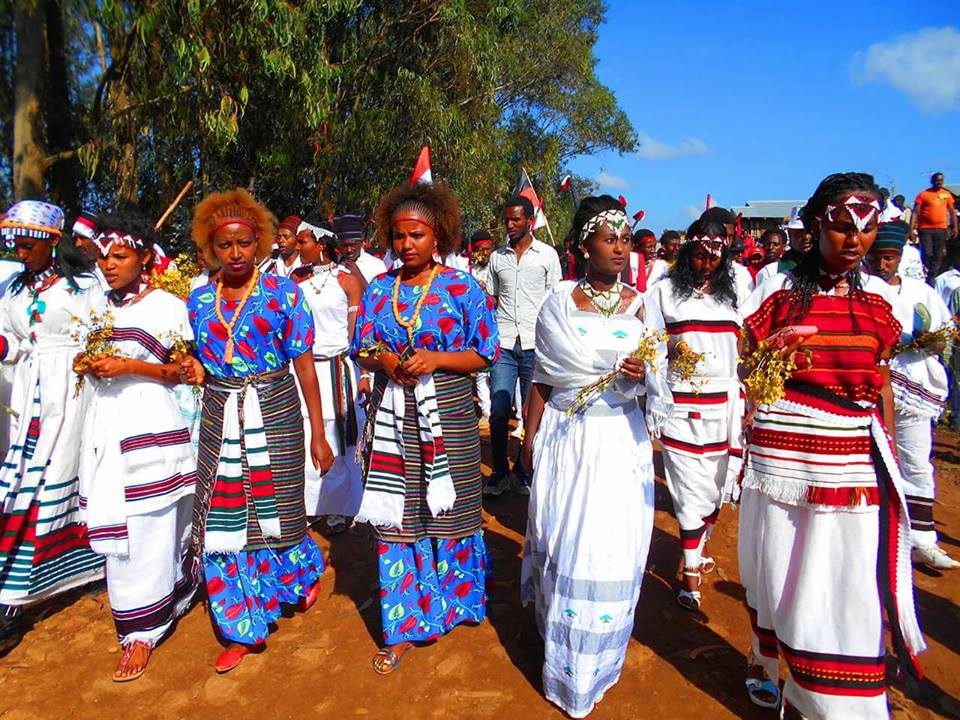
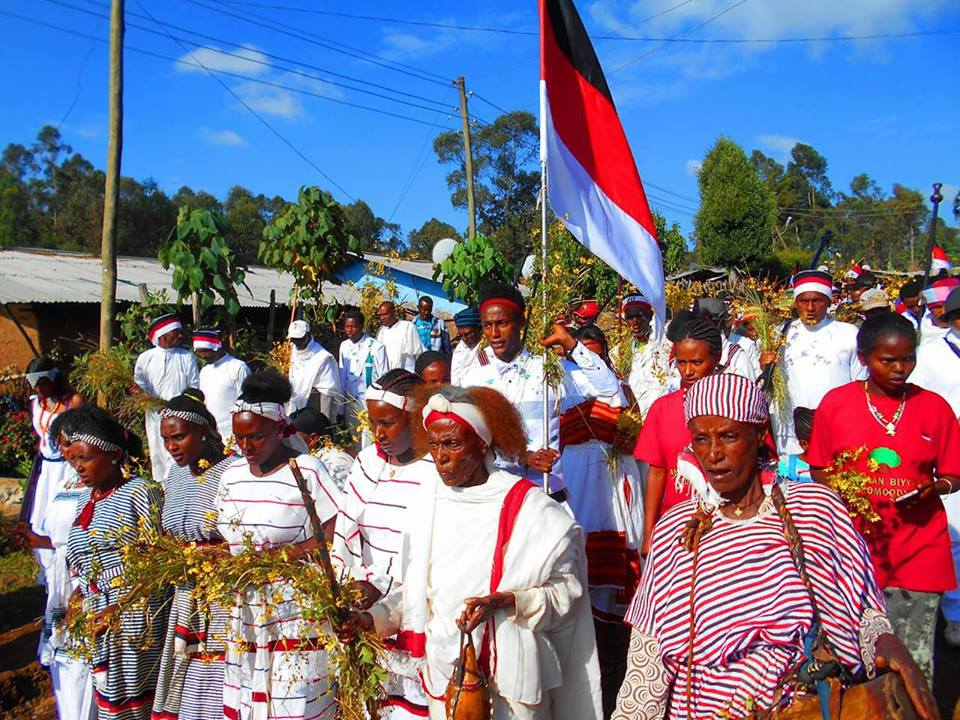
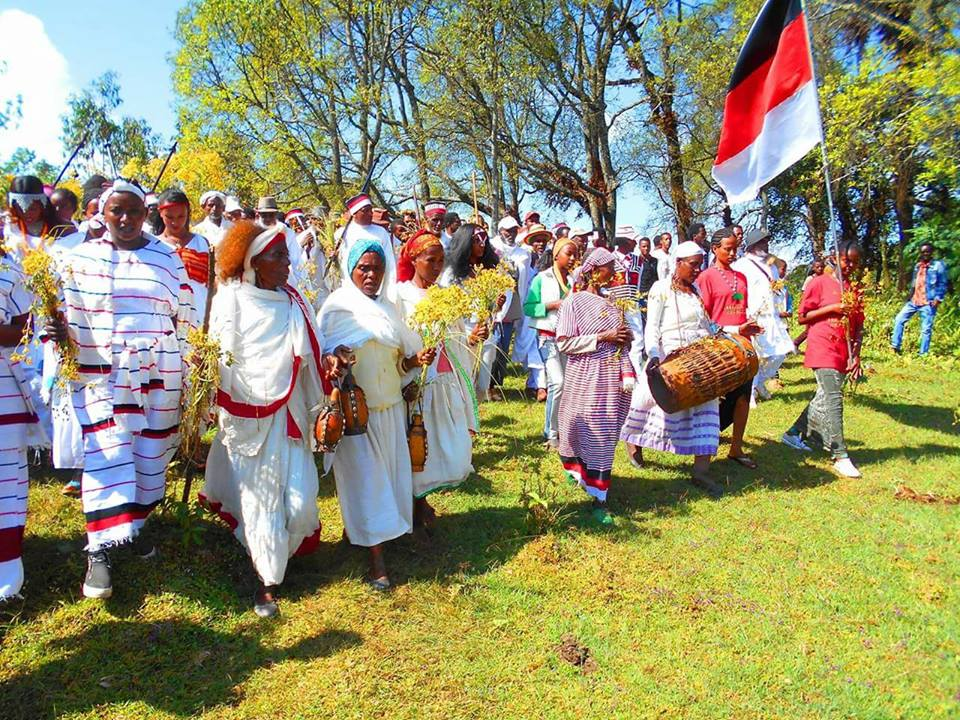
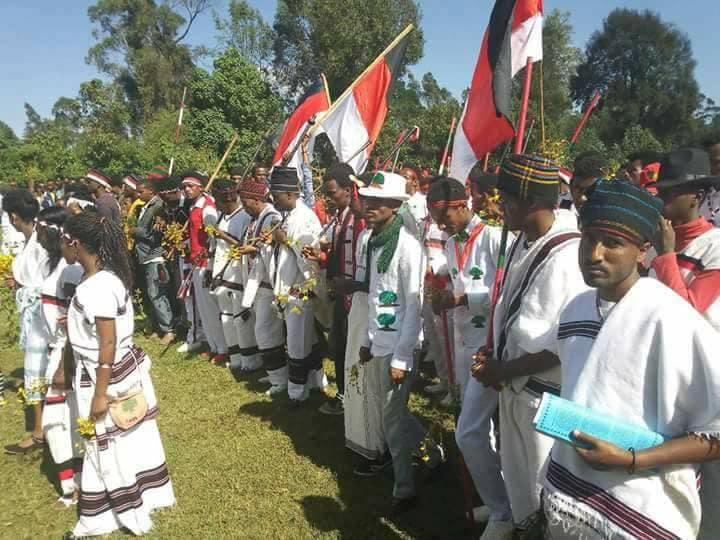
Oromia: Irreecha 2017: The blessing season celebrated in Arjo at Odaa Arjo in Caffee Arjoo November 6, 2017

Posted by OromianEconomist in Uncategorized.
Tags: , , , , , , , , ,
add a comment


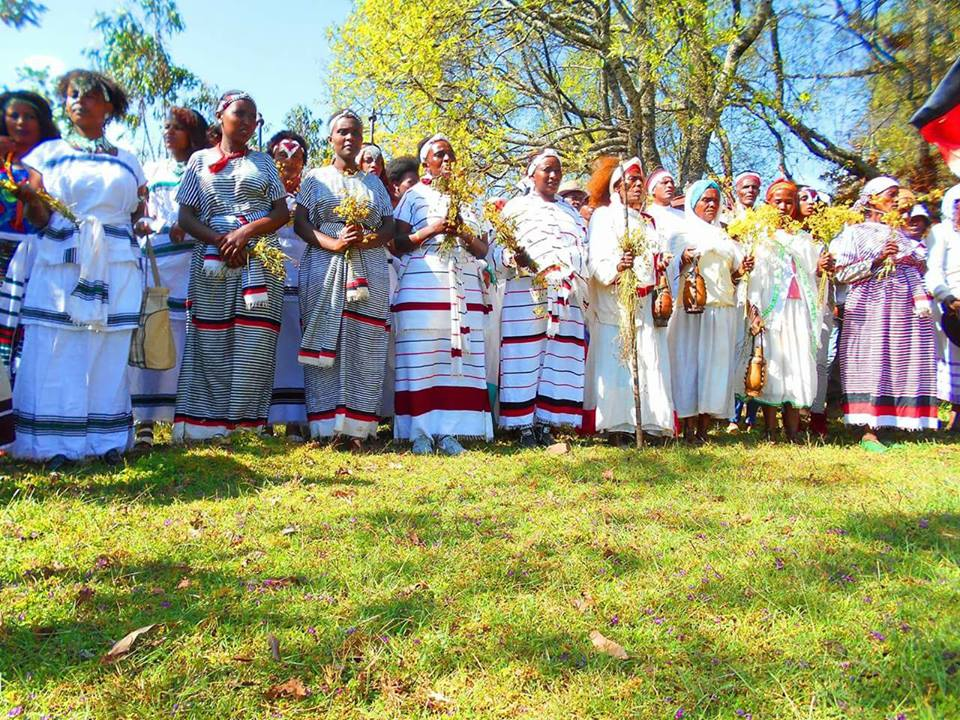
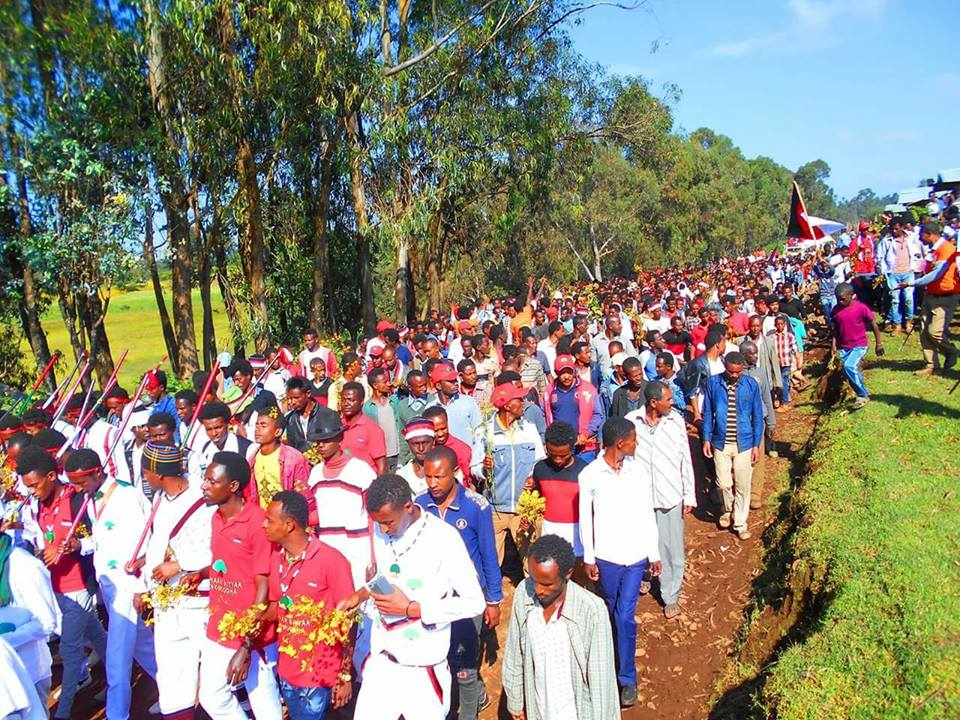
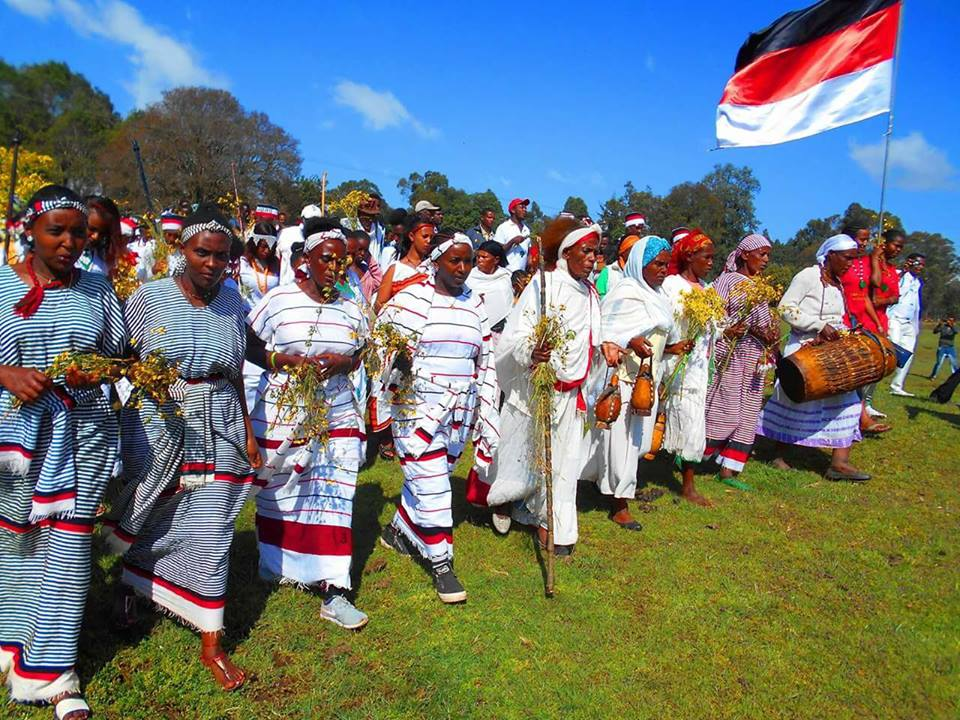
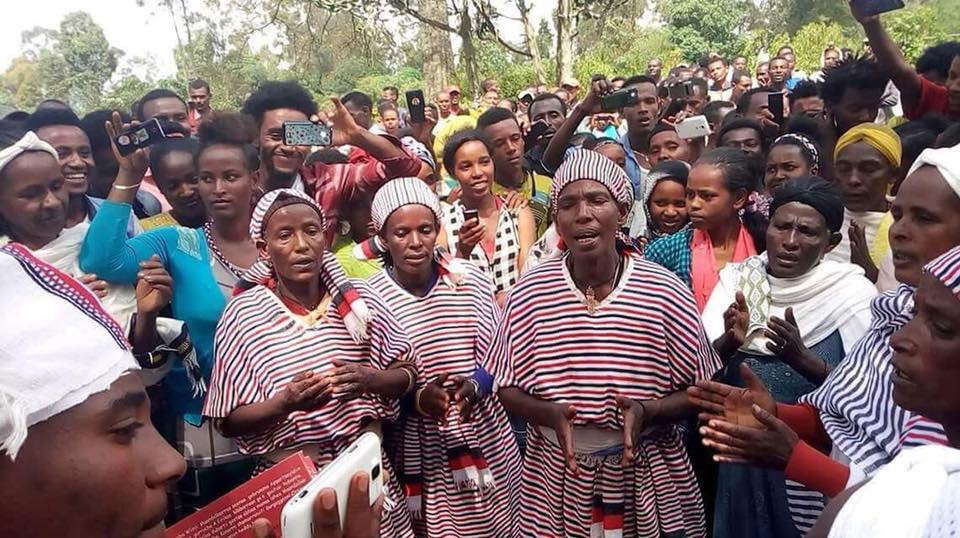
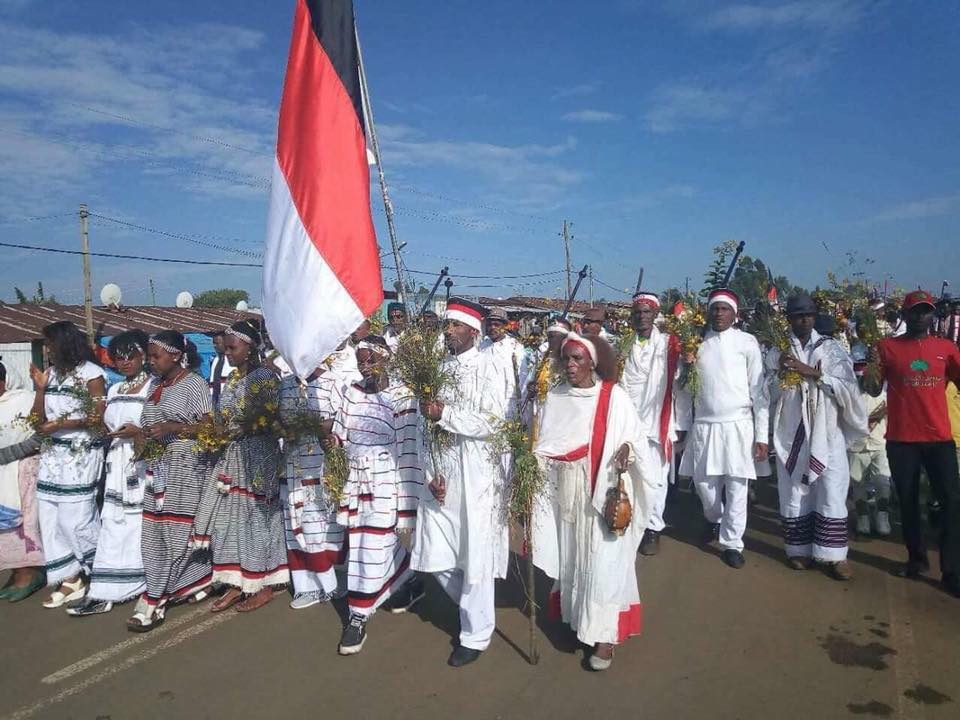
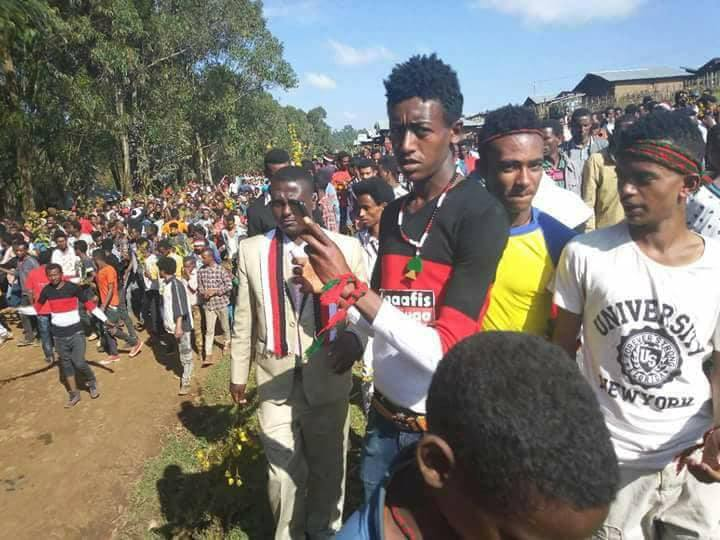
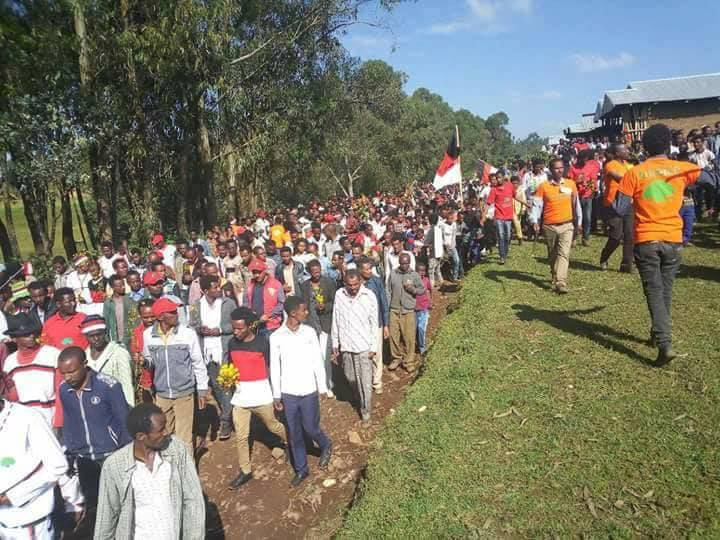
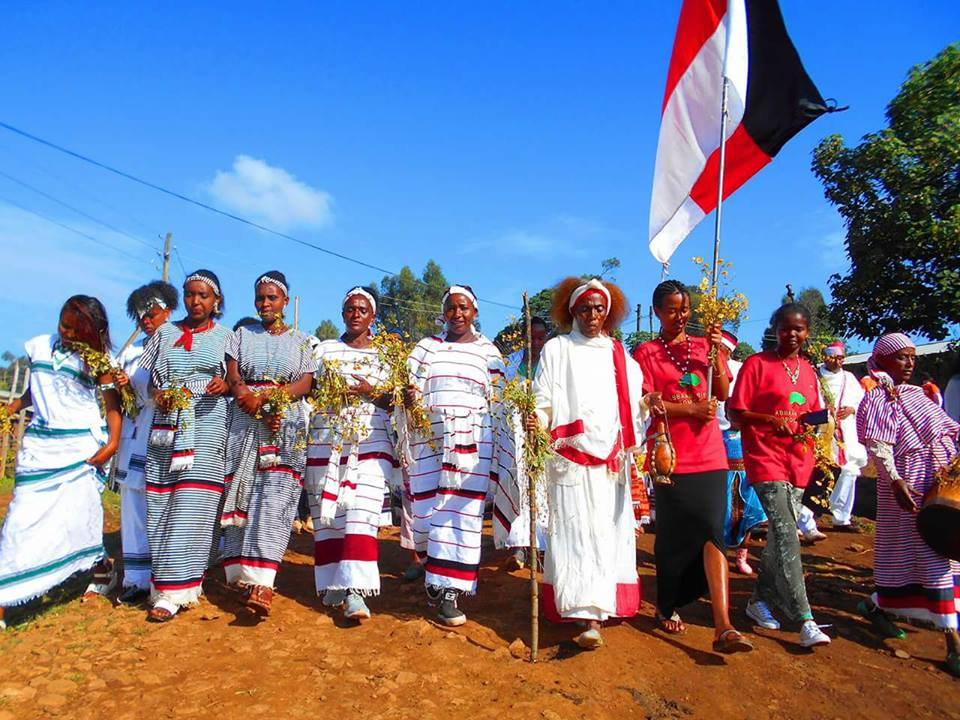
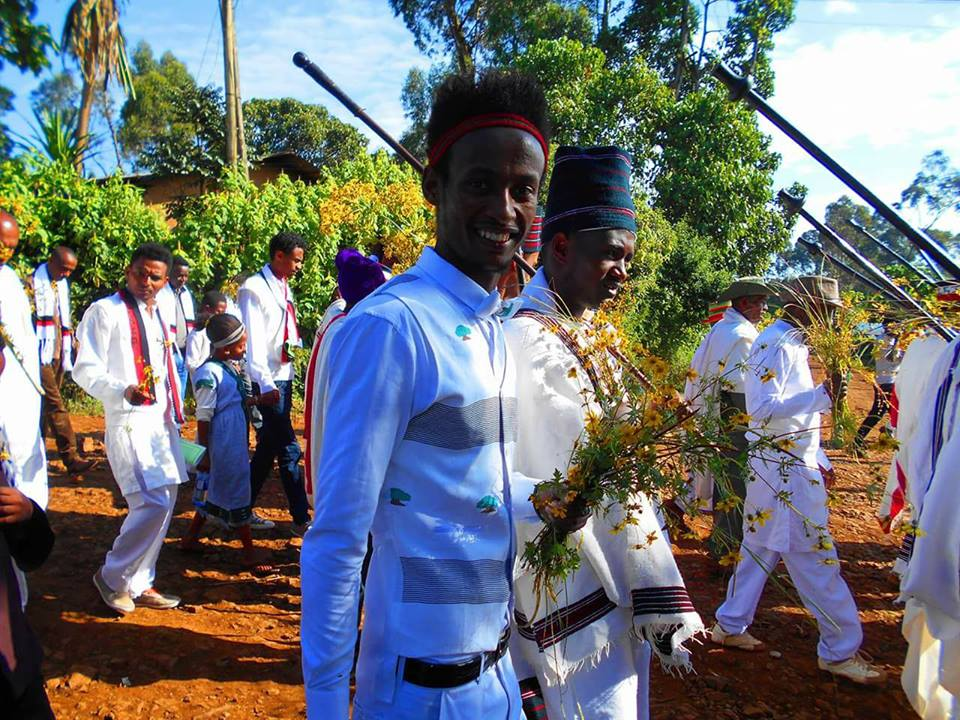
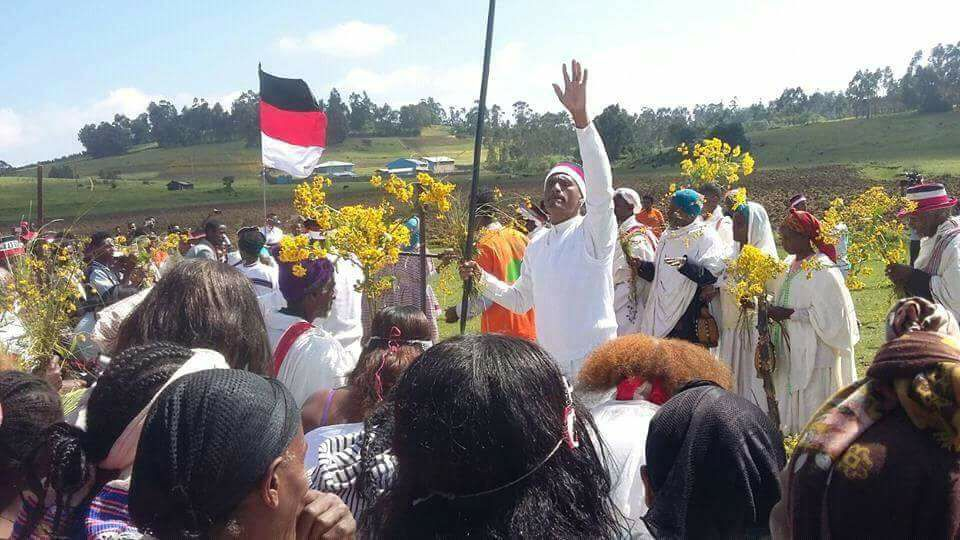
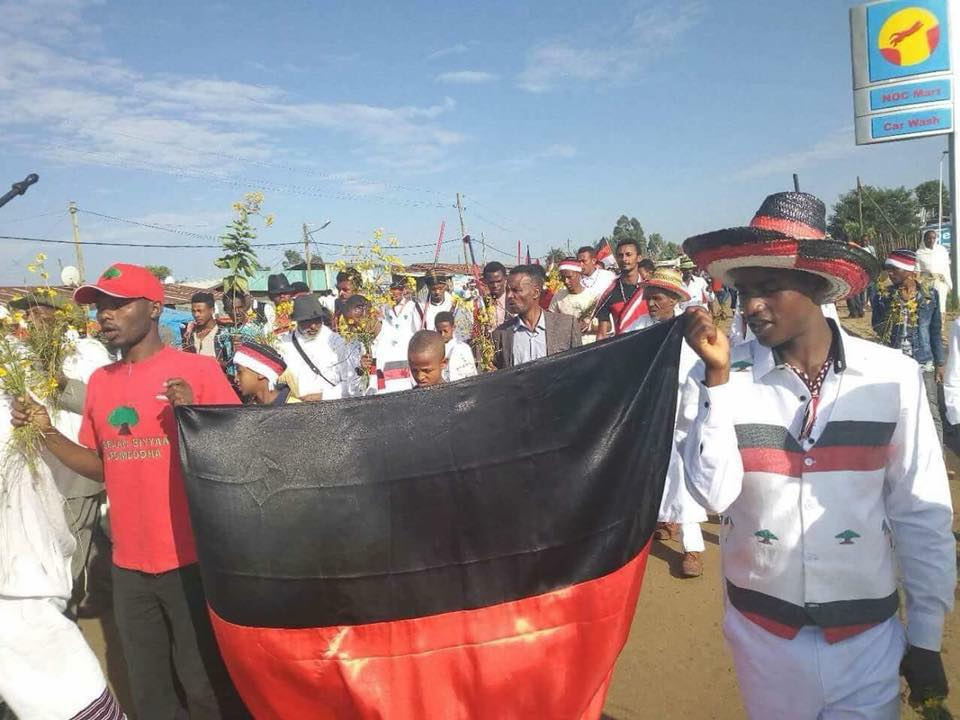
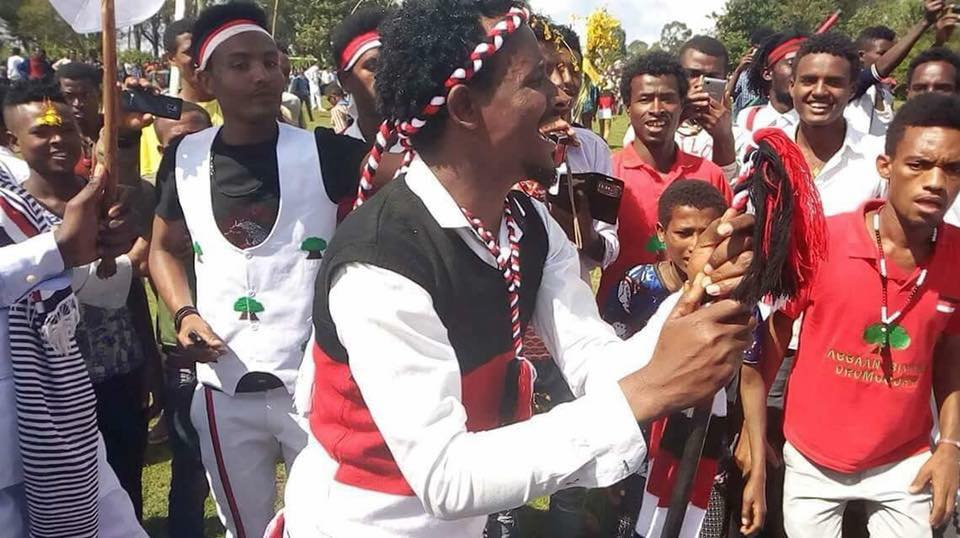
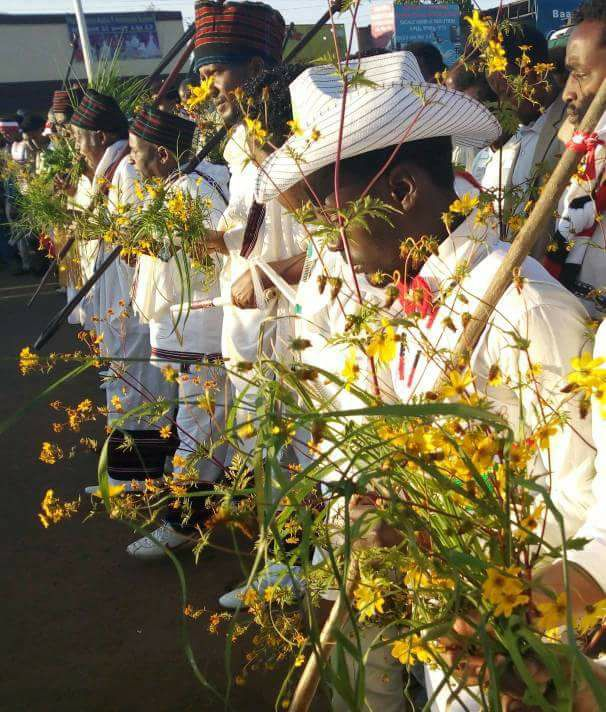
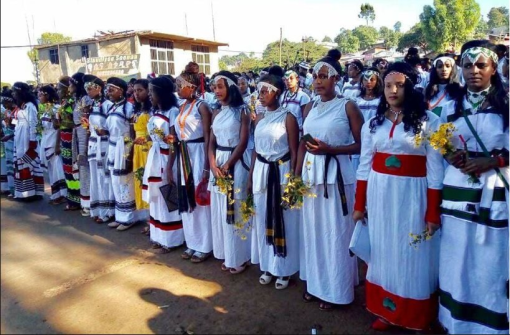
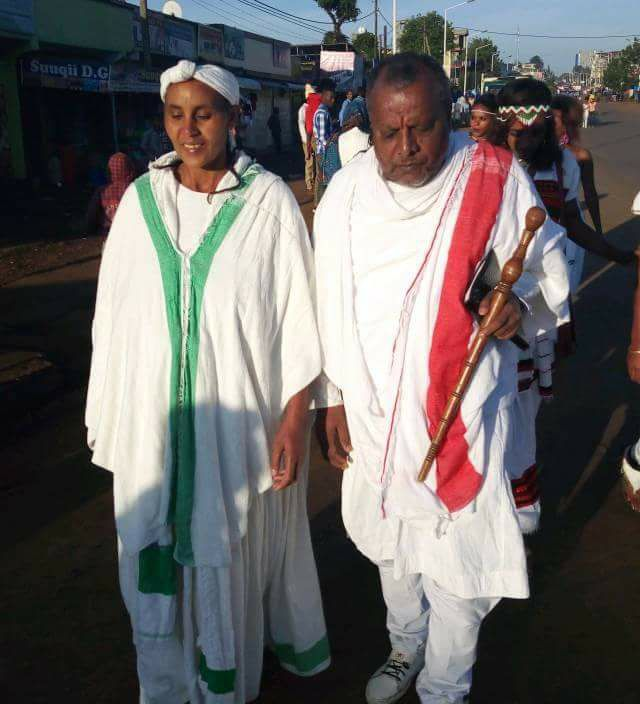
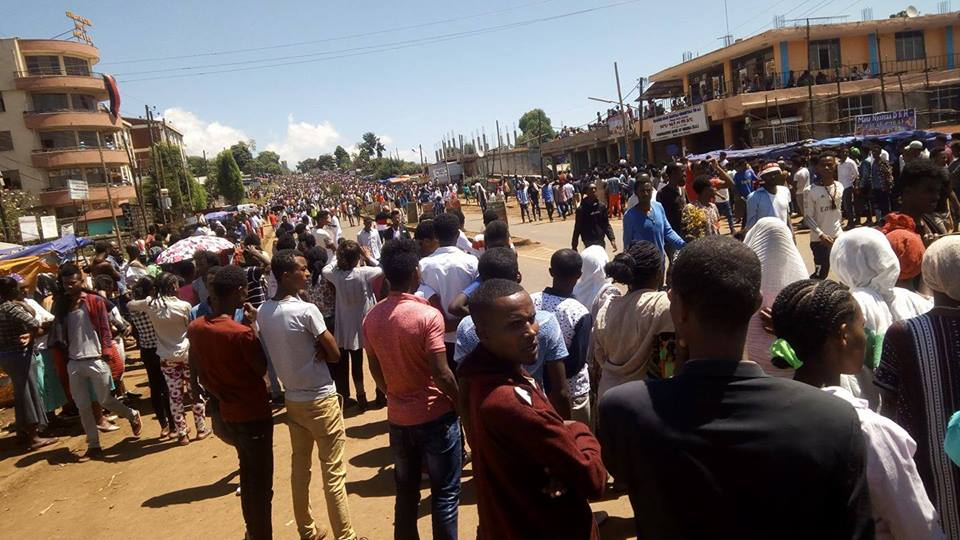
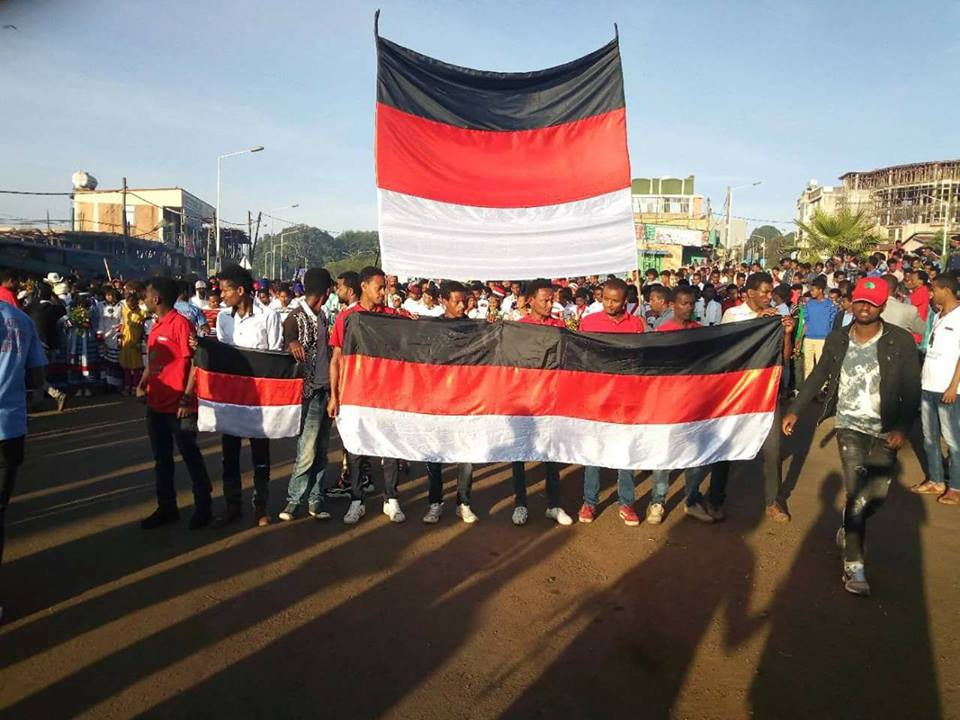
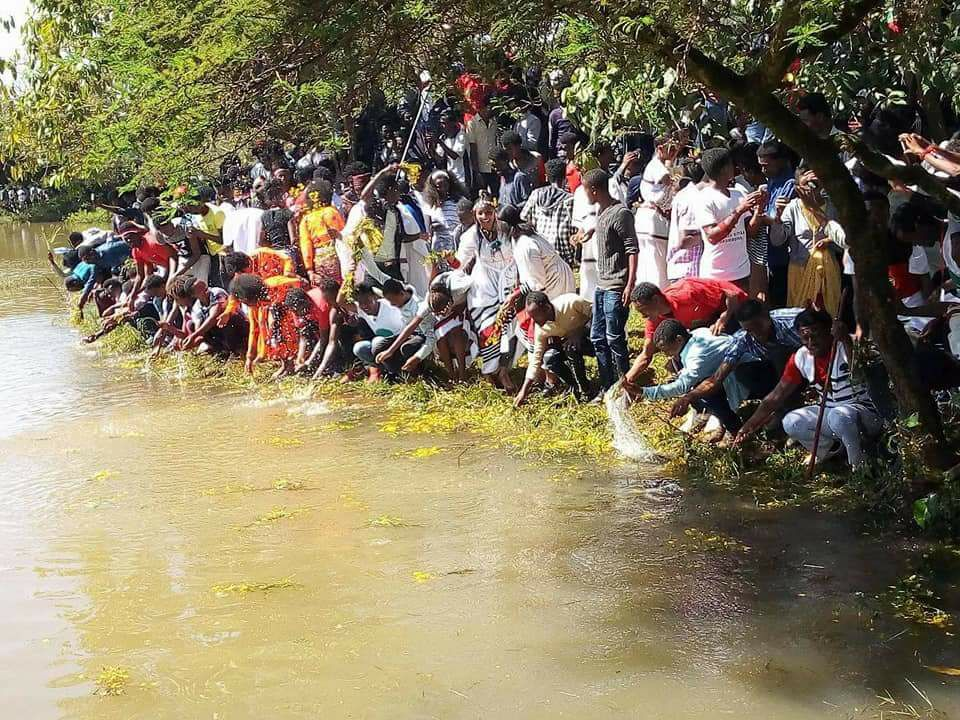
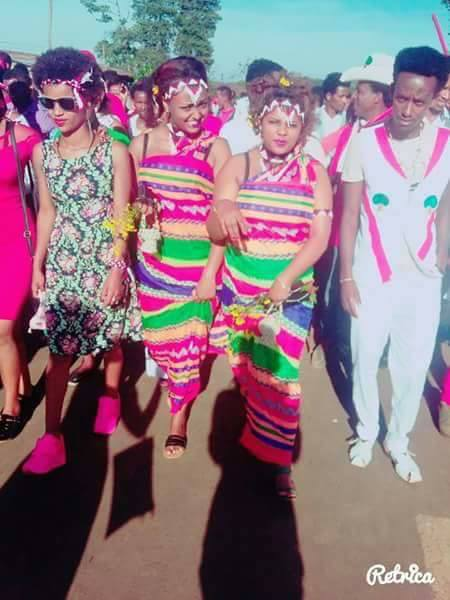
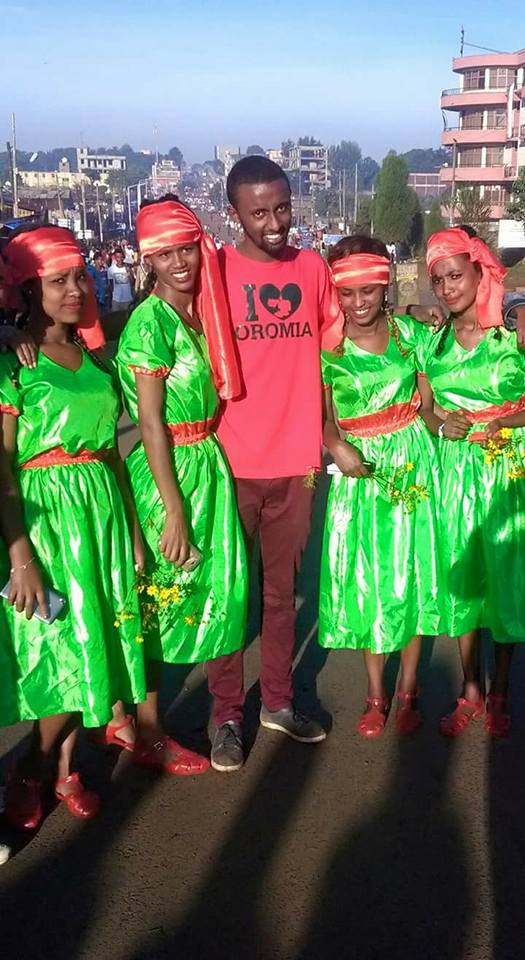
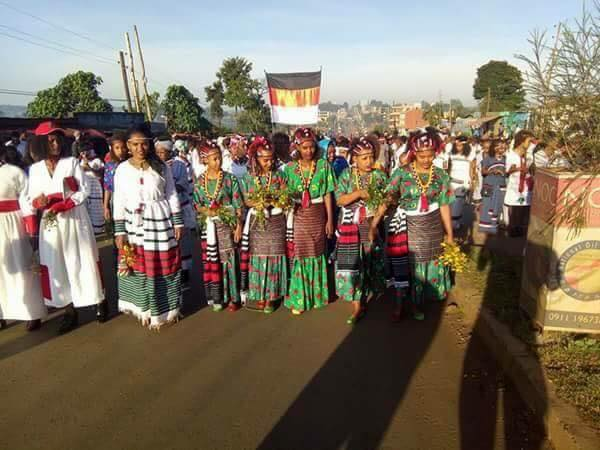
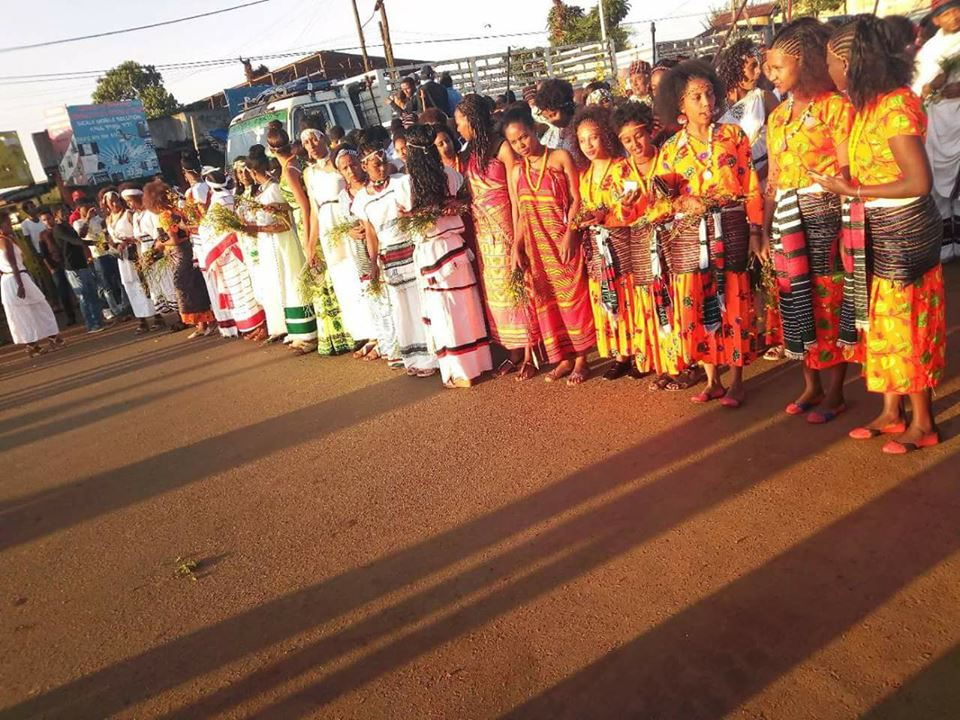
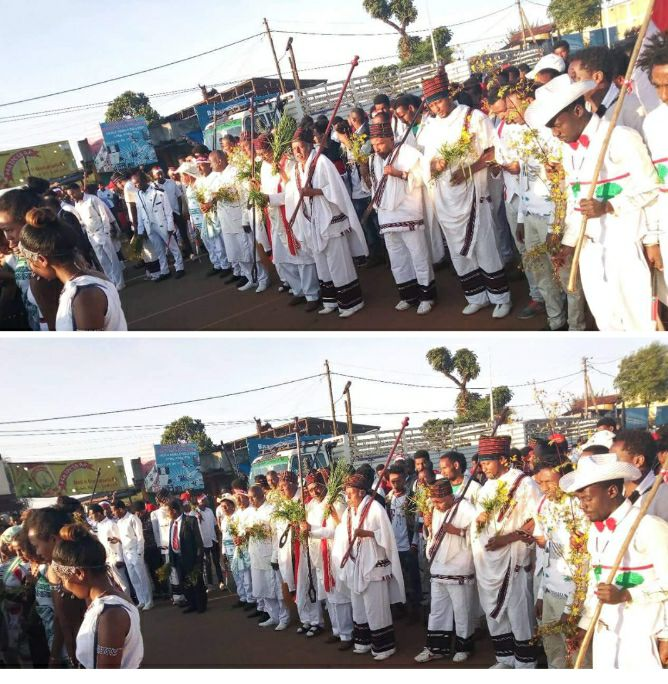
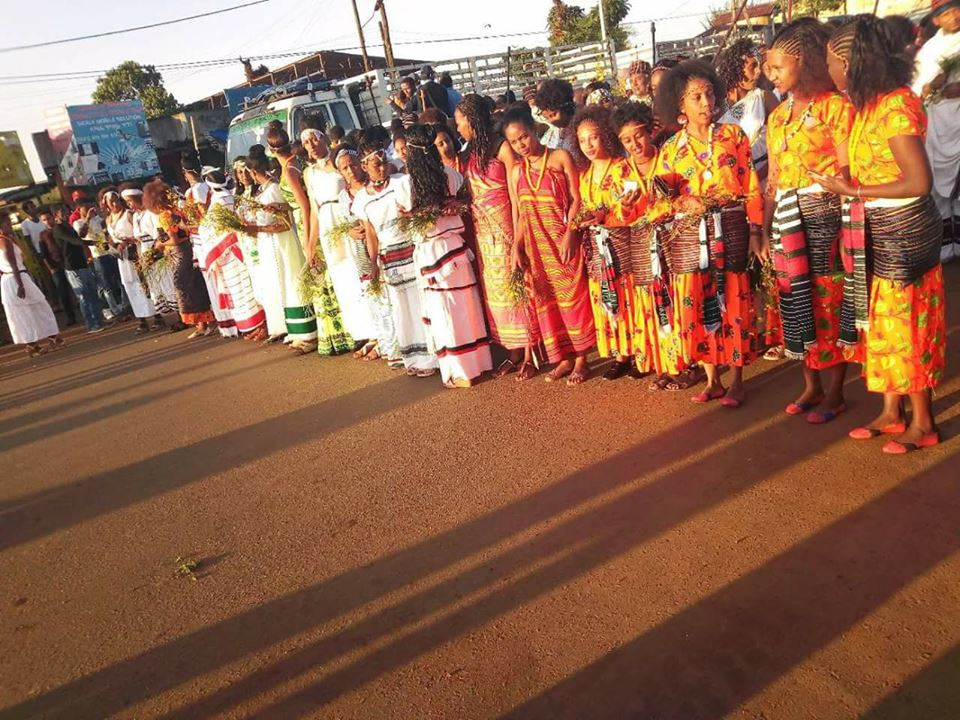
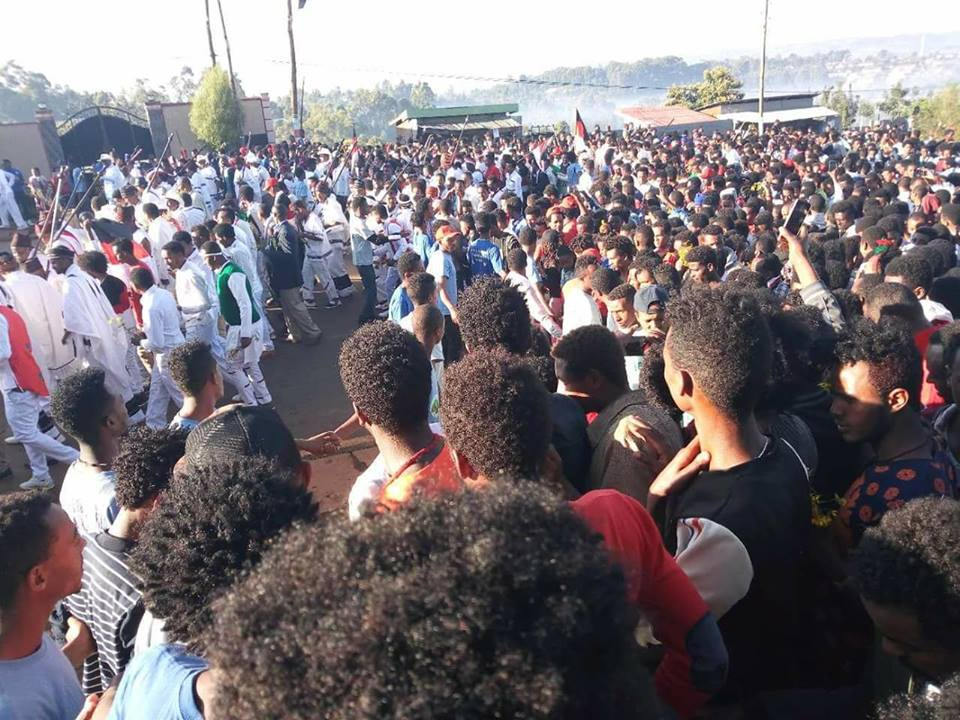
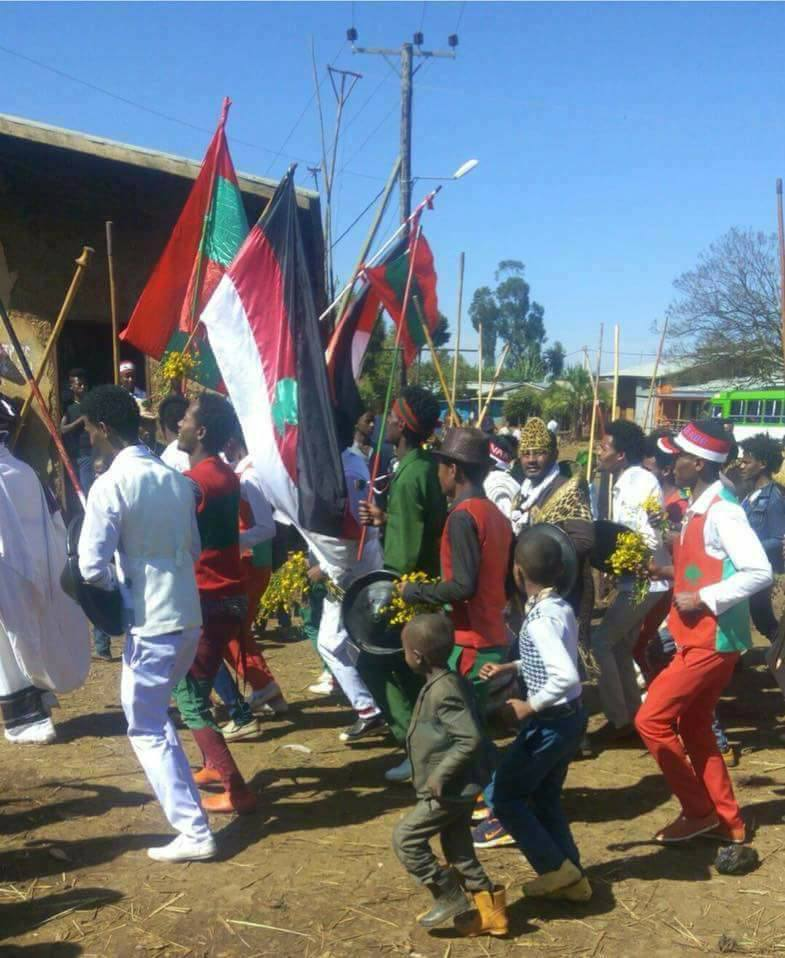
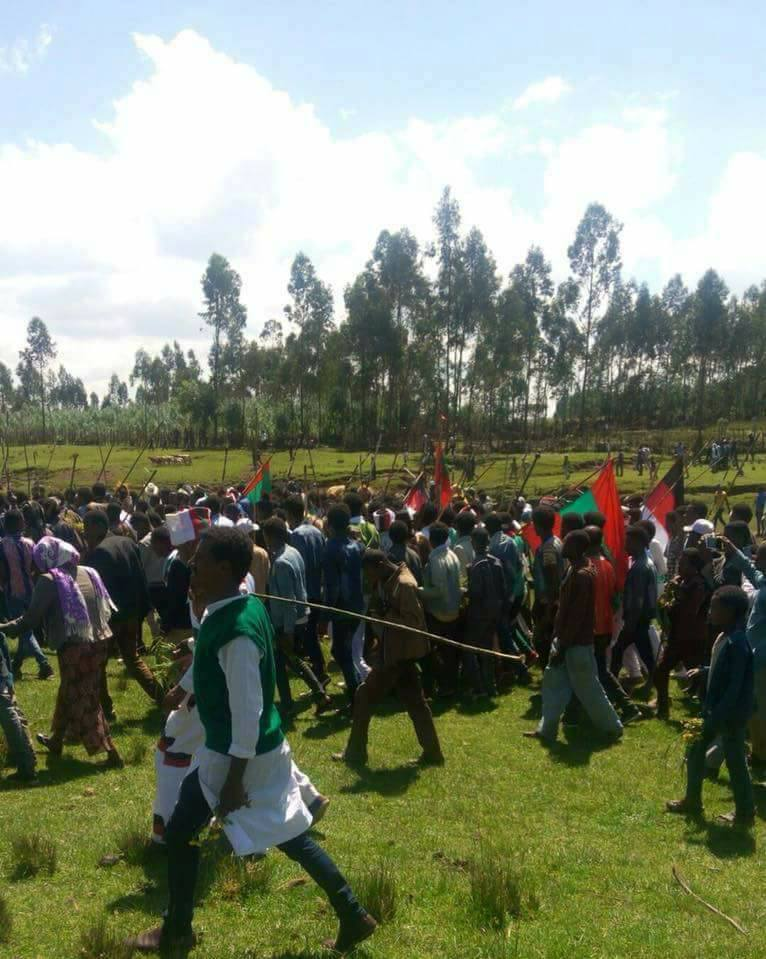
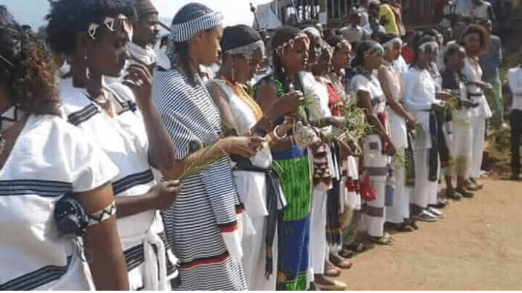
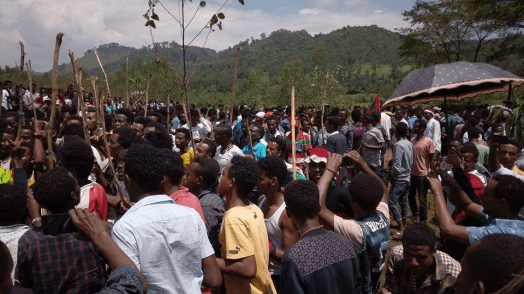
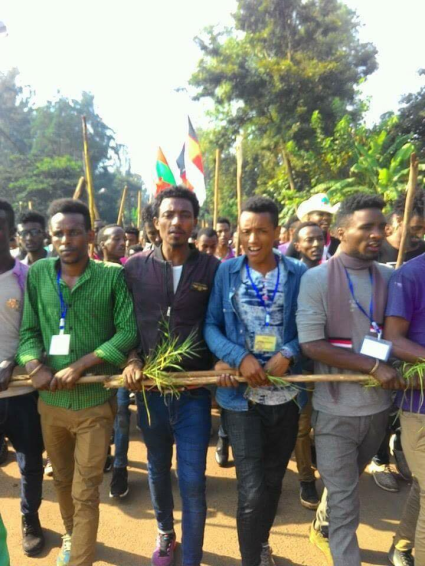
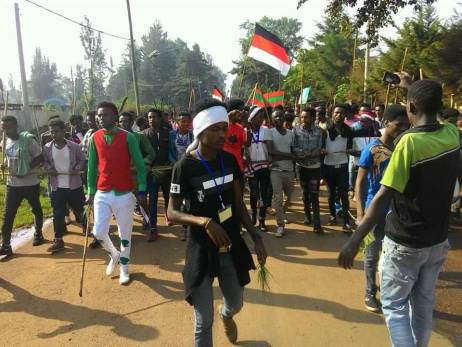
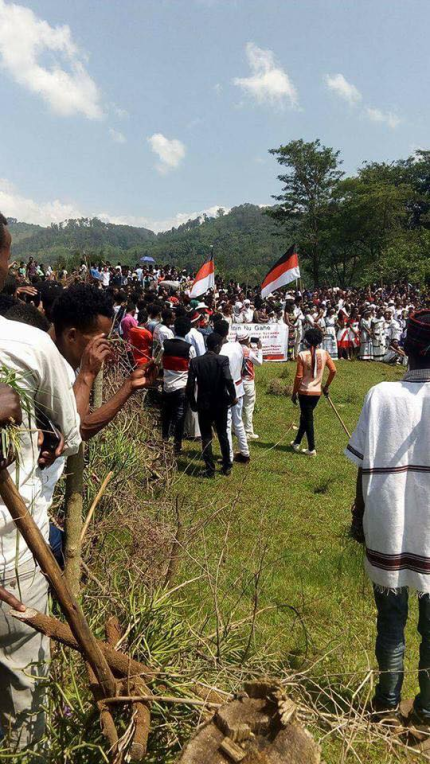
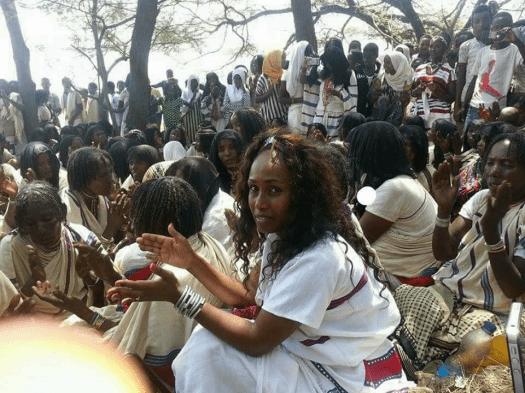
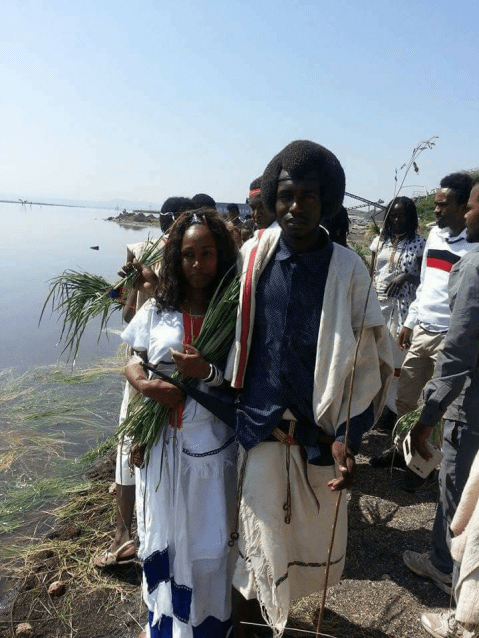
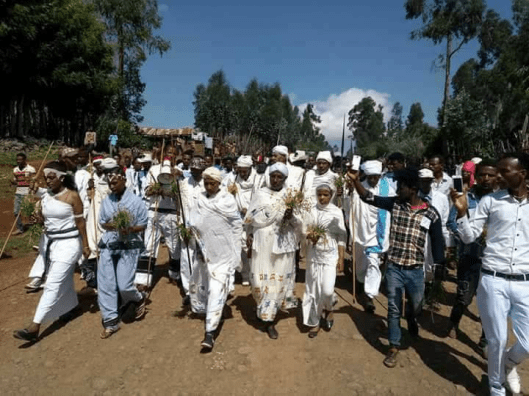
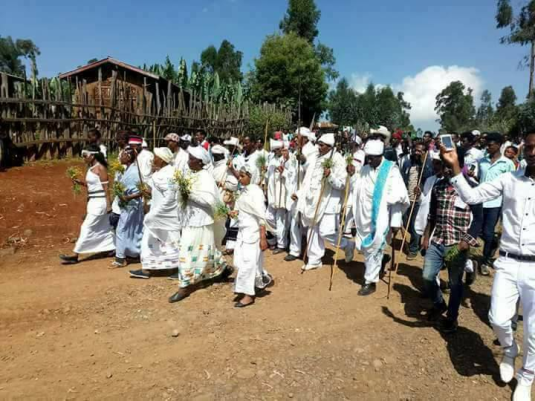
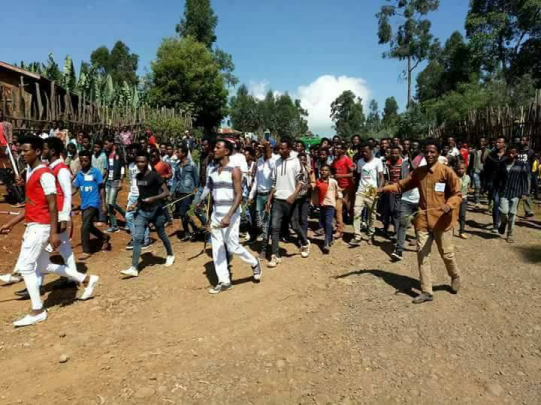
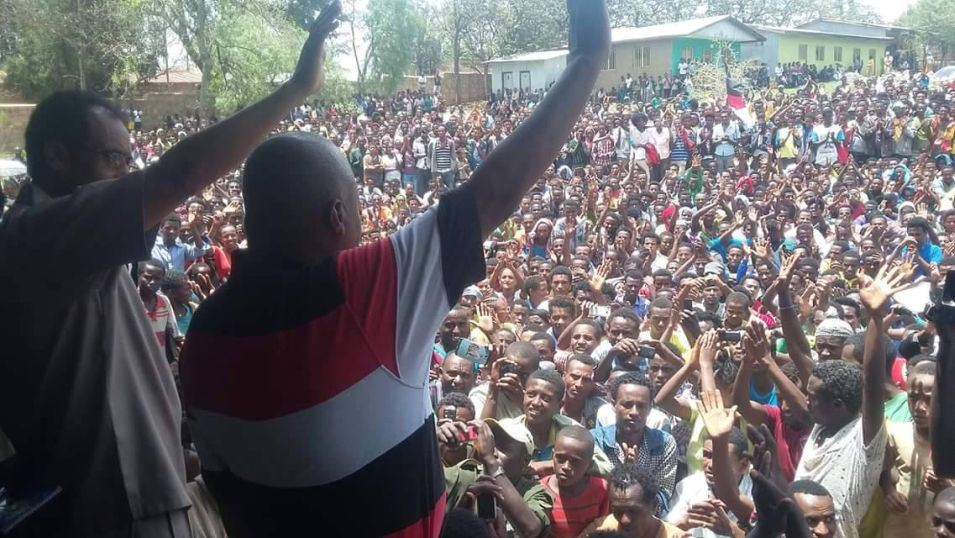
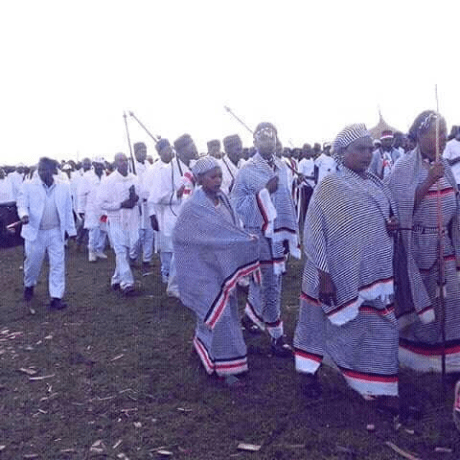
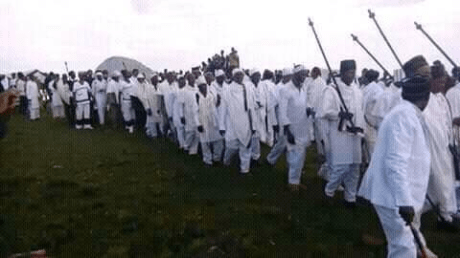
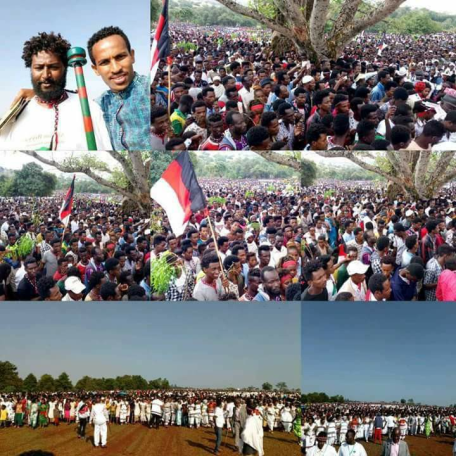
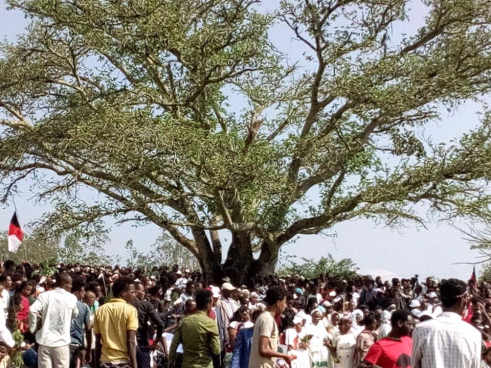
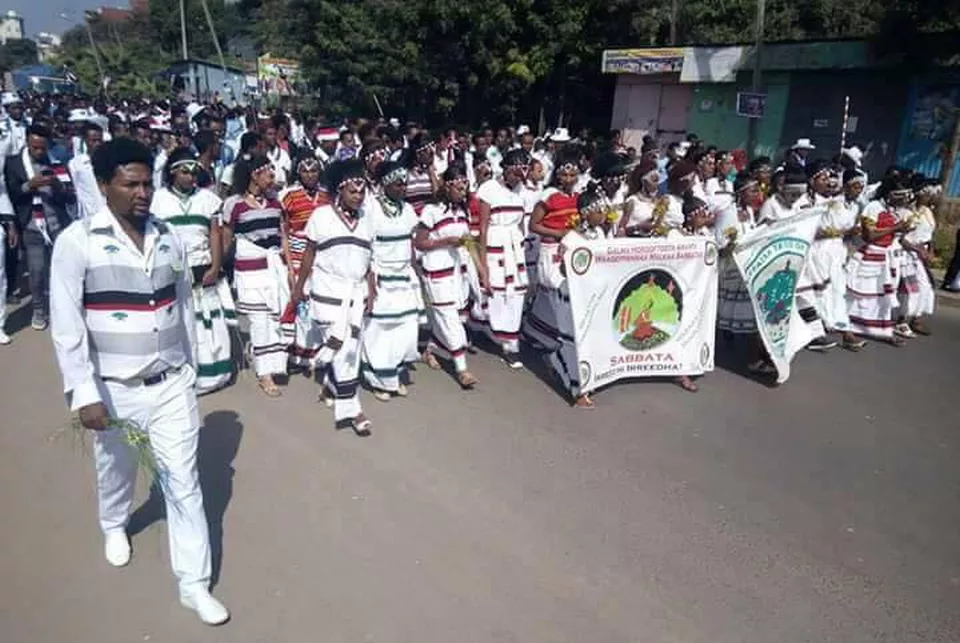
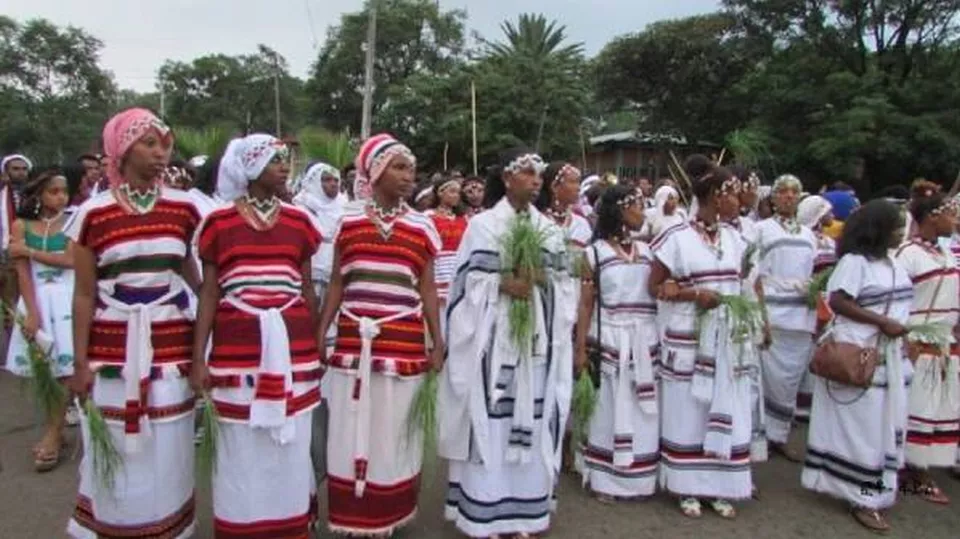
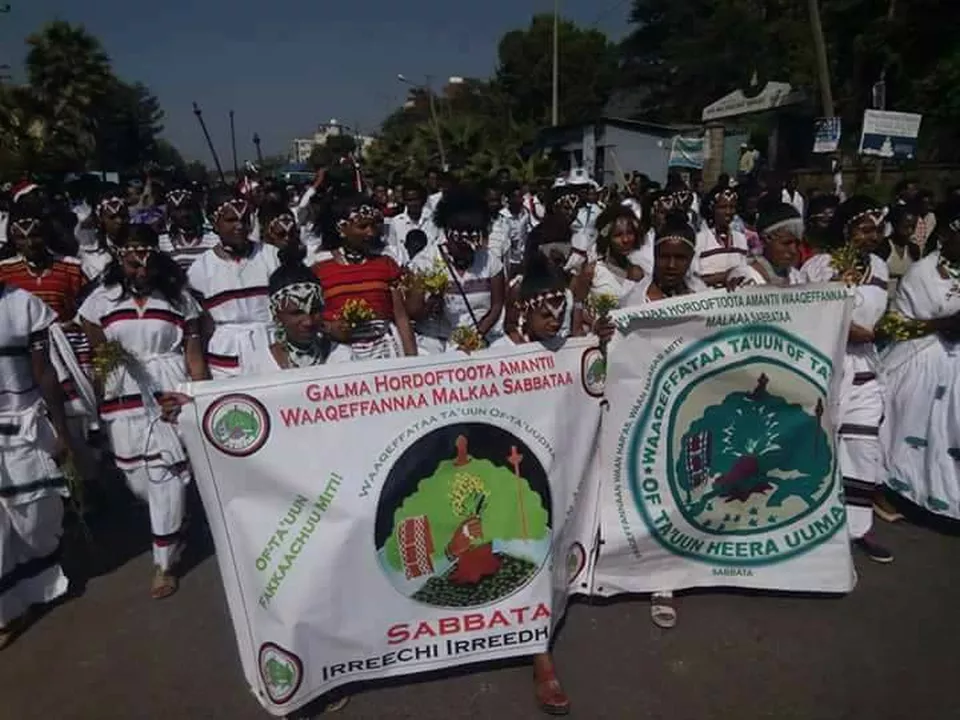
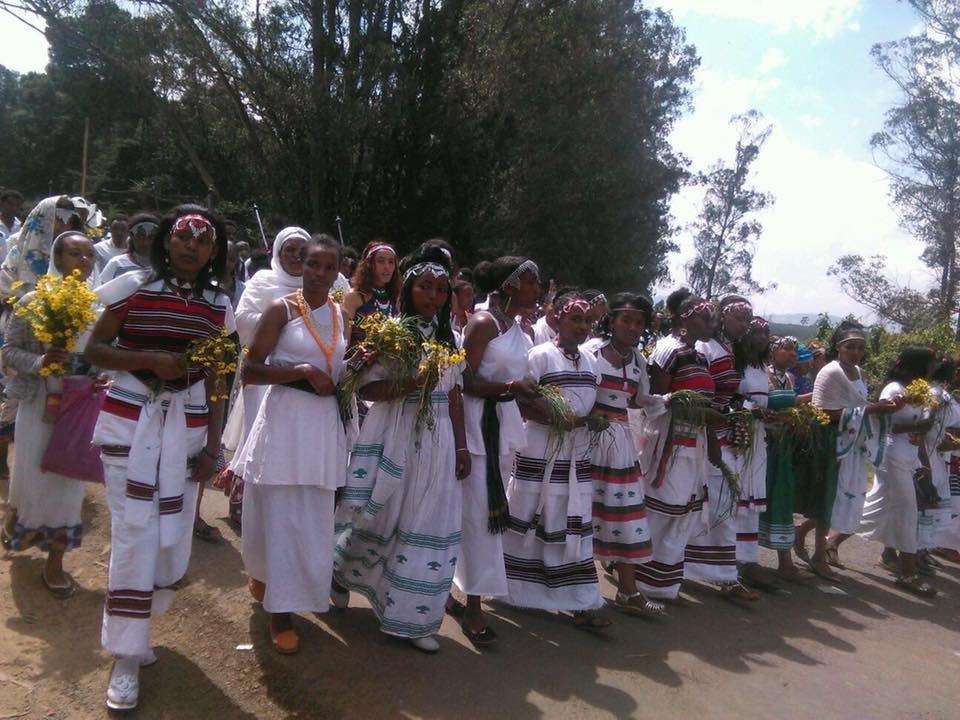
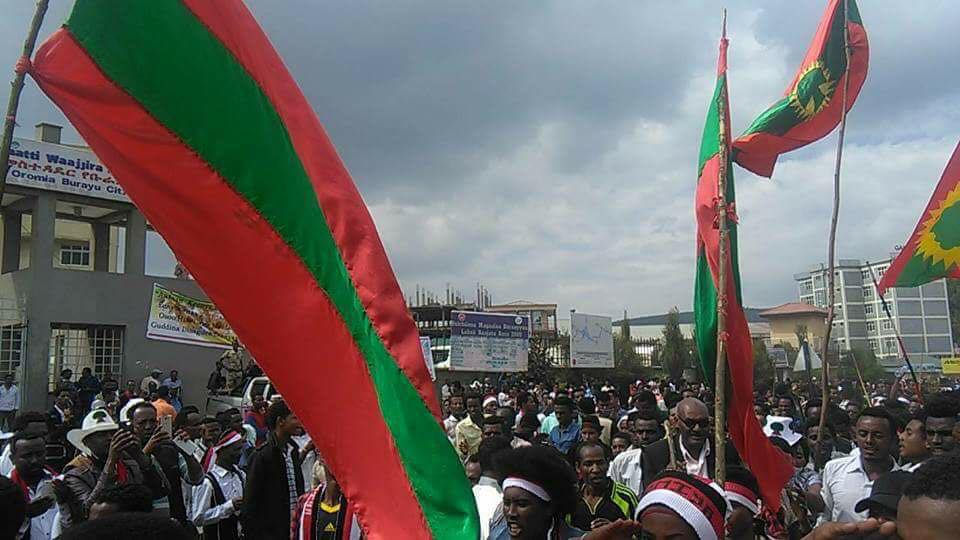
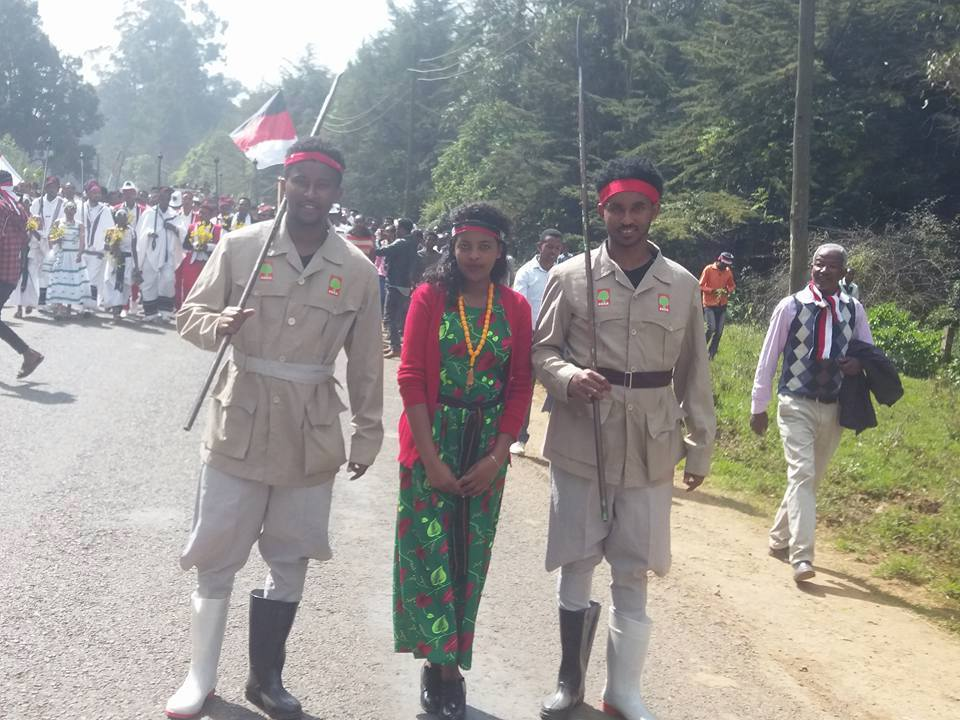
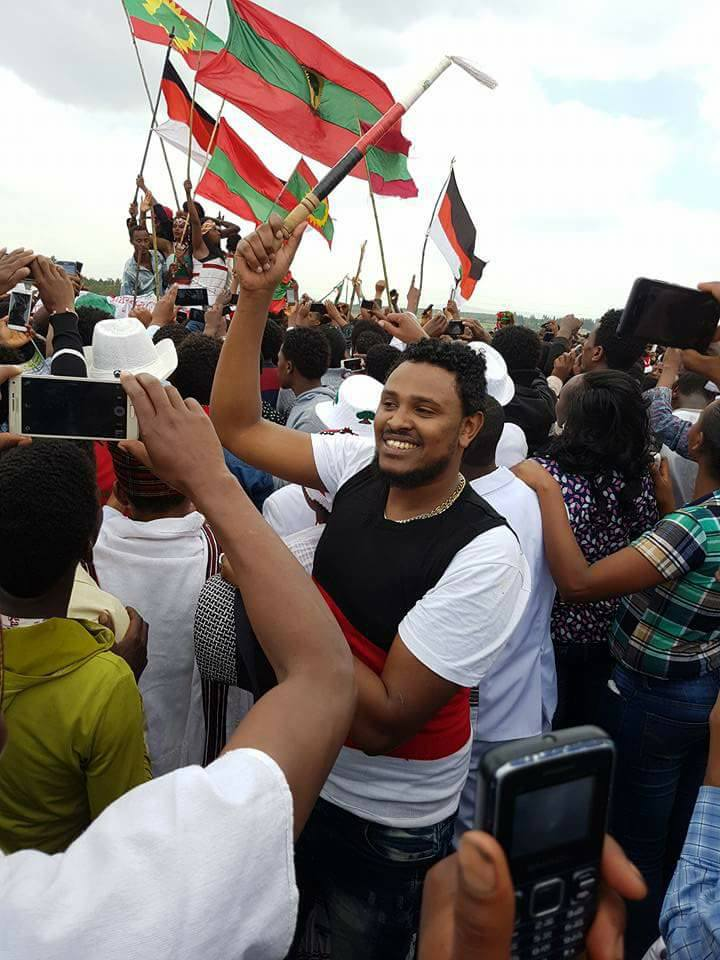
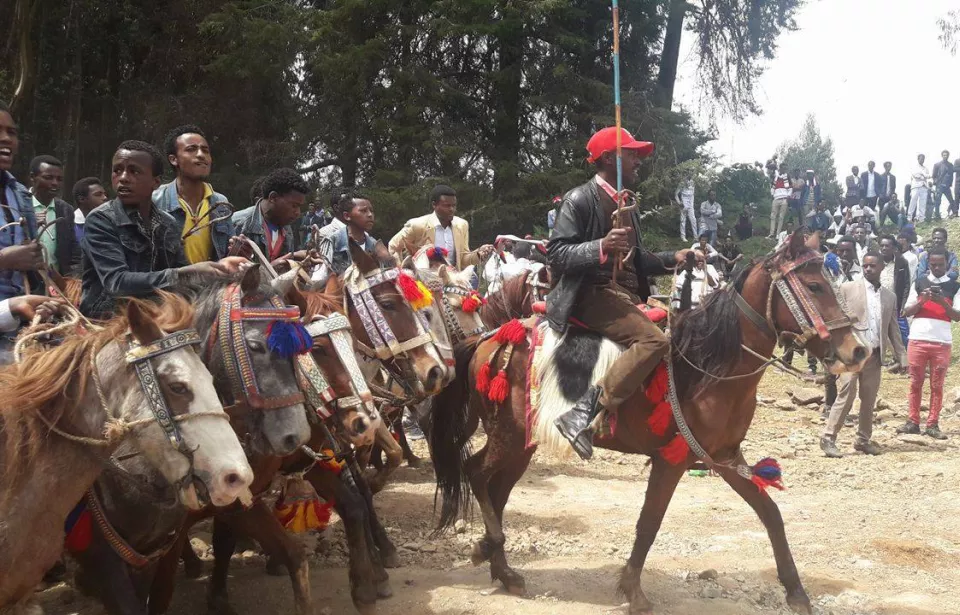
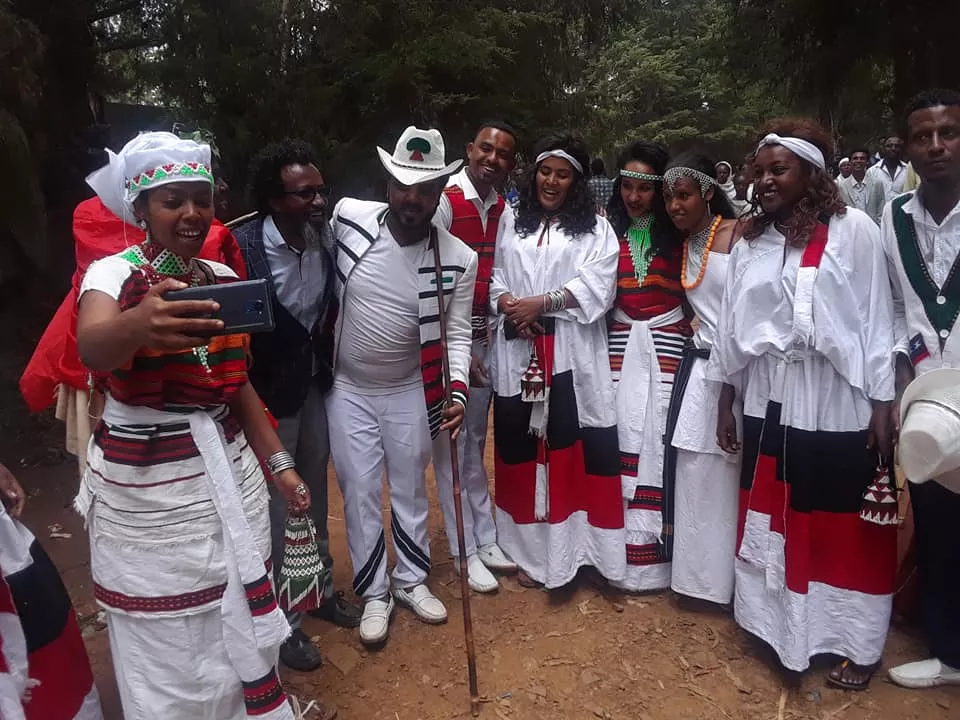
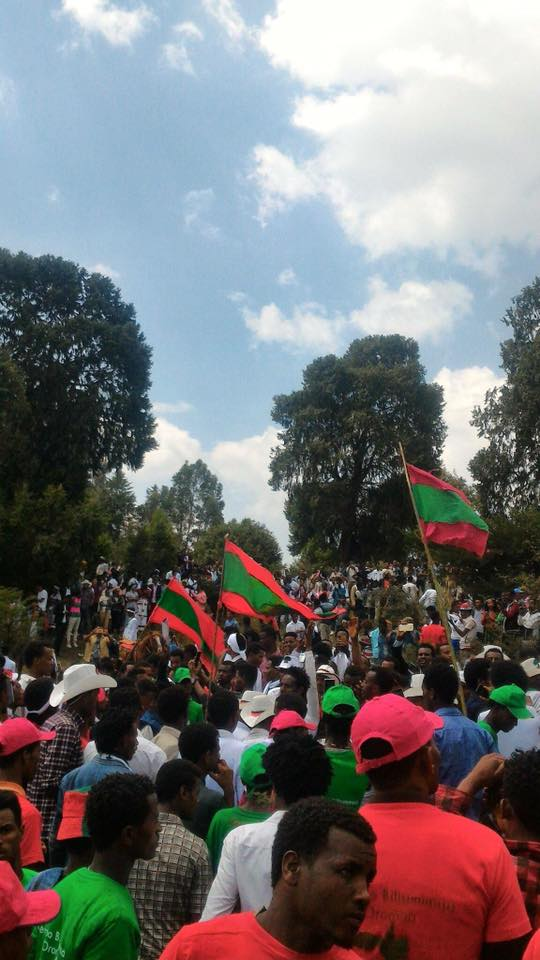
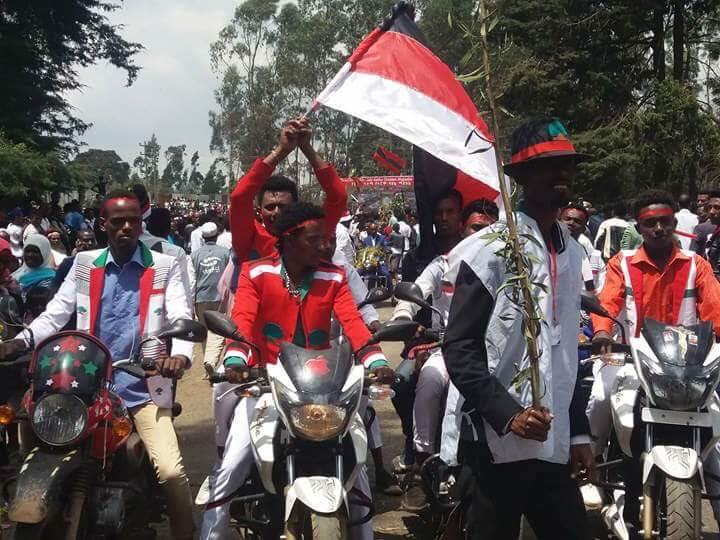
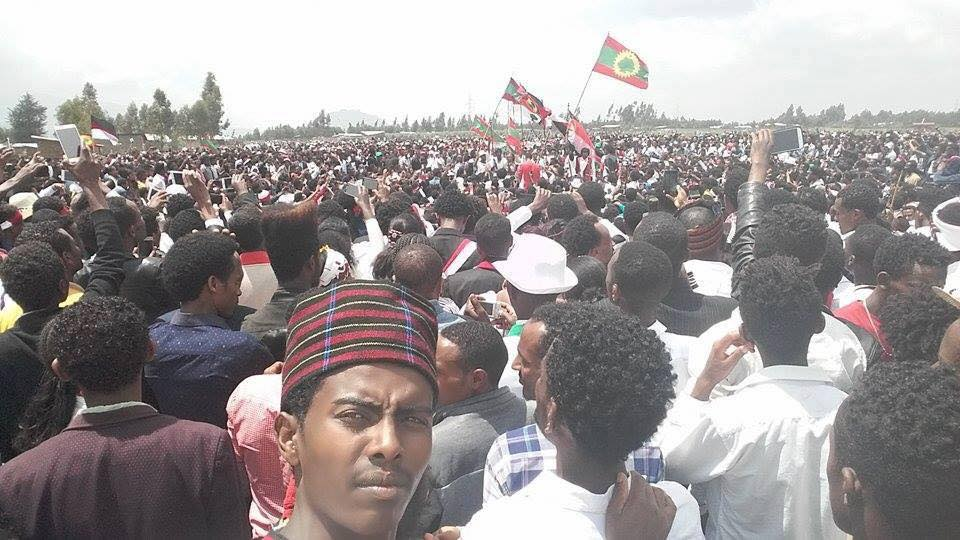
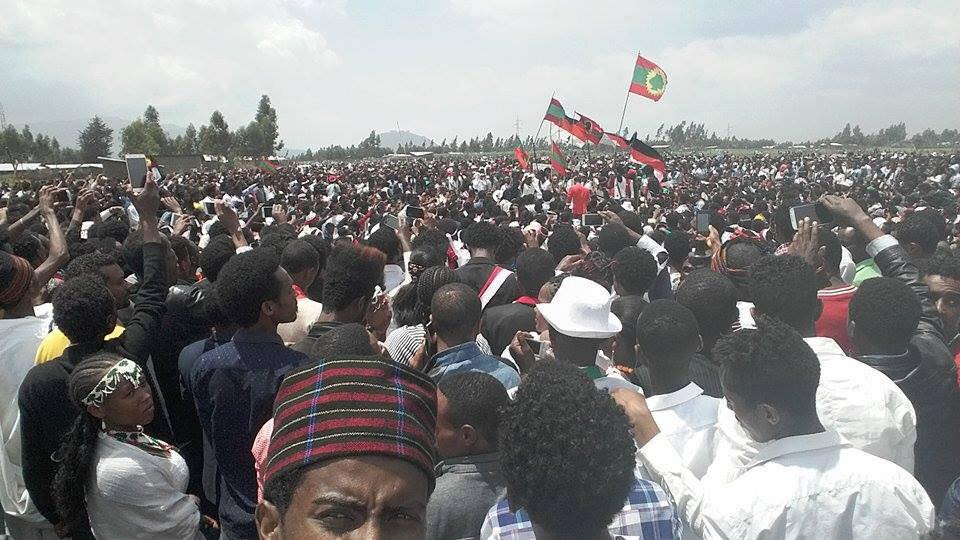
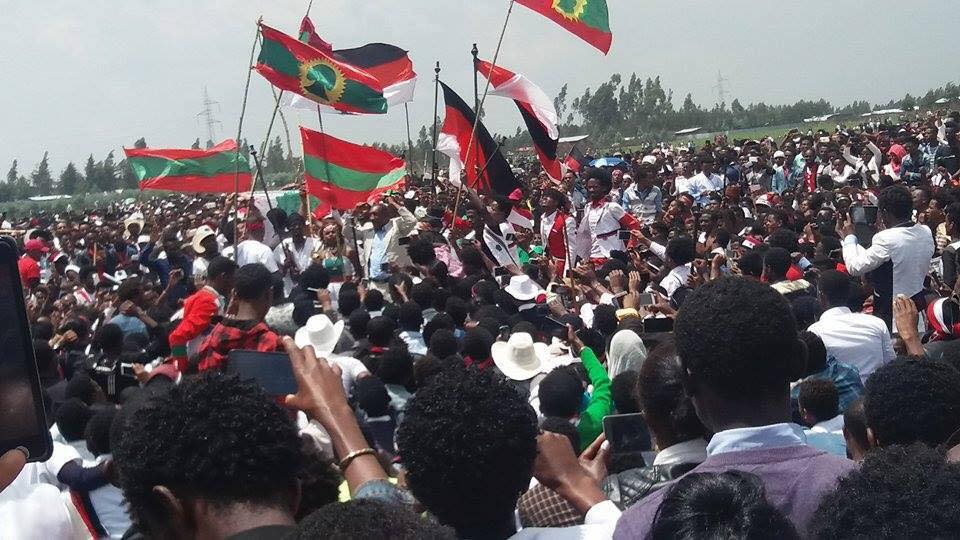
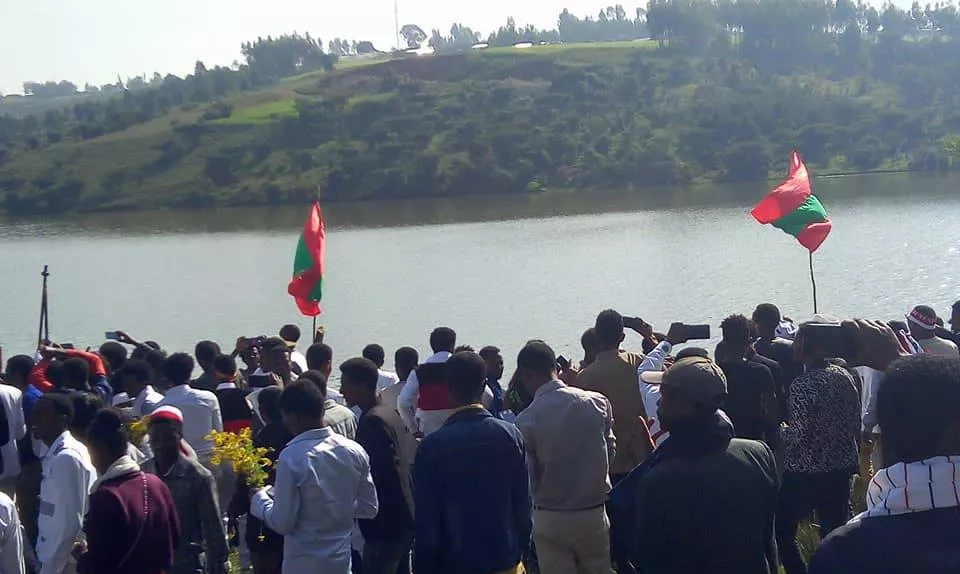
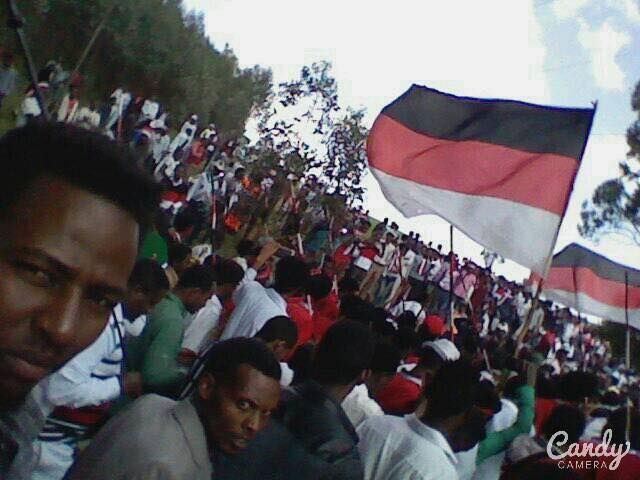
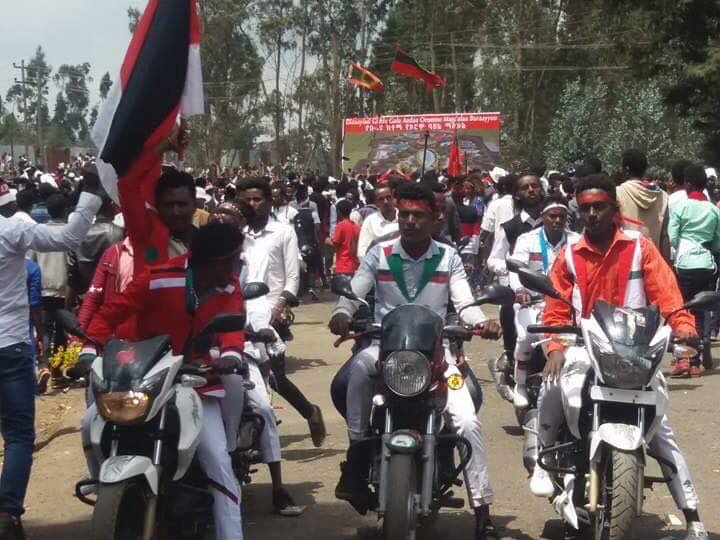
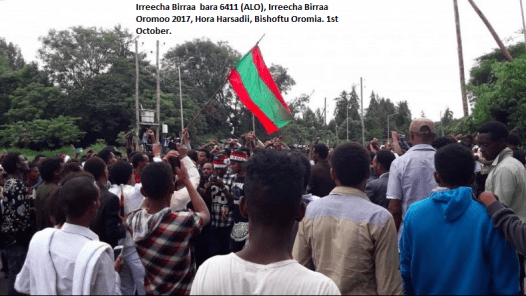
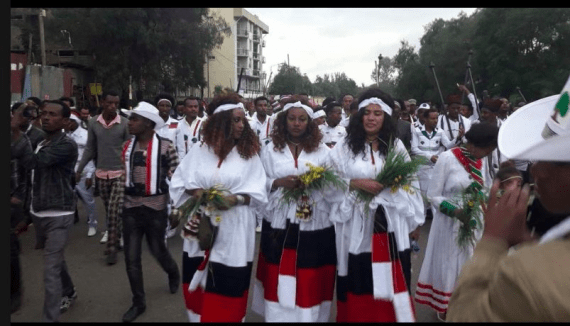
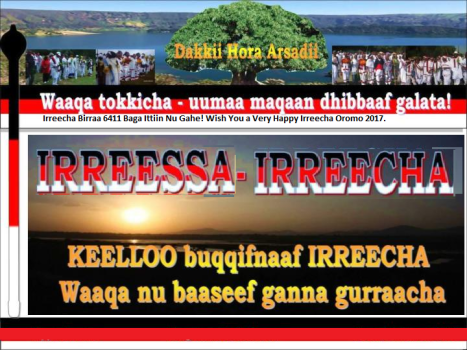
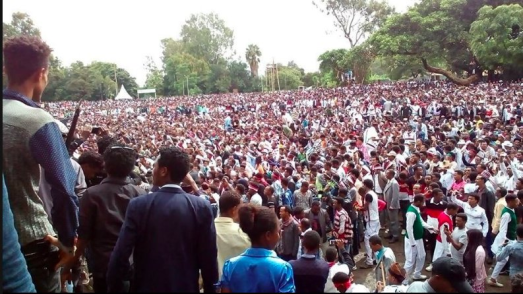
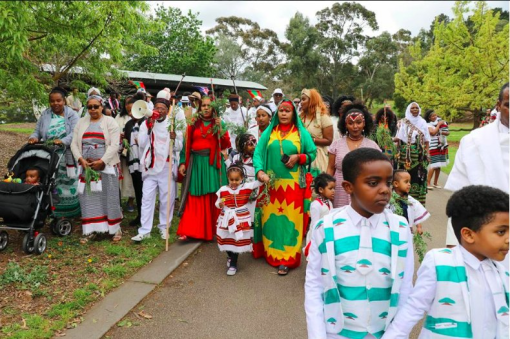
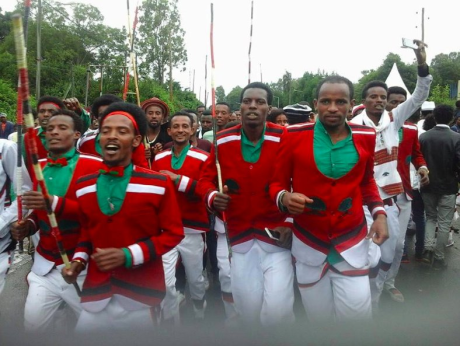
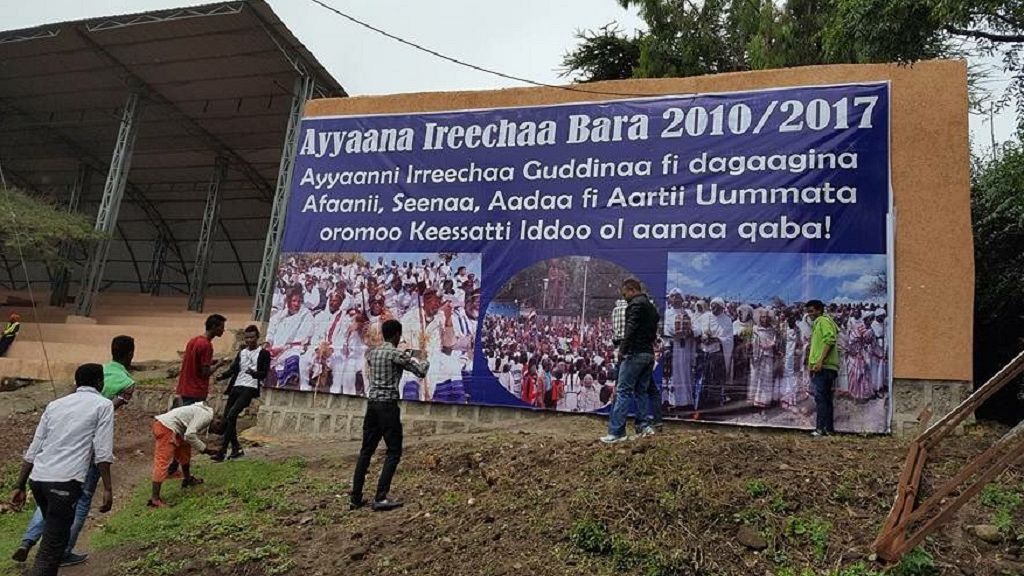
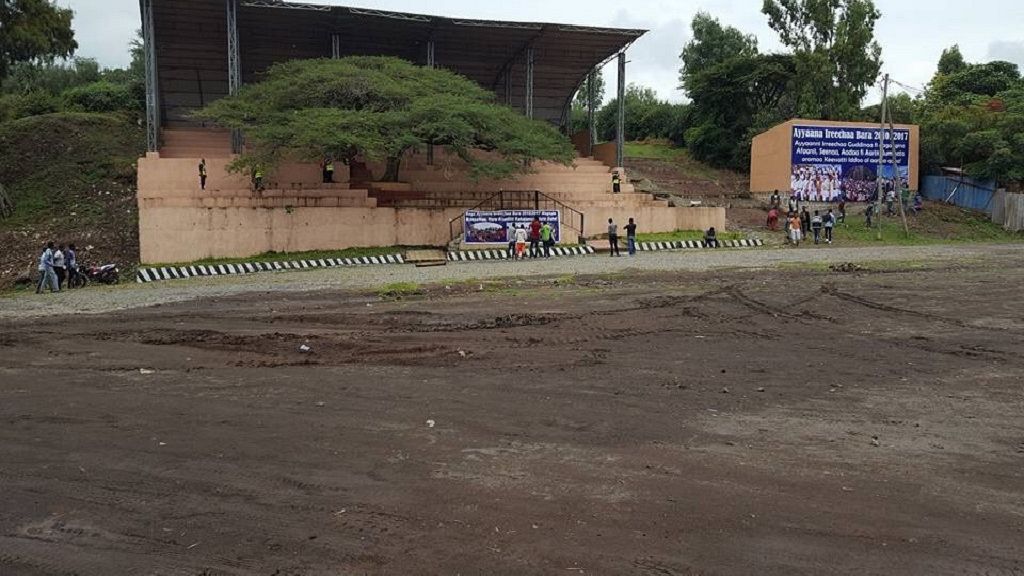
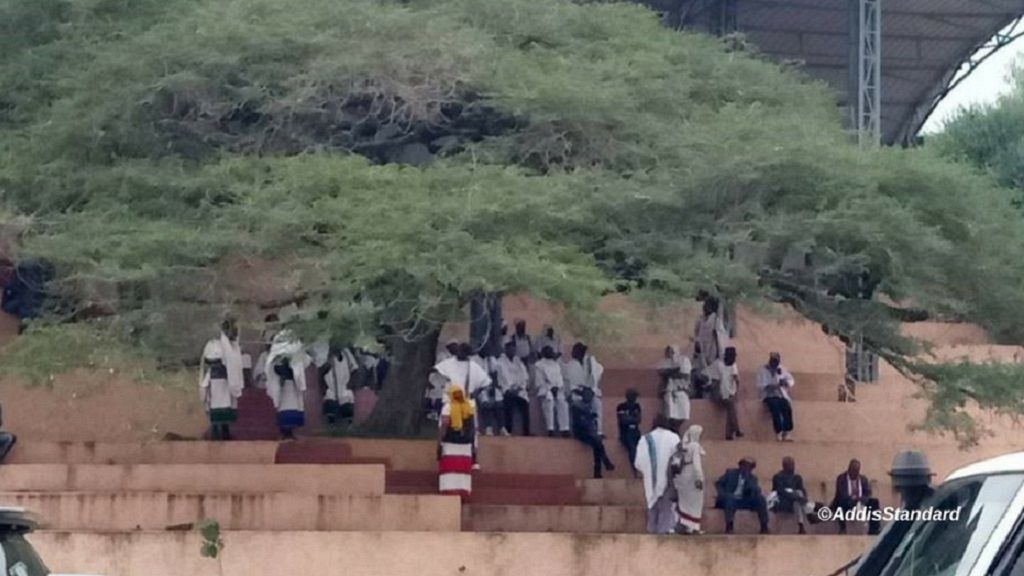
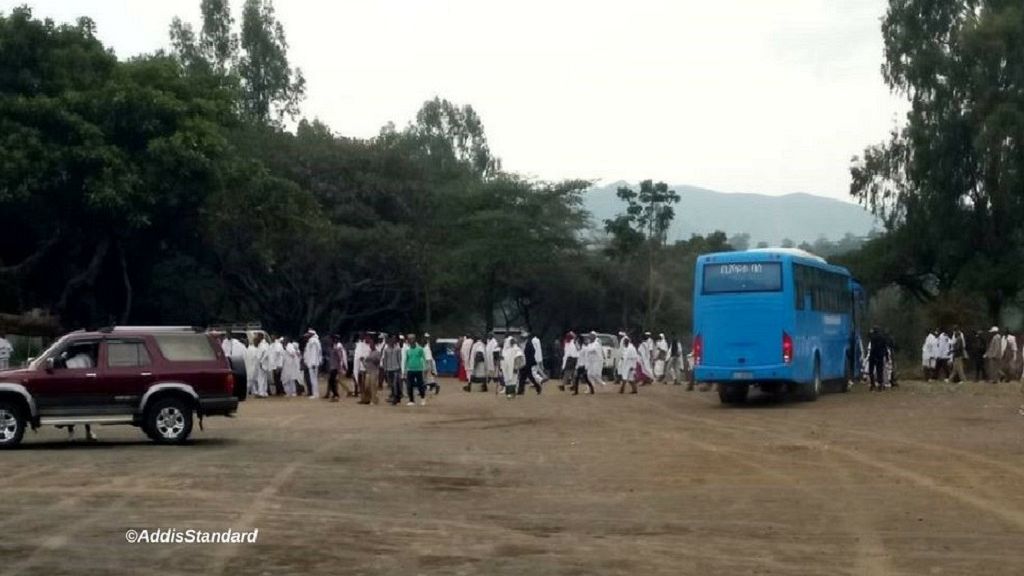
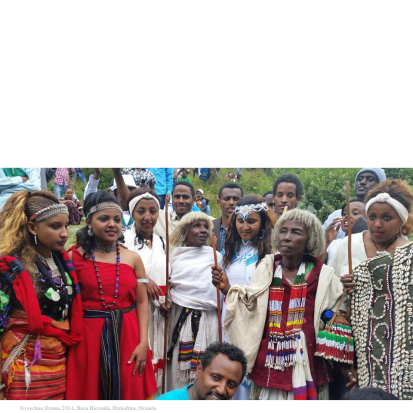
A week after a colorful event in Naqamtee, the Oromo national and cultural season, Irreecha (Irreesaa) Birraa 2017  successfully celebrated on 5 November 2017 at Odaa Arjoo in Caffee Arjoo, Jimmaa Arjoo, East Wallaggaa, Oromia.

Sadaasa 5 bara 2017 Irreechi Malkaa kan Baraa kanaa Odaa Arjoo, Caffee Arjoottii haala ho’aa fi nagaan Kabajamee oole.

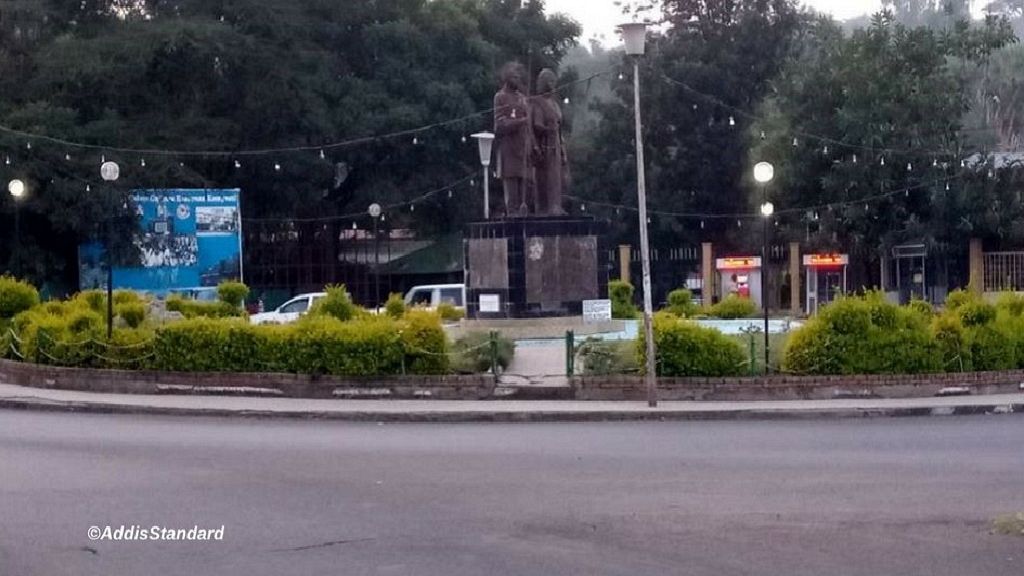
Here are some of the pictures on social media. Suurrawwan Irreecha Odaa Arjoo hammi tookoo kan armaa gaditti argamanidha.


U.S. Representative Mike Coffman (R-CO) urges his colleagues to vote on H.Res. 128 to address human rights abuses in Ethiopia on the House of Representatives floor November 3, 2017

Posted by OromianEconomist in Uncategorized.
Tags: , , , , , , , ,
1 comment so far


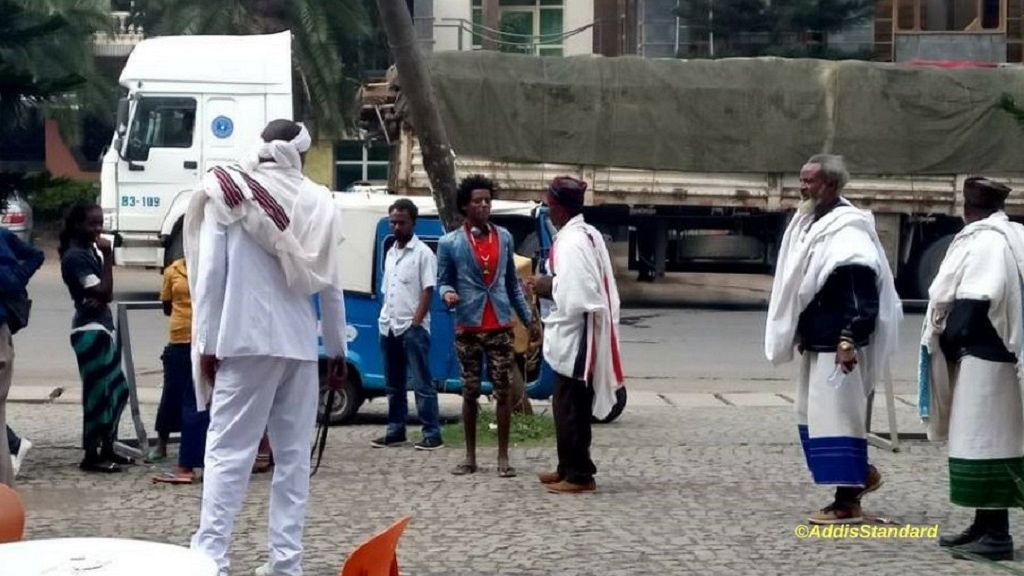
U.S. Representative Mike Coffman (R-CO) urges his colleagues to vote on H.Res. 128 to address human rights abuses in Ethiopia on the House of Representatives floor on 1st November 2017.


https://twitter.com/addisstandard/status/926071114190721024


U.S. legislator: Ethiopia’s lobbying must not stop human rights measure

By AT editor – 2 November 2017
U.S. legislator: Ethiopia’s lobbying must not stop human rights measure


A United States legislator is again pressing for a vote on House Resolution 128, a measure calling for human rights protections and inclusive governance in Ethiopia that was supposed to be up for a vote last month. It was postponed by what supporters say is suppression by the Ethiopian government.

“It has been brought to my attention that the Ethiopian government has threatened to cut off security cooperation with the United States should we proceed with House Resolution 128,” said Representative Mike Coffman, R-CO, from the floor on Wednesday. “I am particularly dismayed that rather than solving their problems and moving towards becoming a more democratic country, the Ethiopian government has chosen instead to hire a D.C. lobbying firm at a cost of $150,000 a month.”

Coffman’s appeal follows a Human Rights Watch letter, signed by other human rights organizations, that was sent last month to U.S. House Speaker Paul Ryan and key elected representatives.

“The Ethiopian government vigorously fought all previous attempts to hold it accountable for abuses of human rights and democratic norms, and it has opposed the current measure from its inception,” said Yoseph Badwaza, a senior program officer for Africa at Freedom House. “In January 2017, it hired a Washington-based lobbying firm in an effort to kill H. Res. 128 and its companion resolution in the Senate.”

Coffman said the resolution “calls on the Government of Ethiopia to take clear decisive steps towards becoming more inclusive, more democratic and more respectful of the basic human rights of its own people.”

Specifically, it condemns the excessive use of force by Ethiopian security forces and the killing of peaceful protesters; the arrest and detention of journalists, students, activists and political leaders, and the Ethiopian government’s abuse of the anti-terrorism proclamation to stifle political and civil dissent. Coffman’s comments came as Ethiopia again denied the release of Oromo leader Bekele Gerba, despite a court ruling Monday that he was to be freed on bond.

The U.S. resolution also calls on Ethiopia to admit U.N. human rights observers and includes language to support targeted sanctions against Ethiopians responsible for gross human rights violations.

Coffman said that if the Ethiopian government wants to correct any negative perceptions about the country in the U.S., the solution isn’t a public affairs campaign but rather an end to the repression of the Ethiopian people.


HRW: joint letter from 9 organizations urging US Congress to vote HR 128 & show respect for human rights in #Ethiopia


News Item: Smith Resolution on Ethiopian Human Rights Advances From Committee, 27 July 2017

Oromia: The Spirit of Oromummaa in the Blessing Season: Irreecha Malkaa 2017 in Naqamtee colorfully and peacefully celebrated at Malka Adii Yaa’a with Massive tournout. And also at Malkaa Qicuu, in Cobii town, Jalduu, West Shawwaa. October 29, 2017

Posted by OromianEconomist in Irreecha, Irreecha Birraa, Irreecha Oromo, Irreessa.
Tags: , , , , , , , , , , , ,
1 comment so far


A week after Irreecha 2017 at Malkaa Booyyee in Jimmaa, Oromians in the city of Naqamtee and East Wallaggaa (Western Oromia) and in Jalduu, Cobii town (West Shawwaa, Central Oromia) on 29 October 2017 celebrated their national and cultural season  peacefully and successfully.   The colorful festival was taken place  in Naqamtee at Malkaa Adii Yaa’a while in Jaldu it was celebrated at Malkaa Qicuu.

Onkoloolessa 29 bara 2017  (6411 ALO) ayyaanni Irreecha Malkaa maqaalaa Naqamtee Haroo Adii Yaa’atti haalaa bareedaa fi nageenya qabuun bakka namni miliyoona tokkoo ol argamanitti irreeffatamee oolera. Haaluuma wal fakkatuun Aanaa Jalduu magaalaa Cobii Malkaa Qicuuttisi irreeffatameera.  #Irreecha2017


Some of the pictures and videos  (credited to social media) at Malkaa Adii Yaa’a


Irreecha 2017 celebrated at Malkaa Hadiyyaa in city of Naqamtee, E. Wallaggaa, Oromia, 29 October 2017 with peaceful Oromia Police and TPLF mass killer Agazi was not at the event.png

Irreecha 2017 celebrated at Malkaa Hadiyyaa in city of Naqamtee, E. Wallaggaa, Oromia, 29 October 2017 with peaceful Oromia Police and there were no TPLF mass killers, no Agazi at the event.


“ABOn Naqameen Galee” Jedhu Qeerroon guyyaa har’aa Irreecha Wallagga Naqamteetti ta’e irratti.


Irreecha 2017 at Malkaa Qicuu, Cobii town, Jaldu, Oromia, 29 ) October 2017

World Health Organization (WHO): Call for the resignation of Tedros Adhanom, WHO Director General, petition launched October 28, 2017

Posted by OromianEconomist in Uncategorized.
Tags: , , ,
add a comment

Call for the resignation of Tedros Adhanom Ghebreyesus, WHO Director General

Your recent decision to nominate Mr. Mugabe disqualifies you entirely, totally, completely and unequivocally to hold the respected role of General Director of WHO. You should resign.You have lost all credibility and authority needed to lead WHO and you have brought disgrace to this honourable organisation. You should resign.If you do not want to resign we will launch a worldwide petition to ask our governments to revoke your mandate.

https://www.change.org/p/who-call-for-resignation-of-tedros-adhanom-ghebreyesus-who-director-general

Stat News: How a blunder over Robert Mugabe has cost the WHO goodwill it needs

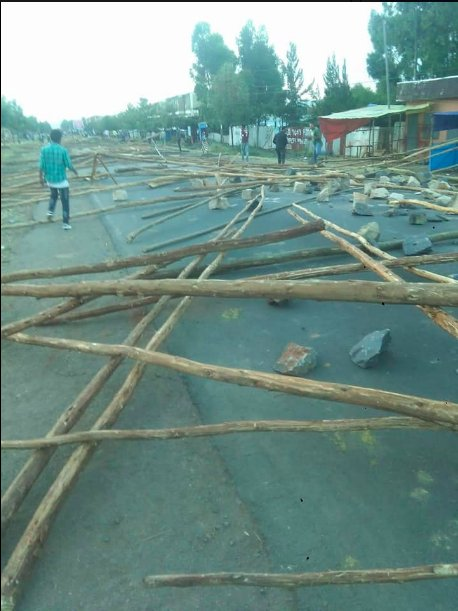
Fascist TPLF Ethiopia’s regime Agazi forces continue with mass killings in Oromia (Ethiopia): At least 10 killed and 20 wounded in Ambo. #OromoProtests October 28, 2017

Posted by OromianEconomist in Uncategorized.
Tags: , , , , , , , , ,
3 comments


Click here for In Pictures: Candlelight vigil held in Oromia for Ambo’s slain Oromos /October 27, 2017 by  Finfinne Tribune | Gadaa.com


 Students in Oromia held a candlelight vigil in remembrance of the Oromos slain in Ambo on October 26, 2017. The killings of at least 10 Oromos came after the Ethiopia’s Woyane military invaded Ambo over an incident involving the fair distribution of sugar in Ambo and the surrounding region. Here are some photos from the event; we’ll bring you more photos of similar events in the future.

 https://www.facebook.com/Amanshafo/posts/1571497892896466

What can Ambo learn from India’s 1919 Amritsar; reflection on Woyane’s weakness, its use of military

10 killed as Ethiopia forces clash with protesters in Oromia | Africanews

 https://www.facebook.com/tsegaye.ararssa/posts/842149935946015

Hamelmal Abate Gadaa’s music nominated for AFRIMA in “Traditional” category October 26, 2017

Posted by OromianEconomist in Music, Uncategorized.
Tags: , ,
1 comment so far

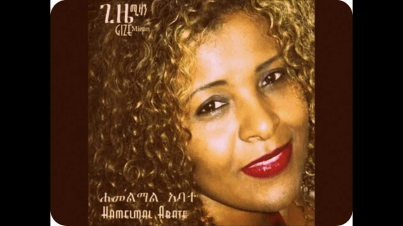
Odaa OromoooromianeconomistBilingual Oromo music artist Hamelmal Abate Gadaa.png

Hamelmal’s music nominated for AFRIMA in “Traditional” category

 Finfinne Tribune | Gadaa.com | Onkoloolessa/October 25, 2017 

Bilingual recording artist Hamelmal Abate has been nominated for the All Africa Music Awards, AFRIMA, in the “African Traditional” category. The nomination song is titled “Harar” (watch below). The competition is based on fan votes; to cast your vote in the “African Traditional” category, click here. In a recent interview (link below), Hamelmal said she’d dedicate the Award, if she wins, to the people of eastern Oromia; thousands have been killed and displaced in recent months in eastern Oromia by TPLF.


RELATED:
– Hamelmal Abate speaks out against displacement of Oromos in eastern Oromia
– Hamelmal Abate: “Yaa Shirri Shirri Boolerraa” (Oromo Music)

Bedelle Oromos help rebuild Oromian Amhara’s houses burned by Woyane (TPLF) October 26, 2017

Posted by OromianEconomist in Uncategorized.
Tags: , , , , , , , ,
add a comment

Odaa Oromoooromianeconomist

Photo: Bedelle Oromos help rebuild Oromian Amhara’s houses burned by Woyane


Finfinne Tribune | Gadaa.com | Onkoloolessa/October 25, 2017 


Photo of the Day: Last week, Woyane burned down houses of members of the Amhara community residing around Bedelle in the Oromia National Regional State of Ethiopia. Through its media outlet, ENN, Woyane broadcast that these houses were being burned down by Oromos to incite Oromians of different ethnic backgrounds against each other. To back up this false information, ENN and Woyane used a photo from a gas explosion incident in New Zealand*. Contrary to Woyane’s evil wishes, Oromos of the region have come out in “debo” (“collective partnership”) to rebuild the houses of the Amhara community in Bedelle this week.

This news of “debo” of love in Bedelle, Oromia, comes on the heels of the press conference by Woyane’s chief of state media. The very upset Zerai Asgedom, or the Director of the Ethiopian Broadcasting Authority, militantly rebuked state media outlets (OBN, EBC, Addis-TV, Amhara-TV, Walta, and others) for not carrying reports similar to ENN. The video of this press conference is attached below.


Woyane’s state media chief Zerai Asgedom’s militant rebuke of other media outlets for not reporting like ENN:


* Link: ENN’s news photo about Bedelle came from a gas explosion incident in New Zealand


Related (Oromian Economist sources):-


OE: At least Eight Oromos, Three Amharas killed in western Oromia in communal violence instigated by Woyane (TPLF), the fascist Ethiopia’s regimeOctober 22, 2017


Stat News: How a blunder over Robert Mugabe has cost the WHO goodwill it needs October 25, 2017

Posted by OromianEconomist in Human Rights, Uncategorized, WHO.
Tags: , , , , , , ,
3 comments

The global health community is struggling to make sense of a blunder that has shaken confidence in the new director-general of the World Health Organization and given rise to concerns — both outside and within the WHO — about the impact the episode will have on the credibility of the agency he leads.

Mere days after hitting the 100-day mark of his first term in the office, Tedros Adhanom Ghebreyesus appointed Zimbabwean President Robert Mugabe to a ceremonial position of honor, naming the longtime authoritarian as a WHO goodwill ambassador for noncommunicable diseases.

Four days later, under intense international pressure, Tedros — who goes by his first name — withdrew the appointment.

“I have listened carefully to all who have expressed their concerns, and heard the different issues that they have raised,” he said in a statement issued Sunday.

There were sighs of relief and calls from some global health heavyweights to rally round a new leader who had the courage to publicly acknowledge a major mistake, and to swiftly correct it.

We have to allow leaders to admit mistakes listen reflect & when needed change decision.Brave leadership something we can all learn from.

But within the broad community of people who work with and for the WHO, the stunning incident has created a sense of deep unease about why Tedros made the sure-to-be-challenged appointment in the first place and how a man who had been Ethiopia’s foreign minister — his country’s top diplomat — for four years did not anticipate the firestorm the Mugabe appointment would ignite.

The episode has raised questions about the new director-general’s judgment and what damage this lapse could inflict on the WHO, which faces major challenges during his tenure. Criticism of the appointment came from a multitude of sources, including many of the countries that provide much of the WHO’s funding.

“I think some of the arguments for his candidacy were that he’d been both a health minister and a foreign minister, and merging the technical and diplomatic aspects should have been his strength,” noted Jimmy Kolker, a retired U.S. diplomat who served as assistant secretary for global affairs at the Department of Health and Human Services during the Obama administration.

“I think he fell down on both sides … and certainly he underestimated the political or diplomatic liability this would be for WHO.”

Tedros has not publicly explained why he thought the 93-year-old Mugabe — a leader who has clung to power for decades by suppressing political opposition and trampling human rights in his country — was the right person to task with promoting the fight against cancer and heart disease to other African nations.

Even if you put aside Mugabe’s political track record — and no critic of the appointment would willingly do so — he was an unusual choice as a champion in the fight against chronic diseases. Zimbabwe is Africa’s largest tobacco producer and exporter. And under Mugabe, its health system has been beggared; the president himself leaves the country when he needs care.

Tedros had initially agreed to speak with STAT about the issue, but declined on Sunday, saying he felt his statement was enough and he was busy with other issues. A spokesperson for his office reaffirmed Monday that he would not give interviews about the matter.

In the absence of insights into his thinking, observers are drawing conclusions. They don’t find them reassuring, even as they support the WHO and want the agency to become stronger under Tedros.

Some have questioned whether the move was an attempt by Tedros to reward those who supported him in the race for director-general. Though balloting during the May election was secret and there’s no way to be certain who voted for whom, the 55-member African Union had unanimously endorsed his candidacy.

The road to that endorsement was paved by a vote by the union’s executive council in January 2016, which came just as Mugabe ended a year’s term as the African Union’s chair. Mugabe chaired the meeting.

Tedros himself credited “the unity of Africa” for his victory in a speech to the WHO regional committee for Africa in Zimbabwe in late August — an event Mugabe attended. In the address Tedros heaped praise on Mugabe, noting his “strong commitment to health.”

David Fidler, professor of international health law at Indiana University, said there’s currently no evidence the ambassadorship was payback for the African Union’s endorsement. “But the appointment of Mugabe was so bizarre that this explanation has to remain on the table until DG Tedros and WHO explain … why and how the appointment was made,” he told STAT on Sunday in an email.

Kolker said there has been a tradition at the WHO of directors-general rewarding countries that supported their candidacies. (Tedros is the first WHO leader to be elected by all member states; previously the director-general was selected by the WHO’s executive board.)

Still, the international community had been looking to Tedros to change the way the WHO operates and to restore the agency’s credibility, damaged in recent years by a perceived over-response to the mild 2009 H1N1 flu pandemic, a tragically slow response to the 2014 Ebola outbreak in West Africa, as well as reports of questionable travel expenditures. Restoring the WHO’s credibility is key, observers say, to getting countries to increase the agency’s funding, which has not kept pace with inflation for at least the last decade.

“It’s disappointing, the misstep of falling into an old pattern of making this about political support and that kind of sort of payback for political support, to me is a worrying sign,” said Kolker, who went on to stress, though, that he and many others want Tedros to succeed as director-general.

“I don’t want to make it too much just about him but it does seem as though the mandate that he has to make WHO a different and better kind of organization will be hurt by this. Because it was a misstep and it misjudged, I think, what the rest of the world was looking to him to do.”

It is also being seen as a serious miscalculation by dismayed WHO staff, many of whom first learned about the appointment through news coverage.

Dr. Ashish Jha, director of the Harvard Global Health Institute, is among those who have publicly applauded Tedros for reversing the Mugabe appointment. But he worried the “terrible decision” will feed into a cynical narrative — that the WHO doesn’t really care about human rights or global health.

The agency has gone through a bruising time, and it seemed like the election of the new director-general was an opportunity to hit the reset button, Jha suggested. Tedros, who handily beat five competitors for the job, seemed to get off to a solid start, recently appointing a strong and diverse senior management team.

“He was building a lot of goodwill and I think there was a sense that maybe this was a turning of the chapter at WHO,” said Jha, who added the appointment of Mugabe had let the air out of the balloon.

So what happens now? The cautious optimism that was the prevailing mood among WHO supporters has been replaced with anxious concern. And how much pause will this miscalculation give member countries, the folks who write the checks? “I honestly don’t know,” said Kolker.

There will be a price, Fidler predicted. “After this debacle, the leadership of DG Tedros will be under intense scrutiny, meaning he has wasted goodwill and political capital in making such a terrible decision and then admitting it was a terrible decision.”

“This intense scrutiny, and the impact of it on his director-generalship, might alter the agenda DG Tedros intended to pursue in order to placate the many government and non-governmental critics of his Mugabe decision,” he said.

Meanwhile some critics have signaled the issue hasn’t yet been put to rest.

The U.N. watchdog organization U.N. Watch called for a full and independent inquiry into the episode, demanding to know “what deals were made?”

Though he didn’t call for a formal inquiry, Fidler said it will be important to explore what the event says about Tedros’s leadership style, to find out how the decision was made, and what steps were taken to help the agency respond to “the utterly foreseeable outcry about this decision.”


Related :-

#NoTedrosforWHO

https://twitter.com/NatnaelMekonne7/status/857033667230740480

QZ: BIRDS OF A FEATHER? It’s not so surprising WHO’s new director tried to make Robert Mugabe a goodwill ambassador

Video (Oromian Economist file)


Open Democracy: “Ethnic clashes” in Ethiopia: setting the record straight October 24, 2017

Posted by OromianEconomist in Horn of Africa Affairs, Human Rights, Uncategorized.
Tags: , , , , , , , , , ,
add a comment
Odaa Oromoooromianeconomist


“Ethnic clashes” in Ethiopia: setting the record straight

First there are the undisputed events. Then there are the media reactions, and these – apart from a few rare exceptions, among them some of Ethiopia’s private media – have been perplexing.

Prime Minister Hailemariam Desalegn at a ress conference in Addis Ababa, October 2016. Michael Kappeler/Press Association. All rights reserved.

In their intensity, scale and duration, the big demonstrations of 2015 and 2016 in the country’s most populous states (or regions), Oromya and Amhara, showed the level of rejection of the ruling power. After a respite attributable to the declaration of the state of emergency, they have recently flared up again in Oromya. Furthermore, the so-called “ethnic clashes” in Oromya and in the Somali Regional State suggest that the same ruling power is now coming apart.

Let us briefly recapitulate from the beginning:

– The population of the border zone between the two federal states of Oromya and Somali has long been mixed, with recurrent conflicts over resources, in particular between pastoralists for access to grazing land and water. Sometimes violent, these disputes were generally settled by traditional mechanisms of mediation.

– In 2004, a referendum was held in 420 municipalities (kebele) of this border zone, to decide which region they should belong to. 80% voted to be part of Oromya. However, this preference was never enacted on the ground.

– In 2007, the ONLF (Ogaden National Liberation Front), a secessionist movement that is the embodiment of Somali irredentism in Ethiopia, attacked an oilfield and killed 74 people, seven of them Chinese.

– The government then decided, as it were, to subcontract the struggle against the ONLF by setting up, training and equipping the only regional armed force in the whole federal state of Ethiopia, the Liyu Police. According to sources, this force now consists of between 25,000 and 45,000 men, as compared with the federal army’s slightly over 200,000.

– Gradually, the Liyu Police extended its field of action to the fight against Al Shabaab in Somalia, supporting the regular Ethiopian army that had been operating there since late 2006.

– International organisations have regularly denounced the multiple and serious human rights violations committed by the Liyu Police in its counterinsurgency actions.

– A few years earlier, Abdi Mohamoud Omar, better known as Abdi Illey, a former electrician turned minor security service officer in the region, had begun a lightning rise through the political ranks: Member of Parliament, head of the regional security services and, in 2010, President of the Region, all with the decisive support of local top brass.

– Shortly before his death in 2012, the country’s all-powerful premier Meles Zenawi seems to have realised his mistake. He considered dismissing Abdi Illey and bringing the force that had become his praetorian guard, the Liyu Police, back into line. It is not known whether in the end he was unwilling or unable to achieve this.

– In October 2015, Prime Minister Hailemariam Dessalegn was planning the same move, but was forced to backpedal within just a few days. In explanation, he cited the force’s fundamental role in the fight against the ONLF. In reality, however, the pressure from Abdi Illey’s military backers in particular was too great, and he also made it clear that if he was dismissed, the Liyu Police would continue to obey him and him alone.

– In October 2016, the government justified its declaration of the state of emergency by the need to end protest in Oromya and Amhara state. The task of implementing the measure was assigned to a “Command Post” that was de facto under the control of the heads of the army and the security services. In reality, the country’s entire administration was “militarised”. In particular, authority over all the armed structures of each of the country’s nine states (regional police, security, militias, etc.), shifted from their governments to the Command Post and therefore – at least on paper – to the Liyu Police as well.

– Two months later, i.e. while the state of emergency was in full swing, the Liyu Police carried out its first significant raid in Oromya, and such raids proliferated in the months that followed. Hundreds were killed. According to the Oromo government spokesman, Adissu Arega, “overall, some 416,807 Oromo have been displaced this year alone in a series of attacks by the Somali region’s Special Police Force” (Associated Press, 17/09/2017) – it is not clear whether the year in question refers to the western or Ethiopian calendar (the period between 10 September 2016 and 2017). The International Federation of Red Cross and Red Crescent Societies stated (30/09/2017) that the  “ethnic clashes have led to the displacement of more than 45,000 households (225,000 people)”, though without specifying the period concerned. In any case, it is the largest forced population displacement since the one that followed the end of the war with Eritrea (1998-2000).

– For a long time, the Oromo government spokesman remained vague about the perpetrators of these raids, describing them simply as “armed men”, which can mean anyone in an area where carrying a weapon is common. He claimed that their objective is twofold: plunder and at least symbolic annexation, since they raise the Somali flag in place of the Oromo flag (Addis Standard, 14/09/2017).

– The tension escalated after the arrest by the Liyu Police and subsequent murder of two Oromo officials (denied by the Somali government spokesman) followed, perhaps in direct response, by a massacre of 18 to 32 people (depending on the sources), the large majority of them Somali, in Awaday in Oromya. Ethnic cleansing was unleashed, essentially in Oromya since, according to the federal government spokesman, 70,000 Oromos and 392 Somalis have been “displaced”, once again with no clear identification of the period involved (The Reporter, 7/10/2017)

– Interviews with “displaced” Oromos confirm that their departure was mostly forced by Somali officials: Liyu Police, Somali militias, local authorities. Some even report that their Somali neighbours tried their best to protect them. On the other hand, there is no reliable information on what role, if any, their Oromo counterparts may have played in the expulsion of Somalis from Oromya.

– On either side, the Somali and Oromo spokesmen are engaged in a war of words, but the leaders of the two states remain silent. On the Somali side, there are claims of “mass killings and torching of villages” by members of the Oromo Liberation Front (OLF, a long-standing armed secessionist movement, described as “terrorist” by Addis-Abeba) “in coordination with officials of the Oromo regional state”, the latter having “direct links” with the former (Voice of America, 12/09/17). But no proof has been forthcoming. On the Oromo side, the finger was eventually pointed directly at the Liyu Police and the Somali militia, but the Somali authorities are never implicated (Associated Press, 14/09/2017).

“Border disputes”

In response to these indisputably documented events, the media reactions – apart from a few rare exceptions, among them some of Ethiopia’s private media – have been perplexing. First, a long absence of information. Then a one sentence summary: “the events triggering the recent violence between Oromo and Somali remain unclear” (Africa News, 7/10/2017). Overall, these events are presented as a resurgence of ordinary “clashes”, as “tribal border conflict”, “fighting between two ethnic groups”, “interethnic violence”, motivated by a long tradition of “territorial competition which often leads to disputes and conflicts over resources, including wells and grazing land” (BBC, 18/09/2017), in short just another revival of the old conflicts typical of border zones.

As if, one fine morning, for no particular reason, a few overexcited Oromos had decided to turn on their Somali neighbours, and vice versa, to act out an ancient and unresolved “ethnic conflict”.  This account of things has one essential outcome: these events are attributed to ancestral tribal urges, responsibility for them to unstable locals, and the regional or federal authorities are ultimately exonerated from all responsibility other than their failure to contain the violence. And though the role of the Liyu Police in the raids and expulsions is sometimes mentioned, nobody points out the obvious: they can only act on the orders of the Somali authorities, and therefore of Abdi Illey in person.

However, the Ethiopian authorities have adopted precisely the same position. First, months of deafening silence. Then, at the end of April, news of the signature of an agreement between Oromya President Lemma Megersa and Abdi Illey, “to bring an end to the hostilities stemmed from the recent border disputes” (Ethiopian Herald, 21/04/2017), hostilities to which no high-ranking official had previously referred. Lemma’s declaration on this occasion – “it is unacceptable to fuel unrest in the pretext of border dispute” – can be interpreted as a veiled criticism of the Somali authorities. Abdi Illey denied all direct responsibility, likewise turning it back on “those who instigate violence in these two states”. We know what became of this agreement.

It was not until 16 September, by which time the “displaced” could be counted in tens – and even hundreds – of thousands, and the dead in hundreds, that a leading political figure took a position on the events. Given the gravity of the situation, it was expected that the Prime Minister, Hailemariam Desalegn, would prove energetic and lay down the law. In fact, his words were vague, timorous and sounded like a confession of impotence. At “a meeting with community elders, tribal and religious leaders” of the two states concerned, in other words without their respective leaders, he began by refraining from a precise assessment of the crisis, despite the fact that he should undoubtedly be familiar with all its ins and outs. He couldn’t do differently: this deliberate omission was his only way to avoid recognising that the situation had moved beyond his control.

According to agency reports (Africa News and Fana, 17-18/09/2017), he stuck to the story that a “boundary dispute arose between the regional states”, resulting in “clashes” between “feuding parties”. At no point would any member of the government say anything more explicit. In his speech to Parliament on 9 October, President of the Republic Mulatu Teshome again spoke of “rabble-rousers who have triggered violence in both regions” (Walta, 9/10/17). Even Lemma Megersa would reduce the “conflict” to the “criminal activities of some individuals” (Walta, 18/09/2017).

“Organized groups”

Sole slim exception: government spokesman Negeri Lencho’s acknowledgement that those “displaced” from the Somali region had not been driven out by the Somali people, but by “some organized groups” (The Reporter, 7/10/2017). For his part, the Oromo government spokesman implicated only the Liyu Police, never the Somali authorities, let alone Abdi Illey.

True, Hailemariam announced that the government would send federal police to patrol the main roads, “the deployment of the Ethiopian Human Rights Commission to investigate rights violation in the conflict” and humanitarian aid for “displaced persons”. He added that he would do everything to “disarm weapons in the area of the conflict” and that “security forces of both regional states will withdraw from the conflict areas”, thereby equating the Somali region’s seasoned military force with Oromya’s simple regional police force. However, the essence of the message sounded like a cry for help addressed to “civil society”: “the Premier called on all stakeholders to assist the government’s efforts to resolve the boundary dispute” (Fana, 18/09/2017). In short, the federal authority, at least in public, exonerated the main instigator and actor of this unprecedented crisis – the Somali authorities – and assigned responsibility equally to unspecified Oromo and Somali actors.

Except when the Somali spokesman went a step too far, just three days after Hailemariam, this time in the presence of the Presidents of both regions, had declared that “the ongoing efforts to fully stop the border conflict need to be further consolidated” (Walta, 5/10/2017). Speaking on behalf of the “regional state” and the “traditional leaders”, the spokesman wrote, under the headline “Oromo People’s War on Ethiopian Somalis”, that  “Oromo is going forcibly for land expansion and creating relationship to neighboring sea ports such as Somaliland and Somalia for importing heavy weapons for federal government destruction which Somali region become the only existing barrier confronted”. He continued: “Ethiopian Somalis opposed Oromo illegal upraising and re-establishing cruel Derg regime and also violating federal system and the supremacy of constitution. This illegal upraising was aimed to collapse current federal government”.[1] The government responded that “the statement violates the federal government’s direction” and threatens the  “sustainable peace and security of the nation” (Addis Standard, 8/10/2017). Ultimately, according to a recent story in The Reporter (07/10/2017), “Somali-Oromya conflict persists”.

Ethno-nationalism

To understand why, two factors need to be highlighted. The first, to put it succinctly, is that ethno-nationalism is intensifying to the point of detonation, triggering centrifugal forces in the federal system of power. Like it or not, the regional authorities are increasingly asserting their autonomy vis-à-vis the federal centre – Addis Ababa – where the Tigrayan elite has long played a disproportionate role and kept them too long under its control.

As a result, this federal centre is disintegrating. [2] Not only is emancipation supported by numerous Oromos and Amharas, as well as others, but many want to go much further. It is no accident that the slogan that dominated their protests in 2015-16, and again this year, is “Down Woyane!”, a Tigrinya word that has come to refer to Tigrayan power.

This ethno-nationalism is particularly strong in Oromya. The region was subjugated by force, then quasi colonised, in the last era of Ethiopian feudalism. The ethnic Oromo party, the Oromo People’s Democratic Organization (OPDO), was for a long time swallowed up by the TPLF (Tigrayan People’s Liberation Front), to the point that it was not until 2015 that it was able to elect its own leaders without external pressure. Finally, the top-down, authoritarian mode of development has gone down particularly badly here. As Ethiopia’s richest region, Oromya has been heavily affected by the brutal eviction of small farmers, with derisory compensation, to make way for investors (“land grabbing”).

Within this general context, the Somali state has followed the same trajectory, but with its own characteristics and objectives. No other state has seen anything like the rise of Abdi Illey and the Liyu Police: none of them is led by such an all-powerful figure, supported by this kind of regional armed force. It was a development that faced opposition from the federal authority, but in vain since the latter was overmatched, as events have shown: the support of part of the military top brass, especially within the command responsible for Somalian operations and at the head of the military security service – at daggers drawn with its civilian counterpart – and probably also the support of part of the TPLF.

Three factors are at work. First, Abdi Illey and the Liyu Police have become irreplaceable in the overcoming of any armed dissidence  – the ONLF is now only a shadow of its former self – and in the war against Al Shabab in Somalia itself. It is equally indispensable in the iron grip it maintains over the Somali state: not a hint of protest is tolerated there. Irreplaceable, but also a threat: Abdi Illey makes no secret of the fact that the Liyu Police answers to him and him alone, and that its destiny is indissociably bound up with his own.

Next, the business links between the leading clans and this military group are as profitable as they are interwoven, entailing above all the smuggling of khat, technology products such as mobile phones or household electric appliances, arms, and even basic food products. And finally, they are now coupled with a shared political goal.

The Somali authority justifies itself by claiming to be “the only existing barrier” against those who, “violating federal system and the supremacy of constitution”,seek “to collapse current federal government”. The first target here is obviously the Oromo authority: overtaken by “narrow nationalism” and ultimately in sympathy with the OLF, it is claimed to seek nothing less than “federal government destruction”.

Flawed federal system

By posing as the keeper of the flame, Abdi Illey gains the support of anyone opposed to reform of the federal system. The flaws of the federal system have been at the heart of the protests that have been raging for three years, in particular among the Oromos and Amharas. To redress them is deemed inevitable and urgent by the reformist section of the leadership, even within the TPLF. Opposition to reform, Abdi Illey’s support, comes first from the military group mentioned above, essentially Tigrayan, unlike moderately or unequivocally reformist senior officers, including army chief Samora Yunus and head of the civilian security services Getachew Assefa, both pillars of Tigrayan power.  However, this support probably also encompasses a fringe of the Tigrayan ruling elite, which is ready to fight – by force if necessary – for the status quo, i.e. the reestablishment of a highly centralised authority de factounder Tigrayan dominance.

Numerous websites that say out loud what is being said in private in certain TPLF circles call for this approach. They claim that the protests are being surreptitiously stage-managed by foreign countries – headed by Egypt and Eritrea – who want “Ethiopia to break up into fiefdoms”. They argue, for example, that “the state of emergency should have been kept for a few more years”. “Unless the government in Ethiopia makes a major policy change towards domestic security, things will get worst and the integrity of Ethiopia will be in danger.”[3] The proliferation of gestures of friendship made by the Somali authorities to the Tigrayan population is obviously no coincidence.

This state of affairs explains why Abdi Illey retains a sufficiently free hand to advance his own pawns, including his pursuit of the ancestral goal of Somali expansionism. In so doing, he serves the aspirations of his supporters, who do not shy away from worst-case political scenarios. Weakening the new Oromo leadership, markedly more nationalist and therefore autonomous than its predecessors, by showing that it is unable to protect its population. Proving that the federal authority is incapable of containing protest and, beyond this, maintaining law and order. With the implication that law and order must be reinstated at any price, and the subtext that if the government does not do it, others will have to do it in their place.

However, the attempt to discredit the Oromo leadership seems to be coming back to bite its promoters. According to reports, chants of “Lemma Megersa is our president!” were heard at the most recent demonstrations in Oromya, though this has not been confirmed. In any case, the slogan “Down Woyane!” continues to dominate.

In the eyes of the demonstrators or Oromo’s “displaced persons”, there is no doubt that behind the Somali authorities and the Liyu Police, it is the TPLF that is pulling the strings (Le Monde, 13/10/17). In this view, the manoeuvre is yet another version of the so-called “triangulation” operations the Front uses to set the Oromo against the Somali, in order to defuse the tension between itself and the Oromo. Oromo opposition websites have always advanced this thesis: Abdi Illey and the Liyu Police are TPLF creations, toeing the TPLF line to the letter; the leadership of the Liyu Police includes numerous Tigrayan officers.

The reality is more complex. First “the” TPLF no longer exists as a homogeneous organisation: Tigrayan domination within the EPRDF has eroded, the military and security command has become more independent of political authority, and is moreover deeply divided. Abdi Illey has a hold over the federal authority and the military and security apparatus because his armed support is irreplaceable and answerable only to him. Reciprocally, those forces, including the group closest to him, have a hold over him, because the Liyu Police could not operate without the support, at least material, they provide. Neither is subordinate to the other. They are bound together by a convergence of political, military and material interests, and reciprocal support.

The most powerful wave of protests since its instatement (the demonstrations of 2015-16 in Oromya and the Amhara Region) threw the ruling power into disarray for months. However, it eventually found the necessary inner resources to respond, albeit after months of internal prevarications and rifts, and albeit by largely handing over control to the military and security forces.

But the state of emergency would seem to have brought no more than a respite: after a marked reduction in the intensity and scale of protest, it has just resumed on a large scale, as evidenced by the wave of demonstrations in Oromya since 10 October. More significant still: “Local officials and police officers either joined the protests or were submerged by it.”[4] And while a consultation process was undertaken with the opposition, its scope is unknown and its outcomes so far unseen.

In response to an “ethnic conflict” which, in reality, is nothing less than armed aggression by one federation state within another, triggering ethnic cleansing on an unprecedented scale, the federal authority initially remained silent. When it finally took a stance, it was so far from reality that it was little more than an admission of its powerlessness to play one of its fundamental roles: to impose a minimum of respect for the constitution on one of the federal states, at least by preventing its aggression.

Why? The federal government executes the decisions of the Executive Committee of the EPRDF, where the four major ethnic parties – Oromo, Amhara, South, Tigrayan – have equal representation. It is hard to believe that a majority of the Executive Committee wouldn’t be aware of the danger and wouldn’t like to bring Abdi Illey back into line. The most plausible explanation is that even if it has the will, it no longer has the means, because it has had to give way to at least a part of the military and security apparatus that opposes such a move.

Power shifts

It was known that the power balance between the politicians and the military/security apparatus had shifted in favour of the latter, in particular with the declaration of the state of emergency. There were questions about whether ethnic nationalism had also penetrated the ranks of the military/security forces and hence undermined their cohesion. There is now reason to wonder not only about their degree of autonomy and ethnic cohesion but also the scale of their divisions, and even their internal conflicts over how to respond to the many-sided crisis that Ethiopia faces. In these circumstances, can the regime still count on the use of force as the ultimate guarantor of its survival?

Behind an appearance of normality, based on the continuing day-to-day operation of the state apparatus, there lurks a question: are the political and executive federal institutions simply in a deep slumber, or already plunged in an irreversible coma?

The more the four major ethnic parties that form the dominant coalition play their own cards, the emptier the shared pot becomes, and the greater the fragmentation of the federal authority responsible for supranational interests.

The OPDO is looking at the possibility of the resignation of some of its senior officials after its strongman, Abadula Gemeda, stood down from his post of Speaker of the House of Representatives, on the grounds that “my peoples and party were disrespected” (AFP, 14/10/2017). If he doesn’t go back on his protest gesture, with almost no precedent in the recent Ethiopian history, this bluntly means: the leading coalition being incapable of fulfilling the legitimate aspirations of the Oromo, to the point that Oromya’s elementary right to be protected is flouted, why continue to support this impotent structure by remaining one of its key figures? But taking into account the very role of the Speaker, this gesture is more symbolic than consequential. From what is known, Abadula remains a member of OPDO’s Central Committee, so de facto its bigwig.

But if the OPDO were to formally distance itself by the resignation of some top officials from key posts, as internally discussed, what would remain of the coalition’s legitimacy if a nation that accounts for more than a third of the country’s total population were no longer represented?

In these circumstances, the Amhara party, the Amhara National Democratic Movement (ANDM), could be a key player. Amid the multiple faultlines that divide both the EPRDF and each of its components, three clusters can be identified: OPDO, ANDM, and an alliance of the “peripheries”, i.e. TPLF and the South, which are attempting to win over other peripheral nations. Historically, there has been a longstanding rivalry between Amhara and Tigrayans, but – as fellow Abyssinians sharing the same culture and Coptic religion – they would bury the hatchet when they perceived an Oromo threat. Will this alliance continue, or will ANDM join forces with OPDO? And if so, at what price?

Four scenarios

At least four scenarios merit consideration. The EPRDF is in the midst of preparations for its next Congress, set for March 2018. The first possibility is that it reaches an agreement on a way out of the crisis that is sufficiently substantive, credible, innovative and unifying to defuse at least the most radical opposition and to rally the various ethnic governing elites. Its primary focus will need to be a response to the eternal “national question”, or rather the “nationalities question”.

To this end, the only road to success is for the ANDM and OPDO to join forces, acquire allies among Tigrayans and Southerners in the upper levels of the EPRDF, perhaps also take advantage of their majority in the Parliament, and begin to establish a remodelled federal system consistent with the spirit and the letter of the constitution.

To do so, they could capitalize on two strengths. First, the unprecedented size and scale of the popular protest. Second, even the most activist of the younger generation have at least until now largely proved their non-violence and that they are not lured with a call to arms like the revolutionaries of the 70’s and 80’s, while they could have plenty of reasons and opportunities to do so.

If this were to fail, even leading lights of the EPRDF have been predicting for years where the country might be headed: towards a Yugoslavian scenario. That’s the second scenario.

However, a third scenario is possible, arising from a relative balance of forces: none of the elements in place – the civil opposition or the regime as a whole, the federal centre or the centrifugal ethnic forces, the “reformists” or the “hardliners” – would be strong or determined enough to get the upper hand. The power system would continue to stumble along, the country would more or less hold together, and thus the key problems would remain if not deepen.

Unless – fourth scenario – the military decided that it could and should take responsibility for countering the remodelling of the federal system, the risk of a Yugoslavian outcome, or the decay of the regime. Which raises another question: the military as a whole, or one of its factions?


[1] https://www.facebook.com/idi.s.osman/posts/1587956397936631

[2] See for example R. Lefort, Ethiopia’s crisis. Things fall apart: will the centre hold? 19 November 2016, https://www.opendemocracy.net/ren-lefort/ethiopia-s-crisis

[3] http://www.tigraionline.com/articles/oromo-demo-ethiopia-1017.html

[4]https://www.facebook.com/danielberhane.ethiopia/posts/10155967606239880


Oromia: The Blessing Season: #Irreecha2017: Oromians continued with the celebrations of their national & the common ancient culture in Malkaa Booyyee (Jimma), Qar Sadee (Abuunaa, Gindabarat) and Basaqaa (Fantaallee). The events were colorful, peaceful and successful with massive turnouts October 23, 2017

Posted by OromianEconomist in Irreecha, Irreecha Birraa, Irreecha Oromo, Irreessa, Uncategorized.
Tags: , , , , , , , , , , , , , ,
4 comments

Odaa OromooOromianEconomist


Three weeks after Horaa Harsadi, two weeks after Malkaa Ateetee and a week after Malkaa Ogiyyoo,  Malkaa Raachaa, Jalduu and more, Oromians celebrated the Irreecha Birraa 2017 season (6411, According Oromoo Gadaa Calendar) in Malkaa Booyyee (Jimma Abba Jifar), Malkaa Qar Sadee (Abuunaa Gindabarat) and Malkaa Basaqaa (Fantaallee). As of  the last 3 weeks major events, the Sunday, October 22nd, 2017 events were  with massive people of all walks of life in attendance.  They were very bright and colorful events with Oromo social styles, cultural costumes, Abbaa Gadaa’s, Siiqqee, the Qeerroo, cultural songs and #OromoProtests. The people and the Oromia State Police made the events peaceful and successful.  Irreecha is part of the Oromo Gadaa System UNESCO World Heritage. 

Irreechi bara kanaa (6411)  kan Malkaa Booyyee, Malkaa Qar Sadee fi kan Malkaa Basaqaa akkuma kan iddoowan biroo darbanii, Dilbata (Sanbata) Onkoloolessa 22 Bara 2017 (6411 ALOtti) haala ho’aa fi bareedan kabajaamee oole. Irreefannaa kana irratti namoonni heddummaan kan irratti argaman yoo ta’u, sabnii fi Polisiin Oromiyaa wal ta’uun diina irraa wal irraa ittisuun nagaan, gammachuu fi sirbaan ayyaanefatame oole.

#Irreecha2017      #Irreecha2017


Here are some of the videos and pictures  from the events:-

Irreecha Birraa (Malkaa) 2017 at Malkaa Booyyee, Jimmaa Abba Jifar, State of Oromia. 22nd October 2017


The eve of Irreecha Oromoo 2017 at Malkaa Deeddee, the eve (jala bultii) of Malkaa Booyyee, 21 October 2017

Irreecha Birraa 2017 at Malkaa Booyyee, Jimmaa Abba Jifar, Oromia on 22nd October 2017 (6411 ALO)

Irreecha Birraa 2017 at Malkaa Booyyee, Jimmaa Abba Jifar, Oromia on 22nd October 2017


Irreecha Birraa 2017 at Malkaa Booyyee, Jimmaa Abba Jifar, Oromia on 22nd October 2017 (6411 ALO).

Irreecha  Birraa  2017,   Malkaa Booyyee, Jimmaa  Abba Jifar, Oromia on 22nd October 2017 (6411 ALO).png

Irreecha Birraa 2017 at Malkaa Booyyee, Jimmaa Abba Jifar, Oromia, 22 October 2017 (6411 ALO)

Irreecha Birraa 2017 at Malkaa Booyyee, Jimmaa, Oromia on 22nd October 2017 (6411 ALO)


Irreecha Birraa 2017 at Malkaa Booyyee, Jimmaa Abba Jifar, Oromia, 22nd October 2017 (6411 ALO)

Malkaa Basaqaa, Fantallee, Oromia

Irreecha Birraa bara 6411 (ALO), Irreecha Birraa Oromoo 2017, on 8th October 2017 colorfully celebrated in Fantalle, Malkaa Basaqaa, in the state of Oromia

Irreecha Birraa bara 6411 (ALO), Irreecha Birraa Oromoo 2017, on 8th October 2017 colorfully celebrated in Fantalle, Malkaa Basaqaa, Oromia

Irreecha Birraa Oromo 2017, Malkaa Basaqaa, Fantallee, Oromia, 8 October 2017.png


Irreecha 2017 Malkaa Qar Sadee, Abunaa, Gindabarat, Oromia

Irreecha  2017, Malkaa Qar Sadee  Abuunaa,  Gindabarat,  Oromia 22 October 2017 (6411 ALO).png

Irreecha  2017  at Malkaa Qar Sadee  Abuunaa,  Gindabarat,  Oromia 22 October 2017 (6411 ALO).png

Irreecha 2017 at Malkaa Qar Sadee Abuunaa, Gindabarat, Oromia 22nd October 2017 (6411 ALO)

BBC Afaan Oromoo: OFC: Mootummaan Itoophiyaas ta’ee paartiin biyyattii bulchaa jiru gaaffilee uummataaf deebii kennaa akka hin jirre paartiin Koongirasii Federaalistii Oromoo ibsan October 22, 2017

Posted by OromianEconomist in Uncategorized.
Tags: , , , , ,
add a comment

OFC Press Release

Biyya qabna jechuun nu yaaddesseera – KFO

20 Onkololeessa/ October  2017


Obbo Mulaatuu Gammachuu miidiyaaleef ibsa yoo kennan

Goodayyaa suuraaBiyya qabna jechuun nu yaaddesseera, Kongirasii Federaalistii Oromoo

Mootummaan Itoophiyaas ta’ee paartiin biyyattii bulchaa jiru gaaffilee uummataaf deebii kennaa akka hin jirre paartiin Koongirasii Federaalistii Oromoo ibsa har’a miidiyaaleef kenneen beeksiseera.

Hirriirawwan tibbana adeemsifaman irratti lubbuun namaa darbuunsaa fi qabeenyi manca’uunsaa na yaaddeeseera kan jedhe paartichi mootummaan gaaffilee uummataaf xiyyeeffannaa kennuu qaba jedheera.

Akkaatuma hiriira irratti gaafatamaa tureenis, mootummaan hidhamtoota siyaasaa mara akka hiiku, buqqa’iinsi uummataa akka dhaabbatu fi kanneen dararaan irra gahee qe’ee isaanii irraa buqqaafamanis hattatamaan iddoo irraa buqqa’anitti deebi’anii akka dhaabbatan paartichi gaafateera.

Aangawoota mootummaa dabalatee shakkamtoonni ajjeechaa raawwatan seeratti dhiyaachu qabus jedha ibsi paarticha.

Hiriirawwan tibbanaa irratti namootni aasxaa yookan alaabaa paartii koongirasii Oromoo qabatanii bahuusaanii fi taatichi fedhii KFO akka hin taane dura taa’aa itti aanaan paartichaa Obbo Mulaatuu Gammachuu himaniiru.

Paartichi namootni asxaa/alaabaa Koongirasii Federaalistii Oromoo qabatanii hiriirawwan kunneen keessatti hirmaataa turanis malaammaltoota viidiyoo waraabuun fiilmii dokimantarii hojjechuu karoorfatan ta’uusaanii ragaalee argadheeras jedheera.

Rakkoon naannoolee daangaa Oromiyaa fi Somaalee gidduutti uummames “mala mootummaan gafilee uummata ukkamsuuf itti fayyadamedha” kan jedhe partichi “dhimmichi walitti bu’iinsa uummataa osoo hin taanee haleellaa humni mootummaa hidhate uummatarraan gahe dha,” jedheera.

Humnoota hidhataniin uummata irraan miidhaa geessisan kanneen gama dhaabsisuutinis mootummaan gahee isa irraa eegamu akkan hin baane fi mirga uummataa kabachiisuu dadhabuusaa himan dura taa’aan itti aanaa paartichaa Obbo Mulaatuun.

Taateewwan uummatni mootummaarraa abdii akka hin qabaanne taasisan uumamaa jiran biyya qabna jechuuf nu yaaddesseeras jedhaniiru.

Dhumarattis uummatni sabaaf sab-lammiilee biroo naannoo Oromiyaa keessa jiraniif eegumsa akka godhan paartichi waamicha dhiyeeseera.


The Oromo Federalist Congress Press Release
Oct 20, 2017
Finfinnee (Addis Ababa), Oromia, Ethiopia


Jirra Jirraa: Oromia music video premiere 2017 by Oromo music star, Hacaaluu Hundeessaa October 22, 2017

Posted by OromianEconomist in Oromo, Uncategorized.
Tags: , , , , , ,
add a comment

Odaa Oromoooromianeconomist

Jirra.png


Oromia: Haala Fincila Xumura Gabrummaa (FXG) Deemaa Jiru Ilaalchisuun Ibsa Qeerroo Bilisummaa Oromoo October 22, 2017

Posted by OromianEconomist in Oromian Affairs, Oromians Protests, Oromiyaa, Oromo, Uncategorized.
Tags: , , , , , , , ,
add a comment

Haala Fincila Xumura Gabrummaa (FXG) Deemaa Jiru Ilaalchisuun Ibsa Qeerroo Bilisummaa Oromoo

Haala Fincila Xumura Gabrummaa (FXG) Deemaa Jiru Ilaalchisuun

Ibsa Qeerroo Bilisummaa Oromoo

Qeerroon Bilisummaa Oromoo haala waliigalaa ummanni Oromoo keessa jiru ilaalchisuun: duula mootummaan Wayyaanee kittillayyoota EPRDF jalatti ijaaratte waggaa 25 nu ajjeesaa fi samaa bahe qabatee daangaa Oromiyaatti kallattii hundarra bane dhumaatii suukaneessaa lammii keenyarraan gahaa jiru, qabeenya saamamee fi barbaadaawe, duula baname kanaan buqqa’uu lammiilee keenya 150,000 caalanii ilaalcha keessa galchuun; hidhamtoonni Oromoo murtii haqaa waakkatamanii bara-baraan hidhaa keessatti galaafatamuu fi gidirfamuun itti fufuurraa, walumaagalatti haallan kanneenii fi biroos ummanni Oromoo bulchiinsa suukanneessaa TPLF/EPRDF jalatti mudataa jiru mormuu fi ummata keenyaa fi addunyaa beeksisuuf akkasumas gaaffii mirgaa dhiyeeffatuuf Onkoloolessa 11,2017 (Onkoloolessa 11 bara 2010) hiriira nagaa waamuun keenya ni yaadatama.

Hiriira kanas gaafa waamame (Onkoloolessa 11, 2017) irraa kaasee magaalaalee Oromiyaa xixiqqoo hanga gurguddootti, gandeen baadiyyaa golee Oromiyaa hunda osoo hin hafne ummanni Oromoo guutummaa Oromiyaa keessaa waliin ka’ee,  birmatee gaaffi isaa kan mirga abbaa biyyummaa fi birmadummaa mootummaa dhaa fi addunyaattis itti fufiinsaan dhageessifatee jira. Kunis injifannoo ol’aanaa xumura sirna gabrummaa irratti jalqaba bara kanaatti goonfatamee tahuun hundaaf labsina. Kanneen QBOf wareegamaa jirtanii fi ummata keenyas injifatnoo ol aanaa kanatti milkaawuu keenyaaf gammachuu keenya ibsina. Ummmata keenyattis boonnaa.

Qeerroon Bilisummaa Oromoo milkii fi injifannoo guddaa argame kana keessatti hirmaannaa sabboontota OPDO keessaa kumaan lakkaawamanii kana hirmmaannaa isaanii guddoo dinqisiifatu ibsaa, akkasuma aantummaa Poolisootni Oromiyaa bakkoota hedduutti agarsiisan, ummata keenya ittisuu fi hiriira kanarratti nageenya hiriirichaa jeequurraa bal’inaan of qusatuu isaaniif dinqisiifannaa qabnuss ibsanna. Hireen keenya tokko tahuu hubatuudhaan warraaqsa biyyoolessaa gaggeessa jirrutti xumura gochuun mirga abbaa biyyummaa harkatti galfatuuf akka waliin sochoons waamicha keenyaa haaressinee hundaaf dhiyeessina.

Hiriira nagaa haala kanaan nagaan gaggeeffamaa ture mootummaan Wayyaanee akkuma amala isaa humnoota waraanaa itti duulchisuun Shaashamannee, Iluu Abbaa Booraa, Kaaba Shaggari fi Baha Oromiyaa dabalatee bakkoota hedduutti lammiilee hiriira nagaa gageessan irratti dhukaasa roobsuun lubbuu namoota galaafatuu isaa guddisnee balaaleffanna. Hiriira kana jeequufis Naqamte, Shashamannee, Waliso, Kaaba Shawaa fi bakkoota adda addatti tikoota isaa bobbaasee balaa geessisuu yaalee fi geessises balaaleffatna. Fuula duratti Qeerroon bilisummaa fi ummatni keenya shira garaa jabinaa tikni Wayyaanee bara baraan gaggeessuu kana of irraa tohatee maseensuu irratti akka dammaqinsaan hojjatu hubachiifna.

Qeerroon Bilisummaa Oromoo hiriirri gaaffii mirgaa dhiyeeffatuuf karaa nagaa guutummaa Oromiyaa keessatti bal’inaan deemaa ture haala aanjaa argatuu fi yeroo barbaachisetti  daran bal’atee akka itti fufu dhaamaa, naannolee humnoonni hidhattootaa mootummaa jiranitti wal dura dhaabbannoo taasisuurraa akka of qusatamu hubachiisna. Sochiin mirga abbaa biyyummaa fi bilisummaa Oromoo dhugoomsuuf Qeerroon Bilisummaa Oromoo wareegama qaalii baasee gaggeessaa jiru ammallee bifa itti fufiinsa qabuun finiinuu akka itti fufuu fi murna samtotaa TPLF-tti xumura gochuuf akka irree guutuun dhaabbataan sossoonu dhaamsa dabarsina. Kanuma waliin sochii itti fufinsaan godhamu kana keessatti ummatni keenya lubbuu fi qabeenya sivilii kamiifuu eegumsa akka godhu walumaan hubachiifna.

Maayiirratti mootummaan faashistiin kun haala nagaatiin:

  • Hidhamtoonni Oromoo hundi hatattamaan akka hiikaman
  • Kanneen bara-baraan ummata keenyarratti yakka dalaganii fi dalagsiisan seeratti akka dhiyaatan;
  • Humnoonni waraanaa fi poolisa federaalaa waggoota dabran hunda nurratti lola labsaa jiran kun akka nurraa ka’an;
  • Ajjeechaa, hidhaa fi saamichi akkasuma buqqa’iinsi ummata Oromoorra geessifamaa jiru daddaffiin akka dhaabbatu;
  • Gaaffiin mirgaa karaa nagaa dhiyeessie deebisaa akka argatu irra deddeebinee gaafannus deebisaa waakkatamuu keenya hubachiisaa,

Ummanni keenya ajaja amma irraa kaasee caasaa mootummaa gabroomfataa diriirsee waanjoo gabrummaan hidhee jiru kana of irraa caccabsuu irratti akka hojjatu waamciha gadi jabeessinee dabarsina. Kanaaf bifa kamiinuu ajaja mootummaa irraa kennamu akka hin fudhannee fi hojiirras hin oolchine, hariiroon bifa kamuu caasaa mootummaa waliin akka dhaabbatu gadi jabeessinee dhaamatna.

 Gadaan Gadaa Xumura Gabrummaa ti!

Injifannoo Ummata Oromoof!

Qeerroo Bilisummaa Oromoo

Finfinnee.

Onkololessa 20, 2017


Ethiopia’s Fascist TPLF Regime uses non-Oromo agents to burn Oromia October 19, 2017

Posted by OromianEconomist in Horn of Africa Affairs, Human Rights, Oromians Protests, Uncategorized.
Tags: , , , , , ,
1 comment so far

  Odaa Oromoooromianeconomist

Media, Oromo activists say TPLF’s govt uses non-Oromo agents to burn Oromia

Finfinne Tribune | Gadaa.com |Onkoloolessa/ October 19, 2017


#OromoProtests activists have denounced the violence that the TPLF/Woyane government has unleashed on Oromia through its agent-provocateurs and paid non-Oromo agents. In order to tarnish the nonviolent (peaceful) Oromo movement, the TPLF/Woyane government has resorted into manufacturing violence through its agents to burn Oromia. Some of these agents have been apprehended by the Oromia Police, according to media reports. Here are some of the comments and reports on social media about the ongoing violence in Oromia.

TPLF’s security agents organizing protests & turning them violent attacking properties belonging to non-Oromo civilians in .

Police in  detaining individuals suspected of instigating the ongoing protests in several towns in the region, head of communication https://twitter.com/addisu_arega/status/921024232016044038 …

 uses its positions as  member, VP of , &  Director, AU host to prevent investigations into genocide in Oromia @UN


Related:-


Africa News: Ethiopia: U.S. Embassy speaks on recent protest deaths, lauds security restraint


Restoring Oromummaa: Irreecha Malkaa 2017 celebrated in Mandii, Mana Sibuu, Wallagga, Oromia after 88 years October 16, 2017

Posted by OromianEconomist in Irreecha, Irreecha Birraa, Irreecha Oromo, Irreessa, Uncategorized.
Tags: , , , , , , , , , , ,
2 comments


Odaa Oromoooromianeconomist

Kabajin ayyaana Irreecha Birraa kan bara 2017 (6411 ALO) Oromiyaa bakka adda addaatti itti fufee jira. Haaluma kanaan Mandii, Mana Sibuu, Wallaggaa dhihaatti  haala bareedan Onkoloolessa 15 bara 2017 kabajamee oolera.  Iddii bara 1929tii barana deebi’ee Malkaa Ogiyyootti irreeffatame. #Irreecha2017


Irreecha Birraa Oromoo 2017 at Mandii, Mana Sibuu district, Oromia, on 15 October 2017


Irreecha Birraa 2017 Celebrated in Mandi, Wallaggaa, W. Oromia, 15th October 2017 after 88 years

Irreecha Birraa (Malkaa) Oromoo 2017 ( 6411 ALO) Colorfully Celebrated in Mandii, West Wallaggaa, Oromia, 15th October 2017.png

Irreecha Birraa 2017 Celebrated in Mandi, Wallaggaa, Oromia, 15th October 2017.png


Irreecha Birraa Oromoo 2017 at Mandii, Wallaggaa Oromia, on 15 October 2017.png

Irreecha Birraa Oromoo 2017 at Mandii, Mana Sibuu, Wallaggaa Oromia, on 15 October 2017

Irreecha Birraa Oromoo 2017 at Mandii, Mana Sibuu district, Wallaggaa Oromia, on 15 October 2017.png

Irreecha Birraa Oromoo 2017 at Mandii, in Mana Sibuu district, Oromia, on 15 October 2017.pngIrreecha Birraa Oromoo 2017 at Mandii, Mana Sibuu district, Oromia, on 15 October 2017.png

Onkoloolessa 15 Bara 2017 Malkaa Raachaa, Jalduutti  haala gaarii irreenfatamee oole.


Dabalataan kana caqasaa Kan Makkoo Bilii

Akkasumasi Irreechi Haraa Basqaatti kbajameerra.

Irreecha 2017 also celebrated in Nairobi, Kenya. https://www.facebook.com/Dhabassa/posts/10213042531129674

Suuran gadii kun kan  Odaa Bulluq

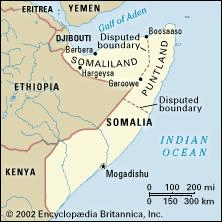
Human Rights League: The Somaliland Government Must Respect International Human Rights Treaties and International Law October 15, 2017

Posted by OromianEconomist in Horn of Africa Affairs, Uncategorized.
Tags: , , , , , , ,
add a comment

Odaa Oromoooromianeconomist

The Somaliland Government Must Respect International  Human Rights Treaties and International Law

republic of Somali Land

HRLHA’s Appeal

—————————————————————-
October 14, 2017
Appeal To: The President of Somaliland
The Honorable Ahmed M. Mohamoud Silanyo
Tel: +252 252 0913
E-mail: mopa@somalilandgov.com

Your Excellency,

First of all, the Human Rights League of the Horn of Africa (HRLHA) would like to express its appreciation to the people of the Republic of Somaliland and to its government for their hospitality and kindness towards thousands of Oromo  refugees and asylum seekers who have fled their homes to escape government persecutions in Ethiopia. Since the TPLF Government came to power, thousands of Oromo nationals have run away from arbitrary detentions, degrading tortures and violent killings in Oromia to save their lives by seeking refuge in Somaliland and other neighbouring countries.

However, HRLHA recently received a worrisome and disheartening report that the Somaliland Government security and police forces opened a wide ranging campaign against Oromos living in Hargeeysa, a move meant to expel all Oromo refugees and asylum seekers from Somaliland. According to the Oromo asylum seekers that HRLHA interviewed, the Oromo nationals who lived peacefully in Hargeeysa for many years are under  police and security attacks and over 4000 young men and women Oromos have been picked up from their homes and loaded on trucks and sent to the border of Somalia and Ethiopia, near Wichale. In addition, the Oromo asylum seekers also said that there is  a wide- ranging hate campaign going on, undertaken against Oromos by the Somali people, which  was deliberately instigated by the government and which had resulted in the loss of Oromo lives- two men were killed by police and three children have been burned in their home in Hargeeysa  town at  a place called Sheeda 23. This deliberate crime was committed against the family of Ahammed Suleyman Musa; his three children, Nuredin Ahammed Suleyman age 6, Salmaa Ahammed Suleyman, age 4, and Imraan Ahammed Suleyman, age 2  were set on fire in their home and burned to death on October 5, 2017 at 9:45 am.

Your Excellency,

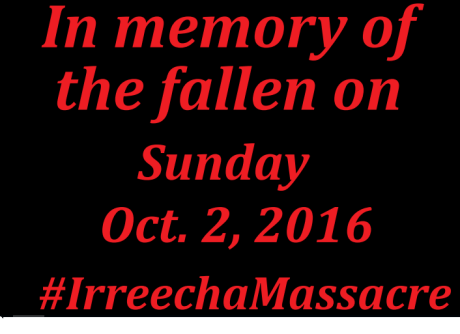
I am sure that your government is well aware of the current political crisis in Ethiopia in general and in Oromia in particular. The regime in Ethiopia has particularly targeted the Oromo nation simply because they have demanded their fundamental rights, and have been expressing their grievances for the past 26 years. In the past four years (2014 to present) of continuous peaceful protest against the authoritarian regime in Ethiopia, the Oromo nation has lost over 3500 brilliant sons and girls at the hand of the killing squads Agazi force- among them, about 700 were murdered in only one to two hrs at the Irrecha Festival on October 2, 2016, tens of thousands have been jailed and other hundreds have been forcefully abducted by the security forces and have essentially disappeared.

HRLHA would also like to bring to your attention that these events have already attracted international attention, including that of Ethiopia’s Western allies. For example, in its 2016 Country Report on Ethiopia, the U.S. Department of State’s Bureau of Democracy, Human Rights, and Labor acknowledged that:

Ethiopian Security forces used excessive force against protesters throughout the year, killing hundreds and injuring many more. The protests were mainly in Oromia and Amhara regions. At year’s end more than 10,000 persons were believed still to be detained. This included persons detained under the government-declared state of emergency, effective October 8. Many were never brought before a court, provided access to legal counsel, or formally charged with a crime. On June 10, the government-established Ethiopian Human Rights Commission (EHRC) reported and presented to parliament a summary of its report. The EHRC counted 173 deaths in Oromia, including 28 of security force members and officials, and asserted that security forces used appropriate( appropriate or inappropriate?) force there. The EHRC also asserted Amhara regional state special security had used excessive force against the Kemant community in Amhara Region. On August 13, the international NGO Human Rights Watch (HRW) reported an estimate that security forces killed more than 500 protesters. In October the prime minister stated the deaths in Oromia Region alone “could be more than 500.” The UN High Commissioner for Human Rights requested access to Oromia and Amhara regions, which the government refused. Following dozens of deaths at a religious festival in Bishoftu on October 2, groups committed property damage. On November 9, international NGO Amnesty International reported more than 800 persons were killed since November 2015

The Ethiopian government’s crimes against the Oromo nation were also condemned around the world by governments and government agencies (UN, EU) and human rights organizations. Among those recent reports are:

Human Rights Watch (HRW)

  • The Long Arm of Ethiopia Reaches for Those Who Fled (Sep 20, 2017)
  • Ethiopia: Exercise Restraint at Upcoming Festival (Sep 19, 2017)
  • “Such a Brutal Crackdown”, Killings and arrests in Response to the Oromo ( is a word missing here? ) (June 15, 2016)
  • Arrest of Respected Politician Escalating Crisis in Ethiopia (January 9, 2016)

Amnesty International (AI)

  • The Ethiopian government declared a state of emergency on 9 October 2016. Protests in Oromia, which later spread to Amhara and other regions, had been ongoing since November 2015.
  • DEMANDS FOR JUSTICE GREETED WITH REPRESSION

Human Rights League of the Horn of Africa (HRLHA)

  • The never ending horror against the Oromo nation, Ethiopia is descending into civil war  (Sep 9, 2017)
  • Harrowing accounts of deaths, torture, and inhuman conditions in Ethiopia’s notorious prison (Aug 10, 2017)
  • The deeply rooted Oromo nation’s grievances require a sustainable solution  (July 3, 2017)
  • The charade of democracy, rule of law, and justice in the Oromo nation in Ethiopia hrlha’s release (June 25, 2017)

USA: Stand Up for Ethiopians as Government Stifles Protests, Jails Journalists  (March 9, 2017)

February 9, 2016, John Kirby, spokesperson Daily Press Briefing, Washington, DC on 140 Oromo peaceful protestors killed by Ethiopian Government Security force

21-01-2016, EU Parliament resolution in connection with the killing of 140 Oromo peaceful protesters

21-01-2016, UN experts press release urging Ethiopia to halt a violent crackdown on Oromia protesters, ensure accountability for abuses

Your excellency,

Historically, Oromo  and Somali nations have a lot in common. They share history, tradition, and language (in some degree), respect each other, and have lived together as nations for over a century. There are thousands of Somaliland- born Somalis live in Oromia right now without fear, especially in the eastern part of Oromia including the capital city Addis Ababa. The Oromo people and Oromia State government embrace them and they live peacefully with their Oromo brothers and sisters. So why is your government targeting the Oromos who came to your country seeking desperate help from your government, looking to be safe from prosecution by the Ethiopian regime?

By killing, deporting and harassing the Oromo refugees and asylum- seekers residing in Somaliland your government is collaborating with the Ethiopian authoritarian regime which is responsible for massacring thousands of Oromos, forcefully disappearing many and jailing others. By collaborating with the Ethiopian regime in killing, deporting and abusing Oromos in Somaliland, your government is violating:

  1. The constitution of Somaliland approved by referendum on 31 May 2001, Foreign Relations article 10 (#1-5) which describes the commitment of Somaliland foreign relations based on the local and international laws.
  2. Universal Declaration of Human Rights (UDHR); article 14 (1), Everyone has the right to seek and to enjoy in other countries asylum from persecution.
  1. The Convention against Torture and Other Cruel, Inhuman or Degrading Treatment or Punishment (1465 U.N.T.S. 185) Somaliland has an obligation not to return a person to a place where they face torture or ill-treatment. Article 3 of the Convention against Torture provides:

3.1. No state party shall expel, return (“refouler”) or extradite a person to another state where there       are substantial grounds to believe that they would be in danger of being subjected to torture.

3.2. For the purpose of determining whether there are such grounds, the competent authorities shall       take into account all relevant considerations including, where applicable, the existence in the state     concerned of a consistent pattern of gross, flagrant or mass violations of human rights.

Your excellency,

Despite the fact that Somaliland declared its independence in 1991, the HRLHA is fully aware that Somaliland is not yet a signatory to international human rights treaties.  Even though Somaliland declared its independence in 1991,   it  has not yet been recognized by the world community as a country separate from Somalia yet.  Even though the request of your government for recognition by the World community is still on hold, the Somaliland government  still  has a duty to respect at least the above mentioned core human rights treaties and international law. Violating them could badly damage the reputation of Somalilad as a state  seeking a recognition from the World Community. The HRLHA strongly urges the Government of Somaliland to respect these international human rights treaty obligations  and international human rights law for the just-mentioned reasons.

The HRLHA therefore calls  upon  the international community to act collectively in a timely  and decisive manner – through the UN member states- to put pressure on the Somaliland government to abide by the core international human rights, obligations and international law halt the expulsion, return (“refouler”) or extradition of  Oromo  asylum seekers and refugees to Ethiopia where they could face all sorts of human rights violations , including prison and torture.

RECOMMENDED ACTION: Please telephone, send an email or airmail letters in English, Somali language  or your own language:

– Expressing serious concern about the Oromo and other asylum seekers and refugees, and the human rights violation in Somaliland;
– Demanding assurances that the Oromo and other refugees and asylum seekers will not be returned to the country where their lives will be endangered.

APPEALS TO:

The HRLHA is a non-political organization that attempts to challenge abuses of human rights of the people of various nations and nationalities in the Horn of Africa. It works to defend fundamental human rights, including freedoms of thought, expression, movement and association. It also works to raise the awareness of individuals about their own basic human rights and those of others. It encourages respect for laws and due process. It promotes the growth and development of a free and vigorous civil society.

Copied To:

  • UNHCR is based in Geneva, Switzerland.
    United Nations High Commissioner for Refugees
    Case Postale 2500
    CH-1211 Genève 2 Dépôt Suisse.
    Tel: +41 22 739 8111 (automatic switchboard)
     Fax number: +41 22 739 7377
  • UNHCR – Hergeisa
    Kodbur B, Red Sea
    Via 10012
    Hargeisa, Somaliland, Galbeed region
    Somalia
    Tel: +252 828 3843 or 2 527 619
    Fax: +252 225 00 06 or 252 213 4501
    Email: Havoyoco@hotmail.com
  • UN Human Rights Council
    OHCHR address: 
    Office of the United Nations High Commissioner for Human Rights (OHCHR)
    Palais Wilson
    52 rue des Pâquis
    CH-1201 Geneva, Switzerland.
  • Africa Union (AU)
    African Union Headquarters
    P.O. Box 3243 | Roosevelt Street (Old Airport Area) | W21K19 | Addis Ababa, Ethiopia
    Tel: (251) 11 551 77 00 | Fax: (251) 11 551 78 44
    Webmaster: webmaster@africa-union.org
  • The US Department of State 
    WASHINGTON, D.C. HEADQUARTERS
    (202) 895-3500
    OFMInfo@state.gov
    Office of Foreign Missions
    2201 C Street NW
    Room 2236
    Washington, D.C. 20520
    Customer Service Center
    3507 International Place NW
    Washington, D.C. 20522-3303

HRW: joint letter from 9 organizations urging US Congress to vote HR 128 & show respect for human rights in #Ethiopia October 14, 2017

Posted by OromianEconomist in Horn of Africa Affairs, Human Rights, Uncategorized.
Tags: , , , , , , , ,
1 comment so far

Odaa OromoooromianeconomistHRW

US Congress: Vote on H.Res 128

Support Respect for Human Rights in Ethiopia

QZ: African Oligarchs: Africa’s political elites have built the same wealth plundering structures as the colonialists October 14, 2017

Posted by OromianEconomist in Corruption in Africa, Horn of Africa Affairs, Illicit financial outflows from Ethiopia, Uncategorized.
Tags: , , ,
add a comment
Odaa Oromoooromianeconomist
AFRICAN OLIGARCHS: Africa’s political elites have built the same wealth plundering structures as the colonialists

The story of corruption in Africa is not new: tens of millions of dollars missing from Kenya’s ministry of health; billions in mining exports never reaching government coffers in the DR Congo; and cabinet members in Nigeria using bribes received in exchange for lucrative government contracts to buy condos in New York and Paris. Corruption is so endemic in Africa that even presidents have publicly expressed their helplessness in fighting the vice.

Yet, a new transnational report shows the systemic nature in which African oligarchs break down existing governance structures in order to loot national wealth. The investigation, carried by the African Investigative Publishing Collective (AIPC) in partnership with Africa Uncensored and ZAM magazine, shows how clientelism and favoritism have badly impacted the state budgets and economies in seven African nations.

Titled The Plunder Route to Panama, the report picks on the huge trove of leaked data from 2016, which showed the secret companiescontrolled by members of Africa’s political and business elite—including intelligence officials, court justices, and even the son of former United Nations secretary general Kofi Annan.

And instead of focusing on multinationals, who are often accused of plundering national resources, the report looks at the behavior of these leaders and their complicity in stealing taxpayers’ money, hindering investigations, and keeping millions impoverished. In most of these cases, leaders extract wealth from their countries and store it outside the continent, often going there for education, medical treatment, and holidays.

“African oligarchs do a lot more than accepting bribes,” AIPC notes. “What we unearthed indicated that these elites have, to some extent, morphed into the very colonialist plunder structures that they replaced.”

In Togo, for instance, the highly strategic phosphate sector is managedfrom the office of president Faure Gnassingbé—selling it to “whomever they want and at which price they want.” The widespread poverty in the west African country is now at the center of protests calling for Gnassingbé, who is in his third term, to leave office. In Botswana, AIPC says that president Ian Khama controls the lucrative tourism industry through the ownership of key agencies along with his relatives and friends, and funnels the returns to offshore accounts.

The situation is similar in Mozambique, where villagers in Montepuez region were violently removed from ruby fields licensed to generals and ministers. In Burundi, generals and powerful businessmen have developed patronage systems within the government—bagging contracts and exporting large caches of unaccounted for gold annually.

In Rwanda and DR Congo, the ruling party and family respectively, privately control and invest in almost all sectors of the economy. In DR Congo, president Joseph Kabila’s family—especially his siblings Jaynet and Zoe—has established a vast business empire that has interests in dozens of companies and brings in hundreds of millions of dollars every year. Crystal Ventures, the Rwandan Patriotic Front’s holding company, dominates the economy investing in everything from real estate to publishing and furniture trading.

Yet, despite hiding these monies in tax havens like Panama, cases of excess and pillage continue to lead to protests and action in African capitals. Many activists are increasingly demanding that laws and policies be enforced, and institutions change the way they behave. An example of this is the protests against president Jacob Zuma of South Africa, whose has faced allegations of corruption—and whose family members were linked to the Panama Papers.


Click here to read related article: Fascism: Corruption: TPLF Ethiopia: Inside the Controversial EFFORT

UNPO: Oromo: Protests Leave 8 Dead October 13, 2017

Posted by OromianEconomist in Oromo Protests, Uncategorized.
Tags: , , , , , , , ,
add a comment
Odaa Oromoooromianeconomist
Oct 13, 2017

Oromo: Protests Leave 8 Dead


Photo Courtesy of Quartz

Protests this week in Oromia have raised concerns, with one on Wednesday 11 October 2017 killing 8 people. Sections of the Oromo diaspora accused the Tigrayan People’s Liberation Front (TPLF) of having orchestrated these deadly demonstrations, since they were organized unlike the others.

Below is an article published by OPride:

At least 8 people were killed and more than 30 others injured on October 11, 2017 in renewed protests across Ethiopia’s restive Oromia state. Peaceful protests were reported again on Thursday in several Oromia towns, including Woliso in West Shawa, where locals reported a peaceful rally of more than 15,000 people.

Yesterday’s deadly protests appear to have been organized unlike previous ones, which were usually, although not always, preceded by media announcements from abroad. In fact, some diaspora-based activists denounced yesterday’s demonstrations as the work of spoilers and agents of the ruling Tigrayan People’s Liberation Front (TPLF). Officials from the Oromia regional state also said the protests were planned by forces that want to weaken Oromo unity.

The protests went ahead despite calls for their cancellation. Demonstrators took to the streets in large numbers in more than dozen towns in West Arsi, West Shawa, Wallaga, and Hararge zones. The protests in the latter have been ongoing and largely in response to continued incursions by the Liyu Police of the adjoining Somali Regional State of Ethiopia.

For days, several Oromo activists warned protesters not to join the protests called by unknown individuals under the banner of “waamicha harmee” – meaning Oromia’s call – out of concern that protests lacking clear political goals were fruitless. Although the organizers were unknown, the slogans were nothing unusual: Down down Wayane, release opposition leaders from prison, and no to fake federalism.

What does this mean? Does it mean diaspora activists are being left in the cold by home-based groups who have their own agenda other than waiting on a hollow promise of change to be midwifed by Oromo Peoples’ Democratic Organization (OPDO) at some future date? Does it mean the OPDO has lost control of the streets? Does it indicate the lack of coordination and clear chain of command within the grassroots movement? Was this the inevitable instance of social media being weaponized by state actors? Were there targeted and geotagged campaigns within Ethiopia by TPLF agents and social media consultants?

Prior to yesterday’s protests, senior OPDO leaders held massive town hall meetings in flashpoint towns, including Ambo, and it appeared they were connecting with the public. But the widespread protests upended it all. In three-years of protests, the prelude to Irreechaa 2017 was the only time protest leaders across the Atlantic were seen to be on different pages. The peaceful conclusion of this year’s thanksgiving festival signaled that the fences were all mended. Then came the Malka Atete celebrations in Sabata and Burayu towns in central Oromia. The latter events differed from Irreecha by the unusually large display of Oromo resistance flags.

The sheer size of flags at the event came as a surprise because leaders of the Oromo Gadaa council had called on all attendees not to bring any flags and partisan emblems. This led to spirited debates among Oromo activists for several days. Others speculated that the unusually large display of the flags must be the work of some organized group, perhaps even the regime with the aim of using it as a pretext for violent crackdown and justification for another Oromia-wide state of emergency.

The development was significant enough that even pro-TPLF bloggers weighed in. For example, Horn Affairs editor Daniel Berhane noted that when people hoist that flag and mention the name Oromo Liberation Front (OLF), they are not referring to the OLF faction in Asmara but the nation’s spirit of resistance against oppression. This focus on the flag and OLF prompted the Asmara-based group to aggressively pushback on social media, even appearing to suggest it was behind the protests.

From what we know, OLF and its affiliated Qeerroo Bilisummaa did not publicly call Wednesday’s protests and its reach doesn’t extend as widely as the protests were. They simply lack the kind of grassroots organizational capacity necessary to pull off demonstrations of this size. Besides, the group calls its protests Fincila Xumura Gabrummaa (FXG), the final push to end Oromo subjugation, and no calls for protests under this slogan went out. Most importantly, it would have formally claimed responsibility for the massive turnout if it was behind it. Besides, some of the slogans, for example about making the federation meaningful, are contrary to the demands of the Asmara group.

Regardless, #OromoProtests is entering a new critical phase. Many hope that this week’s deadly protests were but a one-off instance of breakdown in communications and leaders of the grassroots movement will move swiftly to assert control. A repeat of a similarly uncoordinated protest would be seen as a sign of rupture within the protest movement. If past trends are any indication, the grassroots movement has been so resilient that it overcame its shortcomings after each hiccup.

Revolutions are slow-cooking. However, prolonged revolutions tend to self-destruct and atrophy. The culprit is usually the appearance on the stage of dark forces that may not necessarily be in line with the overall objective of the movement other than disrupting the status quo. Without the decisive battles that mark watershed moments and make whatever gains are made irreversible, revolutions are still in uncertain waters.

So far the gains made as a result of the huge sacrifices incurred over the past three years are largely symbolic and rhetorical…with the possible exception of the change of attitude by Oromia police as well as the Oromia regional administration. It had once appeared as if the latter is in charge. Yesterday’s mass protests requires a rethink of all calculations by the OPDO and diaspora activists and all responsible forces.

That said, OPDO leaders should not and could not rest on their laurels. The youth protesters have great sympathy for their plight and dreams of autonomy from the domineering Center. Arresting suspects in the killing of protesters yesterday is a remarkable departure from the past and could only increase sympathy towards the regional government. However, sympathy is far from loyalty. Besides, the organization is only recently baptized as part of the Oromo struggle for freedom rather than a Trojan horse for the TPLF, which was the prevailing view among the Oromo public until 2014, when nation-wide protests broke out, and more incontestably after October 2016 when Lemma Megersa and his nationalist wing of young Turks took the helm at the organization. Protesters will garner confidence only after seeing concrete change at the federal level. The changes in Oromia state level are encouraging. The state-run media outfit is putting out critical reports and airs documentaries critical of the federal authorities that have refused to heed the demands of the Oromo people and instead ordered not only killing of peaceful protesters but also displacements of thousands from their ancestral homes using a proxy army, the Somali regions Liyu Police. But that is far from enough.

Labeling it as the work of the enemy harkens back to the dark days of the past when Oromo against Oromo rivalries undermined a united struggle against oppression and marginalization.  Rather than the work of an enemy or http://www.satenaw.com/breaking-news-least-eight-killed-dozens-wounded-protests-across-oromia/internal saboteurs, the protests could also signal a renewed push towards taking the struggle into a new stage aimed at changing the TPLF regime.


Related:-

#OromoProtests

Satenaw:Breaking News…… At least eight killed, dozens wounded in protests across Oromia

Protests in different Oromia towns, Ethiopia, continued on Wednesday and Thursday; at least six people were killed and more than 30 wounded during protests. –  By Solomon Abate, Salem Solomon, Tizita Belachew (VOA) |


Fox News:  6 dead as protests surge again in Ethiopia: Official

Tesfa News:Protests flared up in Oromia, scores killed


https://twitter.com/addisgazetta/status/918830134802690049

Ethiopia central bank announces 15% devaluation of Birr: The cost of devaluing the Birr may outweigh its benefit October 12, 2017

Posted by OromianEconomist in Currency Devaluation, Economics, Ethiopia the least competitive in the Global Competitiveness Index, Free development vs authoritarian model, Uncategorized.
Tags: , , , , ,
add a comment

Odaa Oromoooromianeconomist

Birr devalued by 15 percent. Current Dollar to Birr exchange rate as of 12 October 2017


Africa News: Ethiopia central bank announces 15% devaluation of Birr


Economic Analysis: The cost of devaluing the Ethiopia’s Birr may outweigh its benefit

By Dr Mohammed Abbajebel Tahiro


The link between currency devaluation and domestic inflation


Ethiopia has been devaluing the Birr, in part because of pressures from the International Monetary Fund (IMF). Cheaper domestic currency, Vis a Vis major international currencies, makes exports more attractive to foreigners if a decent segment of the economy is based on manufacturing or, if the manufacturing sector is expanding and looking for international markets. Devaluing domestic currency makes exports more attractive to foreigners, which in turn spurs economic growth. The flip side of that is, cheaper domestic currency makes imports more expensive. Ethiopia imports medicine, fuel, food, and almost all productive capital, vehicles, and many more consumer goods. Cheaper currency means it takes more Birr to buy one foreign currency. Ethiopian importers will naturally raise their prices (inflation) to cover additional costs incurred because of a weaker Birr. The cost of devaluing the Ethiopian Birr may outweigh its benefit as the Ethiopian economy is still largely agricultural. The demand for agricultural products and minerals on the world market is largely stable and Ethiopia does not need to cheapen its currency to sell more to foreigners. The reason Africa can’t get a foothold in manufacturing is Chinese dumping of cheaply manufactured goods, not inability to access world markets for Africa’s manufactured goods. African infant manufacturing industry simply can’t compete with predatory practices of foreign manufacturers.
Ethiopia could simply let the exchange rate float. A floating exchange rate means the price of the Birr vis a vis major international currencies is determined by the relative supply and demand of the currencies. Consider the U.S. Dollar and the Birr are just goods like any other; say salt, just as in a free market the price of salt is determined by the supply and demand of salt, the exchange rate (price of Birr in Dollar) will be determined by the relative supply and demand of the two currencies. The United States follows floating exchange rate. In Ethiopia, the exchange rate is fixed by the National Bank. Fixed exchange rate always creates arbitrage opportunities as it seldom reflects the will of the international currency markets. The latest devaluation of the Birr ( 1USD = 27.07 Birr) will undoubtedly create more domestic price inflation as Ethiopian importers will raise prices on their imported goods. With the increase in the wage rate trailing far behind increase in prices, workers are getting a wage cut in real terms. Rising general level of prices means rising input prices. When input prices rise, manufacturers cut back on output, which means even more unemployment.
Inflation, two fundamental factors
When the Ethiopian parliament opened on Monday, President Mulatu Teshome made bold claims about the state of the Ethiopian economy. I will address the merits/demerits of that claim at a later date. Today, I will talk a little bit about the fundamental causes of domestic currency devaluation (inflation). There are two fundamental causes of currency depreciation:
1. The productive capacity of an economy.
2. The size of the money supply.
When an employee creates more value through increased productivity, his/her salary should increase proportionately. If the money supply in a country is fixed while productivity is increasing, each unit of currency will store greater value. On the other hand, if the increase in the money supply is proportionate to the increase in productivity, the amount of purchasing power (value) stored in each unit of currency remains unchanged. But, if you have a runaway money supply, that is, if the money supply grows faster than the growth in productivity, the value stored in each unit of currency decreases, and we call that inflation. When there’s more money in the economy than the productive capacity of the economy, the general level of prices increases and we call that demand-pull inflation. When prices of productive inputs rise, producers increase prices on finished products in order to recoup higher payments for input and, that can also lead to inflation; inflation created through an increase in input prices is called cost-push inflation. This source of inflation is less likely in Ethiopia as the manufacturing sector contributes less than 40% of the Ethiopian GDP.
The American Federal Reserve Bank’s counterpart in Ethiopia is the National Bank of Ethiopia. The National Bank is supposed to oversee the monetary policy of the country, including managing the money supply. The National Bank is supposed to be independent of undue political influence from the executive branch of the government. In Ethiopia today, appointments to key positions in the National Bank are based more on loyalty to the regime than professional aptitude. With that in mind, it’s easy to see how monetary policy could be mismanaged.


Ethiopia’s Attempt to Ease Dollar Shortage with Devaluation

By Barii Ayano


This is just to offer basic explanation of the issue without technical jargons. Exchange rate is the price of one country’s currency in terms of another country’s currency. For instance, the price of Birr in terms of U.S. dollar or vice versa. Exchange rates affect large flows of international trade (imports and exports). Foreign exchange facilitates flows of international investment, including foreign direct investments (FDI. Countries follow various exchange rate regimes: fixed exchange rate, pegged exchange rate, floating exchange rate, and managed floating exchange rate. The exchange rate regime of Ethiopia is characterized as managed floating exchange rate regime, which partly depends on supply and demand but with some government intervention in the exchange rate market, to concurrently adjust both exchange rates and foreign exchange reserves, monitored by the World Bank and the International Monetary Fund.

What is Devaluation?

Devaluation is mainly government intervention in the exchange rate market of the country to determine the price of Birr in terms of dollar-some kind of government price setting. Simplified, devaluation makes Birr cheaper relative to the dollar, and hence you will need more Birr to get a dollar, compared to the current rate of exchange. In short, you need more Birr to buy a unit of dollar, and the people who can afford to buy dollar declines.

The recent announcement states that Ethiopia devalued its currency (Birr) by 15% per cent, which means you will need 15% more Birr to buy a dollar since Birr has become cheaper by 15%.

Why Do Countries Devalue their Currencies?

There are several reasons behind the need to devalue currencies. Some do it to promote exports and restrain imports. The simplified assumption is this. If the local currency becomes cheaper due to devaluation, foreigners can buy the local export products more cheaply and hence exports will increase. On the other hand, cheaper local currency can serve as an import restraint since foreign products become more expensive in local currency and importers need more Birr to buy foreign products, and hence increase the cost of living.

When it comes to the developing economies like Ethiopia, with limited export promotion power, the devaluation policy measure is mainly related to exchange rate stability due to imbalance between supply and demand of hard currencies. As repeatedly explained by the government officials, including the PM & the President, there is severe shortage of hard currencies in Ethiopia caused by limited hard currency earning power of Ethiopia’s exports whereas imports have grown folds more than exports. Ethiopia gets dollar from exports and needs dollar for the imports. The gap between the dollar earning and dollar spending capacity leads to part of the current account deficit called trade deficit (export values greater than import values). The gap has been expanding every year-even more so in recent years.

If you buy something (imports) you have to pay for it via exports, foreign aid in hard currency, remittances, etc. The growing gap between exports and imports is not sustainable. It’s important to note that foreign exchange rate crisis is one of the major sources of economic crises that ravaged the economies of a number of countries. Google exchange rate crisis to read more about it.

Therefore, the devaluation of Birr, which has been urged by the World Bank for years, is the policy measure undertaken by the regime to relieve a crippling dollar shortage and meager foreign exchange reserve of Ethiopia. The World Bank, EU, IMF, etc. cover the foreign exchange gap of Ethiopia so that the economy does not collapse due to the shortage of foreign exchange. Without international support and the Diasporas remittance, Ethiopia can easily become hard currency illiquid country that cannot pay for its imports or pay for its debts in hard currency.

Although the shortage of hard currency is a common phenomenon of poor countries with limited exports, the widening gap between Ethiopia’s earning and spending in hard currency is evidently not sustainable. It can kill economic growth. At worst, it can lead to economic crisis due to currency (exchange rate) crisis since there is vivid evidence of liquidity gap in hard currency in Ethiopia owing to its weak foreign exchange earning capacity. Illicit outflow of hard currency is another key problem aggravating the pain.

Simply put, devaluation is not a success story as some want us to believe. It’s a desperate policy measure undertaken to ease the pain of severe shortage of hard currency and its adverse impacts.

I will highlight the effects of devaluation on consumers, business, foreign exchange shortage, etc. in my next note.

BBC Afaan Oromoo: Qaala’iinsa gatii baroota dhufanii


A brief analysis of Birr devaluation

 https://twitter.com/DABI_Solutions/status/918403739945504768

Ten Point Plan to Ease the Current Crises in Ethiopia October 12, 2017

Posted by OromianEconomist in Horn of Africa Affairs, Human Rights, Oromian Voices, Oromo and the call for justice and freedom, Uncategorized.
Tags: , , , , , , ,
add a comment

Odaa Oromoooromianeconomistoromoprotests-image-from-financial-times

Ten Point Plan to Ease the Current Crises in Ethiopia 

By Dr. Birhanemeskel Abebe Segni


I was listening to the slogans and songs of the Oromo people who were protesting again throughout Oromia region in their tens of thousands in each localities. The following ten points are the essence of the demands of the people as expressed through their slogans and songs.

Based on the the slogans and songs of the protesters, I recommend the TPLF/EPRDF government to immediately carryout the following policy reforms to meet the demands of the Oromo people and calm the situation:

1. End all forms of TPLF/EPRDF interference and indirect rule in the Oromia Region through the federal police, federal security, and federal military and federal justice structures of the federal government that denied the Oromo people direct self-rule.

2. Make Afaan Oromo Federal Working language on equal footing with Amharic.

3. Restore the status of Addis Ababa as an Oromia City.

4. Release all political prisoners including Dr. Merera and Mr. Bekele Gerba.

5. Dismantle the Somali Janjaweed Militia locally known as Liyu Police. Remove all the federal military and security officers who organized and lead the aggression and invasion of Eastern and Southern Oromia by the Somali Janjaweed Militia and caused the displacement of over 600,000 Oromo civilians. Resettle back all the displaced on their land, and compensate them for their Janjaweed looted property. Bring to justice the killers of our people.

6. Increase the number of Oromo federal workforce both in the military, security and civil service sectors from the current 10% to at least 40 to 50% in proportion to the population size and economic contribution of the Oromia region.

7. Restructure the power balance within EPRDF based on the population size of EPRDF member parties or dismantle it all together to establish a new coalition government.

8. Repeal and end all land grab policies, compensate and resettle the Oromo farmers evicted from their ancestral lands.

9. Make all companies in all regions to pay tax to the coffers of the respective regional governments to increase the economic benefits of the region’s population instead of the current monopoly by the federal government.

10. Develop clear economic policy that will end the marginalization and exclusion of the Oromo people from the Ethiopian economy including restoring the ownership of the Oromo people on their natural resources, produces, goods and services.


Related:-

IB Times Exclusive interview with executive director of Oromia Media Network

By , IB Times

Ethiopia has been suffering from a super centralized TPLF autocratic, barbaric and terroristic rule.

Dagalee Media: Memorial for Irreecha 2016 and fundraising for Eastern Oromia held in Pennsylvania October 11, 2017

Posted by OromianEconomist in Uncategorized.
Tags: , , , , , ,
add a comment

Odaa Oromoooromianeconomistremember-irreechamassacre

ACAPS: Ethiopia: Crisis Analysis October 11, 2017

Posted by OromianEconomist in Uncategorized.
Tags: , , , , , , , ,
add a comment

Odaa Oromoooromianeconomist

POLITICS AND SECURITY OVERVIEW

Latest update: 10/10/2017

Ethiopia lifted its state of emergency on 7 August.? It was first introduced on 9 October 2016, following protests mainly by the Oromo and Amhara populations, who together account for over half of Ethiopia’s population. Both ethnic groups were protesting against the Tigray-dominated government on issues including inequality, economic marginalisation, corruption, and lack of political space.?Defence, foreign ministry and other key government posts are held by Tigrayans, who account for 6% of the country’s population.??  Protests began in the Oromia region in November 2015, following a plan to expand Addis Ababa into surrounding land owned by Oromo farmers. In July 2016, the Amhara population began protesting. ? Violence escalated in October 2016 when over 50 people were killed during an Oromo religious festival that turned into an anti-government protest. At the beginning of the state of emergency, the government promised deep reform. In July 2017, the government announced a bill that includes measures such as making Afan Oromo an official language, setting up Afan Oromo schools in Addis Ababa, and establishing a joint council with the federal government to administer the city. Many deemed the bill  insufficient.? As of August, the government has not addressed fundamental issues such as demands to open up political space, and to allow dissent and tolerance of different perspectives.?In August, people in the Oromia region held a five-day strike to commemorate protesters killed during the 2016 protests. Some sources say the strike was also in protest of a tax increase for small business owners. ??

As of late September, clashes have been taking place among Oromo and Somali groups over border demarcations. The government announced they will place federal police at roads that cross both regions and that security forces of both regions will withdraw from border locations. They also stated they will disarm civilians living in the conflict areas.? There are diverging acounts of what is causing the clashes. Oromo officials have accused the Somali  police force, the Liyu police, of staging attacks in an attempt to drive Oromos out of border areas. While the Somali regional government claim it is members within the Oromo government in conjunction with the Oromo Liberation Front, a group that have been branded as terrorists by the government of Ethiopia. Tensions have existed between the two sides for years over border demarcations and competition over resources. Another view expressed by some activists is that the situation has been orchestrated by the central government, who are using the Liyu police to divert attention away from the issue of suppression of the Oromo people, whose concerns remain unaddressed despite the removal of the state of emergency. ??? ?

Media censorship is common in Ethiopia but was further reinforced following the state of emergency, with many journalists engaging in self-censorship to avoid harassment or arrests. Since 2010, at least 75 journalists have fled the country. Access to the internet is frequently blocked and international radio signals jammed. Social media was a key factor in mobilising protesters and is since carefully monitored by authorities. ?

HUMANITARIAN ACCESS OVERVIEW

The Nobel Prize In Economics Goes To American Richard Thaler For Work In Behavioral Economics October 11, 2017

Posted by OromianEconomist in Economics, Uncategorized.
Tags: , , , ,
add a comment

In this photo provided by the University of Chicago, Richard Thaler poses for a photo with his books at his home in Chicago after winning the Nobel prize in economics, on Monday.

Anne Ryan/AP

Updated at 7:20 a.m. ET

The 2017 Nobel Prize in Economic Sciences has been awarded to Richard Thaler of the University of Chicago for his pioneering work in behavioral economics.

The announcement from the Royal Swedish Academy of Sciences in Stockholm said the 72-year-old Thaler “has incorporated psychologically realistic assumptions into analyses of economic decision-making. By exploring the consequences of limited rationality, social preferences, and lack of self-control, he has shown how these human traits systematically affect individual decisions as well as market outcomes,” the committee said in a statement.

The relatively new field of behavioral economics studies the effects of psychological, social, cognitive and emotional factors on economic decision-making.

“Human behavior is very complex. So, if we want to construct useful models of economic behavior, we have to make simplifications. One such simplification which has been very important in economics is the assumption that humans behave in a fully rational way and make economic decisions in a way as to maximize their own well-being,” Per Strömberg, chairman of the prize committee, said.

Over time, Strömberg said, researchers have gathered more evidence from psychology on how humans deviate from rational economic decisions. “Richard Thaler is a pioneer when it comes to incorporating such insights from psychology into economic analysis,” he said.

“Thanks to his contributions and discoveries, this new field [of behavioral economics] has gone from being sort of a fringe and somewhat controversial part of economics to being a mainstream area of contemporary economic research,” the chairman of the prize committee said.

Speaking from his home in the United States to a news conference at the Royal Academy, Thaler said he felt the most important impact of his work was “the recognition that economic agents are human.”

Thaler is the author of the books Nudge and Misbehaving: The Making of Behavioral Economics.

Among Thaler’s contributions to the field are his “theory of mental accounting, explaining how people simplify financial decision-making by creating separate accounts in their minds, focusing on the narrow impact of each individual decision rather than its overall effect,” the Academy said.

One area singled out by the committee is Thaler’s work on retirement savings. He was an early proponent of employers automatically enrolling their workers in 401(k) programs. He also developed a “Save More Tomorrow” retirement plan that encourages people to put future salary increases toward retirement.

Kenny Malone of NPR’s Planet Money says Thaler is “a bit of a rock star” in the field of economics.

“In terms of real-world implications, once you start to understand the ways that we are weird, irrational beings, you can structure policies to move people toward the ends that you would want,” Malone tells Morning Edition.

Thaler made a cameo in the movie The Big Short, where he explained the “hot-hand fallacy” about the belief that someone who has experienced success in something involving random chance has a greater chance of further success going forward.

Asked whether he thought that applied to President Trump, Thaler responded with a chuckle, “I think he would do well to watch that movie.”

When the same Swedish journalist asked what Thaler would do with the 9-million kronor ($1.1 million) monetary portion of the Nobel award, the economist: “I will say that I will try to spend it as irrationally as possible.”


Related Articles:

How Psychology Made Its (Limited)
Way Back Into Economics

Irrational Theory Wins Nobel In Economics For Thaler

What is behavioural economics?

Ethiopia has been suffering from a super centralized TPLF autocratic, barbaric and terroristic rule.  October 9, 2017

Posted by OromianEconomist in Ethiopia's Colonizing Structure and the Development Problems of People of Oromia, Afar, Ogaden, Sidama, Southern Ethiopia and the Omo Valley, Ethiopian Empire, Ethnic Cleansing, Horn of Africa Affairs, Human Rights.
Tags: , , , , , , , , , , , , , , ,
1 comment so far


For the last 26 years, Ethiopia has been suffering from a super centralized TPLF autocratic, barbaric and terroristic rule.

It is beyond dispute that the recent event witnessed in Eastern and Southern Oromia is nothing but TPLF’s last ditch futile effort at the triangulation and expansion of the conflict in the face of the ongoing broad based and persistent opposition to its repression. The Oromo, Amhara, Somali, Sidama, Gurage, Wolayita and the other Ethiopian peoples are saying NO, in one voice, to the decades of repressions, killings, incarcerations, humiliations, displacements and robberies of their resources by the TPLF junta. The Ethiopian people are rising in unison to break out of the shackles of slavery and fear the TPLF has put them in.

It is a well established fact TPLF’s longstanding strategy of diffusing bipolar conflicts between itself and the Oromo, Amhara, Somali, Sidama or Gurage people –just to mention the major heavy weights in Ethiopian politics in terms of shear demographic size – is triangulation of the conflict. For instance, the TPLF always attempts to add a front to the real conflict between itself and the Oromo people and between itself and the Amhara people by inciting (fabricating) conflict between the Oromo and Amhara peoples. Based on this strategy, the TPLF has been attempting incessantly for the last 26 years to incite conflicts mainly between the Oromo and Amhara peoples. Fortunately, the diabolical efforts by the TPLF has been rendered for the most part pre-emptively ineffective thanks to the long history of peaceful coexistence between the two peoples.

Moreover, the massive demonstrations held in Oromia and Amhara States over the recent years put, in no uncertain terms, the final nail to the coffin of this TPLF’s savage strategy triangulating the conflict as TPLF-Oromo-Amhara conflict. The dumb-founded TPLF was left with nothing but to whisk a few bribed Somali elders carrying a “10 million birr donation check” to Mekele instructing them to tell the people of Tigray that they are not alone in this and that the Somali people are by their side. This was intended not only to calm the Tigray people who have been growing increasingly isolated, nervous and uncomfortable by the latest cascades of erratic and impulsive reactions by the TPLF to suppress the popular demands but it was also to officially declare that the efforts to triangulate the conflict is moving East. It is obvious that since the strategy of triangulation of the TPLF-Oromo people bipolar conflict or TPLF-Amhara people bipolar conflict has been dealt a final blow, TPLF was forced to play what it thought was its next best card from the few diminishing cards left in its hands. In a very interesting twist of events, Seye Abraha, a rebel commander-turned-defense minister who was a member of the Politburo of the TPLF and who is believed to be one of the main authors and architects of the TPLF war doctrine went to the same place, Easter Ethiopia, in 1991 in relation to the TPLF-Oromo conflict and bragged something to the effect of “…TPLF can create a war let alone winning a war….” Fast forward – we are here today. Alas, terrorist TPLF is at it again – trying to transplant the vortex of conflict at Oromia-Somali border in order to open a new front on the Oromo people for being on the forefront of the struggle of the Ethiopian people for peace, freedom, justice and democracy. So it is evidently clear that what we are seeing unfolding right in front of our eyes in Eastern Oromia today is nothing but that strategy of the triangulation of conflict at work.


The Culprit is the TPLF – Not Ethnic Federalism 

By Aklilu Bekele,


The current horrendous situation the barbaric and kleptomaniac dictatorial TPLF regime has put Ethiopian in has brought the debate on ethnic based federalism back into the spotlight. Nowadays, barely a minute goes by without hearing or seeing the opponents of the ethnic based form of federalism in Ethiopia attempting to pound on ethnic federalism to gain the maximum political capital possible out of the bad situations and the suffering of the innocent victims of the TPLF led state terrorism. The veteran as well as the newly minted opponents of ethnic federalism are shouting at the height of their voices using any platform they can find that the ongoing war perpetuated by the TPLF regime against the Oromo people, particularly in Eastern and Southeastern Oromia, is yet another irrefutable proof for the failure of ethnic federalism in Ethiopia. They even go as far as arguing that ethnic federalism has failed in Ethiopia in and of itself out of its own shear weight and inherent nature and not because of the failure of the TPLF to implement it whole-heartedly. The way the opponents are trying to frame the debate betrays their frantic jubilant mood as if their longstanding dream had come true.

Before I delve into the counter arguments made by the proponents of ethnic federalism, allow me to throw in a few sentences about the war the TPLF is waging against the Ethiopian people of Oromo origin in Eastern Oromia. It is beyond dispute that the recent event witnessed in Eastern and Southern Oromia is nothing but TPLF’s last ditch futile effort at the triangulation and expansion of the conflict in the face of the ongoing broad based and persistent opposition to its repression. The Oromo, Amhara, Somali, Sidama, Gurage, Wolayita and the other Ethiopian peoples are saying NO, in one voice, to the decades of repressions, killings, incarcerations, humiliations, displacements and robberies of their resources by the TPLF junta. The Ethiopian people are rising in unison to break out of the shackles of slavery and fear the TPLF has put them in.

It is a well established fact TPLF’s longstanding strategy of diffusing bipolar conflicts between itself and the Oromo, Amhara, Somali, Sidama or Gurage people –just to mention the major heavy weights in Ethiopian politics in terms of shear demographic size – is triangulation of the conflict. For instance, the TPLF always attempts to add a front to the real conflict between itself and the Oromo people and between itself and the Amhara people by inciting (fabricating) conflict between the Oromo and Amhara peoples. Based on this strategy, the TPLF has been attempting incessantly for the last 26 years to incite conflicts mainly between the Oromo and Amhara peoples. Fortunately, the diabolical efforts by the TPLF has been rendered for the most part pre-emptively ineffective thanks to the long history of peaceful coexistence between the two peoples.

Moreover, the massive demonstrations held in Oromia and Amhara States over the recent years put, in no uncertain terms, the final nail to the coffin of this TPLF’s savage strategy triangulating the conflict as TPLF-Oromo-Amhara conflict. The dumb-founded TPLF was left with nothing but to whisk a few bribed Somali elders carrying a “10 million birr donation check” to Mekele instructing them to tell the people of Tigray that they are not alone in this and that the Somali people are by their side. This was intended not only to calm the Tigray people who have been growing increasingly isolated, nervous and uncomfortable by the latest cascades of erratic and impulsive reactions by the TPLF to suppress the popular demands but it was also to officially declare that the efforts to triangulate the conflict is moving East. It is obvious that since the strategy of triangulation of the TPLF-Oromo people bipolar conflict or TPLF-Amhara people bipolar conflict has been dealt a final blow, TPLF was forced to play what it thought was its next best card from the few diminishing cards left in its hands. In a very interesting twist of events, Seye Abraha, a rebel commander-turned-defense minister who was a member of the Politburo of the TPLF and who is believed to be one of the main authors and architects of the TPLF war doctrine went to the same place, Easter Ethiopia, in 1991 in relation to the TPLF-Oromo conflict and bragged something to the effect of “…TPLF can create a war let alone winning a war….” Fast forward – we are here today. Alas, terrorist TPLF is at it again – trying to transplant the vortex of conflict at Oromia-Somali border in order to open a new front on the Oromo people for being on the forefront of the struggle of the Ethiopian people for peace, freedom, justice and democracy. So it is evidently clear that what we are seeing unfolding right in front of our eyes in Eastern Oromia today is nothing but that strategy of the triangulation of conflict at work.

Apologies for digressing more than I initially wanted. Going back to my main theme of this writing, the proponents of ethnic federalism are also making their point by arguing that what is certain to have failed in Ethiopia is not the ethnic federalism form of state but the absolute centralism that has bedeviled Ethiopia for over a century. They argue that the absolute unitary dictatorship (one language and one religion policy, among others) had been tried fiercely and in earnest (whole-heartedly with absolute commitment, giving it all they had and to the fullest extent possible) in Ethiopia from Menilik to Haile Selassie to Mengistu for over a century but it failed and failed miserably. The TPLF has continued the same old tired unitary militaristic dictatorship with a thinly veiled facade of federalism. If there is anything that makes the TPLF regime different from its predecessors, it is its pretension and con artistry to create an illusion of change by marginally changing the form without changing the substance an iota, none whatsoever.

Ethiopia has never tried federalism of any form nor democracy in its history. How can we conclude that something has failed when we have not tried it whole-heartedly in the first place? What type of experimentation is that? I believe the opponents of ethnic federalism know very well that what exists in today’s Ethiopia is not any form of federalism but an absolutely centralized TPLF dictatorship. They are blaming the form instead of the substance. They are attempting to use the current TPLF war on the Oromo people in Eastern and other parts of Oromia as an opportune moment and the casus belli for the war they have already declared anyway on ethnic federalism. It is hard to fathom but one dares to ponder that the opponents of ethnic federalism are so gullible that they would believe that Ethiopia’s multifaceted and multilayered complicated problems would vanish in one day were the TPLF take off its veil of fake federalism and come out naked for what it truly is; namely, the worst dictatorial centralist regime Ethiopia has ever known. The elaborate TPLF spy network that has been installed throughout Ethiopia spanning from the TPLF politburo all the way down to the infamous one-to-five (1-2-5) structure is an irrefutable testimony to the absolute dictatorial centralism under which the TPLF regime has been ruling and plundering the Ethiopian people since it controlled the state power in May 1991. This is the truth in the today’s Ethiopia.
However, the truth doesn’t matter for the opponents. They have the propensity to kick the truth aside if it is doesn’t serve their political purposes. Their untenable and feeble argument about the failure of federalism (whatever its form may be) in Ethiopia falls flat in the face of the reality on the ground in Ethiopia. The reality in Ethiopia has been out there for everyone to see with his/her naked eyes without any need for a visual aid. For the last 26 years, Ethiopia has been suffering from a super centralized TPLF autocratic, barbaric and terroristic rule.

The opponents’ argument makes sense if and only if we accept a hypothetical premise that Ethiopia has had a democratic system for the last 26 years. Otherwise, how can we blame ethnic federalism as the cause of the crises we are seeing unfolding in Ethiopia today or for the last 26 years for that matter because federalism never works without democracy? If we don’t accept the premise that Ethiopia is a democracy today, then blaming ethnic federalism for the country’s crises is not only absurd but it is also like indicting someone who has nothing to do with the crime. In fact, pointing finger to the ethnic federalism is in tune with what the terrorist TPLF propagandists are attempting in vain these days to hoodwink and make us believe with a vivid intent of deflecting the focus away from the real issue – themselves. In a nutshell, the opponents’ argument doesn’t stand to reason nor to any meaningful scrutiny. It is rather an intentional misrepresentation of the facts on the ground in order to divert our attention away from the real problems the country has been facing and their immediate and longstanding causes.

Just for the sake of argument, let us assume that what the opponents say is true and agree to abandon our efforts to institute a genuine ethnic federalism in Ethiopia. If that is the case, then it automatically begets that we have to also abandon our struggle for democracy because democracy has also failed in Ethiopia today. I hope the opponents would not argue with the same zeal as they do against ethnic federalism that democracy is flourishing in Ethiopia under the TPLF rule. If the opponents are arguing that the democratic experimentation has succeeded but it is only the ethnic federalism that has failed in Ethiopia today, then it is worth considering going to other forms of federal systems.

However, if the opponents of ethnic federalism agree that democracy has also failed in Ethiopia today, then there is a fallacy in their argument because true federalism (whatever its form may be) cannot be implemented without democracy. Democracy is an essential pre-requisite for any form of federalism. If the opponents of ethnic federalism accept the premise that democratization has failed in the TPLF ruled Ethiopia, are they also telling us with the same breath to forgo our struggle for democracy and leave Ethiopia and the Ethiopian people at the mercy of the barbaric, plunderous terrorist TPLF? Otherwise, if they accept the glaring truth that there is no democracy in Ethiopia, then they have to shift their accusing fingers to the failure of the democratization process and the TPLF instead of the non-existent ethnic federalism. There is an Amharic saying that goes something like ‘searching for dung where no cow has been”.

I would like to conclude by stating the obvious at the risk of sounding redundant and repetitive. The reality is that what have failed in Ethiopia over and over again for over a century are dictatorship and centralism. Ethnic federalism is the only realistic antidote not only for the birth defect and chronic ailments Ethiopia has been suffering from since its inception but for its unique multicultural nature and its recorded history of ethnic repression as well. We understand that the pre-TPLF Ethiopia for which the opponents of ethnic federalism in Ethiopia are nostalgic was a heaven for them but that doesn’t mean it was the same for everyone. The pre-TPLF and the TPLF Ethiopia is the same hell for the majority of the Ethiopian people. We, in the freedom camp, are striving to create an Ethiopia that is free, fair and just, an Ethiopia that treats all its citizens equal, an Ethiopia that is democratic, multicultural and ethnic federalist that we all call home and be proud of.

Oromia: Waan Sammuu Abbaa Duulaa Jijjiiree Dhageeffadha. Abadula Gemeda, the Speaker of the Ethiopian House of Peoples’ Representatives, has resigned from his position.  October 9, 2017

Posted by OromianEconomist in Uncategorized.
Tags: , , , , , ,
add a comment

Odaa Oromoooromianeconomist

Related:-


Breaking News: Abadula Gemeda resigns as Speaker of Parliament, Addis Standard reports

Onkoloolessa/October 7, 2017 · Finfinne Tribune | Gadaa.com  

According to a local online-based newspaper named Addis Standard, Mr. Abadula Gemeda, the Speaker of the Ethiopian House of Peoples’ Representatives, has resigned from his position. Addis Standard, through its Twitter account, broke the news a little an hour ago, at 9:49am local time (with the Ethiopian traditional day-hour counting, it was 3:49 in the morning when the news came). Here’s the Twitter published by @addisstandard, and its Facebook post.

UPDATED: The online-based newspaper indicated that one of the reasons for the resignation of the Speaker was his protest over the federal government’s handling of the security issues in the Oromia-Somalia border; the border crisis had resulted in the displacement of more than 50,000 people in the Oromia-side alone.

Twitter:


BBC Afaan Oromoo: Abbaa Duulaa Gammadaa: Jeneraala, Pireezidaantii, Af-yaa’ii … Achii hoo?


Opride News:  Ethiopia’s Speaker of the House, Abba Dula Gamada, resigns


OPINION: PROTEST RESIGNATION: RAMIFICATIONS OF A POLITICAL ACT

Oromia: Athletic nation Report: Oromo Olympian Tirunesh Dibaba Wins Women’s 2017 Bank of America Chicago Marathon at a time of 2: 18:30. US’s Galen Rupp wins the Men’s. October 9, 2017

Posted by OromianEconomist in Athleteics, Athletic nation, Oromo women, Uncategorized.
Tags: , , , , , , , ,
add a comment

Odaa OromoooromianeconomistOromo Olympian Tirunesh Dibaba win the 2017 Women's Chicago Marathon

Oromo Olympian Tirunesh Dibaba Wins 2017 Bank of America Chicago Marathon

Three-time Olympic gold medalist Tirunesh Dibaba has won the women’s field of the 2017 Bank of America Chicago Marathon.

Dibaba beat out defending champion Florence Kiplagat, keeping her from winning her third consecutive Chicago Marathon.

“This is my third marathon and I’m very happy to have won here,” Dibaba said after her win. “I worked very hard for this.”

Dibaba recorded her fastest marathon earlier this year in London, coming across the finish line at two hours, 17 minutes 56 seconds. She is currently the third fastest woman running distances longer than 42 kilometers.

Dibaba picked up three gold medals and three bronze medals from the last four Summer Olympic Games.

https://twitter.com/skinnergj/status/917234805460234242


Africa News: Aside her gold medal, Dibaba will walk away with $100,000 prize money. The second and third candidates get $75,000 and $50,000 respectively.

Oromia: Irreecha Birraa 2017: Malkaa Ateetee: Irreecha Oromo Thanksgiving Colorfully Celebrated at Gafarsaa, Buraayyuu with Massive Turn Out October 8, 2017

Posted by OromianEconomist in Irreecha, Irreecha Birraa, Irreecha Oromo.
Tags: , , , , , ,
5 comments


As a continuation of  the celebration of Oromo national and Cultural Holiday, massive people turned out on 8th October 2017 to celebrate the colorful festive season at Malkaa Ateetee. The event was peacefully held and concluded in jubilation at Hora Gafarsaa in Buraayyu, Oromia, 10 km west to Finfinnee, the capital. This is the 2nd biggest Irreecha Birraa celebration a week after the grand festival at Hora Harsadii, Bishoftuu, on 1st October 2017.  The event was also marked by #Oromoprotests against Ethiopia’s regime.  Fundraising was made to support the Oromo people displaced by Liyu Police attacks.

Here are some of the pictures and videos at Irreecha Birraa Malkaa Ateetee:-

#Irreecha2017


Oromia: Saliha Sami: Ni Baafna Gumaa (New Oromo Music) October 4, 2017

Posted by OromianEconomist in Oromo Music, Saliha Sami, Uncategorized.
Tags: , , , ,
add a comment


Odaa OromoooromianeconomistThe awarding wining muscian, Oromo record artist Saliha Sami

Prof Al Mariam: ‘My Letter to President Trump Requesting Targeted Sanctions Against the TPLF Regime in Ethiopia’ October 3, 2017

Posted by OromianEconomist in Horn of Africa Affairs, Human Rights, Uncategorized.
Tags: , , , , , , , , ,
1 comment so far

Odaa Oromoooromianeconomist

bishoftu-mascare-2nd-october-2016-fascist-ethiopias-regime-tplf-conducted-masskillings-against-oromo-people-at-irreecha-celebration

My Letter to President Trump Requesting Targeted Sanctions Against the TPLF Regime in Ethiopia

October 2, 2017

Donald Trump
President of the United States
The White House
1600 Pennsylvania Avenue NW
Washington, DC 20500

Re: REQUEST FOR SANCTIONS AGAINST PERSONS AND ENTITIES INVOLVED IN THE IRRECHA MASSACRES ON OCTOBER 2, 2016 AND OTHER CRIMES AGAINST HUMANITY COMMITTED IN ETHIOPIA 

Dear Mr. President:

I am writing this letter for two purposes. First, I wish to thank you for imposing sanctions[1] on certain senior current and former South Sudan government officials and South Sudanese companies responsible for undermining peace, security and stability in that violence-wracked country.

Second, I am writing to request imposition of similar sanctions against members of the ruling regime in Ethiopia self-styled as the “Ethiopian People’s Revolutionary Democratic Front” led and dominated by the Tigrean People’s Liberation Front (TPLF), an entity listed as a terrorist organization in the Global Terrorism Database[2] (GTD).

The last act of terrorism committed by the TPLF, according to the GTD, was on August 16, 2016[3].

I believe it is fair and proper to give credit where credit is due. While some have claimed the sanctions imposed on South Sudan’s leaders and their accomplices are meager and inadequate[4], I believe the action sends a clear and unambiguous message to all Africans in positions of power that protection of human rights is a central component of an America-first U.S. foreign policy in Africa, a fact that has been underscored by Secretary of State Rex Tillerson[5].

I am especially elated to learn the U.S. Treasury Department “will forcefully respond to the atrocities ongoing in South Sudan by targeting those who abuse human rights, seek to derail the peace process, and obstruct reconciliation in South Sudan.” Such a resolute statement goes a long way in reassuring not only the people of South Sudan but also all Africans that the U.S. will not merely talk the talk about being on the “right side of history” but also walk the talk by acting decisively and selectively against individuals and entities engaged in gross human rights violations.

I wish to point out for the record that the sanctions you have imposed in South Sudan are in stark contrast to the Obama administration’s lifting of sanctions against the Sudan in its last week in office.

During his presidential candidacy in 2007, Barack Obama said[6], the “genocide in Darfur [Sudan] is a stain on our souls… As a president of the United States I don’t intend to abandon people or turn a blind eye to slaughter.”

In the final week of his presidency, on January 13, 2017, Mr. Obama turned a blind eye to the genocidal Sudanese regime and stood on the “wrong side of history” when he rescinded  sanctions authorized pursuant to  Executive Order 13067[7] of November 3, 1997 and Executive Order 13412[8] of October 13, 2006 related to the policies and actions of the Government of Sudan.

In issuing his rescission of Executive Order 13761[9],  Mr. Obama whitewashed the bloody genocidal crimes of the Sudanese regime by speciously claiming that regime has shown “positive actions over the past 6 months”. The “actions” allegedly included maintaining cessation of hostilities in conflict areas in the Sudan, improving humanitarian access and counterterrorism cooperation.

It is said, “one swallow does not make a summer.” It is incomprehensible to me how Mr. Obama could gloss over and excuse atrocities committed over a period exceeding two decades on mere gestures of good behavior over six months.

What is even more appalling is Mr. Obama’s duplicity and hypocrisy in completely ignoring Sudan’s close ties with North Korea and purchase of weapons from that rogue regime for use in the commission of human rights violations and atrocities. In lifting sanctions against the Sudan, Mr. Obama also conveniently ignored the fact that Sudan has been on the list[10] of state sponsors of terrorism since 1993 and had provided a haven to Osama bin Laden.

Perhaps one should not be surprised by Mr. Obama’s stratagems and sophistry in exculpating those on the “wrong side of history”, as he used to call them. When Mr. Obama visited Ethiopia in July 2015, he unabashedly declared the TPLF regime, which claimed electoral victory by capturing 100 percent of the “parliamentary” seats, as “democratically elected[11].”

In light of Mr. Obama’s double-speak and duplicity on human rights in Africa, I find your recent targeted sanctions against South Sudan and the tenor of your administration’s emerging human rights policy forthright, refreshing and encouraging.

I believe selective and targeted sanctions such as the one imposed against South Sudanese leaders and companies can serve as effective tools of an America-first foreign policy in advancing the cause of human rights globally, and particularly in Africa. Targeted sanctions selectively and purposefully focus on leaders, their family members and supporters, political elites and segments of society known to be directly responsible for human rights violations or in aiding, abetting and giving material support in the commission of such violations. Blanket sanctions are more likely to inflict greater hardship and suffering on the general population, and often those engaged in gross human rights violations find ways to circumvent them. It has been observed that “targeted sanctions” or “smart sanctions” are like “smart bombs”, considerably reducing collateral damage on civilian populations.

I believe in the old saying, “What is sauce for the goose is sauce for the gander.” What is good for South Sudan is good for Ethiopia.

I am requesting that you follow up with targeted sanctions against current and senior members of the “Ethiopian People’s Revolutionary Democratic Front” led and dominated by the Tigrean People’s Liberation Front and other entities aiding and abetting that regime in the commission of human rights violations in Ethiopia. The evidence of human rights violations supporting targeted sanctions against the TPLF regime is overwhelming, incontrovertible, substantial and compelling.

The Irreecha Massacres of October 2, 2016

On October 2, 2016, troops loyal to the ruling Tigrean Peoples’ Liberation Front opened fire indiscriminately on crowds at a religious festival known as “Irreecha” attended by an “estimated 2 million people”[12] in the town of Bishoftu, some 45 miles southeast of the capital Addis Ababa.

The TPLF regime reported 52 dead from what it said was crowd “stampede[13] caused by anti-government elements”. In a televised address, the regime’s prime minster blamed the victims for provoking troops into using indiscriminate deadly force.

On October 3, 2016, Freedom House issued a statement[14] on the Irreecha Massacres demanding an independent investigation: “The deaths in Bishoftu occurred because security forces fired tear gas and live ammunition at a crowd of over a million people celebrating a religious occasion. The government of Ethiopia should allow a truly independent body to investigate the tragedy at Bishoftu as well as security forces’ well-documented record of using excessive force against peaceful gatherings.”

Eyewitness reports including statements by accredited Voice of America Amharic Service program journalists revealed that heavily armed regime troops had taken tactical positions behind the VIP grandstand hidden from direct view of the crowd and suddenly opened live fire on the unarmed and peacefully protesting crowd after the official program could not proceed due to crowd demands and chants against the regime.

On October 8, the TPLF regime declared a “state of emergency” suspending the constitution and instituting martial law under an entity called “Command Post[15]”.

On November 12, 2016, the regime officially reported[16] arresting “11,607 people, including 347 women”. The U.S. State Department in its 2016 human rights report[17]stated, “Many [of the thousands arrested] were never brought before a court, provided access to legal counsel, or formally charged with a crime.” The actual number of persons arrested was significantly higher than officially reported. In March 2017, the Command Post “announced that 4,996 of the 26,130 people detained for allegedly taking part in protests would be brought to court.”

An “investigative report” on the Irreecha Massacres released by the regime’s human rights organization in April 2016 rubberstamped the regime’s original position: “The violence happened because the protesters were using guns and so security forces had no other option.”

In its June 2016 report entitled “Such a Brutal Crackdown’: Killings and Arrests in Response to Ethiopia’s Oromo Protest”, Human Rights Watch stated, “security forces in Ethiopia have used excessive and lethal force against largely peaceful protests that have swept through Oromia, the country’s largest region, since November 2015.”

On September 19, 2017, Human Rights Watch in its 33-page report entitled “Fuel on the Fire’: Security Force Response to the 2016 Irreecha Cultural Festival” provided details on the regime’s “use of force in response to restive crowds at 2016’s Irreecha.” The report “found evidence that security force personnel not only triggered the stampede that caused many deaths but subsequently shot and killed some members of the crowd.”

Over the past year, the TPLF regime has committed unspeakable atrocities in Northern Ethiopia including Gonder, Wolkait, Bahr Dar and other locations.

The Irreecha Massacres are only the latest in the 26-year sordid history of gross and egregious human rights violation by the TPLF regime in Ethiopia.

On May 16, 2005, one day after the general election, the late leader of the TPLF regime, Meles Zenawi, also declared a state of emergency, outlawed all public gatherings and placed under his direct personal command and control all police, security and military forces in the country. Zenawi personally authorized the use of deadly force against any protesters in the post-election period. As a result, nearly a thousand people were either killed or severely wounded by regime troops. Zenawi subsequently set up an Inquiry Commission. That Commission was forced to go into exile following harassment and threats by the TPLF regime to falsify its findings. In November 2006, that Commission shared[18] its findings with members of the Africa Subcommittee in the House of Representatives. The Inquiry Commission laid the entire blame at the feet of the TPLF regime and rejected their spurious claims and justifications for use of deadly force.

A partial list of the names of the victims of the Meles Massacres is publicly available.

A list of names of those security, military and police officials directly involved in the post-2005 election massacres is also available. The TPLF regime to date has taken no action against these officials.

In May 2014, troops loyal to the TPLF regime massacred at least 47 university and high school students in the town of Ambo 80 miles west of the capital Addis Ababa. Eyewitnesses reported significantly higher casualties and fatalities than officially reported. Human Rights Watch (HRW) issued a statement[19] condemning the “shooting at and beating [of] peaceful protesters in Ambo, Nekemte, Jimma, and other towns”. According to HRW, the student “protests erupted over the release of the proposed Addis Ababa Integrated Development Master Plan” which would “expand Addis Ababa’s municipal boundary to include more than 15 communities in Oromia” and displace Oromo farmers and residents.
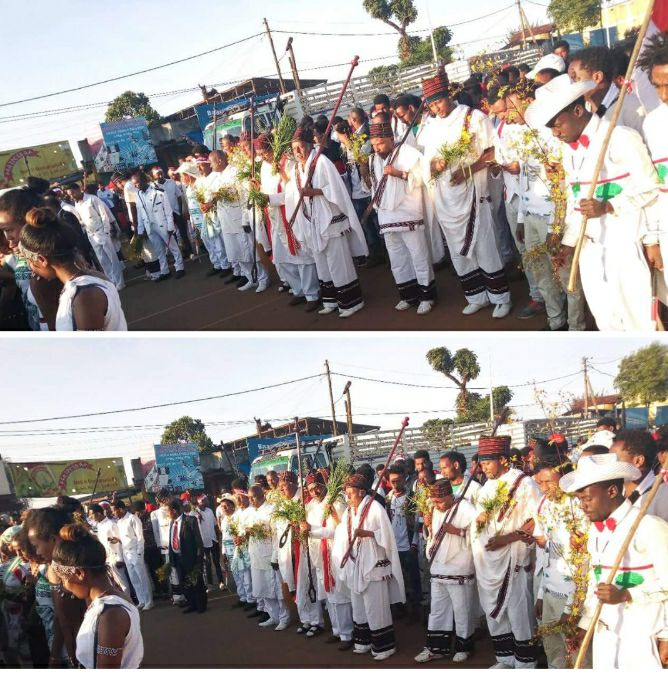
In December 2003, the TPLF massacred hundreds of Anuak people in Gambella in Western Ethiopia. Human Rights Watch documented  that TPLF troops “subjected Anuak communities throughout the region to widespread and systematic acts of murder, rape, torture, arbitrary imprisonment and the destruction of entire villages.” Genocide Watch sent a fact-finding team in Gambella and secured[21]  authentic documents “proving that the Gambella massacres were planned at the highest levels of the Ethiopian government, and even given the code name “Operation Sunny Mountain”. A report[20] by the Harvard Law School Human Rights Program on the Anuak Massacre concluded, “From December 2004 to at least January 2006, the ENDF (Ethiopian National Defense Forces) attacked and abused Anuak civilians in Gambella region – wantonly killing, raping, beating, torturing, and harassing civilians.”

In 2007, the TPLF regime massacred hundreds of people in the Ogaden region of Ethiopia. Human Rights Watch in its June 2008 report[22] entitled “Collective Punishment: War Crimes and Crimes against Humanity in the Ogaden area of Ethiopia’s Somali Region” documented, “Ethiopian troops have forcibly displaced entire rural communities, ordering villagers to leave their homes within a few days or witness their houses being burnt down and their possessions destroyed and risk death.”

The TPLF regime has refused to undertake meaningful and credible investigations into these crimes against humanity despite requests by human rights groups and even the U.N. The TPLF regime has refused entry to all UN special rapporteurs since 2007 to investigate human rights violations in Ethiopia.

The TPLF regime has dismissed and ignored all calls for an independent investigation of the Irreecha Massacres by United Nations top human rights official[23], the African Commission[24], the European parliament[25], and members of United States Congress[26].

The difference between the South Sudanese regime and the TPLF regime on human rights is the difference between Tweedledee and Tweedledum. Both regimes are peas in a pod. Thus, what is good enough for the South Sudanese regime is good enough for the TPLF regime.

I believe an America-first human rights policy which employs targeted sanctions to promote human rights, democracy and peace in Africa is not only necessary but also likely to produce outcomes that are consistent with the values and principles of American taxpayers.

Millions of refugees are leaving Africa to come go to Europe and North America because life is hell for them in Africa under brutal and bloodthirsty dictatorships, not merely to seek better economic opportunities. The U.S. can effectively deal with this problem by addressing the root cause of migration out of Africa, namely, brutal and oppressive dictatorships that treat their citizens as slaves and their countries’ treasuries and resources as their private estates. Selective and targeted sanctions aimed at the financial and logistical incapacitation of leaders, political elites and segments of society known to be directly responsible for human rights violations or engaged in aiding, abetting and giving material support in the commission of such violations in Africa is the proverbial two-by-four that will quickly get their attention.

For well over a decade, I have argued without pause that the best way to help Africa is to let Africa help itself. Africa can never be free until African leaders are held to account and forced to abandon the culture of panhandling, which have perfected as an art form. The U.S. must end its aid welfare program to African dictators who siphon off much of that aid and deposit it in their private offshore bank accounts. Your transition team hit the nail on the head when it demndaed answers from the State Department to the following question: “With so much corruption in Africa, how much of our funding is stolen?”

I wish I could definitively answer that question for you. But I can say definitively that to begin the effort to find out “how much of our funding is stolen” in Africa, we must make targeted sanctions a central part of the America-first foreign policy in Africa.

Mr. President, what I am asking is not anything extraordinary. I am merely requesting that you impose the same targeted sanctions you imposed on the leaders, supporters and business entities in South Sudan to the leaders, supporters and business entities responsible for human rights violations in Ethiopia. What is good enough for South Sudan is good enough for Ethiopia.

Mr. President, when Mr. Obama visited Ghana in his first trip to Africa in July 2009, he said, “Now, make no mistake: History is on the side of these brave Africans, not with those who use coups or change constitutions to stay in power. Africa doesn’t need strongmen, it needs strong institutions.”

The people of Ethiopia and the people of Africa are on tenterhooks to find out if you are going to stand with African dictators or the common people yearning to breathe free.

I am betting my bottom dollar that you will stand with the people of Africa and not the dictators who lord over them, as did Mr. Obama.

I will guarantee that you will have 100 million fans in Ethiopia if you institute targeted sanctions against members of the TPLF regime and its cronies involved in gross human rights violations, and win more than a 1.2 billion Africans if you make targeted sanctions a core part of your America-first policy in Africa.

I guarantee it!

Sincerely,

Alemayehu (Al) G. Mariam, M.A., Ph.D., J.D.
Professor and Attorney at Law

Cc: Hon. Rex Tillerson, U.S. Secretary of State
Hon. Steven T. Mnuchin, U.S. Secretary of the Treasury
Hon. Nimrata “Nikki” Haley, U.S. Ambassador to the United Nations

==========================
[1] https://www.treasury.gov/press-center/press-releases/Pages/sm0152.aspx

[2] http://www.start.umd.edu/gtd/search/Results.aspx?perpetrator=2127

[3] http://www.start.umd.edu/gtd/search/IncidentSummary.aspx?gtdid=201608260003

[4] http://foreignpolicy.com/2017/09/06/u-s-sanctions-south-sudanese-leaders/

[5] https://www.state.gov/secretary/remarks/2017/05/270620.htm

[6] https://www.youtube.com/watch?v=QEd583-fA8M

[7] https://www.treasury.gov/resource-center/sanctions/Documents/13067.pdf

[8] https://www.treasury.gov/resource-center/sanctions/Documents/13412.pdf

[9] https://www.gpo.gov/fdsys/pkg/DCPD-201700026/pdf/DCPD-201700026.pdf

[10] https://www.state.gov/j/ct/list/c14151.htm

[11] https://www.nytimes.com/2015/07/28/world/africa/obama-calls-ethiopian-government-democratically-elected.html?mcubz=3&mtrref=www.google.com&gwh=BBE0F6C584580DEF4C73E4D0F43ECE1F&gwt=pay

[12] http://www.cnn.com/2016/10/03/africa/ethiopia-oromo-deaths/index.html

[13] http://www.independent.co.uk/news/world/africa/ethiopia-stampede-violent-clashes-death-toll-oromia-disaster-bishoftu-protest-more-than-100-a7342951.html

[14] https://freedomhouse.org/article/ethiopia-more-150-dead-after-security-forces-fire-crowd

[15] http://www.ena.gov.et/en/index.php/politics/item/2067-command-post-established-to-oversee-implementation-of-emergency-rule

[16] http://www.aljazeera.com/news/2016/11/ethiopia-state-emergency-arrests-top-11000-161112191919319.html

[17] https://www.state.gov/j/drl/rls/hrrpt/humanrightsreport/#wrapper

[18]http://www.ethiomedia.com/addfile/ethiopian_inquiry_commission_briefs_congress.html

[19] https://www.hrw.org/news/2014/05/05/ethiopia-brutal-crackdown-protests

[20] http://hrp.law.harvard.edu/wp-content/uploads/2013/02/Ethiopia_2006_Report.pdf

http://www.genocidewatch.org/ethiopia.html[21]

[22]https://www.hrw.org/report/2008/06/12/collective-punishment/war-crimes-and-crimes-against-humanity-ogaden-area-ethiopias

[23] http://www.reuters.com/article/us-ethiopia-violence-un-idUSKCN10L1SY

[24] http://www.achpr.org/sessions/59th/resolutions/356/

[25] http://www.europarl.europa.eu/sides/getDoc.do?pubRef=-//EP//TEXT+TA+P8-TA-2016-0023+0+DOC+XML+V0//EN&language=EN

[26] https://www.congress.gov/115/bills/hres128/BILLS-115hres128ih.pdf

Africa Times: Ethiopia’s Oromo hold peaceful memorial at Irreecha festival October 2, 2017

Posted by OromianEconomist in Oromo Protests, Uncategorized.
Tags: , , , , ,
1 comment so far

Odaa OromoooromianeconomistIrreecha Birraa bara 6411 (ALO), Irreecha Birraa Oromoo 2017, Hora Harsadii, Bishoftu Oromia. 1st OctoberIrreecha Birraa bara 6411 (ALO), Irreecha Birraa Oromoo 2017, Hora Harsadii, Bishoftu Oromia. 1st October colorfully celebrated with millions Oromo people

Ethiopia’s Oromo hold peaceful memorial at Irreecha festival

Ethiopia’s Oromo hold peaceful memorial at Irreecha festival

By AT editor – 1 October 2017

In Ethiopia, this year’s Irreecha festival brought peaceful but powerful protest as the Oromo people marked the anniversary of last year’s massacre at Bishoftu.

More than 1.5 million people were expected to attend the annual thanksgiving celebration. Despite the rainy skies, they came; once there, the crowds chanted anti-government slogans with the now-familiar crossed arms symbol of protest against Ethiopian authorities they say have long persecuted them – and who, in 2016, opened fire as the scene at Bishoftu deteriorated into chaos.

“May the almighty avenge those that are killing our people,” said the traditional Oromo Gadaa leader as he delivered a blessing. “May the almighty avenge those who killed our people here last year. May the almighty avenge the unavenged. May the almighty end our national ordeals.”

The Ethiopian Human Rights Commission denied the military used lethal force in an official report on unrest in Oromia released in April. The EHRC said 669 people had died in ethnic clashes overall, including 465 Oromo civilians, while blaming the Oromo Media Network (OMN), other diaspora sources, and Oromo political opposition groups for escalating the crisis while defending all national security measures as appropriate.

The report results were questioned by international governments and human rights organizations who say they are consistently denied the access needed for an independent investigation. Many of the thousands who were arrested during a 10-month state of emergency remain detained, including key Oromo political opposition leaders.

Security remained tight for this year’s Irreecha celebration, as Ethiopian authorities banned weapons and set up security checkpoints while promising that armed forceswould remain on the perimeter of the event but not venture inside.

 Related:-

“Sifan Lola Yaa WBO” Irreecha Bishooftuu 2017

Continue reading →

Irreecha 2017: The Oromo National And Cultural Holiday, Oromians in Millions Celebrating the Blessing Festival in Oromia and all over the Globe. And also remembering the October 2nd 2017 Bishoftu (Irreecha) Massacre October 1, 2017

Posted by OromianEconomist in Irreecha, Irreecha Birraa, Uncategorized.
Tags: , , , , , ,
7 comments


Odaa OromoooromianeconomistIrreechaOromoWaaq2014Irreecha Birraa 6411 Baga Ittiin Nu Gahe! Wish You a Very Happy Irreecha Oromo 2017..png

remember-irreechamassacre

Irreecha Birraa bara 6411 (ALO), Irreecha Birraa Oromoo 2017, Hora Harsadii, Bishoftu Oromia. 1st October 2017 colorfully celebrated with millions Oromo in Bishoftu, Oromia.png

Irreecha Birraa (Malkaa) Oromoo 2017 ( 6411 ALO) colorfully celebrated in Bishoftu, Hora Harsadii, Oromia, 1st October 2017..png

Irreecha Birraa (Malkaa) Oromoo 2017 ( 6411 ALO) colorfully celebrated in Bishoftu, Hora Harsadii, Oromia, 1st October 2017

Irreecha Birraa (Malkaa) Oromoo 2017 ( 6411 ALO) Colorfully Celebrated in Bishoftu, Hora Harsadii, Oromia, 1st October 2017..pngIrreecha Birraa bara 6411 (ALO), Irreecha Birraa Oromoo 2017, Hora Harsadii, Bishoftu Oromia. 1st October colorfully celebrated with millions Oromo people

Irreecha Birraa bara 6411 (ALO), Irreecha Birraa Oromoo 2017, Hora Harsadii, Bishoftu Oromia. 1st October

Irreecha Birraa bara 6411 (ALO), Irreecha Birraa Oromoo 2017, Hora Harsadii, Bishoftu Oromia. 1st October colorfully celebrated with millions Oromo people. Happy Irreecha 2017

Irreecha Birraa bara 6411 (ALO), Irreecha Birraa Oromoo 2017, Hora Harsadii, Bishoftu Oromia. 1st October colorfully celebrated with millions Oromo in Bishoftu, Oromia

Irreecha (Irreessa)  Birraa Oromoo kan Bara 2017 (akka lakkoobsa Oromootti kan Bara 6411)  akka gaariitti karooreffatamee, haala oo’aa fi bareedan kabajamaa jira.  Lammi keenya bara  darbe ajjeechi sanyii daguugga irratti rawwateefi yaadannoon godhamaatti jira.  Here are some of  live  pictures, videos and reports refer to Irreecha Oromo Thanksgiving 2017 (6411 in Oromo Calendar)  Celebrations. The blessing and colorful event that started in mid August and continue to be celebrated Birraa (September- October). Millions have attended Hora Harsadi (Bishoftuu, Oromia) with success on 1st October 2017.  Irreecha is the most important event (season) in Oromo people national calendar. #Irreecha2017

(OPride)―On this festive yet somber occasion, the Oromo are out in great numbers, as colorful and vibrant as ever. It’s Irreecha, the “thanksgiving holiday,” as was described by a host of foreign media outlets in the wake of the disaster that left hundreds dead last year. With the grievances that led to the tipping of the vase last year left unaddressed, justice long sought over the massacre still a pipe dream, with countless remaining behind bars, the Oromo people are back in Bishoftu having unanimously declared that the show must go on. Click here to read more.

In Pictures: Irreecha celebrated colorfully, and peacefully, in Oromia: Click here to see full text of  Finfinne Tribune | Gadaa.com

Irreechi 2017: Rakkoo nageenyaa malee, mormii cimaa waliin kabajame. BBC Afaan Oromoo gutummatti ilaaluf as tuqaa.

Ayyaanni Irreechaa bara 2017 suuraan yoo ibsamu. BBC Afaan Oromoo as tuqa ilaalaa.

“Uummanni ofiin of eeguunsaa nageenya buuse” Poolisii Oromiyaa,” BBC Afaan Oromoo

የኢሬቻ በዓል ተቃውሞ ቢሰማበትም በሰላም ተጠናቀቀ click here to read full text, BBC Amharic

BBC News Afaan Oromoo – #Irreecha2017 biyyoota addunyaa gara garaa keessatti. Dabalataan as tugaa ilaalaa. #OromoUnity . Irreecha Birraa 2017 Celebration over the world, click here for more.

Ethiopia’s Oromo community has staged their thanksgiving celebrations known as Irreecha. Click here for more CGTN report.


Africa Times: Ethiopia’s Oromo hold peaceful memorial at Irreecha festival


https://twitter.com/roobsan/status/914412014247796736

 https://www.facebook.com/100009377299297/videos/1909312559391302/


https://youtu.be/DX7wiYz52Hs


https://www.youtube.com/watch?v=zNeubD28rFg

OROMIA: IRREECHAA: THE CHERISHED OROMO HERITAGE AND ITS CHALLENGING TASk

Africa News: Ethiopia’s ethnic Oromos, tourists gather for Irreecha 2017

Oromia: Haala Kabaja Ayyaana Irreecha Malkaa bara 2017 ilaalchisee ibsaafi qajeelfama

https://twitter.com/dethiopien/status/914390341628899329

https://twitter.com/addisgazetta/status/914388728986169344

Irreecha Birraa Oromo 2017 celebrated in Melbourne, Australia, 1st October 2017.png

Irreecha Birraa bara 6411 (ALO), Irreecha Birraa Oromoo 2017, Hora Harsadii, Bishoftu Oromia. 1st October colorfully celebrated with millions Oromo people. Happy Irreecha 2017.png


Irreecha bara 2016: “Iddoon ija koo itti dhabedha” BBC Afaan Oromoo irratti guutuutti dubbisuuf as tuqaa.

Africa News: Ethiopia’s ethnic Oromos, tourists gather for Irreecha 2017 September 30, 2017

Posted by OromianEconomist in Irreecha, Uncategorized.
Tags: , , ,
1 comment so far
[Photos] Ethiopia's ethnic Oromos, tourists gather for Irreecha 2017

ETHIOPIA

The Irreecha festival is an annual thanksgiving festival by Ethiopia’s Oromo ethnic group. It takes place in the town of Bishoftu – located about 45km away from the capital Addis Ababa.

The 2016 edition was marred by deadly chaos after security operatives were said to have fired live bullets towards protesting participants. Millions of attendees are expected to gather on this occasion at Lake Arsede, Bishoftu (Debre Zeit), and surrounding areas.

Preparations are underway for the weeklong event which starts from October 1 and concludes on or around October 8, in the the Oromia region. We present pictures from preparations thanks to Ethiopian news portal, Addis Standard.

 Related Articles (Oromian Economist Sources):-

https://twitter.com/Abbaacabsa/status/914171824572915717

https://twitter.com/Abbaacabsa/status/914171824572915717

OPRIDE: Oromia gears up for Irreecha 2017: Reports, photos and analysis from Bishoftu


Pool Photo

The United States Embassy in Ethiopia has issued a security message for its citizens with respect to Sunday, October 1 Irreecha festival in the Oromia region.

The September 29, 2017 statement titled ‘Security Message for U.S. citizens: Security Awareness in Oromia Region,’ cited the deadly chaos of last year as a key reason for its latest alert.

Millions of people – ethnic Oromos from across the country, around the world and tourists – are expected in the town of Bishoftu – located about 45km from Addis Ababa for the annual thanksgiving ceremony.

The chaos of last year is a major concern for rights groups and political watchers in the region. The Oromo regional authorities a week ago announced that there will be no armed personnel deployed for this year’s session.

The U.S. has in recent past issued alerts for the Oromia region but more to do with supposed ethnic clashes between people in the region and the adjoining Somali region.

The full statement from the embassy read:

“The U.S. Embassy informs U.S. citizens that, beginning on October 1 and concluding on or around October 8, the Oromia region will celebrate its annual Irreecha. Millions of attendees are expected to gather on this occasion at Lake Arsede, Bishoftu (Debre Zeit), and surrounding areas.

“Noting that at last year’s Irreecha a tragic stampede resulted in numerous deaths, and given the ongoing potential for civil unrest, the Embassy advises U.S. citizens to postpone travel to Bishoftu (Debre Zeit) and its surrounding areas until after the celebration has concluded.

“Review your personal security plans, remain aware of your surroundings, including local events, and monitor local news stations for updates. Be vigilant and take appropriate steps to enhance your personal security,” it concluded.


Ethiopians gather for festival marred by bloodshed

At least 50 Oromo people died last year at the Irreecha festival after police fired tear gas and started a stampede.

Demonstrators chant slogans while flashing the Oromo protest gesture during Irreecha in 2016 [Tiksa Negeri/Reuters]

A year ago, Firommisa Darasa barely made it out of Ethiopia‘s Irreecha festival alive, managing to escape from a deep ditch where dozens perished.

The tragedy happened after police fired tear gas at anti-government protesters, sparking a stampede.

Last year’s bloodshed at the annual religious festival held by Ethiopia’s largest ethnic group, the Oromo people, became a turning point in months of anti-government protests that prompted the government to declare a nationwide state of emergency.

While dissatisfaction with Ethiopia’s government still runs deep among the Oromo, last year’s protests have since died down.

Those planning to attend this year’s Irreecha festival say they are hoping for the best when Sunday’s gathering begins in the resort town of Bishoftu, southeast of the capital Addis Ababa.

“I feel fear inside but if I don’t come, the people around me won’t come. This is our ancestral celebration and we will have to keep it,” said one of the festival-goers, 28-year-old Firommisa,

At least 50 killed

The Oromo people began protesting in late 2015, angered by a government proposal to expand Addis Ababa that they feared would deprive them of land without proper compensation.

Those tensions exploded at last year’s Irreecha when activists took to the stage and began shouting anti-government slogans, prompting police to open fire with tear gas.

At least 50 people were killed in the ensuing stampede, according to government figures. Activists put the death toll much higher.

Changes have been made this year at the festival grounds adjacent to a lake in the town 60km southeast of the capital.

A new open-air amphitheatre has been built and cobblestones laid on the ground, while the ditch that claimed so many lives last year has been fenced off.

The presence of armed security forces was seen as exacerbating last year’s chaos, but the Oromia regional government said this year there would be no weapons.

“This year will be different because there will be no political involvement from the government and no security from them as well,” said attendee Dachassa Gosa, 22.

WATCH: Ethiopia’s bereaved families seek justice (2:31)

Irreecha, or thanksgiving, is the most important annual festival of the Oromo people and it celebrates the end of the months-long rainy season and the upcoming harvest.

While traditionally a time to give thanks and pray for prosperity and abundance, it has increasingly been an opportunity for the Oromo to assert their identity and criticise government policies they say marginalise them.

Last year’s deaths re-ignited the protests across the Oromo region, but this time the targets were government and foreign-owned businesses, with several destroyed.

All told, the months of violence left more than 940 people dead, according to the government’s human rights commission, while arrests topped 22,000.

The bloodshed only ended with the declaration of a state of emergency, which was lifted in August.

However many Oromo say their grievances were not addressed and sporadic strikes and protests still occur.

READ MORE: 669 killed in Ethiopia violence since August

US-based Human Rights Watch (HRW) has urged the Ethiopian government to “act with restraint” this time around and to take measures to ensure there is no repeat of last year’s tragedy, while calling for a proper investigation into what happened.

“Certainly, if there were to be a return to what happened at least year’s Irreecha, you would expect that would lead to much wider unrest,” HRW researcher Felix Horne told AFP news agency.

Oftaha Oromoo travelled from a district hours away to join the celebration but expects a more subdued event this weekend.

“Personally I am still angry, but we have to be patient and celebrate,” he said. “This year, we want to remember the people who died.”

Source: AFP news agency

Statement of International Oromo Lawyers Association In Commemoration Of Irreecha Massacre, 2nd October 2016. September 30, 2017

Posted by OromianEconomist in Uncategorized.
Tags: , , , , , ,
add a comment

Odaa Oromoooromianeconomist

remember-irreechamassacre

International Oromo Lawyers Association (IOLA)  logo

Statement of International Oromo Lawyers Association In Commemoration Of Irrecha Massacre.


It is one year ago that the world witnessed the naked brutality of the TPLF-led Ethiopian regime, when it carried out a large scale massacre against the Oromo people gathered at the annual thanks-giving festival – Ireecha, in Bishoftu, some 45 kilometers, south of the capital.


According to reliable information, close to 1000 civilians were killed as a result of combination of stampede and use of life bullets as well as blockade of paths by the security forces. By all accounts, and conclusions by human rights experts, the tragedy was a well-designed and pre-planned government action against the Oromo people, who were already engaged in a year-long peaceful demonstration in the entire Oromia State region, demanding respect for their fundamental human rights.


Today, a year later, the government did not carry an investigation nor hold any official accountable for the death of the thousand civilians which resulted from the use of disproportionate use of force. To the contrary, it arrested and detained thousands of Oromo civilians for alleged instigation of disturbances.


This year, the festival is going to take place at the usual place following established rituals.  What is now becoming everyone’s worry is that, participants of the festival may try to use the opportunity to express their dissatisfaction with the way the government addresses, or failed to address at all, their demand for respect for their fundamental rights, which may be used as a pretext by the security forces to react with a force which is disproportional to the demand and the civilian character of the demanding population.


That being the case, IOLA would like to join the international community in general and human rights institutes in particular in expressing its deepest concern regarding the possibility of unrest and subsequent harm to the civilian population during this year’s celebration of Ireecha.


It therefore demands that the government should:

  1. Take advance measures to put in place all what is needed for the citizens to peacefully celebrate Ireecha as per established ritual and without disturbances by the security forces;
  2. Ensure that security forces use proportionate force needed to maintain law and order;
  3. Take all the necessary security measures to ensure that the physical safety and security of civilians festival-goers is not compromised;
  4. Remind its security forces and give them clear guidance that Ethiopia is bound by the international Covenants and Conventions it had signed and that they should adhere and properly implement the United Nations Basic Principles on the use of Fire Arms.


International Oromo Lawyers Association.

OROMIA: IRREECHAA: THE CHERISHED OROMO HERITAGE AND ITS CHALLENGING TASK September 30, 2017

Posted by OromianEconomist in Irreecha Birraa, Irreecha Oromo, Irreessa, Uncategorized.
Tags: , , , , , , , , ,
1 comment so far

Odaa Oromoooromianeconomist

Irreecha Oromo 2014 Hora Harsadii, Oromia

IRREECHAA: THE CHERISHED OROMO HERITAGE AND ITS CHALLENGING TASK

Getaachew Chemeda ( Member: Gadaa Meelbaa)


14440855_1012083622242098_3525717134028063329_nSince time immemorial Oromo men, women, youths, and elders have been rallying together to express thanks and happiness to their Waaqa, who according to the Oromo concept of colour is symbolised by the colour gurraacha, meaning black. By its very original concept the colour gurraacha (black) did not stand for mourning, grief or for the expression of sorrow. It was used to symbolise the invisible supreme power that can do and undo anything anywhere in the universe. Having this narrative tradition in mind, the Oromos have been getting together around rivers or lakes to thank their Waaqa Gurraacha at the end of the rainy season. They strongly believe that, it was Waaqa who delivered them from the restraining rainy season and brought them to the cherished flowery season. This great event, called Irreecha in Afaan Oromoo, is celebrated every year at the end of September or in the first week of October. https://youtu.be/Pk3W49aKXDY

Irreecha holds an important social event in Oromo people’s aspiration for peace, prosperity, abundance, fertility, and a hope for the renewal of a new social life. Like ancient Egyptians who used to celebrate the yearly inundation of the River Nile as a symbol of life giving, Oromos have been celebrating their new year on the side of river banks or lakes which, according to Oromo mythology, is the source of all life. Some of the hymens ancient Egyptians sang while praising the Nile were:

Oh Nile! You rise out of the earth and come to nourish Egypt! You quench the thirsty desert! You bring forth the barley! You create the wheat! You fill the granaries and the storehouses, not forgetting the poor. For You we pluck our harps, for You we sing! [1]                        

                                     Creation Narrative Stories

It was not only the ancient Egyptians or the Oromos who had creation stories in relation to water. In the Japanese telling stories, we find water holding the core of the dawn of creation. First, there was an ocean, out of which the many Japanese Islands were believed to have been created. There was a god known as Izanagi and a goddess Izanami. The gods, as a couple, had three children, of whom the grandson of the Sun Goddess had become the first Emperor of Japan, Nippon, as known to the native population.[2]

The gods used a long spear and stirred up mud at the bottom of the ocean.  It was out of the stirred up mud those more than 6000 Japanese islands were believed to have been created. On the eastern side, out of the glittering Pacific Ocean, the sun rose every morning. It was the cherished sun’s rays which had a big role in illumining, nourishing, and bringing up the Japanese archipelagos to life. This is the Japanese thought of their land, Mount Fuji being the most beautiful and sacred one.[3]

For the Japanese, Japan has not only been their country.  Japan has been their world and their religion. The creation story the people share in common and the passionate love they have for their country has continued to make up the coherent faith of their oneness. And, out of the cherished mythology, they have undoubtedly benefited enormous groundwork principles for their social and technological advancement we are witnessing today.

When we come to the antique Scandinavians of northern Europe, we find similar watery creation stories. In the beginning there was an abyss filled with water. The water froze; and lastly melted down. Out of the melted water, a giant being of human form called Ymir emerged. Thereafter, a man and woman were created out of Ymir’s armpits. In short, this was the beginning of ancient Scandinavian telling stories about the myth of human creation.[4]

The Oromo myth of creation holds the view that water being the source of androgynous being. According to Oromo narration story, by the unfathomable wisdom of Waaqa Gurraacha, the androgyny was divided in to two parts and became male and female. After the division, the two opposite sexes began to live separately on the either side of the river. Though they were able to see each other across the river, they were hampered from joining each other by the overflow of the river.  When the river subsided and sank down into its course, during the flowering season, they were able to cross the river and embraced each other.[5] Here was the point, during the flowering season, according to Oromo belief, when the first gaa’ila  (engagement for marriage) started to blossom.

Many of us may remember when newly married Oromo couples were coming to Irreecha at Hora Harsadii, enforced by nobody but only inspired by the tradition to get the blessings of the hayyuus and Abbaa Gadaas. But that was not performed on October 2, 2016 because of the heinous massacre carried out by the incumbent Ethiopian regime that disrupted the whole process of the ceremony.

Having this entire narrative story in mind, defending and combatting all challenging obstacles and heinous crimes imposed on them, the Oromos have continued to celebrate their yearly thanksgiving Irreecha festival, dressing beautiful national costumes suited for the occasion.

Norms of Irreecha Celebration

Today, at national level, millions of Oromos are celebrating Irreecha Birraa, on the side of Hora Harsadii in Bishooftuu town. At national or local levels, there are traditionally agreed upon norms that govern the whole process of the ceremony from the beginning to the end, which is deeply rooted in the strongly and humanely established Oromo views for peace, love, prosperity, and human dignity. Based on Oromo clans’ successive generation by birth, there are individuals who offer blessings first, second, and so on. This is dually (angafaa fi qixisuu) restructured in Oromo kinship organisations whose function of check and balance has become basic foundation for the indigenous Gadaa  Oromo Democracy to flourish.

The ceremony commences first by offering thanks and greeneries to Waaqa, followed by blessing all creatures of Waaqa to be at peace with each other. They also give admiration and honour to Waaqa’s wisdom who gave them a perfect bliss of land with abundant natural resources. This is one of the inherent reasons why the Oromos are cherishing their ancestral homeland, Oromiyaa (Biyya Oromoo) as part of their natural right, be it in peace or war times.

In the case of Irreecha Birraa, it is the Abbaa Malkaa who ‘opens the door’ of the malkaa (river) by charmingly welcoming those who arrived at the site in peace.[6] Those distinguished hayyuus from senior and junior clans (mana angafaa fi qixisuu) and the Abbaa Gadaa from the incumbent Gadaa party are traditionally honoured to take leading positions in giving thanks and blessings to all. Even the Ayyaantu-Qaalluus, who are believed to be the guardians of the laws of Waaqa and the  custodians of Oromo traditional religion, have no seniority right  to claim either to take the leading position or to give blessings first. They have their own defined time and place to do so. Failure to honestly follow those agreed upon traditional charter, could lead to chaos and eventually to the disintegration of the society. Nevertheless, despite so many apartheid walls erected among Oromo regions by builders of the imperial palace of political Ethiopia (in contradiction to historical Ethiopia), the Oromos are not able to be divided by the walls. They are chiselling down the walls and are patiently moving forward in unison.

         Is Irreecha a Religion?

As common to any Oromo meetings or conferences, thanking Waaqa and blessing each other precede the opening of the agenda of the meetings. There is no exception for the thanksgiving Oromo new year celebration, Irreecha. Since the Oromo name of Waaqa is the centre of Oromo Natural Religion, the solemn invocation of Waaqa at Irreecha or elsewhere cannot be avoided. This is the core issue, the authenticity of Oromo natural religion and Oromo morality that seem to have scared general managers of ‘Revelation Industries’ and their sponsors in Oromia. They are prompted to develop phobic images against essential Oromo values: vilifying, desecrating, defaming, and bedevilling Oromo material and spiritual assets as a whole. Why? The answer is so unilineal, not parallel.

Irreecha has been one of the major Oromo events that distinguishes, makes, and marks the identity of an Oromo personality as a member of the nation.

  • It is a social festival that praises Waaqa who helped them come together in peace and embrace the incoming bright-sunny season.
  • It is a social festival that sees off the out-going rainy season, wishing its recurrent appearance in peace, happiness, abundance, fertility, equality, fraternity and a hope for victory against all forms of evils.  

But, as has obviously been duplicated by foreign media outlets, particularly after the Irreecha massacre of October 2, 2016, there is a clear tendency to look on Irreecha as a ‘religious festival’. It is quite villainous and sinisterial to depict the general Oromo sense of Oromo-self only from a single perspective. Is Habasha’s Inkutatash not Qiddus Yohannes’ religious celebration or is it a new year festival?  Is Tigrian’s Ashanda the worshipping of Churches of Saints or season greetings? Is European Christmas the celebration of Christ’s birth day, or is it the continuation of pre-Christianity European culture of winter solstice celebration?

When it comes to Irreecha Oromo, it is propagated as heathenish or animist religion that makes a tree or a river the centre of worship. This can simply be attested from the recently publicised sub-human propaganda by a self-declared “Prophet” named Suraphael Demise.  https://youtu.be/u2hrjMaSeqM

We do not understand whether such inconsiderate propaganda is really a reflection from a fully-developed human brain or is it a proxy psychological war sponsored by the monstrous Satan.                                                                                                                                                                                                                                                                                                                                           If one wants to talk or know about Oromo religion, it is called Waaqeffanna, not Irreecha. Where is the self-organised Waaqeffannaa religion right now? One may ask the Tigrian Ethiopian regime, sitting in Minilk’s imperial palace; muddling the peoples of that empire,  sponsoring divisive and xenophobic people like Suraphel  Demise.

Waaqeffannaa by its natural origin, contrary to revelationists’ assertions who claimed to have seen visions and heard voices, is neither a claimed vision nor claimed heard voices. Had it been a claimed vision or claimed voices, it could have been dwelling on narrating about a place of everlasting torture or about a place of eternal delight in the afterlife. In the narrative story telling of Waaqeffannaa there were no individuals who did claim any visions or heard voices for its establishment as a religious institution. It emerged naturally out of the organised Oromo people’s activities in the remote antiquity. Henceforth, Waaqeffannaa, as a natural religion, has become the common vision of Oromo people’s common mind. It is free from claiming any received information of the afterlife, be it from the chamber of the sinners or from the chamber of the pious. However, Waaqeffannaa may wonder or speculate what could be happening beyond the veil of a man’s soul (lubbuu) after his dead body was ceremonially buried. Revealed religions claimed and are still claiming that they had unveiled the veil, saw the souls, and heard their voices from chambers of the ‘hell and heaven’.

In its strictest sense, Irreecha is not a religious institution. It is a ritualised social event; certainly, adorned and accompanied by Oromo Natural Religion known as Waaqeffannaa. Waaqeffannaa and Irreecha have been with the Oromos, by the Oromos, and for the Oromos since the dawn of creation long before the conception of revealed religions.

                 The Irreecha Massacre and the “Tasa” Monument

 An attempt to ban the Irreecha festival started the time when Oromos lost their sovereign rights to Abyssinian firearms under the supreme commandship of King Minilk of Shewa. After the Tigrian-led Ethiopian regime took the imperial palace by force in 1991, the orchestration to ban the Irreecha ceremony was concluded. This time, the regime took the first apartheid action by banning the revived Matcha-Tulama Self-Help Association and the freely organised Waaqeffaanaa religious association. Instead of directly banning Irreecha, however, like Matcha-Tulama and Waaqeffanaa, the regime renewed the old Nugus-Orthodox tactics of hijacking anything good of the Oromos and good for the Oromos.

A delegate led by Abba Duulaa Gammadaa, the then president of ‘Oromia Regional State’ was despatched to Hora Harsadii to hijack Irreecha. The delegate failed to accomplish the mission it intended to seal and returned to the palace in dismay. Here was planted the seed of the evil action that took thousands of innocent lives on October 2, 2016 at Hora Harsadii, Bishooftuu.

Ahead of the massacre, the regime meticulously orchestrated provocative tactics that could incite the people against itself. It imposed rules that are too antagonistic to the established Irreecha tradition. When the people reacted to the evil provocation, its ill-behaved security forces started firing life bullets from the ground and from armoured vehicles against millions of celebrants. Military helicopter flew over them spraying teargas on them. On this day, that barbaric action changed the happy Oromo Irreecha event to a bloody grief.   https://www.youtube.com/watch?v=R_3miIwY4mQ&t=33s

The regime and its killing forces rejoiced the success of their fascistic actions on human carnages. The regime’s trumpet Prime Minister, Haile Mariam Desalegn, was so quick to deny the massacre and said, “No single bullet was heard; but because of stampede about 52 people were killed.” Finally, like Muktar Kadir who thanked the Agazi killing forces, Ethiopia’s Prime Minister thanked the regime’s mercilessly firing forces  https://youtu.be/Q6cSzgiZdc8

To remember the success of their evil plan, the Tigrian-Ethiopian regime erected a very offensive stone they call “Memorial Monument”. A deaf monument, that speaks of nothing about the root cause of the massacre. Sadly, what is inscribed on the monument seems to be articulated in the way it could depict the lost human lives as unworthy ones. It reads in Afaan Oromoo “Tasa Lubbuun Isaanii dabreef, for suddenly passed away lives”

This “Tasa Monument” was erected in a faraway place where the actual massacre did not take place

 Conclusion

The Oromos have tried to do everything positive for Ethiopia. But why are they being reciprocated with negativity for their positive generosity? When the Oromos are coming out for peace, those who are making huge business in the name of “Ethiopia” are incessantly confronting them with vibrant forms of violence, persecution and marginalisation.

 In former days, before Oromo country and their central holy site, Walaabu, had fallen to naftenya’s bayonet, Oromo generations in every Oromo clan were making pilgrimage to Walaabu. The purpose of the journey was more of religious, that they sought the anointment and blessings of Abbaa Muudaa, who was believed  to be the eldest son of Oromo [Orma], the Spiritual Father of the nation holding the centre of Oromo Natural Religion, the belief in Waaqa Tokkicha.[7]

The pilgrims, who were scattered in north-east Africa, representing their clans, used to travel a long journey and arrived at the Muuda site. On their return to their clans, they came back with qumbii (myrrh), which the Abbaa Muuda distributed to them as a symbol of his fatherly holy blessings. This had been considered as dangerous and anti-peace to Abyssinian crosses and crowns. Subsequently, with the invention and consolidation of the ‘New Ethiopia’, qinyi gizaat, (the Amharic version for colonial empire) by King Minilik of Shewa, Oromo’s journey to the Muuda holy site was prohibited. It was finally banned at the beginning of the twentieth century. Huntingford who collected good information from various sources wrote:

”—after the Abyssinian conquest of [Oromia], however, the pilgrimage was forbidden owing to its political and nationalistic influence.—as opportunities for stirring up Oromo patriotism and forming plans of rebellion for men of all the  Oromo tribes met at Walaabu.”[8]

This inhumane and erratic ideology will get nowhere. It is now far from halting down Oromo people’s aspiration for regaining their lost freedom. We, including those in ati-Oromo camps, are daily watching and witnessing the reality on the ground.  The more direct wars and propaganda campaigns are pouring on the Oromos, the more their heroisms are reinvigorated. Irreecha will continue to march forward with its noble objectives of thanksgiving social festivities: vitalising, remaking, and remarking Oromummaa (Oromo-ness).


Related:-

IRREECHA – THE COLORS, THE IDENTITY AND THE PRIDE OF OROMO NATION

https://twitter.com/twitter/statuses/914112218479972352

Oromia: Farm land grab: Game over for Flora EcoPower September 28, 2017

Posted by OromianEconomist in Land and Water Grabs in Oromia, Land Grabs in Africa, Land Grabs in Oromia, Uncategorized.
Tags: , , , , ,
add a comment
Odaa Oromoooromianeconomist
Game over for Flora EcoPower
Africa Intelligence | 22 September 2017 [FR], INDIAN OCEAN NEWSLETTER ISSUE 1458

One final straw for the German company which owns 70,000 ha of land in Oromia has put a definitive end to its Ethiopian adventure.
According to information obtained by the Indian Ocean Newsletter, the oil production and biofuel refining company Flora EcoPower Ethiopia, a subsidiary of the German group Acazis AG, has been ravaged by the fighting between Oromos and Somalis (ION 1457). Despite statements of reassurance from Prime Minister Hailemariam Desalegn, the conflict between the two communities is intensifying with each passing day. Already affected by the anti-government demonstrations which have broken out in Oromia National Regional State (ONRS), foreign business operators, like the Saudi-Ethiopian magnate Mohammed Hussein al-Amoudi (ION 1421), are now having to deal with ethnic clashes too.
Ethiopia allocated 70,000 ha of land to Flora EcoPower in the region of West Hararghe, which straddles the districts of Daro Lube and Boke, to enable it to produce castor, groundnut and eucalyptus oil. However, this region, where al-Amoudi’s Horizon Plantations Ethiopia is also active, borders onto the Somali National Regional State (SNRS, see here).
Flora EcoPower, which is run by Patrick Bigger and Andreas Burger, has never managed to turn the venture into a success. Subject to insolvency proceedings since July 2015, for many years the company has been trying to attract investment for its farm and refinery, and for a long time thought it would succeed in the case of Herakles Farm. Run by Bruce Wrobel, the company is the public face in Africa of the American investment firm Blackstone Group, founded by Stephen A. Schwarzman.
In 2013, managers from Herakles’ operation in Cameroon came to assess Flora EcoPower’s production resources and its performance, but no partnership ultimately came of it. In the end, Patrick Bigger and Andreas Burger entrusted the running of their oil refinery in Fetachu, near to Harar, to the Ethiopian firm K&S, which is run by Pakistanis from Sudan and Yemen who have already worked in Ethiopia for the Endowment Fund for the Rehabilitation of Tigray (EFFORT, a group of companies with links to the EPRDF, Ethiopia’s ruling coalition) and for Al-Habesha Sugar Mills, owned by the Pakistani investor Abdul Majeed Pardesi.


https://twitter.com/farmlandgrab/status/913080161121325056

https://twitter.com/AnywaaSurvival/status/911221123924332550
Land activists around the world celebrated the news of the collapse of one of the world’s biggest land grabs: the Indian company Karuturi Global Ltd’s 300,000 hectare farmland deal in Ethiopia. 


Referendum Blues: The Issue of an Independent Kurdistan — Aletho News September 27, 2017

Posted by OromianEconomist in Uncategorized.
Tags: , , ,
add a comment

Odaa OromoooromianeconomistKurdstan map


“Kurds voted in large numbers in an independence referendum in northern Iraq” (voter turnout of aproximately 78%), as explained by Reuters. While simultaneously, Turkey and Iran engaged in war games on the Iraqi border. Iraq’s PM al-Abadi, for his part, ordered the Iraqi army to “protect citizens being threatened and coerced” by triumphant Kurds.

By Dr Can Erimtan | 21st Century Wire | September 26, 2017 Recep Tayyip Erdoğan (aka the Prez) and his Justice and Development Party (or AKP) have been steering the state founded by Mustafa Kemal [Atatürk] (1881-1938) into distinctly Islamic waters for quite some time now… and as Turkey houses the largest percentage of Kurds […]

via Referendum Blues: The Issue of an Independent Kurdistan — Aletho News


Related:-

Iraqi Kurds Vote to Split From Baghdad in Landmark Independence Referendum – Time


ETHIOPIA IS GRAPPLING WITH HEIGHTENED RISK OF STATE COLLAPSE, IT IS TIME FOR ORDERLY TRANSITION   September 27, 2017

Posted by OromianEconomist in #OromoProtests, Ethiopia's Colonizing Structure and the Development Problems of People of Oromia, Afar, Ogaden, Sidama, Southern Ethiopia and the Omo Valley, Ethiopian Empire, Ethnic Cleansing, Horn of Africa Affairs, Uncategorized.
Tags: , , , , , , ,
add a comment

Thousands of internally displaced Oromos from the recent conflict in eastern Ethiopia remain in temporary shelters

Addis Abeba, September 27/2017 – Ethiopia is fast descending into turmoil as the result of incessant state-sanctioned violence and repression. Popular demands that precipitated a three year-long protest, which started in Oromia in 2014and then spread to the Amhara and other regions, remain unaddressed. The discontent in the two most populous regional states, Oromia and Amhara, home to two-thirds of the country’s population of over 100 million, is deep and widespread. The resulting anxiety, expressed by serious Ethiopia watchers, is confirmed by the country’s leader, Prime Minister Hailemariam Desalegn, who once warned that the continued protests could push Ethiopia into a situation similar to what has prevailed in neighboring Somalia for the last 26 years: state collapse.

The popular protests signaled a regime in crisis. After ruling for a quarter century, the ruling coalition, the Ethiopian People’s Revolutionary Democratic Front (EPRDF), began to exhibit signs of decomposition. Nowhere is this well archived than the reporting by this magazine over the last six years.  The economy, once touted as the envy of the world, started experiencing a downward spiral. Tensions emerged at the highest echelons of the security apparatus with the civilian and military intelligence at loggerheads over the direction of the regime’s response to the protests. Beginning in December 2016, two months into the state of emergency that was declared to suppress the protests, the situation got further complicated with rising tensions between regional states – first between the Amhara and Tigray regions and currently between the Oromia and Somali regional states.

Escalating Tensions

For years, Oromo residents near the regional frontiers have complained of an aggressive attempt by the Somali Regional State to forcefully dispossess their land. Until recently their grievances fell on deaf ears. The conflicts escalated in February and March 2017 as incursions and raids conducted by the Somali Special Police (the Liyu Police), also known as the Liyu Hayil, and militia intensified along the border between the two regional states stretching from Chinaksan in the East (near the border with Somaliland) and Moyale (near the border with Kenya).

Cross-border raids and fighting increased in frequency and intensity in early August and tensions boiled over in mid-September in Oromia’s East Hararghe Zone, where at least 60 people were killed, according to locals. In addition to its assault on Oromo civilians in Oromia, members and sympathizers of the Liyu Police are currently attacking and expelling Oromo residents and merchants from the Somali region.  As a result, hundreds of Oromos have been killed and tens of thousands displaced from their homes in the Somali region. Authorities in the Oromia region have begun sounding alarm about an all-out war of aggression by the notorious Somali Special Police.

In a more ominous development, officials from the two states are engaged in an unprecedented war of words, particularly on social media. Their tangling is not limited to words.  The security organs of the two states have been battling each other over the territories along the common border.

All of this is happening under the watchful eyes of the federal army and security forces, which are now ordered by the Prime Minister to man the common border between the two states and all major roads in Oromia. Oromo residents in the affected areas question the neutrality of the federal army, particularly the impartiality of Tigrean kingmakers in the ruling EPRDF coalition, and not a few accuse them of abetting and enabling the still-ongoing Liyu Police incursions into undisputed Oromo territories.

Critics contend that Tigrayan generals and intelligence officials, the current de facto rulers of Ethiopia, have two overarching objectives for empowering and enabling the Liyu Police and leaders of the Somali region: to cripple the three-year-long Oromo resistance against the EPRDF government, and to undermine, weaken and control the new leaders of the Oromia regional state, who have recently shown some signs of autonomy from the overbearing center. The development risks provoking a total breakdown of law and order on the peripheries, which can gradually creep toward the center—leading to state collapse.

Signs of Collapse

Predicting state collapse, a complex phenomenon with multiple causes and effects, is never easy.  However, those writing on state collapse, such as Caty Clement, Robert Rotberg, and Claire Vallings and Magüi Moreno-Torres, agree that the legitimacy, or lack thereof, enjoyed by state institutions and their capacity or failure to deliver the political and economic goods needed by society are the primary indicators. Having refused to open up the political space to allow the population to render judgment on its political legitimacy, the EPRDF regime, in power for over a quarter of a century, had instead sought to predicate its legitimacy on the economy’s exaggerated performance. The resulting political instability now threatens to bring the economy to a standstill.

Many observers in and outside Ethiopia, including current and former Ethiopian officials, have offered a bleak prognosis about the country’s fate. For example, last year the former Chief of Staff of Ethiopian Defense Forces, General Tsadikan G/Tensae, warned that the mass protests in Oromia and Amhara regions in particular and EPRDF’s failure to contain them augurs the onset of a full-fledged political crisis. His colleague, Gen. Abebe Teklehaimanot also expressed similar concern about the country’s prospects for stability unless significant reforms are implemented.

Similarly, a string of international media headlines and expert analyses warn of a growing political crisis. Articles appearing in Open Democracy, Foreign Policy Journal, Foreign Affairs,  and the Guardian, just to mention a few, have joined the chorus about an impending collapse. Perhaps acting out of this fear, Ethiopia declared a state of emergency in October 2016, which lasted for nearly ten months. The declaration was a stunning reversal for Ethiopia’s rulers, who had some success portraying Ethiopia as an island of stability in a troubled region and propagating a myth of “Ethiopia rising.”

Several trend indices point to Ethiopia’s growing state fragility. According to the Fragile State Index, for example, Ethiopia’s fragility has been rising steadily since 2006. The Index of State Weakness designates Ethiopia as one of the world’s critically weak states. Noting the complete lack of political rights, Freedom House has consistently rated Ethiopia as Not Free — with a score of only 14 out of 100 in its 2017 report.

And all states that collapsed had one thing in common: a violent dictatorship locked into a win-lose conflict with a populace determined to untangle the incumbent regime from the reins of power. The breakdown of state-society relations marks a milestone in a trajectory towards state collapse.  Other credible risk assessments underscore this same bleak picture for Ethiopia.

Recently, Christopher Clapham, a long-time Africa watcher, noted that Ethiopia is both the anchor and the main source of the perennial instability that has haunted the Horn of Africa region for decades. Should the Ethiopian state implode, as all indicators point toward, the whole region, where a quarter of a billion souls eke out an already precarious existence, would go down with it.

This is not an implausible scenario. Ethiopia is situated in a region harboring two already collapsed states (Somalia and South Sudan), two failing states (Sudan and Eritrea), and yet another fragile state (Kenya). It also abuts the world’s most volatile region, the Middle East. All of these factors about Ethiopia’s increasing fragility ought to have set off alarm bells in Washington, Brussels, London, and Addis Ababa itself, seat of the African Union.

To be sure, the EPRDF is not the sole culprit for all of Ethiopia’s ills. There are factors beyond its control that contribute to the ongoing political convulsion. One such factor is soaring population growth. Ethiopia’s population has doubled since EPRDF came to power, putting unbearable pressure on the environment and natural resources in a country where backward agriculture is the dominant means of agricultural production. In addition, there are a number of quite contentious issues hampering any consensus among the political class.

Divided elites

Ethiopia’s political class is beholden to deeply divergent diagnoses and remedies to tackle the mounting problems. It doesn’t agree even on such uncomplicated issues as the bases of the country’s statehood. EPRDF is convinced that Ethiopia is a nation of nations. Structuring Ethiopia as a federation of nations, nationalities, and peoples stemmed from this conviction.

The elites of the Oromo and other marginalized groups hold the view that the structuring of Ethiopia as a multinational federation was a positive step but dismiss EPRDF’s federation as bogus. Indeed federalism without democracy is an oxymoron. Their fear is that an undemocratic federation of nations could produce a repeat of the former Soviet Union and Yugoslavia’s disastrous fates. Members of these groups insist that only democratizing the present federation can avert such eventuality.

Another vocal group, hailing predominantly from the previous ruling elite, rejects the emphasis on Ethiopia’s multinational nature and aspires to forge the country’s numerous ethnic groups into a single Amharic-speaking nation—resurrecting the policies and memories of successive feudal and military regimes that stoked decades of armed conflicts and brought the state at different junctures to the brink of collapse. Since neither of these groups is willing to heed the fears, pains, and perspective of the other, a debate of the deaf has been going on among them for the last three decades.

These contrasting positions come with the dangerous implication of pulling the country in opposite directions. The concern that this configuration of political stands could culminate in ripping Ethiopia apart should not be underestimated.

A successful mobilization by multiple rival groups against a resented centralized power is a harbinger of regime collapse. All indications are that mobilization by both the Oromo and the Amhara, even within the EPRDF, is gathering momentum, thereby exacerbating the regime’s incoherence. To date the protests among the Oromo and Amhara have largely remained peaceful.  However, increased repression has made the breakout of armed insurrection all but certain. Most disconcertingly, regime collapse could easily morph into state collapse in Ethiopia as the regime has intricately tied its fate to the survival of the state.

Precipitating factors

The second most threatening factor is the refusal of the ruling party to institute the reforms demanded by the protesters. When the ruled refuse to live under the old order and rulers are unable to carry on in the old way, breaking out of the impasse could be achieved only by instituting significant reforms. And this is just what the EPRDF has been utterly unable and unwilling to do. Without reforms, the specter of a revolutionary breakdown looms around the horizon.

The excessive securitization of the Ethiopian state to stifle growing dissent is also having two unintended consequences.  First, it is making rising dissent inevitable. Second, ballooning costs of securing the regime could easily bankrupt it. The recent tax-hike, which resulted in one of the first successful attempts at a general strike in decades, presages what is to come.

The main obstacle to instituting any kind of reform is the lack of democracy and honest conversation within the ruling party. The EPRDF is composed of four entities: (1) The Tigrayan People’s Liberation Front (TPLF), (2) The Amhara National Democratic Movement (ANDM), (3) The Oromo People’s Democratic Organization (OPDO) and (4) The Southern Ethiopian People’s Democratic Movement (SEPDM). Of all of these, the TPLF, speaking for the least populous constituency, plays a dominant role, thereby standing the EPRDF pyramid on its apex. The inherent instability of this setup accounts for much of Ethiopia’s fragility than anything else.

Growing fragility

States become susceptible to failure when two factors come into play. The first occurs when rulers lose their mandate to govern and their administration of the affairs of the state becomes illegitimate in the eyes and hearts of a growing sector of the concerned populace. The three-year-long protests in Oromia and Amhara regions bespeak the loss of mandate to govern. The second happens when the rulers’ capacity to keep the governed in tow is exhausted. The failure of the state of emergency to quell the popular appetite for resistance against the system attests to this fact. And there seems to be a dialectical relationship between soliciting legitimacy and seeking domination. As coercion is deployed more frequently, the consent of the ruled plummets, and rulers would be forced to increasingly resort to naked coercion, which further diminishes their legitimacy and necessitates the application of even more coercion.   For the EPRDF regime, more repression is not yielding the anticipated results.

This vicious cycle has characterized EPRDF’s rule ever since it came to power in 1991. It started with a questionable legitimacy, which steadily diminished with each passing decade. In order to make up for this falling legitimacy, EPRDF bolstered and fine-tuned its instruments of coercion and control. The crude application of these tools in the absence of an astute political leadership creates more security problems than it solves. To make matters worse, since the death in 2012 of its strongman, Meles Zenawi, the EPRDF has shown signs of atrophy, discord, and unraveling. In place of the centralized rule that characterized earlier decades, multiple sources of authority are currently vying for influence—at times violently.

Political fragmentation

Within the EPRDF, inter and intra-party relations have broken down. Both ANDM, ruling the Amhara region, and OPDO, ruling Oromia, are pressing for more autonomy from the TPLF-dominated center in a bid to respond to the growing popular chorus to end Tigrean domination of the country’s politics, economy, and security apparatus. The gap between the official rhetoric of the devolution of power and the reality of continuing centralization has undermined the resilience normally accruing to a federal arrangement. At the moment, the system is more brittle than it has ever been. The failure to stop armed incursions into Oromia from the Somali region, which has led to the killing of innocent people and mass expulsion of Oromo civilians from the Somali region, is a worrisome sign of the breakdown of central control.

The Oromo protests happened despite the long running process of extending party control over the populace, which culminated in 1 out of 5 Ethiopians (i.e., 20 million) being harnessed into an elaborate state surveillance system. This level of regime penetration of society is unprecedented in Ethiopian history and quite likely in the entire African Continent. This panoptic surveillance structure, however, proved totally useless in averting mass uprising particularly by the Oromo and the Amhara.

That is why authorities resorted to a state of emergency as part of the regime’s increasing reliance on force and coercion to stay in power. Yet even after martial law was imposed, the rebellious societies remain restive and will likely rise up again. It had to be lifted because it had become ineffectual and a burden. This begs a very important question: What would EPRDF do that it has not done to date in order to contain the imminent mass upsurge?

The incumbent regime shows no indication of heeding and addressing the protesters’ grievances. The regime’s effort to placate the people, including through declarations of war on rampant corruption, abuse of power, problems of good governance, cabinet reshuffles, and promises of “deep renewal” have come to naught. And the kneejerk reaction of violently putting down resistance protests has not worked so far and is unlikely to work in the future. This is what makes state failure in Ethiopia a real possibility.

In addition to the mounting political crisis, Ethiopia also faces a looming humanitarian catastrophe. Drought and famine are back in the headlines: See, for example, the  Telegraph, BBC, DW, Washington Post, Euro News, Save the Children, Oxfam, World Food Program, CBC, and IRC, just to mention a few. According to the United Nations, 20 million are suffering from acute food shortages, and in many places the situation has already developed into a famine. This time the crisis is not affecting the traditional famine-prone regions of northern Ethiopia, but the Eastern and Southern regions.

Call for action

The escalating conflict along the vast border between the Somali and the Oromia states indicates that Ethiopia’s political crisis is showing no sign of abating. Instead, it is deepening. It is almost universally believed among the Oromo that the conflict is not between the two brotherly populations, the Oromo and the Somali. Rather, it is a proxy war waged by the Tigreyan military brass, which practically rules the country, to intimidate the Oromo as well as the new OPDO leaders, who are increasingly asserting their autonomy from the TPLF under whose hegemony they grudgingly toiled the last 26 years. The Liyu Police happened to be another handy element in its toolbox of the strategy of “divide and conquer.”

The conflict between two large states of the Ethiopian federation has worsened the growing fear of state fragility. Ethiopia’s implosion would have catastrophic reverberations not only in the strife-ridden Horn of Africa but for the entire continent and beyond. The combined effect of these crises is bound to affect neighboring states and could reach as far as Europe, where the flood of refugees from the Middle East has already led to the rise of nativist and populist far-right-extremists. Until now, the EPRDF regime has been given the benefit of the doubt by its Western and other backers despite its gross abuse of power and persistent violations of human rights.

What would further destabilization of the Horn, home to a quarter of a billion, do? Africa and the rest of the world cannot afford Ethiopia, with a population of over 100 million, disintegrating into chaos. The EPRDF regime has laid the groundwork for this eventuality by design or default, and its continued hold on state power would only worsen the crisis. This should not be lost on anyone harboring the least goodwill toward Ethiopia, the troubled Horn region and its suffering population.

The international community has a stark choice: either it wakes up to the dangers and saves Ethiopia from collapse, or faces the consequences. Only an orderly transition toward a legitimate and accountable political order could avert the imminent danger of collapse. It is the best way out for the regime. And the international community needs to step up efforts to come face to face with the ensuing reality. The alternative is being swept away by a tidal wave of popular anger that has been building up for 26 years under a brutal, corrupt, and unyielding dictatorship.

The international community can no longer hope that the regime can muddle through these crises as it has always done. This time around the gravity of Ethiopia’s collapse is qualitatively different from previous situations, not to mention deadly serious.  The writing is on the wall: state collapse is on the horizon. AS 


Oromia: Athletic Nation Report: The Story Of The Only Man Bold Enough To Gap Kipchoge In Berlin September 25, 2017

Posted by OromianEconomist in Athletic nation, Uncategorized.
Tags: , , , , , , , ,
1 comment so far
Harry Prevor,   Flotrack, Sep 25, 2017

There were 24 talented athletes announced in this year’s Berlin Marathon elite men’s field earlier this month, but most track fans stopped scrolling after three. After all, the ‘script’ of this race was clear: one of Eliud Kipchoge, Kenenisa Bekele, or Wilson Kipsang was going to win. And if any of them was to be challenged, the last one would be Kipchoge — the pre-race favorite who had run 2:00:25 in his most recent marathon, although the time was unofficial in terms of world records.So if we were to say that the only runner to challenge Kipchoge with less than 5K to go would be neither Bekele nor Kipsang, but the man listed No. 23 on the elite field list, most track pundits would have been skeptical to say the least. But that was precisely the reason that made Guye Adola’s 2:03:46 marathon debut record for second place in Berlin so special — and what could be an indicator of incredible things to come.

To be fair, Adola didn’t come in to the race penniless — he won the world half marathon bronze medal three years ago, and his half marathon PR of 59:06 was (albeit marginally) faster than that of any of the “Big Three.” But as we’ve learned from Zersenay Tadese, a  half-marathon ace doth not a great marathoner make, so the 26-year-old Adola was expected to go out conservatively in the second pace group for his first-ever marathon, possibly hoping to pick up the scraps for a fourth-place finish.

But that didn’t stop Adola from abandoning conventional wisdom and crossing the half-marathon with group one at a suicidal pace of 61:30, right alongside the Big Three and Vincent Kipruto. Despite his untidy stride, he seemed comfortable, and his strength prevailed once Bekele and Kipruto fell off the pack early.

The true moment of glory for Adola was just after 30K. When Kipsang walked off the course nauseous at the timing mat, the unthinkable had happened — all but one of the Big Three were out, and the marathon debutant was the only runner to remain with Kipchoge with just over 10K to go in the race. As we would soon learn, Adola wasn’t content to simply run with the best — he wanted to dethrone the best, so he made the boldest move in the race to create a two-second gap on Kipchoge with 5K to go. The move sent Twitter into a storm.

The duel was on, and the odds seemed to be stacked against Adola; he ran like a beginner to the roads, drifting alongside Kipchoge rather than in front or behind him, and running wide of every turn despite several mid-race pointers from his competition. The timing of his late-race move will no doubt be questioned for weeks to come, but ultimately Adola had to settle for second in Berlin as Kipchoge played the patient game and drifted past Adola in the final miles.

Though Adola came up just short of the win, he was rewarded with a shiny new 2:03:46 de-facto PR — a mark that would have been an outright PR for all but seven runners in history. Discounting Moses Mosop’s wind-aided Boston run from 2011, his time was also the fastest marathon debut in history, taking that title away from current marathon world-record holder Dennis Kimetto.

He was brash, young, and his run was rife with tactical mistakes. But Guye Adola’s run in Berlin meant much more than his time or place — it could mean the coming of the world’s next great marathoner, and, yes, possibly even the world’s next marathon all-time record holder.


Eliud Kipchoge won the 2017 Berlin Marathon in 2:03:32, coming just short of his goal to break the world record of 2:02:57, set on the German capital course in 2014 by Dennis Kimetto, but outlasting one of the greatest marathon fields ever assembled to prove his status as the best in the world. Runner-up Guye Adola ran 2:03:46 in his debut marathon, the fastest time for a debutante and 10th-fastest time in world history, as top competitors Kenenisa Bekele and Wilson Kipsang dropped out and did not finish the race.

Related:-

A bizarre exchange between Eliud Kipchoge and Guye Adola near the 35K mark of the 2017 Berlin Marathon