Economic and development analysis: Perspectives on economics, society, development, freedom & social justice. Leading issues in Oromo, Oromia, Africa & world affairs. Oromo News. African News. world News. Views. Formerly Oromia Quarterly
Meroe, Oromo and Old Nubian: Solving the Mystery of Meroitic Language
By Dereje Tadesse Birbirso (PhD), College of Social Science and HumanitiesHaramaya University, Ethiopia
Abstract
Meroitic language is one of the most controversial ancient languages but one of the few having advanced writing systems. Some classify it Asian, European, non-African, Semitic,or ‘unclassified’. This paper contends Meroe, similar to their Cushitic friends, are left victims of preconceived ideas based on an entirely argument from silence, an hegemonic epistemology that elevates a single perspective and silences other(s). This paper, thus,comparatively analyzes Meroitic and Old Nubian lexical and grammatical items with corresponding Oromo, a Cushitic family which,
a Cushitic family which,vocabulary possibly the Ancientlanguage of the Nile Valley and/or Horn of Africa. Meroitic and Old Nubian lexical, grammatical and epigraphic data were collected from secondary sources by Meroitic researchers. Oromo corpora are obtained both from classical and modern descriptions and native-speakers. Results indicate Oromo lexemes show significant level of cognates with not only Meroitic and Old Nubian, but also with the Ancient Egyptian to their northern part.
Keywords: Oromo, Meroe, Nubian, Ancient Egyptian, Cushitic, Chiekh Anta Diop
The Meroitic Ethiopian Origins of the Modern Oromo NationBy Prof. Dr. Muhammad Shamsaddin Megalommatis
This paper deals, among others, with the development of Meroitic studies, the Meroitic civilization, the destruction of the city of Meroe, the dispersal of the Meroitic people after the collapse of their state, the Christianization of the post Meroitic states, the migration of the remnants of the Meroitic people in the direction of the Blue Nile and their possible relation of ancestry with the modern Cushitic language speaking Oromo nation. It must be stated clearly at the outset that the issue of Meroitic ancestry of the Oromo nation has not been considered, much less published in an academic journal or scholarly books. The paper was first presented in an academic conference organized by the Oromo Studies Association. Footnotes have been added recently.
1. The Development of the Meroitic Studies, the History of Kush and Meroe, and the Efforts to Decipher the Meroitic Scripture
Interest in what was Ethiopia for the Ancient Greeks and Romans, i.e. the Northern territory of present day Sudan from Khartoum to the Egyptian border1, led to the gradual development of the modern discipline of the Humanities that long stood in the shadow of
Egyptology: the Meroitic Studies.
Considerable advances had been made in academic research and knowledge as the result of the exploratory trips of the Prussian pioneering Egyptologist Richard Lepsius2 (1842 – 1844) that bestowed upon modern scholarship the voluminous ‘Denkmäler aus Aegypten und Aethiopien’ (Monuments from Egypt and Ethiopia), and the series of excavations by E. A. Wallis Budge3 and John Garstang4 at Meroe (modern Bagrawiyah) in the first years of the twentieth century, Francis Llewellyn Griffith5 at Kawa (ancient Gematon, near modern Dongola, 1929 – 1931), Fritz Hintze6 at Musawwarat es Sufra, Jean Leclant7 at Sulb (Soleb), Sadinga (Sedeinga), and Djebel Barkal (ancient Napata, modern Karima) in the 1950s and the 1960s, D. Wildung8 at Naqah, and Charles Bonnet at Kerma. . The pertinent explorations and contributions of scholars like A. J. Arkell9, P. L. Shinnie10 and Laszlo Torok11 that cover a span of 80 years reconstituted a large part of the greatness and splendor of this four-millennia long African civilization.
Yet, due to the lack of direct access to original sources and genuine understanding of the ancient history of Sudan, the legendary Ethiopia of the Greeks and Romans, which also corresponds to what was ‘Kush’ of the Hebrews Bible and ultimately ‘Kas’ of the ancient Egyptians12, we face a serious problem of terminology. We are confined to such terms as Period (or Group) A (3100 – 2700 BCE),13 Period B14 (2700 – 2300 BCE that starts with Pharaoh Snefru’s expedition,15 and the beginning of time-honored enmity between Egypt and Kush), Period C16 (2300 – 2100 BCE, when we have no idea to what specific ethnic or state structures the various Egyptian names Wawat, Irtet, Setjiu,Yam, Zetjau, and Medjay refer)17, Period Kerma18 (2100 – 1500 BCE, named after the modern city and archeological site, 500 km in the south of the present Sudanese – Egyptian border). What we know for sure is that, when the first Pharaohs of the New Empire invaded and colonized the entire area down to Kurgus19 (more than 1000 km alongside the Nile in the south of the present Sudanese – Egyptian border), they established two top Egyptian administrative positions, namely ‘Viceroy of Wawat’ and ‘Viceroy of Kush/Kas’. Wawat is the area between Aswan and Abu Simbel or properly speaking, the area between the first and the second cataracts whereas Kas is all the land that lies beyond. With the collapse of the Kerma culture comes to end a first high-level culture and state in the area of Kush.
We employ the term ‘Kushitic Period’20 to refer to the subsequent period: a) the Egyptian annexation (1500 – 950 BCE) that was followed by a permanent effort to egyptianize Kush and the ceaseless Kushitic revolutions against the Pharaohs;
b) the Kushitic independence (950 – 800 BCE, when a state is formed around Napata21, present day Karima, 750 km in the south of the Sudanese – Egyptian border);
c) the Kushitic expansion and involvement in Egypt (800 – 670 BCE, which corresponds mostly to the XXVth – ‘Ethiopian’ according to Manetho22 – dynasty of Egypt, when the Theban clergy of Amun made an alliance with the Kushitic ‘Qore’ – Kings of Napata, who had two capitals, Napata and Thebes);23 and d) the Kushitic expulsion from Egypt (following the three successive invasions of Egypt by Emperors Assarhaddon24 in 671 BCE, and Assurbanipal25in 669 and 666 BCE, and of Assyria, who made an alliance with the Heliopolitan26 priesthood and Libyan princes against the Theban clergy and the Kushitic kings), and gradual decline (following the invasions by Psamtik/Psammetichus II27 in 591 BCE, and the Achaemedian28 Persian Shah Kambudjiyah/Cambyses29 in 525 BCE) until the transfer of the capital far in the south at Meroe, at the area of present day Bagrawiyah (at the end of the reign of Qore Nastasen30between335 and 315 BCE).
We call ‘Meroitic’ the entire period that covers almost 700 years beginning around 260 BCE with the reign of the successors of Nastasen (Arkamaniqo / Ergamenes31 (the most illustrious among the earliest ones and the first to be buried at Meroe / Bagrawiyah), down to the end of Meroe and the destruction of the Meroitic royal cities by the Axumite Abyssinian Negus Ezana32 (370 CE). It is easily understood that ‘Kushitic’ antedates ‘Meroitic’, but the appellations are quite conventional.
The Ancient people of Kush (or Ethiopia) entered into a period of cultural and scriptural radiation and authenticity relatively late, around the third century BCE, which means that the development took place when Meroe replaced Napata as capital of the Kushites / Meroites. Before that moment, they used Egyptian Hieroglyphic scripture for all purposes of writing, administrative, economic, religious and/or royal. The introduction of the Meroitic alphabetic hieroglyphic writing spearheaded the development of a Meroitic cursive alphabetic scripture that was used for less magnificent purposes than palatial and sacred relief inscriptions. The first person to publish Meroitic inscriptions was the French architect Gau33, who visited Northern Sudan in 1819. Quite unfortunately, almost two centuries after the discovery, we risk being left in mysteries with regard to the contents of the epigraphic evidence collected in both scriptural systems.
The earliest dated Meroitic hieroglyphic inscriptions belong to the reign of the ruling queen Shanakdakheto34 (about 177-155 BCE), but archaeologists believe that this scripture represents the later phase of a language spoken by Kushites / Meroites at least as far back as 750 BCE and possibly many centuries before that (hinting at a Kushitic continuity from the earliest Kerma days). The earliest examples of Meroitic cursive inscriptions, recently found by Charles Bonnet in Dukki Gel (REM 1377-78)35, can be dated from the early second century BCE. The latest text is still probably the famous inscription from Kalabsha mentioning King Kharamadoye (REM 0094)36 and dated from the beginning of the fifth century AD, although some funeral texts from Ballana37 could be contemporary if not posterior.
Despite the fact that F. L. Griffith has identified the 23 Meroitic alphabetic scripture’s signs already in 1909, not much progress has been made towards an ultimate decipherment of the Meroitic38. Scarcity of epigraphic evidence plays a certain role in this regard, since as late as the year 2000 we were not able to accumulate more than 1278 texts. If we now add to that the lack of lengthy texts, the lack of any bilingual text (not necessarily Egyptian /Meroitic, it could be Ancient Greek / Meroitic, if we take into consideration that Arkamaniqo / Ergamenes39 was well versed in Greek), and a certain lack of academic vision, we understand why the state of our knowledge about the history of the Meroites is still so limited.
Linguistics and parallels from other languages have been repeatedly set in motion in order to help the academic research. Griffith and Haycock40 tried to read Meroitic using (modern) Nubian. K.H. Priese41 tried to read the Meroitic text using Eastern Sudanese (Beja42 or Hadendawa43); and F. Hintze44, attempted to compare Meroitic with the Ural-Altaic group. Recently Siegbert Hummel45, compared the “known” Meroitic words to words in the Altaic family which he believed was a substrate language of Meroitic. At times, scholars (like Clyde Winters46) were driven to farfetched interpretations, attempting to equate Meroitic with Tokharian, after assuming a possible relationship between the name Kush and the name Kushan47 of an Eastern Iranian state (of the late Arsacid48, 250 BCE – 224 CE, and early Sassanid49, 224 – 651 CE, times)! However, one must state that the bulk of the researchers working on the Meroitic language do not believe that it was a member of the Afro-Asiatic group.
So far, the only Meroitic words for which a solid translation had been given by Griffith and his successors are the following: man, woman, meat, bread, water, give, big, abundant, good, sister, brother, wife, mother, child, begotten, born, feet. The eventual equivalence between Egyptian and Meroitic texts was a strong motivation for any interpretational approach, recent or not. More recent, but still dubious, suggestions are the following: arohe- «protect», hr- «eat», pwrite «life», yer «milk», ar «boy», are- or dm- «take, receive», dime «cow», hlbi «bull», ns(e) «sacrifice, sdk «journey», tke- «love, revere», we «dog». It is clear that vocalization remains a real problem50.
Through the aforementioned we realize why collective works, like Fontes Historiae Nubiorum. Textual Sources for the History of the Middle Nile Region (vols. I – IV, edited by T. Eide, T. Hägg, R.H. Pierce, and L. Török, University of Bergen, Bergen 1994, 1996. 1998 and 2000), are still seminal for our – unfortunately indirect, as based on Ancient Egyptian, Greek, Latin and Coptic texts – knowledge of Meroe.
2. The End of Meroe
Amidst numerous unclear points of the Kushitic / Meroitic history, the end of Meroe, and the consequences of this event remain a most controversial point among scholars. Quite indicatively, we may mention here the main efforts of historical reconstitution.
A. Arkell, Sayce and others asserted that Meroe was captured and destroyed, following one military expedition led by Ezana of Axum.
B. Reisner insisted that, after Ezana’s invasion and victory, Meroe remained a state with another dynasty tributary to Axum.
C. Monneret de Villard and Hintze affirmed that Meroe was totally destroyed before Ezana’s invasion, due to an earlier Axumite Abyssinian raid.
D. Torok, Shinnie, Kirwan, Haegg and others concluded that Meroe was defeated by a predecessor of Ezana, and continued existing as a vassal state.
E. Bechhaus- Gerst specified that Meroe was invaded prior to Ezana’s raid, and that the Axumite invasion did not reach lands further in the north of Meroe51
With two fragmentary inscriptions from Meroe, one from Axum, two graffitos from Kawa and Meroe, and one coin being all the evidence we have so far, , we have little to reconstruct the details that led to the collapse of Meroe. One relevant source, the Inscription of Ezana (DAE 11, the ‘monotheistic’ inscription in vocalized Ge’eze),52 remains a somewhat controversial historical source to be useful in this regard. The legendary Monumentum Adulitanum53, lost but copied in a confused way by Cosmas Indicopleustes54, may not shed light at all on this event. One point is sure, however: there was never a generalized massacre of the Meroitic inhabitants of the lands conquered by Ezana. The aforementioned DAE 11 inscription mentions just 758 Meroites killed by the Axumite forces.
What is even more difficult to comprehend is the reason behind the scarcity of population attested on Meroitic lands in the aftermath of Ezana’s raid. The post-Meroitic and pre-Christian, transitional phase of Sudan’s history is called X-Group55 or period, or Ballana Period and this is again due to lack to historical insight. Contrary to what happened for many centuries of Meroitic history, when the Meroitic South (the area between Shendi56 and Atbara57 in modern Sudan with the entire hinterland of Butana that was called Insula Meroe / Nesos Meroe, i.e. Island Meroe in the Antiquity) was overpopulated, compared to the Meroitic North (from Napata / Karima to the area between Aswan58 and Abu Simbel59, which was called Triakontaschoinos60 and was divided between Meroe and the Roman Empire), during the X-Group times, the previously under-populated area gives us the impression of a more densely peopled region, if compared to the previous center of Meroitic power and population density. The new situation contradicts earlier descriptions and narrations by Dio Cassius 61 and Strabo.62
Furthermore, the name ‘Ballana period’ is quite indicative in this regard, Ballana being on Egyptian soil, whereas not far in the south of the present Sudanese – Egyptian border lies Karanog with its famous tumuli that bear evidence of Nubian upper hand in terms of social anthropology. The southernmost counterpart of Karanog culture can be found in Tangassi (nearby Karima, which represented the ‘North’ for what was the center of earlier Meroitic power gravitation)
In addition, in terms of culture, X-Group heralds a total break with the Meroitic tradition, with the Nubians and the Blemmyes/Beja outnumbering the Meroitic remnants and imposing a completely different cultural and socio-anthropological milieu out of which would later emanate the first and single Nubian state in the World History: Nobatia.
Much confusion characterized modern scholars when referring to Kush or Meroe by using the modern term ‘Nubia’. By now it is clear that the Nubians lived since times immemorial in both Egypt and the Sudan, being part of the history of these two lands. But Nubians are a Nilo-Saharan ethnic / linguistic group different from the Khammitic Kushites / Meroites. At the times of X-Group and during the long centuries of Christian Sudan, we have the opportunity to attest the differences and divergence between the Nubians and the Meroitic remnants. The epicenter of Nubian center, the area between the first (Aswan) and the third (Kerma) cataracts, rose to independence and prominence first, with capital at Faras, nearby the present day Sudanese – Egyptian border, around 450 CE. Nobatia institutionalized Coptic as religious (Christian) and administrative language, and Nubian language remained an oral only vehicle of communication. The Nobatian control in the south of the third cataract was vague, nominal and precarious. Nobatia was linked with the Coptic – Monophysitic Patriarchate of Alexandria.
The Meroitic remnants underscored their difference from the Nubians / Nobatians, and the depopulated central part of the defunct state of Meroe rose to independence in the first decades of the sixth century. Its name, Makkuria, is in this regard a linguistic resemblance of the name ‘Meroe’ but we know nothing more. The Meroitic remnants inhabited the northern circumference of Makkuria more densely, and the gravitation center turned around Old Dongola (580 km in the south of Wadi Halfa), capital of this Christian Orthodox state that extended from Kerma to Shendi (the area of the sixth cataract), so for more than 1000 km alongside the Nile. But beyond the area of Karima (750 km in the south of Wadi Halfa) and the nearby famous Al Ghazali monastery we have very scarce evidence of Christian antiquities. The old African metropolis Meroe remained at the periphery of Makkuria, Alodia and Axumite Abyssinia.
Makkurians highlighted their ideological – religious divergence from the Nubians, by adopting Greek as religious language. They even introduced a new scripture for their Makkurian language that seems to be a later phase of Meroitic. Makkurian was written in alphabetic Greek signs, and the Makkurians preferred to attach themselves to Christian Orthodoxy, and more particularly to the Greek Patriarchate of Alexandria.
Alodia has long been called the ‘third Christian state’ in Sudan, but recent discoveries in Soba, its capital (15 km at the east of Khartoum), suggest that Alodia rose first to independence (around 500 CE) and later adhered to Christianity (around 580 – 600 CE) following evangelization efforts deployed by missionary Nobatian priests (possibly in a sort of anti-Makkurian religious diplomacy). We know nothing of an Alodian scripture so far.
The later phases of the Christian history of Sudan encompass the Nobatian – Makkurian merge (around 1000 CE), the islamization of Makkuria in 1317, and finally the late collapse of Christian Alodia in 1505. The question remains unanswered until today:
What happened to the bulk of the Meroitic population, i.e. the inhabitants of the Insula Meroe, the present day Butana? What occurred to the Meroites living between the fourth and the sixth cataracts after the presumably brief raid of Ezana of Axum, and the subsequent destruction of Meroe, Mussawarat es Sufra, Naqah, Wad ben Naqah and Basa?
3. Reconstruction of the Post-Meroitic History of the Kushitic Oromo Nation
Certainly, the motives of Ezana’s raid have not yet been properly studied and assessed by modern scholarship. The reasons for the raid may vary from a simple nationalistic usurpation of the name of ‘Ethiopia’ (Kush), which would give Christian eschatological legitimacy to the Axumite Abyssinian kingdom, to the needs of international politics (at the end of 4th century) and the eventuality of an Iranian – Meroitic alliance at the times of Shapur II (310 – 379), aimed at outweighing the Roman – Abyssinian bond. Yet, this alliance could have been the later phase of a time honored Meroitic diplomatic tradition (diffusion of Mithraism as attested on the Jebel Qeili reliefs of Shorakaror). What we can be sure of are the absence of a large-scale massacre, and the characteristic scarcity of population in the central Meroitic provinces during the period that follows Ezana’s raid and the destruction of Meroe.
The only plausible explanation is that the scarcity of population in Meroe mainland after Meroe’s destruction was due to the fact that the Meroites in their outright majority (at least for the inhabitants of Meroe’s southern provinces) fled and migrated to areas where they would stay independent from the Semitic Christian kingdom of Axumite Abyssinia. This explanation may sound quite fresh in approach, but it actually is not, since it constitutes the best utilization of the already existing historical data.
From archeological evidence, it becomes clear that during X-Group phase and throughout the Makkurian period the former heartland of Meroe remained mostly uninhabited. The end of Meroe is definitely abrupt, and it is obvious that Meroe’s driving force had gone elsewhere. The correct question would be “where to?â€
There is no evidence of Meroites sailing the Nile downwards to the area of the 4th (Karima) and the 3rd (Kerma) cataracts, which was earlier the northern circumference of Meroe and remained untouched by Ezana. There is no textual evidence in Greek, Latin and/or Coptic to testify to such a migratory movement or to hint at an even more incredible direction, i.e. Christian Roman Egypt. If we add to this the impossibility of marching to the heartland of the invading Axumites (an act that would mean a new war), we reduce the options to relatively few.
The migrating Meroites could go either to the vast areas of the Eastern and the Western deserts or enter the African jungle or ultimately search a possibly free land that, being arable and good for pasture, would keep them far from the sphere of the Christian Axumites. It would be very erroneous to expect settled people to move to the desert. Such an eventuality would be a unique oxymoron in the history of the mankind. Nomadic peoples move from the steppes, the savannas and the deserts to fertile lands, and they settle there, or cross long distances through steppes and deserts. However, settled people, if under pressure, move to other fertile lands that offer them the possibility of cultivation and pasture. When dispersed by the invading Sea Peoples, the Hittites moved from Anatolia to Northwestern Mesopotamia; they did not cross and stay in the small part of Anatolia that is desert. The few scholars who think that Meroitic continuity could be found among the present day Beja and Hadendawa are oblivious to the aforementioned reality of the world history that was never contravened. In addition, the Blemmyes were never friendly to the Meroites. Every now and then, they had attacked parts of the Nile valley and the Meroites had had to repulse them thence. It would rather be inconceivable for the Meroitic population, after seeing Meroe sacked by Ezana, to move to a land where life would be difficult and enemies would wait them!
Modern technologies help historians and archeologists reconstruct better the ancient world; paleo-botanists, geologists, geo-chemists, paleoentomologists, and other specialized natural scientists are of great help in this regard. It is essential to stress here that the entire environmental milieu of Sudan was very different during the times of the Late Antiquity we examine in our approach. Butana may look like a wasteland nowadays, and the Pyramids of Bagrawiyah may be sunk in the sand, whereas Mussawarat es Sufra and Naqah demand a real effort in crossing the desert. But in the first centuries of Christian era, the entire landscape was dramatically different.
The Butana was not a desert but a fertile cultivated land; we have actually found remains of reservoirs, aqueducts, various hydraulic installations, irrigation systems and canals in Meroe and elsewhere. Not far from Mussawarat es Sufra there must have been an enclosure where captive elephants were trained before being transported to Ptolemais Theron (present day Suakin, 50 km in the south of Port Sudan) and then further on to Alexandria. Desert was in the vicinity, certainly, but not that close.
We should not imagine that Ezana crossed desert areas, moving from the whereabouts (vicinities?) of Agordat, Tesseney and Kessala to Atbarah and Bagrawiyah, as we would do today. And we should not imagine the lands in the south of present day Khartoum, alongside the White Nile, were easy to cross in the antiquity. In ancient times, impenetrable jungle started immediately in the south of Khartoum, and cities like Kosti and Jabalayn lie today on deforested soil. At the southernmost confines of the Meroitic state, pasturelands and arable land could be found alongside the Blue Nile Valley.
Since jungle signified death in the antiquity, and even armies feared to stay overnight in a forest or even more so in the thick African forest, we have good reason to believe that, following the Ezana’s raid, the Meroites, rejecting the perspective of forced christening, migrated southwestwards up to Khartoum. From there, they proceeded southeastwards alongside the Blue Nile in a direction that would keep them safe and far from the Axumite Abyssinians whose state did not expand as far in the south as Gondar and Tana lake. Proceeding in this way and crossing successively areas of modern cities, such as Wad Madani, Sennar, Damazin, and Asosa, and from there on, they expanded in later times over the various parts of Biyya Oromo.
We do not imply that the migration was completed in the span of one lifetime; quite contrarily, we have reasons to believe that the establishment of Alodia (or Alwa) is due to the progressive waves of Meroitic migrants who settled first in the area of Khartoum that was out of the westernmost confines of the Meroitic state. Only when Christianization became a matter of concern for the evangelizing Nobatians, and the two Christian Sudanese states were already strong, the chances of preserving the pre-Christian Meroitic cultural heritage in the area around Soba (capital of Alodia) were truly poor; then another wave of migrations took place, with early Alodian Meroites proceeding as far in the south as Damazin and Asosa, areas that remained always beyond the southern border of Alodia (presumably around Sennar). Like this, the second migratory Meroitic (Makkurian) wave may have entered around 600 CE in the area where the Oromos, descendents of the migrated Meroites, still live today.
A great number of changes at the cultural – behavioral levels are to be expected, when a settled people migrates to faraway lands. The Phoenicians had kings in Tyre, Byblos and their other cities – states, but introduced a democratic system when they sailed faraway and colonized various parts of the Mediterranean. The collapse of the Meroitic royalty was a shock for the Nile valley; the Christian kingdoms of Nobatia, Makkuria and Alodia were ruled by kings whose power was to great extent counterbalanced by that of the Christian clergy. With the Meroitic royal family decimated by Ezana, it is quite possible that high priests of Apedemak and Amani (Amun) took much of the administrative responsibility in their hands, inciting people to migrate and establishing a form of collective and representative authority among the Meroitic Elders. They may even have preserved the royal title of Qore within completely different socio-anthropological context.
4. Call for Comparative Meroitic-Oromo Studies
How can this approach, interpretation, and conclusion be corroborated up to the point of becoming a generally accepted historical reconstitution at the academic level? On what axes should one group of researchers work to collect detailed documentation in support of the Meroitic ancestry of the Oromos?
Quite strangely, I would not give priority to the linguistic approach. The continuity of a language can prove many things and can prove nothing. The Bulgarians are of Uralo-Altaic Turco-Mongolian origin, but, after they settled in Eastern Balkans, they were linguistically slavicized. Most of the Greeks are Albanians, Slavs, and Vlachians, who were hellenized linguistically. Most of the Turks in Turkey are Greeks and Anatolians, who were turkicized linguistically. A people can preserve its own language in various degrees and forms. For the case of languages preserved throughout millennia, we notice tremendous changes and differences. If you had picked up Plato and ‘transferred’ him at the times of Linear B (that was written in Mycenae 800 years before the Greek philosopher lived), you should be sure that Plato would not have understood the language of his ancestors with the exception of some words. Egyptian hieroglyphics was a scripture that favored archaism and linguistic puritanism. But we can be sure that for later Pharaohs, like Taharqa the Kushite (the most illustrious ruler of the ‘Ethiopian’ dynasty), Psamtik, Nechao, Ptolemy II and Cleopatra VII, a Pyramid text (that antedated them by 1700 to 2300 years) would almost be incomprehensible.
A. National diachronic continuity is better attested and more markedly noticed in terms of Culture, Religion and Philosophical – Behavioral system. The first circle of comparative research would encompass the world of the Kushitic – Meroitic and Oromo concepts, anything that relates to the Weltanschauung of the two cultural units/groups under study. A common view of basic themes of life and a common perception of the world would bring a significant corroboration of the Meroitic ancestry of the Oromos. So, first it is a matter of history of religions, African philosophy, social anthropology, ethnography and culture history.
B. Archeological research can help tremendously too. At this point one has to stress the reality that the critical area for the reconstruction suggested has been totally indifferent for Egyptologists, Meroitic and Axumite archeologists so far. The Blue Nile valley in Sudan and Abyssinia was never the subject of an archeological survey, and the same concerns the Oromo highlands. Certainly modern archeologists prefer something concrete that would lead them to a great discovery, being therefore very different from the pioneering nineteenth century archeologists. An archeological study would be necessary in the Blue Nile valley and the Oromo highlands in the years to come.
C. A linguistic – epigraphic approach may bring forth even more spectacular results. It could eventually end up with a complete decipherment of the Meroitic and the Makkurian. An effort must be made to read the Meroitic texts, hieroglyphic and cursive, with the help of Oromo language. Meroitic personal names and toponymics must be studied in the light of a potential Oromo interpretation. Comparative linguistics may unveil affinities that will lead to reconsideration of the work done so far in the Meroitic decipherment.
D. Last but not least, another dimension would be added to the project with the initiation of comparative anthropological studies. Data extracted from findings in the Meroitic cemeteries must be compared with data provided by the anthropological study of present day Oromos. The research must encompass pictorial documentation from the various Meroitic temples’ bas-reliefs.
To all these I would add a better reassessment of the existing historical sources, but this is not a critical dimension of this research project.
I believe my call for Comparative Meroitic – Oromo Studies reached the correct audience that can truly evaluate the significance of the ultimate corroboration of the Meroitic Ancestry of the Oromos, as well as the magnificent consequences such corroboration would have in view of
a) the forthcoming Kushitic Palingenesia – Renaissance if you want – in Africa,
b) the establishment of a Post – Colonial African Historiography, and – last but not least –
c) the Question of the Most Genuine and Authoritative Representation of Africa in the United Nations Security Council.
===============================================
NOTES
1. To those having the slightest doubt, trying purely for political reasons and speculation to include territories of the modern state of Abyssinia into what they Ancient Greeks and Romans called “Aethiopiaâ€, the entry Aethiopia in Pauly-Wissowa, Realenzyklopadie der klassischen Altertumwissenschaft consists in the best and irrevocable answer.
4. Mythical figure of the British Orientalism, Garstang excavated in England, Turkey, Syria, Palestine, Egypt and the Sudan; Albright, William Foxwell: “John Garstang in Memoriam”, Bulletin of the American Schools of Oriental Research, No. 144. (Dec., 1956), pp. 7–8. Garstang’s major articles on his Meroe excavations are the following: ‘Preliminary Note on an Expedition to Meroë in Ethiopia’, Annals of Archaeology and Anthropology 3 (1911 – a), ‘Second Interim Report on the Excavations at Meroë in Ethiopia, I. Excavations’, Annals of Archaeology and Anthropology 4 (1911 – b), ‘Third Interim Report on the Excavations at Meroë in Ethiopia’, Annals of Archaeology and Anthropology 5 (1912), ‘Forth Interim Report on the Excavations at Meroë in Ethiopia’, Annals of Archaeology and Anthropology 6 (1913), and ‘Fifth Interim Report on the Excavations at Meroë in Ethiopia’, Annals of Archaeology and Anthropology 7 (1914). His major contribution was published in the same year under the title ‘Meroë, the City of Ethiopians’ (Oxford). A leading Meroitologist, Laszlo Torok wrote an entire volume on Garstang’s excavations at Meroe: Meroe City, an Ancient African Capital: John Garstang’s Excavations in the Sudan.
5. Griffith was the epigraphist of Grastand and had already published the epigraphic evidence unearthed at Meroe in the chapter entitled ‘the Inscriptions from Meroë’ in Garstang’s ‘Meroë, the City of Ethiopians’. After many pioneering researches and excavations in various parts of Egypt and Northern Sudan, Faras, Karanog, Napata and Philae to name a few, he concentrated on Kerma: ‘Excavations at Kawa’, Sudan Notes and Records 14.
6. Basically: www.sag-online.de/pdf/mittsag9.5.pdf; among other contributions: Die Inschriften des Löwentempels von Musawwarat es Sufra, Berlin (1962); Vorbericht über die Ausgrabungen des Instituts für Ägyptologie der Humboldt-Universität zu Berlin in Musawwarat es Sufra, 1960-1961 (1962); ‘Musawwarat es Sufra. Preliminary Report on the Excavations of the Institute of Egyptology, Humboldt University, Berlin, 1961-1962(Third Season)’, Kush 11 (1963); ‘Preliminary Note on the Epigraphic Expedition to Sudanese Nubia, 1962’, Kush 11 (1963); ‘Preliminary note on the Epigraphic Expedition to Sudanese Nubia, 1963’, Kush 13 (1965).
8. His recent volume Sudan: Ancient Kingdoms of the Nile, Paris/New York (1997) contains earlier bibliography.
9. Some of his most authoritative publications: ‘A History of the Sudan from the Earliest Times to 1821’, 1961 (2nd Ed.), London; ‘’The Valley of the Nile’, in: The Dawn of African History, R. Oliver (ed.), London. Arkell is mostly renowned for his monumental ‘The Royal Cemeteries of Kush’ in many volumes.
More particularly on Qustul, and the local Group A Cemetery that was discovered in the 60s by Dr. Keith Seele:http://www.homestead.com/wysinger/qustul.html (by Bruce Beyer Williams). Quite interesting approach by Clyde Winters as regards an eventual use of Egyptian Hieroglyphics in Group A Nubia, 200 years before the system was introduced in… Egypt:http://www.geocities.com/Tokyo/Bay/7051/anwrite.htm.
24. Basics: http://en.wikipedia.org/wiki/Assarhaddon; the edition of the Assyrian emperor’s annals by R. Borger (Die Inschriften Assarhaddons, Königs von Assyrien, AfO 9, Graz, 1956) remain our basic reference to formal sources. More recently, F. Reynolds shed light on private sources, publishing ‘The Babylonian correspondence of Esarhaddon, and letters to Assurbanipal and Sin-Sarru-Iskun from Northern and Central Babylonia’ (SAA 18, 2004).
26. Heliopolis (Iwnw in Egyptian Hieroglyphic – literally the place of the pillars –, On in Hebrew and in Septuaginta Greek) was the center of Egyptian monotheism, the holiest religious center throughout Ancient Egypt; it is from Heliopolis that emanated the Isiac ideology and the Atum Ennead. Basic readings: the entry Heliopolis in Realenzyklopaedie and in Lexikon der Aegyptologie; more recently:http://en.wikipedia.org/wiki/Heliopolis_%28ancient%29.
29. Readings: http://en.wikipedia.org/wiki/Cambyses_II_of_Persia (with bibliographya nd sources). Cambyses invaded Kush and destroyed Napata at the times of Amani-natake-lebte, and his embattled army was decimated according to the famous narratives of Herodotus that still need to be corroborated. What seems more plausible is that, having reached in an unfriendly milieu of the Saharan desert where they had no earlier experience, the Persians soldiers, at a distance of no less than 4000 km from their capital, faced guerilla undertaken by the Kushitic army remnants and their nomadic allies.
30. Nastasen was the last to be buried in Nuri, in the whereabouts of Napata. Contemporary with Alexander the Great, Nastasen fought against an invader originating from Egypt whose name was recorded as Kambasawden. This led many to confuse the invader with Cambyses, who ruled 200 years earlier (!). The small inscription on the Letti stela does not allow great speculation; was it an attempt of Alexander the Great to proceed to the south of which we never heard anything? Impossible to conclude. For photographical documentation:http://www.dignubia.org/bookshelf/ruler … 00017&ord=. Another interpretation: http://www.nubia2006.uw.edu.pl/nubia/ab … 94e6349d8b.
32. For Abyssinia’s conversion to Christianity: http://www.spiritualite2000.com/page.php?idpage=555, and http://www.rjliban.com/Saint-Frumentius.doc. The Wikipedia entry (http://en.wikipedia.org/wiki/Ezana_of_Axum) is written by ignorant and chauvinist people, and is full of mistakes, ascribing provocatively and irrelevantly to Ezanas following territories (using modern names): “present-day Eritrea, northern Ethiopia, Yemen, southern Saudi Arabia, northern Somalia, Djibouti, northern Sudan, and southern Egyptâ€. All this shows how misleading this encyclopedia can be. Neither southern Egypt, northern Sudan, northern Somalia and Djibouti nor Yemen and southern Saudi Arabia ever belonged to Ezana’s small kingdom that extended from Adulis to Axum, and following the king’s victory over Meroe, it included modern Sudan’s territories between Kessala and Atbara. Nothing more!
33. Richard A. Lobban, ‘The Nubian Dynasty of Kush and Egypt: Continuing Research on Dynasty XXV’: http://209.85.129.104/search?q=cache:4F … clnk&cd=2; these inscriptions were published as early as 1821: E. F. Gau, Nubische Denkmaeler (Stuttgart). Other early publications on Meroitic antiquities: E. Riippell, Reisen in Nubien, Kordofan, &c. (Frankfort a. M., 1829); F. Caillaud, Voyage a Me’roe (Paris, 1826); J. L. Burckhardt, Travels in Nubia, e5fc. (London, 1819); G. Waddington and B. Hanbury, Journal of a Visit to some ‘parts of Ethiopia (London, 1822); L. Reinisch, Die Nuba-Sprache (Vienna, 1879); Memoirs of the Societe khediviale de Geographic, Cairo.
34. Readings: http://www.homestead.com/wysinger/candace.html;http://en.wikipedia.org/wiki/Shanakdakhete; more analytically:http://www.arkamani.org/arkamani-librar … graphy.htm. The only inscription giving her name comes from Temple F in Naga (REM 0039A-B). The name appears in Meroitic hieroglyphics in the middle of an Egyptian text. See also: Laszlo Török, in: Fontes Historiae Nubiorum, Vol. II, Bergen 1996, 660-662. The first attempts to render full Meroitic phrases into hieroglyphs (not only personal names, as it was common earlier) can be dated from the turn of the 3rd / 2nd century BCE, but they reflect the earlier stage of the development.
‘Karanog: the Meroitic Inscriptions of Karanog and Shablul’, (The Eckley B. Coxe Junior Expedition to Nubia VI), Philadelphia, 1911; ‘Meroitic Inscriptions, I, Sôbâ Dangûl’, Oxford, 1911; ‘Meroitic Inscriptions part II, Napata to Philae and Miscellaneous’, Egypt Exploration Society, Archaeological Survey of Egypt, Memoirs, London, 1912; ‘Meroitic Studies II’, in: Journal of Egyptian Archaeology, vol. 3 (1916).
40. B. G. Haycock, ‘The Problem of the Meroitic Language’, Occasional Papers in Linguistics and Language Learning, no.5 (1978), p. 50-81; see also: http://www.arkamani.org/arkamani-librar … nology.htm. Another significant contribution by B.G.Haycock, ‘Towards a Data for King Ergamenes’, Kush 13 (1965).41. See: K.H.Priese, ‘Die Statue des napatanischen Königs Aramatelqo (Amtelqa) Berlin, Ägyptisches Museum Inv.-Nr. 2249’ in: Festschrift zum 150 jährigen Bestehen des Berliner Ägyptischen Museums, Berlin; of the same author, ’Matrilineare Erbfolge im Reich von Napata’, Zeitschrift für ägyptische Sprache und Altertumskunde, 108 (1981).
43. Basic reading: Egeimi, Omer Abdalla, ‘From Adaptation to Marginalization: The Political Ecology of Subsistence Crisis among the Hadendawa Pastoralists of Sudan’, in: Managing Scarcity: Human Adaptation in East African Drylands, edited by Abdel Ghaffar M. Ahmed and Hassan Abdel Ati, 30-49. Proceedings of a regional workshop, Addis Ababa, 24-26 August 1995. Addis Ababa: OSSREA, 1996 (http://www.africa.upenn.edu/ossrea/ossreabiblio.html).
44. F. Hintze, ‘Some problems of Meroitic philology”, in: Studies in
45. In various publications; see indicatively: ‘Die meroitische Sprache und das protoaltaische Sprachsubstrat als Medium zu ihrer Deutung (I): Mit _quivalenten von grammatikalischen Partikeln und Wortgleichungen’, Ulm/Donau (1992).
61. http://en.wikipedia.org/wiki/Dio_Cassius; see details of the early Roman rule over Egypt here: Timo Stickler, ‘Cornelius Gallus and the Beginnings of the Augustan Rule in Egypt’,
After spending almost three decades as a political prisoner in his own country, Nelson Mandela emerged from his cell and quickly became one of the most revered world leaders. 18th July, Mandel’s Birthday, has been named International Nelson Mandela Day in his honor.
Nelson Mandela was not only a great leader; he was a student of great leadership. As a boy, he was dazzled by stories of African leaders from the 17th and 18th centuries, and he saw himself as part of that grand tradition. He was raised by the Regent of the Tembu tribe, who allowed him to sit in on tribal councils. Mandela once told me that the Regent would never speak until the end, and then he would summarize what had been said and try to form a consensus. When I was working with Mandela on his autobiography, Long Walk to Freedom, I sat in on many meetings with his own senior team. He would almost always wait until the end to speak and then see if he could forge a consensus. To him that was the African way.
Mandela was not only a student of great leadership; he was intent on creating great African leaders. He believed that there was a dearth of great leaders in Africa, and he was keen on motivating a new generation of leadership for the continent.
I was with Mandela during many meetings with South African and international leaders. Afterwards, he would comment on a leader’s particular style or tactics, or even on what he wore. He would note if a leader was polite or deferential. He did not like leaders who were overly emotional or histrionic. If he described you as “measured,” that was a great compliment. He prized directness. He had no tolerance for leaders who were not honest. And he would sometimes smile ruefully if someone was in over his head.
Mandela believed that African leaders needed to be different than Western leaders. As the head of the African National Congress, and as the president of South Africa, he always sought consensus. He once told me that as a boy he had spent many days herding cattle, and that the way you lead cattle is from behind. By that he meant, you must marshal your forces and make sure that your people are ready to go in the direction where you want to lead them. Mandela led from the front and behind, and it is his spirit that is behind the Young African Leadership Initiative. And on Mandela’s 96th birthday, we get ready to welcome to Washington the 500 YALI Fellows who are the brightest of a new generation of great African leaders.
Mandela understood that leaders are made as well as born, and that circumstances bring forth great leaders. He liked the old English expression about leadership: “Cometh the moment, cometh the man – or the woman.” This is the moment for these young African leaders.
“I learned that courage was not the absence of fear, but the triumph over it. The brave man is not he who does not feel afraid, but he who conquers that fear.”
“It always seems impossible until it’s done.”
“Living isn’t just about doing for yourself, but what you do for others as well.
“For to be free is not merely to cast off one’s chains, but to live in a way that respects and enhances the freedom of others.”
“No one is born hating another person because of the color of his skin, or his background, or his religion. People must learn to hate, and if they can learn to hate, they can be taught to love, for love comes more naturally to the human heart than its opposite.”
“After climbing a great hill, one only finds that there are many more hills to climb.”
“The greatest glory in living lies not in never falling, but in rising every time we fall.”
“There is nothing like returning to a place that remains unchanged to find the ways in which you yourself have altered.”
“Education is the most powerful weapon which you can use to change the world.”
Anti-apartheid leader and African National Congress member Nelson Mandela and his wife, Winnie, raise fists upon Mandela’s release from Victor Verster prison on Feb. 11, 1990, in Paarl, South Africa.(ALEXANDER JOE/AFP/Getty Images)
Mandela at a funeral for 12 people who died during township unrest in Soweto, South Africa, Sept. 20, 1990.(ALEXANDER JOE/AFP/Getty Images)
Mandela greets supporters behind the fence in the mining town of Randfontein, west of Johannesburg, Nov. 25, 1993. He toured the area as part of his campaign for the 1994 presidential election.(WALTER DHLADHLA/AFP/Getty Images)
South African President Nelson Mandela takes the oath of office on May 10, 1994, at the Union Building in Pretoria.(WALTER DHLADHLA/AFP/Getty Images)
South African President Nelson Mandela takes the oath of office on May 10, 1994, at the Union Building in Pretoria.(WALTER DHLADHLA/AFP/Getty Images)
President Mandela goes on a walkabout round Trafalgar Square in London on his way to South Africa House, where he made a speech from the balcony.(POOL/AFP/Getty Images),
‘Over the years, Mandela’s initial military training and brief stay in Ethiopia received only a scant media coverage. It has been said that Mandela had come face-to-face with death at many junctures in his long life. But had the alleged 1962 assassination attempt in Addis Ababa, Ethiopia’s capital, succeeded, the world would have been worse off.
In ‘July 1962, Col Fekadu Wakene taught South African political activist Nelson Mandela the tricks of guerrilla warfare – including how to plant explosives before slipping quietly away into the night.’ BBC
Namoota hedduu biratti maandelaan Goota.Nama kaka’uumsa qabu nama jabaa fi mul’ata qabu. Yeroo baayyee nama gad of qabu, nama gaarii, amanamaa, nama warra biraafis yaadu.
Ta’uun beekamu. Nelson Mandelaan Adooleessa 18 bara 1918 dhalatanii naannoo dur gurraachonni Afrikaa kibbaa keessa jiraatan Transkei jedhamtu keessatti guddatan.
Gama kaaniin ammoo dhaabi fiilmii Amerikaa baasu Holly Woodii fi ka Afrikaa Kibbaalleen seenaa Maandellaafaa shugguxi Maandellaa ta baddee fi seenaa Oromoota isa waliin turanii irralleetti wa hojjachuutti jira.
His Excellency Jacob G Zuma
President
Republic of South Africa
Dear Mr. President:
It is with feelings of great sorrow that we in the Oromo Liberation Front and the Oromo people at large learned the passing of Mr. Nelson Mandela, the first elected President of South Africa and a true freedom -fighting icon. On behalf of the Oromo Liberation Front (OLF) and the Oromo people, I wish to convey my deepest condolences and sympathies to you and the people of South Africa during this time of national mourning. The passing of Former President Mandela is a tremendous loss not only to South Africa and Africa alone but to the whole world.
The world and Africa in particular has lost an extraordinary statesman; a true freedom fighter whose moral strength, dedication and determination liberated his people from the evil of apartheid and set a genuine example for the rest of world. This gallant son and leader of Africa, through his unconditional sacrifices and heroism transformed his beloved country, South Africa, into peaceful multiracial nation that continues to serve as an example of a true and genuine national reconciliation in the world.
We, Oromo, have very fond memories of Mr. Mandela’s secret visit to our country in 1962, where he was hosted by General Taddasa Biru, an Oromo hero, founder of the OLF and leader who was murdered by the Ethiopian regime in 1975, while in struggle for the liberation of his own people. General Taddasa Biru trained and prepared Mr. Mandela for armed struggle. Because of this connection in particular, Mr. Nelson Mandela has become a source of inspiration for those of us struggling for freedom, equality, peace and reconciliation. We will greatly miss this freedom icon and giant son of Africa.
History will remember President Nelson Mandela as a great man and hero. Nobel laureate Nelson Mandela’s legacy will live on and inspire generations to come.
At this moment, our prayers are with the people of South Africa and President Mandela’s family in particular and we hope that they will find strength and solace to overcome their sorrow during this period of deep grief.
May his soul rest in eternal peace!
Yours Sincerely,
Dawud Ibsa
Chairman
Oromo Libertion Front– National Council
The Oromo Studies Association (OSA) is profoundly saddened by the death of Nelson Mandela. Mandela was a father, a husband, a statesman, a global hero, an anti-apartheid symbol, an advocate of human rights, and a fearless fighter of discrimination. He fought for the equal right of the black people in Apartheid South Africa, and paid a heavy price for the freedom of his people. He was condemned to a 27-year imprisonment. Despite the prison ordeals, he defended his dignity, civility, discipline, principle, and emerged a better human being. Eventually, he led a pariah state to a new chapter of peace with itself and the world. A passionate and forgiving man, he built a common home for blacks and white races – making animosity between the once sworn enemies a matter of history. Today, the rainbow nation is a model for a racial equality and tolerance. Added to his popularity and grace was his decision to limit his presidency to one term in the continent often incumbents die in the office or removed by coup.
Mr Mandela with His Oromo Trainer, General Tadesse Biru. (Photo: Public Domain)
Mandela was a prisoner of conscience, but he was a free man at last. Today, there are tens of thousands of Oromo prisoners of conscience in Ethiopian prisons. Mandela was once considered a terrorist. Today, the Ethiopian government often labels one who advocates for the rights of the Oromo people as a terrorist. It is against this background that Mandela’s universal message of justice has a strong resonance in the Oromo nation, a nation trying to overcome a century of discrimination, oppression, marginalization, exploitation, and occupation.
The Oromo nation had a historical connection to a man who changed the world through his words and actions. He inspired General Taddasa Birru, a man who ignited the struggle of the Oromo people for freedom and equality. The Oromo nation takes pride in teaching a military science and training Mandela needed to spark the struggle of the people of South Africa. Mandela cut his teeth under General Taddasa Birru and Capt. Fekadu Wakane. The Oromo nation also foiled an assassination attempt against the life of Nelson Mandela. Captain Dinka Guta is still a living witness for that. We are also happy that Dr. Neville Alexander, a son of an Oromo slave, fought for the independence of the people of South Africa, and imprisoned with Mandela at the same prison.
Mandela has left the world for good; yet he has changed the world for good. Today, the world is a better place for humanity because of a meaningful life he lived and a remarkable legacy he left behind. We are grieving his death, but humanity is better off because of his universal message of love, peace, harmony, understanding, human rights, and democracy. Mandela’s struggle against discrimination and oppression will inspire the struggle of the Oromo people and other oppressed peoples around the world. Our prayers and thoughts are with his family and the people of South Africa during this difficult time.
————————— Dr. Ibrahim Elemo, the President of OSA, signing a condolence book at the Consulate General of South Africa, in Chicago, December 6, 2013.
Dr. Ibrahim Elemo, the President of OSA, briefed the staff of the Consulate General of South Africa about the link between the Oromo struggle and the South Africans’ struggle against the Apartheid
—————————
Ibrahim Elemo, M.D, M.P.H
President, the Oromo Studies Association/Waldaa Qorannoo Oromoo
E-mail: ielemo@weisshospital.com
‘May God bless the memory of Nelson Mandela!’ Obama
The Oromo nationals with the Oromo flag at the memorial services for Nelson Mandela in Soweto FNB Stadium, South Africa, 10th December 2013.
Qunu, South Africa—Nelson Mandela, South Africa’s first democratically-elected president and its most beloved leader, was laid to rest Sunday at a state funeral in the lush green hills he roamed barefoot as a child.
About 4,500 mourners gathered in a giant white tent on the Mandela family compound, where 95 candles—one for each year of Mandela’s life—burned behind his South African flag-draped casket. Family, friends and world leaders recalled Nelson Mandela as disciplined but mischievous, courageous yet humble.
The service concluded a 10-day period of national mourning that included a memorial gathering in Soweto, various concerts and Mandela’s body lying in state for three days in Pretoria. Organizers wanted Sunday’s service to wrap up in two-and-half hours, because a man of Mandela’s stature should be buried at noon, “when the sun is at its highest and the shadow at its shortest,” said African National Congress Deputy President Cyril Ramaphosa, who served as master of ceremonies.
“Madala, your abundant reserves of love, simplicity, honesty, service, humility, care, courage, foresight, patience, tolerance, equality and justice continually served as a source of enormous strength to many millions of people in South Africa and the world,” said Ahmed Kathrada, who gave the first eulogy, addressing Mandela with the Xhosa word for elder. “You symbolize today, and always will, qualities of collective leadership, reconciliation, unity and forgiveness.”
Kathrada, who spent 26 years in prison with Mandela, choked up several times during his address. “When Walter [former African National Congress Secretary General Sisulu] died, I lost a father,” he said. “When you died, I lost a brother. Now I don’t know who to turn to.”
Guests included luminaries like Price Charles, Oprah Winfrey and Jesse Jackson and African leaders such as Malawi’s President Joyce Banda, Tanzania’s President Jakaya Kikwete and Zambia’s former President Kenneth Kaunda.
Mandela’s granddaughter, Nandi Mandela, gave a moving tribute that recalled her grandfather’s humble roots. “He grew up from these rolling hills,” she said. “He went to school barefoot yet he rose to the highest office in the land.”
She depicted Mandela as a stern, but fun-loving and mischievous grandfather who loved telling stories.
“People always talk about his achievements, but he was a lot of fun to be around and he was a great storyteller.” She said he particularly liked to poke fun at himself, recounting a tale he told about trying to pick up a piece of chicken with his fork while at dinner with a girl he was trying to impress and her family. “Every time I stabbed the chicken, it jumped,” Nandi Mandela recalled her grandfather saying with a hearty laughter. “We shall miss your voice, we shall miss your laughter.”
Residents of Qunu and surrounding villages and ordinary South Africans who traveled from all over the country were not permitted inside the tent. Instead, hundreds watched Nandi Mandela and the other speakers on a giant screen set up in a distant field overlooking the Mandela compound, and at other public viewing sites around the country.
Draped in yellow and green Mandela t-shirts and scarves, with small South African flags attached to their hats or behind their ears, they sat quietly and intently, but jumped to their feet ululating and cheering when Mandela’s former praise poet, Zolani Mkiva, offered a rousing introduction to President Jacob Zuma.
The boos that greeted Zuma during a memorial service last week in Soweto were absent Sunday. In his speech, Zuma said Mandela offered, “hope in the place of hopelessness” and promised that South Africans would not abandon the principles that defined Mandela’s life.
“We have to continue building the type of society you worked tirelessly to construct,” Zuma said. “We have to take your legacy forward.”
As they watched the service in the field, mourners recalled how Mandela threw Christmas parties for the children of Qunu and surrounding villages, plying them with shoes, uniforms, and bags for school.
“For a big man like this, he was always there for us,” said Masibulele Magqirha, 42, of Qunu. Magqirha said he grew up playing soccer on the fields where Mandela’s house now stands. And he recalled when his entire soccer team decided they’d go ask Mandela to buy them uniforms.
“He said, ‘What are you doing here?’ But nobody wanted to talk,” Magqirha recalled. “’Gentlemen I’m talking to you, what are you coming here for?’” Mandela said, according to Magqirha. Magqirha finally spoke up: “Tata, please we are here to ask you to buy for us a kit. We are out playing soccer but we don’t have a kit.” Mandela told two team leaders to return the next day, Magqirha said. “When we came back, he said, ‘Tell me, what is your story?’ Are you studying? Please, you must go to school.’”
The next day, Magqirha returned, and was told to hop into a military truck, where he was presented with cleats, socks, shorts and shirts for the entire team.
“Where will we get a person like this again?” he asked.
Following Zuma’s speech, mourners walked behind the giant screen and paused in a vast open field. A young woman sat gazing towards the gravesite, crying. Others stood peering through binoculars towards the Mandela compound. Two police officers took a selfie, the funeral tent in the background. A man raised one fist in the air, holding a poster of Mandela in his other hand, gazing into the distance.
Then two busloads of men from neighboring KwaZulu Natal province, wielding spears and shields, offered a tribute in music and dance to Mandela, gyrating through the field.
Ultimately, Ramaphosa, the master of ceremonies, had to plead with the ancestors for extra time, as the ceremony went about an hour longer than expected. A small, private burial service followed at the family gravesite nearby.
Three helicopters carrying South African flags whizzed by, and military jets passed overhead in tribute as mourners sprinted towards them in a futile dash. A 21-canon salute boomed and smoke filled the village air.
At the Mandela family’s request, the national broadcaster cut the live feed to allow for a private burial. As coverage on the big screen ended, a woman seated in the front row wearing an elegant purple dress raised her hand and waved goodbye.
‘Much of Mandela’s belief system came from his youth in the Xhosa tribe and being raised by a local Thembu King after his own father died. As a boy, he lived in a rondavel — a grass hut — with a dirt floor. He learned to be a shepherd. He fetched water from the spring. He excelled at stick fighting with the other boys. He sat at the feet of old men who told him stories of the brave African princes who ruled South Africa before the coming of the white man. The first time he shook the hand of a white man was when he went off to boarding school. Eventually, little Rolihlahla Mandela would become Nelson Mandela and get a proper Methodist education, but for all his worldliness and his legal training, much of his wisdom and common sense — and joy — came from what he had learned as a young boy in the Transkei. Mandela might have been a more sentimental man if so much had not been taken away from him. His freedom. His ability to choose the path of his life. His eldest son. Two great-grandchildren. Nothing in his life was permanent except the oppression he and his people were under. And everything he might have had he sacrificed to achieve the freedom of his people. But all the crude jailers, tiny cells and bumptious white apartheid leaders could not take away his pride, his dignity and his sense of justice. Even when he had to strip and be hosed down when he first entered Robben Island, he stood straight and did not complain. He refused to be intimidated in any circumstance. I remember interviewing Eddie Daniels, a 5-ft. 3-in. mixed-race freedom fighter who was in cell block B with Mandela on the island; Eddie recalled how anytime he felt demoralized, he would just have to see the 6-ft. 2-in. Mandela walking tall through the courtyard and he would feel revived. Eddie wept as he told me how when he fell ill, Mandela — “Nelson Mandela, my leader!” — came into his cell and crouched down to wash out his pail of vomit and blood and excrement. I always thought that in a free and nonracial South Africa, Mandela would have been a small-town lawyer, content to be a local grandee. This great, historic revolutionary was in many ways a natural conservative. He did not believe in change for change’s sake. But one thing turned him into a revolutionary, and that was the pernicious system of racial oppression he experienced as a young man in Johannesburg. When people spat on him in buses, when shopkeepers turned him away, when whites treated him as if he could not read or write, that changed him irrevocably. For deep in his bones was a basic sense of fairness: he simply could not abide injustice. If he, Nelson Mandela, the son of a chief, tall, handsome and educated, could be treated as subhuman, then what about the millions who had nothing like his advantages? “That is not right,” he would sometimes say to me about something as mundane as a plane flight’s being canceled or as large as a world leader’s policies, but that simple phrase — that is not right — underlay everything he did, everything he sacrificed for and everything he accomplished.’
The scale of foreign agribusiness on African soil could soon change how what we eat is grown, but also what we eat. The livelihoods of small-scale farmers hang in the balance. But a counter movement is forming. Meet three warrior queens battling for Africa’s food future.
Africa is at a tipping point – soon the scale of foreign agribusiness on African soil could change who owns vast tracts of land, how food is grown there and what the average person will consume. The livelihoods of small-scale farmers who work family farms, which still make up 80 per cent of Africa’s farms, hang in the balance.
The major actors in this drama are unsurprising: Monsanto, Unilever, Diageo, Cargill and their peers. All have identified sub-Saharan African, with its fertile lands and budding consumer markets, as a place of great opportunity, rich for the picking – African countries are not referred to as ‘frontier economies’ by the West for nothing. Many African governments have signed up to this agenda. Some buy into the notion that large scale agribusiness will bring food security, others that it will bring their country economic growth, others still are just content with the short-term financial gain that such investment often brings.
(On that concept of ‘food security’, it’s worth pointing out that between 1991 and 2011 sub-Saharan African food production increased 10 per cent per person, yet in the same decade there was a 40 per cent increase in the number of undernourished people…)
So if the political representatives of these countries will not man the barricades, who will? The good news is that, while many of the youth of Africa have joined in the clamour for KFC and Subway and see fast food as a way of belonging to global (or American) culture, others are forming movements to protect and promote real food.
“I ask them do they like beer? Beer is bitter too, but they drink that…”
While in Western economies, the consumption of fast food is often seen as a sign of poverty, and organic, fresh food a sign of middle-class identity, in many African economies it is the other way round. Your ability to stump up the cash for a junk food ‘brand’ is a sign of membership of what is in numerical terms still a small elite, whereas the cash-poor and rural dwellers will tend to a healthier diet of, for example, beans and maizemeal.
Beside the socio-economic picture, there is also the threat of climate change, already being felt clearly in many parts of Africa in the form of flooding, drought and desertification. Large-scale agribusiness with synthetic inputs would likely exacerbate the situation – whereas Africa still has the chance to lead by forward-thinking example. If there is anywhere in the world with the opportunity to combine natural, small-scale food production and distribution with clean technology, it’s this fertile continent.
Three female food warriors taking centre stage in this battle are Kenya’s Professor Mary Abukutsa-Onyango, Tanzania’s Janet Maro and South Africa’s Mariam Mayet. Between them they are teaching the health benefits of Africa’s own indigenous plants, promoting the advantages of organic agriculture, and fighting the incursions of the multinationals into Africa.
Professor Mary Abutukutsa-Onyango is professor of horticulture at Jomo Kenyatta University in Kenya.
Professor Abukutsa-Onyango has been advocating the consumption of indigenous African plants for two decades now. She says Africans have forgotten about some of the local plants that offer the greatest nutrition of all – such as jute mallow, spider plant and amaranthus. These plants offer a health kick that makes spinach look about as nutritious as chips, she explains.
It hasn’t always been easy persuading people to eat up their greens, and for her first decade she faced an uphill battle. But now her work is gaining recognition (she recently won the prestigious Edinburgh Medal for Science and is an Elder of the Order of the Burning Spear in Kenya). She has written recipes so that people can experiment with these plants at home, a commercial seed company is stocking the seeds for the first time, and she’s hoping that these varieties will finally catch on and become mainstream. “People sometimes complain that they are bitter,” she laughs, “but I ask them do they like beer? Beer is bitter too, but they drink that…”
“The truth is that when we were colonised the white folk came with their own foods and we abandoned our own foods, but with time we realised that there was something special about them.”
If she has her way an indigenous food revolution is on its way, and those with green fingers might like to try growing and cooking these plants themselves.
Janet Maro is the founder of Sustainable Agriculture Tanzania.
At 26, Janet Maro may be relatively young but she is making a serious impact. A former agriculture student herself, she identified a need for farmers to be trained in organic agriculture in order for them to be independent and have food sovereignty – choice and control over their own food production. Telling the tale of the first group of farmers that she went to visit in a bid to prevent deforestation and slash-and-burn practices, she sadly jokes that they didn’t believe she was for real, because she hiked to see them rather than turning up in a fancy vehicle.
She runs a residential centre near Morogoro for farmers (and others interested in organic farming) where people can be taught the principles of chemical-free growing, intercropping and more. Like Professor Abukutsa-Onyango she has found several plants in her work with interesting nutritional, medicinal or farming uses.
While her work is positive and rewarding, she’s not afraid to emphasise the negative – for example, the issue of village land that has been used by families for generations being allocated for foreign investment, as formal proof of ownership does not exist in these unsurveyed areas. Kilombero and Ifakara, home of Tanzania’s most famous rice, are cases in point, she says, and she’s concerned that the future of the rice and those who farm it is in jeopardy as much of this land has now been demarcated for investment.
“In most parts of Tanzania, people depend on farming, whether it’s subsistence or they make money from it. If they don’t have land to cultivate and grow food then what else will they do to feed themselves and make some income? Maybe they will have to move to the cities, where there is unemployment because there aren’t enough industries for people to work in, and an investor for sure will come with his tractors and harvesters and planters. These all need skills, but what about a farmer who cannot read or write? Who will give him an opportunity?”
Mariam Mayet is the executive director of the African Centre for Biosafety in South Africa.
Since the late 1990s, Mayet has been campaigning against genetically modified seeds and food, and she set up the African Centre for Biosafety to fight the introduction of GMOs in South Africa as well as monitoring the development of policy elsewhere on the continent.
South Africa, unlike most other African countries, is already far down the line when it comes to the industrialisation of agriculture. “Just a few big boys get to play in the system, giving them a lot of power over what is available on the market at what prices,” says Mayet. What are the solutions? They’re complex, she says, but include access to land and water as a fundamental. There is also a need to help smallholders collectively break the stranglehold of the big supermarket chains. Often persecuted urban street vendors can actually be key to making fresh, local produce available to those who commute or work long hours.
It seems odd that food, such a central part of our lives, and farming, such a core African livelihood, have taken such a low political profile. Where they are talked about, the concept of ‘food security’ is being used as a Trojan horse to persuade many nations to swallow the pill of land takeovers by foreign firms and pressure on small-scale farmers to adopt GM seed and chemical fertilisers to fill the coffers of their makers and IP owners.
Says Mayet: “We see the New Alliance and AGRA as principal ways for large corporations to secure new profits in Africa while laying the burden for infrastructural and institutional development on African states, allowing them to come in and annihilate African-owned agricultural systems virtually risk-free. All in the name of philanthropy.”
Going back to Professor Abukutsa-Onyango, by far the most established of the three, having been honoured in Kenya and won African Union and international prizes, even she is scathing about these developments:
In Western economies, organic food is a sign of middle-class identity; in African economies it is the other way round
“This New Alliance is something we look at with great caution in Africa. These multinationals when they come in… in Africa, agriculture is a livelihood and not just a business. If you deny African farmers the ability to do what they need to do by bringing in multinationals, they will take over their livelihoods. Secondly, if you do not allow the farmers to grow what they want you going to end their food sovereignty – if you give them this crop and tell them to grow it, that’s not what we want, we want diversity… I want African governments not to give leeway to the multinationals.”
But have these corporations won the PR battle in Africa? Says Mayet: “To a large extent they have [won], their story of ‘progress’ and their ‘one-size-fits-all’ quick fix philosophy is very compelling. However they will always come undone at some point because they fail to understand just how differently agriculture works in Africa and that food is not solely a commodity but agriculture is embedded in culture and social cohesion.”
“Their neat plans and intellectual property regimes are going to be severely tested in the reality of African food production. The other issue is that industrial agriculture is capital intensive and the vast majority of farmers will simply never be involved in these projects.” Read more @http://thisisafrica.me/warrior-queens-battle-africas-food-future/
The classical definition of knowledge was given by Plato as “justified true belief.” There are many philosophical theories to explain knowledge. The online Oxford dictionaries define knowledge as a theoretical or practical understanding of a subject [online]. The same source explain knowledge that can be implicit (as with practical skill or expertise) or explicit (as with the theoretical understanding of a subject); it can be more or less formal or systematic. According to Stanley Cavell, “Knowing and Acknowledging” the “knowledge acquisition involves complex cognitive processes: perception, communication, association and reasoning; while knowledge is also said to be related to the capacity of acknowledgment in human beings.” I am not here to write the theory of knowledge, but trying to bring the human society acknowledgement and recognition for the Oromoo nation’s indigenous knowledge.
The Oromoo Gadaa System (OGS) is an indigenous knowledge reserve institution of the Oromoo nation. It is an organic system, which is self-refining every eight years (in two four-year terms) to meet the needs of the society. The OGS is a well-structured and organized indigenous knowledge reserve that encompasses social, political, economic and military institutions that operate mainly based on self-reliance principles while Oromummaa is an act of embracing these institutions and applying the indigenous knowledge to manifest an authentic Oromoo’s cultural and national identity.
The essence of scientific education is to understand Mother Nature, daachee haadha marggoo, and human experience in relation to Mother Nature. Through scientific education we can ask questions and try to investigate or do research to find out the facts and report the new knowledge about the subject. For example, who is responsible for the creation of human being, other living and non-living things as a part of the whole nature? What if I told you that the answer to the question is Mother Nature? I guess, you would not be satisfied with the answer because it leads to another subsequent philosophical questions such as who is responsible for the creation of the Mother Nature. Again, what if I told you the answer is a God? This time, probably you would be settled and agree with me. But how do you know for sure that it is a God who is responsible for the creation of nature?
I have thought deeply about these questions and tried to find the best possible answers. I would like to share the final answer with you later on if you continue the journey with me through reading and thinking about the perplexities of human life experience.
The purpose of this paper is to share my points of view with you and highlight that the Oromoo Gadaa System is the prima source of Oromo indigenous knowledge reserve that every Oromoo person should safeguard it and reclaim it as a shared-value that can be manifested through applied Oromoo knowledge and life experience, which is often called Oromummaa. Hence, the Oromoo Qubee generation are highly encouraged to embark their scientific studies and discoveries on our forefathers’ indigenous knowledge and bring it to light to show the world that our forefathers had made significant contribution to human society and civilization by creating and developing a comprehensive and complex democratic system: the Oromoo Gadaa System and its Institutions. For the qubee Oromoo generation, I would say they have a gold mining opportunity on their own backyards and they have to go for it.
Oromoo’s Indigenous Knowledge
Indigenous knowledge is local by nature. It is primarily based on social skills and production techniques. Both social skills and production techniques employ indigenous knowledge that in turn involves the process of life-long learning and teaching. The Oromoo Gadaa System provides such indigenous knowledge reserve so as to enable the new generation to learn from and teach the generations to come. For example, Oromummaa is a social skill. The Oromoo children learn social skills: respect, love, sympathy, empathy, ethics (Safuu), sharing, helping others, communications, etc from their parents and through well-organized Gadaa institutions such as the Age group (Hiriyyaa) and Qalluu.
Like every society, the Oromoo Gadaa Society had engaged in production of goods and services for long time or millenniums. They have millennium years of farming and animal husbandry experience and knowledge. The Oromoo farmers were the first people who domesticated barley as cereal crop in the region and a coffee plant and used the coffee beans in the world. This means the Oromoo farmers had possessed a primary indigenous knowledge about these crops. This indigenous knowledge reserve, however, needs a substantial effort in the field of scientific research and documentation for learning and teaching purposes by present and future Oromoo generations.
The lack of self-ruling political right in Ethiopian Empire and the decline of the Oromoo Gadaa System of Self-governance lead to the deterioration of the Indigenous knowledge and Institutions. In addition, the absence of curiosities from the Oromoo educated class for long time and self-inflicted prejudices against Oromoo indigenous knowledge had played a significant role on its underdevelopment. The educated class is the first social group who run away from their villages and turn their back to their culture and traditional ways of life. Consequently they find themselves in the garrison cities where almost everything is imitation of modernity that has no root in the local culture or traditions. Moreover, the educated elites had been played an agent role to introduce exogenous values including foreign religion, culture of conspicuous consumption and other copy-cut life styles from the West, and Middle-East world.
As I mentioned above, because of the lack of basic human right the Oromoo as a nation has no formal indigenous institutions yet. Instead, the institutions are maintained by the Oromoo Gadaa fathers and mothers who have been serving as Oromo indigenous knowledge reserve as institution. . This means the Qubee generation scientific research and discoveries are highly dependent on the existence of Gadaa Oromoo fathers and mothers (abbootii Gadaa Oromoo) and time because if they die the institutions and knowledge will die with them. For many of them, a biological time is about running out now. One day they will leave us for good. So it is responsibilities and sacred duties of this generation to secure and backup these precious indigenous “documents” that had been inherited form the previous generations.
As JF Kennedy said, the purpose of education is to advance human knowledge and dissemination of truth. However, contrary he said, the education system in Ethiopia has been harboring ignorance, distortion and denial of the truth that effectively disabled the process of learning, thinking and bringing positive changes to our society. So I suggest to the new generation regardless of their ethnic and cultural background to use the best three doses of pills/prescription for ignorance, distortion and denial of history. They are: genuine education, genuine education, and genuine education (3-GE). Through genuine education one can learn the true essence of love (jaalala), which is unselfishness, the creator, and creatures, uumaa fi uumammaa.
Generally, indigenous knowledge (IK) are the outcome of true and genuine collective human experience. It could be knowledge about culture, tradition, history, philosophy, belief system, art, farming, biodiversity, medicine, family, economic distribution, etc. The Oromoo Gadaa System is one of such collective human experience that need to be learned as universal value to human society and pass down to the next generations.
The Predicaments of Indigenous Knowledge in Ethiopia Politically speaking, Ethiopia as a nation had never been colonized and maintained its independence while all African countries had been colonized by European states. To some extent, this is true. Practically, however, the Ethiopian Empire State had been constructed and maintained by European states and continued to operate under indirect-colonialism of Anglo-American and European States. Like all African Republics or States, the Ethiopia’s government structure, military structure, religious institutions, political and social, educational, and legal systems are highly influenced mainly by Anglo-American and European institutions including British, France, Italian, Germany, American, Japan, China, etc. Consequently, indigenous knowledge had been systematically marginalized and ignored, unfairly criticized as primitive, static and simple idea by semi-literate domestic elites or agents of exogenous institutions.
These exogenous institutions such as the Orthodox Coptic Church officials (clergy/priests) and collusion of feudal neftenyaa and self-serving local balabats in Ethiopia, for instance, had played a key role in dismantling indigenous institutions, discrediting and condemning indigenous knowledge and even blessing Menelik’s genocidal and unjust war against our people and indigenous people of the south. Here one must note that the local Oromoo balabats had played a primary role in sponsoring, defending and assigning a commanding site Oromoland to the Orthodox Churches in Oromiyaa today. In addition to the neftenyaa system, these social class is accountable historically for the decline of the Oromoo Gadaa System and underdevelopment of its Institutions. Beside this, at present the decedent of these social class still maintained their loyalty to the Orthodox Church and Ethiopia’s empire state. Some individuals even have been involving in the Oromoo liberation struggle by dressing a sheep skin to saboteur the genuine aspiration of Oromians for freedom and independence. This author suspect that this very social class had contributed to the weakness of Oromia liberation camp.
The Impacts of Church Education on Indigenous knowledge
The Orthodox Coptic church jealously dominated the education system in Ethiopia. The Orthodox Coptic Church in Ethiopia had provided training in reading and writing in Ge’ez and Amarigna (Amharic) at primary school level to limited areas and people of the country. To summarize the church education in Ethiopia: elementary pupils had to learn to read, write, and recite the Dawit Medgem (Psalms of David). There are 15 sections, called negus (kings), which normally took two years to master. Next they learned to sing kum zema (church hymns), which took four years, and msaewait zema (advanced singing), which took an additional year to learn. Liturgical dancing and systrum holding required three years. Qine (poetry) and law required five years to learn. The interpretation of the Old and New Testaments, as well as the Apostles’ Creed, took four years on average, while the interpretation of the works of learned monks and priests took three years. When a student knew the psalms by heart, he had mastered the “house of reading” and was now considered an elementary school graduate. As one can see there is no a single grain of indigenous knowledge or belief system had been taught by the Orthodox Church.
The Orthodox Coptic Tewahido Church is considered by government as indigenous institution, when it is imported and imposed on native culture. Both religions Christian and Islam were imported and imposed on native population, such as the early Christianized ethnic Tigray and Amhara and then ethnic Oromoo, Sidama, and other people of the south, by few clergies and foreign religious crusaders. These institutions had replaced the indigenous belief system, institutions and knowledge over time. As a result, the majority, if not the entire population, ethnic Tigray and Amhara believe that Bible is the source of their history and culture. As one can easily understand, the people of Tigray and Amhara have lived far more years than the bible does, which is two thousand years. As people who residing in East Africa, the Tigray and Amhara people must have had indigenous culture and knowledge. What are they?
Despite the claim of three thousand years history of civilization, Ethiopians exposed to non-church education or modern education in 1920s. The ministry of education established in 1930s. Secondary schools established in 1940s, and higher education, Addis Ababa University, established in 1960s. In similar way, the modern education system had also failed in teaching and conducting research on indigenous knowledge so as to integrate it into the modern education. As a result, creativity, inventions and innovations have seen as odd culture to our society. On the contrary, receiving aid, economic migration, conspicuous consumption of imported goods including education and dependency on Western advanced societies or institutions have become a culture.
Therefore, it is up to the Habesha (Tigre and Amhara), the Oromoo and other ethnic groups of the new generation to dig deep down to find out their respective indigenous knowledge that deep rooted in their culture and traditions and pass down from one generation to other generations by their native ancestors if any and re-evaluate the existing very controversial written history, which is biased and by large based on fiction history. The cycle of self-discrimination must end by the new generation. By doing this they can find shared human values that would allow them to live in peace without disrespecting one another as good neighbors and citizens of their respective nation. So one must understand that no one would agree on imported history that was written by the followers and supporters of Christianity crusaders, war lords, kings, dictators and agents of the Western discriminatory and racist institutions of the time as shared human value and history of our respective people in our time. The time and world have changed forever.
The present suspicion, political conflicts and all forms of problems in our region will not be solved without recognizing and applying indigenous knowledge. The lasting resolutions for the problems can be achieved if every member of our society or nation adults learn and teach their younger generation good social skills, which are critical to successfully functioning society. Basic social skills enable adults and children to know what to say, how to make good choices, and how to behave in adverse situations. The extent to which young people possess good social skills can influence their adult behavior in decision making, conflict management and problem solving. Social skills are also linked to the quality of the school environment. The Church and modern education in Ethiopia, unfortunately, had been denying members of our society these good basic skills such as respect, appreciation, empathy, apology, truthfulness, positive attitude about others, etc. Instead, the system allowed social ignorance such disrespect, occupational despise, ethnic chauvinism, fear, the divine right of the kings and honor for ruling class. As a result, the Ethiopian empire has produced highly educated class like Dr. Getachew Haile without basic and good social skills; it seems that he passed through poor socialization as one can understand the meaning of his name, ‘lord of …power’, which is false-self has given to him by his parents
and trying his best to make them proud by being discourteous and rude to the Oromoo people. Dr. Getachew Haile, be nice!
The black people or African descents are subject to institutional discrimination and racism more than any other races in the world including the holy land- Israel and Saud Arabia. Do you know why? The reasons can be many, but one of the reasons is imitation of ideas. The black people are the most imitating of other societies’ idea. They did not protect and develop their own indigenous institutions (political, religious, cultural and socio-economic institutions) to shape their lifestyle and influence others. No other nations are imitating Africans’ culture, religion, lifestyles but the Africans tend to imitate others about everything that life needs. Some African or extremists trying to be more imitator and more knowledgeable about the culture, religion and ideology than the original inventor or creator of the idea. It is understandable that human being has ability to imitate and all cultures imitate ideas from original culture. The question I would like ask the readers is why the changes are in one direction only. Why African descents imitate ideas of the other culture when the other culture do not imitate the African idea or world view?
For example, black Africans including Ethiopians has been pretending as if they have better known about the Jesus of Nazareth more than the Israelis and Prophet Muhammad more than the Arabs; Marxism and Leninism or communism more than Russians; democracy more than Americans and Western societies. These blind optimists about other’s idea are cynical at the same time about their own indigenous knowledge; they are willing to abuse, jail, torture and murder their own innocent people for the authenticity of imported ideas, religious and political ideology. In the case of Ethiopia, the king Menelik II and Yohanness II – holy war and wildish conquests were a case in point. They had imitated from the history of European middle-age idea of religious crusaders and empire builders. The Abyssinian kings had been acted as proxy war lords of European colonial powers and committed incalculable atrocity against the Oromo people and other black people in East Africa. In addition, these Abyssinian kingdom were one of the worst Africa’s kingdoms who sold Africans, their own race, to British, Arabs and other European white race for the exchange of European firearms to conquer the land of other nations and subjugate the people and build the empirical institutions based on European ideas and political model. What most disgracing is when people like Dr. Getachew Haile and his like trying to keep the truth elusive and misrepresent the history of the black people and glorifying the history of the White colonial proxy war lords like Menelik II as great black king, who was cowardly cut women’s breast, mutilate men’s hand and embarrassingly sold his own black race to the European white race.
In conclusion, the quest for truth shall continue by present and future Oromo generations. The root cause for conflicts in Africa is an imported knowledge and imitation of ideas. In many cases, imitation represent a false-self or an act to hiding a true-self. Discriminatory and racist attitude against black people had been partly brought up by European’s colonial power proxy war lords in Africa such as Menelik II of Abyssinia/Ethiopia kingdom. Although most black people tend to cherish and assimilate their cultural identity into the Middle-Eastern and Western cultural identity and ways of life, the very culture of the societies they imitating have been reciprocating or holding discrimination against them based on race, stereotypes and historical disadvantages. Institutional racism still exist and there are also significant number of individuals who think that Africans have not yet acquired culture and civilization. The imitation of others’ ideas, belief system and political institutions by Africans including my fellow Oromoo has kept the racist believes alive. It is suffice to mention the 2013 incidents against African immigrants in Saud Arabia and recently in Israel. The majority of Africans believed that embracing Christianity and Islam would lead to heaven via holy land. Unfortunately, it turned out differently; they end up in hell in the holy land. So, the lasting solution would be revitalizing indigenous knowledge and institutions that demands for real efforts, courage and sacrifices. As to the Oromo’s quest for indigenous knowledge and institutions, revitalization of the Gadaa Republic of Oromia and its institutions would be the lasting solution for century old colonial extraction, subjugation and embarrassment.
___________________
* About the author: Iddoosaa Ejjetaa, Ph.D., native to Oromiyaa, Ethiopia. Independent and Naturalist Thinker; An activist and advocator for the revitalization of Authentic Oromummaa, Oromoo Indigenous knowledge and institutions, and for the formation of Biyyaa Abbaa Gadaa,Oromiyaa-The Gadaa Republic of Oromia.
There are over 870 million people in the world who are hungry right now. I’m not talking about could use a snack before lunch hungry, not even didn’t have time for breakfast hungry, but truly, continually, hungry. Of these 870 million people, it’s been estimated by the World Food Programme that 98% live in developing countries, countries that perversely produce most of the world’s food stocks. So why is this the case?
In Ethiopia an alarming 40.2% of population are undernourished.The 2011 Horn of Africa drought left 4.5 million people in Ethiopia in need of emergency food assistance. Pastoralist areas in southern and south-eastern Ethiopia were most severely affected by the drought. At the same time, cereal markets experienced a supply shock, and food prices rose substantially, resulting in high food insecurity among poor people. By the beginning of 2012, the overall food security situation had stabilized thanks to the start of the Meher harvest after the June-to-September rains resulting in improved market supply — and to sustained humanitarian assistance. While the number of new arrivals in refugee camps has decreased significantly since the height of the Horn of Africa crisis, Ethiopia still continues to receive refugees from Somalia, Sudan and South Sudan. The Humanitarian Requirements Document issued by the government and humanitarian partners in September 2012 estimates that 3.76 million people require relief food assistance from August to December 2012. The total net emergency food and non-food requirement amounts to US$189,433,303. Ethiopia remains one of the world’s least developed countries, ranked 174 out of 187 in the 2011 UNDP Human Development Index.
Artist Almaz Tafarra: the founding member of Afran Qalloo Band: Miseensa Baandi Afran Qalloo jalqabaa
Arstist Almaz Tafarra, the founding member of the Afran Qalloo died on 22nd March 2014 at Police Referral Hospital in Finfinnee. Tafara began singing in Afaan Oromo in early 1970s. Artist Almaz Tafarra was born in 1957 in Oromia,Western Hararghe, Doba district.
In outstanding and successful career that extended across nearly four decades, artist Almaz Tafara recorded and released a total of ten albums. Her lyrical message usually concentrates on her own and collective socio-political issues in Oromia. Tafara released her first solo album in 1983. During her career, Tafara has collaborated and worked with pioneering Oromo artists including Ali Shabo, Kadir Said, Adam Harun, Musa Turki, Worku Bikila and the late poet and singer Abdi Mohamed Qophe. Tafara deeply loved her culture and sang in Afaan Oromo. She released her tenth and final album in 2005.
(Oromedia, 23 Bitootessa 2014) Dhukkuba kaansarii dhiigaan dhukkubsattee yaalamaa kan turte, Artisti Almaaz Tafarraa Bitootess 22, 2014 addunyaa kana irraa du’aan boqochuun ishee beekame.
Bara jireenya ishii aartii fi Afaan Oromoo guddisuu irratti gahee guddaa kan gumaachaa turte artisti Alamaaz Tafarraa, addunyaa kana irraa kan dabarte hospitaala Poolisii Finfinnee keessatti otuu wal’aanamaa jirtu ta’uu oduun nu gahe addeesse jira.
Akka odeeffannoo argannetti, sirni awwaalchi ishe Duilbata- Bitootessa 23, 2014 waaree booda saatii 4:00 irrati magaalaa Harar keessatti akka ta’u beekameera.
Bara 1957 Oromiyaa Bahaa, Harargee Lixaa, Aanaa Doobbaatti kan dhalatte Artisti Almaaz Tafarraa, sirba ishii duraa bara 1983 kaasettaan baafte. Yeroo sanaa eegalees haga dhukkubsattee waltajjii irraa haftetti kaassettoota sirbaa sagal baaftee ummataaf gumaachitee jirti.
Akka seenaa artistoota Oromoo keessaa hubatamutti, artisti Almaaz Tafarraa miseensa baandii Afran Qalloo turte. Sirboota sirbaa turteenis ummta Oromoo biraa jaalalaa fi kabajaa guddaa yeroo argattu, humnoota guddinaa fi dagaagina aadaa fi eenyummaa Oromoo jibbaniin immoo hedduu dararamaa fi miidhamaa akka turte seenaan ishii kan ragaa bahuudha.
Bara 2014 keessa hedduu waan dhukkubsatteef mana yaalaatti deddeebi’aa kan turte, Artisti Alamaaz, deeggarsa ummataan wal’aansa adda addaa Harar irraa gara Finfinneetti deddeebitee fudhachaa akka turte beekameera.
Sirbooti Artisti Almaaz Tafarraa kan yeroo fi barri ittii hin darbinee fi kan dhalootaa dhalootatti barayyuu yaadatamuu dha.
Akka qormaata Oromediaatti, Artisti Almaaz Tafarraa hojii boonsaa aartii Oromoo keessatti gara waggoota 40f dalagneen dhaloota dhalootatti kan yaadatamuudha.
Kan malees, hojii boonsaa yeroo hamtuu fi sodaachisaa keessa ifatti baatee dalagdeen galmee sabboontotaa fi gootota Oromoo Oromummaa jiraachisan keessatti kan ramadamtuudha.
Kanaan dura oduu karaa Oromedia darbee tureen, sabboontoti Oromoo biyya Jarmanii, biyya Ameerikaa fi Sa’udi Arabiyaa qunnamtii karaa Oromedia argataniin gargaarsa maallaqaatiin birmatanii akka wal’aansa gahaa argattu godhan iyyuu, Artisti Almaaz Tafarraa dhukkubicha irra hafuu hin dandenye.
Akka Artisti Alamaaz Tafarraa akka fayyituu fi dhintu kanneen dhuunfaanis ta’ee gamtaan gumaachitan maraaf seenaan isin yaadata jechaa, Rabbi Isin haa jajjabeeysu jenna.
Gareen Oromedia du’aan adunyaa kana irraa boqochuu artistii fi qabsooftu Almaaz Tafarraatin gadda nuuti dhagahamee ibsaa, lubbuun isaanii Waaqin akka qananiisuuf yeroo kadhannu, firootaa fi hiriyyoota ishii akkasums mararfatootta ishiif jajjabin isinif haa kennu jenna.
Seenaa Artist Almaaz Tafarraa
Bara 1957 Aanaa Doobbaatti keessatti dhalatte.
Bara 1973 Hawwisoo poolisii Harar seente.
Bra 1983 kaassetta duraa baafte.
Bitootessa 22, 2014 addunyaa kana irraa boqotte.
Africa’s youth will protest to remove self-seeking and repressive elites
“Some examples: authoritarian regimes, as in Ethiopia and Rwanda, are consolidating their positions. In Zambia, Angola and Mozambique, the press, civil society organisations and the opposition are under threat for demanding that the proceeds from raw material exports and billion dollar multinational corporate investments should benefit everyone. ….Short-term greed is, once again, depriving the African populations of the right to share in the continent’s immense riches. No-one can predict the future, but what can be said with certainty is that the possibility of a sustainable long-term and fair development that is currently at hand in Africa is being put at risk. The frustration that is fuelled among populations that are hungry and feel ignored by their rulers will bring about increasingly strident and potentially violent protest. In the near future, this will change the political climate, not least in urban areas. Utilising the internet and their mobile phones, Africa’s youth and forgotten people will mobilise and act together to remove self-seeking and repressive elites. But the situation is not hopeless, on the contrary. Civil society is growing stronger in many places in Africa. The internet makes it possible for people to access and disseminate information in an unprecedented way. However, I get really disappointed when I hear all the ingenuous talk about the possibilities to invest and make quick profits in the ‘New Africa’. What is in reality new in the ‘New Africa’? Today, a worker in a Chinese-owned factory in Ethiopia earns one-tenth of the wage of an employee in China. Unless African governments and investors act more responsibly and ensure long-term sustainable construction for people and the environment ‒ which is currently not the case ‒ we must all ask ourselves if we should not use the consumer power we all possess to exert pressure. There are no excuses for letting African populations and their environment once again pay for the global demand for its raw materials and cheap consumer goods.” – Marika Griehsel, journalist, film-maker and lecturer
“Thousands of people are demonstrating on the streets to protest against low salaries, the highcost of living and an insufficient state safety net. A reaction to austerity measures in Greece? Or a follow-up to the Arab Spring? No, these are protests for greater equality in Sub-Saharan Africa, most recently in Burkina Faso. The widening gap between rich and poor is as troubling in Africa as in the rest of the world. In fact, many Africans believe that inequalities are becoming more marked: A tiny minority is getting richer while the lines of poor people grow out the door. The contrast is all the more striking in Africa since the poverty level has been at a consistently high level for decades, despite the continent’s significant average GDP growth. Some take a plane to get treated for hay fever, while others are pushing up daisies because they can’t afford basic malaria treatment.”
It is now evident that the African ‘lion economies’ have hardly even begun the economic and democratic transformation that is absolutely necessary for the future of the continent.
The largest movement ever in Africa of people from rural to urban areas is now taking place. Lagos, Nigeria, and Nairobi, Kenya, are among the world’s fastest growing cities.
The frustration that is fuelled among populations that are hungry and feel ignored by their rulers will bring about increasingly strident and potentially violent protest.
Soon, this will change the political climate, not least in urban areas. Utilising the internet and their phones, Africa’s youth and forgotten people will mobilise to remove self-seeking and repressive elites.
This piece was written in Namibia, where I was leading a tour around one of Africa’s more stable nations. There are several signs confirming the World Bank’s reclassification of Namibia as a middle-income country, which in turn means that many aid donors, including Sweden, have ended their bilateral cooperation.
I see newly constructed, subsidised single-family homes accessible for low-income families. I drive on good roads and meet many tourists, although this is off-season. I hear about a growing mining sector, new discoveries of natural gas and oil deposits. I read about irregularities committed by people in power, in a reasonably free press whose editors are not thrown into jail. There is free primary level schooling and almost free health care.
Most people I talk to are optimistic. A better future for a majority of Namibians is being envisaged. This is in all probability the result of the country having a small population ‒ just above 2 million ‒ and a functioning infrastructure despite its large area.
In Namibia, economic growth can hopefully be matched by implementing policies for long-term, sustainable social and economic development that will benefit more than the élite.
But Namibia is an exception. Because it is now evident that the African ‘lion economies’ have hardly even begun the economic and democratic transformation that is absolutely necessary for the future of the continent.
Some examples: authoritarian regimes, as in Ethiopia and Rwanda, are consolidating their positions. In Zambia, Angola and Mozambique, the press, civil society organisations and the opposition are under threat for demanding that the proceeds from raw material exports and billion dollar multinational corporate investments should benefit everyone.
The International Monetary Fund, IMF, predicts continued high growth rates across Africa with an average of over 6 per cent in 2014. That is of course good news for the continent. Perhaps the best, from a macroeconomic viewpoint, since the 1960s, when many of the former colonies became independent. This growth is mainly driven by the raw material needs of China, India and Brazil.
Meanwhile, the largest movement ever in Africa of people from rural to urban areas is now taking place. Lagos, Nigeria, and Nairobi, Kenya, are among the world’s fastest growing cities. But, in contrast with China, where the migrants from the rural areas get employment in the manufacturing industry, the urban migrants in Africa end up in the growing slums of the big cities.
In a few places, notably in Ethiopia, manufacturing is beginning to take off. But the wages in the Chinese-owned factories are even lower than in China, while the corporations pay minimal taxes to the Ethiopian state.
Short-term greed is, once again, depriving the African populations of the right to share in the continent’s immense riches. No-one can predict the future, but what can be said with certainty is that the possibility of a sustainable long-term and fair development that is currently at hand in Africa is being put at risk.
The frustration that is fuelled among populations that are hungry and feel ignored by their rulers will bring about increasingly strident and potentially violent protest. In the near future, this will change the political climate, not least in urban areas. Utilising the internet and their mobile phones, Africa’s youth and forgotten people will mobilise and act together to remove self-seeking and repressive elites.
But the situation is not hopeless, on the contrary. Civil society is growing stronger in many places in Africa. The internet makes it possible for people to access and disseminate information in an unprecedented way. However, I get really disappointed when I hear all the ingenuous talk about the possibilities to invest and make quick profits in the ‘New Africa’.
What is in reality new in the ‘New Africa’?
Today, a worker in a Chinese-owned factory in Ethiopia earns one-tenth of the wage of an employee in China. Unless African governments and investors act more responsibly and ensure long-term sustainable construction for people and the environment ‒ which is currently not the case ‒ we must all ask ourselves if we should not use the consumer power we all possess to exert pressure.
There are no excuses for letting African populations and their environment once again pay for the global demand for its raw materials and cheap consumer goods.
Some examples: authoritarian regimes, as in Ethiopia and Rwanda, are consolidating their positions. In Zambia, Angola and Mozambique, the press, civil society organisations and the opposition are under threat for demanding that the proceeds from raw material exports and billion dollar multinational corporate investments should benefit everyone.
Economic growth in Sub-Saharan Africa (SSA) remains strong with growth forecasted to be 4.9% in 2013. Almost a third of countries in the region are growing at 6% and more, and African countries are now routinely among the fastest-growing countries in the world […] [however the report] notes that poverty and inequality remain “unacceptably high and the pace of reduction unacceptably slow.” Almost one out of every two Africans lives in extreme poverty today.
‘Ethiopia’s Lower Omo Valley, a UNESCO World Heritage site and home to 200,000 agro-pastoralists, is under development for sugar plantations and processing. The early stages of the development have resulted in the loss of land and livelihoods for thousands of Ethiopia’s most vulnerable citizens. The future of 500,000 agro-pastoralists in Ethiopia and Kenya is at risk.’ – Human Rights Watch http://www.hrw.org/node/123131
(Nairobi) – New satellite imagery shows extensive clearance of land used by indigenous groups to make way for state-run sugar plantations in Ethiopia’s Lower Omo Valley, Human Rights Watch and International Rivers said today. Virtually all of the traditional lands of the 7,000-member Bodi indigenous group have been cleared in the last 15 months, without adequate consultation or compensation. Human Rights Watch has also documented the forced resettlement of some indigenous people in the area.
The land clearing is part of a broader Ethiopian government development scheme in the Omo Valley, a United National Educational, Scientific and Cultural Organization (UNESCO) World Heritage Site, including dam construction, sugar plantations, and commercial agriculture. The project will consume the vast majority of the water in the Omo River basin, potentially devastating the livelihoods of the 500,000 indigenous people in Ethiopia and neighboring Kenya who directly or indirectly rely on the Omo’s waters for their livelihoods.
“Ethiopia can develop its land and resources but it shouldn’t run roughshod over the rights of its indigenous communities,” said Leslie Lefkow, deputy Africa director at Human Rights Watch. “The people who rely on the land for their livelihoods have the right to compensation and the right to reject plans that will completely transform their lives.”
A prerequisite to the government’s development plans for the Lower Omo Valley is the relocation of 150,000 indigenous people who live in the vicinity of the sugar plantations into permanent sedentary villages under the government’s deeply unpopular “villagization” program. Under this program, people are to be moved into sedentary villages and provided with schools, clinics, and other infrastructure. As has been seen in other parts of Ethiopia, these movements are not all voluntary.
Satellite images analyzed by Human Rights Watch show devastating changes to the Lower Omo Valley between November 2010 and January 2013, with large areas originally used for grazing cleared of all vegetation and new roads and irrigation canals crisscrossing the valley. Lands critical for the livelihoods of the agro-pastoralist Bodi and Mursi peoples have been cleared for the sugar plantations. These changes are happening without their consent or compensation, local people told Human Rights Watch. Governments have a duty to consult and cooperate with indigenous people to obtain their free and informed consent prior to the approval of any project affecting their lands or territories and other resources.
The imagery also shows the impact of a rudimentary dam built in July 2012 that diverted the waters of the Omo River into the sugar plantations. Water rapidly built up behind the shoddily built mud structure before breaking it twice. The reservoir created behind the dam forced approximately 200 Bodi families to flee to high ground, leaving behind their crops and their homes.
In a 2012 report Human Rights Watchwarned of the risk to livelihoods and potential for increased conflict and food insecurity if the government continued to clear the land. The report also documented how government security forces used violence and intimidation to make communities in the Lower Omo Valley relocate from their traditional lands, threatening their entire way of life with no compensation or choice of alternative livelihoods.
The development in the Lower Omo Valley depends on the construction upstream of a much larger hydropower dam – the Gibe III, which will regulate river flows to support year-round commercial agriculture.
A new film produced by International Rivers, “A Cascade of Development on the Omo River,” reveals how and why the Gibe III will cause hydrological havoc on both sides of the Kenya-Ethiopia border. Most significantly, the changes in river flow caused by the dam and associated irrigated plantations could cause a huge drop in the water levels of Lake Turkana, the world’s largest desert lake and another UNESCO World Heritage site.
Lake Turkana receives 90 percent of its water from the Omo River and is projected to drop by about two meters during the initial filling of the dam, which is estimated to begin around May 2014. If current plans to create new plantations continue to move forward, the lake could drop as much as 16 to 22 meters. The average depth of the lake is just 31 meters.
The river flow past the Gibe III will be almost completely blocked beginning in 2014. According to government documents, it will take up to three years to fill the reservoir, during which the Omo River’s annual flow could drop by as much as 70 percent. After this initial shock, regular dam operations will further devastate ecosystems and local livelihoods. Changes to the river’s flooding regime will harm agricultural yields, prevent the replenishment of important grazing areas, and reduce fish populations, all critical resources for livelihoods of certain indigenous groups.
The government of Ethiopia should halt development of the sugar plantations and the water offtakes until affected indigenous communities have been properly consulted and give their free, prior, and informed consent to the developments, Human Rights Watch and International Rivers said. The impact of all planned developments in the Omo/Turkana basin on indigenous people’s livelihoods should be assessed through a transparent, independent impact assessment process.
“If Ethiopia continues to bulldoze ahead with these developments, it will devastate the livelihoods of half a million people who depend on the Omo River,” said Lori Pottinger, head of International Rivers’ Ethiopia program. “It doesn’t have to be this way – Ethiopia has options for managing this river more sustainably, and pursuing developments that won’t harm the people who call this watershed home.”
Background
Ethiopia’s Lower Omo Valley is one of the most isolated and underdeveloped areas in East Africa. At least eight different groups call the Omo River Valley home and the livelihood of each of these groups is intimately tied to the Omo River and the surrounding lands. Many of the indigenous people that inhabit the valley are agro-pastoralist, growing crops along the Omo River and grazing cattle.
In 2010, Ethiopia announced plans for the construction of Africa’s tallest dam, the 1,870 megawatt Gibe III dam on the Omo River. Controversy has dogged the Gibe III dam ever since. Of all the major funders who considered the dam, only China’s Industrial and Commercial Bank of China (ICBC) provided financing (the World Bank, African Development Bank, and European Investment Bank all declined to fund it, though the World Bank and African Development Bank have financed related power lines).
The Ethiopian government announced even more ambitious plans for the region in 2011, including the development of at least 245,000 hectares of irrigated state-run sugar plantations. Downstream, the water-intensive sugar plantations, will depend on irrigation canals. Although there have been some independent assessments of the Gibe dam project and its impact on river flow and Lake Turkana, to date the Ethiopian government has not published any environmental or social impact assessments for the sugar plantations and other commercial agricultural developments in the Omo valley.
According to the regional government plan for villagization in Lower Omo, the World Bank-supported Pastoral Community Development Project (PCDP) is funding some of the infrastructure in the new villages. Despite concerns over human rights abuses associated with the villagization program that were communicated to Bank management, in December 2013 the World Bank Board approved funding of the third phase of the PCDP III. PCDP III ostensibly provides much-needed services to pastoral communities throughout Ethiopia, but according to government documents PCDP also pays for infrastructure being used in the sedentary villages that pastoralists are being moved to.
The United States Congress in January included language in the 2014 Appropriations Act that puts conditions on US development assistance in the Lower Omo Valley requiring that there should be consultation with local communities; that the assistance “supports initiatives of local communities to improve their livelihoods”; and that no activities should be supported that directly or indirectly involve forced evictions.
However other donors have not publicly raised concerns about Ethiopia’s Lower Omo development plans. Justine Greening, the British Secretary of State for International Development, in 2012 stated that her Department for International Development (DFID) was not able to “substantiate the human rights concerns” in the Lower Omo Valley despite DFID officials hearing these concerns directly from impacted communities in January 2012.
Ethiopia: Land, Water Grabs Devastate Communities | Human Rights Watch
Will the speakers, after all, have equal access to the empire or economy? Experience suggests that they don’t; so that for at least one generation, and probably more, they continue to suffer adverse discrimination. The discrimination which had been attached to their language is then converted to a slur on their poverty, their lack of education, their religion, or their personal appearance. And whose ‘progress’ is being promoted? When society becomes more linguistically integrated, the greater gainers – perhaps the only gainers – may be the existing elite who now have a bigger game of domination to play. The future may even have been misunderstood, and the plans go nowhere. Maybe the minority community holds some of the answers. Is there only one path to a desirable future? Certainly, an autonomous community with its own language may gain little when it comes to dependence on welfare support.
In fact, political ‘divisions’ – although potentially an embarrassment for a national government – are very likely essential to the future identity of a community. A surviving minority language is a convenient way of marking and defending this, and tying it up with a massive cultural tradition. Its loss leads simply to oblivion. …‘Why Should We Protect Endangered Languages?’, is that, if we don’t, the communities that speak those languages will vanish, (along with features that make their life distinctive), almost as if they had never been. This is a loss of something valued by its speakers, and hence valuable. And in the general case, there is no corresponding automatic gain. In the general case, such a loss is to be avoided, if at all possible. This is because it makes the world a poorer place, certainly; but above all it is to be be avoided for the sake of the speakers, who stand to lose – in the long term – their very identities, their treasured sense of who they are and where they come from.- http://www.gresham.ac.uk/lectures-and-events/why-should-we-protect-endangered-languages
As the current economic growth did not result from value addition and increased manufacturing, but instead from increases in world commodity prices, it makes the region susceptible to commodity price volatility. If commodity prices fall, Africa’s impressive economic growth might grind to a halt — thus, the dire need for diversification through industrialization. Even if commodity prices stay high, natural resources are not infinite and they must be managed with sagacity.
As recommended by the 2013 Africa Progress report, it is advantageous for African governments to fully implement the Accelerated Industrial Development for Africa (AIDA) plan, signed in 2008 in Addis-Ababa. The AIDA is a comprehensive framework for achieving the industrialization of the continent. If Africa can successfully steward its natural resource wealth, investing it wisely and using some to industrialize, then whether the resources run out or not or whether commodity prices fall, Africa would be on a good economic footing.
Moreover, not only will industrialization create the environment for adding value to Africa’s natural resources, but it will also provide much needed employment at various stages of the value adding chain for Africa’s 1.1 billion people — leading to wealth creation.
Industrialization will address many development gaps in sub-Saharan Africa. Some of these gaps, as noted in a UNECA Southern Africa Office Expert Group Meeting Report, include:
Africa’s high dependence on primary products
Low value addition to commodities before exports
High infrastructure deficit
High exposure to commodity price volatility
Limited linkage of the commodities sector to the local economy
Poorly developed private sector, which is highly undercapitalized
Limited commitment to implement industrial policies
Limited investment in R&D, science, innovation and technology
Low intra-Africa trade
Slow progress towards strengthening regional integration
The Time is Now
Is Africa ready? The answer is an emphatic yes. The phenomenal growth is one reason why Africa is ready, but growth on its own is not enough. Other conditions need to be considered: Does the continent have access to enough raw materials for production? What is the proximity of these natural resources to the continent? Is there adequate land, labor, and capital? These are the traditional factors of production or inputs to the production process.
Yes, Africa has access to the raw materials necessary for production. Unlike already industrialized nations who have to import raw materials from Africa and elsewhere over long distances, Africa enjoys close proximity to these resources.
With regards to the factors of production, Africa is the world’s second largest continent and therefore is home to plenty of land — most of which is arable.
Africa is also the world’s second most populous continent. The average age of an African in Africa is under 19 years. This means Africa has enough manpower or labor to industrialize.
Capital refers to man-made products used in the production process such as buildings, machinery and tools. Africa does have a measure of this, but instead needs to do more in this area — hence the need for greater infrastructural and skills development. In fact, African policymakers as well as their counterparts in the developed world should realize that it is high time for a shift in the nature of aid to the continent — from primarily monetary aid to the type of capital aid needed for industrialization.
Finally, when Africa successfully undergoes industrial development, its huge populace will serve as a market for the outputs of its production processes; any excess supply can be exported and swapped for foreign exchange. Africa is ready and the time for it to industrialize is now.
The views expressed in this article are the author’s own and do not necessarily reflect Fair Observer’s editorial policy.
read more@
Against the dysfunctional dependency foreign assistance, Clare Lockhart in World Affairs argues for cheaper, smarter and stronger aid that creates self-sufficiency.
‘Commerce [and] entrepreneurial capitalism take more people out of poverty than aid . . . . It’s not just aid, it’s trade, investment, social enterprise. It’s working with the citizenry so that they can unlock their own domestic resources so that they can do it for themselves. Think anyone in Africa likes aid? Come on.’
Putting these “Fish for a Lifetime” approaches into effect will require some major shifts. It will involve looking not to how much money was disbursed, or how many schools were built, but to value for money and return on investment. And instead of propping up a vast technical assistance industry of varying and often indifferent quality, a higher priority will be placed on conducting a “skills audit” of key personnel—from doctors and teachers to engineers and agronomists—who can be trained internally rather than importing more costly and less invested technical assistance from abroad.
‘It is also important under this new paradigm to distinguish between “aid” (such as life-saving humanitarian assistance and the financial or material donations it requires) and “development engagement,” which is something quite different. Development engagement can be low-budget, and should be designed to move a needy country toward self-sufficiency—so that the state can collect its own revenues and the people can support their own livelihoods—as soon as possible. Many recipient countries have enormous untapped domestic resources, and with some effort devoted to increasing those revenues and building the systems to spend them, could assume much more of the responsibility of meeting their citizens’ needs.’
But a strategy is only as good as its execution. Implementing development policies and programs correctly will require a clear-eyed look at the way programs are designed and implemented, and a re-examination of the reliance on contractors. There is no substitute in the long term for unleashing a society’s domestic potential of human, institutional, and natural capital through a well governed country.
‘Having judged the development programs of the last decade to be failures, many in the US now call for development budget cuts and wearily espouse isolationism. But it is a classic example of throwing the baby out with the bathwater. Failed methods do not mean that the goal of international development must be abandoned. Development needn’t be an indulgent venture in charity, or risky business, or a road to nowhere paved with good intentions. A more hardheaded approach, one that creates self-sufficiency rather than dependency, is the new beginning that the development world has been waiting for.’ – http://www.worldaffairsjournal.org/article/fixing-us-foreign-assistance-cheaper-smarter-stronger
In 2002, during the early stages of Afghanistan’s reconstruction process, I sat in a remote part of Bamiyan Province with a group of villagers who told me how excited they had been several months before, when a $150 million housing program from a UN agency had been announced on the radio. They felt the program, which promised to bring shelter to their communities, would transform their lives. They were shocked, however, to discover soon after that this program had already come and gone—with very little change to their lives. Indignant, as well as curious, they decided to track the money and find out what had happened to the program that, as far as they were concerned, had never been. Becoming forensic accountants, they went over the files and figures and found that the original amount granted by the UN had first gone through an aid agency in Geneva that took twenty percent off the top before sub-contracting to a Washington-based agency that took another twenty percent. The funds were passed like a parcel from agency to agency, NGO to NGO, until they limped to their final destination—Afghanistan itself. The few remaining funds went to buy wood from Iran, shipped via a trucking cartel at above-market rates. Eventually some wooden beams did reach the village, but they were too heavy for the mud walls used in construction there. All the villagers said they could do was cut up the wood for firewood, sending $150 million literally up in smoke.
With examples like this, it’s really no surprise that a growing chorus of commentators claims that foreign development is expensive, ineffective, and often resented by the intended beneficiaries. In The White Man’s Burden, for instance, William Easterly provides a searing critique of this do-good mentality, which he shows often causes more harm than help. In The Crisis Caravan, Linda Polman documents the unintended consequences of humanitarian assistance. In Dead Aid, Dambisa Moyo argues that aid serves to fuel corruption and lack of accountability among elites.
Critics of US assistance build on this narrative to paint a picture of an America overstretched and in decline, wasting money abroad in a futile effort to serve its uncertain foreign policy objectives, and call for cutbacks and disengagement.
The US has spent $100 billion in nonmilitary funds to rebuild Afghanistan. Yet, after a decade of mind-bending mismanagement and unaccountability, it seems all for naught.
Some of America’s recent engagements abroad have indeed been marked by extraordinary waste and poor design. As Joel Brinkley described in an article in this publication one year ago (“Money Pit,” January/February 2013), American aid to Afghanistan has at times been extravagantly wasteful, as when a contractor overbilled the US government by $500 million. Brinkley also points to the general practice of outsourcing aid projects to contractors with little oversight. Such failures undermine confidence in the very notion of US efforts in confronting poverty and call into question our ability to deal with conflict through “soft power.”
But this criticism misses an important distinction: it is not the principle of engagement, but the way many development projects work that has led to failure. There is, in fact, an alternative way of engaging abroad to promote stability and prosperity with more lasting effect and at a far lower cost than what has become a discredited status quo.
This alternative approach recognizes that there is no shortcut to development that circumvents the citizens and governing institutions of the country. It recognizes the prominent role of entrepreneurial and civic activity. It demonstrates an understanding that institutional change requires years, not months. It has been practiced by a number of farsighted development programs that have reinforced principles of partnership and local ownership of the policy agenda. This “Learn to Fish for a Lifetime” model seeks to build up local institutions that provide security, good governance, and other elements of self-sustaining economic growth. It takes advantage of the things that America knows how to do well: mobilizing investors, firms, universities, and other potent but underused tools that leverage private capital to deliver a kind of development that far outlasts the initial intervention. Many of the activities undertaken with this model actually generate enough revenue to pay back the initial investment, meaning that foreign development projects could someday operate at or close to “net zero” expenditure to the US taxpayer, a particularly appealing prescription in an era of harsh fiscal realities.
Putting “Fish for a Lifetime” approaches into practice, however, requires rejecting the prevailing approach, which makes for a complicated and ultimately self-defeating operation, in favor of one that emphasizes return on investment, both financially and in terms of improved conditions on the ground.
My own wake-up call to the yawning gap between the intentions and impact of major development programs came in that remote part of Afghanistan, soon after the Taliban had fled. Stories similar to the one I heard have been documented by the US special inspectors general for Iraq and Afghanistan reconstruction. But it is not just in combat zones where billions of taxpayers’ funds have created disappointment. After Haiti’s tragic earthquake in January 2010, world powers promised to “build back better” and citizens internationally joined them in committing billions of dollars to that country’s reconstruction. Aid programs in Haiti were notoriously dysfunctional even before the earthquake, but in the scramble to provide help after the catastrophe, funds and opportunities were squandered on an even grander scale. More than three years on, results have fallen far short of the promise. It is what one commentator and Haiti expert, Jonathan Katz, bleakly referred to in the title of his book on the aftermath of the earthquake: The Big Truck That Went By: How the World Came to Save Haiti and Left Behind a Disaster.
Haitian President Michel Martelly has been vocal in his criticisms of the effort, too: “Where has the money given to Haiti after the earthquake gone? . . . Most of the aid was used by nongovernmental organizations for emergency operations, not for the reconstruction of Haiti . . . . Let’s look this square in the eye so we can implement a better system that yields results.”
As Mark Schuller documents in his book Killing with Kindness, foreign donors directed the money to a network of NGOs that bypassed the Haitian government’s policy framework and the implementation capacity of its private sector, and thereby failed to meet the priorities of its citizens. Haitian organizations saw very little of the investment they needed to rebuild their society, but instead were overwhelmed by a vast aid machinery that parachuted down upon them with its own rules and priorities and complex bureaucracy.
Failure, as Haiti showed, does not come from a shortage of money or goodwill. Rather, the aid business has been afflicted by a set of institutional pathologies that almost guarantee failure. Projects designed in national capitals and foreign embassies are often divorced from the realities of the local lives of the people they intend to help, while the long time frames and rigidity of design mean that by the time a project rolls out, it is often irrelevant, even if money actually arrives after the overhead is paid to the food chain of delivery organizations. Multiple contractual layers mean too much of the original project money never even leaves international capital regions—especially Washington.
In Banda Aceh, Indonesia, analysts report how an NGO spent nearly $1 million of European Commission money on a project to construct eleven boatyards intended to stimulate the livelihoods of local fishermen, but in the end only created ten boats, none of them seaworthy.
Somewhere along the way, incentives have become skewed. Project managers and contractors alike are monitored mainly for whether the money in their charge can be tracked, rather than for whether aid activities have any transformational power. For many aid agencies, moreover, running projects has become the goal, rather than seeking to foster institutions and build productive partnerships among governments, firms, and communities. The metrics track whether a project was completed and the money disbursed, not whether sustainable institutions were left after the money had come and gone.
Finally, much of what has become standard procedure in the development business distorts local markets and displaces market activity. Every time a wheat consignment is distributed for free, for instance, local farmers see the market price for their locally grown wheat decrease. In Afghanistan in 2003, after a large-scale World Food Program wheat distribution, farmers threw up their hands and simply let their crops rot because aid had collapsed the market. Nor is it only farmers who are affected by thoughtless charity. Every time solar panels, water pumps, tractors, or cell phones are handed out for free, a local supplier can no longer sell and install his inventory, and a small business that might have long-range prospects for hiring and supporting several people is smothered.
The perversity of incentives operating in the aid and development field is no longer a trade secret. It has caught the attention of even some of the founders of the modern aid movement. “Aid is just a stopgap,” the pop star Bono, one of the forces behind putting charity to Africa on the map through the Live Aid concerts, told an audience at Georgetown University in November 2012. “Commerce [and] entrepreneurial capitalism take more people out of poverty than aid . . . . It’s not just aid, it’s trade, investment, social enterprise. It’s working with the citizenry so that they can unlock their own domestic resources so that they can do it for themselves. Think anyone in Africa likes aid? Come on.”
In an apparent one-eighty from his earlier focus on simply mobilizing aid donations, Bono’s Live Aid partner, Sir Bob Geldof, has followed suit by launching an infrastructure investment firm for Africa, proclaiming, “I want to leave behind me firms, farms, and factories.”
While the stories of what didn’t work in Afghanistan have grabbed the headlines, there have also been several examples of successful development engagement there. The National Solidarity Program in Afghanistan, for example, has directly reached more than thirty-eight thousand villages since 2003. Under its approach, a block grant, ranging from $20,000 to $60,000, goes directly to a bank account held by the village council, or Community Development Council. The village doesn’t have to apply for the funds, but if it wants to, it must follow three simple rules: elect or appoint the council, ensure a quorum of residents attend meetings to choose projects, and post the accounts in a public place. To date, the program has disbursed more than $1.6 billion, and the village councils have completed more than seventy thousand projects—roads to the local markets, water canals, and generators and microhydro systems that electrify the area.
In one case, thirty-seven villages trying to combat the loss of women in childbirth got together and pooled their money to build a maternity hospital. In another case, one hundred and eighty-five villages pooled their money to create a watershed management system, vastly expanding the land they could cultivate. NGOs are involved in these projects as facilitators who support the village through the complex transactions that it must undertake, but unlike in the traditional model of development, they don’t hold the purse strings or oversee the implementation of projects. The US Agency for International Development is now part of an international consortium that contributes to the program costs.
Similar projects exist at even greater scale in Indonesia and Pakistan. In Indonesia, the National Program for Community Empowerment (PNPM) works in more than eighty thousand villages across the nation. The program formed in 1998, in the wake of the Asian financial crisis, with the imperative to benefit communities directly with cash. Neither the government’s social safety nets nor the NGOs could do this alone, and so a partnership between governments and communities was established. Over time, the program has evolved to include micro-finance and other investment facilities, barefoot lawyers programs, and the construction of schools—all managed directly by the villages themselves.
According to official numbers, one of the PNPM programs, PNPM Mandiri Rural, reached four thousand three hundred and seventy-one sub-districts by 2009, and saw the construction or rehabilitation of ten thousand kilometers of road, two thousand and six bridges, two thousand nine hundred and eighty-six health facilities, and three thousand three hundred and seventy-two schools, in addition to the construction of public sanitation facilities and irrigation systems. These projects increased per capita consumption gains by eleven percent and reduced unemployment by one and a half percent. PNPM can accomplish all of this because of an open planning process by which projects are targeted to meet demand as expressed by the community rather than by officials thousands of miles away.
In a similar operation in Pakistan, the Rural Support Programs Network (RSPN) partners with three hundred and twenty thousand community organizations, covering five million households and thirty-three million people. These organizations have led responses to the earthquakes and floods, organized micro-finance and health insurance schemes, and built and operated schools, clinics, roads, and hydropower schemes.
This family of homegrown programs in Afghanistan, Indonesia, and Pakistan, and similar ones in Colombia, Mexico, and India, have proven it is possible to reach communities directly and at scale, cutting out the layers of contractors and NGOs that function as middlemen, while making communities the implementers of their own development in projects that achieve real results.
We really don’t need to look far afield to find approaches that work. There are a number of distinctly American approaches to development that have delivered in the past but have fallen unaccountably into disuse. Take the Economic Cooperation Act of 1948, a framework that for a while worked exceptionally well, but whose practices have been strangely forgotten in recent decades. At its core was the idea of facilitating “the achievement by the countries . . . of a healthy economy independent of extraordinary outside assistance.” The act’s programs, including the tremendously successful Marshall Plan, were geared toward the institutional and economic self-sufficiency of the recipients, with a central premise that the program could be judged a success only if it reduced the need for aid, rather than perpetuating it.
The Marshall Plan worked for the countries it sought to benefit and worked for the donor as well, paying the US back dividends both economically and in security terms far above its costs. This did not happen by chance. One of the participants in this plan, the political scientist Herbert Simon, describes in Administrative Behavior the painstaking organizational design that went into fine-tuning its approach. George Kennan, in a now-declassified memo from 1947, argued that “it is absolutely essential that people in Europe should make the effort to think out their problems and should have forced upon them a sense of direct responsibility for the way the funds are expended. Similarly, it is important that people in this country should feel that a genuine effort has been made to achieve soundness of concept in the way United States funds are to be spent.”
Other lesser-known US development programs similarly brought impressive results with moderate or no cost to the US taxpayer.
In the aftermath of the Korean War, South Korea had one of the lowest GDPs on earth, but between 1966 and 1989, it raised its GDP by an average of eight percent per year. Behind this story lies a dedicated effort to foster local capacity and industrial-led growth, backed by a US partnership. In 1966, President Lyndon Johnson agreed with President Park Chung-hee of South Korea to help establish the Korea Institute of Science and Technology (KIST) and assembled a team of leading scientists and technical experts to form and plan the institute. KIST aimed to nurture Korea’s own technical and managerial capacity to lay the basis for its economic transformation, rather than remain dependent on foreign management and input for its projects and companies. Korea is now one of a handful of nations that combine GDP per capita in excess of $20,000 with a population of more than fifty million people.
The South Korean government and the US government each contributed $10 million to KIST at its founding, and Washington used a similar model when it helped establish the Saudi Arabian National Center for Science and Technology (SANCST) in 1977. Saudi funds went to the US Treasury, which in turn paid for the technical assistance required for the center and a range of other initiatives.
Many of the best development initiatives are not directed by governments, but by the private sector and its use of market mechanisms. One example is the involvement of the Overseas Private Investment Corporation (OPIC) in the Afghan telecom sector. In 2002, Afghanistan had sparse telephone coverage, with access only either through a small number of fixed lines or very expensive satellite coverage. The UN proposed that the telecom sector should be addressed through an aid-driven approach, whereby funds would be used to contract with a major cell phone provider to set up services that would provide coverage to key embassies and aid agencies, at an estimated cost in the tens of millions of dollars. But, in line with how cell phone services are organized in any developed country, it was decided instead that rather than being paid by the government or aid agencies, the telephone company would bid for the license to operate a commercial service, with the proviso that services include a certain level of coverage and standard of quality.
The tender process went ahead. Several international companies registered their interest, but many expressed reservations about the level of risk they would be undertaking. This is where OPIC stepped in to draw up a risk guarantee for possible political and security problems. With an expenditure of just $20 million, this agreement provided sufficient confidence in the telecom sector for investment to proceed. By now, several billion dollars have been invested, more than sixteen million phones purchased, significant revenues generated via taxes to the Afghan government—and the $20 million guarantee was never called upon because the risks feared by the private companies never materialized. In this case, a risk instrument was able to pave the way for new market opportunities and to provide an essential service. Contrast that with the typical aid approach, which would have distorted the market, squandered money, and likely produced, at best, ambiguous results.
A similar example came out of the Caribbean. Before 2007, individual insurance companies were reluctant to insure Caribbean islands for hurricane and earthquake damage, the liability being considered commercially too risky. But then the World Bank’s Caribbean Catastrophe Risk Insurance Facility (CCRIF) was created, pooling risk to enable governments in the area to purchase affordable insurance. CCRIF was designed to protect Caribbean countries from the financial fallout of a natural disaster, offering each country timely and flexible payouts. The group can respond more quickly and more efficiently to a member country in need than can the sort of chaos of good intentions that descended on Haiti, as was demonstrated in its response to Hurricane Tomas in 2010. Barbados, St. Lucia, and St. Vincent and the Grenadines received fifty percent of their payouts within days.
In contrast to a top-down, statist aid paradigm, these “Fish for a Lifetime” approaches are all designed to unlock and leverage the value from within the society, state, and market. They all start with the operating principle of co-designing programs with the citizens and leaders from the country concerned. Where there is a market, they do not seek to use grant capital. Once the initial intervention is over, success is judged by whether or not the innovations designed for the crisis are sustainable. This approach is geared toward increasing the self-sufficiency of the country concerned, and in particular boosting its economy and generating its own revenue and tax base.
While the treasuries of most Western countries may be afflicted by the constraints of austerity budgeting, there are vast amounts of private investment capital looking for opportunities. Many of the countries that are seen as the neediest destinations for aid are also considered by emerging market investors as the fastest-growing in the world—Rwanda, Nepal, Indonesia, and India. Infrastructure projects from power to roads and ports can and do attract private capital, and public funds can be used for risk guarantees or as co-investments rather than grant aid for these projects. Rather than seeking to maximize aid, such an approach seeks to maximize the return on investment to the society concerned.
Putting these “Fish for a Lifetime” approaches into effect will require some major shifts. It will involve looking not to how much money was disbursed, or how many schools were built, but to value for money and return on investment. And instead of propping up a vast technical assistance industry of varying and often indifferent quality, a higher priority will be placed on conducting a “skills audit” of key personnel—from doctors and teachers to engineers and agronomists—who can be trained internally rather than importing more costly and less invested technical assistance from abroad.
It is also important under this new paradigm to distinguish between “aid” (such as life-saving humanitarian assistance and the financial or material donations it requires) and “development engagement,” which is something quite different. Development engagement can be low-budget, and should be designed to move a needy country toward self-sufficiency—so that the state can collect its own revenues and the people can support their own livelihoods—as soon as possible. Many recipient countries have enormous untapped domestic resources, and with some effort devoted to increasing those revenues and building the systems to spend them, could assume much more of the responsibility of meeting their citizens’ needs. Getting the toolbox right requires instruments that can best support this approach: the OPIC, enterprise funds, chambers of commerce, public diplomacy, scholarships, international financial institutions, trade measures, and the National Academies, among others.
But a strategy is only as good as its execution. Implementing development policies and programs correctly will require a clear-eyed look at the way programs are designed and implemented, and a re-examination of the reliance on contractors. There is no substitute in the long term for unleashing a society’s domestic potential of human, institutional, and natural capital through a well governed country.
Having judged the development programs of the last decade to be failures, many in the US now call for development budget cuts and wearily espouse isolationism. But it is a classic example of throwing the baby out with the bathwater. Failed methods do not mean that the goal of international development must be abandoned. Development needn’t be an indulgent venture in charity, or risky business, or a road to nowhere paved with good intentions. A more hardheaded approach, one that creates self-sufficiency rather than dependency, is the new beginning that the development world has been waiting for.
AFAAN Publication: Commemorating UNESCO’s International Mother Language Day on Feb. 21, 2014; Highlighting Past Achievements; and Laying out Plans for 2014
February 21 is UNESCO’s International Mother Language Day. AFAAN Publications’ successful campaign to raise funds to produce children books in Afaan Oromo is the highlight of 2013. The Oromo language, Afaan Oromo, is Africa’s 4th most widelyspoken language, which was banned for 100 years until 1991. AFAAN Publications is based in Melbourne.
AFAAN Publication recounts the 2013 successfulfundraising campaign by recognizing some of the international cities which supported the Melbourne’s drive to create children’s books in Afaan Oromo, and AFAAN Publications was also featured last week on 774 Radio ABC Melbourne.
The communications team is available for comments and interview via telephone. Enquiries can be made via email on connect@afaan.com.au
AFAAN Publication: Commemorating UNESCO’s International Mother Language Day on Feb. 21, 2014; Highlighting Past Achievements; and Laying out Plans for 2014.
“Agribusiness feeds the rich; small farmers feed the rest. Yet we have a strong interest in feeding the world and are concerned that food conferences dominated by agribusiness directly threaten our ability to produce affordable, healthy, local food.Solving world hunger is not about industrial agriculture producing more food – our global experience of the green revolution has shown that the drive towards this industrial model has only increased the gap between the rich and the poor. Feeding the world is about increasing access to resources like land and water, so that people have the means to feed themselves, their families and their communities. Small family farms produce the majority of food on the planet – 70% of the world’s food supply! If conferences, like this one, exclude the voice of small farmers, then the debate about feeding the world is dominated by the rich and the solutions proposed will only feed their profits.”
A farming revolution is under way in Africa, pushed by giant corporations and the UK’s aid budget. It will surely be good for the global economy, writes Sophie Morlin-Yron, but will Africa’s small farmers see the benefit?
Many millions of small farmers that were once merely poor, will be propelled into destitution, the chaff of a neoliberal market revolution as pitiless as it is powerful.
World leaders in agriculture and development gathered in London last week at the The Economist’s ‘Feeding the World Summit’ to discuss global solutions to tackling Africa’s food security crisis.
At the event, which cost between £700 and £1,000 to attend, industry leaders spoke of new innovations and initiatives which would help fight poverty, world hunger and malnutrition, and transform the lives of millions of farmers worldwide.
Just one farmer
But there was only one farmer among the speakers, Rose Adongo, with barely a handful more in the audience. A Ugandan beef and honey farmer, Adongo was unimpressed by the technical solutions offered by the corporate speakers.
For her, the main issue was land ownership for farmers – and desperately needed changes in Ugandan law, under which women have no right to land ownership even though 80% of the country’s farmers are women, and they produce 60% of the food.
If only a woman could own land – currently passed down from father to son “she can produce more food”. Besides that she wanted cheaper fertilisers and an end to the desperate toil of hand working in the fields. Much of the land is currently plowed by hand which “can take weeks to do”.
Among the excluded …
But many were excluded from the event – and desperately wanted their voices to be heard. Among them was Jyoti Fernandes, from The Landworkers’ Alliance (member of La Via Campesina), a producer-led organisation representing small-scale agroecological producers in the UK.
“Agribusiness feeds the rich; small farmers feed the rest”, she said. “None of our members could afford to attend the Feeding the World Summit.
“Yet we have a strong interest in feeding the world and are concerned that food conferences dominated by agribusiness directly threaten our ability to produce affordable, healthy, local food.
Solving world hunger, she insisted, “is not about industrial agriculture producing more food – our global experience of the green revolution has shown that the drive towards this industrial model has only increased the gap between the rich and the poor.”
Improving access to land and water
“Feeding the world is about increasing access to resources like land and water, so that people have the means to feed themselves, their families and their communities.
“Small family farms produce the majority of food on the planet – 70% of the world’s food supply! If conferences, like this one, exclude the voice of small farmers, then the debate about feeding the world is dominated by the rich and the solutions proposed will only feed their profits.”
As Graciela Romero of War on Want commented in The Ecologist last week, it is that small farmers are feeding the world – not corporations:
“Millions of small-scale farmers produce 70% of the world’s food. Yet they remain excluded and forgotten from exchanges which affect their livelihoods or concern how to end world hunger.”
Private investment
Among the 27 speakers at the event were Nestlé Head of Agriculture Hans Joehr, Monsanto CEO Hugh Grant, Cargill Vice-Chairman Paul Conway, UN Secretary General for Food Security and Nutrition David Nabarro, and representatives from the World Food Program and World Vision.
And despite the involvement of some NGOs, academics UN officials, the main topic of discussion was private sector investment in agriculture.
Lynne Featherstone, a junior UK minister for International Development, said the way forward is newly developed efficient fertilisers, pest tolerant crops and private sector investment:
“There is substantial room for improvement, and helping farmers increase productivity while consuming fewer inputs is a priority. With partners such as CGIAR we have developed more efficient fertilisers and pest tolerant crop varieties.”
UK spending £280m to support private sector engagement
She also outlined the Government plans to invest £280m from its aid budget funding in businesses and organisations under the Alliance for Food Security and Nutrition (AFNC).
This private sector initiative – which has also involves 14 Governments – ostensibly aims to lift 50 million people in Africa out of poverty by 2022, by attracting more private investment in agriculture. Featherstone explained the rationale:
“Economic growth in these countries is best achieved through agricultural growth, which has the power of raising incomes and getting people out of poverty. And the private sector can catalyse that agricultural growth with sustainable agricultural investment.”
But is it really about land grabs?
But critics fear that is has rather more to do with getting governments on-side so corporations can carry out land grabs – taking the best watered and most fertile land away from African farmers and delivering it up to investors to plant cash crops across the continent, while turning once independent small farmers into a a proletarian underclass of landless plantation workers and rootless urban workers.
Paulus Verschuren, Special Envoy on Food and Nutrition Security, Ministry of Foreign Affairs, The Netherlands attempted to strike a balance:
“We are not going to fix the zero-hunger challenge without involving the private sector, but we need to set the criteria for these transformational partnerships. They need to have a business outcome and a development outcome.”
Corporations keen to help small farmers …
Representatives of major food corporations also insisted that they wanted to work with small farmers and help them to produce their crops efficiently while meeting development objectives.
Nestlé’s Corporate Head of Agriculture, Hans Jöhr, claimed to be willing to work with small farmers as well as large to fulfil development objectives and improving resource efficiency:
“The issue of feeding the world has to been seen in perspective of rural development, and not only technology”, he said. “And it’s definitely not about talking small versus big farmers, I think that was really the yesterday talk. It’s about people, individuals, it’s about farmers.
We cannot go on polluting and destroying
“So in this meeting about farmers, when we are talking about farmers, we are going back to what we have listened to, the restrictions we all face in business is natural resources, natural capital. It’s not only about the land, it’s mainly about water.
“This leads us to looking into production systems and methods and understanding that we cannot continue to go on with polluting destroying and depleting natural resources and with wasting them.
“Farmers who don’t know how to farm waste a tremendous amount of natural resources and agricultural materials because they don’t know how to store, and are not linked to an outlet to markets. That means that we have to help them better understand the production systems.”
Productivity must be raised
Vice Chairman of Cargill, Paul Conway, emphasised the importance of secure land ownership: “The number one thing here isn’t technology, it isn’t finance, it’s security of tenure of the land, which is absolutely critical.”
And Monsanto’s CEO Hugh Grant played down the importance of genetic modification in improving crop yields in Africa, from 20 bushels of grain per hectare to India’s typical level of 100 bushels.
“There is no reason Africa shouldn’t be close to India, it’s all small-holder agriculture. Why is it 20 today and not 90? Now forget biotech, that’s eminently achievable with some sensible husbandry and land reform ownership, the tools are in hand today.”
“We have set goals to double yields in the next 30 years with a third less water, agriculture gets through an enormous amount of water. The first 70 per cent of which goes to agriculture, the next 30 per cent goes to Coke, Pepsi, swimming pools and everything you drink and all of industry, and that isn’t sustainable.
We believe our sole focus on agriculture is vital as the world looks to produce enough nutritious food to feed a growing population while conserving, or even decreasing, the use of precious natural inputs such as land, water and energy.”
Farmers ‘invisible and irrelevant’
But Mariam Mayet, Director of African Safety for Biosafety – which campaigns against genetic engineering, privatisation, industrialisation and private sector control of African agriculture – was not convinced.
To the constellation of famous speakers and corporate representatives, she said, small farmers were a simple obstruction to progress:
“We know that all of African farmers are invisible and irrelevant to those at this summit. These producers are seen as inefficient and backwards, and if they have any role at all, it is to be forced out of agriculture to becoming mere passive consumers of industrial food products.
“Africa is seen as a possible new frontier to make profits, with an eye on land, food and biofuels in particular.
“The recent investment wave must be understood in the context of consolidation of a global food regime dominated by large corporations in input supply such as seed and agrochemicals especially, but also increasingly in processing, storage, trading and distribution.
“Currently African food security rests fundamentally on small-scale and localised production. The majority of the African population continue to rely on agriculture as an important, if not the main, source of income and livelihoods.”
Can the chasm be bridged?
If we take the sentiments expressed by corporate bosses at face value – and why not? – then we do not see any overt determination to destroy Africa’s small farmers. On the contrary, they want to help them to farm better, more productively and efficiently, and more profitably.
And perhaps we should not be surprised. After all that suits their interests, to have a growing and prosperous farming sector in Africa that can both buy their products and produce reliable surpluses for sale on global food markets.
The rather harder question is, what about those farmers who lack the technical or entrepreneurial ability, the education, the desire, the extent of land, the security of land tenure, to join that profitable export-oriented sector? And who simply want to carry on as mainly subsistence farmers, supporting their families, producing only small surpluses for local sale?
The small subsistence farmer has no place
Stop and think about it, and the answer is obvious. They have no place in the new vision of agriculture that is sweeping across the continent, with the generous support of British aid money.
Their role in this process is to be forced off their land – whether expelled by force or by market forces – and deliver it up to their more successful neighbour, the corporation, the urban agricultural entrepreneur, to farm it at profit for the market.
And then, either to leave their village homes and join the displaced masses in Africa’s growing cities, or to stay on as landless workers, serving their new masters.
This all represents ‘economic progress’ and increases in net production. But look behind the warm words – and many millions of small farmers that were once merely poor, will be propelled into destitution, the chaff of a neoliberal market revolution as pitiless as it is powerful.
Is this really how the UK’s aid funds should be invested?
A landmark G8 initiative to boost agriculture and relieve poverty has been damned as a new form of colonialism after African governments agreed to change seed, land and tax laws to favour private investors over small farmers.
Ten countries made more than 200 policy commitments, including changes to laws and regulations after giant agribusinesses were granted unprecedented access to decision-makers over the past two years.
The pledges will make it easier for companies to do business in Africathrough the easing of export controls and tax laws, and through governments ringfencing huge chunks of land for investment.
The Ethiopian government has said it will “refine” its land law to encourage long-term land leases and strengthen the enforcement of commercial farm contracts. In Malawi, the government has promised to set aside 200,000 hectares of prime land for commercial investors by 2015, and in Ghana, 10,000 hectares will be made available for investment by the end of next year. In Nigeria, promises include the privatisation of power companies.
A Guardian analysis of companies’ plans under the initiative suggests dozens of investments are for non-food crops, including cotton, biofuels and rubber, or for projects explicitly targeting export markets.
But small farmers, who are supposed to be the main beneficiaries of the programme, have been shut out of the negotiations.
Olivier de Schutter, the UN special rapporteur on the right to food, said governments had been making promises to investors “completely behind the screen”, with “no long-term view about the future of smallholder farmers” and without their participation.
He described Africa as the last frontier for large-scale commercialfarming. “There’s a struggle for land, for investment, for seed systems, and first and foremost there’s a struggle for political influence,” he said.
Zitto Kabwe, the chairman of the Tanzanian parliament’s public accountscommittee, said he was “completely against” the commitments his government has made to bolster private investment in seeds.
“By introducing this market, farmers will have to depend on imported seeds. This will definitely affect small farmers. It will also kill innovation at the local level. We have seen this with manufacturing,” he said.
“It will be like colonialism. Farmers will not be able to farm until they import, linking farmers to [the] vulnerability of international prices. Big companies will benefit. We should not allow that.”
Tanzania’s tax commitments would also benefit companies rather than small farmers, he said, adding that the changes proposed would have to go through parliament. “The executive cannot just commit to these changes. These are sensitive issues. There has to be enough debate,” he said.
Million Belay, the head of the Alliance for Food Sovereignty in Africa (AFSA), said the initiative could spell disaster for small farmers in Africa. “It clearly puts seed production and distribution in the hands of companies,” he said.
“The trend is for companies to say they cannot invest in Africa without new laws … Yes, agriculture needs investment, but that shouldn’t be used as an excuse to bring greater control over farmers’ lives.
“More than any other time in history, the African food production system is being challenged. More than any other time in history outside forces are deciding the future of our farming systems.”
Oakland, CA – In a historic move, the US Congress has taken a stance on land grabs-related human rights abuses in Ethiopia. The 2014 Omnibus Appropriations Bill contains provisions that ensure that US development funds are not used to support forced evictions in Ethiopia.
The bill prevents US assistance from being used to support activities that directly or indirectly involve forced displacement in the Lower Omo and Gambella regions. It further requires US assistance in these areas be used to support local community initiatives aimed at improving livelihoods and be subject to prior consultation with affected populations. The bill goes further and even instructs the directors of international financial institutions to oppose financing for any activities that directly or indirectly involve forced evictions in Ethiopia.
According to Anuradha Mittal, Executive Director of the Oakland Institute, “We welcome this move as it aims to address one major flaw of US assistance to Ethiopia. The step taken by the US Congress is very significant, as it signals to both the Ethiopian government and the US administration that turning a blind eye to human rights abuses in the name of development is no longer an option.”
Several reports from the Oakland Institute have raised alarm about the scale, rate, and negative impacts of large-scale land acquisitions in Ethiopia that would result in the forced displacement of over 1.5 million people. This relocation process through the government’s villagization scheme is destroying the livelihoods of small-scale farmers and pastoralist communities. Ethiopian security forces have beaten, arrested, and intimidated individuals who have refused to relocate and free the lands for large-scale agricultural plantations.
Ethiopia’s so-called development programs cannot be carried out without the support of international donors, primarily the US, one of its main donors. Oakland Institute’s on-the-ground research has documented the high toll paid by local people as well as the role of donor countries such as the US in supporting the Ethiopian policy.
This language represents an important first step towards Congress initiating a comprehensive examination of US development practices in Ethiopia. As the oversight authority of the State Department, Congress must now ensure that the law is fully upheld and implemented. This warrants thorough scrutiny of USAID programs to Ethiopia and their contribution to forced resettlements and human rights abuses.
With this bill, USAID, the State Department, as well as the World Bank, will have to reconsider the terms and modalities of the support they provide to the Ethiopian government. According to Frederic Mousseau, Oakland Institute’s Policy Director, “This is a light of hope for the millions of indigenous people in Ethiopia who have sought international support from the international community to recognize their very destruction as communities and people.” Read Further @
USAID’s cover-up of Ethiopia abuses overruled by Congress 12 February 2014
The United States Congress has acted to prevent its aid to Ethiopia being used to fund forced evictions of tribal peoples in the south west of the country.
The provisions in the Omnibus Appropriations Bill for 2014 represent a slap in the face for USAID, which last month said that ‘there are no reports of widespread or systematic human rights abuses’ in the region.
In fact, tribes of the Lower Omo Valley are being violently evicted from their villages by the government to make way for lucrative cotton, palm oil, and sugarcane plantations whose irrigation will be made possible by the controversial Gibe III dam. Transferred to designated resettlement areas, the once self-sufficient tribes will be left with no access to their livestock or lands and, consequently, will be unable to sustain themselves. Intimidation tactics, such as rape and beatings, have reportedly been used against those who resist resettlement.
One Mursi man told Survival International, ‘We are waiting to die. We are crying. When the government collects people into one village there will be no place for crops, and my children will be hungry and have no food.’
The Ethiopian government has not consulted any indigenous communities over its aggressive plantation plans in the Omo Valley, and very few were consulted over the construction of the Gibe III dam.
This sugarcane plantation, part of a government sponsored land grab, now occupies land used by tribes of the Lower Omo Valley since time immemorial.
Ethiopia is one of the biggest recipients of American and British aid through the United States Agency for International Development (USAID) and the UK Department for International Development (DFID).
Although the provisions in the recent spending bill will force USAID to reevaluate the funding given to Ethiopia, it will ultimately be the responsibility of Congress to guarantee that the terms are upheld.
Survival International Director Stephen Corry said today, ‘This bill is a huge step in the right direction, and shows that USAID’s shameful denials of the human rights abuses being committed in the Lower Omo simply haven’t been believed.
‘American taxpayers want to be sure that their money isn’t going toward the destruction of tribal peoples’ lives. Hopefully the historic provisions in this year’s spending bill will ensure that’s the case. It is now high time that British parliamentarians follow suit and ensure that DFID does not use UK taxpayers’ money to fund human rights violations in the Lower Omo.’ http://www.survivalinternational.org/news/9983
Further References on land grabs in Africa
Around 90 percent of the population of 87 million still suffers from numerous deprivations, ranging from insufficient access to education to inadequate health care; average incomes are still well below $1500 a year; and more than 30 million people still face chronic food shortages.
And while there are a number of positive and genuine reasons for the growth spurt – business and legislative reforms, more professional governance, the achievements of a thriving service sector – many critics say that the growth seen in agriculture, which accounts for almost half of Ethiopia’s economic activity and a great deal of its recent success, is actually being driven by an out of control ‘land grab’, as multinational companies and private speculators vie to lease millions of acres of the country’s most fertile territory from the government at bargain basement prices.
At the ministry of agriculture in Addis Ababa, this land-lease programme is often described as a “win-win” because it brings in new technologies and employment and, supposedly, makes it easier to improve health care, education and other services in rural areas.
“Ethiopia needs to develop to fight poverty, increase food supplies and improve livelihoods and is doing so in a sustainable way,” said one official.
But according to a host of NGO’s and policy advocates, including Oxfam, Human Rights Watch and the Oakland Institute, the true consequences of the land grabs are almost all negative. They say that in order to make such huge areas available for foreign investors to grow foodstuffs and bio-fuels for export – and in direct contravention of Ethiopia’s obligations under international law – the authorities are displacing hundreds of thousands of indigenous peoples, abusing their human rights, destroying their traditions, trashing the environment, and making them more dependent on food aid than ever before.
“The benefits for the local populations are very little,” said renowned Ethiopian sociologist Dessalegn Rahmato. “They’ve taken away their land. They’ve taken away their natural resource, because these investors are clearing the land, destroying the forest, cutting down the trees. The government claims that one of the aims of this investment was to enable local areas to benefit by investing in infrastructure, social services … but these benefits are not included in the contract. It’s only left up to the magnanimity of the investor.”
And those investors, he continued, are simply not interested in anything other than serving their own needs: “They can grow any crop they want, when they want it, they can sell in any market they want, whether it’s a global market or a local market. In fact most of them are not interested in the local markets.”
He cited as an example a massive Saudi-owned plantation in the fertile Gambella region of south west Ethiopia, a prime target area for investors: “They have 10,000 hectares and they are producing rice. This rice is going to be exported to the Middle East, to Saudi Arabia and other places. The local people in that area don’t eat rice.”
But the most controversial element of the government’s programme is known as ‘villagisation’ – the displacement of people from land they have occupied for generations and their subsequent resettlement in artificial communities.
In Gambella, where two ethnic groups, the Anuaks and the Nuers, predominate, it has meant tens of thousands of people have been forced to abandon a traditional way of life. One such is Moot, an Anuak farmer who now lives in a government village far from his home.
“When investors showed up, we were told to pack up our things and to go to the village. If we had decided not to go, they would have destroyed our crops, our houses and our belongings. We couldn’t even claim compensation because the government decided that those lands belonged to the investors. We were scared … if you get upset and say that someone stole your land, you are put in prison. If you complain about being arrested, they will kill you. It’s not our land anymore; we have been deprived of our rights.”
Despite growing internal opposition and international criticism, the Ethiopian government shows no sign of scaling the programme back. According to the Oakland Institute, since 2008, an area the size of France has already been handed over to foreign corporations. Over the next few years an area twice that size is thought to be earmarked for leasing to investors.
So what does all this mean for the people on the ground? In Ethiopia – Land for Sale, filmmakers Veronique Mauduy and Romain Pelleray try and find out.
Farming and food in Africa and the battle over land, water and resource rights
Africa is being heralded as the new frontier for commercial farming but, as governments and investors sign deals, a counter movement of family farmers is promoting alternative pathways to development.
The International Year of Family Farming is now underway, and never before have family farmers in Africa been more under threat.
Large land deals between African governments and usually foreign (and sometimes domestic) investors have seen swathes of the countryside leased or conceded, often for as much as 50-99 years. From Senegal in West Africa to Ethiopia in the Horn, and down to Mozambique in the south, land considered idle and available has changed hands, with profound implications for local people and the environment.
HCH is working in conjunction with the Oromia Support Group of Australia (OSGA), one of our long standing community partners, to raise urgently required funds toward a unique opportunity to
present serious allegations of human rights abuses in Ethiopia, at the highest level; the United Nations Universal Periodic Review (UPR).
Human rights organisations have long been reporting human rights abuses committed by the Ethiopian government, which include rape, torture, arbitrary detention and kidnapping. OSGA is an Australian based organisation that was established in 2008 to report on and raise awareness of these violations.
They have recently been offered a significant opportunity to send a delegate to the 19th session of the UN Human Rights Council’s UPR in April, 2014. There they will present a first-hand account of human rights abuses committed by the Ethiopian government.
This opportunity, to report first-hand accounts of torture, arbitrary imprisonment and rape to senior UN officials, will enable them to forward these concerns to the Ethiopian government during the official UPR process. This process will require the Ethiopian government to answer the accusations.
OSGA is raising urgently needed funds to send a representative from the Ethiopian community in Australia. The estimated total cost is approximately $5,000. If you can help, OSGA can provide a receipt, and will also report on the acquisition of any funds. Any contribution would greatly assist this effort.
If you can contribute, please contact info@osgaustralia
‘It is quite long overdue to register Gadaa as a world heritage… ‘If it is inscribed as UNESCO’s world heritage it will be the source of historical pride not only for the Oromo people but also for all peoples of Ethiopia, Africa and the whole world at large. It will also be a center of attraction to the world tourists who would come to see and enjoy the Gadaa system’s tangible and intangible values. Tangible heritages are the age old Gadaa centers like; Hora Arsadi, Oda Nabe, Oda Bulluqi, Oda Bultum, Oda Makoo Billi, Gumii Gayyoo in Borana and many others in western, central, eastern and southern #Oromia. It also includes reverences and ornaments of rituals, the Bokku, the Caaccu and Kalacha. Intangible heritages are ideas, thoughts and the worldview of Abba Gadaa elders, women, men and the youth as members of the Gadaa system.’ Read @http://allafrica.com/stories/201209210569.html?page=3
Repression in the Ogaden is mainly carried out by the notorious Liyu Police; this is a locally recruited force that has been widely condemned for the repressive methods that it uses.
This is how the force is described by Human Rights Watch:[6]
“Ethiopian authorities created the Liyu (“special” in Amharic) police in the Somali region in 2007 when an armed conflict between the insurgent Ogaden National Liberation Front (ONLF) and the government escalated. By 2008 the Liyu police became a prominent counterinsurgency force recruited and led by the regional security chief at that time, Abdi Mohammed Omar (known as “Abdi Illey”), who is now the president of Somali Regional State.
The Liyu police have been implicated in numerous serious abuses against civilians throughout the Somali region in the context of counterinsurgency operations. The legal status of the force is unclear, but credible sources have informed Human Rights Watch that members have received training, uniforms, arms, and salaries from the Ethiopian government via the regional authorities.”
In January 2013 it was reported that the Liyu police numbered between 10,000 and 14,000. The force was accused of numerous human rights abuses and summary executions.[7] The Guardian newspaper reported that it had seen an internal British government document, from the Department for International Development, indicating that there were plans to spend £13m–15m of aid money on the force as part of a five year “peace-building” programme. The report was denied by the British government, which said all funding would go via United Nations agencies and not through the Ethiopian authorities.[8]
Despite these assurances concern about the behaviour of the Liyu police remains. The testimony below and the reports of atrocities carried out in recent weeks indicate these are well placed.
Testimony of Captain Hassan Mohammed Abdi aka Hassan Afo, a former member of the Liyu Police, who was active with the force in Degehbur Province. June 2012.
“In Balidhuure village (Eastern Degehbur Province) located in between Gurdumi and Koore, a Liyu police unit that left from Aware and commanded by Major Kidinbir rounded up and finally driven away most of the people that lived in the area. Among them was a disabled man who walks with a stick named Ina-Yul-yul or the son of Yul-yul. Not far from the village of Balidhuure, the handicapped man, Ina-Yul-yul could not continue walking. One of the Liyu policemen noticed this and he informed Major Kidinbir by radio. Major Kidinbir said, “He can’t walk? Then kill him where he is at right now.” That’s how Ina-Yulyul was shot and killed. He was killed because of one of his brothers was among the ONLF fighters.”
Reports of human rights atrocities committed in the Ogaden Region over the previous month.
25/12/13: In Guna’gado district of Degahbur province, at least 25 civilians were detained and 25,000 Ethiopian birr was stolen from them
5/1/14: In Gasaangas in Hamara district 5 civilians are unlawfully detained. They were: Hassan Geday, Hassan Nour Moalim Ibrahim, Rukiya Moalim Ibraahin, Anbiya Sheikh Mohammed and Nafis.
5/1/14: In Dhuhun a girl named, Halimo Duulane was detained .
10/1/14: In Eastern Iimay, Fadumo Wacdi Ahmed, Sa’ada Hassan and Gordo Abdi God were detained by the Ethiopian Security Forces.
10/1/14,In Guna’gado, Mohammed Isse Gu’had was tortured, detained and his 11 camels were stolen.
3/1/14: Hamuud-ka, in Fiq Province, the security forces detained Mohammed Ibrahim.
5/1/14: Ya’hob Village in Fiq Province, the security forced killed in a cold-blood Abdullahi Lo’bari in cold blood and injured Ahmed Hassan Awl.
5/1/14: Hamaro in Nogob Province, the security forces detained several people : Mohammed Abdi Rahman Omar, Abdirahman Bade, Ta’kal Yousouf and Ina-Barud.
Annex
Amnesty International on Ethiopia’s Ogaden region[9]
In September, the government and the ONLF briefly entered into peace talks with a view to ending the two-decade long conflict in the Somali region. However, the talks stalled in October. The army, and its proxy militia, the Liyu police, faced repeated allegations of human rights violations, including arbitrary detention, extrajudicial executions, and rape. Torture and other ill-treatment of detainees were widely reported. None of the allegations was investigated and access to the region remained severely restricted. In June, UN employee Abdirahman Sheikh Hassan was found guilty of terrorism offences over alleged links to the ONLF, and sentenced to seven years and eight months’ imprisonment. He was arrested in July 2011 after negotiating with the ONLF over the release of two abducted UN World Food Programme workers.
The Ogaden is Ethiopia’s dark, dirty secret. It is far from prying international eyes, where almost anything can be done to anyone the government does not like.
The Ogaden was conquered and forcibly incorporated into Ethiopia by Emperor Menelik II in the last quarter of the 19th century. Its Somali speaking, almost exclusively Muslim community, never really accepted an Ethiopian identity. In 1977 it was the scene of an international conflict, as Somali President Siad Barre attempted to wrest the region from Ethiopia. The Soviet Union poured arms and Cuban troops into Ethiopia and the invasion was halted. The Ogaden National Liberation Front (ONLF) has been fighting the Ethiopian government since 1995, and local people have been caught up in the conflict.
The Ethiopian authorities have sealed off the region to international journalists.
The marks of Aannolee, Azulee, and Chalanqoo/Calanqoo cannot be erased from the memory of Oromo generations The marks of Aannolee, Azulee, and Chalanqoo/Calanqoo cannot be erased from the memory of Oromo generations. By Leenjiso Horo
The marks of Aannolee, Azulee, and Chalanqoo Cannot be erased from the memory of successive Oromo generations and from the history of the Oromo people. These marks are incorporated into our collective memory. For this, centuries may pass, generations may come and go but the crimes of Abyssinia-the mutilation of breasts of women and girls and of the right hands of men and boys at Aannolee and the mass massacres at Azulee and Chalanqoo will not be erased, will never be diminished, and never be forgotten.
Menelik II’s mutilation of breasts of women and girls and of hands of men and boys is the first one in warfare throughout written history-from antiquity to modern times, unless proven to the contray. Those who support Menelik’s genocide at Aannolee, Azulee, and Calanqoo as a “holy war” or as a war of “reunification of Ethiopia” should hold full entitlement to it.
During the campaign of colonization of the south in the late nineteenth-century king Menelik II of Abyssinia exterminated the Oromo population by 50%, Kaficho by 75%, Gimira by 80% and Madii by over 90% (Radio Simbirtu interview with Prof. Mekuria Bulcha, 19 December 2013, part 2). These are genocides of highest proportion. The basic argument of the Abyssinian genocide denials has, however, remained the same as always—it never happened, the term “genocide” does not apply-it is a “reunification of Ethiopia.” Recently, the tactics of denial of genocide has been shifted from “reunification of Ethiopia” to “holy war.”
Abyssinians always avoid public discourse of the genocide at Aannolee, Azulee, and Chalanqoo believing that sooner or later in the course of time that generation would pass from the scene and their children would become acculturated and assimilated in the Abyssinian way of life and Abyssinian political thought and then the issue of genocide dies out and will be forgotten. However, what the Abyssinians forgot or failed to understand is that the genocide at Aannolee, Azulee, and Chalanqoo shapes not only the outlook of the immediate victims of the generation of the time but also of subsequent generations of the future. It is very important for the descendents of the perpetrators- the deniers of Oromo genocide to engage introspection to face and learn from their own history. It is time for the Nafxanyaas-the deniers of genocide to ask themselves question as to how that gross mass genocide could have occurred, instead of denying it and trying to maintain a false righteous self-image.
The Abyssinians are unable or unwilling to deal with the truth. They have always refused to recognize the crimes committed against the peoples of the south, Oromo included as genocide. Instead they elevated it to the level of a “holy war/qidus xorrinnat”; then took pride in it; identified with it, enthusiastically embraced it, glorified and glamorized it. This campaign is in support of their political and religious elites, scholars, governments, institutions, and individuals those who have been preaching genocide committed against Oromo and the south as a “reunification of Ethiopia.” The Oromo Genocide and Tigrayans’ attempt to deny it
Today, the Tigrayan regime is behind the discussion of the past genocide to divert attention from itself, while it is committing genocide itself more dangerous than that of the past ones. It has undertaken open and total war campaign against the Oromo people. It is vitally important, therefore, that we should focus our attention on current genocide the Tigrayan regime is committing, while at the same time reminding ourselves the genocide that the Amhara regime of Menelik II committed a century ago. The Amharas have been denying the genocide against the Oromo and other southern peoples that their regime of Menelik II committed and now the Tigrayans are also denying the genocide that their regime is committing.
The Amharas are simply dancing and singing to the ghost of Menelik II but they do not possess the means and capabilities to commit anther genocide. Today, it is the Tigrayan regime led by TPLF that is committing genocidal mass murder against the Oromo people; it is this regime that possesses the means and capabilities to commit genocide. Its means are the army, paramilitary unit, the police force, special police or Liyyuu police, secret state agents, Death Squads, the bureaucratic and judicial system. All of these are already fully utilized for this purpose.
The sudden descend of the Tigrayan People’s Liberation Front (TPLF) upon Oromiyaa in 1991, set in a rapid motion a process to eliminate any opposition to its rule that culminate in the arrests, tortures and killings. Then since 1992, it has been carrying out a systematic, methodical, pre-planned, and centrally-organized genocidal mass murder against the Oromo people. Meles Zenawi was the notorious architect and organizer of policy of the Oromo genocide with his culprits and other thousands of perpetrators of genocide who are still implementing his policy after his death. His brutality against Oromo people has surpassed that of all his predecessors combined. His regime has erected concentration camps across Oromiyaa, camps such as Hursoo, Bilaattee, Dhidheessaa, Zuwaay, and Qalittii are the well known ones. But numerous other clandestine prison cells where the victims are eliminated have been established across the empire. The regime has openly undertaken a major Oromiyaa-wide persecution of Oromo. Hence Ordinary people, for the first time, being rounded up and sent to these clandestine centers for interrogation through torture. In the torture, few survived and many perished.
The pattern of destruction has been repeated over and over in different parts of Oromiyaa. Many of these repetitive destructions are far from the major cities; such repetition are a centrally design one. Further, reward structure set in place. That reward is geared towards those who implement the policy. The regional governors and officials who refuses to carry out orders to annihilate the Oromo are summarily replaced as disloyal and OLF agent. Community leaders are arrested and persecuted. Many of women, children, and elderly run into forests and deserts to escape slaughter. Today, the Oromo people are in violent historical moment. They are the target of Tigrayan regime for physical extermination and forcible removal from their lands. Hundreds of thousands have been killed; millions have been forced out from their lands and their lands haven been sold or leased to local and multination land-grabbers.
The Tigrayan regime has fully undertaken the implementation of the policy of Oromo extermination since 1992. The Amhara genocidal denialists are fully subscribed to this policy. In the Tigrayan regime’s jails millions of Oromo perished as the result of starvation, disease, the harsh environment, and physical extermination.
We are the nation of heroes, heroines and victims. We were the victims of genocide yesterday and we are the victims of genocide today. Yesterday, we were victims of genocide under Amhara successive regimes and today, we are victims of genocide under the Tigrayan regime. Indeed, we are a wounded and bled nation in our country by another nation- the Abyssinian nation.
We oftentimes say, never again to genocide in Oromiyaa. We say, the seeds of Aannolee, Azulee, and Chalanqoo must not be allowed to sprout again in Oromiyaa. And yet it has already sprout; violence is again around us; violence of genocide is still consuming our people. Menelik’s genocide at Aannolee, Azulee and Chalanqoo is reconstructed and renewed by Meles Zenawi and implemented Oromiyaa wide. Hence, the past genocide has now become the present new genocide. Hence, the dead Oromo are still dead; more are still dying; expropriated Oromoland is still expropriated; The pillaging of Oromiyaa is at its height and the colonized Oromiyaa is still colonized.
The way forward
The way forward is Oromo nationalists’ unity and the fight against occupation. For this, it is important to rebuild the Oromo Liberation Army (OLA) as superior mighty force both in quantity and quality to protect the population and secure liberation. This enables the nation to drive out the Tigrayan regime and establish independent Democratic Republic of Oromiyaa. Again, it is vitally important to remove Menelik’s statue from Oromiyaa; establish National Genocide Memorial Day for the victims of Aannolee, Azulee and Chalanqoo. This Oromo Genocide Memorial Day should be established and observed annually while we are still fighting for independence. The date and the month must be different from Oromo Martyrs Day/Guyyaa Gootoota Oromoo.
No one escapes from the history of one’s people. For this, we should and must not allow the past to rest and to be forgotten. Every generation must teach the succeeding generation about the past history, their heroes and heroines. The past, the present as well as the future belong to the succeeding generations. Each new generation hold the entitlement of the past and the present. For this, the establishment of the Oromo Genocide Memorial Day is the order of the day that the marks of Aannolee, Azulee, and Chalanqoo Cannot be erased from the memory of successive Oromo generations.
Oromiyaa Shall Be Free!
The Empire States of Ethiopia is a product of colonial conquest. Ethiopia is formed during the 19the century colonial scramble for Africa after the Abyssinian State, the only Black colonial power that took part in the colonial partition of Africa, conquered the Oromos, Sidamas, Ogadenese and other present day Southern Ethiopian peoples. Because of the conquest, the Oromos and other subject peoples were forcefully incorporated into Abyssinia, which was later on renamed Ethiopia.
As an outcome of a colonial conquest, the essence of the Ethiopian Empire State is the deprivation, oppression, subjugation and exploitation of the conquered peoples’ national, political, civic, cultural, social and economic rights. Stated differently, the defining characteristics of the Ethiopian Empire state, since its formation up to present, are the denial of national rights, human rights, and freedoms to the Oromo and other subject peoples. Furthermore, as the old adage goes, “a nation that oppresses others it not itself a free nation,” the successive Ethiopian regimes did not also respect the human rights and freedoms of its citizens, the Abyssinians.
The successive Ethiopian regimes’ stance on ratification of or accession to International Instruments designed for the promotion and protection of human rights corroborates the Ethiopian Empire State’s long-standing anti-human rights policies. It is a fact of history that the Ethiopian regime led by the late Emperor Haile Sillassie was among few states that did not sign/ratify the Universal Declaration of Human Rights of 1948. The Emperor Haile Sillassie regime, which was laboring in consolidation of the colonial conquests and Amharization of the conquered peoples, was engaged in gross violation of human rights, including practice of slavery and servitude failed to sign the Universal Declaration of Human Rights that, among others, abolished slavery and servitude and set standard for human rights protection.
It is instructive to note that, the Emperor Haile Sillassie regime declined from signing the Universal Declaration of Human Rights with, among others, the then minority apartheid regime of South Africa, the other notorious regime for being anti-human rights. The Ethiopian regime led by Emperor Haile Sillassie became Member of the United Nations on 13 November 1945, but it did not become a party to any Intentional Human Rights Conventions.
A military regime, known as Dergue, led by Colonel Mengistu Haile Mariam overthrew Emperor Haile Sillaasie’s regime in 1974. As far as respect for human rights and accession to Intentional Human Rights Conventions is concerned, the Dergue regime continued its predecessor’s anti-human rights policy and practice. The Military regime did not become a party to International Covenant on Economic, Social and Cultural Rights and International Covenant on Civil and Political Rights that have entered into force in 1976.
However, apparently following its patron the now defunct Soviet Union, the Ethiopian Military regime became a party to International Convention on the Elimination of All Forms of Racial Discrimination, 23 June 1976, Convention on the Elimination of All Form of Discrimination against Women, 10 September 1981, and Convention on the Rights of the Child, 14 May 1991.
It is a mockery that the Ethiopian Military regime that failed to be a party to International Covenant on Economic, Social and Cultural Rights and International Covenant on Civil and Political Rights, became a party to International Conventions that prohibit racial discrimination, discrimination against women and the Conventions on the Rights of the Child. Unlike the incumbent Tigrai Peoples Liberation Front, (TPLF) led Ethiopian regime, the two preceding Ethiopian regimes did not pretend to be champions of human rights and stayed out of the International Instruments and Mechanisms made and established for ensuring the protections of Human Rights and freedoms.
As a result of the proposal and strong push made in 1991-92 by Oromo Liberation Front (OLF) group who were then a member of Ethiopian Transitional Government, the current Ethiopian regime of TPLF was forced to depart from the positions held by its predecessors and has acceded to the following international human rights treaties: International Covenant on Civil and Political Rights, 11 June 1993, International Covenant on Economic, Social and Cultural Rights, 11 June 1993, and Convention against Torture and Other Cruel, Inhuman or Degrading Treatment of Punishment, 13 March 1994,
Apparently, accession to International Human Rights Treaties were one of the decisions the TPLF regime made as soon as it came to power as a consequence of two significant factors: (1) the proposal and the push the OLF group made to accept ICCPR and ICESCR and (2) the attempt the TPLF Regime made to please its foreign donors. However, the regime’s gross and appalling human rights violation records in the last fourteen years prove a contrary intention. Stated differently, the TPLF regime’s human rights record proves that the TPLF regime’s position on human rights is not any better, if not worse, than its predecessors that were not parties to the International Human Rights Covenants.
The TPLF regime’s engagement in a gross human rights violation of Oromos and other people is being recognized not only by reputable international non-governmental organizations that monitor states’ compliance with international human rights laws, but also by State Members of the United Nations, including the Untied States of America.
Read more from original source@ http://www.oromoliberationfront.org/Publications/OSvol11Art1003.htm
Oromia Speaks Vol. 11 Issue 1
Further References:
‘Article 2, paragraph 2 of the ICESCR obliges each State Party to guarantee that the rights enunciated in the Covenant are exercised without discrimination as to, inter alia, ethnic origin. In practice, however, the Government of Ethiopia directly and indirectly discriminates against several disadvantaged ethnic groups, including but not limited to the Oromo and the Anuak.’ –http://www2.ohchr.org/english/bodies/cescr/docs/ngos/AHR_Ethiopia_CESCR48.pdf
“Ethiopia history” even as a term continues to be controversial for what has been written so far is based on the idealized views of the leaders and covers only the positive deeds. Many argue history making is a societal issue and involves both positive and negative deeds. The lessons learnt from past history is the single most important benefit of having history. Since Ethiopian history does not acknowledge the negative deeds in the past and does not serve this important benefit many fail to acknowledge it as their history. It is largely based on “what is good for me by choice should be good for you by force and if you don’t obey you don’t belong”. It is based on systematic exclusion and pushing faraway deviant groups as a strategy to pull them in.
This strategy has been designed in a way that it imposes the culture and identity of one group putting in charge generation from the same group to defend it. The assignment of assimilating the others far deep inside and very fast is high on their agenda. However as the history that is systematically constructed to keep the supremacy of one group, it is dressed with myths and far reaching legends which are closely connected to supernatural power and symbolized places. The legend queen Sheba and her mythological relation with King Solomon signifies the same and leaders of the Solomonic dynasty systematically traced their decadency from this legend to load unshakable leadership on the society. The general population in the country, regardless of their ethnicity and religion, obeyed the rules in the chain for violation of their leadership is considered violation of the supernatural power. Societal and individual development in the country has also been stacked in theological stage as the result of this leadership techniques and many issues received their analysis from creationist and supernatural relation perspective even till today.
The radical lefts group that emerged in the 1960s questioned the validity of this connections, between leaders and the supernatural power and whether their leadership is really sacred, however not many extended the question to the sacred history of the country till very recently. Although, the history of the country is more of sacred and holly as some described and describing it, it has caused many dangers that deserve attentions. Over 80 ethnic groups in the country had pain in relation to Ethiopian state formation, Minlik II and subsequent leaders and not few grew up hearing those mind shaking pains. Now wonder that this generation can extend questioning the relationship between leaders and supernatural power to the meanings attached to the entire Ethiopian history and that already happened. This questioning nudes the false statues of Ethiopian history.
There is no doubt that this same act can cause a strong pain on those who nurtured that Ethiopian history has been crafted in a way that serves their personal interest and they should die to defend and maintain their supremacy in the country. As a response to this socialization call, the right wingers are now wagging a movement which can be equated to naked politics, not body based but evidence dressing. The couple of writings I am reading in the news paper, on blogs and social medias reflect this and they are all naked from evidence. They most often try to attack individuals, they publicly discuss how to physically attack people who nudes the history they were socialized to defend and die for, they misname institutions and personalities and assassinate characters, they try to divide and rule over members of movements based on their religion and place of origin and even aiming to oppose people and place name changes and removing monuments constructed to signify the injustice done on ethnic groups by Minilk II. For me this is doing nothing butter and different from their fathers and forefathers and by this techniques all they can achieve and some already achieved is losing their readers and followers. This is also equivalent to trying to attract attention by standing naked.I would like to argue evidence is the best weapon to win public opinion and attentions in this globalized world and standing, jumping and running naked may not help much and there is no much place for them as the son of the 19th century king in Ethiopia now because few (themselves) recalls that and if other do, that brings bad memory. So they better get dressed well with evidence to attract at least their own attentions.
The Human Right Issues and Violations in the Horn of Africa,Ethiopia-Oromia
The modern concept of human rights is rooted in the experiences of ‘legal lawlessness’ when crimes were committed with the authorization of the law, and when some human beings were denied their status as such. An answer to these experiences was the emergence of the international human rights law. The main aim of this branch of international law is to prevent broad violations of fundamental rights from recurring in the future. Appreciating the worth of every human being, the international community decided to eliminate elements that could destroy the individual person, but also to create the conditions that would enable him or her to develop and flourish. Accordingly, the Preambles to the International Bill of Rights provide that the “foundation of freedom, justice and peace in the world” is the “inherent dignity and of the equal and inalienable rights of all members of the human family”. (International Covenant on Civil and Political Rights, 1966). However, the dictator government of Ethiopia otherwise known TPLF is unable in the enforcement of these rights and remain a headache,mainly due to technical blockades; lack of effective institutions or the existence of weak institutions only; and lack of political will to implement human rights with differing degrees. Therefore asking your rights in Ethiopia will either lead you to be imprisoned or counted you as anti-government.
Instability in Horn of Africa and TPLF
The current crisis in the Horn of Africa is, on the one hand, a struggle between oppressed people who are fighting for self-determination and, on the other hand, the regime of the Tigray People’s Liberation Front (TPLF) that is trying to impose its rule by force.
The regime has set loose war, hunger, poverty, and disease to ransack the country. In particular, the regime has been and is systematically violating human rights of the Oromo and other peoples of in the country as well and the neighborings too.
The OLF also believes in peace, democracy and development . As the main organ that is championing the right of self-determination of the Oromo people, it fully realizes the present day global reality. It affirms that the international community does have legitimate concern and interest in political stability and economic development of the Horn of Africa. Moreover, the OLF is cognizant of the fact that the day of carving spheres of influence and promoting clients in superpower rivalry has given way to globalization. Further, the OLF firmly believes in the immediate termination of the vicious cycle of political conflicts, economic backwardness, environmental degradation, natural and man-made disasters that today ravage the peoples of the Horn of Africa.
(http://www.oromoliberationfront.org/PressReleaseArchive/Articles/Liberating.htm) Human Right Issue in Ethiopia
Allegations of arbitrary detention, torture, and other ill-treatment at the hands of Ethiopianpolice and other security forces are not new. But since the disputed 2005 elections, the Ethiopian government has intensified restrictions on freedom of expression, association,and assembly, deploying a range of measures to clamp down on dissent. These include arresting and detaining political opposition figures, journalists, and other independent voices, and implementing laws that severely restrict independent human rights monitoring and press freedom.
Since 2009 a new law, the Anti-Terrorism Proclamation, has become a particularly potent instrument to restrict free speech. The law’s provision undermine basic legal safeguards against prolonged pre-charge detention and unfair trials. In this context, Maekelawi has become an important site for the detention and investigation of some of the most politically sensitive cases.
Many detainees accused of offenses under the law—including some of Ethiopia’s most prominent political prisoners—have been detained in the Maekelawi facility as their cases were investigated or prepared for trial (Human Rights Watch, 2013). As a result of enforcement of the FDRE Proclamation 621/2009 that has been intended to impose superior regulation of charities, the party leaders decide who should receive and who should not receive the emergency support at grassroots level in the respective community.
Older Oormo people are usually victims of this type of abuse because of their allegiances to the values of the Oromo Gadaa system, that promotes respect and dignity to people in difficult situation. In so doing, technically, the authorities decide who should die from and who should survive the hunger. http://www.minorityvoices.org/news.php/fr/1381/ethiopiauk-oromo-rally-in-london Endless focus on Oromos by TPLF, why?
The Oromo people constitute the single largest national groups in the Ethiopia empire and the horn of Africa with the total of over 40 million people. The number of the oromo people and the geographical location of their country Oromia make the oromo country ( Oromia) the heart of Ethiopia. The Ethiopian empire mainly survives on the economic resources of Oromia. Although the Oromo people are one of the most impoverished and terrorized indigenous people .Recognizing that Oromia is the richest and largest populous state, the Tigrayan led Ethiopia government has been using collective violence to dominate, control and exploit Oromia which the key in controlling the Ethiopia government has been using political economy. Understanding the situation in Oromia helps in generalizing what is going through the country (Hassen,2011).
The Oromo people are just arrested and accused of being a member or supporter or sympathiser of the Oromo liberation struggle. To the Ethiopian government authorities, every Oromo appears to be a member of the Oromo Liberation Front (OLF), a political organisation struggling for the socio-economic, cultural and political rights of the Oromo people. One has to prove he/she is not a member or supporter of the OLF in order to live in relative peace. The safest proof is one and only one – to become a member of the EPRDF, the ruling party;failure to proove non-affiliation with OLF or any attempt to remain politically indifferent has come to be dangerous in Ethiopia for every ordinary Oromo. Business persons are systematically eliminated from investment and small scale business if they fail to be members of the ruling party in any case. Every student in college or university is required to secure membership of the ruling party at the campus in order for her/him to get job in public institutions or to run private business after completion of the study. The situation is worse for the rural people whereby farmers are required to be members of and demonstrate allegiance to the EPRDF in order to get agricultural inputs and/or have their children learn in school without assault by the government security. It always seems impossible untilit is done – Nelson Mandela
Ethiopia: land of slavery & brutality – the League of Nations, Geneva 1935
‘
An old Abyssinian was shooting with the sight adjusted at more than a thousand
metres. I said to the Dedjiajmatch [dejazmach] that the bullets might fall on the mountain
and kill someone. He burst out laughing and said, “What does it matter if they
do? There is nobody here but Shangalla [shankilla]”.’
Friends at ER:
The above quote was an extract from a document or a memorandum presented by the Italian Government delineating the reasons for the expulsion of Ethiopia from the League of Nations, the forerunner of today’s United Nations Organisation. The main point of their argument was the condition of slavery and gebbar (a slave-like system) to which Abyssinia/Ethiopia had reduced its subject populations in the southern half of its empire, while pillaging their lands.
The change of political masters in Addis Ababa has so far been a mere case of taking turns at abusing the populations of these same southern provinces of Ethiopia to benefit the gun-toting invaders from the “Habesha highlands” of northern Ethiopia (Tigre-Woyane at the moment).
In this light, you may find the following document of great historical significance. It also provides an insight into the unchanged modus operandi of all Ethiopian regimes before or since.
Here is the complete document….
“Geneva, September 11th , 1935. Official No. C.340.M.171.1935.VII.
(I) CONDITIONAL ADMISSION OF ETHIOPIA TO THE LEAGUE OF NATIONS.
As regards the condition required by Article I of the Covenant [accord]
regarding effective guarantees of a sincere intention to observe international
obligations, the Sub-committee pointed out that, in the past, Ethiopia had not
fully observed her international engagements. During the discussion it was
stressed how difficult it was to reconcile Ethiopia’s demand with the
circumstance that Ethiopia, once admitted to the league, might sit in judgement
on countries under mandate, more civilised than Ethiopia herself and not
stained with the disgrace of slavery…
(II) POLITICAL STRUCTURE AND CONDITIONS OF ETHIOPIA IN RELATION TO ARTICLE I OF
THE COVENANT [of the League of Nations].
(Summary):
Clear distinction between the Abyssinian State and the territories conquered by
it. Difference of religion, language, history, race, and political and social
structure. Negus’s domination over non-Abyssinian populations. The gebbar
system (a form of slavery) applied to subject populations. The Ethiopian
Government’s responsibility for the decimation of the subject populations.
Ethiopia’s incapacity to possess a colony.
ABYSSINIA AND HER “COLONIES”: DISTINCTION BETWEEN THE ABYSSINIAN STATE AND THE
CONQUERED TERRITORIES.
On this subject it is first of all necessary to obtain a fundamental idea of
the position. It is commonly said that Ethiopia is a national State in Africa
which forms a single unit. Nothing could be further from the facts. The
Ethiopian State, in its present form, is composed of two regions which are
clearly distinct both geographically and politically.
(i) The old Abyssinian State, consisting of the regions inhabited mainly by
Abyssinian populations speaking kindred languages derived from Southern Arabic.
But the old Abyssinian State itself could not be called a national State,
because even in those regions there are considerable non-Abyssinian minorities,
such as the Agau in the Tsana and Nile regions, the Falasha of Semien,
professing the Jewish religion …and others. Nevertheless, their common
allegiance to the dynasty of the House of Solomon, and the fact that for ages
they [peoples of the northern half of Ethiopia] had belonged to the same group
of States, have to a certain extent welded all these regions into a political
unit which, though rough and shapeless in structure, might have a position of
its own in the composition of present-day Ethiopia.
This Abyssinian State has well-defined and exact historical, geographical and ethnical boundaries. On the west, towards the Nile basin, and on the east, towards Danakil, the frontier of
the Abyssinian State coincided with the edge of the plateau. The Abyssinians, a
mountain people, are clearly distinguished by race, language and religion from
the populations which inhabit the torrid Danakil plain and the valleys sloping
down towards the Sudan.
To the south, the boundary of the Abyssinian State was marked by the course of
the Blue Nile as far as its confluence with the Adabai, by the watershed
between the Blue Nile and the Awash, and by the course of the river Awash as
far as its entry into the Danakil plain. The territories beyond these
boundaries, in the south, are inhabited by non-Abyssinian populations which,
throughout the centuries of their history, have been traditional enemies of the
Abyssinian State.
(ii) The non-Abyssinian areas recently conquered by the arms of the Negus
Menelik.-Beyond the confines of this nucleus of the Abyssinian State there
were, until forty years ago, other native States, some of which have a long
historical tradition of independence. Among the principal may be mentioned the
Emirate of Harrar, which comprised the regions between the river Awash, the
Webi Shebeli, and the south-eastern edge of the plateau, having the inhabitants
of Ogaden as tributaries.
The Emirate of Harrar is a Moslem State which was
ruled for centuries by the dynasty of its Emirs, and was the cultural and
religious centre of Islam in South-East Africa. The continuous relations
maintained by the Emirate with the Arab countries of the Levant had brought
that state up to a level of civilisation far superior to that of Abyssinia. We
need only mention the fact that, even to-day, Harrar is the only town in the
territory of the present Ethiopian State which is built of masonry and is not
composed of huts hovels made of branches, apart from few buildings in Addis
Ababa.
In the south-west, the kingdom of kafa was founded by the western Sidama
peoples. The political and social constitution of this kingdom and its history
(which comprises at least 600 years of independence, from the fourteenth
century to the Abyssinian conquest) form the subject of various well-known
works published only recently; and, not to quote Italian writers, we need only
refer to the voluminous work of the Austrian traveller Franz Bieber.
In the south, there is the kingdom of Wollamo, founded by the Sidama
populations of the Omo. How this peaceful little agricultural State was
devastated and destroyed by the Abyssinians is described in a work by a
Frenchman, M Vanderheym, which is nothing les than an indictment of the
Abyssinian State.
In the west, there is the Sultanate of Jimma, a Moslem State that became a
centre in Westrn Ethiopia towards which Moslem currents flowed from Harrar and
Egypt. Under the patriarchal administration of its sultans of the local
dynasty, Jimma had reached a high degree of economic prosperity, which it
retained, being the only Moslem State remaining independent of the Abyssinians
until the Negus annexed it to Ethiopia a few months ago.
The Abyssinian State is completely different in every respect from these vast
“colonies” which it has recently acquired:
(a) In religion, because the Abyssinians are Monophysite Christians, whereas
the Somali, Harrari, [deleted] [Oromo], Sidama are largely Moslem, and in part
still pagan;
(b) In language, because the Abyssinians speak Amharic and Tigrai (Semitic
languages), whereas in the conquered regions the languages spoken are totally
different from the Abyssinian languages, but are interrelated among
themselves-e.g.-Galla [Oromo], Somali, Kafi, Wolamo, etc.;
(c) In political and social structure, because the Abyssinian State is based on
the feudal system, whereas the Emirate of Harrar was organised on the model of
the States of the Arabian peninsula, and the Sidama States have a highly
centralised organisation of their own;
(d) In race, because the Abyssinians are Semiticised people, whereas the [deleted],
Sidama, Somali, Tishana, Yambo and the rest are Cushitic and Nilotic peoples;
(e) In history, because the Emirate of Harrar, for instance, has for centuries
waged relentless warfare against the Abyssinian State. Indeed, this warfare
might be said to constitute the whole history of Abyssinia itself; records of
it existed from at least the fourteenth century onwards. The Abyssinian
domination constitutes, in fact, the subjugation of a conquered people by its
age-long enemy.
DOMINATION OF THE NEGUS OVER NON-ABYSSINIAN POPULATIONS.
The Abyssinian domination in the conquered countries takes concrete form in the
slave trade and the so-called gebbar system. The slave trade will be considered
below. It should be pointed out here, however, that the slave trade is due not
only to a desire for gain, but also to the idea, deep-rooted in the
Abyssinians’ mind, that their victories have left them absolute masters of
populations which, in their eyes, are no more than human cattle.
This conception of the Abyssinians is confirmed b a typical incident narrated by Sir
Arnold Hodson in his work Where the Lion Reigns (page 41): ‘An old Abyssinian
was shooting with the sight adjusted at more than a thousand metres. I said to
the Dedjiajmatch [dejazmach] that the bullets might fall on the mountain and kill someone.
He burst out laughing and said, “What does it matter if they do? There is
nobody here but Shangalla [shankilla]”‘ (Shangalla is the name given by the Abyssinians to
the Nilotic peoples).
The gebbar system is a form of slavery, and is regarded as such by European
writers and travellers. In each of the countries conquered and annexed by
Abyssinia, a body of Abyssinian troops is stationed, comprising the soldiers
themselves and their families. The inhabitants of the conquered country are
registered in families by the Abyssinian chiefs, and to every family of
Abyssinians settled in the country there is assigned one or more families of
the conquered as gebbar. The gebbar family is obliged to support the Abyssinian
family; it gives that family its own lands, builds and maintains the huts in
which it lives, cultivate the fields, grazes the cattle, and carries out every
kind of work and performs all possible services for the Abyssinian family. All
this is done without any remuneration, merely in token of the perpetual
servitude resulting from the defeat sustained thirty years ago. It amounts to
what Anglo-Indians are accustomed to call “the law of the jungle”.
The gebbar can never obtain freedom from their chains, even by ransom. They must not leave
the land assigned for their work, and, if they run away, they themselves are
subject to the terrible punishment which are inflicted in Ethiopia, and to
which we shall refer shortly, while their village is bound to supply the
Abyssinians with another family to be reduced to the condition of gebbar, in
place of the fugitive family.
As to the effects of slavery and the gebbar system, all who know the facts are
agreed: the non-Abyssinian regions of Ethiopia are becoming a vast desert.
Every Abyssinian chief sent to those parts finds it necessary on his arrival to
provide himself with slaves and his soldiers’ families with gebbar. And when he
leaves the conquered countries to be transferred elsewhere, he takes away with
him, and allow his soldiers to take away with them, the greatest possible
number of slaves and gebbar to be employed at his new residence. This constant
draining of the population of the subject territories is particularly terrible,
because the slaves and gabbar are decimated, during the long journeys, by
hunger, thirst and ill-treatment from their Abyssinian masters. We quote
evidence from non-Italian sources.
Sir Arnold Hodson (Seven Years in Southern Abyssinia, London, 1927, page 146)
writes of Kafa: ‘There has recently been a change of Governors in Kafa, and, as
usual, the outgoing official was taking away as much as he could in goods and
slaves’. … Thus the population of Kafa, which Cardinal Gugliemo Massaja
estimated at a million and a half before the Abyssinian conquest, is now
reduced to 20,000. Again, whereas Vittorio Bottego estimated the population of
the Burji in 1895 at 200,000, there are now no more than 15,000 people in the
region. And Sir Arnold Hodson, who was Consul at Gardulla, not far from Burji,
writes as follows (Seven Years in Southern Abyssinia, page 102): ‘Burji had
been sadly devastated quite recently, and very few natives were left there. The
responsibility for this rests with a former Governor of Sidamo, named Ato
Finkabo, who appears to have carried on a very flourishing business in slaves
from these parts. In fact, he became so enterprising that most of the natives
who were left fled to Conso and Boran to escape falling into his clutches’.
George Montandon calculates (Au pays des Ghimirra, page 223) that the
population of Ghimirra has declined in a few years from 110,000 to 10,000.
The responsibility of the Addis Ababa Government for this incredible state of
affairs in the non-Abyssinian areas of the south is particularly great, because
it has compelled some of the more warlike non-Abyssinian peoples to arm
themselves in defence of their lives and liberty; and theses foreign peoples,
having acquired arms and ammunition, have in their turn become slave-raiders,
preying upon the unarmed neighbouring tribes, and so have increased the
destruction and the scourge of slavery.
In conclusion we need only quote …Major M Darley, who has had a very long
experience of Ethiopian affairs, and who wrote in 1926, three years after
Abyssinia’s entry into the League (Slaves and Ivory, page 34): ‘Abyssinia
should be the heart of North-East Africa, but all the veins or roads, which
should supply the rest of the starving body with nourishment, are blocked by
the Abyssinian policy, abysmal and suicidal, of depopulation, retrogression and
racial extermination’.
It will thus be seen that the Ethiopian State, administratively and politically
disorganised as It is, carries the dire effects of its domination (slavery and
gebbar) into vast regions of East Africa which were conquered by the arms of
the Negus only a few years ago. It is surely in the interests of civilisation
that the Harrari, [deleted] [Oromo], Somali, Sidama, and other peoples which have
for centuries formed separate national entities, should be removed from
Abyssinian oppression. To effect an immediate settlement of this grave problem
is, indeed, to act in conformity with the spirit of the covenant, which
requires that colonisation should be carried out only by advanced States which
are in a position to ensure the development and welfare of the native
peoples…
The documents show:
(a) That Ethiopia recognises slavery as a legal condition;
(b) That raids for the capture of individuals for purposes of slavery are
continuing on a large scale, especially in the southern and western regions of
Ethiopia;
(c) That the slave trade is still practiced;
(d) that the Ethiopian Government participates directly in the slave trade by
accepting slaves in payment of taxes and allowing detachments of regular troops
to capture new slaves;
(e) That, in addition to slavery proper, there exists the institution known as
“gebbar”, to which the population of non-Ethiopian [sic] regions are subject,
and which is a form of servitude akin to slavery;
(f) That the Ethiopian Government has taken no account of the recommendations
made to it by the committee of Experts on slavery, more particularly as regards
the abolition o the legal status of slave, as appears further from the report
submitted to the League of Nations in May 1935…
By her conduct, Ethiopia has openly placed herself outside the covenant of the
League and has rendered herself unworthy of the trust placed in her when she
was admitted to membership. Italy, rising up against such an intolerable
situation, is defending her security, her rights and her dignity. She is also
defending the prestige and good name of the League of Nations.”
“The government tends to favor Tigrayan ethnic interests in economic and political matters, and the EPRDF is dominated by the Tigrayan People’s Liberation Front. Repression of the Oromo and ethnic Somalis, and government attempts to co-opt their parties into subsidiaries of the EPRDF, have fueled nationalism in both the Oromia and Ogaden regions.” -Freedom House
Ethiopia is not an electoral democracy. Parliament is made up of a 108-seat upper house, the House of Federation, and a 547-seat lower house, the House of People’s Representatives. The lower house is filled through popular elections, while the upper chamber is selected by the state legislatures, with both serving five-year terms. The lower house selects the prime minister, who holds most executive power, and the president, a largely ceremonial figure who serves up to two six-year terms. All of these institutions are dominated by the EPRDF, which tightly controlled the 2010 elections and the succession process following the death of Prime Minister Meles Zenawi in 2012. While the 1995 constitution grants the right of secession to ethnically-based states, the government acquired powers in 2003 to intervene in states’ affairs on issues of public security.
Corruption is a significant problem in Ethiopia. EPRDF officials reportedly receive preferential access to credit, land leases, and jobs. Petty corruption extends to lower level officials, who allegedly solicit bribes in return for processing documents. In a survey of 1,000 people conducted by Transparency International (TI) in 2011, 64 percent of respondents reported having had to pay a bribe to customs officials, and 55 percent to a member of the judiciary. Ethiopia was ranked 113 out of 176 countries surveyed in TI’s 2012 Corruption Perceptions Index.
The media are dominated by state-owned broadcasters and government-oriented newspapers. One of the few independent papers in the capital, Addis Neger, closed in 2009, claiming harassment by the authorities. Privately-owned papers tend to steer clear of political issues and have low circulations. A 2008 media law criminalizes defamation and allows prosecutors to seize material before publication in the name of national security.
Journalists reporting on opposition activities face serious harassment and the threat of prosecution under the country’s sweeping 2009 Antiterrorism Proclamation. In July 2012, six journalists were convicted of terrorism. While five were convicted in absentia, the sixth, Eskinder Nega, received 18 years in prison. The judge said that he had consorted with the political group, Ginbot 7, a designated terrorist entity in Ethiopia. The United States, European Union and the UN High Commissioner for Human Rights expressed dismay at the verdicts. In other cases, the courts reduced sentences handed out to journalists convicted of terrorism. In August, a columnist with the Feteh weekly newspaper had her 14-year sentence reduced to 5 years; while in September, two Swedish journalists who had received 11-year sentences in 2011 for assisting the ONLF were pardoned.
Due to the risks of operating inside Ethiopia, many of the country’s journalists work in exile. The Committee to Protect Journalists says that Ethiopia has driven 79 journalists into exile in the past decade, more than any other nation. The authorities use high-tech jamming equipment to filter and block news websites seen as pro-opposition. Legislation adopted in May criminalizes the use of telecommunications devices to transmit any “terrorizing message.” Critics said the vaguely worded law also effectively banned the use of Skype and other voice-over-internet protocol services that cannot be closely monitored by the government.
The constitution guarantees religious freedom, but the government has increasingly harassed the Muslim community, which has grown to rival the Ethiopian Orthodox Church as the country’s largest religious group. Muslim groups accuse the government of trying to impose the beliefs of an obscure Islamic sect, al-Ahbash, at the expense of the dominant Sufi-influenced strain of Islam. Before his death, Meles said the Muslim community was a source of extremism, claiming it had links to Al-Qaeda.
Academic freedom is restricted. The government has accused universities of being pro-opposition and prohibits political activities on campuses. There have been reports of students being pressured into joining the EPRDF in order to secure places at universities.
The presence of the EPRDF at all levels of society inhibits free private discussion. Many people are wary of speaking against the government for fear of being overheard by party officials. The EPRDF maintains a network of paid informants, and opposition politicians have accused the government of tapping their telephones.
Freedoms of assembly and association are guaranteed by the constitution but limited in practice. Organizers of large public meetings must request permission from the authorities 48 hours in advance. Applications by opposition groups are routinely denied. Peaceful demonstrations were held outside mosques in July 2012, but the security forces responded violently, detaining protestors, including several prominent Muslim leaders. A total of 29 Muslims were eventually charged with offences under the antiterrorism law. They were awaiting trial at year’s end.
The 2009 Charities and Societies Proclamation restricts the activities of foreign NGOs by prohibiting work on political and human rights issues. Foreign NGOs are defined as groups receiving more than 10 percent of their funding from abroad, a classification that captures most domestic organizations as well. NGOs have struggled to maintain operations as a result of the law, which also requires them to reregister with the authorities. According to Justice Ministry figures, there were 3,522 registered NGOs before the law was passed and 1,655 afterward. In 2010, the Human Rights Council (HRCO) and the Ethiopian Women Lawyers’ Association had their bank accounts frozen for violating the rules on receiving foreign funds. An appeal against the ruling by the HRCO was rejected by the Supreme Court in October 2012.
Trade union rights are tightly restricted. All unions must be registered, and the government retains the authority to cancel registration. Two-thirds of union members belong to organizations affiliated with the Confederation of Ethiopian Trade Unions, which is under government influence. Independent unions face harassment. There has not been a legal strike since 1993.
The judiciary is officially independent, but its judgments rarely deviate from government policy. The Antiterrorism Proclamation gives great discretion to the security forces, allowing the detention of suspects for up to four months without charge. It was used in 2011 to detain more than 100 members of opposition parties; terrorist suspects were denied legal assistance while they awaited trial. A total of 31 people have been convicted under the law, 12 of them journalists. Conditions in Ethiopia’s prisons are harsh, and detainees frequently report abuse.
The government tends to favor Tigrayan ethnic interests in economic and political matters, and the EPRDF is dominated by the Tigrayan People’s Liberation Front. Repression of the Oromo and ethnic Somalis, and government attempts to co-opt their parties into subsidiaries of the EPRDF, have fueled nationalism in both the Oromia and Ogaden regions. Persistent claims that war crimes have been committed by government troops in the Ogaden are difficult to verify, as independent media are barred from the region. However, Human Rights Watch accused government paramilitaries of executing 10 men during an operation in the Gashaamo district in March 2012.
Private business opportunities are limited by rigid state control of economic life and the prevalence of state-owned enterprises. All land must be leased from the state. The government has evicted indigenous groups from various areas to make way for projects such as hydroelectric dams. It has also leased large tracts of land to foreign governments and investors for agricultural development in opaque deals. Up to 70,000 people have been forced to move from the western Gambella region, although the government denies the resettlement plans are connected to land investments. Journalists and international organizations have persistently alleged that the government has withheld development assistance from villages perceived as being unfriendly to the ruling party.
Women are relatively well represented in Parliament, having won 152 seats in the lower house in the 2010 elections. Legislation protects women’s rights, but they are routinely violated in practice. Enforcement of the law against rape and domestic abuse is patchy, with cases routinely stalling in the courts. Forced child labor is a significant problem, particularly in the agricultural sector. Same-sex sexual activity is prohibited by law and punishable with imprisonment.
The state of freedom declined for the eighth consecutive year in 2013, according to the latest edition of Freedom House’s annual survey, ‘Freedom in the World.’
The following is Human Rights Watch World Report 2014 on Ethiopia:
Hopes that Ethiopia’s new leadership would pursue human rights reforms following Prime Minister Meles Zenawi’s death in August 2012 have been shattered; there was no tangible change of policy in 2013. Instead, the Ethiopian authorities continue to severely restrict the rights to freedom of expression, association, and peaceful assembly, using repressive laws to constrain civil society and independent media, and target individuals with politically motivated prosecutions.
Muslim protests against perceived government interference in their religious affairs were met by security forces with arbitrary arrests and detentions, beatings, and other mistreatment throughout the year. The trial of 29 protest leaders who were arrested in July 2012 has been closed to the public, media, and family members since January. Others convicted under the country’s deeply flawed antiterrorism law—including opposition leaders and four journalists—remain in prison.
Ethiopia’s ambitious development schemes, funded from domestic revenue sources and foreign assistance, sometimes displace indigenous communities without appropriate consultation or any compensation. Security forces have also used violence, threats, and intimidation to force some groups to relocate, such as in the Lower Omo Valley where indigenous people continue to be displaced from their traditional lands, which are earmarked for state-run irrigated sugar plantations.
Freedom of Peaceful Assembly
Since early 2012, members of Ethiopia’s Muslim community—which constitutes at least 30 percent of the country’s population—have organized regular public protests. Demonstrations were triggered by perceived government interference in the Supreme Council of Islamic Affairs and the Awalia mosque in Addis Ababa.
The government has clamped down heavily on the protests, arbitrarily detaining and beating protesters, including 29 prominent activists and leaders who were arrested in July 2012 and charged in October 2012 under the Anti-Terrorism Proclamation. In January, the High Court closed those hearings to the public, including media, diplomats, and family members. Some defendants have alleged mistreatment in detention and the trials raise a number of due process concerns, including lack of access to legal counsel for some defendants for almost two months, and erratic access to relatives.
The government has also undermined the defendants’ presumption of innocence by broadcasting inflammatory material and accusations against them on state television. In February, the state-run Ethiopian Television (ETV) broadcast a program called “Jihadawi Harakat” (“Jihad War”) that included footage of at least five of the defendants filmed in pretrial detention. The program equated the Muslim protest movement with Islamist extremist groups, casting the protest leaders as terrorists.
Despite the arrests, protests continued throughout 2013. In early August, protests were organized in the capital, Addis Ababa, as well as in other cities to commemorate Eid al Fitr, the end of Ramadan. Witnesses described a heavy police presence in Addis Ababa, and credible sources said that police used excessive force to disperse the demonstrators and detained hundreds, at least temporarily.
The Semayawi Party (“Blue Party”), a newcomer to Ethiopia’s political scene, held a peaceful protest in June—the first large-scale protest organized by a political opposition party in eight years. A planned protest in August was cancelled when the Blue Party offices were raided by security forces, resulting in the arrest of dozens of people and the confiscation of equipment. The Blue Party had earlier been denied a permit by government to hold the protest.
Arbitrary Detention and Ill-Treatment
Arbitrary detention and ill-treatment in detention continues to be a major problem. Students, members of opposition groups, journalists, peaceful protesters, and others seeking to express their rights to freedom of assembly, expression, or association are frequently detained arbitrarily.
Ill-treatment is often reported by people detained for political reasons, particularly in Addis Ababa’s Federal Police Crime Investigation Center, known as Maekelawi, where most individuals are held during pre-charge or pretrial detention. Abuse and coercion that in some cases amount to torture and other ill-treatment are used to extract information, confessions, and statements from detainees.
Individuals are often denied access to legal counsel, particularly during pre-charge detention. Mistreated detainees have little recourse in the courts and there is no regular access to prisons and detention centers by independent investigators. Although the government-affiliated Ethiopian Human Rights Commission has visited some detainees and detention centers, there is no regular monitoring by any independent human rights or other organizations.
In July, a delegation from the European Parliament was denied access to Kaliti prison in Addis Ababa by Ethiopian authorities, despite having received prior authorization.
Freedom of Expression and Association
Since 2009, when the Anti-Terrorism Proclamation and the Charities and Societies Proclamation (CSO Law) were passed, freedoms of expression and association have been severely restricted in Ethiopia. The CSO law is one of the most draconian laws regulating nongovernmental activity in the world. It bars work on human rights, good governance, conflict resolution, and advocacy on the rights of women, children, and people with disabilities if organizations receive more than 10 percent of their funds from foreign sources.
Ethiopia’s most reputable human rights groups have either dramatically scaled down their operations or removed human rights from their mandates. Several of the country’s most prominent human rights activists have fled the country due to threats.
Ethiopian media remains under a tight government stranglehold, and many journalists practice self-censorship. Webpages and blogs critical of the government are regularly blocked, and foreign radio and TV stations are routinely jammed. Journalists working for independent domestic newspapers continue to face regular harassment and threats.
The Anti-Terrorism Proclamation has been used to target political opponents, stifle dissent, and silence journalists. In May, the Supreme Court upheld the 18-year sentence of journalist and blogger Eskinder Nega Fenta, who was convicted in July 2012 for conspiracy to commit terrorist acts and participation in a terrorist organization. Eskinder received the PEN Freedom to Write award in 2012. Reeyot Alemu Gobebo, a journalist for Feteh, was convicted on three counts under the terrorism law for her writings. Her sentence was reduced from 14 to 5 years on appeal, but her appeal of the remaining five-year sentence was dismissed in January. Reeyot was awarded the prestigious 2013 UNESCO/Guillermo Cano World Press Freedom Prize.
Journalists covering the Muslim protests were threatened and arbitrarily detained. Solomon Kebede, chief editor of the now-defunct Yemuslimoch Guday (“Muslim Affairs”), was arrested in January and charged under the Anti-Terrorism Proclamation. Yusuf Getachew, his predecessor, was charged under the same law in 2012. Several other journalists fled Ethiopia in 2013, making it one of the top three countries in the world in terms of the number of journalists in exile.
Forced Displacement Associated with Development Programs
Both the government of Ethiopia and the donor community have failed to adequately investigate allegations of abuses associated with Ethiopia’s “villagization program.” Under this program, 1.5 million rural people are being relocated, ostensibly to improve their access to basic services. However, some of the relocations in the first year of the program in Gambella region were accompanied by violence, including beatings and arbitrary arrests, and insufficient consultation and compensation.
On July 12, the World Bank’s board of executive directors approved the recommendation of the Inspection Panel, the institution’s independent accountability mechanism, to investigate a complaint from ethnic Anuak refugees alleging that the bank violated its own safeguards in Gambella. The investigation was ongoing at time of writing.
Ethiopia is proceeding with development of a sugar plantation in the Lower Omo Valley, clearing 245,000 hectares of land that is home to 200,000 indigenous peoples. Displaced from their ancestral lands, these agro-pastoralists are being moved to permanent villages under the villagization program.
Key International Actors
Ethiopia enjoys warm relations with foreign donors and most of its regional neighbors. Ethiopia has forged strong ties based on its role as the seat of the African Union (AU), its contribution to United Nations peacekeeping, security partnerships with Western nations, and its progress on some of the Millennium Development Goals (MDGs). These strong relationships have contributed to the international community’s silence on Ethiopia’s dismal human rights record.
The year 2013 saw Ethiopia continue to play a mediation role between Sudan and South Sudan, while its troops maintained an uneasy calm in the disputed Abyei region. Ethiopia continues to deploy its troops inside Somalia, but outside the AU mission.
Ethiopia also continues to receive significant amounts of donor assistance—almost US$4 billion in 2013. As partners in Ethiopia’s development, donor nations remain muted in their criticism of Ethiopia’s appalling human rights record and are taking little meaningful action to investigate allegations of abuses associated with development programs.
Relations with Egypt worsened in 2013 due to Egyptian concerns that Ethiopia’s Grand Renaissance Dam will divert valuable water from the Nile River. An estimated 85 percent of the Nile’s waters originate in the Ethiopian highlands and Egypt is completely dependent on the Nile for all its water needs. At 6,000 megawatts of electricity, the dam will be Africa’s largest hydroelectric project. Construction started in 2012 and the dam is scheduled to be completed in 2018.
In addition to Western donors, China, India, and Brazil are increasingly financing a variety of large-scale development initiatives. Foreign private investment into Ethiopia is increasing with agro-business, hydroelectric, mining, and oil exploration all gaining prominence in 2013. Agro-business investment is coming mainly from India, the Gulf, and the Ethiopian diaspora, attracted to very low land prices and labor costs. As seen in several of Ethiopia’s other large-scale development projects, there is a serious risk of forced displacement of people from their land when some of these programs are implemented. The full text of the report is available@:
Oromo Studies Association’s (OSA’s) Letter to U.S. Secretary of State on the Killings of 59 and Wounding of 42 Oromos in Eastern Oromia by Ethiopian-Trained “Liyu Police”:
January 17, 2014
The Honorable John F. Kerry
Secretary of State
U.S. Department of State
2201 C Street N.W.
Washington, DC20520
Subject: The killings of 59 Oromo men, women and children, the wounding of 42 others, the confiscation of property and the forcible removal of people from their ancestral land in eastern Ethiopia
Dear Mr. Secretary,
I am writing this letter on behalf of the Oromo Studies Association, an independent scholarly, multi-disciplinary, non-profit organization based in North American. My purpose is to bring to your attention and to protest on behalf of the members of OSA a crime committed against the Oromo in Eastern Ethiopia, that is, the killings of 59 Oromo men, women and children, the wounding of 42 others and the confiscation/destruction of property with an estimated value of Eth$14,726,000 in the eastern Oromia zone of Ethiopia. These acts of extreme and unprovoked violence, killings, violent wounding, burning of houses and confiscation of cattle and other property of the Oromo citizens in eastern Oromia zone, were committed by Ethiopian government-trained special Somali militia forces known as “Liyu Police” (translation: Special Police Force). The Ethiopian regime arms Somali in that region while disarming Oromo farmers. These actions of deliberately arming one people while equally deliberately disarming the other and, thus, by creating conflict between formerly closely related people – groups who have lived peacefully as neighbors for centuries – goes beyond abdicating governmental responsibility. It is a heinous crime that this government commits against peoples within its jurisdictional borders. The world regards these victims as citizens of Ethiopia, but they are being seriously mistreated with no proper defense available.
In the past several months, there has been a new wave of killing of Oromo nationals in particular who reside in the eastern Oromia zone of Ethiopia. Targeted Oromo victims suffer also the confiscation of their property and removal by the thousand of residents from their ancestral lands. This is a miserable new policy which constitutes nothing less than a strategy for creating a blood feud between the two culturally related people, namely, the Oromo and Somali in eastern Oromia zone of Ethiopia. In the sacred land of their birth, Oromo children, women and unarmed men are killed systematically by Ethiopian government Special Police forces. Once the slaughter is completed, these government-equipped forces then callously deny their victims even decent burial, which, in itself, is a crime against humanity.
The Ethiopian government is responsible for inflicting a great deal of harm and damage on defenseless Oromo peasants through this practice of arming Somali against disarmed Oromo farmers by building special police force comprised of Somalis. This appears to be a continuation of the callously inhuman policy of the Ethiopian regime that led to the removal of Oromo peasants from seven major ancestral regions covering extensive territories in the eastern Oromia zone of Ethiopia. Most OSA members are Oromo Americans, who closely follow events in the region and whose findings are confirmed by the reports of pain and suffering of their families – mothers, fathers, sisters, brothers, relatives and friends – who were killed, wounded and displaced, and whose livelihood was destroyed by Ethiopian government Special Police forces made up of Somali armed by the regime.
The Oromo Studies Association, OSA, was established 26 years ago by international scholars from around the globe to promote studies related and relevant to the Oromo and other peoples in the Horn of Africa. In its attempt to create academic forums where ideas and research findings about the Oromo and other people of Ethiopia and the Horn of Africa are freely discussed, OSA has established a peer-reviewed Journal of Oromo Studies, other periodic publications, as well as organizing regular mid-year and annual conferences. OSA has been involved in building a knowledge base for creating a democratic future for the peoples of Ethiopia and the Horn of Africa. In our scholarly organization Somali and Oromo scholars work together. The Journal of Oromo Studies publishes research papers on Somali studies. Our goal is to strengthen historical relations between the two related peoples.
You may be surprised to learn that Oromia, the Oromo regional state in Ethiopia, is the largest, the richest and the most densely populated regional state in Ethiopia. Because the Oromo constitute the single largest national group in Ethiopia – and in the entire region – they are regarded as the greatest threat to the ruling minority group, dominated by members historically affiliated with the Tigrayan Liberation Front (TPLF). The current government is dominated by Tigrayans persons whose ethnicity represents less than seven percent of the population of Ethiopia. Current Ethiopian government policies, which target populations on the basis of ethnicity, are best understood in light of a history of ethnic politics and ethnic discrimination. Arming Somalis to destroy Oromo in order to confiscate their lands and other resources continues ethnic politics in its most brutal form.
Oromo do not have powerful friends in the western world who bring the injustices that they suffer to the attention of international community. The Oromo Studies Association requests that you respond to our voice as a voice of conscience uttered to the international community. We urge that you immediately put pressure on the Ethiopian regime to desist from driving Oromo out their ancestral land in eastern Oromia zone of Ethiopia. We request that the State Department under your able leadership look into this critical matter take effective action while there is time to reverse a criminal policy and save the lives and livelihood of vulnerable populations in Eastern Ethiopia.
In the light of the issue raised which is only the most recent of an ongoing series of violent attacks on Oromo farmers in eastern Oromia zone during 2013, the Oromo Studies Association (OSA) urgently requests that the State Department utilize its good offices to seek justice by putting pressure on the Ethiopian government to:
• Stop immediately the Liyu Police attacks on Oromo farmers in the eastern Oromia zone of Ethiopia.
• Return, without delay, those who were forcibly driven from their ancestral lands in eastern Oromia zone of Ethiopia.
• Bring to speedy trial those who ordered the Liyu Police force to attack, killing 59 defenseless Oromo children, men and women and wounding 42 others while confiscating or destroying property estimated at Eth$14,726,000.
• Pay compensation for the lives lost and the property confiscated from those defenseless Oromo farmers in eastern Oromia zone of Ethiopia.
• Urge the Ethiopian government officials to stop the forcible removal of thousands of Oromo farmers from their ancestral lands in eastern Oromia zone of Ethiopia and make sure that such measures will never be repeated in Oromia or other parts of Ethiopia.
• Advise the leaders of the Ethiopian government to abandon the cruel and crude policy of disarming Oromo while unleashing the special police force on defenseless children, men and women.
• Strongly urge the leaders of the Ethiopian government to respect and implement the provisions in their own Constitution, which officially guarantees respect for human rights and democratic governance.
The Oromo Studies Association requests that the State Department, under your leadership, set an example by taking the above measures in a timely fashion.
You have an extraordinary opportunity to make a difference in the lives of millions of Oromo and other people in Ethiopia. Our scholarly association appreciates your good efforts in this regard.
Sincerely,
Ibrahim Elemo, President
Oromo Studies Association
P.O.Box: 6541
Minneapolis, MN 55406-0541
E-mail: ielemo@weisshospital.com
CC:
Ambassador Girma Birru
Embassy of FDRE, Washington, D.C
3506 International Drive, N.W.
Washington, D.C. 20008
Mr. Ban Ki-moon, Secretary-General
Office of the Secretary General of United Nations
885 Second Avenue
New York, NY 10017, USA
Mr. David Cameron, Prime Minister of UK
10 Downing Street, London, UK
The Hon. Tony Abbott, MP
Prime Minister
Parliament House
CANBERRA ACT 2600
Japanese premier, Mr. Abe, received a gift from the son of the late Oromo barefoot marathon legend Abebe Bikila, winner of the Tokyo Olympic marathon 50 years ago.
Japan’s rivalry with China is going global. After years of jousting over obscure islands in the East China Sea and competing for Asian influence, the two countries are now battling for power in a new arena: Africa.
It’s a region that Tokyo has long ceded to the Chinese, allowing Beijing to pile up massive economic and political capital across Africa. But on Friday, in a major shift in strategy, Japanese Prime Minister Shinzo Abe arrived in Ivory Coast to begin his first tour of sub-Saharan Africa – and the first by any Japanese prime minister in eight years.
As he has finished a three-nation tour of Africa on Monday in which he offered aid and development projects potentially worth billions of dollars to help his nation catch up with China’s enormous footprint on the continent, the prime minister, Shinzo Abe, has said he wants to expand Japan’s presence in Africa, and tap a region that can serve as both a source of minerals and energy for Japan’s industrial economy and a new market for Japanese goods.
Mr. Abe has made Africa one of the centerpieces of a diplomatic push to complement his domestic growth policies, known as Abenomics, which aim to end Japan’s long economic decline.
By placing more emphasis on Africa, Mr. Abe is throwing Japan into a scramble for resources there that also involves companies from China, the United States and other Western countries. Japan is particularly keen to find new sources of so-called rare earths and metals, raw material used in electronics and cellphones that it currently imports mostly from China.
But Japan also finds itself lagging far behind its rival China, which has been investing heavily in Africa for a decade. As if to underscore that great rivalry, at the same time that Mr. Abe was in Africa, China’s foreign minister, Wang Yi, was on a four-nation visit to the region. Japan will find it difficult to catch up to China’s political influence here. China’s leaders are frequent visitors to the continent. Chinese President Xi Jinping visited Africa last year on his first overseas trip as President. Beijing has cultivated close relationships with Africa’s ruling parties, routinely inviting their officials on junkets to China.
China’s state media were quick to portray Mr. Abe’s visit as an attempt to challenge Beijing in the African arena. Quoting several Japanese sources, state-owned China Daily said the Japanese leader is seeking to “contain” China’s influence in Africa.
Another Chinese newspaper, Global Times, quoted Japan analyst Geng Xin as saying that Tokyo was “cozying up” to Africa to try to dispel Japan’s image as an “economic giant and political dwarf.” He said Japan is wooing the votes of African countries for its bid to become a permanent member of the United Nations Security Council.
A spokeswoman for the Chinese Foreign Ministry, Hua Chunying, issued a veiled warning to Japan. “If there is any country out there that attempts to make use of Africa for rivalry, the country is making a wrong decision, which is doomed to fail,” she told a press conference this week.
Japanese officials have said that while they cannot match the $75 billion indevelopment aid that China has poured into Africa since 2000, they hope to close the gap in other ways. One is to use Japanese aid to train African engineers and technicians, in order to differentiate Japanese efforts from Chinese projects that have been criticized for employing mainly Chinese workers while offering few jobs to Africans. Japan, he said, prefers to “aid the human capital of Africa.”
The visit also brought an unusual amount of showmanship to Japan’s often drab style of diplomacy. On Friday, Mr. Abe traded jokes and even exchanged soccer jerseys with the president of Ivory Coast, Alassane Ouattara. The next day, Mr. Abe attended a tournament of the Japanese sport of judo in Abidjan.
Japan criticizes Beijing for its tendency to build lavish headquarters and office towers as donations for African politicians – including, most famously, the new $200-million headquarters of the African Union in Finfinnee (Addis Ababa), where Mr. Abe is scheduled to give a policy speech next week.
“Countries like Japan … cannot provide African leaders with beautiful houses or beautiful ministerial buildings,” Mr. Abe’s spokesman, Tomohiko Taniguchi, told the BBC.
But while the two countries take verbal shots at each other, the reality is that China has adopted a far more aggressive strategy in Africa, and has been enormously successful so far. China’s investment in Africa was reported to be about seven times that of Japan in 2011, and its exports to Africa were about five times greater.
China has become the top trading partner, or second-biggest trading partner, of about half of Africa’s countries. It is a major investor in Africa’s resources sector, and the biggest buyer of oil and minerals from many African countries. Its construction companies are building roads, highways, railway lines, sports stadiums, transit systems and hospitals across Africa.
Japan has lagged far behind in this race. Most of its engagement with Africa is as an aid donor. Last year it promised up to $32-billion in public and private assistance to Africa over the next five years, but this only confirmed its reputation as a donor, rather than a business partner.
Only a handful of Japanese investors are active in Ivory Coast, Ethiopia and Mozambique According to a fact sheet by the Japanese government, there are only two Japanese companies in Ivory Coast and only one in Ethiopia.
Japan’s prime minister Shinzo Abe has kicked off a visit to Ethiopia (Oromia) by meeting the Oromo running stars.The Japanese premier received a gift from the son of late Oromo barefoot marathon legend Abebe Bikila, winner of the Tokyo Olympic marathon 50 years ago. “My name is Abe, but everybody teased me at school, calling me Abebe,” Mr Abe said. “Many Japanese marathon runners would actually collapse after the race but when I saw Mr. Abebe actually stretching afterwards, it was such a surprise, even for a 10-year-old.”
In his visit to Ethiopia (Oromia), the Japansese prime minister was presented with a photo of Bikila winning Olympic gold in Tokyo, a gift from the late legend’s son, Yetnayet Abebe.”Today I had the opportunity to meet famous athletes from Ethiopia as well as the son of Mr. Abebe, as well as wonderful children boys and girls who will one day be gold medalists, or who will one day be winners at the 2020 Tokyo Olympics and Paralympics,” Mr Abe said. Bikila died in 1973 from complications caused by a road accident four years before, and remains one of the great icons of running, especially in Japan. The Japanese prime minister also met with Oromo female road and track stars Meseret Defar, Tiki Gelana, Derartu Tulu and Ibrahim Jeilan.More can be read from original sources @https://oromianeconomist.wordpress.com/?s=oromo+athletics&searchbutton=go
The following is an Urgent Action statement from the Human Rights League of the Horn of Africa (HRLHA). HRLHA is a nonpolitical organization (with the UN Economic and Social Council – (ECOSOC) Consultative Status), which attempts to challenge abuses of human rights of the people of various nations and nationalities in the Horn of Africa. January 12, 2014. Press Release. http://gadaa.com/oduu/23826/2014/01/13/ethiopia-a-call-for-an-end-to-the-endless-violence-against-oromo-nationals/
In the past twenty-two years, the peoples of Ethiopia and the outside world have witnessed the EPRDF Government’s incarceration of hundreds of thousands of Oromo Nationals from all walks of life in jails, unofficial detention centers and concentration camps simply for allegedly being members or supporters of the Oromo Liberation Front (OLF), and some other opposition political organizations. Due to the inappropriate and inhuman treatments by the government security members, hundreds of Oromos have died, suffered from physical disabilities resulting from tortures, and most of those who were taken to court were given harsh sentences, including life in prison and capital punishments or death penalty. Oromo intellectuals, businessmen, and the members of legally operating Oromo parties (for example, the Oromo People’s Congress (OPC) and the Oromo Federalist Democratic Movement (OFDM)) have been among the victims of the EPRDF/TPLF Government’s suppressive political system. The most worrisome is that the Oromo youth, who were even born after the EPRDF/TPLF government came to power, have become the major victims of the Government’s brutalities under the same allegations of supporting and/or sympathizing with Oromo opposition political organizations. In the past decade or so, thousands of young Oromo students of universities, colleges, high schools and intermediate academic institutions have been criminalized for allegedly being member or sympathizers of the Oromo Liberation Front. A lot of them have killed and tortured, and thousands are still languishing behind bars, while thousands others have been banned from being part of any level of educational opportunities; and, as a result, they have become jobless, homeless, etc. Tenth of thousands have fled their homeland and become refugees in neighboring countries.
In the same manner and for the same reasons, the most recent cases of arrests and imprisonments have taken place in Gujjii Zone of Oromia State. According to the HRLHA’s informant in Gujii, more than 45 Oromo nationals have been arrested by the Federal police forces without court warrant at different times since August 25, 2013 to December 2013. This was mainly in the districts of Gorodolo, Girja and Bore of the Gujjii Zone. Most of the victims of these most recent extrajudicial actions have reportedly been taken a detention centre in Negele Town. Victims of this particular operation include members of the legally operating opposition Oromo political party of the Federalist Congress (OFC), as well as high school teachers, students of elementary and high schools, college and university students in various parts of the Gujjii Zone.
According to reports obtained by HRLHA, on August 25, 2013, the federal police arrested 8 college students from Harekello town in Goro-Dola district; and on the following day, police searched houses of many residents of the town without court warrant, and arrested another 3 more people. Among them was a high school teacher called Gobena Gemeda. The alleged reason for the arrest, detention, and search of homes in this particular campaign was the distribution and posting of leaflets in the town with contents condemning the discrimination of the government against the Gujjii Oromos. Among those who were arrested and detained, 6 people, including kedir A/ Bundha, Gobena Gemeda and Shako Bura, were released after a week; while the following five students are still in detention center in Negele Prison, according to the information HRLHA has obtained.
Imprisoned Oromo Nationals
Imprisoned Oromo Nationals
The legally registered Oromo Federalist Congress (OFC) officials and cadres, who were genuinely working for their people on behalf of their party, were also accused of allegedly being sympathizers of the Oromo Liberation Front (OLF) and arrested in Adolla town in Gujjii and in Bule Hora district of Borana Zone. Among them was Mr. Borama Jano, elected parliament member from the districts of Bore and Anna-Sorra. He was arrested on November 15, 2013, and is still detained at Adolla Police Station. Two OFC organizing cadres – Mr. Hirbaayyee Galgalo and Uturaa Adulaa – were arrested in Bulehora Wereda of Borena Zone in December 2013.
The Human Rights League of the Horn of Africa (HRLHA) expresses its deep concern over the safety and well-being of these Oromo nationals who have been picked up arbitrarily from different places at different times and are being held at various detention centers. The Ethiopian government has a well-documented record of gross and flagrant violations of human rights, including the torturing of its own citizens, who were suspected of supporting, sympathizing with and/or being members of the opposition political organizations. There have been credible reports of physical and psychological abuses committed against individuals in Ethiopian official prisons and other secret detention centers.
The HRLHA calls upon the Ethiopia Government to refrain from systematically eliminating the young generation of Oromo nationals and respect all international human rights standards in general, and of civil and political rights of the citizens it has signed in particular. HRLHA demands that the Ethiopian Government unconditionally release those arrested most recently as well as all other political detainees.
HRLHA also calls upon governments of the West, all local, regional and international human rights agencies to join hands and demand the immediate halt of such kinds of extra-judicial actions against one’s own citizens, and release the detainees without any preconditions.
RECOMMENDED ACTION: Please send appeals to the Ethiopian Government and its concerned government ministries and/or officials as swiftly as possible, both in English and Amharic, or your own language:
Gadaa.comExpressing concerns regarding the apprehension and fear of torture of the citizens who are being held in different detention centers, including the infamous Ma’ikelawi Central Investigation Office; and calling for their immediate and unconditional release;
Gadaa.comRequesting to refrain from detaining, harassing, discriminating against Oromo Nationals;
Gadaa.comUrging the Ethiopian authorities to ensure that these detainees would be treated in accordance with the regional and international standards on the treatment of prisoners;
Gadaa.comAlso, send your concerns to diplomatic representatives in Ethiopia – who are accredited to your country.
• Office of Prime Minister of Ethiopia
P.O. Box – 1031, Addis Ababa
Telephone – +251 155 20 44; +251 111 32 41
Fax – +251 155 20 30; +251 155 20 20
• Office of Min. of Justice
P.O. Box 1370, Addis Ababa, Ethiopia
Fax: +251 11 551 77 75; +251 11 552 08 74
Email: ministry-justice@telecom.net.et
——-
Cc:
Office of the High Commissioner for Human Rights
United Nations Office at Geneva
1211 Geneva 10, Switzerland
Fax: + 41 22 917 9022
(particularly for urgent matters) E-mail: tb-petitions@ohchr.org
African Commission on Human and Peoples’ Rights (ACHPR)
48 Kairaba Avenue
P.O. Box 673
Banjul, The Gambia
Tel: (220) 4392 962, 4372070, 4377721 – 23
Fax: (220) 4390 764
E-mail: achpr@achpr.org
Office of the Commissioner for Human Rights
Council of Europe
F-67075 Strasbourg Cedex, FRANCE
Tel: + 33 (0)3 88 41 34 21
Fax: + 33 (0)3 90 21 50 53
U.S. Department of State
Tom Fcansky – Foreign Affairs Officer
Washington, D.C. 20037
Tel: +1-202-261-8009
Fax: +1-202-261-8197
Email: TOfcansky@aol.com
Amnesty International – London
Tom Gibson
Telephone: +44-20-74135500
Fax number: +44-20-79561157
Email: TGibson@amnesty.org
Human Rights Watch – New York
Leslie Lefkow
lefkowl@hrw.org; rawlenb@hrw.org
Tel: +1-212-290-4700
Fax:+1-212-736-1300
Email: hrwnyc@hrw.org
OUTCOME OF PERSECUTION IN ETHIOPIA: 3,000 TO 5,000 OROMO HOMELESS KIDS IN HARGEISA
Outside downtown Hargeisa’s central market
No matter how prosperous Somaliland might become, it’s doubtful that any of that good fortune will trickle down to Hargeisa’s homeless children—young outcasts living completely on their own who are at best ignored and at worst abused and treated like vermin. They are a near-constant presence, crawling around the shadows of alleys and squares in a city where poverty and wealth butt heads on nearly every street corner: shiny new office blocks sit beside ancient shacks, currency traders have set up open-air stands where they display piles of cash, Hyundais brush past donkeys down the city’s sole paved street.
Behind that street is a café that serves up coffee and soup to midmorning breakfasters. This is where I first met Mohamed. “Salam,” he said quietly after I introduced myself.
Mohamed told me that if he sleeps too close to the skyscraper that shields him from the light of dawn, a security guard beats him with an acacia branch until he bleeds. I noticed that he had an old lemonade bottle tucked under his filthy sweatshirt. It was filled with glue, perhaps the only escape he has from his harsh existence. He took huffs every few minutes as he spoke to me: “I could stop. I could definitely stop. But it’s hard… And why?”
According to the Hargeisa Child Protection Network, there are 3,000 to 5,000 homeless youth in the city, most of whom are Oromo migrants from Ethiopia. Around 200 a year complete the voyage through Somaliland and across the Gulf of Aden into Yemen, where they attempt to cross the border to Saudi Arabia and find work; many more don’t make it.
For more than four decades the Oromo have been fleeing persecution in Ethiopia, where they have long been politically marginalized. Mohamed arrived in Somaliland as part of this ongoing migration. Five years ago, he told me, his family made the 500-mile trek from Addis Ababa, Ethiopia’s capital, to Hargeisa. The Somaliland government claims up to 80,000 illegal immigrants—mostly Ethiopians—reside in its territory. Many of them trickled in through the giant border of Ogaden, a vast, dusty outback on the edge of Ethiopia’s Somali Region (the easternmost of the country’s nine ethnic divisions, which, as the name implies, is mostly populated by ethnic Somalis). Some travel in cars arranged by fixers. Others make the long journey on foot. Almost all won’t make it past the border without a bribe. Given their options, a few bucks for freedom seemed liked the best deal for Mohamed’s family. But after their migration, things only got worse.
A short time after his family arrived in Somaliland—he’s not sure exactly when—Mohamed’s father died of tuberculosis. Quickly running out of options, he left his mother in a border town called Borama to try to eke out a living, working whatever job was available some 90 miles away in Hargeisa.
Instead Mohamed ended up where he is now, wandering around the city with his friends and fellow Ethiopian migrants Mukhtar and Hamza (all three have adopted Muslim-sounding names to better blend into the local population). Their days mostly consist of shining shoes for 500 Somaliland shillings (seven cents) a pop and taking many breaks in between jobs to sniff glue.
On a good day, the boys will combine their meager earnings and pay to sleep on the floors of migrant camps on the outskirts of town, where persecuted people from all over East Africa live in corrugated shanties in the desert. If they don’t shine enough shoes, it’s back to the storm drain. “I live in the walls,” Mukhtar said. “No one knows me.”
Though they fled Ethiopia to escape persecution, the Oromo migrants often endure even worse treatment in Hargeisa. The first time I met Mohamed’s friend Hamza he was plodding through the crowd at an outdoor restaurant, offering shoe shines in the midday sun. An older man dressed in a cream apparatchik suit like a James Bond villain sitting next to me shouted at the child, who cowered, turned, and ran away. “Fucking kids,” he said to me in perfect English. “God can provide for them.”
Mohamed poses for the camera while Ibrahim takes a hit from a glue bottle behind him.
Reports by the local press on Hargeisa’s growing homeless- youth population have done nothing to help the kids’ reputation. The authorities have told journalists that street kids are the city’s gravest security threat amid a backdrop of tables covered with gruesome shivs, shanks, and machetes supposedly confiscated from the wily urchins. “The grown-up street children have become the new gangsters,” local police chief Mohamed Ismail Hirsi told the IRIN news agency in 2009.
Officials are similarly apathetic to the notion of helping the young migrants get out of their rut, likely because Somaliland and Somalia are already dealing with enough horrific humanitarian crises without having to worry about another country’s displaced people—in 2012, the number of Somalis fleeing their own country topped a million.
Somaliland boasts “a vibrant traditional social-welfare support system,” according to its National Vision 2030 plan—a grand scheme unveiled in 2012 that aims to continue to improve the region’s standard of living. The plan also acknowledges that “there are, however, times when vulnerable groups such as street children, displaced people, young children, and mothers are excluded from traditional social safety nets [and] the government… has a responsibility to intervene.” So far, the only evidence that the government intends to follow through with the plan is a struggling 400-capacity orphanage in Hargeisa. Unsurprisingly, government officials in Somaliland refused repeated requests for comment on this issue or any other issues pertaining to this article.
At the Somaliland government’s last count, in 2008, the region’s population was 3.5 million, but with so many people flooding in from the south and Ethiopia each year, it’s impossible to say how many hundreds of thousands more live there now. It’s hard to assign all the blame to the burgeoning nation’s embattled and overwhelmed authorities; there’s simply no room and too few resources to think too deeply about glue-addicted kids roaming the streets.
One claim that the government can’t make is that these kids have chosen to live in squalor; for them, there are no viable alternatives. Somaliland offers no government-funded public education—schools are generally run by NGOs, and other private groups rarely accept Oromo children as students. Even if they did, enrollment would be a nightmare because the vast majority of these kids are without identification, homes, or relatives living nearby. They’re often left on their own to scratch out an existence in a city that hates them and offers them next to nothing.
Ismail Yahye, who works for the Save the Children campaign, used to be a Somaliland street kid himself. He despairs at the pipe dreams they are fed before relocating from Ethiopia—many leave home believing the rumors about how life is so much better in Somaliland.
“The main reasons they come here are for economic prosperity and job opportunities,” he said. “They pay bribes at the border and come by foot. They can’t return. They’re trapped.”
The Hargeisa Child Protection Network reports that 88 percent of the city’s homeless children have suffered some form of sexual abuse or harassment. All of the boys I met denied having been raped or abused during their time on the streets, but my fixer told me he strongly believed that they were too ashamed and scared to admit to any such incidents.
In this very unfriendly and inhospitable city, a Somali American named Shafi is one of the few residents who goes out of his way to help the kids. In another life, Shafi was a drug dealer in Buffalo, New York, a job that landed him in prison before he cleaned up his act and decided to return to the city of his birth to do good. Now he provides Hargeisa’s street urchins with the occasional meal, helps them organize games of soccer or basketball, and finds safe places where they can stay at night. But he is only one man and knows he can’t save them all. Most still end up sleeping in the drains, left to die of starvation or diseases like tuberculosis and typhoid fever. “I’ve carried quite a few dead children through these streets,” he told me.
Many kids earn small amounts of cash doing menial tasks like shoe-shining and washing cars. Others find work running alcohol, which is illegal in the Muslim state. If you ever find yourself at a party in one of Hargeisa’s sprawling, plush villas, chances are the gin in your gimlet was smuggled into the country by a kid who sleeps in a gutter.
It was with Shafi’s help that I was first able to meet Hargeisa’s Oromo children. He told me the best place to find them was around the convenience stores they visit daily to buy fresh glue. On our first attempt and without much searching, Shafi and I found a couple of kids who appeared to be homeless hanging out in an alley near a school. We spoke with them for a bit, and when I felt that everyone was comfortable I pulled out my camera. Before I could take their photos, a guy who said he was an off-duty cop appeared out of nowhere. He approached us, shouting at me in gravelly Somali and quickly confiscating the bottles of glue from the kids.
“He called you a pedophile,” Shafi translated, adding that it would benefit me to reimburse the boys for their stolen solvents.
After the cop left, one of the boys grew somber. “I hope I stop using,” he said. As he spoke I noticed the painful sores etched across his face. “I just miss my family. I haven’t seen them in years. I’m alone and no one helps me.”
The stigma that surrounds these children is such that even those trying to help them are treated with suspicion—as are reporters hoping to tell their story, as I found out the hard way one night while Shafi and I were trying to track down Mohamed and his friends.
It was a typical breezy fall evening, full of the usual scenes: men sipping tea and debating loudly, women and children hustling soup and camel meat, a mess of car horns cleaving the air. Shafi was sure the kids were nearby, but that didn’t mean much because they usually try to remain hidden so as not to cause a scene.
It didn’t take much time to spot Hamza’s tattered bootleg Barcelona soccer jersey peeking out from behind the edge of a wall. As we approached, more kids appeared from behind parked cars and emerged from alleys, and some even popped out of a nearby storm drain. Within minutes more than two dozen homeless children had surrounded us, clamoring for cash and posing for pictures. An empty square in the middle of town had suddenly transformed into a glue-sniffers’ agora.
Our time with the kids didn’t last long. A couple minutes later an old man who was lounging outside a nearby café decided he’d had enough, sprung to his feet, walked over to us, and began hitting me and the kids with his walking stick.
Some of the children scattered. Others stayed, presumably with the hope that holding out for the payout from the Western journalist would be worth the licks. In a surreal moment, as the old man continued to swing his stick and scream, one boy, who said his name was Hussein, walked over and, huffing on his glue pot, told me about his hopes and dreams. “I want to be a doctor,” he said, staggering about and staring straight through me. “Sometimes I dream when I get hungry. But there’s no food here, no help. I expected a better life. I don’t now. But sometimes, I wish.”
Just then, a scuffle broke out—the old man had lured a couple of his friends into the argument, and they came to the collective decision to grab me and smash my camera. Shafi and my driver, Mohammed, struggled to hold them back.
Two cops arrived on the scene soon after the scuffle. Instead of punishing the old man for attacking the kids and trying to destroy my camera, they dragged me off to a festering cinder-block carcass covered in graffiti that serves as the local jail.
“You cannot photograph the children without their permission,” the more senior cop said, pointing to my camera. “They do not want you to photograph them.”
Shafi translated as I tried to explain to the policeman that that the kids were clearly desperate forsomeone to be interested in their plight, and that they were even posing for pictures. That’s when I stopped, realizing that the subject wasn’t up for debate. It was clear that writing about or photographing these street children was taboo.
In the end, I compromised by deleting most of the photos I had taken and then sat in a corner of the jail while my driver, Mohammed, and my captors read one another’s horoscopes outside the gates.
A couple hours later I was released. Mohammed was waiting for me outside, and he immediately pulled me aside to tell me something that I had already accepted the moment I entered the jail: my reporting on the children had come to an end.
In its January 6, 2014 Urgent Action and Appeale, the Human Rights League of the Horn of Africa (HRLHA) has also expresses its deep concern about the safety of civilians in South Sudan – who have been trapped in the conflict zone between the government troops and the opposition group militia led by former Vice President Riek Machar- since mid-December 2013. The original conflict broke out between President Salva Kiir’s SPLA government forces and rebels loyal to former Vice President Riek Machar around the strategically located town of Bor on December 15, 2013; it quickly spread out from Bor to the north to Unity State and south to the Central Equatoria State, where the capital city, Juba, is located.
Since the conflict broke out, more than 1,000 civilians have been killed and more than 300,000 displaced according to reports by HRLHA’s informants in Juba. Social services and basic necessity supplies for communities are almost paralyzed while tribal tensions and localized conflicts are on the rise.
The Human Rights League of the Horn of Africa calls upon the United Nations (UN), African Unity (AU) and sub-regional organizations to work together to halt the current crisis and rescue the youngest country before it escalates into an uncontrollable civil war. The HRLHA also calls upon the two opponents to resume immediate direct talks to resolve their differences thorough negotiation. http://gadaa.com/oduu/23816/2014/01/12/hrlha-on-south-sudan-immediate-action-needed-to-rescue-the-youngest-country-from-collapse/
A meeting on Human Rights Situation in Ethiopia took place at the House Commons, UK.
“Indigenous representatives insist that the individualistic view of the world is totally alien to the indigenous ideas of the world, their traditions, their past and their present. An exclusive emphasis on individual rights has not and cannot give effective guarantees for indigenous peoples, who require the simultaneous protection as collectivities
in order to survive and flourish as distinct peoples and cultures. Collective rights emphasise the value of protecting indigenous cultures and existence per se and reject assimilation and integration as valid modes of relating to indigenous peoples. Indigenous peoples have stated:
‘The concept of indigenous peoples’ collective rights is of paramount importance. It is the establishment of rights of peoples as groups, and not merely the recognition of individual rights, which is one of the most important purposes of this Declaration. Without this, the Declaration cannot adequately protect our most basic interests. This must not be compromised.’ (UN Sub-Commission, Indigenous Peoples Preparatory Meeting: Comments on the First Revised Text of the Draft Declaration on Rights of Indigenous Peoples, July 1989.) In contrast, some states use liberal theory in order to reject the notion of collective rights. ‘International instruments generally speak of individual not collective rights. … Making clear that the rights guaranteed are those of individuals prevents governments or groups of (sic) violating or interfering with them in the name of the greater good of a group or a state … In certain cases, it is entirely appropriate or necessary to refer to indigenous communities or groups, in order to reinforce their individual civil and political rights on the basis of full equality and non-discrimination. But characterising a right as belonging to a community, or collective, rather than an individual, can be and often is construed to
limit the exercise of that right (since only a group can invoke it), and thus may open the door to the denial of the right to the individual. This approach is consistent with the general view of the US, as developed by its domestic experience, that the rights of all people are best assured when the rights of each person are effectively protected.’
In their historical evolution, human rights have been perceived as the rights of individuals against state power.
Opponents of collective rights base their arguments on cosmopolitanism, a theory which advocates for autonomous
individuals who are free from their cultural tradition and can therefore make autonomous decisions, in contrast to the communitarian theory according to which the self has attachments to the culture he/she has grown up in. Liberals argue that the establishment of collective rights will reflect a totalitarian vision of the society and will raise tribalist or nationalistic attitudes. The extensive philosophising on the need for cultural membership and collective rights is generally perceived by international lawyers as very engaging and very relevant to legal debates on claims for collective rights; yet, sometimes it appears to be lagging behind new developments in international law. If
international law is defined as the system of rules and principles that govern international relations (Martin Dixon, Textbook on International Law, 3rd edn, London: Blackstone Press Ltd, 1996, 2), its normative direction on the issue cannot be ignored. The liberal emphasis on the dichotomy between the individual and the state ignores the existence of any intermediate groups. The rejection of collective rights derives from a notion of ‘monotheism of the state’, namely unlimited sovereignty of the state and the view that the state should be the only source of authority in each political system. However, this model appears to be inconsistent with the existing norms of international law as
well as the international political realities. In the post-national state, although sharing the state’s national identity, citizens have in most cases other loyalties as well. These loyalties may lie in groups smaller than the state, such as families, local communities, ethnic, religious and cultural groups, as well as groups bigger than the state, such as regional organisations (e.g. the European Union) or even the international society. All these groups represent a series of multiple loyalties that the individual has and consequently incorporate various cultures that influence
the individual. International law is in the process of recognising various sub-national groups other than the state. International norms are in the process of expanding the number of entities that enjoy legal personality if only for some purposes. Currently, non-state entities such as inter-governmental organisations, regional organisations, non-self-governing territories, liberation movements and insurgent communities, non-governmental organisations, corporations and autonomous local administrations can act to some extent as agents in the international arena (see Martin Dixon, op cit, 109 110, and lan Brownlie, Principles of Public International Law, 4th edn, Oxford: Clarendon Press, 1992, 58-70). International law goes even further and recognises the importance of groups in the life of the individual. The 1989 UNESCO Recommendation on the Safeguarding of Traditional Culture and Folklore protects the culture of sub-national groups. Also, the Convention on the Rights of the Child states that education must
develop respect for the child’s ‘own cultural identity, language and values’ as well as for ‘the national values of the country in which the child is living’. Although the human rights system gives the central role to the individual, protection is also given to the person as a member of groups, such as the family, ethnic, national, religious and linguistic groups and nations (peoples). Even though most of these provisions establish individual rights or individual rights in collective capacity, their spirit recognises the importance of groups for the individual and prescribes that these groups should be protected. By protecting the various sub-groups that surround the
individual, it appears that international law perceives these groups as forming concentric circles around the person. Apart from having his/her own attributes and choices as an independent agent, the person is also influenced by his/her immediate group (such as the family), peer group (such as the local group), ethnic, religious and cultural group, his/her nation” (peoples), state, continent/region and, finally, loosely by the main culture we all share as citizens of a common world. The closer the circle to the person, the more influence it has on him/her. In order to protect the individual, all the various ‘circles’ loyalties around him/her need to be protected. Thus, international law includes a different set of protection for the individual (by establishing individual rights), but also his/her family, ethnic, cultural or religious group, the society he/she lives in, and finally the culture of his/her continent and the culture of the world itself (by establishing collective rights) (see Ronald Caret, ‘Communality and Existence: The Rights of Groups’, 56 (1993) South California Law Review, 1001 1050). As Waldron argues (in Jeremy Waldron, ‘Minority Cultures and the Cosmopolitan Alternative’ 25 (1995) University of Michigan Journal of Law Reform, 751–793, as reprinted in Will Kymlicka (ed), The Rights of Minority Cultures, Oxford University Press, 1995, 93-119, 103): ‘Just as the allegedly self-made individual needs to be brought to a proper awareness of[h\s/]her dependence on social, communal and cultural structures, so too in the modern world particular cultures and national communities have an obligation to recognise their dependence on the wider social, political, international and civilisational structures that sustain them.’ ”
– Alexandra Xanthaki, Collective Rights: The Case for Indigenous People, 2000.
‘The concept of collective rights emerged because individual human rights do not guarantee adequate protection forindigenous peoples and other minorities exhibiting collective characteristics. These groups face various threats to their livelihoods, to their environments, to their health and to their security, and their very survival may depend upon the recognition and protection of their collective rights. … Collective rights are intergenerational. Land rights must be understood from this perspective, as present generations have inherited the territory of previous ones, and are obliged to pass it on to future generations. For that reason, indigenous territory should not be classified as property but rather as inheritance or patrimony. In the cosmic vision of many indigenous peoples, territory is not only a physical space but also where productive systems like fishing, hunting, agriculture, extractive activities and so forth are carried out in a self-reliant manner.’
This work examines the philosophical origins of Oromo egalitarian and democratic thoughts and practice, the Gadaa-Qaalluu system, kinship organization, the introduction and spread of Islam and the consequent socio-cultural change. It sheds light on the advent of the Ethiopian empire under Menelik II, its conquests and Arsi Oromo fierce resistance (1880-1900), the nature and legacy of Ethiopian imperial polity, centre-periphery relations, feudal political economy and its impacts on the newly conquered regions with a focus on Arsi Oromo country. The book also analyzes the root causes of the national political crisis including, but not limited to, the attempts at transforming the empire-state to a nation-state around a single culture, contested definition of national identity and state legitimacy, grievance narratives, uprisings, the birth and development of competing nationalisms as well as the limitations of the current ethnic federalism to address the national question in Ethiopia.
Today was such a pleseant day, i was invited to the Oromo community celebration of the beginning of the new Georgian year 2013. Oromo are the Koshian people of the State of Ethiopia. they are part of the Koshian civilization which Nubians belong to. So they are my cousins.
I have been introduced to the Oromo struggle in 2009, through my work in refugees’ issue in Egypt. One of my colleagues is a great man and he is from Oromo. He taught me about the struggle of his people against the central State in Ethiopia, actually they are sharing some problems with us, as Nubians, the suppression, neglection from the central government and cultural war to omit their deep rooted culture.
Oromo like many ethincities in Africa suffered specially after the colonization, because the colonizers built a wicked conflict in the African context which is the supremacy of a certain people or culture on the rest of the inhabitants of each country, after drawing unnatural borders.That was the case of Rwanda for example and that what lead to the genocide.
This wicked idea was entrenched through all means, political, social, economic and developmental.
Being in the trench of the unprivileged part means suffering by all means, no education, no health care, no development, complicated economic situation and for sure political prosecution if you dared to talk about your people suffering.
It is very problematic that the newly established states in Africa had hard time with the notion of nationalism, that they tried to embrace just one identity, and by that they completely deviated from the African tradition of respecting multiplicity. Africans suffered from the unnatural borders which cut some ethicities into pieces like the Nubian comminty when British cut Nubia into two part by the line of 22 north, which made some Nubians Sudanese and other Egyptians. even in the same states, some governments adopted very selective attitude in applying the notion of nationality, they made a check list and if you do not fit, you will suffer.
and Oromo do not fit, they are simply different.
That what happened to my Oromo-ian friend, he left the homeland, and he is a refugee here in Egypt, suffering from hardship of being a refugee in unwelcoming state like Egypt. but when you see him talking about his struggle you will only see the pride, that black pride which never vanishes.
Oromo people are struggling hard to be recognized and to have their human rights respected.
the Ethiopian state must stop its suppression to the Oromo people.
Respecting different people is essential, multiculturalism and persevering multiplicity is the pillar of any state.
Finally sometimes it is important to see Adhoc, this is a video showing how Oromo raised their flag in the last African cup for football:
“Freedom is Sweet” is taken from the speech made by Inga Peulich MLC , Parliamentary Secretary for Education at Oromia @ Federation Square, Melbourne Australia on 22nd of December 2013. The festival aims to bring Oromo people together, irrespective of age, gender and belief, to help promote self-empowerment. It also seek to educate the public on the lifestyle, culture and ethics of members of the Australian Oromo community. Furthermore, it’s a time to celebrate and commemorate the beauty of Australian Oromo culture and to promote both multiculturalism and diversity across Australia.
The celebration of Oromia at Federation Square marks the beginning of yet another exciting year of events that aim to bring the case of the Oromo cause.
This paper explores the potential role of the Gadaa/Siqqee system of Oromo democracy in the development of a democratic multinational liberation movement of the colonized nations within the Ethiopian Empire in order to dismantle the Tigrayan- led Ethiopian terrorist government and replace it with a sovereign multinational democratic state in the Horn of Africa based on the principles of indigenous democracy. After a brief introduction, this study describes the presence of a democratic, Siqqee/Gadaa administration among the Oromo in the Horn of Africa in the
16th and 17th centuries and the subsequent changes that made them vulnerable to colonization. It further examines the essence and main characteristics of Gadaa/Siqqee, showing that it provides a contrasting political philosophy to the authoritarian rule of the Ethiopian Empire. The study shows that in the face of oppression and exploitation the Oromo people have struggled to preserve and redevelop their indigenous democracy, written records of which go back to the 16th century, long before European nations embraced the principles of democratic governance. It also explains how it can be adapted to the current condition of the colonized nations within the Ethiopian Empire in order to revitalize the quest for national self- determination and democracy and to build a sovereign democratic state in a multinational context. Furthermore, the piece asserts that this struggle is truly a diffi cult one in the 21st century as the process of globalization is intensifi ed and regional and local cultures are being suppressed under the pressure of dominating cultures. Asafa Jalata, Professor, Department of Sociology, The University of Tennessee, Knoxville, Tennessee
Harwood Schaffer, Research Assistant Professor, Agricultural Policy Analysis Centre, The University of Tennessee
‘Oromo society views women as the dominant creators and assimilators of cultural symbols. At this time, women were independently creating their own material expressions based on the emerging nationalist consciousness sweeping the Oromo countryside, and these practices continue today through the manipulation of new materials in the production of upper torso body art. Oromo women’s dress is most closely associated with the lower body and its association with procreation.’
Number Mysticism
The netert (goddess) Seshat is well described in numerous titles that ascribe two main types of activities to her. She is The Enumerator, Lady of Writing(s), Scribe, Head of the House of the Divine Books (Archives).
The other aspect of Seshat and obviously closely related to it is one where she is described as the Lady of Builders.
The divine significance of numbers is personified in Ancient Egyptian traditions by Seshat, The Enumerator.
The Ancient Egyptians had a “scientific and organic system” of observing reality. Modern-day science is based on observing everything as dead (inanimate). Modern physical formulas in our science studies almost always exclude the vital phenomena throughout statistical analyses. For the Ancient Egyptians, the whole universe is animated.
Animism is the concept that all things in the universe are animated (energized) by life forces. This concurs, scientifically, with the kinetic theory, where each minute particle of any matter is in constant motion, i.e., energized with life forces.
In the animated world of Ancient Egypt, numbers did not simply designate quantities but instead were considered to be concrete definitions of energetic formative principles of nature. The Egyptians called these energetic principles neteru (gods).
For Egyptians, numbers were not just odd and even—they were male and female. Every part of the universe was/is a male or a female. There is no neutral (a thing). Unlike in English, where something is he, she, or it, in Egypt there was only he or she.
These animated numbers in Ancient Egypt were referred to by Plutarch, in Moralia Vol V, when he described the Egyptian 3-4-5 Triangle:
The upright, therefore, may be likened to the male, the base to the female, and the hypotenuse to the child of both, and so Ausar [Osiris] may be regarded as the origin, Auset [Isis] as the recipient, and Heru [Horus] as perfected result. Three is the first perfect odd number: four is a square whose side is the even number two; but five is in some ways like to its father, and in some ways like to its mother, being made up of three and two. And panta [all] is a derivative of pente [five], and they speak of counting as “numbering by fives”. Five makes a square of itself.
The vitality and the interactions between these numbers shows how they are male and female, active and passive, vertical and horizontal, …etc.
The Ancient Egyptian mode of calculation had a direct relationship with natural processes, as well as metaphysical ones. Even the language employed in the Egyptian papyri serves to promote this sense of vitality, of living interaction. We see this understanding as an example in Item no. 38 of the papyrus known as the Rhind Papyrus, which reads,
I go three times into the hekat (a bushel, unit of volume), a seventh of me is added to me and I return fully satisfied.
Numbers were animated and personified. Likewise, calculations were personal in Ancient Egypt. We are part of the natural process in the universe. Even in our present-day, we hear the genius among us describe how they feel the subject of their excellence. They live their work in order to excel and exhilarate.
Egyptians manifested their knowledge of number mysticism and harmonical proportions in all aspects of their lives, such as art and architecture. The evidence that Egypt possessed this knowledge is commanding. As examples:
The heading of the Ancient Egyptian papyrus known as the Rhind (so-called “Mathematical”) Papyrus (1848-1801 BCE) reads,
Rules for enquiring into nature and for knowing all that exists, every mystery, every secret.
The intent is very clear that Ancient Egyptians believed and set the rules for numbers and their interactions (so-called mathematics) as the basis for “all that exists”.
The famous Ancient Egyptian hymn of Leiden Papyrus J 350 confirms that number symbolism had been practiced in Egypt, at least since the Old Kingdom (2575–2150 BCE). It is a rare direct piece of evidence of the Egyptian knowledge of the subject. The Leiden Papyrus consists of an extended composition, describing the principle aspects of the ancient creation narratives. The system of numeration, in the Papyrus, identifies the principle/aspect of creation and matches each one with its symbolic number.
This Egyptian papyrus consists of 27 stanzas, numbered from 1 to 9, then from 10 to 90 in tens, then from 100 to 900 in hundreds. Only 21 have been preserved. The first word of each is a sort of pun on the number concerned.
The numbering system of this Egyptian Papyrus by itself is significant. The numbers 1 to 9, and then the powers 10, 20, 30, etc., now come to constitute the energetic foundations of physical forms.
All the design elements in Egyptian buildings (dimensions, proportions, numbers, …etc.) were based on the Egyptian number symbolism.
The Ancient Egyptian name for the largest temple in Egypt, namely the Karnak Temple Complex, is Apet-sut, which means Enumerator of the Places. The temple’s name speaks for itself. This temple started in the Middle Kingdom in ca. 1971 BCE, and was added to continuously for the next 1,500 years. The design and enumeration in this temple are consistent with the number symbolism of the physical creation of the universe.
The Egyptian concept of number symbolism was subsequently popularized in the West by and through the Greek Pythagoras (ca. 580–500 BCE). It is a known fact that Pythagoras studied for about 20 years in Egypt, soon after Egypt was open to Greek exploration and immigration (in the 7th century BCE).
Pythagoras and his immediate followers left nothing of their own writing. Yet, Western academia attributed to him and the so-called Pythagoreans, an open-ended list of major achievements. They were issued a blank check by Western academia.
Pythagoras and his followers are said to see numbers as divine concepts, ideas of the God who created a universe of infinite variety, and satisfying order, to a numerical pattern.
The same principles were stated more than 13 centuries before Pythagorus’ birth, in the heading of the Egyptian’s Rhind Papyrus, which promises,
Rules for enquiring into nature and for knowing all that exists, every mystery, every secret.
The Egyptian Sacred Numerology By Moustafa Gadalla (edited)
Number Mysticism
The netertSeshat is well described in numerous titles that ascribe two main types of activities to her. In Kemet, she wasThe Enumerator, Lady of Writing(s), Scribe, Head of the House of the Divine Books (Archives). The other aspect of Seshat is as the Lady of Builders.
The divine significance of numbers is personified by Seshat, The Enumerator.
Kemet had a “scientific and organic system” of observing reality. Modern-day science is based on observing everything as dead (inanimate). Modern physical formulas in our science studies almost always exclude the vital phenomena throughout statistical analyses. In Kemet, we knew the whole universe was animated.
‘The Oromo Community Association in Chicago was featured on Chicago Public Radio’s Worldviewprogram on Wednesday, October 20, 2010. Listen below the full segment of the program on the Oromo people, the Oromo Community Association in Chicago, and the benefit jazz concert that the Association will hold on October 24, 2010.From the Chicago Public Radio: There are an estimated 40 million Oromo in Ethiopia, which makes them the nation’s largest ethnic group. Their numbers extend into Kenya and Somalia as well. Yet, despite their wide influence in the Horn of Africa, many people have never heard of the Oromo. Seenna Jimjimo of Chicago’s Oromo Community Association and Kadiro Elemo talk with Jerome about the Oromo culture, the struggle for independence and the local Oromo community in Chicago.’ Source: Gadaa.com
The ethnic communities living along Ethiopia’s Omo River and depend on annual flooding to practice flood retreat cultivation for their survival and livelihood. Credit: Ed McKenna/IPS
‘The government already has trouble managing hunger and poverty [among] its citizenry. By taking over land and water resources in the Omo Valley, it is creating a new class of ‘internal refugees’ who will no longer be self-sufficient.’
OMO VALLEY, Ethiopia, Nov 11 2013 (IPS) – As the construction of a major transmission line to export electricity generated from one of Ethiopia’s major hydropower projects gets underway, there are growing concerns that pastoralist communities living in the region are under threat.
The Gibe III dam, which will generate 1,800 megawatts (MW), is being built in southeast Ethiopia on the Omo River at a cost of 1.7 billion dollars. It is expected to earn the government over 400 million dollars annually from power exports. On completion in 2015 it will be the world’s fourth-largest dam.
“We are being told to stop moving with our cattle, to stop wearing our traditional dressand to sell our cattle. Cattle and movement is everything to the Mursi.” — Mursi elder
But the dam is expected to debilitate the lives and livelihoods of hundreds of thousands of indigenous communities in Ethiopia’s Lower Omo Valley and those living around Kenya’s Lake Turkana who depend on the Omo River.
The Bodi, Daasanach, Kara, Mursi, Kwegu and Nyangatom ethnic communities who live along the Omo River depend on its annual flooding to practice flood-retreat cultivation for their survival and livelihoods.
But the semi-nomadic Mursi ethnic community are being resettled as part of the Ethiopian government’s villagisation programme to make room for a large sugar plantation, which will turn roaming pastoralists into sedentary farmers. The hundreds of kilometres of irrigation canals currently being dug to divert the Omo River’s waters to feed these large plantations will make it impossible for the indigenous communities to live as they have always done.
“We are being told that our land is private property. We are very worried about our survival as we are being forced to move where there is no water, grass or crops,” a Mursi community member told IPS.
The Omo Valley is set to become a powerhouse of large commercial farming irrigated by the Gibe III dam. To date 445,000 hectares have been allocated to Malaysian, Indian and other foreign companies to grow sugar, biofuels, cereals and other crops.
“The Gibe III will worsen poverty for the most vulnerable. The government already has trouble managing hunger and poverty [among] its citizenry. By taking over land and water resources in the Omo Valley, it is creating a new class of ‘internal refugees’ who will no longer be self-sufficient,” Lori Pottinger from environmental NGO International Rivers told IPS.
Top global financiers, including the World Bank and the African Development Bank (AfDB), have committed 1.2 billion dollars to a 1,070 km high-voltage line that will run from Wolayta-Sodo in Ethiopia to Suswa, 100 km northwest of the Kenyan capital, Nairobi. The transmission line, powered by Ethiopia’s Gibe III, will connect the country’s electrical grid with Kenya and will have a capacity to carry 2,000 MW between the two countries.
According to the AfDB, it will promote renewable power generation, regional cooperation, and will ensure access to reliable and affordable energy to around 870,000 households by 2018.
According to Prime Minister Hailemariam Desalegn, Ethiopia’s economy is set to maintain a growth rate of 11 percent in 2014. Fully exploiting its massive water resources to generate a hydropower potential of up to 45,000 MW in order to sell surplus electricity to its neighbours is central to Ethiopia’s Growth and Transformation plan, a five-year plan to develop the country’s economy.
The Horn of Africa nation currently generates 2,000 MW from six hydroelectric dams and invests more of its resources in hydropower than any other country in Africa – one third of its total GNP of about 77 billion dollars.
According to a World Bank report published in 2010, only 17 percent of Ethiopia’s 84.7 million people had access to electricity at the time of the report. By 2018, 100 percent of the population will have access to power, according to state power provider Ethiopian Electric Power Corporation (EEPCO).
“We are helping mitigate climate risk of fossil fuel consumption and also reduce rampant deforestation rates in Ethiopia. Hydropower will benefit our development,” Miheret Debebe, chief executive officer of EEPCO, told IPS.
The Ethiopian government insists that the welfare of pastoralist communities being resettled is a priority and that they will benefit from developments in the Omo Valley. “We are working hard to safeguard them and help them to adapt to the changing conditions,” government spokesperson Shimeles Kemal told IPS.
However, there are concerns that ethnic groups like the Mursi are not being consulted about their changing future. “If we resist resettlement we will be arrested,” a Mursi elder told IPS.
“We fear for the future. Our way of life is under threat. We are being told to stop moving with our cattle, to stop wearing our traditional dress and to sell our cattle. Cattle and movement is everything to the Mursi.”
The importance of ensuring that benefits from Ethiopia’s national development projects do not come at a price of endangering the lives of hundreds of thousands pastoralist tribes is critical said Ben Braga, president of the World Water Council. Braga decried governments that failed to compensate communities like the Mursi as displacement of surrounding communities is always an inevitable consequence of major dams that need plenty of advanced planning to avoid emergencies.
“How can we compensate these people so that the majority of the country can benefit from electricity? There is a need for better compensatory mechanisms to ensure that benefits are shared and that all stakeholders are included in consultations prior to construction,” he told IPS.
‘Foreign investors are taking as much as they can from an impoverished nation, including its crops, land and the hard work of an Ethiopian population, to serve their own interests above others. According to the Food and Agriculture Organisation (FAO), 14.56 million hectares of Ethiopia’s 100 million hectare land mass is arable land, most of it cultivated by small hold, subsistence farmers. International investors have taken note and are rushing to this country, once synonymous with starvation, to take advantage of the government’s new push to improve its agricultural production capacity. But many fear the government’s sale of arable land to foreign nationals will create a modern form of agricultural colonialism. One such arrangement, launched in 2009 under Saudi Arabia’s King Abdullah initiative and forming part of a $100-million investment scheme in Ethiopian agriculture, had farmers grow teff (a North African cereal grass), white wheat, maize and white sorghum, among other crops, before these were exported back to the Gulf region. The Economist referred to it as an instance of a “powerful but contentious trend sweeping the poor world”, further saying that countries which export capital but import food are outsourcing farm production to countries that need capital but which have land to spare. According to Human Rights Watch, in less than five years Ethiopia has approved more than 800 foreign-financed agricultural projects. The watchdog group further said that from 2008 to 2011, the Ethiopian government leased out no less than 3.8 million hectares to foreign investors, displacing local inhabitants and resulting in tens of thousands of internally displaced persons who are often forced to migrate to urban areas. The majority of land acquisitions occur in government-to-government deals. In the past, Saudi officials and closely tied sovereign wealth funds negotiated with former Prime Minister Meles Zenawi, while presently, such discussions take place with the ruling coalition of his successor, Hailemariam Desalegn Boshe. Supporters argue that such deals increase production efficiency and improve economic outlooks but only if investors are willing to pay a fair price. In 2011, Oxfam reported that Middle Eastern and Far Eastern investors were purchasing plots in developing countries, including Ethiopia, for as little as $1 per hectare. That same year, Saudi Star Agricultural Development Plc leased 10,000 hectares for a bargain price of $9.42 per hectare annually for the next 60 years. (Saudi Star, a food company owned by Ethiopian and Saudi Arabian billionaire Mohammed Al Amoudi, and which forms part of the Derba group, produces sugar, rice and edible oil. The company is based in Addis Ababa, Ethiopia.) Advocacy groups from Spain and the US commented that the government sponsored deal had caused human rights violations as well as the forceful relocation of hundreds of thousands of residents, including the Nuek and Anuak indigenous groups. The government retorted by saying that the resettlement plan was acted out voluntarily on behalf of residents. Saudi Star claims that it acted in good faith and that the benefits of the land deal – including improvements to regional infrastructure – outweighed the consequences, despite scepticism. Fikru Desalegn, former State Minister of Capacity Building in the Ethiopian federal government and current CEO of Saudi Star, played down the negative connotations associated with the controversial foreign investment. He said there was “nobody in the 10,000 hectares” and that the company had “not paid any compensation” but that the possibility of employment opening up would “teach the public it is very useful for them”. In July 2012, the Derba Group announced plans for an additional 300,000-hectare development project in the fertile region of Gambela. While no figures have been released, industry experts suspect that the lease was contracted below cost, generating approximately $923 million per annum for the consortium. The company intends to export the majority of the crops harvested, with 45 percent destined for Jeddah.’ http://www.ventures-africa.com/2013/11/land-grabs-in-africa-a-double-edged-sword/?utm_source=buffer&utm_campaign=Buffer&utm_content=buffer675be&utm_medium=twitter
‘From Senegal in West Africa to Ethiopia in the Horn, and down to Mozambique in the South, land considered idle and available has changed hands, with profound implications for local people and the environment. With estimates ranging from 56 to 227 million hectares globally (with 60-70% of this in Africa), what is clear is a rapid transformation of landholding and agricultural systems has taken place in the past five to 10 years. Underpinning these deals is the longstanding failure of many African states to recognise, in law and practice, the customary land rightsof existing farming households and communities, and the perpetuation of the colonial legal codes that centralise control over such lands in the hands of the state as trustee of all unregistered property. And it’s not just African land and water that are now so desirable for international investors, but also the growing African consumer market. In the face of growing urbanisation and consumer demand in Africa’s cities, the challenge is to scale up production and connect small farmers to markets, lest the benefits of rising food demand in Africa’s cities be netted by importers and foreign supermarkets. The land grab raises questions not only about land rights and transparency in investment, but also what constitutes inclusive agricultural development and how to bring it about.’ Read further @http://www.theguardian.com/global-development-professionals-network/2014/jan/23/land-deals-africa-farming-investment?CMP=twt_gu
Oromo culture from ancient to present, Irrechaa time
Baga ganna nagaan baatanii booqaa birraa argitan.Good that the rainy season is over for you and that you came to see the spot of the sunny flowering season. The expression signifies the end of one season and the beginning of another season, which incidentally is the beginning of a new year according to Oromo time reckoning. This is not the only expression in Irreecha festival as the event is characterized by vast and varieties of expressions, stories and sequences of cultural displays. Irreecha is the biggest and very beautiful public displays of ancient culture that Africa has performed and continue to perform. Holding the green grass and yellow flower (umama), it is the celebration of the season of blessing and love Oromians experience as Thanksgivings to God (Waaqa) the creator (Uumaa).
Irreecha celebration at Malkaa Ateetee, Burayyuu, Oromia, 6th October 2013
Irreecha is one of the most colorful and beautiful Oromo national cultural events that has been celebrated through out since the last week of August and the entire September and also in October in Oromia and globally where Oromians have been residing (Africa, Australia, Europe and North America). The main Irreecha day was celebrated at Lake Hora Harsadii, Bishoftu, Central Oromia, nearer to the capital Finfinnee on 29th September 2013. According to local news sources from Bishoftuu, over 3 million people attended this year’s Irreecha Malka celebration at Hora Harsadii. “Traditionally, the Oromo practiced Irreecha ritual as a thanksgiving celebration twice a year (in autumn and spring) to praise Waaqa (God) for peace, health, fertility and abundance they were given with regards to the people, livestock, harvest and the entire Oromo land. Irreecha is celebrated as a sign of reciprocating Waaqa in the form of providing praise for what they got in the past, and is also a forum ofprayer for the future. In such rituals, the Oromo gather in places with symbolic meanings, such as hilltops, river side and shades of big sacred trees. …These physical landscapes are chosen for their representations in the Oromo worldview, for example, green is symbolized with fertility, peace, abundance and rain. In Oromia, the core center of Irreecha celebration has been around Hora Arsadi in Bishoftu town, some 25kms to the south of Finfinne, the capital city. Annually, particularly during the Irreecha birraa (the Autumn Irreecha) in September or October, the Oromo from different parts of the country come together and celebrate the ritual. In the past few decades, Irreecha celebrations have been expanded both in content as well as geographical and demographic representations. This short commentary deals with such historical trajectories by contextualizing the changes within political discourses in Ethiopia vis-à-vis Oromo nationalism.”http://gadaa.com/oduu/21320/2013/08/24/irreecha-from-thanksgiving-ritual-to-strong-symbol-of-oromo-identity/ ”
ErechaThe story of Erecha – the celebration of the first harvest of the Ethiopian Spring in September – is a story better told by who else but the late Poet Laureate himself, Blattten Geta Tsegaye G/Medhin.
“….12,000 years ago, ASRA the God of sun and sky of KUSH PHARAOH begotten SETE, the older son ORA the younger of the first and daughter named as ASIS (ATETORADBAR). The older SETE killed his younger brother ORA, and ASIS (ATET OR ADBAR) planted a tree (ODA) for the memorial of her deceased brother ORA at the bank of Nile, Egypt where the murder had taken place, and requested her father who was the god of Sun to make peace among the families of SETE and ORA. Them rain was come and the tree (ODA) got grown. It symbolizes that taken place. Later, at the Stone Age, the tree that had been planted for the memorial of the killed, ORA was substituted by statue of stone that was erected 8000 years ago.
This festival has been celebrated in September of every year and when Nile is flow full in NUBLA and BLACK EGYPT. In Ethiopia during the AXUMITE and PRE-AXUMITE period a great festival has been held around the sun’s statue that planted by ASIS (ATET OR ADBAR) the sister of ORA for the memorial of the later, ORA the son of god of sun, who waked up from death (ORA OMO or OR OMO) for the purpost of celebrating the peace made between the two brothers, the great herald, in thanking the good of sun and the sky with CHIBO.
Then EYO KA ABEBAYE (the traditional and popular song performed at DEMERA events and new year in Ethiopia) has been started being performed since then. “KA” is the first name of God. The name of God that our KUSH Fathers have inherited to us before the old period, Christianity, and Islam is “KA”. Since then, therefore, especially the OROMO, GURAGIE and the SOUTHERN people of Ethiopia have been calling God as “WAKA or WAQA”. “or WAQA”. WAKA” or WAQA” God When we song EYOKA or EYOHA in New Year, we are praising “KA” of God.
“GEDA” or KA ADA” is the law or rule of God. “GEDA” (KA ADA) is the festival by which the laws and orders of God are executed Japan, China, and India are now reached to the current civilization through making the basic traditions and cultures they received from their forefathers (HINDU, SHINTO and MAHIBERATA) be kept and receiving Islam, Christianity, and others especially Democracy and free believes. They are not here through undermining the culture and tradition of their forefathers.
Culture is the collection of many CHIBOs or DEMERA. “ERCHA” or “ERESA” one of the part and parcel of GEDA (KA ADA) system is the comer stone and turning point to the new year for which ASIS (ATET OR ADBAR) has put up the dead body of her brother, ORA who was killed by his older brother like ABEL from the place he died at the river bank of NILE on and planted statue“.
The Oromo people of beautiful Ethiopia believe in one God since time memorial. Their religion is called “WAKEFENA” which means believing in one God that is the creator of the whole universe.ERECHA means a celebration where people get together and perform their prayers and thanking God.
WAKEFENA, the faith being in the GEDA SYSTEM is a religions ceremony that is free from any thing.The fathers of Oromo religion and the people, keeping fresh grass and flowers, perform their prayers and thank their God going to mountains, the sea or a river bank.
They move to the top of mountains or bank of seas or rivers not to worship the mountains or rivers and seas; rather to distract themselves from any noise and to worship their God (WAQA) with concentration. And they go to sea and rivers because they believe that green is holy and peaceful where the spirit of God is found.
In the Oromo culture, the rainy season is considered as the symbol of darkness. At the beginning of September, the darkness is gone, rivers run shallower and cleaner, and the mud is gone.As sunshine rules the land, the OROMO people of Ethiopia go out to celebrate this great natural cycle with the spirit of worshiping God (WAQA).
These closely related books reveal the many creative solutions an African society found for problems that people encounter when they try to establish a democratic system of governing their affairs. In much of what has been written about Africa, the common image is that of people governed by primitive customs and practices, in which only feudal roles of elders, kings, chiefs, sultans, and emirs have been acknowledged by Western observers. Little is ever shown of indigenous African democratic systems, under which there is distribution of authority and responsibility across various strata of society, and where warriors are subordinated to deliberative assemblies, customary laws are revised periodically by a national convention, and elected leaders are limited to a single eight-year terms of office and subjected to public review in the middle of their term. All these ideals and more are enshrined in the five-century old constitution of the Oromo of Ethiopia, which is the subject matter of these books.
In these books, Legesse brings into sharp focus the polycephalous or “multi-headed” system of government of the Oromo, which is based on clearly defined division of labor and checks and balances between different institutions. Revealing the inherent dynamism and sophistication of this indigenous African political system, Legasse also shows in clear and lucid language that the system has had a long and distinguished history, during which the institutions changed by deliberate legislation, and evolved and adapted with time.’ Amazon Books &
— At Finfinnee, Oromian Young Generations Literally Collections.




 A man who single-handedly saved Mandela has recently come forward with his story. Captain Guta Dinka, 78, was one of the two guards assigned to protect the future icon of peace during his training’ in Finfinnee. Read more at
 Nelesen Maandeellaa





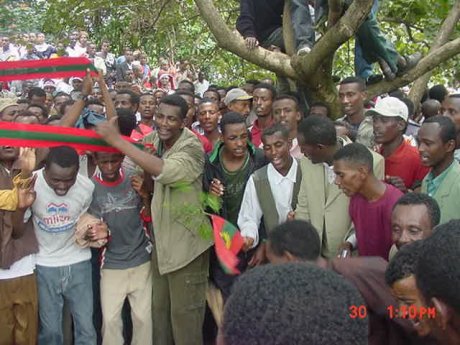





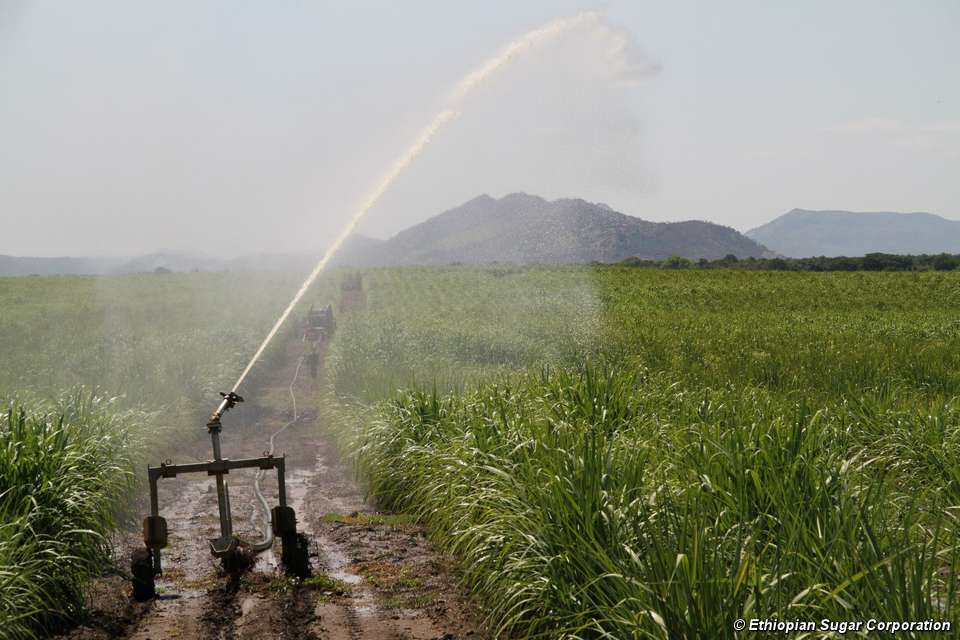


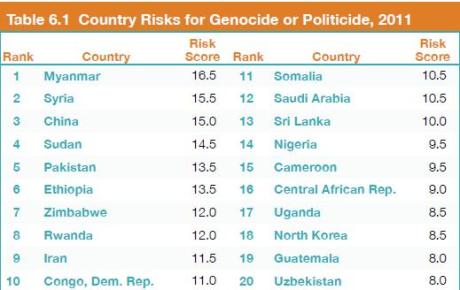


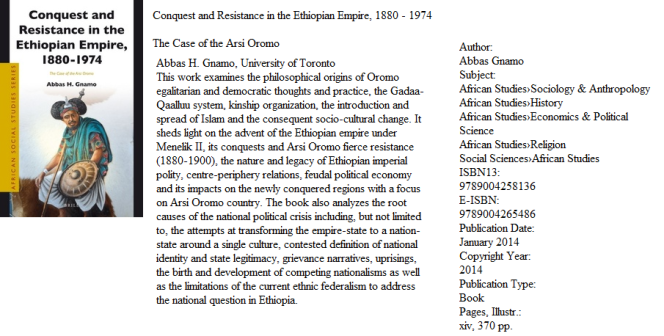

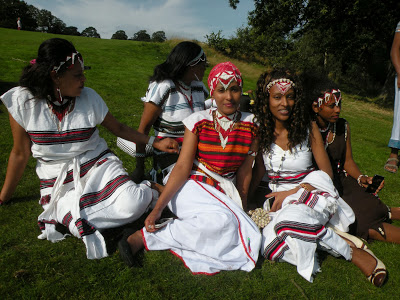


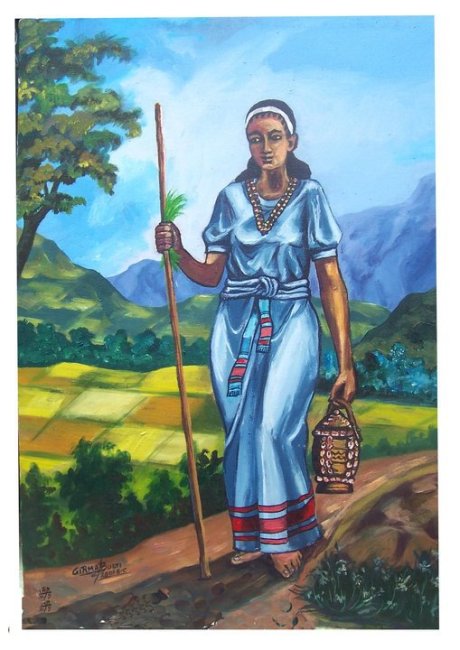


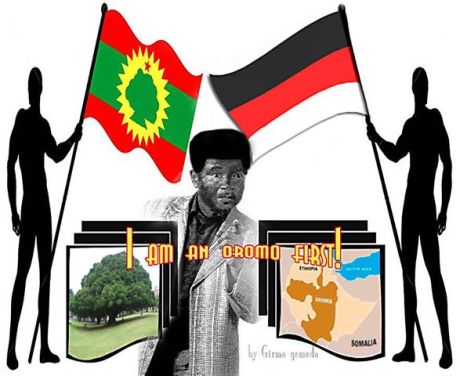



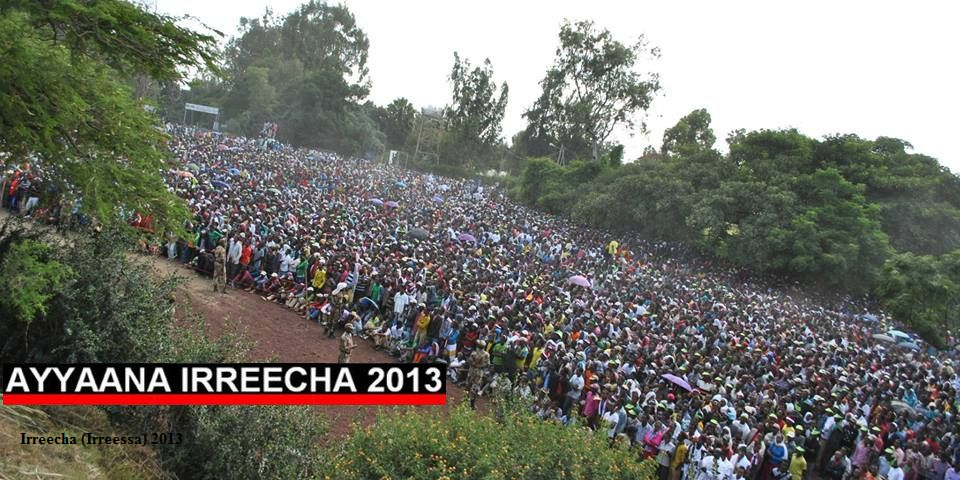
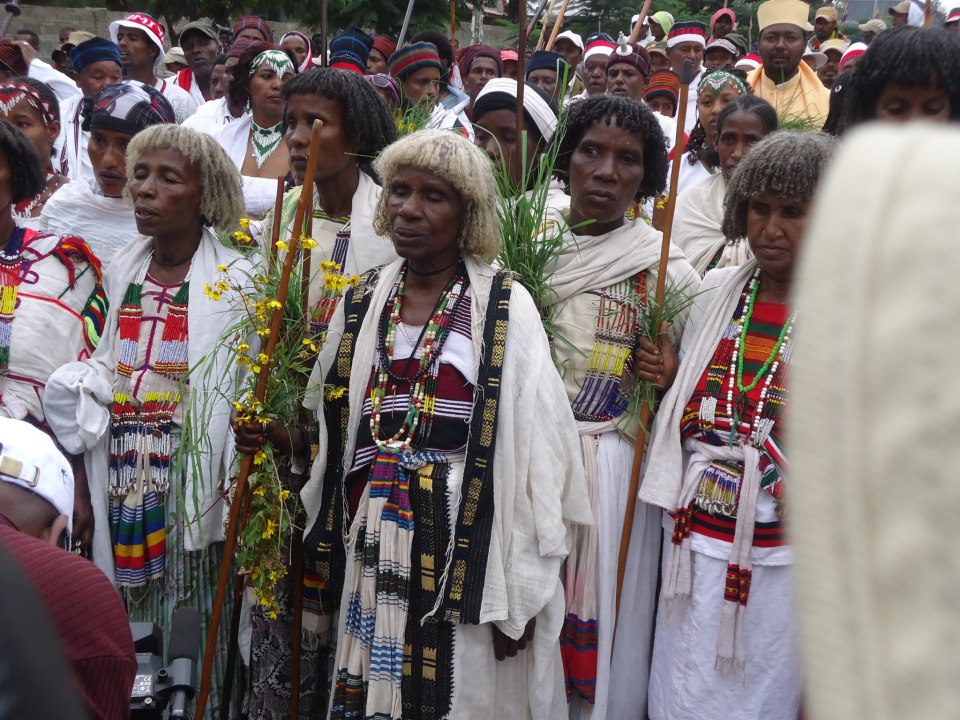
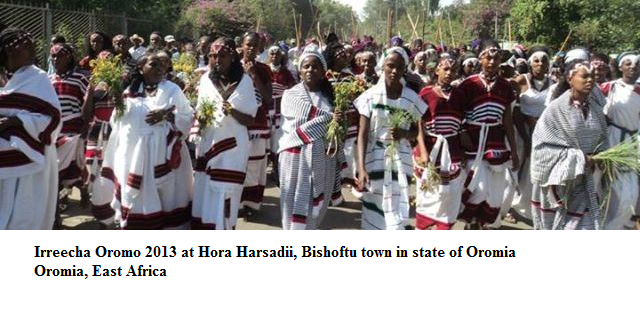
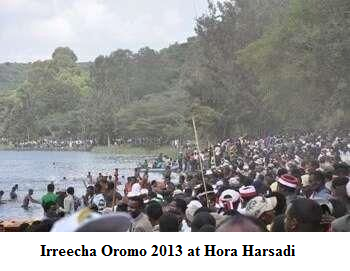




 Oromian Economist