Economic and development analysis: Perspectives on economics, society, development, freedom & social justice. Leading issues in Oromo, Oromia, Africa & world affairs. Oromo News. African News. world News. Views. Formerly Oromia Quarterly
TPLF Ethiopia’s Somali Liyu Police and the federal defence forces jointly invaded Oromia and currently conducting their ethnic cleansing in five Oromia Zones and 14 Districts. The following are some of the Oromia’s districts currently under attack:
i. Qumbi, Cinaksan, Midhaga Tola, Gursum, Mayu Muluqe and Babile in East Hararghe Zone;
ii. Bordode in West Hararghe Zone;
iii. Dawe Sarar, Sawena, Mada Walabu and Rayitu in Bale Zone;
iv. Gumi Eldelo and Liban in Guji Zone; and
v. Moyale in Borana
Profile of the Invading Somali Liyu Police that Invaded Five Oromia Zones and 14 Oromia Districts
1. Established in April 2007 as counter insurgency military group, the Somali Liyu police are estimated to have more than 40,000 well-armed and well-funded troops.
2. Who is providing the funding and training: Initially, it was funded and trained by the government of the United Kingdom. Now, the group is believed to have a wider network in the Middle East, in addition to the support it regularly receives from the TPLF/EPRDF government of Ethiopia….. Click here to read more …..
The Ogaden National Liberation Front (ONLF) says the regime in Addis Ababa is worsening clashes between the Somali and Oromo communities that share common borders.
The ONLF also accused the Liyou (special) police of the Somali regional government of committing rape, abduction and killings against the Oromo and even against their own Somali communities with backing of the brutal regime.
Hassan Abdulahi in an interview with ESAT said the main culprits were the TPLF generals who are behind the Somali special police that just takes orders from the generals.
Abdulahi says the Somali special police have since 2007 committed inconceivable crimes against Somali, Oromo and other communities.
He said there are over a million people who are internally displaced due to the brutal actions of the Liyou police under the auspices of regime generals.
Border clashes between the two communities resulted in the death of hundreds of people, abduction and cattle raiding, according to the ONLF and other Oromo political parties.
4. Furmaatni maali? Wayyaaneen yoo hinjirre, Liyyuu Poolisiin hinjirtu. Wayyaaneen yoo hinjirre, OPDOn hinjirtu. UUmmatni Oromo miliyoona 50 ta’u mormii biyya keessaa fi lola daangaa irratti itti baname ofirraa faccisuuf dandeettii qabaachuu qaba. Mirga uumamaa qaba. Of gurmeessee, walgurmeessee of hidhachiisuu, walhidhachiisuu qaba. The right to defend oneself from enemy is a God given right. Haallii Oromoiyaa yeroo ammaa kan duraanii irra adda.
This is Hayat Aliyi Ahmad age 17. This horrific attack said to have been committed against her by official of the Somali regional government in Jigjiga. She is currently at Hiwot Fana Hospital. She is originally from Malka Ball, East Hararge, Oromia. Click here for the image and detail of the attack.
Recently you might have noticed that TPLF is propagating ‘Somalis’ protesting against OLF, G7 etc. Its important to know that these are members of the TPLF’s puppet party in Somali region ( its like OPDO and ANDM members rallying in support of the regime). In fact many of the thugs are not from Somali regional state but from Djibouti, Somalia, Somaliland and even Kenya. Back home the psychopathic president of the region has forced residents of Jigjiga to stage a rally. Why all this? First it shows the regime have given up on its puppet parties in Oromia and Amhara regions. Pro-regime rallies planned in Oromia and Amhara were either cancelled due to fear of turning into protest or no one showed up.
But there is more sinister motive than just this. It is part of the minority card TPLF leaders are trying to play as they fight for survival. Two weeks ago Seyoum Mesfin and Abay Tsehaye gave interview where they repeatedly pulled the minority card. They have two objectives in doing so. First they want to mislead and gain sympathy of the liberal international community that their minority ethnic group (Tigreans) are facing genocide from alliance of the two largest ethnic groups Oromo and Amhara. They have been telling diplomats that it’s not just Tigreans facing existential threat but also other minorities. Second, they want to implement their long held plan of ‘minority coalition’ to withstand pressure from Amhara and Oromo forces. Since the days of their armed struggle, TPLF leaders believed that the best way to cope with being outnumbered is to forge alliance (under their domination) with other minorities. The controversial map that connects Tigray with Benishangul-Gumuz and all the way down to Gambela on the West, and Afar and Somali through the East is not some simple error or latest development. It has been on the works since 1980s. Although it failed due to economic competition with Tigrean businessmen, they have also tried to bring urban minorities to their side as well.
But is TPLF an ally of minorities in Ethiopia? Its records say NO!
– Its military carried out ethnic cleansing against Ethiopian Somalis as meticulously recorded by human rights organizations. Abdi Illey was their henchmen who was facilitating the massacre.
– It massacred the Agnuwak in Gambella region in 2003 and still continue to kill in the region.
– The Sidama were massacred at Loqe in 2002.
– Entire villages in Konso are being burned down as we speak.
– The Mursi are killed en mass and those captured alive are chained like animals as might have seen on pictures
– Silte and Gurage businessmen have been pushed out of the market and replaced by Tigreans.
– Afar land is all but taken over by Tigrean land grabbers.
– On and on and on……
Yet as it faces increasing resistance in Oromo and Amhara, TPLF will be aggressively using this ‘minority card’ in the up coming weeks and months. This will be done with action that will create rift between minority ethnic groups and Oromo/Amhara. We should henceforth expect the following:
– More rallies in diaspora and targeted regions in Ethiopia with participants holding slogans that offend Oromo/Amhara.
– Intensified campaign on media using languages that provoke debate and counter attack.
– Physical attack on Oromo/Amhara activists and institutions with the aim of provoking counter attack on Somalis.
– They will intensify instigating conflict on regional boarders. We are already hearing provocation on Benishangul-Amhara boarders, Somali -Oromia boarders.
If left unchallenged, these tactics could cause serious short and long term problem between various nations of the country. Therefore, the following steps should be taken to counter that:
– Oromos and Amharas shouldn’t fall for the provocative trap. Avoid debates and arguments against Somalis and others.
– Let activists, political leaders and organizations respond to debunk them.
– Beware that the regime’s agents will engage in nasty exchanges pretending to be Oromo, Amhara, Somali etc.
– Prominent activists, political leaders should be careful against attacks by hired thugs. Community and religious institutions should be protected. In case attacks occur, the situation must be wisely contained. No doubt the regime agents in Amhara and Oromo communities will try to instigate counter attack on Somali and others. Hence no matter the severity, the possible attack on Amhara/Oromo personalities, the response should never be communal; the individual who committed the crime should be singled out and brought to justice.
Such old and tired tactic of divide and rule cannot extend TPLF’s dictatorship.”
BBC World Service is an international multimedia broadcaster, part of BBC News, delivering a wide range of language and regional services and working increasingly with other parts of BBC News to serve global audiences. It uses multiple platforms to reach its weekly audience of 320 million globally, including TV, digital platforms including social media, AM, FM, shortwave, digital satellite and cable channels.
As part of an historic and exciting expansion the BBC World Service is expanding its language services serving audiences in 12 new languages. All Language Services are multiplatform, with a multimedia website with a focus on digital video, text, interactivity for both desktop and mobile platforms, and a daily TV news programmes for each service.
Role Responsibility
1. To research, interview original sources and write reports, analysis and features for the BBC Afaan Oromo website in a range of formats.
2. To help produce and/or present the BBC’s live radio programme.
3. To respond to breaking stories whilst on air and to resolve technical difficulties.
4. To create content to drive the BBC Facebook page and other social media platforms.
5. To be able to conduct interviews in audio and video on request, on phone or face-to-face, with authority and in-depth knowledge about the region.
6. To ensure that all output material for which the post holder is responsible meets the standards required by the BBC.
7. To use journalistic skills and experience to suggest new angles on existing stories, means of moving the story on, and to put forward stories not yet covered.
8. To use editorial skills as appropriate to edit, write and adapt the material for the outputs on Facebook and other relevant platforms as required whilst maintaining professional journalistic standards of accuracy, impartiality and fair dealing and adhering to the BBC’s Producers guidelines.
9. To create material for all multimedia outputs, including text stories, audio bulletins and – with appropriate training – video reports for both BBC Afaan Oromo online and Facebook or other social media platforms
10. To ensure that BBC Editorial principles of balance and impartiality and all relevant legal, contractual and copyright requirements are met, referring upwards in cases of difficulty or doubt.
11. To build and maintain links with other areas of the BBC, including BBC World Service Online and BBC News, to enable the efficient production of content.
The Ideal Candidate
1. A full command and up to date knowledge of written and spoken Afaan Oromo.
2. A good knowledge of English, including complete comprehension of written and spoken English and the ability to communicate effectively.
3. Wide and up to date familiarity with the target area and an in-depth understanding of its history, politics, social issues and culture as well as the changing needs of the audience.
4. Recent and relevant experience as a journalist and/or reporter would be preferable but not essential.
5. Ability to write, adapt and translate with accuracy, clarity and style appropriate to differing audiences and forms of social media.
6. A good broadcasting voice and the ability to acquire an appropriate presentation.
7. Able to demonstrate a good range of contacts for interview purposes from all walks of life.
8. Good keyboard/computer skills and the ability to acquire technical skills and to operate technical equipment. Practical experience and extensive knowledge of the Internet and an understanding of the potential of new technology is essential.
9. A thorough knowledge and understanding of news and current affairs in the target area as well as a good knowledge of and interest in, international and regional affairs.
10. A thorough
Package Description
Grade: Local Terms and Conditions Apply.
About the Company
We don’t focus simply on what we do – we also care how we do it. Our values and the way we behave are very important to us. Please make sure you’ve read about our values and behaviours in the document attached below. You’ll be asked questions relating to them as part of your application for this role.
The BBC is committed to building a culturally diverse workforce and therefore strongly encourages applications from underrepresented groups. We are committed to equality of opportunity and welcome applications from individuals, regardless of their background.
(Reuters, London) The Olympic champion began pulling away from the field after 10 laps, sweeping past back markers who were made to look sluggish in comparison.
She finished in 30:16.32 seconds, well outside the world record she set when she won in Rio last year but still enough to win by an astonishing 46.37 seconds, by far the biggest margin in championship history.
Ayana’s compatriot Tirunesh Dibaba, the former world and Olympic champion, added to her impressive collection of medals when he took the silver with Kenya’s Agnes Tirop in third.
(IAAF, 5 August 2017, London) While the Olympic final last year went out at close to world record pace from the get-go, the first three kilometres were covered in a cumbersome nick but with the clock showing a fraction inside ten minutes after the first three kilometres, Ayana cut loose and put on a display second only to her world record performance at the Olympics last year.
Only Turkey’s Yasemin Can tried to follow Ayana’s break but the reigning European champion – finding this field a step up in calibre to the continent fields she has dominated in recent seasons – soon paid for trying to cling onto the leader’s coat-tails, eventually fading back to 11th in 31:35.48 and getting lapped in the process.
Ayana covered the tenth and eleventh laps in 67.41 and 67.89 respectively before reaching halfway in 15:51.38 with a seven second advantage on Can, who was dropping back into the chasing pack which included the Kenyan triumvirate headed by Alice Aprot and Tirunesh Dibaba.
Arguably the greatest track runner in history with eight major titles to her name across a decade-long timespan from 2003, Dibaba admitted she wasn’t in shape on this occasion to match Ayana after an abbreviated build-up following a spring road racing season culminating with an Ethiopian record of 2:17:56 in the London Marathon.
“If I had followed her [Ayana], I wouldn’t have won a medal. I know my capacity these days because my training for this race was very short,” said Dibaba, who only began her build-up to this race as recently as two months’ ago.
But even Dibaba at her most imperious might have struggled to stick with Ayana, who was consistently lapping at under 70-second pace per lap. Her fifth kilometre – covered in 2:49.18 – even represented world record pace for the 5000m, let alone for the 10,000m.
Aside from Dibaba and Aprot, the second group included the last two world cross country champions – Irene Cheptai and Agnes Tirop – but for all of their titles and credentials, they were losing nearly 10 seconds with each kilometre. Ayana was within sight at halfway but by the eight kilometre mark (24:30.03), the long-time leader – who covered that section in 8:38.65 – led by 36.70, representing more than half-a-lap in terms of distance on the track.
Having made a herculean mid-race effort, Ayana’s lap times were beginning to drift outside 70-second pace over the last five laps – putting Berhane Adere’s championship record of 30:04.18 just out of view – but Ayana still crossed the finish-line in 30:16.32, the second fastest winning time in championship history.
A whole gamut of stats and numbers emerged once Ayana’s scintillating performance was dissected but the most noteworthy one was her second half split of 14:24.95 – a time which would have ranked ninth in its own right on the world all-time lists.
In the race for the minor medals, Cheptai was the first of the contingent to crack – followed by Aprot – and while Dibaba might lack the pace which has taken her to so many titles over the years, Dibaba moved past Tirop at the bell and held her off on the last lap, 31:02.69 to Tirop’s 31:03.50.
After finishing fourth at the Olympics last year, Aprot just missed out on the medals again in 31:11.86 with Cheptai fading to seventh in 31:21.11, passed by the Netherlands’ Susan Krumins (31:20.24) and 2015 bronze medallist Emily Infeld (31:20.45) in the run-in to the finish.
Ayana answered any questions about her form in the most decisive manner possible but despite her barnstorming display in tonight’s 10,000m, it might be presumptuous to say that she is a shoo-in for the 5000m title.
One year ago, Ayana was a dead-cert to follow up her Olympic 10,000m title with a second gold medal but a stomach ailment left her weakened for her third race of the championships and she had to settle for bronze behind Kenyans Vivian Cheruiyot and Hellen Obiri, the latter hungry to claim her first global outdoor title.
Oromo athlete Tamirat Tola (silver medalist) finish 2nd to Geoffrey Kirui of Kenya.
Tola, the Olympic 10,000m bronze medallist and fastest in the field thanks to the 2:04:11 he recorded in winning this year’s Dubai Marathon, required medical treatment after struggling home in 2:09:49, just two seconds ahead of Tanzania’s Alphonce Simbu, who clocked 2:09:41.
Congratulations to All!!! The final of #iaafworldchampionships2017 in women’s 5000M: Helen Obiri of Kenya (Gold) Oromo athletes Alamaz Ayana (Silver), Sifan Hassan for Netherlands (Bronze) & Senbere Teferi Sora is 4th.
Muktar Idris wins Gold in men’s 5000m and Yomifkejelcha is 4th.
The medals tally Oromo athletes (athletes of Oromia origin) win at IAAF World Championships London 2017 makes Oromia the top 6th country in the world, on the par with the host country, UK and next to China. Wthout Oromia Ethiopia just does not exist. in the spirit of Ayyaanaa and Ethics of Gadaa Oromia can stand and go alone.
Military helicopters circled above a crowd of thousands during a festival in Ethiopia’s Oromia region in October last. “Down, down TPLF!” one of those who assembled at Bishoftu town in Oromia shouted into a microphone, referring to the Tigrayan People’s Liberation Front, the dominant wing of Ethiopia’s ruling party. Oromia has seen violent protests, which began two years ago after complaints about evictions of farmers to make way for development projects and a lack of autonomy in an authoritarian system. Security forces fired tear gas at the crowd, triggering a stampede in which scores were crushed. Some drowned in a lake. Prime Minister Hailemariam Desalegn declared emergency rule less than a week later. The same day, defence forces shot a 28-year-old Oromo farmer. Witnesses cited in a report by Ethiopia’s only rights NGO, Human Rights Council, said the farmer was shot because he protested. An Opposition party leader was arrested after he addressed the European Parliament.
Ten-months later, the ruling party has unexpectedly lifted the emergency. Most of the over 20,000 people arrested were released after “renewal training”, while over 7,000 are on trial, Defence Minister Siraj Fegessa told Parliament earlier this month. But Oromia is far from being calm. The U.S. Embassy in Addis Ababa has recommended avoiding an area where Oromia and Ethiopia’s Somali regions meet, where intense fighting is going on. Weeks earlier, Information Minister Negeri Lencho, an Oromo, told this reporter that almost 70,000 retailers lodged complaints over a new regional income tax law. “Most of the shops are closed where I live to protest” overvalued tax payments, said a resident of an Oromo town, 20 km from the capital.
‘Torture and murder’
The Human Rights Council published its 49-page report online, in Amharic, on May 29. A day later, the state telecom monopoly turned off internet access for almost a week. It documents 22,525 arrests, testimony from 28 former prisoners, six cases of “torture, beatings, and injuries” and 19 murders. Ex-inmates of a prison in the Amhara region, to where the protests spread, testified that prisoners were dunked in a cesspit full of urine; 250 youths were held without charge or trial; up to 100 prisoners were forced to sleep in a room of 10X4 meters; water was given only weekly; and contaminated water exposed them to contagious diseases.
In November, a 12-year-old girl from Ethiopia’s south was beaten and then taken from her house by government forces to a makeshift prison, her father testified. A heavy presence of government forces prevented the Council’s staff from moving freely, people were afraid to testify, and state organs, including police stations and federal prisons, remained deaf to the Council’s efforts at official corroboration, the report says.
The Council says what it documented violates the right to life contained in Ethiopia’s Constitution, as well as the UN’s International Covenant on Civil and Political Rights and Convention against Torture, to which Ethiopia has acceded. The report assumes the scope and types of violations are “more than presented. It asks the ruling party to give the UN permission to investigate without restriction. Addis Ababa, however, rejects this, citing “an issue of sovereignty”. Zadig Abraha, deputy government spokesperson, said the report is “politically-motivated”. He pointed to a government-sanctioned inquiry which found that security forces took “proportionate measures in most areas”, saying 669 people were killed last year alone. The government can investigate itself, he added.
Nizar Manek is a reporter based in Addis Ababa, covering African affairs
Cc: -The Global Fund Secretariat
– Global Fund’s Office of the Inspector General
Geneva, Switzerland
Greetings!
Global Fund, as the 21st century partnership-based financing organization designed to accelerate the end of HIV/AIDS, tuberculosis and malaria as epidemics, is indeed contributing its fair share for the global health and wellbeing of millions of people.
As Ethiopia is one of the top recipients of support from the Global Fund, there is no doubt that many poor patients have benefited irrespective of the level of corruption and misappropriation of funds on the part of the ruling regime.
The country has received over $2 billion from 2002 to 2016, as per the report of the Global Fund itself. But the regime in power misused and misappropriated much of this money by manipulating and taking advantage of Global Fund’s good-intentioned principle called ‘Country ownership’ — at the heart of which is the golden idea that people determine their own solutions in fighting the diseases affecting their health, and take full responsibility for them.
However, the regime in Ethiopia has effectively manipulated this principle to use global fund resources for its own political end goals. The 2015 audit report of the office of the general inspector of the Global Fund itself briefly touched up on these problems.
For the malaria grant for example, the report rightly identified the following problems:
• Inadequate Monitoring and Evaluation and Poor Data Quality;
• Theft or Diversion of Non-Financial Resources;
• Poor Financial Reporting;
• Treatment Disruption;
• Substandard Quality of Health Products;
• Inadequate Principal Recipient Reporting and Compliance.
To illustrate the report’s important point on diversion of resources for wrong purposes, there is no better example than drawing your kind attention to a recent case in the city of Ambo, where the regime deployed its brutal security forces using the vehicles obtained by the Ministry of Health using foreign funding such to crack down on anti-government protesters who were on the streets protesting a newly introduced tax hike.
As a result, the protesters have torched one of the vehicles in mid-June but the regime continued using these vehicles to transport its security agents. Several evidences show that these vehicles which the tyrant regime in Ethiopia is using to transport its security forces to kill protesters, were procured by the Global Fund grants.
The Global Fund secretariat should therefore reconsider and submit to rigorous scrutiny its partnership with the corrupt and repressive regime of Ethiopia.
Financial supports from the Global Fund should not be used to enable the repressive security structures of the regime that kills its own citizens but to help the needy people of the country. To this end, the Global Fund has not only the moral responsibility but also the legal duty to make sure that all its financial supports to the regime are used solely for their intended purposes.
We are therefore kindly requesting the Board Directors of the Global Fund to undertake the necessary investigations on the misuse, misappropriation and diversion of resources that the regime in Ethiopia receives as grants from the Global Fund.
From November 2015, Ethiopia has experienced an unprecedented wave of popular mobilisation. The protests took place mainly in the Oromia region, spanning nearly 300 locations. They are generally seen as part of a movement that began in April-May 2014, when students across several locations in the region protested a plan to expand the boundary of the capital, Addis Ababa (hereafter, the Addis Ababa Master Plan). The 2014 protests, led by university students, were comparatively small and situated in the Western part of Oromia (see Figure 1). From November 2015, the demonstrations quickly gained momentum, and farmers, workers and other citizens soon joined the students in collective marches, boycotts and strikes (seeACLED, June 2017 for a more detailed background on the roots and dynamics of the protests).
Despite the government’s suspension of the Addis Ababa Master Plan in January 2016, the protests continued and expanded to other regions, such as Amhara and the SNNPR. The Amhara community joined the Oromo protests in August 2016, after a fatal clash between security forces and Amhara residents over the Wolkayt district’s identity issue ignited regionalist grievances (African Arguments, 27 September 2016). The continuation of the protests revealed widespread suspicion of the Ethiopian regime and enduring grievances among different ethnic groups, particularly in the way federalism is implemented, and in the way power and resources are shared. The Ethiopian government’s unrelenting use of lethal force against largely peaceful protesters since November 2015 has played a major role in bolstering a shared sense of oppression among the Oromo and other ethnic groups. Available data collected from international and local media since November 2015 points to more than 1,200 people reported killed during the protests. Approximately 660 fatalities are due to state violence against peaceful protesters, 250 fatalities from state engagement against rioters, and more than 380 people killed by security forces following the declaration of the state of emergency on 8 October 2016.
The state of emergency was declared after government violence at the Irecha festival in Oromia led to a “week of rage” among the opposition. The move cemented the government’s commitment to repression rather than dialogue (The Guardian, 20 October 2016; Amnesty, 18 October 2016). The state of emergency imposed tight restrictions that have since successfully curbed the protests. However significant developments have occurred in parallel, pointing to persisting discontent in Ethiopia.
First, the significant reduction in riots and protests accompanied an increase in battles involving security forces and foreign-based rebel groups, and in political and ethnic militia activity. Though the link between the protesters and the various armed groups remains unclear, these trends point to an escalation from peaceful unrest to an armed struggle taken up by local armed militias and rebel movements united in their aim to remove the government.
The ACLED dataset shows that rebel activity in 2016 was at its third highest since 1997 (see Figure 2). Rebellion reached unprecedented levels in Oromia and Tigray, led by the OLF and the AGUDM forces respectively; and in Amhara, rebellion led by the AGUDM forces resurged after two years of inactivity. So far in 2017, AGUDM has represented the most active rebel front in the country. The group significantly stepped up its attacks in June 2017, confronting government forces on several fronts in the Amhara region’s Gonder zone, and claiming a rare attack in Addis Ababa on a government ammunition depot. The movement’s leader recently announced that AGUDM’s attacks would not subside. Other rebel fronts, however, have been relatively inactive in 2017. As of end June, no attack had been claimed yet in 2017 by the OLF for instance.
In parallel, militant activity has significantly increased in Oromia and Amhara in 2017 (see Figure 3). Since January 2017, large numbers of the Oromo community have risen up against a marked increase in attacks and human rights violations in Oromia by state and paramilitary forces, such as the Liyu police. Data collected shows nearly 40 clashes between the two parties along the border with the Somali and Afar regions between 1 January-8 July 2017, resulting in around 170 fatalities. This compares to only six clashes between Oromo militias and state forces during the protest period. The Oromo community identifies the increased activity by the Liyu police as a way for the government to usurp Oromo lands and further quash dissent (Opride, 5 March 2017). The assignment of federal soldiers to all members of the Oromia regional police in May after suspecting some of them of supporting Oromo militias in the recent clashes, revealed the government’s continued control of the country’s security apparatus. In Amhara, unidentified armed groups also engaged in various clashes with state forces and executed no less than 14 bomb and grenade attacks, mainly targeting state officials, between 1 January-8 July 2017.
Secondly, the ruling party’s continued domination since the declaration of the state of emergency and failure to engage in a dialogue with the protesters underlines its lack of interest in addressing the grievances that motivated the protests in the first place. This suggests that there is a strong possibility of demonstrations resuming once the state of emergency is lifted at the end of July 2017.
Several developments since the declaration of the state of emergency have reinforced the perception of government oppression among the protesters. Chief among them is the implementation of the state of emergency’s tight restrictions, which has led to hundreds of new fatalities and arrests, as well as to a pervasive state control of Internet access and use. Many people have been arrested on the basis social media posts perceived as inciting violence for instance, while the government imposed prolonged periods of nationwide Internet blackouts to control students during national examinations (Tadias Magazine, 13 June 2017;Africa News, 11 June 2017). The ruling party’s refusal to allow an independent probe into the protests has also fuelled a loss of hope among the protesters for a better form of government, which respects peoples’ basic rights. This is despite the many international calls for the establishment of a fair accountability process, including by the UN and by members of the European Parliament (IPS, 17 April 2017; Africa News, 11 July 2017).
Other oppressive state practices in 2017 have also led to several punctual protests, most of which were severely repressed. In Oromia, people protested in March 2017 against violence by the Liyu police. Students also protested in Ambo in June 2017, after the Ethiopian education authority revealed a plan to re-arrange the Oromo alphabet. Police arrested 50 students, including two whom died from severe beatings received during their transfer to prison facilities. In Amhara, people protested in April 2017 against the planned demolition of thousands of houses by the government, and were fired on by federal military troops (ESAT, 23 March 2017). Finally, at various international sporting events in early 2017, several Ethiopian athletes have protested the ruling party’s inability to embrace ethnic and religious diversity, by refusing to wave the current starred Ethiopian flag to celebrate their victories (African Arguments, 6 March 2017).
Politically, the several changes introduced to the Prime Minister’s Cabinet and to the leadership of the party representing the Oromos within the ruling coalition in the course of 2016 suggested only minimal ideological repositioning and thus did not convince the protesters. The government’s introduction in July 2017 of a draft bill to review the status of Addis Ababa represents the first attempt at credibly addressing the Oromo protesters’ grievances politically, by giving concrete meaning to Oromia’s constitutionally-enshrined “special interest” in the capital. However, there is still a possibility of future unrest if dissensions are not solved with its detractors, particularly among the Oromo nationalists (QZ, 6 July 2017;Global Voices, 7 July 2017). A recent plan to establish an oil venture in Oromia has also been seen by the ruling party as a way to address the protesters’ economic grievances (Bloomberg, 21 June 2017). Building on these overtures could lead to advancements in negotiations between the protesters and the government, and reduce the likelihood of future disruptions.
The Ethiopian prevailed in the competition with a time of 1 hour 4 minutes and 30 seconds.
Feyisa Lilesa, winner of the Bogota Half Marathon 2017.
Photo: Abel Cárdenas / CEET
By: SPORTS,July 30, 2017
This year, the Bogotá Half Marathon celebrated its 18th edition, the race counted with the participation of more than 43,350 athletes, in addition to a general bag in prizes that exceeded 200 million pesos.
The Bogota Half Marathon, in the elite category, proclaimed Feyisa Lilesa, from Ethiopia, who prevailed with a time of 1 hour 4 minutes and 30 seconds. In the second box the podium is the Kenyan Peter Kirui, who arrived 10 seconds after the leader. In the third box, the Ethiopian Shura Kitata.
In the category of ladies, Brigid Jepchirchir Kosgei of Kenya prevailed with a time of 1 hour 12 minutes 20 seconds. Veorincah Wanjiru, also from Kenya, concluded Monday and Ruth Chepngetich, who was third.
The best Colombian athletes in the competition, were of the team Porvenir: Miguel Amador, who got tenth, with a time of 1 hour 7 minutes and 32 seconds; Angie Orjuela that was seventh in its category, with a time of 1 hour 17 minutes and 57 seconds.
Top ten (elite)
Male Open Category 1. Feyisa Lilesa
2. Peter Cheruiyot
3. Shura Kitata
4. Stanley Kpileting
5. Kimutai Kiplimo
6. El Hassan El Abbassi
7. Afewerki Berhane
8. Motoloka Clement
9. Yerson Orellana 10. Miguel Amador
The full USA’s House Foreign Affairs Committee voted to advance a resolution, authored by Rep. Chris Smith (R-NJ), highlighting the human rights violations of the Ethiopian government, and offering a blueprint to create a government better designed to serve the interests of the Ethiopian people.
The resolution, which passed without objection, also calls on the U.S. government to implement Magnitsky Act sanctions, targeting the individuals within the Ethiopian government who are the cause of the horrific abuses.
New York Times journalist says Ethiopia faces dangers due to oppression of majority http://www.thethiopianmedia.com/article_read.php?a=121
New York Times journalist, who worked as the paper’s East Africa Bureau chief for a decade, says the oppression that the majority, especially Amharas and Oromos, suffer under the minority government is a danger for the future of the country.
Jeffrey Gettleman, who won the most coveted journalism award, the Pulitzer Prize in 2011 for his work focusing on East Africa, said in an exclusive interview with ESAT that building infrastructure is important but not an excuse to kill, jail and torture innocent civilians.
“Infrastructure is really important in Africa right now. But if you are very repressive you are jeopardizing everything because you are creating this anger and resentment and volatility. We have seen that in the last couple of years, more volatility, violence and political upheaval in Ethiopia than there has been since the 1990s,” he said.
On behalf of OSA Board of Directors and its Executive Committee, I want to welcome you all to this evening’s events. It is with a great sense of satisfaction that I stand before you to open the 31stAnnual OSA conference. The first time I came to Washington was 33 years ago in 1984 to attend the annual conference of Oromo Union in North America. In early July the same year, we had also an international Oromo conference in Berlin organized by the Union of Oromo Students in Europe. Bonnie Holcomb and the late Mammo Dibaabaa attended the conference from the US. The late Sisai Ibssa sent a paper to be read at the conference. It was then that we started to think about organizing an Oromo studies association. Few years later, OSA was formally organized. Since then, I have been coming almost every year, sometimes twice a year, to this country because of Oromo studies.
By and large, we have been conducting Oromo studies for more than three decades without financial support or institutional backing. Given the circumstances, I never imagined that we could write so many articles and books on Oromo history, culture, and language. When I say many books and articles, I am talking in relative terms reflecting on the knowledge that existed about the Oromo people when we started. If we take the gadaa system, for example, we had only Professor Asmerom Legesse’s classic book, Gadaa: Three Approaches to African Society published in 1973. Today, we have several books, doctoral dissertations, and journal articles on the gadaa system and many other topics concerning the Oromo society. In the 1970s and 1980s, there were very few articles published on Oromo history in international journals. Today, there are many books on the subject, most of them written by Oromos themselves. New ones keep on coming.
Although what has been achieved is what we had never imagined, what we have done so far is not more than a scratch on the surface. There are great gaps in our knowledge about Oromo history, Oromo language, and Oromo culture that are waiting to be filled. Without adequate knowledge about our past, we cannot make an adequate assessment of our present concerns, or have a clear vision of our future as a nation.
That said, Oromo studies should not limit itself to Oromia or the Ethiopian region. It must go beyond the present Ethiopian borders, look into the cultural and historical affinities the Oromo seem to have, particularly with the peoples of Nubia and ancient Egypt. It is interesting to note that culturally, significant similarities in hair style, dress, etc. that resemble Egyptian hieroglyphics motifs are still found among the Oromo. There are many artifacts and outfits used by Oromo abba gadaas and qaalluuswhich resemble the outfits that decorate the statues of Egyptian pharaohs. The resemblance between the ancient Egyptian concept of maat and Oromo concept of nagaa, both of which reflect ethics that regulate order and harmony provide execiting area for scholarly investigation regarding the probable affinity between the philosophies and cultures of the two peoples.
In addition, there are intriguing linguistic elements that indicated similarities between Afaan Oromooand the ancient language of the Berbers of North Africa. In short, there are historical, cultural, and linguistic factors which suggest Oromo affinity with the ancient peoples of Northeast Africa, countering the controversial theory about Oromo migration from the south in the sixteenth century in Ethiopia.
When we turn south, the interaction of the Oromo people with the inhabitants of East Africa is not less interesting. As brilliantly presented in Professor Gufu Oba’s new book, Herder Warfare in East Africa, the Oromo influence in the region from 1300 to 1900 seems to have been very substantial. Starting from Jubaland in southern Somalia and stretching south to Tanzania, the Oromo role in the history of the region was very significant.
That colonialism alienates the colonized from their true history is well-known among scholars. Hence, it is needless to stress here that distortion of history and suppression of information about Oromo society has been the policy of Ethiopian regimes for more than a century. Ethiopianist scholars have also contributed much to the distortion and cover ups. Consequently, there are important areas in Oromo culture and history that remain barely touched by researchers to this day. For example, very little study is done on Oromo social and environmental ethics. The Oromo moral and philosophical principles of Safuu and Nagaa which offer a unique model for passing over life on to future generations are waiting for exploration by scholars. The usefulness of Oromo philosophies, eco-knowledge, and social ethics in these times of glaring lack of environmental ethics, religious fanaticism, right wing political extremism, and lack of respect for human lives should be appreciated and mediated to the rest of the world. The recognition of the gadaa system and the irreecha festival by UNESCO as intangible heritages of humanity in 2017 can be used as an opportunity to share with the world from the pool of traditional Oromo knowledge mentioned above.
In short, opportunities are abound for those who are interested in Oromo studies. As indicated above, there are numerous untouched areas to investigate. However, there are many challenges to be confronted as well. Acquisition of institutional and financial support requires hard work from OSA members.
The future of Oromo studies depends on our ability to recruit young scholars for research in Oromo language, history, and society. Therefore, building networks with researchers at home is very important. Our cooperation with non-Oromo scholars engaged in African studies is also crucial. As a diaspora organization, OSA cannot do everything, but a lot more can be done.
Much more can be said about available research opportunities that OSA has as well as challenges that are confronting it. But, since we have many panels and round table discussions on dozens of topics in the next two days, I will not take more of your time with what should be done, I will use the few minutes I have to thank those who have been working hard to discharge their duties as members of the Board of Directors and OSA Executive Committee since August last year. ….. Last, but not least, I would also like to thank the local organizing committee who made this splendid evening possible.
Ladies and gentlemen, thank you for your attention and please enjoy your dinner and the rest of the evening.
News Item: Smith Resolution on Ethiopian Human Rights Advances From Committee
27 July 2017
Today, the full House Foreign Affairs Committee voted to advance a resolution, authored by Rep. Chris Smith (R-NJ), highlighting the human rights violations of the Ethiopian government, and offering a blueprint to create a government better designed to serve the interests of the Ethiopian people.
The resolution, which passed without objection, also calls on the U.S. government to implement Magnitsky Act sanctions, targeting the individuals within the Ethiopian government who are the cause of the horrific abuses.
The State Department’s current human rights report on Ethiopia notes, “[t]he most significant human rights problems were security forces’ use of excessive force and arbitrary arrest in response to the protests, politically motivated prosecutions, and continued restrictions on activities of civil society and NGOs.”
“H. Res. 128, is like a mirror held up to the Government of Ethiopia on how others see them, and it is intended to encourage them to move on the reforms they agree they need to enact,” said Smith, Chair of the House panel on Africa. “For the past 12 years, my staff and I have visited Ethiopia, spoken with Ethiopian officials, talked to a wide variety of members of the Ethiopia Diaspora and discussed the situation in Ethiopia with advocates and victims of government human rights violations. Our efforts are not a response merely to government critics, but rather a realistic assessment of the urgent need to end very damaging and in some cases inexcusable actions by the government or those who act as their agents.”
end the use of excessive force by security forces;
investigate the killings and excessive use of force that took place as a result of protests in the Oromia and Amhara regions;
release dissidents, activists, and journalists who have been imprisoned for exercising constitutional rights;
respect the right to peaceful assembly and guarantee freedom of the press;
engage in open consultations with citizens regarding its development strategy;
allow a United Nations rapporteur to conduct an independent examination of the state of human rights in Ethiopia;
address the grievances brought forward by representatives of registered opposition parties;
hold accountable those responsible for killing, torturing and detaining innocent civilians who exercised their constitutional rights; and
investigate and report on the circumstances surrounding the September 3, 2016, shootings and fire at Qilinto Prison, the deaths of persons in attendance at the annual Irreecha festivities at Lake Hora near Bishoftu on October 2, 2016, and the ongoing killings of civilians over several years in the Somali Regional State by police.
“It is important to note that this resolution does not call for sanctions on the Government of Ethiopia, but it does call for the use of existing mechanisms to sanction individuals who torture or otherwise deny their countrymen their human and civil rights,” said Smith.
Pasar Minggu Baru is a quiet, leafy neighborhood for refugees and asylum seekers, whose paths to there have been long and fraught, South Jakarta, Indonesia, July 26, 2017. (K. Varagur)
Ranna, 24, an Oromo Ethiopian woman, is not only a third-generation refugee, but also a two-time refugee. Indonesia, which is home now, is the second place to which she has been displaced in her young life.
She was born in Saudi Arabia because her mother, the daughter of a prominent dissident, fled Ethiopia before her birth. But that country did not recognize asylum-seekers and she was officially stateless. After a brief interlude in Ethiopia, where she was deported to at age 16 and where she earned a bachelor’s degree, she was again forced to flee during a government crackdown on Oromo activists in 2015.
After a harrowing interlude in Djibouti, where she says Oromo asylum-seekers were being rounded up and deported because of an agreement with the Ethiopian government, Ranna’s smuggler booked her, her mother and her brother on a flight to Indonesia. It was a country where they knew no one and did not speak the language.
Pasar Minggu Baru abuts a commuter rail line, South Jakarta, Indonesia, July 26, 2017. (K. Varagur)
They were granted refugee status within a year and able to make a home in Pasar Minggu Baru, a South Jakarta neighborhood that abuts a commuter train line and station. Over the last three years, the neighborhood has come to house an enclave of East African refugees and asylum-seekers, some of whom arrived, like Ranna, through unscrupulous smugglers. Others got stuck in transit when Australia blocked maritime refugee arrivals in 2014.
East African asylum seekers face years-long wait times to even be granted refugee status in Indonesia, according to Trish Cameron, an independent refugee lawyer based in Jakarta. And if that happens, they face even longer wait times for resettlement out of Indonesia — if they are resettled at all, which is not a given, especially as developed countries have closed their doors in recent years.
“There’s not really anywhere to go right now,” said Ranna.
Pasar Minggu Baru community
There are about 200 Oromo refugees in Jakarta, according to Cameron, and “hundreds” of East African refugees in Pasar Minggu Baru. Ranna said she finds it quite safe.
An alleyway in Pasar Minggu Baur, which is home to many East African refugees, South Jakarta, Indonesia, July 26, 2017. (K. Varagur)
“They don’t make you feel like a stranger, maybe because refugees have been hosted here for a long time,” said Ranna. There also is a small Arab market nearby, a happy coincidence because her family speaks Arabic from their time in Saudi Arabia.
Although Ranna has been a Muslim her whole life, she began wearing a headscarf only when she moved to Jakarta, out of respect, she said, for her neighbors.
About 16 percent of the 14,093 refugees and asylum-seekers registered with UNHCR Indonesia are from East Africa, said Mitra Salima Suryono, a spokesperson for the agency. Most are from Somalia, Ethiopia and Sudan, plus a handful from Eritrea, Uganda and Mozambique.
Today, Ranna volunteers intensively as a translator — she is fluent in Oromo, Arabic, Amharic and English, and is now conversational in Bahasa Indonesia — to help asylum-seekers in her community prepare for their interviews.
Oromo unrest
The Oromo people are the largest ethnic group in Ethiopia, split about evenly between Muslims and Christians [Ethiopian Orthodox and Protestant], and account for about one-third of the country’s population.
The protests that began in 2015 grew out of a grass-roots movement led by students in the Oromia region. There also is a history of armed struggle for self-determination, however, led by the Oromo Liberation Front, an opposition group formed in 1973 after a military coup. The government has outlawed the OLF as a terrorist organization and blames anti-government protests on OLF and other groups that it labels “anti-peace elements.”
Ranna’s grandfather was a member of OLF and was the earliest family member to flee Ethiopia as a refugee. Although Ranna came to her homeland only as a young adult, she quickly picked up the nationalist energy that ran through her family. She became a prominent student activist and public health official, and was in her first year of medical school when she had to leave for Indonesia.
“There is grief inside me whenever I think about our people,” said Ranna. “Even in my short time there I could see how wrong it was.”
She spent a night in jail (“it felt like a year”) for her activism, but her middle brother suffered a worse fate before he could flee: He simply disappeared.
Human Rights Watch says more than 800 protesters have been killed since the unrest began in November 2015 and thousands more people have been arrested.
In December 2016, the Ethiopian government announced it would release nearly 10,000 people detained for “rehabilitation.”
Ranna’s youngest brother had just finished 10th grade when they fled, and in him, she sees signs of the aimless boredom that is now typical of the refugee experience in Indonesia, where refugees cannot legally work or attend school. Her mother has diabetes, and is in and out of hospitals.
She still manages to make spongy injera bread in their makeshift house. Ranna herself has acute anxiety and trouble sleeping at night, bearing, as she does, the weight of her family and community, and extant fears about the Ethiopian state.
Ranna doesn’t regret her activism, even as she and her family prepare for an indefinite stay in Indonesia. “I couldn’t see people dying in front of me and do nothing,” she said. “I could not.”
‘Known to many as a “walking library” because of his incredibly deep knowledge of Oromo history, Edao Oda is a long-time member of the Oromo community in Tennessee and a life-long participant in the Oromo national struggle. He is a father, a friend for many, and he has throughout his life selflessly helped others in need and devoted his time to researching and teaching about the Oromo people. Due to his commitment to the Oromo cause, he has sacrificed and suffered immensely as a political prisoner, torture survivor and political exilee.
Obbo Edao Odaa Boruu Dorii is widely known as historian, he is also a legal expert, linguist and translator and fluent in many languages including in Afaan Oromoo, Amharic, English, French and Russian. He studied at General Wingate, Prince Mekonnen, Nefas Silk (pre- college). He studied undergraduate and postgraduate degree courses in Finfinnee (Addis Ababa) University, Moscow Institute of Economics and Statistics, University of London, Birkbeck College (Applied Statisttics and Operations Research), University of North London (MA Employment and Human Resources Studies), University of Westminster, London and University of Tennessee, Knoxville.
Edao Odaa Boruu Dorii was born and brought up in Finfinnee. He and his family are among the survivors of indigenous Oromo of Finfinnee. He lived in Moscow, London (Camden Town) and Tennessee (Knoxville).
Edao Odaa Boruu Dorii is pure, selfless, multi-genius, a champion of human freedom and Oromo superhero.
‘Edao Oda Boru, An Exemplary Oromo, is a national treasure’.- Teferi Degeneh Bijiga
Qallačča and Bokkuu: Themes in the ancient Qaallu institution and rock paintings of Hararqee— implications for social semiosis and history of Ethiopia
In Journal of Sociology and Anthropology
Vol. 1(4), pp. xxx – xxx, July 2013 DOWNLOADED
By Dereje Birbirso (PhD)
School of Foreign Language, College of Social Science and Humanities, Haramaya University
Little or none is known about the social origin and meaning of the ancient rock paintings of Ethiopiaand Horn of Africa. This article critically analyzed some of the ancient rock paintings of Hararqee (Eastern Ethiopia) with the intention to understand the social semiotical and rhetorical structures that underlie beneath these social ‘texts’. It did so through using the ancient Qaallu Institution of the Oromo of East and Horn of Africa as analytical device. Multi-disciplinary approach that combined concepts
from various disciples was adopted as a guiding theoretical framework, while the Eurocentric approach that mystifies and de-Ethiopinizes them was rejected. Field data was collected from various sites besides archival data. Informants expert with the local’s social epistemology or wisdom were selected and used as ‘critical friends’. The results revealed both substantive and methodological insights.
Substantively, it suggests that the Oromo Qaallu Institution and its sub-themes such as the preChristian belief in Black Sky-God, line of descent and identity, kingdomization, pastoral festival, and bovine symbolism crosscutting all of these. Methodologically, the unique Oromo social semiosis which can be referred to as ‘metaplasmic witticism’ appeared as the underlying rhetorical structure.
Key words: Oromo, Qaallu institution, Horn of Africa, Ethiopia, ancient rock paintings, language, social semiosis, Laga Oda.
Demonstrators chant slogans while flashing the Oromo protest gesture in October. (Reuters/Tiksa Negeri)
A new tax levied by authorities on small businesses and vendors has reportedly led to protests in Ethiopia’s Oromia region with the military and police deployed to bring the situation under control. The tax hike is being imposed on businesses with an annual turnover of up to 100,000 birr ($4,300), as part of a new government proposal to boost the tax base and raise much-needed government revenue.
Residents in Ambo city in Oromia damaged two state-owned vehicles, according to Addis Standard newspaper, while businesses in Woliso town shut their businesses in protest. The paper also quoted state officials saying that even though the situation was currently under control, there were plans for region-wide protests.
Like many sub Saharan Africa countries, tax collection in Ethiopia is still a low share of GDP when compared with the average for OECD countries of around 34%. Just 15.2% of Ethiopia GDP was generated by tax revenue as of 2015, according to the World Bank. Last year, a World Bank survey also showed that 54% of businesses thought the process of complying with taxation was more burdensome than the amount of due tax itself.
The new reports from Oromia are significant given that it was the genesis of anti-government protests that hit the country in Nov. 2015. The demonstrations initially began in response to the government’s master plan which sought to expand the capital Addis Ababa into neighboring towns and villages inhabited by the Oromo, the country’s largest ethnic group. The Oromo said the plan would displace farmers and stymie the growth of their culture and identity.
For Oromos, who make up at least a third of the population, they believe the federal capital, which they call Finfinne, belongs to Oromia. They recount a long history of grievance which casts Oromos as colonial subjects violently displaced from their land and alienated from their culture.
The Ethiopian government reacted with force to the protests, leading to the death of 669 protesters, according to a government-mandated investigation. Last October, the government also declared a still-ongoing state of emergency, shut down the mobile internet, and banned the use of social media networks to document the unrest.
Abbaa biyyummaa Oromoo hubachuuf Finfineen kan Oromoo ta´uun isaa shakkiin hin jiru, kana seeraa fi seenaan hardhallee borullee itti gaafannu ta´a. Kanaaf kana duuba Oromoon bakkoota kana qayyabatee itti dhimma bahu koreen ni labsiti.
i. Cabiinsa Halagaa Dura Ilmaan Oromootu Finfinnee Bulchaa Turan Madda Seenaa Irraa
1. Caffeen Tuulamaa kan bulaa turte gooticha Oromoo Tufaa Munaan ta`uu
2. Birbirsa fi Manni Gullallee kan bulchaa ture Qajeelaa Dooyyo
3. Teechoo kan bulchaa ture Guddataa Araddoo
4. Boolee Kan bulchaa ture Shubu Ejersaa
5. Boolee Bulbulaa kan bulchaa ture Soraa Lomee
6. Kolfee kan bulchaa ture Axale Jatanii
7. Qaraniyoo/Dalattii kan bulchaa ture Jamo Dabalee
8. Jarsaye kan bulchaa ture Galatee Ashate
9. Yakkaa kan bulchaa ture Abeebee Tufa
ii. Karra Shanan Finfinnee
1. Karra Qirxi – karra gara kaaba geessu
2. Karra Qoree – karaa Jimmatti geessu
3. Karra Allo- Karaa Walloo/Daseetti nama geessu
4. Karra Qaallu/Qaallitti- karaa Bsiooftuutti nama geessu
5. Karra Gafarsaa- Gara dhiyaatti nu geessu
Dr. Merara Gudina is taking legal action against the Ethiopian regime at the African Commission on Human and Peoples Rights!
Represented by the Centre for the Advancement of Human Rights and Democracy in Ethiopia (CAHDE), he is challenging the unlawful killings of more than 1000 people during the 2015-16 protests in the Oromia, Amhara, and SNNP regions, and the state of emergency.
The initial complaint filed by CAHDE challenges, among other things,
The unlawful killings of more than 1000 people during the 2015-16 protests in the Oromia, Amhara, and SNNP regions;
The refusal of the government to establish an independent commission of inquiry to investigate the killings during the protests;
The legality of the state of emergency and the proportionality of measures taken during the emergency;
As this is a massive and resource-intensive undertaking, CAHDE is trying to raise the sum of £15,000 to fund the case.
The funds raised will go towards:
· Research and written submissions to the Commission
· Documentation
· Strategic third party interventions on behalf of the complainant
Why is a legal challenge important?
In democratic countries, strategic litigation is to promote and reinforce change in policy, legislation, and institutional practice. In authoritarian states, strategic litigation is used to create awareness and publicize the broader cause.
A ‘report’ by the Ethiopian Human Rights Commission found that 669 people have been killed between August and October of 2016. The ‘report’ lacks credibility and legitimacy, but most fundamentally, it commits an affront to the dignity of the deceased by failing to properly identify and publicize the victims. The public deserves nothing less than a full and complete official account of what happened and this case gives us an opportunity to force the government to publish the names of the victims.
We hope you will join us in our bid to seek justice and put on record the abuses of the government.
Please note that this fundraiser is carried out by CAHDE and the complainant had no part in the planning and execution of the fundraising.
CAHDE is a charity registered in England and Wales (Reg. No. 1164292)
On 7 July 2017, a letter expressing concerns for the human rights situation in Ethiopia, signed by 38 Members of the European Parliament (MEPs), was addressed to European Union High Representative Federica Mogherini. Highlighting the violent suppression of Oromo protests by the Ethiopian State, the letter, in line with the European Parliament resolution passed in May, calls for an independent investigation into the killings of protesters.
During the protests that occurred in the Ethiopian regions of Oromia, Amhara and the SNNPR in 2016, government security forces used aggressive repression against the peaceful protesters, causing the protests to descend into chaos. Besides this violence against demonstrators, the security forces also used systematic sexual violence against ethnic minority and indigenous women across the country and continued to jail political activists without any legitimate ground. One of them, British citizen Andy Tsege, is currently held on death row.
In an effort led by the office of MEP Julie Ward, a letter was drafted and sent around the European Parliament expressing serious concerns over the treatment of Ethiopian protesters by armed security forces during the mobilisations and asking High Representative Federica Mogherini – head of the European External Action Service (EEAS) – to react accordingly.
In the letter, the MEPs call for the EEAS to issue a statement expressing their concern and condemning the violence with which protests have been met in Ethiopia and for an independent investigation into the conduct of the police forces during the protests to be conducted. The letter – signed by thirty-eight MEPs, spanning six different political groups – can be read in its entirety here.
UNPO expresses its gratitude to the MEPs who threw their support behind this letter, taking it as a sign of a growing European concern regarding the difficulties faced by, among others, the Oromo, the Ogadeni and the Amhara protesters and the violations of human rights against minorities and indigenous peoples in Ethiopia in general. Our organisation is committed to pursue its close collaboration with decision-makers to move toward a greater respect and a guarantee of the safeguard of human rights for all of Ethiopia’s peoples and especially the most vulnerable. UNPO hopes that the MEPs’ call will lead to a strong EU response and, in the long run, to significant improvements on this matter.
Manni murtii Federaalaa himannaa Dr. Mararaa Guddinaa, Dr. Biraahnuu Naggaa fi obbo Jawaar Mohamed ISAT FI OMN irratti himannaa abbaan alangaa dhiyeesse dhaggeeffatee jira. Dr. Mraraanis himannaan isaan irratti dhiyaate kanneen bakka hin jiraannetti himatamaniittii adda ba’ee akka, ilaalamuuf gaafataniiru. Dr. Mararaan yakkamaa utuu hin taane hidhamaa siyaasaa ti jechuun ille mana murtichatti dubbataniiru.
For many activists the revised bill is wholly insufficient. There are no plans to “pay a penny” to Oromia for use of its natural resources, such as water, or for dumping the city’s waste on its farmlands.
Nine months into a state-of-emergency imposed to quell popular unrest, Ethiopia’s ruling party, the Ethiopian People’s Revolutionary Democratic Front (EPRDF), has unveiled its first significant political concession. But the furor surrounding the draft bill presented to parliament last week reveals just how deep tensions in Africa’s second most populous country still run. At stake is the answer to a highly charged question: who owns Addis Ababa?
For Oromos, who make up at least a third of the population and formed the backbone of last year’s mobilization against the central government, the answer is simple: the federal capital, which they call Finfinne, belongs to Oromia. They recount a long history of grievance which casts Oromos as colonial subjects violently displaced from their land and alienated from their culture.
This anger became especially acute in the past decade as Addis Ababa expanded rapidly and when, in April 2014, the authorities published a new master plan which proposed further eviction of Oromo residents and farmers in the name of development. “The issue of Finfinne is the heart of our politics,” says Gemechis, an Oromo resident of the city. “It is where we lost everything.” The master plan was dropped in January 2016 but demonstrations continued unabated until October.
Addis Ababa, with a population approaching four million people, is also home to the African Union and the UN Economic Commission for Africa and is widely regarded as Africa’s diplomatic capital—and indeed the world’s third largest diplomatic hub.
Pro-Oromo protesters in Addis Ababa. (Reuters/Tiksa Negeri)
The new bill is a symbolically important effort to address some of the protesters’ demands, and to give concrete meaning to Oromia’s constitutionally-enshrined “special interest” in the capital. Proposed changes include making Afan Oromo an official language of the federal government alongside Amharic, as well as setting up Afan Oromo schools in the city; renaming the city “Finfinne/Addis Ababa”; restoring original Oromo names of public squares, roads and neighborhoods; and the establishment of a joint council with the federal government to administer the city.
It is a watered down version of an earlier draft that reportedly met with much objection inside the ruling party. This is not surprising since the meaning of “special interest” has never been fully spelt out and there is much debate as to how much privilege Oromos should have in a multiethnic city that, despite being located entirely within Oromia, has a population that is only around 20% Oromo.
For many activists the revised bill is wholly insufficient. There are no plans to “pay a penny” to Oromia for use of its natural resources, such as water, or for dumping the city’s waste on its farmlands, says Seyoum Teshome, an academic and blogger. “The bill is trash.” He and others argue that promises to pay farmers proper compensation for further evictions merely proves that the government still intends to expand the boundaries of the city.
Holy Trinity Cathedral in Addis Ababa was built after 1941 to commemorate the liberation of Ethiopia from Fascist Italy. Photo by David Stanley via Flickr. CC BY 2.0
At the end of June, the Ethiopian Council of Ministers revealed a bill that seeks to address questions of social services, language, education and culture involving the country’s capital, Addis Ababa, and Oromia, Ethiopia’s largest region within which Addis Ababa is located.
The government and its supporters say the law is needed to redress the historical injustices that the people of Oromia suffered since the establishment of Addis Ababa. Critics see the law as a tactic to disenfranchise the residents of Addis Ababa. Some go further in their allegation that the law is intended to worsen the already sensitive ethnic relations in Ethiopia.
Most of the debate about the bill has fallen along the lines of regional elites against more cosmopolitan elites, tradition against modernity, and ethno-nationalists against civic nationalists — divisions that are often a source of strife in Ethiopia.
On the map of Ethiopia, Addis Ababa is a stretch of high plains inside the state Oromia. With just 0.047 percent of the country’s territory, Addis Ababa is the largest metropolitan area in Ethiopia. Numerous ethnic and religious groups from every corner of Ethiopia live in Addis Ababa; a significant number of Addis Ababa’s 4 million residents generally present themselves as cosmopolitan, liberal and post-ethnic.
Oromia, meanwhile, is home to the Oromo people, the single largest ethnic group comprising at least 34 percent of Ethiopia’s 100 million population, but which has also historically been politically marginalized. Addis Ababa is the seat of the current government — EPRDF, which is dominated by the Tigrayan People’s Liberation Front — and although it is inside the state, Oromia does not control the city; the federal government does and has since 1991 when Ethiopia was transformed into a federation of nine ethnic-based regional states.
The Ethiopian constitution, however, accorded Oromia what the government called “Special Interest” over Addis Ababa when it was adopted in 1995 due to the city’s unique location.
The purpose of the new draft law is to legislate the “Special Interest” provisions of the constitution and solve other problems that have arisen between Addis Ababa and Oromia, such as the possible expansion of the city’s boundaries, which would have meant the eviction of Oromo farmers whose subsistence depends on farmlands that are located around the city.
The expansion, among other things, was at the heart of protests mounted by Oromo students from 2014 to 2016. The Ethiopian government cracked down on the movement hard; according to rights organizations, hundreds were killed and thousands were arrested before Ethiopian government declared a state of emergency in October 2016.
The proposed law is contentious, but many expect that it will be passed over the next few days.
Addis Ababa’s skyline provides a backdrop for Meskal Square, site of military parades and rallies during the Communist era which ended in 1991. Photo by David Stanley via Flickr. CC BY 2.0
Incorporating Oromo identity into Addis Ababa
There are about 13 “titles” in the bill, each dedicated to the “Special Interest” of the state of Oromia over Addis Ababa.
In its major provisions, the bill would incorporate Oromo (known as “Afaan Oromo”) as a working language of the municipality, mandate that the city government provide education for residents of Addis Ababa whose mother tongue is Afaan Oromo, and preserve Oromo cultural enclaves and buildings within the city. The bill also sanctions the use of Finfine (in Oromo language) as an alternative name of Addis Ababa and allows the renaming of streets, public squares, and neighborhoods in Addis Ababa with names memorializing Oromo culture and identity.
This part of the bill has been discussed widely on social media as it deals with the history, identity and language use of Addis Ababa.
Opponents fear it causes division and strife by appealing Oromo nationalists, and some have further claimed the problems these provisions claim to solve don’t actually exist.
However, many Oromo nationalists support this part of the bill, albeit with qualms.
Who owns Addis Ababa land?
Oromo nationalists, however, categorically oppose a different part of the bill that deals with the ownership of land in Addis Ababa.
In the current practice, the federal government owns the land and the bill explicitly asserts that Addis Ababa is a federal land. But the bill would warrant the state of Oromia to acquire and develop land for government activities and public services free of occupancy payment.
For critics, that doesn’t do enough to grant Oromia its rightful and historical ownership of the city of Addis Ababa. As a guest author of the pro-government news analysis site the HornAffairs wrote:
The constitution clearly provides that territorially the Ethiopian State is structured into only nine regional states. The territory of Ethiopia comprises the territory of these member states.
Apart from the member states territory there is no piece of land belonging to the federal government or any other kind of administration. Any conception of Addis Ababa as an administration with its own separate territorial jurisdiction outside of Oromia or as a federal territory is ruled out from the beginning.
Anyone living in Addis is living in Oromia Regional State.
Non-Oromo opponents of the bill claim that this section will allow discrimination against Addis Ababa residents, who usually present themselves as post-ethnic and cosmopolitan.On Facebook, the former chairman of Addis Ababa Chamber of Commerce, Kebour Ghenna, wrote:
Very soon, I will be celebrating my sixtieth birthday in Addis Ababa. My son was born in Addis Ababa. I was born in Addis Ababa. My father was born Addis Ababa. My grandfather also!
Last week’s EPRDF arbitrary edict, offering Addis Ababa an absurd affirmative action model has come as a surprise and shock to me… I am sure to many others too. This decree reinforces further the attempt of the government to divide of Addis Ababians according to ethnic lines, and disenfranchises a huge number of residents.
But Oromo nationalists argue back that they were forcefully removed from the land over the course of numerous bloody disputes, so it makes sense for Oromia to be guaranteed some level of influence over the city. In his response to Kebour Ghenna, Birhanemeskel Abebe wrote:
No Armageddon! No Apocalypse at the return of Addis Ababa’s as an Oromia City and Capital!
Healthcare and jobs
Another important component of the bill deals with jobs, social and health care services.
Under current practice, all Ethiopians including Oromos in Addis Ababa are entitled to jobs, social and health care services. But the bill would institute opportunity structures for Oromo youth who live in and around the city of Addis Ababa, seeming to imply that there is discrimination against Oromos in Addis Ababa. Opride, a news analysis site wrote:
…the draft further alienates and excludes the Oromo people from the city by misconstruing basic constitutional and human rights as Oromia’s special interest. For example, a key provision on health care states that Oromos living in towns and rural areas around Addis Ababa can “access health care services at government hospitals and medical facilities like any resident of the city.” This is laughable. It implies that there is a law in place that currently prevents Oromos from seeking medical treatment at public hospitals and clinics in Addis Ababa. Or that Addis Ababa residents currently enjoy preferential access and treatment at public health institutions in the city.
Seenaa Solomon is a talented musician, actor and journalist. She is one of the most adored in Oromo (indigenous) cultural music with her inspirational and beautiful songs and lyrics. Because she is an Oromo woman, promotes Oromo culture and music, and advocates for the rights of people under tyrannical regime, she has been kidnapped by TPLF Ethiopia’s fascist forces and thrown into Ma’ekelawi torture camp.
On 30 June 2017, the People’s Alliance for Freedom and Democracy (PAFD) issued a press statement denouncing the Ethiopian People’s Revolutionary Democratic Front (EPRDF)’s violation of the rights of the Oromo in the framework of the expansion of Addis Ababa. The “masterplan” aiming at expanding the capital into surrounding Oromia, thus threatening of eviction a number of Oromo farmers, had sparked the protests that led the ruling party to impose a state of emergency in the country back in October 2016. While the power in place has officially made a U-turn, cancelling the plan after months of peaceful demonstrations in Oromia and beyond, the PAFD today fears that the masterplan will be indirectly implemented, thus overlooking the rights of the region’s inhabitants.
Article 49 (5) of the current Ethiopian constitution recognizes the Oromia’s special interest in Finfinnee (Addis Ababa). According to these rights, Oromia should have had the said interests honored, decades ago. However, in the past 26 years, TPLF’s regime has repeatedly denied these and the other fundamental rights; instead displacing tens of thousands of Oromo peasants from the environs of Finfinnee and the other neighboring villages and districts, as the capital rapaciously expands. Tens of thousands of Oromo civilians have been murdered by the security and armed forces of the incumbent for demanding these rights to be honored. Tens of thousands become destitute beggars in their own ancestral lands; whereas TPLF and its affiliates exponentially increase their wealth in Oromo land, including in Finfinnee.
Furthermore, between 70 and 80, 000 unlawfully incarcerated Oromo’s noncombatant civilians including prominent politicians, academics, peasants, students of all categories, are to date languishing in various substandard prison cells and discreet torturing chambers. To this date, TPLF works hard to continue with its confiscation of the Oromo land, the current fake, the ‘Oromo interest in Finfinnee’ mantra is, a continuation of its plots to further displace millions.
As we speak, TPLF pretends to be caring for the Oromo nation’s interests in their own soil, despite it has continually brutalized the nation for the last 26 years for demanding these. TPLF’s pretense on legalizing the special interest for Oromo nation in Finfinnee is nothing other than; firstly, a plot to deceive the Oromo nation, and secondly separate them from their fellow non-Oromo country men and women with whom they have peacefully coexisted for centuries, with the said systematically masterminded plots. Thirdly and ultimately, the regime aims at indirectly implementing its Addis-Master plan under whose name, the regime has mass murdered Oromo civilians; for abhorring crimes, no one held into account to date.
Therefore, TPLF demonstrates its inaptness when, it erroneously asserts that, the Oromo nation doesn’t know its malicious plots against the Oromo’s national interest. The fact is that, the level of Oromo national consciousness is beyond TPLF’s comprehension; the reason why it recklessly plans for further bloodshed. From this time onwards, the Oromo nation never allow TPLF’s barbaric regime to continually milk its wealth peacefully. The Oromo is not stagnating with the level of the 18th century mentality of subservience. If TPLF begs the subservience of the Oromo nation and the rest peoples of Ethiopia after this period, it plays fatal game. The time of innocence and subservience is over. We would like to reiterate that, TPLF’s brutal regime must know that, the sons and daughter of the Oromo nation have already shaken its foundation since October 2015 Oromo revolution. This is clear to both friends and foes, including the incumbent. It was the Oromo revolution coupled with lately joined Amhara, that has obliged TPLF’s regime to impose ‘State of Emergency’ since October 2016. It must be crystal clear to TPLF and its Oromo quislings that, the Oromo nation never surrenders its rights. The nation with likeminded nations and peoples of the country fights, to the last drop of blood. This must be unambiguously clear.
We strongly believe that, the owner of the land in Finfinnee and its environs is the Oromo nation, but no one else. TPLF can’t give Oromo’s land to Oromo people. Instead, TPLF must lease the Oromo land from the Oromo people. It can’t be other way around. Therefore, the current maliciously masterminded, fake Oromo ‘special interests’ lies and deceits brings no benefit to the Oromo people. The Oromo nation unequivocally knows this unshakable fact, as do its allies and the entire peoples of Ethiopia. TPLF’s reckless plots, rather will be extremely dangerous, as it is unfolding whilst the regime is ruling the country under State of Emergency.
Finally, disregarding the outcries and bloods of thousands of Oromo people, who have been gunned down in broad day lights by the army and security forces of this very regime, whilst demanding their fundamental rights, the ongoing TPLF’s attempts only exacerbates, already volatile situation. It further angers the Oromo nation and their allies, thus prepare them for further bitter struggle. It must be clear to TPLF’s from Oromia, and the other regions’ looted wealth intoxicated generals and politicians that, the Oromo nation never allow its land to be further graveyards for its sons and daughters whilst enriching TPLF and its affiliates. We strongly believe and reiterate that, the said special interest are better rationed to those who have settled in Oromo land including in Finfinnee, for all including TPLF and its bandit-generals, by the legitimate owners of the land, the Oromo nation. TPLF’s minority regime has no legitimate rights to overtake the land of the Oromo whose population constitute over 40% out of 104 million. The actions and policies of TPLF’s minority regime is indefensible, thus, we wholly condemn it with all possible words, and urge it to uncondti0nally stop it.
Following the circulation on social media of a document said to be draft law for determining Oromia Regional State’s interest in Addis Ababa, there was a flurry of comments on what the meaning of Article 49(5) of FDRE constitution could be.
Some wanted to see Addis Ababa as a federal territory in which Oromia Regional State only has a special interest. Others chose to consider Addis Ababa as a City State accountable only to the federal government. Still others called for constitutional amendment in order to make Addis Ababa Administration accountable to Oromia Regional State.
In all sides, though, the discussion was narrowly focused on Article 49.
It was as if everybody is trying to limit his/her engagement with the constitution to the barest minimum level possible. That may tell a story about the passion with which Ethiopians hold their constitution. And when one considers the political reality, not the constitutional rules per se, no wonder passion for the constitution lacks.
With regard to the tripartite relationship the constitution calls for in Addis Ababa, in the political practice over the last decades, the federal government prevailed. Addis Ababa barely survived. The interest of Oromia was completely relegated.
The thesis of this article is that FDRE constitution provides fair and balanced approach in addressing the diverse concerns represented by the Federal Government, Oromia Regional State and Addis Ababa Administration.
Because, the three constitutional propositions under Article 49: (1) Addis Ababa shall serve as the capital city of the federal government; (2) the residents of Addis Ababa shall have full right of self-government; and (3) Addis Ababa Administration shall be accountable to the federal government – can fully be given meaning without remotely suggesting that Addis Ababa is outside the territorial/functional jurisdiction of Oromia Regional State.
Any interpretation otherwise would in fact make the constitution document for lessons in self contradictions. For somebody concerned in the determination of where the law stands, therefore, calling the Federal Government’s adventure into the territorial and functional jurisdictions of Oromia Regional state over the last decades unconstitutional is as easy as saying the emperor has no clothes. It only requires honesty.
One must wonder, how come so obvious a constitutional provision be misconstrued for so long? Especially when it relates to the largest and most populous member of the federation at the center of it all?
The answer would take us to the story of what became the fate some of the architects of the constitutional principles and how fast some of the other architects grew into power elites playing a wealth game even at the risk of the same constitutional order they fought to establish.
A shift from subserviently abiding the central government to assertion of their authority by regional states? And could this start in Oromia? Does Oromia Regional Administration have the gut to reclaim the authority it has long abdicated and end up becoming the major guarantor of the federal constitutional order?
If so and the issues involved are clear and simple. They only require FDRE Constitution 101 discussion on the following questions:
1/ Finfinne/Addis Ababa: does it fall out of the territorial jurisdictions of Oromia regional state?
The constitution clearly provides that territorially the Ethiopian State is structured into only nine regional states. The territory of Ethiopia comprises the territory of these member states.
Apart from the member states territory there is no piece of land belonging to the federal government or any other kind of administration. Any conception of Addis Ababa as an administration with its own separate territorial jurisdiction outside of Oromia or as a federal territory is ruled out from the beginning.
Anyone living in Addis is living in Oromia Regional State.
What this means is the territorial limit in which the residences of Addis Ababa are given full right of self-government lays within the territorial jurisdiction of Oromia‐ a regional government established to give effect to the self-determination right of the Oromo nation.
Addis Ababa/Finfinee is a place where the self-determination right of the Oromo nation and the self-governance right of Addis Ababa residents interplay.
In other words, Addis Ababa is a local government structure within the state of Oromia. But unlike the other local government structures in the regional state Addis Ababa is constitutionally named self-government structure.
The reason for that is quite understandable.
Oromia Regional State is a state administration which is established to give effect to the constitutional rights to self-determination of the Oromo nation. And as such among its primary responsibilities are the promotion of the linguistic and cultural rights of the Oromo nation and the preservation of their history. This is in addition to its role as a regional self-administrator.
One can, therefore, assume that in formulating administrative, economic and social policies of the regional states and in determining the regional state structure historical, cultural and linguistic considerations may be applied.
This may not always suit to the priori ties of the residents of Addis Ababa who as a matter of fact are culturally and linguistically distinct from the bigger Oromia.
Apart from this consideration, however, Addis Ababa residents’ rights to local self-government has the same meaning as the right to self-government of the residents of any of the other Oromia regional government’s local structures.
2/ Does the full right of self-government of Addis Ababa residents exclude accountability to Oromia regional state?
Local self-governance presupposes administering one’s own matter in one’s own locality and proportional participation in the regional and federal matter.
What are the self-matters for Addis Ababa Administration? What are the powers and responsibilities that will be required to undertake effectively such matters? What resources does Addis Ababa need to use or administer? Where does Addis Ababa Administration’s finance come from?
Pondering over these questions in light of the federal constitution makes the answer obvious and unequivocal.
Be it for Addis Ababa or any other local administration in any of the regional states, the federal constitution doesn’t provide list of powers and responsibilities. Nor does it gives them their own revenue sources.
Whatever authority local governments have comes from regional government laws. That makes accountability to the regional administration evident. Plus full measure of self-government does not suggest the absence of accountability.
If that was what it means, the constitution wouldn’t have made the Addis Ababa administration accountable to the federal government.
3/ What does accountability/responsibility of Addis Ababa Administration to the Federal government mean?
The Ethiopian constitution establishes governments at two tiers: federal and regional. Both tiers of governments do have legislative, executive and judiciary powers and separate revenue sources. The constitution clearly prohibits each level of governments from acting on the powers and responsibilities of the other.
Therefore, there is no way the federal government, without viola ting the constitution, could legislate or assume judicial or executive authority on matters reserved for regional governments.
The powers and functions reserved for the federal government relate to issues that affect the interest of the whole nation. The constitution has not given power to the federal government to engage in the day to day governmental activity of any locality in the country.
Whenever the federal government engages itself in any locality in any region it must demonstrate that it is ac ting on federal matter that concerns the country in its entirety.
If the task undertaken is a federal one, then the cost will be borne by the federal government and it will be covered out of the revenue sources reserved for the federal government. And all the revenues assigned to the federal government must be marked for expenditures that benefit the whole country.
But if the task falls under the responsibilities and functions given to regional states, the cost could be covered from regional government revenue sources. The federal government may delegate its powers and responsibilities to regional states. And whenever it does so, it could hold the regional state responsible/accountable.
But on matters of regional matter (maters falling under the powers and competencies of the regional state), there is no constitutional way of making a regional state or any local self-government structure within the state accountable to the federal government.
Therefore, the issue of a regional government structure’s accountability to the federal government could be raised only in relation to federal matters. The federal government could never hold a local government in a given state responsible/accountable to itself on issues of regional matters.
In the first place it could never delegate to any local self-governing structure powers and functions given to a regional state. That would be usurpation of power.
Article 49 (3) of the constitution says that the Administration of Addis Ababa shall be responsible to the Federal Government. That is precisely because as per sub article 1 of the same article the City has been selected to serve as the Capital City for the Federal government.
There will be a number of issues in Addis Ababa which could affect the effectiveness of the federal government in discharging its constitutional responsibilities. To such extent only, therefore, the federal government has a concern in Addis Ababa Administration and could hold the administration accountable.
A good test to identify on what issues Addis Ababa Administration shall be accountable to the federal government is to check as to how the project/activity is financed.
If Addis Ababa exercise powers and responsibilities delegated to it by the federal government, the expenditure would be covered by the federal government. Then the accountability to the federal government would be a proper and constitutional one.
But that is pretty rare. The functions and activities of Addis Ababa Administration are bread and butter issues. Tasks and activities which fall under jurisdictions left to regional states.
In terms of accountability, therefore, much of the talk should be between Addis and Oromia. Accountability to the Federal government is need based and is exceptional. That is why it is clearly stated in the constitution.
Accountability to the regional government is the principle. It is so because of the Administration being the integral structure of the regional state.
To just read the statement of the constitution that Addis Ababa Administration shall be accountable to the federal government and regard it as to mean that the federal government should take charge of all the legislative, executive and judiciary matters of Addis Ababa is misinterpretation of the federal constitution at its grandest level.
Therefore, as the issues discussed above indicate all roads seem to lead to the Oromia Regional State legislators. Caffee Oromia could start the deliberation on Addis/Finfinne Charter. The issue of course merits discussions by all the stake holders.
The Federal Legislators in the meantime should deliberate to repeal the Addis Ababa City Charter and replace it with a new proclamation which limits itself to the constitutional interests of the Federal Government.
Better also for them to look into the other laws, which as per the above discussed and other principles of the constitution, are glaringly in contradictions to the federal constitution.
The Oromo Studies Association (OSA) believes the draft law’s utter neglect of the Oromo people’s demands risks reigniting conflict on the unresolved issue of Oromia’s right over Addis Ababa.
On June 27, 2017, the Council of Ministers of the Government of Ethiopia announced that it has adopted a draft legislation to determine by law the “special interest” provision of the 1995 Ethiopian Constitution and sent it to the House of People’s Representatives. The legislation was an abridged version of the draft law the government had leaked a few weeks earlier and quickly disavowed after a backlash from a deeply skeptical public about the intent and contents of the legislation. On June 29, the draft legislation was taken up by House of People’s Representative with a view to promulgating it as law.
The Ethiopian Constitution posits, in Article 49 (5), that the special interest of the State of Oromia in Addis Ababa concerns three important areas: the provision of social services, the utilization of natural resources and joint administration of the city in lieu of the fact that Addis Ababa location within the State of Oromia. The law that was designed to determine these issues would be expected to explain in detail the meaning and process of implementation of the constitutional provisions.
Assessed by any measure, the draft legislation is not worthy of its name. Nowhere does it attempt to define the “special interest” provision of the constitution or recognize the struggle of the Oromo people and their demands regarding Finfinnee/Addis Ababa. The draft legislation doesn’t designate the Oromia regional government as the beneficiary of the constitutional “special interest.” The boundary of Finfinnee is not delimited, even though that is a sinquanon for implementation of the proclamation. Instead there are indications of intent to expand the city limits into the Oromia state territory. With regard to social services, the proclamation only reiterates conventions and practices already in use and in place.
Rather than defining the constitutional provision, the “proclamation” rehashes policy issues that any city government must undertake to serve its citizens. Providing inter-state transport services shouldn’t be a matter defined by law as a “special interest;” market forces are already at work in this respect. Providing youth employment is a responsibility of an incumbent in any city government. It cannot be designated as a special interest of a state. Overall, if there is anything resembling a definition of the constitutional provision, it is allusions to the rights of Finfinne residents who happen to be Oromo rather than those of the Oromia regional state as stipulated in the constitution. The proclamation also re-grants constitutional rights to Oromo residents as if their rights within Finfinnee aren’t already protected by the Ethiopian Constitution.
In this sense, OSA considers the draft proclamation a mockery of the process of legislation that should be solemn and dignified. Even worse, the proclamation is an insult to the legitimate demand of the Oromo people for which, in the last two years, thousands have given their lives, limbs and livelihoods. To reduce the Oromo people’s demands to issues of youth unemployment, compensation for confiscated properties and provision of services is a dangerous political ploy that entails severe consequences.
As a scholarly organization that has documented the struggle of the Oromo people for freedom, justice, dignity and human rights, OSA condemns the Ethiopian regime’s blatant disregard for the Oromo people’s demands over Finfinnee. OSA scholars have documented the history of violent conquests and the consequent dispossession of Oromo lands, dislocation of homesteads and displacement Oromo people from the area today known as Addis Ababa.
It is unconscionable that the Ethiopian regime, when it is given the chance to correct historical injustices, has chosen to pursue the short term goal of perpetuating in power a group that has been there for more than a quarter century by force. OSA feels that the complete failure of the Ethiopian government to heed the cry of the Oromo people can only pave the way for more violence and bloodshed.
Cognizant of the long history and the intensity of the current demands of the Oromo people, OSA calls upon the following to take immediate action to obviate conflict and its horrendous consequences.
To the Ethiopian Government
The Oromo interest on Finfinnee is not “special.” It is historical and inherent. If this draft legislation were to have a chance of being accepted as adequate, it should respond to the Oromo people’s articulation of their interest during their protests last year. At a minimum, the draft legislation must include the following provisions.
Delimit the boundary of Finfinnee the city boundary as it existed in 1991. Continued expansion is a recipe for renewed conflict.
Recognize the Oromia regional government’s right to joint governance of the city. – Establish the Oromo language as a working language.
Respect the political, economic and civil rights of all the residents.
Recognize the city resident full democratic right of municipal self-governance instead of treating them as subjects of federal authority.
– Restore and legally establish the city’s indigenous name, Finfinnee, as the official name of the city.
Established by legislation the Oromo people’s right to socio-cultural, economic, environmental, and political benefits in the city and take measures to facilitate the enjoyment of these rights.
To Oromo people all over Oromia and Ethiopia:
OSA is believes that your protest last year has brought you to the verge of victory. Your gallantry and fearless engagement of security forces has caused the Ethiopian government at all levels to heed your demands. OSA salutes you on your achievements and your discerning wisdom concerning timing and appropriateness of direct action.
OSA believes the government is aware of the power of your commitment to peaceful protest. We reckon that it will quickly abandon its misguided draft legislation. At the same time, we fully support your commitment to peaceful protest.
OSA affirms its commitment to continue to provide the institutional support and intellectual materials needed to press on the Oromo people’s struggle for ensuring Oromia’s interest on Finfinnee.
To Foreign Governments and Donors supporting the Ethiopian government:
The issue of land and the Oromo interest over Finfinnee were the main causes of the protests that lasted for nearly a year in Oromia in 2016. This draft legislation on Oromia’s “special interest” is now being described as a backdoor attempt to implement the dreaded Addis Ababa Master Plan that triggered the protests. Governments and representatives of the international community have an obligation to use their good offices and leverage to persuade the Ethiopian government to refrain from forging ahead with this draft proclamation.
OSA urges all parties to understand that Oromos are a force for peace and stability in Ethiopia and the Horn of Africa. Respect for human rights and commitment to peace and justice have been the traditional governing principles of Oromos. It is in the interest of those states that have security and other interests in Ethiopia to support these enduring Oromo values and denounce the rule of violence and rule by administrative fiat. OSA is aware that all foreign parties in Ethiopia pursue their own interests. However, an interest that is singularly self-serving cannot guarantee long term stability.
To Non-governmental organizations and rights groups
In line with OSA statement on the Master Plan and the Oromo protests, issued on December 9, 2016, we reiterate our commendation of the courageous work of Amnesty International, Human Rights Watch, and International Crisis Group in
investigating crises affecting the Oromo over the years. The irresponsible act of the Ethiopian regime in drafting the Oromia “special” interest legislation undermines the demands of the Oromo people over Finfinnee. As such, it is bound to provoke public anger. We urge you to continue to document the injustices that are being perpetrated under the state of emergency that has been in effect since October 9, 2016.
To International and Foreign Media Outlets:
OSA calls upon all forms of print, broadcast and online media to document and publicize the events underway in Ethiopia. The issue of Finfinnee is a potent political issue. We urge you to watch the events surrounding this draft proclamation as it is pregnant with all the elements that ignited a historic protests movement that resulted in the death of thousands of people in 2016.
The scheme to dispossess the Oromo of their land and homeland, to dislocate them from their livelihood, and destroy their language and cultural identity, whether expressed blatantly as a Master Plan or shrouded with a cloak of a “special interest” draft law, is a threat to the economic wellbeing and survival as a nation. OSA affirms its commitment to offer all possible intellectual and scholarly assistance to strengthen the efforts to prevent its implementation.
The Unrepresented Nations and Peoples Organization (UNPO),in collaboration with theThird Generation Project(TGP) and MSP Willie Rennie (Scottish Liberal Democrats), held a conference entitled ‘Sharing Perspectives on the Rights of the Unrepresented on the Eve of UNPO’s XIII General Assembly’ on 26 June 2017. The Conference provided an opportunity for sharing perspectives on the situation of unrepresented Nations and Peoples, with a special focus on third generation human rights. Representatives of indigenous groups and minorities, as well as academics, activists and politicians addressed some of the major issues faced by these communities, stressing particularly those pertaining to identity. Over three panels, interveners provided a breadth of insights into state-sponsored oppression against unrepresented groups, the double marginalisation and discrimination of women from unrepresented communities, and the power of advocacy to foster political change.
During the opening remarks, Co-host MSPWillie Rennie reminded the audience that human rights are embedded in the DNA of the Scottish Parliament, which reaffirms human rights in its daily work. Third Generation Project Executive Director Prof Alison Watson, stressed the importance of working directly with the people who represent communities that are facing stigmatisation and discrimination and the need to create policies that reflect their concerns. UNPO General Secretary Marino Busdachin, then professed that even though the international community is often calling for the respect of the rights of unrepresented minorities, their rights and freedoms are still to be consolidated. In that sense, UNPO fulfils the important role of advocating for the respect of these rights and fostering a political answer to minorities’ concerns. Lastly, Mr Hanno Schedler, Deputy Head of the Asia/Africa Department of the Society for Threatened Peoples, declared that human rights violations and minority oppression are prevented from accessing the public debate in democratic States as well.
Opening the first panel on “State-sponsored oppression against unrepresented communities” moderated by Third Generation Project Policy Director Bennett Collins, Prof Dr Hermann Kreutzmann, Professor of Human Geography at Freie Universität Berlin, enlightened the audience about the dangers of the China-Pakistan Economic Corridor (CPEC). Mr Enghebatu Togochog, Director of the Southern Mongolian Human Rights and Information Centre, denounced the Chinese plan to resettle nomadic people to assimilate them in the Han Chinese population and eradicate their nomadic lifestyle. He claimed that this plan makes nomadic people homeless and jobless and, above all, constitutes a massive cultural genocide. Then, Dr Shigut Geleta, Deputy Head of Foreign Relations for the Oromo Liberation Front, made note of the Ethiopian government’s oppression of the plethora of peoples in Ethiopia today and the threat to democracy in this increasingly instable country. Lastly, Dr Fiona McConnell, Associate Professor at the University of Oxford, then took the floor to speak about the State repression suffered by minority communities at international decision-making fora and explained that the intimidation of minorities by States prevents them from making their voice be heard at the United Nations.
The second panel, moderated by Prof Alison Watson, began with Ms Roseanna McPhee, Human Rights Activist from the Gypsy Travallers Community, who gave a moving account of her experience as a discriminated and stereotyped Gypsy woman. She also described various and intersecting forms of discrimination towards women pertaining to minorities. Ms Mona Silavi, Representative of the Ahwaz Human Rights Organisation in Brussels and Co-founder of Ahwazi women organisation Niprasu, then stressed the importance to legally recognise women’s right to be able to tackle the strong and varied discriminations they are suffering from. Lastly, Ms Khalisa Mahad Mohamed, Human Rights and Women’s Rights Activist from the Ogaden National Liberation Front, explained that, as conflict in Ethiopia intensified, women became the first victims of State-sponsored persecution, finding themselves subject to rape and other forms of sexual violence. Thousands were and are still detained and humiliated in order to terrorise their families and destabilise their communities.
On the third and last panel, moderated by Mr Tommaso Nodari, UNPO Programme Director, Mr Matteo Angioli, Secretary of the Global Committee for the Rule of Law Marco Pannella, claimed that “the rule of law is not in good shape around the world” and expressed the concern of NGOs representatives regarding the rise of authoritarian regimes. To conclude the last panel, Sen. Paul Strauss stressed UNPO’s role in promoting the right for the unrepresented to vote within their constituency, giving the example of the U.S. District of Columbia.
Opening of the UNPO’s XIII General Assembly
To open the UNPO’s XIII General Assembly, Mr Nasser Boladai, President of UNPO, emphasised that unifying minorities from all over the world makes them stronger, and stressed the necessity of uniting unrepresented peoples. Mr Marino Busdachin then pointed out all the nations that wish to see their right to self-determination fulfilled, and highlighted the need to restore democracy and the rule of law as a universal right. MEPDr Josep-Maria Terricabras, who is Catalonian, claimed that nations, much like individuals, are constantly changing and therefore must accept the differences that come with change. Then, Ms Laura Harth, United Nations Representation of Nonviolent Radical Party, explained the Radical Party’s guiding principle of nonviolence that dominates the political struggle and detailed the party’s work toward giving a voice to the unrepresented groups who are denied access to the political arena. Lastly, drawing on examples of Catalonia and Scotland, Mr Willie Rennie closed the session by reminding the audience of the importance of distinguishing self-determination and independence.
To watch the conference back watch our live stream:
As massive protests swept across Ethiopia last year, the dire human rights situation in the country made headlines around the world. The Financial Times described it as Ethiopia’s “Tiananmen Square moment,” and then-US Assistant Secretary for Democracy, Human Rights, and Labor, Tom Malinowski called the government’s crackdowns on dissent “self-defeating tactics.”
A poster of Olympic silver medallist Feyisa Lilesa at a protest in Oakland, California. Making the crossed arm gesture is now a criminal offense under Ethiopia’s state of emergency. Credit: Elizabeth Fraser.
The protests that brought this unprecedented attention to the country were rooted in land grabs. Starting in November 2015, Ethiopians took to the streets to oppose a “Master Plan” to expand the borders of Ethiopia’s capital, Addis Ababa, which would have displaced Oromian farmers from their homes and land. The plan was eventually canceled, but the protests struck a nerve and became more widespread, calling for human rights and democracy in the country.
After failed attempts to quell the increasing dissent with force, the Ethiopian government imposed a country-wide state of emergency in October 2016. Since then, the news out of Ethiopia has waned, but problems remain.
The State of Emergency: A Veil to Hide Political Turmoil
In late July 2016, as protests spread from Oromia to the Amhara region, the country’s two largest ethnic groups – who together make up over 60 percent of the population – joined together. Despite being faced with violence from the security forces, citizens refused to back down and took to innovative means, like shaving their heads in solidarity with political prisoner Bekele Gerba and launching city-wide stay-at-home protests. In August, when Olympic silver medallist Feyisa Lilesa crossed his hands above his head in solidarity with the protests as he crossed the finish line at the Rio Olympics, the plight of his people was brought to the TV screens of millions around the world. And in October, the political situation in Ethiopia further unravelled as dozens if not hundreds were killed at an annual Irreechaa celebration in Oromia, when the police response to protests triggered a stampede.
To curb this mounting dissent, a state of emergency was imposed in October 2016, including a long list of draconian measures curtailing freedoms across the country. Security forces were given greater powers, social media and diaspora news outlets were banned, curfews and travel restrictions were imposed, and more. Over 26,000 people were arrested, most of whom were sent to “rehabilitation camps,” where detainees reportedly endured physical violence, degrading conditions, and were forced to take part in a training program to ensure allegiance to the ruling party.
In March 2017, while some of the restrictions were lifted, the state of emergency was extended for another four months.
An oral report from one internal investigation, provided by the Ethiopian Human Rights Commission (EHRC) in April 2017, concluded that nearly 670 people lost their lives in last year’s violence, over 600 of whom were civilians. The commission, however, went on to blame much of the violence on opposition groups, as well as diaspora-based media outlets such as the Oromo Media Network and the television station ESAT. Worse still, the commission deemed that the use of force by security officials in many instances was “proportionate.”
Several observers have challenged these findings and question the EHRC’s independence. The Commission is both funded and overseen by the parliament and is led by Dr. Addisu Gebregziabher, who took the appointment after finishing his term as deputy chairman of the National Electoral Board of Ethiopia – the agency under which the current government won 100 percent of the seats in parliament in the last election.
A few weeks after the EHRC’s oral report was heard, UN High Commissioner for Human Rights Zeid Ra’ad Al Hussein traveled to Ethiopia where he met with numerous government officials, as well as political prisoners at the notorious Kilinto jail.
In a press conference, High Commissioner Zeid brought attention to several issues plaguing Ethiopia, including the need for more “substantive, stable and open democratic space.” Zeid also noted that laws such as the Anti-Terrorism and Charities of Societies Proclamations are not aligned with international legal norms. High Commissioner Zeid did not, however, corroborate the EHRC’s findings, as his delegation was not granted permission to travel to areas affected by recent protests. Calls for an international investigation thus remain.
“I am also concerned that an excessively broad definition of terrorism may be misused against journalists, bloggers, and members of opposition parties … if the fight against terrorism is misused as a pretext to attack perceived dissent, this only feeds grievance and will weaken the State.”
UN High Commissioner for Human Rights, Zeid Ra’ad Al Hussein, May 2017
Simmering Discontent
While the state of emergency may have taken Ethiopia out of the international spotlight, it has failed to address the issues that fueled protests.
Political dissent continues to be a criminal offense. For instance, in a “further blow to press freedom in the country,” the editor of the newspaper Negere Ethiopia, Getachew Shifteraw, was sentenced to 18 months in prison for “inciting subversion.” Yonatan Tesfaye – the former spokesperson for the opposition “Blue Party” – was found guilty of encouraging “terrorism” because of his Facebook posts and sentenced to six-and-a-half years in prison. And indigenous land rights defender, Mr. Okello Akway Ochalla, is serving a nine-year sentence for speaking out about human rights abuses in his home region of Gambella.
Opposition party members likewise continue to be detained. Bekele Gerba, deputy chairman of the Oromo Federalist Congress (OFC) has been in jail since December 2015. The evidence used against Gerba includes a video in which he advocates for non-violent struggle. Merera Gudina, the chairman of the OFC, was arrested after returning from a trip to Brussels in November 2016, where he spoke to the European parliament about the current state of emergency.
The government’s second Growth and Transformation Plan (GTP II) continues to advocate for foreign investment in large-scale commercial farming operations, which raises concerns about further land grabbing, forced displacement, and loss of livelihoods.
Unsurprisingly, given these circumstances, many expect that protests will resume once the emergency measures are lifted, with one Oromo-based judge calling the situation a “fire under ashes.”
International Complacency
At the same time, the international community has been complacent about ongoing crisis in Ethiopia. Sure, after the state of emergency was enacted, visits by some foreign dignitaries took place, including calls for democracy and fundamental freedoms. And yes, the EU recently passed a resolution on the situation in the country. But Ethiopia continues to be celebrated for its economic growth and enjoys extensive financial backing from Western and non-Western donors alike. This includes billions of dollars in multilateral and bilateral funding, as well as significant foreign investments from countries like India and China.
While millions of Ethiopians continue to be denied basic human rights, this international support sends the message that the Ethiopian government can continue its crack down on democracy and people without consequences. International complacency towards the regime may well stem from concerns around maintaining stability in an unstable region. But this short-sighted approach ignores the fact that continued repression could lead to more loss of lives and a region spiralling out of control.
International Human Rights Day marks the anniversary of the adoption of the Universal Declaration of Human Rights on December 10, 1948. Crafted in the shadow of the horrors of the Holocaust and World War II, the Declaration gave the world the vision it needed to stand up to fear and the blueprint it craved to build a safer and more just world. Its single premise is: “Recognition of the inherent dignity and of the equal and inalienable rights of all members of the human family is the foundation of freedom, justice and peace in the world.”
Human Rights Day Message:United Nations High Commissioner for Human Rights Zeid Ra’ad Al Hussein’s message for Human Rights Day 10 December 2014.
In observing Human Rights Day, its important to highlight the horrific going on in 2014 in our world. The following document is the summary of horrific repression going on against Oromo people by tyrannic Ethiopian regime:
” data-medium-file=”” data-large-file=”” class=”alignleft wp-image-4426″ src=”https://qeerroo.files.wordpress.com/2012/05/hrlha.jpg?w=151&h=151″ alt=”HRLHA” style=”margin: 0px 7px 2px 0px; padding: 4px; border: none; float: left; display: inline;”>February 26, 2017The Ethiopian Somali Liyu Police led by the Ethiopian Federal government’s killing squad have been engaged in a cruel war for the past six months against the Oromo nation in fifteen districts of Oromia. The Oromia districts that have been invaded by the two aforementioned forces are in east and east- west Hararge Zone, Eastern Oromia, Guji, Borana and Bale, South Oromia zones, Southern Oromia of Oromia Regional State.
In his interview with VOA, U.S. Assistant Secretary of State for Democracy, Human Rights, and Labor, Tom Malinowski discussed the current Ethiopian situation and his concerns regarding human right protection. He said, “It’s a very difficult situation. The country is under a state of emergency, and a state of emergency by definition means that certain rights are suspended. Due process is suspended. And however much the government may feel that the state of emergency has brought calm temporarily to the country, it also brings with it certain risks. It risks adding a new layer of grievances to those grievances that initially led people in Oromia and Amhara to come out onto the streets. At first they were concerned about land seizures and lack of jobs and representation, all of which the government has acknowledge to be real and legitimate. But now they’re also upset about the arrests and the violence. And the longer this continues, the more those grievances are likely to build. At the same time, it risks giving greater power to the security apparatus in a way that could delay the introduction of the reforms that the Prime Minister and the government have, to their great credit, said are necessary.” Listen the first part of VOA interview at: http://bit.ly/2h3kmYO https://www.facebook.com/us.emb.addisababa/posts/1372399152802454
An Ethiopian government directive under a state of emergency contains overly broad and vague provisions that risk triggering a human rights crisis, Human Rights Watch said in a legal analysis. The government should promptly repeal or revise all elements of the directive that are contrary to international law. 31 October 2016.
“Internet mobile irrati fayadamuuf mali argameera… akkas agodhani qeeroon Setting..more network….mobile network… access network name…. harka mirgara + kan jedhu tuqu… name kanjedhu … et.wap… APN… et.wap…. proxy…10.204.189.211… port…9028…. authentication… PAP or CHAP kan jedhu guutu… kana booda qeerroon mirgaan galte Mobile jam Tplf irraa hanu… sanan fayadama jira amaan kana.” #OromoRevolution.
For those following the Feyisa Lilesa and #OromoProtests in Ethiopia: Sifan Hassan on his demonstration – “He’s my hero.”
Kana malees barattoonni hagi tokko magaalaa gadi dhiisanii baadiyatti baqataniiru. Barattoonni kutaa 10ffaa fi 12ffaa ammoo qormaata xumuranii gara maatii isaanitti deebi’aniiru.
Mana hidhaa magaalaa Amboo fi buufata leenjii poolisii Oromiyaa Sanqalleetti kanneen hidhamanis heddu ta’uu nutti himtee jirti.
Loltoota Wayyaaneetiin wayta ammaa kana guutumatti nagaa fi tasgabbiin dhabameera kan jettu barattuun magaalaa Amboo tun rakkoo kana irra aanuuf ammoo gaaffiin ummata Oromoo deebii argachuu qaba.
Ba’aa gabrummaa Wayyaaneen nurratti feetee jirtu ufirraa qaarisuu qofatu fala jechuun ni dubbatti.
Barattoota barumsa isaanii hordofuudhaaf gara mana barumsaa deemanitti danqaa uumuun loltoota Wayyaanee haarawa akka hin taane himtee, inni ammaa garuu sodaa jabaadhaan kan guuttameedha.
Bittootni Itophiyaa seenaan ummata Oromoo, aadaa fi afaan isaa akka hin dagaagne, hin baratamnee fi hin beekamne taasisuu irratti baroota dheeraaf hojjatan. Dhabama aadaa, afaanii fi seenaa ummata Oromoo irratti kan ofii dagaagfatuun akeeka bittootaa waan tureef wanneen eenyummaa Oromoo mul’isan hundi ugguramoo kan ittiin hin baratamne, ittiin hin hojjatamnee fi ittiin wal hin quunnamamne taasifamuun dhabamaatti dhiheeffamaniii turan.
Bittootni eenyummaa Oromoo dhabamsiisuuf yaalii ol aanaa godhan illee beektotni Oromoo garuu matayyaanis tahe gareen dhabama irraa hambisuuf gumaachi godhan ol aanaa dha. Afaan Oromoo afaan quunnamtii qofa osoo hin taane Afaan hojii fi barnootaa akka tahuuf yaaliin baroota dheeraaf adeemsisan milkaa’ee Afaan hojii fi kan barnootaa kan tahe waggoota 26n dura bara 1991 keessa tahuunis ni yaadatama. Continue reading
Ethiopia: The Charade of Democracy, Rule of Law, and Justice in the Oromo Nation In Ethiopia
__________________________________
The OPDO is primarily accountable for the human misery against the Oromo Nation
When the current Ethiopian government seized power in 1991, the suffering of nations and nationalities that had happened for over a century in Ethiopia hoped for its end, and freedom, justice, and equality under genuine democracy- as promised and put on paper by the Transitional Government of Ethiopia (TGE)- would prevail.
The TGE’s “Transitional Period Chapter of Ethiopia, 1991” was a period of hopefulness, the beginning of a democratic and accountable system in which the people would be empowered and able to hold their leaders to account. The Transitional Period Chapter allowed all nations and nationalities have equal rights and be allowed to send their political organizations to take part in the transitional government’s parliament.
However, following the broad and multi dimensional promises declared in the Transitional Period Chapter, hopes of progressing along a reformist democratic path appear to be slipping back and promises have receded.
Members and supporters of political organizations assumed in the TGE including members and supporters of Oromo political organizations have been taken to prisons, killed, abducted and human rights violations have become rampant all over Oromia under the so called “Peaceful and Democratic Transitional Government of Ethiopia”
a new democratic system of Ethiopia.
At the beginning of 1992, genuine Oromo political organizations which had been part of the formation of the so-called Peaceful and Transitional Government of Ethiopia (TGE) have been forced to leave the TGE without preconditions. As the genuine Oromo political organizations left the TGE, their members and supporters have been targeted and many have been killed, abducted, and forcefully disappeared and other thousands have been arrested by TPLF militias using the surrogate organization OPDO as a finger pointing to their fellow Oromos.
The Tigray People Liberation Front (TPLF) formed the surrogate Oromo Organization in 1991 when they realized that the military government was failing to use them to penetrate into Oromia (south) from their homeland Tigray (North). The OPDO was created and programmed to serve its master (TPLF) by a remote operation. Over time, the TPLF leaders have strengthened their hold on power, entrenched themselves and built up enough confidence in walk freely into the invaded nations and nationalities’ territories. In doing this, the TPLF showed to the world community that peace and justice had been secured in all corners of the country. Western states, including the UK & US governments who were the leading supporters of the TPLF, backed it to silence citizens who demanded peace and equality in the country.
The TPLF led TGE have been able to play on Western funding governments and organizations’ security concerns in the Horn of Africa, especially as the civil war in the neighboring country Somalia became a threat to the security of the Horn of Africa Region.
After The US Embassies bombing on August 7, 1998 in Nairobi, Kenya and Dar es Salaam, Tanzania,
( make it “ US Embassy’s” in the link) and the September 11, 2001, Terrorist attack on the New York World Trade Center Towers, the “War on Terror” and fear of instability became greater drivers of Western policy than encouraging the rule of law and democratic freedoms around the Horn. The EPRDF government claimed that it is the strongest military force in the region and continued, as a result, to garner substantial budgetary and military support especially from the US government.
The financial aid the EPRDF collected from the Western states, including big financial support from the US government, enabled it to entrench power at home to dehumanize its citizens who tried to exercise their constitutional rights of assembly, free speech, and peaceful protests. The Oromo, the largest nation in Ethiopia who could not detach itself from subjugation by its northern neighbor rulers for over 1.5 centuries, again became victims under the EPRDF regime.
As history repeated itself, the TPLF came to Oromia under the cover of the surrogate Oromo organization, the OPDO. This surrogate group, most of whose members were non-Oromos, opened the door to the TPLF militias who have killed thousands, abducted many, forcefully kidnapped and arrested millions of Oromos in the past twenty plus years.
The OPDO helped the TPLF not only to incarcerate Oromo nationalists, but also collaborated with the invaders in killing, abducting, and forcefully disappearing thousand of thousands of Oromos who demanded democracy and self-determination in the past twenty-six years, demands that turned into the Oromo social movement of 2015-2016. The Oromo nation’s social movement was the continuation of the Oromo youth revolt against subjugation (Qabsoo Didda Gabrummaa) was created in 2005.
The Oromo student movement against the regime was officially started in 2005 in Ambo town, West Shewa, in November 09, 2005 by students of the Ambo High School who staged a peaceful demonstration against inequality and injustice in Oromia. At least five students were reported killed, including students Jagama Badhane and Kabbada Badhassa, and a younger female student, and the police killed at least two more) at a protest rally in response to Jagama’s death.
The struggle of Oromo youth spread to all high schools, colleges and universities in Oromia and Oromo students expressed their grievances in different schools in different days with peaceful demonstrations, demanding non-discrimination at school, and the rights of free speech and assembly.
Since the Oromo youth revolt against subjugation was officially started, until the great Oromo social movement broke out in 2015, several high school, college and university Oromo students have been killed, incarcerated, and forcefully disappeared.
The inspiring news from Ginch town, the small town in the south-west Showa zone, and its courageous action and struggle for real democracy and respect for the rule of law and human rights attracted the attention of million Oromos to continue with their demands despite the fact that several students were killed during the students’ peaceful protest in 2014 all over Oromia Regional State schools and universities.
The Oromo nation’s peaceful demonstration started in 2015 and spread all over Oromia and received the attention of the world community and was reported widely. During the continued demonstration in Oromia between November 2015-Octber 2016, over 2000 Oromos have been killed, hundreds of thousands have been incarcerated and other thousands have been forcefully disappeared in different places at different times,.
The protests continued vigorously until the October 2, 2016 tragedy in which over 700 innocent Oromos in one day were massacred by the TPLF killing squads at the Oromo Irrecha festival /Oromo Thanksgiving day celebration. The Federal government of Ethiopia had demonstrated its cruelty against the Oromo nation by shooting into the crowds. The inhuman and terrorist acts of the government escalated the tension between the government and the protesting Oromos, government and government-linked properties were destroyed, and around 600 more Oromos were killed and others were taken to prisons including to military camps.
The government of Ethiopia was forced to declare a state of emergency to silence the Oromos’ anger; on October 8, 2016, a state of emergency was declared for six months.The six month state of emergency was used for more killings, imprisonments, raping and forceful abductions of Oromos from their homes or villages.
Irrecha Festival /Oromo Thanksgiving Day Massacre (October 2, 2016), The Unforgoten Day in Oromo History
For example, on November 6, 2016 at 5:00 am, three brothers- Marabu Jamalo, Abdissa Jamalo and Tola Jamalo- were killed in cold blood by the TPLF killing squad Agazi force in their home in Eastern Arsi Zone in Shirka district. Their father Mr. Jamalo Hussein said “my children have been killed by the fascist government killing squad, Agazi, not because they stole or did anything wrong, but only because they are Oromos”.
Hailu Ephrem , a sixteen- year old boy and Ibsa Runde, a seventeen year old boy were killed while playing in their area.They have been killed for no apparent reason- except perhaps that the psychopathic killing machines called Agazi have to kill Oromos to satisfy their masters’ orders. The mother of Hailu Ephrem, Mrs Tadelu Tamama, a mother from Dembidolo, Welega (Oromia region of Ethiopia) told VOA Afaan Oromo service radio “After the soldiers shot and killed my son in front of me “They told me to sit down on my dead son’s body”.
To continue with its crimes against humanity, the Ethiopian government extended the state of emergency for more four months until August 2017.
Due to this multi-phase reality of institutionalized violence and impunity in Ethiopia, the numbers of Oromos fleeing their homeland, (at least 100,000 per year) and trying to cross from neighboring countries into Europe are increasing from year to year. This has resulted in many drowning deaths in the Mediterranean and Gulf of Aden repeatedly.
Perpetuating Injustice Against the Oromo nation Under the Guise of Democracy
The Oromo People Democratic Organization (OPDO) is primarily accountable for the human miseries in Oromia in the past quarter century.
As history repeats itself behind the multi-generational reality of institutionalized acts of repression, killings, discrimination, and evictions from livelihoods committed against the Oromo nation, Oromo individuals and groups were/are the major role players collaborating with the invaders.
These Oromo groups who were created by non-Oromo political organization to collaborate with them are powerless and used simply as an instrument to harass supporters and members of independent political organizations, and nationals in Oromo community. The OPDO members repeatedly claim they are representing their people in one or another.
OPDO, the surrogate of the TPLF, claimed that it represented the Oromo nation from its first day of creation as a part of a multinational political organization, the Ethiopian People Revolutionary Democratic Front (EPRDF). However, in the past twenty-six years of federalism, the Oromo people have witnessed when the OPDO served the TPLF, acts of repression, torture and crime against the Oromo nationalists followed. In Oromia, the OPDO collaborated with TPLF securities to spy on the people.
The Federalist system in Ethiopia is a nominal designed system to influence the world community that Ethiopia is moving towards democracy and rule of law.
Both the Ethiopian Constitution of 1995 article 8 (1) and the Constitution of the Regional State of Oromia 1995 article 8 (a) declared simultaneously;
“ All sovereign power resides in the Nations, Nationalities and Peoples of Ethiopia”,.
and “sovereign power in the Regional State of Oromia resides in the people of
Oromo Nation”
As the nations and nationalities in Ethiopia know, the nations and nationalities’ constitutional rights which have been enshirined in Federal and Regional States Constitutions were only meant for the political consumption for the Tigrian People Liberation Front (TPLF). In the past twenty- six years, all regional government and different department offices, including the regional administration head offices, have been controlled by the TPLF direct assigned members.
The OPDO, who are loudly voicing the sovereignty of their government under the guise of democracy, could not save the lives of thousands of Oromo from killings, abductions and forceful disappearances over the past twenty- six years.The domination of the TPLF in Oromia Regional state and their committing crimes against humanity in the Oromo nation in the past twenty six years could not make OPDO free from the atrocities committed in Oromia. The OPDO authorities have been collaborating with the TPLF security agents to assassinate Oromo nationalists, to dismantle Oromo independent political organizations, to disable Oromo independent institutions,and etc. OPDO officials from top to bottom in the past and present, Oromia members of parliament in the past and present are all primarily accountable for those who have been killed, disappeared, tortured, whose lands have been taken and whose families have been scattered – for all the miseries impacts the Oromo people have faced and are still facing.
A man at a funeral holds up the portrait of Tesfu Tadese Biru, 32, a construction engineer who died during a stampede after police fired warning shots at an anti-government protest in Bishoftu during Irreecha, the thanksgiving festival of the Oromo people, in Denkaka Kebele, Ethiopia, October 3, 2016. REUTERS/Tiksa Negeri/File Photo
Academic Endalk Chala has been mapping the deaths of men and women killed in Ethiopia’s Oromia region, since violence erupted in November 2015By Sally Hayden
LONDON, June 29 (Thomson Reuters Foundation) – It was late 2015 when Endalk Chala began documenting deaths in his home country of Ethiopia, scouring Facebook, Twitter, and blogs to piece together who had died and where.
Chala comes from Ginchi, a town 72 km (45 miles) from Addis Ababa where protests began in November 2015, initially over a government plan to allocate large swathes of farmland to the capital city for urban development.
The plan would have displaced thousands of Oromo farmers, the largest ethnic group in Ethiopia.
“There were reports that people were killed in the protests and no one was reporting about it. No one cared who these people are,” Chala told the Thomson Reuters Foundation by phone.
“The information was all over the internet, not well organised. I just wanted to give perspective.”
While the land re-allocation project was officially scrapped by authorities, protests and conflict reignited over the continued arrest and jailing of opposition demonstrators with full-scale protests over everything from Facebook to economics.
Several hundred protesters were killed in the 11 months to October 2016 when the government declared a state of emergency and shut down communications, including the internet.
More than 50 people died at a single demonstration that month, after a stampede was triggered by police use of teargas to disperse anti-government protesters at a religious festival.
Watch: the map-maker’s mission
Witnesses also reported security forces firing live rounds into crowds of protesters at multiple locations.
A government report presented to parliament in April acknowledged a death toll 669 people – 33 of them security personnel – although activists believe it could be much higher.
For the government shutting off the internet for periods all but ended online contact across Ethiopia, leaving it to the Ethiopian diasporas to pull together the facts.
DIASPORA’S DATABASE
Enter Chala, a PhD student in Oregon, the United States, who decided to log every death he could on an interactive map, inspired by a similar Palestinian project.
“I started to collect the information from the internet: Facebook, Twitter and blogs. And I started to contact the people who had put that information out,” he said.
Once word spread that Chala was collating the deaths, Ethiopian friends and activists began to send details, including photographs of those injured and killed. They contacted Chala via social media and instant messaging applications like Viber.
Chala learned that Ethiopians in rural areas were driving miles to put evidence of the killings online, but he still feared there were information black holes.
In its report of 669 deaths presented to parliament, the Ethiopian Human Rights Commission – which works for the government – blamed protesters for damaging land and property.
In the report, seen by the Thomson Reuters Foundation, the Commission said the disturbances had damaged public services, private property and government institutions. It also cited harm to investment and development infrastructure.
However the United Nations High Commissioner for Human Rights, Zeid Ra’ad Al Hussein, criticised the government for a lack of accountability and called for access to protest sites.
Neither the Ethiopian Human Rights Commission nor the Ethiopian government responded to requests for comment.
FACEBOOK LEADS TO JAIL
In a country where fear of reprisals is common place, it is easier for those living outside Ethiopia to speak out, said Felix Horne, Ethiopia researcher at Human Rights Watch.
“Any time victims of human rights abuses share information with outside groups, with journalists – either domestic or international – there’s often repercussions, quite often from local security officials,” he said.
Protesters run from tear gas being fired by police during Irreecha, the thanks giving festival of the Oromo people in Bishoftu town of Oromia region, Ethiopia, October 2, 2016. REUTERS/Tiksa Negeri – RTSQE9N
Horne said Facebook was a key source of information in the early stages of the protests but this was quickly seized on by the government and security officials checked students’ phones.
Last month, an opposition politician was sentenced to 6-1/2 years in prison because of comments he wrote on Facebook.
Horne, whose organisation also attempted to document the deaths, agreed that numbers are important for accountability, but said a focus on the death toll alone can be de-humanising.
“We’ve talked to so many people who were shot by security forces. Many of them children. Many of them students. The numbers sort of dehumanises these individuals.”
COST OF FREE THINKING
Benta, a 29-year-old veterinarian and former government employee who took part in the protests, saw nine people shot.
Speaking to the Thomson Reuters Foundation by phone from Kenya, his new home, he recalled how a soldier fired directly on a car in Aje town, West Arsi on Feb. 15 last year. Five people were shot, two died and three were wounded, he said.
Olympic silver medallist Feyisa Lilesa makes a gesture while crossing the finish line at the Rio Olympics to protest Ethiopia’s treatment of his ethnic group, the Oromo people on August 21, 2016. REUTERS/Athit Perawongmetha
Six months later, on Aug. 6, Benta was participating in another protest in Shashamane in the Oromia region, when he saw four people shot. He says he was detained and tortured for nearly two months and has now made a new life in Nairobi.
“If you’re expressing your freedom, you’ll be shot, and if you’re asking for your rights, you’ll be detained,” he said.
Chala said bullet wounds were the most common injuries visible on the photos that flooded in to him from Ethiopia and the brutality he witnessed has stayed with him.
“It really hit me very hard,” he said.
“People will forget. They’ll bottleneck their emotions and grievances and the government will just extend and buy some time, and there will be another bubble sometime in the future. That’s a vicious circle.”
In a tragedy akin to the Treaty of Wichale of May 2, 1889, the Ethiopian federal government is repudiating the self-governance rights of the Oromo people of themselves and their territory by trying to separate Addis Ababa from Oromia.
This is very problematic and evil by design which will undermine social harmony and peaceful coexistence among Ethiopians, and maybe even might lead to Ethiopia’s disintegration as a nation.
The issue is very simple for every living human being to understand. If Oromo lands where other Ethiopian ethnic groups settle in large number and live are snatched and taken away from the Oromo people under the pretext of Oromos have become minority in their own city or land or Oromos cannot govern other Ethiopian ethnic groups (which comes only out of the heart of a group who has extreme hatred and disrespect for the Oromo people), then, why on Earth will the Oromos allow for other ethnic groups to come and live among them in the first place?
This malicious and evil policy driven by shortsighted land grab agenda by few will force the Oromo people to adopt xenophobic attitude or not to allow anymore for other Ethiopian ethnic groups to live anywhere among the Oromo people. That is natural human instinct particularly when it is clear that the policy is not to live together with the Oromo people but to slowly take Oromo people’s land by eliminating the Oromo.
This is not nuclear science. All Ethiopians who really care about Ethiopia and harmony among Ethiopians should just close their eyes for a minute and think about it. It is a nightmarish situation. I don’t understand why EPRDF is doing this against the Oromo people and the Ethiopian people unless the intention is something evil and sinister.
I strongly advise EPRDF and the Ethiopian government to immediately restore the status of Addis Ababa as one of the Oromia cities under Oromia jurisdiction, and decide upon the special interest of the federal government in Addis Ababa.
Imagine what will happen if the same situation is contemplated on Gonder, Bahir Dar, Mekele or Awassa? Will the Amhara or Tigray people sit idle?
How long could the EPRDF continue disrespecting the Oromo people and for what end?! If the EPRDF as a group thinks the Oromo people will not assert their rights in their own country and on their own land? Then, the EPRDF has little understanding of the Oromo people and the Ethiopian history! I don’t know why this policy of mutual self-destruction become a top priority for the EPRDF when there are many other policy options available to it?
“Today is a win for everyone in our community,” says Aliya Balo, president of the Oromo Association of Manitoba.
TREVOR HAGAN / WINNIPEG FREE PRESSTeresa Fekensa got support from the local Oromian community during the Manitoba Marathon.
Although Teresa Fekensa has never been to Winnipeg before this weekend, he felt right at home at the Manitoba Marathon.
The 35-year old, who immigrated to Toronto two years ago, won the men’s full marathon with an impressive time of 2:38:03.2. Despite travelling from out of town for the event, Fekensa may have had the biggest cheering section. Members of the Oromo Association of Manitoba came out to support him, as nearly 20 local Oromians proudly waved their flags as Fekensa crossed the finish line. Oromia is a region in Ethiopia, where Fekensa is originally from.
TREVOR HAGAN / WINNIPEG FREE PRESSManitoba Marathon winner Teresa Fekensa with the flag of Oromia.
None of them had any relation to Fekensa or really knew him before he made the trip for the marathon, but when they heard one of their own were coming in to compete, they wanted to show their support and make him feel comfortable.
“Today is a win for everyone in our community,” says Aliya Balo, president of the Oromo Association of Manitoba.
Fekensa immigrated to Toronto because he felt he wasn’t getting the right training, but more importantly, because he was protesting against the government. Thousands of protesters in the Oromia region have been killed, so for his safety and passion for running, he had to leave.
“I came to Canada to run,” says Fekensa, who trains at the Toronto Olympic Club. “Because of the situation in my country, I protested and didn’t want to stay there.”
Members of the Oromo Association of Manitoba say their people back home have no freedom and are under military control. To show their support for the protests, they cross their arms above their heads, which is exactly what Fekensa did when he crossed the finish line at the Manitoba Marathon.
“If people do that (in Oromia), the (government) will shoot you,” says Yoseph Gobena, an Oromo Association of Manitoba board member who immigrated to Winnipeg in 2006. “We’re not allowed to freely share our interests and express our freedom.”
Fekensa’s achievement shows that Oromian’s can not only participate in the Canadian community, but also succeed, Gobena says. He hopes Fekensa can open the door for more Oromian runners to come to Canada and is thankful to the Canadian government for giving his people freedom.
Fekensa, who was happy to have the support of local Oromians, says he plans to return to Winnipeg next year to defend his title. But that’s not his only goal for the future.
“My goal is to run for Canada and win for Canada, in any marathon,” he says.
Emily Ratzlaff, a local physiotherapist, was the first woman to cross the finish line in the women’s full marathon. It was her second time competing at the Manitoba Marathon and her first time running the full marathon.
“I’m surprised that I won,” says the 31-year old who finished the race in 3:14:38.8.
When she was four miles away from the finish line, she was told she was the leader and she couldn’t believe it, she says.
“I was excited, but I was also in pain so I just needed to keep running and finish,” says Ratzlaff who has competed in the Boston Marathon twice.
In the half marathon races, it was a pair of Bisons that stole the show.
University of Manitoba Bisons’ track athlete Daniel Heschuk, 20, finished first in the men’s half marathon and 26-year-old former Bisons’ track athlete Jaclyn Adamson was the winner in the women’s half marathon.
Adamson came into the Manitoba Marathon with some extra confidence from winning a marathon in Fargo last month.
“I thought Fargo was a fluke, so I was happy with how today went,” she says. “I went into it with no expectations and didn’t know any ladies running.”
Adamson was surprised she ran this quick at the Manitoba Marathon because of the weather conditions. It was hard to get traction with the roads being slippery and that her clothes quickly felt heavy from all the rain, she says.
It was a difficult race for Heschuk, who is originally from Neepawa. Heschuk was unable to make it to the medal ceremony as he needed medical attention after the race.
“Honestly there was a couple times during the race where I thought I couldn’t do this anymore,” he says.
Heschuk says what got him through those tough stretches was thinking of his uncle Mark Cameron, who died last year at the age of 40 from complications in a surgery. His uncle went through a lot, as he lived with a learning disability and survived a leukemia diagnosis at the age of five. He says his uncle was a huge fan of Terry Fox and participating in the Terry Fox run, so he wanted to dedicate this year’s race to him.
“If he can go through all this pain growing up, I can go through one hour of pain in this marathon,” Heschuk says.
In Ethiopia, a state of emergency has been in place since October, following a year of protests where around 1000 were killed by security forces, tens of thousands detained, and key opposition figures charged under the antiterrorism law. Restrictions have resulted in a cessation of protests for now, providing a window of opportunity for the government, but there is little sign that they are moving to implement human rights reforms. Ethiopia has ignored repeated calls for international investigations, saying it can investigate itself, but recent investigations by the Human Rights Commission have not met even the most basic standards of impartiality, underlining the need for an international investigation.
As called for by 262 Congolese and 9 international NGOs ahead of this session, it is critical that the Council immediately launch a Commission of Inquiry into violations committed in Congo’s Kasai region, providing it with the independence, resources and expertise needed to document abuses, identify those responsible, and ensure justice for victims.
The Council should also address the serious human rights situations in Turkey and Ethiopia:
Turkey’s new political system has centralized enormous power in the president without the checks and balances fundamental to rule of law in a democracy. The referendum introducing it took place in a repressive climate under a state of emergency in place since the failed July 2016 coup. Emergency decrees resulted in the summary dismissal of more than 100,000 civil servants, of whom 50,000 are jailed pending trial. Today, Turkey is the world leader in jailing journalists – over 150 since last July – and charging them with terrorist offenses. They have also jailed leaders and members of parliament from the pro-Kurdish parliamentary opposition – and only yesterday a parliamentarian from the main opposition party – and repeatedly threatened to reintroduce the death penalty.
In Ethiopia, a state of emergency has been in place since October, following a year of protests where around 1000 were killed by security forces, tens of thousands detained, and key opposition figures charged under the antiterrorism law. Restrictions have resulted in a cessation of protests for now, providing a window of opportunity for the government, but there is little sign that they are moving to implement human rights reforms. Ethiopia has ignored repeated calls for international investigations, saying it can investigate itself, but recent investigations by the Human Rights Commission have not met even the most basic standards of impartiality, underlining the need for an international investigation.
Finally, we are deeply disappointed that, in our understanding, Greecewas not willing to support an appropriately strong expression of concern at the deteriorating human rights situation in China, a situation that warrants serious attention by this Council, denying the EU the opportunity to address country concerns under item 4 with one voice, for the first time since the institution-building text was adopted ten years ago.
The International Criminal Court (ICCt) announced on 15 September 2016 it will now hold corporate executives and governments legally responsible for environmental crimes. The court’s new focus on land grabbing and environmental destruction could help put a dent in corporate and governmentalimpunity. Politicians and corporate bosses who are chasing communities off their land and trashing the environment will find themselves standing trial in the Hague alongside war criminals and dictators. However, far‐sighted covers by USAmerican corporate investors through corporate fronts from e.g. India restrict the ICCt, since neither the USA nor India ‐ as other rogue states like Sudan or Israel ‐ are parties to the Rome Statute of the ICCt.
01. Dec. 2016:
Ethiopian forces from the command post of Ethiopia’s sweeping State Of Emergency command post detained leading Oromo ethnic group and government opposition figure Prof. Dr. Merera Gudina, chairman of the Oromo Federalist Congress (OFC), upon his arrival at Addis Ababa Bole International Airport after returning from Brussels, where he testified at the EU parliament on the current situation in Ethiopia alongside with Prof. Berhanu Nega of Patriotic Ginbot 7 (G7), an armed freedom fighter group, and Rio Olympics marathon silver medallist ‐ athlete Feyisa Lellisa. Also four relatives of Prof. Merera were detained.
23. Nov. 2016:
Oromo asylum seeker and UNHCR registered refugee Yaazoo Kabbabaa ‐ the prominent leader of ‘Qeerro‘ (The Oromo youth group who is leading the protests in Ethiopia) ‐ was attacked in Cairo during the evening while he was returning home from visiting friends, by people described as Ethiopian state agents following him. During the incident Mr. Kabbabaa was injected in the neck with a toxic substance. Luckily he was rescued and brought to a hospital, where he regained consciousness in the meantime. It is, however, not yet clear if he will remain paralyzed. His medical bills are being covered by a campaign: https://www.gofundme.com/yaazoo‐kabbabaas‐medical‐fund . Please chip in! Ethiopian dissidents who fled the country live in constant fear from agents sent by the Addis regime after them.
* 14. Nov. 2016:
Oromo Leadership Convention was held in Atlanta, Georgia, USA, November 11 ‐ 13 Oromo United and Steadfast to Continue Revolution Against TPLF Regime
* 20. Oct. 2016:
As we predicted: The brutal regime felt empowered by Merkel’s visit and the promised millions of Euro for “police training” and “to try to quell the unrest”. In just the one week after her ill‐conceived visit almost 3,000 Oromo women and men were rounded up in different locations and thrown in jail. Reportedly Ethiopian agents were sent to neighbouring countries to hunt down dissidents. Ethiopian authorities admitted to Reuters on Thursday they had detained 1,645 people.
* 11. Oct. 2016: German Chancellor Angela Merkel travelled to the Ethiopian capital of Addis Ababa, where she was welcomed by the PM of the corrupt regime with military honours. Amid protests in Germany against the insensitive visit, Merkel offered millions of Euro in bilateral agreements, to train the police and mediation to try and quell the rising unrest in Ethiopia. Just two days prior to Merkel’s visit, the Ethiopian regime declared a six‐month state of emergency in order to undertake even more brutal measures to suppress popular protests.
* 02. Oct. 2016: At least 52 people directly killed by police action against protesters during Oromia religious festival of Irreechaa, the Oromo Thanksgiving, in Bishooftuu. Others died in the ensuing stampede. 175 dead bodies have been loaded and taken to Addis Ababa according to a police source. That’s in addition to over 120 at Bishoftu hospital. ECOTERRA Intl., Human Rights Watch and the UN called for an independent investigation.
* 01. Oct. 2016: ECOTERRA Intl. demands the immediate and unconditional release of illegally arrested Ethiopian scientist and blogger Seyoum Teshome. Police arrested the prominent writer and commentator Teshome today, who writes for http://www.Ethiothinkthank.com and lectures at Ambo University.
* 16. June 2016: Ethiopian security forces killed at least 500 people in the recent wave of anti‐government demonstrations, US‐based Human Rights Watch (HRW) says in its most comprehensive report into the Oromo protests. https://tinyurl.com/j7nanmr
Even government officials admitted that over 170 Oromo protesters were killed.
Meanwhile the atrocities against the Mursi and other aboriginal nations of Ethiopia continue unabated.
Foreign investments through the present Ethiopian governance are unethical and taxpayers all over the world must ensure that their governments, who are state‐sponsors or donors to the Ethiopian governance, stop immediately any support until these crimes against humanity end.
Land Grabbing is the purchase and lease of vast tracts of land from poor, developing countries by wealthier nations and international private investors. It has led to unprecedented misery especially in Africa, South‐America and India.African Food Security is in jeopardy and lands half the size of Europe have already been grabbed.
The Ethiopian government has forcibly displaced hundreds of thousands of indigenous people from their ancestral lands. It has rendered formerly sustainably living small‐scale farmers and pastoral communities dependent on food aid, which is paid for by the taxpayers and well‐wishers from donor countries, while the profits of these industrial agriculture‐, oil‐ and gas‐ventures go into the pockets of private investors and corrupt officials.
THIS MUST STOP
The recently enacted Kampala Convention ‐ an Africa‐wide treaty and the world’s first that protects people displaced within their own countries by violence, natural disasters or large‐scale development projects ‐ is violated blatantly and with impunity by Ethiopia.
PLEASE SIGN ON
URGE THE AFRICAN UNION AND THE ETHIOPIAN GOVERNANCE TO STOP THE ETHIOPIAN ATROCITIES AND GENOCIDE
The African Union Convention for the Protection and Assistance of Internally Displaced Persons in Africa must be enforced!
Read more: Indian investors are forcing Ethiopians off their land
By John Vidal (TheGuardian)
Thousands of Ethiopians are being relocated or have already fled as their land is sold off to foreign investors without their consent
Ethiopia’s leasing of 600,000 hectares (1.5m acres) of prime farmland to Indian companies has led to intimidation, repression, detentions, rapes, beatings, environmental destruction, and the imprisonment of journalists and political objectors, according to a new report.
Research by the US‐based Oakland Institute suggests many thousands of Ethiopians are in the process of being relocated or have fled to neighbouring countries after their traditional land has been handed to foreign investors without their consent. The situation is likely to deteriorate further as companies start to gear up their operations and the government pursues plans to lease as much as 15% of the land in some regions, says Oakland.
In a flurry of new reports about global “land grabbing” this week, Oxfam said on Thursday that investors were deliberately targeting the weakest‐governed countries to buy cheap land. The 23 least‐developed countries of the world account for more than half the thousands of recorded deals completed between 2000 and 2011, it said. Deals involving approximately 200m ha of land are believed to have been negotiated, mostly to the advantage of speculators and often to the detriment of communities, in the past few years.
In what is thought to be one of the first “south‐south” demonstrations of concern over land deals, this week Ethiopian activists came to Delhi to urge Indian investors and corporations to stop buying land and to actively prevent human rights abuses being committed by the Ethiopian authorities.
“The Indian government and corporations cannot hide behind the Ethiopian government, which is clearly in violation of human rights laws,” said Anuradha Mittal, director of the Oakland Institute. “Foreign investors must conduct impact assessments to avoid the adverse impacts of their activities.”
Ethiopian activists based in UK and Canada warned Indian investors that their money was at risk. “Foreign investors cannot close their eyes. When people are pushed to the edge they will fight back. No group knows this better than the Indians”, said Obang Metho, head of grassroots social justice movement Solidarity Movement for a New Ethiopia (SMNE), which claims 130,000 supporters in Ethiopia and elsewhere.
Speaking in Delhi, Metho said: “Working with African dictators who are stealing from the people is risky, unsustainable and wrong. We welcome Indian investment but not [this] daylight robbery. These companies should be accountable under Indian law.”
Nyikaw Ochalla, director of the London‐based Anywaa Survival Organisation, said: “People are being turned into day labourers doing backbreaking work while living in extreme poverty. The government’s plans … depend on tactics of displacement, increased food insecurity, destitution and destruction of the environment.”
Ochall, who said he was in daily direct contact with communities affected by “land grabbing” across Ethiopia, said the relocations would only add to hunger and conflict.
“Communities that have survived by fishing and moving to higher ground to grow maize are being relocated and say they are now becoming dependent on government for food aid. They are saying they will never leave and that the government will have to kill them. I call on the Indian authorities and the public to stop this pillage.”
Karuturi Global, the Indian farm conglomerate and one of the world’s largest rose growers, which has leased 350,000 ha in Gambella province to grow palm oil, cereals maize and biofuel crops for under $1.10 per hectare per year, declined to comment. A spokesman said: “This has nothing to do with us.”
Ethiopia has leased an area the size of France to foreign investors since 2008. Of this, 600,000 ha has been handed on 99‐year leases to 10 large Indian companies. Many smaller companies are believed to have also taken long leases. Indian companies are said to be investing about $5bn in Ethiopian farmland, but little is expected to benefit Ethiopia directly. According to Oakland, the companies have been handed generous tax breaks and incentives as well as some of the cheapest land in the world.
The Ethiopian government defended its policies. “Ethiopia needs to develop to fight poverty, increase food supplies and improve livelihoods and is doing so in a sustainable way,” said a spokeswoman for the government in London. She pointed out that 45% of Ethiopia’s 1.14m sq km of land is arable and only 15% is in use.
The phenomenon of Indian companies “grabbing” land in Africa is an extension of what has happened in the last 30 years in India itself, said Ashish Kothari, author of a new book on the growing reach of Indian businesses.
“In recent years the country has seen a massive transfer of land and natural resources from the rural poor to the wealthy. Around 60 million people have been displaced in India by large scale industrial developments. Around 40% of the people affected have been indigenous peoples,” he said.
These include dams, mines, tourist developments, ports, steel plants and massive irrigation schemes.
According to Oakland, the Ethiopian “land rush” is part of a global phenomenon that has seen around 200m ha of land leased or sold to foreign investors in the past three years.
The sales in Africa, Latin America and Asia have been led by farm conglomerates, but are backed by western hedge and pension funds, speculators and universities. Many Middle East governments have backed them with loans and guarantees.
Barbara Stocking, the chief executive of Oxfam, which is holding a day of action against land grabs on Thursday, called on the World Bank to temporarily freeze all land investments in large scale agriculture to ensure its policies did not encourage land grabs.
“Poor governance allows investors to secure land quickly and cheaply for profit. Investors seem to be cherry‐picking countries with weak rules and regulations because they are easy targets. This can spell disaster for communities if these deals result in their homes and livelihoods being grabbed.”
While DFID, GIZ etc. failed and fail to act on Human Rights violations ‐ see also: http://www.anywaasurvival.org
‐ and please note that many believe the Indian companies act simply as straw‐men for USAmerican land‐grabbing interests Incl. AGRA and Monsanto), who are competing now with similar Chinese interests in Africa.
‐‐‐‐‐‐‐‐‐‐
In the harsh Ogaden region of Eastern Ethiopia, impoverished ethnic people are being murdered and tortured, raped, persecuted and displaced by government paramilitary forces. Illegal actions carried out with the knowledge and tacit support of donor countries, seemingly content to turn a blind eye to war crimes and crimes against humanity being committed by their brutal, repressive ally in the region; and a deaf ear to the pain and suffering of the Ogaden Somali people.
read: http://www.counterpunch.org/2013/02/08/ethiopian‐annihilation‐of‐the‐ogaden‐people/
Meanwhile the Ethiopian GIBE III dam project is devastating the lives of remote southern Ethiopian ethnicities. Pastoralists living in the Omo valley are being forcibly relocated, imprisoned and killed due to the ongoing building of a massive dam that shall turn the region into a major centre for commercial farming ‐ mostly by foreign ventures. War is in the making.
see also: http://www.genocidewatch.org/ethiopia.html
Since mid‐November 2015, large‐scale protests have again swept through Oromia, Ethiopia’s largest region, and the response from security forces has again been brutal. They have killed countless students and farmers, and arrested opposition politicians and countless others.
Since then Ethiopia has been shaken by a global wave of anti‐government protests over the controversial “Addis Ababa Integrated Development Master Plan” https://en.wikipedia.org/wiki/Oromia_Special_Zone_Surrounding_Finfinne , which is just another form of grabbing land from the Oromo people. The regime had insisted on escalating its violations of human rights through the implementation of this very dangerous policy of land grabbing in Oromia. While the Oromo people were peacefully protesting against the unfair land use policy at least over 180 innocent Oromo civilians were killed in the three months from mid November 2015 to mid January 2016.
After two months of global protests, the Ethiopian government finally announced the cancellation of this development plan https://www.oromiamedia.org/tag/finfinne‐master‐plan/ for Addis Ababa (Finfinne) http://www.ohchr.org/Documents/Issues/IPeoples/WG/IGFM1‐oromo‐4b.doc and its expansion into neighbouring Oromia state. But the problem hasn’t gone away.
In violation of the EU resolution and despite international pressure, reports are confirming now that the regime’s loyal armed forces continue to attack the civilian population in many parts of Oromia. Though these violations of civil rights during the process of land grabbing have reached a new climax, the capacity of human rights organizations to access data of extra‐judicial killings and disappearances in the region is at an unprecedented low.
There is a war of ethnic cleansing officially declared against the Oromo people and implemented across Oromia. Though it has been difficult even to keep up with reports of the death toll some confirmed records are now showing that more than 400 civilians have been killed as of 19. February 2016.
On January 12, 2016 the Ethiopian government announced it was cancelling the master plan, but that hasn’t stopped the protests and the resultant crackdown. Although the protest was initially about the potential for displacement, it has become about so much more. Despite being the biggest ethnic group in Ethiopia, the Oromos have often felt marginalized by successive governments and feel unable to voice their concerns over injust government policy. Oromos who express dissent are often arrested and tortured or otherwise mistreated in detention, accused of belonging to the Oromo Liberation Front (OLF), a group that has long been mostly inactive and that the government designated a terrorist organization. The government is doing all it can to make sure that the news of these protests doesn’t circulate within the country or reach the rest of the world. Of recent the Ethiopian Government has even resorted to use their Cyber‐crime Act to treat bloggers as terrorists. Ethiopia’s allies, including governments in the region and the African Union, have largely stood by as Ethiopia has steadily strangled the ability of ordinary Ethiopians to access information and peacefully express their views, whether in print or in public demonstrations. But they should be worried about what is happening in Oromia right now, as Ethiopia — Africa’s second most‐populous country and a key security ally of the US — grapples with this escalating crisis.
‐‐‐‐‐‐‐‐‐‐‐‐‐‐‐‐‐‐‐
Sons and Daughters
By Maya Angelou
If my luck is bad And his aim is straight I will leave my life On the killing field You can see me die On the nightly news As you settle down To your evening meal. But you’ll turn your back As you often do Yet I am your sons And your daughters too. In the city streets Where the neon lights Turn my skin from black To electric blue My hope soaks red On the pavement’s gray And my dreams die hard For my life is through. But you’ll turn your back As you often do Yet I am your sons And your daughters too. In the little towns Of this mighty land Where you close your eyes To my crying need I strike out wild And my brother falls Turn on your news You can watch us bleed.
‐‐‐‐‐‐‐‐‐‐‐‐‐‐‐‐‐‐‐‐‐‐
ECOTERRA Intl. SURVIVAL & FREEDOM for PEOPLE & NATURE
join the phalanx directly: africanode[at]ecoterra.net fPcN ‐ interCultural (friends of Peoples close to Nature) e‐mail: collective[at]fpcn‐global.org
The Department of State warns U.S. citizens of the risks of travel to Ethiopia due to the potential for civil unrest and arbitrary detention since a state of emergency was imposed in October 2016. The Government of Ethiopia extended the state of emergency on March 15, 2017, and there continue to be reports of unrest, particularly in Gondar and Bahir Dar in Amhara State. This replaces the Travel Warning of December 6, 2016.
The Government of Ethiopia routinely restricts or shuts downs internet, cellular data, and phone services, impeding the U.S. Embassy’s ability to communicate with U.S. citizens in Ethiopia and limiting the Embassy’s ability to provide consular services. Additionally, the Government of Ethiopia does not inform the U.S. Embassy of detentions or arrests of U.S. citizens in Ethiopia.
Avoid demonstrations and large gatherings, continuously assess your surroundings, and evaluate your personal level of safety. Remember that the government may use force and live fire in response to demonstrations, and that even gatherings intended to be peaceful can be met with a violent response or turn violent without warning. U.S. citizens in Ethiopia should monitor their security situation and have contingency plans in place in case you need to depart suddenly.
Given the state of emergency and the unpredictable security situation, U.S. citizens in Ethiopia should have alternate communication plans in place, and let family and friends know that communication may be limited while you are in Ethiopia. The Department of State strongly advises U.S. citizens to registeryour mobile number with the U.S. Embassy to receive security information via text or SMS, in addition to enrolling in the Smart Traveler Enrollment Program (STEP).
Contact the U.S. Embassy in Addis Ababa, located at Entoto Street, P.O. Box 1014, by email at AddisACS@state.gov, or at +251-11-130-6000 Monday-Thursday, 7:30 a.m.-5:00 p.m. For after-hours emergencies, U.S. citizens should call +251-11-130-6911 or 011-130-6000 and ask to speak with the duty officer.
Call 1-888-407-4747 toll-free in the United States and Canada or 1-202-501-4444 from other countries from 8:00 a.m. to 8:00 p.m. Eastern Standard Time, Monday through Friday (except U.S. federal holidays).
Human Rights Council (HRCO) Ethiopia, a non-profit, non-governmental organization, has released 49 pages of report detailing widespread human right abuses committed by the security under the current State of Emergency, first declared on Oct. 08, 2016, and extended by four more months in March 2017.
In the report, which was originally published on May 29th, but was largely unseen due to the week-long nationwide internet blackout, HRCO documented details of abuses, including extrajudicial killings, torture, and imprisonment committed in 18 Zones and 42 Woredas of three regional states: Oromia, Amhara and Southern Nations, Nationalities and People’s Region (SNNPR) states as well as abuses committed in ten different Kifle Ketemas(administrative unites) in the capital Addis Abeba.
The detailed accounts of the report covered the months between October 2016 and May 2017 – of which HRCO said it held field assessments between October 2016 and February 2017. Accordingly, HRCO published names, background information as well the circumstances of extrajudicial killings of 19 people in various places. Fifteen of those were from the Oromia regional state, the epicenter of the year-long antigovernment protests, while three were from SNNPR and one was from the Amhara regional state. The account of the 19 killed included the Oct. 10, 2016 gruesome killing by security officials of Abdisa Jemal and two of his brothers, Merhabu Jemal and Tolla Jemal, in east Arsi Zone, Shirka Woreda, Gobesa 01 Kebele, some 270km south east of the capital Addis Abeba.
HRCO also documented the detention of 8,778 individuals from Oromia regional state followed by 5, 769 people from SNNPR, 640 from Amhara, 411 from the capital Addis Abeba and one from the Afar regional state. A total of 6, 926 individuals were also detained from unspecified locations, bringing the total number of people detained in the wake of the state of emergency to 22, 525. It also criticized the inhuman conditions faced by detainees in many of the detention camps.
Out of the 22, 525 people, 13, 260 were detained in several facilities including military camps, colleges and city administration halls located in Oromia regional state, while 5, 764 of them were detained in Amhara regional state; 2, 355 were detained in Afar and 430 were detained in the capital Addis Abeba. This list includes list of names such as journalist Elias Gebru and opposition politician Daniel Shibeshi, who have recently been charged after months of detention. HRCO also said 110 people were held at unknown locations.
HRCO’s report came a little over one month after the Ethiopian Human Rights Commission, (EHRC), a government body tasked to investigate recent anti-government protests that rocked Ethiopia, admitted in April that a total of 669 Ethiopians were killed during the 2016 widespread anti-government protests. EHRC’s report, however, has not been released to the wider public, yet.
According to the government’s own account more than 26 thousand Ethiopians were detained in various places including military camps. This number is including those who were detained prior to the state of emergency. More than 20 thousand have since been released but about 5,000 are currently facing trials in various places.
OSA: STATEMENT ON THE ATTEMPT TO ALTER THE QUBEE (ALPHABET) OROMO WRITTEN ALPHABET
For Immediate Release
June 9, 2017
The Oromo Studies Association (OSA) believes the Ethiopian government’s decision to rearrange the order of the Qubee Afaan Oromoo which has been in official use for a quarter century is misguided.
On June 3, 2017, the state-owned TV Oromiyaa (TVO) reported that the Oromia regional state, apparently at the behest of the Federal Ministry of Education of Ethiopia, had decided to alter the order of the qubee (alphabet) used in written Afaan Oromoo (the Oromo language). According to the TVO report, the Oromia Education Bureau made the decision over a year ago and introduced a new primary school curriculum in which the order of Qubee Afaan Oromoo was altered. New textbooks were distributed and early grade teachers were trained to implement the curriculum. Surprisingly, this changes were implemented quietly without consultation or input from the public and experts in the field.
The news report also stated that the changes were prompted by a finding of a USAID-funded study, the Early Grade Reading Assessment (EGRA). The study was conducted in 2010 in eight regions and six languages by an American consultancy firm, RTI International. The critical finding of the study that ostensibly occasioned the curricular change was: “by the end of the second grade, a third of students were unable to read at all and about half read at much lower level than the proficiency benchmarked for that grade.”
OSA scholars and experts have scrutinized the EGRA document and several other studies conducted with the support of the USAID-funded Reading for Ethiopia’s Achievement Developed Technical Assistance (READ TA) Project. The EGRA researchers did inquire if the scripts and writing systems used in the various regional states had any differential impact on reading skills. The report found no direct link between the two variables and made no recommendation that altering the order of alphabets would improve early grade reading skills. In fact, the study posits that children learn to read faster in their mother-tongue. Accordingly, the USAID project mentioned above supported mother tongue instruction to improve early grade reading. In light of this, OSA maintains that the Oromia regional state’s attempt to leverage external support to implement its ill-advised scheme is a disgraceful act that should not be allowed to stand.
In addition to the EGRA study, officials of the Oromia Education Bureau and its associated experts offered an additional justification for the alteration of the qubee order. They claimed that a “word frequency test” they administered showed the Oromo language had more words whose first letter is the alphabet “L.” This was offered as the rationale for rearranging the qubee order. That means, early grade students will henceforth learn alphabets begin with L, A, G, M, rather than the customary A, B, C, D. If this were in the US, Big Bird and Barney will have to relearn their A, B, C, D, and their alphabet songs.
OSA members and other experts have run similar tests and found that by far the most frequent word in the Oromo language has “A” as the first letter. In fact, “L” is ranked as 13th in one of the tests, 19thwhen the letter is followed by the vowel “a” and 42nd when the upper case “L” is used in the test.
Viewed from the technical vantage point, there is no linguistic or pedagogical basis for altering the qubee order. In the absence of any study that shows the qubee alphabet as a drag on reading skills or word frequency test results that shows “L” to be the most frequent occurrence, nothing warrants the Oromia Education Bureau’s decision to change the order of the qubee alphabet and secretly implementing a structural curriculum change. OSA rejects the justifications given by the Oromia regional state officials and the experts as reasons for the ill-conceived scheme.
In fact, the OSA leadership believes that this scheme has a strategic objective. To implement curricular changes that are so radical and disruptive can have no constructive purpose. There is only a political goal to the unjustified changes. Given that the use of the qubee alphabet has gone on for a quarter century, the change to the order of qubee could only create resentment and frustration with the use of the qubee alphabet. OSA believes that tinkering with the Qubee Afaan Oromoo is a slippery slope that shouldn’t be embarked on. It must be opposed.
OSA reaffirms its unflinching support for the use of the Latin alphabet as the sole means of written Afaan Oromoo. The studies that the government has cited as the basis for its action identifies inadequacy of textbooks, reading materials, low student-teacher ratio, truancy and teacher absenteeism as factors for the low level of reading fluency throughout the country. The tried-and-true means for improving reading proficiency is more reading and reading more. The Oromia Education Bureau should focus on what works and turn away from the meaningless proposition to alter the sequence of the Latin alphabet which has almost nothing to do with improving reading fluency.
OSA believes that the decision to change the order of Qubee Afaan Oromoo constitutes violence against the long and bitter struggle Oromo struggle for written Oromo language. In the 1840s, Oromo slaves began to use Latin alphabets to write in the Oromo language. In the 1870s, Emperor Menelik’s conquest precipitated the adoption of the Ge’ez script for written Oromo literature. For the next century, the Oromo language languished under the clutches of the ill-fitting Geez script. The use of the Latin alphabet in Oromo transcription re-emerged later in the 20th century, exactly a century later. It was adopted as the official alphabet of written Afaan Oromoo on November 3, 1991 when over 1,000 Oromo intellectuals assembled in the Ethiopian parliament and made a historic and momentous decision to adopt the Latin alphabet in writing in Afaan Oromoo. In light of this history, the Oromia Education Bureau has a choice to make: either stand with the Oromo struggle for written Afaan Oromoo or take the side of those that seek to continue the violence against written Afaan Oromoo that commenced with Menelik’s conquest.
When qubee was adopted as the sole means of written Afaan Oromo, ABCD was the order of the alphabets. This order is synonymous with the Oromoo qubee. What was adopted in a solemn occasion cannot be undone surreptitiously and in such a nonchalant manner as Oromia officials have done. It is bewildering why the Oromia government officials even contemplated changing by an administrative fiat the sequencing of the Latin alphabet that evolved over several millennia. The order of the qubeealphabets is what unifies the Oromo nation with the rest of the world that uses Latin alphabets. There is no justification for changing this relationship.
Today qubee is the identity of a new generation of Oromo, it is a monument to the triumph of Oromo nationalism, and a symbol of the bitter sacrifice the Oromo have paid to be free from oppression, domination and marginalization. It is engrained in the minds of the new generation of Oromo and entwined with the Oromo struggle for self-determination. A violence against qubee amounts to a violence against the Oromo struggle for freedom and justice and freedom from violence. OSA asserts that the order of the alphabet used in written Afaan Oromoo is sacrosanct. It is inalterable.
Authorities in Oromia changed the order of the Roman alphabet used for the Afan Oromo language on the grounds that the old alphabet order is allegedly an obstacle to the reading skills of Oromo school children. According to Oromo intellectuals, however, this change is aiming at diminishing the cultural rights of the Oromo people who have been subject to a marginalisation process for years. This issue is occupying the center of Ethiopia’s political news cycle, even though this regulation had been silently carried out in 2016. Therefore, there are doubts as to whether the regime uses this debate to divert public attention from large-scale Oromo protests. In the past months, the Ethiopian government has been in the world’s spotlight due to massive human rights violations in the country.
Authorities in Oromia, Ethiopia’s largest state, have infuriated language experts and Oromo nationalists with their decision to re-arrange the order of the alphabet of the region’s language, Afan Oromo.
In multilingual and multiethnic Ethiopia, orthographic choices are complex linguistic and political decisions that have great socio-political consequences.
Among Ethiopia’s written languages, most write their language in either the Ge’ez or Ethiopic alphabet, known as “Fidel,” or the Roman alphabet. Afan Oromo officially adopted the Roman alphabet — in its usual order of ABCD and so on — after the current government come to power in 1991.
However, more than a quarter century later, the regional educational authorities of Oromia announced they were reshuffling the “Qubee Afan Oromo” (as the alphabet is called). The first seven letters are:
L A G I M Aa S
Justifying the change, authorities blamed the old alphabet order as the reason why reading skills among primary school children in Oromia remain poor. They even cited a research to back up their claim.
There is, however, a problem with their argument. It was based on a misrepresentation of the findings of the research. In fact, the research, which was funded by US Agency for International Development (USAID) in 2010, revealed a broader problem of reading skills not only among Afan Oromo-speaking primary school students, but also students whose mother tongue was Amharic, Hararigna, Sidaamu Afoo, Somali and Tigrinya.
In the study, pedagogic and logistical difficulties were identified as factors for poor reading skills in Ethiopia’s six major regions. However, the order of alphabet was not cited as a factor for the dismal reality. In a post on the citizen journalism site OPride.com, one blogger agreed with the findings of the research but questioned the connection it had to the alphabet order, writing:
There is little disagreement on the core problem here: The education quality crisis in Ethiopia needs fixing. The disagreement here though is on the proposed solutions. This is underscored by a key question that everyone is asking: JUST HOW DOES REORDERING THE AFAAN OROMO ALPHABET IMPROVE READING AND LEARNING OUTCOMES?
‘Yet another fraud perpetrated on the Oromo people’
The change actually took effect in 2016 and school textbooks already reflect the reshuffling, but it was done so quietly. So much so that the news of the letter order change only made it into Ethiopia’s political news cycle after government affiliate Oromia Broadcasting Service reported about it. Over last two years, a series of political events with far-reaching repercussions such as protests and internet outages has dominated the country’s news cycle.
As soon as the change was reported, concerned Oromo intellectuals started raising questions.
For them, this is the latest attempt in a series of steps intended to diminish the cultural rights of the Oromo people, who have historically been marginalized in Ethiopia. On Facebook Awol Kassim Allo, wrote:
“The casual change/disfiguring of the Alphabet of a language spoken by more than 40 million people without any debate and discussion is appalling. The excuse given to justify it – improving the ability of children to read at early stages of instruction – is lame and cannot stuck up to scrutiny. …This is yet another fraud perpetrated on the Oromo people and it must be rejected.”
The circumstance of the change also stoked another fear: that the decision to alter the order of the letters might be a plot by people who were disgruntled when the Oromos opted to adopt the Roman alphabet over the Ge’ez alphabet in 1991.
Prior to 1991, Afan Oromo was written in different alphabets. The first Oromo Bible was printed in Ge’ez letters in the 19th century. During the reign of emperor Haile Selassie (1930-1974), Afan Oromo was not a written language.
When Ethiopia’s military regime came to power in 1974, it decreed that all Ethiopian languages must be written exclusively in Ge’ez alphabet— a draconian policy intended to promote unity among Ethiopia’s diverse ethnic groups.
Parallel to the Ge’ez letters, however, Oromo language experts and Oromo nationalists were also using the Roman alphabet. Paul Baxter, a social anthropologist, wrote that the Roman alphabet was used to transcribe the Afan Oromo language among Kenyan Oromos in the 1940s.
Proponents of the Ge’ez alphabet believe that Ge’ez signifies the rich liturgic and literary tradition of Ethiopia. For them, preserving Ge’ez in the age of the Roman alphabet’s domination is a sign of resistance to cultural globalization and a symbol of identity. Responding to Awol Kassim Allo’s post on Facebook, Abeba Teshale wrote:
“Simple, structured, logical, Ethiopian, African, Amharic/Tigregna alphabet is there for any one interested to adopt. 26 vs 338 syllables! There is an alphabet for each sound and for the ones that don’t have one, we could crate a symbole. Just a thought”
For many Oromos, though, adopting the Roman alphabet is a matter of selecting an alphabet that best fits the Afan Oromo sound system.
According to academic Teferi Degeneh Bijiga, who wrote his doctoral dissertation on the topic of Afan Oromo writing system, complex historical, cultural and linguistic forces were at play when Oromo intellectuals decided to adopt the Roman alphabet in 1991.
Over the next few weeks, this issue will be front and center in Ethiopian politics, where the Ethiopian government is operating under a state of emergency because of the protests that began over land use as well as political and economic marginalization in Oromia in November 2015.




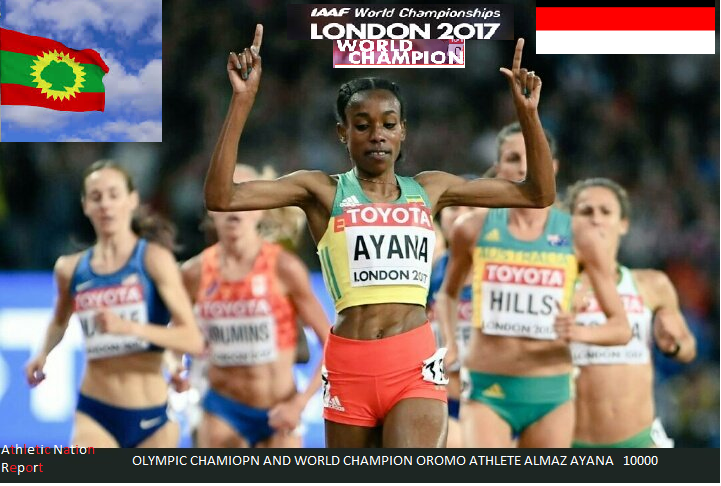

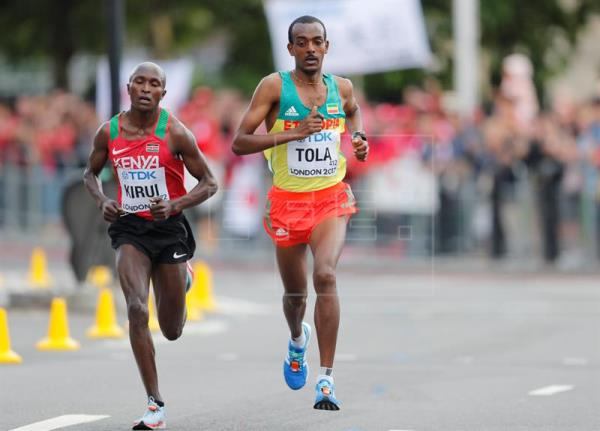
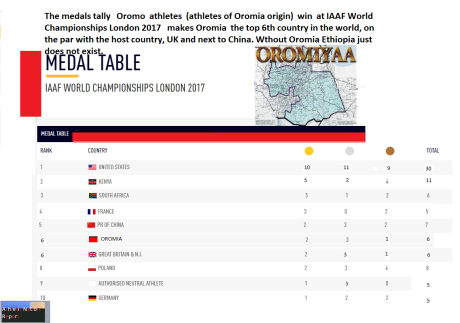


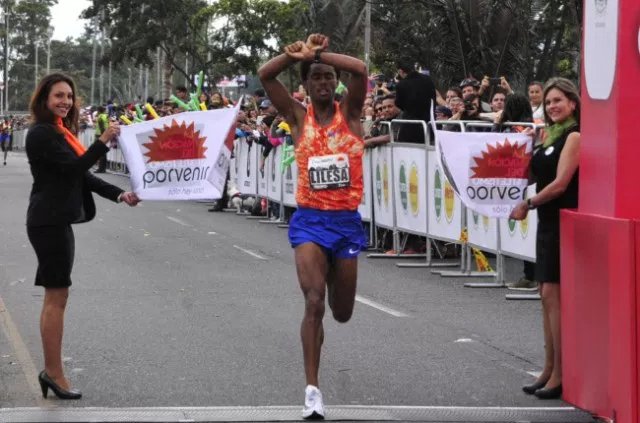
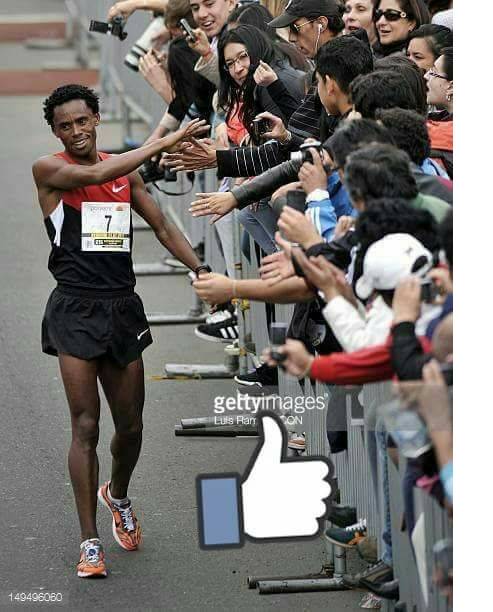



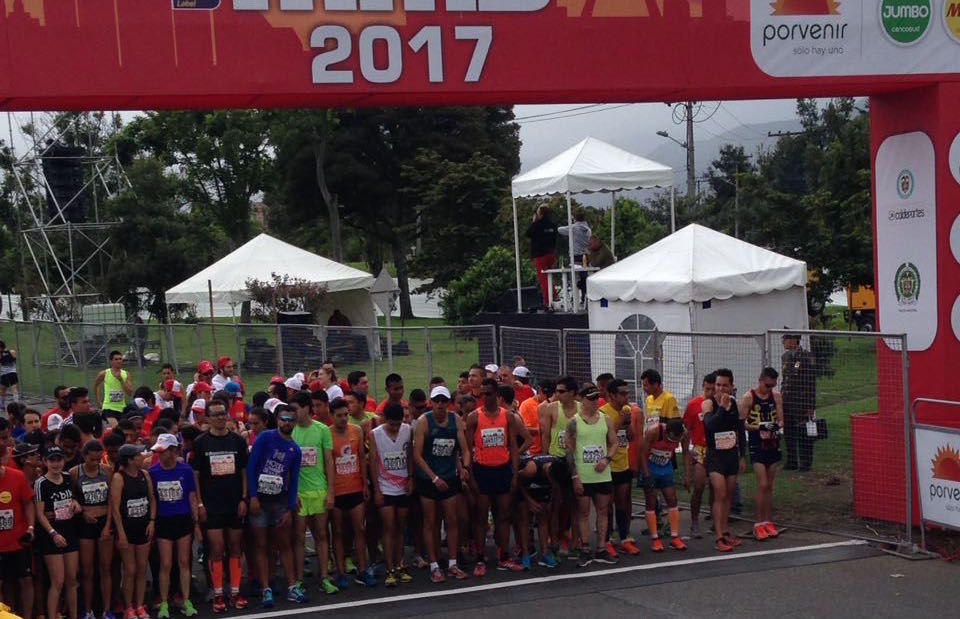




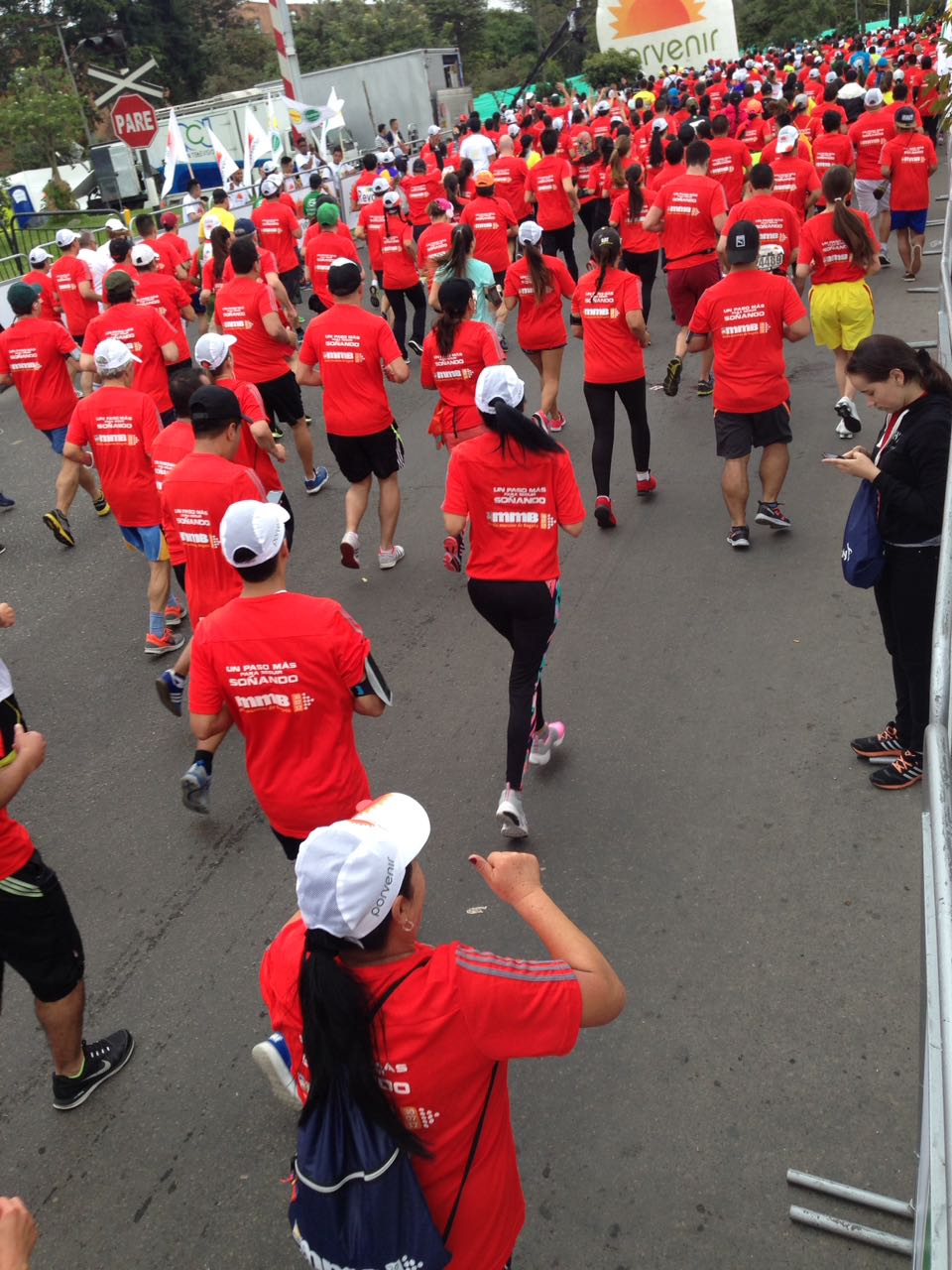
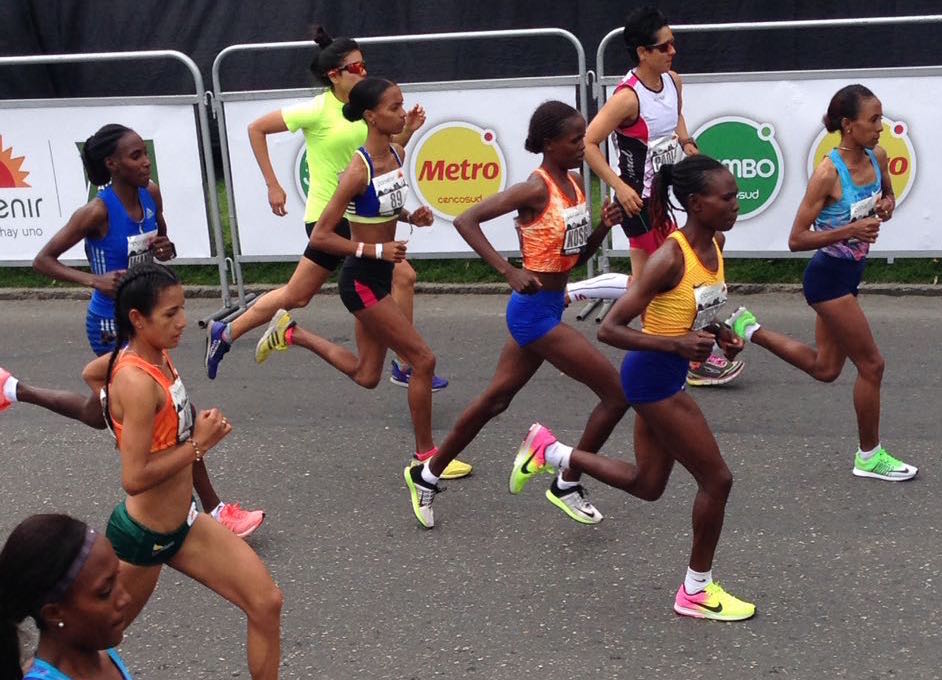

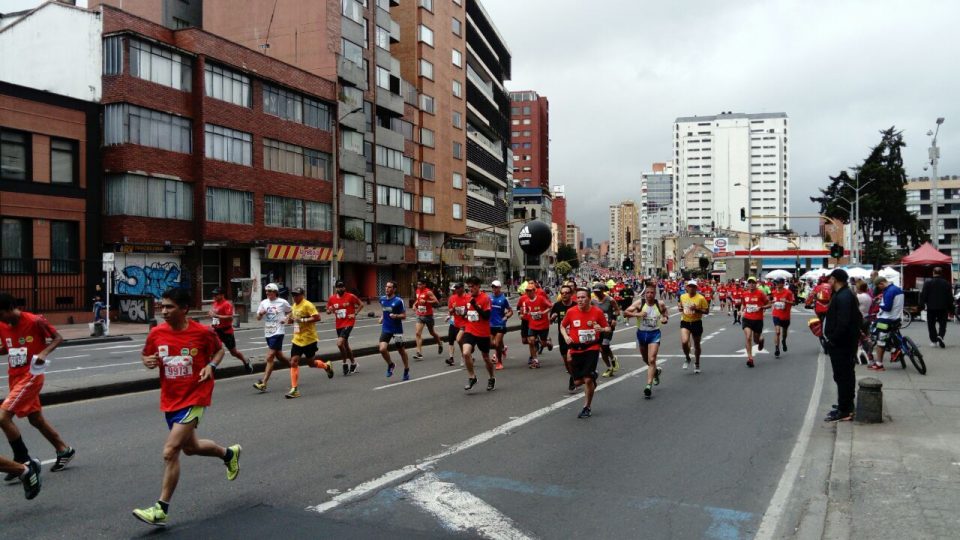
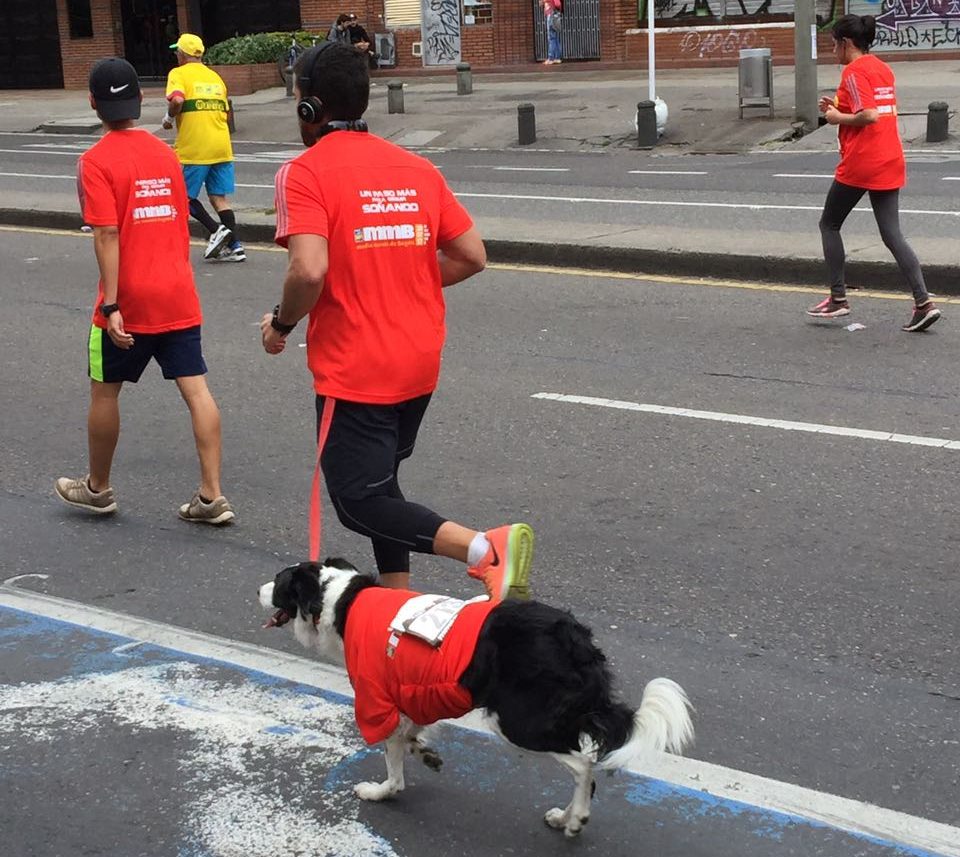
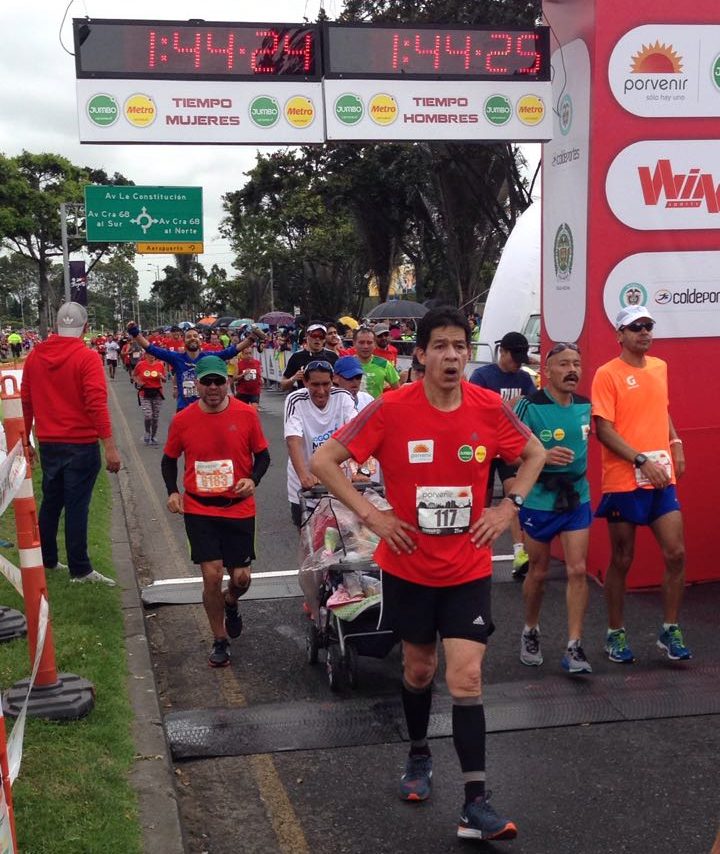




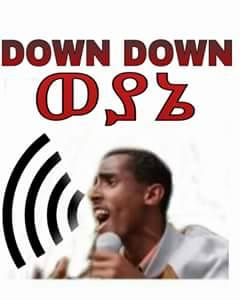

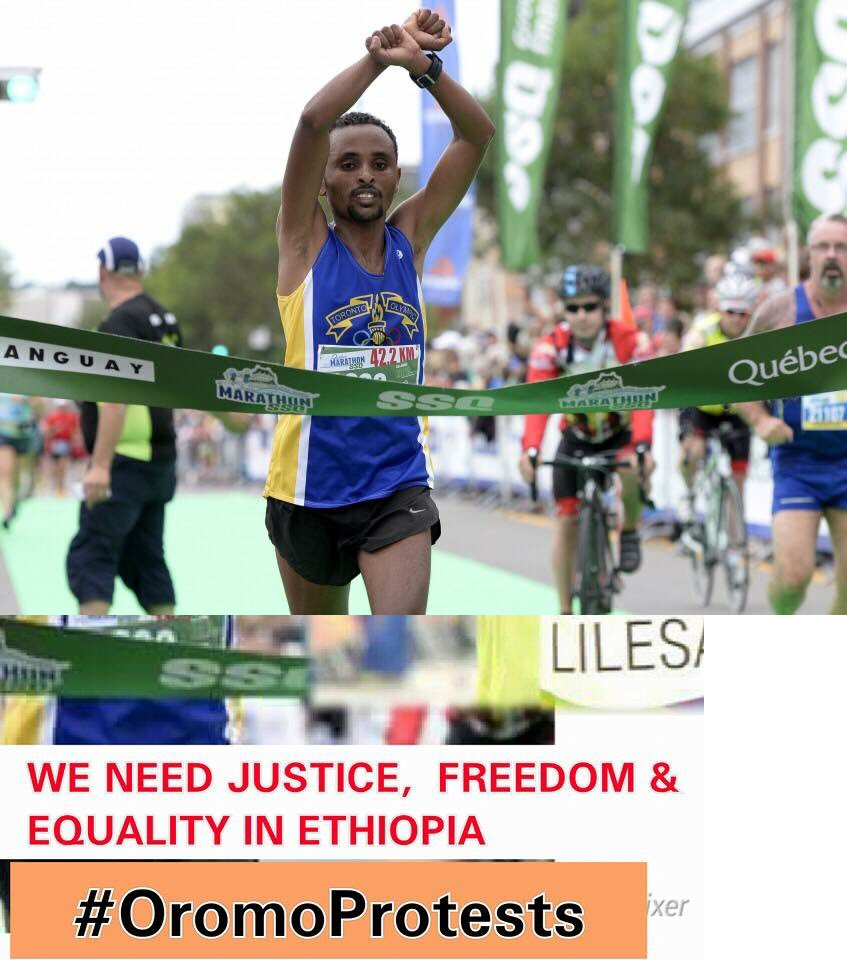


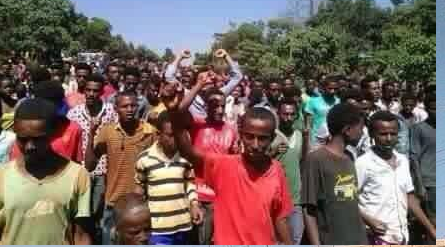


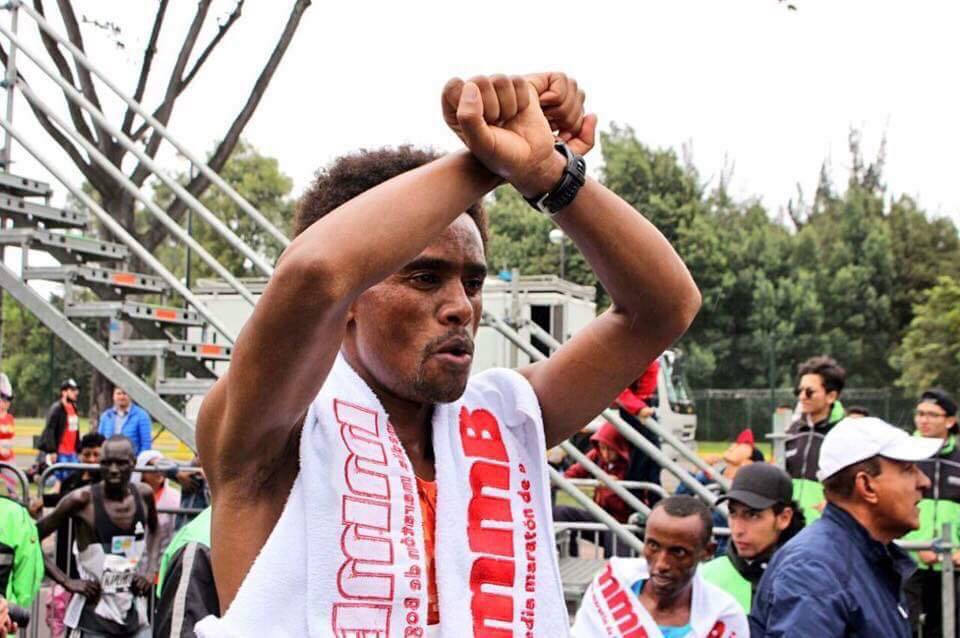

 Godina Wallagaa aanaa Gudayyaa Biilaa irraa,ummaanni gudayyaa biilaa sababa lukkeelee Sirna nama nyaataa mootummaan wayyaanee mirga hiree namummaa fi qabeenya uunfaa ofiitti fayyadamu sarbamnee murtoo balleessanii baduurra geenyeerra jedha qeerroon gudayyaa Biilaa.
 jalatti Argaman keessatti lagannaan gabayaa itti fufeeti jira Qobbootti Lagannaan gabaa roga hundaan godhamaa kan jiru yoo ta’uu wayyaanen daldaltoota walitti qabdee dirqamaan gara hojii keessanii akka deebitan jettee doorsisaa jirti.daldaltoonnis gibirri humnaa ol nutti fe’ame kan doorsisa kamuu kan nu sodaachisuu miti.nuti waan waggaa kudhanitti dalagannee hin arganne waggaa tokkotti mootummaadhaaf kaffaluu maaltu fide osoo hin hojjanne jiraachuu ni dandeenya jechuun ergamtoota wayyaanee ufirraa oofaniiti jiru.


 Godina Arsii.
 Adooleessa 18,2017/Godina Arsii Aanota hedduu keessatti guyyoota lamaan har’aaf kaleessa lagannaan gabaa kan taasifame yoo ta’uu Suuqonni daldalaa magaalota akka Seeruu,Balee, Geersaa, Shaashamannee,Adaabbaa, Dodola,Roobe,Saddiiqa, Waabee, Eddoo, Kofalee, Nageellee, Ajjee keessatti Gibira Wayyaanen Ummatarratti feete mormuun gabaa lagatanii jiru. Tajaajilli Geejjibaas dhaabbateera Konkolaachiftoonni fi Abbootin qabeenyaa sabaan Oromoo hin ta’in muraasni isaanii dalagaa isaanii didanii kan itti fufan yoo ta’uu. Diddaa kanatti akka makaman karaa adda addaatin Qeerron ergeefii kan jiru yoo ta’uu gaaffii isaanif dhiyeessine kana fudhachuun gara ummataa hin goran yoo ta’e Qeerron tarkaanfii Qabeenya isaanii irratti akka fudhatus hubachiisee jira. jedhu Gabaasaalen Qeerroo magaalota adda addaa irraa nu gahaa juru.
 Adoolessaa 18/2017 Godina Lixa Shaggar Aanaa Adaa’aa Bargaa Magaalaa Incinnii Keessatti Qeerroon Dargaggootni Oromoo Sochii Warraaqsaa Biyyoolessa Oromiyaa FXG daran jabeessuun finniinsaa jiruu, Warraaqsii kun yeroo amma sagalee dhaadannoo jabaa dhageesisuun itti fufani jiru.
  Adoolessa 16/2017 Galgala keessaa sa’a 2:50 irraa eegalee Magaalaa Amboo Keessatti Dhukaasni cimaan kan waraana wayyaanee irraa uummatatti baname , gara naannoo Mooraa Yuunibarsiitii Amboottii Waraanni Wayyaanee dhukaasaa guddaa uummata sivilii irratti banuun dargaggoota Oromoo Lama Wareeguun Ibsame jira, Kanneen madeeffaman hanga gabasni kun nu gaheetti adda kan hin baanee ta’uu maddeen Qeerroo Magaalaa Amboo addeessaan. Magaalaan Amboo galgala kana caalaatti gara dirree waraanaatti waan jijjiiramte fakkaatti , gabaasaa dabalataan walitti deebina.
  Adoolessa 16,2017/ Uummanni Shaggar lixaa rakkoo guddaa keessa jiraachuu Qeerroon naannoo Sana’a addeessan.akka gabaasa qeerroo naannoo sanaatti rakkoowwaan jireenyaa ilma namaaf barbaachisan kan akka,tajaajila Daandiin, Ibsaa,Bishaan fi kkf guutummaatti surni nama nyaataa mootummaa wayyaanee ummatarraa kuteera uummanni rakkoo guddaa keessatti argama.
 Adoolessa 15,2017. Godina Arsii Aanaa Siree keessatti Guyyaa har’aa Suuqonni cufaa oolanii jiru. Tilmaama gatii kan galii gibiraa jechuun waajjirri Galii Aanichaa maxxanseen wal qabatee daldaltoonni hojii dhaabanii jiru Waraanni wayyasnees magaalicha keessa deemee ummanni dirqamaan akka suuqii daldalaa isaanii banan furqamsiisuf tattaafachaa jiraachuu maddeen keenya magaalaa Siree gabaasanij jiru.
  Gidduugaleessaa Oromiyaa Godina Lixa Shaggar Magaalaa Ambootti Sochiin Warraaqsaa Biyyoolessa Oromiyaa FXG Kanfaltiin gibiraa dachaa guddaan Uummatarratti dabalamuu waliin walqabatee daran jabaachuun Mormii Guddaan Qeerroo Dargaggoota Oromoo, Daldaltoota fi Uummata Hundaa kan Hirmaachise Warraaqsii Finiinaa jira.


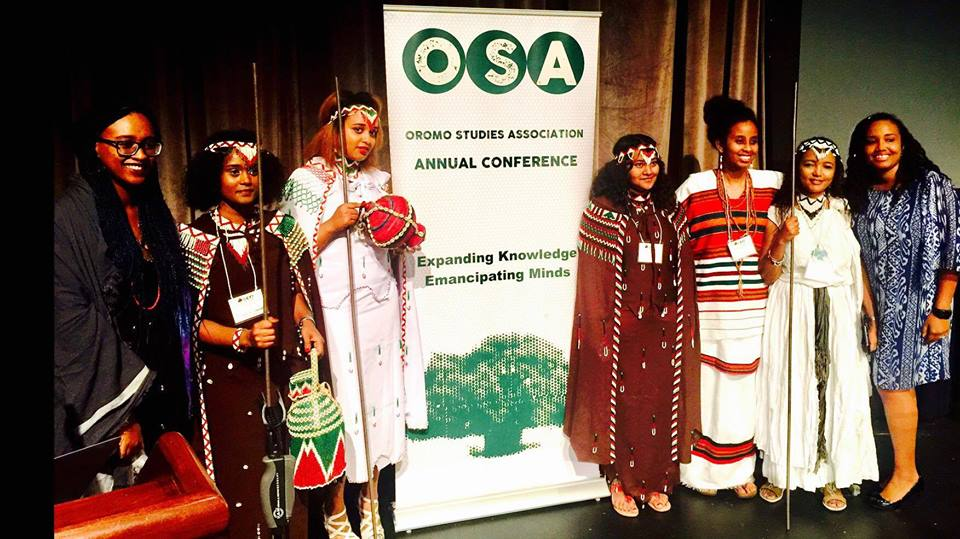
 On behalf of OSA Board of Directors and its Executive Committee, I want to welcome you all to this evening’s events. It is with a great sense of satisfaction that I stand before you to open the 31stAnnual OSA conference. The first time I came to Washington was 33 years ago in 1984 to attend the annual conference of Oromo Union in North America. In early July the same year, we had also an international Oromo conference in Berlin organized by the
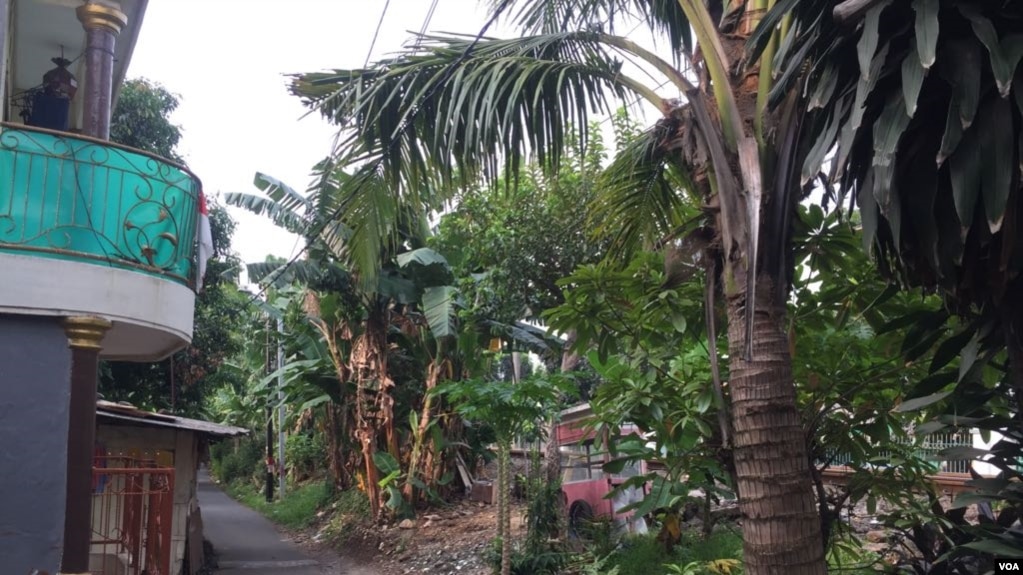
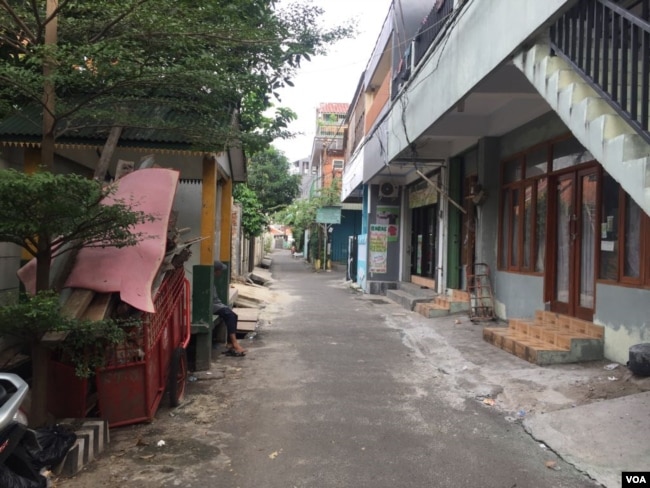
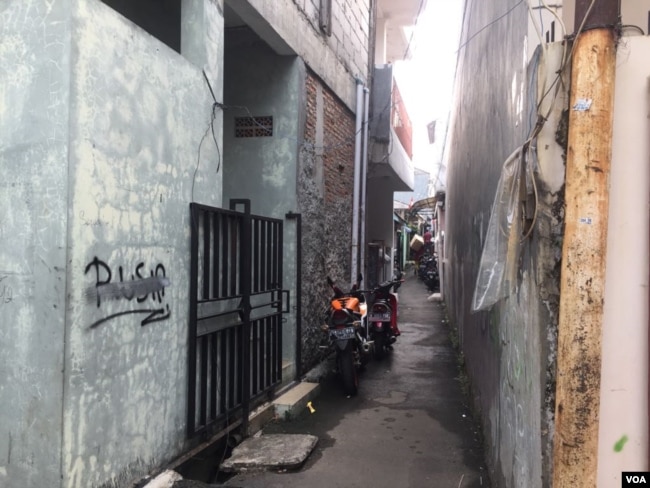
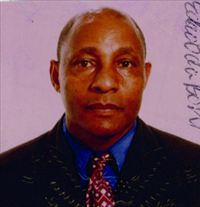


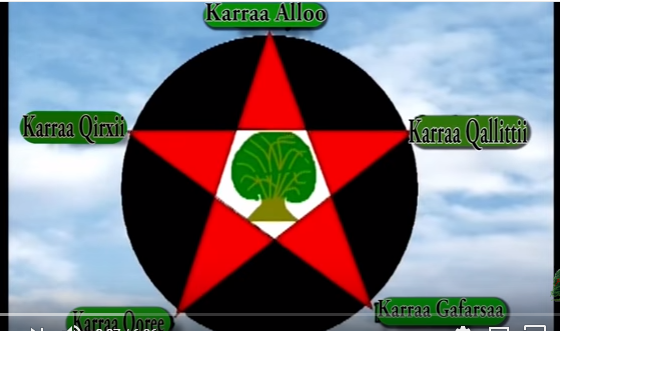
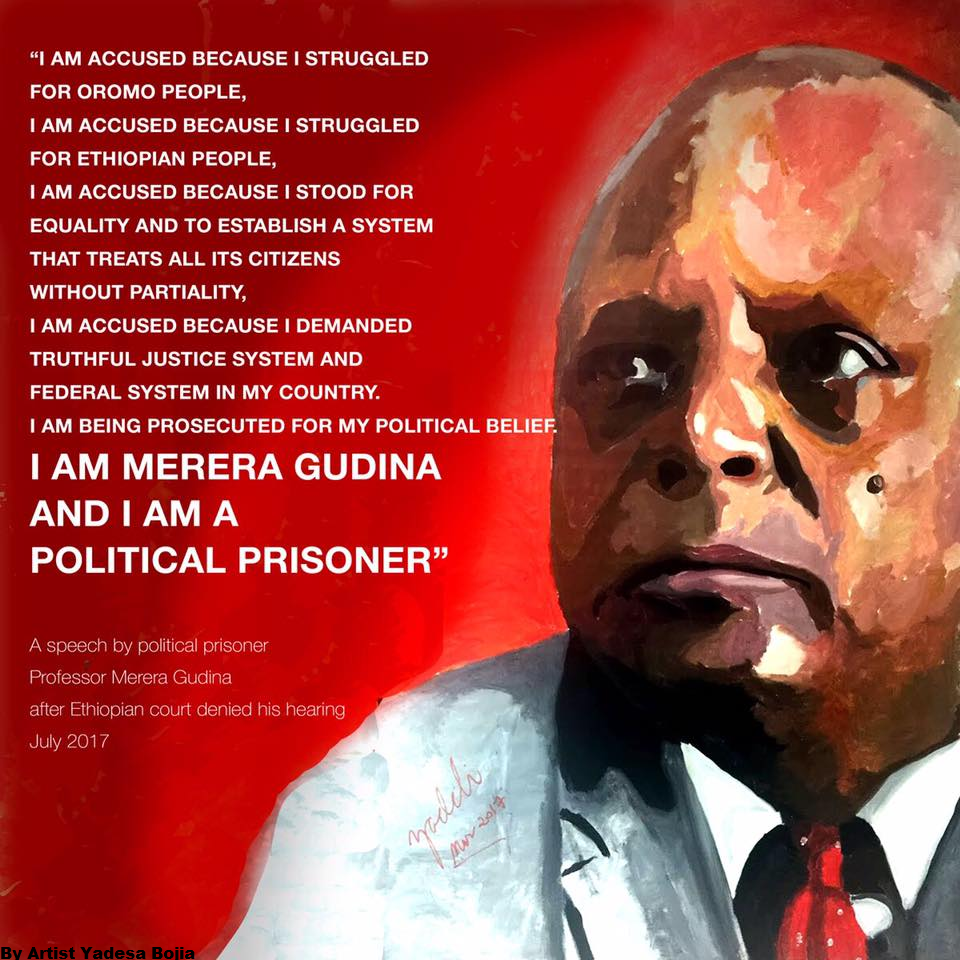




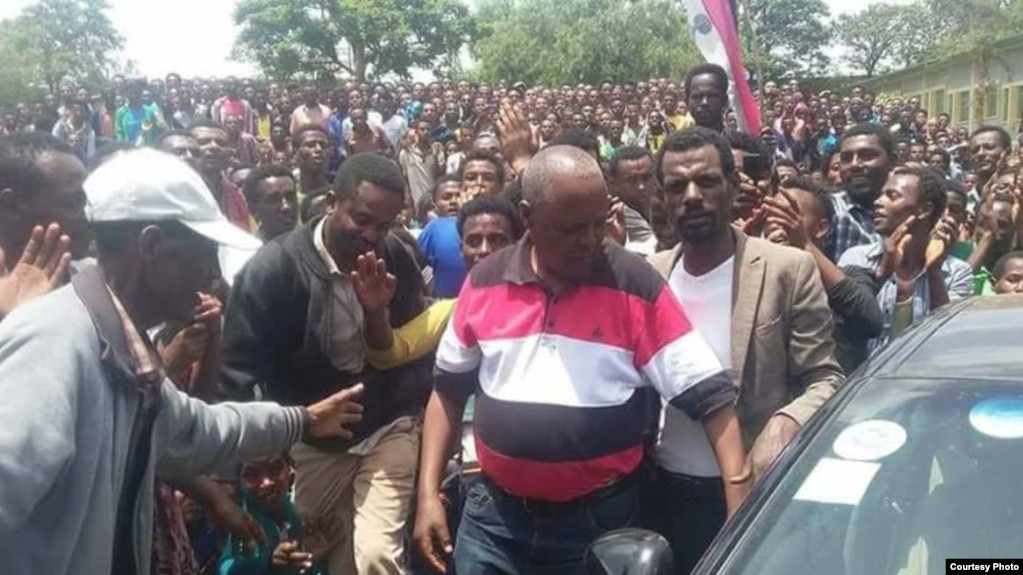


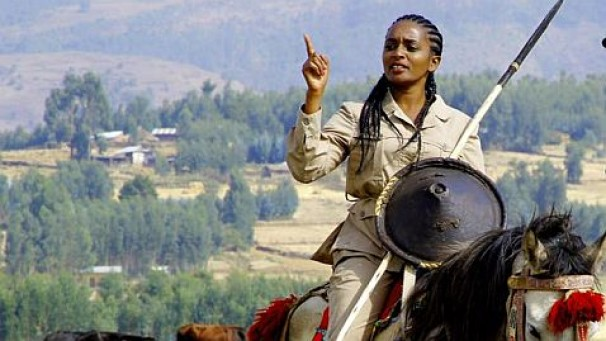
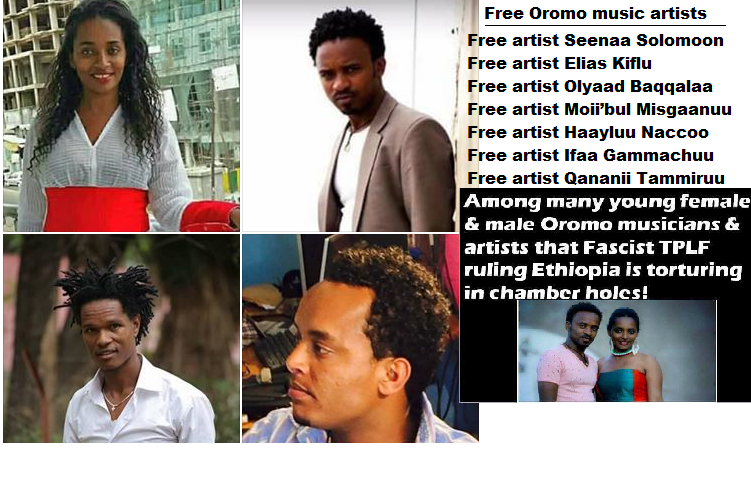



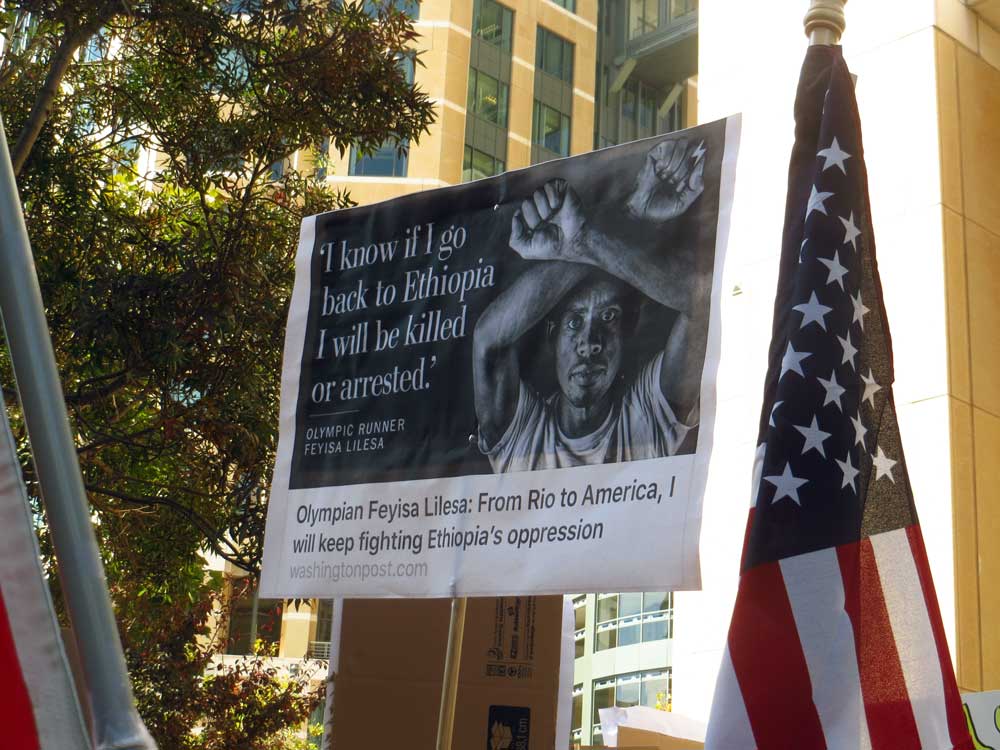





 Waxabajjii 29,2017/Yuunversiitii Wallaggaa keessatti sirna eebbifamtoota bara kanaa irratti diddaan ka’uu. mala jechuun Wayyaaneen baratoota ba’aaf gala dhorkaa jiraachuu Qeerroon gabaase.
 Waxabajjii 30.2017/ Godina Arsii Aanaa Shirkaa Magaalaa Gobeessaa keessatti Dargaggoonni Oromoo hidhamaa jiru. Godina Arsii Aanaa Shirkaatti Ayyaana Iidalfaxriitti Ummanni Akka mormii godhuuf waamicha karaa adda addaatin godhaa turtanii jirtu jechuun Ilmaan Oromoo mana isaanitii guuramuun hidhatti darbatamaa jiru. Akka gabaasni Aanicharraa nu gahe addeessutti dargaggoonni hanga ammaatti mana hidhaatitti darbataman Muhammad Jabboo Aliyyii, Huseen Amaan Gaaradoo, Turaa Jamaal Waakkannee, Ibraahim Jamaal H/ Hasan, Reeduwaan Sh/ Amiin Turee, Awwaloo Ahmad Aloo , Abdii Muhaammad Jamaal, Mahdii Muhaammad Amiin kanneen jedhaman kan keessatti argaman ta’uu maddeen keenya Shirkarraa gabaasanii jiru.





 Biiroon Barnoota OPDO Oromiyaa keessatti tartiiba qubee Afaan Oromoo A B C E F….Z ture jijjirudhaan tartiiba haaraa L irraa eegalu uumee kitaaba barnootaa maxxansee barsiisuu eegaluun wal qabatee gutummaa Oromiyaa keessatti
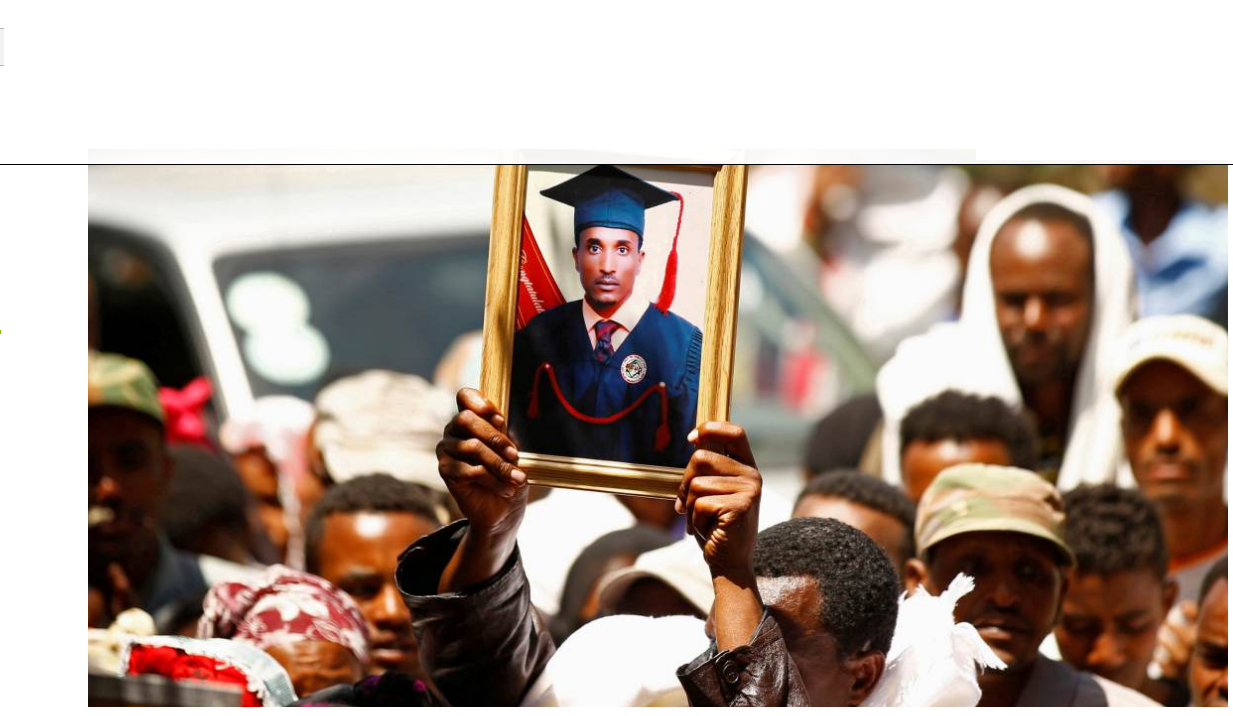


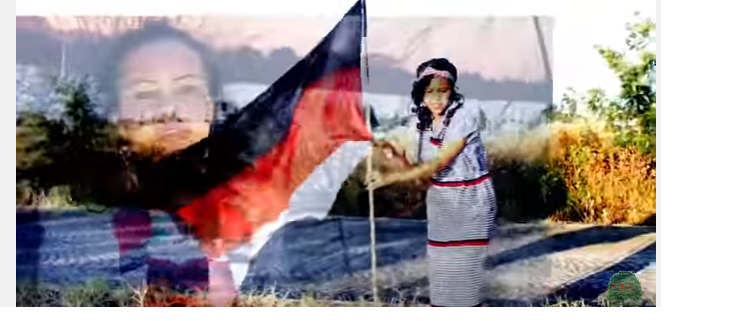

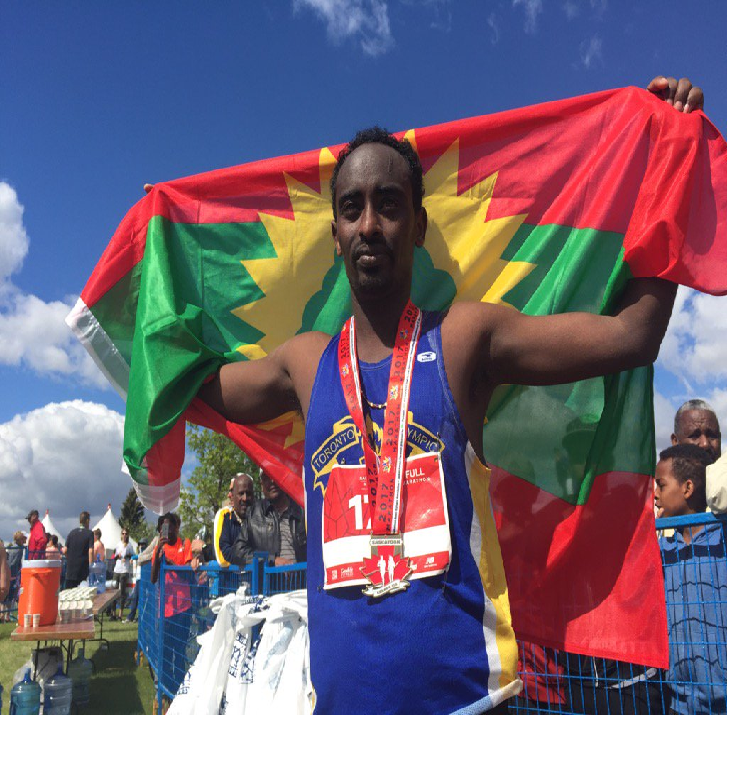




 Oromian Economist

You must be logged in to post a comment.