Economic and development analysis: Perspectives on economics, society, development, freedom & social justice. Leading issues in Oromo, Oromia, Africa & world affairs. Oromo News. African News. world News. Views. Formerly Oromia Quarterly
There should be no place for state-sponsored armed gangs terrorizing people in eastern Ethiopia, killing and displacing thousands – and we are asking for your help to try and stop it.
In today’s world we like to believe that governments don’t use mercenaries to wage covert wars against their own citizens. We like to think that ethnic cleansing does not happen because leaders cannot keep their evil deeds secret. Anyone with an iPhone can capture them and broadcast them around the world.
What we like to think is a bit passé is happening. The Ethiopian government, using a shadowy armed gang called Liyyu Hayil (Special Forces), has been terrorizing people in the Somali and Oromia regional state of Ethiopia.
The Liyyu Hayil has been terrorizing and killing Somali people within the Somali National Regional State of Ethiopia since 2008. It has extended its death mission to the Oromia Regional State, the largest and most populous in the Ethiopian federation. Nearly 500,000 Oromo residents of the Somali region have been forced to leave their homes and deported to the Oromia region.
Sign this petition urging the Ethiopian government to disband the Liyyu Hayil and stop the heinous atrocities immediately.
My colleagues and I have signed an open letter to raise awareness about the ethnic-cleansing in-the-making. This week, 55,000 have been rounded up, loaded on trucks and dumped off in the territory of the Oromia region.
Sign this petition to join us in urging the international community to prevent the deportation of Oromo that is already underway.
Relief support for people affected in ongoing conflicts in the border areas between the Oromia and Somali Regions of Ethiopia., which has caused the death of many people, and the displacement of thousands in east, south and South East Ethiopia.
Your donation will help the displaced and those who lives were adversely affected by the death of income earners of a family, through HIRPHA International.
HIRPHA International is Oromo humanitarian organization incorporated in the Sate of Minneapolis, Minnesota.
Olympian and the global icon of #OromoProtests Feyisal Lilesa finishes 3rd in his the Great North Run Debut on 10 September 2017. Sir Mo Farah 1st and Jake Robertson was 2nd.
The peaceful street protests in Oromia that shook Ethopia for over one year (November 2015-October 2016) turned violent after the reckless action by the government when its military attacked civilians and murdered over 700 at the Oromo Irrecha Festival on October 2, 2016.
The fascistic action of the Ethiopian government turned a peaceful protest into a violent one in which many people were killed and government property was destroyed by the angry protesters.
The TPLF/EPRDF government declared a six- month state of emergency- later extended to ten months- on October 8, 2016 with the pretext of calming the violence in Oromia. During the State of Emergency, the government killing squad members were deployed in all villages of the Oromia Regional state where they committed killings, kidnappings, and arrests during the ten months of the State of Emergency.
Under the State of Emergency, the TPLF/ EPRDF government- trained Liyu Police led by the killing Squad Agazi were deployed along the long border between Somali and Oromia regional states and occupied 32 districts of Oromo land from the south Borana zone to the northeast Hararge zone; many people were killed from both sides. During the six- month war between the federal government force backed Liyu Police and Oromo farmers over 500 people have been killed, and many other Oromos have been forcefully kidnapped and taken to Somali Region.
The border crisis between Somali and Oromia regional states was settled as a result of negotiations between the Oromia and Somali state authorities by annexing 15 Oromia villages into the Somali regional state.
However, two months after the signing of the agreement between the two sides, the pre-planned and unprecedented war against the Oromo nation was re-aggravated along the borders of all sides of Oromia by the Ethiopian Federal government- sponsored regional militias. As a result, intense fighting has occurred from mid- August 2017 until this report was compiled in the Eastern Oromia, Gursum, East Hararge, Rayitu and Saweena, Bale zone, Chamug Borana zone, Wachile and Moyale Gujji zones- over 56 people have already been killed from both sides.
The HRLHA informant has also reported similar war is happening on the border of Benshangul in the west, Gambela in the southwest, Afar in the North. As a result, the Oromo people are currently essentially at war with the Federal government-backed regional militias in all directions.
The current Oromia Regional State Authorities could not protect their people from the aggression of neighbor states backed by the Federal Killing squads.
The Ethiopian Federal government, which in theory has a state duty and a responsibility to bring peace and harmony among the nations and nationalities in the country, actually instigated the conflict between Oromia and all its neighboring states. The TPLF/EPRDF government’s killing squad Agazi force collaborated with the invaders and continued its ruthless repression which will probably drive the country into a full-fledged civil war.The Oromo farmers, who were disarmed by the Oromo People’s Democratic Organization (OPDO) during the State of emergency, have no option other than to confront the attacks perpetrated against them from all directions.
To reverse the shadow of the looming civil war which could result in human tragedy, and atrocity in Ethiopia, the donor governments such as the USA, the UK, Canada, Swedin, Norway and government agencies like the UN, AU and EU and subsidiary organizations (African Commission on Human and Peoples’ Rights, EU Human Rights Commission and UN human rights council) have to express their concerns to the government of Ethiopia to stop backing small groups from fighting against the largest ethnic group- the Oromos- and instead act responsibly to stabilize the country.
This is a cosmopolitan ideal of protecting people inside states against mass atrocities as a matter of common obligation. The Responsibility to Protect (R2P), coined in 2001 under the leadership of the Canadian government and adopted by 150 heads of states and governments in 2005, obliges the international community to intervene to stop atrocities.
As a matter of principle, a state shoulders the primary responsibility to prevent and protect its own citizens against horrific acts, but if it is unable or unwilling to prevent and protect its population from genocide, war crimes, ethnic cleansing and crimes against humanity, the responsibility is thus shifted to the international community. The R2P states, “ when a state is unable or unwilling to protect its population from genocide, war crimes, crimes against humanity and ethnic cleansing, the international community has the responsibility to intervene”.
The UN Charter’s first and most essential aim is to “maintain international peace and security”. However, when the UN was first created, it was an enormous undertaking based on hope.
Today, one critical question on everyone’s lips is whether the United Nations is living up to its mandate, more particularly, of maintaining international peace and security. Amid ongoing human rights crises in Ethiopia it is hard to figure out what exactly the UN & AU have done to uphold their responsibilities. Nevertheless, it is not too late to act today.
Recommendation:
The international communities and agencies can play a decisive role to stop the looming civil war in Oromia/Ethiopia by::
Major donor governments, including the USA, the UK & Canada, Sweden, Norway and Australia should stop funding the authoritarian TPLF/EPRDF government
Putting pressure on the government of Ethiopia to respect the principle of R2P, and shoulder its primary responsibility to prevent and protect its own citizens against horrific acts
Putting pressure on the TPLF/EPRDF government to allow neutral investigators to probe into the political crisis in the country as the precursor to international community intervention
The HRLHA therefore calls, yet again, upon the international community to act collectively in a timely and decisive manner – through the UN Security Council and in accordance with the UN charter on a case-by – case basis to stop the looming Civil War in Oromia/Ethiopia
Copied To:
UN Security Council
Office of the Ombudsperson
Room DC2 2206
United Nations
New York, NY 10017
United States of America
Tel: +1 212 963 2671
E-mail: ombudsperson@un.org
UN Human Rights Council OHCHR address: Office of the United Nations High Commissioner for Human Rights (OHCHR)
Palais Wilson
52 rue des Pâquis
CH-1201 Geneva, Switzerland.
Africa Union (AU)
African Union Headquarters
P.O. Box 3243 | Roosevelt Street (Old Airport Area) | W21K19 | Addis Ababa, Ethiopia
Tel: (251) 11 551 77 00 | Fax: (251) 11 551 78 44Webmaster: webmaster@africa-union.org
The US Department of State WASHINGTON, D.C. HEADQUARTERS
(202) 895-3500
OFMInfo@state.gov
Office of Foreign Missions
2201 C Street NW
Room 2236
Washington, D.C. 20520
Customer Service Center
3507 International Place NW
Washington, D.C. 20522-3303
UK Secretary of State for Foreign and Commonwealth Affairs
Parliamentary
House of Commons, London, SW1A 0AA
Tel: 020 7219 4055
Fax: 020 7219 5851
Email: hammondp@parliament.uk
Departmental
Street,
London, SW1A 2AH
Tel: 020 7008 1500
Email: fcocorrespondence@fco.gov.uk
Minister of Foreign Affairs (Canada) Write to:
Enquiries Service (BCI)
Global Affairs Canada
125 Sussex Drive
Ottawa, ON
K1A 0G2
Email: Enquiry Service – On line form
Canada
Minister for Foreign Affairs (Sweden)
Her Excellency Margot Wallström
Switchboard: +46 8 405 10 00
Street address: Rosenbad 4
Postal address: SE 103 33 Stockhol
Minister of Foreign Affairs (Normway)
His Excellency BørgeBrende
Ministry of Foreign Affairs
E-mail: post@mfa.no
Phone: + 47 23 95 00 00
Address: 7. juniplassen 1, N-0032 Oslo
“Even though my imprisonment was limited to the radius of the prison compound – Ethiopia itself was a giant cell.”
Martha Kuwee Kumsais an Oromo born in Ethiopia where she worked as a young journalist in the later half of the 70’s. She was separated from her three young toddlers, tortured and thrown in jail where she remained incarcerated without charge or trial for the ten years of the 80’s. She was released and brought to Canada through the intervention of Amnesty International and PEN International. She has chosen social work as her mid life career change and now teaches Social Work at Wilfred Laurier University.
(Jun 17, 2006)
Martha Kuwee Kumsa is standing in front of her social work students at Wilfrid Laurier University in Waterloo. Out of the corner of one eye, the Ethiopian-born woman catches sight of a man in uniform lingering in the hall. She continues her lecture, but her heart beats faster and her breathing becomes heavier. Then she gets a clear view of the man — and it’s a university security officer, not a soldier come to drag her away. She relaxes.
“It’s amazing how the brain works and the body responds,” the soft-spoken Kumsa says of the triggers she has learned to cope with over the years.
Martha Kuwee Kumsa of Kitchener is at home in Canada, but still has strong feelings about her native Ethiopia. For years she had long dreadlocks, but two months ago she cut them off in a symbolic gesture.
Terror, struggle, pain and grief have all been part of a long journey in which she lost her husband, her home and sense of security.
Two months ago, in an act symbolic of those losses, she lifted her dreadlocks and cut them off.
Kumsa, 51, who now lives in Kitchener, had let her hair grow since moving to Canada and starting work on her PhD. This spring, however, she decided a woman her age shouldn’t have hair down to her buttocks.
Kumsa knows now, however, that there was more to the haircut than that. In Ethiopia, women who cut their hair are often in mourning.
Martha Kumsa was born in Dembi Dollo, a small town 800 kilometres southwest of the Ethiopian capital, Addis Ababa, near the border of Sudan.
The youngest daughter of a Presbyterian minister, she was named Martha after the Christian nurse who delivered her. The name she holds close to her heart is her middle name, Kuwee, the name of a heroine in Oromo history. But Kumsa wasn’t allowed to go by Kuwee in Ethiopia, where the Oromo people, the largest ethnic group in the country, are still struggling for equality.
Addis Abeba, September 08/2017 – Residents of Ethiopia’s Moyale town, 795 km south of Addis Abeba, in Guji zone, Borena, say both local and regional government officials have “failed us repeatedly” in the face of renewed border incursions followed by attacks by what they described were members of the “Liyu Police”, a special paramilitary force operating within the Ethiopian Somali regional state.
The complaint from residents who talked to Addis Standard came following yesterday’s bloody fighting between the locals and what Addisu Arega, head of communications affairs bureau of the Oromia regional state, said were “armed men who crossed over to the border from the Ethiopian Somali regional state”.
Several people were reported to have been killed during the daylong fighting in Chamuqi woreda in the town of Moyale and its environs. Addisu told DW Amharic that yesterday’s fighting was a “serious conflict” and that causalities were reported, but he said the regional state was not able to verify the number of causalities and the extent of the damage as of yet due to the “ongoing conflict”.
Dube Qajelcha, a resident of Moyale town, told Addis Standard that several accounts from the people around put the number of causalities both from the members of the “Liyu Police” and the locals to more than 30. “Most of the causalities are from the members of the “Liyu police” who were met with resistance from the locals when they crossed to the Chamuqi village,” Dube said.
According to Addisu, the Somali regional state administration had in the past began a project in Chamuqi woreda, which is under the administrative boundaries of the Oromia regional state, but had to stop following negotiations. But armed men from the Somali regional state returned back and tried to waive the Somali regional state’s flag.
Dube Qajelcha said the local youth have taken matters into their own hands and “went to fight against members of the “Liyu Police” who then stared to indiscriminately fire at the locals.” “Officials of the Oromia regional government knew about this repeated incident in the past but have chosen to ignore it,” he said “they have failed us.”
Another resident of the town who wanted to remain anonymous expressed his anger at the “OPDO leadership who, just a few months ago, were seen shaking hands with officials from the Somali regional state pretending that the problems were resolved. We all know that the real problem is not a border issue. The real problem is the use of the “Liyu Polcie” by the Somali regional government to loot our cattle, rape our women and kill our men,” he said, “the Oromia regional state know this. We have been telling them since ten years now, but they are unable to deal with our plights.”
Several bodies of dead military men and civilians have littered Oromo social media activists throughout yesterday. And in late afternoon similar conflict erupted in Rayitu Gelbi woreda of Bale zone, south east Ethiopia. According to DW Amharic at least four people were killed in yesterday fighting and the federal army reserve from Ginir, Bale, were seen mobilizing toward the area, DW said quoting eye witnesses. However, reports indicate the conflict is still ongoing.
The incident is not an isolated one; it is an extension of a growing tension related to border and resource issues between the two regional states but one that is exacerbated by the persistent raid by the members of the “Liyu Police” into towns and villages of areas under the administrative border of the Oromia regional state.
The “Liyu police” is a special police force established in April 2007 following an attack by the Ogaden National Liberation Front (ONLF) rebel group on a Chinese oil exploration that killed 74 Ethiopians and nine Chinese workers. However, since its establishment the paramilitary force is repeatedly accused of committing atrocious crimes against civilians with pure impunity.
On Tuesday this week, Addisu Arega reported that four children were hurt when a hand grenade went off in in Mieso town eastern Ethiopia. He posted another report on the same day saying armed men who crossed from the Somali regional state have opened fire against civilians in the same town and have wounded two people. On Friday last week another intense fighting between the Ethiopian Somali and the Oromo ethnic groups in the same town and its environs has left “more than 30 people”, including “more than a dozen army members”, dead and several others injured, Addis Standard reported.
The elders who traveled from East Hararghe Zone
In August, a group of elders who traveled from East Hararghe Zone, Gursum Woreda of the Oromia Regional State to the capital Addis Abeba have called for an end to the “Liyu police anarchy” in areas bordering the Oromia and Somali regional states; and in march 2017 weeks-long cross border incursions by armed militiamen that local say were members of “Liyu Police” into many localities in eastern and southern part of the Oromia regional state, (bordering the Ethiopian Somali regional state in eastern and south eastern Ethiopia) had left more than 100 civilians dead. AS
The Ethiopian Government Proxy war Retaliation against Oromo: Boarder Attacks
BY Najat Hamza
The Ethiopian Government Proxy war Retaliation against Oromo: Boarder Attacks
It is very hard to shed light on a human suffering when the world is bombarded with one tragic human history after another. The world has become a show case for various forms of violence, famine, indifference, greed and pure hate. It seems like mother nature has joined the destructive trends by unleashing the worst weather disasters known to us in recent years with more devastation to come. However, all of us come from a home, a place, people we call our own, my own place is Oromia. Oromia is a country fighting to survive. My people, Oromo have been fighting to restore their dignity and self-worth for generations under various Ethiopian regimes. The last 25 years under the Tigrean People’s Liberation Front is no different. We have fought to advance our right to life, to equality, to justice and to democracy on our own land and the fight still rages on.
In recent years Oromo people have resisted the dictatorial regime of Ethiopian in every way they can and still up in arms with it. People have taken it to the streets, they have boycotted government programs, markets, public meetings and tax hikes to show their dissent. The Ethiopian government answered their legitimate demands with more death, torture, disappearances, incarcerations, displacements and denial of necessities. These measures are taken against the Oromo people as an attempt to salience us once and for all. It is hard to care about one issue, in the world filled with nothing but chaos, nonetheless it is about unnecessary human suffering.
The complacency of Western government in this validated violence against the Oromo people and other ethnic groups all over Ethiopia will not be overlooked. The western enablers of a rotten regime unleashing unimaginable suffering on its own people is perplexing to say the least. It raises questions like, what is the geopolitical gain of the West for the complacency of this violence against innocent people? What does each Western country gain for turning a blind eye in this ethnic cleansing? How could one advocate for human rights and democracy and enable such a regime all at the same time? And many more questions that are even more harder to understand.
The boarder attack wages all over Oromia particularly East and West Hararge region is the result of retaliation against people who simply asked for their right to be respected. They are paying with their lives, limbs, incarcerations, rapes, displacements and hunger simply because they dared to ask for their God given rights. How can any of us show indifference to our brothers and sisters along the Oromian boarders while bullets rain on them daily? What would take for Oromo people to say we are in this together, we have to stand together, we must fight together and we will win together? Do we sit and wait for the bullets to come to each of our door steps to care? The suffering of one Oromo person is not enough to sound an alarm for those of us near and far? Why are Oromos on the boarder dying? You know why? Because they spoke for all of us, for Oromia, for each acre of land that makes Oromia a country that it is, that is why they are being sprayed with bullets.
The political differences between us about how to get to the mountain top should not be a hindering force for our progress nor should it be a catalyst for indifference. The current artificial bickering among us, character assassinations, name callings, and all destructive agendas will not allow us to serve the ultimate goal. The goal is to see a country we all call home from vultures of every kind past, present and the future. The goal is secure our home, so that generations that come after us will not be prosecuted simply for who they are. You can disagree, debate, and even walk away from ideas but what you should not do is turn it into smear campaign. It helps no one, particularly those we suppose to assist. Those who are standing in front of fire with their bodies to die for the same ideas we cannot even agree on.
The confusion of diaspora politics is having some effect in the way we respond to tragedies as they unfold. We suppose to help with, funds, advocacy and being moral supporters for the real heroes back home fighting for their survival. What are we doing we cannot contribute the bare minimum? What the use of our elaborate ideas if can turn to something practical that could help our people? Who is the hero? Who is dying? Why are they dying? What is our call? How do we serve the purpose? In what way can we serve the purpose? These are the questions we should ask ourselves, we are fortunate enough to be in someone else’s country, enjoying peace. We can use this advantage to help our people in an impactful way.
Oromia does not need leadership, a mouthpiece, or self-serving individuals from diaspora. What they need is a support system from us. A support system that can deliver financial, moral and political on the ground. They need a ground to stand on, to fight their own fight. We can be their ground, we can be their support, as soon as we understand it is never about us. It has always been about those who refuse to run from their country and fight try to make it better. It is about the Oromo people in Oromia. What are you going to do about that?
Najat Hamza speaking to Aljazera about the state sponsored political crackdown or Severe measure on peaceful protesters in ETHIOPIA , On Oromo people and many others ,We thank you for an amazing explanation of the crackdown by Ethiopian government within very short time!
The arrest and charge of seven artists in Ethiopia with terrorism in June 2017 constitutes yet another example of the Ethiopian government’s disregard for freedom of expression. Especially members of the Oromo community and artists criticising the government such as singer Teddy Afro have systematically been the victims of harassment by Ethiopian authorities, including being prevented from performing or even being arrested. The UNPO condemns these actions and calls for the charges against the seven artists currently held in custody to be dropped.
Ethiopian authorities charged seven artists – musicians and dancers – with terrorism in late June 2017 for producing and uploading “inciting” political songs and videos, according to media reports. Freemuse is concerned about the charges and the continued erosion of freedom of expression in Ethiopia, especially of the Oromo people, the largest ethnic group in the country.
Freemuse is also alarmed by the wide latitudes Ethiopian authorities have taken during the recently lifted ten-month-long state of emergency put in place in response to protests stemming from the government’s plan, announced in 2014, to expand capital city Addis Ababa into farm lands in the Oromia region, the country’s largest region and home to the Oromo people.
“What is happening in Ethiopia is not a spin off from the recent protests and uprising, but rather is about a government clampdown on the artistic community in general and of Oromo artists in particular. We call on national authorities to drop the charges on the seven artists and protect all peoples’ right to freedom of expression, including expressions critical of governments,” Freemuse Executive Director Dr Srirak Plipat said.
The seven artists – Seenaa Solomon, Elias Kiflu, Gemechis Abera, Oliyad Bekele, Ifa Gemechu, Tamiru Keneni and Moebul Misganu – were arrested in December 2016 and held in Maekelawi Prison, which Global Voices reports is notorious for its torture practices. Misganu had been arrested before in 2014 in connection to student protests in Oromia and was released in 2016.
More recently, the BBC reported that Ethiopian police stopped the formal launch of singer Tewodros Kassahun’s, who performs as Teddy Afro, latest album without any official reason, preventing event organisers from entering the venue and demanding a permit. His new album, released in May, has become Ethiopia’s fastest selling album and topped Billboard’s world album chart.
Additionally, his Ethiopian New Year’s Eve concert scheduled for 11 September this year was cancelled for the third consecutive year, according to non-profit Music in Africa Foundation.
Teddy Afro is no stranger to controversy as he first drew negative attention from authorities in 2005 when he released his third album which contained songs critical of the government that became anthems for protest movements.
In 2008, he was imprisoned for a hit-and-run accident in a case that he claims was politically motivated and was released in 2009, after serving 18 months of a two-year sentence.
Freemuse has registered over the years several attacks and forms of harassment on Oromo artists, including the imprisonment, beatings and forced exile of artists, as well as the banning of music and shutdown of studios.
Addis Abeba, September 01/2017 – Intense fighting between the Ethiopian Somali and the Oromo ethnic groups in the eastern Ethiopia has left “more than 30 people”, including “more than a dozen army members”, dead and several others injured, Addis Standard learned.
According to three residents of Mieso town, west Hararghe zone, who contacted Addis Standard late this evening, today’s fighting in and around the town was between several members of local residents and heavily armed members of the “Liyu Police”. “We couldn’t take the killings our men, the raping of our girls and the lootings of our cattle by bandits openly supported by the Liyu Police,” wrote Abdulatif Kererro, a resident of the town in his message. A similar attack has left seven civilians dead last week in Chinakson in east Hararghe and its environs.
The conflict has been going on for several months now. The local say it is aggravated by the presence of members of Ethiopia’s notorious police force, “Liyu Police,” a special paramilitary elite force accused of its close connection to Abdi Mohamoud Omar, president of the Somali regional state in eastern Ethiopia. Members of the “Liyu Police” are often accused of looting, rape and extrajudicial killings of civilians ever since their establishment in April 2007.
Last week, a group of elders who traveled from East Hararghe Zone, Gursum Woreda of the Oromia Regional State to the capital Addis Abeba have called for an end to the “Liyu police anarchy”.
In march 2017 weeks-long cross border incursions by armed militiamen that local say were members of “Liyu Police” into many localities in eastern and southern part of the Oromia regional state, (bordering the Ethiopian Somali regional state in eastern and south eastern Ethiopia) had left more than 100 civilians dead.
It is not clear what trigged the latest conflict. But the Oromia regional state bureau head Addisu blamed the reasons for March’s conflict as “border expansion” and “economic” in nature. The clashes happened after incursions by “armed men” from the Somali regional state into towns and villages administratively under the Oromia regional state.
In April 2017, following several attacks by Liyu police, Abdi Mohamud Omar and Lemma Megerssa, presidents of Somali and Oromia regional states respectively, have signed an agreement to end “border hostilities”. On August 19, the Oromia regional state said that as part of that agreement, of the 68 contested villages between the two regions, 48 have been returned to be under the administration of the Oromia regional state. But the deal doesn’t not seem to hold water.
Today’s heavy clash subsided late this afternoon after the “members of the federal army arrived in the scene”, according to Abdulatif, “but we are not going sit back and see this happen again,” he wrote. AS
Related:-
Oromian EConomist: Six Major National and Regional Unintended Policy Consequences of the Invasion of the Eastern and Southern Oromia by the Somali Liyu Police, i.e., the Somali Janjaweed Militia
Six Major National and Regional Unintended Policy Consequences of the Invasion of the Eastern and Southern Oromia by the Somali Liyu Police, i.e., the Somali Janjaweed Militia
1. The TPLF/EPRDF government’s arming and creation of well trained and well-armed local militias for smaller ethnic minorities groups like Afar, Somali, Benishangul and few others with the sole purpose of attacking the Oromo and the Amhara; and the disarming of the two major ethnic groups, the Oromo and the Amhara, will have lasting peace and security implication for Ethiopia and the rest of Horn of Africa. The TPLF/EPRDF government will come out of this war as weak, cunning, untrusted and very hated by all Ethiopians.
2. The invasion of Eastern and Southern Oromia by the Somali Liyu Police and the politically calculated passivity by other Ethiopians mainly in Addis Ababa and the Amhara region will send strong signal to the Oromo people that the Ethiopian nationalism and patriotism is dead and the country is on the verge of dismemberment; and the Oromo people will be unlikely to participate in any national self-defense effort under the Ethiopian umbrella from now on be it on the Eritrean front or the Sudan front or even invasion by country’s like Egypt.
3. The Somali Liyu Police invasion of Eastern and Southern Oromia orchestrated and aided by the TPLF/EPRDF and the so called Ethiopian defense force will lead to the breakup of the Ethiopian Defense force along ethnic lines or regiments that will not trust and coordinate with each other. No young Oromo who observe the present actions of those now leading the Ethiopian National Defense Force will ever trust and be loyal to the command structure of the Ethiopian Defense Force since it will be perceived as not having the best interests, mainly the peace and security, of the Oromo people.
4. The Somali Liyu Police invasion of in Eastern and Southern Oromia and its attack on unarmed civilians will lead to regional arms race within Ethiopia where every ethnic group will race to arm itself and establish its own popular self-defense forces against any potential attacks similar to the attack and invasion the Somali militias are conducting daily in Oromia.
5. The Somali Liyu Police invasion and the failure of the Ethiopian Federal government to do anything to defend the unarmed Oromo civilians from attack will send strong signal to the international businesses, development and security partners of Ethiopia that the country is unstable, ripe for sudden ethnic conflicts and civil war which will make it very high-risk country to do business in.
6. The creation of Somali Liyu Police in Ethiopia certainly will trigger Horn of Africa wide regional instability by encouraging the creation of similar armed Somali militia groups in Kenya and Djibouti with similar objectives to accomplish the greater Somalia agenda by seceding the Somali speaking part of Kenya and Djibouti.
Nation wide Boycott and Sit-in is underway in the Ethiopia’s largest state, Oromia.
What is this boycott about?
••• Demanding unconditional release of OFC leaders and all political prisoners in Ethiopia.
•••Demanding lifting of heavy taxes
••• demanding the government to stop the Somali regin’s #Liyupolice cross boarder attack and active genocide.
•••Demands the government to address all those demands raised are under#OromoProtests#OromoRevolution#Ethiopia
The protest is successful in planning and successful in action.
#Breaking: Harar and its surroundings under strike; no trade and transport activities observed. Some damaged vehicles were also spotted. pic.twitter.com/YmyOSIt2Tk
Many people have stayed at home and business owners have closed their doors in parts of Oromia region. Most shops, hotels and restaurants in south-eastern towns of Miesso, Chiro, Hirina and Aweday towns have been shut after strikes were called on Wednesday. The latest protest is said to be a continuation of the nation wide strike that started in July to protest against the government over the imposition of a revised tax law. Taxi service from the outskirts of Addis Ababa, Asko to Burayu has been disrupted. In the town of Ambo 130 kilometres west of Addis Ababa almost all shops, hotels and restaurants have been shut. In nearby Woliso and Ginchi retail businesses were also closed. There were similar strikes in some towns of Arsi and Bale zones including Shashemene, despite reports that police and security forces were threatening to revoke the licenses of those who joined the strikes.
While most protests are peaceful and the towns are quiet, in some parts damages on public transports and farms are reported. A minibus carrying passengers on the road from Harar to Dire Dawa has been attacked by stone throwers. A long distance bus, Selam heading to Harar from Addis Ababa made a half turn at Adama town this morning, sources told Ethiopia Observer. Selam bus, as it is owned by the ruling regime, has been a frequent target of attack in the past.
The latest protest is one of the biggest stay-away actions, since the state of emergency has been lifted in early August. Emergency law imposed in October, after more than a year of violent protests in the region led to the arrests of more than 21,000 people. Click here to read more at Ethiopian Observer
Liyu police incursion into Oromia is the manifestation of TPLF proxy war on Oromia. It has nothing to do with the brotherly Somali ppl. pic.twitter.com/iAc0YWiV47
Guyyaa Arba’aa/Roobii/ Dhufurraa jalqabee Guyyaa Shaniif (5) Walitti aansee Waan Godhamuuf Jimaan Haqaaran Takka Harargerraa Gara Awaash, Adaamaa Fi Finfinnee Kan hin seenne Tahuu Dursinee isin Beeksifna.
Dubbii kana Salphiftanii/Tuffattanii Bira Darbuun Hojirra Hin Olchitan Taanan, Rakkoo Isin Mudatuuf Qeerroo fi Ummatni keenya Kan itti Hin Gaafatamne Tahuu Beekaa.
Mootummaa Abbaa Irree Dhiiga Saba Keenyaa Qulqulluu Dhangalaasutti Hin Gurguurru!!!!
Tokkummaan Ummata Oromoo ha dagaagu
Murteessan Hegeree Oromiyaa Oromoodha
Injifannoon kan Ummata Oromooti
“Godinaa Jimma Aanaa Nonnoo Beenjaa Magaalaa Algaa Kessatti Guyyaa Har’aa Hagayyaa 13/12/2009
{19/08/2017
Mormiin Qeerroo Haala Ho’aan Itti Fufe Jira
Sababni Isaa Yeroo Mormii Gabaa Lagaanaa Marsaa 2ffaa darbee irraatti polisonii uummataa yeroo dorsisuuf yaalanitti uummanii nu hin dorsistaan mootummaadha nu samaa jiru hayyootaa keenyaa mana hidhaatti dararamaa jiru jechuun uummanii hiriraa bahun sagalee isaanii dhageessifacha turan kanaan wal qabaate polisoonii uummataa dorsisaa turan sun yeroof miliqaani turun guyyaa har’aa mormii marsaa 3ffaa fashaalessuf har’aas yeroo uummataa dorsisuu jalqabaniitti qeerroon algaa tokkummaan ka’un mana polisii tokko irratti tarkanfii fudhatani turan .kanaaf yeroo ama kana magaalaan algaa muuddamsaa cima kessa jirti.”
Among the thousands facing criminal charges in the wake of the SoE are these group of women in Assela town.
Liyat Fekade
Addis Abeba, August 22/2017 – On Friday August 04, members of the Ethiopian parliament have reconvened after having been called off their summer recess. Of the three topics they reconvened to discuss was the lifting of the ten month old State of Emergency (SoE), first declared on Oct. 08 2016.
Briefing the members of parliament (MPs) on the need to lift the SoE, Defense Minister Siraj Fegessa, who is also the secretariat of the command post established to oversee the implementations of the SoE, said that the country was experiencing a return to normalcy as compared to the months and days prior to the declaration of the emergency decree, hence the need to lift the SoE.
However, almost as news besides the lifting of the SoE, Siraj Fegessa told the lawmakers that there were 7, 737 individuals who were facing legal actions in different courts in the country after having been charged with criminal offenses. According to Siraj, 4, 136 of these people were from the Oromia regional state, the epicenter of the 2016 yearlong anti-government protests; 1, 888 from the Amhara regional state, which followed suit six months into the protests in Oromia; 1, 166 from the less publicized protest-hit areas in the Southern Nations Nationalities and People’s Regional state (SNNPR); and 547 from the capital Addis Abeba.
It was a déjà vu
Ethiopians are acutely familiar with the government’s intuitive response of mass detention that quickly follows popular anti-government protests. Tens of thousands of Ethiopians from all walks of life had ended up in the country’s military camps, prisons wards and temporary detention facilities in the post 2005 general elections, in which close to 200 protesters were also gunned down in the streets of the capital by fully armed security forces.
These detainees include students, mothers and in some instances, government employees
Reminiscent of that recent past, 24,799 Ethiopians were detained in two rounds during in the first few weeks into the October SoE, according to the government’s own account. However, countless others were already detained in the lead up to October 2016, which brought the number of those detained to over 27, 000.
Grieving in Ethiopia’s politicized court rooms
It is worth mentioning here that the 7, 737 people who are now facing charges of serious criminal offenses, including but not limited to outrage against the constitutional order, is a number three times higher than the 2, 449 individuals that Siraj Fegessa said would be brought to face justice on Dec. 17, 2016.
In what could safely be considered as politically motivated act, the federal Supreme Court has “placed considerable pressures on courts and prisons authorities in Oromia, Amhara and Southern Nations, Nationalities and People’s regional states to bring thousands of detainees to Addis Abeba for them to be tried with terrorism offenses,” a senior judge in Adama, 100 km south of Addis Abeba, told Addis Standard.
A somewhat similar incident in post-2005 elections played a significant role in forcing the then president of the Oromia Regional State Supreme court, Teshale Aberra, into exile.
Judge Teshale Abera is now living in exile
Speaking from his exile in the UK, Teshale told Addis Standard that in 2005, the rift between him and the federal Supreme Court widened when the later requested him to facilitate the trials of some 18,000 detainees who were transported to several detention facilities in Oromia regional state after having been detained in the capital Addis Abeba. “Because the case concerned protesters who supported the opposition CUD, which won all the 23 seats allocated to the city of Addis Abeba in the federal parliament, and because many of the judges who were presiding in the federal courts in the capital were ethnic Amharas, authorities at the federal Supreme Court believed that the trial would lack judicial impartiality from the judges,” Teshale said. “This was a clear case of politically motivated decision, which I refused to accept.”
Teshale’s experience in 2005 remained a perpetual stain in judicial procedures in Ethiopia, leaving the fate of hundreds of Ethiopians detained during protest-crackdowns and subsequently prosecuted hanging in the country’s politicized court rooms.
For starters, detainees are often brought to the capital from all corners of the country to face terrorism charges. This practice often exposes detainees to extrajudicial brutalities, including torture, inside prison facilities in the capital, especially the notorious Ma’ekelawi prison, where hundreds are forced to spend months on end without any due legal process. It also leaves detainees isolated from family members, thereby denying them of adequate legal representations.
A data available on newly established tracking website documents the number of people brought from different parts of the country and are facing terrorism charges in the capital, which shows a recent sharp increase since Ethiopia first introduced the Anti-Terrorism Proclamation (ATP) in 2009.
The iconic picture of activist Nigist Yirga wearing a t-shirt with a text “The People of Amhara are not terrorists”
Of the close to 900 cases of terrorism (most of which is related to people who were brought from different parts of the country), a particular case in point is the case of six detainees who were brought to the capital after having been arrested in north Gonder and Bahir Dar of the Amhara Regional state. Activist Nigist Yirga, known by her iconic protest picture captured during last year’s protests in Amhara regional state with a text “The People of Amhara are not terrorists”, is facing terrorism charges along with Alemneh Wase Gebre Mariam, Tewdros Telay, Awoke Abate, Belayneh Alemneh, & Yared Girma in the federal high court 4th criminal bench here in the capital. A recent short animation video produced by the Ethiopia Human Rights Project (EHRP) sheds light on the disturbing abuse Nigist Yirga sustained while she was held in Ma’ekelawi.
However, Nigist’s case – neither her arrest nor the prison abuses she is subjected to – is by no means an isolated one. On July 25/2017, the families of Ayele Beyene, who died while in police custody at Qilinto prison, a maximum prison facility on the southern outskirt of Addis Abeba, have received and buried his body in his home town in Gidami, east Wallaga zone of western Ethiopia. After having spent months at Ma’ekelawi following their arrest in October 2016, Ayele and seven others with him were charged on May 10 with terror related as well as criminal offenses.
Ayele Beyene died while in police custody. He was detained in Oct. 2016 and was only charged in May 2017.
Delegation of federal courts jurisdiction
Perhaps beyond and above this disturbing practice is the constitutional legality of transferring detainees from other parts of the country to face terrorism charges in the capital Addis Abeba. The federal Constitution and the criminal justice policy (adopted in 2011) highly centralize criminal law, i.e. investigation and prosecution of crimes, under the federal government. It is a legal practice which relegates regional states in a federated Ethiopia to depend on the federal government concerning criminal matters that are political in nature, in particular terrorism related offenses.
Currently, there are two tiered courts both at the federal and state levels in Ethiopia: the Federal Supreme Court, (Federal High and First Instance Courts), and the State Supreme Court, (State High and First-Instance Courts). Article 80 of the federal constitution clearly stipulates that State Supreme Courts have the highest and final judicial power over State matters. Quote: “They shall also exercise the Jurisdiction of the Federal High Court [by delegation]. State High Courts shall, in addition to State jurisdiction, exercise the jurisdiction of the Federal First-Instance Court.” In other words, although the legislative criminal power has been centralized by the Federal Government in Ethiopia and has been ferociously applied to punish dissenting , it is, at the same time, decentralized in terms of its execution and adjudication by doctrine of delegation, at least on paper.
According to Yohannes Bekele (name changed), a former public prosecutor who is currently an attorney and counselor at law, there are two arguments to be made on the issue of criminal jurisdiction. The first is that all cases arising from the Federal Criminal Code should be the exclusive jurisdiction of the Federal Courts in line with Art. 3(1) of the Federal Court Proclamation No. 25/96. “This is the common argument the federal government criminal investigation and prosecution organs use when they want to investigate a crime of their interest”, Yohannes told Addis Standard.
The second argument is that the Regional State courts are empowered to hear cases other than the ones exhaustively reckoned under Article 4 of Federal Courts Proclamation. These are cases related to, among others, offenses against the constitutional order or against the internal security of the state; offenses against foreign states, against the law of nations, against the fiscal and economic interests of the Federal Government, as well as offenses regarding counterfeit currency, and forgery of instruments of the Federal Government.
Teshale on his part believes that if regional courts can take up cases as grave as these ones, “there should be no question about their ability to preside over terrorism cases.”
Terrorism related offenses
Despite the constitution however, Article 31 of the 2009 Anti-Terrorism Proclamation solely sanctioned the Federal High Court and the Federal Supreme Courts to have jurisdictions over terrorism related offenses. This proclamation does not incorporate a delegation clause to regional courts, giving federal courts the exclusive mandate to preside over terrorism cases brought against defendants who come from all parts of the country.
This, in and of itself, raises several concerns. The most alarming is the issues of access to justice. “Many of the suspects, especially those from Oromia and the southern regional state, do not have translation facilities during interrogations while in prison and during the hearing procedures,” said the senior judge in Adama, who wants to remain anonymous.
The issue of access to justice was one of the many concerns Addis Standard raised in its extensive coverage on Ma’ekelawi prison ward. To quote one of the interviewees then: “The fact that detainees come from afar disconnects them from their family and their support system thereof. But more importantly such distance from one’s place of residence becomes a barrier to access to justice. Physical distance, cultural distance, and linguistic distance are the three major barriers to access to justice.”
In a 2014 research paper submitted to the Addis Abeba University (AAU) titled Criminal Jurisdiction of State Court under FDRE Constitution, Abdi Gurmessa, a law graduate, stated that the current trend of centralization of criminal law and policy in the federal government is not effective when tested in light of the guiding principles of the distribution of powers, the principle of subsidiarity and the experiences of other federations. Centralized criminal law, according to Abdi, has an “adverse effect on the regional autonomy of the states”, and prohibits regional states from exercising the right to self-determination in the context of criminal laws.
This judicial overreach by the federal court was raised during a preliminary objection in one of the high profile terrorism charges in recent history of the country involving the Federal Attorney General vs. Gurmessa Ayano et al (including prominent politician Bekele Gerba). In a debate the later have since lost to the former, the defense team have argued on lack of jurisdiction of the federal court and said that the case could be tried by the Oromia Regional State Supreme court through delegation pursuant to the constitution. Their objection was dismissed by the federal court citing Article 31 of the Anti-Terrorism Proclamation; the case continued to be tried at the federal high court 4th criminal bench where it reached a curious stage.
‘Sharp departure’
However, in what is seen by many as a ‘sharp departure’ from what was expected, a complaint was lodged by the executive of the Oromia regional state sometime between November and December 2016 at the federal Supreme Court to block possible additional terrorism indictments against hundreds of individuals detained in the wake of the 2016 protest. (Gurmessa Ayano et.al were detained in the beginning of the protests in Dec. 2015, as are several others).
Subsequently, the federal Supreme Court has granted a rare delegation to the Oromia Supreme court to look into the cases involving the 4, 136 people who are now facing criminal charges in eleven different courts within the regional state, according to the judge in Adama. “It was a chance for these people to avoid terrorism indictments,” he said, “we are now working even in weekends to facilitate speedy trials.” Some of these courts where the hearings are taking place include courts in Dambi Dollo and Gimbi in western Ethiopia, Asella and Adama in south east, Batu (Ziway) and Shashemene in west Arsi, as well as Bale Robe and Yabello in south eastern Ethiopia, according to him.
Copy of a letter exclusively received by Addis Standard showing the federal Supreme court’s delegation
Too little too late?
Despite this positive turn of event, however, the lingering detention and trial not only of the 4, 136 in Oromia, but also the rest in Amhara, SNNPR and Addis Abeba after the state of emergency was declared over defies constitutionalism.
The federal constitution under Article 22 provides protection under “Non-Retroactivity of Criminal Law.’ Art.22/1: “No one shall be held guilty of any criminal offense on account of any act or omission which did not constitute a criminal offense at the time when it was committed. Nor shall a heavier penalty be imposed on any person than the one that was applicable at the time when the criminal offense was committed.” Art.22/2: “Notwithstanding the provisions of sub-Article 1 of this Article, a law promulgated subsequent to the commission of the offense shall apply if it is advantageous to the accused or convicted person.”
“If the newly enacted law [that ostensibly repealed the SoE] is advantageous to those people who are accused of violating a repealed law, the new law will be implemented,” wrote Zelalem Kibret, a lecturer of law before he was dismissed by the Ambo University following his arrest as part of the Zone9 blogging collective, from which he was later on acquitted. In a series of twitter post shortly after the SoE was declared over, Zelalem wrote, “The State of Emergency decree criminalizes many trivial things that thousands were convicted of [or] are currently accused of. However, the State lifted the [SoE] by another proclamation, hence since the subsequent repeal is obviously advantageous to the incarcerated, it [would] get precedence in its application. As a result, all the cases invoking the SoE decree must be dropped and all awaiting and convicted prisoners must be released,” Zelalem said.
It is an optimism that Nigist Yirga, 24, and her co-defendants, as well as hundreds of others facing similar fate, could use following the lifting of the SoE on Aug. 04. But Ethiopians know that it may be too little too late. On August 18th, the Federal High Court 4th criminal bench has once again, and after several protracted hearings, failed to deliver a key a verdict on whether Nigist Yirga et.al have a case to defend; like several other cases, the court adjourned the next hearing to October 31/2017 after its summer recess. AS
Ed’s Note: Kiya Tsegaye, Addis Standard’s legal affairs researcher, contributed to this story
This article draws attention to the Borana Oromo gadaa system as an Indigenous federation. Gadaa is an Indigenous democratic political system used by the Oromo in which leaders are elected and their term in office is strictly fixed. Data for this research were generated through interviews, observations, and focus group discussions. The findings of this research indicate that the Borana have three gadaa councils at two levels: one at the center for the entire Borana and two named after two Borana clans. The later have relative autonomy under the cardinal law of the Borana gadaa. This structure has been serving as a means of managing conflict, maintaining internal unity, and ensuring better governance and power devolution. Finally, suggestions are made on how to support Indigenous governance systems, which in this case includes acknowledging the values and principles of the gadaa system, as well as designing a legal framework that retains and protects the integrity and legitimacy of the system.
Acknowledgments
I would like to acknowledge several individuals and institutes for they contributed to the success of this work. The Volkswagen Foundation sponsored my PhD study through the project entitled “Traveling Models of Conflict Management.” I was able to generate part of the data for this article during my stay in the field as part of my dissertation. Being sponsored by Jimma University, I was also able to attend the 40th Gumii Gaayoo in the summer 2012. Furthermore, Jimma University sponsored a research project entitled “Borana’s Response to Local and Global Changes: Amending Gadaa Law” in 2013/14, which enabled me to collect enriching data on the issue under discussion. I must express my deepest thanks to the Borana Elders and ritual leaders who assisted me accessing important information on Borana gadaa federation. Click here to read the full article: Indigenous Federation: The Case of Borana Oromo, in International Indigenous Policy Journal
TPLF Ethiopia’s Somali Liyu Police and the federal defence forces jointly invaded Oromia and currently conducting their ethnic cleansing in five Oromia Zones and 14 Districts. The following are some of the Oromia’s districts currently under attack:
i. Qumbi, Cinaksan, Midhaga Tola, Gursum, Mayu Muluqe and Babile in East Hararghe Zone;
ii. Bordode in West Hararghe Zone;
iii. Dawe Sarar, Sawena, Mada Walabu and Rayitu in Bale Zone;
iv. Gumi Eldelo and Liban in Guji Zone; and
v. Moyale in Borana
Profile of the Invading Somali Liyu Police that Invaded Five Oromia Zones and 14 Oromia Districts
1. Established in April 2007 as counter insurgency military group, the Somali Liyu police are estimated to have more than 40,000 well-armed and well-funded troops.
2. Who is providing the funding and training: Initially, it was funded and trained by the government of the United Kingdom. Now, the group is believed to have a wider network in the Middle East, in addition to the support it regularly receives from the TPLF/EPRDF government of Ethiopia….. Click here to read more …..
The Ogaden National Liberation Front (ONLF) says the regime in Addis Ababa is worsening clashes between the Somali and Oromo communities that share common borders.
The ONLF also accused the Liyou (special) police of the Somali regional government of committing rape, abduction and killings against the Oromo and even against their own Somali communities with backing of the brutal regime.
Hassan Abdulahi in an interview with ESAT said the main culprits were the TPLF generals who are behind the Somali special police that just takes orders from the generals.
Abdulahi says the Somali special police have since 2007 committed inconceivable crimes against Somali, Oromo and other communities.
He said there are over a million people who are internally displaced due to the brutal actions of the Liyou police under the auspices of regime generals.
Border clashes between the two communities resulted in the death of hundreds of people, abduction and cattle raiding, according to the ONLF and other Oromo political parties.
4. Furmaatni maali? Wayyaaneen yoo hinjirre, Liyyuu Poolisiin hinjirtu. Wayyaaneen yoo hinjirre, OPDOn hinjirtu. UUmmatni Oromo miliyoona 50 ta’u mormii biyya keessaa fi lola daangaa irratti itti baname ofirraa faccisuuf dandeettii qabaachuu qaba. Mirga uumamaa qaba. Of gurmeessee, walgurmeessee of hidhachiisuu, walhidhachiisuu qaba. The right to defend oneself from enemy is a God given right. Haallii Oromoiyaa yeroo ammaa kan duraanii irra adda.
This is Hayat Aliyi Ahmad age 17. This horrific attack said to have been committed against her by official of the Somali regional government in Jigjiga. She is currently at Hiwot Fana Hospital. She is originally from Malka Ball, East Hararge, Oromia. Click here for the image and detail of the attack.
Recently you might have noticed that TPLF is propagating ‘Somalis’ protesting against OLF, G7 etc. Its important to know that these are members of the TPLF’s puppet party in Somali region ( its like OPDO and ANDM members rallying in support of the regime). In fact many of the thugs are not from Somali regional state but from Djibouti, Somalia, Somaliland and even Kenya. Back home the psychopathic president of the region has forced residents of Jigjiga to stage a rally. Why all this? First it shows the regime have given up on its puppet parties in Oromia and Amhara regions. Pro-regime rallies planned in Oromia and Amhara were either cancelled due to fear of turning into protest or no one showed up.
But there is more sinister motive than just this. It is part of the minority card TPLF leaders are trying to play as they fight for survival. Two weeks ago Seyoum Mesfin and Abay Tsehaye gave interview where they repeatedly pulled the minority card. They have two objectives in doing so. First they want to mislead and gain sympathy of the liberal international community that their minority ethnic group (Tigreans) are facing genocide from alliance of the two largest ethnic groups Oromo and Amhara. They have been telling diplomats that it’s not just Tigreans facing existential threat but also other minorities. Second, they want to implement their long held plan of ‘minority coalition’ to withstand pressure from Amhara and Oromo forces. Since the days of their armed struggle, TPLF leaders believed that the best way to cope with being outnumbered is to forge alliance (under their domination) with other minorities. The controversial map that connects Tigray with Benishangul-Gumuz and all the way down to Gambela on the West, and Afar and Somali through the East is not some simple error or latest development. It has been on the works since 1980s. Although it failed due to economic competition with Tigrean businessmen, they have also tried to bring urban minorities to their side as well.
But is TPLF an ally of minorities in Ethiopia? Its records say NO!
– Its military carried out ethnic cleansing against Ethiopian Somalis as meticulously recorded by human rights organizations. Abdi Illey was their henchmen who was facilitating the massacre.
– It massacred the Agnuwak in Gambella region in 2003 and still continue to kill in the region.
– The Sidama were massacred at Loqe in 2002.
– Entire villages in Konso are being burned down as we speak.
– The Mursi are killed en mass and those captured alive are chained like animals as might have seen on pictures
– Silte and Gurage businessmen have been pushed out of the market and replaced by Tigreans.
– Afar land is all but taken over by Tigrean land grabbers.
– On and on and on……
Yet as it faces increasing resistance in Oromo and Amhara, TPLF will be aggressively using this ‘minority card’ in the up coming weeks and months. This will be done with action that will create rift between minority ethnic groups and Oromo/Amhara. We should henceforth expect the following:
– More rallies in diaspora and targeted regions in Ethiopia with participants holding slogans that offend Oromo/Amhara.
– Intensified campaign on media using languages that provoke debate and counter attack.
– Physical attack on Oromo/Amhara activists and institutions with the aim of provoking counter attack on Somalis.
– They will intensify instigating conflict on regional boarders. We are already hearing provocation on Benishangul-Amhara boarders, Somali -Oromia boarders.
If left unchallenged, these tactics could cause serious short and long term problem between various nations of the country. Therefore, the following steps should be taken to counter that:
– Oromos and Amharas shouldn’t fall for the provocative trap. Avoid debates and arguments against Somalis and others.
– Let activists, political leaders and organizations respond to debunk them.
– Beware that the regime’s agents will engage in nasty exchanges pretending to be Oromo, Amhara, Somali etc.
– Prominent activists, political leaders should be careful against attacks by hired thugs. Community and religious institutions should be protected. In case attacks occur, the situation must be wisely contained. No doubt the regime agents in Amhara and Oromo communities will try to instigate counter attack on Somali and others. Hence no matter the severity, the possible attack on Amhara/Oromo personalities, the response should never be communal; the individual who committed the crime should be singled out and brought to justice.
Such old and tired tactic of divide and rule cannot extend TPLF’s dictatorship.”
BBC World Service is an international multimedia broadcaster, part of BBC News, delivering a wide range of language and regional services and working increasingly with other parts of BBC News to serve global audiences. It uses multiple platforms to reach its weekly audience of 320 million globally, including TV, digital platforms including social media, AM, FM, shortwave, digital satellite and cable channels.
As part of an historic and exciting expansion the BBC World Service is expanding its language services serving audiences in 12 new languages. All Language Services are multiplatform, with a multimedia website with a focus on digital video, text, interactivity for both desktop and mobile platforms, and a daily TV news programmes for each service.
Role Responsibility
1. To research, interview original sources and write reports, analysis and features for the BBC Afaan Oromo website in a range of formats.
2. To help produce and/or present the BBC’s live radio programme.
3. To respond to breaking stories whilst on air and to resolve technical difficulties.
4. To create content to drive the BBC Facebook page and other social media platforms.
5. To be able to conduct interviews in audio and video on request, on phone or face-to-face, with authority and in-depth knowledge about the region.
6. To ensure that all output material for which the post holder is responsible meets the standards required by the BBC.
7. To use journalistic skills and experience to suggest new angles on existing stories, means of moving the story on, and to put forward stories not yet covered.
8. To use editorial skills as appropriate to edit, write and adapt the material for the outputs on Facebook and other relevant platforms as required whilst maintaining professional journalistic standards of accuracy, impartiality and fair dealing and adhering to the BBC’s Producers guidelines.
9. To create material for all multimedia outputs, including text stories, audio bulletins and – with appropriate training – video reports for both BBC Afaan Oromo online and Facebook or other social media platforms
10. To ensure that BBC Editorial principles of balance and impartiality and all relevant legal, contractual and copyright requirements are met, referring upwards in cases of difficulty or doubt.
11. To build and maintain links with other areas of the BBC, including BBC World Service Online and BBC News, to enable the efficient production of content.
The Ideal Candidate
1. A full command and up to date knowledge of written and spoken Afaan Oromo.
2. A good knowledge of English, including complete comprehension of written and spoken English and the ability to communicate effectively.
3. Wide and up to date familiarity with the target area and an in-depth understanding of its history, politics, social issues and culture as well as the changing needs of the audience.
4. Recent and relevant experience as a journalist and/or reporter would be preferable but not essential.
5. Ability to write, adapt and translate with accuracy, clarity and style appropriate to differing audiences and forms of social media.
6. A good broadcasting voice and the ability to acquire an appropriate presentation.
7. Able to demonstrate a good range of contacts for interview purposes from all walks of life.
8. Good keyboard/computer skills and the ability to acquire technical skills and to operate technical equipment. Practical experience and extensive knowledge of the Internet and an understanding of the potential of new technology is essential.
9. A thorough knowledge and understanding of news and current affairs in the target area as well as a good knowledge of and interest in, international and regional affairs.
10. A thorough
Package Description
Grade: Local Terms and Conditions Apply.
About the Company
We don’t focus simply on what we do – we also care how we do it. Our values and the way we behave are very important to us. Please make sure you’ve read about our values and behaviours in the document attached below. You’ll be asked questions relating to them as part of your application for this role.
The BBC is committed to building a culturally diverse workforce and therefore strongly encourages applications from underrepresented groups. We are committed to equality of opportunity and welcome applications from individuals, regardless of their background.
(Reuters, London) The Olympic champion began pulling away from the field after 10 laps, sweeping past back markers who were made to look sluggish in comparison.
She finished in 30:16.32 seconds, well outside the world record she set when she won in Rio last year but still enough to win by an astonishing 46.37 seconds, by far the biggest margin in championship history.
Ayana’s compatriot Tirunesh Dibaba, the former world and Olympic champion, added to her impressive collection of medals when he took the silver with Kenya’s Agnes Tirop in third.
(IAAF, 5 August 2017, London) While the Olympic final last year went out at close to world record pace from the get-go, the first three kilometres were covered in a cumbersome nick but with the clock showing a fraction inside ten minutes after the first three kilometres, Ayana cut loose and put on a display second only to her world record performance at the Olympics last year.
Only Turkey’s Yasemin Can tried to follow Ayana’s break but the reigning European champion – finding this field a step up in calibre to the continent fields she has dominated in recent seasons – soon paid for trying to cling onto the leader’s coat-tails, eventually fading back to 11th in 31:35.48 and getting lapped in the process.
Ayana covered the tenth and eleventh laps in 67.41 and 67.89 respectively before reaching halfway in 15:51.38 with a seven second advantage on Can, who was dropping back into the chasing pack which included the Kenyan triumvirate headed by Alice Aprot and Tirunesh Dibaba.
Arguably the greatest track runner in history with eight major titles to her name across a decade-long timespan from 2003, Dibaba admitted she wasn’t in shape on this occasion to match Ayana after an abbreviated build-up following a spring road racing season culminating with an Ethiopian record of 2:17:56 in the London Marathon.
“If I had followed her [Ayana], I wouldn’t have won a medal. I know my capacity these days because my training for this race was very short,” said Dibaba, who only began her build-up to this race as recently as two months’ ago.
But even Dibaba at her most imperious might have struggled to stick with Ayana, who was consistently lapping at under 70-second pace per lap. Her fifth kilometre – covered in 2:49.18 – even represented world record pace for the 5000m, let alone for the 10,000m.
Aside from Dibaba and Aprot, the second group included the last two world cross country champions – Irene Cheptai and Agnes Tirop – but for all of their titles and credentials, they were losing nearly 10 seconds with each kilometre. Ayana was within sight at halfway but by the eight kilometre mark (24:30.03), the long-time leader – who covered that section in 8:38.65 – led by 36.70, representing more than half-a-lap in terms of distance on the track.
Having made a herculean mid-race effort, Ayana’s lap times were beginning to drift outside 70-second pace over the last five laps – putting Berhane Adere’s championship record of 30:04.18 just out of view – but Ayana still crossed the finish-line in 30:16.32, the second fastest winning time in championship history.
A whole gamut of stats and numbers emerged once Ayana’s scintillating performance was dissected but the most noteworthy one was her second half split of 14:24.95 – a time which would have ranked ninth in its own right on the world all-time lists.
In the race for the minor medals, Cheptai was the first of the contingent to crack – followed by Aprot – and while Dibaba might lack the pace which has taken her to so many titles over the years, Dibaba moved past Tirop at the bell and held her off on the last lap, 31:02.69 to Tirop’s 31:03.50.
After finishing fourth at the Olympics last year, Aprot just missed out on the medals again in 31:11.86 with Cheptai fading to seventh in 31:21.11, passed by the Netherlands’ Susan Krumins (31:20.24) and 2015 bronze medallist Emily Infeld (31:20.45) in the run-in to the finish.
Ayana answered any questions about her form in the most decisive manner possible but despite her barnstorming display in tonight’s 10,000m, it might be presumptuous to say that she is a shoo-in for the 5000m title.
One year ago, Ayana was a dead-cert to follow up her Olympic 10,000m title with a second gold medal but a stomach ailment left her weakened for her third race of the championships and she had to settle for bronze behind Kenyans Vivian Cheruiyot and Hellen Obiri, the latter hungry to claim her first global outdoor title.
Oromo athlete Tamirat Tola (silver medalist) finish 2nd to Geoffrey Kirui of Kenya.
Tola, the Olympic 10,000m bronze medallist and fastest in the field thanks to the 2:04:11 he recorded in winning this year’s Dubai Marathon, required medical treatment after struggling home in 2:09:49, just two seconds ahead of Tanzania’s Alphonce Simbu, who clocked 2:09:41.
Congratulations to All!!! The final of #iaafworldchampionships2017 in women’s 5000M: Helen Obiri of Kenya (Gold) Oromo athletes Alamaz Ayana (Silver), Sifan Hassan for Netherlands (Bronze) & Senbere Teferi Sora is 4th.
Muktar Idris wins Gold in men’s 5000m and Yomifkejelcha is 4th.
The medals tally Oromo athletes (athletes of Oromia origin) win at IAAF World Championships London 2017 makes Oromia the top 6th country in the world, on the par with the host country, UK and next to China. Wthout Oromia Ethiopia just does not exist. in the spirit of Ayyaanaa and Ethics of Gadaa Oromia can stand and go alone.
Military helicopters circled above a crowd of thousands during a festival in Ethiopia’s Oromia region in October last. “Down, down TPLF!” one of those who assembled at Bishoftu town in Oromia shouted into a microphone, referring to the Tigrayan People’s Liberation Front, the dominant wing of Ethiopia’s ruling party. Oromia has seen violent protests, which began two years ago after complaints about evictions of farmers to make way for development projects and a lack of autonomy in an authoritarian system. Security forces fired tear gas at the crowd, triggering a stampede in which scores were crushed. Some drowned in a lake. Prime Minister Hailemariam Desalegn declared emergency rule less than a week later. The same day, defence forces shot a 28-year-old Oromo farmer. Witnesses cited in a report by Ethiopia’s only rights NGO, Human Rights Council, said the farmer was shot because he protested. An Opposition party leader was arrested after he addressed the European Parliament.
Ten-months later, the ruling party has unexpectedly lifted the emergency. Most of the over 20,000 people arrested were released after “renewal training”, while over 7,000 are on trial, Defence Minister Siraj Fegessa told Parliament earlier this month. But Oromia is far from being calm. The U.S. Embassy in Addis Ababa has recommended avoiding an area where Oromia and Ethiopia’s Somali regions meet, where intense fighting is going on. Weeks earlier, Information Minister Negeri Lencho, an Oromo, told this reporter that almost 70,000 retailers lodged complaints over a new regional income tax law. “Most of the shops are closed where I live to protest” overvalued tax payments, said a resident of an Oromo town, 20 km from the capital.
‘Torture and murder’
The Human Rights Council published its 49-page report online, in Amharic, on May 29. A day later, the state telecom monopoly turned off internet access for almost a week. It documents 22,525 arrests, testimony from 28 former prisoners, six cases of “torture, beatings, and injuries” and 19 murders. Ex-inmates of a prison in the Amhara region, to where the protests spread, testified that prisoners were dunked in a cesspit full of urine; 250 youths were held without charge or trial; up to 100 prisoners were forced to sleep in a room of 10X4 meters; water was given only weekly; and contaminated water exposed them to contagious diseases.
In November, a 12-year-old girl from Ethiopia’s south was beaten and then taken from her house by government forces to a makeshift prison, her father testified. A heavy presence of government forces prevented the Council’s staff from moving freely, people were afraid to testify, and state organs, including police stations and federal prisons, remained deaf to the Council’s efforts at official corroboration, the report says.
The Council says what it documented violates the right to life contained in Ethiopia’s Constitution, as well as the UN’s International Covenant on Civil and Political Rights and Convention against Torture, to which Ethiopia has acceded. The report assumes the scope and types of violations are “more than presented. It asks the ruling party to give the UN permission to investigate without restriction. Addis Ababa, however, rejects this, citing “an issue of sovereignty”. Zadig Abraha, deputy government spokesperson, said the report is “politically-motivated”. He pointed to a government-sanctioned inquiry which found that security forces took “proportionate measures in most areas”, saying 669 people were killed last year alone. The government can investigate itself, he added.
Nizar Manek is a reporter based in Addis Ababa, covering African affairs
Cc: -The Global Fund Secretariat
– Global Fund’s Office of the Inspector General
Geneva, Switzerland
Greetings!
Global Fund, as the 21st century partnership-based financing organization designed to accelerate the end of HIV/AIDS, tuberculosis and malaria as epidemics, is indeed contributing its fair share for the global health and wellbeing of millions of people.
As Ethiopia is one of the top recipients of support from the Global Fund, there is no doubt that many poor patients have benefited irrespective of the level of corruption and misappropriation of funds on the part of the ruling regime.
The country has received over $2 billion from 2002 to 2016, as per the report of the Global Fund itself. But the regime in power misused and misappropriated much of this money by manipulating and taking advantage of Global Fund’s good-intentioned principle called ‘Country ownership’ — at the heart of which is the golden idea that people determine their own solutions in fighting the diseases affecting their health, and take full responsibility for them.
However, the regime in Ethiopia has effectively manipulated this principle to use global fund resources for its own political end goals. The 2015 audit report of the office of the general inspector of the Global Fund itself briefly touched up on these problems.
For the malaria grant for example, the report rightly identified the following problems:
• Inadequate Monitoring and Evaluation and Poor Data Quality;
• Theft or Diversion of Non-Financial Resources;
• Poor Financial Reporting;
• Treatment Disruption;
• Substandard Quality of Health Products;
• Inadequate Principal Recipient Reporting and Compliance.
To illustrate the report’s important point on diversion of resources for wrong purposes, there is no better example than drawing your kind attention to a recent case in the city of Ambo, where the regime deployed its brutal security forces using the vehicles obtained by the Ministry of Health using foreign funding such to crack down on anti-government protesters who were on the streets protesting a newly introduced tax hike.
As a result, the protesters have torched one of the vehicles in mid-June but the regime continued using these vehicles to transport its security agents. Several evidences show that these vehicles which the tyrant regime in Ethiopia is using to transport its security forces to kill protesters, were procured by the Global Fund grants.
The Global Fund secretariat should therefore reconsider and submit to rigorous scrutiny its partnership with the corrupt and repressive regime of Ethiopia.
Financial supports from the Global Fund should not be used to enable the repressive security structures of the regime that kills its own citizens but to help the needy people of the country. To this end, the Global Fund has not only the moral responsibility but also the legal duty to make sure that all its financial supports to the regime are used solely for their intended purposes.
We are therefore kindly requesting the Board Directors of the Global Fund to undertake the necessary investigations on the misuse, misappropriation and diversion of resources that the regime in Ethiopia receives as grants from the Global Fund.
Oromo visual artist and activist Yaddi Bojia talks to Jackson Muneza M’vunganyi on using his art as a platform to speak on issues related to Oromo Culture,Social issues,Black Lives Movement etc.’Artists often see their place to provoke, to voice, to enlighten.’
To acknowledge the growing importance of the Oromo people in the three cities, the mayors have officially declared July 29 – August 5, 2017 “Oromo Week”.
The full USA’s House Foreign Affairs Committee voted to advance a resolution, authored by Rep. Chris Smith (R-NJ), highlighting the human rights violations of the Ethiopian government, and offering a blueprint to create a government better designed to serve the interests of the Ethiopian people.
The resolution, which passed without objection, also calls on the U.S. government to implement Magnitsky Act sanctions, targeting the individuals within the Ethiopian government who are the cause of the horrific abuses.
New York Times journalist says Ethiopia faces dangers due to oppression of majority http://www.thethiopianmedia.com/article_read.php?a=121
New York Times journalist, who worked as the paper’s East Africa Bureau chief for a decade, says the oppression that the majority, especially Amharas and Oromos, suffer under the minority government is a danger for the future of the country.
Jeffrey Gettleman, who won the most coveted journalism award, the Pulitzer Prize in 2011 for his work focusing on East Africa, said in an exclusive interview with ESAT that building infrastructure is important but not an excuse to kill, jail and torture innocent civilians.
“Infrastructure is really important in Africa right now. But if you are very repressive you are jeopardizing everything because you are creating this anger and resentment and volatility. We have seen that in the last couple of years, more volatility, violence and political upheaval in Ethiopia than there has been since the 1990s,” he said.
On behalf of OSA Board of Directors and its Executive Committee, I want to welcome you all to this evening’s events. It is with a great sense of satisfaction that I stand before you to open the 31stAnnual OSA conference. The first time I came to Washington was 33 years ago in 1984 to attend the annual conference of Oromo Union in North America. In early July the same year, we had also an international Oromo conference in Berlin organized by the Union of Oromo Students in Europe. Bonnie Holcomb and the late Mammo Dibaabaa attended the conference from the US. The late Sisai Ibssa sent a paper to be read at the conference. It was then that we started to think about organizing an Oromo studies association. Few years later, OSA was formally organized. Since then, I have been coming almost every year, sometimes twice a year, to this country because of Oromo studies.
By and large, we have been conducting Oromo studies for more than three decades without financial support or institutional backing. Given the circumstances, I never imagined that we could write so many articles and books on Oromo history, culture, and language. When I say many books and articles, I am talking in relative terms reflecting on the knowledge that existed about the Oromo people when we started. If we take the gadaa system, for example, we had only Professor Asmerom Legesse’s classic book, Gadaa: Three Approaches to African Society published in 1973. Today, we have several books, doctoral dissertations, and journal articles on the gadaa system and many other topics concerning the Oromo society. In the 1970s and 1980s, there were very few articles published on Oromo history in international journals. Today, there are many books on the subject, most of them written by Oromos themselves. New ones keep on coming.
Although what has been achieved is what we had never imagined, what we have done so far is not more than a scratch on the surface. There are great gaps in our knowledge about Oromo history, Oromo language, and Oromo culture that are waiting to be filled. Without adequate knowledge about our past, we cannot make an adequate assessment of our present concerns, or have a clear vision of our future as a nation.
That said, Oromo studies should not limit itself to Oromia or the Ethiopian region. It must go beyond the present Ethiopian borders, look into the cultural and historical affinities the Oromo seem to have, particularly with the peoples of Nubia and ancient Egypt. It is interesting to note that culturally, significant similarities in hair style, dress, etc. that resemble Egyptian hieroglyphics motifs are still found among the Oromo. There are many artifacts and outfits used by Oromo abba gadaas and qaalluuswhich resemble the outfits that decorate the statues of Egyptian pharaohs. The resemblance between the ancient Egyptian concept of maat and Oromo concept of nagaa, both of which reflect ethics that regulate order and harmony provide execiting area for scholarly investigation regarding the probable affinity between the philosophies and cultures of the two peoples.
In addition, there are intriguing linguistic elements that indicated similarities between Afaan Oromooand the ancient language of the Berbers of North Africa. In short, there are historical, cultural, and linguistic factors which suggest Oromo affinity with the ancient peoples of Northeast Africa, countering the controversial theory about Oromo migration from the south in the sixteenth century in Ethiopia.
When we turn south, the interaction of the Oromo people with the inhabitants of East Africa is not less interesting. As brilliantly presented in Professor Gufu Oba’s new book, Herder Warfare in East Africa, the Oromo influence in the region from 1300 to 1900 seems to have been very substantial. Starting from Jubaland in southern Somalia and stretching south to Tanzania, the Oromo role in the history of the region was very significant.
That colonialism alienates the colonized from their true history is well-known among scholars. Hence, it is needless to stress here that distortion of history and suppression of information about Oromo society has been the policy of Ethiopian regimes for more than a century. Ethiopianist scholars have also contributed much to the distortion and cover ups. Consequently, there are important areas in Oromo culture and history that remain barely touched by researchers to this day. For example, very little study is done on Oromo social and environmental ethics. The Oromo moral and philosophical principles of Safuu and Nagaa which offer a unique model for passing over life on to future generations are waiting for exploration by scholars. The usefulness of Oromo philosophies, eco-knowledge, and social ethics in these times of glaring lack of environmental ethics, religious fanaticism, right wing political extremism, and lack of respect for human lives should be appreciated and mediated to the rest of the world. The recognition of the gadaa system and the irreecha festival by UNESCO as intangible heritages of humanity in 2017 can be used as an opportunity to share with the world from the pool of traditional Oromo knowledge mentioned above.
In short, opportunities are abound for those who are interested in Oromo studies. As indicated above, there are numerous untouched areas to investigate. However, there are many challenges to be confronted as well. Acquisition of institutional and financial support requires hard work from OSA members.
The future of Oromo studies depends on our ability to recruit young scholars for research in Oromo language, history, and society. Therefore, building networks with researchers at home is very important. Our cooperation with non-Oromo scholars engaged in African studies is also crucial. As a diaspora organization, OSA cannot do everything, but a lot more can be done.
Much more can be said about available research opportunities that OSA has as well as challenges that are confronting it. But, since we have many panels and round table discussions on dozens of topics in the next two days, I will not take more of your time with what should be done, I will use the few minutes I have to thank those who have been working hard to discharge their duties as members of the Board of Directors and OSA Executive Committee since August last year. ….. Last, but not least, I would also like to thank the local organizing committee who made this splendid evening possible.
Ladies and gentlemen, thank you for your attention and please enjoy your dinner and the rest of the evening.
Pasar Minggu Baru is a quiet, leafy neighborhood for refugees and asylum seekers, whose paths to there have been long and fraught, South Jakarta, Indonesia, July 26, 2017. (K. Varagur)
Ranna, 24, an Oromo Ethiopian woman, is not only a third-generation refugee, but also a two-time refugee. Indonesia, which is home now, is the second place to which she has been displaced in her young life.
She was born in Saudi Arabia because her mother, the daughter of a prominent dissident, fled Ethiopia before her birth. But that country did not recognize asylum-seekers and she was officially stateless. After a brief interlude in Ethiopia, where she was deported to at age 16 and where she earned a bachelor’s degree, she was again forced to flee during a government crackdown on Oromo activists in 2015.
After a harrowing interlude in Djibouti, where she says Oromo asylum-seekers were being rounded up and deported because of an agreement with the Ethiopian government, Ranna’s smuggler booked her, her mother and her brother on a flight to Indonesia. It was a country where they knew no one and did not speak the language.
Pasar Minggu Baru abuts a commuter rail line, South Jakarta, Indonesia, July 26, 2017. (K. Varagur)
They were granted refugee status within a year and able to make a home in Pasar Minggu Baru, a South Jakarta neighborhood that abuts a commuter train line and station. Over the last three years, the neighborhood has come to house an enclave of East African refugees and asylum-seekers, some of whom arrived, like Ranna, through unscrupulous smugglers. Others got stuck in transit when Australia blocked maritime refugee arrivals in 2014.
East African asylum seekers face years-long wait times to even be granted refugee status in Indonesia, according to Trish Cameron, an independent refugee lawyer based in Jakarta. And if that happens, they face even longer wait times for resettlement out of Indonesia — if they are resettled at all, which is not a given, especially as developed countries have closed their doors in recent years.
“There’s not really anywhere to go right now,” said Ranna.
Pasar Minggu Baru community
There are about 200 Oromo refugees in Jakarta, according to Cameron, and “hundreds” of East African refugees in Pasar Minggu Baru. Ranna said she finds it quite safe.
An alleyway in Pasar Minggu Baur, which is home to many East African refugees, South Jakarta, Indonesia, July 26, 2017. (K. Varagur)
“They don’t make you feel like a stranger, maybe because refugees have been hosted here for a long time,” said Ranna. There also is a small Arab market nearby, a happy coincidence because her family speaks Arabic from their time in Saudi Arabia.
Although Ranna has been a Muslim her whole life, she began wearing a headscarf only when she moved to Jakarta, out of respect, she said, for her neighbors.
About 16 percent of the 14,093 refugees and asylum-seekers registered with UNHCR Indonesia are from East Africa, said Mitra Salima Suryono, a spokesperson for the agency. Most are from Somalia, Ethiopia and Sudan, plus a handful from Eritrea, Uganda and Mozambique.
Today, Ranna volunteers intensively as a translator — she is fluent in Oromo, Arabic, Amharic and English, and is now conversational in Bahasa Indonesia — to help asylum-seekers in her community prepare for their interviews.
Oromo unrest
The Oromo people are the largest ethnic group in Ethiopia, split about evenly between Muslims and Christians [Ethiopian Orthodox and Protestant], and account for about one-third of the country’s population.
The protests that began in 2015 grew out of a grass-roots movement led by students in the Oromia region. There also is a history of armed struggle for self-determination, however, led by the Oromo Liberation Front, an opposition group formed in 1973 after a military coup. The government has outlawed the OLF as a terrorist organization and blames anti-government protests on OLF and other groups that it labels “anti-peace elements.”
Ranna’s grandfather was a member of OLF and was the earliest family member to flee Ethiopia as a refugee. Although Ranna came to her homeland only as a young adult, she quickly picked up the nationalist energy that ran through her family. She became a prominent student activist and public health official, and was in her first year of medical school when she had to leave for Indonesia.
“There is grief inside me whenever I think about our people,” said Ranna. “Even in my short time there I could see how wrong it was.”
She spent a night in jail (“it felt like a year”) for her activism, but her middle brother suffered a worse fate before he could flee: He simply disappeared.
Human Rights Watch says more than 800 protesters have been killed since the unrest began in November 2015 and thousands more people have been arrested.
In December 2016, the Ethiopian government announced it would release nearly 10,000 people detained for “rehabilitation.”
Ranna’s youngest brother had just finished 10th grade when they fled, and in him, she sees signs of the aimless boredom that is now typical of the refugee experience in Indonesia, where refugees cannot legally work or attend school. Her mother has diabetes, and is in and out of hospitals.
She still manages to make spongy injera bread in their makeshift house. Ranna herself has acute anxiety and trouble sleeping at night, bearing, as she does, the weight of her family and community, and extant fears about the Ethiopian state.
Ranna doesn’t regret her activism, even as she and her family prepare for an indefinite stay in Indonesia. “I couldn’t see people dying in front of me and do nothing,” she said. “I could not.”
‘Known to many as a “walking library” because of his incredibly deep knowledge of Oromo history, Edao Oda is a long-time member of the Oromo community in Tennessee and a life-long participant in the Oromo national struggle. He is a father, a friend for many, and he has throughout his life selflessly helped others in need and devoted his time to researching and teaching about the Oromo people. Due to his commitment to the Oromo cause, he has sacrificed and suffered immensely as a political prisoner, torture survivor and political exilee.
Obbo Edao Odaa Boruu Dorii is widely known as historian, he is also a legal expert, linguist and translator and fluent in many languages including in Afaan Oromoo, Amharic, English, French and Russian. He studied at General Wingate, Prince Mekonnen, Nefas Silk (pre- college). He studied undergraduate and postgraduate degree courses in Finfinnee (Addis Ababa) University, Moscow Institute of Economics and Statistics, University of London, Birkbeck College (Applied Statisttics and Operations Research), University of North London (MA Employment and Human Resources Studies), University of Westminster, London and University of Tennessee, Knoxville.
Edao Odaa Boruu Dorii was born and brought up in Finfinnee. He and his family are among the survivors of indigenous Oromo of Finfinnee. He lived in Moscow, London (Camden Town) and Tennessee (Knoxville).
Edao Odaa Boruu Dorii is pure, selfless, multi-genius, a champion of human freedom and Oromo superhero.
‘Edao Oda Boru, An Exemplary Oromo, is a national treasure’.- Teferi Degeneh Bijiga
Qallačča and Bokkuu: Themes in the ancient Qaallu institution and rock paintings of Hararqee— implications for social semiosis and history of Ethiopia
In Journal of Sociology and Anthropology
Vol. 1(4), pp. xxx – xxx, July 2013 DOWNLOADED
By Dereje Birbirso (PhD)
School of Foreign Language, College of Social Science and Humanities, Haramaya University
Little or none is known about the social origin and meaning of the ancient rock paintings of Ethiopiaand Horn of Africa. This article critically analyzed some of the ancient rock paintings of Hararqee (Eastern Ethiopia) with the intention to understand the social semiotical and rhetorical structures that underlie beneath these social ‘texts’. It did so through using the ancient Qaallu Institution of the Oromo of East and Horn of Africa as analytical device. Multi-disciplinary approach that combined concepts
from various disciples was adopted as a guiding theoretical framework, while the Eurocentric approach that mystifies and de-Ethiopinizes them was rejected. Field data was collected from various sites besides archival data. Informants expert with the local’s social epistemology or wisdom were selected and used as ‘critical friends’. The results revealed both substantive and methodological insights.
Substantively, it suggests that the Oromo Qaallu Institution and its sub-themes such as the preChristian belief in Black Sky-God, line of descent and identity, kingdomization, pastoral festival, and bovine symbolism crosscutting all of these. Methodologically, the unique Oromo social semiosis which can be referred to as ‘metaplasmic witticism’ appeared as the underlying rhetorical structure.
Key words: Oromo, Qaallu institution, Horn of Africa, Ethiopia, ancient rock paintings, language, social semiosis, Laga Oda.
Abbaa biyyummaa Oromoo hubachuuf Finfineen kan Oromoo ta´uun isaa shakkiin hin jiru, kana seeraa fi seenaan hardhallee borullee itti gaafannu ta´a. Kanaaf kana duuba Oromoon bakkoota kana qayyabatee itti dhimma bahu koreen ni labsiti.
i. Cabiinsa Halagaa Dura Ilmaan Oromootu Finfinnee Bulchaa Turan Madda Seenaa Irraa
1. Caffeen Tuulamaa kan bulaa turte gooticha Oromoo Tufaa Munaan ta`uu
2. Birbirsa fi Manni Gullallee kan bulchaa ture Qajeelaa Dooyyo
3. Teechoo kan bulchaa ture Guddataa Araddoo
4. Boolee Kan bulchaa ture Shubu Ejersaa
5. Boolee Bulbulaa kan bulchaa ture Soraa Lomee
6. Kolfee kan bulchaa ture Axale Jatanii
7. Qaraniyoo/Dalattii kan bulchaa ture Jamo Dabalee
8. Jarsaye kan bulchaa ture Galatee Ashate
9. Yakkaa kan bulchaa ture Abeebee Tufa
ii. Karra Shanan Finfinnee
1. Karra Qirxi – karra gara kaaba geessu
2. Karra Qoree – karaa Jimmatti geessu
3. Karra Allo- Karaa Walloo/Daseetti nama geessu
4. Karra Qaallu/Qaallitti- karaa Bsiooftuutti nama geessu
5. Karra Gafarsaa- Gara dhiyaatti nu geessu
Dr. Merara Gudina is taking legal action against the Ethiopian regime at the African Commission on Human and Peoples Rights!
Represented by the Centre for the Advancement of Human Rights and Democracy in Ethiopia (CAHDE), he is challenging the unlawful killings of more than 1000 people during the 2015-16 protests in the Oromia, Amhara, and SNNP regions, and the state of emergency.
The initial complaint filed by CAHDE challenges, among other things,
The unlawful killings of more than 1000 people during the 2015-16 protests in the Oromia, Amhara, and SNNP regions;
The refusal of the government to establish an independent commission of inquiry to investigate the killings during the protests;
The legality of the state of emergency and the proportionality of measures taken during the emergency;
As this is a massive and resource-intensive undertaking, CAHDE is trying to raise the sum of £15,000 to fund the case.
The funds raised will go towards:
· Research and written submissions to the Commission
· Documentation
· Strategic third party interventions on behalf of the complainant
Why is a legal challenge important?
In democratic countries, strategic litigation is to promote and reinforce change in policy, legislation, and institutional practice. In authoritarian states, strategic litigation is used to create awareness and publicize the broader cause.
A ‘report’ by the Ethiopian Human Rights Commission found that 669 people have been killed between August and October of 2016. The ‘report’ lacks credibility and legitimacy, but most fundamentally, it commits an affront to the dignity of the deceased by failing to properly identify and publicize the victims. The public deserves nothing less than a full and complete official account of what happened and this case gives us an opportunity to force the government to publish the names of the victims.
We hope you will join us in our bid to seek justice and put on record the abuses of the government.
Please note that this fundraiser is carried out by CAHDE and the complainant had no part in the planning and execution of the fundraising.
CAHDE is a charity registered in England and Wales (Reg. No. 1164292)
On 7 July 2017, a letter expressing concerns for the human rights situation in Ethiopia, signed by 38 Members of the European Parliament (MEPs), was addressed to European Union High Representative Federica Mogherini. Highlighting the violent suppression of Oromo protests by the Ethiopian State, the letter, in line with the European Parliament resolution passed in May, calls for an independent investigation into the killings of protesters.
During the protests that occurred in the Ethiopian regions of Oromia, Amhara and the SNNPR in 2016, government security forces used aggressive repression against the peaceful protesters, causing the protests to descend into chaos. Besides this violence against demonstrators, the security forces also used systematic sexual violence against ethnic minority and indigenous women across the country and continued to jail political activists without any legitimate ground. One of them, British citizen Andy Tsege, is currently held on death row.
In an effort led by the office of MEP Julie Ward, a letter was drafted and sent around the European Parliament expressing serious concerns over the treatment of Ethiopian protesters by armed security forces during the mobilisations and asking High Representative Federica Mogherini – head of the European External Action Service (EEAS) – to react accordingly.
In the letter, the MEPs call for the EEAS to issue a statement expressing their concern and condemning the violence with which protests have been met in Ethiopia and for an independent investigation into the conduct of the police forces during the protests to be conducted. The letter – signed by thirty-eight MEPs, spanning six different political groups – can be read in its entirety here.
UNPO expresses its gratitude to the MEPs who threw their support behind this letter, taking it as a sign of a growing European concern regarding the difficulties faced by, among others, the Oromo, the Ogadeni and the Amhara protesters and the violations of human rights against minorities and indigenous peoples in Ethiopia in general. Our organisation is committed to pursue its close collaboration with decision-makers to move toward a greater respect and a guarantee of the safeguard of human rights for all of Ethiopia’s peoples and especially the most vulnerable. UNPO hopes that the MEPs’ call will lead to a strong EU response and, in the long run, to significant improvements on this matter.
The transition from Ethiopian culture to that of the U.S. may have been drastic, but for Metropolitan Transportation Network (MTN) Inc. President and CEO Tashitaa Tufaa, an Ethiopian of the Oromo ethnic group who immigrated here in 1992, adjusting to baseball-consumed television and the occasional unrelenting Minnesota snowstorm was a small price to pay for a life of security.
“Let me put it this way: Whatever I did not have back in Ethiopia, I have it now through my freedom,” Tufaa says. “If you are free, then your mind is free, and you can use your talent wherever you want to go.”
While Tufaa’s talent eventually brought him to own and operate MTN — a school bus company based in Fridley, Minnesota, that provides student transportation for dozens of local public, private, and charter schools and owns more than 300 vehicles — the road to success was windy and unpaved. Although he majored in political science and diplomacy, he couldn’t legally work for the U.S. State Department because he wasn’t yet a U.S. citizen, so he started working a civil service job with the Minnesota government.
Tufaa’s drive to drive
Tufaa wasn’t earning enough to pay his mortgage, so he started working nights and weekends as a driver for Metro Mobility, a Minneapolis-area transportation provider for people with physical and mental disabilities. There, he discovered an unexpected passion.
“I fell in love with driving, really,” he says. “It’s very flexible and there’s fresh air, and instead of being in the office, you go to the parks and drive around with open windows. There are so many different things to love about it.”
Desiring more flexibility and hoping for higher pay, Tufaa left Metro Mobility and started driving a cab, where, he says, “I would drive drunk people from the bar, people coming from work, and everyone else.”
Despite his formal education and his urge to succeed, Tufaa struggled to hold these jobs. Unsatisfied with unsteady employment and energized with his newfound craving to get behind the wheel, Tufaa was determined to dive into the city of Osseo’s school transportation scene.
“In the summer of 2003, I started actually writing letters and delivering them to the school districts, offering them services that weren’t around,” Tufaa says. “Many of them made fun of me, but there was one transportation director who was willing to give me a chance because I had been bothering him so much.”
“We put ourselves in our customers’ shoes, and we listen to the feedback we receive. As a result, people want to do business with us, and we don’t turn our backs.”
Tashitaa Tufaa, president and CEO, Metropolitan Transportation Network
Expanding the business
Because of his persistent effort, Tufaa was awarded a single opportunity to transport three homeless children to school with the van he owned, a task that he says he succeeded at, receiving no complaints. From there, the director started offering him more consistent work, and this one-time errand steadily matured into a full-blown company that he now conservatively estimates to be worth $35 million. Today, Tufaa employs over 400 people who transport more than 15,000 K-12 students to school every day across the Twin Cities metropolitan area.
Fleet Facts Headquarters: Fridley, Minnesota Vehicles in fleet: Over 300 Fleet mix: IC Bus, Thomas Built Buses Fueling mix: Diesel, CNG Service area:Metropolitan Twin Cities area Routes serviced daily:Over 400 Drivers: 275 and 125 contracted Staff members: 30 Students transported daily: Over 15,000
“I did see a need here in the school bus industry for a contractor that was dedicated, that was doing business wholeheartedly,” he says.
Tufaa capitalized on this recognized need and founded MTN in 2004. More recently, MTN’s expanding customer base inevitably resulted in the need for a space about 30% larger than the existing one. The new facility is expected to be ready in July. The redevelopment will cost about $2.7 million and is being handled by Thor Companies, a real estate development and construction company that is also based in Fridley.
“It will have corporate offices, a break room where drivers can enjoy themselves, a fleet maintenance shop, and parking storage inside for the buses,” Tufaa says. “It’s a much better and newer space — a good image for both our customers and those who work here.”
The majority of updates will focus on the exterior site improvements, such as landscaping, a complete resurfacing of the asphalt parking lot, and enhancements to the security systems.
Top-notch equipment
Because the agency is responsible for the well-being of thousands of students, Tufaa says he ensures that each bus is equipped with top-notch technology, from two-way radios to GPS to surveillance camera systems.
“We want the maximum safety possible in all of our buses in order to protect the families and children that we service,” he says. “Safety is number one.”
He recounts an instance where a driver’s bus had broken down and hisradio had stopped working. Fortunately, the team realized it had broken down because of its lack of movement on the GPS system. Sure enough, upon physically locating the bus through the ground tracking system, Tufaa and his team found it immobile and were able to service it.
Because Metropolitan Transportation Network transports more than 15,000 students daily, Tufaa says he ensures each bus has quality safety equipment, such as two-way radios, GPS, and surveillance cameras.
Leadership style
Tufaa calls himself a “field guy,” meaning he does not like to remain in the office. In fact, despite MTN’s recent expansion, Tufaa decided not to build himself a personal office. Instead, he works in available desk spaces when necessary and still drives buses every day.
“I don’t want to be a guy who just stays inside. I want to be out there in the field,” he says. “I sit with the drivers and I listen to them. I listen to their stories in the morning and the afternoon, and then I drive the bus to see what the issue is. This way, instead of someone reporting to me, I see it firsthand.”
Tufaa attributes his leadership style to his perilous upbringing in Ethiopia. Because he spent many years of his life in danger, he’s able to more easily adapt to everyday business challenges.
“We put ourselves in our customers’ shoes, and we listen to the feedback we receive. As a result, people want to do business with us, and we don’t turn our backs,” he says. “In Ethiopia, I was raised in harm, and so it’s easier for me to understand where people come from, whether it’s with our customers or our employees.”
MTN is undergoing a $2.7 million expansion, which includes renovated corporate offices, a fleet maintenance shop, a break room, and parking inside for the buses.
Employee appreciation
Appreciation for MTN employees stands tall on Tufaa’s priorities as a business owner. Every year, the company holds an employee appreciation banquet where everyone, from the human resources team to the workshop mechanics, is invited to mingle with their peers, along with their plus-one.
“We want to show our employees that we value them,” Tufaa says. “We are a family, and the MTN family gets together once a year, every year, to enjoy this classy corporate-style dinner.”
Other MTN-planned gatherings that aim to boost company morale include a monthly bulletin that informs the team about company happenings and employee birthdays, as well as weekly prepared breakfast for drivers, blood drives, summer barbecues, and day trips to support the local pro baseball team at the Minnesota Twins stadium.
Sometimes the recognition goes beyond simple social events, like when Tufaa expressed his gratitude by naming a newly built site the Iverson Terminal, after the last name of a driver who had suddenly passed away.
“We named it after her because our drivers have an ownership in our company,” he says. “We don’t want to be just another corporation.”
Challenges, rewards
Tufaa’s triumph does not come without its challenges. As with school bus contractors and districts across the U.S., he has been affected by the widespread driver shortage, and he worries about Minnesota’s slippery roads in the winter. He’s also had to forgo significant family events in order to keep his business afloat, especially while it was just getting started.
“There are some things I’ve had to compromise to get where we are as a business, but as long as my wife and family understood me, that was all that mattered,” Tufaa recalls. “I had to work extremely long hours in the beginning, and sometimes it came down to paying the people who were working for me before being able to pay myself.”
Eventually, the achievements overcame the hardships, and now Tufaa and the whole MTN team work fervently to transport the community’s youth to their daily education.
“As a contractor, it’s important to love what you do,” he says. “I still drive, and I love taking those children to school.”
Manni murtii Federaalaa himannaa Dr. Mararaa Guddinaa, Dr. Biraahnuu Naggaa fi obbo Jawaar Mohamed ISAT FI OMN irratti himannaa abbaan alangaa dhiyeesse dhaggeeffatee jira. Dr. Mraraanis himannaan isaan irratti dhiyaate kanneen bakka hin jiraannetti himatamaniittii adda ba’ee akka, ilaalamuuf gaafataniiru. Dr. Mararaan yakkamaa utuu hin taane hidhamaa siyaasaa ti jechuun ille mana murtichatti dubbataniiru.
For many activists the revised bill is wholly insufficient. There are no plans to “pay a penny” to Oromia for use of its natural resources, such as water, or for dumping the city’s waste on its farmlands.
Nine months into a state-of-emergency imposed to quell popular unrest, Ethiopia’s ruling party, the Ethiopian People’s Revolutionary Democratic Front (EPRDF), has unveiled its first significant political concession. But the furor surrounding the draft bill presented to parliament last week reveals just how deep tensions in Africa’s second most populous country still run. At stake is the answer to a highly charged question: who owns Addis Ababa?
For Oromos, who make up at least a third of the population and formed the backbone of last year’s mobilization against the central government, the answer is simple: the federal capital, which they call Finfinne, belongs to Oromia. They recount a long history of grievance which casts Oromos as colonial subjects violently displaced from their land and alienated from their culture.
This anger became especially acute in the past decade as Addis Ababa expanded rapidly and when, in April 2014, the authorities published a new master plan which proposed further eviction of Oromo residents and farmers in the name of development. “The issue of Finfinne is the heart of our politics,” says Gemechis, an Oromo resident of the city. “It is where we lost everything.” The master plan was dropped in January 2016 but demonstrations continued unabated until October.
Addis Ababa, with a population approaching four million people, is also home to the African Union and the UN Economic Commission for Africa and is widely regarded as Africa’s diplomatic capital—and indeed the world’s third largest diplomatic hub.
Pro-Oromo protesters in Addis Ababa. (Reuters/Tiksa Negeri)
The new bill is a symbolically important effort to address some of the protesters’ demands, and to give concrete meaning to Oromia’s constitutionally-enshrined “special interest” in the capital. Proposed changes include making Afan Oromo an official language of the federal government alongside Amharic, as well as setting up Afan Oromo schools in the city; renaming the city “Finfinne/Addis Ababa”; restoring original Oromo names of public squares, roads and neighborhoods; and the establishment of a joint council with the federal government to administer the city.
It is a watered down version of an earlier draft that reportedly met with much objection inside the ruling party. This is not surprising since the meaning of “special interest” has never been fully spelt out and there is much debate as to how much privilege Oromos should have in a multiethnic city that, despite being located entirely within Oromia, has a population that is only around 20% Oromo.
For many activists the revised bill is wholly insufficient. There are no plans to “pay a penny” to Oromia for use of its natural resources, such as water, or for dumping the city’s waste on its farmlands, says Seyoum Teshome, an academic and blogger. “The bill is trash.” He and others argue that promises to pay farmers proper compensation for further evictions merely proves that the government still intends to expand the boundaries of the city.



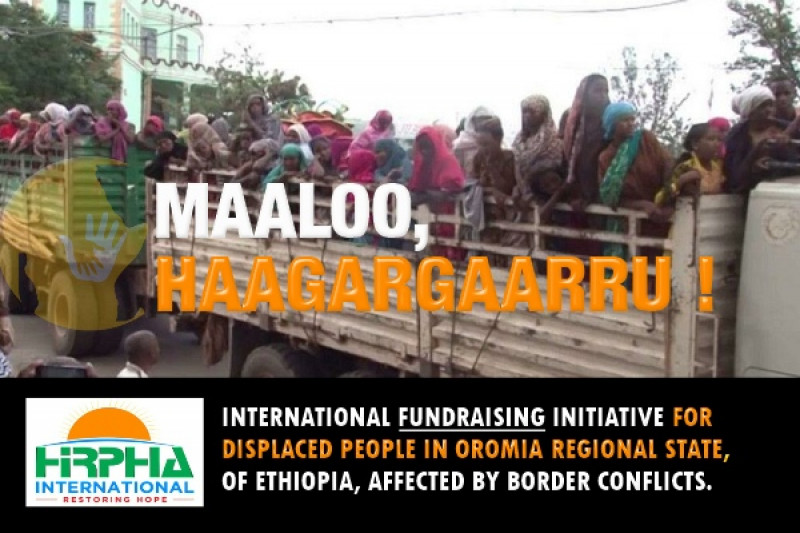

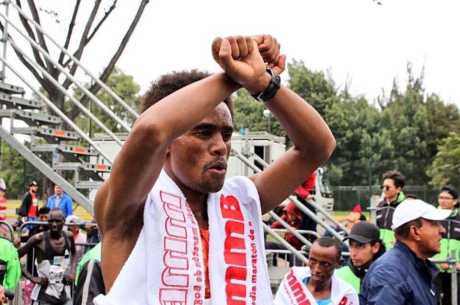




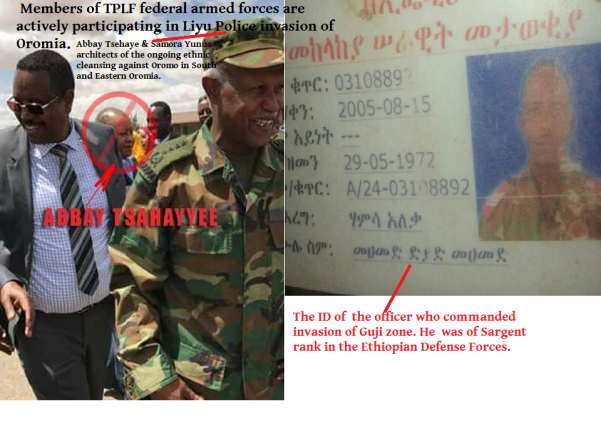


 The elders who traveled from East Hararghe Zone
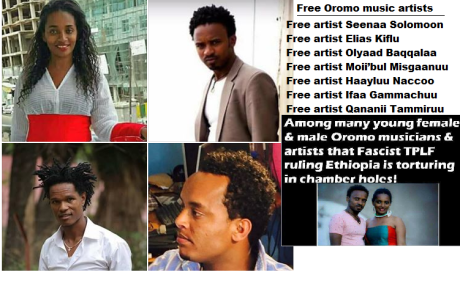
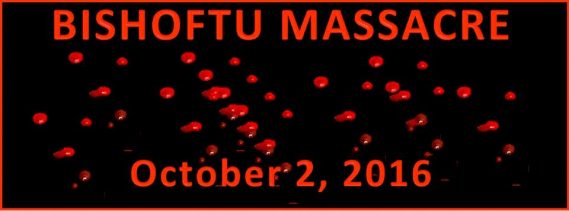
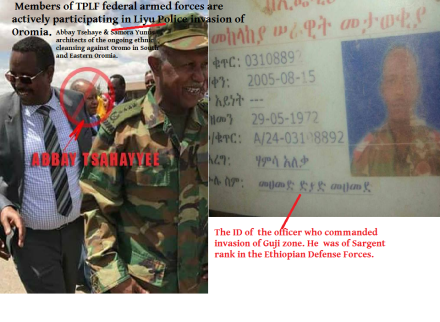






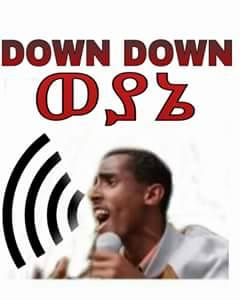

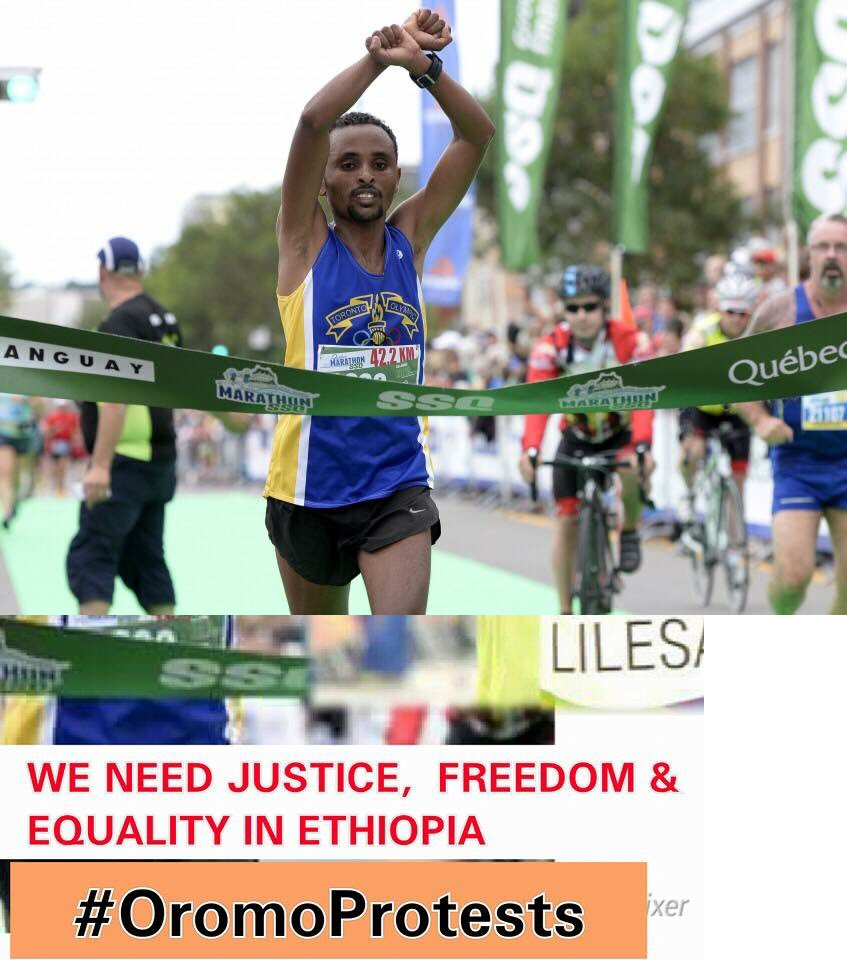


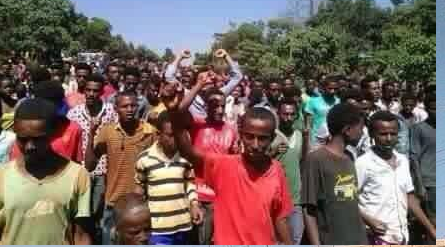


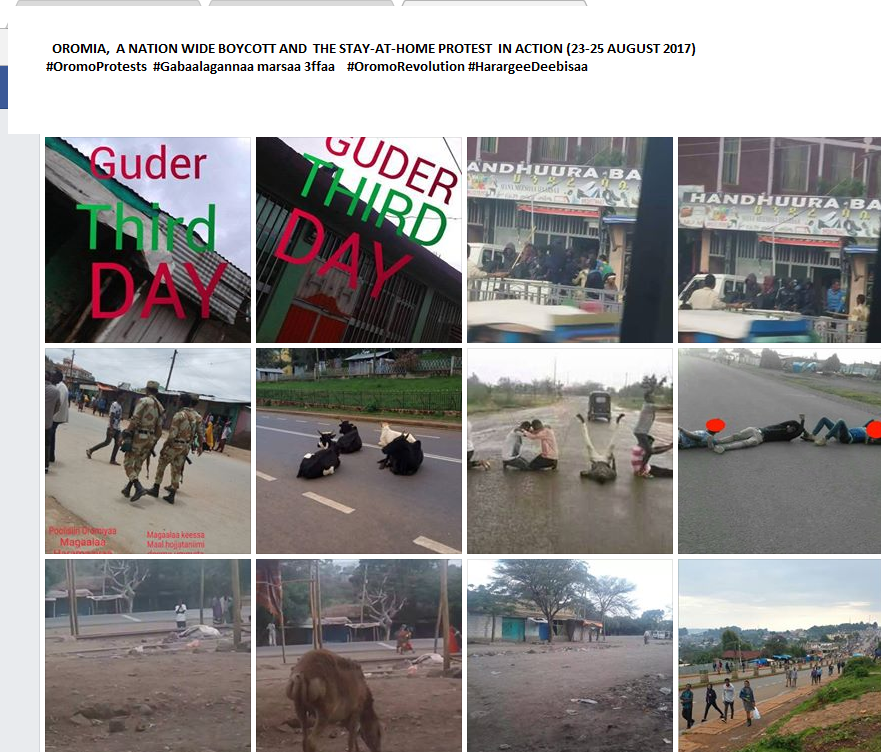
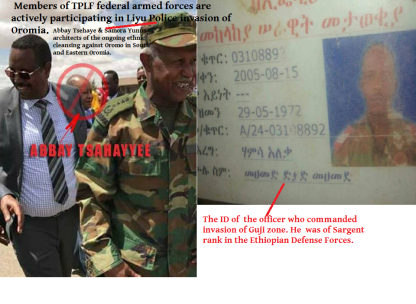

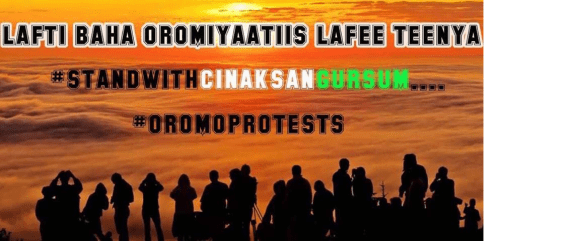

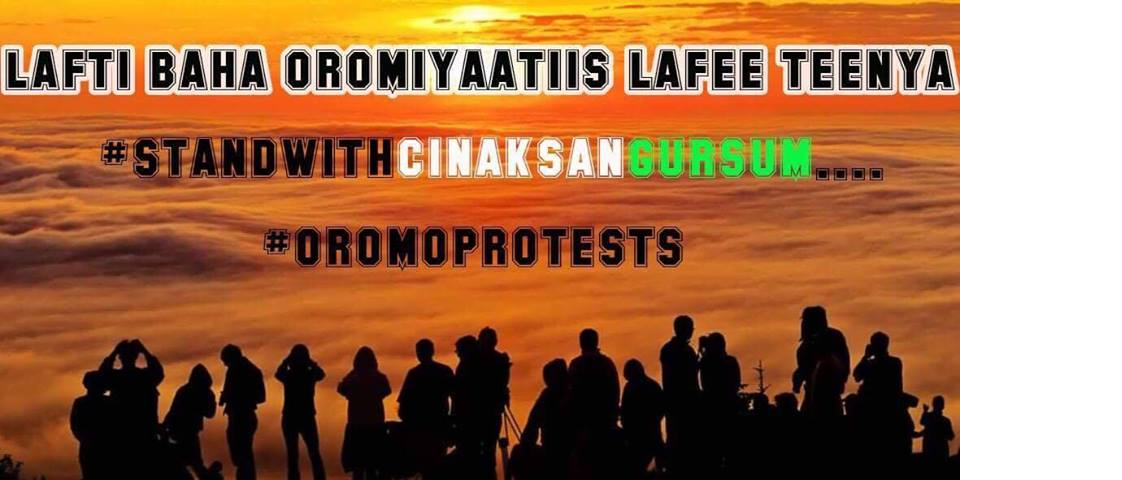

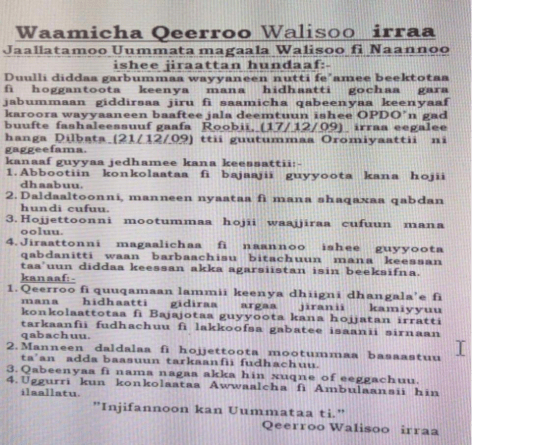


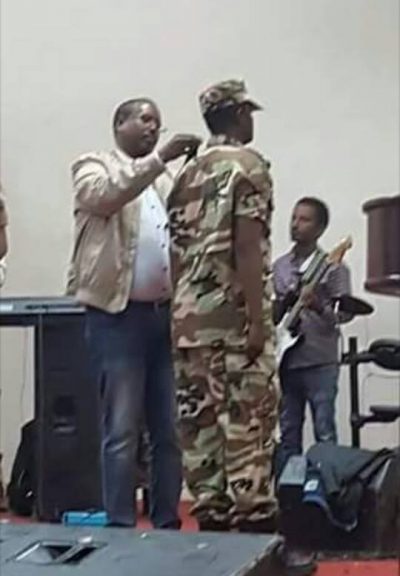




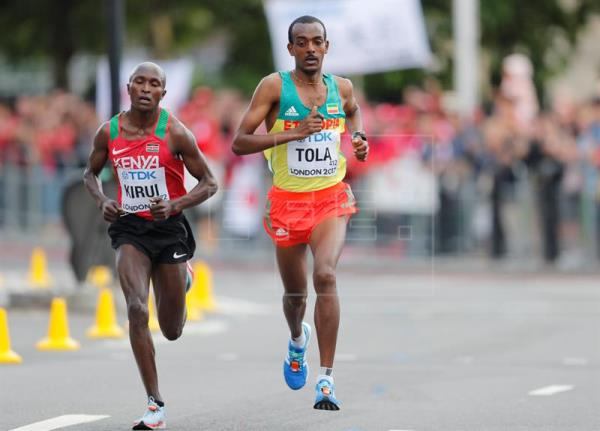
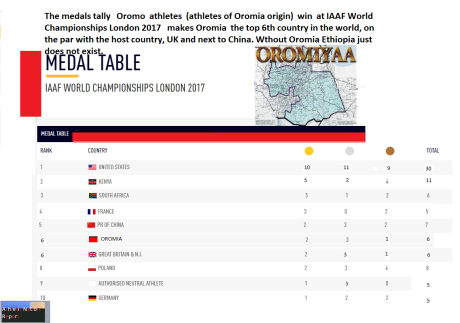


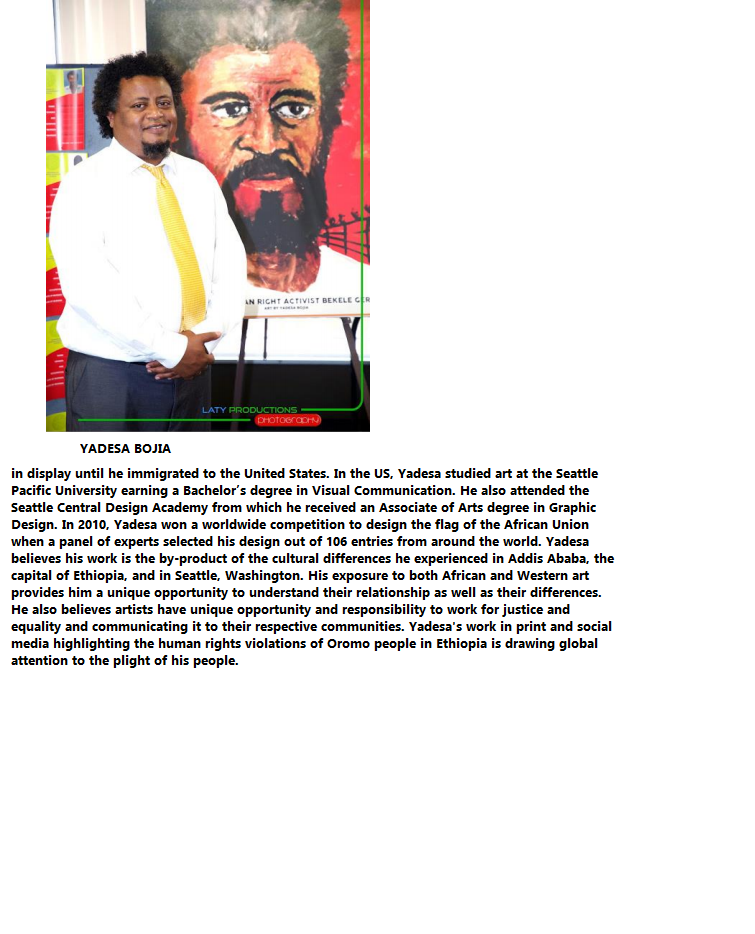

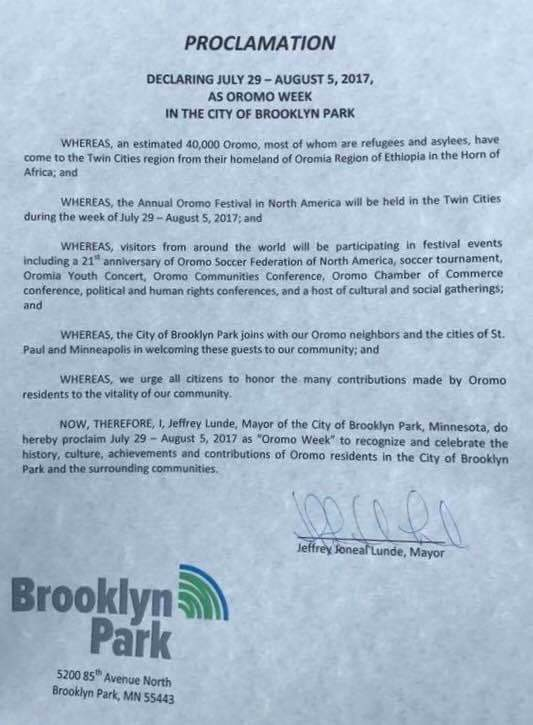

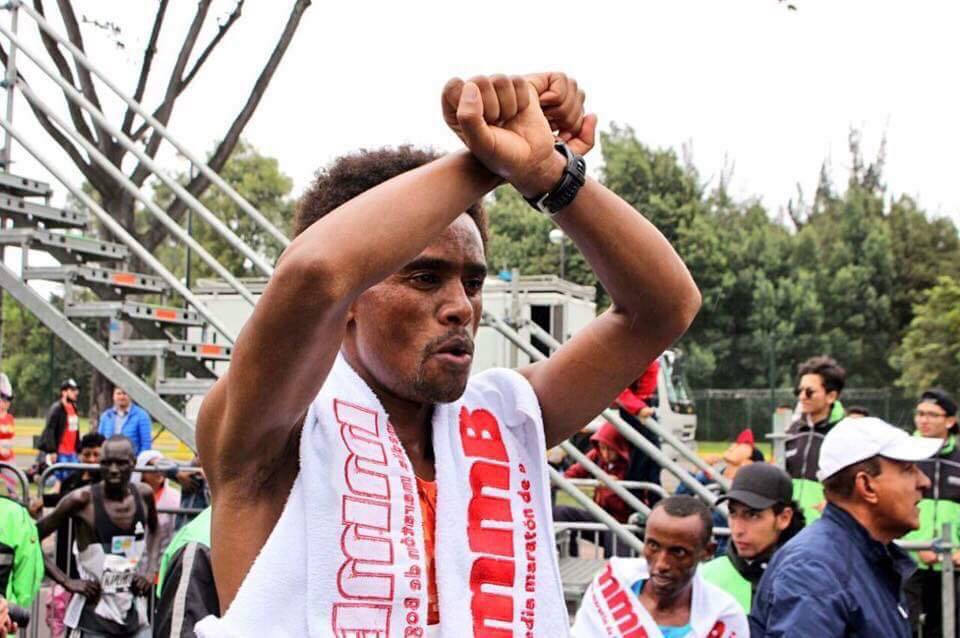

 Godina Wallagaa aanaa Gudayyaa Biilaa irraa,ummaanni gudayyaa biilaa sababa lukkeelee Sirna nama nyaataa mootummaan wayyaanee mirga hiree namummaa fi qabeenya uunfaa ofiitti fayyadamu sarbamnee murtoo balleessanii baduurra geenyeerra jedha qeerroon gudayyaa Biilaa.
 jalatti Argaman keessatti lagannaan gabayaa itti fufeeti jira Qobbootti Lagannaan gabaa roga hundaan godhamaa kan jiru yoo ta’uu wayyaanen daldaltoota walitti qabdee dirqamaan gara hojii keessanii akka deebitan jettee doorsisaa jirti.daldaltoonnis gibirri humnaa ol nutti fe’ame kan doorsisa kamuu kan nu sodaachisuu miti.nuti waan waggaa kudhanitti dalagannee hin arganne waggaa tokkotti mootummaadhaaf kaffaluu maaltu fide osoo hin hojjanne jiraachuu ni dandeenya jechuun ergamtoota wayyaanee ufirraa oofaniiti jiru.


 Godina Arsii.
 Adooleessa 18,2017/Godina Arsii Aanota hedduu keessatti guyyoota lamaan har’aaf kaleessa lagannaan gabaa kan taasifame yoo ta’uu Suuqonni daldalaa magaalota akka Seeruu,Balee, Geersaa, Shaashamannee,Adaabbaa, Dodola,Roobe,Saddiiqa, Waabee, Eddoo, Kofalee, Nageellee, Ajjee keessatti Gibira Wayyaanen Ummatarratti feete mormuun gabaa lagatanii jiru. Tajaajilli Geejjibaas dhaabbateera Konkolaachiftoonni fi Abbootin qabeenyaa sabaan Oromoo hin ta’in muraasni isaanii dalagaa isaanii didanii kan itti fufan yoo ta’uu. Diddaa kanatti akka makaman karaa adda addaatin Qeerron ergeefii kan jiru yoo ta’uu gaaffii isaanif dhiyeessine kana fudhachuun gara ummataa hin goran yoo ta’e Qeerron tarkaanfii Qabeenya isaanii irratti akka fudhatus hubachiisee jira. jedhu Gabaasaalen Qeerroo magaalota adda addaa irraa nu gahaa juru.
 Adoolessaa 18/2017 Godina Lixa Shaggar Aanaa Adaa’aa Bargaa Magaalaa Incinnii Keessatti Qeerroon Dargaggootni Oromoo Sochii Warraaqsaa Biyyoolessa Oromiyaa FXG daran jabeessuun finniinsaa jiruu, Warraaqsii kun yeroo amma sagalee dhaadannoo jabaa dhageesisuun itti fufani jiru.
  Adoolessa 16/2017 Galgala keessaa sa’a 2:50 irraa eegalee Magaalaa Amboo Keessatti Dhukaasni cimaan kan waraana wayyaanee irraa uummatatti baname , gara naannoo Mooraa Yuunibarsiitii Amboottii Waraanni Wayyaanee dhukaasaa guddaa uummata sivilii irratti banuun dargaggoota Oromoo Lama Wareeguun Ibsame jira, Kanneen madeeffaman hanga gabasni kun nu gaheetti adda kan hin baanee ta’uu maddeen Qeerroo Magaalaa Amboo addeessaan. Magaalaan Amboo galgala kana caalaatti gara dirree waraanaatti waan jijjiiramte fakkaatti , gabaasaa dabalataan walitti deebina.
  Adoolessa 16,2017/ Uummanni Shaggar lixaa rakkoo guddaa keessa jiraachuu Qeerroon naannoo Sana’a addeessan.akka gabaasa qeerroo naannoo sanaatti rakkoowwaan jireenyaa ilma namaaf barbaachisan kan akka,tajaajila Daandiin, Ibsaa,Bishaan fi kkf guutummaatti surni nama nyaataa mootummaa wayyaanee ummatarraa kuteera uummanni rakkoo guddaa keessatti argama.
 Adoolessa 15,2017. Godina Arsii Aanaa Siree keessatti Guyyaa har’aa Suuqonni cufaa oolanii jiru. Tilmaama gatii kan galii gibiraa jechuun waajjirri Galii Aanichaa maxxanseen wal qabatee daldaltoonni hojii dhaabanii jiru Waraanni wayyasnees magaalicha keessa deemee ummanni dirqamaan akka suuqii daldalaa isaanii banan furqamsiisuf tattaafachaa jiraachuu maddeen keenya magaalaa Siree gabaasanij jiru.
  Gidduugaleessaa Oromiyaa Godina Lixa Shaggar Magaalaa Ambootti Sochiin Warraaqsaa Biyyoolessa Oromiyaa FXG Kanfaltiin gibiraa dachaa guddaan Uummatarratti dabalamuu waliin walqabatee daran jabaachuun Mormii Guddaan Qeerroo Dargaggoota Oromoo, Daldaltoota fi Uummata Hundaa kan Hirmaachise Warraaqsii Finiinaa jira.


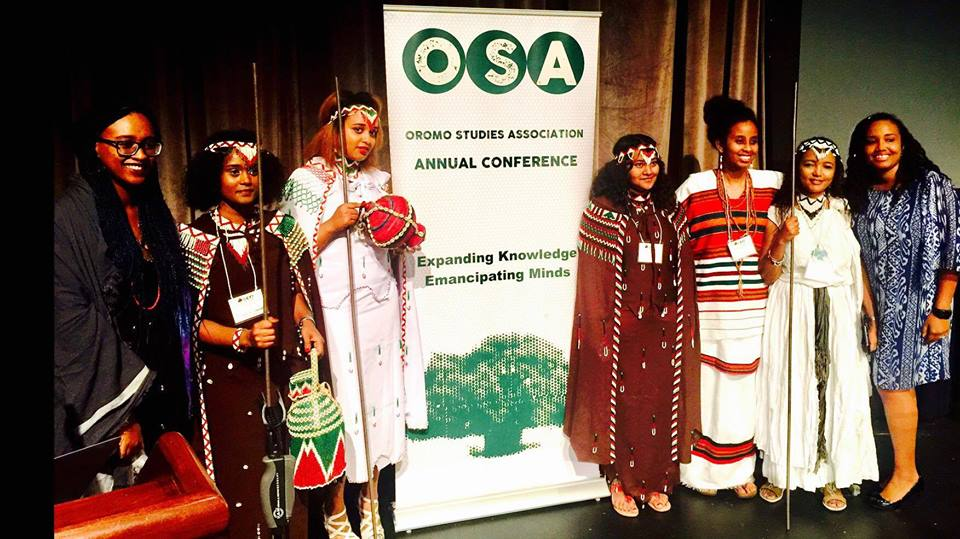
 On behalf of OSA Board of Directors and its Executive Committee, I want to welcome you all to this evening’s events. It is with a great sense of satisfaction that I stand before you to open the 31stAnnual OSA conference. The first time I came to Washington was 33 years ago in 1984 to attend the annual conference of Oromo Union in North America. In early July the same year, we had also an international Oromo conference in Berlin organized by the
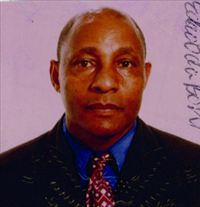


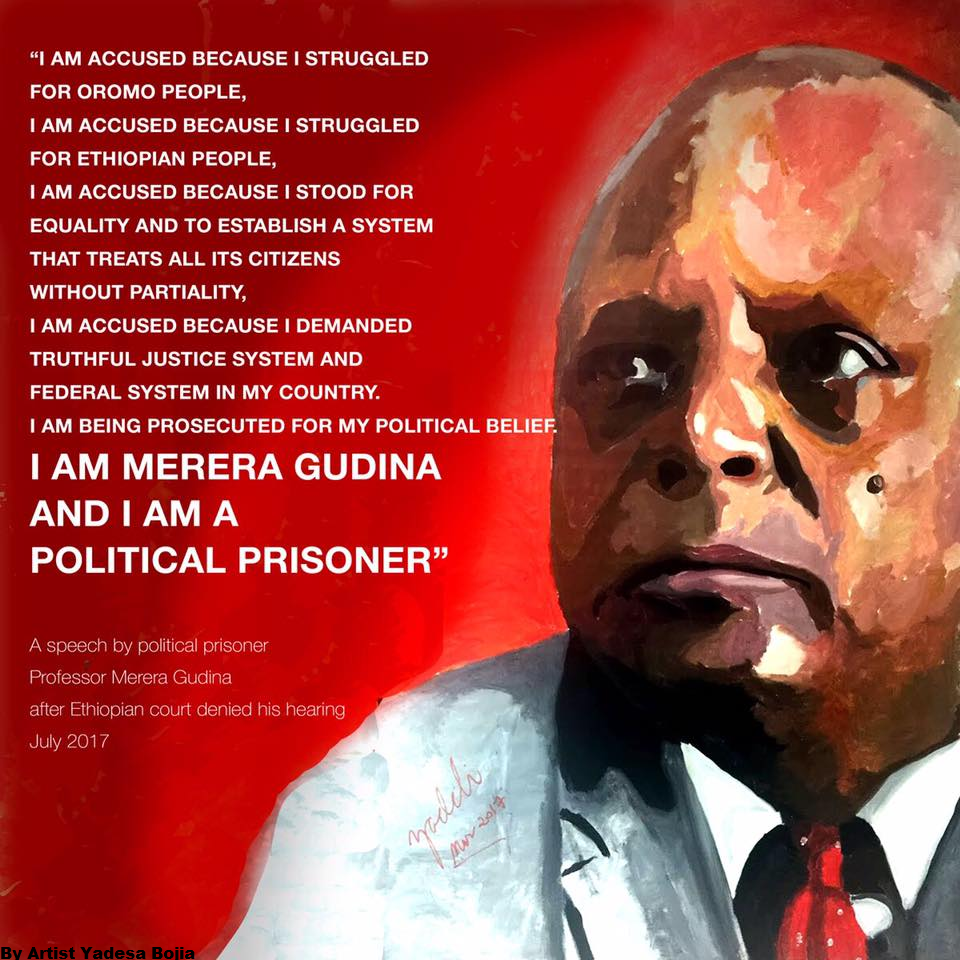


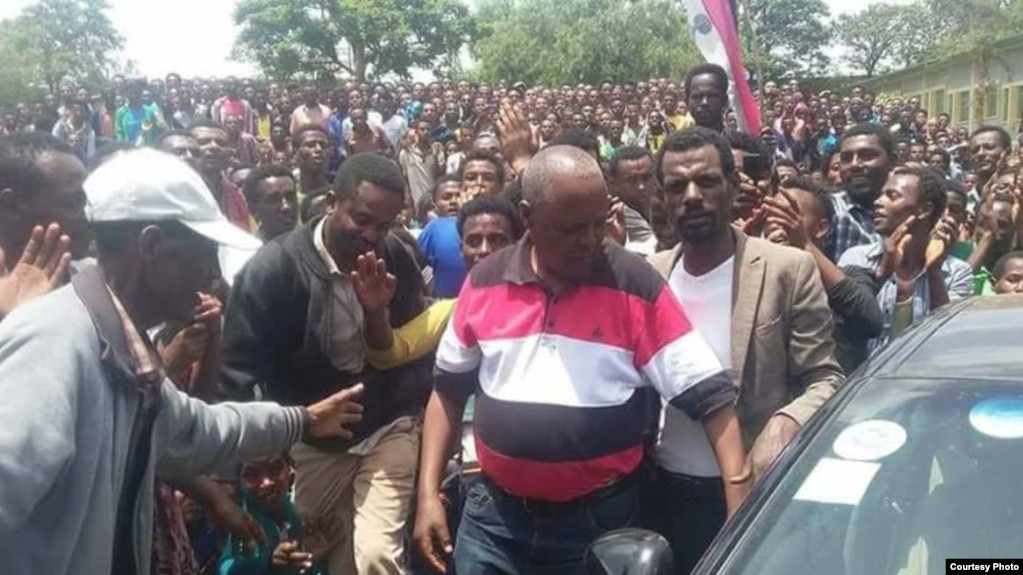


 Oromian Economist
You must be logged in to post a comment.