Economic and development analysis: Perspectives on economics, society, development, freedom & social justice. Leading issues in Oromo, Oromia, Africa & world affairs. Oromo News. African News. world News. Views. Formerly Oromia Quarterly
A solidarity message to the Oromo people from the following U.S.-based Oromo organizations (listed alphabetically): Bet’el Oromo Evangelical Church of Minnesota; Bilal Oromo Dawa Center of Minnesota; Macha Tulama Association; Northern California Oromo Community; OFC International Support Group; Oromia Media Network Board; Oromo American Citizens Council; Oromo Community of Minnesota; Oromo Community of Portland; Oromo Members of the Orthodox Church in the U.S.; Oromo Studies Association; Our Redeemer Oromo Evangelical Church of Minnesota; Tawfiq Islamic Center of Minnesota; Tawhid Islamic Center of Minnesota; and TUMSA.
The message is delivered in three languages: Afaan Oromoo, English and Amharic:-
Sabni Oromoo mootummoota Itoophiyaa wal jijjiiraa turan jalatti waggaa 120 oliif hacuuccaadhaan gidirfameera. Haa ta’u malee wanti mootummaan gara jabeessa ta’e kan isin amma jala jirtan EPRDF/TPLF torbanoota muraasa darban kana keessa raawwate kun kan dhiyootti ta’eera jennee yaadachuu dandeenyu hundumaan ol hammaataadha.
Magaalaa fi baadiyyaan isin keessa jiraattan hundi humna waraanaatiin qabamee waan jiruuf sodaa guddaa fi qabatamaa keessa akka jirtan ni hubanna. Weerarri gara jabinaa humni waraanaa biyyoolessaa Aga’azii Oromiyaa irratti geggeesse nu keessaa baduu hin danda’u. Barattoota umurii mana barumsaa keessa jiran kan humni waraanaa mootummaa Itoophiyaa ajjeeseef onneen keenya gaddaan cabee jira. Oduu dirqisiifamanii gudeedamuu dubartoota keenyaa dhaga’uudhaan onneen keenya madaa’eera. Isa mootummaan Itoophiyaa sochii isin gootan kanaan shororkeessitummaadha jedhe nuti morminee jirra. Kana irratti eenyutu shororkeessituudha? Barattoota hidhannoo hin qabne warra karaa nagaadhaan mormii isaanii dhageessifatan moo waraana hidhatee isaan ajjeesaa jirudha? Dhugaan ofii isaatii haa dubbatu.
Miidhamni, hacuuccaa fi murtiin dalgaa lafuma ofii keessanii irratti hidhamtoota isin haa taasisu iyyuu malee haala ulfaataa akkasii keessatti iyyuu gara kuteenyaa fi gootummaadhaan qabsoo keessan itti fuftanii jirtu. Dargaggootni Oromoo, naamusni keessan, booreen keessan, jaalalli isin biliisummaaf qabdan, ciminnii fi diddaan isin qorumsa jabaa kana keessatti agarsiiftan, nu boonsee jira. Uummata Itoophiyaa fi kan biroofis burqaa kaka’umsaa fi jabinaa taataniittu. Gumaacha keessaniif dhalootni Oromoo kan isin galateeffatu yeroo ta’u, aarsaa keessan seenaan ni yaadata.
Wal’aansoon saba Oromoo sadarkaa hadha’aa irra ga’ee jira. Amma boodatti deebi’uun hin jiru. Amma dhumaatti fuula duratti tarkaanfachuu malee filannoo biraa hin qabnu. Aarsaa baafame akka waan waa’ee hin baafneetti lakkoofsisuu hin qabnu. Mo’icha as dhiyaate kana adda kutuun balaa guddaa qaba.
Hafuurri Oromoon Biliisummaaf qabu kana booda waanjoo garbummaa fi hacuuccaa waan baachuu hin dandeenyeef, tures dhiyaates haqni jali’na irratti akka mo’uu fi uummatni keenya akka mo’icha argatu shakkii hin qabnu. Sabni Oromoo guddichi deebi’ee akka biliisomu ni amanna!
SOLIDARITY MESSAGE TO OUR COMPATRIOTS
We, the undersigned, representatives of Oromo civic, religious, academic, community and media organizations, hereby in unison convey our heartfelt condolences to those who have lost family members. We also send our unflinching support and message of solidarity to you, our people, who are valiantly resisting the repression by the Ethiopian government.
The Oromo nation has suffered over 120 years of indignity under successive Ethiopian regimes, but the cruelty and viciousness you have been subject to by the EPRDF/TPLF regime in the last few weeks surpasses anything that we have witnessed in recent memory.
We understand that today you are living under a significant amount of fear and duress as a result of the military occupation of your towns and villages. The outrage we feel at the brutality the TPLF Agazi force has unleashed in Oromia is immeasurable. We are heartbroken by the number of school age children the Ethiopian security forces have killed. We are repulsed and outraged by the news of women raped. We reject the Ethiopian government’s characterization of your movement as an act of terrorism. Who is the terrorist here? Are they the unarmed school children demonstrating peacefully or those who are armed and killing them? Let the truth speak for itself.
In spite of all the violence, repression and systemic abuse that has made you prisoners in your own land, you have persevered and heroically continued the struggle under the most difficult of conditions. And to the Oromo youth, your discipline, tenacity, love of liberty, courage and defiance in the face of an adversity, has made us all proud. You are a source of inspiration and strength for all peoples in Ethiopia and beyond. Generations of Oromos will remain indebted to you for your contributions, and history will remember your sacrifice.
The Oromo nation has reached a critical stage in its struggle. At this point, there is no turning back. We have no choice, but to march to the very end. We cannot allow the sacrifices made to be in vain. The consequences of stopping short of ultimate victory will be disastrous.
Therefore, we want to encourage you to remain resolute and courageous as you sustain the struggle. Through its various agents of violence, this government has declared war on the Oromo people. And a government that declares war on the very people it seeks to rule has no moral authority or legitimacy to remain as such. Thus, the struggle to liberate our people from this repressive regime should continue undeterred.
At this critical juncture in our history, as we send you this message of solidarity, we pray for the safety and well-being of our people and recommit ourselves to stand with you and support the struggle with everything at our disposal. As the free Oromo spirit can no longer bear the yoke of bondage and indignity, there is no doubt in our minds that sooner or later justice will prevail over evil and our people will be victorious. We are confident that the great Oromo nation shall once again be free!
– Bet’el Oromo Evangelical Church of Minnesota
– Bilal Oromo Dawa Center of Minnesota
– Macha Tulama Association
– Northern California Oromo Community
– OFC International Support Group
– Oromia Media Network Board
– Oromo American Citizens Council
– Oromo Community of Minnesota
– Oromo Community of Portland
– Oromo Members of the Orthodox Church in the U.S.
– Oromo Studies Association
– Our Redeemer Oromo Evangelical Church of Minnesota
– Tawfiq Islamic Center of Minnesota
– Tawhid Islamic Center of Minnesota
– TUMSA
The culture of power in Ethiopia is one of centralization. But real federalism couldn’t be beyond reach. The Oromo Protests in Oromya shows that it is becoming an absolute requirement.
The Tigray Peoples Liberation Front (TPLF), the strongest component of the ruling coalition, from the middle of 2014 has faced the highest level of Tigrean popular discontent since its inception 40 years ago. That came first. Now the unrest in the most populated region of Ethiopia has sent to the regime as a whole the most shattering warning shot since its arrival in power in 1991.
Despite Tigray’s marginality in terms of geography, population – 6% of Ethiopians – and its economy, the TPLF had the strength to impose its hegemony after its victory over the Derg military-socialist junta in 1991. This dominance has recently declined, but it remains the driving force of the coalition between the four ethnic forces constituting the near-single party – the Ethiopian People’s Revolutionary Democratic Front (EPRDF) – with the Amhara National Democratic Movement (ANDM), the Oromo People’s Democratic Organisation (OPDO) and the Southern Ethiopian People’s Democratic Movement (SEPDM).
It is also the only party that the population sees as its authentic and legitimate representative. However, since the spring of 2014, it has been shaken by a rising tide of popular discontent. “Give us back our TPLF!” cry the Tigrayans, a Front that is righteous, disinterested, devoted as it was during the armed struggle, ready to listen and to serve, but now accused of having succumbed to an unholy trinity: corruption, bad governance, unaccountability.
“We have acted as if it was pointless to listen to people because we are building roads and opening schools”, admits one former TPLF leader off the record. It is the “old guard”, sidelined during the second half of the reign of the omnipotent Prime Minister Meles Zenawi, who died in 2012, which sounded the alarm and then led the charge. Meles had promoted a new generation of leaders – the “Melesites”. Some young party members, mostly ambitious intellectuals, enraged by the degeneration of the Front, rushed into the breach opened up by the old timers. If it doesn’t regain its old strength, they are convinced, it will not be able to maintain its influence, and the Tigrayans would be exposed to a quasi existential risk of ceasing even to be masters in their own house, thereby losing the main asset of a 40 year struggle. Their goal: to revitalise the Front through “democratisation” and thereby regain popular support. Their target: the existing leadership, which they see as populated with incompetent “yes-men”.
However, the most disturbing warning signal came from Oromya, the region that accounts for 37% of the total population and is the economic heart of the country. Since mid-November, its northern half at least has been in a ferment of dissent. Demonstrations were followed by riots so intense and extensive as to be described as a “slide into a security crisis”: the authorities lost control of entire areas abandoned or deserted by the security forces.[1] Half the high schools and universities had to close their doors.[2] In their wake, as always happens in a power vacuum, came looters and vandals. While official government figures continue to strain credulity, other sources report more than a hundred dead.[3] Two months on, things have only partially returned to normal.
The trigger was an ordinary land expropriation in favour of private investors in a small town a hundred or so kilometres west of Addis Ababa. However, the focal point of the grievances was the so-called Master Plan for the expansion of Addis Ababa. The city has its own administrative government, but is located far inside Oromya. This territory was conquered by the Northeners at the end of the nineteenth century, and has grown by eating into the surrounding areas, still a trauma for many Oromo. The Plan covered an area 20 times larger than the existing capital, and would impact millions of Oromo. It possessed all the deficiencies of large development operations in Ethiopia: opacity and confusion, with documents of uncertain status released in dribs and drabs, thus a lack of clarity even about the respective roles of Addis Ababa municipality and the Oromya authorities in the area concerned; a centralising, top-down approach, with no consultation of the people. Oromo opinion once again rose up against what it perceives as a further drive to truncate its territory, exacerbated by a swathe of ruthless land grabbing, like that already experienced by tens of thousands of Oromo farmers around the capital or elsewhere, to the benefit of investors, whether foreign or Ethiopian, Oromo or otherwise.
The authorities began by reacting reflexively in their usual way: if it moves, hit it. To show their peaceful intentions, the demonstrators raised crossed arms or sat with bowed heads. The security forces’ disproportionate violence fuelled the protests. “Killing is not an answer to our grievances”, was the cry. For the first time on this scale, protest extended outside the “intellectual” milieu – students and teachers – to encompass not just high school and even primary school pupils, but even the lower classes, including simple farmers, who constitute three quarters of the population.
The straw that broke the camel’s back
The Master Plan was simply the straw that broke the camel’s back, the culmination of a much wider and more long-standing conflict. This is evidenced by the protesters’ targets: people and property with links – however tenuous – to the authorities, regional and federal. The officials, despite their being almost all Oromo; their symbols, their facilities (offices, cars, prisons, even medical centres and unemployment support agencies); companies owned by foreigners, non Oromo, and even by Oromo, if they have been imposed despite the peoples wishes.
Even local “model farmers” were targeted, a group who receive special government support to “modernise” their farms, on condition that they then show their fellow peasants the path to follow. Too often, they are selected by nepotism, with the result that an informal alliance has formed between local government and a new class of “kulaks”, accused of exploiting this patronage for underhand purposes, via renting or share cropping on land held by poorer farmers who have fallen into a spiral of debt. Worse still: in some places neighbours were killed, their houses burned, simply for being non Oromo.[4]
The target of unrest in Oromya was not just the unholy trinity, as in Tigray, though it is even more devastating there, but also harassment by the security apparatus, with its thousands of political prisoners, often held for years without trial. “There is no democracy, there is no justice”, complained some demonstrators. The centralisation of power, in contradiction with authentic federalism, is exacerbated by the general perception of Tigrean hegemony and the marginalisation and dispossession of Oromya.
“We want genuine self-rule”, ran one of the slogans. The attendant centralisation of development, and its relative liberalisation, initiated at the start of the 2000s, favours an “entrepreneurial” economic elite, covering a range of beneficiaries stretching from the big foreign investor to the rich peasant or Ethiopian businessman, whether Oromo or not. The ascendancy of this elite is consubstantial with the high positions it almost automatically occupies in the ruling party. Its behaviour is seen as predatory, primarily in respect of land.
“Oromya is not for sale”, demonstrators chanted. Their political opposition thus coincides with, and is reinforced by, an economic and cultural conflict around the resource that is the most precious, and quasi sacred, to the vast majority, land — which still acts as the cement of the social contract. Between this majority and this heterogeneous elite, but also within a peasantry that had previously remained largely homogeneous since the agrarian reform of 1975, class antagonisms have deepened. Moreover, plans in an increasingly sensitive sphere — the economy — could harden them.
First, there is the hidden aspect of the economy. Mystery surrounds the real situation of whole sectors controlled, directly or indirectly, by the state, i.e. two thirds of the economy outside traditional agriculture, their profitability, and above all their indebtedness, the key to their recent growth. One suspects that the alarmist rhetoric around the urgent need for a change of direction owes much to this black hole.
Moreover, the current version of the leading public impulse for economic growth — the “developmental state” — is coming to the end of the line. Its objective was to accomplish a shift from agriculture to industry. However, shares of the economy held by the industrial and manufacturing sectors remain at a similar level as at the end of Haile Selassie’s reign: respectively 11% and 5% of GDP then, 13% and 5% today.[5]
Growth on a downward path
“The 10-years perspective is a transition where manufacturing will lead the economy”, asserts Arkebe Oqubay, mastermind of this transformation.[6] Without it, there is no chance of absorbing the 2 to 2.5 million young people arriving on the labour market every year, of becoming competitive by increasing productivity, thereby reducing a growing trade deficit and turning round an increasingly negative balance of payments — the possibility of a foreign exchange crunch is increasingly raised [7] — and ultimately no chance of maintaining a high growth rate, the core of the regime’s legitimacy. For him, the worst scenario would be the combination of an economic slowdown with bad governance and assertions of nationalist feeling.
This growth rate is on a downward path, officially declining from 12% per annum in 2005 to 8% today.[8] The World Bank suggests that this fall is likely to continue.[9] Public investment, the driver of growth, has reached its ceiling at a third of GDP. Further growth therefore demands a massive inflow of private capital, mainly from abroad, bringing jobs and higher productivity, and carrying local capital in its wake, initially in subcontracting activities. However, “many of the foreign investors in Ethiopia fail because the environment is difficult”, Arkebe judges[10]. “Ethiopia lags behind Sub-Saharan African peers in most reform dimensions”.[11] Hence the intention to introduce greater ‘liberalisation’ in order to give business an attractive, stable and predictable framework, and even to open up new sectors such as banking to foreigners.
These reforms will also need to tackle another blind spot. Moving from archaic agriculture to a competitive manufacturing sector requires an army of skilled professionals with free rein to apply their knowledge. Ethiopia’s 34 universities hold almost 700,000 students and have issued more than 500,000 degrees in the last five years alone.[12] However, this increase in quantity has been accomplished to the detriment of quality. Above all, the centuries-old codes of power, whatever the domain, remain largely in place: implacable hierarchy, top-down administration, blind obedience. They are even reinforced by the near obligation of party membership in the public sector: party loyalty takes precedence over public service. The professional capacities of this new class of “intellectuals” are therefore held in check.
This lost potential hinders economic growth. Moreover, the gap between this “Internet generation” and the excessively authoritarian, fossilised and infantilising practice of power, at every level, is generating growing frustration.
While some of the new generation are satisfied with the advantages – legal and illegal – associated with their positions, others want to make their voices heard.
Haile Selassie created an intellectual elite to run a state machinery subordinate to his rule alone. Held in subjection, it rebelled, especially when — as today — graduate unemployment exploded. By contrast with the past, however, even the most anti-establishment of the present generation are not looking for a change of regime, but primarily for a role commensurate with their qualifications, and then, for some, a genuine application of the constitution, primarily with regard to federalism, particularly in Oromya.
Drought and war
Finally, there are two other challenges. After an exceptional drought, almost 20 million Ethiopians are in need of emergency or long-term food aid.[13] The authorities have responded vigorously, especially as they are haunted by the correlation between the overthrow of Haile Selassie and then the Derg and the famines that preceded them. But they themselves acknowledge failures in the distribution of aid and that the worst is yet to come.
An end to the state of phony peace with Eritrea is a growing demand in Tigray. Previously, they wanted it so that investors would finally come and rescue the region from its economic stagnation. Now it is demanded on the grounds that the military facilities that Asmara is providing to the Saudi-led coalition show that Eritrea is a bridgehead for an “Arab-Muslim encirclement”. For example, onepro-TPLF website writes:
“Ethiopia is surrounded by (Arab) strategic enemies… working to disintegrate and dismantle Ethiopia… Most of the Arab countries think Ethiopia is the gate of Africa, if they can convert the Ethiopian Christians to the Muslim faith, they can control Africa and its resources.”[14] “As the end justifies the means, Ethiopia has to use everything at its disposal to take a swift military action againstEritrea; get rid of its hostile government; annex Assab”.
What is not known is how far the leadership of the Front is listening to this demand.
Faced with these challenges, sticking to the “Meles line”, as the ruling power has up to now, i.e. maintaining the status quo, has become untenable. However, the structure of power that he left behind is vacillating in its readiness to tackle this. Two power systems are in conflict with each other, though both managed by almost the same people.
Two institutions have never played their statutory role: the legal system and the legislative assemblies. With the rise of Meles Zenawi in the early 2000s, the others became empty shells: the TPLF itself, the three other components of the EPRDF, the cabinet, the regional governments. They were reduced to mere communication channels for orders delivered from the top. Pyramidal and interpersonal, this structure of authority had little regard for institutions. Simultaneously, a constellation of mini-fiefs formed, each at the node of a network built on relationships of different kinds — family, friendship, and fundamentally regional and/or sub-regional, as well as business — all beneficiaries of the “developmental state”. After victory over the Derg, the revolutionary elite used its positions in the party-state to monopolise the management of public and para-public companies, and then to launch itself into the private sector on the back of public contracts. Thus was born an oligarchical constellation formed inside the highest party-state circles, with one foot in these circles, the other in business. These practices spread like lightning down to the lowest levels, hence the sharpness of the tensions generated by corruption, bad governance and unaccountability. But with one fundamental difference compared to essentially predatory regimes: it continued to deliver. Even though the official growth rate is undoubtedly overstated, and its social distribution problematic, progress is unquestionable. With peace and security – until recently – it has been the basis of the regime’s legitimacy.
A crumbling pyramid
When Meles Zenawi died suddenly in August 2012, this pyramid crumbled. It left a system of power that was diffuse — disseminated between multiple centres, whether individual or institutional, and riven with ferocious personal rivalries — and lacking direction. A common front was maintained to settle the succession in terms of individuals, notably with the appointment of Haile Mariam Dessalegn as Prime Minister.
Nevertheless, although their workings remain riddled by these personal networks, “now, institutions start to matter”, stresses one well-informed observer: thus, the Executive Committee of the EPRDF, cabinet, starting with the Prime Minister is increasingly assertive, and regional governments follow on through a centrifugal effect. The security forces and army, however, remain a bastion apart, and interrelations between all these power centres are still vague and unstable. The reconstruction of a solid and consensual system is still on the agenda. At the same time, the situation it faces on all fronts is becoming increasingly problematic. Too many officials remain too rigid, arrogant and disconnected to see the urgency of the situation; too unstable and fragmented. The leadership can hardly agree on the changes needed, let alone implement them.
Questioned about the existence of a “wider consensus within the ruling party” on greater economic openness, Arkebe Oqubay replied evasively: “I cannot say 100%.”[15] The opposition is of three kinds: the Ethiopian economic elite is highly disparate, divided between the most powerful groups who hope to be able to piggyback on the influx of foreign investors, and small businesses which consider themselves too weak to withstand international competition. An old “socialistic” ideological current persists. And finally, the nationalistic strain remains strong: no Ethiopian leadership has ever allowed a foreign presence, of whatever kind, to acquire sufficient influence as to potentially escape its control. Yet a massive influx of foreign investors inevitably requires compromises that will one way or another dent that sovereignty.
Moreover, this greater economic openness is likely to exacerbate the antagonisms described above, by fuelling bad governance and corruption, which exploded with the ‘liberal’ turn of the early 2000s. And the reforms currently under way or on the drawing board are purely technical. Indispensable as it is, an alteration in the ‘culture of power’ is not a priority in the economy.
Gimgema – ግምገማ
According to the official media, the combat against the unholy trinity is in full sway. The last TPLF Congress and its Central Committee saw a swathe of criticism and self-criticism, reviving one of the Font’s strongest traditions – the “gimgema” – which had become stripped of its original function in recent years. However, this merely resulted in a compromise between ‘reformists’ and ‘conservatives’, between ‘urgentists’ and ‘wait and seers’. In accordance with the traditional practice of ‘democratic centralism’, the Central Committee overruled the Congress. Two “reformers” joined the Executive Committee, the remaining “Melesites” stayed, including the chairman, Abay Woldu, who was the focus of the critiques. They will be closely monitored by newcomers to the Central Committee. The reforms were approved, but they had already been formulated in virtually the same terms at the previous congress.
Nonetheless, gimgema spread throughout Tigray. The leaders are touring the state, holding public meetings. Local officials are required to account for their behaviour to the inhabitants. In these people’s courts, judgement is rapid, the defence insignificant. Hundreds of low and medium ranking officials have been sacked, thousands warned. But we have no way of knowing whether the authorities took into account the voices of the participants before immediately appointing their replacements, or whether — as usual — they simply named them and left it to the people to formally endorse them.
In contrast, it doesn’t appear that the same purge is taking place elsewhere, or at least not with the same intensity, except in Addis Ababa.[16] Not that the unholy trinity is any less rampant, quite the contrary. But the reformist drive emanating from part of the TPLF and a few influential individual allies in the other parties, is having little impact outside, when it is not met with concealed opposition. ANDM and particularly OPDO, already so fragile when the TPLF launched its reforms and its purges, do not seem capable of handling the shock of such a challenge. The ANDM Congress was a quiet affair, OPDO’s was virtually a non-event. The same leadership teams were reappointed with no significant changes.
Above all, the exercise is limited in its very conception. The idea is that the party-state should correct itself, without any intervention by an external and independent body. The only involvement eagerly sought is that of the “public”, a fetish word, meaning de facto a fluctuating collection of individuals, by definition unorganised and unstructured. Nothing can or should undermine the monolithism of the ruling power.
The reactions to the events in Oromya reveal shock and confusion. First, in the intensity of the repression, with thousands of arrests, including senior cadres from the Oromo legal opposition parties, journalists, intellectuals. Then in its desire to silence discordant media voices, including the two TV networks run by opponents in the diaspora, to the point that the security forces even wrecked satellite dishes.
And in the cacophony emanating from the leadership. At one extreme, denial of the obvious. “There is a fair power sharing system between the federal government and the regional states which has enabled the regions to decide by themselves on issues that are specific to them”, the government spokesman maintained. “We know the protests are based on false claims.” The protesters are demonised, driven by “the conspiracies of destructive forces… of evil forces”, of “anti-peace elements”, including opposition parties which are, for good measure, “the proxies of the Eritrean regime”, and “are now organizing armed gangs”.[17]
At the other extreme, Abadulla Gemada, speaker of the House, a long-standing leader of OPDO but a man with the Prime Minister’s ear and one of the few leaders whose position in the traditional Oromo hierarchy attracts a certain popularity, declared in essence that the Oromos were smart enough not to let themselves be manipulated and to demonstrate for good reasons.[18] Between the two extremes, a convoluted acknowledgement, even from the Prime Minister, that “the recent question raised by the people of Oromia is a legitimate one”, that the Master Plan should have been drawn up in consultation “with the people of Oromia”, but also that “merciless legitimate action against any force bent on destabilising the area” is required.[19]
Finally, The Plan has been abandoned”.[20] For Abay Tsehaye, one of top ideas men and a political adviser to the Prime Minister, the sole culprits are corrupt OPDO officials and shady businessmen who “created all the mess… to capitalize on chaos” so as “to preempt the good governance drive… using the Master Plan as a smokescreen”[21]. So the whole problem comes down to black sheep who are manipulating Oromo to escape the punishment they deserve. Only part of the press dared to go further. For example, the Addis Standard, with a front page showing two raised crossed arms in red on a black background, carried the headline “Why is Ethiopia killing its people again?” subtitled “Oromo protests; not just about the ‘Master Plan’… Marking the next Ethiopian Political Chapter”.[22]
Federalism and hyper-centralised reality
The regime is now paying the price for the accumulated mistakes of its ethnic policy. Both ANDM and OPDO were created by the TPLF. They have never broken free of its oversight, at least to the extent of being considered legitimate representatives by the Amhara and the Oromo, with the capacity to voice their aspirations and grievances at federal level. This original fault line undermines the whole federal construct. Federalism is at the heart of the constitution and institutions, but the reality is hyper-centralised, the primacy of the Tigryan elite, even if increasingly under stress, undeniable in the political, economic and even more so the military and security spheres.
The “national question” boomerangs back on those who claim to have settled it once and for all: constantly emphasising national identities and proclaiming that they now all have the right to assert themselves, equally and entirely; in reality, keeping them ranked and constrained. Meles Zenawi’s iron fist had contained this contradiction. It could not but break loose after his death. In the absence of strong and inclusive political structures to handle it, it inevitably overflowed into the street.
One of the most illuminating evidences of these accumulated mistakes is the vacuity of the OPDO. It won 100% on the seats during the May elections, but it proved incapable of maintaining law and order, incapable of channelling discontent: it disintegrated. Most of its top leadership further discredited themselves by adopting the government line. As for the rest of its officials, very many joined the protests, others quite simply faded away. Oromya lives under a de facto state of security/military siege directed from Addis Ababa.
A Copernican revolution?
Would simple reforms resolve all these profoundly interdependent pitfalls, or do they demand a complete overhaul of the regime? Surprisingly as it may seem, part of the TPLF and some high level officials beyond believe this is the case. They have in recent months undergone a Copernican revolution, breaking with everything they have thought and done since their beginnings, 40 years ago now, as with all Ethiopian leaders since the dawn of time: ruling by force.
They underline that throughout the country’s history, all regime changes have come through armed conflict. “We want to leave future generations an Ethiopia that is not only prosperous, but also sustainably stable and peaceful”, they say. The only solution would be to let the institutions work as the constitution stipulates. In other words, deliberative assemblies that actually control the executive, from federal level down through the 17,000 municipalities; an independent legal system; a recognition of the positive role that the opposition parties and media could play. Sincere conversion or a pragmatic acceptance of reality? For their Tigrayan proponents, given the arch-minority status of the Tigreans, the clinching argument is that only genuine federalism could give them the vital long-term guarantee of remaining at least masters in their own homeland.
In the immediate, the management of the unrest in Oromya contradicts these intentions. However, the shock has been too sudden and too violent for the regime not to be out of its depth and to revert to its traditional repressive habits. But its history also shows that it only changes after a very long period of internal maturation. There is nothing to say that a period of deep reflection has not begun, albeit as ever behind double locked doors.
The obstacles are huge: the whole culture of power would be turned upside down, along two axes.
This culture is one of centralisation. But real federalism couldn’t be beyond reach. Oromya shows that it is becoming an absolute requirement. The foreign investment influx requires long term stability. Decentralisation is not conditional on the establishment of the ‘rule of law’ in every other sphere. In particular, oligarchical power could adapt to, and even prosper alongside genuine decentralisation. However, it would entail at least a full reconstruction of OPDO, and probably ANDM as well. Otherwise, it is to be feared that the inter-nation relationship would become even more critical, with young Oromo activists in particular deciding that the only choice is armed struggle because nothing could be achieved by political means.
It is also an authoritarian culture. Since the student movement of the 1970s, this authority has been vested in a small self-proclaimed vanguard elite, whose legitimacy is founded on the claim to supreme knowledge. It might adopt the argument of the early Soviet leadership: “We alone know what should be done to make you prosperous and happy, and so we have the right and the duty to do it if necessary by force and against your will.” In essence, therefore, this power is vertical and monolithic: any dissent could only come from misguided individuals or from ‘anti-peace’ and ‘anti-development’ elements. Criticism can be accepted only if levelled at failures in the execution of a policy, but not at the policy itself. That is precisely the limitation of the current campaign against the unholy trinity.
Rule of law?
This raises the question of what meaning these ‘reformers’ give to the ‘rule of law’: does it include the possibility that the country’s vital forces, whether driven by political, economic or social motives, including these new ‘intellectuals’, could organise themselves and make dissenting voices heard, not only about the form, but also about the substance of policy? This would require the end of monolithism, the acceptance of counter-forces, and therefore an end to the obsession with maintaining control over all organisations, whatever their nature.
It would also require an end to the wait for the supreme saviour, the ‘strong man’. Even within the TPLF, and even more so in the population of former Abyssinia, many are convinced that only such a figure could stabilise and preserve the structure of power, thus bring a lasting stability, as supposedly demonstrated throughout Ethiopian history.
Establishing the rule of law is above all about confronting oligarchical power. During a famous televised discussion about tackling the unholy trinity, attended by a gathering of the leadership and opened by a devastating report into the spread of its depredations right to the top of the party-state, Haile Mariam Dessalegn exclaimed: “Here, we talk, but once outside, we defend our different networks to ensure that they are not affected. That is the primary sickness!”[23] A confession of the limitations of self-correction.
The abandonment of the Master Plan is an unprecedented decision, but one that even the legal opposition considers a first step on a very long journey. It is calling for a significant gesture of appeasement, such as the freeing of the recent detainees, as proof that the government is sincerely ready to enter into dialogue with all the stakeholders concerned who possess recognised status, and with respected figures, for a complete rethink.[24] If it accepts, the opposition would have to concede that the process could only be gradual, extremely lengthy, that if the EPRDF agrees not to dictate its outcome, it will nevertheless insist on retaining control throughout the whole process, and that one line in the sand cannot for the moment be crossed: challenging federalism and the upper hand Tigreans hold over the security services and the army, which it sees for the time being as its ultimate shield.
“Where does all this lead us? To the beginning of the end? Let us hope not”, concludes a recent editorial in Addis Fortune.[25] In the absence of a credible alternative authority, only the existing regime can decide whether it ultimately wishes to change, or is prepared to risk the worst.
The Human Rights League of the Horn of Africa (HRLHA) would like to express its deep concerns regarding the safety of Oromo prisoners in the Kalitti Jail in Addis Ababa/Finfinne in Ethiopia. According to information leaked out from the Jail and obtained by the HRLHA, Oromo prisoners are discriminatory subjected to torture in a very harsh jail condition in underground dark rooms.
In an inhuman and extrajudicial action taken against some Oromo prisons on the 29th of January, 2016, a lot of Oromo inmates were subjected to tortures that last for over ten hours and left those victims in life-threatening situations. The attack on Oromo prisoners by the prison guards and administrators was executed in two rounds on the same nights in two different compounds of the Jail. According to the leaked documents, it first started in the compound known as “Number Two”.In an after-hour operation, a handful of Oromo inmates was taken out of their prison cells on this Number Two compounds. They were beaten up and tortured for hours and eventually taken to the compound called “Tanker”. They were all naked, their bodies covered with blood, cuts and woulds, and broken limbs.
Tanker is a compound where most of the dark prison cells are located, according to the document obtained by HRLHA. Shocked by the conditions of those tortured Oromos, the Oromo inmates who were previously in the dark cells of the Tanker compound asked as to why they were not allowed at least to have clothes on themselves. This very question triggered another round of assault and torture on some of those who raised the question. These include Kadir Zinabu, Abdisa Ifa, Fakada Abdisa, Abdii Birru, Banti Daggafa, Dajjazmach Bayyana, and Hasien Abdurahman. They were all severely beaten up; and finally transferred to another dark room within the Tanker compound.Husien Abdurahman in particular was separated from all others and taken away to a yet unknown destination; because he was bitterly crying and screaming due to the severe injuries and woulds he received from the assaults and torture. Mr. Husien Abdurahman was not seen or heard from since then (the morning of January 30, 2016). There has been a very deep fear among his fellow prisoners that he might not be alive any more.
This inhuman and extrajudicial operation of torture was headed by a prison official called Gabriel-Igzi’abiher, and took place from around 9:00 PM to about 11:00 AM Ethiopian time. According to the information obtained from the Jail, Mr. Gabre-Igzi’abiher was further threatening the whole Oromo political prisoners verbally, mentioning that he and the government led by his TPLF party could, if need be, drag Oromo prisoners out of their prison cells one by one and shoot them dead.
Such inhuman and cruel treatments added to the already harsh prison situation like that of Kalitti, the safety of political prisoners, who are categorized as enemies by the Ethiopian Government, is undoubtedly at risk. Therefore, HRLHA calls upon all regional and international human rights and diplomatic agencies so that they do all that is at their disposal to ensure the well being of the political prisoners in Kalitti Jail and elsewhere in Ethiopia.
Copied to:
UNESCO Headquarters Paris.
7, place de Fontenoy 75352 Paris 07 SP France
1, rue Miollis 75732 Paris Cedex 15 France
General phone: +33 (0)1 45 68 10 00
Website: http://www.unesco.org
United Nations Educational, Scientific and Cultural Organisation (UNESCO)- Africa Department
7 place Fontenoy,75352
Paris 07 SP
France
General phone: +33 (0)1 45 68 10 00
Website: http://www.unesco.org/new/en/africa-department/
UNESCO AFRICA RIGIONAL OFFICE
MR. JOSEPH NGU
Director
UNESCO Office in Abuja
Mail: j.ngu(at)unesco.org
Tel: +251 11 5445284
Fax: +251 11 5514936
Office of the UN High Commissioner for Human Rights
United Nations Office at Geneva 1211 Geneva 10, Switzerland Fax: + 41 22 917 9022 (particularly for urgent matters) E-mail: tb-petitions@ohchr.org this e-mail address is being protected from spambots. You need JavaScript enabled to view itOffice of the UNHCR
Telephone: 41 22 739 8111
Fax: 41 22 739 7377
Po Box: 2500
Geneva, Switzerland
African Commission on Human and Peoples‘ Rights (ACHPR)
48 Kairaba Avenue, P.O.Box 673, Banjul, The Gambia.
Tel: (220) 4392 962 , 4372070, 4377721 – 23 Fax: (220) 4390 764
E-mail: achpr@achpr.org
Office of the Commissioner for Human Rights
Council of Europe
F-67075 Strasbourg Cedex, FRANCE
+ 33 (0)3 88 41 34 21
+ 33 (0)3 90 21 50 53
Contact us by email
U.S. Department of State
Laura Hruby
Ethiopia Desk Officer
U.S. State Department HrubyLP@state.gov
Tel: (202) 647-6473
Ethiopia: Land – the Perpetual Flashpoint of Ethiopia’s Political Crisis
OPINION By Endalk Chala, Addis Standard and All Africa, 28 January 2016
#OromoProtests Special coverage
It is important to situate the recent Oromo students’ protest within the historical context of students’ dissent in Ethiopia. The wave of protest that swept through Oromiya, Ethiopia’s biggest and populous regional state, bears a striking resemblance to the 1960s Ethiopian students’ protest, which culminated into the 1974 revolution that brought down Africa’s last standing Emperor, Haile Sellasie I. It was a revolution that changed Ethiopia’s land tenure system for good.
Like the 1960s, the issue of land ownership has fueled the current students’ protest across the entire Oromiya region; as in 1960s, political repression, drought and cover up of the ongoing severe food shortage that is affecting more than 20 million Ethiopians have created fissures in the political system and anger among the general public.
The current Ethiopian Constitution is by and large one of the legacies of the 1960s students’ movement. Adopted in 1995, the constitution pledges that ‘Land is a common property of the Nations, Nationalities and Peoples of Ethiopia and shall not be subject to sale or to other means of exchange.’However, the regime in Ethiopia owns every inch of land and has been relentlessly taking away huge swathes of it from farmers under the guise of public purpose, only to sell it to investors.
Series of legislations have also made tenure security of farmers vulnerable to the state’s needs over their land. Moreover, the adequacy and fairness of the amount of compensation paid for displaced farmers when the state expropriates their land remains questionable.
Several reports and researches indicate that since 2005 alone hundreds of thousands of mostly Oromo farmers are displaced from their lands to make way for sprawling Addis Abeba. They have subsequently become either daily laborers or beggars in the streets of Addis Abeba. The Oromo protest in this context is not just an opposition to urbanization or infrastructure construction as the regime’s propaganda machine, led by state owned and affiliated media, kept on reciting it; but it is based on a lived experience of anger, desperation and anxiety with the growing trend of repression and displacement.
Breeding the politics of protection
The two previous regimes in Ethiopia were excessively repressive and dictatorial in their nature. During their sixty years of combined rule the politics was selectively distributive in which only a few elites had access to state resources. When the current government came to power in 1991 it reconfigured a century old unitary political system into a new federal political system, taking ethnicity as a primary informer of the federal system. But slowly the politics of a federated Ethiopia once again transformed itself into the politics of protecting a select, centralized few elites.
Far from being federal, as the name says it is, the system started gravitating around a few political elites who have access to make or influence polices; they resorted to establishing a profoundly clientelistic centralism, bent almost entirely upon elites of one ethnic group. Consequently, all the major and key parts of state institutions – army, air force, police, and intelligence, among others, have come under private hands of members of the Tigrayan People Liberation Front (TPLF), one of the four coalition parties that make up the ruling EPRDF. As a result political and bureaucratic institutions have become formal instruments for accumulation of wealth and power that benefits a select few elites who are either members of this party or have access to its network.
However for much of the last 25 years, the central government’s led rhetoric has been about perceived notion of doing away with ethnic suppression and ‘peripherality’ among the Oromos and previously marginalized groups of the wider south. While the start of such rhetoric might have served to empower some of the previously marginalized groups, regional states such as Oromiya and Gambella have never been able to achieve their full independence as stipulated in the constitution; they are neither free to use their resources such as lands as they wish, nor take autonomous positions that represent their interests, especially if the power play at the central government considers those interests threatening to its excess.
Not so much about repression
The growing indignation of many Ethiopians is not so much about the repression under this regime as it is about government’s relentless investment in political propaganda to appear democratic. Unlike the previous two regimes the current government preserves some of the formal aspects of democracy – elections, the concept of multi-party system, a national assembly, or a constitution – just to undo all by deploying systematic technicalities of statecraft. To make matters worse it also boasts extraordinary economic growth and managed to portray itself as the champion of the fastest growing economy.
The truth is, however, like in the 1960s millions of Ethiopians are unable to feed themselves once a day and are hungry again; like in the 1960s millions of Ethiopians are unable to tolerate the economic marginalization in favor of a select few who have managed to build tight political and economic patronage network; and like in the 1960 millions of Ethiopians (this time led by Oromo students) are on the streets saying no to the cumulative results of the ongoing state led political mortification.
And like in the 1960s no amount of state propaganda will cover it up.
Eds’ Note: Endalk Chala is a doctoral student in Media Studies at University of Oregon
Oromo: Civil Society and International Bodies Condemn Violence
UNPO, 25 January 2016
On 22 January 2016, the Human Rights League of the Horn of Africa issued a statement, emphasising the recent attention accorded by the United States, European Union and United Nations to the human rights situation in Ethiopia. While The European Parliament, through a recent urgent resolution, calls for a credible,transparent and independent investigation into the killings of at least 140 Oromo protesters and into other alleged human rights violations, the HRLHA condemns the state sponsored violence, calling on the Ethiopian government to “immediately withdraw its special force “Agazi” from the Oromia Regional State and bring the perpetrators to justice.”
Below is the statement published by the Human Rights League of the Horn of Africa:
The tireless voices for the voiceless spoken by human rights organizations such as Amnesty International (AI), Human Rights Watch (HRW), the Human Rights League of the Horn of Africa (HRLHA) and others- for decades-about the gross human rights violations in Ethiopia have caught the attention of the world and finally the hard truth has been revealed.
The US Government, the EU parliament and UN experts condemn the killings, detentions and kidnappings in the Oromo Nation by Ethiopian Government forces. The Oromo nation demand and that their basic freedoms and fundamental rights be respected in their own country.
The USA Government in its statements of December 18, 2015″The United States, Calls for Meaningful Dialogue About Oromo Community Concerns” and 14 January 2016 ” The United States Concerned By Clashes in Oromia, Ethiopia “condemned the Ethiopian brutality against peaceful protestors and urged the government of Ethiopia to permit peaceful protest and commit to a constructive dialogue to address legitimate grievances.
The European Union in its debate on 21 January 2016 discussed the “Human Rights Situation in Ethiopia”. The EU Parliament strongly condemns the recent use of violence by the security forces and the increased number of cases of human rights violations in Ethiopia. It calls for a credible, transparent and independent investigation into the killings of at least 140 protesters and into other alleged human rights violations in connection with the protest movement after the May 2015 federal elections in the country.
The UN Experts in their release of 21 Jan. 2016: “UN experts urge Ethiopia to halt a violent crackdown on Oromia protesters, ensure accountability for abuses“. They called on theEthiopian authorities to end the ongoing crackdown on peaceful protests by the country’s security forces, who have reportedly killed more than 140 demonstrators and arrested scores more in the past nine weeks.
The Human Rights League of the Horn of Africa appreciates the statements coming out from different governmental agencies and governments exposing the ethnic persecutions and crimes against humanity in Oromia Regional State by Ethiopian Government forces in which over 180 Oromo nationals from all walks of life have been brutalized by the special force “Agazi” , over 8, 050 Oromo were arbitrarily detained and where large numbers were kidnapped and taken to an unknown destination.
To stop further human catastrophes in Oromia Regional State, the HRLHA urges the world community to continue putting pressure on the Ethiopian government:
To immediately withdraw its special force “Agazi” from the Oromia Regional State and bring the perpetrators to justice To unconditionally release the detainees To compensate, all casualties have been done by the government-sponsored criminals To abort the state of emergency declared in Oromia Regional State All authorities who were involved in the present political crisis in the Oromia Regional state, including the PMs special advisor AbayTseye and the PM of Ethiopia HailemariamDessalengn, should be stripped of their government responsibilities To allow independent investigators into the country to conduct an investigation into the present and past gross human rights violations in Oromia Regional State.
OPINION: OROMO PROTESTS: GETTING THE MESSAGES RIGHT
#OromoProtests Special coverage
By J. Bonsa, PhD, Addis Standard, January 25, 2016
The most commonly held rallying cry of the ongoing Oromo protestin Ethiopia is “Say No to the Master Plan!” There is a consensus among the protesters and the general public that the “Master Plan”, named by some campaigners as the “Master Killer”, has just served as a focal point that ignited the widespread discontent in a range of social, political and economic lives of the Oromo who finally went out en masse to express their outrage.
This piece is concerned with effective messaging of the protest. If framed wisely and clearly,messages and slogans can contribute to effective communication between the wider Oromo society in general and, most importantly, with the rest of the Ethiopian people and the international community.
It should be emphasized that the Oromo protest is a spontaneous outburst of rage among the Oromo youth and the general public at large, who had enough of the relentless and systematic oppression and dispossession by the current EPRDF led government in which the Oromo peopleare not genuinely and meaningfully represented. Since the protest is not centrally organized and coordinated, it is not surprising if the messages are not as sharp as they should.
The “Plan”
The concerns and questions related to the ‘Master Plan’ can be classified into the following sets of issues and regulations: The ‘Master Plan’– The request to scrap the ‘Master Plan’, a technical document that specifies the expansion of Addis Abeba by 20 times its current size, albeit with the ominous prospect of dissecting Oromiya into two parts through a deliberate enlargement of Addis Abeba; and Evictions and Land Grab – This follows from (a) the enlargement of Addis Abeba will inevitably get accomplished by evicting hundreds of thousands of farmers and turning pristine farm lands into a massive urban development spaces; and (b) Urban Development Law– recently passed byCaffee Oromiya, which was rushed through as an urban development law with far reaching implications, essentially obliterating Oromiya’s right on its urban centers.
If we count slogans that appeared on placards carried at demonstrations in towns and villages of Oromiya as well as solidarity rallies organized by the Oromo diaspora, then perhaps more than 90% of the cases would refer to the ‘Master Plan’, that is in the sense of (a) above. We witness similar levels of frequent references on social media; for instance, profiles of activists on Facebook often appear with a familiar red-green colored two worded slogan, “Say NO”, a shorthand for “Say No to the Master Plan”. Matters related to land grab are also referred to during chants by protesters but with less frequency than “Say No” type slogans. As far as I am aware, the “urban development law” has received a very marginal attention during the protest rallies and related discourses.
Unintended outcomes
There is an unintended consequence of heavy reference to the ‘Master Plan’ during opposition and solidarity rallies and expert discussions. The presence of the very word ‘Plan’ in ‘Master Plan’ seems to have hugely distorted the message. By definition, ‘plans’ are essentially futuristic. Therefore, any opposition to a planned activity can essentially (and easily) sound as if it is all about opposing something yet to take place. To complicate matters, even in latest press releases by Oromo political groups appear with phrases like “if implemented”; that is to say “if this Master Plan is going to be implemented”.
In rare cases when they report on Oromo protest, the western media often misrepresented Oromo protest as opposition to “development plan”, with negative connotation of portrayal as anti-economic development. The EPRDF ledgovernment has often projected this image portraying itself as pro-development and Oromo activists as obstacles againstits development plans. Even if Oromos put their cases in the best possible way, then I suspect the government would still devise ways to distort it and the Western Media would still be reluctant to provide fair coverage. Such that lack of focus in getting messages right have therefore immensely contributed to the distorted image of Oromo activism, specifically related to opposition to the ‘Master Plan’.
The excessive reference to the ‘Master Plan’ has already caused some misunderstandings and created obstacles to the ongoing Oromo uprising. For instance, government officials have reluctantly indicated their willingness for dialogue. Under pressure they have gone as far as announcing a closure of the Integrated Master Plan Project Office. The US government has provided a lip service to Oromo protest, effectively implying that “what happened is regrettable, but now that the government is willing to talk to you, stop protesting and start engaging with the authorities”. Sadly, the US government has yet again given the moral high ground to the government in Ethiopia, whose security forces have already killed more than 80 peaceful Oromo protesters, including a mother who tried to plead and protect her son.
Sharpening
In my view, what is required is simple and straightforward. The messages can get right by doing two things: Prioritize:I propose prioritization the messages in the following order: oppositions againstthe general practice of land grab; the Oromiya urban development law; and the ‘Master Plan’ itself. Meanwhile references to the later have to be kept to the minimum. Land grab, the end result of the ‘Master Plan’, has to be brought up front and protesters have to be vocal in their opposition to the ill-designed and deceitful regulation rushed through Caffee Oromiya. References to the fuzzy, vague and broad “plan” have to be relegated to a third category. However, I believe it should still remain on the placards but with less frequency than it currently appears. Balance: The message gets clearer if opposition to the ‘Master Plan’is unpacked and presented in its time dimension: past, present and future. So far, the misunderstanding emanates from the presence of the word ‘Plan’ in ‘Master Plan’, which gave totally wrong impressions that Oromos are protesting a plan that is not yet implemented. It is a known fact that this is not the spirit in which the Oromo protests have taken place. The fact of the matter is the ‘Addis Master Plan’ has already been implemented. The EPRDF government should therefore be accused and challenged not only for lack of public participation in the preparation of the ‘Master Plan’ but also for declaring a plan for City development activity which has already been substantially implemented without much say from the general public. This would mean reframing the message and challenging primarily the implemented component of the Addis Abeba Master Plan. In other words, the focus of the movement should shift from what is yet to happen to what has already happened. This will save the protest from being labeled as a protest led by “imagination” to opposition against incalculable damages and crimes already perpetrated on the Oromo people.
Focusing
The whole purpose of this analysis is to assist with sharpening the messages and messaging in the ongoing Oromo protest. I will conclude by providing rough sketches of the nature of effective messages I would like to see in future rallies. Although I put “Land Grab” as a primary target for opposition, even this would need to be framed in such a way that the message to be conveyed is a great deal more focused and sharper. In the context of Oromiya, “We Oppose Land Grab” is not good enough. Instead“Lafaa Hattee Deebisi!” or “Return Stolen Properties!” sounds sharper. I will simply outline a few focal points, and leave the task of coining effective slogans out of them. (of course, that is if my concern is shared with others colleagues).
Compensation– peaceful protesters would need to put across messages that target proper compensation for millions of families that have already been evicted over the last two decades. The justification for this is clear and straightforward. Ill-compensated farmers have legitimate cases to legally hold the authorities accountable for their dispossessed properties. There is no such a thing as bygones are bygones in such matters. In this case, the target has to be proper compensations perhaps over a longer period of time. It is possible to imagine the kinds of settlement that can be reached.
This might include establishing an inquiry that will look into the elaborate scams surrounding property development deals, amount of money collected, and then institute public fund for special compensations that will regularly pay evicted farmers and reinstate their dignities as human beings. Inevitably, such compensation funds can be sustained through property taxes, which inin tern force those who unjustly acquired land to pay back in the long run. Such guarantees will save current owners from insecurity in the short term to medium term.
‘Master Plan’– The manner in which protesters oppose part of the ‘Master Plan’yet to be implemented would need to be reframed. The aspect related to inevitable future land grab will remain as in the current rally but it should not be allowed to overshadow other aspects. However, I think it is important to express opposition to the deceitful merger of Addis Abeba with surrounding Oromiya towns in the pretext of development. Peaceful protesters would need to vocally express their opposition to “merger”. The reason is clear; it violates the basic principles of federalism. Something like this would send a strong message: Development Plan Integrations, Yes!; City-Town Mergers, No!.It can never be a difficult task to elaborate the underlying reasons for such slogans. It will also remove the unfortunate image of sounding a protest against “development plans”. Holding this slogan is like hittingtwo birds with one stone – a protest against land grab, gerrymandering, and the urban development proclamation. It also gives confidence for others who plan to settle in Oromiya.
Ed’s Note: The writer is an economist by profession and can be reached atdinade0612@gmail.com. The opinions expressed in this article are that of the author and do not necessarily reflect the editorial principles of Addis Standard magazine
The number of Oromo protesters killed as of now exceeds 150, according to campaigners.
OPINION: OROMO PROTESTS: MARKING THE NEXT ETHIOPIAN POLITICAL CHAPTER
#OromoProtests Special coverage
By Henok Gabisa, Addis Standard, 25 January 2016
The current situation in Oromiya and wider Ethiopia is blusterous. In the words of an anonymous commentator on the ground, “Oromiya is a war zone; we are under effective military control.” From this characterization, I gather that the government security forces’ merciless firing of live ammunition at peaceful protestors has turned the situation into a popular civil rebellion in all of Oromiya. As a matter of fact, protest actions have taken place in more than 170 Oromo cities, towns and villages. As of this writing, Oromo activists have verified and documented the killing of over 100 Oromo persons, the majority of whom are students and farmers. The Associated Press reports that 80 Oromo protestors were killed. Oromo mothers and female students are being kidnapped and transported to unknown locations.
Effective December 15, the Oromo nation has fallen under the administrative jurisdiction of a “Command Post”, an entity chaired by the Prime Minister Hailemariam Desalegn. “Counter-Terrorism Task Force”, which is assembled for this particular purpose is also deployed. It remains a major legal question whether the “military administration” constitutes the same effect as declaration of emergency situation-executive decree which should have followed a procedure of its own as under article 93 of the constitution. However, as of now, what we know is that the inception of the “command post” already has obliterated any semblance of legality because it unconstitutionally suspended the bodies that administer (i.e., the State Parliament and the Executive) of the State of Oromiya and the nominal political party in charge there.
On December 16, the federal government released something very close to a national decree. It was read on a national TV during prime time broadcast service. A joint venture of the “Command Post” and “Anti-Terrorism Special Task Force”, the decree’s content was considered by many as amounting to a declaration of war against the Oromo in general. The following day, the communication minister, Getachew Reda, followed up the decree with a presser, in which he described Oromo protesters as “devils”, “demons”, “satanic”, “witches” and “terrorists”, who need special military operation “to be put back in their place”. In his cantankerous statements, Getachew cleared up what many observers already suspected: the deep-seated and systematized dehumanization project of the Oromo by the regime and beyond. Again, PM Hailemariam Dessalegn, in an exclusive interview with the national TV, menacingly vowed for a “merciless” national response against the Oromo protesters if they don’t stop protesting. Now, we are observing synchronized, condescending and patronizing melodrama being translated into collective punishment against the Oromo. Getachew’s sordidly loaded press communication in fact reminded me of Seif-Al Islam Gaddafi’s last taunting moment in one of the notorious TV broadcast in which he called the Libyan protestors “rats” who had to be annihilated. The current military control in Oromiya exactly resembles the famous Nazi Law known as The Third Reich of 1933 that Nazified all German law in order to grant arbitrary power to Hitler to detain and convict Jews. In a similar way, ours is also a regime that has unequivocally and arrogantly displayed that it is not only the enemy of the people, but also of itself.
Why the plan is the reincarnation of perennial Oromo question?
The protest, now turned into an unarmed popular uprising or movement, is a renewed call from Oromo people to object to and demand the unconditional and permanent termination of the implementation of the Addis Abeba Master Plan, which is designed to incorporate surrounding Oromo lands into the capital against the will of owner-operators. The complete absence, on the part of the government, to solicit public consultation or participation since the start of the plan’s preparation in 2009 did not only make it a surreptitious political scheme, but also flagged major questions as to the substantive intent and content of the plan itself. In fact, the plan was viewed among the Oromo as an existential threat to the people and their land. The Oromo see the plan as a danger to their identity, language, culture, environment, and most importantly, their right to property/land security and the right to a sustainable development.
The government’s initial attempt to foist the plan in 2014 faced a stiff resistance from Ambo University students and all corners of Oromiya, triggering a massive crackdown by the government that killed unknown number of Oromo students in April and May of the same year. No judicial investigation or commission of inquiry was established, nor did anyone government official was hold accountable.
Completely disrespecting the peoples’ persistent objection against the plan, as of November 2015, the government came back with an imperious determination to implement the infamous master plan. At this juncture, the Oromo people, indisputably, were convinced of the federal government’s long-term scheme to end the meager economic and political presence, of the Oromo in central Addis Abeba and its surroundings.
The Master Plan, which the regional government said was scarped all together, is an epitome of the major political and economic injustices that have lingered on unresolved for far too long. Political subordination and denial of self-governance, rising poverty and increasing unemployment rate among Oromo households because of the policy of land eviction and language discrimination, are some of the fundamental questions. The ongoing movement is an expression of demand for an international scrutiny towards the Ethiopian regime’s system of wealth distribution and economic regulation in the ethnically structured federal system of the country.
Over the last quarter of century, the Oromo people have been ruthlessly targeted for their identity, falling prey to one of the authoritarian regimes in the continent. For example, various reports indicate that about 90% of the political prisoners in Ethiopian prison are exclusively made up of the Oromo. Not only did this create a deep-seated grievance among the Oromo, but also displayed the inept political leadership of the incumbent, potentially risking long-term stability of the region. The condensed account of political and economic discrimination based on identity, language and culture, the widespread and systematic violation of fundamental rights to property, crumbling land security, complete non-existence of freedom of assembly and of the press are some of the rudiments that are heating up the recent Oromo civil movement. These questions are as old as the coming into power of the current regime itself, or well beyond. The surreptitiously designed Addis Master Plan is the latest iteration of the long-standing policy of dispossessing the Oromo from their property, this time under the shibboleth of “urbanization” and “development.”
Humanitarian Crises: regime’s breach of common Article 3 of Geneva Convention
With the civilian protestors facing a regime that has no hesitation to use the national military force, a humanitarian crises has unfolded at an alarming rate. In some cases the government has deployed military helicopters to transport military personnel to the protest sites. We have witnessed that the regime’s military response doesn’t have moral boundary. I suspect the regime is oblivious to the fact that the whole world is watching.
Material breach-by the regime’s military force-of humanitarian obligation also continues to take place in several other forms. For example, in Wallaga, reports indicate that medical professionals are being beaten and arrested for treating wounded protesters. In Najjo town, Ambo and Burayu, security forces have occupied hospital compounds and other medical facilities in order to detain, deny and refuse admittance of the fatally injured protesters. In fact, the same type of cruelty has been witnessed during the 2014 Oromo protest. Of course, this kind of material breach of international humanitarian duty could also be considered as a constitutive element of war crimes and crimes against humanity.
Furthermore, the regime’s moral revulsion against the protestors is well indicated in the pervasive and horrifying acts of group rapes allegedly committed by members of the military in a number of villages and university campuses. Some reports also reveal a disturbing account of a wife who was raped at night in front of her husband. It is clear that rape has always been used as a tool of committing crimes against humanity and war crimes in different countries at different times. That is why International Tribunal for Former Yugoslavia (ICTY) developed a legal theory under which an act of rape could give rise to a joint criminal conviction for crimes against humanity and war crimes. Any viable solution?
The movement is an expressed demand for sustainable peace, justice, democracy, equality and true development that had been lacking in the country over the last 25 years. Apparently, the existing model of governance couldn’t extend to the greater public beyond the elites and a few members of a group who are affiliated with the regime. In fact, that is why Ethiopia is on the brink of famine with over 20 million Ethiopian people in need of urgent food, the majority of the affected being the Oromo. The number of Ethiopian youths that very frequently perish in the Mediterranean Sea while running away from home should put the lie to the government’s claim of the double digit growth. The stories thousands of our sisters living in an almost slavery-like situation in the Middle East should be a sufficient indication of how the travesty of the assertion Ethiopia’s fast economic growth.
The recent movement filled with ultimate self-sacrifice is the latest episode in Oromo’s quest for a better future and legitimate self-governance. The movement understands that unchecked state power in Ethiopia has been the problem and not the solution to economic development. The movement is an ultimate negation of the regime’s grandiloquent declaration of the recent 100% parliamentary win. It is the movement that is guarding and protecting the constitution from the government that was supposed to defend it. At the end of the day, the movement is a demand for reconfiguration and restructuring of the politics of the country. Of all, the movement is a plea for the permanent removal of the metastasized political cancer that that has diminished the lives and existence of the Oromo.
So, it is possible that the movement will soon culminate in being a sole driving force for the emergence of a new Ethiopia that all can call home. Oromo children’s blood gushing like a river on every street of Oromo city is a timely proof for a well-deserved moral leadership in the country. Over the last two months, the incumbent regime has conveyed a message to the Oromo and all other Ethiopians that it cannot lead the country; that its moral integrity is already corrupted, busted and politically bankrupt. The regime didn’t cash in on the benefit of the doubt it was granted 25 years ago. Now, it is a prime time for the people to step up their games by owning and showing the right leadership. That is the only way out.
Ed’s Note: Henok Gabisa is Visiting International Law Fellow based at Washington and Lee University School of Law in Lexington, Virginia. He can be reached at GabisaH@wlu.edu. The opinions expressed in this article are that of the writer and do not necessarily reflect Addis Standard’s editorial guideline.
After almost two months of clashes between Oromo protesters and security forces in Ethiopia, authorities have scrapped a “master plan” that would have expanded the boundaries of Addis Ababa and, according to protesters, would have displaced Oromo farmers.
However, observers are divided on the significance of the move by Ethiopia and whether it truly represents a change of policy or just a reaction to negative publicity.
Dr. Awol Allo, a fellow in human rights at the London School of Economics, said he believes the government will find other ways to take land it deems useful.
“I don’t actually believe that the practices of displacement and the eviction and the plunder would cease,” Allo told VOA. “Remember, the expansion of Addis began a very long time ago and it has intensified over the course of the last 10 years because of the influx of investment into the city, both foreign and domestic.”
Compiled by activists
Allo pointed to figures compiled by jailed Oromo activist and opposition leader Bekele Gerba, who said 150,000 Oromo farmers have had their land taken by the government over the past 10 years.
“The practices would continue. They just don’t call them a master plan,” Allo said. “The master plan was basically intended to sort of basically formalize and legalize the processes of annexation and expansion. It may not have that kind of name that gives it a broader mandate, sort of legitimacy and authority, but the practice would nevertheless continue.”
Earlier this week, the European Parliament adopted a 19-point resolution urging Ethiopia to respect the rights of peaceful protestors as well as to cease intimidation and imprisonment of journalists. During a recent visit to Ethiopia, U.S. Ambassador to the United Nations Samantha Power urged the government to engage in dialogue with protesters.
Approximately 140 people were killed during the protests, according activists interviewed by Human Rights Watch.
“What we are urging is that the international community should not turn a blind eye to these gross violations of human rights that have taken place in Ethiopia,” said Mandeep Tiwana, head of policy and research at CIVICUS, a group that works to strengthen civil society and civilian participation in politics.
“They should diplomatically engage with Ethiopia, institute external inquiry into this matter and also bring to court those responsible for excessive force and it appears that security forces have used excessive force against peaceful protesters and in fact there are reports that even children as young as 12 have been killed,” Tiwana said.
Confirmed deaths
The government has confirmed that 13 security forces died in the clashes. VOA made repeated requests for comment from the Ethiopian Embassy in Washington, D.C., but has not yet received an official statement.
The protests come at a particularly difficult time for Ethiopia, as the worst drought to hit the area in 30 years has caused a famine that is particularly affecting the northeast region.
The aid group Save the Children says as many as 10 million people are in need of food aid and calls it one of the two worst humanitarian crises in the world, following only Syria.
But observers hope the desire by the international community to aid those affected by the drought will not prevent them from insisting that Ethiopia respect human rights as it pertains to the Oromo protests.
Muthoni Wanyeki, Amnesty International’s regional director for East Africa, the Horn and the Great Lakes, said her organization and others are calling for three additional measures following the cancellation of the master plan.
Release, investigation
First, they want the unconditional release of the people arrested during the protests. They also want an independent investigation of police conduct, and they are calling for a national dialogue about policing and demonstrations and what is appropriate during protests.
“It is a sign of good faith that the government canceled these immediate plans,” Wanyeki said. “I think the pressure from the community and from all of the people that put aid into Ethiopia’s much wanted development progress need to insist on standards around projects like this.”
Under Ethiopian law, all land belongs to the government and people who are relocated are entitled to compensation.
However, the constitution specifically protects the rights of pastoralists and their right not to be displaced from their land.
Allo said proper compensation and due process has not occurred in the Oromo region around Addis Ababa.
“Their entire livelihood is inextricably tied to the land and land means everything. Their property is a way of living for them so to deprive them of that possibility that prospect of leaving the land that they have known, in the ecologies that they have known, without proper consultation, without appropriate compensation, I think that is a huge injustice,” he said.
On 21st of January all party Groups of European Parliament debated and passed a resolution on the current political situation in Oromia, Ethiopia. Since mid-November 2015 another round of enormous wave of mass protests that started over respect for the right of Oromo People in general and against the expansion of the capital Finfinnee (Addis Ababa) that triggered more to be demanded on the basic fundamental and democratic rights that have been supressed for the last century and half. Instead of looking for the solution the Tigrean People’s Liberation Front (TPLF/EPRDF) led Ethiopian government declared war on the Oromo people and deployed its terrorizing special force (Agazi), the military and the federal police against peaceful Oromo demonstrators and the public at large. In doing so, it put Oromia under martial law tantamount to declaration of a state of emergency. The deployed forces have wantonly killed more than 180 people and wounded hundreds and detained thousands of Oromo farmers, students, teachers, merchants and government employees, including the medical staff trying to treat the overwhelming numbers of the brutalized mass.
Ethiopian Prime Minister Hailemariam Desalegn confers with President Barack Obama
“Badessa” was a third-year engineering student in western Ethiopia in April 2014 when he and most of his classmates joined a protest over the potential displacement of ethnic Oromo farmers like his family because of the government’s plan to expand the capital, Addis Ababa, into the farmland.
The night of the first protests he was arrested and taken to an unmarked detention center. Each night he heard his fellow students screaming in agony as one by one they were tortured by interrogators. “I still hear the screams,” he told me later. Eventually his turn came to be interrogated. “What kind of country is it when I voice concern that my family could lose their farm for a government project and I am arrested, tortured, and now living as a refugee?”
Since mid-November, large-scale protests have again swept through Oromia, Ethiopia’s largest region, and the response from security forces has again been brutal. They have killed countless students and farmers, and arrested opposition politicians and countless others. On January 12, the government announced it was cancelling the master plan, but that hasn’t stopped the protests and the resultant crackdown.
Although the protest was initially about the potential for displacement, it has become about so much more. Despite being the biggest ethnic group in Ethiopia, Oromos have often felt marginalized by successive governments and feel unable to voice concerns over government policy. Oromos who express dissent are often arrested and tortured or otherwise mistreated in detention, accused of belonging to the Oromo Liberation Front (OLF), a group that has long been mostly inactive and that the government designated a terrorist organization.
The government is doing all it can to make sure that the news of these protests doesn’t circulate within the country or reach the rest of the world. Ethiopia’s allies, including governments in the region and the African Union, have largely stood by as Ethiopia has steadily strangled the ability of ordinary Ethiopians to access information and peacefully express their views, whether in print or in public demonstrations. But they should be worried about what is happening in Oromia right now, as Ethiopia — Africa’s second most-populous country and a key security ally of the US — grapples with this escalating crisis.
This may prove to be the biggest political event to hit Ethiopia since the controversial 2005 elections resulted in a crackdown on protesters in which security forces killed almost 200 people and arrested tens of thousands .
Although the government focuses its efforts on economic development and on promoting a narrative of economic success, for many farmers in Oromia and elsewhere economic development comes at a devastating cost. As one Oromo student told me “All we hear about is development. The new foreign-owned farms and roads is what the world knows, but that just benefits the government. For us [Oromos] it means we lose our land and then we can’t sustain ourselves anymore.”
It has become almost impossible for journalists and human rights monitors to get information about what is happening, especially in smaller towns and rural areas outside Addis Ababa.
Ethiopia is one of the most restrictive environments for independent investigation, reporting, and access to information, earning the country a top-10 spot in the global ranking of jailers of journalists. For the past decade, the government has limited access to information by regularly threatening, imprisoning, and prosecuting individual activists, bloggers, and journalists and sending a clear public message that the media must self-censor and that dissent or criticism of government policy will not be tolerated.
Independent media have dwindled—more than 70 journalists have fled the country since 2010 and five of the last independent publications closed down before the May elections. Meanwhile the state-run media parrot the government line, in this case claiming that the Oromo protesters are linked to “terrorist groups” and “anti-peace elements” who are “aiming to create havoc and chaos.”
Very few international journalists are based in Ethiopia. Those who have attempted to cover events on the ground since the protests began have braved threats and arrest, but these are a few lone voices.
Given restrictions on local and international media, you might think that ordinary citizens, local activists, and nongovernmental organizations would fill the gaps and document the events in Oromia. But Ethiopia’s human rights activists and independent groups have been crushed by draconian legislation and threats, and even ordinary people are often terrified to speak out. People who dare to speak to international media outlets or independent groups have been arrested. The government taps phone lines and uses European-made spyware to target journalists and opposition members outside the country.
Since the protests began, the restrictions have become even harsher. Authorities have arrested people, including health workers, for posting photos and videos or messages of support on social media. The state-run telecom network has also been cut in some areas, making it much more difficult to get information out from hotspots.
Radio and satellite television outlets based outside Ethiopia, including some diaspora stations, play a key role disseminating information about the protests within Oromia, as they also did in 2014 during the last round of protests. Last year numerous people were arrested in Oromia during the protests merely for watching the diaspora-run Oromia Media Network (OMN).
The government has frequently jammed foreign stations in the past, violating international regulations in the process. When the government is unable to jam it puts pressure on the satellite companies themselves. Throughout the protests government agents have reportedly been destroying satellite dishes.
Yet despite the clear efforts to muzzle voices, information is coming out. Some protesters are losing their fear of expressing dissent and are speaking openly about the challenges they are facing. Social media plays a key role in disseminating information as people share photos and videos of rallies, of bloodied protesters, and of expressions of peaceful resistance in the face of security forces using excessive force.
In the coming days and weeks Ethiopia’s friends and partners should condemn the use of excessive force by security forces that is causing tragic and unnecessary deaths. But they should also be clear that Ethiopia needs to ensure access to information and stop disrupting telecommunications and targeting social media users. The world needs to know what is happening in Oromia—and Ethiopians have a right to know what is happening in their country.
Felix Horne is the Ethiopia researcher at Human Rights Watch.
Ethiopia: Update – European Parliament Adopts Powerful Ethiopia Resolution
By Mahlet Fasil, allafrica.com
The 751 Members of the European Parliament, the only directly-elected body of the European Union (EU), have debated and adopted a powerful motion presented to them on the current situation in Ethiopia. The motion included detailed descriptions about the Oromo protests that have rocked the nation from all corners, the country’s frequent use of the infamous Anti-Terrorism Proclamation to stifle “even mild criticism”, and the pervasive displacement and abuse of millions of Ethiopians in the name of development.
The debate and vote by the European Parliament took place yesterday during a first reading at a plenary session. “Ethiopia resolution adopted by EP plenary without amendments to the text supported by 7 Groups. Only extreme right wing voted against”, reads a tweet from Ana Gomez, a member of the European parliament.
Authored by more than 60 individual members of the European Parliament together with the Socialists and Democrats, S&D Group, the centre-left political group in the Parliament which has 191 members from all 28 EU countries, and supported by seven groups, the motion detailed a disturbing prevalence of human right abuses in Ethiopia perpetrated by the government.
Biggest crisis
The motion describes the recent Oromo protests as “the biggest crisis to hit Ethiopia since the 2005 election violence” and said “security forces used excessive lethal force and killed at least 140 protesters and injured many more.” It also accuses authorities in Ethiopia of arbitrarily arresting “a number of peaceful protesters, journalists and opposition party leaders in the context of a brutal crackdown on the protests in the Oromiya Region,” and “those arrested are at risk of torture and other ill-treatment.”
The motion specifically mentions the arrest on December 23 of Bekele Gerba, deputy chairman of the Oromo Federalist Congress (OFC) Oromiya’s largest legally registered political party. It noted that Bekele was taken to a prison known for torture and other ill-treatment practices and “shortly after he was reportedly hospitalized”. It mentioned that the whereabouts of Bekele Gerba, were “now unknown, raising concerns of an enforced disappearance.” “The government [has] labeled largely peaceful protesters as ‘terrorists’ deploying military forces against them.”
The motion connects the current Oromo protests with “the bloody events of April and may 2014, when federal forces fired into groups of largely peaceful Oromo protesters, killing dozens; at least hundreds more students were arrested, and many remain behind bars.”
In an email interview with Addis Standard, a diplomat who is working at an EU member state embassy here in Addis Abeba, said the motion was “the strongest, detailed and straight forward motion that describes the current situation in Ethiopia.” The diplomat, who wishes to remain anonymous because he is not authorized to speak, further said that reports from various embassies on the ground have helped inform member states about the “fragility” of the situation in Ethiopia.
Asked to comment on whether the Parliament is likely to pass the motion or reject it, the diplomat said, without specifics, that “the current situation in Ethiopia calls for a careful reading of events on the ground and this motion, more likely than less, is Ethiopia as we know it today.”
The motion blames Ethiopia’s government of accusing people who express “even mild criticism of government policy of association with terrorism,” and mentions the dozens of journalists, bloggers, protesters, students and activists who have been prosecuted under the country’s draconian 2009 Anti-Terrorism Proclamation. “Numerous prisoners of conscience, imprisoned in previous years based solely on their peaceful exercise of their freedom of expression and opinion, including journalists and opposition political party members, remained in detention.”
The ruling Ethiopian People’s Revolutionary Democratic Front (EPRDF) won all 547 parliamentary seats in the May 2015 elections, the motion says, “due in part to the lack of space for critical or dissenting voices in the election process; May’s federal elections took place in a general atmosphere of intimidation, and concerns over the lack of independence of the National Electoral Board.”
However, the motion says, Ethiopia enjoys political support from western donors and most of its regional neighbors, “mostly due to its role as host of the African Union (AU) and its contribution to UN peacekeeping, security and aid partnerships with Western countries.” Ethiopia receives more aid than any other African country – close to $3bn per year, or about half the national government budget. But “the current political situation in Ethiopia and the brutal repression of dissent put a serious risk to the security, development and stability in the country.”
Call for action
In light with the detailed human rights violations by the government, the motion included a fifteen point recommendations including a call on the EU to “effectively monitor programs and policies to ensure that EU development assistance is not contributing to human rights violations in Ethiopia, particularly programs linked to displacement of farmers and pastoralists, and develop strategies to minimize any negative impact of displacement within EU funded development projects.”
The motion also condemns the recent use of excessive force by the security forces in Oromiya and “in all Ethiopian regions, the increased cases of human rights violations and abuses, including violations of people’s physical integrity, arbitrary arrests and illegal detentions, the use of torture, and violations of the freedom of the press and of expression, as well as the prevalence of impunity.”
The motion further for the immediate release of all those jailed for exercising their rights to peaceful assembly and freedom of expression, including students, farmers, opposition politicians, academics, bloggers and journalists. It also calls on the government in Ethiopia to carry out a credible, transparent and impartial investigation into the killings of protesters and other alleged human rights violations in connection with the protest movement and to fairly prosecute those responsible, regardless of rank or position. It also urges the government to “immediately invite the UN Special Rapporteur on the rights to freedom of association and peaceful assembly and other UN human rights experts to visit Ethiopia to report on the situation.”
But whether Ethiopia could heed the calls and recommendations remains to be seen.
Members of the European Parliament are elected once every five years by voters right across the 28 Member States of the European Union on behalf of Europe 500 million citizens.
A protest outside the United Nations in New York City. Human Rights Watch claims the Ethiopian government has killed over 140 protesters in demonstrations over the Addis Abba expansion plan.
Every week, we bring you one overlooked aspect of stories that made news in recent days. Did you notice the media forgot all about another story’s basic facts? Tweet @TheWorldPost or let us know on our Facebook page.
In Ethiopia, 2016 is off to a violent start. Authorities in the East African nation have killed at least 140 people in a brutal crackdown on protests over the last two-and-a-half months, according to human rights groups, amounting to the worst ethnic violence in years.
The violence has brought renewed attention to the struggle over land rights and political tensions in the country and it has highlighted rights abuses in a nation deemed an important U.S. ally in the fight against terror.
Anger Mounts In Oromia In The Fall Of 2015.
In November 2015, discontent intensified in Ethiopia’s Oromia region over a government plan to expand the borders of the country’s capital, Addis Ababa, into the surrounding rural areas.
Protesters marched to voice their opposition, fearing that the state’s Addis Ababa Integrated Development Master Plan, as the proposal is called, would seize land from the Oromia region’s marginalized Oromo ethnic group, which makes up around 35 percent of Ethiopia’s population. The area of Oromia that the city seeks to incorporate is already home to two million people, according to Human Rights Watch.
The protesters’ fears were informed by years of deep discontent with the ruling Ethiopian Peoples’ Revolutionary Democratic Front. Though the nation’s capital of Addis Ababa is surrounded by the ethnic Oromia region, the city was established by the Amhara people, The Washington Post notes. As the city expanded, there have been clashes over forcible evictions, as well as ethnic and linguistic identity. Furthermore, the authoritarian government has a history of attempting to stamp out dissent, especially among ethnic groups it views as being in opposition to its ruling coalition.
Over 5,000 Oromos have been arrested on charges relating to protests and dissent in the past five years, according to an Amnesty International report. Oromos who were detained were sometimes subject to horrific abuse, including rape, torture and beatings.
LONELY PLANET/GETTY IMAGESA map of Ethiopia, which shows the capital of Addis Ababa. The Oromia region makes up two-thirds of the country, and surrounds the capital.
Security Forces Respond Forcefully
Demonstrations spread throughout the Oromia region over the course of November, as groups including farmers and students rallied against the government.
Ethiopian authorities responded to the largely peaceful protests with force, seeking to quash the growing dissent. Police used live ammunition to disperse protesters at rallies, activists and rights groups say, killing dozens of people in separate incidents in the areas around Addis Ababa.
As the unrest continued through December, rights groups also reported widespread arrests, beatings and torture at the hands of security services. Even senior members of opposition parties, including Bekele Gerba, a prominent member of the Oromo Federalist Congress — the largest Oromo political party — did not escape the crackdown.
X
And The Protests Escalate.
The security forces’ crackdown on demonstrators failed to prevent the protest movement from intensifying — it actually expanded its demands to also call for an end to police brutality. As of the end of December, over 140 people had been killed in the protests, according to Human Rights Watch — and the rising death toll began to attract international criticism.
The United States, which has collaborated with Ethiopia on anti-terror efforts and until last September operated a drone base out of the country, issued a statement of concern and called for the government to allow peaceful protests.
Instead of moving toward reconciliation, however, the government doubled down on its position. Authorities denied protesters’ requests to hold rallies in Addis Ababa and accused the Oromo protesters of committing terrorism in a bid to destabilize the government.
As demonstrations continued, the Ethiopian government finally caved to the months of pressure on Jan. 13, and scrapped its expansion plan.
X
What’s Next?
While the protests met their initial goal of stopping the urban expansion, demonstrators have been invigorated by the crackdown and have continued to rally against the government.
“The complaints of the protesters have now expanded to include the killing of peaceful protesters and decades of marginalization,” Human Rights Watch Horn of Africa researcher Felix Horne told The WorldPost over email.
What began as a protest over land rights is now representative of a number of grievances with the government and ruling EPRDF. Ethiopia has seen a period of rapid economic growth in the past 10 years, but its urban and industrial expansion has also resulted in land disputes, corruption and authoritarian crackdowns on opposition groups.
As demonstrators increasingly demand solutions for Ethiopia’s many social and political problems, rights groups worry that the unrest and violence will continue.
“Human Rights Watch continues to receive reports daily about excessive force being used by security forces in Oromia,” Horne said. “The death toll continues to rise and the arrests continue.”
UN experts urge Ethiopia to halt violent crackdown on Oromia protesters, ensure accountability for abuses
GENEVA (21 January 2016) – A group of United Nations human rights experts* today called on the Ethiopian authorities to end the ongoing crackdown on peaceful protests by the country’s security forces, who have reportedly killed more than 140 demonstrators and arrested scores more in the past nine weeks.
“The sheer number of people killed and arrested suggests that the Government of Ethiopia views the citizens as a hindrance, rather than a partner,” the independent experts said, while also expressing deep concern about allegations of enforced disappearances of several protesters.
The current wave of protests began in mid-November, in opposition to the Government’s ‘Addis Ababa Integrated Development Master Plan’ to expand the capital’s municipal boundary. The ‘Master Plan’ could reportedly lead to mass evictions and the seizure of agricultural land in the Oromia region, as well as extensive deforestation.
The UN experts welcomed the Government’s announcement on 12 January 2016 suspending the implementation of the ‘Master Plan’, but were concerned about continuous reports of killings, mass arrests, excessive use of force and other abuses by security forces.
“The Government’s decision is a positive development, but it cannot be seen as a sincere commitment until the security forces stop their crackdown on peaceful protests,” they said. “The role of security forces should be to protect demonstrators and to facilitate peaceful assemblies, not suppress them.”
“We call on the Government to immediately release protesters who seem to have been arrested for exercising their rights to freedom of peaceful assembly and expression, to reveal the whereabouts of those reportedly disappeared and to carry out an independent, transparent investigation into the security forces’ response to the protests,” the experts said.
“Accountability does not erase past abuses, but it is an important step towards rebuilding trust between people and their government,” they stressed. “Impunity, on the other hand, only perpetuates distrust, violence and more oppression.”
The UN independent experts also expressed grave concern over the Ethiopian Government’s application of the Anti-Terrorism Proclamation 652/2009 to arrest and prosecute protesters, labelling them as ‘terrorists’ without substantiated evidence. This law authorises the use of unrestrained force against suspects and pre-trial detention of up to four months.
“Ethiopia’s use of terrorism laws to criminalize peaceful dissent is a disturbing trend, not limited to the current wave of protests,” they experts noted. “The wanton labelling of peaceful activists as terrorists is not only a violation of international human rights law, it also contributes to an erosion of confidence in Ethiopia’s ability to fight real terrorism. This ultimately makes our world a more dangerous place.”
“There are bound to be policy disagreements in any society,” the human rights experts said, “but every Government has the responsibility to give space for people to peacefully express their views and to take these views into account.”
(*) The experts: Mr. Maina Kiai, Special Rapporteur on the rights to freedom of peaceful assembly and of association; Mr. David Kaye, Special Rapporteur on the promotion and protection of the right to freedom of opinion and expression; Mr. Michel Forst, Special Rapporteur on the situation of human rights defenders; Mr. Christof Heyns, Special Rapporteur on extrajudicial, summary or arbitrary executions; and the Working Group on Enforced or Involuntary Disappearances.
The Special Rapporteurs and Working Groups are part of what is known as the Special Procedures of the Human Rights Council. Special Procedures, the largest body of independent experts in the UN Human Rights system, is the general name of the Council’s independent fact-finding and monitoring mechanisms that address either specific country situations or thematic issues in all parts of the world. Special Procedures’ experts work on a voluntary basis; they are not UN staff and do not receive a salary for their work. They are independent from any government or organization and serve in their individual capacity. Learn more, log on to: http://www.ohchr.org/EN/HRBodies/SP/Pages/Welcomepage.aspx
People mourn the death of Dinka Chala who was shot dead by Ethiopian forces in Yubdo Village, about 100km from Addis AbabaZACHARIAS ABUBEKER/AFP/Getty Images)
At least 27 protesters from the Oromo community, Ethiopia’s largest ethnic group, have been allegedly killed since the government announced it would scrap a plan to expand the boundaries of the capital Addis Ababa, which triggered mass demonstrations. Protesters in Oromia, one of the nine ethnically-based states of Ethiopia, have continued to demonstrate, arguing they did not trust the statement from the Oromo Peoples’ Democratic Organisation (OPDO) released earlier in January.
A demonstrator told IBTimes UK on conditions of anonymity: “21 peaceful demonstrators were killed yesterday [18 January] and six people are said to have been killed today. It’s really so tragic.”
The number adds to the already more than 140 people allegedly killed by security forces since protests started in November 2015 after the government announced the so-called “Addis Ababa master plan.”
The source alleged that the government deployed special forces, known as Liyu Police, into Oromia towns such as Bedeno and Dire Dawa. Liyu police – formed of Somalian soldiers – was created by the Ethiopian government in 2007 to halt the rise of Ogaden National Liberation Front (ONLF) separatist group. The special forces have been accused of committing crimes including extra-judicial executions.
“They [Liyu Police] have killed about 27 peaceful protesters even after the master plan was said to have been halted,” the source continued.
Ethiopian government’s position
Demonstrators argued that the master plan will lead to forced evictions of Oromo farmers who will lose their lands and become impoverished as a result. They also claimed that forced evictions as well as a perceived marginalisation by the government are already occurring and they threaten the survival of the Oromo’s culture and language.
The Ethiopian government, which has been accused of trying to censor information on the protests, has always denied Oromo people are marginalised and claimed the protests are being orchestrated by some dissidents who aim to destabilise the country. Officials have also refuted the number of deaths given by the activists and opened an investigation to assess the death toll as well as the circumstances of the deaths.
IBTimes UK has contacted the Ethiopian embassy for a comment on the recent death allegations, but has not received a response at the time of publishing.
In a previous interview, Abiy Berhane, minister counsellor at the embassy, told IBTimes UK regarding allegations of violence: “These are just one of the many fabrications that are being circulated by certain opposition groups as part of their propaganda campaign. The unrest cannot be described as a national crisis.
“The disturbances orchestrated by opposition groups have now subsided as the general public understood that the integrated master plan is still at a draft stage and will only be implemented after extensive public consultation in the matter takes place and gains the support of the people.”
European Union condemns “excessive force”
Meanwhile, the European Union has issued a resolution on the ongoing unrest, condemning the “excessive forces by security forces” in Oromia and other Ethiopian regions.
The document reads: “[The EU] calls on the government to carry out a credible, transparent and impartial investigation into the killings of protesters and other alleged human rights violations in connection with the protest movement, and to fairly prosecute those responsible, regardless of rank or position.
“Welcomes the government’s decision to completely halt the Addis Ababa and Oromia special zone master plan, that plans to expand the municipal boundary of Addis Ababa.”
The EU also urged the Ethiopian government to invite a UN rapporteur and human rights experts to investigate and to stop impeding the free flow of information.
Oromia (Finfinnee): KFO fi Fincila Diddaa Saamicha Lafaa (FDSL). The public meeting convened by Oromo Federalist Congress (OFC) in Finfinne on Sunday, October 18, discussed the so called the ‘Master Plan’ and conclude that it is a land grab policy disguised as a development plan and called on Ethiopian authorities to halt it, and on the public to continue rejecting it.
On 30 May 2015 residents in Buraayyuu (Central Oromia) protesting the demolishing of their residential houses by TPLF/ Agazi for being the supporters and voting for the popular opposition OFC/Medrek) in the 24 May 2015 General Elections.
Gaafiin mooraa Yuuniversitii kanatti ka’ee jiru dhimma amantaan kan wal qabate tahullee barattootni Oromoo heddumminaan keessatti gaaffii miidhaan saba Oromoo kaasuun, gubachuu bosonaa fi warshaalee Oromoo keessa jiranis kaasuudhaan gaaffii barattootaa gara gaaffii mirgaatti naannessanii guyyoota lamaan kana jechuun Bitootessa 17 fi 18 barumsi dhaabbatee akka jiru odeessaan Qeerroo gamasii addeessaa jira. Barumsas akka hin baranne Oromiyaan boca uumamashee mootummaa Wayyaanen utuu gadhisaa jirtuu, ilmaan Oromoo mana hidhaatti osoo gidirfamuu jireenya dhuunfaa keenyaaf barumsa kennee lafa dhiituun haa dhaabbatu jechuun diddaan mooraa kanattis qabatee akka jiru odeessi nugahee jira.
Naannoo Wallootti:-
Aanaa Gudayaa ganda Konkaa Ijaa jedhamau Bitootessa gaafa 15 fi 19 /2015 mootummaa irraa ergamee hojii basaastummaa aanaa kana keessatti kan hojjetu dhalootaan Amaara kan tahe tokko nama dhalootaan oromoo tokko sabboonummaa qabu harka mootummaatti dabarseekennuu irraan tarkaanfiin ajjechaa basaasaa mootummaa wayyaanee kana irratti raawwatamee jira. sababa kanaan manneen jireenyaa saba amaaraa 4 ol tahus ibiddaan gubateera,diina mootummaan ergamee uummata hammeenyaaf kennaa jiru kana irratti boombiinis darbatamee namoonni hedduun mada’anii jiru, odeessa Qeerroo hubatamu irraa uummanni tarkaanfii mootummaa wayyaanee irratti fudhachuu eegalee jira,deggertootni mootummaas sodaa kana keessa seenuudhaan hojii isaanii irraa akka deebi’aa jiran dhalootaan saba biraa kan tahan, ilmaan habashaa hojii diinummaa irratti bobbahanii jiranis naannoo sana irraa uummataan ariyamaa akka jiran odeessi Qeerroo addeessa. http://qeerroo.org/2015/03/19/diddaan-sirna-wayyaanee-fi-gaaffiin-mirga-abbaa-biyyummaa-guyyaa-haraa-yuuniversitii-afur4-keessatti-jabaatee-itti-fufe/
Qeerroo’s Status Updates: Feb. 22, 2015 – March 13, 2015
Oromo students protests continue to erupt in several towns in the Oromia Regional State of Ethiopia – taking various forms in recent weeks. The new round of protests began on February 22, 2015, when Oromo students and youth of Jimma town turned an Oromian Sports Championship event, which had been taking place in the city, into a protest against the so-called “Addis Ababa Master Plan” and against the recent inflammatory speech of Abay Tsehaye, one of the TPLF strongmen. The students chanted slogans, such as “Finfinne is ours! Adama is ours! Jimma is ours!” and more, a reminiscent of the bloody April/May 2014 widespread protests, in which more or less the same slogans had been chanted throughout Oromia. The Oromo youth were also singing revolutionary songs in the whole stadium. The protests continued beyond control in Jimma Stadium and on the streets of the city on a daily basis until the Sports Championship was to come to a close on Sunday, March 1, 2015.
Speech of Oromian “President” Muktar Kedir Interrupted
On March 1, 2015, the Oromo students protest escalated to a higher level when two high-level delegates of the Ethiopian government, the so-called President of Oromia – Muktar Kedir and President of Amhara Region Demeke Mekonnen appeared in the stadium for the closing ceremony, and also in an attempt to address and pacify the protesting youth. As the whole stadium erupted with shouting voices, slogans and revolutionary songs of the students, Muktar Kedir was unable speak at all, and he and all the “guests,” including the Honorable GuestDemeke Mekonnen, were forced to leave the stadium in humiliation and eventually reported to have left the city the same day.
Audio: March 1, 2015 – Jimma, Oromia
Govt Messenger’s Indoctrination Meeting Foiled in Nekemte
On the evening of March 1, 2015, the same day students of Jimma university protested, a meeting organized in Wollega University by the government delegate and messenger Dr. Getachew Begashaw through the university administration intended to inculcate the students with the evil policies of the government and to pacify the Oromo students from protesting was foiled by the Oromo students, and the meeting was dismissed. It was as soon as the meeting began that Oromo students started shouting, singing revolutionary songs and chanting slogans, such as “the [Addis Ababa] Master Plan will never be realized! OLF is the hope of Oromo people! International community should be made aware of the genocide committed against us!” and more. Dr. Begashaw and other “guests” were forced to stop their lecture, and leave the university while the students continued chanting slogans and singing in the whole university campus throughout that night. Although the students were protesting peacefully, hours later, a large number of police force entered the university campus and started beating the students and arrested many of them, including a 3rd-year electrical engineering student Kuma Gammachu. The whereabouts of the arrested students is still unknown.
At least 10 Oromo Students Abducted in Jimma
On March 2, 2015, the Ethiopian government unleashed its police force in Jimma University, and abducted at least 10 students for no crime other than exercising their rights by peacefully protesting, together with thousands of other Oromo students. Among the abducted Oromo students of Jimma University are:
These and other abducted Oromo students are said to be held in a prison in Jimma city in an area known as Alazar.
Looting of Oromian Top Soil Thwarted in Sibu Sire
On March 7, 2015, Oromo farmers – who were evicted from their land and from whom their farm land was given to investors in East Wollega zone, Sibu Sire district, in a village called Tuqa Wayyu – organized the youth and the local Oromo population, and stopped lorries which were looting top soil (fertile soil) of their land and taking to an unknown place.
Three OPDO Officials Fired
On March 10, 2015, the government fired three OPDO officials in Western Shaggar (Shoa) zone, Abuna district, accusing them of siding with the protesting Oromo people for their right and being sympathetic to Oromo students. These are:
1. Shiferaw Mekonnen, Head of Finance of the district
2. Bacha Lamessa, Head of Human Resource
3. Girma Bacha, Jobs Coordinator
Protest in Wama Hagalo: An Oromo Pastor Arrested
On March 10, 2015, protest of the Oromo population for their right and against the policies of the EPRDF government was flared up in Eastern Wollega zone, Wama Hagalo district, Qasso town. A fierce clash has occurred between the Oromo population – who were protesting, and government police forces during which the police arrested several people, among whom are:
1. Qajeelaa Raggaasaa
2. Boodanaa Baqqalaa
3. Misgaanuu Raggaasaa
4. Danjaa Dhangi’aa
5. Dhugaasaa Abdiisaa
6. Booboo Addunyaa
7. Misgaanuu Addunyaa and many more.
Moreover, an Oromo pastor of the Evangelical Church of the district, Waqgari Ayana, was abducted and disappeared, accused of praying to God for the downfall of the current government. The whereabouts of this pastor is still unknown. It is to be recalled that a respected Oromo pastor Gudina Tumsa was abducted and killed by the Derg regime in 1970’s.
2nd Round of Protest in Wollega University
Oromo students of Wollega University, Nekemte town, protested for the second time on March 11, 2015 in their university campus. It was right after their breakfast that the students gathered in front of the cafeteria and started chanting the slogans which they had prepared. One of the students who was interviewed by Simbirtu Radio and another student interviewed by OVL/SBO (Oromo Voice of Liberation) – both explained the details of the protest. It was before the protest expanded to the entire campus that a large number of police force came and dispersed the students. It is reported that still a tense situation exists in the university campus, and no two students are allowed to stand together.
Audio: March 11, 2015 – Wollega, Oromia
Protest in Busa: Young Oromo Severely Beaten & Abducted
On March 11, 2015, protest of Oromo population erupted in South West zone of Oromia, Dawo district, Busa town, during which the people chanted slogans, such as “Oromia belongs to the Oromo! We will not give Finfinne (Addis Ababa)! We need peace! We are fed-up of Woyane’s lies!” and more. During this time the government dispatched a large number of police force which were seen beating the protesters. Especially the police has severely beaten an Oromo youth Geleta Waqo – dragged him on the floor and have taken to an unknown location.
Kana malee Anaa Deedoo irraa ilmaan Oromoo torba kanneen ammaf maqaan isiinii nu hin qaqqabiin humna poolisii federaalaan qabamanii mana hidhatti darbamuu maddeen keenya gaabasan.
Haaluma kanaan Yeroo amma kana Mootummaan Wayyaaneen humni Adda Bilisummaa Oromoo ABO’n Godina Jimmaa keessa buufate jira maqaa jedhuu fi maqaa sakkatta’aa dhabamsiisuu jedhuun humna poolisii naannoo Oromiyaa irraa shakkii guddaa qabatuun ajaja mootummaa federaalaatiin poolisoota Federaalaa fi waraanaa aanota Godinichaa keessa bobbaasuun ilmaan Oromoo maqaa qorannoo fi sakkatta’insaan dararuu fi ukkamsuun hidhatti darbaa jiraachuun saaxilamera. Adeemsi gochaa diinummaa mootummaan Wayyaanee fudhachaa jiru kun uummata bakka jiruu dammaqsuun akka uummatni fincilee sochii FDGtti makamuun mirga isaa kabachiifatuuf dirqamsiisa jiraachuu irraa uummatni utuu hidhatti hin ukkanfamiin harka walqabatnee mootummaa abba irree irratti finciluun yeroon gamtaan kaanee falmannuu amma jechuun dhaamsa waliif dabarsaa jiraachuun ibsame jira.
Ethiopia Official Threatens to Continue Mass Murder in Oromia to Grab Land; Use the Hashtag “#StopAbayTsehaye” to Protest Abay Tsehaye and the Addis Ababa Master Plan
February 21, 2015 · Finfinne Tribune & Gadaa.com
(OromoPress) – Abay Teshaye, a member of the Executive Committee of Tigrean People’s Liberation Front (TPLF) and adviser to the current nominal Prime Minster of Ethiopia, made a genocide threat against the Oromo people who oppose the implementation of a land grabbing policy. Abay Tsehaye made the threat with a vitriolic tone of hatred and arrogance toward the Oromo:
“The master plan will be implemented now. If anyone from the Oromia regional administration or anti-peace forces oppose this, we’ll cut them to size,” OMN reported citing a leaked Amharic audio of Abay Tsehaye from a meeting that took place in Hawasa town in the south. Made against the Oromo People’s Democratic Organization (OPDO) and the wider Oromo people; the threat comes on a the heels of massacre across Oromia region from May to July 2014. Oromo media have repeatedly reported that Abay Tsehaye was one of TPLF/EPRDF masterminds of the episode of genocide that claimed the lives of over 200 Oromo students and led to the incarceration of 3,765 students and farmers across Oromia in mid-2014. The students were protesting the implementation of a land grab policy in Oromia towns and rural districts in and around Fifninnee/Addis Ababa, which led to an unexplained disappearance of over 200,000 Oromo farmers.
Abay Tsehaye made the statement at an official meeting on behalf of his party and the Tigrean-led Ethiopian government. His speech was not an empty threat since he and other TPLF officials have followed through with threats and engaged in acts of genocide in Oromia State against innocent civilians, especially the Oromo youth, over the last 24 years (since Tigreans grabbed state power). Oromo activists created a Twitter hashtag #StopAbayTsehaye to protest the angry and arrogant genocide threat by Abay Tsehaye and to spread awareness about the issue to the global audience.
We Are Ready to Pay Any Sacrifice to Stop Abay Tsehaye and His Cohorts
Qeerroo Bilisummaa Calls for Revolt In Response to Abay Tsehaye’s Insult of the Oromo People
One of the leaders of the TPLF/EPRDF regime and an architect of the so called “Addis Ababa Master Plan”, Abay Tsehaye, has openly insulted the Oromo people and particularly the OPDO by saying that the “Master Plan” will be put into practice by all means. Filled with contempt and arrogance, Abay Tsehaye said those who oppose the Master Plan “will be put down” or “face the consequences”. He proved the long time belief that the so called OPDO is nothing but a puppet of the TPLF which can be intimidated by a single TPLF individual. The dictatorial Woyane Ethiopian regime’s leader Abay Tsehaye, who is working as an “advisor” of the Prime Minister Hailemariam Dessalegn, is one of the TPLF heavy-handed personnel who interfere in all internal affairs of the nominal so called “Oromia regional government”. He is said to be constantly harassing and intimidating high ranking OPDO officials and the leaders of the so called Oromia Regional Administration by calling them into his office. It should be clear that his current insult of Oromo nationalists and members of the Oromia regional administration is an insult to the entire Oromo nation. The so called “Master Plan”, which Abay Tsehay and his TPLF hooligans are trying to shove down into the Oromo people’s throat, is a plan intended to evict Oromo farmers from their ancestral land and destroy the Oromo identity. It intended to take away Oromo land without the will of the owners of the land and destroy Oromo language by incorporating Oromian towns and villages into one big Addis Ababa, the capital city which should belong to Oromo in the first place. In doing so, Abay Tsehaye and the Tigrayan elites have a plan to divide Oromia into two: East and West.
In April and May, 2014, Qeerroo Bilisummaa has organized Oromian youth for nationwide protest against this so called “Master Plan”, in which the regime brutally killed hundreds of school children and arrested and ruthlessly tortured tens of thousands others. Our people have already paid the ultimate sacrifice with their blood and the lives of their children. The current chauvinistic outburst of Abay Tsehaye only reaffirms to us that our struggle should continue and that we should pay all necessary sacrifice. We will NEVER let this minority regime dictate its will upon us. We shall ignite the torch of Revolt Against Subjugation (Fincila Diddaa Gabrummaa) again and defend our father’s land and dignity. A minority regime will not “put us down”. More:- Stop Abay Tsehaye and His Cohorts
Addis Ababa has expanded rapidly over the last 20 years by swallowing villages and farming communities, all of whom are Oromos, along its path. This has resulted in the eviction of at least an estimated 100,000 Oromo farmers to make way for “industry” and other high priority “development” endeavours, and for the construction of luxury apartments and mansions for TPLF officials and their accomplices. These farmers, because they have never had any experience with urban ways of life and doing business, soon become homeless, jobless begging on the street when they run out of the unfair compensations they were given by the government. This is very sad, and a crime of genocidal proportion.
Many OPDO officials, contrary to their TPLF masters, know these horrifying stories of farmers left on the street of Addis begging, and others working as daily labourers. And it seems they have said enough when they resisted the top-down approach of imposing the so-called Addis Ababa surrounding Oromia integrated Master Plan, which is kind of a way to legitimize the annexation of towns around the city. Many were killed when they peacefully took to the streets to protest the Master Plan in April/May 2014. No enquiry has ever been conducted regarding the massacres in Ambo and other locations.
And TPLF continues to bully OPDO officials to submit themselves in continuing to committing genocide on the Oromo farmers. Some bow for their masters. Others not so much.
Many believe the Master Plan is not according to the interest of the Oromo people, and it has to be prepared by the Oromia regional state after Addis Ababa is handed over to the Oromia regional state as a special administration territory, also stipulated in article 49(5). Well, TPLF is not even willing to amend the plan, let alone giving the city to Oromia regional state. This is shown in the ignorance of officials, such as Abay Tsehaye, who declares war on people as unison on public meeting. Abay Tsehaye, probably the second in command of TPLF, has vowed to crush any resistance to the Master Plan. But the Oromo youth or Qeerroo and other political parties, both peaceful and through armed movement, have echoed their concern and promised to address the issue seriously.
The following video is a compiled satellite night time images making time lapse of Addis Ababa since 1992. It clearly shows the city has rapidly grown particularly huge jump between 2003 and 2006.
Ask yourself, is this growth or genocide? What is the meaning of development if it just displaces resources, makes one rich for every 1000 poor? Ask yourself, why farmers who have always lived with their land in pride, sustain themselves for generation, are removed from their livelihoods into new ways of life that are quite radical and hard to comprehend? http://finfinnetribune.com/Gadaa/2015/02/reinvent-ethiopia-areal-satellite-images-of-the-addis-ababa-expansion-1992-2013-at-the-expense-of-oromo-farmers/
Few months ago, in an interview with journalist Befekadu Moroda of Oromia Media Network (OMN), I asserted that TPLF and the Tigrean ruling class have transformed into Neftegna. Abay Tsehaye’s recent words and behavior testament to that. Remember the Neftegna system that gave monopoly over the means of violence and the sources of wealth produced chauvinistic agents who exploited and disrespected oppressed groups in Ethiopia. The system also engineered social behaviors that justified the actions of those agents and popularized myths of the dominant groups socio-cultural superiority. Overtime, the ruling class and its base began rationalizing and institutionalizing prejudice and extreme form of violent responses towards those who dissented.
During the early years of their rule, as violent and oppressive they were, TPLF differentiated themselves from their predecessors by being sensitive and showing reasonable respect for groups they subjected. However, they began abandoning such sensitivity as they consolidated power and began amassing wealth, and they have started adopting the ugly behaviors of their predecessors. Nowadays, emboldened by the absolute monopoly of the means of violence, intoxicated with abundance of wealth at their disposal and facing no so significant threat to their rule, the TPLF Tigrean rulers’ rudeness, arrogance and disrespect for other cultures have become their norm. Just like their predecessors, they have the false sense of inherent superiority which had made them feel invincible. This behavior is even worse among their rising generation – which was born into wealth and power and grew up being drugged with post-victory (post-1991) bravado of TPLF.
This is good and bad news. It’s ‘bad’ because such collective behaviors increase and justify violence and repression against the subjected populations. However, on the ‘good’ side, it makes the system intolerable – expanding the base of resistance, and, consequently, speeding up the downfall of the system.
Abay Tsehaye’s threat, its tone and spirit, is very revealing of TPLF’s contempt and disrespect for Oromos, even those who are serving them as puppets. What is the story behind such outburst? After completion of the the Master Plan without any involvement from the Oromia side, Abay Tsehaye gathered senior OPDO leaders and ordered them to implement the plan. They expressed concern that they were not involved in the process of drafting the plan and that it will be hard to convince the rank and file. They were told they will not take NO for answer. The OPDO leaders could not even agree on the matter and when they took the issue to the mid-level leadership, they were met with fierce resistance and hostility. While the Oromia state leaders were planning to bring the issue to the Caffee ( parliament) for deliberation, Abay/TPLF could not wait so they bypassed them, gathered administrators of cities surrounding Finfinne and told them to begin implementation. At this meeting, the city administrators raised several procedural and policy objections and said they cannot take this plan without further study and deliberation at Caffee ( Oromia parliament level.) The administrators said they cannot convince the public about a plan even they themselves neither understand nor accept. In their typical manner Abay Tsehaye and TPLF leaders rejected the request for further discussion at the leadership level and gave them strict orders to begin the implementation phase. This conflict reached the public leading to the mass protest and massacre of April/May 2014.
During and in the aftermath of the protest, OPDO leaders agreed on the need to postpone the Master Plan as a way of containing the situation. This idea was initially accepted by the official EPRDF including the Prime Minister. However, Abay Tsehaye summoned the OPDO leaders and accused them of sabotage and threatened to eliminate them from the top down, and anyone who stands in the way of the Master Plan. Terrified, the puppet leaders went home and began hibernating avoiding the subject altogether.
Therefore, what is heard in this leaked audio of Abay Tsehaye threatening over a thousand urban planners and administrators is nothing new. His contempt towards Oromo and insidious plan to rob them of their land must be confronted. They have already began implementing the Master Plan and Abay Tsehaye had made it abundantly clear that they will go ahead by any means necessary. Well this needs to be met with the same spirit–the plan must be stopped by any means necessary.
Lets remember that the Finfinne issue is not isolated. TPLF’s real master Plan is to establish Tigrean economic monopoly by depriving Oromos of any real source of economy across the country including fertile land, mineral sites, manufacturing and trade. Therefore the target of Oromo resistance needs to focus on fighting back against this real Master Plan. The resistance needs to identify businesses of TPLF and its affiliates across Oromia and take them on to ensure they don’t succeed.
Arrogant TPLF leaders should realize that their power is more vulnerable than their fortified headquarters lead them to believe. The roots and branches of their domination extends deep into the remotest part of our homeland.
Biyya tuffatan harreen garmaaman ========================
The Gulele Post • February 15, 2015
“Waan feetaanis fiddan Masteer Pilaanin Finfinnee hojirra ni oola. Warra nu dura dhaabbate abbaa feetes taatu ‘likkii’ galchina. Qondaalonni Oromoo godiina naannawa Finfinnee yakkamtoota. Qonddaalonni Oromiyaa laamshoodha.” Kun hundi arrabsoofi dhaadannoo qondaaltichi Wayyanee guddichi Abbaay Tsahaayyee Oromoota walitti qabee itti huruurse kaassaayi. Sagalee gabaabduu waraabamtee OMN geette irraa jechoota fokkisaa akkasii yoo dhageenyu kan nuti hin dhagayin hafan maal faa akka ta’e yaadun nam hin dhibu. Akkan dhagayetti, tibba mormiin godhamaa ture san qondaaltoota OPDO gurguddoo walitti qabuun arrabsoo dhuunfaa bira dharbee hamma doorsisuufi harkaan itti aggaamutti gahame ture.
Tuffiifi jibba Abbaay Tsahaayyeefi waahillan isaa Oromoof qaban afaan ajaayan as bahe kun dhimma nam- tokkee akka hin taane namuu hubachuu qaba. Ejjennoo jaarmayni Wayyaanneen qabattee deemtuun, kan qabeenya Oromoo saamuun sirna cunqursaa isaanii tursiisuuf hammeenya hammamii raaw’achuuf akka muratan ragaadha. Karoorri maqaa Master Pilaaniitin Finfinnee bal’isanii, Oromiyaarraa muranii fudhachuu kunis kophatti laalamuu hin qabu. Master Pilaaniin kun karoora guddicha fi isa ol aanaa Tigroonni ol’aantummaa dinagdee yoomifu turu ijaaruuf qaban irraa kan maddeedha. Akkuma namuu argu yeroo amma kanatti lafti gabbataan jaraaf hirmaa jira. Iddoon albuudaa, warshaalee gurguddaani fi magaalaan sochii dinagdee qabdu too’annaa jaraa jala galfamaa jira. Daldaltoonni Tigraay hamma baadiyyaa Oromiyaatti caasaa diriirfachuun daldaltoota Oromoo taphaan ala godhanii jiran. Qonnaan bulaa Oromoo kaan lafa irraa fudhatanii warshaafi mana jireenya waardiyyaa isaani godhatan. Warra hafe ammoo xaa’oo gatiin samii tuqee itti fe’anii kasaarsanii hiyyoomsan.
Sochii Warraaqsa Bilisummaa ta’aa jiru daran jabeessuun dhadannoolee uumata onnachiisanii fi waamicha diddaa sirna Wayyaanee kan qabu barruuleen kun bakkoota mootummaan Wayyaanee beeksisa maxxanfatu irrattii fi lafa magaalota bakka bebbeekamoo irratti maxxanfamuu fi uumataafis raabsamuu gabaasi Qeerroo naannicha irraa nu gahe addeessa.
Keessattuu Qeerroon aanaa Daawoo magaala Buusaa mana murtii fuula duraa fi secondary fuuldura ti waraqaa waamichaa dhoobuu fi magaala iddoo hedduu ti faca’uurraan kan ka’ee uummanni gammachuu guddaan kan itti dhagaheef qeerroon daraan kan onnatan ta’uu odeessi gama sana irraa nu dhaqabeera.
Gabaasa guutuu dhimma kana agama fuula duraa dhiheesina.
Jilli UNesco Ayyaana irreecha Malkaa Hora Harsadii kan Bara 2015 irratti argamee odeeffannasi godhe.
Millions of Oromians, and visitors from around the world, converged in Bishoftu, Oromia, by Hora Arsadi (Lake Arsadi) on 4th October 2015, to celebrate this year’s Irreecha Birraa (‘Oromo Thanksgiving’) Festival, which is the largest such public event in Africa. Millions celebrated at Malkaa ateetee, Gafarsaa, Buraayyuu, at Odaa Bulluq (Horroo Guduruu) and Malkaa Sabbataa, Oromia on 11th October 2015. The celebrations of Irreecha Birraa at Malkaa Hawaas (Awash valley, in the cradle of humanity) and 0n 18th October 2015 at Malkaa Boyyee in Jimma (Western Oromia, the birth place of Coffee (Buna) was joyful and colorful with massive attendance. In similar situation Irreecha Malkaa celebrated in Naqamtee city at Haroo Adiiyaa on 8th November 2015.
Irreecha Birraa( Malkaa) Oromo celebrated in Midaaqanyi (Central Oromia) on 15 November 2015. Over one million people in attendance.
UNesco representative attended the festival at Hora Harsadi, Bishoftuu, Oromia.
Irecha marks the end of the rainy season and the beginning Jesen Foawer traveled thousands of spring, along with hopes for an abundant harvest. of miles to celebrate Irecha in Bishoftu
Adorned with snow white colourful costumes, turbans, and hides of wild animals as well as holding spears and a special stick that bespeaks the Gada system, thousands of celebrants from Ethiopia’s largest ethnic group, the Oromo, last Sunday gathered at the south east town of Bishoftu, Hora Arsadi, some 25-kms to the south of Finfinne, the capital city to celebrate Irecha festival. Almost all celebrants from both gender were catching newly cut green lash grasses that bespeak of fertility and soaking it the lake water.
The Oromo’s from different parts of the country for long have been meeting flocking to celebrate to praise their creator for his blessings.
Irecha marks the end of the rainy season and the beginning of spring, along with hopes for an abundant harvest. Irecha has been observed on the shore of Lake Hora annually for not less than a millennial.
Also according to sources, the Gada system, in which Irecha is a component, is due to be registered by UNESCO as a world intangible heritage. The Ethiopian Heritage Conservation Authority is working with the UN body to make this a reality.
It is evident that the Gada system is a fabulous and greatest home-born democratic socio-political system of the Oromo people. The Ethiopian proposal is technically completed and the next step is nomination for decision in November or December.
Jesen Foawer traveled thousands of miles to celebrate Irecha in Bishoftu. He is from the United States of America,Washington DC. Approached by The Ethiopian Herald, he said: “It is for the third time I celebrate this cultural anniversary. Following suit celebrants I saw during my previous visit, this time I am adorned with this cultural garment. It is an amazing celebration. I think it is a wonderful holiday for the Oromo people and beyond. I think it is an important cultural festival for Ethiopia too. It is fantastic and it is getting recognition by the UNESCO. It is amazing to see a massive crowd. It is incredible. I am hoping to come again with friends and relatives.”
“This is an excellent celebration and I hope it continues to be. It will be widely celebrated in the future. So, I definitely advise people to enjoy firsthand Irecha,” Foawer added.
Waaqa
Akka amantii Waaqeffannaatti, Waaqni uumaa waa maraati. Uumama qoollo kana keessa jiraatu kanneen lubbu qabeeyyii fi maleeyyii ta’an hunda kan uumee fi tiksee kan jiraachisu Waaqa dha.
Waaqni fulla’aa beelii-belel. Hin dhalu, hin dhalchu, kan hin dulloomnee fi hin duune jiraataa bara baraati. Hiriyaa fi morkataa kan hin qabne ta’uutti amanna. Waaqeffannaan amantii Waaqa tokkichatti buluu fi amanuudha. Akka amantii kanaatti Waaqni waan hunda kan uumee fi madda jireenyaa ta’uu dhugeeffanna. Waaqeffannaan amantii waggoota 6000 oli turee fi osoo amantiiwwan kanneen akka Kiristaanaa fi Isilaamaa gara gaanfa Afrikaa hin seeniin dura kan ture, amantii ummata Kuush isa duraa fi hundee amantiiwwan maraati.
Waaqeffatoonni seera uumaa fi uumman qajeelfamuu. Kabaja Waaqaf, jaalala uumamaf qabaachuu, dubbii hamaa fi cubbuu irraa fagaachuu fi lagachuun hundee amantichaati. Kana bu’uura godhachuun kaayyoon amantii Waaqeffannaa Safuu, Laguu, Hooda, Seeda, Aadaa fi Duudhaa Oromoo fi warra Kuush eeguu , kunuunsuu fi guddisuu irratti hojjechuudha. Gama biraan hordoftoonni Waaqeffannaa amantii fi aadaa saba biraaf kabajaa qabaachuu, elaa fi elaameen waliin hojjechuu qaban. Sirna Waaqeffannaa keesssatti, sabni Oromoo uuumaa isaatif Irreessa galchuun iddoo guddaa kennaaf. Kanaafu aadaa ummata Oromoo keessaa inni mul’ataa fi guddaan kabaja ayyaana Irreesaati. Amantii fi Aadaan waan hedduun walkeessa jira ykn walitti hidhataadha. Sabni ykn biyyi hundi amantii hordofuu fi aadaa jabeeffatu qaba. Kanneen lamaan akkaataa wal hin faallesiineen ittiin jiraatan. ” Sabni aadaa hin qabne garbicha” jedha, hayyuun argaa-dhageettii obbo Dabbasaa Guyyoo. Akkas jechuun sabni akka sabaatti bilisa ta’ee jiraatu aadaa saba biraa irraa waan adda isa godhu qaba. Yoo bilisa hin taane garuu, kan ofii gatuun aadaa warra isa gabroofateen liqimfama jechuudha.
Egaa ayyaanni irreechaa, kaleessa ykn waggoota digdamman darban keessa kan uumame osoo hin taane, amantii Waaqeffannaa waliin kan ture, aadaa Oromoon Waaqaa fi Uumaa isaa kan ittiin galateeffatuu fi isa fuulduraaf immoo kan itti kadhatudha. Ayyaanni Irreessaa akka duudhaa ganamaatti, ilmaan Oromoo naannoo jiraatan hundatti haalaa fi yeroo adda addaatti raawwatu. Haa ta’u malee dhiibbaa sirnooti darbanii fi amantiin biroon irraan gahaa turanin bakka hedduutti dhorkame ykn akka hin mul’anne golgame Ayyaanni irreecha birraa magaalaa Bishooftuu, Hora Arsadeetti kabajamaa jiru hambaawwan bakka bakkatti hafanii kabajamaa jiran yoo ta’u, baroota dhihoo keessa tattaaffii jaalatoonni aadaa Oromoo godhaniin beekamaa fi guddataa dhufee yeroo ammaa ummata kumaatamaan hedamu kan hirmaachisu, Afrikaa keessatti isa guddaa ta’ee kan mul’atuu fi ummata alagaa hedduu kan hawwataa dhufe dha. Ummati Oromoo, amantii, kutaa fi siyaasaan osoo walhin qoodiin tokkummaan eenyummaa isaa akka mul’isu kan godhe aadaa guddaa ta’uu isaa argina.
Yeroo ammaatti Irreechi aadaa moo amantiidha? kan jedhu gaaffiin ka’aa akka jiru hubanna. Akkuma olitti ibsame aadaa fi amantiin waan hedduun walitti hidhata. Akka aadaa Oromootti ammoo sirna raawwatu hunda keessatti osoo maqaa Waaqaa hin dhahiin waanti raawwatu hin jiru. Sirna gumaa, gaa’ela, araara ykn jaarsummaa fi waan kana fakkaatu irratti Coqorsa ykn marga jiidhaa qabachuun wal eebbisa ykn Waaqa kadhata. Coqorsi ykn margi mallattoo nagaa fi araaraati. Coqorsi ykn lataan qabatan irreecha jedhama. Haala kanaan irreechi aadaadha, amantiidhas. Yeroo irreeffannaaf Malkaa bu’an ykn Tulluu bahan Waaqeffatootaaf aadaa fi amantii yoo ta’u, warra amantii biraa keessa jiraniif ammoo aadaadha. Yeroo irreechaatti siiqqeen, caaccuu fi kaallachi, bokkuu fi meeshaaleen dhalaa fi dhiirri qabatu, uffati aadaa uffatamuu fi walleen achitti mul’atu marti aadaa fi seenaa Oromoo calaqqisa. Kanaaf ummati miliyoonaan lakkaa’amu, Isilaama, Kiristaanaa fi Waaqeffataan gamtaan walcina hiriiree Irreeffataa kan jiru. Haaluma kanaan jabaatee akka itti fufuu fi irreechi kan Oromoo qofa osoo hin taane, ummati Afrikaa marti kan ittiin boonuu fi waliin kabaju ta’uuf akka jiraatu abdii qabna. Kun akka ta’uuf Waaqni nu haa gargaaru, nutis ciminaa fi gamtaan waliin haa jabeeffannu.
Oromia’s Irreecha Festival – A Revival of an Ancient African Culture – An Attempt to Understand and Explain
By Mekuria Bulcha, Ph. D.
Irreecha (also spellled Irreessa), the Oromo equivalent of Thanksgiving, was traditionally celebrated bi-annually in different parts of the Oromo country. The Irreecha Birra festival is celebrated in the month of September and Irreecha Arfaasaa in the month of April. Although it was a non-political festival, the irreecha was suppressed by Ethiopian regimes. Brought back to life by a struggle for cultural revival which the Oromo have waged during the last fifty, the festival is now playing a significant role in the manifestation and preservation of Oromo national identity. The festival in its traditional form is celebrated in different localities across Oromia. At the national level, it is an event that brings millions of Oromos from all over the Oromo country and non-Oromo visitors from other parts of the world to the shores of Hora (Lake) Arsadi in the city of Bishoftu in central Oromia. As such, it has no parallel in Africa. The festival is celebrated not only in Oromia, but has become an event which is observed transnationally by tens of thousands of Oromos settled in many countries around the world.
This paper aims to shed light on the role of the irreecha festival in the expression of Oromo unity and national identity. It is said that a collective identity is constructed not only in and of its present life, but also in reconstructing the collectivity’s earlier life. I will describe the role of numerous pan-Oromo socio-cultural and historical symbols and artefacts which the festival has brought to light, in awakening the Oromo sense of belonging to a community. The pan-Oromo democratic tradition is reflected in the artefacts displayed in the irreecha parade, in the blessings of elders who officiate it, in the environmental ethics articulated and in the performances of artist who entertain the celebrants.
Elements of a reviving culture packed up in a festival
In the pre-colonial past, the IrreechaBirra marked the end of the rainy season and the beginning of harvest season. It is an Oromo custom to gather on the river banks and the shores of lakes and give thanks to Waaqa (God) for all his bounty and pray for Nagaa (peace) and Araara (reconciliation) among humans and with God. Today, the festival has come to mark the end of the rainy season, and more. It marks the end of the cultural trauma which had affected the Oromo for about a century. It heralds and confirms that the time when the Oromo culture was seen as “pagan and primitive” is gone for good. It denotes victory over a history of cultural denigration.
The elders of the nation, their counsel and benediction
Like in the past, the haayyuu (elders, wisemen, the learned – both singular and plural) thank God and bless the nation as their ancestors did. They bless the nation; they remind their audience to uphold the Oromo ethics of safuu and nagaa (respect and peace), reconcile among themselves and pray to God to reconcile with them. Although many of the Oromo concepts, vocabulary and semantics thehaayyuu use are archaic, the meanings of their blessing and sagacious counsel are comprehensible to their audience. The following is a rough translation of an excerpt from the counsel and blessing of a haayyuu who officiated an irreecha festival outside the city of Naqamtee in 2013.
Shall evil have no place amongst you?
Shall hate have no place amongst you?
Shall truth find you?
Is this your testimony before God?
Let peace be among all!
Let peace be among adults!
Let peace be among the youth!
Let peace be with the livestock!
He reminded the participants the connection that the occasion has with the Oromo heritage and counsels and commands them to confirm the authenticity of the occasion. He asked them whether spirit of the celebration is aligned with the spirit of Oromo traditions as reflected in the laws of the five major Odaas: Odaa Nabee (in central Oromia), Odaa Bisil (in western Oromia), Odaa Bulluq (in north-western Oromia), Odaa Roobaa (in south-eastern Oromia) and Odaa Bultum (in eastern Oromia). He asked them whether the traditions of Madda Walaabuu are respected. The five Odaaswere centers of the ancient gadaa republics where the Oromo met and elected their leaders and reviewed their laws and made new ones every eight years according to the constitution of the nation, and Madda Walaabuu was the seat of Abba Muuda, the high priest of traditional Oromo religion Waaqefannaa. The response of the celebrants is in the affirmative. This was followed by another moment of blessing which, roughly translated, said the following
You shall not conspire against one another
You shall not betray one another
Let God be at peace with you
Let the Earth be at peace with you
The significance of this ritual is not that the counsel of the haayyuu is translated into action, but the historical and cultural knowledge it conveys and the consciousness it raises in the minds of the audience. The past is memorized and communicated not only by the haayyuu but is also stored and reflected in the array of artefacts and costumes that decorate the irreecha parade. Combined with sagacious words of the haayyuu, the rich symbols of the Oromo gadaa culture – that attire the multitude who march in total harmony – reveal the dignity and pride with which the Oromo nation is re-asserting its culture and identity.
The poetic interpretations of artists
The collective memories of the nation, preserved in the ritual and symbols, then expressed in the words of the haayyuu, are supplemented by young artists who herald the revival of their heritage with songs and dances. Some of songs such as Galaanee Bulbulaa’s “Kottaa ni hirreefannaa, aadaa bade deeffannaa” which means (“Come let us celebrate Thanksgiving; Let us revive our banned culture”, Giftii Dhadhii’s Oromoon seera qabaa (“The Oromo have laws”), Abdoo Badhaasoo’s Irreecha irreeffanna (“We will celebrate Thanksgiving”), Gaaddisee Shamsadin’s Beenu Oromia, irreechi irree keenya (“Go on Oromia, irreecha is our power”) and Amartii Waarii’s Kottaa ni kabajna kuni aadaa keenyaa (“Come, let us celebrate our culture”), which were performed at the irreecha festivals and elsewhere, connect the Oromo present with the past. They herald the recovery, revival and survival of the Oromo culture from the destruction to which it was doomed by conquest and colonization. In short, they reflect the feelings which underpin the ongoing Oromo recovery from a century of cultural trauma. The “green” leitmotif of luxuriant vegetation and abundant water against which the artists perform, provides a symbolic connection with God and nature that suggest that the Oromo are and will be at peace, with God, and also with nature. Their lyrics imply that the earth, the forests, rivers, lakes, animals and all the other living things are both natural and divine. Their implicit message is that what hurts the eco-system hurts humans also.
The dynamics that are at work during the irreecha festivals and what the participants experience is more than what the eye can see or the ear can hear. It is a joy and sense of belonging and experience of being part of a community that cannot be expressed fully in words. It is more. What the participants experience is a resurrection of a nation and a reconstruction of collective memory through the festival and the array of artefacts it displays. The occasion creates a collective “reality” and history. This collective reality connotes a state of being of the same mind, sharing a collective memory about a shared past and, just as importantly, an aspiration for a common future. This is more than a product of individual perception or understanding. When asked by a journalist fromChina Central TV Africa (CCTV) what he was thinking about the irreecha celebration at the 2014 festival in Bishoftu, a young celebrants replied
I have don’t have a word to express what I see or feel. I believe that this is my culture and religion at the same time. This is what was forwarded to us by our ancestors; and it is what I will forward to my children.
This individual is not alone in having that “feeling” about the festival. His feeling is shared by other Oromo participants around him and those who watch the process on TV. They may or may not express what they see and feel with words, but most of them, share with him the experience that what they see is their culture symbolized in the festival. When human communities attach symbols to words, concepts and artefacts that signify their collective experience, they share a vision. A society cannot exist without a degree of this sort of vision shared by a majority of its members. The young respondent cited above says that what he sees is his culture and religion which was passed to him by his ancestors and which he will pass over to his children. In other words, what he sees reflects his identity and that of others around him. My point is that the irreecha festival is one of the ways in which the Oromo society “recognizes itself”, that is to say imagines, feels, experiences or knows about its own existence. As an occasion and venue for the symbolic expression of Oromo history and culture, the irreecha festival connects the Oromo to a common past through the tangible artefacts on displays in the massive parades.
It important to note here that the Oromo celebrate the irreecha irrespective of their religious backgrounds. Whether they are Waaqeffataa, Christians or Muslims they participate in the festival. The moral counsel and ideals officiated by the haayyuu do not contradict the essence of any of the three religions. In fact the haayyuu who officiate it are from all the three religions on most occasions. The festival unites the Oromo and harmonizes their thoughts and voices. It creates a “mental state” shared by the entire Oromo nation. Whether one interprets the occasion culturally or politically, the significance of the prayer, counsel and blessing of the haayyuu and the songs of the artists in raising Oromo consciousness and unifying the nation cannot be overlooked. It is important to stress, however, the fact that the aim of the counsel of the haayyuu and the songs of the artists is not to “mobilize” the participants for collective political action on the spot. The occasion is to celebrate a tradition and its revival. The traditional Oromo ethics of safuu and nagaa, or respect for and peace with God, humans and the natural world pervade the atmosphere in which the festival is conducted. As I will explain in more detail below, the tranquillity which the occasion demands is respected.
Tranquility underpinned by tension and ethically controlled anger
It is important to note here that the tranquillity that has characterized the Bishoftu irreecha parade of millions of men, women and children during the last few years is not a sign that the participants are satisfied with their situation or the status quo. The tranquility reflected in the massive annual parades should not give us the impression that Oromia is a peaceful territory and that Ethiopia is a stable polity. In fact, the benedictions of the haayyuu who officiate the festival are often underpinned by restrained feelings of dissatisfaction. The songs of the artists who entertain the participants contain anger felt against the prevailing political conditions. During the 2014 irreechafestival, for example, the prayers of the elders were marked by a feeling of grief for the Oromo students who had been cruelly killed by the agents of the regime because they were opposing the so-called Addis Ababa Master Plan. The “crime” for which students were killed, as we all know, was participation in a peaceful protest against the eviction of the Oromo people from their land en masse. The haayyuu were not calling their audience to make war, but praying for the restoration of justice and for Oromo victory over all those who are harming or will harm them. Concern about human rights’ violations committed by the TPLF regime was also reflected through slogans which called for “Respect to Oromo humanity and sovereignty” and “Respect Oromo Rights to their Territory” from the crowd. In short, the bright colors, the melodious songs and entertaining dances we observe in the irreecha parades do not signify Oromo satisfaction with their present situation in Ethiopia. We cannot expect a people whose youth are killed cruelly by a dictatorial regime, or, a people who are evicted from their homes and land, or, a people who are rounded up routinely and are thrown into jail en masse without the rule of law, to be satisfied. The celebrants of the irreechafestival were immensely dissatisfied with the Tigrayan regime. But, as Asmarom Legesse has remarked, “among the Oromo, war is war and peace is immensely tranquil” (see Gadaa Democracy, 2000, p. 77). The irreecha festival is an occasion that requires such tranquility. To feel anger about the injustice is normal and expected, but to express it would violate the spirit of a sacred occasion that Oromos greatly value. As a journalist from CCTV Africa who visited the festival in 2014 described it “the irreecha is a sort of family gathering.” Indeed, the festival is a sacred come-together for the different branches of the Oromo nation. It would be considered immoral to disturb it. However, given that the ruling Tigrayan elite are nervous about every Oromo gathering and that they have shown unprecedented impunity against the Oromo people, the possibility of interference by its security forces that can turn the tranquil “family gathering” into a bloody scene cannot be disregarded. During the last ten years the peace was disturbed by measures taken against participants of the festival: visitors were beaten, and many were imprisoned. Some of them were wounded by bullets fired by the police. During the 2010 festival 120 young participants were imprisoned accused of being “terrorists”; the gadaa cultural costume they wore was interpreted as a symbol of the Oromo Liberation Front (personal communication). Yet the Oromo have continued to come to Lake Arsadi in an ever increasing numbers to continue with the revival of their ancient culture.
Artefacts that symbolize the “staying power of Oromo institutions”
After decades of suppression, the spontaneity with which irreecha, and other Oromo traditions, have come back to life during the last two decades has proved the resilience of Oromo culture. This shows that the majority of the Oromo people have successfully maintained a collective identity different from an identity which the Ethiopian ruling elites have been trying to impose on them in an effort to create a people with “one culture (Abyssinian), one religion (Orthodox Christianity), one language (Amharic) and one nation (Ethiopia)” out of a colonial empire.
The symbols that the irreecha festival has brought together are ancient and pan-Oromo reflecting what Asmarom Legesse has famously referred to as the “staying power” of the gadaa cultural heritage (ibid. p. 103). They symbolize justice, peace, and sovereignty which the Oromo of the gadaarepublics enjoyed in the past. In fact, the bokkuu which are carried by men and siqqee carried by women, as well as a range of other pre-colonial pan-Oromo gadaa symbols which are lined-up prominently by participants in the irreecha parade, reinforce the memories and values shared by the multitude gathered at the festival sites as well as those who are following the event in the media from afar, whether in Oromia or in the diaspora. The bokkuu and siiqqee are the symbols of the democratic ethos of the gadaa system. The bokkuu, a scepter which is carried by elderly men, is the symbol of the gadaa system, signifying both power and justice. As a symbol of gadaa democracy thesiiqqee stood for the inalienable rights of Oromo women and the inviolability of their human dignity. It is a symbol for an institution within the gadaa system. A woman is “accepted” into such an institution on her marriage day and thenceforth she is protected by it against any violation of her rights or human dignity, be it by her husband or other men. The siiqqee entitles Oromo women to prticipate in many instances of decision making, in conflict resolution and other important matters that concern their society. The authenticity of the irreecha festival is reflected not only in the artefacts displayed in the parade or the blessings conducted by the hayyuu and songs sung by the artists, but is also in the amazing harmony which pervades the gathering of millions of people: the festival is serene; it proceeds peacefully and ends without incidents.
To go back to symbols, nations need symbols to frame their self-identification: that is symbols which help them to recognize themselves as collectivities, or that they exist as a “We”. Those who claim belongingness to such a collectivity share a culture, the elements of which are given significance in ritual practice. Thus, the array of symbols, such as the ones displayed in in the irreecha parades, constructs a narrative which holds together the imagination of a people and provides bases of harmonious thought and collective action. Nations around the world organize parades for different reasons. Some organize them to commemorate historical events such as their victories in battles or day of national independence. Others use parades to exhibit their cultural achievements or display technological progress. The irreecha festival, in the form it takes in Bishoftu today is, by and large, a national parade organized to celebrate the revival of Oromo culture. It heralds Oromo victory over ethnocide, or the attempted destruction of their culture by Ethiopian regimes. The costumes which the majority in the parade wear and the artefacts they carry reflect the culture and history which the different branches of the Oromo nation had shared and preserved. It is a history and culture which they rejoice with pride and will revive and defend. For the Oromo people, the consequences of the Abyssinian conquest was prolonged cultural trauma. The irreecha festival heralds that the Oromo are now leaving behind that trauma.
The irreecha is taking the place of the ancient muudaa pilgrimage
What is very significant about the festival is that the multitude of men and women who converge on Bishoftu city from all over the Oromo country celebrate a culture that was denigrated, despised and suppressed for about a century. Such a massive gathering is reminiscent of another aspect of Oromo culture. The spontaneous pan-Oromo participation in the festival suggests the manner in which the ancient pilgrimage to Abbaa Muuda was undertaken by thousands of jila (pilgrims) from the different gadaa federations. The pilgrimage to the holy muuda shrines attracted every eighth year tens of thousands of men who represented every Oromo clan from every corner of the Oromo country. Today, the irreecha festival celebrated on the shores of Lake Arsadi is playing a similar role.
The jila pilgrimage was both a religious and a political undertaking. Those who traveled on foot for months every eight years to the muuda shrines from regions which are far apart, were drawn together by a myth of origin from one ancestor, Orma. This was reinforced by a common language, a common religion through a strong attachment to their spiritual leader Abba Muuda, a common system of law, a shared attitude toward the natural world as well as their democratic character – all gave the Oromo who lived in different gadaa republics a sense of a single nation. The muudainstitution maintained the moral unity of the Oromo nation until it was banned in 1900 by Emperor Menelik. The ban exacerbated the traumatic disruption of Oromo culture which I have mentioned above. The revival of the irreecha festival is a major step in dispelling the distortion of Oromo self-perception as a nation that was created by the disruption of conquest and colonization.
It is important to recollect here that it was the Macca Tuulama Association (MTA) that paved the way to take the Oromo nation into the present phase of their history. It is a well known fact that the activities of the MTA launched the recovery of the Oromo nation from the cultural and political traumas of conquest and colonization. It became the first forum to gather members of the Oromo branches from different parts of their country for a common purpose decades after the jilapilgrimages were banned by the imperial Ethiopian government. The MTA itself was banned by a successor of Menelik in 1968; but its work was resumed by the Oromo Liberation Front (OLF) beginning in the mid-1970s. It was also by the initiative of the MTA members that the Lake Arsadiirreecha festival was revived in the mid-1990s overcoming the restrictive surveillance of the present Ethiopian regime. The MTA was banned and its leaders were imprisoned for the second time in 2004, but the irreversible work of Oromo cultural revival that had started fifty years ago has continued on a large scale as reflected in the Irreecha festival.
Although the aim of the journey taken by Oromo masses to Lake Arsadi today is not exactly the same as those which stimulated the pilgrimage to the muuda shrines in the past, the effects are similar. It brings people from every corner of the Oromo country to one place. The irreecha festivals have re-established the sense of belonging to a single nation by the different branches of the Oromo nation in the way that the jila pilgrimage did in the past. The national consciousness created by the irreecha festival may be even deeper than the awareness that was created by the muudapilgrimages and kept the Oromo nation intact in the past. Covered by mass media which takes the festival home to millions of Oromos at home and transnationally, the annual event makes Oromo imagination of their national community more vivid, immediate and real than it had ever been in the past.
For the Oromo their land is holy to all religions
As a cultural and religious site Lake Arsadi is located in a district which, de facto, was a holy land for the Oromo. Odaa Nabee, one of the oldest and most historic and ritually significant sites of thegadaa assemblies, is located about 15 km north of the lake. Tulluu (Mount) Cuqqaalaa (Ziquala in Amharic), Tulluu Erer, Tulluu Bosati, Tulluu Furii, Tulluu Eegduu, Tuluu Foyataa, Tullu Galaan and TulluWaatoo Daalachaa which were called Saddetan Tulluu Waaqayoo (the eight mountains of God) in Oromo tradition are also located in the district within less than 30 km distance from the lake. Scholars of Oromo studies have argued that mountains were seen as ceremonial grounds in the past and that the tops of the mountains mentioned here were used for that purpose. In fact, the shores of a crater lake on Mt. Cuqqaalaa was a site for the irreecha festival for centuries. In short, the proliferation of ritual sites indicates the importance which the region has in the religious and political lives of the Oromo.
It is well known that Abyssinian kings and Orthodox clergy built churches in the lands they conquered to serve their soldiers and settlers, and in some cases also to Christianize the conquerd peoples. It seems that the Oromo region of Ada’a in which Bishoftu city is located was given more attention in this respect than normal. The conquerors did not stop with building churches and converting the indigenous population; the intention seems to have been Christianizing the land and changing its Oromo identity as well. Biblical names such as Debre Zeit to Bishfotu and Nazret (Nazreth) to Adama. Farther south, two islands in Lake Zway were also called Galila Daseet (Galilee Island) and Debre Sina. The change of these place names in a region which is seen as sacred by the Oromo to Semitic Biblical names is perhaps to “Semiticize and Abyssinize” the region, deny its idigenous Oromo identity and claim it as a “holy” land proclaiming that it belonged to their Christian empire since ancient times. However, the policy did not succeed; the place names were reversed back to Oromo names in the 1970s, and now the irreecha festival is reviving the cultural identity of the district. Waqeffannaa, the traditional Oromo religion, with which the irreecha is culturally aligned, is also reviving. This does not meant there is no opposition to the re-instution of the Oromo heritage. According interviews given by Abba Abdiisaa Dhaabaa, Hunddataa Waqwayyaa and Kaasaa Balchaa to a journalist from the Oromia Media Network recently (OMN TV, September 13, 2015), the opposition of the Orthodox clergy against the Bishoftu irreecha festival is still persistent. The denigration of the Oromo religious festival has not stopped.
The opposition of the Orthodox clergy seems to be even more marked against the celebration of the Spring irreecha on the shores of the crater lake on Mount Cuqqalaa. As mentioned above, the shores of that crater lake is an ancient site where the Oromo festival was celebrated for centuries. A monastery run by Orthodox Christians had also existed since the twelvth century on the same mountain. Its clergy had co-existed with the Oromo who follow their own religious tradition and celebrated irreecha festival on the shores of the crater lake. On the part of the Oromo, who do not see the co-existence of the different religions as a problem, this is not surprising. What is remarkable is the decision of the Orthodox clergy to share the shores of a small lake for ritual purposes with a people their church considers as heathen. According to oral tradition the remarkable co-existence was a result of an agreement made with the Oromo by a bishop who founded the monastery. The condition which forced the bishop to accept the coexistence of the two religion is not clear. Ironically, the tolerance which the Orthodox clergy have shown over the centuries has changed into irrational opposition in recent years and the co-existance between the two religious communities is distrubed. According to my informant, the Oromo have been forbidden to celebrate the irreecha festival on Mount Cuqqaalaa since 2010. It is reported that a stelae calledsida Nabee (Nabee’s statue) which stood for centuries and was associated with Oromo traditions was also destroyed recently. According to the same source, the resistance of the clergy is against the revival of the Oromo religious culture. However, given the number of people of Oromo “pilgrims” who visit the irreecha celebrations, it is plausible to suggest that the revival of Oromo religious and cultural traditions is unstoppable. Above all, based on the religious backgrounds of the millions of people who participate in the irreecha festival and the haayyyuu who officiate it, one can say that today Bishoftu is a sacred place not only for Waaqeffataa (followers of the traditional Oromo religion), but also for Christians and Muslims. That shows that in Oromia people from all religious background are welcome. But, religious fanaticism is not. It is detested.
Refutation of Oromo misrepresentations and misconceptions
The festival refutes many of the misconceptions which are created by Ethiopianist narratives. As I have pointed out my recent book The Contours of the Ancient and Emergent Oromo Nation (see Bulcha, 2011, Chapter 8), there are Ethiopianist writers who posit that the Oromo “have never had a sense of collective identity based on popular memory,” that the Oromo have no common historical symbols that are emotionally appealing to them or which could serve as primary symbols of their national identity and that they do not have a collective consciousness “rooted in myths and symbols.” The range of pan-Oromo symbols and artefacts, which are mentioned above, refute these propositions. They contradict the argument, which says the Oromo “do not possess a sense of belonging to a single societal community who shared important past experience and a common historic destiny.” The enthusiasm with which the Oromo are reviving the irreecha shows not only the resilience of this element of their traditional culture but also the revival of Oromummaa (being Oromo) in contradiction to the imposed culture of Ethiopiyawinet (Ethiopian-ness) with unexpected speed and vibrancy. Contradicting the picture of a “chaotic” people depicted in the Ethiopianist discourse, the festival also proves that the Oromo are a people who have a culture capable of bringing together millions of men, women and children from different religious backgrounds in one place to celebrate their ancient traditions with utmost harmony and peace. The revival of theirreecha festival in such a manner and on such a scale confirms, among others, that time when the Oromo were made to feel shame about their history, culture and identity; and the time when they strived to behave like or speak the language of their conquerors in order to be taken as Ethiopians is gone.
It is also interesting to note here the profound refutation the festival offers to the Ethiopianistmisconception of Oromo history, culture and identity. It refutes the misconception that the Oromo are a mixed bag of different tribes who do not share a common past or have a collective identity. As I have discussed at length elsewhere (see above), literature on Ethiopia – still in use – asserts the ‘fragility’ of Oromo socio-cultural features in contrast to the ‘tenacity’ of Abyssinian traditions. It has been argued by Ethiopianist historians that the Oromo lack a sense of community and solidarity and possess no collective memory or corporate history. For those who will understand Oromo culture and history it suffices to watch the irreecha festival. It narrates a cultural history shared by an entire nation. It does not narrate stories about kings and emperors who conquered and subjugated other people; it mirrors a heritage that is different from the Abyssinian heritage which the Ethiopianist historiographers have in mind when they talk about peoples “who lack history”.
Conclusion
Given what is said about the irreecha in this article, the following can be concluded. From the historical point of view, a recent and clear manifestation of the resilience of Oromo cultural heritage is that the Oromo have, in the face of a vicious colonial repression, preserved the irreecha. This achievement shall be added to the preservation of important aspects of the Oromo gadaa system and the traditional Oromo religion, Waaqefannaa.Indeed, this confirms that time when the Oromo were made to feel shame about their culture is gone for good, and the time has arrived when the Oromo culture assumes the place it deserves as a noteworthy cultural heritage of Africa and a significant contribution to global culture.
Taking into account the colorful costumes of its celebrants, it is clear that the festival has brought out expressions, colors, and art forms that are uniquely Oromo but which were hidden from public sight in the past. It is incumbent on Oromo artists, designers, scholars and organizers of festivals and Oromo events to polish and create quality out of the treasure of Oromo arts, artefacts and narratives that have been preserved by their people and are now manifested in abundance in Oromo oral literature and cultural traditions, including in the irreecha festival. In short, the festival is an occasion that can be used by the Oromo to introduce themselves and their unique African culture to the world community.
As a parting word, I would like to point out that as an event which attracts millions of participants from near and far, the Bishoftu irreecha festival is becoming a major income generating event. Unfortunately, most of the beneficiaries are not Oromo. Frantz Fanon has reminded us that the poverty of a colonized people, national oppression and the inhibition of their culture are one and the same thing (see his Wretched of the Earth). This has been the fate of the Oromo. Because of the policy of the previous Ethiopian regimes, the majority of property owners in and around the city of Bishoftu are no longer Oromo. The present regime’s land policy which is encroaching on the district and displacing the Oromo from the area and is worsening their predicament. The income generated by the lease or sale of their land to local and international contractors along with the value generated by their cultural significance is not benefiting the Oromo. For the irreecha festival to benefit them, the displacement of the Oromo should cease, and the so-called Addis Ababa Master Plan (AAMP), which is encroaching on the district from the north, should be stopped. If the Plan continues, the irreecha festival will soon end up celebrated in a territory bereft of its Oromo inhabitants and culture.
———————-
Mekuria Bulcha, PhD and Professor of Sociology, is an author of widely read books and articles. His most recent book, Contours of the Emergent and Ancient Oromo Nation, was published by CASAS (Centre for Advanced Studies of African Society), Cape Town, South Africa, in 2011. He was also the founder and publisher of The Oromo Commentary (1990-1999). He is an active member of the OLF and has served in the different branches of the national movement since the 1970s.
QOPHII AYYAANA IRREECHAA MALKAA KAN BARA 2015 (Events Planning):-
We continue update this page since the celebration of the blessing event takes the month
(A4O, 3 September 2015) It is with great pleasure that to invite you to the annual Irreecha Birraa festival, Oromo National Thanksgiving day, of the year on Sunday 4 October 2015.
Irreechaa Birraa is a celebration that repeats once in a year-in birraa and involves special activities or amusements as it has a lot of importance in our lives. It symbolizes the arrival of spring and brighten season with their vibrant green and daisy flowers.
It’s a day all Oromian’s celebrate and cherish due to our ties to our root: Oromo Identity and country. It’s a time for reflection, celebration and a good connection with our best heritage, Oromummaa.
Theme: Moving Forward: A Year of Networking
This year’s Oromian Irreechaa Festival is going to be bigger and better than ever, with a whole theme park devoted to diverse Oromian cultural Identity. The theme of this national Thanksgiving Day is “Moving Forward: A Year of Networking ” in which it aims to celebrate Irreechaa festivals as a medium for bringing all Oromias togetherto follow and promote our tradition and religion in society, to create public awareness where Oromo cultural and religious issues will be discussed, to provide a better understanding of Oromo culture and history, to pave the way for promotion of the Oromo culture, history and lifestyle and to celebrate Oromo Irreechaa, a national Thanksgiving Day.
We celebrate Irreechaa to thank Waaqaa for the blessings and mercies we have received throughout the past year at the sacred grounds of Hora Harsadi (Lake Harsadi), Bishoftu, Oromia. The Irreechaa festival is celebrated every year at the beginning of Birraa (the sunny new season after the dark, rainy winter season) throughout Oromia and around the world where Diaspora Oromos live.
We celebrate Irreechaa not only to thank Waaqaa (God) also to welcome the new season of plentiful harvests after the dark and rainy winter season associated with nature and creature. On Irreechaa festivals, friends, family, and relatives gather together and celebrate with joy and happiness. Irreechaa Festivals bring people closer to each other and make social bonds.
Moreover, we are celebrating this auspicious event to mark the end of rainy season[1], known as Birraa, was established by Oromo forefathers, in the time of Gadaa Melbaa[2] in Mormor, Oromia. The auspicious day on which this last Mormor[3] Day of Gadaa Belbaa[4]-the Dark Time of starvation and hunger- was established on the 1st Sunday of last week of September or the 1stSunday of the 1st week of October according to the Gadaa lunar calendar ‐‐ has been designated as our National Thanksgiving Day by modern‐day Oromo people. Oromo communities both at home and abroad celebrate this National Thanksgiving Day every year.
Irreechaa as a medium for bringing all Oromias together
The Oromian Irreechaa Festival will not only serve as a medium for bringing all Oromias together, from all its diasporas, as one voice, but will also focus on promoting and enhancing Oromummaa in freedom struggle, tourism, arts and crafts, business, restaurants and hospitality, and entertainment. Moreover as a moving and flourishing heritage, Irreechaa also connects our Oromo identity with the global civilization in which the industrial and manufacturing sectors of heavy and light machinery of natural resources and raw materials.
During the event, we will be serving with Oromo foods and featuring with traditional dances by Oromo children, youth and dance troupes. Irreechaa is about a lot more than just putting on shows, it encourages engagement and participation from everyone in the greater community across our great city, country and the globe.
Please join and experience Oromo culture.
[1] Rainy season symbolized as a dark, disunity and challenging time in Oromia.
[2] Gadaa Melbaa was established before 6400 years ago at Odaa Mormor, North-west Oromia.
[3] Mormor in Oromo means division, disunity, chaos.
Irreecha Birraa 2015, Oromo Thankisgiving, FrankFurt, 19 September 2015
– Waamicha Qophii Ayyaana Irreechaa Malkaa Kan Bara 2015: Waldaa Hawaasa Oromoo Awuroopaa (WHOA)/ Oromo Community Association In Europe (OCAE) e.V. (Inc.)
15-Year-Old Haawii’s Moving Speech on the Importance of Media, OMN and the Struggle to Uphold Afan Oromo
Mini Documentary by Seenaa Jimjimo
‘The Oromo Community Association in Chicago was featured on Chicago Public Radio’s Worldviewprogram on Wednesday, October 20, 2010. Listen below the full segment of the program on the Oromo people, the Oromo Community Association in Chicago, and the benefit jazz concert that the Association will hold on October 24, 2010.From the Chicago Public Radio: There are an estimated 40 million Oromo in Ethiopia, which makes them the nation’s largest ethnic group. Their numbers extend into Kenya and Somalia as well. Yet, despite their wide influence in the Horn of Africa, many people have never heard of the Oromo. Seenna Jimjimo of Chicago’s Oromo Community Association and Kadiro Elemo talk with Jerome about the Oromo culture, the struggle for independence and the local Oromo community in Chicago.’ Source:Gadaa.com
Oromo nation: The Most Athletically Blessed on Earth
“The Oromo ethnic group in Ethiopia must be one of the most athletically blessed on earth. The list of long distance running champions it has produced includes Haile Gebrselassie, Abebe Bikila, and Sileshi Sihene, as well as Dibaba sisters and Derartu Tulu.” Says Olympic and World Records 2012, Keir Radnedge (Author), pp- 62-82. This is an Official London 2012 Olympic GamesPublication. Wami Biratu, Mammo Dagaga, Tolasa Qotu, Fatuma Roba, Tikki Galana, Lesisa Desisa, Tsegaye Kebede, Meseret Defar, Maryam Yusuf, Gelete Burka, Tariku Bekele, Atsede Bayisa, Mohammed Aman, Gete (Gexee) Wami, Lamma Kumsa, Abebe Mekonnen, Fita (Fixa Bayyisa), Ayelech Worku, Worku Bikila, Kuture Dulacha, Elfnesh Alemu, Abebe Tola, Maru Dhaba, Mariam Hashim, Ibrahim Said, Berhane Adere, Magarsa Tullu, Abarraa Ayyano, Mohammed Kadir, Shibbiruu Raggasaa, Nugussie Roba, Markos Geneti Guta, Tigist Fufa, Almaz Ayyaanaa, Mare Dibaba, Sifan Hassan, Senbere Teferi are Oromians of world stars.
IAAF World Championships 2015 in Beijing, China: Oromo athletes medal gains Calculated Independently. According to the calculations Oromia stands 5th in the world and 2nd to Kenya in Africa.
Injfannoo irratti injfannoo atleetota Oromoo. Baga gammaddan Baga gammanne!
Total victory to Oromo athletes (1-2-3).
#Oromo Athletes Almaaz Ayyaanaa, Sinbiree Tafarii & Ganzabee Dibaabaa Sweep Women’s 5000m Medals (1-2-3) at the 2015 #IAAF World #Championships in Beijing, China. Almaaz Ayyaannaa’s of 14:26.83 marks a new championship record. Ganzabee is the world record-holder and 1500m world champion. Almaz Ayana is the fastest 5000m runner so far in 2015. Almaz #Ayana. #Sembere#Teferi. #Genzebe#Dibaba.
The final of IAAF 2015 Championship in Beijing, 5000m race:
#Oromo athlete #Almaz#Ayana‘s last three thousand metres, if run by itself, would have been the sixth fastest at that distance of all time.
Almaz #Ayana was up against Oromo athlete #Genzebe#Dibaba , who is, hands down, the greatest female middle-distance runner of all time, and who had beaten her this season on numerous occasions. And what did #Ayana do? Halfway through, she put the hammer down. She was flying. ‘I have never seen a championship distance race—male or female—executed with that level of audacity. No one runs that hard that early.’ http://www.newyorker.com/news/sporting-scene/the-most-awesome-female-runner-in-the-world
#Oromo athlete #Mare #Dibaba has won the women’s #marathon at the World #Athletics #Championships in #Beijing on 30th August 2015. Dibaba completed the race in a time of 2:27:35 to win a gold medal in the event at the World Athletics Championships. #Kenya’s Helah #Kiprop came second in 2:27:36, with Dibaba fending off her rival in a sprint finish, while Eunice #Kirwa of #Bahrain claimed the bronze medal with a time of 2:27:39.
Silver medalist Oromo athlete Galatee Burqaa (Gelete Burka), gold medalist Vivian Jepkemoi Cheruiyot of Kenya and bronze medalist Emily Infeld of the United States pose on the podium during the medal ceremony for the Women’s 10000 metres final during day four of the 15th IAAF World Athletics Championships Beijing 2015 at Beijing National Stadium on August 25, 2015 in Beijing, China.
Genzebe Dibaba has made it a habit of turning in jaw-dropping performances over the last couple years, and today’s 1500m in Barcelona was no different, as the 24-year-old ran 3:54.11 in a race where she finished more than 18 seconds faster than second place.
Owner of four World records indoors (1500m, 3,000m, two-mile, and 5,000m), Dibaba today became the ninth fastest woman ever in the outdoor 1500, running the best time since 1997. Her 3:54 is an African record, and lowers the previous 2015 World lead (Jenny Simpson’s 3:59.31) by more than five seconds.
What’s more remarkable is that Dibaba just ran a 14:15 5k PR just four days ago in Paris. That time ranks her as the fourth-fastest woman ever over 5,000m
Oromo athletes won AREVA, 5000m in Paris, IAAF Diamond league.
Atleetoonni Oromoo dorgommii fiigichoo km 5 kan Paarisitti Sanbata Duraa, Hadooleessa 4 bara 2015 ta’e irratti qooda fudhachuun injifannoo boonsaan xumuran. Dorgommii kana irratti Ganzabeen tokkoffaa yoo baatu Almaz Ayaanaa immoo lammaffaa bawuun injifataniiru. 3ffaa fi 4ffaan atleetooa keenya yoo ta’an, Atleetonni Oromoo, sinbiree fi Galateen 5ffaa fi 6ffaa bawuun xumurani.
Oromo athletes, Genzebe Dibaba (1st) & Almaz Ayana (2nd), won 5000m Paris AREVA IAAF DIAMOND LEAGUE. 4 July 2015
Kenyan Mercy Cherono (3rd)and Viola Kibiwot 4th. Oromians Senbere Teferi (5th) and Geleta Burka (6th).
Genzebe Dibaba and Almaz Ayana threw almost everything they had at their assault on the 5000m world record in Paris on Saturday (4).
The results will show Dibaba claimed the victory at the IAAF Diamond League meeting in a personal best and meeting record of 14:15.41, with the hard-working Ayana second in 14:21.97, some seven seconds outside her solo world lead from Shanghai in May.
But that doesn’t tell the full tale of a race in which the pair had been meant to share the pace as they attacked Tirunesh Dibaba’s world record from 2008.
It was actually Ayana who did the lion’s share as the tempo fluctuated from six seconds down to five seconds up on record pace at half way, before they finally faltered over the last kilometre.
Dibaba bided her time for much of the race before pouncing at the bell and running a last 200m of 31.3 to leave her compatriot in her wake.
It was all a bit déjà vu for Ayana, who finished second to the elder Dibaba here in 2013, a performance that persuaded her to switch to 5000m after some early career success in the steeplechase, and drew her back here this evening with the world record in her sights.
The throat-gripping stickiness of earlier in the day had given way to a warm breeze by the start of the race, making the conditions almost perfect for a record attempt.
Or so it seemed.
When the first 1000m went by in a sluggish 2:54.12, six seconds down on record pace, Ayana decided she’d had enough and took off with the younger Dibaba on her heels.
She put in a near suicidal 63.6 fifth lap and pulled her rival through 2000m in 5:38.98, now five seconds up. Dibaba then moved to the front for around 800 metres until Ayana led again through 3000m in 8:36.17.
At 4000m, they were just 0.11 inside Tirunesh’s time, and Ayana was visibly tiring.
Tirunesh had run the last 1000m in 2:42.71 in Oslo, so this was going to be tough.
END OF AGREEMENT
Ayana ploughed on, but Dibaba spotted her chance and flew away at the bell to run a last lap of 61.17.
“The pace of Ayana was too fast for me,” said Dibaba. “That is why I went to my race. I knew there was an agreement before but I could not follow that pace. When it was clear there was no world record I concentrated on my win.”
Ayana saw things differently. “I’m disappointed because the agreement was not kept,” she said. “I did more laps than my rival, especially after 2k. Next time I will run different.”
Younger sister of Tirunesh Dibaba, 24-year-old Oromo athlete Genzebe Dibaba – also hailing from Bekoji, Oromia – won the Diamond League 5K Meet in Oslo, Norway, on June 11, 2015. Among others, she was also cheered by her Oromo supporters in Norway. Oromo athletes Sinbiree and Galate Burqa completed 2nd and 4th respectively.
WORLD LEADS FOR OROMO ATHLETES YOMIF QAJELCHA (KEJELCHA) AND AMAN IN ROME – IAAF DIAMOND LEAGUE. THURSDAY, 4TH JUNE 2015.
Yomif Qajelcha (Kejelcha), author of the best world performance of the season on 5000m in Eugene last on Friday, 29 May 2015 (13’10 “54), improved his own mark in Rome, on the occasion of the fourth stage of the Diamond League, Thursday, 4th June 2015. The young Oromo athlete (17) won in 12’58 “39, before the Kenyan Paul Kipngetich Tanui (12’58” 69). The world 800m champion Mohammed Aman won over two laps of the track in a world-leading 1:43.56.
Sifan Hassan was second in in 1500m women’s race.
Oromia Athletic nation World News
Oromo athlete Sutume Asefa Kebede produced a stunning performance in the BIG 25 Berlin on Sunday May 10, 2015.
Despite 60mph gusts of wind, Oromian newcomer Sutume Asefa Kebede smashed Ejegayehu Dibaba’s national 25km record at the BIG 25 Berlin on Sunday 10 may 2015.
The 21-year-old front-ran to the finish-line in the historic Berlin Olympic Stadium, smashing Ejegayehu Dibaba’s national record with a time of 1:21:55. Despite the windy conditions, Sutume was 19 seconds faster than Ejegayehu Dibaba in Chicago in 2011.
Sutum’s time is a world-lead, and the fifth fastest ever run at this distance. The Oromian was more than four minutes faster than second placed Kenyan Winny Jepkorir who clocked 1:25:59. Elizeba Cherono of Kenya was third with 1:26:59.
Sutume set two lifetime bests en route to victory: 31:05 at 10km, and 68:23 through the halfway mark.
“I am very happy to have broken the national record. I did not expect this to happen today,” said Sutume, who now intends to run the 5000 m on track. “In the autumn I will run road races again.”
At the #Shanghai#IAAF Diamond League meeting on Sunday, 17th May 2015#Oromo athlete #Almaz#Ayana amazed the world in her shinning victory in 5000m race.
Just going faster and faster, Ayana smashed her rivals to win by about 150 metres in 14:14.32.
It was a personal best, a meeting record, an Asian all-comers’ record and an IAAF Diamond League record. Only world record-holder Tirunesh Dibaba (14:11.15) and Meseret Defar (14:12.88), both Oromo athletes, have ever gone faster and Ayana might have topped those times too had she had more competition over the last half of the race.
The 23-year-old Ayana took the bronze medal at the 2013 IAAF World Championships and last year won the IAAF Continental Cup in Marrakech. She has form.
Two years ago, Ayana clung resolutely to Dibaba’s heels as her more illustrious countrywoman ran 14:23.68 at the Paris IAAF Diamond League meeting. Ayana’s reward then was second place in 14:25.84, which remained her personal best coming into Shanghai.
On a cool Sunday night which inevitably suffered a little in contrast to Friday’s IAAF Diamond League opener in Doha, Ayana led after five laps and ran solo from just before the 3000m mark.
At that stage, Kenya’s Viola Kibiwot was still vaguely in contact, but in reality, her only hope of catching Ayana would have been to hail a taxi. Even then it would have been doubtful as the field was spread out all around the track.
It was never hard to spot Ayana, however; you just looked for the woman who was obviously running fast.
With Global Sports physiotherapist Joost Vollaard helping with translation, Ayana said she was not aware of how close she was to the world record.
“I was trying for 14:20, I didn’t think of the world record,” she explained. “I was surprised; it was much faster than I had in mind.”
Based in Finfinnee, Ayana is training just outside the city. She is coached by her husband, 1500m runner Soresa Fida.
#Oromo athlete #Mamitu#Daska created marathon magic at #TCS World 10k in #Bengaluru, India, 17 May 2015 on a fine Sunday.
The story of the day was the spirit of competition, as the entirety of the race was contested in the best possible manner.
Mamitu Daska produced a world-class performance, winning the run but missing the overall course record by 9 seconds. Mamitu ended the race on a high,steering ahead of the competition by a clear 13 seconds, she ended the run with an overall time of 00:31:57. Although Mamitu had pulled far into the lead, the battle for second and third was a thrilling encounter with both Wude Ayalew and Gladys Chesir exchanging positions at the 7km mark. Wude raced ahead by two seconds finishing second at 00:32:10.
Speaking about her medal-winning performance, Mamitu said “I am really happy to end the run on a winning note. Though I was comfortable for the first four kilometres, it got a bit tougher. However I took initiative to push myself after that and crossed the finish line before my competition.”
In the international category of World 10K for Elite Men proceedings as Mosinet Geremew stole the show. The race to claim top honours was tightly contested with the top three finishers separated by 2 seconds each, Geremew emerged victorious, clocking in a time of 00:28:16. His fellow countryman Fikadu Seboka finished second with a timing of 00:28:18, followed by Edwin Kiptoo from Kenya who finished his run in 00:28:20.
Oromians won both the men’s and the women’s races at Riga Marathon Course, the IAAF Bronze Label Road Race on Sunday (17 May 2015).#Oromoathlete Haile #Tolossa Smashes #Riga#Marathon Course Record in men’s race on Sunday 17th May 2015.
In a race where three men ran well inside the previous course record, Haile Tolossa triumphed with a PB of 2:12:29 to record the fastest marathon ever on Latvian soil. Beyene #Effa held on for second place in 2:12:52, also a PB. Duncan Koech of Kenya 3rd in 2:12:53.
Compatriot Oromo athlete #Meseret#Eshetu#Damedominated the women’s race, winning by more than five minutes in 2:37:04 to narrowly miss the course record by 13 seconds.
Oromo athlete Workenesh Tola and Kenya’s Ruth Wanjiru had been running side by side for the majority of the race. Having long passed the fading Chepkemoi, it was only in the final two kilometres thatOromia’s Tola began to pull away, eventually taking second place in 2:42:07.Leading resultsMen
1 Haile Tolossa 2:12:29
2 Beyene Effa 2:12:52
3 Duncan Koech 2:12:53Women
1 Meseret Eshetu Dame 2:37:04
2 Workenesh Tola 2:42:07
3 Ruth Wanjiru 2:42:29
World indoor champion #Oromo athlete #Genzebe#Dibaba was named sportswoman of the year at the Laureus World Sports Awards in Shanghai on Wednesday ( 15th April 2015).
DIBABA NAMED SPORTSWOMAN OF THE YEAR AT LAUREUS WORLD SPORTS AWARDS
World indoor champion Genzebe Dibaba was named sportswoman of the year at the Laureus World Sports Awards in Shanghai on Wednesday (15).
The middle-distance runner became the first sportsperson from Ethiopia to win an award in any category at the prestigious event, which began in 2000.
Dibaba was rewarded for her 2014 season in which she set world indoor records for 1500m and 3000m as well as a world indoor best for two miles.
Outdoors, she went on to record world-leading times over 5000m and 2000m before ending her season with 3000m victory at the IAAF Continental Cup in Marrakech.
On a night in which Renaud Lavillenie, Valerie Adams and Jo Pavey were nominated for other awards, Dibaba was the only winner from the sport of athletics.
Adams was nominated in the same category as Dibaba, while Lavillenie was nominated for the sportsman of the year award, which was given to tennis star Novak Djokovic. Pavey was one of the contenders for the comeback of the year award, which eventually went to rugby player Schalk Burger.
But other legendary athletes played a part in the ceremony. USA’s 400m world record-holder Michael Johnson presented Chinese tennis player Li Na with the exceptional achievement award, while recently retired sprint hurdler Liu Xiang joined Chinese opera singer Liao Changyong on stage for a surprise performance. http://www.iaaf.org/news/news/laureus-awards-2015-genzebe-dibaba
OROMO ATHLETE GENZEBE DIBABA RUNS SECOND-FASTEST 5KM IN HISTORY AT CARLSBAD 5000.
29 MAR 2015REPORTCARLSBAD, UNITED STATES
Two-time world indoor champion Genzebe Dibaba narrowly missed out on breaking the world best at the Carlsbad 5000, but her winning time of 14:48 was the second-fastest ever recorded for 5km on the roads.
The 24-year-old owns the fastest times in history across four distances indoors, and had been hoping to add another mark to her growing collection. Just like three of her indoor record-breaking performances, she was targeting a time that had been set by Meseret Defar. The two-time Olympic champion ran 14:46 in Carlsbad in 2006.http://www.iaaf.org/news/report/carlsbad-5000-2015-genzebe-dibaba-lalang
Injifannoo gammachisaa!!! #Oromo athlete Abera #Kuma from Oromia, pulled away from his rivals in the last seven kilometres of the 35th edition of de NN #Rotterdam#Marathon, an IAAF Gold Label Road Race, to win in 2.06.46 on Sunday (12).
Kenya’s Mark Kiptoo finished second in 2:07:20 and his compatriot Bernard Koech, who did a lot of work in the second part of the race, was third in 2.08.02.
“I was waiting for the more experienced runners to make a move,” reflected Kuma after the third marathon of his career. “I did come here for a personal best but, when the pace slowed down, I decided to try to win the race.”
Oromo athlete Abdi Nageeye was the fastest in the race for the Dutch national title. He finished ninth overall in 2.12.32.
Sisay #Lemma won the 32nd #Vienna City Marathon in 2:07:31 in windy and relatively warm weather conditions at the IAAF Gold Label Road Race on Sunday (12). Kenya’s Duncan Koech was second with 2:12:14 while #SirajGena took third in 2:12:48.
On same day Oromo athletes #Meseret Mengistu Biru and her compatriot Amane Gobena win the Paris Womens Marathon. Seboka #Tola was 3rd in men’s marathon. #Oromo athletes Meseret #Mengistu Biru and her compatriot Amane #Gobenawin the #Paris Womens#Marathon. Seboka #Tola was 3rd in mens marathon.
Injifannoo atileetota Oromoo.
Oromo athletes E. Shumi and B. #Dibaba were crowned champions of#Tokyo#Marathon, Sunday 22nd February 2015. #Oromia. #Africa
Endeshaw #Negesse Shumi clocked a time 2:05:59 to win the men’s race and to beat Olympic and World Champion Stephen Kiprotich of Uganda, who clocked a personal best and national record time of 2:06:30. Kenya’s Dickinson Chumba finished 3rd in 2:06:32.
The women’s Tokyo Marathon winner Birhane Dibabaclocked 2:23:15. Kenya’s Helah Kiprop clocked a personal best time of 2:24:03 to take second while Olympic Champion Tiki #Gelana (#Oromia) was third with a time of 2:24:26.
Congratulations to Oromia’s marathoners Angasaa and Qanani in Indore just like those in Tokyo!
INDORE: Runners from Oromia dominated the inaugural edition of Indore Marathon organised by the Association of Indore Marathoners in the city on Sunday 22nd February 2015.
While all three winners in men’s 21-km open category were Oromians (Oromos), it was their compatriots who were among two of the top three finishers in the women’s open category of the same event.
In the 21-km half marathon men’s open category,Oromia’s Angasa Ware clinched the first place clocking a time of one hour, five minutes and just over 42 seconds, while compatriot Abera Demelash was a close second. Their country mate, management graduate Belay Shimelis stood third.
In the women’s open category of the same event, Oromian Keneni Kome timed one hour, 18 minutes and 58 seconds to win the race, while Kenyan Linal Chirchir stood second and Oromia’s Adanech Jefare secured the third position.
Dibaba broke her fourth indoor world record in just over a year
World indoor champion Oromo athlete Genzebe Dibaba clocked 14:18.86 to beat previous record by more than five seconds at XL Galan meeting in Stockholm, Sweden on 19th February 2015.
Netherland’s European 1500m champion Oromo athlete Sifan Hassan clocked a world-leading indoor personal best of 4:00.46 to win the women’s race. German based Homiyu Tesfaye ran world-leading 1,500 time of 3:34:13.
Oromo athlete Genzebe Dibaba is now the holder of four world indoor records or world bests after clocking 14:18.86 to break the 5000m mark at the XL Galan meeting in Stockholm, Sweden, on Thursday.
With that time the two-time world indoor gold medallist beat the previous world indoor 5000m record set by her compatriot Meseret Defar – also run in Stockholm in 2009 – by more than five seconds. Her 3000m split time of 8:37 is the quickest that distance has been run so far this year.
Dibaba adds this most recent world record to the world indoor records she ran over 1500m and 3000m and the world indoor best she clocked over 2 miles all within 15 days last year. The 3000m record was run at XL Galan, with Defar the previous holder of that record, too.
On Thursday Dibaba finished more than a minute clear of her closest rival, Birtukan Fente, who ran 15:22.56. Oromo athletes filled the top three spots as Birtukan Adamu was third with 15:34.15.
LAVILLENIE, ADAMS, OROMO ATHLETE GENZEBE DIBABA AND PAVEY AMONG 2015 LAUREUS WORLD SPORTSMAN AND SORTSWOMAN NOMINEES.
Read more as follows:
‘IAAF World Athletes of the Year Renaud Lavillenie and Valerie Adams are among the nominees for the 2015 Laureus World Sportsman and Sportswoman of the Year awards.
Lavillenie, in addition to memorably breaking Sergey Bubka’s long-standing pole vault world record last February, was only beaten once during a momentous year.
Outside of athletics, the other male nominees are (in alphabetical order) Serbian tennis player Novak Djokovic, British racing driver Lewis Hamilton, British golfer Rory McIlroy Spanish motorcyclist Marc Marquez and Portuguese footballer Cristiano Ronaldo.
Adams is joined on the list of female nominees by Ethiopian distance runner Genzebe Dibaba; as well skiers Marit Bjorgen and Tina Maze, from Norway and Slovenia respectively, and tennis players Li Na and Serena Williams, from China and the USA.
British distance runner Jo Pavey, who won the European 10,000m title in Zurich last summer at the age of 40 and just 10 months after giving birth, is nominated in the Comeback of the Year category.
The 16th Laureus World Sports Awards will recognise sporting achievement during the calendar year of 2014 and is the premier honours event on the international sporting calendar.
The winners are voted for by the Laureus World Sports Academy, which is made up of 48 of the greatest sportsmen and sportswomen of all time, and they will be unveiled at a globally televised Awards Ceremony staged in the Grand Theatre, Shanghai, on Wednesday 15 April.
“This is going to be yet another classic year. Each year we think the list of Nominees cannot get better, but then it does. The Sportsman of the Year and Team of the Year categories look amazing. You could make a case for every nominee to be the winner,” said Laureus World Sports Academy chairman and former 400m hurdles world record-holder Edwin Moses.’ http://www.iaaf.org/…/news/lavillenie-adams-dibaba-pavey-la…
February 2, 2015 (IAAF) — The world 5000m bronze medallist and Continental Cup winner Oromo athlete Almaz Ayana chats about some of the best things in her world.
Best friend in athletics
My best friend in athletics is Soresa Fida (a 3:34 1500m runner) who is also my husband and always my first source of advice.
Best achievement in athletics
My best achievement is the 5000m victory at the 2014 Continental Cup in Marrakech The other one would be winning a bronze medal in the 5000m at the Moscow World Championships, which was a real breakthrough performance.
Best piece of advice
Every one of us, wherever we live or whoever we are, must work for peacefulness in our world. We are given this world to live in for free and leave it only by the grace of almighty God.
Biggest regret
Up until this point in my life, I have no regrets.
Biggest weakness
I have a weakness in terms of the finish of my races. This is something I am working hard to improve.
Biggest disappointment
I am always highly disappointed when I cannot make a good result in top competitions, like at the 2014 IAAF Diamond League in Brussels (Almaz placed down in ninth in the 3000m). I always want to show my best and I’m unhappy if other circumstances such as illness or injury hold me back.
Best athlete I ever saw
Tirunesh Dibaba is my idol. She has shown great discipline and character throughout her career.
Biggest rival
I have many great rivals but, in the race, time is my biggest rival.
Biggest achievement outside of athletics
I was living in a very small rented room for long time, but recently I bought my own residential house where I am living with my beloved husband.
Best stadium/venue
Competing at the Moscow Olympic Stadium at the 2013 World Championships was the most exciting event in my life. It was an impressive stadium with a great atmosphere and crowd.
Almaz Ayana on her way to winning the 5000m at the IAAF Continental Cup, Marrakech 2014 (Getty Images)[/caption]Almaz Ayana in the 5000m at the 2013 IAAF World Championships (Getty Images)[/caption]
Almaz Ayana in the 5000m at the 2014 IAAF Continental Cup (Getty Images)
Almaz Ayana on her way to winning the 5000m at the IAAF Continental Cup, Marrakech 2014
Source: IAAF.org and http://ayyaantuu.com/sport/personal-bests-almaz-ayana/
HASSAN THE STAR ON A NIGHT OF SIX WORLD LEADS IN KARLSRUHE
February 3, 2015 (IAAF) — The Netherlands’ European 1500m champion Sifan Hassan provided the outstanding performance at the first IAAF Indoor Permit meeting of 2015 when she sped to a national record and world-leading 1500m time of 4:02.57 at the Indoor Meeting Karlsruhe on Saturday (31).
Hassan moved away from Ethiopia’s 20-year-old world indoor silver medallist Axumawit Embaye off the final bend, although the latter was second in an indoor personal best of 4:02.92.
There were five other world-leading marks in the German city.
Turkey’s Ilhan Tanui Ozbilen won the men’s 1500m in 3:38.05, edging out Kenya’s Nixon Chepseba who was second in 3:38.12.
France’s Dmitri Bascou won the 60m hurdles in 7.53, having run the same time in his heat.
“Moments after the start tonight (in the final), I made a big mistake. Had this not happened, I would have run under 7.50 tonight,” said Bascou.
China’s Xie Wenjun was second in 7.62 and Great Britain’s Lawrence Clarke was third in 7.63, equalling his personal best.
Great Britain’s Dina Asher-Smith sped to a 60m time of 7.12, like Bascou, having run as quickly in her preliminary round.
The Briton’s route to victory was eased by the fact that the Netherlands’ European 100m and 200m champion Dafne Schippers, who had also run 7.12 in her heat, was disqualified in the final for a false start.
“I had not reckoned with this time tonight,” bubbled Asher-Smith. “I’m quite surprised how well I ran tonight.”
Spain’s Eusebio Caceres took the long jump honours with an indoor PB of 8.16m.
The Spaniard was languishing down in fifth place with 7.75m before posting his winning attempt in the final round. It spoiled a potential celebration for Germany’s Julian Howard, who actually hails from Karlsruhe and who had leapt an indoor best of 8.04m in the second round
Russia’s former European junior 3000m champion Yelena Korobkina won over 15 laps of the track in a personal best of 8:47.61, almost three seconds faster than she had ever run before under any conditions.
Great Britain’s Laura Muir was second in 8:49.73 with the first seven women home in indoor personal bests.
Lavillenie fails at 6.01m
Not participating in the orgy of world-leading marks was the evening’s headline act, Renaud Lavillenie.
The French vaulter initially looked a bit off his game, after going over 6.00m in Rouen last Saturday, and missed his opening jump at 5.73m.
He then recovered on his next attempt, posting a meeting record of 5.86m on his first try for the victory.
However, he was unsuccessful at what would have been a world-leading 6.01m.
“I was feeling a little tired tonight,” said Lavillenie. “It’s not easy to jump six metres every time out. I had great pleasure in breaking the meeting record, so I’m not unhappy.”
Russia’s Aleksandr Gripich finished second in an indoor best of 5.73m.
USA’s Funmi Jimoh won the women’s long jump with a 6.71m leap right at the end to beat Sweden’s Erica Jarder, who was second with 6.69m. Germany’s world-leading Sosthene Moguenara finished third, also with 6.69m.
Paul Kipsiele Koech’s win in the men’s 3000m never seemed in doubt as he cruised to a 7:45.41 win ahead of Germany’s Richard Ringer, who clocked a best of 7:46.18
US shot putters Christian Cantwell and Ryan Whiting, second and first in Dusseldorf on Thursday, swapped places as Cantwell won with 20.77m to Whiting’s 20.72m.
Susanna Kallur returned to the city of her 2008 world record in the 60m hurdles, running a competitive race over the barriers for the first time since 2010.
The Swede, in the wake of her well-documented injury woes over the past few years, posted creditable 8.14 times in both her heat and final but the competition belonged to Germany’s Cindy Roleder, who won with 8.03 in the final.
Oromo athletes: Lemi Berhanu surprises while Aselefech Mergia makes magnificent Marathon Comeback in the 2015 Dubai Marathon
Note: 90% of Athletes in the ranking positions are Oromo athletes from Oromia
January 23, 2015 (IAAF) — Ethiopia’s Lemi Berhanu emerged as the unexpected champion at the 2015 Standard Chartered Dubai Marathon, crossing the line at the IAAF Gold Label Road Race in a world-leading time and big personal best of 2:05:28 on Friday (23)
It was not a debutants’ triumph as has been the case for the past three years but it was definitely surprise as the 21-year-old Ethiopian – wearing a bib with his extended family name of Hayle on it – left behind some of the biggest names in long-distance running.
Lelisa Desisa, the 2013 Dubai and Boston Marathon champion, took second in 2:05:52 while Deribe Robi completed the all-Ethiopian podium with a time of 2:06:06.
Fourth was Ethiopia’s Feyisa Lilesa in 2:06:35 followed by two more Ethiopians, Sisay Lemma in a personal best of 2:07:06 and Bazu Worku in 2:07:09. Indeed, the top 12 men were all Ethiopian runners.
Split times of 14:39 for 5km and 29:22 for 10km initially pointed towards a sub-2:04 finishing time.
However, the pacemakers could not sustain the pace and when a group of 15 runners reached the 25km mark in 1:13:57, none of them was left in the race.
Five more runners lost contact during the next five kilometres, among them Kenenisa Bekele.
It was Desisa who surged ahead at the 30km refreshment station to take his bottle. The Ethiopian kept going and five countrymen went with him: Robi, Lemma, Lelisa, Girmay Birhanu and Lemi Berhanu.
Five kilometres from the finish a duel between Desisa, who was also second in New York last November, and Lemi Berhanu developed and the latter was able to drop the much more experienced Desisa with about one kilometre to go.
Dream come true in Dubai
“I would never have thought that I could win this race,” said Berhanu, who had won his debut race in Zurich last year with 2:10:40. “It was my dream to do this in Dubai one day, but not this year! With around one kilometre to go, I sensed that I could succeed.”
He has now improved by more than five minutes and is unbeaten in two races.
“If my federation selects me then I would really like to run the marathon in the World Championships in the summer,” added Berhanu, who said he had no idea what to do with the first prize cheque of US$200,000. “I never thought about the money. I really don’t know what I will do with it.”
By contrast, Dubai proved a tough and disappointing marathon experience for Bekele.
Ethiopia’s superstar, in his third marathon, dropped out just beyond the 30km mark, appearing to suffer from a leg injury. He had been in the leading group up to the 28km mark.
“Kenenisa suffered hamstring problems in both legs,” explained his coach Renato Canova.
“But I think the real problem is in his right achilles tendon. At the end of November, he had to reduce training because of this but then it got better and, actually, his final training sessions looked encouraging. A world record was never a realistic target, but a 2:04 time seemed realistic.
“However, when I saw him running today he did not look relaxed, he looked tight. I think this is the reason why he developed hamstring problems. Something must have happened in the final few days before the race,” added the Italian coach. “We now have to solve this tendon problem but for his future marathon career I remain very confident. I think he will do really well.”
Mergia a motivated mother
Making it a marvellous day for Ethiopian runners, other than Bekele, Aselefech Mergia produced a perfect comeback in the women’s race.
Having taken an extensive break from competition to have a baby, the 2011 and 2012 Dubai champion returned to run a marathon for the first time since her disappointing 42nd place at the 2012 Olympics and won in 2:20:02, just 31 seconds outside her course record from three years ago.
In a thrilling battle right to the line, Kenya’s world half marathon champion Gladys Cherono was beaten by just one second in what was the third-fastest marathon debut.
Another Kenyan, Lucy Kabuu, was third in 2:20:21 in a race which saw 10 women run faster than 2:24.
Ethiopia’s Tigist Tufa broke clear shortly after the start and maintained a daunting pace, leading a talented chasing group by a minute at 20km, which was reached in 1:05:23 and suggested a 2:18 finishing time.
However, Tufa paid the price in the end and was caught at 34km by a five-woman group consisting of Mergia, fellow Ethiopians Aberu Kebede and Shure Demissie, Kabuu and Cherono.
The group was reduced to three with just over three kilometres remaining after Kebede and Demissie were dropped, before Mergia eventually proved the strongest in the final kilometre.
“I told myself after having my daughter that I could win a marathon again,” said Mergia, who was watched by her husband and baby daughter. “We used the prize money from my first two wins in Dubai to begin building a hotel back home, now we’ll be able to complete the job.”
Ethiopian runners took the next four places. Fourth was teenager Demissie in a world junior best of 2:20:59, and the fifth fastest debut on record; with Kebede in 2:21:17, 2014 Dubai champion Mulu Seboka in 2:21:56 and then Alemu Bekele in 2:22:51 the next three women across the line.
Men’s results:
Women’s results:
Source: IAAF
Read more at: http://ayyaantuu.com/sport/lemi-berhanu-surprises-while-aselefech-mergia-makes-magnificent-marathon-comeback-in-dubai/
Oromo Athlete Dibaba Successfully Defends Her Xiamen Title as Both Course Records Fall.
January 5, 2015 (IAAF)
Oromo’s (Oromian) Mare Dibaba won the Xiamen Marathon for the second year in succession, taking more than one-and-a-half minutes off the course record she set last year at the IAAF Gold Label Road Race, winning in 2:19:52 on Saturday (3).
For the first time since the inaugural Xiamen Marathon in 2003, both course records were broken as Kenya’s Moses Mosop set a Chinese all-comers’ record of 2:06:19 to win the men’s race on a day when runners were met with ideal conditions with temperatures in the range of 11-15°C.
The organisers had made some adjustments to the route due to some construction-related concerns in the city. Some of the more undulating parts of the course – including the Yanwu Bridge that stretches over the sea – had been taken out.
When Dibaba won in Xiamen last year, she took 61 seconds off the course record and crossed the line five minutes ahead of her nearest rival.
This time, her victory was even more emphatic.
Dibaba built up a significant lead in the early stages of the race and maintained it all the way to the finish, despite some problems with her legs after 33km.
By equalling her PB of 2:19:52, she covered the course one minute and 44 seconds quicker than she did last year, finishing almost eight minutes ahead of Meseret Legesse, who once again finished second to Dibaba for the second year running.
“I could have run faster but I felt a little bit pain in my legs in the last 10km which forced me to slow down,” said the 25-year-old who finished third in Boston and second in Chicago last year. “But I am happy with the result.”
Dibaba had also aimed to break the Chinese all-comers’ record of 2:19:39, set by Sun Yingjie in 2003, and the organisers had offered an extra bonus for achieving such a feat, but Dibaba missed that mark by just 13 seconds.
“I was trying to break the record and I missed it by a few seconds, which was a pity, but I am happy to break the race record,” said Dibaba, who represented Ethiopia in the marathon at the 2012 Olympics. “The new course is very good and the fans along the road were so supportive from the beginning to the end of the race.”
Legesse was about a minute slower than last year, finishing second in 2:27:38. In third, Kenya’s Meriem Wangari set a PB of 2:27:53. It was the second time the 35-year-old had made it on to the podium in Xiamen, having finished second on her marathon debut in 2012.
Mosop back to winning ways
Back in 2011, Mosop made a promising start to his marathon-running career, clocking 2:03:06 on Boston’s record-ineligible course on his debut at the distance and then winning the Chicago Marathon with a course record of 2:05:37 later that year.
But in recent times, the 29-year-old has struggled to recapture that form. He finished eighth at the 2013 Chicago Marathon and a distant 12th in Prague last May, clocking 2:20:37. So when he lined up in Xiamen, he was something of an unknown quantity.
Unlike the women’s race, the men’s contest was more competitive.
A pack of 10 runners ran shoulder to shoulder after 7.5km and passed the 15km check point in 44:50. After 20km was reached in 1:00:20, the leading group was trimmed to six men as Ethiopia’s world bronze medallist Tadese Tola, the fastest man in the race with a PB of 2:04:49, was left behind.
The pace maker dropped out at the 30km mark, but the pace did not slow down. Regassa tried to pull away but was soon caught by Mosop and Ethiopia’s Abrha Milaw.
The leading trio ran alongside one another for a further 5km before Milaw slowed down. Mosop seized the lead at 40km and kept extending his advantage over Regassa untill he hit the finish line in 2:06:19 to take more than a minute off the course record set in 2013 by Oromia’s Getachew Terfa Negari.
Mosop’s time was also the fastest marathon ever recorded on Chinese soil, bettering the 2:06:32 set by the late Samuel Wanjiru when winning the 2008 Olympic title in Beijing.
“I planned to run in sub-2:06 in Xiamen, but I am happy with this result,” said Mosop, who has a PB of 2:05:03. “I have been troubled with injuries – first a knee injury and than an injury in the calf – for two years. Winning in Xiamen at the start of the season is a huge boost for me.”
Mosop’s next marathon will be in Paris in April.
Regassa was also inside the previous course record, clocking 2:06:54 in second place. Milaw finished third in 2:08:09, nine seconds ahead of Kenya’s Robert Kwambai. Tola was a distant fifth in 2:10:30.
In total, more than 43,000 runners competed in the marathon and half-marathon races.
Leading results
Men
1 Moses Mosop (KEN) 2:06:19
2 Tilahun Regassa (Oro) 2:06:54
3 Abrha Milaw (ETH) 2:08:09
4 Robert Kwambai (KEN) 2:08:18
5 Tadese Tola (Oro) 2:10:30
Women
1 Mare Dibaba (Oro) 2:19:52
2 Meseret Legesse (Oro) 2:27:38
3 Meriem Wangari (KEN) 2:27:53
4 Meseret Godana (Oro) 2:36:11
5 Cao Mojie (CHN) 2:43:06
In a record-breaking edition of the #Airtel New #DelhiHalf-Marathon on Sunday (23 November 2014), an unprecedented nine runners ducked under the one-hour mark led by the great #Oromo athlete #Guye#Adola in a course record of 59:06.
The 24-year-old, who won a bronze medal at the #IAAFWorld Half-Marathon Championships in #Copenhagenin March, had the measure of the gold medallist Geoffrey Kamworor this time.
In the deepest race of all-time, #Adola powered to a personal best of 59:06 to defeat #Kamworor – who arrived in the Indian capital unbeaten at the half-marathon in 2014 – by one second.
“The competition was hard, but I am very happy with my podium finish. It was bit cold in the early morning. But I am happy with my timing, and more so because I broke the course record,” said Adola.
Mosinet Geremew finished third in 59:11 while further back, the world-leader Abraham #Cheroben from Kenya placed seventh, albeit in 59:21!
The women’s race was a comparatively sedate affair with world record-holder Florence Kiplagat taking the plaudits in 70:04 in a race which boiled down to a sprint finish on the track inside the Jawaharlal Nehru Stadium.
“It was a very nice and strong field today, very tight group. I knew that if I stuck to the group, I could win and that was my strategy for today,” said the winner.
“Coming into the race as defending champion, there was no pressure on me. I just had to believe in myself and I know I could win back the title.”
World half-marathon champion Gladys #Cherono from and Worknesh #Degefafrom took second and third in 70:05 and 70:07 respectively.
Oromo Athlete Amane Gobena takes the honour at the Istanbul Marathon for the third time
November 17, 2014 (IAAF) — Amane Gobena took the honours at the 2014 Vodafone Istanbul Marathon, winning at the IAAF Gold Label Road Race in 2:28:46 on Sunday (16).
The women’s race had a runner who decided to take matters into her own hands early in the race.
Local road running talent Ummu Kiraz of Turkey led from the start and passed 5km in 17:50 and 10km in 35:25. However, Ethiopia’s Emebt Etea, Amane Gobena and Salomie Getnet kept the gap to around 80 metres, with the home hope Elvan Abeylegesse, Ukraine’s Olena Burkovska and London 2012 Olympic Games bronze medallist Tatyana Petrova Arkhipova close behind.
By the halfway point, covered in 1:14:52, Kiraz was still in the lead by 29 seconds over what had become a six-women pack,
However, around 25 kilometres, race favourite Gobena decided to haul in Kiraz and increased her pace, taking the lead two kilometres later and she passed 30km at 1:46:03, 26 seconds faster than Kiraz and Getnet.
Abeylegesse was running just behind the chasing pair but Burkovska and Petrova Arkhipova were by now another 100 metres in arrears.
Gobena carried on forging ahead and remained unchallenged until the finish line, finishing almost two minutes ahead of anyone else.
Getnet was second in 2:30:36, Burkovska was third with 2:31:30 and Petrova Arkhipova took fourth place with 2:31:47.
Former 5000m world record holder Abeylegessie was fifth in 2:32:15 with the early leader Kiraz eventually finishing sixth in 2:32:52
“I’m very happy to be here for the third time and win for the first” said the 32-year-old Gobena, who was finished third in Istanbul in 2010 and second in 2012.
Her only disappointment was missing out on the course record of 2:27:25, set in 2010 by her compatriot Ashu Kasim Rabo, with race organisers having high hopes that the mark might be improved upon this year.
Hafid Chani, from Morocco, won the men’s competition, finishing the 42-kilometer course in two hours, 11 minutes and 53 seconds, becoming the first athlete from Morocco to win the race in its history. Chani will a $50,000 prize for finishing first.
Oromo athlete Gebo Burka came second after finishing the course in 2:12.23, while Kenya’s Michael Kiprop followed him in a time of 2:12.39.
Burka will receive $25,000, while Kiprop is set to go home with $15,000.
Approximately 25,000 runners from 118 countries registered to compete in today’s races which also included a 15km race and a 10km race.
Oromo athlete Abarraa #Kumaa (Abera#Kuma) wins #Zevenheuvelenloop on Sunday, 16th November 2014.
The Seven Hills Run in #Nijmegen won Sunday by Oromo athlete Abarraa Kumaa. The big favorite and defending champion, Leonard Patrick Komon dropped out midway. He could not keep up the pace.
Kuma was part of a leading group with, among other world record holders Leonard Komon and Zersenay Tadese. These two top runners were on#Zevenheuvelenweg let the leaders go when Kuma accelerated. The Oromian then fought a battle with his compatriots Yigrem Demelash, Yenew Alamirew and Tesfaye Abera. Eventually he arrived solo at the finish.
Gammachuu!!! Gammachuu!!! Injifannoo Atileetota Oromoof! Victory to Oromo athletes! Amanee Gobanaa (Women’s race) and Gebo Burqaa (2nd in men’s race) took the honours at the 2014 Vodafone Istanbul Marathon, winning at the IAAF Gold Label Road Race.
Belayinesh Oljirraa, Emane Margaa & Muktar Idris Win IAAF Cross Country series in Burgos, Spain.
The 11th ‘Cross Internacional de Atapuerca’ marked the opening leg of this winter’s IAAF Cross Country Permit series which will reach the pinnacle with the IAAF World Cross Country Championships next March and saw victories from the Oromian duo Imane Margaa (Men’s race) and Belaynesh Oljirraa (Women’s race) on Sunday 16th November 2014.
Right from the gun, the men’s race – held in cold conditions as the thermometer barely reached 7 degrees Celsius, and with very strong winds – turned into a two-man battle between Margaa and his compatriot Muktar Edris.
Wearing identical orange vests, Edris and Margaa looked in impressive form but it was always Edris who made the pace while the former world champion Margaa ran comfortably just behind him, copying his tactics from the last three editions in Atapuerca where he had taken narrow sprint finish wins.
Oljirraa maintains the Oromians dominance!
In contrast to the men, the 7.9km women’s race opened relatively gently with Spain’s Sonia Bejarano reaching the one kilometre point in the lead while all the favourites were comfortably positioned behind her.
Oljirraa, who won bronze medals at both the IAAF World Cross Country Championships and also in the IAAF World Championships 10,000m last year, took command some five minutes into the race but there still were a large leading group of seven at halfway.
After successive laps of 6:43 and 6:30, two-time Atapuerca winner Hiwot Ayalew went to the front and the group was quickly whittled down to four with only Ayalew, Oljira, Kenya’s 2013 World Championships 5000m silver medallist Mercy Cherono and Morocco’s Malika Asahssah remaining in contention after Ayalew covered the third lap in 6:25.
With just under two kilometres remaining, Oljirraa regained command of the race and her change of speed left first Cherono and then Ayalew behind.
As Oljirraa carried on to secured her win in style, crossing the line in 25:26, Cherono caught Ayalew some 200 metres out to finish eight seconds adrift the victor.
A fading Ayalew could not even keep her third place as she was caught by Asahssah in the closing 30 metres.
“I knew Atapuerca as I already had raced here three years ago. On that occasion, I came second so I was eager to come back to what I think is the best cross country race in the world and win,” said a delighted Oljirraa.
#Oromo athlete Belaynesh #Oljirraa won the 25th edition #Bupa Great South Run.
Oromo Athletes in Germany: Tulu Wodajo Addisu wins the sovereign Rother fair run
August 13, 2014
Oromo Athletes performed superb in Roth, Bayern, Germany on Sunday, August 10, 2014. Athlete Tulu Wodajo Addisu, with Oromia National flag on his shirt (214), finished first, while Etana Getachew finished second and Badhane Gamachu fourth.
Congra! Brave #Oromo athlete Sifan Hassan wins for Europe!
Sifan #Hassan collected an impressive victory in the 1500m to further cushion Team Europe’s lead midway through the second day’s programme.
Hassan, the #European champion from the #Netherlands, won by more than a second in 4:05.99 after taking command of the race from the 800m point. She didn’t hide her delight as she crossed the line, arms held high, smiling widely.
“In the last 600 metres (Seyaum) was going fast so I had to speed up,” said the 21-year-old, who ran a world-leading 3:57.00 at the #IAAF Diamond League meeting in Paris in July. “So that’s how I won. It’s fantastic!”
Oromo Athelete Sifan Hassan (Representing Netherlands) won gold medal in 1500 m at European Championships 2014 in Zurich.
August 15, 2014 (Google Translation from Dutch language – NOS) — Sifan Hassan won the gold medal in the 1500m at the European Championships in Zurich, yesterday, August 14, 2014. Hassan (21) was born in Adama, Oromia, and obtained a Dutch passport only last November. Later this week, Hassan was out on the five kilometers.
It is the second Dutch gold medal in Zurich; Wednesday Dafne Schippers was the fastest in the 100m.
Hassan fitted into the finals its usual tactic. She sat only at the start of the final round in the lead and accelerated, but this time she let herself overtake weather by its biggest competitor, the Swedish Abeba Aregawi. On the final straight, the 21-year-old Arnhem hit mercilessly. Aregawi had to settle for silver in 4.05,08. The bronze medal was for the British Laura Weightman in 4.06,32.
Sifan Hassan left Oromia as a refugee and arrived in the Netherlands in 2008 at age fifteen. She began running while undertaking studies to become a nurse.
Affiliated with Eindhoven Atletiek, she entered the Eindhoven Half Marathon in 2011 and won the race with a time of 77:10 minutes. She was also runner-up at two cross country races (Sylvestercross and Mol Lotto Cross Cup). She won those races in 2012, as well as the 3000 metres at the Leiden Gouden Spike meeting.
Sifan made her breakthrough in the 2013 season. She ran an 800 metres best of 2:00.86 minutes to win at the KBC Night of Athletics and took wins over 1500 metres at the Nijmegen Global Athletics and Golden Spike Ostrava meetings. On the 2013 IAAF Diamond League circuit she was runner-up in the 1500 m at Athletissima with a personal best of 4:03.73 minutes and was third at the DN Galan 3000 metres with a best of 8:32.53 minutes – this time ranked her the fourth fastest in the world that year.
She gained Dutch citizenship in November 2013 and the following month she made her first appearance for her adopted country. At the 2013 European Cross Country Championships she won the gold medal in the under-23 category and helped the Dutch team to third in the rankings. She also won the Warandeloop and Lotto Cross Cup Brussels races that winter. At the beginning of 2014 she ran a world leading time of 8:45.32 minutes for the 3000 m at the Weltklasse in Karlsruhe, then broke the Dutch record in the indoor 1500 m with a run of 4:05.34 minutes at the Birmingham Indoor Grand Prix. http://ethiofreespeech.blogspot.no/2014/08/sifan-hassan-won-gold-medal-in-1500-m.html
“The Oromo ethnic group in Ethiopia must be one of the most athletically blessed on earth. The list of long distance running champions it has produced includes Haile Gebrselassie, Abebe Bikila, and Sileshi Sihene, as well as Dibaba sisters and Derartu Tulu.” Says Olympic and World Records 2012, Keir Radnedge (Author), pp- 62-82. This is an Official London 2012 Olympic Games Publication. Wami Biratu, Mammo Dagaga, Tolasa Qotu, Fatuma Roba, Tikki Galana, Lesisa Desisa, Tsegaye Kebede, Meseret Defar, Maryam Yusuf, Gelete Burka, Tariku Bekele, Atsede Bayisa, Mohammed Aman, Gete (Gexee) Wami, Lamma Kumsa, Abebe Mekonnen, Fita (Fixa Bayyisa), Ayelech Worku, Worku Bikila, Kuture Dulacha, Elfnesh Alemu, Abebe Tola, Maru Dhaba, mariam Hashim, Ibrahim Said, Berhane Adere, Magarsa Tullu, Abarraa Ayyano, Mohammed Kadir, Shibbiruu Raggasaa, Nugussie Roba and Markos Geneti Guta are Oromians of world stars.
Following her dramatic victory in the women’s 10,000m final at Barcelona 1992, Derartu Tulu waited at the finish line for the opponent Elana Meyer, a white South African, and the two set off hand in hand for a victory lap that came to symbolise new hope for Africa. At Sydney 2000, having regained her form of eight years earlier, Tulu again won gold in the women’s 10,000m event, becoming the first woman to win two gold medals in long-distance races at Games and the only woman to win 10,000m gold twice.
Women’s long-distance track events are relatively new to the games programme. It wasn’t until 1996 that a women’s 5000m event introduced and the women’s 10,000m did not make its debut until the 1988 games in Seoul. Only one women, Tirunesh Dibaba at the Beijing games in 2008, has achieved the accolade of claiming the 5000m-10,000m double.
At the 2008 Games in Beijing, Tirunesh Dibaba became the first woman in history to complete the 5000m- 10,000m double.
Gebrselassie burst on to the scene in the 1990s and progressed to become the pre-eminent marathon runner. Bekele took over his crown as king of the men’s 10,000m in 2004 and four years latter laid claim to being the best ever at half the distance. Bekele is aslo arguably the finest cross-country performer the world has ever seen.
Men’s 5000m and 10,000m long distance races challenge an athlete’s speed and endurance. The two events were introduced at the 1912 games Stockholm and many athletes have competed in both over the years with the double achieved on seven occasions, most recently by Kenenisa Bekele at Beijing 2008.
Abebe Bikila, running barefoot, won the men’s Marathon at Rome 1960 to become the first black African gold medallist in history. When runners lined up for the men’s Marathon at Rome 1960, no one outside his own country had heard of 28-year-old Abebe Bikila. He had been drafted into his country’s team at the last moment only after Wami Biratu broke his ankle playing football. By the end of the race, he had claimed the first gold medal won by a black African in the Games’ history – in bare feet, and in a world record time of 2:15.16. Four years latter, he contracted appendicitis just six weeks before Tokyo Games but jogged around the hospital to maintain his fitness. This was his first marathon with shoes , and he won in another record time (2:12.11).
Olympic and World Records 2012
by Keir Radnedge (Author),Hardback, pp- 62-82.
An Official London 2012 Olympic Games Publication
Oromo athlete, a father of 12, Wami Biratu was once among the best long-distance runners in Ethiopia. Wami had at one point trained Abebe Bikila. In his career, Wami had won 30 gold, 40 silver and 10 bronze medals and won competitions in Egypt, Japan and Czhekoslavakia.
Mamo Wolde Dagaga was born in the village of Dirre Jille in Ad’a district about 60 Km from Finfinnee from his parents Obbo Wolde Dagaga and Aadde Ganame Gobana.
Mamo grew up in a traditional upbringing spending most of his childhood in Dredhele where he attended a “qes” schooling. In June of 1951, he was hired by the Imperial Body Guard. While at the armed forces, Mamo was able to further his education. In 1953, he was transferred to the Second Battalion of the Imperial Guard and was sent to Korea as part of the UN peacekeeping mission. Mamo spent 2 years in Korea where he had a distinguished military service. After returning from Korea, Mamo got married and pursued his passion of athletics quite regularly.
Mamo easily qualified to be a member of the Ethiopian Olympics team that participated in the Melbourne Olympics in 1962. He had the overall best performance of the national Olympics team by becoming 4-th in 1500 meter race. In 1968, Mamo competed in the 10000 meters race along with the then favorite Kenyan athletes Kip Keno and Naphtaly Temo. 200 meters before the end of the race, Mamo went to the lead. He maintained the lead until almost the end whence he was overtaken by Naphtaly Temo of Kenya. Mamo won his first Silver Olympic medal. One day before the marathon race, the team trainer Negussie Roba approached Mamo and informed him that the legendary Abebe may not be able to finish the marathon race due to bad health. Coach Negussie told Mamo that he was the nation’s only hope for the next day’s marathon race and orders him to prepare. The next day, October 20, 1968, 72 athletes from 44 countries started the long anticipated race. Abebe Bikila, Mamo Wolde and Demssie represented Ethiopia. Abebe later dropped out of the race at the 15-th Km after leading for the whole duration. Mamo later would muse.
Mamo Wolde completed the race victoriously giving his country a third gold medal in Marathon. Mamo became an instant hero just like Abebe. Mamo was 35 when he won the Mexico City Marathon race. In 1972, Mamo participated in the Munich Olympics at the age of 40 where he won a bronze medal in the 10000 meter. In his athletic career, Mamo had participated in a total of 62 international competitions. http://www.roadrunnersclub.org.uk/documents/196_MamoWoldeandtheRRC.pdf
Oromo athlete Tolossa Qottuu is currently the assistant coach of the Ethiopian National Athletic team. Tolossa had his own successful career in long-distance running which earned him 18 gold, 3 silver and 12 bronze medals. His rise to national level was as a result of his near win in the 5K race in 1972 which he narrowly lost to Miruts. Tolossa had participated in the Montreal and Moscow Olympics.
Oromo athlete Eshetu Tura had won a total of 30 gold, 19 silver and 13 bronze medals in the 3000 meters hurdle race.
Eshetu Tura is a man whose career changed by a song. The famous song written by Solomon Tessema, the legendary sport journalist, to honor Abebe Bikila and Mamo Wolde (marathon li-Ililtwa) was playing on the radio after Mamo’s victory in Mexico City. Eshetu not only get inspiration but also a determination to be like Abebe and Mamo.
Eshetu joined the armed forces, the breeding-ground of athletics success in Ethiopia. His win in the 3000 meters hurdle earned him the national spot-light. Eshetu had won a total of 30 gold, 19 silver and 13 bronze medals in the 3000 meters hurdle race. Eshetu’s name is recorded in the History books as Oromia’s first athlete in the 3K hurdle.
Oromo athlete Darartu Tulluu as she won the women’s 10000 meters race in the Barcelona Olympics in 1992.www.oromiasports
Derartu Tulu rose to fame and an Olympics history, when she convincingly won the women’s 10000 meters race in the Barcelona Olympics in 1992. The scene of this 23 year old Ethiopian young lady winning this race and then draping herself with the national tri-color and doing a lap has placed her in the ranks of the eternal Oromo heroes Abebe Bikila and Mamo Wolde.
Dearatu was born in 1969 in the village of Bokoji in the Arsi region of central Oromia as a seventh child in a family of 10 children. Even in elementary school, Derartu excelled in horse riding competitions. Derartu’s first significant win came in a 400 meter race in her school where she out-run the school’s start male athlete. That along with a win in 800 meters race in her district convincingly put Derartu in a path of a successful career in Athletics. In 1988, Derartu represented the region of Arsi and competed in a national 1500 meters race where she won a bronze medal.
When she was 17, Derartu was hired by the Ethiopian Police Force. In 1989, she competed in her first international race of 6 kilometer cross-country in Norway but was 23rd. In a year time, though, she competed in the same race and won the Gold Medal. Derartu won international recognition and success in the 90’s. Her record-setting win in the 10,000 meter race in Bulgaria and her win in the same distance race in Cairo, Egypt are worth mentioning.
Derartu’s win in the 10,000 meter race in the Barcelona Olympics goes down in the History Books as the first gold-medal win ever by an African woman.
Darartu is the first black African woman to win a gold medal which she won in the 10,000m event at the 1992 Barcelona Olympic Games. The race, where her and Elana Meyer (South Africa) raced for lap after lap way ahead of the rest of the field launched her career. She sat out 1993 and 1994 with a knee injury and returned to competition in the 1995 IAAF World Cross Country Championships where she won gold, having arrived at the race only an hour before the start. She was stuck in Athens airport without sleep for 24 hours. The same year she lost out to Fernanda Ribeiro and won silver at the World Championships 10,000.
1996 was a difficult year. At the IAAF World Cross Country Championships Tulu lost her shoe in the race and had to fight back to get 4th place. She also finished 4th at the Olympic Games where she was nursing an injury. In 1997 she won the world cross country title for the second time but did not factor in the 10,000 metres World Championships. 1998 and 1999 she gave birth, but came back in 2000 in the best shape of her life. She won the 10,000 metres Olympic gold for the second time (the only woman to have done this in the short history of the event). She had also won the IAAF World Cross Country Championships title for the third time. In 2001 she finally won her world 10,000 track title in Edmonton. This was her third world and Olympic gold medal. She has a total of 6 world and Olympic gold medals.
She is also remembered for her speed and her 60.3 second-last lap at the end of the 10,000 metres at the Sydney Olympics was a sprint of note. As of 2014, Derartu Tulu is still running competitively, while most of her old rivals are retired or retiring. In her short but on-going career, she has managed to win over 35 gold, 12 silver and 15 bronze medal.http://en.wikipedia.org/wiki/Derartu_Tulu
Oromo athlete Fatima (Fatuma) Roba. The first black/ African Woman to win Marathon. www.oromiasports
Roba started running in her elementary school in the Arsi region that was once home also to Derartu Tulu and Haile Gebrselassie, 10,000-meter Olympic gold-medalists in 1992 and 1996 respectively.
Fatuma Roba was the fourth of eight children of subsistence farmers living in the rural countryside outside Bukeji, Derartu Tulu’s hometown. Roba began winning 100-meter and 200-meter races and was chosen to represent her school in regional competitions.
“I knew of (1960 Olympic marathon winner) Abebe Bikila and (1968 winner) Mamo Wolde from the radio, so I thought I’d try it, too,” she says. Unlike many rural women runners, Roba says she faced little objection from her Muslim family when she decided to take up the sport. Four years later, she moved to Finfinne became a runner on the prison police force.
‘Fatuma Roba did not take the usual path to becoming a living legend in the sport of marathon running. She was a pioneer, becoming Africa’s first ever female to take the sport’s most prestigious prize at Atlanta in 1996 when she won the Centennial Olympic Marathon. Who would have thought it, when she had only a 2:39 PR coming into the Olympic year!’http://www.runnersworld.com/boston-marathon/fatuma-roba-twisted-path-living-legend
Oromo and Kenyan girls dominated 5000m final race, IAAF Moscow 2013. Bronze medal winner Almaz Ayana of Oromia, gold medal winner Meseret Defar of Oromia and silver medal winner Kenya’s Mercy #Cherono, from left, compete in the women’s 5000-meter final Saturday, Aug. 17, 2013. Photo: David J. Phillip,www.sfgate.com/
Maryam Jamal was born in the Arsi Zone in the Oromia Region of Ethiopia, an area famous for distance runners, including Haile Gebreselassie, Kenenisa Bekele and Tirunesh Dibaba. She is Muslim Oromo. At the 2012 Olympics, Maryam Yusuf Jamal Represented of Bahrain and became the first Gulf female athlete to win a medal when she won a bronze for her showing in the 1,500m race.
Oromo athlete Tikki Galana, as she wins the 2012 Women’s marathon in London.
The 2011 Amsterdam Marathon marked a breakthrough for Tiki as she won the race in a time of 2:22:08 hours – almost eight minutes faster than her previous best and an improvement upon Gete Wami‘s nine-year-old course record.[14] At the end of that year she returned to Ethiopia, where she came runner-up at the Great Ethiopian Run and third at the Ethiopian Clubs Cross Country Championships.[15][16] She improved her personal best at the Kagawa Marugame Half Marathon in February 2012, going unchallenged to win the race in 1:08:48 hours.[17]
She broke the Ethiopian record at the 2012 Rotterdam Marathon, completing a solo run of 2:18:58 hours to win the race almost five minutes ahead of runner-up Valeria Straneo.[18] This made her the fourth fastest woman ever over the distance.[19] She was selected to represent Ethiopia in the Olympic marathon as a result. At the London 2012 Olympics she won the gold medal at the marathon with an Olympic record time of 2:23:07 hours, in spite of rain throughout the race and a fall at the water station.[20] After the Olympics she ran a personal best for the half marathon, recording 1:07:48 for third at the Great North Run,[21] then ran a 15 km best of 48:09 minutes at the Zevenheuvelenloop (finishing behind Olympic 10,000 m champion Tirunesh Dibaba at both races).[22] She was chosen at the AIMS World Athlete of the Year Award for her performances that year.[23]
Injifannoo gammachiisa!!!!
Oromo athlete Genzebe Dibaba wins the women’s 3000m for #TeamAfrica in 8:57.54. The fourth w3000 win in a row for Africa at the IAAF#ContinentalCup, 13th September 2014.
Ibrahim Jeilan (Oromia, silver) and Mo Farah (Britain, gold) in 10,000k Moscow World Athletics 2013 final race.
Winner of the Boston Marathon, Oromo athlete Lelisa Desisa with United States Secretary of State John Kerry at the American Embassy in Oromian Capital, Finfinnee.
In a somber ceremony at the American Embassy on Sunday, 26th May 2013, Lelisa Desisa, the men’s winner of this year’s Boston Marathon, said he intended to donate his medal to the people of Boston.“Sport holds the power to unify people,” Desisa said.
Oromia’s Tsegaye Kebede won the men’s London 2013 Marathon race in an unofficial time of two hours six minutes three seconds after chasing down runaway leader Emmanuel Muta.
Oromo athletes Buzunesh Daba is 2nd in 2013 New York Women Marathon and TigistTufa has demonstrated great performance as debutante. Both were leading the 1st 35 km. Priscah Jeptoo of Kenya is the 1st. The favorite Tsegaye Kebede is 2nd in the men’s race as Kenyan was the 1st.
Oromo athlete Negari Terfa wins the 11th Xiamen International Marathon, an IAAF Gold Label race (2013), and set a course record in the men’s race while while Oromo athleteFatuma Sado made it an Oromiann double by winning the women’s race. Eyarusalem Kuma is 3rd in the women’s race.
Oromo athlete Markos Geneti (born May 30, 1984 in Gute, a small township about 10 km east of Nekemte in Eastern Wollega, the State of Oromia) is an Oromian long-distance runner who previously competed in track running, but now is a road specialist.
In March 2011, he won the Los Angeles Marathon, breaking the record by almost two minutes in his first marathon attempt. His time of 2:06:35 was the sixth fastest ever for a race débutante at that point. In his second race at the 2012 Dubai Marathon he ran a personal best time of 2:04:54 hours, but in one of the fastest races ever, he took third place behind Ayele Abshero and Dino Sefir.He did not return to competition until December, when he ran at the Honolulu Marathon and placed second to Wilson Kipsang.http://en.wikipedia.org/wiki/Markos_Geneti
Oromo Athletes win Great Manchester Run
May 18, 2014, Manchester, England – Oromian athletics legends Kenenisa Bekele and Tirunesh Dibaba eased to victory in their respective races in the Great Manchester Run on Sunday.
World and Olympic 10,000m champion Tirunesh Dibaba earned a comfortable victory in the women’s competition, finishing the 10km course in 31:09.
Bekele, a three-time Olympic gold medalist on the track, raced alongside world marathon record holder Wilson Kipsang of Kenya for much of the 10 kilometres course.
However, the 31-year-old – who indicated he may have an equally glorious career ahead of him in road racing when he won his debut marathon in Paris in April – kicked away in the final 400 metres to finish in a time of 28 minutes 23 seconds.
Kipsang, also fresh from a marathon triumph in London where he set a new course record, came in five seconds back while South Africa’s Steve Mokoka was some distance back in third.
“I’m very happy to win here after having run the marathon recently,” said Bekele.
“There was a lot of wind so I tried to hide behind Kipsang and save my energy.”
A beaming Kipsang was delighted with his showing.
“This is a short distance for me but I still showed I have the speed.
“We shall meet again and over the longer distance (the marathon),” said the 32-year-old, who took marathon bronze in the 2012 Olympics.
Bekele, also a four-time 10 000 metres world champion as well as once the 5 000m titleholder, said that he and Kipsang would face many battles over the marathon distance in the years to come.
“I will run some races on the track still but Wilson and I are the same age and the same level so we will be competing against each other for years to come,” said Bekele.
Dibaba, a three-time Olympic champion and five-time world champion on the track, was never troubled and came home over a minute clear of her nearest rivals Gemma Steel of Great Britain and Polline Wanjiku of Kenya.
“The course was very good but the wind was a problem,” said 28-year-old Dibaba
Bishaan Amboo sana dhugdeeti.
The winner of Dubai and Houston Marathon, #Oromo athlete #Mamitu#Daska is unquestionably the current queen of the #Bolder Boulder’s elite women’s 10K race.
The Oromian won her fourth title Monday 26th may 2014 well ahead of the rest of the field, finishing in 32 minutes, 21.63 seconds. She also won in 2009, 2010 and 2012 and was the runner-up in 2011. Only Portugal‘s Rosa Mota has more career Bolder Boulder victories with five.
Even with temperatures in the high 60s, and even with a hard early pace from Deena Kastor, Daska felt the pace was too slow. So she took off down the left side of a long straightaway before the first mile while the rest of the women followed the inside curve of the road.
The champion “did good training and felt the pace was easy at the beginning,” Daska said through a translator.
That set the tone: If you want to win, prepare for bold moves and a long grind over the scorching pavement of this rolling, high-altitude course.
July 26, 2014 (IAAF) —World youth 3000m champion, Oromo athelete Yomif Kejelcha led for most of the last kilometre to win the men’s 5000m in 13:25.19, his best ever clocking.
Kejelcha’s team mate Yasin Haji, with whom he shared pacing duties in the last third of the race, finished in 13:26.21 for silver. Moses Letoyie of Kenya took bronze in 13:28.11.
Population:
The Oromo people are the native inhabitants of Eastern Africa. Their population is estimated at 40 million people, which comprises the single largest ethnic group in East Africa. There are thousands of Oromo people living in diaspora, largely residing in countries including the United States of America, Australia, Canada, Norway, England and Sweden.
Where is the Oromo land?
The land of the Oromo people is called Oromia. Oromia is bordered by Ogadenia and Somalia in the East, Kenya in the South, Gambella and Sudan in the West and Abyssinia in the North. The capital city of Oromia is called Finfinnee (pronounced fynn-fynn-neh), otherwise referred to as “Addis Ababa”.
Language:
The Oromo people speak Afaan Oromo. They belong to the Cushitic-speaking group of Eastern Africa. The Oromo language is the 4th most spoken language in the continent of Africa.
Religion:
The Oromo people practice three main religions Waqeefanna (Traditional Oromo beliefs), Islam and Christianity.
History:
Since the late 19th century, the Oromo have been under colonization by successive Ethiopian governments. Assisted by European colonial powers with modern weaponry, many Oromo people were killed and during 1870 until 1900s. Bloodshed was intense as the Oromo population was reduced from 10 million to 5 million people. Since the forced incorporation of Oromia as part of present day ‘Ethiopian’ empire, the language and culture of the Oromo people was banned by the Ethiopian government and punishable as a crime, until 1991. Oromo attempts to preserve the Oromo culture and language exist despite open attempts at Oromo ethnic cleansing.
Since the official penalty for speaking the language has been lifted in 1991, many Oromo people are still identified as “Ethiopian”; a title is largely resented because of the because of the historically traumatic connotations for Oromo people.
Notable Oromo movements, particularly in the 1960′s include the Oromo Raayya revolt, the Caalanqo and Aanoole Wars and The Afran Qalloo movements. Other Oromo groups and movements include the Maccaa Tuulama Association, the birth of the Oromo Liberation Front, the Oromo Student movements in 2005.
The Oromo people refer to themselves as Oromo and their land as Oromia.
Historical and cultural information about Oromo people:
Gadaa System:
The Oromo people live by a democratic and egalitarian political system, called the Gadaa system. The Gadaa system consists of Gadaa grades, these grades have individual titles and responsibilities and are also grouped in 8 year periods. Each Gadaa title teaches the young male from birth to develop skills and knowledge about culture, governance, family values and leadership qualities. At the age of 40, Oromo men can be elected as Gadaa officials.
Siinqee Institution:
Like Oromo men, Oromo women have an incorporated institution. Siinqee is one of the pillars of Gadaa, an indigenous system of thought and practice which forms the foundations of Oromo society. As the bride steps out of the door of her mother’s house, she would be handed the Siinqee (a traditional and sacred Oromo stick) by her mother. She walks, imbued with the majesty of Siinqee, shoulder to shoulder with her bridegroom, who carries a spear. The role of Siinqee in Oromo society is to keep the peace and moral sanctity of the society. Warring groups would have to immediately halt their hostilities once the womenfolk wielding Siinqee appear on the battle scene. Most importantly, when in justice is committed, the women in the vicinity would come out in the the morning hours bearing their Siinqee and baring their hairs. According to Oromo custom, the testimony of a woman is not to be doubted. It takes only the testimony of a woman to convict a man. However, it would take the sworn testimony of three men to convict a man as guilty.
Coffee:
Coffee was first found in Oromia, in the city of Kaffa, South Western Oromia. Oromo people began using coffee for nutritional use in the beginning of the 5th century.
Bekele Gerba, 54 and a father of four, went to elementary school in Boji Dirmaji and completed his high school in Gimbi senior secondary school. Bekele was graduated with BA degree in foreign language and literature from the Addis Abeba University (AAU) and taught in Dembi Dolo and Nejo high schools in western Ethiopia, among others. He finished his post graduate studies in 2001 in teaching English as a foreign language at the AAU and went to Adama Teachers’ College, 98kms south of Finfinne (Addis Ababa), where he taught English and Afaan Oromo. Suspected of allegedly supporting students’ riot that took place a year before, Bekele was dismissed in 2005 by the college. He then came to Addis Abeba where he taught in two private universities for two years until he was employed in 2007 as a full time lecturer by the AUU where he continued teaching English.
Bekele’s political career began in 2009 when he joined the opposition party, Oromo Federalist Democratic Movement (OFDM), as a member of the executive committee and head of the public relations department. Bekele participated and lost in the 2010 parliamentary elections in which the ruling EPRDF claimed more than 99% of the seats in parliament.
Bekele Gerba was first arrested on 27 August 2011 along with Olbana Lelisa, senior member of the Oromo People’s Congress party (OPC), who is still in jail. Both were arrested after having a meeting with representatives of Amnesty International (AI), who were expelled soon after.
Both Bekele and Olbana were then charged under the country’s infamous anti-terrorism law on a specific charge of being members of the banned Oromo Liberation Front (OLF), and inciting a secessionist rebellion. In Dec. 2012, Bekele and Olbana were sentenced to eight and thirteen years in prison respectively.
Upon appeal to the Supreme Court, his sentencing was reduced to three years and seven months with a right to parole. After the merger in 2012 of OFDM and Oromo Peoples’ Congress (OPC) that became known as the Oromo Federalist Congress (OFC) Bekele was appointed as First Deputy Chairman while he was still serving his sentence. Although he was paroled and was eligible to be free in 2014 Bekele was released in the first week of April 2015 only after he finished his sentencing.
Belele represented OFC in the so-called Ethiopian election in May 2015, but the government refused to count the ballots in fear of losing the election. Instead it declared itself, blatantly, a winner with 100% voting count and became laughable around the world.
By the invitation of Oromo Studies Association, Bekele Gerba arrived, this morning, in Washington DC to take part in OSA’s annual conference, which starts on August 1, 2015. He is a keynote speaker of this year’s OSA.
Many Oromos in Washington DC Metro region will have the opportunity to meet the man who went to jail for speaking the voice of millions of Ethiopians, in particular Oromo.
Bekele was welcomed by a large group of Oromo, this morning, at Washington Dulles International Airport.
Source: Ayyaantuu News
Obbo Baqqalaa Garbaa, keessummaa Kabajaa OSA ta’uun Washingiton Diisii seenan.
Walga’iin kun guyyoota lamaaf kan taa’amu oggaa ta’u dhimmoota qorannoo Oromoo irratti warqaalee qorannoo gara garaa hayyoota Oromoo fi kanneen biroon dhiyaatan dhaggeeffachuun marii kan gaggeessan ta’uun beekameera.
An Open Letter to President Barak Obama on his Ethiopia Visit
Dear Mr. President Obama,
The Human Rights League of the Horn of Africa wants to express its deep concern about what it regards as the wrong decision made by you and your staff in making a formal visit to Ethiopia in late July 2015. This will make you the first US leader to break the US promise not to reward dictators. History teaches us that the American constitution of 1787 is the world’s first democratic constitution, a landmark document of the Western World which protects the rights of all citizens in the USA. The following examples show America’s great support of human rights: During the First World War, America entered the war against Germany in 1917 to protect the world- as President Woodrow Wilson put it, “Making the World Safe for Democracy”. Later, Eleanor Roosevelt, the widow of President Roosevelt and a human rightschampion, drafted in 1948 an internationally accepted human rights bill, the Universal Declaration of Human Rights. These and other democratic activities have made America a champion of democracy all over the world that all Americans should be proud of.
Mr. President,
Your decision to visit human rights perpetrators in Ethiopia contradicts your country’s democratic tradition. It also disrespects the Ethiopian nations and nationalities who are under the subjugation of the EPRDF/TPLF government.
Mr. President,
We can witness today the government of Ethiopia making a lot of noise about the flourishing of democracy in that country. The reality on the ground shows that the undemocratic behavior of the regime has been overshadowed by the apparently “democratic” and anti-terrorism façade that the regime has demonstrated for the past twenty-four years. During those years, thousands were killed, abducted, kidnaped, and imprisoned by this government because they simply tried to exercise their fundamental rights, such as free speech and expression, freedom of association and religion. University students, journalists, human rights activists, opposition political party members and their supporters, and farmers have been the major victims in Ethiopia.
When the EPRDF/TPLF Government took power in 1991 in Ethiopia, there were high expectations from both local and international communities that there would be an improvement in the human rights situation in Ethiopia from previous regimes. Contrary to everyone’s expectations, however, human rights abuses in Ethiopia worsened. The human rights violations in Ethiopia has been widely reported by local, regional and international human rights organizations as well as some Western governmental agencies including the US State Department’s yearly human rights reports.
Today, in Ethiopia political extra-judicial killings, kidnappings and disappearances, mass arrests and imprisonments- without warrants- in horrible prison conditions, extended imprisonment without trials, torture, denials and delaying of justice, discrimination in resource allocations and implementations, biased educational and development policies, denials of employment and job promotion opportunities and/or the misuse of coercive political tools are rampant. Social crises in Ethiopia are becoming deeper and deeper, while the socioeconomic gap between the favored (the politically affiliated groups and individuals) and the disfavored is getting wider and wider. For the majority of Ethiopians, life has become unbearable. It has even become very difficult for civil servants, the middle class, to support their families.
Mr. President,
The Human Rights League of the Horn of Africa strictly opposes your visit to Ethiopia. As the president of the country where democracy emerged and respect for human rights was first realized, we believe it would be immoral of you to reward human rights violators. We urge that you withdraw from your decision to visit Ethiopia.
HRLHA is a non-political organization (with the UN Economic and Social Council – (ECOSOC) Consultative Status) which attempts to challenge abuses of human rights of the people of various nations and nationalities in the Horn of Africa.
Liigiin Mirga Ilmaan namaa kan gaanfa Afrikaa,Daawwii Obaamaa balaaleeffate .
On 3 July 2015, representatives of the Oromo Liberation Front (OLF) presented their resolution to UNPO’s XII General Assembly, affirming their abhorrence of the current situation for Oromo people in Ethiopia, and expressing their desire for more genuine democracy, greater involvement from the international community, and an end to state-sponsored violence. The UNPO adopted the resolution, thus affirming its support for the Oromo’s demands for justice and equality.
Below is the full text of the resolution:
Resolution
The Oromo Liberation Front (OLF) was established in 1973/1974 by Oromo nationalists in the heart of Oromia, Finfinne (Addis Ababa) to exercise the Oromo people’s inalienable right to national self-determination, to terminate a century of oppression and exploitation, and to form the independent republic of Oromia, or where possible, a political union with other peoples based on equality, respect for mutual interests and the principle of voluntary association. Today OLF has grown and…
Appeal Letter to President Obama from OCA-NA, an Umbrella Organization of NA Oromo Communities.
July 07, 2015President Barack Obama
The White House
1600 Pennsylvania Avenue NW
Washington, DC 20500 http://www.whitehouse.gov
Tel: (202) 395-2020
Subject: Your Plan to Visit Ethiopia in July, 2015
Dear President Obama,
On behalf of the Oromo Communities in the United States, we, the Board of Directors and the Executive Committee of the (OCA-NA), are writing this urgent letter regarding your plan to visit Ethiopia in July 2015. OCA-NA is an umbrella organization of the Oromo communities, and represents thousands of citizen and legal residents of Oromo origin in the United States. It is organized to advocate for the human rights of the Oromo in Diaspora and those at home, in the Horn of Africa.
Like the majority of US citizens and the global community, we were excited when you were elected as the president of the United States in 2008 and expected huge progress for all freedom loving people in the world. Your statement in Ghana, during your first visit to Africa in 2009, in which you promised your administration’s commitment to support “strong and sustainable democratic governments” in Africa and to deny assistance to corrupt and dictatorial regimes confirmed our hopes and widened our imaginations. Despite moments of frustration, over the last seven years, we have continued to hope for your strong support for democracy and freedom in Ethiopia. On several occasions, the Oromo communities have appealed to your administration and to you personally, regarding the repressive acts of the Ethiopian regime. Incidentally, the Oromo residents of Washington, DC Metropolitan Area and representatives of communities from many states were holding a peaceful rally in front of the White House when they learned the announcement of your planned visit to Ethiopia.
It is with shock and profound sadness that we received this message. We are afraid that your visit sends the wrong messages to both the government of Ethiopia and the people suffering from government’s repressive policies. First, your visit emboldens the dictatorial EPRDF regime and encourages it to implement even more destructive and undemocratic policies. Portraying your visit as an endorsement of its misguided actions, the regime intensifies the violence against innocent people, continues violation of human rights, further suppresses dissidents, stifles legitimate grievances of citizens, and displaces farmers, the youth and intellectuals. Your meeting and photo ops with Ethiopian government officials will be exploited to the maximum by the regime to subdue the people claiming that your administration fully supports its dictatorial practices and the unbelievable 100 percent victory in its sham elections. Second, the Oromo in particular, and the Ethiopian people in general, would lose hope. They would feel the most powerful nation and its president, whose speeches and actions they passionately follow and expect highly from his administration, have ignored their plight. Your meeting in Addis Ababa with Ethiopian officials, who torment innocent people daily, will deepen the people’s disillusionment and frustrations. Third, the Oromo communities in US are extremely concerned that your visit will have negative implications for the policy objectives of your administration and the long term interests of United States in the region.
The Ethiopian government distorts facts, manipulates the reality, and represents itself as democratic. But, human rights organizations including Amnesty International, Human Rights Watch, Survival International, Human Rights League of the Horn of Africa and the annual human rights reports of the State Department have attested to the massive human rights violations of the EPRDF regime. The well documented long list of imprisoned students, journalists, bloggers, and members of opposition political parties fully confirm the undemocratic nature of this regime. In a country like Ethiopia, with complicated and highly contested political issues, the recent 100 percent victory in the national elections is totally unbelievable, and leaves no doubt about EPRDF regime’s dictatorial rule. Finally, the Ethiopian government also exploits global and regional security issues. Declaring its support for the war on global terrorism and posing as an ally of the United States, the government uses resources it receives from big powers for suppressing dissent, terrorizing innocent people, and for subverting democratic processes. It should be clear that a regime that terrorizes its citizens cannot be a reliable ally to fight extremism.
Mr. President,
For these reasons, we are puzzled by your decision to visit Ethiopia and meet government officials who contradict your convictions and the principles of American democracy. First, we are strongly appealing to you to reconsider your planned trip to Ethiopia. Second, if your visit to the African Union headquarters in Addis Ababa is absolutely necessary, we are strongly urging you not to meet Ethiopian government officials in public and not offer them the opportunity to use your visit for their domestic propaganda. Third, we also request you to make it clear to the people in public that the Ethiopian regime’s undemocratic practices are unacceptable. We believe the United States will not ignore the atrocities perpetrated against the 95 million people in favor of the oppressive regime in the name of alliance against global terrorism.
Sincerely,
Oromo Communities’ Association in North America (OCA-NA)
Godina Baalee, Aanaa Gaasaratti, lafeeleen namoota dhiiba tokkoo olii argame. Skeletons of more than 100 human bodies found buried together in Bale, Gaasara district, Dambal locality, Oromia
OLF Statement on President Obama’s Planned Visit to Ethiopia
Obama’s Planned Visit to Ethiopia is Incompatible with Claims of Democratic Principles of the U.S. Government
Statement from the Oromo Liberation Front (OLF)
OLF Statement
The Oromo Liberation Front (OLF) strongly opposes the planned visit to Ethiopia of the U.S. President Barack Obama on the end of July 2015. As Ethiopia is one of the most brutal regimes of the world, OLF believes that such a visit will result in strengthening the dictatorial minority regime, will boost the regime’s confidence to strengthen its ruthless human rights violations, will give a green light to the regime to continue its repression, economic exploitation, and marginalization of various nations and nationalities of the country under its usual pretense of democracy. OLF also believes that a lasting national and security interest of the U.S. is better protected not by blessing and supporting such a well-known ruthless regime, but by being on the side of the people, supporting the struggle of the peoples of the country for freedom, democracy and justice by using its leverage through exerting the necessary pressure on the regime on power.
In 1991, when the dictatorial military regime of Mengistu Hailemariam was overthrown by the combined struggle of the oppressed peoples of Ethiopia and a Transitional Government was about to be established, a commitment given from the U.S. government to the Ethiopian people was an assurance of “no democracy, no cooperation.” It was the then U.S. Assistant Secretary of State for African Affairs, Herman Cohen, who gave such assurance in public. However, the TPLF/EPRDF group, which took over the government not only by using the military upper hand it had, but also using the blessing of the U.S. official Herman Cohen, demonstrated its anti-democratic nature in practice in a matter of less than one year. Several organizations which struggle for the right of their people, including the Oromo Liberation Front (OLF), opposed the tyrannical and authoritarian practices of the TPLF/EPRDF party as the dominant force and left the then Transitional Government of Ethiopia.
Today, 24 years have passed under the totalitarian TPLF/EPRDF regime erected and protected by the West, mainly the United States of America. It is impossible to enumerate the widespread political repression, economic exploitation, and monopoly of a minority regime in all sectors political, economic and social life. Among many other reports, the repeated reports of human rights organizations, such as Amnesty International, Human Rights Watch, the Human Rights League of the Horn of Africa, and including the Country Report U.S. State Department all shed light to the atrocities of the current Ethiopian regime committed on the peoples of the country, mainly on the Oromo people. Nonetheless, it has to be noted that all these and many other reports show only a small fraction of the repression and brutalities perpetrated by the regime. Most of the political killings, barbaric acts of torture, politically charged arrests, abductions and disappearances carried out by the regime are hidden and remain unreported. The OLF has ample evidence that most acts of ruthlessness committed on the Oromo nationals in several parts of Oromia are not reported at all.
Overall, although some knowingly or unknowingly deny or diminish the repressive nature of the current Ethiopian regime, the truth is that the basic democratic and human rights and freedom of peoples of the country is denied in Ethiopia. While Ethiopia has never seen democratic election in its history, the undemocratic and fake nature of so called “election” carried by the current regime has no parallel even in the Ethiopian standard. Over the last 24 years, the Ethiopian people have been forced to “elect” the TPLF/EPRDF party under the barrel of the gun. The 2015 so called “election” is a clear evidence that, for the people of the country, let alone electing whoever they want, any suspicion about electing the opposition parties the government conveniently put in the election drama has been a crime subjecting citizens to severe punishment. While the so called election drama and its result in which the TPLF/EPRDF declared 100% victory are officially over, as we speak, thousands of Oromo and other nationals are being hunted down and thrown into jail for suspicion of “electing” the few opposition who didn’t even win a single seat in the parliament.
If the U.S.’s claims of strengthening democratic process were true, what is expected of President Obama at the moment was not to plan an official visit to Ethiopia, but to use his leverage to put pressure on the minority Woyane (TPLF) regime to stop terrorizing its citizens, and hold democratic election by openly condemning the process and rejecting the results of the current sham election. It is disturbing that, to the contrary, the U.S. government, looking at the temporary benefit it may or may not get from alliance with the brutal regime and ignoring the suffering of the peoples of the country, is encouraging the regime towards committing more crimes and rewarding the regime for the endless atrocities it has already committed. This is not what is expected of a country which claims to be democratic and acts as the “police” of our planet.
It is to be recalled that, the U.S. Under Secretary for Political Affairs Wendy Sherman, appeared in Finfinnee (Addis Ababa) on one of the days leading to the regime’s “election” drama of 2015, and endorsed the election by suggesting that “Ethiopia had made great strides toward an open and inclusive electoral process.” She went on saying that the U.S. hopes the then upcoming election would be “free, fair, inclusive, and peaceful.” Her endorsement and blessing of the so called “election” as an official U.S. position came at a time when the regime was completing its preparation to run a sham election marred with harassment, arrests, intimidation, and several schemes of vote rigging. The irresponsible blessing and approval by Wendy Sherman of an election which is universally well-known to be full of fraud was condemned by many human rights and other international organizations. Clearly, the endorsement and blessing of this U.S. official has bolstered the confidence of the government to continue its crackdown on dissenting voices, blatantly harass the entire public, and finally, committed naked election fraud and now shamelessly declared 100% victory. The current planned visit of President Obama has no benefit to the peoples of Ethiopia or the region. To the contrary, it is another endorsement and blessing of an election which is very well known by the Ethiopian people and the entire world to be bogus.
The Oromo Liberation Front (OLF) earnestly appeals to the U.S. government to reconsider its position and cancel the planned visit to Ethiopia of President Barack Obama. The OLF would like to reiterate that, although such a visit of a U.S. President could temporarily seem to reinforce the confidence of the brutal regime on power, it will never reverse or pull back the struggle the oppressed peoples of the country are waging to gain their freedom. The history of the struggle of the peoples of the region confirms that no external force can reverse the just fight of people against dictators. Sooner or later, brutal regimes will disappear like a dust. It is only a matter of time.
Victory to the Oromo People!
Oromo Liberation Front
July 4, 2015
Daaw’annaan Obaamaa Gara Itoophiyaatti Saganteeffame Imaammata Sirna Dimokraasii Faallessa
Ibsa Adda Bilisummaa Oromoo
ABOn daaw’annaan Prezidant Obaamaan dhuma baatii Adoolessaa 2015-tti Itophiyaatti adeemsisuuf karoorfate, abbootii irree kan jajjabeessu, bittootni hacuuccaa fi saaminsa ummatoota irratti gaggeessan akka itti fufaniif kan hamilchiisu waan taheef jabeessee morma. Bara 1991 Itoophiyaa keessatti oggaa mootummaan Abbaa Irree Dargii qabsoo ummatootaan aangoo irraa darbamee Mootummaan Cehumsaa kan yeroo hundeeffamu waadaan U.S. irraa dhagahamaa ture yoo sirni dimokiraatawaan mirkanaawe malee gargaarsi gama Ameerikaa irraa hin jiraatu (“No dimokraasii, no cooperation,”) kan jedhu ture. Waadaa U.S. kana ifatti kan dubbatan I/A Gaafatamaa Haajaa Alaa U.S. oggasii Herman J. Cohen turan.
The Oromo Liberation Front (OLF) was established in 1973/1974 by Oromo nationalists in the heart of Oromia, Finfinne (Addis Ababa) to exercise the Oromo people’s inalienable right to national self-determination to terminate a century of oppression and exploitation, and to form independent republic of Oromia, or where possible, a political union with other peoples based on equality, respect for mutual interests and the principle of voluntary association. Today OLF has grown and expanded to all parts of Oromo land (Oromia). During the last 40 years, the organization has transformed itself to one of the leading political force in the region. It has brought about or influenced several positive changes in the Oromo society where it has the unparalleled support from all sectors of the population.
The Oromo constitute more than 40% of Ethiopia’s projected 98.9 Million inhabitants. Oromos maintain distinct and homogenous culture and common language, history, descent, and separate territory from Abyssinians who created the Ethiopian empire state. During their long history, the Oromos developed their own cultural, social and political system known as the Gadaa system. The Gadaa is a democratic political and social institution that governed the life of every individual in the society for life long until it was systematically suppressed by the occupiers.
The UNPO General Assembly,
Underlining the persistent violation of human rights in Oromia, Ethiopia that includes arbitrary killings, disappearance, torture, beating, abuse, and mistreatment of detainees by security forces, life-threatening prison conditions, arbitrary arrest and detention; detention without charge and lengthy pre-trial detention, privacy rights including illegal searches; land grabbing, restrictions on academic freedom, restrictions on freedom of assembly and association, freedom of expression and movement; alleged interference in religious affairs, violence and discrimination against women and abuse of children.
Realizing similar reports showing a systematic nature of human rights violations targeting particular people, the Oromo having been the main victim over many years. The Committee for the Elimination of Racial Discrimination (CERD), a UN organ, in 1997 stated that “ … military and police forces have been systematically targeting certain ethnic groups, in particular the Anuak and the Oromo peoples, and [further asserting the prevalence of] summary executions, rape of women and girls, arbitrary detention, torture, humiliations and destruction of property and crops of members of those communities.”
Reflecting on Human rights researcher Professor Tronvoll Kjetill ‘s well-founded claim about a systematic flagrance of human rights in Ethiopia. His study asserts ethnic identity in Ethiopia as a political stigma. Based on primary data mined from major human rights organizations and country reports spanning over ten years he has to say, “from 1995 to 2005, the majority of the reported human rights violations in Ethiopia have occurred in the Oromia regional state, [adding that in all those] years but one, extra-judicial killings and arbitrary arrests have been reported, [and that no any] other regional state has such a consistency of reported human rights violation during this time period.”
Giving consideration to a recent report corroborating these systematic violations. In March 2014, Human Rights Watch‘s report under the title “They Know Everything We do: Telecom and Internet Surveillance in Ethiopia” which highlighted that the government in its pursuit of restricting the rights of the citizens to “freedom of expression, association, and peaceful assembly[ through the application of repressive laws] to decimate civil society organizations and independent media and target individuals with politically motivated prosecutions, [that the Oromo people] particularly affected, with the ruling party using the fear of the ongoing but limited insurgency
Remembering the adoption of very aggressive and unpopular laws such as the press proclamation, the Charity and Civic society Proclamation and the Anti-Terrorism proclamation followed by persistent charges brought against members of the free press and opposition figures,
Noting the situation regarding human rights, the rule of law, democracy and governance in all countries of the Horn of Africa has been of great concern to the Intergovernmental Authority on Development (IGAD), African Union (AU), European Union (EU) and United Nations (UN) for many years;
Whereas there are credible reports of arbitrary arrests, forced labour, torture and maltreatment of prisoners, as well as persecution of journalists and political repression in the region,
Referring to the Genocide Watch report released on 12th of March 2013 that considered Ethiopia has already reached Stage 7, genocidal massacres, against many of its peoples, including the Anuak, Ogadeni, Oromo and Omos, Amnesty International report of October 2014 that indicated a widespread and systematic repression of the Oromo people2 . As the title of the report itself convenes for special concern, saying: “Sweeping repression in the Oromia region of Ethiopia” only “BECAUSE I AM AN OROMO” , the recorded 61 deaths and 903 wounded of Oromo mainly students during peaceful protests in April/May 2014 against the drafted Addis Ababa Master Plan4 and
Reaffirming the US State Department Country Reports on Human Rights Practices for 2014 on Ethiopia “Prison and pre-trial detention centre conditions remained harsh and in some cases life threatening” and the deep concern of the UN Committee Against Torture in its 2010 report about “the routine use of torture” by police, prison officers, and other members of the security forces–including the military–against political dissidents and opposition party members, students, alleged terrorists,…”. The recorded death of student Nuredin Hassen, Galana Nadhii and Nimona Tilahun after severe torture indicates that no any tendency of improvement in maltreating of the prisoners.
Regretting that the EPRDF demonstrated its continued dominance in nationwide elections for local and city council positions held in 2013 and National Election held in May 2015. EPRDF affiliated parties won all but five of approximately 3.6 million seats; 33 opposition parties boycotted the elections. It also fully controlled and declared a landslide victory of the May 2015 National Election.
Understanding further that in its latest report the Committee to Protect Journalists, based on empirical evidence, put Ethiopia the fourth worst place in the world for journalists and one of “the 10 most censored countries” and “ the top 10 worst jailers of journalists worldwide.”
Considering 17 Oromo journalists that have been fired from Oromia Radio and Television Organization (ORTO) since June 25, 2014 Proclaiming the adoption of the National Policy on Women (1993) and the National Action Plan on Gender Equality (2006-2010) and some commendable provisions of the National Constitution discrimination and sexual violence against Oromo women in Ethiopia is still widespread5 , notably in rural areas.
Emphasising to take all necessary measures to ensure any violence against women is prosecuted and punish adequately and that the victims have immediate means of redress and protection, by the CEDAW Committee 2004 recommendation. More generally, to ensure that all the CEDAW Committee 2004 recommendations be fully implemented
Affirming the Human and democratic rights enshrined in the constitution of Federal Republic of Ethiopia that grants the citizen to practise,
Fully believing the international community has a conventional moral duty to inquire the Ethiopian government to a bid to its constitution and international bill of rights it signed,
Appreciating the right groups such as AI, Human Rights Watch, HRLHA, Genocide Watch, OSG, OSGA and etc. that operated under significant government restrictions and managed to outreach the curtailed atrocities committed by EPRDF regime. a ruling regime that remains in power for 25 years by blocking every opportunity of transformation to genuine democracy and blatant disregard and denial for free and fair election.
Condemning boundless human atrocities such as extrajudicial killings, Disappearance, Torture, arbitrary arrests of innocent people, prolonged detention without trial, sexual violence, eviction from their land6 committed by Ethiopian government,
Expresses its grave concern at the continuing imprisonment Oromo students, journalist and political leaders, without having been tried by a court of law, and demands the immediate releases;
Therefore, we, the UNPO General Assembly:
Solemnly affirms that the government of Ethiopia is systematically committing massive human rights violations against the Oromo people
Requests to ensure that those responsible for killings, beatings, torture and other grave human rights violations be brought to justice
Calls upon the Ethiopian government to fully respect human rights and fundamental freedoms, including freedom of association, freedom of expression, freedom of media and freedom of conscience;
Calls on the EU, UN, AU and democratic governments to reconsider their approach to Ethiopia if no progress is made towards compliance with the essential elements of various international agreements in particular on core human rights issues such as access to the International Committee of the Red Cross (ICRC) to visit prisons, release of the political prisoners and etc.;
Deplores the unlawful use of lethal force by the government security force. A sexual violation that destabilise the family and eviction of the Oromo from their ancestral land that is designed to uproot the indigenous people.
Condemns the ever more frequent attacks of armed forces, Police and security agents on peaceful demonstrators.
Insists that in the wake of participation by the European Union and international community in resolving the political problem of the country
Urges the Ethiopian authorities to review the press law, Civil Society Law and Anti-Terrorist proclamation adopted in 2009
Urges the Ethiopian authorities to investigate the allegations of harassment and arbitrary arrests affecting the opposition and civil society organisations and to bring those responsible to trial;
Urge and Encourages Ethiopian authorities to release Oromo political prisoners languishing in prisons for many years unconditionally
Instructs UNPO its President to forward this resolution to the Ethiopian government, to the Council, the Commission and Parliament of EU, to the PanAfrican Parliament and the Executive Council of the African Union, to UN and some democratic governments.

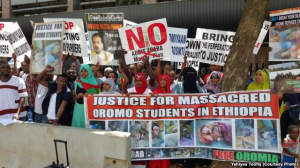
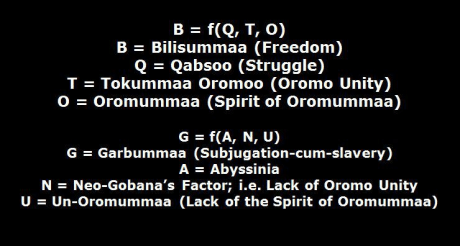
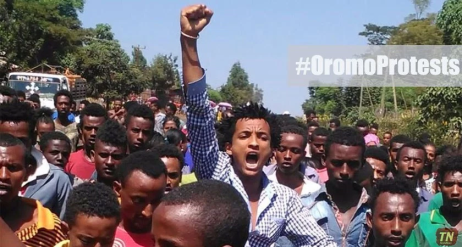
 While some of the new generation are satisfied with the advantages – legal and illegal – associated with their positions, others want to make their voices heard.
 Questioned about the existence of a “wider consensus within the ruling party” on greater economic openness, Arkebe Oqubay replied evasively: “I cannot say 100%.”[15] The opposition is of three kinds: the Ethiopian economic elite is highly disparate, divided between the most powerful groups who hope to be able to piggyback on the influx of foreign investors, and small businesses which consider themselves too weak to withstand international competition. An old “socialistic” ideological current persists. And finally, the nationalistic strain remains strong: no Ethiopian leadership has ever allowed a foreign presence, of whatever kind, to acquire sufficient influence as to potentially escape its control. Yet a massive influx of foreign investors inevitably requires compromises that will one way or another dent that sovereignty.
 The obstacles are huge: the whole culture of power would be turned upside down, along two axes.
 It would also require an end to the wait for the supreme saviour, the ‘strong man’. Even within the TPLF, and even more so in the population of former Abyssinia, many are convinced that only such a figure could stabilise and preserve the structure of power, thus bring a lasting stability, as supposedly demonstrated throughout Ethiopian history.





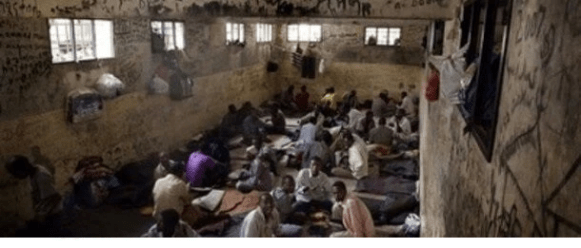

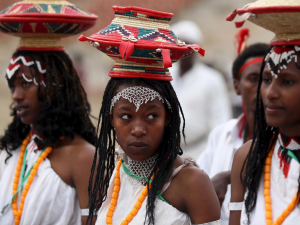

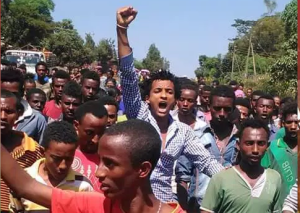


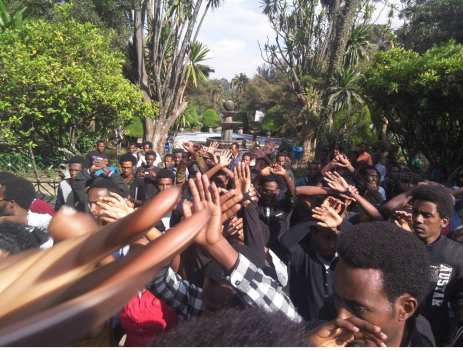

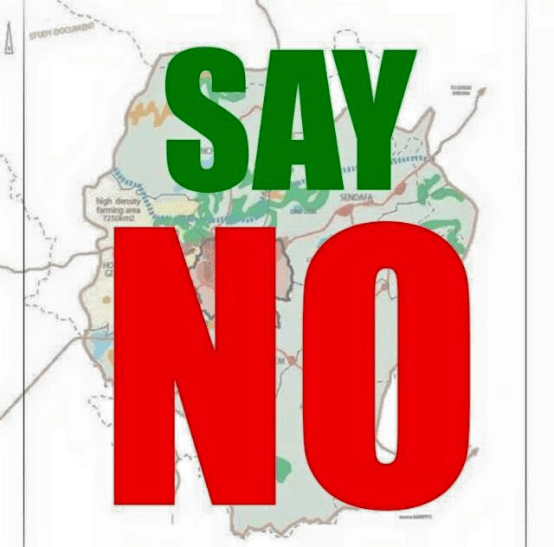
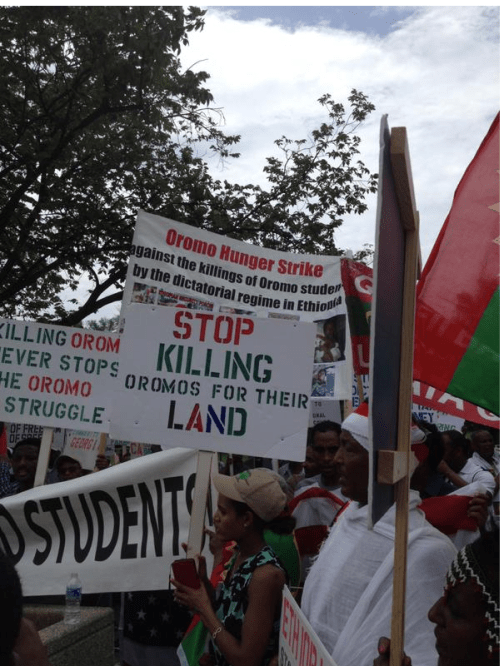

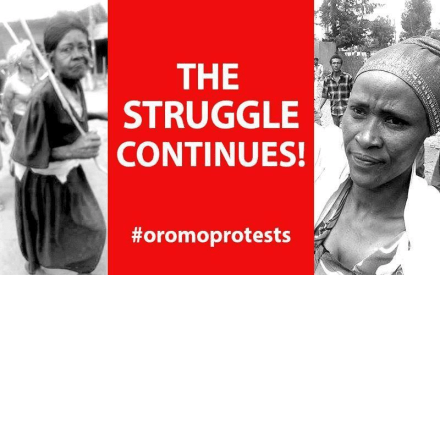
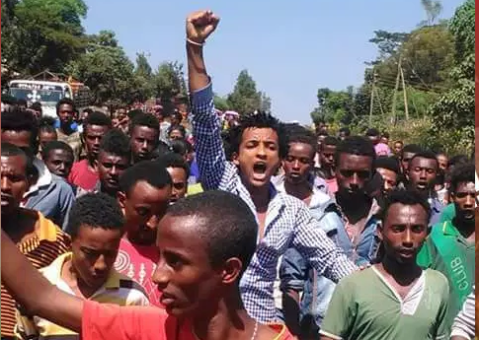
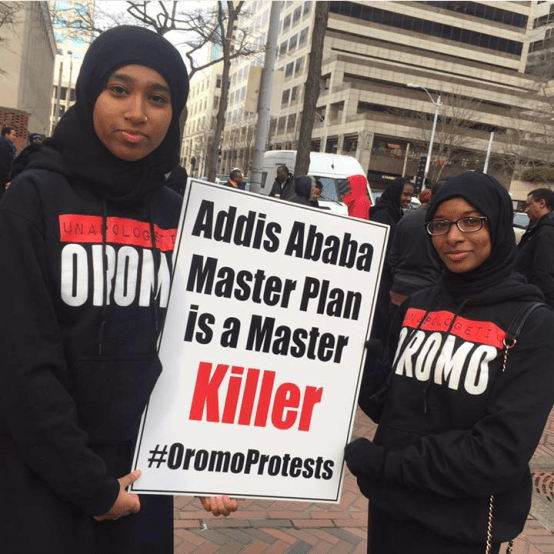
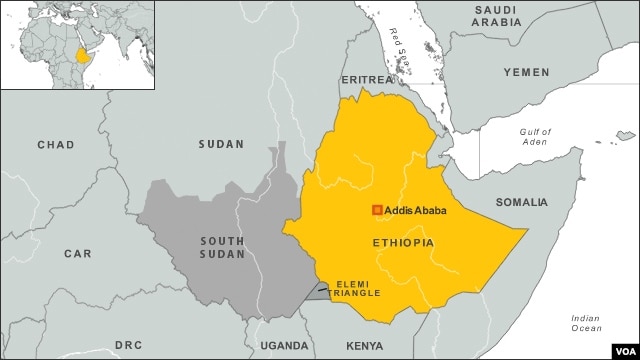
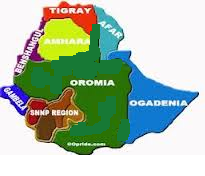


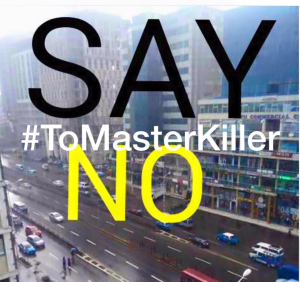
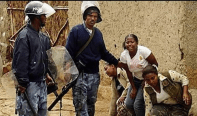

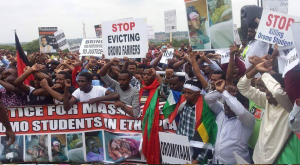
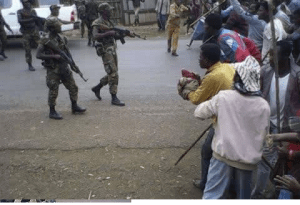


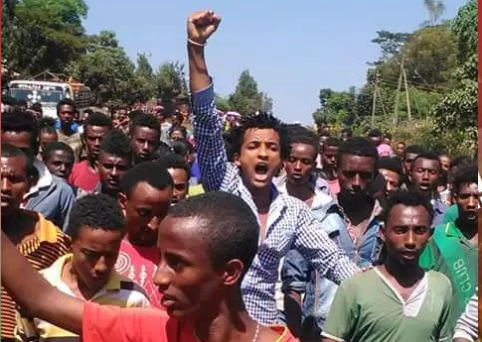

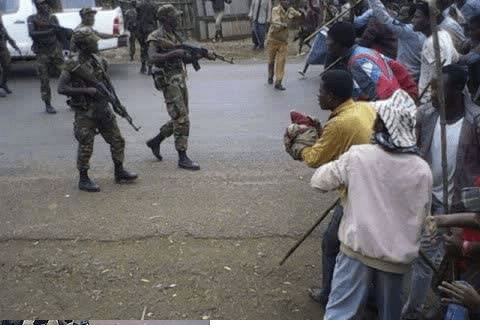


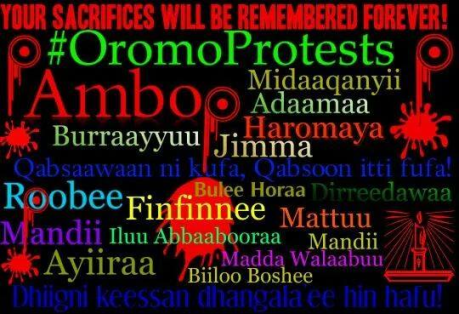
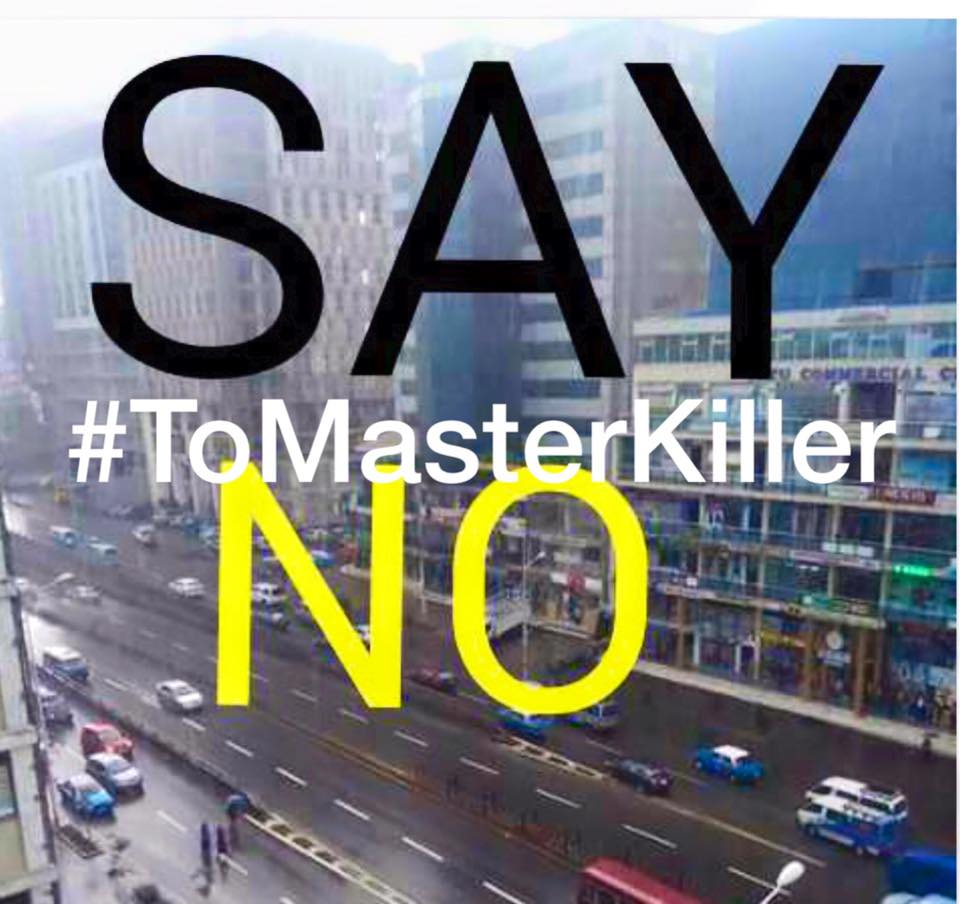




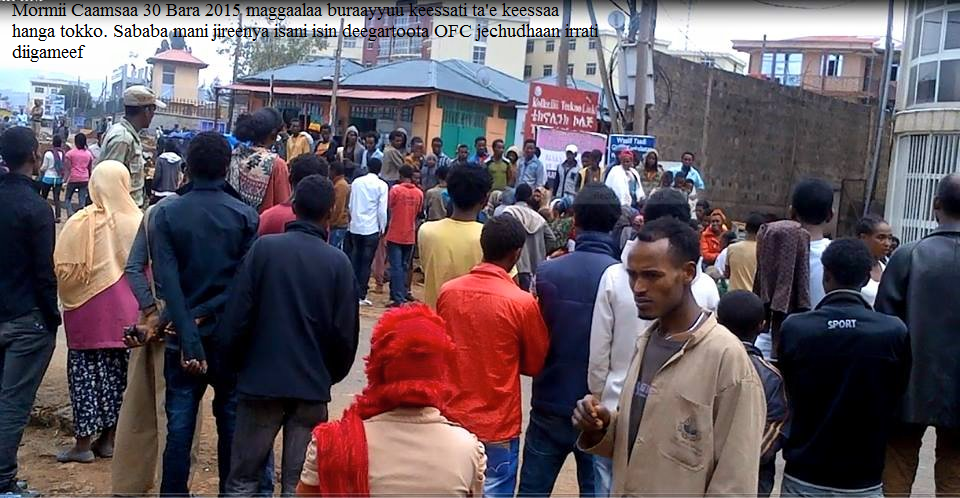

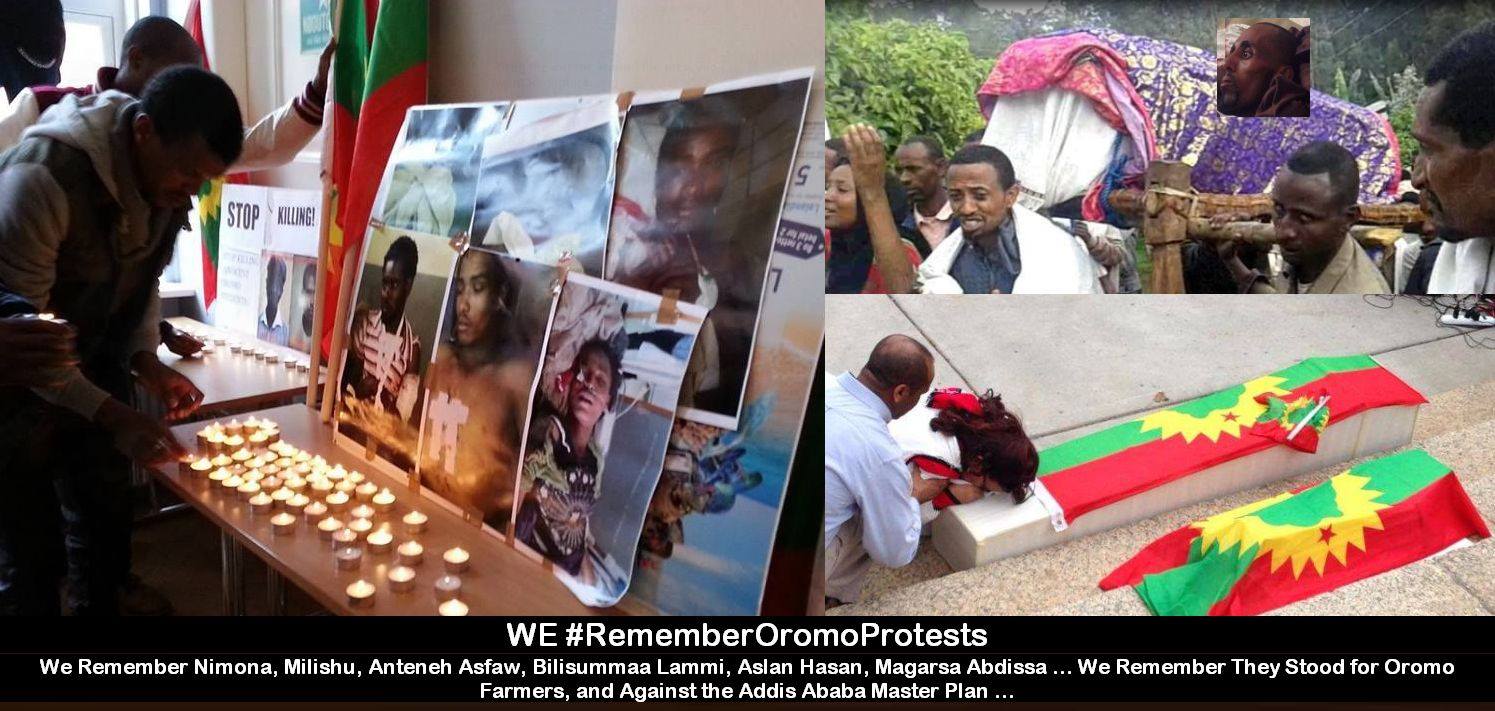

![Jimma[1]](https://qeerroo.files.wordpress.com/2015/03/jimma1.jpg)


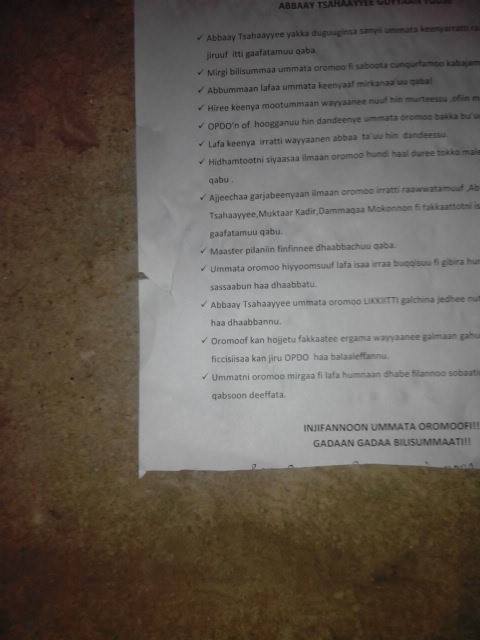





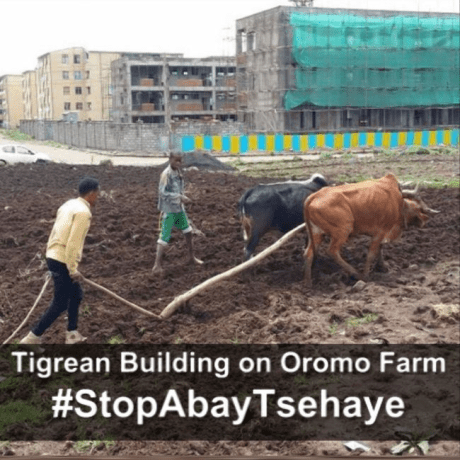
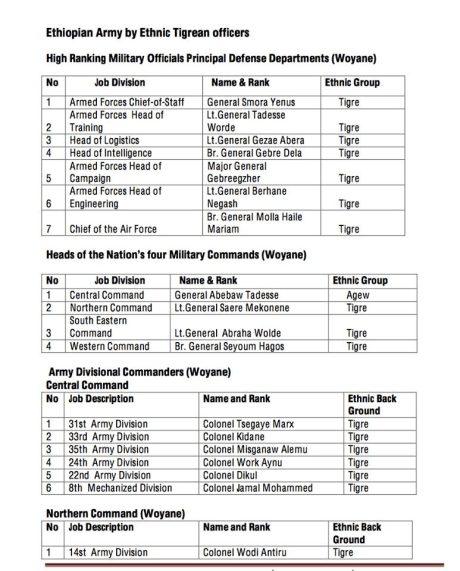




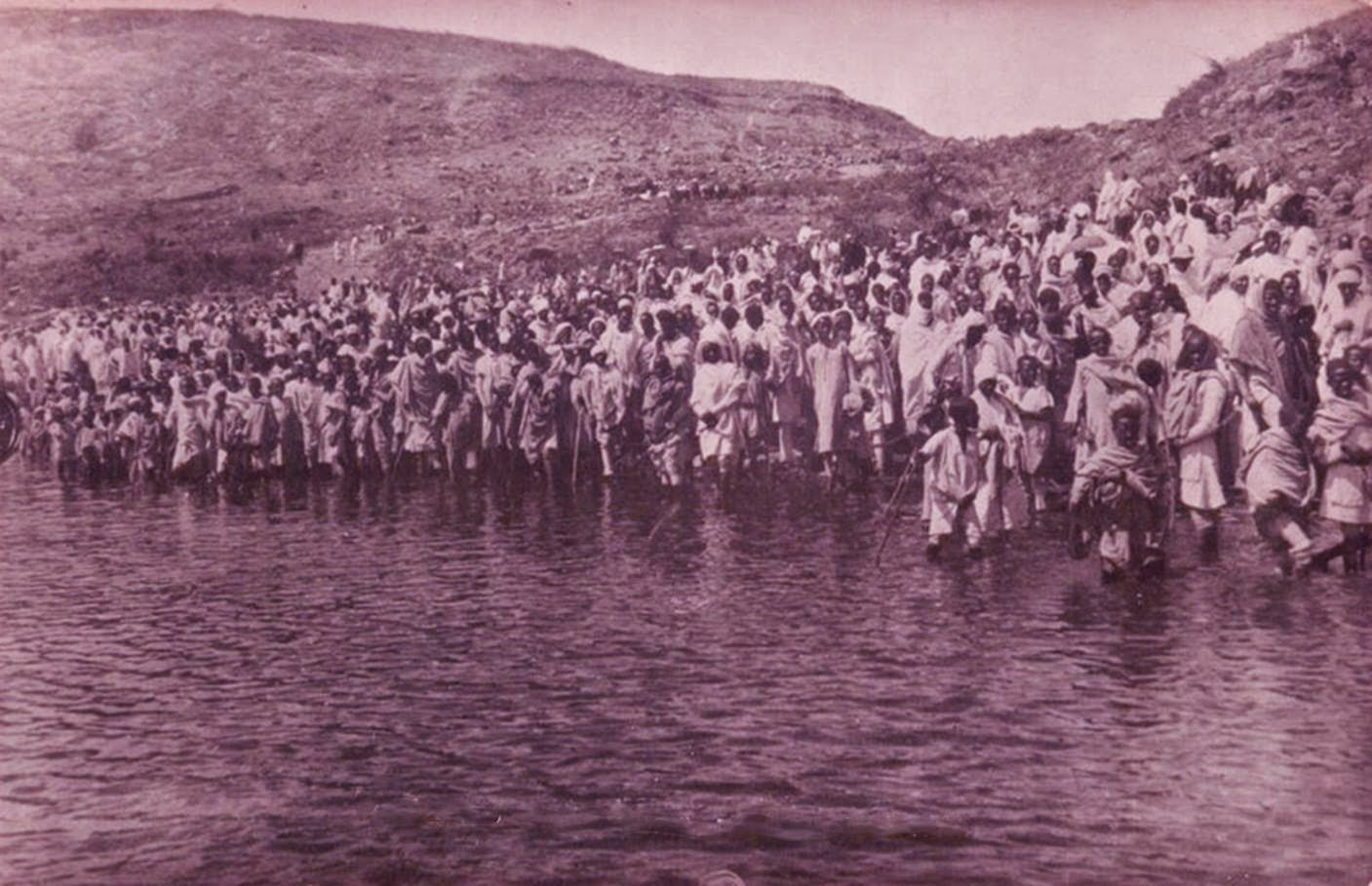


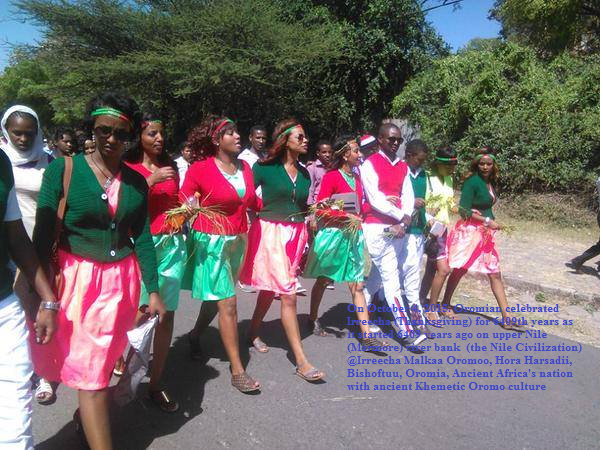


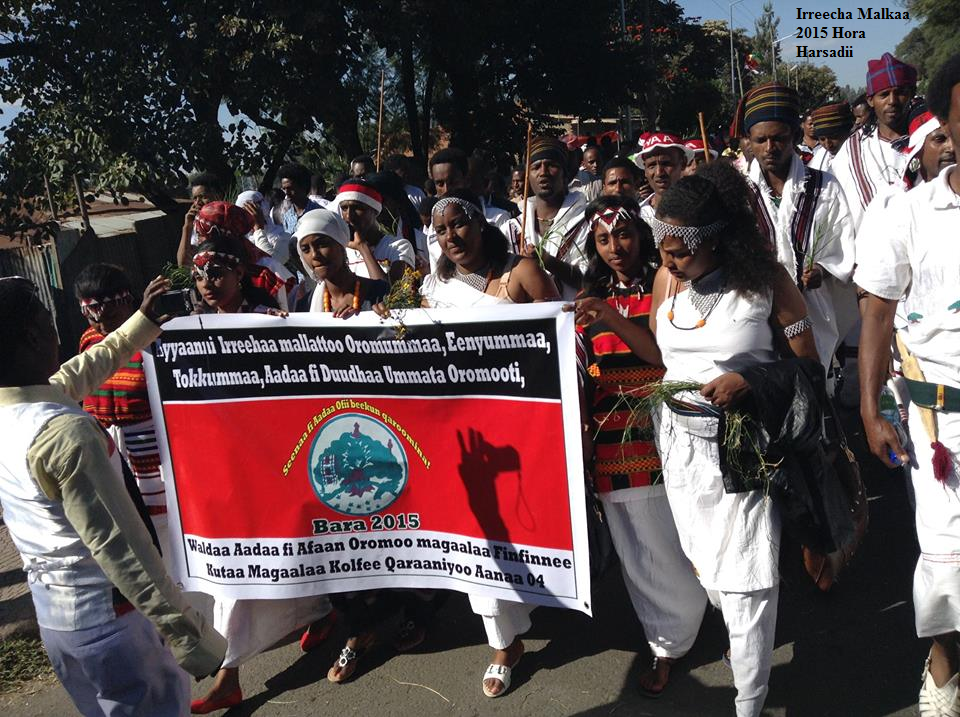
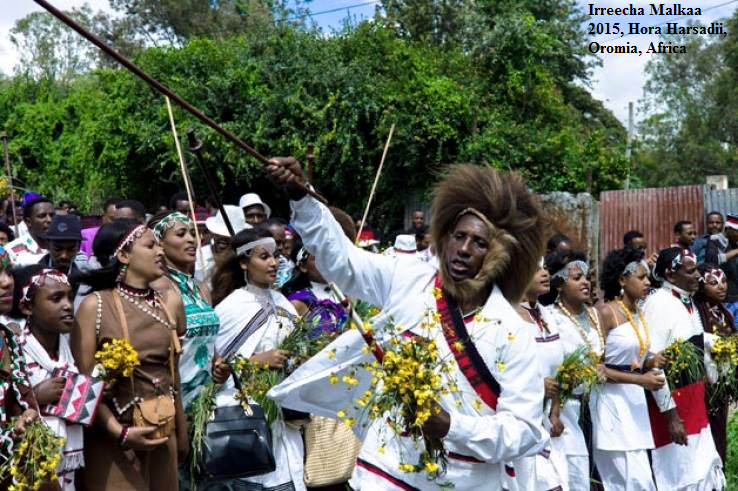

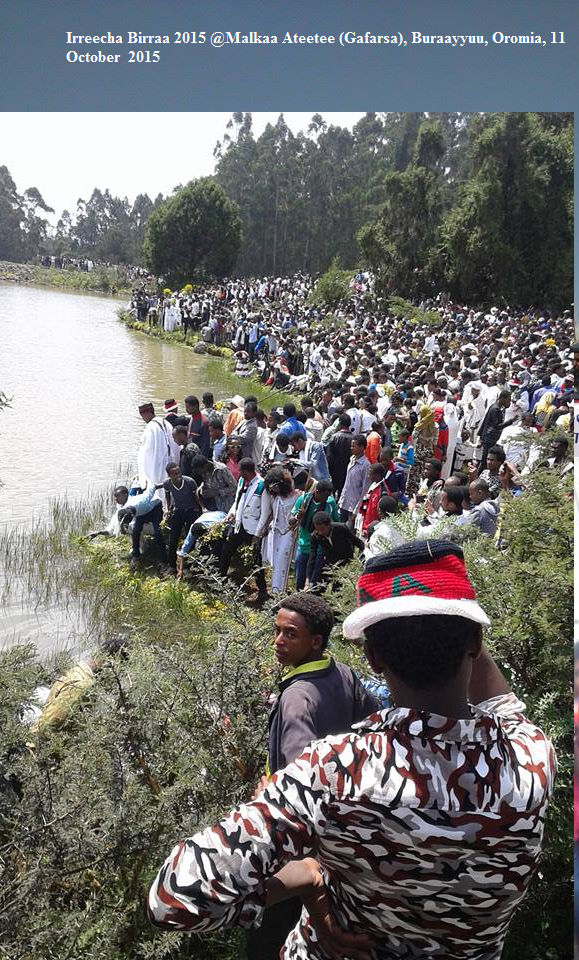
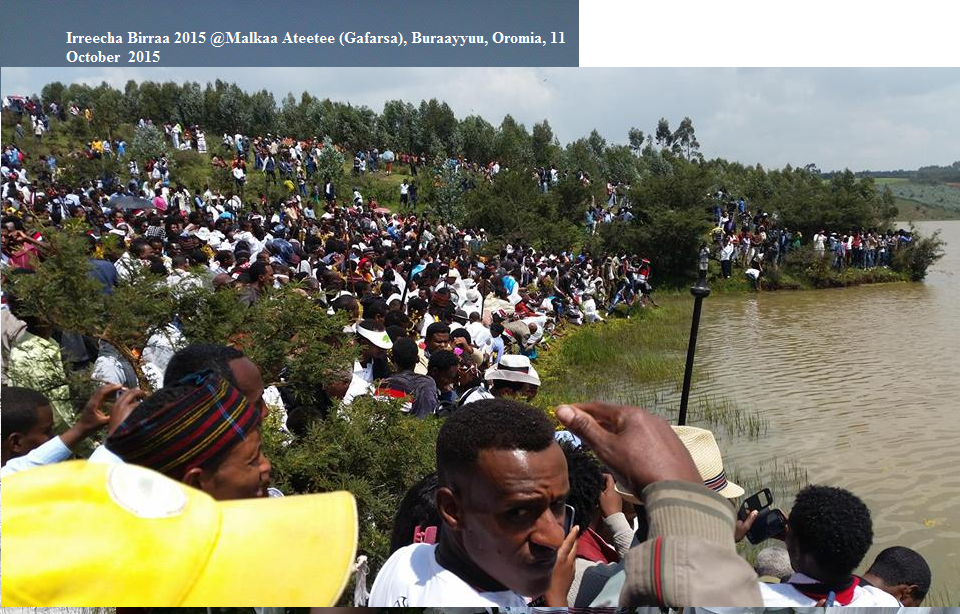

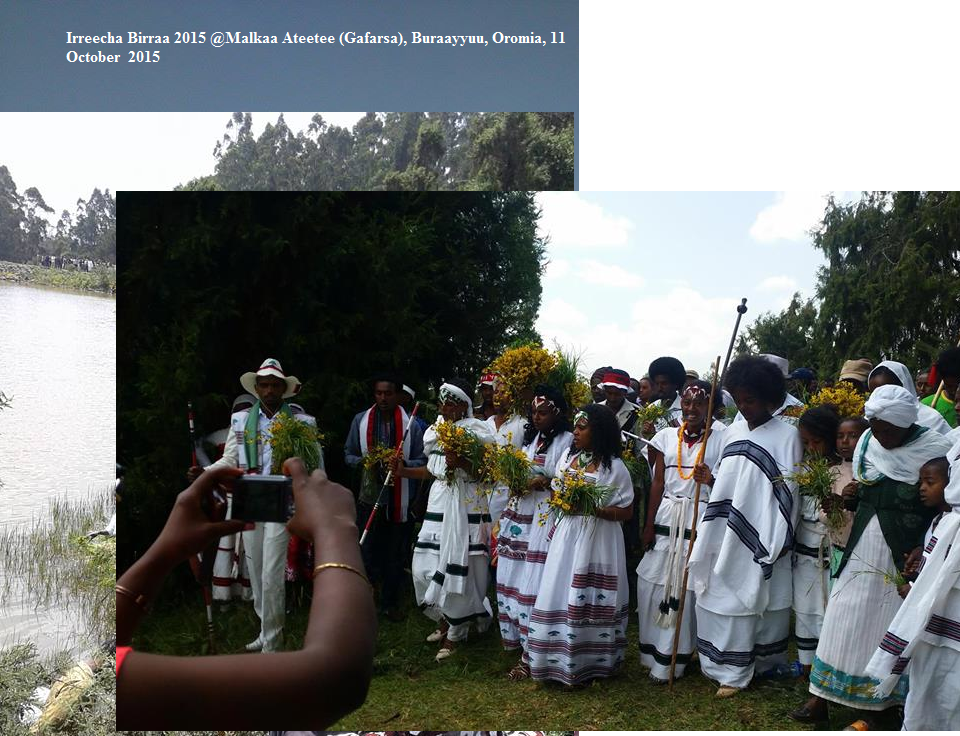
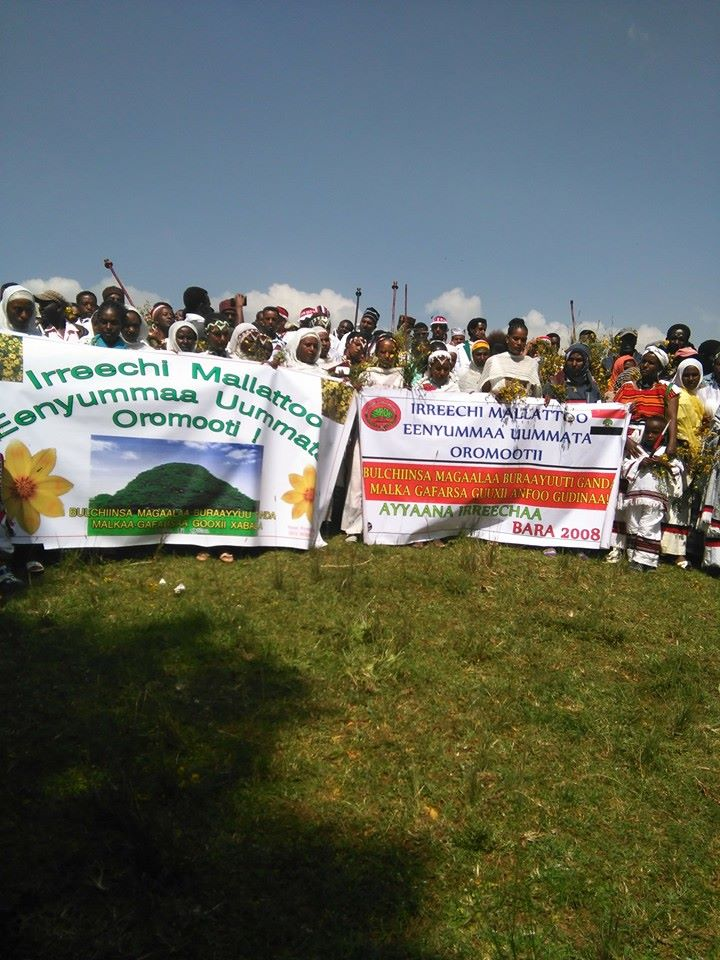
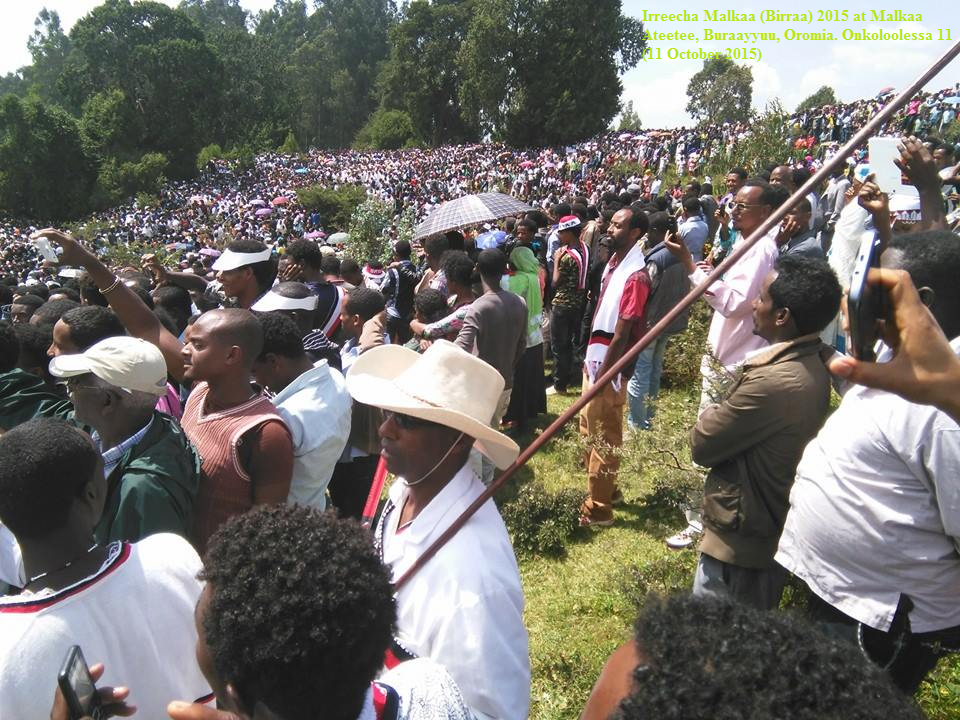
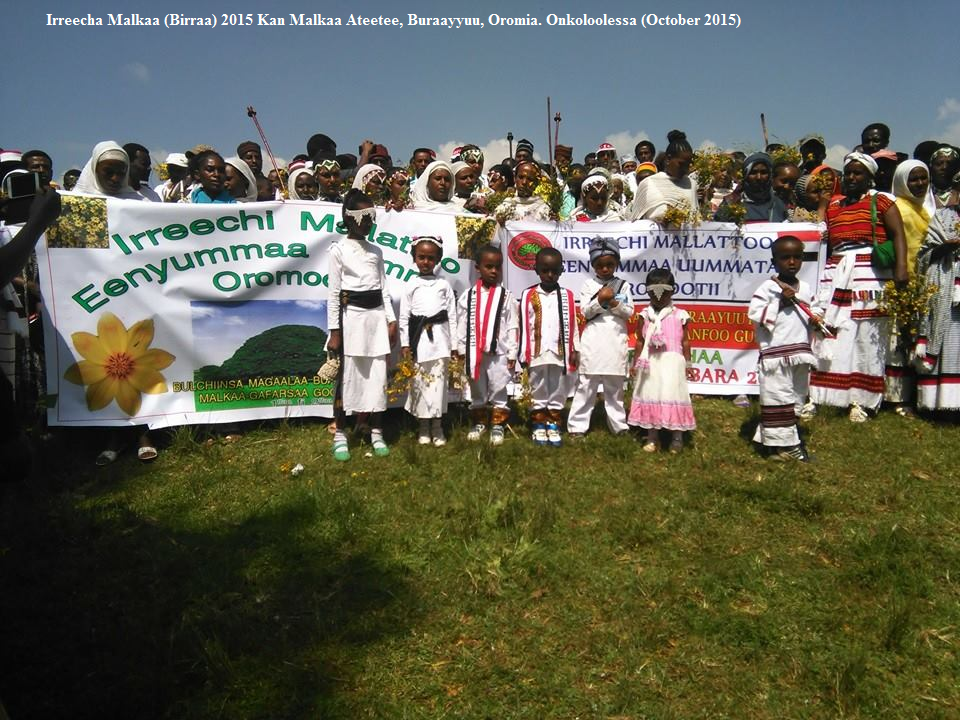

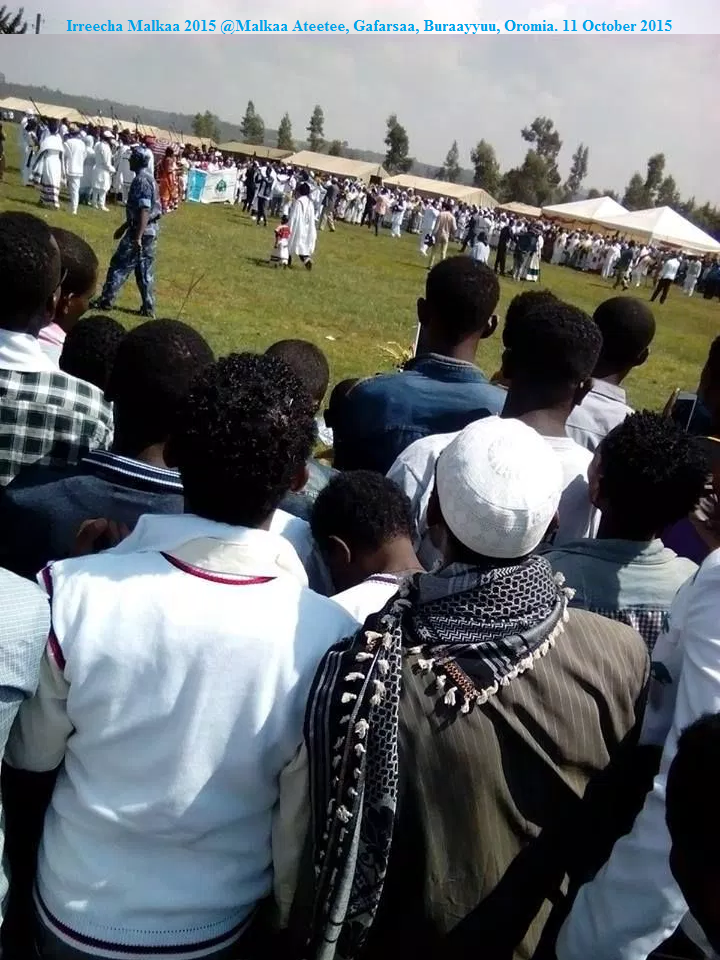
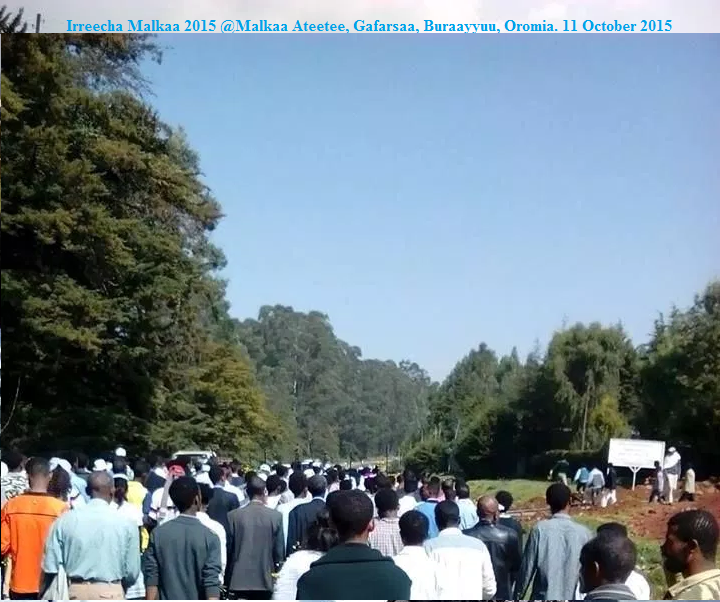
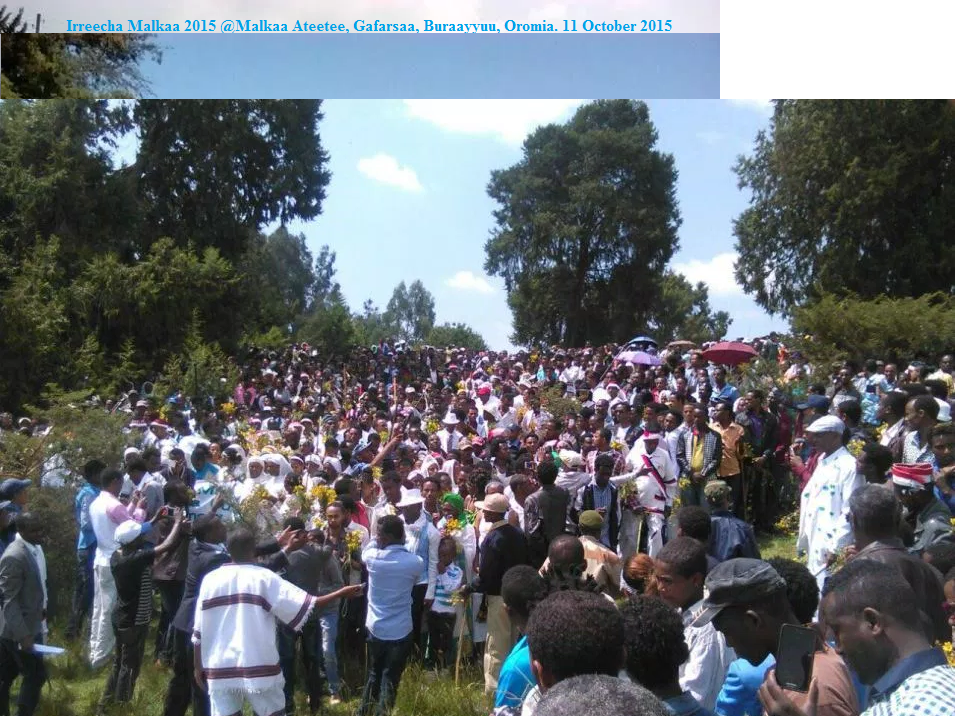
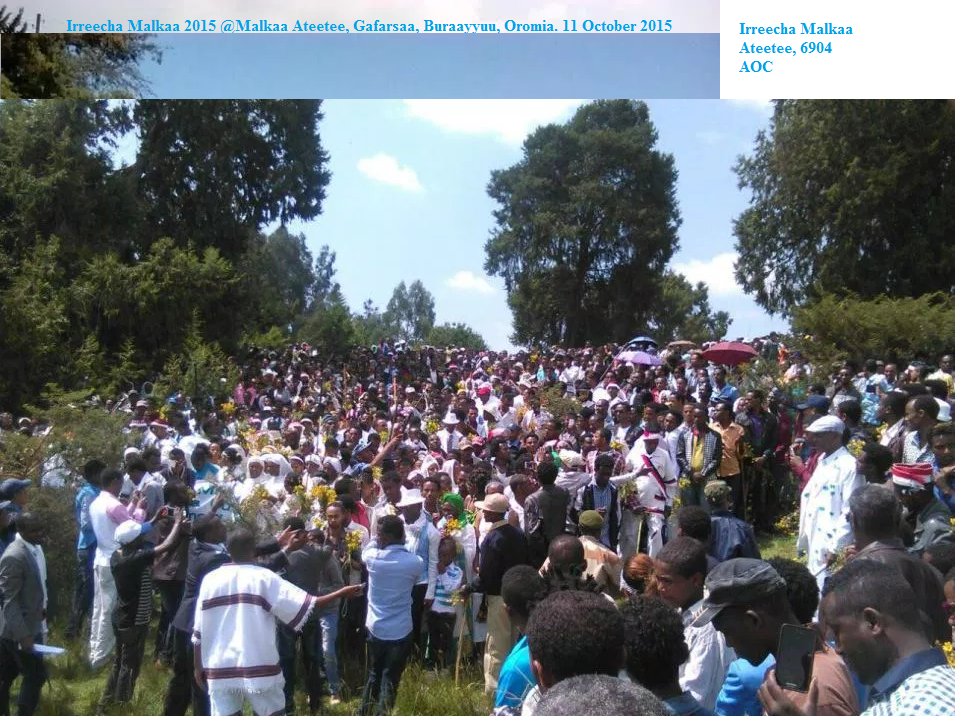

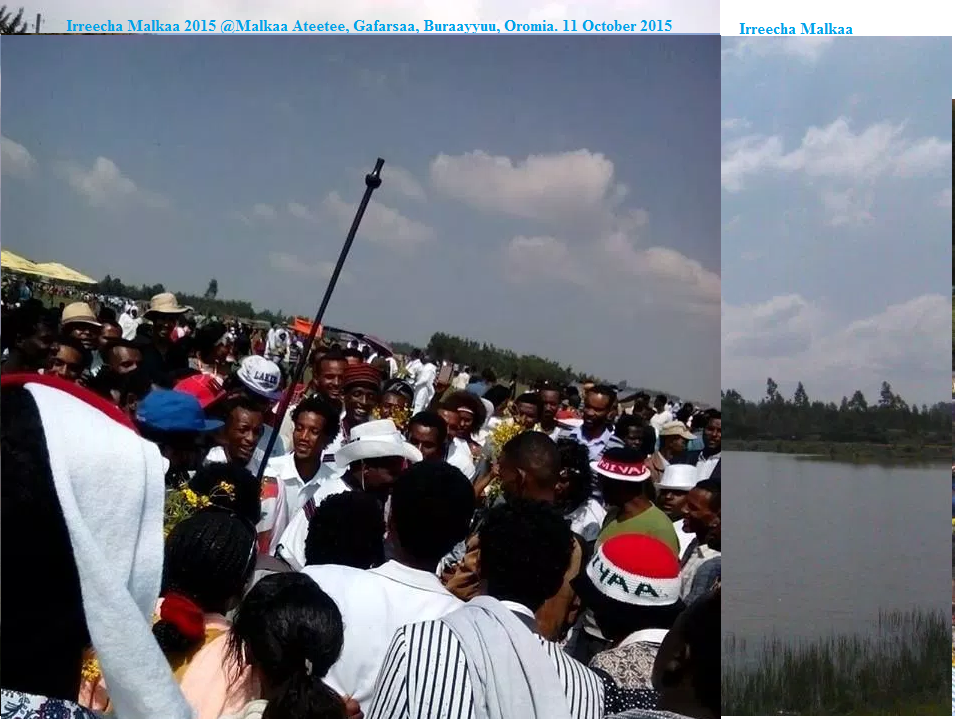
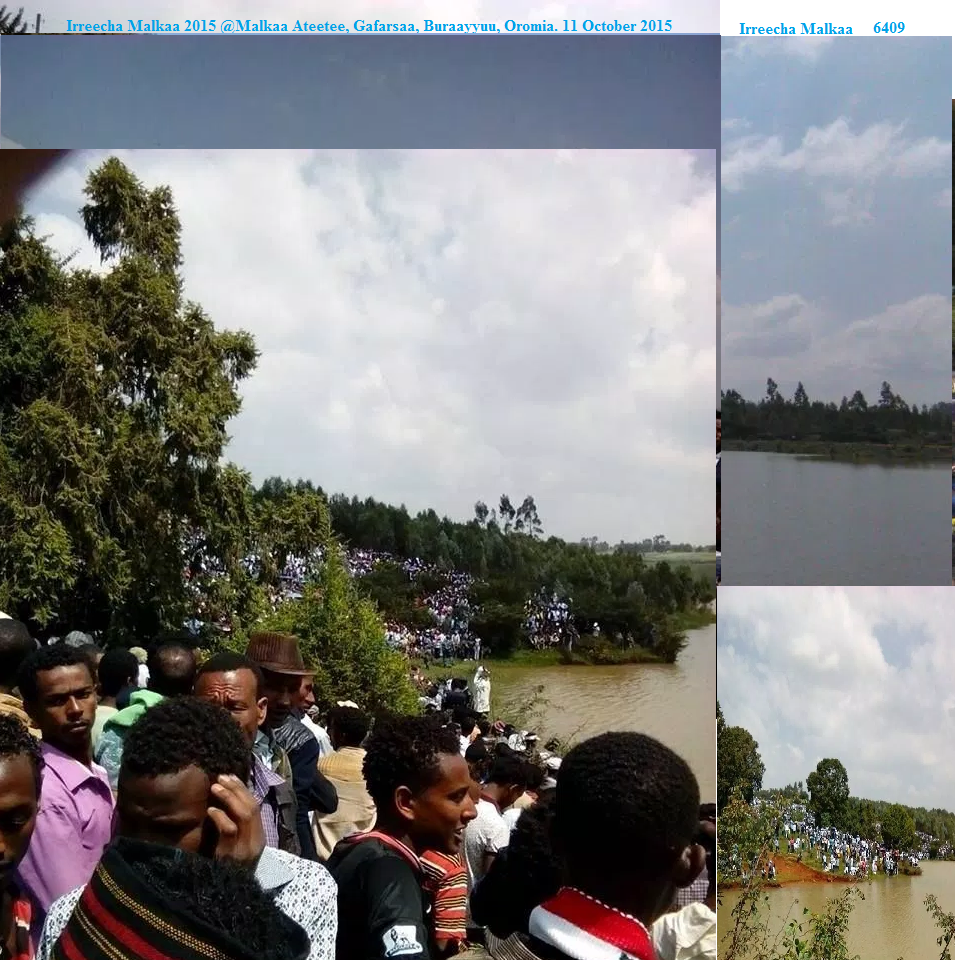
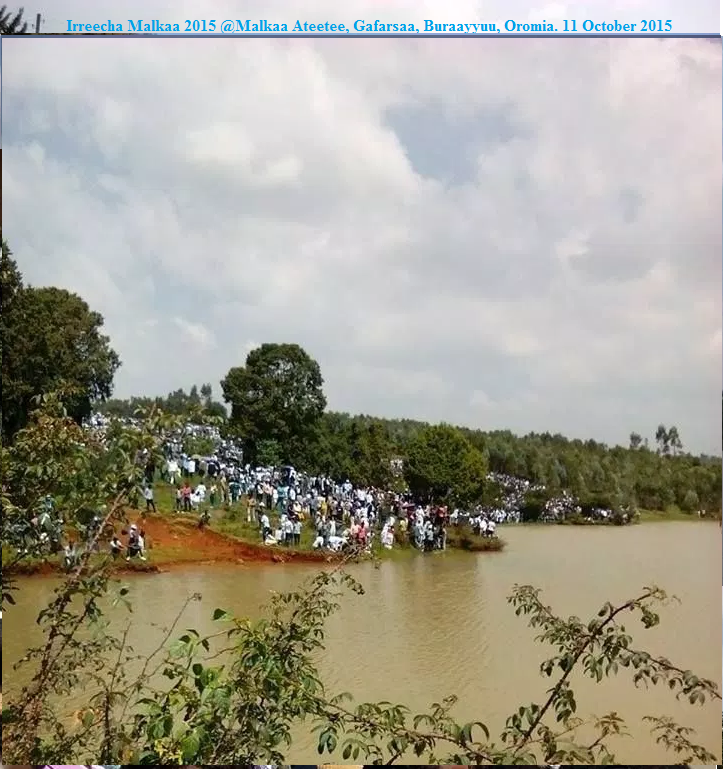
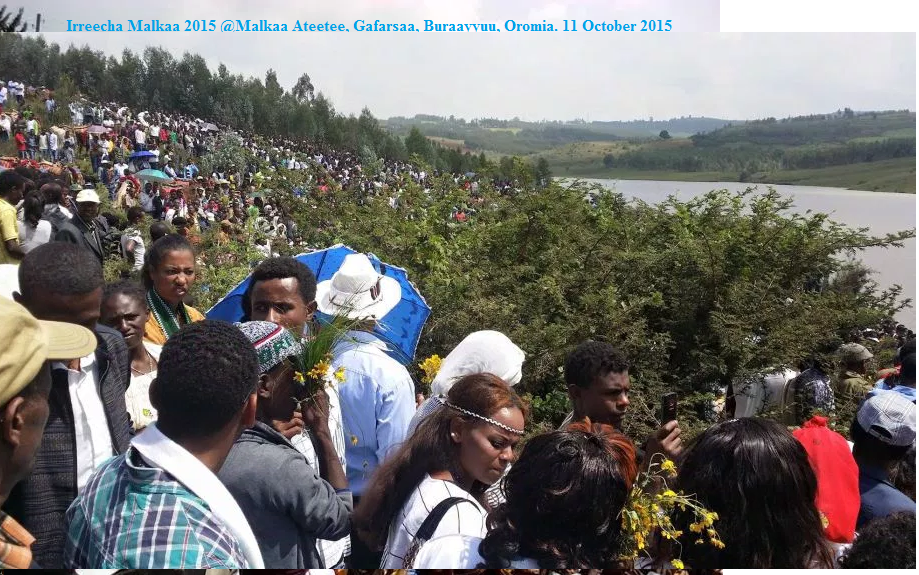
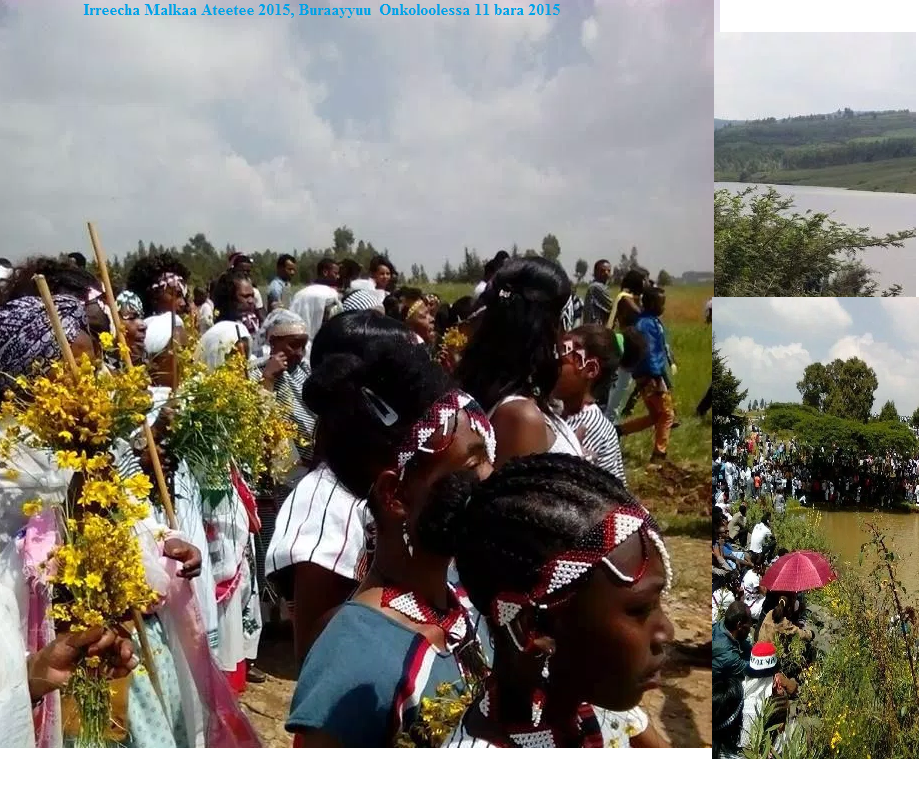
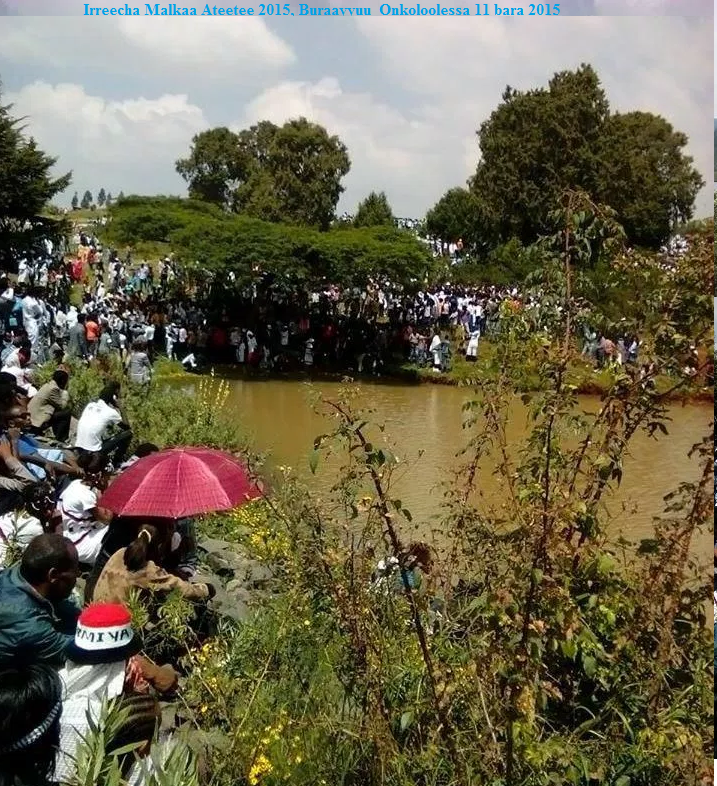
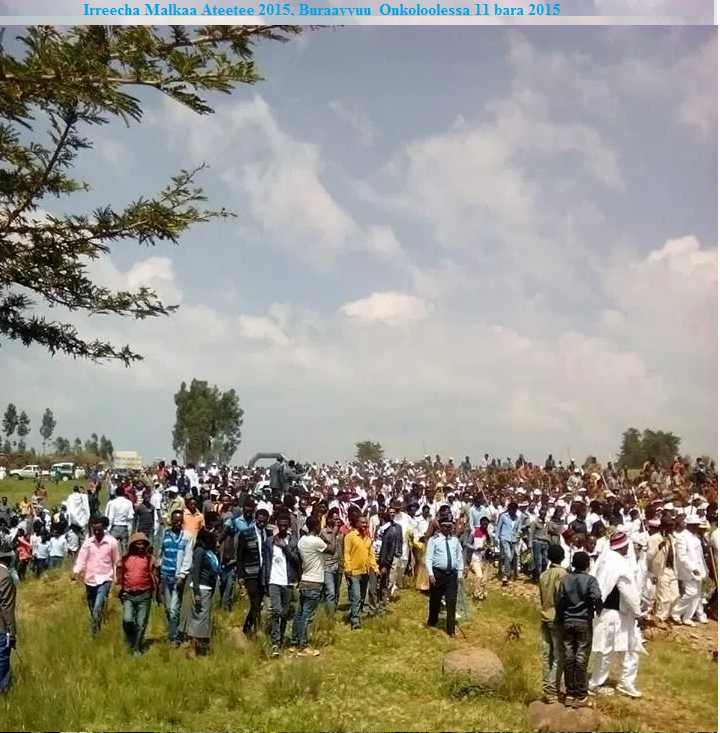
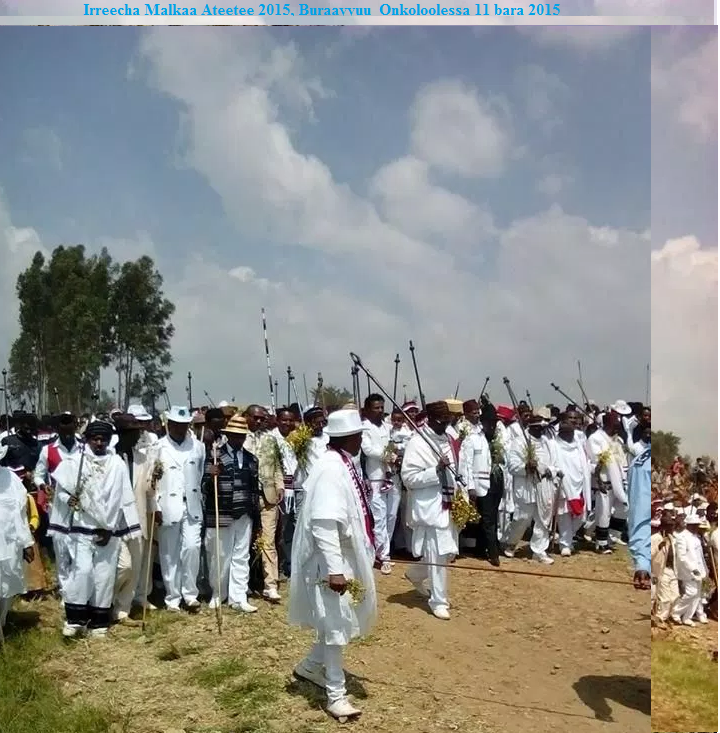

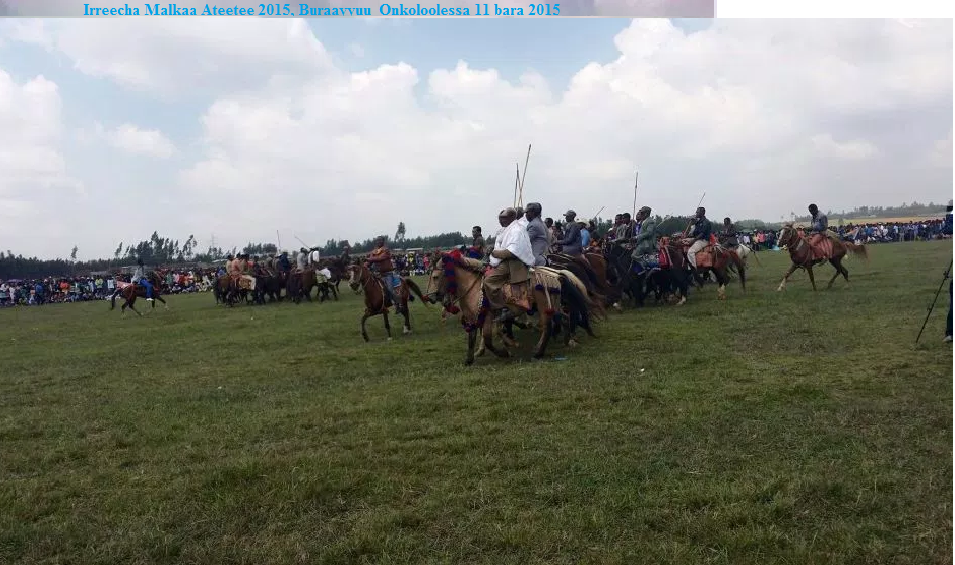

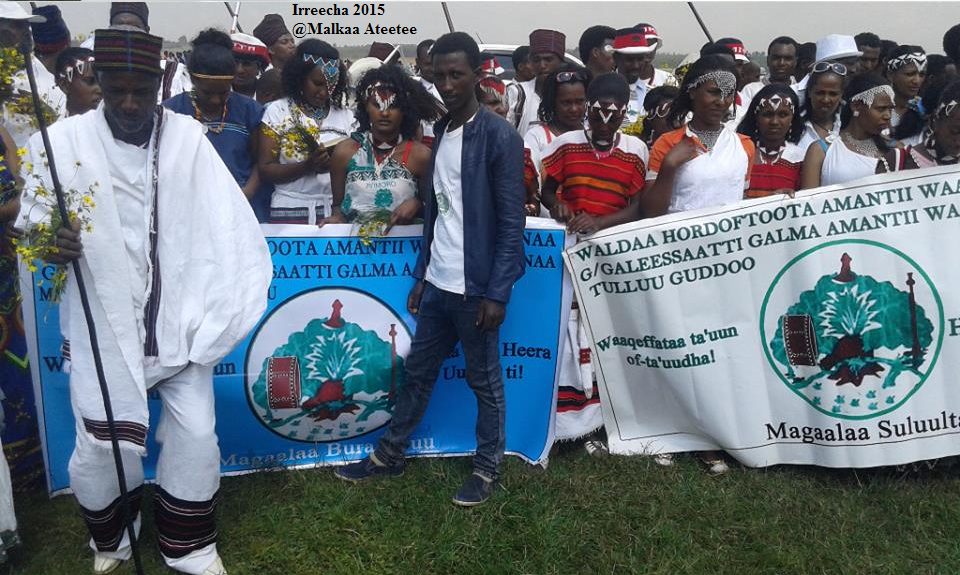

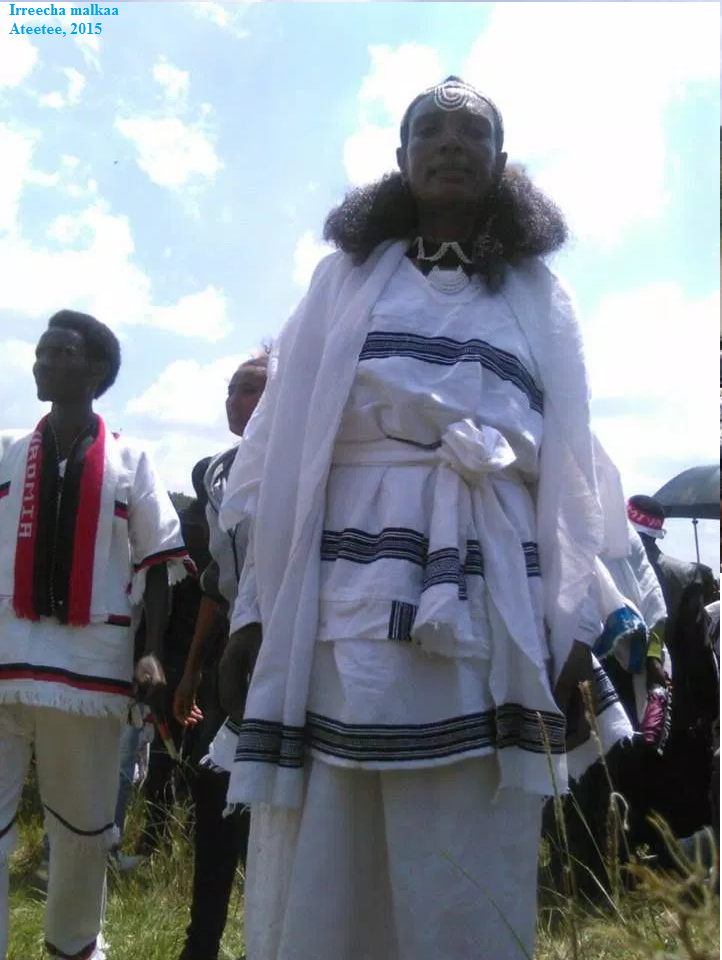


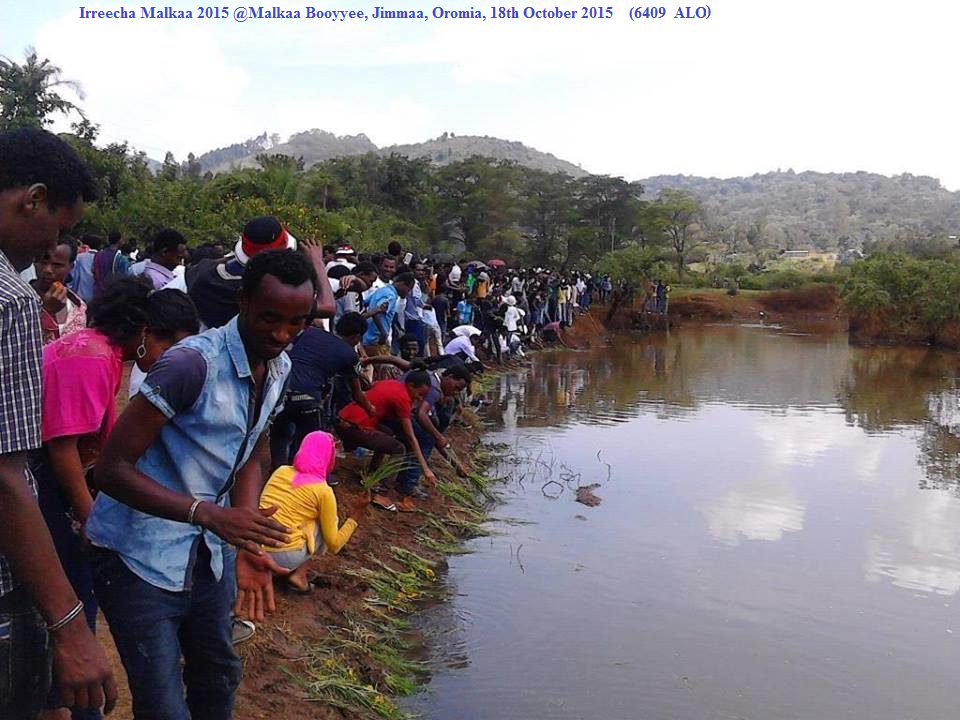


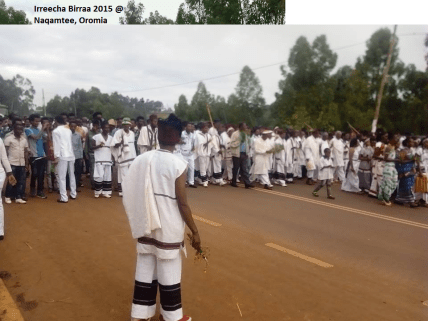

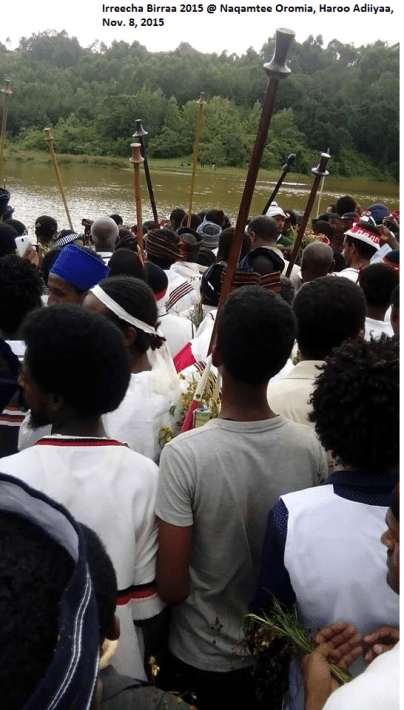
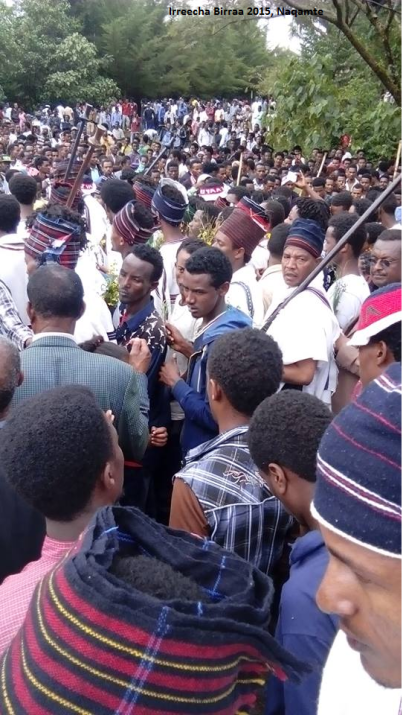


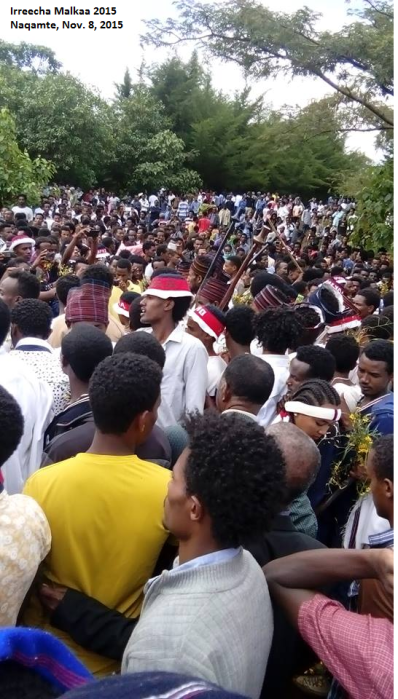

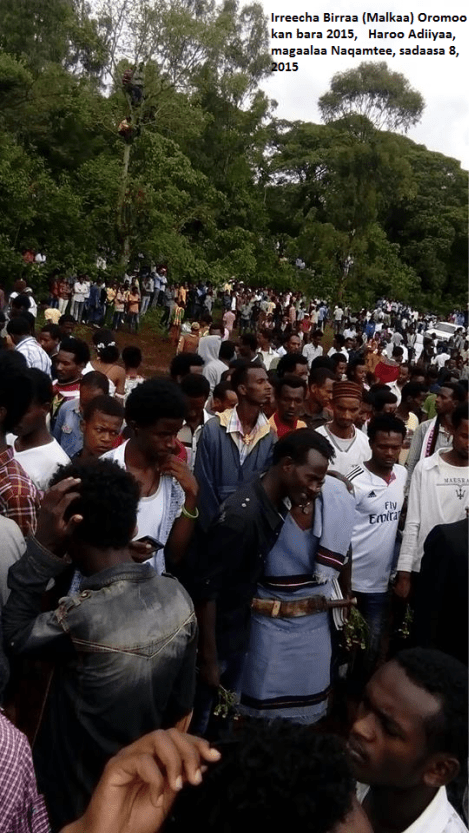


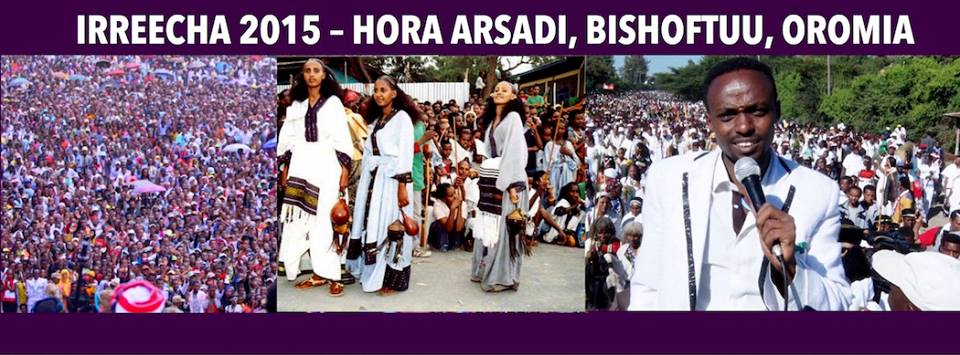

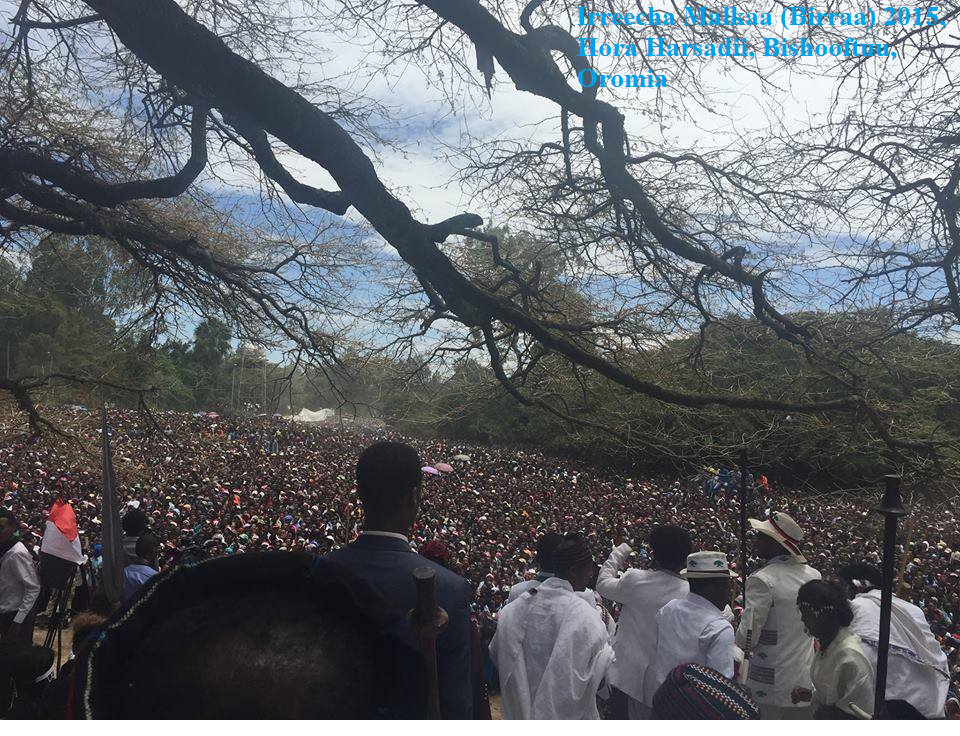


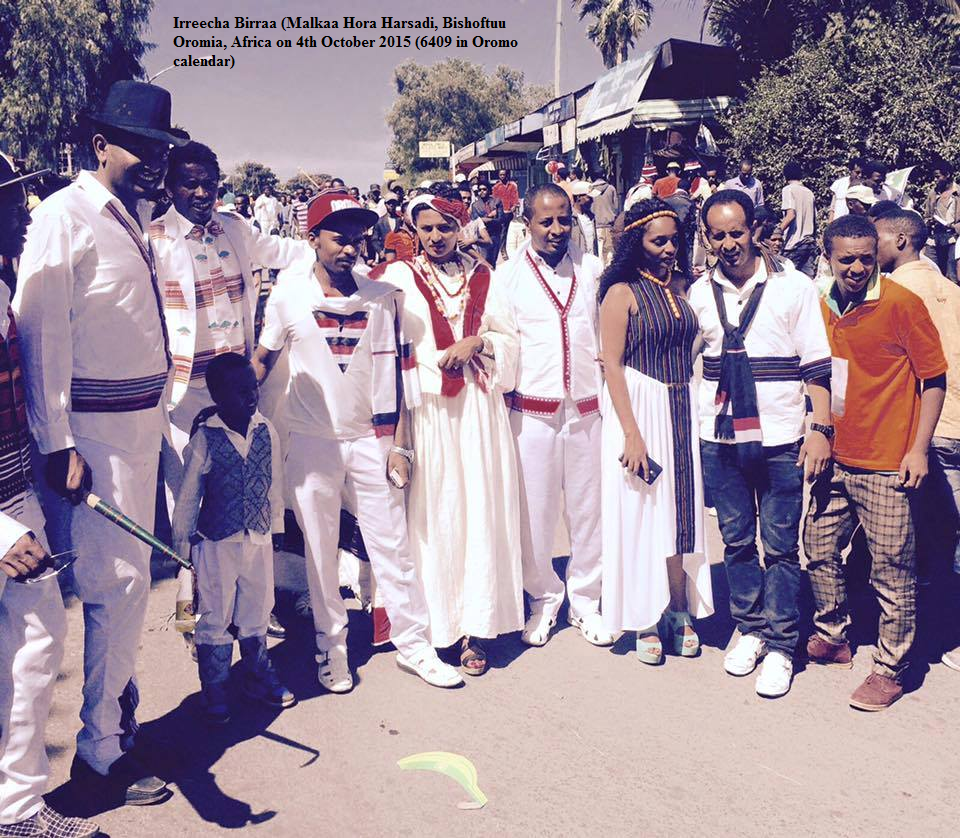
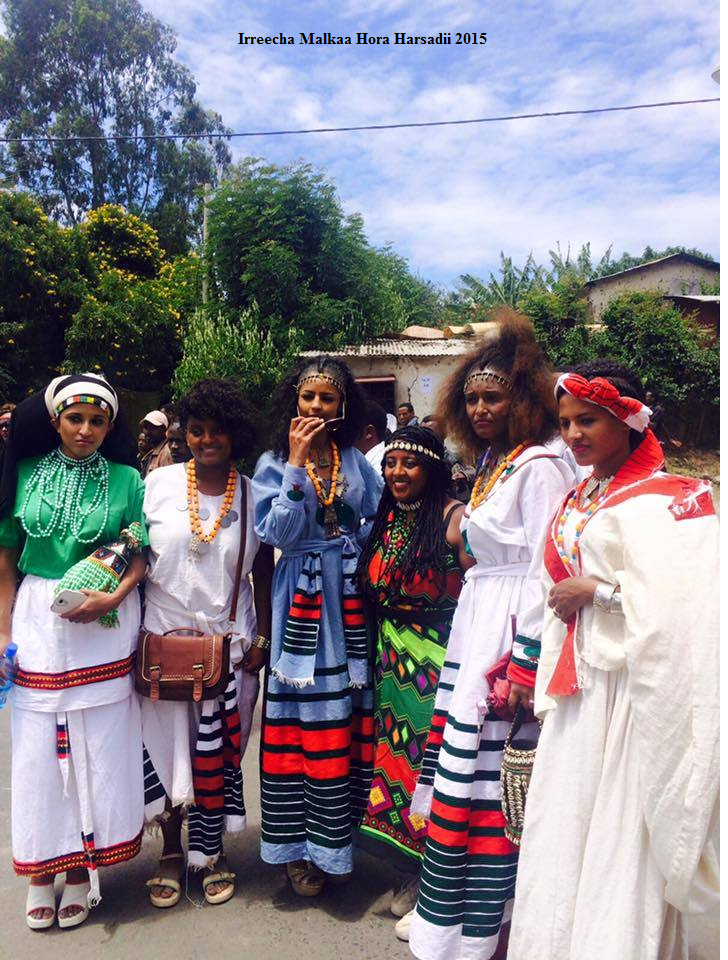




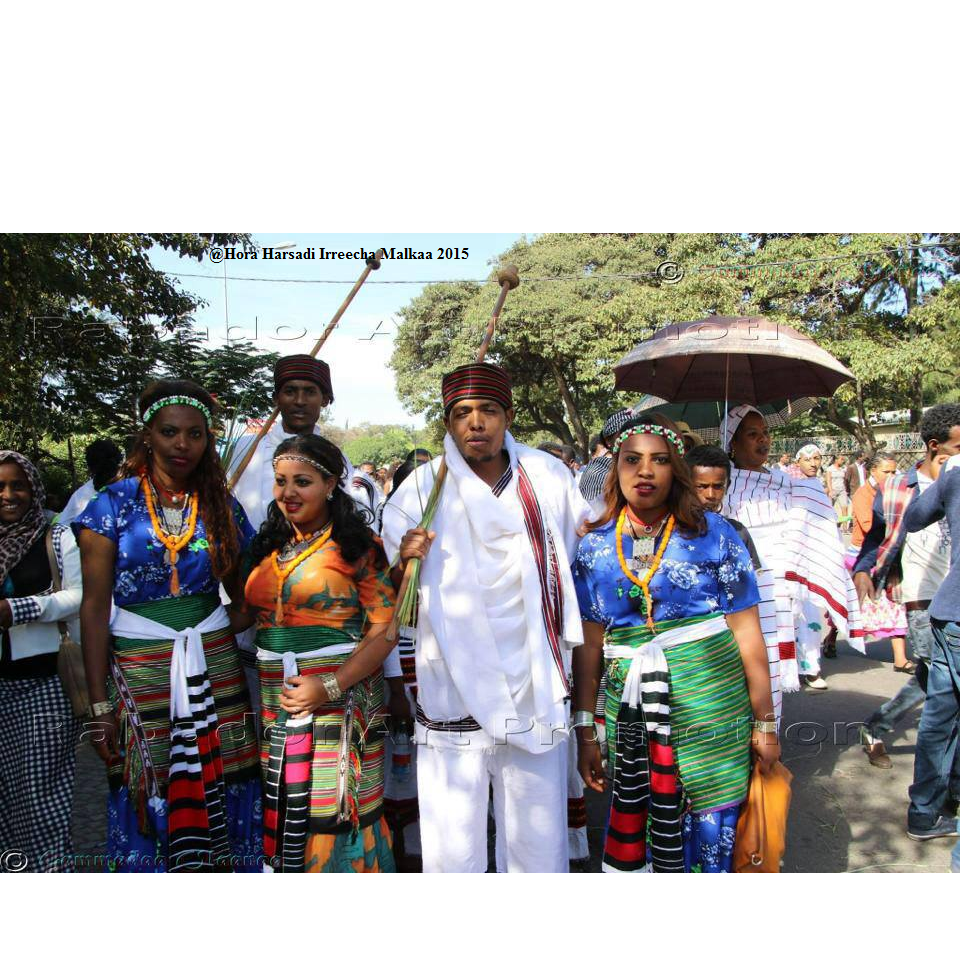
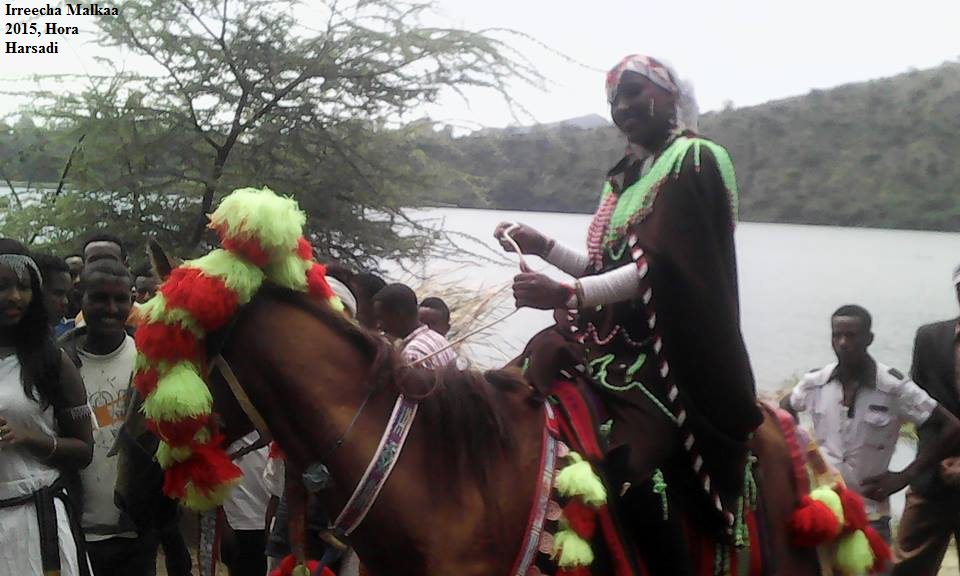


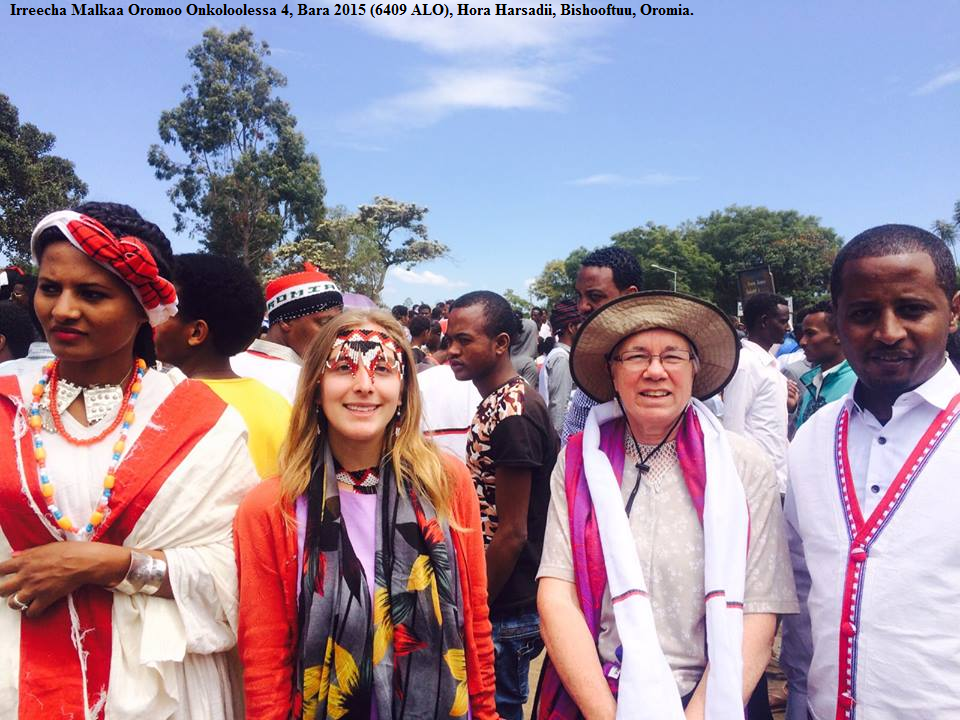
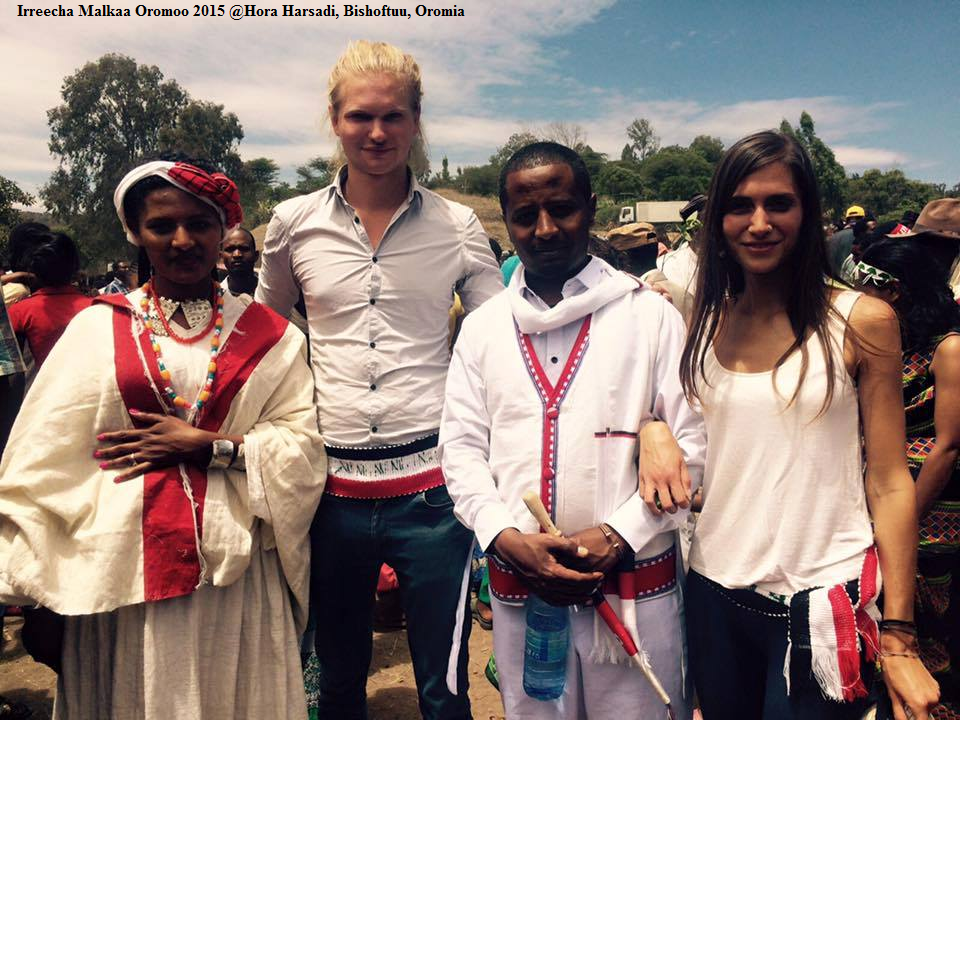
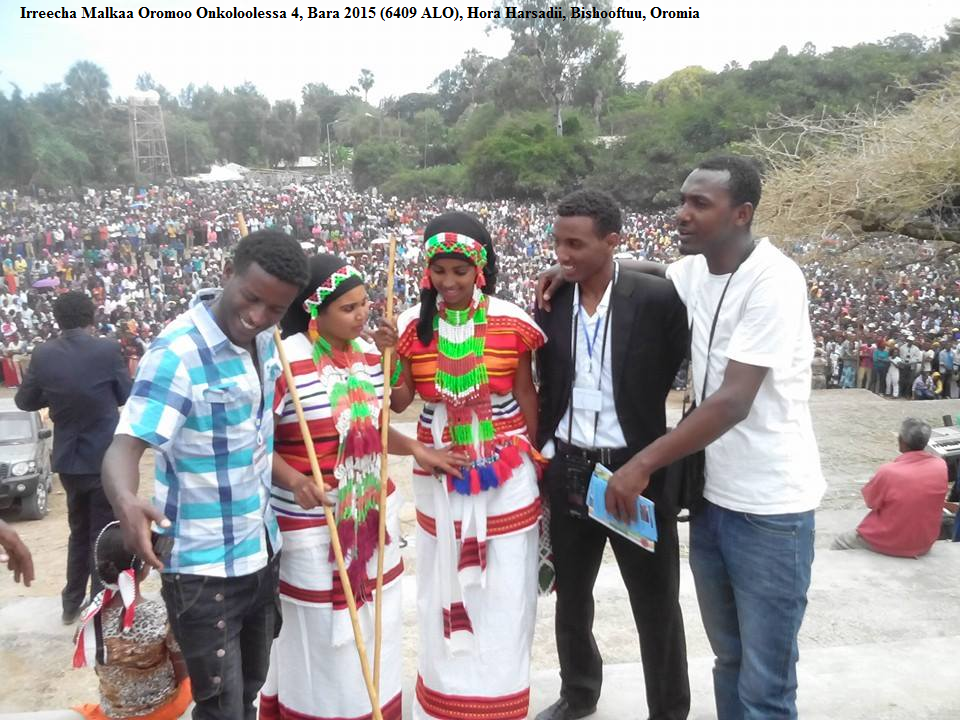

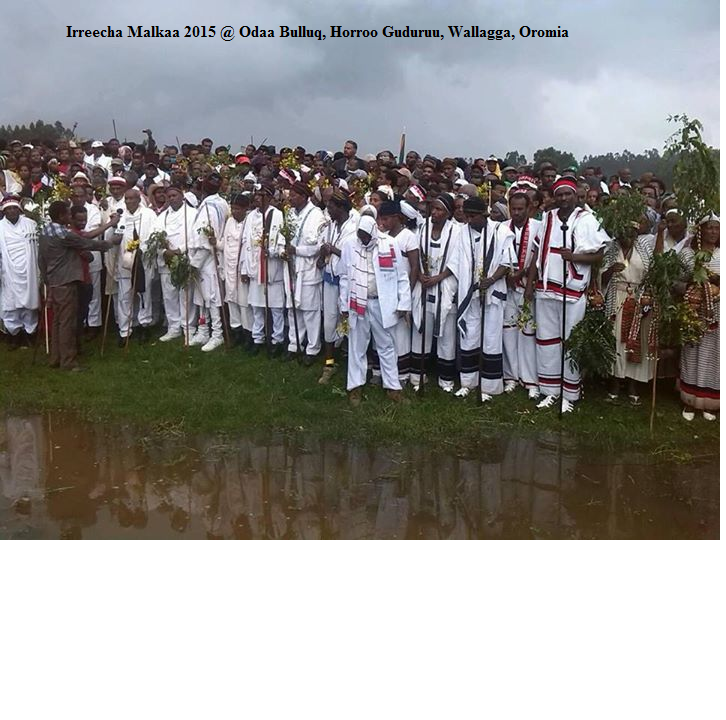
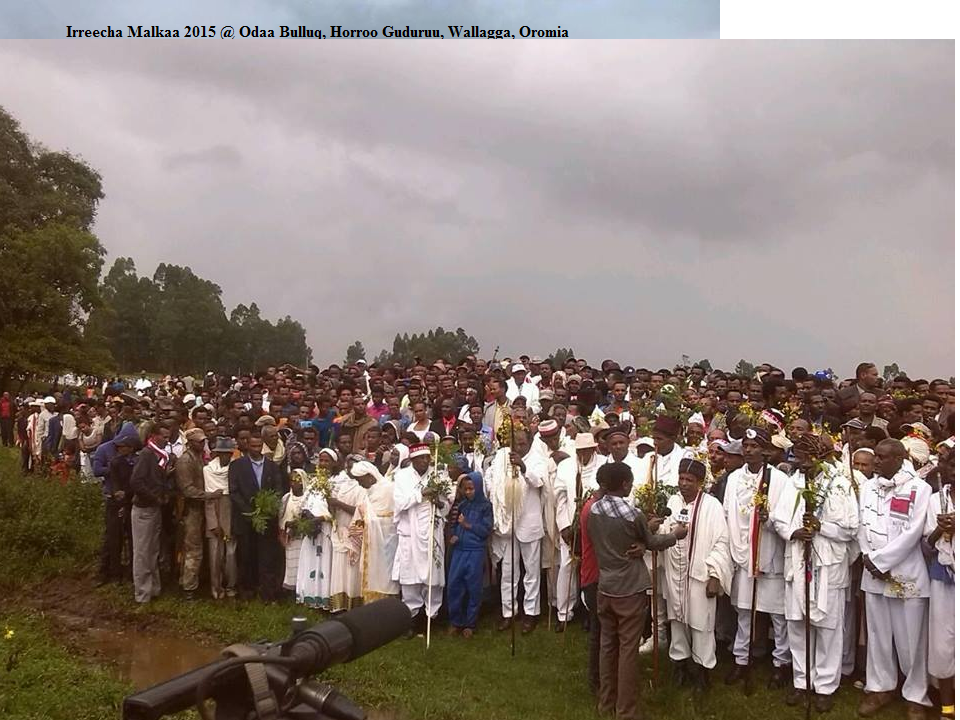
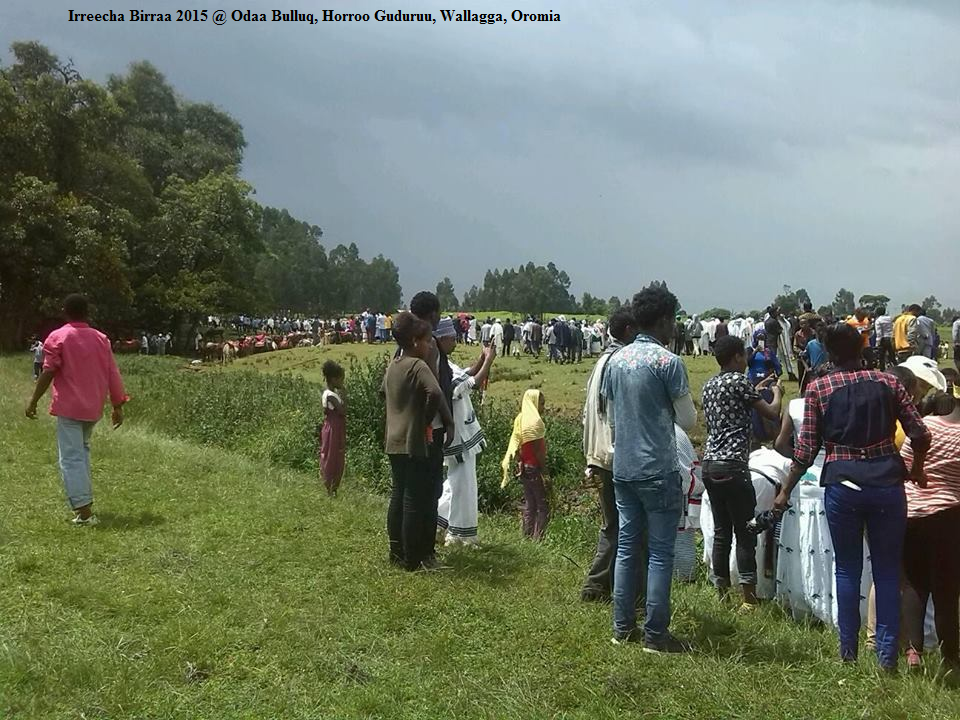
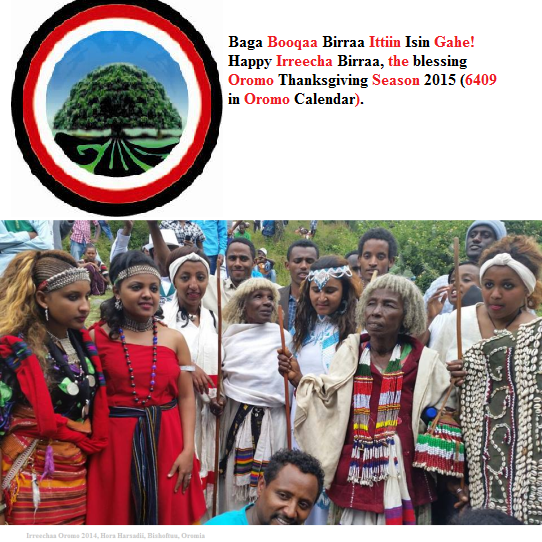


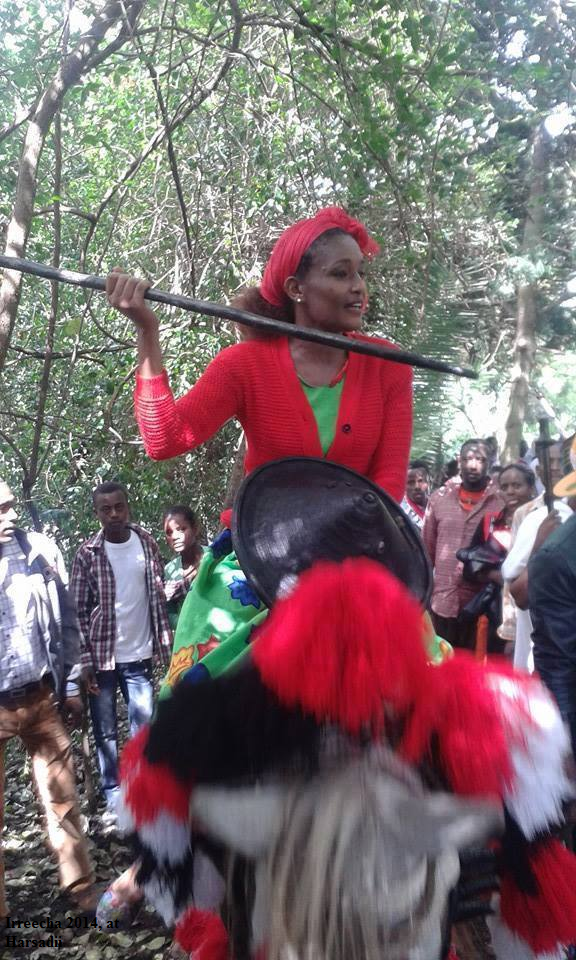

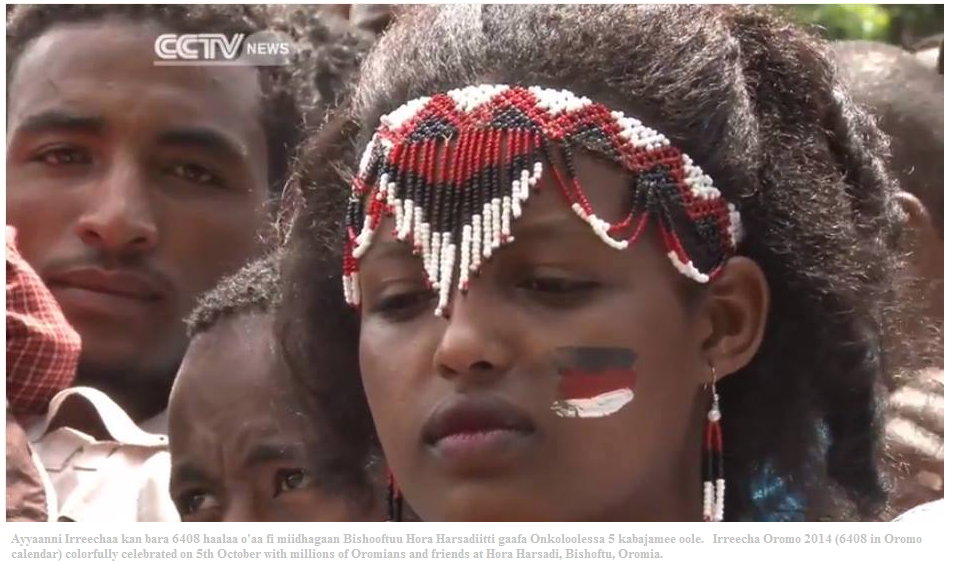


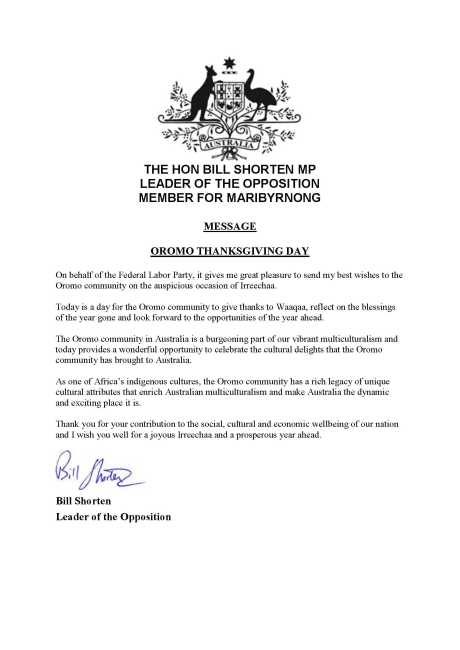




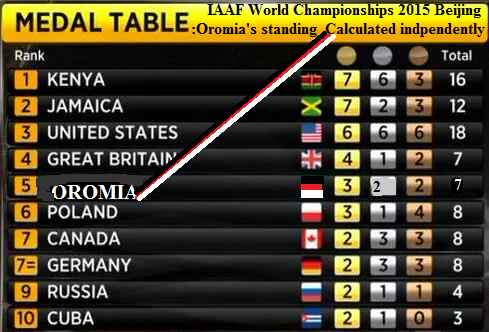
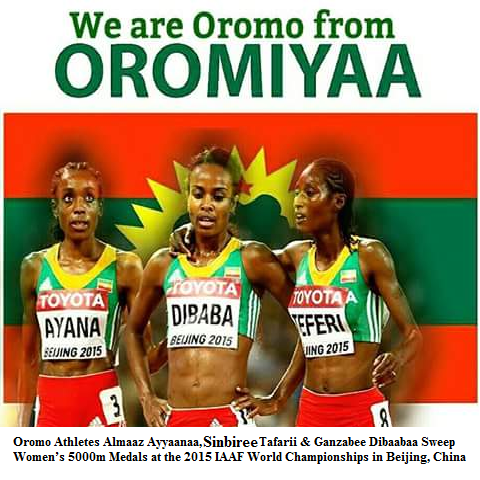
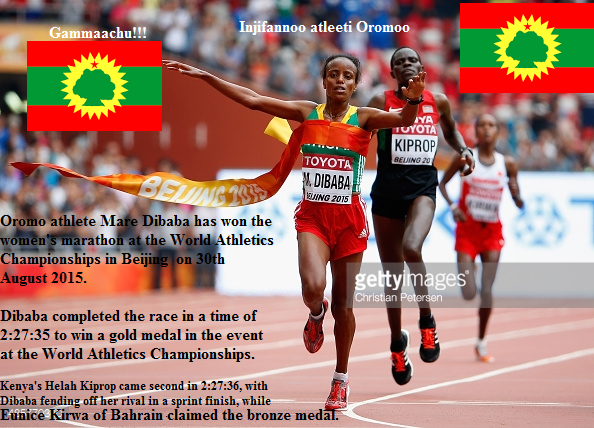
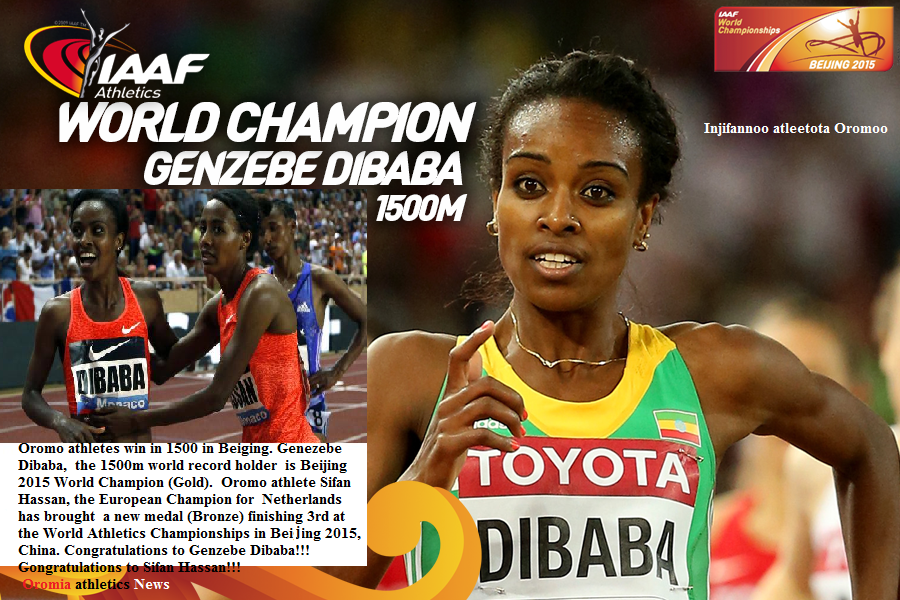
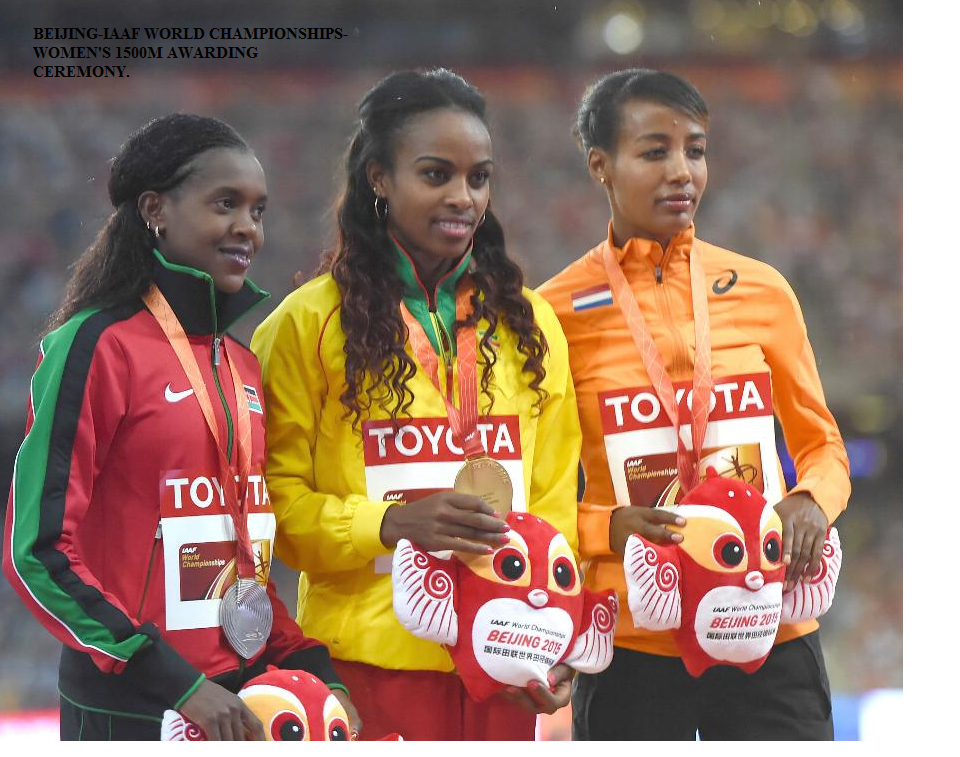
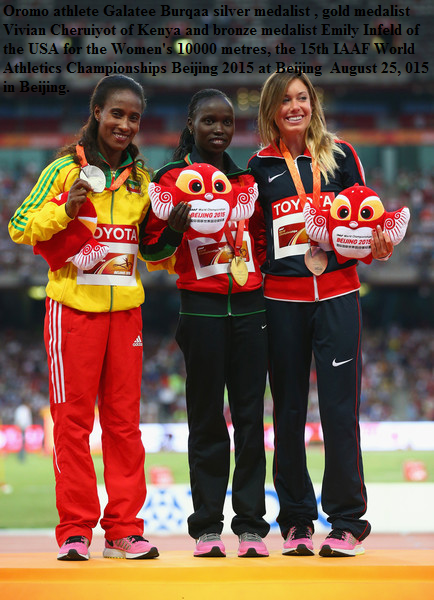
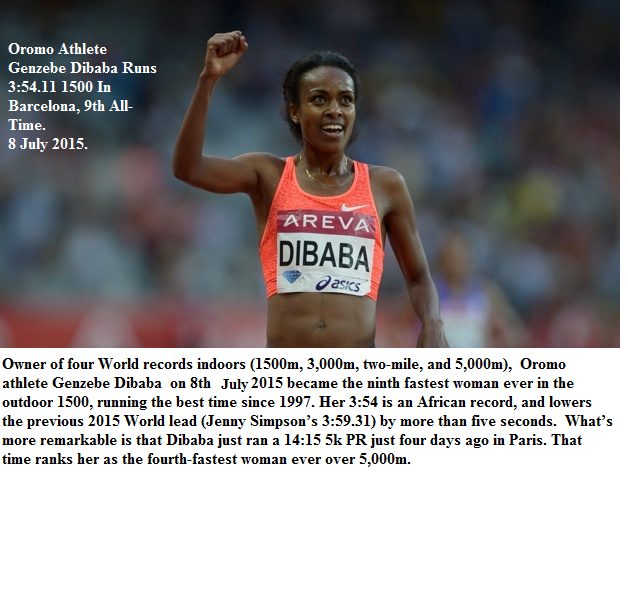
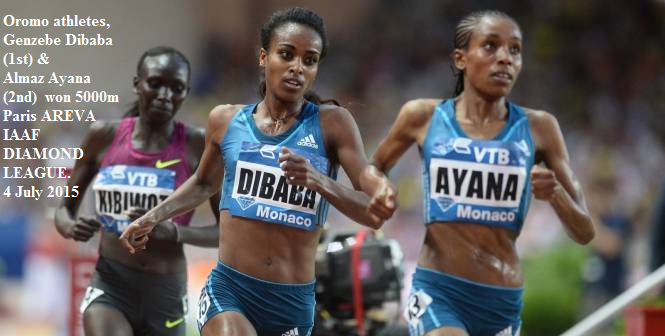
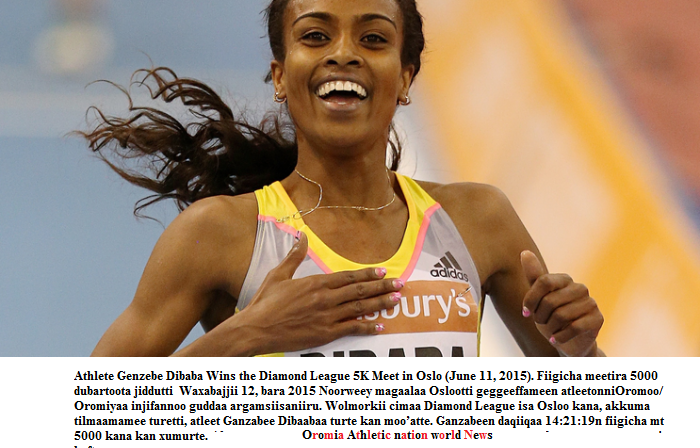
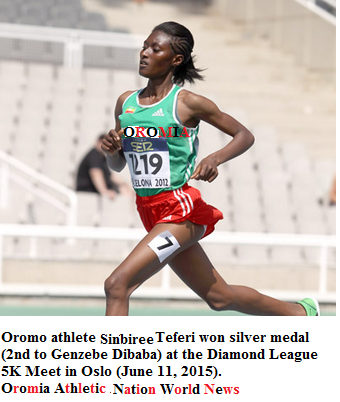
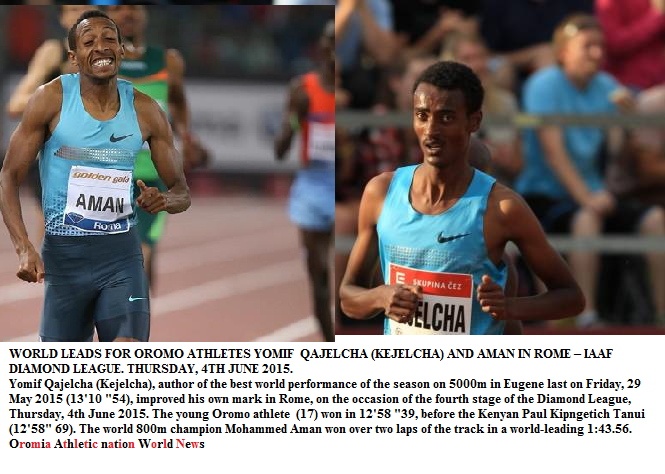

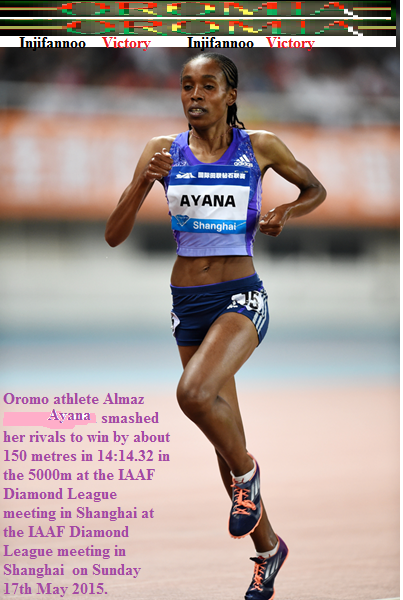
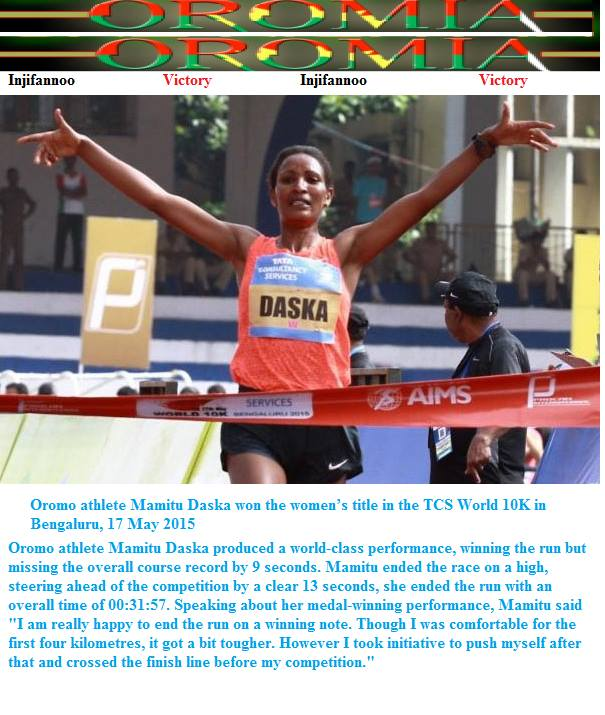
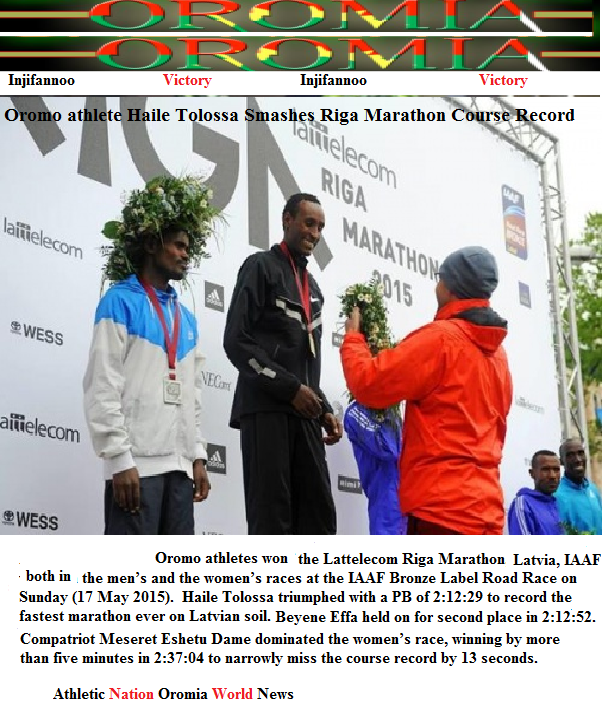


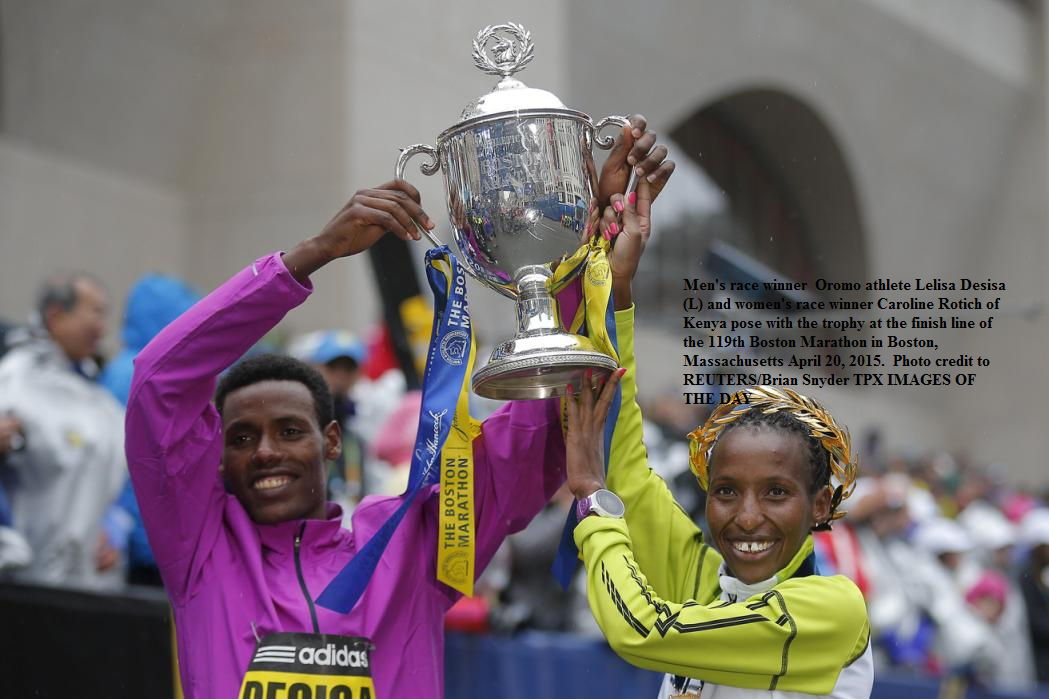


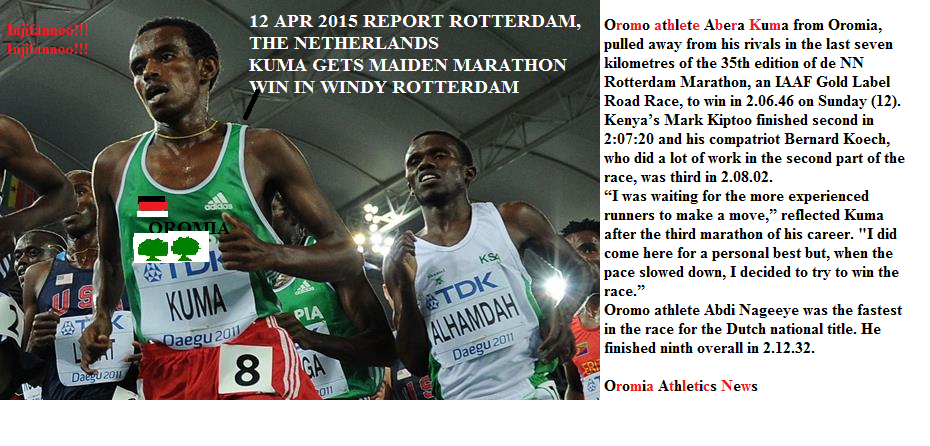
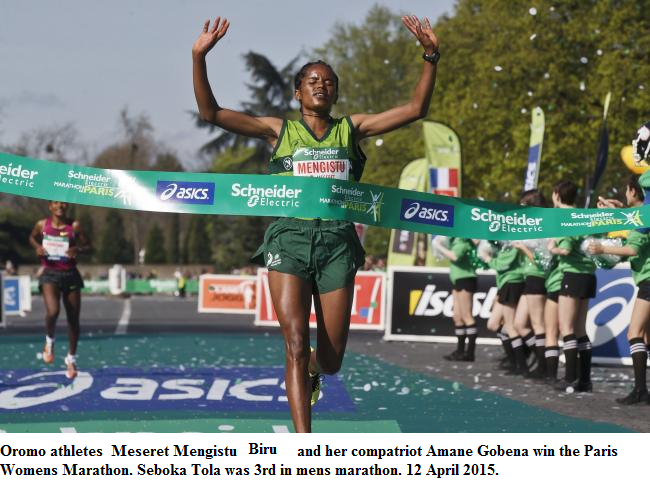
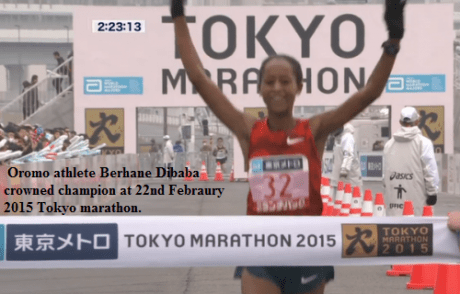
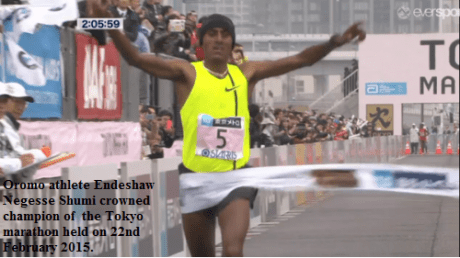
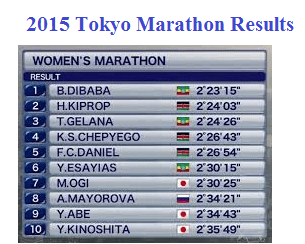


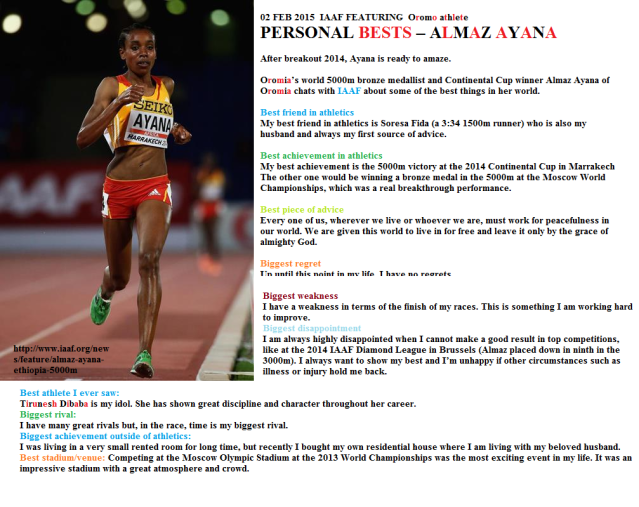


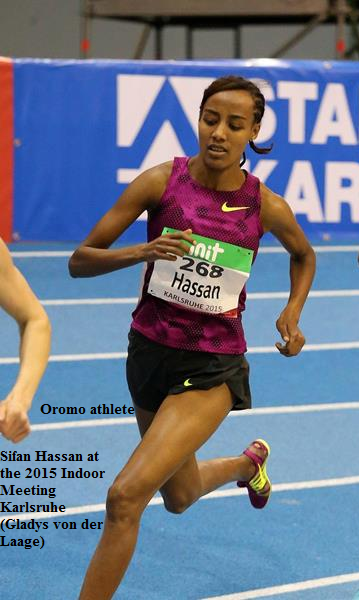

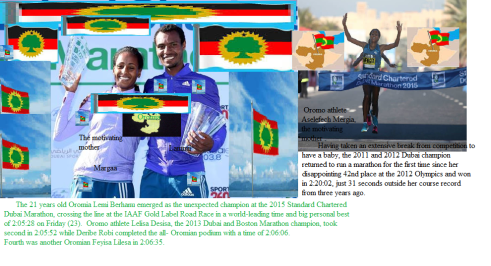


 November 17, 2014 (IAAF) — Amane Gobena took the honours at the 2014 Vodafone Istanbul Marathon, winning at the IAAF Gold Label Road Race in 2:28:46 on Sunday (16).


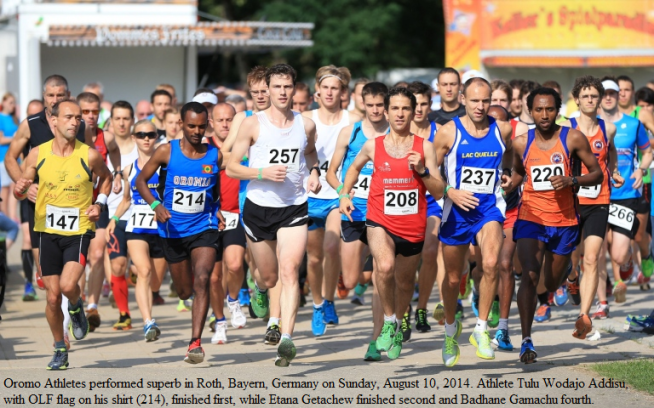
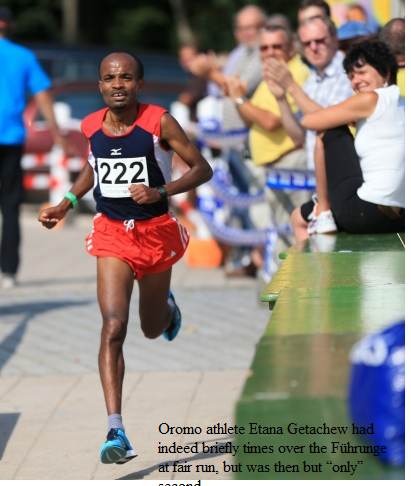
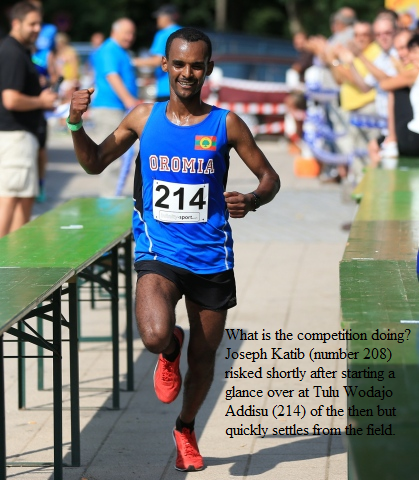
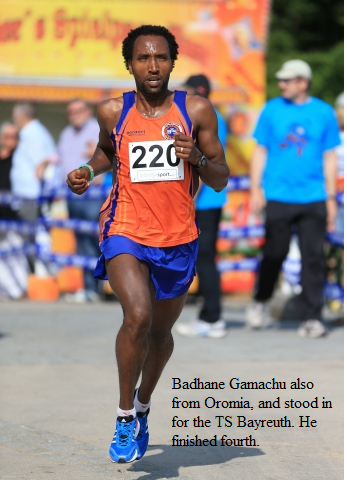



 Oromian Runners Shatter Marathon Race Records.Oromo fans showed support to Oromian athlete Deressa Chimsa as he completed the fastest marathon run in Canada (Photo: Lagatafo Studio)


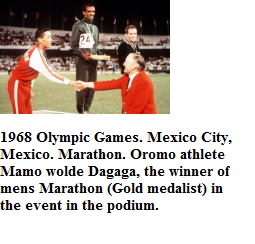
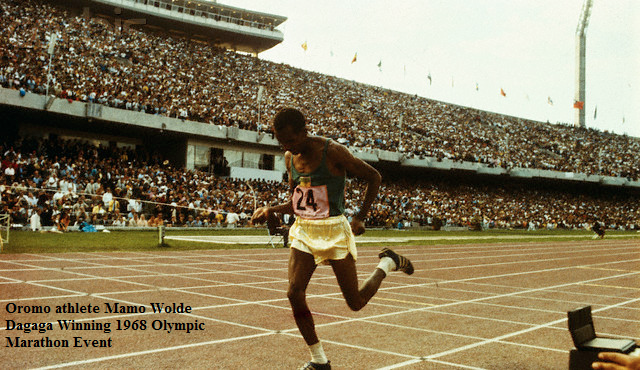

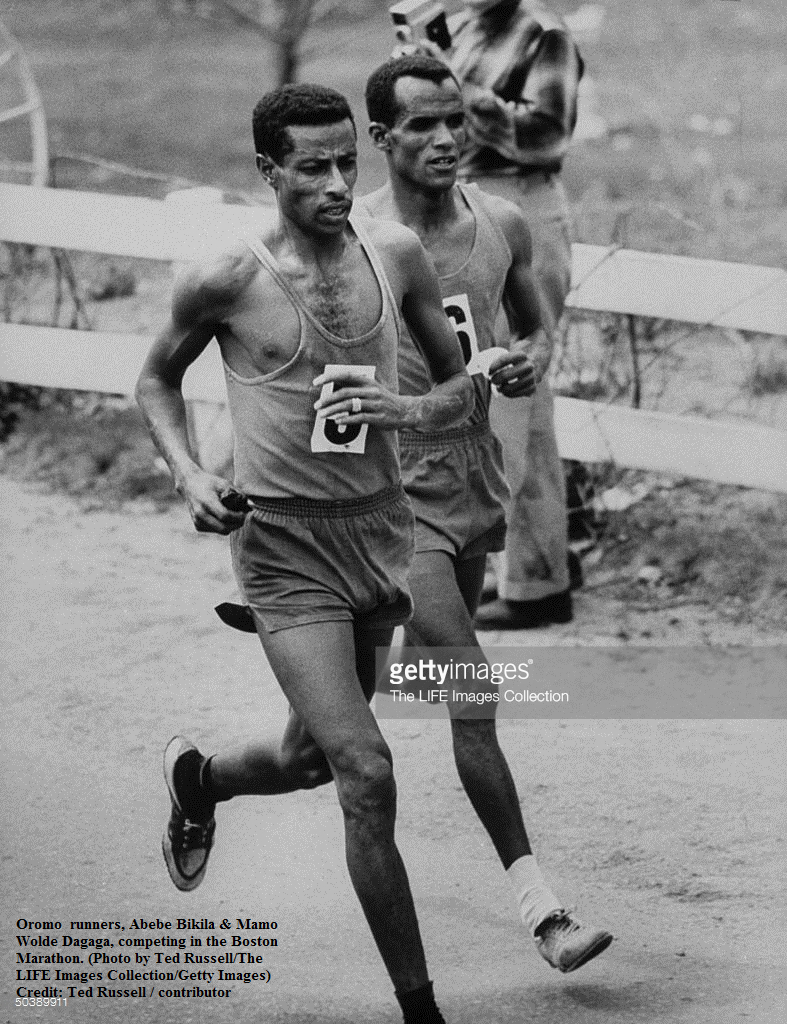
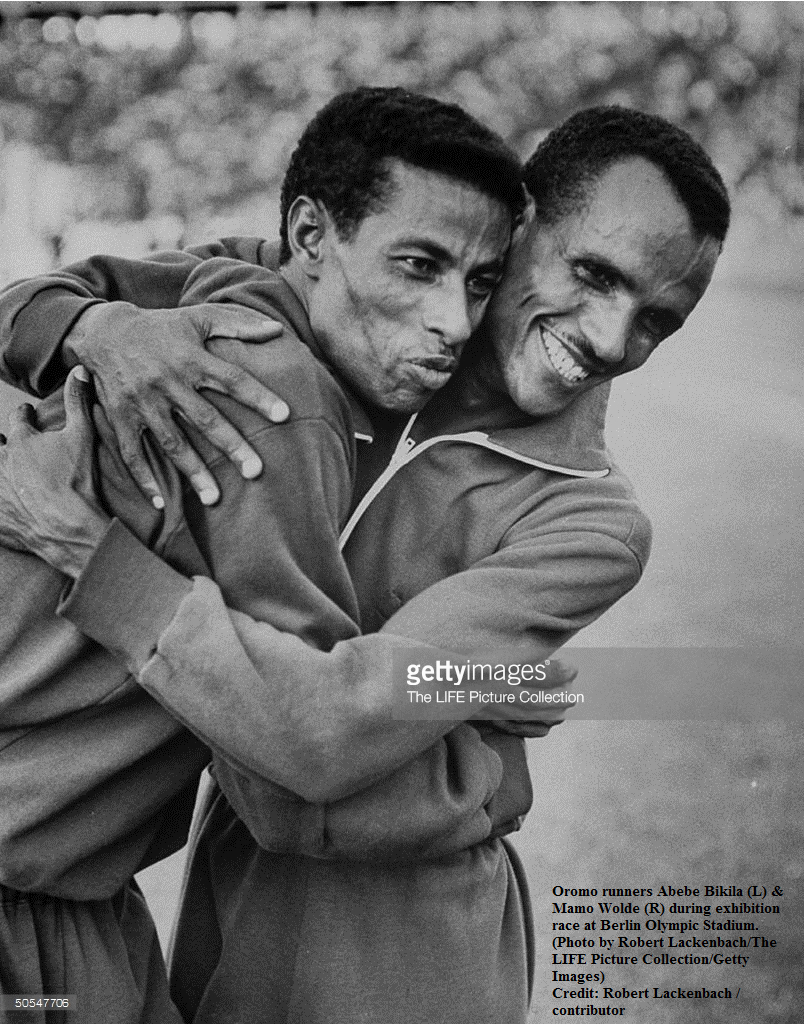


 Ibrahim Jeilan (Oromia, silver) and Mo Farah (Britain, gold) in 10,000k Moscow World Athletics 2013 final race.


 Winner of the Boston Marathon, Oromo athlete Lelisa Desisa with United States Secretary of State John Kerry at the American Embassy in Oromian Capital, Finfinnee.





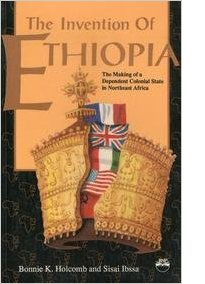

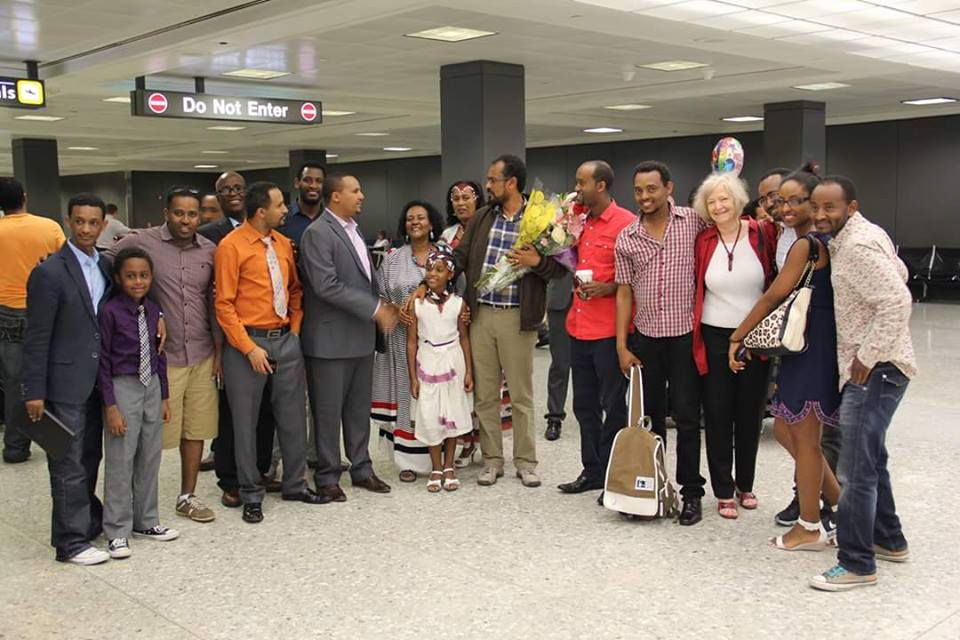
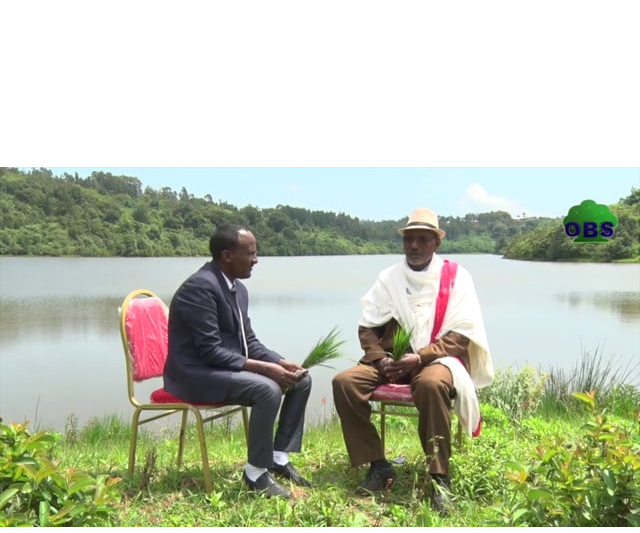












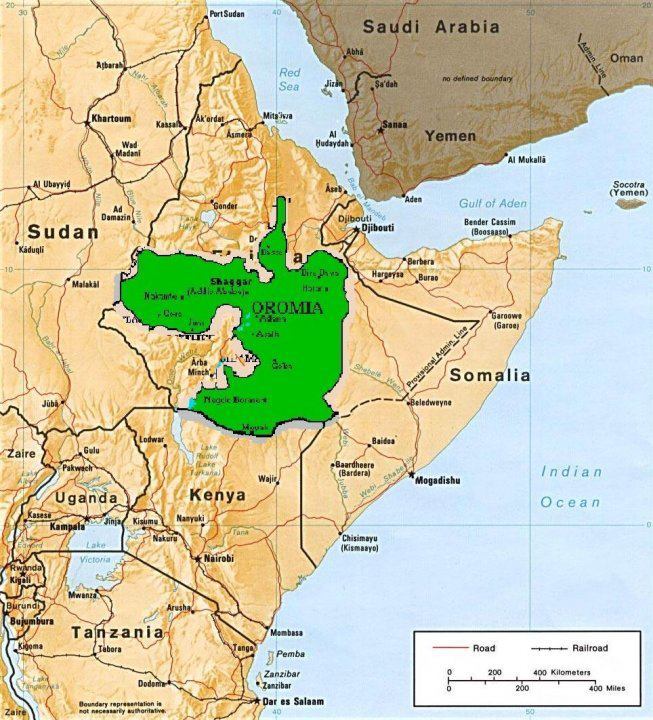


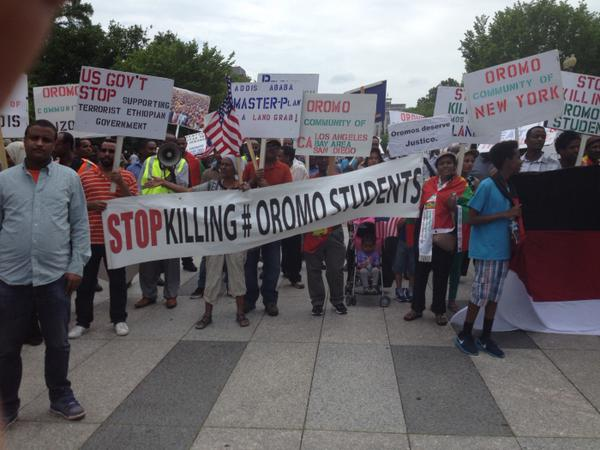








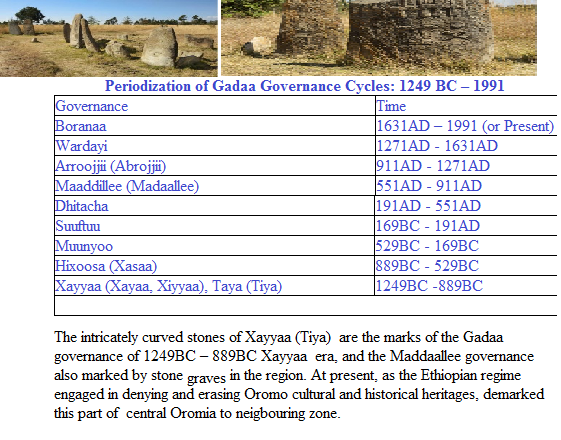


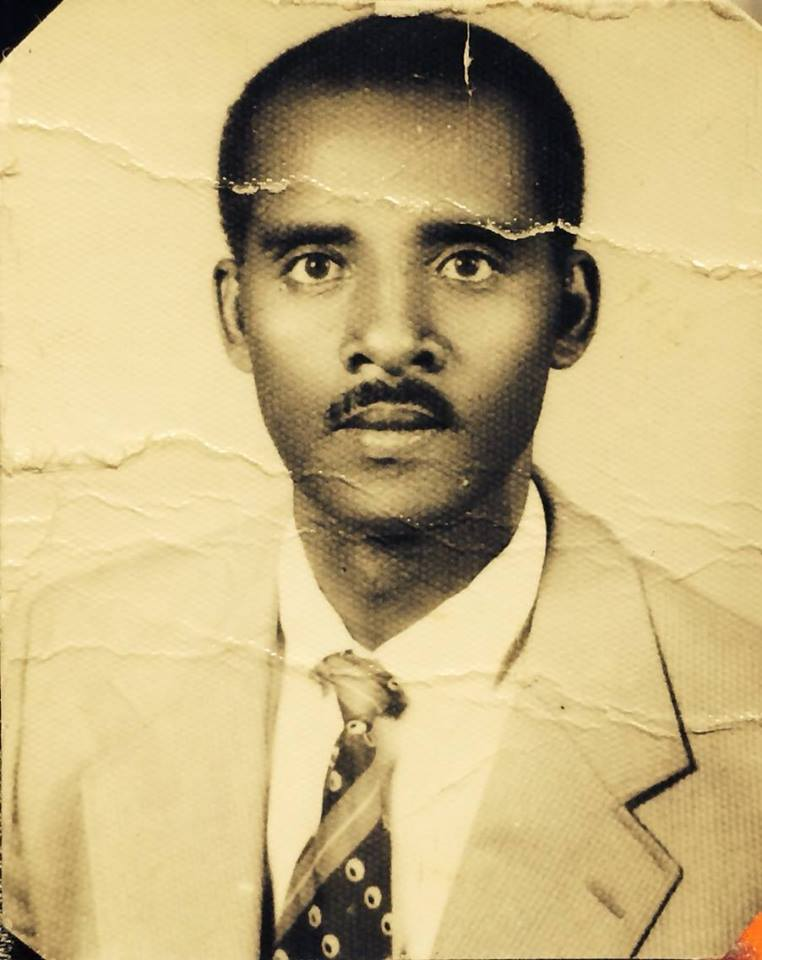


 Oromian Economist

You must be logged in to post a comment.