Economic and development analysis: Perspectives on economics, society, development, freedom & social justice. Leading issues in Oromo, Oromia, Africa & world affairs. Oromo News. African News. world News. Views. Formerly Oromia Quarterly
Bekele Gerba, 54 and a father of four, went to elementary school in Boji Dirmaji and completed his high school in Gimbi senior secondary school. Bekele was graduated with BA degree in foreign language and literature from the Addis Abeba University (AAU) and taught in Dembi Dolo and Nejo high schools in western Ethiopia, among others. He finished his post graduate studies in 2001 in teaching English as a foreign language at the AAU and went to Adama Teachers’ College, 98kms south of Finfinne (Addis Ababa), where he taught English and Afaan Oromo. Suspected of allegedly supporting students’ riot that took place a year before, Bekele was dismissed in 2005 by the college. He then came to Addis Abeba where he taught in two private universities for two years until he was employed in 2007 as a full time lecturer by the AUU where he continued teaching English.
Bekele’s political career began in 2009 when he joined the opposition party, Oromo Federalist Democratic Movement (OFDM), as a member of the executive committee and head of the public relations department. Bekele participated and lost in the 2010 parliamentary elections in which the ruling EPRDF claimed more than 99% of the seats in parliament.
Bekele Gerba was first arrested on 27 August 2011 along with Olbana Lelisa, senior member of the Oromo People’s Congress party (OPC), who is still in jail. Both were arrested after having a meeting with representatives of Amnesty International (AI), who were expelled soon after.
Both Bekele and Olbana were then charged under the country’s infamous anti-terrorism law on a specific charge of being members of the banned Oromo Liberation Front (OLF), and inciting a secessionist rebellion. In Dec. 2012, Bekele and Olbana were sentenced to eight and thirteen years in prison respectively.
Upon appeal to the Supreme Court, his sentencing was reduced to three years and seven months with a right to parole. After the merger in 2012 of OFDM and Oromo Peoples’ Congress (OPC) that became known as the Oromo Federalist Congress (OFC) Bekele was appointed as First Deputy Chairman while he was still serving his sentence. Although he was paroled and was eligible to be free in 2014 Bekele was released in the first week of April 2015 only after he finished his sentencing.
Belele represented OFC in the so-called Ethiopian election in May 2015, but the government refused to count the ballots in fear of losing the election. Instead it declared itself, blatantly, a winner with 100% voting count and became laughable around the world.
By the invitation of Oromo Studies Association, Bekele Gerba arrived, this morning, in Washington DC to take part in OSA’s annual conference, which starts on August 1, 2015. He is a keynote speaker of this year’s OSA.
Many Oromos in Washington DC Metro region will have the opportunity to meet the man who went to jail for speaking the voice of millions of Ethiopians, in particular Oromo.
Bekele was welcomed by a large group of Oromo, this morning, at Washington Dulles International Airport.
Source: Ayyaantuu News
Obbo Baqqalaa Garbaa, keessummaa Kabajaa OSA ta’uun Washingiton Diisii seenan.
A new study suggests that good quality fertiliser is more important than agricultural education or micro credit for improving food security in Uganda
Fransisco Trono, The Guardian
Poor quality fertiliser is keeping yields down in Uganda, according to a new study. Photograph: Dan Chung for the Guardian
For agricultural development practitioners, it’s one of the great unanswered questions: why has farm productivity in Africa lagged so far behind the rest of the developing world?
A new study suggests part of the reason is that the planting materials available to African farmers are just terrible.
Take fertiliser. In the developed world, massive overuse of chemical fertilisers has given the stuff a bad name, but in many poorer countries where farmers scratch out a living from badly depleted soils, relatively small amounts of inorganic fertiliser can double or triple farmer’s yields in a single growing season, spelling the difference between hunger and plenty for millions of food insecure farmers.
Most households also apply manure from their goats and cows on fields as a natural fertiliser, but in most cases there isn’t enough manure to replenish the nitrogen in the earth.
As Dr Todd Bensen of the International Food Policy Research Institute (Ifpri) in Washington puts it, “there aren’t any silver bullets in development, but probably the closest thing we have is fertiliser.”
So, if you’re a poor African farmer, you’d be smart to invest in a little fertiliser, right?
Not necessarily.
As researchers are finding out, if the fertiliser available to you is mostly low-quality, it may not be worth it.
The study tested samples of urea fertiliser for sale to farmers in Uganda and found shoddy, low quality fertiliser was pervasive in the Ugandan market
“On average,” the study says, “retail fertiliser contained 31% less nutrient than authentic fertiliser.” And virtually every one of the 369 samples the team tested was significantly under-strength, with less than 1% being more than 90% pure.
The trouble for farmers isn’t just that the fertiliser in Uganda is low quality, it’s the variability of the quality in the market. The fertiliser for sale in the market was all over the chart in terms of quality, and there was no easy way for farmers to distinguish the good stuff from the bad. This makes the learning process hit-and-miss: farmers might get lucky with relatively high strength fertiliser one year, only to be burned by a bad batch the following year.
None of this comes as a surprise to Ugandan farmers. After surveying them, the team found farmers are very well aware of the impact of using genuine fertiliser, and at the same time of the unreliability of the fertiliser actually available to them. Survey results find that, as a group, Ugandan farmers have an uncannily accurate reading of the quality of fertiliser on the market: data setting out the actual nitrogen concentration of fertiliser on the market show remarkable correlation with data setting out farmers’ expectations of fertiliser quality on the market.
Compounding the problem, the study finds that much of the hybrid seed available to farmers is low quality as well, offering substantially lower yields than genuine hybrid seeds. The team tested yields from genuine hybrid seeds, from seeds informally saved by farmers from one season to the next, and from seeds available in local retail markets. As expected, genuine hybrids offered much higher yields than farmer-saved seed. But the seed available to farmers in local retail markets performed, on average, as if the two seed-stocks had been mixed half-and-half.
The researchers didn’t stop there. They planted a series of test plots with local and improved seeds and fertilisers at different levels of purity, to check their impact on yields and livelihoods. Their findings are emphatic: while the vast majority of farmers could expect positive economic returns from real seed and fertiliser, spending money on the dodgy stuff that’s actually available to them would be a wasted money for most Ugandan farmers.
In fact, the study finds that a staggering 80% of farmers could expect to lose money if they invest in seed and fertiliser bought from local markets. It’s little wonder, then, that very few Ugandan farmers bother with market seed and fertiliser at all.
The study didn’t look into the question of why so much of the seed and fertiliser for sale in Uganda is of such poor quality, but stories of malicious adulteration and counterfeiting are rife. Unscrupulous agrodealers are widely believed to “bulk out” their fertiliser bags with cheaper ingredients to extend their profits and to maliciously sell sub-standard grain as hybrid seed.
Other factors could also be at play: if fertiliser is not carefully stored and handled it can volatilise, with important proportions of its precious nitrogen content simply wafting up into the air. And if the moisture content of hybrid seeds is not carefully monitored, germination rates can suffer, leading to losses.
Associate Professor Yanagizawa-Drott, speaking for the research team, says that sparking interest in the exact reasons for low agro-input quality was a priority for the team. “This was really a very simple paper that set out to state some facts. We wanted to open up some questions and set out the case for further research.”
The call comes as international organisations begin to wake up to the problem of substandard inputs driving food insecurity in east Africa. USAid’s landmark Feed the Future programme is focusing on the problem, and a major research project by Ifpri on behalf of USAid is using mobile-phone based platforms to verifying the authenticity of agro-inputs in Uganda . At least three other, smaller research projects are in the works in the region.
As “sustainable intensification” becomes the watchword of agricultural development aid projects, cracking the problem of improving farmer take-up of technology is paramount. More often than not, sustainable intensification projects emphasise farmer education or improved access to credit as interventions able to break the logjam, persuading farmers to spend more on modern agricultural inputs. The assumption is often that farmers are acting irrationally in underinvesting in modern inputs, and projects can help them see the error of their ways.
But if this study is right, development projects focused only on improving access to agricultural credit or agronomic advice may fall short. The reason Ugandan farmers don’t buy market seed and fertiliser isn’t just that they lack education or credit: it’s that, given what’s available to them, no canny businessperson would.
Re-engaging the Global: An Account of the Political and Economic Roots of Conflict in DRC
(picture by the author)
Marta Iñiguez de Heredia
In the last few years there has been a shift in thinking about the roots of conflict in the DRC. From a focus on mineral wealth exploitation, the debate has shifted to land and identity as the primary reasons for conflict to continue.[i] Unresolved historical cleavages around land and power distribution, both of which are linked to identity and belonging, create the basis for political mobilisation through violence.[ii] Although these analyses have offered nuanced explanations of the micro-dynamics, two features put them at risk of reproducing previous problems.
Firstly, the focus on the local has detached these analyses from broader global political and economic structures that condition the micro-level. Secondly, the characterisation of politics, the economy and society as neo-patrimonial has pictured the DRC as…
Seenaa fi Hojilee Dr Kabajaa Artist Lammaa Guyyaa fi ManFakkii (Gallery) isaa argarsiisu kanan bohaara.
Dr Artist Lamma Guya Gammadaa (Lemma Guya Gemeda) is a renowned Oromo contemporary Artist (painter). His love for art was grown in him while he was a shepherd in his boyhood. He was born from his father Obbo Guyyaa Gammadaa and his mother Aadde Maare Goobana in 1929 in Oromia, Eastern Shewa, Ada’aa Liban district, Bishoftu, Dalloo village. Lemma was a second child of 5.
Until he was 14, he was engaged in traditional games like shooting the circles by sword, boxes, climbing trees, swimming water and so on. Lemma was unique from his friend in that he always tries to practice painting different pictures and sculptures in his family wall by mixing soil, lime and ashes. He made sculptures on the wall of his family. Because of he was talentful, he was loved and respected among his parents, neighbor and friends.
When Lemma’s age reached for education, he did not go to school, rather his father made him to herd cattle as it was obvious. Due to a pressure from a friend of his father, Lemma started school, at around 14 in Bishooftu. He was admitted to teachers training college of Adama in 1943. But because of his interest in the army he left the college and joined the Ethiopian air force. During all this time, he continued developing his art skills and continued drawings different pictures. In the air force, he was employed as a general mechanics after he admirably completed training.
He taught as airplane technician in the air force. Even though he was working in the air force and gaining good salary, Lemma did not give up to develop his skill.
Lemma Guya pioneered skin-mounted portraits and those of a host of Heads of State across Africa. He is an expert in painting portraits on goat skin. His paintings have been exhibited and sold successfully in various countries of the world in Africa, North America and and winning him numerous prizes and awards. He is also the author of a book entitled,”Teaching yourself Art”. His drawing techniques were all learned from childhood. His style is generally realistic where he draws pictures of different geographical landscapes and humans in an easy and comprehensible manner. Most of his works are paintings on hides, parchments fur and boards that are related to his own life. He has also taught his 5 children (3 daughters and 2 sons) to follow in his footsteps. All 5 are good painters like their father.
He has built and the owner of Africa Art Gallery in Bishoftu, Oromia. The Gallery was established in 1983 and also known as Lemma Guya Art Gallery.
Lammaa Guyyaa Gammadaa aadaa fi jireennya saba Oromoo fi saboota biroo fakkii dhaan mul’isuun waggaa 50 oliif hojjechaa jira. Dandeettii isaatiin biyyaa keenyaaf adunnyaa irratti beekamtii guddaa argateeraa. Keessattuu rifeensa utuu irraa hin kaasiin gogaa irratti fakkii (Suuraa) hojjechuun beekama. Jiruu isaa kan adunyaa hawwate kanasi Afirkaa fi addunyaa kana irraa hedduutu bira dhufanii leenjii argachaa turan, itti jirus.
Dr Artist Lammaa Guyyaa Gammadaa Abbaa Manfakki Artii Afirka yoo ta’uu, manni Manfakkii kun Kabajaa fi yaadannoo Nelson Mandeellaf hojjetame. Wiirtuun Artii Lammaa Guuyaa namni hunduu akka barumsa irraa argataaniif yeroo hundaa hundumaaf tajaajila kenna. Dr Kabajaa Artistii Lammaa Guyyaa Gammadaa kan dhalate bara 1929 handhuura Oromiyyaa konnyaa Ada’aa Liban, Bishooftuu ganda Dalloo tti. Abbaan isaa Obbo Guyyaa Gammadaa, haati isaa immoo Aadde Maaree Goobanaa ti. Ijoolleen isaa Dubara sadii fii dhira lama yoo ta’ani shananuu jiruu aartii irratti bobba’anii jiru. Jiruu isaa kanaaf Hadoollessa bara 2015 Umbarsitii Jimmaa irra Doktorummaa kabaajaa argatee jiraa.
Although the grievances voiced differed from country to country and from region to region, the belief that the incumbent economic and political system was characterised by inequity and injustice was common to all.
If we are to avoid large-scale societal upheavals in this ultra-connected world, government, business and civil society must come together to rework the current economic system to serve all of humanity rather than just an elite few.
– Fergus Simpson, The Guardian
Widening inequality gap proof of outdated growth model
We need to rework the current economic system to serve all of humanity rather than an elite few, writes Xyntéo’s Fergus Simpson
January saw leading figures from business, government and civil society gather at the World Economic Forum in Davos. A broad spectrum of subjects were debated, including the prospect of a legally binding climate change agreement in Paris this December, Ebola and the nefarious advance of the Islamic State in Mesopotamia. I was particularly encouraged to see one topic keep cropping up – the crisis of burgeoning disparities in wealth.
In a report released in the runup to Davos, Oxfam predicted that within two years the richest 1% of people will have accumulated more wealth than the remaining 99%. The same study found that the wealth of the richest 80 billionaires has continued to increase since 2010, while the wealth of the poorest half has decreased over the same time period. The gap between the haves and the have-nots is growing.
History has taught us that there are moments when people rise up to make a point and say that enough is enough and times must change.
On 25 January 2011, the world witnessed one such moment – pro-democracy protesters occupied Tahrir square in Egypt’s capital, Cairo, demanding self-determination, equality of opportunity and freedom from the shackles of tyranny and oppression. Some 17 long days of demonstrations and civil disobedience followed, bringing the moribund autocracy of longtime Egyptian president Hosni Mubarak to an end.
This event formed part of a much broader social movement that swept across North Africa and the Middle East, toppling sclerotic regimes and corrupt dictators. Before long people in Spain, Greece, the UK and US took to the streets as well. Although the grievances voiced differed from country to country and from region to region, the belief that the incumbent economic and political system was characterised by inequity and injustice was common to all.
And it isn’t just the poor who have been affected – the middle classes have also borne the burden of mushrooming inequalities. Companies have tended to become more productive since the 1970s, but the incomes of middle class workers have remained largely static. Returns from higher productivity have tended to go to owners and investors, not to the workers.
In many ways, inequality has become the defining issue of our time. The popular uprisings that shook the Arab world at the start of this decade were just symptoms of this most elemental of societal ills.
Fortunately, there is no reason to suppose this state of affairs is inevitable.
A promising step forward was announced at Davos, when Ajay Banga, CEO of GLTE partner MasterCard, and Donald Kaberuka, president of the African Development Bank, revealed that they intend to collaborate to foster inclusive growth in Africa.
The MasterCard Labs for Financial Inclusion, funded by an $11m (£7.24m) grant from the Bill and Melinda Gates Foundation, aims to enable more people to access banking services – generating greater equality of opportunity across the world, in developed and developing countries alike. The initiative will soon begin operations in Nairobi, Kenya, and aims to reach over 100 million people globally.
Technological advancements can support the implementation of projects designed to promote inclusive growth, such as the MasterCard Labs for Financial Inclusion. Digital innovations in payment systems and social media, for example, have enabled people to access markets, ideas and information to an extent that is unprecedented in human history.
Indeed, it has been said that the Egyptian revolution started when Whael Ghonim, a marketing executive at Google, saw the bloodied remains of Khaled Mohamed Said – a young man bludgeoned to death by the Egyptian police – pictured on Facebook. Incensed by the injustice that confronted him, Whael created the Facebook page “Kullena Khaled Said” – “We Are All Khaled Said”. Three months later 250,000 people had joined the page. Just one year later the Mubarak regime was no more.
If we are to avoid large-scale societal upheavals in this ultra-connected world, government, business and civil society must come together to rework the current economic system to serve all of humanity rather than just an elite few.
At Xyntéo, we are convinced that the current growth model has become out of date – incapable of meeting the demographic, climate and resource demands of today. Together with our partners, we believe that global business, with its clout, resources and energy, is uniquely placed to overcome this challenge. To us this means reinventing the current growth model so it brings prosperity to much larger numbers of people.
Conversation based on the seminal 1973 text written by Harvard Emeritus Professor Asmerom Legesse on his expansive study of the Oromo in East Africa entitled Gada: Three Approaches to the Study of African Society.
Walga’iin kun guyyoota lamaaf kan taa’amu oggaa ta’u dhimmoota qorannoo Oromoo irratti warqaalee qorannoo gara garaa hayyoota Oromoo fi kanneen biroon dhiyaatan dhaggeeffachuun marii kan gaggeessan ta’uun beekameera.
In Tyrannic fascist TPLF Ethiopia war, poverty and famine were not only in the past but also very true in this very moment, right now. It has spatial variations as rulers and time changes. In 1960’s and 1970’s (Hailse Sellasie Regime) Wollo and Afar regions were the mainly affected. As documented in Wikpedia:-
In 1973, a famine in Wollo killed an estimated 40,000 to 80,000, mostly of the marginalized Afar herders and Oromo tenant farmers, who suffered from the widespread confiscation of land by the wealthy classes and government of Emperor Haile Selassie. Despite attempts to suppress news of this famine, leaked reports contributed to the undermining of the government’s legitimacy and served as a rallying point for dissidents, who complained that the wealthy classes and the Ethiopian government had ignored both the famine and the people who had died.[12 https://en.wikipedia.org/wiki/1983%E2%80%9385_famine_in_Ethiopia
In 1980’s Tigray was severely affected but not the only.
Five Ethiopian provinces—Gojjam, Eritrea, Hararghe, Tigray, and Wollo—all received record low rainfalls in the mid-1980s.[17] In the south, a separate and simultaneous cause was the government’s response to Oromo Liberation Front (OLF) insurgency. In 1984, President Mengistu Haile Mariam announced that 46% of the Ethiopian Gross National Product would be allocated to military spending, creating the largest standing army in sub-Saharan Africa; the allocation for health in the government budget fell from 6% in 1973–4 to 3% by 1990–1.[18]
Although a UN estimate of one million deaths is often quoted for the 1983–5 famine, this figure has been challenged by famine scholar Alex de Waal. In a major study, de Waal criticized the United Nations for being “remarkably cavalier” about the numbers of people who died, with the UN’s one-million figure having “absolutely no scientific basis whatsoever,” a fact which represents “a trivialization and dehumanization of human misery.”[19]
Nevertheless, the magnitude of the disaster has been well documented: in addition to hundreds of thousands of deaths, millions were made destitute.[20] Media activity in the West, along with the size of the crisis, led to the Do They Know It’s Christmas? charity single and the July 1985 concert Live Aid, which elevated the international profile of the famine and helped secure international aid. In the early to mid-1980s there were famines in two distinct regions of the country, resulting in several studies of one famine that try to extrapolate to the other or less cautious writers referring to a single widespread famine. The famine in the southeast of the country was brought about by the Derg’s counterinsurgency efforts against the OLF. However, most media referring to “the Ethiopian famine” of the 1980s refers to the severe famine in 1983-5 centered on Tigray and northern Wollo, which further affected Eritrea, Begemder and northern Shewa.[21] Living standards had been declining in these government-held regions since 1977, a “direct consequence” of Derg agricultural policies.[22] A further major contributing factor to the famine were the Ethiopian government’s enforced resettlement programs, utilized as part of its counter-insurgency campaign. https://en.wikipedia.org/wiki/1983%E2%80%9385_famine_in_Ethiopia
Since 1991 as rocky Tigray has been prospering through political favoritism, nepoltism and resource transfer from green Oromia and the south that have been subjected to underdevelopment, exploitation, land grabbing, evictions, genocidal mass killings and famine. It is not Ethiopia that has been growing fast and rising, it is rocky Tigray at the expenses of the suffering Oromia and the south. What the TPLF propaganda machine shows to the world is rosy pictures of its business empire that serves only the Tigray, genocidal cliques and new colonizer from the region. During the Obama visit, what the president was shown were Coffee ceremony in government office, Lucy’s skeleton, Fafa factory near Finfinnee, Ethiopian Air Line’s Boeing plane, Abyssinian women and their cultural dances and the Chinese built African Union building in Finfinnee.
Realities in Ethiopia that Obama have not seen:-
Systematic genocidal killings, mass eviction going on against Oromo people in Burrayyuu (Central Oromia, near Fifinnee) and in Bishoftuu (Central Oromia). Thousands have been become homeless and destitute as their homes have been destroyed by Agazi (TPLF) fascist forces that has targeted Oromo for land grabs in its genocidal (Addis Ababa) master plan:-
The following pictures are children, women and adults that has been exposed to famine in Eastern Oromia at the time Obama Africa/ Ethiopia visit. Thousands are exposed to famine and dying but help is reaching them. The pictures are on social media. The main stream media, TPLF and Obama are in Ethiopia’s fast growth hype, democratically elected government and war on terror. No one of them are talking war on politically caused famine.
Suuraaleen armaan gadii kun daa’imman dabalatee namoon kumaatamaan lakaawamani Godina Hargee Lixaa keessatti beelaaf saaxilaman jirachuu kan mul’isu dha. Ogeessonni fayyaa balaa beelaa hammaataa jiru kana dormannoof yoo waywaatanis haga ammaa dhageetti hin arganne. Gargaarsa tokko illee argachaa hin jiran.
The original Oromo/ African name for coffee is ‘Buna’.
Akka dammaa mi’aa, akka bunaa urgaa’
(As sweet as honey, as savoury as coffee)
– Oromo saying
‘Bunaa fi nagaa hin dhabiinaa’
(May you not lack coffee and peace) – Oromo saying
COFFEE IS OROMO ONTOLOGY: BARACK/BARAK ‘RIVER OF BLESS-INGS’
By Dereje Makkoo Tadesse on social media
BARACK OBAMA is the only president-professor to ACKNOWLEDGE that COFFEE is the invention of Ethiopians. Indeed, coffee is NOT ONLY invention of the Oromo, but also that, for the OROMO, the color of REAL coffee tree-plant (blue-black) is the color of Waaqa–the BLACK-SKY SUPREME BEING!!! MOREOVER, coffee is not just beverage/drunk, but also is FOOD for the Oromo–sacred ceremonial food of Qaallu Institution and the QAAALLUU ‘First-Born Wise Father of Unction” of the Oromo nation.
MOREOVER, coffee is, for Oromo, mythological since antiquity–it is symbol of, if I may say, TRINITARIANISM/Trinity, but of NOT like the Christian seraphs or mumbo jumbos but of Two Virgin Brides + Offspring (two inner seeds plus cover/jacket of the bean/berry)! Even more mythological-cum-REAL Cultural History for Oromo, the fact that the color of the coffee berry changes SEQUENTIALLY three–from BLUE-BLACK [English ‘green’] to RED to Black. It’s Oromo ontology since Barraqa “the dawn of history”!!!
In Oromo BARACK or BARAK-aa is the “Blessing Phase” of the THREE-PHASE Coffee ceremony!! It is drank first during BARAQA ‘Time of MORNING SUNSHINE’ or American ‘Morning Rush-hour’! Or when the morning sun shines like that BEAUTIFUL Oromo queen displayed in the picture!!
Unlike the jabberwockies that some spout, the English word ‘COFFEE” is corruption of Oromo qaawwi/akawwii ‘coffee (boiled only)’, literally ‘the roasted, blackened’ from qawa/akawa ‘to roast; to get black’ (see Tutscheck’s 1844 “Oromo-German-English Dictionary”!!
Europe and Arab saw coffee for FIRST TIME during first half of 19th century–about 1830!! Falsities are recently produced casting anachronistically back to 15th century! ONLY fools believe it! They were surprised and began research on coffee by 1900!! There was Journal of Coffee Research (??) I knew and read. Both Coffee and Circumcision SURPRISED them simultaneously!! They tell you FALSITIES like Jesus Christ circumcision. Neither BIBLE nor Qura’an make a SINGLE word about coffee! NEVER!! BOTH coffee and circumcision are Oromo QAALLU-GADAA Institutions–NEVER DONE haphazardly or unintentionally or whimsically or by intuition. BUT Scientifically!!! Before Christianity and Muslims DISTORTED them!! I discussed elsewhere about Christian falsity of Trinitarianism/Trinity versus Oromo Circumcision philosophy of TRINITY!
One of the reasons that Euro-Abyssin Orthodox-Catholic (I can’t accuse the Ethiosemitic, especially Amaaraa innocently-victimized people) joint hatred of Oromo was for the Oromo drink-eat coffee!!! Like tobacco or SMOKING and Č’aatii/Jimaa or ‘khat’, both of which were sacred and ceremonial for Oromo, coffee was considered PAGANISM for they never knew it. Arabs or Islam was also ‘cheated’ originally. They learned their lessons for it was TOO SWEET, gastro-economically!!!
Coffee leaves, powders and young buds, was and indeed IS today, too, also MEDICINAL for the Oromo—against fatigue, asthma, constipation, diarrhea, pneumonia, snake bites, etc.—perhaps one of the earliest herbal medicine in human history. Arabs or Islam was also ‘cheated’ originally. They learned their lessons for it was TOO SWEET, gastro-economically!!!
Once, the funny Euro-Abbysin ‘scholars’–rather venomous hatred propagandists–told us a funny his-stories; (1) the Galla (their preference to ‘Oromo’) wanderers knew nothing about coffee; (2) a certain people of Island of Grox ate coffee as food–the ONLY people on the planet to eat coffee as food!!! (If there were, they must be Oromo-Afrikan slaves they exported as commodities—the MOST degenerate, despicable human-states project ever against another human being!!]. Rubbish the “Arab origin of Abyssin coffee” that they spewed out!!!! FUNNY!!!
READ the Catholic Father and great scholar Lambert Bartels, who threw away the Catholic mumbo jumbos and turned Qaallu himself!! READ another Catholic Father and GREAT scholar Martial De Salviac who did the same!!!!! I don’t wanna kill my energy and spacetime here!!!!
Our river of BARAK-AA ‘Bless-ings’ go to the great BARACK OBAMA!!!!!!!!!!!!!!!!
Buna (Coffee) is original to the Limmu in Jimma, Limmu Kossa district, a village of chorra in Western Oromia. Any other version of the story is only myth.
It was through Eastern Oromia, that the plant was popularized around the world. The plant was brought to Harar from Western Oromo area by a saint called Sheikh Shazali.
Somalia: Explaining why Somali people quit listening to BBC and VOA Somali Services
By Ahmed Abdi, Ayyaantuu, News 30 July 2015
Most of the Somali people have recently started to quit listening to their long-time news provider, BBC Somali Service and news newly-competitor of Voice of America (VOA) Somali Service.
They lost interest and distrusted them due to the privilege of the recent technology they have gained mainly social media such as Facebook, YouTube, Twitter, Google plus and many other Social media platforms.
If you ask at least six different peoples from different locations for example, Hargeisa, Garowe, Kismayo and Mogadishu they will definitely tell you that they did not listen a week or even months or they did not remember the last time they have listened to them.
Of Course, they will tell you that there is no unmet news coverage that they would need from any of them that they did not hear before. Because the above-mentioned news outlets serves better than BBC and Somali Services.
Forget about people in Jigjiga and many other place across Ogaden region that the BBC and VOA Somali Services are muted to cover their regional problems despite the conflicts, famine, human rights violations, social injustice, and underdevelopment.
If they ever do once a year coverage -they avoid mentioning the geographical name, which probably is Ogaden region of Ethiopia due to the region’s name,named after Ogaden-clan , which makes up the region’s half of its populations. More than 6 million Somali audience members had possibly lost there.
Moreover, Many of their former clients will tell you that the editors of the two channels’ tribal affiliation led them to distrust and stop listening to the news channels of BBC and VOA Somali Services. Meanwhile, many others complained about their lack of objective and balanced coverage.
Let us analyse the changes occurred after all these to learn the difference between now and then.
Between 1994-1998, Somali people used to put aside everything in their hands whenever they heard the BBC’s famous music to listen its international and regional news carefully. In the past, villagers, who had no radios used to travel a long distance on foot amid listening the news of the BBC Somali Service for the nearest possible location available to get its news-possibly walking 14 kilometers away from their own villages.
It is obvious that the BBC had been their source of news reference as well their only reliable dictionary in terms of every disputed divination of Somali world. You see, its former Somali reporters had knowledge when it comes to their regional dialects and Somali literary language.
People used to make their appointment-hours the times of the BBC Somali Service be on air i.e specific hours of the morning, afternoon, and evening that is usually devoted to listening to it. This is an indication of how people’s lives were more connected to its programs before. In these hours, crowds of Somalis assembling in a bid to listen to the news of the BBC Somali Service.
Even there was a time, the only available program about Africa including Somalia was Wednesdays. It was BBC Somali Service, which people made a place to return for their disputed sources. And nobody could dispute a news said it is a source of BB Somali Service. The time has changed, so have BBC Somali reporters.
People VOA Somali Service is believed to have been created to compete with the Somali people’s traditional news outlet, BBC Somali Service, after the U.S’s interest of Somalia affairs grew following the U.S-led invasion of Somalia in 1992 ad the U.S’s war on terror as well as the United States fear of China’s East Africa penetration amid the U.S rival’s demand of Africa’s Natural resources to pave its way of being a super-power.
The time that VOA Somali Service aired its first programs was welcomed by the mass and many BBC’s longtime clients turned to VOA Somali Service and it became more popular in every corner of the five-pointed white star of Somali flag represents i.e every place that Somali-Speaking community could be found.
But unfortunately, a media that most of the Somalis mistakenly assumed a role model, a sign of good era, however, turned to be null and void after it has lost its values, which probably means compromising its impartiality.
Several things are supposed to be the reason for the decline of the BBC and VOA Somali listeners including the lack of quality reporters compared to the past reporters that devoted to literature and were rich in their Somali language and their own culture when addressing Somalis, who are culturally rich in oral tradition and have zero-tolerance for such unskilled presenters.
It is obvious that many factors contributed to the disappointment of their audience members including their less quality programs for the result of hiring their new reporters based on evaluation of their knowledge of the English language rather than Somali language and regional knowledge as well as favouring one tribe against another, one politician against another and/or one region against another.
In response to President Obama describing Ethiopia’s government as democratically elected, during his visit to the country, Freedom House issued the following statement:
“President Obama unfortunately was fundamentally wrong in his comments about the parliamentary elections Ethiopia held in May, in which the ruling Ethiopian Peoples Revolutionary Democratic Front (EPRDF) won every seat,” said Mark P. Lagon, president of Freedom House. “Calling Ethiopia’s government democratically elected lowers the standards for democracy and undermines the courageous work of so many Ethiopians who fight to realize a just and democratic society.”
Freedom House is an independent watchdog organization that supports democratic change, monitors the status of freedom around the world, and advocates for democracy and human rights.
While US president calls for end of crackdown on political and press freedom, his comments on Hailemariam administration are widely condemned
‘Critics accused Obama of granting legitimacy to the regime. Reeyot Alemu, a columnist released earlier this month after four years in jail on terrorism charges, said: “It’s not ‘democratically elected’ because there was only government media and people did not get enough information.
“They also arrested many opposition leaders and journalists. They won the election by using human rights violations. How can it be democratically elected? It is completely false. I wish Barack Obama had sent a strong message.”
Bekele Nega, general secretary of the Oromo Federalist Congress, representing Ethiopia’s biggest ethnic group, said: “I don’t know if democracy means robbing people’s vote and robbing their election result? They have killed people and they have taken the ballot box with them in organised fraud.”
Nega claimed his party found some of its votes thrown down a toilet, while at one polling station its victory by 800 votes to 40 was reversed to a 40-800 defeat. “I wonder if people could tolerate this in America or Britain or wherever? Is this the meaning of democracy in America? We are very sorry that Mr Obama’s comment on our election is really supporting dictators. We know the US is always looking after its own interests and will take over on the military side, sending our people to Somalia.”’
Obama criticised for calling Ethiopia’s government ‘democratically elected’
David Smith, The Guardian, 27th May 2015
Barack Obama has been criticised by opposition groups and journalists in Ethiopia after referring to the country’s government as “democratically elected”, with one human rights watchdog describing the statement as “shocking”.
The US president was speaking at a joint press conference with Hailemariam Desalegn, the Ethiopian prime minister, after the two leaders held talks in the capital, Addis Ababa.
Although Obama said he had raised issues of good governance – “I don’t bite my tongue too much when it comes to these issues” – he also insisted: “We are opposed to any group that is promoting the violent overthrow of a government, including the government of Ethiopia, that has been democratically elected.”
Answering questions from journalists later, Obama repeated the phrase: “We are very mindful of Ethiopia’s history – the hardships that this country has gone through. It has been relatively recently in which the constitution that was formed and the elections put forward a democratically elected government.”
Hailemariam’s party and its allies won 100% of seats in parliament two months ago. The opposition alleged the government had used authoritarian tactics to secure victory, including intimidation, arrests and violently breaking up rallies. At the time, the US said it remained “deeply concerned” by restrictions on civil society, media, opposition parties and independent voices and views.
But Ethiopia remains a key security ally for the US in the fight against the Islamist militant group al-Shabaab. It has also become an economic battleground with China, which has delivered huge infrastructure projects in Africa’s second most populous nation.
Critics accused Obama of granting legitimacy to the regime. Reeyot Alemu, a columnist released earlier this month after four years in jail on terrorism charges, said: “It’s not ‘democratically elected’ because there was only government media and people did not get enough information.
“They also arrested many opposition leaders and journalists. They won the election by using human rights violations. How can it be democratically elected? It is completely false. I wish Barack Obama had sent a strong message.”
Bekele Nega, general secretary of the Oromo Federalist Congress, representing Ethiopia’s biggest ethnic group, said: “I don’t know if democracy means robbing people’s vote and robbing their election result? They have killed people and they have taken the ballot box with them in organised fraud.”
Nega claimed his party found some of its votes thrown down a toilet, while at one polling station its victory by 800 votes to 40 was reversed to a 40-800 defeat. “I wonder if people could tolerate this in America or Britain or wherever? Is this the meaning of democracy in America? We are very sorry that Mr Obama’s comment on our election is really supporting dictators. We know the US is always looking after its own interests and will take over on the military side, sending our people to Somalia.”
“Last time I saw you, you looked like apocalypse Hell and then Genesis combined Last time I saw you, you were stripping me of Anything and anyone that was mine
See that’s how I remember you That’s how I remember you
So please forgive me if I never call you home again So please forgive me If I never call you home again” ~~Corneille: I’ll Never Call you Home Again
Yesterday I attended a conference where we met this year’s fellows from the Mandela Young African Leadership Initiative (YALI). The hot topic of course was discussing how to build and maintain a bridge between the diaspora and residents of the homeland, to leverage a superpower that will engender great change. One of them was of the opinion that those living on the continent had been let down…
‘State institutions are dominated by ruling EPRDF officials who reportedly receive preferential access to credit, land leases, and jobs. Under the government’s “villagization” program, hundreds of thousands of indigenous people have been forcibly relocated to new villages with inadequate infrastructure so that the state can lease their lands to commercial agricultural foreign investors.’
Ethiopia’s economic freedom score is 51.5, making its economy the 149th freest in the 2015 Index. Ethiopia is ranked 37th out of 46 countries in the Sub-Saharan Africa region, and its overall score continues to be below the regional average.
With a large domestic market and promising economic prospects, Ethiopia has the potential to become a regional economic powerhouse, but persistent state intervention in the relatively closed economy has suppressed the growth of economic freedom over the past five years.
Overall, the institutional basis of economic freedom in Ethiopia is still weak. A nominally independent judiciary continues to follow government policy advice, and corruption remains endemic. The government has made significant investments in major development projects, including the Grand Renaissance Dam, but restricts foreign investment in major industries and keeps important sectors of the economy closed to global trade and investment.
Ethiopia has had 10 years of steady economic growth, but not enough to reduce poverty. Its per capita income remains among the world’s lowest. Ethiopia is a leading coffee producer. Its economy is largely based on agriculture and is vulnerable to droughts and external shocks.
RULE OF LAW
Corruption is a significant problem in Ethiopia. State institutions are dominated by ruling EPRDF officials who reportedly receive preferential access to credit, land leases, and jobs. Under the government’s “villagization” program, hundreds of thousands of indigenous people have been forcibly relocated to new villages with inadequate infrastructure so that the state can lease their lands to commercial agricultural foreign investors.
LIMITED GOVERNMENT
Ethiopia’s top individual income tax rate is 35 percent, and its top corporate tax rate remains at 30 percent. Other taxes include a value-added tax and a tax on capital gains. The overall tax burden equals 11.6 percent of the domestic economy, and government spending accounts for 16.9 percent of gross domestic product. Public debt equals 22 percent of annual production.
REGULATORY EFFICIENCY
Inconsistent enforcement of regulations often impedes business activity and undermines economic development. The minimum capital requirement for launching a business is higher than the level of average annual income. Much of the labor force is employed in the informal sector. Monetary stability has been weak, and subsidies for the government’s state-led development model are hindering private-sector growth.
OPEN MARKETS
Ethiopia has a 10.3 percent average tariff rate. It is not a member of the WTO, and government procurement processes can favor domestic companies. Foreign investment is heavily regulated. There is no constitutional right to own land. The small financial sector continues to evolve and is largely dominated by banks. The capital market remains underdeveloped, and there is no stock exchange.
(Freedom House) — As President Obama prepares to visit Ethiopia next week, Freedom House has prepared policy recommendations for the White House, highlighting Ethiopia’s undermining of civil society, independent media, and the political opposition:
“The political environment during parliamentary elections held in May included arrest, harassment and intimidation of opposition members and supporters,” the letter says. “Apart from seriously eroding citizens’ faith in any prospect of an inclusive political framework, the ruling Ethiopian People’s Revolutionary Democratic Front’s entrenched control over all levers of political power sends a strong signal that all avenues of legitimate dissent are closed, fomenting resentment that could lead to violent extremism.”
“Freedom House recommends that President Obama urge the Government of Ethiopia to undertake a comprehensive review of the country’s civil society and anti-terrorism laws and to release imprisoned journalists and peaceful political activists.”
Freedom House is an independent watchdog organization that supports democratic change, monitors the status of freedom around the world, and advocates for democracy and human rights.
Ethiopia: Policy Recommendations, July 2015
Background
In 2009, the Ethiopian Parliament passed the Charities and Societies Proclamation (CSP), tightly restricting Ethiopian civil society organizations (CSOs). This includes limiting the amount of foreign funding that organizations are allowed to receive to 10 percent. Legislation passed in 2009, the Anti-Terrorism Proclamation (ATP) has been extensively used to silence critical voices including independent journalists and members of opposition political parties. These laws coupled with other government policies seriously limit the ability for independent voices to be heard.
Political Space and Inclusive Political Process
In May, the ruling Ethiopian People’s Revolutionary Democratic Front (EPRDF) conducted another tightly controlled national election and won all seats in both federal and regional legislatures. The political environment included the widespread arrest, harassment and intimidation of opposition members and supporters. Apart from seriously eroding citizens’ faith in any prospect of an inclusive political framework, EPRDF’s control of all levers of political power sends a strong signal that all avenues of legitimate dissent are closed, fomenting resentment that could lead to violent extremism. The rise in politically motivated killings of opposition activists after announcement of the election results in May and June (seven reported cases) shows that local officials believe that a total win for EPRDF means no space for opposition. Freedom House therefore recommends that during his visit, President Obama:
Urge the Ethiopian government to release members and supporters of opposition political parties imprisoned as a result of their peaceful political activities.
Encourage the Ethiopian government to undertake a thorough review of electoral laws and institutions to allow for a meaningful engagement of civil society in voters’ education and election observation activities.
Call on the Ethiopian authorities to take measures to address the concerns being raised by the country’s Muslim population. A positive first step in this direction could be releasing representatives of the Muslim community that have been in prison since 2012 being tried under the ATP.
Civil Society and Media
The CSP has effectively decimated human rights groups in Ethiopia. While the stated purpose of the CSP is ‘to aid and facilitate the role of non-governmental organizations (NGOs) in the development of the country,’ it has actually forced at least 10 prominent human rights and democracy promotion organizations to abandon their mandates in order to continue receiving foreign funding while others were forced to scale back their operations significantly. As a direct result of the CSP, Ethiopia’s leading human rights NGO, Ethiopian Human Rights Council (EHRCO, now HRCO), had to close 9 of its 12 regional offices and cut 85 percent of its staff. The Ethiopian Women Lawyers’ Association (EWLA), another prominent group, cut nearly 70 percent of its staff. Authorities also froze the bank accounts of these groups. In addition to the severe restrictions the CSP imposes on funding and human rights work, the dysfunctional legal framework it put in place is actively undermining the role of civil society in development. A 2014 performance audit conducted by the Federal Auditor General found that more than 85 percent of NGOs were not able to comply with one or more of the expenditure and reporting requirements. The Director of the Charities and Societies Agency, the government agency in charge of regulating NGOs, told parliament that if his agency were to enforce the CSP as written, all NGOs would have closed. During President Obama’s visit to Ethiopia, Freedom House recommends that he:
Urge the government of Ethiopia to undertake a comprehensive review of the CSP and the eight implementation guidelines (directives) that limit access to international funding for human rights organizations and their abilities to form networks and consortia.
In the short term, seek ways of making U.S. government funding accessible to Ethiopian human rights groups by setting up a special ‘human rights and civil society’ fund that is not subject to the 10 percent foreign funding cap. The European Union successfully negotiated such an arrangement with the Ethiopian government.
Welcome the recent release of five journalists and bloggers and call for the release of the remaining 11 journalists and bloggers as well as scores of peaceful opposition activists who are currently in prison.
Meet with human rights defenders, civil society activists and recently released journalists and bloggers as a demonstration of U.S government support and solidarity to their cause.
Human Rights and National Security
After Ethiopia’s most competitive elections in 2005 concluded with violence and the detention of hundreds of opposition members and civil society leaders, EPRDF moved to systematize the tools of political control through a series of restrictive legislation backed by intense crackdown on media and civil society intended to silence perceived opponents and critics. As a result, the operational space for legitimate opposition, independent media and human rights activists has been seriously constrained. The ATP is being used to pursue vigorous prosecution of opposition party members and journalists.
The excesses of Ethiopia’s counter-terrorism operations that include arbitrary arrests, widespread practice of torture, alarming trends of disregard to due process rights of detainees and excessive pre-trial detention have stifled legitimate dissent and created a profound climate of fear. Lack of accountability of security forces is exacerbated by a judiciary that is largely subservient to the executive and lacks institutional autonomy to exercise effective oversight and enforcement of constitutionally guaranteed human rights protections. Freedom House therefore recommends that President Obama:
Urge the Ethiopian government to review the provisions of the ATP that lay out an overbroad definition of legitimate activities of journalists and political activists as acts of terror.
Call on Ethiopian authorities to adhere to national and international standards of due process and fair trial in their treatment of detainees under the ATP; and establish an effective mechanism of accountability for law enforcement officials who commit human rights violations.
Offer US technical assistance in reviewing the ATP to bring it up to international standards, and train law enforcement and judicial personnel in international human rights principles and prudent counter-terrorism techniques.
Reiterate the need for civil society to be considered a partner rather than an obstacle in counter-terrorism efforts and stress the role civil society can play in addressing the underlying challenges and gaps that drive extremism.
Support for Human Rights and Democracy Promotion
Given the highly repressive political environment in Ethiopia, it is admittedly difficult to support those who risk their lives to promote democracy and human rights. But it is not impossible, and if such groups are to survive in Ethiopia, they need outside support. Even a small increase in democracy and human rights assistance can have an enormous impact in ensuring that local civil society is able defend the fundamental rights of all Ethiopians. Freedom House recommends that the Obama Administration:
Increase USAID’s democracy, human rights, and governance (DRG) budget for Ethiopia to support programs that aim to strengthen independent media and investigative journalism in an effort to stem growing trends of official corruption and other human rights abuses. The current obligated amount of $350,000 for DRG represents only 1.68 percent of the Agency’s obligated total funding for Ethiopia. Expand USAID programming to cover much needed capacity building support in digital security and human rights monitoring to civil society and digital activists.
Minnesota Congressional Leaders Call on President to Prioritize Human Rights on Trip to Kenya and Ethiopia
July 23, 2015
Keith Ellison
Press Release
WASHINGTON—Senators Amy Klobuchar (D-MN) and Al Franken (D-MN), and Reps. Keith Ellison (D-MN), Tom Emmer (R-MN), Betty McCollum (D-MN), and Tim Walz (D-MN) sent a letter today calling on President Barack Obama to prioritize human rights during his upcoming trip to Kenya and Ethiopia.
We write to urge you to prioritize human rights during your upcoming visit to Kenya and Ethiopia. Minnesota is home to a large Ethiopian and Somali diaspora that adds rich cultural diversity to our state. We are proud to represent them and ask that when you visit Africa you address issues of concern for our Ethiopian and Somali communities. Specifically, we ask that you urge the Kenyan government to prevent discrimination against Somalis and call on the Ethiopian government to address reports of troubling human rights abuses.
After nearly two decades of violence and famine, Somalia is making steady progress towards stability. A provisional constitution and the political will for progress have helped Somalia reestablish a central government. The United States has provided critical assistance, enabling Somalia to make security gains against the terrorist group al-Shabaab. Despite important progress, recent terrorist attacks in Mogadishu and Garissa, Kenya remind us that Somalia still faces enormous challenges. Kenya has been deeply impacted by the instability in Somalia; Kenya is home to more than 350,000 Somali refugees, and al-Shabaab continues to pose a security threat to the region.
As the Kenyan government continues to battle the threat of terrorism, Somali refugees in Kenya are often targeted for detention or deportation, and Somali neighborhoods are frequently raided by Kenyan military and police forces. Recently, Kenya temporarily suspended the licenses of 13 Somali money remittance firms. While the licenses have been restored, the threat of disruption in remittance services remains. Cutting off remittance services compounds the humanitarian crisis being face by Somalis in their home country. This could reverse the limited gains that the Somali government and the international community have made against al Shabaab and lead to increased terrorist activity in Somalia and the greater Horn of Africa. We ask that you raise these issues during your visit.
In Ethiopia, we ask that you urge Prime Minister Desalegn take stronger action to improve human rights. Amnesty International and the U.S. State Department’s Country Reports on Human Rights have documented the Ethiopian government’s crackdown on freedom of the press, arbitrary arrests, politically-motivated prosecutions, and the use of excessive force by security forces. While we are happy to hear that the Ethiopian government has released five journalists from detention, legislation restricting nongovernmental activity remains in place and is contrary to international standards. We also urge you to address the very serious concerns that have been brought to us by Ogaden and Oromo groups. As the first U.S. President to visit Ethiopia, this is a historic opportunity for you to press for meaningful and long-lasting change.
We urge you to use your time in Kenya and Ethiopia to persuade policy makers to prevent discrimination and prioritize human rights. Thank you for your commitment to improving economic growth and security in Africa.
Below is an audio interview I conducted with Devlin Kuyek, Senior Researcher at GRAIN. GRAIN is a small international non-profit organisation that works to support small farmers and social movements in their struggles for community-controlled and biodiversity-based food systems. In the interview, Devlin talks abouta recent report they put out that reveals how a Canadian agribusiness company, Feronia — financed by American and European Development Institutions, is involved in land grabbing, corrupt practices and human rights violations in the Democratic Republic of Congo. Kuyek traces the colonial origins of palm oil plantations in the DRC along the Congo River, dating back from the time of King Leopold and the Lever Brothers (which became Unilever), to present-day land grabs funded by Development Finance Institutions and sanctioned by the World Bank; a process which has occurred as part of a re-orientation of aid from poverty alleviation to straightforward investment in private companies.
Community members interviewed as part of the report claim that their land was never ceded to the company and that conditions on the plantations are abysmal. According to Kuyek, this type of large-scale intensive agricultural model that is expanding in different parts of Africa is deeply problematic, taking away valuable land and water resources from small farmers and pastoralists, and creating greater food insecurity in places that are suffering most from the global food crisis.
Here is an excerpt of my interview with Devlin:
Your recent report looks at what you call ‘agro-colonialism’ in the DRC, and specifically at a Canadian company, Feronia, that’s investing in palm oil plantations in the Congo. We think of agribusiness and land grabs more in a contemporary sense on the continent, but in the DRC there’s a whole history to palm oil. Can you go back a bit and give some historical context to palm oil plantations in the DRC?
Yes, many of the current land grabs are actually new companies taking over old plantation concessions. This is the case in the DRC with Feronia. These plantations go back over 100 years and were set up by the Lever brothers at the time, which became Unilever, now one of the largest food multinationals in the world. They were given an enormous concession by King Leopold along the Congo River, which is a beautiful area of forest. Palm oil is a traditional crop of the people and has hundreds of different uses. They started forcing people to collect and harvest palm oil for them. So initially it wasn’t plantation agriculture, but it quickly moved to a plantation model. Their concessions were for around 100 000 hectares. It was the most severe and grave forms of colonial plantation exploitation you can imagine. Most of the local people would describe it as slavery and this is how it was for about 80, 90 years. Then into the 90s, with war in that part of the Congo, Unilever’s activities started to decrease and they put their plantations up for sale. And you now have this new investor, Feronia, set up by financial players that have no experience in the agricultural sector, but were interested in taking advantage of the new push into agribusiness in Africa. They set up Feronia and were going to turn the DRC into the new Brazil of Africa, introducing a Brazilian model of GMO, intensive monoculture, large-scale farming in the Congo, which is a mainly a country of small-scale production.
In your report, you gave examples of people who have been intimidated by the company for harvesting palm oil in specific areas where there are plantations. There was also a case of a young man who disappeared. Can you talk about some of those incidents?
Whoever we spoke to, one of the first complaints they had was about the local company security. These concessions are like states within a state. The company controls everything – the roads, the social services and their own police force. All of the people that we spoke to had stories of intimidation or abuse from these company security agents. What often happens is, given the poverty and lack of access to land and forest, people will occasionally collect nuts that have fallen in the plantations and apparently, if they are caught by the company security forces with nuts in their hand, they are severely treated. We’ve heard cases of people being whipped, arrested, brought to local prison and in this one case, we were told of a boy who was caught with oil palm nuts and was detained, put on a company vehicle and was supposed to be brought to the local police station, but never made it. He has not been heard of since. The family was afraid that they would be targeted and harassed so they fled as well and have been in hiding ever since.
“Ethiopia’s garment sector has no minimum wage, compared with Bangladesh, where workers earn at least $67 a month, according to the International Labor Organization. Garment workers in Ethiopia started at about $21 a month as of last year, the Ethiopian government said.”
From H&M to Calvin Klein brands look to Ethiopian factories with pay as low as $21 a month
Africa is one of the few places where it is possible to go from fiber to factory in one place and Ethiopia holds the maximum promise for garment retail, being a top sourcing destination for apparel companies with $70 billion of goods procured annually.
“Africa is a huge opportunity to demonstrate how the industry can work together,” said Colin Browne, managing director of product supply and Asian sourcing for VF Corp., which owns such brands as Lee, Wrangler and Timberland.
He pointed out to the factory owners a key advantage in Africa: it is one of the few places where it’s possible to go from fiber to factory in one place.
Africa is the final frontier in the global rag trade – the last untapped continent with cheap and plentiful labor. Ethiopia’s garment sector has no minimum wage, compared with Bangladesh, where workers earn at least $67 a month, according to the International Labor Organization. Garment workers in Ethiopia started at about $21 a month as of last year, the Ethiopian government said.
Most countries in Africa benefit from a free-trade agreement with the US, an arrangement that saves retailers money and ensures that many African countries can grow their own cotton, which shortens production time.
Asia has dominated clothing manufacturing, churning out cheap clothes on inexpensive labor that are shipped to malls world-wide. But, over the past few years, rising production costs in China and several deadly factory accidents have forced apparel companies to hunt for alternatives from Myanmar to Colombia to Ethiopia.
Ethiopia was recently identified as a top sourcing destination by apparel companies, according to McKinsey & Co, which surveyed executives responsible for procuring $70 billion of goods annually – the first time an African country was mentioned alongside Bangladesh, Vietnam and Myanmar.
Whether or not Africa’s role as a supplier expands, these efforts show the lengths to which big apparel makers are willing to go to find new, low-cost sources of production. Overall, consumers have become conditioned to expect a plentiful supply of cheap clothing.
“In the global economy, light manufacturing is constantly moving,” said World Bank’s Guang Z. Chen, who was the country director for Ethiopia until last month and is now a director for several countries across southern Africa. “We see a distinct possibility of this kind of industry moving away from Asia, because labor costs are rising in China rapidly.”
Ethiopia holds the most promise for developing garment production in Africa, factory owners and brands say.
“Ethiopia seems to be the best location from a government, labor and power point of view,” says M. Raghuraman, chief executive for corporate marketing and branding at Brandix Lanka Ltd., Sri Lanka’s largest clothing exporter, which is interested in Africa’s garment potential.
At the MAA Garment & Textile Factory in Northern Ethiopia, 1,600 workers spin cotton, dye fabric and sew it into T- shirts, leggings and other basics for international retailers like Hennes & Maurtiz, AB’s H&M chain, Tesco PLC, Asda Stores Ltd’s George label, and German clothing company Kik Textilien und Non-Food GmbH.
“Investors are coming here from Sri Lanka, Bangladesh, China, India and Turkey,” said Fassil Tadesse, chief executive of MAA’s parent company, Kebire Enterprises, and president of the Ethiopian Textile and Garment Manufacturers Association.
So far, Africa barely registers in the field of garment manufacturing. And, it will take years for any other country to seriously challenge China.
Many African countries lack roads to transport finished clothing, and landlocked Ethiopia doesn’t have a port. The workforce is untrained in sewing clothes. All of sub-Saharan Africa accounts for less than 1% of global clothing exports.
Some apparel companies remain interested despite those hurdles. They are drawn to the cheap labor and to the inexpensive power, which in many countries is the second-biggest factory cost after workers. The Ethiopian government is building a railway to the port in neighboring Djibouti to help exports leave the country more quickly.
“The Mursi were told by government officials that if they didn’t sell off their cattle, the cattle would be injected with poison. This caused the Mursi in the north to leave their best cultivation land on the Omo River and in the grasslands in order to protect their cattle. They’ve lost three annual harvests so far as a result.”
US, UK, World Bank among aid donors complicit in Ethiopia’s war on indigenous tribes
Will Hurd, Ecologist, 22nd July 2015
USAID, the UK’s DFID and the World Bank are among those covering up for severe human rights abuses against indigenous peoples in Ethiopia’s Omo Valley, inflicted during forced evictions to make way for huge plantations, writes Will Hurd. Their complicity in these crimes appears to be rooted in US and UK partnership with Ethiopia in the ‘war on terror’.
The Mursi were told by government officials that if they didn’t sell off their cattle, the cattle would be injected with poison. This caused the Mursi in the north to leave their best cultivation land on the Omo River and in the grasslands.
In the fall of 2012 my cell phone rang. It was an official from Department for International Development, DFID – the UK government aid agency. He implored me to remove his name from a transcript of an audio recordingI’d translated. He worried he might lose his job, which would hurt his family.
I’d translated for this official and his colleagues, both from DFID and the United States Agency for International Development (USAID), during a joint visit they made, in January 2012, to the Lower Omo Valley of Southwest Ethiopia.
They wanted to talk to members of the Mursi and Bodi ethnic groups about a controversial government sugar development project. DFID was indirectly helping to fund the forced eviction and resettlement of thousands of people affected by this project, through a World Bank-organized funding program called ‘Promoting Basic Services’ (PBS).
DFID was the biggest state contributor to this program, which had also been accused of indirectly funding resettlement of Anuak in the nearby Gambella region. In Gambella, vast land leases were being given to international and domestic companies. During the visit to the Omo Valley, I turned on an audio recorder.
What struck me about the phone conversation with the DFID official was how much concern he had for his own livelihood and family, and how little concern he and DFID were showing for the hundreds, or even thousands, of families in the Omo Valley.
I acted on his request and left him unnamed.
Aid to ‘help the poor’ opens the way to international agribusiness
The resettlements were happening to clear the land for industrial-scale, international and national, companies. The donors deny a connection between the resettlements and the land leases, but the connection is all too obvious.
The behemoth Gibe III dam is under construction upstream on the Omo River. Its control of the river’s water level allows irrigation dams and canals to be built in the Omo Valley for plantations.
PBS is a $4.9 billion project led by the World Bank, with UK and other funding, under the guiding hand of the Development Assistance Group (DAG). The DAG is 27 of the world’s largest donor organizations, including 21 national government aid agencies.
The full membership of the DAG comprises: the African Development Bank, Australia, Austria, Belgium, Canada, Denmark, European Union, FAO, Finland, France, Germany, IMF, India, Ireland, Israel, Italy, Japan, The Netherlands, Norway, Spain (AECID), Sweden, Switzerland, Turkish International Cooperation Agency (TIKA), UK (DFID), UNDP, UNESCO, USAID, and the World Bank.
It is supposed to provide teacher and health worker salaries and water development in these resettlement sites. This is controversial in itself-only providing services to people who move off their land into resettlement sites – but some of the money was used by the Ethiopian government to pay for implementation of the resettlement scheme.
DFID and the DAG say that this resettlement plan is entirely about providing services to the people. If they believe this, they gravely misunderstand the aims of the Ethiopian Government, which have to do with political control.
Ethiopia’s long-standing plan to pin down the pastoralists
Most of the groups targeted in the southwest are people who depend on cattle and tend to move with the cattle-pastoralists. Pastoralists are difficult for governments to control. For the last 118 years pastoral peoples in the Omo Valley have successfully dodged many of the abuses suffered by settled agricultural tribes in the region, at the hands of the state.
The pastoralists simply gathered their cattle together and moved away, returning when government forces had left. With the help of the DAG, the government is now planning, finally, to pin the pastoralists down in resettlement sites.
David Turton, an anthropologist who has worked in the Omo Valley for more than 45 years, warned me about the possible motives of DFID and USAID for visiting the Omo at that particular time – January 2012.
“They may be reacting to the recent Human Rights Watch report which severely criticized their role in resettlement activities in Gambella”, he wrote. “It’s known that Human Rights watch is planning a report on the Omo, which is likely to be equally critical.
“So, by going to the Omo now, DFID and USAID will be able to argue that they have been keeping ‘a close eye’ on events there. In other words, their trip may have more to do with protecting their own backs against politically embarrassing revelations than with protecting the human rights of the Mursi and Bodi.”
But I’d once had a good experience with the World Bank, when it refused to give money to a conservation organization that was threatening to evict indigenous people from their land in the Omo Valley. I thought it might do good to show these aid agencies the gravity of the situation.
Off to the Omo Valley
We set off in a Land Rover through the grasslands of the Omo Valley. We stopped in a small Mursi village and arranged a meeting with approximately 40 Mursi. At the beginning, a Mursi man asked me, “Did you bring these people?” meaning did I vouch for them. “Yes”, I said.
This let the Mursi feel they could speak freely. DFID and USAID heard many accounts from the Mursi of forced eviction, beatings, rape, and coercion in agreements with the government. Some of these accounts were firsthand. We went on to a Bodi village and heard much the same thing.
Here is a translator telling what the Bodi next to him said:
“This man used to live in the Usso area. In that place one was able to grow a lot of grain … The government has thrown him out of his place and he doesn’t know what to do. His former place is behind that mountain. He says they are going to give it to someone else, a plantation investor.”
The accounts were irrefutable and I thought they must cause the donors to act. Months went by and the donors said they could not substantiate human rights violations in the Gambella region. But they had refused to visit Anuak refugees, although invited by the Anuak themselves, who had been evicted from their land in Gambella.
These Anuak were now living in refugee camps in Kenya and Sudan where they could have spoken of their experiences without fear of government reprisal. I was worried that the donors would also say they could find no evidence of violations in the Omo Valley.
So, I wrote DFID and USAID asking if anything had been done. I told them I had the tape recording transcripts. Had they taken this up with the DAG? I got the above call from a DFID official, after which they stopped responding to emails.
The donors report
Later DFID and USAID said in their report that the allegations of human rights abuses they had heard during their visit to the Omo Valley “could not be substantiated”.
The then British Minister for Overseas Development, Justine Greening, reported the same to UK Parliament. DFID and USAID had used the Mursi and Bodi to protect their reputation, and the reputation of the Ethiopian government.
But I had the tape recording.
At this time, there was strong disagreement between the reports that Human Rights Watch had published out about resettlement in the Gambella region, and the accounts that members of the DAG were putting out of their investigative trips to the same region.
Human Rights Watch was on the ground as the resettlement was being implemented and they also visited Anuak who had fled to refugee camps outside Ethiopia. From both populations they received reports that forced evictions, murders, and beatings had occurred.
The DAG, on the other hand, was saying it could not substantiate any human rights abuses. So, where was the disconnect?
One of the translators for the DAG investigation in Gambella said the communities had told DAG “to their face” of the human rights abuses. But still DAG reported nothing. What was important about the audio recording I’d made was it showed the inside of this investigation process by DAG, and it wasn’t pretty.
I heard in detail about one of the subsequent DAG trips in the Omo Valley in early August, 2013. Ethiopian government representatives had gone to a village in Bodi and told them they were bringing foreigners to ask what the Bodi thought of the resettlement.
The Bodi said, “This is good. When they come we will tell them the truth! How you swindle us, what you did wrong and about the people who abused us. We will tell it straight!” Some days later the villagers saw the caravan of aid agency officials and government officials drive past, on their way to another village.
Pushback
I published the recordings, HRW published a report about abuses in the Omo Valley, the World Bank Inspection Panel investigated the Bank’s resettlement program in Ethiopia, and earlier this year the tide began to turn. DFID pulled its funding from the PBS program.
The World Bank Inspection Panel report on the PBS program was also leaked. It contained damning evidence of human rights violations, and although the World Bank rejected the report findings, World Bank president Jim Yong Kim admitted to serious flaws with its resettlement programs.
This is all to the good, as the aid agencies have been faced with the consequences of their actions, but it doesn’t mean there are any protections for the ethnic groups of Southwest Ethiopia. The plantations and dam are moving ahead as before.
In April, reports surfaced that the Kwegu, the smallest ethnic group in the Omo Valley, were starving. They were not able to grow crops below an irrigation dam the government constructed on the Omo River for its sugarcane plantations. The Kwegu were giving their children to the cattle-herding Bodi to look after, so the kids would have milk to drink.
How can a $4.9 billion program be implemented and leave people starving? The answer, I think, is aid may not be the primary function of some of these organizations. Aid often is a way of paying a foreign government to provide a service for the country ‘giving’ the aid.
The long strings attached to aid
The US government needs Ethiopia as a stable and strategic place to carry out military operations in ‘the War on Terror’ in East Africa and the Middle East. The Horn of Africa has long been Washington’s ‘back-door of the Middle East’. The US now has a drone base in Arba Minch, with range to Somalia and Yemen. Arba Minch is not so far from Mursi territory. Aid has a long history of murky dealings.
In 1990, when the US was trying to get clearance from the UN to attack Iraq in the Gulf War, it bribed many UN member states for ‘yes’ votes with debt relief, gifts of weapons, and other things. When Yemen defied US wishes and voted against the attack, a senior American diplomat declared, “That was the most expensive ‘no vote’ you ever cast.” In three days, a $70 million USAID project was cancelled to one of the world’s poorest countries.
On its website, DFID explained its decision to pull its funding from the PBS Program as follows: “Recognising Ethiopia’s growing success, the UK will now evolve its approach by transitioning support towards economic development to help generate jobs, income and growth.”
But in the UK High Court where it was fighting a case brought against it by an Anuak refugee, ‘Mr O’. DFID said that it had pulled out of the PBS Program because “of ongoing concerns related to civil and political rights at the level of the overall partnership in Ethiopia … and continued concerns about the accountability of the security services.”
The DAG published a letter to the Ethiopian government on its website in February this year, in which it reported on visits it had made in August, 2014 to the Omo Valley and Bench Maji Zone. In this letter, it announced that it had found “no evidence of the Ethiopian Government forcibly resettling people.”
The truth is very different
Many more Bodi and Mursi have been imprisoned since the plantations started. Some were imprisoned after disagreeing with plantation and resettlement plans in meetings. Bodi cultivation sites and Mursi grain stores were bulldozed against their wishes.
Bodi have been in armed conflict with the police and military about the plantations. The Bodi were forbidden by the government to plant at the Omo River and told to move into the resettlement sites. When food aid didn’t arrive they went to plant against government wishes.
The Mursi were told by government officials that if they didn’t sell off their cattle, the cattle would be injected with poison. This caused the Mursi in the north to leave their best cultivation land on the Omo River and in the grasslands in order to protect their cattle. They’ve lost three annual harvests so far as a result.
Thousands of acres of Bodi territory were taken for the plantations and the Bodi ended up with small plots of land with no shade. When the Bodi left these plots, the government took them back for sugarcane. The DAG missed all of this. When are the DAG aid agencies going to start aiding the people of the Omo Valley, and Gambella, instead of participating in their demise?
Ethiopia has the right, and need, to develop its economy and industries, but impoverishing some of its most vulnerable people in the process is counterproductive.
The Mursi and Bodi have been trying to implement the Mursi-Bodi Community Conservation Area. This would capitalize on the already abundant tourism and wildlife in the area, in conjunction with Omo and Mago National Parks. If the government were to approve this, and let it be fully implemented, it may provide benefits for both local people and state.
Will Hurd lived in Ethiopia for eight years, primarily with the Mursi of the Southwest, who are now threatened by a 175,000 hectare sugar plantation. He speaks the Mursi language. He is director of the small non-profit, Cool Ground.
World Tourism Organization (UNWTO) has recently published the 2014 statistics on international tourism. These are summarised on the UNWTO Tourism Highlights (2015 edition) publication. Globally tourism has been growing almost uninterrupted since the 1950’s. Europe accounts still about half of all international tourist arrivals, but emerging regions, especially Asia-Pacific but also Middle East and Africa have seen stronger growth in the last 30 years. Asia-Pacific region has now overtaken the Americas as the second most popular region. Despite the growth since 1980’s, Africa remains a minor player in world tourism, with 2014 being a year of a slow growth, not least due to Ebola outbreak.
An Open Letter to President Barak Obama on his Ethiopia Visit
Dear Mr. President Obama,
The Human Rights League of the Horn of Africa wants to express its deep concern about what it regards as the wrong decision made by you and your staff in making a formal visit to Ethiopia in late July 2015. This will make you the first US leader to break the US promise not to reward dictators. History teaches us that the American constitution of 1787 is the world’s first democratic constitution, a landmark document of the Western World which protects the rights of all citizens in the USA. The following examples show America’s great support of human rights: During the First World War, America entered the war against Germany in 1917 to protect the world- as President Woodrow Wilson put it, “Making the World Safe for Democracy”. Later, Eleanor Roosevelt, the widow of President Roosevelt and a human rightschampion, drafted in 1948 an internationally accepted human rights bill, the Universal Declaration of Human Rights. These and other democratic activities have made America a champion of democracy all over the world that all Americans should be proud of.
Mr. President,
Your decision to visit human rights perpetrators in Ethiopia contradicts your country’s democratic tradition. It also disrespects the Ethiopian nations and nationalities who are under the subjugation of the EPRDF/TPLF government.
Mr. President,
We can witness today the government of Ethiopia making a lot of noise about the flourishing of democracy in that country. The reality on the ground shows that the undemocratic behavior of the regime has been overshadowed by the apparently “democratic” and anti-terrorism façade that the regime has demonstrated for the past twenty-four years. During those years, thousands were killed, abducted, kidnaped, and imprisoned by this government because they simply tried to exercise their fundamental rights, such as free speech and expression, freedom of association and religion. University students, journalists, human rights activists, opposition political party members and their supporters, and farmers have been the major victims in Ethiopia.
When the EPRDF/TPLF Government took power in 1991 in Ethiopia, there were high expectations from both local and international communities that there would be an improvement in the human rights situation in Ethiopia from previous regimes. Contrary to everyone’s expectations, however, human rights abuses in Ethiopia worsened. The human rights violations in Ethiopia has been widely reported by local, regional and international human rights organizations as well as some Western governmental agencies including the US State Department’s yearly human rights reports.
Today, in Ethiopia political extra-judicial killings, kidnappings and disappearances, mass arrests and imprisonments- without warrants- in horrible prison conditions, extended imprisonment without trials, torture, denials and delaying of justice, discrimination in resource allocations and implementations, biased educational and development policies, denials of employment and job promotion opportunities and/or the misuse of coercive political tools are rampant. Social crises in Ethiopia are becoming deeper and deeper, while the socioeconomic gap between the favored (the politically affiliated groups and individuals) and the disfavored is getting wider and wider. For the majority of Ethiopians, life has become unbearable. It has even become very difficult for civil servants, the middle class, to support their families.
Mr. President,
The Human Rights League of the Horn of Africa strictly opposes your visit to Ethiopia. As the president of the country where democracy emerged and respect for human rights was first realized, we believe it would be immoral of you to reward human rights violators. We urge that you withdraw from your decision to visit Ethiopia.
HRLHA is a non-political organization (with the UN Economic and Social Council – (ECOSOC) Consultative Status) which attempts to challenge abuses of human rights of the people of various nations and nationalities in the Horn of Africa.
Liigiin Mirga Ilmaan namaa kan gaanfa Afrikaa,Daawwii Obaamaa balaaleeffate .
In 2007, the population census put the city’s population at 3.38million. It was expected to grow at a rate of 3.8% per year – which would put the total population today at 4.5million. This may not seem so far-fetched considering there were estimates that said that by 2020 it would have a population of 8 million. But this fast and vast growth has come at a high price. First, it is creating divisions between the government and already marginalised population groups. Addis has always been a sprawling city, from when it originated in 1886 as a military settlement, part of Emperor Menelik II’s campaign in taking over Oromo territory. Throughout its history it continued to sprawl due to its spontaneous and unplanned nature. As the city expanded from 1994 – 2007, research showed that many farmers on the peripheries lost their livelihoods and were forced instead to turn to other forms of casual labour within the city. This spurred the development of the Oromia Special zone that was created in 2008 in order to ease the co-operation and development of the surrounding areas of Addis Ababa and to control the urban sprawl of this city on the lands of the Oromia people. However, more recently, there were further calls that the government was perpetuating inequality along ethnic lines when it announced a master plan titled “the Addis Ababa and the Surrounding Oromia Integrated Development Plan”. This area structure plan was intended to create special zones surrounding Addis that were divided into industry, service and settlement zones, based on their existing potential, economic base and geography. But it has become a contentious issue, met with opposition by Oromo residents who would lose an additional 36 towns and cities to Addis Ababa. According to researchers, the city’s expansion in the past has led to forced evictions and displacement of local Oromo residents and protesters of this new master plan fear that ceding Oromo lands to Addis Ababa would lead to more losses in Oromo identity and culture. The fast rate of urbanisation has also perpetuated levels of inequality and fragility which are highly visible on some of the streets and areas of Addis and, intentionally or not, this seems to have been moved to specific areas. One example is in the neighbourhood of Mercato – named so because it is home to the largest market areas in the city. Everything can be found here from steel pipes to spices and kitchenware. It is also where the hidden face of poverty of the city becomes most apparent. Here people are struggling to survive, making a living by whatever means possible – as this is the time of year when the rains come heavy and fast almost every afternoon, there are countless young men taking advantage of it. They will clean shoes, the bottoms of trousers or sit on old buckets fixing broken umbrellas. Government is trying? The government does believe it is trying. In a recent statement it said that more than half a million citizens have benefited from housing schemes over the past 10 years. One of these is the ambitious government-led low-and middle-income housing programme launched in 2005: The Integrated Housing Development Programme (IHDP). The initial goal of the programme was to construct 400,000 condominium units, create 200,000 jobs, promote the development of 10,000 micro – and small – enterprises, enhance the capacity of the construction sector, regenerate inner-city slum areas, and promote homeownership for low-income households. However, this programme may have inadvertently perpetuated inequality. A major challenge has become the affordability of the units for low-income households, with the cost increases in the price of condominium houses deeming them no longer an option for many low-income households. Furthermore, the inability to pay the monthly mortgage and service payments forces many households to move out of their unit and rent it. Also, many of the condominium sites are located on the periphery of the city and do not acknowledge the need for employment opportunities for residents, despite there living up to 10,000 households in some sites. This places further financial strain on beneficiaries in the form of daily transport costs.- Mail and Guardian Africa
A first-of-its kind lawsuit that resumes in a U.S. District Court on Tuesday has drawn attention to the private surveillance-technology industry as a potential enabler of spying on Americans. The case involves a U.S. citizen who alleges that “clandestine computer programs” assumed “what amounts to complete control” over his personal computer and relayed copies of his electronic activity — including Skype calls, Internet searches and emails — to the Ethiopian government.
Kidane — the pseudonym under which the complainant is known in the case to protect his family from retribution — says his computer was monitored by spyware placed on his computer while he was living in the United States. He is an Ethiopian-born naturalized U.S. citizen who sought asylum in the U.S., where he has lived for more than two decades. His case is being closely watched by activists and civil liberties campaigners because of its potential implications for domestic cybersurveillance by security agencies such as the National Security Agency (NSA).
A victory for Kidane “would be a clear statement from a U.S court to say that wiretapping without court authorization is illegal, no matter who does it. And yes, absolutely that would have implications for the NSA,” said his legal counsel, Nate Cardozo, a staff attorney at the Electronic Frontier Foundation.
“We know that the NSA engages in full content wiretapping … without a court order authorizing it,” he added. “That conduct is simply illegal, and I think a U.S. court order holding Ethiopia responsible for doing the same thing but on a much smaller scale here hopefully would at least raise some eyebrows at the NSA.”
The suit alleges that FinSpy, an intrusion and surveillance program, was transmitted by a Microsoft Word document attachment sent to Kidane’s computer via email by or on behalf of the Ethiopian government. It began targeting Kidane’s machine in late October 2012.
Ethiopia was accused of deploying FinSpy in a March 2013 report by Citizen Lab, an organization that studies surveillance, on the basis of the IP address from which the software was transmitted. The attack on Kidane’s computer was found to have originated from the same server. Days after the Citizen Lab report appeared, the Ethiopian government tried to shut down FinSpy on Kidane’s computer, Cardozo alleged. However, there was a malfunction, and traces of the software remained on his client’s machine.
“We caught the Ethiopian government red-handed,” Cardozo said.
Kidane is seeking damages and an acknowledgment from the Ethiopian government that it acted outside the law. Ethiopia has stated in court documents that “computer addresses can be and are easily [faked],” but it has not denied the allegations. It has argued that because it is a foreign sovereign power, a U.S. court lacks jurisdiction to hear the case.
It is designed to evade detection and can bypass 40 anti-virus systems, according to the leaked company files.
The spyware tool is a part of the FinFisher product suite formerly under the umbrella of the U.K.-based Gamma Group, which, according to its website, provides “advanced technical surveillance, monitoring solutions and advanced government training.”
The FinFisher company, based in Munich, maintains that the products are sold to “government agencies only” and that the spyware is designed to target individuals and is not to intended for mass surveillance.
But the British government has criticized the group.Gamma lacks “due diligence processes that would protect against abusive use of its products,” according a U.K. government report.
Gamma does not say to which countries it has sent products, and it did not respond to an Al Jazeera query.
Even if the manufacturer’s intent is that FinSpy be used lawfully, human rights groups say the technology has been used to facilitate abuses. FinFisher command and control servers are said to be active in some three dozen countries, including Brunei, Nigeria, Pakistan, Qatar, Romania, Turkey, Turkmenistan and the United Arab Emirates, according to 2013 report by Citizen Lab.
Bahraini authorities have been accused of using it to target three Bahraini activists who have been granted asylum in the United Kingdom. And the Lahore High Court is set to hear a case about the use of the spyware in Pakistan. The suit alleges that the government indiscriminately spied on its citizens with the help of the FinFisher technology.
But laws in many other countries governing the use of surveillance have not kept up with its rapid development and global reach.“The lawful interception of communications must be performed with proper legal authorization, but what this authorization looks like varies across jurisdictions,”said Privacy International.
“Often, laws are vague and broadly interpreted, courts authorize and review surveillance in secret, and individuals are monitored surreptitiously and are not notified that they were placed under surveillance,” the group said.
On 3 July 2015, representatives of the Oromo Liberation Front (OLF) presented their resolution to UNPO’s XII General Assembly, affirming their abhorrence of the current situation for Oromo people in Ethiopia, and expressing their desire for more genuine democracy, greater involvement from the international community, and an end to state-sponsored violence. The UNPO adopted the resolution, thus affirming its support for the Oromo’s demands for justice and equality.
Below is the full text of the resolution:
Resolution
The Oromo Liberation Front (OLF) was established in 1973/1974 by Oromo nationalists in the heart of Oromia, Finfinne (Addis Ababa) to exercise the Oromo people’s inalienable right to national self-determination, to terminate a century of oppression and exploitation, and to form the independent republic of Oromia, or where possible, a political union with other peoples based on equality, respect for mutual interests and the principle of voluntary association. Today OLF has grown and…
Hacking Team boss: we sold to Ethiopia but ‘we’re the good guys’
Attack that revealed data exposing deals with dictatorships was on a ‘governmental level’ and ‘planned for months’, says David Vincenzetti in first statement
Hacking Team founder speaks out about attacks that revealed company deals with dictatorships. Photograph: LJSphotography / Alamy/Alamy
The founder of cybersecurity firm Hacking Team has finally spoken out over the attack that saw 400GB of its data dumped on the internet, insisting: “We’re the good guys”.
David Vincenzetti, 47, founder of the Milan-based company, told Italian newspaper La Stampa that the cyber attack – which saw the code for companies hacking tools and its email archive published online – was not enabled by poor security or weak passwords and that it could have only been an organisation “at the governmental level”.
Vincenzetti said: “This is not an impromptu initiative: the attack was planned for months, with significant resources, the extraction of data took a long time.” But he did not explain how Hacking Team apparently failed to notice the attack while it was taking place.
In response to concerns that Hacking Team supplied tools to repressive states which could be used to hack into and spy on almost anyone, Vincenzetti said: “We did [sell tools to Libya] when suddenly it seemed that the Libyans had become our best friends.” He also admitted providing tools to Egypt, Ethiopia, Morocco and Sudan, as exposed by the company’s email archive, though denied dealing with Syria.
But Vincenzetti said: “The geopolitical changes rapidly, and sometimes situations evolve. But we do not trade in weapons, we do not sell guns that can be used for years.” He said that without regular updates its tools are rapidly blocked by cyber security countermeasures.
In the case of the Ethiopian government, which used Hacking Team tools to spy on journalists and activists, Vincenzetti said: “We’re the good guys … when we heard that Galileo had been used to spy on a journalist in opposition of the government, we asked about this, and finally decided to stop supplying them in 2014.”
Meanwhile, the impact of the Hacking Team data dump continues to affect wider cubersecurity. A further two vulnerabilities within Adobe’s Flash plugin have been exposed and are actively being exploited as a result of the attack, Adobe has confirmed.
SALTED HASH-TOP SECURITY NEWS: Hacking Team hacked, attackers claim 400GB in dumped data: An email from a person linked to several domains allegedly tied to the Meles Zenawi Foundation (MZF), Ethiopia’s Prime Minister until his death in 2012, was published as part of the cache of files taken from Hacking Team
Obama is going to tie knots with TPLF-EPRDF’s Ethiopia, the poorest country on the planet – on behalf of the richest and the most powerful country of the world. That is his right. Forget the stereotypical consolation of discussing human rights and democratic governance. The main purpose is economy and security. Again forget about the highest economic growth rates fanned by financial institutions. That, there is no growth can be seen with necked eyes. Million are hungry and destitute. This trip will try to accomplish the deregulation of remaining sectors, like banking, telecoms, land, etc. As far as the peoples of the Ethiopian empire are concerned, these were already deregulated, but monopolized by TPLF business conglomerates. International corporations want their big share. – Ibsaa Gutamaa
Obama’s Pilgrimage of National Interest
By Ibsaa Guutama* | July 2015
The oppressed and abused of Africa, and their friends and sympathizers are making their voices heard high above the globe that President Obama refrain from legitimizing dictatorship and human rights abuse in Ethiopia. This is not a casual visit, but a pre-planned trip for which arrangements were made to pave the way for the diplomatic pampering of the most brutal regime in the area; a long-time Guerrilla-friendly ambassador was appointed in addition to a visit by the U.S. Assistant Secretary for African Affairs. The rulers of Ethiopia were among those that Clinton’s Democrats branded as the “new breeds of African Democrats.” Many have now fallen out of line. These ones are also starting wavering. This visit of the President may keep them in line before they jump to another bandwagon. Obviously, it is not a pilgrimage of democracy, but that of “NATIONAL INTEREST.”
Democracy is an ideal which all human beings aspire to attend. So far, we have seen attempts, not commitment, to it. It is a principle well defined by persons like Abraham Lincoln, “Government of the people for the people …” But, in most cases, it remains in principle, not in practice. Otherwise, it is assumed that democracy is the standard of political governance – which has, at least, as ingredients equality, freedom, fairly elected officers, and freedom of speech and expression. Any of this missing, there could be no democracy. As the Assistant Secretary of U.S. State Department once said, “America believes in ‘NO DEMOCRACY NO COOPERATION.’” Ethiopia lacks even the few ingredients of democracy mentioned; however, cooperation has never been lacking for the last quarter of a century. It is alright to delay one to three years, but not to abide by one’s promise for so long, for the greatest country of the world is tantalizing. If people’s sovereignty was respected, there was no need to petition a far off power for one’s internal affairs. Their problem could be solved within the region. But, that remaining a wish, expecting fairness and impartiality from those interfering is not too much. Considering their position, they have the moral responsibility to do that.
On part of the abused people, the assumption that democracies of the world will come to their rescue should have been given up long ago. But, unfortunately, protest is made through the social media, through demonstration marches, through written materials, etc. to oppose the continued cooperation. It is all in vain; world powers are blinded by national interests. Hence, the poor and oppressed peoples of Africa are left solely to themselves to fight for their rights. The real “survival of the fittest” theory is being practiced by the world against Africa. Africans have come so long on their own; they have to continue gallantly defending their land, interests and dignity – not to perish silently. Whatever they are doing, world powers are doing knowingly and convinced that they are doing the right thing. Thousands could go hungry, rot in prison, forced to flee their country, and thousands could die and disappear, they are not worth severing friendship relations with perpetrators of genocide.
Obama is going to tie knots with TPLF-EPRDF’s Ethiopia, the poorest country on the planet – on behalf of the richest and the most powerful country of the world. That is his right. Forget the stereotypical consolation of discussing human rights and democratic governance. The main purpose is economy and security. Again forget about the highest economic growth rates fanned by financial institutions. That, there is no growth can be seen with necked eyes. Million are hungry and destitute. This trip will try to accomplish the deregulation of remaining sectors, like banking, telecoms, land, etc. As far as the peoples of the Ethiopian empire are concerned, these were already deregulated, but monopolized by TPLF business conglomerates. International corporations want their big share.
As for security, the TPLF is “the key ally of the U.S.” in hunting down terrorism. Already, many Ethiopian empire’s recruits have perished unaccounted for in Somalia. TPLF is ever ready to engage whenever the U.S. pays without any limit to geography in their deployment. The visit may encourage the continuation of this relation. As for terrorism, TPLF is manufacturing them at its convenience – killing thousands, and terrorizing and imprisoning numberless. Yes, the people have risen and are rising further against the TPLF terror. It is a rise for “liberty equality, freedom and peace” – which no body claims to know its cause and effect more than America. But since terrorism is not defined, the whole population of the empire is branded as a terrorist and is subject to persecutions. It is without consideration to redefine that the package is going to be discussed to strengthen the relation. The peoples of the empire, in particular the Oromo and journalists, are going to continue being terrorized.
Let alone a big power, the tiniest being knows no limit in defending its interests. But, for human beings, there should have been moral restraints. Here, our concern is not that for now. It is a lesson from history. During the past regimes, and under the present one, whenever there is an occasion, the destitute in towns are rounded up, beaten and taken to unknown places. There, they live in crowded enclosure without enough food and water in a deplorable hygienic environment. Many perish unreported. Now that a leader of the most powerful country is coming, and since the coming is unprecedented, unprecedented measures are certainly going to be taken. What makes this time different is that thousands were recently uprooted from their homes by the land grab, and the policy to de-Oromize and expand Finfinne (Addis Ababa). The evicted are the majority of thousands of homeless in Finfinnee. A fate worse than that of the infamous Shoolaa Camp under the emperor is awaiting them. Then very few mothers, children and the elderly were saved from typhus epidemic after university students discovered them accidentally. In addition to rounding these up much more harsh measures are to be expected to impress U.S. intelligence that certainly will be there to bolster their efforts.
Many complain that the visit amounts to recognizing the atrocities committed by the notorious dictators of the Horn of Africa. Had Africa not been ruled by autocrats pretending to be elected democrats, the visit would not have happened. Only those types can serve as partners in plundering the wealth and service of the continent during this period of the New Scramble for Africa. Whether the President visits or not, his administration had already recognized legitimacy of the illegitimate. The endeavors made to “democratize, and the free and fair election” was praised by frontline cadres months ago. Was it true? What they should complain about must have been their not been ready to defend their interests as peoples. Assuming democratic values are intrinsically universal, and no double standard for it, it would have been just if the President did not make the trip his predecessors had avoided. Healthy human and political developments could have eventually served the interests he is after better and for a longer time to come. But, the world had never been just.
If the President does not come out with a conclusion that he was dealing, not with hooligans, but legitimate rulers, the agony of the peoples of the Horn is going to be double fold; for the hooligans will be more encouraged with their brutality. We wish the President a good trip to his father’s land and back to the White House. Here inHabashaa land, his Lou people are going to be considered as Americans for his participation in the American administration, as Oromo are considered likewise for Tafarii’s participation in the Ethiopian administration. This trip will give the Wayyaanee a moral boost. We will see the leaders gleaning sitting around this powerful leader of the world to get photographed for the last time. People of the empire will wake up to another miserable day worse than before.Bon Voyage, Mr. President! Viva Oromiyaa! The struggle shall continue!
Honor and glory for the fallen heroines and heroes; liberty, equality and freedom for the living, and nagaa and araaraa for the Ayyaanaa of our forefathers!
A basic mantra in statistics and data science is correlation is not causation, meaning that just because two things appear to be related to each other doesn’t mean that one causes the other. This is a lesson worth learning. If you work with data, throughout your career you’ll probably have to re-learn it several times. But you often see the principle demonstrated with a graph like this:
One line is something like a stock market index, and the other is an (almost certainly) unrelated time series like “Number of times Jennifer Lawrence is mentioned in the media.” The lines look amusingly similar. There is usually a statement like: “Correlation = 0.86”. Recall that a correlation coefficient is between +1 (a perfect linear relationship) and -1 (perfectly inversely related), with zero meaning no linear relationship at all. 0.86 is a high value, demonstrating that the statistical relationship of the two time series is strong. The correlation passes a statistical test. This is a great example of mistaking correlation for causality, right? Well, no, not really: it’s actually a time series problem analyzed poorly, and a mistake that could have been avoided. You never should have seen this correlation in the first place. The more basic problem is that the author is comparing two trended time series. The rest of this post will explain what that means, why it’s bad, and how you can avoid it fairly simply. If any of your data involves samples taken over time, and you’re exploring relationships between the series, you’ll want to read on.
Two random series
There are several ways of explaining what’s going wrong. Instead of going into the math right away, let’s look at a more intuitive visual explanation. To begin with, we’ll create two completely random time series. Each is simply a list of 100 random numbers between -1 and +1, treated as a time series. The first time is 0, then 1, etc., on up to 99. We’ll call one series Y1 (the Dow-Jones average over time) and the other Y2 (the number of Jennifer Lawrence mentions). Here they are graphed: There is no point staring at these carefully. They are random. The graphs and your intuition should tell you they are unrelated and uncorrelated. But as a test, the correlation (Pearson’s R) between Y1 and Y2 is -0.02, which is very close to zero. There is no significant relationship between them. As a second test, we do a linear regression of Y1 on Y2 to see how well Y2 can predict Y1. We get a Coefficient of Determination (R2 value) of .08 — also extremely low. Given these tests, anyone should conclude there is no relationship between them.
Adding trend
Now let’s tweak the time series by adding a slight rise to each. Specifically, to each series we simply add points from a slightly sloping line from (0,-3) to (99,+3). This is a rise of 6 across a span of 100. The sloping line looks like this:
Now we’ll add each point of the sloping line to the corresponding point of Y1 to get a slightly sloping series like this:
We’ll add the same sloping line to Y2:
Now let’s repeat the same tests on these new series. We get surprising results: the correlation coefficient is 0.96 — a very strong unmistakable correlation. If we regress Y on X we get a very strong R2 value of 0.92. The probability that this is due to chance is extremely low, about 1.3×10-54. These results would be enough to convince anyone that Y1 and Y2 are very strongly correlated! What’s going on? The two time series are no more related than before; we simply added a sloping line (what statisticians call trend). One trended time series regressed against another will often reveal a strong, but spurious, relationship. Put another way, we’ve introduced a mutual dependency. By introducing a trend, we’ve made Y1 dependent on X, and Y2 dependent on X as well. In a time series, X is time. Correlating Y1 and Y2 will uncover their mutual dependence — but the correlation is really just the fact that they’re both dependent on X. In many cases, as with Jennifer Lawrence’s popularity and the stock market index, what you’re really seeing is that they both increased over time in the period you’re looking at. This is sometimes called secular trend. The amount of trend determines the effect on correlation. In the example above, we needed to add only a little trend (a slope of 6/100) to change the correlation result from insignificant to highly significant. But relative to the changes in the time series itself (-1 to +1), the trend was large. A trended time series is not, of course, a bad thing. When dealing with a time series, you generally want to know whether it’s increasing or decreasing, exhibits significant periodicities or seasonalities, and so on. But in exploring relationships between two time series, you really want to know whether variations in one series are correlated with variations in another. Trend muddies these waters and should be removed.
Dealing with trend
There are many tests for detecting trend. What can you do about trend once you find it? One approach is to model the trend in each time series and use that model to remove it. So if we expected Y1 had a linear trend, we could do linear regression on it and subtract the line (in other words, replace Y1 with its residuals). Then we’d do that for Y2, then regress them against each other. There are alternative, non-parametric methods that do not require modeling. One such method for removing trend is called first differences. With first differences, you subtract from each point the point that came before it: y'(t) = y(t) – y(t-1) Another approach is called link relatives. Link relatives are similar, but they divide each point by the point that came before it: y'(t) = y(t) / y(t-1)
More examples
Once you’re aware of this effect, you’ll be surprised how often two trended time series are compared, either informally or statistically. Tyler Vigen created a web page devoted to spurious correlations, with over a dozen different graphs. Each graph shows two time series that have similar shapes but are unrelated (even comically irrelevant). The correlation coefficient is given at the bottom, and it’s usually high. How many of these relationships survive de-trending? Fortunately, Vigen provides the raw data so we can perform the tests. Some of the correlations drop considerably after de-trending. For example, here is a graph of US Crude Oil Imports from Venezuela vs Consumption of High Fructose Corn Syrup: The correlation of these series is 0.88. Now here are the time series after first-differences de-trending:
These time series look much less related, and indeed the correlation drops to 0.24. A recent blog post from Alex Jones, more tongue-in-cheek, attempts to link his company’s stock price with the number of days he worked at the company. Of course, the number of days worked is simply the time series: 1, 2, 3, 4, etc. It is a steadily rising line — pure trend! Since his company’s stock price also increased over time, of course he found correlation. In fact, every manipulation of the two variables he performed was simply another way of quantifying the trend in company price.
Final words
I was first introduced to this problem long ago in a job where I was investigating equipment failures as a function of weather. The data I had were taken over six months, winter into summer. The equipment failures rose over this period (that’s why I was investigating). Of course, the temperature rose as well. With two trended time series, I found strong correlation. I thought I was onto something until I started reading more about time series analysis. Trends occur in many time series. Before exploring relationships between two series, you should attempt to measure and control for trend. But de-trending is not a panacea because not all spurious correlation are caused by trends. Even after de-trending, two time series can be spuriously correlated. There can remain patterns such as seasonality, periodicity, and autocorrelation. Also, you may not want to de-trend naively with a method such as first differences if you expect lagged effects. Any good book on time series analysis should discuss these issues. My go-to text for statistical time series analysis is Quantitative Forecasting Methods by Farnum and Stanton (PWS-KENT, 1989). Chapter 4 of their book discusses regression over time series, including this issue. *Tom Fawcett is Principal Data Scientist at Silicon Valley Data Science. Co-author of the popular book Data Science for Business, Tom has over 20 years of experience applying machine learning and data mining in practical applications. He is a veteran of companies such as Verizon and HP Labs, and an editor of the Machine Learning Journal.


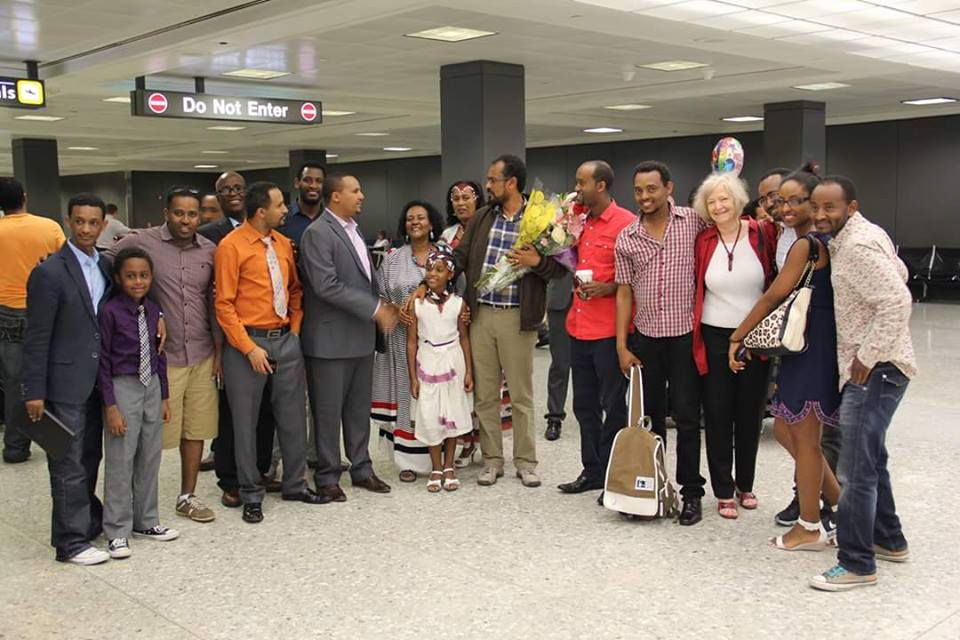
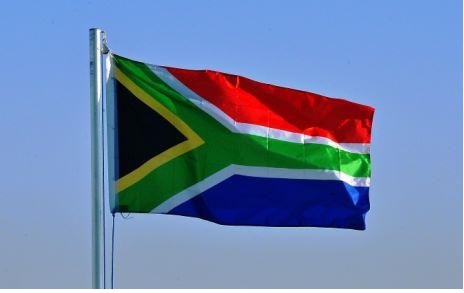

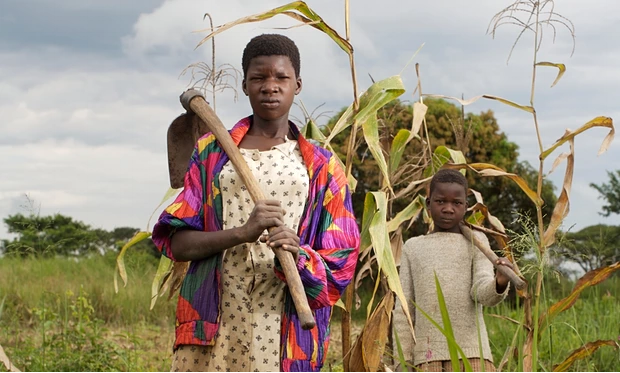

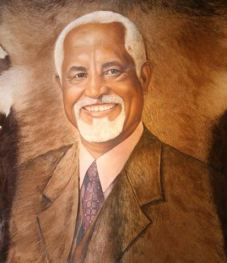


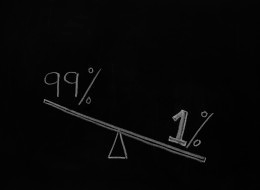
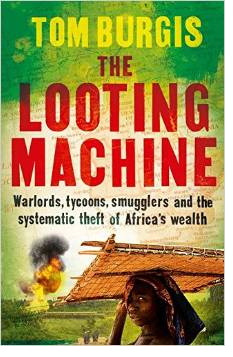
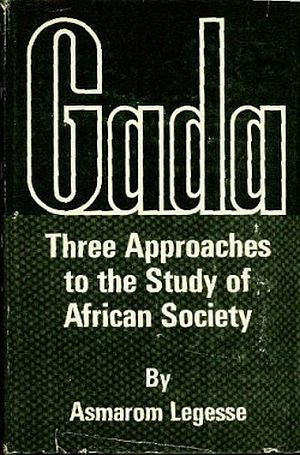

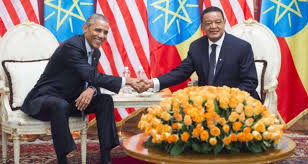
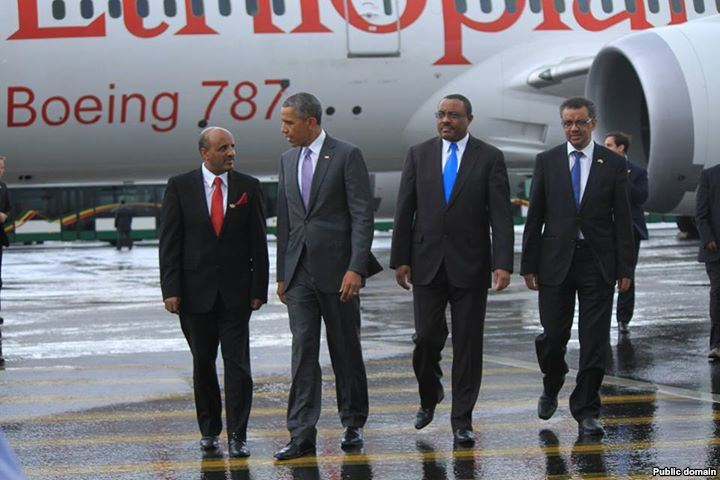
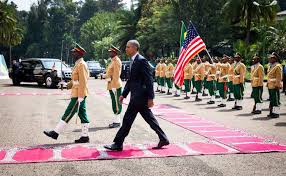
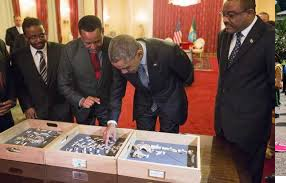

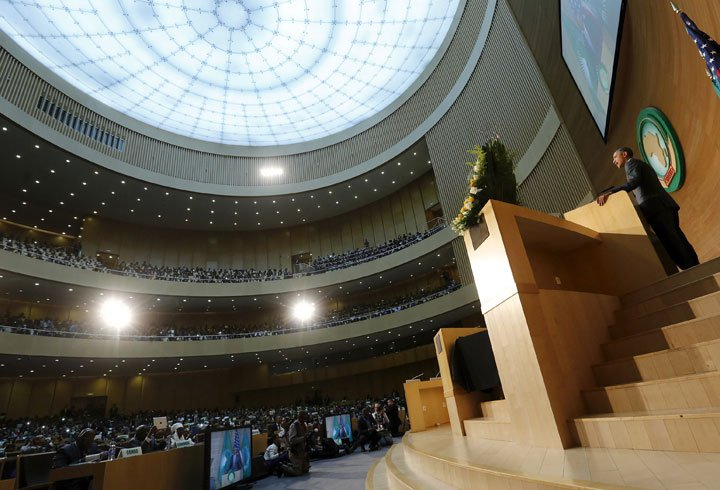


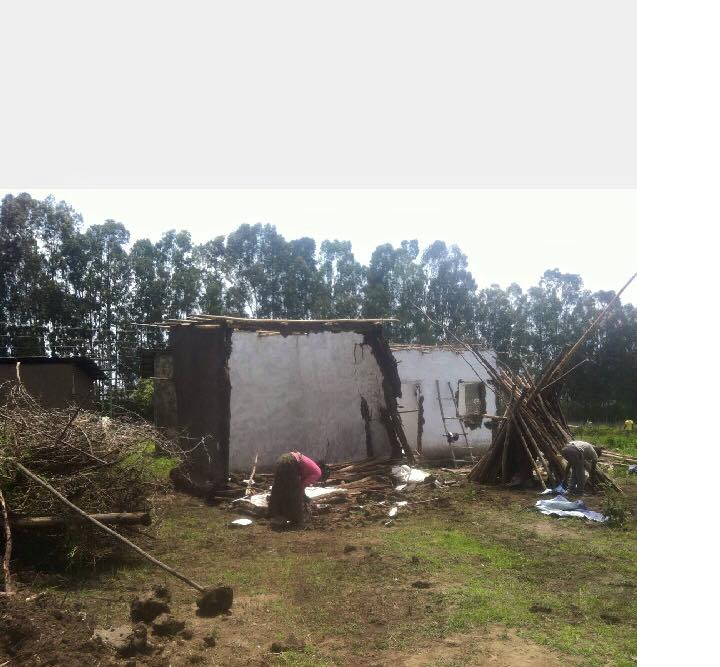
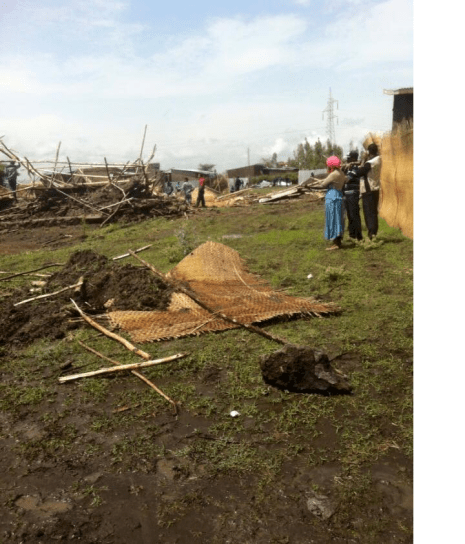

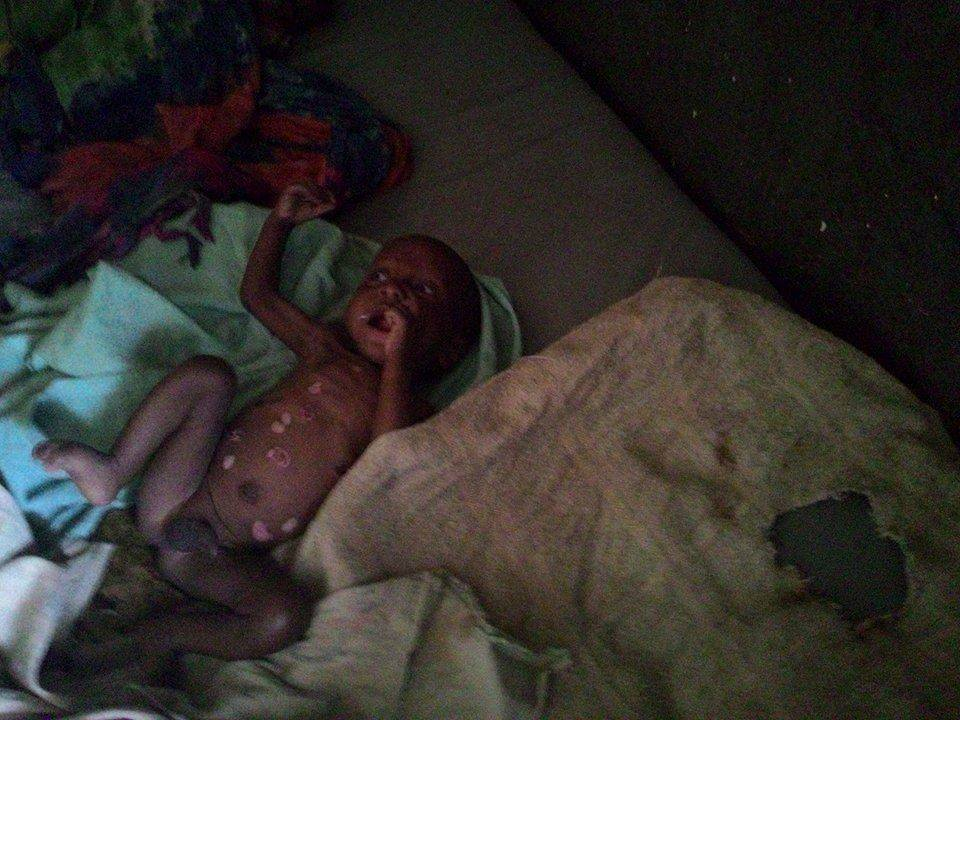
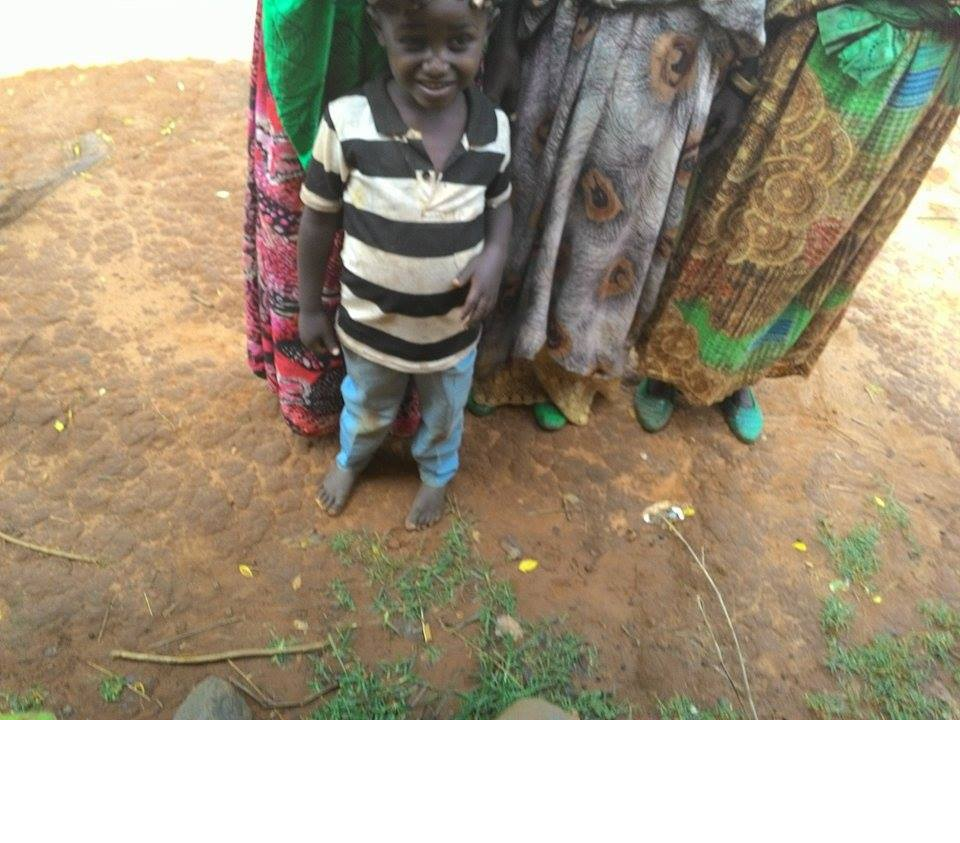
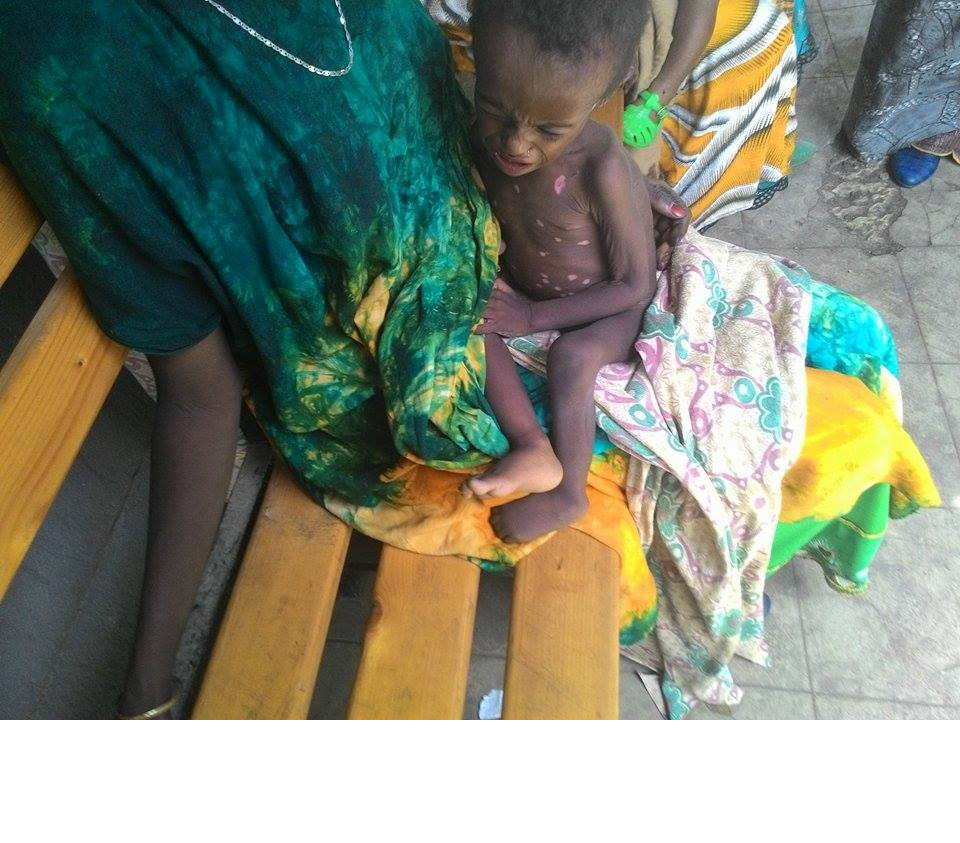
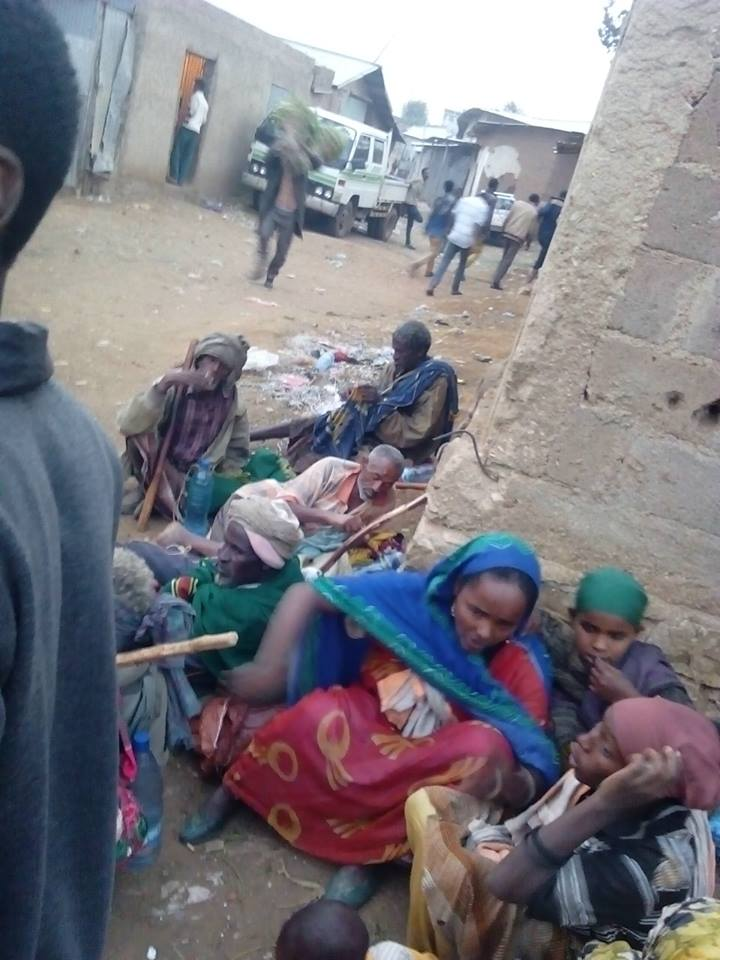
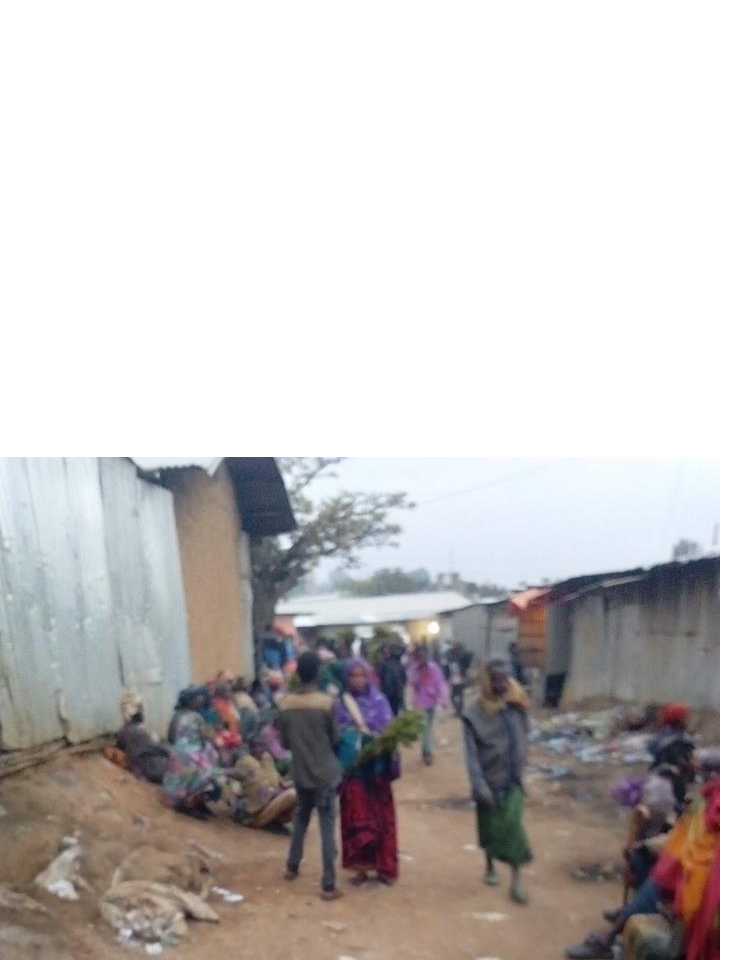
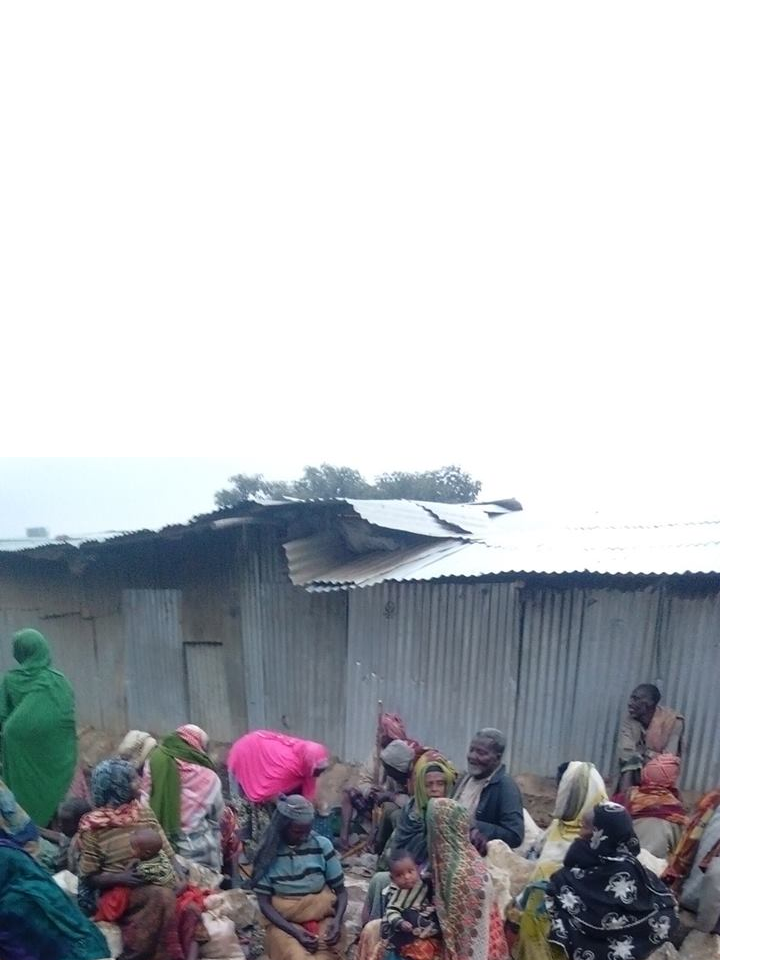
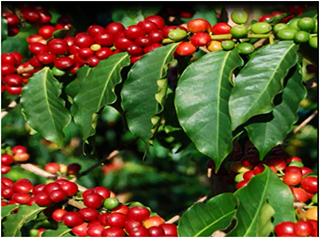
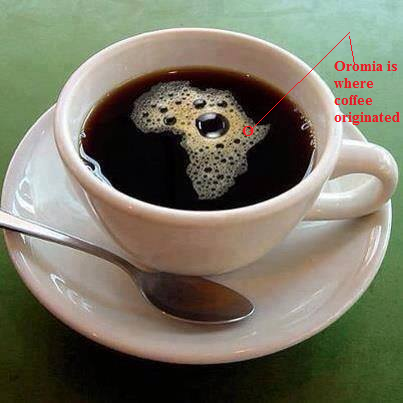
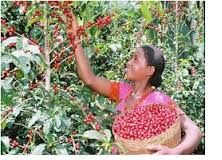
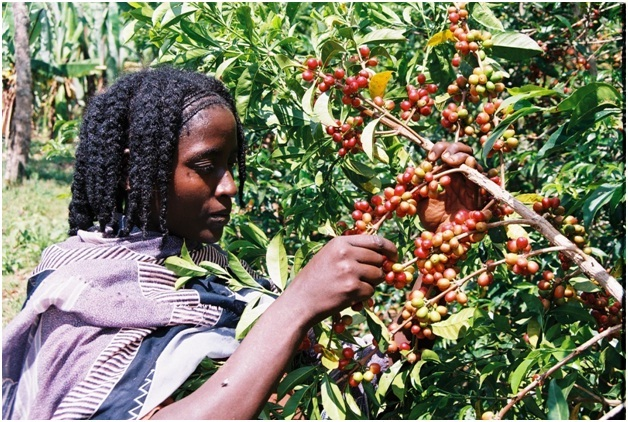

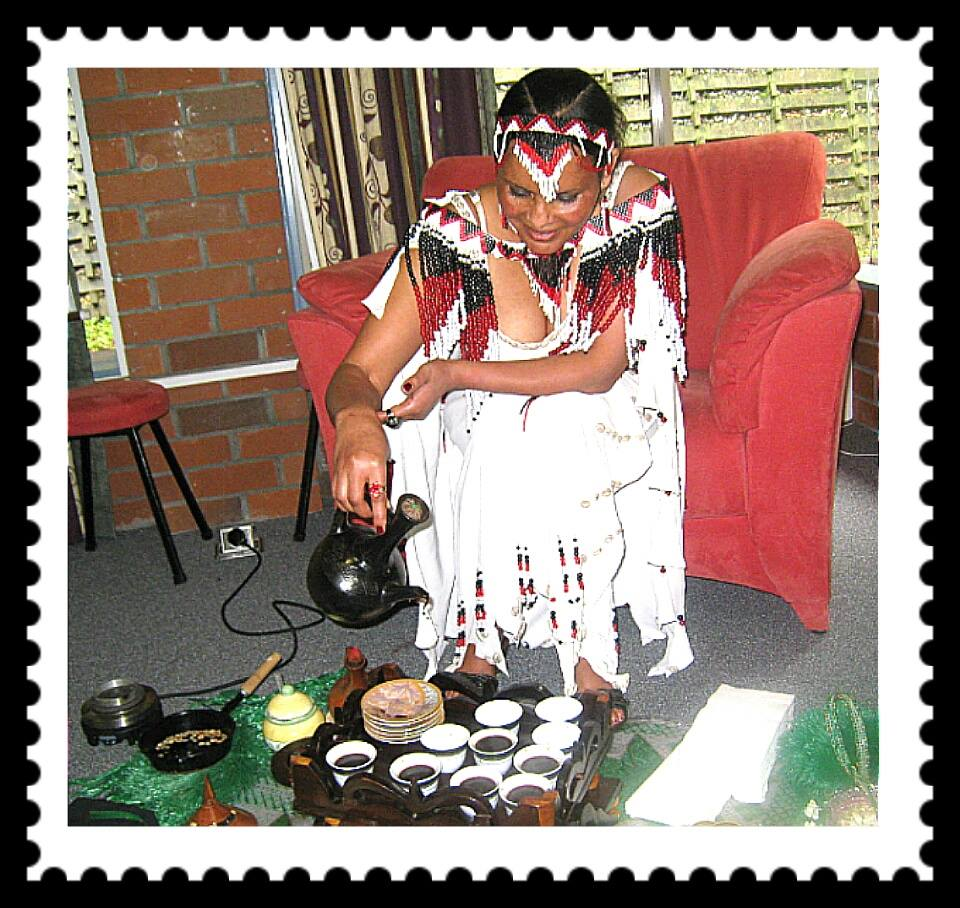

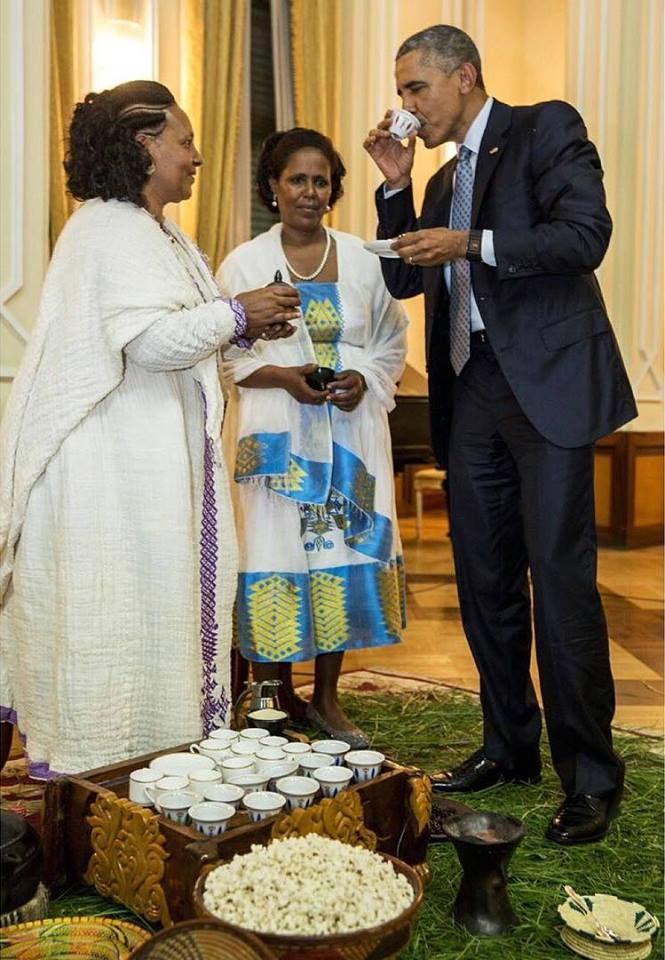

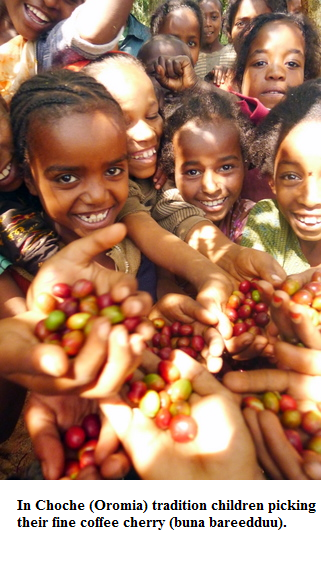
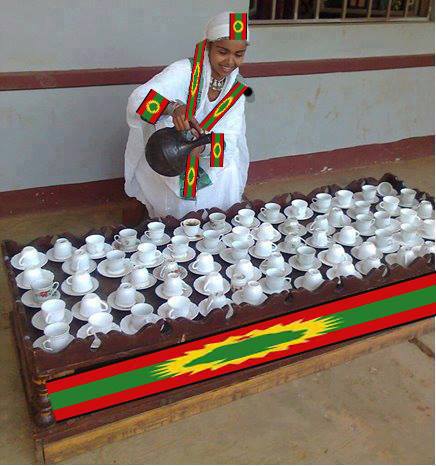


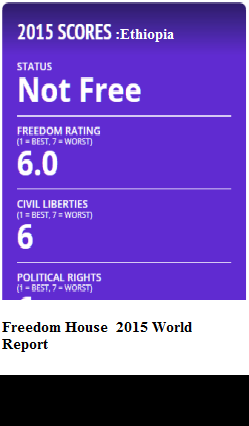
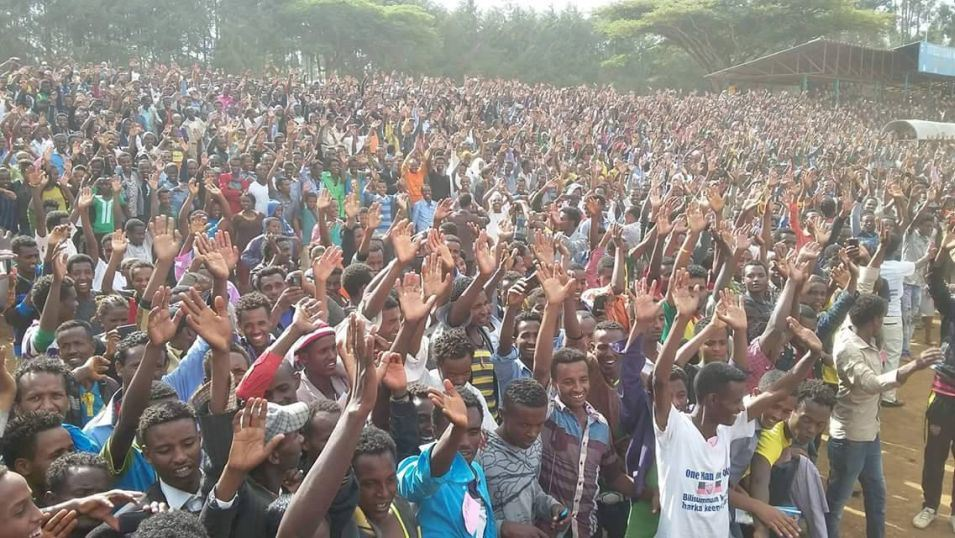

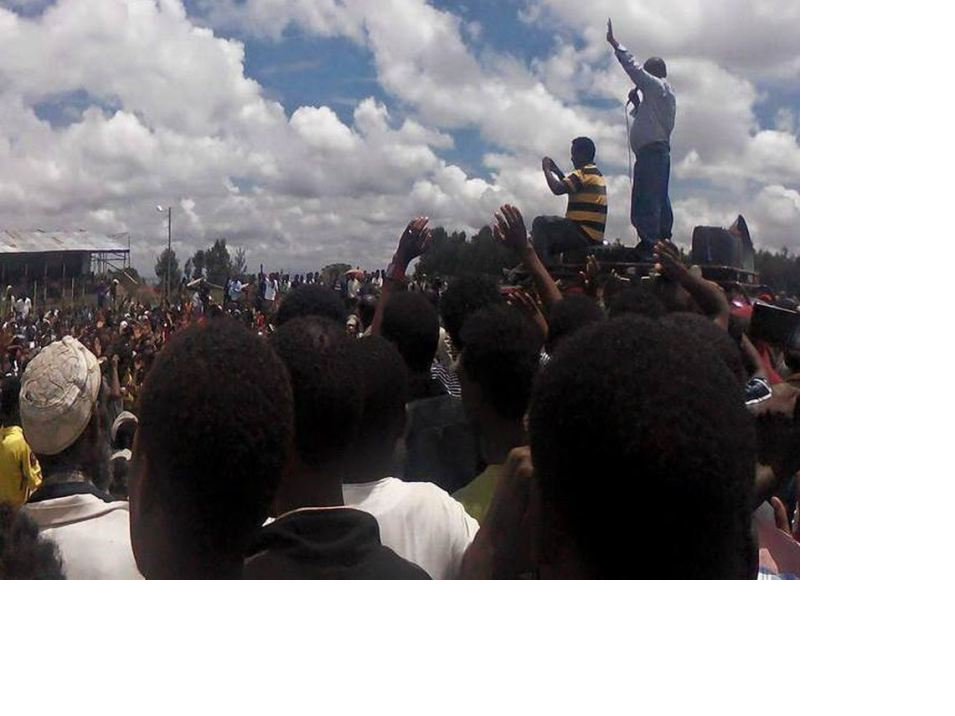


 Mootummaan abbaa irree, Wayyaanee jibba uummata Oromoo irraa qabuun hidhaa fi ajjeechaan gahuu dadhabnaan yeroo ammaa uummata nagaa mana isaa keessa jiraatu iyyama koo malee mana ijaartan jechuun humna tikaan fi waraanan mana jireenyaa qonnaan bultoota godina addaa Oromiyaa Buraayyuu bakkeewwan addaa Tsarra Tsiyoon,Gafarsaa Buraayyuu, Annee Diimaa fi kaanis mannen qonnaan bultoota 400 ol tahu diiguun hiraarsaa jira. Haala kanaan kanneen qabeenyaa isaanii kana dura dhaabbatanii falman ammoo hidhaa umurii dheeraa garagaraan itti murteessaa jiraachuu Qeerroon gabaasee jira.


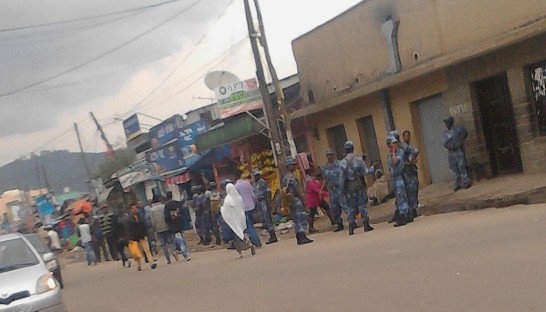



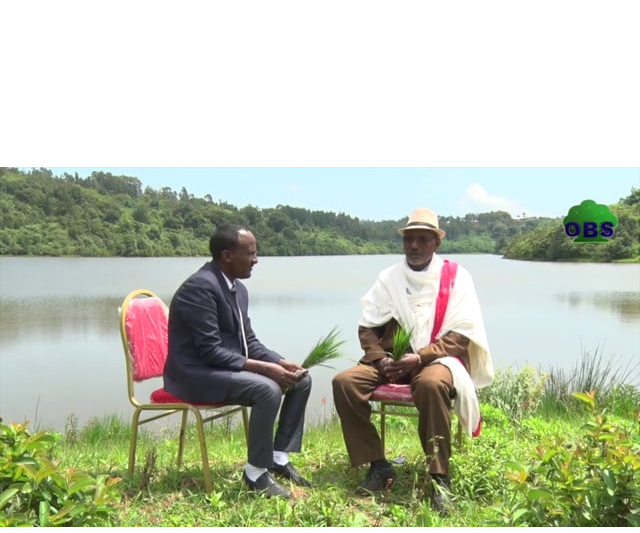

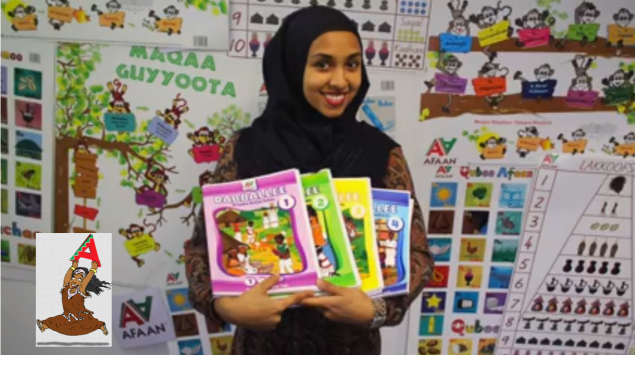















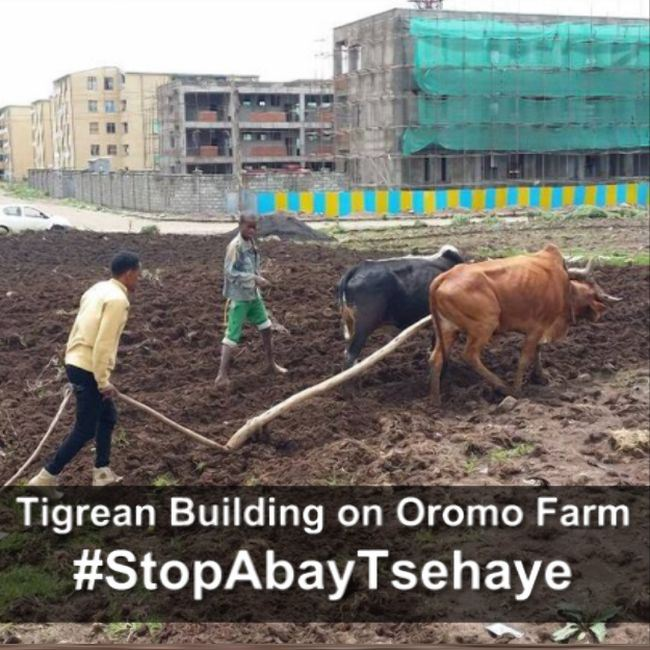
 However, more recently, there were further calls that the government was perpetuating inequality along ethnic lines when it announced a master plan titled “the Addis Ababa and the Surrounding Oromia Integrated Development Plan”. This area structure plan was intended to create special zones surrounding Addis that were divided into industry, service and settlement zones, based on their existing potential, economic base and geography. But it has become a contentious issue, met with opposition by Oromo residents who would lose an additional 36 towns and cities to Addis Ababa.
  Everything can be found here from steel pipes to spices and kitchenware. It is also where the hidden face of poverty of the city becomes most apparent. Here people are struggling to survive, making a living by whatever means possible – as this is the time of year when the rains come heavy and fast almost every afternoon, there are countless young men taking advantage of it. They will clean shoes, the bottoms of trousers or sit on old buckets fixing broken umbrellas. Government is trying? The government does believe it is trying. In a recent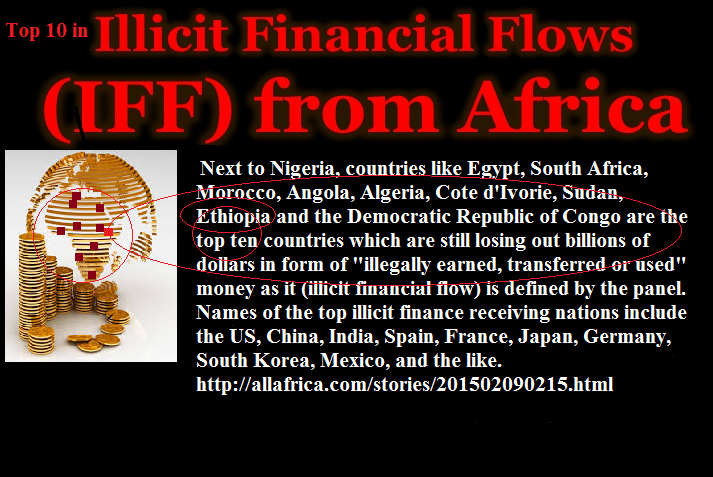

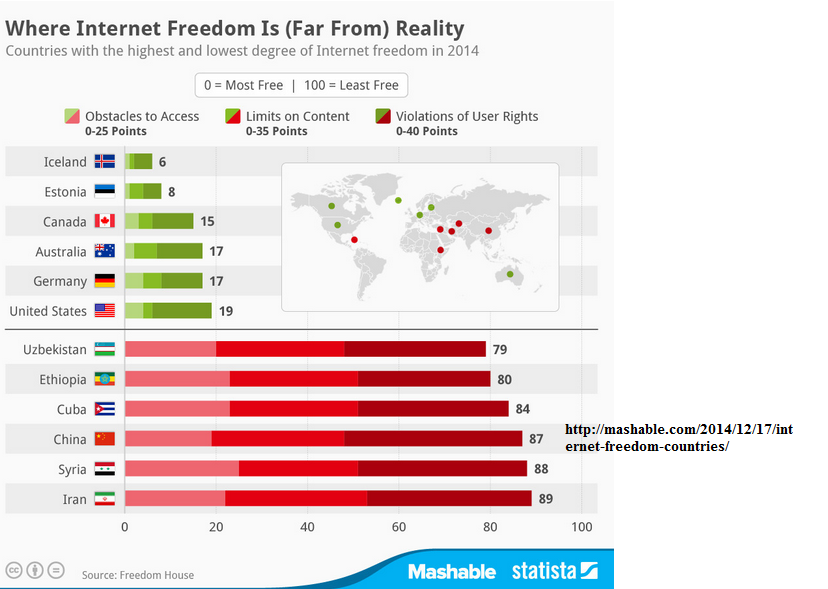

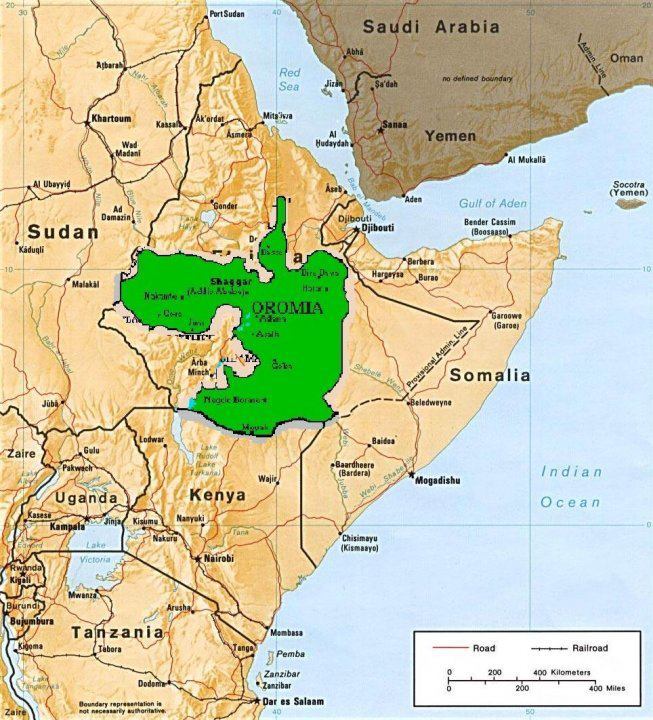


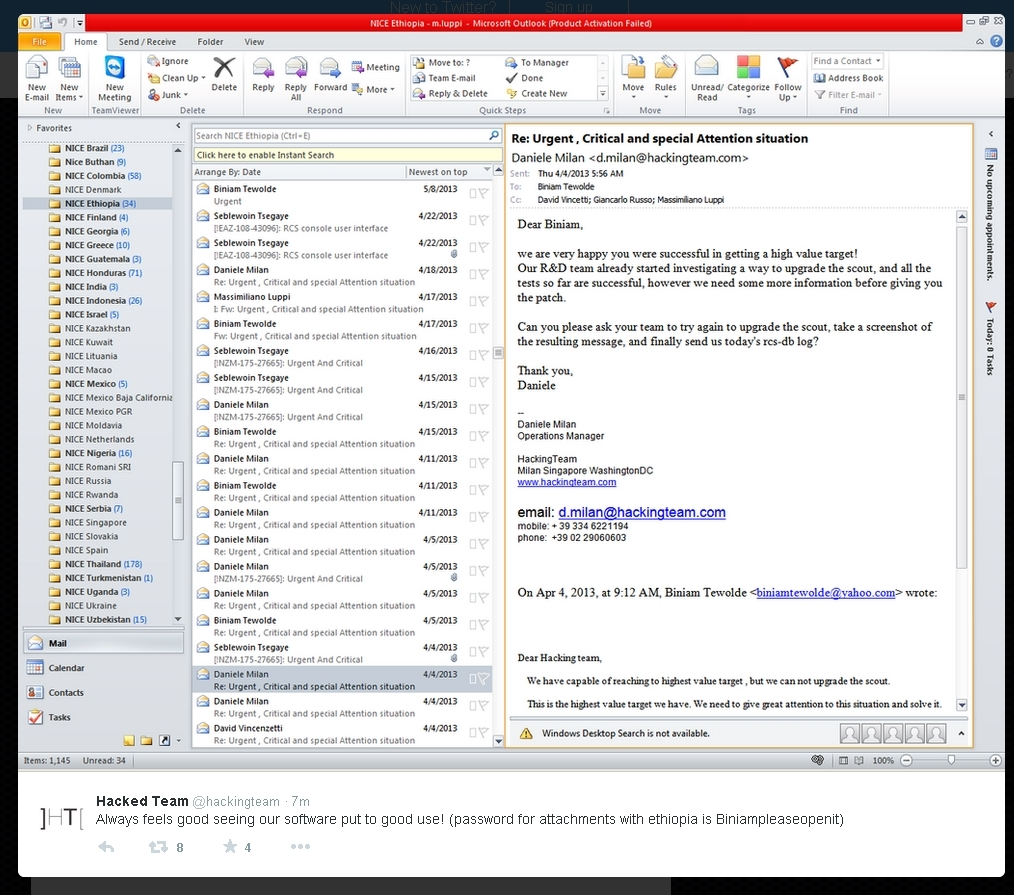



 There is no point staring at these carefully. They are random. The graphs and your intuition should tell you they are unrelated and uncorrelated. But as a test, the correlation (


 The correlation of these series is 0.88. Now here are the time series after first-differences de-trending:


 Oromian Economist
Ethiopia: President Obama Should Urge Changes to Help Civil Society, Political Opposition July 24, 2015
Posted by OromianEconomist in US-Africa Summit.Tags: Africa, Appeal Letter to President Obama from OCA-NA, Barack Obama, Freedom House, Freedom House in response to comments by Under Secretary for Political Affairs, Obama, Obama's plan to visit Ethiopia criticised as 'gift' for repressive government
add a comment
(Freedom House) — As President Obama prepares to visit Ethiopia next week, Freedom House has prepared policy recommendations for the White House, highlighting Ethiopia’s undermining of civil society, independent media, and the political opposition:
“The political environment during parliamentary elections held in May included arrest, harassment and intimidation of opposition members and supporters,” the letter says. “Apart from seriously eroding citizens’ faith in any prospect of an inclusive political framework, the ruling Ethiopian People’s Revolutionary Democratic Front’s entrenched control over all levers of political power sends a strong signal that all avenues of legitimate dissent are closed, fomenting resentment that could lead to violent extremism.”
“Freedom House recommends that President Obama urge the Government of Ethiopia to undertake a comprehensive review of the country’s civil society and anti-terrorism laws and to release imprisoned journalists and peaceful political activists.”
Read the policy reccomendations below.
Ethiopia is rated Not Free in Freedom in the World 2015, Not Free in Freedom of the Press 2015, and Not Free in Freedom on the Net 2015.
Freedom House is an independent watchdog organization that supports democratic change, monitors the status of freedom around the world, and advocates for democracy and human rights.
Ethiopia: Policy Recommendations, July 2015
Background
In 2009, the Ethiopian Parliament passed the Charities and Societies Proclamation (CSP), tightly restricting Ethiopian civil society organizations (CSOs). This includes limiting the amount of foreign funding that organizations are allowed to receive to 10 percent. Legislation passed in 2009, the Anti-Terrorism Proclamation (ATP) has been extensively used to silence critical voices including independent journalists and members of opposition political parties. These laws coupled with other government policies seriously limit the ability for independent voices to be heard.
Political Space and Inclusive Political Process
In May, the ruling Ethiopian People’s Revolutionary Democratic Front (EPRDF) conducted another tightly controlled national election and won all seats in both federal and regional legislatures. The political environment included the widespread arrest, harassment and intimidation of opposition members and supporters. Apart from seriously eroding citizens’ faith in any prospect of an inclusive political framework, EPRDF’s control of all levers of political power sends a strong signal that all avenues of legitimate dissent are closed, fomenting resentment that could lead to violent extremism. The rise in politically motivated killings of opposition activists after announcement of the election results in May and June (seven reported cases) shows that local officials believe that a total win for EPRDF means no space for opposition. Freedom House therefore recommends that during his visit, President Obama:
Civil Society and Media
The CSP has effectively decimated human rights groups in Ethiopia. While the stated purpose of the CSP is ‘to aid and facilitate the role of non-governmental organizations (NGOs) in the development of the country,’ it has actually forced at least 10 prominent human rights and democracy promotion organizations to abandon their mandates in order to continue receiving foreign funding while others were forced to scale back their operations significantly. As a direct result of the CSP, Ethiopia’s leading human rights NGO, Ethiopian Human Rights Council (EHRCO, now HRCO), had to close 9 of its 12 regional offices and cut 85 percent of its staff. The Ethiopian Women Lawyers’ Association (EWLA), another prominent group, cut nearly 70 percent of its staff. Authorities also froze the bank accounts of these groups. In addition to the severe restrictions the CSP imposes on funding and human rights work, the dysfunctional legal framework it put in place is actively undermining the role of civil society in development. A 2014 performance audit conducted by the Federal Auditor General found that more than 85 percent of NGOs were not able to comply with one or more of the expenditure and reporting requirements. The Director of the Charities and Societies Agency, the government agency in charge of regulating NGOs, told parliament that if his agency were to enforce the CSP as written, all NGOs would have closed. During President Obama’s visit to Ethiopia, Freedom House recommends that he:
Human Rights and National Security
After Ethiopia’s most competitive elections in 2005 concluded with violence and the detention of hundreds of opposition members and civil society leaders, EPRDF moved to systematize the tools of political control through a series of restrictive legislation backed by intense crackdown on media and civil society intended to silence perceived opponents and critics. As a result, the operational space for legitimate opposition, independent media and human rights activists has been seriously constrained. The ATP is being used to pursue vigorous prosecution of opposition party members and journalists.
The excesses of Ethiopia’s counter-terrorism operations that include arbitrary arrests, widespread practice of torture, alarming trends of disregard to due process rights of detainees and excessive pre-trial detention have stifled legitimate dissent and created a profound climate of fear. Lack of accountability of security forces is exacerbated by a judiciary that is largely subservient to the executive and lacks institutional autonomy to exercise effective oversight and enforcement of constitutionally guaranteed human rights protections. Freedom House therefore recommends that President Obama:
Support for Human Rights and Democracy Promotion
Given the highly repressive political environment in Ethiopia, it is admittedly difficult to support those who risk their lives to promote democracy and human rights. But it is not impossible, and if such groups are to survive in Ethiopia, they need outside support. Even a small increase in democracy and human rights assistance can have an enormous impact in ensuring that local civil society is able defend the fundamental rights of all Ethiopians. Freedom House recommends that the Obama Administration: