Economic and development analysis: Perspectives on economics, society, development, freedom & social justice. Leading issues in Oromo, Oromia, Africa & world affairs. Oromo News. African News. world News. Views. Formerly Oromia Quarterly
On April 20, 2015, Oromos in Ambo defied TPLF’s ban of Oromo’s freedom of assembly and filled a stadium, where Dr. Merera Gudina, Chairman of the Oromo Federalist Congress (OFC), was campaigning for the upcoming election (watch the video below). It’s to be noted that the TPLF regime tried to subdue Ambo a year ago during the Oromia-wide #OromoProtests against the ‘Addis Ababa Master Plan’ for Oromo Genocide. Almost a year ago, on April 30, 2014, more than 100 Oromo students and non-student civilians were killed by the Tigrean regime’s elite killing squad known as the Agazi Force; and thousands have been arrested just because they are Oromos, as an Amnesty International report revealed in October 2014. Shortly after April 2014, TPLF imposed on Oromia a sort of martial law where Oromos have been prohibited from assembly. On April 20, 2015, Ambo once again showed that it can never been subdued into submission by the TPLF state-sponsored terror by defying TPLF’s ban on Oromo’s freedom of assembly – and holding a rally to express support for OFC.
Meanwhile, another top OFC official, Obbo Baqqalaa Nagaa, is on campaign tour overseas to solicit support for his organization. According to the schedule, Obbo Baqqalaa Nagaa will be meeting with supporters in Las Vegas on April 23, 2015, and in Seattle on April 25, 2015.
OFC/Medrek Election Campaign in Ambo with Dr. Merera Gudina:
OFC/Medrek Election Campaign in Gindeberet:
Read more at: http://walabummaa43.blogspot.no/2015/04/ambo-defied-tplfs-ban-of-oromos-freedom.html
Letter to UN from Oromo Community in Seattle on Plight of Refugees in Yemen
Open letter to UNHCR from the Oromo Community Services of Seattle (OCSS)
………………………………………………………………………………………………………………..
Antonio Guterres, United Nations High Commissioner for Refugees
Case Postale 2500
CH-1211 Genève 2 Dépôt
Switzerland
Dear Commissioner Guterres,
We, the Oromo Community in Seattle*, are writing this letter to express our deep concern and dismay regarding the inhuman suffering of Oromo refugees in Yemen. Thousands of Oromo refugees have fled their homeland to neighboring countries, including Yemen, seeking protection from persecutions, large-scale arbitrary detentions, disappearances, tortures and extra-judicial killings they would be subjected to from the Ethiopian government due to their ethnic identity and political opinions. According to the Amnesty Internationalreport ‘Because I am Oromo’ – Sweeping Repression in the Oromia Region of Ethiopia, that was released on October 2014, between 2011 and 2014, at least 5000 Oromo have been arrested, tortured, and faced extra-judicial executions due to their peaceful opposition to the government. This report is self-evident that Oromo were forced to escape to rescue their lives from possible harassment of the Ethiopian government.
Currently, it is estimated that over ten thousands Oromo refuges reside in refugee camps in Yemen, including Sana and Eden. The current political turmoil in Yemen put the refugees’ lives in dire situation. Reports reaching us from Yemen indicate that refugees are trapped with no help in situation beyond their control. We have also received a report that a number of Oromo refugees have been killed, and some of them wounded by the flying bullets and indiscriminate ongoing fighting due to lack of adequate protection. Lives that they clenched to save are again put them in grave danger.
We are gravely concerned about the deteriorating condition of Oromo refugees in Yemen unless your leadership and international community intervene as soon as possible, and necessary steps are taken immediately to save the lives of the refugees. Oromo refugees in Yemen are also suffering from lack of food, shelter and medical care. Furthermore, the Ethiopian government security agents follow Oromo refugees and abduct some individuals using the current political crisis as an opportunity. This situation also jeopardizes the safety of the refugees.
We believe that, at this critical juncture, your leadership and the active engagement of the international community could mean the difference between life and death for many Oromo refugees. The Universal Declaration of Human Rights, signed in 1948 and 1951, have articles that recognize the rights for refugees. Any country that has signed these declarations is obliged to respect them. When every letter of these declarations violated, member countries of the UN and humanitarian organizations should not keep silent.
Your Excellency,
We strongly believe that as a UN refugee agency, you are sanctioned to making a lasting impact on the lives of refugees and other displaced communities around the world by focusing on the basic needs and rights for refugees – like shelter, water, food, safety and protection from harm. Silence about the dire situation of Oromo refugees in Yemen is not only inhuman, but it is also a flagrant violation of the letter and spirit of the 1951 UN Convention, the 1967 Protocol Relating to Status of Refugees, and the UN General Assembly Resolution 2198 (XXI).
It is a duty of the United Nations High Commissioners for Human Rights, UNHCR and the international community to take a swift action to rescue the refugees whose lives and freedom have fallen in a grave danger. We earnestly demand the UNHCR and member nations to extend their humanitarian assistance so as to find a way in which the refugees could be rescued from that imminent humanitarian disaster that may result in carnage. We believe Oromo refugees, as any other people in the world, are entitled to get protection and humanitarian from the UNHCR and governments that signed 1951 Geneva Convention.
We, therefore, appeal to the UNHCR, all UN member nations and other humanitarian organizations to put all necessary pressure on the governments and groups to refrain from violating the rights of refugees in Yemen and territories under their control. As the current situation in Yemen exposes Oromo refugees to further threats, we demand respectfully the UNHCR Office to find urgently durable solutions in which the lives of the refugees can be saved. We also request urgent medical care, food and shelter for Oromo refugees in Yemen.
Sincerely Yours,
Oromo Community Services of Seattle
C.C:
H. E. Ban Ki-moon
Secretary-General
The United Nations
New York. NY 10017
E-mail: Inquiries@UN.Org
Fax: 212-963-7055
U.S. Secretary of State
John Kerry
Washington, DC 20520
E-mail: Secretary@state.gov
European Union
E-mail: public.info@consilium.eu.int
Fax: Fax (32-2) 285 73 97 / 81
U.S. Committee for Refugees
1717 Massachusetts Ave. NW
Suite 200
Washington, DC 20036
Tel: 202-347-3507
Fax: 202-347-3418
E-mail: uscr@irsa-uscr.org
Amnesty International
International Secretariat
1 Easton Street
London
WC1X 0DW, UK
Fax: +44-20-79561157
Human Rights Watch
Rory Mungoven
Global Advocacy Director
350 Fifth Avenue, 34th Floor
New York, NY 10118-3299 USA
Tel: 1-(212) 290-4700
Fax: 1-(212) 736-1300
———– * Oromo Community Services of Seattle
Address: 7058 32nd Avenue S. Suite # 101 – Seattle, WA 98118
Tel: (206) 251-1789
‘We live in a era of big data, but developing countries are suffering from a data drought: governments and the international community know less about the world’s poorest than they think….While the World Bank estimates that the number of people living on less than $1.25 a day is 1.01 billion, the report claims the number could be up to 350 million more than that…The report, which was based mostly on secondary research, publicly available databases, and original interviews, also claims that maternal mortality figures for sub-Saharan Africa in 2013 could be double the stated 133,000, and the number of people living with HIV/AIDS could have been overstated by 20%…“We take for granted that statistics are based on fact, and that they’re scientific or empirical when often they’re not—they’re estimations or political negotiations,” Elizabeth Stuart, a research fellow at the ODI tells Quartz…There are many reasons for this data dearth. Populations in developing countries often live either in highly spread out or dense, shifting communities like urban slums, making traditional data collection methods, such as censuses and household surveys, expensive, too infrequent and potentially dangerous. Over 40% of countries in sub-Saharan Africa have not had a survey in seven years.’
Belonging–why South Africans refuse to let Africa in
Sisonke Msimang, AFRICASACOUNTRY.COM
This piece was first published on October 22, 2014, but with the new wave of xenophobic violence against black African migrants and refugees in South Africa’s Kwazulu-Natal province fueled by hateful and offensive remarks by the Zulu King, for which he refuses to apologize, we feel it is important to republish this today. The South African President, Jacob Zuma, has been slow to condemn the King and now some traditional leaders, like this guy, are backing the King. Not surprising the King also his supporters on social media. That violence is now threatening to spread to Johannesburg (locals talk of racist, violent messages against non-South African blacks being shared on social media like Whatsapp), so we feel it is important to republish the piece again today. Meanwhile, the twitter handle #XenophobicSAis a good way to keep up with these shameful events-Ed. Any African who has ever tried to visit South Africa will know that the country is not an easy entry destination. South African embassies across the continent are almost as difficult to access as those of the UK and the United States. They are characterised by long queues, inordinate amounts of paperwork, and officials who manage to be simultaneously rude and lethargic. It should come as no surprise then that South Africa’s new Minister of Home Affairs has announced the proposed establishment of a Border Management Agency for the country. In his words the new agency “will be central to securing all land, air and maritime ports of entry and support the efforts of the South African National Defence force to address the threats posed to, and the porousness of, our borderline.” Political observers of South Africa will understand that this is bureaucratic speak to dress up the fact that insularity will continue to be the country’s guiding ethos in its social, cultural and political dealings with the rest of the continent. Perhaps I am particularly attuned to this because of my upbringing. I am South African but grew up in exile. That is to say I was raised in the Africa that is not South Africa; that place of fantasy and nightmare that exists beyond the Limpopo. When I first came home in the mid 1990s, in those early months as I was learning to adjust to life in South Africa, I was often struck by the odd way in which the term ‘Africa,’ was deployed by both white and black South Africans. Because I speak in the fancy curly tones of someone who has been educated overseas, I was often asked where I was from. I would explain that I was born to South African parents outside the country and that I had lived in Zambia and Kenya and Canada and that my family also lived in Ethiopia. Invariably, the listener would nod sympathetically until the meaning of what I was saying sank in. ‘Oh.’ Then there would be a sharp intake of breath and a sort of horrified fascination would take hold. “So you grew up in Africa.” The Africa was enunciated carefully, the last syllable drawn out and slightly raised as though the statement were actually a question. Then the inevitable, softly sighed, “Shame.” In the early years after I got ‘home,’ it took me some time to figure out how to respond to the idea that Africa was a place that began beyond South Africa’s borders. I was surprised to learn that the countries where I had lived – the ones that had nurtured my soul in the long years of exile – were actually no places at all in the minds of some of my compatriots. They weren’t geographies with their own histories and cultures and complexities. They were dark landscapes, Condradian and densely forested. Zambia and Kenya and Ethiopia might as well have been Venus and Mars and Jupiter. They were undefined and undefined-able. They were snake-filled thickets; impenetrable brush and war and famine and ever-present tribal danger. Though they thought themselves to be very different, it seemed to me that whites and blacks in South Africa were disappointingly similar when it came to their views on ‘Africa.’ At first I blamed the most obvious culprit: apartheid. The ideology of the National Party was profoundly insular, based on inspiring everyone in the country to be fearful of the other. With the naiveté and arrogance of the young, I thought that a few lessons in African history might help to disabuse the Rainbow Nation of the notion that our country was apart from Africa. I made it my mission to inform everyone I came across that culturally, politically and historically we could call ourselves nothing if not Africans. What I did not fully understand at that stage was that it would take more than a few lectures by an earnest ‘returnee,’ to deal with this issue. This warped idea of Africa was at the heart of the idea of South Africa itself. Just as whiteness means nothing until it is contrasted with blackness as savagery, South African-ness relies heavily on the construction of Africa as a place of dysfunction, chaos and violence in order to define itself as functional, orderly, efficient and civilised. As such, the apartheid state was at pains to keep its borders closed. The savages at the country’s doorstep were a convenient bogeyman. Whites were told that if the country’s black neighbours were let in, they would surely unite with the indigenous population and slit the throats of whites. By the same token, black people were told that the Africans beyond South Africa’s borders lived like animals; they were ruled by despots and governed by black magic. When apartheid ended, the fear of African voodoo throat slitting should have ended with it. Indeed on the face of things, the fear of ‘Africa,’ has abated and has been replaced by the language of investment. South African capital has ‘opened up’ to the rest of the continent and so fear has been taken over by self-interest and new forms of extraction. In the parlance of South Africans, our businesses have ‘gone into Africa.’ Like the frontiersmen who conquered the bush before them they have been quick to talk about ‘investment and opportunity’ to define our country’s relationship with the continent. The pre-1994 hostility towards ‘Africa’ has been replaced by a paternalism that is equally disconcerting. Africa needs economic saviours and white South African ‘technical skills’ are just the prescription. Amongst many black South Africans, the script is frightfully similar. The recent collapse of TB Joshua’s church in Nigeria, in which scores of South Africans lost their lives has highlighted how little the narrative has changed in the minds of many South Africans. Many have called in to radio shows and social media asking, what the pilgrims were doing looking for God in such a God forsaken place? In the democratic era we have converted the hatred of Africa into a crude sort of exceptionalist chauvinism. South Africans are quick to assert that they don’t dislike ‘Africans.’ It’s just that we are unique. Our history and society are too different from theirs to allow for meaningful comparisons. See – we are even lighter in complexion than them and we have different features. I have heard the refrain too many times, ‘We don’t really look like Africans.’ Never mind the reality that black South Africans come in all shades from the deepest of browns to the fairest of yellows. This idea that South Africans are so singular in our experience; that apartheid was such a unique experience that it makes us different from everyone else in the world, and especially from other Africans, is an important aspect of understanding the South African approach to immigration. As long-time researcher Nahla Vahlji has noted, “the fostering of nationalism produces an equal and parallel phenomenon: that of an affiliation amongst citizens in contrast and opposition to what is ‘outside’ that national identity.” In other words, South Africans may not always like each other across so-called racial lines, but they have a kinship that is based on their connection to the apartheid project. Outsiders – those who didn’t go through the torture of the regime – are juxtaposed against insiders. In other words foreigners are foreign precisely because they can not understand the pain of apartheid, because most South Africans now claim to have been victims of the system. Whether white or black, the trauma of living through apartheid is seen as such a defining experience that it becomes exclusionary; it has made a nation of us. The Truth and Reconciliation Commission (TRC) which sought to uncover the truth behind certain atrocities that took place under apartheid, was also an attempt to make a nation out of us. While it won international acclaim as a model for settling disputes that was as concerned with traditional notions of justice as it was with healing the wounds of the past, there were many people inside South Africa who were sceptical of its mission. As Premesh Lalu and Brendan Harris suggested as the Commission was starting its work in the mid 1990s, the desire for the TRC to create the narrative of a new nation led to a selection of “elements of the past which create no controversy, which create a good start, for a new nation where race and economic inequality are a serious problem, and where the balance of social forces is still extremely fragile.” This is as true today as it was then. Attending the hearings was crucial for me as a young person yearning to better understand my country, but I am objective enough to understand that one of the consequences using the TRC as the basis for forging a national identity is that ‘others’ – the people who were not here in the bad old days – have found it difficult to find their place in South Africa. Aided and abetted by the TRC and the discursive rainbow nation project, South Africans have failed to create a frame for belonging that transcends the experience of apartheid. Twenty years into the ‘new’ dispensation, many South Africans still view people who weren’t there and therefore who did not physically share in the pain of apartheid as ‘aliens.’ The darker-hued these aliens are, the less likely South Africans are to accept them. Even when black African ‘foreigners’ attain citizenship or permanent residence, even when their children are enrolled in South African schools, they remain strangers to us because they weren’t caught up in our grand narrative as belligerents in the war that was apartheid. While it is easy to locate the roots of xenophobia in our colonial and apartheid history, it is also becoming clear that our present leaders do not understand how to press the reset button in order to remake our country in the image of its future self. They have not been able to outline a vision for the new South Africa that is inclusive of the millions of African people who live here and who are ‘foreign’ but indispensable to our society for cultural, economic and political reasons. America – with all its problems – offers us the model of an immigrant nation whose very conception relied on the idea of the ‘new’ world where justice and freedom were possible. Much can be said about how that narrative ignores those who were brought to the country as slave cargo. It is patently clear that America has also denied the founding acts of genocide that decimated the people of the First Nations who lived there before the settlers arrived. Indeed, one could argue that while oppression and murder begat the United States of America, the country’s founding myth is an inclusive one, a story of freedom and the right to life. In South Africa murder and oppression also birthed a new nation, but the founding myth of our post 1994 country has remained insular and exclusive, a story of freedom and the right to life for South Africans. The South African state has always been strongly invested in seeing itself as an island of morality and order in a cesspool of black filth. The notion of South Africa’s apartness from Africa is deeply embedded in the psyche that ‘new’ South Africans inherited in 1994 but it goes back decades. For example, the 1937 Aliens Act sought to attract desirable immigrants, whom it defined in the law as those of ‘European’ heritage who would be easily assimilable in the white population of the country.’ This law stayed on the books until 1991, when the National Party, in its dying days, sought to protect itself from the foreseeable ‘deluge’ of communist and/or barbaric Africans. The Aliens Control Act (1991) removed the offensive reference to ‘Europeans’ but it kept the rest of the architecture of exclusion intact. As a result, when the new South Africa was born the old state remained firmly in place, continuing to guard the border from the threats just across the Limpopo, as it always had. It was a decade before the Bill on International Migration came into force in 2003 and it too retained critical elements of the old outlook. The ANC politicians running the country somehow began to buy into the idea that immigrants posed a threat to security. Immigration continued to be seen as a containment strategy rather than as a path to economic growth. As President Jacob Zuma tightens his grip on the security sector, and extends the power and reach of the security cluster in all areas of governance, this attitude seems to be hardening rather than softening. None of South Africa’s current crop of political leaders seem to be asking the kinds of questions that will begin to resolve the question the role that immigration can and should play in the building of our new nation. South Africa’s political leadership sees Africa in one of two ways: either as a market for South African goods, differentiated only to the extent that Africans can be sold our products; or as a threat, part of a deluge of the poor and unwashed who take ‘our jobs and our women.’ No one in government today seems to understand that post-apartheid South Africa continues to be the site of multiple African imaginations. One cannot deal with ‘Africa’ without dealing with the subjectivity of what South Africa meant to Africa historically, and the disappointment that a free South Africa has signified in the last decade. So much of the pan-Africanist project – even with its failings – has been about an imagined Africa in which the shackles of colonialism have been thrown off. South Africa has always been an iconic symbol in that imaginary. Robben Island and Nelson Mandela, the burning streets of Soweto, Steve Biko’s bloodied, broken body: these images did not just belong to us alone. They brought pain and grief to a continent whose march towards self-determination included us, even when our liberation seemed far, far away. With the invention of the ‘new’ South Africa the crucial importance of African visions for us have taken a back seat. South Africans have refused to admit that we are a crucial aspect of the African project of self-determination. In failing to see ourselves in this manner, we have denied ourselves the opportunity to be propelled – transported even – by the dreams of our continent. What would South Africa be like without the ‘foreign’ academics who teach mathematics and history on our campuses? How differently might our students think without their deep and critical insights about us and the place we occupy in the world? How might we understand our location and our political geography differently if ‘foreigners’ were not here offering us different ways of wearing and inhabiting blackness? What would our society look like without the tax paying ‘foreigners’ whose children make our schools richer and more diverse? What would inner city Johannesburg smell like without coffee ceremonies and egusi soup? What would Cape Town’s Greenmarket square be without the Zimbabwean and Congolese taxi drivers who literally make the city go? In an era in which borders are coming down and becoming more porous to encourage trade and contact, South Africa is introducing layers of red tape to the process of moving in and out of the country. The outsider has never been more repulsive or threatening than s/he is now. This is precisely why Gigaba’s announcement of the Border Management Agency is so worrisome. Yet it was couched in careful language. Ever mindful of the xenophobic reputation that South Africa has in the rest of the continent, Gigaba asserts, “We value the contributions of fellow Africans from across the continent living in South Africa and that is why we have continued to support the AU and SADC initiatives to free human movement;but [my emphasis] this cannot happen haphazardly, unilaterally or to the exclusion of security concerns.” Ah, there it is! The image of Africa and ‘Africans’ as haphazard, disorderly and ultimately threatening is in stark contrast to South Africa and South Africans as organised, efficient and (ahem) peace-loving. The subtext of Gigaba’s statement is that South Africans require protection ‘foreigners’ who are hell bent on imposing their chaos and violence on us. Nowhere has post-apartheid policy suffered from the lack of imagination more acutely than in the area of immigration. Before they took power, many in the ANC worried about the ways in which the old agendas of the apartheid regime state would assert themselves even under a black government. They understood that there was a real danger of the apartheid mentality capturing the new bureaucrats. Despite these initial fears, the new leaders completely under-estimated the extent to which running the state would succeed in dulling the imaginations of the new public servants and burying their intellect under mountains of forms and rules and processes. They also didn’t understand that xenophobia would be so firmly lodged in the soul of the country, that it would be one of the few phenomena would unite blacks and whites. South Africa’s massive immigration fail is a tragedy for all kinds of reasons. At the most basic level, the horrific levels of violence and intimidation that many African migrants to South Africa face on a daily basis represent an on-going travesty of justice. Yet in a far more complex and nuanced way, South Africa’s rejection of its African identity is a tragedy of another sort. All great societies are melanges, a delicious brew of art and culture and intellect. They draw the best from near and far and make them their own. By denying the contribution of Africa to its DNA, South Africa forgoes the opportunity to be a richer, smarter, more cosmopolitan and interesting society than it currently is. In spite of ourselves South Africans still have a chance to open our arms to the rest of the continent. The window of opportunity for allowing our guests to truly belong to us as they have always allowed us to belong to them is still open. I fear however, that the window is closing fast. http://africasacountry.com/belonging-why-south-africans-refuse-to-let-africa-in/
Fincha Elementary School is a typical example of all primary schools in Oromia: No lights, no sits, no books, no toilets and overcrowded with 185 students per class.
(Oromo Refugees in Aden) – Yemen seeking for international attention to the excessive discrimination made against us, in particular all the last two decades. The right delayed is the right denied.
Subject: problem of the Oromo Refugees in Yemen remains unsolved, while Other refugees enjoy with fair protection and the rights (to live or move with free, education, health, resettlement out of Yemen just for better changes of life etc) which the Oromo refugees are denied even, after more than 17 years of deprivation and discrimination. And now under fire of the war
Who is behind and why is this all about? Is it sensible to think or say that such huge discrimination and inhuman treatment against the Oromo refugees, in particular is made out of the sight of or, does the international community including the relevant law intends to discriminate against the Oromo refugees? And what will the outcome or effects of the closed eyes (of the governments, human rights etc) to the abuses facing the Oromo refugees in Yemen be on future of the human rights?
Despite the prevailing situation is serious in general and probable to deteriorate our situation from bad to worse or to expose us more to the dangers anticipated/ intended, but it is not seemed however to be much different from the war of the excessive discriminations inflicted on us, in particular since more than 17 years as refugees in Yemen. As Oromo refugees we were under constant threats, intimidation, systematical discrimination and deprivation of the rights as refugees and, or the right to seek /claim against or for fair protection and treatment as equal as the other refugees in Yemen.
Specific details
Threats: harassment and extortion the Oromo refugees with UNHCR mandates (in the streets, at their work places and even, in their home etc) by the police just for they are” Oromo refugees” that compelled the Oromo to hide under the pretense of Somalis on need (during movement out of the living area etc). Intimidation: frightening the Oromo refugees by threatening situation or forcibly deportation for claiming for the right to protection, equal treatment to other refugees, Or for claiming against the abuses. Systematical discrimination: whenever we seek for the right to (protection, education, etc), the response for this by UNHCR (national staffs) in Aden is to say that we are not allowed to have or to seek for these rights in Yemen because the authority doesn’t recognize or that it does consider the Oromo refugees as illegal.
We are honest that we should respect the irregular policy of the Yemeni government towards us because it has been clear to be unwilling to grant the Oromo refugees as others. But we are seriously pointing to UNHCR which fails a pinnacle of its obligation towards us by procrastination with our refugee protection.
Oromo refugees particularly, in Aden are trapped in the moist of systematical pressures and deprivation by UNHCR , which was and still having political outlook towards us and practicing very scathing criticism( as to blame us as though we behave to contravene against the law etc) and misinformation against us excessively as a pretext to disprove or deny as well as to blur the international attention towards the well-founded and flagrant threats facing the Oromo refugees, in particular in Yemen. Whatever we seek or claim for (e.g. Refugee protection, assistance, the rights etc as refugees) is distorted as being for resettlement (: as if our entire claim intends for resettlement) even though it is for specific assistance. On the contrary, UNHCR is giving resettlement in third countries just for better change, for non-Oromo refugees those are granted all the rights as equal as the host community. Sometimes UNHCR claims that they are treating the Oromo refugees as same as the others by offering them assistance needed including resettlement. And at the same time they contradict what they’ve already mentioned by saying that ‘our refugee status has been deaden for belonging to the (OLF), which has lost its political legitimacy in the world. But they are still unable to respond to the question says “ how could the Oromo Refugees in Aden – Yemen seeking for international attention to the excessive discrimination made against us, in particular all the last two decades. The right delayed is the right denied. failure of the” OLF” policy in the world effect on only the refugees in Yemen apart from those in other countries of asylum”?
We are under influence of the national staffs who struggle hard to hide and confuse the actual facts related to our prolonged sufferings. UNHCR expatriate doesn’t perceive severity / situation facing us, because we are denied the right to access to persons of concern, and any written letter is interceded by the staffs intend to fail our reasonable claim before reaching the person of concern. So, they use to deter and eliminate us even, our committee leaders by their guards or the police. The staffs just then give the expats distorted information and persuade them wrongly about our intention.
What kind of the humanity is this, of which the deserving people are deprived while offered for those who should be considered as secondary concern?
In spite of such flagrant abuses, unkind treatment and discrimination treated against Oromo refugees, but the international community uses to turn a blind eye towards us by relying on the distorted information given by its customers (UNHCR) concern problems of the Oromo refugees.
All this discrimination is made to us because we are defenseless and without advocate, although the situation necessitates because the general attention to the refugee protection has become less and complicated unless international advocacy is made on behalf of these refugees according to the relevant laws. But the silence of the international community, Human Rights watch etc towards these inhuman treatments against the Oromo in particular has discouraged humanity and courage much more the abusive policy of the Ethiopian government against Oromo in Yemen.
UNHCR has played very crucial role in getting the Oromo refugees deprived of not only the rights as refugee in Yemen, but also of humanitarian intervention endeavored by some government interests and supports humanity such as( the government of Canada, which made great attempts two consecutive years [ 2004, 2005 ] willingly intending to give the Oromo refugees citizenship. But UNHCR in Aden denied the two times missions preventing them even, from visiting location of the Oromo refugees. However, we never forget the praiseworthy attempts intended by government of Canada.
The prolonged deprivation or discrimination treated against us has now been affecting our children those were born under the flag of UNHCR in Yemen. If the law itself discriminates against the parents, isn’t there any of the laws which support the right of the children?
This is not for the first time but we wrote a lot of petition to you since 2004 but never brought any positive change. Instead, we have been made to face worse and badly overreacted pressures resulted from the petitions applied, because no intervention or attention has been made towards us, excepting the amnesty’s very humanitarian Endeavour which should never be forgotten. But UNHCR blocked the process before reaching destination.
Comment on the Oromo communities in (the global continents) On behalf of the Oromo refugees living under appalling condition in Yemen, we would like to mention fraternal regards to all the Oromo communities in the world and we hope for you great success in your efforts aiming for the Oromo problems inside and outside of Oromia in general and for the Oromo Refugees in Aden – Yemen seeking for international attention to the excessive discrimination made against us, in particular all the last two decades. The right delayed is the right denied. Refugees those have threatened by the abusive policies emanating from the despotic government of Ethiopia in countries of asylum.
As we believe Oromo has lots of intellectuals in many countries in the word but we are disappointed and surprising about their silence on the sufferings of their people (refugees). What is the main role they have played in bringing a possible solution for their threatened refugees particularly, those in the Arab countries although a massive petition to you has been applied? We hope this time should not be as before.
You are aware of what is going on in Yemen that has compelled the international community to take its peoples from Yemen. Refugees (Somalis) have been leaving and others even, the Eritrean refugees have been promised by the Ethiopian authority to be taken from Yemen. But what about the Oromo refugees who have nowhere to return although Oromo is the most vulnerable, the most threatened refugee in Yemen? UNHCR in Aden also has left us heedlessly and without even, a piece of advice concern the dangers surrounding despite we are the most liable refugees to any possible threats on the ground more than any others.
Effects expected from this deterioration towards us: Oromo refugees in Yemen are beset by Ethiopian abusive policy through the Saudi which is striking on Yemen.
As we know the last aggressive deportation process made against thousands of Ethiopian from Saudi Arabia was carried out by the request from the Ethiopian authority through its friendly relationship with kingdom of Saudi. And now it is controlling completely all over Yemen and it is intending to deploy its forces that can be very harmful to us in Yemen. It is believable that Saudi will carry out forcibly deportation against us on the request of Ethiopia. In addition there is rumor information that some political faction in Yemen uses to recruit and exploit peoples (refugees) in struggling. And this can make us target to any possible revenge.
As remembered last year on 7 March 2014 Ethiopian authority came to our settled area called Basateen with Yemeni authority to make plane how to deport Ethiopian refugees In Aden/ Yemen. The other side is the Ethiopian government is planning and made agreement with Djibouti government to deport Oromo refugees in Yemen by sea if by the plane is impossible, as we hearing information and we seen in this month they taken 30 Ethiopian embassy community from Aden to Ethiopia by the sea.
Therefore, we are writing this urgent appeal letter to international community( US government, human rights organizations and others) seeking your urgent attention and assistance to get us rid of this threatening situation as soon as possible.
Finally, we would like to insist you( the Oromo communities and representatives wherever they are) to give a good support to this petition and enable it reach to all peoples of concern and governments possible to give us lasting solution as humanitarian.
Thank you
You can contact to: Abdulmalik Mohamed Ahmed. Mobile No, +967-771361374
Ahmed Kamal Abdalla, Mobile No. +967-771605410/+967-734420407
Over 250,000 East African refugees trapped in Yemen
Many refugees and asylum-seekers from Somalia, Ethiopia and Eritrea say they have nowhere else to go
Tens of thousands of East African refugees and asylum-seekers are at risk of being left behind in Yemen’s roiling violence, deprived not only of safe options for evacuation but also of a home country that might take them in, activists and U.N. officials said this week.
Since pitched fighting between Yemen’s Houthi rebels and forces loyal to the ousted president erupted in March, escape from the country has been arduous even for foreign citizens and wealthy Yemenis. Airports are under fire and commercial transportation cut off, forcing the most desperate to charter simple power boats and make harrowing journeys across the Red Sea.
But for the over 250,000 registered Somali, Ethiopian and Eritrean refugees and asylum-seekers, the situation is even more trying. The U.N. High Commissioner for Refugees (UNHCR) and its partners have a contingency plan to receive 100,000 refugees in Somalia’s relatively stable regions of Somaliland and Puntland, and another 30,000 in Djibouti, but that process will unfold over the next six months. And it is barely underway.
“The reality is that there are limited options for people to get out,” said Charlotte Ridung, the Officer-in-Charge for the UNHCR in Yemen. “Some have fled by boat, but many ports are closed, and fuel is an issue so the options for escape are indeed limited.”
As gunbattles and aerial bombardment engulf the port city of Aden, at least 2,000 people have fled urban areas to take shelter in the nearby Kharraz refugee camp, Ridung said. Thousands more refugees and Yemenis alike have begun to make the dangerous voyage across the water, including 915 people who fronted $50 each for boats from the Yemeni port of Mukha to Somalia — among them Somalis returning home for the first time in decades.
There, the UNHCR registered “women and children who arrived extremely thirsty and asking for water,” Ridung said. They included a pregnant woman who was immediately transferred to a hospital to deliver her baby.
Meanwhile, asylum-seekers and migrants traveling in the opposite direction from East Africa continue to arrive in war-wracked Yemen. Last Sunday, the UNHCR registered another 251 people, mostly Ethiopians and Somalis, who arrived by boat at the port city of Mayfa’a. Whether they were unaware of the violence in Yemen or hopeful mass evacuations from the country might take them somewhere safer is unclear.
“Many people think when they reach Yemen they’ll get passage to Europe right away, but it is wrong information,” said Sana Mohamed Nour, 21, an Eritrean refugee and community leader in the Yemeni capital city of Sanaa. “We are trying our best to get out.”
For those like Nour, whose parents brought her to Yemen from politically oppressive Eritrea when she was just an infant, Yemen’s violence has made the daily hardships of refuge that much worse. Many refugees, who are only able to find informal work as maids, construction workers or day laborers, have lost their jobs in recent weeks as businesses shut down and people hole up in their homes. The closure of ports means food and other supplies are dwindling in the country, which imports roughly 90 percent of its food. “At night, we can’t sleep,” she said. “And when we go out during the day, we’ll be asked for ID or passport [by security forces], and there’s a lot of people [being] taken to prison.”
The options for escaping Yemen are somewhat more acceptable to Somalis, the largest refugee contingent in Yemen at over 236,000, according to UNHCR estimates. While violence has plagued Somalia since the early 1990s — including the Al-Qaeda-linked Al-Shabab insurgency that still terrorizes pockets of the country — many Somali refugees have taken the war in Yemen as their cue to finally return, if not to their home towns then to the Somaliand and Puntland regions.
The situation is different for political refugees, who include most of the over 14,000 Eritrean and Ethiopian refugees or asylum-seekers left in Yemen. They say returning home would mean political persecution, imprisonment or violence. “The Somali refugees can go back to their home country, because there was no problem, and it will take them,” said Abdulmalik Mohamed Ahmed, a 42-year-old ethnic Oromo refugee from Ethiopia, who lives in Aden with his five children. “But we have no place or country to welcome us. We are just waiting.”
Ahmed said many of the estimated thousands of Oromos in Yemen are fearful that the Ethiopian government, which denies it persecutes Oromos and considers them economic migrants, will try to use evacuation efforts to whisk his people back home and perhaps into prison. In recent days Ethiopian embassy officials have deployed in Oromo neighborhoods in Aden, hoping to round up volunteers for government-run charter flights back to Ethiopia, he said.
But the idea of relocating anywhere in the Horn of Africa, as the U.N. is planning, is unfeasible, Ahmed said. Somalia, which borders Ethiopia to the east, is within reach of the government in Addis Ababa that imprisoned Ahmed once and still holds his father. “If we go back it is clear, we will face our fate there,” he said.
The U.N. has told refugee community leaders that it is “working on” getting them out, Nour said, but there has been little sign of progress. Members of the Eritrean diaspora have been called upon to help negotiate transportation for refugees, but she fears “no one else is talking about refugees in Yemen.”
“We are waiting, and every day the situation gets worse.”
‘According to ICIJ, which studied 7,200 World Bank financed projects between 2004 and 2013, at least 3.4 million people have lost their land or their jobs because of them and there’s little follow up on how these residents fare after they have been relocated. In some cases, World Bank funding may have funded forced relocations that turned violent: two former Ethiopian officials told ICIJ that funds diverted from a $2 billion health and education initiative have gone toward mass evictions in western Ethiopia where soldiers raped and beat locals.
Of the studied World Bank projects, which range from dams to schools and oil pipelines, more than 400 caused the displacement of locals. This happened mostly in Asia and Africa: 2.72 million have been displaced in China, India and Vietnam, and almost 100,000 in Ethiopia.’
The investigation’s key findings include:
Over the last decade, projects funded by the World Bank have physically or economically displaced an estimated 3.4 million people, forcing them from their homes, taking their land or damaging their livelihoods.
The World Bank has regularly failed to live up to its own policies for protecting people harmed by projects it finances.
The World Bank and its private-sector lending arm, the International Finance Corp., have financed governments and companies accused of human rights violations such as rape, murder and torture. In some cases the lenders have continued to bankroll these borrowers after evidence of abuses emerged.
Ethiopian authorities diverted millions of dollars from a World Bank-supported project to fund a violent campaign of mass evictions, according to former officials who carried out the forced resettlement program.
From 2009 to 2013, World Bank Group lenders pumped $50 billion into projects graded the highest risk for “irreversible or unprecedented” social or environmental impacts — more than twice as much as the previous five-year span.
A team of more than 50 journalists from 21 countries spent 11 months documenting the bank’s failure to protect people moved aside in the name of progress.
Two members of the Oromo Studies Association (OSA), Asafa Jalata and Zeituna Kalil, organized a workshop entitled, “The Oromo Students Protest Movement and the Tigre-led Ethiopian Government’s Repression” at the World Social Forum, held from March 24 to 28, 2015, in Tunis, Tunisia. This workshop was organized under the themes of equality, dignity and rights. The central themes of this global forum included the crossroads of citizenship; beyond borders crossroads; the planet neighborhood; the square of social justice; the neighborhood of equality, dignity and rights; and the square of economy and alternative to neo-liberal globalization. At the same time, different social, political, cultural and economic movements organized events and activities in open spaces and in tents demonstrating their agendas through slogans, flags, dancing, singing, and the distribution and exchanging of information. The slogan of the forum was “Another World is Possible.” This slogan reflects the political aspiration of the Oromo people in general and the Oromo students in particular who are struggling and sacrificing their precious lives to create a free and democratic Oromia, which will be liberated from of all forms of oppression, exploitation, murder, terrorism and gross human rights violations. This does not mean that the Oromo only care for themselves; but their struggle is an integral part of the struggles of all colonized peoples, particularly those groups that have been brutalized and have suffered under the yoke of Ethiopian colonialism. So while struggling to liberate their country, the Oromo also aspire to build a multinational democracy with peoples who are also struggling for liberation, sovereignty, democracy and social justice.
Despite the fact that we were very delighted to be part of this progressive global forum, and the aspiration of our people goes with the aspirations of these progressive global social forces, we were also disappointed and frustrated because as a people our actions are lagging behind that of others. We are allowing our precious time consumed by internal fighting rather than taking our national struggle to the global stage. Today, millions of Oromos are in the diaspora, but at the same time they are disconnected from the world. The main responsibility of the Oromo Diaspora should be to form global networks and establish global solidarity for the Oromo national movement in Oromia and beyond. Because of the lack of a global Oromo organization, solidarity, and networks, the Oromo in the Diaspora are not effectively exposing the barbarism or fascism of the Tigre government. The Tigre government has been imprisoning, torturing, and killing Oromo nationalists, particularly our young people, while transferring Oromo lands and other resources to Tigre elites and their regional and global supporters. Also, the Oromo Diaspora is not effectively supporting the Oromo national struggle morally, financially, ideologically and diplomatically in Oromia and beyond. The absence of the Oromo voice from this global forum for so many years demonstrates that we are not fulfilling our national obligations. We cannot continue to blame our enemies forever for our disconnection from the world. In fact, the sad thing is the Tigre government and its puppet organization, the so-called Oromo Democratic Organization, are trying to organize the Oromo Diaspora to fight against the Oromo national movement. The nation that fights against itself cannot liberate itself.
Our workshop attracted individuals from Ghana, Switzerland, Italy, Burundi, Afar (Djibouti), France and other countries; these participants criticized Oromo activists for not building regional and global alliances with progressive forces. Peter Niggli, one of the participants from Switzerland and a long time friend of the Oromo, stated that he was aware that the Tigre government is engaging in land grabbing by evicting the Oromo and other peoples. But he then noted that if the Oromo only focus on their own struggle, they will miss opportunities to engage with and connect with fellow African societies facing similar crises. He suggested that if the Oromo movement establishes solidarity with anti-land grabbing movements, it can more easily expose the criminal activities of the Tigre regime. A participant from Ghana who was once in Finfinnee and had never heard about the Oromo before he met us in Tunis advised us that we must vigorously teach other peoples about the Oromo and create solidarity groups for the Oromo struggle. He mentioned that Palestinians and Western Sahara have created solidarity groups in Ghana. He promised us that he would participate in an effort to create an Oromo solidarity group in Ghana. A gentleman from Afar emphasized the responsibility of the Oromo people in the Horn of Africa because of their numerical strength, economic resources and their geographical location. He also mentioned that the Oromo should not use distorted ideologies of “socialism” and “democracy” as the Tigre elite has done to brutalize, dominate and exploit other peoples. He asserted that the Oromo should not only focus on themselves and should build alliances with various peoples in the Horn of Africa on genuine principles of self-determination and multinational democracy.
The World Social Forum was first held in 2001 in Brazil as an annual meeting of global civil societies interested in developing an alternative future to neoliberal globalization. They brought together nongovernmental organizations and social movements around the world to create international solidarity and to struggle for global social justice. Today, this forum still strives to create global solidarity amongst progressive social forces pushing for a democratic and fair world. We recommend that the Oromo national movement in general, and OSA in particular begin to actively participate in this global forum and in other global opportunities. OSA should send large numbers of delegates to introduce the Oromo people to the world community, thereby creating global solidarity for the Oromo struggle for national self-determination, sovereignty and democracy.
Maqaa GAOn kan dhaabbate keessattis barattootni taasisuudhaan GGO kana yaadannoo taasisaanii jiru,
GGO sababeessuudhaan ilmaan oromoo waggaa darbe 2014 keessa wareegaman maatii isaaniif gargaarsa taasisuudhaaf buusii qarshii taasisan,
Yuuniversitii Amboo:-
Yuuniversitii Ambootti torban kana jalqaba irraa kaasanii GGO kana kan baranaa adda taasisuudhaan yuuniversitii fi koollejjii ogummaa fi teknikii barattootni barumsa dhaabanii jiru,
Mooraa keessaa bahuudhaan magaala keessas kan jiru barataas tahe uummanni miilla qullaa isaa fi hucuu gurraacha uffatuun guyyaa oole,
Maatii warra jaallan waggaa darbe wareegamanii dubbisuudhaan gargaarsaa fi waliin gadda yaadanno sa’a muraasaa taasisan,
Hojjetaan mootummaa magaala Amboo fi aanaaleen garagaraa irraa hojii dhaabuun guyyaa kabajamaa kana yaadatan. http://qeerroo.org/2015/04/15/oromiyaa-keessatti-yaadannoo-ggo-ebla-15-haala-hooaadhaa-fi-bifa-qindaayeen-walfaana-kabajame/?fb_action_ids=826129117470709&fb_action_types=news.publishes&fb_ref=pub-standard
Aadde Ayyaluun Waldaa Machaa fi Tuulamaa keessatti kallattiin hojii aadaa fi seenaa guddisuu raawwataa turte. Haaluma kanaan otoo jirtuu, bara 2004 yeroo hooggantaatnii fi Baratootni Oromoo yuunversiitii fi gaazixeessonni Oromoo hidhaman, Aadde Ayyaluunis maatii ishee nama lama waliin gara mana hidhaa Maa’ikelaawwiitti darbamte.
Aadde Ayyaluun erga hidhaadhaa baatees doorsisaa fi sodaachisoo wayyaaneef harka otoo hin kennine socho’aa waan turteef dhuunfaanis ta’e waajjira kam iyyuu hojjechuu akka hin dandeenye wayyaanotaan waan itti murtaa’eef hanga gaafa lubbuun ishee dabartuutti gargaarsa maatiin jiraachuu turte.Achiinis hooggantootaa WMT fi shamarreen qabsaa’ota Oromoo bebbeekamoo kan akka Aslii Oromoo, Feeruzaa Abdii, Sinqee…., Ayishaa…… jedhaman faa waaliin Karchallee Finfinnee, fi Mana hidhaa Qaallittii erga turtee booda bara 2007 hidhaa waggaa sadii booda bilisaan hiikamte. Sanaa boodas yeroo adda addaatti hiriyyoonni ishee biyyaa akka baatu itti himan illee biyya abbaakoo diinaa gadhiisee hin bahu jechuun harkatti didaa turte.
Aadde Ayyaluun dubartoota qaqqaalii qabsoon Oromoo horate keessaa tokko fi mana dhaabuun bilisummaa booda amantaa jedhu kan qabduu fi hanga lubbuunshee darbe kanatti mana kan hin dhaabbanne ta’uu seenaan ishii ragaa baha.
Aadde Ayyaluun dhukkuba tasaatiin Ebla 12 bara 2015 Finfinneetti addunyaa kana irraa addaan baate; sirni awwaalcha ishii Ebla 14 bara 2015 bakka firoottanii fi jaallan ishii argamanitti qeée dhaloota ishiitti raawwate.
Aadde Ayyaluun nama hawaasa keessatti jaalatamtu turte; Waaqayyo maatii fi jaalleewwan qabsoo isheef jajjabina haa kennu.
Ethiopians talk of violent intimidation as their land is earmarked for foreign investors
David Smith, Guardian Africa network, 14 April 2015
New report gives damning indictment of the government’s mandatory resettlement policy carried out in a political climate of torture, oppression and silencing. Breaking the Silence
Ethiopia has long faced criticism for forcibly relocating tens of thousands of people from their ancestral homes.
The human cost of Ethiopia’s “villagisation” programme is laid bare by damning first person testimony published on Tuesday. The east African country has long faced criticism for forcibly relocating tens of thousands of people from their ancestral homes to make way forlarge scale commercial agriculture, often benefiting foreign investors. Those moved to purpose-built communes are allegedlyno longer able to farm or access education, healthcare and other basic services.
The victims of land grabbing and displacement are given a rare voice in We Say the Land is Not Yours: Breaking the Silence against Forced Displacement in Ethiopia, a report from the California-based thinktank the Oakland Institute. Some of the interviewees still live in Ethiopia, while others have sought political asylum abroad, and all remain anonymous for their own safety.
‘My village refused to move so they forced us with gunshots’
“My village refused to move,” says one, from the community of Gambella. “So they forced us with gunshots. Even though they intimidated us, we did not move – this is our land, how do we move? They wanted our land because our land is the most fertile and has access to water. So the land was promised to a national investor. “Last year, we had to move. The promises of food and other social services made by the government have not been fulfilled. The government gets money from donors but it is not transferred to the communities.” The land grab is not only for agriculture, the interviewee claims, but the community has also seen minerals and gold being mined and exported. “We have no power to resist. We need support. In the villages, they promised us tractors to help us cultivate. If money is given to the government for this purpose, we don’t know how it is used. “The government receives money from donors, but they fill their pockets and farmers die of hunger. The Saudi Star rice paddy in Gambella. The government wants to voluntarily resettle 200,000 people in the region over the next three years.
Opposition will not be tolerated
Opposition to the scheme is not tolerated, according to the witness. “People are intimidated – we are forced to say positive things about villagisation, but really we refuse to accept the programme. If you challenge, the government calls you the mastermind of conflict. “One of the government officials was opposed to the government. They wanted to put him in prison. He escaped and is now in Kenya, living as a political refugee.”
Agriculture makes up nearly half the GDP of Ethiopia, where four in five people live in rural areas. But since the mid-2000s, the government has awarded millions of hectares of land to foreign investors. The commune development programme, which aims to move 1.5 million rural families from their land to new “model” villages across the country, has faced allegations of violent evictions, political coercion, intimidation, imprisonment, rapes, beatings and disappearances. A witness from Benishangul laments: “This is not development. Investors are destroying our lands and environment. There is no school, [no] food security, and they destroy wild fruits. Bamboo is the life of people. It is used for food, for cattle, for our beds, homes, firewood, everything. But the investors destroy it. They destroy our forests. “This is not the way for development. They do not cultivate the land for the people. They grow sorghum, maize, sesame, but all is exported, leaving none for the people.” In response to the report’s allegations, a spokesperson for the Ethiopian embassy in London has denied that the country engages in land-grabbing, saying: “As our economic track record clearly shows, the vast majority of Ethiopians have benefitted from the growth and sustainable development programme under implementation.”
‘The government dictates’
Another interviewee, from South Omo, says mandatory resettlement has stoked conflict among different ethnic groups. “There was no open consultation between the community and the government. If there was a common agreement based on joint consultations, perhaps the community might accept. But, the government dictates. “We are scared that the highlanders will come and destroy our way of life, culture, and pasture land. What will we do? The government says we can keep two to three cattle, but this is a challenge. Our life is based on cattle, and we cannot change overnight. I keep cows, oxen, sheep, goats – where do we go? “The investors take land in the Omo Valley. They clear all land, choose the best place where trees are, leaving the area open. They say it is for development, but they are clearing the forests. I wonder how to reconcile development with forest destruction.” Such accounts threaten to dent the image of Ethiopia, a darling of the development community that has enjoyed double digit economic growth for the best part of a decade. The government has been criticised for brooking little opposition, clamping down on civil society activism and jailing more journalists than any country in Africa, except its neighbour Eritrea.
‘Basic human rights are not being upheld’
A government employee told the researchers: “I want the world to know that the government system at the federal level does not give attention to the local community. “There are three dynamics that linger in my mind that explain today’s Ethiopia: villagisation, violent conflict, and investment. They are intertwined and interrelated. It is hard for outsiders to know what leads to what. When people are free, they talk. When they are afraid of repercussion, they stop.” Critics have claimed that British aid to Ethiopia’s promotion of basic services programme were being used by the Ethiopian government to help fund the villagisation programme. But last month the Department for International Development announced that it was ending the contributions because of Ethiopia’s “growing success”.
Ethiopia: UK Company Takes License to Produce Largest Gold and Silver Reserve in Ethiopia
The mining of gold and silver will support our national economy A United Kingdom company, KEFI Minerals Ethiopia Limited, has discovered the largest gold and silver ore reserve, and took a license from the Ministry of Mines yesterday at the Ministry. Minister of Mines Tolosa Shagi said that the type of licensing given to the company is large-scale mining in western Welega Zone. After exploring for the last 8 to 9 years in the area and fulfilling the required regulations, the Ministry has provided them with license to carry out mining in Ethiopia. http://www.directorstalk.com/ethiopia-uk-company-takes-license-to-produce-largest-gold-and-silver-reserve-in-ethiopia/ As a result more than 1600 Oromo families from Western Oromia (West Wallaggaa) are being dispossessed and evicted from their ancestral land.
A shocking investigative journey into the way the resource trade wreaks havoc on Africa, ‘The Looting Machine’ explores the dark underbelly of the global economy.
Africa: the world’s poorest continent and, arguably, its richest. While accounting for just 2 percent of global GDP, it is home to 15 per cent of the planet’s crude oil, 40 per cent of its gold and 80 per cent of its platinum. A third of the earth’s mineral deposits lie beneath its soil. But far from being a salvation, this buried treasure has been a curse.
‘The Looting Machine’ takes you on a gripping and shocking journey through anonymous boardrooms and glittering headquarters to expose a new form of financialized colonialism. Africa’s booming growth is driven by the voracious hunger for natural resources from rapidly emerging economics such as China. But in the shadows a network of traders, bankers and corporate raiders has sprung up to grease the palms of venal local political elites. What is happening in Africa’s resource states is systematic looting. In country after country across the continent, the resource industry is tearing at the very fabric of society. But, like its victims, the beneficiaries of this looting machine have names.
For six years Tom Burgis has been on a mission to expose corruption and give voice to the millions of Africans who suffer the consequences of living under this curse. Combining deep reporting with an action-packed narrative, he travels to the heart of Africa’s resource states, meeting a warlord in Nigeria’s oil-soaked Niger Delta and crossing a warzone to reach a remote mineral mine in eastern Congo. The result is a blistering investigation that throws a completely fresh light on the workings of the global economy and will make you think twice about what goes into the mobile phone in your pocket and the tank of your car. http://www.amazon.co.uk/The-Looting-Machine-Tom-Burgis/dp/0007523092
Africa’s natural resources: Blood earth
Huge natural resources and poor governance are a dreadful combination
AFRICANS ask many questions about what ails a continent that abounds with natural riches yet suffers, too, from greedy rulers, bad government and entrenched poverty. The replies they get range from the outright racist to the climatic (countries in the tropics suffer from more parasites and disease than in more temperate latitudes) to the political, with many blaming colonialism or so-called neo-colonialism for the continent’s woes.
For Tom Burgis, a journalist with the Financial Times, the problem is, paradoxically, Africa’s wealth of natural resources. He is not the first to write about countries with the “resource curse”. Nor does his book add to the copious academic literature on the subject. But Mr Burgis sees Africa—with a third of the Earth’s mineral deposits and some of its weakest institutions—as being particularly vulnerable to the predations that arise from the combination of mineral wealth and poor governance.
“The Looting Machine” is the fruit of Mr Burgis’s many travels through Africa, from bars in Port Harcourt to gleaming new office towers in Luanda, as well as his work as an investigative journalist. He presents a lively portrait of the rapacious “looting machine” in which international mining companies contrive with local African elites to strip the continent of its resources. In doing so he is not short of anecdotes (nor copious footnotes). In Angola he points to a small group that controls the state and has amassed great wealth. In parts of Nigeria these resource rents are shared between an elite that controls the state and armed warlords who held it to ransom through blowing up pipelines and kidnapping oil workers.
“In the place of the old empires are hidden networks of multinationals, middlemen and African potentates,” Mr Burgis says. “These networks fuse state and corporate power. They are aligned to no nation and belong instead to the transnational elites that have flourished in the era of globalisation.”
Yet for all the rhetorical flourish, Mr Burgis fails to explain why some states with bountiful natural resources manage them in ways that deepen democratic institutions and benefit the poor. One need not look as far as Norway for this. Botswana gets a mention for its economic dependence on diamonds (it is a major producer), but less so for its democratic traditions, excellent health and education systems and stability.
“The Looting Machine” reads partly like a mystery thriller and partly like a court submission, with its detailed descriptions of the corporate connections between Chinese companies with interests across the continent. Mr Burgis offers a rich collage of examples showing the links between corrupt companies and African elites. But he fails to argue convincingly that natural resources are the primary, or even a major, source of Africa’s troubles. http://www.economist.com/news/books-and-arts/21647954-huge-natural-resources-and-poor-governance-are-dreadful-combination-blood-earth?fsrc=scn/tw/te/pe/ed/LootingMachine
A Summary of Oromos Killed, Beaten and Detained by the TPLF Armed Forces during the April 2014 Oromo Protest Against The Addis Ababa (Finfinne) Master Plan
Compiled by: National Youth Movement for Freedom and Democracy (NYMFD) aka Qeerroo Bilisummaa
” “Assyrians themselves are shown to have been of a very pure type of Semites, but in the Babylonians there is a sign of Kushite blood. … There is one portrait of an Elmite king on a vase found at Susa; he is painted black and thus belongs to the Kushite race.” The myths, legends, and traditions of the Sumerians point to the African Cushite as the original home of these people (see. Perry, 1923, pp. 60-61). They were also the makers of the first great civilisation in the Indus valley. Hincks, Oppert, unearthed the first Sumerian remains and Rawlinson called these people Kushites. Rawlinson in his essay on the early history of Babylonian presents that without pretending to trace up these early Babylonians to their original ethnic sources, there are certainly strong reasons for supposing them to have passed from Cushite Africa to the valley of the Euphrates shortly before the opening of the historic period: He is based on the following strong points: The system of writing, which they brought up with them, has the closest semblance with that of Egypt; in many cases in deed the two alphabets are absolutely identical. In the Biblical genealogies, while Kush and Mizrain (Egypt) are brothers, from Kush Nimrod (Babylonian) sprang. With respect to the language of ancient Babylonians, the vocabulary is absolutely Kushite, belonging to that stock of tongues, which in postscript were everywhere more or less, mixed up with Semitic languages, but of which we have with doubtless the purest existing specimens in the Mahra of Southern Arabia and the Oromo.” https://oromianeconomist.wordpress.com/…/oromia-untwist-th…/
The Sumerians were one of the earliest urban societies to emerge in the world, in Southern Mesopotamia more than 5000 years ago. They developed a writing system whose wedge-shaped strokes would influence the style of scripts in the same geographical area for the next 3000 years. Eventually, all of these diverse writing systems, which encompass both logophonetic, consonantal alphabetic, and syllabic systems, became known as cuneiform.
It is actually possible to trace the long road of the invention of the Sumerian writing system. For 5000 years before the appearance of writing in Mesopotamia, there were small clay objects in abstract shapes, called clay tokens, that were apparently used for counting agricultural and manufactured goods. As time went by, the ancient Mesopotamians realized that they needed a way to keep all the clay tokens securely together (to prevent loss, theft, etc), so they started putting multiple clay tokens into a large, hollow clay container which they then sealed up. However, once sealed, the problem of remembering how many tokens were inside the container arose. To solve this problem, the Mesopotamians started impressing pictures of the clay tokens on the surface of the clay container with a stylus. Also, if there were five clay tokens inside, they would impress the picture of the token five times, and so problem of what and how many inside the container was solved.
Subsequently, the ancient Mesopotamians stopped using clay tokens altogether, and simply impressed the symbol of the clay tokens on wet clay surfaces. In addition to symbols derived from clay tokens, they also added other symbols that were more pictographic in nature, i.e. they resemble the natural object they represent. Moreover, instead of repeating the same picture over and over again to represent multiple objects of the same type, they used diferent kinds of small marks to “count” the number of objects, thus adding a system for enumerating objects to their incipient system of symbols. Examples of this early system represents some of the earliest texts found in the Sumerian cities of Uruk and Jamdat Nasr around 3300 BCE, such as the one below. http://www.ancientscripts.com/sumerian.html
A Pentagon report blames Ethiopian regime’s atrocities for the creation of Al Shabab
(Joint Special Operations University and the Center for Special Operations Studies and Research, 7th April, 2015) — Ethiopian soldiers were accused of committing a wide range of atrocities, including firing mortars on civilian hospitals, press institutions, and houses, and rape, theft, kidnapping, and murder of Somali civilians. Among many Somalis, these strikes established the U.S. as an instigator of the Ethiopian invasion, which provided a propaganda opening for al Qaeda and precipitated a flood of foreign jihadi fighters into Mogadishu. By early 2008, confidential Somali sources estimate that some 2,000 foreign fighters had entered Somalia, approximately 40 percent of them from the Somali diaspora. While the moderate members of the SCIC fled into Eritrea and Djibouti—where they established allied political movements called the Alliance for the Re-Liberation of Somalia—the hardline elements of the SCIC regrouped, and more were trained by the new foreign fighters in the use of remote-controlled detonations. Suicide bombings and other un-Somali tactics became increasingly common.
On 21 March 2007, a Somali mob dragged the bodies of Ethiopian and TFG soldiers through the streets of Mogadishu and set them on fire. Over the next two years, outrage over Ethiopian atrocities—particularly the systemic use of rape—prompted more than 20 members of Minnesota’s Somali diaspora to return to Mogadishu to fight the Ethiopian and TFG forces. Their possession of U.S. passports raised the specter of home-grown terrorism and heightened concerns about Somalia’s conflict in Washington.18 Even members of AMISOM began to hear the name of al-Shabaab, which emerged in the midst of the public anger as a popular resistance movement.
By the end of 2007, Ethiopian casualties escalated to an unsustainable level: Somali sources living throughout Mogadishu at that time estimate that Ethiopian forces suffered approximately 200 casualties (wounded and fatalities) each week. The TFG remained hopelessly swamped in political infighting—Prime Minister Gedi was fired and in his place came a parade of four prime ministers over the next five years. Ethiopia, losing patience with the TFG and increasingly doubtful that the African Union would succeed in deploying an adequate peacekeeping mission to relieve Ethiopian forces, began to look for an exit strategy. By the end of March 2008, the Ethiopian National Defense Force (ENDF) claimed to have drawn down to approximately 2,500 troops, mostly based in Mogadishu and Baidoa (although Somali sources dispute this figure). Nevertheless, the operation was still a financial drain for Ethiopia, which prompted the government in Addis Ababa to call for international assistance to reimburse its costs. Ethiopia was also thought to have concluded by early 2008, in the face of rising public support for al-Shabaab, that a military solution in Somalia would not be possible.
Read more at: http://jsou.socom.mil/JSOU%20Publications/JSOU14-5_BrutonWilliams_AMISOM_FINAL.pdf
While the majority of the population is getting poorer and poorer every year, a minority of the population, especially those loyal to the ruling party, are becoming millionaires overnight. The exaggerated economic development rhetoric of EPRDF is unsubstantiated for it is not based on facts and is against what is happening on the ground. It is simply a means to cover up the unspeakable atrocities they are inflicting up on the people. The inflation that we, ordinary people, are suffering from is mainly their own making. Because of inflation, an item which used to cost one Birr a year ago now costs one birr and 40 cents. This shows that the value of one Birr is approximately 72 cents. http://allafrica.com/stories/201504071221.html
Ethiopia: Why EPRDF’s Growth Rhetoric Is Faulty
Eidmon Tesfaye*
OPINION, allafrica.com
By and large, Ethiopia recorded 17 years of economic stagnation under the leadership of the Dergue, a military government. For example, in 1990/91, the growth rate of the Ethiopian gross domestic product (GDP) was negative 3.2pc, whereas cyclical unemployment was about 12pc, the rate of inflation was about 21pc, and the country’s budget was at a deficit of 29pc of GDP. For the last five years, Ethiopia has gathered momentum by recording steady economic growth. Along with this growth, however, the country has seen an accelerated, double-digit increase in the price of goods and services. The very common way that the EPRDF and its agents try to shift the public attention from lack of human and democratic rights and the daylight looting of the country’s resources, is by referring to the ‘impressive’ economic development registered in their rule. If they are talking about the only region that they are exclusively devoted to developing, then, they are absolutely right.
The reality in other regions of the country, however, speaks quite the opposite. Even if we believe the double digit economic growth that the EPRDF claims to have registered in the last five years, it all will be dwarfed by the sky high rate of inflation, the second highest in Africa – the first being Zimbabwe which is actually experiencing a currency collapse. Thus, inflation has remained a scourge of the Ethiopian economy. Stated in simple words, Ethiopia, at this juncture, is faced with an overheating economy. With the global soaring prices of oil, wheat, corn, and minerals, this condition cannot be regarded as unique to the Ethiopian situation. What makes the Ethiopian case a special one is that Ethiopia is a low-income country. The increase in the Consumer Price Index (the main gauge of inflation), has become very detrimental to the low-income groups and retirees who live with fixed incomes. The risk of inflationary pressure is reducing the purchasing power of the Ethiopian Birr. Because of inflation, an item which used to cost one Birr a year ago now costs one birr and 40 cents. This shows that the value of one Birr is approximately 72 cents. As it stands, financial liberalisation is not an option. Financial intermediaries may accelerate inflation if the National Bank of Ethiopia (NBE) relaxes its financial and monetary policies that regulate them to maintain the statutory liquidity requirement of demand and time deposits. In addition, an increase in money supply could accelerate inflation if the central bank substantially reduces the discount rate or buys existing government bonds from investors. The discount rate is the interest rate charged by the NBE when member banks borrow from it. Ethiopian banks overuse their reserve facilities to boost their credit portfolio. The excess reserve in Ethiopia was due to more savings. The demand for bank credit rose sharply to finance large scale investment projects by the public enterprises and the rapidly expanding private sector. Substantial negative real interest rates and commercial banks’ excess reserves facilitated the rapid expansion of credit. The link between money supply and other determinants of growth is not an automatic process. However, if we abide by the principles of the transmission mechanism, we might argue that the increase in money supply in Ethiopia might have contributed to an increase in investment. However, the problem of inflation in the Ethiopian economic environment cannot be tackled without addressing the large budget deficit.
More signs are appearing to suggest that what the EPRDF says regarding the economic development is incredible. For instance, recently, the Ministry of Finance & Development (MoFED) blamed the Central Statistics Agency (CSA) for its inefficiency in providing accurate data. This accusation is long overdue. An agency which cannot determine the size of population can never be trusted to give us the accurate measure of a relatively complicated matter – growth. At the time when the price of everything was doubling and tripling within a year, the inflation rate instead of being 200pc or 300pc or even more, the same statistics agency reported a much lower inflation rate. This rate is the basic component in calculating the economic development. In order to determine the change in growth, the value of domestic production has to be discounted at the current rate of inflation. If the rate of inflation assumed in discounting is far less than the actual rate, a country will, wrongly, be considered to have registered a higher rate than the actual. This is how, against World Bank and IMF predictions and the economic reality of the world, which is slowly hitting the third world, the authorities are telling us the country will register double digit growth again. While the majority of the population is getting poorer and poorer every year, a minority of the population, especially those loyal to the ruling party, are becoming millionaires overnight. The exaggerated economic development rhetoric of EPRDF is unsubstantiated for it is not based on facts and is against what is happening on the ground. It is simply a means to cover up the unspeakable atrocities they are inflicting up on the people. The inflation that we, ordinary people, are suffering from is mainly their own making. EPRDF companies and their affiliates, of course, have hugely benefitted from the manipulation and exploitation of the very thing that made our life worse and worse, inflation. So this talk of double digit economic development is simply a joke and a bluff. If Ethiopia is to achieve long-term sustainable growth, its developmental process has to be rooted in the Ethiopian system of thought and its people-centered approach, rather than depending on the Western capitalist or Chinese models of industrialisation by invitation to gain various forms of external assistance. Since agriculture is the backbone of the Ethiopian economy, its sustainable development model must be one of self-sufficiency to feed its own people instead of producing environmentally insensitive horticultural products to amass foreign currency.
Contrary to expectations, given the resources and techniques of production, the Ethiopian agricultural sector seems to have exhausted its productivity growth. To improve productivity under these conditions would require substantial investment in research and development. For example, since deforestation, desertification, increase in population, shortage of water, and air-related disease are to a large extent the symptoms of poverty, the poor need to be organised to formulate and implement their own development strategies and ensure that their basic needs are fulfilled. If policymaking is to be based on land security and adhering to environmentally-sensitive, cooperative systems, it is reasonable to assume that Ethiopia would not only achieve growth and equity (with full employment and modest inflation) but could also empower the Ethiopian people to fully participate in the design and management of long-lasting development paradigms. *Eidmon Tesfaye He Is an Expert With Master’s Degree in Agricultural Economics & Rural Development (aerd); He Can Be Contacted Via:Edimondrdae@gmail.com Source: http://allafrica.com/stories/201504071221.html
We need to do more. We need to take seriously the proposition that languages are part of a person’s – and a society’s – identity and we need to value languages as we do other precious resources.
If we don’t actively counter the forces of cultural homogenization, the morbidity and mortality rates among languages will continue to climb.
Language diversity brings many benefits: each tongue contains a wealth of knowledge, often reflecting rich spiritual and cultural traditions, critical medicinal and agricultural practices and unique understandings, all providing a lens into how different groups of people view the world. Language is intrinsic to a people’s identity, so to lose a language may mean to lose a people.
The first step in reversing this decline is the simplest but also the toughest: local communities, national governments, and the international community need to value language diversity. Not all do. Local communities may see their native languages as obstacle to joining the modern world. Governments are often concerned about promoting one unifying national language, and the international community often focuses on commercially viable languages or ones with significant political clout.
We are moving toward one tongue: 97% of the world speaks only 4% of the world’s languages. Once we realized that plant and animal species were disappearing from the earth, we worked to protect them out of concern that losing even a single species may have dire consequences for the well-being of the whole planet. We need to do the same for languages.
This will require a radical shift in how we think about most of the 6,000 or so languages we still have left. Some are on the verge of extinction, others are slowly losing out to national and global languages, and most fall somewhere in between. If we don’t actively counter the forces of cultural homogenization, the morbidity and mortality rates among languages will continue to climb.
Language diversity brings many benefits: each tongue contains a wealth of knowledge, often reflecting rich spiritual and cultural traditions, critical medicinal and agricultural practices and unique understandings, all providing a lens into how different groups of people view the world. Language is intrinsic to a people’s identity, so to lose a language may mean to lose a people.
The first step in reversing this decline is the simplest but also the toughest: local communities, national governments, and the international community need to value language diversity. Not all do. Local communities may see their native languages as obstacle to joining the modern world. Governments are often concerned about promoting one unifying national language, and the international community often focuses on commercially viable languages or ones with significant political clout.
In the U.S., the goal has historically been to melt immigrant voices into one English-speaking pot. There are many good reasons for this including economics and social cohesion, but in the process, minority languages — and the people who speak them — have been pushed aside. Recently, language advocates have been making some headway in demanding public library materials, instruction for driver’s licenses and elections and emergency rooms, and immersion classes, in multiple languages.
There are some linguistic winds shifting in Indonesia as well. Home to 706 living languages spread across an archipelago of 6,000 inhabited islands, Indonesia has long focused on trying to get all of its 250 million people to speak a single language. But just last month, the Indonesian embassy in the U.S. posted an infographic touting Indonesia as leading the world in the number of trilingual speakers.
Admittedly, the the trilingualism is among Indonesian, Javanese and English – each of which enjoys millions of speakers. And, like other countries, Indonesia hasn’t gone so far as to support even a fraction of its living languages. Still, when the Indonesian government posts – officially and presumably proudly – that they rank high in trilingualism, one can take this as a small but important sign that Indonesia, and other countries as well, are beginning to understand the value of their languages.
We need to do more. We need to take seriously the proposition that languages are part of a person’s – and a society’s – identity and we need to value languages as we do other precious resources.
What would this look like? Local schools would teach in multiple tongues. The Internet would be friendlier to a wider range of languages. We would tell stories in their original languages. And we would honor linguists and lexicographers and language teachers and learners as much as we do athletes and scientists and celebrities.
Through these and other approaches, we would figure out new ways of sharing – and appreciating – knowledge embedded in minority languages, particularly with words and concepts that are unique to those languages.
As with endangered species, the goal with languages should not be to wait until there are only a few remaining survivors and then place them under protection (i.e. make recordings of the last speakers). Rather, we should take the more sustainable path of preserving the diverse natural habitats where minority languages are spoken. This means taking a cultural, political and even economic approach to saving languages … and starting as soon as possible.
Read more at Source: http://www.huffingtonpost.com/alissa-stern/valuing-languages_b_7002682.html
Western Governments’ Aid is Funding Human Rights Repression in Ethiopia
The Human Rights League of the Horn of Africa (HRLHA)Presented by Garoma B. Wakessa, Executive DirectorOSA Mid-Year Conference at Maximilians-University, GermanyMarch 28-29, 2015. After its first year of being in power, the TPLF government made its next step the weakening and/or eliminating of all independent opposition political organizations in the country. To pretend that it was democratizing the country, the TPLF signed five international human rights documents from 1991 to 2014. These include the “Convention against Torture and Other Cruel Inhuman or Degrading Treatment or Punishment”. Despite this, it is widely known that the TPLF has tortured many of its citizens ever since it assumed power and has continued that to the present day. The TPLF Government adopted a new constitution in 1995; based on this constitution, it formed new federal states.The new Ethiopian constitution is full of spurious democratic sentiments and human rights terms meant to inspire the people of Ethiopia and the world community. The TPLF’s pretentious promise to march towards democracy has enabled it to receive praise from people inside and outside including donor countries and organizations. The TPLF government has managed somehow to maintain a façade of credibility with Western governments including those of the USA and the UK, who have supported them since 1991. From 1991 onwards, the TPLF militia has been fully equipped with the UK government, equipment that the TPLF security force has used for intensive killings, abductions, and disappearances of a vast number of people. The victims were Oromo, Ogaden, Sidama peoples and others whom the TPLF suspected of being members, supporters or sympathizers of the Oromo Liberation Front (OLF). TPLF high officials to ordinary level cadres in the various regional states have engaged in enriching themselves and their family members by looting and embezzling public wealth and properties, raping young women in the occupied areas of the nations and nationalities of Ethiopia, and committing many other forms of corruption. The TPLF government declared, in 2004[1], an investment policy that resulted in the eviction of indigenous peoples from their lands and livelihoods. Ethiopia is receiving a significant aid package estimated at one-third of its annual budget from donor governments and governmental ganizations each year. The donations pouring into Ethiopian Government banks are in the name of development, humanitarian and security aid. The Ethiopian government is using these development aids to suppress political dissent, freedom of expression and assemblies. Human rights campaigners have repeatedly urged donor governments to ensure that their aid Money is utilized in an accountable and transparent manner- not for political repression. However, the Ethiopian government has boldly rejected even measured criticism of its human rights record with sweeping, contemptuous denials. Donor governments have appeared reluctant to challenge the Ethiopian government’s complete refusal to engage in constructive dialog about the donor government’s many human rights-related failings. Western governments have been too timid to challenge the government publicly. Instead, their aid policies are influenced by Ethiopia’s perceived status as the most stable country in the Horn of Africa and made Ethiopia their friend to fight the “global war on terrorism.” The development project funded by the UK government and run by the World Bank has been used for a violent resettlement program in Ethiopia. Britain’s Department for International Development (DfID) is the primary sponsor of the World Bank’s foreign aid initiative, supposedly set up to improve basic health, education, and public services in Ethiopia[2]. Those who attempted to oppose or resist evictions were murdered and/or jailed by the TPLF[3]. European Union (EU) is also working with the government of Ethiopia on several development programs. The partnership between Ethiopia and the EU is based on the African-EU strategic partnership[4] which gives emphasis to Peace and security and good governance and human rights. Regarding the governance and human rights under the strategic priority (b) it says,” the promotion of democratic governance and human rights constitutes a central feature of the Africa-EU dialog and partnership”. Moreover, the Cotonou/city of Benin agreement defines relations between the EU and Africa collectively, and between the EU and ACP countries. Based on this policy, EU and Ethiopia signed in Nairobi on June 19, 2014 European Union aid in favor of Ethiopia in an amount of 745.2 million EUR to be made available to Ethiopia for the period 2014-2020 based on Article 8 of the Cotonou Agreement which is to provide the basis for political relations and dialogue between Ethiopia and the EU. By providing help to the dictatorial regime in Ethiopia, the EU has breached:
The Africa-EU Strategic Partnership, a joint Africa-EU strategy policy adopted in Lisbon in 2007/ Lisbon, 9 December 2007 16344/07.”[5]
EU International Cooperation and Development policy which is primarily based on good governance and respect for human rights, their national country’s laws and international human rights standards,[6]
The giving away of Oromo land in the name of investment also includes Addis Ababa, the capital city situated at the center of Oromia Regional State. More than 30,000 Oromos were evicted by the TPLF/EPRDF Government from their lands and livelihoods in the areas around the capital city and suburbs. Their lands have been given to the TPLF officials, members and loyal cadres over the past 24 years. The TPLF government prepared a plan called “ Addis Ababa Integrated Master Plan” in 2013/2014, a project that aimed at annexing about 36 towns and surrounding villages into Addis Ababa. The project was challenged by the Oromo People’s Democracy Organization/OPDO in March 2014 in the seminar given to the members how to implement the project. The challenge was first supported by Oromo students in different universities, colleges and high schools in Oromia. The resistance then spread to Oromo farmers, Oromo intellectuals in all corners of Oromia Regional State and Oromo nationals living in different parts of the world. TPLF Agazi snipers brutalized More than seventy Oromo students from among the peaceful protestors. The “Addis Ababa integrated master plan”threatens to evict more than two million farmers from around the capital city. More than five thousand Oromos from all walks of life were imprisoned in different parts of Oromia Regional State. The inhuman military actions and crackdowns by the TPLF government against peaceful protestors were condemned by various international media such as the BBC[7], human rights organizations such as Amnesty International and the HRLHA[8]. The government admitted that it killed nine of them[9]. As well, more than seventy Oromo youths were brutalized. The HRLHA believes that the gross human rights violations committed by the TPLF government in the past 24 years against Oromo, Ogaden, Gambella, Sidama and others were pre-planned and intentional. The TPLF killed, tortured, and kidnapped and disappeared thousands of Oromo nationals, Ogaden and other nationals simply because of their resources and ethnic backgrounds. The recent research conducted by Amnesty International and released under the title “Because I am Oromo”: SWEEPING REPRESSION IN THE OROMIA REGION OF ETHIOPIA’[10], confirms that people in Ethiopia who belongs to other ethnic groups have been the victims of the TPLF. The TPLF’s inhuman actions against the citizens are clearly genocide, a crime against humanity[11]and an ethnic cleansing, acts, that breach domestic and international laws, and all international treaties the government of Ethiopia has signed and ratified. We at HRLHA firmly believe that the TPLF government leaders are accountable as a group and as individuals for the crimes they have committed and are committing against Oromos and others. Therefore, the HRLHA calls upon EU member donor states, investors and Organizations reassess their relationship with the Ethiopia TPLF/EPRDF government for its persistent brutal, dictatorial, and suppressive actions against innocent and unarmed civilians and refrain themselves from helping the dictatorial regime in Ethiopia. Recommendations:
Western Government donors should abide by their development and aid policy which says “no democracy, no aid”. The EU must respect its “Africa-EU Strategic Partnership, a joint Africa-EU strategy policy adopted in Lisbon in 2007/ Lisbon, 9 December 2007 16344/07.”[12]
The EU must abide by the Cotonou partnership agreement EU International Cooperation and Development policy which is primarily based on good governance and respect for human rights, their national country’s laws and international human rights standards,[13]
So, then, how was Africa decolonized, if the UN knew what it meant by self-determination, but it did not know what is a people? What happened is that the UN did not look at peoples, but instead looked at what it called Non-Self-Governing Territories, accepting the territorial boundaries as they were at the time – essentially, the colonial boundaries.
Whatever those boundaries were – they did not follow ethnic lines. When Rhodes conquered Rhodesia, there were no Rhodesians living there. The colonial boundaries were determined in Berlin in 1885 – with no African involvement whatsoever and without regard of what African peoples may have wanted.
I think what the UN did at the time was understandable given the circumstances and it was widely supported in Africa as well. But not universally: in 1958, the first All-African People’s Conference denounced “the artificial boundaries drawn by imperialist powers” [1].
A few years later, in 1963, the OAU charter made no mention any more of self-determination, but instead defended the territorial integrity of its member states. Ali Mazrui has called this ‘pigmentational self-determination’ [2]:
African leaders were in favour of self-determination, but only to the extent that it concerned independence from European domination. However, they did not realize that respecting European boundaries in fact also helped to preserve their dependence on their former colonial masters.
In 1981, the OAU adopted the African Charter on People’s and Human Rights (also known as the Banjul Charter). In Article 20, it states: “All peoples (…) shall have the unquestionable and inalienable right to self-determination. They shall freely determine their political status and shall pursue their economic and social development according to the policy they have freely chosen.”
So – the UN does recognize the right to self-determination and this right is also recognized by the African Union. This leads to only one possible conclusion: African countries have achieved independence, yes.
But African peoples, by and large, have not been asked for their opinion. In other contintents, people were asked, though it did not happen very often. Recent examples from Europe include the 1990 referendum which led to the independence of the Slovenian people and the 2014 referendum in which the Scottish people elected to stay part of the UK.
If we accept that peoples have the right to self-determination – then it is clear that many African peoples have not yet been able to enjoy this right. When will the peoples of Africa get the right to self-determination?
Almost everybody will have heard about the right ho self-determination. It is said that this is a right all peoples have. But where does this right come from and what does it mean? Wat does it mean in an African context? That is what I will try to explore in this post.
Origins
The right to self-determination is enshrined in the Charter of the United Nations, as adopted in 1945, immediately after the end of the Second World War. Four African countries were amongst the first 50 signatories of this Charter: Egypt, Ethiopia, Liberia and South Africa.
In Article 1, the Charter states that the UN is based on ‘respect for the principle of equal rights and self-determination of peoples’. This is nice, and peoples all over the world to this day are defending their claims to independence based on this principle. But has it always been like this? What does it mean? Where does this idea come from?
To understand the origins of the idea of a right to self-determination, we have to go back to the First World War of 1914-1918 and to the United States and its President at the time, Woodrow Wilson. The US had sought to understand the causes that led to the War and it wanted to establish a number of ideas and proposals that would prevent a new war. One of those ideas was the principle of self-determination.
Note that before the First World War, most nations in fact were multi-ethnic and the peoples in them did not have any such right. Going back to Pharaonic times or before, rulers generally received their legitimacy from God or the Gods and the people or peoples ruled by them were supposed to obey and be content.
In the words of the British monarchy: “Honi soit qui mal y pense” – evil is he who thinks evil of it. Countries like Poland and Ukraine were formed after the war. In part, the concept of self-determination was introduced to try to thwart the impact of the 1917 Russian revolution, which sought to establish a multi-ethnic proletarian dictatorship.
So – this principle of self-determination is a relatively new phenomenon. It is not something that comes from African, Asian or European political thought. Perhaps it should not come as a surprise that the idea was born in the US – a country which itself obtained its independence from Britain through war. It is important to realize that before 1918, no such formal principle existed – not in Africa, not in Europe, nowhere.
This resolution provided the formal underpinning for Africa’s decolonization, as monitored by the Special Committee on Decolonization, which was established in 1961.
Meaning
So – under international law as it stands now, peoples have the right to self-determination. But what does self-determination mean? This has in fact been elaborated on in the same UN resolution. The resolution specifies that a people should be free to choose what it wants: either free association with an independent State, integration into an independent State, or independence. All three are legitimate options that comply with the principle.
To understand the full meaning of the principle, then, what remains is to understand what the word ‘people’ means in this context. Unfortunately, it is precisely this essential bit that has never been resolved. Wikipedia says: “A people is a plurality of persons considered as a whole, as in an ethnic group or nation.”
That seems a bit circular – people is a nation, but then what is a nation? A people? Merriam-Webster gives a more precise definition: a people is “a body of persons that are united by a common culture, tradition, or sense of kinship, that typically have common language, institutions, and beliefs, and that often constitute a politically organized group”.
Self-determination in Africa
So, then, how was Africa decolonized, if the UN knew what it meant by self-determination, but it did not know what is a people? What happened is that the UN did not look at peoples, but instead looked at what it called Non-Self-Governing Territories, accepting the territorial boundaries as they were at the time – essentially, the colonial boundaries.
Whatever those boundaries were – they did not follow ethnic lines. When Rhodes conquered Rhodesia, there were no Rhodesians living there. The colonial boundaries were determined in Berlin in 1885 – with no African involvement whatsoever and without regard of what African peoples may have wanted.
I think what the UN did at the time was understandable given the circumstances and it was widely supported in Africa as well. But not universally: in 1958, the first All-African People’s Conference denounced “the artificial boundaries drawn by imperialist powers” [1].
A few years later, in 1963, the OAU charter made no mention any more of self-determination, but instead defended the territorial integrity of its member states. Ali Mazrui has called this ‘pigmentational self-determination’ [2]:
African leaders were in favour of self-determination, but only to the extent that it concerned independence from European domination. However, they did not realize that respecting European boundaries in fact also helped to preserve their dependence on their former colonial masters.
A reader may ask if I am more clever than the UN and if I in my turn can offer a clear definition of what a people is – and of what that would mean in practice for Africa. That is a point.
Even though I think that Western ethnologists have done more to divide than to unite the peoples in Africa – I cannot myself offer anything better than the still vague Merriam-Webster definition. I would venture though that if a group of persons chooses to call and manifest itself as a people – it probably is.
In 1981, the OAU adopted the African Charter on People’s and Human Rights (also known as the Banjul Charter). In Article 20, it states: “All peoples (…) shall have the unquestionable and inalienable right to self-determination. They shall freely determine their political status and shall pursue their economic and social development according to the policy they have freely chosen.”
So – the UN does recognize the right to self-determination and this right is also recognized by the African Union. This leads to only one possible conclusion: African countries have achieved independence, yes.
But African peoples, by and large, have not been asked for their opinion. In other contintents, people were asked, though it did not happen very often. Recent examples from Europe include the 1990 referendum which led to the independence of the Slovenian people and the 2014 referendum in which the Scottish people elected to stay part of the UK.
If we accept that peoples have the right to self-determination – then it is clear that many African peoples have not yet been able to enjoy this right. When will the peoples of Africa get the right to self-determination?
Post By
Bert is a Dutchman who was trained as a social scientist. He has been active in the environment and development movement in the Netherlands and else where, starting his ‘career’ in the Anti-Apartheid movement. Bert has lived in Kenya for four years and is passionate about anything related to culture and intercultural communications. He is a world citizen with a particular interest in Africa, loved for its diversity and richness.
—
[1] Cited in: Changing African Perspectives on the Right of Self-Determination in the Wake of the Banjul Charter on Human and Peoples’ Rights, Kwaw Nyameke Blay, Journal of African Law Vol. 29, No. 2 (Autumn, 1985), pp. 147-159. Cambridge University Press.
[2] A. Mazrui, Towards a Pax Africana, London, 1967, p 15.
Oromo media outlets, OMN and Radio Afuura Biyyaa, have confirmed the release from prison of the Oromo political prisoner Ob. Bekele Gerba, who was the Deputy Chairman of the opposition Oromo Federalist Democratic Movement (OFDM) at the time of his arrest in August 2011. Ob. Bekele Gerba had been unjustly imprisoned for about three and half years. According to information we have received, his fellow prisoner Ob. Olbana Lelisa, the high-ranking leader in the Oromo People’s Congress party (OPC) at the time of his arrest with Ob. Bekele Gerba in August 2011, remains imprisoned unjustly.
Issues Ob. Bekele Gerba Imprisoned for Remain Unresolved …
BEKELE GERBA LAND-GRABBING AND ENVIRONMENTAL POLLUTION:
In 2010 – a year before his arrest, Ob. Bekele Gerba passionately debated during the General Election about land-grabbing, especially land-grabbing around Finfinne, and the appalling environmental pollution in Oromia and beyond (listen below); his firm stand on these issues had brought land-grabbing around Finfinne and environmental pollution to the forefront of the people’s consciousnesses at the time and since then. http://gadaa.net/FinfinneTribune/2015/03/oromo-political-prisoner-bekele-gerba-freed-the-ideals-land-grabbing-environment-national-equality-he-got-imprisoned-for-still-unresolved/
BEKELE GERBA ON NATIONAL EQUALITY FOR OROMOS AND OTHER NATIONALITIES IN ETHIOPIA:
His firm stand on national equality has been also widely reported by the media (listen below); Ob. Bekele Gerba made the appeal for national equality for Oromos and other oppressed nationalities in Ethiopia as a political prisoner facing the Ethiopian government’s politically biased and motivated court in November 2012.
‘Fears of political bloodshed in Nigeria appear to have been averted for now, after incumbent Goodluck Jonathan conceded defeat in the presidential election against Muhammadu Buhari. The election is likely to usher in the beginning of a crucial new era in Nigerian society, one plagued by corruption and Islamic extremism. A former Major General in the Nigerian Army, Buhari led a military coup against the civilian government on the 31st December 1983 and ruled as dictator until behind deposed by another coup in August 1985. During his short period of rule, Buhari became known for his fierce stance against corruption, his promotion of an ultra-disciplined society, his economic failings and his disregard for human rights.
His victory is a testament to the weak rule of Jonathan, who failed to stem government corruption or halt the brutal onslaught of Boko Haram in the north of the country. Buhari, unlike Jonathan, is a Muslim and hails from the north where he remains extremely popular.’
Buhari (r) has seemingly seen off the challenge of Jonathan
A former Major General in the Nigerian Army, Buhari led a military coup against the civilian government on the 31st December 1983 and ruled as dictator until behind deposed by another coup in August 1985. During his short period of rule, Buhari became known for his fierce stance against corruption, his promotion of an ultra-disciplined society, his economic failings and his disregard for human rights.
His victory is a testament to the weak rule of Jonathan, who failed to stem government corruption or halt the brutal onslaught of Boko Haram…
Director of the Global Justice Now Nick Dearden said:
“It’s scandalous that UK aid money is being used to carve up Africa in the interests of big business. This is the exact opposite of what is needed, which is support to small-scale farmers and fairer distribution of land and resources to give African countries more control over their food systems. Africa can produce enough food to feed its people. The problem is that our food system is geared to the luxury tastes of the richest, not the needs of ordinary people. Here the British government is using aid money to make the problem even worse.”
Ethiopia, Ghana, Tanzania, Burkina Faso, Côte d’Ivoire, Mozambique, Nigeria, Benin, Malawi and Senegal are all involved in the New Alliance.
In a January 2015 piece in The Guardian, Dearden continued by saying that development was once regarded as a process of breaking with colonial exploitation and transferring power over resources from the ‘first’ to the ‘third world’, involving a revolutionary struggle over the world’s resources. However, the current paradigm is based on the assumption that developing countries need to adopt neo-liberal policies and that public money in the guise of aid should facilitate this. The notion of ‘development’ has become hijacked by rich corporations and the concept of poverty depoliticised and separated from structurally embedded power relations.
Some £600 million in UK aid money courtesy of the taxpayer is helping big business increase its profits in Africa via the New Alliance for Food Security and Nutrition. In return for receiving aid money and corporate investment, African countries have to change their laws, making it easier for corporations to acquire farmland, control seed supplies and export produce.
Last year, Director of the Global Justice Now Nick Dearden said:
“It’s scandalous that UK aid money is being used to carve up Africa in the interests of big business. This is the exact opposite of what is needed, which is support to small-scale farmers and fairer distribution of land and resources to give African countries more control over their food systems. Africa can produce enough food to feed its people. The problem is that our food system is geared to the luxury tastes of the…
Here are two different perceptions of the development aid business that is targeting developing countries. One is from Forbes.com; while the other is from Euro-correspondent.com. interestingly, both of these opposing understandings are admitting the controversy of excessive profits made by those rich funding agencies and their middlemen who are paid to invest on their governments’ behalf.
Looking at these contrasting perceptions, they both confirm that it is totally unacceptable to create hundreds of billions of dollars for European agencies and European citizens in just few years out of the poverty of Africa, Asia and Latin America under the covers of development aid and business. Such practices shed lights on the undisclosed objectives of development aid and business.
Claiming that the fast huge wealth made by middlemen, such as Mo Ibrahim and Celtel, from the British aid agencies backing is justified because they made mobile phone revolution…
The Major Challenges of Opposition Parties in Ethiopia and the Case of Leenco Lata’s ODF
By Kiya Tesfaye*
Since the adoption of the new Constitution in 1995, Ethiopia has organized 4 elections carried out regularly ever 5 years (in 1995, 2000, 2005 and 2010); the ruling party, TPLF, claimed victories in all of these elections. Unfortunately, post-election reports always show that none of the elections in Ethiopia has so far been free, fair and democratic.
Through intimidation by local cadres, or by withholding basic government rations from rural and urban poor households, people had been forced to vote for TPLF. Through such controversial elections, TPLF had claimed victories over the majority of the votes. In some places, where the TPLF had been unable to win, stealing the ballot cards had been the case. Election frauds, reactions of the opposition parties to the unfair elections, and anger of the public had been the main reasons to see instabilities, chaos, mass arrests, deaths, harassment and disorders in the aftermaths of election periods. Therefore, due to the undemocratic nature of these elections, dissenting political parties had been unable to win over the dictatorial TPLF regime – which indirectly means that people can’t change their leaders through the ballot box in Ethiopia.
In absence of free and fair election, the election itself can’t be a means to justify the legitimacy of a given government. Thus, the 2015 election will not be different from the past. According to the National Electoral Board, nearly 35 million people had registered to vote, and 60 opposition parties had registered to run for parliamentary polls dated for May 24, 2015.
Having seen the previous elections in Ethiopia, what will we expect from the upcoming 2015 election? I have a firm belief that the upcoming election will not be any different from the previous ones unless otherwise the opposition parties can make miracles helped through the divine power. Given the totalitarian nature of TPLF, no one in Ethiopia votes for the opposition parties to win the election and form a government, but instead people vote for dissenting parties only to have some seats in the TPLF-dominated Parliament.
In meantime, it is important to remind that it is not due to lack of alternative policies that opposition parties fail to win an election in Ethiopia. The major reasons why opposition parties are unable to win elections in Ethiopia are due to the fact that they are mired in multiple challenges, unlike the ruling party. I will briefly discuss these challenges below.
Major Challenges of Opposition Parties in Ethiopia
1. ABSENCE OF FREEDOM OF MEDIA
In the absence of independent media outlets, it is almost impossible to hold free and fair elections. Unfortunately, Ethiopia, under the TPLF government, is not a friendly home for independent media. The government in Ethiopia is best known for its systematic repression of the very few independent media outlets. Especially after the Anti-Terrorist Proclamation of 2009, independent media have been subjected to intimidation, harassment, and in most cases, exile. You can hardly find a single independent, non-state affiliated media outlet in Ethiopia today. The majority of newspapers, and radio and television stations are state controlled or state affiliated. The very few pseudo-independent media, which in some cases are accused of being state-affiliated behind the screen, are also subject to strict procedures of state censorship. The main radio and television stations, which are run by the state, are usually seen broadcasting the propaganda of the TPLF regime and promote government policies; and in contrary, they have no room to broadcast the human rights violations and corruptions of the dictatorial administration of the ruling party.
Since more than 85% of the population in Ethiopia resides in rural areas, radio is the only medium of news, and hence, this gives the ruling party a significant advantage in promoting its policies and preserving itself as the irreplaceable political party by controlling the radio access to the rural population. Journalists of local media outlets, which deviate from state censorship of the government, usually face arrests, harassment, shutdowns and/or exile.
The only media opportunities available for the local opposition parties are Diaspora-based media. Usually, most of these websites are blocked and cannot be accessed in Ethiopia while popular stations like OMN [Oromia Media Network] are jammed by the government in Ethiopia. It is clear that media can have huge impacts to the mind of a society. Due to the fear of the power of media, TPLF has been denying media access to opposition parties, and at the same time, restricting the blossoming of independent media in the country – forcing opposition parties to rely on Diaspora-based media outlets.
The case for Oromo media is even worse. Being the largest nation, Oromo lacks access to media in Afan Oromo, which is the largest language spoken in the Horn of Africa; it is safe to say that there is no single Afan Oromo media outlet in Ethiopia. Due to the fear of the government for independent Oromo media, Oromo political organizations suffer from the absence of freedom of media, more than others.
2. ABSENCE OF A NEUTRAL ELECTORAL BOARD
The National Electoral Board of Ethiopia, which is theoretically supposed to be an autonomous and independent body, has been accused of being the mouthpiece of the ruling party. The Election Board, which consists of nine individuals strategically nominated by the late Prime Minister, has been the major reason for the lack of fair and free elections in Ethiopia.
Dr. Merga Bekana (Chairman) and Dr. Addisu Gebre-Egziabher (Deputy Chairman) are key figures in the Board that is accused of working for the interest of TPLF. The latter, Dr. Addisu, who is currently working as a Head of a Department in the Ministry of Federal Affairs and a close friend for members of the TPLF Central Committee, is purposely assigned in the Board to protect the interest of TPLF. The Election Board has also been accused of interfering in the internal affairs of opposition parties, and putting complicated procedures and criteria for opposition parties with the goal of expelling them from election runs when found not abiding with these complicated election procedures and criteria.
3. The NON-NEUTRALITY OF THE MILITARY
What has enabled the TPLF regime to brutally rule the country for more than two decades is not its ability to create a robust and democratic political, social and economic environment. The strength of TPLF is its military. The military, which is almost dominated by one nation, the Tigreans, from which the TPLF ruling party officials also come, has been the backbone to the dictatorial regime of TPLF. Basically, a military is responsible to maintain peace, uphold constitutional orders and protect the territorial sovereignty of the country. But, in the case in Ethiopia, the TPLF government has been usually criticized for using the military for spying, intimidating and arresting opposition party individuals. It is not uncommon to hear accusations from dissenting political parties about being spied upon and about their everyday activities being tracked by the military intelligence services, and in some cases, about physical obstacles put on their ways during election campaigns.
THE CASE OF LEENCO LATA’S ODF
Having seen the three major challenges of opposition parties in Ethiopia, ODF [Oromo Democratic Front] will never be an exception to not be mired in these aforementioned challenges, had its move to Ethiopia turned long lasting. ODF’s 24-hour stay in the country, after all, is a witness to what this article wants to address. Members of ODF are prominent politicians with ample experiences in Oromo and Ethiopian politics, and had been pioneers of the Oromo struggle for freedom, and hence, they can have the possibility to make positive impacts on the political atmosphere in Ethiopia. However, that is not what the government in Ethiopia wants at all. Although the government claims to have established a multiparty system to convince donor countries, that remains true only in books; especially, chasing away exiled politicians who had come back home for a peaceful political struggle, has proven the multiparty system in Ethiopia fake and nonexistent.
The above challenges of opposition parties deliver one clear message to outsiders who observe politics in Ethiopia. That is, the totalitarian nature of the TPLF regime. Despite holding regular elections every 5 years – visually appealing rituals for the international community, the TPLF regime wants to rule the country eternally and brutally by using brute-force. Period.
* Kiya Tesfaye is an Oromo activist and lives in Norway; he can be reached at kiyaa28@gmail.com
See more at: http://finfinnetribune.com/Gadaa/2015/03/kiya-tesfaye-the-major-challenges-of-opposition-parties-in-ethiopia-and-the-case-of-leenco-latas-odf/
ETHIOPIA EXPANDS SURVEILLANCE CAPACITY WITH GERMAN TECH VIA LEBANON
By Claire Lauterbach
25 March 2015 (Privacy International) — German surveillance technology company Trovicor played a central role in expanding the Ethiopian government’s communications surveillancecapacities, according to a joint investigation by Privacy International and netzpolitik.org.
The company, formerly part of Nokia Siemens Networks (NSN), provided equipment to Ethiopia’s National Intelligence and Security Service (NISS) in 2011 and offered to massively expand the government’s ability to intercept and store internet protocol (IP) traffic across the national telecommunications backbone. Trovicor’s proposal was to double the government’s internet surveillance capacity: two years’ worth of data intercepted from Ethiopian networks would be stored.
Trovicor’s predecessor in intelligence solutions, Siemens Pte worked closely with its British partner Gamma Group International via an offshore company in Lebanon to expand lawful interception in the east African country. Gamma Group’s highly intrusive FinFisher malware suite was used to target Ethiopian dissidents. Forensic traces of FinFisher malware have also been traced back to one of Gamma’s Lebanese operations.
Together, the companies and their Lebanese offshore subsidiaries helped one of Africa’s most repressive governments spy on one of its largest populations.
Backdoors to the backbone
Since 1991, Ethiopia has been governed by the Ethiopian People’s Revolutionary Democratic Front (EPDRF), a coalition of ethnically-based political parties that has severely restricted freedom of expression, association and peaceful assembly. Police has and security forces have been accused of torture. The National Intelligence and Security Service (NISS), an Ethiopian intelligence agency has used intercepted communications data to identify and punish targets it perceives as opposed to the government. Journalists, activists and average citizens widely assume that their communications are extensively monitored. Phone records and transcripts have also been used to extract confessions under torture, according to Human Rights Watch.
The Information Network Security Agency (INSA), created in 2011, consolidated and extended the state’s surveillance and censorship of internet traffic. It is reported to have used ‘deep packet inspection’ which allows for the inspection and rerouting of internet traffic as it passes an inspection point and fulfils certain criteria defined by the inspecting agent. In 2012, it blocked access to the anonymous browsing service Tor, further restricting safe spaces for communication. INSA is alleged to be the agency responsible for using offensive malware from Italy-based Hacking Team in 2013 and 2014 to target journalists.
Ethio Telecom runs the country’s phone and internet services as a state-owned monopoly. In 2010, the Ethiopian government contracted France Telecom to manage the company, changed its former name and embarked on a serious expansion of the country’s infrastructure. While good news for rural Ethiopians who have much less access to quality communications services, the government also expanded its surveillance capacities to match.
Trovicor was central to this expansion plan. The Munich-headquartered company sells monitoring centres to government and law enforcement clients worldwide to capture, monitor, analyse and store all data acquired during investigation activities transmitted on a wide spectrum of networks. Trovicor technicians work to integrate interception gateways provided by Trovicor or partner companies into network infrastructure of service providers to funnel communications data to the monitoring centres.
Trovicor continues the work of Nokia Siemens Network (NSN), a Helsinki-based joint venture of German conglomerate Siemens AG and Finnish telecoms company Nokia. In 2009, NSN sold its intelligence wing ‘Siemens Intelligence Solutions’ to Perusa Partners Fund 1 LP, a private investment firm, amid controversy that it supplied of surveillance systems to Iran. Perusa renamed its new acquisition ‘Trovicor.’
In January 2010, two representatives of the company presented an Ethiopian customer with a detailed operational plan to massively expand the government’s capacity to monitor IP traffic, according to a document obtained by netzpolitik.org.
Ethiopia’s fiber optic backbone carries the country’s mobile and internet traffic. Signals travel across Ethiopia through many different traffic routers including local and regional routers and international gateways. IP traffic originating or travelling abroad, for example to and from Gmail’s US-based storage servers, would pass through internet gateways at three sites. In 2010, the existing fiber optic cable routes radiated from Addis Abeba along the country’s roadways to key towns including Gonder and the Sudan border to the northwest, Mek’ele to the North, Nekemte to the West, Awassa to the south, Dire Dawa to the East and out to the Red Sea via Djibouti. That year, the government planned to add 37 new fiber routes covering a distance of around 10,000 kilometers and reaching further into rural Ethiopia.
The government required massively expanded powers to intercept IP traffic across the new and existing cables. The government was to add new local-level ‘edge routers’ (ER) to 25 new locations. At each of these ER, Trovicor proposed, the company would install its own next generation network (NGN) taps. These taps would not interfere with the transmission of the signal. Instead, they would also transmit traffic from the ER to a Trovicor aggregation switch that would transmit the signal to the government’s monitoring centre – provided by Trovicor. The monitoring centre would require data from all 25 new aggregation switches to be provided to it on a single 10GbE link.
The government would double its storage and archiving capacity under Trovicor’s plan. Two years’ worth of data transmitted across Ethiopian networks could now be analysed. A total of 3 terabytes could be stored online and actively queried by monitoring centre analysts; a further 28 terabytes of material could be archived.
With Trovicor’s plan, analysts would be able to locate a mobile caller based on his or her proximity to cell phone towers. Trovicor offered to add this geolocation capacity – a “very cheap solution in comparison to the positioning systems” – to the monitoring centre and to integrate the centre with the network architecture provided by Chinese company ZTE.
Throughout this period Ethio Telecom regularly conducted business with Nokia and Siemens companies, some of it for lawful interception, according to records obtained by Privacy International. It is not clear whether Trovicor was ultimately chosen to expand network interception capacities according to the January 2010 plan. Trovicor was, however, doing business in Ethiopia in 2011. In June 2011 the company sent a shipment to the NISS security agency from Munich to Frankfurt and onwards to Addis Abeba via an Ethiopian Airways flight, according to company records. Its exact contents are unknown. Trovicor and Siemens did not respond to requests for comment.
The Lebanese Connection
The 7th floor of Broadway Building in Beirut’s fashionable Hamra district houses two surveillance technology companies – Elaman and Gamma Group, or rather, their offshore affiliates.
Headquartered in Munich, Elaman sells a range of surveillance equipment, from communications monitoring centres to specialist cameras and body-worn call interception devices. It is also a distributor and close partner of the British surveillance consortium Gamma Group. Elaman marketed FinFisher, a malware suite that allows its user to access all stored data and even to take control of the microphone and camera, before Gamma took over the promotion and leadership behind the product in the late 2000s. The Elaman-Gamma partnership had “successfully been involved over the past five years in projects and contracts worth more than 200 million euros”, according to one brochure.
Both companies provide powerful surveillance technology via Lebanon. Four joint stock companies – Elaman – German Security Solutions SAL, Gamma Group International SAL, Gamma Cyan SAL Offshore, and Cyan Engineering Services SAL – share the same registered address, above the Beirut offices of humanitarian charity Save the Children.
Siemens paid one of these companies, Gamma Group International SAL, for an “Ethiopia Lawful Interception” project sometime before July 2011. Gamma Group International SAL’s business is facilitated by Nabil Imad who appears as a beneficiary on a bank account attributed to Gamma, according to information obtained by Privacy International. Lebanese law requires joint stock companies, known by the French acronym SAL, to have between three and 12 shareholders, the majority of whom must be Lebanese. Nabil ‘Sami’ Imad is listed as the director of both Gamma Cyan SAL and Elaman SAL while ‘Sami Nabil Imad’ appears as director of Gamma Group International SAL. Mohammad Farid Mattar, a lawyer representing the heir of assassinated former Lebanese prime minister Rafik Hariri at the Special Tribunal for Lebanon, is also listed as a director of Gamma Group International SAL. The Lebanese company’s only listed non-Lebanese shareholder is its chairman, John Alexander Nelson Louthean. Louthean directs Gamma Group International Ltd. Gamma Group and Mattar both declined to offer comment.
In a written response to Privacy International’s and Netzpolitik’s questions regarding the operation, a lawyer for Gamma would neither confirm nor deny the details of this report. The same lawyer, speaking on Mr. Mattar’s behalf, would neither confirm nor deny Mr. Mattar’s involvement.
The “Ethiopia Lawful Interception” project could have been to integrate FinFisher into an Ethiopian Trovicor monitoring centre. Trovicor has offered to supply Gamma products to governments worldwide, including inTajikistan in 2009. A 2010 Gamma Group newsletter celebrated a new partnership with Trovicor based on successful collaboration in joint ventures. Wikileaks has identified that Gamma employees Stephan Oelkers and Johnny Debs visited Ethiopia in 2013 and Elaman CEO Holger Rumscheidt visited in 2012.
The combination of the two companies’ capabilities at the time – massive monitoring centres and the deployment of the FinFisher malware – presents a very concerning capability in the hands of a repressive government. FinFisher was used to target members of the Ethiopian political movement, Ginbot 7. Researchers at the Citizen Lab, a technology laboratory based in Canada, analyzed malware samples and determined that a FinFisher campaign originating in Ethiopia used pictures of Ginbot 7 members as bait to infect users – the corrupted files, when opened, would install the spyware onto the user’s device.
FinFisher was deployed against Ethiopians living abroad as well. Tadesse Kersmo is a London-based lecturer and member of Ginbot 7. Suspecting that his device was compromised, in 2013, he submitted his computer to Privacy International which, in collaboration with a research fellow of the Citizen Lab, analysed the device and found traces of FinFisher malware. The Citizen Lab’s forensic analysis of FinFisher samples obtained elsewhere have linked certificates for the samples to Cyan Engineering Services SAL. Kersmo used to use his computer to keep in touch with his friends and family and continued to advocate for democracy back in Ethiopia. With his chats and Skype calls logged, his contacts accessed, and his video and microphone remotely switched on, it was not only Kersmo that was threatened, but also every member of the movement.
Meanwhile in Germany, where Trovicor is headquartered and Gamma GmbH had an office before they transformed into FinFisher GmBH, German authorities maintain that they are unaware of either company supplying surveillance equipment to Ethiopia. After an investigation prompted by mounting evidence that German companies are leaders in the sale of surveillance technology worldwide, the German export agency said in a letter to the Bundestag that it found no records of any sale of surveillance technology to Ethiopia. However, the absence of records does not mean that no sales were made; unlike the sale of arms and other military equipment that necessitate the consideration of the human rights implications of a sale by export authorities, the sale of surveillance technology was not covered by any export regulation at the time of its export, allowing companies and their customers to trade free from any public scrutiny.
Back in Ethiopia, journalists, activists and many ordinary citizens self-censor in the face of constant government surveillance of their private communications. “We use so many code words and avoid talking directly about so many topics that often I’m not sure I know what we are really talking about” said one person who spoke with Human Rights Watch.
Thousands of kilometres away, European companies and their slightly closer Lebanese entities are responsible for these silences.
Jaal Bunguli (Abdiisaa) Hayilee abbaa isaa obboo Hayilee Dagabaasaa Camadaa fi haadha isaa Aaddee Muluu Daammanaairraa Caamsaa 14/1986 A.L .O. ti Godina Shawaa Lixaa Aanaa Jibaat ganda Gaamoo Hadaadiitti dhalate. Yeroo umuriin isaa barnootaaf gahutti, barnoota isaa sadarkaa 1ffaa achuma aanaa Jibaat mana barumsaa iichaa hadaadiitti xumure. Barnoota isaa sadarkaa 2ffaa mana barumsaa shanan sadarkaa lammaffaatti barachuun qormaata biyyoolessaa(kutaa 10ffaa) qabxii giddugaleessaa galmeessissuun gara kolleejjii teknikaa fi oggummaa Ambootti ogummaa seeraa barachuu eegale. Ogummaa seeraa baratee osoo jiruu carraa hojii waan hin arganneef ogummaa dhuunfaa isaa hojii ijaarsaa garaa garaatiin biyyoota adda addaa deemee hojjachuu eegale. Jaal Abdiisaan nama qajeelaa dhaabbii fi ilaalchi isaa namatti tolu ture. Hawaasa naannoo isaa biratti taphataa kubbaa milaa cimaafi farda gulufuun beekama. Jaal Bunguli (Abdiisaa) bara 2014 yeroo ummanni Oromoo daangaa lafa Oromiyaa falmatu mirga saba isaatiif nama of kennee falmaa turee dha. Sababa kanaanis hiriira seeraan alaa gaggeesite; jeequmsaaf ummata kakaafte jedhamee yeroo dheeraaf hordofamaa ture. Innis hordoffiin itti hammaannaan bakka jireenyaa jijjirachuun jiraataa ture.Yeroo keessa haalli tasgabbaa’eera jedhee Ayyaana Irreechaa kan magaalaa Bishooftuutti kabajamuu kabajee gara maatiisaatti galuuf osoo deemaa jiru, osoo maatii isaa bira hingahiin magaalaa Shanan ganda 01 tti gafaa guyyaa 05/10/2014 to’annaa poolisii jala oole. Poolisiin toánnaa jala isa oolches guyyaa lamaaf achuma magaalaa Shanan waajjira poolisii tursuun guyyaaa torba booda gara waajjira qajeelcha poolisii G/Sh/Lixaa Ambootti dabarse. Achittis qorannaa guddaa erga irratti raawwatanii booda gara mana sirreessaa Ambootti dabarsuun hiriyyoota isaa otuu mirga saba isaaniif falmanii diina harka buánitti makame.Jaal Abdiisaan yeroo qorannoo poolisii jala turetti hedduu reebamaa ture. Qaamni isaa hedduu miidhamee ture. Yeroo heddduu kan mana hidhaa keessatti dubbataa tures, waaée miidhamuu isa aotuu hin taane akkamiin akka sabni Oromoo bilisummaa isaa deebifatee goonfatu akn ibsu ture. Yeroo mara kan inni dubbatu, “diinni kan hidhu qaama keenya malee yaada keenya miti; yeroo amra waa’ee bilisummaa keenyaa yaaduu dhiisuu hin qabnu,” jedhaa ture. Waa’ee reebichaa fi hiraarsaa yeroo dubbatus, “namni bilisummaa barbaadu reebicha himatuu hin qabu; gatiin bilisummaa olaanaa dha,” jechaa akka ture hiriyyoonni isaa ragaa bahu. Reebichi Jaal Abdiisaa irra gahe garuu oolee bulee isa miidhuu hin dhiifne. Yeroo hedduu gara mana yaalaa akak geessan iyyatus, manni yaalaa deebii kennuufii dide. Erga inni miidhamee du’a jala gahee booda garuu, gaafa guyyaa 14/03/2015 gara hospitaala Ambootti geeffame. Yeroo geeffame sanatti hedduu hubamee waan tureef akka irraa hin hafne ni beekama ture. Namoota isa gaafachaa turanittis akka dhibee gidiraa irraa itti dhufe irraa hin fayyine itti himaa ture. Keessayyuu, kaayyoo haqaaf falmuun itti fufuu akka qabu dubbataa ture. “Mootummaa gabroofataan nama ofitti amanu hin jaalatu; motummaanni Habashaas sabni keenya akka doofaa taée hafu barbaadu. Kan dide immoo kaan biyyaa ari’uun akka baqataa taú godhan; kaan immoo qabanii mana hidhaatti gidirsuun achuman ajjeessan. Kun har’a miti, kan eegale. Kaleessas nurra ture; har’a illee kunoo aadaa ta’ee nu nyaachaa jira. Sabni keenya qabsoo isaa itti fufuu malee fala biraa hin qabu,” jechaa ture.Abdiisaan dhibee gidiraa irraa itti dhufe irraa otuu hin dandamatiin akkuma kaateenaan hidhametti gaafa guyyaa 17/03/2015 osoo beellama mana murtiitti deddeebi’u hin xumuratiin, murtee dabaa gaaffii bilisummaa isaatiif isatti kannameef ture otuu hin argatiin lubbuun isaa ganama keessaa sa’a 6:00 irratti bakka haati manaan isaa hin jirretti maatii isaa harkatti umurii 29 tti biyya lafaa irraa boqote.Gootichi Oromoo, Jaal Abdiisaan (Bunguliin) yeroo lubbuun keessaa bahuuf jirtutti akkas jedhee barattota Oromoofi ummata Oromoo maraaf dhaamsaa dabarse.
“Yaa ummata Oromoo! Yaa hiriyoottan koo fi yaa firoottan qabsoo bilisumma Oromoo! Duuti koo, du’a goota Oromoo kan obboo H/Gammadaa, kaadhimamaa Engineer Gaaddisaa Hirphasaa fi kan gootota Oromoo biroo waliin wal fakkaata. Ani kanin hidhameef, kanin ajjeeffameefis waanan, ‘lafti Oromiyaa hintaatu kan alagaa!’ jedheef. Akkasumas, waanin Oromumma kootti booneef duá kanaaf na kaadhiman malee yakka hojjadhee miti.”
Abbaan isaa obboo Hayilee Dagabaasaa haala du’a ilma isaanii haala nama gaddisisuun ergaa dabarfatan;
“Yaa ilmaan Oromoo ilmikoo hatee ykn nama reebee, ajjeessee miti kan biyya isaa irratti hidhame; lafti ilmaan Oromoo maaf ciccirama jedheeti kan falme, maal godhu garuu ilma koo miti kan karaa baase; duuti ilmaan Oromoo walfakkaataa dha. Warri kaan reeffa ilmaan isaanii hin argiin jiran. An garuu reenfaa ilma kootii, kaatenaan hidhamee jiru argadheen jira.” jedhan.
Barruu yaadannoo isaa irraa dhaamsi argames ejjannoo dhugaa inni qabu kan ibsuu dha.
“Duuti ilmaan Oromoo amma du’a sareellee dhageettii dhabaa jira. Ani qabeenyaa keenyaafin hidhame; reebame; yoon asitti dué illee kaayyoo saba kootiifan wareegame. Namuu irra deddeebi’ee hidhii xuuxuun waa akka hin finne beekuu qabna. Kan nu baasu kaayyoo goototi keenya irratti wareegaman jabeessinee galmaan ga’uu qofaa dha; imaanaa kun kan tokkoon tokkoon Oromooti.”
Har’a Jaal Abdiisaan nu waliin hin jiru. Kaayyoon inni wareegameef immoo amma illee galii isaa hin geenye. Akak galii isaa gahuuf kan hojjatuu qabu dhaloota haaraa imaanaan eeggatuu dha. Yaadannoon Jaal Abdiisaas kanuma mirkaneessa.
“Karaan irra jirru karaa sirrii ti; karaan kun kan jaallen Oromoo itti wareegamaa jiran, karaa qajeelaa fi haqaa ti. Kana waan ta’eef, waan nu itti roorrifamnee itti ajjeeffamnu kana murannoon galmaan gahuun dhaloota keenay irraa eegama. Namuu waadaa kana tiksuu qaba; dhalooti haaraan hojii manee kana hojjatan malee Bilisummaan tola hin dhufu. Ani gama kootiin, saba guddaa gabrummaa jala jiru kanaaf osoon lubbuu lama qabaadhee kenneefii waanan itti gaabbuiu miti; waanti guddaan dagatamuu hin qabne garuu Oromoo inni hafe gumaa keenya baasuuf irbuu isaa haaromsuu qaba!”
Jaal Abdiisaan akka hawwetti fayyee dirree falmaa seenuu hin dandeenye. Garuu, irbuu isaa cabsee ergamtuu diinaa hin taane. Bakka gahe maratti otuu saba isaaf dubbatuu, otuu haqaaa fi dhugaaf falmuu dhibee roorrootiin addunyaa kana irraa darbe; seenaan isaa seenaa qabsaa’ota Oromoo keessatti hallu kabajaan barreeffamee dhalootaa dhalootatti dubbifamuun immoo mirkana. Jaal Abdiisaan, abbaa ilma tokkoo yoo ta’u, bakka haati manaa isaa hinjirretti qobaa isaa ilma isaa guddisuuf nama dhama’aa tureedha.
A Tigrean Oldie that seems misunderstanding the trend of history was heard bellowing from somewhere in Awaasaa anti-Oromo stance as if the Oromo were still those of yester years that Yohaanis had cut their tongues to impose his will. Since the colonization of Oromiyaa, Oromoo movements towards liberation had come being sabotaged by those that originated from her bosom and registered for serving the enemy knowingly or unknowingly. Oromo by nature are effective and efficient in all fields of engagement. As fighters they were known for bravery that thousands could not subdue. Believing that the colonizer gave priority to hiring them for fields that require guts and open mindedness. For internal and external conflicts including against the Oromo, it used to deploy mostly such hirelings. Those forget even the ethical and cultural obligation of their ancestors once their belly is full. In their cultural setting they used to brag by their father’s name, as galtuu to brag by the master’s name become their source of pride.
Many none Oromo anticolonial activists take the Oromo as force of reaction merely from the number of galtuu (runaways) mobilized against them. These days, those ashamed of serving the enemy are increasing. Gone are the days the Oromo join colonial camp in masse hired to strengthen colonial forces. The trend is joining liberation force to empower subjugate nations. The objective of Oromoo liberation movement that was set by the vanguard OLF is not only to liberate the land but also includes liberation of the enslaved minds. As long as there are those brainwashed, Oromiyaa will remain a forest from where everybody cuts shafts for their spears. For this reason whenever we talk about organization that are formed in the name of Oromo this should not be forgotten. To leave behind one’s nationals behind will be pilling up shame for the nation. They have to be told daily that enemy organization is not compatible with their identity. Stripping them or adding curs to humiliation they are already suffering in hands of the enemy is of no use for the nation. That should be the way progressives think. Progressivism is not a monopoly of a class or a party; it is the determination of individuals or groups from all walks of life that stand for change to betterment of society. Negotiations are possible but the nation’s kaayyoo is not negotiable.
The Tigreans are occupying Oromiyaa by changing their ancestors’ tactics keeping the major strategy constant. They had contact with Oromo activists when both were in struggle for liberation but failed to enroll them for their major mission. However it was then that they were exposed to strong and weak points of Oromo struggle. That helped them to devise ahead the means by which to thwart it. Though the basic objective is to lure and recruit from among the Oromo it was not as glaring recruitment for servitude as their forebears. But they created a pseudo organization for Oromummaa seemingly with equal status as theirs. The tither attached to it was not as discreet as they thought but was visible to the naked eye. In that way a fake organization, OPDO was molded for POW galtuu. They formed a similar “PDO” for the Amaaraa and others and created EPRDF under the leadership of TPLF that is now reigning. OPDO means Tigrean ruling Oromiyaa with mask of Oromummaa on. Thus TPLF that came pretending to be a progressive force was exposed as the most reactionary batch of all past autocratic rulers of the empire.
Those that are now called members of the OPDO are mere servants like olden times galtuu and never represent Oromiyaa. Some Oromo persons had their doubts to call openly OPDO is mere servant. But others has given it an adjective “Maxxannee”(appendage). To assure its continued loyalty periodically OPDO was called for “gimgamaa” (assessment) meeting chaired by the masters. With this “gimgamaa” members of OPDO were subjected to insults, reprimand, threat, and harassment, being chased out, disappearance and imprisonment up to this day. This time, knowingly or unknowingly sour relations between the colonizer and OPDO was leaked from a meeting hall. A Tigray oldie who gathered his “Maxxannee” leaders in an Awaasaa meeting hall was heard swearing and reprimanding them. Unless he was not drunk he would not dared provoking swarm of bees.
He treaded over sovereignty of Oromiyaa claimed to have been recognized by their constitution. The fire was not limited to OPDO alone but jumped to the people they originated from. His reprimand to his “Maxxannee” was not surprising, but what made the Oromo rise together in furry was his demand from servants to hogtie and handover the Oromo people to him. Even those in the meeting roared with laughter at his below, it seems. Oromo liberation movement had its own pre drawn program on how to handle enemy machination. Rumbling of the person seemed new because of foot drugging of Oromo revolution. His doings brought forth the true nature of EPRDF to the open and excited Oromo that were giving it benefit of the doubt; otherwise it did not surprise those that knew its nature. The oldie verified the truth for those that had doubts of OPDO being an Addeet forged arm of TPLF not of the Oromo.
Though those threatened are runaways it was because of their Oromummaa that they were sworn at. It was looking down up on Oromummaa in the open market that provoked nationalists’ anger. Many Oromo and ordinary members of OPDO might have never thought that those leaders of the organization would be censured like small kids. It was told that OPDO was equal partner of the organization that rule the empire but that was like the saying “Hoodwinking the hen they entangled her with cable to put her down”. Now their defective relations are made very public, to quietly overlook is shame. Oromo says “shame is worse than death”.
Modern technology enables one to hear what is whispered in room in Awaasaa from Shaashamannee. The Wayyaanee oldie forgot or from contempt he has for the people he pushed the Maxxannee into a corner and bellowed on them. He told them to give up their nation’s land or he will show them their size. The choice is since death is inevitable to die honorably or to kiss their feet and continue in shame. That equality of member organization is false is officially heard from true ruler of Oromiyaa. Everybody knew that relation between OPDO and EPRDF was not what is in writing but that between master and servant. If relation that had existed for the last twenty five years could accidentally leak and make all nationals to rise in fury there is no reason for it to cool off. That could guard from being kicked around by minority forever. For that reason instead of being caught by surprise and reacting to provocation of the enemy year in year out, it is high time that one firmly sticks to own program. For the time being let us sing with artist Gaaddisaa “Qeerroon mataa tuutaa hin jarjartu suuta” (The hairy head youth moves without haste). But, for how long should we drag our foot?
Habashaa government has come down kicking and suppressing Oromo and other nations with help of Oromo runaway as instrument since the last decades of 19thcentury. The Oromo can never be free from alien contempt until those who are Oromo stop serving as arm of the enemy. The Habashaa that used to shun mentioning the name Oromo now when time got harsh on them started to claim equal participation of Oromo in their administration citing services of individual runaways and POW as if the Oromo nation has ever made a pact with them to participate in their governance. All past world empires had recruited great armies from their colonies for own purposes. For example, when the British defeated the Italians and reinstituted Hayila Sillaasee to his throne except for few officers all it deployed to war fronts were persons from colonies of their own and other European countries’. From among them those from the Sudan, Congo and Asia can be mentioned. The Italians also used fighters from Eritrea, Somalia and Libya when they forced the emperor to flee his empire. Those participated not representing their countries but as individuals. Whether it is for bad or good their countries are not responsible .To say they ruled Britain and Italy together will be laughable. What is attributed as part played by Oromo individuals in Ethiopian administration was not different from those.
OPDO and its present day members are different in nature. TPLF built OPDO and filled its rank and file with demoralized prisoners of war in its captivity and those supplied it by EPLF. Those captives looked upon it with fear as their God and lived kowtowing for it for sparing them after butchering most of their comrades. Most captives survived to this day after losing stamina and lots had been purged. Now only few are left at the top. They were those that rebuke of the oldie thundered on these days. It seems the need for them is waning and they may even be considering to be replaced by better group. Because they have gained knowledge of the country and the language they might have felt no more need for a surrogate. Most OPDO members are recent recruits and are younger. They did not receive the hardship that their seniors experienced. For this reason the type of brainwashing they are subjected to is different. Unlike their elders it is not only with their belly but if they want there could be a bit of grey matter remaining in their head to think with. That there are those that comply with orders by luring or forcing and those that refuse to comply can be deduced from words of the oldie. He yelled at those he took as not conforming to his silly orders.
Most OPDO members are blamed for being opportunists. Opportunism can be viewed in two ways. One is those that went into it in masse not the chance of filling their belly. The others are those that believed it could be a short cut to find solution for problems of their people. Freedom has no short cut one has to sweat, bleed and be maimed to reach it. But they may get experience to realize their naiveté from the road they started to travel. That might give them the experience to realize their naiveté. They may also realize that objective of the guest is not only to plunder resources and honor of the nation but also to erase its identity. If that could not propel them to patriotic move nothing could. With steel strong discipline, revolutionary commitment for national cause and determination to achieve principal goal of Oromummaa, let alone Wayyaanee Mountain will not dare stand in their way. There is nothing valuable than one’s life. But no one can avoid death. For this reason it will be honorable to die cultivating priceless freedom than to live in perpetual humiliation. Even those that salivate for Ethiopianism will be respected if only they could first become themselves and stand on their feet. Then only they will be listened to respectfully. The oldie and friends that came wiping nits that struggle of liberation infested them with got not only chubby chicks and bulging belly but were also listened to and respected by the world because they had among others strong dependable rear.
It is expected from the wronged to be ever prepared rather than spontaneously boiling by periodical provocations of the enemy. Belching of the oldie after over eating should not be a point of irritation. What does “We shall reduce them to their size” means? Does it mean turning them to dust and level them with the ground? What is the unit of measure of said size? Could it mean massacring and reducing size of population to their own? So far they have never spared them; could it be possible that they got new more efficient weapons this time? Could it be that the oldie accepted Master Isaayyaas Afawarqii’s advice and going to erase article 39 of their constitution? There was nothing they did not do to tighten their domination on the Oromo. However Oromo youth had assured them that they cannot move back Oromo revolution one finger. Africa belongs to the future generation; the role of those that are in their last phase should have been reviewing and evaluating their past rather than making distortions they created transcend their time and create obstacles to bright future and understanding of coming generation. Lamenting about archaic Ethiopian empire is a backward idea. Without distinction Africans need review colonial chronic. Not leaders that see country, people and themselves as entities independent of each other but the African peoples should come forward and impose their will in reconstructing their continent. Groups that fought their ways to freedom should know how to maintain it not itching to control and enslave others in their turn. Abusing gains registered by sacrifices of thousands is dishonoring not only the nation that suffered much for it but also to memory of those patriots. They should have the courage to regret for past misdeeds and stop endless killings or herding citizens to prisons. By doing so whom are they serving, for what end? This will only send their names down to garbage bin of history with Quisling, Mussolini and Hitler. Failing to heed they know what peoples’ storm could bring. Bellowing of the oldie did not add anything different to the existing conflict, but it is possible for it to leave stigma to relations of future generation of the region.
Honor and glory for the fallen heroines and heroes; liberty equality and freedom for the living and nagaa and araaraa for the Ayyaanaa of our fore parents!
The Calanqoo Massacre Memorial Monument Inaugurated on March 21, 2015.
The Calanqoo Massacre Memorial Monument was inaugurated on March 21, 2015, in the presence of thousands of attendants. The Calanqoo Massacre was perpetrated on the Oromo people and other neighboring peoples on January 6, 1887. During this day-long atrocious killing of thousands of innocent Oromos and others, King Menelik of Abyssinia was himself presented as a leader of his Neftegna army.
See more at Finfinne Tribune and Gadaa.com, Bitootessa/March 21, 2015
The 2015 Commemoration of Odaa-Bultum (One of the Major Oromo Gadaa System’s Administrative Centers)
Finfinne Tribune | Gadaa.com
Oromos from all corners of Oromiyaa have converged at the once-banned Odaa-Bultum, one of the major Oromo Gadaa System’s administrative centers and located in Eastern Oromiyaa, to celebrate Odaa-Bultum and witness the peaceful power-transfer to the newAbbaa-Gadaa; the celebration will last for eight days, starting on January 28, 2015. According to sources, the new Abbaa-Gadaa of Odaa-Bultum will be inaugurated at this week-long celebration.
Odaa-Bultum, together with the other Odaa’s across Oromiyaa, was banned by the invading Habesha army at the end of the 19-century. Though the banning was meant to destroy and erase people’s memory of the Oromo Gadaa heritage, the strong collective societal memory of the Gadaa System continues to propel the ongoing Renaissance of the Gadaa System across Oromiyaa.
The African land question is replete with issues of increasing landlessness, insecure tenancy, eviction and conflict. Portrayed against the backdrop of African Land Tenure and Foreign Land Ownership, commonly referred to as Land Grabs, this article raises questions as to whether such a phenomenon poses a threat or provides opportunity for sustainable development in Africa. More specifically, our thesis contends that the current land acquisitions by foreign investors have put the land question in Africa back on the global development agenda and also argues that land ownership and land use in Africa is a highly contentious, yet emotive, and worthy of critical analysis.
The concept of land is complex and incorporates many different aspects. Even when land is narrowly defined as a question of control over agricultural and pastoral land (rather than rights to natural resources such as water, minerals or forests, which are linked to, and to a large degree, embedded within the question of land rights), the land question is multi-dimensional, with economic, political, social and spiritual dynamics – it is as one civil society activist put it, “When someone loses their land not only do they lose their livelihood, but they also lose their identity”.
During the period 2007 to 2008, when the food insecurity crises pervaded the globe, the land question took on a new meaning and direction. Africa became the new frontier for global food and agro-fuel production. Currently, billions of dollars are being mobilised to create the infrastructure that will connect more of Africa’s farmland to global markets, and billions more are being mobilised by investors to take over those farmlands to produce for foreign markets.
In a rapidly globalising world, land demands are to an increasing extent driven by factors anchored exogenously. Products derived from land use are often not consumed where they are produced. The globalisation of the economy implies that local land use changes are increasingly driven by demands for products that are part of commodity chains with a large geographical span. Local human needs and local capital input are not necessarily as important determinants for land as was the case in many land use systems before the phenomena of globalisation swept the world. In this respect, the land question in Africa has come to the fore, once again. However, this time around, Africa has become the new frontier of land acquisitions – not by local people, but by foreign financial institutions, specifically multinational corporations.
Various terminologies have been used to describe the phenomenon of land outsourcing in Africa and other developing countries. Terms such as “commercialisation”, “colonisation”, “new imperialism”, neo-colonialism”, “land grabbing”, “agro- investments” and “new land invasions” are being used to describe the land acquisition process in Africa. Some investigators contend that the direct control of land by foreign companies is only part of a general trend towards the commodification of land in Africa. They warn that in this period of globalisation, a new inherent tension of security of property rights is born in a hegemonic form, and this in turn, is based on the right to exclude and alienate land. In this respect, it is the peasantry which suffers the most, especially being alienated and evicted from their customary land, once again.
A combination of higher and more volatile global commodity prices, demand for green energy, population growth, urbanisation and globalisation and its overall effects on economic development are the main macro-level factors that have contributed to the land grab phenomena. More specifically, though, the strategic programmes for land acquisition are of food security, particularly in the investor countries, bio-fuels for energy markets in the developed world, finance and hedge funds for land speculation, and more recently, biochar production for the carbon market accreditation.
Given the financial meltdown of 2008, all sorts of players in the finance and food industries, investment houses that manage workers’ pensions, private equity funds looking for a fast turnover, hedge funds which are driven off the now collapsed derivatives market and grain traders seeking new strategies for growth are turning to land, for both food and fuel production – as a new source of profit. Traditionally, land itself is not a typical investment for many of these transnational firms. Indeed, land is so fraught with political conflict that many countries don’t even allow foreigners to own it. And land doesn’t appreciate overnight like gold.
To get a return, investors need to raise the productive capacities of the land. Moreover, the food and financial crises of 2008 combined have turned agricultural land into a new strategic asset. Globally, food prices are high and land prices are low and most of the “solutions” to the food crisis talk about pumping more food out of the land that is available. Clearly, there is money to be made by getting control of the best soils, near available water supplies, as fast as possible.
While the benefits for land-seekers are obvious, the benefits to African countries may not be as apparent. For example, one of the most important patterns to notice in these transnational land acquisitions is the limited importance of financial transfers. Recent reports by the Food and Agricultural Organisation (FAO) reveal that the main benefit to the host country is perceived to be investor commitments like employment creation and infrastructure development. Similarly, other reports indicate that such land agreements can provide macro-level benefits such as GDP growth and greater government revenue, raise local living standards, and bring technology, capital and market access. In addition, improving the productivity of African agriculture undoubtedly serves as a huge point of interest for governments seeking foreign investment and in turn transnational land leases.
Despite the possibility for benefits associated with such land transfers, reactions from land-based movements, civil society organisations and organisations like the Oakland Institute and GRAIN have been highly critical and the perceived costs to the local land users appear high. Complaints about the lack of transparency in land agreements are widespread, a problem which can easily spur corruption and unfair negotiations. Many reports describe unbalanced power relationships where rich governments or international corporates have an obvious advantage in negotiating with African nations that may not always be politically stable or respectful of the rights of their citizens and may lack the institutional frameworks necessary to enforce contracts.
Similarly, the issue of land tenure comes up repeatedly, as African governments are criticised for failing to protect their agricultural workers from exploitation in this regard and accused of leasing land that they only “nominally own.” Land deals are often done in secret without informing the current land users, which causes them to be suddenly dispossessed.
Land garbs are also beginning to pose other threats and risks. Many global analysts predict that the biggest security threats in the twenty-first century may centre on disputes over water and the food that earth’s dwindling water supply is able to produce. The greatest threat to our common future, writes Lester Brown, President of the Earth Policy Institute, “is no longer conflict between heavily armed superpowers, but rather spreading food shortages and rising food prices—and the political turmoil this would lead to.”
Commodity speculation in food staples has created huge profits for companies such as the American investment firm Goldman Sachs, which is regarded as one of the world’s leaders in the trading of crop futures. Many other international banks are also heavily involved. The United Kingdom–based public interest group World Development Movement (WDM, now renamed Global Justice) estimates that Barclays, for example, has made up to £340 million a year from speculating on food prices. The WDM also found that financial speculation on food had nearly doubled in the preceding five years, from $65 billion a year to $126 billion a year worldwide.
Even ‘prestigious’ universities are joining the queue to invest in these new hedge funds. A new report on land acquisitions in seven African countries suggests that Harvard, Vanderbilt and many other US colleges with large endowment funds have invested heavily in African land in the past few years. Much of the money is said to be channelled through London-based Emergent asset management, which runs one of Africa’s largest land acquisition funds, run by former JP Morgan and Goldman Sachs currency dealers.
Land grabs—whether initiated by multinational corporations and private investment firms, sovereign wealth funds in the Middle East or state entities such as China and India—are now in the news constantly.
Land grabs in the contemporary period are reminiscent of the colonial era with foreign nations again staking a claim on the continent. Moreover, since African governments are partnering with foreign investors in the land grab, onlookers are left to question if this is another case of corrupt African leaders selling their citizens short or simply governments pursuing an economic development opportunity. Evidence suggests a marked disparity in the benefits received by those involved in and affected by these transnational land acquisitions, particularly for those originally dwelling on the land.
Such a problem deserves both increased international attention and country-level debate to ensure these agreements provide more equal benefits to all parties involved.
The new phenomenon of land outsourcing spawns it own discourses and prescriptions as to how land should be held and how disputes and conflicts should be adjudicated and the institutional frameworks that should underpin such systems. Thus holistically viewed, land outsourcing has to be understood within the context of two mutually inclusive processes, i.e. the macro level (global, regional and national levels) and the micro level (the peasantry and the intermediary administration). In this respect, it is essential to understand nuances and narratives at the intersections of the two, in order to establish what is really going on within the land acquisition process.
The possibility of volatile land conflicts also loom large within the context of the land acquisition process. Given that most of these acquisitions are for macro scale crop production, it is highly likely that a large number of vulnerable rural inhabitants will be displaced. As long as the African peasantry feel and experience economic exclusion, they are more likely to protest politically about their lack of access to land.
Given the recent history of colonial exploits, we contend that the new phenomenon of land acquisition begs the question of how to make the new agreements consensual endeavours as opposed to unwelcomed “land grabbing” that infringes upon the rights of local land holders. While there are definite possibilities for macro level economic benefits for African countries from foreign investment in agriculture and land development, these gains may not be felt by those originally dwelling on the land. The issue must be seriously and immediately debated by African governments, civil society organizations, policy makers, politicians and scholars.
Finally, the authors are of the sincere conviction that business schools, if they are ‘worth their weight in salt’ and bear any testimony to the intrinsic values of social entrepreneurship should assist in unveiling the exploitative tentacles of insidious financial institutions and multinational corporations. In this respect, business educators can contribute significantly by introducing issues of social responsibility, social justice and ethics in their programmes, especially when they deal with investment portfolios of the new hedge funds and multinational companies. This must of necessity be the founding principle of mission statements of all business schools in Africa and other emerging economies.
Certainly investors can make huge profits through investments in new international hedge funds which focus on land, but at what cost? Let us be reminded, once again by Dalrymple’s visionary account of the history of the East India Company – “its story has never been more current”. The new wave of ‘looting’ of land and other natural resources will continue on a scale hitherto unknown. We need to think of the thousands of people in Africa and other emerging nations who are and will become landless in the countries of their birth by an act which is transcribed by a pen on a piece of paper, and then ‘transported’ by a click of a button, thousands of kilometers away to be sanctioned and acted upon. The negative multiplier effects of such acts are too horrendous to contemplate. Remember Dalrymple’s prophetic words!
Source: From part of the article:
Hedge funds and corporate raiders in Africa: Space invaders of the third kind by Dhiru Soni, Ahmed Shaikh, Anis Karodia and Joseph David, 2015-03-16, Issue 718
Ahmed Shaikh, is a senior Faculty and the CEO of REGENT Business School. Anis Karodia, is senior Faculty and Director of the Centre of Health Care Management at REGENT Business School. Joseph David, is senior Faculty and Director of the Centre for Public Sector Management at REGENT Business School. Dhiru Soni, is a researcher and consultant to the higher education sector
This historical Irreechaa celebration was captured 112 years ago- 1903 at Lake Hora, Bishoftu town. Irreechaa is one of the indigenous Oromo culture by which Oromos are getting together to thank their Creator called Waaqaa or God for the reason that He helped them to turn a year. For a reason that God or Waaqaa transferred them from the rainy and difficult season to a shiny and enjoyable season Oromos are getting together and give their thanks for the Great Lord I .e. Waaqaa or God. It was then banned and the banning era was ended with the fall down of Mengistu’s regime in 1991. The Oromo people celebrate Irreechaa to thank Waaqaa (God) for the blessings and mercies they have received throughout the previous year. The thanksgiving is celebrated at the sacred grounds of Hora Harsadi (Lake Harsadi), Bishoftu, Oromia. The Irreechaa festival is celebrated every year at the beginning of Birraa (the sunny new season after the dark, rainy winter season). Irrecha is celebrated throughout Oromia and around the world where diaspora Oromos live especially North America and Europe. The Oromo people consider the winter rainy season of June to September as the time of difficulty. The heavy rain brings with it lots of things like swelling rivers and floods that may drown people, cattle, crop, and flood homes. Also, family relationship will severe during winter rain as they can’t visit each other because of swelling rivers. In addition, winter time could be a time of hunger for some because of the fact that previous harvest collected in January is running short and new harvest is not ripe yet. Because of this, some families may endure food shortages during the winter. In Birra (the season after winter in Oromoland), this shortage ends as many food crops especially maize is ripe and families can eat their fill. Other crops like potato, barley, etc. will also be ripe in Birra. Some disease types like malaria also break out during rainy winter time. Because of this, the Oromos see winter as a difficult season. However, that does not mean the Oromo people hate rain or winter season at all. Even when there is shortage of rain, they pray to Waaqaa (God) for rain. The Oromo people celebrate Irreechaa not only to thank Waaqaa (God) but also to welcome the new season of plentiful harvests after the dark and rainy winter season associated with nature and creature. On Irreechaa festivals, friends, family, and relatives gather together and celebrate with joy and happiness. Irreechaa festivals bring people closer to each other and make social bonds. Moreover, the Oromo people celebrate this auspicious event to mark the end of rainy season, known as Ganna, was established by Oromo forefathers, in the time of Gadaa Melbaa in Mormor, Oromia. The auspicious day on which this last Mormor Day of Gadaa Belbaa – the Dark Time of starvation and hunger- was established on the 1st Sunday of last week of September or the 1st Sunday of the 1st week of October according to the Gadaa lunar calendar has been designated as National Thanksgiving Day by modern-day Oromo people.


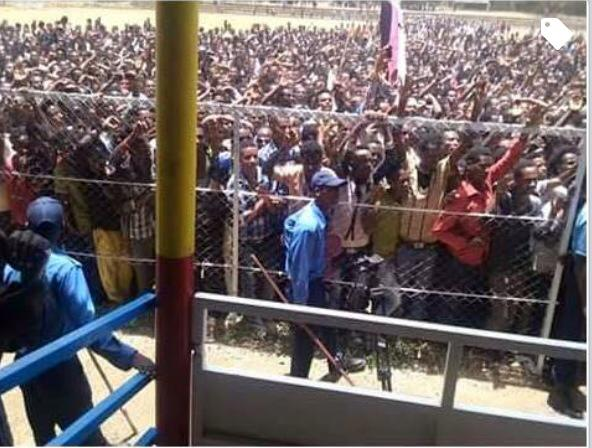
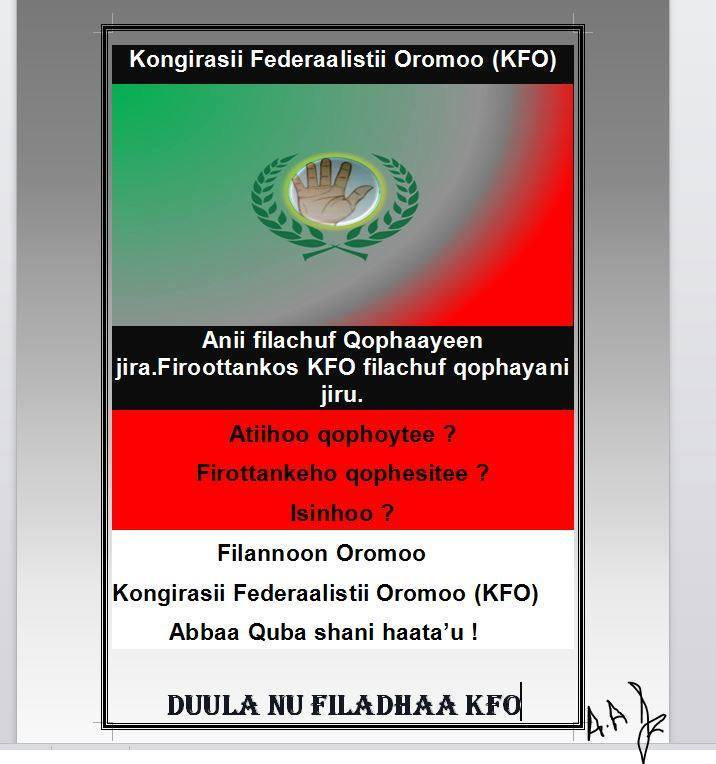
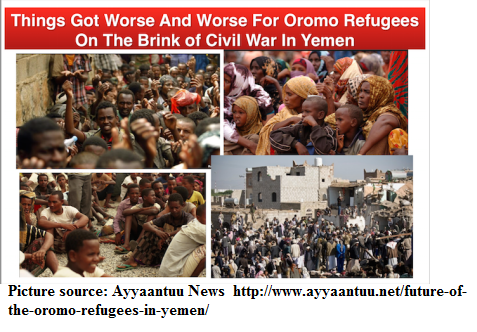
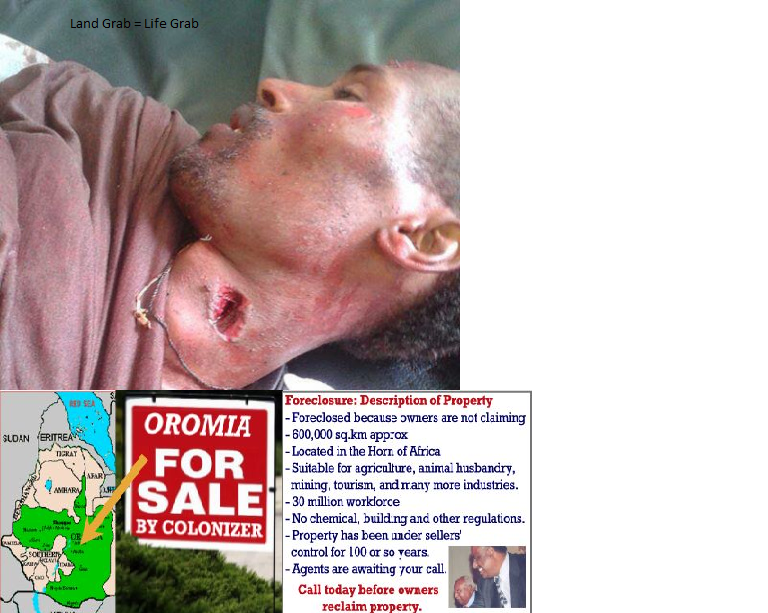
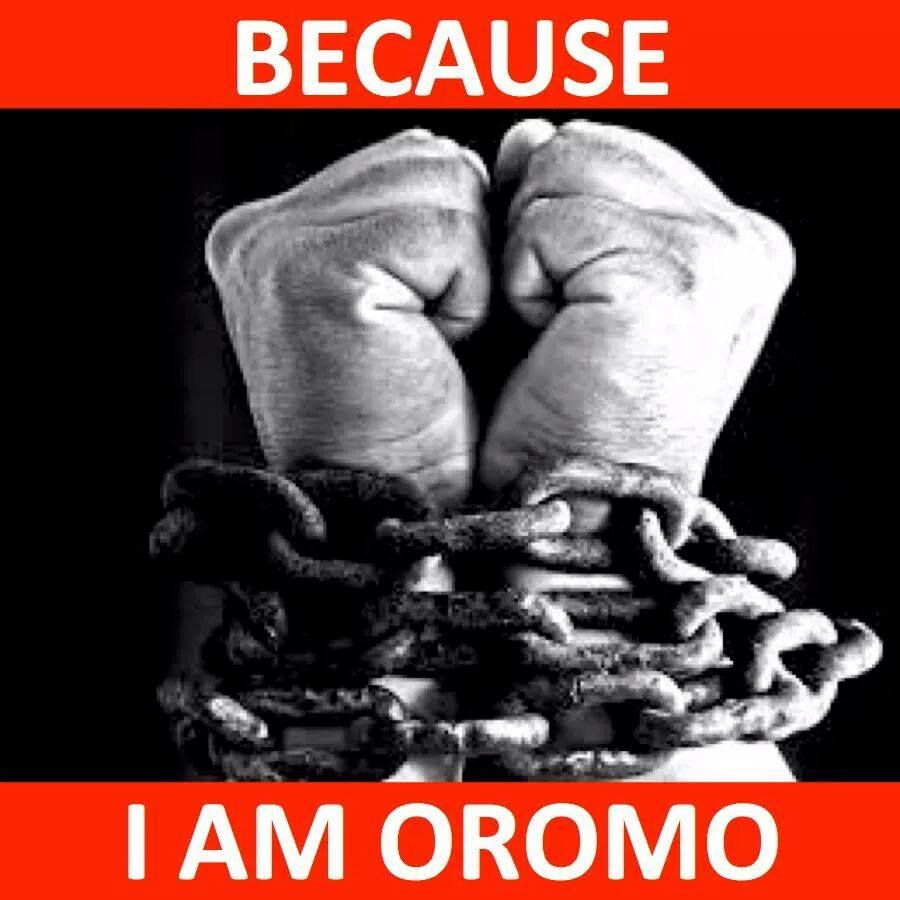
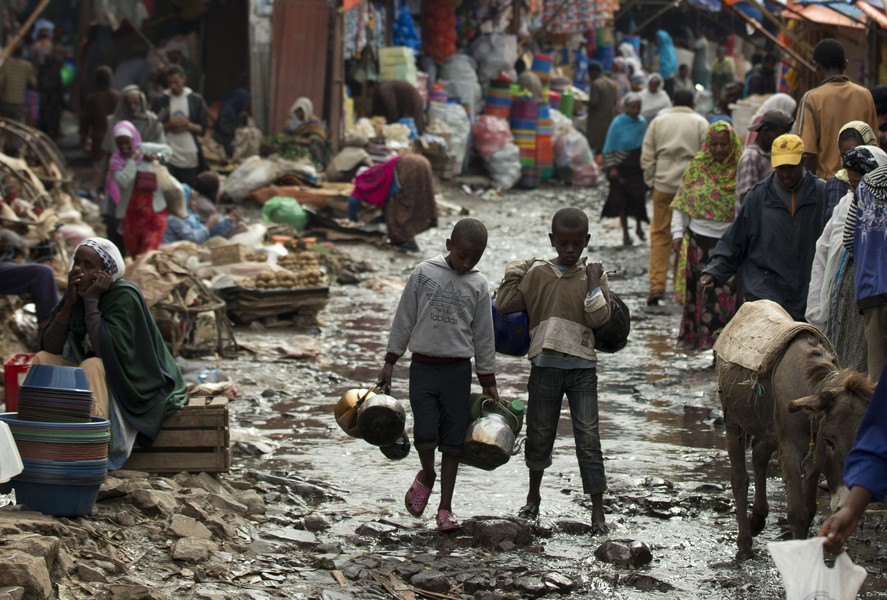
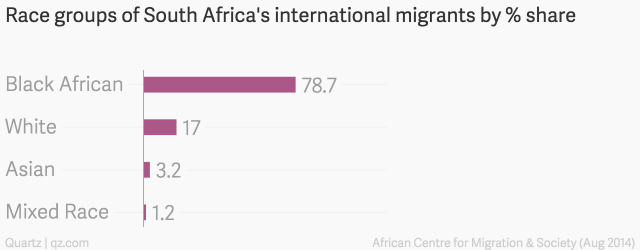


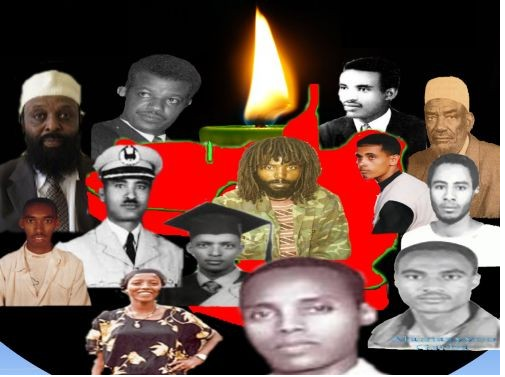

 Wareegama yeroo jennu kaan lubbuu isaa bakka bu’aa hin qabne dirree qabsootti, mana hidhaatti, lafa baqaatti, kaanis qabeenya isaa fi maatii isaa dabalee wareegaa as ga’e hundaati jechuun J/ Bultum ibsuun kun hundi mirga ilmaan Oromoo kabachiisuu fi Oromiyaa walaba adunyaa keessatti beekamtu gadi dhaabuuf wareega kaffalamaa as ga’edha jedhaniiru. Wareegamni kun kanneen jalaa ol dhufaniif waa hambisuuf akka taate ni hubatama. Yeroo ammaa sochii dargaggoonni Oromoo bobaa diinaa jala taa’anii gochaa jiran yaadachuun yeroo ammaa qabsoo waldhaalsisuutu ifatti muldhata. Biyya alaa kanatti ammoo qabsoo mitii aadaa ofiituu waldhaalsisuun ulfaataa ta’ee muldhata. Kanaaf uummanni keenya dararaa diinaa jalaa of baraaruuf jecha biyya adda addaa keessatti faca’anii jiran qabsoo bifa hundaa gaggeessuuti irraa eeggama jedhaniiru.
  J/ Bultum itti fufuun bara darbe kana sochii WBOn goleelee Oromiyaa bakkoota hedduutti lukkeelee fi qubsuma diinaa irratti fudhachaa ture fi jiru, sochii dargaggoonni Oromoo, Qeerroon biyya keessaa gaggeessaa turee fi itti jiru biyya keessaa qabsoo Oromoo kan daran jabeessee fi wareegama gootowwanii ol kaase ta’uun ni hubatama. Kun akeekni xurree qabsoo ABOn bu’uureffamee fi itti jiru uummata Oromoo biratti fudhatama argatee wareegamni inni mirga isaa kabajiifachuuf kafalaa jiru sirrii akka ta’e mirkaneessa. Kanaafuu “Rakkina Qabsoo keessaa qabsoon irra aanna” waan ta’eef bittaa halagaa jalaa baanee bakka yaadne sana ga’uuf wareegama bifa hundaan barbaachisu kafaluuf Oromoon marti qabsoo of qopheessuu qaba jedhaniiru. Yaadannoon Guyyaa gootota Oromoo gootowwan hoogganoota ABO ta’an osoo imala qabsoof gara Somaaleetti bobba’aa jirani shiftoota harcaatuu waraana Somaalee harkatti kufuun bakka “Shinnigaa” jedhamutti wareegamuu irraa eegalee akka yaadatamu ABOn murteessee dirree qabsootti kabajamaa turuu isaa fi har’a gootowwan qabsoo irratti ijaarsa ABO duras ta’ee hanga guyyaa har’aatti wareegamaa jiran ittiin yaadachuuf uummanni Oromoo marti biyya keessaa fi alaa, dirree falamaa WBO biratti osoo hin hafin kabajamaa jiraachuu isaa kan ibsan ammoo J/ Gaashuu Lameessaa MGS fi Birkii Beeksisii fi Odeessii ABO biyya alaati. Hoogganoonni kun amantiin, naannoon, gandaan, dandeettii fi beekumsaan osoo wal hin qoodin irbaata ibidda shiftoota kanaa ta’uun boolla tokkotti yeroo owwaalaman tokkummaan Oromoo mirkaneessuun qabsoo nu dhaalchisanii darbuu mirkaneessa jedhaniiru. Egasiis wareegamni ilmaan Oromoo hin dhaabbanne, diinni nuuf rafee hin bulle, “Sibiilaan sibiila…” akkuma jedhan har’a diinni nu qabee jiru Oromootuma Oromoo irratti bobbaasee keessaa fi alaan wal ficisiisaa waan jiruuf Oromoon dammaqee gara mirga isaa tikifatuutti deebi’uu qaba jedhaniiru. Dabalees ABO dhiibbaa keessaa fi alaa kana hunda danda’ee qabsoo hidhannoo, siyaasaa fi diplomaasii bifa hundaan diina irratti gageessuu itti fufee waan jiruuf uummanni Oromoo miseensota ABO qofaa irratti ilaaluu osoo hin taane akkuma kanaan duraa amma illee qabsoon kun kooti jedhee daran jabaatee cina dhaabbachuu qaba jedhaniiru.
  Akkum aadeffatame eebba maanguddoon kan eegale sagantaan guyyaa kanaa dungoo yaadannoo wareegamtootaaf qabsiisuun faaruun alaabaa Oromoo itti fufe. Darbees Dura taa’aan ABO Konyaa Victoria J/ Abdataa Hoomaa keessummoota kabaja guyyaa kanaa irratti aragamaniin baga nagaan dhuftan jechuun haasaa gabaabaa godhanii jiruu.
 Kana malees miseensaa fi Hawaasa keessaa namoonni muuyxannoo fi yaadannoo jireenya isaanii keessatti dabarsan yeroo ibsan, qooda dubartoonni keenya qabsoo keessatti qaban bakka guddaa qaba kan jedhan Obbo Mohamed Harunidha. Yeroo ammaa Tokkummaa! Tokkummaa! jechuun faarfamu yoo tokkummaan kaayyoo hin jiraanne faaruu ta’ee hafa, kaleessa Ethiopia dimokiratessuuf goonni Oromoo hin wareegamne, wareegamni ilmaan Oromoo diina Oromiyaatti dhufee lafa isaa, qabeenya isaa, humna isaa fi dandeettii isaa saamuuf itti bobba’e of irraa kaasee bilisummaa Oromoo fi Oromiyaa walaboomte sirna dimokiraasii gadaan bultu gadi dhaabuuf kan jedhan Obbo Mohamed Haruni kun ammoo afaan qawwee malee hin argamtu jedhanii seenaa gootowwan wareegamanii yaadachiisaniiru.
  Itti aansuun yaada isaanii kan ibsatan J/ Foozii H/ Bushura H/ Adam yeroo ta’an maqaa Jaallewwan Oromummaa isaaniif jecha harka diinaatti lubbuun isaanii dabarte, rasaasaan alatti kan diinni osoo lubbuun jiruu biyye itti garagalchan, mana hidhaa fi toorcheraan hiraarsee ajjeese yaadatanii kana of irraa hambisuuf Oromoon qabsoo isaatti jabaachuu qaba, namuu bifa danda’ameen akka bira dhaabbatu gaafataniiru. Karaa biraa kaayyoo kaleessa gootowwan keenya itti wareegaman bakkaan ga’uu dhabuun keenya dararaan Oromoo har’aa akka itti fuftu godheera kan jedhan Obbo Abdulfattaa Awwadaay turani. Itti fufuunis Tigreen lafa Tigray irraa fiddee hiraafii waan jirtu fakkeenya har’a ilmaan Oromoo tokko tokko “kaleessa diina baqannee biyyaa baane” jedhan osoo dhiigni ilmaan Oromoo mirga Oromootaa kabachiisuuf dhangala’e hin qoorin biyyatti deebi’uun lafa abbaa isaanii diinaa wajjin qircachaa jiran arguun baay’ee nama gaddisiisa jechuun haala jireenya gadadoo uummata keenya biyya keessaa yeroo ammaa fi Oromoota biyya alaa irraa galanii diina cina bu’uun saba Oromoo saamaa jiranii gaddaan yaadataniiru.
  Bilisummaan dhalanne, bilisummaa diinaan sarbamne sana xurree Gootowwan Oromoo qabsoo irratti wareegaman kaleessa faana buunee deebisnee gonfachuuf qabsoo irraa boodatti hin deebinu jechuun kan ibsan ammoo Aadde Sa’adaa Aammee dura teessuu waldaa dubartoota “Kaayyoo” ti. Ayyaana yaadannoo guyyaa Goototaa Oromoo magaalaa Melbourne, Australiatti kabajame kana irratti dura teessonni hawaasa Oromoo Obbo Yaadataa sabaa /Jaatam/ fi Obbo Warqinaa Dhiinsaa wal duraa duubaan haasaa godhan keessatti dirqamaa fi ga’ee hawaasa Oromoo biyya alaa ibsuun hanga qabsoon Oromoo gootowwan keenya itti wareegaman bakka ga’utti boodatti hin deebinu jedhaniiru.
 Kanaafuu garaagarummaa diinni nu keessatti uume kana irra aanuun, tattaaffii sochii diinaa yeroo ammaa maqaa “dhimma diaspora jedhuun” nufacaasuuf deeman kana illee dammaqnee of irraa ittisuuf tokkummaa keenya jabeeffannee afaan tokkoon diin dura akka waliin dhaabbannu waadaa keenya haaressina jedhaniiru. Sagantaalee kana giddu gidduutti seenaa gootowwanii faarsuun haala qabsoo Oromoo fi jireenya hawaasa keenya biyya alaa kana irratti kan xiyyeeffate walalooleen adda addaa dhiyaatuun uummata ayyaana kana irratti argame bohaarsaa oolaniiru. Xumura irrattis gumaacha deggersa QBO fi WBO arjoomuun, caalbaasiileen adda adda dhiyaatee tin’isa qabsoof akka oolu ta’eera. VCDn WBO dhiheenya gabaa irra oole caalbaasiif dhihaatee maallaqa gudda kan argamsiise yeroo ta’u gurgurtaaleen adda addaa dhiyaatanii tumsa QBO akka oolu ta’eera. Injifannoo Uummata Oromoof! Gadaan Gadaa Bilisummaati! Koree ABO Konyaa Victoria, Australia

 Qabsoon Bilisumma Uummaata Oromoo fininnee Kaayyoo Ganaamaa lafaa kayyattee galmaan akka gahatuuf miseensi fi deeggaartoon ABO mooraa qabsoo bilisumma Oromoo utubuu fi cinaa dhabachuun ijoo isaa duraa akka tahee hubannoo irra gahamee jira. Kanafuu gamaa dinagdee fi siyaasaan akkasumaas kalatti barbaachisuu hundaan WBO cinaa dhabachuun qabsoo keenyaa jaabbeessun diraqamaa lammumaati!
  Dhimma Guyyaa Ayyaana Gootota kana ilalichisee deeggartoonii fi miseensooni akkasumaas adeemsaa qabsoo bilisumma Oromooti jaaleewwan amanaan deegarsaa malaqaa gochuundhaan jalalaa fi kabajaa qabsoo kanaaf qaban ibsaatani, garaa fuldurattis gamaa barbaachisaa taheen qabsoo bilisuumma Oromoo kana cinaa dhabachuuf sagaalee tokkoon waadaa seenaniruu. Oromiyaan ni bilisoomtii; injifaannoon Uummaata Oromoof!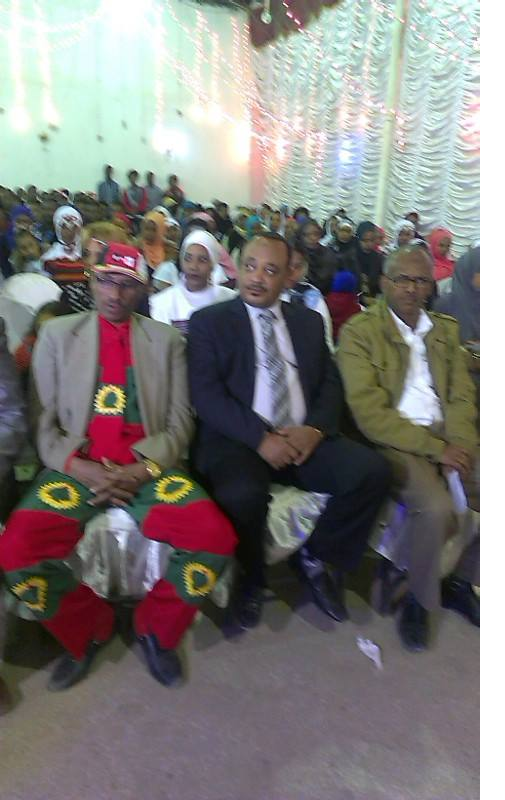
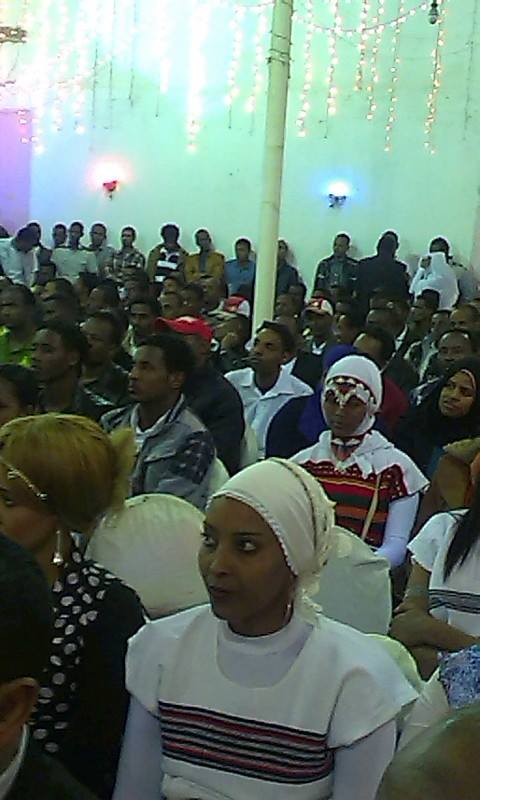


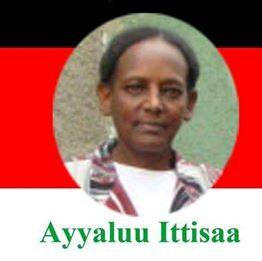
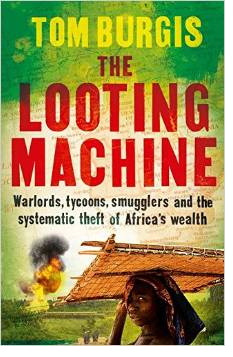
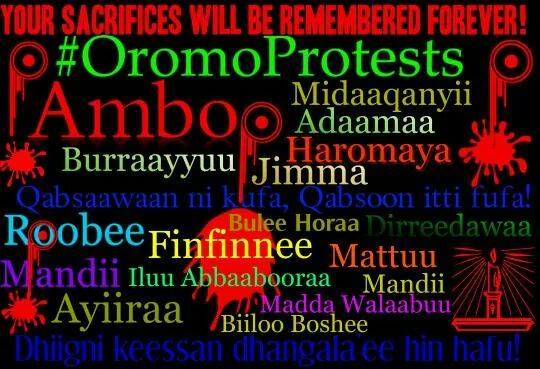
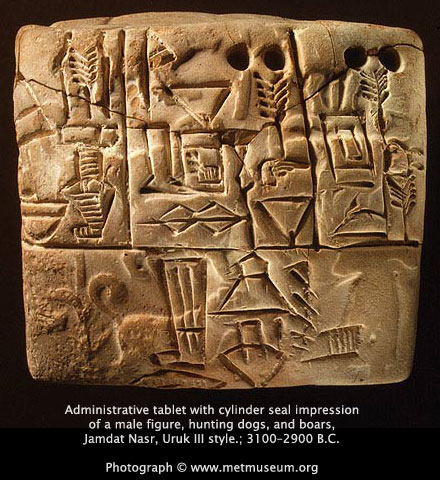

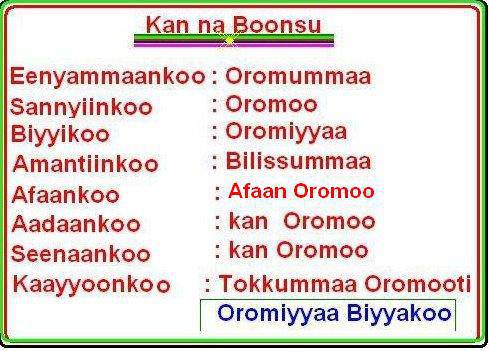
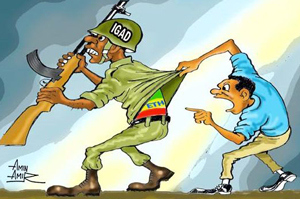
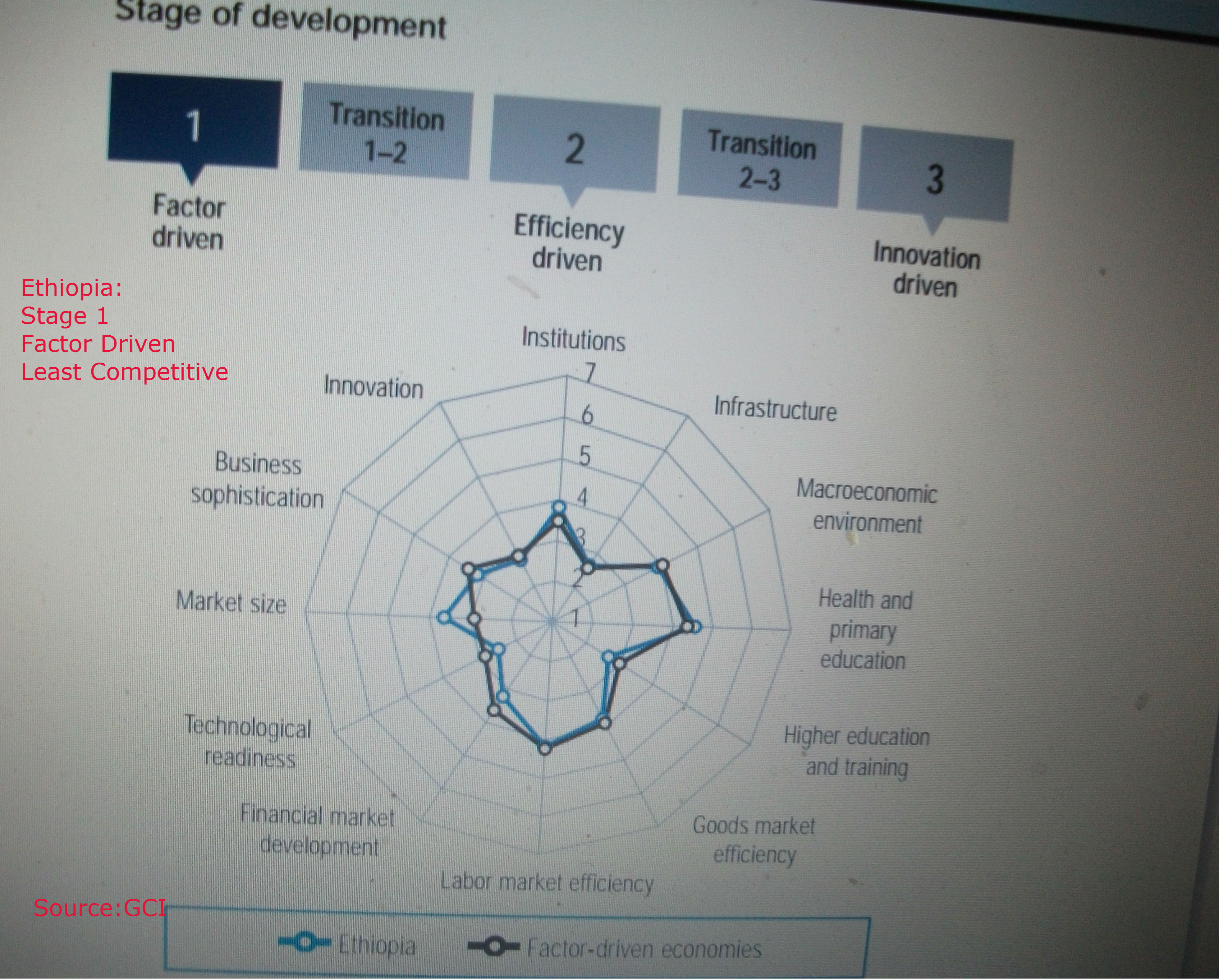


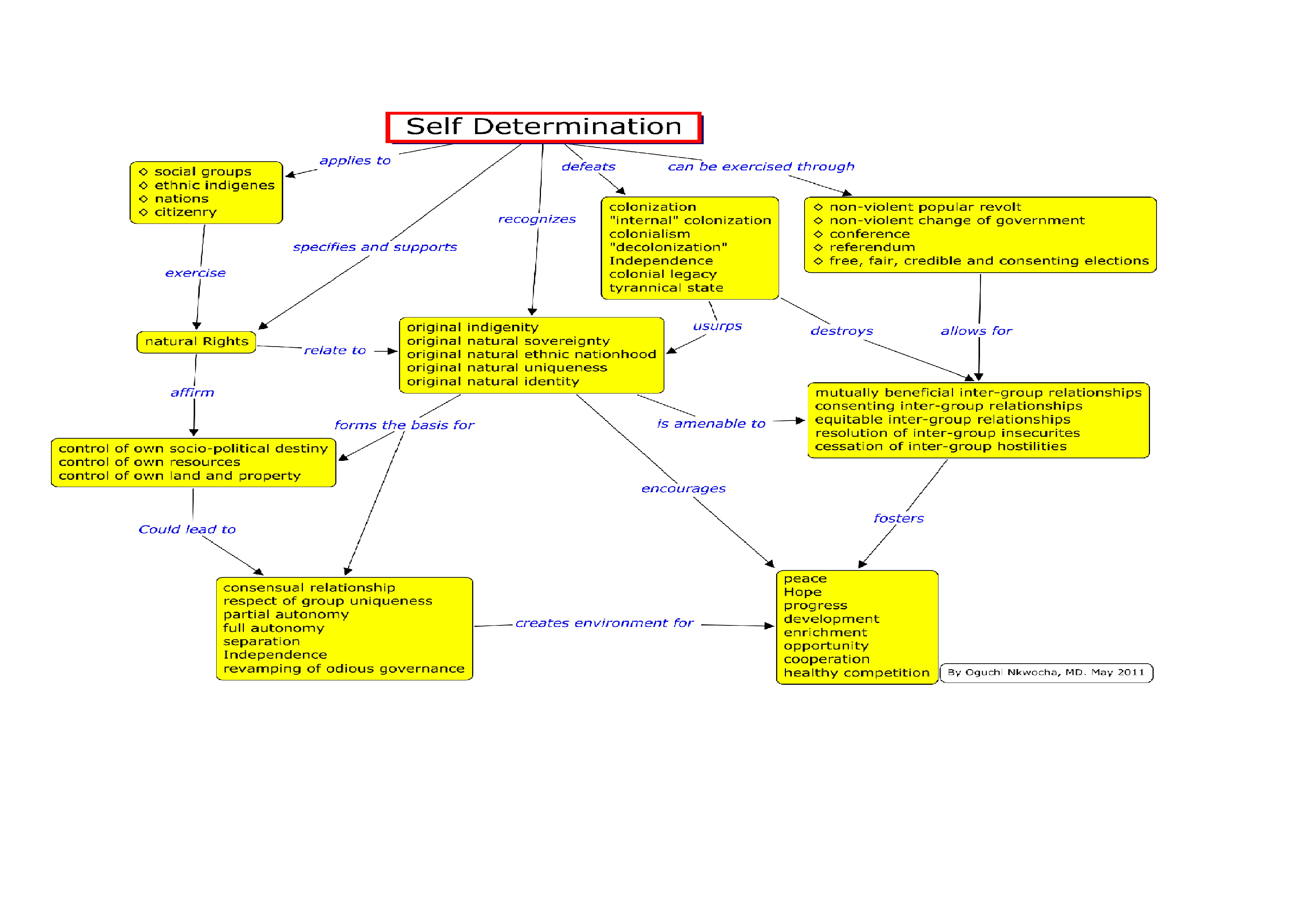

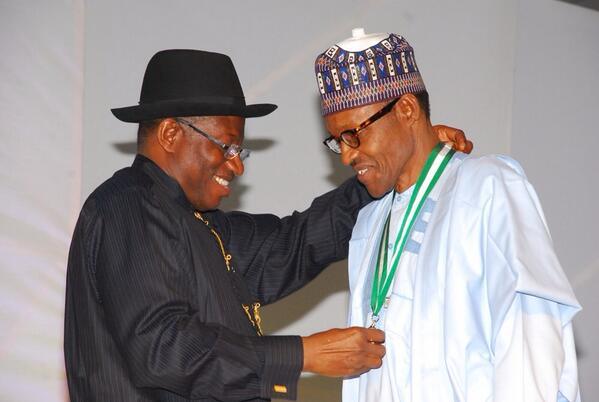


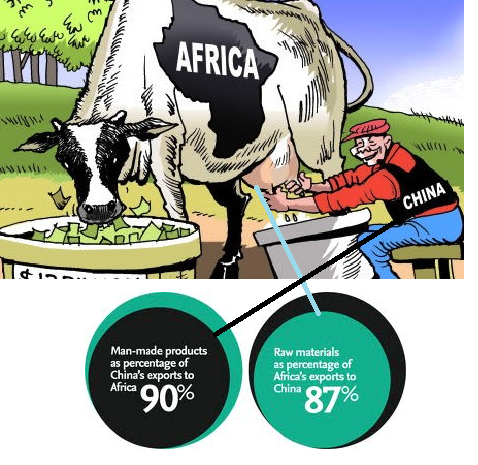
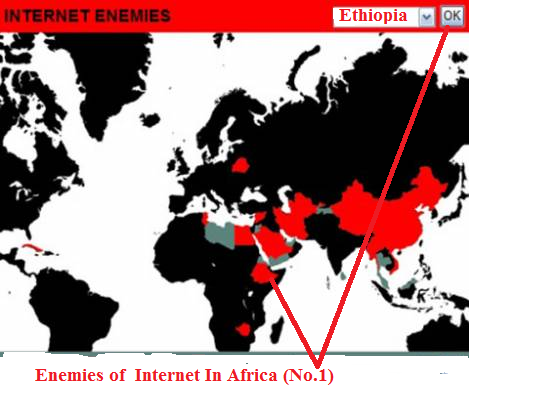
 25 March 2015 (Privacy International) — German surveillance technology company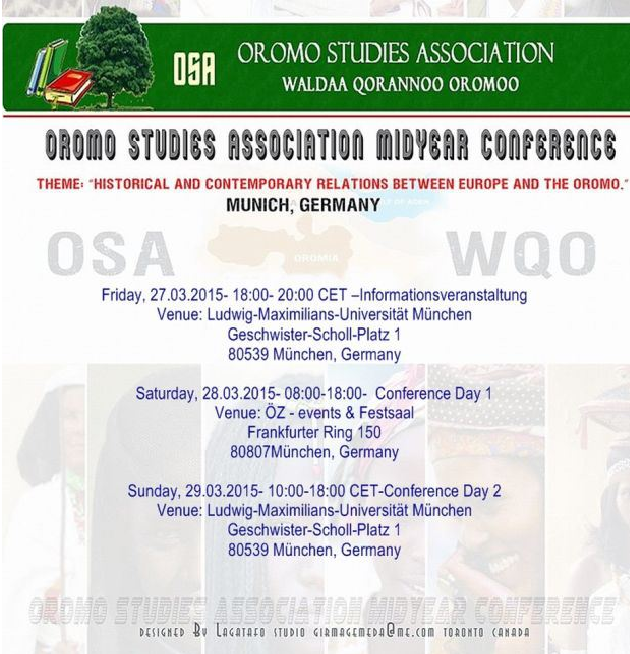

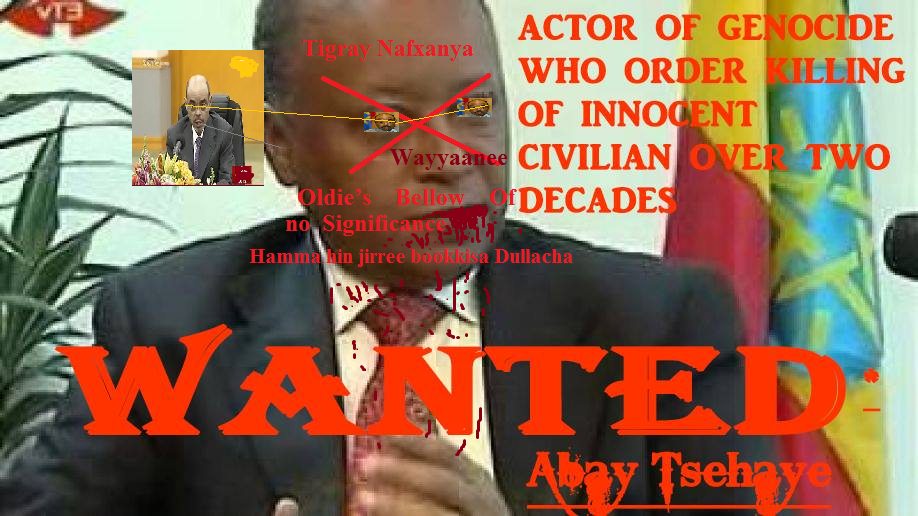


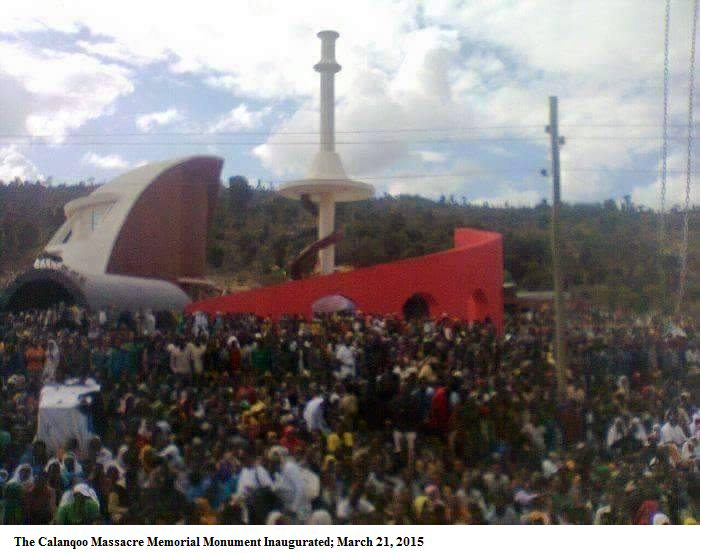
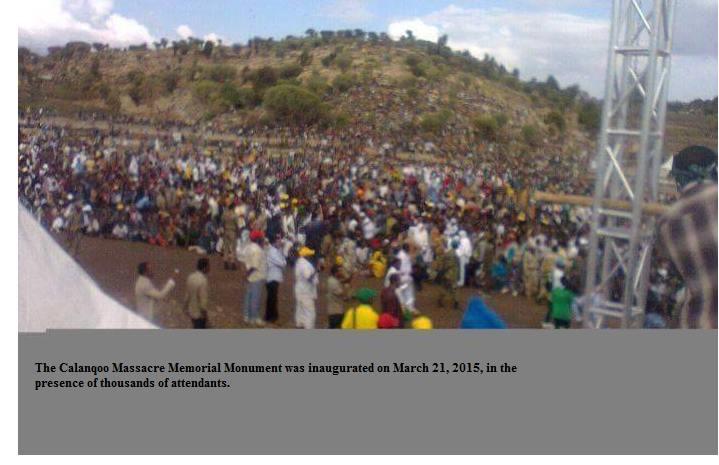
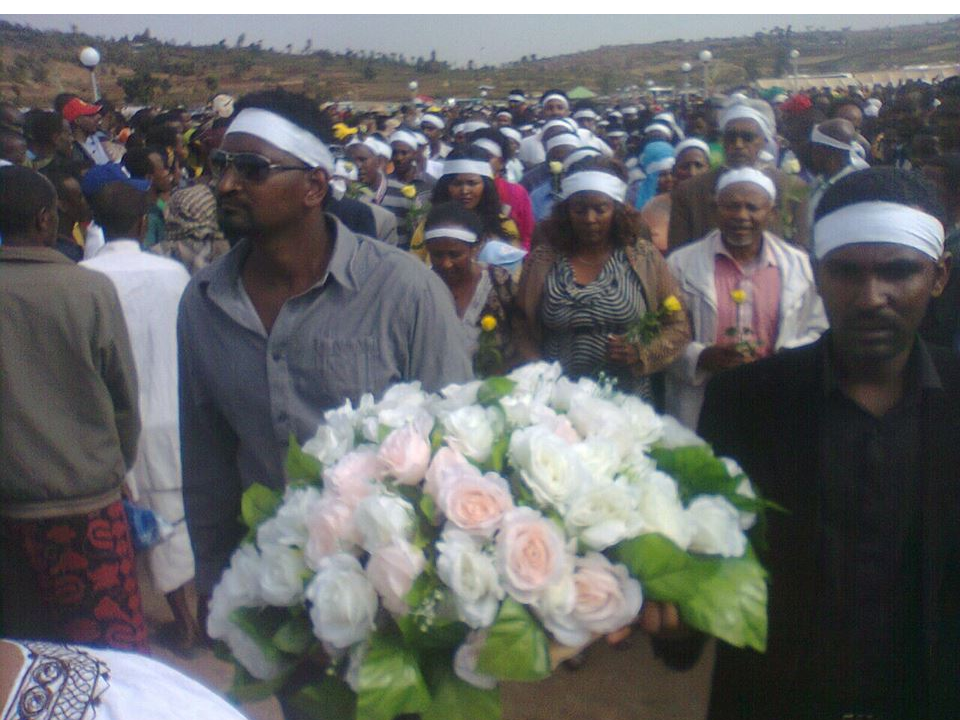

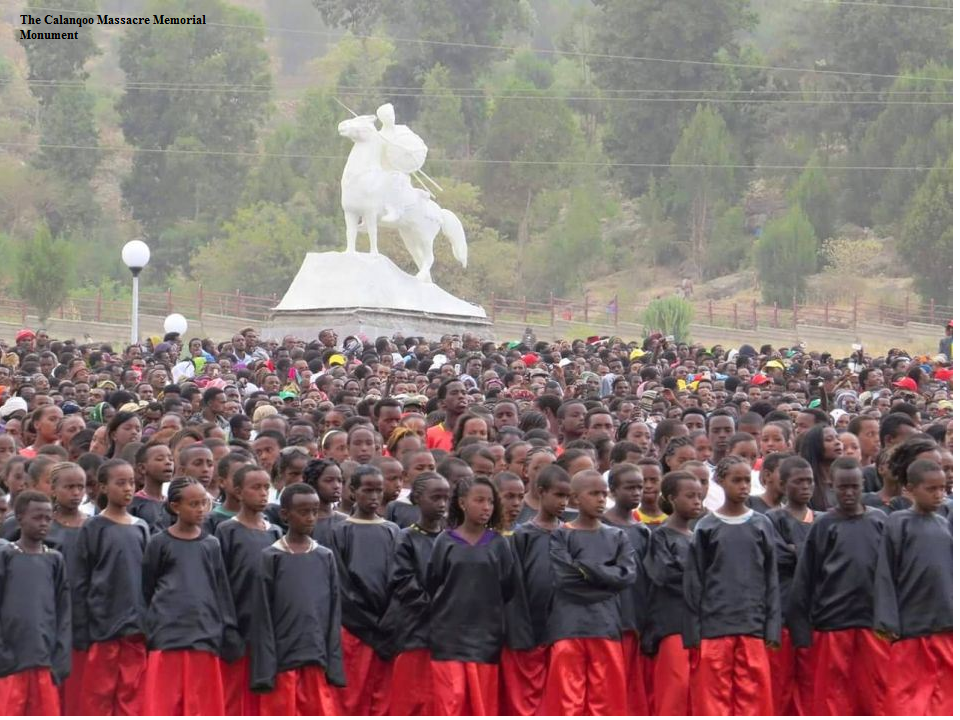

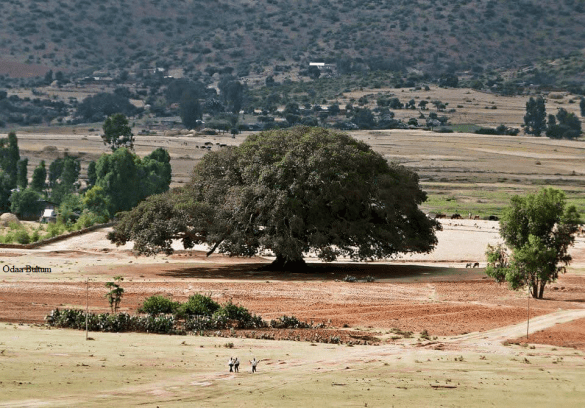


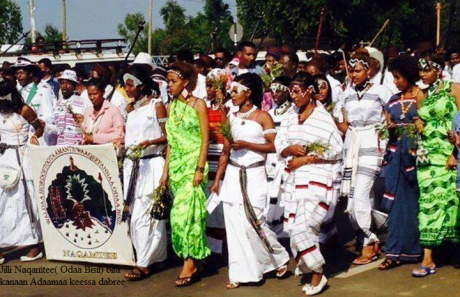
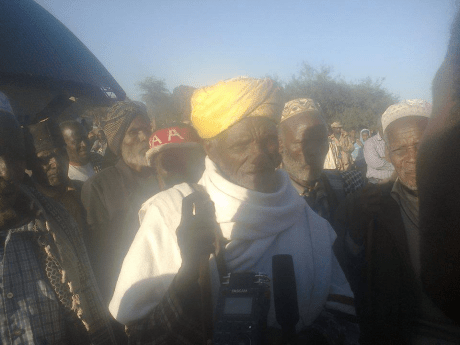


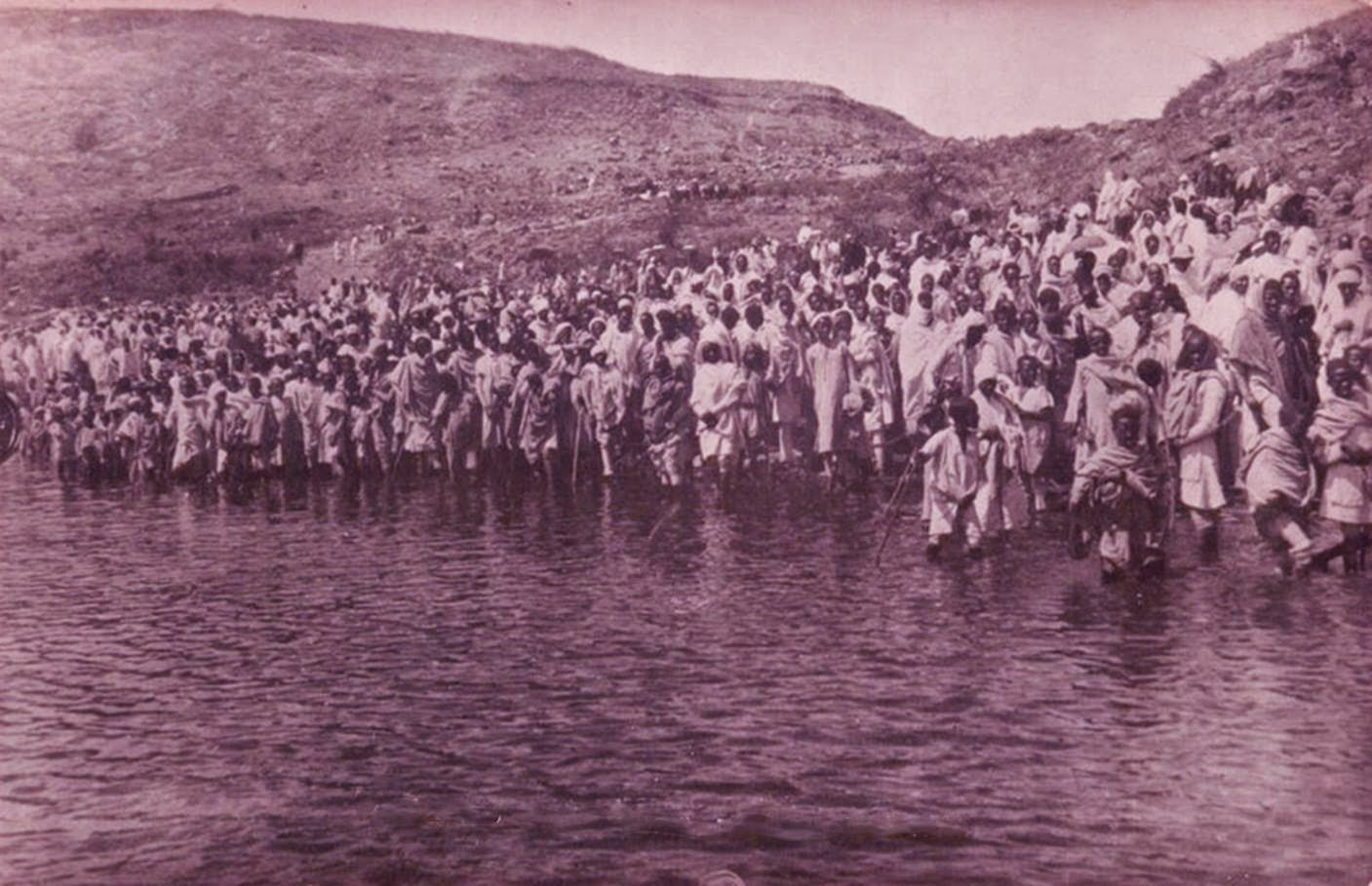


 Oromian Economist
You must be logged in to post a comment.