Economic and development analysis: Perspectives on economics, society, development, freedom & social justice. Leading issues in Oromo, Oromia, Africa & world affairs. Oromo News. African News. world News. Views. Formerly Oromia Quarterly
“Ethiopia’s garment sector has no minimum wage, compared with Bangladesh, where workers earn at least $67 a month, according to the International Labor Organization. Garment workers in Ethiopia started at about $21 a month as of last year, the Ethiopian government said.”
From H&M to Calvin Klein brands look to Ethiopian factories with pay as low as $21 a month
Africa is one of the few places where it is possible to go from fiber to factory in one place and Ethiopia holds the maximum promise for garment retail, being a top sourcing destination for apparel companies with $70 billion of goods procured annually.
“Africa is a huge opportunity to demonstrate how the industry can work together,” said Colin Browne, managing director of product supply and Asian sourcing for VF Corp., which owns such brands as Lee, Wrangler and Timberland.
He pointed out to the factory owners a key advantage in Africa: it is one of the few places where it’s possible to go from fiber to factory in one place.
Africa is the final frontier in the global rag trade – the last untapped continent with cheap and plentiful labor. Ethiopia’s garment sector has no minimum wage, compared with Bangladesh, where workers earn at least $67 a month, according to the International Labor Organization. Garment workers in Ethiopia started at about $21 a month as of last year, the Ethiopian government said.
Most countries in Africa benefit from a free-trade agreement with the US, an arrangement that saves retailers money and ensures that many African countries can grow their own cotton, which shortens production time.
Asia has dominated clothing manufacturing, churning out cheap clothes on inexpensive labor that are shipped to malls world-wide. But, over the past few years, rising production costs in China and several deadly factory accidents have forced apparel companies to hunt for alternatives from Myanmar to Colombia to Ethiopia.
Ethiopia was recently identified as a top sourcing destination by apparel companies, according to McKinsey & Co, which surveyed executives responsible for procuring $70 billion of goods annually – the first time an African country was mentioned alongside Bangladesh, Vietnam and Myanmar.
Whether or not Africa’s role as a supplier expands, these efforts show the lengths to which big apparel makers are willing to go to find new, low-cost sources of production. Overall, consumers have become conditioned to expect a plentiful supply of cheap clothing.
“In the global economy, light manufacturing is constantly moving,” said World Bank’s Guang Z. Chen, who was the country director for Ethiopia until last month and is now a director for several countries across southern Africa. “We see a distinct possibility of this kind of industry moving away from Asia, because labor costs are rising in China rapidly.”
Ethiopia holds the most promise for developing garment production in Africa, factory owners and brands say.
“Ethiopia seems to be the best location from a government, labor and power point of view,” says M. Raghuraman, chief executive for corporate marketing and branding at Brandix Lanka Ltd., Sri Lanka’s largest clothing exporter, which is interested in Africa’s garment potential.
At the MAA Garment & Textile Factory in Northern Ethiopia, 1,600 workers spin cotton, dye fabric and sew it into T- shirts, leggings and other basics for international retailers like Hennes & Maurtiz, AB’s H&M chain, Tesco PLC, Asda Stores Ltd’s George label, and German clothing company Kik Textilien und Non-Food GmbH.
“Investors are coming here from Sri Lanka, Bangladesh, China, India and Turkey,” said Fassil Tadesse, chief executive of MAA’s parent company, Kebire Enterprises, and president of the Ethiopian Textile and Garment Manufacturers Association.
So far, Africa barely registers in the field of garment manufacturing. And, it will take years for any other country to seriously challenge China.
Many African countries lack roads to transport finished clothing, and landlocked Ethiopia doesn’t have a port. The workforce is untrained in sewing clothes. All of sub-Saharan Africa accounts for less than 1% of global clothing exports.
Some apparel companies remain interested despite those hurdles. They are drawn to the cheap labor and to the inexpensive power, which in many countries is the second-biggest factory cost after workers. The Ethiopian government is building a railway to the port in neighboring Djibouti to help exports leave the country more quickly.
“The Mursi were told by government officials that if they didn’t sell off their cattle, the cattle would be injected with poison. This caused the Mursi in the north to leave their best cultivation land on the Omo River and in the grasslands in order to protect their cattle. They’ve lost three annual harvests so far as a result.”
US, UK, World Bank among aid donors complicit in Ethiopia’s war on indigenous tribes
Will Hurd, Ecologist, 22nd July 2015
USAID, the UK’s DFID and the World Bank are among those covering up for severe human rights abuses against indigenous peoples in Ethiopia’s Omo Valley, inflicted during forced evictions to make way for huge plantations, writes Will Hurd. Their complicity in these crimes appears to be rooted in US and UK partnership with Ethiopia in the ‘war on terror’.
The Mursi were told by government officials that if they didn’t sell off their cattle, the cattle would be injected with poison. This caused the Mursi in the north to leave their best cultivation land on the Omo River and in the grasslands.
In the fall of 2012 my cell phone rang. It was an official from Department for International Development, DFID – the UK government aid agency. He implored me to remove his name from a transcript of an audio recordingI’d translated. He worried he might lose his job, which would hurt his family.
I’d translated for this official and his colleagues, both from DFID and the United States Agency for International Development (USAID), during a joint visit they made, in January 2012, to the Lower Omo Valley of Southwest Ethiopia.
They wanted to talk to members of the Mursi and Bodi ethnic groups about a controversial government sugar development project. DFID was indirectly helping to fund the forced eviction and resettlement of thousands of people affected by this project, through a World Bank-organized funding program called ‘Promoting Basic Services’ (PBS).
DFID was the biggest state contributor to this program, which had also been accused of indirectly funding resettlement of Anuak in the nearby Gambella region. In Gambella, vast land leases were being given to international and domestic companies. During the visit to the Omo Valley, I turned on an audio recorder.
What struck me about the phone conversation with the DFID official was how much concern he had for his own livelihood and family, and how little concern he and DFID were showing for the hundreds, or even thousands, of families in the Omo Valley.
I acted on his request and left him unnamed.
Aid to ‘help the poor’ opens the way to international agribusiness
The resettlements were happening to clear the land for industrial-scale, international and national, companies. The donors deny a connection between the resettlements and the land leases, but the connection is all too obvious.
The behemoth Gibe III dam is under construction upstream on the Omo River. Its control of the river’s water level allows irrigation dams and canals to be built in the Omo Valley for plantations.
PBS is a $4.9 billion project led by the World Bank, with UK and other funding, under the guiding hand of the Development Assistance Group (DAG). The DAG is 27 of the world’s largest donor organizations, including 21 national government aid agencies.
The full membership of the DAG comprises: the African Development Bank, Australia, Austria, Belgium, Canada, Denmark, European Union, FAO, Finland, France, Germany, IMF, India, Ireland, Israel, Italy, Japan, The Netherlands, Norway, Spain (AECID), Sweden, Switzerland, Turkish International Cooperation Agency (TIKA), UK (DFID), UNDP, UNESCO, USAID, and the World Bank.
It is supposed to provide teacher and health worker salaries and water development in these resettlement sites. This is controversial in itself-only providing services to people who move off their land into resettlement sites – but some of the money was used by the Ethiopian government to pay for implementation of the resettlement scheme.
DFID and the DAG say that this resettlement plan is entirely about providing services to the people. If they believe this, they gravely misunderstand the aims of the Ethiopian Government, which have to do with political control.
Ethiopia’s long-standing plan to pin down the pastoralists
Most of the groups targeted in the southwest are people who depend on cattle and tend to move with the cattle-pastoralists. Pastoralists are difficult for governments to control. For the last 118 years pastoral peoples in the Omo Valley have successfully dodged many of the abuses suffered by settled agricultural tribes in the region, at the hands of the state.
The pastoralists simply gathered their cattle together and moved away, returning when government forces had left. With the help of the DAG, the government is now planning, finally, to pin the pastoralists down in resettlement sites.
David Turton, an anthropologist who has worked in the Omo Valley for more than 45 years, warned me about the possible motives of DFID and USAID for visiting the Omo at that particular time – January 2012.
“They may be reacting to the recent Human Rights Watch report which severely criticized their role in resettlement activities in Gambella”, he wrote. “It’s known that Human Rights watch is planning a report on the Omo, which is likely to be equally critical.
“So, by going to the Omo now, DFID and USAID will be able to argue that they have been keeping ‘a close eye’ on events there. In other words, their trip may have more to do with protecting their own backs against politically embarrassing revelations than with protecting the human rights of the Mursi and Bodi.”
But I’d once had a good experience with the World Bank, when it refused to give money to a conservation organization that was threatening to evict indigenous people from their land in the Omo Valley. I thought it might do good to show these aid agencies the gravity of the situation.
Off to the Omo Valley
We set off in a Land Rover through the grasslands of the Omo Valley. We stopped in a small Mursi village and arranged a meeting with approximately 40 Mursi. At the beginning, a Mursi man asked me, “Did you bring these people?” meaning did I vouch for them. “Yes”, I said.
This let the Mursi feel they could speak freely. DFID and USAID heard many accounts from the Mursi of forced eviction, beatings, rape, and coercion in agreements with the government. Some of these accounts were firsthand. We went on to a Bodi village and heard much the same thing.
Here is a translator telling what the Bodi next to him said:
“This man used to live in the Usso area. In that place one was able to grow a lot of grain … The government has thrown him out of his place and he doesn’t know what to do. His former place is behind that mountain. He says they are going to give it to someone else, a plantation investor.”
The accounts were irrefutable and I thought they must cause the donors to act. Months went by and the donors said they could not substantiate human rights violations in the Gambella region. But they had refused to visit Anuak refugees, although invited by the Anuak themselves, who had been evicted from their land in Gambella.
These Anuak were now living in refugee camps in Kenya and Sudan where they could have spoken of their experiences without fear of government reprisal. I was worried that the donors would also say they could find no evidence of violations in the Omo Valley.
So, I wrote DFID and USAID asking if anything had been done. I told them I had the tape recording transcripts. Had they taken this up with the DAG? I got the above call from a DFID official, after which they stopped responding to emails.
The donors report
Later DFID and USAID said in their report that the allegations of human rights abuses they had heard during their visit to the Omo Valley “could not be substantiated”.
The then British Minister for Overseas Development, Justine Greening, reported the same to UK Parliament. DFID and USAID had used the Mursi and Bodi to protect their reputation, and the reputation of the Ethiopian government.
But I had the tape recording.
At this time, there was strong disagreement between the reports that Human Rights Watch had published out about resettlement in the Gambella region, and the accounts that members of the DAG were putting out of their investigative trips to the same region.
Human Rights Watch was on the ground as the resettlement was being implemented and they also visited Anuak who had fled to refugee camps outside Ethiopia. From both populations they received reports that forced evictions, murders, and beatings had occurred.
The DAG, on the other hand, was saying it could not substantiate any human rights abuses. So, where was the disconnect?
One of the translators for the DAG investigation in Gambella said the communities had told DAG “to their face” of the human rights abuses. But still DAG reported nothing. What was important about the audio recording I’d made was it showed the inside of this investigation process by DAG, and it wasn’t pretty.
I heard in detail about one of the subsequent DAG trips in the Omo Valley in early August, 2013. Ethiopian government representatives had gone to a village in Bodi and told them they were bringing foreigners to ask what the Bodi thought of the resettlement.
The Bodi said, “This is good. When they come we will tell them the truth! How you swindle us, what you did wrong and about the people who abused us. We will tell it straight!” Some days later the villagers saw the caravan of aid agency officials and government officials drive past, on their way to another village.
Pushback
I published the recordings, HRW published a report about abuses in the Omo Valley, the World Bank Inspection Panel investigated the Bank’s resettlement program in Ethiopia, and earlier this year the tide began to turn. DFID pulled its funding from the PBS program.
The World Bank Inspection Panel report on the PBS program was also leaked. It contained damning evidence of human rights violations, and although the World Bank rejected the report findings, World Bank president Jim Yong Kim admitted to serious flaws with its resettlement programs.
This is all to the good, as the aid agencies have been faced with the consequences of their actions, but it doesn’t mean there are any protections for the ethnic groups of Southwest Ethiopia. The plantations and dam are moving ahead as before.
In April, reports surfaced that the Kwegu, the smallest ethnic group in the Omo Valley, were starving. They were not able to grow crops below an irrigation dam the government constructed on the Omo River for its sugarcane plantations. The Kwegu were giving their children to the cattle-herding Bodi to look after, so the kids would have milk to drink.
How can a $4.9 billion program be implemented and leave people starving? The answer, I think, is aid may not be the primary function of some of these organizations. Aid often is a way of paying a foreign government to provide a service for the country ‘giving’ the aid.
The long strings attached to aid
The US government needs Ethiopia as a stable and strategic place to carry out military operations in ‘the War on Terror’ in East Africa and the Middle East. The Horn of Africa has long been Washington’s ‘back-door of the Middle East’. The US now has a drone base in Arba Minch, with range to Somalia and Yemen. Arba Minch is not so far from Mursi territory. Aid has a long history of murky dealings.
In 1990, when the US was trying to get clearance from the UN to attack Iraq in the Gulf War, it bribed many UN member states for ‘yes’ votes with debt relief, gifts of weapons, and other things. When Yemen defied US wishes and voted against the attack, a senior American diplomat declared, “That was the most expensive ‘no vote’ you ever cast.” In three days, a $70 million USAID project was cancelled to one of the world’s poorest countries.
On its website, DFID explained its decision to pull its funding from the PBS Program as follows: “Recognising Ethiopia’s growing success, the UK will now evolve its approach by transitioning support towards economic development to help generate jobs, income and growth.”
But in the UK High Court where it was fighting a case brought against it by an Anuak refugee, ‘Mr O’. DFID said that it had pulled out of the PBS Program because “of ongoing concerns related to civil and political rights at the level of the overall partnership in Ethiopia … and continued concerns about the accountability of the security services.”
The DAG published a letter to the Ethiopian government on its website in February this year, in which it reported on visits it had made in August, 2014 to the Omo Valley and Bench Maji Zone. In this letter, it announced that it had found “no evidence of the Ethiopian Government forcibly resettling people.”
The truth is very different
Many more Bodi and Mursi have been imprisoned since the plantations started. Some were imprisoned after disagreeing with plantation and resettlement plans in meetings. Bodi cultivation sites and Mursi grain stores were bulldozed against their wishes.
Bodi have been in armed conflict with the police and military about the plantations. The Bodi were forbidden by the government to plant at the Omo River and told to move into the resettlement sites. When food aid didn’t arrive they went to plant against government wishes.
The Mursi were told by government officials that if they didn’t sell off their cattle, the cattle would be injected with poison. This caused the Mursi in the north to leave their best cultivation land on the Omo River and in the grasslands in order to protect their cattle. They’ve lost three annual harvests so far as a result.
Thousands of acres of Bodi territory were taken for the plantations and the Bodi ended up with small plots of land with no shade. When the Bodi left these plots, the government took them back for sugarcane. The DAG missed all of this. When are the DAG aid agencies going to start aiding the people of the Omo Valley, and Gambella, instead of participating in their demise?
Ethiopia has the right, and need, to develop its economy and industries, but impoverishing some of its most vulnerable people in the process is counterproductive.
The Mursi and Bodi have been trying to implement the Mursi-Bodi Community Conservation Area. This would capitalize on the already abundant tourism and wildlife in the area, in conjunction with Omo and Mago National Parks. If the government were to approve this, and let it be fully implemented, it may provide benefits for both local people and state.
Will Hurd lived in Ethiopia for eight years, primarily with the Mursi of the Southwest, who are now threatened by a 175,000 hectare sugar plantation. He speaks the Mursi language. He is director of the small non-profit, Cool Ground.
World Tourism Organization (UNWTO) has recently published the 2014 statistics on international tourism. These are summarised on the UNWTO Tourism Highlights (2015 edition) publication. Globally tourism has been growing almost uninterrupted since the 1950’s. Europe accounts still about half of all international tourist arrivals, but emerging regions, especially Asia-Pacific but also Middle East and Africa have seen stronger growth in the last 30 years. Asia-Pacific region has now overtaken the Americas as the second most popular region. Despite the growth since 1980’s, Africa remains a minor player in world tourism, with 2014 being a year of a slow growth, not least due to Ebola outbreak.
An Open Letter to President Barak Obama on his Ethiopia Visit
Dear Mr. President Obama,
The Human Rights League of the Horn of Africa wants to express its deep concern about what it regards as the wrong decision made by you and your staff in making a formal visit to Ethiopia in late July 2015. This will make you the first US leader to break the US promise not to reward dictators. History teaches us that the American constitution of 1787 is the world’s first democratic constitution, a landmark document of the Western World which protects the rights of all citizens in the USA. The following examples show America’s great support of human rights: During the First World War, America entered the war against Germany in 1917 to protect the world- as President Woodrow Wilson put it, “Making the World Safe for Democracy”. Later, Eleanor Roosevelt, the widow of President Roosevelt and a human rightschampion, drafted in 1948 an internationally accepted human rights bill, the Universal Declaration of Human Rights. These and other democratic activities have made America a champion of democracy all over the world that all Americans should be proud of.
Mr. President,
Your decision to visit human rights perpetrators in Ethiopia contradicts your country’s democratic tradition. It also disrespects the Ethiopian nations and nationalities who are under the subjugation of the EPRDF/TPLF government.
Mr. President,
We can witness today the government of Ethiopia making a lot of noise about the flourishing of democracy in that country. The reality on the ground shows that the undemocratic behavior of the regime has been overshadowed by the apparently “democratic” and anti-terrorism façade that the regime has demonstrated for the past twenty-four years. During those years, thousands were killed, abducted, kidnaped, and imprisoned by this government because they simply tried to exercise their fundamental rights, such as free speech and expression, freedom of association and religion. University students, journalists, human rights activists, opposition political party members and their supporters, and farmers have been the major victims in Ethiopia.
When the EPRDF/TPLF Government took power in 1991 in Ethiopia, there were high expectations from both local and international communities that there would be an improvement in the human rights situation in Ethiopia from previous regimes. Contrary to everyone’s expectations, however, human rights abuses in Ethiopia worsened. The human rights violations in Ethiopia has been widely reported by local, regional and international human rights organizations as well as some Western governmental agencies including the US State Department’s yearly human rights reports.
Today, in Ethiopia political extra-judicial killings, kidnappings and disappearances, mass arrests and imprisonments- without warrants- in horrible prison conditions, extended imprisonment without trials, torture, denials and delaying of justice, discrimination in resource allocations and implementations, biased educational and development policies, denials of employment and job promotion opportunities and/or the misuse of coercive political tools are rampant. Social crises in Ethiopia are becoming deeper and deeper, while the socioeconomic gap between the favored (the politically affiliated groups and individuals) and the disfavored is getting wider and wider. For the majority of Ethiopians, life has become unbearable. It has even become very difficult for civil servants, the middle class, to support their families.
Mr. President,
The Human Rights League of the Horn of Africa strictly opposes your visit to Ethiopia. As the president of the country where democracy emerged and respect for human rights was first realized, we believe it would be immoral of you to reward human rights violators. We urge that you withdraw from your decision to visit Ethiopia.
HRLHA is a non-political organization (with the UN Economic and Social Council – (ECOSOC) Consultative Status) which attempts to challenge abuses of human rights of the people of various nations and nationalities in the Horn of Africa.
Liigiin Mirga Ilmaan namaa kan gaanfa Afrikaa,Daawwii Obaamaa balaaleeffate .
In 2007, the population census put the city’s population at 3.38million. It was expected to grow at a rate of 3.8% per year – which would put the total population today at 4.5million. This may not seem so far-fetched considering there were estimates that said that by 2020 it would have a population of 8 million. But this fast and vast growth has come at a high price. First, it is creating divisions between the government and already marginalised population groups. Addis has always been a sprawling city, from when it originated in 1886 as a military settlement, part of Emperor Menelik II’s campaign in taking over Oromo territory. Throughout its history it continued to sprawl due to its spontaneous and unplanned nature. As the city expanded from 1994 – 2007, research showed that many farmers on the peripheries lost their livelihoods and were forced instead to turn to other forms of casual labour within the city. This spurred the development of the Oromia Special zone that was created in 2008 in order to ease the co-operation and development of the surrounding areas of Addis Ababa and to control the urban sprawl of this city on the lands of the Oromia people. However, more recently, there were further calls that the government was perpetuating inequality along ethnic lines when it announced a master plan titled “the Addis Ababa and the Surrounding Oromia Integrated Development Plan”. This area structure plan was intended to create special zones surrounding Addis that were divided into industry, service and settlement zones, based on their existing potential, economic base and geography. But it has become a contentious issue, met with opposition by Oromo residents who would lose an additional 36 towns and cities to Addis Ababa. According to researchers, the city’s expansion in the past has led to forced evictions and displacement of local Oromo residents and protesters of this new master plan fear that ceding Oromo lands to Addis Ababa would lead to more losses in Oromo identity and culture. The fast rate of urbanisation has also perpetuated levels of inequality and fragility which are highly visible on some of the streets and areas of Addis and, intentionally or not, this seems to have been moved to specific areas. One example is in the neighbourhood of Mercato – named so because it is home to the largest market areas in the city. Everything can be found here from steel pipes to spices and kitchenware. It is also where the hidden face of poverty of the city becomes most apparent. Here people are struggling to survive, making a living by whatever means possible – as this is the time of year when the rains come heavy and fast almost every afternoon, there are countless young men taking advantage of it. They will clean shoes, the bottoms of trousers or sit on old buckets fixing broken umbrellas. Government is trying? The government does believe it is trying. In a recent statement it said that more than half a million citizens have benefited from housing schemes over the past 10 years. One of these is the ambitious government-led low-and middle-income housing programme launched in 2005: The Integrated Housing Development Programme (IHDP). The initial goal of the programme was to construct 400,000 condominium units, create 200,000 jobs, promote the development of 10,000 micro – and small – enterprises, enhance the capacity of the construction sector, regenerate inner-city slum areas, and promote homeownership for low-income households. However, this programme may have inadvertently perpetuated inequality. A major challenge has become the affordability of the units for low-income households, with the cost increases in the price of condominium houses deeming them no longer an option for many low-income households. Furthermore, the inability to pay the monthly mortgage and service payments forces many households to move out of their unit and rent it. Also, many of the condominium sites are located on the periphery of the city and do not acknowledge the need for employment opportunities for residents, despite there living up to 10,000 households in some sites. This places further financial strain on beneficiaries in the form of daily transport costs.- Mail and Guardian Africa
A first-of-its kind lawsuit that resumes in a U.S. District Court on Tuesday has drawn attention to the private surveillance-technology industry as a potential enabler of spying on Americans. The case involves a U.S. citizen who alleges that “clandestine computer programs” assumed “what amounts to complete control” over his personal computer and relayed copies of his electronic activity — including Skype calls, Internet searches and emails — to the Ethiopian government.
Kidane — the pseudonym under which the complainant is known in the case to protect his family from retribution — says his computer was monitored by spyware placed on his computer while he was living in the United States. He is an Ethiopian-born naturalized U.S. citizen who sought asylum in the U.S., where he has lived for more than two decades. His case is being closely watched by activists and civil liberties campaigners because of its potential implications for domestic cybersurveillance by security agencies such as the National Security Agency (NSA).
A victory for Kidane “would be a clear statement from a U.S court to say that wiretapping without court authorization is illegal, no matter who does it. And yes, absolutely that would have implications for the NSA,” said his legal counsel, Nate Cardozo, a staff attorney at the Electronic Frontier Foundation.
“We know that the NSA engages in full content wiretapping … without a court order authorizing it,” he added. “That conduct is simply illegal, and I think a U.S. court order holding Ethiopia responsible for doing the same thing but on a much smaller scale here hopefully would at least raise some eyebrows at the NSA.”
The suit alleges that FinSpy, an intrusion and surveillance program, was transmitted by a Microsoft Word document attachment sent to Kidane’s computer via email by or on behalf of the Ethiopian government. It began targeting Kidane’s machine in late October 2012.
Ethiopia was accused of deploying FinSpy in a March 2013 report by Citizen Lab, an organization that studies surveillance, on the basis of the IP address from which the software was transmitted. The attack on Kidane’s computer was found to have originated from the same server. Days after the Citizen Lab report appeared, the Ethiopian government tried to shut down FinSpy on Kidane’s computer, Cardozo alleged. However, there was a malfunction, and traces of the software remained on his client’s machine.
“We caught the Ethiopian government red-handed,” Cardozo said.
Kidane is seeking damages and an acknowledgment from the Ethiopian government that it acted outside the law. Ethiopia has stated in court documents that “computer addresses can be and are easily [faked],” but it has not denied the allegations. It has argued that because it is a foreign sovereign power, a U.S. court lacks jurisdiction to hear the case.
It is designed to evade detection and can bypass 40 anti-virus systems, according to the leaked company files.
The spyware tool is a part of the FinFisher product suite formerly under the umbrella of the U.K.-based Gamma Group, which, according to its website, provides “advanced technical surveillance, monitoring solutions and advanced government training.”
The FinFisher company, based in Munich, maintains that the products are sold to “government agencies only” and that the spyware is designed to target individuals and is not to intended for mass surveillance.
But the British government has criticized the group.Gamma lacks “due diligence processes that would protect against abusive use of its products,” according a U.K. government report.
Gamma does not say to which countries it has sent products, and it did not respond to an Al Jazeera query.
Even if the manufacturer’s intent is that FinSpy be used lawfully, human rights groups say the technology has been used to facilitate abuses. FinFisher command and control servers are said to be active in some three dozen countries, including Brunei, Nigeria, Pakistan, Qatar, Romania, Turkey, Turkmenistan and the United Arab Emirates, according to 2013 report by Citizen Lab.
Bahraini authorities have been accused of using it to target three Bahraini activists who have been granted asylum in the United Kingdom. And the Lahore High Court is set to hear a case about the use of the spyware in Pakistan. The suit alleges that the government indiscriminately spied on its citizens with the help of the FinFisher technology.
But laws in many other countries governing the use of surveillance have not kept up with its rapid development and global reach.“The lawful interception of communications must be performed with proper legal authorization, but what this authorization looks like varies across jurisdictions,”said Privacy International.
“Often, laws are vague and broadly interpreted, courts authorize and review surveillance in secret, and individuals are monitored surreptitiously and are not notified that they were placed under surveillance,” the group said.
On 3 July 2015, representatives of the Oromo Liberation Front (OLF) presented their resolution to UNPO’s XII General Assembly, affirming their abhorrence of the current situation for Oromo people in Ethiopia, and expressing their desire for more genuine democracy, greater involvement from the international community, and an end to state-sponsored violence. The UNPO adopted the resolution, thus affirming its support for the Oromo’s demands for justice and equality.
Below is the full text of the resolution:
Resolution
The Oromo Liberation Front (OLF) was established in 1973/1974 by Oromo nationalists in the heart of Oromia, Finfinne (Addis Ababa) to exercise the Oromo people’s inalienable right to national self-determination, to terminate a century of oppression and exploitation, and to form the independent republic of Oromia, or where possible, a political union with other peoples based on equality, respect for mutual interests and the principle of voluntary association. Today OLF has grown and…
Hacking Team boss: we sold to Ethiopia but ‘we’re the good guys’
Attack that revealed data exposing deals with dictatorships was on a ‘governmental level’ and ‘planned for months’, says David Vincenzetti in first statement
Hacking Team founder speaks out about attacks that revealed company deals with dictatorships. Photograph: LJSphotography / Alamy/Alamy
The founder of cybersecurity firm Hacking Team has finally spoken out over the attack that saw 400GB of its data dumped on the internet, insisting: “We’re the good guys”.
David Vincenzetti, 47, founder of the Milan-based company, told Italian newspaper La Stampa that the cyber attack – which saw the code for companies hacking tools and its email archive published online – was not enabled by poor security or weak passwords and that it could have only been an organisation “at the governmental level”.
Vincenzetti said: “This is not an impromptu initiative: the attack was planned for months, with significant resources, the extraction of data took a long time.” But he did not explain how Hacking Team apparently failed to notice the attack while it was taking place.
In response to concerns that Hacking Team supplied tools to repressive states which could be used to hack into and spy on almost anyone, Vincenzetti said: “We did [sell tools to Libya] when suddenly it seemed that the Libyans had become our best friends.” He also admitted providing tools to Egypt, Ethiopia, Morocco and Sudan, as exposed by the company’s email archive, though denied dealing with Syria.
But Vincenzetti said: “The geopolitical changes rapidly, and sometimes situations evolve. But we do not trade in weapons, we do not sell guns that can be used for years.” He said that without regular updates its tools are rapidly blocked by cyber security countermeasures.
In the case of the Ethiopian government, which used Hacking Team tools to spy on journalists and activists, Vincenzetti said: “We’re the good guys … when we heard that Galileo had been used to spy on a journalist in opposition of the government, we asked about this, and finally decided to stop supplying them in 2014.”
Meanwhile, the impact of the Hacking Team data dump continues to affect wider cubersecurity. A further two vulnerabilities within Adobe’s Flash plugin have been exposed and are actively being exploited as a result of the attack, Adobe has confirmed.
SALTED HASH-TOP SECURITY NEWS: Hacking Team hacked, attackers claim 400GB in dumped data: An email from a person linked to several domains allegedly tied to the Meles Zenawi Foundation (MZF), Ethiopia’s Prime Minister until his death in 2012, was published as part of the cache of files taken from Hacking Team
Obama is going to tie knots with TPLF-EPRDF’s Ethiopia, the poorest country on the planet – on behalf of the richest and the most powerful country of the world. That is his right. Forget the stereotypical consolation of discussing human rights and democratic governance. The main purpose is economy and security. Again forget about the highest economic growth rates fanned by financial institutions. That, there is no growth can be seen with necked eyes. Million are hungry and destitute. This trip will try to accomplish the deregulation of remaining sectors, like banking, telecoms, land, etc. As far as the peoples of the Ethiopian empire are concerned, these were already deregulated, but monopolized by TPLF business conglomerates. International corporations want their big share. – Ibsaa Gutamaa
Obama’s Pilgrimage of National Interest
By Ibsaa Guutama* | July 2015
The oppressed and abused of Africa, and their friends and sympathizers are making their voices heard high above the globe that President Obama refrain from legitimizing dictatorship and human rights abuse in Ethiopia. This is not a casual visit, but a pre-planned trip for which arrangements were made to pave the way for the diplomatic pampering of the most brutal regime in the area; a long-time Guerrilla-friendly ambassador was appointed in addition to a visit by the U.S. Assistant Secretary for African Affairs. The rulers of Ethiopia were among those that Clinton’s Democrats branded as the “new breeds of African Democrats.” Many have now fallen out of line. These ones are also starting wavering. This visit of the President may keep them in line before they jump to another bandwagon. Obviously, it is not a pilgrimage of democracy, but that of “NATIONAL INTEREST.”
Democracy is an ideal which all human beings aspire to attend. So far, we have seen attempts, not commitment, to it. It is a principle well defined by persons like Abraham Lincoln, “Government of the people for the people …” But, in most cases, it remains in principle, not in practice. Otherwise, it is assumed that democracy is the standard of political governance – which has, at least, as ingredients equality, freedom, fairly elected officers, and freedom of speech and expression. Any of this missing, there could be no democracy. As the Assistant Secretary of U.S. State Department once said, “America believes in ‘NO DEMOCRACY NO COOPERATION.’” Ethiopia lacks even the few ingredients of democracy mentioned; however, cooperation has never been lacking for the last quarter of a century. It is alright to delay one to three years, but not to abide by one’s promise for so long, for the greatest country of the world is tantalizing. If people’s sovereignty was respected, there was no need to petition a far off power for one’s internal affairs. Their problem could be solved within the region. But, that remaining a wish, expecting fairness and impartiality from those interfering is not too much. Considering their position, they have the moral responsibility to do that.
On part of the abused people, the assumption that democracies of the world will come to their rescue should have been given up long ago. But, unfortunately, protest is made through the social media, through demonstration marches, through written materials, etc. to oppose the continued cooperation. It is all in vain; world powers are blinded by national interests. Hence, the poor and oppressed peoples of Africa are left solely to themselves to fight for their rights. The real “survival of the fittest” theory is being practiced by the world against Africa. Africans have come so long on their own; they have to continue gallantly defending their land, interests and dignity – not to perish silently. Whatever they are doing, world powers are doing knowingly and convinced that they are doing the right thing. Thousands could go hungry, rot in prison, forced to flee their country, and thousands could die and disappear, they are not worth severing friendship relations with perpetrators of genocide.
Obama is going to tie knots with TPLF-EPRDF’s Ethiopia, the poorest country on the planet – on behalf of the richest and the most powerful country of the world. That is his right. Forget the stereotypical consolation of discussing human rights and democratic governance. The main purpose is economy and security. Again forget about the highest economic growth rates fanned by financial institutions. That, there is no growth can be seen with necked eyes. Million are hungry and destitute. This trip will try to accomplish the deregulation of remaining sectors, like banking, telecoms, land, etc. As far as the peoples of the Ethiopian empire are concerned, these were already deregulated, but monopolized by TPLF business conglomerates. International corporations want their big share.
As for security, the TPLF is “the key ally of the U.S.” in hunting down terrorism. Already, many Ethiopian empire’s recruits have perished unaccounted for in Somalia. TPLF is ever ready to engage whenever the U.S. pays without any limit to geography in their deployment. The visit may encourage the continuation of this relation. As for terrorism, TPLF is manufacturing them at its convenience – killing thousands, and terrorizing and imprisoning numberless. Yes, the people have risen and are rising further against the TPLF terror. It is a rise for “liberty equality, freedom and peace” – which no body claims to know its cause and effect more than America. But since terrorism is not defined, the whole population of the empire is branded as a terrorist and is subject to persecutions. It is without consideration to redefine that the package is going to be discussed to strengthen the relation. The peoples of the empire, in particular the Oromo and journalists, are going to continue being terrorized.
Let alone a big power, the tiniest being knows no limit in defending its interests. But, for human beings, there should have been moral restraints. Here, our concern is not that for now. It is a lesson from history. During the past regimes, and under the present one, whenever there is an occasion, the destitute in towns are rounded up, beaten and taken to unknown places. There, they live in crowded enclosure without enough food and water in a deplorable hygienic environment. Many perish unreported. Now that a leader of the most powerful country is coming, and since the coming is unprecedented, unprecedented measures are certainly going to be taken. What makes this time different is that thousands were recently uprooted from their homes by the land grab, and the policy to de-Oromize and expand Finfinne (Addis Ababa). The evicted are the majority of thousands of homeless in Finfinnee. A fate worse than that of the infamous Shoolaa Camp under the emperor is awaiting them. Then very few mothers, children and the elderly were saved from typhus epidemic after university students discovered them accidentally. In addition to rounding these up much more harsh measures are to be expected to impress U.S. intelligence that certainly will be there to bolster their efforts.
Many complain that the visit amounts to recognizing the atrocities committed by the notorious dictators of the Horn of Africa. Had Africa not been ruled by autocrats pretending to be elected democrats, the visit would not have happened. Only those types can serve as partners in plundering the wealth and service of the continent during this period of the New Scramble for Africa. Whether the President visits or not, his administration had already recognized legitimacy of the illegitimate. The endeavors made to “democratize, and the free and fair election” was praised by frontline cadres months ago. Was it true? What they should complain about must have been their not been ready to defend their interests as peoples. Assuming democratic values are intrinsically universal, and no double standard for it, it would have been just if the President did not make the trip his predecessors had avoided. Healthy human and political developments could have eventually served the interests he is after better and for a longer time to come. But, the world had never been just.
If the President does not come out with a conclusion that he was dealing, not with hooligans, but legitimate rulers, the agony of the peoples of the Horn is going to be double fold; for the hooligans will be more encouraged with their brutality. We wish the President a good trip to his father’s land and back to the White House. Here inHabashaa land, his Lou people are going to be considered as Americans for his participation in the American administration, as Oromo are considered likewise for Tafarii’s participation in the Ethiopian administration. This trip will give the Wayyaanee a moral boost. We will see the leaders gleaning sitting around this powerful leader of the world to get photographed for the last time. People of the empire will wake up to another miserable day worse than before.Bon Voyage, Mr. President! Viva Oromiyaa! The struggle shall continue!
Honor and glory for the fallen heroines and heroes; liberty, equality and freedom for the living, and nagaa and araaraa for the Ayyaanaa of our forefathers!
A basic mantra in statistics and data science is correlation is not causation, meaning that just because two things appear to be related to each other doesn’t mean that one causes the other. This is a lesson worth learning. If you work with data, throughout your career you’ll probably have to re-learn it several times. But you often see the principle demonstrated with a graph like this:
One line is something like a stock market index, and the other is an (almost certainly) unrelated time series like “Number of times Jennifer Lawrence is mentioned in the media.” The lines look amusingly similar. There is usually a statement like: “Correlation = 0.86”. Recall that a correlation coefficient is between +1 (a perfect linear relationship) and -1 (perfectly inversely related), with zero meaning no linear relationship at all. 0.86 is a high value, demonstrating that the statistical relationship of the two time series is strong. The correlation passes a statistical test. This is a great example of mistaking correlation for causality, right? Well, no, not really: it’s actually a time series problem analyzed poorly, and a mistake that could have been avoided. You never should have seen this correlation in the first place. The more basic problem is that the author is comparing two trended time series. The rest of this post will explain what that means, why it’s bad, and how you can avoid it fairly simply. If any of your data involves samples taken over time, and you’re exploring relationships between the series, you’ll want to read on.
Two random series
There are several ways of explaining what’s going wrong. Instead of going into the math right away, let’s look at a more intuitive visual explanation. To begin with, we’ll create two completely random time series. Each is simply a list of 100 random numbers between -1 and +1, treated as a time series. The first time is 0, then 1, etc., on up to 99. We’ll call one series Y1 (the Dow-Jones average over time) and the other Y2 (the number of Jennifer Lawrence mentions). Here they are graphed: There is no point staring at these carefully. They are random. The graphs and your intuition should tell you they are unrelated and uncorrelated. But as a test, the correlation (Pearson’s R) between Y1 and Y2 is -0.02, which is very close to zero. There is no significant relationship between them. As a second test, we do a linear regression of Y1 on Y2 to see how well Y2 can predict Y1. We get a Coefficient of Determination (R2 value) of .08 — also extremely low. Given these tests, anyone should conclude there is no relationship between them.
Adding trend
Now let’s tweak the time series by adding a slight rise to each. Specifically, to each series we simply add points from a slightly sloping line from (0,-3) to (99,+3). This is a rise of 6 across a span of 100. The sloping line looks like this:
Now we’ll add each point of the sloping line to the corresponding point of Y1 to get a slightly sloping series like this:
We’ll add the same sloping line to Y2:
Now let’s repeat the same tests on these new series. We get surprising results: the correlation coefficient is 0.96 — a very strong unmistakable correlation. If we regress Y on X we get a very strong R2 value of 0.92. The probability that this is due to chance is extremely low, about 1.3×10-54. These results would be enough to convince anyone that Y1 and Y2 are very strongly correlated! What’s going on? The two time series are no more related than before; we simply added a sloping line (what statisticians call trend). One trended time series regressed against another will often reveal a strong, but spurious, relationship. Put another way, we’ve introduced a mutual dependency. By introducing a trend, we’ve made Y1 dependent on X, and Y2 dependent on X as well. In a time series, X is time. Correlating Y1 and Y2 will uncover their mutual dependence — but the correlation is really just the fact that they’re both dependent on X. In many cases, as with Jennifer Lawrence’s popularity and the stock market index, what you’re really seeing is that they both increased over time in the period you’re looking at. This is sometimes called secular trend. The amount of trend determines the effect on correlation. In the example above, we needed to add only a little trend (a slope of 6/100) to change the correlation result from insignificant to highly significant. But relative to the changes in the time series itself (-1 to +1), the trend was large. A trended time series is not, of course, a bad thing. When dealing with a time series, you generally want to know whether it’s increasing or decreasing, exhibits significant periodicities or seasonalities, and so on. But in exploring relationships between two time series, you really want to know whether variations in one series are correlated with variations in another. Trend muddies these waters and should be removed.
Dealing with trend
There are many tests for detecting trend. What can you do about trend once you find it? One approach is to model the trend in each time series and use that model to remove it. So if we expected Y1 had a linear trend, we could do linear regression on it and subtract the line (in other words, replace Y1 with its residuals). Then we’d do that for Y2, then regress them against each other. There are alternative, non-parametric methods that do not require modeling. One such method for removing trend is called first differences. With first differences, you subtract from each point the point that came before it: y'(t) = y(t) – y(t-1) Another approach is called link relatives. Link relatives are similar, but they divide each point by the point that came before it: y'(t) = y(t) / y(t-1)
More examples
Once you’re aware of this effect, you’ll be surprised how often two trended time series are compared, either informally or statistically. Tyler Vigen created a web page devoted to spurious correlations, with over a dozen different graphs. Each graph shows two time series that have similar shapes but are unrelated (even comically irrelevant). The correlation coefficient is given at the bottom, and it’s usually high. How many of these relationships survive de-trending? Fortunately, Vigen provides the raw data so we can perform the tests. Some of the correlations drop considerably after de-trending. For example, here is a graph of US Crude Oil Imports from Venezuela vs Consumption of High Fructose Corn Syrup: The correlation of these series is 0.88. Now here are the time series after first-differences de-trending:
These time series look much less related, and indeed the correlation drops to 0.24. A recent blog post from Alex Jones, more tongue-in-cheek, attempts to link his company’s stock price with the number of days he worked at the company. Of course, the number of days worked is simply the time series: 1, 2, 3, 4, etc. It is a steadily rising line — pure trend! Since his company’s stock price also increased over time, of course he found correlation. In fact, every manipulation of the two variables he performed was simply another way of quantifying the trend in company price.
Final words
I was first introduced to this problem long ago in a job where I was investigating equipment failures as a function of weather. The data I had were taken over six months, winter into summer. The equipment failures rose over this period (that’s why I was investigating). Of course, the temperature rose as well. With two trended time series, I found strong correlation. I thought I was onto something until I started reading more about time series analysis. Trends occur in many time series. Before exploring relationships between two series, you should attempt to measure and control for trend. But de-trending is not a panacea because not all spurious correlation are caused by trends. Even after de-trending, two time series can be spuriously correlated. There can remain patterns such as seasonality, periodicity, and autocorrelation. Also, you may not want to de-trend naively with a method such as first differences if you expect lagged effects. Any good book on time series analysis should discuss these issues. My go-to text for statistical time series analysis is Quantitative Forecasting Methods by Farnum and Stanton (PWS-KENT, 1989). Chapter 4 of their book discusses regression over time series, including this issue. *Tom Fawcett is Principal Data Scientist at Silicon Valley Data Science. Co-author of the popular book Data Science for Business, Tom has over 20 years of experience applying machine learning and data mining in practical applications. He is a veteran of companies such as Verizon and HP Labs, and an editor of the Machine Learning Journal.
‘As recent research has shown, the problem with celebrity causes is that they tend to de-politicise policy and activism. They too often obfuscate the complex dynamics of power and socioeconomic relations in favour of a simple, catch all, solution. Celebrities can improve this situation by bringing back into the debate more stakeholders, researchers and local voices.
Thus celebrities speaking truth to power, rather than half-truths that may inadvertently serve the interests of power, may be a more promising way forward if celebrity advocacy relating to Africa is to lead to meaningful socioeconomic change.
The celebrity advocacy circuit for change in Africa lacks celebrity participation in bottom-up movements, as opposed to top-down advocacy. Bottom-up celebrity advocacy, à la Charlotte Church and Russell Brand, should itself not be void from criticism.’
Two remarkable developments during the past 10 days that could have a significant impact in many countries are worth a lot more attention in Canada and the United States.
First, a major research document published by five top economists at theInternational Monetary Fund (IMF)admitted that the strong pro-capitalist policies at the centre of its activities in developing countries for the past 30 years do not work.
One of the IMF’s main roles in recent years has been to bail out countries during financial crises. In return for loans, some 60 mostly poor countries have been forced to follow strict rules, such as privatizing government resources, deregulating controls to open markets to foreign investment, and restricting what they can spend in areas such as education and health care.
Now the paper, Causes and Consequences of Income Inequality: A Global Perspective, says there needs to be a shift and that greater income equality in both developing and developed countries should become a priority.
Dutch told to act on emissions
The other significant but unrelated development which received scant attention, concerns a ground-breaking decision from judges in the Netherlands. They ordered the Netherlands government to slash greenhouse gas emissions by at least a remarkable 25 per cent by 2020.
The ruling came after almost 900 Dutch citizens, headed by the group Urgenda, took their government to court in April in a class action lawsuit to force a reduction of greenhouse gas emissions to tackle climate change. Netherlands has been lagging behind other European countries in tackling climate change.
Significantly, the challenge was based not on environmental law, but on human rights principles. Urgenda asked the courts to “declare that global warming of more than two degrees Celsius will lead to a violation of human rights worldwide.”
The court said, “The state should not hide behind the argument that the solution to the global climate problem does not depend solely on Dutch efforts … Any reduction of emissions contributes to the prevention of dangerous climate change and as a developed country the Netherlands should take the lead in this.”
“A courageous judge. This is fantastic,” said Sharona Ceha, a member of the climate change group Urgenda. “This is for my children and grandchildren.”
The international community is attempting to set limit global warming to 2 degrees Celsius over pre-industrial levels. Countries are to publish their own undertakings to reduce greenhouse gas emissions ahead of a hoped-for global deal to be agreed in Paris in December.
While the Dutch government can appeal the ruling to a higher court, lawsuits against governments and companies in Europe have increasingly been seen as a way to press for action against climate change.
The Amsterdam-based group said the case was the first in Europe in which citizens attempted to hold the state responsible for its potentially devastating inaction and the first in the world in which human rights are used as a legal basis to protect citizens against climate change.
The landmark case could very well set an important precedent for public interest groups in other countries. Cases are already being brought forward in Belgium, Norway and the Philippines.
Perhaps this is a course Canadian environmental groups should consider. Diane Saxe thinks so. As the Toronto-based environmental lawyer told the CBC’s The Current, “The more I read the Dutch court decision, the more I’m getting excited about it, because the arguments made by the three judges could be made in Canada…I think it eventually will happen.”
IMF denounces “trickle-down” economics
In the other story, the IMF report contradicted its long-held position of following hard-nosed capitalist guidelines. It said that the dreaded concept of “trickle-down” economics — which it forced on developing countries and which is practiced by the Harper government — should be abandoned.
“To tackle inequality, financial inclusion is imperative in emerging and developing countries, while in advanced economies, policies should focus on raising human capital and skills and making tax systems more progressive,” concludes the report. Wages and living standards for the bottom 20 per cent should be raised, worker protections improved, and environmental standards implemented.
The practices and policies of the IMF have been controversial for many years.
The rich and powerful countries that control the IMF have used the body’s loans program to force their preferred economic policies on poor countries, even though rich countries themselves did not employ the same strict measures on themselves when they were developing.
The report’s critical analysis also applies to neo-liberal economic policies practiced by most Western governments, including the United States, Canada and several European countries.
The document was enthusiastically received by IMF critics, who have accused the world body of hindering, not helping, development in several poor countries over the years.
“Fighting inequality is not just an issue of fairness but an economic necessity,” saidNicholas Mombrial of Oxfam International in response to the report. “And that’s not Oxfam speaking, but the International Monetary Fund.”
“By releasing this report, the IMF has shown that ‘trickle-down’ economics is dead; you cannot rely on the spoils of the extremely wealthy to benefit the rest of us. Governments must urgently refocus their policies to close the gap between the richest and the rest if economies and societies are to grow,” said Mombrial.
Austerity increases poverty
Critics strongly object to austerity measures that have been forced upon most of the 60 countries where the IMF has been providing loans.
“Such belt-tightening measures increase poverty, reduce countries’ ability to develop strong domestic economies and allow multinational corporations to exploit workers and the environment,” argues Global Exchange, an international human rights organization.
Global Exchange charges that the IMF contributes to poverty instead of alleviating it: “Nearly 80 percent of all malnourished children in the developing world live in countries where farmers have been forced to shift from food production for local consumption to the production of export crops destined for wealthy countries.”
It’s very likely that the IMF will change some of its policies concerning developing countries. However, change may be slow. The IMF is a huge and complex organization where the wheels grind slowly. Secondly, the Western countries that control the organization tend to be strongly influenced by powerful and wealthy people who benefit from “trickle down” economics.
When the IMF finally makes significant policy changes, and if countries were to follow its lead in their own economic planning, many countries could experience a significant change in income distribution. Perhaps it will result in the one per cent no longer owning 48 per cent of the world’s wealth.
Nick Fillmore is a Canadian freelance journalist and blogger who specializes in environmental, finance, and developing country issues. He is a founder of the Canadian Association of Journalists. This article first appeared on The Tyee.
On July 6, Ethiopia’s Federal High Court convicted leaders of the Ethiopian Muslims protest movement on charges of terrorism and conspiracy to create an Islamic state in Ethiopia. The verdict — against two Muslim journalists, 10 activists and six members of the Ethiopian Muslims Arbitration Committee — came after three years of a politically motivated trial whose outcome was long ago determined. Sentencing is scheduled for Aug. 3.
The trial and the verdict against the Muslim leaders is a political spectacle designed to conceal the regime’s reindoctrination campaign and silence long-standing grievances of the Muslim population. The crackdown on Muslim activists is part of the ruling party’s larger crusade against journalists, bloggers, activists and opposition leaders and supporters.
A peaceful movement
The Ethiopian Muslims movement was organized around the community’s three core demands: ending the government’s continued control of the Ethiopian Islamic Affairs Supreme Council, the official Islamic authority in Ethiopia; terminating the controversial reindoctrination of Ethiopian Muslims launched by the government in July 2011; and reopening the Awoliya College, the country’s only Muslim college. Authorities closed the institution in 2011, alleging it had become a breeding ground for radicals.
While the government has always controlled the council, it was Awoliya’s closure and the coercive reindoctrination campaign that triggered the confrontation. The government denies allegations of interference and control of religious institutions, but a leaked audio from the initial indoctrination sessions shows that it has invited preachers from Lebanon to introduce Al-Ahbash, a supposedly moderate sect of Sunni Islam, to Ethiopia.
Authorities arrested members of the Arbitration Committee in July 2012 after negotiations with the government failed, and they were charged with “intending to advance a political, religious or ideological cause” by force, signaling the impending criminalization of the peaceful movement.
Repressive political ends
Since the disputed 2005 elections and the mass arrests of opposition leaders and journalists, the use of court proceedings for repressive political ends has become one of the signature traits of the Ethiopian government. The primary purpose of these administrative acts disguised as criminal proceedings is the elimination of political opposition and critical voices. These trials function not to adjudicate legal disputes but to remove actors from the democratic sphere. The judicial machinery is set in motion not to determine guilt or innocence but to sustain and consolidate the government’s authoritarian stranglehold on its people.
In order to build a coherent narrative, the government often recasts genuine grievances as a national security threat and reconfigures activism as criminal offenses. For example, it accused the jailed Muslim leaders of working in tandem with foreign terrorist groups to destabilize Ethiopia and undo its economic progress. By dramatizing the impending danger and alleged links to regional militant groups such as Somalia’s Al-Shabab and Nigeria’s Boko Haram, the defendants’ prolonged trial was used to create an alternative reality manufactured by the ruling Ethiopian People’s Revolutionary Democratic Front (EPRDF).
The accused Muslim leaders see their actions as a defense of the constitution and their trial as persecution — a dubious plot to delegitimize their peaceful protests against the injustices of the state.
The government presented various forms of evidence — including documents, audio and video of sermons and speeches by the defendants, witness testimonies and material obtained through surveillance. However, most of the evidence was presented in closed sessions, and the accused were not given adequate opportunities for cross-examination. The government has deployed stealth propaganda to incriminate the defendants. Since the committee members’ arrests, authorities have produced two fake documentaries intended to generate images and narratives of terrorism to scare Christian Ethiopians and Western observers, in flagrant violation of the presumption of defendants’ innocence until proven guilty.
The verdict of history
The accused Muslim leaders see their actions as a defense of the constitution and their trial as persecution — a dubious plot to delegitimize their peaceful protests against the injustices of the state. The government misrepresented their cause in a desperate attempt to suppress their aspiration and consolidate its control over religious institutions and doctrines.
As the judge read out the verdict, one of the committee members accused the judge of being complicit in the perversion of justice and reading a judgment “written by the security establishment,” according to defense lawyers. “We appear before this court not because we thought that this court is an institution of truth and justice that judges without fear of favor but to clarify the historical record,” another defendant said.
The trial has been an occasion for the defendants to mount their objection to the government’s oppressive narratives and expose its abuse of institutions of truth and justice. As part of their struggle over the historical record, the committee members petitionedAfrica’s top human rights watchdog, the African Commission on Human and Peoples’ Rights, to intervene in the matter. Given the justice system’s lack of independence, the defendants are seeking to present their version of events before an independent international institution, contesting the allegations and images the government created in a trial in which it is both prosecutor and judge. In February 2015 the commission granted a provisional measure, asking Prime Minister Hailemariam Desalegn to undertake a full investigation into allegations of torture and other violations of due process rights.
The EPRDF is using counterterrorism as carte blanche to consolidate its authoritarian control over the country. Meanwhile, the United States, Ethiopia’s close ally in the global war on terrorism, has turned a blind eye to the misuse and abuse of its counterterrorism funding. President Barack Obama’s upcoming trip to Addis Ababa would be seen as yet another seal of approval for the regime’s repressive practices and the ruling party’s landslide victory in the recent elections. Ethiopia’s sudden and unexplained release of journalists and bloggers ahead of Obama’s visit later this month is a strategic move meant to assuage Washington’s concerns and to minimize the bad publicity around their continued incarceration.
Regardless of the outcome of these trials, history’s judgment will be different. In the verdict of history and the archives and repertoires of the oppressed, these individuals, like many who came before them, will be seen as victims of a grotesque system of justice.
Awol Allo is a fellow in human rights at the London School of Economics and Political Science.
Appeal Letter to President Obama from OCA-NA, an Umbrella Organization of NA Oromo Communities.
July 07, 2015President Barack Obama
The White House
1600 Pennsylvania Avenue NW
Washington, DC 20500 http://www.whitehouse.gov
Tel: (202) 395-2020
Subject: Your Plan to Visit Ethiopia in July, 2015
Dear President Obama,
On behalf of the Oromo Communities in the United States, we, the Board of Directors and the Executive Committee of the (OCA-NA), are writing this urgent letter regarding your plan to visit Ethiopia in July 2015. OCA-NA is an umbrella organization of the Oromo communities, and represents thousands of citizen and legal residents of Oromo origin in the United States. It is organized to advocate for the human rights of the Oromo in Diaspora and those at home, in the Horn of Africa.
Like the majority of US citizens and the global community, we were excited when you were elected as the president of the United States in 2008 and expected huge progress for all freedom loving people in the world. Your statement in Ghana, during your first visit to Africa in 2009, in which you promised your administration’s commitment to support “strong and sustainable democratic governments” in Africa and to deny assistance to corrupt and dictatorial regimes confirmed our hopes and widened our imaginations. Despite moments of frustration, over the last seven years, we have continued to hope for your strong support for democracy and freedom in Ethiopia. On several occasions, the Oromo communities have appealed to your administration and to you personally, regarding the repressive acts of the Ethiopian regime. Incidentally, the Oromo residents of Washington, DC Metropolitan Area and representatives of communities from many states were holding a peaceful rally in front of the White House when they learned the announcement of your planned visit to Ethiopia.
It is with shock and profound sadness that we received this message. We are afraid that your visit sends the wrong messages to both the government of Ethiopia and the people suffering from government’s repressive policies. First, your visit emboldens the dictatorial EPRDF regime and encourages it to implement even more destructive and undemocratic policies. Portraying your visit as an endorsement of its misguided actions, the regime intensifies the violence against innocent people, continues violation of human rights, further suppresses dissidents, stifles legitimate grievances of citizens, and displaces farmers, the youth and intellectuals. Your meeting and photo ops with Ethiopian government officials will be exploited to the maximum by the regime to subdue the people claiming that your administration fully supports its dictatorial practices and the unbelievable 100 percent victory in its sham elections. Second, the Oromo in particular, and the Ethiopian people in general, would lose hope. They would feel the most powerful nation and its president, whose speeches and actions they passionately follow and expect highly from his administration, have ignored their plight. Your meeting in Addis Ababa with Ethiopian officials, who torment innocent people daily, will deepen the people’s disillusionment and frustrations. Third, the Oromo communities in US are extremely concerned that your visit will have negative implications for the policy objectives of your administration and the long term interests of United States in the region.
The Ethiopian government distorts facts, manipulates the reality, and represents itself as democratic. But, human rights organizations including Amnesty International, Human Rights Watch, Survival International, Human Rights League of the Horn of Africa and the annual human rights reports of the State Department have attested to the massive human rights violations of the EPRDF regime. The well documented long list of imprisoned students, journalists, bloggers, and members of opposition political parties fully confirm the undemocratic nature of this regime. In a country like Ethiopia, with complicated and highly contested political issues, the recent 100 percent victory in the national elections is totally unbelievable, and leaves no doubt about EPRDF regime’s dictatorial rule. Finally, the Ethiopian government also exploits global and regional security issues. Declaring its support for the war on global terrorism and posing as an ally of the United States, the government uses resources it receives from big powers for suppressing dissent, terrorizing innocent people, and for subverting democratic processes. It should be clear that a regime that terrorizes its citizens cannot be a reliable ally to fight extremism.
Mr. President,
For these reasons, we are puzzled by your decision to visit Ethiopia and meet government officials who contradict your convictions and the principles of American democracy. First, we are strongly appealing to you to reconsider your planned trip to Ethiopia. Second, if your visit to the African Union headquarters in Addis Ababa is absolutely necessary, we are strongly urging you not to meet Ethiopian government officials in public and not offer them the opportunity to use your visit for their domestic propaganda. Third, we also request you to make it clear to the people in public that the Ethiopian regime’s undemocratic practices are unacceptable. We believe the United States will not ignore the atrocities perpetrated against the 95 million people in favor of the oppressive regime in the name of alliance against global terrorism.
Sincerely,
Oromo Communities’ Association in North America (OCA-NA)
Godina Baalee, Aanaa Gaasaratti, lafeeleen namoota dhiiba tokkoo olii argame. Skeletons of more than 100 human bodies found buried together in Bale, Gaasara district, Dambal locality, Oromia
(Addis Standard, 9 July 2015), At least six Oromo university students were also among three journalists and two bloggers released from Ethiopian prison yesterday, according to various reports.
The freed Oromo university students include Adugna Kesso, Bilisumma Dammana, Lenjisa Alemayo, Abdi Kamal, Magarsa Warqu, and Tofik Rashid. All were students who were arrested by security agents from various universities located in the Oromiya regional states. No charges were brought against many of them in the last year and three months.
Student Bilisumma Dammana
The arrest of unknown numbers of Oromo University students followed a May 2014 brutal crackdown by the police against university students who protested when a master plan for the expansion of Addis Abeba, the city originally home to the Oromo, was introduced by the federal government.
Student Tofik Rashid
The 10th Addis Abeba and Oromia Special Zone Integrated Development Master plan, which was in the making for two years before its introduction to the public, finally came off as ‘Addis Abeba and the Surrounding Oromia Special Zone Integrated Development Plan.’
The government claims the master plan, which will annex localities surrounding Addis Abeba but are under the Oromiya regional state, was aimed at “developing an internationally competitive urban region through an efficient and sustainable spatial organization that enhances and takes advantage of complementarities is the major theme for the preparation of the new plan.”
The students protested against the plan and the federal government’s meddling in the affairs of the Oromiya regional state, which many legal experts also say was against Article 49(5) of the Ethiopian Constitution that clearly states “the special interest of the State of Oromia in Addis Abeba.”
Charges against university student Nimona Chali were dropped without explanation and he was released some two months ago.
Two months ago, student Nimona Chali, one of the detained students, was released from jail without charges. Student Aslan Hassen died in prison in what the government claimed was a suicide. However, many believe he was tortured to death. No independent enquiry was launched to investigate his death.
Alsan Hassan died while in police custody. Government says it was a sucide, but many say he died of torture.
By the government’s own account, eleven people were killed during university student demonstrations in many parts of the Oromia regional state. However, several other accounts put the number as high as above 50.
Over the last few years, sub-Saharan countries have seen significant economic growth. Seven of the ten fastest growing economies in the world between 2011-2015 come from Africa.
But this economic growth has not quite translated into significant poverty reduction. As analysts point out, the number of people on the continent living under $1.25 a day has risen from 358 million in 1996 to 415 million in 2011.
Tanzania for example, which saw an average of 6% GDP growth over the last several years, has grappled with this disconnect. “At the macro-level, we may be doing well, but it does not touch the unemployed or those involved in the informal economy,” a former cabinet minister told Quartz.
However, the latest data from the Pew Research Centre shows that there has been significant poverty reduction in some African countries.
The reduction of poverty and increase in the ranks of the slightly better-off “low-income” category is good news, but the challenge remains that many African countries have not been able to transition people into the middle class.
Africa is still the poorest region in the world overall: With nine out of 10 people either poor or low-income, the continent his home to 20% of the world’s poor, the data show. In some countries virtually the entire population is poor or low-income. The picture is somewhat brighter in Seychelles, Tunisia, South Africa, Morocco and Egypt, where 20% are either middle income or better
(Gulf News, NEW YORK, 10 July 2015): The dramatic lurch of hundreds of millions of people from poverty since the millennium began has not resulted in a truly global middle class, a new report says.
Instead, the improvement in living conditions for almost 700 million people has been a step forward from the desperate existence of $2 or less a day into a low-income world of living on $2 to $10 daily, the Pew Research Center says.
Its report, released Wednesday, looks at changes in income for more than 110 countries between 2001 and 2011, the latest that data for such a large range of countries was available.
The report comes just two days after the United Nations announced success in key development goals adopted by world leaders at the start of the millennium, including the lifting of more than one billion people out of extreme poverty.
Also worth noting: Europe and North America’s global share of the upper-middle income population fell from 76 per cent to 63 per cent by 2011 as the Asia-South Pacific region got richer. Africa remained the poorest region, with 92 per cent of its population either poor or low-income by 2011, and in Cote d’Ivoire, Kenya, Madagascar and Zambia, “poverty actually increased significantly.”
For years, reaching middle class has been held out as a goal for people in a growing number of countries. China’s rise in particular, with 203 million people there moving into a middle-income life over the decade starting in 2001, has resulted in what the report calls a “pivot to the east.”
More than half of the world’s middle-class population was living in the Asia and South Pacific region by 2011. That’s a jump from 31 per cent to 51 per cent in a decade. Largely because of Asia, the report says the world’s middle-income population nearly doubled over that time, from 399 million to 784 million.
But the gains are hardly seen everywhere. The report shows that while commodity-rich South America and a strengthening Eastern Europe, including Russia, also made strides into the middle class, Africa, India and many parts of Asia have yet to do the same.
The Pew report calls its overall findings “the uneven geography of the emerging middle class.”
The poverty rate for India, Asia’s other population giant, fell from 35 per cent to 20 per cent over the report’s period, but its middle class only grew from 1 per cent to 3 per cent. The report notes that India’s economic reforms began in 1991, 13 years after China, though the scope and pace of the countries’ reforms have varied.
South America almost reached the point where half of its population is at or above middle-income, at 47 per cent.
And despite China’s rise, more than three-fourths of its people were still poor or low-income. The only other countries seeing a significant shift into the middle class, where the poverty rate fell by at least 15 per cent and the middle-income population grew by at least 10 per cent, were Bhutan, Moldova, Ecuador, Argentina and Kazakhstan.
Among countries with a large number of high-income people, or those living on more than $50 a day, the United States stood out from its Western peers by slipping as its economy stalled. Its high-income population actually edged down, from 58 per cent in 2001 to 56 per cent in 2011.
Factors like conflict and falling oil prices likely have affected the findings for some economies, such as Russia’s, in the past few years, the report notes.
Washington wants a stable partner in the Horn of Africa. But cozying up to the repressive regime in Addis Ababa isn’t the way to go about finding one.
Later this month, President Barack Obama will become the first sitting United States president to ever visit Ethiopia, Africa’s second most populous country, and a nation viewed by many as a bastion of stability in a region otherwise beset with civil strife. The trip — which will also include a stopover in Kenya — is being billed as part of the Obama administration’s regional efforts “to accelerate economic growth, strengthen democratic institutions, and improve security.”
These are indeed laudable goals and should be actively pursued by the U.S. government. But the timing and tenor of the visit to Addis Ababa sends a worrying signal that Washington’s priorities — not only in Ethiopia, but on the entire continent — are actually at odds with the president’s oft-repeatedrhetoric about advancing human rights and strengthening African democracy and institutions.
Let’s be clear: Ethiopia is not a model of democracy that should be rewarded with a presidential visit.
Let’s be clear: Ethiopia is not a model of democracy that should be rewarded with a presidential visit. The long-ruling Ethiopian People’s Revolutionary Democratic Front (EPRDF), now in power for 25 years, claimed a landslide victory inlegislative polls held in May, winning all 547 parliamentary seats, which places it among the ranks of North Korea and Saddam Hussein’s Baathist Iraq in terms of the sheer efficiency of its electoral sweep. The results should not have come as a surprise: theEPRDF swept the last four elections, including in 2010,in which it took a whopping 99.6 percent of the vote. This time around, Washington and the European Union did not even bother sending election observers, knowing full well that anEPRDF victory was a foregone conclusion.The lead up to the May 24 vote saw a widespread crackdown on journalists, human rights activists, and opposition supporters. What’s worse, Obama’s trip was announced on June 19, the same week it was revealed that threeopposition party members were murdered in the country, all under highly suspicious circumstances.
So why is President Obama visiting a country where democracy is in such a sorry state and where human rights violations remain systemic and widespread? Because, despite the obvious lack of political rights and civil liberties in Ethiopia, and its status as one of the top jailers of journalists in the world, Prime Minister Hailemariam Desalegn is palatable to Washington and other Western donors precisely because of who he is not: a retrograde dictator in the mold of his regional counterparts, Isaias Afwerki of Eritrea or Omar al-Bashir of Sudan. The brutal and oft heavy-handed oppression exhibited by the latter two regimes is brazen, whereas Desalegn and the EPRDF work within the (regime-controlled) judicial system, giving their repression a veneer of legality.
A former academic, Desalegn’s elevation to the highest office in Ethiopia came courtesy of the sudden death in 2012 of Ethiopia’s strongman, Meles Zenawi, who had ruled the country for two decades. Zenawi was a favorite in Washington: Though he brutally crushed political opponents and implemented a series of draconian laws meant to muzzle the press and stifle dissent, he also managed to establish an image of Ethiopia as a stable and growing economy in the troubled Horn of Africa. Zenawi’s Western allies, particularly the United States, applauded the country’s modest economic growth and the regime’s willingness to endorse the so-called “War on Terror.” As a result, leaders in Washington routinely turned a blind eye to the EPRDF’s rampant human rights abuses and its ongoing suppression of civil society, the media, and political opposition.
Several key Obama advisers were close associates and personal friends of the late prime minister. Susan Rice, Obama’s national security advisor and former top diplomat at the United Nations, for instance, made no secret of her esteem for and friendship with Zenawi, whom she eulogized as “a servant leader.” Another top Obama aide, Gayle Smith — the current nominee to lead the United States Agency for International Development (USAID), which provided Ethiopia nearly $500 million in 2013 — was also never shy about her admiration for Zenawi.
Desalegn, largely seen as a compromise candidate for the shaky, ethnicity-based EPRDF coalition, has continued to rule in the same mode — and Washington’s perverse need to embrace a dictator in technocrat’s clothing has continued. This March, two months before Ethiopia’s sham elections, U.S. Undersecretary for Political Affairs Wendy Sherman publicly praised Ethiopia’s “democracy” during a visit to the country, which a state department spokesperson further bolstered by saying “her statements fully reflect the U.S. Government’s positions.” Even a cursory glance at Ethiopia’s abysmal human rights record would turn this bogus claim on its head.
On June 25, the State Department released its annual human rights reporton Ethiopia, citing widespread “restrictions on freedom of expression,” “politically motivated trials,” “harassment and intimidation of opposition members and journalists,” “alleged arbitrary killings and torture,” “limits on citizens’ ability to change their government,” and restrictions on freedom of assembly, association, and movement. Yet Ethiopia’s donors, including the United States, which provides nearly half of Ethiopia’s national budget, have continued to ignore these signs of trouble. The facade of economic growth and the West’s eagerness for a “development success story” to tout on the international stage has seemingly precluded genuine diplomatic pressure to reform.
To be sure, deeply afflicted countries surround Ethiopia. Despite recent progress, Somalia faces credible and ongoing threats from the al-Qaeda affiliated militant group, al-Shabab. South Sudan has devolved into an intractable civil war with no end in sight. Kenya has yet to fully overcome the ramifications of post-election violence in 2007–2008, not to mention its inability to ward off al-Shabab’s cross border attacks. Eritrea, dubbed by some as the North Korea of Africa, remains a highly repressive police state from which hundreds of thousands continue to flee. Further afield, Yemen is in a state of bloody lawlessness. By contrast, Ethiopia has remained largely stable.
Despite this outward veneer of stability and progress, Ethiopia’s current system is unsustainable. A one-time vocal opposition has been systematically weakened. Ethnic discontent is rife. Religious revival has been met with brutal state repression. Economic prosperity is not widely shared and inequality continues to rise. Nepotism and corruption plague an already bloated bureaucracy. Youth unemployment is a persistent and serious challenge. Independent media, the human rights community, and civil society writ large have been decimated. And countless citizens arebeing displaced from their ancestral lands under the guise of development. These factors, taken together, may ultimately sow the seeds of a tangled conflict that could reverberate across an already troubled and tense region.
In this context, Obama’s upcoming visit to Ethiopia sends the wrong message on Washington’s stated commitment to strengthening democratic institutions — not strongmen — in Africa. What is more, turning a blind eye to widespread human rights abuses for the sake of counterterrorism cooperation and so-called “regional stability” may prove to be a self-defeating strategy that is bad in the long term for the United States, as well as for citizens throughout the Horn of Africa.
If the United States wanted to help strengthen democratic institutions and stand in solidarity with Africans, who are now more than ever demanding democracy, then Nigeria would have been a much better alternative model. Nigeria, Africa’s most populous nation and its largest economy, held landmark elections this March, in which an opposition candidate ousted an incumbent who then graciously accepted defeat. In Ethiopia, this scenario remains a pipe dream for its 96 million citizens. The EPRDF is now set to lord over the country at least until 2020, allowing the party to further entrench its repressive machinery and to extend its dominance long beyond its current mandate.
It is unlikely that Obama and his handlers will change the itinerary of his upcoming trip. However, it is not too late for the president, and for the United States government, to speak honestly to the people of Ethiopia, making it clear that the historic visit is not intended to validate or otherwise endorse the EPRDF’s autocratic dominance. Rather, Obama should be clear with EPRDF leadership, both in private and most importantly, in public that the United States appreciates the complex challenges facing the country and that repression is not an acceptable means of addressing them.
Obama and his staff should also meet openly with Ethiopia’s political opposition and civic leaders, including those based in the country and abroad in Kenya, where many have been forced to relocate due to increasing oppression at home. Obama should additionally raise the issue of the recently murdered opposition members, as well as the many cases of journalists, activists, and political prisoners who have been wrongly jailed and arbitrarily detained under a raft of draconian laws that have criminalized dissent.
In the long-term, the U.S. government should redouble its commitment to Ethiopia’s beleaguered civil society. Obama’s 2016 budget request includes more than $400 million in assistance to the country, of which less than 1 percent is allocated for democracy and human rights programming — an actual improvement from last year, when zero was devoted to this vital sector, much of the spending going towards health and humanitarian aid. A robust, reenergized, and empowered Ethiopian civil society, in which human rights groups are free to operate, is central to deepening democratic principles, not only in Ethiopia, but also throughout the East and Horn of Africa.
Overall, Obama must firmly reiterate that stability and security, and respect for basic human rights and the legitimacy of civil society, are not mutually exclusive objectives in Ethiopia, or elsewhere. Rather, he should be unequivocal — in both rhetoric and in practice — that, together, these issues help form an unshakable and long-term pillar for U.S. engagement on the African continent.
Hogeessi Fayyaa OMN dubbise akka jedhanitti// Keemikaaloti akkasii kun Yoo soorataman dhukkuba Tiruu fi Kaanserii dhiigaa namarraan ga’uu Maluu jedhan.
Itti gaafatamaan Waajjira poolisii aanaa Diggaa Komaander Tashoomaa Mootummaa akka OMN tti himanitti, namni kun barmeela 18 Keemikaala Zayitii nyaataa Fakkeessuun Gurgurtaaf otuu gara Magaalaa Gimbiitti geessaa Jiruuti kan Qabame.
Waanti Zayitii nyaataati jedhamee fe’amee deemamaatti ture kun qorannoof gara Hospitaala Paasteritti akka ergame kan dubbatan Komander Tashoomeen, erga qoratamee booda Zayita Nyaataa akka hintaane nuu ibsaniiru.
Komaander Tashoomaan gaaffii fi deebii OMN waliin taasisaniin,
“Maalummaan keemikaala Sanaa sirriitti qoratamaa jira. Namni yakka sana dalages qabamee to’annaa mootummaa jala jira.”
Dhimma kana ilaalchisuun waa’ee rakkoolee Keemikaaloti waliin isaanii hinbeekamne kun namarraan ga’anii irratti Ogeessa Fayyaa Dr Abdulsamed Mohammed dubbisneerra.
Dr Abdulsamed hunda dura Maalummaan Keemikaala Sanaa qoratamee beekamuu akka qabu erga nuu himanii booda, Keemikaaloti amala Zayitii qabanii fi akka salphaatti zayita nyaataa waliin wal makatan hedduun jiru. Isaan kun kan qaama Namaa irratti balaa geessisanis ta’e hingeessisne ta’uu maluu Jedhan.
Hata’uutii Keemikalli sun kanneen fayyina namaa miidhan yoo ta’e dheerina yeroo keessa Madda dhukkuba Tiruutii fi Dhukkuba Kaanserii dhiigaa namatti fiduu malu akka Dr Abdulsamed Jedhanitti.
Dr Abdulsamed, Kaanseriin dhiigaa Maal akka ta’e erga nuu ibsanii booda, Isa kana addaan baafachuuf qorattooti, Keemikaalli sun Keemikaala attamii akka ta’e sirriitti qorachuu isaan feesisaa jedhan.
Dr Abdulsamed Mohammed, Itti dabaluunis Keemikaala sana qorachuu qofaa osoo hintaane, tarii Keemikaalli sun yeroo dheeraaf gabaarra kan ture ta’uu waan danda’uuf, iddoowwan Keemikaalli kun itti geessamaa turanii fi naannoon sun guutummaatti sirriitti hubatamee, Jiraattoti naannoo Sanaa Haalli Fayyaa isaanii maal akka fakkaatuu gadi fageenyaan qorachuun barbaachisaadhaa Jedhan.
Documents obtained by hackers from the Italian spyware manufacturer Hacking Team confirm that the company sells its powerful surveillance technology to countries with dubious human rights records.
Internal emails and financial records show that in the past five years, Hacking Team’s Remote Control System software — which can infect a target’s computer or phone from afar and steal files, read emails, take photos and record conversations — has been sold to government agencies in Ethiopia, Bahrain, Egypt, Kazakhstan, Morocco, Russia, Saudi Arabia, South Sudan, Azerbaijan and Turkey. An in-depth analysis of those documents byThe Intercept shows Hacking Team’s leadership was, at turns, dismissive of concerns over human rights and privacy; exasperated at the bumbling and technical deficiency of some of its more controversial clients; and explicitly concerned about losing revenue if cut off from such clients.
An email from a person linked to several domains allegedly tied to the Meles Zenawi Foundation (MZF), Ethiopia’s Prime Minister until his death in 2012, was published Sunday evening as part of the cache of files taken from Hacking Team.
In the email, Biniam Tewolde offers his thanks to Hacking Team for their help in getting a high value target.
Around the time the email was sent, which was eight months after the Prime Minister’s death, Tewolde had registered eight different MZF related domains. Given the context of the email and the sudden appearance (and disappearance) of the domains, it’s possible all of them were part of a Phishing campaign to access the target. Who the high value target is, remains unknown.
An invoice leaked with the Hacking Team cache shows that Ethiopia paid $1,000,000 Birr (ETB) for Hacking Team’s Remote Control System, professional services, and communications equipment.
Meeshaalee fi tajaajili dhaabbanni kun Mootummotaa fi dhaabbiilee basaasaaf kennu dhimmoota dhuunfaa dhaabbiilee qoratootaa fi Miidiyaalee keessa seenuun miidhaa geesisaa jira.
Dhaabbanni Reporters Without Borders kaampaanii basaasaa Hacking Team kana toora kaampaanota diina Interneetii ittiin jedhe galmeessee bubbuleera.
Dhaabbanni nama hatuu ofii isaatiin nan hatama jedhee yaadee hin beeku kan jedhe gabaasichi,akka ragaa amma argame kanaan faayiloota ,Imeelota dokumantoota adda addaa argatan ifa gochaa jiru.
Akka gabaasa Human Rights Watch tti Dhaabbanni Hacking Team Mootummaan Sudan yuuroo kuma 400 fi kuma 80 dhaabbata kanaaf kennuu isaa kanaan dura kan haale oggaa ta’u, amma garuu ragaa kanaan ifattii saaxilameera.
Dhaabbanni Mootummota Gamtoomanii tibba sana Mootummaan Sudaan dhimma kana akka qulqulleessuuf xalayaan kan gaafate yemmuu ta’u, gocha sana hin raawwannee jechuun Sudaan haaltee turuun ishee ni yaadatama.
Daabbanni Mirga dhala namaaf falmu Human Rights Watch Bitootessaa bara 2015 ibsa baaseen,Mootummaan Itoophiyaa meeshaale basaasa spyware jedhaman biyya alaatii galchuun yaada walabaa lammiilee isaa ukkamsaa jira.
OLF Statement on President Obama’s Planned Visit to Ethiopia
Obama’s Planned Visit to Ethiopia is Incompatible with Claims of Democratic Principles of the U.S. Government
Statement from the Oromo Liberation Front (OLF)
OLF Statement
The Oromo Liberation Front (OLF) strongly opposes the planned visit to Ethiopia of the U.S. President Barack Obama on the end of July 2015. As Ethiopia is one of the most brutal regimes of the world, OLF believes that such a visit will result in strengthening the dictatorial minority regime, will boost the regime’s confidence to strengthen its ruthless human rights violations, will give a green light to the regime to continue its repression, economic exploitation, and marginalization of various nations and nationalities of the country under its usual pretense of democracy. OLF also believes that a lasting national and security interest of the U.S. is better protected not by blessing and supporting such a well-known ruthless regime, but by being on the side of the people, supporting the struggle of the peoples of the country for freedom, democracy and justice by using its leverage through exerting the necessary pressure on the regime on power.
In 1991, when the dictatorial military regime of Mengistu Hailemariam was overthrown by the combined struggle of the oppressed peoples of Ethiopia and a Transitional Government was about to be established, a commitment given from the U.S. government to the Ethiopian people was an assurance of “no democracy, no cooperation.” It was the then U.S. Assistant Secretary of State for African Affairs, Herman Cohen, who gave such assurance in public. However, the TPLF/EPRDF group, which took over the government not only by using the military upper hand it had, but also using the blessing of the U.S. official Herman Cohen, demonstrated its anti-democratic nature in practice in a matter of less than one year. Several organizations which struggle for the right of their people, including the Oromo Liberation Front (OLF), opposed the tyrannical and authoritarian practices of the TPLF/EPRDF party as the dominant force and left the then Transitional Government of Ethiopia.
Today, 24 years have passed under the totalitarian TPLF/EPRDF regime erected and protected by the West, mainly the United States of America. It is impossible to enumerate the widespread political repression, economic exploitation, and monopoly of a minority regime in all sectors political, economic and social life. Among many other reports, the repeated reports of human rights organizations, such as Amnesty International, Human Rights Watch, the Human Rights League of the Horn of Africa, and including the Country Report U.S. State Department all shed light to the atrocities of the current Ethiopian regime committed on the peoples of the country, mainly on the Oromo people. Nonetheless, it has to be noted that all these and many other reports show only a small fraction of the repression and brutalities perpetrated by the regime. Most of the political killings, barbaric acts of torture, politically charged arrests, abductions and disappearances carried out by the regime are hidden and remain unreported. The OLF has ample evidence that most acts of ruthlessness committed on the Oromo nationals in several parts of Oromia are not reported at all.
Overall, although some knowingly or unknowingly deny or diminish the repressive nature of the current Ethiopian regime, the truth is that the basic democratic and human rights and freedom of peoples of the country is denied in Ethiopia. While Ethiopia has never seen democratic election in its history, the undemocratic and fake nature of so called “election” carried by the current regime has no parallel even in the Ethiopian standard. Over the last 24 years, the Ethiopian people have been forced to “elect” the TPLF/EPRDF party under the barrel of the gun. The 2015 so called “election” is a clear evidence that, for the people of the country, let alone electing whoever they want, any suspicion about electing the opposition parties the government conveniently put in the election drama has been a crime subjecting citizens to severe punishment. While the so called election drama and its result in which the TPLF/EPRDF declared 100% victory are officially over, as we speak, thousands of Oromo and other nationals are being hunted down and thrown into jail for suspicion of “electing” the few opposition who didn’t even win a single seat in the parliament.
If the U.S.’s claims of strengthening democratic process were true, what is expected of President Obama at the moment was not to plan an official visit to Ethiopia, but to use his leverage to put pressure on the minority Woyane (TPLF) regime to stop terrorizing its citizens, and hold democratic election by openly condemning the process and rejecting the results of the current sham election. It is disturbing that, to the contrary, the U.S. government, looking at the temporary benefit it may or may not get from alliance with the brutal regime and ignoring the suffering of the peoples of the country, is encouraging the regime towards committing more crimes and rewarding the regime for the endless atrocities it has already committed. This is not what is expected of a country which claims to be democratic and acts as the “police” of our planet.
It is to be recalled that, the U.S. Under Secretary for Political Affairs Wendy Sherman, appeared in Finfinnee (Addis Ababa) on one of the days leading to the regime’s “election” drama of 2015, and endorsed the election by suggesting that “Ethiopia had made great strides toward an open and inclusive electoral process.” She went on saying that the U.S. hopes the then upcoming election would be “free, fair, inclusive, and peaceful.” Her endorsement and blessing of the so called “election” as an official U.S. position came at a time when the regime was completing its preparation to run a sham election marred with harassment, arrests, intimidation, and several schemes of vote rigging. The irresponsible blessing and approval by Wendy Sherman of an election which is universally well-known to be full of fraud was condemned by many human rights and other international organizations. Clearly, the endorsement and blessing of this U.S. official has bolstered the confidence of the government to continue its crackdown on dissenting voices, blatantly harass the entire public, and finally, committed naked election fraud and now shamelessly declared 100% victory. The current planned visit of President Obama has no benefit to the peoples of Ethiopia or the region. To the contrary, it is another endorsement and blessing of an election which is very well known by the Ethiopian people and the entire world to be bogus.
The Oromo Liberation Front (OLF) earnestly appeals to the U.S. government to reconsider its position and cancel the planned visit to Ethiopia of President Barack Obama. The OLF would like to reiterate that, although such a visit of a U.S. President could temporarily seem to reinforce the confidence of the brutal regime on power, it will never reverse or pull back the struggle the oppressed peoples of the country are waging to gain their freedom. The history of the struggle of the peoples of the region confirms that no external force can reverse the just fight of people against dictators. Sooner or later, brutal regimes will disappear like a dust. It is only a matter of time.
Victory to the Oromo People!
Oromo Liberation Front
July 4, 2015
Daaw’annaan Obaamaa Gara Itoophiyaatti Saganteeffame Imaammata Sirna Dimokraasii Faallessa
Ibsa Adda Bilisummaa Oromoo
ABOn daaw’annaan Prezidant Obaamaan dhuma baatii Adoolessaa 2015-tti Itophiyaatti adeemsisuuf karoorfate, abbootii irree kan jajjabeessu, bittootni hacuuccaa fi saaminsa ummatoota irratti gaggeessan akka itti fufaniif kan hamilchiisu waan taheef jabeessee morma. Bara 1991 Itoophiyaa keessatti oggaa mootummaan Abbaa Irree Dargii qabsoo ummatootaan aangoo irraa darbamee Mootummaan Cehumsaa kan yeroo hundeeffamu waadaan U.S. irraa dhagahamaa ture yoo sirni dimokiraatawaan mirkanaawe malee gargaarsi gama Ameerikaa irraa hin jiraatu (“No dimokraasii, no cooperation,”) kan jedhu ture. Waadaa U.S. kana ifatti kan dubbatan I/A Gaafatamaa Haajaa Alaa U.S. oggasii Herman J. Cohen turan.
In fact, my standard advice to graduate students these days is “go to the computer science department and take a class in machine learning.” There have been very fruitful collaborations between computer scientists and statisticians in the last decade or so, and I…
DAMBALII, a new Afaan Oromoo drama series on Oromia Broadcasting Service (OBS), premiered on 28th June 2015, in Finfinnee at Waltajjii Oromoo ( Oromo Cultural Center). Here are PREVIEW of DAMBALII on OBS and some pictures of the beautiful event.
Fiilmiin (Draamaan) Afaan Oromoo haaran Dambalii jedhamu Waxabajjii 28 Finfinnee galma Waltajjii Oromootti eebbifame. Eebba Dambalii irratti uummanni Oromoo heddumaan waan irratti qooda fudhateef galma guutee irraa hafe. Ummanni Oromoo Finfinnee artistoota Oromoo fi aartii Oromoo amma biqilee dagaagaa jiru deeggaruuf akkanatti qooda irratti fudhachuun isaanii kan hedduu nama boonsu dha. Itti dabaleesi sab quunnamtii adda addaatiin namoonni hedduun eebba kana caqasuun haala kanatti akka hedduu itti gammadan hubatamee jira.
The Oromo Liberation Front (OLF) was established in 1973/1974 by Oromo nationalists in the heart of Oromia, Finfinne (Addis Ababa) to exercise the Oromo people’s inalienable right to national self-determination to terminate a century of oppression and exploitation, and to form independent republic of Oromia, or where possible, a political union with other peoples based on equality, respect for mutual interests and the principle of voluntary association. Today OLF has grown and expanded to all parts of Oromo land (Oromia). During the last 40 years, the organization has transformed itself to one of the leading political force in the region. It has brought about or influenced several positive changes in the Oromo society where it has the unparalleled support from all sectors of the population.
The Oromo constitute more than 40% of Ethiopia’s projected 98.9 Million inhabitants. Oromos maintain distinct and homogenous culture and common language, history, descent, and separate territory from Abyssinians who created the Ethiopian empire state. During their long history, the Oromos developed their own cultural, social and political system known as the Gadaa system. The Gadaa is a democratic political and social institution that governed the life of every individual in the society for life long until it was systematically suppressed by the occupiers.
The UNPO General Assembly,
Underlining the persistent violation of human rights in Oromia, Ethiopia that includes arbitrary killings, disappearance, torture, beating, abuse, and mistreatment of detainees by security forces, life-threatening prison conditions, arbitrary arrest and detention; detention without charge and lengthy pre-trial detention, privacy rights including illegal searches; land grabbing, restrictions on academic freedom, restrictions on freedom of assembly and association, freedom of expression and movement; alleged interference in religious affairs, violence and discrimination against women and abuse of children.
Realizing similar reports showing a systematic nature of human rights violations targeting particular people, the Oromo having been the main victim over many years. The Committee for the Elimination of Racial Discrimination (CERD), a UN organ, in 1997 stated that “ … military and police forces have been systematically targeting certain ethnic groups, in particular the Anuak and the Oromo peoples, and [further asserting the prevalence of] summary executions, rape of women and girls, arbitrary detention, torture, humiliations and destruction of property and crops of members of those communities.”
Reflecting on Human rights researcher Professor Tronvoll Kjetill ‘s well-founded claim about a systematic flagrance of human rights in Ethiopia. His study asserts ethnic identity in Ethiopia as a political stigma. Based on primary data mined from major human rights organizations and country reports spanning over ten years he has to say, “from 1995 to 2005, the majority of the reported human rights violations in Ethiopia have occurred in the Oromia regional state, [adding that in all those] years but one, extra-judicial killings and arbitrary arrests have been reported, [and that no any] other regional state has such a consistency of reported human rights violation during this time period.”
Giving consideration to a recent report corroborating these systematic violations. In March 2014, Human Rights Watch‘s report under the title “They Know Everything We do: Telecom and Internet Surveillance in Ethiopia” which highlighted that the government in its pursuit of restricting the rights of the citizens to “freedom of expression, association, and peaceful assembly[ through the application of repressive laws] to decimate civil society organizations and independent media and target individuals with politically motivated prosecutions, [that the Oromo people] particularly affected, with the ruling party using the fear of the ongoing but limited insurgency
Remembering the adoption of very aggressive and unpopular laws such as the press proclamation, the Charity and Civic society Proclamation and the Anti-Terrorism proclamation followed by persistent charges brought against members of the free press and opposition figures,
Noting the situation regarding human rights, the rule of law, democracy and governance in all countries of the Horn of Africa has been of great concern to the Intergovernmental Authority on Development (IGAD), African Union (AU), European Union (EU) and United Nations (UN) for many years;
Whereas there are credible reports of arbitrary arrests, forced labour, torture and maltreatment of prisoners, as well as persecution of journalists and political repression in the region,
Referring to the Genocide Watch report released on 12th of March 2013 that considered Ethiopia has already reached Stage 7, genocidal massacres, against many of its peoples, including the Anuak, Ogadeni, Oromo and Omos, Amnesty International report of October 2014 that indicated a widespread and systematic repression of the Oromo people2 . As the title of the report itself convenes for special concern, saying: “Sweeping repression in the Oromia region of Ethiopia” only “BECAUSE I AM AN OROMO” , the recorded 61 deaths and 903 wounded of Oromo mainly students during peaceful protests in April/May 2014 against the drafted Addis Ababa Master Plan4 and
Reaffirming the US State Department Country Reports on Human Rights Practices for 2014 on Ethiopia “Prison and pre-trial detention centre conditions remained harsh and in some cases life threatening” and the deep concern of the UN Committee Against Torture in its 2010 report about “the routine use of torture” by police, prison officers, and other members of the security forces–including the military–against political dissidents and opposition party members, students, alleged terrorists,…”. The recorded death of student Nuredin Hassen, Galana Nadhii and Nimona Tilahun after severe torture indicates that no any tendency of improvement in maltreating of the prisoners.
Regretting that the EPRDF demonstrated its continued dominance in nationwide elections for local and city council positions held in 2013 and National Election held in May 2015. EPRDF affiliated parties won all but five of approximately 3.6 million seats; 33 opposition parties boycotted the elections. It also fully controlled and declared a landslide victory of the May 2015 National Election.
Understanding further that in its latest report the Committee to Protect Journalists, based on empirical evidence, put Ethiopia the fourth worst place in the world for journalists and one of “the 10 most censored countries” and “ the top 10 worst jailers of journalists worldwide.”
Considering 17 Oromo journalists that have been fired from Oromia Radio and Television Organization (ORTO) since June 25, 2014 Proclaiming the adoption of the National Policy on Women (1993) and the National Action Plan on Gender Equality (2006-2010) and some commendable provisions of the National Constitution discrimination and sexual violence against Oromo women in Ethiopia is still widespread5 , notably in rural areas.
Emphasising to take all necessary measures to ensure any violence against women is prosecuted and punish adequately and that the victims have immediate means of redress and protection, by the CEDAW Committee 2004 recommendation. More generally, to ensure that all the CEDAW Committee 2004 recommendations be fully implemented
Affirming the Human and democratic rights enshrined in the constitution of Federal Republic of Ethiopia that grants the citizen to practise,
Fully believing the international community has a conventional moral duty to inquire the Ethiopian government to a bid to its constitution and international bill of rights it signed,
Appreciating the right groups such as AI, Human Rights Watch, HRLHA, Genocide Watch, OSG, OSGA and etc. that operated under significant government restrictions and managed to outreach the curtailed atrocities committed by EPRDF regime. a ruling regime that remains in power for 25 years by blocking every opportunity of transformation to genuine democracy and blatant disregard and denial for free and fair election.
Condemning boundless human atrocities such as extrajudicial killings, Disappearance, Torture, arbitrary arrests of innocent people, prolonged detention without trial, sexual violence, eviction from their land6 committed by Ethiopian government,
Expresses its grave concern at the continuing imprisonment Oromo students, journalist and political leaders, without having been tried by a court of law, and demands the immediate releases;
Therefore, we, the UNPO General Assembly:
Solemnly affirms that the government of Ethiopia is systematically committing massive human rights violations against the Oromo people
Requests to ensure that those responsible for killings, beatings, torture and other grave human rights violations be brought to justice
Calls upon the Ethiopian government to fully respect human rights and fundamental freedoms, including freedom of association, freedom of expression, freedom of media and freedom of conscience;
Calls on the EU, UN, AU and democratic governments to reconsider their approach to Ethiopia if no progress is made towards compliance with the essential elements of various international agreements in particular on core human rights issues such as access to the International Committee of the Red Cross (ICRC) to visit prisons, release of the political prisoners and etc.;
Deplores the unlawful use of lethal force by the government security force. A sexual violation that destabilise the family and eviction of the Oromo from their ancestral land that is designed to uproot the indigenous people.
Condemns the ever more frequent attacks of armed forces, Police and security agents on peaceful demonstrators.
Insists that in the wake of participation by the European Union and international community in resolving the political problem of the country
Urges the Ethiopian authorities to review the press law, Civil Society Law and Anti-Terrorist proclamation adopted in 2009
Urges the Ethiopian authorities to investigate the allegations of harassment and arbitrary arrests affecting the opposition and civil society organisations and to bring those responsible to trial;
Urge and Encourages Ethiopian authorities to release Oromo political prisoners languishing in prisons for many years unconditionally
Instructs UNPO its President to forward this resolution to the Ethiopian government, to the Council, the Commission and Parliament of EU, to the PanAfrican Parliament and the Executive Council of the African Union, to UN and some democratic governments.
Macha-Tulama Association – USA, Inc
811 Upshur ST NW
Washington, DC 20011
contact@machatulama.org
July 2, 2015
President Barack Obama
The White House
1600 Pennsylvania Avenue
NW Washington, DC 20500
Your Excellency President Obama,
The Board of Directors of the Macha-Tulama Association (MTA), U.S.A., is writing this urgent letter regarding your plan to visit Ethiopia in July 2015. The MTA is a non-profit organization incorporated in the U.S.A. because it was banned in Ethiopia. It advocates for human rights and for social justice for the Oromo and others in the Horn of Africa and beyond. For almost a quarter of a century, Ethiopia has been ruled by the Tigre People’s Liberation Front, which calls itself the Ethiopian People’s Revolutionary Democratic Front. This minority regime has been engaging in sham elections, which are elections only in name. The regime disregards all the principles and practices of democracy in spite of its pretension to be democratic since 1991. The regime’s promise of democratization by restructuring the state, liberalizing the economy, and respecting and protecting human rights has been subverted. While claiming to be a democratic government in order to receive ‘development aid’ and to gain political legitimacy, this regime has killed, imprisoned and tortured the Oromo and other ethno-national groups who have struggled for democracy, national self-determination, human rights, and social justice. In fact, the Oromo people have been mainly targeted for elimination and repression because they are the largest national group in Ethiopia, and they have started to recover, manifest, and exercise their rights to culture, history, and language, which have been repressed by the state of Ethiopia for over a century.
According to a recent Amnesty International report, entitled ‘Because I am Oromo: Sweeping Repression in the Oromia Region of Ethiopia,’ between 2011 and 2014 alone, at least 5000 Oromo were arrested, tortured, and sentenced with extra-judicial executions because of being Oromo and for also peacefully demonstrating against the regime’s land grabbing policies and the so-called Addis Ababa Master Plan, intended to evict millions of Oromo farmers from their homelands in and around Addis Ababa (which the Oromo call Finfinnee), the capital city of Ethiopia. Since 1992, several human rights organizations have been reporting that Oromo prisoners have been predominantly populated Ethiopian prisons and other detention places. As a result these prisons and concentration camps speak Afaan Oromo (the Oromo language), as testified by many nonOromo prisoners.
Mr. President,
It is with shock and profound sadness that we received the message of your intention to visit Ethiopia in July. As the leader of a great country that subscribes to the principles of democracy and fundamental rights and liberties for all human beings, and as the leader of a country whose foreign policy in principle is committed to promoting the ideals of human rights, the rule of law, and democracy around the world, we believe your visit will send a wrong message to the regime and its likes across the globe that they can get away with grotesque violations of human and democratic rights as long as they remain ‘strategic allies’ to the United States.
Mr. President,
Because of these reasons, we earnestly request that you rethink your intention to visit Ethiopia. We believe your visit to the country also sends three messages: First, it encourages the Ethiopian government to continue intensifying its repressive policies. If your government continues to support and finance the regime regardless of what it does, the regime will see no reasons for changing its violent and dictatorial policies. Second, your visit to Ethiopia demonstrates to the affected people that the United States government only gives lip service to democracy and human rights while supporting the dictatorial minority regime of Ethiopia. To the 90 million people who are facing massive human rights violations in Ethiopia, particularly to the over forty million Oromo, your visit will mean that the U.S.A. does not care for the aspiration to live in a free, open, and democratic society. Your visit will also mean that human rights and democratic self-governance are not part of the list of U.S. priorities in Africa and beyond. Third, it convinces the people in Ethiopia and beyond that your policy is not different from some of your officials, such as Undersecretary of State Wendy Sherman, who recently undermined the process of democratization in Ethiopia by endorsing the regime’s record whose democracy, she said, is ‘improving.’ The Undersecretary has been roundly criticized, and we believe, rightly so.
In closing, we would like to bring to your attention that when, in July 2009, you visited Ghana, you made a speech in which you promised that the U.S.A. does not, and will not, support dictatorship and strongmen, and that you seek to assist the development of “strong and sustainable democratic governments” everywhere in Africa. We believe it is only appropriate now to request that you do not ignore your commitment and promise of that historic speech you made in Accra, Ghana, by visiting Ethiopia, the graveyard and prison house of thousands of men and women who have been killed, imprisoned, tortured, maimed, and disfigured only because they have aspired to exercise their God-given rights and to live in a democracy by demanding national self-determination and democratic rights in their own country.
Sincerely,
Asafa Jalata, PhD.,
Chairman of the Board of Directors of the Macha-Tulama Association &
Professor of Sociology and Global and Africana Studies
I would like to bring to your attention the latest disgraceful plan of the Ethiopian government to divide the Oromo people’s worldwide communities under the banner of ‘Oromo Diaspora Day’ from 3rd August 2015 to 10th August 2015. This disguised and sugarcoated plan may sound attractive to some, but it is an old poisonous tactic commonly played by all dictators to divide and rule their subjects. We, members of the Australian Oromo community, completely denounce this day and urge the Oromos and friends of Oromo to refuse to celebrate this day with the Ethiopian dictatorship regime that continues to perpetrate heinous crimes against our people. Celebrating this day with the Ethiopian dictatorship regime is rewarding this government that murders women, children and elderly; that imprisons and tortures our youth, intellectuals and business people; and that confiscates our farmland and leaves our farmers destitute and beggars. We call all Oromos to not be fooled by the dictator’s plan with a hidden agenda to further subdivide us, and reduce us to humiliation and subjugation. It’s very appalling to disregard the sufferings of our people in Oromia and celebrate with the tyranny. We condemn any fake investment plan that comes with the ‘Oromo Diaspora Day’ that will lead to the displacement and the suffering of Oromo farmers and residents in Oromia.
Oromia is under occupation, and our people are under a colonial rule in Ethiopia. Our people are subjected to unimaginable sufferings unparalleled in the history of the Ethiopian empire. Our people have been persecuted, and thousands of Oromos have been killed; thousands have been abducted and disappeared; and thousand have been tortured; thousand have run for their lives and have become refugees. Our farmers have been pushed out of their land, and our people have been marginalized – and Oromia has been put for sale. Oromo has suffered direct and systematic subjugation under this government. The Australian Oromo Community does not recognize anyone or any group that takes part in this very dishonorable ‘Diaspora Day’ in the name of Oromo, for we don’t recognize people who betray their nation for selfish gains.
The August 3-10 ‘Oromo Diaspora Day’ celebration with dictatorship is an appalling day!
Yours Sincerely,
Yadata Saba
President, Australian Oromo Community Association in Victoria Inc
Interventions from neighbours have not brought Somalia the promised peace.
By Abukar Arman*, Aljazeera, 09 May 2014
One of the most potent intoxicants in Africa today is the canned phrase “African solutions for African problems”.
While “ASAP” is an acronym that connotes a timely and efficient result, most if not all, operations that are veiled with the romantic motto, have proven that they are not indigenously conceived, funded or driven.
Since this phrase entered the African lexicon in 2007, it has proved to be of no substantive value to the continent or its people. Contrary to what it was originally intended, the phrase has been taken hostage by domestic political sloganeers and foreign elements eager to advance zero-sum interests. It also became the ideological impetus that helped establish multi-national African forces such as AMISOM.
As is clear in Somalia, this kind of politico-military system – especially when neighbouring states are directly involved – routinely contain or “solve” a problem by creating several newer ones that perpetuate dependency, exploitation and indeed subjugation.
“When one asks a powerful neighbour to come to aid and defend one with his forces…These forces may be good in themselves, but they are always dangerous for those who borrow them, for if they lose you are defeated, and if they conquer you remain their prisoner,” forewarned Niccolo Machiavelli several centuries ago.
In Somalia, not only did our current leadership, and that of the last decade, fail to heed the aforementioned warning, they obediently competed and outperformed each other to prove themselves as unyielding loyal subjects. It is clear that no Somali can pursue a political career in his own country without first getting Ethiopia’s blessings. Already, Ethiopia has installed a number of its staunch cohorts in the current government and (along with Kenya) has been handpicking virtually all of the new regional governors, mayors, etc.
Byproduct of vicious fratricide
Recently, while reading on poverty, I came across the anthropologist Oscar Lewis’ (controversial) theory “the culture of poverty” in which he argues that while poverty might be systemic and generational, it fosters unique self-perpetuating value system that ultimately becomes engrained in the poor person’s way of life.
People who are altered by that attitudinal phenomenon commonly have “a strong feeling of marginality, of helplessness, of dependency, of not belonging. They are like aliens in their own country… (and) have very little sense of history”.
I could not help but reflect on our own self-defeating, self-perpetuating predicament.
As in Stockholm syndrome, a good number of the Somali leadership have become emotionally and politically bonded with the very power that abused them and fuelled enmity between them (off and on) since the seventies.
Capitalising on that psychological advantage, Ethiopia has managed to get the exclusive right to set up an embassy inside the Villa Somalia (government compound), independent “consulates” in Somaliland and Puntland, and independently operating intelligence command centres in each of these balkanised political entities. To further complicate matters, Ethiopia has signed independent “military treaty” with each of these political entities.
Yet, the current leadership – as those before them – seems content with such arrangement. That, needless to say, motivated Kenya to follow the same effective strategy – isolate the centre from the periphery, and lure the latter entities into deals that they can’t refuse.
Exposing the lame ducks
Only a few weeks into the Ethiopia-led (AMISOM) military operation, the UNSGR warned the next violence that targets the UN may force it out of Somalia.
“I am deeply conscious that if we make a mistake in our security presence and posture, and suffer a significant attack, particularly on the UN, this is likely to mean to us withdrawing from Somalia,” said UN Special Representative Nicholas Kay.
To underscore his message, he adds this: “There are scenarios in which if we take further significant losses, then that would have a strategic effect on our mission.”
Was this a reckless telegraphing intended to implicitly dare al-Shabaab with a “Go ahead, make my day; force us back to Nairobi” message? Or was it a cryptic warning intended to preempt the Ethiopia/Kenya tag-team from getting too creative in their covert operations intended to manipulate facts on the ground?
While you ponder, consider adding this into your calculus: The UN deliberately bypassed AMISOM when it commissioned a Ugandan contingent of over 400 Special Forces to guard its facilities and staff. This particular contingent is neither officially part nor does it take any orders from AMISOM. Why?
Because, the controversial implanting of Ethiopia and Kenya into AMISOM has changed its dynamic from a peacekeeping force into a political vehicle.
Ambassador Kay is too experienced to make haphazard security-related statements. He was well aware of what he was saying and where he was saying it. He affirms that awareness in his presentation. Between the lines he was signalling his frustration with the Ethiopia-driven AMISOM, and how he and UNSOM ended up biting the dust. I have argued before that the Ethiopia/Kenya and US/UK interests are in an imminent collision course. read more at:-


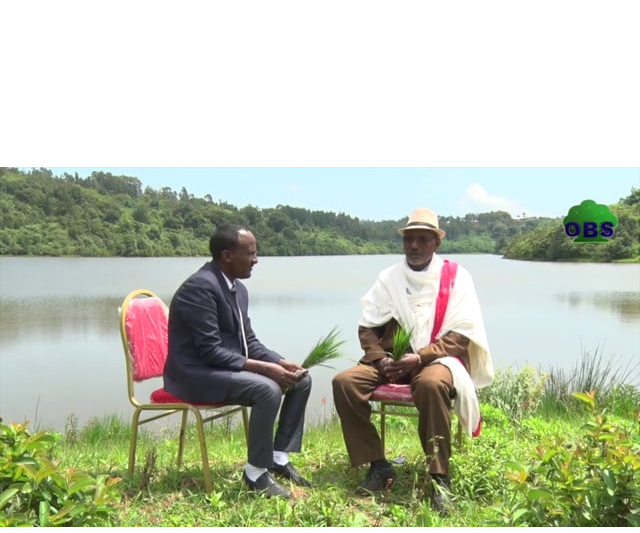





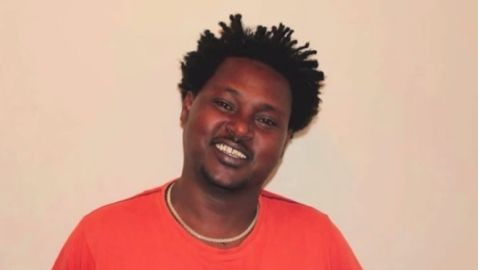















 However, more recently, there were further calls that the government was perpetuating inequality along ethnic lines when it announced a master plan titled “the Addis Ababa and the Surrounding Oromia Integrated Development Plan”. This area structure plan was intended to create special zones surrounding Addis that were divided into industry, service and settlement zones, based on their existing potential, economic base and geography. But it has become a contentious issue, met with opposition by Oromo residents who would lose an additional 36 towns and cities to Addis Ababa.
  Everything can be found here from steel pipes to spices and kitchenware. It is also where the hidden face of poverty of the city becomes most apparent. Here people are struggling to survive, making a living by whatever means possible – as this is the time of year when the rains come heavy and fast almost every afternoon, there are countless young men taking advantage of it. They will clean shoes, the bottoms of trousers or sit on old buckets fixing broken umbrellas. Government is trying? The government does believe it is trying. In a recent

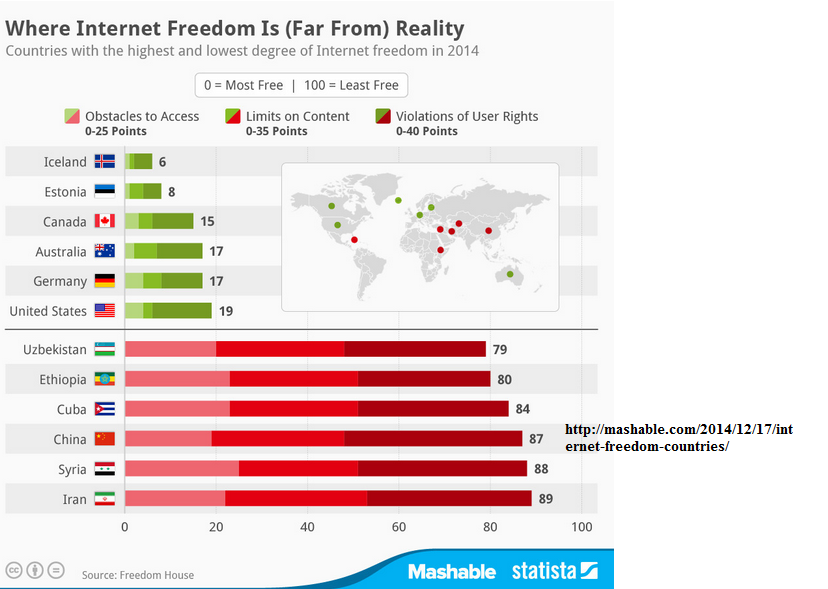

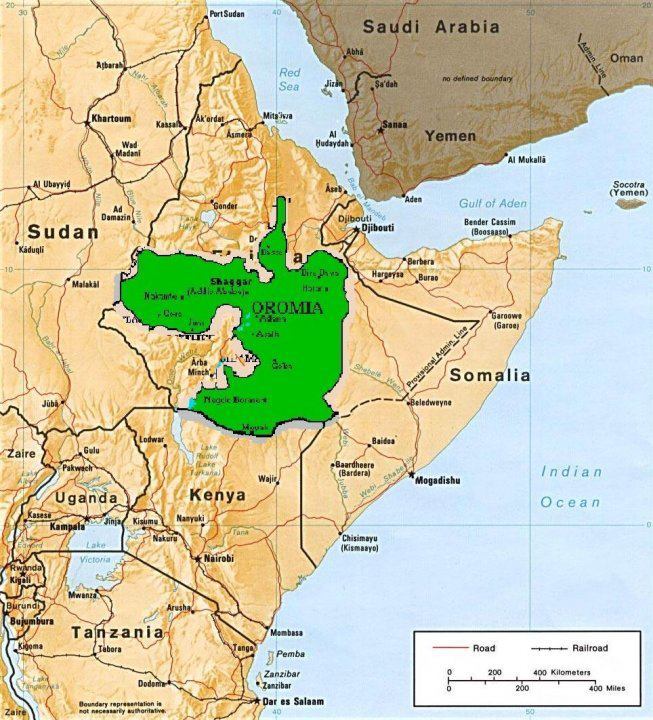


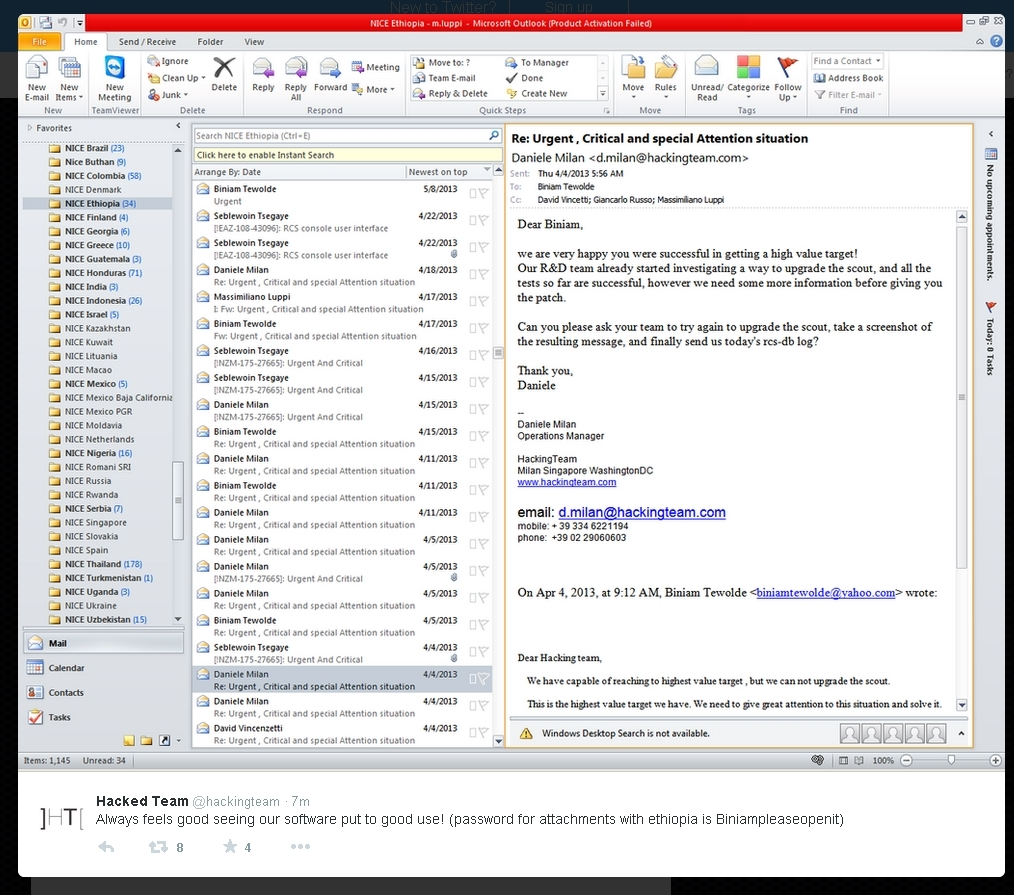



 There is no point staring at these carefully. They are random. The graphs and your intuition should tell you they are unrelated and uncorrelated. But as a test, the correlation (


 The correlation of these series is 0.88. Now here are the time series after first-differences de-trending:

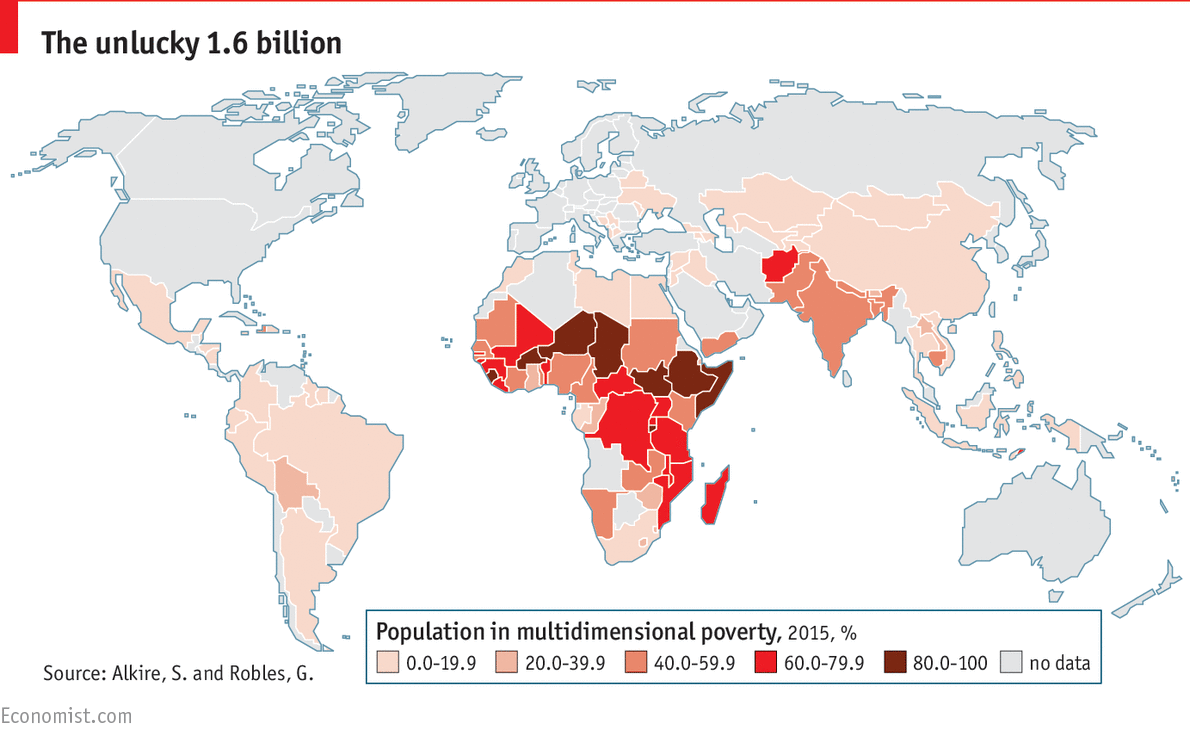

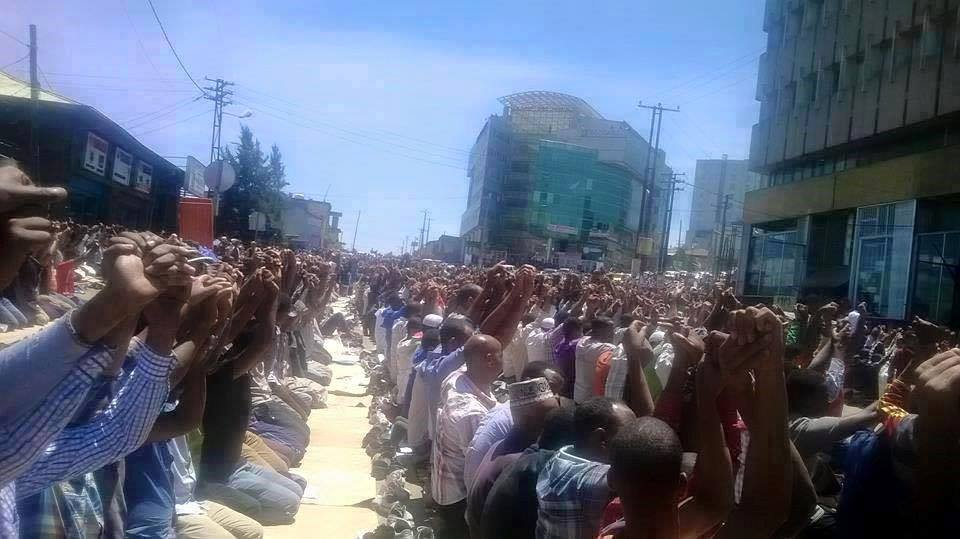


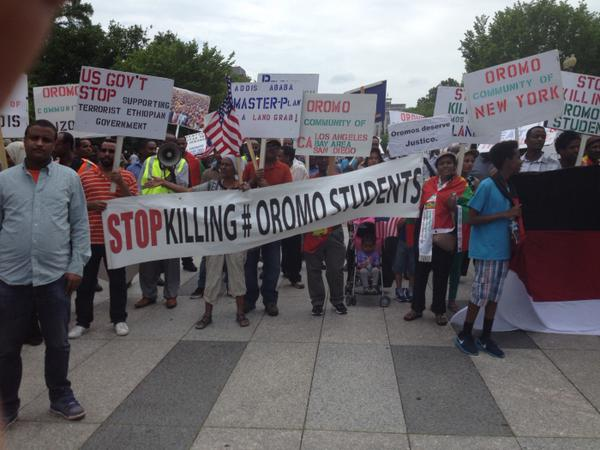


 Student
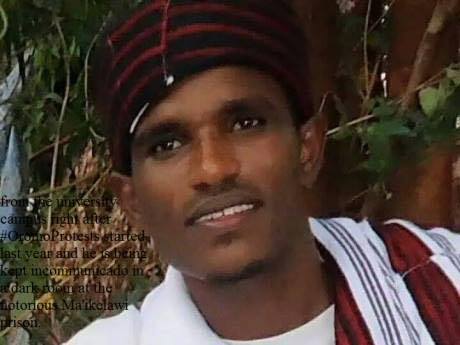
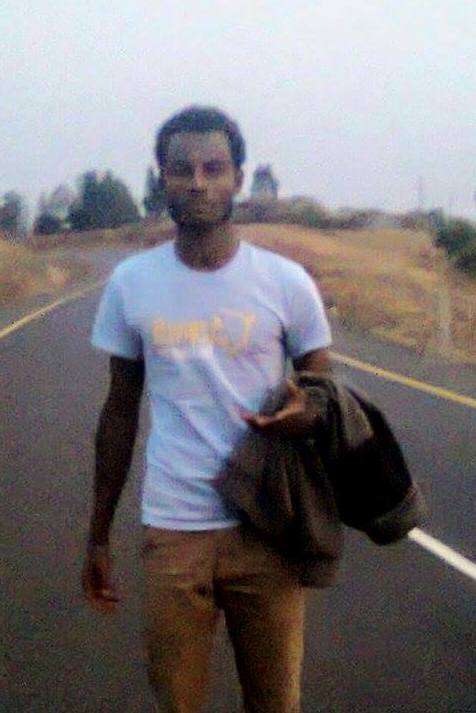
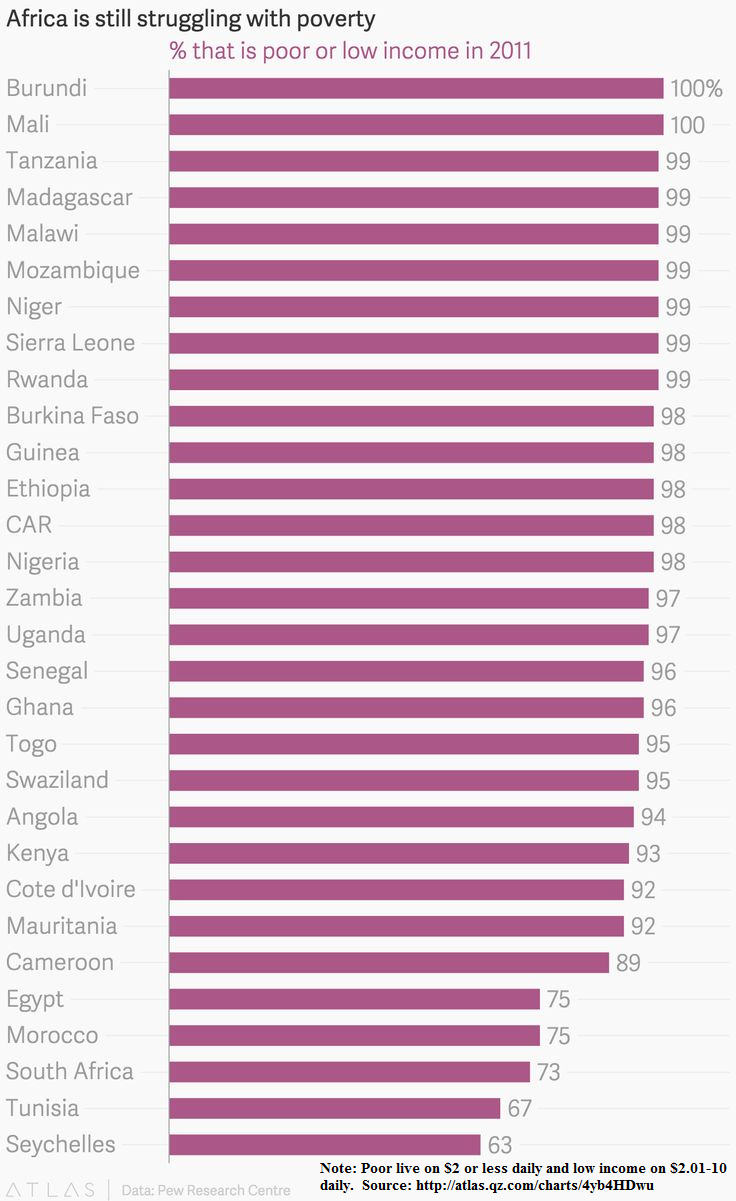
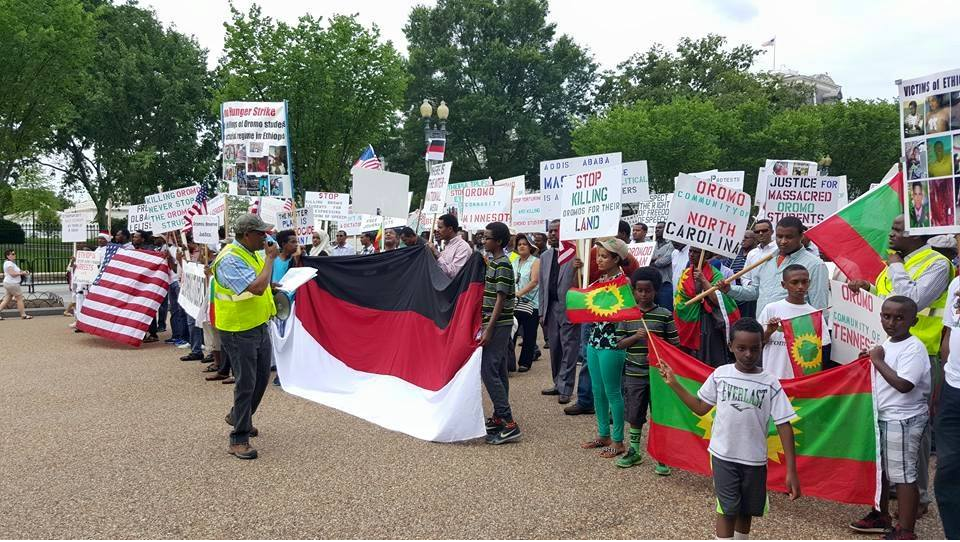
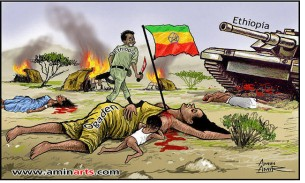
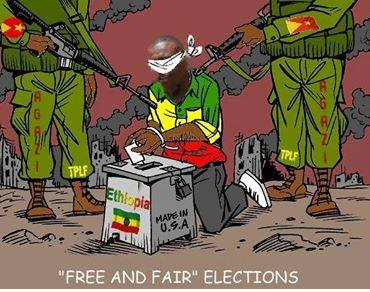


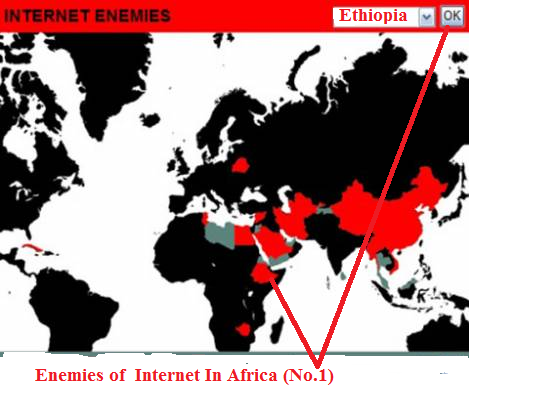





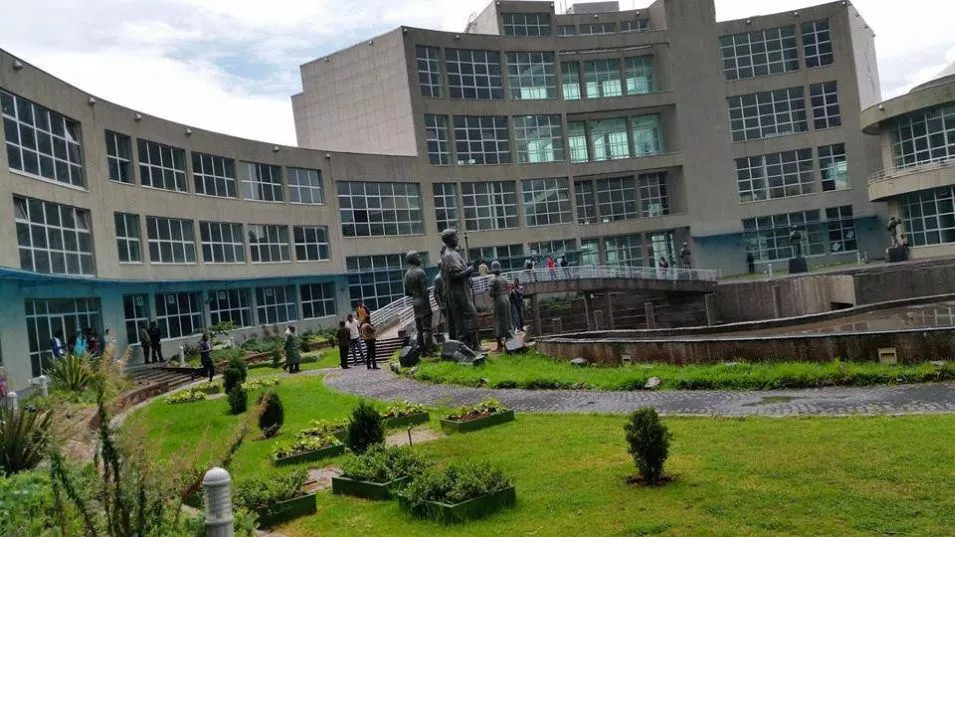
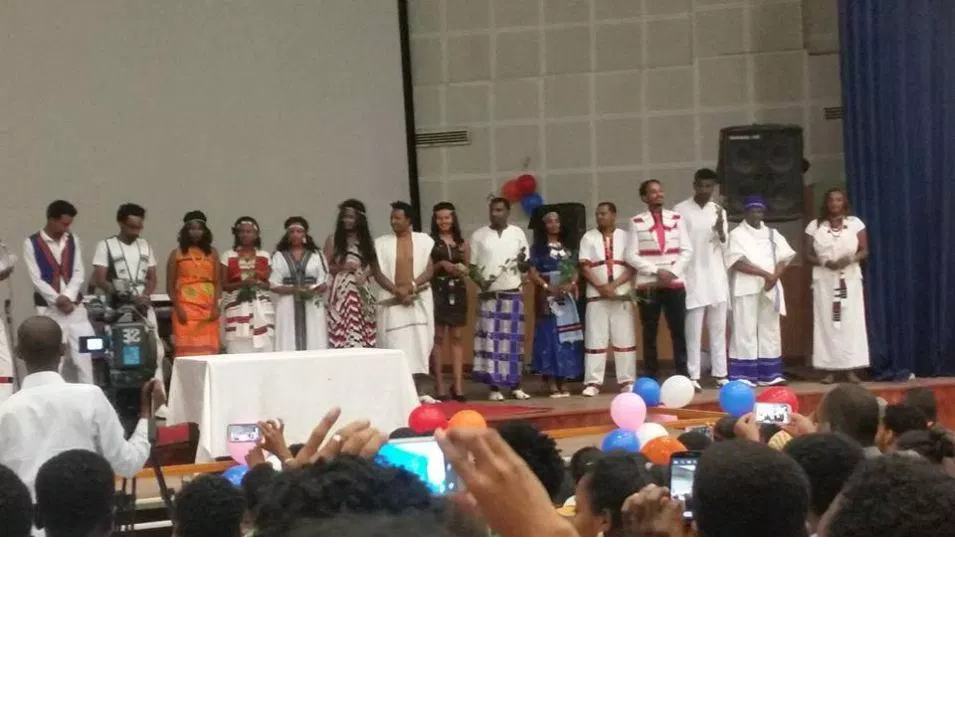

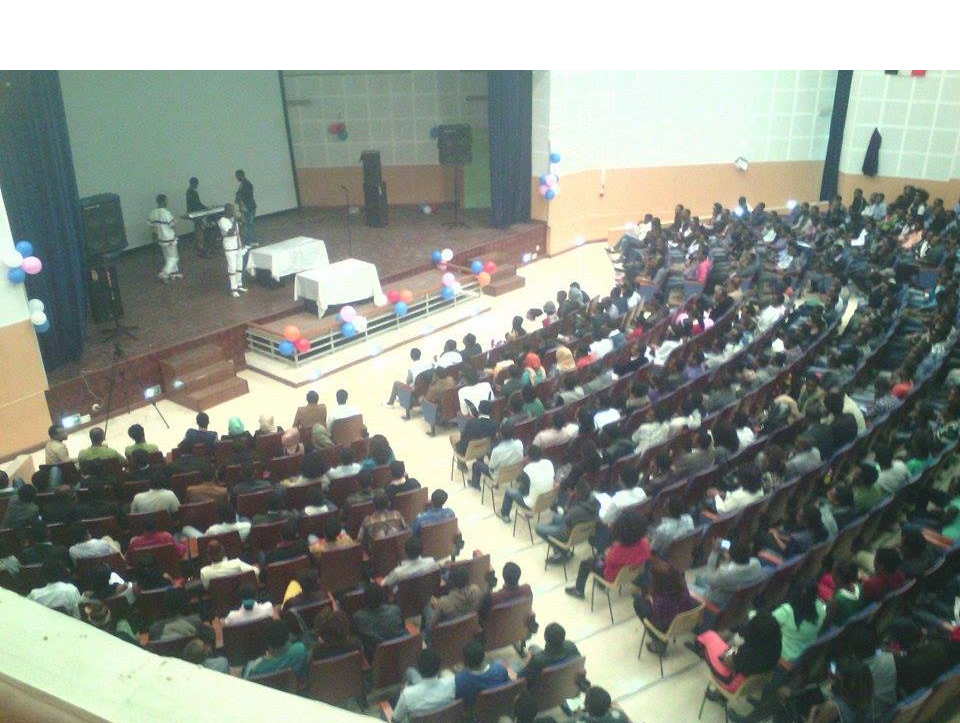


 Oromian Economist
Oromia: Macha-Tulama Association Requests President Obama to Rethink Visit to Tyrannical, Undemocratic Ethiopia July 6, 2015
Posted by OromianEconomist in Uncategorized.Tags: Africa, Freedom House in response to comments by Under Secretary for Political Affairs, Macha-Tulama Association Requests President Obama to Rethink Visit to Tyrannical Ethiopia, Obama's plan to visit Ethiopia criticised as 'gift' for repressive government, Oromia
add a comment
The following is a letter to President Obama from the Macha-Tulama Association-USA, Inc.
Macha-Tulama Association – USA, Inc
811 Upshur ST NW
Washington, DC 20011
contact@machatulama.org
July 2, 2015
President Barack Obama
The White House
1600 Pennsylvania Avenue
NW Washington, DC 20500
Your Excellency President Obama,
The Board of Directors of the Macha-Tulama Association (MTA), U.S.A., is writing this urgent letter regarding your plan to visit Ethiopia in July 2015. The MTA is a non-profit organization incorporated in the U.S.A. because it was banned in Ethiopia. It advocates for human rights and for social justice for the Oromo and others in the Horn of Africa and beyond. For almost a quarter of a century, Ethiopia has been ruled by the Tigre People’s Liberation Front, which calls itself the Ethiopian People’s Revolutionary Democratic Front. This minority regime has been engaging in sham elections, which are elections only in name. The regime disregards all the principles and practices of democracy in spite of its pretension to be democratic since 1991. The regime’s promise of democratization by restructuring the state, liberalizing the economy, and respecting and protecting human rights has been subverted. While claiming to be a democratic government in order to receive ‘development aid’ and to gain political legitimacy, this regime has killed, imprisoned and tortured the Oromo and other ethno-national groups who have struggled for democracy, national self-determination, human rights, and social justice. In fact, the Oromo people have been mainly targeted for elimination and repression because they are the largest national group in Ethiopia, and they have started to recover, manifest, and exercise their rights to culture, history, and language, which have been repressed by the state of Ethiopia for over a century.
According to a recent Amnesty International report, entitled ‘Because I am Oromo: Sweeping Repression in the Oromia Region of Ethiopia,’ between 2011 and 2014 alone, at least 5000 Oromo were arrested, tortured, and sentenced with extra-judicial executions because of being Oromo and for also peacefully demonstrating against the regime’s land grabbing policies and the so-called Addis Ababa Master Plan, intended to evict millions of Oromo farmers from their homelands in and around Addis Ababa (which the Oromo call Finfinnee), the capital city of Ethiopia. Since 1992, several human rights organizations have been reporting that Oromo prisoners have been predominantly populated Ethiopian prisons and other detention places. As a result these prisons and concentration camps speak Afaan Oromo (the Oromo language), as testified by many nonOromo prisoners.
Mr. President,
It is with shock and profound sadness that we received the message of your intention to visit Ethiopia in July. As the leader of a great country that subscribes to the principles of democracy and fundamental rights and liberties for all human beings, and as the leader of a country whose foreign policy in principle is committed to promoting the ideals of human rights, the rule of law, and democracy around the world, we believe your visit will send a wrong message to the regime and its likes across the globe that they can get away with grotesque violations of human and democratic rights as long as they remain ‘strategic allies’ to the United States.
Mr. President,
Because of these reasons, we earnestly request that you rethink your intention to visit Ethiopia. We believe your visit to the country also sends three messages: First, it encourages the Ethiopian government to continue intensifying its repressive policies. If your government continues to support and finance the regime regardless of what it does, the regime will see no reasons for changing its violent and dictatorial policies. Second, your visit to Ethiopia demonstrates to the affected people that the United States government only gives lip service to democracy and human rights while supporting the dictatorial minority regime of Ethiopia. To the 90 million people who are facing massive human rights violations in Ethiopia, particularly to the over forty million Oromo, your visit will mean that the U.S.A. does not care for the aspiration to live in a free, open, and democratic society. Your visit will also mean that human rights and democratic self-governance are not part of the list of U.S. priorities in Africa and beyond. Third, it convinces the people in Ethiopia and beyond that your policy is not different from some of your officials, such as Undersecretary of State Wendy Sherman, who recently undermined the process of democratization in Ethiopia by endorsing the regime’s record whose democracy, she said, is ‘improving.’ The Undersecretary has been roundly criticized, and we believe, rightly so.
In closing, we would like to bring to your attention that when, in July 2009, you visited Ghana, you made a speech in which you promised that the U.S.A. does not, and will not, support dictatorship and strongmen, and that you seek to assist the development of “strong and sustainable democratic governments” everywhere in Africa. We believe it is only appropriate now to request that you do not ignore your commitment and promise of that historic speech you made in Accra, Ghana, by visiting Ethiopia, the graveyard and prison house of thousands of men and women who have been killed, imprisoned, tortured, maimed, and disfigured only because they have aspired to exercise their God-given rights and to live in a democracy by demanding national self-determination and democratic rights in their own country.
Sincerely,
Asafa Jalata, PhD.,
Chairman of the Board of Directors of the Macha-Tulama Association &
Professor of Sociology and Global and Africana Studies