Economic and development analysis: Perspectives on economics, society, development, freedom & social justice. Leading issues in Oromo, Oromia, Africa & world affairs. Oromo News. African News. world News. Views. Formerly Oromia Quarterly
Journalist Martin Schibbye who was imprisoned in Ethiopia together with his colleague Johan Persson heard strange noises.In the next cell was subjected dissident poet and his cellmate Chala Hailu Abata of torture. They got in touch and it was the start of a friendship that eventually took Martin and Chala to Färila in Hälsingland.
Ethiopia ranked 126 out of 142 countries on a new prosperity index, and 137th in a sub-category that measures Entrepreneurship & opportunity. The index ranked Ethiopia 132nd in education.
The index was released by the London based The Legatum Institute on 2nd November 2015. According to the institute, the index assesses how prosperous an economy is based on more than just macroeconomic factors – it also takes into account wellbeing. Using rigorous research and in-depth analysis, the Index ranks countries based on their performance in eight sub‐indices—Economy, Entrepreneurship & Opportunity, Governance, Education, Personal Freedom, Health, Safety & Security and Social Capital.
The Index assesses 142 countries, representing more than 96% of the world’s population and 99% of the world’s GDP.
The latest ranking has named Norway as the world’s most prosperous economy. Norway topped the list for the seventh consecutive year. Along with Norway, three other Scandinavian countries (Denmark, Sweden, and Finland) made the top 10, and Iceland (another Scandinavian country) coming in at number 12, behind the United States, in the top 20.
Ethiopia ranks 126, coming in at 17 of the bottom 20 least most prosperous countries. Ethiopia is ranked between Nigeria (125th) and Republic of Congo (127). The bottom 20 nations are mostly sub Saharan African countries, with the exception of countries like Afghanistan (141), Syria (136), Yemen (135), Pakistan (130), and Iraq (123).
The least prosperous nation of all the 142 nations sampled for the second year in a row is the Central African Republic.
In terms of specific sub categories of performance, the following countries were ranked number 1 in the world:
1. Economy: Singapore
2. Entrepreneurship& Opportunity: Sweden
3. Governance: Switzerland
4. Education: Australia
5. Health: UnitedStates
6. Safety & Security: HongKong
7. PersonalFreedom: Canada
8. SocialCapital: NewZealand
See interactive rankings table in the following link:-
Sheik Mohammed Rashad was a very prominent scholar celebrity among the Oromo people. The alphabet he prepared developed from the Latin and is easier to use. One particular advantage his alphabet has, it can be typed using English typewriter.
The second group of students who travelled abroad for studying include all youth who by their own free will decided to travel. They were not sponsored by any government or non governmental organization. They had no scholarship grant. They did not know where to go, what to study, for how long, and what the expense was. The only thing they had was the desire to learn. They travelled on foot; crossed borders and reached a neighbouring country. From there, only a few got the oppertunity to reach a destination in the Middle East. A number of those who travelled on foot did not even cross the border. Death was their fate, because of hunger, disease, or attack from wild animals. Most who traveled in this way were Muslims and among them who successfully completed his studies and contributed a lot to his people was Dr. Shek Mohammed Rashaad.
Sheik Mohammed Reshad was born at Laga Arbaa, Carcar district, West Hararge zone in East Oromia. At school age he started learning Islamic education from his father who was his teacher. Rashad was a fast learner who completed basic and intermediate education in a short period of time. He was a nationalist who rejected the suffering of the Oromo under the repressive Neftenya regime. When he grew to be a teen ager, his father allowed him to travel to learn and seek knowledge. One day, he decided to travel with his friend. They started their journey on foot from Laga Arbaa. Along their way they have travelled through many villages and towns, but he mentions only two i.e. Chiro and Harar. When asked why he mentioned only the two his answer was as follows. “When I reached the town of Chiro I saw Abyssinian soldiers performing their routine parade. I saw a similar thing in Harar too. At that time, I thought the enemy soldiers subjugating the Oromo were encamped only at those two places and one needs to get rid of those soldiers to free the Oromo people. Therefore, I decided that I and my friend should travel abroad, meet with Muslims, explain the situation of our people, ask for arms, get armed with fire arms and hand grenades, return back home, one of us to Harar and the other to Chiro, set an agreed upon date and time, launch a pre-emptive attack, finish the enemy army and liberate our people. That was what I thought to accomplish at that young age. This makes his purpose of travel abroad a dual one: education and politics. First he crossed the border and entered Djibouti on foot. From there he crossed the Red sea by boat and reached Yemen. From Yemen he travelled through the Arabian Desert and finally made it the city of Medinah in Saudi Arabia where he settled for some time. During this long travel, he faced many difficulties and obstacles some of which were undoubtedly fatal. Had it not been for the help of Allah he would have not reached his adult hood to tell the story. Following a brief period of stay in Saudi Arabia, he travelled to Syria where he started his studies. Upon completion of his studies he was congratulated but was seen off without a diploma or a certificate. Because of this and the counseling he received from his friends he travelled to Egypt where he got registered at Al Azaar University. He continued his studies and graduated with BA and then MA degrees. His major was religion but he has taken several courses in sociology, psychology and counseling, logic and linguistics.
Dr. Rashad was not only a scholar who proved himself with his knowledge, but a nationalist who showed himself with what he did for the nation. At the University of Al Azaar there was a department where foreign languages were taught. Among the courses one was the Amharic language. He could not believe his ears when he heard it first until he confirmed that it was true. At that time, he prepared an official request and presented it to the department to include Oromo language in their courses. His request was denied and he asked why it was denied. The answer given to him through an indirect body was “Because the Oromo language has no alphabet.” He got the answer from an indirect source. It won’t be difficult to guess what this has triggered in him. He felt very bad and decided that all his efforts so far were for himself the rest should be for his people. He believed that the Oromo language should have an alphabet and must be a written language. He took this responsibility upon himself and began his work towards the goal. First he studied the efforts of Aanniyyi and Danniyyi and the work of Bekri Saphalo. He analyzed both and tried to understand the pros and cons of both alphabets if used for Oromo language. Finally he set three fundamental criteria to fulfill before any alphabet can be chosen. The three criteria are:
1) The alphabet should completely represent the Oromo phonemes
2) The people who can teach it should be available easily and everywhere
3) Typewriters and printing press must be readily available
Both alphabets were found not to fulfill the criteria. The Arabic alphabet could not fulfill all the three. Its symbols do not represent the entire phonemes because it is short by eight symbols. It means it does not have symbols representing eight sounds which are currently represented by: “ /C/, /CH/, /DH/, /G/, /NY/, /PH/, /X/ and /Q/. Because of the Oromo accent and the presence of sounds loosely close to them we can disregard the last two i.e. /X/ and /Q/ To explain the six sounds for which the Arabic alphabet has no symbols nothing is better than the example produced by Dr. Rashad himself. It goes, ask any Arab to pronounce the following sentence: “Dhagaa caphsii cirracha nyaadhu” and see for yourself that he/she cannot. Similarly you cannot write that sentence using the Arabic alphabet. Symbols can be modified to represent those sounds but no typewriters or printing presses are readily available for use. Because of this reason the Arabic alphabet as it is cannot be chosen for Afaan Oromoo.
Oromia Support Group Australia (OSGA) has voiced its concerns about the plight of Oromo refugees with the United Nation’s key refugee agency, the UNHCR.
This is the second time that OSGA has had the opportunity to submit a report for the UNHCR’s consideration; its first submission was made last year.
The organisation, which is one of Diaspora Action Australia’s diaspora partners, raises awareness of human rights issues affecting the Oromo and other oppressed people in Ethiopia. It advocates against abuses and violations and supports displaced people and refugees from Ethiopia. One of OSGA’s ongoing projects is to collect and publicise human rights abuses by recording people’s stories.
OSGA was one of several Australian-based organisation to make written and verbal submissions to the Refugee Council of Australia (RCOA), which presented the information at the UNHCR- NGO (Non Government Organisation) Consultations in Geneva in June.
RCOA delegates raised the issues in meetings with senior UNHCR representatives, including the Africa, Middle East and North Africa bureaux, and senior officers for the Horn of Africa, Yemen and Kenya.
Marama Kufi from OSGA said their report focused on the experiences of Oromo people who are seeking refuge in Horn of Africa countries.
He said security measures in refugee camps and personal safety were a major concern as there have been reports of physical attacks, harassment and kidnapping. There were also reports of asylum seekers being forcibly returned to Oromia.
Marama explained that OSGA gathered information and first-hand accounts from its network of contacts who are located in surrounding countries. OSGA compiled 87 detailed accounts of abuse and harassment, which were used to inform the report, he said.
The Oromo Concept of Reality or Dhugaa-Ganama (Part 1)
By Yoseph Mulugeta Baba (Ph.D.)*
Part I
The first condition necessary in order to understand about “the” Dhugaa-Ganama (i.e. “the” Absolute Truth) is to refer to the Oromo concept of jireenya, that is, existence or the fact that things exist. (Note that the Afaan Oromo terms, le’ii and leetoo, are roughly equivalent tojireenya both in meaning and content). In the Oromo system of knowledge, theunderstanding and interpretation of the world, of oneself, and other people essentially take as their starting point the concept of jireenya — existence — with reference to jiruu-fi-jireenya-nama — ontological characteristic of human being. As such, the Oromo concept ofReality can best be subsumed under three broad concepts (a) Uumaa (Cosmology); (b)Waaqa (Undifferentiated-Being); and (c) Saffu (Human Ontology).
(A) The Concept of Uumaa — Cosmology
Uumaa is the totality of the created universe. The very term Uumaa, which derives from the verb uumuu, literally meaning “to create”, refers to all that is created — non-living things, living entities, and spiritual beings. Yet, the Oromo notion of Uumaa is not something static, but a continuous process. In order to understand, one needs first to grasp the way the concept of Waaqa has an inextricable link to the dynamic notion of Uumaa.
(B) The Concept of Waaqa — Undifferentiated-Being
The Oromo concept of Waaqa is crystal clear: The first Being was Waaqa. It must be noted that the very term Waaqa, with a capital W, should not be mistaken for waaqa, with a small w. As opposed to the former, which is under discussion, the latter simply means sky or heaven. Unlike Waaqa, waaqa is necessarily synonymous with samii, that is, heaven. (Bartles, 1990, pp. 89-111; Knutson, 1967, pp. 47-48; Geleta Koro, 2008, pp. 407, 449, 925) He continues to exist and is absolute, eternal, and infinite. Waaqa is the sustaining power of all that is. However, although Waaqa is often conceived of as the absolute unity, He is also many. (Bartles, 1990, p. 114) This is due to the notion of Ayyaanaa — the immaterial principle which determines the essence of all individual entities. In Oromo philosophical thought, everything emanates from Waaqa in the form of Ayyaanaa. Ayyaanaa can loosely be defined as an immaterial principle that underliesUumaa and determines the essence of all individual entities as well as their common properties. As G. Dahl argues, as immaterial principle,Ayyaanaa “is decisive for the character and fate of … [every]entity.” (Dahl, 1996, p. 167) Therefore, Bartle’s critical observation is correct in that “Mountains and trees, days, months and seasons, every man and his lineage –all have their own ayana. These ayana rule our lives; they make us what we are – ayana are conceived of as beings.” (Bartles, 1990, p. 113) Joseph van de Loo also affirms this depiction when he defines Ayyaanaa as the “invisible part of being, the spirit.” (Joseph van de, 1991, p. 141).
The main implication of these contentions is that everything that exists, whether as material entity or as abstract value, has its ownAyyaanaa. Accordingly, in the Oromo concept of Reality, it would be absurd to make a complete distinction between a thing and its character. Every existent being, whether actual or abstract, cannot be conceptualized without Ayyaanaa. Whatever exists has this property called Ayyaanaa. Ayyaanaa is inherent in every created individual entity. All created things are distinguished from each other by means ofAyyaanaa. From what Dahl points out it is thus justifiable that:
The traditional [sic] cosmology of the Oromo is built around a “quasi-platonic” division between the real world and the world of ideas or principles. Everything that exists in the material world as well as in the form of abstract values, has its correspondence in the form of an immaterial principle (ayaana) which is decisive for the character and fate of that entity. (Dahl, 1996, p. 167)
Yet, the philosophical question is: How can one explain the problem of one-many or the question of change-permanence, especially as this relates to the philosophical question of existence-freedom, if Ayyaanaa is conceived of as some-thing that determines the essence of every individual entity? To properly answer this question, we need to have a clear understanding of the Oromo concepts of Waaqa andSaffu, respectively.
Waaqa is the ultimate source of all that is. It is essential to note, as Bartles suggests, that the very term Waaqa would better be rendered as Divinity rather than what is meant by the English word ‘Supreme Being,’ ‘God,’ or ‘Creator.’ The main reason, he argues:
It comprises more, since it includes countless particular manifestations of Waqa in this world, particularizations of his creative work which are conceived as beings. Hence the word ‘divinity’ will often be a better translation than ‘God’. “Divinity … can be used to convey to the mind at once a being, a kind of nature or existence, and a quality of that kind of being; it can be made to appear more substantive or qualitative, more personal or general, in connotation, according to the context … (Bartles, 1990, p. 89)
In a similar vein, Knutsson himself points out the epistemological difficulty inherent in the Oromo concept of Waaqa. “It is inadvisable to translate waka by the word God, which in most western theological traditions connotes ideas of unity and independence.” (Knutsson, 1967, p. 49) Thus, he also suggests the use of the term Divinity instead of God.
Without demeaning Bartles and Knutsson’s respected contentions, however, I would like to offer a philosophical explanation of the reason why the term Undifferentiated-Being conveys a better translation than the term Divinity. First, what must be borne in mind is that the way the very term Waaqa itself is often qualified by the adjective guraacha, literally meaning “black”. In the Oromo view, the term “black” adds the notion of originality. It shows the unknown origin of Waaqa. As Dahl affirms, Waaqa “is black, gura’acha, an expression that essentially summarizes the notions of uninterferedness, originality and lack of distinction. ‘Everything flows out of this undifferentiated state in the form of ayaana.’” (Dhal, 1996, p. 169) Therefore, unlike other thinkers, I am forced to render the word Waaqa as Undifferentiated-Being instead of Divinity. (In the works of Knutsson, Bartles, and Dahl, there is a tendency to render the term Waaqa as Divinity. This is due to the influence of G. Lienhardt’s work, Divinity and Experience, on the Dinka religion and in which Lienhardt “met with similar difficulties in translation” for the word nihalic. For more detail, see Bartles, 1990, p. 89; Knutson, 1967, pp. 47-53; Dahl, 1996, p. 170)
Second, it would be absurd to separate the notion of Ayyaanaa from the concept of Undifferentiated-Being. This is mainly due to the Oromo’s concept of creation. As Dahl argues, the Oromo view of “cosmology, ecology and human ontology is one of the flow of life emanating from Divinity [i.e. Undifferentiated-Being].” (Dahl, 1996, p. 167) This contention has one important implication: The Dynamicaspect of Oromo’s view of creation. As I have stated above, the Oromo notion of creation is that it is not static, but a continuous process. “It would be wrong to regard creation as something which for Oromo was a matter of once and for all. With their conception of time, the act of creation (umaa) is still there: it continues as characteristic of the agent of creation.” (Dahl, 1996, p. 167)
Accordingly, the Undifferentiated-Being is not only the Uumaa’s ratio d’être, but also that ofAyyaanaa’s; despite the fact that the character and fate of everything is determined by the latter ― Ayyaanaa. Therefore, it would be wrong to mistake the reality conceived of the author is calling the Undifferentiated-Being for Ayyaanaa, although the two concepts are not mutually exclusive. It must be remembered that the latter is always conceived of as some-thing of the former. As Bartles points out, Ayyaanaa is Undifferentiated-Being, but it cannot be said that the reverse is true. He argues:
The crucial difference is that Waqa is invoked by everyone universally since he is concerned with all, while an ayana, linked as it is to a particular person, animal or plant, is only invoked and feared by those who linked to it either by nature or free choice. It is ‘something of Waqa’ in a person, an animal or plant making them the way they are: a particular manifestation of the divine, of Waqa as creator and as source of all life.We see the ayana as flowing out of Waqa in a way, filling the whole of creation, filling every creature whose ayana they are, making them the way they are, both inside and outside. But the ayana remain invisible to human eyes. What is visible in man is not his ayana. This visible aspect of man is rather formed and conditioned by his ayana: his ayana manifests itself in it. (Bartles, 1990, pp. 115, 118-19; Also see Sumner, 1995, p. 33)
In a similar vein, Knutson argues that “waka is the most comprehensive … It Includes ayana.” (Knutson, 1967, p. 48)
One important thing must be noted from the above contentions. Ayyaanaa, unlike Uumaa, is not necessarily subject to the idea oftemporality. Rather, it may also characterized by non-spatio-temporal reality by virtue of having the character of Undifferentiated-Being. Therefore, in contradistinction to Uumaa, Ayyaanaa exists before and after the thing it causes comes into being. Everything that exists is thus exclusively attributed to Ayyaanaa, whose act of creation has its ultimate source in Undifferentiated-Being. Hence, the Oromo conception of Reality implies a world-process or dynamic universe that has come to be by virtue of Ayyaanaa. In this manner, Ayyaanaaencompasses Uumaa, just as Uumaa embraces Ayyaanaa.
However, the incommensurability of the concepts of Uumaa versus Ayyaanaa poses the philosophical question of existence-freedom to human reason. As a result of this philosophical problem, the Oromo have adopted and developed the concept of Saffu — Human Ontology.
(C) The Concept of Saffu — Human Ontology
As Gemetchu M. argues the:
Oral tradition [sic] offered each generation words that became the vehicle of their hopes and aspirations. Each generation found its own meaning in the words in relation to its particular historical situation. This relationship between the terms of the tradition and the particular meaning of these terms in specific circumstances gives the Oromo tradition its historical character. As the result of this historical character of the tradition, early in Oromo tradition, there developed a tension between Uumaa (literally “creation”) and ayyaana as the will of Waaqa [or Undifferentiated-Being]. It is perhaps this contradiction that gave rise to the concept ofSaffu (mutual relationship between elements of the social and cosmic orders) which maintains practice obligatory through ethical conduct. (Gemetchu, 1996, p. 97)
Of this mutual relationship, Bartles has it that Saffu is “the mutual relationship (rights and duties) between individual creatures or groups of creatures according to their place in the cosmic and social order on the basis of ayana.” (Bartles, 1990, p. 373) It “is about mutual relation amongst things. Every creature should live in harmony, without inflicting harm on each other.” (Dirribi Demisse Bokku, 2011, p. 80) It must be remembered that the whole concept of Saffu derives from there being a need for such a philosophical explanation of human “existence.”
As I have stated at the beginning of this article, in the Oromo system of knowledge, the understanding and interpretation of the world, of oneself, and of the other people takes as its starting point a thought concerning jireenya — existence. This conceptual starting point constitutes the principal point of difference between my thinking and that of who have written on Oromo ideas and way of thinking individuals who tend to identify the concept of Saffu with moral philosophy alone rather than exploring its epistemological significance. To begin with, in the Oromo system of knowledge, the concept of Reality per se stems from a distinct view of jireenya. The main implication is that for the Oromo people, their concept of jireenya serves as a useful starting point for the understanding and interpretation of Uumaa, Waaqa, and Saffu. The philosophical thought Oromo have in this regard is a rich source of ideas that can provide an epistemological justification for the Oromo concept of Reality as a whole. The noun jireenya derives from the root jir — to be, to exist. (Knutsson, 1967, p. 59) Here, it is important to stress that the whole concept of jireenya implies everything that exists. In Oromo philosophy, the idea of jireenyais inclusive of everything there is within the cosmos.
However, one important distinction concerning this idea must be stated right away. The term jireenya refers to the existence of every individual entity. But when it is used for human “existence”, it has quite a different connotation. The English terms, human and man, are typically rendered as nama in the language of Afaan Oromo. In Oromo philosophy, however, there is no such thing as jireenya-nama, but rather we find jiruu-fi-jireenya-nama. The point is that whenever the concept of jireenya is used with reference to nama or the human being, it must be preceded by a noun jiruu — “activity” and a conjunction fi ― and. This name in terms of philosophical thought, has two main implications: First, in Oromo philosophical thought, it would be absurd to totally identify human “existence” with that of the existence of other entities. The very assertion, jiruu-fi-jireenya-nama, makes the concept crystal clear that human beings have a character that is in contradistinction to the existence of, for instance, saree — dog, muka — tree, dhakaa — stone, or minjaala — table. As such, there is nothing like jiruu-fi-jireenya-saree, so to compare human existence with that of a dog, for example, would be self-contradiction. On the contrary, phrases like jireenya-saree — the life/existence of dog or jireenya-muka — the life/existence of tree in accord with human reason, suggest some degrees of communality among all other entities in contradistinction to human “existence”.
Second, the difference between man’s “existence” and that of other entities stems from the element of human “activity” — jiruu. In Oromo philosophy, despite the fact that man exists the way other things do, his very existence, however, differs by virtue of his or her jiruu — “activity”. Human “existence” must be characterized by this very jiruu — “activity”. Essentially, the very conjunction fi ― which is necessarily used alongside the noun jiruu — “activity” suggests that human “existence”, unlike other things, is intrinsically linked with such “activity”.
Accordingly, in the indigenous Oromo system of knowledge, Saffu is used as the generic name for such various “activities” of individual wo/man. As we have stated above, the incompatibility that stems from the view of Uumaa versus Ayyaanaa has resulted in the construction of the concept of Saffu. Stated otherwise, the need for the construction of the concept of Saffu is due to paradoxes of bothmetaphysical and epistemological, that have resulted from existence of the concepts of Uumaa and Ayyaanaa. On the one hand, the Oromo view of Undifferentiated-Being is a representation of an ideal world or the universe of thought. This thought has its roots in thephilosophical question concerning the beginning of the universe. As a response to this fundamental question, Waaqa is often conceived of as the ultimate source of all that is; and consequently as the universe of thought. However, the Oromo do not take a precise categoricalphilosophical position on whether Waaqa produces the world out of nothing or out of His own substance. Thanks to the concept of Saffu, which I shall explicate further, the radical philosophical position just discussed has been overlooked due to there being an epistemological difficulty in coming to a human understanding of the true nature of Undifferentiated-Being.
(to be continued)
Note: The responsibility for the article is entirely mine.
Galatoomaa!
——
References
– Baxter, P. T. W., Hultin, J., and Triulzi, A. eds. Being and Becoming Oromo: Historical and Anthropological Enquires. Asmara: The Red Sea Press, Inc., 1996.
– Dirribi D. B. Oromo Wisdom In Black Civilization. Finfinnee: Finfinne Printing and Publishing S. C., 2011.
* Yoseph Mulugeta Baba received his B.A; M.A; and Ph.D. degrees in Philosophy from the CUEA. His research areas include Metaphilosophy, Oromo Philosophy, Continental Philosophy, Post-colonial African Political Philosophy, Postmodernism, and Ethiopian historiography. Currently, he is completing his forthcoming book (CUEA PRESS) — on ‘The Ilaa-fi-Ilaamee Philosophical Method of Enquiry.’ He can be reached at kankokunmalimaali@gmail.com.
The Oromo Concept of Reality or Dhugaa-Ganama (Part 2)
By Yoseph Mulugeta Baba (Ph.D.)*
Part II
(In my Previous article, I elucidated the way in which the Oromo system of knowledge essentially takes its starting point from the concept of jireenya — existence — with reference to jiruu-fi-jireenya-nama — ontological characteristic of human being; for the understandingand interpretation of the world, of oneself, and of other people. In doing so, I clearly indicated how Oromo’s concept of Reality can best be subsumed under three broad concepts: (a)Uumaa (Cosmology); (b) Waaqa (Undifferentiated-Being); and (c) Saffu (Human Ontology). The present article is a continuation of previous one.)
The Oromo mode of thought “denies” any distinction between thought and things. As a consequence, Waaqa is conceived of as being both transcendent and immanent. This is due to the Oromo concept of Uumaa — creation. Uumaa is a world-of-process. This act of creation — Uumaa — signifies Waaqa’s presence as a natural part of the entire created natural world in the form of Ayyaanaa, which, in turn, is responsible for the emergence of new creatures — uumama — at different epochs of human history. Ayyaanaa is thus something of Waaqa. In other words, Waaqa is at the same time one and many. In Oromo philosophical thought, therefore, a distinction between the universe of thought and the universe of nature is untenable.
In the absence of such distinctions, however, how to define human nature remains problematic. Such a philosophical question sets the scene for the concept of Saffu. This concept has its origin in the description of human “existence” as being related to one or another kind of human “activity”. As I argued in my pervious article, unlike other things, human “existence” is intrinsically linked to jiruu-fi-jireenya-nama — ontological characteristic of human being. This “activity” can best be a result of having a knowledge of things in accordance with the place assigned to each of them by Waaqa. The Oromo notion of jireenya includes the idea that everything relates to nature outside of itself. As it would be absurd to have this notion about human reason, however, the concept of jiruu-fi-jireenya-nama was developed which enables one to interpret and balance the “paradox” posed by Uumaa versus Ayyaanaa.
Therefore, the concept of Saffu — human ontology — is not only about the Oromo’s moral philosophy, as some scholars have tended to argue. But, it is also an epistemological notion founded on the idea of the jiruu-fi-jireenya-nama — ontological characteristic of human being. The jiruu-fi-jireenya-nama essentially relates to the physical world as well as human society. The concept of Saffu — human ontology — is thus nothing other than a proper understanding and interpretation of one’s state of “existence” as s/he radically relates to both aspects of nature — physical world and human society. It is a critical reflection upon a relationship that ought to exist between each human being and Uumaa as well as Ayyaanaa, on the one hand, and between an individual and human society, on the other. (Raayyaa Horoo, 2008, p. 13)
The above epistemological assertion has two philosophical foundations: (a) seera Waaqa — the laws of Undifferentiated-Being and (b)seera Nama — the laws of human being. The former is not a complete form of knowledge. As I have already argued, the origin ofUndifferentiated-Being is wholly “unknown” to the human mind. Yet, coming to some sort of such knowledge is not impossible. This is due to the Oromo’s notion of Ayyaanaa. Ayyaanaa can be “thought of as fractions of Divinity [Undifferentiated-Being]: fractions which arise from the continuous Creation [Uumaa] by which God expresses himself and imposes structure on the world.” (Gudrun Dahl, 1996, p. 170) Hence, knowledge gained concerning the laws of “nature,” for instance, is attributed to Ayyaanaa. These laws are conceived of as fixedand eternal. They are thus immutable.
Seera Nama — the laws of human being —, on the other hand, are subject to change in the context of jiruu-fi-jireenya-nama —human “existence”. Although the seera Waaqa — the laws of Undifferentiated-Being — underlie every jiruu-fi-jireenya-nama — at different epochs of human history, yet; the understanding and interpretation of the seera Nama — the laws of human being — may differ considerably between individuals. In the Oromo concept of Reality, however, this difference need not be seen as a “contradiction”; unless such an interpretation goes against the concept of Saffu — human ontology. That is to say, the denial of Saffu is the failure of the individual to keep a balance between seera Waaqa — Ayyaanaa — and seera Nama — Uumaa. This “activity,” as indicated already, is generally called thejiruu-fi-jireenya-nama. The clear assumption is that, although one has a considerable difficulty (in) overcoming this “contradiction,” there is always room for the interpretation and understanding of the case in question to keep a balance between all things: Saffu, which finally leads, to pluralistic interpretations of the universe, despite the fact that there is just one universe.
Accordingly, the Oromo have adopted and developed a philosophic method of enquiry to identify and determine the tenable form of interpretation whenever various competing interpretations arise. This mode of investigation is called an ilaa-fi-ilaamee — philosophic-mode-of-thought. With such foundations in mind, let us, in the following subsection explore the justification of this form of enquiry. In order to do so, I would single out Gumii Gaayo as justification of the case in point.
(to be continued)
Note: The responsibility for the article is entirely mine.
Galatoomaa!
——
References
– Baxter, P. T. W., Hultin, J., and Triulzi, A. eds. Being and Becoming Oromo: Historical and Anthropological Enquires. Asmara: The Red Sea Press, Inc., 1996.
– Dirribi D. B. Oromo Wisdom In Black Civilization. Finfinnee: Finfinne Printing and Publishing S. C., 2011.
The Oromo Concept of Reality or Dhugaa-Ganama (Part 3)
By Yoseph Mulugeta Baba (Ph.D.)*
Part III
In one of my previous articles (Part II), I tried to demonstrate how the Oromo concept of jiruu-fi-jireenya-nama — ontological characteristic of human being — has led to the conception ofSaffu, which enables one to interpret and balance the “paradox” posed by Uumaa versusAyyaanaa. It has been clearly indicated that the concept of Saffu — human ontology — is nothing other than a proper understanding and interpretation of one’s state of “existence” as s/he radically relates to both aspects of nature — physical world and human society. Suchunderstanding and interpretation of Reality (i.e. Uuma, Waaqa, Ayyaanaa) eventually leads to pluralistic interpretations of the universe. Consequently, the Oromo have adopted and developed a philosophic method of enquiry to identify and determine the tenable form of interpretation whenever various competing interpretations arise. This mode of investigation is called an ilaa-fi-ilaamee – philosophic-mode-of-thought. In the present article, I try to show and how this is the case. In order to do so, I would single out Gumii Gaayo as justification of the case in point.
To begin with, Gumii Gaayo — is the possible justification for an ilaa-fi-ilaamee – philosophic-mode-of-thought. It is one of the main and most critical institutions of the Gadaa System. Thus, I need to give clear and concise points on the latter first.
What is the Gadaa System?
“The Gada System is a system of gada classes (luba) or segments of genealogical generations that succeed each other every eight years in assuming political, military, judicial, legislative and ritual responsibilities.” (Asmarom, 2000/2006, p. 31; Asmarom, 1973, p. 81) It is the Oromo people’s central philosophical thought about the jiruu-fi-jireenya-nama — ontological characteristic of human being — which has “endured for at least four centuries of recorded history.” (Asmarom, 2000/2006, p. 30) Specifically, the Gadaa System is a political philosophy that necessarily characterizes individual men’s rights and responsibilities as each of them relates to all facets of human life from birth to death. (Yoseph, 2011, pp. 84-98)
First, in Oromo society, structural institutions are abstractly constructed in such a way that they in effect govern the jiruu-fi-jireenya-nama. They essentially explain how everything that exists in the universe has to be assumed, understood, and interpreted in accordance with whatever changes that take place in the lives of individuals. This makes the Gadaa System extremely complex. This is the main reason why the very term Gadaa can neither be precisely defined (Mohammed, 1994, p. 9) nor given a univocal interpretation. (Asmarom, 1973, p. 81) In light of this difficulty, however, the best way to understand the Gadaa philosophical system is to know how the jiruu-fi-jireenya-nama relates to the Oromo’s concept of time.
In Oromo philosophy, the concept of time and human “existence” are viewed as two sides of one coin. Time and human society are thus divided into grades and generational-“sets”, respectively. “The set or class is the group of people who share the same status and who perform their rites of passage together, whereas the grades are the stages of development through which the groups pass.” (Asmarom, 1973, p. 51) The full cycle of the Gadaa System has ten grades (Mohammed, 1994, p. 11): Daballe grade [0 – 8 years of age]; Folle orGame Titiqaa grade [9 – 16 years of age]; Qondalla or Game Gurgudaa grade [17 – 24 years of age]; Kuusa or Raba grade [25 – 32 years of age]; Raaba Doorii or Doorii grade [33 – 40 years of age]; Gadaa grade [41 – 48 years of age]; Yuba I grade [49 – 56 years of age];Yuba II grade [57 – 64 years of age]; Yuba III grade [65 – 72 years of age]; and Gadamojii grade [73 – 80 years of age]. (Gadaa Melbaa, 1985, p. 20)
Gadaa grade starts from the first eight years (0-8), counting every eight years till it reaches eleven which falls between 80-88, that is the person becomes an elderly. One Oromo stays in one Gadaa grade for eight years out of the total of his ages. In the course of his/her life time, one Oromo could not be out of these eleven grades. In each of the Gadaa grades, Oromo have their own clearly defined roles and responsibilities to be fulfilled, and there is a system or a ceremony when one passes from oneGadaa grade to the next. (Dirribi, 2011, p. 213)
The full cycle of Gadaa System is divided into two periods of forty years each. (Mohammed, 1994, p. 11) Each span of forty years is calledgogessa or mesensa — meaning “generation”. Thus, a “generation” lasts for forty years. Each “generation” consists of five parties. “A ‘generation’ is forty years long and there are five segments or gada classes within it.” (Asmarom, 2000/2006, p. 31) The five parties are theGadaa of the father (Melbaa, Muudanaa, Kilollee, Biifolee, Michille) and the gadaa of the son (Harmuufaa, Roobalee, Birmaji, Mullataa, Duulo). “The basic rule of the gada system is that the newly born infant boy always enters the system of grades exactly forty years behind the father, regardless of the age of the father. Father and son are five grades apart at all times.” (Asmarom, 1973, p. 50)
At the end, the relationship between TIME and HUMAN SOCIETY can well be subsumed under Asmarom’s words:
Here we find a society that is stratified into two distinct but cross-cutting systems of peer-group structures. One is a system in which the members of each class are recruited strictly on the basis of chronological age. The other is a system in which the members are recruited equally strictly on the basis of genealogical generation. The first has nothing to do with genealogical ties. The second has little to do with the age. Both types of social groups are formed every eight years. Both sets of groups pass from one stage of development to the next every eight years. (Asmarom, 1973, pp. 50-51)
Keeping a concise summary of the Gadaa System in mind, let us now examine Gumii Gaayo — in order to see what justification there is for an ilaa-fi-ilaamee – philosophic-mode-of-thought.
The Gumii Gaayo
Of all the ten grades, the most important, in the Gadaa cycle, is the sixth stage, i.e. 41 to 48 years. It is the kernel stage of the GadaaSystem. This stage is seen as a major landmark in the Oromo philosophical thought. This eight year period begins and ends with a formal power transfer ceremony known as baallii or jarra. (Asmarom, 2000/2006, 217) Baallii is the event that ends the Gadaa of the previous eight years and starts the new one. (Mohammed, 1994, p. 15) “Ritual leader and time reckoning agent (Ayyaantuu) decides when and where to transfer the ‘baallii,’ and creates favorable atmosphere to effect the transfer.” (Dirribi, 2011, 243)
After this formal power transfer ceremony, there is a discourse and a long debate on the substance of the new law. This discourse is the most inclusive event in the Oromo political life (Asmarom, 1973, p. 93); and consequently, the event is known as Gumii Gaayo. “Gumi means ‘the multitude’ because it is a very large assembly made up of many councilors (hayuu) and assemblies (ya’a) drawn from different sections of the Gada institution.” (Asmarom, 2000/2006, p. 97) Thus, the phrase “Gumii Gaayo” literally means “the national assembly.” Asmarom points out that the National Assembly or Gumii is “made up of all the Gada assemblies of the Oromo, who meet, once every eight years, to review the laws, to proclaim new laws, to evaluate the men in power, and to resolve major conflicts that could not be resolved at lower levels of their judicial organization.” (Asmarom, 2000/2006, p. 100) It is “the supreme juridical and formal legislative body” (Bassi, 1996, 155) or “the ultimate high court of” (Helland, 1996, p. 141) Oromo society. As Marco Bassi cautions, however, “it would be misleading to think of it in terms of a central and permanent legislative body on the model of a modern parliament. The Gumii Gaayoo only meets periodically, once every gada period (8 years), and the laws actually proclaimed during each general assembly are really very few.” (Bassi, 1996, p. 155) “The purpose of the meeting is not to promulgate new laws but by reviewing the existing ones to reinforce aadaa [custom], and occasionally to do away with some custom that is felt (usually due to external pressure) has become outdated.” (Leus, 2006, p. 237)
Here, my main concern is not to discuss either the political or the ritual aspect of Gumii Gaayo. Such a thorough discussion has already been carried out by many scholars of the social sciences – who should get all THE CREDIT in this regard. Rather, my central issue of investigation is to analyze and disclosethe philosophical mode of thought being imbedded during the long debate and discourse during the major event of Gumii Gaayo as the justification of an ilaaf-fi-ilaamee – philosophic-mode-of-thought. To begin with, this philosophical mode of thought has its origin in the Oromo philosophical distinction between seera — laws and aadaa — “custom”. Of the former one, Asmarom has pointed out:
One of the most interesting aspects of Oromo tradition is that laws are treated as a product of human deliberation not a gift of God or of heroic ancestors.
… the people view the laws as being their own, not something imposed upon them by a divine force, by venerated patriarchal lawgivers, by superior class of learned men, or by “Tradition” in the generic sense. (Asmarom, 2000/2006, pp. 208-209)
In the national assembly, for instance, the Gumii deliberately alter or reaffirm both old and new laws. The Oromo thought about laws is, hence, that they are not immutable. Unlike “customs,” the existing laws can be matter of faculty abrogated to make new laws. “In Oromo culture, laws are known as ‘sera’ customs as ‘ada’ and it is the laws that are subjected to deliberate change.” (Asmarom, 2000/2008, p. 108)
In contradistinction to laws, however, the concept of “customs” is virtually immutable. This is due to epistemological issues. In Oromo philosophical thought, “customs” are considered immutable NOT because they are reasonably justified, but rather because they are BEYOND human knowledge as Reality, with a capital R, cannot be directly observed in jiruu-fi-jireenya-nama — ontological characteristic of human being. As a consequence, accepting the notion of there being a natural law is a necessary base in the Oromo concept of “customs,” for the simple reason that the latter cannot, unlike laws, be subjected to any deliberate change or interpretation. This notion is known as Dhugaa-Ganama, — “the” Primordial-Truth — which is to say “the” Absolute Truth. Any breach of the Primordial-Truth is considered a violation of the act of creation — Uumaa. To say the least, this is to go against the concept of Saffu.
As I have argued above, the whole concept of Saffu — human ontology — is one’s effort to keep a balance between Ayyaanaa andUumaa. Hence, in the Oromo concept of Reality, fatal flaws that exist in jiruu-fi-jireenya-nama — ontological characteristic of human being — are attributed to man’s failure to balance between “the” Primordial-Truth and the laws – rather than resulting from Waaqa’s very act of creation. “The Oromo believe that things go wrong because individuals or their parents might have gone out of the normal track (Safuu) and they advise the person who happens to be in a wrong direction to correct his mistakes and come back to the right track.” (Dirribi, 2011, p. 29) Therefore, what would deliberately be subjected to change is not the Primordial-Truth, which is absolute and eternal per se, but the laws. Yet, the latter ought to be founded on the former for its interpretation. The point is: the Primordial-Truth must be the ultimate ground of one’s interpretations of laws. “The concept Safuu embodies broader idea. Safuu is, in fact, about laws. However, not all laws are safuu. Man-made laws are temporary, they are made to address certain problems and they change over time. Saffu is not subject to change. Safuu is more of about the laws of nature.” (Dirribi, 2011, 75)
Despite this foundation, however, there are still various forms of interpretations. Eventually, this would lead to competing forms ofinterpretation. Hence, since Reality CANNOT be observed directly by an individual, in his/her jiruu-fi-jireenya, NONE of his/her interpretation is taken to be absolute and objective. This directly poses the epistemological problem of determining or identifying the correct or the tenable answer to the case in question. Moreover, the viable solution to the case in question might be obscured by the dominance of worn-out interpretations. At the end, this would blind the observer to an alternative solution to the case in question.
Accordingly, the Oromo have adopted a philosophical approach known as an ilaa-fi-ilaamee – philosophic-mode-of-thought to overcome such an epistemological problem. In many cases, this philosophical mode of thought has been widely manifested in the preliminary and main sessions of Gumii Gaayo. Initially, Gumii Gaayo was intended to provoke an intellectual discourse. “A remarkable aspect of the institution is that managing the assembly requires knowledge of laws, rituals, gada history, chronology and time-reckoning.” (Asmarom, 2000/2006, p. 211) The most important aspect of this intellectual discourse, however, is not the debates themselves which ensue. Rather, it is sober reflection in various discourses that is generated as a means of finding common ground for the meeting of minds.
Gumii is not a debater’s arena but a place for sober reflection. The basic guideline for the deliberations is simply this: Do not look for the worst in what others have said in order to undermine their position and win an argument; look for the best they have to offer, so as to find the common ground…There are many practical strategies that have been developed to help people approach that ideal. (Asmarom, 2000/2006, p. 213)
The main justifiable reason why the Oromo have adopted such an approach is due to their conception of Reality: Uumaa, Waaqa, andSaffu. The very term fi — ‘and’ — clearly indicates how human “existence” is essentially characterized by both ilaa — “objective” knowledge of an entity and ilaamee — one’s understanding and interpretation of that “entity”. It must be noted that both ilaa and ilaamee are technical terms that have been deeply embedded with philosophic concepts. Ilaa refers to peoples’ views of the “world” as presented and beingunderstood or interpreted in the systematic knowledge of the community. It is their “objective” view of the “world” or an entity in question, although not absolute per se. In Oromo philosophical thought, there is no possibility of having absolute knowledge, except in the case ofWaaqa. Yet, some basic ultimate principles, which universally govern the jiruu-fi-jireenya-nama, are comprehensible to human reason by means of Ayyaanaa. Such knowledge is a priori to and independent of ilaamee.
Ilaamee, on the other hand, refers to one’s understanding and interpretation of these ultimate principles in the space-time world — Uumaa. Put simply, it is a critical explanation of one’s understanding of Uumaa in accordance with the ultimate universal principles — expressed inAyyaanaa. The main implication is that what an individual understands and interprets (i.e. ilaamee) must be essentially conjoined (i.e. —fi—) with “the” Absolute Reality” (i.e. ilaa) of the universe that ultimately rests upon Waaqa, or the Primordial-Truth, or Universal Reality, etc.
Hence, this approach has necessitated an ilaa-fi-ilaamee – philosophic-mode-of-thought on the grounds that NO interpretation can be absolute. In the Oromo philosophy, since the concept of the Primordial-Truth equally serves as the starting point (i.e. ilaa) for an individual’sinterpretation (i.e. ilaamee) of the universe, NO interpretation (I repeat! NO interpretation) is complete in itself. Hence, the tenable form of an interpretation to the case in question must be identified and determined carefully. In so doing, one should adhere to an ilaa-fi-ilaamee – philosophic-mode-of-thought to properly make such an identification as well as any determination. Let me explicate and show how this is the case!
(to be continued)
Note: The responsibility for the article is entirely mine.
Galatoomaa!
——
References
Asmarom L. Gada: Three Approaches to the Study of African Society. New York: The Free Press, 1973.
___________. Oromo Democracy: An Indigenous African Political System. Philadelphia, PA, RSP, 2000/2006.
Baxter, P. T. W., Hultin, J., and Triulzi, A. eds. Being and Becoming Oromo: Historical and Anthropological Enquires. Asmara: The Red Sea Press, Inc., 1996.
Bassi, M. “Power’s Ambiguity or The Political Significance of Gada.” In Being and Becoming Oromo: Historical and Anthropological Enquires, eds. P. T. W. Baxter, John Hultin and Alessandro Triulzi. Asmara: The Red Sea Press, Inc., 1996, 150-161.
Dahl, G. “Sources of Life and Identity.” In Being and Becoming Oromo: Historical and Anthropological Enquires, eds. P. T. W. Baxter, John Hultin and Alessandro Triulzi. Asmara: The Red Sea Press, Inc., 1996, 162-177.
Dirribi D. B. Oromo Wisdom In Black Civilization. Finfinnee: Finfinne Printing and Publishing S. C., 2011.
Gadaa M. Oromiya. Addis Ababa, 1985.
Gemetchu, M. “Oromumma: Tradition, Consciousness and Identity.” eds. P. T. W. Baxter, John Hultin and Alessandro Triulzi. Asmara: The Red Sea Press, Inc., 1996, 92-102.
Helland, J. “The Political Viability of Boorana Pastoralism.” In Being and Becoming Oromo: Historical and Anthropological Enquires eds. P. T. W. Baxter, Jan Hultin and Alessandro Triulzi. Asmara: The Red Sea Press, Inc., 1996, 132-149.
Yoseph Mulugeta, “The Role of Negritude in Restoring an Indigenous Gada Oromo Political Philosophy for ‘Good Governance’ in Ethiopia.” M. A. Thesis. The Catholic University of Eastern Africa, 2011.
——
* Yoseph Mulugeta Baba received his B.A; M.A; and Ph.D. degrees in Philosophy from the CUEA. His research areas include Metaphilosophy, Oromo Philosophy, Continental Philosophy, Post-colonial African Political Philosophy, Postmodernism, and Ethiopian historiography. Currently, he is completing his forthcoming book (CUEA PRESS) — on ‘The Ilaa-fi-Ilaamee Philosophical Method of Enquiry.’ He can be reached at kankokunmalimaali@gmail.com.
The Oromo Concept of Reality or Dhugaa-Ganama
By Yoseph Mulugeta Baba (Ph.D.)*
Part IV
In an ilaa-fi-ilaamee-philosophic-mode-of-thought, what identifies and determines the possibility or the tenability of an answer to the case in question is not a form of an interpretation that an individual employs, but the case in question itself. InGumii Gaayo, the tenability of the solution has nothing to do with the form of an interpretation that one offers. It is, rather, determined by what the problem at issue is. When Gumii meet every eight years and a long debate is held between hayyu — councilors and ya’a — assemblies, what becomes apparent first is not the proclamation of or the interpretation of the new laws. Nor, is it the resolving of whatever major conflicts could not be resolved at lower levels of their judicial organization. It is rather, the reality of various forms of questions that essentially arise from a life-crises in the jiruu-fi-jireenya-nama, crises which every individual and the community have experienced with in different Gadaa classes.
The Gumii sees and discusses what the Gadaa has done for the country during the last eight years. The Gumii shows the right direction to the Gadaa, and whenever they are on wrong ways, it suggests ways of filling the gaps observed in the duties of the Gadaa. The Gumii deposes the Gadaa who misuses the power of the people; and Oromo is governed or administered by the laws formulated by human beings (the rule of law) in contrast to the divine or religious rules; and there is no more witness than the function of Gumii for this. ( Dirribi, 2011, p. 258)
As such, each interpretation and its understanding must be radically based on the reality of the class then in leadership which will last for eight years. Hence, the period of eight years provides horizonsthrough which individuals must echo the life-crisis that they have gone through and experienced.
In this manner, whenever competing interpretations arise, one can clearly identify as well as determine the tenable mode of interpretation to the problem at hand. It would thus be absurd to try to offer a tenable answer without a proper knowledge of what the case at issue is. Therefore, the philosophical thought that characterizes Gumii Gaayo can be subsumed under three claims:
A tenable solution to any problem is determined by the case in question that comes to be identified during every Gadaa class of eight years.
The mode of interpretation used for the problem at issue is a determinant of the tenability of a solution to a life-crisis in the jiruu-fi-jireenya-nama— ontological characteristic of human being.
Ergo, it is not impossible for the latter claim to be unconditionally determined by the former claim, but not viceversa.
As I have argued above, Gumii is not the debater’s arena but a place for sober reflection. The main reason is that once the case in question is identified, there should be little room for the radical mode of thought. A radical mode of thought is a peculiar fallacy that inherently involves defending or refuting any form of a thesis on the grounds that it was the answer when one’s own method of enquiry was used. However, ‘x’ or ‘y’ does so without admitting that, wittingly or unwittingly, a correct thesis can only be arrived at by the case in question rather than a method of enquiry of one’s choosing.
Therefore, the assumption that the case in question essentially determines any form of interpretation and its tenability is the crux of an ilaa-fi-ilaamee-philosophic-mode-thought. Consequently, the mode of reasoning and an individual’s very intention is neither to justify his/her interpretation nor to dismiss that of the others. Rather, it is to give a proper and tenable form of interpretation in accordance with the case in question. As such, an individual should arrive at two judgments: (a) a decision to successfully dismiss any radical mode of though; and (b) a decision to impartially identify a tenable solution to the problem at hand. In this manner, one can dismiss some pseudo-epistemological assumptions inherent not only in one’s interpretation, but also in that of others. Asmarom is thus quite right when he explicitly affirms the basic principles that underlie Gumii: “Do not look for the worst in what others have said in order to undermine their position and to win an argument; look for the best they have to offer, so as to find the common ground for the meeting of minds.” (Asmarom, 2000/2006, p. 213)
Hence, in an ilaa-fi-ilaamee-philosophic-mode-of-thought, the central issue is not to take a stand, but to properly understand the case in question. It is not to win an argument. Nor is it an art of getting one’s own way. Neither is it an arguing for a desired outcome so that others get out of one’s way without being challenged intellectually. Neither is it a way to place Others under one’s mental bondage by forcing them to accept one’s understanding of Reality. Nor is it seen as a positive value to hold onto a rigid approach to the last dying effort. In contradistinction, an ilaa-fi-ilaamee-mode-of-thought involves becoming aware of alternative solutions based on whatever the case at issue is. For in reality there is nosuch thing as a solution without a consideration of the case in question, just as there is not any form of question without pondering a given life crisis in jiruu-fi-jireenya-nama.
Here the question arises whether Heidegger was always original in his way of conceiving Dasein i.e.jiruu-fi-jireenyaa-nama. According to Heidegger, the Dasein is a distinctive being (Sein) compared with all other beings (Seiendes); i.e. it is a being (Seiendes) whose Being (Sein) not only has the determinative character of existence, but also is endowed with the privilege of understanding Being. (Heidegger, 1978, p. 32) To do indigenous thinkers/philosophers justice, we need to take a closer look at the fundamental distinction which characterizes the thought of Oromo philosophy’s of jireenya—existence. This is the distinction between jiruu-fi-jireenyaa-nama and jireenya. As I argued in my previous articles, in Oromo philosophical thought, it would be meaningless or absurd to identify human “existence” with that of the existence of other entities. Man’s very “existence” differs by virtue of his/her “activity”. In contradistinction to all other entities—jireenya—the very jiruu-fi-jireenyaa-nama is endowed with understanding and interpreting his/her “activity”. It is capable of understanding Reality (Uumaa, Waaqa,Saffu) as this manifested in the systematic knowledge of the “world”—Ilaa.
In a similar vein, it is capable of interpreting—Ilaamee—one’s understanding in the space-time world—Uumaa. The jiruu-fi-jireenyaa-nama manifests itself in its temporality and everydayness has to be interpreted—Ilaamee. Ilaamee is always a process of understanding and then interpreting the Ilaa. This is crystal clear in Gumii Gaayo where the period of eight years (Gadaa) provides horizons through which individual echoes the life-crises s/he has gone through and experienced. Therefore, Heidegger’s conceptions of Dasein and hermeneutic phenomenology can hardly be original, in a thorough sense.
(to be continued)
Note: The responsibility for the article is entirely mine.
Galatoomaa!
References
Asmarom L. Gada: Three Approaches to the Study of African Society. New York: The Free Press, 1973.
___________. Oromo Democracy: An Indigenous African Political System. Philadelphia, PA, RSP, 2000/2006.
Baxter, P. T. W., Hultin, J., and Triulzi, A. eds. Being and Becoming Oromo: Historical and Anthropological Enquires. Asmara: The Red Sea Press, Inc., 1996.
Bassi, M. “Power’s Ambiguity or The Political Significance of Gada.” In Being and Becoming Oromo: Historical and Anthropological Enquires, eds. P. T. W. Baxter, John Hultin and Alessandro Triulzi. Asmara: The Red Sea Press, Inc., 1996, 150-161.
Dahl, G. “Sources of Life and Identity.” In Being and Becoming Oromo: Historical and Anthropological Enquires, eds. P. T. W. Baxter, John Hultin and Alessandro Triulzi. Asmara: The Red Sea Press, Inc., 1996, 162-177.
Dirribi D. B. Oromo Wisdom In Black Civilization. Finfinnee: Finfinne Printing and Publishing S. C., 2011.
Gada M. Oromiya. Addis Ababa, 1985.
Gemetchu, M. “Oromumma: Tradition, Consciousness and Identity.” eds. P. T. W. Baxter, John Hultin and Alessandro Triulzi. Asmara: The Red Sea Press, Inc., 1996, 92-102.
Heidegger, M. Being and Time. Trans. John Macquarrie and Edward Robinson. Oxford: Basil Blackwell, 1978.
Helland, J. “The Political Viability of Boorana Pastoralism.” In Being and Becoming Oromo: Historical and Anthropological Enquires eds. P. T. W. Baxter, Jan Hultin and Alessandro Triulzi. Asmara: The Red Sea Press, Inc., 1996, 132-149.
Yoseph Mulugeta, “The Role of Negritude in Restoring an Indigenous Gada Oromo Political Philosophy for ‘Good Governance’ in Ethiopia.” M. A. Thesis. The Catholic University of Eastern Africa, 2011.
*Yoseph Mulugeta Baba received his B.A; M.A; and Ph.D degrees in Philosophy from the CUEA. His research areas include Metaphilosophy, Oromo Philosophy, Continental Philosophy, Post-colonial African Political Philosophy, Postmodernism, and Ethiopian historiography. Currently, he is completing his forthcoming book (CUEA PRESS)—on The Ilaa-fi-Ilaamee Philosophical Method of Enquiry. He can be reached at kankokunmalimaali@gmail.com.
The current issue (October 24) issue of The Economist posed the puzzling question of why the middle class in Africa is so small after a decade in which economic growth has averaged more than 5% a year, about twice as fast as population growth. Two reasons are opined;
(1) The proceeds of economic growth are shared very unequally. In recent years inequality has increased alongside growth in most parts of Africa, and
(2) Poverty in many parts of Africa is so deep that even though incomes may have doubled for millions of people, they are now merely poor rather than extremely poor.
I wish to put forth a third reason. Most of the economic growth comes from the fabled FDI (Foreign Direct Investment) – not a bad thing (every country is jostling for it). Except that with little or no local value addition to the operations of the transnational corporations…
Mohammed Jibril and his family in Mieso district West Hararghe Zone in Oromia region. Photograph: William Davison
On a bright afternoon in east Ethiopia, Mohammed Jibril’s family is passing around corncobs roasted over a fire. Bulky cows lounge on the other side of a shady tree, munching from a golden carpet of cereal.
It is a picturesque rural scene, complete with a forested mountain towering over the plains. Yet Jibril is worried and, when asked about this year’s crops from his three hectares of land, he is scathing. “What would I harvest?” he asks, gesticulating at his scrappy cornfield.
Due to a lack of rain, Jibril, 28, expects to collect only about 400kg of corn. Times were better a decade ago in the Mieso district of West Hararghe Zone, in Ethiopia’s Oromia region; back then, Jibril harvested up to 20 times that amount. Now most of his failed crop is only useful as fodder for his herd.
The story is the same across almost all of eastern Ethiopia, after a succession of supposed rainy seasons largely failed to materialise. The crisis has left 8.2 million of the country’s 96 million people in need of food aid – a number that could almost double in 2016as the effects of El Niño linger.
Jibril spent $100 (£65) renting a tractor this year; by his side is a Kalashnikov rifle worth more than $1,000. He is not among the poorest in Ethiopia, but he is worried about the immediate future. “If I don’t sell the cows they will run out of food and die before the next harvest,” he said. He has sold three this year, but at a steep discount as farmers all around him also offload livestock before the situation worsens.
As with the last dry spell, in 2011, Ethiopia’s government, with foreign assistance, looks likely to prevent the catastrophes of the past. In 1973, Emperor Haile Selassie’s neglect for the countryside led to the deaths of about 300,000 – and helped topple his regime a year later. A decade later, civil war during a socialist dictatorship led to famine when rains failed. Aid workers think the current development-focused administration, experienced at crisis management after almost 25 years in power, can cope. This month officials said the government has allocated $192m for relief efforts.
But the severity of the crisis raises questions about why Ethiopia still needs emergency aid and food imports given the nation’s agriculture-led economic growth and decades of development assistance from donors.
The government is commended by partners for its pro-poor budgeting, which means directing spending towards water, health, education, agriculture and infrastructure. With agriculture employing almost 80% of the workforce, improving farm productivity is key. The primary focus has been providing advice, seeds and fertiliser to smallholders. Over the past five years the government has also encouraged large-scale farming, which has not yet added significantly to food production. And in 2011, with assistance from donors such as the Bill and Melinda Gates Foundation, the government created the Agricultural Transformation Agency to boost yields and improve value chains.
Those efforts have led to agricultural growth that has averaged 6.6% a year since 2010, according to the finance ministry. What has not happened is the eradication of severe poverty and vulnerability. The UN Development Programmeconcluded this year that although Ethiopia’s poverty rate dropped from 39% in 2005 to 26% in 2013, the number of people in extreme poverty remained at roughly 25 million due to population growth.
Even if food surpluses were available from fertile areas in the highlands to the west, it is not clear they would reach those in the east. The government created a commodity exchange in 2008, again with donor support, that was supposed to modernise food markets. But seven years later, the bourse is still primarily a trading post for the country’s main exports, such as coffee and sesame. It has yet to change the way staple foods are distributed around the country.
According to the government’s bullish predictions, food surpluses should be available next year, and the economy will keep growing rapidly. During previous El Niño years, the economy shrunk by up to 5%. But the finance ministry says growth of approximately 10% – driven also by infrastructure spending and a construction boom – will not be affected this time because agriculture is now less dependent on rain, and the economy is less dependent on agriculture. The ministry’s data says 39% of gross domestic product now stems from farming, compared with 45% in 2010.
In areas like Mieso, the change is not evident. The ground under even the more arid stretches is believed to hold enough water to irrigate swaths of land, according to local experts, but the investment has not been made to harness it. After the east African food crisis in 2011, the talk was of building up the resilience of communities to drought, but achieving this will be tough, said an NGO head, who did not want to be named. “It’s really, really expensive to make boreholes, it’s really really, expensive to make irrigation. If we had unlimited funds it wouldn’t be a problem, but we don’t.”
Others blame tiny smallholdings and insecure land tenures as one of the key reasons that millions of Ethiopian farmers do not move beyond rain-dependent subsistence. The state owns all land in Ethiopia.
Whatever the underlying reasons, with the crisis running counter to the narrative of an ascendant African powerhouse leaving poverty behind, some aid agency members were concerned at official attempts to downplay the crisis.
“There is this huge competition for scarce emergency resources around the world, so you really have to push. But without a big push from the government – they’ve been saying two things at the same time, ‘Help us’, and ‘Everything’s fine’ – that mixed messaging sure does not help in getting the resources,” said another charity executive, speaking anonymously. Most foreigners working in Ethiopia for NGOs, embassies, or international organisations do not criticise Ethiopia’s government publicly due to concerns their work will be affected.
Ethiopian officials now seem to have changed their tone, with the prime minister, Hailemariam Desalegn, visiting affected areas and his government making a clear appeal for assistance in unison with the international community. A total of $340m is needed just for the rest of this year.
“The challenge we have before us is incredibly serious, and it will take the collective effort of the entire international community to support the government in preventing the worst effects of El Niño now and well into next year,” said John Aylieff, from the World Food Programme, earlier this month.
Delegates of Benishangul People’s Liberation Movement (BPLM), Gambella People’s Liberation Movement (GPLM), Ogaden National Liberation Front (ONLF), Oromo Liberation Front (OLF) and Sidama National Liberation Front (SNLF) met in Oslo, Norway from 22 October to 23 October 2015 to lay the foundation of political alliance between the peoples in Ethiopia and have formed the Peoples Alliance for Freedom and Democracy (PAFD).The PAFD will create an opportunity for all peoples in Ethiopia to co-create a transitional political order that is based on the consent of all peoples, where the outmoded hegemonic culture of a single group dominating the rest is dismantled and a new just political order is established, where the respect of the right to self-determination is genuinely granted to all.PAFD will conduct diplomatic, advocacy, information and other campaigns to change the current undemocratic political culture and oppressive system in Ethiopia.PAFD will have a Governing Council (GC) composed of representatives of the political leadership of the founding organisations and members representing the civil societies of the respective communities.The Governing Council will elect an Executive Committee (EC), a chairperson and two vice-chairpersons that rotate yearly among the organization members. The Executive Committee will be the standing committee and will have the bureaus of diplomacy, organization, finance, information and others.PAFD call upon all peoples in Ethiopia to join the alliance and support it in order to end the suffering and dehumanization of all peoples in Ethiopia by the current government. PAFD call upon the regional and international communities, to play a positive role in diffusing this looming danger by supporting the peoples in Ethiopia rather than the illegitimate government before it is too late.
Finally, PAFD call upon the current government in Ethiopia to refrain from all acts of violence, respect human rights, obey the rule of law, and commit to peaceful and democratic resolution of political conflicts.
International News Media Report about PAFD, Newly Established Coalition of National Liberation Movements for the Right to National Self-Determination in Ethiopia
International media outlets continue to report about the founding of the Peoples’ Alliance for Freedom and Democracy, PAFD – the newly formed coalition of national liberation struggles for the right to national self-determination in Ethiopia (the member organizations of PAFD, i.e. BPLM, GPLM, OLF, ONLF and SNLF, represent more than 60% of the nations, nationalities and peoples in Ethiopia – a population that is inhabiting an area that is ~70% of Ethiopia). Below is how ‘U.S. News & World Report’ reported about the formation of PAFD; other news outlets, such as ABC News, The New York Timesand The Washington Post have also carried the story.
Generation after generation of Karrayyu nomadic herders roam around the Ethiopian rift valley, searching for the best pastures for their camels. The journeys can last six months and the nomads survive simply on camel milk, the taste of which changes depending on the herbs and leaves available. Yet this highly sought after delicacy is at threat from climate change and ever expanding sugarcane plantations. Dan Saladino speaks to Roba Bulga Jilo who has set up a cooperative to help secure the Karrayyu’s future; collecting the camel milk from
What that makes a country creative? A new research shows that it’s talent, technology, and tolerance: (3T’s).
The Martin Prosperity Institute (MPI), housed at the University of Toronto, published the 2015 edition of its ‘Global Creativity Index’ (GCI). The GCI is a broad-based measure for advanced economic growth and sustainable prosperity based on the three T’s of economic development: - talent, technology, and tolerance. It aimed at rating and ranking 196 countries worldwide on each of these dimensions and on an overall measure of creativity and prosperity.
Technology rankings were based on investment levels in research and development, plus how many patent applications per capita each country had.
Talent was evaluated by using a composite of the percentage of adults who owned an advanced degree, as well as the percentage of the workforce that had jobs in the creative industry.
Rankings for the third factor, tolerance, were found based on how each country treated their immigrants, the diversity of the racial and ethnic minorities, and how many LGBT residents were in each country.
To obtain their rankings, the researchers analyzed 139 countries, with many countries of low economic status being left off the list as complete data couldn’t be sourced, and ranked them in each category. Overall creativity was determined by each country’s ranking across the T’s, then divided by the total observations made in each category patent applications per capita, creative-class measure, etc.
Australia was found to be the most creative on the GCI, supplanting Sweden, which took top spot in the previous 2004 and 2011 editions, with a global ranking of 1 in talent, 4 in tolerance, and 7 in technology.
As Australia has taken the number one spot on the index with a score of 0.97 out of one, the US has been second and New Zealand third.
Luxembourg has the largest share of the creative class (54%), which spans science and technology; arts and culture; and business, management, and the professions.
South Korea leads in technology. Japan is second, Israel third, the United States fourth, and Finland is fifth. Australia, New Zealand, Germany, Singapore and Denmark round out the top ten. Australia leads in talent. Iceland is second. The United States and Finland are tied for third with Singapore in fifth. Denmark, Slovenia, Belarus, New Zealand, and Sweden round out the top ten.
Canada takes the top spot in tolerance which is measured as openness to ethnic and other minorities . Iceland is second, New Zealand third, Australia fourth, and the United Kingdom fifth. The Netherlands, Uruguay, Ireland, Norway, and Sweden round out the top ten.
Among African countries, only South Africa (39) making among the top 50. Mauritius is in 59th and Kenya is ranked 70th.
27 of 50 lowest scoring countries are from Africa.
According to the report: “The GCI is closely associated with key measures of economic and social progress. Nations that score highly on the GCI have higher levels of economic output, entrepreneurship, economic competitiveness, and overall human development… .Creativity is also closely associated with urbanization, with more urbanized nations scoring higher on the GCI.”
Global creativity, as measured by the GCI, is closely connected to key measures economic development and social progress, competitiveness, and prosperity of countries.The GCI is associated with higher levels of equality. The researchers also claimed to have found a link between social equality and creativity, especially in the countries that ranked high on the GCI. “While some countries, like the United States and the United Kingdom, achieve high GCI scores alongside relatively high levels of inequality, generally speaking, higher levels of global creativity are associated with lower levels of inequality.”
“…UN now warning that without action some “15 million people will require food assistance” next year, more than inside war-torn Syria. ….Hardest-hit areas are Ethiopia’s eastern Afar and southern Somali regions, while water supplies are also unusually low in central and eastern Oromo region.” Unicef
Millions hungry as Ethiopia drought bites
(Unicef, News24, October 22, 2015): The number of hungry Ethiopians needing food aid has risen sharply due to poor rains and the El Nino weather phenomenon with around 7.5 million people now in need, aid officials said on Friday.
That number has nearly doubled since August, when the United Nations said 4.5 million were in need – with the UN now warning that without action some “15 million people will require food assistance” next year, more than inside war-torn Syria.
“Without a robust response supported by the international community, there is a high probability of a significant food insecurity and nutrition disaster,” the UN Office for the Coordination of Humanitarian Affairs, OCHA, said in a report.
The UN children’s agency, Unicef, warns over 300 000 children are severely malnourished.
The Famine Early Warning Systems Network (FEWS NET), which makes detailed technical assessments of hunger, predicted a harvest “well below average” in its latest report.
“Unusual livestock deaths continue to be reported,” FEWS NET said. “With smaller herds, few sellable livestock, and almost no income other than charcoal and firewood sales, households are unable to afford adequate quantities of food.”
Ethiopia, Africa’s second most populous nation, borders the Horn of Africa nation of Somalia, where some 855 000 people face need “life-saving assistance”, according to the UN, warning that 2.3 million more people there are “highly vulnerable”.
El Nino comes with a warming in sea surface temperatures in the equatorial Pacific, and can cause unusually heavy rains in some parts of the world and drought elsewhere.
Hardest-hit areas are Ethiopia’s eastern Afar and southern Somali regions, while water supplies are also unusually low in central and eastern Oromo region.
Sensitive issue
Food insecurity is a sensitive issue in Ethiopia, hit by famine in 1984-85 after extreme drought.
Today, Ethiopia’s government would rather its reputation was its near-double-digit economic growth and huge infrastructure investment – making the country one of Africa’s top-performing economies and a magnet for foreign investment.
Still, nearly 20 million Ethiopians live below the $1.25 poverty line set by the World Bank, with the poorest some of the most vulnerable to weather challenges.
Ethiopia’s government has mobilised $33m in emergency aid, but the UN says it needs $237m.
Minster for Information Redwan Hussein told reporters at a recent press conference that Ethiopia is doing what it can.
“The support from donor agencies has not yet arrived in time to let us cope with the increasing number of the needy population,” he said.
Drought, food crisis and Famine in Ethiopia 2015: Children and adults are dying of lack of food, water and malnutrition. Animals are perishing of persisting drought. The worst Affected areas are: Eastern and Southern Oromia, Afar, Ogaden and Southern nations.
The tale of two countries (Obama’s/TPLF’s Ethiopia and Real Ethiopia): The Oromo (Children, Women and elders) are dying of genocidal mass killings and politically caused famine, but Obama has been told only rosy stories and shown rosy pictures.
Indeed, civil society organisations (CSOs) have played a major role in democratic transitions in various African countries, and have at times checked questionable government agendas – such as the successful campaigns against extending presidential tenures in Zambia in 2001 and Nigeria in 2006.
But the environment that enables activist groups to contest political matters in South Africa or Ghana does not exist in, say, Algeria or Ethiopia. Restrictive legislation in many countries imposes strict conditions on CSOs, effectively giving governments powers to veto their activities. In Ethiopia, measures such 2009 Charities and Societies Proclamation (CSP) have placed politically-inclined activism largely out of bounds.
African Unity Will Remain Illusionary Without Values
‘African unity’ has been one of the most consistent themes in African political thought. Since independence, the vision of a continental order stretching from Cape Town to Cairo and from Dakar to Dar es Salaam has been an entrancing one. Africa, rather than being a geographical descriptor, would be a geopolitical identity.
Can Africa plausibly find common ground for a common future? Unity requires more than intra-African cooperation or opening borders – it needs a foundation of common values. ‘Africa’ must stand for something.
This has been recognised, implicitly and explicitly, by the African Union (AU) since its founding. In 2011, an AU Summit was dedicated to ‘Greater Unity and Integration through Shared Values’. It pledged to ‘promote and encourage democratic practices, good governance and the rule of law, protect human rights and fundamental freedoms, respect for the sanctity of human life and international humanitarian law, as part of efforts for the prevention of conflicts.’ Unity features prominently in the continent’s current 50-year developmental blueprint, Agenda 2063.
These are worthy objectives, aligned with the demands of African and international governance and human rights agreements. And the values they represent are far more in evidence in Africa today than they once were. Multi-party politics is ascendant, and, in contrast to the laissez faire approach of the erstwhile Organisation of African Unity, coups are forthrightly condemned. However, there is still no strong condemnation of leaders tampering with constitutions to circumvent term limits.
But it is increasingly recognised that democracy implies different things in different environments. Democracy should not be equated with ‘freedom’ – recent history has shown that electoral regimes can coexist with authoritarian governance, producing what has been termed ‘illiberal democracy’ or ‘competitive authoritarianism’. The standard of constitutional governance, the willingness to allow citizens to form pressure groups and of the media to report and comment are arguably better gauges of countries’ values than holding elections.
Freedom House puts this in perspective. Using data on political rights and civil liberties, its annual Freedom in the World Index grades countries as ‘free’, ‘partly free’ and ‘not free’.
Of the AU’s 54 states, 11 are rated free, 18 partly free, and 25 – or nearly half the total – not free. The AU encompasses states ranging from among the freest on earth to among the most repressive.
The Country Review Reports of the African Peer Review Mechanism (APRM) – the continent’s innovative governance review system – underline what this means for political life.
Click here to visit SAIIA’s APRM Toolkit, a comprehensive repository of APRM reports and other documents for civil society, academics, students, journalists and donors.
Thus, constitutional governance – separation of powers, the rule of law and so on – is respected in parts of the continent, but not in others. Mauritius can celebrate a long tradition, while post-apartheid South Africa has made a considerable contribution to international jurisprudence, particularly through the concept of ‘transformative constitutionalism’. In other countries, weak courts and legislatures, and executive dominance undermine robust constitutionalism. And in some countries, formal governance arrangements are not designed to limit powers. The APRM report on Rwanda, for example, says that ‘instead of separation of powers, what seems to have prevailed in the strictures of the Constitution is, in fact, fusion of powers.’
Perhaps more serious is the lack of continental consensus on freedom of association. The ability of citizens to combine to press their interests is a vital asset for democracies. Indeed, civil society organisations (CSOs) have played a major role in democratic transitions in various African countries, and have at times checked questionable government agendas – such as the successful campaigns against extending presidential tenures in Zambia in 2001 and Nigeria in 2006.
But the environment that enables activist groups to contest political matters in South Africa or Ghana does not exist in, say, Algeria or Ethiopia. Restrictive legislation in many countries imposes strict conditions on CSOs, effectively giving governments powers to veto their activities. In Ethiopia, measures such 2009 Charities and Societies Proclamation (CSP) have placed politically-inclined activism largely out of bounds.
That these contrasts in governance values are accommodated within the AU – its professed commitment to democracy, constitutionalism and human rights notwithstanding – raise serious questions about the prospects for continental unity. They also question the plausibility of Agenda 2063. It is difficult to imagine a functioning continental order when the orientations of its individual countries are so different.
These divergences also raise questions about the nature of Africa’s emerging democratic order. Thomas Carothers has argued that it is mistaken to see the contemporary blend of democracy and authoritarianism as a transitional phase. It may prove a durable form of governance, and one with an attraction for many governments on the continent. An observer of Ethiopian politics notes confidentially that around 20 African countries have expressed an interest in the CSP as a possible model. All of this advances the possibility that if a value consensus did emerge among the AU’s members, it might be based on the perceived need for security and state dominance over society.
This is a jarring prospect for Africans who envisage an Africa of greater openness and freedom. The implication of this is that Africa’s civil society and its activist community must recognise that campaigning for democracy and freedom cannot be confined exclusively within national boundaries. What happens elsewhere matters.
Until ‘Africa’ can decide what values it embodies, unity will be elusive. What those values are depends on the will of Africans, governors and citizens alike, to make them a reality.
*Terence Corrigan is a Research Fellow with the Governance and APRM Programme at the South African Institute of International Affairs. This article was first published in the Mail & Guardian, and is based on a forthcoming SAIIA Research Report entitled Building Freedom? Securing Constitutionalism and Civil Liberties in Africa – An Analysis of Evidence from the APRM. To sign up for an email alert when this and other governance-related SAIIA work is published, click here.
The views expressed in this post (site) are those of the author/ authors and do not necessarily reflect the position of OromianEconomist. Posting/Publication does not imply endorsement of views by the author/ authors.
Dr. Wolassa L. Kumo, a Sidama scholar, has proposed that Afan Oromo be the language of the cultural integration of Cushites in Ethiopia (by teaching it in schools throughout the regions and zones where Cushites live); he has also expressed his support for making Afan Oromo, the largest Cushitic language in the world, the Federal Language in Ethiopia. Dr. Wolassa L. Kumo wrote about the topic in September 2015 in an article entitled “Deepening Cultural Integration among the Cushitic Peoples in Ethiopia.” To quote from the article:
Introducing Afaan Oromoo as an additional language course in primary and secondary schools in Cushitic language speaking regions would not only ensure deeper cultural integration among the Cushites but also the entire country. It is an affront to our conscious that the language spoken by over 40% of the population in Ethiopia is not recognized as official and national language in the country. Adopting Afaan Oromo as a second official and national language would not only benefit the Oromo and other Cushitic peoples but the entire country. The Amhara and Tigray people would benefit by learning Afaan Oromoo and the undistorted history and culture of the Cushites. Regardless of the manner in which the Cushites learned the Amharic language, the knowledge of the Amharic language and the Amhara culture is beneficial to the Cushitic peoples.
History of human societies has shown that it is impossible to unite a country by a barrel of gun forever. That is why empires crumbled throughout human history. Nonetheless, it is possible to unite a country through the will of the people who live in it. That will can only be there when there is a level playing field for everyone to take part in the building of a particular territory. Today, in Africa, we have dozens of countries where more than two official and national languages have been adopted. In South Africa, all eleven languages in the country are official languages. Did South Africa disintegrate because it adopted eleven official languages? Far from it. One of the most celebrated achievements of South Africa’s democracy is the adoption of all the languages in the country as official languages. A country of eighty ethnic groups can learn a lesson or two from South Africa and many other African countries.
The views expressed in this post (blog) are those of the author/authors and do not necessarily reflect the position of OromianEconomist. Posting/publication does not imply endorsement of views by the author/ authors.
Oromo: Enforced Disappearance of Prominent Community Leader
Dabassa Guyo Saffaro, an important member of the Oromo community, with expertise in Oromo culture and cosmology, has been missing since 27 September 2015. He has long been persecuted by the Ethiopian government, and fled to Kenya in the 1970s. He has been living under UNHCR protection in Nairobi since then. His disappearance marks a continuation of the Ethiopian government’s consistent attacks on the Oromo people; his family and friends are calling on international human rights organisations to help the search effort.
A prominent Oromo wisdom keeper, oral historian and spiritual leader, who spent more than 30 years teaching the Oromo culture and cosmology, has been missing since September 27, family and friends said.
Dabassa Guyo Saffaro was born and raised in Yabello, Ethiopia. He moved to Kenya in the early 1970s fleeing political persecution, according to his daughter Darmi. He has since lived in Nairobi at times under the protection of the UNHCR. Guyo was in the process of renewing his expired Kenyan ID and UNHCR travel documents when he vanished.
Darmi, 22, is calling on the UN refugee agency, the Kenyan media, government and lawmakers to help locate her father, whom many describe as a living encyclopedia of Oromo wisdom, cosmology and oral tradition. The family is also asking international human rights organizations, the Oromo diaspora and other indigenous community leaders to help in the search effort and in investigating the circumstances of his disappearance.
“My father is a good man,” Darmi told OPride by phone from Mlolongo, where until recently she lived with Guyo, her two children and two other siblings. “He doesn’t have any quarrels with people. He is the greatest dad in the world.”
About half a dozen of Guyo’s former students contacted by OPride attest to the oral historian’s generosity, gentle spirit and kindness. Asnake Erko is the first of Guyo’s graduates and his former assistant. “I met him in Kenya in early 2000,” Erko told OPride. “Dabasa is a very kind man who shares from what he gets from good Samaritans. He is a man whose knowledge has no limits.”
Erko and nine other Oromo refugees eventually convinced Guyo to start teaching a course on Gadaa and Oromo culture. The effort led to the establishment in 2000 of “Arga Dhageettii Gadaa Oromoo,” an Oromo cultural institute where Guyo continued to teach Oromo culture, spirituality and the Gadaa system until recently.
Guyo was picked up from his residence in Mlolongo, a township outside of Nairobi, on September 25 by his son-in-law, Shamil Ali, and another individual from Kenya’s Oromo community, according to Darmi. He was invited by the community to preside over and perform rituals at an Irreechaa celebration at Nairobi’s City Park on September 27, something he has done every year for decades.
The respected leader reportedly returned to Eastleigh that evening after performing the ritual to spend the night with Ali, Darmi’s ex-husband. Ali says the father of six changed into a regular wardrobe after they got home and stepped outside for what he assumed was a “routine” walk. Ali says he became gradually more concerned when the elder did not return after an hour and as the night began to fall. Guyo was last seen wearing white pants and green sandals.
Darmi thought it was odd — and even uncharacteristic — for Guyo to leave behind all of his belongings and identification cards even if he ventured out for a quick walk. “My father never leaves his bag behind,” said Darmi, adding that her father had lived in Kenya for nearly four decades and knew his way around Eastleigh very well. “I was told Dad left everything of his behind, but still he can’t just get lost like a kid.” Guyo speaks Swahili and Oromo.
Ali and Guyo’s acquaintances in the United States and Europe fear that he might have fallen into the wrong hands, noting that Eastleigh is no longer a friendly neighborhood for immigrants. That the missing elder looks like a Somali in his physical appearance almost doesn’t help in an environment charged with official ethnic profiling, according to Jim Berenholtz, who had known Guyo for more than two decades. In recent years, Kenyan security officials have rounded up immigrants — particularly Somalis — en masse amid a heightened crackdown on those suspected of having links or sympathies for the militant group, Al-Shabab.
Erko and some members of the Oromo diaspora have raised concerns that Ethiopian security forces might have kidnapped Guyo because of his political views. (The Ethiopian intelligence in Kenya has a long history of targeting and kidnapping Oromo nationals in the country.)
Guyo’s family is desperately seeking information about his whereabouts. Ali maintains that he had searched local police stations, jails, hospitals and mortuaries for the missing elder at no avail. Darmi, who is seeking a divorce from Ali, questions some of her ex-husband’s accounts of her father’s unexplained disappearance and she plans to file a separate missing person report this week.
Both say they can’t rule anything out at this point, including a possibility that Ethiopian spies might have kidnapped the spiritual leader. One theory is that Guyo gave an unfavorable speech at Ireechaa and there were spies at the event. Ali also recalls Guyo had in recent months complained about some “pressure” from the Ethiopian embassy in Kenya. Erko and at least two of Guyo’s former acquaintances in the U.S. recall he always had concerns about his safety and had told them unidentified individuals had been nagging him to return to Oromia and teach Gadaa — an offer they say Guyo had repeatedly refused. Those who knew him say Guyo was openly critical of the Ethiopian government and the atrocities it commits against the Oromo people and the systemic repression of their culture. Understandably, there are a lot of speculations about his whereabouts and what might have befallen him. But at this point the family says their best hope is that the elder is indeed in Kenyan or Ethiopian custody.
His former students, including Berenholtz and Erko, say Guyo was a truly gifted orator with a very deep knowledge of the universe and the Oromo Gadaa system. The highly respected seer and mystic was an informant to such prominent anthropologists as Gamachu Magarsa, Paul Baxter and many others who have studied the Gadaa system.
In recent years, Guyo has been working with several globally recognized researchers, anthropologists and other indigenous nations, such as the Mayans, American Indians , Kyrgyz, the Altaic and other indigenous groups to raise awareness about Oromo cosmology and indigenous belief system. Over the past decade, the Oromo wisdom has travelled to the U.S., Guatemala, Kyrgyzstan, Australia and several European countries to share his wisdom with Oromo expats and other indigenous people.
Erko and others say Guyo had a unique ability to distill complex concepts about astronomy, a sophisticated Oromo calendar and numerology system “and make you sit there (listening) the whole day without even thinking that you were there for a second.” The renowned historian can reference specific dates and historical events from memory in each and every part of Oromia, according to Erko. He also had an unmatched ability to not only interpret but also connect age-old Oromo prophecies with current events.
None of the people we spoke with could conclusively say he’s kidnapped but all point to the history of Ethiopian intelligentsia in targeting such prominent Oromo nationals even beyond its borders. In addition to his lecture at Irreechaa, which his friends say may have drawn the ire of the Ethiopian intelligence, Guyo has been traveling around the world to teach Gadaa and raise awareness about the systemic suppression of Oromo culture and heritage in Ethiopia. Guyo’s disappearance on the same day he spoke at Irreechaa appears to lend some credence to their suspicion.
Anyone with information about Guyo’s whereabouts is encouraged to contact his family or the Oromo community organization in Nairobi. You can also send an anonymous tip to OPride at oromsisblog@gmail.com.
Atoo Sarbaa hin qabduu sarbaa millaa hin qabduu maaliin lafa dhiittaa yaa abbee?
Atoo gamtaa hin qabduu gamtaa dhiiraa hin qabduu maaliin nama miitaa ya aabbee?”*
Roorroo koloneefataa hammaa bahaa kan yaaliin seenaa, aadaa, afaanii fi dudhaa Oromoo balleessuuf godhame dabalatutu qabsoof ummata kakaase. Hardhas yoo tahe waldhaansoon mirgaaf godhamu itt fufaa,sirna Gadaa keessaa akeekota dhimma itt bahuun dandahaman guddifachuun irra ilaalamuu hin qabu. Ijoolleen Oromoo yero qabsoo bilisummaaf ka’an sana,kaayyoon saba saanii akkasumas firaa fi diinni eenyu akka tahan isaaniif taliila ture. Sun sagantaa malbulchaa dhaaba kallacha qabsoo Oromoo tahe, ABO irra kaa’ameera. Baras firaa fi diina gidduu timjii mullatutu ture. Angoon hoggansaas akeekamee ture. Bulee garuu want halle caalaa dimimmisaawaa fi laaqamaa dhufuutt ka’e. Amma firaa fi diinaa gargar baafachuun mamii dha; daangaan angoo fi barri hoggansaa, mirgaa fi dirqammi qondaalotaa fi miseensotaa sadarkaa hin beekamne gahaniiru. Eenyuun “Nuwi”, eenyuun “Isaan” jechuuf qabsaawoti qayabbannoo waloo dhabaa jirruu. Kanaaf dargagggoon hireen ummata kanaa dhimma keenya jedhan keessa deebi’anii mari’achuun yeroo saati. Dur Gadaan tokko yeroo murtaaweef hin dabarsu ture. Gadaa haaraan dhufu seera ofii tumata. Yoo haaraa hin baafnes kan darbe irra deebi’ee akka kan ofiitt tuma. Eenyuu seeraa ol hin turre. Sun akeekaa guddifatamuu qabu. Amma egaa,Gadaan seeraanis aadaanis kan dargaggoo waan taheef dirqammi joonjee qabate keessaa sabicha baasuu kan saaniitii. Kan kana gochuu dandahan qaama yaa’ichaa tahanii qabsoo sabaaf gumaachaa kan jiranii. Akki qabsoon Oromoo battala adda addaatt si’ana itt qabamaa jiru yaaddessaa dha. Kanaaf hundi garaa qulqulluun of qoree yaada furmaataa dhihessuu qaba. Gara kanatt masaka kennuuf hayyooti Oromoo hundi dirqamaa fi abbaawummaa qabu.
Martoota wiirtuwaloo
Oromummaan “Nuwii” kan ofiin jedhan akka martoota wiirtuwalooti ilaalamuu dandahu. Martii xiqishuu tuqaa wiirtuutt haantu akka warraatt ilaalamuu dandeessi. Sana duuba balbala, qomoo, gosa, jedhee sabatt ol guddata. Sabi marti alaa guddicha hunda haammatu jechuu dha. Tokko tokkoon martootaa keessa tuqooti nuu fi isaan kan waliin jedhan jiraachuu dandahu. Hundu tuqaa miira, dudhaa, amantoota, ganda fi godinaa qabu. Addummaan sun dhaloota duuba waan guddifatanii. Kanaaf jijjiiramuus ni dandahu. Gamnii, jabina martoota waliigalaaf garagarumaatt dhimma bahuu ni dandaha; hamaa harkatt garuu burjaajii uumuu dandahu. Sadarkaa kamittuu, tuqaaleen martii tokko keessa jiran martii takka haa tahu, martoota wiirtuwaloo ol, amanamummaa barbaadnaan waan jallatetu jira jechuu dha; shaffisaan sirraawu qaba. Addummaan tokkummaa sabichaa caalaa jabaannaan balaa qaba.
Oromummaan waan dhalootaati, kan ofirraa dhiqanii baasan mitii; qaceen saa dhalootaa dhalootatt darba. Dhugaan kun utuu jiru Oromummaan ilaalcha waloo masakaa hundaaf tahee fulduratt gahaatt hin bane. Afanfajjii fi kolomsiisa holola diinaan faca’etu akka Riqa Arrojii yk Ilaalaa Baabiloon jedhamuu afaan wal waldhaalchisaa jira. Qabsaawota kan ofiin jedhan keessa kan of hin beekne fi ofitt hin amannetu jiru. Sabichi saba guddaa, qaroomota dhaloota Kiristos dura beekaman keessaa gahaa qabu. Aadaa demokrasiin kanneen hanga yoonaa beekaman keessaa yoo caale malee kamiinuu gadi miti. Lakkoofsa ummataa naannaa saa jiran keessaa guddicha. Qabeenya uumaan hafee hin qabu. Beekumsa ogummaa, nagaa jaallachuu fi jannummaan kan komatuun hin jiru. Waaqtokkee tahuun kan isa dursu hin jiru. Kan maqaa saan sosso’an garuu kana hunda hin calaqisanii. Sodaatamu irra tuffatamu; hogganuu irra hogganamuu; nagummaa irra hammeenya agarsiisuu fi ummata ofii qindeessanii surraan mullachuu irra wan asgali hin jedhamneen bakka buufachuu yaaluun kan isa salphisantu caala. Kanaaf dandeettiin ummata kanaa kan harka jiruu fi riphaan dhimma itt hin bahamin jira. Maal wayyaa? Salphina kana keessaa attamiti bahamaa? Kan seexaan saanii salphina akkasii hin fudhanne itt yaaduu qabu. Halaalatt harka utuu hin hiixatin dura qeyee ofii soneeffachuun filmaata biraa hin qabu.
Oromummaan martii gandummaa, amantee, gosummaa kkf haammata. Hunda madaalee gaggeesssuutu irraa eegama. Jarri faaya saatisii. Kanaaf hundi amanamummaan isaaf qaban mara dursa jechuu dha. Hariiroon “Isaan” kan jedhaman waliin uumamu amanamummaa kana kan faallessu tahuu hin qabu. Sana malee raayyaa irraa adda bahanii diina mararfachuutu dhufa. Koloneeffataan keenyaa, nuwiif diina. Nuuf diina jechuun kan abba tokkee haa tahu saboota fedha saanii malee too’annoo jala galchee yk galchisiisee qaama fi qabeenya saanii irratt akka fedhett ajaju, mirgaa fi eenyummaa saanii haalee gara laafina tokko malee humnaan of jala jiraachisu jechuu dha. Diinni keenya daangaa nutt darbe. Dhalooti, afaanni, biyyi, daayi, dantaa fi kaayyoon keenya adda addaa. Nuti wararamoota inni warartuu dha. Nuti cunqurfamoota inni cunqursaa dha. Nuti kodee dhaa inni halagaa dha.
Kanaaf nuwummaa keenya akka qilleensi hin gallett eeggannu malee miiddhaan nu biraa hin hafu kan jedhamu. Kun akka Oromoon of itt ilaalanii. Gurguddoo Habashaaf Oromiyaan si’anaa yeroo hin yaadatamnee kaasee biyya saanii ture. Oromoon warartuu naannaa kana jaarraa 16faa madda hin beekamne kan laga faa dabalatuuf kkf. dhufan. Oromoon aangoo waaltaa qabaatanii waan hin beekneef akka saba tokkoott ilaalamuu hin qaban. Mirgi saanii abba abbaa kabajamuufii caaluu homa argachuu hin qaban. Kun yaada raagoti saanii dabtarooti sammuutt jaarraa hedduuf gad huduman. Kanaf mirga Oromoon kiyya jedhu hin fudhataniif. Qarqabaa kana kan Oromoon isaanitt michooman fudhachuun gaaffii sabummaa kan silaa Oromo akka sabaa walabaatt aangessuu dandahan irraa dheessan. Kana ilaalaniitu ummatii, sochiin saanii fashaluu irraa hin baraaramu kan jedhan.
Hamma yoona kaasaa Oromummaaf waliin dudhama fi murannoo agarsiisuu irratt walbuusuun miidhamaa jirra. Hanga hardhaatt kan gidiraa waliin itt gallett “nuwi” dhiisanii “isaanitt” galuun horooman hin agarre. Kan walfakkaatu yoo waliin dhaabbate qofa miidhaga. Ummatooti addunyaa yoomuu caalaa wal irratt hirkachuutu nutt himama. Haa tahu malee hunduu dantaa biyya fi nama ofii durfannoo akka kennan waliin nutt hin himamu. Hunduu humnaa fi bu’aa caalaa ummata ofiif argamsiisuuf, dadhabaa macalaqsanii bira darbu malee “anaa haanyaatu” jedhanii olkaasanii hin tirsanii. Caalmaa kana argachuuf haa tahu hurrisa jalaa bahuuf kan anjaa qabu, kan tokkummaa fi qophii cimaa qabu. Akka itt of ijaarruu fi mala ittiin qabsoofnu nammi nutt hin himuu; sun diroo keenyaa. Oromoon dorgommee addunyaa keessa seenuuf dura of bilisomsuu qabu jennee kaanee. Nuwii fi isaan gargar baafachuu kan uggetu sanaaf qophaawuu dandaha.
Ummata ofii damqsanii iddoo saanii dhugaa akka qabatan gochuu irra halagaatt riqatanii of fooyyesuu kan filatan hedduu dha. Hamma yoonaa dhugaa lafa jiru sirriitt rogaan mullisuuf sabboonoti hedduun yaalaniiruu. Isaanuu ukkamsaa sadoo meeqa keessaan hasaasan malee hamma irraa eegamu mandi’uu hin dandeenye. Kan hafan sagalee ol kaasanii iyyicha dabarsuu dhiisanii ofitt guungumu. Oromoon hedduun biyya saanii, ulfina saanii fi eenyummaa saanii dhabanii utuu jiranii maal nuun jedhuutu rakkisaanii. Kan homaa hin qabne wanti jedhamuun akka hin jirre hin hubatanii. Aarii ukkamfatanii bokokanii taa’uu. Sana futtaafatan malee yartuun itt taphataa haftii.
Kanaaf, falli saanii bakka itt kufanii ka’anii, diina digaluu taate ofirraa urgufuu dha. Hundi salphinaa fi roorroo irra gahaa jiruuf waliin aaduu fi iyyuun hunda hirriba dhowwan malee, miidhama saaniif eenyuu xiyyeeffannoo kennuufii hin dandahu. Tuffii fi salphinni kan finiinsu, kan sanaan middhaan itt dhagahamu qofa. “Baraa fi furguggee guugguufanii jala bahu” jedhanii kan gombifaman jiru. Garuu achittis jalaa hin baanee, gubbaa dhaa gad itt erganii. Baras, furguggees si’aawun itt deeman ofirraa qola’uu. Du’a hin olleef ofirratt alba’uun qaanii waliin jiraachuu taha. Qaaniin sabicha diinaaf ulfina. Yoo yeroon dammaqanii duran hin dhaabbanne isaan babbaqasuu, facaasuu, deegsuu fi gadgaloo gochuun qaanesuun itt fufa.
Garuu yoo maal godhame sun dhugoomuu dandaha? Jalqaba seerroti dhabaa fedha abba tokkee fi murnaa qufsuuf gara dhabsiifamuu akka hin qabane mirkanaawuu qaba; garuu akka abbalamiifitt hojii irra ooluu qabu. Dhaabi hawwa abba tokkee yk garee quufsuuf fedha kutaa miseensota saa tokkoo qofa calaqisuu fedhu murna fedhaa yk waldaa dhuunfaa malee, dhaba malbulchaati ofiin jechuuf hin dandahu. Kanaaf akka dhaaba malbulchaatt fiixaan akka hin baane beekamaa dha. Diinni Oromiyaa harkatt galfate of harka tursuuf boqonnaa malee halkaniif guyyaa hojjeta. Gara Oromoon tattaaffii walfakkaataan hin mullatu. Yoo shakalli akkasii jijjiiramuu baate Oromoon yeroo hundaa gaaga’amaa tahanii hafu dandahu. Diina didhchiisanii hojii ittisaa irratt harkifachuun didhchiisuu dhiisuu caalaa hamaa tahuu dandaha. Adda bilisummaa maqaa qabu tahuuf, halkanii fi guyyaa giidoo kan diinaa caaluun jabaatanii hojjechuu gaafata. Halagaa akkeessuun demokraasii irraa qoolifachuu manna hundee ofiitt deebi’ani heeraa fi seeran buluu wayya ture. Hamma yoonaa erbaala irratt malee Oromoon jaarmota demokraasii shakalan hin horannee. Dhaabi saanii angafti hunda caala jedhamullee hangammeessa saba guddaa kanaf malu hin geenye.
ABOn yeroo adda addaa gargar cacaba dhufe. Dhihenyuma murni gargar caban araaraa buusanii hamma Korri Sabaa demokratummaan ijaramee fi iddoosa ta’e walgahe dhaabicha tokkeessutt gurmeessa tokko jalatt hojjechuuf waliigaluun waan gammachiisuu. Hogganooti “nuwii” fi “isaan” kan jedhu miseensota ABO gidduutt cichee akka hin hafne, dhaaba hundee tokkomsuuf durfannoo kennu jedhamee abdatama. Namooti ulfina qaban dhugaa fi ifaa tahuu, fedha of qulqulluu gochuu barbaaduun bakka hin buusanii. Waliigalteen tolfame hanga yaa’iin nagaa xumuramutt akka itt wal tahamett yoo gaggeeffame wanti injifannoon hin baaneef hin jiru. Sanaaf Gummiin Sabaa fi kan murtii hojii irra oolchan abbaawummaa fi itt gaafatama qabu. Hunduu qulqullina garaa, akka olhantummaan gaggeessee injifannoon hulluuqsisu abdata. Hogansii carraa argame kanatt dhimma bahee daba qajeelchuun seeraan bulmaatatt deebisuu hindandeenye ummata guddaa kana injifannooti geessuu akka hin dandeenye dursee beekamuu qaba.
Sun akka fedhe tahus barsiifati dullachi jijjiiramu malee hobbaatiin hawwame argamuun mamii qaba. Sanneenii addaan bahinsaa fi hankaakuuf kaasaa kan tahanii. Garuu kan qabnuu tirsuu malee ammaafi filmaata biraa kan qabnu hin hin fakkaatu. Yoo kan tirsinu nurkatt dadhabe garuu fala hin dhabnu. Maal wayyaa, Oromoon qaba kan jedhamus ABOma? Waan halle ilaalcha sirriitt galchuuf warraaqsa dhuga gaafata. Yeroo inni jabaatu eegee kan wuxxisan, yoo dadhabu ijaan argaa saa kan hin feene fi maqaa itt baasan jiru. Sabboonaa kan ofiin jedhuu ujuu Oromoo kana jibbuun of jibbuu dha; ofittoo fi doofaa malbulchaa tahuu dha. Oromummaa kan jaallatuuf xiiqii walgiduu utuu hin tahin kan baasu hojii dha. Hoggansi kamu dhiibbaa jireenya ofii fi kan hariiroo halagaan utuu hin dagamin sochii qabsoo bakka seett deebisuuf tolfamuuf gamtaa agarsiisuu qaba. Sochiin bilisummaa hanga diina harka bahanitt hin dhaabbatu. Hoggansi garuu yeroon kan dangahame waan theef imaammati saanii egerref kan dhimma baasu malee kan ofiffumaa hardhaa quufsu qofa tahuu hin qabu.
Gadaan kan dargaggooti. Jibba, laafinaa fi hammeenyi abba tokkee Gadaa darbee dhaalmaan darbuu hin qabu. Kana attamitt hambisuu dandeenya? Oromummaan jibbaan hin jaaramu. Goototi keenya jaalalaaf itt dhumanii. Ijoolleen keenyas isaan faana bu’u jennee abdanna. Dadhabaa qabnu jabeessanii jabaa keenya hirromsanii, daba keenya sirromsanii ilaa fi ilaameen nu gaggeessuu maalee, kan tirsaa dhufne badduu baasu hin jennuu. Oromiyaa kan Oromoo kan taasisu walabummaa dha. Kaayyoo walabummaatt yoo hin cichine, ummata maxxannee malee, bilisa fi abbaa biyyaa tahuun hin jiru. Oromoof jireenyi gammachuu fi bilisi abjuu tahee hafa.
Habashooti ummatooti kolonii Itophiyaa hundi of dhiisanii “nuwii” ta’aniiru jedhanii of amansiisaniiru. Sunis namoota yartuu moora ofii caalaa kan saaniif gamtaa agarsiisan laaluuni. Isaaniin kolonota cabsanii hardhas isaanuuman cabsaa jiru. Nuwi caalaa Itophiyaan hin jiru; nuti jirmaa malee dame fottoqu mitii; qabsoo nagaa malee lolli nu hin baasuu, kkf jedhaa mooraa diina shororkeesaa tahe beekaas utuu hin beeknis gabbisan jiru. Sanaaf fayyaalessi “ishooyee” dhiichisu hedduu dha. Dinni jabeessuuf “shuu!” jedhaa jirus akkasuma. Oromoon digaluu ofirraa urgufa malee jirma irraa fottoqu hin qabu. Oromoof waldhabdee eenyu waliinuu qaban nagaan fixachuun akeeka dudhaati. ABOnis haala kun itt dandahamu lafa kaa’eera. Walabummaan Oromoo garuu maaliifuu dhoofsisaaf dhihatee hin beeku. Kan hamaan itt dhufu ofirraa fachisuun mirga dhalootaati. Empayerri seenaa keessatt nagaan diigamee hin beeku. Kan duriif gowwoomniiru, “Gaallaa Gabarii Haaraan” lammattaa Oromoo hin gowwoomsituu.
Dargaggoon, Hagoosii fi Irgaxeen maaliif Tolasaa fi Birbirsott garaa jabaatu, maaliin caallanii biyyuma saanii irratt gooftaa itt tahan kan jedhu deddeebi’anii gaafachuu qabu. Deebiin saa halagaa waan tahaniif garaa itt jabaatu; qawwee waan qabaniif gooftaa irratt tahanii kan jedhu tahuu dandaha. Halagummaan seenaan dhufe; roorrisaa jalaa bahuuf falli qawwee harka buusuu qofa. Tolasaafaan yoo mirga ofii gaafatan diina nutti hammeessuuf jedhanii firooti rom’an jiru. Diina isaan fixuutt jiru sana caalaa mal akka hin gonetu sodaatame lataa? Tolasaafaan sodaan akka isaan hin baafne baranii qaata “Lama nun suufan” jedhanii ka’anii. Sanyi gadigalooti yoo ofiin hin jenne, Oromoon kamuu akkuma Tolasaafaa kutachuu qaba. Kanneen gooftaa irraa fagaatanii jiraachuu se’atanii hin beekneef, garaagarummaan ulfinaa fi salphinaa itt hin mullatu. Jannaa fi abeebi sanaan gargar bahu. Kan onnee qabu du’a hin sodaatu. Kan du’a hin sodanne gadgalummaa hin fudhatu. Kanaaf diinaaf hin sarmu.
Wayyaaneen mootummoota darban irraa adda fakkaachuuf sabooti Itophiyaa jala jiran mirga hiree muteeffannaa akka qaban heera saa keessatt galchee jira. Sun mirga ilmoo nama addunyaa maraan beekame, eenyuu sababa kamiifuu haaluu hin qabneett beekama. Garuu Madrak ni balaaleffate. Wayyaaneen hiree murteeffannaa haa fudhatu malee kolonummaa hin fudhanne ture. Kan angoo irraa finqilchaman hundi imaammata Wayyaaneen sabootaaf qabu hunda akka yaada gandummaa fi ummata Itophiyaa addaan ciruutt fudhatanii gadoodaa jiru. Ummata Itophiyaa yoo jedhan Amaaraa fi Tigraaway mataa qabu; jarri jabaannaan wacci koloniin wan guddaa miti jedhanii yaadu. Waa hin hubataniif malee, Wayyaaneen leelloo addaa Oromoo qabuuf utuu hin tahin akka itt Empayera tursuuf mala dhahuu saatii. OFKn Wayyaaneenuu ni soba malee hojiirra oolchuuf miti jennee, Ango 39 gaddhiifnee halagaa fromfachuuf Madrakitt galle jedhanii. Safuun kan carraa argataniin mirga ummata saaniin dhoofsisuutt cehaniitii.
Oromoof, empayerri diigamu malee furmaati hin jiru. Itophiyaan Empayera kan taate erga humnaan biyyoota walaba kibba shee koloneeffattee booda. Empayera kan isee tolche hariiroo kana. Empayerri haa diigamu jechuun hariiroo kun haa dhaabbatu jechuu dhaa. Itophiyaanis kolonoottis biyyoota walirraa walaba tahan ta’u jechuu dha. Waldhabdeen jiru karaa fedheen furmaata argachuu baannaan gidiran ummatoota wayyabaa itt fufa. Sun dhaloota egeriif akka tolu, hardha itt dhiiguu, itt cabuu, itt hidhamuu fi itt du’uu akka gafatu akeekkachiisa.
Kaasaan hundee mamii fi haala dimmimmisaawaa qabsaawota Oromoo gidduutt uume hariiroo Oromiyaa fi finnaa Itophiyaa gidduu jiru irratt qayyabannoo waloo dhabuu dha. Dadhabinni abba abbaa, ofittummaa, ofirrumaa fi kanneen biraa dabalata. Yoo sun qulqullaawe danqaraa karaa qabsoo irra buufame waliin kaasuun dandahama. Waan kana irratt gara hundaan keessaanlaalummaan jiraachuu qaba. Wal sobuu safuu gochuu dha. Ummati garaagarummaa Mormitu Amanamtuu tahanii mootummaa Habashaa waliin dhaabbatanii fi kan kanneen walabummaa Oromiyaaf bilisa tahanii qabsaawan gidduu jiru hubachuu barbaachisa. Isaan lamaan faradoo kaabaa fi kibbatt gulufan fe’achuu saanii utuu ilaallu “Bitaan yaaban mirgaan yaaban walgahi kooraa dhumaa” jechuun wan namaaf hin qayyabatamne. Jechichii akkuma jirutt kanneen gar tokkott farda tokkoo fe’atan qofaaf dhugaa tahuu dandaha.
Mormitooti Amanamtuun Oromoon aangoo baayyina saaniin walgitu argatanii Itopiyaa ta’anii jiraachuu dandahu jedhu. Yaadi akkasii caasaa fi hariiroo haaran kan amma jiru bakka bu’ utu uumama kan jedhu of keessaa qaba. Kun, kan hundi bu’uura saa itt buufatu yeroon cehumsaa jira jechuu dha. Kanatt amannaan utuu harka hin kennatiin dura dhoofsifsisuu hammam dhugoomuu akka dandahu mirkaneeffachuu ture. Garuu kan isaan yaadan waan gurra saboonotaatt ni tola jedhan malee waan ittt amanan miti. Yaadichi akka hin fudhatamnes beekuu. Jara aadaa aangoo nagaan walitt dabarsuu hin qabne hafee eenyuu wan itt dafqee, it naafatee, itt du’ee argate tola gad hin dhiisuu. Kanaaf sanaa yaaduun, isaanuma waliin akka mormituu amanamtuutt Oromiyaa saamuu irratt qooda fushachuun abbbalamee fakkaata. Sana utuu hin taane sabboonota dhugaan harka walqabatanii karaa dandahamu hundaan warartuu ofirraa buqqisanii hiree ofiitt abbaa tahuu yaaluu turanii. Imaammati saanii soda irratt waan hundaaweef harka kennachiisaa dha; kanaaf kaayyoo goototi du’aniif bakka hin bu’u.
“Nuwii” jechuun nuti Oromoon jechuu tahu ni hubana. Nuwii fi koloneeffataan keenya cunqurfamoota fi cunqursaa dha. Kanaaf hanga hariiroo kanaan jirrutt walii diina. Nama Oromoo haala duree tokko malee isanitt galee, Itophiyaa demokraatessuuf jedhu Oromoo raatessuu irraa akkamitt addatt ilaalaa? Wayyaanee irraawoo? Oromoon mormituu amanamtuu utuu hin tahin akkuma Wayyaanee DDUT (TPDM) keettoo harka lafa jalaan ni kaawwata taha. Jarri akkasii akeekas kan itt gabaasanis qabu; bakka dhaqan oo’ifatanii kan hafan hin tahanii.
Garee filachuun mirga abbaatii. Garuu mirgi sun kan dantaa Oromoo miidhu akka hin taane of keessaa bahanii ilaaluu gaafata. Oromoon utuu walabummaan jabeessee of hin ijaarinii fi, of hin bilisomsin Itophiyaa keessa seene gaafii saaf deebi soquu dhuguma dandaha? Koloneefffatan diinamoo fira ofirroo dha? Yoo diina tahe rukuttaa malee deemuuf hin taa’uu. Fira ofirroott kan fudhataniif qabsoon rukuttaa hin qabne yaalamuu ni dandaha. Kan qawwee hin hikkanne, mana hidhaa guyyuu cimfataa jiru, kan guyyuu ummata ofiitt roorrisu waliin dhaabbatanii waa’ee nagaa dubbachuun of sobuu hin tahuyii? Oromoon kan morman sirna koloniitii. Malbulcheessitooti keenya maaliif ABUT qofa irratt akka xiyyeeffanu nu tolchuu fedhu? Kan empayericha akka jirutt tursuu fedhu hundi diina ABUT gadii miti. ABUT qofa addaan baasanii ilaaluun murnoota Nafxanyaa ofirroo tahan walii tumsutt geessuu akka dandahu irra ilaalamuu hin qabu. Murni aangoo irra bahu hamilate kamuu Empayera sirna Nafxanyaa waan bakka bu’uuf kan waliin nakkaran taha. Diina akkasii waliin tole jedhanii hojjechuun nagummaa ni taha? Yoo dhuguma Oromummaatt ni amanna tahe utuu qawwee biyya ofiitt gara galchuutt hin ka’in debifnee of haa gaafannu.
Bu’uuri Oromummaa cimaan duubaan utuu hin jiraatiin caasaa empayeraa irraa dorgommeen aangoof godhamu fedhaa fi deggersa halagaan malee moo’uun hin dandahamu. Maqaa Oromoon mooraa diinaa keessatt sana malee moo’uu nan dandaha jechuun ofitt qoosuu dha. Halagaan sana fedhee deggeru yoo jiraate bu’aa keessaa kan harka guddaa barbaadu. Qabsoon Oromoo dadhabbii taatotaan yeroof rakkina keessa seenuun, kan murannoo hin qabne abdii kutachiisuu dandaha. Sun Oromoon ofirraa baqachuuf sababa tahuu hin qabu. Gaaffiin Oromoo kan deebii argatu yoo kanneen gaafatan waliin daawiitii Oromummaan ilaaluu yaalan qofa. Naannaa jirrutt martii martiin mari’achuu barbaachisa. Marii akkasiin yoo hobbaatiin argame, waan halle dhooftuu godina, ganda, gosa, amanteen furuu ni dhiifna taha. Dargaggoon haala jijjiiramuun xaxamu hin qaban. Manguddoon jibbaa fi ilaalcha dhiphoo ijoolleett dabarsuu yaalan yoo jiraatan abaaramoo dha.
“You have no calf muscle; how can you kick the ground boy?
You have no cooperation; how can you hurt others boy?” *
Unbearable colonial abuse that included attempt to erase history, culture, language and tradition of the Oromo made people to rise in struggle. That is why while continuing the struggle for birth right, to adopt relevant principles from the Gadaa system should not be overlooked. When the Oromo youth rose for the national liberation struggle, their people’s kaayyoo and who enemies and friends are, were clear to them. That has been put down in the political program of their vanguard organization, the OLF. Then, there was visible cairn between enemy and friends. Leadership prerogatives were also set. With time, everything started to get murkier and jumbled up. Now, there is hesitation to distinguish between friends and enemies; leadership term and power limit, functionaries and members rights and duties became beyond definition. We are losing common understanding to whom to say “We” and “They”. Therefore, it is incumbent on the youth that feels concerned about affairs of their people to start debating seriously. In olden days, a Gadaa never outstays its term. Each incoming Gadaa proclaims new laws or proclaim the existing ones as its own. No one was above the law. That is a principle to be emulated. Now, that the Gadaa legally and culturally belong to the youth, the duty to pull the nation out of the confusion rests with them. Those who can do this are those who are part of the process and are contributing to people’s struggle. How the Oromo struggle is being handled by different quarters these days is worrisome. Hence, everyone has to self-examine in good faith and come up with suggestions on how to find a solution. All Oromo leading personalities have duty and responsibility to help in leading towards that end.
Concentric circles
Those who considered themselves as “We” in Oromummaa can be seen as concentric circles. The small circle near to the center can be considered as the family. After that, it develops to “balbala”, clan, tribe and nation. It means, the nation is the outer circle that embraces all. In each circle, there could be points that refer to each other as “we” and “they”. In all circles, there could be different points of character, faiths, counties and regions. Those differences are adopted after birth and can also be changed. For the wise, the differences can benefit in overall strengthening of the circles, but in the hands of the evil, they could bring catastrophe. At any level, if points in a circle demand higher loyalty than the circle or the concentric circles, it means something is wrong; it has to be fixed fast. If difference outweighs unity of the nation, it will have a disastrous consequence.
One is born with Oromummaa and it is not something one can wash away; its gene passes from generation to generation. Even with this truth Oromummaa is not surging forward to be the guiding outlook for all. Confusion and temptations spread by enemy propaganda is creating new version of legendary “Ladder of Arroojii” or The Tower of Babel where failed to the same language. Among activists there are those who are not self-conscious and also lack self-confidence. The people are great people that had share in pre-Christian civilizations. They had democratic culture if not the greatest, not inferior to any known so far. They are the biggest in numbers among those in the region. They have significant natural resources. No one will blame them for knowledge, skill, love of peace and bravery. No one preceded them in monotheism. But those that move in their name do not reflect all those qualities. Rather they humiliate Oromummaa by being despised rather than feared; be led rather than leading; show meanness rather than humility; rather than appearing graceful by coordinating own people, to replace it, they prefer gathering around them trifles that reperesent no one. For these reason visible and potential capabilities of this people is not utilized. What is to be done? How can it be possible to pull out from this humiliation? Those whose conscience cannot bear such humiliation have to think over. There is no alternative to putting ones house in order before stretching hands yonder.
Oromummaa embraces the circles of regionalism, faith, tribalism etc. For this reason it means loyalty to it has priority over all others for Oromo individuals. Any relation with all those referred to as, “They” should not contradict such loyalty. Otherwise it could result in separating from the hoard and favoring the enemy. Our colonizer is our enemy. For us enemy means one that puts individuals or nations under control or helps to put under control without their consent and orders on their body and resources at will and also denies their human and national rights and identity by forcing them to live under one with cruelty. Our enemy defiled our boundary. We are different in origin, language; country, vision, interest and objective. We are the invaded and they the invaders. We are the oppressed and they are the oppressors. We are kin they are aliens.
That is why it is said, if our being “We” is not guarded airtight we can never avoid abuse. This is the way Oromo view themselves. For the Habasha elites, present day Oromiyaa is their own territory from time immemorial; Oromo are invaders that came to this area in 16th century from uncertain origin that include rivers etc. Oromo had never had central authority so should not be considered as one nation. The do not deserve more than respect for their individual rights. These are ideas their ideologue daftaraa (clerics) inculcated in them for centuries and reinforced by chauvinist Nafxanyaa cadres of the present day. As a result they do not recognize the rights Oromo claim. This package is what Oromo in cahoots with them have accepted and abandoned the national question whose response could empower Oromo as an independent nation. That is why people say their move is doomed to failure.
So far we are continuing being persecuted for failing to show commitment and determination for cause of Oromummaa in unison. We had never seen when those that abandoned us in misery and run to those we call “They” flourished. It is only when the similar are put together that they become adorable. We are told that peoples of the world have become interdependent more than ever. However we are not told that every one of them gives priority to their own people’s interest. To amass more power and profit all advance by crushing the weak and never say “Oh my!” and help them up to walk them. Be it to get upper hand or to scape being stampeded those that have advantage are those that have strong unity and are well prepared. Now no one has to tell us how we organize ourselves and methods we use for our struggle that is our own part. We started our struggle because we believed that Oromo should first be liberated before entering competition with the world. It is only one that dares to distinguish between “We” and “They” that can get ready for it.
Instead of raising their own people’s level of consciousness so that they get their proper place there are many that chose to align with the enemy and improve own profile. So far many nationalists have tried in earnest to reveal the existing truth. Even them they tried to whisper through conspiratorial gagging and could not thunder as they were expected. The rest instead of magnifying and passing this frail voice preferred to murmur to themselves. Many Oromo worry about public opinion despite losing their country, honor and their identity. They do not realize that the public has no opinion for one who has nothing. That does not mean they are not angry, rather they are living with suppressed rage. Unless they release that, they will continue being played upon by a minority.
Therefore their solution is to rise from where they have fallen and shake off the parasitic enemy. Unless all roar and shout together for the abuse they are suffering from and deny others quite sleep no one will pay attention to their suffering. Only those that feel the pain of contempt and humiliation are outraged. There are those that ducked saying “You bend and make time and missiles to pass over you.” But missiles were sent down from above. It is only by actively standing against missiles that one can fend it off. To shit on oneself for inescapable death is to live with shame. The nation’s shame is honor for the enemy. It will continue shaming Oromo by dismantling, dispersing, impoverishing and dehumanizing them unless they awake in time and counter it. .
Habasha propaganda of brainwashing they grew with seems to have gone deep into the minds of most Oromo intellectuals than all they got from higher institutions of knowledge. Higher cadres that are entrusted with responsibility for the struggle were disoriented by changing conditions, pressure from different interest groups, personal problems and others. Oromo liberation movement emanated from the problem the nation was in. To learn and work in afaan Oromo was achieved by the movement. To have own letters (Qubee) was started by it. It is by the movement that many benefits were registered. All benefits achieved by Oromo liberation movement cannot be exhaustively told. These were registered by the braves whose bones are scattered all over Oromiyaa and never seen a grave. Did Oromo mothers stop giving birth to heroes after them? Those that want to exploit Oromiyaa’s resources without impediment are relentlessly attacking the movement from different direction to get political dominance. For them to stupefy Oromo and mount it just as before, the liberation movement must be destroyed. For this they are coordinating alliance from in and out. Unless liberation movement is led from where the problems are victories so far registered could be reversed. To save the movement from perishing is the duty of all Oromo.
But how can that be realized? First and formost it must be observed that organizational laws are not distorted to fit individual or group interest but implemented as they were intended for. Organization that tries to reflect interest of segment of its membership to satisy an individual or clique desire is an interst group or private association and cannot claim to be a political organization. Therefore its failure as a political organization is predetermined. Enemy that controls Oromiyaa is working day and night without rest to retain it longer. On Oromo side we do not see similar effort being made. If this practice remains unchanged the Oromo would always remain victims. The risk of challenging an enemy and dragging foot on defense could be more damaging than not challenging. It requires working hard day and night in greater force than the enemy to be worthy of the name liberation front. That could be achieved only if activist go to their roots and live according to own constitution and laws rather than imitating aliens and shun democracy. So far, except on paper Oromo did not produce practicing democratic organizations. Even its oldest and so far the best of all their organizations is not yet up to the standard this great nation deserves.
OLF, the vanguard organization had come down breaking apart at different times. It was a happy event when recently factions that broke up decided to work under one management until a General Assembly democratically constituted and genuinely reprsentative sits to unify them. It is hoped that leaders will give priority to unify the grass root so that “we and they” that could emanate from narrow mindedness will not persist among OLF members. Honarable people will not replace truth and openness with self defense. If the peace process goes as agreed, there is no reason that it could not come out successful. For that the National Council and those with executive functions have the responsibility and accountability. All hope that good faith shall prevail to take them through to victory. It must be known that leadership that cannot take this opportunity and correct irregularities to bring back the rule of law cannot lead this great people to victory.
That be as it may, the desired result may not be achieved unless old habits change. Those are what led to divisions and failures. But we have no immediate alternative than trudging with what we have. But if what we trudge cannot caryy on we will will not lack a solution. What should be done? It needs no less than a revolution to put things back in their right perspective. There are some that wiggle their tails when it is strong and hate even to see it with their eyes and call names when it is powerless. For any one that calls oneself a nationalist to hate OLF is to hate oneself. From one that loves Oromummaa what is required is work not grudge? Any leadership must cooperate to get the struggle back to its place, without being distracted by alien relations and personal predicaments. Liberation movement is not going to stop until freedom. But because leadership is limited in time, their policy should not be to satisfy their present ego alone but one that would be useful for the future as well.
This Gadaa belongs to the youth. Hate, weakness and meanness of some individuals of the past Gadaa should not be passed as heritage to the succeeding ones. How can we make stop to this? Oromummaa cannot be built on hatred. Our heroes perished for love. We hope our children will follow their example. They will rather strengthen the weak among us, empower our strong, straighten our crooked and lead us with “ilaa fi ilaamee” (orderly discussion) than finishing off what we have come dragging. It is independence that assures Oromiyaa belongs to the Oromo. Unless one holds fast to kaayyoo of independence it is not possible to be people with freedom and master of own country, except a “Maxxannee” or dependent people.
The Habashaa had convinced themselves that all colonial peoples have abandoned their identity and became them. That emanates from the few people that showed more cooperation to them than to their own people. They broke the colonies using them and are still continuing to use such collaborators to break them. There are those that knowingly or unknowingly nourish the terrorist enemy camp saying, there is no more Ethiopian than We; we are the stem not a branch to be pulled off; armed struggle is of no benefit to us but peaceful struggle etc. There are lots of naïve that say bravo to this. Enemy that say go for it are also as many. Oromo have only parasites to shake of and have no stem to get pulled off from. For Oromo it is a traditional policy to peacefully resolve conflicts they have with anyone. But their independence is nonnegotiable for whatever. To fend off anyone that comes with evil intentions is a birth right. In history empires have never been dismantled peacefully. The Oromo say we had been fooled by the so called “Gaallaa Gabar” (Buffer zone Gallaa) of olden days and shall never be fooled again by their new version.
The youth have to repeatedly ask themselves the question, why are Hagos and Irgaxe harsh on Tolasaa and Birbirso, in what ways are Hagoses better than them that they became their masters in their own country? The answer may be they are harsh because they are aliens; and they are better because they have the guns. Being alien comes with history; to be free from oppressors the solution is to disarm them. There are kin that tremble when the Tolasaas ask for their rights saying they will provoke the enemy to get harsher on them. What more can an enemy that is already erasing them more to frighten them than it already did? The Tolasaas had already realized that fear cannot be the solution and declared “they will never sniff us again”. If they are not accepting that they are of inferior race, any Oromo person ought to have determination like the Tolasaas. Those that have never imagined living away from their masters cannot visualize the difference between honor and humiliation. The brave and cowards are distinguished by that. The courageous are not afraid of death. One that is not afraid of death does not accept dehumanization. For that reason one does not obey the enemy.
To seem different from past regimes Wayyaanee has inserted articles in its constitution recognizing the right of nations under the Ethiopian state to national self-determination. That is a human right recognized by the world not to be denied for any reason by any one. But Madrak condemned it. The Wayyaanee accepted nations’ right to national self-determination though it did not recognize their colonial status. The group that was overthrown is still lamenting about policies Wayyaanee have for nationalities as regionalism and intention to divide the people of Ethiopia. When they say the people of Ethiopia they have in mind Amaaraa and Tigrawayi; if these are strengthened they believe the cacophony of the colonies is not a big deal. They did not understand that Wayyaanee had recognized those right not because it favors the Oromo but that was the only way to keep the empire going for the time under the circumstances. The OFC also said they believed Wayyaanee is only lying and would not put it into practice, so we agreed to scrap article 39 to join Madrak and befriend aliens. Woe to those that with any chance compromise their nation’s interest.
For the Oromo there is no solution unless the empire is dismantled. Ethiopia became empire after she colonized independent peoples to the south of her kingdom by force. It was that realtion that made her empire. Let the empire be dismantled means let that relation cease to exist. It means Ethiopia and her colonies become independent of each other. Ethiopia cannot continue as empire if Oromiyaa become independent. Independence of Oromiyaa can come through peaceful negotiation or armed struggle. If the conflict is not resolved soon in any way the suffering of majority people will continue. It requires bleeding, getting maimed, get imprisoned and dying for it today, for future generation to lead a better life tomorrow.
The lack of common understanding on the relation between Oromiyaa and the Ethiopian state is the root cause of suspicious and murky relations between Oromo activists. Individual weakness, selfishness, arrogance and others are secondary. It is only possible to get rid of the road block if that gets clear. On this issue transparency is required from all sides. Deceits must be made “safuu”. The people must clearly know the difference between joining colonial government with Oromo name as loyal opposition and struggling independently for independence of Oromiyaa. If two horses were saddled facing south and north, to say “If you mount on the left or right side destination is the saddle” is absurd. The saying may literally be true only for one horse.
Loyal Oppositions say the Oromo can live as Ethiopians by being given political power commensurate with their numbers. This assumes the creation of new structure and relations to replace the present one. That demands a transitional period where all organize their own base. If one believes in this the possibility must have been negotiated before surrendering. But what they wanted is something that appeals to nationalist ears, not what they believe in. They know that the idea will not be accepted by the colonizer. Let alone folks that have no culture of peacefully transferring power, no body willingly gives up what one had sweated for, maimed for and died for. Hence even thinking about it seems having the intention to join them in blundering Oromiyaa as Ethiopian loyal opposition not going beyond that. Otherwise they should have joined true nationalist to dislodge the invader by all available means and become masters of their own destiny. Their policy is based on fear and so capitulatory; for this reason it cannot substitute the ideal heroes are dying for.
“We” means, we the Oromo. We and our colonizers are the oppressed and the oppressor. For this reason until such relation is changed they are our enemies. How can we see an Oromo person that joined them with excuse of democratizing Ethiopia differently from one stupefying Oromiyaa? What about from Wayyaanee? Oromo, like Wayyaanee may assign underground agents like TPDM not loyal opposition. Such types will have objectives and where to report; they will not be those that remain wherever they find comfort.
To choose sides is ones right. But that needs to go out of oneself and see if that choice does not affect Oromoo interest. Can the Oromo really look for answers to their question in Ethiopia before getting independently well organized and liberating themselves? Is the colonizer an enemy or an arrogant friend? If it is an enemy it cannot go away without violent means. For those that take it as an arrogant friend non-violent struggle may be tried. Is it not deceiving oneself to stand with a system that did not disarm itself, strengthens its prisons daily and one that continuously abuse its own people and talk about peaceful struggle? The Oromo are against the colonial system. Why do our politicians want us to target only the TPLF? Any one aspiring to control the empire maintaining as it is, is no less an enemy than the TPLF. Let it not be overlooked that singling out the TPLF could lead to allying with chauvinist Nafxanyaa groups. Any group that takes power represents the empire Nafxanyaa system to deal with. Can it be considered struggle at all let alone peaceful struggle to willingly work with such an enemy? Let us ask ourselves again, before we start turning guns against own people.
It is naivety for one that has no strong Oromummaa rear to expect winning competition for power within empire’s structure without the will and support of aliens. To believe that you could win in enemy camp without that support, with Oromo name, is to make fool out of oneself. Even if there is an alien that is willing to support, it is one that expects bigger return from the benefit. That Oromo struggle is in difficulties because of weakness of actors can put those lacking determination into despair. That should not be an excuse for Oromo to run away from their own self. Oromo question could get answer only when those that asked try to see it in light of Oromummaa. Let it be debated in circles wherever Oromo are. There is no reason for such discussions not to lead to fruitful results. If so they may stop using region, tribe, and faith as a measurement to interpret the world. The youth should not get entangled in passing phenomenon. If there are elderly that try to transmit hate and narrow outlook affecting the young they will be only the cursed ones.
Advancing our struggle in whatever way, it is good to try and adopt certain aspects from the Gadaa system. For example, in the Gad system much attention was given to raising children. In society children are divided into age groups and given roles. Education, work and different physical exercises were given according to “hiriyaa” or peer group. These peer groups are referred to in many places as dabballee, foollee (gaammee guddaa fi xiqqaa) qondaalaa and Raabaa Doorii. There is no reason why raising children teaching culture and discipline should not be practiced in that way now. The Wayyaanee had divided Oromiyaa in structures called ganda, garee, gooxii and “one for five”. Above that there are also zones and districts. Formal education is under the government. Since it is a constitutional right to develop ones culture; to give informal education in a traditional way is a right. For this reason it is possible to advance the development of one’s culture and identity in that way. The future of Oromo nation is its children. If possible the hiriyaa system can be organized in already existing structure. Wherever it is not possible a parallel structure to the existing could be built. If societal development is officially forbidden one has to take it underground just like the political one. Those that head structures are citizens of Oromiyaa; safuu can be invoked on them for they are also embraced.
“They” who recognized the rights of the colonized peoples have put them in their constitution. It is up to those (We) that claim those rights to get them enforced. The OLF participated in the Transitional arrangement believing it will be fulfilled peacefully. “We” were cheated. We were denied and expelled. Since then the gap between us and “they” is keeping on widening not narrowing. We had worked with them dying and being imprisoned; by doing so we proved that so called peaceful struggle doesn’t work. To talk about peaceful struggle with dictatorial governments or those that do not abide by the rule of law amount to committing suicide. There are people who even if they have seen what happened still advocate for it. The genocide committed during peaceful protest against so called Finfinnee Master Plan did not scratch their minds.
Just to note as a passing remark, Finfinnee was the center of Oromiyaa where people lived in happiness tilling land and raising domestic animals as well as entertaining cattle brought to her hora (salt water) from all parts of central Oromiyaa and producing offspring. She has never stopped expanding since occupation. Rulers that came since went on adding portions to her. Not only by law has she also increased but with market influence as well. When she was occupied native Oromo were evicted and she was divided into military camps. Later she was incorporated as the citadel of colonial government in which Oromo is left with nothing in her. She was Amaara town until the demise of Darg. Though she is still speaking Amharic it is told that the surrounding area from which Oromo are again evicted are distributed among Tigrawayi hoard. It is not known when the language will be switched to Tigrigna. But how long should Finfinnee remain alien to Oromiyaa?
The purpose of so called Master Plan is only to legalize Finfinnee’s fait accompli swallowing of the surrounding towns. Except for occurring at a time when the wounds are new and people have started to join hands conscious of their Oromummaa, it cannot be separately viewed from the struggle to become masters of own country. The so called Master Plan only exposed the contempt the enemy has for the people. Earlier they chased us out saying it is not yours and we sacrificed so much people and resources as a result. It did not take them long to tell as to get back just to wheedle us. But except for the name we were not given any thing in it. Now they came with what they say Master Plan. Be it as it may, provocation that is agitating us for Finfinnee should not make us forget our higher goal. For us Finfinnee is part of Oromiyaa; though we are lamenting for her today we do not see the struggle we make for her differently from that we make for our Oromiyaa. For them what they are doing now is exploiting the resource so far untouched and assuring the transfer of hub of Oromiyaa from Amaaraa to Tigraawway with expanded radius. Not only Shaggar but they are also plotting to make all towns in Oromiyaa remain Habashaa islands in Oromiyaa. What are Oromo doing?
There is enough experience that, there are those trying to cajole the Opposition pretending to be friends simply to buy time for the Wayyaanee, not to empower them, just like the transitional period. From the political conditions in the world all preferred an empire lead by minority for their own national interest not for independence of the oppressed majority. This situation can be changed only with struggle of the oppressed. In this Oromo struggle could play a major role. As long as there is Oromoo liberation movement no party competing in Oromo name against multinational parties under empire system will get attention.However long it might take with determination and commitment they will not fall short of their desired goal. There will be no friendship between “We and They” until Oromiyaa is liberated.
Ulfinaa fi surraan gootota kufaniif; walabummaa, walqixxummaa fi bilisummaan kan hafaniif; nagaa fi araarri Ayyaana abboolii fi ayyoliif haa tahu.
Despite growth averaging more than 5% a year since the turn of the century, sub-Saharan Africa’s economies remain largely noncompetitive: only three of the region’s countries – Mauritius (46th), South Africa (49th) and Rwanda (58th) three – rank in the top half of the 2015-2016 edition of the Global Competitiveness Index, and they occupy 15 of the bottom 20 places.
In general, the region has made progress in efficiency-enhancing market reform, especially in goods market, but has much more to do to improve its institutions, infrastructure, and health and education sectors, all areas in which reforms will take time to reap benefits. With a coming youth bulge – by 2035, more people will be reaching working age in sub-Saharan Africa than in the rest of the world put together – the need to improve education systems is especially urgent.
The recent fall in commodity prices, putting more pressure on many countries in the region, has also accentuated the need to prioritize competitiveness-enhancing reforms.
Mauritius. Although still the top-ranked country in sub-Saharan Africa, Mauritius dropped seven places to 46th (out of 140) in the overall rankings this year – the first fall down the Index after a decade of improvements. This is accounted for important drops in three of the 12 pillars (overall six pillars are losing places) on which the Index is based, labour market efficiency, financial market development and market size. Still, some fundamentals remain strong: Mauritius has the region’s most efficient goods market, best infrastructure and most healthy and educated workforce. To move further up the development ladder it particularly needs to improve the quality of higher education, the rate at which it adopts new technologies and its capacity to nurture innovation.
South Africa. Moving in the opposite direction to Mauritius, South Africa climbs seven places to 49th. It has improved year-on-year in its uptake of ICTs and established itself as the region’s most innovative economy. South Africa also tops the region for the efficiency of its financial markets, a pillar on which it ranks 12thglobally. It performs reasonably strongly on the pillars of infrastructure and institutions, although corruption and security remain concerns, but needs to make progress on health and education.
Rwanda. Advancing four places for the second year in a row, Rwanda’s overall position of 58th reflects improvements in the financial development pillar – especially regulation of securities exchanges – and business sophistication. It scores 8thglobally for labour market efficiency, thanks in part to the third-highest female labour participation rate in the world, and 17th globally for the strength of its public and private institutions. However, improvements are needed in some fundamental areas of competitiveness including infrastructure, health and higher education.
Botswana. Up three places to 71st, Botswana posts a top-10 score globally for the stability of its macroeconomic environment. It also boasts relatively strong rankings on institutions and labour market efficiency. Despite some improvements in the last year, however, the health and primary education pillar remains its weakest, with the impact of HIV/AIDS and tuberculosis contributing to the second-lowest life expectancy among the 140 economies surveyed.
Namibia. Advancing for the third year in a row, Namibia gains three places to rank 85th in the global Index. It registered year-on-year improvements in nine of the 12 pillars, most notably business sophistication and innovation – albeit from a low base. It improved its score on its strongest pillar, institutions, but slipped back on its weakest, health and primary education; as in Botswana, tuberculosis and HIV/AIDS remain among the biggest concerns.
Cote d’Ivoire. Leaping 24 places in the last year alone to reach 91st in the overall Index, Cote d’Ivoire has now progressed 40 places in the last three years. It has improved year-on-year on every pillar except for the macroeconomic environment, posting its biggest gains in areas such as innovation, financial market development and institutions – all pillars on which it scores in the top half globally. Despite progress also in health and primary education and higher education and training, they remain its weakest area.
Zambia. Although occupying the same position in the Index as last year, 96th, Zambia has noticeably progressed on some pillars while regressing on others. It has improved its score on macroeconomic stability, for example, with progress on the government budget balance – albeit from a low base – and public debt. However, it drops heavily on the pillars of business sophistication, goods market efficiency and financial market development.
Seychelles. Despite being considerably wealthier than the seven countries in the region that rank as more competitive, the Seychelles loses ground for the third year in a row, dropping five places to 97th overall. The country’s competitiveness is held back by a small market size, scoring bottom globally on this pillar. However, it still ranks in the top half globally on seven of the 12 pillars, with its strongest performances coming on infrastructure (2nd best in the region) and labour market efficiency. It also does well on technological readiness (71st, although low performing second in regional comparison).
Kenya. After two years of forward movement in the Index, Kenya slips nine places to 99th with regressions on three pillars in particular: goods market efficiency, financial market development and institutions. Corruption remains the top concern about doing business in the country, according to executives who took part in a survey which forms part of the Index calculations. Despite the decline, financial market development remains one of Kenya’s three strongest pillars, along with innovation and labour market efficiency; its weakest are the macroeconomic environment and, despite a small improvement in the last year, health and primary education.
Gabon. Improving slightly to 103rd overall, Gabon’s main strength is its macroeconomic environment, which is rated among the world’s top 20 thanks to a positive budget balance and low levels of government debt, reflective of its resource-driven economy. However, this is the only pillar on which Gabon ranks in the top half globally, and it ranks among the world’s bottom 20 on four pillars: goods market efficiency, higher education and training, business sophistication and innovation. To diversify its economy, it needs to invest in productivity-enhancing reforms across the board.
15-Year-Old Haawii’s Moving Speech on the Importance of Media, OMN and the Struggle to Uphold Afan Oromo
Mini Documentary by Seenaa Jimjimo
‘The Oromo Community Association in Chicago was featured on Chicago Public Radio’s Worldviewprogram on Wednesday, October 20, 2010. Listen below the full segment of the program on the Oromo people, the Oromo Community Association in Chicago, and the benefit jazz concert that the Association will hold on October 24, 2010.From the Chicago Public Radio: There are an estimated 40 million Oromo in Ethiopia, which makes them the nation’s largest ethnic group. Their numbers extend into Kenya and Somalia as well. Yet, despite their wide influence in the Horn of Africa, many people have never heard of the Oromo. Seenna Jimjimo of Chicago’s Oromo Community Association and Kadiro Elemo talk with Jerome about the Oromo culture, the struggle for independence and the local Oromo community in Chicago.’ Source:Gadaa.com
Running for their lives, Ethiopians seek a safer track in Washington
Many of the Ethiopian runners belong to the Oromo ethnic group, which accounts for more than one-third of the country’s population, according to the most recent census, making it by far the most populous ethnic group. “Oromo is no good to them,” explained one runner, who was detained three times but never faced charges.
Oromos hold few positions of power in Ethiopia, and the EPRDF has governed the nation for more than two decades. In May, Ethiopia held its most recent national election, and the EPRDF and its allies swept every one of the 547 parliamentary seats.
“Most of the stories you hear now out of Ethiopia are about this sort of economic growth and development happening,” said Felix Horne, a researcher with the Human Rights Watch, the international watchdog and advocacy group. “But there are real stories about people who aren’t part of that success, who question the government and suffer pain and torture because of it.”
By Rick Maese
(The Washington Post) — Genet Lire locked herself in a bathroom stall at Dulles International Airport and hid. The clock was ticking. If she was found, she would have to get on the plane and eventually return home. She feared she surely would be locked up again, probably beaten, and her family terrorized.
The time passed slowly: five minutes, 10, 15, 20. Feet tapped on the tile floor. Doors opened and closed. Every noise and shuffle made Lire’s chest tighten.
This was supposed to be a quick layover. Lire was a 17-year-old sprinter from Ethiopia, here to compete in the junior world championships in Eugene, Ore. But she had no intention of ever reaching the starting line. She and her teammates flew in from Addis Ababa. They rushed to their gate, watched their bags board the big jet, and that’s when Lire saw her chance, slipping away to the bathroom as the flight began to board.
She didn’t know it at the time, but not far from Dulles, in and around the Washington area, there was an entire community of Ethiopian runners in similar situations. They were beaten and persecuted back home, almost all of them for political reasons. They feared for their lives and sought asylum in the United States, most putting their promising running careers on hold for the chance at stable and safe lives.
About three dozen Ethiopian runners have congregated in the Washington area, many in just the past three years, and 12 agreed to share their stories with The Post. Some requested their full names not be used, fearful that their families in Ethiopia would face retribution. The details vary, but some threads are consistent: They all had been imprisoned but never charged with crimes; most used visas they’d received through their track careers to flee; they were all beaten to some degree; and many have struggled to acclimate to a new life, far from family and lacking the time and resources to continue running competitively.
“They get here and they are physically and emotionally traumatized,” said Kate Sugarman, a Washington physician who has treated many of the runners. “Some of them can’t even run because of the injuries they suffered during their beatings. I think they’ve lost their confidence and arrive here without a lot of hope.”
The runners have varying skill levels, but most are long-distance specialists, having competed in marathons from New York to China. They’ve won big races in Europe and North America and claimed titles across Africa. One man in his mid-20s once completed a marathon in 2 hours 8 minutes. Only two American-born distance runners have ever run faster.
Lire was a rising star back in Ethiopia, a promising sprinter in a nation of distance runners. Less than a month earlier, she had won the national title in the 400 meters, setting an Ethiopian record. A strong showing at the junior world championships last July would’ve been an important stepping stone to representing Ethiopia in the 2016 Olympics.
Instead she sat in the Dulles bathroom, half-scared she would be spotted and half-scared she wouldn’t. All she had were the clothes on her back and a red Adidas backpack. Inside were photos of her family, friends and the life she was escaping. Lire felt she had no choice. She had spent several weeks discussing the trip to America at length with her family, and they all urged her to flee at the first opportunity.
After 30 minutes, Lire cautiously opened the bathroom door. The plane was gone, with her teammates and coaches aboard. She looked around and approached a man with a friendly face.
In her native Amharic, she said, “Please help me.”
‘You’ll never go anywhere’
In Addis Ababa, Haile Mengasha refused to join the nation’s ruling political coalition — the Ethiopian People’s Revolutionary Democratic Front (EPRDF) — and said he was detained for a week in 2012. His interrogators repeatedly struck him in the head and held a flame to his feet. It took 11/2 years to raise enough money, but he finally was able to fly to the United States for a half-marathon with no intentions of returning home. The 25-year-old now works in a Washington liquor store and runs when his aching back allows. Mengasha said many days are “dark” and his future uncertain, but that it beats the alternative.
“I’d rather commit suicide in America than return to Ethiopia,” he said.
Others share similar stories. Authorities accused them of spreading propaganda or conspiring against the EPRDF. Most of the runners now living in Washington say they were never politically active back in Ethiopia. They simply refused to join the EPRDF. In some cases, their biggest offense was having relatives who refused to join.
“I told them I don’t support any other government. I just wanted to live by myself,” said one runner who was imprisoned for a week in 2010. “I didn’t have any politics.”
Once detained, most were beaten for days on end. For Tesfaye Dube, it was 10.
“They were coming every single day, beating me, saying, ‘We know what you are doing. You are sabotaging, you’re helping the opposition parties. You have to stop doing that or we’ll kill you,’” Dube recalled.
For Taddase Hailu, it was seven.
“In the morning, they’d come to take me to a dark place to beat me,” he said. “I’m never sure I’d live the next day.”
Hailu suffered a stab wound in his lower back, was beaten with a baton and kicked with heavy boots. Worst of all, they targeted his back and Achilles’, which two years later still prevents him from running at peak form.
“They told me, ‘If you can’t run, you’ll never go anywhere,’ ” he said.
Most detainments lasted only a few days or weeks. There were never criminal charges, no due process, attorneys or visitors. Often families were unaware their loved ones had even been imprisoned at all.
Many of the Ethiopian runners belong to the Oromo ethnic group, which accounts for more than one-third of the country’s population, according to the most recent census, making it by far the most populous ethnic group. “Oromo is no good to them,” explained one runner, who was detained three times but never faced charges.
Oromos hold few positions of power in Ethiopia, and the EPRDF has governed the nation for more than two decades. In May, Ethiopia held its most recent national election, and the EPRDF and its allies swept every one of the 547 parliamentary seats.
“Most of the stories you hear now out of Ethiopia are about this sort of economic growth and development happening,” said Felix Horne, a researcher with the Human Rights Watch, the international watchdog and advocacy group. “But there are real stories about people who aren’t part of that success, who question the government and suffer pain and torture because of it.”
A new, and different, home
Lire left the airport with a sympathetic man, who happened to be from Botswana, and began trying to navigate her new life. She was quickly connected with some fellow Ethiopians, nonprofit organizations and a church that offered help.
For Lire, Washington was nothing like her home, a rural farming community outside a city called Hosaena where her father grew rice and beans. He was part of an opposition party called the Southern Ethiopia Peoples’ Democratic Coalition and faced overt pressure and persecution for years.
Lire remembers one of the first times authorities came for her father. She was just 8, and the entire family was fleeing their home on foot. She sprinted, trying to keep up with her father, and remembers a sudden burst of pain shooting through her body. A spear barely missed her father but struck Lire in the right arm, where a decade later she still bears a scar the size of a tennis ball. She tumbled and became entangled in barbed wire, the metal spikes tearing into her scalp. Her father was carrying Lire’s 3-month-old brother when he tripped and fell. The baby was crushed and died. Lire’s father was taken into custody. He was released after one week but detained many more times in the ensuing years.
That was around the time Lire started running. Always barefoot, she sprinted everywhere — to school, for chores, around the fields near her home. She won early races wearing flats and a dress and began catching the eyes of local running clubs.
Her running career began garnering attention, and last June, despite being younger than others in the starting blocks, Lire set a national record, running the 400 meters in 51.44 seconds. Her track career was taking off just as she was approaching voting age in Ethiopia. Because she would turn 18 before the national election, she’d been feeling pressure for several months to join the EPRDF. Just like her father, she refused.
“The party is not for the people,” she said.
She and her family decided that she’d flee Ethiopia at the first opportunity. She won $250 in prize money last May competing at the African Youth Games in Botswana, and she spent half of it on a camera, intent on capturing every facet of her life in Ethiopia. “My history,” she calls it.
Lire didn’t have much time. Last June, just two weeks before the junior world championships in Oregon, she was detained. She recalls a small room, packed with too many people to count — too crowded for everyone to lie down at the same time. Even as plain-clothes security officers made threats about her running career, she knew she was given preferential treatment because of her potential. She was allowed to train in the mornings but was locked up each night, never certain what the next day held, when she’d see her family again or whether she’d be allowed to compete.
Lire made no promises and refused to pledge loyalty to any political party. After 10 days, she was finally released. Three days later, she said goodbye to her family, stuffed her photo album in the red backpack and boarded a plane for the United States.
‘Still happening in my mind’
The transition is never easy. Arriving in the United States might mitigate some fears, but many other issues quickly surface: a complicated legal system, housing, employment, separation from loved ones. It’s no wonder some runners say they dream of being back home.
“My heart is still always with my family,” said Hussen Betusa, 37, who left his wife in Ethiopia after authorities there detained him for 15 days in 2012. “I’d love to go back, but I cannot. They’d kill me.”
The transplanted Ethiopian runners abscond to the United States for safety more than opportunity. When they arrive, many struggle to assimilate, often navigating a legal maze to seek asylum as they desperately search for day-to-day normalcy.
EB is one of several runners who’s fearful his family will face retribution if he revealed his full name. The 35-year-old was an accomplished runner who raced in the United States, Europe, plus all over Africa. He’d posted impressive wins over competitive fields and cracked 2:15 on his best marathon days. In 2013, EB had just finished a training run in Addis Ababa when he was stopped and beaten on the street. He went to a police station to file a complaint and that’s when he was arrested. He was detained for 10 days — hitting, slapping, yelling.
“The memories — it’s still happening in my mind,” he said.
EB was released and felt he had no choice: He had to leave Addis Ababa as quickly as possible. “If I stay there, maybe I don’t live much longer,” he said.
So he moved to the United States in the summer of 2013 and slowly started adjusting to his new life. He even entered — and won — an East Coast marathon later that year.
But EB felt like he was living in two places: his body in Washington, his heart and mind some 7,100 miles away. He received reports from back home that authorities were looking for him and were regularly harassing his family. They’d visit his younger sister at school, asking, Where is your brother? Are you talking to him? What is he doing?
In early 2014, he learned that his younger sister had hanged herself, and he blamed the political tormenters for her death. He also blamed himself. “If I was just man enough to face that,” he said, “my sister would still be alive. It was because of me being here.”
He stopped running. He stopped doing much of anything. EB felt hopeless and spent his days contemplating suicide.
EB met with psychologist Sheetal Patel, who specializes in working with torture survivors. He was barely a shadow then. Patel saw a man who wasn’t living and a runner who wasn’t running.
“There were just so many barriers,” Patel said. “He’d said he couldn’t do it. He couldn’t run. He could barely breathe.”
While the trauma is very real and still very present, Patel said some of EB’s wounds were somatic — his quiet voice became almost muted, the words unable to pass through his throat. Slowly, Patel and the physician Sugarman worked with him, encouraging him to talk, to open up, to lace up his running shoes. Sugarman invited him in January to join her running group for a five-kilometer fun run. And then he did 10k, followed by a half-marathon.
It’s a slow, difficult process, EB said. He learned long ago something every good marathon runner must accept: there are points along the course where the pain seems unbearable, where every step feels like it’s surely the last. A marathon is about surviving, enduring agony and somehow finding the strength to keep putting one foot in front of the other.
“Even if there’s pain, you learn to keep going,” EB said.
Saying goodbye to family is perhaps the toughest part for the Ethiopians runners. Many were married back home, some had children. One runner, a 31-year-old marathoner, for example, left behind a wife and 16-month-old son.
“I get here, and everything is different. It’s not like what I wished in my mind,” he said. “I thought it’d change my life. It’s not happening. The opportunity is not like that.”
The distance from his family resulted in depression. He struggled finding work and steady housing. Like many of the runners, he found some assistance from a nonprofit called Torture Abolition and Survivors Support Coalition (TASSC), which provides transitional housing, legal assistance, health services, counseling and job placement. The organization serves over 300 survivors annually, about 80 percent of whom are Ethiopian.
“Some people are literally coming to us straight from the shelter or from the street,” said Gizachew Emiru, TASSC’s executive director. “When they come, most of them come with just the clothes they’re wearing. So when they get here, they’re desperate for everything.”
Even after filing for asylum, a person must wait 150 days before applying for employment in the United States. That amounts to five months of scrounging for food, shelter and under-the-table work. The 31-year-old runner, who had competed in Poland, Germany, Austria and Greece, arrived here in 2010 and cleaned houses and worked in hotels.
His asylum was eventually granted, he was permitted to work legally and after three years apart, his family was allowed to join him in the United States. He’s now a line cook at a Marriott hotel and runs nearly six miles to and from his job each day. That 16-month-old baby is now 5 years old and last month attended his first day of kindergarten.
The path ahead
On a recent warm summer morning, Lire, EB and several other Ethiopian runners gathered in Northwest Washington for a short training session behind Coolidge High School. The Black Lion Athletics Club meets several times a week. Founded by Alan Parra, a local immigration attorney who has represented several of the runners, it operates on a shoestring budget and has become a refuge and meeting place for many of the transplanted Ethiopians.
Their coach stood inside the track with a stopwatch and after just a couple of laps, most of the seasoned runners broke into a sweat. As the others slowed, EB kept moving around the track, his gait smooth, graceful and long. He seemed to be smiling, too, looking every bit like a man who could run forever.
He still speaks just a half-notch above a whisper and is still worried about the harassment his family faces back home. But he’s running again and even has plans to compete in a marathon next spring, which would be his first in more than two years.
“Now I am doing okay,” he said.
Her hair tied in a ponytail, Lire was bent at the waist with hands on her knees as she looked down on her shadow and caught her breath. The sweat made the scar on her arm glisten under the sun.
She is now 18 and still adjusting to her new life. Those early days were difficult. Lire bounced among Ethiopian families and even spent a couple of nights sleeping outdoors. She recently had to leave a room she was renting because she couldn’t afford the $400 monthly fee. She’s now temporarily living with Parra, who’s handling her case, sleeping on a pullout sofa in his one-bedroom apartment.
Lire filed for asylum six months ago and is still waiting for a response. The process can take months, sometimes more than a year. Since 2010 the United States has granted asylum status to at least 8,500 immigrants each year, according to the U.S. Department of Justice. An average of 388 asylum cases were granted from Ethiopia each year, second only to China.
Lire is slowly piecing together her new life. She’s much younger than many of the other relocated torture survivors, so she has few friends here. She misses her family and tears up flipping through her photo album, her “history.” Lire is learning English by watching YouTube videos and listening to Christian radio. Back in Ethiopia, she’d finished the equivalent of the 10th grade, and Parra is trying to place her in school here. He hopes she might soon be able to run track in college, and beyond that, who knows?
“My goal is Olympics,” she said.
Many of the Ethiopian runners circling the Coolidge track have a similar dream — if not Lire’s talent and potential — but no country to represent. The International Association of Athletics Federation, the governing body for track and field, requires athletes to be citizens of a country in order to represent it in competition. If the athlete changes citizenship, there’s typically a one-year waiting period. The runners who’ve been granted asylum fall into a gray area and must wait for five years before they can apply for U.S. citizenship, a lifetime for an elite athlete.
For now, Lire continues training, her immediate and long-term future equally uncertain. She said she’s both grateful and sad to be here. She tries to chat on the telephone with her family once every couple of weeks but doesn’t know when — or if — she’ll see them again. For now, Lire figures, the best she can do is honor their wishes and keep running as fast as she can.
By Tokkicha Abbaa Milkii, http://www.ayyaantuu.net/
“We are still surprised by the prevalence of draught-induced food shortages in Africa, 3,500 years after the Pharaohs worked out how to store grain.” (The dictator’s Handbook, by Bruce Buend De Mesquita and Alastair Smith, p x-xi)
A recorded history shows that there was famine during the reign of Minilik. This famine was attributed to a plague called “ye Hidar Beshita” as their chroniclers put it. The story goes like this, “this plague killed people and their domestic animals like cows and oxen that caused a wide spread catastrophe and famine throughout the newly incorporated regions of the empire. The true story which the chroniclers did not want to mention was the plague broke out due to genocide committed in Oromia and the southern regions by Minilik army.
Somehow the plague killed millions of people and farm animals. Since the farm animals were extinct there were no means left to plow the land to grow crops. The chroniclers of the king’s history told us that the king ordered the skilled people to produce pickaxes to be distributed to the people to dig the land by hand in which the king himself participated in digging to prepare the land for growing crops. That was a “big technological innovation” discovered by Minilk to mitigate famine according to them.
This was narrated by his admirers to present Minilik as the innovative king who had concern for his people. For a shallow minded people it looks true. But Minilik who was an expert in amassing war technology like gun and ammunition from European countries to kill several millions of Oromos and the Southern Peoples had no sympathy to ask for medicine, food and farm technology aid from his war patrons.
If anybody think that this bloodthirsty monster had no knowledge how to get that aid is a fool. He had enough access and knowledge but did not want to save the subjects lives and introduce any sort of civilization into the newly incorporated regions.
To simply understand Minilik’s diplomatic ability and access to European countries it is enough to look at the next example. He amassed the next bulk of guns and ammunitions between 1968 and 1990 from four European countries with which he massacred millions of unarmed Oromos and the Southern Peoples.
Country guns ammunitions
1-England 15,000 5,000,000
2-France 500,000 20,000,000
3-Italy 50,000 10,000,000
4-Rusia 150,000 15,000,000 (Source Amharic book Written by Tabor Wamii titled “ye wugena Drsetochina yetarik Ewunetoch” p 499, translated from Amharic)
During Minilik’s reign a productive forces- all men capable of producing- from the north ( Habasha country) were forced to wage colonization war on the South (oromi’a, Sidama, wolayita,Somali, etc,) productive forces who resisted colonization. This process of war took more than two decades and during which all sort of production and progress was impeded. Therefore it is not a matter of wonder if famine and plague hit the people, because it was a man made famine and plague.
Take the case of Tewodros, he didn’t force the European missionary to produce improved farming tools. Instead he forced them to produce not even simple guns, but cannons. This shows that his appetite for mass destruction was overwhelming and clarified that Habasha rulers were and still are obsessed not with development and growth but with killing neighboring people to colonize and loot their wealth. This famine is inherent in this part of the world because the regimes were busy at war and looting the resource of the people rather than development and progress.
Out of thousands of Tewodros’s barbaric acts, to mention one of his anti-production deeds “Tewodros went to Karoda village. Karoda is known with its grain production and specially, in grape production. It was said that in Gonder one barrel of wine was sold with one bar of salt. Europeans said Karod wine was superior to European wine. He (Tewodros) ordered that grapes to be uprooted. Everybody who heard the King’s order uprooted his grapes. After that there was no wine in Ethiopia. Haleka Weldemariam wrote that, “Tewodros upon his arrival at Karoda ordered the people to be gathered at one place, 1700 people including children were gathered together. He packed all people in the houses at a maximum capacity and burnt them alive.” (Yewugena dirsetochina ye tarik Ewunetoch, by Tabor Wami, p416-417). Tewodros’s advocates try to convince us that he had a big vision for Ethiopia. I don’t understand how, the king who instead of rewarding those productive people at Karoda, burn them alive can be presented as visionary.
Tewodros never owned and resides in a palace and never settled in one place. He was called a king who lived in tent. He came to power through war, he waged war on different rival chiefs, brutally punished the people in the localities he found resistance. He committed genocide and brutal acts like mutilation of hands and legs, burning alive in mass, slain etc. wherever he set foot on. What makes Tewodros special is, even though he did the same crime on neighboring Wallo Oromos, his victims include Abisinyans. This does not mean that he had no hatred for other nations like Oromos, he had extreme rancor for Oromos and had a long intention to invade and evict them from their land. This evil intention was expressed in his letter written to Queen Victoria of England to ask for armaments to wipe out these Oromos whom he mentioned “pagans who occupied his father’s land”.
When we come to the modern era we find the Haile Selassie aristocratic and keliptocratic monarchy rule which the remnants of Naftenyas consider as nirvana. In actual fact it was as hell as the present time for the people who were expropriated their land and reduced to gabar, chisagna, slave, etc. This regime divided all the colonized peoples’ land among his invading army leaders who were changed to feudal land lords. This system of land ownership discouraged the farmers to produce in full capacity and famine was the day to day life style of the people. We can mention what famine meant to these rulers.
“Heart-wrenching images of starving children are a surefire way to stimulate aid donations. Since the technology to store grain has been known since the time of the pharaohs, we cannot help but wonder why the children of North Africa remain vulnerable to famine. A possible explanation lies in the observations of Ryszard Kapuscinski. Writing about the court of the Ethiopian emperor Haile Selassie, Kapuscinski describes its response to efforts by aid agencies to assist millions of Ethiopians affected by drought and famine in 1972.
Suddenly report came in that those overseas benefactors who had taken upon themselves the trouble of feeding our ever-insatiable people had rebelled and were suspending shipments because our Finance Minister, Mr.Yelma Deresa, wanting to enrich the Imperial treasury, had ordered the benefactors to pay high customs fees on the aid. “You want to help?” the Minister asked. “Please do, but you must pay.” And they said “What do you mean, pay? We give help! And we are supposed to pay?” “Yes, says the minister, “those are the regulations. Do you want to help in such a way that our Empire gains nothing by it?”
The antics of Ethiopian government should perhaps come as little surprise. Autocrats need money to pay their coalition. Haile Selassie, although temporarily displaced by Italy’s invasion in the 1930s, held the throne from 1930 until overcome by decrepitude in 1974. As a long term successful autocrat, Selassie knew not to put the needs of the people above the wants of his essential supporters. To continue with Kapuscinski’s description:
‘First of all, death from hunger had existed in our Empire for hundreds of years, an everyday, natural thing, and it never occurred to anyone to make any noise about it. Drought would come and the earth would dry up, the cattle would drop dead, the peasants would starve. Ordinary, in accordance with the laws of nature and the eternal order of things. Since this was eternal and normal, none of the dignitaries would dare to bother His Most Exalted Highness with the news that in such and such a province a given person had died of hunger……..So how were we to know that there was unusual hunger up north?’
Silassie fed his supporters first and himself second; the starving masses had to wait their turn, which might never come. His callous disregard for the suffering of the people is chilling, at least until you compare it to his successor. Mengistu Hail Mariam led the Derg military regime that followed Silassie’s reign. He carried out policies that exacerbated drought in the Northern Provinces of Tigry and Wollo in the mid1980s. With civil war raging in these provinces and a two year drought, he engaged in forced collectivization. Millions were forced into collective farms and hundreds of thousands forced out of the province entirely. Mass starvation resulted. Estimates of the death toll are between 300,000 and 1 million people. From the Derg’s perspective the famine seriously weakened the rebels, a good thing as Mengistu saw it. Many of us remember Live Aid, a series of records and concerts organized by Bob Geldof to raise disaster relief. Unfortunately, as well intentioned as these efforts were, much of the aid fell under the influence of the government. For instance, trucks meant for delivering aid were requisitioned to forcibly move people into collective farms all around the country. Perhaps 100,000 people died in these relocation.” (The Dictators Hand Book, by Bruce Bueno De Mesquita and Alastair Smith, P162-163)
What I mentioned above is to refresh your memory a little bit. Even though corruption and kleptocracy were not started by Habasha rulers they were the first to introduce it to Africa. H/ Silassie started hording billions of Dollars in Swiss banks long before any African country got its independence. Therefore he is considered to be the first kleptocrat, the father and teacher of corruption in Africa.
We are still in the same vicious circle of corruption and kleptocratic rule. Instead of avoiding the barbaric acts of their fathers and forefathers todays Fascist rulers modernized and continued the same barbaric acts. Instead of burning alive, mutilation of hands and legs in public like Tewdros and Minilik, and instead of killing and throwing the dead body of their victims on the streets of cities like the military junta, today’s rulers do it behind doors, in known and un known detention camps, and prison centers like H/ Silassie deed. A hidden war is waged on the people in all colonized regions too.
Therefore it is not a matter of wander if peoples of this part of the world are starved in millions year after year. All Monarchs, Communist Military Junta leaders and The Fascist TPLF Dictators are on the same set of war against the colonized people, corruption and looting. In all of the mentioned criminal regimes government revenue was and is spent on bribing supporters and left open for corruption and on buying the loyalty of a few key cronies at the expense of general welfare. Yet these corrupt dictators make sure that the people cannot coordinate, rebel, and take control of the state and endeavor to keep those outside of their coalition poor, ignorant, and unorganized.
That is what TPLF fascists are doing today. Instead of mitigating poverty and hunger they loot all tax payers money, borrowed and aid money to reward their supportrs and buy weapons with the extra money to wage war on the colonized peoples like Oromo, sidama ,Ogadeenia, afar etc. who ask for their freedom. What is heart breaking most is on the very day they preached the self- sufficiency of the country in food supply and the idea was praised by US President, the International Agencies and medias started disclosing at least 4.5 million people are starved in a “Praised Ethiopia for its double digit economic growth”.
These Fascists behave like shy to tell the truth to the people of the country they rule about the famine looming on the people. On another hand they are courageous enough to exaggerate the damage to the donor countries to attract more relief funds. Once the aid fund is secured, it is simple for them to divert it into their private accounts, rather than being steered towards famine mitigation. Letting people die is good governance for them. This is the behavior of corrupt rulers.
I want to quote “We started this chapter with an account of Hail Silassie’s shakedown of donors. By now it should be clear that this practice is all too common, and reflects the logic of privately given aid. When private donors provide aid, governments must either strike deals with them so that the government gets its cut-that, after all, is the value of aid to a small coalition regime-or, in the absence of such deals, they must shakedown well-intentioned private donors. Either way, the government must get its piece of the action or it will make it impossible for donors to deliver assistance.”(The Dictator’s Handbook, p.186) This prevalence of master thieves among world leaders is shocking.
As the writer of this book clearly stated this practice is all too common to day and the corrupt TPLF leaders are an expert in channeling aid money to their foreign bank accounts. Their so called Civil Society’s Law was declared only to shakedown donors like their grandfather did half a century ago. So this process is a vicious circle which does not go away by itself. Nothing can stop this peril except liberating ourselves from the grip of these keliptocratic fascist dictators with our own struggle and sacrifice and build democratic and accountable governance.
Attracting investment to Ethiopia by offering large plots of land to agricultural investors is a development strategy being aggressively pursued by the Ethiopian government. The government announced this strategy in 2009, stating it planned to lease 3 million hectares1 of land to foreign and domestic investors for agriculture use over a period of three years in order to increase productivity and earn foreign exchange (McClure 2009, 1). The simplest motivation for these actions is macroeconomic. In 2009, the IMF issued a staff report stating that the balance of payments in Ethiopia for the 2009-2010 year was “troubling” due to the global recession taking a toll on remittances, exports, and direct foreign investment. The impact of rising oil prices and decreasing foreign assistance was also expected to have an impact (IMF 2009, 5). In response to these prospects, the Ethiopian government created the Federal Land Bank to facilitate the acquisition of land by investors looking to acquire large tracts for cultivation. The foreign investors are mainly coming from India and Saudi Arabia, but also from Germany, Israel, the Netherlands, Italy, China, and recently, even the National Bank of Egypt (Makki and Geisler 2011, 13). In addition, about half of the investors are domestic, representing Ethiopian diaspora or wealthy Ethiopian highland residents (Vidal 2011). The investors are mainly interested in growing crops to export to their home markets or in cultivating agrofuels, crops which are used to create biofuels. While some 1 Approximately 7.4 million acres A THIRSTY THIRD WORLD Page 7 of 74 companies promise to sell some produce on the domestic market, there are no contractual obligations to do such. The issue of transferring land and its productive uses from domestic cultivators to foreign interests is particularly concerning in Ethiopia as it is a country that has often made headlines for famines, and the underlying issue, droughts. Despite having a great deal of water in certain areas, sporadic rainfall and poor collection techniques make water security a central issue of concern for the country. Many of the countries that are choosing to grow crops in Ethiopia are countries that face water insecurities of their own. They are seeking to stabilize their food security, but the impact that this will have on water access and quality for Ethiopians who depend on subsistence agriculture for survival is not being addressed in the deals that have been made. Anders Jågerskog, a leading scholar on the issue of water and land deals from the Stockholm International Water Institute (SIWI) has noted that, “The risk from poorly supervised land acquisitions is that a wealthy economy simply exports its water “footprint” elsewhere” (SAPA 2012). It is especially concerning that the design and implementation of this policy is having a stratified, possibly intentional, impact on the different ethnically divided regions of the country. The region experiencing the heaviest concentration of land deals is Gambella, a comparatively tiny region in the southwestern part of the country, bordered by newly formed South Sudan to its west. This area has had 42 percent of its land leased out to investors. Gambella also has had a difficult and increasingly violent relationship with the federal government. There have been numerous instances of the government targeting this region with oppressive tactics, violence, and biased policies. It is also one of the areas that has been identified for the latest wave of villagization, a process of relocation that is being undertaken to “increase service delivery.” However, Gambella’s villagization program appears to be being pursued with greater intensity than other regions’ programs as the government has stated it intends to relocate every indigenous, rural household in Gambella (HRW 2012, 22). The scale and intensity of these land grabs in this region coupled with the fervor of villagization is very concerning and merits much closer attention. – Emily-Ingebretsen.-A-Thirsty-Third-World
Afan Oromo, the single most widely spoken language in Ethiopia, is also spoken in Kenya, Somalia, Djibouti and Eritrea which will give the BBC wider audience than any other language, making it the largest broadcasting and media market in Africa. Furthermore, the Horn of Africa, as one of the most volatile and democratically deficient regions of Africa, needs an impartial and independent mass media outlets that will provide credible and trustworthy news and information services that promote democracy, economic development, and mutual-coexistence of various cultures, religions, and values.
(UNPO) – In response to the BBC’s decision to launch new services to Ethiopia and Eritrea, the Oromo people from across the world have begun a petition, demanding the opening of an Afan Oromo Radio Programme. http://unpo.org/article/18564
We, the Oromo Diaspora in the United Kingdom and the rest of the world, the Oromo people in Ethiopia and the Horn of African countries, and the friends of the Oromo People and Afan Oromo speaking people across the world, welcome the recent announcement by the BBC to launch news services to Ethiopia and Eritrea. In this connection, we would like to draw the attention of the BBC Board of Trustees, the BBC Board of Directors, and the government of the United Kingdom on the vital significance of starting medium- and short-wave Afan Oromo Radio Program that will broadcast to Ethiopia, Eritrea, Somalia, Kenya and Djibouti.
Afan Oromo, the single most widely spoken language in Ethiopia, is also spoken in Kenya, Somalia, Djibouti and Eritrea which will give the BBC wider audience than any other language, making it the largest broadcasting and media market in Africa. Furthermore, the Horn of Africa, as one of the most volatile and democratically deficient regions of Africa, needs an impartial and independent mass media outlets that will provide credible and trustworthy news and information services that promote democracy, economic development, and mutual-coexistence of various cultures, religions, and values.
The Afan Oromo speaking population, which constitutes close to half of the estimated 98.9 million inhabitants of Ethiopia (over 30 million of whom are mother tongue speakers), remains among the most affected with the prevailing democratic deficiency in the region. As a result, there is no single independent and impartial Afan Oromo newspaper, news website, and radio or television station. This democratic deficiency is depriving Afan Oromo speakers, particularly the youth which constitutes about 74% of the total population, access to any credible, impartial, and independent news outlets. The danger this poses on the national and regional peace and stability, poverty eradication and economic development is self-evident; and needs urgent attention from policy makers and all interested parties including the BBC and the government of the United Kingdom.
Consequently, we call upon the BBC governing bodies and the government of the United Kingdom to make an urgent policy decision to reach out to this highly disenfranchised and marginalized Afan Oromo speaking population of Ethiopia and the Greater Horn through the radio programs. It is hoped that this will also help to advance the United Kingdom’s global economic development and poverty eradication policies as well as to promote free expression, peace and stability in the Horn of Africa.
Needless to say, to launch programs broadcast to the region in other languages and not launch one in Afan Oromo would mean contributing to the privileging of the less widely spoken languages in the region and to sanction the existing inter-linguistic asymmetry created by the States’ national media. Not to fall into this trap, it would be ideal decision if the BBC decides to broadcast in three languages widely spoken in Ethiopia – Afan Oromo, Amharic and Tigrigna following the VOA’s model.
Petition
Therefore, we the undersigned, the Oromo Diaspora in the United Kingdom and the rest of the world, the Oromo people in Ethiopia and the Horn of Africa, and friends of the Oromo People and Afan Oromo speaking peoples across the world, call up on the BBC Shareholders, the BBC Trustees, the BBC Board of Directors, and the government of the United Kingdom to mandate the BBC to launch Afan Oromo Radio Program as a matter of urgency and as top priority to meet the urgent need of providing trustworthy and credible information and news services that attends to the day-to-day living conditions of tens of millions of Afan Oromo speakers.
When an elite drawn from small minority ascends to power, the process of consolidation brings about two developments that are complementary and conflicting at the same time. On one hand, as they try to consolidate power by fending off potential rivals, they develop an exclusionist policy that leads them to accumulate disproportionately high wealth and power. On the other, such exclusionist policy leads to developments of resentment among excluded groups which would be expressed through generalized hostility towards the privileged group as whole. These two developments enable the regime to increase internal cohesion. The control of huge resource among the minority elites allows them to spread it around hence reducing internal competition and conflict. More importantly the ever increasing hostility of elites of the ‘other’ towards the privileged group in general creates sense of collective insecurity and solidarity making ‘sticking together’ an inevitable reaction.
This is basically what has been happening in Ethiopian politics in the last two and half decades. Tigreans who make up no more than 6% of the population have come to monopolize the meager wealth and power that country has. The TPLF regime has control over national resource that can be spread around the Tigrean elite reducing competition and conflict among them. The repression and exclusion of the rest has led to ever intensification of vocal hostility towards Tigreans. In such situation, even those Tigreans who might not support the regime policy and are not attracted to wealth and power would have to join the mothership due to shared sense of existential threat to the collective.
The return of the Tigrean rebels to TPLF camp might be shocking to those who have been counting on them to serve as reliable ally. However for those who has followed recent development carefully, this event could hardly be surprising. In the last few years, particularly since Meles’ death, we have been witnessing re(unification) of Tigrean forces and Molla Asgedom’s decision to abandon opposition politics and rejoin the mothership is part of this trend.
1) Those who were purged during the the 2001 have either officially rejoined ( eg. Bitew Belay), or become active supporters of the regime ( Generals Tsadkan G/Tensai & Abebe Teklehaymanot) or have muted their criticism ( Seeye Abreha who has quit politics and took up a UN job. Even Gebreu Asrat has reduced his opposition to infrequent soft criticism).
2) Those intellectuals and media personnels who were once fierce critiques are slowly returning to the…
HARGEISA, 11 August 2015 (IRIN) – Qader and Abdi are two weeks into their journey. Carrying only one empty plastic water bottle each, flattened, with no liquid to return it to its cylindrical shape, the two men figure they will be walking for another month-and-a-half before they reach the sea. From there, they will take a smuggler boat the short distance to Yemen, where another 600-kilometre walk lies ahead before they may reach their final destination, Saudi Arabia.
The pair – members of Ethiopia’s largest ethnic group, the Oromo, which activists charge is systematically disenfranchised by the government – are walking along an uncrowded road connecting the capital of Somaliland, Hargeisa, to a northern port city. They walk because they cannot afford the roughly $150-200 that a series of smugglers would charge to take them from the Ethiopian border east through Somaliland to the port of Bosaso in the neighbouring semi-autonomous region of Puntland.“We will walk until we become weak,” said 30-year-old Qader, who withheld his last name to protect his identity. He and his 19-year-old companion are dressed in dirtied long-sleeve shirts to shield them from the early morning sun, which will become unbearable by midday. They have made it this far off the good will of Somalilanders who offer them small change or meals as they pass.There is a small risk they could be arrested so they veer off the paved road near checkpoints but quickly return so as not to lose their way. Although walking along roads in Somaliland – a self-declared nation that the international community still classifies as a region of Somalia – puts migrants like them at increased risk of robbery or assault, Somalilanders generally do not wish the duo ill will. Government officials have even been known to stop and provide food and drink to migrants despite their illegal status in the country.
When they reach Bosaso the help will likely come to an end and Qader and Abdi will have to pay. Unlike on land, which the destitute can traverse without charge as long as they can avoid arrest, the sea is only passable by ships operated by smugglers, who are more than happy to continue transporting people to war-torn Yemen for a fee.
Ever more dangerous journey
Migration to and through Yemen – historically the backdoor for migrants and asylum seekers from the Horn of Africa trying to reach Saudi Arabia – has always put people at risk of death and inhumane treatment. Last year, there were numerous drownings in the Gulf of Aden and Human Rights Watch released a report in 2014 documenting “torture camps” where smugglers held newcomers for ransom.
But a civil war, precipitated by the departure of Yemen’s internationally-recognised government and a Saudi Arabian-led bombing campaign to restore its legitimacy, has made an already perilous journey for migrants all the more death-defying.
“It’s very dangerous, and I cannot stress that enough,” said Teddy Leposky, an external relations officer for the UN’s refugee agency, UNHCR, in Yemen.
Not only has the war given smugglers license to act more ruthlessly than before, but also the ability of aid agencies to provide services to migrants and refugees has been severely compromised and the conflict’s violence has been indiscriminate. Five migrants were caught in shelling near the Saudi border in May and, at the end of March, a camp for displaced people camp was bombed, killing at least 45.
But as migrants and refugees know, the grinding poverty, political persecution or violence that typically push them out of the Horn of Africa, do not conveniently abate as wars break out in their path. So they continue to risk life and liberty and end up on Yemen’s shores. According to figures from UNHCR, more than 10,500 people have arrived in Yemen since March when the bombing campaign began. Although some of those might be part of the 51,000 who are now also leaving, as war in Yemen has created a circular flow in the region.
Exhausted survivors of the Gulf of Aden crossing wait for help on a beach in Yemen (file photo)
“I know it’s a high risk, but I will take it,” said Fila Aden, 24, in a café in Hargeisa. He is familiar with what lies ahead. This is the second time he left home in Ethiopia for work in oil-rich Saudi Arabia. Although he struggles to provide a precise timeline of events, he estimates he was deported from the kingdom about a month ago after working there for almost a year.Hiding the risks
Some aid officials believe that boat smugglers in Bosaso and Djibouti (for the Red Sea route to Yemen) may be downplaying the conflict in Yemen or flat-out lying to clients about the dangers they have seen.
Fila Aden in Hargeisa doesn’t doubt smugglers are sugarcoating forecasts, but he thinks the conflict in Yemen might actually work to his advantage. He is reassured by news that one of his friends just traversed Yemen and slipped unnoticed across the border with Saudi.
“We worry about Yemen. We could be accused of fighting [for a certain side] in the conflict. People are more paranoid now,” he said. “But looking at it from the Saudi perspective, they aren’t concerned about us. They are fighting a war in Yemen.”
As long as those like Aden are willing to go, there is money to be made. Several sources said the smugglers had doubled their asking price in Bosaso, which pre-war ran from $60 to $120 for the sea crossing. Omar, who asked that a pseudonym be used, smuggles Ethiopians from the border into Somaliland. He is fairly new, joining the ranks of the illicit business just five months ago. But the job has proven lucrative. He saw a drop in numbers around the time war broke out in Yemen, but Ramadan (which straddled June and July this year) was profitable, suggesting an uptick in those still willing to go to Yemen.
“People know damn well that they are taking a risk,” he said, when IRIN asked if smugglers were taking advantage of the war and luring clients under false pretenses. But he said smugglers too were taking extra risks, and more and more fearful of arrest. “I feel bad sometimes but what can I do? I have to make a living.”
No refuge any more
While Omar continues to facilitate a migrant march east, deteriorating conditions in Yemen have destroyed a refuge that many once sought.
Abdulqader Ahmed, a 17-year-old Ethiopian migrant, arrived in Yemen in March from Djibouti right as street battles began to erupt in the southern port city of Aden. He made his way to the UN-sponsored al-Kharaz camp nearby, too afraid to begin his journey north to Saudi Arabia. He watched as the camp ran short of food and water, with aid agencies unable to get supplies in. Finally, he managed to secure passage on a ship that evacuated him to Somaliland.
At a migrant response center in Hargeisa, where he was waiting to be repatriated back to Ethiopia, Ahmed said the war in Yemen had helped him reach the realisation that his goal of getting to Saudi Arabia would likely cost him his life. He now intends to return to farming with his father in Ethiopia, even though it will be almost impossible to earn a living.
For UNHCR’s Leposky, Yemen’s collapse is particularly concerning because of the country’s history of opening its borders to refugees and asylum seekers. He told IRIN that those arriving now in Yemen are making the costly journey across the sea only to find themselves in a similar situation, if not worse.
“It’s so unfortunate that a country that has provided protection and asylum to people for so many years is now in dire straits.”
Burkina Faso: The sting in the tail of the counter-revolution
SIMON ALLISON, DAILY MAVERICK
17 SEP 2015
When the much-feared Presidential Guard stormed into a cabinet meeting to arrest Burkina Faso’s interim President and Prime Minister, we should not have been surprised. Until now, the country’s revolution has been – superficially at least – a little too clean, a little too orderly. In hindsight, another setback was always inevitable. By SIMON ALLISON.
As revolutions go, Burkina Faso’s was relatively tidy. President Blaise Compaoré chose not to fight to the death, scurrying into exile instead; and while violence was used to disperse popular protests, the casualty count remained in the single digits.
But as always, things behind the scenes were a lot more complicated. While interim President Michel Kafando was a civilian, his Prime Minister, Lieutenant Colonel Zida, was drawn from the upper echelons of the elite presidential guard (theRégiment de sécurité présidentielle, or RSP), the primary enforcers of the Compaoré regime. The army, meanwhile, continued to play a major role in political affairs ahead of the general election scheduled for 11 October.
Compaoré may have disappeared, but the state he created remained alive and well – and violently resistant to change.
These tensions exploded into the open on Wednesday, when members of the presidential guard stormed a cabinet meeting and arrested both President Kafando and Prime Minister Zida. State television and radio were taken off air. Nervous citizens stayed at home in anticipation of more trouble, and shops have closed their doors.
On Thursday, the RSP confirmed everyone’s worst fears: this was more than just intimidation tactics. This was a coup. In a public address, a military official said that the interim government had been disbanded, to be replaced with “a national democracy council tasked with organising democratic and inclusive elections” – whatever that means.
Two things prompted this sudden escalation in hostilities. First was the government’s decision to exclude members of the Compaore regime from contesting the upcoming elections. In the statement, the military said that this was not inclusive or democratic and therefore provided legitimate grounds for a coup. It is likely that Compaore’s former party, the Congress for Democracy and Progress, either supported or played a role in orchestrating the coup (tellingly, its leaders have refused to condemn the coup).
Second, and probably more pertinent, was the recommendation by the national Truth and Reconciliation Commission to disband the RSP. This represented an existential threat to the very institution that has now seized power.
“The presidential guard has always been the backbone of power, and within the new political dispensation the new political authorities have made it clear they want to reduce the influence of that unit within the army, if not suppress it completely,” said David Zounmenou, a senior researcher at the Institute for Security Studies.
Leading the campaign against the RSP was Prime Minister Zida, who went from the unit’s second-in-command to its most vociferous opponent. It is likely that personal animosity between Zida and General Gilbert Diendéré, the head of the unit, is also a factor in the current unrest. Although General Diendéré tends to avoid the spotlight, he was often described as Compaore’s right-hand man, or the power behind the throne.
Attention turns now to what comes next. Will the military really organise new elections? Who will take charge in the meantime? And will the people of Burkina Faso – who have already removed one leader through popular protests – accept the takeover?
“Unconfirmed rumours are that General Diendéré would be the new man in power, even if behind the scenes,” said Eloïse Bertrand, a researcher with the University of Warwick and an expert on Burkinabé politics. “The population, however, seems ready to resist this new coup, and I really think there is a wide consensus against the RSP. I think there is a real possibility that things will become violent as the coup leaders seem to have nothing to lose, and would probably repress violently massive protests.” Already, Reuters reported that soldiers fired warning shots to disperse a crowd of more than 100 people gathered in Ouagadougou’s Independence Square on Thursday morning.
Another important question concerns Compaoré himself. If his allies are calling the shots, is the exiled leader likely to return?
“While the RSP is definitely linked to the Compaoré regime, I would be very shocked to see a return of Compaoré himself. History demonstrates that once a military leader has taken power, he is unlikely to hand it to another leader. Therefore, while this is possibly a counter-revolution – or as I would prefer, a ‘counter-coup’ – in that it has returned power to the bloc that previously ruled the country, I do not foresee the return of Compaoré, or the return of democracy,” said Frank Charnas, Daily Maverick contributor and CEO of risk analysis firm Afrique Consulting.
Charnas added: “This coup places the international community in a precarious position. Kafando and Zida were not democratically elected, and while they were set to hold elections in the near future, their mandate was no more legitimate than that of the coup leaders. As was demonstrated following the overthrow of Compaoré, the international community is unlikely to take any concrete action beyond public denouncement of the coup.” DM
A Pilgrimage to Oromummaa Roots | The Colorful Irreecha at Bishoftu | A More Complete Video of Irreecha 2014 (Bishoftu, Oromia), see more at:- http://finfinnetribune.com/Gadaa/2015/09/a-pilgrimage-to-oromummaa-roots-irreecha-at-bishoftu-a-more-complete-video-of-irreecha-2014-bishoftu-oromia/
Carmelo Imbesi—APMigrants wait to disembark from the Irish Navy vessel LE Niamh at the Messina harbor in Sicily, on Aug. 24, 2015. Source:- http://time.com/4031569/migrant-crisis-europe-african-refugees/
There is growing concern that Europe may unwittingly divide migrants into two distinct classes
With E.U. leaders finally working on a Europe-wide refugee policy, there is growing concern among some migrants and aid officials that the new policies might unwittingly divide the migrants into two distinct classes—with two different kinds of welcomes.
First, the hundreds of thousands of Syrians fleeing the war back home, whose stunning flight into Europe has seized world attention; and second, the hundreds of thousands of much poorer, less educated newcomers who have also fled dire circumstances in Africa.
As EU officials prepare to meet in Brussels on Monday to hash out an emergency plan, the details are sketchy as to how the continent will integrate the massive influx of migrants who have crossed into Europe from Asia, Africa, and the Middle East. On Wednesday the European Commission President Jean-Claude Juncker made it clear to the EU Parliament that the union’s 28 countries were duty-bound to help host the 160,000 asylum-seekers currently stuck in Greece, Italy, and Hungary, and emphasized that all would be treated equally. “Europe has made the mistake in the past of distinguishing between Jews, Christians, Muslims,” he said. “There is no religion, no belief, no philosophy when it comes to refugees.”
Yet, for some of the 80,000 or so who have landed in Sicily this year—the vast majority African—the promise of fairness for all sounds unconvincing.
Africans who have fled deadly, often forgotten conflicts, or various kinds of persecution—including religious and anti-gay violence—say they believe it could take years to win refugee status or residence in Europe, if they ever receive it at all. Those simply fleeing poverty, and there are many, are not eligible for asylum.
Instead, many predict a long, tough road towards acceptance and employment somewhere on the continent. Several African asylum-seekers in Sicily described overwhelming bureaucratic hurdles towards those goals — a far different picture than the tens of thousands of Syrians whom the E.U. and U.S. now appear willing to host.
Yet both sets of newcomers share one experience: life-threatening journeys to Europe. “”We risked everything to cross the Mediterranean,” says Samate, a tall 17-year-old from Senegal, sitting in a detention center in the Sicilian town of Messina on Wednesday. He said he fled his home last February after separatist rebels in the disputed Casamance region where he comes from tried to draft him into battle. The Italian Coast Guard rescued him and other migrants as they tried to cross the Mediterranean on in late July, and brought them to Sicily.
About half of those who have landed on Europe’s shores this year have been Syrian, according to the U.N. refugee agency, most crossing from Turkey to Greece, before moving quickly on to Austria, Germany and Sweden. But a large portion of the rest are Africans who have crossed from Libya to Italy—a more lethal sea route that has so far killed more than 2,200 migrants this year. Most have arrived after hair-raising treks across the vast, searing Sahara, and then weeks in Libya’s migrant jails. Samate’s five-month journey included working for traffickers in Niger and Libya at meager wages.
Far different from the Syrians clambering off boats in Greece, the Africans land in Sicily penniless and empty-handed. When I ask to see what they carried with them, most look puzzled, then point to the clothes on their back. “I arrived with nothing, not even my documents,” said Mandjo, 16, from Guinea, who fled when religious violence destroyed his village. What little he grabbed as he fled was lost to bandits along the way.
Now, the plight of African refugees like Mandjo risks getting lost amid the Syrian refugee crisis in Europe, aid officials say. “It’s important to us that Europe is now beginning to talk about opening their borders and welcoming refugees,” says Giovanna Di Benedetto of Save the Children in Sicily. “But it is not only Syrians who have to be welcomed.”
To underscore her point, Di Benedetto whips out her iPhone to show me photos of dead African infants whose bodies washed ashore on a beach off Zuwara, Libya on August 28, when their smugglers’ boat capsized. About 200 people drowned when the ship overturned.
Five days later, a photo on a beach off Bodrum, Turkey showed another dead toddler: Aylan Kurdi, a three-year-old Syrian boy. That image finally jolted EU leaders into action. “Syrians of course need help, but they are not the only ones,” Di Benedetto says. Shaking her head at the photos of dead African children on her phone, she says she wonders whether Aylan’s “white skin” made the difference.
On Wednesday, Juncker, the European Commission President, announced a new €1.8-billion fund for Africa that will be financed from the EU’s operating budget. The fund is meant to address “root causes of illegal migration in Africa,” and Juncker expects individual European countries to “pitch in” with more money to effectively persuade Africans to stay at home, rather than move to Europe. He said the money would help generate jobs in Africa, thus reducing “destabilization, forced displacement and illegal migration.”
Such programs, sorely needed, could take generations to work, however. In the meantime, thousands of African migrants await settlement inside Europe’s borders.
How the EU will address this more immediate problem that problem is less clear than the issue of the new Syrian arrivals. “The EU is talking about the Syrians,” says Valeria Morace, an Italian working in the Messina center for unaccompanied minors. “But politicians don’t talk about Africans in general, because they are not really doing anything for them.”
BBC’n tamsaasa eegaluuf karoorfachuun alatti afaan tamsaasni isaa ittiin darbu afaan kam kam akka ta’uuf deemu ammatti wanti ibse hinjiru. Kan fuulleffate Itoophiyaafi Eertiraa irratti waan ta’eef Amaariffaafi Tigriffi nihafa jedhee kan yaadu hinjiru. Jidduu kanatti kan dagatamuuf jiru, akkuma ummata isa dubbatuu, Afaan Oromooti.
Rakkoon BBC’n nifura jedhee yaadu kanniin irra jireessatti kan dhadhamaa jiru Oromoodha. Oromoon kan dubbatuufi kan qajeelatti hubatu afaan isaati. Kanaaf BBC’n rakkoo furuu ykn qaawwala cufuuf deemu san qajeelatti cufuu fedha yoo ta’e, bifa kamiinuu Afaan Oromoo dagatuun irra hinjiraatu. Afaan Oromoo afaan BBC’n ittiin tamsaasu ta’uun kan fayyadu Oromoofi kanniin Afaan Oromoo dubbatan qofaa miti. Kaayyoon BBC’s akka salphatti galma gayuu ykn milkaayuu kan danda’au tamsaasnin yaadame kuni Afaan ummanni miliyoona 40 olitti tilmaamamu dubbatutti yoo dhimma baye. Afaan Oromoo dhiisanii afaan lamaan qofaan tamsaasuu jechuun garaacha gara alaa miicanii isa gara keessaa dhiisuu wolfakkaata. Miicuun yoo hinoolle luf godhaniiti.
BBC’n Afaan Oromootiin akka tamsaasuu waamicha kan dhiheessan Dr. Birhaanamasqal Abbabaa Sanyii fi Girmabbaacabsaati. Sodaa ykn shakkii BBC’n Afaan Oromoo nidagata jedhu ta’uu hinoolle kan Dr. Birhaanamasqal faa gara murtii dursanii waamicha dhiheessuutti isaan geesse. Hirmaannaan hunda keenyaa Afaan Oromoo gara BBC’tti fiduu akka danda’u hinshakkinaa. Tamsaasa Afan Oromoo BBC irraa darbu kan dhagayuu hawwu hundi waamicha godhameef kana awwaachuu qofa kan isarraa eeggamu. Waamicha BBC’f godhame irratti hirmaachuu kan feetan as bira cuqaasa.
Notes on Cinnamon Country and the “Peace of Jamjam”: Towards a Reconstruction of Ancient Oromo History
Daniel Ayana PhD & Professor
This article is a summary of my presentation at a recent OSA conference. It is posted here in response to requests from the audience. The topic attempts to answer two interrelated questions: what do ancient Greek, Latin, and Arabic sources say about the Oromo? When did a written source first report a functioning Gadaa System? Keywords: Bia-Punt, Harusi, Jamjam, cinnamon, Cinnamon Country, Ilmawaaq, social construction, harusi ada, mna daho A variety of sources indicated the Oromo played a significant role in the ancient world, dating back to Egyptian New Kingdom times (1570-1069 B.C.E.) and here we refer to them as Proto-Oromo. Greek and Latin sources emerged following Alexander the Great’s conquest from the Mediterranean Sea to India (336-323 B.C.E). The nineteenth century classist Sir Harry Johnston has posited that first Egyptian Pharaohs, then the Persians and finally the Greeks ruling Egypt relied on the ancestors of the Oromo for information on the sources of the Nile River. The desire to learn the source of the Nile was not a mere curiosity. The Greeks in particular were interested in gathering commercial and geographic intelligence about African coasts of the Red Sea and Gulf of Aden for two reasons. The first was the search for the origins of spices: frankincense, myrrh and cinnamon. These spices were expensive as gold because they were in high demand for uses in religious rituals and to fumigate the homes in the crowded ancient cities. While frankincense and myrrh were obtained from ancient South Arabia (today’s Yemen) and northern Somali maritime zone, the source of cinnamon, burguda, was a mystery. This is because the South Arabian intermediaries concealed the sources of cinnamon to maintain a monopoly on its commerce. Alexander’s successors in Egypt were naturally interested in finding direct access to the source of cinnamon. The second was to capture live elephants to use in warfare, just as the Indians did against Alexander and the Greek army. Thus, the Greeks ruling over Egypt established trapped-elephant collecting stations along the African Red Sea littoral, today’s northern Somali coast, as far as Cape Guardafui. The geographic and commercial intelligence gathered in these projects provided new information that shed light on the regional environment, resources, cultural and political situations. This information were subsequently compiled into books. Many of these books were lost but some have survived. In the surviving sources today’s Oromo land is referred to as the Cinnamon Country.
The Afar were denied their fundamental right to vote for and elect their representatives and leaders. They are no exception in today’s Ethiopia. That is they have to fight together with the rest of the Ethiopians to dismantle this apartheid regime that has denied them their basic civil and democratic rights.
PRESS RELEASE
Afar Revolutionary Democratic Unity Front (ARDUF)
Over the past one quarter century of its rule the TPLF mafia group has created a number of puppet organizations to represent various national groups in Ethiopia particularly in the so called backward regions of Somali, Ben Shangul, Gambela and Afar. But none is loyal to its masters in Mekele than the Afar regional leaders in Samara, as the regional capital is now known, none is glued as an appendix to TPLF than APDPA or ADE as it is known locally.
This particular relation between TPLF and ADE has its own reasons. Some are historical others are due to the fact that the Afar region occupies in long range strategy of the TPLF. This “QADE” mafia gang originally was part of TPLF itself. They brought them or assigned them into the power by TPLF to make the Afar politically unpredictable, economically weak and infrastructurally underdeveloped, and to impose Tigray ethnic hegemonic control forcibly over the Afar people. The three regional leaders who came with TPLF are Ismail Ali Sirro, Awal Seyoum and Mohamed Anbatta are still in power in the Afar region. One as President, one as Security Official and the third as speaker of the regional Parliament. The longest serving region leader Ismail Ali Sirro is already elected to the National House of Representatives. So by definition he is not liable any more to be President of the Afar region.
The current Executive Committee of the ruling Party (ADNP) has disgracefully failed to elect a new President for the region due to the deep political division and corruption caused by the outgoing puppet President Ismail Ali Sirro who claims that the Afar will be at each other’s throat if he quits. The fact is that the rampant corruption, bad governance, maladministration, discrimination and tribalism policies planted by TPLF in the puppet officials of the Afar region is going to put the Afar region into violent chaos and anarchy, but not because Ismail Ali Sirro is replaced. The Executive Committee left for Mekele as they do every time, they are not able to settle their differences. Every Afar official in Samara has his own lord in Mekele with whom he shares the money he pockets from his corrupt practices. The three puppets are afraid not to be accountable for their crimes, but one day they will have to face the reality. They want to make sure that their cronies are placed in their places. Recently, over a hundred innocent people are arbitrarily and unlawfully arrested in the Afar region because they protested against those practices.
Constitutionally, all federal regional states are equally accountable to the Federal Constitution, while the Afar Regional State is accountable to the Tigrai Regional State and it ruled from Mekele directly. Afar people have no say in deciding their own destiny. It is a fact that, corruption, famine, insecurity and instability which are currently facing the Afar is directly linked to the climate of unethical, unskilled and inexperienced leadership inability of the so called Afar Democratic National Party (ADNP). While the whole Ethiopia and probably the world is worried about the hunger and starvation which killing both the livestock and human beings in the Afar region, the regional officials are in standoff as they were not able to elect the Executive Committee.
They are waiting an arbiter from Mekele to arrive. The Afar were denied their fundamental right to vote for and elect their representatives and leaders. They are no exception in today’s Ethiopia. That is they have to fight together with the rest of the Ethiopians to dismantle this apartheid regime that has denied them their basic civil and democratic rights.
Victory to the Ethiopian people!
Victory to the heroic ARDUF/UGUUGUMO
Military Command Centre (MCC)
Information Desk
Afar Revolutionary Democratic Unity Front (ARDUF)
Exposed: Forced evictions in Ethiopia – what the UK government tried to cover up.
Survival International, 3 September 2015
The UK government has tried to suppress evidence of gross human rights violations in Ethiopia’s Lower Omo Valley, such as the forced resettlement of the Bodi and other tribes.
The U.K. government tried to suppress evidence of gross human rights abuses in Ethiopia to appease the government there, a new investigation by Survival International, the global movement for tribal peoples’ rights, has revealed.
The U.K. authorities refused to release the missions’ reports under the Freedom of Information Act, saying their disclosure would significantly prejudice international relations. But Survival then appealed to the European Commission, which has released them.
The reports reveal:
– That the Ethiopian government has not obtained the consent of tribes of the Lower Omo to their resettlement;
– It has pressured and threatened them into leaving their lands – in some cases in fear for their lives;
– One tribal group told the donors, “before you come back next year, the government will come to kill and finish us”;
The reports of two donors missions to the Lower Omo Valley reveal that land grabs deny the tribes access to the river banks they need for cultivation.
– That land grabs associated with large scale plantations deny the tribes access to ancestral grazing and farming lands on which they depend for survival, and to the river banks they need for cultivation;
– On the conditions in one resettlement site the report states, “Their situation during our visit was deplorable; the absence of sanitation means the villagers are suffering from diseases such as bloody diarrhoea, malaria and unspecified headaches … Despite the dire circumstances in [name redacted], residents say the Government does not allow this impoverished and vulnerable group to move
out”;
– Donor guidelines designed to ensure that resettlement complies with international law have been routinely ignored.
Survival International has been urging the international donors to freeze further aid to the Lower Omo Valley until the human rights abuses are stopped, but virtually no action has been taken. The U.K.’s 2014-15 aid budget to Ethiopia exceeds £360 million.
Survival’s Africa campaigner Elizabeth Hunter said today, “It took DFID almost two years to investigate allegations of serious human rights violations in the Lower Omo. The reports it desperately tried to prevent the British public from reading show just how far it will go to cover up gross human rights abuses carried out by a regime which receives hundreds of millions of pounds of UK taxpayers’ money. While entire tribes are subjected to violence, the destruction of their homes and livelihoods, and the theft of their land on a staggering scale, the UK government turns a blind eye in the name of political and economic expediency.”
Background:
Around 200,000 tribal people live in the Lower Omo. Many have suffered from brutal repression, forced relocation, and prejudice from a government that views them as “backward” and in need of “modernization.” One expert has warned that the loss of their land and resources will lead to a “humanitarian catastrophe,” and one of the mission reports warns that the influx of more than 500,000 workers into the area is “likely to significantly increase the risk of conflict.”
Survival has received reports that the Kwegu are starving following the construction of the Gibe III dam.
The central findings of the donor missions were covered up in a letter to the Ethiopian government, published in February 2015. The letter sanitised the reports’ conclusions to the extent that the Ethiopian press was able to claim that the donor missions had “found no evidence of people being forced to move for either resettlement for agricultural development projects in the areas they visited,” and that it “found none of the problems claimed by Survival International or Human Rights Watch and others …”
In March 2015, Survival received disturbing reports that many of the small Kwegu tribe are starving as a result of the destruction of their forest and the death of their river following the construction of the Gibe III dam and associated irrigation schemes.
– Download the full reports of the donors’ visits to South Omo and Bench Maji in the Lower Omo Valley


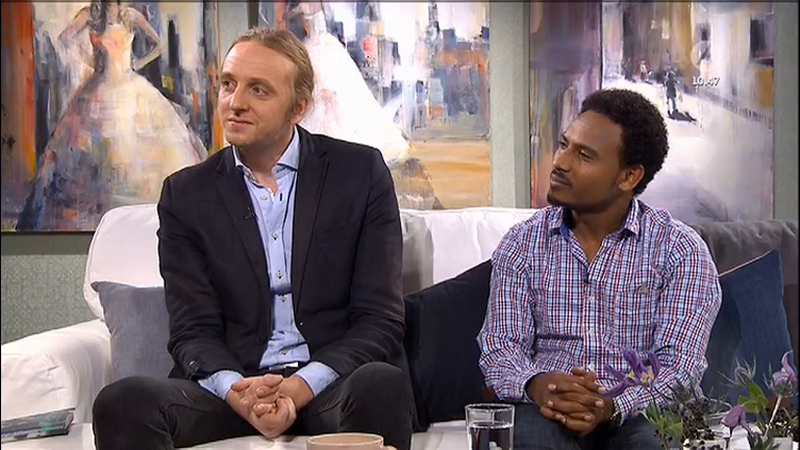
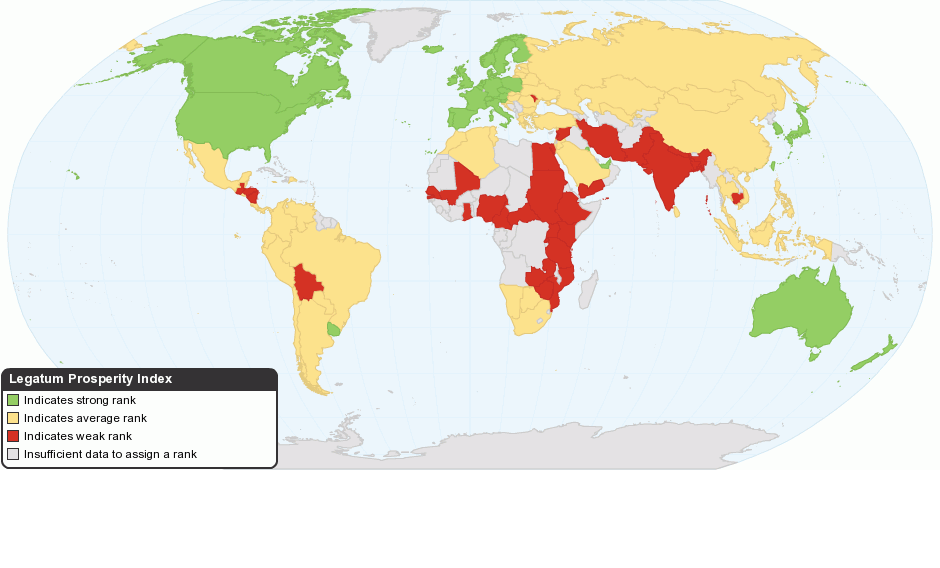
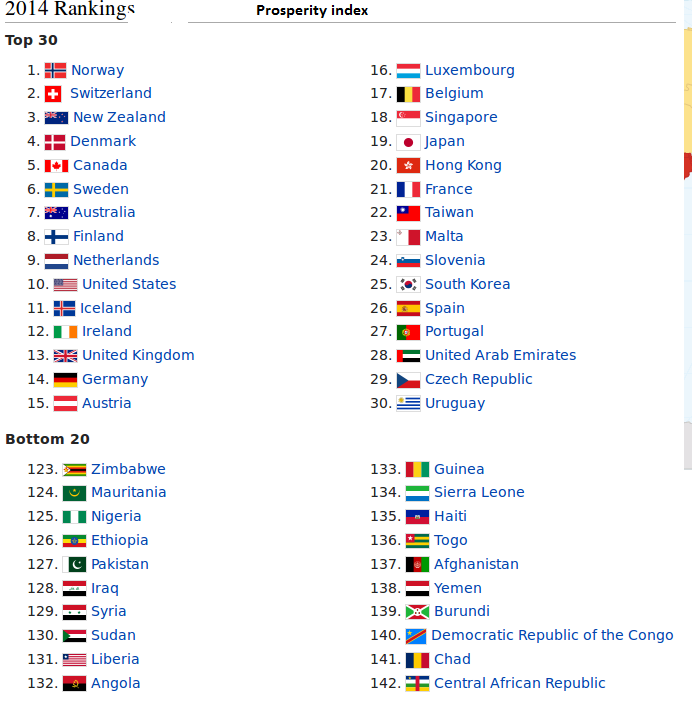
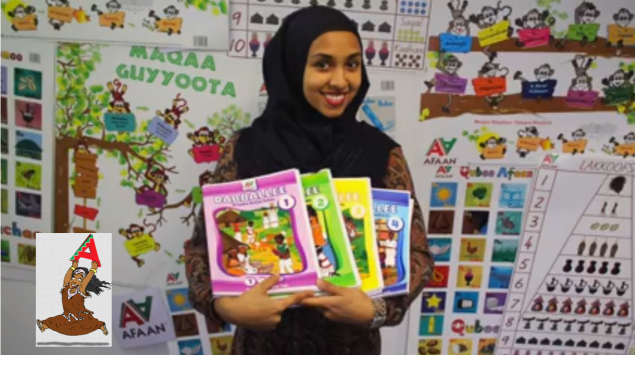

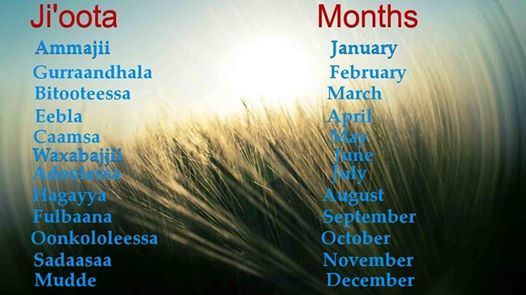


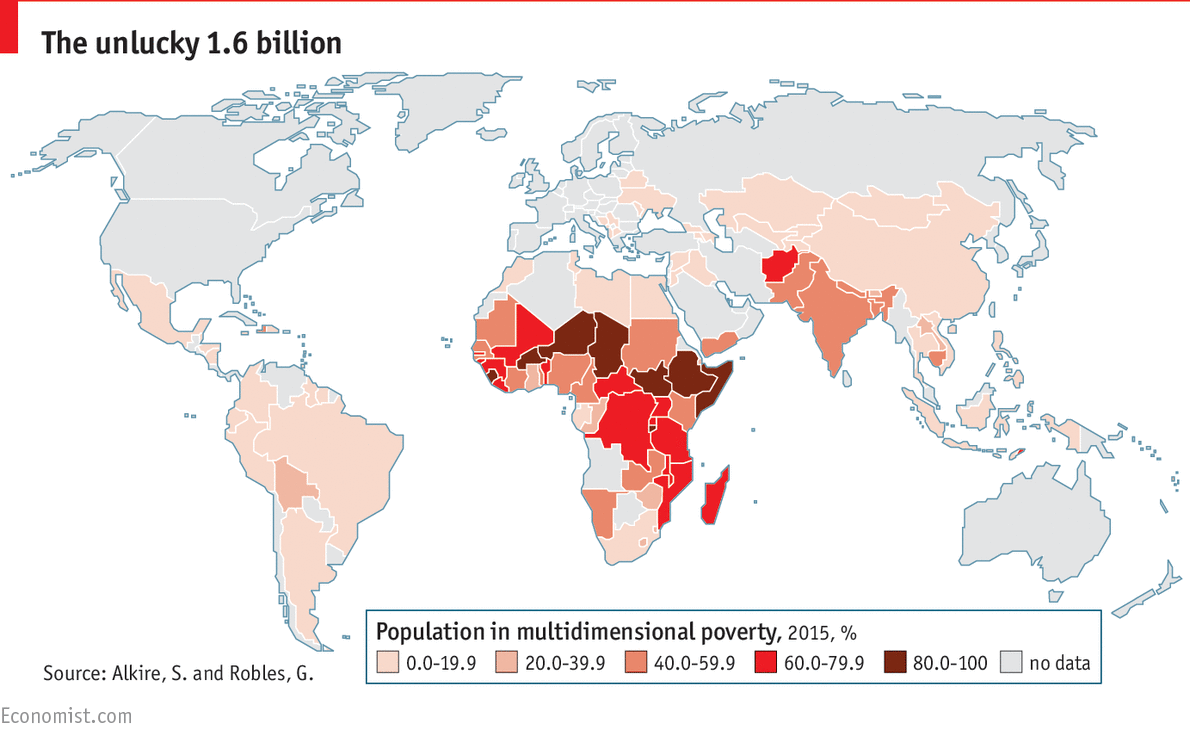



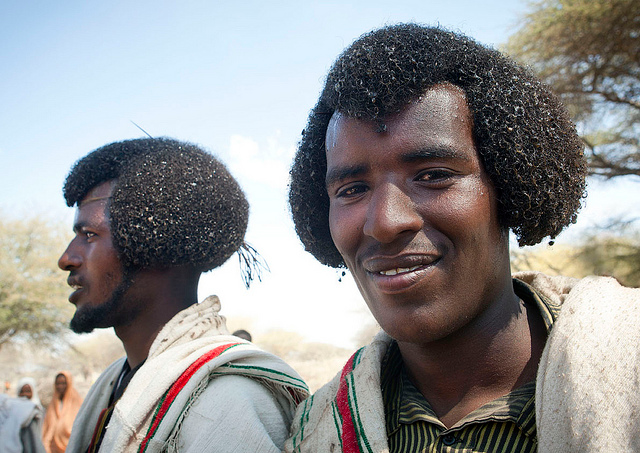
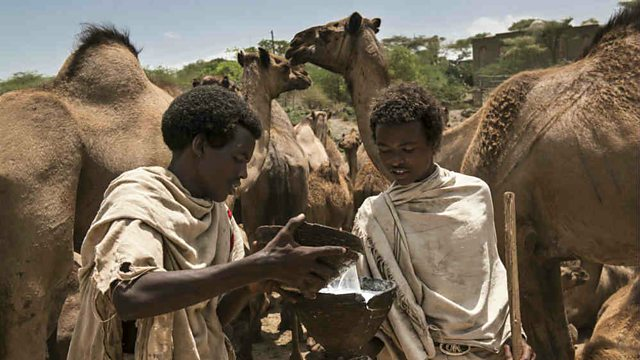


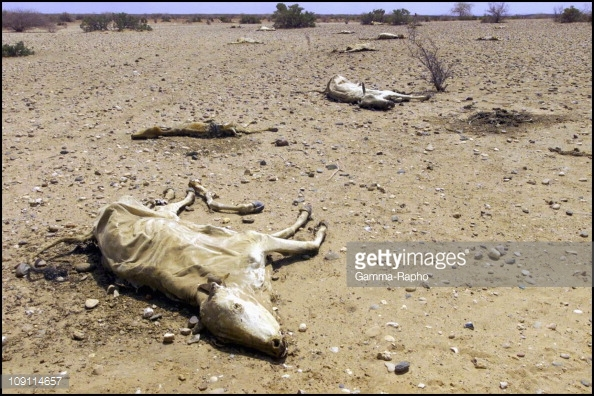

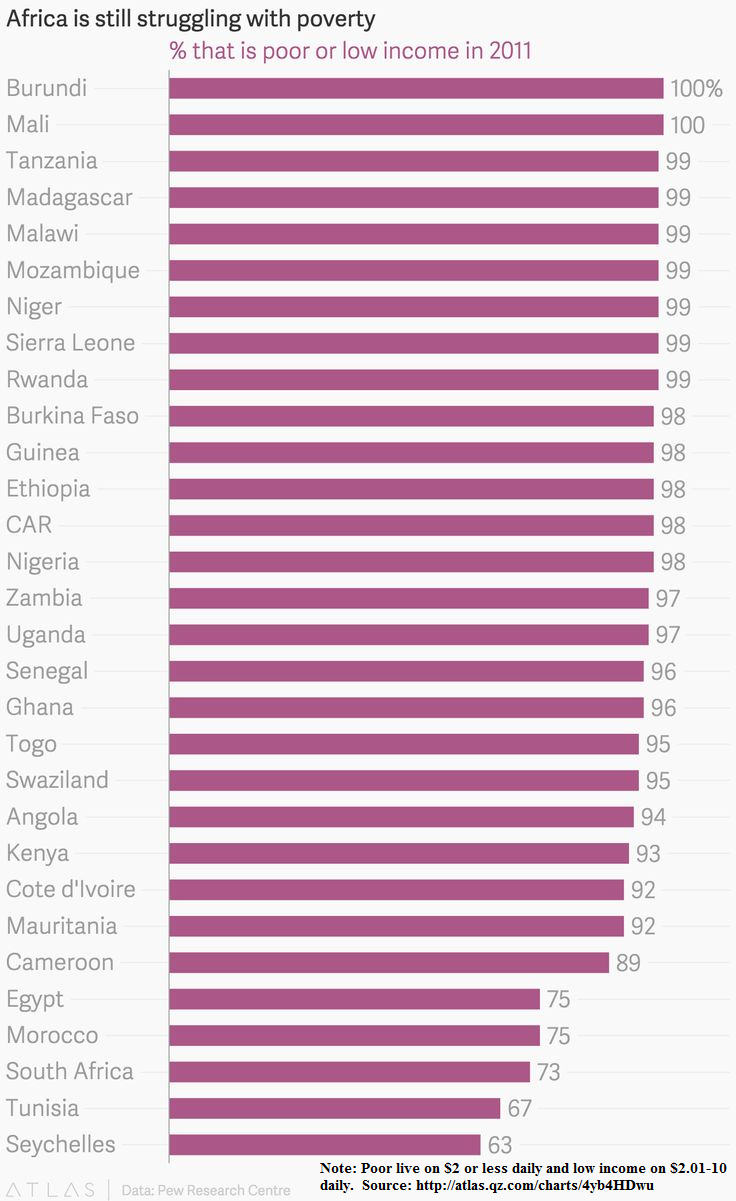


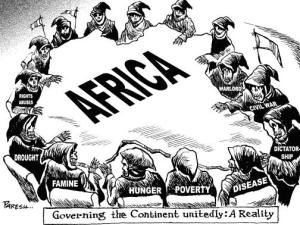


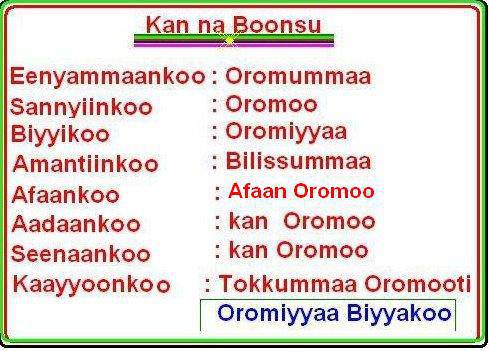


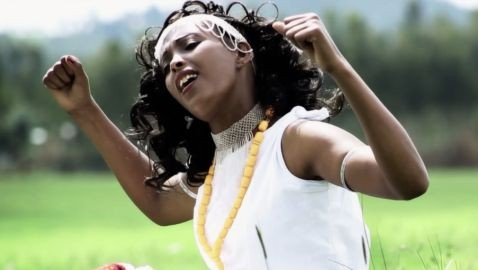
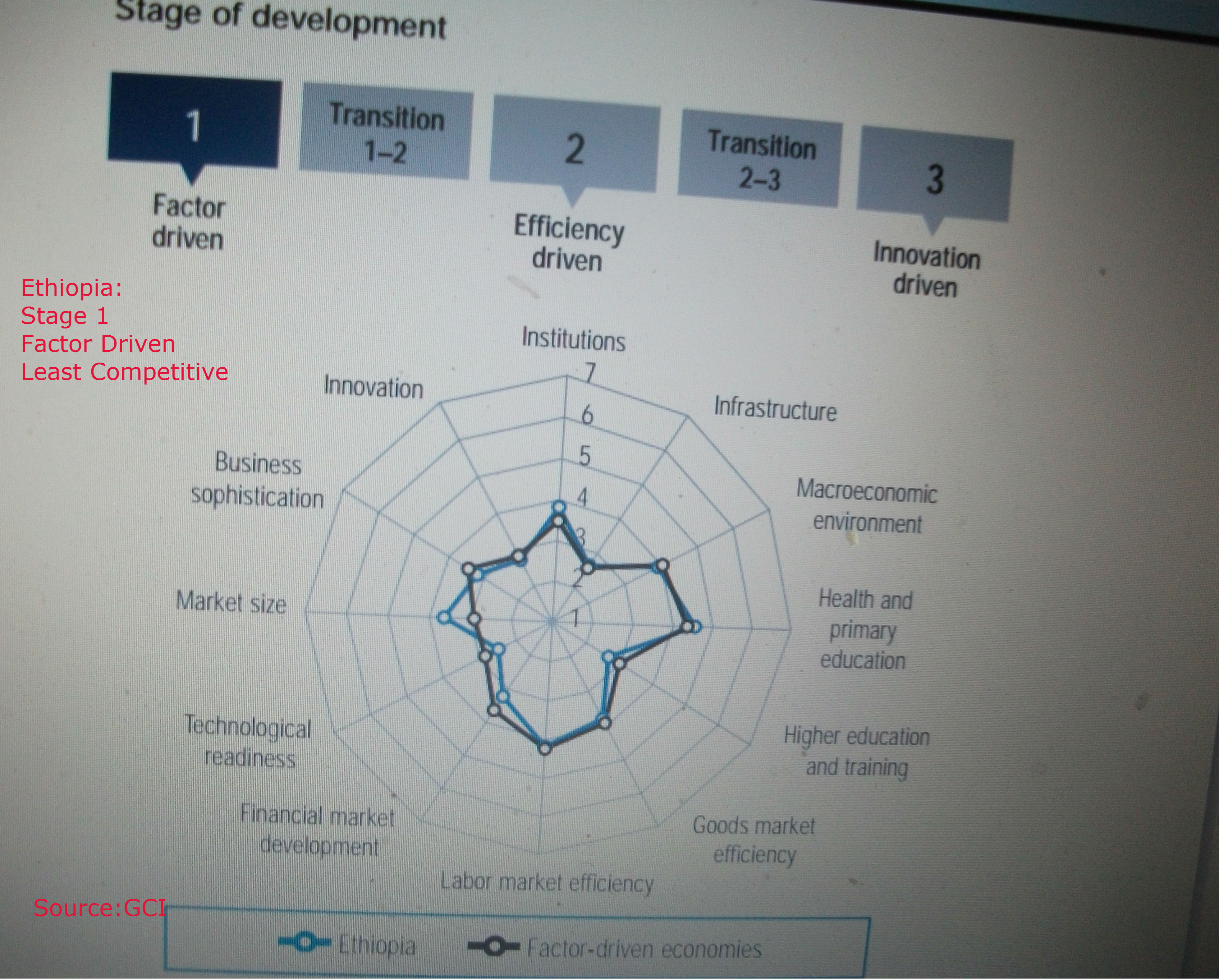





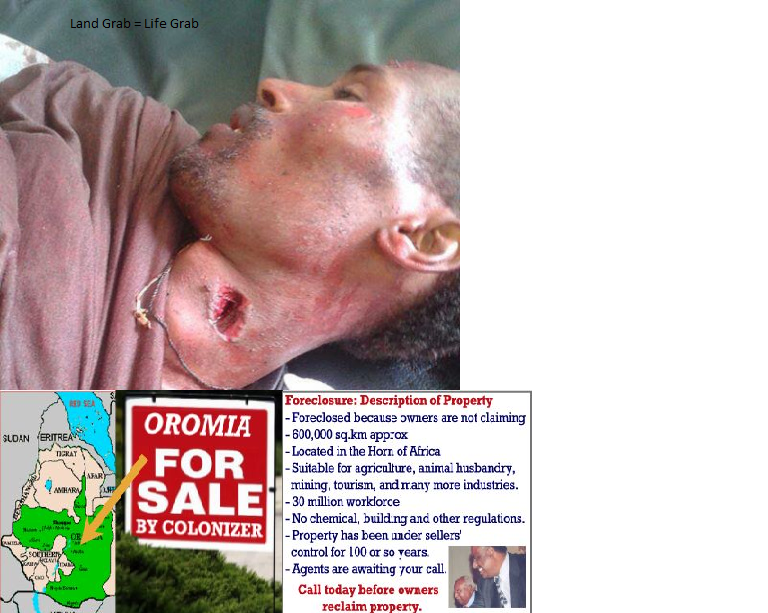


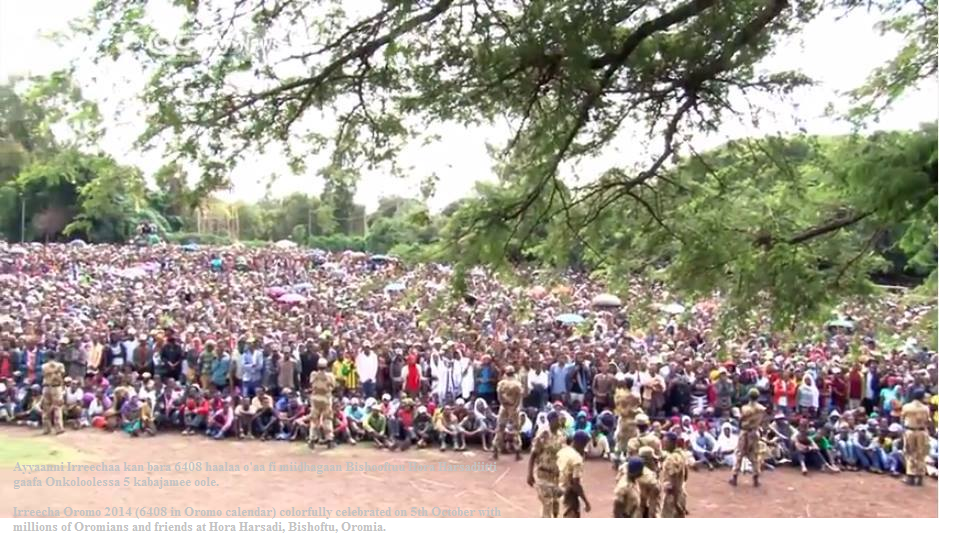





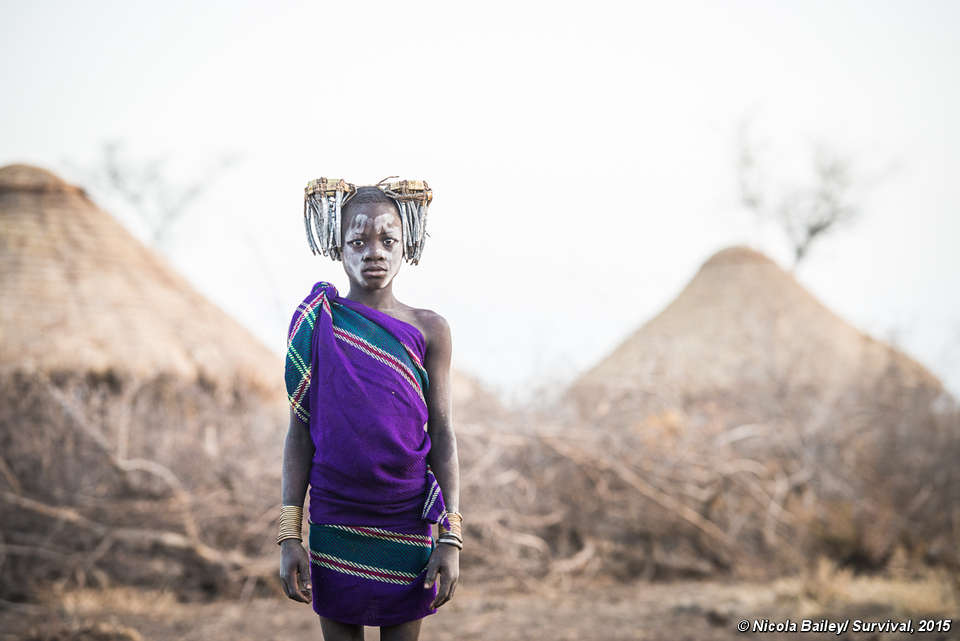

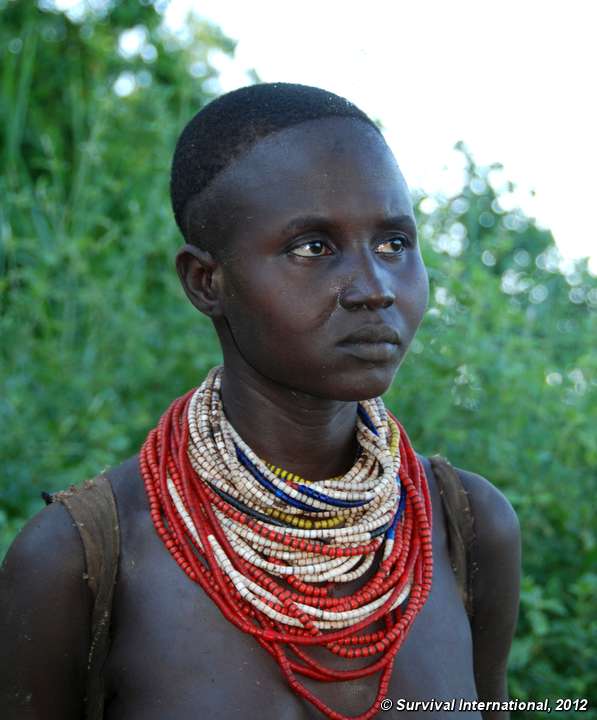


 Oromian Economist
You must be logged in to post a comment.